FEATURE: Female Icons: Part Seventeen: Nina Simone

FEATURE:


Female Icons

zzzz.jpg

PHOTO CREDIT: Hulton Archive/Getty Images

Part Seventeen: Nina Simone

__________

I have been focusing on some less obvious icons…

aaaa.jpg

 IN THIS PHOTO: Nina Simone in 1964/PHOTO CREDIT: Getty Images

over the past few weeks. That sounds dismissive but, when we think of those artists who are iconic, maybe we get a certain impression. In terms of women who have changed music and inspired generations, one has to tip their cap to Nina Simone. I will talk about a few of her albums in a bit but, before then, I want to explain when Nina Simone came into my life. Even though Simone covered the Jazz standard, My Baby Just Cares for Me, back in 1957, it was released as a single in 1987 after the song was used in a perfume advert – it created a bit of resurgence and new respect for Nina Simone’s work. Maybe it was the amazing sound that affected my impressionable mind and the fact that, as a young child, I had seen nothing like it before. The song captivated me then and, so many years later, it still sounds completely terrific. When assessing and examining Nina Simone, there are various sides to explore. She is this iconic and legendary artist who has inspired so many other musicians – I shall get to that near the end of this feature – but there is a more complex and troubled side. Simone did have a reputation for her short temper and, in 1985, she actually fired a gun at a record company executive, who she felt was stealing royalties. This anger and passion contrasts Simone’s civil rights activation and the fact she called for change in her music.

The 1985 incident was not an isolated one: in 1995, Simone shot her neighbour’s son with an air rifle. Simon has a fragility and volatility that you would not guess from her music. So powerful and moving are her songs, one would not know about some of the demons Simone possessed. She was diagnosed with bipolar affective disorder in the late-1980s. It is a shame that died relatively young – she was seventy when the world lost her in 2003. By 1993, she was settled in Southern France. The final years of her life were fairly quiet and, in 1998, she announced to a crowd in Newark that she was staying in France – she would never return to the U.S. and perform. Simone died from breast cancer in 2003 and left a huge hole. There has been nobody like Nina Simone since her death and, in many ways, we will never see anyone like her again. Along with icons such as Aretha Franklin, she was part of a generation that is slowly disappearing. It is sad to reflect but, rather than mourn the loss of a great voice, we need to celebrate the music. Since her death in 2003, there have been a few attempts to bring Simone’s life to the screen. Perhaps the best, most-recent attempt was the 2015 documentary, What Happened, Miss Simone? The documentary was released with the blessing of Simone’s estate and gained some good reviews.

Some were a bit more reluctant to expend too much praise because, when it comes to someone as layered and complex as Simone, it is hard to strike the right balance. In their review, The Guardian explained more:

As the conflagration of the late 1960s grew more intense, Simone became more radicalised, at one point asking a black audience if they were ready to kill for black liberation. This, as I’m sure you can imagine, restricted her career’s growth. She also became addicted to pills, had bipolar episodes, and was a general mess. Talking-head interviews with her daughter give specific insight.

But there was always the music, and this movie has plenty of it. And let’s not forget that film is a visual medium. As such, What Happened, Miss Simone? is a wall-to-wall fantasia of fabulous outfits, from African print frocks to outsized hats that would look absurd on anyone other than a centre of gravity like Nina Simone.

Clearly there is entertainment value in this documentary, but it’s very much of a “behind the music” calibre. A clip, commentary from an associate or a critic like Stanley Crouch, another clip, rinse, repeat. A post-festival distribution deal is already in place with Netflix and, frankly, that’s the perfect format for Garbus’s by-the-numbers storytelling. What Happened, Miss Simone? is another example of Wikipedia-entry-as-cinema, but with a life this remarkable, it’s still worth a look”.

2016’s Nina was an attempt to bring Simone’s life to Hollywood. Starring Zoe Saldana, the film received a lot of negative reviews. Maybe it is the case that one cannot do full justice to the importance and stature of Nina Simone – it is always tricky when it comes to music biopics and striking the perfect balance of honesty and accessibility.  
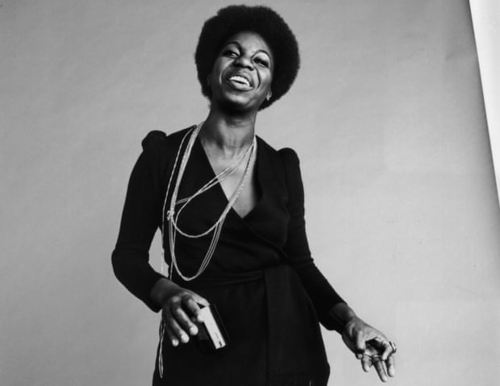
 IN THIS PHOTO: Nina Simone photographed in 1969/PHOTO CREDIT: Jack Robinson/Getty Images

Anyway…perhaps there will be another attempt to bring Nina Simone’s life to the big screen. Simone was born the sixth of eight children to an impoverished family from North Carolina. As a child in that part of the U.S. in the 1930s (Simone was born in 1933), life must have been strange and hard. She was six when the Second World War broke out and one can only envisage what a strain that put on her already-fractured upbringing. Even though she was born into a landscape where aspirations were more about survival than success, the young Simone dreamed of becoming a concert pianist. I am not sure whether Simone was attracted to the beauty of the piano or whether it was a particular artist who lit that fuse. Simone was determined to become a success but, at a time when there was racial discrimination and divisions, she was rejected by the Curtis Institute of Music in Philadelphia. One can understand why Simone fought (quite literally) for success and was regarded as a bit unpredictable at times given the fact she had very little support in the early days. Not only was she rejected by music schools but Nina Simone, born Eunice Kathleen Waymon, changed her name so that her family would not find out about her dreams. Simone’s family considered Jazz as unsuitable and felt that Jazz music was not the direction she should head in. At nightclubs, when Simone played piano, she had no vocal accompaniment so had to take care of every aspect.

It was hard for Simone to even launch a career, let alone succeed. Her handyman father suffered ill health and she had to rely on a local fund and scholarship money to ensure she could get an education. One suspects that the rejection she received early in life – whether it was racially-motivated or not – caused a sense of defeat and deflation that she struggled to get over. Eventually, Simone released her solo album, Little Girl Blue, in 1958 and started her career. Her output from the late-1950s to the mid-1960s was impressive but, to me, her first big released occurred after 1964: a year when she changed record distributors from Colpix to Philips Records (a Dutch company). 1964 marked a year when Simone addressed the racial divisions in the U.S. On Nina in Concert, she released Mississippi Goddam – a reaction to the murder of Medgar Evers in 1963 and the bombing of the 16th Street Baptist Church in Birmingham, Alabama. Motivated by the hatred and injustice around her, Mississippi Goddam was fuelled by upset and outrage. It is a song that sounds moving and startling today. My favourite Simone album of the 1960s was 1965’s I Put a Spell on You. Although it is more Pop-flavoured than her earlier albums, it is her most solid release to that point. Songs such as I Put a Spell on You and Feeling Good are classics in her cannon.

bvvb.jpg

 PHOTO CREDIT: Carol Friedman

Through the 1960s, Simone performed at civil rights meetings and was a supporter of violent revolution. Rather than follow Dr. Martin Luther King Jr.’s non-violet approach, she was an advocate of Black Nationalism. 1967’s High Priestess of Soul was the last great album from Simone in the decade and contained a mix of Pop (Don’t You Pay Them No Mind); African-American Gospel tracks and songs written by Simone herself. In spite of the success she enjoyed in the 1960s, there was backlash to Mississippi Goddam. Perhaps it was too raw and angry for the record label but there was a feeling Simone was being rejected. Simone left the U.S. in 1970 and, upon her return, there was a warrant for her arrest for unpaid taxes. The 1970s was quite a turbulent period for Simone. She abandoned her daughter Lisa in Mount Vernon and, according to Lisa, Simone was quite abusive towards her. There were signs Simone was struggling and showing some cracks. She did perform gigs during the 1980s and, unlike some of her earlier performances, there was more engagement and warmth aimed at the audiences. She could be regularly found at Ronnie Scott’s Jazz Club and it seemed like she was back on a more even keel. Albums such as 1982’s Fodder on My Wings were more introspective than some of her albums of the 1960s and 1970s; 1993’s A Single Woman was the final album from an iconic singer who enjoyed a busy and successful career.

Simone is one of the most influential artists of the 20th century and a key figure in the civil rights movement. Her voice is a thing of wonder. She could show tenderness and passion when the mood called but, on her civil rights numbers, there is an aggression and passion that is more powerful than anything else in the world. Simone was an incredibly eclectic vocalist and her delivery, both vocally and on the piano, was truly stunning. There are countless artists who have name-checked Nina Simone as an influence. From Madonna and David Bowie to Janis Joplin to Alicia Keys and Jeff Buckley…so many truly giant artists owe a debt to Nina Simone! There are websites where you can learn more about Nina Simone but, to end, I have collected some of her best performances together. Although the 2015 documentary, What Happened, Miss Simone? had its detractors, it did bring Simone’s work and life to a new generation. This article from The Guardian talks about the highs and lows of one of the most inspiring artists ever:

What Happened, Miss Simone? makes the case that Simone was not only one of the most talented musicians of the 20th century but one of the most troubled and unlucky. It shows how she always felt she had been denied her true calling; how she never achieved the success that prettier, more biddable singers enjoyed; how she invested so much of herself in the civil rights movement that she was shattered when it faltered; how she suffered physical abuse from her husband and manager Andrew Stroud and inflicted it on her daughter Lisa; how her bipolar condition was only diagnosed in the 1980s, long after her volatility had inflicted irreparable damage. She was an outcast who only briefly found safe harbour — first as a wife and mother, then as an activist – before it was snatched away. Not fitting in made her great, but it also made her angry and very lonely.

vv.jpg

PHOTO CREDIT: Getty Images 

Simone was now less a musician who cared about politics than an activist who sang. Her music was by, about and for black people. She would scan the crowd for black faces and tell them, “I’m singing only to you. I don’t care about the others.” White fans, she said, were “accidental and incidental”. She could not ignore the fact “that I was a black-skinned woman in a country where you could be killed because of that one fact.” No wonder there has been controversy over the casting of beautiful, light-skinned Zoe Saldana in the long-delayed biopic Nina.

In the 25 years before her death in 2003, at the age of 70, Simone was relatively stable and prolific. She didn’t experience the triumphant comeback that she deserved, but this was as happy an ending as could be expected from someone who had once appeared to be waging a one-woman war against everything.

As she left the stage after a disastrous show at the Royal Albert Hall in 1978, Simone declared: “I am not of this planet. I do not come from you. I am not like you.” She was in a terrible state, but on that point she was absolutely right. For good and for ill, Nina Simone stood alone”.

I return to my earlier point regarding Nina Simone and whether Hollywood will ever truly capture her essence. One cannot argue that Simone lacks relevance and importance today. In 2018, Simone’s childhood home was named a national treasure by the National Trust for Historic Preservation.

Listen to music today and you can hear the essence and spirit of Simone living on. Although Simone grew weary of the division and racism that flourished in America in the late-1960s, she made an enormous impact and, without knowing it, she was influenced the next generation. I have named a few artists who have been inspired by Simone but, in terms of average civilians, there is no telling how meaningful and instrumental her music was to those struggle; those who were isolated and affected by the hatred and violence around them. In 2019, her music is still so relevant and I think it holds as much power as it did in the 1960s. That might sound extreme but think about the world today and the fact we are so fractured and divided. I listen to Simone a lot and it provokes so many emotions. From the fire of Mississippi Goddam to my first taste, My Baby Just Cares for Me, she is an artist who still plays a role in my life. Of course, she is an icon: Simone has helped change Jazz and music itself. She opened Jazz to new audiences and created some of the most powerful and moving songs of her generation. Simone is this complicated and hugely important artist who, as we have seen, has been portrayed several times on the screen. There have been some valiant attempts but I think that definitive version is yet to come. I wonder whether anyone can capture the magic, soul and…

75556.jpg

 PHOTO CREDIT: Getty Images

THE majesty of Miss Simone?

FEATURE: Dusty Crates and Golden Streams: The Joys of Pushing Beyond the Comfort Zone

FEATURE:


Dusty Crates and Golden Streams

trr.jpg

PHOTO CREDIT: @moco1384/Unsplash 

The Joys of Pushing Beyond the Comfort Zone

__________

MAYBE this is another case of nostalgia…

frfr.jpg

 PHOTO CREDIT: @luana_dmc/Unsplash

or me reminiscing about when music came into my life. In fact, I want to also combine a couple of disparate subjects: preserving memories and guilty pleasures. I shall come to the second in a bit but, recently, I have been getting a bit worried. One of the reasons I am so passionate about music is my childhood: so many happy times when, in some form or the other, music played a pivotal role. Whether it was my earliest musical memories when I was in primary school or new discoveries as I progressed through to high-school. One thing is for sure: these recollections and experiences are among the most important and cherished. Some of these memories are getting blurry and I wonder, very soon, whether a lot of them will be gone. Of course, so much of my childhood has disappeared from mind but there is something hugely important and relevant about music-related ones – I feel they are starting to slip away. I bring up this subject because it was the music I was exposed to growing up that has led to my current desire to drink in as much as possible. Back then, I was collecting albums, singles and trying to digest as much music as possible. Growing up in the 1980s and 1990s, everything from Pop, Britpop; Grunge Hip-Hop and Folk was in my life. I was lucky enough to have music play a massive role from a very early age – my parents’ records definitely lit a spark and kindled a desire.

vvx'.jpg

 PHOTO CREDIT: @rosssneddon/Unsplash

I know the happy memories of music will die out and it is not really the loss of childhood that worries me most: more than the visions and people in my mind, it is the songs and sounds that I will miss the most. Thinking about this inevitable state of affairs has made me look at the music I listen to now and wonder whether I am being as broad and explorative as I could be. A while ago, I asked whether there is such thing as a guilty pleasure. We often use those words in inverted commas because, I guess, it is subjective as to what constitutes a guilty pleasure. Sure, there is bad music – I don’t think that is subjective: most of us can agree on stuff that is pretty awful – but I do not feel anyone should be judged and condemned for liking certain artists. As I am typing this, I am listening to The Look by Roxette. I am not sure what led me to them but I fell down a bit of a Swedish Pop hole and went from Ace of Base to The Cardigans – ending up at the feet of Roxette. Some people might call bands like that uncool and a bit of a guilty pleasure. I also have a fond spot for some of the 1980s/1990s Pop that might be considered a bit naff (including Belinda Carlisle) but I think so many of us get caught in a loop.

I think streaming services are great when it comes to giving us access to all kinds of music. That is perhaps the biggest revolution of modern music: the opening of doors and channels not only exposes so much great music from the past, for a low cost, but allows new artists to have their voice heard. That is not to say that we are only listening to digital music. It has been announced vinyl sales are outstripping that of C.D.s for the first time since 1986. So much of my eclectic upbringing when it came to music can be linked to physical formats. I had this tangible and tactile relationship with music and I wonder, with so much music in streaming rather than in record shops, are we all as curious and boundary-pushing as we should be?! One of the issues with sites like Spotify and YouTube are the recommendations. They will give us playlists and suggestions based on our listening figures but, often, these songs are too close to the ones we are listening to and, inevitably, it means our palettes are not as broad as they should be. Record shops are still there – although a lot are closing down – to satisfy those who love vinyl but I have this continued worry streaming services are struggling to give people a balance of sounds and possibilities.

 IN THIS PHOTO: Ella Mai/PHOTO CREDIT: Getty Images

I am lucky I listen to a station like BBC Radio 6 Music but, even then, they are confined in terms of songs and genres – one will not find a lot of modern Pop/Country, for instance or classic tracks that might be covered by BBC Radio 1 and 2 respectively. It is a great surprise stumbling on a song you have not heard for years, but I think that is actually a problem with the modern age. There are some terrific podcasts and radio broadcasts that help guide us to uncovered gems and classic cuts. I think a lot of our tastes revolve around what we have heard before and slight extensions on that. It sort of gets me thinking back to my point about so-called ‘guilty pleasures’. Do we turn our noses up at entire genres and radio stations, assuming they will have nothing that floats our boast?! I am not a huge fan of mainstream Pop but I have found myself surprised and fulfilled by artists like Ella Mai and Carly Rae Jepsen. I have not listened to a lot of Country music for a while bit, again, I have stumbled upon podcasts and shows that have opened my eyes. It is strangely pleasing getting into our grooves and listening to music that makes us feel comfortable and happy. I get that. I do feel we struggle to keep on top of everything and, as such, tend to keep our focus quite narrow. I know a lot of people who are very ambitious and will scour record shops and playlists for the best new music and those older albums that we should be listening to more.

One cannot embrace everything – not all music is equal and valid – but I do think we all get sort of comfortable and cosy with what we know and that is that. Maybe it is just me. It is difficult to drink in every drop of great new music and nodding to the best and coolest from the past. I was listening to BBC Radio 6 Music’s Shola Aleje present a two-hour slot on Totally Wired Radio last night (from 8-10 p.m.) and was blown away. Not only is she younger than me – and has a deeper passion that I for music – but her taste and knowledge was extraordinary. Listening to the show and I was reconnecting with artists and songs that I had neglected and allowed to collect dust. I am now resolved to be a lot less stubborn and more adventurous. I am broader and hungrier than most because, as a music lover and journalist, I am always listening to new music from all over the sonic map and keep my dial locked to the best radio station around. I guess even radio stations are limited and can get caught in traps…playing the same songs from the same artists or overlooking certain genres. How often do we hear album tracks from legendary artists rather than singles? Are stations too bound by figures and demographics that means, a lot of the time, we need to retune and skip through stations to get a wider education? I think radio is invaluable – and I am indebted to and adoring of BBC Radio 6 Music – but I think we all need to resolve to expand our collections and be a bit braver.

 PHOTO CREDIT: @iampatrickpilz/Unsplash

Maybe some hip, young thing scratches their Hoxton facial hair with imperious disregard when people like me listen to some of the artists we grew up on – how would they take to folk like Traveling Wilburys and Steely Dan?! A lot of older listeners tend to be dismissive of younger artists and we can get into this tribal mind-state. The most rewarding musical experiences come from stepping beyond my boundaries and opening my arms to something new; listening to modern Pop or trying an artist from the past that I have been relatively distant from until now. This all circles back to my opening concern regarding memory and its fragility. What I would pay someone to invent a device that bottled all of my memories; ones I could arrange to ensure that I never forget when music came into my life and those times when various artists scored some truly wonderful and transcendent times. I still fondly recall a school chum getting on a year when I was in Mr. Bailey’s class and he blasted The Shamen’s Eberneezer Goode out to the class (this was the early-1990s and state schools were pretty relaxed!). I cherish after-school hang-outs with friends and times when we put on a cassette or C.D. and just submitted to the power of music. I hold dear moments when I used to take the bus to my local town and buy the latest single from whomever was expected to ride the charts – I recall buying stuff from The Divine Comedy (National Express) and Mr Oizo (Flat Beat) and being giddy with satisfaction!

How about when I received my GCSE results in 1999 and Lou Bega’s Mambo No. 5 (A Little Bit of…) soundtracked that?! How about, too, when my sister bought me The Beatles’ number-ones collection in 2000 or when I first discovered Madonna back in the late-1980s?! All of these memories are dear and part of my life…it scares the crap out of me that they are starting to fall away. The reason they are still in my mind is because of the sheer breadth of my tastes. I was brought up around so much different music and would not be a journalist if it were not for my parents and my appetite as a child. Rather than dread the ticking of time and the erosion of precious memories, I feel, oddly, engaging in as much different music now as possible can help strengthen fading memories and actually help preserve recollections from childhood – some might say that is faulty and ambitious but I think it is possible! If people like me learn from our past and forge barriers then I think we will all be a lot richer and wiser. There are natural limits and, you understand, such is the tidal wave of new music that it is impossible to even absorb a small percentage of it. As much as I adore certain radio stations and artists, I will be bolder; I will take the time to re-explore the legends of the past and spend a few hours a week getting on top of all of the best new music around.

It sounds exhausting but I feel it is beneficial to me, not just as a journalist, but as someone who tends to retreat to those songs/artists that lift me up and have permanent residence in my limbic system. There is nothing wrong with nostalgia and remembering childhood – it makes us happy and connected to the past – but I think so many of put up walls and define ourselves too rigidly. If you once ignored a certain time period or genre then give it a try! I am, as I said, finding myself struck my tracks I thought I wouldn’t enjoy and realising that, when you let this music in, the effects are immense and immediate. Whilst rounding this feature up, I am thinking of some artists I am going to attack very soon – some more Traveling Wilburys and some classic House music – but I am also resolved to have a peek at some cool underground sounds of now. I get caught in ruts and I think shaking that habit is a good thing. I think we all could do with widened our scope and taking some bold steps now and then. My revelation and new resolution comes from my (genuine) worry that my childhood is getting lost in the fog and, with it, so many of the musical memories that make me smile will be lost. There is not much I can do about that. It seems strange to say this but, in order to be a more rounded and enriched music lover now, I have to embrace the future as much as possible and…

 PHOTO CREDIT: @jamakassi/Unsplash

LET the past go.

FEATURE: The Boss at Seventy: Seven Essential Bruce Springsteen Albums

FEATURE:


The Boss at Seventy

ff.jpg

IN THIS PHOTO: Bruce Springsteen captured in 1982/PHOTO CREDIT: Frank Stefanko 

Seven Essential Bruce Springsteen Albums

__________

THERE are two big anniversaries happening…

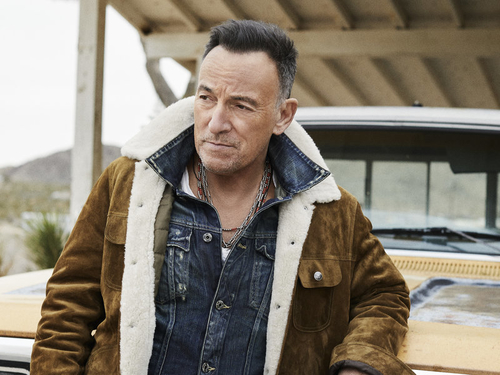
 IN THIS PHOTO: Bruce Springsteen in 2019 in a promotional shot for Western Stars/PHOTO CREDIT: Getty Images

later this month. On 26th September, it will be fifty years since The Beatles’ Abbey Road was released to the world. I am really looking forward to that because, not only do we get to revel in this wonderful album, but Sirs Paul McCartney and Ringo Starr will be around to share their memories of Abbey Road. Three days before that happens, Bruce Springsteen turns seventy! The Boss’ seventieth should be celebrated and it will provide us an opportunity to look back at his incredible music and see why he is so iconic (also, if you have not seen the Bruce Springsteen-inspired film, Blinded by the Light, make sure you do). I am going to recommend seven albums that need to be added to your collection right away. Before I come to that, here is some biography about Springsteen:

Born on September 23, 1949, in the town of Long Branch, New Jersey, Bruce Springsteen, also known as "The Boss," played the bar circuit while assembling his famous E Street Band. His breakout 1975 record, Born to Run, united arena rock with human-size tales of working-class America. With dozens of awards under his belt, including 20 Grammys, and more than 65 million albums sold in the U.S. alone, Springsteen is one of the most successful musicians of all time. Also known for his left-leaning political causes, the artist was honored with the Presidential Medal of Freedom by Barack Obama in 2016.

Springsteen first fell in love with rock 'n' roll when he saw Elvis Presley perform on The Ed Sullivan Show. "[Elvis] was as big as the whole country itself," Springsteen later remembered, "as big as the whole dream. He just embodied the essence of it and he was in mortal combat with the thing.

de.jpg

IN THIS PHOTO: Bruce Springsteen looking reflective in 1975/PHOTO CREDIT: Terry O’Neill 

Nothing will ever take the place of that guy." Springsteen's mother took out a loan to buy him a $60 Kent guitar for his 16th birthday, and he hasn't stopped playing the instrument since then.

An outsider and recluse in school, Springsteen frequently got in trouble at his Catholic elementary school. "In the third grade, a nun stuffed me in a garbage can under her desk because she said that's where I belonged," he said. "I also had the distinction of being the only altar boy knocked down by a priest during mass." Several years later, he skipped his own high school graduation because he felt too uncomfortable to attend.

In 1967 an 18-year-old Springsteen was drafted for military service in the Vietnam War. But, as he later told Rolling Stone magazine, the only thought in his head as he traveled to his induction was "I ain't goin'." Springsteen failed his physical, largely due to his deliberately "crazy" behavior and a concussion previously suffered in a motorcycle accident. Springsteen's 4-F classification — unfit for military service — freed him from having to go to Vietnam and allowed him to pursue music full time”.

IN THIS PHOTO: The Boss performing in 1984/PHOTO CREDIT: Ebet Roberts/Redferns

ALL ALBUM COVERS: Getty Images/Spotify

______________

Born to Run

2.jpg

Release Date: 25th August, 1975

Label: Columbia

Producers: Bruce Springsteen/Mike Appel/Jon Landau

Standout Tracks: Thunder Road/Tenth Avenue Freeze-Out/Jungleland

Review:

It is this essential quality that sets him apart from everyone else even after all these years. His fictional characters are easier to relate to than any modern indie song sung in the first person. It has been interesting to watch this particular musical shift. How is it that a song rife with such nameless characters as the Magic Rat and the Barefoot Girl, with imagery of Exxon signs and ambulance lights and death in those lonely corridors of the city seems more homely than any song about the end of a relationship which, presumably, any listener would be able to relate to much more? It is as if the old rules have been transferred from stone tablets to pieces of notebook paper, frequently scratched out and rewritten to fit the latest trends. That storytelling trait has, with a few exceptions, long been absent from music and perhaps that is telling. What makes Springsteen's music so great is that his stories and characters made it all the more affecting when he did write something personal. When he personally wondered if love was real it sounded more genuine because of similar, prior sentiments from the lonesome, wandering denizens of Asbury Park. Story echoed real-life and vice versa, each lending weight to one another.

Springsteen's America seen through today's lens seems more modern than the vision being presented currently. It is a marvelous thing that none of Springsteen's songs seem quaint or outdated but it is not surprising in the least. He was able to both hearken to an earlier time by harnessing the power of music's golden age and to make an audience look to the future, to attempt to keep alive a sense of America's commoner nobility – the notion that there is nothing purer than trying to survive through means universal and familiar, through foot before foot and hand over hand. The notion that we could succeed or fail to walk like heroes but either way America, although perhaps dull-eyed and empty-faced, was nevertheless bound for a greater glory somewhere down the road” – Sputnik Music

Stream: https://open.spotify.com/album/43YIoHKSrEw2GJsWmhZIpu

Key Cut: Born to Run

Darkness on the Edge of Town

Release Date: 2nd June, 1978

Label: Columbia

Producers: Bruce Springsteen/Jon Landau/Steven Van Zandt (assistant)

Standout Tracks: Racing in the Street/Prove It Al Night/Darkness on the Edge of Town

Review:

Coming three years, and one extended court battle, after the commercial breakthrough of Born to Run, Darkness on the Edge of Town was highly anticipated. Some attributed the album's embattled tone to Springsteen's legal troubles, but it carried on from Born to Run, in which Springsteen had first begun to view his colorful cast of characters as "losers." On Darkness, he began to see them as the working class. One song was called "Factory," and in another, "Badlands," "you" work "'neath the wheel / Till you get your facts learned." Those "facts" are that "Poor man wanna be rich / Rich man wanna be king / And a king ain't satisfied / Till he rules everything." But Springsteen's characters, some of whom he inhabited and sang for in the first person, had little and were in danger of losing even that. Their only hope for redemption lay in working harder -- "You gotta live it everyday," he sang in "Badlands," but you also, as another song noted, have to "Prove It All Night." And their only escape lay in driving. Springsteen presented these hard truths in hard rock settings, the tracks paced by powerful drumming and searing guitar solos. Though not as heavily produced as Born to Run, Darkness was given a full-bodied sound, with prominent keyboards and double-tracked vocals.

Springsteen's stories were becoming less heroic, but his musical style remained grand. Yet the sound, and the conviction in his singing, added weight to songs like "Racing in the Street" and the title track, transforming the pathetic into the tragic. But despite the rock & roll fervor, Darkness was no easy listen, and it served notice that Springsteen was already willing to risk his popularity for his principles. Indeed, Darkness was not as big a seller as Born to Run. And it presaged even starker efforts, such as Nebraska and The Ghost of Tom Joad” – AllMusic

Stream: https://open.spotify.com/album/1WEXfps9XGBqGVXb2gCXxA

Key Cut: The Promised Land

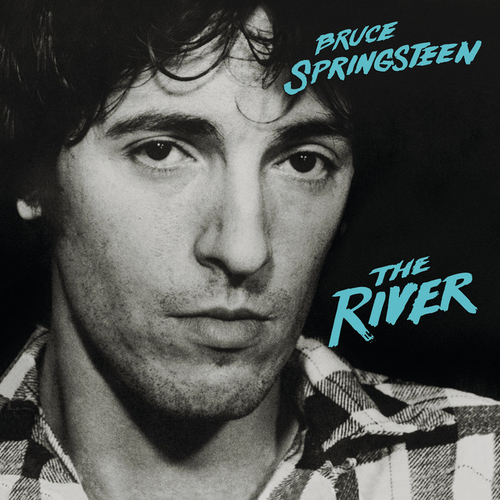
The River

Release Date: 17th October, 1980

Label: Columbia

Producers: Bruce Springsteen/Jon Landau/Steven Van Zandt

Standout Tracks: The Ties That Bind/Hungry Heart/Fade Away

Review:

Rock and roll has always been this joy, this certain happiness that is in its way the most beautiful thing in life," Springsteen said. "But rock is also about hardness and coldness and being alone...I finally got to the place where I realized life had paradoxes, a lot of them, and you've got to live with them"

The resulting album is one that might not flow as well as previous Springsteen releases (which flowed impeccably), but a record that spawned some of the strongest single tracks of his career. The strongest single was "Hungry Heart," which is notorious for being originally written by Springsteen for The Ramones. Instead of giving them the song, producer Jon Landau convinced Springsteen to put it on The River. Landau made a good call, as the song became Springsteen's most successful single to date. It reached No. 5 on the U.S. pop singles chart, a catchy and danceable hit that foreshadowed some of the sounds listeners would hear on the immensely popular Born In The U.S.A.

For every upbeat number like "Hungry Heart," "Sherry Darling," "Two Hearts," "Ramrod" or "Out On The Street," Springsteen gives us a slow-tempo ballad like "Independence Day" or the brilliantly orchestrated "Point Blank." Songs like "Stolen Car" (which foreshadowed Tunnel Of Love), "Drive All Night" and closer "Wreck On The Highway" are much slower tracks that must be appreciated for their melodies and special construction. Songs like these are where Springsteen's words cut deepest, with weaving lyricism making an impact when delivered over calmer tides. "Stolen Car" is a vastly underrated song, as Springsteen's personal, slowly delivered lyricism casts an image of a troubled youth: "At first I thought it was just restlessness that would fade as time went by and our love grew deep / In the end it was something more I guess that tore us apart and made us weep / And I'm driving a stolen car down on Eldridge Avenue / Each night I wait to get caught, but I never do” – AbsolutePunk

Stream: https://open.spotify.com/album/6YNIEeDWqC09YIWzhoSVLg

Key Cut: The River

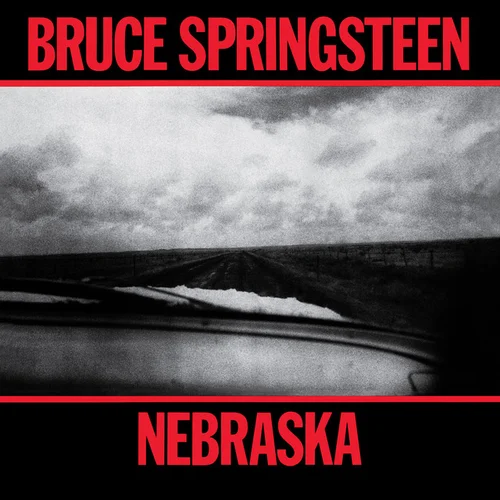
Nebraska

Release Date: 30th September, 1982

Label: Columbia

Producer: Bruce Springsteen

Standout Tracks: Nebraska/Highway Patrolman/Open All Night

Review:

A few songs on the record contain references to transmissions, and these people often find themselves connected to each other in the most distant ways, often by wireless. Roads are littered with radio relay towers, radios in dark cars are choked with talk shows, a cop is called to action by the crackle of the radio. “State Trooper,” a song directly influenced by “Frankie Teardrop” by the synth-punk band Suicide, is Nebraska’s atmosphere reduced to its essence, just an ominous repeating guitar and a voice that sounds like a howling ghost. A Springsteen song like “Darkness on the Edge of Town” shares thematic elements with the songs on Nebraska, but the quiet/loud motif is designed for the stage, where Springsteen and his listeners could share in the energy. “State Trooper” might as well be beamed in from an orbiting satellite—there’s the song and then there is silence.

“State Trooper” also illustrates how the automobile, central to Springsteen’s work throughout his career, functions a bit differently on Nebraska. On Born to Run, the car represented escape, while on Darkness on the Edge of Town and parts of The River it was used to define boundaries, to mark the places where the dramas of life unfold. On Nebraska, the automobile is a kind of isolation chamber, a steel husk that keeps its passengers apart from the world. “Used Cars,” a comparatively gentle song inspired by Springsteen’s own life, finds a child experiencing the shame of class difference. The family is each inhabiting their own world, the father and son unable to connect and share with each other what they might be feeling in the moment. The boy knows only by what he sees, not what his father tells him; the father, consumed with his own shame, has no sense of the boy’s experiences.

Springsteen wrote that he wanted Nebraska to consist of “black bedtime stories,” and the album almost seems to take place during one long night. Those who have jobs are working the night shift. Coming as it does at the end of the album, “Reason to Believe” feels a bit like a sunrise. Suddenly there’s a crack of light, a bit of humor; we can take a breath. The levity comes not from the details of the song, which include two shattered relationships and the death of a dog and a relative, but from the perspective of the person telling the story. Perhaps life, rather than being grim and hopeless, is merely absurd” – Pitchfork 

Stream: https://open.spotify.com/album/6yskFQZNlLYhkchAxELHi6

Key Cut: Atlantic City

Born in the U.S.A.

aqq.jpg

Release Date: 4th June, 1984

Label: Columbia

Producers: Jon Landau/Chuck Plotkin/Bruce Springsteen/Steven Van Zandt

Standout Tracks: Cover Me/I’m on Fire/Dancing in the Dark

Review:

East Berlin, 1988. Under a graphite sky, a familiar synthesizer riff echoes out over a vast arena. As a thundercrack snare drum underscores one of the most consistently spine-chilling intros ever, Bruce Springsteen, telecaster in hand, stares out toward half a million East Germans who've all started singing the chorus - before he's even begun the first verse.

500,000 Germans shouting "Born In The USA" in some huge-ass park in the late-eighties is plainly quite weird. But they're not American. They're not singing about being American, are they? Are they??

"Born In The USA", the title track of The Boss' mega-selling 1984 album, was much misunderstood. Accused at the same time of being repulsively nationalistic, and viciously Anti-American, the track was endorsed by conservative US politicians (including Ronald Reagan) as an exemplar of "classic American values" whilst the bitter lyrics actually tell the story of disaffected Vietnam veteran, chewed up and spat out by his own country:

'I had a buddy at Khe Sahn

Fighting off the Viet Cong

They're still there, he's all gone

He had a little girl in Saigon

I got a picture of him in her arms'

Fire up YouTube and watch John Sayles' music video for the track. The killer punch comes near the end where you see the smiling veteran with a hole where his left eye should be.

Despite the poor sync between the video and audio, Springsteen's leather-clad delivery is scarily fierce. Heard alongside the visuals of Bruce spitting the hopeless verses, the song is revealed as far more than a knuckleheaded, jingoistic sing-a-long. It's a ragged-lunged hymn to long gone friends, a treacherous government, a stupid war, having no job, but f*** it, let’s shout the chorus until we cough up our lungs.

Springsteen’s much-discussed genius lies in finding the humanity in the everyday, punching it out with a grizzled kind of grandeur, and managing it dressed as Mad Max. That’s why our German friends, with their cold war blues and bad blow-dries, are singing along in their hundreds of thousands. Despite huge political and national gulfs, there are more similarities than there are differences.

The other songs on the album? Apart from the unsettling, tender "I’m On Fire", it’s familiar fare throughout, reliable rock and soul courtesy of Bruce and his band of E Street musos, with the added bonus of "Glory Days" and the irrepressible "Dancing In The Dark" chucked in too.

But at no point does it become as stupid, or as complex, as track 1” – BBC

Stream: https://open.spotify.com/album/0PMasrHdpaoIRuHuhHp72O

Key Cut: Born in the U.S.A.

The Rising

Release Date: 30th July, 2002

Label: Columbia

Producer: Brendan O'Brien

Standout Tracks: Lonesome Day/Waitin’ on a Sunny Day/My City of Ruins

Review:

The set opens with "Lonesome Day," a midtempo rocker with country-ish roots. Springsteen's protagonist admits to his or her shortcomings in caring for the now-absent beloved. But despite the grief and emptiness, there is a wisdom that emerges in questioning what remains: "Better ask questions before you shoot/Deceit and betrayal's bitter fruit/It's hard to swallow come time to pay/That taste on your tongue don't easily slip away/Let kingdom come/I'm gonna find my way/ Through this lonesome day." Brendan O'Brien's hurdy-gurdy cuts through the mix like a ghost, offering a view of an innocent past that has been forever canceled because it never was anyway; the instrument, like the glockenspiels that trim Bruce Springsteen's songs, offers not only texture, but a kind of formalist hint that possibilities don't always lie in the future. Lest anyone mistakenly perceive this recording as a somber evocation of loss and despair, it should also be stated that this is very much an E Street Band recording. Clarence Clemons is everywhere, and the R&B swing and slip of the days of yore is in the house -- especially on "Waitin' for a Sunny Day," "Countin' on a Miracle," "Mary's Place" (with a full horn section), and the souled-out "Let's Be Friends (Skin to Skin)." These tracks echo the past with their loose good-time feel, but "echo" is the key word. Brendan O'Brien's guitar-accented production offers us an E Street Band coming out of the ether and stepping in to fill a void. The songs themselves are, without exception, rooted in loss, but flower with the possibility of moving into what comes next, with a hard-won swagger and busted-up grace. They offer balance and a shifting perspective, as well as a depth that is often deceptive.

The title track is one of Springsteen's greatest songs. It is an anthem, but not in the sense you usually reference in regard to his work. This anthem is an invitation to share everything, to accept everything, to move through everything individually and together. Power-chorded guitars and pianos entwine in the choruses with a choir, and Clemons wails on a part with a stinging solo. With The Rising, Springsteen has found a way to be inclusive and instructive without giving up his particular vision as a songwriter, nor his considerable strength as a rock & roll artist. In fact, if anything, The Rising is one of the very best examples in recent history of how popular art can evoke a time period and all of its confusing and often contradictory notions, feelings, and impulses. There are tales of great suffering in The Rising to be sure, but there is joy, hope, and possibility, too. Above all, there is a celebration and reverence for everyday life. And if we need anything from rock & roll, it's that. It would be unfair to lay on Bruce Springsteen the responsibility of guiding people through the aftermath of a tragedy and getting on with the business of living, but rock & roll as impure, messy, and edifying as this helps” – AllMusic

Stream: https://open.spotify.com/album/23vzCh5cDn0LzdGmGWrT1d

Key Cut: The Rising

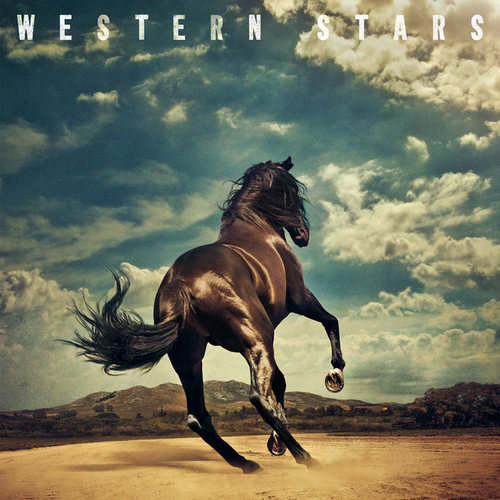
Western Stars

Release Date: 14th June, 2019

Label: Columbia

Producer: Ron Aniello

Standout Tracks: Western Stars/Chasin’ Wild Horses/Hello Sunshine

Review:

Certainly, there’s a real and rather affecting love evident in the way Springsteen channels the sound on Western Stars. There are moments of transcendent loveliness – not least the shivering instrumental coda of Drive Fast – but he’s also unafraid of its occasional tendency towards schmaltz. Quite the opposite. Listening to There Goes My Miracle or Sundown, on which he slathers on the high-camp strings and transforms his voice into a croon, denuded of the usual Springsteen grit, you get the feeling he’s having a whale of a time: an artist always held up as the apotheosis of honest, blue-collar heartland rock revelling in artifice, in much the same way as he audibly delighted in telling audiences at his Broadway residency that the character of Bruce Springsteen was a Ziggy Stardust-ish construct who had never done anything. It helps that the songs are strong enough to withstand the treatment, seldom slipping into pastiche. The only real misfire is Sleepy Joe’s Café, which feels a little round-edged for its own good, not aided by an ingratiatingly perky accordion: the E Street Band could have turned it into something more driving and potent.

It’s the same sad story, going round and round,” Springsteen sings on The Wayfarer and listening to the rest of the album’s lyrics, you take his point. If the sound of Western Stars sets it apart from Springsteen’s earlier solo albums, the words pull it closer. Like Nebraska or The Ghost of Tom Joad, it offers a selection of bleak narratives and lingering pen-portraits, and, like Nebraska and The Ghost of Tom Joad, it seems a product of its era. The former album’s cast of conflicted cops and desperate criminals undercut the gung-ho triumphalism of Reagan’s America, while Tom Joad’s illegal immigrants and drug runners did the same for an era of record highs on the Dow Jones index. Western Stars, meanwhile, is populated by characters past their best – the title track’s fading actor, reduced to hawking Viagra on TV and retelling his stories for anyone who’ll buy him a drink; Drive Fast’s injured stuntman recalling his youthful recklessness, the failed songwriter of Somewhere North of Nashville and the guy glumly surveying the boarded-up site of an old tryst on Moonlight Motel – all of them ruminating on how things have changed, not just for the worse, but in ways none of them anticipated.

It adds up to an album that manages to be both unexpected and of a piece with its author’s back catalogue. Normal service may well be resumed in due course, but Western Stars is powerful enough to make you wish Bruce Springsteen would take more stylistic detours in the future” – The Guardian

Stream: https://open.spotify.com/album/6BhqPpIgY83rqoZ2L78Lte

Key Cut: There Goes My Miracle

FEATURE: Remind Me Today: 2019 and the Dominance of Female Artists

FEATURE:


Remind Me Today

09099009.jpg

IN THIS PHOTO: Billie Marten/PHOTO CREDIT: Lauren McDermott 

2019 and the Dominance of Female Artists

__________

ONE can overlook and forgive…

bgg.jpg

IN THIS PHOTO: Madonnatron/PHOTO CREDIT: Getty Images

the fact that, at various points this year, I have talked about the prominence and dominance of female artists. Clearly, there is still massive inequality in the music industry: the quality female artists are putting out is not being matched with focus and appreciation by those making decisions. If you look at the best albums of this year, in my view, the majority have been made by women. From Stealing Sheep’s Big Wows to Madonnatron’s Musica Alla Puttanesca, there have been some terrific releases. In fact, those two albums I have just mentioned are superbly underrated and terrific albums that have definite bounce, colour and beauty. They are complex albums but make you feel better and nourished. Throw into the mix the recently-released forevher by the excellent Shura and there are these wonderful albums out there not getting the credit they deserve. Shura’s latest album is free, spirited and ecstatic. On it, Shura details falling in love and the rush from that feeling. It is full of memorable tracks and I love the 1980s-inspired sound. If I had to list all the best albums from women this year then I would be going for a long time! I have mentioned a few albums that you need to get; some that have not got the acclaim and focus they warrant. One of my favourite albums from this year is Remind Me Tomorrow by Sharon Van Etten. This is Van Etten’s fifth studio album and, released in January, it kicked 2019 off supremely!

Singles such as Seventeen and Comeback Kid are among the best I have heard from Van Etten - and she has hit a new peak. When reviewing the album, Pitchfork had this to say:

“…And yet, Remind Me Tomorrow is not unyielding. It is the peak of Van Etten’s songwriting, her most atmospheric and emotionally piercing album to date. Often when it concerns love, it’s about how tentative it feels: “Turning the wheel on my street/My heart still skips a beat,” she sings on “Jupiter 4” (named for the synthesizer behind much of the album), a whirring dirge filled with ghostly cries and thunderclaps. “You’ll run,” she sings on “Memorial Day,” drawing out the words into a narcotic, sparkling haze. The album’s truest love song, “Malibu,” relishes the memory of a carefree romantic holiday, but Van Etten still highlights the transience of driving down the coast in “the little red car that don’t belong to you”.

Unlike a lot of Pop albums, Self Esteem can be relied upon to push musical boundaries and give the listener some genuine range and quality. The moniker of Slow Club’s Rebecca Taylor, Compliments Please is a huge album that, for some reason, was nominated for this year’s Mercury Prize. Maybe it was in the judges’ thoughts, but one cannot deny Compliments Please is one of 2019’s best from a superb artist who is among the most original around.

Taylor is brilliant when it comes to subverting Pop conventions and emotional limitation; songs that are full of character and spirit – I would expect Self Esteem to be a festival fixture next year. Before mentioning a few widely-mentioned albums, I want to discuss one of my favourite artists. Billie Marten staggered me on her 2016 debut, Writing of Blues and Yellows. Her Folk-cum-Indie blend is beautiful, and her voice is one of the most arresting around. If her debut was closer to home (Yorkshire) and her teenage observations, Feeding Seahorses by Hand is a more eclectic, wide-ranging and mature album, perhaps – Marten now resides in London and the album seems to reflect someone tackling city life. Marten is an artist who creates such intelligent and moving songs, and yet you do not hear her on the radio as much as you’d expect. It is a shame, but one needs to check out her music and see what I mean! Jamila Woods’ LEGACY! LEGACY! is an album dedicated to pioneers of colour – each song features a different role model as the focus. It is, perhaps, my favourite album of this year and I adore Woods’ voice. It is hard to ignore the importance of LEGACY! LEGACY! and power. Here is a sample review:    

Almost every predecessor conjured in and in-between Woods’ lyrics balanced their craft alongside an unending fight for total equality, whether they wanted to or not: “All the women in me are tired” becomes a running motif throughout the album. With LEGACY! LEGACY!, Jamila Woods positions herself to join the battle, bridging the gap, once and for all, between our unresolved past and the promise that awaits us all on the horizon”.

hhhvv.jpg

IN THIS PHOTO: SASAMI/PHOTO CREDIT: Alice Baxley 

Before I mention other year-owning albums, one cannot help but ignore upcoming artists like SASAMI and Liz Lawrence; Tierra Whack, Sampa the Great and girl in red. Throw into the mix names like HALSEY, IDER and Girl Ray and, without digging that deep, you can see what is on offer! I will end with a playlist that collates the artists I have mentioned. Solange’s When I Get Home ranks as one of the year’s best and, whilst it is not as acclaimed as her previous album, A Seat at the Table, it is a fantastic record and one that spills over with brilliance. Here is how AllMusic assessed the album:

Certain tracks offer little more than riffing and moodscapes, yet all 19 are shaped into a concise flowing whole with subtle twists and turns. Smoothest of all is the point where the bewitching and beatless "Jerrod," on which "Come and say the word and you know you gon' hit it" is sung in the most tender way imaginable, shifts into the steady-rocking "Binz," allowing Solange to wind up her waist and get gleefully materialistic with the-Dream in tow. Relatively drastic is the switch from the chugging "all black (and brown) everything" exultation "Almeda," also featuring Dream, into the aching and intimate "Time (Is)." Separation of the two songs is nonetheless unimaginable. Just as skillfully latticed is the large assortment of artists honored through evocation, collaboration, and sampling. The cleverest placement might be the sampled gospel group singing "Please take the wheel forever." In the context of When I Get Home, their devoted appeal takes on a literal meaning while losing none of its redemptive intent”.

I have mentioned the variety and range from female artists but, to me, there is this crop of young songwriters we need to watch out for. Billie Eilish is an artist (rightly) attracting a lot of attention right now. Her album, When We All Fall Asleep, Where Do We Go?, is so confident and compelling one can hardly believe she is a teenager! Her brand of Pop is darker and more experimental than a lot of the mainstream and, at a time when there is so much stagnant Pop around, Eilish is a definite breath of fresh air! I predict great things for her and feel she will be a festival headliner very soon – she went down a storm at Glastonbury and has an enormous fanbase. Lizzo’s third album, Cuz I Love You, is full of sass, energy and bangers. It is an album that has heart and emotion but, if you want to feel good and enriched, put this album on. Like Eilish, Lizzo is an artist storming festivals and getting a lot of love. Not only has Grimes released a new single (Violence) but, when thinking about singles and albums coming up, it enforces my view that women are making the best music around. I shall allude to that but, rounding off the best albums of 2019 so far and one must acknowledge Lana Del Rey’s Normal Fucking Rockwell! It has just been released and, as with any Lana Del Rey album, there was a lot of hype and build.

In the case of Norman Fucking Rockwell!, the attention and praise is right on the money. It is a fantastic album and one that has accrued a lot of big reviews. Here is NME’s assessment:

 “Then, there’s the little utterances that are littered throughout the record that you wouldn’t bat an eyelid to with anyone else but feel odd given how closely linked the person singing them here is with nostalgia and vintage Americana. On ‘The Greatest’ (maybe one of the greatest songs she’s ever written), she sings, “the culture is lit and I’ve had a ball” in a tone that could be incredibly sincere or eye-rolling sarcasm. As the album comes to an end, she throws in a quick nod to modern technology, purring, “Hello, it’s the most famous woman you know on the iPad” on the tender waltz of ‘Hope Is A Dangerous Thing For A Woman Like Me To Have – But I Have It’.

That she veers from the ultra-modern to references to Sylvia Plath and photographer Slim Aarons, and from Laurel Canyon folk to trembling psych solos, on an album named after American author and illustrator Norman Rockwell only seem to prove the point she’s trying to make in her Twitter bio. Lana Del Rey is large – she contains multitudes, and the way she balances and embodies them on her fifth album is nothing short of stunning”.

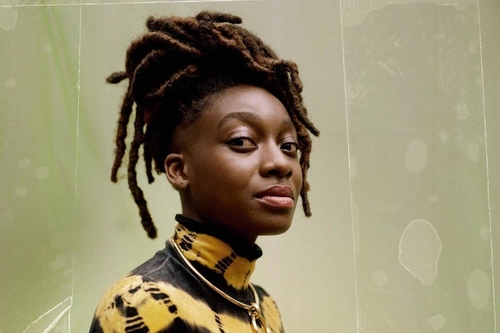
IN THIS PHOTO: Little Simz/PHOTO CREDIT: Getty Images

I shall wrap up soon but, before nodding to some big albums yet to come, I want to name four more albums that have made a big impression. Little Simz has been Mercury Prize-nominated for her album, GREY Area, and one can see why! It is a huge release and one that is among the absolute finest of this year. It is an album that is personal and real but looks at the outside world. At a time when we are facing crisis and division, Simz beautifully documents the modern world with just the right balance of anger and compassion. This is The Independent’s review of GREY Area:

 “Simz flips between two tones: bristling and unapologetic, and warm and reflective. “Offence” is the former, with tongue-in-cheek bars that have her hailing herself as “Jay-Z on a bad day, Shakespeare on my worst days”. So, too, is “Boss”, with its killer bass hook and distorted punk vocals. Elsewhere, she considers the impact of her own ambition: “Wanting to be legendary and iconic, does that come with darkness?” she asks on closer “Flowers”, reflecting on her idols Jimi Hendrix and Amy Winehouse.

There’s another subtle nod to Winehouse on “Therapy”, which is anchored by her extraordinary bass player, in the way it recalls the late artist’s biggest single “Rehab” on the chorus. Simz has said making this album felt cathartic. “Selfish” assesses her independence, while “Boss” lets rip at the man/men who disrespected her. “Venom”, which opens with a shiver of violins, is so menacing you wonder what kind of fool would dare to get in her bad books. What Simz does here is phenomenal. This is an album – and artist – to cherish”.

I lied when I said I only wanted to mention four more album. Julia Jacklin’s Crushing is a beautiful, personal and revealing collection that will speak to so many people. I urge people to check it out because, in my opinion, Jacklin is one of the most accomplished songwriters in the world. Another artist who can buckle the knees with her gorgeous voice and exquisite songwriting is Lucy Rose. Forgive me, again, if I am repeating myself but I think these incredible artists deserve a lot of praise – not in a mansplaining way: I am highlighting the fact women are creating some of the best music around and, as sexism and inequality remains, we all need to do a lot more. No Words Left is stunning record and I would say it nestles somewhere between Billie Marten and Julia Jacklin when it comes to feel and tone. Sleater-Kinney recently lost their long-term drummer Janet Weiss but, on the last album she released with them, you can witness something immense. Produced by Annie Clark (St. Vincent), it is a slightly different direction for Sleater-Kinney. The Center Won’t Hold is one of my favourite albums from the year and I especially adore the track, Hurry on Home. I wonder where Sleater-Kinney will head and whether we will hear another album – I am sure we will see one. Jenny Lewis is an artist who has been on the scene for a while but, on her latest album, On the Line, she has crafted her finest work.

In this review from The Telegraph, they get to the core:

By the album’s conclusion, Lewis has renounced both love and drugs. “Bad habits will be broken/ Boy, I have kicked a few/ And seven days off the dope and I’ll be good as new,” she sings on the trippy Rabbit Hole.

As break-up albums go, the mood is remarkably positive. Lewis’s mother (a long-term heroin addict) died from cancer during recording and chances are you will never hear such a spirited, upbeat elegy as the groovy Little White Dove (one of three tracks produced by Beck with Jim Keltner on drums). There is nothing ground-breaking here, and Lewis pays not even the faintest lip service to contemporary pop trends. But if you like quality songwriting delivered with panache, On The Line is on the money”.

It has been a really strong year for music and, with a few months remaining, who knows what we can expect. Pitchfork have selected a few albums we need to get involved with and, with released from Kim Gordon (No Home Record – 11th October, Matador), Tegan and Sara (Hey, I’m Just Like You – 27th September, Sire); Angel Olsen (All Mirrors – 4th October, Jagjaguwar), Brittany Howard (Jaime – 20th September, ATO); Sampa the Great (The Return – 13th September, Ninja Tune) and Jenny Hval (The Practice of Love – 13th September, Sacred Bones) to come, we have plenty more to look forward to!

99.jpg

 IN THIS PHOTO: Sampa the Great/PHOTO CREDIT: Andy Hughes/NME

I would recommend you check out the album and artists I have included as they are among the finest of 2019. I have not even scratched the surface when it comes to the huge singles and newcomers – one can understand I must limit things a bit. How does this all translate into 2020? I do hope there will be improvement regarding women booked for festivals. I keep mentioning how radio playlists are tipped in favour of male artists and, with so many terrific female artists around, I am not sure why there is stubbornness and slow improvement. It is a bit frustrating to see the same problems crop up regarding gender imbalance. In any case, let’s just enjoy the brilliant music that has come through this year. I am really looking forward to seeing what the remainder of 2019 provides because, as I keep saying, this year has been a huge one! I shall end things there, but I feel it is important to revise my feature regarding incredible female artists. From the Folk of Billie Marten to the fire of Lizzo, we have seen so much phenomenal music emerge. At such a difficult time for us all, music provides a form of solace and relief. There is a lot of great music around but, in my view, most is being made by women.  For giving the world such captivating, stunning and fascinating music we must give our…   

THANKS to them all.

FEATURE: Sisters in Arms: An All-Female, Summer-Ready Playlist (Vol. XII)

FEATURE:


Sisters in Arms

IN THIS PHOTO: Mahalia 

An All-Female, Summer-Ready Playlist (Vol. XII)

__________

THE weather this week is a bit changeable…

aa.jpg

 IN THIS PHOTO: Skott

but we can rely on wonderful music to give it a lift and a bit of heat! In this week’s female-led playlist, there is a nice array of genres and sounds. From some fiery Pop to something a bit more chilled and cool, there should be something in there for everyone! I am always amazed at the sheer breadth and weight of music this year - and leading the way is women. That might sound controversial but I feel women in music are digging deeper and producing more interesting work. Whatever your viewpoint, have a listen to my playlist and I know you will find much to love. It is another compelling week and one that sports many gems. Get this playlist locked and loaded and give your weekend…

 IN THIS PHOTO: Carmody

A fantastic soundtrack.

ALL PHOTOS (unless credited otherwise): Getty Images/Artists

____________

lkkl.jpg

GriffDidn’t Break It Enough

PHOTO CREDIT: Rory James

IDER – Slide

vv7.jpg

MicraFuzz Captain

9009.jpg

MUNAPink Light

GeowulfLonely

DelaceyActress

King PrincessAin’t Together

i875.jpg

KiiaraBipolar

PHOTO CREDIT: Pose Mag

SkottBloodhound

5.jpg

Cashmere CatFOR YOUR EYES ONLY

aaqq.jpg

Kelsea Ballerinihomecoming queen?

uiuiu.jpg

IN THIS PHOTO: Gemini Rising

Gemini Rising, Tensnake, Fiora - After the Rain

Abbie OzardOn a Low

Gia FordGOD, CAMERAS, EVERYONE

Baby TaylahReclaim

PHOTO CREDIT: ELLE Magazine (US)

Camila Cabello - Shameless

Tiwa Savage49-99

MahaliaWhat Am I?

CarmodyCatching Blue

Charlotte Lawrence, KlingandeWhy Do You Love Me

Sienna HamiltonGrey

wss.jpg

IN THIS PHOTO: Amelia Monét

Amelia Monet (ft. Br3nya)Bumper

gg.jpg

Maddie & TaeBathroom Floor

Anna of the NorthDream Girl

bg.jpg

PHOTO CREDIT: Horizons / Gorwelion

I See Rivers Collide

s.jpg

Orla Gartland - Did It to Myself

Rico NastyFashion Week

FEATURE: The September Playlist: Vol. 1: Violence and Good Girls Going to Hell

FEATURE:


The September Playlist

xxx.jpg

IN THIS PHOTO: Grimes/PHOTO CREDIT: Eli Russell Linnetz 

Vol. 1: Violence and Good Girls Going to Hell

___________

EVEN though I keep pointing out…

 IN THIS PHOTO: Billie Eilish

how we get quiet weeks and then big ones…you can’t fail to ignore the fact that there are some pretty mighty tracks out this week! Not only are there releases from Bat for Lashes and Billie Eilish, but there are tracks from Grimes, Sam Fender and Mystery Jets! Sampa the Great has also released a new song and, all combined, it makes for a dizzying and explosive rundown. Have a listen to the terrific tracks and you’ll be hooked by the blends on offer. It is a really fascinating week and, without further ado, it is probably best I let you get into the tracks! Have a good listen and I know these songs will get your weekend off…

 IN THIS PHOTO: Sam Fender/PHOTO CREDIT: Sarah Louise Bennett

TO the perfect start!  

ALL PHOTOS/IMAGES (unless credited otherwise): Getty Images/Artists

_________

zzz.jpg

PHOTO CREDIT: Eli Russell Linnetz 

Grimes & i_o Violence

PHOTO CREDIT: Logan White

Bat for Lashes Desert Man

PHOTO CREDIT: Yvan Fabing

Billie Eilish - all the good girls go to hell

Iggy Pop Page 

Mystery Jets - History Has Its Eyes on You 

cclll.jpg

Hot Chip - Bath Full of Ecstasy

PHOTO CREDIT: Andrew Whitton

Elbow Empires

Sam Fender The Borders

Bombay Bicycle Club - Eat, Sleep, Wake (Nothing But You)

aaaaa.png

PHOTO CREDIT: Chris Almeida

girl in red bad idea!

PHOTO CREDIT: Ying Ang

Sampa the Great (ft. Whosane) - Heaven

XXX.jpg

Mahalia (ft. Ella Mai) What You Did 

FRRR.jpg

Stormzy Sounds of the Skeng

Miles Kane - Blame It on the Summertime

CD.jpg

PHOTO CREDIT: Michael Bailey-Gates

King Princess Ain’t Together

PHOTO CREDIT: Christian Vierig/Getty Images

Camila Cabello Shameless

Belle & Sebastian This Letter

PHOTO CREDIT: David Harrison

Professor Green (ft. Alice Chater) - Got It All  

Bleached Daydream

Greta Van Fleet - Always There

Skott Bloodhound

Mallrat Drive Me Round

Oh Wonder Hallelujah

John Mayer Carry Me Away

Sofi Tukker Purple Hat

grandson Oh No!!!

blink-182 – I Really Wish I Hated You

FEATURE: Boiling Point: The Mercury Prize 2019: The United State of British Music

FEATURE:


Boiling Point: The Mercury Prize 2019

kkk.jpg

IN THIS PHOTO: Little Simz is nominated for a Mercury Prize for her album, GREY Area/PHOTO CREDIT: Andy Parsons 

The United State of British Music

__________

ON Tuesday…

 IN THIS PHOTO: Rapper Dave scooped two awards at the AIM Independent Music Awards on 3rd September, 2019 (and is Mercury-nominated for his debut album, PSYCHODRAMA)/PHOTO CREDIT: Getty Images

it was the AIM Independent Music Awards. Presented by Lauren Laverne, it was a chance to celebrate great independent music and some cutting-edge British acts. There were a lot of great artists on the bill but, as this reflection article reports, it was a healthy, diverse and magic night:

South London rapper Dave has scooped the two biggest prizes of the night at the AIM Independent Music Awards.

The grime artist, real name David Orobosa Omoregie, secured Best Independent Album for his debut Psychodrama and Best Independent Track for his number one hit, Funky Friday ft Fredo.

It follows a stand-out year for the 21-year-old, who won over a legion of fans at Glastonbury and is due to star in the third series of gritty crime drama Top Boy.

Political punk rockers Idles were also honoured with the Best (Difficult) Second Album prize for their sophomore record Joy As An Act of Resistance.

The Bristol band’s label, Partisan Records, took home the award for Best Independent Label thanks to the success of its roster, which includes Cigarettes After Sex and John Grant.

West London rapper AJ Tracey also performed during the ceremony.

The chief executive of AIM, Paul Pacifico, said: “The list of winners tonight reflects the boldness of the independent community – artists and labels who are unafraid to push the boundaries and take risks to produce some of the UK’s most cutting-edge cultural output.

“As we celebrate AIM’s twentieth year championing independence, it’s amazing to see that creative spirit celebrated in this way at a venue like the Roundhouse”.

On a great evening for British talent (and international artists such as Debbie Harry), it made me think about the approaching Mercury Prize ceremony and the fact that, over the past year or so, British music has really come to the fore! I know British music has always burned bright but, at a point in history when we are all rather worried and distracted by the machinations in political circles, our very finest have stepped up to provide us power, guidance and relief. The debate about this year’s Mercury Prize, luckily, isn’t about the pedigree of the nominees – past years have been derided for a lack of inclusiveness and poor quality. This year not only has a great range of artists included – although genres like Metal are, once more, missing -, but there is discussion as to who will win. Before I come to that, let’s look at the shortlist. What one notices, at first, is a relative lack of Scottish and Irish inclusions. This has been a problem before but, with Dublin’s Fontaines D.C. nominated for their debut, Dogrel, it is a positive step forward. In fact, there is a rare inclusion for a Welsh artist: Cate Le Bon’s Reward is a much-deserved inclusion. Both are strikingly different albums but it goes to show that the best of British is not exclusively reserved to London – past years have seen a major focus on South London acts.

This year, as you’d expect, reflects the rise and continued growth of Hip-Hop and Rap coming from the capital: Little Simz is nominated for GREY Area and Dave’s exceptional debut, PSYCHODRAMA, is included. Just look at those albums I have included and it shows what a strong field we have. I have always preferred Hip-Hop from the U.S. but, with Little Simz and Dave releasing albums that are as accessible as they are urgent, we are seeing a new breeds of Rap artists emerging that are able to compete with the best of America. Given the fact there are so many problems in Britain right now, I am not shocked we have seen such strong and resonant albums from two immense British talents. Not only is Dave’s explosive debut nominated but another debut is on the list: Slowthai’s Nothing Great About Britain is another political and socially-aware record that picked up huge reviews when it was released back in May. I think he is an outside shot and, whilst it is not one of my favourite albums of the year, it just goes to show British Rap is in rude and healthy state! I think there is a three-way split (regarding possible winners) between the Rap elite and the rest…oh, and IDLES! They have their own category because, not only did they win big at this year’s AIM Independent Music Awards but their album, Joy as an Act of Resistant is being tipped as a favourite.

I will predict my winner but, if you want an example of what British artists are producing right now, IDLES’ incredible sophomore release needs to be in your thoughts. This is how NME assessed the album:

Everything about ‘Joy As An Act Of Resistance’ is just so perfectly realised. The band began to write the album immediately after they finished work on ‘Brutalism’ – and it shows. The songs feel lived in, the record’s overarching message – that of the necessity of unity, positivity and loving yourself – so empowering that it almost amounts to an entire worldview. It’s even more powerful for the fact that Talbot worked on the album in the midst of massive personal trauma. This is a proper classic punk album, one that people will turn to in times of need, one whose authors are unembarrassed about still believing that art can manifest positive change. As Talbot roars on ‘I’m Scum’: “This snowflake’s an avalanche”.

I will end this feature by squaring the two artists I feel are the likeliest to win this year’s Mercury Prize: IDLES and Anna Calvi (for her third album – and third Mercury nod -, Hunter). Just look at the sheer variety of the remaining albums! Black Midi are a divisive band (I am not a fan but I can see why some like them) and Schlagenheim is one of the most indelible and original records I have heard! They are, as I say, divisive but the acclaim they have warranted reflects a desire for a band who not follow the normal; who are not boring and, importantly, have a unique voice.

IN THIS PHOTO: Black Midi/PHOTO CREDIT: Matilda Hill-Jenkins for Loud and Quiet

When speaking with Loud and Quiet recently, the writer highlighted how, even in conversation, the band are a special brand:

“…This, it turns out, is how they set about writing their complex, restless music, as Kelvin explains.

“We’ll record everything, then listen back to that for things we really like and take it from there. Latch onto a single bit at a time, then take other bits, and mash them together.”

“There’s a lot of scaling down,” says Simpson. “We’ll listen to the recordings individually, and different people will like different bits, which makes it kind of cool.”

Simpson expands. “It basically just came from one article. We never set out to be hard to find. I guess the whole mystery thing is the lack of activity on social media, but that’s not a lack of anything – we’re posting what people wanna see, just the information that’s needed.” It’s true: look at their social media presence, and it is fairly sparse, but they do share all their live dates and link to where their music is available online. They’re not hiding anything.

“But yeah, that NME article, saying we’re mysterious, was one of the first things that was written about us, so it set the tone for what followed,” says Simpson. “But it’s just made up.”

Picton laughs wearily. “That article was funny as well, cos they were like, ‘the band have no recorded music whatsoever, you can’t hear them anywhere’, and then at the bottom it linked to the NTS session, which then linked to three other tracks that you could’ve listened to at the time. They were all studio quality too – it was a live recording, but it was in a proper recording studio”.

Even though they are outside punts for the Mercury, one cannot exclude Foals, SEED Ensemble and Nao. Foals’ Everything Not Saved Will Be Lost – Part 1 is one of this year’s biggest Rock albums and, as I mused yesterday, at a time when Rock is not as potent and memorable as it was in the past, Foals are keeping the flame alive. I think they are going to be on the scene for many more years and, at a time when Rock and Alternative music is taking a back seat to other genres, we still have some great bands like Foals flying the flag. Every Mercury year has artists included considered ‘outsiders’ or, more offensively, ‘token’. Nao’s Saturn is a fantastic album and, in any other year, it would be higher up the bookies’ table regarding favourites. The album is a beautiful blend of Soul, R&B and other sounds sprinkled in. It is sweet and soulful; it is driving and raw at times. I think, even though it is unlikely to win, everyone should check it out as it is one of 2018 best albums (Saturn was released last year). SEED Ensemble’s Driftglass is another top album but, again, it is outsider. I have lauded British Rap and Post-Punk but, listen to all the great Jazz swirling around, and it is clear so many different genres are flourishing. I think, compared with the U.S., we are succeeding and innovating across so many different genres. American artist are great but I think we dig deeper, go broader and the results are bigger!

Whilst Pop – mainstream Pop at least – never usually makes the Mercury shortlist (the fact Ed Sheeran was nominated a couple of years back stirred up some controversy!), The 1975 blend Pop into their brew. Their acclaimed album, A Brief Inquiry into Online Relationships, was released late last year and the band are preparing to release Notes on a Conditional Form next year. Mixing political and social commentary with accessible choruses and uplifting sounds, The 1975 are one of the hottest groups in the world right now. One cannot overlook them and I would not be shocked if they won the Mercury Prize. I think the race will be between the aforementioned IDLES and Anna Calvi. This is the third time Calvi has been nominated for a Mercury - and the fact she has had every one of her records nominated is pretty impressive! Hunter is a terrific album and is such a powerful listen! Calvi discusses sexism and gender; she is intoxicating and passionate throughout and has, I think, released her most rounded and complete album so far. In this review,The Line of Best Fit had their say:

Although she operates more than comfortably in rock (see "Indies or Paradise" for a brilliantly trashy update of Rid Of Me-era PJ Harvey), it’s in the subtler and more nuanced moments that Hunter really comes into its own. "Swimming Pool"'s mixture of sweeping strings and a rare moment of vulnerability from Calvi provides a captivating nod to The Wicker Man, whereas she strips everything back on "Away" to just guitar and synth, vocals close to the ear and cracking with resignation. It’s a moment of staggering simplicity which proves to be deeply affecting.

IN THIS PHOTO: Anna Calvi is nominated for her album, Hunter/PHOTO CREDIT: Eva Pentel for DIY

Three excellent albums in, Calvi has produced her most complex work to date. As "Chain" attests (“I’ll be the boy you’ll be the girl / I’ll be the girl you’ll be the boy I’ll be the girl”), she exists on the periphery of many things: indie, rock, art rock, cinematic pop, being a boy, being a girl. On Hunter she refuses to clarify anything, proving to be both all of these things, and none of them”.

It is, as I said at the start, a really strong year. One can have few complaints regarding the standard of nominated albums/artists and, despite some genres not being included, the best of British is in the pack. One can quibble there are notable omissions – Self Esteem’s Compliments Please would have been a popular choice - but the dozen selected artists show that British music is not only wonderfully rich and memorable but there are so many different sounds and shades. From the more angular and odder Black Midi to the more commercial The 1975; the frontrunners Anna Calvi and IDLES to the blaze of Dave and Little Simz. I feel Anna Calvi and IDLES will be the ones to beat – although, as past years have shown, one can never predict! -  and many are rooting for Calvi to (finally) scoop the prize. I do go back and forth regarding those two names…but I do think IDLES will win the prize. I think 2018-2019 has been such a fantastic period for British music and, whether it is bands like IDLES tearing it up in venues or artists like Anna Calvi and Dave making us come together and think about modern life/society, it is a golden time! On Thursday, 19th September, we will see who walks away with the 2019 Mercury Prize. Whether it is Foals, Fontaines D.C. or Cate Le Bon, we can agree that the music from Britain over the past year or so has been wonderful. In a sense, everyone who has been shortlisted for a Mercury Prize…

IS a winner!

FEATURE: My Generation: What Is the Future of the Rock Icon?

FEATURE:


My Generation

poopop.png

IN THIS PHOTO: Robert Plant/PHOTO CREDIT: Getty Images 

What Is the Future of the Rock Icon?

__________

I was reading a feature the other day…

oooo.jpg

 PHOTO CREDIT: @dgraci/Unsplash

which revealed something quite sobering: nearly every big Rock artist alive today will be gone a decade from now. You can read the piece here…but, aside from the fact quite a few might live into their nineties and beyond, we might well be saying goodbye to the icons we have in our midst – including Patti Smith, Robert Plant and Paul McCartney. You can extend Rock to other genres and think about the likes of Joni Mitchell and James Taylor: other legends who, one feels, may not be around over a decade from now. The article talks about the icons past and how the last wave of pioneers might not be with us a whole lot longer:

But there's another sense in which rock is very nearly dead: Just about every rock legend you can think of is going to die within the next decade or so.

Yes, we've lost some already. On top of the icons who died horribly young decades ago — Brian Jones, Jimi Hendrix, Janis Joplin, Jim Morrison, Elvis Presley, John Lennon — there's the litany of legends felled by illness, drugs, and just plain old age in more recent years: George Harrison, Ray Charles, Michael Jackson, Lou Reed, David Bowie, Glenn Frey, Prince, Leonard Cohen, Tom Petty.

Those losses have been painful. But it's nothing compared with the tidal wave of obituaries to come. The grief and nostalgia will wash over us all. Yes, the Boomers left alive will take it hardest — these were their heroes and generational compatriots. But rock remained the biggest game in town through the 1990s, which implicates GenXers like myself, no less than plenty of millennials.

All of which means there's going to be an awful lot of mourning going on.

Behold the killing fields that lie before us: Bob Dylan (78 years old); Paul McCartney (77); Paul Simon (77) and Art Garfunkel (77); Carole King (77); Brian Wilson (77); Mick Jagger (76) and Keith Richards (75); Joni Mitchell (75); Jimmy Page (75) and Robert Plant (71); Ray Davies (75); Roger Daltrey (75) and Pete Townshend (74); Roger Waters (75) and David Gilmour (73); Rod Stewart (74); Eric Clapton (74); Debbie Harry (74); Neil Young (73); Van Morrison (73); Bryan Ferry (73); Elton John (72); Don Henley (72); James Taylor (71); Jackson Browne (70); Billy Joel (70); and Bruce Springsteen (69, but turning 70 next month).

It was all a lie, but it was a beautiful one. The rock stars' days are numbered. They are going to die, as will we all. No one gets out alive. When we mourn the passing of the legends and the tragic greatness of what they've left behind for us to enjoy in the time we have left, we will also be mourning for ourselves”.

It will be, of course, heartbreaking and gutting to say goodbye to these stars. We have already lost David Bowie and Prince in the last few years and look at some of the names above – how can we ever get our heads around the fact Bob Dylan and Carole King might not be around this time in 2029.

It is a bit of a bummer that mortality cannot be avoided but, in a way, we are fortunate we have so many of the greats around – given the fact the likes of Michael Jackson to David Bowie died prematurely. Two things occur when one must drink in the facts. I have speculated before…but I think, in some way, we need to ensure the memory and brilliance of the old guard is preserved and pushed to future generations. In a more important sense, it makes me wonder what the future of Rock is. Looking at some of those names before and there are some that are not Rock artists in terms of the genre – Carole King, Paul Simon and Joni Mitchell are iconic but are not Rock artists in the same way Robert Plant and Mick Jagger are. At this time, are we breeding new Rock idols? One can argue the likes of Dave Grohl and Josh Homme count; maybe Karen O and IDLES. I think a lot of today’s most exciting and primal sounds are coming from other genres. There is a big rise in Post-Punk with bands such as Fontaines D.C., IDLES and The Murder Capital emerging. Throw in Amyl and The Sniffers and there are plenty of great bands who will be remembered in years to come – not that many possibly-iconic solo artists, perhaps? I think this year has been a bit more productive and progressive than last year – as this feature explains from last year:

This year, rock and roll seems bored with itself. The most successful acts of the past few years have been bands bristling at the boundaries of the guitar, bass, and drums setup. The genre’s best-selling album of 2018 was Las Vegas electro-rockers Imagine Dragons’ summer 2017 full-length Evolve, a work that prefers humming synths and suspenseful atmospherics to the growl of a six-string.

Nostalgia’s a powerful force in rock and roll, especially now, as a new generation of bands, and by extension, their fans, are entering classic-rock radio rotation. (New York’s classic-rock station Q104.3 has been creaming the rap stations Hot 97 and Power 105.1 in overall ratings for months, in spite of Hot and Power’s year of attention-grabbing interviews and Nielsen analysts’ declaration that hip-hop has eclipsed rock as the nation’s favorite genre of music.) The success of Anthem for the Peaceful Army, the debut album by the Michigan band Greta Van Fleet, is a symptom of a rock scene haunted by its own Ghost of Christmas Past. Singer Josh Kiszka’s sharp, fey vocal is a tribute to warbling mystics like Geddy Lee from Rush and Led Zeppelin’s Robert Plant. Anthem found Greta twisting Zeppelin’s trademark hard-rock stomp into new forms with the same balance of recklessness and devotion as fan fiction. Anthem is spirited but almost inexcusably unoriginal”.

There have been some development since last year but Rock is in a bit of a quandary. Aside from a few great Post-Punk bands and what is happening in the underground, there are not many at the forefront keeping that old spirit alive. Maybe we cannot go back to a time when The Rolling Stones, Janis Joplin and Led Zeppelin ruled but, looking around, are there any artists keeping that Rock spirit alive? There is the odd flicker here and there but nothing like there used to be.

bvvb.jpg

 IN THIS PHOTO: Greta Van Fleet/PHOTO CREDIT: Getty Images

One might have to travel as far back as the 1990s, when bands like Oasis used to rule, to get the last real taste of Rock electricity. Not only does it seem like Rock music is stalling or mutating in other directions; there are some in the industry who think Rock isn’t worth saving. Nick Cave is someone who has his doubts regarding Rock and its fertility. Here, in this Far Out article from earlier in the year, more light is shed:

Rock music has lurched and shuddered its way through its varied and tumultuous history and somehow managed to survive,” he began in the opener of his response. “It is within the very nature of rock ‘n’ roll to mutate and to transform – to die so it can live again. This churning is what keeps the whole thing moving forward. As musicians we are always in danger of becoming obsolete and superseded by the next generation’s efforts, or by the world itself and its big ideas,” he continued.

Cave was quick to point out that the major focus of rock bands has changed, no longer is the “big idea” freedom of expression: “It looks like the new big idea is moralism. Will rock music survive this one? We shall see,” he said.

He continued: “My feeling is that modern rock music, as we know it, has anyway been ailing for some time now. It has become afflicted with a kind of tiredness and confusion and faint-heartedness, and no longer has the stamina to fight the great battles that rock music has always fought. It seems to me there is little new or authentic, as it becomes safer, more nostalgic, more cautious and more corporate”.

IN THIS PHOTO: Anna Calvi is one of the finest Rock performers in the world today/PHOTO CREDIT: Getty Images

The fact more women are picking up guitars means we are, fortunately, moving away from the old-school ideal of Rock stars. Maybe a lot of the biggest bands from the past relied on sex, drugs and Rock and Roll and, in these times, that aesthetic is outdated and controversial. When we are cracking down on artists stepping out of line, maybe there is not a chance to rebel and succumb to excess. It is clear the biggest Rock bands/artists now have a slightly cleaner look - and there is nobody out there who you feel will be considered an icon decades from now. One can debate whether Rock music is dead or not – it is not dead but definitely flagging –, but what is the modern-day equivalent of Patti Smith or Mick Jagger? We have a raft of wonderful bands who can bring the heat and grit but, in terms of Rock as we know it, I think it is in trouble. Certainly, there are very few out there who have the same potential sustainability as the legends of the past. This is not to say music is weaker without icons and leaders: in fact, music is as broad and eclectic as it has ever been. We have seen some tremendous albums released in 2019 but very few of them have been made by Rock artists – maybe Foals and Fontaines D.C. are exceptions. Tastes have changed and these characterful, controversial artists are a thing of the past.

There is more of a focus on solo artists at the moment and, for the most part, their songs are introspective and personal. Wonderful artists like Sharon Van Etten are rare exceptions but, largely, the Rock scene has lost a lot of edge and personality! Whilst 2019 has seen some interesting Rock records, you look around and struggle to see anyone who has legs and sticks in the mind. Big festivals like Reading and Leeds are supposed to highlight the best Rock and Alternative artists around but, as you can tell from this year’s line-up, Rock was not exactly well-represented and strong. We shall see what the future holds but, looking at music now and we do not have the same scenes and legends as we used to. The market is wide open and, as some genres are strengthening, I think Rock has given way to Post-Punk in terms of preference and public popularity. Perhaps we have reached a point where Rock has withered: maybe there will be a big wave of new acts soon that will kick-start a revival. In any case, I do look back at the article at the top and feel a bit sad that, yes, in a decade or so, we will have lost many of the great among us. Rather than feel sad at the fact we have to say goodbye to so many giants but, when Rock music especially needs a kick and revolution, we can learn a lot from them. Even after these hugely influential and popular artists have gone, they will still…   

CONTINUE to teach us.

FEATURE: The Beatles’ Abbey Road at Fifty: Inside the Iconic Studios

FEATURE:


The Beatles’ Abbey Road at Fifty

kjkkj.jpg

PHOTO CREDIT: Abbey Road Studios 

Inside the Iconic Studios

__________

THIS month is a pretty exciting one…

 IN THIS PHOTO: The Beatles and George Martin at Abbey Road Studios/PHOTO CREDIT: Abbey Road Studios 

if you are a fan of The Beatles. To be fair, most people are fans of The Beatles (or should be) but their final-recorded album, Abbey Road, turns fifty on 26th September. It is an iconic album that remains one of their very best and, from that memorable cover shot of the band walking across a zebra crossing to the brilliant songs on the album, it is a masterpiece. I think this will be the last big anniversary of a Beatles album where the two surviving members, Paul McCartney and Ringo Starr, are with us – seventy-five will be the next one and when their debut album, Please Please Me, hit that milestone, both will be in their nineties, I think (it could happen but it seems unlikely!). I cannot wait to see what celebrations are being held to mark fifty years of a truly wonderful album! It will nice to see McCartney and Starr tweet about it and fans will come together around the world. Whilst we celebrate the best band ever and a staggering album, let us think about where it was recorded. Abbey Road Studios is a hugely sought-after space where a lot of modern musicians record in – they are always bowled over when they enter the hallowed building! I have never been myself but, obviously, I have seen plenty of artists jam from the studio. I can only imagine how intimidating and thrilling it is standing on the steps outside of the studio and waiting to go in.

Of course, The Beatles are not the only legendary band/artist who have played there. Before I continue, I want to grab a little biography from the Abbey Road Studios’ website:

 “Abbey Road Studios is the most famous recording studio in the world and a global music icon. Originally a nine-bedroom house built in 1829, it was purchased by the Gramophone Company in 1928 who went on to build the world’s first purpose-built recording studio. The St John’s Wood address was chosen for its large garden and ideal location – close enough to the performance spaces of the time, but away from the noise and vibrations of the traffic and trains.

The grand opening ceremony on 12 November 1931 included a performance of Land of Hope & Glory in Studio One conducted by Sir Edward Elgar. The Gramophone Company merged with Columbia Graphophone Company to form Electric and Musical Industries (EMI) in 1931, and the studios later became known as EMI Recording Studios. Since EMI engineer Alan Blumlein patented stereo at Abbey Road in 1931, the studios have been famed for innovation in recording technology, largely developed by the Record Engineering Development Department (REDD) who were responding to the needs of the artists and producers using the rooms. Their innovations include the REDD and TG desks, as well as studio techniques such as Artificial Double Tracking (ADT), created by studio technician Ken Townsend, who went on to become the studios’ MD, as well as Vice President of EMI Studios Group.

While initially a venue for classical recordings, the studios’ repertoire soon embraced jazz and big bands, too, as well as the first British rock & roll records of the 1950s, including Sir Cliff Richard’s first single Move It. Abbey Road is of course synonymous with the legendary work of The Beatles, who worked with EMI producer Sir George Martin and recorded 190 of their 210 songs at the studios. But Abbey Road’s unparalleled history spans the wild experiments of Pink Floyd to iconic recordings from Shirley Bassey, Aretha Franklin, The Hollies and many more.

Since those exceptional years, artists from Kate Bush, Radiohead, Oasis, Kanye West, Amy Winehouse, Kylie and Muse to Sam Smith, Florence + The Machine, Ed Sheeran, Frank Ocean, Lady Gaga and Adele have made Abbey Road their creative home, producing countless landmark recordings.

As the demand for classical recording spaces declined, Ken Townsend found a new role for the big rooms – movie scores, with the first major film score being Raiders of The Lost Ark in 1980. Since then, Abbey Road has developed into one of the world’s premier destinations for movie scoring. Blockbuster films such as The Lord of The Rings Trilogy, Skyfall, the Harry Potter series and the Oscar-winning Gravity feature scores recorded here, while recent projects include Black Panther, Solo: A Star Wars Story and the multi award winning The Shape of Water.

The studios house a number of state-of-the-art mastering suites, with engineering expertise spanning direct to vinyl and half-speed mastering. Recent projects mastered or re-mastered by Abbey Road’s award-winning engineers include music from The Beatles, Sam Smith, Sade, Abba, Krept & Konan, Graham Coxon, Novelist, Johnny Marr, Roxy Music and The Rolling Stones.

vg.jpg

IN THIS PHOTO: The late Amy Winehouse looking focused at Abbey Road Studios/PHOTO CREDIT: Abbey Road Studios  

In Spring 2017, in the biggest transformation since first opening, two new contemporary studios were launched - The Gatehouse and The Front Room - making the magic of Abbey Road accessible to a whole new generation of recording artist. They have already hosted artists from James Bay, Jess Glynne, George Ezra and Skrillex to legends like Nile Rodgers plus grime MCs Novelist and Jammer BBK”.

Not only is Studio 2 famous for its sheer size but the artists who have laid down tracks there is amazing! Films are scored there and Abbey Road Studios also does post-production mastering. It truly is a space where artists can create and be inspired. One of my ambitions is to walk around the studios and get a feel for what artists do; the sheer amazement being in that space! Since bands like The Beatles started pushing the possibilities of the studio from the 1960s, some amazing acts have pushed boundaries and made discoveries in Abbey Road Studios. To celebrate fifty years since Abbey Road came into the world, BBC Radio 2 are celebrating with a four-day pop-up DAB station. You can find more details here and get involved. One might say these celebrations are excessive considering we are marking one album but, when you consider The Beatles define the studios and have encouraged countless artists to record there, one can forgive a little excess and pomp.

Abbey Road Studios’ Isabel Garvey is one of the most influential and creative people in the music world and she is definitely taking the studios into the future. There have been threats in the past of closure and, when you read the reasons, it would have been a travesty if we saw the end of such an historic building. Garvey is bringing AI to Abbey Road Studios and her incredible team continues to welcome in the best establishes and rising artists. That is the beauty of the place: the fact that a relatively unknown artist might walk in a record and bump into a legend on their way out! I do wonder whether, as part of Abbey Road turning fifty, the public will be allowed access into the studios. Certainly, thousands flock to the famous zebra crossing outside the studios (although I believe it is not the exact same one The Beatles used for the Abbey Road cover) and it would be a dream for many to take a tour of this iconic place. 26th September is when Abbey Road turns fifty but, to all music fans, do some digging and get to know Abbey Road Studios. If you are near Abbey Road Studios at 3 Abbey Rd, St John's Wood, London NW8 9AY then take a trip across the famous zebra crossing; see their graffiti wall and just take in the atmosphere! This month, the revered and sensational studios will be…

FIRMLY in the spotlight.

FEATURE: Spotlight: Hannah Cohen

FEATURE:


Spotlight

9nbb.jpg

PHOTO CREDIT: Getty Images/Hannah Cohen 

Hannah Cohen

__________

I must confess that I am...

gg.jpg

 PHOTO CREDIT: Getty Images/Hannah Cohen 

relatively new to the music of Hannah Cohen. I am aware of her since her 2012 debut album, Child Bride. Listening back to the record now and it shows so much promise but, as an artist, Cohen would grow in ability and confidence. It is an interesting album that boasts many gorgeous songs. Perhaps it is not as strong as the material on her current album, Welcome Home, but it was clear in 2012 that Cohen was a name to watch closely. The Line of Best Fit investigated Child Bride for a feature in 2012:

 “As debut albums go, Hannah Cohen’s is a beautiful introduction. Child Bride is urban folk at its finest – Cohen’s deeply evocative vocal infuses empirically elegant melodies, allowing her emotional world to tumble out over its ten songs.

And Hannah Cohen has some heritage. The granddaughter of British poet Bertie Rodgers (who was BFF with Dylan Thomas), and the daughter of a British mother and an American jazz-drumming father, Cohen’s childhood was illuminated by touring musicians and her parents’ hippy ideology. After high-school, she became a fashion model, before defecting to the other side of the lens (she recently released her first book of photography entitled Fotografias Brasil).

Cohen’s music career is still in its relative infancy, but what she lacks in experience she can make up in with friends. Child Bride was produced by Thomas Bartlett (of Doveman fame), while the album includes contributions from Sam Amidon, Rob Moose and Mauro Refosco who have worked with acts ranging from Bon Iver to Thom Yorke. As you would expect, Child Bride is deliciously executed”.

So, when did you begin to make music?

About four years ago, I was on vacation with my then boyfriend – who was a musician – and he left the room and I went to pick up his guitar. I’ve always had a lot of musician friends and have travelled around to watch their music. I just started playing and from there I got my own little guitar. I’d play all day and then started singing out melodies and began writing from there. I feel like I have a good ear and that helps me.

How did you get from there to the point of having songs which could potentially become an album?

I started sharing my songs with friends and they were all saying ‘wow, they’re good, keep going’. I met Thomas Bartlett about two-and-a-half years ago and I sang him ‘Don’t Say’ and he was like ‘Oh my god, I totally want to produce a record for you and I now exactly what I would want to do’. So, I wrote about 25 songs and got rid of a few really bad ones. But, this first record has a lot to do with Thomas because he really saw something in my songs”.

I will talk more about Cohen’s latest album but, even at the start of her career, there was plenty of originality and intrigue. I have just heard (1st September) her give an interview to Mark Radcliffe and Stuart Maconie on BBC Radio 6 Music. Throughout the interview, she was engaging, warm and fascinating. In a sea of artists, Cohen definitely stands out.

9009.jpg

There is an unmistakable beauty and sense of belonging on Welcome Home. When speaking about her album with Radcliffe and Maconie, Cohen revealed that she felt like this is her first proper album. Maybe Child Bride and Pleasure Boy (2015) were not as complete and fulfilling as she hoped; maybe it has taken her a while to get to where she needs to be but, in terms of quality and memorability, I feel her third album is her best. It seems like the California-born artist is where she needs to be:

Hannah Cohen has arrived home. From the title of her new album to the depth and beauty of the music, the Woodstock, NY-based singer-songwriter’s third album, Welcome Home, displays a new level of confidence and comfort with the many creative tools at her disposal. Cohen’s remarkably evocative voice is surrounded by dreamy, swooning incantations, from the rippling ‘This Is Your Life’ and the slow-burning, forthright statement of ‘All I Want,’ to the soul swagger of ‘Get in Line’ and dramatic vocal leaps of ‘Wasting My Time.’

With Welcome Home, “I don’t feel I have to cover up anything, or not be able to share,”Cohen says. “There’s less to interpret, I’m more visible. And as to reflecting on the past when things didn’t go well, I’ve left that behind. It was all worth it, to make my way to this point.”

Produced by Cohen’s partner Sam Owens, the producer/writer who performs as Sam Evian, the artist began developing the material that became Welcome Home in 2017. Taking her time with the songs, she wrapped herself in the fulfilling quiet of a new home, and a new creative partnership that supported finding a clarity in her writing and vocals. Many of the songs were written on an old, nylon-string guitar painted with Hawaiian scenes of beaches and palm trees (which can be heard on ‘This Is Your Life’), that, no matter the final arrangement, gives the songs a lighter touch, a warming glow that suffuses the whole album. Listeners may find echoes of folk and R&B, radiating with vocal-powered pop production, electronic accents, and bursts of pulsing guitar/bass/drums energy. Irresistible echoes of soul enchanters such as Carrie Cleveland (an early touchstone for Cohen and Evian), Marvin Gaye, Bill Withers and their friend and sometime collaborator Nick Hakim blend with the reflective shadings of singer/writer forebears such as Carole King and Harry Nilsson”.

I will bring in a couple more articles before rounding things off but it seems like a lot of love is going the way of Cohen. She has played in London and Birkenhead the past couple of days and is heading to Brighton later today. I am not sure whether there are more dates in the U.K. but, when she does pop back here, make sure you go and see her play.

Hannah Cohen is a very open, relatable and accessible artist who, when interviewed, sounds incredibly charming, friendly and warm. I am not saying other artists are not but you instantly bond with Cohen the moment you hear her talk. In a busy year for music, perhaps Welcome Home will not challenge the biggest releases – from the likes of Taylor Swift and Lana Del Rey – but it is an album that promises sunshine and contentment. Loud and Quiet, in this feature, drill to the heart of Welcome Home:

It then feels natural that her third album – the aptly titled Welcome Home – captures the uplifting experience of finally finding a new haven, and the 10 tracks here radiate a sense of freedom and ease that comes with feeling at home somewhere. Things start off with the blissful ‘This Is Your Life’, with its melody gently dancing like a mirage, lyrically showing where Cohen’s mental state is at, and her desire to stop the mundanity of life disrupting her happiness. Elsewhere, the bittersweet ‘Old Bruiser’ and ‘Build Me Up’ offer a nostalgic quality, and are some of the strongest moments on the album.

There’s a fluidity and lightness in Cohen’s songs, as her acoustic guitar and angelic, floaty voice are quilted in an oceanic dream-pop aesthetic, bringing to mind acts such as Kacey Johansing and Japanese Breakfast. Those searching for something more immediate might be left unsatisfied (it does all get a bit airy and overly delicate at times), but overall it captures a positive new transition, like waking up on a sunny Saturday morning”.

Cohen has toured internationally in the past but it seems, after Welcome Home gains more traction, she will get a lot more dates. It is great she has played in the U.K. and it seems like there is a very warm and welcoming bond. Here, in this Pop Matters feature, they explore the notion that, whilst Cohen seems to be referring to others in her songs, her music is much more personal – she is referring to herself:

Despite using non-identifying pronouns such as "you", it's obvious Cohen is speaking to herself in the third person: "And I'll tell you what it is / The moment you see it, you want it, take the risk / You're out of your mind and that's alright". Here Cohen taps onto the psychological effect of "I" versus "you" statements. Using "you" instead of "I" when uttering self-affirmations has proven to yield greater results for the individual. Without question, Cohen opens her album with the literal and figurative declaration of change and agency.

In Welcome Home's press release, Cohen explained "a lot of the album is about checking in with reality and taking the wheel, being honest with myself and my intentions. Being transparent as much as possible. They're about exploring why I'm here." With that sentiment in mind, "Holding On" takes an unadulterated approach to understanding herself while "What's This All About" addresses the impact of her location on her self-worth. She's critical of the City's role in her creative process as she ponders "What about this city do you still love? / 'Cause it's making me crazy / I can't get a new job / Gotta make it work / Or we can move to the country".

Welcome Home is a portrait of an artist amidst transition. As Cohen grapples with physical location, she creates a musical space where an exploration of identity is conducted with intimacy and vulnerability”.

Cohen’s first two albums are well worth seeking out but I do feel like Welcome Home is a new beginning. With just ten albums and no song exceeding five minutes, she is pretty skilled when it comes to creating economical and tight music. That is not to say Welcome Home lacks exploration, depth and ambitious: songs like All I Wanted and Return Room are compelling, immersive and engrossing. Welcome Home is one of these albums that beckon you in but keep you coming back – not like so many modern albums which lack depth and nuance. It seems like the future is very much open and up for grabs. With each album, Cohen takes another step: Welcome Home is her greatest work and, in my view, one of the strongest albums of the year. She is still in the U.K. and will return to the U.S. shortly. I shall leave things here but I would prompt people to follow Hannah Cohen and go and grab a copy of Welcome Home. It is a wonderful record that everyone should listen to. Maybe the past few years have been about personal exploration and discovery; her first two albums have been stepping stones, perhaps. It is clear that, on her third album, Hannah Cohen has definitely…

FOUND her home.

____________

Follow Hannah Cohen

FEATURE: Vinyl Corner: Deee-Lite – World Clique

FEATURE:


Vinyl Corner

IMAGES/PHOTOS: Getty Images

Deee-Lite – World Clique

__________

PERHAPS it was a move from the blitz and fun…

of World Clique to the more serious and outward-looking on 1992’s Infinity Within that contributed to a decline in critical attention. That much-anticipated follow-up gained some positive reviews but, compared to the iconic and stunning debut, there was something lacking. Deee-Lite naturally progressed but, as they grew and got a bit more outspoken – talking about safe-sex and environmental protection -, perhaps that took some of the attention away. Definitely, Infinity Within is an important and timely album. Even now, it sounds relevant and daring but, after such a heady and acclaimed debut, perhaps people were expecting a similar follow-up. I will talk about the biblical World Clique in a minute but, before then, a little about the delightful Deee-Lite. The band started out in 1986 as a duo in New York City. Their colourful and stunning lead, Lady Miss Kier handled vocals whilst Supa DJ Dimitry was the D.J. They expanded to a trio when Jungle DJ Towa Tei joined the ranks. One can only picture the scene in the mid/late-1980s and Deee-Lite gigging in New York. Before Deee-Lite took shape, Kier and Dimitry played in some downtown clubs and cut their teeth. It was a modest beginning but life changed when Kier procured an Akai sampler. The band was very much D.I.Y. and, with Kier designing their posters and the group playing in gay and straight clubs, it was not long before they were thinking about an album.

Tei, Kier and Dimitry bonded over a mutual appreciation of Funk and Techno. I am not sure whether there were many other artists of the time fusing these sounds but, as the members of Deee-Lite came from the U.S. (Kier), Ukraine (Dimitry) and Japan (Tei), it was only natural their blend would be richer, more original and varied than a lot of music at the time. By 1988, the new three-piece was cemented and things were rolling. Rather than using a lot of instruments and having a natural sound, Deee-Lite employed samples and wonderful sounds on World Clique. They were all avid record collectors and, when it came to giving their debut new layers and different moves, they dipped into their vinyl collection. Lady Miss Kier took care of the lyrics and melodies whereas Supa DJ Dimitry handled guitar, keyboard and bass; Towa Tei was responsible for collating samples and fills. I would encourage people to get World Clique on vinyl because it sounds incredible on that format. One can imagine the sort of records Deee-Lite were pouring over when making World Clique so, to have all those sounds mixed onto a record is a wonderful thing. Included on World Clique are Bootsy Collins, Q-Tip; Fred Wesley and Maceo Parker. Recorded between January and May 1990, the group were literally capturing what was happening right at the start of an incredible decade. A lot of powerful and moving albums arrived in 1990 – including Public Enemy’s Fear of a Black Planet – but there was this intoxicating spirit happening.

Artists were mixing genres and splicing sounds. House music was emerging and becoming more prominent and there were influences from all around the world. Listen to some of the music at the time – including Soul II Soul’s Back to Life and Madonna’s Vogue – and you can find plenty of music that united people and lifted the spirits – it would be good to see more of that today; whether that is even possible, I don’t know! World Clique is not only one of the best albums of the 1990s but it is one of the best debut releases ever. It is such a kaleidoscopic, wild and liberating album that drags you in and brings you into this neon, colourful world where you feel better and safe. Hip-Hop was still prevalent but, as an alternative to an angrier and more political style of music, artists like Deee-Lite provided a wonderful alternative. More in common with peace and love of the 1960s than messages of civil rights and political concerns of the day, maybe that explains why Deee-Lite become more activated and conscientious on their sophomore release – feeling they needed to tackle big issues and get more serious. Unsurprisingly, World Clique was a huge success and received incredible reviews. The faultless Groove Is in the Heart was a top-five smash in the U.S. and U.K. whereas Power of Love/Build That Bridge and Good Beat were also very popular.

In this retrospective review, AllMusic discuss the beauty and potency of World Clique:

Its reputation may rest on only one hit single -- but what a hit. "Groove Is in the Heart" defined the summer of 1990 on radio and MTV with its delicious combination of funk, modern dance sheen, and Lady Miss Kier's smart, sharp diva ways. Add in guest vocals and bass from Bootsy Collins (a pity his hilarious video cameo wasn't represented here), brass from the original Horny Horns duo of Fred Wesley and Maceo Parker, and a smooth mid-song rap from A Tribe Called Quest's Q-Tip, and the results sounded good then and now. The rest of World Clique offers variations on the song's theme, with Kier's sweet, light vocals and DJs Dimitri and Towa Tei making it work in various ways. It's still a bit surprising that Kier didn't go on to greater fame on her own, because she definitely has not merely the pipes but the personality to carry something on her own -- compared to the dog-whistle vocal calisthenics of someone like Mariah Carey, there's no contest. Check out her work on songs like "Good Beat" and the amusing sass of such numbers as "Try Me on, I'm Very You." The two musicians come up with a seamless, adept flow throughout, merrily raiding whatever they so choose in the past for their own purposes. Disco is the heart of it all, with everything from hip-hop breaks to bubble-salsa piano -- even early Depeche Mode! -- taking a bow; hints of the future genre-mashing Towa Tei would make his own trademark are already plentiful. Bootsy and the Horny Horns crop up at other points as well, adding just enough classic funk to blend with the crisper electronic pulses and arrangements”.

NME had this to say where the album was released:

Whatever the lyrical content - love, smiling DJ/dancefloor ESP, more love, more positivity - the music is always so up, it's away. Disco with soul, erotic Electro and even those big Italian piano riffs sound refreshed and invigorating under their guidance. It all sounds so easy, but you know that behind it is three years in clubs gaining contacts that resulted in work with The Jungle Brothers, A Tribe Called Quest and even a Sinead O'Connor remix. A Deee-Lite clique which resulted in JB's Maceo Parker and Fred Wesley, A Tribe Called Quest's Q-Tip and Bootsy all putting their two-penneth into this album.

The result is one of the most varied and inspirational club crossover records ever. It doesn't matter that the ingredients aren't original, it's what they've done with them, that makes this album such a dream. On the other hand you could argue that, if you walked round on platform shoes with heels as high as Miss Lady Keir's your head would never come out of the clouds either.

It's the best place for it”.

I was seven when World Clique came out and was completely blown away by it. The albums still sounds utterly sensational and fresh but, at the time, it was a revelation. I love all the tracks on the album but one cannot escape the majesty and addictiveness of Groove Is in the Heart. It is a song that puts you on another plain. It is completely entrancing and otherworldly. You get lost in the samples and myriad grooves; the insatiable energy and fun of a song that is still massively played today. I will end this feature in a bit but I want to bring in an interview Music Radar conducted with Lady Miss Kier back in 2016. She discussed her experiences of World Clique and shared her memories of its incredible tracks:

"It was my first and only time doing it," says Lady Miss Kier, gingerly. "I'd never even sang before, but we tripped out and wrote three songs. Deee-Lite was formed that night." After coming down, a yearlong writing session took place, amassing them over 30 tracks that they would road test at packed hip-hop and dance clubs around the city. Kier handled mic duties, and dreamt up the kaleidoscopic image for the group, while classically trained pianist Dmitry brought the music. Record digger and DJ Towa would later join the ranks, providing many of the choicest samples.

"We were really into that funky stuff, which wasn't that popular at the time in New York," says Kier. "We started incorporating that with some Kraftwerk - I used to call that 'holographic techno-soul'. The main thing was that we didn't want to fit into one category. For me, the best bands fuse at least three different genres."

Try Me On… I'm Very You

"This has [P-Funk legend] Bootsy Collins on. He laid down some bass. I think originally we'd used a JBs sample, and he came in and replayed some really sweet overdubs. I'm pretty sure he played guitar on this as well. We didn't sit down and write with him. He just turned up and made everything… better, you know? He knew the songs from a demo tape I sent him, and he'd throw in bits and pieces over the top.

"He introduced us to a lot of the P-Funk players who'd left that scene and were hungry to work with other artists. So, Fred [Wesley] and Maceo [Parker] are on the horns here. That was the great thing about working with Bootsy. When he came, he was like, 'You need any horn players? I know a coupla guys.' Only these two legends! He introduced us to guys like Bernie Worrell, who ended up working with us later, too. I never felt worthy. These were my heroes. We ended up with a full, nine-piece live show with these guys, as well."

Groove Is In The Heart

"Q-Tip does a great verse on this. This was before Tribe blew up. He was hanging with the Jungle Brothers. We opened up for them one time at a club called Hotel Amazon, which is where I would have met Tip. We were playing that song live and he asked if he could do 16 bars on it.

"I remember he came to the studio with a note pad and just started writing it as we were laying down Bootsy's part. It was a one-take, write on the spot, thing.

“Bootsy wrote a whole rap, too, which made it on one of the alternative mixes. People keep asking if Tina Turner did some tambourine on this. She didn't. I don't know where that rumour came from [laughs]. Maybe she was in the bits we sampled? As for the samples. I think Dmitry found the bass from the Herbie Hancock record, Bring Down the Birds, and Towa found the drums and whistle from the Vernon Burch record, Get Up".

World Clique turned nineteen last month and it is amazing to think how different Deee-Lite sound to anyone around today. That might be obvious but I wonder whether artists should be looking back and taking to heart what Deee-Lite put into the world back in 1990. It is a wonderful album that sounds perfect no matter what format you hear it on – although, for the purposes of this feature, vinyl is the way to go! Grab a copy and trip into this extraordinary world. I wonder whether, as the album is twenty next year, it will get remastered and we will see anniversary editions come out. It would be good to see how the songs started life and whether there are any demos in the vaults. That is in the future but, in a moment when we could do with more fun in music, World Clique has a lot to offer in terms of inspiration. Even if artists are not able to reproduce the wonder and vivacity of World Clique, the fact that we have this album out makes the world…

A brighter and better place.

FEATURE: Irreplaceable: Beyoncé: A Modern-Day Music Powerhouse

FEATURE:


Irreplaceable

hh.jpg

PHOTO CREDIT: Kevin Mazur/Getty Images 

Beyoncé: A Modern-Day Music Powerhouse

__________

THERE are a few reasons why I...

vv.jpg

PHOTO CREDIT: Getty Images

am putting this feature out. I was scheduled to write a new Female Icons feature about Nina Simone but that is going to have to wait for a few days. Beyoncé turns thirty-eight Wednesday and many around the world will be marking her birthday. Naturally, when it comes to any big star, they are never too far from the news. At the moment, alas, there is more negativity and controversy than anything productive rumbling in the press but, as this is a slow time for music news, people need something to talk about. I know every artist has a birthday but, when it comes to modern artists, how many true icons are there? I celebrated Beyoncé in a recent Female Icons feature and it made me think about modern artists and whether truly have icons in our midst. Of course, there are some incredibly popular artists but how does one determine what constitutes an icon or merely a star? I think you need to have more about you than the music alone. In an age of streaming, we are counting streaming figures and assigning numbers as a mark of success. Reviews are great and we can get a lot from that but I think an icon needs to be someone who goes further; someone who is a role model and inspires others. In terms of modern artists, I guess you can call Taylor Swift an icon. She does a lot for charity and is a supporter of L.G.B.T.Q.I.A.+ rights. She is getting more involved in politics and is influencing a lot of people.

777.jpg

 PHOTO CREDIT: Paolo Kudacki for TIME

It is hard to mix music with the wider world but, if you can balance both, then that is something special. Also, the musical quality needs to be great: if you are a mainstream artists who has a lot of fans but the music does not translate to other demographics then, arguably, will you remain years from now? I am not bagging on modern artists but it is difficult creating music that crosses borders and then matching that with a persona that is inspiring. Look at some of the iconic women who have gone before: Madonna, Kate Bush; Etta James, Nina Simone, Stevie Nicks and Joni Mitchell among them. They have all given the world so much incredible music but each of them is groundbreaking; they have paved the way for other artists and remained hugely popular today. I guess you could say artists like Lady Gaga, Dave Grohl and others are icons and will go down in history but, for my money, the last of the true music powerhouses is Beyoncé. Maybe it is a subjective matter and opinion but, from her days with Destiny’s Child in the late-1990s to now, she continues to push forward and influence others. Since Destiny’s Child’s eponymous debut in 1998, we have seen this strong and independent artist blossom and strike. On The Writing’s on the Wall (1999) and Survivor (2001), Beyoncé grew in confidence and marked herself out as a solo artist to watch. Given the fact there are rumours Destiny’s Child are reforming and will tour, it makes me wonder whether there will be a new album from them next year.

I think we are living in a time when modern Pop and R&B is not that strong. There are some interesting artists around but, in terms of music that cuts to the core and stays in the mind, there are not many artists that cut the mustard. So many artists either appeal to a specific demographic or their songs are too commercial and lightweight. Aside from one or two artists/bands, I think we have lost the days of the icon. In many way, Beyoncé is one of the most recent and relevant powerhouses in music. There is no doubt that, when it comes to Beyoncé, there are contradictions and paradoxes that defines her iconic status. She has natural beauty and sex appeal but works tirelessly to succeed; she has riches and wealth but is a source of inspiration for young women coming through. Of course, she has a lot of people around her making the music come together but at the centre of everything is Beyoncé and her vision. Of course, many will say Beyoncé has had money her whole life and has been raised by marketing teams – whereas other artists have come from less and had fewer people in the mix. The legendary Dionne Warwick recently stated how much she admires Beyoncé and her fight but states that, in order to become an icon, many more years need to go by.

Perhaps, then, we need to shift the argument away from discussing Beyoncé as an icon – even though she is – and framing her as a modern powerhouse and leader. Back in 2015 – prior to the release of Beyoncé’s latest studio album, Lemonade - a BBC article argued why Beyoncé speaks for a generation:

Beyoncé is a true Renaissance woman: a musician, a business mogul, a feminist, a mother, and a brand whose cultural gravity seems to emanate not from any one of these talents but from all of them in concert.

In an American corporate world disproportionately governed by men, Beyoncé distinguishes herself as the founder and CEO of her own record label and production company, Parkwood Entertainment. According to Forbes, her personal earnings more than double those of her husband. He is a shrewd entrepreneur in his own right who famously declared himself “not a businessman but a business, man.” Beyoncé’s self-titled album sold a staggering 617,000 copies in three days following its release, doing Kanye West the poetic justice of swiping an iTunes Store sales week record from Taylor Swift.

In 2014 Forbes declared Beyoncé to be the world’s most powerful celebrity, and she has leveraged her global brand in support of gender equality through her influential charity, the #BeyGood Project. Her hit single Flawless samples from a TEDx Talk called We Should All Be Feminists by Nigerian author Chimamanda Ngozi Adichie. Beyoncé belts the anthem’s first verse and then cedes the floor to Adichie, who relays the definition of a ‘feminist’ as “the person who believes in the social, political, and economic equality of the sexes”.

c.jpg

 PHOTO CREDIT: Getty Images

One can debate whether some of Beyoncé’s popularity and success is earned and how much of her image is genuine – and how much has been manufactured. It is clear that, between her charity work, speeches and motherhood, she is inspiring so many people around the world. Artists such as Lady Gaga, Adele; Rihanna and Britney Spears have been influenced by Beyoncé and, unlike so many modern artists, Beyoncé’s music has extended across the age, gender and taste boundaries. Her fanbase is so diverse and extensive and, when you hear her music, you can tell why. Beyoncé has received numerous awards. As a solo artist she has sold over seventeen million albums in the U.S., and over one –hundred million records worldwide (a further sixty million additionally with Destiny's Child), making her one of the best-selling music artists of all time. The Recording Industry Association of America (RIAA) listed Beyoncé as the top-certified artist of the 2000s decade, with a total of sixty-four certifications. Her songs Single Ladies (Put a Ring on It), Halo and Irreplaceable are some of the best-selling singles of all time worldwide. Some have critiqued Beyoncé’s brand of feminism and its authenticity. There is no doubt she has compelled generations with her powerful messages and music. She has a successful marriage – one that has weathered a few storms – and balances music with business and motherhood.

For me, it is the strength and memorability of the songs that really stands out. I am thinking, as I type this, of her career-defining performance of Coachella last year. Her Homecoming documentary still feels so relevant and, if you have not seen it then make sure you do. The album is scintillating and it shows just how hard-working Beyoncé is! The set she performed must rank alongside the finest of this generation: a performance that will go down in history and will not be equaled. I will end with a Beyoncé playlist but, in terms of her six studio albums, they range from the promising (I Am… Sasha Fierce and Dangerously in Love) to phenomenal (Beyoncé and Lemonade). With Jay-Z, Beyoncé formed The Carters and they released Everything Is Love last year. A lot of popular and commercial artists release a couple of great songs per album and they can put out four or five decent albums in their career. Not only did Beyoncé have a string of huge hits with Destiny’s Child – including Survivor and Bills, Bills, Bills – but every one of her solo albums has at least three or four true gems. From 2003’s Dangerously in Love there is Crazy in Love (with Jay-Z); Naughty Girl, Baby Boy and Me, Myself and I. From B’Day there is Déjà Vu, Get Me Bodied; Ring the Alarm, Green Light and Irreplaceable.

Look at I Am… Sasha Fierce and there is If I Were a Boy, Halo; Single Ladies (Put a Ring on It) and Diva. 4 has I Care and Party (ft. André 3000); there is also Love on Top and Run the World (Girls). Beyoncé boasts Pretty Hurts and Drunk in Love; Partition; XO and Heaven. It seems that, with every album, Beyoncé grows stronger and more compelling. Beyoncé was the strongest album of her career in 2013 but, three years later, Lemonade took that to a new level – songs such as Hold Up, Don’t Hurt Yourself (ft. Jack White); Daddy Lessons, Freedom; All Night and Formation rank alongside the best songs she has ever created. One can see big leaps from her earliest days with Destiny’s Child but, even though she has worked with talented writers and producers, one cannot exclude the sheer passion and talent from Beyoncé. The songs and albums I have just mentioned are packed with hugely impressive songs that will endure for years to come. As I said, Beyoncé’s music and popularity goes way beyond Pop confines and a young audience. I do hope there is more music from her next year because, at a tense and divided time, who knows what she can unleash! Whether that album is with Destiny’s Child or solo, I do not know. She has put out some music recently, but there is a lot of anticipation as to what comes next. I wanted to write this feature to mark Beyoncé’s thirty-eight birthday but, more than that, nod to an icon (or not, as some see it!) that grows in stature and importance as time goes on. She is a businesswoman and proud mother; a spokeswoman and feminist leader; a voice for young, black women and, above all else, one of the strongest artists…

PHOTO CREDIT: Beyoncé

IN the world.

FEATURE: Any Major Dude Will Tell You: The Cool King of Queens: Remembering Walter Becker

FEATURE:


Any Major Dude Will Tell You

ii.jpg

IN THIS PHOTO: Walter Becker (who died on 3rd September, 2017)/PHOTO CREDIT: Getty Images 

The Cool King of Queens: Remembering Walter Becker

__________

IF you had to ask me which artist/band...

yy.jpg

 IN THIS PHOTO: Donald Fagen and Walter Becker’s Steely Dan were inducted into the Rock & Roll Hall of Fame in 2001/PHOTO CREDIT: Rock Hall Library and Archive

is seriously underrated and deserves bigger appreciation, I would not hesitate when it came to giving a name: Steely Dan. I will talk about their music more in a minute but, when I think about them, I sort of grin. Steely Dan had various members through the years but, in essence, it was the moniker and child of Walter Becker and Donald Fagen. The musicians were known perfectionists…and I can imagine the New Jersey-born Donald Fagen and the New York-born Walter Becker sort of sitting in the control room auditioning a roster of musicians. In terms of personality, Fagen seems slightly stricter and sterner whereas Becker is more lighthearted but equally passionate. They complimented each other fantastically and, when it came to laying down these incredible songs, the duo put their heart, soul and minds into everything. It is amazing to consider that such hard-working and exacting musicians released an album a year for a time – it was only after 1977’s masterpiece, Aja, that Steely Dan took a little while to release Gaucho (1980) – they then split and it was many more years until we heard some new Steely Dan jams. I remember hearing the news of Walter Becker’s death on 3rd September, 2017 and being shattered! I did not even know he was ill and, having fallen in love with Steely Dan as early as about seven or eight years of age, it was a huge loss. The stoic and strong Fagen is still playing as Steely Dan but one can only imagine the emotions he felt when Becker’s death was announced.

v.jpg

 PHOTO CREDIT: Getty Images

The two were practically brothers and had been playing together for decades – Becker’s death ended any possibility of new Steely Dan work (a travesty and hugely sad realisation). Walter Becker was born in 1950 in Queens, New York and met Donald Fagen when the two were students in Bard College. They started life in New York but, soon, relocated to Los Angeles. Like Beastie Boys, I always associate New York with Steely Dan, yet a lot of their music took shape on the West Coast. Maybe it is a sense of cynicism and cutting humour that makes me think of New York when listening to Steely Dan. That said, many see their music as Yacht-Rock and, when listening to songs like Reelin’ in the Years and Peg, you get a definite blast of sea, sun and scintillation. I digress, naturally. Walter Becker did move to Hawaii when Steely Dan split – and continued to work as a musician – but the group did get back together in 1993; releasing Two Against Nature in 2000 and putting out their final album, Everything Must Go, in 2003. It is a shame there was not a further Steely Dan album between 2003-2017 (or before Becker was diagnosed with cancer) because it would have been fascinating to see where they were heading. Becker himself put out two solo albums: the underrated and excellent 11 Tracks of Whack (1994) and Circus Money (2008).

I shall talk about my love of Steely Dan and why we should all mark two years since Becker’s passing on 3rd September but, before then, let us head back. Although Becker’s parents separated when he was young, it is clear music was a big part of his life. Becker’s mother, who was English, returned to Britain and the young Becker was raised in Queens and Scarsdale by his dad and grandmother. After graduating university in 1967, Becker learned guitar after starting out playing the saxophone. It was clear music resonated and spoke to Becker and, coming from a rather turbulent and disruptive home, maybe music was a language and calling; an outlet where Becker could immerse himself and find answers. The story goes Donald Fagen heard Becker playing guitar at their campus café back at Bard College in Annandale-on-Hudson, New York – listen to Steely Dan’s My Old School (Countdown to Ecstasy) and they name-check Annandale. Fagen was clearly impressed by the professionalism and chops of Becker. One can only imagine the tentative cooing and seduction between these kindred spirits. I can imagine these two very cool-yet-studious dudes of the 1960s playing Jazz and Blues whereas their peers would have been immersed in the music of the times. By the end of the 1960s, Becker and Fagen moved to Brooklyn and played as much as they could. Whilst they did not release any albums during this time, they gained some valuable experience and were keen to expand their horizons.

In 1971, they moved to Los Angeles and formed Steely Dan with guitarists Denny Dias and Jeff ‘Skunk’ Baxter. Alongside Jim Hodder and singer David Palmer, the line-up was complete – Palmer was sacked after the band’s debut, Can’t Buy a Thrill, and Fagen assumed greater vocal responsibilities. In the earliest days, Fagen did some vocals but was mainly at the back. He and Becker wrote and, with the peerless and wonderful Walter Becker adding his bass genius to the Dan pot, here was this unique and utterly beguiling outfit. I will end by talking about a new Steely Dan tour but, for the most part, the band was a studio outfit. They toured a bit until 1974 but, by that point, they stopped it altogether – that was the year they released Pretzel Logic and reached new heights of genius. By 1974, Becker moved to guitar and felt less need to bring his bass everywhere – with an expanding crew of musicians and Wilton Felder and Chuck Rainey handling bass duties, Becker was moving in new directions. I will cover Steely Dan’s music in a second but, by 1977, Becker was experiencing personal problems. Maybe it was the growing success of Steely Dan or the pressures of their perfectionism. Becker formed an addiction to narcotics after 1977 and his girlfriend, Karen Roberta Stanley, overdosed in 1978. Soon after, Becker was hit by a minicab in Manhattan and was forced to use crutches.

vv.jpg

This accounts for the three-year gap after Aja in 1977 – 1978 was the first year Becker and Fagen did not release a Steely Dan album since their formation – and the pressure on their shoulders preceding 1980’s Gaucho. Aja is seen by many as Steely Dan’s crowning achievement – I think Pretzel Logic bumps it into second – and there was mighty expectation following that album. Gaucho has some wonderful moments – Babylon Sisters and Hey Nineteen are two blissful cuts – but there are too many fillers and aimless songs. The experimentation and ambition that makes Aja so wonderful was sort of lost by the time Gaucho rolled around. Strains between Fagen and Becker could be held responsible and, by 1981, the two had suspended their partnership. Although there was a little stress and bad blood between them at this time, the two were brothers and it was a relief when they resumed their narrative in 1993. In 2017, few of us were expecting any bombshells regarding Walter Becker and his health. He died of esophageal cancer in Manhattan and, according to his widow, Delia Becker, the legendary musicians struggled with the disease; he was noble and strong until the very end. It is heartbreaking to think of Becker being rocked by the diagnosis and having to endure a painful decline. I am not sure whether there are any unreleased Steely Dan songs in the vault but, the fact there have not been any albums since Everything Must Go suggests we have heard everything recorded from Walter Becker and Donald Fagen – or at least everything Fagen deems worthy of release!

xc.jpg

IN THIS PHOTO: The original Steely Dan line-up with Walter Becker (right)/PHOTO CREDIT: Getty Images 

There seems to be a new music biopic released every week and, whilst it is great to see popular artists portrayed on the screen, it is a bit hit-and-miss regarding quality, authenticity and accuracy (Renée Zellweger’s portrayal of Judy Garland in Judy has received some mixed reactions). It would be great to see a young and aspiring Walter Becker portrayed on screen as he and Donald Fagen start their careers. Not only would that bring Steely Dan’s music to new listeners but it would be an illuminating and incredible film. Maybe there is not enough scandal in Becker’s past; some might find a Steely Dan story a bit boring but, with their music remaining incredibly powerful, nuanced and compelling, I feel there is space for a new project – maybe a documentary or a tribute to Becker. He was an essential part of the Steely Dan machine and is, in my view, one of the most accomplished musicians ever. He and Donald Fagen did not give many interviews but, as you can see from this documentary about Aja, Becker is a passionate and hugely intelligent artist. I will end this feature by including some brilliant Walter Becker tracks – both solo and from Steely Dan – but, rather than make this a dry and factual feature, I wanted to bring in some personal recollections. Steely Dan fans are not like fans of other bands. We do not just love the wonderful choruses and hits: Steely Dan’s music is so rich and layered that one can become obsessed by the musicianship and interplay.

As I mentioned earlier, Steely Dan came into my life when I was very young (luckily, I did not learn about the origin of their name until I was a lot older!). I do not remember the act time but I know Can’t Buy a Thrill was the first album of Steely Dan I encountered. It was in my family home and, I think, remains there still. It is one of those records that is so varied and has so much going on. From the striking riffs of Reelin’ in the Years to the underrated Kings and Midnite Cruiser; the opening one-two of Do It Again and Dirty Work to the hypnotic Change of the Guard. Maybe reviews at the time (1972) were not universally hot for Can’t Buy a Thrill - but it is rightly seen as a classic now. Annoyingly, it is a right bugger tracking down Steely Dan albums on vinyl. I don’t think one can find a new (not second-hand) copy of the album in this country. I have a used copy of Pretzel Logic…and it is only really Aja that is freely and easily available – let’s hope Donald Fagen remasters and re-releases all Steely Dan albums onto vinyl; the format where they belong! Although Can’t Buy a Thrill is not my favourite Dan album (it is second), I was captured by this incredible group that sounded like nothing else I was listening to! When Steely Dan first came into my life, it would have been the early-1990s and I was hearing a lot of Dance and Pop music: Steely Dan were a revelation where musical depth and intellect were higher up the list than banging beats and commercial choruses. I have shared my memories before but, as it is relevant to this feature, I will briefly recall them again.

Not only was Can’t Buy a Thrill a key part of my childhood but, with my aunt also being a big Steely Dan fan, I got to hear a lot of their music when visiting her. She lived in Chesham, Buckinghamshire (we lived in Surrey) so visits to her house were not as common as we’d have liked. I recall hearing tracks from Countdown to Ecstasy (1973) whilst we are driving with her. The underrated Katy Lied (1975) and The Royal Scam (1976) were part of the rotation – songs like Chain Lightning and Haitian Divorce were delighting and educating my budding and tender ears! Which songs most stand out from my visits? To be fair, a lot of Aja and Gaucho were being played. Hey Nineteen particularly stands in mind and, whilst it is my mum’s favourite Steely Dan song (I find the song wanders a bit at the end), it was one particular song from Aja that sort of changed everything – I shall end with that. A lot of the later Steely Dan stuff was played at that time but I think most of my memories revolve around Can’t Buy a Thrill and the epic Pretzel Logic. Rikki Don’t Lose That Number and Night By Night (Pretzel Logic) stunned my senses; Dirty Work and Midnite Cruiser (Can’t Buy a Thrill) are gems that still bounce around my head now. It is because of my family that I became hooked on Steely Dan and listen to them passionately today.

Whilst the catchiness of the songs and the incredible variety resonated with me when I was a child, now it is the musicianship and sophisticated songwriting that speaks louder. Walter Becker was a key part of the legendary and notorious Steely Dan machine. Yes, the songwriters were perfectionists and often rehearsed and drilled musicians to extreme lengths. After the looser feel of Can’t Buy a Thrill, Steely Dan became more inspired and potent afterwards. More musicians were added to the fold and the songwriting got stronger. Whilst, for a time, there was a focused core of musicians (including Jeff Baxter), each album sounded different and unique because of the session musicians they brought in. You’d often hear new drummers between albums; several drummers on an album and riffs and licks from different guitarists. Now, bands often do not employ beyond their own camp and I feel even genres like Jazz are not as ambitious and expansive as Steely Dan were. Consider a popular group now using so many different musicians and bringing so many different strands to an album. It is staggering Steely Dan crafted an album a year because of the sheer detail and work that went into every outing! Walter Becker penned a couple of solo albums but we did not hear him take on a lead vocal until Everything Must Go’s Slang of Ages in 2003 – maybe I am wrong, but I think that his sole Steely Dan lead vocal.

Becker’s brilliance was not only reserved to songwriting and bass work: he played guitar and other instruments but it is his passion, aura and leadership that helped bring these incredible songs to life. Not too much is known about the writing process Becker and Fagen employed. One assumes that they’d be attentively locked in a room, scribbling notes, musical notes and technical details for hours and hours; screwing up the pages and starting again until they got a perfect song – not exerting too much emotion when the song was complete; maybe a wry smile or witty line here and there. I am sure the reality is very different but, when it comes to iconic songwriters and musicians, not too many people speak of Walter Becker. Maybe it is because Steely Dan hold such an important place in my heart but the world is much poorer because Becker is no longer in it. One of my lifelong campaigns is to get more people invested in Steely Dan. Even now, forty-seven years after Can’t Buy a Thrill’s release, Steely Dan fans are not as visible and widespread as you’d imagine. I’d like to think only a certain person can truly appreciate Steely Dan but I think a relatively lack of radioplay contributes to this issue. I hope, as the years go by, more radio stations spin Steely Dan and ensure these phenomenal songs survive the generations. Whilst Becker is not looking over us – once you are gone you are gone – I know he got to see a lot of people enjoy Steely Dan’s work; his work touched so many people and he brought joy to the adoring masses – two years after his death, we remember this giant and genius songwriter. I know there are bands and artists inspired by Steely Dan but there is something peerless and accomplished about Steely Dan’s music that means it is hard to equal and replicate.

vg.jpg

 PHOTO CREDIT: Ebet Roberts/Redferns

Before finishing this article, I want to talk about my favourite song ever: Aja’s centrepiece, Deacon Blues. Walter Becker plays bass on the track and I’d love to hear the isolated bass part as it is so majestic, flowing and characterful; filled with emotion, feel and heart. I can rhapsodise about the song for ages – but will not do so now just to keep things fairly focused – but listen to all the different strands and players on the song. From Larry Carlton’s guitar brilliance to Pete Christlieb’s gorgeous tenor saxophone; Bernard ‘Pretty’ Purdie’s amazing drums (listen to the introduction and the fact he starts off playing off the cymbals before teeing up the song with some sweet beats!); Venetta Fields, Clydie King and Sherlie Matthews adding sumptuous backing vocals and Donald Fagen adding some stunning syths – it is a bittersweet symphony; the song of a hopeful loser that knows not where he goes or what the night will hold. The protagonist of the song is an ingénue Jazz player who ‘works’ the saxophone rather than plays it. He is a night-dwelling crawler who seduced women and has these hopeless dreams that never seem to materialise. Everything about the song is flawless and Deacon Blues is my favourite track. One of my favourite lyrical snippets from the song, “I cried when I wrote this song/Sue me if I play too long” actually inspired a 1982 song by Prince, 1999 (in that song, we hear the lines: “I was dreaming when I wrote this, so sue me if it goes too fast”).

Steely Dan’s 1978-released masterpiece was written at Donald Fagen’s house in Malibu and was prompted by an observation that the University of Alabama’s college football team was called ‘The Crimson Tide’. He and Walter Becker noted how that was a grandiose name for something as insignificant and modest as a college football side. If so-called winners could have a name as ridiculous as that, surely the losers in the world could have one: “Call me Deacon Blues” was the response. The songwriters were inspired by this random story and, before they knew it, they had this gem on their hands. They claim it is, perhaps, the most autobiographical song. Hailing from New York and moving to L.A. to chase success and pursue their dreams, surely the timbre and autobiography of Deacon Blues rang bells; it was an extension of Walter Becker and Donald Fagen’s past. The only football player the duo knew as Deacon Jones: that translated to the anti-hero of Deacon Blues.

lo.jpg

 PHOTO CREDIT: Danny Clinch

I want to end by bringing in an interview Walter Becker gave to Time Out New York in 2008 to promote his solo album, Circus Money. Becker was also rehearsing for a Steely Dan – it was a perfect opportunity to talk to this masterful musician:

Can you give a nutshell breakdown of the division of labor in Steely Dan? It’s hard for an outsider to know who’s responsible for what.

Yeah, I think that with most partnerships that run for a certain amount of time—and ours has run for a pretty long time—the division of labor is very ad hoc. So whatever needs to be done, sometimes I’ve got something to start with, sometimes Donald’s got something to start with. Sometimes we really work very closely, collaboratively on every little silly millimeter on the writing of the song and certainly of the records, and sometimes less so. And so over the course of the partnership, I think we’ve done all sorts of different things different ways, and probably that still is changing in a way, because if I can speculate on Donald’s behalf, I think there is a level of perfection, polish, sophistication, and abundance of detail and structural stuff that he wants to hear in his music that I sort of ran out of patience to do. My attention span is not that good anymore, and I sort of believe—and maybe the lyrics somewhere say this—that the perfect is the enemy of the good. And one of the real dangers of doing the kind of thing that we do, where people let you do whatever you want and you have money, is burnout. You go too far; there’s no one there to stop you; you keep going; you keep working on things. So I have to learn, and even sort of create artificial boundaries so that doesn’t happen.

So I’m pretty positive you guys are familiar with this whole Yacht Rock thing…

Yeah! [Laughs].

I wanted to ask you about it because I think it’s kind of strange and interesting that you guys are involved with that. There’s this whole idea of smooth music, with the Doobie Brothers and Kenny Loggins and people like that. What is your feeling about being lumped in with that, and do you feel it’s accurate?

That’s just basically a gag, and I see why we would be lumped in with it. There are a lot of reasons why we would be lumped in with it, and yet there are a lot of—I mean, for example, to take someone who’s probably the furthest from where we are, like Christopher Cross, okay, who’s just doing these very simple songs; he was doing them I’m sure with some of the same musicians that we used, in some of the same studios with some of the same sonic goals in mind: a very smooth or shall we say polished product. And we ended up doing that—or maybe I should say we started out doing that, because it was our perception that if you were going to use jazz harmonies, it had to sound tight, professional; nothing sounds worse than sloppy—than kids playing jazz, you know what I mean? And so we sort of felt obliged to do that because of the kind of music we were doing. And so I think it’s great. I think it’s very amusing, the idea that all of these people knew each other, and I suppose, you know, we certainly knew Mike [McDonald], we worked with Mike, and we knew the Eagles, not as well, and the idea that we were sort of battling with each other in various types of feuds and situations, I think it’s pretty funny. I think it’s great.

Do you think that we can pretty much expect a yearly Steely Dan show and maybe another album?

I don’t know about yearly tours. I don’t take it for granted that the business of touring in this way is going to continue. And this is the third year in a row for us, we’re in uncharted territory, so I don’t know about that. But there’s so many other things to do: I mean, you just get into a little club or place in town and play periodically. We have a very stable band that’s mostly New Yorkers, which I think was an important thing to try for because it makes it easier for us to do things. And we can jump up and—for the first time last year, I think it was—the winter before last, we did a few gigs, just like four or five gigs in a row. So there’s lots of different ways we can do it. I’m certainly not counting on it becoming a summer routine. I don’t think it’s gonna work that way.

I will end with a heart-aching question that we know the answer to - eleven years after Walter Becker was interviewed:

But is there another album in the works?

Not right now, but it could always be. I don’t know what Donald is working on, and he spends more time working than I do. I spend more time goofing off and listening to reggae records”.

Sadly, there would not be another Steely Dan album. One can only guess whether there were plans for new songs or dates when Becker died in 2017 but, now, Donald Fagen is taking a slightly reframed Steely Dan on the road. The new Sweet tour has been announced and the setlist has been revealed. A lot of the classics are being covered and, whilst Deacon Blues is not in the show, I do hope Steely Dan come to the U.K. I would love to see a show just so I can see if Donald Fagen talks about Walter Becker; how these songs he wrote with his late friend sound in 2019. There might be the odd nod to Becker two years after his death but I hope there is more attention; a few of his greatest tracks (with Steely Dan and as a solo artist) are covered. It is so sad he is no longer with us but, forever, this cool king of Queens will inspire, affect and resonate. I will play as much Steely Dan music as I can on Tuesday and, when thinking of the great Walter Becker, I will lift…

A glass in his name.

FEATURE: The King of the Tastemakers: Remembering John Peel at Eighty

FEATURE:


The King of the Tastemakers

vdtj.jpg

IN THIS PHOTO: John Peel/PHOTO CREDIT: Getty Images 

Remembering John Peel at Eighty

__________

YESTERDAY was the birthday of…

ccxc.jpg

 PHOTO CREDIT: Getty Images

the late, great John Peel and, when thinking about him, there are several things I wanted to cover. It is heartbreaking to think he is not with us – Peel died of a heart attack in 2005 at the age of sixty-five. I wonder why John Peel was never knighted. Maybe he would have considered it wrong or that it lacked cool but, posthumously, it would have been a suitable and much-deserved honour. I do feel like people overlook the legacy and importance of John Peel. Those of us, like me, who have found countless artists and songs thanks to him owe him a huge debt. There is a new generation that is not quite aware of what Peel was about and why he is the greatest tastemaker ever; one of the finest broadcasters we have ever seen. The world was rocked when Peel died but, in many ways, he lives on. Great broadcasters such as Mary Anne Hobbs – and all those at stations like BBC Radio 6 Music – are carrying on his great work. She is someone always scouring for great new artists and passionate when it comes to bringing the listener the best and most original music. To me, even though there are wonderful broadcasters such as Hobbs, I think Peel was unique. You can listen to John Peel’s Desert Island Discs and hear the man talk about the songs that mean the most to him.

I think, in a time when streaming services are curating playlists and guiding our tastes, we need to remember great men like Peel. Prior to Spotify and YouTube, he was bringing us all these great artists; having them in session and making music come alive. Not only were his Peel Sessions the stuff of legends, but the eclectic nature of Peel’s shows was astounding! I discovered The White Stripes through Peel – a duo I came to lionise and saw in concert back in 2005. One can imagine Peel walking into work and finding a stack of records and demos from artists who were hoping for a spin. I have heard tales of artists dropping stuff off to the BBC and Peel playing them on his show. Of course, the process is a little more business-like these days but there is something romantic about an artist dropping a new single off at reception and it finding its way to someone like Peel. Maybe I am being nostalgic, but I do miss his shows and the gravitas he brought. Warm and funny, plain-speaking and hugely popular, we will never see anyone like him again. Following his death in 2005, a lot of journalists, broadcasters and writers published articles about Peel; how he changed their life and why his legacy will remain forever. This article from broadcaster Adam Walton from 2011 mirrors what so many people think when we remember Peel:

“…But I miss him now more than ever, because I think that an authoritative, knowledgeable, passionate and prominent voice has never been needed more. Every time The X Factor dupes some poor kid into thinking that talent and expression is all about further watering down the bum gruel of a claustrophobically narrow pop market, I wish John was here to show them another way.

I miss most the natural, enthusiastic eclecticism he brought to music. It was all music to John. I don't imagine he thought in terms of genres. I don't know for sure. I'm just extrapolating on the basis of the variety in his shows. It's an inspirational template - well, more accurately, lack of a template - that influences me every day of my working life.

I think of John every single Sunday. I think of him as I do my absolute best to listen to every track that has been sent my way. The stories I have read and heard of him falling asleep at his desk, a carrier bag of demos at his side, as he sought another moment of wonder or surprise for his audience, keeps me going. That appeared to be the common courtesy he extended to any band good enough to send him music. I try to do the same.

But I feel a little uncomfortable writing about me in terms of him. He is my broadcasting god, of that there is no doubt. However I know I'm not fit to lick his boots. It won't stop me trying.

Of course, John's legacy spreads much further and wider than the dark corner of Radio Wales that I love to inhabit. There are stages at festivals named after him. His name is invoked whenever someone wants to bring attention to new music. I'm not sure what a man who adored the complex opaqueness of The Fall or Captain Beefheart would have made of the easy listening, haircut indie that is positioned in the glow of his kudos. Yes, very rich from a man who is, in essence, doing the same in print form. This is, after all, one long missive screaming: think of ME in the same terms as the late, great John Peel.

 IN THIS PHOTO: The White Stripes were championed by John Peel; he helped make their name in the U.K./PHOTO CREDIT: Getty Images

That isn't my motivation.

He was my motivation.

I think the finest evocation of his legacy is 6 Music. Okay, it's more sanitised and 'branded' than Peel ever was. Don't get me wrong: I love 6 Music. I'd eat one of my own limbs in a moment for a gig on that station (right leg, if you were wondering). I also love Huw Stephens' Radio 1 show. And I love Rob Da Bank. But I'm rarely surprised listening to music radio now, in the way that I was at least once in every Peel show. Happy hardcore bouncing into Bolt Thrower into gypsy folk into, of course, The Fall (or Datblygu, Melys, Yr Anhrefn et al). You cannot program that random excellence”.

Of course, John Peel has a stage named after him at Glastonbury - and it provides a crucial platform for rising artists to perform to one of the most passionate group of music lovers in the country. Peel’s radio career spanned decades, so we all have different memories and reasons to thank Peel. From championed artists such as David Bowie and The White Stripes to playing the hottest underground tunes of the day, John Peel is a titan. I am going to wrap things up soon but, before I do, I want to bring in another article.

In 2015, David Cavanagh wrote a wonderfully personal, illuminating and deep article about Peel and how he touched his life…and that of so many others:

Oldfield. Led Zep. John Lydon. High Contrast. All four had been championed early in their careers by John Peel. Drum’n’bass DJ High Contrast, who assembled the soundtrack to the athletes’ parade, had appeared on The John Peel Show with his very first single, released on a small south London label in 2001. As for Oldfield, his multimillion-selling Tubular Bells franchise might have died at birth, had it not been for Peel’s enthusiastic support in 1973. He called it the best album he’d heard since Sgt Pepper and the ball started rolling.

The list continued. Happy Mondays. The Specials. Pink Floyd. New Order. The common factor was Peel. Pink Floyd were virtually the house band on his progressive rock show, Top Gear, in the late 1960s. New Order, emerging hesitantly from the ashes of Joy Division, have admitted they owe their existence to Peel. David Bowie. Frankie Goes to HollywoodOrchestral Manoeuvres in the Dark. All brought to Radio 1 – and to public attention – by Peel. For Bowie, this meant valuable airplay on Top Gear in 1967–68 at a time when all he had to show for his efforts was a flop single about gnomes. For Frankie Goes to Hollywood, it meant an invitation to perform onstage – in their bondage gear and G-strings – when Peel’s travelling DJ roadshow entertained students at North Cheshire College in Warrington on a December night in 1982. “Relax” was still a year away.

Peel’s influence on those generations of listeners – students, workers, dropouts, benefit claimants, even criminals detained at Her Majesty’s pleasure – is incalculable. Talk to them today and they would probably say he represented an alternative to the bland confections dominating the commercial world. He did more than anyone in the British media, I would argue, to get a nation of young minds interested in the idea of mistrusting the mainstream and investigating the unfamiliar. While Radio 1’s daytime DJs focused on around 3% of the annual recorded output – a frothy blend of Top 40 hits and oldies – Peel’s domain was the other 97%. It was a daunting remit, and much of his research was unseen and unpaid”.

There is no way of telling just how many people have been inspired by Peel, but you can hear his spirit and passion right across music today. From journalists like me to D.J.s and label owners; curators and writers around the world, we all have John Peel to thank for bringing scores of artists our way! Yesterday would have been his eightieth birthday and, if he were still with us, I can imagine he’d still be rocking Glastonbury and would still have his own show. Maybe he would not be working with the BBC, but I can picture an elder Peel working from home, still working from vinyl and old-school formats. Although he is departed, his legacy remains and so many people have got into radio because of him. I have been enriched and educated by John Peel and, because of that, I am sending…

 PHOTO CREDIT: Getty Images

A salute his way.

FEATURE: One for the Record Collection! Essential September Releases

FEATURE:


One for the Record Collection!

aaa.jpg

IN THIS PHOTO: Metronomy/PHOTO CREDIT: Getty Images 

Essential September Releases

__________

THE next few months will be busy with...

vvv.jpg

artists releasing albums. That is axiomatic but, towards the end of the year, you always get some interesting stuff coming out! Maybe it is an effort to make the ‘best of the year’ lists; maybe autumn and winter are good months to release music. Whatever the reasons, do not assume we have seen the best of the year so far! There are some great records coming along before 2020 and, next month, we have some real treats in store. Lost Girls is the upcoming fifth studio album from Bat for Lashes. It is set to be released on 6th September through AWAL and follows her incredible 2016 album, The Bride. Like a lot of modern albums, we have already heard a few of the singles from Lost Girls. Kids in the Dark suggests a 1980s mood but, on Feel for You, The Hunger and Jasmine, there are other suggestions – the feeling is of the 1980s but there is a lot of variation in the music. This is an album you will want to order, and I am predicting it will be among the year’s finest albums. New York’s Frankie Cosmos release Close It Quietly on 6th September, so make sure you grab a copy. The music on offer is breezy and sunny but, as with all great albums, there is so much depth and variation.

This is how the record is described:

Close It Quietly is a continual reframing of the known. It’s like giving yourself a haircut or rearranging your room. You know your hair. You know your room. Here’s the same hair, the same room, seen again as something new. Close It Quietly takes the trademark Frankie Cosmos micro-universe and upends it, spilling outwards into a swirl of referentiality that’s a marked departure from earlier releases, imagining and reimagining motifs and sounds throughout the album. The band’s fourth studio release is a manifestation of their collaborative spirit: Greta Kline and longtime bandmates Lauren Martin (synth), Luke Pyenson (drums), and Alex Bailey (bass) luxuriated in studio time with Gabe Wax, who engineered and co-produced the record with the band. Recording close to home— at Brooklyn’s Figure 8 Studios— grounded the band, and their process was enriched by working closely with Wax, whose intuition and attention to detail made the familiar unfamiliar and allowed the band to reshape their own contexts”.

In terms of big releases, Iggy Pop’s Free is coming soon; it is going to be another accomplished and intriguing release from the master. It is Iggy Pop’s eighteenth solo studio album and the current single, James Bond, is as cool and quality-rich as anything he has released in the last few years. In fact, Sonali has also been released and it is another quality cut. It seems like Iggy Pop is in splendid form and I cannot wait to see what he offers on Free.

On 13th September (Sandy) Alex G’s House of Sugar arrives. If you have not heard tracks like Hope and Southern Sky then make sure you do. House of Sugar is, according to Domino, an album you will not want to miss. It is going to be fantastic:

House of Sugar - (Sandy) Alex G’s ninth overall album and his third for Domino - is a highly meticulous, cohesive album: a statement of artistic purpose, showing off his ear for both persistent earworms and sonic adventurism”.

From its evocative cover to its string of popular singles, Charli XCX’s Charli is primed to be one of this year’s biggest releases. The album will be supported by a world tour, beginning in Atlanta on 20th September, 2019. Charli was preceded by the singles 1999 (with Troye Sivan), Blame It on Your Love (featuring Lizzo); Gone (with Christine and the Queens), Cross You Out (featuring Sky Ferreira) and Warm (featuring HAIM). Go and order a copy of the album and you can get one of the most anticipated Pop albums of 2019. I am not a big Charli XCX fan but some of her new singles are pretty good. I think she has developed a lot since 2013’s True Romance and it will be interesting to see how her new album is perceived.

A couple of albums you’ll want to investigate as Chelsea Wolfe’s Birth of Violence and Devendra Banhart’s Ma. Both are very different but you will want to snap them up (you can pre-order Wolfe’s album here. I have heard The Mother Road and American Darkness from Birth of Violence and they are fantastic tracks. This article explains more about the album and its themes:

Years of incessant recording and touring led goth empress Chelsea Wolfe to this—the album she calls her "awakening."

"I think this record is its own journey," Wolfe says about her forthcoming release, Birth of Violence, "but it's also a reflection of my personal awakening and personal journey of opening up and breaking into a new era for myself as a human being and as an artist."

The circuitous path to Birth of Violence (out September 13) spun Wolfe around the globe touring in support of the six albums she's made since 2010. The exhaustive odyssey eventually demanded a palliative hiatus in the confines of her remote Northern California home, where she recorded her latest with collaborator Ben Chisholm and the sonic respiration of the surrounding wilderness.

Restoring herself at home, but still feverishly writing and recording with (as a famous friend called it) "Mercury in [her] hands," Wolfe's new offering is a spare, acoustic stream of meditations whose scrutiny contracts and expands from personal to global along the way”.

Go and get Ma, because Banhart is always interesting and, for his tenth album, it seems like we are going to get something special:

Devendra Banhart's new album, Ma, is due September 13, 2019, on Nonesuch Records. This is Banhart's first album since 2016's Ape in Pink Marble. Ma, bursting with tender, autobiographical vignettes, displays a shift from the sonic experimentation of his previous albums to an intricate, captivating story-telling and emotional intimacy. Banhart favors organic sounds to accompany his voice and guitar, the arrangements bolstered by strings, woodwinds, brass, and keyboards.

The simply titled Ma is Devendra Banhart's third album for Nonesuch, one that addresses—often in a beguilingly oblique way—the unconditional nature of maternal love, the desire to nurture, the passing down of wisdom, the longing to establish the relationship of mother to child, and the consequences of that bond being broken. Banhart doesn't approach the album's maternal theme in a literal way; rather, by contemplating it, alluding to it, regarding the concept of motherhood from different angles, he has fashioned an album of multiple, intertwining narratives. Its concerns are both personal and global, with subtly autobiographical looks at life and death and ruminations about the precarious state of the world. The many lighthearted moments of Ma are balanced by deeply melancholic, even somber ones. Three tracks are in Spanish, the language that is as much Banhart's native tongue as English, and one in Portuguese”.

There are six more releases I would recommend. The first one is Jenny Hval’s The Practice of Love. Ashes to Ashes, from the album, is one of my favourite songs of the year and I urge people to pre-order the album. It is out on 13th September and this article explains more:

Jenny Hval is back with a new album. The Practice Of Love was inspired by Valie Export’s 1985 film of the same name and sees the Norwegian artist exploring the concept of love as a poetic and artistic process.

“Love, and the practice of love, has been deeply tied to the feeling of otherness”, explains Hval. “In the last few years I have wanted to take a closer look at the practice of otherness, this fragile performance, and how it can express love, intimacy, empathy and desire”.

One of the bubbliest and brightest releases of this year comes in the form of Metronomy’s Metronomy Forever. Salted Caramel Ice Cream is one of the most infectious singles of the year and there are going to be plenty of other treats on the album. This Pitchfork article sheds more light:

Frontman Joseph Mount discussed the new album in a statement:

What happens is when you’re making music and you enter a world where you have achieved some sort of celebrity no matter how large or small you start to think about yourself in terms of legacy and what you're going to leave behind and then you realise that’s limited to the interest people have in you. In the end I feel completely comfortable with it. The less importance you place in any art the more interesting it can become in a way...I’m making music, I’m going to do some concerts, I need to feed my children”.

You can pre-order Metronomy Forever here; I would recommend grabbing it on vinyl. The British group are fantastic and Metronomy Forever follows from the exceptional Summer 08 of 2016.

mkk.jpg

 IN THIS PHOTO: Brittany Howard/PHOTO CREDIT: Mark Horton/WireImage

For fans of Alabama Shakes and those who simply love great music, Brittany Howard’s Jaime is an album you will want to get. You can buy the album here - and her recent single, Get High, is simply magnificent. I will not include quotes/snippets about all the remaining albums but, here, we learn more about Jaime and its inspiration:

Brittany gave Jaime the same name of her sister, who passed away when both were teenagers. “The title is in memoriam, and she definitely did shape me as a human being,” said Brittany Howard. “But, the record is not about her. It’s about me. I’m pretty candid about myself and who I am and what I believe. Which is why I needed to do it on my own.”

Brittany assembled a band that included Alabama Shakes bassist Zac Cockrell, jazz keyboardist Robert Glasper and Grammy-nominated drummer Nate Smith to work on material she brought into engineer Shawn Everett’s Los Angeles studio. She came out with an 11-track effort, the first under her own name. The inspiration came from a reflective drive from Nashville to California. “I turned 30 and I was like, ‘What do I want the rest of my life to look like?'” Howard added. “Do I want to play the same songs until I’m 50 and then retire, or do I do something that’s scarier for me? Do I want people to understand me and know me, do I want to tell them my story? I’m very private, but my favorite work is when people are being honest and really doing themselves”.

The remaining three albums you need this year come later in the month. Liam Gallagher’s much-anticipated Why Me? Why Not is out on 20th September and is a record you will want to get involved with. I bought his debut album, As You Were, back in 2017 and it was a mixed experience. I liked some of the songs but felt there was something lacking; a need for more swagger and bigger tunes. On the one hand, he was as direct and up for it as usual, but I felt there was something missing from the blend. From what I have heard of Why Me? Why Not, it looks like it will be a stronger effort. Nobody is expecting Gallagher to replicate his work with Oasis, but I feel his sophomore album is going to be a more rounded, solid and memorable affair. I will keep my eyes out for that but, also, Girl Band are releasing The Talkies on 27th September. If you have not read the interview they gave with Loud and Quiet recently then check it out. The band have had a bit of a tough past few years but it seems, on their new album, they have channeled all of this – and a lot more – into the best music of their careers. You can pre-order the album, but the band are definitely ready and keen for people to hear:

‘The Talkies’ is Girl Band’s follow-up album to their ground breaking 2015 debut ‘Holding Hands with Jamie’. It was recorded in November 2018 at Ballintubbert House, Ireland, “a few pay grades above what we're used to!”, the alien construction of Ballintubbert and its corridors help to navigate Girl Band’s cataclysmic sound within a world of its own.

“In many ways the idea behind the album was to make an audio representation of the house.“ And this enigmatic manor becomes Girl Band’s sonic playground. The Talkies is living, breathing, in a continual state of metamorphosis. It encompasses everything there is to love about Girl Band while simultaneously causing an exciting level of discomfort. The moaning and sawing guitars, atonal blankets of sound, abstractive lyrical repetition, chugging snare and ascending/descending snakes and ladders noise-rock guitar deliver something that is so distinctively Girl Band”.

Tegan and Sara’s, Hey, I'm Just Like You is also out on 27th September, and it is surely going to be another album that troubles those year-end lists. This year has been dominated by women, and with new albums from the likes of Lana Del Rey and Sleater-Kinney, Tegan and Sara are adding to the rich and growing group. Check out the duo’s official website for details but, as they say, it has been a particularly interesting creative/recording process:

Last year while writing our new memoir, we came across two cassette tapes with dozens of songs we wrote in high school. Defiant and melodramatic, the songs captured the exultation and grief of first loves, first losses, ecstatic kiss-offs, and psychedelic tributes to the friendships we had as teenagers. It had been over twenty years since we had heard the songs and quite honestly, we both expected to listen once, cringe, and bury them for another couple decades. But they were good. Like, really good.

They were raw, and in some cases the lyrics were hard to decipher. But the melodies, the honesty in the words, and the joy listening to them after all these years was undeniable. We decided immediately that those songs were the demos we’d use to build the new Tegan and Sara record. Hey, I’m Just Like You has twelve songs, but in making those twelve songs we pulled sections from nearly twenty of those lost high school demos.

We kept the original lyrics where we could, and we only wrote four new sections. In some cases, Sara sings songs I wrote, and in other cases I sing songs she wrote. For the first time ever, we share vocal duties on a handful of songs making them the first truly “Tegan AND Sara” songs. Alex Hope produced the record in Vancouver, where we recorded this past April and May. It is also the FIRST Tegan and Sara album produced, performed, engineered, mixed, and mastered by a team of all women”.

The fact that Hey, I'm Just Like You was made by women makes it pretty special. This is their ninth studio album and twenty years after their debut, Under Feet Like Ours, they continue to progress and delight. I love their music and feel Hey, I'm Just Like You will stack up again the year’s best – quite a way to end next month. I have selected a pile of the albums out next month and, whilst each individual cannot buy all of them, stream them if you can. It is a busy and eclectic month that promises some pretty epic music. I am excited to hear these great albums out, that is for sure! Check out my recommendations and, if you have some spare pennies, go and buy a couple of your favourites. Whilst this year has been sensational for music, the upcoming releases for September proves that there is plenty more…

GOLD to come!

FEATURE: Sisters in Arms: An All-Female, Summer-Ready Playlist (Vol. XI)

FEATURE:


Sisters in Arms

bvbv.jpg

IN THIS PHOTO: Polartropica 

An All-Female, Summer-Ready Playlist (Vol. XI)

__________

THIS is a big week for new music…

hgg.jpg

and I have packed the playlist with as many great songs as possible! This is a blazing time for female artists and, as you can see from the assembled tracks below, there is so much variation and quality. This year has been defined by female artists and, still, some feel the music made by women is a genre: in fact, as you know, that is not the case. The summer is still in full swing and the sun is shining. Whilst the temperature is still high and the weather is good, enjoy this collection of amazing songs. I shall be back with another playlist this time next week but, in such a huge and busy week, there are plenty of cuts to…

s333.jpg

 IN THIS PHOTO: Sudan Archives

KEEP you occupied.

ALL PHOTOS (unless credited otherwise): Getty Images/Artists

____________

Lauren TateWhat About the Kids

PHOTO CREDIT: DontMeanMaybe

PolartropicaCan’t Hold Us Back

Girl WildeWeT

G FlipMorning

SASAMITake Care

ooo.jpg

PHOTO CREDIT: @jfsuave

Daniela AndradeWet Dreams

Lindsey StirlingArtemis

H.E.R.21

J.jpg

Sudan Archives - Confessions

NNN.jpg

Tate McRaetear myself apart

POOPOP.jpg

Justine SkyeWhen You’re Ready

FFF.jpg

Black Belt Eagle ScoutGoing to the Beach with Haley

Lana Del ReyCalifornia

Natasha BedingfieldWhere We Going Now  

Sheryl Crow (ft. Stevie Nicks and Maren Morris)Prove You Wrong

y7.jpg

Miranda JoanHappy to Have You

Mariah the Scientist7am

nnmmnmnmnmn.jpg

Astrid S The First One

b.jpg

Trisha YearwoodEvery Girl in This Town

BigKlitDuh

xxxx.jpg

Ashley McBrydeOne Night Standards

Remi Wolf - Rufufus

xzzz.jpg

Celeste - She’s My Sunshine

poooppo.jpg

Deb NeverSwimming 

zxzxz.jpg

Madison McFerrin - TRY

Camden CoxSomebody Else

zdss.jpg

Lily Moore (ft. Maverick Sabre)In-between

po9.jpg

Kara MarniAll Night, Pt. II

nbnbnbnb.jpg

sophie meiersx-ray vision

Jade MonetPineapple

She Drew the Gun Trouble Every Day

FEATURE: The August Playlist: Vol. 5: Ms. Del Rey and a Certain Mr. Rockwell

FEATURE:


The August Playlist

IN THIS PHOTO: Lana Del Rey 

Vol. 5: Ms. Del Rey and a Certain Mr. Rockwell

___________

THIS is a week where…

 IN THIS PHOTO: Liam Gallagher

there are a few big releases and a lot of interesting songs – a lot from slightly smaller artists. Not only is Lana Del Rey here with a new album, Norman Fucking Rockwell!, but Liam Gallagher’s track, One of Us, is a blinder. There is new music from Tegan and Sara, Iggy Pop and TOOL – quite a busy and explosive week for tunes! Away from that, there is a raft of excellent music that covers so many different genres. Make sure you dig deep and enjoy the very finest songs from this week. We all need to get our weekends kicking and strutting and, with this selection, you will definitely be energised and moved! Load up, take this music with you and let the sounds get inside the brain. It is, as I say, a week dominated by a few huge artists but, also, there are so many other tremendous artists…

 IN THIS PHOTO: Tegan and Sara

GETTING in on the act.  

ALL PHOTOS/IMAGES (unless credited otherwise): Getty Images/Artists

_________

Lana Del Rey Cinnamon Girl

uyy.jpg

PHOTO CREDIT: Lindsey Byrnes

Tegan and Sara I’ll Be Back Someday

Liam Gallagher - One of Us

PHOTO CREDIT: Rob Baker Ashton

Iggy Pop Sonali

PHOTO CREDIT: Travis Keller

Mark Lanegan Band - Night Flight to Kabul

Twin Shadow Crushed

Bombay Bicycle Club Eat, Sleep, Wake (Nothing But You)

ToolInvincible

Cigarettes After Sex Heavenly

King Nun Black Tree

Sheryl Crow (ft. James Taylor) Flying Blind

Whitney Friend of Mine

PHOTO CREDIT: Phoebe Fox

Mystery Jets History Has Its Eyes on You

PHOTO CREDIT: Jonathan Vivaas Kise

Sløtface Stuff

u.jpg

Jack Peñate Prayer

Sam Fender - Will We Talk?

Ferris & SylvesterI Dare You

Tom Tripp Ring

Floating Points Last Bloom

PHOTO CREDIT: Guillaume Kayacan

Napoleon Gold (ft. Haiva Ru) - Love Don't Cut Me Down

hy.jpg

Circa Waves Something More

Ezra Furman Thermometer

gttt.jpg

Bugzy Malone - The North's Face

Kano Teardrops

Callum Beattie Easter Road

DZ Deathrays A Lot to Lose

G Flip Lover

Lindsey Stirling Artemis

H.E.R. Can’t Help Me

Black Futures Riches

iii.jpg

Daniela AndradeWet Dreams

The Sherlocks Waiting

ppopopo.jpg

Duckwrth Crush

FEATURE: Vinyl Corner: Madonna – Bedtime Stories

FEATURE:


Vinyl Corner

cc.jpg

Madonna – Bedtime Stories

__________

ONE can debate which Madonna album...

9889.gif

 IN THIS PHOTO: Madonna in 1994/PHOTO CREDIT: Andy Earl

is the best but, when it comes to her most important, few can deny the role of Bedtime Stories. To me, it is the moment she cemented herself as the Queen of Pop and silenced a lot of critics. It is an album I have wanted to put into Vinyl Corner for a while and, as it turns twenty-five on 25th October, it seems like a good moment to look ahead and show why the album is still important today. In order to understand why Bedtime Stories is so pivotal, one must look back at Madonna’s output in 1992. After the success that came Madonna’s way after 1989’s Like a Prayer, she was on top of the world and slaying her peers. Madonna’s music was becoming more confident and daring; her songs were electrifying but she was mature as well as provocative. 1992’s Erotica is often seen as a cold album that talks about sex in a distant and emotionless way. It is an underrated album that gained a lot of unwarranted criticism. Throw into the mix the fact Madonna released her Sex book right as Erotica came out and, to be fair, a lot of eyes were opened! By today’s standards, Sex and Erotica are not especially explicit – Madonna definitely influenced artists of the future and opened doors. Many felt Madonna had gone too far and that her sexual nature was pushing things; her art was more about shocking people than creating great music. Of course, if a male band had acted like this and pushed boundaries they’d be celebrated and sell venues out: the fact Madonna was a woman meant she was being targeted and singled out.

1992 was a year where Madonna courted a lot of press – a lot of it was negative or critical. Few expected her to make another album; not least one that answered her critics and evolved her music to another level. There are some raw and teasing moments on Bedtime Stories – not least Human Nature; a song that jabs critics who slagged Madonna off for being ‘human’ – and the album has a more mature and balanced sound. Madonna needed to fan some of the flames – as such, songs like Take a Bow show real heart and soul. That song, to me, is the most important of her career. Listen to that and compare it with tracks such as Justify My Love and Erotica. Those tracks and incredible but, as Madonna attracted so much controversy when they were released, she needed to react and show there was more to her than met the eye. Madonna was never going to turn into a nun but, rather than push even further, Take a Bow is a gorgeous and hugely memorable hit that makes you root for this heartbroken heroine. Not only that but her songwriting ability is clear. Penned with Babyface (who provides backing vocals), it is a gorgeous, affecting song with pentatonic strings and one of Madonna’s finest vocals. I would urge people to buy Bedtime Stories on vinyl, because it was a real turning point for Madonna; an album that kept her career alive – and confirmed there was nobody like her in Pop.

Madonna knew that, during the period after Erotica, she had been misunderstood and misconstrued. She was not, as some assumed, advocating everyone go out and have sex with anyone. In an unwelcomed way, Madonna was seen as leading the charge for irresponsibly and crudeness. In actuality, she was talking about expression, freedom and being confident; as I say, she influenced so many artists. Alongside a raft of new producers – including Nellee Hooper – Bedtime Stories arrived in a year (1994) when Madonna was performing in a music scene radically different to the one she was familiar with on her eponymous 1983 debut. Grunge and Britpop were common and, in terms of her sound, she could easily have continued along the lines of Erotica and fitted in. That said, there was a need fort damage control. She might not have wanted to retreat so much but, with her reputation and her career on the line, compromises had to be made. Bedtime Stories has some seductive moments, but it is a warmer, broader album than Erotica – maybe it is not as acclaimed and progressive, but the importance of Bedtime Stories cannot be overlooked. Rather than sex, there is romance. Madonna took from R&B and the British club scene of that time; she was injecting more European influences into her sound. In terms of reviews, I feel retrospective examinations have been kinder.

At the time, there was positivity but a feeling Madonna had not taken a huge leap; there were not as many standout tracks on Bedtime Stories as on earlier records. AllMusic, in this retrospective review, assessed the album:

Perhaps Madonna correctly guessed that the public overdosed on the raw carnality of her book Sex. Perhaps she wanted to offer a more optimistic take on sex than the distant Erotica. Either way, Bedtime Stories is a warm album, with deep, gently pulsating grooves; the album's title isn't totally tongue-in-cheek. The best songs on the album ("Secret," "Inside of Me," "Sanctuary," "Bedtime Story," "Take a Bow") slowly work their melodies into the subconscious as the bass pulses. In that sense, it does offer an antidote to Erotica, which was filled with deep but cold grooves. The entire production of Bedtime Stories suggests that she wants listeners to acknowledge that her music isn't one-dimensional. She has succeeded with that goal, since Bedtime Stories offers her most humane and open music; it's even seductive”.

I think a lot of the less-effusive reviews concern the lack of big hits rather than a decline in overall quality. Ironically, it is Madonna’s sexuality and boldness that helped score a lot of big reviews: something she felt she needed to tone down to remain popular makes Bedtime Stories seem like a strange compromise. I do like the fact there is an emotional balance on Bedtime Stories; more tenderness and maturity and, luckily, she retained her edge and sense of humour.

Despite a lot of negative press prior to Bedtime Stories, Madonna did regain traction in 1994. There are a lot of positive articles and retrospectives regarding Bedtime Stories. Here, we learn more about the creative process at the time and how Madonna was open to collaborative ideas:

The inviting R&B sound of Bedtime Stories is due in part to co-producer Dallas Austin, who longtime Madonna backup singer Donna de Lory describes as "part of her tribe at that time." Also on board were co-producers Nellee HooperDave "Jam" Hall (hot off Mary J. Blige's debut, What's the 411?) and, of course, Kenneth "Babyface" Edmonds.

099090.jpg

PHOTO CREDIT: Patrick Demarchelier/Mario Testino 

Similar to Babyface, De Lory describes working with Madonna as a creative partnership, even if she was the one setting the tone. "Once she got her ideas out, she was open to your ideas. You didn't want to go in with her and right off the bat say, 'Well, I hear this,' because she was so specific and articulate. She already had the sound in her head. But after she'd spoken, we'd put our two cents in. We always had ideas, like, 'Can we answer this line with an extra "survival" [in the background]?'"

The result of that session is the perfect opener to the album -- a lush, beguiling anthem to resilience and statement of purpose. "I'll never be an angel, I'll never be a saint it's true/ I'm too busy surviving, whether it's heaven or hell/ I'm gonna be living to tell," Madonna sings, nodding to her critics while simultaneously brushing them off”.

Here, when marking the twentieth anniversary of Bedtime Stories, Vice discussed the furore Madonna attracted in 1992 and her response:

For as long as Madonna has made music, she has endured relentless criticism for her sexuality. She’s been perhaps the most consistent target in the music industry, drawing critiques for more than three decades, and reviews of her work have served as a roadmap for how we scrutinize women at each stage in their music career. Whether it was public speculation on why she isn’t “like a virgin” or it was chastising her middle-aged body in a leotard, the shaming has had many iterations despite its one unwavering resolution: She goes too far.

Madonna asserted her lack of apology on the grounds that she had not said or did anything unusual; it was simply unusual for a woman to say it. In an interview with the LA Times, she defended Bedtime Stories by saying “I’m being punished for being a single female, for having power and being rich and saying the things I say, being a sexual creature—actually, not being any different from anyone else, but just talking about it. If I were a man, I wouldn't have had any of these problems. Nobody talks about Prince's sex life”.

In terms of Madonna’s discography, I would place Bedtime Stories fourth in my list of favourites – Ray of Light, Like a Prayer and Madonna would be above it – but, in terms of Madonna albums that move you and make a statement…are any as powerful and important as Bedtime Stories?! I don’t think so.

888.jpg

 PHOTO CREDIT: Patrick Demarchelier

Many artists in her position might have retreated and played it safe after such a backlash. There is no debate Madonna was the biggest Pop artists in the world in 1992 but, after facing some negativity following Erotica/Sex, she needed to consider her next move carefully. Bedtime Stories is, as I say, not as revered as other Madonna works. It is her most important album and, not only did it return her to favour and show great maturity, but it brought new layers to her work; again, establishing her position as Pop’s queen and setting her up for a long and varied future – her latest album, Madame X, was released earlier this year. I would recommend you check out Madonna’s albums on vinyl format as they sound incredible. With the needle dropped, how can one resist the grooves, moves and excellent cuts across Bedtime Stories?! There are a couple of weak-ish tracks in the pack but, with any Madonna album, even they are interesting and warrant investigation. Shy of twenty-five years in the world, the album has influenced artists and cemented Madonna as an icon. Rather than apologise for past ‘missteps’, she was unapologetic but dd not attack critics or exacerbate the issue by becoming even more exploit. The fact that Bedtime Stories came between her most controversial album (Erotica) and, debatably, her best (Ray of Light) means that it is overlooked and seen as a transition – that is unfair because, as songs like Take a Bow, Human Nature and Secret show, here was some of her most compelling and accomplished work to date. The edge remains but, rather than Bedtime Stories being a shot at critics and a move further into erotica, Madonna managed to create an album with plenty of heart and tenderness. It is an amazing record and I think Bedtime Stories is an overlooked jewel that warrants fresh ears – especially as it is twenty-five soon. If you cannot get hold of a vinyl copy, then stream the album and revel its beauty. It is an amazing response to a difficult period and one that solidified Madonna’s name as…

THE Queen of Pop.

FEATURE: National Album Day 2019: Which Is Your ‘Don’t Skip’ Album?

FEATURE:


National Album Day 2019

f.jpg

PHOTO CREDIT: @priscilladupreez/Unsplash 

Which Is Your ‘Don’t Skip’ Album?

_________

ALTHOUGH it is about six weeks away…

I am thinking about National Album Day and the question being posed this year: Which album is the one you listen to from top to bottom? The day is designed to celebrate the album and its importance – much like National Record Store Day did earlier in the year – and highlight the benefits of records. Before I go on, here is some information regarding this year’s events:

Details of National Album Day 2019 have been announced, which takes place on Saturday, October 12.

The initiative launched in 2018 to champion the album format and was celebrated through a series of special events, including artist album playbacks and Q&As and an artwork exhibition in key train stations across the UK.

Lewis Capaldi, Mark Ronson, Elbow and Mahalia have been announced as 'album champions' for this year's big day. Lewis said: "Absolutely buzzing to be part of National Album Day! Unreal to have finally released my debut album this year & find out that not everyone hates it! 🎉 On the whole I’m very proud of it, although I won’t lie there’s probably a few stinkers on there, but I’m only human. Hope you don’t hate it but if you do don’t worry, it’s only my life’s work."

"The album has brought me pure joy since I was old enough to remember," Mark added. "I don’t think it will ever stop doing that."

The album is proving resilient in the ever-shifting music landscape. 143 million albums or their equivalent were either streamed, purchased or downloaded in the UK in 2018 – worth approximately £1.3 billion and representing a near 6% rise on the year before.

4.2 million of that figure were vinyl purchases a 2000% rise since their low point in 2007”.

Whilst the C.D. is dying out and cassette sales are fluctuating, it seems young and older listeners alike still hold a special place for vinyl. The benefit of vinyl is that it is harder to skip tracks: one is more prone to listen to a side the whole way through and not raise the needle! Of course, on National Album Day, we are marking all types of albums and why they bring us joy. It is a moment we can all come together and discuss the records that matter the most to us. At a time when we can easily stream albums, I wonder how many of us listen the entire way through without skipping. It has been a while since I listened to an album on Spotify without skipping; I usually listen to the best tracks and then listen to a bit of the lesser numbers; skipping here and there. It is a lot more tempting handpicking tracks but I find, when it comes to physical purchases, I tend to listen the whole way through. I have a large collection of C.D.s and vinyl and, when I put an album on, I usually make it through from start to finish – maybe the odd tracks gets skipped.

 PHOTO CREDIT: @joanna_nix/Unsplash

Maybe it has something to do with the tactile nature of a record: you sit there and have this experienced that you do not really get when listening on a phone or laptop. Even when it comes to these albums I grew up with and have listened to a lot, I might pass a few tracks by. In terms of newly-released albums, it has been a long time since I listened to the whole thing and did not pass a song by. Of course, an album has to be good and compelling for one to stay invested and attentive. If there are filler tracks, it makes it difficult to remain patient and give those songs focus. Each of us has those albums that we listen to without skipping any tracks. Kate Bush’s The Kick Inside is my favourite album; it is one I listen to a lot and adore beyond words. Whilst it will always be my favourite album, I think the one that I feel obliged to listen to every note of is Paul Simon’s Graceland. If someone asked me to recommend an album that anyone could listen to without having to know the artist’s catalogue, that genre or any history then it would be Graceland. I know National Album Day asks us to listen to all albums without skipping but each of us will have that one example of an album where we digest every track every time.

It tells us a lot about that person and what they look for in music. There are a few reasons why I cannot bear to skip any tracks on Graceland. As I said, it is an album that you do not have to be familiar with; one does not need to know how Paul Simon progressed and why Graceland was such an unexpected revelation. You do not even need to be aware of Apartheid and why Graceland was so provocative and brave. The album is so eclectic, deep and compelling. From the first notes of The Boy in the Bubble to the perfect Graceland; the haunting Homeless right through to its dying notes, Graceland is a masterpiece. Whether you are listening to it through headphones or lying on the floor and experiencing it on vinyl – as one should -, Graceland is a wonder to behold. Paul Simon caused controversy when the album came out: during Apartheid, artists were asked to boycott South Africa and, as Simon worked with South African artists and worked there, it was a very divisive move. Here, in this Pitchfork review, they discuss the political circumstances and why Graceland is pioneering:  

So we get songs where the groove came first, and the lyrics long after. Simon considered writing political songs about apartheid but quickly concluded that he wasn't very good at it and owed it to the other musicians involved to stick to his strengths. Still, the album's opening song, "The Boy in the Bubble", is a thriller that ties together threads of technological progress, medicine, terrorism, surveillance, pop music, inequality, and superstition with little more than a series of sentence fragments, all tossed off in the same deadpan delivery. The song sets a monumental stage on which the small dramas and comedies of the other songs can play out, and it also establishes the record's unsettled tone-- out of all these songs, only "That Was Your Mother" is sung from a settled place, and even that one is a reminiscence about itinerant life.

Graceland was the first many of Simon's fans had heard of South Africa's black music. When I saw that this set included a two-hour documentary on the album, I wondered whether it would shy away from the issue of Simon's violation of the cultural boycott on South Africa, but to its credit, it doesn't. In fact, director Joe Berlinger uses a one-on-one conversation between Simon and Dali Tambo, the founder of Artists Against Apartheid and a one-time vocal critic of Simon, as a framing device for his story.

But more than Simon's single-minded devotion to his art and Tambo's ideological politics, the experience surrounding this album is best conveyed by the musicians who made it. They were violating the boycott, too, just by participating in a dialogue with non-South African musicians, and there's a moment where Ray Phiri describes a meeting he was called to in London with African National Congress officials while touring to support the album that speaks volumes. The ANC officials told Phiri that he was violating the boycott and had to go home, and his response was that he was already a victim of apartheid, and to force him to go home would make him a victim twice. In the end, Simon's assertion that Graceland helped put an emotional, human face on black South Africans for millions of people around the world doesn't seem off the mark”.

Here is an album that extends way beyond the songs themselves. It is such a fascinating, charged yet free album where Paul Simon reaches a new peak. This legendary songwriter was looking for a revival and new lease and, on Graceland, that is what he found. There are other albums I can listen to without skipping but Graceland is the one I always listen to from beginning to end every time. When National Album Day rolls around, I will have my copy of Graceland on vinyl and I will be spinning it without skipping a track. I am listening to the album now and, even though I have heard it countless times, I am still moved by the music and completely blown away! Maybe it is the fact I first heard the album when I was a child – I remember trips from the airport after family holidays; we’d listen to Graceland in the car -, but something seems embedded in me; a feeling that this album will be in my head until the day I die. I cannot get enough of it and, on 12th October, I will be listening to it again and re-appreciating it. Have a think about the albums that you love and have to hear in their entirety. I think National Album Day is important because, at a time when we stream songs and rarely spend time with whole albums, it is important to reconnect and remember why albums are so important. Not only are albums a complete story – singles and individual songs only tell part of the tale – but an artist wants the listener to hear all the music. The aim of this year’s National Album Day is to promote good mental-health and promote the benefits of albums. There are many albums that make me feel better but Graceland is an album that definitely…

A.jpg

PHOTO CREDIT: @nadineshaabana/Unsplash

LIFTS my spirits.

FEATURE: Popscene: Will We Remember the Best of the Mainstream Decades from Now?

FEATURE:


Popscene

cc.jpg

IN THIS PHOTO: Taylor Swift/PHOTO CREDIT: Valheria Rocha/TAS Rights Management 

Will We Remember the Best of the Mainstream Decades from Now?

_________

MAYBE this all circles back to what I have been saying…

g.jpg

regarding music and a lack of fun/joy but, at a time when music is less memorable and buoyant, this is something that keeps coming back to mind; a theme and question that seems complex. I am not going to pick on Taylor Swift but, as her new and acclaimed album, Lover, has arrived and is getting a wave of press focus, it is a good place to start. I will bring in a couple of reviews but, to start with, this is how Pitchfork judged Lover:

Is it the prickly cotton-candy production or the lyrical detail or the vocal echo or just the event album-ness of it all that keeps Lover in the foreground, song after song? With the possible exception of the steel drums on music-box oddball “It’s Nice to Have a Friend,” the album never claims any new ground; some of its best moments are unavoidably familiar. Rihanna or Robyn might intend their new music to sound entirely fresh; Swift, our most conventional pop star, builds atop what has worked already. And with Antonoff behind so much of the sound of pop music in the latter half of the decade, the bold, ’80s-inspired style isn’t inherently more interesting or varied than any other. “I Think He Knows” sounds like Carly Rae Jepsen; “The Archer” sounds like Lorde’s “Supercut”; “Miss Americana & the Heartbreak Prince,” actually a Joel Little joint, sounds like Lana Del Rey’s Born to Die”.

To be fair, Lover has gained largely positive reviews and there has been a lot of affection puts it way. A star like Taylor Swift is never far from the news and everything she releases will undergo scrutiny and deep investigation. People pull apart her songs and dissect her lyrics; so much of her life is laid out in the tabloids that mean there is little mystery left. I know music is a subjective thing and we all have our opinions but, even when an album like Lover is trying to be fun and uplifting, it suffers from a seemingly bland and overly-familiar Pop production. I have been listening to a lot of older music – from a couple of decades back – and seeing how it has changed through the years. Maybe time will be the real test but I have listened to Lover all the way through a couple of times and none of the songs stick in the mind. Yes, the songs are clever and there is emotional honesty; there is variation and ambition but, at the end of the day, it is likely only Swift’s fans will be remembering the songs and recommending them. You listen to a song like Cruel Summer and, whilst it sounds okay when you hear it, you don’t return to it; there is no big hook or nuance at all. I think Taylor Swift is an amazing person and role model and, if you read this recent interview, you will definitely find yourself falling for Swift.

She is a stunning artist but, in terms of memorability, the songs sound awfully familiar and repetitive. I know there have been some great reviews but I do think so many people are judging the album based on the standards of modern Pop. By that, I mean Swift very much ticks all the boxes of what is expected of a modern artist…is that the issue?! There is no denying contemporaries such as Ariana Grande are popular and influential Pop artists who have a lot of fans – her album, Thank U, Next, is one of 2019’s best-reviewed. I have listened to the album a few times and, whilst songs have a slightly different objective to the ones on Swift’s new album, one cannot help noticing that they are very similar. Although there are different writers and producers on the albums, it seems like there is a modern formula. You get the same sort of vocal tones/sounds; there is a repetitiveness that is hard to ignore. Whereas past artists – maybe there was a golden era – have been able to create timeless choruses, a sense of originality and addictiveness, so much of today’s seems to be rooted in formula. I admit that these big Pop artists have their own personalities and merits but you listen to the music and it sounds like so samey. Even more emotional songs lack any real depth and variation and, at the end of the day, you have this brand of music that will appeal to a certain demographic but can one say people will be chanting these songs decades from now – will they be seen as classics that people run to?

I know music is about personal preference and, if it pleases someone, then that is great…but I can’t help feeling so much of today’s music will be forgotten in years to come whereas we will still return to old favourites and certain years where we got so much variety and gold. Studies like this show that, indeed, Pop has gotten more repetitive and simpler. Whilst there are innovative Pop artists like Billie Eilish working away, she is still being overshadowed by more commercial acts; sounds that are less daring, perhaps, and seem to stick to a tried-and-tested formula. One can also claim Pop of the past sounded pretty similar but, even as recently as the turn of the century, there was a lot more width and memorability. I am not bagging on all modern Pop artists but it is alarming to discover so many songs/albums that sounds so similar; so lacking in any soul and heart – when you have finished listening, you sort of move on and struggle to recall what has just been played. I do like artists like Taylor Swift, Sigrid; Katy Perry, Ariana Grande and Maggie Rogers but you could comfortably play their albums alongside one another and get so many similar experiences and aspects. It is wonderful Taylor Swift’s new album is getting kudos but I cannot see how it is more radical and bold than any other Pop album from the last few years.

nn.png

 IN THIS PHOTO: Jack Savorreti/PHOTO CREDIT: Getty Images

Away from a style of Pop that tries to be fun and energised – but comes off sounding anodyne, formulaic and soulless –, there is a wave of sadder songwriters, largely male, who are putting their hearts on their sleeves and showing their sensitive side. From established acts like Ed Sheeran and Jack Savoretti to newer artists like Lewis Capaldi, you wonder how much of this music will survive the test of time and endure. I am not going to write off all popular music from this year because, with the likes of Billie Eilish, Jenny Lewis and Lizzo putting out some stunning music, one has to give props to the wonderful artists out there. I do not necessarily the finer artists will survive decades down the line but that has nothing to do with a lack of quality: I think certain periods of music will survive and endure longer than others; perhaps we all will rely on certain decades when it comes to the moments that stick in the brain. I do keep coming back to this subject of Pop and whether it has changed for the worse but, when you listen to these heartfelt male artists, you cannot help but feel bored and unmoved. You do not exactly race back to these tracks and I do not feel they will be talked about years from now. Maybe modern Pop is about the fame and personal lives/loves of the artists. It is easy to emphasise with them and feel involved with their lives but, in purely musical terms, how strong are these songs?

I can admire eclecticism and ambition but, as I said, these songs are not revelatory and any different to what is out there. I don’t know if there is this secret recipe for a Pop ‘hit’ because, time and time again, you listen to albums and they sound so similar and manufactured. I think we recall and rely on older songs because there was something deeper and more interesting working away. Few modern Pop artists employ real instruments in the mix: so much of what is around relies on electronics, machines and effects. I have a lot of respect for modern Pop artists and know they mean an awful lot to so many people. Quality is a subjective measure but think about what is around now and whether it will sustain. For every endeavouring and multi-layered artist like Billie Eilish, there is this rather flat and over-hyped alternative that gets most of the attention. Every time I need a Pop tune with bounce, big hooks and something epic, most of the time, I will go back to what I know. I am always ready to open my arms to the here and now but, even when I listen to albums a few times, it just does not stick. Is it me getting older and more stubborn or are we living in a time when the mainstream is less flexible and daring? My feature’s question regarding the longevity of Pop, obviously, requires time. I wonder whether, in 2030, people will be listening back to the most acclaimed Pop music of today like we do the gems from the 1980s and 1990s? There is a lot to look forward to as the year cracks on. Lana Del Rey is releasing her album, Norman Fucking Rockwell, on Friday (30th August) and there have been so many terrific albums put out this year. I keep thinking about the top of the music food chain and the sort of attention it receives. Whilst a lot of today’s Pop turns heads and gets a lot of buzz, I have the fear that a great majority of it will be…

GONE tomorrow.