FEATURE: Sisters in Arms: An All-Female, Summer-Ready Playlist (Vol. XIV)

FEATURE:


Sisters in Arms

ttg.jpg

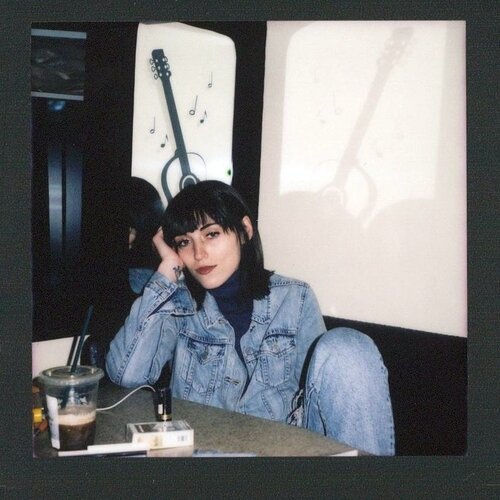
IN THIS PHOTO: Sasha Sloan 

An All-Female, Summer-Ready Playlist (Vol. XIV)

__________

AUTUMN begins next week…

pl.jpg

 PHOTO CREDIT: ZSELA

so this will be the last summer edition of the All-Female Playlist. Although the weather is still pretty warm and summer-like, I think we have to accept the fact the days will draw in and the weather will get colder. That is okay because, taking us through the weekend, here is a brilliant selection of female-led jams. From the more soothing cuts to summery Pop, right the way up to Metal…there is something in here for every music-loving soul! Have a listen to the assorted tracks and I just know you’ll discover great new artists. This is one of the most varied playlists I have put out in a long time and so, as I big farewell to summer and prepare to welcome in autumn, here are some tracks that end the season…

zxzxz.jpg

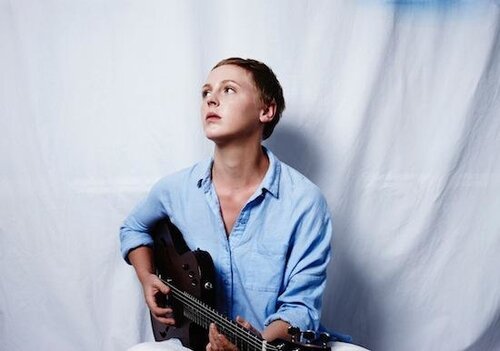
 IN THIS PHOTO: Georgia

WITH some truly memorable songs.

ALL PHOTOS (unless credited otherwise): Getty Images/Artists

____________

Chaos ChaosTheaters

GazelWalk on Land

vbvvb.jpg

Marina KayeTwisted

bbb.jpg

Folly RaeOver Me

Four of DiamondsEating Me Up

ljhu.jpg

OvercoatsLeave If You Wanna

xxx.jpg

Sasha Sloansmiling when i die

c.jpg

Sinead HarnettNo Pressure

76676.jpg

PHOTO CREDIT: Ciara Mc Mullan

New PagansCharlie has the face of a saint

PHOTO CREDIT: Nat Enemede Photography

Kobra and the LotusWe Come Undone

Jorja ChalmersSuburban Pastel 

Pieta BrownOnly Flying

PHOTO CREDIT: Alysse Gafkjen

Samantha FishDream Girl

Princess NokiaSugar Honey Iced Tea (S.H.I.T.)

zzz.jpg

Violet DaysINK

Chastity Belt - Ann’s Jam 

Hope WinterWild

xccx.jpg

Lauran HibberdShark Week

GeorgiaNever Let You Go

Lauren TateMiss American Perfect Body

ww.jpg

Sinead O BrienA Thing You Call Joy

hgh.jpg

Tove LoMateo

lo.jpg

beabadoobeeI Wish I Was Steven Malkmus

cc.jpg

Ina Wroldsen - Haloes

0909.jpg

Soccer Mommylucy

ll.jpg

Anna ClendeningIf I’m Being Honest

xx.jpg

PHOTO CREDIT: Gioncarlo Valentine for The New York Times

ZselaEarlier Days        

gf.jpg

Charlotte Day WilsonMountains 

Hanne LelandThe Nights I Can’t Sleep

zxx.jpg

Daniela Andrade - Ayayai

998.jpg

LaMeePillow

FEATURE: The September Playlist: Vol. 3: Old-Age Metal and Modern Discovery

FEATURE:


The September Playlist

IN THIS PHOTO: Brittany Howard/PHOTO CREDIT: Eric Ryan Anderson/Contour by Getty Images 

Vol. 3: Old-Age Metal and Modern Discovery

___________

THIS is a good one…

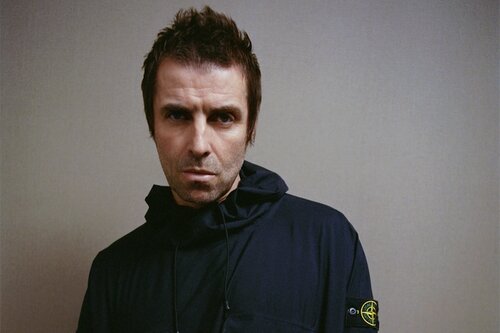
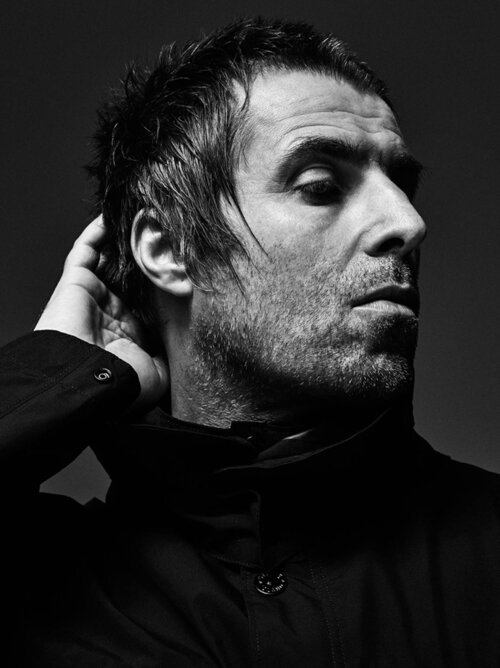
IN THIS PHOTO: Liam Gallagher/PHOTO CREDIT: Tom Beard

for music, as there are some really interesting tracks among the pack. Not only has Brittany Howard released an album, Jaime, but there is material from Liam Gallagher, Field Music; Princess Nokia and Stormzy. I am blown away by the sheer range and depth of music this week; I actually think it is one of the most interesting weeks for music in a very long time! Have a listen to the tracks below and I know there is going to be plenty in there that will catch your attention. In this warm and pleasant weather, I think music has a really important role. 2019 has been such a strong year and, with each passing week, the tunes get hotter and stronger. This is evidenced in this week’s…

zx.jpg

 IN THIS PHOTO: Princess Nokia/PHOTO CREDIT: Alberto Vargas

EXCELLENT cuts.  

ALL PHOTOS/IMAGES (unless credited otherwise): Getty Images/Artists

_________

PHOTO CREDIT: BucketHead.Media

Brittany Howard 13th Century Metal

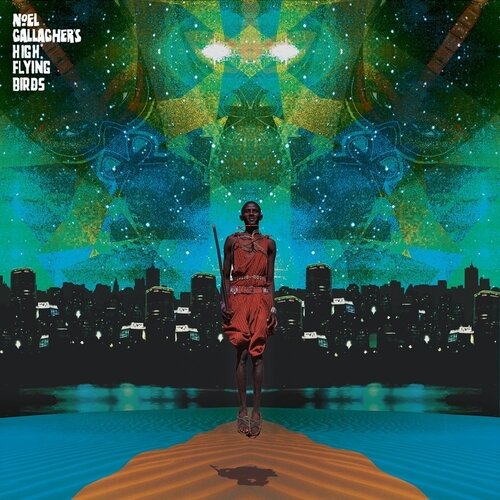
Liam Gallagher Now That I’ve Found You

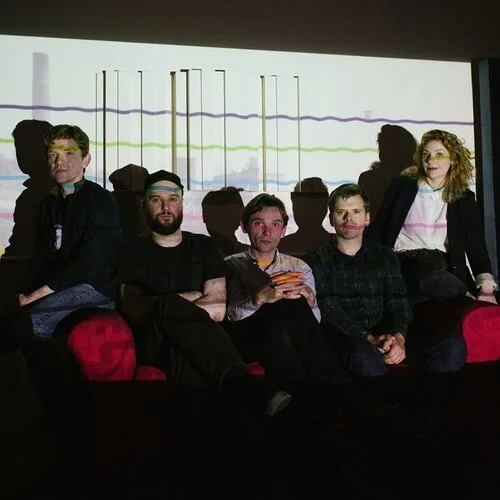
Field Music Only in a Man’s World

PHOTO CREDIT: Michael Schmelling

Perfume Genius Eye in the Wall

PHOTO CREDIT: Shirlaine Forrest/WireImage

Stormzy Wiley Flow

Princess Nokia Sugar Honey Iced Tea (S.H.I.T.)

Ezra Furman Thermometer

Another Sky Capable of Love

Soccer Mommy lucy

Alicia Keys, Miguel Show Me Love

blink-182 Pin the Grenade

Tom Tripp These Days

j.jpg

Will Joseph Cook The Dragon

aaaa.jpg

HMLTD LOADED

Tove Lo Sweettalk My Heart

Benjamin Francis Leftwich - Elephant

m.jpg

Caroline Polachek So Hot You’re Hurting My Feelings

The Cinematic Orchestra Wait for Now

BENEEGlitter

Sofi Tukker Ringless

iuuiiui.jpg

beabadoobee - I Wish I Was Stephen Malkmus

oopppo.jpg

Hootie & the Blowfish Miss California

GRACEY Fingers Crossed

Wildwood Kin Time Has Come

Four of DiamondsEating Me Up

mmm.jpg

Georgia Never Let You Go

Sasha Sloan smiling when i die

fff.jpg

Keane Stupid Things

AJ Mitchell Down in Flames

Mariah CareyIn the Mix

Russ CROWN

ccc.jpg

Folly Rae Over Me

zzzz.jpg

Kobra and the LotusWash Away

FEATURE: Modern Heroines: Part One: Laura Marling

FEATURE:


Modern Heroines

22.jpg

PHOTO CREDIT: Hollie Fernando for The Line of Best Fit

Part One: Laura Marling

__________

THE idea behind this feature…

aaaaa.jpg

 PHOTO CREDIT: Getty Images

is to acknowledge and investigate the best female artists in music right now. I am winding up my Female Icons feature, and it has been great writing that. Now, as I look to those women who are shaping up to be icons of the future, I am compelled to look at Laura Marling. In my opinion, she is one of the most original songwriters on the planet. I have been following her since the debut album, Alas, I Cannot Swim, in 2008 and I was instantly hooked. Marling is twenty-nine now so, to have created such a confident and assured album eleven years ago, it kind of staggers the mind! Laura Marling is one of those artists who, I feel, has never dropped a step! Her albums are always received well, and her songwriting is incredibly strong. In terms of overall acclaim, maybe Alas, I Cannot Swim does not get the same affection as her later albums. Even so, that brilliantly husky and captivating voice recalls artists from the 1970s such as Joni Mitchell; there is a maturity and grace to her songwriting that one cannot find with other artists. With songwriters like Feist and Duffy gathering a lot of attention in 2008, maybe Marling struggled in that sense. Whilst her music is much more intriguing and accomplished, it was a year when eyes were pointing elsewhere. It was clear that, from her debut, Marling was something different.

When speaking with Jude Rogers in 2008, Marling’s songwriting, approach and sources of inspiration were uncovered:

"No, no, seriously," she goes on. "Take another look. My songs are not pretty. They're what I call optimistic realism." She tips her head impishly. "Some are depressing, and I have depressive sides to my character, like most people, but I'm always telling myself to look on the bright side."

In a music scene teeming with talented young women, Marling stands apart as quite possibly Britain's most promising singer-songwriter. She's not a soul-influenced ingenue like Adele or Duffy, nor a pop performer in the style of Lily Allen or Kate Nash (with whom she has toured), but an accomplished performer in the folk vein. In fact, she manages to make folk feel modern. Her bold, dark songs recall Joni Mitchell or Neil Young, yet remain her own. She has already notched up a Glastonbury performance and, hilariously, was refused entry to her own gig at a London venue for being too young - so she busked outside instead.

She gets a lot from books; her favourite authors are Jane Austen and the Brontës. "They're always made out to be so sweetly romantic, but they're not - they're brutal. I love the way you can fall in love with a piece of literature; how words alone can get your heart doing that." She admits to struggling with some writers, and pulls two books out of her bulky handbag to make her point: James Joyce's A Portrait of the Artist as a Young Man, and comedian Russell Brand's autobiography, My Booky Wook. "The Joyce is really interesting, but guess which one I've been reading today." She raises an eyebrow theatrically. "It's really well-written, though!"

For someone so young, Marling writes convincingly about breakdowns, tough emotions and sex. Her characters are strong, fighting to protect the people they hold close. One song on the album, Night Terror, contains a particularly affecting line about a lover having a nightmare: "I roll over and shake him tightly and whisper, if they want you, well, then they're gonna have to fight me." Marling admits the songs are personal, but will divulge nothing more. "It's just stream-of-consciousness stuff, really. And like everyone else, my consciousness has dark, jagged parts. Especially when it's four in the morning and something's happened and you have to write about it".

Laura Marling has released six solo albums – and one as part of LUMP –, and I think she has grown stronger as time has progressed. That is evident on her 2010 album, I Speak Because I Can. The album sees Marling looking at the roles of men and women in society. Marling approached the album from a first-person viewpoint, but we do not hear many songs about Marling’s thoughts and personal life – the album is more observational and poetic. Various songs are inspired by literature – Devil’s Spoke: Homer’s Odyssey; I Speak Because I Can: Margaret Atwood’s The Penelopiad -, and the standout from the album, Goodbye England (Covered in Snow), was compelled by a family walk by a church in the winter. Marling’s second album is a more developed and nuanced work; perhaps she was finding her true voice. In this review from The Telegraph, they pay tribute to a darker, deeper songwriter:

 “The new Marling is darker and more sophisticated. She opens proceedings with a drunken, midnight maypole dance of a song. Devil’s Spoke builds from a shadowy portrait of pastoral loneliness into an increasingly frenzied, banjo-spun romance ending with lovers “eye to eye, nose to nose/ripping off each others clothes in a most peculiar way”. Whereas so much music coming from the “nu-folk” scene sounds like nature recollected in safety, by the glowing fire of some Olde Taverne, Marling’s sounds starkly exposed to the English elements. Her songs are simple yet complex, weird but quotidien like hedgerows – twisted, full of thorns, fruit, life and death. You can hear a thrill at the savagery as well as the sweetness of our landscape in the unflinching alto that sings: “I’ll never love England more than when covered in snow.”

Many of the songs struggle with Marling’s conflicted yearning for both traditional monogamy and unfettered independence. “I tried to be a girl who likes to be used,” she sings on Goodbye England, “I’m too good for that/ There’s a mind under this hat.” Elsewhere she gazes back into Greek mythology for female companionship, addressing the marriage goddess Hera and conjuring the spirit of Odysseus’ patient wife Penelope. I Speak Because I Can is my favourite release of the year so far – and certainly an album worth sailing home for”.

The sheer majesty of the songwriting is breathtakling! For an artist so young, one is staggered by the intelligence and wisdom of the songs. That may seem patronising but, back in 2010/2011, there were few songwriters who displayed the same sort of brilliance as Laura Marling. I still think she is our finest songwriter and someone who, as I said, changed skin and incorporated something new into every album. 2011’s A Creature I Don’t Know is my personal favourite. The songs came together after she completed her I Speak Because I Can tour of 2010. This was a period of isolation and, perhaps, loneliness where Marling spent time in cafes reading books; working on crosswords and scribbling in notebooks. That images seems quite romantic but (it was a time) when Marling was transitioning and figuring things out. Marling wrote and worked on the songs long before she brought them in for her band.

lo.jpg

 PHOTO CREDIT: Ian West/PA

Her first couple of albums were more collaborative, in the sense she was working with the likes of Charlie Fink and knocking songs into shape with others. Given the fact the material was written the way it was, it is not a surprise to hear that Marling wanted to get the sound just right before she approached the musicians. The album gained hugely positive reviews – Marling has never received a bad review -, and this is AllMusic’s take:

 “Marling's vocal affectations, which are ultimately charming despite their frequent Joni Mitchell-isms, are far more apparent this time around, especially on the album’s first three tracks, all of which showcase a fervent singer/songwriter with a fiercely independent spirit who’s tempered by a strong familiarity with her parents’ record collection. That said, it’s a syllabus that’s been ingested and honed rather than spit out and glossed over, and most of the time, Marling makes a great case for all of those Sandy Denny and Linda Thompson comparisons. Brimming with life and lush with spanish guitar, rolling banjos, summer of love chord changes, and moor-bound tales of love gone bad, A Creature I Don’t Know is ultimately triumphant, due in great part to Marling's magnificent codeine voice, which sounds like it’s been pouring out of the radio for five decades, especially on stand-out cuts like “Sophia,” “The Beast,” “My Friends,” and “All My Rage.” Three albums in, the young singer/songwriter sounds brave and confident yet breakable and guarded, and while A Creature I Don’t Know may not be the bolt from the blue fans and critics were hoping for, it’s most certainly storm born”.

Marling gave a few interviews to promote the album – Marling is selective about who she speaks with – and, in this feature with The Guardian, we learn more about the time around A Creature I Don’t Know’s creation and Marling’s growing confidence:

The period of isolation, writing and demoing the material alone, as well as working out the vocal arrangements before she played any of the songs to her band or her producer, were reflective of Marling's growing self-assurance. "It was quite an interesting way of doing it," she says, "because it allowed me to put my stamp on it before anybody else put their stamp on it. With the first two albums – Charlie [Fink, lead singer of Noah and the Whale and Marling's ex-boyfriend] produced Alas I Cannot Swim, and it's as much his album as it is mine, and with I Speak Because I Can, the style of the drumming and the bass playing is very much a representation of the characters who were playing on that album, and Ethan [Johns, the producer] stepping in as well. This time I thought: 'Well, I've got the confidence now, and I know what I want it to sound like, so before anybody else gets their grubby mitts on it, why don't I put my stamp on it?'"

Marling's burgeoning confidence is also a reflection of a young woman increasingly at ease with her status. "I think earlier on I was trying to prove I was a songwriter," she says. "But now I really struggle with the idea of referring to myself, or someone referring to me as an artist. It makes me shudder a bit. But then there's some parts of me that would like to proudly say that I'm an artist … I just wouldn't ever want to use it anywhere in between." She laughs. "One day, in retrospect maybe I'll say: 'I was an artist once upon a time… '"

Work on Once I Was an Eagle started as early as 2011; songs such as Master Hunter and Pray for Me were imagined before the release of A Creature I Don’t Know. Rather than produce a cast of characters or have various angles, there is a simplicity and focus to Once I Was an Eagle. Written in three tunings – moving from more uplifting songs such as Saved These Words to darker tones on Take the Night Off, for instance -, we see a central figure push away the naivety of love before embracing it once again. Once I Was an Eagle saw Marling move from working with a band and stripping things back. With Producer Ethan Johns and cellist, Ruth de Turberville, the album was recorded in Bath over the course of about ten days.  In this interview with Under the Radar, Marling talked about her change in process.

"For the last two records we'd done all the tapes live with the band, and I wasn't recording with a band this time, so I sat down and played the record start to finish," she says.

Once I Was an Eagle also evidences Marling's continued growth as a guitarist, with her playing leaning more toward the blues and her guitar work more to the forefront. Much of this was influenced by her newfound obsession with late '60s/early '70s music.

"I pretty much only listened to music made between 1969 and 1972," she says. "In that era, guitar was becoming a kind of masculine extension, kind of hedonistic. I found that Captain Beefheart rhythms and Creedence riffs and things like that, they do something for me."

PHOTO CREDIT: Getty Images

Marling also demonstrates a continued willingness to examine issues such as feminism and women's roles. Though she has written about these topics since her Mercury Prize-nominated 2008 debut, she still is not convinced she has any definitive answers.

"One of my great pleasures in life is that I'm constantly being proved wrong and feeling more and more naïve, which is actually a quite liberating feeling," she says. "I find that women's lib and femininity and equality are very touchy subjects and need to be approached with a lot of care. In my mind, there are infinite answers and opinions on those things and I enjoy exploring them. I haven't come to a conclusion on them yet".

This sixteen-track album is packed with evocative moments and truly arresting songs. The set of reviews that greeted Once I Was an Eagle were the strongest to date. Small wonder when one considers the variation in You Know, Master Hunter and Devil’s Resting Place! One is totally engrossed in the music and, in my opinion, Once I Was an Eagle is one of the finest albums of this decade. 

The most-recent two solo albums from Marling, again, have seen her move in different directions. There were attempts to write music for an album after Once I Was an Eagle, but Marling was not happy with the results. Short Movie eventually came about, but not before Marling took a few months off from music. Given the fact she was touring heavily and producing albums fairly regularly, one can forgive the songwriter for needing time to recharge and rest. Marling was living in Los Angeles at the time and Short Movie reflects the spiritual and mystical aspects of the city; Marling found inspiration and, in a first, produced the album herself. Short Movie is a different beast in a number of ways. Oddly, it is the first album not to have a six-syllable title; she also added in a bowed electronic guitar sound to give the album a sound akin to background noise – maybe trying to project the sound of a short film in an urban environment. Isolation and loneliness raise its head on Short Movie; the idea of seeming separate in a city like Los Angeles. Tracks like Don’t Let Me Bring You Down reflect how cities like L.A. can have negative effects. That is not to say Short Movie lacks compassion and warmth: it is a varied and wonderful record that finds Marling digging deep. In fact, a few songs are taken from experiences Marling had in different parts of America.

It is an itinerant album and one that boasts so many powerful moments – the Hurricane Sandy-inspired False Hope is one such example. Reviews were positive once more. NME provided their take on Short Movie:

Yet while there's a Yankee bloom on the English rose, 'Short Movie' isn't an outright volte-face. Warning well-meaning boys of the perils of falling in love with her is a recurrent theme of Marling's. She revisits it on 'Warrior', whose sighing rebuke of "I can't be your horse anymore, you're not the warrior I'm looking for" makes it clear that her priority is walking her own path, not making someone else's easier. 'Strange' is blunter still: "Should you fall in love with me, your love becomes my responsibility and I can never do you wrong... do you know how hard that is?" She often tempers candour with moments of sweetness, but even 'How Can I', for all its wistful talk of "riding up mountains, turning corners in our lives", has the spectre of impermanence hanging over it; the song ends with Marling, "going back east, where I belong", alone.

PHOTO CREDIT: Getty Images 

More than anything else, it's that restlessness, that fear of becoming too comfortable or complacent by staying in one place, which seems to define Marling. There's no overarching narrative to 'Short Movie' - it plays out like a series of vignettes, of moods and moments, people and places - but there is a sense of a journey completed, with a hard-won wisdom at the end of it. Marling is her own protagonist - flawed, like anyone else, but utterly compelling all the same”.

I shall round things off but, in 2017, Marling released the majestic Semper Femina. It is my favourite album of 2017, and I was struck by the differences between this record and Short Movie. The first track I heard from the album was the single, Soothing. It is seductive, breathy and magnificent - a very different sound to what we were used to. I want to bring in a couple of interviews Marling conducted around the time that reveal quite a lot. When speaking with The Guardian, she talks about her attitude to having her picture taken (and image in general):

Notably, the record’s tendency to look at women – lingeringly, lovingly – extended to Marling herself. “I think probably a big part of this album was me needing to love myself, which is a bit cringe to say.” Indeed, Nouel sees Marling’s gaze refracted back towards herself. The album’s title, which roughly translates to “always woman”, is an abbreviation of a line from Virgil: “varium et mutabile semper femina” – woman is ever a fickle and changeable thing. In the song, Marling applies the epithet to both her and Nouel, in a luxuriant whirl of feminine connection and reflection.

Marling originally decided to embark on a career in music to “prove a point – that I could if I wanted to. I was sick of people trying to take my guitar away from me even though I was good.” Yet even after years of prodigious success – record contract at 16, a formidable back catalogue by her mid-20s – her instrument still gets prised out of her hands, with helpful colleagues telling Marling not to “worry about playing the guitar, I’ll play the guitar”.

One gaze Marling feels no ambivalence towards, however, is that of the camera. “I think I’m pretty, but I fucking hate having my photo taken,” she explains. “On this album campaign, I was like fine, I’ll do a private photoshoot, and I’ll get 10 images and give them to all the papers and that’s all. And then every paper wants their own picture and they threaten you with ‘We won’t cover you if you don’t’, and that’s crazy. I’ve got much more important things to do than have my photograph taken.”

In an industry where Instagram accounts, clothing lines and flamboyant pregnancy announcement pictures seem as much a part of an artist’s oeuvre as their music, Marling’s rejection of the image-hungry zeitgeist feels palliative. As does, in a world of ear-splittingly abrasive production and knowing popstar posturing, her preoccupation with the acoustic guitar and the introspective mood it facilitates. Marling describes herself as an introvert. “I think it’s why I don’t relate to a lot of extroverted music, most of what’s in the charts,” she says. “Because a lot of my experience on the planet is in my brain. Maybe I’m lacking in experience and rich in thought, which is not necessarily useful”.

In a great interview with The Line of Best Fit, Marling discussed gender and roles; getting to the heart of the album and its inspiration:

 “Taking ownership of her gender, she concluded that her masculine and feminine traits need not remain mutually exclusive. “I think I would have got to that eventually,” she nods, as we ponder the depths she has scoured to reach such a conclusion. “It’s something to do with the societal effects of my upbringing, that I found it not obvious. I found it difficult to manage, through no one’s direct fault. But yes, that is exactly what I was exploring, my internal relationship to my central self, which doesn’t really have a compartmentalised gender, it’s more like two gases that intertwine.”

This realisation revealed a flaw to Marling early on when writing Semper Femina. Poised to explore femininity and female relationships in each of the album’s songs, she realised halfway through writing “The Valley”, the first song written for the album, that she had naturally started writing as if she was a man rather than a woman with masculine characteristics.

“It was a lightbulb,” she says. “I was like, this sounds like a man going to rescue a woman. At first I thought, yes, OK. Sometimes you do reflect yourself as fantasy in a song. But then I was like, no. This is not me turning around fantasy. This is me…this is me”.

Semper Femina is the last studio album from Laura Marling and, having covered such ground through the years, one can understand if she waits another year or two before considering her next endeavour. She is not even thirty and, so far, she has already released more world-class albums than most artists do in their lifetime. It must be a bit scary knowing that there is such universal love and expectation; maybe Marling will never receive a bad review, but one feels Marling is more concerned with the quality of the music and making sure she makes albums that are true to her. Before talking about her latest studio effort, I wanted to track back her Reversal of the Muse project/podcast from 2016. It is a powerful and fascinating examination of the role of women and how, in this day, there is still inequality and a lack of women in certain sectors of music. This article gives you more details:

 “Reversal of the Muse’s focus on the structural limitations of the industry comes at a time when women are still a rarity on the technical side of music. It’s estimated that less than 5 percent of music engineers and producers are female, and only six female producers have ever been nominated for the prestigious Producer of the Year, Non-Classical award at the Grammys.

iioo.jpg

PHOTO CREDIT: Hollie Fernando for The Line of Best Fit

The ways in which women’s contributions in general are often overlooked in the music industry come up frequently in the podcast, including in one episode featuring the British musician Marika Hackman. She talked about feeling frustrated when the coverage surrounding her 2015 debut full-length album focused more on her model looks, clothing, and friendship with Cara Delevingne, than on the merits of her music. Elsewhere on Reversal of the Muse, guests dissect the “boy’s club” that is life on the road, which ultimately leads to a discussion of how women are expected to behave, and more specifically challenges the notion that a woman must always be “sweet”.

Reversal of the Muse is a series that is as relevant now as it was a few years ago. I think a lot of those in power (in music) could learn a lot and take guidance from it. If you get chance to listen, then go here and you can hear the episodes. Completing my look at the sensational Laura Marling, one needs to look at her most-recent incarnation: as one-half of the terrific LUMP. The duo consists Marling and Tunng’s Mike Lindsay. Their eponymous debut came out last year and, as you’d expect, reviews were hot. The duo has a natural chemistry and it was great hearing Marling in a new context. She did briefly work with Noah and the Whale before her first solo album, but LUMP is the first time she paired with another musician in such a collaborative and equal way.

Before concluding, I want to bring in an interview Marling and Lindsay gave with NME, where they discussed their collaboration:

For a project as dreamy and cerebral as LUMP, its birthplace is an improbable one. On 11 June, 2016, Laura Marling and Tunng‘s Mike Lindsay met for the first time at a bowling alley inside The O2, while the former was supporting Neil Young on his UK arena tour. Just two days later, the pair were in the studio recording what would become a 32-minute collaborative album, and within the week Marling had recorded all her parts.

What did you like about each others’ work when you met each other?

Laura: “I’d been a Tunng fan – and early on in my career we’d intersected a couple of times but never really met. I didn’t know Mike was one of the main men behind Tunng.”

Mike: “I’ve been a fan of Laura’s for a long time. I have a memory of us playing at Cambridge Folk Festival together back once upon a year, and being blown away. I also saw her playing at Hop Farm Festival in 2010 and was quite impressed with the whistling… ‘Devil’s Spoke’ was a favourite of mine for a long time. It was just really nice to be able to meet Laura and ask to do something together”.

Laura, you mentioned Kate Bush’s singing voice in a recent interview. Was that someone you were wanting to channel?

Laura: “Not consciously. I was surprised by that, actually, because I’d never consciously thought about a singing style, or emulating someone else’s. Obviously I was brought up on Joni Mitchell, so that’s how I learnt to sing. It was Mike’s direction actually – you had a few things in mind for what you wanted my voice to do, that you’d heard me do before, I guess?”

Mike: “Yeah – but actually, listening to what we’ve ended up with, I’ve never totally heard you do some of the things that you’re doing on the LUMP record. You go through all ranges of your vocal capacity and it changes from song to song. It’s quite special.”

What’s the future of LUMP?

Mike: “I hope there’s a future of LUMP… I guess we’ve gotta give him the right cuddles. Or her. See what the whispers are.”

Laura: “See how he takes to touring. Might not like it.”

Mike: “One step at a time. But I’m really enjoying it so far, we’ll see what happens.”

What about in your own separate capacities? What are your future plans with music?

Mike: “Tunng has got a new record coming out at the end of the year, which will be the original line-up for the first time since 2007. That’s quite exciting. This has been a wonderful way of getting back into sonic experimentation, and now there’s a Tunng record as well. That’s enough for me, really, this and that.”

Laura: “And I’m just this. I’m always writing, I always write, but there’s usually a point where I feel like I’ve turned a corner and the last record has ended. I haven’t turned that corner yet I don’t think – I’m still in ‘Semper Femina’ mode”.

Let’s hope there is another LUMP album, given the reception their debut received. Two years after Marling’s last solo album, I hope 2020 brings new material from her. She is one of those songwriters who does not rely on the pomp and build-up you get with others; teasing material and endlessly releasing singles. Instead, Marling is more traditional and is keener for us to hear the album and enjoy it as a single body. She is a wonderful artist and one who, annoyingly, gets better and better with each album – are there no limits to her talent?! I have ended this feature with a career-spanning playlist that demonstrates just how amazing and varied Marling is. One of the most imaginative, compelling and engaging songwriters in the world, you just know Marling will produce music…

 IN THIS PHOTO: Laura Marling with Mike Lindsay (LUMP)/PHOTO CREDIT: Getty Images/Spotify

UNTIL her final breath. 

FEATURE: The Good Vibes Playlist: Part One

FEATURE:

IN THIS PHOTO: Girl Band/PHOTO CREDIT: Girl Band/Getty Images

The Good Vibes Playlist: Part One

__________

RATHER than put together a ‘ones to watch’ list out…

zzz.jpg

 IN THIS PHOTO: Black Belt Eagle Scout/PHOTO CREDIT: Sarah Cass

that looks ahead to next year, I thought I would collect together some rising artists into a playlist that helps us transition from summer into autumn. There is a lot of great music out there at the moment and, in the following two parts, I will try and unite as many great acts as I can. In this opening selection, I feel there are some sizzlers that will keeps us warm and lifted but there are some songs that definitely gives us a sense of comfort and calm. If you need to be lifted and are also looking to check out some terrific artists along the way, this is the selection for you. Have a spin of the playlist and I hope there is enough in there to keep you satisfied. Things are pretty stressful in the world right now and I do think we all need a bit of guidance, escape and strength. These fantastic artists are guaranteed to…

IN THIS PHOTO: Sports Team/PHOTO CREDIT: Lauren Maccabee

GIVE us all the good vibes we need right now.

____________

FEATURE: Plenty Great About Britain and Ireland: Is 2019’s Mercury Prize Shortlist the Strongest Yet?

FEATURE:


Plenty Great About Britain and Ireland

7.jpg

IN THIS PHOTO: slowthai is among the favourites to win this year’s Mercury Prize for his debut album, Nothing Great About Britain/PHOTO CREDIT: Crowns & Owls 

Is 2019’s Mercury Prize Shortlist the Strongest Yet?

__________

TOMORROW is the day we will find out…

IN THIS PHOTO: IDLES are hotly tipped for Joy as an Act of Resistance/PHOTO CREDIT: Charlotte Patmore 

who walks away with the converted Mercury Prize. Every year when the shortlisted artists are announced, there is division and consternation. Inevitably, there are albums and artists that do not make the cut that, perhaps, should have. One cannot include every artist given the fact only a dozen albums can make it onto the shortlist. I think it is hard to draw a line but, the fact there is so much debate goes to show how many strong British and Irish albums arrive each year. One could argue a little flexibility is in order regarding the number of acts nominated; maybe widening the shortlist to fifteen or even taking it up to thirteen. Even then, one feels there will be some lauded albums that are not included. Come tomorrow evening, we will know which of the twelve nominated acts takes the prize (the ceremony will be hosted by Lauren Laverne). It is exciting to speculate and, as soon as the winner is announced, people will take to social media. At the moment, it seems like slowthai’s Nothing Great About Britain (more on that later), IDLES’ Joy as an Act of Resistance and Dave’s PSYCHODRAMA are leading the bookies’ race; Anna Calvi’s Hunter seems to be a public favourite that is in with a great shot. One cannot discount The 1975’s A Brief Inquiry into Online Relationships, black midi’s Schlagenheim and Cate Le Bon’s Reward. I will nod back to some memorable years from the Mercury Prize but, when we look at the albums from this year, there is so much passion and ambition in display. If the past few years have been mixed and not quite as inspiring as one had hoped, there are no gaps and cracks in 2019.

So strong is the field that we can mix potent and eye-opening albums from Dave, IDLES and slowthai alongside a wondrous album from Anna Calvi – Hunter is the third album from Calvi and the third time she has been nominated for a Mercury (she has never won one). The favourites have been presented and pitted, but those further down the bookies’ rankings are much stronger than previous years. Foals’ Everything Not Saved Will Be Lost – Part 1 is a tremendous album that is more electronic and varied than previous efforts from the band – they have stated Everything Not Saved Will Be Lost – Part 2 will have more bangers on it. I think newcomers Fontaines D.C. could shock with Dogrel. It is such a rich album from the Dublin band and easily nestles alongside IDLES, even though the two bands cannot be that easily compared. Little Simz’s GREY Area is another release that shows how strong British Hip-Hop and Rap is right now. In past years, the likes of Loyle Carner and Kate Tempest have been shortlisted, but I think the trio of Dave, Little Simz and slowthai are the strongest Hip-Hop/Rap acts we have ever seen! Maybe it is the changing political situation but artists in Britain and Ireland are reacting with incredibly strong and powerful music. Every year sees less popular albums included but, whereas some years have had a few weak albums in the pack, Nao’s Saturn and SEED Ensemble’s Drifftglass are fantastic.

 IN THIS PHOTO: Little Simz is one of the strongest voices in Rap and Hip-Hop right now/PHOTO CREDIT: Getty Images

The benefit of being on the shortlist is increased attention and a boost in streaming figures so, although these acts are unlikely to win, they will already be seeing the benefits of nomination. Naturally, the Mercury judges cannot include all the great British and Irish albums from the past year and open the door for all genres (there has been criticism that, once again, Metal has been excluded). Not only is 2019’s shortlist packed with variation and a mixture of newer acts and established musicians but, as this article explains, politics and social awareness are at the top of the musical agenda:

From the top of its carefully-mussed hair to the tip of its trendy boots, the latest shortlist for best British or Irish album of the past 12 months rates as one of the most politically and socially engaged, and outraged, in the Mercury’s 27-year history.

Patriarchy-toppling rockers Idles share the podium with “voice of forgotten Britain” rapper slowthai and take-no-prisoners rhymer Little Simz. Streatham grime champ Dave brings us frontline reports of police violence against the black community. Foals ponder the irreversibility of global warming. Happy clappy singalongs are entirely absent.

Each of these artists is, in their own way, a light in the dark. Their music provides crucial illumination as we seek to negotiate the age of proroguing PMs, tweeting tyrants and climate change.

This year’s hopefuls are, by contrast, throwing open the shutters and rushing to meet the world head-on. Even the preening pop stars on the list seem to understand something has changed – that, as artists, it is their duty to stand up and be counted. Matty Healy of The 1975 is coming out swinging. His band’s third album, A Brief History of Online Relationships, muses on the horrors wrought by social media and smartphone addiction”.

If you need a reminder of the artists and albums in the running this year, there is a great podcast series that introduces you to them. Even though she is seen as an outside shot this year, few can overlook Cate Le Bon’s excellent Reward. It is one of those albums that received some big reviews and would be a favourite in any other years. This article from The Evening Standard, they caught up with Le Bon and what she thinks of her chances (she also mentioned how, if she wins, she’ll buy herself some tools!):

“This time, finally, the 36-year-old, born Cate Timothy in Carmarthenshire, is nominated in her own right for Reward, which was released in May. While so many musicians are on an irreversible downward trajectory by album number five, Le Bon’s is a career high. She traded the folky musings of her earliest work, and the spiky electric guitar of her last album, Crab Day, for beautiful keyboard lines and a surprising amount of saxophone. Meanwhile, her composed singing voice, often reminiscent of Nico’s deadpan delivery for The Velvet Underground, has never sounded lovelier.

When I catch up with her, she’s under no illusions about her chances against the bookies’ favourites, rappers Slowthai and Dave, and the punk band Idles — never mind the better-known Foals and The 1975. She’s a dark horse at 16/1, and finds it strange to imagine that someone at William Hill might have been thinking hard about the potential of her sonic quirks and esoteric lyrics. “It’s weird to quantify it numerically, because anyone could win,” she says in a slow, thoughtful tone. “But I guess, in a way, the nomination is enough. I kind of forget there’s a winner at the end of it all. It seems irrelevant”.

It is a hot field this one and people will be predicting right down to the wire. I think it will be between IDLES and Anna Calvi myself but many are tipping Dave and slowthai. The latter has been discussing the nomination and chatting about his masterful debut album:

Congratulations on being nominated for the Mercury Prize. How does it feel?

Ecstatic. It means the world to me. I'm not good at articulating how things like that make me feel - but it makes me feel like I've got daisies in my stomach. I'm nervous and shy.

For people who haven't heard Nothing Great About Britain, what's it about?

It's about community. It's about remembering the people around you, and remembering that's what makes this place great.

Things like gentrification, they're trying to push all the communities away and we're losing that sense of togetherness - which is the thing that actually makes Britain great. Or any place in the world great. We all have to work in unison to make things better.

How far into the future have you planned?

I've got my next two projects, definitely. I've got the concepts and I've got the ideas and I've got the titles. I've even got names of songs and the messages. It's all there - I just have to go in and do the work.

Everyone's telling me I should bask in the moment and absorb it - but I want to push forward”.

IN THIS PHOTO: Dublin’s Fontaines D.C. impressed with their debut album, Dogrel, earlier this year/PHOTO CREDIT: Molly Keane

Great debuts from Dave, slowthai and Fontaines D.C. are standing alongside huge artists like IDLES and Anna Calvi. Since its inception in 1992, the Mercury Prize has highlighted the best of British and Irish music but, as always, there is a debate as to whether the award is rewarding those who deserve it most. Are big artists worthy of the prize money and will it benefit them as much as it does the rising acts who could use it for their next album? I think the prize comes with a cheque for twenty-five grand, and that will make a big difference to a new artist. Wolf Alice won last year for Visions of a Life and one can imagine it has allowed them to add new layers and elements into a future album. Regardless of whether the Mercurys is about the best album or should be aimed to elevate independent artists, this year must stand out as one of the strongest. Back in 1992 – when it started -, U2 and Primal Scream were in the shortlist (the latter won for Screamadelica). 1994 was pretty strong, as you’d imagine, and Blur and The Prodigy were among the favourites; but, in a shock, M People won for Elegant Slumming. Every year of the 1990s has seen at least a few less-worthy acts shortlisted. 1995 is, to me, the strongest year of the decade whereas 1997 is the most diverse – the Spice Girls, The Prodigy AND Radiohead on the shortlist is pretty nuts!

kjjk.jpg

This century has seen some marvellous albums nominated but, as mentioned, no year is immune from more than a couple of weak bets. 2004 had the great Amy Winehouse and The Streets nominated, but there was also flimsy fare from Joss Stone and Jamila – the overrated Franz Ferdinand won that year with their eponymous album. 2008 was a pretty solid year but, as decades go, I think this one has been stronger than the last. There have been some blips through the decade – 2010 had Mumford & Sons on the list; 2017 had Ed Sheeran! – but the biggest challengers to this year was 2016. Jamie Woon, Radiohead and David Bowie (posthumously nominated) sitting with Bat for Lashes, ANOHNI and Skepta (the winner with Konnichiwa)…that was quite a year! Even then, I do not think there was the same magic and potency that we have in 2019. Maybe it is the climate we are living in and how artists have responded, but I do reckon 2019 is one of the strongest years ever – maybe in the top-three, but one has to marvel at the selection! This year’s favourite, slowthai, named his debut album, Nothing Great About Britain, and he is referring to politicians and the fact that this island of ours has little to shout about right now. That might be true in terms of politics and our place on the world stage, but our artists are doing us proud. No matter who wins tomorrow, cliché as this sound, everyone is a winner and should be very proud. Every year has a weak album or two, but this year is without much fault. It might be hard to top this year’s best but maybe 2020 will be even more impressive and solid! That would be something special but it is clear, unlike some years, the Mercury Prize is backing the best of British and Irish and has got things right. Such is the strength of competition this year, I do not feel we can rely on bookies and assume we know who will win. The dozen nominated acts cannot rule themselves out or think they have it in the bag because this will go…

RIGHT to the death.

FEATURE: No Shame: Is the Music Industry Doing Enough to Protect Female Artists from Sexual Assault?

FEATURE:


No Shame

IN THIS PHOTO: Lily Allen in 2018/PHOTO CREDIT: Katie McCurdy for GQ

Is the Music Industry Doing Enough to Protect Female Artists from Sexual Assault?

__________

THIS is, sadly, something we have to ask a lot…

 PHOTO CREDIT: Getty Images

as there seems to be no end to sexual assault claims in the music industry. Some might say it is impossible to stop all forms of sexual inappropriateness but, given the severity of some of the cases, it seems like it is too easy for men in power to get away with some truly horrific abuses. Not only are women in music subjected to abuse and assault from men in power: fans and fellow musicians are also culpable. I have been moved by the news that Lily Allen was subject to an attack back in 2016 – I should say ‘alleged’ but there is no reason for her to lie or embellish. Here, in this BBC article, we learn more about the story:

Lily Allen says her record label has not taken any action after she told them she was sexually assaulted by an industry figure.

Allen told The Next Episode podcast she spoke to a Warner Music boss last year about the alleged attack in 2016.

A label spokesman said: "We take accusations of sexual misconduct extremely seriously and investigate claims that are raised with us."

The BBC understands the alleged attacker continues to work with Warner.

While the singer says she never reported the alleged attacker to the police, she believes "most of the music industry knows who it is".

Allen says the sexual assault took place on a work trip to the Caribbean in 2016.

She told The Next Episode she had been at a party with a record industry executive before heading back to their hotel.

"We got to my hotel. I couldn't find my room keys. So he was like, 'Well, why don't you sleep in my bed while I go and get the keys or whatever.' So I passed out in his bed.

"I woke up and he was in my bed naked slapping my bum."

She said she could feel him trying to have sex with her.

"I made a decision, I didn't want to go to the police. I didn't want to make a fuss and I wanted to keep it quiet.

"I remember thinking about his mum and how she would deal with the news that her son was a sexual predator and I was prioritising everybody else in this situation except for myself".

Allen has been signed to Warner since 2013, although she's currently working on her last album for the label.

She said she wanted to speak out about her alleged attack in order to protect other artists in the industry.

"I would feel awful if I found out that somebody much younger and more vulnerable had had a similar experience that could have been prevented," she said.

She believes her alleged abuser may be around other young female artists and said: "It's my responsibility just to let some people know that this incident happened."

Warner Music said it found Allen's allegations from 2016 "appalling" and said: "We're very focused on enforcing our Code of Conduct and providing a safe and professional environment at all times."

You can hear the full interview on the BBC Sounds podcast The Next Episode”.

It is horrible to think what she had to endure but, as I said, her situation is not unique. The fact we have big artists like Lily Allen speaking out will give others the courage to come out. There are articles that lay out music fans’ experience of sexual assault and how so many young women have been affected. There is advice for any musicians affected, but it seems that, from the fans to huge artists, we have a problem that is not going away. I know most managers and label bosses are decent and this debate only applies to a certain few. One cannot monitor and police every female artist but it seems, in Allen’s case, she was sort of brushed off; this feeling she would not be believed and, even as she has revealed her side, there are some on social media who have been dismissive and cruel. Obviously, the assault damaged her career and affected her profoundly. Anyone who has been through such an ordeal will be able to emphasise with Allen and (explain) how harrowing it is. I hope Allen is okay now but, one wonders, did that incident derail her career to the point of no return?

Allen did release an album, No Shame, that was critically acclaimed and received a Mercury Prize nomination. She is still on the scene but one wonders whether Allen can trust labels and industry bosses. Given the fact that we have seen multiple cases of sexual assault/abuse through the years, does more need to be done right now? Festivals who have reported sexual assault claims are changing, but it seems more difficult to transform the entire music industry from the roots up. It seems that there is a general problem regarding attitudes towards women. Social media is invaluable when it comes to raising awareness and shaming those who perpetrate sexual assault but I think labels need to start getting more involved when artists report attacks. There seems to be this rather ho-hum attitude in some corners; a dismissive and apathetic blind eye that is causing massive damage. When it comes to festivals, they are taking measures – reducing the sale of alcohol and making them safer spaces for women – but we need a culture shift where offenders are called out and artists are given appropriate support. Allen must have felt scarred and isolated when she approached her label and received very little in the way of support. Some might say calling the police is the logical first step but, as we have seen from the news, whilst cases of rape and sexual assault are up, the number of people being charged is down. Why would an artist like Allen go to the police if there is a chance the case will be dismissed or marked as low priority?!

 PHOTO CREDIT: @kj2018/Unsplash

We do need to start from the ground up and ensure cases of sexual assault are highlighted. I know there are laws against naming those who are alleged attackers in these cases but I wonder if calling out those who commit such acts would send a message out and deter others. Labels like Allen’s need to be more proactive and step up. It seems like there is almost an expectation things like this happen and we cannot avoid sexual assault; that women are exaggerating and it is no big deal. What sort of message is this sending to the next generation of female artists and music personnel?! We know there is sexism that is preventing so many women from being given a larger platform; throw into the mix we have to read worrying reports of artists being assaulted and it is clear immediate action needs to happen. Lessons are not being learned and the industry needs to accept the fact it is not doing enough. There are steps being made. At the end of 2017, the Stop18 campaign was launched - The Stop2018 campaign was launched to coincide with an edition of the BBC’s Victoria Derbyshire Show, in which a number of women working in music both on and off stage – including Chloe Howl, Yasmin Lajoie and Michelle de Vries – discussed their own experiences of sexual harassment and abuse in the music industry – and set out some clear objectives – as we can see from this article:

“…First, that the industry’s trade organisations – possibly via UK Music – set up a safe place “where anyone working in the industry can speak in confidence knowing that they will not be the ones who have to suffer repercussions”.

Secondly, that “all music companies rethink their strategies, and stop working with individuals and other companies who exhibit any predatory or bullying behaviour, whether it be an employee, an artist, a producer, or a manager, a lawyer, a publicist or an agent or anyone associated with the business, however powerful and successful they may be”.

Thirdly, noting that pay inequality helps contribute to a sexist culture within companies, the campaign says it is “calling for women to be paid the same as men and to receive the same benefits in the work place. We want to see an end to the common practice that when men and women are hired at the same time, the man is often given more assistance and offered better opportunities to advance their careers – we want to see women offered the same promotion opportunities as men”.

And finally: “We are calling for an end to managers and labels telling artists they need to wear provocative clothing or to flirt with executives to be successful”.

Concluding, the founders of the Stop2018 campaign write: “Above all our hope is that 2018 is the year that bullying, misogyny, sexual harassment, assault and rape in the music industry stops. We want the business we all love so much to become a safe place for everyone to work”.

 The past couple of years has seen a reduction of sexual assault and harassment in some areas but I still think women are being let down; not given enough respect, support and power when they are subjected to abuse.

p9.jpg

 PHOTO CREDIT: @drew_beamer/Unsplash

More discussion needs to happen but, above all, those in power need to start talking with their artists and hearing them out when they come forward. It is positive seeing changes and measures brought in at festivals and venues but there is still an attitude persisting that assumes women are exaggerating or they need to flirt a bit to get ahead – maybe a feeling that industry men and those who carry out attacks are beyond reproach and justice. Let’s hope 2020 is a year where, across the board, women are given more rights, oxygen and support. Festivals are trying to be more gender-equal and reduce sexual assaults; venues are improving security and surveillance and social media means that those who do carry out attacks are not safe and have nowhere to hide. Clearly, we still have a way to go - and it is a real shame artists like Lily Allen have their careers damaged because they do not feel trusted and heard when they come to their labels. I guess things will get better over time but, in the here and now, there is a real problem. So many women throughout the music industry have had to ensure sexual abuse, assault and inappropriateness and it is always heartaching to hear. With every case that comes to light, it is evident that…

nnmmn.jpg

PHOTO CREDIT: @drew_beamer/Unsplash

A lot more needs to be done to make women feel safe.

FEATURE: Vinyl Corner: India.Arie – Acoustic Soul

FEATURE:


Vinyl Corner

ju.jpg

India.Arie – Acoustic Soul

__________

YOU get these albums that are overlooked…

 PHOTO CREDIT: Getty Images

and deserve retrospective acclaim. There are a few great Neo-Soul artists around at the moment – including Jamila Woods –, but it is a style of music that is desperately missed. I think the world would benefit from the sort of brilliance and uplift the genre offers. In a scene where there is a lot of processed Pop and Post-Punk rawness, Neo-Soul has a sunniness that is hard to ignore but it also allows artists to go deep and talk about something important or political. The Colorado-raised India.Arie was born into a talented family. Her father was an NBA player whilst her mother was a Motown singer who opened for Stevie Wonder and Al Green when she was a teenager. The fact is India.Arie grew up around a lot of music. She travelled a lot and there was always singing and dancing in the family. It is hardly a surprise India.Arie decided to get into music and was inspired at a young age. One can only imagine those early days where she was being exposed to great Soul and Motown records. Above all, there would have been this positive spirit and togetherness that fed into her psyche; affected her debut album and made it such a classic. Acoustic Soul was released in 2001 and was nominated for seven Grammys in 2002. There have been some big snubs through the years but, in one of the biggest snubs ever, India.Arie lost in every category.

One could allege there was a racial component at work; showing an ignorance or, at the very least, not understanding the power and importance of Acoustic Soul. This oversight affected India.Arie and it took her a while to recover. She realised that she had to make the music she wanted to, rather than what people expected of her. What gets to me is how anyone can ignore and sell short an album as brilliant as Acoustic Soul! Maybe she got snubbed at the Grammys because, in 2001, there was nobody like India.Arie about. R&B groups like Destiny’s Child were providing a more synthetic and processed form of music whereas India.Arie gave the world this more natural, musical and diverse album that was less about going in hard with big choruses and more about letting the music unfurl and get into the heart. One cannot deny the legacy of the album and the fact that it has influenced modern Neo-Soul artists. I have had the song, Video, stuck in my head for days – I am not sure how it got in there but I am not going to let it out! I would encourage people to buy Acoustic Soul on vinyl because it sound tremendous and is a perfect album to get lost in. Video is a song about self-acceptance and not having to compare one’s self to women in music videos. I have found an article from 2017 where they highlight India.Arie’s brilliance and discuss her words of empowerment:

India’s empowering words are critical in a world where too few women recognize their worth. However, not even this queen herself always practices what she preaches. In an interview with Oprah Winfrey, Arie disclosed that when she released uplifting tracks like “Video” she felt anything but self-love. She revealed that the messages she conveyed to embrace who you are were affirmations for how she wanted to feel.

Despite her confident exterior, India Arie truly struggled with self-doubt. She told Oprah, “Your real job in the world is to be you. Comparing yourself to other people […] I think that hurt me more than anything.” Arie was never the prom queen or considered the “it girl,” so she felt out of place in the music industry. However, she also revealed in her interview that she can now confidently say that she loves herself wholeheartedly.

In one of her latest songs, “I am Light,” Arie sings, “I am not the voices in my head. I am not the pieces of the brokenness inside, I am light.” Her lyrics now go beyond an affirmation. They are proof of her inner growth. India Arie gives us a model of how we want to feel, but also acknowledges that truly loving yourself is a lifelong process. Basically, we are all queens even if we don’t feel that way right now”.

That embracing of self-love and worth is something we need to see more of today. There was a lot of positive music out in 2001 but I think Acoustic Soul was so different to anything else that meant it caused a real sense of excitement when it arrived. Video is a compelling and simply staggering song and has a great video; one which sees India.Arie, with guitar in hand, walking in an idyllic setting and accepting who she is; what makes her happy and how special she is.

I remember hearing Video when it came out as a single and I was instantly taken aback! It still sounds so engrossing and it is a song that gets into the head and compels you to sing along. That is not the only golden track on the album. Singles Strength, Courage & Wisdom, Brown Skin and Ready for Love are exceptional and, with India.Arie co-writer on almost every album track (Part of My Life is the exception), she puts her heart and personality into every song. It is no surprise that Acoustic Soul went down a storm with critics. It was so different to anything else and showed an alternative to the R&B and Rock of the day. In 2005, NME had their say:

At a time when R&B seems divided into two large camps – the synthesized, albeit accomplished, commercialism of the likes of Destiny’s Child, Sisqo and Craig David et al; and that sprawling mass of experimentation and urban cool known as Nu Classic Soul that, unreasonably, umbrellas everyone from D’Angelo to Jazzyfatnastees – India’s organic combo of acoustic symphonics, naked drums, the frankness of hip hop, and a voice borne of soul in its purest, most spiritual sense, stands out as a kind of sweet liberation.

‘Acoustic Soul’ delivers itself like a prayer. Lyrically, it makes a religion of blackness. A shrine to black femininity. To roundness and loveliness regardless of material worth in the audacious opener, ‘Video’; to brilliance and honesty in the guitar-wrapped ‘Back to the Middle’; to love and bravery in the elegant ‘Ready For Love’.

Many other crusaders come to mind: Tracy Chapman, Meshell Ndegeocello, Roberta Flack – women with the blues tangled up in their hearts, who bind stoicism with sensuality, who create spaces, and will always, always do their own thing – no compromise. ‘Acoustic Soul’ is a formidable and deeply artistic debut”.

qaq.jpg

 PHOTO CREDIT: Getty Images

AllMusic highlight the fact that Acoustic Soul, whilst it does look to the past, was a very modern record – and still sounds alive and meaningful today:

As one of the most promising neo-soul artists yet to emerge in the past few years, India.Arie casts her lot with the best artists of her label's storied history, playing deeply introspective songs laced with glistening acoustic guitar, churchy organ, and smooth, supple beats. When she name-checks those artists no longer with us that she claims as influences (Ma Rainey, Miles Davis, Karen Carpenter, Charley Patton, Stevie Ray Vaughan, Donny Hathaway, etc.) in three separate interludes, you have no doubt she is looking back as well as forward, even going so far as to invoke Sam Cooke's "A Change Is Gonna Come." But Acoustic Soul is at its best when the arrangements are deliberately modern. And despite the uniqueness of being a guitar-based R&B album, it is Arie's thick, sandy voice that shares star billing with her exceptional lyrics. Betraying youthful vulnerability while at the same time projecting strength, confidence, and uncanny insight for a 25-year-old singer/songwriter, Arie wraps herself effortlessly around the deep, funky sensuality of "Brown Skin," and stands tall in defiance of pop-fashion expectations on the irresistibly catchy "Video." The uplifting "Faith, Courage, Wisdom" rides along on a euphoric chorus, and the plainly autobiographical "Back to the Middle" recounts an emotional and spiritual coming of age. Without the many concrete references to the great R&B music of the past, Acoustic Soul would be a purely modern gem, but as Arie is determined to pay her debts up front, it's much more, and that is admirable”.

Subsequent albums have not proved as popular as Acoustic SoulVoyage to India (2002) and Testimony: Vol. 1, Life & Relationship (2006) are interesting records but received mixed reviews – but every album since Acoustic Soul is fascinating and worthy of investigation. Back in February, India.Arie released her latest album, Worthy, and it gained some positive reviews. There is not the same attention at her feet as there was back in 2001 but, at a time when there is division and the rights of black citizens in the U.S. are being overlooked, it seems Worthy is as important an album as Acoustic Soul. When speaking with Billboard, she talked about the album and what led her into the studio:

Fast-forward to the aptly titled Worthy. Recorded in Nashville, which India.Arie currently calls home, the album finds the singer reuniting with executive producer Aaron Lindsey, longtime creative colleagues Shannon Sanders and Branden Burch plus new collaborators Joel Cross and Chuck Butler. Showcasing Arie’s ever-evolving and compelling perspectives on love, life and humanity, the 16-track set’s noteworthy selections include Caribbean-vibed first single “That Magic” (No. 6 peak on Adult R&B Songs), “Steady Love,” “In Good Trouble,” the title track and the inspirational “What If,” an emotion-packed tribute honoring social activists from past (Dr. Martin Luther King, Rosa Parks) to present (#MeToo).

Was there a pivotal moment that led you back into the studio to record Worthy?

I don’t know if I’ve ever had moments where I’m like okay, let’s get started. That’s because I’m always working on the next record in my heart somewhere. Even when I [almost] quit that one time. This one just started slowly taking shape with Aaron and I writing songs. Then I met Joel Cross, another songwriter, and we wrote a lot of songs. At a certain point I was like, “I’m ready to start putting these together into something.” And it turned into Worthy.

How would you describe India.Arie then versus now?

The India of “I Am Not My Hair” was searching for how to be empowered and free. She knew she had it inside of her but a lot of things were blocking it. The India of today has achieved freedom and empowerment; maybe earned is the right word. I also earned the respect of myself. I like who I am, even in the hard times, and it’s coming across in my music. The “I Am Not My Hair” India used to completely fall apart. Like “I quit; I’m moving to a whole other country. I’m out.” Today, I’m like, “Oh I had a hard day, but oooooh I got to sing.” I see the joy in all the things I get to do now because I’m doing it the way that I want to do it. All of my life my mom has been saying that happiness is a choice. It used to drive me nuts. I’d be like, “If happiness was a choice, everybody would just be happy.” The India of today understands what she means now”.

I am glad the phenomenal India.Arie is still releasing music and looking ahead. It has been overlooked to an extent but I think people need to look back and see where she came from. Acoustic Soul is such a moving, inspiring and nuanced album that means, after just one listen, the songs will ingrain themselves in the brain! In the lyrics for Video, India.Arie talked about not being like the women in music videos and being true to herself. It would have been a shame if she changed her looks to fit into a commercial scene; the fact she remained natural and pure made the music world…

SO much richer.

FEATURE: Female Icons: Part Eighteen: Tori Amos

FEATURE:


Female Icons

Part Eighteen: Tori Amos

__________

WITH only two more features after this…

aaa.jpg

 PHOTO CREDIT: Miller Mobley

it has been interesting and revealing featuring iconic female artists. I have learned a lot and got to dig deeper into their lives; what drives them and what makes them stand out. Many people debate whether certain artists should be seen as icons. The definition is subjective but, if you look at the seventeen artists I have already featured, there is no denying their importance and legacy. Before arriving at the final two instalments, I want to include an artist who has inspired a lot of modern artists; whether in terms of being bolder with their lyrics or more experimental – everyone from Lady Gaga and Joanna Newsom, in some form, owe a small nod of thanks to Tori Amos. There are some out there who would also note how Tori Amos herself owes a little debt to another female icon, Kate Bush. For sure, there are similarities but one icon can inspire another. I think there are a lot of differences between Kate Bush and Tori Amos. I think Amos’ lyrics are definitely her own: there is no way one can easily compare the confessional and emotional offerings from Amos to Kate Bush. Like all the other Female Icons features, I will end with a career-spanning playlist but, to start, it is worth going back to the beginning. I often wonder why artists like Tori Amos are not played more on radio. In fact, there are a lot of inspiring female artists who do not get their music aired enough; a slight that needs to be corrected by radio stations.

 PHOTO CREDIT: Getty Images

I digress but, to be fair, maybe Tori Amos’ music is a little raw and challenging for a lot of the more commercial and conventional stations. When one does hear a Tori Amos tune on the radio, more often than not, it is Cornflake Girl – sometimes Crucify gets a play but there are many other tracks that deserve some respect. I think artists like Amos have had a definite influence on modern-day songwriters who stray away from cliché subjects of love and are much braver with their lyrical content. We shall come to that. Tori Amos was born on 22nd August, 1963 and, from an early age, it was clear music was her passion. There is no doubt Amos was born for music and that was her path. She bonded with the piano as a child and began composing her own pieces very young; she won a scholarship to the Peabody Institute at the age of five – making her the youngest person ever to be admitted. There is debate as to why she was expelled at the age of eleven but, apparently, there was some ‘musical insubordination’ – perhaps Amos was too confined and frustrated by the rigidity. Although Amos is a solo artist, she did spend a brief time as the lead of the 1980s band, Y Kant Tori Read. Despite the cool name and the fact the band covered topics like feminism and politics in their music, the band shone briefly but brightly.

It was a definite bridge from Amos’ childhood teaching and her debut solo album. With her father’s help, Tori Amos’ demo tapes accrued as a teenager were sent to record labels. Atlantic Records took a shine to Amos and signed her. Even though there was a deal on the table, Amos knew she needed to move to L.A. to pursue her dreams and get the recognition she desired. The opportunities of the city called and Amos responded. Amos moved to L.A. by 1984 and there was a period of transition where Amos was finding her feet and readying for her debut. She signed a six-album deal with Atlantic Records. There was disappointing regarding Y Kant Tori Read (the band’s eponymous album) and there was a bit of a hurdle regarding the recordings that followed. The label was itching for a new record by 1990 and the early recordings sent to the label were met with rejection. With the help of the likes of Steve Canton and Dan Nebenzal (among others), Little Earthquakes took shape. Maybe Little Earthquakes’ cover did suggest some illusion to Kate Bush – a similar pose and look – but the subject matter on the debut was deeply personal and moving. Personal struggles, sexual alienation and sexual assault were the subject of songs. It is a record that has darkness but there is undeniable beauty and transcendence. One cannot listen to Little Earthquakes without being affected and moved.

From the stark and brutal Me and a Gun to the gorgeous Winter, there are few debut albums as compelling and moving as Little Earthquakes. The album was a commercial breakthrough and performed well in the U.K. charts. The progress of Little Earthquakes was a bit slower in the U.S. – a nation that were not used to artists as unique and unconventional as Tori Amos -, but songs like Silent All These Years helped her progress. It is a remarkable album and one that was acclaimed and praised on its debut. I have selected a couple of reviews that illuminate the depths and diversity of Tori Amos’ debut. In this review, AllMusic made some excellent observations:

But Little Earthquakes is no mere style-setter or feminine stereotype -- its intimacy is uncompromising, intense, and often far from comforting. Amos' musings on major personal issues -- religion, relationships, gender, childhood -- were just as likely to encompass rage, sarcasm, and defiant independence as pain or tenderness; sometimes, it all happened in the same song. The apex of that intimacy is the harrowing "Me and a Gun," where Amos strips away all the music, save for her own voice, and confronts the listener with the story of her own real-life rape; the free-associative lyrics come off as a heart-wrenching attempt to block out the ordeal. Little Earthquakes isn't always so stomach-churning, but it never seems less than deeply cathartic; it's the sound of a young woman (like the protagonist of "Silent All These Years") finally learning to use her own voice -- sort of the musical equivalent of Mary Pipher's Reviving Ophelia.

That's why Amos draws strength from her relentless vulnerability, and that's why the constantly shifting emotions of the material never seem illogical -- Amos simply delights in the frankness of her own responses, whatever they might be. Though her subsequent albums were often very strong, Amos would never bare her soul quite so directly (or comprehensibly) as she did here, nor with such consistently focused results. Little Earthquakes is the most accessible work in Amos' catalog, and it's also the most influential and rewarding”.

Pitchfork covered Little Earthquakes in 2015:

Amos’ solo debut, though it was rarely talked about this way, was similarly radical—an alternately flirty and harrowing work that juxtaposed barbed truths against symphonic flights of fancy. It was lyrically nuanced and harmonically sophisticated exactly when grunge moved rock in a raw and brutish direction, which made her achievement even more striking. Amos was early Queen, early Elton John, and early Kate Bush with Rachmaninoff chops. Decades after prog-rock’s peak, her technical perfection was particularly shocking in the virtuoso-renouncing '90s: Not even Elton could tear into a song both vocally and instrumentally while staring down attendees with a Cheshire Cat grin.

For the outsider women and gay men who initially propelled Amos’ success, this hard-won message served as a clarion call, and they embraced her as if uncovering the challenging and most vulnerable parts of themselves. Tracy Chapman, Melissa Etheridge, Sarah McLachlan, k.d. lang, Sinéad O'Connor, and the Indigo Girls had already begun to reach the same flock, but Amos—by virtue of her sexual intensity and subject matter—instantly commanded a bond only rivaled by Madonna, whose eroticism peaked just as Amos arrived”.

I will not cover all of her albums but I wanted to highlight a few more that warrant examination. Little Earthquakes arrived at a time when Nirvana were ruling music; it would have been strange going up against them for chart glory. By 1994, the landscape had changed and Amos’ career was about to rise. There were some who were unkind about Under the Pink but, for those listening hard enough, the differences were noted. Amos sounded more confident and her music was bolder; the production was different and there was more in the way of accessibility. Cornflake Girl is the big hit from the album and a breezier, more hummable song than we were used to – even if the subject matter talked about female genital mutilation. Pretty Good Year and God are as fine as anything on her debut but, on her second outing, there is more diversity and range. Amos was bringing in new influences and sounds – there is a touch of Reggae on Cornflake Girl – and the lyrics, to me, are more nuanced and powerful. In this review, Pop Matters noted the changes:

Far from Little Earthquakes II, Under the Pink sounds fresher and fuller than its predecessor these days: more artful in its arrangements, more assured in production, hinting at Amos’s wilder experiments to come. And yet for all its modernist flourishes -- the twitchy electric guitar-work in “God”, the jazz and reggae-influenced gait of the immortal “Cornflake Girl”, the thrilling grungy bridge that erupts in “Pretty Good Year” -- Amos’s second album feels like her most classical work, pre-Night of Hunters, at least. Now delicate, now playful, now thunderous and dramatic, her superb piano-playing perfectly matches the abstract narrative fragments and startling lyrical images of her writing.

Thematically, issues of female oppression and betrayal are to the fore, viewed from both a historical and a contemporary vantage. Delving “under the pink”, Amos emerges with haunting tales such as the mysterious murder narrative “Past the Mission” (complete with Trent Reznor backing vocals), “Icicle’s" paean to masturbation, and the femicide-fantasy “The Waitress", the refrain of which “I believe in peace, bitch” sums up the album’s riveting ambivalences. The most extraordinary track, though, remains the closing “Yes, Anastasia", a sweeping piano-and-strings epic that brilliantly mixes tempos and moods before arriving at a coda that chills the blood. “We’ll see how brave you are,” Amos sneers: a challenge to herself and to the listener”.

1996’s Boys for Pele found Amos producing solo for the first time. The album contains expanded instrumentation and the lyrics are denser and more poetic. That did divide some critics but showed Amos was unwilling to settle and was finding fresh inspiration. The lyrics, as you’d expect, were extremely personal but the album is not as heavy as you’d expect. Amos did receive some flak regarding the lyrics and her taking production control. She responded by claiming the music had so much subtext and critics were being unfair. You can see her point. Maybe Boys for Pele was a little different to what was happening in music in 1996, but you listen to Boys for Pele now and it really stands up. It is actually one of her most rewarding and challenging works that, it seems, critics did not give enough time and attention to. I want to bring in a review from AllMusic; written in 2015, it seems time has allowed the album to breathe and resonate:

Boys for Pele is the harshest and most challenging work in Tori Amos' catalog. However, it also stands as the most cathartic, nourishing, and artistically thrilling of her career. Birthed in the wake of a devastating breakup, Pele is a sprawling ode to the feminine, conjured in a whirlwind of pain that forced Amos to embark on a quest into the dark unknown to find the fire within that had been snuffed out by the men in her life.

PHOTO CREDIT: Getty Images 

After her breakthrough confessional Little Earthquakes and the delicate impressions of Under the Pink, Amos struck out on her own for the first time, unfettered and uncompromised. Pele would be her debut at the helm as sole producer, a control she would maintain for the rest of her career. With that power, Amos was free to exorcize the demons as she saw fit. She did so with new additions to her arsenal: a harpsichord, brass flourishes, a choir, labyrinthine lyrics, and a pantheon of spirits summoned in the Louisiana bayou and the Irish countryside. It was a jarring shift”.

I love Boys for Pele because it contains the exceptional Professional Widow. The eponymous heroine, many say, refers to Courtney Love (Kurt Cobain took his own life in 1994) and the song was given extra punch when it received remixes from Armand van Helden and MK. If one or two of Tori Amos’ 1990s albums divided critics, one listens to those records and marvels. 2001’s Strange Little Girls saw Amos covering songs written by men; given them a female perspective. 2017’s Native Invaders is her most recent album and one that received positive reviews. I wonder whether there is another album coming from Tori Amos soon because, over twenty-five years since her debut album, Amos remains essential and utterly engrossing.

Not only is her music inspiring and original but Amos is someone who provides wonderful interviews. I will bring in a couple before rounding things off. Amos spoke with Stereogum when promoting Native Invaders in 2017. Timely now as it was then, Amos was asked about the environmental themes on the album:

 “STEREOGUM: I know this record has an environmental theme. It’s a very important topic. But it can be a dry topic. How do you turn that into songs that people will actually enjoy listening to, and will resonate with them, and not just, “The icebergs are falling, people, pay attention!”

AMOS: Well, exactly. Nobody wants to be preached at. I’m a preacher’s daughter and the granddaughter of a missionary teacher, my father’s mother. Nobody wants to be preached at. I think that’s always the struggle. Sometimes there are songs that are written for every album that you think are, to steal your line, “dry.” Or it doesn’t have the right story.

STEREOGUM: So you have to figure out how to make it work?

AMOS: It sounds simple. It is that basic: trying to track it down and make it work. Hunting for those things can lead you down many dead ends.

STEREOGUM: There was a story in New York Magazine a couple months ago that said, “We are very close to Earth being uninhabitable if we don’t change our ways.” As a person studying the environment, do you get overcome with despair or do you feel any hope, at all, for humanity still? Big question.

AMOS: Really big question. I have a lot of faith in Mother Earth. I don’t know if we’re going to make it. I think she will make it. I don’t know. Dinosaurs. They did pretty well.

STEREOGUM: Yeah, they had a good run”.

The second interview I want to source from is with Vulture. Amos talked about her relationship with the audience and the artists who inspire her:

How has your relationship with your audience changed over time? You have famously obsessive fans.

I know that right now, in a cultural moment of great trauma, people are ready for songs that talk about in-depth emotions and issues. Let’s put it this way: There’s always going to be pop music, but in times of tragedy people turn to certain songwriters who have layers to their work.

jjj.jpg

PHOTO CREDIT: Paulina Otylie 

Who have those songwriters been for you?

Leonard Cohen — a big one. Peter Gabriel. Kate Bush. Joni Mitchell.

Do you draw different things from the men and women who’ve influenced you?

The fact is, like I said, that there are not a lot of women singer-songwriters having the level of success that the men are. The guys are endless. The women are not. I know that’s not a direct answer to your question, but it’s a subject I really started wrapping my head around four years ago when I was making Unrepentant Geraldines.After making three classical-influenced, experimental albums between 2009 and 2012, on 2014’s Unrepentant Geraldines, Amos returned to her ’90s style of more-stripped-down instrumentation — primarily vocals and piano. That’s when I was underwater in the depths of menopause. I realized that I had to pull on some serious energy from deep within my being and also from the earth itself; by sheer will I had to become a force of nature.

Tina Turner was a force of nature in her early 50s. So was Nina Simone. Our industry, though, doesn’t value women songwriters that are 50 and over. There’s ageism, and certainly men aren’t going to write the stories my generation needs to hear. Bette Midler and Barbra Streisand and Cher — they’re not a parallel with alternative-pop singer-songwriters. They’re amazingly talented entertainers and actresses, but they’re different than what I’m talking about. Country music seems to be open to having mature women tell their stories. You’ve got Emmylou Harris and Reba McEntire and others. But in the alternative-music field where I came from, there aren’t many of us. Patti Smith is out there. We’ve got Stevie Nicks. There are some, but not many, and it’s not a coincidence.

For anyone who doubts Amos’ importance and influence, there are articles that discuss her magic. She is a phenomenal artist and one who I hope will create music for many years to come. It is artists like Amos who have paved a way for women and have pushed music forward. In terms of songwriting, you can feel artists who have taken her to heart but there is still nobody as striking as Amos when it comes to subject matter. Her voice intoxicates and her compositions envelop you and bring you into the music. Who knows what lies ahead for Amos but one thing is clear: the music she has already given the world is among the most personal, spectacular and memorable of all time. Many might dismiss that notion but have a listen back through her albums and you will be stirred and affected. Tori Amos is an icon for sure and an artist who deserves a lot more radioplay than she gets. She came into the music world with Little Earthquakes and, before long, this beguiling songwriter was creating…

MASSIVE tremors.

FEATURE: 21st Century Breakdown: My Favourite Album of the Century (So Far)

FEATURE:


21st Century Breakdown

My Favourite Album of the Century (So Far)

__________

I have seen a lot of buzz on social media…

 PHOTO CREDIT: @sethdoylee/Unsplash

because The Guardian have run a feature that unites their one-hundred favourite albums; those records that highlight the brilliance of this century (so far). Although we are not even a fifth of the way through this century, we are ending a decade and looking ahead to 2020. For that reason, many will be reflecting on their favourite album from this decade, at the very least. Maybe Beyoncé’s Lemonade (2011) would scoop that honour…or Kendrick Lamar’s To Pimp a Butterfly (2015). In terms of considering the finest albums of the century to date, that is pretty tough! I love Kate Bush’s Aerial (2005) and, in fact, I could put together a list of one-hundred and the order would change all the time! I agree with most of the albums included in The Guardian’s feature and, aside from the order needing a bit of a rejig, there are plenty of belters in there! Maybe Kate Bush’s Aerial would scoop the honour when it comes to the best album of this century. It is definitely high up there and, when thinking about the record I would crown as the best, one stood out because of its emotional importance and meaning. Before getting there, The Guardian explained why Amy Winehouse’s Back to Black is at the top of their list:   

 “Certainly, it could not prepare the listener for Back to Black: nothing about Frank suggested that its creator was going to make a genuinely epochal masterpiece. Something had happened to Amy Winehouse in the three years that separated her second album from her debut: skinny, covered in tattoos, dressed like a cartoon of a 60s girl-group member – complete with a vertiginous beehive modelled on that of the Ronettes’ Ronnie Spector – she was almost unrecognisable. The lyrics of its lead single suggested that whatever had happened wasn’t good – no one pleads with you to go to rehab if your life is in perfect shape – but the music was so ebullient you could easily overlook that.

Back to Black is an exceptionally forlorn 35 minutes: the closest its mood of self-loathing and hopelessness comes to a resolution is Addicted’s bitter line about how marijuana “does more than any dick did”. But it says something about the skill of her songwriting and the arrangements that it is so easy to listen to. What Winehouse had to say was despondent and troubling, but when her voice soars on the chorus of Tears Dry on Their Own, or the intro to You Know I’m No Good sashays out of the speakers, it doesn’t feel like hard work. Even its bleakest moment, when the title track collapses into a funereal thud and Winehouse keeps disconsolately repeating the word “black”, comes wrapped in gorgeous vocal harmonies and strings.

A rare instance of critical acclaim chiming with public taste, it sold millions. It may well be the most influential album of the last 20 years. The immediate effect of its success was a wave of artists obviously working in her image. Female vocalists made retro soul-influenced music, replacing Winehouse’s troubled unpredictability with something less volatile and more marketable: earthy everyman good humour or cute kookiness. Adele was by far the most successful, but at one point there seemed to be dozens of them, all filling the void created by the fact that Winehouse was increasingly unable to play live, let alone complete another record (as the posthumous Lioness compilation revealed, she recorded virtually nothing in the final years of her life, taping only two songs for a projected follow-up). Winehouse’s vocal style became a kind of all-purpose pop template, its idiosyncrasies reduced to a series of slurred, prematurely aged tics intended to signify emotional authenticity. Nearly 15 years on, you still can’t move for twentysomething men who sound like ravaged blues shouters and twentysomething women trying their best to channel Billie Holiday”.

zx.jpg

 IN THIS PHOTO: The White Stripes in June 2001/PHOTO CREDIT: Getty Images

I can appreciate what is being said and, in my view, that 2006 album is phenomenal. I would spend ages debating my top-hundred list but, in terms of importance and place – if not necessarily my favourite as such – I would put The White Stripes’ White Blood Cells at the top of the list. I can think of albums by Dizzee Rascal and Kendrick Lamar that hold a lot of power but, personally, it is White Blood Cells that sticks in my mind the longest. I discovered the duo when I was at university in Cambridge back in 2002. I was unfamiliar with them until them (I had heard bits but not a whole deal) and was introduced to them by the Membership Secretary at the Cambridge Footlights, Tom Tilley. We have not seen each other for years, but he was an important part of my time at university. I was actually at Anglia Ruskin University but had always wanted to be part of the Cambridge Footlights. It was a hard transition because I was not from the same world and background as a lot of the people I was around. It was great being part of an institution and club that has seen everyone from John Cleese and Stephen Fry pass through. It was pretty exciting but, for a long time, I wondered how to fit in and whether I would succeed – I performed a few times and went to various social events.

Tom was a useful guide and friend and, before long, he was bringing the music of The White Stripes to my attention. I think the first he played me was their eponymous debut of 1999 but, soon enough, I was being made aware of White Blood Cells. That album arrived in July 2001 and I was not that aware of the Garage music of Detroit (where the duo were from) at the time. It was only a year until Elephant came around in 2003; considered the best album from The White Stripes. I was not used to music like that and, up until that point, it was a lot of Rock and Alternative stuff. The White Stripes provided something a bit gritty, lo-fi and captivating. I was raised around Grunge but The White Stripes managed to mix melody and tunefulness with rawness and scintillation. White Blood Cells came out in a year where everyone from Radiohead and The Strokes were releasing sensational albums. It was a heady and creative time for music and, in a broad landscape during a heady year, The White Stripes were doing their own thing. The sixteen-track third album from Jack and Meg White is a step up from 2000’s De Stijl and is so varied! Songs switch from the very short to longer; there is so much going on and such confidence and chemistry from the duo. From the brilliant and compelling opener, Dead Leaves and the Dirty Ground, to intriguing and unusual This Protector, White Blood Cells hits me. It is one of those albums where there are no weak tracks.

The energy and wonder barely lets up. The first four tracks off of White Blood CellsDead Leaves and the Dirty Ground, Hotel Yorba; I’m Finding It Harder to Be a Gentleman and Fell in Love with a Girl – are brilliant. Hotel Yorba has a charming skip and catchiness whereas I’m Finding It Harder to Be a Gentleman makes you smile with its images of Jack White trying to keep his cool. Fell in Love with a Girl is a sub-two-minute blast that one can recall every word to – and it has that great video from Michel Gondry (who would work with the band a lot through their career). Expecting and Little Room are transition songs to the mid-way point. The former is snarling and chugging whereas Little Room lasts under a minute and has Meg providing her most fervent drumming whilst Jack yodels as he discusses this mysterious room in a song that makes you wonder what is being said; what we are imagining and where it derives. The rest of the album mixes gorgeous songs such as The Same Boy You’ve Always Known and I Can Learn with rippers like I Think I Smell a Rat and The Union Forever. There are many standouts. Aluminium is a gargling, robot-like song that is from another planet; We’re Going to Be Friends sounds like it could have come from Sesame Street whilst Now Many has a sway and hook that belies lyrics that have darkness to them.

I remember setting time aside away from studies to listen to the album. I popped the C.D. in and let the tracks cascade and affect. I was instantly startled by how memorable the tracks were. The diversity and sheer scope was staggering but there was no big production layers and a load of musicians: it was Jack and Meg tackling everything, laying it all down in Memphis over a few days. That is another that amazed me: just how quickly the album came together! The duo never took more than a few days for most of their albums – the earliest ones at least – and you can feel that urgency and energy in every moment. Bands today would take months to record an album as bold and brilliant as White Blood Cells. The fact that these two musicians (formerly married; Jack White claimed they were siblings to avoid any press intrusion) produced such an amazing album in a few days is mind-blowing. Although there is not such a thriving Garage scene now – compared to the late-1990s and early-2000s at least -, The White Stripes’ third albums not only inspired them (to produce something even bigger) but is has resonated with artists through the years. It is not surprising to see White Blood Cells has gained a lot of huge reviews and plaudits. Here is AllMusic’s assessment:     

 “Despite the seemingly instant attention surrounding them -- glowing write-ups in glossy magazines like Rolling Stone and Mojo, guest lists boasting names like Kate Hudson and Chris Robinson, and appearances on national TV -- the White Stripes have stayed true to the approach that brought them this success in the first place. White Blood Cells, Jack and Meg White's third effort for Sympathy for the Record Industry, wraps their powerful, deceptively simple style around meditations on fame, love, and betrayal.

099,,.jpg

IN THIS PHOTO: The White Stripes playing at John Peel's home in 2001/PHOTO CREDIT: Sheila Ravenscroft 

 As produced by Doug Easley, it sounds exactly how an underground sensation's breakthrough album should: bigger and tighter than their earlier material, but not so polished that it will scare away longtime fans. Admittedly, White Blood Cells lacks some of the White Stripes' blues influence and urgency, but it perfects the pop skills the duo honed on De Stijl and expands on them. The country-tinged "Hotel Yorba" and immediate, crazed garage pop of "Fell in Love With a Girl" define the album's immediacy, along with the folky, McCartney-esque "We're Going to Be Friends," a charming, school-days love song that's among Jack White's finest work. However, White's growth as a songwriter shines through on virtually every track, from the cocky opener "Dead Leaves and the Dirty Ground" to vicious indictments like "The Union Forever" and "I Think I Smell a Rat." "Same Boy You've Always Known" and "Offend in Every Way" are two more quintessential tracks, offering up more of the group's stomping riffs and rhythms and us-against-the-world attitude. Few garage rock groups would name one of their most driving numbers "I'm Finding It Harder to Be a Gentleman," and fewer still would pen lyrics like "I'm so tired of acting tough/I'm gonna do what I please/Let's get married," but it's precisely this mix of strength and sweetness, among other contrasts, that makes the White Stripes so intriguing. Likewise, White Blood Cells' ability to surprise old fans and win over new ones makes it the Stripes' finest work to date”.

Eighteen years after it was unleashed into the world, White Blood Cells sounds so fresh and keeps bearing rewards. We were still getting used to the new century and there was a lot of change happening in music from 2001-2003. Look at movements and artists who came and went; the terrific albums that were released during this period and the sheer quality! When I found The White Stripes’ White Blood Cells in 2002, I fell in love with the album and was compelled to listen back to their previous two albums. The duo would become bigger in the U.K. but it was D.J.s like John Peel who helped give their music a bigger voice here. In the press, they were often portrayed as being quite elusive or odd. I remember a few of the photoshoots around 2001/2002 and these pale-faced artists who, as I said, pretended to be brother and sister. None of that really mattered but it was interesting to see these guys in their black-white-and-red clothing, playing this brilliant music without the flash, celebrity and crutches so many other artists possessed. They were a breath of a fresh air and I was suitably ready when Elephant arrived in 2003 – recorded at Toe Rag Studious in London and, to many, it is their finest hour. The Guardian’s feature has got many people thinking about their favourite albums of this century.

I admire the fact The Guardian selected Amy Winehouse’s Back to Black as their top choice. It was her thirty-sixth birthday yesterday – Winehouse died in 2011 aged twenty-seven – and Winehouse’s masterpiece sounds utterly heartbreaking. Whilst we wish she was still around, we can take heart in the fact she was with us long enough to release such a timeless album. For me, there are a lot of great albums that would be in my top-hundred of this century but, for personal reasons, White Blood Cells tops the list. It still gives me shivers now and makes me think of a time in life when I was embarking on new challenges and trying to find my feet. This album alone did not make life easier but I developed this passion for The White Stripes and they gave me such strength and comfort. I listen to White Blood Cells now and the songs still sound so gripping and exciting. I get transported and lifted when listening but there are so many emotions at work; one needs some serious time to really get to grips with the album. I know we are less than a fifth of the way through this century but it is interesting to think which albums of the past twenty years have made the biggest impact on you. A fair few other albums were near the top of my list – including Kate Bush’s Aerial and Dizzee Rascal’s Boy in da Corner -, but there is the one that, for me, has that…

SPECIAL edge.

FEATURE: Symphony in Blue: Why Radio Stations Need to Look Past Kate Bush’s Hits and Dig Deeper

FEATURE:


Symphony in Blue

IN THIS PHOTO: Kate Bush/PHOTO CREDIT: Gerard Mankowitz 

Why Radio Stations Need to Look Past Kate Bush’s Hits and Dig Deeper

__________

THIS feature applies to other artists…

 PHOTO CREDIT: Chris Walter - WireImage/Getty Images

but it is especially true of Kate Bush! One does her music on the radio from time to time and, whilst it is really nice when a song of hers is played, you do tend to find the same ones feature. I listen to BBC Radio 6 Music most of the time and, when they play a Kate Bush track, it is usually from Hounds of Love. There is no problem with that! The album turns thirty-four on 16th September and it is the critical darling. The songs the station play tend to be the bigger hits from the first side – Hounds of Love, Cloudbusting and Running Up That Hill (A Deal with God). They are well-known songs, and all defined by a certain energy. They are successful and recognisable, but I wonder why tracks such as The Big Sky (on the first side) and tracks from The Ninth Wave (the conceptual, second side of the album) are not played more. Maybe getting away from the album altogether is a better idea because, like many stations, there is a reliance on it. Stations are pretty broad regarding legends such as David Bowie, The Beatles and Joni Mitchell but, when it comes to Kate Bush, there is a certain fear. Sure, Wuthering Heights and The Man with the Child in His Eyes (The Kick Inside); you’ll hear Wow (Lionheart) now and then; maybe Babooshka and Army Dreamers (Never for Ever); perhaps This Woman’s Work (The Sensual World) will come up. Bush has released ten studio albums – her last/most-recent, 50 Words for Snow, in 2011 – and there is plenty of great material on each record!

I do think every iconic and inspirational artist deserves having as many of their songs played on radio as possible. Whilst it not possible to play every single track from Kate Bush – not all her tracks will go down a storm -, I do wonder why radio stations tend to focus their energies on particular albums/songs. Even from The Kick Inside (her 1978 debut), there are songs that do not get aired often – including Moving and Room for the Life. Lionheart opens with the majestic Symphony in Blue and contains the stunning Kashka from Baghdad. Delius (Song of Summer), The Wedding List and The Infant Kiss from Never for Ever do not get a showing. The Dreaming is a divisive album but, unlike most artists, the tracks are at least interesting and original! It seems radio gravitates towards hits and so, in the case of The Dreaming, we never hear Leave It Open, Night of the Swallow or Houdini played – a song, I contest, that is one of her very best! Though Hounds of Love is well represented – a little too much so in the case of some stations! -, the second side does not get the same love as the hits-packed first half. Life post-Hounds of Love is not exactly fruitful in terms of airplay! The Sensual World turns thirty on 16th October and it seems like the perfect excuse for stations to dust off the record and play some of its tracks - one doubts whether that will happen!

Even though albums like The Sensual World and 1993’s The Red Shoes divide people, both contain some incredible songs – I especially think The Sensual World is underrated and gets some unfair stick. Moments of Pleasure and Rubberband Girl are great tracks we should hear more of and, when you cast forward to 2005’s Aerial and 2011’s 50 Words for Snow, between them, there are tracks that have not been played on the radio…but they definitely have legs! Kate Bush is that classic albums artist that, like The Beatles and other acts who cannot be reduced to singles, sees only a selection of her songs played. She will not be too bothered herself. She has said in interviews how she does not listen to her old stuff and rarely hears her music on the radio. So many of us consume music through streaming and that creates its own issues. Those unfamiliar with Kate Bush’s catalogue will play the most-played tracks from Spotify – including Hounds of Love and Wuthering Heights – and might not necessarily delve any further. So many of us are guided by radio and, if they only play a small selection of her tracks, how many of us are going to spend some time with her albums as a whole?! There are articles like this that rank her songs and order her singles but, again, there are notable omissions when it comes to radio playlists!

I am not the only one who has noticed a ‘preference’ when it comes to Kate Bush’s songs: when I post (online) why stations focus heavily on certain tracks, it does garner reaction. Bush’s albums are so rich with variation, emotion and story; so many tracks that buckle the knees are, sadly, reserved for those who know where to look or have her albums. Any Kate Bush airtime is wonderful – one must not grumble! – but, by playing the same tracks, it suggests they are the only ones worth hearing. It is something I have noticed across the big BBC stations and so many of the big players. Maybe independent stations are more adventurous and wide-ranging, but they are an exception. In fact, even when we think of huge artists like The Beatles and Bob Dylan, are their albums opened up and played? I understand radio stations are in a hard position: they need to play what is popular (i.e., a hit) and they might not necessary be au fait with an artist to make suggestions that deviate from the well-trodden path. Maybe there is a wider issue where stations are a little skeptical about playing album tracks, in case people turn their noses. Sure, if we hear a song like Running Up That Hill (A Deal with God), it resonates and makes us feel happier, but there is something a little depressing hearing the same songs played over and over.   

As the world awaits an eleventh studio album from Bush – there are no plans; but let’s hope something comes next year, perhaps -, it would be a welcomed treat hearing more of Bush’s music featured on the radio (in terms of variation and breaking from the norm). I was hooked on Bush’s music very young and explored her albums from then on but, as I said, as so many of us are using streaming services rather than buying music; do we just skim through albums or play songs we are more familiar with? Kate Bush’s lyrics are so revered and extraordinary; her voice and music are unique…so many great songs are not seeing the light of day. I keep saying how something is better than nothing; it would be worse if no Kate Bush music was played (rather than just singles and bigger hits) and, in fact, stations like BBC Radio 6 plays Kate Bush pretty regularly. Every year, we celebrate her album anniversaries and laud a songwriting genius. Only a small percentage of her tracks get played on the radio, and I do hope that changes soon. There is no real expert knowledge needed: Bush is a surprisingly engaging artist and there are few of her songs that lack appeal – maybe some of the longer numbers from 50 Words for Snow would be naturally excluded. I will end things here but, going forward, I would make a plea to radio stations to be bolder when it comes to Kate Bush. Sure, play the hits but also consider tracks such as Houdini, Symphony in Blue and Mrs. Bartolozzi (from Aerial); maybe a blast of The Big Sky or Get Out of My House (The Dreaming). When you do immerse yourself into Kate Bush’s vivid and eclectic world, you’ll find that waiting for you are some truly…

FANTASTIC revelations.

FEATURE: Behind the Screen: Social Media Trolls and the Impact on Musicians

FEATURE:


Behind the Screen

IN THIS PHOTO: Little Mix’s Jesy Nelson was subjected to trolling, online abuse and body shaming, pushing her to attempt suicide/PHOTO CREDIT: Getty Images 

Social Media Trolls and the Impact on Musicians

__________

I may have addressed this before…

but I do feel like social media is a bit of a mixed blessing. On the one hand, one can share their music and thoughts and, largely, receive positive feedback and connection. One can only imagine what modern life would be like if we had to return to the pre-Twitter/Facebook days. Maybe this is a more common issue with Twitter and Instagram but, more and more, we are having to read about musicians – and people in every field and walk of life – subjected to trolling and cruel insult. This subject is always relevant but, following the broadcast of Little Mix star, Jesy Nelson’s documentary, Odd One Out, it shows how online abuse and trolling can affect someone like her. One would look at her life and success and think that, actually, here is someone who looks happy and enjoys a comfortable life. That is the perception we have of the famous. As her documentary explores, she had to face some very troubling abuse and the toll it had on her was life-changing. The Guardian explain more in their review:

She was barely 20 years old. She talks candidly about how this onslaught chipped away at not only her self-esteem, but her sense of who she was. She can barely watch footage of herself from that time, or look at pictures. She had been happy. As Jesy from Little Mix, she was miserable, constantly questioning herself and struggling with what sounds like an eating disorder. Eventually, she attempted suicide.

PHOTO CREDIT: Getty Images

This is a personal story and Nelson is clearly still dealing with the suffering she endured as the target of such horrible online abuse. She has a cushion over her lap as she is interviewed. She worries how she looks.

There is a sense that this documentary is part of the therapeutic process; she is not on the other side of the bullying yet and, at times, that makes it difficult to watch. Her mother talks movingly about how much she wishes she could have her pre-fame daughter back. Her bandmates are frank about how her insecurities, amplified beyond common sense or rationality, can make her “a bit of a nightmare”. Her boyfriend Chris Hughes, himself a product of the fame factory (in his case, Love Island), wishes she could be more comfortable in her skin. Even in the present day, glammed up for a video shoot, she refers to herself as “a fat, ugly rat”.

It is troubling reading these words and wondering what it must have been like for Nelson! There is no justification for such slurs and comments and, in an industry where we put so much pressure on artists, life is hard enough without having to endure such disgusting remarks. Not only will the documentary help bring about awareness, but it will resonate with other artists. Before asking whether we need to do more, Nelson spoke about her plight and how, yeas later, she is in a better place:

“…At about 1am, a member of The X Factor team found Nelson crying alone and asked why she was so upset. A couple of days later, she was asked to explain again – on camera. She didn’t want to do it. “They told me it wasn’t recorded, and it was.”

A few weeks later, the clip of Nelson in tears over “a few nasty comments” was broadcast before Little Mix’s performance, the reality TV playbook of “sad piano” switching to upbeat pop music when Thirlwall comforts her: an uplifting moment of girl power. From then on, that was Nelson’s public narrative.

After the clip presented her as Little Mix’s weakest link, the abuse snowballed. “It was like as soon as people knew that it was really affecting me, they wanted to do it more.” Nelson had been bullied at school, to the point of stress-induced alopecia – “but this wasn’t playground stuff”.

She was shocked by the cruelty from adults – some clearly parents. “Obviously everyone sits in their living room and will see someone on TV and make a comment. But to actually pick up your phone and go: ‘I’m going to make sure this girl sees it’ – even if they didn’t think I was going to see it – you have no idea the effect that one comment will have.”

Nelson became “obsessed” with reading criticism. The praise didn’t register. “It only got worse when I got Twitter. And that led to the Daily Mail, and reading the [below the line] comments – the worst you can read about yourself. It was like I purposely wanted to hurt myself.”

“I had a routine of waking up, going on Twitter, searching for the worst things I could about myself. I’d type in the search bar: ‘Jesy fat’, or ‘Jesy ugly’, and see what would come up. Sometimes I didn’t even need to do that, I’d just write ‘Jesy’ and then I’d see all the horrible things. Everyone told me to ignore it – but it was like an addiction.”

poop.jpg

PHOTO CREDIT: Getty Images 

Talking to other young people who have experienced online abuse made her feel less alone. “A lot of people think ‘stop moaning’, but until you’ve experienced it, it’s hard to understand – and it doesn’t just happen to people in the limelight. There’s so many people struggling with social media and online trolling. People need to know about the effects it has.”

The turnaround in five years, she agrees, is remarkable: now, as Little Mix work on their sixth album, Nelson is less conscious of her weight, her appearance, what she’s eating – even what is being said about her. To shoot the documentary, she returned to Twitter, and discovered some new slurs. “I didn’t even know some people said that about me, but it’s because I don’t look for it – and also, I. Don’t. Care,” she says, leaning forward in her chair”.

I do sincerely hope Nelson is in a better head-space now and that she is being guarded. I do wonder how many other musicians around the world are having to face such abuse. Music is so much about image, especially for women, and there are corners of the Internet where trolls fester and there is nothing but hatred. Big artists will always receive more kindness and positive words than negative – it is always the cruelty and abuse that cuts deeper than anything else. The fact we have social media, in many ways, is good. We can express ourselves and share fantastic music with the click of the mouse. The worst aspect of social media is the fact anyone can have their say and do what they like.

 PHOTO CREDIT: @mxsh/Unsplash

I know how hard it would be to detect trolls and make sure they are banned but, with artists pushing themselves to the point of suicide (and beyond), does more need to be done?! I think anyone caught attacking artists need to be banned and, when we do see someone struggling, labels need to do more. It seems like, in the case of Jesy Nelson, she had to keep a lot of her hurt to herself; maybe fearing her career would be compromised if she was open. I do think there is too much pressure on artists to look a certain way and, if they are natural and like you and me, they are pushed down. It is odd to see real and natural people like Nelson attacked; people we can relate to and are closer to us than anyone in music. Is it a case of people forging their own self-loathing and insecurities onto artists? Maybe trolls want their artists to be plastic and super-skinny and, when we see deviation and something separate, they create hostility. The anonymity social media provides means there is no real down-side when it comes to abuse. I think platforms like Twitter need to be tougher. Charities like the Samaritans do sterling work; maybe messaging trolls and making them aware of the impact of their words would help them change their ways, perhaps? A lot of work is being done by social media companies to reduce trolling and abuse but only it only takes a few comments to make a huge impact.

 PHOTO CREDIT: @priscilladupreez/Unsplash

I do not think we understand the damage abuse can cause. Most of us do not face it but, even if you do and are thick-skinned, it still takes its toll. Artists are being trolled about their looks, weight and music and this should not go unchallenged. There have been articles published that ask how we can reduce trolling and protect people – from musicians to children – and ensure social media and the Internet is a safer and nicer space. Maybe, as I said, it is hard to police and enforce laws where anyone caught trolling is banned. Some might say that is severe and, as we are entitled to free speech, where do we draw the line – is it okay to attack people like Donald Trump and Piers Morgan (yes!) and not musicians. In a lot of cases, you get celebrities and politician stirring things and stepping out of line, but I guess we need to apply rules to those who abuse them. I think there is a big difference between attacking artists without provocation and the reaction controversial figures receive when they say something divisive or foolish. There are so many artists who do not come forward or speak out because of the pain or a feeling that, if they do, they might be judged. Trolls are, in essence, bullies - and it is not something that should be tolerated. I think we need to draw guidelines up when it comes to trolling because there is a gap between innocuous or misconstrued comments and plain offence. Let’s hope we will see fewer cases of trolling and abuse against musicians because, even if one is not aware, those words typed from the protection of a computer…  

aaa.jpg

PHOTO CREDIT: @stefanspassov/Unsplash

CAN cut deep!

FEATURE: The Beatles’ Abbey Road at Fifty: Is This Album Their Finest Hour?

FEATURE:


The Beatles’ Abbey Road at Fifty

uu.jpg

IN THIS PHOTO: The Beatles in an outtake from the Abbey Road cover shot/PHOTO CREDIT: Iain Macmillan

Is This Album Their Finest Hour?

__________

BEFORE the fiftieth anniversary of Abbey Road

 PHOTO CREDIT: Iain Macmillan

I will put out a couple more features – this one included. On the actual day, I will try and get something online that sort of says it all; a feature that wraps everything together. I have already explored The Beatles’ final album (recorded not released) from various angles and, before I write a feature on the iconic cover, I want to be more general and ask whether Abbey Road is their finest moment. The pecking order does seem to change over time - and it is interesting to see which albums rise and fall depending on time. There was a time when Sgt. Pepper’s Lonely Hearts Club Band was considered king. In fact, that album will always be in the top-three spaces but, if we look at the overall quality and memorability, can we say that 1967 release is their best? Certainly, Sgt. Pepper’s Lonely Hearts Club Band is important, iconic and hugely influential. I will talk about a few other Beatles albums (that could be seen as their best) but, according to reports, Abbey Road was not intended to be the last thing they recorded:

"And, in the end, the love you make is equal to the love you take," the Beatles harmonized on the penultimate song of their last album, Abbey Road. But a new tape shows the band wanted to add to the equation. The story of the band is well-known even to the most casual Beatlemaniac and the common mythology maintains the group went into the studio fully intending to record a proper farewell. But the tape, found by Mark Lewisohn, captures the band planning further output, according to The Guardian.

The tape was made Sept. 8, 1969, two weeks before Abbey Road was released. It captures a band meeting between John Lennon, Paul McCartney and George Harrison at Apple headquarters in London’s Savile Row. It was recorded for Ringo Starr, who was in the hospital getting checked for intestinal issues. The subject was the band's next album and a possible single for they could get ready in time for Christmas”.

It would have been fascinating to see a follow-up to Abbey Road; them stepping firmly into the 1970s. Maybe it was just idle chat and speculation on their part - but it is good to know the band were not broken and resigned to calling it quits after they finished Abbey Road. I digress. There are three other albums I could consider Beatles’ best – as could most fans, for that matter. I have argued how Abbey Road is their most important album, but I do think it is one of their very best. Definitely, when we look at the rankings, Abbey Road has always been very near the top; that album that rarely fluctuates and falls out of favour. I think that is down to the importance of the record and the fact it is such a complete, rich listen. The other albums that challenge for supremacy are Rubber Soul (1965), Revolver (1967) and The Beatles (‘The White Album’, 1968). I think, when it comes to quality and completeness, Revolver is the closest challenger to Abbey Road. The psychedelia and experimentation; the genius of the material and the fact The Beatles had hit this new vein.

Maybe the band were reacting to the times or were particularly in-sync…one cannot argue against the notion that Revolver is one of the greatest albums ever. From the breezy-yet-angered George Harrison salvo, Taxman, to the mind-blowing Tomorrow Never Knows, Revolver is masterful. Like Rubber Soul, there is such variety on offer. There are the jauntier efforts from McCartney (Got to Get You into My Life and Good Day Sunshine) but he always makes the heart stop with Eleanor Rigby and Here, There and Everywhere. Lennon is not to be outdone with I’m Only Sleeping, And Your Bird Can Sing and Tomorrow Never Knows. Ringo Starr’s drumming is phenomenal throughout and he provides a great vocal turn on Yellow Submarine – a song that effortlessly fits alongside Here, There and Everywhere shows The Beatles were not messing around! I cannot fault Revolver but, to me, Abbey Road, as of now, is higher in my mind; it seems more powerful and stronger. Maybe that is because we are preparing for its anniversary, but I find myself returning to Abbey Road for several reasons – I shall come to that soon. The Beatles’ eponymous double album of 1968 is another that, whilst strong and hugely impressive, does not fascinate me as much as Abbey Road. I love the fact The Beatles released this scattershot, sprawling album that has everything on it! The Beatles is an astonishing work that, again, contains so many moods and stories. I think there are too many weaker tracks and I need to be in a particular mood for the album.

I think the battles for the best Beatles album comes down to Revolver and Abbey Road. There are so many reasons why Abbey Road remains so intriguing and popular. In this feature, some great points are raised:

What is it that makes Abbey Road a masterpiece? Well, the breadth of the musical vision, the sheer scale of the band’s collective musical imagination, and the audacity of it all, at a time when The Beatles were coming to the end of their time together.

And then there are the two George Harrison masterpieces, ‘Here Comes the Sun’ and ‘Something’; both rank alongside the best songs the band ever recorded. Of the former, uDiscover’s Martin Chilton, writing in the Daily Telegraph, says “it’s almost impossible not to sing along to” – and he’s right.

‘Something’ is sublime, the perfect love song and John Lennon’s favourite track on the album. Often prior to performing it in concert, Frank Sinatra would describe it as “the greatest love song ever written” (while also erroneously saying it was his favourite “Lennon and McCartney composition”).

Abbey Road is far greater than the sum of its parts, a record that, more than any other Beatles album, stands the test of time when played as a whole. It is not an album to cherry-pick tracks on random play – this is one to put on, to luxuriate in ‘Come Together’, and to finish with a smile on your face as Paul sings about Her Majesty being “a pretty nice girl” on the closing, “hidden” track”.

Fans have their own reasons why Abbey Road is their favourite…but I think there are so many layers to the album. The songs on the first side – Come Together/Something/Maxwell’s Silver Hammer/Octopus’s Garden/I Want You (She’s So Heavy) – are so varied and you have the epic Something against the sillier Maxwell’s Silver Hammer; ending with the intense and hypnotic, I Want You (She’s So Heavy). If the first side is pretty special – and it is! – then the second tops it! Opening with Here Comes the Sun, you are beckoned in; Because takes you into a dreamy otherworld, whilst You Never Give Me Your Money starts the medley – or ‘The Long One’ as I have seen it called. This medley alone is a reason why Abbey Road remains so cherished and popular. Listen to how it flows from You Never Give Me Your Money to the completely different Sun King; it then changes gears for Mean Mr. Mustard before continuing with another Lennon composition, Polythene Pam. It is amazing how the band switch from the personal to ethereal; to the Lennon-written character songs and then back to McCartney’s personal/true song, She Came in Through the Bathroom Window – about a fan who actually tried to get into his home.  Macca took most of the credit for the side two medley and, to be fair, his fingerprints are more over Abbey Road than Lennon’s – who was involved in a crash around the time. 

The songs weave together sublimely - and they are all pretty short. There is more consistency for the second half of the medley (Macca’s songs taking prominence) and Golden Slumbers goes into Carry That Weight. The End is that brilliant (sort of) finale that has the immortal line: “And in the end/the love you take/is equal to the love/you make”. The End, ironically, gives us the first Ringo Starr drum solo - just as the band were spending the final days in a studio together. Her Majesty is a lovely hidden track and, at the time, hidden tracks were rare – Abbey Road has a lot of firsts and talking points. A brilliant album with two different sides, Abbey Road remains as compelling now as it did in 1969. I have read comments from people who feel the album sounds dated now and has lost its magic – I can never agree with that assertion! There is that ages-old debate as to which Beatles album is the best. I think Abbey Road edges Revolver, perhaps, as there is the quality of the music...AND the iconic cover! The fact there is a medley, a hidden track and, yes, the odd wobble (most of us skip past Maxwell’s Silver Hammer!) that makes it such an essential and interesting album. The fact of the matter is Abbey Road was the final time The Beatles played in the studio. It is the last big anniversary when we will have surviving Beatles in the world – their debut, Please Please Me, is seventy-five in 2038 and it would be optimistic to think Paul McCartney and Ringo Starr will be around then! – and Abbey Road keeps surprising you and offering new sides…fifty years after it was released into the world! Many will argue against Abbey Road being the best Beatles album but, as we prepare to celebrate its fiftieth anniversary on 26th September, we can all agree Abbey Road is a…  

 IN THIS PHOTO: The Beatles in an outtake from the Abbey Road cover shot/PHOTO CREDIT: Iain Macmillan

MAJESTIC swansong.

FEATURE: Sisters in Arms: An All-Female, Summer-Ready Playlist (Vol. XIII)

FEATURE:


Sisters in Arms

zx.jpg

IN THIS PHOTO: Sampa the Great/PHOTO CREDIT: Andy Hughes/NME 

An All-Female, Summer-Ready Playlist (Vol. XIII)

__________

IT is just over a wee until autumn starts…

 PHOTO CREDIT: Lilla Vargen

so this will be the penultimate summer playlist of 2019. The sun is out this weekend and it is a great opportunity to enjoy some great songs. I have collected together the best female-led tracks of the week – one or two are a little older than the last week – and I hope you enjoy. There is so much variation on show and exceptional quality; a real spread of music that gets into the head and lifts the spirits. This is another great week for music and one where you will be engrossed and hooked. Have a listen and I am sure you will agree there is much here to enjoy. As we bid farewell (almost) to summer, we are going out with…

A bang and a spark.

ALL PHOTOS (unless credited otherwise): Getty Images/Artists

____________

SIIGHTSShoulda Been

After Eden (ft. Yoga Girl)She’s a Church

n.jpg

PHOTO CREDIT: Deb Fazin

Death Valley GirlsDream Cleaver

PHOTO CREDIT: Mats Bakken Photography

Ora the MoleculeWhen Earth Took a Breath

ii.jpg

Bianca BazinPerishing Heart

vgfgf.jpg

Angel OlsenLark

PHOTO CREDIT: Jessica Challis

Lucy DacusDancing in the Dark

PHOTO CREDIT: Natalia Mantini

Kim GordonAir BnB

PHOTO CREDIT: @tomoneillphoto

Lilla VargenWhy Wait

vbvb.jpg

Au/RaStay Happy

Emily BurnsMy Town

vcvc.jpg

PHOTO CREDIT: Ying Ang

Sampa the GreatGrass Is Greener

Annie Taylor17 Days

aa.jpg

Gabrielle Aplin - Kintsugi

b.jpg

Ella Henderson Glorious

Karen Harding, Wh0I Don’t Need Love

Claire ErnstEasy on You

Hailey WhittersDream, Girl

vcvcv.jpg

Julia MichaelsIf You Need Me

Your SmithWild Wild Woman

PHOTO CREDIT: Andrew Benge

STRAIGHT GIRLUgly

aa.jpg

FKA twigs, Futureholy terrain

HalseyGraveyard

GRACEYEasy for You

kjjk.jpg

PHOTO CREDIT: @grace_pickering

RobinsonDon’t Say

Grace Ackerman - Blood Draw

Nina NesbittBlack & Blue

FEATURE: The September Playlist: Vol. 2: Fathers, Angels and an Air BnB

FEATURE:


The September Playlist

7.jpg

IN THIS PHOTO: Green Day/PHOTO CREDIT: Press

Vol. 2: Fathers, Angels and an Air BnB

___________

THIS week is one where…

IN THIS PHOTO: Kim Gordon/PHOTO CREDIT: Getty Images

some massive artists are mixing alongside some pretty cool contemporaries. In terms of the big-hitters, Kim Gordon, Green Day and Sam Fender are shouting proud; there is a collaboration from Ariana Grande, Miley Cyrus and Lana Del Rey; Angel Olsen, Hayden Thorpe and Charli XCX have released new material. It is a busy week and, as I say, there are some pretty cool artists who have brought some awesome material to the fore. To get the week kicking and lit, make sure you have a listen to the great assortment of songs! It is a top-quality mix and one that you need to have in your ears. The weather might not be reliable but, with some pretty epic tracks out this week, it will be…

IN THIS PHOTO: Sam Fender/PHOTO CREDIT: Getty Images

THE least of your worries!  

ALL PHOTOS/IMAGES (unless credited otherwise): Getty Images/Artists

_________

tyyt.jpg

Green Day Father of All…

 IN THIS PHOTO: Miley Cyrus/PHOTO CREDIT: Getty Images

Ariana Grande, Miley Cyrus, Lana Del Rey - Don’t Call Me Angel (Charlie’s Angels)

PHOTO CREDIT: Olivia Bee

Kim Gordon Air BnB

Sam Fender You’re Not the Only One

opopo.jpg

Lucy Dacus Dancing in the Dark

ff.jpg

PHOTO CREDIT: Yvan Fabing

Camila Cabello Liar

Angel Olsen Lark

Charli XCX White Mercedes 

PHOTO CREDIT: Olivia Rose

Michael Kiwanuka - You Ain't the Problem

Hayden Thorpe Full Beam

PHOTO CREDIT: Vanessa Heins

Leif Vollebekk - Transatlantic Flight

mnmn.jpg

FKA twigs, Future holy terrain 

The Snuts - Maybe California

IN THIS PHOTO: Mahalia 

Mahalia (ft. Ella Mai) - What You Did

zzz.jpg

PHOTO CREDIT: Howard Wise

Moon Duo Eternal Shore

Metronomy Sex Emoji

yyy.jpg

Wallows - Trust Fall

opopo.jpg

Belle & Sebastian Safety Valve

nmn.jpg

Noel Gallagher's High Flying Birds - A Dream Is All I Need to Get By

IN THIS PHOTO: slowthai

Denzel Curry, slowthai Psycho

PHOTO CREDIT: Lauren Maccabee

Sports Team Fishing

Dave Professor X

PHOTO CREDIT: Andy Hughes/NME

Sampa the Great Leading Us Home

PHOTO CREDIT: Alex Lake/The Observer

Kate Tempest People’s Faces (Streatham Version)

Pumarosa Heaven

PHOTO CREDIT: Michal Czerwonka for The New York Times

Weezer The End of the Game

Au/Ra Stay Happy

PHOTO CREDIT: Eric Ray Davidson

Halsey Graveyard

Des’ree Don’t Be Afraid

PHOTO CREDIT: Chris Almeida

AJ Tracey Elastic

cc.jpg

PHOTO CREDIT: Ejiro Dafé

Kojey Radical Cashmere Tears

Wildwood Kin All on Me

FEATURE: That De La Soul Acronym: Could the Daisy Age Grow Again?

FEATURE:


That De La Soul Acronym

99009.jpg

PHOTO CREDIT: Janette Beckman

Could the Daisy Age Grow Again?

__________

I think there are periods in music that do not…

bb.jpg

IN THIS PHOTO: De La Soul, circa 1990/PHOTO CREDIT: Michael Ochs Archives/Getty Images

get the credit they deserve. Some movements come and go; others sort of stumble on for years but, when it comes to the Daisy Age (the term was coined by De La Soul: it stands for ‘DA Inner Sound Y’all’), I think we need to re-examine; people do not understand how influential the Daisy Age was. There are those who says, in the late-1980s, it distilled Hip-Hop and provided a too flowery, soft and jokey version. At a time when we had bands such as Public Enemy and N.W.A. penning these fired-up, political and vastly important songs, there was a movement emerging that took a more peace-and-love, pacifist approach; the need for us all to come together and create some love. My mind is on the Daisy Age because there is an excellent compilation available that brings together some of the finest tracks from the time. It is a fascinating period of music but, as Bob Stanley writes, the Daisy Age bloomed for a brief time:

It wasn’t really a movement, barely even a moment, but the Daisy Age was an ethos that briefly permeated pop, R&B and hip hop. The name was coined by Long Island trio De La Soul; they claimed D.A.I.S.Y. stood for “da inner sound, y’all”, but then De La Soul said a lot of things. Playfulness and good humour were central to their 1989 debut album, which cast a long, multi-coloured shadow. The 90s, it promised, would be a lot easier going than the 80s.

In Britain, the timing for De La Soul’s “3 Feet High And Rising” couldn’t have been better. The acid house explosion of 1988 would lead to a radical breaking down of musical barriers in 1989. Just 18 months earlier, snobbery had been so rife that Bomb The Bass’ ‘Beat Dis’ was faked as a US import (pressed in the States, then imported back) to get club play; by the summer of ’89, however, something as previously unhip as Chris Rea’s ‘Josephine’ could become a dancefloor hit and indie veterans Primal Scream would be reborn as space-seeking Sun Ra initiates and still taken seriously. Ecstasy was largely responsible, of course, and its associated look – loose clothing, dayglo colours, smiley faces – chimed with the positivity of rising New York rap acts the Jungle Brothers and De La Soul, both at the heart of a growing collective called Native Tongues.

What was so new about De La Soul’s sound? Previously, sample material for hip hop had been almost exclusively taken from 60s and 70s soul and funk, especially from James Brown and his extended family – Bobby Byrd, Maceo Parker, Lyn Collins, the stuff of purists. The freewheeling collage of “3 Feet High And Rising” gleefully raided the non-U catalogues of Billy Joel and Hall & Oates; soul heroes Wilson Pickett and the Mad Lads were now abutting such unlikely material as the Turtles’ ‘You Showed Me’ and French Linguaphone lessons. The Invitations’ sweet, Drifters-like ‘Written On The Wall’ provided the hook for De La Soul’s first single ‘Plug Tunin’’ which, along with follow-up ‘Potholes In My Lawn’, referenced “the daisy age”. With the album including a cover of Bob Dorough’s ‘Three Is The Magic Number’ from Schoolhouse Rock – a song every American kid knew from Sunday morning TV – the essence of Sesame Street was everywhere.

By 1989 hip hop had made major inroads in Britain with rock fans (via Run DMC) and pubescent teens (the Beastie Boys), while NME writers had voted Public Enemy’s “It Takes A Nation Of Millions To Hold Us Back” the best album of 1988. Still, it had an air of exclusivity, with Tim Westwood its mirthless UK gatekeeper. De La Soul were also fans of Public Enemy, the Beastie Boys and Run DMC; they were fans in general, and threw their love of music into the blender, giving more time to melodies and mind-expanding samples while most contemporary rap records still revolved around the biggest sounding beats.

Above all, De La Soul were welcoming. They had grown up with their parents’ eclectic musical taste, a TV culture grab bag, and black radio stations that played Hall & Oates and Steely Dan alongside the Spinners and Brass Construction. They had also attended the same high school as producer and Stetsasonic member Prince Paul who, intimidatingly, was two years above them. He knew their faces but it wasn’t until he heard a demo of ‘Plug Tunin’’ that he realised they were all on the same wavelength; working with their rough sketch, Paul added a sample from Billy Joel’s ‘Stiletto’ into the mix.

As hip hop rapidly became a bigger commercial concern, rights owners smelt money and – for the rest of the 90s – made sample clearance unfeasibly expensive. Robbed of their pick-and-mix approach, some Daisy Age-era acts moved towards consciousness and a jazz-leaning live feel, which down the line would lead to the rise of Arrested Development, and beyond them the Fugees and the Roots; meanwhile, on the West Coast, the gut-churning violence and misogyny of Dr Dre’s “The Chronic” took rap to a whole new commercial level. Neither direction, sadly, would involve much use of Sesame Street, Turtles samples, or magic numbers”.

There are some interesting points Stanley raises. Although the literal Daisy Age movement faded relatively quickly, you can feel its influence and importance. It mutated into other genres and inspired a whole wave of artists. Maybe the Daisy Age couldn’t last through the 1990s as it was not as explosive and charged as traditional Hip-Hop; maybe the modern version of the Summer of Love, in Hip-Hop form, was viewed with cynicism.

 IN THIS PHOTO: Brand Nubian/PHOTO CREDIT: Getty Images

Certainly, as genres like Grunge took off, Daisy Age music seemed to be out of step. I have a lot of love for that time and pioneers such as De La Soul. Just compare their debut, 3 Feet High and Rising in 1989 with albums such as Pixies’ Doolittle. There were fun and uplifting records in 1989 from the likes of Beastie Boys (Paul’s Boutique), Madonna (Like a Prayer) and The Stone Roses (The Stone Roses) …but nothing like 3 Feet High and Rising! I love the fact artists could offer a colourful, sample-rich alternative to the beat-heavy music of the time. Now, when we are more divided and tense than ever, is there anything in modern music that provides much relief and lift? There is some great Hip-Hop and Rap around right now – nothing as potent and exceptional as we saw in the late-1980s -, but there is little to contract the heaviness and truth. That might sound weird, but we do not a lot more joy and togetherness. Again, will the modern age sniff at a scene that promotes harmony and humour?! Maybe so. One reason why a new Daisy Age might struggle to blossom is because of one of the bedrocks of the original movement: samples. Look at some of the artists on the Daisy Age compilation – A Tribe Called Quest, Brand Nubian and Queen Latifah -, and there is such richness and layers! One of the problems, even back then, was getting clearance to use samples.

Could a Daisy Age exist now; a time when it is so difficult to afford samples and get that legal clearance? This article from 2013 in The Atlantic posits a link between a decline in Hip-Hop’s standard and the diminishing role of samples:

It’s notable, for instance, that at the same time sampling was curbed by new copyright enforcement, we also witnessed the sunset of rap’s “golden age,” a time when dropping socially or politically engaged lyrics didn’t automatically relegate artists to “the underground.”  As someone who studies and teaches about hip hop (and who’s been listening to the music for 25 years), I'm not sure that’s a coincidence.  After all, sampling provided an important engagement with musical and political history, a connection that was interrupted by Grand Upright and the cases after it, coinciding with a growing disconnect between rap music and a sense of social responsibility.

That’s not to say sampling always resulted in the lyrics that educated, even during the “golden age.”  The Beastie Boys’ 1989 album Paul’s Boutique, a sampling classic, wasn’t exactly concerned with social edification.  But as Hank Shocklee, pioneering member of Public Enemy’s production team The Bomb Squad, told me, having open access to samples often did significantly impact artists’ lyrical content:  “A lot of the records that were being sampled were socially conscious, socially relevant records, and that has a way of shaping the lyrics that you’re going to write in conjunction with them.”  When you take sampling out of the equation, Shocklee said, much of the social consciousness disappears because, as he put it, “artists’ lyrical reference point only lies within themselves”.

Whilst it might be difficult to have quite the same sound as back then, I do feel there is a chance for revival. Rather than go through estates and artists to get clearance for samples, we have technology now to create so many different, disparate sounds. I think there is a general lack of positivity in modern music and, in my view, the Daisy Age’s greatest impact was promoting a more affirmative, enriching style of music. I think it will be gradual, but there is a definite window right now; maybe a combination of the Daisy Age and the second Summer of Love, both taking shape around the same sort of time (roughly) – even if the scenes in which they were representing were very different. I listen back to the music of the Daisy Age (dates vary to exactly how long the movement lasted) and there is not this hopeless nostalgia: rather, there is this real feeling that, in 2019, a modified replication could survive. Whilst we might have to compromise in terms of samples used, the spirit and infectiousness of Daisy Age songs remains to this day. I do not think there is anything like this happening in Hip-Hop today – the genre is weaker because of that. Whilst there are definite benefits of re-purposing the Daisy Age for a today that is need of sunshine, there are pitfalls and obstacles.

Its founders, De La Soul, soon had to distance themselves from the Daisy Age and this image of them trying to reviewing the 1960s’ vibe – their second album, De La Soul Is Dead, of 1991 continues its skits and samples, but extinguish notions of the Daisy Age and mainstream Hip-Hop. In this feature/interview, we learn why De La Soul quickly moved away from their debut album’s sound:

 “De La Soul’s dreams came at a price. Aiming to be more thoughtful than gangsta, the trio had coined the term Daisy Age, short for ‘DA Inner Sound Y’all’. With the Daisy Age name and the debut album’s dayglo floral sleeve, it was quickly commonly accepted that Posdnuos, Trugoy The Dove and Maseo were all about flower power. “Daisy Age was about opening everything up,” says Maseo. “But it overshadowed our music, because we were interpreted as wanting to copy a certain time in the 60s. That whole Woodstock thing, it was everything we knew nothing about. I appreciate how and why it happened, but it wasn’t the correct interpretation of our music’s soul. De La has always been about hip-hop. It’s not about daisies or the hippy era. We were doing hip-hop our way”.

I can understand, perhaps, why De La Soul wanted to move on from their debut, but one cannot deny the impact and effect it had. Artists like them played with sound and textures; they filtered into the 1990s and undoubtedly had an impact on so many other artists. I think music is weaker for lacking anything as captivating as the Daisy Age. I think it would be possible to rekindle some of the flame. Listening to the new Daisy Age collection and one is still hooked by the songs. They bring something out of us, make us feel better and resonate deep. It would be great to return, however briefly, to…

A better time.

FEATURE: Sitting Up Straight: Past Glories and Future Promise: The Return of Supergrass

FEATURE:


Sitting Up Straight

IN THIS PHOTO: Supergrass are in no mood to slow down this year/PHOTO CREDIT: Tim Oxley

Past Glories and Future Promise: The Return of Supergrass

__________

I don’t know about you…

but I always get a bit tense when a band announces they are reforming after a time apart. For years and years we have seen popular bands return, and there are few reunions that actually get you pumped. One always wonders why they do it and, when it doesn’t work, you are left disappointed. The Spice Girls recently reformed and are playing gigs together and it seems like new material is a long way off. Even if they do get into the studio, the work they produce now will be miles away from their early, Girl Power stuff – and one wonders whether anyone would want a more mature and less exciting band. The same could be said of Supergrass. I will talk about their debut, I Should Coco, in a bit but, when thinking about this epic band, this sense of fun and energy defines their best work. They are a band who I could see recapturing (to a degree) their classic sound if they stepped back into the studio. They played in London on 9th September and, in 2020, they will perform some more dates. There is also a career-spanning box-set on the cards and it is an exciting time. In this article, we learn more about Supergrass’ plans:

After reuniting for a surprise show this past Friday (September 6), Supergrass have announced an official reunion tour and a new greatest hits collection. The Gaz Coombes-fronted group will release Supergrass: The Strange Ones 1994 - 2008 on January 24, 2020, via BMG. The deluxe box set, which arrives nearly 25 years after the band’s debut I Should Coco, includes the band’s six albums, as well as bonus CDs with unreleased live material, B-sides, remixes, rarities, demos, and more. The Strange Ones also features unreleased tracks, including the band’s cover of the Police’s “Next to You,” which you can hear below.

In an interview with Andrew Trendell for NME, Gaz Coombes said, “We’ve been talking about it for a while. I remember talking to Danny about on the phone maybe a year ago. We knew that 2020 was coming up and that would make it 25 years since the beginning and 10 years since the split.” He added, “We just wanted to play and see what happens. It felt great

I can understand why Gaz Coombes, Danny Goffey; Mick Quinn and Rob Coombes want to play again: they sort of vowed not to after their ‘last’ gig in 2010 but, as time has passed, perhaps some issues have been laid to rest. In this interview with The Times, the band talked about their early gigs and, indeed, whether there were tensions that led to their hiatus:

Back to eating one’s words, though. Gaz says he was “half right, half wrong” when he gave those quotes. “The cashing-in thing isn’t important — it’s not necessarily about that,” he explains. “This just feels like the right time, whereas three, four years ago, it didn’t. Eight years ago, it didn’t. However, if we didn’t reform for 2020, I wasn’t sure it would ever happen.”

“It’s going to be really fun to play all the songs again,” Goffey says, beaming, summing up the band’s return. “We have such good memories of playing them in different countries. Also, we’ve had 10 years off, so we remember all the good times, when crowds were going mad, rather than bits that were a pain in the arse.”

“Those early American tours shaped me in a powerful way,” Gaz says when I ask for his fondest memories. “They certainly shaped your clothes sense,” Goffey interrupts. Gaz laughs. “My wife came to visit in San Francisco after two and a half weeks of me being away,” he says. “I’d put weight on and was dressed like a stoned golfer. She was, like, ‘Who are you?’ But those tours were incredible — bombing it around the country... I remember songs soaring across a big field…

Goffey sighs. “Maybe we were a bit burnt out and needed a break.”

Were there blazing rows? “Brooding rows,” Goffey says quietly. Gaz adds: “I just remember not enjoying going into the studio, which is heartbreaking.” His brother takes it up a notch: “I drove two hours to the sessions. By the time I got to the studio, I was spent.” Goffey frowns. “I lay in bed drawing dark pictures in my notepad,” he says, and it doesn’t feel like a joke. “Really strange, violent pictures.” Gaz looks at him. “You should’ve called”.

I hope the band can remain together for a long time and, who knows, they might be back in the studio! They are saying, at the moment, they are touring and there are no immediate plans to record. I do hope we see more than reunion gigs because, looking back, Supergrass have soundtrack many of our lives. My first exposure to them, like many, was their incredible 1995 debut, I Should Coco.

Whilst I am a bigger fan of their 1997 follow-up, In It for the Money, I Should Coco is an extraordinary work. The sheer infectiousness of the band added gold and unique edge to the Britpop scene of 1995. Maybe they see themselves as being outside that circle - but one cannot deny the care-free attitude of the album; the quality of the tunes and the chemistry in the band. One is blown away by the vitality, energy and catchiness of I Should Coco. In this review from AllMusic, they talk about the energy of the album:

Tearing by at a breakneck speed, I Should Coco is a spectacularly eclectic debut by Supergrass, a trio barely out of their teens. Sure, the unbridled energy of the album illustrates that the band is young, yet what really illustrates how young the bandmembers are is how they borrow from their predecessors. Supergrass treat the Buzzcocksthe BeatlesElton JohnDavid BowieBlur, and Madness as if they were all the same thing -- they don't make any distinction between what is cool and what isn't, they just throw everything together. Consequently, the jittery "Caught by the Fuzz" slams next to the music hall rave-up "Mansize Rooster," the trippy psychedelia of "Sofa (Of My Lethargy)," the heavy stomp of "Lenny," and the bona fide teen anthem "Alright." I Should Coco is the sound of adolescence, but performed with a surprising musical versatility that makes the record's exuberant energy all the more infectious”.

That album turns twenty-five next year, and it will be great to see it celebrated. Two Supergrass albums stand out to me: In it for the Money and 1999’s Supergrass. The former was a confident follow-up to their amazing debut. There was a lot of pressure and expectation on the band in 1997 and, although Britpop was dying away, Supergrass responded with an album that is as mature and layered as it is free and alive. I prefer In It for the Money because the songs remain longer and hit harder. Richard III has that great build-up and release; a raucous chorus and an afterglow that lasts for ages. Tonight is insatiable and swaggering whereas Going Out nods eschewing nightlife and not submitting to the party lifestyle. That track is my favourite of theirs and, with its Beatles touches and incredible sound, it shows what a varied album In It for the Money is! I was in high-school when that album came out and, like so many classic albums of the day, it was shared among friends; we dissected them and bonded over these diamond tunes. Late in the Day and It’s Not Me showed new angles to the band. This was a young and popular group, but they were not relying on a single tone or emotion. They were deep and reflective, too. I cannot get enough of In It for the Money and, as the bands return to the stage after so long, the chance to hear songs from that album…I will have to get myself along in 2020!

I will wrap things up but, before doing so, I want to bring in the band’s third album. If some artists have a ‘difficult second album’, Supergrass had this problem with their third. The feel is calmer than their first two and, after touring so much and with the music scene changed vastly in the four years since their debut, Supergrass is a more complex and settled affair. There are some filler tracks – Born Again, Mama & Papa – but I actually like the fact they embraced something darker here. Your Love and Mary are intense and sounds very different to stuff on I Should Coco. Moving talks about the turbulence and constant stop-start of touring, whereas Shotover Hill and Eon allowed the band to expand, elongate and create something more elegant and expansive. Jesus Came from Outta Space and Pumping on Your Stereo retain that cheekiness and raw spirit but, on the whole, Supergrass is a more challenging album. Reviews were a little less positive than on previous outings. I think the negativity is unfair because, as Select write, Supergrass has many brilliant moments:

But the alternating stomping and strings of opener 'Moving' have already signalled amplified ambitions which are then fulfilled by 'Shotover Hill' and the less familiar searching moods of 'Eon'. With drums booming regally and guitars spiralling vacantly like early-'70s Pink Floyd (an influence reprised on the dreamscape ballad 'Born Again' and the Syd Barret-esque 'Far Away'), this is Supergrass in full widescreen effect.

The embracing of orchestras and prog might be the stuff of Proper Rock cliche, but there's no sign of leaden hoariness here. Indeed, their revelling in freaky new sounds as ends in themselves puts Supergrass close to dance music's more edgy innovators.

Despite its relaxed, reefer-led moments, 'Supergrass' never strays far from being irresistibly alive, like the growling psyche-pop of 'Mary' and the Baby Bowie silliness of 'Jesus Came From Outer Space' (its 'The Pope Smokes Dope'- levels of wit counteracted by a staggeringly bullish bridge).

Blissfully oblivious to post-rock phased clavinet solos and coverage in Wire magazine, this is the sound of a band simply picking up their gear and getting on with making music that's a bit sexy, a bit retro, a bit preposterous and a bit cool. About as complex as a mousetrap, 'Supergrass' works like a dream. And, on those terms it must surely count as something of a masterpiece”.

I had followed the band since the start of my high-school days, and I was entering sixth form college when they released their eponymous third – it was a nervous time for me where I was saying goodbye to old friends. Whereas I Should Coco and In It for the Money were scoring my high-school moments and more celebratory times, Supergrass helped give me clarity and comfort at a period of my life where I was not sure what would happen next. Somehow, the music gave me strength, and the album remains so important because of that. Supergrass would win a lot of critics back with their exceptional 2002 album, Life on Other Planets, but Supergrass remains a tricky album for some. If the band had repeated themselves for their third, I don’t think I would have been so invested. For people like me, the reunification of this life-affirming band allows us to get excited but, in a good way, reminiscence and give thanks to a band who gave so many people strength and happiness. We have missed them so much and it is wonderful having them back in our midst. Let’s hope that they remained gelled and focused because it would be sad to see them go away again!

Not only do we look to the future and get to see them back on the stage - but there is that great retrospective collection to enjoy. It is a wonderful time for Supergrass fans right now. In this interview with NME, Gaz Coombes talked about the forthcoming set:

It’s pretty definitive, man. We’ve worked on it a lot. It’s a really band-driven piece as opposed to a retrospective record company release without the band’s knowledge. All of the rarities and uncovered stuff has been found by us rooting through cardboard boxes in our basements and finding mini discs and cassettes. It’s been cool to have a few months to just explore all of that stuff. God knows how we got anything done because there’s insane amounts of nonsense on all of these tapes of us just making weird little songs and jokey things. The box set is going to be pretty comprehensive, man – it’s got everything. I’ve just seen it all laid out and it looks brilliant”.

You can pre-order a copy of the career-spanning opus and, if it has been a while since you’ve dipped your toes into Supergrass’ water, make sure you do! I have mentioned a few of their albums but, in reality, all of their albums are wonderful! They made a big impact on their arrival; at a time when Britpop was raging and, up until their last studio album in 2008 (Diamond Hoo Ha), they have lit up the music world. Having Supergrass back on stage after so many years allows us to, once more, enjoy timeless songs from a…

n.jpg

 IMAGE CREDIT: Supergrass

TRULY sensational group.

FEATURE: "Can You Tell Me How to Get?/How to Get to Sesame Street" Sesame Street at Fifty: The Vital Role of Music on This Iconic Show

FEATURE:


“Can You Tell Me How to Get?/How to Get to Sesame Street”

IN THIS PHOTO: Patti Labelle appeared in Season 30 of Sesame Street/PHOTO CREDIT: Richard Termine

Sesame Street at Fifty: The Vital Role of Music on This Iconic Show

__________

ALTHOUGH I am not old enough to remember…

aaaa.jpg

IN THIS PHOTO: Itzhak Perlman playing alongside Telly on the show’s twelfth season/PHOTO CREDIT: Sesame Workshop

the day Sesame Street first aired, I did watch it as a child (even though it has always been more popular in the U.S. compared to the U.K.). On 10th November, 1969, this new, fascinating educational show arrived. The show mixes sketches, live action and puppetry and was created by Joan Ganz Cooney and Lloyd Morrissett. The effectiveness of Sesame Street is the way it delivers its education and instruction. Rather than have a dry and clinical show that looks like those awful documentaries we had to watch at school, Sesame Street utilises humour, fun and a sense of accessibility – all topped off by Jim Henson’s Muppets. The show aired to high praise and viewing figures back in 1969. It has aired on the U.S.’s national public television producer PBS since its inception and HBO started broadcasting Sesame Street from 16th January, 2016 (they broadcast first-run and the same episode comes to PBS months later). Just look at the shows we have on British T.V. that are aimed at children. I am not sure what there was prior to 1969 but it is clear Sesame Street has had a massive affect.

IN THIS PHOTO: Stevie Wonder appeared on Sesame Street with Grover to perform Superstitious and a Sesame Street Jam in 1973/PHOTO CREDIT: Echoes/Redferns

The show proved you could hold the attention of children and did not need to lie or pander. Through colour, song and engaging characters, Sesame Street was an instant hit! The fact that it remains to this day - although it feels and looks quite a bit different – is deeply impressive; it has not become digital and, importantly, not lost its heart and soul. I will talk about the musical aspect of the show but, before then, I want to bring in some information regarding the show’s rise and how it responded to controversy:

According to writer Michael Davis, by the mid-1970s Sesame Street the show had become "an American institution". The cast and crew expanded during this time, with emphasis on the hiring of women crew members and the addition of minorities to the cast.  

The show's success continued into the 1980s. In 1981, when the federal government withdrew its funding, CTW turned to, and expanded, other revenue sources, including its magazine division, book royalties, product licensing, and foreign broadcast income. Sesame Street's curriculum has expanded to include more affective topics such as relationships, ethics, and emotions. Many of the show's storylines were taken from the experiences of its writing staff, cast, and crew, most notably, the 1982 death of Will Lee—who played Mr. Hooper—and the marriage of Luis and Maria in 1988.

0990.jpg

IN THIS PHOTO: R.E.M. (Peter Buck, Michael Stipe and Mike Mills) stuck around the set after their Sesame Street taping, one of the show’s songwriters has said/PHOTO CREDIT: Richard Termine/Sesame Workshop

By the end of the 1990s, Sesame Street faced societal and economic challenges, including changes in viewing habits of young children, competition from other shows, the development of cable television, and a drop in ratings. After the turn of the 21st century, Sesame Street made major structural changes. For example, starting in 2002, its format became more narrative and included ongoing storylines. After its thirtieth anniversary in 1999, due to the popularity of the Muppet Elmo the show also incorporated a popular segment known as "Elmo's World". Upon its fortieth anniversary in 2009, the show received a Lifetime Achievement Emmy at the 36th Daytime Emmy Awards.

In late 2015, in response to "sweeping changes in the media business", and as part of a five-year programming and development deal, premium television service HBO began airing first-run episodes of Sesame Street. Episodes became available on PBS stations and websites nine months after they aired on HBO. The deal allowed Sesame Workshop to produce more episodes, about 35 new episodes per season, compared to the 18 episodes per season it aired previously, and provided the opportunity to create a spinoff series with the Sesame Street Muppets and a new educational series.

Sesame Street was not without its detractors, however. The state commission in Mississippi, where Henson was from, operated the state's PBS member station; in May 1970 it voted to not air Sesame Street because of its "highly [racially] integrated cast of children" which "the commission members felt ... Mississippi was not yet ready for".[128] According to Children and Television, Lesser's account of the development and early years of Sesame Street, there was little criticism of the show in the months following its premiere, but it increased at the end of its first season and beginning of the second season.[129][note 9] Historian Robert W. Morrow speculated that much of the early criticism, which he called "surprisingly intense",[1] stemmed from cultural and historical reasons in regards to, as he put it, "the place of children in American society and the controversies about television's effects on them".[1]

According to Morrow, the "most important" studies finding negative effects of Sesame Street were conducted by educator Herbert A. Sprigle and psychologist Thomas D. Cook during its first two seasons.[130] Social scientist and Head Start founder Urie Bronfenbrenner criticized the show for being too wholesome.[131] Psychologist Leon Eisenberg saw Sesame Street's urban setting as "superficial" and having little to do with the problems confronted by the inner-city child.[132] Head Start director Edward Zigler was probably Sesame Street's most vocal critic in the show's early years.[133]

In spite of their commitment to multiculturalism, the CTW experienced conflicts with the leadership of minority groups, especially Latino groups and feminists, who objected to Sesame Street's depiction of Latinos and women.[134] The CTW took steps to address their objections. By 1971, the CTW hired Hispanic actors, production staff, and researchers, and by the mid-1970s, Morrow reported that "the show included Chicano and Puerto Rican cast members, films about Mexican holidays and foods, and cartoons that taught Spanish words".[135] As The New York Times has stated, creating strong female characters "that make kids laugh, but not...as female stereotypes" has been a challenge for the producers of Sesame Street.[136] According to Morrow, change regarding how women and girls were depicted on Sesame Street occurred slowly.[137] As more female Muppet performers like Camille BonoraFran BrillPam ArcieroCarmen OsbahrStephanie D'AbruzzoJennifer Barnhart, and Leslie Carrara-Rudolph were hired and trained, stronger female characters like Rosita and Abby Cadabby were created.[138][139]”.

Music is why I am here and, forming a big part of its appeal, songs and music are key. Not only does the show have its characters performing tracks but, through the years, Sesame Street has seen some famous musicians drop by to lend a hand. I will include as many as I can hear but from Destiny’s Child through to Paul Simon, there have been numerous memorable musical moments!

Not only do the songs delight children and show that their world can interact with this make-believe street, but adults are given the chance to see artists we know and love step into this wonderful, warm environment. I can imagine the thrill of performing on the show and how much it means to artists. Whether the artist is singing one of their own songs or something instructional, the fun and joy they express is infectious.  I will bring in article from The New York Times from last month that talked about the music on the show and how it comes together. It is not a case of these big artists turning up and singing songs and that is it. There are composers, many different layers and lots of people behind the scenes that create the background music, tracks and feel of the show. I think the musical element of Sesame Street is one of the most powerful as it brings alive numbers, letters and lessons for children.
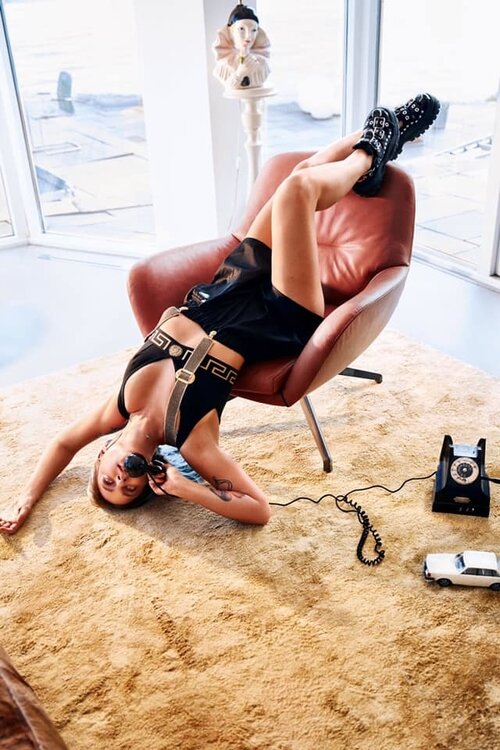
It also shows that these well-known artists can step into a different environment and still look pretty cool. It is that credibility and sense of cool that means Sesame Street has lasted for fifty years and drawn in generations of children and adults alike. The article from The New York Times is fascinating; I have just brought in a few sections that explores the musical aspect of the show:
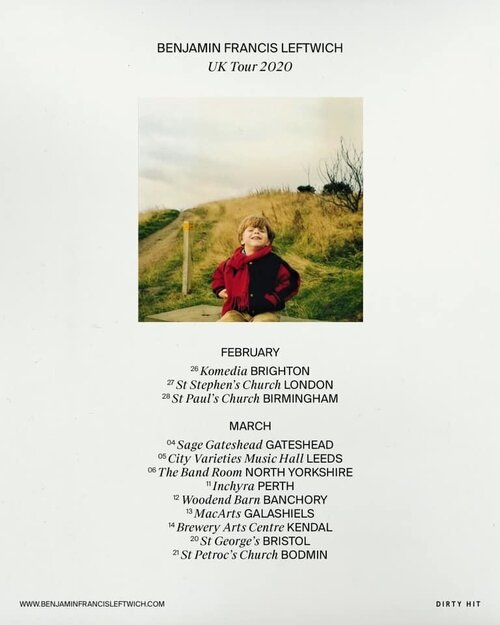
Since its inception in 1969, the public television show has redefined what it means to teach children through TV, with music as its resounding voice. Before “Sesame Street,” it wasn’t even clear that you could do that; once the series began, as a radical experiment that joined educational research and social idealism with the lunacy of puppets and the buoyancy of advertising jingles, it proved that kids are very receptive to a grammar lesson wrapped in a song.

zzzz.jpg

IN THIS PHOTO: Chance the Rapper in T Is for Theater with Cookie Monster in 2019/PHOTO CREDIT: Sesame Workshop

Big-name stars lined up to make guest appearances that have become the stuff of legend (Stevie Wonder and Grover; Loretta Lynn and the Count; Smokey Robinson and a marauding letter U). And long before inclusion was a curriculum goal, “Sesame Street” made a point to showcase Afro-Caribbean rhythms, operatic powerhouses, Latin beats, Broadway showstoppers and bebop alongside its notably diverse cast.

Music on “Sesame” functioned in three ways: as backing tracks for animation and film clips (a lonely orangutan looking for a zoo playmate, say); as live performances by well-known guest artists; and as songs for the human actors and Muppets to sing. Raposo, who loved Jelly Roll Morton and Chopin, fado and klezmer, wrote “C is for Cookie” — Henson originally developed Cookie Monster for snack commercials — and “Bein’ Green,” which took on extra poignancy when it was performed by Lena Horne and later Ray Charles, who told puppeteers that he identified with the song’s message about getting comfortable in your own skin, whatever the shade.

And as the “Sesame” universe expanded, it pulled more and more major musical talent into its orbit. The jazz musician Toots Thielemans, who performed with Benny Goodman, Ella Fitzgerald and Charlie Parker, played harmonica on the theme song. Grace Slick provided vocals for animated counting sequences. The guitarist in the first “Sesame” traveling band was Carlos Alomar, who toured with James Brown and then wrote the riff for David Bowie’s “Fame.” Alomar’s replacement, who was 19 or so and showed up at his audition with a Muppet-esque green-tinged Afro, was Nile Rodgers. It was his first real paying gig as an artist.

Bursting into tears is also common. Tracy Chapman needed a break to compose herself during her 1998 performance; Gloria Estefan, who connected with Sonia, Luis and Maria, the show’s trailblazing Latino characters, “cried when she walked in, because she said she was able to see herself and identify with somebody on TV,” said Carmen Osbahr, who performed alongside her as the Spanish-speaking Muppet Rosita.

After a song has lyrics, Sherman and his team score it. Brevity and repetition are key; “Sesame” songs are mostly just verse and chorus, but they’re tuned for catchiness. “You try to make the verse a hook, and then the chorus even more earwormy, if possible,” Sherman said. Demos go to producers and artists for approval and production suggestions, but they must also pass the ultimate litmus test: his two daughters, now 6 and 8.

“They’re very honest, and if they aren’t humming it or singing it, I will usually throw it away and write it again,” he said.

I will not be able to cram every big artist into this feature, but we have seen everyone from Jason Mraz and Elvis Costello step into Sesame Street and provide some musical nourishment. I love the fact that the artists included cover Jazz, Pop; Soul, Rock and pretty much everything between the cracks. If it was all mainstream Pop artists or one particular sound, I do not think the show would reach as far and resonate the way it does. Multiculturalism and diversity is key to Sesame Street and it is wonderful the show embraces characters and performers of all races and backgrounds. Look at other long-running shows like The Simpsons and how they employ music and musicians. Popular culture has ways been at the forefront of Sesame Street’s success and endurance. This feature from NPR goes into more detail:

 “From 1969 to 2019, the music of Sesame Street has aimed to educate young audiences. Sesame Street's central educational goal has held steady over the years, but its sound has not. What Sherman describes as a vaudeville-esque sound in the earliest seasons of the 1960s and '70s shifted into genres more contemporary to the decades that followed. In recent seasons, guest stars like Nick Jonas and will.i.am have performed Sesame Street originals on the show.

"I think that's what Sesame Street has done successfully, is sort of, at least sonically, change with the times," Sherman says of the show's continuously evolving musical style. To keep educating viewers, the music of the show has to adapt to their changing taste of the audience. "I think Rosemarie would tell you that our biggest thing is about making sure, at least from a song standpoint, that the kids can remember what we're trying to teach," he says.

QQQ.jpg

PHOTO CREDIT: Sesame Workshop

Truglio does, indeed, echo this point. When she hears a proposed song for the show, she listens carefully for potential auditory appeal to children. "It's got to be appealing and engaging, because without appeal and engagement, we can't teach," she says. "So we are going to be listening for that, and making sure that it's relevant.

Sherman and Truglio take such measures of the show's ability to connect with young viewers through music very seriously. If the basic sound of the music appeals to children watching the program, then the lyrics are much more likely to impart the valuable lessons they carry.

"Our mission on Sesame Street is to create content to help kids grow smarter, stronger and kinder," Truglio says. "It's a huge responsibility because we want to make sure that we assess later and we see learning impact".

As a music journalist and someone who grew up around so many terrific artists, I think Sesame Street is just as informative and important as any streaming service and current form of marketing; so in tune with modern culture as it is! That may sound extreme, but the face of music is changing and how we digest it now is very different to how children would have experienced music back when Sesame Street started. I think the show will always be essential because it brings music to life in a way other shows and formats cannot. I wanted to bring in this article from Billboard that collected together some very important people; they discussed their role and connection with Sesame Street:

Christopher Cerf, editor-in-chief of books, records, and toys division​, Children’s Television Workshop; (1970-1979); composer-songwriter (1973-1999) 
Joe Raposo, the first musical director, decided very early there would not be one music style. We wanted kids to hear all different music: R&B, opera, show tunes, folk, world music.

Dr. Rosemarie Truglio, senior vp, curriculum and content for Sesame Workshop
From the beginning, Sesame was innovative for using music to teach curriculum goals. “C Is for Cookie"? That's a literacy moment.

AAA.jpg

IN THIS PHOTO: NSYNC on Season 31 of Sesame Street/PHOTO CREDIT: Jen Lombardo

Caroll Spinney, Big Bird; Oscar The Grouch

I got the job when I was 35. I didn’t think of myself as a singer, but Jim Henson expected I would sing, so I didn’t get all fussy about it. I can carry a tune.

Sonia Manzano, Maria (1971-2015) 

Everybody had to sing on the show.

Bob McGrath, Bob

As soon as I started singing on Sesame Street, I got calls from symphonies to do family pops concerts. It's a great gig when they say, “Please welcome Big Bird's best buddy, Bob!” and you get a standing ovation from the introduction.

999.jpg

IN THIS PHOTO: Michael Jackson on the Sesame Street Christmas special with Oscar the Grouch on 24th October, 1978/PHOTO CREDIT: Louis Myrie/Contour by Getty Image

Manzano

When I first heard “Rubber Duckie” [written by head writer Jeff Moss], I could see a nightclub singer doing that song. It had double-entendres. It wasn’t treacly.

John Carter CashProducer; Son of Johnny Cash

When I was a boy in the '70s, I watched Sesame Street every day, twice a day. The first time my dad was on Sesame Street [in 1973], I was 3 and very confused on set when Big Bird took off his head. Then I looked up and saw Mr. Snuffleupagus hanging from the ceiling. It was shocking.

Ruth Pointer, The Pointer Sisters

When we got to the studio and they presented us with “Pinball Number Count” [the theme to a recurring counting segment], we looked at each other: “Are you kidding?” That song was really difficult! Gospel, jazz — we had to sing it in parts. I don’t know if we would have been prepared if we hadn’t grown up singing in the church.

Manzano

When Lena Horne was on [in 1976], she sang "Bein’ Green" with Kermit. I remember being taken aback: Jim Henson played Kermit so dramatically — so sadly — that a puppet really complimented her profundity.

Norman Stiles, Writer, head writer, lyricist (1970-1999)

In 1978 we did Sesame Street Fever, a disco LP in response to Saturday Night Fever. The cover is Grover in a white John Travolta suit”.

There are numerous great features that rank the musical guests and show that, through the years, there have been so many memorable turns! I want to bring in a couple more before wrapping things up but, as Sesame Street prepares for its fiftieth anniversary in November, I think a lot of media sources should pay tribute. There is no telling just how far the show has reached in terms of education the generations and bringing some fantastic music to smiling faces. From the amazing guests who have joined the cast to the incredible background music, so many great people have helped score this truly amazing show. Jack White has lent his chops and we have seen Pentatonix drop by to count and sing with the gang! I want to return to the feature from The New York Times and underline one important thing: how one cannot escape the fun and pleasure of being on the Sesame Street set! Guests feel that infectiousness:

When R.E.M. came on to do “Happy Furry Monsters,” a takeoff on their hit “Shiny Happy People,” they hung around the set all day, adding jokes to their number and watching other segments being produced, said Cerf. “That happened all the time,” the songwriter said. “I was there when Melissa Etheridge came, and she wanted to sit in Big Bird’s nest before she left.

Harry Styles, the One Direction star, also “had to meet Big Bird,” said Bill Sherman, the show’s music director. “And Will.i.am needed to talk to Grover.”

Like Lin-Manuel Miranda, Chance the Rapper is an Oscar guy. “I always just felt like he was misunderstood,” he said. When he came on to do a theatrical scene with Cookie and Elmo, he also invented a bit for himself and Oscar”.

What is the future of the show? Well, this year is a very special one for Sesame Street. It is clear Sesame Street’s magic and importance cannot be understated:

“(NEW YORK, NY, February 4, 2019): It all began in 1969 on a street where colorful Muppets and humans lived—and learned—side by side.  Today, 50 years later, Sesame Workshop, the nonprofit educational organization behind Sesame Street, announced a yearlong anniversary celebration to mark the occasion. Throughout 2019, Sesame Workshop will bring people together around the timeless lessons that Sesame Street has always taught:  everyone, no matter who they are or where they are from, is equally deserving of respect, opportunity—and joy.

Set against the backdrop of the civil rights movement and the war on poverty, Sesame Street was created to answer a simple question: could television be used to level the playing field and help prepare less advantaged children for school? The founders tapped educational advisors and researchers, entertainers and television producers, and other visionaries to create what became the longest-running children’s show in American television history.  Ever since, Sesame Street has helped children around the world to learn, feel included and respect others. With a curriculum that evolves to meet the needs of every new generation, it is now a force for good in over 70 languages and 150 countries.

0ll.jpg

IN THIS PHOTO: The Sesame Street cast around the iconic street sign in 1969/PHOTO CREDIT: Sesame Workshop

“This is a remarkable milestone for kids, for education and for television. Sesame Street has now brought the life-changing benefits of early learning to children around the globe for 50 years,” said Jeffrey D. Dunn, Sesame Workshop’s Chief Executive Officer. “Our mission to help kids everywhere grow smarter, stronger, and kinder knows no geographic boundaries. We’re everywhere families are and we never stop innovating and growing. That’s what keeps us timeless.”

The anniversary will bring people together through social impact initiatives, digital campaigns, and community events that reflect Sesame Street’s unifying messages. Throughout 2019, fans and families around the world can join their favorite furry friends in celebrating Sesame Street’s past, present, and future, with:

“We’re often asked what Sesame Street’s legacy will be,” said Joan Ganz Cooney, Co-Founder. “To me, a legacy is when something’s over…and this isn’t over.”

7777.jpg

IN THIS PHOTO: Sesame Street's Season 1 cast/PHOTO CREDIT: Sesame Workshop

“Sesame Street had a profound impact on children’s media, setting a template that the industry has followed for generations,” said Lloyd Morrisett, Co-founder. “Fifty years later, Sesame Workshop continues to deliver on its mission every day, across multiple platforms, on six continents. We started as an experiment - and it worked”.

It seems that there are many more years (maybe decades) left in Sesame Street. There is no real reason it would need to be cancelled: it is a hugely effective show that succeeds because of its formula and does not need to alter in these days of streaming and impatient T.V. studios. I wonder which musicians will be the next to take a trip to that very special place. I guess we all have a list of people we’d like to see on it – St. Vincent seems like she’d fit in easily! –, but there is plenty of time to satisfy our curiosity. Until then, let’s mark the fiftieth anniversary of Sesame Street (the official birthday is on 10th November) and provide our thanks. There are many reasons the show endures, seduces and will never go away – the musical diversity and memorability is a big reason. As I prepare to depart and spend some time on YouTube watching Sesame Street videos, it is amazing to think how many people around the world have…

MADE Sesame Street their home.

FEATURE: Spotlight: Rapsody

FEATURE:


Spotlight

kjjkkj.jpg

ALL PHOTOS/IMAGES: Rapsody/Getty Images

Rapsody

__________

THIS year has seen two incredible albums come out…

that puts important black figures under the microscope. I have talked a lot about Jamila Woods and her album, LEGACY! LEGACY!, and its phenomenal sound – Woods focused on a different pioneering figure in each song. On Eve, Rapsody celebrated and remembers powerful and inspiring black women. I will look back at Rapsody’s career and her incredible albums but, to start, it is worth looking back at the start. Her career started at North Carolina State University where she was a part of the H20 collective and Kooley High group. In spite of the fact she had never rapped before, she showed natural flair and gift. By 2008, she launched her career and signed with 9th Wonder’s It’s a Wonderful World Music Group. She put out The Summer Sessions EP with Kooley High in 2008, but it was not until 2010 that she got her first real breakthrough – the Return of the B-Girl mixtape was Rapsody’s moment in the spotlight. Her celebrated mixtapes - Thank H.E.R. Now (2011) and For Everything (2011) – gained her some traction but it was her debut album, The Idea of Beautiful, that took her up another level. Featuring guests such as Big Rube, Raheem DeVaughn; Ab-Soul, Childish Gambino; GQ and Nomsa Mazwai, The Idea of Beautiful is a busy and sensational work that everyone needs to hear! It gathered some positive reviews and, as Rap Reviews discussed, Rapsody instantly stepped into a league of her own:

Rapsody's success on "The Idea of Beautiful" is the fact she's an inspired writer who can convey the thoughts of her beautiful mind while not leaving the listener feeling left behind. Some songs are melancholy like the Eric G laced "Precious Wings," but she doesn't stay in sadness or drown you with sorrow.

Some songs are intense overwhelming odes to love's addiction like "Come Home" featuring Rocki Evans, but she's not spinning an album of romance novels. She's a storyteller, but she can team with 9th, Raheem DeVaugn and Ab-Soul to spit some "Non-Fiction." Her guests are like her from the new and now generation, like Mac Miller & The Cool Kids on "Roundtable Discussion." To sum it up she covers all bases.

Given the disproportionate ratio of male to female rappers in the field of hip-hop, Rapsody is automatically going to be compared to artists like Jean Grae and Rah Digga. That's understandable but it's also inherently unfair, as she only sounds the tiniest iota like either one lyrically (if either of them it would be Jean) and is completely her own woman in terms of her vocab and rhyme flow. I'm guilty as charged though by comparing her to 1990's L-Boogie myself, but since she draws the comparison of her own accord on the album perhaps I can be forgiven. The bottom line though is that she's going to be known by generations to come as the master of her own style, one that men and women alike will wish they could do as well as she does on this debut.

To think this is a rapper who was a novice back in high-school; the fact that she developed so quickly and sounded so confident on her debut album was amazing. She put out mixtapes and honed her skills but few have developed as quickly as Rapsody!

By mixing metaphors, clever wordplay and powerful images, you can tell Rapsody is in this for the music – fame, money and all the other trappings of music do not appeal to her. There are few out there who sound so commanding yet accessible. One can hear a bit of Lauryn Hill in Rapsody’s work but, to be honest, the hints are minor. I will talk about Rapsody’s (Marlanna Evans) latest album, Eve, in a second but you look back at her discography and progress and realise she has not missed a step! The quality and brilliance was there from the start; the mixtapes are incredible and I have seen few artists who are so complete out of the traps. Her second studio album, Laila’s Wisdom, pulled together huge stars such as Kendrick Lamar (Rapsody appeared on Lamar’s album, To Pimp a Butterfly) and Busta Rhymes. Laila’s Wisdom was released in 2017 – a year after Rapsody signed to Roc Nation. With every work, Rapsody seems to grow in confidence and scope. Laila’s Wisdom was another critical and commercial success. In this review, AllMusic were keen to praise Rapsody:

Titled in tribute to her grandmother, Laila's Wisdom is Evans' lyrically broadest and musically richest work, yet it doesn't have the sprawling quality of the first album. There's a finer, detail-filled shape to it, from the "Young, Gifted, and Black" (Aretha)-sampling title track to "Jesus Coming," an astonishing finale in which Evans relates the aftermath of a playground tragedy from multiple perspectives. The material is elevated by the heightened levels of authority and nuance in Evans' voice.

 Realistic fictional narratives, biographical reflections, affirmations of excellence, and sharing of knowledge are all strong suits for her. What's most impressive is a latter half-section that covers a wide scope of relationship issues. It deftly moves from the beat-switching dreamlike gem "A Rollercoaster Jam Named Love" (featuring Gwen Bunn and Musiq Soulchild) to the downcast vocoder funk of "U Used 2 Leave Me" (with Terrace Martin) to the lovestruck yet grounded "Knock on My Door" (featuring BJ the Chicago Kid). There are no weak aspects of Evans' game. In "Power," just before she hands the mike to favor-returning Kendrick Lamar, she boasts "I ain't Five-Percent, 'less we talkin' the top MCs." There's no evidence to the contrary”.

This year has been a fantastic one for music and one that is being defined for women. Across the musical map, women are striking hard and laying down some incredible albums! Missy Elliott just released an E.P., ICONOGRAPHY. Sampa the Great is gearing up and we have already been treated to huge albums from Little Simz, Lizzo and Solange. In Rap and Hip-Hop we are seeing some hugely powerful women come through but I wonder, in 2019, are the genres as open and accepting as they should be?! Rapsody is a leader and voice that is calling for change and recognition. She proves she is as potent and fierce as any male artist out there and, in terms of talent and passion, there are few that can match her. I will end by bringing in a couple of reviews for Eve but, to me, it is one of the most important and astonishing albums of the year.

Featuring D'Angelo and GZA, Ibtihaj is one of the best songs of 2019. I love the combination of voices and, of course, Rapsody leading from the front. It seems that Eve has arrived at an important moment; at a time when women are still being overlooked. When speaking with Billboard, Rapsody was asked about her latest creation and women in Hip-Hop:

“Sonically, this album is a complete departure from Laila's Wisdom. It's a different color of sound. Was that the goal where you wanted something that sounded completely different from your previous album?

Yeah, completely. I didn't want to make projects where people always know what to expect. Like, "OK, we already know what Rap's going to give us." I wanted to show that I was versatile and just do something totally different -- and [producer] Eric G helped a big deal with that just because the sound that he brings. I told the team that I want this to sound completely different from Laila’s Wisdom. Everybody was down just to challenge ourselves, have fun and create.

When it comes to women in hip-hop, what is your role in 2019?

My role is to bring balance, and to have another lane as a woman in hip-hop that happens to rhyme as well as any man. I want to remind people that being a woman is a beautiful thing, and it's a part of you, but it's not all you are. You can just be dope without having to just be about your gender. No matter where you're from, no matter what gender you are, religion you are, you can be dope. I want to inspire people to find themselves and to love themselves and never let nobody box you in.

We’ve also seemed to move past a time where only one woman could be on top. In fact, women in hip-hop have been supporting you. How refreshing is it that the women are showing unity in 2019?

It's dope. It's something that I've always wanted to see in this day and age of hip-hop. I didn't get to see [that] when I was growing up, and I know it's possible. And it's needed, and we as artists -- we can't continue to fall into the false narrative of there can only be one. And that we can't work together and we can't support each other and still make dope music and compete with each other in a healthy way. That's a false narrative and the media are often trying to pit us against each other. We ain't falling for the banana in the tailpipe”.

Eve is a powerful album and the peak of Rapsody’s career so far. In a year that has seen so many great albums from Hip-Hop and Rap artists, Eve is a step ahead of the rest. When speaking with DJBooth recently, Rapsody discussed Eve and how she is giving voice to issues that need to be raised right now:

DJBooth: The first thing I noticed on Eve was the sheer amount of passion you brought to your delivery. I’ve never heard you so fired up. Where did that come from?

Rapsody: Two places. One, for me, as an artist, figuring out who I am and being comfortable with who I am. Understanding my place in the culture and not having to chase anything or fit [into] anything. I’m just super confident in who I am, and I’m walking my walk fearlessly. Two, I believe the stories that I’m telling and the love and respect I have for Black women. I want to display that urgency in the music. When they listen to it, I want people to hear that it’s honest. It’s not a gimmick or following a trend. We’re working on this album, and it just so happens to drop in a time where Black women are at the forefront of a lot of conversations. That’s not why this album was made, for this time. This album was made for the truth in it.

There’s also a handful of bars rightfully calling out the industry dynamics and how they hurt women. How does it feel to have the platform to call attention to these issues?

I’m thankful for it. I’m thankful to be able to use my voice to shed light on things that need to be talked about in a truthful, unapologetic way. In an urgent way. We shouldn’t allow anyone else outside of this culture to define us. The power we have as a people to take that control back, this is our culture, so we should be the ones running it and putting out the images of what we look like as women. How we want to be portrayed and how we want to be respected. It’s just a reminder not to forget who we are, our lineage, our history, and the power that we have. Hopefully, [I] add some spark to a spark that’s already there”.

I know I have quoted from a number of different sources but, to be honest, there is so much love out there for Rapsody! Her work is incredible and she is one of the most important voices in modern music. I would suggest people read as many interviews by her as possible as Rapsody is illuminating, honest and passionate. It is that passion that drives her work and inspires other. She has been influenced by the likes of Missy Elliott and Lauryn Hill: in years to come, there will be a new breed of rappers who take their cue from Rapsody. My favourite album of the year is Jamila Woods’ LEGACY! LEGACY! but I have been listening to Eve and there might be a challenger in the ring! The reviews for Eve have certainly been positive. This is The Guardian’s take:

Densely referential and carefully wrought, Rapsody’s lyrics contain many more head-nods to successful black women than are in the track titles (she mentions ballerina Misty Copeland on Tyra, and Angela Bassett on Whoopi Goldberg).

With a delivery cut from the same cloth as Jay-Z or Lauryn Hill, she’s a storyteller, and counterbalances her wisdom with a dry, playful wit. Plus, she’s the queen of the dismissive one-liner (“I ain’t feeling you like I ain’t feeling new Kanye,” she announces on Whoopi).

Rapsody’s playful flow is mirrored by the shape-shifting production, which balances nostalgia with future-facing flourishes, as with the angelic backing vocals on Aaliyah. There are solid guest turns from newcomers such as New York rapper Leikeli47 as well as legends D’Angelo and GZA. But Rapsody herself is the undisputed star, offering up empowerment in droves on the catwalk-worthy Tyra (“damn I’m stunning”) and Serena, an ode to grafting hard for your fortune”. 

In another review, Pitchfork highlights why Eve is such an important and powerful record:

Rapsody wields the namesakes on Eve not as reference materials but as stepping off points for considerations on colorist beauty standards, black capitalism, activism, and drive. She raps about being counted out, singled out, and fed up. “This ain’t E.T. news, I done went sci-fi/I’m closer to God, I done went sky high/Been alienated so much that I must be fly,” she gloats on “Aaliyah.” She’s locked in, he wordplay as clever as ever, but she also doesn’t feel beholden to past versions of herself. The updated model is multifaceted with catchier hooks, nimbler rhyme schemes, and a willingness to ad-lib.

She is as comfortable trading bars with Leikeli47 on “Oprah” as she is Queen Latifah on “Hatshepsut,” both of whom make formidable sparring partners. But the message is one of inclusivity, of banding together to receive the respect that is long overdue. And it isn’t just about being acknowledged; it’s about taking a rightful place in the hierarchy. For Rapsody, specifically, that means being as respected as her male peers often spoken of as successors”.

I am not sure whether Rapsody is coming to the U.K. to tour but, if you are in the U.S., you can catch her on the road. One might find it odd for me to put an acclaimed artist in my Spotlight feature – this is not a ‘ones to watch’ piece: instead, I am highlighting artists you need to check out. The next edition features a newer act that are starting out but, now, I was keen to laud a truly remarkable artist. You might be unfamiliar with her work now but you need to become acquainted as, without doubt, Eve is…

AMONG the finest albums of 2019.

_________________

Follow Rapsody

FEATURE: Vinyl Corner: Spiritualized - Ladies and Gentlemen We Are Floating in Space

FEATURE:


Vinyl Corner

Spiritualized - Ladies and Gentlemen We Are Floating in Space

__________

WHILST it is not celebrating an anniversary…

nbbnbn.jpg

 IN THIS PHOTO: Spiritualized’s Kate Radley and Jason Pierce/PHOTO CREDIT: NME

I wanted to put Spiritualized’s Ladies and Gentlemen We Are Floating in Space into Vinyl Corner because it is one of those important records I discovered in high-school. You can buy a vinyl copy here…and, whilst it is hard to find a new copy for sale, if you can get a used copy then I suggest you do! I understand the origin of Spiritualized’s third album stems from the philosophical novel, Sophie’s World by Jostein Gaarder. The band felt that philosophers are the only people – apart from writers, perhaps – who explore the limits and boundaries of existence and language. In a sense, the album is an investigation of sound’s possibilities and where you can take music. Maybe the title is reference to the fact that, whilst the group float in space and explore, people down on Earth do not care. It is an interesting thought and one that you carry with you when you listen to the record. It is not to say Ladies and Gentlemen We Are Floating in Space is solely about exploration and discovery: Jason Pierce and Kate Radley of the band split up shortly before the album was recorded. That might suggest a lot of heartache but, in fact, a lot of the songs were recorded before the break-up. Spiritualized crafted success and great feedback from their first two albums but Ladies and Gentlemen We Are Floating in Space was their big breakthrough.

Jason Pierce and Sean Cook started work on demo recordings during 1995. The band started recording the album in full a few weeks later but it took a little while for everything to come together and gel. There was a bit of movement between studios but, eventually, the band had this terrific record that sounded like nothing else. Ladies and Gentlemen We Are Floating in Space is viewed as one of the best albums of the 1990s and gained enormous reviews when it was released on 16th June, 1997. Just considered the way the musical landscape had changed in the years leading up to the record coming out. Cast your mind back to 1994 and 1995 and there was a lot of Britpop in the air. Sure, artists like Alanis Morissette and Björk were around then but a lot of British pop was dominating. By 1997, acts like The Prodigy, Radiohead and Sleater-Kinney were starting to take over. I think the scene was more open and diverse and it allowed albums such as Ladies and Gentlemen We Are Floating in Space to gain more focus. That is not to say Ladies and Gentlemen We Are Floating in Space would have been lost if it was released in 1994; one feels it would have struggled to slot into a time when music was very different. The reviews were, as I said, immense and universally positive.

I want to bring in a couple of post-1997 reviews that highlight the merits of this masterpiece. Here, in this AllMusic review, they are full of praise:

Spiritualized's third collection of hypnotic headphone symphonies is their most brilliant and accessible to date. Largely forsaking the drones and minimalistic, repetitive riffs which have characterized his work since the halcyon days of Spacemen 3, Jason Pierce re-focuses here and spins off into myriad new directions; in a sense, Ladies and Gentlemen We Are Floating in Space, with its majestic, Spector-like glow, is his classic rock album. "Come Together" and the blistering "Electricity" are his most edgy, straightforward rockers in eons, while the stunning "I Think I'm in Love" settles into a divided-psyche call-and-response R&B groove, and the closing "Cop Shoot Cop" (with guest Dr. John) locks into a voodoo blues trance. Lyrically, Pierce is at his most open and honest: The record is a heartfelt confessional of love and loss, with redemption found only in the form of drugs -- designed, no less, to look like a prescription pharmaceutical package, Ladies and Gentlemen is pointedly explicit in its description of drug use as a means of killing the pain on track after track. Conversely, never before have the literal implications of the name "Spiritualized" been explored in such earnest detail -- the London Community Gospel Choir appears prominently on a number of songs, while another bears the title "No God, Only Religion," pushing the music even further toward the kind of cosmic gospel transcendence it craves. A masterpiece”.

nbnbn.jpg

 IN THIS PHOTO: Kate Radley, Jason Pierce and Terry Tolkin of Spirtualized/PHOTO CREDIT: ht

Pitchfork provided a thorough investigation when the Collectors’ Edition came out in 2010:

After all, it's an album mostly without a clear hit single, a massive production better enjoyed as a whole than in bits and pieces. Though Spiritualized eventually released edits, remixes, or reworkings of "I Think I'm in Love", "Come Together", and "Electricity", those songs thrive best in the context of the album-- in their original, much more grand iterations. "I Think I'm in Love", for instance, flows brilliantly from "Come Together" and, eight minutes later, its dénouement shapes the perfect non-introduction to the casual piano of "All of My Thoughts". In the interim, Pierce reveals the breadth of the band's ideas and influence. The first half combines Spacemen 3's LaMonte Young-like 20th century composition (with its growling synthesizer drone), dub, soul (with its thick, stunted bass line), American blues (with its twisted harmonica howls), and folk (Pierce's subtle autoharp strums). The back half is a sassy, baritone saxophone-backed dialogue between Pierce's self-confidence and his self-doubt: "I think that I can rock'n'roll," he sings. "Probably just twisting," he answers. And on "Come Together", one of only a few Ladies and Gentlemen tunes you're likely to still hear live, Pierce fancies himself a young man that's sad and fucked (a word he manages to use five times in as many minutes here) amid references to suicide, heroin, and busted dreams”.

One does not need to be a fan of Space-Rock and Spiritualized’s sound to be a fan of Ladies and Gentlemen We Are Floating in Space

You listen to Ladies and Gentlemen We Are Floating in Space now and it still sounds breathtaking and sublime. It is not a product of its time like a lot of albums from the 1990s. Instead, you can listen to this album at any time and in any mood and feel transported and floored. It is so immersive and transforming; one learns something about themselves and finds emotions they didn’t know they had. It is hard to put into words just how affecting and stunning the album is – one needs to listen to and see what I mean. Although vinyl is the best format for it, it is fairly tricky finding it at your local record shop. Stream the album if you cannot find it but I urge people to seek out the album on vinyl if they can. With every passing anniversary, Ladies and Gentlemen We Are Floating in Space seems to get stronger and more fascinating. In this feature to mark the album’s twentieth anniversary, Stereogum were right on the money:

“Ladies And Gentlemen doesn’t keep a single mood throughout. Its snarl-stomping blues-rock numbers like “Come Together” and “Electricity” had as much coked-up swagger as anything Pierce’s Britpop peers were doing, and they also had screaming walls of guitar and wailing gospel choirs blowing them out into something bigger. Its gooily blaring instrumental interludes are as far-out as anything Pierce had done with Spacemen 3, his old band. And it ends with “Cop Shoot Cop,” a 17-minute skronk-blues epic about the numbing repetition of smack addiction that never becomes numbing repetition itself. (As someone with very little patience for long songs, I can’t remember ever skipping “Cop Shoot Cop,” even though it came at the end of the album. Even in his staring-into-the-void moments, Pierce was enough of a songwriter to keep things interesting).

Still, the bottomless despair comes across. Pierce was putting all these oceans of gorgeosity behind sad-sack sentiments so eloquent but unspecific that they could’ve been about Radley or heroin or both or neither. And even with all that vagueness, they’re still heartfelt enough to kick you in the gut: “I just don’t know what to do on my own / All of my thoughts are of you,” “I don’t even miss you, but that’s cuz I’m fucked up / I’m sure when it wears off, then I will be hurting,” “Sometimes have my breakfast right off of a mirror / And sometimes I have it right out of a bottle, come on.” Lyrically, my favorite song on the album might be “I Think I’m In Love,” a devastating one-two punch of bravado and self-doubt, with the latter always shadowing the former: “I think you’re my dream girl / Probably just dreaming / I think I’m the best, babe / Probably like all the rest.”

Ladies And Gentlemen is a deeply personal album, a transmission from an auteurist mind, and that’s probably why its revved-up rockers and its head-blown instrumentals mesh so beautifully with its twinkly lullabies. (Back when lovelorn dipshits like me made mixtapes for crushes, it was almost impossible to pick a Ladies And Gentlemen song for a mixtape. Almost any of them other than “Cop Shoot Cop” would’ve worked, but the whole thing demanded to be heard as a single piece.) And it’s a sad reality of the present-day music industry that labels can’t write blank checks to genius auteurs anymore. Most of them wouldn’t know what to do with the money anyway. The era that gave us Ladies And Gentlemen is lost, and it’s not ever coming back. That’s too bad. But at least we still have the album, which still sounds like some kind of miracle”.
I am playing the album now and it is simply beguiling! If you have not discovered Ladies and Gentlemen We Are Floating in Space then do so now. It sounded sensational in 1997 but, somehow, the album takes on a new life in 2019. Maybe it is the album we need right now but, at thirty-six, I am more moved by the album now than I was aged fourteen when it was released. I am going to spend some more time with it and fall in love with an iconic album that is…

OUT of this world.

FEATURE: Vertical Insanity: Is Mabel’s Unique Performance Platform a Sign of the Future?

FEATURE:


Vertical Insanity

vv.jpg

IN THIS PHOTO: Mabel is the first performer to use a vertical stage for a gig/PHOTO CREDIT: NME

Is Mabel’s Unique Performance Platform a Sign of the Future?

__________

GIGS are accommodating more and more…

h.jpg

 PHOTO CREDIT: Dave Benett

to different tastes and demands. One could forgive venues and artists for pushing things forward and shaking things up. The existing stage set-up and design is flexible as it allows for invention and difference. By that, depending on the size of the stage, artists are free to indulge their imaginations and ambitions. Huge arenas provide lots of space for bands and artists to put together big sets and light displays. A lot of artists tend to prefer a more stripped-back venue/set whereas others like to push things to the maximum. The notion of the horizontal stage has been around for centuries and, as we push to the future and the current generation, is the idea of a vertical stage a good one? Here, as this article explains, singer Mabel has definitely opened up a debate:

From the serial snapper who fills the camera roll on their phone (or their tablet, you know who you are) to the "watch the band, not your phone" traditionalists, there's a blurry spectrum of where fans and musicians stand on the best gig etiquette.

The debate went up a notch this week when Mabel performed what's been dubbed the world's first "vertical gig" on a three-tiered stage.

Its designers called it "a gift for a fans' Snap and Insta Stories" which "should stimulate some debate around live music staging conventions for a Generation Z audience".

We already have stages of different sizes and, as time goes on, I can see artists taking live performances to new levels (no pun intended). Are we getting too bored of the traditional gig? I can appreciate how artists would want to stimulate other senses but, at a times when many venues are struggling to accommodate and acknowledge disabled gig-goers and those with mental-health issues, should we not be more focused on galvanising and improving venues? Whilst a vertical stage looks pretty cool and original, there are clear problems. For a start, there is less space and movement for the performers on stage. There are risks of falling from the stage (a big danger for those on the top tier) and how does a singer like Mabel bond and connect with her bands when she cannot easily see them? Also, the vertical stage would be good if it was designed to save space but, in my view, it makes for a confusing experience. Some would say a vertical stage allows for better access in terms of viewing. People do not have to strain their eyes so much and can actually see people playing. I think the opposite is true: you are looking at performers on several different levels and you have to keep scanning your eyes up and down. Whereas a normal gig would put all the performers on the one level – and there you could focus on the same spot -, a multi-tier/vertical stage seems a bit baffling and unnecessary.

 PHOTO CREDIT: Dave Benett

I am all for improving the live experience and not just standing still. Artists are revolutionising technology and changing the way we digest music. From the huge sets of Muse to the natural worlds Björk puts into her shows, things have definitely changed through the years. The idea of vertical stages is designed to please Instagram fans. I do not see the idea being rolled out too much and, to be fair, this is probably limited to Pop artists. Maybe it will take a while for me to come around to something as unusual and impersonal as a vertical stage. If this idea helped improve sound or the visual aspect of a gig then I would be a bit more open-minded and embracing. The fact that we have to discuss phones at gigs sort of worries me. I know a lot of Mabel’s fans take photos and video her gigs and, really, do we need a vertical stage that helps make Instagraming more accessible and cool? Rather than relish a gig and be in the moment, people are going to be trying to get the best shot and put this cool-looking stage onto their feeds – how many will remember the actual gig and talk about the music they made? We come back to this debate as to whether we should be encouraging people to actually be present at gigs or film they for prosperity.

Maybe it is a matter of opinion, but I think artists who ask fans not to film gigs should be commended. There is no logical reason for filming gigs. People say it is so they can remember it years and now but, for most of us, memories alone are good enough. One is not actually enjoying or concentrating on a gig if they are filming and taking pictures and, to be fair, how many Instagram followers are going to be engrossed by grainy footage and insignificant photos? I do not go online to look at gig photos and streams because, also, you are seeing this for free – why is that fair when people actually there paid to see the artist?! There are a lot of reasons why phones should be outlawed from gigs. It is down to the artist whether they allow them, but the idea of turning gigs into a fashion accessory is baffling. Research shows most Smartphone users are engaging with their devices vertically whilst the majority find vertical videos the most interesting. I can see why vertical videos would be interesting for, say, a music video but a live gig should not be about filming and posting videos to the Internet. I am all for heightening the viewing experience but I cannot get my head around the benefits of a vertical stage. It seems rather cold and distant because, as I said, it is harder for performers to engage with one another. I think a gig is much more immersive when there is a wider stage: a vertical platform seems constricting and almost like performers are trapped like animals!

 PHOTO CREDIT: @samuelzeller/Unsplash

Everyone has to accept the fact venues and artists are adapting to the needs of a new generation. There is this conversational clash when it comes to technology and whether venues are turning into something robotic and money-making. By that, I mean venues are working in the pockets of technology companies and trend-setting Instagram stars rather than thinking about the quality of performance and the listening experience. I can foresee sound challenges when you work on a vertical stage and can one say a performer like Mabel thrives with a more narrow stage? I cannot imagine bands taking to the vertical stage because of the compartmentalised nature. The best gigs, when we see bands, involve interaction and the ability to see your fellow musicians working. If you go and see a Mabel concert then, no offence to the others on stage, but you go and see her. If you are filming a video where there are three levels and you have this vertical shot, it seems much less impressive than having a horizontal stage where you get more movement and a more ambitious set. In terms of lightning and sets, there is less room. It seems like there are lots of safety risks and problems that leads to a less exciting, natural and human performance. I come back to my point regarding performers looking like animals.

 PHOTO CREDIT: @bukowski/Unsplash

I am looking at photos of Mabel performing with her crew and, whilst it looks pretty neat, tight and cool, is she able to give her very best delivery? Do people in the front rows get the same view they would normally and what about people at the side of the stage? The vertical stage relies on height benefits rather than width so I think you are creating new issues. I applaud artists who want to push beyond the norm and improve live performances…but is a vertical stage a step too far?! I shouldn’t get annoyed about this story because, in truth, if an artist is thinking more about an Instagramer and making their lives easier, then they are more concerned with being fashionable and popular than the actual music itself. My worry is that this notion rolls out to other genres and artists. I am a keen advocate of keeping phones in pockets and going to gigs to connect with a performer – if you have your phone out then you are more concerned with your social media feed than you are with music. Those who say they are capturing a unique moment they can look back on seem flawed to me. You can keep gigs in mind and would you realistically show videos of a gig to your grandchildren and friends years from now? I don’t see much of a point and there are few gigs that warrant that sort of excitement and preservation. Gigs should be able the relationship between fans and artists: making stages more amendable and slightly to those who want to frame videos vertically…I don’t really get why anyone would want to do that! When I go to gigs, my phone never leaves my pocket and I prefer my performers in…

nnn.jpg

 PHOTO CREDIT: @noralidcv/Unsplash

LANDSCAPE rather than portrait!