FEATURE: Life in the Slow Lane: Is Digital Music Making Us Less Attentive and Connected?

FEATURE:


Life in the Slow Lane
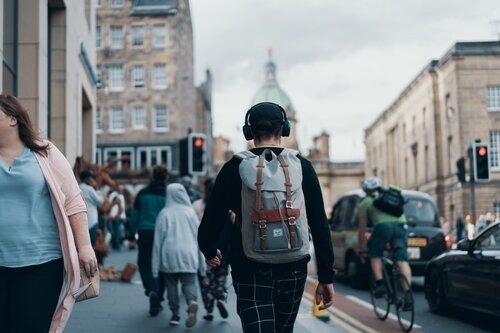
PHOTO CREDIT: @rosssneddon/Unsplash 

Is Digital Music Making Us Less Attentive and Connected?

__________

I had to check to see whether…

 PHOTO CREDIT: @clemono2/Unsplash

this report was legitimate or whether it was a joke. As it is October – and it is a way until 1st April -, it is worrying to see something like this come out:

“Two adjacent 75-metre long (247ft) ‘mobile phone safe lanes’ have been installed in central Manchester, after new research by AO-Mobile that found that a staggering 96% of the population say that they have experienced someone walking and not paying attention because they were too busy looking at their phone, in the last 12-months.

Thought to be the first of its kind in Europe, the trial, which is located in the Spinningfields district of the city centre, features a designated pathway for pedestrians to help stop people who walk with their eyes glued to their mobile phones from bumping into each other.

The pavements along Hardman Boulevard – a busy pedestrian thoroughfare surrounded by offices, shops, bars and restaurants, used by tens of thousands of people every week – now has arrows and signs that mark out separate walking lanes on the pavement exclusively for slow-walking smartphone users.

A whopping 75% of Brits say they are guilty of walking and using their phone at the same time, according to the new research.

The rise in so-called “DALAPs” (Distracted As Looking At Phone) and “distracted walking” (a behaviour recognised by The World Health Organisation) is when people walk whilst looking down at their phone in their hand rather than looking where they are going or concentrating on their surroundings – typically because they are instead texting, on social media, reading emails or video calling”.

 PHOTO CREDIT: @meghanschiereck/Unsplash

We can all identify with a common scenario: walking down the street and having to dodge out of someone’s way because they are on their phone. The lure and addictiveness of technology is getting to a point where we must modify the streets the same way as we would a dual carriageway. Rather than make accommodations for those too distracted to look where they are walking, it would seem better to fine those who are caught staring at their phones. I know most people, when looking down, are texting or on the Internet. I know there are many who are listening to music and, when we have to move out of their way, they are on Spotify or scrolling through a playlist. Like the slow lane idea in Manchester, many might say having a device/audio option that allows you to check the playlist/screen, so you do not need to look down. Even trying to work out how that works is exhausting and probably wouldn’t make a lot of sense. In many ways, we have gone backwards regarding technology and its ease of use. At least when we had a Walkman of iPod, there seemed to be far less distraction and people were listening to albums through. Technology has allowed music to reach so many people and bring happiness to their lives. I am not against people playing music on their phones/using a device, but the fact we cannot seem to tear our eyes away from a screen is a terrible sign. It is not just people checking music whilst moving down the street and walking around.

uuu.jpg

 PHOTO CREDIT: @sonance/Unsplash

When you go on public transport, you see people casting their eyes down or not looking up. It means they are not aware of what is happening around them and, from someone else’s viewpoint, it appears they are being rude. I have written about the Walkman and how its brilliance changed music. I have also argued against the assumption portable music is alienating and rude: rather, it is a way to escape the noise of life and find some peace. I maintain that, yet that theory only stands when people are playing albums through and not endlessly looking down, wobbling down the street as they look for a track or load a playlist. The problem of people bumping int pedestrians is much more common in terms of texting and the Internet. One cannot say music is without blame and, as so many of us play music through our phone and rely so much on screens and visuals, how practical is it listening to music on the go? For sure, one can immerse themselves and take music wherever they go. Having cities like Manchester implement slow and fast lines – to avoid collisions and anger – shows how technology is literally dividing us! In so many ways, music binds us and provides community. Once was the day, we would share music physically and congregate to listen to albums and songs. That still happens but, more and more, we can do all our sharing and experiencing on our own.

poop.jpg

 PHOTO CREDIT: @meghanschiereck/Unsplash

There is a lot to be said for solitude and some privacy regarding music. It seems we have an extreme situation where visual awareness and concentration are second to our phones and technology. This is not new news, but things are getting worse. What is the solution? Listening to music on the move is fine; yet consider where you are and the fact looking away from what is in front of you creates danger for yourself and others. There is also a good argument that we can avoid so many preoccupied listeners if we listened to albums rather than cherry-picked songs. Yes, there would still be a need to glance at the screen, but not so much. There is that conflict between technology allowing us to carry a world of music anyone against the erosion of human contact and, in a lot of cases, common courtesy. I listen to a lot of music on my laptop but, when I am going about my day, I either wait to listen to music or, when I do, have earphones in and stream the radio. As we become a civilisation more dependent on technology and at the mercy of our phones, there are going to be more slow/fast lanes. Unfortunately, a lot of us experience music on phones and tablets. That is fine but, rather than repeatedly stare at a screen, enjoying music without pause or interruption seems best – it avoids clattering into people on the street! Music is a fantastic form of communication; a way of joining us and digging deep into the heart. It is important we have access to music wherever we travel but, at the same time, ensuring that we are…

7777.jpg

 PHOTO CREDIT: @dylu/Unsplash

KEEPING our eyes peeled.
FEATURE: Storms: A Flawed Masterpiece: Fleetwood Mac’s Tusk at Forty

FEATURE:


Storms

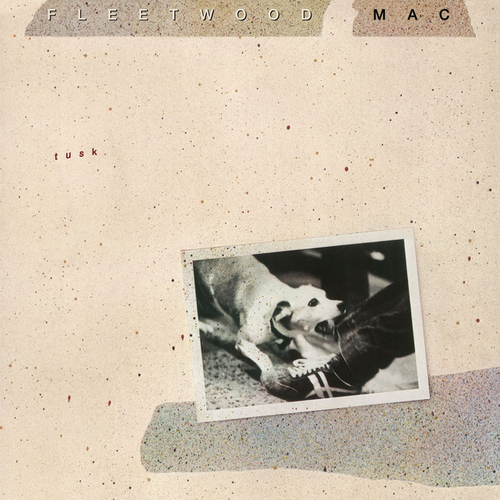
A Flawed Masterpiece: Fleetwood Mac’s Tusk at Forty

__________

I know I have written a few album-specific articles lately…

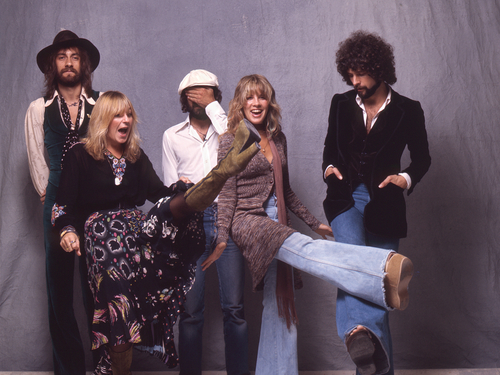
 IN THIS PHOTO: Fleetwood Mac photographed by Sam Emerson for the Tusk tour book

and there are one or two more to come! If an album celebrates a big anniversary, I feel it is only right to mark it and pay tribute to that artist. In terms of bands who overcame adversity and created something truly sensational, are there incidences more amazing and unbeatable as Fleetwood Mac and 1977’s Rumours? That album was completed at a time when couples Stevie Nicks and Lindsey Buckingham, Christine and John McVie were parting and strained; drummer Mick Fleetwood also was going through some tough times. In the wake of all this separation and conflict was music that sounds unified and solid. I am staggered the band were able to complete the album, let alone release an album that ranks alongside the very best ever. There was a lot of praise and celebration once Rumours was released and, when it came to following that masterpiece, the band went in a different direction. I always love a good double album because it is ambitious putting something like that together. There are few double albums that are flawless and, even when you have a flawed one such as The Beatles (‘The White Album’) or Physical Graffiti (by Led Zeppelin), they are interesting and diverse. With twenty tracks – and each band member pulling in their own way -, Tusk was always going to be a different animal to Rumours. The twelfth album from the American-British band is a more experimental creation and (is an album) where Lindsey Buckingham exerts a lot of production influence – as he did on Rumours.

The songwriting is sparser and many people attribute the change in direction/production sound to the arrival and explosion of Punk – or, more accurately, the Post-Punk movement that followed on. Tusk was the most expensive Rock album ever made (at over $1 million), and the band toured the album relentlessly and extensively. There are a couple of ways at look at Tusk. Upon its release, it was viewed a commercial failure because it was far less successful than Rumours. Shifting far fewer units and not getting acclaim across the board, one needs to consider Tusk down the line; an album that needs more time to settle in than Rumours.  The music scene was very different in 1978/1979 compared to a year or two previously. If the band had released something more commercial and Rumours-esque, perhaps they would have stalled or felt formulaic. They needed to evolve and acclimatise to the new world. In doing so, you get a double album that sounds like three writers’ – Lindsey Buckingham, Stevie Nicks and Christine McVie – work rather than a band. Maybe the pains and tensions of Rumours meant that, by the time they came to record Tusk, Fleetwood Mac realised they could not work in the same way as they used to. Despite some patchy moments, some of the best Fleetwood Mac material can be found on Tusk. The first side has the primary songwriters flexing: Buckingham’s The Ledge, McVie’s Think About Me and Nicks’ Sara are incredible.

 PHOTO CREDIT: Warner Bros.

Nicks also contributes big tracks like Storms and Beautiful Child, but she has less input in the album than Buckingham and McVie, in terms of song credits. McVie’s Brown Eyes and Never Forget are stunning but, in essence, Tusk does feel more of a Lindsey Buckingham album than the slightly more cohesive (if fractious) Rumours – nine of the twenty tracks are his and Save Me a Place and That’s Enough for Me are gems. In my view, the strongest two tracks come from the divided American sweethearts: Stevie Nicks’ gorgeous Sara and Lindsey Buckingham’s elephantiac centrepiece, Tusk. There are incredible songs across Tusk and the retrospective reviews have been largely positive. This is how AllMusic judged the album in 2016:

“Lindsey Buckingham directed both Fleetwood Mac and Rumours, but he dominates here, composing nearly half the album, and giving Christine McVie's and Stevie Nicks' songs an ethereal, floating quality that turns them into welcome respites from the seriously twisted immersions into Buckingham's id. This is the ultimate cocaine album -- it's mellow for long stretches, and then bursts wide open in manic, frantic explosions, such as the mounting tension on "The Ledge" or the rampaging "That's Enough for Me," or the marching band-driven paranoia of the title track, all of which are relieved by smooth, reflective work from all three songwriters. While McVie and Nicks contribute some excellent songs, Buckingham owns this record with his nervous energy and obsessive production, winding up with a fussily detailed yet wildly messy record unlike any other.

This is mainstream madness, crazier than Buckingham's idol Brian Wilson and weirder than any number of cult classics. Of course, that's why it bombed upon its original release, but Tusk is a bracing, weirdly affecting work that may not be as universal or immediate as Rumours, but is every bit as classic. As a piece of pop art, it's peerless.

I could sample a whole heap of reviews but here, in Pitchfork’s review, we get a glimpse into the recording process and what makes Tusk so intriguing:

“Nicks described their space in Studio D as having been adorned with “shrunken heads and leis and Polaroids and velvet pillows and saris and sitars and all kinds of wild and crazy instruments, and the tusks on the console, like living in an African burial ground.” Everyone agrees Buckingham was losing it a little—that he was chasing something (artistic greatness? avant-garde credibility?) and pursuing it wildly, haphazardly, like a crazed housecat stalking a black fly about the living room. Did he really have a drum set installed in his bathroom so he could play while on his toilet? (More reasonable minds have suggested he merely liked the acoustics in there.)

Though Tusk’s most memorable tracks are also its strangest (like “The Ledge,” a manic, pitter-pattering kiss-off in which the band’s signature harmonies are overridden by a guitar that’s been tuned down and turned up), there are a handful of songs that harken back to Rumours’ rich palatability. “Save Me A Place” plays like an extension, at least lyrically, of “Go Your Own Way,” in which Buckingham begrudges his lover’s unwillingness to grab what he’s half-offering her.  

A lot of Buckingham’s lyrics from the late ‘70s seem to simultaneously admit trepidation and cast him as the aggrieved party; he seems, in an endearing way, oblivious to his own caveats, or how they might dissuade another person. “Guess I want to be alone, and I guess I need to be amazed/Save me a place, I'll come running if you love me today,” he sings on “Save Me A Place.” He later described the song as vulnerable. “None of us had the luxury of distance to get closure… It’s about a feeling that’s been laid off to one side and maybe not been fully dealt with, sadness and a sense of loss.” It captures the wildness of recovery: what happens when love dissipates, and you have to find a new thing to believe in? What if that thing is work?”.

Depending on your opinions on what makes an album successful determines whether Tusk can be viewed as a failure or success. Certainly, those expecting Rumours 2.0 would have been in for a bit of shock. That album was recorded at a particular period, and circumstances had changed by the time Fleetwood Mac came to record Tusk. If the band had gone into Tusk with the view of replicating Rumours, I think the results would have been inauthentic and repetitive. Tusk is a bold and brave record and, as NME argue in 2011, Tusk is a misunderstood album that inspired Fleetwood Mac themselves and a legion of acts:

“Although misunderstood at the time, the album’s cobweb-filled sound later found fans in Air, The Strokes and Vetiver. Today, the influence of ‘Tusk’ extends from chillwave to freak folk. And the subversion of what was expected after ‘Rumours’ and the creative space it created also gave the band (and primarily Buckingham) reason to continue making music in Fleetwood Mac for the next decade.
But then, is ‘Tusk’ really as subversive, as ‘difficult’, as critics have always made out? Sure, it’s long and druggy and sprawling – and named after Mick Fleetwood’s nickname for his own penis. But take away Buckingham’s scuffed, home-made sonic experiments and this is an album that’s just as lush and melodic as ‘Rumours’
”.

I will round of this feature with an article from Ultimate Classic Rock that gives a balanced view of Tusk; stating it is masterful, but it has its flaws and cannot quite be seen in the same vein as Rumours. I think Tusk is definitely in Fleetwood Mac’s top-three albums and, as we know, drove the band forward. They could have gone their own ways after Rumours and struggled to find impetus to reconvene and solider on. Whilst there are more of Buckingham’s fingerprints on Tusk than the rest of the band, one cannot argue against the commitment and input of each member! Tusk is undeniably brilliant…but I come back to that question as to whether it is inferior to Rumours and a disappointment or whether its evolution, different sound and breadth makes it a stronger and more interesting listen. This article has some theories and input:

 “Given its length, its ambition, and its much clucked-over million-dollar cost -- not to mention the mountains of rock-star excess that sprung up around Fleetwood Mac during an epic Tusk tour that included specially painted hotel rooms for singer Stevie Nicks and no shortage of on-stage tension -- the record came to be regarded as a weird, costly tumble from the dizzying heights of Rumours.

Unsurprisingly, the band members took issue with this point of view. "In the context of the whole, Rumours took longer to make than Tusk. One of the reasons why Tusk cost so much is that we happened to be at a studio that was charging a f--- of a lot of money," Buckingham pointed out. "During the making of Tusk, we were in the studio for about 10 months and we got 20 songs out of it. Rumours took the same amount of time. It didn't cost so much because we were in a cheaper studio. There's no denying what it cost, but I think it's been taken out of context."

Fleetwood also insisted in a Trouser Press interview that change was part of the band's legacy. "We've never stayed one way for very long, and I don't think we ever will. We've always changed a lot whether or not players have changed," he said. "Doing a double album didn't make any business sense at all. But it meant a lot to us, artistically -- whether we could still feel challenged. We really, really are pleased with it. We've also, I think, got enough discretion to know if the songs aren't up to standard, in which case we'd have just put out a single album."

Meanwhile, Christine McVie bristled during a 1982 interview with Sounds, pointing out that "Tusk sold 9 million copies -- so it can't be too shabby, can it? But a lot of people gave us flak about that album. It's very different, very different, very Lindsey Buckingham. I'll have to say that. He was going through some musical experiments at the time."

Still, the backlash took its toll, and when the sales came in considerably softer than those for Rumours -- which was, it's worth noting, one of the biggest-selling records of all time -- Buckingham felt that the other members of the group turned on him, jaundicing his perception of his place in the band as well as its artistic limits”. 

On 12th October, Tusk turns forty, and I think we should all sit down and listen to this fascinating album. Fleetwood Mac are still touring today – minus Lindsey Buckingham – and I think Tusk is the last time when they really soared and hit genius levels. Albums like Mirage (1982) had their moments but Tusk is a fascinating album with more than its fair share of wonder. Tusk is a precious and complex album that, for years to come, will…

CONTINUE to inspire.

FEATURE: Sisters in Arms: An All-Female, Autumn-Ready Playlist (Vol. II)

FEATURE:


Sisters in Arms

sssssssssss.jpg

IN THIS PHOTO: Diana Gordon 

An All-Female, Autumn-Ready Playlist (Vol. II)

__________

AUTUMN is upon us…

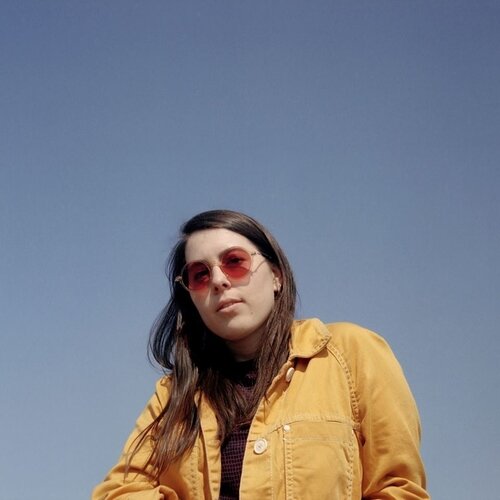
 IN THIS PHOTO: Samantha Urbani/PHOTO CREDIT: Highsnobiety

and I think we are getting used to the days being a bit shorter and there being a bit of a chill in the air. It is a time of change and transition and, as the weather turns a bit less predictable, we have music to provide some stability and heat. I have been looking around at the best new tracks from female artists. There is such an array of brilliance on display that covers an array of genres and sounds. I hope you’ll find something in the list that appeals and catches the ear. It is another fantastic week for music where you are sort of caught by the wealth and quality. Enjoy the latest female-led playlist and take these sounds around with you…

eeeee.jpg

IN THIS PHOTO: Jetta/PHOTO CREDIT: tmrw

WHEREVER you go.

ALL PHOTOS (unless credited otherwise): Getty Images/Artists

____________

222222222222.jpg

Chromatics – Move a Mountain

wswws.jpg

Goodnight Louisa – Someone So Sublime

PHOTO CREDIT: Sapphire Needham

Thyla – Two Sense

Summer Walker – Fun Girl

AAAS.jpg

PHOTO CREDIT: Ashley Gellman Photography

Harmony Woods – Misled

Kathryn Joseph – Whole

ccc.jpg

Samantha Urbani – Made in Love

Tilly Moses – Rot & Ruin 

xxxxxxxxxx.jpg

Sawyer – Emotional Girls

cxxcx.jpg

PHOTO CREDIT: Joe Orton 

Angie McMahon – Take It With Me

Annabel Allum – Not Where You Pretend You Are

Ms Banks – Bad B Bop

vbvbv.jpg

Diana Gordon – Becoming

cddd.jpg

Willdwood Kin – Wake Up Sleeper

bülow – Upside Down

Jessica Mauboy – Jealous

Violet Skies – This Could Be Love

Kim Petras – In the Next Life

aaz.jpg

RuthAnne – Honest Man

King Princess – Hit the Back

cff.jpg

PHOTO CREDIT: Cáit Fahey

Sorcha Richardson – Honey

Liza Anne – Devotion

xxxx.jpg

Molly Rainford – How Many Times

ded.jpg

Kash Doll – Mobb’n

dddddddddd.jpg

Norah Jones (with Mavis Staples) – I’ll Be Gone

dd.jpg

Dido – Just Because

PHOTO CREDIT: tmrw

Jetta – No Fire

Doja Cat – Bottom Bitch

FEATURE: Time to Face It: Don’t Call Me ‘Blondie’! The Washington Post and Debbie Harry: When Will We See an End to Sexism in the Music Press?

FEATURE:


Time to Face It: Don’t Call Me ‘Blondie’!

IN THIS PHOTO: Debbie Harry/PHOTO CREDIT: Sebastian Kim 

The Washington Post and Debbie Harry: When Will We See an End to Sexism in the Music Press?

__________

ALTHOUGH the title of this feature…

 PHOTO CREDIT: Celeste Sloman for The New York Times

suggests something academic, the actual reality is simply this: in 2019, there is still casual sexism in the music press, and it is getting too much! The latest woman who is an unwarranted recipient of sexism is Debbie Harry. The Washington Post, when writing on Twitter, posted a statement/headline that proved/suggested (regarding her memoir, Face It) that she was more than a blonde singer in tight pants. The gist of it was Debbie Harry is more than a pin-up or sex symbol; that she is a role model and icon. Whilst there was that subtext in the headline, what it looked like was a reductive and ill-thought-out approximation of an artist who, since the 1970s, has shaped the musical landscape and inspired fans and artists around the world. Although that was a few days ago now, it is still fresh in my thoughts. The backlash to The Washington Post’s Twitter post was swift. Grazia Daily explain in more detail:

“The Washington Post has made Debbie Harry's soon-to-be-published memoir, Face It, all about her hair colour and the elasticity of her trousers. Publicising a review of the memoir, the newspaper wrote on Twitter 'Review: In her memoir, Debbie Harry proves she’s more than just a pretty blonde in tight pants'.

Unsurprisingly, Twitter users have taken to the platform to drag The Washington Post's problematic editorial decision.

One user wrote ' I’ve never heard David Bowie referred to as a pretty blond in tight pants. Or even as a pretty blond in eyeliner and mascara. He was both, but his talent is why he was so famous and why his memory endures. But he was a guy, so…'. Multiple others tweeted about Debbie Harry's pivotal influence in the punk and new wave genres”.

Although The Washington Post retracted their statement and apologised, the fact they felt a poor choice of words was right and okay is troubling. I guess their headline remark was a bit flippant; meant to mirror what a lot of critics and people would have thought when Blondie arrived: that Debbie Harry was just a blonde singer with nothing besides her sexuality. It is worrying we still see this sort of sexism occur because, as they say in their review, The Washington Post have read her memoir and are keen to praise:

“The chapters about the New York scene and Harry’s early adventures making music are the most compelling parts of the book. We’re in her environment — smelling the garbage piled up on the street, trolling the sidewalks for discarded clothing, stepping over drunks on the Bowery. Life was DIY. About her experience playing at the notorious club CBGB, birthplace of punk, Harry writes, “It was a time of felt experience — no special effects, just raw, visceral, uncut living.” Nothing seemed to faze her. There were loft fires and relocations, and she once was raped at knife point: “I can’t say that I felt a lot of fear,” she writes of the experience. “I’m very glad this happened before AIDS or I might have freaked.” In these chapters, Harry is introspective, as she writes about death, time and the serendipitous, sometimes hazardous life she was living.

More engaging is Harry’s effort to categorize her music, which she calls a “crossover between glitter-glam and punk.” She’s reluctant to name disco as an obvious influence, instead insistently aligning herself with punk. But she was familiar with disco — music favored by the drag queens she watched in underground clubs. She also loved drag’s performative qualities, especially its attention to fashion and gesture, two practices Harry perfected while shaping her own image. Drag queens saw Harry’s display of femininity as drag, “a woman playing a man’s idea of a woman.” Harry’s words are more revealing: “I’m not blind and I’m not stupid: I take advantage of my looks and I use them.”

The strange final chapters of “Face It” include a rambling poem Harry wrote about 9/11 and a plea to save honeybees. Throughout this visually evocative book are photographs and a lengthy gallery of fan art. Readers, both familiar and unfamiliar with Harry’s career, will enjoy this memoir because on nearly every page she proves she’s more than just a pretty blonde in a pair of tight pants. If she sometimes comes across as self-interested, so what? She was a young woman who fell under the spell of New York and made herself into the performer she always knew she’d become, one who went on to cast her own spell on millions of listeners”.

It must have been bad enough that Harry faced cat-calling and crude language before playing with Blondie. Through incredibly powerful music and the sort of cool nobody else could pull off, she established herself as one of the most remarkable songwriters and artists of her generation.

 PHOTO CREDIT: @alvaroserrano/Unsplash

I still don’t think there is anybody quite like her and, with so many facsimile artists around, Harry is a true original. Whether harmless, unintended or thoughtless, sexism has always been close to the forefront of the press in general. There is a lot to be done regarding redressing inequality and sexism across the industry; from the number of women booked as headline festival acts and how radio stations prioritise music by female acts. So many inspirational female artists have had to endure sexism through their career, and one suspects Debbie Harry is used to it. She has given the music world so much, so it seems a bit crude and diminishing she should have been referred to in a disrespectful manner. I do hope that the case of Debbie Harry and The Washington Post serves as a deterrent to the rest of the music media. In general, the music press is less culpable of sexist language than the national press, yet one still sees cases of female artists given little focus and cover opportunities; their music less widely promoted and, at times, the way they are described – in terms of their looks and abilities – is quite appalling. From Metal magazines ranking the ‘hottest women in Metal’ through to female artists being seen merely as sex symbols and exploited, I do hope things improve.

dddd.jpg

 PHOTO CREDIT: @patrickian4/Unsplash

Before moving on, I have been looking online and found a couple of articles from 2016 that discuss sexism in the music press/media. In this feature, it is highlighted that, indeed, there is sexism in the press but it is a larger issue. The music press is so powerful and widespread that negative attitudes and sexist language has a very potent effect:

“The media may spotlight a pretty female musician without any requests to do so, yet if that same musician should gain weight like Kelly Clarkson did, God help her. The endless roasts, jokes and body-shaming disguised as "health concerns" could well be the type of media attention Clarkson will enjoy for years to come by an overwhelming amount. And she's nominated for a Grammy this year.

Instead, shaming is the media standard, and outlets do it under the false assumption of protecting us from the evil influence of wayward females.

But why talk about sexism at all? Because trends in media are really trends in our culture. It’s reflective and symptomatic of larger issues, namely gender expectations. Journalists who promote restrictive gender codes by crafting questions and conversations around their own biases and microaggressions are really perpetuating these unrealistic standards upon our culture, and therefore upon all women.

Denying its seriousness is also denying the power the media has over culture. From demands on women’s bodies to be uniformly thin or sexy to literally tearing apart women simply because they’re women, the music media is relentlessly judgmental and misogynistic”.

IN THIS PHOTO: Björk/PHOTO CREDIT: Ryan Pfluger for The New York Times

In this feature, we learn how Björk called out sexism in the music press:

“The Icelandic artist recently DJ'd at a festival in Houston, with fellow musicians on the line up including Aphex Twin, Arca, Oneohtrix Point Never and more.

She wrote:

i am aware of that it is less of a year since i started djing publicly so this is something people are still getting used to and my fans have been incredibly welcoming to me sharing my musical journey and letting me be me . its been so fun and the nerd in me editing together pieces of others peoples songs for weeks , gets to share the different coordinates i feel between some of the most sublime music i know .

but some media could not get their head around that i was not "performing" and "hiding" behind desks . and my male counterparts not . and i think this is sexism . which at the end of this tumultuous year is something im not going to let slide : because we all deserve maximum changes in this revolutionary energy we are currently in the midst of

She also critiqued the manner in which female songwriters are portrayed by a largely male music press:

women in music are allowed to be singer songwriters singing about their boyfriends . if they change the subject matter to atoms , galaxies , activism , nerdy math beat editing or anything else than being performers singing about their loved ones they get criticized : journalists feel there is just something missing ... as if our only lingo is emo ...”.

iiii.jpg

 PHOTO CREDIT: @jesseskitt11/Unsplash

It is clear that, in order to rectify sexism in the music press, we need to tackle the industry as a whole and take a tougher stance. Female artists are producing the best music at the moment; women are crucial in regards the diversity and growth of music, and yet, there is a long way to go in regards equality and attitudes. If one imagines the case of The Washington Post’s comments about Blondie’s Debbie Harry are rare and isolated, one needs to do their research. I do understand it is a minority of music blogs/magazines/sites that are guilty of sexism and discrimination, but I feel now is the time to taking stricter action concerning those who overstep the mark. Women throughout music deserve the utmost respect and to be taken seriously. Whether you are a certified goddess like Harry or a promising Country artist, one should not have to read about women in terms of their looks or figure. Whilst attitudes (slowly) are starting to change in the media, we still see too many articles that gain umbrage on social media because of the languages used or the way a female artist(s) is portrayed. Whilst women are changing music and inspiring the masses, those in the music press need to start…    

 PHOTO CREDIT: @stanleydai/Unsplash

RE-WRITING the headlines.

FEATURE: The October Playlist: Vol. 1: Stranded Death and the Love Cassette

FEATURE:


The October Playlist

IN THIS PHOTO: CHVRCHES 

Vol. 1: Stranded Death and the Love Cassette

___________

THIS playlist…

f.jpg

 IN THIS PHOTO: Nick Cave

puts together some monster tracks from some incredible artists. There is new music from CHVRCHES, Nick Cave & The Bad Seeds; Angel Olsen and Floating Points. I can see so much terrific stuff from right across the board. If you need a kick to get the weekend started, make sure you have a listen to the playlist and I know it will do the job! I am sure there is something in there for everyone and, as I said, this is a really huge week. Alongside the aforementioned artists, there are tunes from The Who, Sleater-Kinney and Elbow. It is a really exciting mix and one that digs deep into the heart. There are so many emotions and sounds on display, you will need some serious time to get behind everything and absorb it all. So, ensure you get involved with this playlist of the best new music…

 IN THIS PHOTO: Angel Olsen

OF the week.  

ALL PHOTOS/IMAGES (unless credited otherwise): Getty Images/Artists

_________

CHVRCHES - Death Stranding

PHOTO CREDIT: Kyle Coutts

Angel Olsen – New Love Cassette

Nick Cave & The Bad Seeds – Bright Horses

Sea Girls - Violet

PHOTO CREDIT: Nikko LaMere

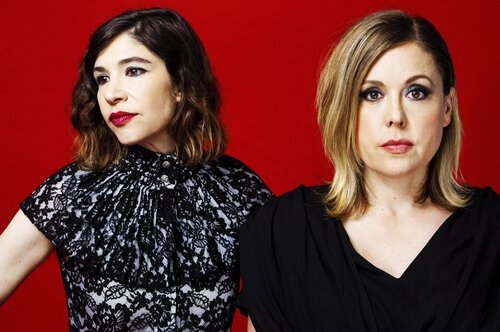
Sleater-Kinney – ANIMAL

Floating Points – Anasickmodular

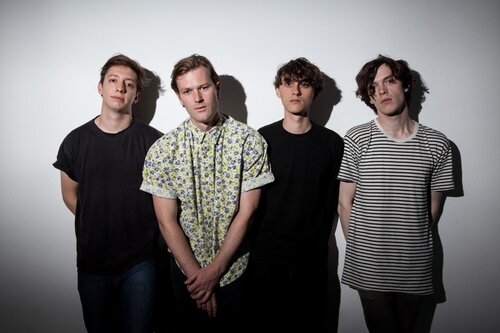
Gengahr – Everything & More

PHOTO CREDIT: Charlotte Patmore

BLOXX - Go Out with You

m.jpg

The Who – All This Music Must Fade

The Divine Comedy - Infernal Machines/You’ll Never Work in This Town Again

hhh.jpg

Halsey – clementine

vf.jpg

Elbow – White Noise White Heat

Holy Fuck (ft. Alexis Taylor) - Luxe

Dermot Kennedy – Dancing Under Red Skies

Noel Gallagher’s High Flying Birds - Evil Flower

mmmm.jpg

PHOTO CREDIT: Mikey Buishas

Big Thief – Forgotten Eyes

The Sherlocks – Under Your Sky

Wildwood Kin – The Crown

Camila Cabello - Cry for Me (Animated Audio)

Foster the People – Pick U Up

AJ Tracey – Cat Pack

Dido – Just Because

PHOTO CREDIT: Brynley Davies

Biig Piig – Roses and Gold

Wilco – Everyone Hides

PHOTO CREDIT: GQ

Maren Morris, Hozier - The Bones

Doja Cat – Bottom Bitch

King Princess – Hit the Back

IN THIS PHOTO: Norah Jones 

Norah Jones, Mavis Staples - I'll Be Gone

Jessie Reyez - Far Away

FEATURE: Beneath the Cover Art: The Importance of Truly Experiencing Vinyl

FEATURE:


Beneath the Cover Art

ttttt.jpg

PHOTO CREDIT: @priscilladupreez/Unsplash 

The Importance of Truly Experiencing Vinyl

__________

HAVING just purchased a couple of copies…

 PHOTO CREDIT: Iain Macmillan

of Abbey Road’s 50th Anniversary Edition, it got me wondering about the pleasures of vinyl and how, even though that release is a huge one for music fans, it is the sensation of holding a record and all its intricate details that gets to me! I was queuing outside a record shop in Covent Garden the day those editions (there was a four-C.D. format too) came out on 27th September. I got to talking with a man who was also waiting – whose names I did not grab -, who told me how he has every Beatles record; he is retired and spends what little money he has on records. It has been a long while since I queued outside a record shop (maybe the last time I did it was back in the 1990s) and I have played the three-record edition of Abbey Road and all its demos/new additions. I know there are people out there who will buy the anniversary editions because it is collectable and momentous and, whilst that is completely fine, I fear there are going to be copies of Abbey Road employed as art rather than their true purpose: hugely important work that needs to be enjoyed and poured over. It is great vinyl sales are doing well, and vinyl sales are primed to outstrip C.D.s very soon. It is amazing that this decades-old format has survived other competitors and formats and, in 2019, remains vital and popular.

jjjjjjjjjjjj.jpg

 PHOTO CREDIT: @luana_dmc/Unsplash

Not that it really matters in terms of sales, but how many people are buying vinyl because it is cool and fashionable?! I must confess that I have been guilty on a couple of occasions of buying records and leaving them to collect dust. Not necessarily because I wanted this piece of art…more that I felt I needed that record in my collection. I do worry that we sort of buy a lot of records and never get around to hearing them. I have been looking at my vinyl collection and there are a few albums that are still in the original state: unplayed and looking for some attention. It is a lot easier streaming songs and listening online. You can play songs and albums without much physical effort. Vinyl is more expensive than streaming and a lot of us are struggling to find the time to experience music in its fullness. I think vinyl remains adored and profitable because of the experience one gets from it. Digital music is fine…but nothing beats the feeling of putting the needle down and letting the music play. You are forced to stop and there are few distractions. If you need to unwind and detach from the world; get a sense of perspective back and digest music in all its glory, vinyl is the only way to go! I am rectifying my habits and am compelled to step away from the laptop and get down to some serious listening.

555.jpg

 PHOTO CREDIT: @lastly/Unsplash

The tactile nature of records means you can listen and read the sleeve credits and see the artwork. I love the size of a record and knowing that it has been crafted and there has been this process involved. Maybe I am over-romanticising the whole thing a tad. I do feel many people see records as accessories and, in the case of anniversary releases, they buy them because everyone else is. I do understand and appreciate the artistic value of vinyl, yet I feel too many people are buying records and not actually hearing the music. What is it about a record that means vinyl can survive and grow in an age where digital music is everywhere? This article investigates the ritual of playing a record and exploring the physical nature of a record:

“The entire experience of vinyl helps to create its appeal. Vinyl appeals to multiple senses—sight, sound, and touch—versus digital/streaming services, which appeal to just one sense (while offering the delight of instant gratification). Records are a tactile and a visual and an auditory experience. You feel a record. You hold it in your hands. It's not just about the size of the cover art or the inclusion of accompanying booklets (not to mention the unique beauty of picture disks and colored vinyl). A record, by virtue of its size and weight, has gravitas, has heft, and the size communicates that it matters.

PHOTO CREDIT: @sethdoylee/Unsplash

Records, in all their fragility and physicality, pay proper respect to the music, proper respect to the past. They must be handled carefully, for the past deserves our preservation. They are easily scratched, and their quality is diminished as a result of those scratches. They are subject to the elements—left in the sun, they warp. Like living things, they are ephemeral.

The cumbersome process of putting on a record is akin to a ritual, an experience that mirrors the care that artists took in creating the work. First you have to find the record—a treasure hunt which might take five or 10 minutes depending on the size and organization of your collection. When you find the record, you pull it out. You remove the album from its cover. (Or, if you're a real stickler, you remove the album from the cover, still inside the inner sleeve”.

I have written numerous features about vinyl and, as C.D.s fade out and we still have this great affection for vinyl, I would recommend people carve out some time to listen to some of their favourite albums. The problems comes with people disconnecting from the digital and conserving time where they can solely dedicate themselves to music. In these hectic times, I think we all need to allow ourselves sanctuary and calm. Even if it is an hour a week, playing records allows for a great sense of restoration and peace. Taking out the record, holing it in your hands and watching the needle drop down…is there anything quite like it? If you are someone who either collects vinyl for artistic worth or has bought a load and not got around to listening to them, I would urge you to find some time in your day. Shutting the rest of the world away and playing a record without interruption is…  

dddd.jpg

 PHOTO CREDIT: @priscilladupreez/Unsplash

A perfect thing.

FEATURE: Modern Heroines: Part Three: Fiona Apple

FEATURE:


Modern Heroines

ju.jpg

PHOTO CREDIT: Getty Images

Part Three: Fiona Apple

__________

IN the first couple of parts of my…

yyy.jpg

PHOTO CREDIT: Getty Images

Modern Heroines feature, I have turned the spotlight on two very different British artists: Laura Marling and Little Simz. Today, I want to discuss an American artist who is in the news right now. Not only is she rumoured to be recording her fifth album, but Fiona Apple is planning a collaboration. In terms of albums, we might see one very soon.

“Fiona Apple has said she wants to release a new album in 2020, eight years after her last release.

The singer-songwriter has only released four albums in her career, including her 1996 debut ‘Tidal’ and her latest, 2012’s ‘The Idler Wheel…’.

Now, in a rare interview, the musician has discussed the follow-up to the latter record, saying she was meant to be done with it “a million years ago”.

“I mean, I don’t know! It’s hard to say,” Apple told Vulture when asked when a new album would be ready. “I was supposed to be done a million years ago. And I go off and I take too long making stuff. I’m hoping for early 2020. I think”.

Also, there are rumours Apple wants to work with Lil Nas X, and we might see something between them. Her last album, The Idler Wheel..., was released in 2012 and there is a definite hunger for Fiona Apple. Where do we start when it comes to the New York-born Art-Pop star?

ddddddddddddd.jpg

Well, I guess starting at the beginning is a good idea! Apple was born in 1977 and raised between her father’s home in Los Angeles and her base in New York. Music bit Apple (I shall try not to do too many puns!) and she started to compose her own pieces as a child. Growing up on the Upper West Side of New York, one can envisage the sort of sounds and sights Apple was exposed to. One of the things that staggers me about Apple is her resilience and bravery – sort to wander off briefly! Apple has revealed in interviews how she has OCD and has lived with PTSD and depression; she was raped (I will not go into that in too much detail in this feature), but she has experienced a lot of trauma and heartache. The fact she has come out the other side and is an inspiration to so many out there is truly amazing. Apple never conforms to ideals of womanhood and what a female artist should be; she has always spoken out and been unafraid to speak the truth. I shall go back to where I started. Music and dance were part of Apple’s upbringing. Her maternal grandparents were dancers and big band vocalists – the former, Millicent Green, her grandmother and the latter, Johnny McAfee, her grandfather. There was a lot of movement and change in Apple’s early life. She moved out to Harlem with her mother and sister but commuted to see her father in Los Angeles. I am not sure whether the transitory nature impacted a sense of individualism and focus on music.

Perhaps it was hard to put down roots and find stability; music provided a great allure and muse for Apple. She was a classically trained pianist as a child and, when composing, she would translate guitar tabs into music; she was a fan of Jazz standards and gravitated towards artists like Billie Holiday. I find that pretty romantic. One might imagine a girl of the 1980s being more interested in the sounds of the time. The fact Apple was more interested in iconic Jazz artists dictated the course her music would take. Apple did experience trauma as a girl (she was raped aged twelve) and developed an eating disorder. Whilst Apple has maintained there is a distance between her trauma and writing, I do wonder whether, in some ways, her debut album was a sort of release or way of getting some of her pain out there. Maybe not. Perhaps this would not happen now but, in 1994, Apple; had a demo tape with a few songs on (including Never Is a Promise) and gave it to a friend who was a babysitter for a music publicist. It was only two years until Apple’s debut, Tidal, arrived. Released on Work Records and Columbia Records, the album went three-times platinum. It was a huge success and it is mindblowing realising just how popular the album is.

Maybe that was helped by its huge single, Criminal, but the entire album is rich with melody, musicianship and passion. Criminal has woozy horns and Trip-Hop beats; Slow Like Honey and Pale September are romantic and sumptuous. If some critics felt Apple’s musicianship was far stronger than her lyrics, others compared her favourably to singer-songwriters like Alanis Morissette and Tori Amos (1994-1996 was a period where both artists enjoyed huge success and attention). After causing a bit of offence at the 1997 VMAs, there was some criticism from the media but, in honesty, they were afraid of an artist who was bold and not reading from a script. Apple (rightfully) does not regret what she said back then; an artist who was pure and authentic. The reviews for Tidal are hugely positive. I want to bring in this review from Pop Matters from 2009:

“She wrestles with the burden of her despair and isolation, quietly hoping to be saved. Anchored by its smooth sonic landscape, and her restrained voice, it is very easy for one to grow engrossed in Apple’s intimate narrative. With its opaque and painterly lyrics, “it’s calm under the waves, in the blue of my oblivion” – “Sullen Girl” is able to elevate itself from a simple retelling of sexual abuse (i.e. Tori Amos’ “Me and A Gun”), and instead opens itself up to a variety of interpretations.

sss.jpg

IN THIS IMAGE: The cover of Fiona Apple’s debut album, Tidal 

 For me, the song was about grappling with the weight of my desires, for my mother it might have been a song that captured the loneliness of depression, and I am sure that for many other listeners, it was about finding the courage to accept their silent anguish.

Elsewhere, Apple tackles female exploitation, as is evidenced by “Criminal”, a lavish track that is ambivalent about the tension between exploiting one’s self sexually, and protecting what is sacred. And despite her young age (and innocence), her breathy Nina Simone-style vocals echo a maturity and understanding of a woman twice her age”.

In this interview from 1999, Apple talked about the changes from her debut to her sophomore effort, When the Pawn…

“And where "Tidal" was a tsunami of adolescent feelings in which Apple revealed far too much of herself, "When the Pawn" is a decidedly more mature work that trades in youthful melodrama for somber ruminations on shattered relationships and romantic obsession delivered in Apple's husky alto. The album offers cycles of struggle and surrender, optimism and cynicism, hope and hopelessness.

"When I was sequencing the album, I was thinking about the amount of hope in each song," Apple admits. She also recalls cataloguing the album's ever-shifting perspective on relationships: "Don't try it . . . Okay, try it, please . . . Okay, we tried it, it failed . . . Please, one more chance . . . I'm not going to give you one more chance . . . I'm going to go [expletive] something up on purpose".

Although I really love Tidal, you can tell there is more confidence and variety throughout When the Pawn… The album seems bolder and more memorable. If Tidal’s standout cut was the edgier Criminal, the suaver and waltz-like Paper Bag is the key example of When the Pawn…’s brilliance.

When reviewing the album, Pitchfork made some very keen observations:

““I went crazy again today,” she sings in “Paper Bag,” the Grammy-nominated single that may be the most fondly remembered track on When the Pawn. It’s Broadway meets the Beatles in its triumphal horn blasts, but as the melody grows ever bouncier, the words increasingly counter that levity with disappointment. The lyric starts out all stars and daydreams and doves of hope, before dispelling those pop song illusions to reveal the grim reality that the man Apple desires sees her as “a mess he don’t wanna clean up.” She’s never had trouble laughing at herself, and “Paper Bag” hinges on a sly reference to her own solipsism—“He said ‘It’s all in your head’/And I said ‘So’s everything’/But he didn’t get it”—that drags the singer and an uncomprehending public at once.

The song is emblematic of an album that broadened Apple’s fragile, mercurial image not just with self-awareness, but also by expanding her sound beyond the jazzy, beat-backed piano ballads of Tidal. When the Pawn’s producer Jon Brion (whose baroque arrangements had recently created context for the dateless, scene-less voices of Rufus Wainwright and Aimee Mann) intuited that her style was distinctive enough to absorb other elements without losing cohesion. Still, even in his own estimation, he tends to get an outsized share of the credit for the record’s innovations. In a conversation with Performing Songwriter, Brion clarified that its unusual rhythms—namely, the time-signature shifts in “Fast as You Can”—originated with Apple’s songwriting. “In terms of the color changes, I am coordinating all of those,” he said. “But the rhythms are absolutely Fiona’s”.

There are great interviews from 1999, where Apple talks about her creative process and the freedom she gets from the videos. I think the visual aspect is one of the most striking aspects of her work. They are so eye-catching, nuanced and arresting that one cannot help but come back time and time again! If you can find interviews online and get the time, I recommend you do – as there are not that many print ones from that period. It is clear music, to Apple, was a way of getting something out; her creative activity is a chance to tackle her confusions and feelings – one can say that about most songwriters, I guess. There is a lot more confidence and positivity on When the Pawn…; Tidal is a little angrier, I think, and there seems to be blame cast (either on others or herself). Perhaps there was greater collaboration on her second album; critics picked up on that change. Many expected a third album to follow fairly soon after When the Pawn… arrived. Given the momentum and demands, it was not going to happen in a year or so – the third album did not come until 2005. Produced by Jon Brion, it was due for release in 2003 but there were numerous delays. There is no real explanation why: leaked recordings emerged and, given the delays, there was unrest from the fans.

dddddd.jpg

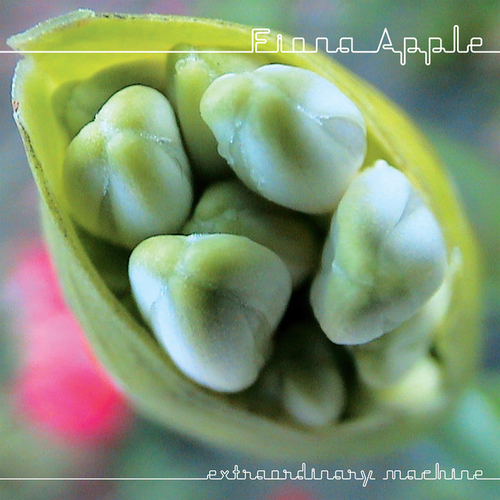
Maybe the earlier recordings were not satisfactory or there were demands from Epic Records that could not be met. In any case, Extraordinary Machine had a troubled start. This 2005 article from The New Yorker shed more light:

“Apple’s decision to re-record her third album was hardly remarkable; artists tinker with their tracks all the time. But the rough mixes that she produced with Brion were leaked anonymously on the Internet, where they were widely circulated, putting fans in the unusual situation of being able to choose between two versions of the same record. (In its published form, “Extraordinary Machine” features two recordings from Brion’s original production, nine re-recordings, and one new song, “Parting Gift.”) In fact, the differences matter less than you might think. The songs from Apple’s collaboration with Brion sound as though they were being played on a calliope inside a merry-go-round. Elizondo and Kehew’s arrangements are more bass-heavy and less whimsical. But, whichever version you end up preferring, Apple is in charge: the songs follow her around like a boat on a towline.

Sony is releasing the album this week, and, as Apple has made clear in interviews, she, not the label, was responsible for the delay. (Not satisfied with the results of her collaboration with Jon Brion, who produced her second album, known as “When the Pawn”—the actual title is ninety words long—Apple re-recorded most of the songs with Mike Elizondo, a bassist who played on “When the Pawn,” and Brian Kehew, a producer.) Apple’s insistence on control should not come as a surprise to close listeners of her work. Apple, who is twenty-eight, is as musically sure-footed as she is emotionally labile. “Extraordinary Machine” is the confident extension of a rich and original musical language that she has been carefully fashioning for the past decade”.

Despite the delays, setbacks and challenges, Extraordinary Machine is another remarkable album that, yet again, finds Apple moving in new directions. This review from AllMusic is full of praise:

“Now, Extraordinary Machine sounds like a brighter, streamlined version of When the Pawn, lacking the idiosyncratic arrangement and instrumentation of that record, yet retaining the artiness of the songs themselves. Like her second record, this album is not immediate; it takes time for the songs to sink in, to let the melodies unfold, and decode her laborious words (she still has the unfortunate tendency to overwrite: "A voice once stentorian is now again/Meek and muffled"). Unlike the Brion-produced sessions, peeling away the layers on Extraordinary Machine is not hard work, since it not only has a welcoming veneer, but there are plenty of things that capture the imagination upon first listen -- the pulsating piano on "Get Him Back," the moodiness of "O' Sailor," the coiled bluesy "Better Version of Me," the quiet intensity of the breakup saga "Window," the insistent chorus on "Please Please Please" -- which gives listeners a reason to return and invest time in the album. And once they do go back for repeated listens, Extraordinary Machine becomes as rewarding, if not quite as distinctive, as When the Pawn. Nevertheless, this is neither a return to the sultry, searching balladeering of Tidal, nor a record that will bring her closer to tasteful, classy Norah Jones territory, thereby making her a more commercial artist again. Extraordinary Machine may be more accessible, but it remains an art-pop album in its attitude, intent, and presentation -- it's just that the presentation is cleaner, making her attitude appealing and her intent easier to ascertain, and that's what makes this final, finished Extraordinary Machine something pretty close to extraordinary”.

Again, after a gap before Extraordinary Machine, we had to wait until 2012 for Fiona Apple’s fourth album. The Idler Wheel… (not its full title, but it would take me a while to type it all out!), is, perhaps, Apple’s most challenging and full work. She incorporated elements of her previous records and added new ideas. I am a big fan of the album and, when listening, one is dazzled by the lyrics, music and vocals. Apple creates her own world and, in terms of songwriting, there is nobody like her. When speaking with Matt Diehl in 2012, she was asked about her ideas and lyrics:

“DIEHL: I’ve heard you say that your songs always start with a phrase. Was there a phrase that launched the creative process for The Idler Wheel . . . ?

APPLE: Hmm . . . I think the first phrase that I wrote off of for this album was at the beginning of the song “Left Alone.” I wanted to use the phrase “moribund slut,” which led me to use the phrase “orotund mutt.”

DIEHL: There are some really evocative lyrics on this album. Where does the imagery in the title come from?

APPLE: For years now, in many of my notebooks, there would always be something about an idler wheel. I like the idea of the idler wheel—it just sits in between things, but it makes such a big difference in the way that the machine is working. That concept has always been something that has interested me, but I didn’t really know why. Now I feel like it connects with feeling everything because I’ve gone through a lot of attacking things in my life—like, “There’s a problem here, I have to do something about this,” or “I’m not useful unless I’m doing some kind of job.”

ssss.jpg

PHOTO CREDIT: Sebastian Kim for Interview Magazine

It’s to the point where I feel like I’m not really a full human. I used to feel like, “I’m not a functional person because I don’t go on lunch dates with friends. I hear about people having dinner parties but I never do that. I’m not really human.” But if I were to imagine myself as an idler wheel inside some big mix of gears, then I would be connected to everything. It’s not like there’s just me and then nothing. This is going to make me sound kind of flaky, but I’m like “Hands Across America” with the moon right now. I feel like I am connected to even the farthest-reaching part of the universe—as is everybody.

DIEHL: Well, when you experience the kind of success that you did so early, people kind of wonder if you can—or will—follow a certain path.

APPLE: I get that, yeah, but, you know, I have no idea if this album sounds different, or doesn’t fit with the ones from before. I don’t have any idea of how either I am really perceived or the music that I make is really perceived. I color it all with my own perception anyway.

DIEHL: There is that line in “Every Single Night” where you actually say, “I just want to feel everything.”

APPLE: Yes. It connects to the name of the record, which I have no idea if anybody can make sense of. I don’t know if it would make any sense to me”.

wwww.jpg

PHOTO CREDIT: Sebastian Kim for Interview Magazine

Here is a typical review for The Idler Wheel… that proves, sixteen years after her debut, Fiona Apple was able to turn head and surprise:

 “Though the outside nature of these sounds is initially somewhat jarring in the more expected context of Apple’s piano and voice, they quickly insinuate themselves into the melody, becoming the skeletal framework upon which Apple and co-producer/percussionist Charley Drayton build spare, occasionally catchy, usually melancholy melodies. (After all, as Apple sings, somewhat cheekily, on the outro of “Werewolf,” “Nothin’ wrong when a song ends in a minor key.”) Even pre-recorded and looped, these sampled elements feel organic and spontaneous, the result of human experience rather than knob-twiddling. Like everything Apple does, the album’s production feels compulsive, not calculated.

Compulsion is a fitting lens through which to view both Apple and The Idler Wheel…. Like the intermediary gear for which the record is named, Apple seems to spin in her own fixed state, doing the only thing she knows how to do without regard for whatever outcome it may produce. Yet in doing so, she creates an immense amount of energy. She reflects action rather than directing it; as she repeats over and over on “Every Single Night,” she just wants to feel everything. The beauty of The Idler Wheel… is how it transmits each of those feelings in excruciating, frank, and lovely detail. 

Again, when we think about Fiona Apple, there are gaps between albums. I like that fact because, today, there is so much pressure on artists to put out stuff to remain relevant and capitalise on demand.

gggg.jpg

 PHOTO CREDIT: Kevin Hayes for Vulture

Now that so much material is streamed, I feel artists rush releases so that they can get something out there. Fiona Apple is the perfect example of someone who takes her time and makes music that matters to her. She allows enough time to pass before recording; experiences to come and inspiration to hit. She is so involved and committed to the music…this shows in every track. I opened by mentioning some recent rumblings. Apple, it seems, is working on material and there is whisper of something in 2020. She rarely provides interviews, but I want to conclude with one she recently gave with Vulture - one she requested herself:

“How do you keep up with what people are saying about you? Are you lurking online?

Other people tell me. I’m not online. I don’t have Twitter. I do search things, like when I searched the Hustlers thing … to see what people are talking about. That’s how I found you.

You famously wrote “Criminal” in 45 minutes at age 17, after the record label asked for a single. What does the song mean to you as an adult?

Right now the song itself, the lyrics, those don’t really mean anything to me. The way it started, the video, all the crap I got — using this song now, and using it in this movie for a purpose I believe in, is like reclaiming it. I’m not that scared girl in underwear anymore. The song isn’t that to me anymore. It’s my way of paying for things that I want to get done.

ddddd.jpg

PHOTO CREDIT: Getty Images 

What does your life look like right now?

Well, it is music now, because I’m finishing a record. But that’s all, like, me in my house, and I’m in control of everything. So I don’t have to be getting other people’s ideas of what I should be doing yet.

You’ve always been good at that — controlling your own narrative. How did you develop that power?

I don’t even think it’s a power. I do think I’ve always had it. It’s honestly a direct result of me never getting people’s phone numbers and never getting chummy with a lot of people. So then people don’t think of me to call up and badger to come out and do stuff. So I never go out and do stuff, because it’s never expected. My family hasn’t seen me at Christmas celebrations for years and years. So I just don’t get invited anymore. [Laughs.] I mean, that’s an exaggeration.

I assumed in the beginning I could do whatever I want. If you’re just doing that from the beginning, and don’t have any doubt about it, then that’s how it goes. I had no idea I was setting my own narrative by not acting a certain way or taking anybody’s advice.

In that life, does it make its way to you that you’re something of an icon for your refusal to conform to certain ideas about womanhood? Are you aware of it, and does that get internalized for you?

Hearing you say that … I like the sound of that. I will choose to believe that. I’d like to internalize that. That would be great.

When you do leave your house, what’s your relationship like with fame, with your fans? Do you interact with them, do they approach you?

I don’t get approached a lot. I’m not around people enough for it to be a thing. I haven’t noticed anybody notice me in [a long time] … but when I’m out with people, sometimes they’ll notice me getting noticed. Anytime anyone talks to me, they’re always really nice. Way back at the beginning, I was thinking I could put out a CD and I’d make all of these friends, and I wouldn’t know them but they’d know me, so that when I met them I could just say hello and we’d already be friends — I think it actually came true in a way. Not that I’m actually friends with everyone I meet. But if you’re intimate with my music, you’re intimate with me and I’m intimate with you. I feel like you’re my friend. Maybe that’s a little bit too childlike, but I do feel like that.

I do think Fiona Apple, in years to come, will be considered an icon. Right now, she is among the most original and fascinating songwriters in the world. She is so separate from the commercial and the routine; an artist who marches to the beat of her own drum; someone who wants the music to connect and mean something. I think Apple is someone who can be understood and loved by anyone, regardless of your tastes and preferences. I am looking forward to hearing new material and, as we all wait, there are four magnificent albums in the world already. Take a listen, lose yourself and embrace an artist who is…

UTTERLY sensational.

FEATURE: Spotlight: James Holt

FEATURE:


Spotlight

PHOTO CREDIT: Asupremeshot 

James Holt

__________

THERE are some artists where it is easier…

 PHOTO CREDIT: Asupremeshot

letting the music do the talking rather than words! As I am charged with putting something on the page, I suppose I need to think quick! Actually, there is plenty to pen when it comes to James Holt. At a time when the music industry needs a bit more skip, step and sway…Holt is an artist who fits the bill. His latest single, Come Out to Play, is a slice of 1960s Pop and is another magical offering from the Manchester artist. Having gained kudos from stations like BBC Radio 6 Music – and D.J.s such as Chris Hawkins -, Holt is someone with a bright future. Before I continue on, how about some information from the man himself?

“James Holt is a solo artist from Bolton and is receiving attention and praise from music industry giants, such as legendary producer Brian Eno, and the listening public alike. With the craftsmanship and energy of his song writing translating effortlessly to his stage performance, and having performed at the UK’s most prestigious venues such as the Royal Albert Hall, this is an artist to watch out for in 2019.

The 24-year-old – who was diagnosed with a bilateral hearing loss at the age of four – has overcome his disability to release a pulsating and raucous rock’n’roll track. Speaking candidly about the record’s inception, James explained:

“The inspiration came from a Sky Arts TV programme set in an alternate reality in which John Lennon walked out of the Beatles before their fame in the mid-60s. It’s a fusion of thoughts and ideas and also bears references to George Orwell‘s 1984. Some people say that it sounds very Dylan-esque in the verses (especially with the harmonica), but I think the Indian-fused Beatles’ Revolver creeps in the bridge.”

Music legend, Brian Eno – who has long championed James – invited the young luminary to meet him at his John Peel Lecture for BBC Radio 6 Music. The former Roxy Music keyboard player, record producer and revered ambient pioneer also chose James’s song to use as part of an arts festival last year.

James – who graduated with a BA Music 1st class honours and MA in Music Composition (distinction) provides lead vocals, backing vocals and plays all instruments on the track, highlighting his immense talent as a musician and his resilience in the face of adversity.

This feature is going to be fairly short, but I hope I can get people tuned into Holt and his music. He has overcome adversity and, for my money, he is one of the most interesting and promising artists around. I do think the North gets overlooked regarding music; it is wonderful such a strong and vibrant wave of artists are making their voices heard right now. I think my first taste of James Holt was back in 2016 when he released the E.P., Sanguine on the Rocks. I was hooked by the sheer vitality of the songs and Holt’s voice: this rare blend of cautious and emphatic. You get drawn in by a sense of intrigue and mystery but, just as you lean in, this blast of energy and fun comes out. Holt’s music perfectly mixes moods and emotions to create this harmonious blend.

Holt has been garnering some attention recently, and I think he is one of these artists you need to keep your eyes peeled out for in 2020. With a voice that has echoes of John Lennon (Holt is a big fan of The Beatles), it is hard to ignore the quality and authority. I do think the scene is more primed towards the political and serious right now. There are pockets of light and joy and, with James Holt out there, one can be guaranteed of rich songwriting, sunshine and bounce. That is not to suggest the songwriter dodges more emotive and deep subjects – his music is so varied and wide-ranging. In every song, you feel this rare power and conviction that makes every word hit the mark. His music rewards repeated listens. One can hear a song and find much to enjoy. The more you listen, the more that comes out; little notes and angles that you might not have caught the first time around. I have seen his music evolve and grow in confidence. There are a couple of big dates coming up so, if you get a chance to see James Holt play then do. I know the remainder of the year will be busy and Holt will be working on new material. He is embarking on his earliest steps now but, at a time when strong and vibrant songwriters like Sam Fender are coming from the North, I wouldn’t bet against Holt reaching the same status. There is a lot of anger and seriousness in music so, luckily, we have an artist like James Holt who can…

LIFT the spirits.

______________

Follow James Holt

FEATURE: The Good Vibes Playlist: Part Two

FEATURE:

z.jpg

IN THIS PHOTO: FRANKIIE/PHOTO CREDIT: FRANKIIE

The Good Vibes Playlist: Part Two

__________

AFTER the previous edition of my Good Vibes Playlist…

IN THIS PHOTO: LIFE/PHOTO CREDIT: Lindsay Melbourne

I am back with another installment of the best and most interesting songs around. This is another playlist crammed with quality…and artists who have a very special vibe. I hope you do enjoy the selections and, if you can, get involved with the artist and follow them on social media. The weather is pretty changeable and unpredictable at the moment, so it is the perfect time to immerse yourself in music. I know these tracks will supply some energy, emotion and sunshine. 2019’s music has been among the strongest of the decade and, with each passing month, I am amazed at what is coming through. Take a dive into the waters of some truly…

IN THIS PHOTO: PIXX/PHOTO CREDIT: Steve Gullick

SENSATIONAL artists.

FEATURE: Vinyl Corner: Donald Fagen – The Nightfly

FEATURE:


Vinyl Corner

nn.jpg

Donald Fagen – The Nightfly

__________

I realise I have featured….

 PHOTO CREDIT: Getty Images

a few Steely Dan albums here and there but, when it comes to Donald Fagen solo work, I have been a bit shy. There are a number of reasons why I am putting his debut solo album, The Nightfly, into Vinyl Corner and recommend people buy a copy. It is a wonderful record and one that is renowned for its textures, layers and brilliance. For audiophiles and those who want their stereos tested, The Nightfly is the perfect record! Many people know Donald Fagen from Steely Dan but some might not be aware he has a successful solo career - his most recent album, Sunken Condos, came out in 2012. I am a huge fan of Fagen’s work and feel his solo material does not get enough coverage. The Nightfly was produced by Gary Katz and was released on 1st October, 1982. Steely Dan’s last album before their split was 1980’s Gaucho. The band broke the year after and Fagen decided to go solo. It is amazing to see the leap in quality between the uneven Gaucho and the sublime, flawless The Nightfly! Maybe Fagen was keen to head in a new direction or had a few songs ready for a solo project. Whatever the truth, The Nightfly is a treasure trove of incredible sounds and moments. Unlike Steely Dan’s work, The Nightfly has an autobiographical nature and many of the songs relate to the optimistic mood of Fagen’s childhood in the late-1950s and 1960s. Everything from fallout shelters, Jazz D.J.s and tropical escapes are covered across the album.

To listen to The Nightfly is to be transported back to a time when there was fear in the air but there was also hope of a better future; a period of transition when America was looking forward. That seems alien today but, actually, I think The Nightfly is a work that is relevant today. We are facing perils and an uncertain world but, really, there seems to be little optimism. America transitioned through a period when nuclear annihilation seemed likely and, whereas our global crisis cannot be fixed instantly, I do think there is a way we can all come together and find a new hope; a fresh frontier on the horizon. Back in 1981, digital recording was quite new. Maybe that is why The Nightfly has a freshness and shine that embeds it in the mind. It is a gloriously produced record that is finely engineered and honed. There is looseness in the music, but it is the passion and fastidiousness of the production team, musicians and Donald Fagen that means The Nightfly such a classic. One of the reasons Steely Dan went into hibernation is the perfectionist tendencies of Donald Fagen and Walter Becker. Maybe having two perfectionists in a room was too much: on his own, Fagen was allowed to step away from the confines and strains in the Steely Dan camp – Becker’s drug problems exacerbated tensions between the two. In total, thirty-one musicians were employed for The Nightfly’s sessions. I think Gaucho had ambition, but its compositions often wandered and failed to connect.

Conversely, The Nightfly seems more focused, refreshing and nuanced; full of songs that stand up to endless plays and are ripe with inspiration! If The Nightfly demonstrated a new peak in Fagen’s writing, there was a period of writer’s block following the album; Fagen finding it hard to transition and adapt without Becker’s input and voice. There are some welcome changes from the Steely Dan days in terms of the lyrics and style. The music is more Jazz-influenced whereas the lyrics are more personal, less cutting and, yes, more optimistic! As Fagen was recalling childhood memories and writing from a new perspective, loading an album with sarcasm, cynicism and dread would not have sounded right. He wanted The Nightfly to sound fun and enjoyable. Indeed, Fagen’s debut album is among his most uplifting work. I think Fagen downplayed the purely autobiographical tones – saying it was more a composite of various versions of himself from the past -, but there is a warmth and personal relevance that makes The Nightfly so compelling and engaging. As one can imagine, the reviews for The Nightfly are universally positive. I want to bring in a couple of reviews that highlight different points. AllMusic, in their review, had this to note:

“A portrait of the artist as a young man, The Nightfly is a wonderfully evocative reminiscence of Kennedy-era American life; in the liner notes, Donald Fagen describes the songs as representative of the kinds of fantasies he entertained as an adolescent during the late '50s/early '60s, and he conveys the tenor of the times with some of his most personal and least obtuse material to date. Continuing in the smooth pop-jazz mode favored on the final Steely Dan records, The Nightfly is lush and shimmering, produced with cinematic flair by Gary Katz; romanticized but never sentimental, the songs are slices of suburbanite soap opera, tales of space-age hopes (the hit "I.G.Y.") and Cold War fears (the wonderful "The New Frontier," a memoir of fallout-shelter love) crafted with impeccable style and sophistication”.

When they assessed The Nightfly, Albumism were full of praise:

“The Nightfly also remains a curious case in build-up. The title track doesn’t appear until the second song on the B-side, and the A-side has some of the album’s weaker tracks. “Green Flower Street” has all the patter of a rain-slicked street and a swingin’ cover of the Drifters “Ruby Baby,” closing with the lovelorn (but musically sparse) “Maxine.”

But it just further sets the stage for the B-side, where all the real action is. The album kicks into gear with “New Frontier,” a raucous party in an abandoned bomb-shelter. “It’s just a dugout that my dad built / in case the Reds decide to push the button down.” It seems almost worth building a bomb shelter just to limbo and listen to Dave Brubeck records, plus the added benefit of surviving the nuclear blast. It’s that sort of cheeky look at the apocalypse that makes Fagen so goddamn wonderful.

iuyt.jpg

IN THIS PHOTO: Donald Fagen in 1982/PHOTO CREDIT: Getty Images

The album winds down with “The Goodbye Look,” which is perhaps the darkest song on the album. There’s a twinge of his late musical partner Walter Becker in here, a sinister quality that is missing from the rest of the album, all feathered over with Fagen’s increasingly-anxious vocals. And it’s in sharp contrast to the album’s upbeat closer, “Walk Between the Raindrops,” an easy, lovely little tune that wouldn’t have been out of place in any Manhattan ballroom or cocktail party of the time.

(In addition to “I.G.Y.,” Fagen performed “The Nightfly,” “Green Flower Street,” and “New Frontier,” during his solo tour earlier this summer. I am not in the slightest bit ashamed to say that I wept with breathless, nearly-orgasmic bliss through most of the first verse. Though he rarely performs his solo work live, he played “Green Flower Street” with the Dukes of September and has been playing “New Frontier” during his current tour, along with Becker’s “Book of Liars” from 11 Tracks of Whack.

Fagen would follow up the album with two more in the “Nightfly Trilogy,” Kamakiriad in 1993 and Morph the Cat in 2006. But 35 years later, The Nightfly couldn’t be more perfect. It remains a record collection essential, a sonic delight. Thanks for calling. I wait all night for calls like these”.

For someone like me – born a year after the album came out -, it is hard to identify directly with the scenes of childhood/adolescence in the 1950s and 1960s. As powerful and evocative as any drama set in the time, The Nightfly is this snapshot into a past time; a better world maybe but, even with looming uncertainty, there is a sense of hope and betterment – Fagen does dip into negative territory at times but the mood is largely beautiful and hopeful. The Nightfly is not an album reserved for Jazz fans or those who are who are explicitly aware of Fagen’s cannon. In this feature, the writer discusses the album in more detail:

“Everything about the clear-eyed, merrily nostalgic The Nightfly is resonant from that time. Fagen's No. 26 hit "I.G.Y.," the album's first single, referenced the International Geophysical Year – an global scientific project held from 1957-58 – while looking ahead to a hoped-for time when technology will work in concert with man. "New Frontier," a follow-up single named after a term used by John F. Kennedy in his acceptance speech at the 1960 Democratic convention, took place during a teen's party inside his family bomb shelter. Period groups like the Drifters and the Four Freshmen had a notable influence in "Maxine" and "Ruby Ruby," respectively, while "The Goodbye Look" seemed to build off the era's revolutionary upheaval in Cuba.

zzxx.jpg

The Nightfly would eventually be part of triad of albums that were meant to represent the three stages of life – youth, middle age and death. First, however, Fagen would have to endure a lengthy layover between the first and second installments as he battled with a crisis of creative faith.

You could blame The Nightfly, he said. "I had come to the end of whatever kind of energy was behind the writing I had been doing in the '70s, and The Nightfly sort of summed it up for me in a way," Fagen told the Los Angeles Times in 1991. "And although I would work every day, I essentially was blocked because I didn't like what I was doing. I'd write a song and then a week later I just wouldn't connect with it at all. It seemed either I was repeating myself, or it just bored me. It wasn't relevant to what I was going through at the time".

I am a huge Steely Dan fan and I can hear a lot of them in Donald Fagen’s work (obviously). That being said…Fagen does not repeat himself: his solo work is a different sensation, even if he used a lot of the same musicians on The Nightfly as he did on Steely Dan’s final (before they reformed) album. The Nightfly is perfect on vinyl! It is a deep, rich and exciting album that provides so much story, detail and colour. If you have not heard the album then I would urge people to buy it on vinyl – if not, then go and stream it now! On I.G.Y. (What a Beautiful World), the words “What a beautiful world this will be” are sung. In these hard times, listening to The Nightfly gives one hope and…

MAKES you believe.

FEATURE: Female Icons: Part Twenty: Ella Fitzgerald

FEATURE:


Female Icons

dddd.jpg

IN THIS PHOTO: Ella Fitzgerald in 1935/PHOTO CREDIT: Universal 

Part Twenty: Ella Fitzgerald

__________

ROUNDING off my Female Icons feature…

 IN THIS PHOTO: Ella Fitzgerald in a London hotel room in 1961/PHOTO CREDIT: Getty Images

is an artist who is seen as the Queen of Jazz. Renowned for the incredible clarity and tone of her voice, there is grace, command and incredible passion in each of her performances. Ella Fitzgerald died in 1996 aged seventy-nine but, in her career, produced some of the most emotive and memorable recordings ever put down. Born in 1917 in Virginia, Fitzgerald has gone on to influence so many modern artists. This article lists a few artists that owe a debt to Ella Fitzgerald. Adele spoke about her love of Fitzgerald:  

"There was no musical heritage in our family," she told The Telegraph in 2008.

"Chart music was all I ever knew. So when I listened to the Ettas and the Ellas, it sounds so cheesy, but it was like an awakening.

"I was like, oh, right, some people have proper longevity and are legends. I was so inspired that as a 15-year-old I was listening to music that had been made in the Forties.

"The idea that people might look back to my music in 50 years' time was a real spur to doing this".

Lady Gaga – among many other artists - is someone who has also taken some guidance and spirit from the legendary First Lady of Song:

“Lady Gaga threw a career curve-ball in 2014 when she teamed up with Tony Bennett to release a jazz album, but Gaga had been listening to and loving jazz since her early teenage years.

"I started singing jazz when I was 13 and I discovered it before then," she told Vogue magazine in 2014.

"My mom used to play Billie Holiday on Sundays, I found Ella Fitzgerald - who’s my absolute favorite jazz singer - and my father listened to Frank Sinatra and Tony Bennett.

"So part of me knew in my heart that many of my fans would fall in love with jazz the same way I did, because we’re very similar".

It is no wonder that the intoxicating music of Ella Fitzgerald still affects artists today. It is such a potent, rare and beautiful concoction, one cannot resist its potency. Like so many icons, Fitzgerald’s early life was not the smoothest. She did face some upheaval before the stability arrived. I guess music is that grounding force that can give troubled souls direction and strength – that is definitely the case when it comes to Ella Fitzgerald. Before Fitzgerald embarked on a solo career, she found success and fame with The Chick Webb Orchestra. Whilst they performed through the U.S., the Savoy Ballroom in Harlem was their home. I am not sure what Harlem’s Jazz scene is like now but, when Fitzgerald and the band played, one can only envisage the sights, smells and music in the air! Fitzgerald embarked on her solo career in 1942 but, alongside her solo work, she collaborated with the likes of Louis Armstrong and Duke Ellington. There are countless golden moments in the catalogue of Fitzgerald but, when thinking about her finest renditions, her interpretations of the Great American Songbook spring to mind. It is clear Fitzgerald enjoyed a steady rise and came from a difficult background. It is worth looking back at Fitzgerald’s upbringing to see what inspired her path. The daughter of William Fitzgerald and Temperance Henry, the early life of Ella Fitzgerald was not the most stable.

By the early-1920s, Fitzgerald’s mother and Joseph Da Silva, her new boyfriend, moved to New York City; by 1925, the family relocated to a poor Italian area. Although Fitzgerald’s surroundings were not ideal and glamorous, she excelled at school and was a keen dancer. A gifted student and dancer, Fitzgerald performed during school and recess when she could; her early experiences in church exposed her to music and the combination opened her eyes. Listening to Jazz artists like Louis Armstrong and The Boswell Sisters, this new world gave Fitzgerald the inspiration and fuel she needed to dream. One can only imagine the feeling Fitzgerald felt when her mother used to bring her records; the sounds that came from the vinyl and how deep the music resonated. Alongside this burning love for music and discovery came tragedy. Fitzgerald’s mother died when she was fifteen and she was raised by her stepfather. There is rumour that she was abused by her stepfather and, after moving in with her aunt in Harlem, there was this hugely uncertain and unsettled period. When in Harlem during 1933/1934, Fitzgerald performed on the street and got a break when she performed at the Apollo Theatre in 1934 at the age of seventeen. Not only was there change in Fitzgerald’s personal life; there was also change in the music industry. During the early-1940s, Swing and Big Band music was still burning. By the end of the Second World War, changes were occurring and genres like Bebop came through.

 PHOTO CREDIT: Universal

This led to a change in Fitzgerald’s vocal style; a period when Fitzgerald began scatting – one of her ace cards – and used her voice more like an instrument (she said she tried to imitate the horns in the band when singing). Her earliest recordings with Decca Records were successful, but her Verve years provided turbulent. There were events during the 1950s that spring to mind; times where Fitzgerald was subjected to discrimination and attack. Fitzgerald enjoyed a successful tour of Australia in 1954 but there was an incidence of discrimination that caused her to miss her first two concerts in Sydney. As it goes, Fitzgerald and members of her band were due to fly from Honolulu to Australia but were ejected from the plane and not allowed to retrieve their luggage and items. They were stranded in Honolulu and were late for the Australian tour. There was a defence from Pan-American Airlines that the incident was not racially-motivated but one struggles to find any other explanation. Whilst Fitzgerald excelled in Bebop, she was frustrated at Verve Records because there was a feeling things were getting stagnant and routine. It was her discovery of Cole Porter that led to an awakening. Ella Fitzgerald Sings the Cole Porter Songbook sounds like an artist refreshed and re-inspired; entering a new phase and taking her voice in a new direction. That collection was released in 1956 - Fitzgerald recorded eight Song Book collections with Verve from 1956 to 1964.

These stunning recordings are the bedrock of the Great American Songbook and helped bring Jazz to audiences who were not used to the genre. Fitzgerald was a pioneer. Why is Ella Fitzgerald so important? This article from June raised some theories:

“Dip into any one of her Song Books, pick any track at random and you will hear perfection. Everything from the arrangements, the musicians, and the songs themselves create the perfect blueprint for Ella’s voice. Ella was 38 years old when she recorded her first song book and her voice was honed to perfection. Whether she is singing a straightforward ballad or love song or something with more than a hint of jazz about it she purrs and swings. There can be no one who has heard these records and not been totally beguiled.

It was also in 1956 that Ella recorded again with Louis Armstrong. Following a gig at the Hollywood Bowl the day before, they went to Capitol’s Hollywood studio to record Ella and Louis, arguably the greatest album of jazz duets ever. The following year they recorded Ella and Louis Again and Porgy and Bess; the latter is one of the most beautiful recordings ever made.

It wasn’t until 1964 that Ella completed her song book cycle with the Johnny Mercer album. In between there were numerous other albums with arrangers like, Russ Garcia, Paul, Weston, Quincy Jones, Frank DeVol and Nelson Riddle all adding their shimmer and gloss to a career that was the kind that other singers aspire to.

Ella’s later career while not climbing to the dizzy heights of her decade with Verve Records still produced memorable highlights, as did her concert performances around the world. In 1980, Granz, who still managed Ella, came up with the idea that was almost a songbook, Ella Abraça Jobim; her tribute to the brilliant Brazilian songwriter. She also returned to the Gershwin canon with her old friend, Andre Previn”.

Although, like other artists in this series, I cannot give too much depth and review of her albums (as there is less material available in that sense), I shall let the music do the talking. There were few harder-working artists in the world than Ella Fitzgerald. Such a prolific performer, Fitzgerald continued to perform, even when her health was declining. I will finish this feature soon but, before I do, I want to bring in this feature from Grammy Museum that talks about Fitzgerald’s later life and how her legacy is more than music: her altruism and charity rarely gets mentioned when we discuss her legacy:

“Fitzgerald continued to work as hard as she had early on in her career, despite the ill effects on her health. She toured all over the world, sometimes performing two shows a day in cities hundreds of miles apart. In 1974, Fitzgerald spent a legendary two weeks performing in New York with Frank Sinatra and Count Basie. Still going strong five years later, she was inducted into the Down Beat magazine Hall of Fame, and received Kennedy Center Honors for her continuing contributions to the arts.

Outside of the arts, Fitzgerald had a deep concern for children and those in need. Though this aspect of her life was rarely publicized, she frequently made generous donations to organizations for disadvantaged youth, and the continuation of these contributions was part of the driving force that prevented her from slowing down.

In 1987, U.S. President Ronald Reagan awarded her the National Medal of Arts. It was one of her most prized moments. France followed suit several years later, presenting her with their Commander of Arts and Letters award, while Yale, Dartmouth and several other universities bestowed Fitzgerald with honorary doctorates.

IN THIS PHOTO: Ella Fitzgerald captured in 1991 at Radio City Music Hall in New York/PHOTO CREDIT: Mark Phillips/Associated Press

On June 15, 1996, Ella Fitzgerald died in her Beverly Hills home from complications of diabetes. Hours later, signs of remembrance began to appear all over the world. A wreath of white flowers stood next to her star on the Hollywood Walk of Fame, and a marquee outside the Hollywood Bowl theater read, "Ella, we will miss you."

Ella Fitzgerald won 13 GRAMMY Awards, a Recording Academy Lifetime Achievement Award, and has eight recordings inducted into the GRAMMY Hall Of Fame. She holds the distinction as the first African-American to ever receive a GRAMMY Award”.

I shall end things here, but I urge people to listen to Ella Fitzgerald. Not only is her work essential and hugely powerful; she has inspired so many modern artists across various genres. A true icon, grounbreaking artist and timeless force in music, there is nobody in music like Ella Fitzgerald. As I wrap up my Female Icons feature, I get to put out an Ella Fitzgerald playlist that proves what a…

MAJESTIC artist she was.

FEATURE: This Woman’s Work: Kate Bush’s The Sensual World at Thirty

FEATURE:


This Woman’s Work

PHOTO CREDIT: John Carder Bush 

Kate Bush’s The Sensual World at Thirty

__________

ON 16th October, it will be thirty years…

nnn.jpg

 IN THIS PHOTO: Kate Bush in 1989/PHOTO CREDIT: John Carder Bush

since Kate Bush’s The Sensual World came into the world. In some ways, it was a bit of an odd album. Four years after her defining moment, Hounds of Love, The Sensual World came out. It is a very different record and one that did not receive the same sort of praise as its predecessor. There are a few things that define The Sensual World and its beauty. Backing vocals on Never Be Mine, Rocket’s Tail and Deeper Understanding feature the Trio Bulgarka, and I think The Sensual World features some of Bush’s most affecting work. I think there was a bit of disappointment due to the fact The Sensual World does not have the same stride as Hounds of Love. There are relatively few standout singles on the album – The Sensual World and This Woman’s Work are exceptional tracks but are very different to Cloudbusting and Running Up That Hill (A Deal with God). If Hounds of Love was a more instant, commercial album – albeit it, one whose second side is a conceptual suite -, The Sensual World is, in some ways, more romantic and deep. There is a definite tonal shift between the albums and I think a lot of people overlook The Sensual World. It is not her best album, but it is one that sounds brilliant thirty years later; so many fantastic moments that highlight why Kate Bush is one of the greatest songwriters ever. Hounds of Love set such a high benchmark and was a real peak for her.

Not willing to stand still and produce the same album, The Sensual World took her music forward. If Hounds of Love’s tracks are more instant and accessible, I think The Sensual World’s tracks unfurl over time and reward great investigation. The Sensual World is thirty very soon and I do think it deserves to find a new audience. Maybe, in 1993, Bush’s golden touch was starting to fade a little – The Red Shoes is considered one of her weaker albums. The Sensual World, far from being weak or inferior to Hounds of Love, in fact, is a hugely nuanced album. Yes, there are a few weaker tracks but the best moments – such as The Sensual World and Deeper Understanding – are among her very best. In this article from Classic Album Sundays, it is clear Bush was in a league of her own in the 1980s:

“By the middle of the 1980s Kate Bush had reached the apex of her career with Hounds of Love. The album featured the most powerful and intriguing songs of her discography thus far, demonstrating just how incredible her sonic storytelling had become. Resisting the frenetic pace of a typical major label release schedule, Bush would spend another four years crafting her followup, with only sporadic singles and collaborations bridging the commercial gap. She found inspiration in the literary world again, scouring the pages of James Joyce’s landmark 1920s novel Ulysses to find Molly Bloom’s closing monologue, in which the character steps from the pages of the book and revels in the real world. Bush was delighted to find that the rhythm and sound of the words fit perfectly with the music she had been working on.

This revelation was frustrated by the intractability of Joyce’s estate, which repeatedly refused Bush permission to use the words as her lyrics on ‘The Sensual World’. She was forced to rebuild from the ground-up, writing new passages that captured the same breathless energy as Bloom’s soliloquy.

Unlike previous albums, The Sensual World did not follow a single conceptual arc. Instead each track illustrated a vignette, written from the perspectives of far more ordinary people than had previously featured in her songs. The allegories were still vivid and fantastical but at the heart of each story was the existential crises that we all face at some point in our lives. On songs such as ‘Heads We’re Dancing’, Bush deploys her dark sense of humour to imagine a young girl who is charmed onto the dance floor by a man she later learns is Adolf Hitler. The song was inspired by a friend who had spent the evening in the company of a captivating man they later found out to be “father of the atomic bomb” Robert Oppenheimer. Although somewhat ridiculous on the surface, the song speaks to something very real: can you ever really trust your own judgement? And if not, what does that say about you?”.

I love all of Kate Bush’s albums but there is something about The Sensual World that digs deep and hits the heart. Listen to a track such as The Fog and all the expressions and things happening. It is grand, beguiling and busy; Reaching Out is emphatic and passionate whilst Rocket’s Tail sweeps you up and takes your mind somewhere else.

The Sensual World has some truly sensual, raw and extraordinary moments. This feature we get a track-by-track guide from Bush and some truth about the album:

“"On this album there's more of me in there in a more honest way than before and yet, although some of it is me, the songs aren't about me. It's this kind of vague mish-mash of other people and yourself, bits of films, things you've heard, all put together in a mood that says a lot about me at this time.

"A lot of people will think these songs are about me. I've always had that and like, with 'Deeper Understanding', people react immediately saying, 'Is this autobographical? So you're into computers now? So you spend all night on computers?' People immediately switch on to the mechanicalness. It's a song about computes so she must be into computers!"

I think all the great albums deserve attention on big anniversaries. The Sensual World, I feel, is overlooked and does not get the same applause as albums like Hounds of Love and The Dreaming. If you have not bought a copy of the album then grab one and let the songs take you away. When the album was released, The Sensual World got praise. As I said, there was a sense of disappointment and doubt. Retrospective reviews have been ore effusive and, perhaps, we needed to see the years pass before The Sensual World truly sunk in. Pitchfork’s recent review is balanced and gets to the heart of the songs:

“There’s no Hounds-style grand narrative thread on The Sensual World. Bush likened it to a volume of short stories, with its subjects frequently wrestling with who they were, who they are, and who they want to be. She was able to pour some of her own frustrations into these knotty tussles: She found it more difficult than ever to write songs, couldn’t work out what she wanted them to say, and hit roadblock after roadblock.

PHOTO CREDIT: John Carder Bush 

The 12 months she spent pestering Joyce’s grandson were surpassed by the maddening two years she spent on “Love and Anger,” which, fittingly, finds her tormented by an old trauma she can’t bring herself to talk about. But by the end, she banishes the evil spirits by leading her band in something that sounds like a raucous exorcism, chanting, “Don’t ever think you can’t change the past and the future” over squalling guitars.

Even its most surreal songs are rooted in self-examination. “Heads We’re Dancing” seems like a dark joke—a young girl is charmed on to the dancefloor by a man she later learns is Adolf Hitler—but poses a troubling question: What does it say about you, if you couldn’t see through the devil’s disguise? Its discordant, skronky rhythms make it feel like a formal ball taking place in a fever dream, and Bush’s voice grows increasingly panicky as she realizes how badly she’s been duped. As far-fetched as its premise was, its inspiration lay close to home: A family friend had told Bush how shaken they’d been after they’d taken a shine to a dashing stranger at a dinner party, only to find out they’d been chatting to Robert Oppenheimer.

PHOTO CREDIT: Getty Images

She didn’t need to prove her own steeliness to anyone, especially the male journalists who patronized her and harped on her childishness as a way of cutting her down to size. Instead, The Sensual World is the sound of someone deciding for themselves what growing up and grown-up pop should be, without being beholden to anyone else’s tedious definitions.

It gave her a new template for the next two decades, inspiring both the smooth, stylish art-rock of 1993’s The Red Shoes and the picturesque beauty of 2005’s Aerial. Like Molly Bloom, Bush had set herself free into a world that wasn’t mundane, but alive with new, fertile possibility”.

I am excited by the upcoming anniversary of The Sensual World and I hope radio stations dig deep and play some of the lesser-heard tracks from the album…in addition to the more popular tracks like This Woman’s Work. After thirty years, The Sensual World…

STILL sounds completely amazing.

FEATURE: Metal Guru: Remembering the Great Marc Bolan at Seventy-Two

FEATURE:


Metal Guru

IN THIS PHOTO: Marc Bolan in 1972/PHOTO CREDIT: Keith Morris

Remembering the Great Marc Bolan at Seventy-Two

__________

THAT number, ‘seventy-two’, is important…

 IN THIS IMAGE: The cover of T. Rex’s 1971 masterpiece, Electric Warrior

because that year was a pretty important one for T. Rex. I shall come to that in a minute but, on Monday, the late Marc Bolan would have been seventy-two. There are a few reasons why Bolan is on my mind. On 16th September, it was forty-two years since Bolan was killed in a car crash. It is tragic that he died at the tender age of twenty-nine. There were ups and downs in Bolan’s career but, in 1977, one feels that a new rise was beginning; a possible reinvention and growth. It is hard to say but, even though Bolan died young, He achieved so much in his life. We live in an age where there is fairly little joy in music. There is some character and colour, but one suspect we have entered quite a dark and generic time. There are no big scenes and movements uniting us and creating this wave of fascinating music. It is a little sad we do not have the same wonder and inspiration as there was years ago. When I think of Marc Bolan, I picture this man with glitter on his face; a cheeky smile and music that is both electric and seductive. Even though many are familiar with the legendary T. Rex, Tyrannosaurus Rex released four albums and were a different proposition. I think Tyrannosaurus Rex were criticised by some and seen as a bit hippy-dippy and cosmic.

Although the band (Marc Bolan was a constant member, and he was joined by Steve Peregrin Took and Mickey Finn at different points) released a couple of truly spectacular albums – including 1970’s A Beard of Stars -, it was the galvanised T. Rex that really broke through. Perhaps less inspired by the 1960s and a less urgent sound, T. Rex were one the pioneers of the Glam Rock movement. I discovered T. Rex when I was a child and remember listening to their music on cassette. Back then (in the early-1990s), I was listening to songs like Ride a White Swan, Metal Guru and Children of the Revolution and being startled by this unique and stunning sound. The band’s magic scored the songs but it was Bolan’s powerful and gripping voice that added personality and something fresh to each song. It is hard to explain, but I was attracted to this artist who seemed to inhabit his own world yet, oddly, was relatable and someone a child could understand. There was an innocence and playfulness to the music, but there was a sweaty and sexual edge. In fact, T. Rex’s music mixed in so many different emotional and lyrical elements. Although T. Rex released their first album in 1970, the quantum leap came on 1971’s Electric Warrior. With a core of Marc Bolan – vocals, guitar; Mickey Finn – congas, bongos and vocals; Steve Currie – bass guitar and Bill Legend – drums, tambourine, the album is almost like a greatest hits collection! The first side has the incredible Jeepster and Cosmic Dancer; the second side has Get It On, Girl and Life’s a Gas.

There is this great balance of the bigger hits and anthems and tracks like Planet Queen and The Motivator that are a little less urgent but then get into the head and under the skin. The album is unique but it is also responsible for inspired Glam Rock artists and developing the genre. One could say that David Bowie got inspiration from Electric Warrior – Bowie released Hunky Dory in 1971 and it would be a year until he released Ziggy Stardust to the world. It is clear what Marc Bolan and T. Rex created a revolution on Electric Warrior. In this review, AllMusic explain its genius:

“The music recalls not just the catchy simplicity of early rock & roll, but also the implicit sexuality -- except that here, Bolan gleefully hauls it to the surface, singing out loud what was once only communicated through the shimmying beat. He takes obvious delight in turning teenage bubblegum rock into campy sleaze, not to mention filling it with pseudo-psychedelic hippie poetry. In fact, Bolan sounds just as obsessed with the heavens as he does with sex, whether he's singing about spiritual mysticism or begging a flying saucer to take him away. It's all done with the same theatrical flair, but Tony Visconti's spacious, echoing production makes it surprisingly convincing. Still, the real reason Electric Warrior stands the test of time so well -- despite its intended disposability -- is that it revels so freely in its own absurdity and willful lack of substance.

xxx.jpg

IN THIS PHOTO: Marc Bolan in 1973/PHOTO CREDIT: Getty Images 

Not taking himself at all seriously, Bolan is free to pursue whatever silly wordplay, cosmic fantasies, or non sequitur imagery he feels like; his abandonment of any pretense to art becomes, ironically, a statement in itself. Bolan's lack of pomposity, back-to-basics songwriting, and elaborate theatrics went on to influence everything from hard rock to punk to new wave. But in the end, it's that sense of playfulness, combined with a raft of irresistible hooks, that keeps Electric Warrior such an infectious, invigorating listen today”.

1972’s The Slider brought tracks such as Metal Guru and Telegram Sam; the band were on a hot streak and at the forefront was the insatiable, nuanced voice of Bolan. By 1974’s Zinc Alloy and the Hidden Riders of Tomorrow, it is clear T. Rex were in decline and some of the stardust was missing. 1977’s Dandy in the Underworld was resurgence and, sadly, suggested T. Rex were hitting their stride once more. 1971-1972 is their classic period and one where Marc Bolan was sitting proud on the throne. I admire David Bowie hugely but there is something about Marc Bolan that defined the early-1970s and Glam Rock. As a child discovering Bolan and T. Rex years after their formation, I was used to Pop and a very different sound. Having my eyes and mind opened in such a way is an experience that has stayed with me. I just have to think of songs such as Hot Love (released a single in 1971) and Metal Guru and I am transported back.

Even though Marc Bolan has inspired musicians such as Johnny Marr, I don’t think anyone in the modern age could pull off the moves, looks and licks of Bolan. An incredible guitarist, songwriter and lead, he exuded charisma, sexuality and tenderness. There are some great Marc Bolan biographies available that give you an insight into this iconic. I have been looking at articles online that talk about Bolan; his highs and lows and more troubled side. Looking at this article from The Telegraph, it is clear that, underneath the hooks and catchy songs, there was this rare and, at times, egotistical star (as T. Rex’s producer, Tony Visconti, explained):

“Bolan took it back to its primal roots of snappy hooks and naggingly memorable choruses. Songs like Get It On, Hot Love, Telegram Sam were love letters to lusting adolescents. Beneath the satin tat, the feather boas and top hats, Bolan had

the sultry, pouting look of a corrupt cherub, strutting for a legion of adoring pubescent fans. 'It was like, this is where he belonged all along,' says Visconti. Bolan played the role of pop idol to the hilt. He splashed out on clothes, guitars, a Rolls-Royce (even though he was unable to drive). Always possessed of a self-belief that could border on the messianic, he now became impossibly self-regarding; his interviews bragging sessions.

'If God were to appear in my room,' he told one journalist, 'obviously I would be in awe, but I don't think I would be humble. I might cry, but I think he would dig me like crazy.' His friend and rival David Bowie was dismissed as 'a one-hit wonder'. Bolan accused Lennon of trying to imitate him, and boasted to Visconti that David Niven wanted to make a film with him. 'It was completely untrue,' says Visconti. No matter how successful he was, it was never enough. 'I used to phone EMI each day for the sales figures,' remembers Visconti, 'and at one point Hot Love was selling more than 25,000 copies a day - an astronomical number. It was number one for seven weeks. Marc would phone me 40 minutes later and say, "Hi Tone, guess what it sold yesterday - 50,000!" '

xxx.jpg

 PHOTO CREDIT: Alamy

Forty-two years after his death, you can feel aspects of Marc Bolan in the air; elements and layers that have been passed down through the years. I think he is one of the most underrated artists of the 1970s and, as I said earlier, he made an impact on me when I was a child. I am still a huge fan of T. Rex and listen to the albums when I need that boost and blast. Their music can raise the spirits but it has swagger and potent spirituality – listen back to Tyrannosaurus Rex and there is a flavour of Marc Bolan discovering himself and sowing the initial seeds of promise. What makes Bolan so revered, timeless and cool? This feature discussed Bolan’s riffs, style and influence:

“Keith Richards may have rightly earned himself the epithet of ‘The Human Riff’, but it was to Bolan (a veritable guitar-slinger in his own right) that The Smiths and Oasis looked to in penning some of their most memorable numbers. Evidently, Morrissey didn’t take Bolan’s rejection of his request for an autograph to heart, as Panic is, according to Smiths bassist Andy Rourke, “more or less a note for note take on Metal Guru”, while the chorus of Shoplifters of the World Unite owes much to that of Bolan’s Children of the Revolution. It also goes without saying that without the raunchy riffery of Bolan’s biggest hit, Get it On, there wouldn’t have been the Gallagher brothers’ Cigarettes and Alcohol. So down and dirty were Bolan’s riffs that even Guns ‘n’ Roses covered one of his songs, Buick Mackane, on 1993’s The Spaghetti Incident.

It didn’t matter that Bolan was short – “I know I’m small, but I enjoy living anyway,” he sang on Spaceball Ricochet; what he lacked in length he more than made up for in style. One look at the cover of The Slider, featuring Bolan with a leather top hat above his trademark ‘corkscrew hair’, is enough to have Slash’s look all figured out. On the same note, Temples frontman James Bagshaw is a spitting image of Bolan, who had epitomised the whole ethereal curly-mopped look long before he or St. Vincent ever came tottering along. That’s all aside from the many who have imitated and been influenced by Bolan’s signature vocal quavering (which he’d picked up as a child by singing to records played at faster speeds), such as David Bowie (on Black Country Rock), Devendra Banhart, and Anohni.

From trippy acoustic folk to bluesy rock, glam, and even heavy metal, Bolan’s wide musical range was impressive. At times, it seemed there was nothing Bolan couldn’t do, and, while his most popular albums may be similar in sound and style, listening to his oeuvre in its entirety reveals a diverse array of aural vistas. In the late seventies, when punk and new-wave were taking over England, and the old establishment crumbling, Bolan actively promoted bands like Generation X, The Jam, and The Boomtown Rats – to children – on his television programme, ‘Marc’, in addition to touring with The Damned in 1977. Before he could tinker any further with his own sound, though, the dandy truly left the dudes above for the underworld, just two weeks shy of his 30th birthday.

I can imagine Marc Bolan turning seventy-two on Monday and still being the same man as he was back in the Seventies. I feel he would be a little shocked at how the industry has changed and, with David Bowie gone, he would be one of the last-surviving Glam Rock gods. I do think Marc Bolan was truly one of a kind and his music will last forever. You only have to listen to the majestic hooks and vocals and you are transported somewhere special. On Monday, I will be raising a glass to the truly…


MAGNIFICENT Marc Bolan.

FEATURE: Modern Heroines: Part Two: Little Simz

FEATURE:


Modern Heroines

hhhhhhhhhhhhhhhhh.jpg

PHOTO CREDIT: Jack Bridgland 

Part Two: Little Simz

__________

THE first part of Modern Heroines featured…

zzzz.jpg

 PHOTO CREDIT: Evening Standard

the one and only Laura Marling. My representation of Little Simz is going to be a touch shorter because she has released fewer albums than Marling. The idea behind this series is to shine a light on modern female artists who will become iconic and legends in years to come – or, as they stand, are among the strongest artists in the world. Before I look at the discography and biography of Little Simz, one cannot argue against her rise and achievements. This year has been especially productive for the London-born rapper. Not only was her third album, GREY Area, nominated for a Mercury Prize (it lost out to Dave’s PSYCHODRMA), but she is also appearing in Netflix’s Top Boy. Go and watch the show if you can because the entire cast are powerful and turn in terrific performances. The fact the performances seem to pure and convincing is because cast members like Little Simz grew up around the sort of scenes we find on Top Boy. When speaking with The Guardian last month, Little Simz was asked about Top Boy and whether the show resonated with her:

“You grew up not far from Hackney, where the series is set. Did it ring true?

Yeah for sure. Every story that’s being told in this series, I’ve witnessed [a version of it] first-hand. Even the character I’m playing, I know this person in real life. It’s very close to home.

Was it surreal shooting a TV drama in the area where you grew up?

It was. It gave me another outlook on this area, because growing up here we felt like this place was worth nothing. It was essentially a shithole, there’s no opportunity here and nothing to do. And now we’re filming this Netflix series here. The contrast was surreal. But it felt great. As we were filming, people were walking past, going, “Top Boy’s back!” The community was super-excited and happy that we’re doing this and still remaining true, basing it in the same areas, keeping that realness.

Hackney has changed a lot over the past decade due to gentrification, and knife crime is on the rise. How do you feel about the area now?

There’s been some development, but there’s still a very long way to go and the same problems are there. Just making it clear, Top Boy definitely does not glamorise or glorify what’s happening, it’s just a real representation of our world today. This show is going to open up eyes and hopefully help ignite change”.

I think a series like Top Boy adds to the dynamics and potency of Little Simz’s work. Think about her latest album and every beat, line and expression seems to ring true and hit the mark. You can hear the conviction in her voice; for those who have not experienced the same upbringing and conditions as Little Simz and her peers, one can still identify and find something extraordinary in the music. Little Simz is such an amazing and popular artist because her music is essential and universal. It is not only about her world and life: the music throws out to the wider world and represents what is happening right now.

nnnn.jpg

 PHOTO CREDIT: Getty Images

Simbiatu 'Simbi' Abisola Abiola Ajikawo was born in Islington, London to Nigerian parents. After studying at Highbury Fields School in London, she attended St. Mary’s Youth Club in Upper Street, Islington. Her music career really started to develop after she studied at Westminster Kingsway College. Little Simz has performed at Hackney Empire; she has been nominated for a Mercury Prize and played at the BBC 1Xtra Proms (in 2015) at the Royal Albert Hall. She has gathered acclaimed across the industry and is one of the fastest-rising stars around. Music has been part of her life since childhood but, even before she gained focus due to her television gigs, music was in the blood of Little Simz. Her first mixtape came out in 2010 and she put out material for several years after. A lot of Rap and Hip-Hop artists put mixtapes out before albums because, I guess, mixtapes are less constricting and allow for greater experimentation; they can be freer and slightly rougher and, by 2014, Little Simz was putting out E.P.s. In fact, she put out four E.P.s in that year and she caught the ear of promoters and D.J.s. 2015 was when the anticipated and exceptional debut album, A Curious Tale of Trials + Persons, arrived. The album is a classic case of an artist with promise, but one still finding her true voice and footing. Looking back and it seems like a completely different beast to what we find on this year’s GREY Area. That said, A Curious Tale of Trials + Persons, is a fascinating start that showed, even in 2015, there was a genius spark. In this review from The Line of Best Fit , they underline how Little Simz’s confidence and brilliance is a natural evolution from her mixtapes and E.P.s:

“From the off, the level of lyricism and pure quality that Little Simz has often struck over her many mixtapes and EP’s is upped. A trip of emotions about combatting fame and the changes it can bring to a person’s life in different ways makes up the general atmosphere of the album, best articulated on “Wings”, a track filled with determination, bold statements and questions that see Ajikawo’s confidence and belief in her ability grow. It’s easy here to draw parallels to Raury’s high energy message of youthful revolution.

Across A Curious Tale…, Simz eloquently explores and relays her perception of fame through many perspectives, combing through not only the conceptual subject of the album but also her own levels of ability – talents of which we have no doubt. Outstanding tracks beside “Wings” include “Lights” and “Dead Body”, and with details of parts two and three of the latter already teased by Simz herself, we eagerly look forward to hearing what Kano & Stormzy can add to it.

Ultimately, Little Simz explores and challenges all perceptions of what she should be throughout A Curious Tale…. Flexing her rapping abilities, intertwined with her choice of instrumentals and interludes with “This Is Not an Interlude” and taking us out with the remarkable “Fallen”. It’s not only a very solid debut, but it’s one with the power to break down and challenge the way things are done in the music industry”.

I think A Curious Tale of Trials + Persons warrants reinvestigation because it sounds incredible and unique. The album received a few lukewarm reviews in 2015 but I do think it (the album) sounds incredible now; it seems to fit into the scene better now than four years ago – maybe A Curious Tale of Trials + Persons is more relevant in 2019. I am not sure exactly. In any case, A Curious Tale of Trials + Persons remains a strong and vibrant debut album that would see Little Simz go on to bigger things.

Even if some reviewers were a little unsure of her debut and felt she had better in her, the success and recognition of A Curious Tale of Trials + Persons opened up doors. A year after she brought out her debut, Stillness in Wonderland arrived. Give the short spell of time between her debut and second album, one could forgive a little rush and lack of progression. In fact, Stillness in Wonderland was a big leap. Maybe it was increased exposure or Little Simz growing in confidence and command.    

Reviews for her second album were largely positive. More websites and music sources were picking up on her music and there was this feeling that a star was emerging. Those who had been following Little Simz’s music since the start were aware of what she was capable of; everything seemed to crystallise on Stillness in Wonderland. In this interview from The Fader, some interesting details come to light:

 “Since self-releasing her debut album in late 2015, Simz has been living in her own Wonderland of sorts. This year, she’s toured with Lauryn Hill and Nas, and became the first British MC to ever make Forbes’s 30 Under 30 list — all as an independent, unsigned artist. Her world’s bigger than it used to be, and a little more surreal.

Stillness can be loosely cut into two halves. Its first part is bright and optimistic. On “Shotgun,” Simz’s playfully confrontational verses bounce up against a sunshine-flecked hook sung by The Internet’s Syd. Embodying the dreamscape theme, the songs have a richer texture than Simz's usual stuff, all guitar melodies, delicate backing vocals, and, at one point, a swaggering saxophone. But while the lure of escaping into Wonderland can be tempting, Simz is always conscious of the importance of staying grounded. “I don't want to not know what's real and what's not,” she said. “That's what happens sometimes in the industry; things faze you or blind you.”

The record’s second half is darker. After the eerie strings that open “King of Hearts,” Simz’s voice gets notably lower, and grime MCs Chip and Ghetts add some world-weariness and manic lyricism, respectively. The album’s most somber moment, “Poison Ivy,” is also Simz’s most personal track to date. Over a downtempo guitar beat, Simz sings about the lies we tell ourselves in unhealthy relationships. “That's how my last relationship was,” she said of the track, which she produced herself. “It was toxic. I knew it, he did as well; the idea of it was a lot more appealing than the actual thing itself.”

Across Stillness, Simz's need to be real clashes with the urge to create a nurturing safe space for the listener, and for herself. In its grappling, the album has echoes of Solange Knowles’s A Seat At The Table. Neither Solange nor Simz comes to a concrete conclusion about how to live in a world that’s confusing and cruel, but both offer a place to escape into for a little while — without ever losing sight of truth. For Simz, imagination is a weapon, but she wants to make real change in the real world too. She raps about that goal emphatically over the laid-back groove of “Zone 3”: “There’s gonna be a revolution, better partake”.

The importance and depth of her music connected with a lot of people. I think 2016 is a year when Little Simz really sort of came into her own and, for want of a better phrase, found her voice. That sounds a tad insulting, but I think Little Simz grew and expanded between 2015 and 2016.

bvbb.jpg

 PHOTO CREDIT: Blair Brown

This sample review for Stillness in Wonderland shows what critics thought of the album:

“As she explores and conquers the different realms of Wonderland (fame & fortune, relationships, and her state of mind), Ajikawo finds herself stunted, a ‘stillness’ that affects her personally and professionally. Wonderland’s physical state surrounds her with people she doesn’t trust (“I don’t’ trust anyone but who I came with /Is that bad of me?”). Subsequently, it pushes her further into a mental escape where she internalizes this scrutiny. Her epiphany is revealed in “Low Tide” as the distractions of Wonderland recede to bare Ajikawo at her rawest, which is also her strongest. By the finale, “No More Wonderland”, Ajikawo sheds its spectacle, realizing that it is out of lessons to teach her.

“Real shit’s happening and my people need me/I’m out” she concludes, but thankfully she dropped in just long enough to deliver a truly fantastic record that defies the expectations people have of unsigned artists and female rappers. Ajikawo knows she’s on her way to something new, and she enjoins us to follow her instead of white rabbits. She already knows where they’re going, and it’s not nearly as interesting as where she’s headed”.

iikh.jpg

This sort of takes us to where we are now. Even though It was three years between Stillness in Wonderland and GREY Area, Little Simz’s current album is her strongest work. It seems her most relevant and powerful. I think the touring and experience has heighted the work of Little Simz and she is firing from all cylinders now. Her previous two albums were brilliant, yet I feel GREY Area is her peak so far. Not only has it just been nominated for a Mercury Prize, but I think the songs cut deeper; the delivery is more nuanced and there is greater musicianship and feel. I think Little Simz will go onto create a lot of spectacular albums and act as a role model. She is definitely under the skin of fans and critics alike. When speaking with Vice, we learn about the songs and Little Simz’s progress:

 “Grey Area straddles Simz’s outward-looking sensibilities – the community of creative people she’s built around her, the influences she’s picked up through her own listening and her travels on the road – with tightly, inward-looking and reflective subject matter. From her mental health, to the strain of touring, to figuring out what exactly the fuck she’ll be doing in her late twenties, Grey Area digs into it all. “I had to re-assess a lot,” she says early in our conversation. “Friendships, personal relationships – all those things had to be looked at differently.” She chose to record this album in London to be close to those bonds. “I’d been travelling so much and it was just too much. It was like, ‘I can’t bear missing people and working myself tirelessly.’ I could see it taking its toll. So I just needed to make an album where I’m pouring out my heart and soul, but I’m also eating properly. Taking care of things that I need to pay close attention to.”

She’s not exaggerating. Simz started rapping aged nine, putting music up online and getting on mics wherever she could around London via her star-making youth clubs (I’m talking Leona Lewis and Alexandra Burke as other alums). Born Simbi Ajikawo and raised in Holloway by her mother, a devoted foster carer, Simz’s gallons of creative energy needed an outlet. So as a teen she acted too, appearing on TV shows like CBBC’s Spirit Warriors and E4’s Youngers, but music kept drawing her back. By the time she’d started her music technology degree at University of West London, in Ealing, her career was taking off. And she soon realised she couldn’t do both. Quitting uni would show both sides to herself: her ambition, and her insistence on doing things her own way. Really, she’d been like that her whole life. As a child, she remembers, “100% my vibe was ‘I’m just doing my thing,’ literally. And as much as it may be shocking to people that I’m indie and doing music, if you know me from when I was little I’ve always moved in a way that is independent. I’ve always done my own thing. My friends and that, close people, my family, they know this about me: Simbi moves how she wants to move. I’m not following no this and that”.

GREY Area is one of the finest albums of this year, and there are few voices in music as arresting and promising as Little Simz. She has a long future ahead of her and, like Laura Marling last time around, it is amazing Little Simz has achieved so much and is at the level she is (she is twenty-five).

I will end things very soon but, as GREY Area received such warm praise, I want to bring in a review from The Independent:

 “Simz flips between two tones: bristling and unapologetic, and warm and reflective. “Offence” is the former, with tongue-in-cheek bars that have her hailing herself as “Jay-Z on a bad day, Shakespeare on my worst days”. So, too, is “Boss”, with its killer bass hook and distorted punk vocals. Elsewhere, she considers the impact of her own ambition: “Wanting to be legendary and iconic, does that come with darkness?” she asks on closer “Flowers”, reflecting on her idols Jimi Hendrix and Amy Winehouse.

There’s another subtle nod to Winehouse on “Therapy”, which is anchored by her extraordinary bass player, in the way it recalls the late artist’s biggest single “Rehab” on the chorus. Simz has said making this album felt cathartic. “Selfish” assesses her independence, while “Boss” lets rip at the man/men who disrespected her. “Venom”, which opens with a shiver of violins, is so menacing you wonder what kind of fool would dare to get in her bad books. What Simz does here is phenomenal. This is an album – and artist – to cherish”.

In terms of her language, ability and consistency, there are few out there like Little Simz. A lot of artists feel the pressure after such a well-received album, and they can fall apart: Little Simz seems to suggest there is even better in her! That is quite a scary thought, yet I am interested in seeing where she heads and what she comes up with next. If you have not immersed yourself in the world of Little Simz then do ensure you…

jj.jpg

 PHOTO CREDIT: Evening Standard

THROW your weight behind her.

FEATURE: Sisters in Arms: An All-Female, Autumn-Ready Playlist (Vol. I)

FEATURE:


Sisters in Arms

IN THIS PHOTO: Brandy 

An All-Female, Autumn-Ready Playlist (Vol. I)

__________

I did say how this was…

 IN THIS PHOTO: Cate le Bon

going to be the first autumn playlist and, given that the weather is pretty awful, it is appropriate that we have a collection of songs guaranteed to add some fizz and sparkle. There are a few tracks that are a bit more laid-back and, together, this is a varied and eclectic playlist. I hope there is something in the playlist that catches your eyes and stays in the memory. Here is a rundown of some of the best female-led sounds of the moment. Get involved, play the songs below and they will make the weekend a lot warmer…

 IN THIS PHOTO: Greentea Peng/PHOTO CREDIT: @stefypocket

AND pleasurable.

ALL PHOTOS (unless credited otherwise): Getty Images/Artists

____________

Mysie – Sweet Relief

ssss.jpg

PHOTO CREDIT: Trevor Ball Photography

Tegan and Sara – Hello, I’m Right Here

3333.jpg

PHOTO CREDIT: Jay Bartlett

Dog in the Snow – Dual Terror

Austel – Now We’re Here

PHOTO CREDIT: Pany Inthaxoum

Just Mustard – Seven

Janet Devlin – Confessional

xx.jpg

Sui Zhen – Matsudo City Life

ss.jpg

dodie – Boys Like You

Brandy – FREEDOM RINGS

ssse.jpg

Tessa Violet – Games

Christina Aguilera – Haunted Heart

Anna Mae – Choose

MALKA – Taking It Back

sxx.jpg

Lauren Sanderson – Hotel Room

Chelsea Cutler – You Are Losing Me

ddd.jpg

Dove Cameron – Bloodshot

Cate le Bon, Bradford Cox – Secretary

Mabes – Bigger Picture

Lexytron – Couples

Olivia Holt – Bad Girlfriend

kjjkkj.jpg

Astrid S – Down Low

Emily Weisband – Mixed Emotions

PHOTO CREDIT: @stefypocket

Greentea Peng – Mr. Sun (miss da sun)

eee.jpg

Megan Lara Mae – All for Love

www.jpg

IN THIS PHOTO: Anna Lunoe

Anna Lunoe, Nina Las Vegas – One Thirty

sss.jpg

PHOTO CREDIT: @catgubernick

Völuspa – Live One Life

FEATURE: The September Playlist: Vol. 4: Riding into the Surf with a Bubble Gun

FEATURE:


The September Playlist

IN THIS PHOTO: Honeyblood 

Vol. 4: Riding into the Surf with a Bubble Gun

___________

IT is an oddly quite week for music…

 IN THIS PHOTO: Christina Aguilera

and one with fairly few big releases. That bring said, there is enough to get your teeth into and I am sure you will find something to enjoy. There is new music from Honeyblood and Girl Band; fresh offerings from Foals, Belle & Sebastian and Editors – with some Christina Aguilera, Temples and The Japanese House for good measure! There is definitely some great music about but not quite as many big-name cuts as I was hoping for. Maybe it is a period for music when artists are gearing up for autumn; a week where there are a few sparks here and there but not quite the fire we have seen in previous weeks. If you do need a kick and boost to get your weekend underway, I have some songs that will get you in the mood. Take the playlist with you and ensure the weekend…

 PHOTO CREDIT: Maggie Steber

BEGINS with some great tunes!  

ALL PHOTOS/IMAGES (unless credited otherwise): Getty Images/Artists

_________

sss.jpg

Honeyblood – Bubble Gun

White Lies – Hurt My Heart

Belle & Sebastian – This Letter 

Foals – Into the Surf

poop.jpg

Pumarosa – I See You

Editors – Black Gold

ggg.jpg

Christina Aguilera – Haunted Heart

Sui Zhen – Different Places

oomm.jpg

Cate Le Bon, Bradford Cox – Secretary

Temples – Holy Horses

The Japanese House – Something Has to Change

Olivia Holt – Bad Girlfriend

PHOTO CREDIT: Mitch Ikeda

Noel Gallagher’s High Flying Birds – Evil Flower

gg.jpg

PHOTO CREDIT: Howard Wise

Moon Duo – Flying

bbb.jpg

Arlo Parks – Second Guessing

Girl Band – Couch Combover

Tegan and Sara – Please Help Me

dodie – Boys Like You

Lukas Graham – Lie

Amber Run – Worship

eee.jpg

The New Pornographers – Higher Beams

PHOTO CREDIT: Emma Whittle

Strawberry Guy – Birch Tree

PHOTO CREDIT: Stefy Pocket

Greentea Peng – Mr. Sun (miss da sun)

Mount Eerie (with Julie Doiron) - Love Without Possession

dddd.jpg

Brandy – FREEDOM RINGS

Broken Bells – Good Luck

Scrounge – Badoom

FEATURE: Joy as an Act of Resistance: Will We See a Musical Revolution in 2020?

FEATURE:


Joy as an Act of Resistance

o.jpg

PHOTO CREDIT: @iamarnold/Unsplash 

Will We See a Musical Revolution in 2020?

__________

I have heard from a  couple of people…

v.jpg

 PHOTO CREDIT: @v_well/Unsplash

in the past couple of weeks (independently) who have commented that both the 1960s and 1990s are noted for their sense of liberation, uplift and experimentation. Of course, in both decades, there were periods where music dipped and got darker. I associate the 1960s with a feeling of togetherness and harmony; a resistance and reaction against the somewhat troubled times. Whilst there were some rather forgettable artists back then, one cannot argue against the spirit and best music that arrived then. The same is true of the 1990s. It is not the case things got bleak and dull from 1970 and did not pick up for a couple of decades: there was ample energy and brilliance to be found. I think it is interesting we can draw some comparisons between the 1960s and 1990s. I especially reckon Pop was at a real peak during these times. The 1960s gave us bands like The Beatles whereas the 1990s had all sorts of varied and brilliant Pop music. Maybe there is not this magical thirty-year cycle, but it is interesting to note. One of the reasons why we got such unifying, brilliant and powerful music is that reaction to political and social events; the feeling that the best way to combat that division was to produce this amazing music.

cc.jpg

 PHOTO CREDIT: @arthursavary/Unsplash

I have written a few times about modern music and how the tone has changed. I was thinking about it the other day and I can, maybe, trace it back to 2004 or 2005 - when things shifted markedly, that is. In relation to the catchiest, anthemic Pop and the last great Rock bands, there are not too many examples in the past fifteen years. Some might bridle at that, but it is clear Pop has changed in tone. There are fewer bigger hooks, sublime vocal melodies and optimistic jams: the palette has become sadder, slower and more repetitive. Some feel the terrorist attacks of 2001 resonated in the music world and, as the landscape changed, so too did sounds. Maybe the start of the millennium and a rise in technology has meant music has become less about anthems and huge choruses and more about the personal and reflective. It would be all-sweeping to suggest the 1960s and 1990s were unique, perfect and much stronger than anything we have today. I do think there is a need, against the division of today, to bring about some form of revival and change. Music is great right now, but I do feel there is little in the way of unity and overt positivity. Some might say that is a natural position: listen to the news and look around and there is not too much to smile about! This year has been one of the strongest in terms of political music and, whilst that is great, I do feel there is a desire for music that lifts the mind and senses as well as informs.

 PHOTO CREDIT: @bob_blob/Unsplash

I can understand why artists want to write the way they do; to open eyes and reflect what is happening in the world. I am not sure about you, but I am at my most inspired and revived when listening to music that makes me think but can stay in the mind; a feeling of defiance and optimism that we all need right now. I do not think musicians would be wasting their platform or ignoring the world around them. Indeed, there is more energy and passion in the air now than there has ever been. This year has been excellent for music, but I can sense something bubbling. Maybe, as I have mooted before, a third Summer of Love is a little remote; I do think there will be some sort of mass movement…maybe a new genre or wave that tackles what we are all going through right now (from climate change to political dissension) and sprinkles in elements of the 1960s’ and 1990s’ best. Whilst there is some great music around, there is a lack of connection; we have no movements, scenes or any uprisings. It is time for that in 2020. The intent and charge are flowing but, as I have written about many times, there is not a lot to feel happy about or get us all jumping. Sure, the world is in a poor state and it has been before; we are all compelled to see things change and I do think things will improve.

 PHOTO CREDIT: @dchuck/Unsplash

I do feel popular music (especially) has declined in some ways and, for many artists, there is an inclination towards the angry and downbeat. I am one who likes to see honesty in music, but I think there is a danger that, without new movements, scenes and renewed purpose, music will fail to lift and boost the mood. I don’t know about you. For me, music needs to blend purpose and importance with a degree of joy and energy. Look back at the 1960s and 1990s and one can find plenty of that. I hope 2020 is a year when we see either a new Summer of Love or a change in direction. I am hopeful things can improve in that sense and, although this year has been great in terms of quality music, it has been a pretty heavy one – few chinks of light or escape. We all want to tackle and challenge the status quo and see progression. I think music has produced some great moments but few that join us together and offer hope and positivity inside the black – the world is not now or has never been completely lost and desolate (it is debatable there were great fears and worries back in the 1960s). Whether there is a general overhaul or there is a 2020 movement, now is the perfect time given the sense of defeat and anger that is around. There is a lot of change right now and we are not sure quite what will come of all the problems in Government. Although we will encounter some hard and uncertain times, the future is one that exists…          

zz.jpg

 PHOTO CREDIT: @priscilladupreez/Unsplash

WITH plenty of hope.

FEATURE: In Her Honour: The Rise and Rise of Lauren Laverne

FEATURE:


In Her Honour

zzz.jpg

PHOTO CREDIT: Rachell Smith

The Rise and Rise of Lauren Laverne

__________

EVEN though I have written a few BBC Radio 6 Music-related…

zzzz.jpg

 PHOTO CREDIT: BBC Radio 6 Music

features this year (as the station keeps growing and attracting new listeners), I feel compelled to highlight a wonderful team that is among the finest in radio. Shining bright in the BBC Radio 6 Music crown is Lauren Laverne. Again, I have penned a few pieces this year about Lauren Laverne. In my Station to Station feature (that celebrates radio icons/champions), I gave a pretty comprehensive assessment; I was one of the first to review Laverne’s breakfast show debut on BBC Radio 6 Music back in January; I wrote about her appointment as captain of the Desert Island Discs ship, following the departure of Kirsty Young – suffering from fibromyalgia, she has, sadly, stepped down for good; the keys have now been handed to Laverne permanently. I shall not repeat myself here – or TRY not to, at least -, but I think there are a few reasons why I should revisit a tremendous broadcaster (it will be the final visit of the year because, let’s me fair, she will get a bit fed up with me!).

 PHOTO CREDIT: BBC Radio 6 Music

A lot has happened since I last wrote about Laverne and, by the month, she seems to add something new to her C.V. Having recently presided over the Mercury Prize, she brought great life, warmth and passion to the ceremony. It was a great night where things went right down to the wire – Dave won the prize for his debut album, PSYCHODRAMA. Before I cover over ground, I have noticed something: Laverne has not been awarded an OBE or MBE! One might think that, at forty-one, one needs more life experience and time under their belt before being deemed worthy of such an honour. Lesser broadcaster and those who have been in the public eye less time – and having achieved relatively little – have been garnished with an OBE or MBE…or an even higher honour! For anyone who feels Laverne does not warrant an OBE or MBE, I would have to quote The Simpsons’ Troy McClure: “You’ve got some attitude, mister”. I have scanned pages and used various search terms to see whether I have missed something. The closest I can get to seeing ‘Lauren Laverne’ and ‘OBE’ mentioned in the same article is here (I suspect, when Laverne’s time comes, she will do things a little ‘differently’ when turning up to collect her honour!). In the coming months, I am keen to explore women in radio who are pioneers; who are championing great artists and striving for equality. If you have not caught Laverne’s BBC Radio 6 Music breakfast show, then make sure that is rectified!

The Sunderland-born, Muswell Hill-based broadcaster is an ambassador of her hometown and is incredibly proud of her roots; one of the aspects that makes her so natural and accessible. I will bring in a contentious article where Laverne’s accent and background were brought up when discussing Desert Island Discs. I think the passion she has for her home and roots extends so much further. She is someone who radiates compassion and, one feels, has found her haven and bliss. In fact, when searching through various interviews, I found this from The Times:

“Radio is for people who like to show off, but in private. 

As soon as I got in front of the radio mic, I realised I had found my home. It’s not full of people who want to be centre stage – we’re the ones who want to sit in a darkened room, telling you all the stuff that we know.

The longer I go on, the more I think the key to a successful relationship might be luck. I

always felt that it was quite a good sign that Graeme and I like being in the car together, having a laugh on the way to the supermarket. We enjoy doing boring things together. If that’s the kind of relationship you’ve got, you’ll probably be OK. If your relationship is predicated on the need to go travelling or having fabulous meals at upscale restaurants? Nah!”.

I wanted to bring in a snippet that reflected her domestic chemistry because, as I said, it is the accessibility that makes Laverne (among other reasons) such a compulsive fixture.

 PHOTO CREDIT: Boden Diaries

I have already mentioned the fact Laverne hosted the Mercury Prize. She also hosted the AIM Awards, and it seems, when it comes to giving strong voice to the best music around, Laverne is the go-to host! Not only does Laverne have gravitas and huge knowledge; she is fronting a breakfast show that is synonymous with championing the finest acts around. Many broadcasters seem to play what is popular and commercial: Lauren Laverne and her incredible team of producers are committed to sourcing wonderful underground artists whilst combining this with fine cuts from the past. BBC Radio 6 Music is synonymous with its hunger for music that strikes a rare chord and goes deep – Mary Anne Hobbs and Tom Ravenscroft are other names on the station who love to rummage through the crates (physical and online). I will end this piece with a personal story that adds weight (if subjective). Before then, I want to lay out a few cases/examples of why I feel a broadcaster like Lauren Laverne not only ranks among the finest in the country, but is highly deserving of a nod from the highest echelons. You can catch Laverne’s Recommends show, where she brings us the tastiest, juiciest offerings from music. There is not a lot one can suggest regards improving Laverne’s work (maybe a homepage that brings all her various goings-ons and shows into one space?): her voice is one of the most essential and popular in radio. One of the things the radio industry can do to improve is including more women on their playlists.

Rates and ratios vary but, even on a broad and inclusive station like BBC Radio 6 Music, one hears about one female artist for every three men. I am not sure whether there are sonic reasons why men outweigh women on radio playlists – maybe they feel men have greater range or there is more choice in terms of songs. It can be dispiriting to see so many male artists feature but, to me, Laverne is a broadcaster who is keen to address that and spotlight more women. Laverne’s past successes, current popularity and future promise are all reasons why she warrants an MBE, OBE or CBE. I shall stop my campaign to decorate Laverne with some letters – it might be something she doesn’t want, even – but, my point is, here is a broadcaster who keeps making strides and is opening doors for women stepping into broadcasting. As curator and passionate supporters of the best new acts, there is no telling how far and wide Laverne’s influence extends. I am not sure where she finds the time outside of radio to fit any more commitments in, but she does! Laverne is the Ambassador for Music for Dementia 2020: a cause that is close to my heart and one everyone is behind. In this feature, she explains more:

“I can’t imagine my life without music. We all instinctively know how important music is, and how beneficial it is for our wellbeing. It connects us to others, to our memories and boosts our mood.
 
“That’s why it’s a central part of every important human interaction – from socialising with friends to weddings, even funerals.

“But because music is everywhere, we sometimes take it for granted, and that’s a huge mistake.
 
“There is now a vast amount of scientific research exploring the enormous benefits music has for cognitive, physical and mental health.
 
“Music’s connection to memory is something we intuitively understand and celebrate every day on radio shows like mine, but we are failing to use this powerful tool in the fight against dementia.
 
“Music should be made available to everyone living with the syndrome.”

Lauren will bring her experience and insight from the music industry to her role with Music for Dementia 2020 – an initiative created and funded by The Utley Foundation. She will help shape the campaign over the course of two years and increase awareness around how and why music can be used as an integral part of dementia care”.

vbbv.jpg

PHOTO CREDIT: Getty Images 

Lauren Laverne’s breakfast show on BBC Radio 6 Music has attracted a huge wave of new listeners and she has been celebrated and recognised by the industry. Earlier in the year, she was named Radio Broadcaster of the Year at the Broadcasting Press Guild Awards. In this article, the judges revealed why Laverne was a perfect recipient:

“Lauren Laverne has been named Radio Broadcaster of the Year at the 45th Broadcasting Press Guild Awards.

The national breakfast presenter was honoured for her work on BBC Radio 6 Music as well as Desert Island Discs and Late Night Woman’s Hour, both on BBC Radio 4. 

The chair of the BPG radio jury, Julian Clover, said: “Our winner moves seamlessly between speech and music radio. She’s been tasked with presenting two of the big beasts of Radio 4… and, after presenting the mid-morning show on BBC Radio 6 Music, her move to breakfast was described by one of our judges as a big step forward for the music content and a welcome step away from obligatory breakfast banter”.

I shall end with a bit about Desert Island Discs and why this recent step highlights why Laverne is so popular and inspiring. Another reason why she resonates and manages to cross boundaries is her down-to-earth personality. There are broadcasters who seem rather distant; maybe they are stuffy or hard to connect with. There are some great interviews around; I especially wanted to source from one Laverne conducted with Red. It seems family life, her career and future are all very bright and important. She also has a very laudable and universal mantra:

“Lauren talks about her 40s with an infectious positivity:

"Your 40s are bananas. Everything is happening. You know the sound of an orchestra tuning up, where it’s just bonkers? That’s what your 40s are like. It’s fascinating. You realise there are all sorts of different, brilliant ways to live your life. And hooray for that."

"Parents are getting older, some people are having babies, other people's kids are leaving home, people are going through divorce, people are getting remarries, some are getting marries for the first time..."

Throughout our interview with Lauren her upbeat optimism and drive is clear, from her passion for music to her love for her friends and family.

One of the standout moments? The advice she shared from an old friend: "All that matters in the world is good brews, good tunes and good buddies".

"That's quite a good maxim for life" Lauren notes.

Whether approaching this as an article that argues for an honour coming Laverne’s way or merely an additional bit of kudos, one needs to recognise the importance of Desert Island Discs. If you have not heard her recent interview with Radiohead’s Thom Yorke, then make sure you catch up. Regarding the appointment (whether temporary or permanent) of Lauren Laverne as the presenter of the long-running Desert Island Discs, there were a few eyebrows raised in haughty imperiousness. Not that one should put too much stock in isolated and ridiculous articles – there was something outrageous and insulting regarding the words written in The Spectator last month:

“There’s no getting away from it: Lauren is lightweight and uncerebral. Her capacity to come up with the forgettable phrase is quite something. When I asked a former radio critic what he thought of her he answered instantly: ‘Awful. I heard her with [poet] John Cooper Clarke and it was sucking up to PC idiocy and brandished plebbiness. But that’s what the programme is for now… Guests can be nearly anonymous provided they are vibrant and diverse.’ A BBC journalist observed: ‘The latest run of programmes have been really flat — is that her or is that the selection of guests? Nobody chooses anything or says anything that is surprising — perhaps her lack of big interview experience tells.’

The recent programme with Tim Waterstone, the bookshop man, was an exception — it was good listening — but then, he practically interviewed himself. He also cares about music, but because it was classical, it elicited no enthusiasm from Lauren.

Under her, the show has become that bit more politically correct. When she had the Chief Medical Officer Dame Sally Davies on last month, the one thing she pressed her on was the advertising campaign against obesity, and ‘how to remove the stigma and shame from that conversation’ — that is, the indignation fatties would feel at the suggestion they are eating themselves into the grave. Dame Sally gave that usefully short shrift.

She knows her stuff with contemporary music — she was plainly at ease interviewing Emily Eavis — but on classical she’s out of it, which is a pity when some castaways, like the geographer and social scientist Jared Diamond, are so interesting and informed.

Not only was the article hugely inaccurate but, after its release into the wild, the response on social media was clear: a tsunami of support came the way of Lauren Laverne! Such was the level of praise and love, it not only invalidated The Spectator’s article, but it proved that she is a brilliant host and someone who is a very safe pair of hands. There was a response in The Spectator to the original putdown; my point remains this: it is the natural warmth and personality that makes Laverne so popular. If she was to R.P. (Received Pronunciation) her voice – it is not the 1950s anymore! – and try and be someone she is not, then the effect would not be the same. She can ably command a cutting-edge breakfast show on BBC Radio 6 Music and a very different vibe on Desert Island Discs.

Although I still maintain Laverne deserves a big honour – because of her radio accomplishments and all her outside work -, maybe that can be set aside. I would also not single her out for praise on a station that boasts so many inspiring and hugely popular broadcasters. I have heard from a few people who have said Laverne has inspired them in some sense. For some (like me), inspiration comes from a production side; wanting to get into radio so they can work with someone like her – let’s be fair, right; that would be the dream job, wouldn’t it?! For others, she has provided emotional solace and guidance. She does involve listeners in her show – from Monday’s Cloudbusting to Thursday The People’s Playlist (there is also Social Recall and Desert Island Disco) –, and we get to see how Laverne involves the listeners and brings them into her world. You can follow her on Twitter and Instagram; there are ways to get involved with her BBC Radio 6 Music show. This is the final BBC Radio 6 Music-related feature I will write this year. I felt compelled to put something out because of the recent article from The Spectator and the terrific work Laverne is doing, not only on BBC Radio 4 and 6, but in some many other areas. From the casual listener to those who want to follow in her footsteps, Lauren Laverne is an inspiration…

 IN THIS PHOTO: Lauren Laverne alongside James Rebanks on Desert Island Discs in January 2019/PHOTO CREDIT: @BBCRadio4

FOR so many out there.

FEATURE: Spotlight: Molly Sarlé

FEATURE:


Spotlight

zzz.jpg

PHOTO CREDIT: Lauren Margit Jones

Molly Sarlé

__________

I am eager to put under the spotlight…

an artist who has just released one of the most interesting and evocative albums of 2019 – I shall come to that a bit later. Molly Sarlé is part of the American trio, Mountain Man, who blend traditional American Folk with Appalachian Folk; it is a mix that puts acoustic guitar alongside haunting, beauty vocals. Unlike a lot of trios, the emphasis is less on creating a harmony with instruments/vocals: for Mountain Men, the emphasis is very much on the vocal chemistry and weave. I suggest you check out their work because, with a new E.P. out, Mountain Man Sings John Denver, here is another sparkling work! Sarlé has stepped out solo to give us a sublime album that retains elements of Mountain Man but brings something new into the pot. According to her Bandcamp page, Sarlé can be described thus:

“From the cliffs of Big Sur to the North Carolina backwoods - Molly Sarlé brings open-hearted, unflinching songwriting perfect for late-night karaoke comedowns, plaintive morning walks, and conjuring the spirit world. West Coast incantations with a warm, Appalachian glow”.

This year has been a very varied and exciting one. I think female artists have made the biggest impact and, when you listen to artists like Molly Sarlé, you are transported somewhere wonderful. She is a captivating artist who can buckle the knees; her songs arrest the senses and you find yourself coming back for more. Karaoke Angel, apart from its cool title – I think Why by Annie Lennox is Sarlé’s karaoke song of choice! –, is rich with emotion, beauty and strength.

If the music itself wasn’t reason enough to throw respect the way of Sarlé, she also has a musical confidante in the form of Feist. In this interview with Vanity Fair, Sarlé explained how she was having doubts and, when speaking with Feist, some clarity came about: 

“For another person, this story might be the beginning of a career in the industry or doing something else entirely, but not everyone has Leslie Feist to serve as their fairy godmother. While Feist was in town, Sarlé confided in her about the difficulty she was facing and how she was thinking about becoming a session singer. According to Sarlé, Feist said, “You're a lightning bolt, there aren't very many of those. You should do your own thing.”

Despite having recording experience and a few songs under her belt, Sarlé said the experience of working solo with a band taught her how much she had left to learn. ”When I started to write this record, I had never actually sat down and tried to write a song before. Usually they would just happen,” she said. “So a big part of the process was even figuring out how to make myself sit down and work on music”.

One can get lost in Sarlé’s world and immerse themselves. Not only is the music dreamy and comforting but the lyrics are arresting and thought-provoking. I think there are too many young songwriters who are writing in a very predictable manner; love described rather simply; the songs lack that nuance and intrigue.

Of course, when you have a skilled and fascinating songwriter like Sarlé on your hands, the songs can get misconstrued. There are reviews in for Karaoke Angel – I shall quote a couple soon – and, as she explained when speaking with Aquarium Drunkard, some can leap to the wrong conclusions when faced with her music:

“AD: Were those the scariest songs to write on the record?

Molly Sarlé: “Suddenly” was really difficult to put out into the world because of how differently it is interpreted by men and women, not to get too gendered. [Laughs]

AD: You can get gendered. Do men misread that song due to its sexual subject matter?

Molly Sarlé: They completely misread it. It’s about a particularly female experience. Part of what the song is saying is, “Listen, I’ve painted the entire picture for you, so that you can understand what this feeling is like,” and to have people [miss the point], even when I’m trying to spell it out for them, is really frustrating.

That’s a song where I sat down and it just came out. Part of the song is about robbing yourself through your own performance of yourself. I was coming to the realization that was something I had been doing while I was writing the song. It was empowering to have that realization. That’s what the song is most centrally about.

AD: In “Human” you sing “Who hasn’t talked to God like he’s a man?/I do it all the time on accident.” Why does it feel accidental to approach God that way?

Molly Sarlé: In one word, the patriarchy. I was raised Catholic. I think a lot of things are changing…but as far as who holds power in our world, externally, it’s white men. So if you’re speaking to God like you’re speaking to power…I think it’s so easy to idealize people in positions of power, and project that onto love interests”.

There are tour dates coming up in the U.S. - and I hope she comes to the U.K. next year (she was recently here performing). Her live sets are celebrated, and I recommend, if you can go and see her, then you do so! Although Molly Sarlé might not get the same attention and spotlight as some of the bigger artists around, she is a fantastic artist who has crafted a stunning album in the form of Karaoke Angel. Pitchfork had this to say:

“Sarlé fluctuates between knowing who she is and what she wants, and convincing herself that others hold those keys. “I wanna tell you if you lead me back to myself/I won’t go running to anyone else,” she sings on “Human,” her billowy vocals making the loaded promise seem effortless. Her journey to understanding—that long drive with only a rearview mirror—may have its limits, but storytelling offers a space for control. On Karaoke Angel, Sarlé wields her voice with power, finding actualization in the act of telling. On “Dreams,” her whisper works its own pace against winding synths. “I’ve been working on a version of the truth/I think you’re gonna like it,” she sings. “Call it a song you can sing along to”.

It is a magnificent record and I am interested seeing what comes next for Sarlé. Her voice has this transcendent quality and her songs, whilst personal, can be taken to heart by so many different people. When providing their review, Secret Meeting talk about possible influences (for Sarlé) and which songs stand out:

“And on top of this is her attempt at telling her own story. Singing verse to a new partner’s ex-wife on Kimberly, and regaling tales of old lovers brawling with substance addictions on This Close, she brings together thoughts from a range of chaotic-ish experiences which nod to an anything goes-sort-of attitude.

Home, This Close and Faith For Doubt are the clear standouts. Suddenly, which combines appalling wry lyrics to a lovely melody, unfolds in fits and starts, which all bring out a clear thesis throughout the ten-tracks: Sarlé has no concerns with wearing her influences on her sleeves.

Often finding herself onstage singing Fleetwood Mac’s Dreams on Karaoke, along with Sheryl Crow and Mazzy Star records, the Nicks and Buckingham touches can be found strewn across the record, both in the vocal delivery, instrumentation and driving rhythms. Faith For Doubt and This Close take many pointers from The War on Drugs, particularly the reverb-drenched production. While you can hear Haim in Suddenly.

On Karaoke Angel, it feels like Molly Sarlé has put her flag in the ground and found a place where she’s comfortable with musically and lyrically. Now, if she chooses it, is a new path forwards”.

If you are unfamiliar with Molly Sarlé then I recommend that you get behind her. She is a fantastic artist and someone who has a very bright future. I think there will be more solo albums and I am excited to learn whether Sarlé has any dates confirmed in the U.K. for 2020; there are a lot of people who want to see her do her thing! I shall leave things there but encourage people to grab a copy of Karaoke Angel or, if not, stream it. Such a magnificent record and one that deserves a lot of willing and passionate ears. It just goes to show that this year keeps getting…

STRONGER and stronger.

___________

Follow Molly Sarlé

lklklk.jpg

FEATURE: The End: The Beatles' Abbey Road at Fifty: A Truly Eye-Opening Album

FEATURE:


The End

nbbn.jpg

PHOTO CREDIT: Iain Macmillan 

The Beatles’ Abbey Road at Fifty: A Truly Eye-Opening Album

__________

I don’ remember the exact year…

zzz.jpg

 PHOTO CREDIT: Apple Corps Ltd.

but it must have been when I was around six or seven – placing us, year-wise, at around 1989 or 1990. Whenever it was, I can recall seeing this album peering out from the vinyl collection at home. I do wonder whether children today will get the same effect when discovering legendary albums; whether a decline in physical sales means, for the most part, many will find albums through the Internet and not in a more traditional way. I was enthralled and captivated by an album cover that, to young eyes, was very different and intriguing! Abbey Road was the final album The Beatles recorded but, for me, it was one of the first I came across. When the album turns fifty tomorrow, I will dig out a vinyl copy and be sure to spin it all the way through! I am not sure about other people but, for me, Abbey Road defined The Beatles and their genius. Whilst Rubber Soul is my favourite album of theirs, Abbey Road has this sense of the epic and romantic; both intertwined into this opus of beauty. When I was a child, I sort of gazed at this striking cover and was sort of bowled over by its simplicity. When listening to the music within, the breadth and instant brilliance was hard to ignore. When recalling Abbey Road, I think its second side comes to mind.

There are wonderful songs throughout, but I had never heard anything like the suite that you get on that second side!You Never Give Me Your Money and The End seem like very different tracks, but they fit together seamlessly when part of this wonderful cycle. Come Together is classic Beatles territory and a song that got into my head right away. I love Something and its sense of entice and affection; Octopus’s Garden is pretty silly but a charming song that one would be loathed to dismiss. In terms of The Beatles’ cannon, Rubber Soul digs deeper but Abbey Road is the most important album. Experiencing this 1969-released work so young was a game-changer. I believe the copy I saw as a child is still at home and, like all great albums, there must be a few scratches here and there! Not only do I get transported back to childhood when I listen to Abbey Road, but I have a new appreciation for it as an adult.

cvvc.jpg

0PHOTO CREDIT: Iain Macmillan

Thirty (ish) years after the album first swam in my ears, I cannot help but put it on and wonder what could have been. Abbey Road is a perfect finale for the greatest band ever, and it seems hard to believe they would call time very shortly afterwards. Unlike Let It Be (1970), Abbey Road has a sense of cohesion and memorability that ranks alongside their best albums. I think people rate Abbey Road so highly because it is so complete, evocative and nuanced – not just because it was the final Beatles recording and, therefore, has sentimental value. I didn’t know it way back then but, when listening to this timeless album, I was actually experiencing a piece of history. There is a great anniversary edition of Abbey Road that people need to get involved with an own. Back when I first found Abbey Road, I did not have access to the demos and rarities that we have on the new release.

The fiftieth anniversary of The Beatles’ last-recorded album makes me a bit emotional. On the one hand, it is sad to reflect on the fact the band would not record another album. I am also reminded of that first encounter with the album and the impact it had on me. I can only imagine what was happening in the studio when The Beatles recorded Abbey Road. They knew it was the last time they would be together. From a musical perspective, Abbey Road is a masterpiece. Compare what The Beatles were putting out in 1963 and then put that alongside Abbey Road – an album released only six years later! This article explains how diverse Abbey Road is and how the band were hitting new realms on their final outing. 

“In two parts, this sprawling album represents how far The Beatles came throughout the decade. With such multifaceted work clear in each song, the amount of effort put in by all four members seems monumental. Even by today’s standards it represented yet another step forward for music from The Beatles.

Even on their way out, The Beatles were leaders to the future of music. The album covers a wider variety of topics and ideas, yet at the end, it is telling that the band concludes with a simple message about love (after all, so much of their catalog was concerned with the many facets of love). Perhaps we would all do well to remember their final line to the world, at the end of an incredible career, focused instead on that love: “And in the end, the love you take is equal to the love you make”.

Such an amazing work that ranges from the cool and laid back Come Together to the intense I Want You (She’s So Heavy); the sumptuous Here Comes the Sun and the power of Carry That Weight. There is so much happening across the album that it is hard to take it all in!

When I heard these songs as a child, I was only really used to a more Pop-based and simple Beatles. I was amazed by the catchiness of the music, but Abbey Road provided something more complex and emotive. I had never heard a song medley before and was transfixed by the snippets that were woven together perfectly; the staggering Because was a new sensation and, when thinking of Abbey Road, so many fresh ideas and worlds were being opened. I cannot give all the credit to Abbey Road, but I think that album made me more curious about music; opening my eyes and realising just how powerful it could be. How many people in 1962 and 1963 would imagine The Beatles releasing something like Abbey Road?! It is a remarkable album and one that will bring back a lot of memories for people tomorrow (26th September). There were those who were children when the album came out; those (like me) who discovered it through their parents and a new generation who are hearing it for the first time. I think Abbey Road is one of those albums that will last forever and amaze new ears decades from now. I play it now and I am picking up on things I did not realise existed; fresh twists and little sounds that thrill me. I am glad there are anniversary releases and we get to uncover tracks that give Abbey Road alternative dimensions; a broader telling of the recording process. Tomorrow, many people will converge to Abbey Road Studios in London and people across the world will share what Abbey Road means to them. Whilst there is a sadness knowing Abbey Road is the final album from The Beatles and they would never work together after that point, we have this marvellous, endlessly-enduring work that continues to bring…       

SO much joy.