FEATURE: Spotlight: Kojey Radical

FEATURE:


Spotlight

ggggg.jpg

Kojey Radical

___________

I will work backwards in a way…

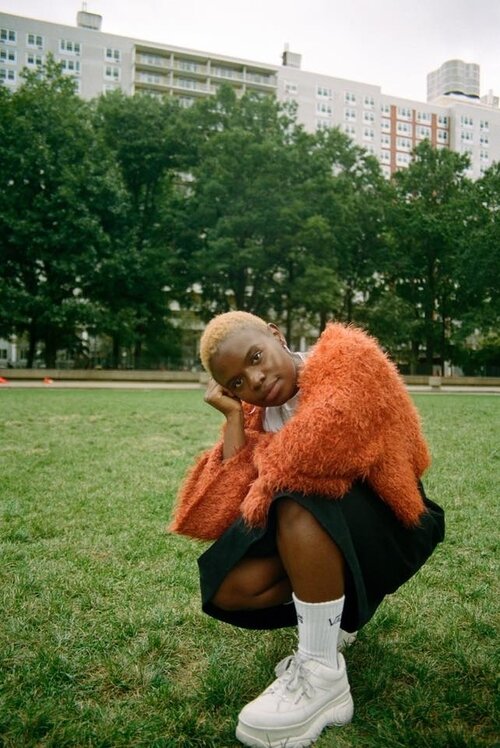
 PHOTO CREDIT: Mikey Massey/Hypebeast

because I wanted to discuss Kojey Radical’s new album, Cashmere Tears. It is a few weeks old, and it has gathered up some truly terrific reviews. I must admit that I have not long discovered Kojey Radical and, whilst I am going to start by recommending Cashmere Tears, go back and listen to all his work and as much as you can. Whether with the press or on radio, you find this honest, engaging and promising artist who is primed for some big things. When speaking with Complex, he was asked about how his music gets to the people; how he is discovered – he was also asked about the creative project for his latest work: 

“We spoke a while back on the differing points of introduction people have to your music—do you feel like you’ve now gone past that point?

Yes and no. In some spaces, yeah... I enjoy convos like this because I can’t skip that part. Some may have heard of me a while ago and, for whatever reason, they just didn’t bite? They just waited, waited to see if it was a passing name in the wind, and by the time they realise I’m here forever, it’s like: “Oh no! I have to go back.” So they might feel like they’ve just discovered me; a few songs deep but I’m three projects in, multiple collaborations, multiple tours, there’s film stuff and fashion, but you don’t want people to be overwhelmed. Sometimes I prefer the quick introduction. In a time when so many struggle for longevity, I can’t really complain.

Tell us a story about the process in making this project.

On my track “2020”, I say, “I just came back from the Motherland, the view was beautiful”, from when I spent time in Ghana just before I started. I was listening to the new wave of African artists, the new ‘Alte’ movement, and this one girl stood out to me and that was Amaarae. So we’re at the studio in Accra, and you know when someone’s energy just explodes? She jumped out this big Jeep, shaved head, colour dye, swaggy. Everyone knows who she is. They say to me: “This is Amaarae, your cousin.” [Laughs] I took a step back, I saw the way she moved and I said, “Yeah, she is my cousin!” I told her, “Ama, I’m going to Henley on Thames to create this project and I want you to come from lovely, sunny Ghana to come be with us by the lake.” She became one of the most pivotal pieces in making this flow the way it flows. It could have gone unnoticed and under-appreciated, but Amaarae is the reason it all flows—everyone will tell you that. From the producers to the instrument guys, everyone would ask: “Ama, what do you think of this?” She just loves music! We made “Sugar” within the first 45 minutes of being at the camp”.

Born Kwadwo Adu Genfi Amponsah, Kojey Radical was raised in London but was born to Ghanaian immigrants. Whilst a lot of those Afrocentric themes appear in his work now, they were there from the start. I like the fact Kojey Radical fuses together Spoken Word with more conventional Rap and Hip-Hop.

His brew is one that is in demand and turning heads! His path to Cashmere Tears has been quite an interesting one. The fact that his parents managed to make a life over here is impressed. I guess the promising artist would have seen their struggle and how they managed to settle. Kojey Radical began his life as a Spoken Word poet and illustrator. He graduated from the London College of Fashion and released a conceptual work, Dear Daisy: Opium in 2014. I would urge people to check out the E.P. as it is a truly wonderful work that touches o relationships, social media and religion. His sophomore E.P., 23Winters is another wonderfully rich work that stands out from everything else around. I guess Cashmere Tears is the first peak of a career that, whilst new, has already been pretty busy and successful. The reviews for his album have been amazing, as I say. This is what NME had to say:

“The latter half of the album feels like a revelation of self-worth. This is especially true of ‘Eleven’, a track on which Radical tells a story of self-realisation after a long fight with life. It sounds like a poem to himself as well as about himself: “Settle down / You’ve been a king / Without a crown”.  The moving final track, ‘Last Night’, concludes Radical’s story. Reminiscing those nightly woes, he leaves us with a poetic ending about his talk with God: “I spoke to God last night, and she said the right thing may not always come out the right way…And that’s fine, that’s life”.

His talk with God left him with some advice that we all could use.  ‘Last Night’ shifts from a cry for help to affirmation, words for all those times you felt you couldn’t get out of a rut. Leaving us with an overarching feeling of self-reassurance after his exploration of life, Kojey Radical here celebrates life’s imperfections. No matter how gloomy the world may seem, everything’s for a reason – we’ve just got to find it.

There is something undeniably assured and professional when you hear Kojey Radical’s music. Everything sounds so completely on a different plain; the music digs deep and the songs stay with you – that is not something you can say with every artist. Cashmere Tears his latest odyssey and is one of the most impressive offerings from a year that has given music fans so much. If you want to go and see him play, check out his movements and get involved. I have only just scratched the surface, but I wanted to bring to the fore an artist who, whilst pre-existing and popular, is not known by everyone. You do not need to be a fan of Rap or Grime to appreciate what he is putting out. Kojey Radical is such a wide-ranging and personal talent, that he cannot be labelled and easily defined. If you are still unfamiliar with the cuts he is putting out there…

 PHOTO CREDIT: @kemkaajoku

THEN go and get involved right now.

_______________

Follow Kojey Radical

FEATURE: Vinyl Corner: Frank Ocean – Channel Orange

FEATURE:


Vinyl Corner

Frank Ocean – Channel Orange

___________

FOR this month…

sss.jpg

 IN THIS PHOTO: Frank Ocean/PHOTO CREDIT: Getty Images

I am featuring standout albums from black artists. Frank Ocean has just put out a new song, DHL, and it seems like there are plans for more material very soon. In terms of albums that connect instantly and continue to swim in your head for months after you have played it, Channel Orange is right up there with the very best. His 2011 mixtape, Nostalgia, Ultra, gained a lot of positive feedback, but Channel Orange took him to new heights. After that mixtape went out, Ocean collaborated with Malay – one of several producers on Channel Orange -, at EastWest Studios out in Hollywood. Whereas his mixtape was more about samples and something more borrowed, Ocean decided to work more closely with sound and create a different sound on his debut album. A lot of Rap and Hip-Hop artists start out by producing mixtapes and then sort of move in the direction of an album. Whilst a lot of Hip-Hop albums from his peers at the time were quite political, aggressive and familiar, Ocean crafted an album that was as accessible as it was revelatory. There is barely anything conventional about Channel Orange. From its fusions of variegated genres and use of segue tracks, it is a heady masterpiece. It is the scope of sounds that truly blows the mind. A lot of artists would use samples to create the same affect and find that they struggled to get clearance or access; maybe it would be a hard task getting the songs to sound how they should.

There are big themes addressed on Channel Orange, but I think it is the tales and tones of unrequited love and passion that hit hardest. Ocean employs dark characters and switches voices; his voice is free-form flow and there are a few guests that pop up to add new angles and voices to the record. It is amazing to think of Channel Orange, as it is so confident and assured. Ocean had experience before heading into the studio, yet Channel Orange sounds like it was from the mind of a decades-experienced musicians. One thing you cannot accuse Frank Ocean of is lacking in comfort and luxury whilst recording the album. Not only did he work in various expensive studious; he also had a maid at a Beverley Hills mansion. It is just as well budget was not a big constraint as, to get the sound right and perfect the songs, Ocean spent months getting the vocals right. The songs do sound free and loose but, in actuality, there was a lot of honing and experimentation. I guess that is the sign of a great album: one that appears pretty natural, but has a lot of work, D.N.A. and drafts under the skin. Producers such as Malay were working behind the scenes and helping bring Channel Orange together. Ocean was involved at every stage and displayed a hugely impressive work ethic. Recording equipment from the 1960s was used in the studio; Ocean and Malay would put up old film posters and listen to albums by Stevie Wonder and Pink Floyd to set a mood and feel.

It is wonderful imagining the scenes and seeing Ocean immerse himself in this unique world, conducive to fantastic results. Ocean, as I said, switched from using samples to relying on instrumentation this time around. Listen to Channel Orange and one is stunned by the production sound, effects and depth of sound. Alongside these songs of unrequited love, sex and longing, we get this incredibly rich and nuanced set of compositions. Other subjects such as class and drug dependency are explored through Channel Orange. It is hard to pick highlights, but Thinkin Bout You comes to mind. That clash of the personal and more society-focused makes Channel Orange and album that has layers and so many stories to tell. Everyone can get something from the album. Some have compared Ocean’s vocals, narrative and inflections to Prince. It is clear that Ocean drew from other artists and was moved by the icons of the past. Channel Orange is a deeply personal album, and, because of that, the reviews were impassioned.              Look at the reviews and they are all wildly positive. It is clear the 2012 album struck a chord with many; it was a huge arrival and one that is still vibrating and resonating. In this review, AllMusic were keen to examine a wonderful album:

“As easy as it is to listen to Ocean's voice in long stretches -- he's casually expressive -- the number of deep ruminations over slow tempos requires some patience. Even the lone song that could be termed a banger is a ten-minute suite that takes 90 seconds to get on the floor; the song with the widest and most creative scope as well, "Pyramid" shifts from "my black Queen Cleopatra" and ancient Egypt (over swift synth funk) to "Your love ain't free no more" and a strip club (over booming, low-profile slickness).

2222.png

PHOTO CREDIT: Getty Images 

The lighter moments, such as the loose and bright "Sweet Life" and the relatively exuberant "Monks," both of which would be standouts on any N.E.R.D. album, offer more than bright coating, dealing in surrealism and sharp observations that are equally penetrating. On the other end, the most personal song is "Bad Religion," a phenomenal brokenhearted ballad consisting of organ, piano, strings, and handclaps: "This unrequited love/To me it's nothing but a one-man cult/And cyanide in my Styrofoam cup." Everything that falls between, counting the rumbling drug dependency tale "Crack Rock," the snapping/swooning "Pilot Jones," and the longing falsetto shuffle "Thinkin Bout You," is vivid and worthy of complete immersion.

I think Channel Orange is one of the best albums of this decade – it would crack my top-ten list -, and you can listen to it at any time and get something new from it. Ocean is working on new material it seems; one wonders whether he will be able to equal the brilliance of Channel Orange! If you have not grabbed Channel Orange on vinyl, then make sure you rectify that. I want to bring in another review – this one is from The Telegraph:

 “At times, Ocean’s dense, gorgeous debut evokes the musical bravura of prime Stevie Wonder, Prince and Kanye West, allied to the mad adventurousness of eccentrics like Björk or André 3000. The real miracle of the album, and a sign that Ocean is a talent for our times, is that he can embark on something as flamboyant as Pyramids – a 10-minute, tempo-shifting, minor-chord narrative of Egyptian queens and Las Vegas strippers, marrying Tangerine Dream sequencers and a jazzy John Mayer guitar solo to a rapturous slow jam – and make it all seem to make sense.

Channel Orange is as dazzling as it is baffling, rarely staying still long enough to get a grip on. This may be a drawback when it comes to scoring big hit singles, with only one track, the chugging Lost, really conforming to the kind of straightforward song construction favoured by radio. Yet, there has been a sea-change in mainstream pop of late, as the popularity of guitar rock has waned and the sound of blips and beats have become utterly dominant in the top 40”.

I think Channel Orange will go down as one of the most influential albums of the decade. Not only are the compositions so luscious, eclectic and memorable; Ocean’s lyrics are simply incredible! A lot of his contemporaries are a bit lazy and predictable when it comes to love and turning their desires and frustrations into songs. Ocean is almost like a poet in the way he talks about his experiences. In this feature from HUFFPOST, they focus on the strength of the lyrics:

“This is Frank Ocean’s strength: words. Without seeming preachy, overbearing, or the least bit cliché, Channel Orange pulls you in like a page-turning novel. At times, he’s direct like in “Sweet Life” as he sings “Why see the world when you’ve got the beach.” In other cases, he plays with metaphors and words like on “Crack Rock” where he confesses, “You don’t know how little you matter until you’re all alone / In the middle of Arkansas, with a little rock left in that glass dick.” It’s in this vein that there’s something truly special about Frank Ocean. It’s impossible not to sympathize with him.

kjjk.png

PHOTO CREDIT: Getty Images 

Like fellow melancholy crooner, The Weeknd, Frank Ocean’s vocals emphasize tone over range. Unlike some of his noted influences (Stevie Wonder and Mary J Blige), there are no gospel solos reminiscent of Whitney Houston or Boyz II Men. In turn, this places the emphasis on his lyrics. After asking a taxi driver “to be his shrink” on “Bad Religion,” he sings, “This unrequited love / To me it’s nothing but a one-man cult / And cyanide in my tyrofoam cup / I can never make him love” in a falsetto voice that suggests his instability. Then, on “Pilot Jones,” his sultry and soulful tone is accented by a simple snap rhythm that recalls the sultriness of D’Angelo”.

Frank Ocean released Blonde in 2016 and, with so much expectation after Channel Orange’s success, impressed critics and fans. Perhaps looser than its predecessor, Blonde is another remarkable album from one of modern music’s most extraordinary artists. One can only wonder what a third album might contain and when we might see that. As debut albums go, Channel Orange is not only one of the finest of this decade, but it is one of the best of all-time. Seven years after its release, I still dip in and out of Channel Orange and amazed at the endless appeal of the album. I did not only want to feature political albums from black artists for Vinyl Corner this month. Instead, I wanted to cover a range of genres and time periods. Channel Orange is an album you need in your life, because it is…

ABSOLUTELY dazzling.

FEATURE: Modern Heroines: Part Six: Lana Del Rey

FEATURE:


Modern Heroines

ddd.jpg

PHOTO CREDIT: Lana Del Rey/Getty Images 

Part Six: Lana Del Rey

___________

SOME might not consider an artist such as…

Lana Del Rey to be an icon-in-waiting, but I think, as she has grown and found her voice, there is a very long future ahead for her. I want to look at her albums and a few interviews, but now is a very purple patch for Del Rey – or to give her real name, Elizabeth Grant. Q Magazine just voted Video Games the best track of the decade – I shall come to that song in due course. She also appears on their cover, and there are plans for a new album next year. This would come only a year after the recent album, Norman Fucking Rockwell!, which garnered her the best reviews of her career so far. Del Rey is an artist who captivated with Video Games, and there was huge expectation and pressure. Every album allures and stuns, because Lana Del Rey mixes the modern and the classical. In terms of her themes and lyrics, she is very open and talks about romance in a way we can all understand. It is the smokiness of her voice and her pictures of open highways and old-school heroines that means she always has one foot in the 1940s and 1950s. The album, Lana Del Rey, appeared in 2010 but I think her first big moment came in 2012. Born to Die is not her finest album, but it did bring to the world this very engaging, extraordinary and intriguing artist who many were trying to figure out.

Was there a divide between Elizabeth Grant and Lana Del Rey? How much of the music was true to who she was? Indeed, a lot of critics approached her second album with a slight air of trepidation and cynicism. Collaborating with producers such as Patrik Berger and Emile Haynie, Lana Del Rey lowered her voice and brought in a new image. Maybe the blonde artist who we saw on the cover of her debut was seen as a bit immature and slight. By adding a duskiness to her vocals and alerting her lyrical style, Born to Die is a hugely underrated album. Video Games is a tremendous song that sends shivers up the spine. One of the criticisms levied at Born to Die concerned the lyrics and their strength. Were they relatable and how much reality can we find? I love the fact there is a mixture of sadness and escapism on Video Games; there is a definite chill on Born to Die. Lana Del Rey was standing out from her peers and, perhaps, she was laying the foundations for what was to come. There are definite standouts on her sophomore album. Blue Jeans and National Anthem can stand alongside her very best work.  A lot of press sources wondered whether Lana Del Rey was genuine; some thought Video Games was advertising and, really, many did not know what to make of such an original proposition in 2012. I guess Lana Del Rey was a more reserved or less experienced live performer than she would be; that was another aspect that made people feel she was a marketing tool or some sort of concept. In fact, the music and vocals sound extraordinary on Born to Die. Maybe the lyrics book was not as deep as some of her peers, but that did not detract from some of the most beautiful and cinematic music of the time. In the U.K., Born to Die sold 50,000 copies on its first day of release; it went to number-one on the U.K. album chart and it was a huge commercial success.

Perhaps a lot of the secrecy concerning Lana Del Rey impacted the critical perception. I love the fact Del Rey was not a typical Pop artist or Indie outsider. She was her own artist and was not trying to slot in with what was popular or commercial – maybe that was seen as a bit odd and suspect. That clash of cinematic sounds and almost conversational vocals was a breath of fresh air; her work has strengthened since 2012 and Lana Del Rey remains this fascinating and dreamy artist. I will move on but, before I do, I want to bring in one of the positive reviews for Born to Die. The Telegraph had their say:

“It would take a near miracle for 25-year-old singer-songwriter Lana Del Rey’s debut album to meet expectations. The New Yorker’s debut single, Video Games, inspired sky-high critical hopes. But while Born to Die doesn’t walk on water, its misty-eyed retro-pop makes for compelling listening. Musically, Del Rey – who co-writes each track – has hit upon a sort of 21st-century cracked soul. Grandiose strings and minor-key melodies collide with hip-hop rhythms and gurgling atmospherics, all conveying an epic sadness.

Del Rey’s vocals add star quality, flitting between a smoky, sultry purr and playful high-pitched tease, thriving on the drama of her own innate contradictions. She champions hedonism and sexual power one minute; craves the protection of a “screwed up and brilliant” lover the next.

Coupled with a film noir-ish attention to detail – the “red nail polish” and “Jesus on the dash” – and an obsession with faded post-war glamour, Born to Die often sounds like some great lost soundtrack to LA Confidential. Inevitably, 51 minutes of melodrama becomes draining. But it captures Del Rey’s mystique perfectly. Perhaps success will put a smile on her face”.

I will move on but, until then, I want to introduce a feature from The Guardian, where they try to figure out who Lana Del Rey/Lizzie Grant is; whether there is this sense of show and spectacle; how she exploded so soon:

“Of course, Lana Del Rey and Lizzy Grant are the same person.

That revelation has made Grant/Del Rey one of the most controversial figures to emerge in US music for years. Some people feel victims of an immense confidence trick. When Video Games first went viral it became an underground sensation praised for its authentic feel. Del Rey's amazing voice crooned the haunting song against a backdrop of grainy out-takes of home movies and Hollywood scenes. It currently has a staggering 20 million views on YouTube. The follow-up, Blue Jeans, with a similar feel, netted 6 million views. Del Rey's few live gigs suddenly sold out. She won the Next Big Thing prize at the Q awards. She seemed set for the big time. But then questions were asked. A few critics began to wonder if, far from being some organic wunderkind, the transformation from Grant to Del Rey had been planned all along. Her stage name was chosen by her management. Rather than being an outsider struggling for recognition, Del Rey is in fact the daughter of a millionaire father who has backed her career. People were suspicious of the way Grant's failed album, and all her social media websites, appeared to have been scrubbed from the internet just before Del Rey appeared. There has been much speculation as to exactly when Del Rey teamed up with her current label Interscope and how much influence their savvy marketers might have put into her original emergence.

"There are a lot of things that don't seem organic about it," said Steven Horowitz, who wrote a cover story about Del Rey for Billboard magazine. "She's putting on a show. She's here to entertain us."

 PHOTO CREDIT: Twitter/@ThePopHub

After so much attention following Born to Die, a lot of artists might have capitulated or played it safe. Lana Del Rey learnt a lot and made some changes for 2014’s Ultraviolence. It is a more stripped-back album (compared to Born to Die) and, rather unsurprisingly, Lana Del Rey was not even planning on another album. Maybe she felt outlawed or pushed aside; the critical strain and constant questioning made her wonder whether a new album was a good idea. The gestation of Ultraviolence was quite slow, but the results were worth the wait. Dan Auerbach was a new addition in terms of production. There was some butting of heads and disagreement between the two but, when all was said and done, the two were vibing from the finished material. With a co-write credit on almost every song, Ultraviolence feels like a more assured and bolder record (than Born to Die). Inspired by the West Coast and New York, there is this expansive and broad feel. Although Auerbach was a last-minute addition, I think he helped bring something fresh from Lana Del Rey. The reviews were more positive for Ultraviolence. There was this acceptance that, persona or not, Lana Del Rey was here to stay, and she was a very real and relatable human. It is a remarkable album and I love the sheer visual drama and beauty one feels when listening.

With stronger and more nuanced vocals, a sharper and more focused pen and greater consistency, Ultraviolence was the beginning of the rise of Lana Del Rey. AllMusic were positive when reviewing the album:

“Even the most pop-friendly moments here are steeped in patient, jazz-inflected moodiness, as with the sad-eyed longing of "Shades of Cool" or the unexpected tempo changes that connect the slinky verses of single "West Coast" to their syrupy, swaying choruses. Production from the Black Keys' Dan Auerbach might have something to do with the metered restraint that permeates the album, with songs like "Sad Girl" carrying some of the slow-burning touches of greasy blues-rock Auerbach is known for. A few puzzling moments break up the continuity of the album. The somewhat hooky elements of "Brooklyn Baby" can't quite rise above its disjointed song structure and cringeable lyrics that could be taken either as mockery of the hipster lifestyle or self-parody. "Money Power Glory" steps briefly out of the overall dreamscape of the album, sounding like a tossed-off outtake from the Born to Die sessions. Despite these mild missteps, Ultraviolence thrives for the most part in its density, meant clearly to be absorbed as an entire experience, with even its weaker pieces contributing to a mood that's consumptive, sexy, and as eerie as big-budget pop music gets. Del Rey's loudest detractors criticized her music as a hollow, cliché-ridden product designed by the music industry and lacking the type of substance that makes real pop stars pop. Ultraviolence asserts that as a songwriter, she has complete control of her craft, deciding on songs far less flashy or immediate but still uniquely captivating. As these songs shift her sound into more mature and nuanced places, it becomes clear that every deadpan affectation, lispy lyric, and overblown allusion to desperate living has been a knowing move in the creation of the strange, beguiling character -- and sonic experience -- we know as Lana Del Rey.

If Ultraviolence was a way of convincing people Lana Del Rey was here to stay and was a real (if very different) artist, then Honeymoon was that confirmation. She was established by 2015, and was starting to really step through the gears. Gone were a lot of the early nerves and loose ends. With long-time collaborators, Rick Nowels and Kieron Menzies, there was less of the guitar-focused sound of Ultraviolence. Like all great artists, Lana Del Rey was not standing still and was constantly searching. There was a return to the Baroque Pop stylings of her earlier work; a blend of the truly grand and cinematic Trip-Hop. I think Honeymoon is her most eclectic and busy album to that point; a hugely immersive work that showed great attention to detail and thought. There are layers of sounds and so many interesting aspects; a rich album that unfolds the more you listen. In terms of her narrative, Ultraviolence looked more at individual characters, whereas Honeymoon is a return to a more singular character; her persona and voice. Honeymoon is almost a companion piece with Born to Die, in many ways. Whilst you could argue there was a slight sense of indifference in the vocals, I think it added a lot. Rather than overwhelm the songs with powerful vocals and too much force, instead we get this dreamy and gorgeous presentation that allows the music to breathe and float.

For those new to the sound Lana Del Rey was putting out, Honeymoon might have taken a while to sink in and make sense. Those who had followed her career from the start were seeing this artist evolve and strengthen. The reviews were getting more positive and many applauded Lana Del Rey’s sense of style, focus and passion. I want to bring in a review from The Guardian, where they discuss some interesting points:

“What, one wonders, does David Lynch feel when he hears Lana Del Rey? Perhaps he’s flattered at the way she so skilfully personifies the precarious balance of danger and desire in his heroines? Or maybe he feels a little disturbed by her unflinching embodiment of this specific strain of his fictional characters: almost as if he’s being stalked by his own creation – which is, of course, a very Lynchian notion.

Honeymoon finds Del Rey reverting, after the more atomised, individual characters of last year’s Ultraviolence, to a composite persona closer to the dissolute subject of her Born to Die debut. Not only does her vocal delivery remain the same throughout, but also its protagonist’s “voice”; while the emotional impact of what might sometimes be traumatic developments seems somehow damped, as if experienced through a narcotised haze.

Happy or sad, angry or apologetic, dominant or submissive, it’s apparently all the same to Del Rey, who floats through these songs with a weird indifference. It lends a sort of Stepford devotion to the more earnestly romantic songs, like “Religion” and “Music To Watch Boys By”, while prickles of danger are raised by the darker emotions: all it takes, in the separation ode “The Blackest Day”, is an offhand mention of a gun to spark the suspicion that, despite the bland delivery, this is an obsession teetering on the edge of either suicide or homicide. But when, in “24”, she complains, “You’re hard to reach/You’re cold to touch”, it’s hard not to think of pot and kettle locked in a mutually unfeeling embrace”.

Before coming on to her 2017 gem, Lust for Life, I want to introduce an interview that Lana Del Rey gave in 2015. At the start of her career, she did talk to the press, but I think there was a lot of scepticism and negative energy that would have put her off. Having made her mark and silenced doubters, the tone of interviews was more curious and kinder. Speaking with The Current, Lana Del Rey was asked about the changes that came in on Honeymoon.

“You're past your debut and your sophomore releases, you've worked with many different artists and you've toured. What made Honeymoon different?

I was glad to be past that second record. [laughs] It was fun. I worked with this guy that I love. He's been my producer for a really long time. His name is Rick Nowels. I got to go in [the studio] every day and see some things I had been working on or start something new. Early on I wanted to have [Honeymoon] to have a little bit of a noire feel so I loved the title track "Honeymoon." I guess it kind of loosened up a little bit as I went forward with songs like "Freak" and "Art Deco."

JJJJJJJJJJJ.jpg

PHOTO CREDIT: Neil Krug 

Rick Nowels has worked with everybody from Tupac to Madonna to Jamie xx. What's your connection to Rick and what does he bring to your music?

One of the reasons I like Rick so much is because a lot of producers, when they get into the studio with an artist, they want to challenge them or they want to break them down and build them back up again. I find that really unhelpful. Rick always says yes and he's really fluid. If I'm stuck with an idea lyrically and want to say, "Screw it!" and move on, he doesn't care. We move on to a new idea. He's very easy. He contributes a lot in terms of – I mean, he plays everything. All the keyboard parts, all the guitar. He's pretty amazing.

Each album of yours has a distinct narrative and you're able to adopt that narrative and thread it throughout the entire album. What was your intention with the narrative of Honeymoon?

I do love records that have a strong concept. The narrative for [Honeymoon], it was a tribute to Los Angeles and, because of the soundcaping — we had a lot of amazing strings — I think the mood was the narrative. It's a lot of descriptive pieces about driving at night or being in love, not being in love. Kind of the same old thing”.

Gaining momentum and greater critical respect, I remember awaiting Lust for Life eagerly in 2017. Lana Del Rey discussed the possibility of a follow-up to Honeymoon when she spoke with NME back in 2015. It is clear that those recording sessions were productive and, as we can hear from the finished Lust for Life, she was incorporating new styles and genres into her music.

CCCCCCCC.jpg

 PHOTO CREDIT: Elle UK

It would have been easy and tempting for her to repeat the sound of Honeymoon; instead, there is a blend of Trap-Pop and New-Age Folk on Lust for Life. If earlier albums were defined by slightly dreamier vocals or a lack of complete confidence, one of the biggest standouts of Lust for Life is the vocals. Often employing Hip-Hop inflections and affectations, Lust for Life is a bright and sleek album but one with plenty of nostalgia, beautiful harmonies and swelling songs; scenes and visions that go on forever and take you somewhere wonderful. Great artists are always moving and looking to occupy fresh territory. You can hear the differences from Honeymoon to Lust for Life. I think Lana Del Rey’s brilliance and originality was cemented on Honeymoon. If anything, Lust for Life made sure of that and pushed her music further forward. As time has gone on, the reviews have got much bigger and positive. In this review from The Guardian, they highlight the contrasts and strengths of Lust for Life:

“If this is an album about America, it is also an album about Americana, and other venerable source materials: the Coachella song is subtitled Woodstock in My Mind. Despite the rappers, the hip-hop content in Del Rey’s sound mostly gives way to canonical genres – the third departure.

Millennials might find a subscription to Uncut or Mojo useful here, as Del Rey drops retro bombs all over the place. “Don’t worry baby,” she croons on Love (Beach Boys). “My boyfriend’s back,” she notes on Lust for Life (the Angels), her strangely unsatisfying hook-up with the Weeknd, which borrows from Iggy Pop. It all gets a little ridiculous when Sean Ono Lennon consents to a Beatles pastiche called Tomorrow Never Came crammed with wide-ranging interpolations. “Lay lady lay,” Del Rey sings, “I would be your tiny dancer.” It’s a mark of Lana Del Rey’s persuasive skill that a good song emerges from under all that baggage. Girl meets boy. Boy fails to turn up when he said he would. Love goes wrong. Repeat till fade”.

Maybe one of the things lacking in the world of Lana Del Rey is a political opinion. It is always hard to express that in music, especially when you want to avoid controversy and trouble. I shall end with an interview where she was asked about politics and life in America under Donald Trump. Norman Fucking Rockwell! is a bolder and wider-reaching album that looks to the modern-day and has a definite tension. There is also the same qualities we’d come to expect: the simplicity of post-War America and a sea of different sounds melting together harmoniously. In terms of themes and sounds, there is everything from doomed love and visions of a broken Californian dream; Desert Rock moments and some Folk edges. I think it is her most ambitious album to date and expands her palette once more. Many critics noted Rock references through the album – including Led Zeppelin’s Houses of the Holy and references to Joni Mitchell and the Eagles. The year is not yet done, but I would surprised if Norman Fucking Rockwell! was excluded from the ‘best of’ lists. If albums prior to Norman Fucking Rockwell! were not universally acclaimed – or received quite the respect they deserve -, then that has been rectified now. I think Lana Del Rey is a future icon, and she is one of the most striking artists of her day.  

ki.jpg

 PHOTO CREDIT: Getty Images

There was a lot of love for Norman Fucking Rockwell!. In their assessment, AllMusic had this to say:

“A strong classic rock influence comes through on many songs, with the softly building pianos and acoustic guitars on tracks like "Mariners Apartment Complex" or the apocalyptic "The Greatest" sounding like the best of '70s FM radio reworked around Grant's smoldering, exhausted vocals. Even though Stevie Nicks' witchy mystique has long been a reference point for LDR, this particular brand of classic rock -- silky guitar solos, compressed drum fills, and lingering, mournful outros -- is unlike anything she's attempted before. The most exciting aspects of Norman Fucking Rockwell! come in these unexpected moments. A faithful reading of Sublime's "Doin' Time" contorts to fit Grant's moody approach, becoming an extension of her own expression rather than a goofy, ironic cover. Where huge pop hooks met eerie melodrama on previous albums, here both extremities of that formula have grown more understated and direct. "Venice Bitch" is the best example of this. The nine-minute song begins with gentle strings and soft, hopeful melodies but winds into a long, meditative stretch where synth textures and hypnotic repeating vocals bleed into walls of noisy guitars. While much of her older material reveled in its own inconsolable sadness and detached numbness, the lush sonics and intimate narratives of Norman Fucking Rockwell! draw out hope from beneath desolate scenes. The patient flow, risky songwriting choices, and mature character of the album make it the most majestic chapter of Lana Del Rey's continuing saga of love and disillusionment under the California Sun”.

There are assumptions made about Lana Del that might feed into this idea of persona and whether Lizzie Grant is a radical departure from the musical moniker. In interviews, you have this very bright and interesting artist who is a lot cheerier than her music would suggest. I guess those who deal in a slightly dreamier sound are accused of being sad of defeatist. I think there is a lot of romance in Lana Del Rey’s work; a lushness and sweep that is a welcome tonic to a lot of what is out today. So many artists deal in empty energy and processed sounds. With Lana Del Rey, there is something much more graceful, memorable and appealing. You can tell Del Rey is someone who loves to jot her observations and is someone who takes so much inspiration from the people and places around her. In this recent interview with NME, she talked about her lifestyle and writing process:  

“Del Rey isn’t the only modern artist to be painted as this perpetually glum figure because of the melancholy that lives in their music. If she was considered the prom queen of sadness, James Blake would likely have been named king. Last year, he dismissed the “sad boy” label appointed to him, calling the phrase “unhealthy and problematic” and damaging to the discourse around male mental health. Del Rey feels similar about the tag being thrust upon her. “I really never felt like much of what people said about me resonated with how I felt at my core,” she says. “I thought it was cool that I was just in my process and, at some point, I’d probably get to some kind of plateau where the sound would round out and it would grow into another thing. It was a little nerve-wracking having people want me to be one way forever but, I mean, it’s a life. There’s a life in there and that’s ever-evolving and definitely for the better.”

IMAGE CREDIT: Q Magazine 

You might expect Del Rey to be making her own legends in her downtime but her life, she insists, is pretty regular – a healthy mix of creativity and friend time. There’s the driving (“a lot of driving,” she says), the game nights with her friends, the trips to the dog park with her photographer and director sister Chuck Grant, the poetry writing, the swimming, and filming the things she sees as she flits between LA, San Diego, San Francisco, and other communities along the coast.

“I’m a big chronicler,” she explains. “I spend a lot of time just capturing stuff, even on the phone. When the wildfires were happening [in 2018] I wanted to get up in a plane and see it and film it.” As if to pre-emptively reinforce her point, a day earlier she posted a candid video on her Instagram of a conversation about aliens taking place on a green-lit boat.

I did mention how more artists are becoming political. It is hardly a coincidence when you consider who is in charge in the U.S. and U.K. She did mention her concerns in the NME interview and her fears for America under Trump:

Looking ahead to the 2020 Presidential election next Autumn, the key issue that needs to be tackled, in Del Rey’s view, is mental health. “The thing about ‘Looking For America’ is it’s not just about the citizens’ right to bear arms,” she explains. “I get that. It’s people not being able to pull out and look at the broad picture and be like, ‘It starts with this’. There’s no addressing of mental health. Yes, there’s the gun, but it doesn’t mean that just anyone should be allowed to get one.”

Right now, she’s not sure who she thinks would be best to tackle that concern while challenging Trump next year but she’s “listening to everybody”. “Anyone would be better,” she adds with a dry laugh.

There is already rumour of another album in 2020, White Hot Forever, and it will be interesting to see what direction that takes; whether it is romantic and passionate or takes more of a political course. I can hear some new singers emerging who are very much inspired by Lana Del Rey’s cinematic sound. Those breathy and emotional vocals; lyrics that are happy to reminisce and look back at a different time but, always, there is that modernity and urgency. There is so much soulless and dry Pop around; it is great we have an artist like Lana Del Rey out in the world. I think she will continue to put out albums, and it cannot be long until she gets some big headline requests. I think we will look back in years to come and remember her as a true original and, whereas she had a slightly unsteady and hard start (with press questions and her material finding its feet), she has overcome all of that and is one of the most popular artists in music. I have ended with a playlist that puts together her very best moments. It shows how she has evolved through the years and just how striking her music is. The music of Lana Del Rey is a huge force in the world and it sounds…    

LIKE nobody else around.

FEATURE: One for the Record Collection! Essential November Releases

FEATURE:


One for the Record Collection!

OOOOO.jpg

IN THIS PHOTO: Jeff Goldblum/PHOTO CREDIT: Jeff Goldblum/Decca Records

Essential November Releases

___________

THE last couple of months of the year…

22222222332.jpg

IN THIS PHOTO: Michael Kiwanuka/PHOTO CREDIT: Olivia Rose

tend to be less active when it comes to album releases in general. I think artists are thinking about the following year and using November and December to unwind and get a few last-minute gigs in. Regardless, every month provides some interesting albums that are worth time and investigation – November is no exception! There is a pretty eclectic mix of albums out in November that is worthy of some cash and attention. Starting off on 1st November, Jeff Goldblum brings us I Shouldn’t Be Telling You This. He released his debut album only last year and, with The Mildred Snitzer Orchestra, we will get another collection of great songs from Jeff Goldblum and friends! This article explains more:

“After his live set being hailed as one of Glastonbury 2019’s most iconic moments this summer, at which he announced from the stage that a brand new record was in the works, Jeff Goldblum has revealed the details of an album which will make the listener smile even more than his first one. If that is possible. With his long-time band The Mildred Snitzer Orchestra, the enticingly-titled album I Shouldn’t Be Telling You This will be released globally on 1 November on Decca Records and features an impressive array of surprising duet guests.

With last year’s debut – which was met with glowing reviews and landed the Hollywood icon a No.1 jazz album in both the UK and US – Goldblum was described in The Times as performing an important service by “reminding us that jazz should be allowed to be fun”. With playing that is “as loose and improvisational as his acting” (Daily Telegraph) Goldblum yet again brings his on-screen charisma and eccentricities to the piano, with a style that is totally unique.

And this time, we are treated not only to his piano-playing skills but to his incredibly distinctive voice, as the man himself takes centre stage to sing ‘Little Man, You’ve Had A Busy Day’. First released on Decca in 1934, it is here particularly poignant coming from the father of two young Goldblum sons”.

With contributions from Anna Calvi and Fiona Apple (among others), I would urge people to pre-order the album! This is an album I will be checking out; I do love Jeff Goldblum and think he is an exceptional musician. The exceptional Sudan Archives unveils Athena on 1st November and, whilst you need to get involved, I would also encourage you to look back at Sudan Archives’ work. She is fantastic and one of the best new artists on the block. Released on the Stones Throw label, Athena is shaping up to be a late contender for the best album of 2019. There is a lot to unpack when it comes to Sudan Archives (Brittney Parks). Here, in this interview with The Line of Best Fit, we learn more about Sudan Archives and Athena:

“Parks grew up in Cincinnati, Ohio, where her life revolved around church, working, and playing hooky from school. It was during this time that she would fall in love with music, and her weapon of choice: the violin.

“I don’t know what drew me to the violin. I literally saw it and fell in love as soon as I saw it. When I was young I saw this group of people playing violins, but they were dancing too. It was very upbeat, very wild. It wasn’t something I was used to seeing, because whenever I would see violinists, they would be sitting down in a group playing classical movements and stuff. So, when this group of fiddlers came, dancing round the room as they played, ever since then I just wanted to be like them – in my own way, though”.

MNNM.jpg

IN THIS PHOTO: Sudan Archives/PHOTO CREDIT: Wunmi Onibudo for The Line of Best Fit

“Seeing this energy captivated Parks. She wanted to bring her own style to her instrument, to create something wild, and truly her own. To save up for new instruments, she held down several jobs alongside her studies and locked herself away to hone her craft – just like her childhood heroines. “Whenever I got paid I would buy an instrument,” she explains. “I had all these drums: hand drums and drum machines. That’s when I properly tried experimenting, trying to make my own beats. My first beat was made off of my iPad, but I was always curious; watching YouTube tutorials on how to use the equipment.”

It’s all about completing the circle for Sudan Archives, and Athena is the link that has been missing. “I feel that the album ends with a sense of oneness. Not just within myself, but within everyone. I want people to listen to this album and know they have power, as a woman or a man. To be one with the good and bad that might be going on in your life. It’s part of you, embrace it.”

“This album is for Parks herself, her fans, her collaborators, and everyone who has helped her along this long and winding path. But most of all, Athena is for that little girl who would while away the hours lost in the worlds of Sailor Moon and Xena. She wants to take it back to where it all began and make that girl proud. As she sings on Athena’s opener: “When I was a little girl, I thought I could rule the world”.

One of the albums I have been eagerly looking forward to is Michael Kiwanuka’s KIWANUKA. It is already shaping up pretty well – the singles released are his strongest to date. You can pre-order here - and it is a record you will want to own! What can we expect from Kiwanuka’s latest gem? Rough Trade explain more:

“Kiwanuka sets off on a journey that evokes the psychedelic haze of its predecessor, but ramps up a very broad sense of scale. With his exquisite band of players, Michael channels an assortment of the late greats (a nod to Gil Scott-Heron here, Bobby Womack flecked there, and the ever present Otis Redding vocally) for a richly rewarding record that sits typically at odds with the notion and expectations of a successful British singer-songwriter in 2019, and moves even further away from the folk-imbued vintage soul of his debut album, Home Again, back in 2012.

Michael will tell you of his love for records that entwine their songs with incidental skits and shape-shifting spiralling outros, so that the listener experience is almost that of listening to one long, dramatic song. Kiwanuka fulfils that winding, dream-like haze, unhurried, and is peppered with some of the best songs of Michael’s career to date. At its very heart is a song called Hero; a scorched epic that propagates the essence of the whole record into a sub five-minute psych-fuzz song.

Where Love and Hate showcased Michael’s prowess with a guitar, Kiwanuka showcases an ear for musical adventure. Themes that resonated so loudly previously return here, namely Michael’s life-long confusion and questioning of his own identity, but also that of hope and of power. That Michael has spent the past year or two writing and nurturing the record, whilst also finding a newly discovered love for documenting his life behind a lens, lends itself to the suggestion of an artist putting a microscope on his own life”.

I think, again, Kiwanuka could come in with one of this year’s best albums just as the year is starting to wind down. November is off to a hot start and, on 8th, Girl Ray release Girl. You can order the album from their Bandcamp page, and I would suggest you check this band out if you are unfamiliar. Tracks like Girl are just what we need at the moment: brightness and breeze against the fire and darkness of the current time. In terms of what the album promises and, indeed, where you can catch them tour; here are some more details

“Girl Ray features Poppy Hankin (guitar/vocals), Iris McConnell (drums), and Sophie Moss (bass). Girl is their second album, the follow-up to their cleverly titled 2017-released debut album, Earl Grey (it was our Album of the Week and #3 on our Top 15 Debut Albums of 2017 list).

Girl was recorded at Electric Beach Studios in Margate with Ash Workman (Christine and the Queens, Metronomy). Whereas their debut album was a twee-pop gem, Girl is inspired by more modern and electronic pop sounds, in particular Rihanna and Ariana Grande. Crusoe Weston directed the "Show Me More" video, which features the band riding around on bikes.

In a press release the band say "Show Me More" is about "crushing really hard but having to play the long game and wait it out because your boo is playing savage games. It's your classic pop banger. Steamy dance floor. Drinks on me".

Girl Ray Tour Dates:

6th November 2019 - O2 Guildhall Southampton w/ Metronomy

8th November 2019 - Roundhouse, London w/ Metronomy

9th November 2019 - Manchester Academy w/ Metronomy

14th November 2019 - O2 Academy Bristol w/ Metronomy

15th November 2019 - Rock City Nottingham w/ Metronomy

18th February 2020 - Birmingham, Hare & Hounds

19th February 2020 - Leeds, Belgrave Music Hall

20th February 2020 - Glasgow, Stereo

21st February 2020 - Manchester, YES

22nd February 2020 - Nottingham, Bodega

23rd February 2020 - Cardiff, Clwb Ifor Bach

25th February 2020 - Bristol, The Fleece

26th February 2020 - London, Electric Ballroom

27th February 2020 - Brighton, The Haunt

I am going to try and catch them in London in February and am really looking forward to a magnificent album from Girl Ray. This year has been a fantastic and busy one for music and, with bands like Girl Ray storming it, I have high hopes 2020 is going to be immense.

Bloc Party’s Kele Okerekey has announced his solo album, 2042. With tracks like Jungle Bunny out in the world, 2042 is looking pretty fascinating and strong. I think Okerekey is a fantastic writer and performer and, away from Bloc Party, you get a slightly different (solo) sound. Here, we learn more about 2042’s background and aims. 

“In a press release, Kele says, “There is a history of black entertainers feeling that after they have achieved a certain level of success that they are above discussions of race but that idea is a delusion. As a person of colour living in the western world, it does not matter how much wealth one accumulates, race will follow you wherever you go. With JUNGLE BUNNY I wanted explore this idea: In a time of such rampant division and public racism, what is the responsibility of the black entertainer?”

This album is definitely going to receive some of my time, and I am looking forward to hearing what the vibe is. I am interested seeing how frontmen/women adapt away from their bands and what sort of sound they bring to their solo material; whether it will be very similar to what we are used to. With 2042, one can expect shades of Bloc Party, but this is Okerekey making something personal and deeply moving. I know the album will accrue huge reviews and, even if you are not familiar with his past work, go and grab 2042 and you will not be disappointed!

Also out on 8th November is Champion from Bishop Briggs. Many might not be familiar with the Los Angeles-based singer. Her debut album, Church of Scars, came out last year and received a smattering of positive reviews. Some remarked how Briggs sounded too like other artists. There was a bit of BANKS and Florence + The Machine, maybe too much of other people’s work. I think there is more individuality and personality on Champion. You can pre-order it here - and you will be able to see how Briggs has evolved. She is an artist you definitely should keep an eye out for because, in years to come, she will come into her own and really hit her stride. Right now, Champion is looking pretty healthy and I think it is an album that will fare very well – a lot better than her debut in many respects. There are not too many interviews out there where she talks about the album but, when speaking with Hollywood Life this year, Briggs discussed her songwriting and inspiration:

“The singer knows her way around the process of penning a meaningful track, and goes on to say that she thinks channeling a heartbreaking experience could actually be healthy. “I want her to write music about it. Oh my gosh, because it is so therapeutic and I think it is so important with music that it comes from a personal place as much as it is heartbreaking for me I can’t even imagine for her. Because she has kids and an amazing husband. But I feel she is so powerful and I really hope she writes about it. She really is a makeup artist, an incredible makeup artist,” she says of her friend. So – would to two ladies ever link up for a collaboration? “Definitely,” says Bishop”.

I told you how November was a diverse year for albums. Consider the fact we have a new DJ Shadow album out in the form of Our Pathetic Age, and you will see what I mean. You can pre-order here and witness the brilliance. DJ Shadow is one of those legends who seldom disappoints and always brings something new and invigorating to the table. His collaborations are sensational, and I am a massive fan. Like Bishop Briggs, there is not too in the way of fresh information and feedback from the artist. Rough Trade provide a bit of detail regarding the new album:

“DJ Shadow releases an ambitious double album - Our Pathetic Age - on Mass Appeal. Our Pathetic Age is the result of an intensely creative period that found the hip-hop and electronic innovator delving further into original composition and experimentation. The first half of Our Pathetic Age features 11 new instrumental works that balance some of Shadow’s most menacing sounds with beams of hope, including his first fully composed orchestral piece.

The second half of Our Pathetic Age is a full album of vocal collaborations, ranging from Run The Jewels, Nas and Dave East to Sam Herring, Paul Banks and Wiki, Inspectah Deck, Ghostface Killah and Raekwon. Shadow notably reunites with his early Solesides collaborators Lateef The Truthseeker and Gift of Gab (Blackalicious). It also features St. Louis MCs Rockwell Knuckles and Tef Poe, fellow Bay Area musicians Fantastic Negrito and Jumbo is Dr.ama, and Brookyln MC Stro”.

There are a few more albums, varied as they all are, that will be vying for your love in November. I am relatively new to Lady Antebellum and, on 15th November, Ocean reaches the shore. You can pre-order here and, like so many other artists, they are not easy to define. They are a Country act, but they blend the modern and classical; there are spiritual vibes and plenty of relatable moments. Rolling Stone provide more details regarding Ocean:

 “Lady Antebellum have announced the autumn release of Ocean, the trio’s first full-length LP since 2017’s Heart Break and first since departing longtime label Capitol Nashville. Ocean, due November 15th, teams the group with producer Dann Huff for the first time, and marks Lady A’s debut project for Big Machine Label Group. Tracks already available from the forthcoming album are “Pictures” and the group’s current single, “What If I Never Get Over You.” Also featured will be a collaboration with Little Big Town on “The Thing That Wrecks You,” written by Tenille Townes, Daniel Tashian ands Kate York. Closing the album is its emotionally charged title track, a ballad featuring Hillary Scott’s yearning lead vocal accompanied by Dave Haywood on piano, which is officially out today.

Encamped in Las Vegas earlier this year for the Our Kind of Vegas residency, Scott, Haywood and band mate Charles Kelley road-tested some of new music that will be included on the 13-track LP, including “Crazy Love,” penned by Kelley with Nathan Chapman. Scott, who gave birth to twin daughters in 2018, co-wrote the album’s “Let It Be Love,” which Kelley noted is likely to be a single.

“The theme of this record is definitely bearing our souls and our journey. We’ve gone through a lot over the past couple years, finding ourselves, reconnecting as a band and finding where we want to go,” Kelley said earlier this year when the album was in its early stages. “At some point you have to just enjoy the journey and appreciate the art and the process and not so much the outcome. Now we’re going a little more fearlessly about it. I always feel like that’s when we’re at our best. There’s some meaty stuff on this record, some really meaty raw stuff”.

The band have a solid and passionate fanbase; people responding hard to what they are putting out there. As they explain in this interview with Taste of Country, they have created what is their most personal statement to date:

“Lady Antebellum's upcoming album will be their most personal and honest in their entire career.

"We've been a band for 13 years," singer Hillary Scott tells Taste of Country. "You get to a point where you can't outrun the things that you know you need to work on about yourself. I feel like we're now in this place of, 'No, we're going to own our crazy.'"

In many ways, Lady Antebellum grew up together. Their meteoric rise with "Need You Now" at a relatively early stage in their career gave way to the inevitable ebbs and flows of the music industry — a fact the band's Charles Kelley says they only recently learned to appreciate.

44444.jpg

IN THIS PHOTO: Lady Antebellum/PHOTO CREDIT: John Shearer/Getty Images Portrait for Essential Broadcast Media 

“It’s so funny when I look back on our career and how anxious I was when things weren’t coming as easy as they were the first four or five years — now I look back and I’m like, it’s true without the downs the ups wouldn’t mean as much,” Kelley says. “Now we’re just like, ‘Ok what do we really want to say?’”

All three agree their perspectives have changed, both collectively and personally.

“I think we’re a lot more in tune with who we are,” Dave Haywood says. “What we contribute to country music and families and kids change your perspective and contribute to your songwriting. I just feel like we’re more present, more honest with each other”.

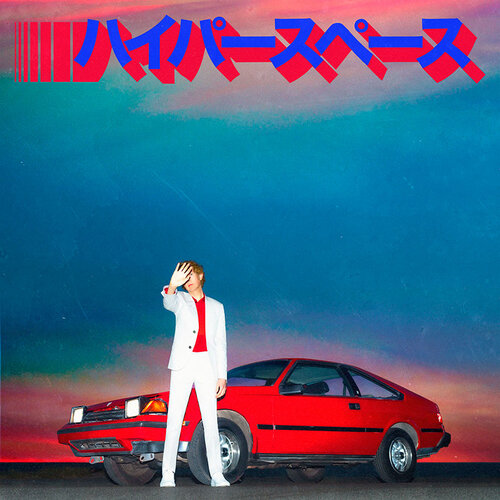
There are some big albums coming in November; few are mightier than Beck’s Hyperspace. Out on 22nd November, be sure to pre-order now in order to experience the wonders of Beck’s fourteenth studio album. I am a huge Beck fan and love how he can dance between styles and moods. You can either have a more reflective Beck or an artist eclectic and mixing sounds. I think Hyperspace sits somewhere between those two possibilities. The forty-nine-year-old still sounds so fresh, invigorating and inspiring so long after his debut album. It is testament to his passion and talent that he continues to release these original and thrilling albums. Beck spoke with NME and talked about his new direction:

“I had a few things after the ‘Colors’ tour finished and I really wanted to seize the moment with this project,” Beck added. “There’d been a period of time where Pharrell had been really busy and an opportunity opened up so I went with it. Originally it was going to be a single or an EP, but I think we were both surprised when there was a body of work here.”

“I was not expecting the songs to come out how they did. I was going in thinking of songs like ‘Drop It Like It’s Hot’, y’know?” Beck said of working with Pharrell. “He felt very strongly that spending a little time with me, that ‘You need to be doing singer-songwriter type of songs’. So that was more of the direction we went in.”

He continued, “I really tried to be less ambitious on the production on these songs, like to let them be simple and let them breathe. Pharrell is a master minimalist. On production I’m a bit of a maximalist – I’m known to have 140 tracks of things trying to coexist and fight to be heard at the same time. I’ve really tried to reform myself to let it be more simple.”

‘Hyperspace’ is also one of Beck’s most collaborative efforts to date. Guests to look out for include Coldplay’s Chris Martin, who provides back-up on ‘Stratosphere’, and Sky Ferreira, who sings backing vocals on ‘Die Waiting’”.

The last album that is worth exploring – there are more, but this is my opinion -, is from the late Leonard Cohen. Thanks for the Dance can be pre-ordered here, and it is out on 22nd November. It features some well-known names from music too. Rough Trade explain more:

 “A posthumous Leonard Cohen album called Thanks for the Dance via Sony Music Entertainment. Leonard’s son, Adam Cohen, produced and masterminded the project, enlisting a huge cast of musicians including Damien Rice and Leslie Feist (vocals), Arcade Fire bassist Richard Reed Parry, the National’s Bryce Dessner on guitar, Dustin O’Halloran on piano, and Leonard’s bandmate Javier Mas playing the man’s own guitar. Other features include Beck (on guitar and Jew’s harp), Daniel Lanois, Jennifer Warnes, the s t a r g a z e orchestra, and others”.

These are the albums I think you need to get involved with next month. October has been a busy and brilliant one for music; November has slightly fewer big releases, but there are plenty of albums to get excited about. I am excited to see whether we get any surprise releases; I will be getting Michael Kiwanuka, Beck and Sudan Archives’ albums, for sure. This year has been an extraordinary one for new artists and established acts putting out supreme work. I hope that continues into 2020. Do your best to get as many of my November-recommended albums as you can, because these works will stay in the head and provide some brilliant moments. I will end things now but, this time next month, I will be back and scouting around for the best albums due in December. November is shaping up to be a pretty impressive month with some really exciting releases. If you can, think about the records that catch the eyes hardest and…

 PHOTO CREDIT: @edgr/Unsplash

PUT some pennies aside.

FEATURE: A Little Birdie Tweeted… How Social Media is Guiding Labels to Future Hit Singles

FEATURE:


A Little Birdie Tweeted…

opoppopo.jpg

PHOTO CREDIT: @marvelous 

How Social Media is Guiding Labels to Future Hit Singles

___________

WHILST radio is still the best source…

ttgg.jpg

PHOTO CREDIT: @freestocks/Unsplash

of music discovery and variation, social media is playing a role more and more. In fact, I guess I sort of split my time between listening to radio and looking at various sites and publications online regarding the best acts around. There is a reason why social media and the Internet is becoming a lot more sourced when labels are looking to see which single is best to put out – rather than float this song from an artist and it getting a rather lukewarm reception from stations. When launching albums, labels and companies put a few singles out so they can build momentum, put their best foot forward and make an impact. Sometimes, an artist will decide which songs they want to put out, but I think labels will get more say in that regard. It might seem obvious which singles sound best or are better to promote an album yet, when those songs are out in the world, they might not always get positive and universal acclaim. Social media is proving to be a useful sounding board and committee when labels are deciding which singles should be released. I saw an article in Billboard that explains how there are some artists/labels turning to Twitter in order to decide which songs are going to be a hit; which ones radio stations will favour:

“When Bay Area rapper Saweetie released her ICY EP on March 29, her label, Warner Records, hadn’t yet settled on which song to promote to radio as a single. So thousands of Twitter users helped.
Shortly after release night, Warner vp fan engagement 
Elissa Ayadi says that the raunchy track “My Type,” which samples Petey Pablo’s “Freek-a-Leek,” took off on the platform, where fans were quoting the song’s brash, catchy lyrics about exactly what the rapper is looking for in a date.

That persuaded the label to focus its promotional efforts on the track, which comes with a splashy music video that has over 45 million YouTube views, and pushing the #MyTypeChallenge on TikTok, which has inspired 50 million videos.
“We were like, ‘Instead of forcing it, let’s support what the fans are already doing,’ ” says Ayadi. It worked: The song has now spent 14 weeks on the Billboard Hot 100, peaking at No. 21, and for the chart dated Sept. 28, it reached No. 1 on the Rhythmic airplay chart, where it stayed for two weeks.

Ayadi and others in her field agree that, along with activity on other social media platforms like Instagram, Twitter conversations around a song are an increasingly important metric that decides whether a label will put resources behind a single.
“Now, people are dropping albums without having a set single,” says 
Lisa Kasha, vp integrated marketing and digital strategy at Epic Records. On the nights the label releases a new project, Kasha’s team sends a companywide report detailing which song titles, lyrics and features are trending, including key tweets and memes for reference. In the morning, she compares that data to the streaming numbers. “If a certain song is trending, and that’s the song that streams the most that night,” she says, “then it’s a fan favorite”.

I guess algorithms and marketing strategy has changed the more we stream music and have resources like social media. Artists still do this, but once was the day when singles were decided before an album arrived. It is understandable that the dynamic has shifted, and artists/labels are reaching out.

 PHOTO CREDIT: @mensroom/Unsplash

From an artist’s perspective, I guess they will hear a few songs that sound perfect as singles and stand out from the rest. That is a subjective view so, when those tracks go out, are they the strongest when it comes to winning new fans and pleasing the existing base? It can be hard making that call and getting it right, and so social media acts as a useful form of feedback and opinion. The article also notes how, whilst the wisdom of crowds and new algorithms seem sound, there are obvious issues:

But leaning on social media algorithms to “monitor fan sentiment” -- a favored term among digital marketers -- has its limits. With the band Disturbed, for example, data tools like CrowdTangle -- which shows how content is performing on different platforms -- automatically register tweets with the band’s name as negative. And it’s hard to identify mentions at all for artists like Future and THEY.
There’s also trouble with slang. “There are a lot of things people say about music that, if they were saying it about toothpaste, would look very bad,” says 
Tarek Al-Hamdouni, senior vp digital marketing at RCA. “If somebody says, ‘This toothpaste is hard as fuck,’ that is not going to be picked up as a positive sentiment. But if you say that about an A$AP Rocky record, that’s super positive.”

Still, Twitter is in part responsible for one of Al-Hamdouni’s biggest successes of the past few years: Childish Gambino’s “This Is America.” When the song and music video dropped simultaneously in 2018, Al-Hamdouni predicted that it would make a splash. “We ended up with a tsunami,” he says: There were 2.1 million tweets about Gambino in the first week of the song’s release, according to Twitter”.

I love the fact artists are putting albums out and not having that set single. Maybe, as streaming takes over and we can listen to albums with the click of a button, maybe it is too forthcoming or limiting having a set single. Rather than rely on the artist or label debating which songs make for great singles, fans are giving this useful reaction and telling us which songs they are responding to. Of course, I still maintain that radio is a more powerful tool when it comes to promoting an artist and getting them heard. Social media is great when it comes to things like deciding which songs are best, but when it comes to actually putting that music into the world, radio is paramount. For a start, unless you follow an artist or are ‘in the right place’, as it were, you might miss them altogether. Radio stations are much more effective regarding reaching an audience quickly. I wonder whether we have transcended from the days of singles and the traditional way of working. It used to be the case where a single was put out before an album came along and that was a taster of what you got; there might have been another single or two, but the fans didn’t get that say. Now, social media means fans and listeners can react to songs, lyrics and aspects of a track and that then resonates with labels and management.

 PHOTO CREDIT: @harryjamesgrout/Unsplash

I do think there is a place and role for traditional marketing and single releases, but it is evident the industry is utilising social media more and getting that instant feedback. I will wonder whether artists will push things further and float demos online whilst they are recording in the studio. Maybe it takes all control away, but what would it be like if fans and artists had that interaction and conversation before a song was even completed? It is interesting seeing how we can make use of platforms like Twitter without removing the human touch and an artist’s/label’s role. If the inherent bugs can be worked out on platforms like CrowdTangle, we could see something huge. Radio is wonderful, but it is hard for labels and artists to gauge feedback because of the nature of the medium. Social media gives all this useful date regarding which songs are trending and the ones fans are responding to. Whilst radio can never be replaced, social media is playing a vital role when it comes to deciding which songs are hits and the ones that are most resonant. Think about it the next time you tweet about a song or an album. Your comments, reactions and thoughts could well be used to decide possible singles or give labels information regarding the best tracks. I think that this is…     

xxxxxxxxxxx.jpg

 PHOTO CREDIT: @burst/Unsplash

A positive and useful step.

FEATURE: Sisters in Arms: An All-Female, Autumn-Ready Playlist (Vol. V)

FEATURE:


Sisters in Arms

IN THIS PHOTO: Eliza Shaddad/PHOTO CREDIT: Melanie Tjoeng photography 

An All-Female, Autumn-Ready Playlist (Vol. V)

__________

THIS weekend…

33333.jpg

 IN THIS PHOTO: Liz Lawrence

is definitely on the blowy and wet side! Although it is quite warm today, things are going to get worse and it is going to be a pretty changeable one. I am keeping inside as much as I can and, on this autumn day, investigate some seriously good music. This female-led playlist covers a range of genres and there will be something in the mix for all tastes. Whether you favour something spirited and bold or a song that is a little more relaxed and cool, have a listen to the playlist and I know you’ll not be disappointed. This is a really strong week for new sounds, and so many great female artists are putting out some incredible music. Make sure you put these incredible artists…

 IN THIS PHOTO: Arlo Parks

IN your ears.

ALL PHOTOS (unless credited otherwise): Getty Images/Artists

____________

2.jpg

Noah - 像自己

loi.jpg

Amun – Get Pounds

333333333.jpg

PHOTO CREDIT: Melanie Tjoeng photography

Eliza Shaddad – Girls

Victoria Monét – Ass Like That

33333333333333.jpg

Cat Clyde – Anymore

9jjk.jpg

PHOTO CREDIT: Cameron James Brisbane 

Lucia & The Best Boys – Good Girls Do Bad Things

QQQQ.jpg

Låpsley – My Love Was Like the Rain

DDDD.jpg

PVRIS – Nightmare

DDDDDD.jpg

Tessa Violet – Words Ain’t Enough

PHOTO CREDIT: Lindsey Byrnes

Donna Missal – You Burned Me

Empara Mi - Wygd

Liz Lawrence – What People Do

Party Fears – OK. No Problem.

Anna of the North – When R U Coming Home

Doja Cat – Rules

rrrr.jpg

Squirrel Flower – Red Shoulder 

dddd.jpg

Kesha (ft. Big Freedia) – Raising Hell

Tinashe (ft. Ms Banks) – Die a Little Bit

qq.jpg

PHOTO CREDIT: Zoë Hlmn Photo

Maria Kelly – i leave early

EEEE.jpg

Honeyblood – You’re Standing on My Neck 

PHOTO CREDIT: Jade Elisha Photography

Zuzu – What You Want

Arlo Parks - Sophie 

PHOTO CREDIT: Dean Chalkley

Alice Jemima – Our Love

DEED.jpg

Oh Wonder – Better Now

EQQ.jpg

PHOTO CREDIT: Zachariah Mahrouche

Sinead O Brien – Limbo

Saltwater Sun – Mouthbreather

A.jpg

Queen Naija – Good Morning Text

Temptress – Paradise

Gracie Abrams – Mean It

FEATURE: The October Playlist: Vol. 4: Frail Minds and Spiritual Calling

FEATURE:


The October Playlist

sss.jpg

IN THIS PHOTO: The 1975 

Vol. 4: Frail Minds and Spiritual Calling

___________

THIS is a truly huge week…

 IN THIS PHOTO: Kanye West/PHOTO CREDIT: Patrick Demarchelier

where some really massive songs are in the world! There are new cuts from The 1975, Frank Ocean and Kanye West among others! If that was not great enough, Beck, Liz Lawrence and Anna Meredith stack tunes up against Coldplay, King Princess and Lizzo (ft. Ariana Grande). That is only really the tip of the iceberg and, after a fairly quiet week last week, it is a properly hot week of tunes! I know there is going to be a lot in the Playlist that will get you excited and stay in the mind. I wonder whether we will get the same quality of incredible music this time next week! It does make you wonder. Regardless of that, we have a wonderful assortment that is among the strongest weeks of the year. Have a listen to all the cracking tunes and get your weekend moving…

IN THIS PHOTO: King Princess/PHOTO CREDIT: Chad Davis

HOT and hard.  

ALL PHOTOS/IMAGES (unless credited otherwise): Getty Images/Artists

________

The 1975 – Frail State of Mind

a.jpg

Kanye West – Closed on Sunday

PHOTO CREDIT: Peter Hapak

Beck – Uneventful Days

Anna Meredith – Inhale Exhale

Coldplay – Orphans


PHOTO CREDIT: Alasdair McLellan for GQ

Frank Ocean – DHL

WWW.jpg

Selena Gomez - Look at Her Now

King Princess – If You Think It’s Love

Patrick Watson - Here Comes the River

IN THIS PHOTO: Ariana Grande/PHOTO CREDIT: Kevin Scanlon for The New York Times

Lizzo (ft. Ariana Grande) - Good as Hell

www.jpg

Kesha (ft. Big Freedia) - Raising Hell

w.jpg

Cigarettes After Sex – Touch

Sam Fender – The Borders

PHOTO CREDIT: @mariekemacklon

Honeyblood – You’re Standing on My Neck

Rex Orange County – Face to Face

WWSS.jpg

IN THIS PHOTO: Tinashe/PHOTO CREDIT: Dennis Leupold

Tinashe (ft. Ms Banks) – Die a Little Bit

PHOTO CREDIT: Asia Werbel

Liz Lawrence – Life Again

PHOTO CREDIT: Ronan Park

Lucia & the Best Boys - Good Girls Do Bad Things

Gabrielle Aplin – Like You Say You Do

Cat Clyde - Anymore

ws.jpg

Anna of the North – My Love

Donna Missal – You Burned Me

Geowulf – I Want You Tonight

Mura Masa – No Hope Generation

s.jpg

IN THIS PHOTO: Tom Rosenthal

Tom Rosenthal, Cosmo Sheldrake – Swarm Swamp Swim        

PVRIS – Nightmares 

Elah Hale - Holding You Close

Sody – Nothing Ever Changes

Walk Off the Earth – Home Alone

sc.jpg

Oh Wonder – Better Now

Låpsley - My Love Was Like the Rain

James Blunt – The Truth

Nina Nesbitt – Toxic

www.jpg

Mumford & Sons – Blind Leading the Blind

FEATURE: If You Tolerate This Your Children Will Be Next: Raising the Mood, Smoothing the Edges and Building Scenes

FEATURE:


If You Tolerate This Your Children Will Be Next

ddddddddddd.jpg

PHOTO CREDIT: @aaronpaulos/Unsplash 

Raising the Mood, Smoothing the Edges and Building Scenes

___________

THIS sort of treads on the feet of other features…

 PHOTO CREDIT: @punttim/Unsplash

I have done regarding Pop and music losing a lot of its spark. It is worth repeating because, no matter how one looks at the state of affairs in 2019, there is a definite need for uplift and togetherness. I do think, as I keep saying, there is a lot of terrific music around. In fact, I think 2019 is one of the most varied and strong years we have ever seen. So many fresh and unique sounds are emerging. Against the tide of political incompetency and national division, artists are addressing the problems, calling for action and trying to make sense of everything. I can appreciate that urge and need for something important and political. Look back at time, from the Second World War, through to Vietnam and the threat of nuclear annihilation during The Cold War. During these times, there was a lot of uncertainty and fear but, rather than focus musical attention on that dread, there was a huge amount of fun and festivity. Artists were not ignoring the issues and problems around them; they were offering something spirited and optimistic. I know decades like the 1990s were prosperous and, before social media arrived, we were all more relaxed and less stressed – there was no Brexit and the threat of climate change was not so evident. I grant they were better times, but one cannot say there was nothing to worry about and everything was peachy. Perhaps we have got to a point where music has lost a lot of its fun and optimism.

iuiuiu.jpg

 PHOTO CREDIT: @mfrattaroli/Unsplash

I grant that, in unsure and strained times, we cannot all return to the past and expect the sort of celebratory and rousing tunes we heard back in the 1960s or 1980s. Rather than get lost in a nostalgic trap, I do wonder whether music has lost its identity and edges. There is some terrific music and, right now, we are seeing more new music than in any point in history. It is a great time and it would be terrible if the scene was pretty limited and we did not have the raft of great sounds we do now. I am all for progress and innovation, yet a lot has been lost through the years. We do not have scenes and movements like we used to. From Punk and Britpop, these waves and motions made artists compete and there was a unity; a spirit that needed to exist at the time. We can say we have Grime and Hip-Hop filling that role, but I find a lot of the music is geared towards negativity and it has too much edge. Sure, artists need to get fired and say something important, but where do we find balance? The world is not as grim as people say and there is positivity and light in every corner. I find the modern mainstream so flat and uninspiring. Once was the day when Rock and Pop provided huge hooks, something inspiring and timeless. Maybe there is oversaturation that means it is harder to stand out. Rather than moan and complain that the music today is rubbish – which it isn’t -, it does seem like we could do with a revolution.  

Many say Rock is dead or dying and has not really got the same spark that it used to. We do have some great Rock and Alternative, but nothing like we used to. There are so many sullen and downbeat songs; so many Pop artists are indistinguishable, personality-free and instantly forgettable. I all for pushing music forward and moving with the times. I do worry that so much of today’s music will be forgotten in years to come, or a lot of it is not lifting our moods. I know music is not designed to make us happy; one struggles to find too many tracks today that give that boost and smile. It is okay for people like me who have lived through several decades and can easily access songs that fill that gap. What about the young generation coming through?! They are lucky to live in a time when so much great music is appearing, yet there is very little that gets the soul cheering, the blood racing and the mind exploding. Each generation can point to various years and moments when music was simply captivating and unifying. My parents’ generation has The Beatles, the Summer of Love and the brilliant sounds of the 1960s. I am old enough to recall the Hip-Hop golden age and Britpop. Even at the turn of the century, there was some great Dance music and Pop that could still Pop.

 PHOTO CREDIT: @5tep5/Unsplash

More and more artists are moving away from genre and embracing a more fluid sound. Chart music no longer relevant, so there is not that focus. I do not think we are beyond the point of no return regarding betterment and making a mark on history. 2020 is going to be an important year, and one where I think we will see a lot of change when it comes to gender rights and equality. I do not want to be one of those people who says music was better in my day – that would be a subjective measure -, but there has been undeniable change that has affected the overall sound of music. I think the new generation can offer so much to the world and can make the world so much better. They are coming into the world at a very strained time and are having to grow up surrounded by endlessly negative news. That is a lot to take in and, when they want to find energy and something to smile about, where do they go? There is a lot of great T.V. around, but I think there is less fine drama and comedy than there used to be. Radio is a source of choice and uplift, but I do think modern music needs to find some focus and togetherness. I know artists are trying to bring us together with music but, in such a vast plain and busy sea, we are all floating alone and there is very little binding us. I have written about Pop losing its fun, there being no scenes in modern music and whether modern music will last the test of time. I will not go over that again and repeat myself too much.  

I think, with so much great talent out there, 2020 could be a year when music turns and there is a new revolt. Maybe it would not have the brightness of Britpop or be like any scene we have witnessed before, but I do think it is the time to join people together. Some might say, by producing scenes and movements then we are isolating those who do not fit in – whereas modern music is broader and there is something for everyone. I respect that, but it is possible to create a scene that is for everyone. Modern music is in a fine state and there is something for every taste. So much pure fun and colour has escaped, and I wonder what affect this is having. Whilst young listeners are finding interesting music, are they necessarily happy or inspired? Are they looking back in time when it comes to getting that needed sonic hit? I grant the fact there is so much music out there that it is not only hard to narrow it down, but there are genuinely exciting and optimistic artists that are being overlooked. One cannot deny the quality and sheer variety of music out in the world right now; the fact artists around the world can get their voices heard and reach anyone. That is all brilliant. So many people look back and reminisce because they can get something from music then that they cannot now. Maybe it is unbridled fun or something that speaks to them. The past few years have been pretty rough, and I do think we are all owed a break, some relief and hope of a brighter future – which I believe is possible. Music needs to reflect this, and I think changes do need to happen. We could all do with more optimism, something more inspired and, as I say, a scene or two that can define a generation. If this was a possibility next year, then it would be…    

tgfg.jpg

 PHOTO CREDIT: @priscilladupreez/Unsplash

SOMETHING to look forward to.

FEATURE: Song of the Decade: Robyn – Dancing on My Own

FEATURE:


Song of the Decade

kmm.jpg

Robyn – Dancing on My Own

___________

AS we are coming to the end of the decade…

eee.png

PHOTO CREDIT: Getty Images

there are a lot of polls out there looking at the best albums and songs from the 2010s. Q Magazine crowned Lana Del Rey’s Video Games the winner at their annual award ceremony. It is from her 2012 album, Born to Die, and is a fantastic song for sure. I am not sure about you, but I have been pondering which songs of this decade stand up. I love Kendrick Lamar’s King Kunta and Beyoncé’s Freedom (from Lemonade, 2016). There are songs from each year that stick in my mind but, if it came to deciding which one means the most, it is quite a tricky job. Previous decades have seen various genres blossom and scenes formed; there has been some exceptionally bright Pop and some real anthems. The song that I would put at the top of my pile slightly inches out the competition. It was released as a single on 1st June, 2010 and is from Robyn’s fifth studio album, Body Talk Pt. 1: it is the undeniable highlight, Dancing on My Own. It might seem contradictory of me to celebrate a song that carries quite a heavy heart now when I am just about the write a feature that wonders why Pop has become so unhappy and lacking in bite. I know it seems slightly cheeky declaring my favourite song of the decade one that arrived so soon in the 2010s! I think Robyn was capturing a spirit in Pop and change in the air.

qqqq.jpg

PHOTO CREDIT: Johan Renck

If the Pop of the 1990s and early part of the next decade were more outward and confident, there was a slight change towards the insular and emotional. That is not to say Pop in the 2010s was moody and lacked any spirit. In fact, Robyn’s Dancing on My Own is one of those songs that boasts a very bright and bold chorus whereas its lyrics display something more pained and lonelier. The attention to detail is incredible. Robyn talks about heartbreak on the dancefloor as she walks over stilettos and broken bottles; there is a sweetness and escapist quality to the songs as this fantastic song unfolds. Many of us can appreciate it on a very direct level. The lyrics see Robyn as the narrator see her former love with a “new friend”; Robyn asks whether she loves him better than her. That sense of being invisible and overlooked – Robyn asks why she cannot be seen, as her former love is with someone else – is tangible and will resonate with so many people. Whilst Robyn looks at the betrayal in front of her, she is a mess and spinning around in circles. Dancing on My Own is that mix of spurned anger and recklessness; a strange sense of hope in confinement and heartache. Inspired, in part, by Robyn’s love of sad, gay Disco anthems (such as Ultravox’s Dancing with Tears in My Eyes), Robyn was clearly coming into her own and finding her voice. Composed with Patrik Berger, there is a sadness that lingers through Dancing on My Own.

mmm.jpg

 PHOTO CREDIT: Heji Shin

It seems that a love that seemed strong is being burned and lost. In some ways, Dancing on My Own reminds me of Yazoo’s 1982, Don’t Go. That mix of heartbroken lyrics and a composition that throws in so much energy and acceleration. Dancing on My Own has throbbing synths, huge electronic percussion and all manner of sparks and colours. Robyn has talked about nights out and how people go out and get drunk to experience some kind of emotion. It is not always about the joyful side; there is a destructiveness. One feels the heroine’s pain but knows that the dancing is a way of getting emotions out and expressing her pain. Rather than get angry or run away, there is a strength to be found in Robyn remaining where she is and escaping into dance. I think the mix of exhilaration and sadness on Dancing on My Own has inspired so many other songwriters. I am not a big fan of Pop songs that offer no light and sap too much energy. Robyn is very open and raw in Dancing on My Own, but there is this release and lift in the chorus. Melancholy sits alongside catchiness; the sheer drama and tension played out in the lyrics is perfectly balanced with hooks only Robyn could write. The emotion of the song is never betrayed, nor is the listener dragged into a sense of despair and hopelessness.         

If a lot of Pop artists were avoiding emotional nakedness and soul-baring prior to 2010, Robyn opened the door. If you have been spurned or hurt, the song will resonate and relate. If, like me, you have not been in the same situation as Robyn, the song has a different meaning. I love the bravery of the track and how engrossing it is from the first spin. That splendid blend of loss and defiance definitely registered. So many critics listed Dancing on My Own as one of the best songs of 2010. I think the song has gained strength and legacy over the past nine years. As I said earlier, I do prefer Pop that has a lot of energy and an optimistic mood but, to me, there is a lot to be said for Dancing on My Own. It is an anthem of a song and one that has given a lot of hope and voice to so many people. Whilst few modern Pop songs have the same brilliance in their bones as Dancing on My Own, I can hear the D.N.A. and influence of the track running through so many of today’s artists. I think Pop has sort of splintered and changed a lot since the start of the decade Even though there are a lot of songs that mix emotions and have contradictions, there is a lot of darker and more experimental Pop; more commercial Pop that lacks memorability and depth. Robyn’s 2010 gem embodies the best of today’s Pop but remains deeply personal and unique. There were a fair few challengers when it came to the best song of 2010, but there is something about Dancing on My Own that remains longer in the head. It is a track that kicked off the decade with a definite spark. It makes me wonder whether we will receive a similar Pop jewel… 

 PHOTO CREDIT: Maria Jose Govea/Red Bull Sound Content Pool

IN 2020.

FEATURE: “That’s What She Said!" Why We Need to Put More Women in Positions of Power in Music

FEATURE:


“That’s What She Said!”

de.jpg

PHOTO CREDIT: @antenna/Unsplash 

Why We Need to Put More Women in Positions of Power in Music

___________

ALMOST every day…

 IN THIS PHOTO: Maggie Rogers/PHOTO CREDIT: Getty Images

there is some incident involving sexism or misogyny in the music industry. Indeed, as I write this (21st October), Maggie Rogers has made the music news. I know there are a lot of gigs and events around the world so, invariably, you will get cases where someone steps over the line or offends an artist. The incident Rogers was subjected to is becoming too frequent and, every time it happens, it makes me wonder whether those in charge are doing enough; are venue bosses and those in boardrooms ensuring we stamp out sexism, sexual abuse and the what Rogers and many of her peers endure? Pitchfork explain what went down:

“Last night, Maggie Rogers performed at Austin City Limits Live at the Moody Theater in Austin, Texas. The concert was one of Rogers’ final stops on her Heard It in a Past Life tour. Earlier today (October 20), Rogers took to Twitter to respond to an unfortunate occurrence of verbal harassment that took place at last night’s show.

According to Rogers, a male audience member yelled “take your top off” during an acoustic performance of her breakout hit “Alaska.” Another man allegedly chimed in, shouting, “you cute though.” “I was stunned. Furious. Fuming. Confused,” Rogers wrote. “And also—on a really basic level—it really hurt my feelings.” She added: “I want to use this moment to be very very clear. There is no space for harassment or disrespect or degradation of any kind at my show.” Find Rogers’ full statement, which was also posted to her Instagram account, below.

PHOTO CREDIT: Matt Martin 

Every night before the Alaska acoustic encore, I speak about gratitude and growth and change. It’s the most vulnerable part of the set. Just me and a guitar before I say goodnight.

Last night, in the middle of this speech a man yelled ‘take your top off.‘ Another joined in and yelled ‘you cute though.‘

I was stunned. Furious. Fuming. Confused. And also—on a really basic level—it really hurt my feelings.

I step on stage every night and give every part of me. And my community shows up every night and together, we create a safe space to amplify each other. To allow relief. To allow release. There’s a deep amount of trust there.

I step on stage every night with a deep reverence for the stage, my craft, and the privilege that is making music for my job. I’ve been writing and producing music for 10 years—my body is my greatest tool for communicating that work.

I want to use this moment to be very very clear. There is no space for harassment or disrespect or degradation of any kind at my show.

Be kind to each other out there.

xx

M

I know one can say that a very small minority of men are letting the side down but, like racism in football, there is no place for this kind of vulgarity anywhere I music. I have written features before that call for bans being handed out to any men who catcall, harass or abuse women – why would you want them at your venues? Not only does this sort of thing degrade women, but it means performers are going to feel less comfortable and safe on stage. It is not only the stage where women face abuse and assault; look online and you will see so much sexism and abuse that, for the most part, goes unchallenged. I know it will be hard to infiltrate social media and ensure people caught abusing women are banned – it is clear something has to change in the music industry.

 PHOTO CREDIT: @jesmanfabio/Unsplash

We have known for years that there is a problem with equality and women are not being encouraged into studios and boardrooms. I do think more female producers are coming through but, when you look at the executives and the make-up of organisations, labels and regulatory bodies, the majority are still men. Look at festivals and, whilst there are female bosses and some men promoting equality, a lot of those in power are your white, middle-aged types who are stoic, unflinching and unsympathetic to the gender imbalance at festivals. In terms of governance and those who can help eradicate misogyny and abuse at festivals, gigs and other areas of the industry, there is still a sea of male faces. That is not to say the men in power cannot make changes but, as it is 2019, why are we still seeing so many cases of abuse? Why is there still so much inequality and why are women not being encouraged into boardrooms and executive positions? There are some who say women need to step up and need to be more proactive. We can all see the incredible music being made by women; how they are putting out some incredible work. When it comes to getting into positions of power in music, it is not as easy as simply putting in more effort and shouting louder. I found an article from 2017 where leading women in music say there is intimidation and barriers imposed on women from childhood:

“Leading female musicians and industry figures say the intimidation and exclusion begins in childhood, with girls not being encouraged to play guitar or join bands. Many shared anecdotes of the frustrations and vulnerabilities they’ve felt as female artists: “An old manager told me that he wouldn’t be sending out my music, he would just send out my photo to labels,” recalls writer and musician Emma-Lee Moss, known as Emmy the Great. “But you just have to battle through that.”

ssss.jpg

IN THIS PHOTO: Emmy the Great/PHOTO CREDIT: Getty Images

“If you prevent women from seeing any examples of them achieving, then it prevents them from believing they can achieve it,” says guitarist and singer-songwriter Laura Marling, who addressed gender inequality and its effects in her podcast Reversal of the Muse.

“In my experience there are surface visible things, like touring on my own and then realising that all the people I perform with are men. Or that I wasn’t encouraged as much to play the guitar as men,” says Marling. “For women to achieve they have to go around that bump; they have to be as good, if not better, than their male counterparts.”

Predictably, this gender disparity is evident right up to the highest levels of the industry. Of this summer’s festival headliners in the UK, eight out of 10 were male; on the business side, just 30% of senior executive roles are occupied by women.

In the UK, the PRS Foundation launched Women Make Music in 2011, a programe to encourage more female songwriters and composers to come forward for music-related grants, after they discovered just 16% of applications were from women. Dice, a gig listings app, started Girls Music Day in 2016: a series of talks to inspire young women to get involved in the music industry. And this year, PRS Foundation and Festival Republic launched ReBalance: a Leeds-based programme to offer studio time for female-led bands, and promote female producers and engineers”.

ddd.jpg

 IMAGE CREDIT: HearHer Festival

Maybe we need to start right at the start and bottom of the pyramid. As music is being sucked out of the curriculum, it is hard to encourage girls into music from a young age. Instead, we do need to look at studios and why so few women are visible. There are so many great female producers, yet it seems like there is this environment and culture that puts focus on men rather than women. Attitudes are changing as time goes on, but I still think we need to be more proactive regarding highlighting great female producers and making the studio a much more equal and less male-heavy environment. When that happens, I think that will spill over into other areas. Great female festival bosses like Emily Eavis (Glastonbury) are rare. There are some great new female-led festivals like HearHer Festival, but they are in the minority. As this article outlines, there are some hugely influential women making waves in the industry:

“Cindy Charles

Principal, Music Partnerships and Operations, Twitch

Already hugely popular with the gaming community, live streaming platform Twitch is making big breakthroughs on the music side: In February, 27 million people watched Marshmello perform in the game “Fortnite.” “We really want the music community to know we’re here for them and we want to help break artists,” says San Francisco-based Charles, co-founder of Women in Digital Media, based in New York. “At Twitch, I am encouraged as we have a female COO, and CFO, and several of the other senior roles are filled by women. That said, the entertainment industry has a long way to go in terms of parity in numbers, and respect for and real understanding of the unique contributions of women.”

IN THIS PHOTO: Marlene Tsuchil/PHOTO CREDIT: Getty Images 

Marlene Tsuchii

Co-Head of International Touring, CAA

Tsuchii has a talent for nurturing a quality that is hard to come by in the music biz: Loyalty. Some of her oldest clients accounted for her biggest success stories this year, such as Beck, with whom she’s worked for a quarter century. “It’s so exciting to see people like that maintain their level of success and integrity,” says Tsuchii. She orchestrated a deal with Korean K-pop label SM Entertainment. Among her other points of pride: Grammy nominee H.E.R., Ariana Grande and Maggie Rogers, whom Tsuchii signed a couple years ago and is already selling out Radio City Music Hall”.

Women are doing their part when it comes to making music and, from P.R. companies, festivals and small businesses, women are making their voices heard and asking for change. I still fear that, if you look across the board, there are scandalously few women in charge and in a position where they can affect change. With female artists and songwriters still in the minority, it is time to look at the top of the chain and make changes. From the government to labels, there are so few female faces. It might come back to that issue of intimidation or a poverty of expectation. Regarding ability and skill, there is no doubt women are more than capable and ready to make effective change in the industry. Whilst the Rt. Hon. Nicky Morgan is Secretary of State for Digital, Culture, Media and Sport, I wonder whether there should be a position created that is dedicated to music and gender inequality; someone who can tackle everything from sexual abuse and disclination and help make boardrooms and studios more balanced and open.

ssaas.jpg

 PHOTO CREDIT: @joewthompson/Unsplash

Some would say we need to extend this fight to other areas overlooked such as racial discrimination. I would agree with this, but it is clear what is in place now is not good enough. It is hard to know where to begin because, as we know, there are borders and issues at the very bottom and very top. Not enough is being done at school level to get more women into the industry; the male-dominated boardrooms and positions of power are inflexible. In the middle, there are female artists, broadcasters and figures who are creating fantastic work and calling for equality. I do believe there are small progressive steps being made yet, from the sort of abuse Maggie Rogers and her peers face at gigs to the lack of women at festivals and in the studio, worries me. I appreciate that, if we are going to see more women in power and represented across the board, we have to address the other side of the argument: Is the talent pool deep enough to make that possible? This article from The Independent explores the subject:

“Yet these quotas can result in women’s recruitment to less influential positions. In countries where gender quotas for company boards are already mandatory, it is not uncommon to find women in non-executive positions where their power is limited – impression management rather than real change. We can see this happening at Glastonbury, too.

Another criticism of diversity quotas is an assumption that choosing people because of their gender – whether to perform at a festival, or lead a company – means ability and talent matter less than getting enough of the underrepresented group to meet the target. This tick-box view has damaging effects for everyone.

seee.jpg

PHOTO CREDIT: @vidarnm/Unsplash 

But this is where it gets interesting. Because in music, as with many other creative and tech industries, the talent pools are far from equally sized. A recent report from the Annenberg Inclusion Initiative studied 700 popular music songs released in the US between 2012 and 2016. Women made up 21.7 per cent of artists, 12.3 per cent of songwriters and only a tiny 2.1 per cent of producers, suggesting that as creative roles become more techie, already low female participation rates fall sharply.

So 50/50 lineups do provide a great opportunity for female artists, by inspiring girls and women to pursue musical careers. But they also risk reinforcing difference through the divisive nature of quotas. That is not to say we should abandon the idea, but we also need longer term solutions to break down stereotypes about music and technology.

Offering safe spaces to learn, connect with other women for support, to network and get noticed: these are things that will create sustainable change for a more inclusive music industry of the future”.

I appreciate change at the very top will only come when we start at the roots and look at sustainable change. I feel the only way we will see less sexism and abuse of women is by having more women in top positions; there will be more women booked for festivals and headliners when we see more women leading festival organisation. I agree we also need to look at the breakdown of female artists and songwriters when compared with the men. Progression is too slow and there are far too many cases of women being abused and overlooked; of there being a gender imbalance and few women holding huge roles in the industry. Bringing more women into the industry and creating a better environment is the only way we will see effective change and balance. It is very clear that action and that change…

rrrr.jpg

 PHOTO CREDIT: @cskammers/Unsplash

NEEDS to happen now.

FEATURE: Spotlight: Holly Herndon

FEATURE:


Spotlight

xzz.jpg

PHOTO CREDIT: Ronald Dick

Holly Herndon

___________

I am always searching around for artists…

 PHOTO CREDIT: Getty Images

with an interesting edge that stray away from the traditional. Holly Herndon is certainty someone who does not fit into normal moulds and sits alongside convention. Her music is at once human and relatable, but it is daring, advanced and stunning. She was born in America but now bases herself in Berlin. As reviews and interview selections in this feature will make clear, Herndon’s use of technology and electronics is incredible. By combining the visual programming language, Max/MSP, to generate customise instruments alongside computer-based vocals, what you get with her music is something hugely advanced but, when listening, you can hear the musician who created it. Rather than detach herself and use machinery to convey her spirit, Herndon is very much the soul and lifeblood of the music. Although her latest album, PROTO, has been lauded and received huge celebration, there was an aspect of the recording that caught the attention of the media. As she explained in this interview with The Guardian, Herndon has used AI to take her music to new places:

“I’m used to strange in the studio,” says Holly Herndon. Even so, the experimental electronic composer has never ventured anywhere quite this strange before. For her forthcoming third album, Proto, she has teamed up not just with fellow musicians, programmers and members of the public, but a “baby” called Spawn.

Spawn is quite advanced for a newborn. She can mimic, interpret and develop musical ideas, often revealing elements in Herndon’s compositions that she was unaware of. That’s because Spawn has actually been built from artificial intelligence – Herndon collaborated with the AI expert Jules LaPlace in her endless quest to find fresh new sounds.

Forget problematic hologram tours – neural-net voice models could soon make it possible for musical heroes to record wholly new songs from beyond the grave. Holly quotes Miles Davis’s fear of “artistic necrophilia”, meant in the sense that every generation should redefine sound for themselves. “Otherwise we’ll get this recursive feedback loop,” she says, “where we can’t imagine a future that’s different because we’re always regurgitating the past.”

Instead, Holly’s vision of the future is to make the human visible within the machine. On Swim, the last song completed for the album, the human and non-human members of the ensemble are at their most seamlessly, serenely unified. “They really occupy the same space,” she beams. It’s the pinnacle of years of research, and has already transformed their expectations for further projects. “Working with AI has made me appreciate the human body; we’re such amazing sensors,” Holly laughs. “Our eyes and ears and all this stuff you can’t encapsulate in a media file … it really makes you appreciate your own meat sack.”

Not only is Herndon’s music fantastic, but here is an artist who is going to extraordinary lengths to see what can be achieved by bringing AI into a studio environment. I often think of the studio as quite a boring or sterile space. In Holly Herndon’s world, you get something truly fantastical, unusual and hugely interesting. In terms of structure and sound, every Holly Herndon has a different skin. On her 2012 debut, Movement, there are seven tracks that range from 1:04 (Interlude) to 8:15 (Terminal). This Experimental/Electronic album was produced by Herndon and, right from her first album – she recorded music beforehand -, here was an artist exploring something new.

For those who are familiar with a particular style of Electronic music will need to brace themselves when it comes to Herndon. There is plenty of emotion and feel in the music, but it is the minimalistic aspects of Movement that make it such a wonderful album. It is a remarkable work that gained a lot of positive reviews. Here is what Consequence of Sound wrote back in 2012:

“Movement is more of a lucid chronicle of sounds as opposed to what’s expected from the artists working within the increasing sphere of electronica: entertainment. The onset of opener “Terminal” is gradual and tense, while the most beat-driven track, “Fade”, manages to intensely toy with senses ranging from confusion to elation. Herndon’s vocals both chill and burn, oscillating between groans and fades to create space-age soundscapes, most notably with “Control And”.

Admittedly, Movement isn’t entirely accessible to a vast, viral audience — particularly through the spine-crawling, post-drowning gasps of “Breathe”. Rather, it’s for the ones who glean satisfaction from simultaneously thinking and dancing. Futuristic and still visceral, even sexual, Movement‘s strength gleans itself from the subtleties. A revolutionary minimalist debut, Movement traces the origin of shadows instead of the light”. 

Every artist in every genre has a different creative process. I often think about Rock and Pop artists living quite fast lives out in the open. They absorb what is around them and combine that with tales and experiences from their own lives. I get images of very modern artists on their laptop or composing lyrics on their phone; bringing various musicians together in the studio and then, when they tour, they play these songs to the cheering masses.

If you work like Holly Herndon, I imagine there is a lot more experimentation and solitude; a more isolated and smaller world than that of the Pop or Rock artist. That might be a common misconception, though it is clear Herndon’s life and routine changed from Movement to Platform (in 2015). I know quite a few people who listened to a lot of Electronic music before they discovered Herndon and were sort of blown away by her debut. If anything, there is even to love and pour over on her sophomore album. Herndon discussed the new album with FACT Magazine; she talked about the changes between albums, working with her collaborator Mat Dryhurst and the importance of vocals on Movement.   

“Of course, the premise of Platform is that it’s about collaboration and communication.

Well, [debut album] Movement was very much about solo me, in this weird little rehearsal space in Oakland. These people wanted to start an art space, but they never got their shit together. So I was renting this super creepy corner of this empty warehouse, engaged in this very insular exercise, trying to sort out my process. That was a really important thing, especially for my debut album. But for Platform I really wanted to open the practice up and invite more people in. It’s conceptually important for the album as a whole, as well. There are all these other people involved in the creation process.

sss.jpg

Did ideas pop up while you were making and touring Movement?

With Movement I was able to establish a language, especially vocal processes, and a palette that I was able to carry over and use. This time I was able to work more conceptually, without having to figure out my process, if that makes sense. But I’m always building and adding tools. Mat has developed a bunch of new processes that I use on the album. But also, touring – going from festival to festival and really embraced by a global touring community – that was really flattering, and also really eye-opening. So I had the feeling – what does this mean, what’s the next step? How can I make this more meaningful?”

Holly Herndon is currently gearing up for a tour of Europe; the demand is huge! Her first couple of albums saw her fanbase rise and more and more eyes trained her way. It is clear that there was a bit of a leap in terms of Platform. Again, Herndon was redefining and rewriting the rules regarding Electronic music. Platform is a bit light on upbeat and raging tunes; it is a more futuristic and nuanced album that is more emotive, textured and immersive. When you listen to Herndon’s music, you sort of let the sounds take you away. Herndon continues to grow in stature and confidence regarding her visions and confidence.

ju.jpg

 PHOTO CREDIT: Bennett Perez

Platform is a terrific album that gained Herndon a lot of new admirers and followers. In terms of reviews, again, there was huge positivity and praise. This assessment from The Guardian hit the nail on the head:

“You couldn’t exactly describe Holly Herndon’s second album as a collection of club bangers. Berlin’s techno scene inspired her foray into technology-obsessed electronic music, but Platform takes a futuristic step beyond your average Eurotrance rave – imagine a robot-party playlist peppered with warped, processed vocals and jittery cascades of sub-bass frequencies and you’re not far off. In a recent Guardian interview, Herndon described the laptop as a “hyper-emotional instrument”; she turns cold, lifeless synthetic beats into disconcerting, disjointed rhythms that glitch and collapse on each other in the style of FKA Twigs producer Arca, Aphex Twin or Maria Minerva. Lovers of ASMR (autonomous sensory meridian response) – the pleasurable, brain-tingling sensations that are triggered in some people by certain rustling, ticking or whispering sounds – will shiver with excitement hearing Lonely at the Top, while centrepiece Home tackles the impact of the NSA revelations with echoey vocals and bass thuds. Banger-free, perhaps, but gloriously avant garde and fiercely inventive”.

Her most recent album, PROTO, was released in May and ranks alongside the finest of the year. If PROTO is the first Herndon album you have been exposed to, I would suggest getting her debut and seeing how her music has evolved and changed. PROTO is quite a heavy and intense listen in places, but the songs will definitely ingrain themselves in the mind. These are songs that are diverse and have such rich backgrounds; you can feel the craft and the emotion intensely. Even if you are not steeped in the history of Electronic music that is experimental and strays away from the traditional club fare, you will be able to find something to connect with in PROTO. I will finish up in a second, but I want to bring a review from CLASH:

“‘PROTO’ is stripped down to its traditional roots and then built up again with Herndon’s compositions. No joke: each improvisation session involved a communal meal of soup shared together. “Our vision of technology is that it enables relationships and liberates us to be more human together, which it so often is not designed to do,” explains Herndon, of the approach.

The result is a sort of spacious, algorave glee club. Herndon’s own origins in Eastern Tennessee bring in Appalachian Sacred Harp call-and-response techniques, as well as nods to coal miners’ union songs, church house hymns, and African American field calls. Standout track ‘Frontier’ imports elements of American folk singing and Celtic traditional music over complex percussion. It’s hair-raising, as much a John Cage-esque chance composition as an a cappella ballad.

At times the line connecting human and machine becomes more exacting, as if “Spawn” is pulling at its leash. ‘PROTO’ is operatic but highly tenuous – Herndon stages a radical, tender kind of post-humanism, but she leaves room for the drama of its arrival. The album is full of anticipation. At times it’s ugly and overblown. But it’s a collective vision, one that reflects back on our own inputs into the dataset as well as at our folk stories of survival and resistance”.

I’ll admit that, whilst Holly Herndon’s music might not capture and engross everyone, I do think there are genres such as Electronica that are resigned to the outskirts; many assuming it is quite divisive, niche and cold. In fact, if you listen closely, there are some incredible artists emerging that are taking the genre in new directions. Herndon is a phenomenal artist who has released some simply wonderful music. I love the fact she has introduced AI into her music and she approaches composition almost scientifically. You might assume that would remove some of the humanity and soul; actually, her music is incredibly evocative and bright. There are some darker and less disciplined moments, but I think that creates balance. If you are unsure how to approach Holly Herndon’s music, I would suggest you dip your toes in the waters and…  

EMBRACE it fully.

________________

Follow Holly Herndon

FEATURE: Vinyl Corner: Gil Scott-Heron – Pieces of a Man

FEATURE:


Vinyl Corner

Gil Scott-Heron – Pieces of a Man

__________

FOR Vinyl Corner in October…

 PHOTO CREDIT: Chuck Stewart

I am featuring great albums by black artists – as it is Black History Month in the U.K. I am going to cover a couple of albums from British artists and a couple from American artists. Today, I wanted to urge people to buy Gil Scott-Heron’s Pieces of a Man on vinyl, as it is a landmark debut from an artist who inspired generations of artists. Although Scott-Heron sadly died in 2011, his footprint and mark on music cannot be ignored. His debut album was recorded at RCA Studios, New York in 1971 and was a move away from the Spoken Word textures of his live album, Small Talk at 125th and Lenox (1970). Working alongside Brian Jackson on the songs (who played piano on the tracks), Pieces of a Man gained a modest nod upon its release but, like all albums ahead of its time, earned huge respect and understanding years after its release. In 1971, there was very little like Pieces of a Man in the market. The album has gained a big legacy down the line because of songs like The Revolution Will Not Be Televised and how it was contained; it was one of the few political songs on the album and, although Gil Scott-Heron preferred other tracks, one cannot underestimate the importance of that standout cut. Pierces of a Man is such a varied and wide-ranging album; not just in terms of its lyrics but the blending of sounds – the album has inspired artists across the broad, from Rap and Neo-Soul through to Rock.

I think Pieces of a Man is an album that warrants fresh ears and eyes. Consider tracks like Save the Children and Lady Day and John Coltrane and you have so much variety and brilliance on offer. Rather than it being an album defined by a single track, Pieces of a Man’s title says everything: this is a record composed of eleven numbers that reflect this complex human, that tell a story and paints a picture. So many artists have borrowed from the album and been moved by it. Even though the songs on Pieces of a Man are more conventional than his Spoken Word albums, there is a looseness and sense of the conversational that gave the album greater weight and nuance; setting it aside from the formality of other artists/albums. I guess it is the Jazz influence that one can link to the style of the vocals.  Scott-Heron penned Lady Day and John Coltrane as a homage to Billie Holiday and John Coltrane, so it is clear Jazz was a major lifeforce for him. Fusing this with Funk, Pieces of a Man is an album that can mix social dissolution and strain with passion, groove and love. I will bring in a couple of retrospective reviews that show how Pieces of a Man has inspired and moved people through the years.

In their review, AllMusic discuss the sheer power and weight of Pieces of a Man:

“Gil Scott-Heron's 1971 album Pieces of a Man set a standard for vocal artistry and political awareness that few musicians will ever match. His unique proto-rap vocal style influenced a generation of hip-hop artists, and nowhere is his style more powerful than on the classic "The Revolution Will Not Be Televised." Even though the media -- the very entity attacked in this song -- has used, reused, and recontextualized the song and its title so many times, the message is so strong that it has become almost impossible to co-opt. Musically, the track created a formula that modern hip-hop would follow for years to come: bare-bones arrangements featuring pounding basslines and stripped-down drumbeats. Although the song features plenty of outdated references to everything from Spiro Agnew and Jim Webb to The Beverly Hillbillies, the force of Scott-Heron's well-directed anger makes the song timeless. More than just a spoken word poet, Scott-Heron was also a uniquely gifted vocalist. On tracks like the reflective "I Think I'll Call It Morning" and the title track, Scott-Heron's voice is complemented perfectly by the soulful keyboards of Brian Jackson. On "Lady Day and John Coltrane," he not only celebrates jazz legends of the past in his words but in his vocal performance, one that is filled with enough soul and innovation to make Coltrane and Billie Holiday nod their heads in approval. More than three decades after its release, Pieces of a Man is just as -- if not more -- powerful and influential today as it was the day it was released”.

I listen to Pieces of a Man now and it still sounds completely bold and revealing. Maybe it is the times in which we live, but I think Pieces of a Man still has so much to offer regarding the music scene and providing fresh spark. There is no telling just how far its legacy has spread; so many artists through the decades have been moved by this terrific work. I will end the feature shortly, but I want to introduce a couple of other features that pay tribute to Gil Scott-Heron’s mighty debut. In this piece from The Guardian, they talk about Scott-Heron’s influence regarding the development of black music; the relevance of the Don Letts documentary, The Revolution Will Not Be Televised (2003).

“Awareness of Scott-Heron's place in the development of black music has been given a boost by the recent Don Letts' documentary The Revolution Will Not Be Televised, so it's an opportune moment for BMG to reissue the Scott-Heron catalogue at mid-price. A fine opportunity to get acquainted with Scott-Heron's pioneering mix of politics, protest and proto-rap poetry, set to a musical jazz-funk hybrid.

Unlike some of those he influenced, Scott-Heron had enough intellectual and musical flexibility to ensure that his medium wasn't crushed under the ponderous weight of his message. Perversely, it's to Scott-Heron's credit that not even RCA/BMG super-svengali Clive Davis was able to exploit him commercially, though the messages in his music remain indestructible”.

Pieces of a Man remains one of the most important debut albums ever, and it will continue to fascinate and influence generations from now. If you are new to Gil Scott-Heron, I would advise people to grab Pieces of a Man (on vinyl if you can) and experience something wonderful. The last feature I want to source from concerns Gil Scott-Heron’s impact on music and how his run of albums in the 1970s and 1980s spiked the imaginations and charge of some seriously heavyweight acts:

 “Along with the insurgent spoken word collective The Last Poets, Heron’s infusion of poetry and immersive, rhythmic grooves left a template for the future. In his legendary 70s and 80s run, his attempts to galvanise his community into action in ways that were not only digestible but danceable laid the groundwork for the future of protest music as we know it. From Grandmaster Flash’s gritty reportage on “The Message”, to Public Enemy’s cries to “Fight The Power”, the lineage of these propulsive public addresses can be traced right back to Scott-Heron’s blunt proclamations on tracks like “Winter In America” or “The Needle’s Eye”: “A circle spinning faster, and getting larger all the time / A whirlpool spelled disaster, for all the people who don’t rhyme.”

Eulogised by Snoop Dogg, Eminem, and Michael Moore, to name a few, his erudite commentary and imposing performance style granted him the retrospective moniker of the ‘The Godfather Of Rap’, an honour that he was eager to refute. In fact, his interest in the rap genre didn’t come from a place of comradeship, but from the lucrative rewards that it occasionally afforded him.

sss.jpg

In a profile with The New Yorker, the self-proclaimed ‘bluesologist’ outlined his uneasy truce with the artform that sees him as a munificent well of inspiration: “Long as it don’t talk about ‘yo mama’ and stuff, I usually let it go. It’s not all bad when you get sampled – hell, you make money. They give you some money to shut you up. I guess to shut you up, they should have left you alone.”

A true radical in every sense, his work possessed an earnestness that his descendants carry with them to this day. No words that summarise his legacy quite like his probing self-evaluation to percussionist Larry McDonald: “I saw some shit that needed to be spoken on and nobody was speaking on it. So, I just said it”.

I am spotlighting fantastic albums from black artists all this month, and I have been eager to cover Gil Scott-Heron’s Pieces of a Man for a long time now. It is a record that is, as I said, so stirring and moving to this day. So many artists owe a debt to Gil Scott-Heron and his truly revolutionary debut. I am glad I have had a chance to salute and celebrate…   

ONE of music’s most important albums.

FEATURE: A Change of Season: Kate Bush’s 50 Words for Snow

FEATURE:


A Change of Season

aaa.jpg

Kate Bush’s 50 Words for Snow

__________

ON 21st November…

 IN THIS PHOTO: Kate Bush in a promotional image for 50 Words for Snow/PHOTO CREDIT: John Carder Bush

it will be eight years since Kate Bush released her last studio album, 50 Words for Snow. That word, ‘last’, is ambiguous: maybe ‘previous’ is the right word. We don’t know whether 50 Words for Snow is going to be the last-ever Bush album. One assumes not but, before I move on to look at this incredible album, it is worth noting the time period between 2011’s release and now. Many were not sure whether Bush would release an album following 1993’s The Red Shoes. That period of her life was successful, but there was a slight downturn in critical favour. The Red Shoes has some great moments, but it is one of her less-popular albums. She lost her mother in 1992 and split from her long-term boyfriend, Del Palmer (who has worked with her since before her debut in 1978 and is her engineer to this day). It was a tough time and a lot of people who were proclaiming her a genius in 1985 (when she released Hounds of Love) had changed her tune. Such was the intensity of expectation and pressure, that feeling that she might have quit music for good was understandable. Two beautiful seasons arrived over a six-year period. Aerial of 2005 was that ‘comeback’ after a twelve-year gap. Between the time The Red Shoes came out in 1993 and Aerial was released in 2005, not a huge amount had come from Kate Bush in terms of music.

 IN THIS PHOTO: Kate Bush in 2005/PHOTO CREDIT: Trevor Leighton/National Portrait Gallery, London

Family commitments, it seemed, were her priority. She had her son, Bertie, in 1998, and was enjoying life as a mum. She was awarded a Q Award in 2001 as Classic Songwriter; she won an Ivor Novello for Outstanding Contribution to Music in 2002 and was seen here and there. Aerial’s arrival in 2005 was surprising for a couple of reasons. Having her back in music after twelve years was a shock and, in typical understated fashion, there was not the same cavalcade of tweets and announcements you’d get from moist artists. Bush put out this wonderful double album and gave a few interviews. It was a relief having her back after all this time. The other shock was the sheer quality and scope of the album. Few would have expected such a coherent, wondrous and immersive album following 1993’s The Red Shoes. Like Hounds of Love, there is a more conventional half and a concept half. The first, A Sea of Honey boasts the single, King of the Mountain, and a typically wonderful and original array of material. The second half, A Sky of Honey, is a suite of songs that acts like a single piece. It is, essentially, the experience of a single summer’s day, starting from one morning and going right through to the next. I associate Aerial with warmth and maternal pride; the dawning of summer and pure tranquility. Aerial is a gorgeous album and one that Bush counts as her favourite.

Many were not expecting an album to come quickly after the labours of Aerial – there was a six-year gap between Aerial’s dawning and a new album arriving. Kate Bush did something in 2011 that she has not done since 1978: she released two studio albums! In interviews (when she came to promote 50 Words for Snow), Bush revealed how amazed she was to have completed two albums in a year. Released in May, 2011, Director’s Cut is a collection of songs reworked by Bush; four tracks from The Sensual World and seven from The Red Shoes. 1989’s The Sensual World has just turned thirty and, whilst it is a great album, perhaps nothing will match Hounds of Love in terms of popularity and impact. Director’s Cut was a chance to improve some of the songs Bush was displeased about; give them more room to breathe and open up – the production of The Red Shoes especially is quite edgy and modern; Bush’s production sound prior to that was very different. Few expected another album so soon after Director’s Cut but, by November, a second was in the world: the gorgeous and sublime 50 Words for Snow. One can only imagine how busy Bush was in 2010 and 2011. Not only was she re-recording some of her older songs and having to get into that headspace; at the same time, she was imagining this completely different album. 50 Words for Snow is almost like winter to Aerial’s summer.

It has been six years since Aerial, so one could understand why Bush wanted to move in a different direction, sonically and thematically. One could definitely see similarities between Aerial and 50 Words for Snow. Both albums take more time to explore songs. Aerial’s two discs meant Bush could put traditional singles alongside a suite of songs that had this arc of a summer’s day. Aerial only contains seven tracks but they are longer and deeper than anything Bush had created to that point. At 6:49, Among Angels is the shortest track; Misty runs at over thirteen minutes. In terms of sound, Bush explored a more wintry, Jazz-tinged soundscape. With Steve Gadd providing pulsing grooves and some exceptional drumming, the cast of musicians (and guests like Stephen Fry (who can be heard on the title track) and Elton John (who duets on Snowed in at Wheeler Street) on 50 Words for Snow brought a combination of Jazz and Chamber Pop to the fore. The album is not packed with singles or sounds anything like what Bush had released before. Inspired by the myth that Eskimos have fifty words for snow, it is fascinating to dive into these songs; some of the most immersive and scenic tales Bush had ever laid down. If records like Hounds of Love are noted for big sounds and a certain intensity, 50 Words for Snow is more minimalist and contains fragmented narratives. Bush features on all the songs, but I think there is greater emphasis on the mood of the songs and compositions rather than the vocals.       

3333.jpg

 IN THIS PHOTO: Kate Bush in a promotional shot for Director’s Cut/PHOTO CREDIT: John Carder Bush

If Hounds of Love is the benchmark and peak of Bush’s career (many would agree with that), then one could put Aerial and 50 Words for Snow pretty close by. Both of her more recent albums scored huge reviews and gained her back a lot of love and praise following The Red Shoes – maybe the time away was what she needed in order to reboot and refocus. Reviews for 50 Words for Snow were universally positive. In this review from Pitchfork, they talk about Bush’s exceptional songcraft and musicianship:  

“But Bush continues to infuse her narratives with a beguiling complexity while retaining some old-school directness. Because while most of this album's songs can be easily summarized-- "Snowflake" chronicles the journey of a piece of snow falling to the ground; "Lake Tahoe" tells of a watery spirit searching for her dog; "Misty" is the one about the woman who sleeps with a lusty snowman (!)-- they contain wondrous multitudes thanks to the singer's still-expressive voice and knack for uncanny arrangements. And mood. There's an appealing creepiness that runs through this album, one that recalls the atmospheric and conceptual back half of her 1985 masterpiece Hounds of Love.

While much of 50 Words for Snow conjures a whited-out, dream-like state of disbelief, it's important to note that Bush does everything in her power to make all the shadowy phantoms here feel real. Her best music, this album included, has the effect of putting one in the kind of treasured, child-like space-- not so much innocent as open to imagination-- that never gets old.

"I have a theory that there are parts of our mental worlds that are still based around the age between five and eight, and we just kind of pretend to be grown-up," she recently told The Independent. "Our essence is there in a much more powerful way when we're children, and if you're lucky enough to... hang onto who you are, you do have that at your core for the rest of your life".

Having put out such a fantastic and nuanced album into the world, it is small wonder there were so many effusive and passionate reviews. In their assessment, The Independent had this to say:

“At 14 minutes, "Misty" is the longest track, with Steve Gadd's jazzy drumming swirling around the fairy-tale love-tryst between a woman and a snowman, whose inevitable dissolution is evoked in watery slide-guitar akin to a valiha. The empathy between human and non-human extends further in "Wild Man", where the search for a yeti is sketched with the geographical accuracy of an actual Himalayan expedition, Bush's softly voiced verses punctuated by more urgent refrains urging the beast's escape – its capture would mean death for the abominable snowman of myth and legend, now reduced to mere flesh and bone.

Elton John duets on "Snowed in at Wheeler Street", in which a pair of immortal, time-travelling lovers snatch a momentary erotic interlude under the cover of a blizzard, already regretting their inevitable separation as they each track their way through history: "Come with me, I've got some rope, I'll tie us together," sings Bush, as if they were emotional mountaineers. "I don't want to lose you, I don't want to walk into the crowd again."

But it's "50 Words for Snow" itself which offers the most engaging, genial development of the album's wintry theme, its scudding groove assailed by chilly wind as Stephen Fry enunciates the terms – mostly made-up by Bush herself – with quiet relish: "Eiderfalls... Wenceslasair... Vanillaswarm... Icyskidski...", while she stands on the sideline, occasionally jumping in to cajole him, like a coach boosting her player's morale. It's a fitting climax to a seasonal offering that manages to evoke the essential spirit of winter while avoiding all the dog-eared clichés of Christmas albums – or indeed, any overt mention of that particular fairy story. Which is some achievement”.

Not only was 50 Words for Snow a terrific album that, as with all of her albums, took Bush to new places; its creator was very generous with interviews! She had given a few interviews for Aerial and Director’s Cut, but she was incredibly forthcoming and open regarding promotion for 50 Words for Snow. Not only did she invite BBC Radio 4 and BBC Radio 6 Music to speak; she was giving interviews for the press and international radio. I have included a couple of interviews in this future - but have a look on YouTube and you can hear Bush chatting with so many difference sources. Although a lot of the questions and answers are the same – one would have hoped interviewers would be a bit more imaginative with some of their lines of inquiry -, it was great to hear Bush so engaged and positive about her work.

09090.jpg

 IN THIS PHOTO: Kate Bush in 2011/PHOTO CREDIT: John Carder Bush

In this feature from The Quietus, they look back at an interview Bush provided them when promoting 50 Words for Snow:

“So Aerial is full of images of clear skies, still water, warm days and it’s full of the bustle of family life and an easy domesticity. 50 Words For Snow is a similarly beautiful album but there is a chill to it - it lacks the warmth of its predecessor. I wondered if it represented another switch from an autobiographical to a narrative song writing approach?

KB: Yeah, I think it’s much more a kind of narrative story-telling piece. I think one of the things I was playing with on the first three tracks was trying to allow the song structure to evolve the story telling process itself; so that it’s not just squashed into three or four minutes, so I could just let the story unfold.

Had you always wanted to do 50 Words For Snow or were you just on a roll after Director’s Cut?

KB: No, they were both records that I’d wanted to do for some time. But obviously I had to get Director’s Cut done before I could start this one... Well, I guess I could have waited until next year but this record had to come out at this time of year, it isn’t the sort of thing I could have put it out in the summer obviously.

Did the snow theme come from an epiphany or a particular grain or idea? Was there one particular day when you happened to be in the snow…

KB: No. I don’t think there was much snow going on through the writing of this… it was more to do with my memories of snow I suppose and the exploration of the images that come with it”.

The snow has melted and, nearly eight years after its release, we await the next movement from Kate Bush. She has not been idle since 2011. In 2014, she performed a sold-out residency at the Eventim Apollo, Hammersmith to rapturous reviews – it was the first time Bush had performed on such a scale since 1979. Before the Dawn was a huge smash, and Bush followed that in 2018 with the release of a book of lyrics, How to Be Invisible, and re-releasing her albums on vinyl (including great box-sets with rarities and B-sides). There is the odd smatter of activity and news regarding Bush; we await a new album and wonder what comes next. That was another reason for this feature: as of today’s date (20th October, 2019), this is the second-longest gap between albums. Maybe 2020 will bring new music; perhaps it will be a few more years. Not only is there anticipation because Bush’s music is a wonderful thing; 50 Words for Snow is unique and an album that sounds utterly wonderful whatever time of the year you experience it. I feel there will be more material from Kate Bush. In November, we celebrate the anniversaries of Aerial (which is fourteen on 7th) and 50 Words for Snow (eight on 21st). Perhaps the next Kate Bush album will be another autumn release. Who knows?! Her sheer unpredictability and grounded nature is rare in the music; you just know Bush is always thinking about music and working on something! Whilst it is a myth there are fifty words for snow in the Eskimo language, there are many more than fifty words of love we can apply to Kate Bush. And that, now and forever, is most certainly…

NO myth!

FEATURE: Vibe Dial: Why BBC Radio 6 Music Is the Go-To Station for 2020

FEATURE:


Vibe Dial

ddd.jpg

PHOTO CREDIT: BBC 

Why BBC Radio 6 Music Is the Go-To Station for 2020

__________

MAYBE I pledged a hiatus of…

 IN THIS PHOTO: Shaun Keaveny presents on BBC Radio 6 Music, weekdays from 1-4 p.m./PHOTO CREDIT: BBC

BBC Radio 6 Music-related features for 2019 but, as they have been doing such sterling work and Christmas is approaching, I thought it only right to throw some love their way one final time this year. There is a point to my latest feature regarding the station. Not only do they turn eighteen next year; BBC Radio 6 Music goes from strength to strength and is seeing its listenership climb and expand. I am just about to write a piece that concerns music today and asks whether emotional motivation is less on joy and light and more to do with experimentation and the personal – and whether that is a goods thing and whether, at a time when various genres are softening, we need to encourage change. There is a lot of great music out there, for sure, and I do think BBC Radio 6 Music has this terrific balance. I have already written about the various presenters and show but, as I listen to Chris Hawkins, Lauren Laverne, Shaun Keaveny and Steve Lamacq on weekdays – Mark Radcliffe and Stuart Maconie on the wakened breakfast shows – I will nod to them again. The station promotes such loyalty that there are broadcasters who have been there since the start – including Craig Charles, Stuart Maconie and Chris Hawkins – who are still there today. I think the station has such a committed and passionate gaggle of listeners (probably the wrong term, but hey!) is a combination of brilliant music and engaging broadcasters. Of course, there are songs on the playlist that I do not like – the less positive and generic tracks never resonate -, but most of what is played is fantastic.

I have argued stations are too rigid regarding the music played and the demographic they aim for. I understand stations cannot be too broad and they need to consider their market. I do think there is a rigidity and predictability with so many stations. Whilst BBC Radio 6 Music can sometimes come across as a bit too cool for school regarding its music – which doesn’t always mean the songs are great or interesting – they continue to widen their scope and throw in so many great surprises. I actually heard the Sweet’s track, The Ballroom Blitz a little while back. One might expect that sort of track to be played on BBC Radio 2, but BBC Radio 6 Music toss in great songs like that. As much as anything, mixing in older tracks that might be deemed ‘uncool’ by some actually opens minds and gets a big reaction. In the past, BBC Radio 6 Music has been accused of just playing Indie tracks and Rock, but now it seems like this sanctuary and church that welcomes in all music, so long as it makes us feel. I would like to hear a bit more classic Pop and some of the jams one might hear on BBC Radio 2, but I appreciate (BBC Radio 6 Music) there are limitations and guidelines. I want to break down the rest of this feature into three categories: the championing of new artists and an eclectic mix; the range of voices on the station and how there is the potential for some of its newer faces to come through; the way listeners are brought in.

jjj.jpg

 IMAGE CREDIT: BBC

I have probably covered aspects in other features, but I wanted to reaffirm them and explore some new sides. Not only does BBC Radio 6 Music bring us the classics and older songs that do not get a lot of air-time, but they are committed to uncovering great new artists. Most of the big broadcasters play music from underground acts and newcomers; there is a passion and dedication you get from BBC Radio 6 Music in this respect that outshines the rest. Their Recommends shows is focused on great new sounds; unearthing some true treasures for us. Other stations can be a bit dogged when it comes to their ‘sound’ and ethos: BBC Radio 6 Music has very few boundaries and is very variegated regarding playlists. This applies to new artists. So many upcoming artists have expressed their admiration of BBC Radio 6 Music because it helps give them a platform and impetus. In the past year, I have discovered She Drew the Gun, Floating Points and Girl Ray through the station – that is just the tip of a very large iceberg! It can be hard finding great new music, because there are so many websites, playlists and options around. Most genres are covered when it comes to new music. Apart from sounds/aspects covered by other stations – you will not hear much mainstream Pop played –, nearly everything else is up for grabs. In regards established artists and songs, one is spoiled for choice.

 IN THIS PHOTO: Mary Anne Hobbs keeps listeners locked between 10:30-1 p.m. during the week/PHOTO CREDIT: Dorothée Brand

From Craig Charles spinning the best Soul and Funk; Marc Riley and Steve Lamacq digging through their crates and Cerys Matthews taking us around the globe, BBC Radio 6 Music is one of the most eclectic stations one can find. I think truly great radio stations should give us something familiar, but also provide music that is under the radar and fresh. I often find myself overwhelmed with new music and you sort of try and take in as much as possible. A station could easily rest on its laurels and play it a bit safe regarding its new artists and classics; BBC Radio 6 Music is always pushing forward and expanding its horizons. Maybe, with certain artists, the same songs are played (Kate Bush springs to mind), but I am always finding these great older tracks that I had forgotten about. Not only am I and so many others being constantly educated and supplied with great new music, but there is that great feeling that a station is speaking for you. It is hard to please everyone when it comes to a station and musical tastes. I can find a lot of other stations lack boldness; they are a bit too genre-specific and, whilst BBC Radio 6 Music could stretch even further, it appeals and speaks to those who love their classic sounds and those who want the coolest sounds of the moment.

dddd.jpg

 IMAGE CREDIT: BBC

I think 2020 is a year when a fresh wave of people will be choosing radio rather than streaming services when it comes to their musical fix. BBC Radio 6 Music is growing in popularity and reputation because of the mix of experience and variation. Some might say that the fact the station has the same broadcasters and does not change its line-up means there is little room for evolution and progress. There are broadcasters on the station who warrant their own, more regular slot - such as Jon Hilcock; Tom Ravenscroft needs more airtime, and it would be great to see more women on the schedule (Georgie Rogers and Siobhán McAndrew are fantastic music news presenters who warrant their own slots; Matt Everitt’s The First Time with… is exceptional), but each presenter is wide-ranging with their shows and they have built up a great foundation. I guess the station could bring in new blood next year but, with so many popular hosts already, it might be tricky deciphering who needs to be moved. I do, as said, listen to Chris Hawkins early; Lauren Laverne and Shaun Keaveny. I also tune in to Mary Anne Hobbs in the morning and catch Steve Lamacq and RadMac (Radcliffe and Maconie). Each presenter is deeply dedicated to what they do, and you can tell the music and involving the listeners is paramount – a lot of stations seem to be more about gimmicks, celebrity and lack that real focus. Even though most of the presenters on BBC Radio 6 Music are over forty, that is not to say the station is catering to an older demographic. In fact, most of the D.J.s have worked at other stations and brings years’ experience to the plate. 

In terms of 2020, I do think we will see more and more listeners come in; BBC Radio 6 Music will keep rising in terms of RAJAR figures, and I believe it will be become the BBC’s premier station in years to come. I have a lot of respect for BBC Radio 1, 2 and 4 (I don’t really listen to BBC Radio 3 and 5). One of the biggest selling points of BBC Radio 6 Music is how crucial the listener is to the music played and how the station moves. I think too many stations use listeners for needless competitions and ideas that have very little to do with music. From Lauren Laverne’s Social Recall to Steve Lamacq’s The National Anthem all the way to requests across the station, it is a chance for the listeners to inform the flow and be involved. There are so many great features and regular slots; it means there is that direct relationship between the listener and broadcasters. Because of that, in a way, listeners get to connect with other listeners; there is a great sense of warmth and fun that emanates from the radio. BBC Radio 6 Music is digital-only now, and I wonder whether it will be an FM station – it seems to work fine as a digital station. I would encourage everyone to make BBC Radio 6 Music part of their daily rotation. It is perfect on BBC Sounds, on the commute and sounds great at home. The station is always improving and spreading its wings regarding the type of music played – I always love it when they play something a little bit ‘BBC Radio 2’ and showing that they be great and cool in many ways. Of course, the real test and explanation comes from BBC Radio 6 Music itself. In that respect, check out the station on Twitter, Instagram and YouTube. Most importantly, tune your dial to BBC Radio 6 Music and make it your main radio fixture… 

lk.jpg

 IN THIS PHOTO: Lauren Laverne hosts the weekday breakfast show from 7:30-10:30/PHOTO CREDIT: Independent Talent/Getty Images

FOR 2020.

FEATURE: The Good Vibes Playlist: Part Three

FEATURE:

uyyu.jpg

IN THIS PHOTO: Nature TV 

The Good Vibes Playlist: Part Three

__________

THERE are various genres…

iuuiui.jpg

 IN THIS PHOTO: Sofia Portanet/PHOTO CREDIT: Lucio Aru & Franco Erre

that can make one feel uplifted and revived. For me, I love a good banger or feelgood song; for others, a bit of catharsis can relieve the tension and make them feel better. In the final part of this feature, I have collected together some recent tracks that will ease the strain of modern life. There are some terrific artists in the pack, and you are going to discover a few beauties that were foreign before – add them to your regular rotation! I do think we all need a little bit of a boost as the weather is a bit gloomy and the days are getting shorter. I have had a good look around and assembled what, I feel, is a pretty good blend that should get to work pretty quickly. Get stuck into this collection and I hope there are plenty of good vibes waiting for you. I will keep going with my weekend playlist but, for now, this is the end of my good vibes-related assortment. Get involved with these artists, who have released some stonking songs that have…

 IN THIS PHOTO: Sudan Archives

A little bit of fizz and comfort.  

FEATURE: Modern Heroines: Part Five: St. Vincent

FEATURE:


Modern Heroines

322.jpg

PHOTO CREDIT: Gregory Harris 

Part Five: St. Vincent

__________

I am almost spoiled for choice when it comes…

 PHOTO CREDIT: Getty Images

to musical heroines - but there is an artist I have wanted to include for a while now. I have been a fan of St. Vincent for years now, and I think she is one of the most electric and accomplished artists in the world. She is shaping up to reach icon status; someone who is inspiring women to take up the guitar, opening doors and breaking barriers. I will get to her albums soon, but I wanted to mention a couple of things that have been happening regarding St. Vincent. It has been a couple of years since her last studio album, MASSEDUCTION, but Annie Clark has been pretty busy. She appeared at the Grammys earlier this year and performed alongside Dua Lipa. The two made an explosive and natural partnership and, when Lipa spoke out against sexism and a lack of female inclusion at previous ceremonies – Clark supported the statement:

“When Dua Lipa accepted the trophy for Best New Artist at the Grammys Sunday night, she included a not-so-thinly-veiled jab at outgoing Recording Academy President Neil Portnow when she said it was an honor to be nominated along a number of female artists. “I guess this year we really stepped up,” she said. Last year, Portnow had said that women needed to “step up” to become part of the industry. It wasn’t too long after Lipa made her remark that the strings kicked in for her to finish her speech.

“I think it was awesome that she said that,” says Annie Clark (a.k.a. St. Vincent), who had performed a mash-up of hits with Lipa earlier in the broadcast. “People in any marginalized position have long been told the myth that if they only worked a little harder then they too could inherit the earth. And I’m glad she referenced the ignorance and arrogance of his particular statement. It’s absolutely idiotic”.

 PHOTO CREDIT: Maria Jose Govea

There was a mix of celebration and judgement when it was announced St. Vincent was in the chair to produce Sleater-Kinney’s new album, The Center Won't Hold. It didn’t help that, soon after the album was released, the long-time drummer Janet Weiss departed the group. Some claimed the departure was due to St. Vincent/Annie Clark getting involved and taking the music in a new direction – the fact of the matter is Weiss was one who lobbied St. Vincent to come on board! The album, I think, is a great step from Sleater-Kinney and one of their best works. There are some St. Vincent touches and elements here and there but, for the most part, it is the producer working closely with the band and allowing them to evolve and progress their music. The band lost their drummer, but it had nothing to do with St. Vincent. The New York Times assessed St. Vincent’s input on The Center Won’t Hold and how St. Vincent was a positive influence on the band:

“They were the classic things that Sleater-Kinney has always done so well, which is great guitar parts and big firework, lightning-in-a-bottle kind of songs,” Clark said, “but then there was this other side that I also felt in the demos — kind of an extra vulnerability from both of them.”

It came through in their vocals and subject matter, which both writers called unusually personal, taking on depression, suicidal thoughts and #MeToo. “Broken,” the wrenching piano ballad that closes the album, invokes Christine Blasey Ford.

Clark, Brownstein said, directed them to “not circumvent the emotion, but actually really delve into it.”

Production-wise, “I remember I was using the word ‘corrosive’ a lot,” Clark said, when she joined the group interview. All three were arrayed in variations on black, white and a pop of red, in escalating levels of glam. “Nice suit,” Brownstein, low-key in a printed button-up, said admiringly of Clark’s slick, sexy-boss black-and-white pinstripe, set off by red heart-shaped sunglasses and a Gucci handbag.

They wanted the album to sound “really gross,” Tucker, in contrasting lacy white, said, as her collaborators mmm-hmmmed in affirmation. “Like, disgusting, dirty, gross, dusty.” She went to a Depeche Mode show and got absorbed by synths; Clark and Brownstein saw Nine Inch Nails, and heard industrial”.

In fact, before I start at the beginning – as you do -, I wanted to bring in a feature that reacts to MASSEDUCTION and how it elevated St. Vincent’s sound and name. I will come to that album near the end of my feature, but I am still listening to tracks from the album. It is a hugely impressive album and one that sort of builds from St. Vincent’s previous work but adds new levels and layers. As the world wonders where she might head next, one can bask in the magnificent of MASSEDUCTION. In fact, in an unexpected move, St. Vincent released MASSEDUCATION in 2018 (the additional ‘a’ adds confusion but, hey, I guess there was a reason). It was the original album but stripped back and reimagined.


GQ talk about the contrasts between the albums:

 “Masseduction made the case that Clark could be as much a pop star as someone like Sia or Nicki Minaj—a performer whose idiosyncrasies didn't have to be tamped down for mainstream success but could actually be amplified. The artist Bruce Nauman once said he made work that was like “going up the stairs in the dark and either having an extra stair that you didn't expect or not having one that you thought was going to be there.” The idea applies to Masseduction: Into the familiar form of a pop song Clark introduces surprising missteps, unexpected additions and subtractions. The album reached No. 10 on the Billboard 200. The David Bowie comparisons got louder.

IN THIS PHOTO: St. Vincent in 2012/PHOTO CREDIT: Inez and Vinoodh 

This past fall, she released MassEducation (not quite the same title; note the addition of the letter a), which turned a dozen of the tracks into stripped-down piano songs. Although technically off duty after being on tour for nearly all of 2018, Clark has been performing the reduced songs here and there in small venues with her collaborator, the composer and pianist Thomas Bartlett. Whereas the Masseduction tour involved a lot of latex, neon, choreographed sex-robot dance moves, and LED screens, these recent shows have been comparatively austere. When she performed in Brooklyn, the stage was empty, aside from a piano and a side table. There were blue lights, a little piped-in fog for atmosphere, and that was it. It looked like an early-'90s magazine ad for premium liquor: art-directed, yes, but not to the degree that it Pinterested itself”.

It is amazing to look back twelve years and see where St. Vincent started life! Aside from changing looks/wardrobe – which has become bolder and more colourful as her career has passed -, the music has become bigger and more ambitious. I did not know St. Vincent (or Annie/Anne Clark as she would have been known) was with The Polyphonic Spree before going solo. That band’s infectious and relentlessly positive music was much-needed and, in these tough times, maybe we need them back! Clark was working on her debut, Marry Me, when she ended touring with The Polyphonic Spree. Sufjan Stevens heard the material and asked Clark to open for him. When performing in London, she was spotted by Beggars Banquet and she got a deal – St. Vincent was born and in the world! Right from the off, you could tell St. Vincent was so different to anyone out there. Songs like Your Lips Are Red are instant and captivating. There is so much life and colour in a single song! Whilst St. Vincent would widen her sound and create finer works, Marry Me is an amazing introduction from someone you just knew would become a star. Marry Me received a lot of positive reviews – hardly surprising to hear why! In their review, AllMusic had this to say:

“Not that Marry Me doesn't have its fair share of happy love songs ("All My Stars Aligned," "What Me Worry?"), but the album isn't seeped in that kind of joyfulness that sings blind and insincere. It's an mix of good and bad, of light and dark, of the woman who purposefully sets up the obstacles she must get through to find her lover ("I'm crawling through landmines/I know 'cause I planted them," she sings disarmingly), of sweet self-deprecation ("Marry me, John, I'll be so good to you/You won't realize I'm gone"), honest and quirky and totally enticing.

Clark is young enough that she's still able to retain that sense of wonder about the world without seeming naïve, and old enough that she can say things like "My hands are red from sealing your red lips" and you believe her. It's an orchestral record for those who prefer the simplistic, a darker one for those who prefer theirs twee, love songs for the scorned and sad songs for the content, an engaging and alluring combination that makes Marry Me nearly irresistible, and one of the better indie pop albums that's come around for a long time”.

St. Vincent’s follow-up album, Actor, arrived in 2009.S he started working with another producer but, after things went in the wrong direction and the album started to sound a bit too Disney and sweet, she called John Congleton to assist. With Congleton on board, she recorded everything again, bar wind and strings. It is clear there was a lot of colour and light on the original recording. Clark revealed she was watching a lot of Disney before recording, so that might have influenced the direction. Congleton came in and helped work out the tracks; alongside the artist, what was released was a complete, clear and original work. Actor has a lot of similar threads (in terms of Marry Me) but there is more confidence regarding the songwriting; St. Vincent spreading her wings a bit more. In this interview with The Guardian, she talked about the creative process and recording Actor:

"If you have a vision you want to figure out how to make that happen. You don't want to have to ask permission, or negotiate, you just do it. It's very natural to me," she says of writing and performing alone.

Natural, perhaps but not always straightforward. She admits there were times during the recording of Actor when it felt too much. "There were a lot of ups and downs: 'This is amazing, this is great' and 'This is terrible. I'm going to call the label and give them their money back.'" But the St Vincent persona, if not quite the high-concept alter ego that female stars such as Bat for Lashes have adopted, made the process easier.

"I'm too middle class for grand archetypal personas and too inherently self-effacing." She mimes theatrical diva-like actions. "For me calling it St Vincent, it's a subtle thing, a psychic thing, it gave me room to be able to make a space for what I was doing. Annie Clark will go and do the laundry but I felt like I could do anything I wanted if I gave it another name".

Maybe it is me but, in 2009, there were not many female artists wielding guitars. There were a few, but St. Vincent was a rarity. Now, we have great artists like Anna Calvi who are showing how female artists can shred it with the best and cannot be easily defined. It was her unique guitar chops that made St. Vincent’s Actor such an interesting and personal work. You can hear every ounce of her being and expression in the songs. Again, the album resonated with critics and further highlighted the fact St. Vincent is an artist like no other. I like to listen to her slightly older albums and compare them to say, MASSEDUCTION. You can feel St. Vincent growing hungrier and more alive with every album.

On every outing, she is stunning and presents the most fantastic, fascinating songs. When it came to Actor, Pitchfork were keen to praise:

“Since Clark's voice seldom strays from a calm, lovely tone, her guitar parts articulate much of the record's anxieties and provide its moments of cathartic release. Her style is melodic and controlled, conjuring abrasive textures that nevertheless have a clean, meticulous quality that complements her immaculate arrangements as well as her characters' temperate demeanor. Despite a reliance on processed tonality, she manages to avoid a sterile coldness, and has a way of performing her most tightly composed hooks with a touch of looseness and immediacy. In her heaviest, most warped riffs, Clark finds the grace in her subjects' frustration and purges their fear and repressed anger with a glorious, singular noise”.

I think there are two phases to St. Vincent’s solo career. One can hear a definite shift and change just before Strange Mercy. The 2011 album to that point, was her most celebrated and talked about. I read interviews where she was inspired by Nick Cave’s attitude to songwriting. He would tackle songs like a day job, seriously, and make sure he committed himself with discipline and resolve. St. Vincent had to get away from any distractions and noises; isolate herself and set to work on her next album. She retreated to Detroit, rented a studio and adopted a new approach to her songs – learning not to judge what was coming out of her and look at her thoughts in a new light. Maybe it was not a case of writer’s block, yet it was clear Los Angeles was stifling St. Vincent to an extent.

 PHOTO CREDIT: Andrew Youssef

There was definitely a bit of a personal awakening and alteration when you look at St. Vincent on Strange Mercy. Great artists are always open to change and a new approach; Strange Mercy is a remarkable album that one falls in love with on the first visit. There are, again, some great interviews online that were conducted around the time of Strange Mercy’s release. When speaking with The Guardian, St. Vincent talked about retuning and personal openness:

“She wanted to create "something to really dig into live" with Strange Mercy. That meant out with riffs, and in with hooks. "I don't do a lot of strumming on this record because I think it's really boring," she says. "Guitar can take up all of the mid-range, and I can't think of a more boring thing to put in this wide swath of EQ. There's a little strumming on Cheerleader, and Year of the Tiger, but it's tucked in."

The resulting work is a sublime affair, sewn together with intense, ambiguous narratives and Clark's beguilingly languid vocals. Performing the songs has become something of an exorcism for her. "A song has a life of its own. It's an autonomous thing, separate from your own experience, almost," she says. "And the mere repetition of it means it's subject to change; it means approaching it differently, expressing different emotional aspects of it. It doesn't feel like wallowing."

The talk of wallowing is interesting, given the word's association with depressive illnesses. Clark is candid about her past experiences with anxiety attacks, which began when she was eight or nine. "I was very ashamed of it," she says. "I thought I was going crazy and I didn't want anyone to know. Everyday life was fraught. I always needed to know where the exits were." Out of her anxiety bloomed a skill for dark, disarming humour. In the song Northern Lights, she gazes at the aurora borealis and sees only a harbinger of the "end times". "I guess I thought that line was kinda funny," she says with a gentle shrug.

Before talking about a few other albums from St. Vincent, it is worth bringing in a sample review for Strange Mercy to see how critics approached it. In their review, NME highlights my point regarding Strange Mercy’s instant allure and attraction; how one falls for it because of the sheer power and passion running alongside one another:

“Virtuosity and accessibility have never been easy bedfellows, but ‘Strange Mercy’ is one of those rare albums that makes you think and makes you fall in love. If St Vincent’s previous studio album, ‘Actor’, had us slavering on its release in 2009, it must now be regarded as progress in the historical sense, such is the inventiveness and cohesion here. Annie Clark’s third is a record of such assuredness that it staggers on first listen and, equally, with subsequent spins. Like Sufjan Stevens’ ‘The Age Of Adz’ last year, it is one of those complete creations that gives up more intricacies with perseverance”.

Not long after the release of Strange Mercy – a year after, in fact -, St. Vincent joined together with David Byrne for Love This Giant. The two met initially back in 2009 at a Radio City Music Hall benefit; it was a second meeting that sparked the idea for a collaboration after they watched Björk and Dirty Projectors play together at a New York thrift shop Housing Works – a concert organiser mooted the idea of David Byrne and St. Vincent putting their heads together. St. Vincent had worked with woodwind on Actor, so suggested she and Byrne use horns on their record; penning original music around that sound. The original plan was to do a single performance, maybe with a couple of guitars, but the concept grew, and an album arrived. Compared to her solo albums, the reviews were a bit more mixed for Love This Giant. That said, there was a lot of love and respect for the St. Vincent-Byrne unity. This review talks of the romantic elements of Love This Giant:

“All the best male-female pop partnerships teasingly hint at romance, and this collaboration between David Byrne and Annie Clark, aka St Vincent, is no exception. Sometimes it's on the surface, in the seductive push and pull of their voices in Lazarus; sometimes it's subtler, buried in the tantalising intermingling of songwriting limbs. When Ice Age, sung by Clark, begins to sound like a Talking Heads song, or her guitar flickers across Who, you get the peculiar sensation they are wearing each other's clothes.

That said, mostly their aesthetics seem to be spliced rather than shared, and hers – exemplified in the tender Optimist – tends to be dominated by his: exuberant, febrile, a riot of rippling percussion (I Am An Ape) and joyful brass (The One Who Broke Your Heart). By the end, the couple they most resemble is Peter Pan and Tinkerbell, for he is eternally youthful in his restless invention, and while she seems soft and wispy, up close she glints like a razor blade”.

If Strange Mercy and Love This Giant added new textures to the St. Vincent sound, her eponymous album of 2014 added yet new life to her bubbling pot. The songwriter wanted to create an album that was party-appropriate for a funeral. Something that was not all serious, but it had some serious edges – offset by plenty of energy and oomph. St. Vincent contains some of the best tracks from the Oklahoma-born artist. I Prefer Your Love concerns Clark’s relationship with her mother (who was briefly ill); Severed Crossed Fingers borrows a sentence from a Lorrie Moore short story: “He thinks of severed, crossed fingers perfectly survived in the wreckage of a local plane crash last year”. Whether expressing a vulnerability, or the human heart’s ability to repair and cope, it clearly struck St. Vincent – she cried her eyes out after recording the song. If Strange Mercy is a visage of St. Vincent’s life at the time, St. Vincent is a more confident and outward album.

It is a fantastic album that saw her collect the most impassioned reviews of her career to that date. AllMusic gave an extremely positive review:

“Similarly, while St. Vincent is some of her most pop-oriented work, it doesn't dilute the essence of her music. If anything, her razor-sharp wit is even more potent when polished in a candy coating with just a hint of venom. This is especially true of the album's singles: on "Digital Witness," one of the songs with the closest kinship to her "Love This Giant" work, she juxtaposes pointed commentary ("If you can't see me/What's the point of doing anything?") with Valley Girl "yeah"s in a trenchant expression of the 21st century's constant oversharing and need for validation. This somewhat frantic undercurrent bubbles to the surface on "Birth in Reverse," one of Clark's most immediately winning singles since "Actor Out of Work," and one that makes retreat seem nearly as exciting as revolution. Here and throughout the album, Clark and longtime producer John Congleton use their signature, proudly artificial sound to highlight her direct storytelling, whether it's the way "I Prefer Your Love"'s trip-hoppy sheen lets the declaration "I prefer your love to Jesus" ring out more boldly or the way Clark sings "I'm afraid of you because I can't be left behind" gives the lie to her brash guitar playing on "Regret."

As on Strange Mercy, Clark explores strength and vulnerability in ever more masterful, and approachable, ways. Not every song may be as literally autobiographical as "Rattlesnake," which was inspired by a secluded walk in the desert in the altogether. Yet there's more than a kernel of emotional truth to "Prince Johnny," where Clark's character ends up even more exposed thanks to some songwriting sleight-of-hand. The hallucinatory, funky "Huey Newton" and the decaying power ballad "Severed Crossed Fingers" show off not just Clark's musical range, but just how eloquently she blends passion and precision. And, as her most satisfying, artful, and accessible album yet, St. Vincent earns its title.

MASSEDUCTION/Masseduction is St. Vincent’s latest studio album (not including MASSEDUCATION) and it is a record overloaded with life and genius. Subjects take on sex, drugs; sadness, relationships and death. Of all her albums, MASSEDUCTION is the most personal one. It is the culmination of years of notes, text messages and thoughts; an album that combines the first-person, yet everyone can bond with the album and find something that can applied to their own experienced. Alongside Jack Antonoff, Lars Stalfors and John Congleton, it found St. Vincent (yet again) hitting a peak. There are few artists that improve with every album; St. Vincent is an artist who seems to grow in stature and brilliance. MASSEDUCTION is so varied and wide-ranging that one needs quite a while to play it and really get to grips.

It is interesting learning the genesis of many of the tracks. When speaking with The Line of Best Fit , she explained how some songs came together quite easily, whereas others were a bit more complex:

 “The journey for some songs was simple. “'New York' was written on guitar,” says Clark. “And then we just had it played on piano by Thomas Bartlett."

The journey for others, not so much. “The genesis of ‘Pills’ was that I was having trouble sleeping,” she says of the album’s four minute mental pop opera. “I took like, an over the counter sleeping pill and I just started singing the song’s jingle. ‘Pills to eat / pills to sleep / pills, pills, pills / every day of the week.’ And I was like, oh, that’s a good one. I’ll take that! So many songs that we love are like versions of nursery rhymes, you know? So I knew that it was something. And then the second half of that song, I had this piece of music that I’d written for David Byrne’s ‘Colour Guard’ project. So I kind of had ‘Pills’ part 1 and ‘Pills’ part 2. I didn’t necessarily think they would go together but I kept refining both of them.”

“The first time I played it for Jack,” she continues, “it had both parts but it wasn’t really fleshed out as an idea. He was like, ‘that’s really cool, that sounds really ambitious’ and I was like, ‘hm. Ambitious is not what you want to sound like. Ambitious sounds like you’re really trying for something but you didn’t get there.’ So, OK. This needs to be something people can really dance to until they listen to the words and then they’re crying”.

I can understand why St. Vincent wanted to strip down the songs on MASSEDUCTION and let them breathe on MassEducation. Perhaps she felt the tracks were too frenetic and busy, or that there was greater emotional resonance available when taking away some of the layers. I love the ‘original’, and the fact the same songs take on new life when readapted shows what a brilliant songwriter St. Vincent/Annie Clark is. I will finish off now but, before doing so, I want to bring in some praise for MASSEDUCTION. It is, in my view, one of the best albums of the past decade and has some of the strongest releases of St. Vincent’s career. As I keep saying regarding St. Vincent and her constant improvement, there were few who had anything but complete adoration for MASSEDUCTION. It is a truly fantastic album and one I urge people to stream/buy if they have not done so already. In their review, The Guardian show their love for a brilliant album:

“Mechanical beats and abrasive synths underpinned by producer Jack Antonoff’s feedback-pocked soundbed-of-nails: Annie Clark’s sixth album as St Vincent is not immediately inviting. But it is fascinating, sometimes grimly so, with Clark relating scenes from a relationship with a drugged-up Young Lover. But the frank confessions – of transgressive desire, pathological anxiety and romantic rejection – that pepper Masseduction transcend gossipy intrigue. (Inevitably, people will assume some of the material is inspired by her breakup with ex-girlfriend Cara Delevingne.)

PHOTO CREDIT: Autumn Andel 

Sonically, the record gradually unfurls into something similarly captivating though, as Clark ditches the guitar rock for pop that is rich, nuanced and constantly surprising. Single songs journey across genres – Pills, for example, begins resembling a bass-heavy remix of a nursery rhyme and ends up a big ballad with a Kamasi Washington sax section – while bizarrely amusing ingredients are continually added to the pot, from parodically funky synth lines to shrill vocal gymnastics that would have Mariah Carey cowering on her chaise lounge”.

St. Vincent has not long completed her production duties with Sleater-Kinney, so we might not see any new music for a while. There is always anticipation regarding her music because, on every album, she brings something staggering to the party. One wonders where she will head next and what the next album will sound like. Like all the artists I will put in this Modern Heroines feature, there are upcoming artists who are showing little touches of St. Vincent. She is highly influential and one of the most interesting and original songwriters in all of music. I love the fact she is this sensational live performer and terrific guitarist; someone who is hugely intelligent and warm; a songwriter who never stands still and is always blowing the mind. She has come a long way since Marry Me and her days with The Polyphonic Spree. There is still so much music in Annie Clark, and I wonder whether she will produce for other artists (like she did with Sleater-Kinney). There is no telling…and there is no end to the talents of Ms. Clark. The music world is very lucky to have her and I, and many people, know that she is shaping up to be…

 PHOTO CREDIT: Catalina Kulczar

A legend of the future.

FEATURE: Footprints in the Sand: The Music Industry: Climate Change and the Environment

FEATURE:


Footprints in the Sand

4444.jpg

PHOTO CREDIT: @aplaceforcreation/Unsplash 

The Music Industry: Climate Change and the Environment

__________

NOBODY can ignore the seriousness of climate change…

uuu.jpg

 IN THIS PHOTO: Radiohead

and how action needs to be taken. Obviously, when it comes to making decisions and acting, the buck stops with politicians. There are artists out there – from Radiohead to Grimes – and organisations that are raising awareness and speaking out. It is a tough time where we are ruled by people who seem uninterested in making change and addressing the severity of climate change. I know those who can make improvements are. From individuals using public transport more to companies using less plastic and being more conscious, we are seeing small steps. In terms of the music industry, festivals are urging people not to use single-use plastic bottles; they are providing water on site and everyone is aware what impact air travel has – for a lot of musicians, it is hard to be like Greta Thunberg and go by boat. I will end by discussing whether artists who speak out can affect politicians but, after reading about streaming music and the environmental impact, can artists and fans do more?

“This fall in the relative value of recorded music becomes more pronounced when you look at the same prices as a proportion of weekly salaries. Consumers were willing to pay roughly 4.83 per cent of their average weekly salary for a vinyl album in 1977. This slips down to roughly 1.22 per cent of the equivalent salary for a digital album during its 2013 peak.

pppp.jpg

PHOTO CREDIT: @fimpli/Unsplash

With the advent of streaming, of course, the business model of consuming recorded music changed: what used to be a commodity industry, where people bought copies to own, is now a service industry in which they buy temporary access to a music experience stored in the cloud. For just $9.99 – barely 1 per cent of the current average weekly salary in the US – consumers now have unlimited ad-free access to almost all recorded music ever released via platforms such as Spotify, Apple Music, YouTube, Pandora and Amazon.

Yet if consumers are paying an ever lower price for their music, the picture looks very different when you start to look at environmental costs. Intuitively you might think that less physical product means far lower carbon emissions. In 1977, for instance, the industry used 58 million kilograms of plastic in the US. By 1988, the peak year for cassettes, this had dipped slightly to 56 million kg. When CDs peaked in 2000, it was up to 61 million kg of plastic. Then came the big digital dividend: as downloading and streaming took over, the amount of plastics used by the US recording industry dropped dramatically, down to just 8 million kg by 2016.

But if these figures seem to confirm the notion that music digitalised is music dematerialised – and therefore more environmentally friendly – there’s still the question of the energy used to power online music listening. Storing and processing music in the cloud depends on vast data centres that use a tremendous amount of resources and energy.

PHOTO CREDIT: @othentikisra/Unsplash 

It is possible to demonstrate this by translating plastic production and the electricity used to store and transmit digital audio files into greenhouse gas equivalents (GHGs). This shows that GHGs from recorded music were 140 million kg in 1977 in the US, 136 million kg in 1988, and 157 million kg in 2000. By 2016 it is estimated to have been between 200 million kg and more than 350 million kg – and remember that this is only in the US”.

When we think of digital music, I guess we never really think there is much of an environmental cost. One assumes that everything is conducted online and there is no carbon footprint. One of the reasons we are buying fewer C.D.s is because there is a very visible problem regarding plastic packaging. Does that mean that we all need to stream less? It is hard when you are looking at an industry as large and growing as music. Artists need an accessible and universal platform on which to put their music; physical formats are valid, yet streaming is more impactful and easier. It is not quite as simple as people streaming less or artists balancing between releasing physical copies and digital. I do think platforms like Spotify need to be conscious when it comes to the amount of energy used to store digital files – and what that is doing to the environment.

sss.jpg

 PHOTO CREDIT: @snowjam/Unsplash

Every aspect of production, distribution and performance needs to be considered whilst we tackle climate change and try to reduce the damage being done. There are different problems when it comes to international stars and your smaller act. The former might have to be flown around the world and, as you can imagine, that leaves a big footprint. It is difficult to get around that, but I wonder whether, when scheduling tours differently so there are fewer cities visited and miles covered would help. I know a lot of acts who fly between nations and cities that are commutable by train; others who have a schedule that seems to take them in all sorts of directions; sort of illogical in terms of plotting and scheduling. If air travel is one of the biggest problems when it comes to big acts, smaller artists have vehicle travel between venues; there is another issue, mind: merchandising and mailing out to fans. I have seen Twitter posts from artists gleeful when a vinyl of their music is out, or they can send merchandise to fans around the world. One cannot undermine that thrill and connection, yet the environmental cost of small, regular shipments is evident. This article from 2016 explains more – and proffers a possible solution:

“Another big cost to the industry, consumer, and environment: shipping merchandise. And let’s think beyond just the t-shirts. Some artists ship in large quantities, but most don’t have the scale to mass-produce. They produce small batches, and then ship them around the world from where they live. It would arrive at your home or a local pick-up point. What if instead, you order something, it’s produced at the nearest 3D printer and you can pick it up from there.

PHOTO CREDIT: @andrewk/Unsplash 

Not only are there less emissions involved, but it might be faster too. There are still questions about whether the amount of energy required offsets the carbon emissions, particularly for mass production, but some printers are performing great.

Services like 3D Hubs are already providing over 1 billion people with access to 3D printers within 10 miles from their home.

A lot of festivals are powered by diesel generators, costing around half a billion euros each year, just in Europe. As much as three quarters of the UK music industry’s greenhouse gas emissions come from live performances.

Tents get left behind, a lot of water is used to clean, and cars queue up for hours to get into parking lots.

One of the most interesting music-related startup accelerators has to be Open-House. They look at how events can be made more efficient, but also how festivals can be used as a case study for how we organise humanitarian aid, or solving other societal issues.

Their startups include Kartent, a recyclable cardboard tent, Sanitrax, which makes the toilet experience more efficient, and Watt-Now, an energy monitoring system for festivals”.

I have raised a couple of environmental concerns but, from digital storage/destitution through to packaging, travel and festivals; people are doing their best - but more can be done. The fact fewer plastic bottles are being taken to festivals is good. Others are combating vehicle emissions and urging public transport.

ssss.jpg

 PHOTO CREDIT: @paucasals/Unsplash

I do think every artist can do their part in many ways. From using public transport as much as possible to thinking about the distance covered when touring…there are little steps that can make a big difference. Whilst the industry and artists – and fans, for that matter – can help reduce the environmental impact music creates, I think, obviously, politicians need to do more. There is that obvious outlet of publicity and interviews; time at gigs where artists can step aside and talk about the environment. Is it easy for an artist, especially a big one, to ‘go off script’, and discuss something like the environment? This article from Vice discusses some of the issues faced; they also address travel and how it might be hard to reduce the impact immediately:

“The first thing is to speak about it, whether in interviews, on social media, or referencing climate change in their songs. Of course, thanks to those previous efforts from Mr Bono and the conscious uncoupling dude, these efforts have the potential to come across as corny and overly sincere. Or even preachy. The BBC covered this in a 2015 piece titled 'Where are all the climate change songs?', where they ran the historical gamut of songs about the issue: from Joni Mitchell's "Big Yellow Taxi" (put up a parking lot!) to Paul McCartney's "Love To The Earth" – a UN-approved song released that year featuring Sean Paul, Sheryl Crowe, Leona Lewis, Fergie and more. Think of it like Kanye's "All Of The Lights" with a BBC Radio 2 cast. But that was three years ago, and this is now. And though it might be naive to think songs about climate change will never be anything less than a hard sell, the issue is more pressing than it has ever been.

IN THIS PHOTO: Grimes/PHOTO CREDIT: Getty Images 

Grimes is one musician choosing to dive headfirst into the topic. In an interview with The Washington Post last week she announced that her upcoming fifth album will be a concept record about “the anthropomorphic Goddess of climate Change”. In practice that might not be so overtly calling for environmental action, but at least it is focusing on the issue. The same goes for Foals, who talk about the state of the world on their most recent record Everything Not Saved Will Be Lost Part 1. Speaking to us about the issues that fed into the record, frontman Yannis Phillipakis said: “What scares me right now is what scares you, right? … the bee population that’s going, environmental collapse, biodiversity collapse – the fact that on an aesthetic level there’s a plastic flotilla the size of France in the Pacific.”

Of course, when it comes to touring there’s also the problem of travel. Huge international bands often fly not only themselves but loads of equipment across the world. So where does this problem sit? And who can fix it? There are no easy answers. We can't expect bands to stop touring – first CD rips, then downloads, then streaming have all slashed the money they make from selling recorded music. Touring and merch have become vital revenue streams. So bands starting to push beyond their local circuit certainly can't buy up personal, electric-powered airplanes, while looking for a way to make enough money to survive as artist. And aviation companies themselves haven't yet figured out how to get a battery that isn't too heavy for an airplane but can hold enough charge to carry it.

kiii.jpg

 PHOTO CREDIT: @maxwellridgeway/Unsplash

I understand there are logistical and professional challenges when it comes to reducing travel and merchandise but, from the smallest artist to the top of the mainstream, concerted efforts, concessions and constructive changes, when combined, can lead to a big difference. I do think the most effective channel of change is the human voice. There are a few artists directly addressing climate change through their music, but I think many are avoiding as they feel it might be too edgy, divisive or lacks commercial appeal. I do think, in general, so many artists tackle politics; there are many more artists aiming their lyrics at politicians compared to the environmental struggles – making more noise through song would be a good step. Although the charts are gloomy, I think a lot of that is to do with personal malaise or a bad pattern. I think singing about the environment need not be morbid and preachy.  I will wrap up soon but, just before, I found a Finnish article that outlines a few things happening in the country that is making a difference:

“Audiences can be reached both by using public authorities and rhetoric, and directly through art. Even small actions matter, but the largest responsibility falls on those who enjoy the greatest public authority. One recent example is the rap group Gasellit who lent their support for a campaign titled Korvaamaton [Irreplaceable] during the recent Finnish parliamentary election. The campaign was run by various environmental and development organisations in order to identify the climate crisis as the number one issue in the election.

eeee.jpg

PHOTO CREDIT: @genon2/Unsplash 

EDM artist Darude, Finland’s representative in this year’s Eurovision Song Contest, played his part through his contest piece Look Away, urging people to take action in order to solve our big global problems. Darude is also involved in a UNICEF campaign which illustrates the effects of climate change on children and young people around the world.

Although the American online magazine Pitchfork recently remarked that songs on the current pop charts are anything but upbeat and fun, we still have not seen many songs about climate change hitting the charts.

Tiainen from Greenpeace points out that in addition to using their public authority, music makers can directly influence gig presenters and festivals, for example: “Musicians, too, have to be active in sending a message to their presenters about the importance of environmental responsibility through actions such as using renewable energy or offering more plant-based catering options.”

Bands in the beginning of their career hardly dare to bite the hand that feeds them, which means that all eyes will be on the most influential stars to lead the action.

In 2014, Europe Jazz Network partnered with Julie’s Bicycle, a pioneering charity working on environmental sustainability in the arts. Their joint initiative “Take the Green Train” has mapped the environmental challenges in the arts industry and endeavoured to find solutions through seminars and conferences, among other activities. In conjunction with the initiative, saxophonist Evan Parker undertook a pilot green tour in 2016, choosing the most environmentally sustainable transport methods, creating a “green” rider and coming up with more sustainable ways of organising and marketing his concerts.

PHOTO CREDIT: @joshrocklage/Unsplash 

One of the problems in the arts industry could be as basic as the lack of information. Help can be found through various associations and organisations. Julie’s Bicycle maintains a website with many practical guides towards more environmentally conscious practices in the creative industries. Festivals are another forum for sharing information and searching for solutions. For instance, Stockholm’s Baltic Sea Festival this August will present a program with many music or spoken word events focusing on sustainable development.

I do agree it is hard to make sweeping changes, but new and regular information regarding small changes would start a chain that would lead to big improvement. It is a scary situation we are in, but not all hope is lost – it is just a case of acting and trying to be as economical as possible. I do have faith things can be turned around and action will lead to change and commitment from governments around the world. Every industry and human needs to be conscious of their environmental impact and legacy. The music industry is not the biggest offender, yet there are problem areas and, when it comes to something like streaming, many of us were probably unaware of the environmental damage it is doing. There is so much to be said for the power of people and how, when we pull together, something remarkable can occur. The music industry is taking steps every day (regarding climate change); there is still more do be done, but I do think current actions, steps and pledges are…

 PHOTO CREDIT: @roxannedesgagnes/Unsplash

HITTING the right notes.

FEATURE: Sisters in Arms: An All-Female, Autumn-Ready Playlist (Vol. IV)

FEATURE:


Sisters in Arms

l.jpg

IN THIS PHOTO: Rose Elinor Dougall

An All-Female, Autumn-Ready Playlist (Vol. IV)

__________

IT is time for another collection…

IN THIS PHOTO: Sudan Archives/PHOTO CREDIT: Alex Black

of the best female-led artists. I have been looking around and have put together some of the most varied cuts around. I think we are definitely settling into autumn and things are getting a bit cooler. The days are getting shorter and many of us are already looking to winter. Because of that, I am looking for songs that have a bit of warmth and those that can calm and cool when needs be. I am excited to bring these great songs to you; a spectrum of sounds that shows what talent is out there. Have a listen to these songs and I am sure there is something in the pack that will…

IN THIS PHOTO: beabadoobee/PHOTO CREDIT: Blackksocks

GRAB your focus.

ALL PHOTOS (unless credited otherwise): Getty Images/Artists

____________

sa.jpg

Allie X - Rings a Bell

www.jpg

 PHOTO CREDIT: Jonathan Roensch

Kate Bollinger – No Other Like You

ZZZ.jpg

Foundlings – I Love You All

QWW.png

Katy J Pearson – Tonight

WWW.jpg

Becky G – PELEAS

QAAA.jpg

PHOTO CREDIT: Mark Peckmezian

Matana Roberts – In the Fold

Tate McRae – all my friends are fake

Alice Merton – Funny Business

Kiana Ledé – Easy Breezy

Sasha Sloan – Thank God

Josie Dunne - Stay the Way I Left You (ft. Dahl)

KHF.jpg

Grace Carter – Fired Up

Emotional Oranges – Sundays

ZA.jpg

Lilla Vargen – Solitary

Rose Elinor Dougall – Natural State

SASSAS.jpg

Lola Marsh – Only for a Moment

AAAA.jpg

Skott – Midas

beabadoobee – Space Cadet

Bella Boo - Tuesday

PHOTO CREDIT: Jennifer Latour

Louise Burns – Cheers

VÉRITÉ – think of me

SDF.jpg

FRANKIE – Underdog

Thandi Phoenix – Diggin’

PHOTO CREDIT: @tonjethilesen

Vagabon – Full Moon in Gemini

Grace VanderWaal – I Don’t Like You

kjk.jpg

L Devine – Peachy Keen 

JGrrey – Dreaming Fool

ILL – Kick Him Out the Disco

dd.jpg

PHOTO CREDIT: Theo Jemison

Sudan Archives – Glorious

DDDD.jpg

Katy Perry – Harleys in Hawaii

FEATURE: The October Playlist: Vol. 3: Hyperlife in the Piano Joint

FEATURE:


The October Playlist

ZASAS.jpg

IN THIS PHOTO: Michael Kiwanuka/PHOTO CREDIT: Olivia Rose 

Vol. 3: Hyperlife in the Piano Joint

___________

THIS is a relatively quiet week for music…

IN THIS PHOTO: Foals/PHOTO CREDIT: Sam Neil

where there are a big artists in the mix, but the rest of the assortment is relatively minor. That is not to say there is a lack of great stuff out this week. There is some terrific music from Beck and Michael Kiwanuka; new cuts from Floating Points, Missy Elliott and Katy Perry. It is definitely an eclectic week and one that should appeal to everyone. With songs from Foals and Marilyn Manson to Vagabon and Sudan Archives, there is enough to get stuck into! Have a listen to the songs below and I hope you find enough to give the weekend a bit of a kick and spark. It has been a long week for many of us, so we need music to give that sense of uplift and rejuvenation. It looks like there is plenty in the playlist to…

IN THIS PHOTO: Missy Elliott/PHOTO CREDIT: Marie Claire

LIFT the mood.  

ALL PHOTOS/IMAGES (unless credited otherwise): Getty Images/Artists

________

Michael Kiwanuka – Piano Joint (This Kind of Love)

Beck – Hyperlife

Missy Elliott (ft. Sum1) - DripDemeanor

PHOTO CREDIT: Chris Shonting

Battles – Fort Greene Park

Matt Berninger (ft. Phoebe Bridgers) - Walking on a String

Gengahr - Everything & More

PHOTO CREDIT: PEROU

Marilyn Manson – God’s Gonna Cut You Down

Katy Perry – Harleys in Hawaii

Pond - Hand Mouth Dancer

Floating Points – Bias

Of Monsters and Men - Wild Roses

Two Feet – You?

Spector – Simplicity

Rex Orange County - Pluto Projector

Jimmy Eat World – 555

BBB.jpg

Vagabon – In a Bind

Gang Starr – Bad Name

MMMGFDF.jpg

Caroline Polachek – Look At Me Now

YUNGBLUD – casual sabotage

ZZ.jpg

Foals – Like Lightning

Alice Merton – Easy

Grace Carter – Fired Up

Sudan Archives – Glorious

Grace VanderWaal – I Don’t Like You

aaa.jpg

Perfume Genius – Pop Song

The Snuts – Juan Belmonte 

wsww.jpg

PHOTO CREDIT: Neelam Khan Vela

Declan Welsh and the Decedent West – Never Go Home

Skott – Midas

Dana Williams – Hard

Nasty Cherry – Music with Your Dad

FEATURE: The Class of ‘20: The Rock & Roll Hall of Fame: The Nominees, Notable Snubs and the Ongoing Lack of Female Inclusion

FEATURE:


The Class of ‘20

IN THIS PHOTO: The Notorious B.I.G. has been announced as one of the longlisted artists for induction into the Rock & Roll Hall of Fame/PHOTO CREDIT: Clarence Davis/NY Daily News Archive via Getty Images

The Rock & Roll Hall of Fame: The Nominees, Notable Snubs and the Ongoing Lack of Female Inclusion

__________

WHILST some claim it is outdated…

and has a misleading name, the Rock & Roll Hall of Fame has opened its doors to some true legends. You can have a look at the illustrious names that have been inducted through the years. I will mention a few names that have not been inducted but, earlier this week, the longlist for 2020 was announced:

 “The Rock & Roll Hall of Fame has announced its long list of nominees for the class of 2020. First-time nominees include the Notorious B.I.G. (in his first year of eligibility), Whitney Houston, Soundgarden, T. Rex, Motörhead, Dave Matthews Band, Thin Lizzy, the Doobie Brothers, and Pat Benatar. Nine Inch Nails, MC5, Kraftwerk, Depeche Mode, Rufus with Chaka Khan, Todd Rundgren, and Judas Priest have been nominated again.

Artists who became Rock Hall eligible for the first time this year but weren’t nominated include Oasis, Weezer, Aaliyah, Daft Punk, Elliott Smith, Sleater-Kinney, and Wilco. An artist becomes eligible 25 years after their first commercial record was released.

Previous nominees who didn’t make the cut this year include Rage Against the Machine, Kate Bush, the Replacements, Bad Brains, the Smiths, Eric B. & Rakim, Jane’s Addiction, John Prine, Eurythmics, LL Cool J, and Gram Parsons. The Rock & Roll Hall of Fame class of 2019 was Radiohead, the Cure, Janet Jackson, Roxy Music, Stevie Nicks, Def Leppard, and the Zombies. Most of Radiohead declined to show up for the ceremony, Jackson urged the Rock Hall to “induct more women,” and Stevie Nicks shared the stage with Harry Styles.

IN THIS PHOTO: Trent Reznor/PHOTO CREDIT: Getty Images 

Nine Inch Nails’ Trent Reznor has, in the past, expressed his lack of interest in the Rock Hall. When he was asked last year about being snubbed, he replied, “I don’t give a fuck.” Months later, he gave a speech at the Rock Hall ceremony inducting the Cure. “I remember distinctly saying to myself, among other things, how can I even take this awards ceremony seriously if they’ll open their doors to X, Y and Z and not acknowledge the Cure,” Reznor said. “Let’s just say I’ve never been as happy to eat my words as I was tonight.”

Rock & Roll Hall of Fame Class of 2020 Nominees:

Pat Benatar

Dave Matthews Band

Depeche Mode

The Doobie Brothers

Whitney Houston

Judas Priest

Kraftwerk

MC5

Motörhead

Nine Inch Nails

The Notorious B.I.G.

Rufus featuring Chaka Khan

Todd Rundgren

Soundgarden

T.Rex

Thin Lizzy”.

That is a pretty varied and impressive longlist. I guess one cannot really claim the nominees are Rock-based or exclusive to a genre. It is a bit late in the day to change the name – the Rock & Roll Hall of Fame is more a church for a very special flock; those in music who have made a huge contribution to music and have influenced others. There are some acts in the longlist that I am surprised have not been inducted before. I have been looking online and, out of the names, it seems Nine Inch Nails are a popular shout.

 IN THIS PHOTO: Depeche Mode/PHOTO CREDIT: Anton Corbijn

Depeche Mode and Whitney Houston are hugely popular artists that, whilst not Rock-based, are very worthy of induction. I always feel a bit sad because, invariable, there are artists on the list who are either deceased or have lost a member. Aside from the late Whitney Houston, bands like Soundgarden, Motörhead and T.Rex have lost their leads whilst The Notorious B.I.G. is finally eligible – I would be very surprised if he was not inducted next year. There are some heavyweights in that longlist and, whilst a few genres and time periods are represented, there is a relative lack of women to be seen. Of the sixteen on the longlist, there are only two female solo artists listed (Chaka Khan is nominated alongside/as part of the band, Rufus) and it calls to questions whether the Rock & Roll Hall of Fame is doing enough to include more women. Many were glad Janet Jackson and Stevie Nicks were honoured last year; it seems unlikely two women from the longlist this year will be honoured next year. The fact Kate Bush has not been inducted mystifies some (myself included), but there are articles out there that catalogue snubs and ask why some certain acts have not been inducted. I guess the Rock & Roll Hall of Fame cannot please everyone and, soon enough, a lot of the names that have not been inducted will be included. It is twenty-six years since Björk’s Debut was released; I am surprised she was not nominated this year.

There are sources that call out the lack of women and, whereas this article’s writer will be pleased Whitney Houston has an opportunity to be inducted next year, there is still a problem regarding the lack of women inducted and longlisted. The media has reacted and asked why, when so many legendary women have been excluded, is such a steely blind eye cast? I want to bring in a feature from 2017 that lays down some facts and, whilst one or two women mentioned have been nominated/inducted since, the truth remains: more needs to be done to recognise and celebrate iconic women – the article rolls to 2020 and highlights a few female artists are deserving of acclaim then:

“13.5% is not at all representative of female influence on rock and roll music throughout history but it’s not a surprise, as women have often been placed on the back burner when it comes to rock and roll. During the ’50s and ’60s when rock music came about, women were labeled as ‘groupies’ and limited to the status of obsessed fan [Editor’s note: Read an incredible corrective to that here, by Amanda Petrusich if you haven’t yet.] If a woman made it into a band, she was often told to learn bass, as this was considered the easiest instrument to pick up. And for the women who did gain popularity in the early years of rock and roll, they were rarely supported in the media, recognized amongst critics, or given awards, like their male cohorts were. If anything, they were made into sex symbols. Back in 2015, Jackie Fox of The Runaways shared an even more harrowing scenario, that of assault carried out by men in the industry with no consequences.

The Rock Hall overlooking women for their solo work isn’t really where the discrepancy ends, either. There are also countless female artists and groups who haven’t been recognized at all who definitely should be at this point. Take Pat Benatar, for example. I mean, come on, is there anyone who doesn’t sing along when they hear “Hit Me With Your Best Shot,” “Love Is A Battlefield,” or “Heartbreaker”? Even millennials know Benatar’s work. And what about Ella Fitzgerald, the Queen of Jazz? She won thirteen Grammy Awards during her lifetime and paved the way for African American women in music. Whitney Houston, arguably the most awarded female artist in history, hasn’t been awarded by the Rock & Roll Hall Of Fame.

Even though Kate Bush might have been passed up by Coachella, she doesn’t deserve to be passed up by the Rock Hall, particularly when you consider she was the first female artist to have an album reach number one in the UK album charts. Michael Jackson (2001) and the Jackson 5 (1997) are inductees, but their emblematic little sister Janet Jackson isn’t. Still others like Courtney Love’s badass grunge-rock band Hole, Kim Gordon with Sonic Youth, Sinéad O’Connor, and Björk are more than worthy of induction into the Rock Hall.

Moving forward, 2020 could also likely be a groundbreaking year for women inductees. 1995 was a huge debut year for many women of rock who would make a name for themselves in the remainder of the twentieth century, many of whom are still active today. Alanis Morisette will be eligible for her influential debut Jagged Little Pill.

ssssssssssssss.jpg

The alternative power-pop band Garbage, who released their sixth album Strange Little Birds just last year, will also most likely be nominated. With an extremely punk ethos, Garbage was one of the first all-female rock groups to advocate for unashamed female power and assertive aesthetics that challenged gender roles, and they are still doing it today. While Gwen Stefani’s new wave punk band No Doubt debuted their self-titled record in 1992, they didn’t receive major attention until 1995’s Tragic Kingdom which includes hit tracks “Don’t Speak” and “Just A Girl.” No Doubt gave Stefani the confidence to break out into her solo career and become a heroine for aspiring female rockers.

Indie rock trail-blazers Sleater-Kinney released their self-titled debut in 1995 and have championed twenty years in rock music with the release of the critically acclaimed No Cities To Love back in 2015. Pop rock singer-songwriter Jewel also had a strong debut in 1995 with Pieces Of You, which has sold almost 7.5 million copies in the US. Needless to say, 1995 was a year of unprecedented success for women entering into the rock canon; as such, the Rock & Roll Hall Of Fame class of 2020 should be filled with these female artists.

Whilst the article does name-check Stevie Nicks and Pat Benatar as artists criminally overlooked as not being included (that was rectified last year), there is no guarantee Benatar will be given her dues and inducted; there will be a scurry of articles listed big female artists omitted this year.

 IN THIS PHOTO: The late Whitney Houston is one of only three women on the longlist for induction into the Rock & Roll Hall of Fame/PHOTO CREDIT: Getty Images 

Let’s hope there is more balance next year. Last year, both Janet Jackson and Stevie Nicks highlighted a surfeit of female Rock & Roll Hall of Fame inductees and urged changed. I guess there will always be omissions and problems with every award ceremony and event such as the Rock & Roll Hall of Fame. It is encouraging to see a broad array of artists and, after some critical pieces, there are three iconic women longlisted this year; all of whom are deserving of induction. Stevie Nicks’ induction last year was long-overdue and it is clear there are still problems. Let’s highlight the fact that there is a competitive and eclectic longlist. In my view, the most deserving are Pat Benatar, Whitney Houston; MC5, The Notorious B.I.G. and Soundgarden but, as we know, one can never predict and get it right – that aspect of unpredictability is what makes things exciting. I would challenge those who want to keep the Rock & Roll Hall of Fame more geared to Rock and the more electric side of music. Others think the name needs changing, since all genres are considered. I think it is fine as it is and, as we predict who might win, ponder those who were overlooked and ask whether next year will see more women longlisted and inducted, I shall leave things there. The longlist is one that spans a lot of ground and it will be interesting seeing who people place as the frontrunners. I am excited to see which artists will be making themselves comfy in the Rock & Roll Hall of Fame…

 IN THIS PHOTO: Soundgarden/PHOTO CREDIT: Universal Music Group

THIS time next year.