FEATURE: Got It Covered: BBC Children in Need and the Celebrity Cover Version

FEATURE:


Got It Covered
BBC Children in Need and the Celebrity Cover Version

___________

A really interesting project has come out…

aasas.jpg

 IN THIS PHOTO: Former Doctor Who lead David Tennant and the current Doctor Jodie Whittaker have contributed songs to the BBC Children in Need: Got It Covered album/PHOTO CREDIT: BBC

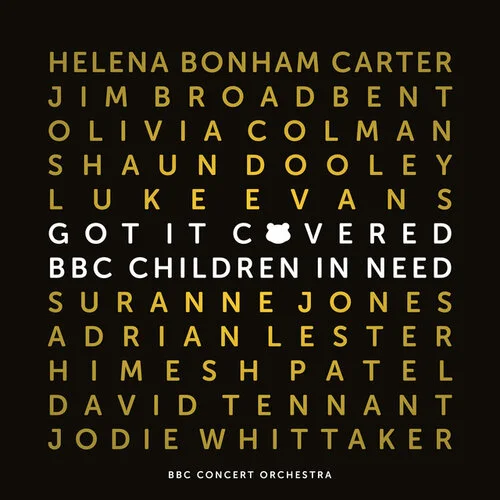
to raise money for BBC Children in Need. I am not usually a fan of songs that joins together a bunch of celebrities; covering a familiar song and leaving things at that. Normally, the song chosen is quite Pop-based and it doesn’t really surpass the original. I know the aim is to raise money, so one can have few objections to any song that comes out. I guess Live Aid sort of kicked off the phenomenon of uniting some famous faces to perform a popular song. Now, for this year’s BBC Children in Need, there is an album that is worth some pennies. BBC Children in Need: Got It Covered finds actors like Helena Bonham Carter and Olivia Colman give their take on track we all know and love. Here are some more details:

BBC Children in Need: Got It Covered is a brand new venture from BBC One and BBC Children in Need for 2019 which involves some of the UK’s biggest names from stage and screen as they band together to produce an entire album of cover songs whilst helping to make a positive difference to the lives of disadvantaged children and young people throughout the UK.

A whole host of critically-acclaimed actors have volunteered their time to play a special part in this incredibly exciting project for BBC Children in Need - HELENA BONHAM CARTER CBE, JIM BROADBENT, OLIVIA COLMAN CBE, SHAUN DOOLEY, LUKE EVANS, SURANNE JONES, ADRIAN LESTER, HIMESH PATEL, DAVID TENNANT and JODIE WHITTAKER.

A special 60-minute programme follows the entire recording process and explores all the behind-the-scenes action as the actors face the challenging task of laying down their bespoke tracks at the legendary RAK Studios and Abbey Road Studios in London”.

1. Olivia Colman - Glory Box

2. Adrian Lester - I Wish

3. Jodie Whittaker - Yellow

4. Luke Evans - Smile

5. Suranne Jones and Half Moon Theatre - Symphony

6. Shaun Dooley and Grimethorpe Colliery Band - Never Grow Up

7. Himesh Patel - All These Things That I've Done

8. Jim Broadbent - Blue Moon

9. Helena Bonham Carter - Both Sides Now

10. David Tennant - Sunshine On Leith

11. The Actors - It Must Be Love”.

I would not normally write a feature about a BBC Children in Need project, but I am intrigued by the new album and the fact there are some really food interpretations. I know Olivia Colman can sing but have a listen to her take on Portishead’s Glory Box and it is almost as good as the original! Himesh Patel’s take on All These Things That I've Done (by The Killers) is brilliant, and David Tennant gives a new spin on Sunshine on Leith. There are a few misses on the album, but that is all part of the fun! I am not sure how BBC Children in Need decided upon the celebrities they would use, but there is a nice selection. Maybe the sole intention of this album was to raise money - which is fair enough -, yet there are some potential artists in the fray.

When we look at actors who have transitioned into music, the list is pretty short! Apart from folks like Alexander Armstrong and Jeff Goldblum, there are not that many crossing disciplines. This article from last year shows that there are actors who are musicians/want to become one. I do think we get snooty when it comes to actors and celebrities having musical aspirations. Maybe there is a similar sense of reservation regarding artists turning to the acting world too. I do like what is bubbling in the music world right now; I do think there is something missing. Perhaps recruiting actors into the music world is not the cure, but I think albums like BBC Children in Need: Got It Covered are a start. I know those on the album were nervous about recording their songs, as it is a new world for them and different from their usual jobs. What has come from the album are a few revelations. I think Olivia Colman could succeed in music and definitely has a voice that warrants greater exposure. Even though actors like Helena Bonham Carter have sung before, she proves herself to be a fine interpreter – her take on Both Sides Now by Joni Mitchell is pretty decent. Have a listen to the album and you will find a lot of great songs that go beyond novelty. There have been cases where actors and non-musicians have successfully adapted.

The main objective of this feature was to promote the BBC Children in Need album, but I have been listening and think there are a few names that could well do well in a musical setting – if not a conventional album, they could step into musicals or add another string to their bow. In many ways, it is almost harder covering a huge song that writing an original, when it is unique and there is nothing to compare it to. It sounds like the BBC Children in Need: Got It Covered project was enriching for all those concerned, and I hope some of the contributors work together in a musical setting. Make sure you get the BBC Children in Need album so they can raise as much money as possible. I keep listening to the songs on the album and they are getting stronger. It is a solid collection of songs and contributors which makes me wonder whether there are other actors/celebrities who could genuinely succeed and survive in music. I do think music is at its strongest when it is varied and throws up surprises. I think it is great there is a whole album out this year to support BBC Children in Need, rather than the one track. Cover versions are always tricky and, whilst there are a few bouncing about, I would like to see more artists new and existing tackle older songs. In any case, I do feel like the BBC Children in Need: Got It Covered is a great project, and it also uncovers some hidden vocal gems. I do wonder whether we will see some resultant albums come from Himesh Patel or Luke Evans? That would definitely be…     

 IN THIS PHOTO: Olivia Colman and Pudsey/PHOTO CREDIT: BBC

INTERESTING to see.

FEATURE: Spotlight: Liz Lawrence

FEATURE:


Spotlight

Liz Lawrence

___________

THIS year has seen some wonderful…

aaaaaaaaaaaaaa.jpg

 PHOTO CREDIT: Marieke Macklon

solo artists shine through and provide kaleidoscopic sounds. I have been especially impressed by Greentea Peng, Charlotte Day Wilson and Sam Fender. It is a very busy and exciting year, and I am looking forward to seeing how music looks next year. One artist who is on the rise and making big progress is Liz Lawrence. She released her new album, Pity Party, on 25th October and you can buy it here. Lawrence was formerly part of the duo, Cash+David, and has toured with Bombay Bicycle Club. Lawrence has been tipped as a name to watch and, with a fresh album in the ether, a lot of people are very excited. Lawrence is an artist who suggests artists such as Marika Hackman, St Vincent and Perfume Genius, but she has her own style and unique angles. None of My Friends is one of my favourite singles of the year and exemplifies what an exciting and interesting style she has. I really love Lawrence’s voice and how her songs are relatable and stay in the brain. Although Pity Party is a fantastic album, I think Lawrence’s best work is still ahead of her. Her finest songs are among the best out there, but this is an artist with many years ahead; someone who is growing and will be a massive name. Lawrence is proud her album is out there – as she should be! – and fans are reacting to it.

I want to bring in an interview she gave to NME, where she was asked about Pity Party and how it feels having it out there:

You must be thrilled with the album and being at this point after your journey so far?

“I’m massively excited – you always get to this point where you’ve looked at it for a long time and now people get to hear the record in its entirety. I’m quite old fashioned, streaming and stuff is great but I do like the idea that someone is going to get the full picture, that’s really cool. I’ve never seen one of my releases in a record shop before so I’m really excited to go down to a shop and find one. You’ve got to right? You’ve got to go and hunt out your record.”

This record is very much all about honesty, tell us a little bit about the concept of ‘Pity Party’?

“Obviously it’s a phrase that I’ve heard people use. I was in a particularly self-indulgent move and someone said, ‘I’m a bit bored I’m going to leave your pity party’. I thought that was perfect because it sums up that tension and pull between serious aggravation and obstacles in your life and also how you approach them and how much you indulge your feelings towards it. Also, it’s just funny, I was quite keen to be a little bit humorous with this record. It has some weighty issues but I hoped to approach it with at least a bit of warmth and humour”.

Lawrence, for Pity Party’s creation, wanted to make an album on her own terms. Writing six of the songs in only five days, there is an urgency and sense of risk that pays off. She wanted to move out of her comfort zone and see what could result. What we hear is an artist unleashed and explored her full potential. As I said, I think Lawrence has her best years ahead, but Pity Party is a fantastic album and one that deserves a lot of kudos and attention. The album has been picking up some positive reviews. Thank Folk for That were keen to have their say:

‘Navigator’ is the natural single on the record. A jaunty rhythm, colloquial wordplay and a clap-a-long chorus to die for make this the most memorable track from the record, but there is certainly more complex offerings to come and ‘None of My Friends’ pummelling basslines, distorted analogue interludes and evocative synth tones suggest darker subject matter along with more explicit reference to Lawrence’s eighties influences. The marvellous ‘USP’ reinforces her penchant for the unexpected by throwing a britpop aesthetic into the mix.

PHOTO CREDIT: Marieke Macklon 

These new songs are enhanced by incredibly rich vocals; there is also sense of absolute control on display; perhaps this is what differed in the live performance which felt much more unruly. The result of this is beguiling though, never more so than on the stripped-back ‘Shoes’ which is a heartfelt bout of introspection accompanied by a lone guitar. The contrast is jarring and over way too soon before ‘Want’ takes us back to the 90s. Here, the references begin to feel just a touch stale but thankfully ‘Life Again’ restores Liz Lawrence’s knack for a melody along with some visually satisfying songwriting and ‘What People Do’ maintains this. In some ways this is very typical English fare and the electronic embellishments contribute to this impression. This approach connects her new record to time spent in the synth duo Cash + David and this is never more evident than the wonderfully sweeping and metronomic ’10 Breaths’, where the combination of guitar and synth soundscapes compliment each other perfectly and it is during these moments when Liz Lawrence’s vocals really hit that sweet spot”.

If you want to go and see Liz Lawrence play, keep an eye out and make that date. She has had a busy 2019 and I am sure there will be a lot happening for her in 2020. I am predicting festival dates and, maybe, there might be the odd new cut here and there. I do think this year has been defined by female artists; Liz Lawrence is among the very best out there and someone that you need to keep a watch out for. I want to bring in a final interview, because Lawrence spoke with Wonderland about Pity Party and what she wants people to get from it; whether she has plans for the future:

Do you want young people to listen to your music and be inspired by or relate to it?

I guess it would be really nice to feel like you can be empowering to people, whoever they are. But it’s not just teenagers – I think most people who have come to me about “None of my Friends”, for example, are people in their mid-to-late twenties, and they’re like ‘oh my god, that is my life, those are my friends’…

Do you put yourself in a genre, or do you feel like that’s an outdated mode of categorisation?

I think you have to – if you want to be savvy, you need to be able to very quickly market yourself. And that’s not me being cynical, it’s just if you really care about what you do, you need to find a way to explain to people very quickly why they should listen to it. It’s not a thing that many artists ever really get there with being able to do, ’cause it’s really, really hard. It’s sort of like trying to describe yourself in three words, or whatever. But I think indie-pop is fine; I tend to go for that.

What do you want from this in the future? Is it just to be happy and make a living out of it, or do you want that stadium tour?

I mean, I don’t think I’d be content with just being content. My friend asked me when I finished this record what I wanted from it, and all I could think was that I just want be able to make another one, and then who knows from there”.

The future is very bright for Liz Lawrence. Although she is keen to tour and work with other artists, the fact she has stepped out on her own gives her music more of a personal voice and sense of truth. I think Pity Party is one of 2019’s underrated gems and I am thrilled Lawrence’s fanbase is growing. Give her a follow if you can – links are at the bottom of this feature - and show her some love! It is a busy and crazy scene right now where some marvellous artists are shining and surging. In a crowded and exciting sea, Liz Lawrence is well worth some affection and time. As Pity Party shows, she is…

SUCH a talented songwriter.

_______________

Follow Liz Lawrence

FEATURE: Vinyl Corner: Janelle Monáe - The ArchAndroid

FEATURE:


Vinyl Corner

aaaaaaaaaaaa.jpg

Janelle Monáe - The ArchAndroid

___________

HERE is an album…

900000.png

 PHOTO CREDIT: Getty Images

I have wanted to include in Vinyl Corner for a while now. I am making changes to the feature going forward – first, I am not putting ‘Vinyl Corner’ in italics -, and I am broadening the scope of albums included. The ArchAndroid or, to give it its full title, The ArchAndroid (Suites II and III), is the debut album from the sublime Janelle Monáe. Arriving on 18th May, 2010, it started this decade off with an almighty bang! Recently, I wrote a feature about my favourite song of this decade: Robyn’s Dancing on My Own. That songs came out in 2010, but I completely forgot that Tightrope was released in the same year. It is the standout from Monáe’s debut; an album that contains more than its fair share of absolute tunes and classics! Even though there are other writers and producers in the mix, Monáe did not let others guide her voice. The fact she has a creative say and writes/produce throughout means The ArchAndroid is an album that is personal and strong. I think The ArchAndroid would be a weaker and less focused album if Monáe was singing other people’s tracks. As it is, Monáe guides this fantastic record; the second and third parts of her Metropolis concert series. The ArchAndroid, as the title suggests, centres around an all-conquering android, and wastes very little time in getting under the skin. Some have drawn comparisons to Prince, David Bowie and Michael Jackson when you listen to The ArchAndroid.

It is true those influences were in her mind, but it is a disservice to Monáe to say that other people’s fingerprints are more emphatic than her on. Guided by these great artists, Monáe proved herself to be one of the most captivating and compelling artists back in 2010 – she remains so to this very day. One of the strengths of The ArchAndroid is that we do not have a simple series of songs that are traditional and routine. This figure of the android represents the minority; the mediator between the minority and the majority; this heroine that is here to break the chains. It is a very powerful image, and I love that Monáe invented this powerful heroine, and gave herself license and great freedom regarding the songs. If she was just writing about love or copying her peers, maybe that would have been too restrictive and formulaic – would she have been able to spread her wings and truly hit her stride?! Monáe recorded the album during a very transformative and changing period for her. Although the album is pretty pricey on vinyl, I think it is worth the expense, as The ArchAndroid hops genres, mixes styles and conveys a range of emotions. Monáe is cool and sleek; she is demurer at some moments but, in every track, she is in command and hugely inventive.

In terms of musical influences, she not only splices genres, but there are elements of various different nations – Monáe incorporated elements of various places she toured in and, as a result, I think the album speaks and connects with more people than it would have had she been a little less itinerant. I was writing a feature the other day, where I was thinking about modern music and asking whether artists inject enough from the world of film. There is so much to love about film music/scores and soundtracks. I do think that the sonic world of cinema is not utilised enough by artists today. One reason why The ArchAndroid sounds so busy and widescreen, is because Monáe was inspired by film scores and soundtracks. It is hard to pin down and categorise The ArchAndroid, because it employs some Hip-Hop and Neo-Soul; there is Pop and Funk and little bits of everything. Such a busy album could have come across as overly-ambitious or muddled in the hands of other artists. Monáe sounds totally inflamed, committed and assured at every step. I remember hearing bits of The ArchAndroid in 20102 and, after nearly a decade, it still sounds so wild and unpredictable. There are songs that hang together like a suite and others that strut their stuff. You do not need to be a fan of a particular genre or time period to enjoy The ArchAndroid.

 PHOTO CREDIT: Getty Images

It is not surprising realising The ArchAndroid won huge respect and celebration from critics. It was a revelation back in 2010 and brought to many people’s attention this new and thrilling artist. Here is AllMusic’s take on one of the best albums of this decade:

The packaging alone -- the elaborate crown, the inspiration listed beside each song, etc. -- provides much to process. Liner notes from the vice-chancellor of the arts asylum at the Palace of the Dogs, Monáe’s residence, outline the (possible) situation fleshed out in the songs. In short, Monáe was genoraped in the 28th century, sent back to the 21st century, and had her organic compounds cloned and re-purposed for the existence of ArchAndroid Cindi Mayweather, whose directive is to liberate Metropolis from a secret society of oppressors. Understanding all this stuff enhances the enjoyment of the album, but it is not required. A few tracks merely push the album along, and a gaudy Of Montreal collaboration is disruptive, but there are numerous highlights that are vastly dissimilar from one another. “Tightrope,” the biggest standout, is funky soul, all locomotive percussion and lyrical prancing to match: “I tip on alligators, and little rattlesnakers/But I’m another flavor, something like a Terminator.” Just beneath that is the burbling synth pop of “Wondaland,” as playful and rhythmically juicy as Tom Tom Club (“So inspired, you touch my wires”); the haunted space-folk of “57821” (titled after Monáe’s patient number); and the conjoined “Faster” and “Locked Inside,” packing bristling energy with a new-wave bounce that morphs into a churning type of desperation worthy of Michael Jackson. Monáe might not have much appeal beyond musical theater geeks, sci-fi nerds, and those who like their genres crossed-up, but no one can deny that very few are on her creative level. She can sing, sang, and scream like hell, too”.

It is hard to hone to one aspect when explaining why The ArchAndroid is such a timeless and phenomenal album. I would say it is Monáe’s flexibility and adaptable nature. Whether it is the vocals, composition or the lyrics, she keeps things twisting, mobile and moving. It is head-spinning listening to an album like The ArchAndroid. The A.V. Club alluded to this when they reviewed Janelle Monáe’s debut:

But Janelle Monáe truly earns the tag on The ArchAndroid (Suites II And III). Her sophomore album bounds among tracks that stray far outside the boundaries of her loose “soul” designation, and frequently strain at the basic conventions of pop music itself. Monáe’s chameleonic nature extends to every aspect of her performance, including her ever-changing vocals, which swing from Beyoncé-like diva strut on “Cold War” to punk-rock-cabaret snarl on “Come Alive” to pastoral, madrigal-esque balladry on “57821.”

But what sounds like a shambling mess in description is in practice frequently exhilarating, and always intriguing. Granted, Monáe’s vacillations occasionally create some jarring moments, such as a grating/beguiling interlude in which all the vocals are played in reverse (“Neon Gumbo”) following the album’s most radio-ready single (“Tightrope,” featuring Big Boi). However, such fluctuations are usually justified by the album’s loose concept, which continues the saga of Monáe’s android alter-ego Cindi Mayweather, first explored on her 2007 debut EP, Metropolis. But really, Monáe’s inexhaustible swagger and singular style sell both the high-concept theatrics and the schizophrenic sonics.

Janelle Monáe followed up The ArchAndroid with The Electric Lady in 2013. That was another big record and won her a lot of new fans. Dirty Computer came out last year and, like its predecessors, it was a solid and hugely memorable set of songs. Although Monáe has not dropped a step and all three of her albums have received overwhelming positivity, I think her debut is her best album. The ArchAndroid is one of those albums that blows your mind when you first listen and remains as stunning years down the tracks. I have heard tracks from the album since its release and they never seem to grow old or familiar. I think there have been few stronger albums this decade than The ArchAndroid. I would encourage people to get the album on vinyl, because I think it is one of these recordings that people will be talking about decades from now. If you have not heard it – or cannot afford the vinyl -, stream the album (I have included it at the bottom of this feature) and discover why it is such a revered and inspiring work. It makes me wonder why other artists do not follow Janelle Monáe when it comes to concept and scope. Maybe they feel they’d fail or be unable to hit the same peak as her. On one of The ArchAndroid’s biggest tunes, Monáe mentions a tightrope. On that tightrope, and through every golden moment of The ArchAndroid, Janelle Monáe…

saas.jpg

IN THIS PHOTO: Janelle Monáe in 2019/PHOTO CREDIT: Janelle Monáe/Getty Images

WALKED with supreme confidence!

FEATURE: The Feast After the Banquet: The Rolling Stones’ Let It Bleed at Fifty

FEATURE:


The Feast After the Banquet

The Rolling Stones’ Let It Bleed at Fifty

___________

A few big albums are turning (or have turned) fifty this year…

 IN THIS PHOTO: The Rolling Stones in Hyde Park in 1969/PHOTO CREDIT: Barrie Wentzell

and one of the best of them all, Let It Bleed, is fifty on 5th December. A special, super-duper-deluxe edition of the album has been released - and it worth snapping up if you are a fan of the album. Maybe the price is a little steep, but such an important album is worth the investment. Reviews are already coming in for the Let It Bleed fiftieth. Here is what Louder Sound said about the set:

If the Rolling Stones inadvertently slammed the coffin lid shut on the 60s with the disaster that was Altamont, then Let It Bleed, the band’s eighth UK album and released the day before, was a focused summation of the turbulent times both within and beyond the band.

Founder Brian Jones was out, his replacement Mick Taylor was coming in, and the scenes of televised violence from Vietnam and more suffused the Stones’ music.

Elsewhere, the outré mores of Live With Me – the first song recorded with Taylor and saxophonist Bobby Keys – are tempered by targeting the hips, although You Got The Silver’s concerns seems quaint in comparison.

But it all adds up to a filler-free classic. Containing mono and stereo vinyl versions as well as SACD counterparts, this anniversary edition is bolstered with a mono seven-inch of Honky Tonk Women and an 80-page book illustrated with previously unseen photos.

When you think about Let It Bleed, you have to realise that this was The Rolling Stones at their very best. 1968’s Beggars Banquet was still fresh in the mind and, with songs such as Sympathy for the Devil and Street Fighting Man among the best cuts, how could a band possibly expand on that?!

The Rolling Stones ended a fantastic-yet-turbulent decade with what must be considered one of their best albums. They were not daunted by the success and brilliance of Let It Bleed: 1971’s Sticky Fingers and 1972’s Exile on Main St. are all genius albums. I wonder whether a band has ever put together such a run of flawless albums?! Maybe The Beatles match them in terms of their output from 1965’s Rubber Soul to 1969’s Abbey Road. It is amazing that The Rolling Stones put out such a remarkable album, considering the loss the group suffered whilst recording. The band’s founder, Brian Jones, was dependent on drugs during the album’s recording and unable to contribute. He was fired and replaced by Mick Taylor. The blow of having to lose a brother rocked the band and meant that they had to quickly contribute with a new member and dynamic. Sadly, Brian Jones died shortly after (in July 1969) he was fired and never got to see Let It Bleed succeed and inspire. Alongside Mick Jagger, Bill Wyman and Charlie Watts, Keith Richards had the job of handling the rhythm and lead guitar parts. I think Let It Bleed is one of the moist eclectic albums the band ever released and sort of saw them embrace a Blues sound that was more prevalent earlier in their career. The range of sounds and genres revealed through Let It Bleed is amazing. The Gospel tones of You Can’t Always Get What You Want and the Country-Blues Love in Vain sit beside one another comfortably. Maybe slightly more lascivious and grittier than Beggars Banquet, there is a lot of passion to be found.     

Some criticised the cover of the album and the fact that it was not as eye-opening as Beggars Banquet. Sticky Fingers would see them return to the iconic, whereas Let It Bleed did not have the same impact. I really like the cover of Let It Bleed and the fact that it is a little funny and weird. Let It Bleed is a wide-ranging album, but it is tighter than Exile on Main St. and more nuanced than Beggars Banquet. The track listing and emotional balance of the album is perfect. The album opens with one of the strongest tracks, Gimme Shelter; it instantly grips the listener and does not let them go. Ending the first side with Let It Bleed, the second side is not exactly a slouch! Midnight Rambler opens the side and we end with You Can’t Always Get What You WantLet It Bleed opens and closes with epic tracks! Let It Bleed received hugely positive reviews and continues to amaze and fascinate critics. In their review, AllMusic had this to say:    

Mostly recorded without Brian Jones -- who died several months before its release (although he does play on two tracks) and was replaced by Mick Taylor (who also plays on just two songs) -- this extends the rock and blues feel of Beggars Banquet into slightly harder-rocking, more demonically sexual territory. The Stones were never as consistent on album as their main rivals, the Beatles, and Let It Bleed suffers from some rather perfunctory tracks, like "Monkey Man" and a countrified remake of the classic "Honky Tonk Woman" (here titled "Country Honk").

WWWW.jpg

 Yet some of the songs are among their very best, especially "Gimme Shelter," with its shimmering guitar lines and apocalyptic lyrics; the harmonica-driven "Midnight Rambler"; the druggy party ambience of the title track; and the stunning "You Can't Always Get What You Want," which was the Stones' "Hey Jude" of sorts, with its epic structure, horns, philosophical lyrics, and swelling choral vocals. "You Got the Silver" (Keith Richards' first lead vocal) and Robert Johnson's "Love in Vain," by contrast, were as close to the roots of acoustic down-home blues as the Stones ever got”.

Ahead of its fiftieth anniversary, I am listening to Let It Bleed and discovering new sides. Some of the songs I missed before – such as Country Honk and You Got the Silver – are starting to come into their own. Gimme Shelter, somehow, sounds even more biblical whilst Love in Vain seems to improve with age. I want to bring in a feature from Ultimate Classic Rock that highlights what I was saying earlier: Let It Bleed is the sound of The Rolling Stones at their daring and untouchable best:

There was no telling, but from the sound of things on the album's best songs – "Gimme Shelter," "Monkey Man," "You Can't Always Get What You Want" – it wasn't going to be easy. The murder fantasy "Midnight Rambler," the "Honky Tonk Women" rewrite "Country Honk," "You Got the Silver," the first full song to feature Keith Richards on lead vocals – all are immersed in layers of anguish and unease. It's sexy, dirty, scary and on the verge of collapsing under the weight of impending doom.

And it's a brilliant work by a band at its absolute peak. The Rolling Stones followed Let It Bleed with Sticky Fingers and then Exile on Main St., two of rock's all-time greatest albums. The progression from Beggars Banquet up through 1972's Exile charts a band growing into and out of itself. Elements of each record find their way into the others, from the bluesy sway that dominates Beggars and appears elsewhere (including on Let It Bleed) to the druggy aftermath of the '60s that seeps into Bleed and completely takes over Exile. Let It Bleed is the middle link holding it all together”.

As we end the 2010s, we get to look back at an album that still sounds remarkably fresh today. When Let It Bleed came out, there was corruption, political turmoil and tension – race riots in the U.S. and the war in Vietnam. It is clear that numerous artists have been inspired by The Rolling Stones’ masterpiece, but I wonder whether any band since them has reached such an artistic peak. The Rolling Stones, of course, are touring still and we get to hear classic tracks from Let It Bleed. On 5th December, this remarkable album turns fifty, and I hope it gets the celebration and fresh exposure it deserves. There is debate among Rolling Stones fans as to which album is their very best. There is this divide between those purple patch albums: Beggars Banquet, Let It Bleed and Exile on Main St. often fight it out for that top spot. To me, The Rolling Stones were at their most thrilling, broad and accomplished in 1969. Even as their leader, Brian Jones, was spiralling and about to depart the band, the guys produced this incredible cohesive and remarkable album. Play Let It Bleed now and it is clear that this masterpiece sounds so incredible…   

AFTER all these years.

FEATURE: Modern Heroines: Part Seven: Florence Welch

FEATURE:


Modern Heroines

sss.jpg

PHOTO CREDIT: E S Magazine

Part Seven: Florence Welch

___________

THIS was a tough one to start off…

PHOTO CREDIT: Kathy Lo for The New York Times

as I was not sure whether to dedicate this feature to ‘Florence Welch’ or ‘Florence + The Machine’. The former is the lead of the latter; the ‘Machine’ element of the band, I think, refers to her musicians – there are other people who play with her (keyboardist Isabella Summers, guitarist Rob Ackroyd; harpist Tom Monger and others). Rather than cause confusion – if I haven’t done that already -, I thought I would just keep it to Florence Welch herself. She is, as I said, the heroine behind the moniker; one of the most arresting voices this country has produced. As the primary songwriter and vocalist of Florence + The Machine, Welch is this flame-haired spirit who, I think, is among the finest live performers in the world. I shall come to the present day in time but, for now, let’s start at the beginning. I think Welch will be considered an icon of the future because, right from her debut album, she stood out and stunned. There is a lot to uncover through this feature – I shall try and get to the bottom of a rare and stunning artist. Florence Leontine Mary Welch was born in Camberwell, London on 28th August, 1986 to parents Nick Russell Welch, an advertising executive, and Evelyn Welch, an American emigrant from New York City who was educated at Harvard University and the Warburg Institute, University of London.

Whilst her home life would have inspired a creative spirit, it was her paternal grandparents who encouraged her most. They inspired a few songs on her debut, Lungs, and were crucial when it came to Welch going beyond dreams to chasing a music career.  Welch’s teenage years were quite turbulent. Her parents divorced when she was thirteen, and her maternal grandmother ended her life around the same time. Welch developed an eating disorder as a teen, and it seems that, among happier days, there was a lot of struggle and darkness. One can say many teenagers experience similar, but there was a lot of change and upheaval that affected Welch. Having her parents split and a dear grandparent die…these blows were huge indeed. Life before starting a band consisted of modest gigs and a lot of writing. Performing gigs with Isabella Summers (who has been in Florence + The Machine from the start) in 2006, the duo was appearing in small London venues; some of the tracks that appeared on Lungs were in their early stages, and Welch was working her magic. Although those early gigs and recordings were quite modest, there was a lot of buzz – it was clear Welch had a natural talent and hunger. Although ‘Florence + The Machine’ started as a private joke – kind of goofy and random -, the debut album arrived in 2009. Things were not instant and fully-formed before 2009. Welch had tried a number of guises in terms of sound and direction.

It was when Welch began writing with Isabella Summers that she discovered her sound and found her direction. Inspired by the breakup of relationships – not untypical for most songwriters -, Welch hit the studio with a great deal of enthusiasm and desire. Although she was not necessarily a skilled musician by this time, the fact she was relying on her vocals and words gave her a freedom that might not have been there was she a guitarist or pianist. Slowly, the band started to come together and form into this finished product. Robert Ackroyd (guitar, backing vocals), Chris Hayden (drums, percussion and backing vocals); Mark Saunders (bass guitar, backing vocals) and Tom Monger (harp) were recruited – and Florence + The Machine was born. Signing to Island Records in 2008, Welch had come a long way since the early days – where she was still trying to find her voice and playing with different ideas. Ready and honed, Lungs is a fantastic debut that heralded in a huge and intoxicating voice. We have witnessed a decade of Florence + The Machine, so there is this familiarity; we have seen Welch develop and flourish. Looking back, it is amazing Lungs is filled with so many hits; ripe with some of the band’s biggest numbers. Dog Day Are Over and Rabbit Heart (Raise It Up) opens the album – if you are going to open your musical account with a bang, these are the songs you want up there! Kiss with a Fist and Drumming Song are in there. Perhaps her most famous song of the time, You’ve Got the Love – a cover of the Candi Staton classic – was a song Welch was very familiar with and keen to explore. Her version ups the passion of the original and adds new dynamics.

Although a lot of critics did not know what to make of Florence + The Machine – there were instantly connections with and parallels to Kate Bush -, there were some positive reviews for Lungs. It is a very big and passionate album so, perhaps, some needed a bit more time to take it in. I was moved the first time I heard it, and I was stunned by this singer who bled emotion and had this incredible power. It remains this intoxicating listen that has this primal physicality and sense of the mystical. AllMusic, in their review, had this to say:

Precocious Brit Florence Welch fired a bullet into the head of the U.K. music scene in 2008 with the single "Kiss with a Fist," a punk-infused, perfectly juvenile summer anthem that had critics wiping the names Lily Allen, Amy Winehouse, and Kate Nash from their vocabularies and replacing them with Florence + the Machine. While the comparisons were apt at the time, "Kiss with a Fist" turned out to be a red herring in the wake of the release of Lungs, one of the most musically mature and emotionally mesmerizing albums of 2009. With an arsenal of weaponry that included the daring musicality of Kate Bush, the fearless delivery of Sinéad O'Connor, and the dark, unhinged vulnerability of Fiona Apple, the London native crafted a debut that not only lived up to the machine-gun spray of buzz that heralded her arrival, but easily surpassed it.

wwww.jpg

PHOTO CREDIT: Dean Chalkley/NME 

Like Kate Bush, Welch has little interest (for the most part) in traditional pop structures, and her songs are at their best when they see something sparkle in the woods and veer off of the main trail in pursuit. "Kiss with a Fist," as good as it is, pales in comparison to standout cuts like "Dog Days Are Over," "Hurricane Drunk," "Drumming Song," "Rabbit Heart (Raise It Up)," and "Cosmic Love," all of which are anchored to the earth by Welch's knockout voice, a truly impressive and intuitive trio of producers, and a backing band that sounds as intimate with the material as its creator. [Lungs was also released in a Deluxe Edition that included Lungs: The B-Sides, a bonus disc featuring studio tracks like “Swimming,” “Falling,” and “Heavy in Your Arms,” the latter of which appeared on the soundtrack for Twilight Saga: Eclipse, as well as live cuts (“You've Got the Dirtee Love"), demos (“Ghosts”), and remixes (the "Yeasayer Remix" of “Dog Days Are Over").]”.

If Florence Welch was largely unknown before Lungs, her debut with Florence + The Machine definitely changed all of that! Ceremonials is an album that possessed a lot of similar strands to Lungs, but expands her voice and lyrical narrative. Produced by Paul Epworth, Welch and the band began working on the album shortly after the release of Lungs. Although there are, perhaps, fewer standout hits on Ceremonials, I think it is a more nuanced and complete album; more of personal statement. Welch worked with several others on Lungs’ songs – including Isabella Summers -, but the majority of the tracks were written by Welch and Paul Epworth. Perhaps the comparisons to Kate Bush were inevitable. After all, both were born into middle-class families and this ethereal, cosmic quality; both have incredible voices and a rare beauty. Ceremonials fared better with critics than Lungs. It was nominated at the Grammys for Best Pop Vocal Album; Shake It Out was nominated for Best Pop Duo/Group performance. The album debuted at the top of the U.K. charts and it was clear a star was born! The album was a huge success and sold over two-and-a-half million copies. In interviews, Welch stated she wanted Ceremonials to sound sort of like Baz Luhrmann’s Romeo + Juliet: a mix of the classic Shakespeare and the tragedy. The Chamber Soul feel of the album combines some classical with the modern; it is a bigger album than Lungs and one that experiments more.

This is how AllMusic assessed Ceremonials:

It’s a contest that plays out at least once on each of Ceremonials' immaculately produced 12 tracks. Such carefully calculated moments of rhapsody would dissolve into redundant treacle in less capable hands, but Welch does emotional bombast better than any of her contemporaries, and when she wails into the black abyss above, the listener can’t help but return the call. Bigger and bolder than 2009’s excellent Lungs, Ceremonials rolls in like fog over the Thames, doling out a heavy-handed mix of Brit-pop-infused neo-soul anthems and lush, movie trailer-ready ballads that fuse the bluesy, electro-despair of Adele with the ornate, gothic melodrama of Kate Bush and Floodland-era Sisters of Mercy. Producer Paul Epworth (Bloc Party, Friendly Fires) knows that the fiercest weapon in his arsenal is Florence herself, and he stacks her vocals accordingly, creating a fevered, pagan gospel choir on “What the Water Gave Me” and “Leave My Body,” a ghostly, Phil Spector-ish chorale on the surprisingly Beatlesque “Breaking Down,” and a defiant, uplifting horde of merry pranksters on the spirited “Heartlines,” resulting in that rare sophomore outing that not only manages to avoid the slump, but bests its predecessor in the process”.

The album turned eight on 28th October, and Welch was keen to mark Ceremonials’ birthday. She is an artist who takes great pride in her work and is grateful for the love it has been shown and how it resonates with fans. Having enjoyed a sense of anonymity before her debut album, Welch was definitely in the spotlight by 2011.

More and more people were taking an interest in her music; her gigs were getting bigger and, invariably, there was the usual press adoration and scrutiny. Before I move on, I want to bring in an interview Welch conducted with The Guardian back in 2011. Not only do we sort of capture an essence of her personality and uniqueness, but it shows how far she came as a performer and interviewee since the start of her career:

Welch seems to have become more disciplined since emerging, three years ago, as a 22-year-old who would sing through her photo calls, then cheerfully babble to interviewers about believing in werewolves or collecting Scottish broadswords. In her very first interview, conducted in an east London pub, she continued speaking into the reporter's Dictaphone even while he was at the bar getting drinks… Inevitably, there followed one or two mean write-ups, mostly from music journalists knocking her un-rocky way of speaking (posh vowels, girls' school cadences) and too-trendy affectations. "Florence listens to music through a Walkman," wrote one early blogger. "Well of course she bloody does."

Three years at the industry's front edge seems to have taught Welch to hold herself back a bit; to get through each promotional marathon by staying quiet when she can. In the same self-governing spirit she's trying hard not to get as almightily pissed as she used to. A recent month-long tour in support of U2, she says, passed totally soberly. "I used to think it was all part of the performance to go out there, go on tour, and get as drunk as possible. Like, oblivion. Oblivion. Living almost out of control. And I think, now, I feel a bigger sense of responsibility to the fans. To the people who come to see me play."

PHOTO CREDIT: Dean Chalkley/NME 

This is second-album talk. Because it can go either way at this point; look at the example of her contemporaries. Adele's second effort, last spring's 21, confirmed her as music royalty. Duffy's second, the desperately ho-hum Endlessly, seems to have stunted, if not sunk, a promising career. "I'm more satisfied with this one than the last," says Welch. "But I'm still nervous about it. You're never completely happy, otherwise you wouldn't ever make the next one." Earlier, recalling her summer on the under-card of the big U2 tour, she'd said: "It's funny, in a way, I almost prefer being the support band. There's just less expectation."

She'll be fine with Ceremonials. My nerves, if any, are that fans of Lungs, that great dossier of discontent, must have been fans of its fury, its tartness. And on Ceremonials, Welch sounds really quite chuffed. Track one kicks off with a muffled giggle. By track five's foot-tappy harpsichord twangs, the mood is absolutely jaunty. The video for recent single "Shake It Out" even cast a giddy-looking Florence in the middle of a game of blind man's buff.

"I think the first album feels almost desperate. Being really desperate for someone. I was definitely in a more settled place for the second, which was helpful for my concentration because I wasn't, like, crying all the time."

One can definitely feel more confidence in Ceremonials. By the time How Big, How Blue, How Beautiful arrived in 2015, Welch and her band were world-famous and there was a lot of eyes cast their way. It is clear the time before the album’s recording was pretty full-on.

Welch suffered because of it – she told Zane Lowe in an interview how she had a bit of a breakdown -, and she wasn’t that happy. The first two albums were fairly close together and it was a whirlwind of promotion, recording and touring. It was clear Welch needed a rest and a chance to recharge. Maybe the glare of celebrity or the pressure of the industry was taking its toll. Time off was rare, and Welch found herself in this odd state where she was pretty unhappy and unwell. It is not a shock that the tone for How Big, How Blue, How Beautiful is a lot more personal. Whereas there is more literature, fantasy and the colourful on the first couple of albums, her third still sound passionate but looks more into the self. It reflects the hard times and sense of rush that preceded How Big, How Blue, How Beautiful. There were definite themes shaping Ceremonials. Death and water were subjects explored through that album. Although How Big, How Blue, How Beautiful is more personal than anything before, there is this sense of a woman looking forward and trying to tackle her problems. Producer Markus Dravs was credited as bringing out a more vulnerable side to Welch on How Big, How Blue, How Beautiful, but it is obvious she needed to reflect what was happening in her life; open up more to the listener. The mark of a truly evolving and wonderful artist is one who can develop but keep their identity.

What I mean by that is (that) Welch was exploring herself more on How Big, How Blue, How Beautiful, yet she kept a lot of the same elements we heard on the first couple of Florence + The Machine albums. With every album, critics were opening themselves up more to the incredible and powerful brew of Welch’s music. I think the fact that she was so different to everyone out there meant that many took quite a while before they truly appreciated her music. The Telegraph reviewed How Big, How Blue, How Beautiful and had a lot of love to give:

But you can be taken right back there – arms aloft among the floral head garlands that had not yet become so ubiquitous – by first single What Kind of Man. Those thunderous tribal beats – battered out as if from mammoth bones – are classic Welch. As are the chunky, punk guitar chords and fearless warrior vocals – don’t forget this is a woman who got her break after being overheard belting out an Etta James song in a club lavatory. What’s new is the more spacious and controlled tone Welch finds in the long, dreamy, organ-washed introduction. She builds her anger carefully as her man “wonders what to do with life” so that when those sternum-shaking beats kick in you’re really waiting for the release. When Welch berates the guys for letting her “dangle at a cruel angle”, she is suddenly the one with all the power. Like Kate Bush on Hounds of Love, she proves the heartbeat of the hunted victim can be more vital rushing through the ears than that of the hunter. There’s more at stake”.

I99I.png

 PHOTO CREDIT: Getty Images

Naturally, with How Big, How Blue, How Beautiful being this more personal and revealing album, Welch was asked about her lyrics in interviews. Having taken some time out to rest and take stock, she put out this incredible album that garnered a lot of interest and appreciation. She gave an interview to NME and was asked what inspired How Big, How Blue, How Beautiful:

Musically, ‘How Big…’ was inspired by her songwriting trips to Jamaica and to LA, where, like many before her, the sense of space and warmth and light seeped in (“We’ve opened our eyes and it’s changing the view”, she sings on the title track). She knew she wanted something that sounded “big, but not heavy”, inspired particularly by a late conversion to Neil Young (whose Bridge School benefit concert she also played at in October last year), plus listening to The Beatles, The Rolling Stones, Tom Petty and Springsteen, in search of a “tougher” sound. Also key, though, was Fiona Apple’s last album, which Florence admired for the mixture of strength and vulnerability in its emotional frankness.

“Relationships not working out, trying to figure out how and why your relationship with yourself isn’t working out. That stuff humbles you and it’s human, things that everyone goes through,” says Florence. “That was the perspective I was writing from, whereas ‘Ceremonials’ was about imagining this thing I wanted to be… And it was funny, perhaps Markus was expecting me to come in, like, riding a chariot with a broadsword. And we did have moments where he was trying to get a push-through power chorus out of me and I was like, ‘Dude… I’m not in a very good place. I can’t pretend to write a like “IT’S GONNA BE AMAZING NOW, IT’S ALL GONNA BE FINE!” chorus. Like, I think it’s all gonna be fine, eventually. I don’t fucking know right now, though…”.

By 2017, there was word that Florence + The Machine were working on a new album. Welch made the announcement on 27th May, 2017 and, on 28th February, 2018, the band’s drummer, Christopher Hayden, announced he was no longer part of the clan. Of course, there was a lot of buzz around Florence + The Machine in 2018; the news that an album was due and what it might contain. Welch talked about what was being explore on High as Hope. I am not sure whether a fifth album is being worked on as we speak, but it is clear there are two halves to Florence + The Machine’s work. Lungs and Ceremonials are less personal and explore a variety of themes, whereas her third and fourth albums are more personal and focus more on subjects such as personal anxiety and relationships. That may sound simplistic, but it is evident a transition occurred following Ceremonials and how Welch felt following the album – and the busyness and pressure that greeted its success. Although Welch explores love and loss on High as Hope, there is a lot of positivity; her moving from a bad love a into this new phase where she was re-evaluating and rebuilding. I love how strong Welch is and was back then. I think she is more than an artist. She is an inspiration to a lot of people who have suffered setbacks and losses; a woman with a fantastic sense of style – Welch is renowned for her fashion and incredible looks – and a wonderful mind.    

High as Hope is the best-reviewed album of Florence + The Machine’s career. I think it has all the best elements of the earliest albums – Welch’s powerful voice and hugely variegated songcraft – but there is more focus; a personal aspect that connects you closer to her and makes the songs more relatable. It is the hope and sense of betterment that means the tracks have that positive nature and get right into the heart. When they reviewed High as Hope, The Times were intrigued and moved:

Sorry I ruined your birthday,” she sings on Grace, a letter to the sister she has overshadowed for the past decade. Hunger is a pretty, string-laden song on which she sings about starving herself as a teenager, taking drugs and living for that moment on stage before concluding that all these things create a bigger hole than the one they were meant to fill. And High As Hope utilises restraint, something Welch, whose singing approach has in the past evoked the battle cry of Boudicca, is not generally known for.

Big God, a slow crawl of a song about waiting in vain for a lover’s text message, shows her capturing pain through subtle intonation. No Choir, on which Welch surmises that happiness is uneventful and therefore hard to write about, is an intimate and gentle reflection on turning inner turmoil into public product.

Throughout there is a feeling of someone trying to make sense not only of her life choices, but also of the impact those choices have had on the people around her. Aligned to florid, string-laden music, it makes for an album of depth and character from a woman with excellent taste, as her wardrobe of ornate vintage dresses — and choice of postcode — proves. South London for ever”.

When I think about Florence Welch, yes, there is someone who has battled demons and addiction, but here is also an incredibly strong human who puts her thoughts and battles into the music and seems to emerge stronger and more focused. I also think about her life away from music and how her London home must be full of wonder and charm: old books on shelves and an old bicycle in the hallway; lots of sweet smells, candles and this feeling of a modern woman living in this classical and bygone setting. Maybe I am getting ahead of myself, but I have this romantic vision of Welch (in fact, this video does take us inside her gaff). Maybe I am wrong, but Welch definitely stands out from the pack and is a lot more fascinating than most artists out there at the moment. I am excited to see where Florence + The Machine go next and what a fifth album might contain. I think Welch is a fascinating artist and someone who is influencing a lot of artists coming through – not just in terms of her voice and songs, but the way she approaches creativity and how she has overcome hard times. I will round off soon, but I want to bring in a couple of interviews from 2018.

In 2018, Welch was interviewed by The New York Times when promoting High as Hope. She talked about discovering her voice and the nature of her on and off-stage persona:

 “Florence has definitely gone through a transformation,” said her bandmate Isabella Summers, with whom Ms. Welch began playing music in her teens in South London, where she grew up. Ms. Summers, who plays keys in the group, went on to help produce and write some of Ms. Welch’s early work, including the 2009 breakout “Dog Days Are Over.”

“The first time I really found my sound was working with another woman, working with Isa,” Ms. Welch said. “As a young artist, you can struggle to find your voice, and it takes a while to say, ‘No, I want it to be like this.’ ” Now, she added, “I’m very O.K. with being in charge. Because I know that I know what I’m doing.”

For the tour following “How Big, How Blue, How Beautiful,” Ms. Welch experimented with a more androgynous (for her) style, all angular suits. It was, she said, a reaction to her heartbreak: “I was almost angry at the more vulnerable, feminine sides of myself, because they seemed weak.” But it felt like a pose.

Now, she said, as she’s collapsing the boundaries between her on- and offstage life, she wants to wear more real-world clothes — even sleepwear. “On this record, I was embracing the femininity, embracing the things I really liked, embracing that you can still be powerful and strong and scary in a pink nightie,” she said”.

 PHOTO CREDIT: Vincent Haycock

In an interview with Rolling Stone, Welch discussed addiction and the fact that, after a tough time, she realised what her closest relationship is: the one with music:

You recently got a tattoo that says, “Always Lonely.” Why would you want that on your body?

Oh, ’cause I was super sad. Mixing High as Hope was a really lonely time in my life. I was in New York, and I had just gone through a breakup — one of those sad ones where it’s not very dramatic: You’re trying to do what’s best for both of you. You’re just getting on with stuff, which is oddly lonely in itself. I was thinking about the end of this relationship and “Why do I feel like the album comes first before everything? Are you perpetuating your own loneliness?” The closest relationship I’ve had for my whole life is with my music. Also, I guess, I thought it was funny.

At what age do you feel you were done with the eating disorder?

It’s not an overnight thing. It’s funny ’cause it’s one of the most insidious things you can have. I have a healthy relationship with my body now more than I ever did before, but it took me a long time. And it stays with you in really weird ways. So it’s hard to say, “When did you overcome it?” Because you would have overcome some of the behavior a long time ago but the head stuff, it takes a while. It comes back in really strange ways, which I was looking at in this record. It’s very hard to accept love. If you’ve been denying yourself nourishment in some way, you also have a tendency to deny yourself emotional nourishment.

You’re sober now. When is the last time you had a drink?

February the 2nd, four years ago. Being an extreme drinker was a huge part of my identity. Music and alcohol are sort of my first two loves. When I stopped, there was this sense that I was letting some ghost of rock history down that I just couldn’t cope anymore. It was monumental. It wasn’t like, “I want to be healthy and I need a change of pace.” It was like, “I’m going to die. I need to stop”.

I wanted to include these interviews, because it shows how open Welch is; the fact she has been through the wringer and transition. High as Hope seems like a sort of precursor to, perhaps, her most extraordinary album. High as Hope was nominated for a Mercury Prize last year (but lost out to Wolf Alice), and it is a remarkable album. Not only is Florence Welch a sensational writer and singer. Her live shows are also the stuff of legend. The difference between this fairly quiet and shy woman away from the stage and the fiery, dancing idol that has an adoring fanbase. Welch is a phenomenal live performer and puts her all into every show. Just before ending this feature, I want to bring in a review from a show she played during her High as Hope Tour last year:

At her live show, it’s all about the theatrics, and she shows extraordinary stamina, appearing to gain a deeper warmth and strength as the night goes on. The opening lines from “Hunger” off High as Hope are as affecting as ever – “At 17 I started to starve myself/ I thought that love was a kind of emptiness” – but live you really see how the song builds in momentum to a rousing chorus, as Welch stretches out a hand to her violinist to signal those first, yearning notes.

PHOTO CREDIT: Lillie Eiger 

It’s quite something to watch her skipping and twirling her way across the stage in bare feet in a diaphanous gown of pale pink, with her vivid red hair flying behind her. In his wildest dreams, Dante Rossetti couldn’t have conjured up such a pre-Raphaelite vision as Welch. There’s a childlike innocence to the show in how it encourages you to use your imagination: giant folds of white material billow from the ceiling, evoking memories of a parent hanging washing on the line, or the sails of ships.

Welch is a heroine who is putting out some simply wonderful music. I think she will become an icon in years to come, as she continues to explore and take her music in different directions. Whether she is expressing from the stage, talking in interviews or recording in the studio, she is an artist impossible not to fall in love with. I think 2020 will be a big year for Welch and the band. High as Hope only came out last year, but I think Welch is in a better head-space now compared to where she was in 2018. Maybe that will lead to a new record; there will be tour dates for certain. If you have not investigated her music, I have prepared a playlist at the bottom that collates her best songs. You can feel a real change from some of the tracks on Lungs to what we find on High as Hope. Listening to Florence + The Machine’s music is like being brought into this new universe; a very tangible experience where you embrace the music and the visions Welch puts forward. There is nothing to it: play the music loud and…

FOLLOW her lead.

FEATURE: Waxing Lyrical: Music as a Way of Keeping the Past Alive

FEATURE:


Waxing Lyrical

xxxxx.jpg

IMAGE CREDIT: Dan Bingham 

Music as a Way of Keeping the Past Alive

___________

THE headline and title of this feature…

 PHOTO CREDIT: @jontyson/Unsplash

may sound like a pure nostalgia-fest – and I realise I have talked about my childhood and musical education quite a bit. I have also explored memory, dementia and how music can keep memories safe. I am not sure whether it is a general ageing or whether I am getting more fearful about the inevitable results of time passing. I am always fascinated by music’s power to take us back; to mark a point in time and provide these clear visions. I think modern music is soundtracking good memories for us all and we will look back in years from now and recall how various songs and artists defined a certain moment. It may be a personal thing, but I am finding myself forget things. I know for a fact that, fairly recently, I had memories of a school and times with friends. Now, those memories are either gone or very hazy. I guess we all go through, and there is not a lot we can do to avoid the march of time. One of my greatest fears is losing everything from my childhood – or at least to the age of eighteen. To get to a day when you only have memories of adulthood is a very daunting thing. Of course, you can remember the people who were there and, somehow, gain some form of recollection. My parents have photos of me when I was young; there are images of me and friends and, somewhere, there is the odd tape – I recall a particular birthday was filmed and I am not even sure whether that has survived.

 PHOTO CREDIT: @nordwood/Unsplash

Things that were once colourful and alive are sepia-toned or faded. I think my happiest days are when I was a child and, whist that might suggest a desire to stay there, I think it is important to keep the past alive to an extent. Where we came from and how we started life informs where we are today. Today, if you are a child, you can preserve a lot of memories because we have Smartphones; we can log our thoughts on social memory but, years ago, they were not options. Not only is it important to preserve the past to see how we have come; being able to recall friendships and pivotal times can influence us in the present time. For those with good memories or a lot of home videos, it might not be that hard revisiting those young years and keeping the past intact. For those with a different reality, music is an absolute godsend. I have discussed this before, but all of us have attachments to various songs because they scored something important. For me, I can name a particular song and it will bring back a certain memory. Maybe it will be a family holiday, but that will open up more recollections and memories. A lot of my school years are a bit murky, and yet I can remember faces, sounds and conversations because of a single song.

For instance, I listen to Informer by Snow and can revisit gym and P.E. lessons at high-school; I opened my G.C.S.E. results to Lou Bega’s Mambo No. 5. (A Little Bit of…). From there, I can remember the days before opening my results and the feelings I experienced. I admit that these particular songs are not terrific, but they stuck in my head and, when I hear them now, it is like a home video or min-film. That may sound silly, although it isn’t for me. I think we can all find strength and clarity if we see how far we have come and how we started out. The idea of there being this blank canvas and only being able to hold on to memories from a few years back is unsettling. Whilst many of us have lost photo, friends and those direct ties to the past, the fact we can play these sense and mind-opening songs and be transported back is wonderful. More and more, I am listening to some old favourites because I can evoke fond remembrance and keep something very special close to me. I know there will be a day when these songs will only dimly light memories and they will not have the same potency. Think about your own lives and I know you will have your own mixtape and soundtrack that you could compile that scores various years and occasions.

 PHOTO CREDIT: @isabellwinter/Unsplash

Every year, new studies are being carried out to truly understand music’s power when it comes to memory. From those with degenerative illnesses or memory impairments, through to those who have suffered trauma…we know music is a wonderful aid. Even if people come and go from our lives, those songs that we fell in love with and hold dear will always be there. This BBC article explains how music helps us unlock memories:

The hippocampus and the frontal cortex are two large areas in the brain associated with memory and they take in a great deal of information every minute. Retrieving it is not always easy. It doesn’t simply come when you ask it to. Music helps because it provides a rhythm and rhyme and sometimes alliteration which helps to unlock that information with cues. It is the structure of the song that helps us to remember it, as well as the melody and the images the words provoke”.

I can look at old vinyl records at my family’s home and they will take me back to childhood; where those records first came into my life. If it were not for music, I do not think I would remember as much and be able to retain so much from my past. Being able to reflect and draw from the past can be useful when we face problems today. I can think about music I was listening to as a child and it will bring to mind times when I was struggling or less happy. Although life is more complex in adulthood, I can remember how I dealt with those black moments and the fact I got through it okay. Similarly, I can remember a lot of the happy times and get comfort from that – I can give my brain little bursts when I am feeling low or confused today. Every one of has special attachments and, when we want to feel aligned and involved with our past – for various reasons -, music provides answers, fond memories and lessons. For me and so many others, that is…

 PHOTO CREDIT: @elidefaria/Unsplash

SUCH an important thing.

FEATURE: Stayin’ Alive: Why We Need to See a Disco Revival

FEATURE:


Stayin’ Alive

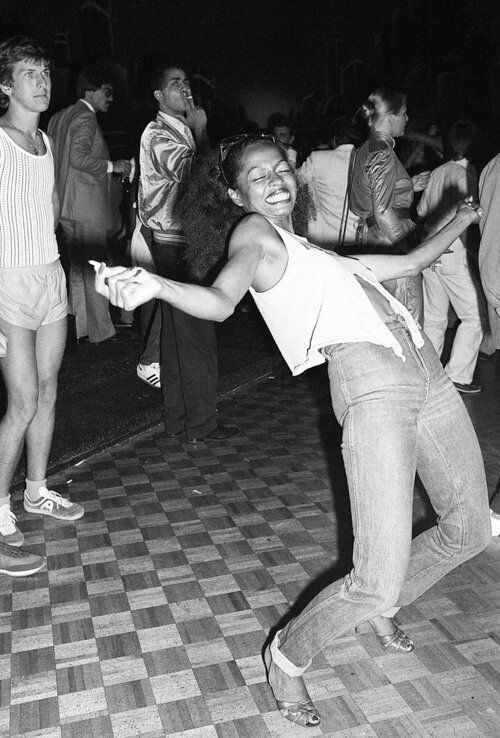
IN THIS PHOTO: Diana Ross at Studio 54 in New York City in 1979/PHOTO CREDIT: Bettmann/Getty Images 

Why We Need to See a Disco Revival

___________

I have mused before…

 PHOTO CREDIT: Getty Images

how there are genres from the past which are making a bit of a comeback. If you think about Punk and how it has been adopted by Post-Punk bands, it is interesting seeing how artists of today are updating and revisiting older music. I think there are some styles that have been left in the past but warrant some revitalisation. Britpop has been left in the 1990s and, when the country is divided, I think there is potential for some new form of the genre. I feel Dance, Trance and the big sounds of the 1980s and 1990s have not really been adopted today. It is a shame to see, because we do need a lift and music is lacking a spark. There are some happier songs around, although there is a bit of an absence. I feel we could see something akin to Britpop coming back, but there is a genre of music that is synonymous with its togetherness and oomph: Disco. The reason I am spotlighting Disco, is because some feel it was born in 1970 – next year would be its fiftieth anniversary. I think Disco became popular towards the middle of the 1970s and, on 12th July, 1979, the anti-Disco sentiment reached a fever pitch when the Chicago White Sox held a ‘Disco Demolition Night’ during a double-header at Comiskey Park. That was sort of when Disco was ushered out and laid to rest.

ppp.jpg

 PHOTO CREDIT: Getty Images

That said, you can listen to Pop music of the 1980s and realise that Disco never truly went away. Artists like Madonna were very much Disco-inspired in their early days – listen to her eponymous 1983 debut album to see what I mean! Disco influenced so much of the 1980s’ best music and the 1990s’ finest. You can draw a line from countless albums and artists and arrive back at Disco from the 1970s. Maybe Disco died because it lost its sense of inclusivity and diversity; it started out embracing everyone and became more white, male and straight towards the end of the 1970s. As this article explores, the glory days of Disco were a sight to behold – locations like Studio 54 became temples where people could congregate and unwind:

The heyday of disco fashion blossomed from the music played at gay underground New York clubs such as the Loft, Tenth Floor,and 12 West in the early 1970s. Other clubs such as Infinity, Flamingo, the Paradise Garage, Le Jardin, and the Saint launched a disco culture that brought with it an anything-goes attitude and all-night dancing.

Studio 54 became the place to be seen in disco clothing such as boob-tubes, platform shoes, flared trousers and body-conscious shapes dressed in lurex, glitter and crazy patterns or colours. Studio 54 played an essential role creating the nightclub scene that is still with us today – a place where people dress to be noticed and in the latest fashion.

The successful movie Saturday Night Fever (1977) ensured that disco hung around for a few years before becoming very unfashionable when Punk Rock and New Wave became the new anti-fashion fashion”.

Like so many genres and movements, the music captured a spirit and a desire. These movements form through evolution: other genres being expanded upon or someone noticing something missing that needs to exist. I think, as we look towards a new decade, I think there are really no genres or great scenes now. Music is very wide-ranging and exciting, yet there is not this concentrated sound that could grow and build into something wonderful. Like Punk, artists could not just replicate what went before, as the world has moved on and artists will want to update and personalise. I think Disco arrived at a hard time and, had it started in the 1960s, it might well have survived longer. As it is, it burned brightly for a short time but was taken to heart by so many artists through the decades. One can say that, in some way, it is encoded in the music of today. You have to look hard, but there is a slight Disco element to some modern Pop. I think Disco could find a new purpose because, in 2019, the world is more divided than ever. There is still massive discrimination in terms of gender, race and sexuality; nations like the U.K. and U.S. are split and troubled and there is a lack of proper punch and explosion in music – in a happy, sunny way at least!

I think many people get this view of Disco being a bit naff, of its time and non-inclusive. Perhaps there were corners of Disco that were a little cheesy, but that was part of the charm! As this BBC article from last year explains, Disco allowed a togetherness and sense of community:

Disco was never designed to grow old gracefully – instead, it has endured with brilliant defiance. More than four decades have now passed since its heady sound and style became a global phenomenon; its life so far has involved joy and pain, inspirational anthems and attempted murder (at 1979’s 'disco demolition night' stunt in Chicago’s Comiskey Park). Disco isn’t instantly afforded the same cultural reverence as rock 'n' roll or punk, yet its revolutions have been far-reaching. It continues to inspire music, movies and fashion, as well as events like London’s Brixton Disco Festival (28 April); these aren’t retro trips but a recognition that disco still does something for us.

Disco enabled female, gay, black and Latin artists to define their identities in increasingly fluid ways. Even kitsch hits could prove subversive: the Village People brought macho gay imagery to prime-time entertainment. Disco also fuelled the global collaborations that we now take for granted in modern music, whether it was the epic Eurodisco of Donna Summer and Giorgio Moroder (I Feel Love, 1977), or British Indian producer Biddu. As Alice Echols writes in her book Hot Stuff: Disco And The Remaking Of American Culture: “Promiscuous and omnivorous, disco absorbed sounds and styles from all over, and in the process accelerated the transnational flow of musical ideas and idioms.”

The primary voice of disco was female (or at least, not conventionally male) – and one of the most soul-charged disco voices remains Jocelyn Brown, who developed her talent in US gospel choirs, before singing with acts including Musique, Inner Life and Cerrone, and co-writing her own hits including Somebody Else’s Guy (1984).

Disco may have been a victim of its own success (and rampant “cash-in” marketing) – but its pervasive influence remains impressive. It pushed the transformative power of nightlife onscreen – in the gritty Saturday Night Fever (1977), but also the 1978 musical comedy Thank God It’s Friday (featuring Donna Summer and The Commodores), and the British gay drama Nighthawks (1978); more recently, Baz Luhrman’s Netflix series The Get Down (2016) depicted disco’s impact on the birth of hip hop”.

Popular culture has this changes and waves, so it is understandable why a Disco scene like the one in the 1970s would seem jarring and odd as we head into 2020. Pop has lost its sense of hook; there are fewer big choruses and so many tracks today struggle to get out of third gear. Some people say that music today should carry a universal message and, as the world is in a difficult situation, does it seem right providing a cheery and unifying statement? I think Disco anthems are just what we need right now!

jjjj.jpg

 PHOTO CREDIT: @matthewlejune/Unsplash

There is an argument that music needs to be fairly serious and artists need to write how they feel and what feels natural. More powerful than any sort of revolt would be a community-led, all-include revival like a new form of Disco. Not only would that join nations, genders and races, but it would provide a soundtrack that could provide timeless memories; maybe new clubs and spaces that would allow this release that we all know. It is obvious something needs to happen in music that has inclusivity and harmony at its core, rather than distance or anger. I have nothing against artists who rally and react to what is happening now. We need that energy and voice. What is sorely missing is a counteraction or any genre/wave that can provide optimism and, yes, escape. Disco served its purpose in the 1970s and its legacy remains. Whilst music is not defeated and lost, one cannot say it is in an especially positive mindframe. Returning to the threads and look of the 1970s would be throwback and weird; I think there is a way to bring Disco into the 2020 without it seeming nostalgic or repetitive. I think many people are yearning for big anthems, a sense of delirium and swagger that Disco provides. I know Disco has produced some heartbreaking songs but, even when artists were revealing pains of the heart, they were injecting some passion and energy. I think now is a good time to remember what Disco gave us (and still does) and take it into 2020. Not only could we get some much-needed lift; we would ensure that the dancefloors are filled and teeming…    

ssaaa.jpg

IN THIS PHOTO: Hush Hush, Coachella’s Secret Disco/PHOTO CREDIT: Koury Angelo

ONCE more.

FEATURE: (If You Were) In My Movie: Strings, FX and a Mighty Score: Bringing the Cinematic to Music

FEATURE:


(If You Were) In My Movie

PHOTO CREDIT: @kymasm/Unsplash

Strings, FX and a Mighty Score: Bringing the Cinematic to Music

___________

I recently stumbled upon a song…

that possessed some quickened and intense Bernard Herrmann strings. On the track, Psycho by slowthai x Denzel Curry, you get this fiery rush that takes you into this dramatic track. I love the sound of those strings as they sting, scurry and stalk with menacing and nefarious intent. I know there are Experimental and Electronic artists such as Anna Meredith and Hannah Peel that are wonderful composers who can project these immersive songs that are so interesting and layered. I think a lot of modern music relies on tropes and a simple structure. Maybe it more confined to Pop but, even in other genres, there is this lack of expression, originality and the cinematic. I understand not every artist’s music lends itself to something quite big and rousing; that is not to say they are confined. One of the reasons someone like Lana Del Rey resonates is because you have these dreamy strings that takes the mind to the 1950s or a French Riviera romance. Whilst musicians such as Thom Yorke are composing for film and stepping into that realm, I wonder whether modern artists are utilising film as much as possible. It does not even have to be a case of an artist using a sample from a soundtrack. The very essence of a film’s score/soundtrack can be employed to incredible effect. I am listening at what is coming out right now, and there are a few artists marrying film and music – not as many as you’d hope.

 PHOTO CREDIT: @dmjdenise/Unsplash

The reason that Psycho track grabbed me is because I am familiar with Bernard Hermann’s score and hearing it juxtaposed against a Hip-Hop/Grime track is a wonderful clash! I think some of the best music ever created has this filmic and cinematic touch. I am thinking about composers like Brian Eno, who creates this wonderfully beautiful scores that summon visions of space, endless vistas and the endless expanse. So much of today’s Pop is flat and repetitive. I tend to find I am forgetting a lot of new music, as it lacks a necessary kick, surprise and vision. Whether we hear more Horror scores making their way into Grime or classical musical soundtracks being spliced into Pop songs, I do feel the worlds of film and music need to be closer bedfellows. So many songs from modern music are used in soundtrack, but what I am talking about is music with a cinematic sound. There are articles that examine the relationship between music and film, but I still think there is a whole world out there for music to explore. I am interested when musicians compose for film, as it allows them a sort of freedom and format that is not necessarily catered for in their regular life. Maybe it comes back to an issue that is going to limit creativity and expression in music: strict copyright laws. Artists can add cinematic touches through original compositions; they can mimic certain genres and composers, but I think having some of those original sounds mixed into the song.

 IN THIS PHOTO: Tamar-kali/PHOTO CREDIT: Getty Images

I think some of the most spectacular and varied soundscapes are coming from film composition. Whilst the medium has always been considered a white, male-dominated areas, there are women like Tamar-kali (The Mudbound composer) who are shaking things up. This New York Times article explains more:

Tamar-kali is one of several new voices in a persistently white male milieu. “Mudbound,” directed by Dee Rees, was the Brooklyn artist’s first score, which she followed with the Netflix drama “Come Sunday.” She’s also reteaming with Rees for an adaptation of the Joan Didion novel “The Last Thing He Wanted.” As an Afro-indigenous woman in the New York punk rock scene, she said, she was already used to being “an outlier within the outliers.”

“It just kind of fuels your creativity,” she explained. “The ethos means even more to you, because you’re practicing it every moment — even in the pit, even at shows.”

Like a handful of other female artists, Tamar-kali wasn’t pursuing film composition, but was commissioned after a director heard her work. Mica Levi, a British rocker from the band formerly known as Micachu and the Shapes, was nominated for an Oscar for “Jackie,” which followed her shivering, queasy breakout score for “Under the Skin”.

I think film’s broadness and limitless imagination does allow artists to expand their horizons and explore new ground. In terms of exchange, I do wonder whether more traditional artists should be taking from film’s toy box and add fresh angles and colours.

 PHOTO CREDIT: @clemono2/Unsplash

I do wonder whether old-school film soundtracks and scores would inject fresh life into Pop; if some sweeping strings would give Rock a new insight. I know artists often think with scenes and mini-films in mind. I think certain genres and too rigid and so many artists seem to be repeating one another. Many modern Rock bands are using compressed drums and have a lifeless feel. One would not expect a complete overhaul, but I am interested to see how film music could integrate with more conventional music; whether it be in the form of samples deployed or trying to replicate a certain film genre in a song. As I said, there are barriers in place regarding sample clearance. I have heard a few songs recently that have used snatches of dialogue from films; there have been others with sound effects from other films and, when you hear that in a song, it breathes new life and possibility. I do think modern music has a lot to offer, and there are some truly original artists helping to shape a progressive and exciting future. There are still so many avenues and genres that seem tired and listless; music that seems to run through the motions and doesn’t stay in the mind. I think film scores and tracks have different tempos, feel and aims to the kind of music you hear on radio. It is interesting comparing them, but I think there is room for overlap.

 PHOTO CREDIT: @jan_strecha/Unsplash

I would love to hear something offbeat and quirky thrown into a track – maybe the theme from Catch Me If You Can (or something similar) in a Pop song – or the icy and exhilarating strings that are on the latest slowthai and Denzel Curry song becoming more common; little audio samples or film scores being sprinkled carefully to provoke a magical reaction. There are artists who are working like this and, as I said earlier, we have artists such as Thom Yorke and PJ Harvey who are composing for film, T.V. and the stage. Those already out there who are pushing boundaries with sound and splicing genres should be congratulated. I listen to film music, old scores and the work of the great modern composers and see potential. Songs need not turn into films or have any pretentious edge; rather, they would have an extra-special element and spark. Maybe it is just me, but I think modern music would be even more interesting and forward-thinking if the cinema was brought into the music. Some innovators are already doing this, but I think so many other artists could take music to new heights when they think about…  

iiii.jpg

PHOTO CREDIT: @dmjdenise/Unsplash 

THE bigger picture.

FEATURE: Sisters in Arms: An All-Female, Autumn-Ready Playlist (Vol. VI)

FEATURE:


Sisters in Arms

IN THIS PHOTO: CocoRosie 

An All-Female, Autumn-Ready Playlist (Vol. VI)

__________

TODAY has been a pretty…

 IN THIS PHOTO: Chela

damn blustery on, and it has been a tad hellacious out there! It is evident that the weather is getting cooler and more unsettled. To ease the tension and unhappiness of the autumn weather, put on some great songs from some awesome female artists. This week’s selection covers a range of genres and sounds. As we head towards the end of the year, the quality of music is not dimming one bit! Each of us will need a bit of a boost as we get into the weekend. This mix of tracks is sure to do the job. Make sure you dive into the best female-led sounds of the week and be sure to…

SSSSS.jpg

 IN THIS PHOTO: Sudan Archives/PHOTO CREDIT: Claire Joanne Donoghue

TURN them up!

ALL PHOTOS (unless credited otherwise): Getty Images/Artists

____________

NAVINA Pieces

ssaa.jpg

PHOTO CREDIT: Alec Bowman

Josienne ClarkeSlender, Sad & Sentimental

fg.jpg

HAIM Now I’m in It

Chela Spirit Rich

hyhy.jpg

CocoRosieSmash My Head

654.jpg

Beach Bunny Dream Boy

Miranda LambertPretty Bitchin’

yyh.jpg

Martha BeanAlong the Lonely

Violet DaysLet It Happen

Mandy MooreI’d Rather Lose

Teyana Taylor, Kehlani - Morning

Charly BlissFeed

Dove CameronSo Good

ALMAHave U Seen Her?

PHOTO CREDIT: Holly Rose Stones

Bang Bang RomeoBeautiful World

SS.jpg

Lennon StellaKissing Other People

PHOTO CREDIT: Alex Black

Sudan ArchivesHoney

Bea MillerTHAT BITCH

Bishops BriggsSOMEONE ELSE

Y98P.jpg

Emily BurnsIs It Just Me?


KieszaYou’re the Best

XSS.jpg

Orland GartlandFigure It Out

Hannah Diamond Invisible

PHOTO CREDIT: @brynley.davies

Biig Piig Pingu

HY.png

Agnes Obel Island of Doom

DD.jpg

Greentea PengSane

FEATURE: The November Playlist: Vol. 1: Should a Hit Man on Solid Ground Fear the International Woman of Leisure?

FEATURE:


The November Playlist

IN THIS PHOTO: Michael Kiwanuka 

Vol. 1: Should a Hit Man on Solid Ground Fear the International Woman of Leisure?

___________

HERE is another bumper week…

 IN THIS PHOTO: La Roux

where some seriously big names are in the fray. There is new music from Gang Starr and Michael Kiwanuka; great cuts from Dua Lipa, La Roux and Jeff Goldblum & The Mildred Snitzer Orchestra. Throw into the mix excellent songs from HAIM, Greentea Peng and Pillow Queens and it is an eclectic, quality-heavy and hugely memorable week! It is getting near to Christmas so, in the mix, there are Christmas-scented tunes from Robbie Williams (ft. Jamie Cullum), Michael Bublé and Lucy Dacus. I am sure there is something in there for everyone and you will find a lot to love. Have a listen to this week’s best tracks and take them with you if you are on the go. It is guaranteed to get your weekend off…

dff.jpg

 IN THIS PHOTO: Danielle Haim (HAIM)

TO a winning start.  

ALL PHOTOS/IMAGES (unless credited otherwise): Getty Images/Artists

________

Gang Starr (ft. Q-Tip) Hit Man

Michael Kiwanuka Solid Ground

La Roux International Woman of Leisure

PHOTO CREDIT: Craig McDean

Jeff Goldblum & The Mildred Snitzer Orchestra (with Sharon Van Etten) Let’s Face the Music and Dance

PHOTO CREDIT: Paul Thomas Anderson 

HAIM Now I’m in It

Bishop Briggs SOMEONE ELSE

Dua Lipa Don’t Start Now

999jhy.jpg

Cold War Kids Beyond the Pale

PHOTO CREDIT: @stefypocket

Greentea Peng Inna city

EEEE.jpg

Alfie Templeman Don’t Go Wasting Time

WWW.jpg

The Courteeners More. Again. Forever.

iii.jpg

Dove Cameron So Good

Beach Bunny Dream Boy

Young Bombs (ft. Aloe Blacc) Better Day

Tame Impala It Might Be Time

Emily Burns Is It Just Me?

Miranda Lambert Bluebird

Kane Brown For My Daughter

ALMAHave U Seen Her?

sd.jpg

Pillow QueensBrothers

Sudan Archives Limitless

PHOTO CREDIT: Fryd Frydendahl

- On & On

AJ Tracey, Skepta Kiss and Tell

Robbie Williams (ft. Jamie Cullum) - Merry Xmas Everybody

PHOTO CREDIT: Jessica Challis

Lucy Dacus Last Christmas

Vince StaplesSheet Music - Episode 02

PHOTO CREDIT: Oscar Eckel

Biig Piig – Bar

Sam Smith I Feel Love

PHOTO CREDIT: Josh Shinner

Jordan Mackampa Parachutes

Michael Bublé - White Christmas

PHOTO CREDIT: @deaniechen

SigridHome to You

FEATURE: The Most Memorable Live Performance Ever? Nirvana’s MTV Unplugged in New York Album at Twenty-Five

FEATURE:


The Most Memorable Live Performance Ever?

swwww.jpg

Nirvana’s MTV Unplugged in New York Album at Twenty-Five

___________

ON 18th November, 1993…

 PHOTO CREDIT: Getty Images

Nirvana took to the MTV stage and delivered what is, I think, one of the best live performances ever. Whilst some prefer their live sets to be bombastic, energised and full of spectacle, the sheer beauty and emotion of Nirvana’s stripped-back set will survive the test of time. For a band who built their name with these raw anthems…to captivate in such a way back in 1993 was hugely impressive. I guess Nirvana had performed some acoustic sets before – though I cannot verify that -, but few bands like them were playing MTV Unplugged. Nirvana released their final studio album, In Utero, in September 1993, so it was an unusual step to transition from their heaviest and rawest album to perform for MTV the way they did. I am revisiting this landmark gig, because the album of the performance is twenty-five today (1st November). Filmed at the Sony Music Studios in New York City, this Beth McCarthy-directed performance did not have the smoothest of starts. Quite a while before the day of recording, the band had been negotiating with MTV. The band did not want to repeat what most people did for an MTV Unplugged show: give us the hits and the big numbers, only replacing electronic guitars for acoustic. For a Grunge band like Nirvana, perhaps you would have expected them to play a lot of Nevermind songs and a few from In Utero – maybe one or two from their debut, Bleach.

Instead, Nirvana wanted to mix things up and give a performance that had some covers in. One can only imagine whether Nirvana’s performance would have been as memorable if they had neglected David Bowie’s The Man Who Sold the World and Lead Belly’s Where Did You Sleep Last Night? Kurt Cobain was nervous about playing an acoustic show because it would put him more to the fore. Nirvana’s usual gigs would have a lot of energy and, in that mode, Cobain could be buried in sound; he was lost in the sheer rush and headiness of the gig. With cameras on him and the volume turned down, this was a very different prospect. I can imagine how anxious Cobain would have been before Nirvana stepped on the stage before the gig – if he suffered stage fright or got a song wrong, that would have been recorded and would live forever. It is a testament to his focus and talent that Nirvana’s MTV Unplugged remains one of the most sensational and fascinating live performances ever. The fact the cardigan Cobain wore during the set sold for a whopping sum at auction proves how iconic that performance was. If there was this ordinary set that was quite drab…maybe the performance would not hit the senses quite as hard. Nirvana decked out their stage with lilies, black candles and chandeliers. Again, here was this huge Grunge band going against expectation and doing things their own way.

The funeral tone of the stage, to some, is a forebearer to Cobain’s suicide in 1994. I think any speculation that this was intended to be a farewell seems rash. Instead, there is this romance and calming vibe that, in my view, helped ease Cobain’s nerves. With guitarist Pat Smear and cellist Lori Goldston alongside Kurt Cobain and band members Dave Grohl (in a reduced percussive role) and Krist Novoselic on bass, Nirvana delivered a masterpiece. Although Nirvana were playing for MTV Unplugged, Cobain put his acoustic through an amp to give it more kick and electricity. I think Nirvana’s 1993 gig will inspire artists for decades to come. They performed the set in a single take – moist acts on the series didn’t – and didn’t really play many hits. Perhaps Come as You Are is their best-known song from the set: there was no Smells Like Teen Spirit or Breed, for instance. Kurt Cobain died on 5th April, 1994, and many look back to that Nirvana gig the year before to look for clues; to see whether there were hints at what was to happen. Rather than provide morbid theories and think of death, one should embrace the beauty and power of a generation-defining set. It would be incredibly hard to fault a performance as sublime and spine-tingling as Nirvana’s MTV set in 1993. Indeed, the reviews for the performance are near-perfect in their adoration and praise.

In this review, AllMusic provided their take:

If In Utero is a suicide note, MTV Unplugged in New York is a message from beyond the grave, a summation of Kurt Cobain's talents and pain so fascinating, it's hard to listen to repeatedly. Is it the choice of material or the spare surroundings that make it so effective? Well, it's certainly a combination of both, how the version of the Vaselines' "Jesus Doesn't Want Me for a Sunbeam" or the three covers of Meat Puppets II songs mean as much as "All Apologies" or "Something in the Way." This, in many senses, isn't just an abnormal Nirvana record, capturing them in their sincerest desire to be R.E.M. circa Automatic for the People, it's the Nirvana record that nobody, especially Kurt, wanted revealed. It's a nakedly emotional record, unintentionally so, as the subtext means more than the main themes of how Nirvana wanted to prove its worth and diversity, showcasing the depth of their songwriting. As it turns out, it accomplishes its goals rather too well; this is a band, and songwriter, on the verge of discovering a new sound and style. Then, there's the subtexts, as Kurt's hurt and suicidal impulses bubble to the surface even as he's trying to suppress them. Few records are as unblinkingly bare and naked as this, especially albums recorded by their peers. No other band could have offered covers of David Bowie's "The Man Who Sold the World" and the folk standard "Where Did You Sleep Last Night" on the same record, turning in chilling performances of both -- performances that reveal as much as their original songs”.

Even if you were not around in 1993, just look on YouTube and see the videos. You will be blown away and moved by the performance! There is an anniversary edition of the gig that you should snap up and keep. Even after all these years, Nirvana’s MTV Unplugged in New York remains unsurpassed. I think it is one of the finest gigs ever put down (maybe stronger than Nirvana’s set at Reading in 1992). Ahead of the album release of MTV Unplugged in New York, people are revisiting this wonderful musical moment. Before wrapping up, I want to introduce a feature from The Quietus that passionately details this era-defining performance:

 “Perhaps Cobain understood that the essence of any given piece of music might just as easily lie in its supposed artificiality, that this artificiality is no more or less authentic than a strummed-and-hummed version. Whether he would have thought about it or put it that way, who knows; he was an artist, a great one, and he may have been operating on instinct rather than theory. But instinct should not be confused with accident. And none of the things that make MTV Unplugged In New York so marvellous were accidental.

For a start, there is the performance he turned in; a performance of such wrenching emotional tension and commitment and – let’s not pretend otherwise – craft (he was a showbiz pro by this point; he knew exactly what he was doing) that it would have graced any format, any arrangement. This is not to suggest the other members of the band, and the wider ensemble on the night, were dispensible. Just that Cobain was, as ever, the glowing centre of the thing, and it was always going to stand or fall on what he did.

Also: he cheated. This performance wasn’t “unplugged” at all, in the customary sense that the only amplification was via microphone. Cobain ran his acoustic guitar through pedals and an amp, this rig being disguised as a monitor. And because pop music is not a sporting contest, nor a feat of spectacle like chainsaw juggling, but an art form, he was right to cheat. Cheating is, frequently, how you make the good things happen. Everybody should cheat in pop music whenever possible, as long as it makes the results more enthralling. Which this did.

Cobain was always a terrific singer, and on MTV Unplugged In New York he compressed his voice into a haunted rasp. This, alongside the sensitive playing of his fellow musicians, made his own songs, the earliest of which had been released four years prior to the session, sound steeped in folk, blues and bluegrass and as old as the hills. Or at least as old as the tour-de-force of a closing number, a version of Lead Belly’s 1944 arrangement of the traditional song ‘In The Pines’, which that greatest of folk-blues musicians had retitled ‘Where Did You Sleep Last Night’. Cobain knew of Lead Belly, and the song, thanks to Mark Lanegan, the Screaming Trees singer. He had played guitar on Lanegan’s own version on the latter’s first solo record, The Winding Sheet (1990) – which album was the most specific and immediate inspiration for the Unplugged recording. If Lanegan’s (superb) solo output since has at times resembled Nirvana’s record in mood and tone, that’s not him imitating them; it’s him carrying on with the idiom they borrowed from him.

When you’re reinventing yourself as the epitome of gritty, rootsy, “authentic” Americana, perhaps the least apt thing you can do is throw in an emphatic acknowledgement of all that stands in seeming opposition to that: something glam and queer and synthetic and altogether European. Which is exactly what Nirvana did; and again, this was no accident. Not only did they cover David Bowie, they covered one of his (then) more obscure songs, and certainly one of the strangest, ‘The Man Who Sold The World’.

MTV Unplugged In New York is the sound of Nirvana taking all the ground they want, and not giving an inch of it away. It’s the sound of them wrong-footing both their fans and their critics. It’s a magnificent set of songs, magnificently rendered. It didn’t make their previous albums redundant, or irrelevant: those remain formidable rock records, and the hits will be played as long as there are student discos. But nothing else they did has such breadth, or depth, or texture. Nothing else gives so full a picture of Cobain’s talent and sensibilities. Nothing else shows how artfully he could weave together pop’s contrasting strands. It almost didn’t happen. A day before the taping, Cobain was refusing to play. He made a lot of poor decisions in his all too brief time here; changing his mind on that was surely one of the best.

xxxx.jpg

IN THIS PHOTO: Kurt Cobain during the taping of MTV Unplugged at Sony Studios in New York City on 18th November, 1993/PHOTO CREDIT: Frank Micelotta

Maybe there are more celebrated live performances and live albums that are poured over in greater detail. Even were it not for Cobain’s suicide in 1994, I still think MTV Unplugged in New York would still be regarded as this classic; a moment in time where one of the world’s biggest bands stunned people into silence. I can envisage the relief on Cobain’s face when he left the stage and realised he has had got through it. Look back at the gig and you can feel the concentration and focus he has. If you are a fan of the concert or fresh to it, take some time to witness this incredible band deliver a truly spellbinding performance. In terms of its legacy, power and memorability, Nirvana’s MTV Unplugged in New York

MIGHT never be bettered.

FEATURE: Hell Is Round the Corner: Maxinquaye: The Brilliance of Tricky and a Seminal Debut Album

FEATURE:


Hell Is Round the Corner

eeeeeeeeeeee.jpg

Maxinquaye: The Brilliance of Tricky and a Seminal Debut Album

___________

THERE is a lot of buzz around Tricky

ssa.jpg

 IN THIS PHOTO: Tricky in 1995/PHOTO CREDIT: Getty Images

because his autobiography, Hell is Round the Corner, is released today (31st October). Even if you are unaware of the Bristol-born producer’s start and career, the memoir makes for a fascinating read. Tricky is one of the most compelling and influential names in music. Not only did Tricky help Massive Attack shape their 1991 masterpiece, Blue Lines, but the man himself created his own masterpiece five years later: the epic debut, Maxinquaye. The album was released on 20th February, 1995 and, as it is twenty-five in a few months, I wanted to investigate this spectacular album and the man who made it. Tricky’s more recent album, Ununiform, of 2017 is a fantastic work and shows he has plenty of brilliance and inventiveness left in the bones. I will come to Tricky’s debut soon enough. Before that, I would compel people to look back at the music of Tricky, because it is sensational. I am going to grab his autobiography today, because I am fascinated to know about this incredible producer and artist. Tricky does not give many interviews but, recently, he did speak with The Guardian and talked about his memoir/autobiography. He discussed loss – his mother died when he was a child – and the struggles he endured on the path to success. He is still performing live and his shows are a mix of the powerful and remote; Tricky remaining largely in the shadows, but providing this enormously memorable experience.

I will move on but, before I do, I wanted to bring in an exert from The Guardian’s interview, where Tricky discussed addiction; the men and women in his life and his childhood:

The book’s title – Hell Is Round the Corner – is taken from a track on Maxinquaye, and it aptly describes a life in which violence and tragedy have lurked beside every success story. Born Adrian Thaws and raised in Bristol by his grandmother and aunties, Tricky had a happy, but unconventional, childhood: food often consisted of rabbit stew sourced from the family’s poaching expeditions; criminality was an accepted way of life.

Without his musical gift, Tricky’s prospects would not have looked bright: “Where I come from, a lot of people are either on drugs, in prison or dead,” he says. His uncles were gangsters and Tricky grew up noticing how people would treat him differently whenever their names were dropped: his food in a curry house would be upgraded; the atmosphere in a pub might suddenly change.

“Once, I asked my auntie why everyone was scared of my uncle Martin,” he says. “She said: ‘Because if he says he’s going to cut your throat, he’ll cut your throat.’”

The men in his life were tough guys, but the women who raised him were tougher. He saw his grandmother and aunties street-fight like his uncles (“The fighting was more vicious, cos men care more about their ego”) and observed them being strong in other ways, too: running the household and feeding the family while the men were away doing time.

“I’ve a kinship with women,” he says. “That’s why I’ve always put women in strong positions in music.”

Topley-Bird was the most important of these. He met her by sheer luck in about 1992 – she had been singing with schoolfriends outside his house. A few years later, they became a couple and had Mazy together; the relationship didn’t last, but they continued to collaborate musically on several more albums”.

Because Tricky was not given a lot of responsibility and input in Massive Attack, there was a sense of desire and anger building up. It is understandable that, for one as passionate and ambitious as Tricky, there was this energy inside that was not being fostered by the Bristol Trip-Hop group. I am not sure how Tricky and Martina Topley-Bird found one another – the two were in a relationship and had a daughter together, Mina Topley-Bird, who died earlier this year -, but it was clear Topley-Bird was the spark that was required for Tricky. He knew her vocals would add weight and direction to his lyrics. Like a lot of great albums, Maxinquaye had a pretty modest start. Tricky signed with 4th & B’way Records in 1993; he put together Maxinquaye at his London home studio. That sense of homely and modest betrays a record that sounds personal, yes, but also incredible wide-ranging, powerful and universal. Almost twenty-five years after its release, Maxinquaye is still giving up its secrets and resonating. With Martina Topley-Bird and vocalists such as Alison Goldfrapp, the record a lot of powerful female input; voices that give his songs a clash of beauty, passion and electricity. Maybe it goes back to Tricky’s upbringing and the role women played; maybe it was more of an aesthetic choice – I think Martina Topley-Bird, especially, helps give the album so much clout and nuance. With genres like Reggae, Soul; Rock and Techno mixing with one another, Maxinquaye is a cocktail of sounds and textures. It always sounds commanding and never loses focus.

Exploring subjects such as drug culture, cultural decline and the influence of his late mother, Maxine Quaye, Tricky’s debut never shies away from reality. It is a pretty hard listen at times and provides little in the way of real fun or romance. That is not to say Maxinquaye lacks beauty and lightness. There is this incredible juxtaposition and unity of darker and lighter shades; beauty and intensity entwined and somehow harmonious. One reason why I have a great respect for albums like Maxinquaye, is because they tackled some pretty weighty subjects. Romantic dysfunction and mistrust had many assuming a Freudian link (given the influence of Tricky’s mother); it is clear Tricky was deeply inspired by his mother and was writing from a female perspective – one reason why Martina Topley-Bird was chosen as a vocalist is to give authenticity to his lyrical style and voice. Whilst Maxinquaye does explore relationship struggles and frustrations, tracks such as Ponderosa and Hell Is Round the Corner are influenced by Tricky’s use of cocaine, marijuana and alcohol. Following Tricky’s departure from Massive Attack, he became more and more dependent on drugs. The stream of consciousness lyrics and frightening visions on some of the album’s tracks come from Tricky who, because of his drug use, was experiencing paranoia, delusions and mental instability. If one did not know about Tricky’s substance abuse and difficult past, maybe the songs would not seem as potent and emotional.

kiii.jpg

 PHOTO CREDIT: Paul Rider

It is amazing to hear such a fluid, bold and disciplined album, given the struggles and anxiety Tricky was living with whilst creating the album. I do not think we will ever get to the bottom of an album that keeps on flowering and providing new layers the more you listen. Contemporary and retrospective reviews for Maxinquaye were enormously positive – I am not sure whether it received a review that was anything less than awestruck! There were artists like Massive Attack and Portishead (fellow Bristol acts) releasing these incredible Trip-Hop albums (although Portishead would hate that genre label!) – Portishead released their debut, Dummy, in 1994 and Massive Attack released Protection the same year. It is clear there was this strong scene and community that was offering an alternative to the mainstream at the time – this was the era of Britpop, after all. Maxinquaye, in my view, is more extraordinary and enduring than the work of Portishead and Massive Attack. It has that personal relevance that gives it an extra level. AllMusic provided their take on Maxinquaye:

Once they're there, Maxinquaye offers untold treasures. There is the sheer pleasure of coasting by on the sound of the record, how it makes greater use of noise and experimental music than anything since the Bomb Squad and Public Enemy. Then, there's the tip of the hat to PE with a surreal cover of "Black Steel in the Hour of Chaos," sung by Martine and never sounding like a postmodernist in-joke.

Other references and samples register subconsciously -- while Isaac Hayes' "Ike's Rap II" flows through "Hell Is Around the Corner" and the Smashing Pumpkins are even referenced in the title of "Pumpkin," Shakespear's Sister and the Chantels slip by, while Michael Jackson's "Bad" thrillingly bleeds into "Expressway to Your Heart" on "Brand New You're Retro." Lyrics flow in and out of consciousness, with lingering, whispered promises suddenly undercut by veiled threats and bursts of violence. Then, there's how music that initially may seem like mood pieces slowly reveal their ingenious structure and arrangement and register as full-blown songs, or how the alternately languid and chaotic rhythms finally compliment each other, turning this into a bracing sonic adventure that gains richness and resonance with each listen. After all, there's so much going on here -- within the production, the songs, the words -- it remains fascinating even after all of its many paths have been explored (which certainly can't be said of the trip-hop that followed, including records by Tricky). And that air of mystery that can be impenetrable upon the first listen certainly is something that keeps Maxinquaye tantalizing after it's become familiar, particularly because, like all good mysteries, there's no getting to the bottom of it, no matter how hard you try”.

One only need to look ta a few sample reviews to see how hard the album hit; how incredible it sounded years after its release. This review highlights the sheer variety and wonder of Maxinquaye:

Not many artists have attempted to cover Public Enemy songs and one listen to 'Black Steel' will tell you why: how do you go about covering a rap song without turning out a parody or novelty record? Answer: you truncate the song lyric, get Maxine to twist her way around the words and drag in a Manchester speed-metal group for cut-up purposes. The effect is startling, especially when 'Hell Is Round The Corner' follows by taking the opposite direction into crackling, minor-key blues. When guitars finally come back into the mix, as on 'Brand New You're Retro', the central riff is so disfigured and energetic and screwed-up that you feel you're experiencing something new.

Self-hatred and poisonous relationships also co-exist in 'Maxinquaye"s patchwork quilt. On 'Pumpkin' these negative attributes take the form of Tricky's self-absorbed monologue, contrasted against Alison Goldfrapp's wordless entreaties and set to a mid-tempo stroll. More disturbingly, 'Abbaon Fat Tracks' takes on the mantle of a package of insults, while 'Suffocated Love' touches on a complicated S&M relationship, with Tricky's skewered logic to the fore. Something's not quite right in his mind, but then, as he insists on the avant-garde, unsettling, 'Strugglin' - the one song that teeters on self-indulgence - he's saner than most people.

'You Don't' shows Tricky can be buoyant, bouncy and irresistible, but it's left to the closing 'Feed Me' to finally spot hope on the horizon after the storm, as Maxine takes a vocal tour of England and meditates on the meaning of freedom. As the last note echoes off into the ether, you know you've been through a remarkable experience; 'Maxinquaye' is one of those rare benchmark LPs that reveals new layers with each listen, but never fully offers up its secrets. Literally, a hard act to follow”.

Maxinquaye helped shape the landscaper of Hip-Hop and Electronica; it is seen as one of the most influential Trip-Hop albums ever recorded and it is clear this mighty album has left its mark on the music scene. Although Tricky would go on to record other terrific works, I don’t think he was ever as spellbinding as he was on his debut – that is no slight on him; such is the importance of Maxinquaye.

8U8U8U.jpg

 PHOTO CREDIT: Mustafah Abdulaziz

It is one of those albums that you need to listen to; to explore and let it carry you away. When it turns twenty-five next year, there will be a lot of celebration and tribute. I am sure new ears will discover it and, as big works by Massive Attack and Portishead have turned twenty-five, I wonder whether we might see a Trip-Hop revival. Albums like Maxinquaye have filtered into other genres and inspired scores of artists, yet there has not been a full-on revival. It would be interesting to see whether that might happen. Go and grab a copy of Maxinquaye if you can (or stream it), and familiarise yourself with this remarkable work. Tricky is a true icon, and make sure you pick up his memoir as well. There are few out there as pioneering, fascinating and strong as Tricky. I hope we see many more albums from him, and he enjoys a lot more years in music. I remember witnessing Maxinquaye back in the 1990s and not really having a frame of reference – maybe Portishead and Massive Attack provided a cushion, but Maxinquaye is in a league of its own. I was amazed then…and I am still awed now. Experience truly a magnificent album from…  

AN incredible artist and innovator.

FEATURE: Erase/Rewind: Why a Recent Musicians’ Union Survey Leads Me to Believe Tough Action Needs to Happen…Right Now

FEATURE:


Erase/Rewind

 PHOTO CREDIT: @joshrh19/Unsplash

Why a Recent Musicians’ Union Survey Leads Me to Believe Tough Action Needs to Happen…Right Now

___________

YOU can forgive me for…

wwwwwwwwww.jpg

PHOTO CREDIT: @jeztimms/Unsplash 

returning to the subject of sexual harassment and abuse in music, seeing as I only recently explored the topic. I guess many of us look at reports of sexual harassment and objectification in music and think it is always going to happen; we will always see this sort of thing happen. Whilst it is impossible to see rapid change, I do think more needs to be done quicker. I should probably contextualise my comments and renewed anger. Recently, I saw an article that revealed (the fact) artists are quitting the industry because of sexism and abuse. It is not reserved exclusively to women but, as you can imagine, the majority of cases concern women. Some shocking facts and figures emerged from a Musicians’ Union survey: 

Reams of talented artists are leaving the music industry due to sexism and abuse, the Musicians’ Union has said, with new figures suggesting almost half of its members have experienced harassment at work.

The union called on the government to extend protections relating to discrimination and harassment in the Equality Act 2010 to freelancers, so that they were entitled to the same protections as those in fixed employment.

In a survey conducted by the union – which represents more than 31,000 musicians, 90% of whom are freelancers – 48% of respondents said they had experienced workplace harassment. More than four in five (85%) did not report it.

“We are aware of far too many cases of talented musicians, particularly young or emerging artists, leaving the industry altogether due to sexism, sexual harassment or abuse,” said Naomi Pohl, deputy general secretary at the Musicians’ Union.

PHOTO CREDIT: @austindistel/Unsplash 

The survey of 725 musician’s union members from across the country found that almost two-thirds (61%) felt they were more at risk because they worked on a freelance basis. Just one in five (19%) said the contracts they work under included policies or procedures to deal with incidents of sexual harassment.

Workplace culture was seen as the greatest barrier to reporting harassment (55%), followed by fear of losing work (41%), the expectation that the issue would not be handled appropriately (32%) and fear of not being believed or taken seriously (27%).

I have covered the subject of sexual abuse, sexism and assault before but, with every report that comes out, it opens my eyes. The fact so many women are quitting music because of abuse is staggering. At the moment, so many are leaving a profession they love and are not outing men culpable. I can understand why: there is a sense of fear, not being believed or repercussions. There are women who use social media to shame those who abuse or assault them. I think the industry itself needs to act right now. The Musicians’ Union can support artists, but it does not have the power to punish those who offend. I do think there should be a campaign set up that can out those who are sexist or abuse women. I know there are legal ramifications regarding naming people without solid proof. As things stand, women are leaving music and not able to share their stories because they feel nothing will be done.

 PHOTO CREDIT: @designecologist/Unsplash

When musicians are named in the press because they abuse women, there is action and they feel the effect – often, their label will drop them, or they are taken to court. There are so many cases happening in offices and workplaces; not involving big stars so, a lot of the time, nothing results. Not only should women feel confident reporting cases of abuse, knowing they will be taken seriously; there also needs to be action taken at grassroots level. Sexism is pretty rife and, from workplaces to the top of the industry, it seems to run rampant. Perhaps things are better than they were a few years ago, but there is still too much happening. No woman should be in a position where they are the victim yet feel like they should remain silent because they’ll lose their jobs or not believed. For freelancers, there needs to be something in place that protects those who are at risk of sexism and abuse. So few contracts have any implementation for dealing with workplace abuse; so few women are safe and protected. I am not sure how much is being done at a government level, but I fear there is very little action regarding change and improvement. In an article from The Independent, some important voices are speaking out:

Rebecca Hitchen, from the End Violence Against Women Coalition campaign group, said: “It is overwhelmingly women musicians who experience sexual harassment and assault and who therefore face the backlash and repercussions if they do speak out or report. We find the increasing use of libel law as a way of silencing women who speak out about abuse, as experienced by the #SolidarityNotSilence campaign, extremely troubling.

PHOTO CREDIT: @timothylbrock/Unsplash 

“The music industry is male-dominated, can be exploitative and has very few regulations. Much more needs to be done to both prevent harassment from taking place, and support those who speak out.”

Deeba Syed, senior legal officer at Rights of Women, added: “The law should be changed to include protections for freelancers so that they know someone will be held accountable.”

A government Equalities Office spokesperson said: “Sexual harassment is appalling and it must be stopped. Our consultation on how the current laws can be improved closed at the beginning of this month, and we are carefully considering all of the responses we received. We proposed a number of measures to strengthen and clarify the law so that we can provide explicit protections to anyone who experiences this vile behaviour in the workplace”.

Whilst sexual assault is appalling, there is so much casual sexism that is putting women off coming into music or seeing them leave the profession. There are areas, such as journalism, where there is greater gender balance and less sexism (although there is still some). In other areas, such as live music, there are appalling cases where women are being assaulted and overlooked. From females experiencing sexism (and creating physiological damage), to more serious incidents, it paints a very worrying image. I do think a new body needs to be established that specifically deals with sexism and abuse aimed at women. We have this ‘lad culture’ problem that should have been erased years ago. Look back decades ago and attitudes were appalling. This sense that men could do what they want and it was all part of the fun…why are we seeing this in 2019?! In some ways, things have gotten worse because of social media – some really disgusting comments appearing – and the rise in women in the industry.

sssss.jpg

 PHOTO CREDIT: @mihaisurdu/Unsplash

This fight to end sexism and abuse is not on the shoulders of women alone. I am sorry to keep ‘banging on’ about this particular subject, but I am not seeing change. Starting from the bottom of a fetid swamp, this laddish idea that a woman is ‘up for it’ or ‘fair game’ needs to be wiped out. This is a Stone Age attitude that has no place in modern society. Hollywood has a #MeToo movement and, as sexism and abuse are not going anywhere in music, there needs to be massive improvement. I understand there are smaller campaigns out there where women can speak out but, in terms of a unified and vocal movement like #MeToo; I don’t think there is anything out there quite like it. Anything that helps bring about justice, culture change and massive outrage would help shake things up. At the moment, it seems mostly women who are vocalising (when they feel safe). It is obvious that things cannot go on as they are and a…    

 PHOTO CREDIT: @mihaisurdu/Unsplash

REVOLUTION needs to occur.

FEATURE: Spotlight: Kojey Radical

FEATURE:


Spotlight

ggggg.jpg

Kojey Radical

___________

I will work backwards in a way…

 PHOTO CREDIT: Mikey Massey/Hypebeast

because I wanted to discuss Kojey Radical’s new album, Cashmere Tears. It is a few weeks old, and it has gathered up some truly terrific reviews. I must admit that I have not long discovered Kojey Radical and, whilst I am going to start by recommending Cashmere Tears, go back and listen to all his work and as much as you can. Whether with the press or on radio, you find this honest, engaging and promising artist who is primed for some big things. When speaking with Complex, he was asked about how his music gets to the people; how he is discovered – he was also asked about the creative project for his latest work: 

We spoke a while back on the differing points of introduction people have to your music—do you feel like you’ve now gone past that point?

Yes and no. In some spaces, yeah... I enjoy convos like this because I can’t skip that part. Some may have heard of me a while ago and, for whatever reason, they just didn’t bite? They just waited, waited to see if it was a passing name in the wind, and by the time they realise I’m here forever, it’s like: “Oh no! I have to go back.” So they might feel like they’ve just discovered me; a few songs deep but I’m three projects in, multiple collaborations, multiple tours, there’s film stuff and fashion, but you don’t want people to be overwhelmed. Sometimes I prefer the quick introduction. In a time when so many struggle for longevity, I can’t really complain.

Tell us a story about the process in making this project.

On my track “2020”, I say, “I just came back from the Motherland, the view was beautiful”, from when I spent time in Ghana just before I started. I was listening to the new wave of African artists, the new ‘Alte’ movement, and this one girl stood out to me and that was Amaarae. So we’re at the studio in Accra, and you know when someone’s energy just explodes? She jumped out this big Jeep, shaved head, colour dye, swaggy. Everyone knows who she is. They say to me: “This is Amaarae, your cousin.” [Laughs] I took a step back, I saw the way she moved and I said, “Yeah, she is my cousin!” I told her, “Ama, I’m going to Henley on Thames to create this project and I want you to come from lovely, sunny Ghana to come be with us by the lake.” She became one of the most pivotal pieces in making this flow the way it flows. It could have gone unnoticed and under-appreciated, but Amaarae is the reason it all flows—everyone will tell you that. From the producers to the instrument guys, everyone would ask: “Ama, what do you think of this?” She just loves music! We made “Sugar” within the first 45 minutes of being at the camp”.

Born Kwadwo Adu Genfi Amponsah, Kojey Radical was raised in London but was born to Ghanaian immigrants. Whilst a lot of those Afrocentric themes appear in his work now, they were there from the start. I like the fact Kojey Radical fuses together Spoken Word with more conventional Rap and Hip-Hop.

His brew is one that is in demand and turning heads! His path to Cashmere Tears has been quite an interesting one. The fact that his parents managed to make a life over here is impressed. I guess the promising artist would have seen their struggle and how they managed to settle. Kojey Radical began his life as a Spoken Word poet and illustrator. He graduated from the London College of Fashion and released a conceptual work, Dear Daisy: Opium in 2014. I would urge people to check out the E.P. as it is a truly wonderful work that touches o relationships, social media and religion. His sophomore E.P., 23Winters is another wonderfully rich work that stands out from everything else around. I guess Cashmere Tears is the first peak of a career that, whilst new, has already been pretty busy and successful. The reviews for his album have been amazing, as I say. This is what NME had to say:

The latter half of the album feels like a revelation of self-worth. This is especially true of ‘Eleven’, a track on which Radical tells a story of self-realisation after a long fight with life. It sounds like a poem to himself as well as about himself: “Settle down / You’ve been a king / Without a crown”.  The moving final track, ‘Last Night’, concludes Radical’s story. Reminiscing those nightly woes, he leaves us with a poetic ending about his talk with God: “I spoke to God last night, and she said the right thing may not always come out the right way…And that’s fine, that’s life”.

His talk with God left him with some advice that we all could use.  ‘Last Night’ shifts from a cry for help to affirmation, words for all those times you felt you couldn’t get out of a rut. Leaving us with an overarching feeling of self-reassurance after his exploration of life, Kojey Radical here celebrates life’s imperfections. No matter how gloomy the world may seem, everything’s for a reason – we’ve just got to find it.

There is something undeniably assured and professional when you hear Kojey Radical’s music. Everything sounds so completely on a different plain; the music digs deep and the songs stay with you – that is not something you can say with every artist. Cashmere Tears his latest odyssey and is one of the most impressive offerings from a year that has given music fans so much. If you want to go and see him play, check out his movements and get involved. I have only just scratched the surface, but I wanted to bring to the fore an artist who, whilst pre-existing and popular, is not known by everyone. You do not need to be a fan of Rap or Grime to appreciate what he is putting out. Kojey Radical is such a wide-ranging and personal talent, that he cannot be labelled and easily defined. If you are still unfamiliar with the cuts he is putting out there…

 PHOTO CREDIT: @kemkaajoku

THEN go and get involved right now.

_______________

Follow Kojey Radical

FEATURE: Vinyl Corner: Frank Ocean – Channel Orange

FEATURE:


Vinyl Corner

Frank Ocean – Channel Orange

___________

FOR this month…

sss.jpg

 IN THIS PHOTO: Frank Ocean/PHOTO CREDIT: Getty Images

I am featuring standout albums from black artists. Frank Ocean has just put out a new song, DHL, and it seems like there are plans for more material very soon. In terms of albums that connect instantly and continue to swim in your head for months after you have played it, Channel Orange is right up there with the very best. His 2011 mixtape, Nostalgia, Ultra, gained a lot of positive feedback, but Channel Orange took him to new heights. After that mixtape went out, Ocean collaborated with Malay – one of several producers on Channel Orange -, at EastWest Studios out in Hollywood. Whereas his mixtape was more about samples and something more borrowed, Ocean decided to work more closely with sound and create a different sound on his debut album. A lot of Rap and Hip-Hop artists start out by producing mixtapes and then sort of move in the direction of an album. Whilst a lot of Hip-Hop albums from his peers at the time were quite political, aggressive and familiar, Ocean crafted an album that was as accessible as it was revelatory. There is barely anything conventional about Channel Orange. From its fusions of variegated genres and use of segue tracks, it is a heady masterpiece. It is the scope of sounds that truly blows the mind. A lot of artists would use samples to create the same affect and find that they struggled to get clearance or access; maybe it would be a hard task getting the songs to sound how they should.

There are big themes addressed on Channel Orange, but I think it is the tales and tones of unrequited love and passion that hit hardest. Ocean employs dark characters and switches voices; his voice is free-form flow and there are a few guests that pop up to add new angles and voices to the record. It is amazing to think of Channel Orange, as it is so confident and assured. Ocean had experience before heading into the studio, yet Channel Orange sounds like it was from the mind of a decades-experienced musicians. One thing you cannot accuse Frank Ocean of is lacking in comfort and luxury whilst recording the album. Not only did he work in various expensive studious; he also had a maid at a Beverley Hills mansion. It is just as well budget was not a big constraint as, to get the sound right and perfect the songs, Ocean spent months getting the vocals right. The songs do sound free and loose but, in actuality, there was a lot of honing and experimentation. I guess that is the sign of a great album: one that appears pretty natural, but has a lot of work, D.N.A. and drafts under the skin. Producers such as Malay were working behind the scenes and helping bring Channel Orange together. Ocean was involved at every stage and displayed a hugely impressive work ethic. Recording equipment from the 1960s was used in the studio; Ocean and Malay would put up old film posters and listen to albums by Stevie Wonder and Pink Floyd to set a mood and feel.

It is wonderful imagining the scenes and seeing Ocean immerse himself in this unique world, conducive to fantastic results. Ocean, as I said, switched from using samples to relying on instrumentation this time around. Listen to Channel Orange and one is stunned by the production sound, effects and depth of sound. Alongside these songs of unrequited love, sex and longing, we get this incredibly rich and nuanced set of compositions. Other subjects such as class and drug dependency are explored through Channel Orange. It is hard to pick highlights, but Thinkin Bout You comes to mind. That clash of the personal and more society-focused makes Channel Orange and album that has layers and so many stories to tell. Everyone can get something from the album. Some have compared Ocean’s vocals, narrative and inflections to Prince. It is clear that Ocean drew from other artists and was moved by the icons of the past. Channel Orange is a deeply personal album, and, because of that, the reviews were impassioned.              Look at the reviews and they are all wildly positive. It is clear the 2012 album struck a chord with many; it was a huge arrival and one that is still vibrating and resonating. In this review, AllMusic were keen to examine a wonderful album:

As easy as it is to listen to Ocean's voice in long stretches -- he's casually expressive -- the number of deep ruminations over slow tempos requires some patience. Even the lone song that could be termed a banger is a ten-minute suite that takes 90 seconds to get on the floor; the song with the widest and most creative scope as well, "Pyramid" shifts from "my black Queen Cleopatra" and ancient Egypt (over swift synth funk) to "Your love ain't free no more" and a strip club (over booming, low-profile slickness).

2222.png

PHOTO CREDIT: Getty Images 

The lighter moments, such as the loose and bright "Sweet Life" and the relatively exuberant "Monks," both of which would be standouts on any N.E.R.D. album, offer more than bright coating, dealing in surrealism and sharp observations that are equally penetrating. On the other end, the most personal song is "Bad Religion," a phenomenal brokenhearted ballad consisting of organ, piano, strings, and handclaps: "This unrequited love/To me it's nothing but a one-man cult/And cyanide in my Styrofoam cup." Everything that falls between, counting the rumbling drug dependency tale "Crack Rock," the snapping/swooning "Pilot Jones," and the longing falsetto shuffle "Thinkin Bout You," is vivid and worthy of complete immersion.

I think Channel Orange is one of the best albums of this decade – it would crack my top-ten list -, and you can listen to it at any time and get something new from it. Ocean is working on new material it seems; one wonders whether he will be able to equal the brilliance of Channel Orange! If you have not grabbed Channel Orange on vinyl, then make sure you rectify that. I want to bring in another review – this one is from The Telegraph:

 “At times, Ocean’s dense, gorgeous debut evokes the musical bravura of prime Stevie Wonder, Prince and Kanye West, allied to the mad adventurousness of eccentrics like Björk or André 3000. The real miracle of the album, and a sign that Ocean is a talent for our times, is that he can embark on something as flamboyant as Pyramids – a 10-minute, tempo-shifting, minor-chord narrative of Egyptian queens and Las Vegas strippers, marrying Tangerine Dream sequencers and a jazzy John Mayer guitar solo to a rapturous slow jam – and make it all seem to make sense.

Channel Orange is as dazzling as it is baffling, rarely staying still long enough to get a grip on. This may be a drawback when it comes to scoring big hit singles, with only one track, the chugging Lost, really conforming to the kind of straightforward song construction favoured by radio. Yet, there has been a sea-change in mainstream pop of late, as the popularity of guitar rock has waned and the sound of blips and beats have become utterly dominant in the top 40”.

I think Channel Orange will go down as one of the most influential albums of the decade. Not only are the compositions so luscious, eclectic and memorable; Ocean’s lyrics are simply incredible! A lot of his contemporaries are a bit lazy and predictable when it comes to love and turning their desires and frustrations into songs. Ocean is almost like a poet in the way he talks about his experiences. In this feature from HUFFPOST, they focus on the strength of the lyrics:

This is Frank Ocean’s strength: words. Without seeming preachy, overbearing, or the least bit cliché, Channel Orange pulls you in like a page-turning novel. At times, he’s direct like in “Sweet Life” as he sings “Why see the world when you’ve got the beach.” In other cases, he plays with metaphors and words like on “Crack Rock” where he confesses, “You don’t know how little you matter until you’re all alone / In the middle of Arkansas, with a little rock left in that glass dick.” It’s in this vein that there’s something truly special about Frank Ocean. It’s impossible not to sympathize with him.

kjjk.png

PHOTO CREDIT: Getty Images 

Like fellow melancholy crooner, The Weeknd, Frank Ocean’s vocals emphasize tone over range. Unlike some of his noted influences (Stevie Wonder and Mary J Blige), there are no gospel solos reminiscent of Whitney Houston or Boyz II Men. In turn, this places the emphasis on his lyrics. After asking a taxi driver “to be his shrink” on “Bad Religion,” he sings, “This unrequited love / To me it’s nothing but a one-man cult / And cyanide in my tyrofoam cup / I can never make him love” in a falsetto voice that suggests his instability. Then, on “Pilot Jones,” his sultry and soulful tone is accented by a simple snap rhythm that recalls the sultriness of D’Angelo”.

Frank Ocean released Blonde in 2016 and, with so much expectation after Channel Orange’s success, impressed critics and fans. Perhaps looser than its predecessor, Blonde is another remarkable album from one of modern music’s most extraordinary artists. One can only wonder what a third album might contain and when we might see that. As debut albums go, Channel Orange is not only one of the finest of this decade, but it is one of the best of all-time. Seven years after its release, I still dip in and out of Channel Orange and amazed at the endless appeal of the album. I did not only want to feature political albums from black artists for Vinyl Corner this month. Instead, I wanted to cover a range of genres and time periods. Channel Orange is an album you need in your life, because it is…

ABSOLUTELY dazzling.

FEATURE: Modern Heroines: Part Six: Lana Del Rey

FEATURE:


Modern Heroines

ddd.jpg

PHOTO CREDIT: Lana Del Rey/Getty Images 

Part Six: Lana Del Rey

___________

SOME might not consider an artist such as…

Lana Del Rey to be an icon-in-waiting, but I think, as she has grown and found her voice, there is a very long future ahead for her. I want to look at her albums and a few interviews, but now is a very purple patch for Del Rey – or to give her real name, Elizabeth Grant. Q Magazine just voted Video Games the best track of the decade – I shall come to that song in due course. She also appears on their cover, and there are plans for a new album next year. This would come only a year after the recent album, Norman Fucking Rockwell!, which garnered her the best reviews of her career so far. Del Rey is an artist who captivated with Video Games, and there was huge expectation and pressure. Every album allures and stuns, because Lana Del Rey mixes the modern and the classical. In terms of her themes and lyrics, she is very open and talks about romance in a way we can all understand. It is the smokiness of her voice and her pictures of open highways and old-school heroines that means she always has one foot in the 1940s and 1950s. The album, Lana Del Rey, appeared in 2010 but I think her first big moment came in 2012. Born to Die is not her finest album, but it did bring to the world this very engaging, extraordinary and intriguing artist who many were trying to figure out.

Was there a divide between Elizabeth Grant and Lana Del Rey? How much of the music was true to who she was? Indeed, a lot of critics approached her second album with a slight air of trepidation and cynicism. Collaborating with producers such as Patrik Berger and Emile Haynie, Lana Del Rey lowered her voice and brought in a new image. Maybe the blonde artist who we saw on the cover of her debut was seen as a bit immature and slight. By adding a duskiness to her vocals and alerting her lyrical style, Born to Die is a hugely underrated album. Video Games is a tremendous song that sends shivers up the spine. One of the criticisms levied at Born to Die concerned the lyrics and their strength. Were they relatable and how much reality can we find? I love the fact there is a mixture of sadness and escapism on Video Games; there is a definite chill on Born to Die. Lana Del Rey was standing out from her peers and, perhaps, she was laying the foundations for what was to come. There are definite standouts on her sophomore album. Blue Jeans and National Anthem can stand alongside her very best work.  A lot of press sources wondered whether Lana Del Rey was genuine; some thought Video Games was advertising and, really, many did not know what to make of such an original proposition in 2012. I guess Lana Del Rey was a more reserved or less experienced live performer than she would be; that was another aspect that made people feel she was a marketing tool or some sort of concept. In fact, the music and vocals sound extraordinary on Born to Die. Maybe the lyrics book was not as deep as some of her peers, but that did not detract from some of the most beautiful and cinematic music of the time. In the U.K., Born to Die sold 50,000 copies on its first day of release; it went to number-one on the U.K. album chart and it was a huge commercial success.

Perhaps a lot of the secrecy concerning Lana Del Rey impacted the critical perception. I love the fact Del Rey was not a typical Pop artist or Indie outsider. She was her own artist and was not trying to slot in with what was popular or commercial – maybe that was seen as a bit odd and suspect. That clash of cinematic sounds and almost conversational vocals was a breath of fresh air; her work has strengthened since 2012 and Lana Del Rey remains this fascinating and dreamy artist. I will move on but, before I do, I want to bring in one of the positive reviews for Born to Die. The Telegraph had their say:

It would take a near miracle for 25-year-old singer-songwriter Lana Del Rey’s debut album to meet expectations. The New Yorker’s debut single, Video Games, inspired sky-high critical hopes. But while Born to Die doesn’t walk on water, its misty-eyed retro-pop makes for compelling listening. Musically, Del Rey – who co-writes each track – has hit upon a sort of 21st-century cracked soul. Grandiose strings and minor-key melodies collide with hip-hop rhythms and gurgling atmospherics, all conveying an epic sadness.

Del Rey’s vocals add star quality, flitting between a smoky, sultry purr and playful high-pitched tease, thriving on the drama of her own innate contradictions. She champions hedonism and sexual power one minute; craves the protection of a “screwed up and brilliant” lover the next.

Coupled with a film noir-ish attention to detail – the “red nail polish” and “Jesus on the dash” – and an obsession with faded post-war glamour, Born to Die often sounds like some great lost soundtrack to LA Confidential. Inevitably, 51 minutes of melodrama becomes draining. But it captures Del Rey’s mystique perfectly. Perhaps success will put a smile on her face”.

I will move on but, until then, I want to introduce a feature from The Guardian, where they try to figure out who Lana Del Rey/Lizzie Grant is; whether there is this sense of show and spectacle; how she exploded so soon:

Of course, Lana Del Rey and Lizzy Grant are the same person.

That revelation has made Grant/Del Rey one of the most controversial figures to emerge in US music for years. Some people feel victims of an immense confidence trick. When Video Games first went viral it became an underground sensation praised for its authentic feel. Del Rey's amazing voice crooned the haunting song against a backdrop of grainy out-takes of home movies and Hollywood scenes. It currently has a staggering 20 million views on YouTube. The follow-up, Blue Jeans, with a similar feel, netted 6 million views. Del Rey's few live gigs suddenly sold out. She won the Next Big Thing prize at the Q awards. She seemed set for the big time. But then questions were asked. A few critics began to wonder if, far from being some organic wunderkind, the transformation from Grant to Del Rey had been planned all along. Her stage name was chosen by her management. Rather than being an outsider struggling for recognition, Del Rey is in fact the daughter of a millionaire father who has backed her career. People were suspicious of the way Grant's failed album, and all her social media websites, appeared to have been scrubbed from the internet just before Del Rey appeared. There has been much speculation as to exactly when Del Rey teamed up with her current label Interscope and how much influence their savvy marketers might have put into her original emergence.

"There are a lot of things that don't seem organic about it," said Steven Horowitz, who wrote a cover story about Del Rey for Billboard magazine. "She's putting on a show. She's here to entertain us."

 PHOTO CREDIT: Twitter/@ThePopHub

After so much attention following Born to Die, a lot of artists might have capitulated or played it safe. Lana Del Rey learnt a lot and made some changes for 2014’s Ultraviolence. It is a more stripped-back album (compared to Born to Die) and, rather unsurprisingly, Lana Del Rey was not even planning on another album. Maybe she felt outlawed or pushed aside; the critical strain and constant questioning made her wonder whether a new album was a good idea. The gestation of Ultraviolence was quite slow, but the results were worth the wait. Dan Auerbach was a new addition in terms of production. There was some butting of heads and disagreement between the two but, when all was said and done, the two were vibing from the finished material. With a co-write credit on almost every song, Ultraviolence feels like a more assured and bolder record (than Born to Die). Inspired by the West Coast and New York, there is this expansive and broad feel. Although Auerbach was a last-minute addition, I think he helped bring something fresh from Lana Del Rey. The reviews were more positive for Ultraviolence. There was this acceptance that, persona or not, Lana Del Rey was here to stay, and she was a very real and relatable human. It is a remarkable album and I love the sheer visual drama and beauty one feels when listening.

With stronger and more nuanced vocals, a sharper and more focused pen and greater consistency, Ultraviolence was the beginning of the rise of Lana Del Rey. AllMusic were positive when reviewing the album:

Even the most pop-friendly moments here are steeped in patient, jazz-inflected moodiness, as with the sad-eyed longing of "Shades of Cool" or the unexpected tempo changes that connect the slinky verses of single "West Coast" to their syrupy, swaying choruses. Production from the Black Keys' Dan Auerbach might have something to do with the metered restraint that permeates the album, with songs like "Sad Girl" carrying some of the slow-burning touches of greasy blues-rock Auerbach is known for. A few puzzling moments break up the continuity of the album. The somewhat hooky elements of "Brooklyn Baby" can't quite rise above its disjointed song structure and cringeable lyrics that could be taken either as mockery of the hipster lifestyle or self-parody. "Money Power Glory" steps briefly out of the overall dreamscape of the album, sounding like a tossed-off outtake from the Born to Die sessions. Despite these mild missteps, Ultraviolence thrives for the most part in its density, meant clearly to be absorbed as an entire experience, with even its weaker pieces contributing to a mood that's consumptive, sexy, and as eerie as big-budget pop music gets. Del Rey's loudest detractors criticized her music as a hollow, cliché-ridden product designed by the music industry and lacking the type of substance that makes real pop stars pop. Ultraviolence asserts that as a songwriter, she has complete control of her craft, deciding on songs far less flashy or immediate but still uniquely captivating. As these songs shift her sound into more mature and nuanced places, it becomes clear that every deadpan affectation, lispy lyric, and overblown allusion to desperate living has been a knowing move in the creation of the strange, beguiling character -- and sonic experience -- we know as Lana Del Rey.

If Ultraviolence was a way of convincing people Lana Del Rey was here to stay and was a real (if very different) artist, then Honeymoon was that confirmation. She was established by 2015, and was starting to really step through the gears. Gone were a lot of the early nerves and loose ends. With long-time collaborators, Rick Nowels and Kieron Menzies, there was less of the guitar-focused sound of Ultraviolence. Like all great artists, Lana Del Rey was not standing still and was constantly searching. There was a return to the Baroque Pop stylings of her earlier work; a blend of the truly grand and cinematic Trip-Hop. I think Honeymoon is her most eclectic and busy album to that point; a hugely immersive work that showed great attention to detail and thought. There are layers of sounds and so many interesting aspects; a rich album that unfolds the more you listen. In terms of her narrative, Ultraviolence looked more at individual characters, whereas Honeymoon is a return to a more singular character; her persona and voice. Honeymoon is almost a companion piece with Born to Die, in many ways. Whilst you could argue there was a slight sense of indifference in the vocals, I think it added a lot. Rather than overwhelm the songs with powerful vocals and too much force, instead we get this dreamy and gorgeous presentation that allows the music to breathe and float.

For those new to the sound Lana Del Rey was putting out, Honeymoon might have taken a while to sink in and make sense. Those who had followed her career from the start were seeing this artist evolve and strengthen. The reviews were getting more positive and many applauded Lana Del Rey’s sense of style, focus and passion. I want to bring in a review from The Guardian, where they discuss some interesting points:

What, one wonders, does David Lynch feel when he hears Lana Del Rey? Perhaps he’s flattered at the way she so skilfully personifies the precarious balance of danger and desire in his heroines? Or maybe he feels a little disturbed by her unflinching embodiment of this specific strain of his fictional characters: almost as if he’s being stalked by his own creation – which is, of course, a very Lynchian notion.

Honeymoon finds Del Rey reverting, after the more atomised, individual characters of last year’s Ultraviolence, to a composite persona closer to the dissolute subject of her Born to Die debut. Not only does her vocal delivery remain the same throughout, but also its protagonist’s “voice”; while the emotional impact of what might sometimes be traumatic developments seems somehow damped, as if experienced through a narcotised haze.

Happy or sad, angry or apologetic, dominant or submissive, it’s apparently all the same to Del Rey, who floats through these songs with a weird indifference. It lends a sort of Stepford devotion to the more earnestly romantic songs, like “Religion” and “Music To Watch Boys By”, while prickles of danger are raised by the darker emotions: all it takes, in the separation ode “The Blackest Day”, is an offhand mention of a gun to spark the suspicion that, despite the bland delivery, this is an obsession teetering on the edge of either suicide or homicide. But when, in “24”, she complains, “You’re hard to reach/You’re cold to touch”, it’s hard not to think of pot and kettle locked in a mutually unfeeling embrace”.

Before coming on to her 2017 gem, Lust for Life, I want to introduce an interview that Lana Del Rey gave in 2015. At the start of her career, she did talk to the press, but I think there was a lot of scepticism and negative energy that would have put her off. Having made her mark and silenced doubters, the tone of interviews was more curious and kinder. Speaking with The Current, Lana Del Rey was asked about the changes that came in on Honeymoon.

You're past your debut and your sophomore releases, you've worked with many different artists and you've toured. What made Honeymoon different?

I was glad to be past that second record. [laughs] It was fun. I worked with this guy that I love. He's been my producer for a really long time. His name is Rick Nowels. I got to go in [the studio] every day and see some things I had been working on or start something new. Early on I wanted to have [Honeymoon] to have a little bit of a noire feel so I loved the title track "Honeymoon." I guess it kind of loosened up a little bit as I went forward with songs like "Freak" and "Art Deco."

JJJJJJJJJJJ.jpg

PHOTO CREDIT: Neil Krug 

Rick Nowels has worked with everybody from Tupac to Madonna to Jamie xx. What's your connection to Rick and what does he bring to your music?

One of the reasons I like Rick so much is because a lot of producers, when they get into the studio with an artist, they want to challenge them or they want to break them down and build them back up again. I find that really unhelpful. Rick always says yes and he's really fluid. If I'm stuck with an idea lyrically and want to say, "Screw it!" and move on, he doesn't care. We move on to a new idea. He's very easy. He contributes a lot in terms of – I mean, he plays everything. All the keyboard parts, all the guitar. He's pretty amazing.

Each album of yours has a distinct narrative and you're able to adopt that narrative and thread it throughout the entire album. What was your intention with the narrative of Honeymoon?

I do love records that have a strong concept. The narrative for [Honeymoon], it was a tribute to Los Angeles and, because of the soundcaping — we had a lot of amazing strings — I think the mood was the narrative. It's a lot of descriptive pieces about driving at night or being in love, not being in love. Kind of the same old thing”.

Gaining momentum and greater critical respect, I remember awaiting Lust for Life eagerly in 2017. Lana Del Rey discussed the possibility of a follow-up to Honeymoon when she spoke with NME back in 2015. It is clear that those recording sessions were productive and, as we can hear from the finished Lust for Life, she was incorporating new styles and genres into her music.

CCCCCCCC.jpg

 PHOTO CREDIT: Elle UK

It would have been easy and tempting for her to repeat the sound of Honeymoon; instead, there is a blend of Trap-Pop and New-Age Folk on Lust for Life. If earlier albums were defined by slightly dreamier vocals or a lack of complete confidence, one of the biggest standouts of Lust for Life is the vocals. Often employing Hip-Hop inflections and affectations, Lust for Life is a bright and sleek album but one with plenty of nostalgia, beautiful harmonies and swelling songs; scenes and visions that go on forever and take you somewhere wonderful. Great artists are always moving and looking to occupy fresh territory. You can hear the differences from Honeymoon to Lust for Life. I think Lana Del Rey’s brilliance and originality was cemented on Honeymoon. If anything, Lust for Life made sure of that and pushed her music further forward. As time has gone on, the reviews have got much bigger and positive. In this review from The Guardian, they highlight the contrasts and strengths of Lust for Life:

If this is an album about America, it is also an album about Americana, and other venerable source materials: the Coachella song is subtitled Woodstock in My Mind. Despite the rappers, the hip-hop content in Del Rey’s sound mostly gives way to canonical genres – the third departure.

Millennials might find a subscription to Uncut or Mojo useful here, as Del Rey drops retro bombs all over the place. “Don’t worry baby,” she croons on Love (Beach Boys). “My boyfriend’s back,” she notes on Lust for Life (the Angels), her strangely unsatisfying hook-up with the Weeknd, which borrows from Iggy Pop. It all gets a little ridiculous when Sean Ono Lennon consents to a Beatles pastiche called Tomorrow Never Came crammed with wide-ranging interpolations. “Lay lady lay,” Del Rey sings, “I would be your tiny dancer.” It’s a mark of Lana Del Rey’s persuasive skill that a good song emerges from under all that baggage. Girl meets boy. Boy fails to turn up when he said he would. Love goes wrong. Repeat till fade”.

Maybe one of the things lacking in the world of Lana Del Rey is a political opinion. It is always hard to express that in music, especially when you want to avoid controversy and trouble. I shall end with an interview where she was asked about politics and life in America under Donald Trump. Norman Fucking Rockwell! is a bolder and wider-reaching album that looks to the modern-day and has a definite tension. There is also the same qualities we’d come to expect: the simplicity of post-War America and a sea of different sounds melting together harmoniously. In terms of themes and sounds, there is everything from doomed love and visions of a broken Californian dream; Desert Rock moments and some Folk edges. I think it is her most ambitious album to date and expands her palette once more. Many critics noted Rock references through the album – including Led Zeppelin’s Houses of the Holy and references to Joni Mitchell and the Eagles. The year is not yet done, but I would surprised if Norman Fucking Rockwell! was excluded from the ‘best of’ lists. If albums prior to Norman Fucking Rockwell! were not universally acclaimed – or received quite the respect they deserve -, then that has been rectified now. I think Lana Del Rey is a future icon, and she is one of the most striking artists of her day.  

ki.jpg

 PHOTO CREDIT: Getty Images

There was a lot of love for Norman Fucking Rockwell!. In their assessment, AllMusic had this to say:

A strong classic rock influence comes through on many songs, with the softly building pianos and acoustic guitars on tracks like "Mariners Apartment Complex" or the apocalyptic "The Greatest" sounding like the best of '70s FM radio reworked around Grant's smoldering, exhausted vocals. Even though Stevie Nicks' witchy mystique has long been a reference point for LDR, this particular brand of classic rock -- silky guitar solos, compressed drum fills, and lingering, mournful outros -- is unlike anything she's attempted before. The most exciting aspects of Norman Fucking Rockwell! come in these unexpected moments. A faithful reading of Sublime's "Doin' Time" contorts to fit Grant's moody approach, becoming an extension of her own expression rather than a goofy, ironic cover. Where huge pop hooks met eerie melodrama on previous albums, here both extremities of that formula have grown more understated and direct. "Venice Bitch" is the best example of this. The nine-minute song begins with gentle strings and soft, hopeful melodies but winds into a long, meditative stretch where synth textures and hypnotic repeating vocals bleed into walls of noisy guitars. While much of her older material reveled in its own inconsolable sadness and detached numbness, the lush sonics and intimate narratives of Norman Fucking Rockwell! draw out hope from beneath desolate scenes. The patient flow, risky songwriting choices, and mature character of the album make it the most majestic chapter of Lana Del Rey's continuing saga of love and disillusionment under the California Sun”.

There are assumptions made about Lana Del that might feed into this idea of persona and whether Lizzie Grant is a radical departure from the musical moniker. In interviews, you have this very bright and interesting artist who is a lot cheerier than her music would suggest. I guess those who deal in a slightly dreamier sound are accused of being sad of defeatist. I think there is a lot of romance in Lana Del Rey’s work; a lushness and sweep that is a welcome tonic to a lot of what is out today. So many artists deal in empty energy and processed sounds. With Lana Del Rey, there is something much more graceful, memorable and appealing. You can tell Del Rey is someone who loves to jot her observations and is someone who takes so much inspiration from the people and places around her. In this recent interview with NME, she talked about her lifestyle and writing process:  

Del Rey isn’t the only modern artist to be painted as this perpetually glum figure because of the melancholy that lives in their music. If she was considered the prom queen of sadness, James Blake would likely have been named king. Last year, he dismissed the “sad boy” label appointed to him, calling the phrase “unhealthy and problematic” and damaging to the discourse around male mental health. Del Rey feels similar about the tag being thrust upon her. “I really never felt like much of what people said about me resonated with how I felt at my core,” she says. “I thought it was cool that I was just in my process and, at some point, I’d probably get to some kind of plateau where the sound would round out and it would grow into another thing. It was a little nerve-wracking having people want me to be one way forever but, I mean, it’s a life. There’s a life in there and that’s ever-evolving and definitely for the better.”

IMAGE CREDIT: Q Magazine 

You might expect Del Rey to be making her own legends in her downtime but her life, she insists, is pretty regular – a healthy mix of creativity and friend time. There’s the driving (“a lot of driving,” she says), the game nights with her friends, the trips to the dog park with her photographer and director sister Chuck Grant, the poetry writing, the swimming, and filming the things she sees as she flits between LA, San Diego, San Francisco, and other communities along the coast.

“I’m a big chronicler,” she explains. “I spend a lot of time just capturing stuff, even on the phone. When the wildfires were happening [in 2018] I wanted to get up in a plane and see it and film it.” As if to pre-emptively reinforce her point, a day earlier she posted a candid video on her Instagram of a conversation about aliens taking place on a green-lit boat.

I did mention how more artists are becoming political. It is hardly a coincidence when you consider who is in charge in the U.S. and U.K. She did mention her concerns in the NME interview and her fears for America under Trump:

Looking ahead to the 2020 Presidential election next Autumn, the key issue that needs to be tackled, in Del Rey’s view, is mental health. “The thing about ‘Looking For America’ is it’s not just about the citizens’ right to bear arms,” she explains. “I get that. It’s people not being able to pull out and look at the broad picture and be like, ‘It starts with this’. There’s no addressing of mental health. Yes, there’s the gun, but it doesn’t mean that just anyone should be allowed to get one.”

Right now, she’s not sure who she thinks would be best to tackle that concern while challenging Trump next year but she’s “listening to everybody”. “Anyone would be better,” she adds with a dry laugh.

There is already rumour of another album in 2020, White Hot Forever, and it will be interesting to see what direction that takes; whether it is romantic and passionate or takes more of a political course. I can hear some new singers emerging who are very much inspired by Lana Del Rey’s cinematic sound. Those breathy and emotional vocals; lyrics that are happy to reminisce and look back at a different time but, always, there is that modernity and urgency. There is so much soulless and dry Pop around; it is great we have an artist like Lana Del Rey out in the world. I think she will continue to put out albums, and it cannot be long until she gets some big headline requests. I think we will look back in years to come and remember her as a true original and, whereas she had a slightly unsteady and hard start (with press questions and her material finding its feet), she has overcome all of that and is one of the most popular artists in music. I have ended with a playlist that puts together her very best moments. It shows how she has evolved through the years and just how striking her music is. The music of Lana Del Rey is a huge force in the world and it sounds…    

LIKE nobody else around.

FEATURE: One for the Record Collection! Essential November Releases

FEATURE:


One for the Record Collection!

OOOOO.jpg

IN THIS PHOTO: Jeff Goldblum/PHOTO CREDIT: Jeff Goldblum/Decca Records

Essential November Releases

___________

THE last couple of months of the year…

22222222332.jpg

IN THIS PHOTO: Michael Kiwanuka/PHOTO CREDIT: Olivia Rose

tend to be less active when it comes to album releases in general. I think artists are thinking about the following year and using November and December to unwind and get a few last-minute gigs in. Regardless, every month provides some interesting albums that are worth time and investigation – November is no exception! There is a pretty eclectic mix of albums out in November that is worthy of some cash and attention. Starting off on 1st November, Jeff Goldblum brings us I Shouldn’t Be Telling You This. He released his debut album only last year and, with The Mildred Snitzer Orchestra, we will get another collection of great songs from Jeff Goldblum and friends! This article explains more:

After his live set being hailed as one of Glastonbury 2019’s most iconic moments this summer, at which he announced from the stage that a brand new record was in the works, Jeff Goldblum has revealed the details of an album which will make the listener smile even more than his first one. If that is possible. With his long-time band The Mildred Snitzer Orchestra, the enticingly-titled album I Shouldn’t Be Telling You This will be released globally on 1 November on Decca Records and features an impressive array of surprising duet guests.

With last year’s debut – which was met with glowing reviews and landed the Hollywood icon a No.1 jazz album in both the UK and US – Goldblum was described in The Times as performing an important service by “reminding us that jazz should be allowed to be fun”. With playing that is “as loose and improvisational as his acting” (Daily Telegraph) Goldblum yet again brings his on-screen charisma and eccentricities to the piano, with a style that is totally unique.

And this time, we are treated not only to his piano-playing skills but to his incredibly distinctive voice, as the man himself takes centre stage to sing ‘Little Man, You’ve Had A Busy Day’. First released on Decca in 1934, it is here particularly poignant coming from the father of two young Goldblum sons”.

With contributions from Anna Calvi and Fiona Apple (among others), I would urge people to pre-order the album! This is an album I will be checking out; I do love Jeff Goldblum and think he is an exceptional musician. The exceptional Sudan Archives unveils Athena on 1st November and, whilst you need to get involved, I would also encourage you to look back at Sudan Archives’ work. She is fantastic and one of the best new artists on the block. Released on the Stones Throw label, Athena is shaping up to be a late contender for the best album of 2019. There is a lot to unpack when it comes to Sudan Archives (Brittney Parks). Here, in this interview with The Line of Best Fit, we learn more about Sudan Archives and Athena:

Parks grew up in Cincinnati, Ohio, where her life revolved around church, working, and playing hooky from school. It was during this time that she would fall in love with music, and her weapon of choice: the violin.

I don’t know what drew me to the violin. I literally saw it and fell in love as soon as I saw it. When I was young I saw this group of people playing violins, but they were dancing too. It was very upbeat, very wild. It wasn’t something I was used to seeing, because whenever I would see violinists, they would be sitting down in a group playing classical movements and stuff. So, when this group of fiddlers came, dancing round the room as they played, ever since then I just wanted to be like them – in my own way, though”.

MNNM.jpg

IN THIS PHOTO: Sudan Archives/PHOTO CREDIT: Wunmi Onibudo for The Line of Best Fit

Seeing this energy captivated Parks. She wanted to bring her own style to her instrument, to create something wild, and truly her own. To save up for new instruments, she held down several jobs alongside her studies and locked herself away to hone her craft – just like her childhood heroines. “Whenever I got paid I would buy an instrument,” she explains. “I had all these drums: hand drums and drum machines. That’s when I properly tried experimenting, trying to make my own beats. My first beat was made off of my iPad, but I was always curious; watching YouTube tutorials on how to use the equipment.”

It’s all about completing the circle for Sudan Archives, and Athena is the link that has been missing. “I feel that the album ends with a sense of oneness. Not just within myself, but within everyone. I want people to listen to this album and know they have power, as a woman or a man. To be one with the good and bad that might be going on in your life. It’s part of you, embrace it.”

“This album is for Parks herself, her fans, her collaborators, and everyone who has helped her along this long and winding path. But most of all, Athena is for that little girl who would while away the hours lost in the worlds of Sailor Moon and Xena. She wants to take it back to where it all began and make that girl proud. As she sings on Athena’s opener: “When I was a little girl, I thought I could rule the world”.

One of the albums I have been eagerly looking forward to is Michael Kiwanuka’s KIWANUKA. It is already shaping up pretty well – the singles released are his strongest to date. You can pre-order here - and it is a record you will want to own! What can we expect from Kiwanuka’s latest gem? Rough Trade explain more:

Kiwanuka sets off on a journey that evokes the psychedelic haze of its predecessor, but ramps up a very broad sense of scale. With his exquisite band of players, Michael channels an assortment of the late greats (a nod to Gil Scott-Heron here, Bobby Womack flecked there, and the ever present Otis Redding vocally) for a richly rewarding record that sits typically at odds with the notion and expectations of a successful British singer-songwriter in 2019, and moves even further away from the folk-imbued vintage soul of his debut album, Home Again, back in 2012.

Michael will tell you of his love for records that entwine their songs with incidental skits and shape-shifting spiralling outros, so that the listener experience is almost that of listening to one long, dramatic song. Kiwanuka fulfils that winding, dream-like haze, unhurried, and is peppered with some of the best songs of Michael’s career to date. At its very heart is a song called Hero; a scorched epic that propagates the essence of the whole record into a sub five-minute psych-fuzz song.

Where Love and Hate showcased Michael’s prowess with a guitar, Kiwanuka showcases an ear for musical adventure. Themes that resonated so loudly previously return here, namely Michael’s life-long confusion and questioning of his own identity, but also that of hope and of power. That Michael has spent the past year or two writing and nurturing the record, whilst also finding a newly discovered love for documenting his life behind a lens, lends itself to the suggestion of an artist putting a microscope on his own life”.

I think, again, Kiwanuka could come in with one of this year’s best albums just as the year is starting to wind down. November is off to a hot start and, on 8th, Girl Ray release Girl. You can order the album from their Bandcamp page, and I would suggest you check this band out if you are unfamiliar. Tracks like Girl are just what we need at the moment: brightness and breeze against the fire and darkness of the current time. In terms of what the album promises and, indeed, where you can catch them tour; here are some more details

Girl Ray features Poppy Hankin (guitar/vocals), Iris McConnell (drums), and Sophie Moss (bass). Girl is their second album, the follow-up to their cleverly titled 2017-released debut album, Earl Grey (it was our Album of the Week and #3 on our Top 15 Debut Albums of 2017 list).

Girl was recorded at Electric Beach Studios in Margate with Ash Workman (Christine and the Queens, Metronomy). Whereas their debut album was a twee-pop gem, Girl is inspired by more modern and electronic pop sounds, in particular Rihanna and Ariana Grande. Crusoe Weston directed the "Show Me More" video, which features the band riding around on bikes.

In a press release the band say "Show Me More" is about "crushing really hard but having to play the long game and wait it out because your boo is playing savage games. It's your classic pop banger. Steamy dance floor. Drinks on me".

Girl Ray Tour Dates:

6th November 2019 - O2 Guildhall Southampton w/ Metronomy

8th November 2019 - Roundhouse, London w/ Metronomy

9th November 2019 - Manchester Academy w/ Metronomy

14th November 2019 - O2 Academy Bristol w/ Metronomy

15th November 2019 - Rock City Nottingham w/ Metronomy

18th February 2020 - Birmingham, Hare & Hounds

19th February 2020 - Leeds, Belgrave Music Hall

20th February 2020 - Glasgow, Stereo

21st February 2020 - Manchester, YES

22nd February 2020 - Nottingham, Bodega

23rd February 2020 - Cardiff, Clwb Ifor Bach

25th February 2020 - Bristol, The Fleece

26th February 2020 - London, Electric Ballroom

27th February 2020 - Brighton, The Haunt

I am going to try and catch them in London in February and am really looking forward to a magnificent album from Girl Ray. This year has been a fantastic and busy one for music and, with bands like Girl Ray storming it, I have high hopes 2020 is going to be immense.

Bloc Party’s Kele Okerekey has announced his solo album, 2042. With tracks like Jungle Bunny out in the world, 2042 is looking pretty fascinating and strong. I think Okerekey is a fantastic writer and performer and, away from Bloc Party, you get a slightly different (solo) sound. Here, we learn more about 2042’s background and aims. 

In a press release, Kele says, “There is a history of black entertainers feeling that after they have achieved a certain level of success that they are above discussions of race but that idea is a delusion. As a person of colour living in the western world, it does not matter how much wealth one accumulates, race will follow you wherever you go. With JUNGLE BUNNY I wanted explore this idea: In a time of such rampant division and public racism, what is the responsibility of the black entertainer?

This album is definitely going to receive some of my time, and I am looking forward to hearing what the vibe is. I am interested seeing how frontmen/women adapt away from their bands and what sort of sound they bring to their solo material; whether it will be very similar to what we are used to. With 2042, one can expect shades of Bloc Party, but this is Okerekey making something personal and deeply moving. I know the album will accrue huge reviews and, even if you are not familiar with his past work, go and grab 2042 and you will not be disappointed!

Also out on 8th November is Champion from Bishop Briggs. Many might not be familiar with the Los Angeles-based singer. Her debut album, Church of Scars, came out last year and received a smattering of positive reviews. Some remarked how Briggs sounded too like other artists. There was a bit of BANKS and Florence + The Machine, maybe too much of other people’s work. I think there is more individuality and personality on Champion. You can pre-order it here - and you will be able to see how Briggs has evolved. She is an artist you definitely should keep an eye out for because, in years to come, she will come into her own and really hit her stride. Right now, Champion is looking pretty healthy and I think it is an album that will fare very well – a lot better than her debut in many respects. There are not too many interviews out there where she talks about the album but, when speaking with Hollywood Life this year, Briggs discussed her songwriting and inspiration:

The singer knows her way around the process of penning a meaningful track, and goes on to say that she thinks channeling a heartbreaking experience could actually be healthy. “I want her to write music about it. Oh my gosh, because it is so therapeutic and I think it is so important with music that it comes from a personal place as much as it is heartbreaking for me I can’t even imagine for her. Because she has kids and an amazing husband. But I feel she is so powerful and I really hope she writes about it. She really is a makeup artist, an incredible makeup artist,” she says of her friend. So – would to two ladies ever link up for a collaboration? “Definitely,” says Bishop”.

I told you how November was a diverse year for albums. Consider the fact we have a new DJ Shadow album out in the form of Our Pathetic Age, and you will see what I mean. You can pre-order here and witness the brilliance. DJ Shadow is one of those legends who seldom disappoints and always brings something new and invigorating to the table. His collaborations are sensational, and I am a massive fan. Like Bishop Briggs, there is not too in the way of fresh information and feedback from the artist. Rough Trade provide a bit of detail regarding the new album:

DJ Shadow releases an ambitious double album - Our Pathetic Age - on Mass Appeal. Our Pathetic Age is the result of an intensely creative period that found the hip-hop and electronic innovator delving further into original composition and experimentation. The first half of Our Pathetic Age features 11 new instrumental works that balance some of Shadow’s most menacing sounds with beams of hope, including his first fully composed orchestral piece.

The second half of Our Pathetic Age is a full album of vocal collaborations, ranging from Run The Jewels, Nas and Dave East to Sam Herring, Paul Banks and Wiki, Inspectah Deck, Ghostface Killah and Raekwon. Shadow notably reunites with his early Solesides collaborators Lateef The Truthseeker and Gift of Gab (Blackalicious). It also features St. Louis MCs Rockwell Knuckles and Tef Poe, fellow Bay Area musicians Fantastic Negrito and Jumbo is Dr.ama, and Brookyln MC Stro”.

There are a few more albums, varied as they all are, that will be vying for your love in November. I am relatively new to Lady Antebellum and, on 15th November, Ocean reaches the shore. You can pre-order here and, like so many other artists, they are not easy to define. They are a Country act, but they blend the modern and classical; there are spiritual vibes and plenty of relatable moments. Rolling Stone provide more details regarding Ocean:

 “Lady Antebellum have announced the autumn release of Ocean, the trio’s first full-length LP since 2017’s Heart Break and first since departing longtime label Capitol Nashville. Ocean, due November 15th, teams the group with producer Dann Huff for the first time, and marks Lady A’s debut project for Big Machine Label Group. Tracks already available from the forthcoming album are “Pictures” and the group’s current single, “What If I Never Get Over You.” Also featured will be a collaboration with Little Big Town on “The Thing That Wrecks You,” written by Tenille Townes, Daniel Tashian ands Kate York. Closing the album is its emotionally charged title track, a ballad featuring Hillary Scott’s yearning lead vocal accompanied by Dave Haywood on piano, which is officially out today.

Encamped in Las Vegas earlier this year for the Our Kind of Vegas residency, Scott, Haywood and band mate Charles Kelley road-tested some of new music that will be included on the 13-track LP, including “Crazy Love,” penned by Kelley with Nathan Chapman. Scott, who gave birth to twin daughters in 2018, co-wrote the album’s “Let It Be Love,” which Kelley noted is likely to be a single.

“The theme of this record is definitely bearing our souls and our journey. We’ve gone through a lot over the past couple years, finding ourselves, reconnecting as a band and finding where we want to go,” Kelley said earlier this year when the album was in its early stages. “At some point you have to just enjoy the journey and appreciate the art and the process and not so much the outcome. Now we’re going a little more fearlessly about it. I always feel like that’s when we’re at our best. There’s some meaty stuff on this record, some really meaty raw stuff”.

The band have a solid and passionate fanbase; people responding hard to what they are putting out there. As they explain in this interview with Taste of Country, they have created what is their most personal statement to date:

Lady Antebellum's upcoming album will be their most personal and honest in their entire career.

"We've been a band for 13 years," singer Hillary Scott tells Taste of Country. "You get to a point where you can't outrun the things that you know you need to work on about yourself. I feel like we're now in this place of, 'No, we're going to own our crazy.'"

In many ways, Lady Antebellum grew up together. Their meteoric rise with "Need You Now" at a relatively early stage in their career gave way to the inevitable ebbs and flows of the music industry — a fact the band's Charles Kelley says they only recently learned to appreciate.

44444.jpg

IN THIS PHOTO: Lady Antebellum/PHOTO CREDIT: John Shearer/Getty Images Portrait for Essential Broadcast Media 

“It’s so funny when I look back on our career and how anxious I was when things weren’t coming as easy as they were the first four or five years — now I look back and I’m like, it’s true without the downs the ups wouldn’t mean as much,” Kelley says. “Now we’re just like, ‘Ok what do we really want to say?’”

All three agree their perspectives have changed, both collectively and personally.

“I think we’re a lot more in tune with who we are,” Dave Haywood says. “What we contribute to country music and families and kids change your perspective and contribute to your songwriting. I just feel like we’re more present, more honest with each other”.

There are some big albums coming in November; few are mightier than Beck’s Hyperspace. Out on 22nd November, be sure to pre-order now in order to experience the wonders of Beck’s fourteenth studio album. I am a huge Beck fan and love how he can dance between styles and moods. You can either have a more reflective Beck or an artist eclectic and mixing sounds. I think Hyperspace sits somewhere between those two possibilities. The forty-nine-year-old still sounds so fresh, invigorating and inspiring so long after his debut album. It is testament to his passion and talent that he continues to release these original and thrilling albums. Beck spoke with NME and talked about his new direction:

I had a few things after the ‘Colors’ tour finished and I really wanted to seize the moment with this project,” Beck added. “There’d been a period of time where Pharrell had been really busy and an opportunity opened up so I went with it. Originally it was going to be a single or an EP, but I think we were both surprised when there was a body of work here.”

“I was not expecting the songs to come out how they did. I was going in thinking of songs like ‘Drop It Like It’s Hot’, y’know?” Beck said of working with Pharrell. “He felt very strongly that spending a little time with me, that ‘You need to be doing singer-songwriter type of songs’. So that was more of the direction we went in.”

He continued, “I really tried to be less ambitious on the production on these songs, like to let them be simple and let them breathe. Pharrell is a master minimalist. On production I’m a bit of a maximalist – I’m known to have 140 tracks of things trying to coexist and fight to be heard at the same time. I’ve really tried to reform myself to let it be more simple.”

‘Hyperspace’ is also one of Beck’s most collaborative efforts to date. Guests to look out for include Coldplay’s Chris Martin, who provides back-up on ‘Stratosphere’, and Sky Ferreira, who sings backing vocals on ‘Die Waiting’”.

The last album that is worth exploring – there are more, but this is my opinion -, is from the late Leonard Cohen. Thanks for the Dance can be pre-ordered here, and it is out on 22nd November. It features some well-known names from music too. Rough Trade explain more:

 “A posthumous Leonard Cohen album called Thanks for the Dance via Sony Music Entertainment. Leonard’s son, Adam Cohen, produced and masterminded the project, enlisting a huge cast of musicians including Damien Rice and Leslie Feist (vocals), Arcade Fire bassist Richard Reed Parry, the National’s Bryce Dessner on guitar, Dustin O’Halloran on piano, and Leonard’s bandmate Javier Mas playing the man’s own guitar. Other features include Beck (on guitar and Jew’s harp), Daniel Lanois, Jennifer Warnes, the s t a r g a z e orchestra, and others”.

These are the albums I think you need to get involved with next month. October has been a busy and brilliant one for music; November has slightly fewer big releases, but there are plenty of albums to get excited about. I am excited to see whether we get any surprise releases; I will be getting Michael Kiwanuka, Beck and Sudan Archives’ albums, for sure. This year has been an extraordinary one for new artists and established acts putting out supreme work. I hope that continues into 2020. Do your best to get as many of my November-recommended albums as you can, because these works will stay in the head and provide some brilliant moments. I will end things now but, this time next month, I will be back and scouting around for the best albums due in December. November is shaping up to be a pretty impressive month with some really exciting releases. If you can, think about the records that catch the eyes hardest and…

 PHOTO CREDIT: @edgr/Unsplash

PUT some pennies aside.

FEATURE: A Little Birdie Tweeted… How Social Media is Guiding Labels to Future Hit Singles

FEATURE:


A Little Birdie Tweeted…

opoppopo.jpg

PHOTO CREDIT: @marvelous 

How Social Media is Guiding Labels to Future Hit Singles

___________

WHILST radio is still the best source…

ttgg.jpg

PHOTO CREDIT: @freestocks/Unsplash

of music discovery and variation, social media is playing a role more and more. In fact, I guess I sort of split my time between listening to radio and looking at various sites and publications online regarding the best acts around. There is a reason why social media and the Internet is becoming a lot more sourced when labels are looking to see which single is best to put out – rather than float this song from an artist and it getting a rather lukewarm reception from stations. When launching albums, labels and companies put a few singles out so they can build momentum, put their best foot forward and make an impact. Sometimes, an artist will decide which songs they want to put out, but I think labels will get more say in that regard. It might seem obvious which singles sound best or are better to promote an album yet, when those songs are out in the world, they might not always get positive and universal acclaim. Social media is proving to be a useful sounding board and committee when labels are deciding which singles should be released. I saw an article in Billboard that explains how there are some artists/labels turning to Twitter in order to decide which songs are going to be a hit; which ones radio stations will favour:

When Bay Area rapper Saweetie released her ICY EP on March 29, her label, Warner Records, hadn’t yet settled on which song to promote to radio as a single. So thousands of Twitter users helped.
Shortly after release night, Warner vp fan engagement 
Elissa Ayadi says that the raunchy track “My Type,” which samples Petey Pablo’s “Freek-a-Leek,” took off on the platform, where fans were quoting the song’s brash, catchy lyrics about exactly what the rapper is looking for in a date.

That persuaded the label to focus its promotional efforts on the track, which comes with a splashy music video that has over 45 million YouTube views, and pushing the #MyTypeChallenge on TikTok, which has inspired 50 million videos.
“We were like, ‘Instead of forcing it, let’s support what the fans are already doing,’ ” says Ayadi. It worked: The song has now spent 14 weeks on the Billboard Hot 100, peaking at No. 21, and for the chart dated Sept. 28, it reached No. 1 on the Rhythmic airplay chart, where it stayed for two weeks.

Ayadi and others in her field agree that, along with activity on other social media platforms like Instagram, Twitter conversations around a song are an increasingly important metric that decides whether a label will put resources behind a single.
“Now, people are dropping albums without having a set single,” says 
Lisa Kasha, vp integrated marketing and digital strategy at Epic Records. On the nights the label releases a new project, Kasha’s team sends a companywide report detailing which song titles, lyrics and features are trending, including key tweets and memes for reference. In the morning, she compares that data to the streaming numbers. “If a certain song is trending, and that’s the song that streams the most that night,” she says, “then it’s a fan favorite”.

I guess algorithms and marketing strategy has changed the more we stream music and have resources like social media. Artists still do this, but once was the day when singles were decided before an album arrived. It is understandable that the dynamic has shifted, and artists/labels are reaching out.

 PHOTO CREDIT: @mensroom/Unsplash

From an artist’s perspective, I guess they will hear a few songs that sound perfect as singles and stand out from the rest. That is a subjective view so, when those tracks go out, are they the strongest when it comes to winning new fans and pleasing the existing base? It can be hard making that call and getting it right, and so social media acts as a useful form of feedback and opinion. The article also notes how, whilst the wisdom of crowds and new algorithms seem sound, there are obvious issues:

But leaning on social media algorithms to “monitor fan sentiment” -- a favored term among digital marketers -- has its limits. With the band Disturbed, for example, data tools like CrowdTangle -- which shows how content is performing on different platforms -- automatically register tweets with the band’s name as negative. And it’s hard to identify mentions at all for artists like Future and THEY.
There’s also trouble with slang. “There are a lot of things people say about music that, if they were saying it about toothpaste, would look very bad,” says 
Tarek Al-Hamdouni, senior vp digital marketing at RCA. “If somebody says, ‘This toothpaste is hard as fuck,’ that is not going to be picked up as a positive sentiment. But if you say that about an A$AP Rocky record, that’s super positive.”

Still, Twitter is in part responsible for one of Al-Hamdouni’s biggest successes of the past few years: Childish Gambino’s “This Is America.” When the song and music video dropped simultaneously in 2018, Al-Hamdouni predicted that it would make a splash. “We ended up with a tsunami,” he says: There were 2.1 million tweets about Gambino in the first week of the song’s release, according to Twitter”.

I love the fact artists are putting albums out and not having that set single. Maybe, as streaming takes over and we can listen to albums with the click of a button, maybe it is too forthcoming or limiting having a set single. Rather than rely on the artist or label debating which songs make for great singles, fans are giving this useful reaction and telling us which songs they are responding to. Of course, I still maintain that radio is a more powerful tool when it comes to promoting an artist and getting them heard. Social media is great when it comes to things like deciding which songs are best, but when it comes to actually putting that music into the world, radio is paramount. For a start, unless you follow an artist or are ‘in the right place’, as it were, you might miss them altogether. Radio stations are much more effective regarding reaching an audience quickly. I wonder whether we have transcended from the days of singles and the traditional way of working. It used to be the case where a single was put out before an album came along and that was a taster of what you got; there might have been another single or two, but the fans didn’t get that say. Now, social media means fans and listeners can react to songs, lyrics and aspects of a track and that then resonates with labels and management.

 PHOTO CREDIT: @harryjamesgrout/Unsplash

I do think there is a place and role for traditional marketing and single releases, but it is evident the industry is utilising social media more and getting that instant feedback. I will wonder whether artists will push things further and float demos online whilst they are recording in the studio. Maybe it takes all control away, but what would it be like if fans and artists had that interaction and conversation before a song was even completed? It is interesting seeing how we can make use of platforms like Twitter without removing the human touch and an artist’s/label’s role. If the inherent bugs can be worked out on platforms like CrowdTangle, we could see something huge. Radio is wonderful, but it is hard for labels and artists to gauge feedback because of the nature of the medium. Social media gives all this useful date regarding which songs are trending and the ones fans are responding to. Whilst radio can never be replaced, social media is playing a vital role when it comes to deciding which songs are hits and the ones that are most resonant. Think about it the next time you tweet about a song or an album. Your comments, reactions and thoughts could well be used to decide possible singles or give labels information regarding the best tracks. I think that this is…     

xxxxxxxxxxx.jpg

 PHOTO CREDIT: @burst/Unsplash

A positive and useful step.

FEATURE: Sisters in Arms: An All-Female, Autumn-Ready Playlist (Vol. V)

FEATURE:


Sisters in Arms

IN THIS PHOTO: Eliza Shaddad/PHOTO CREDIT: Melanie Tjoeng photography 

An All-Female, Autumn-Ready Playlist (Vol. V)

__________

THIS weekend…

33333.jpg

 IN THIS PHOTO: Liz Lawrence

is definitely on the blowy and wet side! Although it is quite warm today, things are going to get worse and it is going to be a pretty changeable one. I am keeping inside as much as I can and, on this autumn day, investigate some seriously good music. This female-led playlist covers a range of genres and there will be something in the mix for all tastes. Whether you favour something spirited and bold or a song that is a little more relaxed and cool, have a listen to the playlist and I know you’ll not be disappointed. This is a really strong week for new sounds, and so many great female artists are putting out some incredible music. Make sure you put these incredible artists…

 IN THIS PHOTO: Arlo Parks

IN your ears.

ALL PHOTOS (unless credited otherwise): Getty Images/Artists

____________

2.jpg

Noah - 像自己

loi.jpg

AmunGet Pounds

333333333.jpg

PHOTO CREDIT: Melanie Tjoeng photography

Eliza Shaddad Girls

Victoria Monét Ass Like That

33333333333333.jpg

Cat ClydeAnymore

9jjk.jpg

PHOTO CREDIT: Cameron James Brisbane 

Lucia & The Best Boys Good Girls Do Bad Things

QQQQ.jpg

Låpsley My Love Was Like the Rain

DDDD.jpg

PVRIS Nightmare

DDDDDD.jpg

Tessa Violet Words Ain’t Enough

PHOTO CREDIT: Lindsey Byrnes

Donna Missal You Burned Me

Empara Mi - Wygd

Liz Lawrence What People Do

Party Fears OK. No Problem.

Anna of the North When R U Coming Home

Doja Cat Rules

rrrr.jpg

Squirrel Flower Red Shoulder 

dddd.jpg

Kesha (ft. Big Freedia)Raising Hell

Tinashe (ft. Ms Banks) Die a Little Bit

qq.jpg

PHOTO CREDIT: Zoë Hlmn Photo

Maria Kelly i leave early

EEEE.jpg

Honeyblood You’re Standing on My Neck 

PHOTO CREDIT: Jade Elisha Photography

Zuzu What You Want

Arlo Parks - Sophie 

PHOTO CREDIT: Dean Chalkley

Alice JemimaOur Love

DEED.jpg

Oh Wonder Better Now

EQQ.jpg

PHOTO CREDIT: Zachariah Mahrouche

Sinead O BrienLimbo

Saltwater SunMouthbreather

A.jpg

Queen Naija Good Morning Text

Temptress Paradise

Gracie Abrams Mean It

FEATURE: The October Playlist: Vol. 4: Frail Minds and Spiritual Calling

FEATURE:


The October Playlist

sss.jpg

IN THIS PHOTO: The 1975 

Vol. 4: Frail Minds and Spiritual Calling

___________

THIS is a truly huge week…

 IN THIS PHOTO: Kanye West/PHOTO CREDIT: Patrick Demarchelier

where some really massive songs are in the world! There are new cuts from The 1975, Frank Ocean and Kanye West among others! If that was not great enough, Beck, Liz Lawrence and Anna Meredith stack tunes up against Coldplay, King Princess and Lizzo (ft. Ariana Grande). That is only really the tip of the iceberg and, after a fairly quiet week last week, it is a properly hot week of tunes! I know there is going to be a lot in the Playlist that will get you excited and stay in the mind. I wonder whether we will get the same quality of incredible music this time next week! It does make you wonder. Regardless of that, we have a wonderful assortment that is among the strongest weeks of the year. Have a listen to all the cracking tunes and get your weekend moving…

IN THIS PHOTO: King Princess/PHOTO CREDIT: Chad Davis

HOT and hard.  

ALL PHOTOS/IMAGES (unless credited otherwise): Getty Images/Artists

________

The 1975 Frail State of Mind

a.jpg

Kanye WestClosed on Sunday

PHOTO CREDIT: Peter Hapak

Beck Uneventful Days

Anna MeredithInhale Exhale

ColdplayOrphans


PHOTO CREDIT: Alasdair McLellan for GQ

Frank Ocean DHL

WWW.jpg

Selena Gomez - Look at Her Now

King Princess If You Think It’s Love

Patrick Watson - Here Comes the River

IN THIS PHOTO: Ariana Grande/PHOTO CREDIT: Kevin Scanlon for The New York Times

Lizzo (ft. Ariana Grande) - Good as Hell

www.jpg

Kesha (ft. Big Freedia) - Raising Hell

w.jpg

Cigarettes After SexTouch

Sam Fender The Borders

PHOTO CREDIT: @mariekemacklon

Honeyblood You’re Standing on My Neck

Rex Orange County Face to Face

WWSS.jpg

IN THIS PHOTO: Tinashe/PHOTO CREDIT: Dennis Leupold

Tinashe (ft. Ms Banks) Die a Little Bit

PHOTO CREDIT: Asia Werbel

Liz Lawrence Life Again

PHOTO CREDIT: Ronan Park

Lucia & the Best Boys - Good Girls Do Bad Things

Gabrielle Aplin Like You Say You Do

Cat Clyde - Anymore

ws.jpg

Anna of the North My Love

Donna Missal You Burned Me

Geowulf I Want You Tonight

Mura Masa No Hope Generation

s.jpg

IN THIS PHOTO: Tom Rosenthal

Tom Rosenthal, Cosmo Sheldrake Swarm Swamp Swim        

PVRIS Nightmares 

Elah Hale - Holding You Close

Sody – Nothing Ever Changes

Walk Off the Earth Home Alone

sc.jpg

Oh Wonder Better Now

Låpsley - My Love Was Like the Rain

James Blunt The Truth

Nina Nesbitt Toxic

www.jpg

Mumford & Sons Blind Leading the Blind