FEATURE: The December Playlist: Vol. 2: Christmas Classics and Future Nostalgia

FEATURE:

The December Playlist 

IN THIS PHOTO: Sam Fender/PHOTO CREDIT: Sarah Louise Bennett

Vol. 2: Christmas Classics and Future Nostalgia

__________

AS we loom closer to 2020…

IN THIS PHOTO: Dua Lipa

there are fewer tracks out in the world. There was a bit of a burst a week or two back, but things have calmed down since then. Regardless of that, there are still some pretty big tunes around. Not only are there Christmas offerings from The Big Moon and Phoebe Bridgers (featuring Fiona Apple and Matt Berninger); there are cracking tracks from Grimes, MGMT; Dua Lipa and Ladyhawke. Throw into the mix some Sam Fender and Pearl Jam and there is plenty of variety as we head to Christmas! I wonder what the music world has to offer as we inch closer to the New Year. If you need a bit of a kick to get the weekend off to a flyer, here is a rundown of new cuts that will…

IN THIS PHOTO: Grimes

DO the job pretty well.  

ALL PHOTOS/IMAGES (unless credited otherwise): Artists

_________

The Big Moon – Carol of the Bells

Phoebe Bridgers (featuring Fiona Apple and Matt Berninger) - 7 O'Clock News / Silent Night

Grimes - 4ÆM

Dua Lipa – Future Nostalgia

Kesha (ft. Sturgill Simpson, Brian Wilson & Wrabel) - Resentment

sss.jpg

STORMZY (ft. HEADIE ONE) - AUDACITY

MGMT – In the Afternoon

Ladyhawke – Colours in the Dark

Psychedelic Porn Crumpets - Dezi's Adventure

Gabrielle Aplin – Magic

Alicia Keys – The Christmas Song

Sam Fender – All Is on My Side
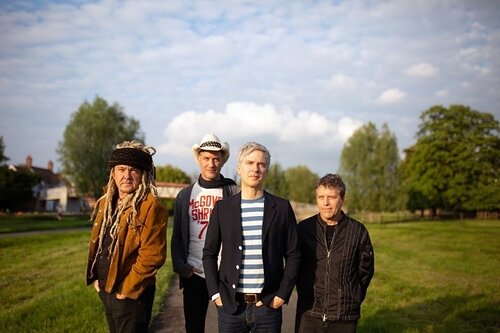
Nada Surf - Looking For You

Travis – Kissing in the Wind

PHOTO CREDIT: Lance Mercer

Pearl Jam – Love, Reign O’er Me

HGGFF.jpg

PHOTO CREDIT: Alexander Black

Moses Sumney – Polly
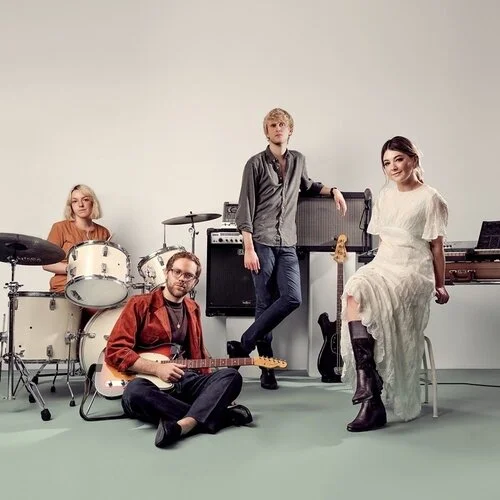
PHOTO CREDIT: Aaron Lee

Yumi Zuma – Right Track / Wrong Man

PHOTO CREDIT: Laura Hayes

Cub Sport — Hearts In Halves

The Roots – Feel It (You Got It)

Harry Styles – Falling

xsss.jpg

Russ – NIGHTTIME (Interlude)

aaaa.jpg

Larkins – Pieces

Ms Banks – Could It Be

FEATURE: “I Saw a Film Today, Oh Boy…” The Beatles and the Birth of the Pop Video

FEATURE:


“I Saw a Film Today, Oh Boy…”

fdedf.jpg

IN THIS PHOTO: The Beatles in 1967/PHOTO CREDIT: BIPS/Getty Images

The Beatles and the Birth of the Pop Video

___________

EVEN though I have been looking back a lot this month…

xcccc.jpg

PHOTO CREDIT: Mark and Colleen Hayward/Getty

I have been thinking about The Beatles and their incredible visual side. We can all debate which songs are their best and what takes the top spot. This year has seen a lot of Beatles activity and, to be honest, we never stop talking about the band! They are this immortal and evergreen sensation that are always going to be relevant. Not only do I think they reinvented Pop and caused an explosion like no other; The Beatles are the greatest thing to ever happen to music. One cannot dislike them – unless you’re an idiot -, because they produce so many masterpieces, varying in ambition and sound. It is hard to believe the same band wrote Love Me Do (1962) and Strawberry Fields Forever (1967). There is a lot of debate as to when the first music video was made. Some claim it is Queen’s Bohemian Rhapsody of 1975. Others claim that it is the MTV-launching Video Killed the Radio Star from The Bugles. I do think there is that split between the link of the music video and MTV and when the first music video was actually made. Although Queen’s video was released in the 1970s, I think it is quite primitive and cannot really be called the ‘first’ video. I am not sure what people’s criteria is but, back in the 1960s, The Beatles were releasing music videos. One can quibble over terminology and whether they were ‘promo clips’ or full-fledged videos.

If one accepts Bohemian Rhapsody and Video Killed the Radio Star were videos, then one needs to put The Beatles right alongside them. I will come to my favourite videos from The Beatles, but there is an interesting article that asks whether The Beatles invented the Pop music video as we know it. I think they definitely did invent the Pop video and released videos that look far crisper and more memorable than most of what is around today! This article from 2015 was written around the time the Beatles 1+ DVD was released:

“There is a tendency to think of music videos as originating in the Eighties, the era of MTV and Michael Jackson’s Thriller, when every major single would be accompanied by a short film, marrying music with visuals in ways intended to enhance the song and market the artist’s image. But, in common with so many pop innovations, The Beatles got there first.

The newly released Beatles 1+ DVD features 50 promos of the Fab Four, sweeping viewers from a charmingly static black and white mop top performance of Love Me Do in 1963 to a full colour, windswept, wild and funky romp through Don’t Let Me Down on the roof of the Apple building in 1969. No other recording artists of the era accrued anything like this kind of visual record.

“It was very unusual at the time,” notes Sir Michael Lindsay-Hogg, who directed Beatle promos for Paperback Writer, Rain, Hey Jude and Revolution. “They weren’t thinking about the future, no one envisioned MTV.” Yet Lindsay-Hogg, who was 26 when he started working with the Beatles, was never in doubt of the significance of these innocent, early promos. “Society was changing and music was in the vanguard. The appearance of the musicians, their clothes, hair, their way of talking was stirring the pot of social revolution. I always thought what we were doing would be part of the history of that time.”

Early promos were filmed quickly and cheaply and sent out to TV shows (such as The Ed Sullivan Show in the US) to spare the Beatles appearing in person. The band treated the process with typical irreverence. On I Feel Fine, filmed at Twickenham in 1965, Ringo rides an exercise cycle whilst George sings into a boxer’s punch bag. Production values improved marginally when Lindsay-Hogg was drafted in for Paperback Writer in 1966. “My original idea was that they would all be journalists in a newspaper office with little typewriters, and Paul would be secretly writing a novel.” However, manager Brian Epstein objected. “I got a call a saying Brian didn’t want anything 'unusual’. He just wanted to see the boys performing. Perhaps he thought that would be more useful to ship around the world.”

As the decade progressed, the visual language became increasingly adventurous, with the legendary 1967 promos for Strawberry Fields Forever and Penny Lane anticipating the kind of special effects laden, narratively abstract, stylistically bold videos with which modern stars routinely mould their image. Other successful bands began to follow the Beatles lead, with Lindsay-Hogg making promos with The Rolling Stones and The Who. “I would say Mick Jagger was the one who went into the most preparation, thinking this is the way things could go. He’s very smart and sees what the possibilities and challenges are. In the Beatles, the equivalent person was McCartney, who was hands on in so far as he could be. But Paul was pulling a different weight, because it was harder to get the other three Beatles to go the same way. Between Jagger and McCartney, they’d be great to be on a desert island with, because they are incredibly funny, incredibly bright and extremely resourceful.”

Although the earliest clips from The Beatles were quite simple and a lot of them were of the band performing on stage, it wasn’t long until they were making these marvelous and vivid videos. I love Paperback Writer because it makes you smile. Ringo is not playing drums – he has this gloomy look throughout -, and the film quality is exceptional. The band are playing the song in a garden/section of a garden and I think it is the essence of a great Pop video. They are performing live, but there is a sense of mystery and fun. It is a beautiful-looking video and, compare it to a lot of the videos from the 1970s and 1980s and it was way ahead of its time.

Rain (the B-side of Paperback Writer) captures The Beatles completely in-step and at their best; Help! sees the band sat together, shot in black-and-white (this video was released before Rain and Paperback Writer); Ringo holding an umbrella at the back of the line. I am really interested in the sheer kookiness and whimsical nature of the videos. The Beatles could mix the serious and the silly together effortlessly. One moment, one of the band would throw a scowl or serious look at the camera, and the next might find the boys joking around and cracking smiles. I think the key to the earliest Beatles songs was the simplicity and effortlessness. As such, it would be strange to make videos that were full of plot and characters. A lot of Pop bands at the time were either not releasing videos, or it was of them playing the song live. The Beatles truly changed Pop in more ways than one. I think their videos paved the way for artists to try something different and change things up. With the band moving more into experimental and psychedelic territory by 1967, the videos had to match that. I love the clips for Strawberry Fields Forever and Penny Lane.

The former sees the lads in a field, and they are working this contraption. It is hard to make it what it is, but I love the close-up shots and the reversed film; the blend of colour and darker shades. It is the perfect accompaniment to a trippy and magical video. Penny Lane’s starts with John Lennon walking the street (like a boss!) and then the band are on horses, riding through the streets – why not, eh?! The Beatles, of course, appeared in their own films, so they had experience when it came to acting; they have that love of film and bringing that together with their music. One can notice a shift in their videos through the years. Whilst a lot of bands in the 1960s were – if they did at all – releasing videos that were quite limp and forgettable, The Beatles had this knack of creating a little world for each track. Maybe it is the wonder of seeing the guys on screen together, but I think there is something deeper.

The Beatles were and are the biggest Pop act of all-time, so I think the Pop video started with them. Their videos were varied and brought something unique to the table. Everyone has their own opinions as to the best Beatles videos. This article explores their top-five. Don’t Let Me Down is truly iconic:

“It might not feature their most beloved song or their most popular one but this video does commemorate the Fab Four’s final public performance via their immortal rooftop concert at Apple Studios in London circa 1969 — with both Lennon and Harrison decked out in furs, McCartney sporting a thick beard, and Ringo upstaging them all with his red plastic jacket. Pay close attention and you’ll spot Billy Preston accompanying the guys on the keyboards, too”.

Whilst I am a bigger fan of the earlier videos (pre-1967), there seems to be more love out there for the 1967/post-1967 videos. Maybe that reflects a fondness for the albums (of The Beatles) that came out at the time or a greater degree of colour and innovation. Hey Jude is not only one of the best Beatles songs: its video is pretty amazing:

“First seen on the fairly short-lived Frost on Sunday on LWT (a.k.a. London Weekend Television) in 1968, this video encored in America on The Smothers Brothers Comedy Hour later that same year. Stick around past the 47-second intro and you’re brought up close to McCartney’s face singing straight into the camera, with some cut-aways to the other band members — most memorably a gum-chewing Lennon who looks to be making faces at McCartney at one point in an attempt to make him laugh. The emergence of a studio audience onstage at the end doubles as a time capsule of period fashions”.

So many Pop videos today are drab, unambitious and lack and feel. Even if Pop music is in a bit of a decline right now, the video is a crucial art-form and platform that is not yielding that many gems. The Beatles, throughout their career, were putting together videos that stays in the mind and seem progressive today. Consider what they did on A Day in the Life’s video:

“Given the song pays homage to avant-garde titans John Cage and Karlheinz Stockhausen among others, the video’s experimental feel — part light show, part cinema verite, part family home movies — feels perfectly appropriate. Quick glimpses of Mick Jagger and Keith Richards amid a montage of increasingly hallucinatory power adds a layer of glamor. Why are the tuxedoed orchestra members wearing strange noses and silly hats? Because they were asked to!”.

It is obvious The Beatles were way ahead of the game in terms of videos in addition to the music. There is debate when the music video was born; it clearly pre-dates The Bugles and Queen, that is for sure! One cannot deny the impact of The Beatles’ music videos on Pop acts that followed them. A band like them could have put out live performances or not really tried and it wouldn’t have mattered. Of course, there was not music T.V. around in the 1960s; a few of their videos were filmed for different Beatles films of the time; they formed part of a larger narrative. One can quibble regarding the birth of the music video in general, yet very few can deny the fact The Beatles…

CHANGED the Pop music video forever.

FEATURE: Bedroom Sounds and Futuristic Visions: The BBC Sound of 2020 Longlist

FEATURE:

Bedroom Sounds and Futuristic Visions

sssaa.jpg

IN THIS PHOTO: Joy Crookes

The BBC Sound of 2020 Longlist

___________

NOT only is the end of 2019 about…

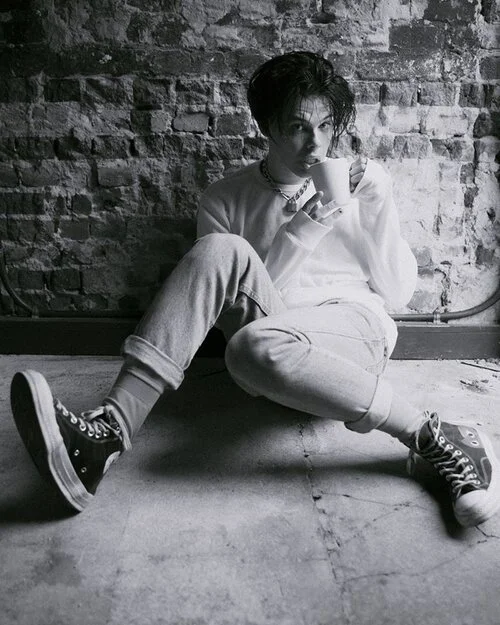
IN THIS PHOTO: YUNGBLUD

looking back at the best albums from a remarkable year; we are also looking forward at the artists who will define the sounds of 2020. The BBC produces its longlist this time of the year; their predictions concerning the artists we need to keep an eye out for. This year’s names are out, and I think it is one of the strongest and most interesting longlists for many years. Whilst, again, there are very few bands on the list and very little in the way of genuinely decent Rock, it seems the solo artist is favoured; sounds that move us away from commercial Pop and kick-ass Rock. With so much variety out there, it is good we do not see the same artists and genres highlighted. The BBC Sound of 2020 is exciting indeed:

“A selection of bedroom musicians, indie bands and retro-futuristic soul singers are being tipped for success on BBC Music's Sound of 2020 list.

The longlist features 10 rising acts, from punk-pop firebrand Yungblud to soul-baring songwriter Celeste.

Other nominees include DIY musician Beabadoobee, who is signed to the same management company as The 1975; and Dublin rock band Inhaler, fronted by Bono's son Elijah Hewson.

The winner will be revealed in January.

Now in its 18th year, the Sound of... list showcases the hottest new artists for the coming year. Past winners includes Adele, Sam Smith, Years & Years, 50 Cent, Sigrid and, earlier this year, Octavian.

It is voted for by 170 music critics, broadcasters and DJs, as well as former nominees such as Billie Eilish, Lewis Capaldi and Chvrches”.

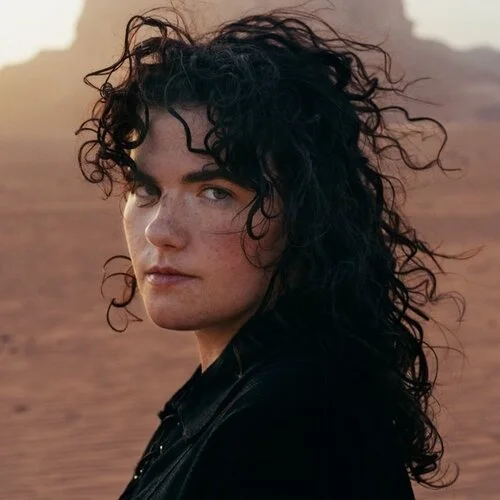
In honour of the ten artists in the BBC Sound of 2020 longlist, I am highlighting each with their social media links and essential track. It is clear we have a lot to look forward to next year in regards original and memorable music.

____________

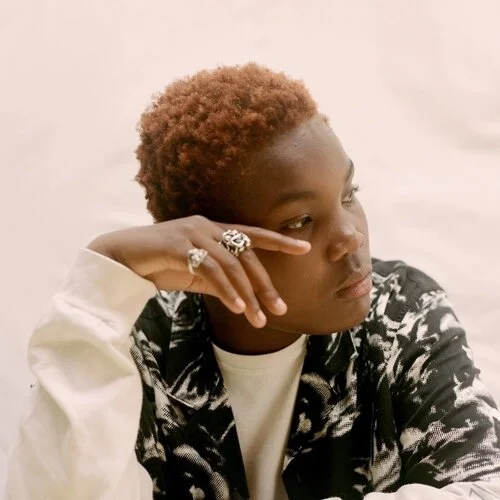
Arlo Parks

Sound: “Soulful poet unpicking the anxieties of a generation” - https://www.bbc.co.uk/news/entertainment-arts-50741299

Location: London, U.K.

Genres: R&B, Soul

Twitter: https://twitter.com/arloparks

Instagram: https://www.instagram.com/arlo.parks/

Spotify: https://open.spotify.com/artist/4kIwETcbpuFgRukE8o7Opx

Gig Information: https://www.livenation.co.uk/artist/arlo-parks-tickets

Key Words:

“I wanted to put [my sexuality] as a facet of myself because it’s not talked about as much for queer people of colour. It’s an important thing for me to show people that it’s okay. Some people are terrified of it, and I understand that.

“Coming out as bisexual was freeing in a way, because it allowed me to talk about experiences and feelings about certain things and people that I didn’t feel able to before. Obviously there’s still judgement and it’s still taboo, and I didn’t want to pigeon-hole myself as the bisexual artist, that’s just a part of who I am. That’s it.”

She’s also not alone as a new queer artist – even as a young, female one. When asked who inspires her, “Pussy Is God” singer King Princess is one of the first names to leap out.

“I think she’s sick. She’s got so much swag. She’s really dope, and she’s so unapologetically who she is that it made me feel like I could talk about things” - The Line of Best Fit

Standout Cut: Sophie

Beabadoobee

Sound: “Dreamy, lo-fi bedroom pop” - https://www.bbc.co.uk/news/entertainment-arts-50741299

Location: London, U.K.

Genres: Indie Pop/Rock, Space Pop

Twitter: https://twitter.com/beabad00bee

Instagram: https://www.instagram.com/radvxz/

Spotify: https://open.spotify.com/artist/35l9BRT7MXmM8bv2WDQiyB

Gig Information: https://www.songkick.com/artists/9458139-beabadoobee

Key Words:

“The heady sound of 90s alternative pop is being well scrubbed and shined by 21st-century teenagers. Enter Beabadoobee, aka 19-year-old Pavement aficionado Bea Kristi, born in the Philippines and raised in west London. From there, she writes sweetly sung sad songs that recall the dreamy sounds of Belly and Lush, and more contemporary touchstones such as US singer-songwriter Florist. Kristi’s lyrics peer inward, tearing gentle lines around subjects such as lost love (Disappear), self-harm (Bobby) and realising you love people (“Wait, I do – fuck!”, she sings on Apple Cider).

Her story sounds too good to be true. Kristi wrote her very first song, Coffee, in her bedroom in 2017, after her dad bought her a secondhand guitar (she’d already spent seven years playing the violin). A friend uploaded a muffled recording of it to Spotify and Bandcamp, where it received hundreds of thousands of plays within days. A cover of Karen O’s The Moon Song and an EP, Lice, followed, before she was signed to Dirty Hit, label of the 1975 and Wolf Alice. Two lusher seven-track EPs, Patched Up and Loveworm, appeared in December and April, and another one, Space Cadet, arrives next month, complete with Kristi’s fleshed-out live band. Its lead track, She Plays Bass, is a sugar rush of a song, a lovelorn ode to a female musician” - The Guardian

Standout Cut: She Plays Bass

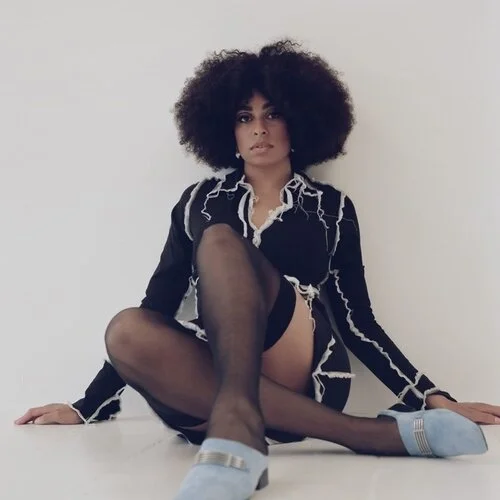
Celeste

Sound: “Timeless soul to tug at your heartstrings” - https://www.bbc.co.uk/news/entertainment-arts-50741299

Location: Brighton, U.K.

Genres: Soul, Pop

Twitter: https://twitter.com/celeste

Instagram: https://www.instagram.com/celeste/

Spotify: https://open.spotify.com/artist/49HlOY4gkHqsYG9GCuhkcc?si=wz4ByMS6RFuZd8IjjiPwlA

Gig Information: https://www.songkick.com/artists/32691-celeste

Key Words:

“When she was 16, Celeste uploaded a song on YouTube. It got the attention of a prospective manager, who eventually ended up arranging studio sessions for Celeste at the infamous Sarm West Studios in Notting Hill, London. Several legendary artists have used the studio to song write and record. That includes the likes of Led Zeppelin, The Clash, Rihanna, and Paul McCartney. According to Dummy Magazine, the people who ran the studio were so impressed with Celeste’s songwriting that they kept giving her more time there.

Celeste’s career took off from there. She released various songs over the next few years, including the single “Daydreaming.” The song is consistent with Celeste’s body of work, with sweet, soaring vocals over a laid-back instrumental. According toi-D Magazine, the song was written while Celeste was working at a local pub. Celeste says that she was “pulling pints” while imagining she was performing in the infamous Carnegie Hall in New York City. If that “daydream” became a reality in the near future, we wouldn’t be surprised” - UMusic

Standout Cut: Lately

Easy Life

Sound: “Genre-bending indie-funk quintet” - https://www.bbc.co.uk/news/entertainment-arts-50741299

Location: Leicester, U.K.

Genres: Alternative, Indie Funk

Twitter: https://twitter.com/easylife

Instagram: https://www.instagram.com/easylife/

Spotify: https://open.spotify.com/artist/7uwY65fDg3FVJ8MkJ5QuZK?si=KGc_sa-wQDyGUKfTYD-s5A

Gig Information: https://www.seetickets.com/tour/easy-life

Key Words:

“Based out of a creative hub near Leicester’s Narborough Road - known for being the ‘most diverse’ street in England - the band estimate that they rehearse in a space that has “50% of the city’s music scene in one building”. “There’s a lot of roots and culture and sound system vibes, but there’s not much going on in pop world,” Olly explains.

But being surrounded by a variety of musical styles has served the band well. Easy Life aren’t keen to single out any fixed influences (“although Beyoncé is a massive one,” Sam says, smirking), but this lack of adhering to any set of genre rules is what they do best. Coating bittersweet lyrics dissecting everyday life struggles with a hip-hop-meets-indie veneer, then mixing it in with a slacker rock attitude, their music sounds like what it feels like to just sit back and go with the flow.

“[We’re] a reflection on how life can be pretty shit but you need to find all the pleasure you can in it,” Sam explains of the band’s ethos. “When you can enjoy yourself, do it! And we’re here for you, through the good and the bad. We wanna make it easy.” “That sounds like a helpline!” Murray interjects, before they all roar with laughter again.

Easy Life aren’t aiming to be political or philosophical. It doesn’t even really seem like they have a particular lofty ambition for the band, either. They’re just a group of mates, making music out of whatever excites them and looking for the good vibes wherever they go. Sounds like a nice life to us” - DIY

Standout Cut: Nightmares

Georgia

Sound: “One-woman dance machine” - https://www.bbc.co.uk/news/entertainment-arts-50741299

Location: London, U.K.

Genres: Electric, Dance

Twitter: https://twitter.com/_georgiauk

Instagram: https://www.instagram.com/georgiauk/

Spotify: https://open.spotify.com/artist/06knYh538h5SI7OAEF8ek3?si=OeVvxmJyR_iFYG0eNcwxUA

Gig Information: https://www.songkick.com/artists/524189-georgia

Key Words:

“This curiosity should come as little surprise due to her musical exposure from an early age, even if it didn’t always make sense to Georgia. “It was a world that was quite familiar to me as my dad was in Leftfield and my mum was a big lover of all types of music, so it was quite a familiar story. I’ve seen it as a young girl, seeing twenty thousand people raving in a tent and not understanding it, but later on in life figuring out why it’s so brilliant.”

You’ll be doing the same with these new tracks, I suggest, offering a gateway for casual dance music fans. “That would be the ultimate musician’s or producer’s goal,” she confirms. “If you can get a kid to say ‘I want to know more about one of those basslines’ or ‘she mentions Mr Fingers or Frankie Knuckles’, that is, for me, the beauty of music” – London in Stereo

Standout Cut: Never Let You Go

Inhaler

Sound: “Shimmering, atmospheric rock anthems” - https://www.bbc.co.uk/news/entertainment-arts-50741299

Location: Dublin, E.I.R.E.

Genres: Rock, Indie

Twitter: https://twitter.com/InhalerDublin

Instagram: https://www.instagram.com/Inhalerdublin/

Spotify: https://open.spotify.com/artist/6lyMYewq2SuTFIXgiv7OxH?si=eNbB3_CYR124LlB6vYErqw

Gig Information: https://inhaler.band/gigs

Key Words:

“Inhaler are feeling a little worse for wear, though they make very valiant efforts to hide it. Last night, the band played a particularly rowdy show at the Sebright Arms, sharing a bill with Limerick’s very own Whenyoung. Decked out in leather jackets, quiffs akimbo and sunglasses firmly on, they swagger into NME HQ the next day in a neat formation. In unison, shades are tucked away into pockets, and very politely, they request strong black coffee, please, if you’re absolutely sure that it’s not too much trouble.

“It might’ve been a little bit too Irish…” starts bassist Rob Keating tactfully, caffeine fix now in hand. “The pints started flowing,” nods his bandmate Ryan McMahon sagely. “Eli asked if there were any Irish people at the show on stage, and this group cheered,” Rob recalls. “He was like, ‘oh no, there’s already too many of us”

They’ll just have to get used to it. From Dublin and far beyond, there’s a steady stream of young Irish bands making serious ripples internationally: The Murder Capital, Fontaines D.C, Just Mustard, Inhaler, Silverbacks, and the aforementioned Whenyoung to name just a few. “We grew up trying to start something, and not really seeing anyone else do it, “ Rob says. “Once we got our fake IDs sorted, and went to see all these bands we realised there was a scene out there” – NME

Standout Cut: Ice Cream Sundae

Joesef

PHOTO CREDIT: Jakub Koziel

Sound: “Self-confessed "emotional sad boy" from Glasgow” - https://www.bbc.co.uk/news/entertainment-arts-50741299

Location: Glasgow, U.K.

Genres: Singer-Songwriter, Indie

Twitter: https://twitter.com/joesefjoesef

Instagram: https://www.instagram.com/joesefjoesefjoesef/

Spotify: https://open.spotify.com/artist/28EyduqESEOVMO6vglvaUZ?si=6KbX22TOTumuyZRA8z1w3g

Gig Information: https://www.seetickets.com/tour/joesef

Key Words:

“A new singer-songwriter is quietly making waves in the UK music scene. Known only as Joesef, he’s already been compared to Amy Winehouse.

Is Joesef the next Amy Winehouse?

His music was so hotly anticipated that his first gig sold out before he had even released a single track.

The elusive, soulful musician comes from Glasgow and records his music in his bedroom.

He spoke to Janice Forsyth on The Afternoon Show about this extraordinary start to his career in music.

Was he expecting to sell out his first gig?

“It was mental,” he said. “I wasn't expecting that reaction.

“We posted a couple of wee clips on Instagram... I think everyone was just keen to see if I was gonna be really bad or no.”

Joesef plays everything on the record himself, but enlisted a group of musicians to help him recreate the sound for the stage.

“I kind of like every type of music. My mum loved Al Green and soul music, and the east end [of Glasgow] has a big dance culture. There were a lot of jazz samples” – BBC Scotland

Standout Cut: Play Me Something Nice

Joy Crookes

VVV.jpg

Sound: “South London stories filled with wit and romance” - https://www.bbc.co.uk/news/entertainment-arts-50741299

Location: London, U.K.

Genre: Pop

Twitter: https://twitter.com/joycrookes

Instagram: https://www.instagram.com/joycrookes/

Spotify: https://open.spotify.com/artist/5XMyhVhi5ZN2pi0Qwi1zXS

Gig Information: https://www.songkick.com/artists/8981904-joy-crookes

Key Words:

“The first gig I went to…

Was Dub Pistols in Brixton with my dad when I was seven. I ended up falling asleep during it. Although I can fall asleep anywhere, it’s kind of shocking, so it was no reflection on them.

The first time I knew music was my future…

I used to go to a Catholic state school for the first eight years of my life and all we used to do was sing hymns, but then this guy came to the school and did a jazz and blues workshop. I had never heard that kind of music before, the guy made us sing an old American blues song and I remember thinking, ‘Yes!’ I wanted to sit at the front and do all the hardest parts to all the songs. I was really eager to be involved. Understanding those songs, their weight, what they meant and where they came from was a moment that changed my perspective towards music.

The first thing that inspired me…

Was probably my area. London is so multicultural, you hear music everywhere you go and I think because of that it can really fast forward you into music. You have so many different avenues to go down.

Everyone always goes on about how my heritage influences my music, but I don’t sing a chorus in Hindu and then the bridge in Gallic – it doesn’t work like that. No one says that Amy Winehouse wrote Back To Black because she was Jewish. People think I do things because of my ethnic background but that’s not right. The point is, as a human I have many sides, I can be really emotional or really silly. It’s not because I have mood swings but because that is how I am. That’s my personality. And it’s my personality that comes out when I create music” – Stylist

Standout Cut: Hurts

Squid

PHOTO CREDIT: Bénédicte Dacquin

Sound: “Multi-tentacled art-rock polymaths” - https://www.bbc.co.uk/news/entertainment-arts-50741299

Location: Brighton/London, U.K.

Genres: Post-Punk, Psyche

Twitter: https://twitter.com/squidbanduk

Instagram: https://www.instagram.com/squidbanduk

Spotify: https://open.spotify.com/artist/685XjGzGztyivfR3fAjoxo

Gig Information: https://www.songkick.com/artists/264535-squid

Key Words:

“It seems there’s a revival of the postpunk revival going on, given all the prominent basslines, scowled vocals and busy guitars leaping out of the indie labels. A slippery five-piece from Brighton called Squid are among its most active practitioners. Three packed-out shows at Glastonbury in June also established them as one of Britain’s most energetic new live guitar bands.

Things began more gently for Squid. Their first release in 2016 on Bandcamp was Perfect Teeth, a small-scale ambient epic in thrall to the soundscapes of Joy Division. An atmospheric EP, Lino, came out a year later, after which influential south London label Speedy Wunderground snapped them up. The Dial, a 2018 single, saw them getting much bolder and louder, siphoning the energy of early 00s groups such as the Rapture. The track’s lyrics, about a hospitalised loved one, matched that intensity: “Suck your blood,” yowls singing drummer Ollie Judge. “I want to check your levels.”

This year, Squid have all moved to London, released chaotic seven-minute funk single The Cleaner, while a new EP, Town Centre, arrives on Speedy Wunderground in September. The band are touring all summer too, with dates at the Green Man, Knee Deep and End of the Road festivals mixed around club gigs and European dates. Their recent description of their sound to NME is one to savour: “the Coronation Street theme tune played on flutes by angry children” – The Guardian

Standout Cut: The Cleaner

YUNGBLUD

Sound: “Hypersonic emo-pop for the "underrated youth” - https://www.bbc.co.uk/news/entertainment-arts-50741299

Location: Doncaster, U.K.

Genres: Alternative Rock, Pop Punk

Twitter: https://twitter.com/yungblud

Instagram: https://www.instagram.com/yungblud

Spotify: https://open.spotify.com/artist/6Ad91Jof8Niiw0lGLLi3NW

Gig Information: https://www.ticketmaster.co.uk/yungblud-tickets/artist/5238519

Key Words:

“He’d grown up admiring the androgynous stylings of The Cure frontman Robert Smith, Nirvana’s Kurt Cobain and David Bowie. The first time he wore a dress at his next door neighbour Annabelle’s house, aged 12, he felt liberated and just like his heroes.

“I remember rubbing my hand on the silk and processing how it felt on my body and I felt really fucking good in it. It opened a part of me that I didn’t realise existed. It totally embedded in me. I felt like I became myself more in that 10 seconds.” Later on that night, we spot him flashing the composite of his two looks to his friends with a big grin on his face.

The look was also inspired by his permanent desire to represent and involve every member of his community, whether they be misunderstood teens from Britain, trans kids in the US or outcasts in South America and beyond. Every musician will say that it’s the fans that propel them forwards, but Yungblud really means it. If you look in the comments on any of Yungblud’s social media posts, a swarm of black-heart emojis appear from his legion of fans, which is based upon two black-hearted tattoos on Yungblud’s middle fingers: one complete and one broken. Throughout our time together he likes keeps an eye on his followers, whether it’s counting the number of comments on his posts, or totting up the number of tickets he’s selling to shows in Europe” – NME

Standout Cut: Parents

FEATURE: My Album of the Decade: Billie Marten – Writing of Blues and Yellows

FEATURE:


My Album of the Decade

Billie Marten – Writing of Blues and Yellows

___________

I am doing a few features before January…

aaaaaaa.jpg

IN THIS PHOTO: Billie Marten in 2016/PHOTO CREDIT: Danny Payne

that looks back at terrific albums; one will celebrate albums turning twenty-five next year. I think it is important to spotlight truly great albums and, as we are near the end of 2019, I am looking back at the sounds of the decade. Rather than compile my favourite albums as a long list, I wanted to concentrate on my favourite from the 2010s. There was a lot of competition but, when it came to be deciding which albums was at the top, I concentrated on the one that has made the biggest impact, there was one that stood out. One of my favourite albums of this year is Feeding Seahorses by Hand; her debut album, Writing of Blues and Yellows, is my favourite of this decade. Released through RCA Records/Chess Club on 23rd September, 2016, Billie Marten’s astonishing album took me aback! The title suggests sadness and cowardice, maybe; perhaps the blue is for the clear sky and the yellow is the sunshine. When thinking of this album, I am transfixed by many things. Firstly, the cover is a painting of Marten; a far-off look is on her face and one wonders what she is thinking. I know Marten herself feels her current album is more accomplished and truer to herself. On Writing of Blues and Yellows, Marten was still in school and writing whilst her family home in Ripon, Yorkshire. One can pick up elements of the country and open; a need for this teen to get some space but, in many moments, basking in the comfort of home.

Marten openly talks about mental-health and vulnerability in a way that is refreshing but never too heavy; her lyrics are constantly outstanding and mix pure poetry with heartfelt and raw honesty. A lot of songwriters employ subterfuge and cliché because it is easier, and they do not have to feel exposed and susceptible. Marten’s compositions rely mostly on acoustic guitar and piano but, at some of her most revealing moments, there are strings and electric guitar that add weight, surprise and new emotions. The production is incredible throughout and one gets a sense you are listening to this album being recorded live; like you are sitting in Marten’s home as she plays her songs whilst looking out on the garden – watching her dad mow the lawn or her mum talking to a neighbour. One gets this warmth from the record but, rather than keep her in the familiarity of home, Marten leads us outside and brings the listener into her world. The biggest differences between Marten’s debut and Feeding Seahorses by Hand are the change of setting and home. Marten now resides in East London and, on her sophomore album, talks more about the city and politics. Marten turned twenty earlier this year, and one gets the feeling (on her second album) of a young woman making her own way in the world and being more conscious of people around her – in a huge city, that comes into sharp focus! Feeding Seahorses by Hand is a fantastic album and moves her work forward; her compositions are more adventurous, and the lyrical palette is broader – although Marten still talks about her struggles and loneliness in a very brave and real way.

I have written about Writing of Blues and Yellows a few times; either as my favourite album of 2016 or when talking about Billie Marten as a musician. Lots has happened since that album arrived – including tours around the world -, but I find myself returning to her debut because of what was happening in my life at the time (in 2016). I had moved out of home for the first time since university and, whilst I was close to my family home, it was a period of adjustment and change. I am not the best with change, so living in a new house and adopting to a fresh way of living had its darker moments. I was also starting a new job and getting used to that. One can imagine that it was difficult, so music naturally formed a comfort and sense of escape. I was aware of Billie Marten a little before Writing of Blues and Yellows arrived. She had been posting videos to YouTube years before and was starting to get people whispering with songs like Bird and La Lune. Those two tracks show a sensitive and beauty that flaws you; a voice that is full of longing and uncertainty. When hearing Marten glide, you are there with her. For a debut album, Writing of Blues and Yellows is remarkably consistent, focused and accomplished. On Live, she looks abroad and cities she has not seen; Green catches you with its unexpectedly spirited drumming whilst Lionhearted is the young artist aware of the world around her and how she wishes she was bolder and bravery.

Marten never wallows or asks for sympathy, nor does she put on a mask. The fact Writing of Blues and Yellows is so frank and beautiful means you keep coming back to experience such rich and meaningful music. Two songs especially stuck out from the album: Heavy Weather and Emily. The former has one of the most beautiful and soothing choruses I have ever heard – even if that is not the intent! The guitar on the track is subtle but powerful; the lyrics take you into the wild as the rains lash and two lost souls are bonded together. Emily was one of the more unexpected revelations. If you hear songs like Hello Sunshine and Bird, you may have Marten pegged as a Joni Mitchell-type artist or someone with a single dimension. Emily is darker in tone. It has a rare appearance of electric guitar; one that picks, plucks and creeps as we hear Marten offer far-off backing vocals.

PHOTO CREDIT: Danny Payne

There is this eeriness but, of course, beauty mixes in too. Marten shows incredible variety on her first album outing. I am not sure why I bonded with those songs over the rest, but they provided me the most guidance and company.  Whilst 2016 provided albums as hot as Lemonade by Beyoncé, Billie Marten’s Writing of Blues and Yellows remaining in mind longer and, three years after its release, I keep coming back to. Normally, the albums I remember fondest have a lot of energy and are quite upbeat. Maybe it is because I see a kindred spirit in Marten; maybe the sheer quality of the songwriting and the marvel of her voice means Writing of Blues and Yellows lingers like a wonderful dream.   

The reviews for Writing of Blues and Yellows were really positive. Most reviews I saw were four-star and backed Marten as a songwriter to watch. This is how DIY described Writing of Blues and Yellows:

 “You can almost see the rain lashing against the windows on ‘Heavy Weather’ - an album highlight which conjures up a scene of sheltering from a storm. For the majestic ‘Lionhearted’, the buzz of guitar strings can virtually be felt with every slide along the fretboard. You can perhaps even taste the country air of her home country as birdsong trickles through on ‘Teeth’.

The Laura Marling comparison might seem like a lazy one, however the similarities extend beyond releasing a folky debut album at the age of 17. Billie is another wunderkind who’s also clearly a big thinker, able to express her thoughts in a mind-bogglingly mature and commanding way. She might be fresh-faced but there are moments of world-weariness. ‘Milk & Honey’ sees her despairing of greedy, materialistic desires over alluring strings. ‘Emily’ leans closest sonically to Marling’s debut ‘Alas, I Cannot Swim’, in which she despondently proclaims “we don’t have grace, we are foolish and shy”.

There’s a lack of ostentation from start to finish. The sound is uncluttered but never lacking in clout. It’s a quality most glaringly obvious on the acapella closer, a cover of Jane & Barton’s ‘It’s A Fine Day’. All signs point towards a colourful future for this talented teen”.

aaaa.jpg

IN THIS PHOTO: Billie Marten circa 2015/PHOTO CREDIT: Luc Coiffait 

Whilst Marten has conducted a fair few interviews this year, there was a smattering out in 2016/2017. Maybe it was because she was new, and many did not know about her beautiful music and talent. One interview I wanted to source from was Under the Radar (published on 15th February, 2017); Marten was asked how she viewed 2016:

 “2016 was regarded by many as a fairly tough and negative year. Was it also a hard year for you personally? If so, how? And also what were the high points for you?

What a horrible wet towel of a year. I think it was for us all, but this year really didn't pan out the way I thought it would. I never expected to make a record and release it, or do any of these crazy festivals, and never would I imagine my own tour happening. So musically, it has been fantastic. Personally there's been a lot of struggle coming to terms with understanding it all.

What are your thoughts on how the U.S. presidential election played out?

It's a real joke, a bad one.

What are your thoughts on Brexit and the future of the European Union? To what extent do you think the Brexit vote and the election of Donald Trump were motivated by the same factors?

This generation's distorted view of the 21st Centuryworld—it's rather scary people make these choices based on propaganda and the media that is specifically served to them, they are essentially agreeing with themselves and being backed up by false arguments. We get ourselves so easily worked up and mislead by things. You must watch HyperNormalisation.

Under the Radar has been around for 15 years now, since December 2001. How do you feel the music industry has most changed in that time, both for the better and the worst?

Well I feel I know very little about it, but everyone sort of gathers his or her own collected view. I feel this year especially has been more about pushing out more and more music, regardless of how good it is, just for peoples' consumptive needs. But I know this year has had some of the best music ever made and new artists are sort of starting this DIY generation where you can create anything irrespective of who you are or how much money you have. I love this under-the-radar focus, it allows anyone to be anyone and make the music that they really do love.

What band, besides your own, has the best name?

I like Goat Girl this year. Also Cabbage, but I've not listened to their music yet.

What's the most vivid dream or nightmare you had in 2016?

I keep having repeated post apocalyptic dreams at the moment. Weird.

What VHS tape or DVD did you wear out growing up?

There was a lot of Parsley the Lion [from The Herbs and The Adventures of Parsley], and I absolutely loved Dumbo”.

In many ways, the political situation has worsened since 2016. Marten addresses the changing landscape on her latest album and, whilst that is important, I find something magical in Writing of Blues and Yellows. It is the sound of a young woman making her first steps and reacting to the challenges of her teenage years. Whilst one can hear shades of Joni Mitchell and Jeff Buckley through the album, Marten never wears her influences on her sleeve: the fact she is unique and writes from the heart means the album stays with you long after you have listened to it. I have Writing of Blues and Yellows on vinyl, but I would recommend others to buy it. The album was missed off of most people’s best of 2016 lists. I was shocked considered some weaker-reviewed albums featured in many lists.

IN THIS PHOTO: Billie Marten in 2019/PHOTO CREDIT: Marieke Macklon for The Line of Best Fit

Maybe critics wanted something bolder and more energised. I don’t know. What I do know is that Billie Marten wowed so many people in 2016 and, as I look to 2020, I have been thinking about my favourite albums from this decade. There are quite a few that I would throw into the mix. Kendrick Lamar’s To Pimp a Butterfly (2015) and Beyoncé’s Lemonade (2016) would be in my top-five; I would also have David Bowie’s Blackstar (2016) in there, in addition to D’Angelo and the Vanguard’s Black Messiah (2014) – quite a back-loaded pick; I did enjoy a lot of albums from the first half of the 2010s. In terms of personal relevance and impact, the album that makes it to the top of the stack is…

WRITING of Blues and Yellows by Billie Marten.

FEATURE: Spotlight: Warmduscher

FEATURE:


Spotlight

PHOTO CREDIT: Holy Whittaker 

Warmduscher

___________

I normally reserve this feature…

for artists who are fairly new but, even though Warmduscher have been on the scene for a fair few years, I think they are a band that are still worthy of more followers! Not only do they have a name that stands out – so many artists today choose stupid names or ones you will struggle to find on a search engine -; they have music that is among the most interesting at the moment. I shall get to their latest album soon but, before then, a short introduction. Warmduscher are Clams Baker Jr (Craig Louis Higgins Jr), Lightnin’ Jack Everett (Jack Everett); Quicksand (Adam J Harmer), Mr. Salt Fingers Lovecraft (Ben Romans-Hopcraft) and The Witherer a.k.a. Little Whiskers (Quinn Whalley). It is also cool that they have sobriquets; sort of like the Traveling Wilburys did (they comprised George Harrison, Roy Orbison; Bob Dylan, Tom Petty and Jeff Lynne; they gave themselves unique forenames and the surname ‘Wilbury’). Also, so many bands have quite boring stories when it comes to their genesis. The coolly-named Warmduscher formed on New Year’s Eve 2014 and were there as a sort of impromptu band at a house party, as the story goes. The line-up has changed since the very start. Higgins was on vocals with Harmer on drums, alongside Saul Adamczewski and Lias Kaci Saoudi of Fat White Family on bass and guitar respectively. The group continued as a quintet and eventually were getting traction in magazines and blogs in the U.K.

They were being dubbed one of the best bands in London and turning many heads! Building on this momentum and heat, the band released Khaki Tears through the Trashmouth Records label in 2015. Far Out Magazine – in addition to many others – were impressed with what they heard:

“Indeed, while the record might well share a similar metaphorical descent in to madness and paranoia to that of Lewis Carroll’s novel, where Carroll’s story drifted in an opiated haze, Khaki Tears sinks deeper in to a K-hole; it’s synthesised psychedelia making post-modern references to the likes of STD’s and George Carlin (‘Roger’s Gills’) in what could only be a product of the 21st century. With singles ‘The Salamander’, and the aforementioned ‘Johnny’s Blue Khaki’ having been premiered previously, those interested in expanding their mind can at least dabble with the gateway tracks before embracing the shamanic intensity of tracks like ‘Gold Teeth’ or the trippy disco of ‘Yolk Buns U.S.A’.

Fans of the Fat Whites will of course find a lot to love about Kahaki Tears, as will fans of the mind-expanding cocktails behind its creation. And it’s almost certainly a record best enjoyed with a weighty joint, at the very least. But, it’s also a record that’s unlikely to find much footing outside of its target audience, though cracking the mainstream was never its intention to begin with. Instead, it’s a record that rattles towards its close with little regard for sanity or convention, reaching its conclusion in under half an hour, before spitting out listeners looking wide-eyed and feeling cerebrally battered”.

Not only were Warmduscher killing at venues around the capital; they were also created a storm with their debut album. Following the release of the single Big Wilma/Neon Tongues (produced by Dan Carey), they released their sophomore album, Whale City, in June 2018 through The Leaf Label. Again, critics wee keen to praise the band who were putting out music like nobody else. This is what CLASH had to say:

“Lead single 'Big Wilma' acts as the perfect sonic manifesto; hard-riffing garage rock blares, as Clams’ words fly out of his mouth, like bullets from a gun. A militarised Beefheart, Warmduscher are a force. On 'Sweet Smell Of Florida', they thrash through a Butthole Surfers-esque sleez jam, that cackles and growls like a saltwater croc.

But oh, it’s ever so reductive to say that Warmduscher are simply a brutish bunch of guitar-wielding hoodlums. 1,000 Whispers wafts through the speakers like a cold breeze after a sweaty afternoon, Clams’ croon a sexy growl atop ba-ba-ba-ing vocal harmonies, whilst closer 'Summertime Tears' fits into the same sonic continuum – like The Flaming Lips without the blurred, soft edges. It gives you chance to breathe after a frankly whirlwind tour of ‘Whale City’.

Warmduscher offer an ultimately imaginative, fun and thrilling take on rock ‘n’ roll, in an era where music of this ilk can feel so suffocating. Never boring, never dull, this is a glowing, fire-breathin’, thunder-clappin’ ghost train of a record. Everything these people do seems to turn to gold, and you can just tell from the album’s typography alone that this is no exception.

I will move onto their latest album in a bit but, firstly, I was interested by interviews Warmduscher provided around the release of Whale City. One can imagine there were few who were not sure of the band’s start and what makes them tic. Although their social media is updated regularly and there is some biographical information out there, there weren’t a huge number of interviews online. I have only really latched onto their music this year with Tainted Lunch, so it has been interesting listening back and finding out more about this incredible band. When they spoke with M Magazine in 2018, they were asked how they have changed since their earliest days: 

 “What makes Warmduscher work?

We started out as a way of having fun – we were mostly improvised. We got a really good vibe from that and it was a nice break from the normal stuff we were all doing in other bands. There were no strings attached to this. We could do whatever we wanted.

Then we added Ben, who played bass. We all have different music tastes, but also the same. But they’re all really good musicians and we just gelled together. I’m not entirely sure why it works – but I’m glad it does!

How has Warmduscher evolved since the early days?

The first album was 100 percent improvised when we recorded it. Ben wasn’t in the band then, it was just Saul, Jack and myself. So that was how we did it, and we just left things as they were. Then [producer] Dan Carey saw us play at Mica Levi’s going away party at her house. It was really good, and Dan was into it. We asked if he wanted to do our next album and when he said ‘yes’, we thought ‘oh, shoot!’ We better get something together”.

mmm.jpg

I am casting my mind back to last year and what the band scene was like in London. I went to a few gigs and kept my ears to the ground, but there were very few that really stood out. Maybe I was not looking hard enough. Certainty, Warmduscher were stirring things up and providing a sound that was missing. In another interview, Far Out Magazine got to the bottom of Warmduscher:

“The band, born out of the depths of London with a voice from the United States, penetrate your ears with every sound and rapid-fire lyric they can. Casting a shadow across every genre in their wake, the leader of this rock and roll nightmare is Clams Baker and he’s not what you’d first expect.

When fronting a South London band drenched in a punk ethos and already rendered a danger by many, there’s a certain image one conjures. The band is frenetic and contiguously creative, Baker himself, after being asked to describe them in one sentence, said “a good time gone viral” – and we couldn’t have put it better ourselves. However, Clams is both every part of that rock and roll image and every shadow that it isn’t.

Warmduscher is billed as “fractured rock and roll” and “sleaziest, debauched, filthy” and more. Truth is, there’s so much more to this band than just that. Clams Baker has strived for this moment, he’s done his time in the shitty jobs that nobody wants, he’s pushed himself into creative areas that proved unfruitful and he’s come out the other side wondering what happened.

Scratch beneath the surface of Warmduscher, take a warm shower and wash off all that dirt from the night before and you’ll find the sincerity of a bunch of musicians doing what they’ve always wanted, making music and performing their art.

This year has been an especially busy and successful one for the band. I have been listening to their music on BBC Radio 6 Music and Warmduscher have been captivating the crowds in the live arena. Their latest album, Tainted Lunch (the guys have a knack for awesome titles!), has been scooping big reviews and they are, again, proving themselves to be one of the most original and captivating bands around. I am sure Tainted Lunch will be among many critics’ top-ten when it comes to deciding their favourite albums from this year. Here is what The Line of Best Fit said when they reviewed Tainted Lunch:   

 “The whole thing feels a bit like a messy acid trip, darker than you're prepared for, like a self-destructive Hunter S. Thompson narrative. But with Iggy Pop growling into your ear on opener "Rules of the Game", you don't really want to be anywhere else.

The first single off the album, "Midnight Dipper" - an instant 6 Music favourite - is punchy, demands your attention, and oozes funk. The newly released creepy stop-motion video for "Disco Peanuts" is so worryingly impossible to avert your eyes from; it is a perfect allegory for the grim almost-fictional existence that is Warmduscher.

Tracks like "Fill It, Don't Spill It", "Grapeface", "Blood Load", fill your mind like a nightmare, screaming; a beast consuming its prey. But eventually the trip has to come to an end. "Tiny Letters" sees Warmduscher signing off, letting it all go, in a painfully beautiful ballad. The range of this band is intelligent and impressive. They do everything to perfection yet so freely it feels effortless.

Tainted Lunch is an irresistible delight; once you taste it you know you can never go without it again. Seductive, inescapable, overpowering, and you might need to take a shower afterwards”.

I am excited to see where the band go next and what they can achieve. You can keep on top of their live dates, and I would recommend you go along and see them if you can. More than anything, they bring something genuinely fascinating and fresh to the stage. Tainted Lunch takes their exceptional music to new heights, and the band are primed for a very long and prosperous future. Warmduscher have come quite a long way since their inception; I wonder whether they thought they would still be around and kicking arse when they were playing their first gigs – maybe they did! They have truly arrived, and this year has been a pretty hot one. After a string of successful dates and a critically acclaimed album, the band can be very proud and satisfied. I was intrigued by Tainted Lunch on its title alone; the fact the album is packed with brilliant tracks and takeaways makes it even more wonderful. I know the gang will be winding down now and plotting their moves for 2020. Given the love that has come their way this year, I believe Warmduscher can expect…  

aaa.jpg

QUITE a year to come.

____________

Follow Warmduscher

FEATURE: A Goddess Behind the Sticks: Celebrating the Underrated and Influential Meg White

FEATURE:


A Goddess Behind the Sticks

qqq.jpg

Celebrating the Underrated and Influential Meg White

___________

IT might seem unusual talking about a musician…

IN THIS PHOTO: Jack White alongside Meg White/PHOTO CREDIT: Getty Images

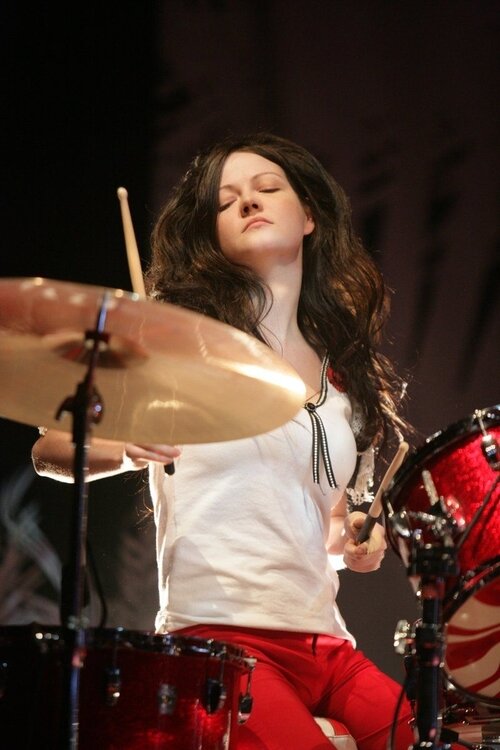
who has not performed for years and was part of a now-defunct duo. Meg White is forty-five today and, as part of The White Stripes, she is responsible for some of the most memorable and original songs of the past two decades. Actually, there is more to this piece that a birthday nod to Meg White. The White Stripes’ debut album, The White Stripes, was released in 1999 and it is great to look back at this twenty-year-old record. I discovered The White Stripes when I was in university back in 2002. By then, the band had released three albums and were getting a lot of traction in the U.K. Thanks for D.J.s like John Peel, we were being exposed to this remarkable and intriguing duo. Aside from the uniformity and the love of the number three (they wore red, white and black clothes) and familial lies (Jack White claimed he and Meg were siblings; they used to be married but saying that would have brought the wrong attention their way), The White Stripes bedazzled with their incredible music. Many might say it was all about Jack White; he wrote the songs and played most of the instruments, after all. Meg White played on Jack’s drums impulsively in 1997 and, with Jack inspired by a minimalist form of drumming, things sort of clicked. The White Stripes became favourites in the Detroit underground and brought something new to the world.

With Jack White inspired by the Blues and Hard Rock bands like Led Zeppelin, few had heard anything like The White Stripes. I always found myself gravitating towards Meg; not just in photo shoots and listening to interviews, but on records and live performances. Although the relationship between Jack and White was not always solid – the two didn’t communicate an awful lot; Meg was extremely shy -, the musical telekinesis between them is clear. When I was at university, I was given a couple of White Stripes albums by a friend – The White Stripes (1999) and De Stijl (2000) were my first tastes of the duo. Before hearing The White Stripes, I listened to a lot of Rock; a more produced sound with emphasis on chunky beats and stadium riffs. There was something much more captivating and sparser about The White Stripes. With homemade vibes and lo-fi production, my eyes were opened to a new world. I had huge admiration for Jack, of course, but there was something hypnotic about the beats of Meg. To the untrained ear, it might have sounded child-like and arrhythmic, but that would be unfair. Three is definitely an innocence and looseness, but Meg White, to me, is one of the most underrated drummers. I know a lot of musicians who have been inspired by Meg White, because her drumming is so different and effecting. One of the tags that was applied to is that of an extrovert. True, Meg was very quiet and did not do a lot of talking in the interviews.

Jack led the duo and wrote the songs, so it is understandable Meg would take more of a back seat when asked about the albums and story of the band. Whilst she was rarely vocal in interviews and did not chase a celebrity lifestyle, her drumming spoke volumes. That might sound cheesy, but those who think her drumming is lacking and ramshackle needs to listen to the music! There are so many artists out there today who owe a debt to Meg White. She was part of a duo who were hugely celebrated before their split in 2011 and have made an enormous impact on music. I understand a certain lack of enthusiasm by Meg helped contribute to the decline of The White Stripes. Maybe the touring and work rate took its toll and she was exhausted. I can see why she wanted to move out of the spotlight and enjoy a more settled and quiet life. It is a shame, because White’s talent and style is hugely impressive. I am not surprised she has appeared on lists of the greatest drummers of all-time. This exert is taken from a feature in Rolling Stone, who ranked Meg White the ninety-fourth best drummer ever:

“Meg White's idiosyncratic, primal take on drumming was fundamental to the appeal of the White Stripes, who rode their candy-colored outfits and stripped-down blues to rock stardom in the early Aughts. Tracks like "Dead Leaves and the Dirty Ground" and "Blue Orchid" were jolted to life by her deceptively simple backbeat bashing, which helped define the Stripes' stomp. "I would often look at her onstage and say, 'I can't believe she's up here.' I don't think she understood how important she was to the band, and to me and to music," Jack White told Rolling Stone in 2014. "She was the antithesis of a modern drummer. So childlike and incredible and inspiring. All the not-talking didn't matter, because onstage? Nothing I do will top that”.

I think Meg White was overlooked as a drummer because there is not that same power and pummel you get with a lot of Rock drummers. Rather than see Meg White as lacking proficiency, I think other drummers lack personality. As far as ringing endorsements go, getting kudos from Dave Grohl sort of proves my points. In this NME article, Grohl talked about Meg White (Grohl originally spoke to Rolling Stone about the film, Sound City):

“Speaking to Rolling Stone about his new movie Sound City and the way the film tackles the issue of digital versus analogue in modern production, Grohl said that modern day drumming has lost its personality and that he enjoys listening to drummers who may not be technically proficient but have made great music nonetheless.

“Nowadays, I think it could be hard for a kid to find a favourite drummer, because a lot of that personality is being robbed from these musicians for the sake of perfection, and it’s kind of a drag. It’s nice to hear drummers like Meg White – one of my favorite fucking drummers of all time. Like, nobody fucking plays the drums like that. Or the guy from The Black Keys. Watch that guy play the drums – it’s crazy. The dude from Vampire Weekend. Like, if any of those people went to the Berklee School of Music they’d never be accepted, because they’re not considered technically proficient. But their music has totally changed the world”.

I want to end with a playlist that brings together some of the best performances from Meg White but, before that, a couple of articles that highlight the brilliance of Meg White. In this article, the writer discusses a more elusive White these days; how Meg White deserves enormous respect:

“Of course, in an irony of ironies, if there’s one thing Meg White seemingly wants more than anything, especially in the years since The White Stripes disbanded, it is to be left alone and not be talked about. While I certainly respect her desire for privacy, I just can’t avoid writing about her and it’s because of how symbolic her playing is when cutting through the literal and metaphorical noise. No other drummer has been able to do that in the past two decades, and it may not happen again. It’s telling that when Jack White started doing solo tours and playing his old material, he put together a fairly large band. But when they played White Stripes songs, it somehow didn’t match the power of Jack and Meg. Jack White is also a great drummer: he plays drums in the Dead Weather. And surely he could have played drums on the White Stripes’ recordings, but he didn’t. Meg has something that neither he, nor any other drummer, has. 

Twenty years after the release of The White Stripes, one of the strongest debuts of the ‘90s and a mere peek at what was to come from this Detroit duo, we’re all still talking about their influence and what Meg White and her playing mean to the rock genre. Maybe in five years from now when The White Stripes are eligible for induction into the Rock and Roll Hall of Fame, the impossible will happen and we’ll see Jack and Meg together on stage again to remind us why the noise they made together was so beloved. If that does happen, one thing is for certain: That moment will be impossible to ignore
”.

I do think The White Stripes will be inducted into the Rock & Roll Hall of Fame, because of how they brought Blues and Garage to the mainstream. They did it without selling out and creating a unique framework and vibe. In many ways, I think we lost something when The White Stripes called it quits. How many bands now have the same incredible catalogue and energy of Jack and Meg?! Listen to drummers now, and I think there are very few who match the chops and personality of Meg White – even though she has influenced a lot of modern drummers, male and female. In another article, Meg White is put firmly under the microscope:  

 “Jack and Meg White weren't a comedy duo. But they also kinda were. And Meg was always the straight man. Listen to "Girl, You Have No Faith in Medicine" as Jack builds towards total vocal and guitar hysteria, challenging Meg's drums in a race to the cliff's edge. Jack's tiptoes are hanging off as he wails, "Give me a sugar pill and watch me just rattle down the street." Meg doesn't give in, instead she hits a simple "boom crack" and then "ts ts ts ts ts ts" — laughing her high-hat head off watching him rattle. Hear Meg's insistent thwack in the face of absolute frustration followed by the four-beat desperation of bashing her metaphorical head against the wall on "The Hardest Button to Button." Hear Jack wail the title lyric of "I Just Don't Know What To Do With Myself" and feel Meg's wry smile as she lets him suffer all alone for just a hair too uncomfortably long before barreling back in. The timing of their dynamic, and the balance between bonkers and basic, is what made The White Stripes stand out among the garage-rock bands who would usher in the 21st century. It allowed Jack and Meg to mash the simplicity of the blues with the spirit of punk to create theater.

Jack has said that "the whole point of the White Stripes," since the band's beginning, was "the liberation of limiting yourself." Meg's simple style of drumming was the absolute embodiment of that goal and, paradoxically, the primary source of criticism lobbed against her as a musician during the band's ascent to fame. Meg's role in the band was often framed by critics (professional and civilian alike) as an audition rather than an essence due to her lack of training or elaborate technique. Just Google "Jack White Defends Meg's Drumming" or search for Meg White on Reddit. To question whether someone has earned the right to a seat at the table (or the kit, as it were) in a band that she has been half of since its inception, to play the songs that she originated, is ludicrous. But the question is significant, and even helpful, if it helps us understand the way many people see women in bands as accessories rather than authors. In the same 2005 Rolling Stone feature where Jack explains to journalist David Fricke how the foundation of The White Stripes is finding creativity through imposing limitations, Fricke later asks, "Are there times when Meg's style of drumming is too limiting — that you can't take a song as far as you'd like to go?" Jack responds: "No. I never thought, 'God, I wish Neil Peart was in this band.' It's kind of funny: When people critique hip-hop, they're scared to open up, for fear of being called racist. But they're not scared to open up on female musicians, out of pure sexism."

By all accounts, including his own, Jack White was the more outwardly emotionally demonstrative member of The White Stripes — the big personality foil to Meg's straight man. See the end of any given live performance: Jack's hair is drenched in sweat and he looks like he might crumple into a catharsis puddle; Meg, whose job was arguably the more athletic of the two, is bone dry and still exuding the same composed air as she did an hour earlier. But do not make the mistake of confusing Meg's outward persona of nonchalance for a lack of tremendous musical emotion. On the drums, Meg White smashed out carnal, visceral, raw, sometimes funny and always urgent stories that told of the human experience. Maybe that's the thumping feeling that penetrates our pores and anchors our attention when we listen to The White Stripes. Maybe that's why we ever cared about the band in the first place.

As the great Meg White is forty-five today, I would encourage people to buy The White Stripes’ albums on vinyl and experience the music in its pure form. You can find out more about Meg White and her kit if you are interested in following in her footsteps. Since The White Stripes disbanded, we have seen far less of Meg White out in the world. In 2009, she married Jackson Smith (son of Patti Smith and Fred ‘Sonic’ Smith), and the two divorced in 2013. I understand she still lives in Detroit, and I wonder whether we will ever see her back behind the drums. Regardless, her work is out there…and I do maintain Meg White is one of the most underrated drummers ever. She and Jack fitted perfectly; if you had anyone drumming, the songs would seem odd and lack that certain something. In honour of Meg White turning forty-five, I am ending this feature with…

A forty-five song salute to a drumming legend.

FEATURE: Vinyl Corner: Solange – A Seat at the Table

FEATURE:


Vinyl Corner

Solange – A Seat at the Table

___________

BEFORE the end of the year…

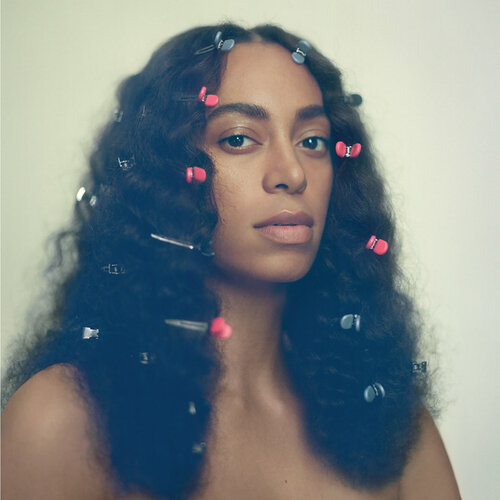
I want to bring a few albums into Vinyl Corner that one can consider among the best of the decade. The 2010s has been an interesting time for music and one that has delivered some amazing albums. Solange delivered When I Get Home earlier this year; it was another critical hit and proved that there is nobody like her in music. Her albums are amazing, and one listens and is awe-struck by her amazing voice and incredible songs. She is one of the greatest artists in our midst, and I hope there are lots of festival bookings for Solange in 2020. Her third studio album, A Seat at the Table, was released on 30th September, 2016, and is surely one of the best albums of this decade. You can buy it on vinyl, and I suggest you do. It is a phenomenal album and one that pushed her music to new heights. Before then, Solange has wowed critics with her albums and E.P.s - Sol-Angel and the Hadley St. Dreams was a minor success in 2008 but nobody was quite prepared for the wonder of A Seat at the Table. As far back as 2009, Solange Knowles explained her determination to record an album with the same sort of sound as Sol-Angel and the Hadley St. Dreams. Keen to get an album started, she rented a house in Santa Barbara, California where she suffered a breakdown. It was obviously a shock, but perhaps not a surprise given the fact she was working all hours and pouring every ounce into the record.

She suffered panic attacks and was making all sorts of sacrifices. Emotionally, financially and psychologically, Solange was in a bad place. She did release an E.P., True, that was well received. That was released in 2012, and she set up her record label, Saint Records, in 2013. This was her road to recovery and, with a new label set up, she was now setting her sights on a third studio album. Although Solange wrote most of A Seat at the Table’s tracks on her own, thee are quite a few producers in the mix that help give the album its range and various moods. Solange’s tracks are incredible and touch on themes such as race, empowerment and personal heartache. She mixes together genres like Funk and R&B to create this deeply immersive and fascinating album. I think the album resonated so quickly because there is that combination of the personal and universal. Solange addresses race and prejudice in the wider world but, on songs like Cranes in the Sky, Solange sings of her attempts to alleviate her pains. Solange is very open about her loneliness, hurt and struggles, but there is this overarching desire to feel better and find peace. A Seat at the Table is a powerful album that still sounds so astonishing and moving a few years after its release. Reviews for A Seat at the Table were incredibly positive.

Solange’s previous two albums were met with praise, but nothing like the reception that greeted A Seat at the Table. This is what AllMusic had to say: 

“Remarkably, tender elegance is the mode for much of the album's duration, as heard in the exquisitely unguarded "Cranes in the Sky" and dimly lit left-of-center pop-R&B hybrids "Don't You Wait" and "Don't Wish Me Well." Those songs crave release and reject character assassination and stasis while hinting at inevitable fallout. Their restrained ornamentation and moderate tempos are perfectly suited for Knowles, an undervalued vocalist who never aims to bring the house down yet fills each note with purposeful emotion. When the rhythms bounce and the melodies brighten, as they do during a short second-half stretch, the material remains rooted in profound grief and mystified irritation. In "Borderline," a chugging machine beat and a lilting piano line form the backdrop of a scene where Knowles and her partner tune out the world for the sake of their sanity. Then, after Nia Andrews and Kelly Rowland's half minute of proud harmonic affirmation, along comes "Junie," a squiggling jam on which André 3000 makes like the track's namesake (Ohio Players and Parliament legend Junie Morrison), where Knowles delivers a sharp metaphorical smackdown of a cultural interloper like it's merely an improvised postscript. All of the guests, from Lil Wayne to Kelela, make necessary appearances. The same goes for Knowles' parents and Master P, who are present in the form of short interludes in which they discuss segregation, self-reliance, cultural theft, and black pride. These segues shrewdly fasten a cathartic yet poised album, one that weighs a ton and levitates”.

This is The Guardian’s reaction to Solange’s breakthrough album:

“There’s a life’s worth of lessons in Solange’s third album, three years in the making. She’s long been engagingly outspoken on issues of race, and from the title down, A Seat at the Table is an intensely personal testament to black experience and culture; the likes of F.U.B.U., Mad, Don’t Touch My Hair and interludes in which her parents talk about their encounters with racism go deep. Sonically, the album’s take on modern psychedelic soul is languid, rich, lifted by airy, Minnie Riperton-esque trills on the gorgeous likes of Cranes in the Sky or the darkly glimmering Don’t Wish Me Well; it’s a world away from 2008’s peppier, poppier Sol-Angel and the Hadley St Dreams or 2012’s indie-crossover-hit True EP. Guest spots from artists as diverse as Lil Wayne, Sampha, Tweet and Kelela only serve to amplify Solange’s fascinating voice. It’s safe to say that though big sis Beyoncé has run her close recently, she’s once more the most intriguing Knowles sibling”.

There is no doubt that A Seat at the Table ranks alongside the best albums of 2016 – to me, one can put it in the running for albums of the decade. It does not matter where you come from and what your background is; the album speaks to everyone and one cannot help but feel moved and struck by A Seat at the Table. It is not just the songs on the album that caught attention.

Like her sister, Beyoncé, Solange can create something masterful and inspiring regarding the visual side. In this article, we learn more about the visual nature of A Seat at the Table:

“This brings us to Solange and her new album A Seat at the Table, which arguably has made the biggest splash in terms of its drop, the visuals and the social message. It is part fashion lookbook, part music album. The context, content and format make you reconsider what a traditional album even is anymore.

Solange’s album has us listening intently, and more importantly, watching also. How could you not? Her choice of music video for her title track from the album “Don’t Touch My Hair” is an ode to blackness and modern black power, intersectionality, and the future of fashion.

Purposefully and gracefully collaborating with Los Angeles-based fashion house Phlemuns, fronted by creative director and founder James Flemons, Solange chose some key looks to bring to the fashion world’s table. While singing lyrics about the modern, multi-faceted identities of black women in America, she rocked a gender-neutral brand created with the purpose, as stated on his website, of “striv[ing] to create clothes that people will want to wear and hold on to forever”. This is a bold statement from a young designer in our current ‘moodboard-to-market-and-repeat’ industry, given the prevalence and domination of fast-fashion. Phlemuns proposes a very different future, a slower and craft-based one, all while serving looks that can compete with the best and biggest fashion houses.

This important collaboration shows that mainstream society is slowly changing: celebrities are no longer left out of contemporary political discourse and are often the ones propelling it forward, bringing once underground movements like Black Lives Matter to the forefront. Given the United States extremely turbulent history of racialised violence, one can’t step onto social media (or the streets) without taking notice of the ever-fluctuating current political context. From the Black Lives Matter movement to mainstream media and music, society is finally starting to notice that something just isn’t right and fashion brands, musicians, and cultural influencers are no longer staying silent on the subjects that matter.

Solange’s lyrics in “Don’t Touch My Hair” address the objectification and perception of black women by mainstream society, while her collaboration with Phlemuns is a statement of her solidarity with young designers, the future of fashion, and a boost up from one black creative to another. If this is the sound of the future (and I truly hope it is), sign me up”.

I am still listening to A Seat at the Table on and off, and I am affected deeply by what I hear. It is a very powerful album and one that I would urge people to buy on vinyl – so you can get that true listening experience. I shall wrap things up shortly but, before I do, I want to bring in an interview Solange gave to NPR. She was the themes addressed, the audience she was trying to reach and her family:

 “You know, I guess one thing that I wonder, given what your grandparents went through, given that your father integrated his school and got all kinds of abuse in the process, given that you have experienced acts of racism yourself and now you have a son — do you feel like this is a cycle from generation to generation that is doomed to continue repeating?

I think that while making the album, I actually gave a great deal of thought to how much responsibility I had to express optimism and hope. And ultimately, I decided that me expressing optimism and me expressing hope came from telling the truth — that gave me optimism that I was able to be explicitly honest about my feelings. And for it to have the reception that it's had, and for me to have people share with me that they listen to the album first thing when they wake up to empower them to get through their day and the micro-aggressions that we experience and the healing that, you know, they're expressing that they're feeling — that is the optimism. I think the optimism is in having the conversation and being able to have the conversation now. And people being open to having that conversation”.

“One of the tracks is called "F.U.B.U.," which stands for "For us by us." I read that your working title for the song was "Be Very Afraid." When you talk about choosing optimism over pessimism, "For us by us" versus "Be very afraid" is a pretty stark contrast.

It is, it is. And to be honest, "F.U.B.U." was the song I had the hardest time writing in terms of conceptualizing. Before, that song specifically was about people being afraid of us and fear being at the root of so many murders from policemen, so many murders that we have constantly seen in the past few years. And it was really, really hard for me to put that in a four-minute song. And I kept trying, and I kept trying, and it hurt so much and it was so painful for me and it was so sad. And one day, I put on the track again, probably the fifth or sixth variation of the song, and I swear it just felt like God speaking through me. I wrote it probably in six minutes. And it was just one of those moments where it really did not feel like it was just me.

And that is where I drew "For us by us." Because not only did I mean it, you know, in the obvious way. But it really was written by us. These are incidents that all of my friends go through on a daily basis. These are incidents that, by the way, you know, Oprah and Dr. Dre have expressed that they're going through — and they're billionaires ... And also there's a certain tonality of that song that also speaks to — when you exist as an unafraid and powerful black presence in this country, what happens as a result of that? And kind of the breaking down that people try to do on a daily basis when you present yourself in that way, which is something that I've really struggled with.

I was going to ask whether you thought about who the audience was. This album is obviously from a black perspective, and a black female perspective. But there are some songs, like "F.U.B.U.," that sound like you are singing to an audience of black listeners. And then there are other songs, like "Don't Touch My Hair," which clearly seem directed at a white person.

I think that honestly while writing the record, I was writing for myself, to be honest. I was writing for my family and my friends. I was wanting to be the voice of my group text chat. I was wanting to be the voice of my grandparents. I was wanting to be the voice of my son, my niece. So I think that's really the audience that I was writing from the perspective of. Some songs are received in a certain way, but I honestly was writing them for myself and for my healing and for my self-discovery. On some moments, that can be universal. And then some moments, I feel like that is for us, by us, and we deserve to have that moment”.

I will end things here, but I would encourage people to go out and get A Seat at the Table – maybe stream it if you’d prefer. It is one of the best albums of this decade and one that seems to grow in stature and potency the more you listen to it. Solange recently appeared on The Tonight Show Featuring Jimmy Fallon and wowed viewers and reviewers with an amazing performance of tracks from When I Get Home; promoting some to ask whether it is time to give Solange her own variety show. She is definitely one of the most astonishing artists we have and someone who we should all keep an eye out for (she has a few gigs in January already lined up. Not only is 2016’s A Seat at the Table the moment when Solange truly found her voice; it is unmistakably…

ALL PHOTO CREDITS: Solange

AN instant classic.

FEATURE: Do It Again: Why We Need a New Steely Dan Documentary Out in the World

FEATURE:


Do It Again

IN THIS PHOTO: Donald Fagen and Walter Becker of Steely Dan 

Why We Need a New Steely Dan Documentary Out in the World

___________

WHILST a new Steely Dan album…

is not going to happen, I am perplexed by the lack of Steely Dan documentaries and podcasts out in the world. The fact that one of Steely Dan’s founders, Walter Becker, died in 2017 means the recording days of the group are over. Its other founder, Donald Fagen, is still touring the music, and he can always release another solo album. I am not sure whether there are any unearthed Steely Dan songs or demos that will come out but, considering what perfectionists Fagen and Becker were in the studio, it seems unlikely. Although the music of Steely Dan is in the past, I think there is a whole new generation that would be fascinated to know about the start of this duo – Steely Dan are Walter Becker and Donald but have been joined by a host of musicians through the years -, and how their incredible music came together. I know many people who are passionate about Steely Dan and we can all recite a couple of their hits. I do think they are very underplayed on radio, and when does hear a song of theirs, it is normally one of the better-known hits – Do It Again, Reelin’ in the Years and Dirty Work, for example. Like so many classic acts, there is a lot more to Steely Dan than the big hits. In fact, their albums are so well honed and performed, they demand serious passion and study. There are never any throwaway songs; instead, each number is beautiful and full. I have been searching online, and I cannot see anything in the way of a career-spanning documentary dedicated to Steely Dan.

The only thing I can find is the documentary where the guys discussed the classic album, Aja. That was back in 1999 so, twenty years later, do we need to revisit this musical force of nature? We still make documentaries about artists like David Bowie, despite the fact he died three years ago. Whilst Steely Dan are not played as much as artists like Bowie, their music is still wowing people and turning critical heads. Recently, Pitchfork reviewed five classic Steely Dan albums, and it was good to see these albums seen through new eyes; re-evaluated decades after their release. Their 1980 album, Gaucho, turns thirty next year, and it was the last album Steely Dan recorded before going on a hiatus; they would return to the scene with 2000’s Two Against Nature. Steely Dan’s music is complex and is full of feel, musicianship and craft. On the other hand, many of their songs are breezy and easily accessible. They are a Jazz Rock group/duo, but not one reserved to those who know the genre. Many people call Steely Dan Yacht Rock, because it incorporates elements of Smooth Jazz and Funk. I think there is this assumption that Steely Dan are these intellectuals who have written songs confined to those of a certain age of preference. On the contrary, Steely Dan’s music has resonated through the ages and can be understood by all.

I know people who listen to all kinds of music, but they can all agree that Steely Dan are seriously cool and great! The fact that they pretty much put out an album a year amazes me, considering the sheer amount of work that goes into their albums! Steely Dan put out their debut, Can’t Buy a Thrill, in 1972, and I don’t think any band like them has come sense. That blend of the cutting, witty and incredibly uplifting…try and name any act who has the same vibe and qualities as Steely Dan! Maybe, to celebrate that album’s fiftieth, there should be a documentary put out in 2022. I think that would be a great way to celebrate an incredible act. There are going to be many modern musicians who have taken inspiration from Steely Dan; musicians who worked with them who want to tell their story. Although Becker is departed, I think there is a chance Donald Fagen could be involved. It would not matter too much whether it was a T.V. or radio documentary, as Steely Dan rarely toured, and they didn’t release music videos. Steely Dan put out nine studio albums, and I think each is very different. One can hear a duo looking to form a group and find a sound on the debut; a step up on Countdown to Ecstasy (1973) and the perfection of 1974’s Pretzel Logic. 1975’s Katy Lied is a bit more of a struggle.

This is how Pitchfork surveyed it in their recent review:

“The irony of the note on the back of Katy Lied, and possibly the inspiration for its inclusion, is that the album’s sound was, according to the band, deeply flawed. While Walter Becker and Donald Fagen were recording it with producer Gary Katz and engineer Roger Nichols, they employed a then-new technology called dbx, which expanded the dynamic range beyond the conventional limit of analog tape. The system worked by compressing the incoming signal and then expanding it on playback, with some filtering in there to reduce noise. It was more complicated than Dolby, boosting and then lowering a wider array of frequencies, and also, potentially, more effective”.

Evan Steely Dan’s more ‘flawed’ works are full of incredible moments. Katy Lied has Black Friday and Any World (That I'm Welcome To) on it. 1976’s The Royal Scam is a little darker than previous releases and another shift of sound and themes. By 1977’s Aja, again, Becker and Fagen had changed their skin and created what is arguably, their finest album. Maybe 1980’s Gaucho is a little uneven, but there are still some career-best songs on there – including Hey Nineteen and Babylon Sisters. Even if Gaucho was Steely Dan nearing the end (for two decades, anyway), there is still a lot to recommend – as Pitchfork explain in their review: 

“Good times! Is it any wonder Gaucho—the seventh Steely Dan album, and the last one Donald Fagen and Walter Becker would make together until the year 2000—is the one even some hardcore Danimals find it tough to fully cozy up to? The almost pathologically overdetermined production is elegant, arid, a little forbidding, and every last tinkling chime sounds like it took 12 days to mix, because chances are it did. And underneath that compulsive craftsmanship, that marble-slick surface, there’s decay, disillusionment, a gnawing sadness. But that’s what’s great about Gaucho. It takes the animating artistic tension of Steely Dan—their need to make flawless-sounding records lionizing inveterately human fuckups—to its logical endpoint.

It’s their most obviously L.A. record, so of course they made it in New York, after spending years out West making music so steeped in New York iconography it practically sweated hot-dog-cart water. And it’s also the most end-of-the-’70s record ever made, 38 minutes of immaculately conceived malaise-age bachelor-pad music by which to greet the cold dawn of the Reagan era. The characters in these songs have taken an era of self-expression and self-indulgence as far as they can. They’re free to do and be whatever and whoever they want, but all that severance of obligation has done is isolate them from other people”.

I don’t think Steely Dan ever made a bad record. They set such a high standard early in their career which meant an album like Gaucho might have seemed a little lacking. People are seeing these wonderful albums years later and tackling them from a different angle. I think Walter Becker and Donald Fagen’s songwriting could act as a guide to others and give them impetus – there are artists who cite Steely Dan as influences, but I feel there are so many others who could benefit from their wisdom. Maybe Donald Fagen would be reticent to talk about Steely Dan without Walker Becker, but there is a lot of music and material that could go into a fantastic documentary. Certainly, there are fans from different generations who could contribute; broadcasters and fans who have their own favourite albums and different reasons for loving Steely Dan.

I do not think they are a niche act that has been overlooked because few people are into them. There are a few podcasts connected to Steely Dan, and there has been the odd special here and there. It is strange that there has not been anything in the way of a multi-part radio documentary or a T.V. feature that celebrates the work of Fagen, Becker and their wonderful musicians. There are YouTube videos that extol the virtues of Steely Dan, but nothing – that I have seen – that examines all their albums and really digs deep. It could be a hit on Netflix or a BBC radio documentary; maybe a new podcast that focuses on different aspects of Steely Dan. They are in the Rock & Rock Hall of Fame, and I think the power and importance of their music will reverberate for decades more. I want to end with exerts from an interview Walter Becker gave to Time Out New York in 2008 (it is quoted in a Time Out article from 2017). He was asked about the make-up of Steely Dan and the idea of Steely Dan being Yacht Rock:

 “Can you give a nutshell breakdown of the division of labor in Steely Dan? It’s hard for an outsider to know who’s responsible for what.

Yeah, I think that with most partnerships that run for a certain amount of time—and ours has run for a pretty long time—the division of labor is very ad hoc. So whatever needs to be done, sometimes I’ve got something to start with, sometimes Donald’s got something to start with. Sometimes we really work very closely, collaboratively on every little silly millimeter on the writing of the song and certainly of the records, and sometimes less so. And so over the course of the partnership, I think we’ve done all sorts of different things different ways, and probably that still is changing in a way, because if I can speculate on Donald’s behalf, I think there is a level of perfection, polish, sophistication, and abundance of detail and structural stuff that he wants to hear in his music that I sort of ran out of patience to do.

zzz.jpg

My attention span is not that good anymore, and I sort of believe—and maybe the lyrics somewhere say this—that the perfect is the enemy of the good. And one of the real dangers of doing the kind of thing that we do, where people let you do whatever you want and you have money, is burnout. You go too far; there’s no one there to stop you; you keep going; you keep working on things. So I have to learn, and even sort of create artificial boundaries so that doesn’t happen. And nowadays because of computers, because of a variety of things, there’s an unlimited palette of techniques that you can use. And if you don’t rule certain things in and certain things out—put it this way, it’s helpful for me. I tried to think back to what we did in the ’70s with what we had available, and why in some ways that was an optimum sort of setup. So there’s something, for example, about the fact that either you get a track that day with your band, or everybody goes home with their dick in the dirt, that helps you get tracks. It helps for musicians to know that it’s either going to happen there and they’re going to know about it and be on the record, or not. And not that they’re going to play some stuff and you’re going to take it home and fiddle with it and fool around with it. I like to get as much as I can in the tracking session. If I had the resources and the time and the fixed cast of characters and a bunch of other things, I would try to record everything live. If I could sing well enough, especially. But with other people too, I just think that ultimately that’s something I aspire to, because it’s the most joyous experience in music-making, when everybody’s playing together.

So I’m pretty positive you guys are familiar with this whole Yacht Rock thing…

Yeah! [Laughs]

I wanted to ask you about it because I think it’s kind of strange and interesting that you guys are involved with that. There’s this whole idea of smooth music, with the Doobie Brothers and Kenny Loggins and people like that. What is your feeling about being lumped in with that, and do you feel it’s accurate?

That’s just basically a gag, and I see why we would be lumped in with it. There are a lot of reasons why we would be lumped in with it, and yet there are a lot of—I mean, for example, to take someone who’s probably the furthest from where we are, like Christopher Cross, okay, who’s just doing these very simple songs; he was doing them I’m sure with some of the same musicians that we used, in some of the same studios with some of the same sonic goals in mind: a very smooth or shall we say polished product. And we ended up doing that—or maybe I should say we started out doing that, because it was our perception that if you were going to use jazz harmonies, it had to sound tight, professional; nothing sounds worse than sloppy—than kids playing jazz, you know what I mean? And so we sort of felt obliged to do that because of the kind of music we were doing. And so I think it’s great. I think it’s very amusing, the idea that all of these people knew each other, and I suppose, you know, we certainly knew Mike [McDonald], we worked with Mike, and we knew the Eagles, not as well, and the idea that we were sort of battling with each other in various types of feuds and situations, I think it’s pretty funny. I think it’s great”.

I think there are far fewer music documentaries out there than there should be. We have a lot of podcasts, but I feel music documentaries on T.V. and radio are harder to come by than they were years ago. Maybe it is the cost and effort involved that means podcasts are more economical and popular. Most of the greats of music have had a documentary dedicated to them or some form of celebration. When it comes to Steely Dan, there is a gap and that lingering question: When are we going to see them given their (overdue) moment in the spotlight? One can easily and happily investigate each of their albums, or they could look at Steely Dan in the context of music in the 1970s. Their music was featured in Katie Puckrik’s excellent documentary, I Can Go for That: The Smooth World of Yacht Rock. In 2019, I can hear elements of Steely Dan in other artists. Whether it is the rich musical palette or the lyrical style, they are definitely still with us. With so many podcasts and different ways of talking about music and great artists, I do feel like it is the moment we need to examine the stunning music of Steely Dan. I am not sure what it is exactly, but there is a rare feeling one experiences when they listen to Steely Dan’s music. It can make you laugh and smile; you are dropped to the knees by the audacity of the musicianship and the genius of the lyrics. Whether it is a radio series or a one off T.V. documentary, I, and so many other people, would love to…

SEE it come to fruition.

FEATURE: Modern Heroines Part Twelve: Cate Le Bon

FEATURE:


Modern Heroines

xxx.jpg

Part Twelve: Cate Le Bon

___________

ONE reason why I wanted to include Cate Le Bon…

xxx.jpg

in my Modern Heroines feature is because she has come an awful long way since her debut album, Me Oh My, in 2009. I am not going to cover her E.P.s – she has released a few -, and I am going to run through her albums and see how she has evolved; how critics have really warmed to what she is doing. Before I start with her debut album, it is worth providing some background to Cate Le Bon. Born in Carmarthenshire, Wales, Le Bon first captured public focus when she supported Gruff Rhys on his 2007 solo U.K. tour. Le Bon put out her debut in 2009 but she appeared on a couple of other artists’ songs prior to that – including a spot on Neon Neon’s I Lust U in 2008. It is no surprise she has turned heads, given that there were not many artists like her back then; there still aren’t if we are being honest about it! Also, in 2008, Le Bon released the E.P., Edrych yn Llygaid Ceffyl Benthyg. That is a Welsh-language E.P. and, again, there were few artists putting out music in Welsh. Now, there are acts like Gwenno and Adwaith, but it was quite rare in 2008. I think Le Bon interested people earlier on because, even though she has a Folk vibe, she did not follow others or employ obvious influences. She could throw in odd riffs and quirky vocals with the air of suspects.

All of her tics and qualities mixed might see off-putting, but Cate Le Bon makes one feel warm and comforted. Le Bon crafted her own style from the off, showing how you can be unique and still resonate. Her guitar playing, vocals and lyrics were very much her own; they have strengthened through the years, yet nobody could mistake Cate Le Bon for anyone else in 2009. This year, mind, has been a hugely successful one for Le Bon. She was nominated for the Mercury Prize and Welsh Music Prize for Reward – more on that later – and, whilst she won neither, she has won a huge wave of respect and interest from the fans and press. I think Reward is one of the best albums of this year and makes you wonder where she will head next. I think Le Bon, in years to come, will be seen as this innovator and hugely influential artist who helped break down barriers. Le Bon has certainly help bring Welsh music to the fore, and she has inspired so many other artists, not just musically, but how she approaches life and how she has owned her career. Although Le Bon is reaching a peak now, there were some who were not sure what to make of her in 2009. Me Oh My was brought out to some acclaim and, although her E.P. of 2008 featured Welsh lyrics, there was far less of it to be heard on her debut studio album.

Maybe she felt she might alienate critics or Me Oh My would be reserved to only a few listeners. I can understand why she didn’t want to gamble early on and, although there were some mixed reviews, many had a lot of positive things to say. Here is The Line of Best Fit’s assessment:

 “Le Bon’s haunting ethereal voice accompany crisp guitar strums, which build with reverb until the futuristic synths kick in compelling me for the second time in a week to make a comparison to The Velvet Underground and Nico. Following track Sad Sad Feet is beautifully elegant as stripped back acoustic instrumentals set the scene for Le Bon’s wistful, eerie, multi-layered vocals. Highlight Hollow Tress House Hounds is more rock than folk with a catchy electric hook that is set to loop as Le Bon’s eccentric lyrics soar high above the base line. And the best way I can think of describing strikingly mysterious and melancholic keyboard led Eyes So Bright is to just say that it belongs in a Wes Anderson film. In fact the same could be said for Burn Until The End as Le Bon’s half sung, half spoken lyrics sounds sinister over the upbeat, rolling acoustic guitar. Probably one of my favourite tracks on the record, it begins unmistakably as an abstract, art-folk number until the drums and electric guitar riff kicks in and we are reminded of this 60s garage rock vibe that Le Bon carries throughout the album. Largely understated instrumentally, Le Bon’s earthy vocals and that twinge of sadness keep Me Oh My a diverse and intriguing listen as do the sporadic burst of energetic electrics and drums”.

Between Me Oh My and her second album, Cyrk, Le Bon left a three-year gap. She would bring us her third album in 2013, but she would then leave another three years between her remaining two albums. Some might ask why there was quite a pause between albums, but there is this great pressure to release albums quickly. I think artists are viewed as irrelevant or absent if they do not follow up an album with another after a year. It is a problem that plagues Pop artists more than anyone else, but Le Bon must have felt some pressure to get a second album not long after her debut. Rather than rush a release, Cyrk is a record that strengthens her sound and brings new elements to the plate. Le Bon gathered a smattering of love for Me Oh My, but Cyrk found a lot more positive response and focus. 2012 was when I discovered Cate Le Bon and I was instantly struck by her music. I was into artists like Laura Marling and one would have forgiven Le Bon for following Marling in terms of sound and lyrical direction. Luckily, Le Bon kept her music true to who she was and, as such, instantly burrowed her way into my brain. In the world of art, Cyrk is contemporary Polish circus posters that emerged in 1962 as a genre of the Polish School of Posters. They are characterized by their display of aesthetic qualities such as painterly gestures, linear design; hand-lettering, metaphors, humour and vibrant colors. Usually based on a single theme and meant to be advertisements; they were created in an attempt to interest the passerby in the upcoming circus

The reviews for Cyrk were largely positive and encouraging. In their review of Cate Le Bon’s sophomore album, Drowned in Sound wrote the following:

“It’s surprising that these songs should work so well on an album that opens with the rattling rock ‘n’ roll of ‘Falcon Eyed’ (easily CYRK’s catchiest song) but Cate le Bon seems to celebrate contrast – a point proven by CYRK’s final two tracks. ‘Ploughing Out Part 1’ has a beautifully inflected country guitar and the gentlest of choruses, and its simplicity is entirely at odds with ‘Ploughing Out Part 2’, where you’ll find an eclectic array of instruments caught up in a semi-motorik psychedelic wig-out. These two halves of the same song set these two sides of le Bon’s sound in stark contrast to one other, at the end of an album that’s done well to combine them.

Admittedly, the shabby production on CYRK means its colourful psychedelic streak isn’t as vivid as it is on, say, Gruff Rhys’ Hotel Shampoo, but that’s perhaps an unfair comparison. What this album makes perfectly clear is that Cate le Bon isn’t attempting to emulate anyone – not even her most distinguished collaborator. She’s made an album that only she could have made, and frankly it’s refreshing to hear a female singer from a folk background whose most obvious and overwhelming reference point isn’t Joni Mitchell via Laura Marling. A songwriter this unique and talented shouldn’t be standing in anyone’s shadow”.

PHOTO CREDIT: Kirsten Mcternan 

Because her music was getting more spotlight and love, Le Bon was speaking more with the media. It is interesting noticing the differences between Me Oh My and Cryk. I think Le Bon grew in confidence and you can really hear that in the songs. Although Reward is my favourite album of hers, Cryk is an important breakthrough and one that found her taken to heart by so many people. In this interview with The Quietus, Le Bon was asked about her upbringing and the differences between her two studio albums:

“And how did growing up in rural Wales impact on your music?

CLB: Wales played a big role in my musical education. Growing up in the 90s there were two key bands in Wales, Super Furry Animals and Gorky’s Zygotic Mynci; two very varied and innovative bands that really inspired me. I also think that growing up where I did, in the Welsh countryside, impacted on my lyrical content too. The sense of space and, at times, isolation; you can definitely see the influence of that in my music.

What was the inspiration for the new album?

CLB: I was really inspired when I was at the Away Game festival on the Isle of Eigg. It’s such a beautiful island and I felt very moved by the place. I write a lot about the sea, so it’s probably not a surprise that somewhere like that inspired me. Lyrically, I see the album as a time travel travelogue, filled with the stuff that I usually write about; the sea, matters of the heart and animals (and sometimes all three together).

Musically, how would you describe the album?

CLB: I think it’s a bit of a mish-mash, possibly with a harder edge than my first album. There are poppy bits, such as the first track on the album, 'Falcon Eyed', there’s folky bits, prog bits and a bit of psychedelia thrown in for good measure too.

How did the making of CYRK differ from the making of Me Oh My?

CLB: With my first album, a lot of the tracks had been knocking around in my brain for years. That wasn’t the case second time around. I had to sit down and write new stuff. I also found, following the experience of the first album, that I was much more aware of instrumentation when writing CYRK. I knew how recording the album would work in a studio, what instruments and sounds you could add. With Me Oh My, I was much less aware of that side of things and so wrote in a slightly different way.

Is it important to you to sing in both Welsh and English?

CLB: Unlike some people who are bilingual, I get the chance to use both languages equally in everyday life. So when it comes to singing it made sense for my songs to reflect this. But, I do find that it’s easier to write in English, largely because for me Welsh is a difficult language to write lyrics in. Gruff Rhys, Euros Childs and Meic Stevens are wonderful Welsh lyricists, people who seem to write with ease. I’d love to have that level of ease but I don’t. But it’s still great that I possess the ability to sing in another language, specifically one that I think is so beautiful.

CXX.jpg

Following Cyrk and how busy Le Bon was promoting and touring it, one could have forgiven her for taking a step back and recalibrating. Instead, Mug Museum sort of represents transition and tragedy. Le Bon recorded the album in Los Angeles in March 2013 and relocate to the U.S. from Wales. Recorded alongside Noah Georgeson (who has worked with Joanna Newsom and Devendra Banhart), Mug Museum is a sparser work than we were used to. It is stripped-back; though Le Bon does collaborate with other artists on various tracks (Perfume Genius pops up on I Think I Knew). Le Bon wrote the album as a reaction to her grandmother’s death. Rather than produce something grief-stricken and depressed, Le Bon realised that this important woman who was at the top of the family chain had gone; relationship dynamics were shifting and there was this obvious void.  I love the title of Mug Museum because, according to Le Bon, it is an imagery place where relationships are looked upon and viewed – sort of like people staring at mugs and their individual designs (although, originally, the term was coined by a former roommate of Le Bon’s, given the number of mugs strewn about the place). There were not many interviews from Cate Le Bon in 2013, but that didn’t matter. She was going through this challenging time and had moved to a new country, one where a lot of people did not know about her.

There are a lot of great reviews for Mug Museum. AllMusic had this to say when they reviewed the album:

“The front half of Mug Museum is sublime, a heady mix of clever, Tom Verlaine-inspired guitar lines, sneaky, circuitous melodies, and poetic yet evasive lyrics that culminate into a rich stew of psych-pop goodness. Songs like the propulsive opener "I Can’t Help You," with its snappy, Stereolab-primed backbeat and tonal uniformity, the loose and affable "Are You with Me Now?," and the lovely "I Think I Knew," the latter a lush and moving duet with Seattle-based singer/songwriter (and fellow pop outcast) Mike Hadreas (Perfume Genius), find Le Bon firmly in her comfort zone, even as she pokes and prods around its edges, but Mug Museum, with the exception of the gutsy, proto-punk boardwalk rocker "Sisters" loses a little steam near the end, relying too often on dissonant quirks and meandering VU-style free-jams. It’s not Cyrk III (Le Bon issued an EP of songs called Cyrk II shortly after the release of its precursor), but Mug Museum will delight anybody with ears who enjoyed her previous outing, and while it may lack some of the focus of its predecessor, it retains every bit of its oddball charm”.

Given the fact Cate Le Bon was acclimatising to a new home and adapting to America (Los Angeles), it was another few years before we saw Crab Day. Crab Day came out in 2016 and it saw Le Bon change her working methods. Now, short demos were recorded first; she used different instruments and lyrics arrived after the music was realised. 

Maybe there was a need to do something different and push her music forward; perhaps her new environment inspired that shift. Whatever compelled that evolution, one can definitely hear a step-up in Le Bon’s music. Le Bon mapped out the songs in her head and (in her head) were vocal melodies, not just the lyrics. When she had the song ready to go, she would rehearse with her band -  Stephen Black (bass), Huw Evans (guitar) and Stella Mozgawa (drums) – and then things were moved to the studio; recorded was done in five days and then Le Bon completed her vocals and overdubs. I can imagine it was a bit scary transitioning from the security and familiarity of Wales and moving to the bustle of L.A. It could have stunted Le Bon’s music but, instead, it seems like this fresh vein of inspiration arrived. Again, press reaction was positive and Le Bon was very much in people’s minds. I think the opportunities of America were obvious and really benefited her. I can imagine a lot of different factors contributed to her move, but I think it worked out for her. Certainty, Crab Day earned Le Bon the best reviews of her career to date. The Guardian were full of praise when they reviewed Crab Day:

“After third album Mug Museum, Welsh art-popper Cate Le Bon has turned the last of her pottery-wheel twee and, on Crab Day, creates a springy rubber-band-ball of angular guitar, squalling saxophone and elastic basslines. Single Wonderful, for example, sounds like it has popped out of a Warhol Campbell’s soup can. Mostly, though, the album has the eccentric air of an am-dram troupe who have raided the dressing up box, hopped in the camper van and escaped to the seaside to make their own fun (which is sort of what happened – it was recorded on the Pacific Coast, California, with musicians including Warpaint’s Stella Mozgawa). It’s cacophonous but also whimsical, thanks to Le Bon’s detached narration. She sings abstractly about coathangers and yellow blinds as if sitting on her own luminous cloud. It’s best on tracks such as We Might Revolve, on which her thrilling, tightly wound post-punk guitar is glazed by her Nicoish impressionistic vocals, or What’s Not Mine, the incessant marching drums and customarily quirky xylophone offset by a sweetly sung airiness. Long may Le Bon continue to weird up the rulebook.

Although some critics were still sort of coming to terms with an artist as individual and original as Le Bon, Crab Day really struck a chord with so many people. I want to bring in an interview Le Bon conducted in 2016 but, ahead of that, another review for Crab Day – this time it is from Pitchfork:

“As much as Le Bon's expression on Crab Day feels abstract and alienating, it also speaks to a deep intimacy—perhaps one that's been lost and provoked all this discombobulation in the first place. Mug Museum made an emotional archive out of the dirty cups she collected in her room. Here, she ascribes impenetrable significance to inanimate objects—she feels like geometry, a dirty attic, and a humid satellite in the face of a lover—but struggles to rationalize the basics of human connection: She and the subject of her address routinely look through each other, the effect like a love story pieced together through split screen. "How would I know you really swim in me?" she asks on "How Do You Know?" "How would I know to stay?"

Crab Day is a voyage into doubt led by a queasy compass, and a ringleader who's prepared to stake out uncertain territory. Le Bon always keeps you guessing, making the old traditions of guitar-oriented rock feel arbitrary, too. Her nervy assessments of the world are filled with equal parts suspense and heart, and beautifully zany riffs, where the feeling of being frayed by uncertainty comes together into a strangely comforting patchwork”.

RRR.jpg

One can only envisage how the folk of Los Angeles took to Cate Le Bon at first. I know there are Welsh people living in L.A., but there cannot be that many! Americans have always been fascinated by the English accent, but what of someone who is Welsh? Also, Le Bon herself had to deal with a change in scenery, weather and feel. It must have been intimidating at first, though Le Bon managed to overcome any differences and struggles fairly easily. Crab Day definitely signalled a new direction for Le Bon, one that proved hugely popular and intriguing. Many press sources had been following Cate Le Bon since her debut came out, so they were keen to interview her in 2016 and ask about her move to America. The Independent caught up with Le Bon, who talked about her new album and how things have changed:

“Translation issues aside, Le Bon has bridged the cultural gap between “lovely, rainy, familiar and comfortable” Cardiff and Los Angeles with the same sense of adventure that defines her output. Le Bon has been in California since 2013, initially drawn by “the extreme beauty colliding with concrete mess. It’s a strange and compelling place.”

Musically, Crab Day is Le Bon’s most accomplished record yet, a difficult to define, curious cocktail of The Velvet Underground and Nico, early CBGB’s rock, post-punk guitars and the imagination of Kate Bush. Written in the mouth of Stinson Beach in San Francisco with her band (which included Warpaint drummer Stella Mozgawa as well as long-standing cohorts Stephen Black and Huw Evans), Crab Day’s freedom echoes its surroundings, recalling the anything-goes first day of summer. Having just made a scuzzy, lo-fi album with White Fence’s Tim Presley under the moniker Drinks, Le Bon tackled Crab Day with the same sense of abandonment.

“The Drinks record was just imbued with joy and excitement,” she says. “There was no audience and no expectation and I found it to be so fulfilling and nourishing that the only important thing was you were making it for yourself. I realised I’d lost a bit of that in my own music. So again working with close friends, in this beautiful place, in a bubble thinking about what’s happening and not what comes next – it was pure joyfulness. I’m not trying to be perverse of difficult. I’m making music that genuinely excites me”.

Before Reward arrived this year, Le Bon had once again made some changes and altered her environment. I will introduce a couple of interviews in a second but, from the time of Crab Day coming out in 2016 and Reward’s creative process beginning, Le Bon’s life had changed; she was no longer in L.A. and, as this interview from The Skinny shows, Le Bon had made another big move:

“Le Bon sequestered herself to Cumbria in the Lake District – sustained on a diet of David Bowie, Kate Bush and Pharoah Sanders – and joined a nearby furniture-making course. "I love how grounding it is, working with a tangible material. It’s the antidote to most ailments," she tells us. Yet somehow the urge to compose never went away. "I wasn’t really aware I was writing an album. I wrote as a cathartic outlet," she says, noting the need to let off steam after a hard day’s graft in the workshop”.

When she spoke with The Independent, Le Bon discussed her creative process and a sense of isolation; she also touched on issues away from Reward’s creation, namely sexism in the industry:

“In the run-up to making this record I was living this alienation. I kind of exiled myself by a series of decisions, which I didn’t fully comprehend the impact of. I would sing to myself. I’d go for a week without speaking to anybody, so when the time came to go the bakery or something I’d be surprised by the sound of my own voice. There’s no one to seek approval other than yourself, which is risky but it’s pretty exciting too, at times. You create a kind of vacuum where you annihilate your own existence in a way. It takes time to look back on things. The thing about living there and going to furniture school was to allow music to become something that wasn’t under surveillance, to readdress my relationship with it.

Sexism in music is tiresome as a conversation because it’s still prevalent. I guess there’s still a fear of speaking out, a valid fear that your career could be ruined. The biggest issue for me is when men who are reviewing decide what the intention of the artist was. How the f*** do you know? That, to me, is another red flag. But what can you do? I called someone out on it once, when they called me a “singer-songwriter” and the man an “artist”, and they said they didn’t want to use the same word twice. I asked them, would you have called him a “singer-songwriter”? Of course not. 

I loved being in furniture school. We’d start out with sharpening chisels. One girl ripped her hand open, which was a real lesson in being vigilant. She laughed when it happened, but I nearly passed out when I took her to the sink and the water hit the wound, and I realised how deep it was.

One would not imagine furniture-making to be the most calming pursuits, but it seems to have done wonders and really done Cate Le Bon a lot of good. I guess the previous few years were pretty hectic, so she needed some time to think and get some quiet. One might think Reward would be a very stripped and subtle album; one that sort of took Le Bon back to her earliest days. Instead, Reward, to me, is her busiest and most accomplished album. I will end with a couple of reviews for Reward but, before that, I want to source from an interview Cate Le Bon gave to Stereogum, where she was asked about Reward and themes addressed:

“STEREOGUM: When you’re working on music are you open to other influences? Or is it more like you’re just focused on your own project?

LE BON: I think it was Robert Fripp who said, “If you love music, you should become a plumber.” There was an element of when you start going to school every day and that becomes your identity. I started to consume music differently as well. I would wake up every morning and listen to Bowie and it just filled me up for the day. Then listen to the radio all day at school. Then come home and listen to Pharoah Sanders, Prince, or Kate Bush, really go for the heavy hitters. Music that is instantaneous and joyful. It’s always difficult to know what influences you on a record or anything you’re doing.

STEREOGUM: Something I noticed on the album was a maternal theme or motifs of the mother. Could you speak to that?

LE BON: It was unconscious. But looking back, it was a real time of solitude. Solitude … I love it, but at times it can turn on you. It was maybe subconsciously one of those comfort calls. But I’ve also been noticing how disgruntled a lot of female members of my family are and have become over the years and really noticed it in myself during that time. It’s more about women maybe.

Growing and getting stronger with each album, Reward is a very different album to that of Me Oh My. Reward has gained universal acclaim and, as I said earlier, it gained her nominations for the Mercury Prize and Welsh Music Prize. It is one of this year’s best releases; it is amazing to see how far Cate Le Bon has come over the past decade. I think Reward is just the start of a new phase and wave. I am excited imagining what comes next and when we might get more material from Le Bon. Praise was forthcoming for Reward. AllMusic had their say:

“Reward chases several impulses. Songs like "Home to You" and "Daylight Matters" are straightforward pop through the alien lens of Le Bon's psyche. Familiar sounds (dry '70s drums and airy, chorus-drenched guitar chords) are transmuted into strange melodies as organic and synthetic instruments blur together. Even as some of her most direct work, the catchy melodies and lovelorn lyrics are layered with mystery. When working in more abstract modes, Le Bon taps into the same level of persona, curiosity, and delighted weirdness that marked Bowie's Berlin trilogy or Prince's most internal work. The awkward funk of "Magnificent Gestures" is a prime example of this side of the album, with Le Bon exploring sounds and lyrics like a child picks up toys, quickly considering a universe of possibilities in each idea before moving on to the next. These elements of pop and experimentation intersect seamlessly throughout Reward, exemplified in the end half of "The Light," which unravels from soft pop into a frantic monologue. The album is spacious and remarkably constructed, with hidden compartments built for secret sounds that seem to unlock with repeated listenings. Easily Le Bon's most involved, risky, and satisfying material up until this point.

 ILLUSTRATION CREDIT: bijou karman

It is no wonder Le Bon was award-nominated this year, given the strength of the material on Reward. It is an album that hits you on the first listen but, like all great albums, you discover all kind of new things the more you listen. I don’t think one can compare Le Bon’s latest album to anything out there right now. Reward is this wonderful record that suits any mood and everyone can appreciate it. The songs are instantly memorable and there is so much depth and nuance in every moment. The Guardian had some interesting observations when they reviewed Reward:

 “The music has a kind of light, sunlit melodicism that is more a product of the environment in which it was recorded – Los Angeles, with a backing band that includes Warpaint’s Stella Mozgawa and current Red Hot Chili Pepper Josh Klinghoffer – than of the north-west’s brooding fells. On the surface, these are exceptionally pretty songs. The winding tune of Home to You is particularly lovely. There’s a distinct hint of take-it-or-leave-it about Mother’s Mother’s Magazines. Whether its mannered vocals and Young Marble Giants-esque sparse bass line and guitar arrangement being interrupted by staccato sax honking is appealingly curious or just annoying is a moot point, but it feels like an idiosyncrasy, at odds with the rest of Reward. Far more characteristic is the gentle, beguiling drift of Here It Comes Again, or Daylight Matters’ slightly off-kilter take on soft rock.

But scratch beneath the surface and a different album emerges: something sombre and occasionally disconcerting. Le Bon’s lyrics are elliptical at the best of times – “factories fold under owner-spectator and the cross you never used becomes the news” (answers on a postcard please) – but it’s hard to miss the sense of loss that inhabits them, however sweet their melodies. “I love you but you’re not here, I love you but you’ve gone,” laments Daylight Matters. “Holding the door for my own tragedy, take blame for the hurt, but the hurt belongs to me,” she sings on The Light. Moreover, the pain seems compounded by isolation, as if attempting to get away from it all has only provided more time to brood: “All the changing of the light is torture, memories outdoing memories”, “man alive, this solitude is wrinkles in the dirt”.

You can check Cate Le Bon’s official website for all updates regarding music and touring; make sure you connect via her social media channels and see what she is up to. This year has been a successful and busy one for her. She will want to chill as we head into 2020, but I am sure she already has a plan of action drawn up. She has just recorded an album with Bradford Cox, Myths 004, that has gained good reviews. It is a bit of a change for Le Bon and is described thus:

“As sure as if it had been mapped in the stars, or written in a prophecy buried deep beneath the sands of the Marfa desert, a collaboration between Cate Le Bon and Bradford Cox was always something of an inevitability. After years of admiring each other’s work from afar, the two finally converged on Marfa, Texas in 2018, at Mexican Summer’s annual Marfa Myths festival. Gaps puttied by a band of frequent Cate Le Bon co-conspirators on drums, saxophone, percussion, keys and additional guitar (Stella Mozgawa of Warpaint, Stephen Black of Sweet Baboo, Tim Presley of White Fence, and Samur Khouja); the EP–fourth in Mexican Summer’s Myths series–was written and recorded in just one week.

mm.jpg

IMAGE CREDIT: Mexican Summer 

For both Le Bon and Cox, Myths 004 signals a change of tack: meticulousness thrown to the wind as spontaneous, jammy tales of firemen and 5p plastic bags, unbrushed hair and shoelessness and makeup-daubed landscapes—roll effortlessly off their cuffs. “We committed ourselves to embracing the chaos, surrendering to all moments and moods that travelled through,” says Le Bon. “It’s a crude holiday scrapbook shared by all involved, an amalgamation of the changes in mood and light that shaped the days.”

Maybe we will not get another album so quickly, though one can definitely not rule out the odd track here and there; there will be tour dates for sure. I think Cate Le Bon will influence artists for years to come and her music will continue to amaze and stun. If you are no familiar with Cate Le Bon then make sure you familiarise yourself with…

A simply wonderful artist.

FEATURE: Christmas Gift Ideas for the Vinyl Lover in Your Life

FEATURE:

xxxxx.jpg

PHOTO CREDIT: @julemergener_/Unsplash

Christmas Gift Ideas for the Vinyl Lover in Your Life

___________

MOST of us will have our Christmas hopping sorted…

zzzzz.jpg

 PHOTO CREDIT: @leecampbell/Unsplash

but there are going to be some who will be out of ideas or need an extra gift for the music lover in their life. Whilst many will be buying specific albums or Amazon vouchers, I think there are plenty of options out there where one can show a bit more innovation and variation. There is nothing wrong with something like an Amazon voucher, but there are a range of great gift ideas that would perfectly suit vinyl lovers. Whilst it may seem tempting to ask a recipient what they want and buying that, I think the element of surprise is also nice. Just adding an extra gift or pushing the boat out is wonderful. Vinyl sales continue to grow. Maybe it is because of a wave of new artists that are prompting people to buy more albums, a lot of great reissues and special re-releases or people not wanting to rely on streaming services and digital music – needed the tactility of a record and the sort of sound you can only get from vinyl. The market is in a very good place at the moment:

“Sales of vinyl records have enjoyed constant growth in recent years. At the same time, CD sales are in a nosedive. Last year, the Recording Industry Association of America’s (RIAA) mid-year report suggested that CD sales were declining three times as fast as vinyl sales were growing. In February, the RIAA reported that vinyl sales accounted for more than a third of the revenue coming from physical releases.

PHOTO CREDIT: @annietheby/Unsplash 

This trend continues in RIAA’s 2019 mid-year report, which came out on Thursday. Vinyl records earned $224.1 million (on 8.6 million units) in the first half of 2019, closing in on the $247.9 million (on 18.6 million units) generated by CD sales. Vinyl revenue grew by 12.8% in the second half of 2018 and 12.9% in the first six months of 2019, while the revenue from CDs barely budged. If these trends hold, records will soon be generating more money than compact discs.

Despite vinyl’s growth, streaming still dominates the music industry — records accounted for just 4 percent of total revenues in the first half of 2019. In contrast, paid subscriptions to streaming services generated 62 percent of industry revenues.

What do you get a vinyl lover, then? It can always be a bit risky buying records for someone out of the blue; maybe taking a punt or trying to steer their tastes. This year has seen so many great vinyl reissues that are worth seeking out. Sites like Vinyl Factory and Pitchfork who give great guidance. The great thing about reissues is that you get some rarities and unheard songs that maybe didn’t come with the initial release. Not only have there been some great reissues this year; some iconic albums have celebrated anniversaries and have special editions out. The Clash’s London Calling is forty on 14th December, and there is a fortieth anniversary release that will thrill fans of The Clash and those new to their work.

The Beatles’ Abbey Road turned fifty earlier in the year, and there are some wonderful anniversary releases worth some spending! The Rolling Stones’ Let it Bleed is fifty, so there is a pretty hefty anniversary release one can buy. Whilst these options might seem expensive, I think reissues and anniversary releases are investments; they are records that will live for years and can be passed down through the generations. Not only is it the records themselves that make great gifts; there are accessories and hardware that are must-haves for those who love vinyl. Articles such as this one from Gear Hungry and this from Pitchfork highlight some great tech and gear that will make excellent Christmas presents. If you know someone whose turntables and record players could do with some upgrading or replacing, there are options for every budget. Sound quality is a very important consideration, so buying a record player that is affordable and ticks all the boxes can cause a headache. There are some helpful articles that can make the decision easier. Now that you have some good tips regarding tech, record players and some great reissues/re-releases, you might need a few more guides regarding the records themselves. You can see the best-selling vinyl this year and there are some classics in there that are well worth buying. If you are going full-out and buying someone a record player, speakers and vinyl as a package or just purchasing a record or two, you might want to consider vinyl subscriptions.

xxxxx.jpg

PHOTO CREDIT: @romankraft/Unsplash 

This is more personal than, say, an Amazon voucher and there are loads of options. There are articles like this that compile the best vinyl subscription services, but I would recommend The Retro and Wax & Stamp. Again, it can be a little pricey buying someone a subscription, but it takes the pressure off buying particular albums or guessing; it also means your vinyl-loving recipient will have their horizons opened and will be in very good hands when it comes to recommendations. No matter what genre they love, there is a subscription that will suit them. Even the most ardent vinyl fan might not buy as much as they should or be unable to keep abreast of the market. Subscriptions mean that they will have receive a new record on a semi-regular basis and keep that passion alight. Maybe, as we are near Christmas, you just need ideas for particular albums; perhaps you want more of a package or are interest in buying a good record player as opposed records. I think it can be difficult buying for music fans, but if you know someone who is really into vinyl, above are some suggestions to get you started. I hope my feature has helped in some way and, come Christmas Day, the record lover in your life finds…

ccccbb.jpg

PHOTO CREDIT: @akatyanin/Unsplash

AN extra treat under the tree.

FEATURE: The Last Dance: Will We Ever See Another Lyricist Like Leonard Cohen?

FEATURE:


The Last Dance

IN THIS PHOTO: Leonard Cohen at home in Los Angeles in September 2016/PHOTO CREDIT: Graeme Mitchell for The New Yorker 

Will We Ever See Another Lyricist Like Leonard Cohen?

___________

WE have plenty of great songwriters…

in the world right now, but I wonder whether we will see anybody like Leonard Cohen. The Canadian songwriter died in 2016 and is viewed by many as one of the greatest songwriters ever. What amazes me most is the poetry of his work. I think there is a generational shift when it comes to writing and tone. Maybe the most poetic and profound songwriters now are those working in Rap and Hip-Hop - rather than the Folk and Pop artists of old. I have always had huge respect for the best of the genres who could not only write in a very real and urgent way, but the language used transcends ordinary songwriting. Today, we have songwriters like Kate Tempest who is more a poet than a songwriter; someone who can weave together incredible lines and thoughts that are so much more stirring and arresting than what most of her peers are putting down. It is sad that we do not really have songwriters like Leonard Cohen anymore. Whilst he may not have been the most cheerful or energised artist, his lyrics and language always provoked reaction and deep admiration. His final album, You Want It Darker, was released just before his death and showed that the old master was in supreme form and had lost none of his genius. With his voice older and more withered, there was an extra degree of poignancy hearing him sing such emotive and stunning songs. Maybe the 1960s and 1970s bred a sort of songwriter that we do not really see now.

The likes of Joni Mitchell, Bob Dylan and Leonard Cohen took lyrics to new heights and created these incredible stories. I am not suggesting modern music places less emphasis on lyrics, but we do not really have anyone who reaches the same heights as the older guard. Maybe Kate Tempest and Laura Marling come close, but there is something about Leonard Cohen’s songs that reaches deeper into the soul. Maybe it is the gravity of his voice or the simplicity of the compositions; one listens to a Cohen classic and you are taken somewhere else; you are moved and stunned by his wordplay and poetic brilliance. Each of us has a different opinion as to what his greatest lyrics and songs are. I am a particular fan of Hallelujah from 1984’s Various Positions and how evocative the words are. My favourite lyrics from the song are: “Your faith was strong but you needed proof/You saw her bathing on the roof/Her beauty and the moonlight overthrew ya”. There is something about the imagery and how Cohen delivers the words that makes the spine tingle. Although the song was covered to perfection by Jeff Buckley in 1994, the power and majesty of the words clearly spoke to Buckley; something about the song captivated him. Leonard Cohen’s work can switch between the personal and harrowing to the romantic and tender. The way Cohen crafts lines, I think, will never be bettered.

Consider “So let me judge your love affair/In this room where I have sentenced mine to death” from Take This Longing or “Suzanne takes you down to her place near the river/You can hear the boats go by, you can spend the night forever/And you know that she's half-crazy but that's why you want to be there” from Suzanne. He can startle you with a single line or seduce the senses with such intimate and wonderful descriptions. I have admiration for a lot of songwriters today, but there are very few who can pen a lyrics as awe-inspiring and emotive as “You say you've gone away from me/But I can feel you when you breathe” (from Avalanche). When it comes to love and desire, Cohen spun together nature, tenderness and the explicit; he was never limited to one palette and had this incredibly varied songbook. Whether he was referring to mortality and ageing (“Well my friends are gone and my hair is grey/I ache in the places where I used to play” from 1988’s Tower of Song) or pure sensuality and love (“Dance me to your beauty with a burning violin/Dance me through the panic ’til I’m gathered safely in” from Dance Me to the End of Love), Cohen’s choice of words is sublime. Cohen lived with depression through most of his adult life, and many of his lyrics stepped into quite dark territory.

There are few songwriters who could write about love so eloquently and awe-struck and write lines like “Now if you can manage to get/Your trembling fingers to behave/Why don't you try unwrapping/A stainless steel razor blade?”. Those words were taken from Dress Rehearsal Rag; a song whose entire narrative is more like a film or play rather than a normal song. I love what Cohen recorded for You Want It Darker. His pen was still as sharp on his final album as it was earlier in his career. In fact, many people did not expect to hear any more Cohen material after 2016. Adam Cohen (Cohen’s song), together with some notable collaborators, helped put together Thanks for the Dance. Listen to the opening song, Happens to the Heart, and the weight in Cohen’s voice. His lyrics are, as you expect, exceptional. I love the imagery he projects and the potency of the words. My favourite verse is this: “There's a mist of summer kisses/Where I tried to double-park/The rivalry was vicious/The women were in charge/It was nothing, it was business/But it left an ugly mark/I've come here to revisit/What happens to the heart”. Although some critics wrote off Thanks for the Dance as incomplete and scrappy, I think some of Cohen’s best songs appear on the album. In this review, The Guardian point to the strengths of Thanks for the Dance:

“Opener Happens to the Heart reflects on his career with trademark humility: “I was always working steady, I never called it art. I got my shit together, meeting Christ and reading Marx.” Other songs consider human flaws, some of which were exposed in the recent documentary Marianne and Leonard. He considers his restlessness in relationships – “We played a stunning couple but I never liked the part” – and rues “what I’ve left undone”.

Puppets powerfully contends with the world he is leaving, comparing fascism (“German puppets burned the Jews”) and recent foreign policy (“Puppet presidents command puppet troops to burn the land”). Like those of Marvin Gaye and Prince, Cohen’s oeuvre sought to reconcile the spiritual and the sensual, which both feature heavily again. Any initial chuckles at the fading octogenarian deadpanning about nipples that “rose like bread” disappear as it becomes apparent that he is reliving a distant encounter with startling, undimmed passion: “I’ve forgotten half my life. I still remember this.”

As the pace slows to a transcendent crawl and backing vocals form a heavenly choir, The Hills mocks his ageing body (“The system is shot / I’m living on pills”) and the stunning The Goal finds him “almost alive” and “settling accounts of the soul”. The last poem he recorded, Listen to the Hummingbird, implores us to find beauty in God and butterflies: “Don’t listen to me.” And, finally, there is a vast, empty silence, and he is gone”.

From his 1967 debut, Songs of Leonard Cohen, to the posthumous Thanks for the Dance, few songwriters who have ever lived have written words as strong and beautiful as Cohen. We do have some modern poets, but I don’t think they reach the same league as Cohen when it comes to depth and timelessness. Even though he has left us, we have his amazing work in the world – that will never go away. I have included an essential Leonard Cohen playlist at the bottom of the feature that highlights and exposes the lyrical genius of…

zzz.jpg

 IN THIS PHOTO: Leonard Cohen in 1976

ONE of music’s all-time greats.

FEATURE: Sisters in Arms: An All-Female, Autumn-Ready Playlist (Vol. XI)

FEATURE:


Sisters in Arms

IN THIS PHOTO: Grace Carter

An All-Female, Autumn-Ready Playlist (Vol. XI)

__________

NOW that we are just over two weeks…

IN THIS PHOTO: Self Esteem/PHOTO CREDIT: CLASH

from Christmas, there is the odd Christmas song here and there; we are hearing a lot of interesting new ones come through. The weather is not too bad this weekend, but I think we all need a little push to get us into the spirit. Here is an assortment of fantastic cuts from some of the finest women in music at the moment; a wealth of talent showcasing a huge range of brilliant sounds. These female-led tracks show how strong the music industry is right now; many of these artists included will be familiar to all of us next year.  If you need a blast of warmth and something pretty fascinating, I have the tunes for you. Have a listen to this incredible selection that will definitely…  

IN THIS PHOTO: Hinds/PHOTO CREDIT: @keaneshaw

BRING a smile to the face.

ALL PHOTOS (unless credited otherwise): Getty Images/Artists

__________

11111.jpg

La Roux - Gullible Fool

TORRES – Gracious Day

wwww.jpg

PHOTO CREDIT: @andrea_savall

Hinds – Riding Solo

EEEE.jpg

Peggy Sue – Jingle Bells

Grace Carter - Amnesia

Kilo Kish – BITE ME

Halsey - Finally // beautiful stranger

zzzz.jpg

Yola - Walk Through Fire

sssssa.jpg

Carly Pearce – It Won’t Always Be Like This

gffg.jpg

Camila Cabello – Bad Kind of Butterflies

xxxxx.jpg

Mabes – Wait & See

zsss.jpg

Grace Ackerman – Down to the Wire

Matilda Mann (ft. Lucy Lu) - Nothing at All

Beach Bunny – Ms. California

saaa.jpg

Christinna O – SHINE

IMOGEN – I Wish I Were You

sssa.jpg

HEZEN – Terrible Animals

saaasasas.jpg

PHOTO CREDIT: James Kelly

Self Esteem – All I Want for Christmas Is a Work Email

1qqq.jpg

Taylor Swift – Christmas Tree Farm

aqqq.jpg

Jon Hopkins, Kelly Lee Owens – Luminous Spaces

Kali Uchis – Solita

qaaaa.jpg

POLIÇA – Forget Me Now 

PHOTO CREDIT: Holly Whitaker Photography

Rosie Alena – Mixed Messages

DRAMA – Nine One One

Låpsley – My Love Was Like the Rain

QQQQ.jpg

Squirrel Flower – Headlights

PHOTO CREDIT: Ashley Connor

Harkin – Decade

2222.jpg

PHOTO CREDIT: Alex Lovell-Smith

Nadia Reid – Best Thing

E44.jpg

Porridge Radio – Lilac

FEATURE: The December Playlist: Vol. 1: Riding Solo in the Texas Sun

FEATURE:


The December Playlist

IN THIS PHOTO: Hinds/PHOTO CREDIT: @andrea_savall 

Vol. 1: Riding Solo in the Texas Sun

__________

MY prediction regarding great songs being…

IN THIS PHOTO: Leon Bridges/PHOTO CREDIT: Sam Wilson Photo 

in short supply in the final weeks of the year does not seemed to have panned out. If anything, things are really heating up as we head to Christmas! There are new tracks from Leon Bridges and Khruangbin; fresh cuts from Hinds, Ed O’Brien and POLIÇA. It is a really varied and big week for music that includes Tame Impala, Taylor Swift and La Roux. I am excited to see what next week brings and whether the pace will continue. If you need a bit of a kick to get the weekend started and the energy racing, have a listen to the playlist and I am sure you will find plenty to love. This is a rock-solid collection packed with simply…

 IN THIS PHOTO: Taylor Swift

AMAZING songs.  

ALL PHOTOS/IMAGES (unless credited otherwise): Getty Images/Artists

_________

 PHOTO CREDIT: @poonehghana

Khruangbin & Leon Bridges - Texas Sun

ZZZZ.jpg

PHOTO CREDIT: @andrea_savall

Hinds - Riding Solo

Ed O’Brien - Brasil

Caribou – You and I

PHOTO CREDIT: Alex Lovell-Smith

Nadia Reid – Best Thing

Soccer Mommy – Feed

POLIÇA - Forget Me Now

PHOTO CREDIT: Ashley Connor

Harkin – Decade

Kali Uchis – Solita

Taylor Swift - Christmas Tree Farm

PHOTO CREDIT: Jonathan Vivaas Kise

SLØTFACE - New year, new me

La Roux - Gullible Fool

Jon Hopkins & Kelly Lee Owens - Luminous Spaces

PHOTO CREDIT: Neil Krug

Tame Impala – Posthumous Forgiveness

zzz.jpg

Billie Eilish – xanny

The Who – Detour

PHOTO CREDIT: Christian Högstedt‬

Algiers - Void

Bastille – Admit Defeat

Camila Cabello – Bad Kind of Butterflies

Alanis Morissette - Reasons I Drink

JAY-Z – Can I Live

The Weeknd – Heartless

Grace Carter - Amnesia

Twin Atlantic – Barcelona

Halsey – Finally // beautiful stranger

Chelsea Cutler – I Was in Heaven

Courteeners – Better Man

The Staves – Nothing’s Gonna Happen (Demo)

Yoshi Flower – More

IAMDDB – Famous


FEATURE: All the Love: A Kate Bush Podcast

FEATURE:


All the Love

zzzz.jpg

PHOTO CREDIT: Guido Harari 

A Kate Bush Podcast

___________

WHILST this is the second article this week…

zzz.jpg

 IN THIS PHOTO: Kate Bush attends a record signing at Virgin Megastore on Oxford Street, London in September 1982 for her album, The Dreaming/PHOTO CREDIT: Getty Images

that serves my own desires and aspirations, there is a wider point to both. When talking about Desert Island Discs on Wednesday and which songs I would choose if I ever made it onto the show (the chance of that happening is practically zilch), I was interested in the music we remember and how songs can link us to particular moments in life. Why do we keep certain tracks close and what separates the very best from the rest? It is interesting to wonder, and I think all of us would jump at the chance to discuss the songs that mean the most to us on the radio This will definitely be my last Kate Bush-related feature of the year, because I am aware that I have published more than my fair share this year! I think the big goal for next year is going to be getting a podcast together. Maybe it will not be fully where I want it to be, but I would definitely like to be closer to having a finished product. I have toyed with the idea of a music podcast that dissects certain genres and years because, when you look at the music podcasts available on the market, there are few that do that. Maybe that is a bit general, but I do feel like there is a lack of genuine breadth and variation on most radio stations. That might be something I’ll put out in years to come.

ghghh.jpg

 PHOTO CREDIT: @austindistel/Unsplash

Right now, there is that one dream: a Kate Bush project. I am working on an idea for a T.V. documentary but, as that requires a production company and a lot more planning, it does take quite a while to make that happen – there are few production companies who make music documentaries, so it is a very gradual process. I have written about great music podcasts that dissect albums and go into real details. I do not think there are enough podcasts that shine a light on an artist’s back catalogue or look at albums in a lot of depth. One artist whose albums warrant serious exploration and unpacking is Kate Bush. Radio stations, as I keep saying, are culpable of playing the same songs of hers over and over. One would be forgiven for thinking the tracks we hear is all she has recorded, or they are the only tracks worth listening to. I hope stations are more broad-minded regarding Bush’s music in the future as a lot of her songs do not get played. It is a real shame, as Kate Bush is one of the greatest songwriters who has ever lived; so varied, extraordinary and original. The purpose of this feature is two-fold: to wonder why there are so few Kate Bush podcasts available and look at the rise of podcasts in general. I can understand why so many people are starting their own podcasts. One is free to discuss what they want, and it means everyone has a voice.

The barriers I have regarding podcasts relate to cost and space. If you want to a great-sounding podcast with a professional feel, it can be a bit expensive. There are great how-to guides if you want to know how to put a podcast together. There are also guides out there that tell you what equipment you need for a podcast. Whilst it would be relatively easy to set up a podcast, I always worry about the cost; not just the initial layout, but the ongoing cost when it comes to guests and song clearance. Above all of that is the urge to give proper respect and focus to an artist who continues to amaze and captivate, over forty since her debut single. There are some great Kate Bush podcasts out there, but I don’t think there is anything that properly dives into her albums with guest contributions; looks inside the songs and discusses her life and evolution. When it comes to ambitions, I usually take an idea as far as I can and, if too much time passes, I put it aside. When it comes to Kate Bush, the flame has not died down. Countless musicians name her as an influence and there is still nobody in the industry like her. Her music is endlessly fascinating, and I think a few of her albums are very under-explored and underrated. Even though Kate Bush has not released an album since 2011, you know there will be another album coming; what she has already put out into the world is so spellbinding and interesting. I am hoping to get some interest from production companies and podcast specialists, as I am sort of starting from the ground up and do not have previous podcast experience – even though I have plenty of knowledge and passion when it comes to Kate Bush. I will make the rest of my posts this week less me-centric, but I am looking forward to 2020 and moving in a slightly new direction. One of my goals is to make a Kate Bush podcast (called All the Love, named after a song from her album, The Dreaming) something…      

 PHOTO CREDIT: @farber/Unsplash

Of a reality.

FEATURE: We’re Not the Messiahs? The Stones Roses’ Second Coming at Twenty-Five

FEATURE:


We’re Not the Messiahs?

The Stones Roses’ Second Coming at Twenty-Five

___________

ALTHOUGH we are almost through with this year…

 PHOTO CREDIT: Getty Images

there are a few albums that are celebrating anniversaries. I have already written about big releases from The Rolling Stones and The Clash, but one cannot forget The Stone Roses’ Second Coming. It is twenty-five today (5th December), and came five years after their debut. That debut, The Stone Roses, is considered one of the best albums of the 1980s. As far as first albums go, few have soared as high as The Stone Roses! I think it is impossible to follow up an album as strong as The Stone Roses and, the fact they waited five years to do so, it kind of took some of the momentum out of their sails. Also, the title sort of suggests something religious and hugely important. Whilst Second Coming is a brilliant album that deserves a lot of respect as it turns twenty-five, it is not as amazing and memorable as their debut. There is always going to be that problem when you have an album as mighty as their debut. Back in 1989, they dropped this incredible record that caught the public attention and led the wave of brilliant Manchester bands. As we went from the late-1980s into the 1990s, there were all these wonderful sounds heading from the North; it would be a few years before Oasis arrived on the scene and Britpop kicked up. At thirteen tracks, the album is a little baggy and could have benefited from being trimmed to ten tracks.

I think, by 1994, the scene had changed to such a degree that The Stone Roses’ Second Coming seemed slightly out of step. At a time when bands like Oasis and Blur were ruling the land, maybe a certain amount of love had strayed away from The Stone Roses’ camp. That is a shame, because Second Coming has more than its fair share of big moments. If you listen to the standout moments from Second Coming, you get your breath taken away. Love Spreads was the first single released from the album and, to me, is the standout of the album. With its Led Zeppelin vibes and epic swagger, it is a stunning song that easily slotted into the mood of 1994. I have stated how Second Coming is not quite a Britpop album, but one cannot help but feel uplifted and entranced by the spirit and energy through the album. I know there were tensions and fights within the band during the recording of Second Coming, and that does show on one or two songs. For most of Second Coming, there is a focus and quality that is more evident now than it was, perhaps, back in 1994. Maybe the fact the band had not been performing live also took them away from the radar of the press. Listen to songs like Breaking Into Heaven, Driving South and Ten Storey Love Song and one can hear some of the best Stone Roses material ever!

Whilst The Stone Roses were under pressure with their second album, I do think a lot of critics in 1994 sort of gave it a review based on expectation and the gap from The Stone Roses – rather than reflecting what was actually on the record. This is what NME said back in 1994

“The spell they cast has changed. They're not as evangelical this time; less prone to proclaim their own genius, the rank stench of the outside world, and the slippery essence of their enlightened cool. 'Second Coming' is an introspective, understated beast, drawing on archetypes - the blues, the intimate love song - that lie far from the anthemic, arrogant pretensions they once carried in their pockets.

At its best, it occupies a darkened world of the kind in which they stages 'Fools Gold' and the long-forgotten 'Something's Burning' - only this time, Robert Johnson and Jimmy Page (replete with black magic fixation) occasionally come out to watch from the margins.

The notion of boy-gods quietly making an opus that'd redefine the zeitgeist, make their peers gasp for breath and leave the rest of us reeling hasn't been realised.

Their brilliance shines through, but The Stone Roses sound as mortal as anyone else. The chronicles will have to be amended: far from satisfying our more insane aspirations, they've become a Good Rock Band, shot through with a host of glaring faults.

Confine those sky-scraping memories to the part of your mind reserved for stories you'll tell your grandchildren. Be prepared to flick through the five-song trough, repeatedly throw yourself into the moments that propel this record towards the sun, and wonder why they couldn't make the magic last longer. And ask yourself this: Are you ready to be heartbroken?”

Maybe it is a bit fair to view Second Coming as a disappointment or lacklustre. Most bands would struggle to match an album as heady as The Stone Roses’ debut and, whilst these boys were not the messiahs, Second Coming does have some truly exceptional songs that deserve proper respect. If Second Coming splits followers of The Stone Roses and gathered mixed reaction in 1994, maybe its twenty-fifth birthday will bring fresh appreciation.

In 2015, Rudi Abdallah argued the case for Second Coming:

“Guitarist John Squire was the principle songwriter on an album which disturbed fans and iconic frontman Ian Brown with its blunt departure into moodier territory. In a perfect world, it would’ve been seen as a superior follow up to an impossibly sublime debut. The band explored new soundscapes by replacing the chimes of The Stone Roses with mountainous riffs, all the while maintaining Mani and Reni’s gravity-mocking calls to the dance floor. Squire’s fretwork, from the jungle-funk pyrotechnics of ‘Breaking into Heaven’ to the neo-Byrdsian barbs of ‘How Do You Sleep’, shows his versatility as a guitarist and his capacity as a songwriter to frame complex yet likeable instrumentation within accessible pop structures. The sky-scraping ecstasy of ‘Ten Storey Love Song’ comfortably segues into imperious blues leviathan ‘Daybreak’, different styles complimenting each other rather than clashing. The uplifting folk-pop of ‘Tightrope’ echoes Simon & Garfunkel and is elevated by heavenly harmonies that would humiliate the most reverent choir. Though songs flit from style to style in an ostensibly disjointed manner, the band’s inimitable identity was preserved in Brown’s vocal swagger, Squire’s multi-coloured riffs and Mani and Reni’s sumptuous grooves.

Brown and Squire’s song-writing relationship, which produced secular hymn after spiritual anthem on their debut, was eroded due to drugs and creative differences during recording, but still yielded their best song ‘Begging You’. Defined by warped guitars, apocalyptic drumming and cryptic visions, Brown and Squire used Public Enemy’s ‘Fear of a Black Planet’ as the template for the doom laden rave up that gave fans a tantalising glimpse of what direction the band could’ve taken next.

bbb.jpg

PHOTO CREDIT: Getty Images 

Whereas The Stone Roses’s legacy benefitted from superficially optimistic political change and e-driven youth subculture around the time of its release, Second Coming was flattened by an inclement musical scene dominated by the impressive triumvirate of Pulp, Oasis and Blur. The Roses were quickly overshadowed and criminally underappreciated because Second Coming did not adhere to the retro guitar pop bands were legally obliged to produce. Despite the disintegration of the band as a cohesive unit during its composition, Second Coming is a wondrous testament to their musicianship, and is without a doubt the patron saint of second albums”.

I have a lot of affection for Second Coming because it still sounds amazing today. One can easily lose themselves in the album; have their mind blown by some of the songs and, funnily, scratch their heads the next! Second Coming’s twenty-fifth anniversary makes me wonder whether The Stone Roses will ever play again and record – it seems unlikely as John Squire announced the band had dissolved a couple of months back. Whilst Second Coming is not a rebirth or holy awakening, it definitely stands as…

AN important and historic testament.

FEATURE: Answering That Big Question: The Desert Island Discs Dream

FEATURE:


Answering That Big Question

aaa.jpg

PHOTO CREDIT: @florenciaviadana

The Desert Island Discs Dream

___________

I wrote about Desert Island Discs…

poop.jpg

 IN THIS PHOTO: Lauren Laverne (pictured with Ruth Jones) is the current host of Desert Island Discs/PHOTO CREDIT: BBC

a couple of years back, but I think my mind has changed since I selected the songs that I would take to a desert island. Desert Island Discs is one of the most popular radio shows ever and it runs on BBC Radio 4 Sunday mornings at 11:15. It is hoisted by Lauren Laverne – who took over from Kirsty Young last year -; Desert Island Discs has featured some of the most notable and impressive names from the worlds of science, entertainment and further afield. I like the show, because you get a real range of castaways. One week, you might hear a physician or inventor; the next there might be a sports personality or director. Running for more than fifty years, Desert Island Discs is a programme one can see enduring for decades more. I listen in on Sundays and I always wonder which discs the guests will choose. The rules for each castaway are simple: they can select eight discs and they are given two books – The Complete Works of Shakespeare and The Bible -; they are allowed to select a luxury and, crucially, they have to narrow their eight discs down to one – if the waves threatened to destroy all their selections, which one would they rush to save? I can understand the appeal of Desert Island Discs. Not only does one get to hear a well-known figure in a different setting, the combination of traditional interview interspersed by musical selections is brilliant.

 PHOTO CREDIT: @j_cobnasyr1/Unsplash

I think music tastes can say a lot about a person, so it is always fascinating discovering which discs various people will choose. Even if you are not obsessed by music or Desert Island Discs, I think we have all sort of fantasised about appearing; just to get the opportunity to think deeply about our favourite songs. Another reason I am revisiting this subject is because an article was published in The Guardian, where Hadley Freeman talked about her favourite tracks and how she’d love to appear. As a respected journalist, there is every chance she might be invited on the show in future shows. For people like me, the possibility of appearing on Desert Island Discs is remote. Freeman talked about the dream of being interviewed by high-profile people/shows and how we all sort of dream of being in the spotlight:

“Show me a child of the 80s who never fantasised about being interviewed by Wogan or Oprah, and I’ll show you a person without ambition. For some of us, that fantasy outlasts childhood. I still spend about, ooh, 65% of my free time imagining I’m being interviewed on the TV or radio, carefully practising my “Oh Graham Norton, you are going to love this upcoming anecdote” chuckle in the bathroom mirror. And honestly, that chuckle is so good by now that I’ll often think, “What a waste this is, just between me and the bathroom mirror. Where is my Graham Norton interview?”

PHOTO CREDIT: @j_cobnasyr1/Unsplash 

It’s easy to laugh at this level of entitlement and narcissism, and it’s entirely possible you are doing so right now. But interviews are validation and with the ubiquity of podcasts, it’s almost more unusual these days not to have been interviewed. (Where is my podcast interview?) I love Adam Buxton’s podcast, but there always comes a point when I stop listening and instead imagine that I’m that week’s guest, gently rambling on, pausing while Buxton laughs at my terrific witticisms.

But there is one particular interview that I fantasise about more than any other: where is my Desert Island Discs? I have spent whole transatlantic flights revising my disc choices. As everyone around me is mouth-breathing while watching a bad Adam Sandler movie, I’m pondering the eternal DiD question: do you choose the songs that reflect the big moments in your life, or the songs you’d actually listen to for ever? The former may be better for the interview, but I think it has to be the latter. Charles & Eddie’s Would I Lie To You? was No 1 the week I was hospitalised with anorexia and is therefore permanently associated in my mind with trying to hide food down my trousers. Similarly, The Verve’s The Drugs Don’t Work was playing when I started making out with the boy to whom I lost my virginity. Two quite formative moments, but neither are songs I want to hear for eternity”.

 PHOTO CREDIT: @seantookthese/Unsplash

I have no interest in chat shows or anything like that; Desert Island Discs is rare, as one can be subjected to an in-depth interview, but there is that U.S.P. where one can select songs that mean the most to them. Would you choose songs that are your favourite, or those that you could listen to again and again? The assumption is one has a record player, so they can only listen to these eight discs and no other music – unless a castaway chooses a solar-powered radio as their luxury (that would be allowed; one is not allowed anything electricity-powered). It is both infuriating and luxurious, given the chance to reflect on the songs that matter most. Honing a list of hundreds to eight is incredibly difficult, but how often does one get the chance to sit down and think about music in such a manner?! I cannot recall which discs I selected in 2017, but it is funny how one’s mind can change; even when we are talking about songs that are most valuable to us. It is always that case of forgetting to include a track. You can only have eight discs, so there will be the odd few that cannot make the cut. There is an instant trio of artists who would be in my list because, frankly, they have shaped my life more than anyone else. The Beatles, Kate Bush and Steely Dan would be in the mix, no questions! It would be tough to just the one song from each act – The Beatles especially! -, but I would choose Deacon Blues by Steely Dan, as it is my favourite song and it reminds me of my late aunt and a particular period of my life!

 I think the most important songs are those that can take you back and are in your heart for reasons good and bad. Deacon Blues is a very important song to me, and I feel so much better every time I hear it. Things are harder with The Beatles, as I have no clear stand-out track. I love all of their work, but I would say Paperback Writer, because it is my favourite of theirs and I think it would keep me good company on a desert island. When we think of Kate Bush, again, I am spoiled for choice. Being a gigantic fan, there are so many songs I could plump for. If I had to select only the one, I would go for Wuthering Heights. It is one of the most-requested songs on Desert Island Discs, and you can seer why! I could have selected a more obscure cut, but this is the one song of hers I could not be without – it is from my favourite album, The Kick Inside. When thinking of Wuthering Heights, it takes me back to childhood. It was the first time the visual side of music really resonated and connected. Watching Bush in a white dress dancing to the song in a studio – there were two different videos; the other was her in a red dress dancing outside -, that really got to me and opened my eyes! Taking things to the end of my first four selections would, oddly, be Wakin’ on the Sun by Smash Mouth. This song was released in 1997 and came along during a fairly difficult period of my life. I was in high-school and it was a strange and challenging time.

A friend I knew since the first year of school unexpectedly died, and it was tough processing that. A lot of the music from 1997 sort of passed me by because I was dealing with a lot of confusion and distress. When you are faced with tragedy, music changes tone and purpose. When I look back on 1997 and the song that stands out most, it would be Walkin’ on the Sun. At the time, the song sort of held a dark aspect. It is a very upbeat song, but I wasn’t able to fully appreciate it at the time. It is only years later that I realise that track helped me through. On its own, Walkin’ on the Sun is a fantastic track and sounds very different to anything around now – it is very much a product of the 1990s and the prosperity in Pop. The remainder of these tracks, invariably, will be from my childhood and earlier years. There are a few tracks that have scored later memories, but all of my favourite songs ever sort of predate 2010. The fifth I would choose comes from another of my favourite artists, The White Stripes. I was pretty obsessed with them during their heyday, and the first gig I ever attended was a White Stripes gig at Alexandra Palace in 2005.

There is not a specific song that highlights my love for them but, as the duo themselves are so instrumental, I would include Black Math. It is from their 2003 album, Elephant, and was an album I discovered when I was at university. That album was very important and scored a time where I was under a lot of pressure – studying and earning my degree. I have a lot of fond memories from the time, and Elephant was in the foreground and background to many of them. Listening to Black Math and I am transported back to a time when I was in this new world and embarking on this big thing of getting a degree. If Black Math is one of the most-recent songs on my list, Tears for Fears’ Everybody Wants to Rule the World is one of the earliest. I know I have mentioned this song numerous times on this blog, but it was my first memory of life and, therefore, it just has to be included. That song appears on the Songs from the Big Chair album of 1985, so I think I heard it about a year after – when I was about three-years-old. Not much more explanation is required because, as I say, I have talked about Everybody Wants to Rule the World quite extensively. The last two choices are tough because I am aware of how many songs I have to leave behind – many just as important as the ones I am including here.

One of the songs I feel needs to go on the show – if ever that were to happen – is T. Rex’s Hot Love. When I was a child, I was introduced to a lot of different artists. From The Beatles and Billy Joel through to T. Rex, it was a very rich and interesting upbringing. T. Rex stand out because they were one of the bands I listened to with friends very young. The carefree nature of riding around on a go-kart and playing songs like Hot Love stays with me still. Music is powerful in the sense it can preserve memories and it can keep alive a part of your life that might otherwise have been forgotten were it not for music. The last slot is a tough one. Whilst music was vital and transformative before I hit high school, I think the last disc would be taken from my high school years. When I think about that time, there are many happy memories. I think Red Alert by Basement Jaxx would be in the mix, as it was a single that I remember buying. Me and friends would take the bus into town and buy singles and albums all of the time. Red Alert is a track I remember buying in 1999 and, as it was the last year of high school, it was played at our prom. That night was a sort of goodbye to a school I had been at for five years; a farewell to people I had come to know very well.

Also, Red Alert is a great end to a fantastic decade for music! British Dance was in a sorry state before Basement Jazz released their debut album, Remedy, in 1999. I was more used to European and American Dance through the 1990s, so it was refreshing hearing Basement Jaxx release an album exploding with colour and energy. That prom night was bittersweet and special, and it was quite scary leaving high school and entering sixth form college. I transitioned okay and, looking back after all of these years, I do think music genuinely made all the difference. It is tough whittling down a lifetime of musical adoration into eight discs, but I feel these songs are all pivotal and remind me of important moments – and they are all songs I can listen to over and over again in their own right. I am not sure under what circumstances I would be invited onto Desert Island Discs – I would have to be in the music business a hell of a lot longer than I have been -, but it is fun imaging which records I would choose. With the songs themselves come the memories; the friends and times that come flooding back to mind. The eight discs I have selected above – and I may yet change my mind a couple of years from now – are taken from various points of my young life, and I cherish the songs very much. Artists I have omitted include Madonna and a Deee-Lite but, as I say, one has to draw the line somewhere. I have put this feature together because Hadley Freeman’s article caught my eye. I think most music lovers dream of being on Desert Island Discs as it gives a chance to explain why particular songs mean a lot to us. Whilst the chances of me ever appearing are extremely thing, one can…

 IN THIS PHOTO: Sabrina Cohen-Hatton appeared on Desert Island Discs earlier this year/PHOTO CREDIT: BBC

KEEP their hopes up!

FEATURE: The Seattle Giants Head to BST Hyde Park 2020: Pearl Jam’s Greatest Tracks

FEATURE:


The Seattle Giants Head to BST Hyde Park 2020

PHOTO CREDIT: Danny Clinch 

Pearl Jam’s Greatest Tracks

___________

WHEN it comes to bands that have…

endured through the years and have laid down an almighty trail, Pearl Jam are definitely on that list. I remember their 1991 debut, Ten, coming out and being mesmerised by this wonderful group from Seattle. 1991 was also the year Nirvana brought out Nevermind and, whilst the Grunge kings were killing it, Pearl Jam offered something a little different. The band was more in the vein of a Hard Rock group; finely-crafted songs and this incredible chemistry, fronted by the huge-voiced and compelling Eddie Vedder. I have been meaning to see Pearl Jam play but have never got around to booking it. They are busy touring next year and, since their formation in 1990, Pearl Jam have brought their incredible songs to the adoring masses. Not only are Pearl Jam touring Europe next year but, on 10th July, they will be headlining Hyde Park’s British Summer Time Festival. NME gives more details:

“Pearl Jam have been confirmed as the latest headliners for Hyde Park’s British Summer Time Festival next summer.

The annual concert series, which boasted performances from the likes of Robbie Williams and Celine Dion in 2019, will see Pearl Jam performing on Friday July 10.

They’ll be supported by Pixies and White Reaper with more acts to follow. Tickets will go on sale from Saturday December 7 and you can buy them here.

It has been six years since Pearl Jam’s last studio album was released. ‘Lightning Bolt’ was released in October 2013 and was the band’s 10th record. They have released five live albums since that record.

In honour of Pearl Jam coming to the U.K. next year – if only for that one date -, I have been looking back at the band’s incredible back catalogue and have collated the ultimate Pearl Jam playlist. I am a big Pearl Jam fan and it will be wonderful seeing them play at Hyde Park – I hope I can get along! If you are new to Pearl Jam, have a listen to the playlist at the bottom of this feature and go and buy their albums. There are a lot of great festivals and gigs to look forward to next year, but Pearl Jam headlining BST Hyde Park is…

A gig you won’t want to miss.

FEATURE: Spotlight: Adwaith

FEATURE:


Spotlight

aaaa.jpg

Adwaith

___________

WHILST many of us are not aware…

of the Welsh Music Prize, I think we need to tune or minds in its direction. Whereas the Mercury Prize often suffers from a lack of diversity and a Londoncentric heartbeat, in Wales, there is this wonderful award ceremony that collects together the best music from a fine nation. This year’s winners are the incredible Adwaith. The Guardian explain who was nominated this year:

 “Welsh-language female post-punk trio Adwaith have won the 2019 Welsh Music prize for their album Melyn.

Announcing their win, BBC Radio 1’s Huw Stephens said the album was “a very exciting and deserved winner from an exceptional shortlist. Adwaith have made a real impact with their personal, beautiful music that captures what it’s like to be young, female, frustrated and bewildered at the world we live in.”

The Welsh Music prize, founded in 2011 and voted for by music industry figures, “celebrates the finest music made in Wales or by Welsh people around the world”. Previous winners are Boy Azooga (2018), the Gentle Good (2017), Meilyr Jones (2016), Gwenno (2015), Joanna Gruesome (2014), Georgia Ruth (2013), Future of the Left (2012) and Gruff Rhys (2011).

Receiving the Welsh Music Inspiration award were Phyllis Kinney and the late Meredydd Evans, who together charted the history of Welsh folk music and were Welsh language activists.

Adwaith released two new songs this month, including a relatively rare foray into English called Orange Sofa.

Welsh Music prize nominees 2019

Accü ­– Echo The Red

audiobooks – Now! (in a minute)

Carwyn Ellis – Joia!

Cate Le Bon – Reward

Deyah – Lover Loner

Estrons – You Say I’m Too Much I Say You’re Not Enough

HMS Morris – Inspirational Talks,

Lleuwen – Gwn Flan Beibl

Lucas J Rowe – Touchy Love

Mr – Oesoedd

Adwaith – Melyn

VRï – Tŷ ein Tadau”.

I am chuffed for Adwaith because it is great to see a group like this get recognised. They have been on the scene for a bit – I think I first heard their music early last year. I was struck by the fact they could sing in Welsh but appeal to those who do not speak the language. Like Gwenno, Adwaith can bring Welsh into the musical conversation and show that it is a beautiful language that we need to hear more of. For years, artists have been expected to sing in English, but now we are seeing a lot of popular artists perform in different languages and broaden the musical lexicon. I am fascinated by the band and would recommend you get involved with them if you are not familiar. I will end with their social media links, so you can follow them and check out their music. Before then, I want to bring in a couple of interviews – one from 2017 and one from 2018 -, that introduces Libertino Records’ Hollie Singer, Gwenllian Anthony and Heledd Owen.

They spoke with For the Rabbits in 2017 and were asked about their influences and the importance of singing in Welsh and the Welsh music scene:

 “FTR: Your press release has probably the most eclectic list of influences we’ve ever seen. Who inspires you to make music?

Hollie: We have so many inspirations. Mainly we could collectively come up with – The Slits, Happy Mondays, Velvet Underground and Wolf Alice.

FTR: What about influences outside of music? Are you interested in other art forms?

Hollie: We’re definitely all interested in the arts. There’s so many ways you can express yourselves, but music has always been our number 1.

Gwenllian: I think day-to-day life inspires me! working in a bar, we get a massive array of people from different background and really inspires me to write songs about them.

FTR: You sing in both English and Welsh, is promoting/maintaining the Welsh language important to you?

Hollie: It’s definitely important to us as a band. The Welsh music scen

FTR: Why do you think so much great music come out of Wales?

Hollie: Probably because there’s nothing else to do. People have time to over think things and write good songs”.

Adwaith are a group I definitely want to catch live and, if they have plans for London next year, I will do my best to come along and see them. With a prestigious prize in their corner, here is a group that will keep that momentum rolling in 2020.

I want to mention their album, Melyn, in a bit, but I want to source from one more interview. They spoke with M Magazine last year and talked about inspiration, advice and their favourite local band:

“Post-punk trio Adwaith are making waves on the Welsh music scene and beyond for their beguiling but defiant sound.

Hailing from Carmarthen, South West Wales, they’ve been making all the right moves since emerging in 2016, picking up supports with the likes of Gruff Rhys, a remix courtesy of Manic Street Preachers’ James Dean Bradfield and were recently selected as a BBC Horizons artist for 2018.

Sonically, there’s layers of early Siouxsie and the Banshees to be found, while latest cut Y Diweddaraf is a rebellious number with the scratchy proto-punk hallmarks of The Velvet Underground.

Sung entirely in Welsh, its gutsy mood is a reaction, the band say, ‘to everyone saying leaving uni to do music was stupid! It’s about feeling empowered to do whatever you want, regardless.’

What is your worst musical habit?

Always writing in the key of E.

What’s the best piece of musical advice you’ve ever been given?

Don’t put yourself in a box – write whatever you want.

Where do you discover new music?

Gigs, word of mouth, Spotify discover weekly.

What’s your favourite venue?

The Parrot in Carmarthen.

Who is your current favourite band/artist?

Boy Azooga/ Gwenno are our favourites at the minute.

What inspirations outside of music impact your songwriting?

Day to day life, people you meet and situations that you find yourself in.

What track of yours best represents your sound?

We change our sound with every song but currently it’s our new single Gartref.

They have had a fairly busy year and I know that they will have some solid plans for 2020. I wonder whether we will see an album or E.P. at all. Given the popularity and praise that headed their way when they released Melyn last year, I suspect the band are gearing up for a fresh assault. The Libertino Records stable is a healthy and busy one so, if you are looking for a new fix and acts that will make a splash next year, go look at their website. Melyn is one of 2018’s best albums and, when reviewing it, Louder Than War observed the following:

 “Adwaith (Hollie Singer, Gwenllian Anthony, Heledd Owen) have seen their profile raise sharply. Through their music and hard work, they have had one of the most exciting first eighteen months any new band could wish for. We at LTW spotted this from the time we were sent their first single by the band’s label Libertino Records who are another independent label and who, most importantly, are not based in Cardiff where all attention seems to focus on. Adwaith are not Cardiff cool or fame-chasers. They are a trio who are doing things the exact way they want to. No chasing the in-crowd or crawling up to those who have placed themselves at the top of an imagined pile of importance. Those whose blessings you seem to need to get anywhere in Wales have come to them and that is even more exciting. Now with a tour supporting Gwenno, a single remixed by James Dean Bradfield, and a numerous amount of festival appearances under their belt Adwaith deliver their much-anticipated debut album. We’ve heard the singles and now it is time to see if the band can deliver a fully realised long-player.

Melyn isn’t another Welsh language album. It is Wales herself. It is its foreboding skylines and invisible drizzle (thanks Jay). It is its beautiful summer mornings and its life bringing rivers. It is fierce and proud. It is strong and vulnerable. It is its communities and high streets ravaged by uncaring politicians. It is her rural heart and her street-smart city dwellers. It is her multitude of different cultures and dialects. Melyn is welcoming, warm, sarcastic and funny. It is unashamed of who it is. Melyn is also the voice of the youth of Wales who were shafted by the older generation. It is the voice of those screaming out at us to look after our environment and to support the vulnerable. Melyn is one of the best debut albums by ANY band of recent memory and demands attention not only from those who reside here in Wales but those who live over the bridge. If there is any justice then Adwaith will be embraced and discovered by young adults from all over the UK looking for a band who mirror their own politics and beliefs and who are needing of a shared community. The future belongs to the young and with Melyn the future is Adwaith”.

There are so many great acts out there, so it can be hard deciding which ones to follow and watch. I think Adwaith are a tremendous band who have made some big steps since their formation and, as we look ahead to festivals next year, I expect them to be firmly in the mix. Adwaith will be on a high after they won the Welsh Music Prize for Melyn last week. I love what they are doing and know that they will be in the music industry for…

A long time to come.

__________

Follow Adwaith

nmnm.jpg

FEATURE: Vinyl Corner: Goldfrapp – Felt Mountain

FEATURE:


Vinyl Corner

Goldfrapp – Felt Mountain

___________

I am doing a run of anniversaries…

ssss.jpg

 IN THIS PHOTO: Alison Goldfrapp

for Vinyl Corner at the moment. I have covered The Clash’s London Calling and Pink Floyd’s The Wall – both are celebrating big anniversaries soon -; Goldfrapp’s debut album, Felt Mountain, turns twenty next year (not until September) and, as it arrived at the start of a decade, it seems appropriate to spotlight it now – seeing as we are just about to enter the 2020s. I would suggest people buy Felt Mountain on vinyl, as it sounds terrific and is a fantastic introduction to a brilliant duo. I recall the 1990s ending and people wondering how artists of the following decade would match the standard of what came before. There were some definite changes when it came to Pop but, with artists like Goldfrapp and The Avalanches dropping tremendous albums in 2000 – The Avalanches released Since I Left You -, there was plenty to get our teeth into. There were few better debuts released in 2000 and, actually, Felt Mountain has endured and aged a lot better than many albums released at the time. It sounds so fresh and alive still; the songs draw you in and you are powerless to resist their beauty. I shall come to the album in a bit but, to celebrate Felt Mountain’s twentieth anniversary, Alison Goldfrapp and Will Gregory are hitting the road:

 “Introducing ‘Felt Mountain: The 20th Year’ Tour. Next March and April, we will be playing a short series of intimate concerts with our band plus a string section around the UK.

“Looking back, ‘Felt Mountain’ represents a very special period in my life. It is the first album Will and I recorded as Goldfrapp, launching us in a new musical direction, and the moment for me, after 13 years or so in music, that I found a creative direction that I was truly excited about. Being nominated for a Mercury Prize was incredible and unexpected, and an affirmation that we were embarking on an important journey.

I listened to the entire album again recently - something I don’t really ever do - and it was a surprisingly emotional experience. The songs instantly take me back. The album is still relevant two decades on, and hopefully will be interesting for people to rediscover and maybe also hear for the first time.

In 2019, 1999 dystopian lyrics such as “I’m wired to the world, that’s how I know everything” from ‘Utopia’, and “no time to F***” from ‘Paper Bag’, have become more potent. I was intrigued then by the flawed concept of perfection which has become so much more intensified in our self-reflective social media era.

I’ll be touring the UK with my regular band plus a string section for this series of intimate concerts. We haven’t performed many of the ‘Felt Mountain’ tracks since the original release, so we’re really excited to play live again from this album and more for our significant Goldfrapp anniversary.”

Tickets will be available in a special pre-sale for our mailing list members this Wednesday Nov 13th at 10am through a unique link that you will receive by email that morning. The general onsale is Friday 15th Nov, 10am.

Wednesday 25th March - Manchester, Albert Hall

Thursday 26th March - Gateshead, Sage Gateshead

Friday 27th March - Edinburgh, Usher Hall

Sunday 29th March - London, Royal Festival Hall

Tuesday 31st March - Birmingham, Symphony Hall

Wednesday 1st April - Bexhill-On-Sea, De La Warr Pavilion

-Alison Goldfrapp”.

It is hard to succinctly describe Felt Mountain, as it is of its own world and cannot easily be compared to anything else. Picking up on the energy and spirit of the 1990s; putting that together with a variety of interesting sounds and textures, Felt Mountain is a sonic revelation. Rough Trade do a good job of drilling down to Felt Mountain’s core:

“Debut album from Goldfrapp. Dark, seductive, beguiling and deeply cinematic. Inspiration from classical music, movie soundtracks, 60s french pop and weimar republic cabaret. What you might not expect is quite the depth of Alison Goldfrapp's beguiling, distracting 21st-Century noir visions on 'Felt Mountain'. She and her fellow composer Will Gregory can mix in Brechtian cabaret, classical instrumentation, left-of-field electronics, decadent Gainsbourg-style French pop and the odd piece of whistling on just one track ('Felt Mountain'). 'Oompa Radar' almost reaches Tom Waits heights of infamy, the way familiar instruments come together in such a simultaneously comforting and alienating style. The baroque 'Paper Bag', meanwhile, uncannily recalls Joe Meek's toytown visions of 1960's grandeur. All this, and a seductive vocal to die for”.

Goldfrapp signed with London-based label Mute Records in 1999 and they began recording Felt Mountain over a six-month period in late-1999. According to reports and various articles, recording was tricky because singer Alison Goldfrapp was disrupted by mice and insects – Goldfrapp were recording in a rented Wiltshire bungalow. Will Gregory also found the recording difficult, as he was not used to working with others. With Goldfrapp and Gregory working on the music together (Goldfrapp wrote the lyrics whilst she and Gregory co-wrote the music), Felt Mountain could have been a disaster.

As it is, the debut from Goldfrapp shows very little of the tension and disturbance that was present during the recording. Lead single Lovely Head is about as strong a song as you can get. With its eerie-yet-catchy whistling and processed vocals, it was the eye-opening and seductive introduction to Goldfrapp. The remainder of the album is spellbinding and utterly engrossing. Felt Mountain is such a fascinating album that means it is hard to take in everything on the first listen. One needs to come back and back again to fully absorb the tracks. There were some mediocre reviews for Felt Mountain back in 2000, but more contemporary reviews have been largely positive. Here is AllMusic’s assessment:

“Though her collaborations with Tricky, Orbital, and Add N To X focused on the sheer beauty and power of her singing, on her debut album Felt Mountain Allison Goldfrapp also explores more straightforward styles. Together with composer/multi-instrumentalist Will Gregory, Goldfrapp wraps her unearthly voice around songs that borrow from '60s pop, cabaret, folk, and electronica without sounding derivative or unfocused. From the sci-fi/spy film hybrids "Human" and "Lovely Head" to the title track's icy purity, the duo strikes a wide variety of poses, giving Felt Mountain a stylized, theatrical feel that never veers into campiness. Though longtime fans of Goldfrapp's voice may wish for more the exuberant, intoxicating side of her sound, lovelorn ballads like "Pilots," "Deer Stop," and "Horse's Tears" prove that she is equally able at carrying -- and writing -- more traditional tunes. A strange and beautiful mix of the romantic, eerie, and world-weary, Felt Mountain is one of 2000's most impressive debuts”.

One of the most interesting and positive reviews of Felt Mountain came from Pitchfork back in 2000. Because Goldfrapp were this new and unusual duo, I can understand why some critics were a little hesitant or unsure when Felt Mountain came along. Pitchfork make some interesting observations when they got a hold of Goldfrapp’s debut album:

“Felt Mountain opens with "Lovely Head," a track that juxtaposes a shuffling drum beat and whistling that sounds like it could be 50 years old with futuristic analog beeps. Goldfrapp's voice, with all its warmth and expressiveness, sounds instantly familiar. And it retains this familiarity over the course of the album, excepting a throaty, Siouxsie-esque yelp or two in "Human," and a bizarre passage at the end of "Deer Stop," in which her voice is made to sound eerily childlike. Creepy, especially considering the sexual undertones present.

All this taken into account, Felt Mountain's greatest strength lies in its overall elegance as a record. While certainly not "poppy," it never has a truly weak moment. And while the songs aren't all that different from one another, the flow from track to track makes perfect sense.

To summarize, Felt Mountain is a really swell record, and I am madly in love with Alison Goldfrapp. I'd have her name tattooed on my arm, but... you know. There just isn't room in this world for a man with "Goldfrapp" inscribed in his flesh. Luckily, there's always room in the world for a damned fine record”.

There is a definite flow and overall sound to Felt Mountain. Whilst the songs are not vastly different, they each have their own personality and there is so much to unpack and admire. It is hard to believe Felt Mountain is almost twenty and, if you can see the tour next year, go along and see this wonderful album performed in all its glory. Go and grab Felt Mountain on vinyl and l am sure you will fall in love. It is an album that, after all of this time, still sounds…

SO beautiful and divine.

FEATURE: For the Early Christmas Shoppers: This Year’s Best Books for the Music Lover in Your Life

FEATURE:


For the Early Christmas Shoppers

aaa.jpg

PHOTO CREDIT: @sincerelymedia/Unsplash 

This Year’s Best Books for the Music Lover in Your Life

___________

THERE are lots of lists out right now…

zzzzzzzzzx.jpg

 PHOTO CREDIT: @anniespratt/Unsplash

that are collating the cream of the crop in terms of songs and albums. They are a vital part of music, but I wonder about other areas of music that are somewhat overlooked. Some sources have been prudent when it comes to assessing the best music books of 2019, but I wanted to add my voice. It is Christmas very shortly, and many people will be wondering what to get that music lover in their life. If you need some guides, I have compiled a list of the books that should be in your shopping cart – do your best to support bookshops rather than get them online if you can (I have put a link to where you can get the books online if you cannot get out). Here, for your browsing pleasure, are the best music books of this year…

ddf.jpg

 PHOTO CREDIT: @heftiba/Unsplash

FOR those who love their music.

_____________

Year of the Monkey

Author: Patti Smith

Release Date: 24th September

Publisher: Bloomsbury Publishing

Overview:

“From the National Book Award-winning author of Just Kids and M Train, a profound, beautifully realized memoir in which dreams and reality are vividly woven into a tapestry of one transformative year.

Following a run of New Year’s concerts at San Francisco’s legendary Fillmore, Patti Smith finds herself tramping the coast of Santa Cruz, about to embark on a year of solitary wandering. Unfettered by logic or time, she draws us into her private wonderland with no design, yet heeding signs–including a talking sign that looms above her, prodding and sparring like the Cheshire Cat. In February, a surreal lunar year begins, bringing with it unexpected turns, heightened mischief, and inescapable sorrow. In a stranger’s words, “Anything is possible: after all, it’s the Year of the Monkey.” For Smith–inveterately curious, always exploring, tracking thoughts, writing–the year evolves as one of reckoning with the changes in life’s gyre: with loss, aging, and a dramatic shift in the political landscape of America” - https://www.penguinrandomhouse.com/books/612671/year-of-the-monkey-by-patti-smith/

Buy: https://www.waterstones.com/book/year-of-the-monkey/patti-smith/9781526614759

Review:

“Elegant, poetic, wildly entertaining, touching—a beautifully realized and unique memoir that chronicles a transformative year in the life of one of our most multi-talented creative voices. Part travel journal, part reflexive essay on our times, and part meditation on existence at the edge of a new decade of life . . . Effortlessly weaving together fiction and nonfiction, Smith takes readers on two unique journeys: one that can be traced on a map and one, infinitely richer and more complex, that takes place inside her head and heart. Smith’s musical career sometimes threatens to overshadow her accomplishments in other creative fields—but every page in this book is packed with enough outstanding prose to constantly remind readers that Smith is an accomplished novelist, essayist, and poet who won the National Book Award in 2010. In her capable hands, a simple look at New York City in winter becomes a flash of beautiful poetry. Smith’s approach to nonfiction is unique and brave: It counts as true if it happened, if she imagined it, and if she felt it. This is a book about Smith and the world all around. And that is just one more reason why everyone should read it” - Gabino Iglesias, NPR

Afternoons with the Blinds Drawn

Author: Brett Anderson

Release Date: 3rd October

Publisher: Little, Brown Book Group

Overview:

“The second volume of memoirs from the engaging Suede frontman moves into the decadent whirlwind of the Britpop era, and finds Anderson battling addiction, narcissism and explosive creative tension within the band. Unflinchingly honest and elegantly written, Afternoons with the Blinds Drawn provides an intoxicating snapshot of a turbulent cultural era.

'A compelling personal account of the dramas of a singular British band' - Neil Tennant

The trajectory of Suede - hailed in infancy as both 'The Best New Band in Britain' and 'effete southern wankers' - is recalled with moving candour by its frontman Brett Anderson, whose vivid memoir swings seamlessly between the tender, witty, turbulent, euphoric and bittersweet.

Suede began by treading the familiar jobbing route of London's emerging new 1990s indie bands - gigs at ULU, the Powerhaus and the Old Trout in Windsor - and the dispiriting experience of playing a set to an audience of one. But in these halcyon days, their potential was undeniable. Anderson's creative partnership with guitarist Bernard Butler exposed a unique and brilliant hybrid of lyric and sound; together they were a luminescent team - burning brightly and creating some of the era's most revered songs and albums.

In Afternoons with the Blinds drawn, Anderson unflinchingly explores his relationship with addiction, heartfelt in the regret that early musical bonds were severed, and clear-eyed on his youthful persona. 'As a young man . . . I oscillated between morbid self-reflection and vainglorious narcissism' he writes. His honesty, sharply self-aware and articulate, makes this a compelling autobiography, and a brilliant insight into one of the most significant bands of the last quarter century” - https://www.waterstones.com/book/afternoons-with-the-blinds-drawn/brett-anderson/9781408711842

Buy: https://www.waterstones.com/book/afternoons-with-the-blinds-drawn/brett-anderson/9781408711842

Review:

“Afternoons With the Blinds Drawn follows Anderson through the next decade of triumph and disintegration. It begins with the motley crew-members “blinking from the debris of our rented rooms” into the glare of celebrity. In 1992 Suede were hailed by Melody Maker as the best new band in Britain. They were yet to release their debut single. Some saw them as overhyped poseurs; others lauded their androgynous aesthetic, their David Bowie and Lloyd Cole-influenced blend of leftfield rock, wiry pop and punkish lullaby, their songs of love in the gutter, jealousy and dissipation, trash and glitz.

Anderson developed a distinctive (and easy to parody) lexicon of urban decay and addled ardour, and, following the band’s eponymous first album – assisted by guitarist and fellow songwriter Bernard Butler – branched out to produce the gutsily wide-ranging second album Dog Man Star (1995), filled with soaring choruses, virtuosic guitar solos and, at one point, a 40-piece orchestra. Rolling Stone derided it as “pretentious”; fans lapped it up. By this stage Butler had jumped ship. Yet the next album, Coming Up (1996), proved they could do it without him. Further fame, infamy and fractiousness were to come. Not to mention lots and lots of drugs” – Toby Lichtig, The Guardian

A Dream About Lightning Bugs

llklk.jpg

Author: Ben Folds

Release Date: 22nd July

Publisher: Ballantine Books

Overview:

“Ben Folds is a celebrated American singer-songwriter, beloved for songs such as “Brick,” “You Don’t Know Me,” “Rockin’ the Suburbs,” and “The Luckiest,” and is the former frontman of the alternative rock band Ben Folds Five. But Folds will be the first to tell you he’s an unconventional icon, more normcore than hardcore. Now, in his first book, Folds looks back at his life so far in a charming and wise chronicle of his artistic coming of age, infused with the wry observations of a natural storyteller.

In the title chapter, “A Dream About Lightning Bugs,” Folds recalls his earliest childhood dream—and realizes how much it influenced his understanding of what it means to be an artist. In “Measure Twice, Cut Once” he learns to resist the urge to skip steps during the creative process. In “Hall Pass” he recounts his 1970s North Carolina working-class childhood, and in “Cheap Lessons” he returns to the painful life lessons he learned the hard way—but that luckily didn’t kill him.

In his inimitable voice, both relatable and thought-provoking, Folds digs deep into the life experiences that shaped him, imparting hard-earned wisdom about both art and life. Collectively, these stories embody the message Folds has been singing about for years: Smile like you’ve got nothing to prove, because it hurts to grow up, and life flies by in seconds” - https://www.penguinrandomhouse.com/books/594446/a-dream-about-lightning-bugs-by-ben-folds/

Buy: https://www.penguinrandomhouse.com/books/594446/a-dream-about-lightning-bugs-by-ben-folds/

Review:

“Still, Folds knew they were onto something. The ’80s hair band scare had given way to the post-Nirvana, underground-misfits-go-pop vibe of the mid-’90s. Frontmen no longer needed to be mythic, heroic figures. They were free to be vulnerable and uncool and awkward, few more so than Ben Folds Five, a trio with no guitars, centered on a piano — “middle-class living room furniture” — which Folds insisted on lugging on club tours.

The trio never reached Beyoncé levels of fame, but for Folds, their early success was still rough going. Making music was easy enough, but industry glad-handing proved difficult. “The social part, the immersion in quasi-fame, sent my soul running for the recesses of my skull, where it crouched in hiding for years.” It got worse: The band’s second album had a single that landed. “Brick” was a wrenching piano ballad detailing Folds’s girlfriend’s teenage abortion. One of the unlikeliest songs to ever become a hit, its success was semi-scandalous back in 1997, and unthinkable today.

In the whole of human existence, no one has ever enjoyed being a rock star, or at least no one who has written a book about it. For Folds, fame, as expected, was a bummer. He doesn’t remember much of Ben Folds Five’s post-“Brick” ride, he writes, “and what I remember mostly makes me sad.” The trio never followed up “Brick” with another big hit, and their relationship disintegrated along with their chart prospects. They eventually broke up by email, and their reunion a few years later is scarcely mentioned” – Allison Stewart, The Washington Post

Me

zaaaa.jpg

Author: Elton John

Release Date: 15th October

Publisher: Pan Macmillan

Overview:

“From his 70s glam rock pomp to a settled twenty-first-century family life, the former Reg Dwight has been a consistent, iconic presence in British popular culture for the last fifty years. Me is the refreshingly candid and hugely entertaining memoir of an artist who lived the rock n roll lifestyle to the full.

In his first and only official autobiography, music icon Elton John reveals the truth about his extraordinary life, which is also the subject of the upcoming film Rocketman. The result is Me - the joyously funny, honest and moving story of the most enduringly successful singer/songwriter of all time.

Christened Reginald Dwight, he was a shy boy with Buddy Holly glasses who grew up in the London suburb of Pinner and dreamed of becoming a pop star.  By the age of twenty-three, he was on his first tour of America, facing an astonished audience in his tight silver hotpants, bare legs and a T-shirt with ROCK AND ROLL emblazoned across it in sequins. Elton John had arrived and the music world would never be the same again.

His life has been full of drama, from the early rejection of his work with song-writing partner Bernie Taupin to spinning out of control as a chart-topping superstar; from half-heartedly trying to drown himself in his LA swimming pool to disco-dancing with the Queen; from friendships with John Lennon, Freddie Mercury and George Michael to setting up his AIDS Foundation. All the while, Elton was hiding a drug addiction that would grip him for over a decade.

In Me, Elton also writes powerfully about getting clean and changing his life, about finding love with David Furnish and becoming a father. In a voice that is warm, humble and open, this is Elton on his music and his relationships, his passions and his mistakes. This is a story that will stay with you, by a living legend” – https://www.waterstones.com/book/me/sir-elton-john/9781509853311

Buy: https://www.waterstones.com/book/me/sir-elton-john/9781509853311

Review:

“Me is its own original thing because Elton makes fun of no one more than himself. He is utterly, astonishingly, hilariously self-lacerating. A half-hearted suicide attempt at the height of his fame could have been played for drama; instead Elton merely asks: “Why was I behaving like such a twat?” He sums up the experience of writing songs for The Lion King, which ultimately won him an Oscar, as: “I was now writing a song about a warthog that farted a lot.” And yes, Elton was also mystified by the hysteria over the version of “Candle in the Wind” he wrote for Diana’s funeral.

One subject he has strikingly little interest in is his creation of a catalogue of music that is now a licence to print money. He is very sweet about his friendship with his longterm lyricist, Bernie Taupin, but the process of how they write their songs is dealt with in a single paragraph, which concludes: “I can’t explain it and I don’t want to explain it.” And yet there’s no doubt his talent is miraculous. Some of his songs took as long to write as they do to listen to; in one morning he knocked off “Mona Lisas and Mad Hatters”, “Amy” and “Rocket Man” before breakfast.

Elton has never come across as an especially warm celebrity: too sharp tongued, too ridiculous. Neither quality is played down in his memoir. And yet his clear-eyed honesty and his ear for the comic line make him a deeply appealing memoirist. By the end of the book I felt only regret that I am unlikely to get an invitation to join him on his yacht, where I could listen to him recall the time he asked Yoko Ono what happened to that herd of cattle she and John Lennon once bought: “Yoko shrugged and said, ‘Oh, I got rid of them. All that mooing” – Hadley Freeman, The Guardian

Glastonbury 50: The Official Story of Glastonbury Festival

zzzzzzzzzz.jpg

Authors: Emily Eavis/Michael Eavis

Release Date: 31st October

Publisher: Orion Publishing Co

Overview:

“Glastonbury 50 is the authorised, behind-the-scenes, inside story of the music festival that has become a true global phenomenon.

The story begins in 1970. The day after Jimi Hendrix's death... dairy farmer Michael Eavis invites revellers to his field in Somerset to attend a 'Pop, Folk & Blues' festival. Tickets are GBP1 each, enticing more than a thousand customers with the promise of music, dance, poetry, theatre, lights and spontaneous entertainment - as well as free milk from his own Worthy Farm cows.

Fast forward through five tumultuous decades and the Eavis's vision now encompasses a gigantic 'city in the fields', with a total annual population nearing a quarter of a million. Tickets sell out within minutes, the show is beamed live to more than 40 countries around the globe, and over 3 million people are registered to attend. Meanwhile, the bill has expanded to include big name performers, artists and designers from every branch of the creative arts. Glastonbury Festival is now the largest outdoor green fields event in the world.

In their own words, Michael and Emily Eavis reveal the stories behind the headlines, and celebrate 50 years of history in the Vale of Avalon. They're joined by a host of big-name contributors from the world of music - among them Adele, JAY-Z, Dolly Parton, Chris Martin, Noel Gallagher, Lars Ulrich and Guy Garvey. They're joined by artists - Stanley Donwood, Kurt Jackson and many more. Writers - Caitlin Moran, Lauren Laverne, Billy Bragg - and by a host of photographers, from Seventies icon Brian Walker to rock and roll legends Jill Furmanovsky and Greg Williams.

Together they bring you the magic that makes Glastonbury, Glastonbury” – https://www.waterstones.com/book/glastonbury-50/emily-eavis/michael-eavis/9781409183938

Buy: https://www.waterstones.com/book/glastonbury-50/emily-eavis/michael-eavis/9781409183938

Review:

“I’ve only been twice but this book brings back every part of that electric warm feeling that you can only get at Glastonbury. It is truly the happiest place I have ever been in my life. If I could explain what I think Euphoria feels like in one word it would be Glastonbury and that would be kind of cheating because it describes every good, kind, warm and epic word in the dictionary and beyond. You arrive and wake up each morning being absolutely blown away by a world that is just fundamentally happy and grateful to be at Glastonbury then the artists you loved before and then the artists that you didn’t even know you loved yet and then the artists you would have never even considered blow your mind again and again and again and then by some miracle you find your way back to your tent and then get to do it all over again! No words but happy 50th Glastonbury and may there be 50 more and then 50 more after that and then 50 more to infinity at least xx” – Lauren Anderson

Revenge of the She-Punks: A Feminist Music History from Poly Styrene to Pussy Riot

Author: Vivien Goldman

Release Date: 7th May

Publisher: University of Texas Press

Overview:

“As an industry insider and pioneering post-punk musician, Vivien Goldman's perspective on music journalism is unusually well-rounded. In Revenge of the She-Punks, she probes four themes--identity, money, love, and protest--to explore what makes punk such a liberating art form for women.

With her visceral style, Goldman blends interviews, history, and her personal experience as one of Britain's first female music writers in a book that reads like a vivid documentary of a genre defined by dismantling boundaries. A discussion of the Patti Smith song "Free Money," for example, opens with Goldman on a shopping spree with Smith. Tamar-Kali, whose name pays homage to a Hindu goddess, describes the influence of her Gullah ancestors on her music, while the late Poly Styrene's daughter reflects on why her Somali-Scots-Irish mother wrote the 1978 punk anthem "Identity," with the refrain "Identity is the crisis you can't see." Other strands feature artists from farther afield (including in Colombia and Indonesia) and genre-busting revolutionaries such as Grace Jones, who wasn't exclusively punk but clearly influenced the movement while absorbing its liberating audacity. From punk's Euro origins to its international reach, this is an exhilarating world tour” – https://www.goodreads.com/book/show/41864518-revenge-of-the-she-punks

Buy: https://www.amazon.co.uk/Revenge-She-Punks-Feminist-History-Styrene/dp/147731654X

Review:

“Goldman moves far outside the usual American and British punk narratives. She meets artists like Jakarta’s Tika and the Dissidents, from the Indonesian scene that sprang up when Green Day played there in the Nineties. (And you thought they were just American idiots.) She includes stars like Blondie and Madonna, but also obscurities like the Spanish band Las Vulpes, who caused a national outrage when they played their song “Me Gusta Ser Una Zorra” (“I Like Being a Bitch” — an answer to Iggy’s “I Wanna Be Your Dog”) on TV.

One of the surprises is this story is how feminist punks created such long-lasting music out of such raw material. As daughters of the Bowie/Roxy glam tradition, they’d seize their ideas from anywhere. Like the Delta 5’s Bethan Peters says, “I don’t think we analyzed it too much; it was grab it and use it.” These bands prided themselves on keeping the music loose and impulsive; many had just barely begun to play. The Mo-Dettes’ Kate Korris tells a touching story about the Clash’s Joe Strummer, who handed her a guitar and showed her a couple of chords. He told her, “You can do anything with these two pieces of info; go for it.” As the artists in this book prove, Joe was right.

Compared to most of the (many) writers who have chronicled the London ’77 punk explosion, Goldman is refreshingly free of scenester score-settling. In her intro, she notes that when Chrissie Hynde heard the book title, she scoffed, “I don’t do revenge.” But as Goldman says, “In the case of punky females, revenge means getting the same access as your male peers, to make your own music, look and sound how you want, and be able to draw enough people to ensure the continuation of the process. Sounds simple enough, talent permitting, but as this book shows, it’s different for girls” – Rob Sheffield, Rolling Stone

Bruce Springsteen: The Stories Behind the Songs

aaaaa.jpg

Author: Brian Hiatt

Release Date: 7th March

Publisher: Welbeck Publishing Group

Overview:

“Packed full of insightful stories from Springsteen's long career, Bruce Springsteen: The Stories Behind the Songs takes a detailed look at each and every one of Springsteen's album tracks, providing a unique look at this rock legend's method, and includes many anecdotes and insights into the great American singer/songwriter.

This is the first book to cover every officially released track, from hits to obscurities, from 1974's Greetings From Asbury Park, N.J. to 2014's High Hopes.

Hiatt provides an exhaustive, meaningful and unique look at the writing, recording and significance of Springsteen's singular catalogue of songs. He draws on previously unseen interview material with Bruce himself, as well as many important people involved in the recording process over the years, including Roy Bittan, Nils Lofgren, David Sancious, Mike Appel, Bob Clearmountain, Ron Aniello, Jimmy Iovine, Louis Lahav, Chuck Plotkin, Tom Morello and Larry Alexander” – https://www.waterstones.com/book/bruce-springsteen-the-stories-behind-the-songs/brian-hiatt/9781787391215

Buy: https://www.waterstones.com/book/bruce-springsteen-the-stories-behind-the-songs/brian-hiatt/9781787391215

Review:

“The photographs, which are in color and in black and white, document Springsteen’s life and depict him in all his many guises. Indeed, he has looked like a teenage tough, a workingman, a hunk, a biker, a mobster, and an all-American guy.

He has even looked like Frank Sinatra, another New Jersey success story.

In the photos in this book, Springsteen’s guitar—which seems to an extension of his body—is a tool, a weapon, a sex symbol, emblematic of the creative expression of the human spirit.

Bruce Springsteen is a reminder that when the singer/songwriter first came along, seemingly out of nowhere, and attracted attention, rock ’n’ roll seemed to be moribund if not dead.

It’s no wonder that in 1974, Jon Landau wrote, after attending a performance at the Harvard Square Theater, "I saw rock and roll future, and its name is Bruce Springsteen. And on a night when I needed to feel young, he made me feel like I was hearing music for the very first time.”

Nearly a whole generation, coming of age with Fats Domino, Chuck Berry, Elvis, the Beatles and the Stones, shared Landau’s sentiments. And it’s not surprising, either, that Landau went on to become the Boss’s manager and producer.

With the help of Landau and a crew of extremely talented musicians, Springsteen brought rock back to life by going to its roots in folk and in rhythm and blues.

Hiatt tells that story in an understated way, without bravado and without clichés. He shines a bright light on Bruce, and on the members of his band, including Clarence Clemons, Roy Bitten, Danny Federici, Patti Scialfa, and Steve Van Zandt—the names themselves tell an American story—who have reminded audiences that they, too, are born to run” – Jonah Rakin, New York Journal of Books

Jeff Buckley: His Own Voice: The Official Journals, Objects, and Ephemera

vbvbvb.jpg

Author: Mary Guibert/David Browne

Release Date: 15th October

Publisher: Octopus Publishing Group

Overview:

“Includes never before seen hand written journals and diaries.

In 1994, an artist named Jeff Buckley released 'Grace', his debut album. Hailed immediately by the likes of Bono, Jimmy Page, and Robert Plant, as a singer, guitarist, and writer of a generation.

Throughout his life, Buckley obsessively kept journals chronicling his goals, inspirations, aspirations, and creative struggles. His diaries amount to one of the most insightful life chronicles any musical artist has ever left behind. Jeff Buckley: His Own Voice will mark the first-ever publication of Buckley's account of his journey through his handwritten diaries and lyrics. Combined with reproductions of other memorabilia, including letters, notes, and unpublished lyrics - the book will take readers deep inside Buckley's creative mind and personal life.

For those who grew up listening to Jeff's music and for those who are just discovering it, Jeff Buckley: His Own Voice will be an intimate portrait of one of the most influential musicians of the 20th century in his own extremely vibrant words and never seen before lyrics” – https://www.waterstones.com/book/jeff-buckley-his-own-voice/mary-guibert/david-browne/9781788400077

Buy: https://www.waterstones.com/book/jeff-buckley-his-own-voice/mary-guibert/david-browne/9781788400077

Review:

“What a lovely record of Jeff's far-reaching mind and heart, as he breaks away from his dreary hotel gig in California, moves to New York, and comes into his own as a performer and writer. Lyric drafts, memories, plans, meditations, lists — his handwriting speaks volumes. A beautiful document of a tender and deeply feeling soul. Thank you, Jeff” – Jascha

Morning Glory on the Vine - Early Songs and Drawings

zzzz.jpg

Author: Joni Mitchell

Release Date: 22nd October

Publisher: Canongate

Overview:

“Originally handcrafted in 1971 as a gift for friends, this edition of Joni Mitchell’s best-loved poems, illustrations, watercolours and hand-lettered song lyrics is now publicly available for the first time. The perfect Christmas present for any Joni Mitchell fan” – https://canongate.co.uk/books/3098-morning-glory-on-the-vine-early-songs-and-drawings/

Buy: https://www.waterstones.com/book/morning-glory-on-the-vine/joni-mitchell/9781786898586

Review:

“I was really looking forward to this book. It is a book for the true fan Covers a period that Joni was very prolific. Would make a great Christmas present 10/10 Thankyou Leamington Great service as always” – Vaughan Jones 

Another Day in the Life

bbb.jpg

Author: Ringo Starr (Author)/David Lynch (Foreword)/Henry Diltz (Foreword)

Release Date: 15th October

Publisher: Genesis Publications

Overview:

“Following the sell-out success of Postcards From The Boys (2003) and Photograph (2013), Genesis is excited to announce Another Day In The Life by Ringo Starr. The third in Ringo's series of books presents more than 500 observational photographs and rare images from the archives. In an original text of nearly 13,000-words, Ringo shares memories from throughout his life.

"I love taking photos of random things, and seeing how they all fit together. Whether it is at home or on the road, certain things catch my eye – and when I see something that interests me, that’s the emotion of it, and I want to capture it. I am a photographer as well as a musician. I love working with Genesis and had so much fun putting together this collection of images: photos taken by me and a few picked up along the way. I hope you enjoy it too." – Ringo Starr” - https://www.genesis-publications.com/book/9781905662586/another-day-in-the-life

Buy: https://www.amazon.co.uk/Another-Day-Life-Ringo-Starr/dp/1905662580

Review:

“The latest photograph book by Ringo Starr A Day in the Life published by Genesis Publications brings together a bunch of photos and musings by the Beatle, capturing moments that you might not necessarily associate with Starr. Pulling together pictures from his drumming career plus oddities from around the world this is an interesting delve into the mind of one of the great showmen.

You might expect with a member of The Beatles that any associated release would entail anything and everything to do with the Fabs. It is however interesting and refreshing to see a book that isn’t all about the screaming fans and how many sessions were played in Abbey Road, rather we get to see an altogether different side to Starr.

There are pictures of delicate flowers spawning from the spring season, pictures of fruit, different peace signs from around the world, artistic pictures often depicting psychedelic images, various images of Starr hanging in and around his well-known friends including McCartney, Joe Walsh and many more. We also get to know that Starr likes apple pie, just shame the book doesn’t come with a free sample.

Yes the book is not your traditional book that you might be expecting but it is entertaining, enlightening and refreshingly delicate in parts with the colours being particular attractive to look at. As you flick through the pages this could hopefully give ideas to other budding photographers in the making who want to have their images depictive in the stars with diamonds” – Matt Mead, Gigslutz

Face It: A Memoir

Author: Debbie Harry

Release Date: 1st October 

Publisher: HarperCollins Publishers

Overview:

“As a musician, an actor, a muse, an icon, the breadth of Debbie Harry’s impact on our culture has been matched by her almost Sphinx-like reticence about her inner life. Through it all – while being acclaimed as one of the most beautiful women in the world, prized by a galaxy of leading photographers and fashion designers, beloved by legions of fans for her relentless, high-octane performances, selling 50 million albums or being painted by Andy Warhol – Debbie Harry has infused her perennial Blondie persona with a heady mix of raw sexuality and sophisticated punk cool.

In Face It, Debbie Harry invites us into the complexity of who she is and how her life and career have played out over the last seven decades. Upending the standard music memoir, with a cutting-edge style keeping with the distinctive qualities of her multi-disciplined artistry, Face It.

includes a thoughtful introduction by Chris Stein, rare personal photos, original illustrations, fan artwork installations and more.

Peppered with colourful characters, Face It features everyone from bands Blondie came up with on the 1970s music scene – The Ramones, Television, Talking Heads, Iggy Pop and David Bowie – to artists like Jean-Michel Basquiat, Marina Abramović and H.R. Giger of Alien fame. It explores her successful acting career (she has starred in over 30 film roles, including David Cronenberg’s Videodrome and John Waters’s Hairspray), her weekends with William S. Burroughs and her attempted abduction by serial killer Ted Bundy. Ranging from the hardscrabble grit and grime of the early New York City years to times of glorious commercial success, interrupted by a plunge into heroin addiction, the near-death of partner Chris Stein, a heart-wrenching bankruptcy and Blondie’s break-up as a band, an amazing solo career and then a stunning return with Blondie, this is a cinematic story of an artist who has always set her own path. Inspirational, entertaining, shocking, humorous and eye-opening, Face It is a memoir as dynamic as its subject” - https://www.waterstones.com/book/face-it/debbie-harry/9780008229429

Buy: https://www.waterstones.com/book/face-it/debbie-harry/9780008229429

Review:

“There is no grand point to this exercise. “I thought a little bit of levity might be a good way to end my somewhat morose memoir, hence all this thumb business,” she explains, which just adds more bafflement to the pile. Harry’s memoir is not, in fact, a bummer. It’s true that she’s been stalked, raped, addicted to heroin, and hassled by Patti Smith, but Harry relates each incident, bad and good, with a “that’s life” literary deadpan. The rape, for example—by a knife-wielding home invader in ’70s New York City—did not inspire “a lot of fear” in her because “this happened before AIDS.” The worst thing about the attack, she writes, is that the rapist stole some of her guitars.

Despite all this history, late in the book Harry claims to have been surprised when her manager suggested she write about how she “broke ground as a female artist.” She just seems uninterested in being didactic on this subject: “I know there is misogyny and I know there is bias, but I’m more concerned with being good at what I do.” She’s also uninterested in getting very deep on certain personal mysteries, like the question of why she and Stein broke up in 1987 after more than a decade together. Her point of view as a songwriter gets only brief, sporadic treatment, though she does hit some highlights, such as her prescient brush with hip-hop on 1981’s “Rapture.”

On the final page, she admits, “I still have so much more to tell but being such a private person, I might not tell everything … It’s always best to leave the audience wanting more.” Holding back is an understandable maneuver for someone who’s been stared at so much, and it’s not quite right to call Face It evasive. She always comes off as tough and matter-of-fact and New York–y, very much the voice that complained about love as a “pain in the ass” in “Heart of Glass,” or that facetiously took down some “groupie supreme” in “Rip Her to Shreds.” Knowing that there are still those who expect her to be simply “a blonde in tight pants,” she tells her life story how she wants to tell it. And when she gets tired of sharing, Harry is kind enough not to extend a middle finger” – Spencer Kornhaber, The Atlantic