FEATURE: In Memoriam: Musicians We Have Lost in 2019

FEATURE:

In Memoriam

00909.jpg

IN THIS PHOTO: The iconic Scott Walker died on 22nd March, 2019/PHOTO CREDIT: Jake Walters/Contour by Getty Images

Musicians We Have Lost in 2019

___________

WHILST we acknowledge the best albums…

IN THIS PHOTO: Ranking Roger of The Beat - who died on 26th March, 2019 - at O2 Shepherd’s Bush Empire, London in 2017/PHOTO CREDIT: Lorne Thomson/Redferns

and artists of the year, there is also a sadness that needs to be recognised: the great artists we have said goodbye to. Every year, we lose someone dear to music and, whilst there has been a lot of positives and things to celebrate, the loss of some truly big names has really taken us aback. Apologies if I miss anyone significant out of the list – I am not including EVERY artist and person related to the music -, but it has been a year where a lot of important people have died. Sadly, we lost Peter Tork in February. Best known as the keyboardist and bass guitarist of The Monkees, his death at the age of seventy-seven was a big loss. There were a few tribute articles written about Tork, but I wanted to bring in some quotes from a piece in The New York Times:

The Monkees were an unabashedly manufactured band, created by Hollywood producers in the 1960s to capitalize on the astounding popularity of the Beatles. The members — Mr. Tork (the oldest, at 24), Davy Jones, Micky Dolenz and Mike Nesmith — were cast as the stars of an NBC sitcom, “The Monkees” (1966-68), in which they performed and dealt with comic situations with a childlike irreverence, much as the Beatles had in their hit films “A Hard Day’s Night” and “Help!”

Mr. Tork was positioned as the goofy one, the court jester. The director Bob Rafelson, one of the show’s creators, compared him to Harpo Marx.

Because they were created for television, did not write their own songs (that was left to professionals like Gerry Goffin, Carole King and others) and did not play their own instruments (they mimed playing on camera), the Monkees were disdained by many; if the Beatles were the Fab Four, the Monkees quickly earned the derisive nickname the Prefab Four.

Mr. Tork reunited with his fellow Monkees for a world tour in 2011 and with Mr. Dolenz and Mr. Nesmith in 2012 for a tour that included a tribute to Mr. Jones, who died that year. In recent years the surviving Monkees released two albums”.

In February, we also said goodbye to Talk Talk’s Mark Hollis. Talk Talk are a band I have been familiar with for a few years, but their work only truly hit me after the death of Hollis. That might sound a bit bad, but I neglected the brilliance of the band. Albums like The Colour of Spring and Spirit of Eden are absolute classics. The sheer sophistication of the music and the emotion in Hollis’ voice; the timelessness of Hollis’ songs and the incredible effect the songs have on you. Talk Talk are a band who might have passed by a lot of people my age (in their thirties), but I think a lot of people are discovering Talk Talk now. It is shame that we lost Hollis so young (aged sixty-four), but the music he helped create will live forever. There was great outpouring from so many people in the music world.

I know Elbow’s Guy Garvey is a particular fan, and he was especially affected by Hollis’ death. Here is what The Guardian wrote in their tribute feature:

With Hollis as its singer and creative mastermind, the group made a name with 1980s hit singles such as It’s My Life, Today, Talk Talk and Life’s What You Make It. They progressed to albums like Spirit of Eden, which was hailed as a “masterpiece”, and Laughing Stock.

His cousin-in-law Anthony Costello tweeted on Monday: “RIP Mark Hollis. Cousin-in-law. Wonderful husband and father. Fascinating and principled man. Retired from the music business 20 years ago but an indefinable musical icon.”

Talk Talk’s bassist Paul Webb, aka Rustin Man, paid tribute to Hollis on Instagram. “I am very shocked and saddened to hear the news of the passing of Mark Hollis,” he wrote. “Musically he was a genius and it was a honour and a privilege to have been in a band with him. I have not seen Mark for many years, but like many musicians of our generation I have been profoundly influenced by his trailblazing musical ideas.”

Talk Talk: 'You should never listen to music as background music' – a classic interview from the vaults

In an interview with Q’s backpages at the time, later republished in the Guardian, Hollis expressed awareness that he could be “a difficult geezer” but that was because he refused to “play that game” that came with the role of musician in the spotlight.

“It’s certainly a reaction to the music that’s around at the moment, ‘cos most of that is shit,” Hollis also said of Spirit of Eden. “It’s only radical in the modern context. It’s not radical compared to what was happening 20 years ago. If we’d have delivered this album to the record company 20 years ago they wouldn’t have batted an eyelid”.

IN THIS PHOTO: Keith Flint

On 4th March, the legendary Keith Flint of The Prodigy died. This was an especially big loss to me, as I grew up listening to music from The Prodigy. Although Flint only sang on a few of the band’s songs, his incredible energy and personality helped score some of their biggest anthems. Whilst Flint projected this wild image on stage, off of the stage we found a very different man – one of the sweetest and most accessible people you could meet. After Flint was found hanged at his home, many people went online to raise awareness of mental-health issues and the importance of talking to someone if you need help – although the coroner found insufficient evidence to suggest Flint’s death was a suicide. Such a tragic and premature death shocked us all and it is very odd to think we will never see Flint take to the stage with The Prodigy. I was a teen when Breathe and Firestarter were unleashed on the world. Taken from 1997’s The Fat of the Land, it was clear there was nobody out there who could sing like Keith Flint. Maybe it was his delivery and accent or something else; he was a crucial ingredient in The Prodigy’s success. Here, the XL label boss Richard Russell remembers a true original:

When The Fat of the Land [the Prodigy’s 1997 album, which included Firestarter] got to No 1 in America, Keith was in the frontline, presenting something new, something powerful and completely undiluted. What the Prodigy were doing was so strong the mainstream had to understand it, and had to bend towards it.

After Firestarter, the Prodigy became huge and they’ve kept playing at that level ever since [every Prodigy album except their debut, up to and including 2018’s No Tourists became a UK No 1]. It didn’t faze Keith. He’d hang around backstage and be nice to people, and just pour this different character out on stage. He’d go home between tours and take care of his animals. He lived in the countryside in Essex, and he loved being there. He knew the value of things.

Keith lived life full-on, and he gave himself to everything he did. He got involved in motorcycle racing, which he’d always been a fan of, and became incredible at it [in 2014 he set up his own team, Team Traction Control, which won two races at the Isle of Man TT, two years running]. He kept very fit. But it’s important to recognise that living life to the max then dying the way he did is not really something to celebrate. Keith’s death was awful. It’s impossible to be philosophical about what happened. It shouldn’t have happened. We were all so shocked”.

On 16th March, Surf icon Dick Dale passed away. If many of us associate Dale with Miserlou and Pulp Fiction, his legacy and importance is much wider and deeper than that. Just listen to the way he played guitar; he opened up the instrument to others and pushed it beyond natural limits. Dale was a true innovator and introduced a style that will inspire musicians for years to come. If The Beach Boys were providing lyrics to surf scenes, Dick Dale brought the music; this rumbling, evocative sound that was a true revelation. Rolling Stone paid tribute to Dick Dale following his death:

As the progenitor of the surf rock genre and an innovator who helped stretch the possibilities of the electric guitar, Dale inspired musicians like Jimi Hendrix, Eddie Van Halen, Ry Cooder and the Beach Boys. Dale’s “Miserlou” also notably featured in the opening credits sequence of Quentin Tarantino’s Pulp Fiction.

Dale defined surf music as “that rumbling and all that stuff like that they associated the heavy Dick Dale staccato… it sounded like the barrel of a goddamn wave” in an interview with Surfer.

Dale was also recruited by the Fender company to test drive and help improve their instruments and amps; thanks to its association with Dale, the Fender Stratocaster became the go-to guitar for surf rock, with Dale’s signature golden Stratocaster dubbed “the Beast” a gift from Leo Fender, who custom-made the guitar for maximum volume.

Jimi Hendrix, like Dale, would play his Stratocaster left-handed. Eddie Van Halen would later cite Dale and surf music as one of his prime inspirations, with the Van Halen guitarist modeling his method on Dale’s quick-picking. Stevie Ray Vaughan, another disciple, would team with Dale on a cover of the Chantays’ surf classic “Pipeline” in 1986; the rendition would be nominated for Best Rock Instrumental Performance at the 1987 Grammys.

In addition to influencing a generation of guitar gods, Dale enjoyed a resurgence in popularity in the Nineties thanks to the placement of “Miserlou” in Pulp Fiction”.

On 22nd March, the sensational Scott Walker died. He rose to fame in the mid-1960s as part of The Walker Brothers, and he embarked on a solo career with 1967’s Scott. His music became more baroque towards the late-1960s and, although his solo work did not sell overly-well, Walker has inspired so many artists – including David Bowie, Alex Turner (Arctic Monkeys) and Jarvis Cocker. Like all true originals, there is really nobody like Scott Walker. One can hear little shades of his voice in artists like Neil Hannon (The Divine Comedy) and Thom Yorke of Radiohead, but no-one can truly capture the essence and incredible power of Scott Walker.

The New York Times published a beautiful tribute to a true icon:

Mr. Walker left the group in 1967 to start a solo career that became a rejection of his rock-star phase. In one iteration he recorded songs by the Belgian singer and songwriter Jacques Brel. But his most critical period was a retreat into the studio to create avant-garde music that was hard to categorize: ominous and clangorous, existential and electronic, with big blocks of sound, his baritone voice now used to almost operatic effect. For many years, he did not appear in concert.

Reviewing a recording on which Mr. Walker collaborated with the metal band Sunn O))) in 2014, Ben Ratliff of The New York Times described his music as “intricate puzzles of shock, indiscretion, non-resolution, theatrical uses of text and extended technique, often with a 40-piece orchestra.” He added that Mr. Walker was always looking for a “whoops factor”— “a moment of incomprehension from the listener.”

Although the best-known songs of his Walker Brothers period did not portend how radical his music would become, Mr. Walker began to demonstrate a willingness to free himself from the conventions of pop and rock as early as 1967, when he began releasing a series of solo albums — “Scott,” “Scott 2,” Scott 3” and “Scott 4.” He did so again on “Nite Flights” (1978), an album made during a brief reunion of the Walker Brothers.

Along the way, he found an admirer in David Bowie. Mr. Bowie, a transcendent musical experimenter, was in a relationship with a woman who had dated Mr. Walker and kept his albums. Mr. Bowie listened to the music and became so enamored that he later took the role of executive producer of “Scott Walker: 30 Century Man” (2007), a documentary directed by Stephen Kijak.

“I like the way he can paint a picture with what he says,” Mr. Bowie said in the film. “I had no idea what he was singing about. And I didn’t care”.

Ranking Rodger died in March at the age of fifty-six. The singer of the two-tone band The Beat, Rodger’s passing has left a huge hole in the music industry. Like Talk Talk, The Beat were a band that I familiarised myself with more after Rodger’s death. The influence and impact of The Beat extended beyond Ska and Two-Tone. Roger was a massive figure, and he was responsible for some of Ska and Two-Tone’s most iconic songs:

The Beat (or, as they're known in the U.S., the English Beat), came up as part of the second wave ska movement in the U.K. in the late '70s and early '80s. They experienced big commercial success, and their songs endured because they were more than just a genre band. The Beat combined ska elements (like a horn section) with soul, reggae, punk, and pop hooks to make some of the era's most indelible standards, particularly "Save it for Later" and "Mirror in the Bathroom." Leading the band's musical direction with a soulful, emotive voice was singer Roger Charlery, or, as he was known on stage, Ranking Roger”.

It is always especially tragic when a group or artist on the cusp of mainstream acceptance and success departs. Liverpool duo Her’s were making waves and turning heads with their incredible chemistry and stunning songwriting. I know they were being tipped as an act to watch and were building up a passionate and solid fanbase. Her’s members were killed in a car crash on their way to a gig – as this NME article reports:

The duo, comprised of Stephen Fitzpatrick and Audun Laading, were travelling from Arizona to a gig in Santa Ana, California earlier this week (March 27) when they were involved in a road accident. Both members and their tour manager, Trevor Engelbrektson, died in the incident.

In a statement posted on Facebook, the band’s label Heist Or Hit wrote: “We are all heartbroken.

“Their energy, vibrancy and talent came to define our label. As humans, they were warm, gentle and hilarious. Each time they stopped by the office made for an uplifting experience. To say they were close would be an underestimation of a friendship that was genuinely beautiful to witness; they loved one another like brothers.

“Musically, Her’s were astonishing,” the statement continues. “An aptitude for melody, fun, and entertainment combined with a complexity that was as sophisticated as it was stylish. They were in America playing to thousands of adoring fans. Fans they made a point of meeting and spending time with, such was their passion and humbleness. The world was at their feet”.

zxxxxx.jpg

IN THIS PHOTO: Dr. John

On 6th June, the wonderful and cherished Dr. John died. Another legend of the scene, his death sent shockwaves around the world. Dr. John was active as a session musician from the late-1960s until his death, but he gained widespread popularity after the release of his album, Gris-Gris, and his appearance at the Bath Festival of Blues and Progressive Music. His live shows were the stuff of legends that brought together Mardi Gras, voodoo ceremonies and strange theatrics. Dr. John (Malcolm John Rebennack Jr.) recorded thirty studio albums during his lifetime and contributed to countless other recordings. He was remembered by Rolling Stone:

God bless Dr. John,” Ringo Starr wrote on Twitter. “Peace and love to all his family. I love the doctor.”

“There was no other performer like Dr. John, and there never will be,” Louisiana native Ellen DeGeneres wrote. “Tonight my heart is in New Orleans.” 

Although best known for his Seventies solo work and radio hits like “Right Place, Wrong Time,” Rebennack had a career that spanned pop history. He was a key part of the “Wrecking Crew” stable of ace Los Angeles session musicians in the Sixties. He played on recordings by Cher, Aretha Franklin, Canned Heat, Frank Zappa and countless others, fusing funk with R&B and boogie woogie.

Rebennack began putting out his own records in 1968 with the release of his debut album Gris-Gris. It was the beginning of his larger-than-life Dr. John Creaux the Night Tripper character, with Rebennack incorporating elements of voodoo into his outrageous stage show. He quickly grew a large following, introducing much of America to New Orleans music.

Signing with Atlantic, by way of legendary producer Jerry Wexler, Dr. John found his groove and his voice, starting with Gumbo, the landmark 1972 album that featured his renditions of “Iko Iko,” “Let the Good Times Roll” and other New Orleans classics. The next year, he hit his commercial peak, when his funky stomp “Right Place, Wrong Time” hit the Top 10. Those albums showcased not only his loose growl and rhythmic sense but his piano playing, which incorporated boogie and swinging syncopation.

Speaking to Rolling Stone in 1973, Rebennack discussed his internal battle over making “commercial” music. “The only thing that makes a record commercial is if people buy it,” he said. “Originally, I felt to go commercial would prostitute myself and bastardize the music. On reflecting, I thought that if without messin’ up the music and keeping the roots and elements of what I want to do musically, I could still make a commercial record I would not feel ashamed from, I’m proud of, and still have a feel for, then it’s not a bad thing but it even serve a good purpose.” 

He was popular enough by 1976 to be invited to perform at The Band’s Last Waltz alongside Bob Dylan, Neil Young, Eric Clapton, Muddy Waters and other greats of the era, but his commercial fortunes waned in the Eighties and an addiction to heroin hobbled his career for years. He kicked the drug in 1989, around the time that Ringo Starr helped revive his career by bringing him on the road for his inaugural All Starr Band Tour. He was inducted into the Rock and Roll Hall of Fame in 2011.

IN THIS PHOTO: Daniel Johnston

Daniel Johnston was a cult musician whose music was often cited as being child-like in tone. Not only did he find a fan in Nirvana’s Kurt Cobain; Johnson’s influenced has stretched far and wide. One listens to his music and there is this lo-fi, D.I.Y. sound that makes his songs sound utterly direct and personal. Johnston recorded at home to cassette and I just love that sort of ethos and approach. Johnson was also an accomplished visual artist and had his illustrations exhibited at galleries around the world. Johnson lived with mental illness for much of his life and was the subject of the documentary, The Devil and Daniel Johnston. The Independent remembered him in this feature from September:

Daniel Johnston established his reputation as a near-mythical figure in indie rock through a vast canon of humorous, bittersweet songs, many recorded at home on cheap cassette, but his career was marked by struggles with mental health issues.

Johnston, who has died of a suspected heart attack aged 58, suffered with manic depression and schizophrenia and faced increasing health problems in recent years, notably diabetes and hydrocephalus, a build-up of fluid in the brain. Although he said he hoped to continue performing, he embarked in 2017 on what was billed as his final tour, joined by a backing band that included members of Wilco, Fugazi and Built to Spill – a roster of indie rock all-stars that spoke to his reputation as a master lyricist and intimate, uninhibited singer.

With a high-pitched voice and mild lisp, Johnston bared his soul in folksy songs about unrequited love, existential dread, his affection for The Beatles and the thrills of a speeding motorcycle.

Emerging from Austin’s underground music scene in the mid-1980s, he used a $59 Sanyo boombox to record himself on acoustic guitar, organ and piano, and released cassette tapes decorated with his own ink and marker artwork.

His music was unabashedly simple and straightforward but drew a cult following, notably after Kurt Cobain of Nirvana was photographed in a T-shirt bearing the cover of Johnston’s album Hi, How Are You (1983). His songs – “recorded so intimately, it almost feels like an invasion to listen to them”, according to Pitchfork – were covered by, among others, Tom Waits, Beck and Lana Del Rey.

Johnston also found some success as an artist, inking cartoon-like drawings of an “alien frog” with eyes like lollipops, a boxer with a hollow head like an empty bowl, and Casper the Friendly Ghost. More than a dozen of his pictures were exhibited at the 2006 Whitney Biennial in Manhattan, after he had previously used his drawings to barter for comic books in Austin, or simply given them away.

988989.jpg

IN THIS PHOTO: Ric Ocasek/PHOTO CREDIT: Astrid Stawiarz via Getty Images

The last five names I want to mention cover are very different moccasins. On 15th September, The Cars’ Ric Ocasek died at the age of seventy-five. I really love the music of The Cars, so it was a real shock to hear of Ocasek’s death. He was one of those songwriters whose work we all knew and could relate to. I think Ocasek is one of the best songwriters of all-time and does not get the full credit he deserves. As part of the New Wave band, The Cars’ Ocasek was a true visionary. Here is how The New York Times remembered him:

The Cars grew out of a friendship forged in the late 1960s in Ohio between Mr. Ocasek and Benjamin Orr, who died in 2000. They worked together in multiple bands before moving to Boston and forming the Cars in the late 1970s with Elliot Easton on lead guitar, Greg Hawkes on keyboards and David Robinson on drums. It was the beginning of the punk era, but the Cars made their first albums with Queen’s producer, Roy Thomas Baker, creating songs that were terse and moody but impeccably polished.

Mr. Ocasek’s lead vocals mixed a gawky, yelping deadpan with hints of suppressed emotion, while his songs drew hooks from basic three-chord rockabilly and punk, from surf-rock, from emerging synth-pop, from echoes of the Beatles and glam-rock, and from hints of the 1970s art-rock avant-garde.

Each of the five albums the Cars released from 1978 to 1984 sold a million copies in the United States alone, with ubiquitous radio singles like “Just What I Needed” in 1978, “Shake It Up” in 1981, “You Might Think” in 1984 and “Drive” in 1984. Although Mr. Ocasek wrote them, “Just What I Needed” and “Drive” had lead vocals by Mr. Orr.

Mr. Ocasek’s songs were invariably terse and catchy, spiked with Mr. Easton’s twangy guitar lines and Mr. Hawkes’s pithy keyboard hooks. But they were also elaborately filled out by multitracked instruments and vocals. Lyrics that might initially seem like pop love songs were, more often, calmly ambivalent.

The Cars disbanded in 1988 as Mr. Ocasek and Mr. Orr grew apart. Mr. Ocasek had begun making music on his own while still in the group and would eventually release seven solo albums from 1982 through 2005, though none achieved the popularity of his Cars catalog. 

While he said he didn’t want people prying into his personal life, “I feel that my song lyrics are kind of an open book.” he told The Chicago Tribune in 1986. “I feel that writing songs for my solo albums is kind of like spilling my guts, telling people how I really feel subconsciously. When I’m writing, it’s like I’m not really in control”.

Many might not be familiar with Kim Shattuck but, as founder of The Muffs, you only need to listen for a few moments until her brilliance is obvious. In addition to her work with The Muffs, Shattuck was involved in other musical projects: She sang on a NOFX song, Lori Meyers on the album Punk in Drublic, and a Bowling for Soup song, I'll Always Remember You (That Way). She also collaborated with vocals for the Kepi Ghoulie song, This Friend of Mine, on the album, American Gothic.

Shattuck joined Pixies for their fall 2013 European tour, following the departure of original member Kim Deal. At the conclusion of the tour in late November 2013, she was fired by the band. This article nods to a truly great songwriter and artist:

The 30-year-plus career of Kim Shattuck is also the history of the development of American alternative rock — and she played a big part in how that sound evolved. She got her start in the '80s with the Pandoras, an L.A. psychedelic garage rock band that got more of a hard edge as the decade wore on. In 1991, she left that group and with former bandmate Melanie Vammen, Shattuck soon formed the Muffs, a quintessential '90s alterna-pop band, blurring the lines between pop-rock and punk and anchoring it all with her signature raspy but bouncy vocals. The Muffs are probably best known for a cover of Kim Wilde's "Kids in America" for the soundtrack of Clueless, a song that pretty much defined that classic teen movie. Shattuck also guested on songs by bands clearly influenced by the Muffs' edgy/snarling/radio-friendly pop-punk, such as NOFX and Bowling for Soup. In 2013, she enjoyed a short but high-profile stint replacing Kim Deal in the Pixies, a gig that would last a mere five months”.

Perhaps the biggest loss we encountered this year was that of the legendary drummer Ginger Baker. There is no telling just how far his legacy extends. One can quibble and argue as to who the best drummer ever is; Ginger Baker had a talent that was almost supernatural! Although he had a reputation for being a bit difficult, there is no denying the incredible ability and importance of this incredible musician. Baker is probably best known as co-founder of Cream, but he collaborated with scores of musicians in his lifetime, spanning multiple genres and worlds.

aaaaa.jpg

PHOTO CREDIT: WATFORD/Mirrorpix/Mirrorpix via Getty Images

Following his death at the age of eighty, so many fans, musicians and journalists were keen to pay their respects to one of music’s titans. This is what The Guardian had to say:

Among those paying tribute were two Beatles. Fellow drummer Ringo Starr said: “God bless Ginger Baker, incredible musician wild and inventive drummer. Peace and love to his family.” Paul McCartney tweeted: “Great drummer, wild and lovely guy … Sad to hear that he died but the memories never will.”

The family of the late Jack Bruce, the band’s lead vocalist and bassist in one of Baker’s bands Cream, published a statement on Twitter saying: “Surviving a love-hate relationship, Ginger was like an older brother to Jack, their chemistry was truly spectacular. RIP Ginger, one of the greatest drummers of all time.”

Baker was born Peter Edward Baker in 1939 in Lewisham, south London, and grew up amid the blitz; his father was killed in action in 1943. He began drumming in his mid-teens, remembering in 2009: “I’d never sat behind a kit before, but I sat down – and I could play! One of the musicians turned round and said, ‘Bloody hell, we’ve got a drummer’, and I thought, ‘Bloody hell, I’m a drummer!’”

Cream sold more than 15m records worldwide and had hits including Sunshine of Your Love, Strange Brew and White Room; three of their four albums reached both the US and UK top five.

The band split in 1968, releasing a final album in 1969. A reunion in 2005 ended in animosity, with Baker and Bruce shouting at each other on stage in New York. In 1969, Baker and Clapton formed the short-lived band Blind Faith with Steve Winwood and Ric Grech, and the latter pair joined Baker in his next project, jazz-rock band Ginger Baker’s Air Force.

Winwood said yesterday that Baker’s death was “a very sad loss ... a loss also for his contribution to music. He was well-grounded in jazz from very early on and later managed to combine this with African and rock music to create his own inimitable style of playing.”

He added: “Beneath his somewhat abrasive exterior, there was a very sensitive human being with a heart of gold. He’ll be missed.”

Other famous names in music paying tribute yesterday included Brian Wilson, co-founder of the Beach Boys, who called him “a great drummer”, and the Rolling Stones singer Sir Mick Jagger, who called Baker “fiery but extremely talented and innovative”.

Two very recent deaths also need to be mentioned. Rapper Juice Wrld. Barely twenty-one, he died on 8th December very suddenly. Drugs and premature death are becoming synonymous with rappers. So many of Juice Wrld’s peers have died over the past few years; so many at a tragically young age. Like contemporaries such as Mac Miller (who died in 2018), Juice Wrld was preparing to embark on a long and successful career. He was starting to break through and few could have predicted that he would die at the age of twenty-one. This article reacts to the death of yet another Rap star-in-waiting:

Every thoughtful piece I read about his life and work expressed despair at the wasted potential of an entire generation of rappers, particularly Soundcloud rappers, who are overdosing or being incarcerated at a rate that suggests far more needs to be done by those profiting from their music.

In his biggest hit, Lucid Dreams, he laid out his existential despair: “I take prescriptions to make me feel a-okay,” he sang. “You were my everything / thoughts of a wedding ring / now I’m just better off dead.” When writing his obituaries, many have noted that he seemed to have been writing his own.

The opioid crisis, prescription drugs, depression and mental healthcare are all factors, but the music industry is hardly known for taking its pastoral responsibilities seriously.

When Kurt Cobain, much loved by Soundcloud rappers, died at the age of 27, his mother Wendy was reported to have said, “He’s gone and joined that stupid club. I told him not to join that stupid club.”

On Legends, released at the start of the month, Juice WRLD sang, “What’s the 27 club? We ain’t making it past 21”.

 It is a shame that this year has seen a couple of young artist leave the world. It is always especially heart-breaking when we have to lose someone who was just getting their career started. Marie Fredriksson’s death on 9th December was another big shock. The Roxette lead died as a result of a recurrence of a previous brain tumour, and she suffered ill health for a lot of her later life. Roxette were one of these acts that sort of divided people. The Swedes faced their share of ridicule and dismissal, but I think they created some of the most memorable and hook-heavy Pop of the 1980 and 1990s. I absolutely loved their music and grew up listening to them. Tracks like Joyride and The Look are instantly recognisable and put you in a better frame of mind. We do not really hear Pop and Rock music like this any longer – which is a real shame. This article salutes the wonderful Marie Fredriksson:

Commanding female vocalists were never more popular than in the late 1980s, and for a time Marie Fredriksson, whose voice could blister paint or seduce a kitten, was one of the biggest. The singing half of the Swedish power-pop duo Roxette, she piloted them, with guitarist Per Gessle, to near ubiquity, and 75m record sales. Her widescreen delivery of their four biggest songs – It Must Have Been Love, Joyride, The Look, and Listen to Your Heart – helped to send each to No 1 in the US, a country rarely receptive to Swedish groups, even those singing in English. Britain and the rest of Europe also succumbed, and Fredriksson, who has died of cancer aged 61, was one of pop’s most recognisable frontwomen in Roxette’s 1989‑91 golden hour.

Even those who found the group’s music insubstantial – a view that has recently been undergoing reappraisal – agreed that Fredriksson could sell a song. They included the New York Times, which panned the duo’s first Manhattan concert in 1992 (“Roxette won’t be accused of too much originality … Hearing Roxette could make a listener long for Abba”), while praising Fredriksson: “[Their] main asset is Marie Fredriksson, a singer with a sob in her voice [and] a platinum-blond Billy Idol hairdo.” In fact, the hairdo was closer to Annie Lennox’s streamlined crop, and Fredriksson was as angular and statuesque as the Eurythmics singer. She and Gessle probably did not engineer their look to resemble Lennox and her musical partner Dave Stewart, but there was an undeniable similarity, adding to the perception that Roxette were lightweights. “We don’t care what they say,” Gessle maintained in 1990. “We’re used to people saying our music sounds like crap.”

Vocally, though, Fredriksson was her own woman, rippling through her three-octave range in a display of both emotion and mezzo-soprano technique. English was her default language for Roxette songs – a necessary commercial decision, but also one that shielded her from the “vulnerability” she said she felt when singing in Swedish. Nonetheless, seven of the eight solo albums she made between 1984 and 2013 were in her native language – all were substantial hits in her home country – and showed a gentler side”.  

FEATURE: The December Playlist Vol. 3: The Quiet Before the Storm

FEATURE:

The December Playlist 

IN THIS PHOTO: Jarvis Cocker/PHOTO CREDIT: Xavi Torrent/WireImage

Vol. 3: The Quiet Before the Storm

__________

THIS week is pretty calm…

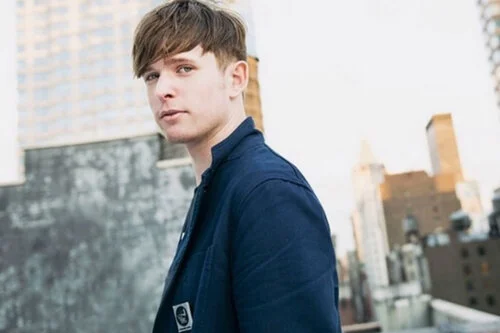
IN THIS PHOTO: James Blake/PHOTO CREDIT: Press

regarding new releases, but there are still some good songs in the mix. There are new tracks/videos from James Blake and Jarvis Cocker; Sparks and Best Coast sit alongside Vince Staples and Stormzy. I will return to my usual female-led and weekly playlists next year but, as we are only a few days from Christmas, most artists are winding down and seeing what 2020 has in store. I am looking forward to next year and how music will shape up. Before then, we have the weekend to tackle and we all need a bit of a nudge to keep the spirits high. This playlist will get the blood flowing and guarantee that we are all energised…

IN THIS PHOTO: Best Coast

JUST ahead of Christmas!   

ALL PHOTOS/IMAGES (unless credited otherwise): Artists

_________

PHOTO CREDIT: Mariel Argüello

Jarvis Cocker - Running the World (Kaiser Quartett Version)

Sparks - Please Don't Fuck Up My World

Lana Del Rey - Norman F***ing Rockwell

wwww.jpg

Best Coast - Little Saint Nick

James Blake - I'll Come Too

Tom Misch Marrakech

Robbie Williams, David Arnold Hey Tiger!

Baker Grace See the Future

aaaa.jpg

Jennifer Hudson Memory (From the Motion Picture Soundtrack, Cats)

Cub Sport City of Angels

sssssssss.jpg

Grandma The Future’s Just So Clear

Laura White Nobody

Vince StaplesHell Bound

PHOTO CREDIT: Tatjana Rüegsegger Photography

Sophie Jamieson Wine

KJ.jpg

StormzyDo Better

BENEE Blu

ASSS.jpg

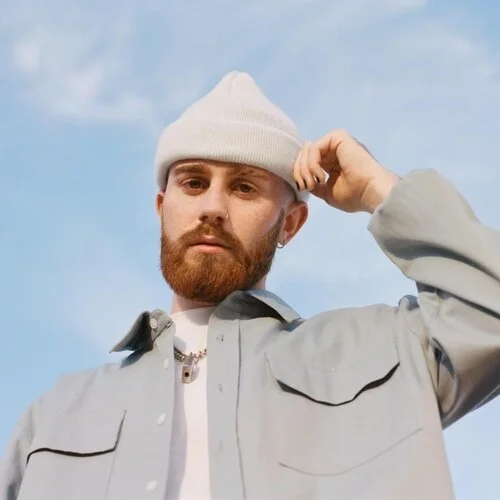
Sam TompkinsNot So Grey

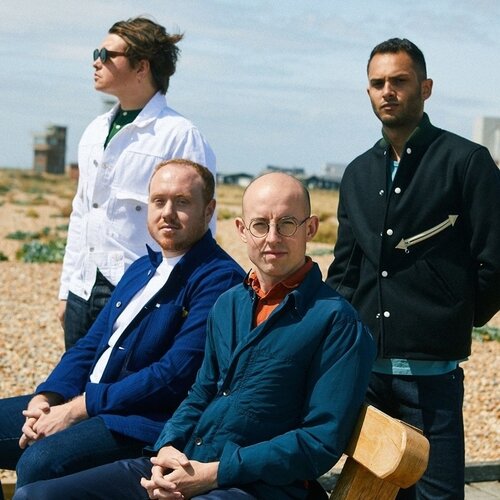
Bombay Bicycle Club - Racing Stripes

Asha Gold - Too Good

FEATURE: Justify Our Love: The Complex Issue of High Gig Ticket Prices

FEATURE:

Justify Our Love

1212211221211221.jpg

IN THIS PHOTO: The Queen of Pop, Madonna, captured performing earlier this year/PHOTO CREDIT: Kevin Mazur/Getty Images

The Complex Issue of High Gig Ticket Prices

___________

IT can be difficult buying for the music fan…

xccc.jpg

in your life and figuring out what they want. One can ask them but, when it comes to a great gift, gig tickets are a pretty decent solution. I am determined to get out to some gigs next year and, as I live in London, I am spoiled for choice. The great thing about gigs is that you can meet so many like-minded people and bond in a safe space. There are a lot of terrific venues around London and, with quite a few closing down, I do wonder what the health of live music will be years from now. That said, we do have some brilliant venues we can enjoy; so many top acts will be playing next year. Many people avoid going to gigs because they think they are too expensive! With travel, drinks and food, one is already paying quite a bit out before the music starts. I actually think most venues are pretty reasonable when it comes to price, and one can buy a drink or two and not break the bank. I know London is especially expensive, but I think it is important to support live music and venues around the country. Whilst newer acts and most artists rely on the revenue from gigs to support their music and keep them going, the realities are not the same for bigger artists.

I am not going to single Madonna out, but she is one of the biggest artists ever and, since her teenage years, she has been grafting and working her way to the where she is. One has to tip their cap to Madonna and how far she has come. The Queen of Pop is current touring her Madame X album and is playing in the U.S. at the moment. She is performing some intimate shows at the moment. This review from a recent show in New York proves Madonna is still able to turn in legendary performances:  

 “Pop’s most rebellious star does just as she pleases during the first round of the ‘Madame X’ world tour at the plush Howard Gilman Opera House too. You might expect the world’s biggest pop stars to have their audience out the door by 11pm but, by the time the clock strikes that hour in Brooklyn, Madonna’s only just come on stage. Not that anyone minds – there are a few outbursts of impatient claps and cheers in the time leading up to her arrival but the overriding atmosphere in the venue is one of pure excitement as people – in their finest gowns, tuxes, and vintage Madonna merch – sip wine from plastic beakers and hover in the select zones were phone use is allowed (all mobiles are locked in pouches for the entirety of the show).

The late start is immediately worth it. The show is a mind-blowing riot of theatrics and powerful political messaging, opening with a quote from James Baldwin being banged out onto a screen laid over the stage by a silhouetted woman at a typewriter. Each key press thuds like a gunshot and is accompanied by a dancer jerking and flinching as if he’s been hit by a bullet. “Artists are here to disturb the peace” the message ends before the queen of pop emerges and launches straight into the autotune-heavy anti-gun anthem ‘God Control’.

As much as Madonna might do what she wants, she also recognises the need to crowd-please at least some of the time. As such, the setlist is littered with some of her biggest songs – an a cappella verse of ‘Express Yourself’ here, an early rousing rendition of ‘Vogue’ there. It’s ‘Like A Prayer’ that provides one of the most joyous moments of the night, though, transforming the opera house into Madonna’s own church. Moments later, she’s in the aisle, marching towards the exit as a defiant version of ‘I Rise’ brings the night full circle.

The crowd follows her to the door like her very own disciples as the house lights come up, jostling to get their phone pouches unlocked to tell the world what they’ve just witnessed – pop’s ultimate freedom fighter putting on one of the most powerful, empowering, and stunning gigs of the year”.

qwqqwqwwq.jpg

The tour is coming to the U.K., and fans will get the chance to see Madonna up close. Whilst prices for her more intimate shows would have been affordable to many, one only needs look at the ticket prices for her London dates to be taken aback! I understand major artists are going to be pricier, because of the costs of their tours. Think about all the dancers, personnel and effects that are involved in a typical set. Madonna is a worldwide sensation, so she is going to command a high price. The fact gig tickets are being advertised for hundreds of pounds is startling! I know it is nothing new, but one wonders how many people can afford that sort of cost. Obviously, thousands of people will go and see Madonna play, but it does make me wonder why ticket prices need to be that high. I know artists have very little to do with ticket prices, but one can see a massive artist like Paul McCartney and not have to pay the world. It depends on the venue; you can catch Macca in Europe and pay no more than £80 for a ticket. I wonder why big artists charge so much for a ticket. When you get to that stage, you do not need a lot of money and profit is not going to be top of the priority list. Upcoming artists rely on the money gigs bring in, but established artists are not in the same predicament.

Gig prices have doubled since the 1990s, and artists are not powerless when it comes to setting prices. Ed Sheeran may divide people, but he has managed to keep his ticket prices low, despite the fact he is one of the most popular artists in the world. He is not a big fan of V.I.P. tickets and understands how important it is to make gigs accessible and open to all. Artists are not selling as many albums as they used to; with streaming, there is less money being made in general. I can appreciate the fact artists need to make money, but how can some acts justify charging hundreds of pounds for a gig ticket?! Whilst there are plenty of affordable gigs, there are cases where enormously popular artists are pricing out loyal fans. This NME article from earlier in the year references The Who and how they were criticised for charging exorbitant amounts when fans came to see them at Wembley:

When The Who recently announced a one-off concert at Wembley Stadium with the Kaiser Chiefs and Eddie Vedder supporting, many fans were left reeling when they discovered even the nosebleed seats were nearly £80 while the best seats on the pitch were over £200 a pop.

One fan wrote: “The Who charging circa £230 for front block at Wembley is disgusting. All they’re doing is ripping off their loyal fans that have probably seen them many a time. Plus to make the pitch all seating when they know everyone will stand is obscene. Just comes to pure greed.”

So why are promoters hiking their prices up so much? And how much do the artists have a say in setting ticket prices?

Gideon Gottfried, UK and European editor for US concert industry trade magazine Pollstar argues that there are a number of factors affecting the primary ticket market. Firstly he points out that artists rarely make money from albums any more with the rise of online streaming. In this sense, older acts like The Who, who last released a studio album 13 years ago, also tend to make comparatively less than contemporary artists like The 1975 and Taylor Swift from album sales.

zzzzzzzzzzz.jpg

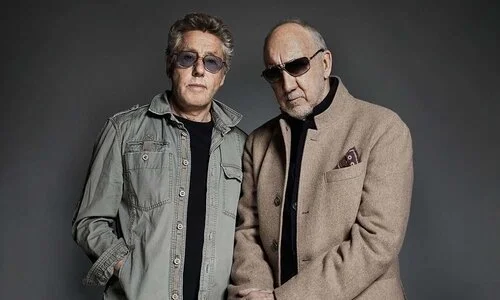
IN THIS PHOTO: Roger Daltrey and Pete Townshend of The Who/PHOTO CREDIT: Rick Guest

“I’ve spoken to promoters who say artists have a right to be greedy these days because live entertainment has become their sole income and recorded music doesn’t bring much revenue any more,” he explained. “But it is quite astonishing to see some of these prices from certain heritage acts. My only explanation is that they know people are gonna pay it, so they charge it.”

Jon Chapple, news editor at international live music business magazine IQ, also points out that live music is currently in a “boom period” and prices are soaring as a result.

“Ultimately, I think, it’s capitalism at its most basic,” he said. “The prices are growing as demand grows. And while there are fans who can afford to pay those high prices, the majority of acts will continue to charge them”.

There is plenty of evidence to suggest gig prices are getting too high. I was eager to see Madonna in London next year, but prices are too rich for my blood. There is high production costs involved in the biggest shows, and the major artists have a lot of crew and people on the road. Once wages are paid and every aspect of a tour is budgeted for, the artist themselves needs to be paid. I can understand why streaming has reduced income for artists and why, for that reason, touring is the primary source of income. Many would argue the fact there is clear supply and demand. The only reason artists can keep touring is because people want to come and see them. The titans can fill out stadiums and big venues because they have legions of fans that are desperate to see them. Whilst few fans actively grumble about the high price of tickets, one wonders whether that is because they would pay anything to go. It brings me back round to the issue of necessity and financial need. Consider the fact thousands of people will go to a gig and, if they are charged £70 or £80 for a ticket…that is a mighty taking! Venues will take their cut and all the crew will get paid.

aaaa.jpg

PHOTO CREDIT: @chazmcgregor/Unsplash

Once everyone has been paid and accounted for, the artist will still get a very handsome pay-out. Major artists often perform dozens of gigs during a single tour, so that is going to be a lot of money in their pockets! I know the big artists cannot cut their ticket prices right down, but there are too many cases of major artists charging far too much for a ticket. Maybe diehard fans will put their hand in pocket, but what of the younger fan or new convert? This article shows how much fans of particular artists are willing to pay. If an artists has dominated Spotify and is immensely popular, there is that enormous demand for tickets. If that artist plays two or three gigs in the same city, they will charge less for a ticket; if they are just doing the one date per city, supply and demand means the average ticket will be more expensive. Even if artists try and stop resale of tickets and V.I.P.s, the average fan is still paying too much. Is the cost of that ticket representative of true value for money?! Whilst paying a lot of money for a once in a lifetime gig might seem reasonable, I wonder whether it is really…

2www.jpg

PHOTO CREDIT: @chazmcgregor/Unsplash

WORTH that sacrifice.

FEATURE: Focus: Reasons to Be Cheerful: Setting My Sights on the New Year

FEATURE: 

Focus

zzzzxxx.jpg

PHOTO CREDIT: @sebastian123/Unsplash 

Reasons to Be Cheerful: Setting My Sights on the New Year

___________

AS I write this…

PHOTO CREDIT: @farber/Unsplash

the results for the General Election have come through. Whilst it is tempting to emigrate to Canada or Norway or somewhere else, I have to stay put an accept the reality that Great Britain under Boris Johnson will be a very elitist and unwelcoming place – at least until we have a party who can replace the Tories. It is a rather bleak end to the year; one that has produced so much great music. Political selfishness and music might not seem related but, as we move forward, I wonder what impact Brexit – if it ever does happen – will have on musicians and those coming to the U.K. Times are challenging, so it makes me think about 2020 and trying to bring positivity. This article might only serve my own agendas and aims – tying it nicely into Boris Johnson and the Conservative Party -, but I feel it is essential we all look at the coming year and try to find the positives. The word that I opened this blog with all those years ago was ‘focus’. I was a little undecided whether I wanted to follow a path into music but, very soon, it all crystallised. I have been working for years with new artists and, even though I have now stopped doing that, my passion for music is undiminished. I am exploring sides of music beyond new acts and, whilst new artists are still part of my weekly output, I am actually thinking about moving into podcasts and radio. That was the dream when I was a child (radio), so it makes sense that a rather unsteady and fractious year should jolt me into some personal motivation and realisation.

zzzzz.jpg

IN THIS PHOTO: Kate Bush in 1983/PHOTO CREDIT: Sunday Mirror/Mirrorpix/Getty Images

We will all adapt to the political situation and, when it comes to music, I think there is a lot to be thankful for. Many artists will reflect the Election result and we will see a lot of angry and political albums. Also, there is going to be a push for positivity and togetherness. In terms of my own output, I feel I have been a bit insular and isolated for a long time. By embarking on a podcast or documentary, I am going to be more out in the world and engaging. I have written about my plans for a Kate Bush podcast, and that is one of the key goals for 2020. It seems hard gathering the energy and focus to get things done, but I have reached a point where I need to put my money where my mouth is; start spending on podcast equipment and shouting loud when it comes to my dreams – that includes more than one documentary I want to have made. This year has been great, but I do think a lot of it has been spent behind a laptop and not doing what I really want to do. I am pleased with what I have produced, so I would never try and take anything away from that. Rather, one gets to a certain place and they need to move forward.

SAAAA.jpg

PHOTO CREDIT: @farber/Unsplash

Now that I have a little money saved up, I feel it is the time to take a leap and start branching out. Rather than this being a resolution, it is more a commitment to following something I have put off for a while now. I am not sure how long it will take to get a final and finished podcast done, but I am hoping to have something moving before the summer. A lot of great music will arrive next year and, whilst I am excited to write about it and put out more posts, there is something satisfying about a single focus. When someone like me works every day and they are writing so much, it is easy to lose that focus and get caught in a routine; maybe not as rewarding and fulfilling as it could be. Rather than wallow in the strain and anger that is percolating, concentrating on something meaningful, exciting and beneficial is great. I have already talked about my podcast idea and various other bits, so I won’t tread over old ground. I said to myself, back in 2011, that I would focus and do the best I could. After eight years, I stopped taking on commissions regarding new artists and interviews, but I feel I have done a lot of good writing articles and promoting terrific women in music. Now, as 2020 beckons, it is time for another change. It can be hard getting out of a comfort zone and doing something different.

PHOTO CREDIT: @jeroendenotter/Unsplash

One of the reasons I am excited about a podcast and documentaries, is the fact I can watch a project go from the foundations to a completed thing. Putting out articles is pleasing, but they are transitory and, before you know it, you are onto something new. Rather than get hooked on putting as much out there as possible, taking a step back and crafting something personal and important is much more worthy. I know I have pledged this drive before, but 2020 is a year where we will see a lot of change and progress. There will be some hard days and moments, but I have great optimism when it comes to music. I would urge anyone else out there who has always wanted to start a project or chase an ambition to do it next year. Even if an idea has been covered before, there is no reason why you cannot add your voice and provide a different angle. That need to focus and, actually, do something I have dreamed about for years is vital. It has been a busy year, and I have done a lot of good work. I will keep on doing that, but there is that urge and desire to work on something that is very much my own. I hope, through podcasts and documentaries, to work with a lot of cool people and begin a career in radio/audio. It will be a different change of pace and, honestly, it could come to nothing. After a very busy year, I am eager to step back a little bit and channel my energy on a podcast; maybe trying to pitch a documentary here and there. I don’t know about you, but that sounds like a…

htre.jpg

PHOTO CREDIT: @johnschno/Unsplash

REASON to be cheerful!

FEATURE: Station to Station: Song Five: Annie Mac (BBC Radio 1)

FEATURE:


Station to Station

sdf.jpg

PHOTO CREDIT: Annie Mac

Song Five: Annie Mac (BBC Radio 1)

___________

IN this feature…

 PHOTO CREDIT: Stylist

I am spotlighting amazing broadcasters who have made a significant impact on radio. In future editions, I will look across the airwaves and include iconic D.J.s and those a bit newer on the blocks. Annie Mac might be new to some people, but she is a veritable legend of the airwaves! She presents her Future Sounds show on BBC Radio 1, and this is what her profile declares:

Radio 1’s champion of new music, the successor to Zane Lowe and John Peel, Annie Mac now presents the primetime weekday evening show from Monday to Thursday as well as her primetime specialist Friday night Dance Show, while maintaining huge success as a live DJ in demand from stadiums to superclubs”.

The reason Mac is such a champion of the best new music across the spectrum is one reason why she should be honoured and followed. You can follow her on Twitter and keep on top of her recommendations and happenings. In this era, we often ignore tastemakers, because there are so many playlists; we all curate our own playlists and do not rely on music quite the same way as we used to. Whilst fan-picked songs do help artists, we cannot underestimate people like Annie Mac and how important they are. On stations such as BBC Radio 6 Music, there are a few pretty impressive and reputable tastemakers – including Steve Lamacq and Mary Anne Hobbs.

I will feature Lamacq down the line but, right now, I want to throw some love the way of Annie Mac. I will mention gender parity soon. Rather than this being a feature that highlights how Mac has opened the door for women and is helping equality happen on the airwaves, I wanted to discuss her as a broadcaster – and not attach gender tags. Naturally, Mac has paved the way for women, and she is a shining example of why we need more women on the radio. Mac has been in the business for a while but, every year, she seems to get more influential and important. I don’t think there are many more important D.J.s around right now, such is the role Annie Mac holds. Her first BBC Radio 1 show was broadcast in 2004. Before then, Mac was working as a producer. Another reason why Annie Mac is so vital is because she backs artists across multiple genres. Also, since 2015, Mac has presented the Lost & Found Festival, which takes place on Malta during May. She curates the line-up and this four-day event is divided between a number of night and day parties. As Mac is a mother, I wonder where she gets the energy and stamina. That might be a silly question for anyone who knows her and can appreciate how passionate she is about music. Not only does she want to bring people together and play the biggest tracks to the masses; Mac is determined to celebrate the finest musicians from every corner of the land – from the hot new bands to bedroom-produced singer-songwriters. 

Whilst Annie Mac is on BBC Radio 1 right now, I wonder whether she might move to a station like Beats 1 or BBC Radio 6 Music. It seems like she has her home at BBC Radio 1, so one cannot imagine her shifting anytime soon. I turn in when I can, because I love Mac’s enthusiasm and knowledge. She has an incredible interview style and, when it comes to uncovering future gold, there are few as skilled as her. Annie Mac is one of the hardest-working broadcasters around, and one can see her broadcasting for decades to come. I want to slip in some interviews, just so one can get a better impression of Annie Mac and her career arc. This first interview is from 2015; just a few weeks after Mac took over Zane Lowe’s slot on BBC Radio 1:

When we first speak, Annie is just three weeks into her new job at Radio 1. She bagged her first show on the network in 2004, aged 26, specialising in dance. She still delivers her Friday night show to over a million listeners - “Bonkers,” she says – but after holding a specialist role for a decade, on 15 February it was announced that Annie would inherit the Monday to Thursday nightly programme, previously fronted by Zane Lowe and with a lineage that goes back to John Peel. It’s a big job.

“My first reaction was, ‘Fuuuuuuuck!’” says Annie, who still refers to the slot as “Zane’s show”. Her main fear was that Radio 1’s audience wouldn’t think she’d be up on her new bands. It may surprise people that, in fact, this dance evangelist spent much of her 20s moshing in the rock venues of Camden Town. “I told my boss years ago, I’m more than just the ‘dance girl’,” she recalls. To reinforce the point, Annie opened her first ‘Zane show’ with London grungers Wolf Alice”.

qqqq.jpg

Having the perspective of a club DJ gives Annie a different currency on radio. She builds momentum by “placing one song next to another” the sequence of music as important as the songs. “Zane would play Bring Me The Horizon then Laura Marling, get his Kaoss pad out and go: ‘Z-z-zane Lowe-Lowe’, but I’m not that broadcaster,” she says. “I still play every type of music but when Matt says: ‘Play this next.’ I say: ‘Babe, we need to get there.’ Getting there is my whole vibe.”

While her choice of music is inclusive, that doesn’t mean Annie doesn’t have her own way. She can play a song she likes three times over and is largely free from the constraints of a playlist. She is also vocal about the music she doesn’t like, which instantly sets her apart from the stereotype of the relentlessly enthusiastic Radio 1 presenter who has exclamation marks for eyeballs. The most obvious contrast is with her predecessor Lowe and his fannish manner. “I’m slightly different from Zane,” she says carefully. Annie spent an early part of her career as Lowe’s assistant producer. She’s understandably cagey when prompted on his uncontroversial style where EVERYTHING! IS! AMAZING! But her own style of presenting is quite different”.

The best way to get a feel for the artists Mac champion is by tuning into BBC Radio 1 weekday evenings. I said I would not mention gender parity too much. When thinking about Annie Mac and how she campaigns for change, one really does have to mention the subject. For the last couple of years especially, Mac has been very vocal regarding inequality at festivals and how there needs to be change. When she spoke with The Independent last year, Annie Mac discussed festivals and the artists she is vibing to:

Everyone in charge in the music industry at large is a white male,” she nods. “I read this Grayson Perry book where he talks about the ‘default man’ being white, upper/middle class, and subconsciously we don’t even see it, in law, politics… everyone in positions of power.

“It applies to the music industry as well. Apart from Emily Eavis at Glastonbury, pretty much all the major festivals are booked and run by white men. I feel like they just don’t see what’s missing, a lot of the time, because they don’t have to. It’s about having them in positions of power where they can make an impact on the major decisions that happen in the industry.”

She was one of the most vocal critics of Wireless festival when it was pointed out, following their lineup announcement, that just three artists on the billing were women, next to 34 male acts; branding it “appalling” and “so so embarrassing” on Twitter, and writing a response piece for Grazia.

Asked what new music she’s keen on right now, she rattles out a bunch of tracks by great artists including Dream Wife, Yaeji, George FitzGerald, and the DJ duo Floorplan – which consists of Robert Hood and his daughter Lyric. When she started out at Radio 1, she says she sniffed a little at the idea of having a person, or team, filter which music she received. “Now I get it,” she laughs. “There are oceans of f***ing dance music promos that come from all over the world. It’s quite overwhelming in trying to keep on top of it. So many different genres – and I play everything.

She cackles when we talk about the constant hand-wringing over radio “having less influence”, the “death of bands” and how “streaming is ruining the music industry”.

“It’s all very easily contradicted isn’t it?” she grins. “‘Bands are dead’ = lie. There are loads of bands, new ones I’m so excited about”.

Annie Mac, through her championing of new artists and highlighting of inequality in the industry is a key role model for so many women. She presents one of the best slots on one of the country’s biggest stations and is held in very high esteem. Rather than talk about Annie Mac in the context of being a woman in radio, it is best to see her as this powerful campaigner and crucial voice who wants to see women given proper dues and opportunities, not only at festivals but in the industry as a whole. I will wrap this up very soon, but I want to bring in another interview, where Annie Mac’s role as an ambassador for change was highlighted:

One of the most prolific DJs in the UK, Annie Mac is a long time host on BBC Radio 1 and has performed live sets around the world for over 15 years. For any women looking to break into the music industry, there’s no doubt that she serves as a role model. In partnership with Smirnoff, Annie has today announced the launch of the Equalising Music Pledge - a campaign that challenges every person in the music industry to ‘do one thing’ for gender equality this year.

In a statement released today, Annie Mac shared her passion for the campaign and her concern for the catalyst behind it:

“The music industry is still embarrassingly lopsided when it comes to gender parity.  There is still so much work to be done in terms of fighting for women of all ages to be embraced and championed by this industry, both in front and behind the scenes. I’m delighted to be a part of it and I’m genuinely excited to see the impact women will have on this industry.”

Keychange’s aim is to build awareness of the issues that women - both behind the scenes and on stage - still face and is currently working with 150 festivals to ensure a 50/50 gender balance across their lineups.

The Equalising Music Pledge comes as part of Smirnoff’s Equalising Music initiative, a global campaign launched in 2017 to eliminate gender inequality within the industry. After seeing the power that small changes can make, Smirnoff is turning to the professionals of the industry to get to work. This doesn’t just stop at artists, either - the campaign is encouraging everyone from venue bookers to PRs to make efforts to be more inclusive.

Head of Smirnoff Sam Salameh shared his support for Equalising Music after witnessing the music industry “sidelining female talent for far too long.”

Being "the only female on the line up" more often than not when DJing, Annie has had plenty of gender imbalance experience herself and suggested that the music industry needed to find more ways to "open" itself up to female professionals in the future.

"I believe that the pledge can really help to instigate change. I want to see equal gender line ups as the absolute normal. I want to see less women dropping out of the industry after they have families. I want to see more women having the courage to own their ideas. To start their own businesses. To do it their way. The more this conversation is being pushed forward the more chances the next generation of music lovers have in being able to work in an industry that is open to everyone. I’m excited for what that will look like".

Things are slowly improving regarding gender equality, but there is still a very long way to go. Having people like Annie Mac calling for change is key. She is someone who knows the music industry is at its strongest and most inspiring when there is parity. As one of the jewels in the radio crown, Annie Mac is a treasure. You can check out her recommendations, and get involved with her Dance Party on Fridays. I think tastemakers are as important now as they have ever been; Annie Mac is one of the very best. She is a role model to so many people out there; a shining light to young broadcasters who hear the fantastic work she is doing and want to…

cx.jpg

REACH the same levels.

FEATURE: Spotlight: Pigs Pigs Pigs Pigs Pigs Pigs Pigs

FEATURE:

Spotlight

Pigs Pigs Pigs Pigs Pigs Pigs Pigs

___________

I am not sure off the top of my head…

IN THIS PHOTO: The band chilling with Marc Riley/PHOTO CREDIT: BBC

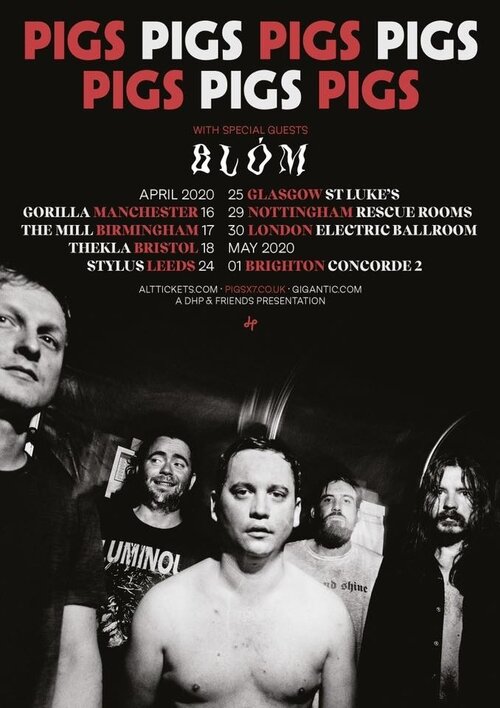
where the Pigs Pigs Pigs Pigs Pigs Pigs Pigs name comes from - but it is definitely fun to say. It is amusing hearing D.J.s say it, as they take a run up and forget how many times they have said ‘pig’! It might be easier saying ‘pigs times seven’, as that does the job too! In any instance, the Newcastle-Upon-Tyne band are one of the moist exciting and popular out there. They are on tour next year, and I suggest you go out and catch them. In terms of sound, they occupy their own territory; there is a little bit of Motörhead and other bands but, really, Pigs Pigs Pigs Pigs Pigs Pigs Pigs are in a league of their own! Whilst they have been around a bit, I think 2020 is when they will really explode and conquer. Go and check out their work on Bandcamp and experience this truly refreshing, tight and powerful band. Matt Baty (Vocals), Sam Grant (Guitar); Adam Ian Sykes (Guitar), Christopher Morley (Drums) and John-Michael Hedley (Bass) are a sensation who have caught the ear of stations like BBC Radio 6 Music. The BBC have just announced their Sound of 2020 longlist, and I am surprised bands like Pigs Pigs Pigs Pigs Pigs Pigs Pigs are not in there. Maybe they are not eligible, but I do think there is an absence of great Rock music; artists who blow your socks off.

Of course, the lads might not see themselves as a Rock band; maybe it is foolhardy applying genres and labels so easily. They have not put out too much this year, although the lads have been hitting the road and look set to have a very exciting and busy 2020. I will bring in some reviews and interviews; first up, here is a bit of the interview they gave to CRACK in 2017:

Band-wise there’s been loads of amazing music for quite a while,” Sykes says of the Newcastle scene. But the problem lies in the closure of many of the city’s most precious event spaces. Among them the Star and Shadow, where that first gig was played. “That left a big hole,” says Baty. Though hope has not left the city’s music scene completely: the volunteer-run cinema and venue now owns its own building and will re-open to the public in due course, as will The Old Police House, the revered underground spot just across the bridge in Gateshead, which had to shut its doors recently.

Venue troubles aside, Baty has a theory as to why Newcastle maybe doesn’t get the recognition it deserves. “I suppose it’s because there’s a lack of music industry in Newcastle. I’d be surprised if many labels or managers come to scout bands. They’ll find them in Manchester or London. You could be the greatest band on earth playing in Newcastle and no-one will ever fucking know about you. Sometimes people talk about it as if you’re on Mars”.

The band has been making waves for a few years now. Their Feed the Rats album of 2017 is extraordinary! It consist three tracks – Psychopomp, Sweet Relief and Icon -, and there are these two epic cuts and a much shorter track in the middle. It is a dizzying listen and one has to admire the ambition and balls of Pigs Pigs Pigs Pigs Pigs Pigs Pigs! The album won some positive reviews. People could detect this experimental band who were creating their own world of sound. I do suggest you have a listen to the album, as it makes for a truly wonderful experience. Here is what Psych Insight Music had to say:

I first came across Pigs Pigs Pigs Pigs Pigs Pigs Pigs, one of my favourite band names ever, through their split with the Cosmic Dead back in 2013. I’d just got into the Cosmic Dead and basically bought anything that they had brought out. This was a very good move as the Pigs Pigs Pigs Pigs Pigs Pigs Pigs side was, to my ears, every bit as good as the other side; which in itself is a reliable sign of quality. So when Rocket Recordings recently announced that they were putting out a Pigs Pigs Pigs Pigs Pigs Pigs Pigs album I assumed that I had probably missed a few releases in between. After a bit of digging it appears that very little seems to have been released in the interim, a mini-cassette album from Box Records being the only release I could find, and the Pigs Pigs Pigs Pigs Pigs Pigs Pigs track on that is to be found on this new release.

Somewhat relieved that I had missed anything I settled in to listen to ‘Feed The Rats’. As you would expect from a band who share members and/ or orbit in the same heavy psych galaxy as the likes of Blown Out, Haikai No Ku, Terminal Cheesecake, Luminous Bodies (to name just a few); this Pigs Pigs Pigs Pigs Pigs Pigs Pigs album is bloody heavy. To be clear, its not heavy like metal is heavy…it’s getting sucked into a black hole heavy, and from the very beginning of album opener ‘Psychopomp’ (the title should be a clue) ‘Feed The Rats’ is an unrelenting motherfucker of a listen from start to finish. Beginning with a massive bridgehead-assaulting riff ‘Psychopomp’ starts as if an army led by Lemmy is invading to grant sonic liberty to all that stands in its wake. That riff is massive, firm and unstoppable and Matt Baty’s vocals just add that extra level of menace to what is an already scary proposition. But the thing is, that this is arguable the least heavy track on the album. Because, when ‘Sweet Relief’ opens up, ‘relief’ is not the first word that comes to mind. A much shorter track than the other two, this is like getting a bowling ball at full pelt between eyes. I again love Baty’s Lemmy-esque vocals together with a more classic 70s rock aesthetic mixed in with the psych/ stoner heft. Just a brilliant track, and likely to remain so for the foreseeable future”.

PHOTO CREDIT: Matt Martin for CRACK

Those who were new to Pigs Pigs Pigs Pigs Pigs Pigs Pigs in 2017 were treated to King of Cowards in 2018. This album/mini-album has six tracks and nothing as long as on Feed the Rats. Although many of the tracks were over five minutes, the album as a whole is tighter and more focused. The lads lost none of their spark and genius. In fact, I think there was a step-up in terms of quality and production. GNT is about as good an opening track as one can imagine; Gloamer brings things down to landing with plenty of bang and crash. I love King of Cowards and it was the first thing I heard from the band. In their review, Drowned in Sound, were full of love:

Opening track 'GNT' begins with echoey feedback before crashing riffs come in waves and a rabble-rousing chorus backs Baty’s roaring charge. All of which is paired with battering percussion, courtesy of ex-Gnod drummer Chris Morley, and scorching guitar solos that heighten the pitch. It’s an auspicious start, to say the least, and one that gives you eardrums a good kicking. This is rock music in all its glory.

The record may be a more focused effort, but Pigs have lost none of their psychedelic dexterity in the process: billowing tempos make for a trippy sense of time and slippery guitar lines trick the senses. A track like ‘Shockmaster’ rocks you gently into a false sense of security, then tears the rug from beneath. Lyrically it’s equally unpredictable - “Angels are easy to love… demons are easy to love” - blurring the ever-tricky defining lines of morality. On the other hand, ‘A66’ abandons sludgy rhythms for ravenous rapidity. An ominous midway break merely builds suspense for the cascade of heavy riffs and deliberate percussive thumps that follow. It builds to a dizzy apex matched by the immense capacity of Baty’s vocal.

King of Cowards is an album rich with detail, it’s a brassy racket that keeps on giving. ‘Thumbsucker’ forges a banging groove that the band stay true to aside from the snaking guitar that appears periodically, one of the many little features that make the record so mesmeric. Towards the end, Baty bellows the unlikely (and quite hilarious) line, “I LOVE YOU, MUMMY… I LIKE IT WHEN YOU RUB MY TUMMY AND LET ME SUCK MY THUMB.” Pigs may conjure a demonic din, but there’s something genuinely loveable and warm about their ruckus. That said, the deranged commotion of King of Cowards actually reduces you to a state of wanting to curl up in the foetal position and suck your thumb, so the jokes on us really”.
I will wrap this up in a bit but, just before I do, I want to bring in another review for King of Cowards. I wonder whether Pigs Pigs Pigs Pigs Pigs Pigs Pigs will bring out an album next year or whether we might get an E.P. Indeed, will they return to the longer and more sprawling sound of their debut or hone their songs down a little? I love Pigs Pigs Pigs Pigs Pigs Pigs Pigs in every guise as they have this incredible sound and are so different to anybody else in music right now.

The Guardian offered their opinions in 2018:

“Their second album is rather more accessible than last year’s debut, Feed the Rats, in relative terms at least. Where that had only three tracks, two of them more than a quarter of an hour long, this one offers six, and none break the nine-minute mark. It’s more sonically expansive: on Feed the Rats, all the instruments sounded as if they were recorded on top of each other, in the world’s loudest broom cupboard, but there’s rather more space to breathe this time round. That doesn’t reduce the effect of the riffs: they’re still pulverising, but now they sound like an advancing storm front rather than as if you’ve been trapped in a sudden downpour. I’d love to tell you about the lyrics – sin is apparently a big theme – but they’re largely obscured by the guttural bellow of singer Matt Baty. Still. It’s hard not to hail the magnificence of a group who name the album’s centrepiece track A66, though they’re probably thinking of the Middlesbrough end rather than having afternoon tea in Cockermouth”.

Pigs Pigs Pigs Pigs Pigs Pigs Pigs have been getting a lot of praise and attention from many different sources. So many people want to see the band play so, as such, they have been hammering the road hard. I know that will continue next year, but I also hope they can get back into the studio and lay down another album.

Many ask whether Rock is dead and whether it will ever be like it was years ago. I do not think it is dead, but we are seeing a lot of Post-Punk bands emerge. That is great, as we are getting a lot of truth, politics and mind-opening songs. There are fewer bands that bring us grit, riffs and something a bit more classic and fun. Pigs Pigs Pigs Pigs Pigs Pigs Pigs are spearheading a new wave of bands that you need to go and see. Whilst Rock might not be back on its feet and leading a charge, you can never make sweeping statements or assume all is lost. Pigs Pigs Pigs Pigs Pigs Pigs Pigs have an element of Rock and Heavy Metal bands of the 1970s; there are a lot of other seeds that makes their garden blossom with colour and wonder. I want to bring in an interview from earlier this year, when the boys were asked about playing the 6 Music Festival:

Hi, how are you? Your work has had a lot of support from 6 Music, how did it feel to get asked to play the 6 Music festival?

So far I’m feeling good, I’m very tired, we played in Cardiff last night and we set off at midnight to get to a Travelodge at 4am. It’s good to be here, it’s amazing to be asked to play, it’s very exciting and for that reason I’m sure it’s going to be really, really good.

To our knowledge you are by far the ‘heaviest’ act on the line up, I would suspect that has happened multiple times in your career; how do you approach a performance when this is the case?

I don’t think we approach it any differently, we just do it.

You said about considering changing your name in the early days, was that because of negative feedback about the name?

‘If you’re at a festival and you see [our name] on the line up and you’ve not heard of us and you don’t want to go and see that out of curiosity then maybe there’s something wrong with you.’

I don’t think I’ve ever read anything too negative about the name. The way I see it is if you’re at a festival and you see [our name] on the line up and you don’t want to go and see that out of curiosity then maybe there’s something wrong with you.

As we earlier commented we can’t hide that you’re not another indie band and we and other critics have been very complimentary of your work but Adam Sykes (of Pigs x7) said yourself that “If anything I think we’re incredibly derivative.” What do you think has been the reason you’ve been able to penetrate some mainstream media in ways that other heavy bands aren’t?

‘I think what’s great that’s happening with our band is that it shows there is a hunger and a thirst for people to enjoy this music that might not otherwise come across it. If you put this music in front of people, ‘wow this is great and I’m surprised that I really enjoy it’ and I think that’s a beautiful thing.

I feel that sometimes the kind of music that we play can be very serious and a bit dark whereas there’s some sort of levity in what we’re doing. That’s not to say there’s not other bands out there doing it very well too because there are; maybe it’s just our name! I think there’s something about the sonics of what we do as well, we’re in the thick of it but I don’t experience it as something abrasive or dark and I think that’s possibly opening our doors to a wider audience who feel like they can enjoy it as well. I said earlier on in an interview that quite often music like ours gets cornered and tucked away in specialist shows or journalism which is great but I think what’s great that’s happening with our band is showing there’s a hunger and thirst for it. People are enjoying our music that might not otherwise come across it. It goes to show. if you put this music in front of some people they might think ‘wow this is great and I’m surprised that I really enjoy it’ and I think that’s a beautiful thing”.

Make sure you get acquainted with Pigs Pigs Pigs Pigs Pigs Pigs Pigs, as they have a very long future ahead. There are tour dates booked for next year, and many will be looking to see how they follow King of Cowards. With music still very London-centric – the BBC’s Sound of 2020 features a majority of artists from London and the South -, it is great to talk about a grand group from the glorious North! Get behind Pigs Pigs Pigs Pigs Pigs Pigs Pigs, because this incredible crew are…

ONE of the best bands around.

____________

Follow Pigs Pigs Pigs Pigs Pigs Pigs Pigs

iii.jpg

FEATURE: Vinyl Corner: Beyoncé - Lemonade

FEATURE:

Vinyl Corner

Beyoncé - Lemonade

___________

THE remaining editions of this feature…

are dedicated to exploring some of the best albums of this decade. Last week, I featured Solange and her album, A Seat at the Table. This week, Solange’s sister, Beyoncé, is at the forefront. When one thinks about remarkable albums of the 2010s, you need to include Lemonade in that discussion! It is an album I am still listening to, three years after its release. I realise both Solange and Beyoncé released their albums in 2016 – for the rest of the Vinyl Corner slots, I will take albums from other years. There is so much to talk about when it comes to Lemonade. Of course, one should buy the album on vinyl as it would make a great Christmas present. Lemonade is the second visual album from Beyoncé. There are articles out there that explain the lyrics and the themes explored. Beyoncé mixes politics with the personal; the affectionate alongside the angered and charged. It is an enormously powerful album that mixes genres such as Pop, Reggae and Gospel together to electrifying success. Lemonade was accompanied by the release of a sixty-five-minute film of the same title, produced by Good Company and Jonathan Lia, which premiered on HBO on 23rd April, 2016. It is divided into eleven chapters, titled Intuition, Denial; Anger, Apathy; Emptiness, Accountability; Reformation, Forgiveness; Resurrection, Hope and Redemption. Beyoncé released a visual album in the form of her eponymous release of 2013.

Transcending into cinematic territory, I think Lemonade is more powerful and illuminating because of its visual nature. The filmed pieces make the album seem like an event; this big and wonderful record that demand you listen and learn from. Most artists cannot afford to run such a campaign and put out visual albums, but Lemonade is no ordinary album. After Beyoncé of 2013, so many eyes were on Beyoncé. She released her best album to date, so many people wondered how she could possibly follow it. Featuring collaborators like Kendrick Lamar, James Blake and Jack White, Lemonade is a busy and eclectic album. Although there are a fair few producers and writers in the mix, it is Beyoncé’s voice and spirit that comes through the clearest. She turns in her strongest set of vocals to date; her most ambitious songs and videos/visuals that took her work to a new level. At the heart of Lemonade is fidelity and trust. There were rumours that the songs were based on her husband, Jay-Z, and alleged indiscretions. Beyoncé has denied that, yet one cannot help hear the purity of anger when she sings about betrayal and cheating. Rather than Lemonade capturing a time in her life or documenting a rocky moment of her life, Beyoncé stays in the present, but she also looks back to her roots. Beyoncé explores blackness, her southern roots and family through Lemonade.

At times tender and nostalgic, at others raw and calling for formation, Lemonade is not only one of the best albums of the 2010s; one could comfortably include it alongside the best albums of all-time. Lemonade was nominated for nine Grammy Awards in 2017; it won for Best Urban Contemporary; Formation received nods for Record of the Year and Song of the Year. The sort of attention and celebration that Lemonade received cannot be understated. Beyoncé was an enormous star in 2016, but Lemonade brought her music to new listeners and took her status to new peaks. I have heard some fantastic albums this decade, yet few have the same sort of weight and importance as Lemonade. In this review, AllMusic gave their take on Beyoncé’s sixth studio album:

The cathartic and wounded moments here resonate in a manner matched by few, if any, of Beyoncé's contemporaries. She sometimes eclipses herself in terms of raw emotion, as on the throttling Jack White encounter "Don't Hurt Yourself." At the low-volume end, there's more power in the few seconds she chokes back tears while singing "Come back" -- timed with the backing vocal in Isaac Hayes' version of "Walk on By" -- than there is in most contemporary ballads. Romantic conflict is nothing new for her, but there is a degree of concentration and specificity, and an apparent disregard for appealing to commercial radio that makes Lemonade a distinct addition to her catalog.

PHOTO CREDIT: Parkwood Entertainment

(Another distinguishing factor is the length of credits which, due to a vast assortment of collaborators and samples, exceeds that of the self-titled album.) Lemonade can also be heard as the dark flipside of Beyoncé. When "Dishes smashed on the counter" is bleakly observed, just before "Pictures snatched out the frame/Bitch, I scratched out your name and face" is delivered with seething wrath, it's hard to not flash back to "Drunk in Love," in which the presumably same couple were revelrous in the same room. After the first three-quarters play out in compelling if somewhat erratic fashion, Lemonade closes with a torrid stretch. "Freedom" is a marching anthem of resilience and preservation, produced by Just Blaze with a glowing guest verse from Kendrick Lamar. The loved-up "All Night" is a tangle of emotions and hints at reconciliation, facilitated by the horns from OutKast's "SpottieOttieDopaliscious." And then, at last, there's the strutting "Formation," simultaneously a tack-on and an ideal finale, where Beyoncé delights in her blackness, femininity, and Southern origin with supreme wordplay”.

Lemonade is an album that blows you away the first time you listen. One needs to return time and time again to truly absorb everything. In some songs, Beyoncé sounds utterly enraptured and on fire; in others, you can practically feel the emotion and upset in her voice. She is astonishing through the album and commits to every single note. I think the sheer versatility and diversity in terms of sound and textures means Lemonade speaks to everyone. That is not to say previous albums from her were restricted to certain people; it is just Lemonade is so wide-ranging, everyone will find something to love.

In their review of Lemonade, The Independent had this to offer:

The personal cannot help but overshadow the political when dealt with so forcefully. On the film released on HBO to coincide with this album, Beyoncé does not pull her punches: throwing away her wedding ring, wielding a baseball bat with venom, committing suicide, dripping water, destroying cars… all of this is nothing next to the venom exhibited in the music, and songs.

"So what are you going to say at my funeral now that you've killed me?” she asks. “Here lies the body of the love of my life whose heart I broke without a gun to my head. Here lies the mother of my children both living and dead. Rest in peace, my true love, who I took for granted."

The culmination of the spooked Pray You Catch Me and Hurt Me, Don’t Hurt Yourself features licks from rock stalwart Jack White. The distortion and fury, and occasional breaks of restraint from White work, brutally and wonderfully”.

It is hard to pick a highlight but, in my view, Formation and Don’t Hurt Yourself are top of the pile. I love so many of the songs on Lemonade, but there are certain cuts that stand above the rest. I will conclude in a bit but, first, I wanted to source from an article that discussed Beyoncé in the terms of Rock’s black female legacy. It is worth exploring the whole article, but I have grabbed a couple of passages:

The most disrespected person in America is the black woman,” Malcolm X says in a sample used on Beyoncé‘s Lemonade. “The most unprotected person in America is the black woman. The most neglected person in America is the black woman.” He was talking about society in general, but the same is true of popular art, specifically rock. The female artists who helped build rock are often forgotten, but the re-imagination of what rock can be and who can sing it by Beyoncé and her superstar peers is giving the genre a second life – and may be what can save it.

On Lemonade, Beyoncé’s choice to include both a raucous blues-rock track — “Don’t Hurt Yourself,” featuring Jack White — as well as an Americana romp — “Daddy Lessons” — is as political as the poetry she intertwines with her songs on her visual album. Lemonade is, in part, an album about black legacy, and her choice to tap more fully into rock, a genre she has touched lightly upon before, is an important nod to the often forgotten place black women had in inspiring and forming the genre. Seen in this light, the fierce and vengeful tone of “Don’t Hurt Yourself” takes on a broader cultural meaning.

PHOTO CREDIT: Parkwood Entertainment

On Lemonade, Beyoncé pays her own tribute by proving she’s a quick study of the blues-rock form. On “Don’t Hurt Yourself,” she swaggers and roars, evoking the gritty garage style her collaborator has been known for. Her anger is tempered by a steady funk bass line, then mirrored by the roar of the track’s crunchy riff, like a new generation’s “Whole Lotta Love” or, if the verses were slowed down, “Babe I’m Gonna Leave You.” The twang of her Texas accent comes to the fore on “Daddy Lessons,” a track on which she even embraces the traditional folk trope of familial history. Still, both songs are entirely Beyoncé, much in the way Tina Turner transformed “Proud Mary.” This tradition has always been in her, and much in the same the way that she channels black historical trauma in her most recent opus, she channels the erasure of forgotten black female voices as well.

If you have not experienced Lemonade, go grab it on vinyl or stream it. It is the finest thing Beyoncé has put her name to and the songs will definitely leave an impression! At the moment, there are no announcements regarding a new Beyoncé album. She performed at Coachella in 2018, and, in the same year, released Everything Is Love alongside Jay-Z – the two form The Carters. It has been a busy last couple of years. The iconic artist, surely, will have musical plans for next year; maybe we will get a new solo album or, with talks of a Destiny’s Child reunion in the offing, perhaps they will get another album together.

PHOTO CREDIT: Melina Matsoukas for Elle

Beyoncé did give an interview to Elle a couple of days back – she is their January 2020 cover star -, where she discussed everything from fashion to family. She was asked about Lemonade in the interview:

I connected with Lemonade and I almost passed out when I saw Homecoming. You brought it and made me want to stand up and scream your name!! What’s up with the people who give out awards? Were you disappointed not winning? Because you know, you already won with me.—via Instagram

I began to search for deeper meaning when life began to teach me lessons I didn’t know I needed. Success looks different to me now. I learned that all pain and loss is in fact a gift. Having miscarriages taught me that I had to mother myself before I could be a mother to someone else. Then I had Blue, and the quest for my purpose became so much deeper. I died and was reborn in my relationship, and the quest for self became even stronger. It’s difficult for me to go backwards. Being “number one” was no longer my priority. My true win is creating art and a legacy that will live far beyond me. That’s fulfilling”.

The final days of the 2010s are upon us and, as we look ahead to a new decade, I have been considering the albums that have defined the past ten years or so. Do get hold of Lemonade and give it a good spin. Its importance and relevance will not diminish; its personal potency and importance is also very obvious and moving. Even if you are not a fan of Beyoncé, Lemonade is an album that transcends everything. It is a musical tour de force and…

A mighty revelation.

FEATURE: Modern Heroines: Part Thirteen: Janelle Monáe

FEATURE:


Modern Heroines

Part Thirteen: Janelle Monáe

___________

THERE are so many incredible women in music right now…

zzzzzx.jpg

PHOTO CREDIT: Matt Jones for Rolling Stone

who have the promise to go down as legends; who are legends already! One of the absolute best artists out in the world is Janelle Monáe. Although she did not put an album this year, she has been busy touring and has conducted a few fantastic interviews. I really love her music, and, with each album, she seems to take a big step forward. When thinking of Monáe, one is blown away by her fierceness and power; there is seductiveness and sexiness; there is something David Bowie-esque and funky like Prince. Above everything is this incredibly determined and original artist who is conquering the music world. Before I go on, I wanted to bring in some biographical information that tells you more about Janelle Monáe:

With comparisons merging between Lauryn Hill, Annie Lennox, James Brown, David Bowie and Andre 3000, multi Grammy nominee neo-soul singer Janelle Monáe (born 1 December 1985) from Kansas, US also known as her android counterpart Cindi Mayweather has collaborated with the likes of Estelle and Fun adding her unique touch.

It was her move to Georgia, US after studying at drama school that her career really kicked off. Meeting Bad Boi of Outkast in 2001, together they created the Wondaland Art Society with like-minded individuals. Describing her genre as bending, Monáe meanders through elements of psychedelic soul, jazz and old school R&B while remaining a conceptualist through and through. Using the alter ego of android Cindi Mayweather from the year 2719 who is on the run from her home planet of Metropolis for breaking the law and finds herself on earth falling in love with human Anthony Green, a storyline which provided the backbone of her debut self EP “The Audition” in 2003.

With a little nudge from friend Big Boi, Sean Combes aka P. Diddy and CEO of Bad Boy Records checked out Monáe’s Myspace page and was mesmerised. In 2007 she signed with his label and released her second EP “Metropolis: The Chase Suite” the following year, a continuation of the Mayweather saga. The EP earned her a nomination at that year’s Grammy’s with the single “Many Moons” for “Best Urban/Alternative Performance”.

Whilst Monáe put out E.P.s prior to her debut album I think that album, The ArchAndroid, is the best place to start. I recently wrote an article on the album, as it is a work of true brilliance. Released in 2010, it is one of the finest albums of this decade and introduced to many this unique and tremendous artist. Production took place at Wondaland Studios in Atlanta and was taken care of by Monáe, Nate ‘Rocket’ Wonder and Chuck Lightning. So many artists would come in with a debut that is confident yet lacks any real selling point or anything that differs from what is around. Monáe delivered an album jammed with terrific songs, but there was also this concept and central figure. The ArchAndroid continued Monáe’s fictional tale of a messianic android and brought together Afrofuturism and science fiction like never before – if at all! With themes of love and self-realisation siting in the blend, this was no ordinary album.

As Monáe was portraying a character and had created this wonderful world, comparisons with Prince and David Bowie were inevitable. In fact, Monáe worked with Prince shortly before his death in 2016 and she holds huge affection for him. I can see why people were making those Bowie links. Maybe they saw Monáe’s ArchAndroid as a Ziggy Stardust character or a mix of that and some other personas Bowie adopted through his career. It is a shame both Prince and Bowie died in 2016, as one can imagine Monáe working with both of them; perhaps taking to the stage and performing alongside each other. Whilst the aesthetic and conceptual arc of The ArchAndroid is very different and bespoke, the sonic palette is eye-opening. Monáe has a love of film scores, and one can hear James Bond themes sat alongside elements of Stevie Wonder and Hip-Hop. Monáe channels OutKast and touches on genres such as Neo-Soul and Glam Rock. If the futuristic elements seemed rooted in Science Fiction novels and films, the messages of self-empowerment and breaking chains was very much rooted in the present…and past for that matter. Black artists have been struggling for a voice for decades, so Monáe’s debut album was yet another example of a tremendous black artist singing loud. Whilst there is still racial inequality, artists like Janelle Monáe are leading a fight and helping to affect change. The ArchAndroid is a heady and sumptuous album, overrunning with so many scents, scenes and styles. It is a record that everyone needs to investigate and cherish.

The reviews for Monáe’s debut album were hugely positive. This is what AllMusic had to offer:             

The ArchAndroid not only picks up where The Chase let off, but contains both the second and third Metropolis suites in one shot with no discernible “let’s make some hits now” intervention. The packaging alone -- the elaborate crown, the inspiration listed beside each song, etc. -- provides much to process. Liner notes from the vice-chancellor of the arts asylum at the Palace of the Dogs, Monáe’s residence, outline the (possible) situation fleshed out in the songs. In short, Monáe was genoraped in the 28th century, sent back to the 21st century, and had her organic compounds cloned and re-purposed for the existence of ArchAndroid Cindi Mayweather, whose directive is to liberate Metropolis from a secret society of oppressors. Understanding all this stuff enhances the enjoyment of the album, but it is not required. A few tracks merely push the album along, and a gaudy Of Montreal collaboration is disruptive, but there are numerous highlights that are vastly dissimilar from one another. “Tightrope,” the biggest standout, is funky soul, all locomotive percussion and lyrical prancing to match: “I tip on alligators, and little rattlesnakers/But I’m another flavor, something like a Terminator.” Just beneath that is the burbling synth pop of “Wondaland,” as playful and rhythmically juicy as Tom Tom Club (“So inspired, you touch my wires”); the haunted space-folk of “57821” (titled after Monáe’s patient number); and the conjoined “Faster” and “Locked Inside,” packing bristling energy with a new-wave bounce that morphs into a churning type of desperation worthy of Michael Jackson. Monáe might not have much appeal beyond musical theater geeks, sci-fi nerds, and those who like their genres crossed-up, but no one can deny that very few are on her creative level. She can sing, sang, and scream like hell, too”.

 PHOTO CREDIT: Colette Aboussouan

I have heard few artists come out of the gates so impassioned and confident. I know Monáe had released material prior to 2010, yet this was her first full-length effort. Not only did Monáe sound completely different to anyone out there, she did that whilst creating an album that is universal and easily accessible. One can identify with what she says throughout and bond with the subject matter and sounds. It is an album to make you think and get lost inside. The Guardian were full of praise when they reviewed The ArchAndroid:

Janelle Monáe is not like other pop stars. The ArchAndroid, her debut album, is an 18-track, 70-minute conceptual opus, split into two suites, each one separated by ludicrously extravagant Overtures. To say it's ambitious feels like damning with faint praise; its sheer musical scope – from the James Brown funk of Tightrope to the English pastoral folk of Oh, Maker – is spellbinding. So, the excellent Cold War is new wave with lashings of sci-fi, Locked Inside takes in Off the Wall-era Michael Jackson, while Come Alive (War of the Roses) finds the 24-year-old screaming herself hoarse over squealing guitars. Influences are treated as stepping stones rather than laboured over, with only Make the Bus (a collaboration with Of Montreal) shifting the focus away from the star. The album ends with the eight-minute, string-drenched BaBopBye Ya, a song that teeters on the brink of ridiculousness yet, as with the album as a whole, somehow reins itself in with great aplomb. Behold, pop music has found its latest superstar”.

PHOTO CREDIT: Baptiste Monáe 

I love the fact Monáe was seen as this alien-like artist who was from another planet. Not that it was an insult at all: she was such a breath of fresh air and extraordinary that many did not quite know what to make of her. Again, one can think of David Bowie at his most bedazzling and extra-terrestrial. I am interested in Monáe’s working method and how her debut came together. It is a hugely impressive debut and one that covers so much ground! I cannot think of any artist since her that has produced a debut that hits so hard and lasts in the memory so long. Of course, with a bold and truly brilliant album out in the world, Monáe captured the attention and affections of the media. I am going to bring in a few interviews through this piece. I wanted to quote from an interview from The Guardian, where we learn about Monáe’s path into music:

Whatever rules Monáe imposes on herself seem to be working. Only a singularly self-possessed individual could have pulled off the artistic high-wire act of her hugely acclaimed album, The ArchAndroid (Suites II and III). This 18-song opus, the most praised album of the year according to the review-aggregating website Metacritic, by turns recalls Prince, OutKast, Erykah Badu, James Brown, Grace Jones, Stevie Wonder, David Bowie, Jimi Hendrix, Bernard Herrmann, Funkadelic and the Incredible String Band, and establishes its creator as the most compelling new character in pop.

As vivid and varied as the music are the ideas behind it. The tracklisting cites such influences as "the blue of Luke's lightsaber" and "the atomic bombs in Muhammad Ali's fists". The sleevenotes, allegedly written by the vice chancellor of the Palace of the Dogs Art Asylum, explain that Monáe is an inmate who claims to be a time-traveller from 2719, and whose stolen DNA has been used to clone an android freedom fighter called Cindi Mayweather. "Most of the story does not bear logical sense," the writer drily notes.

She moved to New York to attend the American Musical and Dramatic Academy, where she was the only black woman in her classes. "I felt like that was a home but I wanted to write my own musicals. I didn't want to have to live vicariously through a character that had been played thousands of times – in a line with everybody wanting to play the same person."

So she dropped out and moved to Atlanta, where she lived in a boarding house with five other women and worked at Office Depot. It was while selling her self-funded debut CD The Audition and touring black colleges that she met songwriters and producers Chuck Lightning and Nate Wonder, with whom she formed Wondaland. "It was a Matrix moment where we all locked eyes and it was almost like we were meant to be on the same team. We wanted to create a different blueprint." Lettin' Go, a song about being fired from Office Depot for going online to answer emails from fans, attracted the attention of OutKast, who invited her to sing on their 2006 album, Idlewild.

Apart from sci-fi, Monáe's main reading seems to be business manuals; she enthusiastically endorses Seth Godin's Purple Cow: Transform Your Business By Being Remarkable. Hence, perhaps, her willingness to conduct her own business – after several potential record labels suggested changes to her debut mini-album, 2007's Metropolis: Suite I (The Chase), Wondaland decided to sell it themselves online. "The record execs were not connected to the people," she says sternly. "They didn't know, they still don't know, what the people want." For this new album, Sean Combs provided clout and contacts and left everything else to Wondaland, whose online manifesto declares: "We believe songs are spaceships. We believe music is the weapon of the future. We believe books are stars".

After such an important and loved debut album, there was a lot of touring demand and press interest. Monáe had gone from this artist with a dedicated-if-modest following to someone who was picking up new fans at the rate of knots. The Electric Lady arrived in 2013 and, whilst different to her debut in many ways, it did conclude her Metropolis concept series – this was the fourth and fifth instalments. If there are notable differences regarding sound and tone, Monáe continues on the theme of dystopic cyborgs and futuristic visions. I think The Electric Lady is a little less eclectic and more personal than The ArchAndroid, yet it does incorporate new experimentations and genres – Monáe steps into ballad territory and brings in Pop Punk and Jazz. Monáe stated in interviews how The Electric Lady is a prequel to The ArchAndroid and features guest spots from Solange, Erykah Badu and Prince.

 PHOTO CREDIT: Fault Magazine

Such an impressive pedigree of collaborators show what respect there was for Monáe and how incredible her music was/is. Few were unaware of Monáe by 2013, as her songs were getting a load of radio-play and The Electric Lady took her to new heights. I think my first taste of Monáe was when I heard The Electric Lady shortly after 2013. Like her debut, there was a lot of love for The Electric Lady, if not quite on the same level as The ArchAndroid. I am casting my mind back to 2013 and the albums that were around then. (I think Arcade Fire put Reflektor out then, and Kanye West was busy). There was still nobody like Janelle Monáe! Although there was a three-year gap between releases, it was definitely worth the wait for The Electric Lady. I want to bring in a review, because it is a good example of how the press reacted to Monáe’s sensational second album. In this review, The Telegraph were keen to heap praise on Janelle Monáe:

What a wild and wonderful listening experience this is: bristling with ideas, constantly shooting off at different angles but always replete with earworm melodies, plush with glittering sounds, charged with intelligent and emotional lyrics and underpinned by a syncopated rhythm section that shifts gears effortlessly from tightly coiled to blazingly expansive. Atlanta r&b maverick Janelle Monáe was critically acclaimed for her quirky, sci-fi-styled debut The ArchAndroid in 2010, firming up her reputation with punchy live performances in which she led her ensemble with the drillmaster precision of a latter-day James Brown. Now this dazzling, daring, psychedelic funk pop opus puts Monáe firmly in the front rank of 21st-century stars.

In its mix of pop melodies, offbeat arrangements and ultra-slick band playing, it is reminiscent of Prince in his Eighties pomp, achieving the kind of cosmic funk grandeur he aspired to on Sign o’ the Times. And, sure enough, the Minneapolis wonder makes a telling appearance, his clipped guitar and falsetto vocals powering the compressed blues funk of Given Em All My Love. When he lets rip with an echoey solo and the horns kick in, it is almost as if he is bestowing his graces on a righteous heir.

The Electric Lady proved Monáe was one of the most exciting talents on the scene and, with two remarkable albums in her pocket, there was no stopping her! I want to introduce an interview she gave in 2013 but, just before, one more review that highlights an incredible album:

Attention to detail is nothing new for the admittedly obsessive Monáe, but man, there are some knockout details here: the rusty poking bedspring of a guitar that powers "Q.U.E.E.N."; the percussion loops on "Electric Lady"; the manic clean-toned jazz guitar skittering behind the vocal breakdown on "Ghetto Woman". The strings carry some of the most heart-tugging melodies, and the most beautiful moments come when songs melt from an amped-up funk groove into a glimmering, soul-revue orchestra, like "We Were Rock and Roll", "Give Em What You Love", and "Q.U.E.E.N". Gorgeous soul ballads like "Can't Live Without Your Love" are built on the kind of rich, finely managed melodies and jazzy modulations that haven't been the sound of the radio since the late 70s

Taken as a whole, The E**lectric Lady is a convincing argument for the virtues of micromanagement, but some of the most powerful, tender moments come from acknowledging  limits. On "Sally Ride," she admits defeat, of sorts, declaring she's "packing my spacesuit, and I'm taking my shit up to the moon." On "Victory," Monáe offers, "I'll just keep singing until the pain goes," and there's something humbly stoic in her voice. She's not singing to exorcise pain, which will hang around until it's good and ready to go, she's just passing the time until it does doing the thing she does best”.

Could one call Monáe a modern treasure after only two albums?! Could we see her as an icon of the future?! Maybe some would feel that a little rash, I think Monáe was a definite star in 2013. She had managed to win acclaim across the board and was making music that sounded so original yet was familiar. It is hard to describe the essence of Janelle Monáe and just why she is so brilliant. I did mention how there was a lot of media interest in Monáe. Unlike many other artists, Monáe had a story to tell and she captivated easily. I will bring in the odd interview before wrapping up, but I did want to bring in an interview with The Guardian from June 2013. 

We're very quick to make stars these days, partly because of the speed with which we move on, partly because we're afraid the big characters of rock'n'roll might be a thing of the past. It's possible to be the Saviour of Pop (and a fashion icon) while most people still don't have a clue who you are, and Monáe occupies this position with great poise. Born in 1985 in Kansas, she didn't know much about David Bowie till the parallels were drawn by journalists. Like Gaga, she accepts the comparisons seriously, academically. And like Bowie, she is literally making herself up as she goes along.

Perhaps music is still the best way to deliver a political message?

"Sometimes when a child has to take medicine it must be delivered inside his favourite food," she says. "You have to figure out how you can make your message palatable for those who may not want to hear. I consider myself a wordsmith, and everything created through me is meant to provoke thought. And sometimes it's not – it's just meant to jam."

She has clearly decided it's time to tease her audience with talk of romantic love. On the new album, Primetime is a smooth boy-girl duet with Miguel; We Rock and Roll, is "about a relationship I had…" She is a lesbian icon, but when asked about love in the past she has replied that she only dates androids. Perhaps the key to longevity as a pop icon is revealing the real life inch by inch.

"As an artist, you highlight the things that you want people to know about you," she says. "Of course there are things that are not highlighted, which my family are privy to. Does the world and everybody have all of me? No – even I don't have all of me. Janelle Monáe is evolving constantly, and she is blossoming. You get the real me in real time – and that's as real it's going to get".

This sort of leads us to Janelle Monáe’s latest album, Dirty Computer, of 2018. Although there was another gap between releases (five years), Monáe was busy touring and working on new songs. I feel artists are rushed into releasing albums close together, as labels try and capitalise on success and feel, if someone leaves it too long to release another album, they will be forgotten about.

There was no chance of anyone forgetting Monáe, given the epic material she released prior to 2018. In 2016, Monáe appeared in the feature-length film, Moonlight. She also appeared in Hidden Figures and, between the two films, acted alongside Naomie Harris and Octavia Spencer. Monáe also contributed to a couple of albums – including the soundtrack of the Netflix series, The Get Down – and was already working on Dirty Computer when scripts started to come through. I can understand that there would have been pressure and expectation for Monáe to release a third album. I can also understand why people were knocking down her door and wanted her to appear in film. After the success of The Electric Lady, Monáe was a true superstar and an artist who was inspiring many others. When Dirty Computer arrived on 27th April, 2018, fans and critics were keen to listen and have their say. I think Dirty Computer was one of the best albums of 2018 and, from the very first listen, you could tell it was very much business as usual. Gone were the same concepts and themes as heard on Monáe’s first two albums; instead, here was a record that sounded like a new chapter. Although my favourite album from Monáe is The ArchAndroid, I have a lot of love and respect for Dirty Computer. When she spoke with Rolling Stone, we learn more about the albums recording; Monáe was also asked what it was like not being able to speak with Prince – as he died in 2016:

Monáe recorded most of Dirty Computer here, in a small studio with Havana-inspired decor. Guests and collaborators ranged from Grimes to Brian Wilson, who added harmonies to the title track. The album’s liner notes cite Bible verses and a recent Quincy Jones interview alongside Monica Sjöö’s The Great Cosmic Mother and Ryan Coogler’s Black Panther.

Rumors spread that Prince co-wrote the single “Make Me Feel,” which features a “Kiss”-like guitar riff. “Prince did not write that song,” says Monáe, who sorely missed his advice during the production process. “It was very difficult writing this album without him.” Prince was the first person to get a physical copy of The ArchAndroid – she presented the CD to him with a flower and the titles written out by hand. “As we were writing songs, I was like, ‘What would Prince think?’ And I could not call him. It’s a difficult thing to lose your mentor in the middle of a journey they had been a part of”.

2016 was a strong year for music, yet very few albums matched the same levels and peaks as Dirty Computer. A lot had changed in Monáe’s life since 2013, but she remained this truly incredible artist with a sound and passion like nobody else. My first taste of Dirty Computer was the single, Make Me Feel. It is one of those songs - like Tightrope from The ArchAndroid - that bounces around the head and has that instant brilliance. Each track on Dirty Computer is packed with detail and delight. One can tell how hard Monáe had worked since 2013. One can feel the effort, love and energy in every beat and chorus. In their review, this is what AllMusic had to say:

 “Oddly enough, "Make Me Feel," the one Dirty Computer track on which Monáe employs a wholly pop songwriting team including Julia Michaels, Justin Tranter, and Mattman & Robin, is the funkiest and friskiest number here, clearly influenced by the late (and uncredited) Prince. Monáe and her trusty Wondaland partners, the album's dominant creative force, colorfully twist and flip new wave-leaning pop with booming bass drums and rattling percussion. They transmit powerful and defiant jubilance in response to "wack ass fuckboys everywhere (from the traphouse to the White House) who make the lives of little brown girls so damn hard," among dozens of other inspirations Monáe acknowledges in the essential liner notes. Almost every track is densely packed with quotables delivered in approaches that shift from easygoing elegance to hard-fought, triumphant conviction.

The latter approach yields the album's apex, "Django Jane," in which Monáe raps throughout with inhuman precision, threatening a pussy riot, declaring "We ain't hidden no more," and uplifting the "highly melanated" while dropping some of the set's few sci-fi allusions, "Made a fandroid outta yo' girlfriend" among them. Not to be lost in all the power moves are indirect and direct references to a romantic relationship -- another form of dissent -- referenced and explored throughout, from the glowing "Crazy, Classic, Life" through the fiery "So Afraid," the only moment of emotional fragility. While this is easily the most loaded Monáe album in terms of guests, with Brian Wilson, Stevie Wonder, and Grimes among the contributors, there's no doubt that it's a Wondaland product. It demonstrates that artful resistance and pop music are not mutually exclusive”.

A lot of people have compiled a list of their favourite albums from this decade. I know The ArchAndroid is included on many lists, and I do feel a special place needs to be reserved for Dirty Computer. In any case, Janelle Monáe crafted a masterpiece in Dirty Computer. Looking at the glowing reviews for Dirty Computer, one is blown by the affection for the Kansas-born songwriter. NME offered their perspective on Dirty Computer:

 “The “celebration of creation, self-love and pussy power” of majestic Grimes collab ‘Pynk’ is the album’s centrepiece, showcasing her knack of letting go while declaring total control. Among the wailing guitar heroics of ‘Screwed’ ft. Zoe Kravitz, she preaches: “Everything is sex, except sex – which is power. You screw me and I’ll screw you too – you know power is just sex? Now ask yourself who’s screwing who”. Elsewhere, the bouncing bomb pop-banger ‘I Got The Juice’ (with Pharrell Williams) pulses with sexuality while sending a clear warning to any objectifiers living in the shadow of a certain tiny-handed bastard: “If you try to grab my pussycat, this puss will grab you back.”

zsssd.jpg

“His spirit will never leave me,” Monáe has said of her friend and collaborator Prince, who had helped her with sounds for the album “before he passed on to another frequency”. Sure, he lent a synth-line to the undeniable behemoth of ‘Make Me Feel’ (the greatest of her hits to date), and the gospel-funk power ballad of closer ‘American’ is the politicised blood descendent of ‘Let’s Go Crazy’ – but this record isn’t a monument to His Royal Badness. It’s one of the greatest artists of our time carrying Prince’s baton into the new world”.

Of course, with every album release, there was this press interest. Each interview reveals something new about Monáe. I guess, since the start of her career, Monáe faced speculation regarding her sexuality. Although it is not really relevant to the music, there was a lot of intrigue building; so many people were asking the question. I have read a few interviews from 2018, where Monáe was promoting Dirty Computer and talking about her progress over the past few years. I will end the feature soon but, right now, my eye has been caught by an interview in The Guardian from 2018 where Monáe was asked about politics and sexuality:

Rumours have long been whispered about her sexuality, but Monáe has thus far resisted publicly defining it; she characterises herself again as “sexually liberated” and she declines to frame Make Me Feel in literal terms. “It’s a celebratory song,” she says. “I hope that comes across. That people feel more free, no matter where they are in their lives, that they feel celebrated. Because I’m about women’s empowerment. I’m about agency. I’m about being in control of your narrative and your body. That was personal for me to even talk about: to let people know you don’t own or control me and you will not use my image to defame or denounce other women.”

It’s an ugly phenomenon she has glimpsed on social media. “I see how people try to pit women against each other,” she says. “There are people who have used my image to slut-shame other women: ‘Janelle, we really appreciate that you don’t show your body.’ That’s something I’m not cool with. I have worn a tuxedo, but I have never covered up for respectability politics or to shame other women”.

It has been a hell of a career for Janelle Monáe. From her early E.P.s to her latest album, she has come a long way. This year has hardly been a quiet one. She performed at a number of festivals, including Primavera Sound and Glastonbury. I have not really mentioned Monáe as a live performer and how electric she is. I have not seen her up-close, but I have read a lot of reviews and seen performances she has given. There are artists who are spellbinding in the studio and sort of good when they hit the stage; for others, the reverse is true. When it comes to Monáe, she is world-class in both arenas. Her Primavera Sound set was truly exhilarating. NME reacted to her set:  

 “But it’s also for herself. Gliding effortlessly from ‘Crazy Classic Life’, of which her vocals are sadly too low in the mix, into the joyful funk blasts of fellow ‘Dirty Computer’ song ‘Screwed’, Monae flips the tone for another one of her latest album cuts, ‘Django Jane’. In her red and white plastic suit, she swaps a peaked cap for a bejewelled Egyptian headdress and ascends the stage’s white, stepped pyramid to sit on its throne. Monae takes ownership of the political issues she litters her show with with – blackness, queer identity, feminism, the working classes – spitting bars from atop the imaginary palace that her dancers flank. The lyric, “Black girl magic / y’all can’t stand it” may as well have been left to the audience to rap; likewise with, “Let the vagina have a monologue,” which fans bellow to the high heavens. Monae deadpans at the song’s close, though her attempts to disguise a smile don’t go unnoticed.

What’s striking about tonight’s show is just how much Monae is enjoying herself. Be it synchronised jolts with her uniformed dancers, drop-kicking the air, changing costumes or sending big political fuck you’s (“as a queer black woman in America, I hate what Trump is doing”), Monae exhausts every note, move and expression as if it was the last show on earth”.

When playing the West Holts Stage at this year’s Glastonbury, Janelle Monáe wowed the crowds! In a year where there were some especially memorable sets, Monáe was very close to the absolute best. Her set was full of huge songs and big messages. When reviewing her performance, The Independent made some observations:

After “Make Me Feel”, which is all clicks and clucks and funky staccato guitar and which she ends by falling to her knees, she makes an announcement. “We must fight for the rights of immigrants. We must fight for the rights of LGBTQIA people, of black people, of women. And we must impeach Donald Trump.”

It seems as though the set is over. The crowd begin to pour away. But before long, Monae returns, for a gloriously frenetic rendition of ArchAndroid track “Come Alive (The War of the Roses)”. She did this at this festival eight years ago, stepping one foot over the barrier between her and the crowd as a security guard clung onto her.

Tonight, she goes several steps further, wading far into the crowd, further than I have seen anyone venture into a crowd this size, and participating in an enormous mosh. She emerges unscathed. This truly is a safe space. “What you just saw you will never see again,” she yells at the top of her lungs, straight into the camera. There's little doubting that”.

Who knows what 2020 holds for Janelle Monáe. I think there will be more tour dates but, in terms of another album, we might yet have to wait a couple of years more. There are articles out there marking Monáe  as a revolutionary figure, whilst others cannot get enough of her live performances. Even after three albums, I get the feeling Janelle Monáe is a leader; someone who will transition to iconic status before too long. Her words inspire and move whilst her music makes you think and moves the body. It is not an exaggeration to compare her with artists like Prince and David Bowie – I am sure she would not mind the comparisons! Monáe is a wonderful artist who will reign and amaze for many years to come. No matter what mood you are in, you can put on a Janelle Monáe song or album and feel revived, transported and stunned. She is an artist who…  

aaaa.jpg

MAKES us all feel something.

FEATURE: Heavy in the Head: Stormzy and the Pressures of Fame

FEATURE:

Heavy in the Head

Stormzy and the Pressures of Fame

___________

WITH a new album out…

zxxxx.jpg

IN THIS PHOTO: Stormzy at Glastonbury this year/PHOTO CREDIT: Samir Hussein/WireImage/Getty

and picking up some big reviews, one might think that Stormzy is on top of the world. Let’s have a look back at a year which has seen the Grime king take to the Glastonbury stage. Stormzy’s headline slot from earlier in the year must go down as one of the most important and explosive sets ever. It did seem like the country could turn a corner and, with such a powerful performer stunning thousands, many believed that Stormzy’s energy and sermons could bring about political change. Although the General Election did not go the way of Labour, I think Stormzy got a lot of people voting and engaged. Many felt Stormzy was unprepared for a Glastonbury headline slot, considering he had only released one album, Gang Signs & Prayer in 2017. There was a lot of criticism aimed his way and, after such a festival-defining headline set, few were left in any doubt regarding Stormzy’s credentials! Alongside the rise to fame is the sort of toxicity that never goes away from social media. Stormzy receives more than his share of flack, and there are plenty of people taking jabs and putting him down. Some might say that is part of the business, but there is never any excuse for abuse and the kind of things artists like Stormzy have to read on a daily basis. The sudden rise to prominence seems like a dream for any artist but, when we think of the reality, it is not always so rosy.

Every artist wants recognition and to get their work out there. When you sort of go from this promising young rapper to someone who is on the cover of magazines and being courted by the media, that can get a bit much. Music this year has been incredible, and I think a lot of artists have been very brave when it comes to documenting mental-health struggles and using music as a platform to talk about big issues. It would be tempting to hide the pressure of fame and the sort of attention, positive and negative, Stormzy receives. On Friday, Stormzy put out his second album, Heavy Is the Head. It is an album that has plenty of bold and brash moments from a man that is not short on confidence and ability. Rather unexpectedly, Stormzy talks about the weight of fame:

 “But it’s not all triumph and it hasn’t been an easy ascent to the head of the kingdom. The album is just as much a requiem for the huge pressures and responsibilities that come with his platform. On the record’s lead single, “Crown”, Stormzy surveys his realm and ruminates on how his attempts for good -- namely his scholarship for young BAME students to attend Oxbridge -- have been misjudged or twisted by the media. On recent release “Audacity”, meanwhile, which features Headie One, Stormzy also clashes with the heretics who have the audacity to come for him.

H.I.T.H is nothing if not multilayered. For every defiant bar which epitomises the grime star’s public-facing image, there's another that looks a little deeper. He's still the Stormzy we know from the razorsharp days of “Shut Up”, cautioning others to mind the throne; but at the same time he reflects on his own struggles with anxiety, depression and mental health. Recently, during an appearance on the Jonathan Ross show, Stormz revealed that he was devastated after his headline performance at Glastonbury and cried inconsolably when he thought he’d messed up his sound levels. On “Audacity” he briefly touches on that, rapping “When Banksy put the vest on me / Felt like God was testing me”. But on a later track “One Second” featuring H.E.R, he laments on becoming “the poster boy for mental health”. Against H.E.R’s haunting vocals of hope and struggle, the track is pared-back, almost choral, a naked and introspective look at the pressures of fame”.

I can appreciate the fact artists like Stormzy are synonymous with an element of braggadocio and self-hype. They are competing with other MCs, and there is always going to be grief from his competition. It is the additional load of social media abuse and pressure that can really do damage. I am sure Stormzy has always wanted adulation and praise, but he has seen his profile rise hugely over the past year or so. I will go on to look at the pressure of fame in a bit, but I wonder whether there is catharsis in putting pen to paper and letting it out. Stormzy’s latest album nods to his success and how he has risen through the ranks but, on the other side, there is the darkness and downside of fame.

AZZZZ.jpg

PHOTO CREDIT: Getty Images Europe

This review from The Guardian talks about the contrasts on the album:

Britain is currently teeming with fantastic MCs, but Stormzy is the only one your dad knows the name of. In the two years since the release of his debut album, Gang Signs & Prayer, he has become a boundary-crossing figure in British cultural life. Not only is he able to take a single as uncommercial as the dark, minimal Vossi Bop to No 1, but he has translated his commercial success into roles as a philanthropist, publisher and activist with enough clout to have his opinions raised by those interviewing the prime minister. He has attracted praise not just from the usual sources but from the vice-chancellor of Cambridge University and the Archbishop of Canterbury, who has said he prepares for officiating major events by listening to Stormzy’s 2017 single Blinded By Your Grace: neither are figures noted for their in-depth knowledge of freestyles, diss tracks and Lord of the Mics clashes.

Of course, an MC’s success isn’t dependent on establishment approval. Nevertheless, no other figure in UK rap history has achieved anything like this. Understandably, Heavy Is the Head begins in triumphal style: the brassy fanfare of Big Michael heralds lyrics that enumerate Stormzy’s achievements and tell his rivals where to get off in characteristic style (“Suck your mum”). But the celebratory mood lasts only two tracks, before the album’s emotional temperature plummets.

But the picture Stormzy paints of stardom is a pretty bleak one; an unremitting parade of jealous friends, unwarranted criticism, ever-increasing numbers of enemies and damage to his mental and physical health, in which the only consolation, luxury Swiss watches aside, comes from a combination of regularly skinning up and religious faith. “Holy blood of Christ,” he says on the wracked Do Better, “you never let me down.”

You do sometimes wonder if he wouldn’t be better off leaving Twitter and ignoring the comments sections rather than scanning them for slights. The kind of when’s-International-Men’s-Day? Dimwit who takes to social media to decry as racist Stormzy’s bursary to help underprivileged black kids study at Cambridge is probably best ignored rather than responded to in song”.

Whilst it might seem easy for you and me to watch an artist like Stormzy and assume that he has a pretty good life, I don’t think we understand just how scrutinised and under the microscope. Maybe there was a naivety from Stormzy about how big he had become and how influential he was. One of the downsides of so much press focus is the impact it had on his relationship with Maya Jama. This BBC feature explains more: 

 “Stormzy also said he's had to come to terms with his personal life being in the public eye.

An emotional song called Lessons on his new album addresses the end of his four-year relationship with Maya Jama.

They stopped dating in the summer. In the interview, he suggested the split was the result of "a public disrespect that needed a public apology".

 IN THIS PHOTO: Maya Jama and Stormzy/PHOTO CREDIT: Anton Corbijn for Vogue, February 2018

He explained how it was "surreal" to see everything play out in the media, and that he wanted his album to be a body of work people could listen to and "understand exactly where I'm at in life".

Looking back on his relationship, he said: "It's the deepest thing... I've ever been involved in or the heaviest my heart's ever felt.

"For any proper supporter of mine... it would have been like 'yeah but that thing came out and it was never addressed'".

He said the song was "totally new territory" and that he'll use the experience "to become a better man".

"I will whole heartedly say that that's a phenomenal woman who love man wholeheartedly, gave man everything and you disrespected and was inconsiderate.

"I tried to communicate to her through my art".

Artists like Stormzy command so much respect and love. When things do get a bit heavy, it can be hard explaining that or taking a step back. Not only will his new album speak to others who are feeling pressure in life; it proves that artists are using music more and more to go beyond the obvious. They are opening up and showing that there is no stigma regarding mental-health and being open. Stormzy recently spoke with Jonathan Ross and talked about the past couple of years:

"In the past two years, I've been in a kind of mind state where it's been super overwhelming for me and I've found it super terrifying. I used to shy away from it," he tells U.K. chat show host Jonathan Ross. "When people would say 'role model' I used to say 'You've got the wrong man'."

Stormzy, real name Michael Ebenazer Kwadjo Omari Owuo, Jr., says he has spoken to pals and had therapy and has grown into his position as a star.

"I've been to therapy, I talk to my friends... I'll be brutally honest, there are times I'll get super low, I'll get super depressed and I will shut myself off from the world, I'll do stupid things that no one should do, I'll stay in my house and I'll smoke, I'll not answer my phone," he explains. "But as I'm growing older, I'm learning how to deal with things."

However, he still admits to struggling with his dual role in life - but sees it as part of being a normal man as well as someone people look up to.

"Most days I am super up for all the duties I've taken on myself and everything I know God has lined up for me, I'm super ready and I'm in my element and I'm ready to bite all the bullets and stand on the front line and do whatever is needed," he explains. "But a lot of the times I just feel like I'm a normal man, I get bad road rage, I'm very flawed, I'm super normal, I'm a person".

On Friday morning, Stormzy spoke with Dotty on the BBC 1Xtra Breakfast Show about coming to terms with fame and how he is sort of embracing the goods and bads. Ironically, a fantastic second albums means there will be a lot of new attention the way of Stormzy. I think it is brave and commendable to talk about pressure and the less welcome side of fame. Let’s hope 2020 allows Stormzy a few moments to unwind and find some peace because, since the start of this year, his feet have barely touched the floor! It can be hard avoiding what is written on social media or finding space among a hectic schedule. On Heavy Is the Head, Stormzy explores the weight of pressure, but he also realises that he has a lot of followers behind him. The General Election did not go the way he (and many) hoped, yet Stormzy has activated a lot of young voters and is an inspiration. He is a role model to so many out there and is one of the brightest stars in the musical sky. Stormzy is a king who...  

WEARS the crown proudly.

FEATURE: Celebrating an Iconic American Family: The Simpsons at Thirty

FEATURE:

Celebrating an Iconic American Family

aqqqq.jpg

IMAGE CREDIT: Matt Groening/FOX

The Simpsons at Thirty

___________

ON 17th December, 1989…

IN THIS PHOTO: The Simpsons’ creator Matt Groening/PHOTO CREDIT: Getty Images

we were treated to a full half-hour with a family who would soon become icons. The Simpsons made their debut on The Tracey Ullman Show back in 1987. The Simpsons, then, were used as interstitials that would help link parts of Tracy Ulman’s show together. The short little episodes were pretty charming and, whilst the animation was a little crude, it was still mind-blowing. For a start, we had not seen anything like The Simpsons. These yellow characters, for one, were odd and not your usual cartoon fare. It would not be long until the family moved from this bit-part slot to having their own show. On 17th December, 1989, he first full episode arrived and, as a child at the time, I was instantly mesmerised by the show. Rather than The Simpsons being this cartoon that was for children and had no real depth, the show marked itself as an animated comedy with heart; a show that was for everyone and had its own style. Again, if one compares the animation on the first episode, Simpsons Roasting on an Open Fire, with what they look like now…the difference is pretty startling! I like the rather basic animation of the debut episode. It makes the show feel warmer and more human, in a strange way. One was not expecting mind-blowing animation in 1989; The Simpsons offered this unique world where you could instantly identify with the characters. Although the characters would become more defined and rounded in seasons to come, there was this sense of individuality and, whilst they were a dysfunctional family, they were there for each other and there was this love.  

On Tuesday, we will mark thirty years of a show that is part of our cultural fabric. There are whispers The Simpsons might end but, with nearly seven-hundred episodes under the belt, I do not see what happening! Look at that Christmas debut now and one is still charmed and moved. The basic plot is that Homer discovers that he will not be getting a Christmas bonus; his family has no money to buy Christmas presents after they had to waste money on getting his son Bart's tattoo removed. He decides to keep their financial troubles a secret and gets a job as a shopping mall Santa Claus, but later discovers that the job does not pay enough. Desperate for a stroke of luck, Homer and Bart go to the dog-racing track on Christmas Eve in hopes of earning some money but end up adopting an abandoned greyhound, Santa's Little Helper. The family gets this new member, delivers some big laughs and announces themselves to the world. Since 1989, The Simpsons has grown and evolved. I mention the show, not only because it is thirty on Tuesday, but the fact so many musicians have appeared through the years. This article takes us to 2014 but, in the five years since, a whole host of artists have interacted with America’s favourite family. There is always that great debate as to whether The Simpsons is still funny and whether it peaked by the end of Season 10.

I admit that the show was at its finest through the 1990s; it kind of started to dip a little into the next century but, with changing writers and producers, it was not always going to be as sharp and iconic for all those years. There are theories as to when the show declined, yet I maintain The Simpsons has always been funny. Everyone has their favourite episodes and moments. For me, Lisa the Vegetarian is the perfect show: it has a great plot, bags of laughs and a real emotional punch. In terms of moments, everything from Homer eating sixty-four slices of American cheese to protect a bear, Bobo, from Waylon Smithers and Montgomery Burns – they manage to break into the house and abseil across the ceiling as Homer sits in his underwear and eats cheese -, to Marge being seduced by a lascivious bowling instructor in one of the earliest days…it has been quite a ride. I can watch episodes I have seen countless times and am still overcome with laughter. Such is the brilliance of the voice actors and everyone who works on the show, you are amazed by the humour and quality. I do like how The Simpsons has heart and does not shy away from adding treacle when necessary. Also, like cartoons and animated series, the characters on The Simpsons have not aged much since the earliest episodes. This article gives their ages: Lisa is ten, Bart is eight; Marge and Homer are in their thirties. It is nice that there is a sense of preservation and continuity. If Bart and Lisa were teenagers, the show would feel different and plain odd.

Also, it feels peculiar ageing characters when they have encountered situations that would kill normal people; that sense of them being immortal is what allows for flexible reality and some golden comedy! It is sad to realise that, inevitably, The Simpsons will end one day. It is the greatest-ever T.V. show and one that has followed many of us through childhood and into adulthood. It is clear The Simpsons has changed T.V., and its legacy is clear. I want to bring in an article that talks about how The Simpsons’ heart and comedy brilliance has resonated; how the characters remain unchanged and instantly recognisable:

Father and mother, happily married but not without their problems, the eldest son, an often undervalued sister, and a baby who came along, unexpectedly, a few years later. This, however, is where the normality ends.

zzzzaawswwww.jpg

IN THIS IMAGE: A still from the debut episode of The Simpsons, Simpsons Roasting on an Open Fire/IMAGE CREDIT: Matt Groening/FOX

The head of this ‘nuclear’ family is an employee at a power plant which deals with the same kind of energy, while his wife has gravity-defying blue hair, which is somehow accepted by audiences along with the bright yellow skin. Furthermore, The Simpson family, like the rest of the inhabitants in their home town of Springfield, are afflicted with a case of Peter Pan syndrome: nobody ever grows up. The show has seen six US presidents, yet Maggie is still sucking on pacifiers.

Words such as 'iconic' are often employed in discussions of this show (is it no coincidence that Lisa's hair resembles the crown of the Statue of Liberty, another concept indivisibly associated with America?) The sheer number of episodes produced guarantees it the honour of the first binge-watchable show in history, quite an achievement considering it came long before Netflix or even the internet. Indeed, as well as being a cultural icon, The Simpsons is also an invaluable introduction to the greatest movies, television shows and celebrities, ever to have existed - all of which the show has either parodied or, in the case of the latter, had on as guest stars”.

It will be emotional marking thirty years of The Simpsons on 17th and seeing how much it has changed – in terms of animation – and how, since 1989, so many people have fallen under its spell. Of course, music is part of the show’s D.N.A. and fabric. From incredible guest appearances to those highly memorable music moments, we all have our highlights. When it comes to music guests, I would select Paul and Linda McCartney from Lisa the Vegetarian and U2 in Trash of the Titans. There have been many classic original songs on the show, but I have a particularly fond spot for We Do (The Stonecutters' Song) – it is an Emmy-nominated song from the twelfth episode of Season 6, Homer the Great. The music was composed by Alf Clausen and the lyrics by John Swartzwelder.

You do not see too many comedies that have used music in the same way as The Simpsons. From using existing songs in the soundtrack to creating their own numbers, it is only right I nod once more to this brilliant show. I will not list the best music guests again – as I have done so already -, but I would encourage people to spend a bit of time on YouTube and on online, listening to the music and the iconic clips. Do some reading and study some articles to see just how impactful The Simpsons really is. Maybe it will not last too many years longer, but that would be a real pity. I think it is a cornerstone of popular culture and it has yet to be equalled. Because of that, to all the residents of Springfield and all the people who have worked on the show from the very start: we offer each one of them…   

ALL of our love and respect!

FEATURE: Taylor Swift: Woman of the Decade: A Role Model for Everyone

FEATURE:

Taylor Swift: Woman of the Decade

98899889.jpg

PHOTO CREDIT: Inez & Vinoodh for Vogue

A Role Model for Everyone

___________

I know I have talked a bit about Taylor Swift

in a musical context and the fact that, as an artist, I am not her absolute biggest fan. Whilst the music might not be designed for me and does not capture in the same way as the best Pop music ever, I can appreciate a different side of her. Maybe her brand is not full of hooks and designed to last through the ages but, in many ways, the way she holds herself and what she says away from music will have more of a legacy. Her songs do touch of themes such as L.G.B.T.Q.I.A.+ visibility and equality, but she is much more than a musician. Swift has received Billboard’s first-ever Woman of the Decade award. She picked up the award on 12th December at Hollywood Palladium in Los Angeles and collected it from Jameela Jamil. I shall not quote the entire speech, but the reason I wanted to include Taylor Swift in a feature is how she continuously speaks up and speaks out against industry failings and how women are judged. Before I continue, here are a few passages from her speech:

I'm Taylor, good evening. I wanna first thank Billboard from the bottom of my heart for this honor…I wanna say thank you so much to Billboard for giving me this honor, for naming me as their Woman of the Decade.

So what does it mean to be the woman of this decade? Well, it means I've seen a lot. When this decade began I was 20 years old and I had put out my self-titled debut album when I was 16, and then the album that would become my breakthrough album, which was called Fearless. And I saw that there was a world of music and experience beyond country music that I was really curious about.

I saw pop stations send my songs ‘Love Story’ and ‘You Belong With Me’ to number one for the first time. And I saw that as a female in this industry, some people will always have slight reservations about you. Whether you deserve to be there, whether your male producer or co-writer is the reason for your success, or whether it was a savvy record label. It wasn't.

PHOTO CREDIT: Taylor Swift

I saw that people love to explain away a woman's success in the music industry, and I saw something in me change due to this realization. This was the decade when I became a mirror for my detractors. Whatever they decided I couldn't do is exactly what I did….Whatever they criticized about me became material for musical satires or inspirational anthems, and the best lyrical examples I can think of are songs like ‘Mean,’ ‘Shake It Off,’ and ‘Blank Space.’ Basically if people had something to say about me, I usually said something back in my own way.

In the last 10 years I have watched as women in this industry are criticized and measured up to each other and picked at for their bodies, their romantic lives, their fashion, or have you ever heard someone say about a male artist, I really like his songs but I don't know what it is, there's just something about him I don't like? No! That criticism is reserved for us!

But you know, I've learned that the difference between those who can continue to create in that climate usually comes down to this. Who lets that scrutiny break them and who just keeps making art.

I've watched as one of my favorite artists of this decade, Lana Del Rey, was ruthly criticized…in her early career and then slowly but surely she turned into, in my opinion, the most influential artist in pop. Her vocal stylings, her lyrics, her aesthetics, they've been echoed and repurposed in every corner of music, and this year her incredible album is nominated for Album of the Year at the Grammys because she just kept making art. And that example should inspire all of us, that the only way forward is forward motion. That we shouldn't let obstacles like criticism slow down the creative forces that drive us”.

PHOTO CREDIT: Paul Bruinooge/Getty Images

There are articles out there that highlight why Swift is a role model to so many out there. She remains humble and lacking of ego, in spite of the fact she has a huge following and great wealth. Swift has remained true to herself and has a bond with her fans like few other artists. Whilst a lot of major artists will lose identity when it comes to their lyrics, Taylor Swift has remained real and pure. Whilst her sound has evolved from the earliest days, she has not stepped away from her roots and what makes her music resonate. In her Billboard speech, she called out Scooter Braun. That name might not mean much to a lot of people. He was sold the rights to Taylor Swift’s master recordings. This Vox article explains more:

Taylor Swift just announced that she’s about to hit the recording studio again to make music. But she won’t be working on new material. Instead, the Hollywood Reporter writes, she is rerecording all her albums.

Swift’s announcement comes a month after the news broke that her old record label — Big Machine Records, which she left in 2018 — had been sold to music megamanager Scooter Braun. That gave Braun the rights to all of the master recordings for Swift’s old music, meaning that anyone who wanted to license one of Swift’s old songs to play in a TV show or movie or an ad would have to ask for Braun’s permission and pay him a licensing fee. And because Braun used to work with sworn Taylor Swift enemy Kanye West, Swift was devastated. In an emotional Tumblr post, she called the news “my worst case scenario.”

In an interview with CBS’s Tracy Smith that is scheduled to air this Sunday, Swift said she plans to sidestep Braun by rerecording her entire songbook, which contains all the songs she released prior to her forthcoming album, Lover.

According to the Hollywood Reporter, Smith asked Swift if she is planning to make new versions of all of her masters, and Swift replied, “Oh yeah.”

“That’s a plan?” Smith asked.

Swift confirmed again: “Yeah, absolutely”.

Not only is Swift someone who speaks out against inequality and prejudice; she is also an artist who has great pride in her music and will not let anyone compromise that. She has had to face a lot of upset and criticism through her career, yet she remains resolute and strong. Taylor Swift has been responsible for more women and girls picking up guitars, and she is speaking about political matters. She has just turned thirty and, even at this age, artists are not encouraged to speak out when it comes to their political beliefs. In Pop music, there is huge risk backing a particular party or getting involved in politics. Maybe labels think that sort of bias might be bad for fans or there could be backlash on social media. Swift is a Democrat supporter and does definitely not endorse Donald Trump. The current President has plenty of detractors, yet many artists feel worried about talking about him in case they are attacked or judged.  

I am not surprised Taylor Swift was given a huge accolade by Billboard. Rather than follow the same scripted line as a lot of musicians, Swift is very much her own person. She believes in things passionately and does feel the need to hide that. Whether it is L.G.B.T.Q.I.A.+ visibility or sexism in the music industry, here is someone who is a very strong role model and voice. I will bring this feature to a close soon, but I wanted to bring in an interview from The Guardian, where Swift discussed politics and L.G.B.T.Q.I.A.+ rights:

Instead, she has swapped personal disclosure for activism. Last August, Swift broke her political silence to endorse Democratic Tennessee candidate Phil Bredesen in the November 2018 senate race. Vote.org reported an unprecedented spike in voting registration after Swift’s Instagram post, while Donald Trump responded that he liked her music “about 25% less now”.

Meanwhile, her recent single You Need To Calm Down admonished homophobes and namechecked US LGBTQ rights organisation Glaad (which then saw increased donations). Swift filled her video with cameos from queer stars such as Ellen DeGeneres and Queen singer Adam Lambert, and capped it with a call to sign her petition in support of the Equality Act, which if passed would prohibit gender- and sexuality-based discrimination in the US. A video of Polish LGBTQ fans miming the track in defiance of their government’s homophobic agenda went viral. But Swift was accused of “queerbaiting” and bandwagon-jumping. You can see how she might find it hard to work out what, exactly, people want from her.

qqqq.jpg

PHOTO CREDIT: Taylor Swift

She resists blaming anyone else for her political silence. Her emergence as a Democrat came after she left Big Machine, the label she signed to at 15. (They are now at loggerheads after label head Scott Borchetta sold the company, and the rights to Swift’s first six albums, to Kanye West’s manager, Scooter Braun.) Had Borchetta ever advised her against speaking out? She exhales. “It was just me and my life, and also doing a lot of self-reflection about how I did feel really remorseful for not saying anything. I wanted to try and help in any way that I could, the next time I got a chance. I didn’t help, I didn’t feel capable of it – and as soon as I can, I’m going to”.

Taylor Swift is an artist who is connecting with a much wider audience than a lot of her peers. Maybe that is because of her activism and popularity, but I think her music has become more wide-ranging and boundary-straddling. Maybe I am not a covert, yet there are so many people who were not aware of Taylor Swift years ago that are now fans. When it comes to her latest album, Lover, I can respect the fact that it has broken records, and it a hugely important release. I would suggest people check out her music, as it is a hell of a lot stronger and more intriguing than a lot of what is out there. From the Country sounds of her first couple of albums to what she has brought us this year, this megastar has evolved and broadened her music.

I can appreciate the fact Swift is very personal and honest in her lyrics and, whilst she has her critics, her music has changed lives and is a source of huge inspiration to so many people. Swift connects with her fans and she has a common touch that is very rare; she is a fantastic businesswoman and continues to endure and amaze – it has been thirteen years since her eponymous debut album was released! I want to quote from an interview Swift gave to Billboard, as part of their Woman of the Decade feature. She was asked about being this ambassador/role model and whether she would give her younger self any advice:

 “You’ve served as an ambassador of sorts for artists, especially recently -- staring down streaming services over payouts, increasing public awareness about the terms of record deals.

We have a long way to go. I think that we’re working off of an antiquated contractual system. We’re galloping toward a new industry but not thinking about recalibrating financial structures and compensation rates, taking care of producers and writers.

We need to think about how we handle master recordings, because this isn’t it. When I stood up and talked about this, I saw a lot of fans saying, “Wait, the creators of this work do not own their work, ever?” I spent 10 years of my life trying rigorously to purchase my masters outright and was then denied that opportunity, and I just don’t want that to happen to another artist if I can help it. I want to at least raise my hand and say, “This is something that an artist should be able to earn back over the course of their deal -- not as a renegotiation ploy -- and something that artists should maybe have the first right of refusal to buy.” God, I would have paid so much for them! Anything to own my work that was an actual sale option, but it wasn’t given to me. 

kkkk.jpg

PHOTO CREDIT: Sami Drasin for Billboard

Ten years ago, on the brink of the 2010s, you were about to turn 20. What advice would you give yourself if you could go back in time?

Oh, God -- I wouldn’t give myself any advice. I would have done everything exactly the same way. Because even the really tough things I’ve gone through taught me things that I never would have learned any other way. I really appreciate my experience, the ups and downs. And maybe that seems ridiculously Zen, but … I’ve got my friends, who like me for the right reasons. I’ve got my family. I’ve got my boyfriend. I’ve got my fans. I’ve got my cats”.

So many incredible women have defined music this decade. I think things are starting to change and we are seeing small steps towards equality. There is a long way to go, but we have artists like Taylor Swift to thank. As one of the most successful artists in the world, she could well perform her music and not speak out; she could remain distant and not really engage. It is right that she has been crowned Woman of the Decade by Billboard. As we head into a new decade, Swift will be re-recording her older material, touring the world and thinking about what comes next. I think there will be a lot of charity work and award success. It is hard to tell how the 2020s will treat her. I think Swift will break new ground, and she will continue to inspire and give a voice to those who do not. There is no doubt that Taylor Swift is…

SUCH an important role model.

FEATURE: Silver Future: Huge Albums Turning Twenty-Five Next Year

FEATURE:


Silver Future

PHOTO CREDIT: @priscilladupreez/Unsplash 

Huge Albums Turning Twenty-Five Next Year

___________

I have nodded to albums that turned twenty-five this year…

zxxx.jpg

 IN THIS PHOTO: Blur in 1995

but, as we look forward to 2020, I want to spend a moment highlighting a few albums that are twenty-five then. Like a silver wedding anniversary or a twenty-fifth birthday, I think it is important to make a bit of a fuss. When we are in 2020, I will celebrate albums turning thirty, twenty etc. For now, I have been looking back at 1995 and albums that truly arrived with a bang. Being around then, I can recall the excitement of the time. It was a magnificent year for music and, whilst I am only including eleven albums here, there were a lot of other huge releases. Here are some of the very best and most memorable albums from a terrific year in music. Although it is a little while away yet, I know we will all tip our caps to these mighty albums that made…

fffff.jpg

 IN THIS PHOTO: Björk in 1995

THE year 1995 so wonderful.

____________

Oasis - (What's the Story) Morning Glory?

Release Date: 2nd October

Label: Creation

Producers: Owen Morris/Noel Gallagher

Key Cuts: Roll with It/Don’t Look Baack in Anger/Champagne Supernova

Standout Track: Wonderwall

Buy: https://www.amazon.co.uk/Whats-Story-Morning-Glory-VINYL/dp/B00LCT48L0/ref=sr_1_1?crid=YDI0XHHWE9RV&keywords=oasis+whats+the+story+morning+glory+vinyl&qid=1575961550&sprefix=oasis+what%27s+the+%2Caps%2C131&sr=8-1

Review: This expanded production helps give Noel Gallagher's sweeping melodies an emotional resonance that he occasionally can't convey lyrically. However, that is far from a fatal flaw; Gallagher's lyrics work best in fragments, where the images catch in your mind and grow, thanks to the music. Gallagher may be guilty of some borrowing, or even plagiarism, but he uses the familiar riffs as building blocks. This is where his genius lies: He's a thief and doesn't have many original thoughts, but as a pop/rock melodicist he's pretty much without peer. Likewise, as musicians, Oasis are hardly innovators, yet they have a majestic grandeur in their sound that makes ballads like "Wonderwall" or rockers like "Some Might Say" positively transcendent. Alan White does add authority to the rhythm section, but the most noticeable change is in Liam Gallagher. His voice sneered throughout Definitely Maybe, but on Morning Glory his singing has become more textured and skillful. He gives the lyric in the raging title track a hint of regret, is sympathetic on "Wonderwall," defiant on "Some Might Say," and humorous on "She's Electric," a bawdy rewrite of "Digsy's Diner." It might not have the immediate impact of Definitely Maybe, but Morning Glory is just as exciting and compulsively listenable” – AllMusic

Pulp – Different Class

sss.jpg

Release Date: 30th October

Label: Island

Producer: Chris Thomas

Key Cuts: Mis-Shapes/Disco 2000/Sorted for E’s & Wizz

Standout Track: Common People

Buy: https://www.amazon.co.uk/Different-Class-VINYL-Pulp/dp/B01LWKIL5P/ref=sr_1_1?crid=25UB6CXE99KBC&keywords=pulp+different+class+vinyl&qid=1575961804&sprefix=pulp+different%2Caps%2C130&sr=8-1

Review: Cocker’s songs on Different Class are such a rich text that you can go quite a long way into a review of the album before realizing you’ve barely mentioned how it sounds. Pulp aren’t an obviously innovative band, but on Different Class they almost never lapse into the overt retro-stylings of so many of their Britpop peers: Blur’s Kinks and new wave homages, Oasis’ flagrant Beatles-isms, Elastica’s Wire and Stranglers recycling. On Pulp’s ’90s records, there are usually a couple of examples of full-blown pastiche per album, like the Moroder-esque Eurodisco of “She’s a Lady” on His ‘N’ Hers. Here, “Disco 2000” bears an uncomfortable chorus resemblance to Laura Branigan’s “Gloria,” while “Live Bed Show” and “I Spy” hint at the Scott Walker admiration and aspiration that would blossom with We Love Life, which the venerable avant-balladeer produced.

Mostly though, it’s an original and ’90s-contemporary sound that Pulp work up on Different Class, characterized by a sort of shabby sumptuousness, a meagre maximalism. “Common People,” for instance, used all 48 studio tracks available, working in odd cheapo synth textures like the Stylophone and a last-minute overlay of acoustic guitar that, according to producer Chris Thomas, was “compressing so much, it just sunk it into the track.... glued the whole thing together. That was the whip on the horse that made it go” – Pitchfork

Radiohead – The Bends

Release Date: 13th March

Labels: Parlophone/Capitol

Producer: John Leckie

Key Cuts: The Bends/Fake Plastic Trees/Just

Standout Track: Street Spirit (Fade Out)

Buy: https://www.amazon.co.uk/Bends-VINYL-Radiohead/dp/B01F0XLQZE/ref=sr_1_1?crid=3JITQIS4925B2&keywords=radiohead+the+bends+vinyl&qid=1575962047&sprefix=radiohead+the+be%2Caps%2C128&sr=8-1

Review: Pablo Honey in no way was adequate preparation for its epic, sprawling follow-up, The Bends. Building from the sweeping, three-guitar attack that punctuated the best moments of Pablo Honey, Radiohead create a grand and forceful sound that nevertheless resonates with anguish and despair -- it's cerebral anthemic rock. Occasionally, the album displays its influences, whether it's U2, Pink Floyd, R.E.M., or the Pixies, but Radiohead turn clichés inside out, making each song sound bracingly fresh. Thom Yorke's tortured lyrics give the album a melancholy undercurrent, as does the surging, textured music. But what makes The Bends so remarkable is that it marries such ambitious, and often challenging, instrumental soundscapes to songs that are at their cores hauntingly melodic and accessible. It makes the record compelling upon first listen, but it reveals new details with each listen, and soon it becomes apparent that with The Bends, Radiohead have reinvented anthemic rock” – AllMusic

The Smashing Pumpkins – Mellon Collie and the Infinite Sadness

Release Date: 23rd October

Label: Virgin

Producers: Alan Moulder/Billy Corgan/Flood

Key Cuts: Zero/Bullet with Butterfly Wings/Muzzle

Standout Track: Tonight, Tonight

Buy: https://www.amazon.co.uk/Mellon-Infinite-Sadness-Smashing-Pumpkins/dp/B000024JHZ/ref=sr_1_1?crid=KA5VFHY29PXF&keywords=mellon+collie+and+the+infinite+sadness+vinyl&qid=1575962326&sprefix=infinite+sad%2Caps%2C133&sr=8-1

Review: The Smashing Pumpkins didn't shy away from making the follow-up to the grand, intricate Siamese Dream. With Mellon Collie and the Infinite Sadness, the band turns in one of the most ambitious and indulgent albums in rock history. Lasting over two hours and featuring 28 songs, the album is certainly a challenging listen. To Billy Corgan's credit, it's a rewarding and compelling one as well. Although the artistic scope of the album is immense, the Smashing Pumpkins flourish in such an overblown setting. Corgan's songwriting has never been limited by conventional notions of what a rock band can do, even if it is clear that he draws inspiration from scores of '70s heavy metal and art rock bands. Instead of copying the sounds of his favorite records, he expands on their ideas, making the gentle piano of the title track and the sighing "1979" sit comfortably against the volcanic rush of "Jellybelly" and "Zero." In between those two extremes lies an array of musical styles, drawing from rock, pop, folk, and classical. Some of the songs don't work as well as others, but Mellon Collie never seems to drag. Occasionally they fall flat on their face, but over the entire album, the Smashing Pumpkins prove that they are one of the more creative and consistent bands of the '90s” – AllMusic

Tricky – Maxinquaye

Release Date: 20th February

Label: 4th & B’way

Producers: Howie B/Kevin Petrie/Mark Saunders/Tricky

Key Cuts: Ponderosa/Hell Is Round the Corner/Brand New You’re Retro

Standout Track: Black Steel

Buy: https://www.amazon.co.uk/Maxinquaye-VINYL-Tricky/dp/B07GGPNXQ4/ref=sr_1_1?crid=3P90OTIE5DDZ2&keywords=maxinquaye+tricky&qid=1575962574&sprefix=maxinquaye%2Caps%2C130&sr=8-1

Review: Tricky’s lascivious solo debut, Maxinquaye, stands alongside Massive Attack’s Blue Lines and Portishead’s Dummy as one of the most influential Trip-Hop albums of the ‘90s. Maxinquaye takes the glistening electronic soul of Blue Lines and smothers it in far-grittier textures, exploring the destructive nature of love (“Now I could just kill a man,” he says on “Suffocated Love”) and sin (the devious “Abbaon Fat Tracks”). Tricky’s vocals play back and forth with those of singer Martine, whose hypnotic, slippery phrasing opens the album on the sexy “Overcome.” Samples abound, of course, from Smashing Pumpkins (on the appropriately-titled “Pumpkin,” a moody track featuring Alison Goldfrapp) and Issac Hayes (“Hell Is Around the Corner”) to snippets from films like Blade Runner and The Rapture. If there was ever any doubt about the sonic lineage between hip-hop and trip-hop, “Aftermath” and “Brand New You’re Retro” blur the lines to the point of undeniable extraction. These are beats Timbaland and Dre have only dreamt of” – SLANT

Alanis Morissette – Jagged Little Pill

Release Date: 13th June

Labels: Maverick/Reprise

Producer: Glen Ballard

Key Cuts: You Oughta Know/Hand in My Pocket/You Learn

Standout Track: Ironic

Buy: https://www.amazon.co.uk/Jagged-Little-VINYL-Alanis-Morissette/dp/B009G7WUME/ref=sr_1_1?crid=6YUUXJPU59R8&keywords=jagged+little+pill+vinyl&qid=1575962829&sprefix=jagged+li%2Caps%2C130&sr=8-1

Review: It's remarkable that Alanis Morissette's Jagged Little Pill struck a sympathetic chord with millions of listeners, because it's so doggedly, determinedly insular. This, after all, plays like an emotional purging, prompted by a bitter relationship -- and, according to all the lyrical hints, that's likely a record executive who took advantage of a young Alanis. She never disguises her outright rage and disgust, whether it's the vengeful wrath of "You Oughta Know" or asking him "you scan the credits for your name and wonder why it's not there." This is such insider information that it's hard to believe that millions of listeners not just bought it, but embraced it, turning Alanis Morisette into a mid-'90s phenomenon. Perhaps it was the individuality that made it appealing, since its specificity lent it genuineness -- and, even if this is clearly an attempt to embrace the "women in rock" movement in alterna-rock, Morissette's intentions are genuine. Often, it seems like Glen Ballard's pop inclinations fight against Alanis' exorcisms, as her bitter diary entries are given a pop gloss that gives them entry to the pop charts. What's all the more remarkable is that Alanis isn't a particularly good singer, stretching the limits of pitch and credibility with her octave-skipping caterwauling. At its core, this is the work of an ambitious but sophomoric 19-year-old, once burned by love, but still willing to open her heart a second time. All of this adds up to a record that's surprisingly effective, an utterly fascinating exploration of a young woman's psyche. As slick as the music is, the lyrics are unvarnished and Morissette unflinchingly explores emotions so common, most people would be ashamed to articulate them. This doesn't make Jagged Little Pill great, but it does make it a fascinating record, a phenomenon that's intensely personal” – AllMusic

Supergrass – I Should Coco

aaaaas.jpg

Release Date: 15th May

Labels: Parlophone (U.K.)/Capitol (U.S.)

Producer: Sam Williams

Key Cuts: Caught by the Fuzz/Mansize Rooster/Lenny

Standout Track: Alright

Buy: https://www.amazon.co.uk/I-Should-Coco-Supergrass/dp/B000002TXE/ref=sr_1_1?crid=1BHJKG2THRU0L&keywords=i+should+coco+vinyl&qid=1575963130&sprefix=i+should+coco+%2Caps%2C127&sr=8-1

Review: In that sense, 'I Should Coco' is a beautifully honest album of, and about, its time. This is their generation - wide (sometimes wild)-eyed, determined not to let anybody else's bastard moral standards grind them down. They look at the adult world - the one that their talent is about to take to the cleaners - and they giggle.

It's all so easy. The sight of the trio, draped around one another, handsomely drunk on the back of the album, calls to mind the Jagger of the early '60s, a cocky lout being feted by politicians and members of high society, people who had invested a lifetime of greasing the right palms to get where they were. Jagger wore a tittering smirk during those days. Like a kid shoplifting in Hamleys. Piece of piss” – NME

Björk – Post

Release Date: 13th June

Labels: One Little Indian/Elektra

Producers: Björk/Nellee Hooper/Graham Massey/Tricky/Howie B

Key Cuts: Hyperballad/It’s Oh So Quiet/Isobel

Standout Track: Army of Me

Buy: https://www.amazon.co.uk/Post-VINYL-Bjork/dp/B00004WSZE/ref=sr_1_1?crid=1W85OP26TEG9Q&keywords=post+bjork+vinyl&qid=1575963314&sprefix=post+bj%2Caps%2C128&sr=8-1

Review: On Björk second solo album, Post, the ex-Sugarcube finds a bizarre and irresistible connecting point between industrial-disco, ambient-trance, and catchy synth pop. She even shoehorns in a big-band number, though few will confuse the Icelandic pixie — with her otherworldly lyrics and supernatural pipes — with Peggy Lee. Luckily, there’s a conviction to Björk’s delivery and an assurance to her hooks that make her most surreal passages as relatable as moon-June standards. Ultimately, she reinvents that tradition, constructing standards for the cyber age” – Entertainment Weekly

The Chemical Brothers – Exit Planet Dust

Release Date: 26th June

Labels: Junior Boy's Own/Freestyle Dust/Virgin/Astralwerks

Producers: Tom Rowlands/Ed Simons/Cheeky Paul

Key Cuts: Leave Home/Chemical Beats/Chico’s Groove

Standout Track: Life Is Sweet (ft. Tim Burgess)

Buy: https://www.amazon.co.uk/Exit-Planet-VINYL-Chemical-Brothers/dp/B00004WPEP/ref=sr_1_1?crid=3HESLWDFDTPKL&keywords=exit+planet+dust&qid=1575963661&sprefix=exit+planet+du%2Caps%2C127&sr=8-1

Review: If there is a single song on the record that seems to at least make an attempt at traditional house music appeal, it’s “Three Little Birdies Down Beats.” Though weaker than usual, the bass drum is consistent but soon drowned out by another fresh funk breakbeat. Just as “Leave Home” had its signature sound, “Birdies” has a repeating acid worm that nearly crosses the line into over-repetition before falling away into a simple layered beat breakdown. The degree to which the duo failed to make a traditional dance floor thumper is a glorious mistake because they instead created something far more interesting and timeless in the process.

Exit Planet Dust also reveals the Chemical Brothers’ sentimental side, producing some beautifully arranged, reflective sample-based mood swings. The first six tracks all play as though they were a medley, running into each other in a style borrowed from the live DJ experience. Though a listener could pick out a dozen or so looping moments that constitute their personal favorites, the entire album also works as a complete end-to-end listening experience.

Meanwhile, “One Too Many Mornings” is as close to a ballad as the record comes. In applying the Chemical Brothers’ signature sound to a slower beat, and adding airy female vocal samples dubbed over a pad of angels to an organic meandering bassline, the album goes from being a simple dance music record to a complete music project worthy of entering the conversation for best records of 1995. Noted as the second best dance album of all time by the UK’s Muzik magazine, it continued to chart in the UK for the next five years” – Spectrum Culture

Elastica – Elastica

Release Date: 13th March

Labels: Deceptive (U.K.)/Geffen (U.S.)

Producers: Marc Waterman/Elastica

Key Cuts: Line Up/Car Song/Stutter

Standout Track: Connection

Buy: https://www.amazon.co.uk/Elastica-VINYL/dp/B076YLXFBH/ref=sr_1_fkmr1_1?crid=2R8XHZPBGD8SF&keywords=elastica+connection+vinyl&qid=1575964322&sprefix=elastica+conne%2Caps%2C126&sr=8-1-fkmr1

Review: Elastica's debut album may cop a riff here and there from Wire or the Stranglers, yet no more than Led Zeppelin did with Willie Dixon or the Beach Boys with Chuck Berry. The key is context. Elastica can make the rigid artiness of Wire into a rocking, sexy single with more hooks than anything on Pink Flag ("Connection") or rework the Stranglers' "No More Heroes" into a more universal anthem that loses none of its punkiness ("Waking Up"). But what makes Elastica such an intoxicating record is not only the way the 16 songs speed by in 40 minutes, but that they're nearly all classics. The riffs are angular like early Adam & the Ants, the melodies tease like Blondie, and the entire band is as tough as the Clash, yet they never seem anything less than contemporary. Justine Frischmann's detached sexuality adds an extra edge to her brief, spiky songs -- "Stutter" roars about a boyfriend's impotence, "Car Song" makes sex in a car actually sound sexy, "Line Up" slags off groupies, and "Vaseline" speaks for itself. Even if the occasional riff sounds like an old wave group, the simple fact is that hardly any new wave band made records this consistently rocking and melodic” – AllMusic

Blur – The Great Escape

Release Date: 11th September

Labels: Food/Virgin

Producer: Stephen Street

Key Cuts: Stereotypes/Country House/The Universal

Standout Track: Charmless Man

Buy: https://www.amazon.co.uk/Great-Escape-VINYL-Blur/dp/B007SAKYAQ/ref=sr_1_1?crid=2230RAIPRU1B4&keywords=blur+the+great+escape&qid=1575964552&sprefix=blur+the+great%2Caps%2C127&sr=8-1

Review: In the simplest terms, The Great Escape is the flip side of Parklife. Where Blur's breakthrough album was a celebration of the working class, drawing on British pop from the '60s and reaching through the '80s, The Great Escape concentrates on the suburbs, featuring a cast of characters all trying to cope with the numbing pressures of modern life. Consequently, it's darker than Parklife, even if the melancholia is hidden underneath the crisp production and catchy melodies. Even the bright, infectious numbers on The Great Escape have gloomy subtexts, whether it's the disillusioned millionaire of "Country House" and the sycophant of "Charmless Man" or the bleak loneliness of "Globe Alone" and "Entertain Me." Naturally, the slower numbers are even more despairing, with the acoustic "Best Days," the lush, sweeping strings of "The Universal," and the stark, moving electronic ballad "Yuko & Hiro" ranking as the most affecting work Blur has ever recorded. However, none of this makes The Great Escape a burden or a difficult album. The music bristles with invention throughout, as Blur delves deeper into experimentation with synthesizers, horns, and strings; guitarist Graham Coxon twists out unusual chords and lead lines, and Damon Albarn spits out unexpected lyrical couplets filled with wit and venomous intelligence in each song. But Blur's most remarkable accomplishment is that it can reference the past -- the Scott Walker homage of "The Universal," the Terry Hall/Fun Boy Three cop on "Top Man," the skittish, XTC-flavored pop of "It Could Be You," and Albarn's devotion to Ray Davies -- while still moving forward, creating a vibrant, invigorating record” – AllMusic

FEATURE: Sisters in Arms: An All-Female, Autumn-Ready Playlist (Vol. XII)

FEATURE:


Sisters in Arms

IN THIS PHOTO: The Big Moon/PHOTO CREDIT: Pooneh Ghana

An All-Female, Autumn-Ready Playlist (Vol. XII)

__________

THE weather out there…

IN THIS PHOTO: Dua Lipa

is not too bad out there at the moment, but I think we still need something to warm us up! I have been looking out for great songs and have found an assortment of brilliant female-led tracks. We are getting close to Christmas, but there are still plenty of terrific songs being released. Because of that, here is a playlist of some of the finest artists around. I am sure the music will give you an appropriate kick and burst of energy. I have enjoyed doing this feature and, with a couple of weeks left until 2020, I am still amazed at the quality of music around. It goes to show that 2019 has been…

zzasas.jpg

IN THIS PHOTO: Alicia Keys

QUITE a fine year.

ALL PHOTOS (unless credited otherwise): Artists

__________

Post LouisDescender

Izzy CaminaUP N DOWN

Annie HartEmbrace the New Age

Marie DahlstrømA Loveletter – An Improvisation

Alicai HarleyTek It to Dem

PHOTO CREDIT: George Selwyn-Brace

The Big MoonCarol of the Bells

ZAAAA.jpg

Dua LipaFuture Nostalgia

Lola CocaBow and Arrow

ssss.jpg

Gabrielle AplinMagic

RAYEPlease Don’t Touch

IN THIS PHOTO: Tommy Genesis

Tommy Genesis, Charli XCX - Bricks

LadyhawkeColours in the Dark

Grimes - 4ÆM

PHOTO CREDIT: Lauren Gesswein

Okay Kaya - Asexual Wellbeing

Delacey - No One’s Gonna Ever Love U

ZZXXCC.jpg

Hayley Kiyokorunaway

SodyReason to Stay

WESLEEPeaches

Julia ChurchParadise

Alicia KeysThe Christmas Song

Salt CathedralCAVIAR

IN THIS PHOTO: Phoebe Bridgers

Phoebe Bridgers (featuring Fiona Apple and Matt Berninger) - 7 O'Clock News / Silent Night

ZXXXX.jpg

KamaiyahStill I Am

PHOTO CREDIT: Anna Maggý

Sunna MargrétArt of History

Jackie HayesBlink

PHOTO CREDIT: Chloé Lecarpentier

En Attendant AnaDo You Understand?

ZZZZZ.jpg

PoppyFill the Crown

FEATURE: The December Playlist: Vol. 2: Christmas Classics and Future Nostalgia

FEATURE:

The December Playlist 

IN THIS PHOTO: Sam Fender/PHOTO CREDIT: Sarah Louise Bennett

Vol. 2: Christmas Classics and Future Nostalgia

__________

AS we loom closer to 2020…

IN THIS PHOTO: Dua Lipa

there are fewer tracks out in the world. There was a bit of a burst a week or two back, but things have calmed down since then. Regardless of that, there are still some pretty big tunes around. Not only are there Christmas offerings from The Big Moon and Phoebe Bridgers (featuring Fiona Apple and Matt Berninger); there are cracking tracks from Grimes, MGMT; Dua Lipa and Ladyhawke. Throw into the mix some Sam Fender and Pearl Jam and there is plenty of variety as we head to Christmas! I wonder what the music world has to offer as we inch closer to the New Year. If you need a bit of a kick to get the weekend off to a flyer, here is a rundown of new cuts that will…

IN THIS PHOTO: Grimes

DO the job pretty well.  

ALL PHOTOS/IMAGES (unless credited otherwise): Artists

_________

The Big Moon Carol of the Bells

Phoebe Bridgers (featuring Fiona Apple and Matt Berninger) - 7 O'Clock News / Silent Night

Grimes - 4ÆM

Dua Lipa Future Nostalgia

Kesha (ft. Sturgill Simpson, Brian Wilson & Wrabel) - Resentment

sss.jpg

STORMZY (ft. HEADIE ONE) - AUDACITY

MGMTIn the Afternoon

Ladyhawke Colours in the Dark

Psychedelic Porn Crumpets - Dezi's Adventure

Gabrielle AplinMagic

Alicia Keys The Christmas Song

Sam Fender All Is on My Side

Nada Surf - Looking For You

Travis Kissing in the Wind

PHOTO CREDIT: Lance Mercer

Pearl JamLove, Reign O’er Me

HGGFF.jpg

PHOTO CREDIT: Alexander Black

Moses Sumney Polly

PHOTO CREDIT: Aaron Lee

Yumi Zuma Right Track / Wrong Man

PHOTO CREDIT: Laura Hayes

Cub Sport Hearts In Halves

The Roots Feel It (You Got It)

Harry Styles Falling

xsss.jpg

Russ NIGHTTIME (Interlude)

aaaa.jpg

Larkins Pieces

Ms Banks Could It Be

FEATURE: “I Saw a Film Today, Oh Boy…” The Beatles and the Birth of the Pop Video

FEATURE:


I Saw a Film Today, Oh Boy…

fdedf.jpg

IN THIS PHOTO: The Beatles in 1967/PHOTO CREDIT: BIPS/Getty Images

The Beatles and the Birth of the Pop Video

___________

EVEN though I have been looking back a lot this month…

xcccc.jpg

PHOTO CREDIT: Mark and Colleen Hayward/Getty

I have been thinking about The Beatles and their incredible visual side. We can all debate which songs are their best and what takes the top spot. This year has seen a lot of Beatles activity and, to be honest, we never stop talking about the band! They are this immortal and evergreen sensation that are always going to be relevant. Not only do I think they reinvented Pop and caused an explosion like no other; The Beatles are the greatest thing to ever happen to music. One cannot dislike them – unless you’re an idiot -, because they produce so many masterpieces, varying in ambition and sound. It is hard to believe the same band wrote Love Me Do (1962) and Strawberry Fields Forever (1967). There is a lot of debate as to when the first music video was made. Some claim it is Queen’s Bohemian Rhapsody of 1975. Others claim that it is the MTV-launching Video Killed the Radio Star from The Bugles. I do think there is that split between the link of the music video and MTV and when the first music video was actually made. Although Queen’s video was released in the 1970s, I think it is quite primitive and cannot really be called the ‘first’ video. I am not sure what people’s criteria is but, back in the 1960s, The Beatles were releasing music videos. One can quibble over terminology and whether they were ‘promo clips’ or full-fledged videos.

If one accepts Bohemian Rhapsody and Video Killed the Radio Star were videos, then one needs to put The Beatles right alongside them. I will come to my favourite videos from The Beatles, but there is an interesting article that asks whether The Beatles invented the Pop music video as we know it. I think they definitely did invent the Pop video and released videos that look far crisper and more memorable than most of what is around today! This article from 2015 was written around the time the Beatles 1+ DVD was released:

There is a tendency to think of music videos as originating in the Eighties, the era of MTV and Michael Jackson’s Thriller, when every major single would be accompanied by a short film, marrying music with visuals in ways intended to enhance the song and market the artist’s image. But, in common with so many pop innovations, The Beatles got there first.

The newly released Beatles 1+ DVD features 50 promos of the Fab Four, sweeping viewers from a charmingly static black and white mop top performance of Love Me Do in 1963 to a full colour, windswept, wild and funky romp through Don’t Let Me Down on the roof of the Apple building in 1969. No other recording artists of the era accrued anything like this kind of visual record.

“It was very unusual at the time,” notes Sir Michael Lindsay-Hogg, who directed Beatle promos for Paperback Writer, Rain, Hey Jude and Revolution. “They weren’t thinking about the future, no one envisioned MTV.” Yet Lindsay-Hogg, who was 26 when he started working with the Beatles, was never in doubt of the significance of these innocent, early promos. “Society was changing and music was in the vanguard. The appearance of the musicians, their clothes, hair, their way of talking was stirring the pot of social revolution. I always thought what we were doing would be part of the history of that time.”

Early promos were filmed quickly and cheaply and sent out to TV shows (such as The Ed Sullivan Show in the US) to spare the Beatles appearing in person. The band treated the process with typical irreverence. On I Feel Fine, filmed at Twickenham in 1965, Ringo rides an exercise cycle whilst George sings into a boxer’s punch bag. Production values improved marginally when Lindsay-Hogg was drafted in for Paperback Writer in 1966. “My original idea was that they would all be journalists in a newspaper office with little typewriters, and Paul would be secretly writing a novel.” However, manager Brian Epstein objected. “I got a call a saying Brian didn’t want anything 'unusual’. He just wanted to see the boys performing. Perhaps he thought that would be more useful to ship around the world.”

As the decade progressed, the visual language became increasingly adventurous, with the legendary 1967 promos for Strawberry Fields Forever and Penny Lane anticipating the kind of special effects laden, narratively abstract, stylistically bold videos with which modern stars routinely mould their image. Other successful bands began to follow the Beatles lead, with Lindsay-Hogg making promos with The Rolling Stones and The Who. “I would say Mick Jagger was the one who went into the most preparation, thinking this is the way things could go. He’s very smart and sees what the possibilities and challenges are. In the Beatles, the equivalent person was McCartney, who was hands on in so far as he could be. But Paul was pulling a different weight, because it was harder to get the other three Beatles to go the same way. Between Jagger and McCartney, they’d be great to be on a desert island with, because they are incredibly funny, incredibly bright and extremely resourceful.”

Although the earliest clips from The Beatles were quite simple and a lot of them were of the band performing on stage, it wasn’t long until they were making these marvelous and vivid videos. I love Paperback Writer because it makes you smile. Ringo is not playing drums – he has this gloomy look throughout -, and the film quality is exceptional. The band are playing the song in a garden/section of a garden and I think it is the essence of a great Pop video. They are performing live, but there is a sense of mystery and fun. It is a beautiful-looking video and, compare it to a lot of the videos from the 1970s and 1980s and it was way ahead of its time.

Rain (the B-side of Paperback Writer) captures The Beatles completely in-step and at their best; Help! sees the band sat together, shot in black-and-white (this video was released before Rain and Paperback Writer); Ringo holding an umbrella at the back of the line. I am really interested in the sheer kookiness and whimsical nature of the videos. The Beatles could mix the serious and the silly together effortlessly. One moment, one of the band would throw a scowl or serious look at the camera, and the next might find the boys joking around and cracking smiles. I think the key to the earliest Beatles songs was the simplicity and effortlessness. As such, it would be strange to make videos that were full of plot and characters. A lot of Pop bands at the time were either not releasing videos, or it was of them playing the song live. The Beatles truly changed Pop in more ways than one. I think their videos paved the way for artists to try something different and change things up. With the band moving more into experimental and psychedelic territory by 1967, the videos had to match that. I love the clips for Strawberry Fields Forever and Penny Lane.

The former sees the lads in a field, and they are working this contraption. It is hard to make it what it is, but I love the close-up shots and the reversed film; the blend of colour and darker shades. It is the perfect accompaniment to a trippy and magical video. Penny Lane’s starts with John Lennon walking the street (like a boss!) and then the band are on horses, riding through the streets – why not, eh?! The Beatles, of course, appeared in their own films, so they had experience when it came to acting; they have that love of film and bringing that together with their music. One can notice a shift in their videos through the years. Whilst a lot of bands in the 1960s were – if they did at all – releasing videos that were quite limp and forgettable, The Beatles had this knack of creating a little world for each track. Maybe it is the wonder of seeing the guys on screen together, but I think there is something deeper.

The Beatles were and are the biggest Pop act of all-time, so I think the Pop video started with them. Their videos were varied and brought something unique to the table. Everyone has their own opinions as to the best Beatles videos. This article explores their top-five. Don’t Let Me Down is truly iconic:

It might not feature their most beloved song or their most popular one but this video does commemorate the Fab Four’s final public performance via their immortal rooftop concert at Apple Studios in London circa 1969 — with both Lennon and Harrison decked out in furs, McCartney sporting a thick beard, and Ringo upstaging them all with his red plastic jacket. Pay close attention and you’ll spot Billy Preston accompanying the guys on the keyboards, too”.

Whilst I am a bigger fan of the earlier videos (pre-1967), there seems to be more love out there for the 1967/post-1967 videos. Maybe that reflects a fondness for the albums (of The Beatles) that came out at the time or a greater degree of colour and innovation. Hey Jude is not only one of the best Beatles songs: its video is pretty amazing:

First seen on the fairly short-lived Frost on Sunday on LWT (a.k.a. London Weekend Television) in 1968, this video encored in America on The Smothers Brothers Comedy Hour later that same year. Stick around past the 47-second intro and you’re brought up close to McCartney’s face singing straight into the camera, with some cut-aways to the other band members — most memorably a gum-chewing Lennon who looks to be making faces at McCartney at one point in an attempt to make him laugh. The emergence of a studio audience onstage at the end doubles as a time capsule of period fashions”.

So many Pop videos today are drab, unambitious and lack and feel. Even if Pop music is in a bit of a decline right now, the video is a crucial art-form and platform that is not yielding that many gems. The Beatles, throughout their career, were putting together videos that stays in the mind and seem progressive today. Consider what they did on A Day in the Life’s video:

Given the song pays homage to avant-garde titans John Cage and Karlheinz Stockhausen among others, the video’s experimental feel — part light show, part cinema verite, part family home movies — feels perfectly appropriate. Quick glimpses of Mick Jagger and Keith Richards amid a montage of increasingly hallucinatory power adds a layer of glamor. Why are the tuxedoed orchestra members wearing strange noses and silly hats? Because they were asked to!”.

It is obvious The Beatles were way ahead of the game in terms of videos in addition to the music. There is debate when the music video was born; it clearly pre-dates The Bugles and Queen, that is for sure! One cannot deny the impact of The Beatles’ music videos on Pop acts that followed them. A band like them could have put out live performances or not really tried and it wouldn’t have mattered. Of course, there was not music T.V. around in the 1960s; a few of their videos were filmed for different Beatles films of the time; they formed part of a larger narrative. One can quibble regarding the birth of the music video in general, yet very few can deny the fact The Beatles…

CHANGED the Pop music video forever.

FEATURE: Bedroom Sounds and Futuristic Visions: The BBC Sound of 2020 Longlist

FEATURE:

Bedroom Sounds and Futuristic Visions

sssaa.jpg

IN THIS PHOTO: Joy Crookes

The BBC Sound of 2020 Longlist

___________

NOT only is the end of 2019 about…

IN THIS PHOTO: YUNGBLUD

looking back at the best albums from a remarkable year; we are also looking forward at the artists who will define the sounds of 2020. The BBC produces its longlist this time of the year; their predictions concerning the artists we need to keep an eye out for. This year’s names are out, and I think it is one of the strongest and most interesting longlists for many years. Whilst, again, there are very few bands on the list and very little in the way of genuinely decent Rock, it seems the solo artist is favoured; sounds that move us away from commercial Pop and kick-ass Rock. With so much variety out there, it is good we do not see the same artists and genres highlighted. The BBC Sound of 2020 is exciting indeed:

A selection of bedroom musicians, indie bands and retro-futuristic soul singers are being tipped for success on BBC Music's Sound of 2020 list.

The longlist features 10 rising acts, from punk-pop firebrand Yungblud to soul-baring songwriter Celeste.

Other nominees include DIY musician Beabadoobee, who is signed to the same management company as The 1975; and Dublin rock band Inhaler, fronted by Bono's son Elijah Hewson.

The winner will be revealed in January.

Now in its 18th year, the Sound of... list showcases the hottest new artists for the coming year. Past winners includes Adele, Sam Smith, Years & Years, 50 Cent, Sigrid and, earlier this year, Octavian.

It is voted for by 170 music critics, broadcasters and DJs, as well as former nominees such as Billie Eilish, Lewis Capaldi and Chvrches”.

In honour of the ten artists in the BBC Sound of 2020 longlist, I am highlighting each with their social media links and essential track. It is clear we have a lot to look forward to next year in regards original and memorable music.

____________

Arlo Parks

Sound: “Soulful poet unpicking the anxieties of a generation” - https://www.bbc.co.uk/news/entertainment-arts-50741299

Location: London, U.K.

Genres: R&B, Soul

Twitter: https://twitter.com/arloparks

Instagram: https://www.instagram.com/arlo.parks/

Spotify: https://open.spotify.com/artist/4kIwETcbpuFgRukE8o7Opx

Gig Information: https://www.livenation.co.uk/artist/arlo-parks-tickets

Key Words:

I wanted to put [my sexuality] as a facet of myself because it’s not talked about as much for queer people of colour. It’s an important thing for me to show people that it’s okay. Some people are terrified of it, and I understand that.

“Coming out as bisexual was freeing in a way, because it allowed me to talk about experiences and feelings about certain things and people that I didn’t feel able to before. Obviously there’s still judgement and it’s still taboo, and I didn’t want to pigeon-hole myself as the bisexual artist, that’s just a part of who I am. That’s it.”

She’s also not alone as a new queer artist – even as a young, female one. When asked who inspires her, “Pussy Is God” singer King Princess is one of the first names to leap out.

“I think she’s sick. She’s got so much swag. She’s really dope, and she’s so unapologetically who she is that it made me feel like I could talk about things” - The Line of Best Fit

Standout Cut: Sophie

Beabadoobee

Sound:Dreamy, lo-fi bedroom pop” - https://www.bbc.co.uk/news/entertainment-arts-50741299

Location: London, U.K.

Genres: Indie Pop/Rock, Space Pop

Twitter: https://twitter.com/beabad00bee

Instagram: https://www.instagram.com/radvxz/

Spotify: https://open.spotify.com/artist/35l9BRT7MXmM8bv2WDQiyB

Gig Information: https://www.songkick.com/artists/9458139-beabadoobee

Key Words:

The heady sound of 90s alternative pop is being well scrubbed and shined by 21st-century teenagers. Enter Beabadoobee, aka 19-year-old Pavement aficionado Bea Kristi, born in the Philippines and raised in west London. From there, she writes sweetly sung sad songs that recall the dreamy sounds of Belly and Lush, and more contemporary touchstones such as US singer-songwriter Florist. Kristi’s lyrics peer inward, tearing gentle lines around subjects such as lost love (Disappear), self-harm (Bobby) and realising you love people (“Wait, I do – fuck!”, she sings on Apple Cider).

Her story sounds too good to be true. Kristi wrote her very first song, Coffee, in her bedroom in 2017, after her dad bought her a secondhand guitar (she’d already spent seven years playing the violin). A friend uploaded a muffled recording of it to Spotify and Bandcamp, where it received hundreds of thousands of plays within days. A cover of Karen O’s The Moon Song and an EP, Lice, followed, before she was signed to Dirty Hit, label of the 1975 and Wolf Alice. Two lusher seven-track EPs, Patched Up and Loveworm, appeared in December and April, and another one, Space Cadet, arrives next month, complete with Kristi’s fleshed-out live band. Its lead track, She Plays Bass, is a sugar rush of a song, a lovelorn ode to a female musician” - The Guardian

Standout Cut: She Plays Bass

Celeste

Sound: Timeless soul to tug at your heartstrings” - https://www.bbc.co.uk/news/entertainment-arts-50741299

Location: Brighton, U.K.

Genres: Soul, Pop

Twitter: https://twitter.com/celeste

Instagram: https://www.instagram.com/celeste/

Spotify: https://open.spotify.com/artist/49HlOY4gkHqsYG9GCuhkcc?si=wz4ByMS6RFuZd8IjjiPwlA

Gig Information: https://www.songkick.com/artists/32691-celeste

Key Words:

When she was 16, Celeste uploaded a song on YouTube. It got the attention of a prospective manager, who eventually ended up arranging studio sessions for Celeste at the infamous Sarm West Studios in Notting Hill, London. Several legendary artists have used the studio to song write and record. That includes the likes of Led Zeppelin, The Clash, Rihanna, and Paul McCartney. According to Dummy Magazine, the people who ran the studio were so impressed with Celeste’s songwriting that they kept giving her more time there.

Celeste’s career took off from there. She released various songs over the next few years, including the single “Daydreaming.” The song is consistent with Celeste’s body of work, with sweet, soaring vocals over a laid-back instrumental. According toi-D Magazine, the song was written while Celeste was working at a local pub. Celeste says that she was “pulling pints” while imagining she was performing in the infamous Carnegie Hall in New York City. If that “daydream” became a reality in the near future, we wouldn’t be surprised” - UMusic

Standout Cut: Lately

Easy Life

Sound: Genre-bending indie-funk quintet” - https://www.bbc.co.uk/news/entertainment-arts-50741299

Location: Leicester, U.K.

Genres: Alternative, Indie Funk

Twitter: https://twitter.com/easylife

Instagram: https://www.instagram.com/easylife/

Spotify: https://open.spotify.com/artist/7uwY65fDg3FVJ8MkJ5QuZK?si=KGc_sa-wQDyGUKfTYD-s5A

Gig Information: https://www.seetickets.com/tour/easy-life

Key Words:

Based out of a creative hub near Leicester’s Narborough Road - known for being the ‘most diverse’ street in England - the band estimate that they rehearse in a space that has “50% of the city’s music scene in one building”. “There’s a lot of roots and culture and sound system vibes, but there’s not much going on in pop world,” Olly explains.

But being surrounded by a variety of musical styles has served the band well. Easy Life aren’t keen to single out any fixed influences (“although Beyoncé is a massive one,” Sam says, smirking), but this lack of adhering to any set of genre rules is what they do best. Coating bittersweet lyrics dissecting everyday life struggles with a hip-hop-meets-indie veneer, then mixing it in with a slacker rock attitude, their music sounds like what it feels like to just sit back and go with the flow.

“[We’re] a reflection on how life can be pretty shit but you need to find all the pleasure you can in it,” Sam explains of the band’s ethos. “When you can enjoy yourself, do it! And we’re here for you, through the good and the bad. We wanna make it easy.” “That sounds like a helpline!” Murray interjects, before they all roar with laughter again.

Easy Life aren’t aiming to be political or philosophical. It doesn’t even really seem like they have a particular lofty ambition for the band, either. They’re just a group of mates, making music out of whatever excites them and looking for the good vibes wherever they go. Sounds like a nice life to us” - DIY

Standout Cut: Nightmares

Georgia

Sound: One-woman dance machine” - https://www.bbc.co.uk/news/entertainment-arts-50741299

Location: London, U.K.

Genres: Electric, Dance

Twitter: https://twitter.com/_georgiauk

Instagram: https://www.instagram.com/georgiauk/

Spotify: https://open.spotify.com/artist/06knYh538h5SI7OAEF8ek3?si=OeVvxmJyR_iFYG0eNcwxUA

Gig Information: https://www.songkick.com/artists/524189-georgia

Key Words:

This curiosity should come as little surprise due to her musical exposure from an early age, even if it didn’t always make sense to Georgia. “It was a world that was quite familiar to me as my dad was in Leftfield and my mum was a big lover of all types of music, so it was quite a familiar story. I’ve seen it as a young girl, seeing twenty thousand people raving in a tent and not understanding it, but later on in life figuring out why it’s so brilliant.”

You’ll be doing the same with these new tracks, I suggest, offering a gateway for casual dance music fans. “That would be the ultimate musician’s or producer’s goal,” she confirms. “If you can get a kid to say ‘I want to know more about one of those basslines’ or ‘she mentions Mr Fingers or Frankie Knuckles’, that is, for me, the beauty of music” – London in Stereo

Standout Cut: Never Let You Go

Inhaler

Sound: Shimmering, atmospheric rock anthems” - https://www.bbc.co.uk/news/entertainment-arts-50741299

Location: Dublin, E.I.R.E.

Genres: Rock, Indie

Twitter: https://twitter.com/InhalerDublin

Instagram: https://www.instagram.com/Inhalerdublin/

Spotify: https://open.spotify.com/artist/6lyMYewq2SuTFIXgiv7OxH?si=eNbB3_CYR124LlB6vYErqw

Gig Information: https://inhaler.band/gigs

Key Words:

Inhaler are feeling a little worse for wear, though they make very valiant efforts to hide it. Last night, the band played a particularly rowdy show at the Sebright Arms, sharing a bill with Limerick’s very own Whenyoung. Decked out in leather jackets, quiffs akimbo and sunglasses firmly on, they swagger into NME HQ the next day in a neat formation. In unison, shades are tucked away into pockets, and very politely, they request strong black coffee, please, if you’re absolutely sure that it’s not too much trouble.

“It might’ve been a little bit too Irish…” starts bassist Rob Keating tactfully, caffeine fix now in hand. “The pints started flowing,” nods his bandmate Ryan McMahon sagely. “Eli asked if there were any Irish people at the show on stage, and this group cheered,” Rob recalls. “He was like, ‘oh no, there’s already too many of us

They’ll just have to get used to it. From Dublin and far beyond, there’s a steady stream of young Irish bands making serious ripples internationally: The Murder Capital, Fontaines D.C, Just Mustard, Inhaler, Silverbacks, and the aforementioned Whenyoung to name just a few. “We grew up trying to start something, and not really seeing anyone else do it, “ Rob says. “Once we got our fake IDs sorted, and went to see all these bands we realised there was a scene out there” – NME

Standout Cut: Ice Cream Sundae

Joesef

PHOTO CREDIT: Jakub Koziel

Sound: Self-confessed "emotional sad boy" from Glasgow” - https://www.bbc.co.uk/news/entertainment-arts-50741299

Location: Glasgow, U.K.

Genres: Singer-Songwriter, Indie

Twitter: https://twitter.com/joesefjoesef

Instagram: https://www.instagram.com/joesefjoesefjoesef/

Spotify: https://open.spotify.com/artist/28EyduqESEOVMO6vglvaUZ?si=6KbX22TOTumuyZRA8z1w3g

Gig Information: https://www.seetickets.com/tour/joesef

Key Words:

A new singer-songwriter is quietly making waves in the UK music scene. Known only as Joesef, he’s already been compared to Amy Winehouse.

Is Joesef the next Amy Winehouse?

His music was so hotly anticipated that his first gig sold out before he had even released a single track.

The elusive, soulful musician comes from Glasgow and records his music in his bedroom.

He spoke to Janice Forsyth on The Afternoon Show about this extraordinary start to his career in music.

Was he expecting to sell out his first gig?

“It was mental,” he said. “I wasn't expecting that reaction.

“We posted a couple of wee clips on Instagram... I think everyone was just keen to see if I was gonna be really bad or no.”

Joesef plays everything on the record himself, but enlisted a group of musicians to help him recreate the sound for the stage.

“I kind of like every type of music. My mum loved Al Green and soul music, and the east end [of Glasgow] has a big dance culture. There were a lot of jazz samples” – BBC Scotland

Standout Cut: Play Me Something Nice

Joy Crookes

VVV.jpg

Sound:South London stories filled with wit and romance” - https://www.bbc.co.uk/news/entertainment-arts-50741299

Location: London, U.K.

Genre: Pop

Twitter: https://twitter.com/joycrookes

Instagram: https://www.instagram.com/joycrookes/

Spotify: https://open.spotify.com/artist/5XMyhVhi5ZN2pi0Qwi1zXS

Gig Information: https://www.songkick.com/artists/8981904-joy-crookes

Key Words:

The first gig I went to…

Was Dub Pistols in Brixton with my dad when I was seven. I ended up falling asleep during it. Although I can fall asleep anywhere, it’s kind of shocking, so it was no reflection on them.

The first time I knew music was my future…

I used to go to a Catholic state school for the first eight years of my life and all we used to do was sing hymns, but then this guy came to the school and did a jazz and blues workshop. I had never heard that kind of music before, the guy made us sing an old American blues song and I remember thinking, ‘Yes!’ I wanted to sit at the front and do all the hardest parts to all the songs. I was really eager to be involved. Understanding those songs, their weight, what they meant and where they came from was a moment that changed my perspective towards music.

The first thing that inspired me…

Was probably my area. London is so multicultural, you hear music everywhere you go and I think because of that it can really fast forward you into music. You have so many different avenues to go down.

Everyone always goes on about how my heritage influences my music, but I don’t sing a chorus in Hindu and then the bridge in Gallic – it doesn’t work like that. No one says that Amy Winehouse wrote Back To Black because she was Jewish. People think I do things because of my ethnic background but that’s not right. The point is, as a human I have many sides, I can be really emotional or really silly. It’s not because I have mood swings but because that is how I am. That’s my personality. And it’s my personality that comes out when I create music” – Stylist

Standout Cut: Hurts

Squid

PHOTO CREDIT: Bénédicte Dacquin

Sound: Multi-tentacled art-rock polymaths” - https://www.bbc.co.uk/news/entertainment-arts-50741299

Location: Brighton/London, U.K.

Genres: Post-Punk, Psyche

Twitter: https://twitter.com/squidbanduk

Instagram: https://www.instagram.com/squidbanduk

Spotify: https://open.spotify.com/artist/685XjGzGztyivfR3fAjoxo

Gig Information: https://www.songkick.com/artists/264535-squid

Key Words:

It seems there’s a revival of the postpunk revival going on, given all the prominent basslines, scowled vocals and busy guitars leaping out of the indie labels. A slippery five-piece from Brighton called Squid are among its most active practitioners. Three packed-out shows at Glastonbury in June also established them as one of Britain’s most energetic new live guitar bands.

Things began more gently for Squid. Their first release in 2016 on Bandcamp was Perfect Teeth, a small-scale ambient epic in thrall to the soundscapes of Joy Division. An atmospheric EP, Lino, came out a year later, after which influential south London label Speedy Wunderground snapped them up. The Dial, a 2018 single, saw them getting much bolder and louder, siphoning the energy of early 00s groups such as the Rapture. The track’s lyrics, about a hospitalised loved one, matched that intensity: “Suck your blood,” yowls singing drummer Ollie Judge. “I want to check your levels.”

This year, Squid have all moved to London, released chaotic seven-minute funk single The Cleaner, while a new EP, Town Centre, arrives on Speedy Wunderground in September. The band are touring all summer too, with dates at the Green Man, Knee Deep and End of the Road festivals mixed around club gigs and European dates. Their recent description of their sound to NME is one to savour: “the Coronation Street theme tune played on flutes by angry children” – The Guardian

Standout Cut: The Cleaner

YUNGBLUD

Sound: Hypersonic emo-pop for the "underrated youth” - https://www.bbc.co.uk/news/entertainment-arts-50741299

Location: Doncaster, U.K.

Genres: Alternative Rock, Pop Punk

Twitter: https://twitter.com/yungblud

Instagram: https://www.instagram.com/yungblud

Spotify: https://open.spotify.com/artist/6Ad91Jof8Niiw0lGLLi3NW

Gig Information: https://www.ticketmaster.co.uk/yungblud-tickets/artist/5238519

Key Words:

He’d grown up admiring the androgynous stylings of The Cure frontman Robert Smith, Nirvana’s Kurt Cobain and David Bowie. The first time he wore a dress at his next door neighbour Annabelle’s house, aged 12, he felt liberated and just like his heroes.

“I remember rubbing my hand on the silk and processing how it felt on my body and I felt really fucking good in it. It opened a part of me that I didn’t realise existed. It totally embedded in me. I felt like I became myself more in that 10 seconds.” Later on that night, we spot him flashing the composite of his two looks to his friends with a big grin on his face.

The look was also inspired by his permanent desire to represent and involve every member of his community, whether they be misunderstood teens from Britain, trans kids in the US or outcasts in South America and beyond. Every musician will say that it’s the fans that propel them forwards, but Yungblud really means it. If you look in the comments on any of Yungblud’s social media posts, a swarm of black-heart emojis appear from his legion of fans, which is based upon two black-hearted tattoos on Yungblud’s middle fingers: one complete and one broken. Throughout our time together he likes keeps an eye on his followers, whether it’s counting the number of comments on his posts, or totting up the number of tickets he’s selling to shows in Europe” – NME

Standout Cut: Parents

FEATURE: My Album of the Decade: Billie Marten – Writing of Blues and Yellows

FEATURE:


My Album of the Decade

Billie Marten – Writing of Blues and Yellows

___________

I am doing a few features before January…

aaaaaaa.jpg

IN THIS PHOTO: Billie Marten in 2016/PHOTO CREDIT: Danny Payne

that looks back at terrific albums; one will celebrate albums turning twenty-five next year. I think it is important to spotlight truly great albums and, as we are near the end of 2019, I am looking back at the sounds of the decade. Rather than compile my favourite albums as a long list, I wanted to concentrate on my favourite from the 2010s. There was a lot of competition but, when it came to be deciding which albums was at the top, I concentrated on the one that has made the biggest impact, there was one that stood out. One of my favourite albums of this year is Feeding Seahorses by Hand; her debut album, Writing of Blues and Yellows, is my favourite of this decade. Released through RCA Records/Chess Club on 23rd September, 2016, Billie Marten’s astonishing album took me aback! The title suggests sadness and cowardice, maybe; perhaps the blue is for the clear sky and the yellow is the sunshine. When thinking of this album, I am transfixed by many things. Firstly, the cover is a painting of Marten; a far-off look is on her face and one wonders what she is thinking. I know Marten herself feels her current album is more accomplished and truer to herself. On Writing of Blues and Yellows, Marten was still in school and writing whilst her family home in Ripon, Yorkshire. One can pick up elements of the country and open; a need for this teen to get some space but, in many moments, basking in the comfort of home.

Marten openly talks about mental-health and vulnerability in a way that is refreshing but never too heavy; her lyrics are constantly outstanding and mix pure poetry with heartfelt and raw honesty. A lot of songwriters employ subterfuge and cliché because it is easier, and they do not have to feel exposed and susceptible. Marten’s compositions rely mostly on acoustic guitar and piano but, at some of her most revealing moments, there are strings and electric guitar that add weight, surprise and new emotions. The production is incredible throughout and one gets a sense you are listening to this album being recorded live; like you are sitting in Marten’s home as she plays her songs whilst looking out on the garden – watching her dad mow the lawn or her mum talking to a neighbour. One gets this warmth from the record but, rather than keep her in the familiarity of home, Marten leads us outside and brings the listener into her world. The biggest differences between Marten’s debut and Feeding Seahorses by Hand are the change of setting and home. Marten now resides in East London and, on her sophomore album, talks more about the city and politics. Marten turned twenty earlier this year, and one gets the feeling (on her second album) of a young woman making her own way in the world and being more conscious of people around her – in a huge city, that comes into sharp focus! Feeding Seahorses by Hand is a fantastic album and moves her work forward; her compositions are more adventurous, and the lyrical palette is broader – although Marten still talks about her struggles and loneliness in a very brave and real way.

I have written about Writing of Blues and Yellows a few times; either as my favourite album of 2016 or when talking about Billie Marten as a musician. Lots has happened since that album arrived – including tours around the world -, but I find myself returning to her debut because of what was happening in my life at the time (in 2016). I had moved out of home for the first time since university and, whilst I was close to my family home, it was a period of adjustment and change. I am not the best with change, so living in a new house and adopting to a fresh way of living had its darker moments. I was also starting a new job and getting used to that. One can imagine that it was difficult, so music naturally formed a comfort and sense of escape. I was aware of Billie Marten a little before Writing of Blues and Yellows arrived. She had been posting videos to YouTube years before and was starting to get people whispering with songs like Bird and La Lune. Those two tracks show a sensitive and beauty that flaws you; a voice that is full of longing and uncertainty. When hearing Marten glide, you are there with her. For a debut album, Writing of Blues and Yellows is remarkably consistent, focused and accomplished. On Live, she looks abroad and cities she has not seen; Green catches you with its unexpectedly spirited drumming whilst Lionhearted is the young artist aware of the world around her and how she wishes she was bolder and bravery.

Marten never wallows or asks for sympathy, nor does she put on a mask. The fact Writing of Blues and Yellows is so frank and beautiful means you keep coming back to experience such rich and meaningful music. Two songs especially stuck out from the album: Heavy Weather and Emily. The former has one of the most beautiful and soothing choruses I have ever heard – even if that is not the intent! The guitar on the track is subtle but powerful; the lyrics take you into the wild as the rains lash and two lost souls are bonded together. Emily was one of the more unexpected revelations. If you hear songs like Hello Sunshine and Bird, you may have Marten pegged as a Joni Mitchell-type artist or someone with a single dimension. Emily is darker in tone. It has a rare appearance of electric guitar; one that picks, plucks and creeps as we hear Marten offer far-off backing vocals.

PHOTO CREDIT: Danny Payne

There is this eeriness but, of course, beauty mixes in too. Marten shows incredible variety on her first album outing. I am not sure why I bonded with those songs over the rest, but they provided me the most guidance and company.  Whilst 2016 provided albums as hot as Lemonade by Beyoncé, Billie Marten’s Writing of Blues and Yellows remaining in mind longer and, three years after its release, I keep coming back to. Normally, the albums I remember fondest have a lot of energy and are quite upbeat. Maybe it is because I see a kindred spirit in Marten; maybe the sheer quality of the songwriting and the marvel of her voice means Writing of Blues and Yellows lingers like a wonderful dream.   

The reviews for Writing of Blues and Yellows were really positive. Most reviews I saw were four-star and backed Marten as a songwriter to watch. This is how DIY described Writing of Blues and Yellows:

 “You can almost see the rain lashing against the windows on ‘Heavy Weather’ - an album highlight which conjures up a scene of sheltering from a storm. For the majestic ‘Lionhearted’, the buzz of guitar strings can virtually be felt with every slide along the fretboard. You can perhaps even taste the country air of her home country as birdsong trickles through on ‘Teeth’.

The Laura Marling comparison might seem like a lazy one, however the similarities extend beyond releasing a folky debut album at the age of 17. Billie is another wunderkind who’s also clearly a big thinker, able to express her thoughts in a mind-bogglingly mature and commanding way. She might be fresh-faced but there are moments of world-weariness. ‘Milk & Honey’ sees her despairing of greedy, materialistic desires over alluring strings. ‘Emily’ leans closest sonically to Marling’s debut ‘Alas, I Cannot Swim’, in which she despondently proclaims “we don’t have grace, we are foolish and shy”.

There’s a lack of ostentation from start to finish. The sound is uncluttered but never lacking in clout. It’s a quality most glaringly obvious on the acapella closer, a cover of Jane & Barton’s ‘It’s A Fine Day’. All signs point towards a colourful future for this talented teen”.

aaaa.jpg

IN THIS PHOTO: Billie Marten circa 2015/PHOTO CREDIT: Luc Coiffait 

Whilst Marten has conducted a fair few interviews this year, there was a smattering out in 2016/2017. Maybe it was because she was new, and many did not know about her beautiful music and talent. One interview I wanted to source from was Under the Radar (published on 15th February, 2017); Marten was asked how she viewed 2016:

 “2016 was regarded by many as a fairly tough and negative year. Was it also a hard year for you personally? If so, how? And also what were the high points for you?

What a horrible wet towel of a year. I think it was for us all, but this year really didn't pan out the way I thought it would. I never expected to make a record and release it, or do any of these crazy festivals, and never would I imagine my own tour happening. So musically, it has been fantastic. Personally there's been a lot of struggle coming to terms with understanding it all.

What are your thoughts on how the U.S. presidential election played out?

It's a real joke, a bad one.

What are your thoughts on Brexit and the future of the European Union? To what extent do you think the Brexit vote and the election of Donald Trump were motivated by the same factors?

This generation's distorted view of the 21st Centuryworld—it's rather scary people make these choices based on propaganda and the media that is specifically served to them, they are essentially agreeing with themselves and being backed up by false arguments. We get ourselves so easily worked up and mislead by things. You must watch HyperNormalisation.

Under the Radar has been around for 15 years now, since December 2001. How do you feel the music industry has most changed in that time, both for the better and the worst?

Well I feel I know very little about it, but everyone sort of gathers his or her own collected view. I feel this year especially has been more about pushing out more and more music, regardless of how good it is, just for peoples' consumptive needs. But I know this year has had some of the best music ever made and new artists are sort of starting this DIY generation where you can create anything irrespective of who you are or how much money you have. I love this under-the-radar focus, it allows anyone to be anyone and make the music that they really do love.

What band, besides your own, has the best name?

I like Goat Girl this year. Also Cabbage, but I've not listened to their music yet.

What's the most vivid dream or nightmare you had in 2016?

I keep having repeated post apocalyptic dreams at the moment. Weird.

What VHS tape or DVD did you wear out growing up?

There was a lot of Parsley the Lion [from The Herbs and The Adventures of Parsley], and I absolutely loved Dumbo”.

In many ways, the political situation has worsened since 2016. Marten addresses the changing landscape on her latest album and, whilst that is important, I find something magical in Writing of Blues and Yellows. It is the sound of a young woman making her first steps and reacting to the challenges of her teenage years. Whilst one can hear shades of Joni Mitchell and Jeff Buckley through the album, Marten never wears her influences on her sleeve: the fact she is unique and writes from the heart means the album stays with you long after you have listened to it. I have Writing of Blues and Yellows on vinyl, but I would recommend others to buy it. The album was missed off of most people’s best of 2016 lists. I was shocked considered some weaker-reviewed albums featured in many lists.

IN THIS PHOTO: Billie Marten in 2019/PHOTO CREDIT: Marieke Macklon for The Line of Best Fit

Maybe critics wanted something bolder and more energised. I don’t know. What I do know is that Billie Marten wowed so many people in 2016 and, as I look to 2020, I have been thinking about my favourite albums from this decade. There are quite a few that I would throw into the mix. Kendrick Lamar’s To Pimp a Butterfly (2015) and Beyoncé’s Lemonade (2016) would be in my top-five; I would also have David Bowie’s Blackstar (2016) in there, in addition to D’Angelo and the Vanguard’s Black Messiah (2014) – quite a back-loaded pick; I did enjoy a lot of albums from the first half of the 2010s. In terms of personal relevance and impact, the album that makes it to the top of the stack is…

WRITING of Blues and Yellows by Billie Marten.

FEATURE: Spotlight: Warmduscher

FEATURE:


Spotlight

PHOTO CREDIT: Holy Whittaker 

Warmduscher

___________

I normally reserve this feature…

for artists who are fairly new but, even though Warmduscher have been on the scene for a fair few years, I think they are a band that are still worthy of more followers! Not only do they have a name that stands out – so many artists today choose stupid names or ones you will struggle to find on a search engine -; they have music that is among the most interesting at the moment. I shall get to their latest album soon but, before then, a short introduction. Warmduscher are Clams Baker Jr (Craig Louis Higgins Jr), Lightnin’ Jack Everett (Jack Everett); Quicksand (Adam J Harmer), Mr. Salt Fingers Lovecraft (Ben Romans-Hopcraft) and The Witherer a.k.a. Little Whiskers (Quinn Whalley). It is also cool that they have sobriquets; sort of like the Traveling Wilburys did (they comprised George Harrison, Roy Orbison; Bob Dylan, Tom Petty and Jeff Lynne; they gave themselves unique forenames and the surname ‘Wilbury’). Also, so many bands have quite boring stories when it comes to their genesis. The coolly-named Warmduscher formed on New Year’s Eve 2014 and were there as a sort of impromptu band at a house party, as the story goes. The line-up has changed since the very start. Higgins was on vocals with Harmer on drums, alongside Saul Adamczewski and Lias Kaci Saoudi of Fat White Family on bass and guitar respectively. The group continued as a quintet and eventually were getting traction in magazines and blogs in the U.K.

They were being dubbed one of the best bands in London and turning many heads! Building on this momentum and heat, the band released Khaki Tears through the Trashmouth Records label in 2015. Far Out Magazine – in addition to many others – were impressed with what they heard:

Indeed, while the record might well share a similar metaphorical descent in to madness and paranoia to that of Lewis Carroll’s novel, where Carroll’s story drifted in an opiated haze, Khaki Tears sinks deeper in to a K-hole; it’s synthesised psychedelia making post-modern references to the likes of STD’s and George Carlin (‘Roger’s Gills’) in what could only be a product of the 21st century. With singles ‘The Salamander’, and the aforementioned ‘Johnny’s Blue Khaki’ having been premiered previously, those interested in expanding their mind can at least dabble with the gateway tracks before embracing the shamanic intensity of tracks like ‘Gold Teeth’ or the trippy disco of ‘Yolk Buns U.S.A’.

Fans of the Fat Whites will of course find a lot to love about Kahaki Tears, as will fans of the mind-expanding cocktails behind its creation. And it’s almost certainly a record best enjoyed with a weighty joint, at the very least. But, it’s also a record that’s unlikely to find much footing outside of its target audience, though cracking the mainstream was never its intention to begin with. Instead, it’s a record that rattles towards its close with little regard for sanity or convention, reaching its conclusion in under half an hour, before spitting out listeners looking wide-eyed and feeling cerebrally battered”.

Not only were Warmduscher killing at venues around the capital; they were also created a storm with their debut album. Following the release of the single Big Wilma/Neon Tongues (produced by Dan Carey), they released their sophomore album, Whale City, in June 2018 through The Leaf Label. Again, critics wee keen to praise the band who were putting out music like nobody else. This is what CLASH had to say:

Lead single 'Big Wilma' acts as the perfect sonic manifesto; hard-riffing garage rock blares, as Clams’ words fly out of his mouth, like bullets from a gun. A militarised Beefheart, Warmduscher are a force. On 'Sweet Smell Of Florida', they thrash through a Butthole Surfers-esque sleez jam, that cackles and growls like a saltwater croc.

But oh, it’s ever so reductive to say that Warmduscher are simply a brutish bunch of guitar-wielding hoodlums. 1,000 Whispers wafts through the speakers like a cold breeze after a sweaty afternoon, Clams’ croon a sexy growl atop ba-ba-ba-ing vocal harmonies, whilst closer 'Summertime Tears' fits into the same sonic continuum – like The Flaming Lips without the blurred, soft edges. It gives you chance to breathe after a frankly whirlwind tour of ‘Whale City’.

Warmduscher offer an ultimately imaginative, fun and thrilling take on rock ‘n’ roll, in an era where music of this ilk can feel so suffocating. Never boring, never dull, this is a glowing, fire-breathin’, thunder-clappin’ ghost train of a record. Everything these people do seems to turn to gold, and you can just tell from the album’s typography alone that this is no exception.

I will move onto their latest album in a bit but, firstly, I was interested by interviews Warmduscher provided around the release of Whale City. One can imagine there were few who were not sure of the band’s start and what makes them tic. Although their social media is updated regularly and there is some biographical information out there, there weren’t a huge number of interviews online. I have only really latched onto their music this year with Tainted Lunch, so it has been interesting listening back and finding out more about this incredible band. When they spoke with M Magazine in 2018, they were asked how they have changed since their earliest days: 

 “What makes Warmduscher work?

We started out as a way of having fun – we were mostly improvised. We got a really good vibe from that and it was a nice break from the normal stuff we were all doing in other bands. There were no strings attached to this. We could do whatever we wanted.

Then we added Ben, who played bass. We all have different music tastes, but also the same. But they’re all really good musicians and we just gelled together. I’m not entirely sure why it works – but I’m glad it does!

How has Warmduscher evolved since the early days?

The first album was 100 percent improvised when we recorded it. Ben wasn’t in the band then, it was just Saul, Jack and myself. So that was how we did it, and we just left things as they were. Then [producer] Dan Carey saw us play at Mica Levi’s going away party at her house. It was really good, and Dan was into it. We asked if he wanted to do our next album and when he said ‘yes’, we thought ‘oh, shoot!’ We better get something together”.

mmm.jpg

I am casting my mind back to last year and what the band scene was like in London. I went to a few gigs and kept my ears to the ground, but there were very few that really stood out. Maybe I was not looking hard enough. Certainty, Warmduscher were stirring things up and providing a sound that was missing. In another interview, Far Out Magazine got to the bottom of Warmduscher:

The band, born out of the depths of London with a voice from the United States, penetrate your ears with every sound and rapid-fire lyric they can. Casting a shadow across every genre in their wake, the leader of this rock and roll nightmare is Clams Baker and he’s not what you’d first expect.

When fronting a South London band drenched in a punk ethos and already rendered a danger by many, there’s a certain image one conjures. The band is frenetic and contiguously creative, Baker himself, after being asked to describe them in one sentence, said “a good time gone viral” – and we couldn’t have put it better ourselves. However, Clams is both every part of that rock and roll image and every shadow that it isn’t.

Warmduscher is billed as “fractured rock and roll” and “sleaziest, debauched, filthy” and more. Truth is, there’s so much more to this band than just that. Clams Baker has strived for this moment, he’s done his time in the shitty jobs that nobody wants, he’s pushed himself into creative areas that proved unfruitful and he’s come out the other side wondering what happened.

Scratch beneath the surface of Warmduscher, take a warm shower and wash off all that dirt from the night before and you’ll find the sincerity of a bunch of musicians doing what they’ve always wanted, making music and performing their art.

This year has been an especially busy and successful one for the band. I have been listening to their music on BBC Radio 6 Music and Warmduscher have been captivating the crowds in the live arena. Their latest album, Tainted Lunch (the guys have a knack for awesome titles!), has been scooping big reviews and they are, again, proving themselves to be one of the most original and captivating bands around. I am sure Tainted Lunch will be among many critics’ top-ten when it comes to deciding their favourite albums from this year. Here is what The Line of Best Fit said when they reviewed Tainted Lunch:   

 “The whole thing feels a bit like a messy acid trip, darker than you're prepared for, like a self-destructive Hunter S. Thompson narrative. But with Iggy Pop growling into your ear on opener "Rules of the Game", you don't really want to be anywhere else.

The first single off the album, "Midnight Dipper" - an instant 6 Music favourite - is punchy, demands your attention, and oozes funk. The newly released creepy stop-motion video for "Disco Peanuts" is so worryingly impossible to avert your eyes from; it is a perfect allegory for the grim almost-fictional existence that is Warmduscher.

Tracks like "Fill It, Don't Spill It", "Grapeface", "Blood Load", fill your mind like a nightmare, screaming; a beast consuming its prey. But eventually the trip has to come to an end. "Tiny Letters" sees Warmduscher signing off, letting it all go, in a painfully beautiful ballad. The range of this band is intelligent and impressive. They do everything to perfection yet so freely it feels effortless.

Tainted Lunch is an irresistible delight; once you taste it you know you can never go without it again. Seductive, inescapable, overpowering, and you might need to take a shower afterwards”.

I am excited to see where the band go next and what they can achieve. You can keep on top of their live dates, and I would recommend you go along and see them if you can. More than anything, they bring something genuinely fascinating and fresh to the stage. Tainted Lunch takes their exceptional music to new heights, and the band are primed for a very long and prosperous future. Warmduscher have come quite a long way since their inception; I wonder whether they thought they would still be around and kicking arse when they were playing their first gigs – maybe they did! They have truly arrived, and this year has been a pretty hot one. After a string of successful dates and a critically acclaimed album, the band can be very proud and satisfied. I was intrigued by Tainted Lunch on its title alone; the fact the album is packed with brilliant tracks and takeaways makes it even more wonderful. I know the gang will be winding down now and plotting their moves for 2020. Given the love that has come their way this year, I believe Warmduscher can expect…  

aaa.jpg

QUITE a year to come.

____________

Follow Warmduscher

FEATURE: A Goddess Behind the Sticks: Celebrating the Underrated and Influential Meg White

FEATURE:


A Goddess Behind the Sticks

qqq.jpg

Celebrating the Underrated and Influential Meg White

___________

IT might seem unusual talking about a musician…

IN THIS PHOTO: Jack White alongside Meg White/PHOTO CREDIT: Getty Images

who has not performed for years and was part of a now-defunct duo. Meg White is forty-five today and, as part of The White Stripes, she is responsible for some of the most memorable and original songs of the past two decades. Actually, there is more to this piece that a birthday nod to Meg White. The White Stripes’ debut album, The White Stripes, was released in 1999 and it is great to look back at this twenty-year-old record. I discovered The White Stripes when I was in university back in 2002. By then, the band had released three albums and were getting a lot of traction in the U.K. Thanks for D.J.s like John Peel, we were being exposed to this remarkable and intriguing duo. Aside from the uniformity and the love of the number three (they wore red, white and black clothes) and familial lies (Jack White claimed he and Meg were siblings; they used to be married but saying that would have brought the wrong attention their way), The White Stripes bedazzled with their incredible music. Many might say it was all about Jack White; he wrote the songs and played most of the instruments, after all. Meg White played on Jack’s drums impulsively in 1997 and, with Jack inspired by a minimalist form of drumming, things sort of clicked. The White Stripes became favourites in the Detroit underground and brought something new to the world.

With Jack White inspired by the Blues and Hard Rock bands like Led Zeppelin, few had heard anything like The White Stripes. I always found myself gravitating towards Meg; not just in photo shoots and listening to interviews, but on records and live performances. Although the relationship between Jack and White was not always solid – the two didn’t communicate an awful lot; Meg was extremely shy -, the musical telekinesis between them is clear. When I was at university, I was given a couple of White Stripes albums by a friend – The White Stripes (1999) and De Stijl (2000) were my first tastes of the duo. Before hearing The White Stripes, I listened to a lot of Rock; a more produced sound with emphasis on chunky beats and stadium riffs. There was something much more captivating and sparser about The White Stripes. With homemade vibes and lo-fi production, my eyes were opened to a new world. I had huge admiration for Jack, of course, but there was something hypnotic about the beats of Meg. To the untrained ear, it might have sounded child-like and arrhythmic, but that would be unfair. Three is definitely an innocence and looseness, but Meg White, to me, is one of the most underrated drummers. I know a lot of musicians who have been inspired by Meg White, because her drumming is so different and effecting. One of the tags that was applied to is that of an extrovert. True, Meg was very quiet and did not do a lot of talking in the interviews.

Jack led the duo and wrote the songs, so it is understandable Meg would take more of a back seat when asked about the albums and story of the band. Whilst she was rarely vocal in interviews and did not chase a celebrity lifestyle, her drumming spoke volumes. That might sound cheesy, but those who think her drumming is lacking and ramshackle needs to listen to the music! There are so many artists out there today who owe a debt to Meg White. She was part of a duo who were hugely celebrated before their split in 2011 and have made an enormous impact on music. I understand a certain lack of enthusiasm by Meg helped contribute to the decline of The White Stripes. Maybe the touring and work rate took its toll and she was exhausted. I can see why she wanted to move out of the spotlight and enjoy a more settled and quiet life. It is a shame, because White’s talent and style is hugely impressive. I am not surprised she has appeared on lists of the greatest drummers of all-time. This exert is taken from a feature in Rolling Stone, who ranked Meg White the ninety-fourth best drummer ever:

Meg White's idiosyncratic, primal take on drumming was fundamental to the appeal of the White Stripes, who rode their candy-colored outfits and stripped-down blues to rock stardom in the early Aughts. Tracks like "Dead Leaves and the Dirty Ground" and "Blue Orchid" were jolted to life by her deceptively simple backbeat bashing, which helped define the Stripes' stomp. "I would often look at her onstage and say, 'I can't believe she's up here.' I don't think she understood how important she was to the band, and to me and to music," Jack White told Rolling Stone in 2014. "She was the antithesis of a modern drummer. So childlike and incredible and inspiring. All the not-talking didn't matter, because onstage? Nothing I do will top that”.

I think Meg White was overlooked as a drummer because there is not that same power and pummel you get with a lot of Rock drummers. Rather than see Meg White as lacking proficiency, I think other drummers lack personality. As far as ringing endorsements go, getting kudos from Dave Grohl sort of proves my points. In this NME article, Grohl talked about Meg White (Grohl originally spoke to Rolling Stone about the film, Sound City):

Speaking to Rolling Stone about his new movie Sound City and the way the film tackles the issue of digital versus analogue in modern production, Grohl said that modern day drumming has lost its personality and that he enjoys listening to drummers who may not be technically proficient but have made great music nonetheless.

“Nowadays, I think it could be hard for a kid to find a favourite drummer, because a lot of that personality is being robbed from these musicians for the sake of perfection, and it’s kind of a drag. It’s nice to hear drummers like Meg White – one of my favorite fucking drummers of all time. Like, nobody fucking plays the drums like that. Or the guy from The Black Keys. Watch that guy play the drums – it’s crazy. The dude from Vampire Weekend. Like, if any of those people went to the Berklee School of Music they’d never be accepted, because they’re not considered technically proficient. But their music has totally changed the world”.

I want to end with a playlist that brings together some of the best performances from Meg White but, before that, a couple of articles that highlight the brilliance of Meg White. In this article, the writer discusses a more elusive White these days; how Meg White deserves enormous respect:

Of course, in an irony of ironies, if there’s one thing Meg White seemingly wants more than anything, especially in the years since The White Stripes disbanded, it is to be left alone and not be talked about. While I certainly respect her desire for privacy, I just can’t avoid writing about her and it’s because of how symbolic her playing is when cutting through the literal and metaphorical noise. No other drummer has been able to do that in the past two decades, and it may not happen again. It’s telling that when Jack White started doing solo tours and playing his old material, he put together a fairly large band. But when they played White Stripes songs, it somehow didn’t match the power of Jack and Meg. Jack White is also a great drummer: he plays drums in the Dead Weather. And surely he could have played drums on the White Stripes’ recordings, but he didn’t. Meg has something that neither he, nor any other drummer, has. 

Twenty years after the release of The White Stripes, one of the strongest debuts of the ‘90s and a mere peek at what was to come from this Detroit duo, we’re all still talking about their influence and what Meg White and her playing mean to the rock genre. Maybe in five years from now when The White Stripes are eligible for induction into the Rock and Roll Hall of Fame, the impossible will happen and we’ll see Jack and Meg together on stage again to remind us why the noise they made together was so beloved. If that does happen, one thing is for certain: That moment will be impossible to ignore
”.

I do think The White Stripes will be inducted into the Rock & Roll Hall of Fame, because of how they brought Blues and Garage to the mainstream. They did it without selling out and creating a unique framework and vibe. In many ways, I think we lost something when The White Stripes called it quits. How many bands now have the same incredible catalogue and energy of Jack and Meg?! Listen to drummers now, and I think there are very few who match the chops and personality of Meg White – even though she has influenced a lot of modern drummers, male and female. In another article, Meg White is put firmly under the microscope:  

 “Jack and Meg White weren't a comedy duo. But they also kinda were. And Meg was always the straight man. Listen to "Girl, You Have No Faith in Medicine" as Jack builds towards total vocal and guitar hysteria, challenging Meg's drums in a race to the cliff's edge. Jack's tiptoes are hanging off as he wails, "Give me a sugar pill and watch me just rattle down the street." Meg doesn't give in, instead she hits a simple "boom crack" and then "ts ts ts ts ts ts" — laughing her high-hat head off watching him rattle. Hear Meg's insistent thwack in the face of absolute frustration followed by the four-beat desperation of bashing her metaphorical head against the wall on "The Hardest Button to Button." Hear Jack wail the title lyric of "I Just Don't Know What To Do With Myself" and feel Meg's wry smile as she lets him suffer all alone for just a hair too uncomfortably long before barreling back in. The timing of their dynamic, and the balance between bonkers and basic, is what made The White Stripes stand out among the garage-rock bands who would usher in the 21st century. It allowed Jack and Meg to mash the simplicity of the blues with the spirit of punk to create theater.

Jack has said that "the whole point of the White Stripes," since the band's beginning, was "the liberation of limiting yourself." Meg's simple style of drumming was the absolute embodiment of that goal and, paradoxically, the primary source of criticism lobbed against her as a musician during the band's ascent to fame. Meg's role in the band was often framed by critics (professional and civilian alike) as an audition rather than an essence due to her lack of training or elaborate technique. Just Google "Jack White Defends Meg's Drumming" or search for Meg White on Reddit. To question whether someone has earned the right to a seat at the table (or the kit, as it were) in a band that she has been half of since its inception, to play the songs that she originated, is ludicrous. But the question is significant, and even helpful, if it helps us understand the way many people see women in bands as accessories rather than authors. In the same 2005 Rolling Stone feature where Jack explains to journalist David Fricke how the foundation of The White Stripes is finding creativity through imposing limitations, Fricke later asks, "Are there times when Meg's style of drumming is too limiting — that you can't take a song as far as you'd like to go?" Jack responds: "No. I never thought, 'God, I wish Neil Peart was in this band.' It's kind of funny: When people critique hip-hop, they're scared to open up, for fear of being called racist. But they're not scared to open up on female musicians, out of pure sexism."

By all accounts, including his own, Jack White was the more outwardly emotionally demonstrative member of The White Stripes — the big personality foil to Meg's straight man. See the end of any given live performance: Jack's hair is drenched in sweat and he looks like he might crumple into a catharsis puddle; Meg, whose job was arguably the more athletic of the two, is bone dry and still exuding the same composed air as she did an hour earlier. But do not make the mistake of confusing Meg's outward persona of nonchalance for a lack of tremendous musical emotion. On the drums, Meg White smashed out carnal, visceral, raw, sometimes funny and always urgent stories that told of the human experience. Maybe that's the thumping feeling that penetrates our pores and anchors our attention when we listen to The White Stripes. Maybe that's why we ever cared about the band in the first place.

As the great Meg White is forty-five today, I would encourage people to buy The White Stripes’ albums on vinyl and experience the music in its pure form. You can find out more about Meg White and her kit if you are interested in following in her footsteps. Since The White Stripes disbanded, we have seen far less of Meg White out in the world. In 2009, she married Jackson Smith (son of Patti Smith and Fred ‘Sonic’ Smith), and the two divorced in 2013. I understand she still lives in Detroit, and I wonder whether we will ever see her back behind the drums. Regardless, her work is out there…and I do maintain Meg White is one of the most underrated drummers ever. She and Jack fitted perfectly; if you had anyone drumming, the songs would seem odd and lack that certain something. In honour of Meg White turning forty-five, I am ending this feature with…

A forty-five song salute to a drumming legend.

FEATURE: Vinyl Corner: Solange – A Seat at the Table

FEATURE:


Vinyl Corner

Solange – A Seat at the Table

___________

BEFORE the end of the year…

I want to bring a few albums into Vinyl Corner that one can consider among the best of the decade. The 2010s has been an interesting time for music and one that has delivered some amazing albums. Solange delivered When I Get Home earlier this year; it was another critical hit and proved that there is nobody like her in music. Her albums are amazing, and one listens and is awe-struck by her amazing voice and incredible songs. She is one of the greatest artists in our midst, and I hope there are lots of festival bookings for Solange in 2020. Her third studio album, A Seat at the Table, was released on 30th September, 2016, and is surely one of the best albums of this decade. You can buy it on vinyl, and I suggest you do. It is a phenomenal album and one that pushed her music to new heights. Before then, Solange has wowed critics with her albums and E.P.s - Sol-Angel and the Hadley St. Dreams was a minor success in 2008 but nobody was quite prepared for the wonder of A Seat at the Table. As far back as 2009, Solange Knowles explained her determination to record an album with the same sort of sound as Sol-Angel and the Hadley St. Dreams. Keen to get an album started, she rented a house in Santa Barbara, California where she suffered a breakdown. It was obviously a shock, but perhaps not a surprise given the fact she was working all hours and pouring every ounce into the record.

She suffered panic attacks and was making all sorts of sacrifices. Emotionally, financially and psychologically, Solange was in a bad place. She did release an E.P., True, that was well received. That was released in 2012, and she set up her record label, Saint Records, in 2013. This was her road to recovery and, with a new label set up, she was now setting her sights on a third studio album. Although Solange wrote most of A Seat at the Table’s tracks on her own, thee are quite a few producers in the mix that help give the album its range and various moods. Solange’s tracks are incredible and touch on themes such as race, empowerment and personal heartache. She mixes together genres like Funk and R&B to create this deeply immersive and fascinating album. I think the album resonated so quickly because there is that combination of the personal and universal. Solange addresses race and prejudice in the wider world but, on songs like Cranes in the Sky, Solange sings of her attempts to alleviate her pains. Solange is very open about her loneliness, hurt and struggles, but there is this overarching desire to feel better and find peace. A Seat at the Table is a powerful album that still sounds so astonishing and moving a few years after its release. Reviews for A Seat at the Table were incredibly positive.

Solange’s previous two albums were met with praise, but nothing like the reception that greeted A Seat at the Table. This is what AllMusic had to say: 

Remarkably, tender elegance is the mode for much of the album's duration, as heard in the exquisitely unguarded "Cranes in the Sky" and dimly lit left-of-center pop-R&B hybrids "Don't You Wait" and "Don't Wish Me Well." Those songs crave release and reject character assassination and stasis while hinting at inevitable fallout. Their restrained ornamentation and moderate tempos are perfectly suited for Knowles, an undervalued vocalist who never aims to bring the house down yet fills each note with purposeful emotion. When the rhythms bounce and the melodies brighten, as they do during a short second-half stretch, the material remains rooted in profound grief and mystified irritation. In "Borderline," a chugging machine beat and a lilting piano line form the backdrop of a scene where Knowles and her partner tune out the world for the sake of their sanity. Then, after Nia Andrews and Kelly Rowland's half minute of proud harmonic affirmation, along comes "Junie," a squiggling jam on which André 3000 makes like the track's namesake (Ohio Players and Parliament legend Junie Morrison), where Knowles delivers a sharp metaphorical smackdown of a cultural interloper like it's merely an improvised postscript. All of the guests, from Lil Wayne to Kelela, make necessary appearances. The same goes for Knowles' parents and Master P, who are present in the form of short interludes in which they discuss segregation, self-reliance, cultural theft, and black pride. These segues shrewdly fasten a cathartic yet poised album, one that weighs a ton and levitates”.

This is The Guardian’s reaction to Solange’s breakthrough album:

There’s a life’s worth of lessons in Solange’s third album, three years in the making. She’s long been engagingly outspoken on issues of race, and from the title down, A Seat at the Table is an intensely personal testament to black experience and culture; the likes of F.U.B.U., Mad, Don’t Touch My Hair and interludes in which her parents talk about their encounters with racism go deep. Sonically, the album’s take on modern psychedelic soul is languid, rich, lifted by airy, Minnie Riperton-esque trills on the gorgeous likes of Cranes in the Sky or the darkly glimmering Don’t Wish Me Well; it’s a world away from 2008’s peppier, poppier Sol-Angel and the Hadley St Dreams or 2012’s indie-crossover-hit True EP. Guest spots from artists as diverse as Lil Wayne, Sampha, Tweet and Kelela only serve to amplify Solange’s fascinating voice. It’s safe to say that though big sis Beyoncé has run her close recently, she’s once more the most intriguing Knowles sibling”.

There is no doubt that A Seat at the Table ranks alongside the best albums of 2016 – to me, one can put it in the running for albums of the decade. It does not matter where you come from and what your background is; the album speaks to everyone and one cannot help but feel moved and struck by A Seat at the Table. It is not just the songs on the album that caught attention.

Like her sister, Beyoncé, Solange can create something masterful and inspiring regarding the visual side. In this article, we learn more about the visual nature of A Seat at the Table:

This brings us to Solange and her new album A Seat at the Table, which arguably has made the biggest splash in terms of its drop, the visuals and the social message. It is part fashion lookbook, part music album. The context, content and format make you reconsider what a traditional album even is anymore.

Solange’s album has us listening intently, and more importantly, watching also. How could you not? Her choice of music video for her title track from the album “Don’t Touch My Hair” is an ode to blackness and modern black power, intersectionality, and the future of fashion.

Purposefully and gracefully collaborating with Los Angeles-based fashion house Phlemuns, fronted by creative director and founder James Flemons, Solange chose some key looks to bring to the fashion world’s table. While singing lyrics about the modern, multi-faceted identities of black women in America, she rocked a gender-neutral brand created with the purpose, as stated on his website, of “striv[ing] to create clothes that people will want to wear and hold on to forever”. This is a bold statement from a young designer in our current ‘moodboard-to-market-and-repeat’ industry, given the prevalence and domination of fast-fashion. Phlemuns proposes a very different future, a slower and craft-based one, all while serving looks that can compete with the best and biggest fashion houses.

This important collaboration shows that mainstream society is slowly changing: celebrities are no longer left out of contemporary political discourse and are often the ones propelling it forward, bringing once underground movements like Black Lives Matter to the forefront. Given the United States extremely turbulent history of racialised violence, one can’t step onto social media (or the streets) without taking notice of the ever-fluctuating current political context. From the Black Lives Matter movement to mainstream media and music, society is finally starting to notice that something just isn’t right and fashion brands, musicians, and cultural influencers are no longer staying silent on the subjects that matter.

Solange’s lyrics in “Don’t Touch My Hair” address the objectification and perception of black women by mainstream society, while her collaboration with Phlemuns is a statement of her solidarity with young designers, the future of fashion, and a boost up from one black creative to another. If this is the sound of the future (and I truly hope it is), sign me up”.

I am still listening to A Seat at the Table on and off, and I am affected deeply by what I hear. It is a very powerful album and one that I would urge people to buy on vinyl – so you can get that true listening experience. I shall wrap things up shortly but, before I do, I want to bring in an interview Solange gave to NPR. She was the themes addressed, the audience she was trying to reach and her family:

 “You know, I guess one thing that I wonder, given what your grandparents went through, given that your father integrated his school and got all kinds of abuse in the process, given that you have experienced acts of racism yourself and now you have a son — do you feel like this is a cycle from generation to generation that is doomed to continue repeating?

I think that while making the album, I actually gave a great deal of thought to how much responsibility I had to express optimism and hope. And ultimately, I decided that me expressing optimism and me expressing hope came from telling the truth — that gave me optimism that I was able to be explicitly honest about my feelings. And for it to have the reception that it's had, and for me to have people share with me that they listen to the album first thing when they wake up to empower them to get through their day and the micro-aggressions that we experience and the healing that, you know, they're expressing that they're feeling — that is the optimism. I think the optimism is in having the conversation and being able to have the conversation now. And people being open to having that conversation”.

One of the tracks is called "F.U.B.U.," which stands for "For us by us." I read that your working title for the song was "Be Very Afraid." When you talk about choosing optimism over pessimism, "For us by us" versus "Be very afraid" is a pretty stark contrast.

It is, it is. And to be honest, "F.U.B.U." was the song I had the hardest time writing in terms of conceptualizing. Before, that song specifically was about people being afraid of us and fear being at the root of so many murders from policemen, so many murders that we have constantly seen in the past few years. And it was really, really hard for me to put that in a four-minute song. And I kept trying, and I kept trying, and it hurt so much and it was so painful for me and it was so sad. And one day, I put on the track again, probably the fifth or sixth variation of the song, and I swear it just felt like God speaking through me. I wrote it probably in six minutes. And it was just one of those moments where it really did not feel like it was just me.

And that is where I drew "For us by us." Because not only did I mean it, you know, in the obvious way. But it really was written by us. These are incidents that all of my friends go through on a daily basis. These are incidents that, by the way, you know, Oprah and Dr. Dre have expressed that they're going through — and they're billionaires ... And also there's a certain tonality of that song that also speaks to — when you exist as an unafraid and powerful black presence in this country, what happens as a result of that? And kind of the breaking down that people try to do on a daily basis when you present yourself in that way, which is something that I've really struggled with.

I was going to ask whether you thought about who the audience was. This album is obviously from a black perspective, and a black female perspective. But there are some songs, like "F.U.B.U.," that sound like you are singing to an audience of black listeners. And then there are other songs, like "Don't Touch My Hair," which clearly seem directed at a white person.

I think that honestly while writing the record, I was writing for myself, to be honest. I was writing for my family and my friends. I was wanting to be the voice of my group text chat. I was wanting to be the voice of my grandparents. I was wanting to be the voice of my son, my niece. So I think that's really the audience that I was writing from the perspective of. Some songs are received in a certain way, but I honestly was writing them for myself and for my healing and for my self-discovery. On some moments, that can be universal. And then some moments, I feel like that is for us, by us, and we deserve to have that moment”.

I will end things here, but I would encourage people to go out and get A Seat at the Table – maybe stream it if you’d prefer. It is one of the best albums of this decade and one that seems to grow in stature and potency the more you listen to it. Solange recently appeared on The Tonight Show Featuring Jimmy Fallon and wowed viewers and reviewers with an amazing performance of tracks from When I Get Home; promoting some to ask whether it is time to give Solange her own variety show. She is definitely one of the most astonishing artists we have and someone who we should all keep an eye out for (she has a few gigs in January already lined up. Not only is 2016’s A Seat at the Table the moment when Solange truly found her voice; it is unmistakably…

ALL PHOTO CREDITS: Solange

AN instant classic.