FEATURE: Vinyl Corner: Joanna Newsom – Ys

FEATURE:

Vinyl Corner

Joanna Newsom – Ys

___________

I have been covering, over the past few weeks, some of…
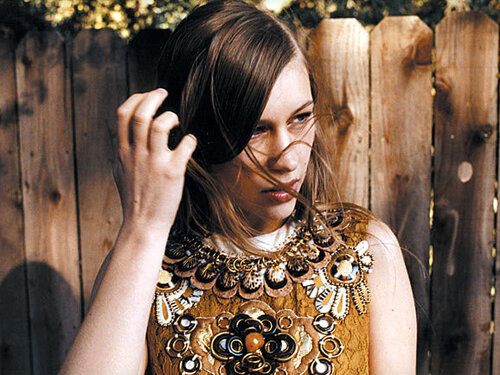
the albums that I feel have defined the 2010s. As we are now in the 2020s, I am looking further afield and to those albums that warrant some serious investigation on the vinyl format. Today, I am looking at Joanna Newsom’s second studio album, Ys, released in 2006. Produced by Newsom and Van Dyke Parks, it is a sumptuous and stunning effort. Newsom is not one to travel the straight and obvious; her work is more experimental and challenging. As such, there are five songs on Ys that range in length from seven to seventeen minutes. Not that Ys is a concept album as such, yet the songs do address the people who have been important to her the year prior to recording. Life in Newsom’s life prior to the album coming together was pretty tough. She has lost a close friend, was ill herself and went through a hard break-up. There is a lot to recommend and love about Ys, but I especially adore the musicianship throughout. With bass guitar from Lee Sklar and electric guitar by Grant Geissman, one can discover an incredible blend of musicians throughout – also in the mix is Matt Cartsonis who played mandolin and banjo. I would suggest one gets a copy of Ys on vinyl because, like so many great albums, it is not as common on that format as you’d hope. I might write a feature on this: how there are so many wonderful albums out there one cannot purchase on vinyl. Regardless, one can get Ys on vinyl and it is definitely worth the money.

Joanna Newsom is one of those artists who have been on a golden run. Ys’s follow-up, Have One on Me, was released in 2010 and gained big reviews; so too did 2015’s Divers. In fact, that album scored her biggest reviews to date. As Newsom releases, roughly, an album every five years, I do wonder whether this year will be the one she brings us her fifth studio album. Whereas 2004’s The Milk-Eyed Mender was more conventional in terms of the number of songs and the length of each, Ys – released only two years after her debut – takes five tracks and builds these incredible stories. Based on personal events, the songs on Ys are very personal and important, but one does not have to know the circumstances to appreciate the incredible musicianship, production and Newsom’s stunning voice. Some were unsure of Newsom’s unique voice on her debut and, like all originals, people soon got on board. Ys finds Newsom with a more nuanced and extraordinary instrument at her disposal. The long and challenging songs could, on paper, be viewed as hard to understand or self-indulgent but, as many reviewers pointed out, every string and moment has its place. I want to bring in a couple of reviews that outline what an impressive and staggering album Ys is. Here is AllMusic’s take:

“Along with the beautifully filigreed arrangements and melodies, which mingle strings, jew's-harps, and spaghetti Western horns with Appalachian, Celtic, and even Asian influences, the album shows Newsom's development as a singer. She has more nuance and control, particularly over the keening edge of her voice, which is recorded so clearly that when it cracks, it tears the air like a tangible exclamation point.

Ys' daring, plentiful wordplay makes it even more of a rarity: an extremely musically accomplished album with lyrics to match. On "Only Skin" alone, Newsom goes from rhyming "fishin' poles" with "swimmin' holes" to "heartbroken, inchoate." These songs are so full of words and plot twists that sometimes it feels more like you're reading them instead of listening to them, and indeed, actually reading the lyrics in the book-like liner notes reveals that Ys has a library's worth of children's stories, myths, romances, and of course, fairy tales woven into its words. As the album unfolds, it seems like Newsom can't get more ambitious (and more importantly, pull it off), but with each song, she does. Two of the best moments: the darkly whimsical fable "Monkey & Bear," a forest romp that boasts some of the album's best storytelling and some of Parks' liveliest arrangements, and "Sawdust & Diamonds," which is surreally sensual and coltish, with surprisingly direct lyrics: "From the top of the flight/Of the wide, white stairs/For the rest of my life/Do you wait for me there?" Ys isn't exactly a reinvention of Newsom's music, but it's so impressive that it's like a reintroduction to what makes her talent so special. Its breathtaking scope makes it a sometimes bewildering embarrassment of riches, or as one of "The Monkey and the Bear"'s lyrics puts it, "a table ceaselessly being set." Yes, Ys is a demanding listen, but it's also a rewarding and inspiring one. Letting it unfold and absorbing more each time you hear it is a delight”.

There were some mixed reviews but I feel, in those cases, the reviewers did not give the album time or were prepared to immersive themselves fully. For those who want to discover a record that envelops you and is so different to anything out there, I would point you in the direction of Ys. Ys is not available on Spotify – nor is most of her work – but you can access it on TIDAL if you would rather stream the album. This is what The Guardian had to say when they reviewed Ys:

“The lyrics are fantastic. You hesitate to compare Newsom to the Fall, partly because she sounds nothing like them and partly because Mark E Smith might get wind that you have equated his band with a singing Californian harpist with plaits and a medieval bent and jump on the first train from Salford with the intention of belting you one. But what Newsom does share with the Fall's dissipated leader is a rare ability to craft lyrics so mysterious and allusive that to all intents and purposes they make no sense, but which still manage to draw you in and hold you with the richness of their language. Doing this is a tall order, particularly when an album features the sheer volume of words that Ys does. There are moments when Newsom stumbles into the grim territory where prog rockers once set up camp: her love of "thee" and "fain" can seem a bit affected.

More often, her obvious love of words just carries the listener helplessly along. It's hard to work out what the 16-minute Only Skin is on about, but that doesn't stop you being beguiled by the way she turns a description of a river into something infinitely more lubricious, going from nature trail to knickers off in a matter of seconds: "I watched how the water was kneading so neatly, gone treacly, nearly slowed to a stop; frenzied coiling flush along the muscles beneath," she sings. "Press on me, we are restless things." Nor does it stop the song's denouement, which for some reason concerns a bird flying into a window, from being inexplicably moving.

Ys is full of moments like that: magical for reasons you can't quite put your finger on. Within minutes of it starting, you're struck by the rare sensation that you've entering uncharted, original territory. A hard sell, perhaps, but it could be the best musical investment you make all year.

It is a new decade, and I wonder if Joanna Newsom is working on new material. Whilst she is gigging at the moment, Newsom is an artist that does not have a Twitter or Instagram, so you never really know what is brewing. I guess we will find out in time whether new songs are a possibility. It is exciting to speculate but, until then, get Ys and discover this great artist. Once you have listened to Ys, have a listen to Joanna Newsom’s other albums as they are all different and full of gems. When it comes to musical richness, a beguiling voice and songs that hit the heart, I think Joanna Newsom is someone…

8u.jpg

PHOTO CREDIT: Brian Vu for FADER

WITHOUT any modern-day equals.  

FEATURE: Homme Mystérieux: What Now for the Queens of the Stone Age Leader?

FEATURE:


Homme Mystérieux 

sssss.jpg

IN THIS PHOTO: Josh Homme

What Now for the Queens of the Stone Age Leader?

___________

I wanted to break away from the 2020-related pieces…

PHOTO CREDIT: Andreas Neumann

and return to a musician I have covered a number of times. As head of the amazing Queens of the Stone Age, I am always interested in what Josh Homme is up to and whether he is okay. Homme himself as not been free from controversy as a member of Queens of the Stone Age and Kyuss. During a Q.O.T.S.A. gig in 2017, he kicked photographer Chelsea Lauren in the face. It is also reported Homme took a shot at Foo Fighter Taylor Hawkins when the drummer sent him a song about his son. Entitled Son of Mine, Hawkins was taken aback by some harsh words from Homme. The legendary frontman has not been free of troubles for many years. That may sound glib, but we almost lost him back in 2010. When speaking with NME in 2011, he talked about an operation he had that went horribly wrong:

“I had an operation and died and survived on the table,” he said. “I had surgery on my leg and there were complications and I died on the table. I was in bed for three months”.

Homme was in a state of depression whilst recovering and, although Queens of the Stone Age brought out …Like Clockwork in 2013, it was a hard road to recuperation. The band have since released another album – 2017’s Villains -, and I wonder whether we will see another album from the Californian band. Although it has only been three years (less, even) since that album, recent events make me wonder whether the band are scaling things back and, indeed, whether we will get more music from them in the future.

Homme himself has not been idle in terms of recording since 2017. Last year, with a crew of artists including Jake Shears and Royal Blood’s Mike Kerr, we were treated to Desert Sessions Volumes 11 & 12. The album gained some positive reviews, and I think we might get more albums from the rotating collective. A few personal developments in Homme’s life have left some questions and mysteries in the air. One heartbreaking piece of news is that Homme and his wife, Brody Dalle, have ended their marriage. Consequence of Sound have provided more details:

 “Queens of the Stone Age’s Josh Homme and The Distillers’ Brody Dalle are ending their marriage after 12 years. According to TMZ, Dalle filed for legal separation on Friday (November 15th).

Homme and Dalle married in 2007. They have three children together.

As Homme recounted in 2018 interview with the Sydney Morning Herald, he first met Dalle backstage at a Kyuss show in 1997. “She came up to me backstage and asked if I was in Kyuss. We talked for an hour and a half and I never forgot her,” he remembered.

“I didn’t like her ex [Tim Armstrong from Rancid], so I lied and said I had made out with her in the hope that he would find out,” Homme added. “I didn’t see her again until seven years later.”

In his interview with the Sydney Morning Herald, Homme described Dalle as “my punk-rock dream girl,” adding, “I always thought if I could go out with a chick with a mohawk who also read philosophy, I’d be winning. Brody is the real deal. She does everything the boys can do and a whole slew of things no boy ever could.”

Beyond their personal relationship, Homme and Dalle also collaborated in the studio on several occasions. She contributed vocals to QOTSA’s song “You Got a Killer Scene There, Man” and also played on several Eagles of Death Metal tracks alongside Homme and his collaborator Jesse Hughes”.

There are various reports out there as to why they have split, but it is clearly a tough time for both. Normally, I would not usually cover subjects like a musician’s marriage ending, but I have been thinking about where Rock will head this year and whether bands like Queens of the Stone Age will play a role. They are, to me, one of the last remaining properly good Rock bands; those that can pen a catchy tune and bring plenty of undiluted swagger and punch to the party! Whilst there are no signs and suggestions Queens of the Stone Age are calling it quits, one cannot help but be concerned hearing how their lead, Homme, is going through sh*T. Of course, one does not know the circumstances behind his separation from Dalle, but it has had a big impact on him.

As Alternative Nation reports Homme has taken to Instagram:

“Queens of the Stone Age singer Josh Homme appears to have quietly joined Instagram in the last month, with a new account launched that while it isn’t verified, it is followed by his best friend Jesse Hughes and Queens of the Stone Age, so if it’s an impersonator, it’s a damn good one, as Hughes has even commented on posts. Josh Homme’s wife Brody Dalle recently filed for legal separation, and Homme appears to be taking the news very hard.

The Homme Instagram account wrote, “When there was only one set of footprints on the beach, it’s because I was learning to walk alone. #jhobabyduck #queensofthestoneage #qotsa #bobrossjoyofpainting #alone #homealone #homealone2lostinnewyork.”

It later posted, “To the only woman. I love you Brody Dalle. @nerdjuice79 @truelove @TLA.”

Homme recently did charity work for a children’s hospital, with a video of Homme with a child shared, “Thanks to the children’s museum of palm desert for allowing the sweet stuff to do the sweet stuff. #thesweetstufffoundation #qotsa #queensodtheatoneage #nerdjuice #desertkids”.

Having gone through a near-death experience back in 2010, I and many people sort of hoped Homme would start this decade with a lot more happiness and hope than he did the last. The dislocation and depression will pass but, as many Queens of the Stone Age fans think a new album this year would be just the ticket, we might have to wait a bit longer for any news on that front.

IN THIS PHOTO: Homme performing in 2017/PHOTO CREDIT: Getty Images

In regards his separation, another article caught my eye. Again, Alternative Nation reported. When it comes to mystery and cryptic-ness, Homme has got many people wondering about his state of mind:

“Queens of the Stone Age singer Josh Homme posted a cryptic famous poem that many fans thought referenced his state of mind after his separation from wife Brody Dalle.

“IF- If you can keep your head when all about you Are losing theirs and blaming it on you, If you can trust yourself when all men doubt you, But make allowance for their doubting too; If you can wait and not be tired by waiting, Or being lied about, don’t deal in lies, Or being hated, don’t give way to hating, And yet don’t look too good, nor talk too wise:

If you can dream—and not make dreams your master; If you can think—and not make thoughts your aim; If you can meet with Triumph and Disaster And treat those two impostors just the same; If you can bear to hear the truth you’ve spoken Twisted by knaves to make a trap for fools, Or watch the things you gave your life to, broken, And stoop and build ’em up with worn-out tools:

If you can make one heap of all your winnings And risk it on one turn of pitch-and-toss,

And lose, and start again at your beginnings And never breathe a word about your loss;

If you can force your heart and nerve and sinew To serve your turn long after they are gone,

And so hold on when there is nothing in you Except the Will which says to them: ‘Hold on!’ If you can talk with crowds and keep your virtue, Or walk with Kings—nor lose the common touch, If neither foes nor loving friends can hurt you, If all men count with you, but none too much; If you can fill the unforgiving minute With sixty seconds’ worth of distance run, Yours is the Earth and everything that’s in it, And—which is more—you’ll be a Man, my son!”.

I did not want this feature to be all about his separation and relationship troubles but, as we have started a new decade, I have been thinking about Homme and Queens of the Stone Age. They are one of my favourite bands and, whilst Homme is no saint, he is one of the most electric leads and a terrific songwriter. I was lucky enough to catch the band at London’s 02 during their Villains tour. On stage, the man is part-mystic, part-rebel, alternately quoting quasi-philosophical messages and commanding the crowd get excited and tear the roof off. I have been following the band since 2000’s Rated R and been blown away by their stamina and brilliance. That album is twenty on 6th June, and it is amazing Queens of the Stone Age are still turning in sublime music – they are a lot stronger and more interesting than a lot of newer Rock bands. Homme is forty-six now, so one can understand why he might want to slow things down a bit. He has explained he will be cutting back on the world tours in the future:

“Queens Of The Stone Age‘s Josh Homme has said that the rock giants are likely to scale back on massive world tours in future.

After concluding touring for 2017’s ‘Villains’, Homme says he was left feeling burnt out by the globe-trotting jaunt.

“After the last Queens tour, I needed to take a break,” Homme told the Los Angeles Times. “I don’t think that style of putting out 10 more songs and touring for two years, I could ever do again like that.”

Discussing future plans for the band, he said: “In terms of notoriety, I really have no interest in getting any bigger. And if it were a little smaller, I’d probably be fine with that because there’s nothing down that road — unless it allows me to pull musicians from a farther world to do this”.

This will be a time of rest and reflection for Josh Homme, and I do hope this year brings him a lot of happiness and calm. As I have said, Homme has been involved in some controversy in the past – that goes beyond the attitude and edge you’d expect from a Rock lead -, but he has provided the world with so much tremendous music. A recent Instagram post has raised concerns, but I think he just needs time to get his head around his marriage troubles. As a massive Queens of the Stone Age and an admirer of Josh Homme, I hope The Ginger Elvis and his Queens cohorts will be…

BACK in full swing soon enough.

FEATURE: So Fresh, So Clean: Revisiting the Phenomenal Stankonia

FEATURE: 

So Fresh, So Clean

aaaaa.jpg

Revisiting the Phenomenal Stankonia

___________

I could have done this as a Vinyl Corner…

but I wanted to spend a few moments talking about OutKast’s Stankonia in another light. We are now (just) in a fresh decade, so that means a lot of people will be ready to see which sounds and artists define the 2020s. Maybe it is too early to predict where music will head, but the first year of this decade is an important one. Some truly genius albums have arrived since the start of this century, but OutKast’s fourth studio album set the bar immensely high as early as 31st October, 2000. Rather than it being a Halloween fright, it is an absolute treat from André ‘André 3000’ Benjamin and Antwan ‘Big Boi’ Patton. OutKast formed in 1992 in East Point, Georgia, and had been making steady steps up to the point of Stakonia. Named after their recently-purchased Stankonia Studios in Atlanta, André 3000 and Big Boi wee free to experiment more and were not being confined by usual studio rules. With production from Earthtone III (consisting OutKast and Mr. DJ) and Organized Noise, Stankonia must rank as one of the finest albums of the twenty-first century. If you are new to Hip-Hop or OutKast and feel like you need to know their history, I would encourage people to dive into Stankonia as it is so alive, varied and accessible. Comprising a series of skits and full-length songs, Stankonia is OutKast creating an experimental musical aesthetic and pushing beyond what they released on 1998’s Aquemini. In the frame of a Dirty South-orientated Hip-Hop context, OutKast fused everything from Rave and Funk to Gospel in a spellbinding album. Not only did I want to mention Stankonia because it is almost twenty years old; I also think it marks one of the best album one-twos in history.

Many can argue but how many artists have released two albums in a row that are as good as Stankonia and Speakerboxxx/The Love Below (2003) – although the latter is a double album, so many it should be a one-two-three?! One can say The Beatles and Bob Dylan have had a greater run, but Stankonia was the start of a hugely inspiring and memorable period from André 3000 and Big Boi. Whilst the music is catchy, fun and full of different flavours, the lyrics address sexuality, misogyny; African-American culture and parenthood. It is a mature, eye-opening and moving album that boosts as much heart and brain as it does sheer vitality and spirit. OutKast’s output pre-2000 was a bit more mellow and laid-back. Stankonia represents a change of the times; the duo feeling things had changed and they had to responds in kind. I guess things had changed around OutKast. New, harder drugs were on the streets and that was hitting the Hip-Hop scene. OutKast were aware and concerned by this. Rather than immerse themselves in older and new Hip-Hop whilst writing Stankonia, the guys, instead, took from Rock legends like Chuck Berry and Prince. Rather than producing something of that time or sound, they used it as a starting point. Stankonia is a very modern-sounding record and one that, to me, does not have a weak moment. I love how challenging and important the album is. A lot of Hip-Hop albums are concerned with excess, success and the author’s ego. Stankonia looks at the status of women in the South of America; it tackles misogyny in Hip-Hop and shows these women have rich and important spirits; they are not merely one-dimensional people.

Songs such as Toilet Tisha are so different to a lot of what Hip-Hop was producing in the 1990s. At the start of a new decade, OutKast wanted to change the game and reassess the way women are seen in Hip-Hop. The aforementioned song concerns a suicidal pregnant teen. The album’s biggest hit, Ms. Jackson, is about the mother of a mother of an out of wedlock child. Apparently, the song is where André 3000 takes from his own experiences. The song was inspired by his relationship with singer Erykah Badu, the mother of his child, Seven, and serves as an apology to her mother for causing her daughter pain. From start to finish, Stankonia is an album that still sounds utterly amazing and relevant. I still think there is a lot of misogyny in Hip-Hop and, with political and racial tensions still evident in the U.S., Stankonia continues to deliver sermons of truth and wisdom. Given the fact this remarkable work is held in such high esteem, it was hardly a shock that critics went nuts when it came out. The reviews are glowing and full of praise for one of the greatest albums of all-time. This is how Pitchfork assessed Stankonia:

“OutKast had always consisted of a politically conscious pimp and a spiritual gangsta, but on Stankonia, those identities came to the fore with a greater distinction that paradoxically allowed them to sound closer together than they had since their inception—even as André sat out songs like “Snappin’ & Trappin’” and “We Luv Deez Hoez.” On Stankonia’s first proper song, “Gasoline Dreams” Big Boi raps about their clout and the limits thereof—“Officer, get off us, sir/Don’t make me call [my label boss] L.A. [Reid], he’ll having you walking, sir/A couple of months ago they gave OutKast the key to city/But I still gotta pay my taxes and they give us no pity”—while André throttles out a brainy hook: “Don’t everybody like the smell of gasoline?/Well burn, motherfucker, burn American dreams.”

Stankonia is an album about many things and full of epigrams; so ahead of the curve that one of its many double entendres—“I got a stick and want your automatic”—is now a bona fide triple entendre. It’s about sounds as smells and music as sex, but mostly it’s about two black kids from Southwest Atlanta, boogieing with chips on their shoulders, making Molotov cocktails of songs that sound like a revolution’s afterparty. It’s peppered with personal narratives and small slips of autobiography, and it tackles big ideas both directly and obliquely. But, ultimately, it sounds like two artists going pop on their own terms while trying to make sense of, and change, the world around them. Closing in on two decades after its release, Stankonia remains loud as bombs over Baghdad and humble as a mumble in the jungle.

It was not my first experience of OutKast, but Stankonia was the album that really got me into the duo. I wondered where they could go from here and whether it was possible to improve – debatable, they did three years later with Speakerboxxx/The Love Below. In another review, AllMusic had this to say about OutKast’s masterpiece:

“Stankonia was OutKast's second straight masterstroke, an album just as ambitious, just as all-over-the-map, and even hookier than its predecessor. With producers Organized Noize playing a diminished role, Stankonia reclaims the duo's futuristic bent. Earthtone III (Andre, Big Boi, Mr. DJ) helms most of the backing tracks, and while the live-performance approach is still present, there's more reliance on programmed percussion, otherworldly synthesizers, and surreal sound effects. Yet the results are surprisingly warm and soulful, a trippy sort of techno-psychedelic funk.

aaaa.jpg

Every repeat listen seems to uncover some new element in the mix, but most of the songs have such memorable hooks that it's easy to stay diverted. The immediate dividends include two of 2000's best singles: "B.O.B." is the fastest of several tracks built on jittery drum'n'bass rhythms, but Andre and Big Boi keep up with awe-inspiring effortlessness. "Ms. Jackson," meanwhile, is an anguished plea directed at the mother of the mother of an out-of-wedlock child, tinged with regret, bitterness, and affection. Its sensitivity and social awareness are echoed in varying proportions elsewhere, from the Public Enemy-style rant "Gasoline Dreams" to the heartbreaking suicide tale "Toilet Tisha." But the group also returns to its roots for some of the most testosterone-drenched material since their debut. Then again, OutKast doesn't take its posturing too seriously, which is why they can portray women holding their own, or make bizarre boasts about being "So Fresh, So Clean." Given the variety of moods, it helps that the album is broken up by brief, usually humorous interludes, which serve as a sort of reset button. It takes a few listens to pull everything together, but given the immense scope, it's striking how few weak tracks there are. It's no wonder Stankonia consolidated OutKast's status as critics' darlings, and began attracting broad new audiences: its across-the-board appeal and ambition overshadowed nearly every other pop album released in 2000.

There is no denying the power and depth of Stankonia. The first decade of this century offered a lot of marvelous albums, yet few can compete with Stankonia. Considering we were only in 2000 when the album arrived, and that shows you how keen OutKast were to reflect a sense of urgency and uncertainty that greeted the end of the 1990s. Whilst other Hip-Hop albums blazed a trail around the same time as Stankonia, the influence of OutKast’s breakthrough cannot be understated. This article from 2015 explains more:

“To put it in perspective, Stankonia was released on the same day as Jay Z’s The Dynasty: Roc La Familia. Both albums clocked in at the top of the Billboard 200. Both sold over 500,000 copies with The Dynasty besting Stankonia by 40,000 copies. One was a straight up East Coast rap record that is remembered for its intro and a few tracks near the back end. The other is OutKast’s answer in small parts to Parliament Funkadelic’s Maggot Brain and in smaller parts to Sly and the Family Stone’s There’s a Riot Going On. Both are important for particular reasons; Dynasty for laying the groundwork for what would become The Blueprint and Stankonia for steering a solid two years of Southern rap before crunk came and kicked down the buildings.

The most light-hearted moment on Stankonia? The roller-rink vibe of “Cruisin’ in the ATL.” The hardest? “Gangsta Shit.” It is a huge, huge pendulum swing that tells you there’s still nothing sweet about ’Kast or Atlanta in general. “Gangsta Shit” is nearly five minutes of the Dungeon Family from Goodie Mob to Slimm Calhoun to Dre and Big Boi breaking down what is gangsta to them. Dre offers what could be easily seen as an extension of his “Return of the G” verse and stomps all over the beat. “OutKast with a K, yeah them niggas are hard/Harder than a nigga tryna impress God/We’ll pull your whole deck, fuck pullin’ ya card/And still take my guitar and take a walk in the park….” It’s as if he’s still fighting for that legitimacy he told the world about five years prior at the Source Awards.

Stankonia also set things up for the Dungeon Family, who dropped an album, Even in Darkness, in 2001. Stankonia properly introduced Slimm Calhoun who was the next D.F. member to release a solo album. Backbone, the D.F. rapper who first broke through on 1998’s hustler’s prayer “Slump,” returned for “We Luv Deez Hoez” and released his own debut album, Concrete Law, in 2001 with his trademark single, “5 Deuce 4 Tre.” However, there is no greater debut on Stankonia than that of Killer Mike. He only gets one song, the back and forth of “Snappin’ and Trappin’,” but he declared with one verse that he’d already delivered a classic.

By the time the dust settled, Stankonia stood tall as one of the most revered rap albums of 2000 by critics, eventually landing at 359 on Rolling Stone’s list of the 500 Greatest Albums of All Time. It kicked in the door for Southern rap’s now understood dominance as more albums from Southern artists have gone gold or platinum. What Big Boi and Dre perfected here, they carried over to their 2003, Grammy-winning double album, Speakerboxxx/The Love Below. That’s what Stankonia laid the groundwork for. Not to mention it confirmed that OutKast was the undisputed greatest duo in hip-hop.

And still cooler than Freddie Jackson sippin’ a milkshake in a snowstorm”.

I wonder, as the 2020s have just begun, whether this revelation will appear; something that rivals Stankonia. It might happen, but I think Stankonia is on a different plain and, as I said, it still sounds so current and unrivaled now. If you have not heard it then go stream or buy it because, as it will soon become apparent, Stankonia is a work of…

PURE genius.

FEATURE: Modern Heroines: Part Fifteen: Julia Jacklin

FEATURE: 

Modern Heroines

qqqqq.jpg

PHOTO CREDIT: Nick Mckk

Part Fifteen: Julia Jacklin

___________

WHILST she is one of the newer artists…

llll.jpg

PHOTO CREDIT: Gem Harris for Loud and Quiet

I have included in this feature, I love Julia Jacklin’s music and I feel, in years to come, she will rise through the ranks and will inspire many other artists. I am not sure if Julia Jacklin is still based in Sydney, but the Australian-born artist, like so many, must be pretty worried regarding what is happening in New South Wales. I am writing this feature on 2nd January, and I realise the situation may be worse by the time it is published. I hope everyone is okay there but, looking ahead, Jacklin has a very busy year ahead. I shall end by discussing her tour dates but, at the moment, I want to focus on an artist who is an icon of the future. By her own admission – more on that later – Jacklin’s debut album, Don’t Let the Kids Win is an artist unsure; maybe showing some weaknesses. I really like that album and it was one of my favourites from 2016. It is understandable that an artist who was very new to the industry would not be at her peak on her first album. I will come to that record in a bit but, now, a bit about Julia Jacklin. She grew up in the Blue Mountains, Australia, and hails from a family of school teachers. Listening to her brand of Indie Folk, one would not imagine Pop artists like Britney Spears would be a source of inspiration. Indeed, Jacklin took classical singing lessons, partly because of her love of Spears’ music. After graduating from the University of Sydney, she lived in a garage in Glebe (a suburb of Sydney).

It sounds like a pretty rough-and-ready setting; a struggling artist making their way up. I think it is quite romantic and, having studied Social Policy at university that, coupled with Jacklin’s musical tastes and personality, makes for an arresting and unique artist. Jacklin worked at an essential oils factory only a couple of weeks before she started to tour and, whilst she enjoyed that job, it is amazing to picture this wonderful musicians at her day job, not knowing she would soon become known around the world. From a young age, Jacklin’s family did not really know what it was to be a musician; they did not feel it was a viable career, and so, Jacklin did not have that support when she was working on her music. After being part of a band, Salta, together with Liz Hughes, Jacklin soon began to make her way out alone. My first exposure to her work was when her first two singles, Pool Party and Coming of Age, were being played across national radio in the U.K. There are some stunning Australian artists around. I think it is a nation that we overlook and do not see in the say light as, say, the U.S.A. With contemporaries like Julia Jacklin, Stella Donnelly (she is Welsh-born but grew up in Australia) and Courtney Barnett producing strong and incredibly interesting music, we need to look closely at the scene there. All three women are very empowering and inspiring and, in future edition of this feature, I may include Courtney Barnett.

I heard Jacklin’s music on BBC Radio 6 Music and, having appeared at various festivals since March 2016 (including South by Southwest), more and more people were being turned on to an amazing talent. Jacklin has played headline sets – she headlines A Festival Called Panama (in Tasmania) in March; she is headlining the Grampians Music Festival in February – and supported artists such as First Aid Kit. Magazines and critics were dubbing Jacklin as a star of today as early as 2016 and, almost four years on, there is no stopping her! It wasn’t until August 2016 when Jacklin decided she was a full-time musician and decided she could not balance work and music. Citing influences Doris Day, The Andrews Sisters and Billy Bragg, Don’t Let the Kids Win is a wonderfully rich album that nods to classic artists and a romantic tone together with something deeply personal – many saw the album as a woman going through a quarter-life crisis. Maybe Jacklin was finding her feet and still finding herself as an artist, but I really love her debut. The songs are relatable to me. I can identify with someone who sees others ‘growing up’ and moving on whilst being stuck in a job and not really taking a leap. I guess Jacklin feels differently now that her life has moved on considerably since 2016 but, back then, her situation was very different.

lllllllllllllll.jpg

IN THIS PHOTO: Julia Jacklin and band at the End of the Road Festival in 2016/PHOTO CREDIT: Richard Gray

Loud and Quiet had this to say when they reviewed Don’t Let the Kids Win:

“What does a quarter-life crisis actually sound like? Julia Jacklin’s debut record has to at least be a close approximation. The Australian singer-songwriter took the decision, bright-eyed and not long out of school, to eschew the real world in favour of pursuing a career in music in her teens, but by the time she came to record ‘Don’t Let the Kids Win’, she found herself frustrated, disillusioned and stuck in a menial day job whilst her kid sister was doing the grown-up stuff: settling down, getting married.

That context is crucial because it’s Jacklin’s emotional state that makes this record such a triumph; there is a quite brilliant balance between nervous urgency, the realisation that something needs to happen soon, and measured perfectionism, born out of the knowledge that if this is her one shot, it better be the best it can be.

‘Pool Party’ and ‘LA Dream’ are exercises in softly soulful pop, ‘Sweet Step’ leans on pretty, melodic acoustic guitar, and the murky atmospherics of ‘Same Airport, Different Man’ put Jacklin’s formidable storytelling skills front and centre. Underpinning it all is her achingly sad vocal delivery, which oozes conviction throughout.

Jacklin cites Angel Olsen as a major influence (although there are some Ryan Adams melodies in there, too), and ‘Don’t Let the Kids Win’ should not be forgotten in the wake of the North Carolina native’s recent masterpiece, ‘My Woman’”.

Although some reviewers remarked how Jacklin was not quite a complete artist – some noted how there is filler on the album -, Don’t Let the Kids Win is a broad, honest and memorable album that gained a lot of positivity. This is what AllMusic wrote:

“Don’t Let the Kids Win is the debut of Australian singer/songwriter Julia Jacklin, who skillfully laces elements of alternative country-rock and early rock into haunting indie folk vignettes. Smoky vocals, discontent, and a presence that's mature beyond her twenty-something years suffuse the album with the character of a life hard-lived. That spirit is almost literal on the song "Same Airport, Different Man," a weary, single-verse rumination that ends with her deciding to try the train next time. It closes with a mumble and a quiet, dissolving guitar line, as if falling asleep over a whiskey. At the other end of the instrument range is the lush "Coming of Age," which uses echoing guitars, crashing cymbals, and a melody that yodels to express "I didn't see it coming, my coming of age." More sauntering tracks like "Leadlight" and "Small Talk" take on a light '50s nostalgia with triplet rhythms, rhythm guitar, and a country connection. The latter tune has her feeling the wrong age for anything, whether it be the cool kid at the bar, or imagining Zach Braff and Catherine Deneuve as her parents. In keeping with the album's self-consciousness about growing older and finding one's place, the title track closes Don’t Let the Kids Win with lyrics like "I've got a feeling that this won't ever change/We're gonna keep on getting older, it's gonna keep on feeling strange." Altogether, the album's palette and Jacklin's cracking, pensive delivery land her in a sphere with heavy-hitters such as Sharon Van Etten and Angel Olsen, with a touch of Lucinda Williams, making it a must for fans of thoughtful indie folk”.

Unlike a new artist out of America, I think there is an extra degree of fascination when we are made aware of someone from Australia or New Zealand. Maybe that relates to the size of the countries or the fact their music has had to travel further. There was a lot of interest in Jacklin when her album was released. One can learn so much about an artist from the music and, whilst Don’t Let the Kids Win spoke about a woman who was anxious and wondering whether she was achieving all she could, interviews allowed the musician to provide more context and story. In this 2016 interview with DIY, Jacklin spoke about her life before music and making those first steps:

“Fears familiar to a ‘quarter life crisis’ generation permeate the album. After studying Social Policy at university in Sydney, the feeling of time slipping away became an acute source of concern. “I was a bit like, ‘Oh! Was that a good idea to be at uni for like four and a half years when you knew the whole time you wanted to be a musician?’”

The answer was to set herself the goal of recording an album before she reached the age of 25. Her anxieties provided food for thought as she converted her feelings of self-doubt into song form. “It’s a nice way to be productive with them and not just whinge about them all the time!”

On ‘Motherland’, for example, she admonishes herself for being hesitant (“these new lines on my face, spell out girl pick up your pace, if you want to stay true, to what your younger self would do”). By the closer, the album’s title-track, she appears to have found some acceptance in the inevitability of ageing (“we’re gonna keep on getting older, it’s going to keep on feeling strange”).

Sure enough, before she hit 25, Julia’s restlessness had spurred her on to achieve the target she’d set for herself. “I need to feel worried to make music,” she confesses. “It’s shitty but I do need to feel a little inadequate in some way to drive me to produce I guess.”

“I grew up listening to a lot of folk music and you think you have to sing about rivers and mountains and stones and bones and stuff that doesn’t really mean anything to you, but you’re just kind of using the same tropes. But then I started listening to some artists that inject a bit of humour into it and it just felt a lot more natural for me. I realised that I was allowed to do that. I didn’t just have to sing pretty words.”

Leonard Cohen was a revelation in that respect. “He manages to be super heavy-hitting with some of it, like really melancholy but also just quite hopeful and I think it’s to do with his sense of humour.” Father John Misty and Fiona Apple are others she name-checks as writing inspirations.

There is so much more to Julia Jacklin than the music alone. I think she is a remarkably frank and accessible person who provides inspiration to those who are starting out. There is this emphasis on the very young being relevant; if you are in your late-twenties or thirties, then you are not cool or starting out too late. Jacklin knows where she wants to be, but it took her a while to realise music was her path.

I want to bring in one more interview before I move on to her latest album. Jacklin spoke with Interview Magazine in 2016 and discussed her creative process and route into music:

“LYRICAL FRAME OF MIND: When I’m really stuck, I have to listen to music. Sometimes I can create in a vacuum based on how I’m feeling, but if I get writer’s block or if I get really stuck, I also like to read artists’ lyrics. I read a lot of Leonard Cohen’s lyrics, I just love the way he writes—as does everyone—and seeing his turns of phrase. I also listen to a lot of Gillian Welch, because she just has these incredible song structures that blow my mind. If I’m stuck I listen to her music to see how she structures it. I think it’s a healthy thing to do.

STUDYING TO BECOME A SOCIAL WORKER: That was the big plan, I don’t know, it still might be a plan eventually, we’ll see how this goes. I kind of struggled through uni. I did well, but I took a few breaks when good things started happening with music. I finished my degree, but I guess I was always a bit naïve thinking that I could do both at the same time. Then I realized, to actually have a music career, you kind of need to charge ahead—at least for a certain time. I think maybe once you have established yourself and you can take breaks and pursue other things, it might be easier. Definitely in the beginning you need to make a lot of sacrifices.

WHEN SHE WAS IN A FOLK BAND: I was listening to a lot of folk music. I think one of the first songs I wrote was a very generic song about a sea captain, borrowing some overused folky themes. The more I wrote, the more I brought it back to my own voice and opinion. I started in a folk band. I was in this band with two of my best friends and we released an EP when I was younger and then we went to make another EP and halfway through doing it we all just realized that we didn’t really like the music anymore. We were kind of playing Appalachian folk music, we fell into playing that, but we didn’t really like playing it. We decided to break up and do our own thing. The other girl that I was in the band with is a singer-songwriter as well, so it was one of those bands where you’ve got two songwriters, so the set is always a bit weird because the songs are quite different and you have two lead singers. It was like we were doing our own thing anyway, but we were just putting ourselves together on stage.

HITTING THE ROAD: I quit my day job [a few] weeks ago. I’m very excited about that. I was working at an essential oil factory for two years. It was a good job, great people, they were super flexible with me going on tour and having time off to record and whatnot, but it was pretty repetitive work to say the least. I’m leaving on the 22nd of August and then I’ll be away until the end of November. I went backpacking in my gap year for seven months, but it’s definitely the longest time I’ve been away since then. I’ve never done this kind of touring, show after show after show. I’ll see how that goes. I’ve been waiting to do this for a long time. Until next year, my life has been planned out, so I’m just going to ride that wave and see what it’s like”. 

Between 2016 and 2019, Jacklin toured a lot and, in that time, honed her craft and strengthened as a songwriter. If Don’t Let the Kids Win showed flashes of brilliance and future promise, Crushing was the sound of a woman who was fully-formed and at her very best. Many critics named the album among their favourites from last year, and it is no surprise Jacklin has a pretty full diary this year! At the ARIA Music Awards of 2019, Crushing was nominated for six awards: Best Female Artist, Best Adult Contemporary Album; Best Independent Release, Producer of the Year; Engineer of the Year and Best Cover Art. From its wonderful cover – Jacklin looking awed and happy whilst surrounded by flowers and various nik naks -, to its amazing production (from Burke Reid), Crushing is a triumph! Like her debut, there is a lot of self-realisation on Crushing but, unlike Don’t Let the Kids Win, the ideas are huge and the songwriting is dripping in nuance. That might sound dismissive of her debut, but it is not intended to be: that record is a brilliant thing, but Jacklin hit new gears on her second outing. If Don’t Let the Kids Win’s backdrop is a woman in her twenties wondering whether she is as far along in life as she should be, Crushing is about break-ups and personal anxieties. Perhaps it Is a natural evolution in terms of her story.

Singles like Head Alone and Pressure to Party are, again, songs we can relate to. This sense of loneliness, heartache and societal pressure is universal, yet Jacklin articulates it in a way like no other songwriter. Running in at ten tracks and lasting less than forty minutes, Crushing is a focused album but one that is awash with beautiful textures, vivid scenes and the best vocal performances of Jacklin’s career to date. The reviews for Crushing are universally positive, and it is pleasing to see Jacklin winning the same publications that were a little ho-hum when her debut came out. The Telegraph loved what they heard when they sat down to review Crushing:

“Jacklin is a 30-year-old Australian singer-songwriter, working in an increasingly crowded field of fragile atmospheric indie. Her spiritual godmother might be Cat Power, but Jacklin has a touch of countrywoman Courtney Barnett’s rock swagger, too, with hints of something raw and unbridled that keeps listeners on edge. It is not a particularly modern style, unlikely to set charts alight, but done well it has real emotional potency. And Jacklin does it very well.

Crushing is a break-up album, forensic in its analysis of the causes and aftermath of a failed relationship. This is well-trodden terrain but Jacklin’s focus on physical agency lends it contemporary resonance. “I don’t want to be touched all the time/ I raised my body up to be mine,” she asserts on Head Alone. Don’t Know How to Keep Loving You is a powerful song about the boredom than can infect long-term relationships. Pressure to Party, Convention and Good Guy struggle with the guilt of self-inflicted pain. “You can’t be the one to hold him/ When you were the one who left,” she sings on mournful closer Comfort.

As a body of work, Crushing feels small, intimate and inward. But these are big songs, full of big ideas, from a big talent”.

More so than ever, Julia Jacklin’s work was attracting the critical ear. Maybe it was touring and experience that lead to improvement in terms of her material. Perhaps she reflected a particular moment that translated especially effectively to music. Whatever the reason, Crushing was among the most respected and adored albums of last year. I think Jacklin will continue to get better and more amazing as a songwriter. The fact she has produced such a complete and astonishing album only a few years from her debut shows that she was right to quit her day job and pursuit music. Here is what The Independent had to say when they reviewed Crushing:

“For my money, “Body” is the best thing on Crushing, a terrifically complicated breakup record that’s still got a hangar full of delights readied for takeoff. Those who fell for Jacklin’s 2016 excellent debut, Don’t Let the Kids Win, will find a continuity of alternative attitude and vintage influences. The video for new song “Pressure To Party” – Jacklin’s sneeringly ecstatic “three-minute scream” about what people expected of her after her relationship ended – is even shot in the same retro-fitted house as her first video, for “Pool Party”.

But there’s a deeper sense of personal connection to anchor Jacklin’s lyrical and melodic smarts. That snare drum keeps a relentless, nerve-snapping pulse throughout, with Jacklin sounding more confident in her contradictions: at once yearning to comfort a lover she’s dumped and then, on “Head Alone”, declaring: “I don’t wanna be touched all the time/ I raised my body up to be mine.” The rather glorious video for this one finds Jacklin running through the desolate streets of suburbia in a dress that looks like it’s been made out of 1980s curtain material for a sixth-form production of Shakespeare’s Romeo & Juliet”.

People around the world are keen to see Crushing’s songs performed by Jacklin. Last year was a fantastic one, but I think Julia Jacklin’s latest album ranks alongside the absolute best. She would have taken heart from the way critics and fans reacted; the positivity and interest it has garnered is reflective of a songwriter who puts her heart and soul into everything. Before I move on and finish up, I want to bring in two different interviews Jacklin gave.  When she spoke with The Independent last year, she was asked about ageism and sexism in the industry. Jacklin’s candour and honesty makes her a very inspiring and interesting interviewee:

 “In that case, perhaps it’s a good thing that Jacklin was well into her twenties before her music career took off. She released her debut album, 2016’s critically adored Don’t Let the Kids Win, at 26. She only half agrees. “It’s a young person’s game,” she says. “It’s ageist as hell. Sometimes, when people say to me, ‘You’ve got all the time in the world,’ I’m just like, ‘That’s not the reality I see. Sure there’s exceptions to the rule, but I think this is a very ageist industry towards women, and there’s definitely a lot of progress, but please don’t tell me I have all the time in the world. That’s bulls**t.’” Lily Allen recently discussed the same thing in a podcast interview, suggesting that at 33, she is now deemed too old to be played on Radio 1. “Thirty-three, that’s young,” says Jacklin. “I just don’t think men would have the same problem. Thirty-three, in male years, you’re still a baby.”

Jacklin has found the endless attempts to politicise her music frustrating. “I get pretty sick of the fact that every time a woman speaks about their experiences, it’s labelled political and radical,” she says, rooting around for something in her red backpack, pushing aside a copy of Sally Rooney’s Normal People. She resents “this hilarious idea that trying to advocate for your personal safety and privacy is a fashionable thing”. And she finds it vaguely patronising. “Everyone’s like, ‘Oh you’re so brave’, and I’m like… Urgh. That doesn’t make me feel good if you think that I’m doing something political and brave, because I’m not. I’m just writing about my experiences, just like men get to do, and my relationship with my body and the way that the world interacts with my body. It’s something that every woman experiences in some way or another. Yes, cool, people are starting to pay attention right now, but this is the reality of my life. I’m not trying to jump on some bandwagon. Just talking about my body as a straight, white woman, I don’t think I’m doing some crazy brave… you know? I don’t think I’m paving the way or anything”.

I do think attitudes need to change when it comes to women in music and how they are seen. Jacklin is right in what she says about women being labelled political if they have anything personal or bold to say.

Let’s hope things change this year and, with stunning artists like Jacklin putting out some of the best music in the world, I feel like steps will be made. In this interview with The Line of Best Fit, Jacklin discussed the changes between her debut and second album:

“Growth as an artist is a concept that fans and critics alike tend to latch onto but for Jacklin herself the difference between her debut and new album is immeasurable.

“I kind of just didn't feel that much pressure with the second record, because it feels like I'm a completely different person from my 24-year-old self," she says. Laughing, she adds: "I don't even know what my first record sounds like. I think a few people have asked me, ‘How does your second album differ from the first one?’ and I’m like, ‘I don't know, actually.’ I have to listen back to my first one and make notes.”

Jacklin is joyful, proud and simultaneously humble when discussing Crushing. She possesses a certain unique charisma that enables her to praise her work without seeming at all boastful.

Putting this down to confidence and experience, she explains: “I think just because the first record was my first time in a studio I didn't really have much confidence in the space. And I think when I listened back to it, I could hear maybe some concessions that I made because I was just a bit shy or like, some decisions that were made because I just didn't speak up and didn't kind of know how to ask for what I want.”

By contrast, it’s evident throughout Crushing that she’s an artist who knows what they want and knows how to ask for it.

“I really care about my first record. I don't think it's a bad record. It just reminds me of a time when I just felt pretty inadequate as a musician,” she says. “Whereas with this new record I think I just kind of understood that, you know, making a record is not about having a perfect guitar take or a perfect vocal take. I thought as it’s the first time, I've got to get the songs down perfectly, because they're going to be recorded for the rest of time”.

This year has been a busy and exciting one for Julia Jacklin. If you want to catch her on the road, here are her confirmed dates, and one might need to be a bit patient if you live outside of Australia. I like the fact Jacklin has not moved to the U.S. and U.K. because, in a lot of cases, artists in Australia who cannot get exposure move here. In fact, in many incidents, it is them wanting to be closer to these nations and having more of a visible platform. Things are bad in New South Wales are pretty bad right now with the bush fires, and I hope Jacklin remains safe – and upcoming gigs are not affected. I also wonder whether she will bring the bush fires and climate change into her third album. There are no confirmed plans regarding a third album, but new-found acclaim and what is happening in her country could not have helped inspire her in one form or the other. After the success of Crushing, so many new people had their ears opened to Julia Jacklin. I feel she will go from strength to strength and, in years to come, is one of those artists we look up to and proclaim a legend. Right now, the blossoming and phenomenal Jacklin is…

PHOTO CREDIT: Gem Harris for Loud and Quiet

AN artist we should all listen to and respect.

FEATURE: A Platform for the Mainstays and Newcomers Alike: 2020: A Year Where Gender Equality Needs to Come into Sharp Focus

FEATURE:

A Platform for the Mainstays and Newcomers Alike

xddfrfr.jpg

IN THIS PHOTO: St. Vincent

2020: A Year Where Gender Equality Needs to Come into Sharp Focus

___________

I have written plenty of articles…

xxxx.jpg

IMAGE CREDIT: Coachella

asking whether we will get gender equality across the board very soon. Last year was a pretty poor one when it came to festivals putting women at the very top of their bill. I can understand why you would not have a majority of women headlining every festival, but the vast majority of festivals last year has all-male headliners. Look at the footage from Glastonbury and so many of the best sets were from women – including Lizzo and Janelle Monáe. Next year will see one female artist headline Glastonbury (Taylor Swift), and I suspect Glastonbury will be the first festival to hit a fifty-fifty gender balance. Look at all the major festivals in the U.K. over the past decade and the lack of women headlining is shocking. Although this year has just started, Coachella have announced their line-up for April. Although there are women on the bill, it is the first year in a while where there are no women headlining.

 “Rage Against The Machine, Travis Scott and Frank Ocean will headline Coachella festival this year.

It's the first time since 2016 without a female headliner - Lady Gaga, Beyonce and Ariana Grande have each had a slot in the past three years.

The Californian festival is held over two weekends each April with the same line-up appearing over both of them.

Lana Del Rey and Megan Thee Stallion and Summer Walker are among the female performers.

The line-up features a lot of British artists - from FKA Twigs and Lewis Capaldi to Calvin Harris, Slowthai, Dave and Yungblud.

Thom Yorke will be performing but without Radiohead, who headlined the festival in 2017. Next to his name is "Tomorrow's Modern Boxes" - a solo album from 2014.

Run The Jewels, Rex Orange County, DaBaby and Flume are just a few of the other acts performing.

Headliner Frank Ocean hasn't performed at Coachella since 2012, before the release of debut album Channel Orange.

Despite Lady Gaga, Beyonce and Ariana Grande delivering consecutive must-see headline Coachella sets since 2016, it appears to be a short-lived tradition.

The festival has upped the number of female acts on the top tier of the line-up in recent years, a trend which continues into 2020.

But many will argue it's a missed opportunity to not give the likes of Lana Del Rey or FKA Twigs the chance to headline - especially given they released two of the most critically-acclaimed albums of last year.

Although other festivals, including the teams behind Glastonbury and Spain's Primavera, have pledged for more gender-balanced line-ups, Coachella organisers haven't addressed calls for more female acts to be topping the bill”.

Given the fact so many of last year’s very best albums were from women makes me wonder why, for instance, Lana Del Rey was not asked to headline. Lizzo would make a great choice and, even though she did not release a new album last year, St. Vincent would be a perfect fit – someone who would deliver a stunning headline set.

zzzzzzvv.jpg

IN THIS PHOTO: Little Simz

2019 was a great year for Pop acts like Billie Eilish and established acts FKA twigs, Solange and Sharon Van Etten. Throw into the mix Little Simz, Brittany Howard and Angel Olsen, and there are a few ready headliners there! I am not suggesting every fantastic album from 2019 has been made by women, but the majority of the most striking and accomplished have been. Most of these albums have been from women who have only been releasing music for less than a decade. Look at the legends and established artists, again, who could headline a festival and you have a long list of possibilities – from Björk and Bikini Kill (who are back touring together) and Kim Gordon. I feel 2019 was defined by women and the fantastic music they created. I know Coachella is the first of many festivals who will be announcing their line-up, but I do hope this year reflects the incredible women – from female bands and duos to solo artists – who warrant a place. I am always baffled why festivals struggle to get a fifty-fifty balance; some say the pool is not deep enough and it is hard to hit that target. Listen back to all the superb music made by women last year and there is an embarrassment of riches available that means, I hope, 2020’s line-ups will be a lot closer to fifty-fifty than ever – I see no reason why any big festival would have a problem hitting a fifty-fifty split.

Even though festivals that have made a pledge to hit fifty-fifty bills have two more years to hit that target, this year needs to set an example. I have only skimmed the surface regarding women who can make it onto festival bills this year. From Dua Lipa and The Big Moon through to Weyes Blood and Jessica Pratt, there are female artists in a variety of genres that could add their voice to festivals. Of course, it is not only festivals that have an issue with gender disparity. One can argue women are underrepresented in the industry and there are more men than women; men release more songs and, therefore, are going to be more prevalent. The lack of visibility, as I have remarked in previous features, does not indicate a lack of drive and talent from women. With so many festivals struggling to put women on the bill despite the huge promise and variety (from women), it is no wonder many female artists are hesitant or being overlooked. There is still sexism in every corner, and one only needs to refer to recent articles such as this:

“In Britain, countless women who work in the business testify to frequent cases of sexual misconduct and misogyny. ‘Women I know often tell me stories about sexual harassment,’ says Lara Baker, events manager at the Association of Independent Music (AIM), the organisation that looks after some of the world’s most successful independent record labels. ‘The music industry involves a lot of late nights and drinking, and in those situations it’s common for people’s sense of what’s appropriate to go out the window. A woman will be in a taxi with her boss or a client after a gig and he’ll suddenly start kissing or groping her and she’s expected not to mind. It’s not easy for her to speak out when it involves a colleague or client and her reputation is at stake’”.

In the article, British songwriter Lauren Aquilina has spoken about her experiences of sexism in the industry and how she is viewed:

“Aquilina has also found that as a young female artist in the music industry, she has been patronised over her songwriting, and experienced pressure to change. According to PRS for Music, only 13 per cent of their 95,000 songwriters are currently female, so it’s little surprise that songs written by women are not always taken seriously – despite the phenomenal success of female singer-songwriters like Taylor Swift and Adele. The fact is, the majority of chart-topping songs performed by female artists, from Rihanna to Katy Perry and Miley Cyrus, are still written by men.

Aquilina says, ‘I’ve had a few mental-health issues and I’ve been told by men in the music industry that I needed to stop being so emotional; such a girl. I’ve been told to stop moaning and write a happy, upbeat song that befits a female pop star. I know for a fact a male artist would never be asked to ditch an emotional, raw song.  ‘Now, I have a female manager and A&R rep and that’s made a big difference to my confidence. I’ve learned to stick up for myself more. I’ve had to grow up at an alarming pace to handle the pressure and demands of being a 21-year-old woman in the music industry.’

It’s not just the artists who suffer as a result of sexist attitudes: they permeate the entire industry, with women who work everywhere from A&R to promotion and PR earning less than their male counterparts and struggling to rise through the ranks. The upper echelons of the business remain solidly male. Despite the music industry signing up to UK Music’s Equality and Diversity Charter in 2012, there is little sign of progress”.

222.jpg

PHOTO CREDIT: @dustinlee/Unsplash

I do genuinely feel this year will be one where progress is made and, maybe by bringing men into the conversation more, that might make a difference. By that, I mean it is traditionally women who are fighting for awareness and talking about being overlooked; more men need to do their part and getting men and women in the industry communicating with the common goal of gender equality is definitely what needs to happen. Music-wise, one cannot ignore the sea of women who are creating sensational music. Further afield, there are amazing female producers and women in every avenue of the industry making it richer and better. In the short terms, festivals have a lot of options regarding commercial and interesting female artists alike. Whereas last year saw festivals like Reading and Leeds woefully male-heavy, one hopes the situation will not be the same this year. Similarly, the incredible success and originality of female artists last year should be proffered and spotlighted. I know, in years from now, there will be a lot more women in the industry. From artists and producers through to record label bosses and festival organisers, the numbers will rise. I think there is a lot of toxicity that is resulting in discrimination against women already in the industry and discouraging others entering. There is so much passion and talent from women in music that is not being honoured. From brilliant artists who are festival-ready – and not being included on bills – to those who are side-lined and the subject of abuse, things need to change. It is easy to make those changes and, in so many ways, 2020 is the year…  

PHOTO CREDIT: @michaelbenz/Unsplash

TO make it happen.

FEATURE: Street Spirit: Music and Support for the Homeless

FEATURE:

Street Spirit

sss.jpg

PHOTO CREDIT: @tomzzlee/Unsplash

Music and Support for the Homeless

___________

THIS time of the year…

zzzz.jpg

PHOTO CREDIT: @evstyle/Unsplash

there is something especially tragic seeing so many homeless people on the street. Depending on where you live, you will see people on the street, many being overlooked by the crowds. As I live in London, I see so many homeless people about. It is winter and, as the weather grows colder, I do worry what the effect will be on those sleeping rough. Those who are on the street and not sleeping anywhere with shelter will be vulnerable to the full effects of the weather and, for those who can find a doorway or shelter, there is a chance they will be moved on. Not to mention the fact many will experience attacks and abuse, and it makes for a very bleak and sombre picture. Over the past year or so, it seems there are differing reports regarding the number of homeless people in London. I am not sure whether other towns and cities are seeing their number of rough sleepers decreasing, yet it seems like London’s problem is evident. It seems, at least, in Southwark, there are positive signs:

“The Homelessness Reduction Act, in operation for the past 12 months, is potentially the greatest piece of homelessness legislation for 40 years in England, according to Southwark council in south London. The Labour-run council pioneered the government’s new flagship act, and is upbeat about it. While homelessness went up in the borough last year, as it did across London, the rise was less steep than expected: 8.6% for families placed in temporary accommodation and a similarly small increase for rough sleepers. At the same time, there was also a 50% increase in the number of people the council helped to stay in their home. “It shows the act works,” says the council’s cabinet member for housing, Stephanie Cryan.

By 2020, the £73m provided to English councils by the government over three years to implement the act runs out. There is no sign it will be renewed. The assumption from Whitehall was that savings accrued from preventing homelessness (not least from reducing the huge bill for housing homeless families in temporary accommodation) would make the act self-financing. Cryan says that in a place like Southwark, that is absurdly optimistic. Last year, even with its preventive successes, the number of homeless families in temporary accommodation rose again, from 2,300 to 2,500”.

bb.jpg

PHOTO CREDIT: @johnmoeses/Unsplash

Maybe there are improvements in some areas of London, but the wider picture is not so satisfying. Whether it is a lack of money, displaced immigrants or other reasons, so many people are hitting the streets in order to find shelter. Of course, there are brilliant charities like Shelter and Crisis that do exceptional work and are committed to ending homelessness. I want to bring in a recent article from The Evening Standard that outlines the true extent of the homelessness problem in London:

“Homelessness in London has reached crisis point, with around 170,000 people in total now thought to be homeless in the capital.

Last year, research found that more than 6,000 people were either on the streets or sleeping in tents and public transport in London.

In the same period, 148 people died on the streets of the capital, many lying dead for hours before they were found.

Temperatures will start to plummet as we head into Christmas and with places across the UK likely to see snowfall, it can mean life or death for many.

During the winter months, the government works with local charities and churches to provide emergency cold weather shelters for the homeless when the temperature drops below freezing.

You can report a rough sleeper with the StreetLink app - https://www.streetlink.org.uk/ - or via their local council homelessness services; this makes sure they can be connected to the most appropriate local support service”.

The best ways to help those homeless you see is to chat to them and offer them hot food and drink. I always try to give money too but, although you do not know where it is going, one hopes that person will use it for food and drink, although there is that lingering sense that the money could be used the wrong way. I am one of those people who thinks giving small change is a good idea because, at the very least, that person will feel like people care – walking on and ignoring them is far worse. Of course, reporting homeless people to local authorities means someone can reach out and support them; you can donate clothing and bedding and, at the very least, one is doing their part. It is sad to realise that, once you have walked on by, you are never sure how that person is and what will happen next.

PHOTO CREDIT: @zacdurant/Unsplash

I have noticed spots where a homeless person was one day and then, when I walk past the following day, they are gone – whether they have been moved or decided they cannot stay where they are I am not so sure. There are great charity events that use music as their backdrop, and chances for those who have experienced homelessness to be creative and use music as a way back. This is amazing, but I wonder about those who are living on the street already. It is essential these people feel as safe as possible and, where possible, members of the public do their bit. Most homeless people sleep alone. Many sleep and are in tents because they feel that isolated or they have nothing to do but watch people walk past. Some homeless people might have a book or magazine, but that is rare. Most of the homeless people I see, they seem to have no form of reading or distraction. I know many of those living on the streets cannot afford phones or radios, but I think music and radio would provide companionship and something useful. So many homeless people do not speak with others and have that important interaction. Music cannot replace human connection, but there is something powerful about music. Whilst I have already told you about a scheme/educational facility that offer creative courses to those who used to be homeless, I think introducing music at a street level can give a homeless person a sense of purpose, company and warmth. Music is an immensely varied tool that can help those with depression, anxiety and other illnesses.

uiiuiu.jpg

PHOTO CREDIT: @rayanmuslem/Unsplash

Schemes like Songs to End Homelessness are, again, great ways for those who have experienced to channel their stories into something creative. It would be expensive for everyone to donate old iPods or radios to those on the streets, but there are inexpensive solar radios that one can do the job without disturbing other people too much. Of course, a normal radio is less expensive, but there is the issue of battery replacement. I think councils and governments could donate radios like this or, if you have a bit of money after Christmas, a radio and music can provide a wonderful gift. There are those on the street who have phones so, maybe, a Spotify gift card could be another idea. Many might argue radios are way down the list of priorities but, as I say, how often do people stop and talk to homeless people? How much company do they have? There is that thing of noise disturbance and whether people will complain so, yes, earphones might be a useful addition to a radio. In any case, I think there are benefits to music. Maybe the physical health benefits would not be applied to those who are homeless, there are psychological positives one can get from listening to music.

x.jpg

PHOTO CREDIT: @gonzalopoblete/Unsplash

Aside from people directly helping those who are on the street, I do think more needs to come from the music industry itself. This year has seen more artists open up about mental-health and subjects like climate change. This is vital, as music is a platform for awareness and change. I do think it is important personal topics are explored through music, but there is a whole world out there to address and explore. I feel homelessness is not often discussed by the music industry as a whole. How many songs have there been about homelessness in general? Articles like this collate a few and, whilst many of the songs are not serious looks at homelessness, I feel change could happen if musicians got involved more. Giving to homeless people is a wonderful thing, but real change can come about when there is commitment and impact from the music industry. As we are now in 2020, we can use this year to addressing areas of society that need support and do our part – homelessness is a big concern. Whether you provide a cup of coffee, a radio or are a musician who can write a song that raises awareness (and funds) to tackle homelessness, everything counts. The numbers of rough sleepers is shocking, so I do hope we see improvement very soon. My hope – which is echoed by so many – is to help bring all the homeless people out there…          

xddd.jpg

PHOTO CREDIT: @matheusferrero/Unsplash

IN from the cold.

FEATURE: This Is ’90 (Again?): The Music That Kicked Off an Amazing Decade

FEATURE:


This Is ’90 (Again?)

sasa.jpg

The Music That Kicked Off an Amazing Decade

___________

FOR the remainder of this month…

asasaasasas.jpg

PHOTO CREDIT: @okcdz/Unsplash

I am going to spend my time looking at artists to watch, sounds that will define the 2020s and, like now, a look back at past decades. As it is the first year of the 2020s, lots of people will be interested to see the differences between now and the start of the 2010s. When a new decade is upon us, there is great excitement and intrigue. I do not think things will be radically different to last year and, indeed, most of the 2010s. It is clear the past year has been a challenging and dark one for many reasons – not least the result pf the General Election, worsening climate problems and anxiety. Now more than ever, I feel music needs to provide as much cheer and excitement as it does importance and relevance. The march of time and technology means it is impossible to replicate the feel and sensation of the 1990s. So many people and artists are inspired by the decade and, at a time when we need some guidance and spark, I think 2020 is a great time to look back at a terrific year: 1990 and everything that it put into the world. In political and social terms, there are major differences between 1989/1990 and 2019/2020. Even now, thirty years after the 1990s kicked off, we revere it. I know there were bigger years in the 1990s for music than 1990 itself – 1991, 1994 and 1998 suggest themselves right off the bat! I was six when the 1990s broke out, and I was just getting into music and understanding its power. The final years of the 1980s saw golden Hip-Hop mix alongside brilliance Pop, Dance and Alternative music.

Although the scene did shift between 1989 and 1990, just look at the albums and songs that started the 1990s! I will end with a playlist that, I feel, defines the start of music’s finest decade; perhaps giving inspiration to artists out there. I do think the 2020s could do well to nod back to the 1990s in a very bold way. I feel like Hip-Hop has lost a lot of its fun; Dance music is more underground than it was and Pop music is more repetitive, simple and darker. The year 2000 definitely had its fair share of great Dance artists and anthems; I feel the past decade or so has lost a lot of its smile and motivation – perhaps justly considering the state of the world and what we have to face this decade. 1990 was a bold and varied year that saw Alternative classics like Sonic Youth’s Goo sit alongside brilliant rich albums like Everything But the Girl’s The Language of Life and The Sundays’ Reading, Writing, and Arithmetic. For those who wanted some quality Art Rock, there was the brilliant Wrong Way Up from Brian Eno & John Cale; Sinéad O'Connor’s I Do Not Want What I Haven't Got is an absolute classic whilst Cocteau Twins’ Heaven or Las Vegas is as beautiful as any album gets! Whilst there were some great artistic and experimental albums in 1990, I associate the year with some truly colourful and captivating Dance and Pop.

Consider the epic World Clique by Deee-Lite. In terns of albums that could kick-start something magical in 2020, I think World Clique should be up there! Singles like Groove Is in the Heart and classics and, look around, and there is nothing like Deee-Lite around – many people would love a Deee-Lite 2.0! World Party’s Goodbye Jumbo offered sumptuous melodies and wonderful lyrics; stunning Pop craft that recalls The Beatles. Pop was well represented in 1990. Madonna, arguably at the peak of her powers, was one year on from her Like a Prayer album. She appeared in Dick Tracy and, whilst the film’s soundtrack drew mixed reaction, few can fault its standout cut: the classic, biblical Vogue. The song does not really fit the vibe of the film, and it seems like this out-of-the-blue song that, once heard, will never be forgotten. A slice of gold from the I'm Breathless: Music from and Inspired by the Film Dick Tracy album, we also received Madonna’s greatest hits, The Immaculate Collection, at the end of the year. Although The La's’ There She Goes was firs released in 1988, the song was reissued in 1990; The La's’ eponymous album was released the same year – the only album the band ever brought out. Although the album was celebrated by fans and critics, it was the result of nearly three years in the studio with a string of acclaimed producers. Each attempted to capture the sound sought by Lee Mavers, the lead singer and principal songwriter of the band. Because of Mavers' exacting expectations, the sound eluded each of the producers, and the album eventually released was immediately disowned by the band.

Just look at the variety of singles that were popular in 1990, and one cannot help but be blown away! Although a lot of the singles in that link were recorded or released in 1989, I am going to include some in my playlist because they were in the charts in 1990. In 1990, we had Madchester anthems like The Charlatans’ The Only One I Know nestling alongside the novelty Pop of Betty Boo’s Where Are You Baby. As we can see from NME’s favourite songs of 1990 there were these big songs like Primal Scream’s Loaded that lifted us and made us feel alive. I love the fact we had Pop from Europe and America inspiring us with great northern bands like The Charlatans and Happy Mondays bossing it - Happy Mondays’ Step On was released in 1990. Throw into the mix The Shamen’s Move Any Mountain; I've Been Thinking About You by Londonbeat and Beats International’s Dub Be Good to Me and it was quite a year for big tunes! With mainstream Pop and Madchester, there was also some fascinating stuff coming from Europe away from pure Dance. We all remember the bizarre yet brilliant Sadeness (Part I) by Engima – a song that managed to mix Gregorian vocals with French lyrics with style and genius! There was a lot going on in British music and there are those who argue a case the decade never got better than 1990’s wonder.

Back in 2014, Billboard made a case for 1990 being the apex of a sensational decade. They explained why its sheer variation meant there was something for everyone:

“All right stop, collaborate and listen. It’s hammer time. Strike a pose, rock the cradle, and then enjoy the silence. If you can hold on for one more day, you might just get a slice of that sweet cherry pie. But be careful. You can never trust a big butt and a smile.

These were the mixed messages brought to us by the pop giants of 1990, a year of glorious highs, shocking lows, and a whole lot of Wilson Phillips. It was the start of the decade that pushed “grunge” and “gangsta” into the lexicon, and yet, according to Billboard’s year-end Top 100, the biggest rock and rap songs were by Billy Idol and Vanilla Ice, respectively. That is, unless you count Roxette’s “It Must Have Been Love” and MC Skat Kat’s rap on Paula Abdul’s “Opposites Attract,” which dropped in November ’89 but didn’t hit No. 1 for a few months. Either way, the bold new era just around the corner hadn’t quite arrived.

That's what makes 1990 the greatest musical year of the greatest musical decade not called the ‘60s or the ‘80s. It didn't bring truckloads of transcendent albums, like '91 or '94, nor did it delight with the mindless teen-pop and nu-metal pleasures of '98 or '99. It was a great big neon-colored New Jack mess, and before the ‘90s could really get swinging, the last vestiges of the ‘80s had to be swept from the room. It was such a scary and exciting time that we needed two songs called "Hold On."

Speaking of holding on, Wilson Phillips and En Vogue weren’t the only ones. Pop’s old guard was hanging tough but showing signs of wear. Phil Collins and Billy Joel loomed large with late-‘89 holdovers about being old white men, and taken together, their chart-topping singles left 30- and 40-somethings feeling simultaneously guilty about their wealth ("Another Day In Paradise") and blameless in instigating the world’s problems ("We Didn't Start the Fire"). Aging boomers must have been even more confused than teenagers trying to decide if Jane Child's ear-to-nose chain was a better look than Sinead O'Connor's shaved head.

Amid all the frivolity, there was Fear of a Black Planet, Public Enemy's multi-front sonic war against everything wicked, and Depeche Mode's dark and sensual Violator. If 1990 had only given us these two albums, it would be worth building a time machine to revisit. Produced by the aptly named Bomb Squad, Black Planet is 40 years of pop music and four centuries of complex racial politics packed into aural shotgun shells and blasted into the brain at point-blank range.

This decade will be a great one, but it is this year that is especially interesting. I know we cannot replicate 1990 – which is a shame! -, yet artists can learn a lot from a sensational year. We do not have the same giddy Pop and Dance. I feel a dose of fun and 1990 back in music would add necessary spark and, maybe, inspire a fresh wave of unifying and hugely memorable Pop and Dance – the sort that boasts big choruses and memorable hooks! Music is great now, but I am hearing so much anger and darkness, without the fun to balance it out. There are some enjoyable and light songs here and there, but few actually hit you that hard or stick in the memory. The 2010s started off with some staggering albums and songs, but I feel the start of the 2020s could go even further. It is not regressive looking back at 1990: it is a decade that we all adore, so one would be foolish if they ignored it truly outstanding start. There were some bad songs and moments in 1990, but few decades have started as well. The 2020s will be full of big messages and all manner of great new artists making their way through. Maybe this decade will see stronger years than this one, but I think 2020 is going to be the most important. The scene is missing something that takes it from the excellent to the simply mesmeric. I feel, as we look ahead, a glance back would be wise. 1990 gave us so much treasure and I feel music can learn a lot and borrow from that year…

THIRTY years on.

FEATURE: The January Playlist: Vol. 1: After the Festive Excess…

FEATURE:

The January Playlist 

IN THIS PHOTO: Michael Stipe

Vol. 1: After the Festive Excess…

__________

AS this is the first week of 2020…

9898.jpg

IN THIS PHOTO: Oh Wonder

artists are still recovering from 2019 and we will not see too many new songs for a few weeks. Regardless, there are a few ace tunes out in the world that are worth investigation. Not only have Michael Stipe and Field Music released gems; Hannah Grace, Pet Shop Boys and Oh Wonder have also started 2020 in style. I have compiled the highs and lows of this week that gives us an indication as to what this year holds in terms of sound and direction. If you need a bit of energy and some music to get you on your way, I have a collection of songs that will do the job. I am interested to see what else comes in January and whether we will get any surprise releases. In this first edition of my Playlist, there are some diamonds to be found. Although Christmas has only just passed us by, the songs that have come out since then show that 2020 is off to…

IN THIS PHOTO: Pet Shop Boys

A pretty good start.   

ALL PHOTOS/IMAGES (unless credited otherwise): Artists

_________

PHOTO CREDIT: Albert Urso/Getty Images

Michael Stipe – Drive to the Ocean

Field Music – Do You Read Me?

AAAA.png

Pet Shop Boys – Monkey business

P00.jpg

Justin Bieber – Yummy

J Hus – No Denying

Hannah Grace – When I Ruled the World

PHOTO CREDIT: Luke Farley

Blaenavon - whatever ü wanna B

RAT BOY – VICTIM OF A SYSTEM

DSSDS.jpg

Oh Wonder - Happy

PHOTO CREDIT: Laura Hayes

Cub Sport – Air

AAASAS.jpg

Bombay Bicycle Club – I Can Hardly Speak

Lauv – Changes

IN THIS PHOTO: Gabrielle Aplin

Gabrielle Aplin, Nina Nesbitt – Miss You 2

nnvb.jpg

Camden Cox – Healing

IN THIS PHOTO: Travis Scott

JACKBOYS, Travis Scott – HIGHEST IN TH ROOM

assa.jpg

Hailee Steinfeld - Wrong Direction

Carly Pearce – Call Me

rr.jpg

Wild Nothing – Foyer

FEATURE: Dreams, Awakenings and Rapid Eye Movement: The Iconic, Inspiring Michael Stipe at Sixty

FEATURE:

Dreams, Awakenings and Rapid Eye Movement

IN THIS PHOTO: Michael Stipe of R.E.M. photographed by Kris Krug at South by Southwest in 2008

The Iconic, Inspiring Michael Stipe at Sixty

___________

THERE are quite a few big birthdays…

xxxx.jpg

IN THIS PHOTO: Stipe captured in 2016 by Tony Cenicola/The New York Times

coming up in the next few days. I want to mark a particularly important one today but, even though my subject turns sixty tomorrow, the legendary Stephen Still is seventy-five today (3rd January). Beth Gibbons (Portishead) is fifty-five tomorrow but, because he fronted one of the most influential and popular bands of the past thirty years or so, R.E.M.’s Michael Stipe is in my thoughts. He is sixty tomorrow, and it is amazing to think! I am not going to write a big thing about Stipe himself, because I am keen to present an R.E.M./Michael Stipe playlist that shows just what a songwriting/singing talent he is. Although Stipe has recorded music outside of R.E.M., it is the band from Athens, Georgia that he is synonymous with. Whilst he attended the University of Georgia, Stipe could often be found at Wuxtry record shop, where he met the clerk there, Peter Buck, in 1980. The two quickly became friends and started writing music together.

qqqqq.jpg

IN THIS PHOTO: R.E.M./PHOTO CREDIT: Frank Ockenfels III

Buck and Stipe were joined by Bill Berry and Mike Mills and named themselves R.E.M. – the name was chosen at random by Stipe out of the dictionary. When it comes to debut albums, few are as original and interesting as Murmur. Released in 1983, Stipe’s unique vocal delivery – mixing mumbles and keening vocal figures – and lyrics caught the public attention. My first real experience of the band was when their 1991 album, Out of Time, was released. Their seventh album, it boasted massive hits like Shiny Happy People and Losing My Religion and, whilst the former was practically disowned by the band, it is one of their earliest songs I remember.

As an eight year old discovering the album upon its release, I was mesmerised by this incredible band. If Out of Time was promising and contained a few gems, 1992’s Automatic for the People was a huge step. Not only is it one of the best albums of the 1990s, it is one of the best albums ever. Flawless, beautifully programmed and with stunning singing and songwriting throughout, Automatic for the People is a masterpiece. Although R.E.M. called it a day in 2011 - they were inducted in the Rock and Roll Hall of Fame in 2007 -, their legacy is strong. They helped develop the Alternative Rock genre; the band’s early success spurred other Alternative bands. The way R.E.M. guided their career and found success on their own terms was compelling for bands that followed, such as Nirvana and Sonic Youth. R.E.M. were a prime example of a band who were hugely successful but were still cool. One can hear R.E.M. and Michael Stipe’s brilliance in bands like Radiohead, Pearl Jam and Pavement. When it comes to Stipe himself, he has inspired everyone from Kurt Cobain (Nirvana) to Radiohead’s Thom Yorke. Stipe is Thom Yorke’s favourite lyricist; Stipe and Cobain were friends and, as a call for his friend to seek help, Stipe wrote Let Me In (from Monster, 1994) about him – Cobain took his life in 1994 and, sadly, that song/message came too late. There is so much to discover and discuss when we think of Michael Stipe and, though I have only skimmed the surface, I wanted to put together a career-spanning playlist to celebrate his sixtieth birthday – including work with R.E.M., solo stuff and bits he worked on with other artists. Michael Stipe, I hope, will continue to make music for many years to come. He is one of those astonishing artists that comes along only…  

ONCE in a generation.

FEATURE: Numbers and Solutions: Streaming in the 2020s

FEATURE:

Numbers and Solutions

PHOTO CREDIT: @austindistel/Unsplash

Streaming in the 2020s

___________

THERE are so many reasons to love streaming services…

PHOTO CREDIT: @neonbrand/Unsplash

and promote them. Spotify was created in Sweden in 2006 and, in the 2010s, it has changed the way we consume music. The instant accessibility and variety is a reason why so many people can get into music and broaden their horizons. Rather than be choosy regarding albums and songs we listen to, one can browse a host of different sounds for very little money. Back before streaming, one had to rely on record shops and traditional outlets. It meant we had to be specific about the albums we were buying because, unlike today, we could not buy everything we wanted and do that regularly. Now, we all have playlists and libraries full of the best established and new music. That is a great thing, and I love how I can go online and get the latest tracks without having to wait and pay a lot of money. There is that debate as to whether streaming services pay artists enough and whether we need to improve that side of things. Certainly, the amount artists generate from streaming figures is meagre, unless you are a huge artist who can attract millions of streams. I think streaming sites have changed music more than anything else over the past decades. As we are now in the 2020s, its influence and relevance will increase and continue to dominate. For consumers who love their music, I do think streaming sites have an important role and allow newer artists to have their stuff heard. Again, years ago, there was no way for new artists to be heard and discovered. Sites such as MySpace opened that door, and now streaming services provide a platform for pretty much anyone and everyone.

PHOTO CREDIT: @fixelgraphy/Unsplash

I am not going to attack streaming sites because, as I say, they are very useful and allow everyone to access music from around the world for very little expenditure. That is a good thing when one considers the sheer volume of music out there. I know we have YouTube as well so, if we need all the best new and older music, we have options. A reason why I wanted to write this is to see how streaming sites will affect music in the 2020s. Look back at the past decade and, despite some controversy – issues regarding compensating artists for example -, there have been a lot of benefits regarding streaming. The last few years especially have seen streaming sites blow up and dominate how we consume music. I do wonder, though, whether streaming will consume music and replace conventional purchasing. I can understand why sites like Spotify are popular and, whilst I and so many others use the site, are we spending as much on albums as we should? So many people use Spotify and other streaming sites for free, and many of us idly scroll through songs without listening to them the way through. In practical terms, I suppose it would be impossible to have a music industry where we were expected to buy rather than stream. It would mean so many new artists would never be heard and, in this day and age, are people going to buy singles?!

swww.jpg

PHOTO CREDIT: @annietheby/Unsplash

In order for us as music fans to discover and investigate some great new artists, streaming sites need to be around. I am a big supporter of people buying music and getting out to shops, but I do feel, as the years roll on, so many people are relying on the Internet because it is convenient and inexpensive. Not that one can blame streaming entirely, but has the shift and evolution in the industry lead to things becoming more about streaming figures and less about the excitement of an album? By that, I mean so much stock is put in how many streams a song or albums gets. I think we are losing a lot of anticipation and that feeling of build-up. Because there is so much music around and there is a sea of artists in the world, there are very few artists that remain for years; few occasions when an album arrives and there is that enormous excitement and desire. Whilst streaming services need to be around, I wonder whether we rely too heavily on them and whether they are too prevalent. The same is true with T.V. and streaming: there is Netflix and Apple TV alongside Amazon prime Video and other services. In music, we have Spotify and Tidal and, really, it can be quite exhausting and too much. I have found myself backing away from streaming over the past few months, and I am endeavouring to buy more music (from retail outlets) this decade.

PHOTO CREDIT: @chichi1813/Unsplash

I wanted to introduce an article from The Guardian that talks about streaming and how services, on T.V. and music, have overwhelmed us and, at the same time, made us more isolated:

“It feels like there are fewer household names, more cult figures – and the gulf between the universally famous and the known-to-just-some grows wider and wider. A discussion about music with an old friend or a new acquaintance can go quite a long way before you find something that you have both heard. Not only there is a sprawling span of contemporary niche sounds and micro-genres, but there are several generations of ageing stars and tenacious fringe figures still out there gigging and recording, Meanwhile, the reissue industry constantly rescues obscure artists from oblivion and repositions them as deserving of attention and ear-time, while the amateur archivists of YouTube and album-sharing sites mop up anybody and everybody else remaining with a scintilla of significance.

The idea of Spotify introducing a similar function seems unlikely: while a TV narrative could be compressed without loss of information, in a profound sense music simply is a particular experience of time, so altering its rate of flow would be to change its essence. But who knows? The challenge of too much music and too little time could drive a music fan to desperate measures. Research suggests that average song lengths have decreased significantly in response to streaming, while canny writers and producers are placing the chorus at the start of singles (such as High Hopes by Panic! At the Disco) to hook browsing listeners instantly. The rise of TikTok as a teenage go-to discovery engine for new music plays into this syndrome, with its 15-second fan-created videos that turn songs into bite-size samples at the pop supermarket.

A sense of sanity-endangering overload was already apparent in the 2000s. The shift between the first decade of the 21st century and the 2010s can be partly conveyed by the contrast between “torrents” and “streaming”. Both terms evoke the new liquidity of cultural products freed from solid form and turned into pure information. Visiting torrent sites or filesharing platforms was a purposeful activity, though – like going to an MP3 retailer such as iTunes except without a financial transaction taking place. Legal and illegal downloading alike was still tethered to the notion of music ownership, even if the collection was now infinitesimally inconspicuous, crammed into a hard drive or that antique object, the iPod”.

I do love the fact streaming means we can widen our mindset and are not limited in terms of cost. Anyone can listen to what they want, which means we do not have to miss out. I wonder whether we are getting too much for free; if we are being overloaded and, as this decade progresses, what impact that will have on the music industry. Streaming has to exist, but I do worry we are not taking time to listen to music and, with so much in front of us, what that effect is. Although streaming is helping to generate more money, artists are still not getting their just rewards. I do hope we all use this decade as an excuse to get out to record shops and take a bit of a step back from streaming sites.

qqqq.jpg

PHOTO CREDIT: @halannahalila/Unsplash

Whilst it might be rich for me to say something like that – as I use it a lot for my work -, I do sort of miss the days when I could get excited about an album coming out and there was that anticipation. I am not saying we all need to return to past decades and forge streaming sites, because there are many benefits to be found. This article discusses the plus-sides of sites like Spotify:

“Spotify speaks to this silent majority of music fans. Audiophiles, object fetishists, anti-capitalists, musicians – these groups noisily protest Spotify, but are marginal compared with the number of ordinary listeners, who never read the liner notes in the first place. For many people, music is just for mood, something to work, exercise or have sex to – situations that Spotify usefully caters to with playlists such as Productive Morning, Extreme Metal Workout and 90s Baby Makers.

It is a badge of pride for musos to say that Spotify’s machine-learning algorithms – when you listen to a track and it recommends things you might also like – don’t cover their cosmopolitan taste. But there are plenty more people who have relatively narrow taste, for whom – in a world where not everyone has the time or inclination to read up on new music – this kind of recommendation is really cherished. And if you do happen to have catholic taste, or fannish obsession, there are some very deep back catalogues to go down (even, should you so desire, Basshunter’s). There are debates to be had over revenue sharing and the acts it chooses to promote, but Spotify’s free, total access makes it essentially utopian”.

PHOTO CREDIT: @wesleyphotography/Unsplash

The main reason why I would suggest people spend less time on streaming sites is because of the types of songs favoured: something quite populist and monotonous that will get some big streaming numbers but will not necessarily stick in the head. There are downsides that will continue to exist and rule this decade:

“It limits music discovery and the sound of music itself. Singles are tailored to beat the skip-rate that hinders a song’s chances of making it on to a popular playlist: hooks and choruses hit more quickly. Homogenous mid-tempo pop drawing from rap and EDM has become dominant: New York Times pop critic Jon Caramanica regularly disparages this sound as “Spotifycore”.

The algorithm pushes musicians to create monotonous music in vast quantities for peak chart success: hence this year’s tedious 106-minute Migos album, Culture II, and Drake’s dominance. Add in Spotify’s hugely popular artists with no profile outside the platform, widely assumed to be fake artists commissioned by Spotify to bulk out playlists and save on royalties, and music appears in danger of becoming a kind of grey goo.

It continually perpetuates such inequality: a report by Pelly found that despite the “woke optics of playlists like Feminist Friday”, women are underrepresented on its most popular playlists. (Meanwhile, Drake benefited from Spotify’s first “global artist takeover”, his face and music appearing on every editorialised playlist when he released this year’s Scorpion.) These function as echo chambers, popularity begetting more support, the antithesis of musical democracy”.

I do think streaming sites are vital when it comes to new artists and giving them a platform. It would be unrealistic to charge everyone something to play every song they access or return us to a time when we could only buy albums/singles and there was no streaming. I put together playlists and love the fact I can get every song I need with the click of a mouse. What I am going to do this decade is rely on streaming less. I love the radio and still get a buzz going to record shops and actually purchasing music. Whilst we may have passed a time where an album release is an exciting and curious thing, getting out to gigs and taking a step back from streaming is a wise thing. I think, if we all used streaming services less frequently, it would have a benefit on the mainstream. Songs would become longer – as many artists create shorter songs because of people’s tendencies to skip through tracks -, and I feel we would appreciate the album form more. Maybe we have come too far to reverse the negative effects of streaming, but I do feel we all need to be a bit more aware of how reliant we are on streaming sites. As much as anything, there is still that debate as to whether artists are paid enough and, as more people turn to streaming, whether this means only the biggest mainstream stars will profit. Use the 2020s to be broad and explorative, but we also cannot ignore record shops and the joy of buying music; the community and sense of satisfaction of owning something. Also, in a sea of music and playlists, I do think we are all getting a bit buried and hooked on streaming. I hope this decade sees more people returning to buying music but, at the same time, using streaming sites to discover hidden gems and the best new artists around. I hope we do see some changes and steps forward that mean we have the best of both worlds. Hopefully, if more people buy music (either from shops or sites like Bandcamp), it means artists can…       

xxxx.jpg

PHOTO CREDIT: @joshappel/Unsplash

GET their fair cut.

FEATURE: An Ageless Fragrance: Nirvana’s Smells Like Teen Spirit and One Billion YouTube Views

FEATURE:

An Ageless Fragrance

qqqqq.jpg

IN THIS PHOTO: Nirvana’s Kurt Cobain, Krist Novoselic and Dave Grohl circa 1991/PHOTO CREDIT: Houston Press

Nirvana’s Smells Like Teen Spirit and One Billion YouTube Views

___________

AT the time of writing this feature (29th December)…

Nirvana’s Smells Like Teen Spirit has hit 1,005,079,985 on YouTube. That is quite staggering considering the video has only been on the site for a decade! I know other songs have hit higher figures, but a lot of these tracks are from Pop artists and, in my view, the success is less about song quality and more to do with…well, artist popularity. I think the mark of a truly brilliant track is if it can endure for years and prove popular decade after decade. In this NME article, the facts are laid out:

“Released in 1991, ‘Smells Like Teen Spirit’ appeared on Nirvana’s second album ‘Nevermind’. The song and its accompanying video helped usher in a new wave of grunge and alternative rock dominance.

The official video was uploaded to YouTube in June 2009 and recently hit one billion views. it is the second-most-viewed 90s music video on the streaming platform, behind only Guns N’ Roses’ ‘November Rain’, which to date has racked up nearly 1.3 billion views.

Behind ‘Smells Like Teen Spirit’, The Cranberries’ ‘Zombie’ is the next 90s music video set to achieve one billion views, which currently stands at around 980 million views.

Nirvana’s mega hit was also recently revealed as the sixth-most-watched rock video in the 2010s by Vevo”.

It is amazing that this iconic track from the 1990s is still being digested. New generations are picking up on the spirit and power of Nirvana’s masterpiece.

Maybe Kurt Cobain (the band’s lead) felt it was a bit commercial and the Nevermind album is not their finest moment, yet few can overlook the importance of Smells Like Teen Spirit. On a basic level, it is a phenomenal song that is such a powerhouse. From Dave Grohl’s insatiable and genius drumming to Krist Novoselic’s guiding and memorable bass work, it is a true anthem. I love Cobain’s riffs and lyrics; the clash of the song’s title – Teen Spirit was the name of a deodorant – and the physicality and rawness of the track itself. The track itself was Cobain trying to write like the Pixies – a group he admired enormously. Cobain loved the quiet-loud dynamic of the song and connected with Pixies instantly. Inspired by his then-girlfriend, Kathleen Hana (Bikini Kill) writing ‘Kurt Smells Like Teen Spirit’ on his wall, a classic was penned. Written during one of the first recording sessions with producer Butch Vig in 1990, Cobain presented the song to his bandmates which, at that time, consisted the main guitar riff and chorus vocal. Krist Novoselic thought the song ridiculous so, as a reaction, Cobain made his bandmates play the riff over and over; Dave Grohl came in with a drumbeat and Novoselic slowed the riff down. It is the only song on Nevermind credited to all three band members. To different people, Smells Like Teen Spirit means different things. I heard it first not long after its release in the 1990s, and the song got into my head instantly.

It was a Generation X anthem but, in the 2010s, it still sounds potent and relevant. Whereas a lot of Grunge songs sound dated and of their time, Smells Like Teen Spirit is fresh and continues to infuse and release its scent. I wanted to bring in an article from earlier this year that puts the song under the spotlight:

"I just remember feeling as though it was this inescapable presence in my life," says Hua Hsu, a staff writer at The New Yorker. He was a 14-year-old in suburban Northern California when he first heard the song in September 1991.

The album Nevermind had just come out on a major label. "Smells Like Teen Spirit" was all over the radio. The music video, featuring cheerleaders with the anarchy symbol scrawled on their black uniforms, was in heavy rotation on MTV. Nine months after playing the song live for the first time, Nirvana was performing it on Saturday Night Live.

"Like millions of kids my age, this is the first thing that felt like it was mine," Hsu says. "As a teenager, I think you're really trying to figure out your place in the world. This song in particular felt so ambivalent about its own success."

Lyrics like "I found it hard, it was hard to find / Oh well, whatever, never mind" cut to the heart of Gen X, a group that includes this reporter. We were too jaded for a feel-good, sing-along anthem.

That was the genius of the song: It combined a fierce commentary on shallowness while still having a mass-appeal musicality.

Danny Goldberg, former Nirvana manager

" 'Smells Like Teen Spirit' is an unusual anthem because it refuses the role of the anthem," says NPR Music critic Ann Powers. "It's perfect for the generation it represented because this was a cohort that was so ambivalent about any traditional values [or] conventional success".

Following Cobain’s suicide in 1994, Smells Like Teen Spirit continued to garner praise and acclaim. From it being inducted into the Rock and Roll Hall of Fame’s list of the tracks that shaped Rock and Roll, to VH1 including it in their 100 Greatest Rock Songs list of 2000, so many sources have cited this incredible song as one of the very best ever. It is not just a case of Smells Like Teen Spirit capturing critical acclaim in the 1990s and early-2000s: in 2005, NME placed the song at number-six in their Global Best Songs Ever Poll. In 2015, the song was also named the most iconic song of all time according to a study by Goldsmith's College, which analysed various songs featured in numerous 'all-time best' lists, using analytical software to compare their key, BPM; the  chord variety and lyrical content – the result of which designated the title to this song. I think Smells Like Teen Spirit will live on for decades because the messages of the song and the sheer quality transcends a particular scene and the Grunge of the 1990s. It is one of my favourite songs ever and I am not surprised it has surpassed one billion views on YouTube. Those who experienced the song the first time around still relate but, in 2019 and 2020, the track resonates and takes on a whole new meaning. Smells Like Teen Spirit is truly…

zzzz.jpg

A magnificent thing.

FEATURE: Spotlight: Calva Louise

FEATURE:


Spotlight

1111.jpg

Calva Louise

___________

THIS is my last post of 2019…

PHOTO CREDIT: Keira-Anee Photography

and tomorrow will be a new decade! As we head into the 2020s, I wanted to highlight a group that will be making steps and progressing towards the mainstream. I think we will see a lot of articles coming out that recommend the artists we need to look out for next year. I would urge people to keep an eye out for Calva Louise, as they have an incredible sound. The Manchester trio provide something incredibly vibrant and exciting. I have just been listening to their new E.P., Interlude for the Borderline Unsettled, and you are hit by the full force of their power. It is hard to label them in terms of genre as one gets Pop and Rock alongside other genres. In an interview with Fred Perry, they were asked which subcultures inspire them: “Punk, Britpop, Garage Rock and Alternative Latin music”. You get all of that in songs that definitely stay in the head and get the energy levels rising! I am not suggesting artists this year have been lacking, yet there does seem to be a definite lack of oomph and spirit. Maybe that will change next year and, with Calva Louise looking to conquer the world, I think we are in safe hands! I want to bring in an interview, where Calva Louise were asked about their debut album, Rhinoceros – which came out in February – in January:

“You need to get to know Calva Louise. The bubblegum rock trio are about to release their debut album, ‘Rhinoceros’, which, if their current five singles are anything to go by, is going to be huge. Following the album release, they’re taking off around the UK for a headline tour. They have even got a comic based around the tracks on ‘Rhinoceros’.

In case you’ve somehow missed out on the hype about these guys, then all you need to know is you simply have got to see them live- I promise you, you will not be disappointed. I had the pleasure of talking to front woman Jess, so you can get familiar with the band before they hit the big time.

So where’s the rhinoceros concept come from? Is it one of your spirit animals? A dream pet?

Rhinoceros comes from Eugene Ionesco’s play of the same name. We took influence from his play, where people suddenly start becoming Rhinoceros!

How did Calva Louise start?

We formed in London in August 2016. Alizon and I went to school together and decided to move to London where we played a bit together and met Ben at a gig! Then we asked him if he wanted to record some demos with us and then the band started!

If you could tour with any artist, living or dead, who would it be?

Queens of the stone age! It’s a band that has influenced us a lot and would love to be able to see them live everyday, or well, for as long as the tour lasts!

2018 has been a big year for you guys and 2019 is set to be even bigger, with an album release and a UK tour in the first few months. So as we move into the new year, what’s been a stand out memory for the band from 2018?

Touring with our friends, that’s been one of the best experiences we’ve ever had!”.

I am always interesting seeing how bands start out and how they appear on their debut. I often see bands with some promise from the start, but they tend to strengthen as time goes on. Maybe it is the close bonds within the band, but one feels the chemistry and connection on every song. Their music is so different and captivating. There will be a lot of artists coming through in 2020, but you all need to keep your eyes on Calva Louise. I want to bring in a review for their Rhinoceros album but, before then, a little snippet of an interview they provided Loud Women; the band were questioned regarding their progress. It is amazing that, so soon after Rhinoceros (this interview is from June), they were already looking at what was to come:

“What’s your best piece of advice for young musicians?

There’s no formula, everyone takes a different path and sometimes it’s difficult but necessary to not let yourself be controlled by your emotions, whether your feel bad or good about yourself.

What are your musical goals?

Keep doing what we love – making music and touring whenever and wherever we can!

What’s the most important thing we need to know about your band right now?

Expect new things soon..”.

The album itself is so fully-formed and varied. The band has been inspired by various genres and acts, yet one does not hear other artists in their D.N.A. It is rare for artists to sound original but, in a way, remind you of someone else. That may sound contradictory; the music of Calva Louise is so busy and thrilling, one gets a scent of past days and artists, but the magic they concoct is very much their own.

I have seen a lot of reviews of this year where the media collate the best albums of the year. A lot of the ‘best of’ lists seem to concern slightly bigger artists. I think acts like Calva Louise deserve the same oxygen as the bigger stars. They have had a very fruitful year and, when you look at their social media accounts (links are at the bottom), they are amassing a nice and loyal army of fans. This is what CLASH had to say about Rhinoceros:

“In this debut, they tip a hat to the absurd and the satirical state of life, the title a direct reference to the 1950’s avant-garde playwright Eugène Ionesco and his work by the same name. There is also a hint of Voltaire blurred between the fuzzy grunge-pop and scuzzy punk riffs that match to the humorous optimism of Candide with the overarching message of breaking from reality to find what you’re really made of. Drawing from strong themes of conformity, culture, morality, and parody, ‘Rhinoceros’ wastes no time in being direct and bold. Speaking of the personal project that the album has emerged from, Jess reveals that the idea behind the album’s narrative is “about the meandering thoughts you have as a young adult; questioning who you are and your purpose, whether you’re the person you want to be, what life is and realising it’s more fun than what it’s supposed to be.” 

QQQQ.jpg

PHOTO CREDIT: @Conner.dixon

The album is a call-to-arms, fully fledged with overdriven riffage, unpredictable cadence, and intersections where grunge-pop and garage-punk overlap creating infectious walls of sound. Previous singles ‘Outrageous’ and ‘Getting Closer’ in particular come to the forefront, both melodically driven, the former a raucous characterisation of our time and the latter a satirical search for one’s identity. Anthemic tracks ‘I Heard A Cry’ and ‘Out Of Use’ follow the same unbridled formulas. For the most part, all 10 tracks are jam-packed with energy, and captivatingly so. Even the few numbers that take a softer approach, such as ‘Down The Stream’ and Spanish tune ‘No Hay’ still morph into something dynamically vibrant.

Calva Louise have carved out a charming niche in the punk genre, unexpected and perhaps unparalleled in today’s music. ‘Rhinoceros’ boasts a fusion of the band’s skill set, serving as an explosion of effect- heavy, silky guitar work, refreshing rhythms that go slightly awry, and explosively strategic vocal work that well suits their anthemic style. In their campaign to be authentic, the trio has achieved something quintessentially DIY-punk. It’s outrageous, really”.

I was going to introduce a single review, but the reception to Calva Louise’s debut album has been incredible! It is an album that offers so many treats and intriguing moments. Whilst there are some spirited and vivacious compositions, the themes addressed on the album point to serious subjects. I do like artists that can tackle weightier matters and manage to that whilst adding lightness and sheer fun. There is a lot to recommend about Rhinoceros; a record that has impressed a lot of people this year. In their review, The Skinny were keen to add praise:

“But while the ‘Louise’ in Calva Louise was chosen by bassist and Frenchman Alizon Taho just because he liked it, ‘calva’ means ‘bald’ in Spanish (Allanic is Venezuelan) and is a knowing reference to The Bald Soprano by Romanian-French playwright Eugène Ionesco. A pioneering avant-garde absurdist, Ionesco is known for his 1959 satire Rhinoceros, a warning klaxon against conformism and the insidious spread of fascism (people start turning into rhinos, basically). Not an accidental choice of album title, then, against today’s backdrop of worldwide far-right resurgence.

Though it’s not a political album by any means. And for all its nods to absurdist theatre, Rhinoceros is a sincere declaration of the trials of becoming an adult, and the scariness and unpredictability of the world. These are timeless themes, even if today’s youth are entering a particularly volatile and divisive era. I’m Gonna Do Well is a fun, potent wail of optimism; Tug of War has Allanic yelling 'Don’t hate yourself / Try to get away ‘cause you can'; Getting Closer’s choruses become full-on screams. It’s a record grimacing with hope.

When the world is falling to shit, we need the youthful verve of bands like Calva Louise to give a little light”.

Although the Manchester-based crew unveiled their debut album earlier in the year, they did not leave it too long until more material was out in the world. On 22nd November, Interlude for the Borderline Unsettled was released. I know Calva Louise were busy touring Rhinoceros and bringing to the people. Even though a few months passed between their debut album and E.P., there were some changes in terms of sound and direction. Although there are some darker tinges on Interlude for the Borderline Unsettled, one is blown away by the heat, rush and colour. Maybe the three original tracks that appear on the E.P. were left over from the album or, when touring, the band wanted to try something different. It is amazing Calva Louise released such an amazing E.P. so soon after their album. Again, reviews were positive. This is what Louder than War had to say about Interlude for the Borderline Unsettled:

 “Sleeper is a great tune with it’s futuristic space sound which marks a whole new direction for the band. The lyrics seek to plug the listener into a virtual world as the band examine our rapidly evolving relationship with technology and the endless possibilities of simulated reality. The catchy grunge punk riff melded with those stunning vocals sounds so huge they make Wolf Alice sound like a low fi garage band. A great return to form.

Adelante is a slow burner, very industrial sounding, a dark anthem with some amazing guitar sounds, menacing bass and double drumming going on. It goes into a futuristic Garbage like territory. Space junk at it’s best.

After touring with Strange Bones earlier this year it’s no surprise the Blackpool lads have remixed Belicoso, turning it into a Prodigy style techno stomp in their own inimitable style. They certainly know how to produce a banger and it gives you the idea of how Calva Louise are not scared of experimenting in new stuff. A total shift from Rhinoceros and refreshing that they’re willing to progress into new boundaries. Check out the cosmic video to Sleeper  in all it’s glory below”.

It is the final day of 2019 and, come tomorrow, many people will be looking about for the artists who will define the year. It has been a successful and huge year for Calva Louise and, whilst festival season is a fair few months off, I would expect them to be included. You can see where they are playing next, and do go and see them if you can! It will be another hot one for a band that are getting stronger and more popular by the month. That is no shock to realise when you get a single taste of…

A wonderful brew.

____________

Follow Calva Louise

ZZZZ.jpg

FEATURE: Vinyl Corner: Lorde - Melodrama

FEATURE:

Vinyl Corner 

Lorde - Melodrama

___________

FROM next week…

I will return to usual business with Vinyl Corner; featuring general albums that I think people need to buy on vinyl. This time around, I am continuing my run of albums that are among the best of the decade. I would urge people to get Lorde’s Melodrama on vinyl, as it sounds terrific and would make a great post-Christmas gift! Many are waiting for her third album, but that has been delayed due to the death of her dog, Pearl. Lorde’s Melodrama has been named as one of the best albums of this decade by various sources and, aside from some weird stories speculating as to how old Lorde really is, it has been a fairly quiet year for the New Zealand-born songwriter. Lorde’s debut album, Pure Heroine, was well-received and was noted because of Lorde’s brilliant delivery and phrasing; her strong and memorable songwriting in addition to something genuinely fresh and exciting. Whilst a lot of people associate this decade’s best with artists like Lana Del Rey, I think Lorde is an artist who has made a big impact. I am not sure when her new album is due, but it will be among the most anticipated of next year – unless she needs to delay it further. I think there are some great and innovative Pop artists out there, but many of them are generic and have very little personality. One reason why Lorde’s music connected with people from the off is because the music is personal; she is a songwriter who does not copy everyone else and, when her age is not being called into question, there is a lot of interest as to her story and inspirations.

Pure Heroine was a promising debut, but I don’t think it was Lorde in full flight. Maybe she was still finding her feet; Melodrama is a huge step forward and, rightly, it is considered one of this decade’s most remarkable works. The album fuses Pop and Electro-Pop; there is the intimacy of piano with the rush of heavy beats and electronic swathes. Whilst there are a few producers in the mix – including Lana Del Rey’s collaborator, Jack Antonoff -, Lorde co-writes every song and ensured her voice was not lost. I like the fact she has a team that gave new skin to each song, but it is Lorde’s imagination, songwriting ability and incredible voice that it is the biggest asset. Melodrama was recorded following Lorde’s break-up with her long-time boyfriend James Lowe in 2015. Released in June 2017, Melodrama is a sort-of concept album that investigates loneliness and uses a house party as the scene; a single night where she goes through a variety of moods and situations. Melodrama sounds more accomplished and worldly than Pure Heroine. Lorde spent a lot of time in the U.S. and New Zealand whilst writing the album, and she spent a lot of time away from the spotlight – there were periods of writer’s block and inactivity; none of which shows in a very fluid and filler-free album. It is clear Lorde was struggling with the break-up and wrestling with myriad emotions and questions. Lorde stated in interviews how Melodrama is more than a single break-up: instead, it is about loneliness and the negatives and positives that come with that state.

Unlike a lot of Pop albums, Lorde digs into art and theatre; there is an aspect of Greek tragedy in many numbers. Lorde faced her first big break-up and moved out of her parents’ home; she was isolated in her own house and, with Antonoff’s assistance, wrote an album that beautifully reveals all her emotions and struggles at the time. Not only was Lorde inspired by her own experiences but, apparently, she was compelled by strangers’ conversations and certain phrases; this gave her work a sense of the conversational and provided some wonderful lines. In terms of musical inspiration, Lorde cites Prince, Don Henley; Tom Petty, Joni Mitchell and David Bowie as important. The vocals on Melodrama are especially impressive. In terms of other artists, Lorde has cited Kate Bush, Laurie Anderson and Sinéad O'Connor as inspirations. I do think a lot of artists suffer because their voices are one-dimensional and do not expand that easily. It is hard, because of that, to convey that many emotions or give albums different contours. Lorde’s vocals on Melodrama range hugely, which makes the album so compelling and gives the young artist different personas – from the composed and mature young woman to someone losing control. Looking back at the reviews Melodrama received, it was clear Lorde had truly broken through and created one of this decade’s best albums. Here is NME’s glowing take:

“With its pounding piano house sound, ‘Green Light’ brought back sounds not heard in pop music for years. It’s indicative of the album as a whole only in its determination to be bold and different. ‘The Louvre’ updates Phil Spector’s girl group formula as it imagines Lorde and her partner hanging in The Louvre (“in the back, but who cares, still The Louvre”), ‘Liability’ is a hymnal ballad reminiscent of Mercury Rev’s ‘Deserter’s Songs’ and the string-drenched ‘Sober II (Melodrama)’ is like something from a musical, albeit describing a desolate scene of champagne flute-strewn carnage. And there’s that voice of a generation thing in play again, always framing experience through a modern lens, like in ‘Supercut’, in which a relationship plays out in condensed highlights, like a YouTube clip.

It’s a rudely excellent album, introspective without ever being indulgent, OTT in all the right ways, honest and brave, full of brilliant songs with lyrics to chew over for months. The message might be that Lorde considers herself wild and flawed and bruised (“I’ll love you till you call the cops on me,” she sings, on the deliciously bitter ‘Writer In The Dark’), but we all do sometimes. That’s the neatest trick the album pulls off – universal connection, in spite of the squad and the praise and the superstardom and the pressure. Humanity intact. Artistry assured. Brilliance confirmed”.

One would be hard pressed to find an album that isn’t fully positive and adoring. AllMusic were keen to have their say on a truly remarkable album from an artist who had come quite a long way from her debut:

“Melodrama, arriving nearly four long years after her 2013 debut, picks up the thread left hanging on Pure Heroine, presenting Lorde as a young woman, not a sullen teenager. Tonally and thematically, it's a considerable shift from Pure Heroine, and Melodrama feels different musically too, thanks in part to Lorde's decision to collaborate with Jack Antonoff, the leader of Fun. and Bleachers who has been nearly omnipresent in 2010s pop/rock. Antonoff's steely signatures -- a reliance on retro synths, a sheen so glassy it glares -- are all over the place on Melodrama but Lorde is unquestionably the auteur of the album, not just because the songs tease at autobiography but because of how it builds upon Pure Heroine.

Lorde retains her bookish brooding, but Melodrama isn't monochromatic. "Green Light" opens the proceedings with a genuine sense of exuberance and it's an emotion she returns to often, sometimes reveling in its joy, sometimes adding an undercurrent of melancholy. Sadness bubbles to the surface on occasion, as it does on the stark "Liability," and so does Lorde's penchant for blunt literalism -- "Writer in the Dark," where our narrator sings "bet you rue the day you kissed a writer in the dark," thereby suggesting all of her songs are some kind of autobiography -- but these traits don't occupy the heart of the album. Instead, Lorde is embracing all the possibilities the world has to offer but then retreating to the confines of home, so she can process everything she's experienced. This balance between discovery and reflection gives Melodrama a tension, but the addition of genuine, giddy pleasure -- evident on the neon pulse of "Homemade Dynamite" and "Supercut" -- isn't merely a progression for Lorde, it's what gives the album multiple dimensions”.

aqqq.jpg

I think Melodrama is an enormously powerful record and would have inspired so many artists coming through. Rather than conform to expectation and do what other artists of her age are doing, Lorde created something different and evolved in Melodrama. It is a stunning album that pushed Pop forward and confirmed her as a star. NPR ran an interesting article that explored Lorde as this century’s author of adolescent evolution:

“It's that teenage rebel streak at play. But it proves that for Lorde, now past the age of adolescence, working outside the norm is part of her creative practice and not just a facet of her age. When Lorde broke in 2013, her sound was singular on the radio and her voice like nothing else in music. Since then, a flood of teens have taken over the airwaves carrying souvenirs of Lorde's spirit: Alessia Cara's moody R&B hit "Here" mimicked Lorde's above-it-all attitude; Khalid's debut American Teen similarly chronicles the trials of high school; Billie Eilish spits out confident dark pop that might not have been taken seriously before a different 16-year-old spurned candy-coated, puppy love pop.

It was no easy feat for Lorde to deliver on her sophomore album after shifting the paradigm of popular music so strongly on her first try. Not only did she deliver, she reminded us that adolescence doesn't set the high-water mark for all-consuming emotion. It may be period in our lives when it's easiest to cede control from our heads to our hearts, but there will be many moments after our teenage years end when our brains betray us, when our physiology follows orders from the wrong organ. Lorde's ability to tell these stories at her young age speaks less to her as an unprecedented figure and more to the fact that we have been ignoring young voices for far too long.

Wisdom and youth are not inherently opposite: Calling Lorde an old soul, as many writers have, denies her the potential to stand as an avatar for not only her generation, but for all young people with opinions and experiences that speak precisely to their age. Deciding that teenagers with a hard-earned understanding of the present reality must be "old souls" underestimates their intelligence and innate potential for complex thought. It ignores the consequences of rearing a generation on technology that allows them an unparalleled ability to be social, but also to be informed about and exposed to the tragedies and joys of the world, perhaps maturing them past a point seen in previous generations of teens.

So no, Lorde is not an old soul. She's a young woman of the 21st century”.

I really love Melodrama, and I think it is one of the strongest albums of the past ten years. I wonder when Lorde will give us a third album but, seeing as a four-year break from her debut to Melodrama resulted in a masterpiece, one can wait until 2020 at the least for a new record – that would only be a three-year break. It is clear things have changed in her life since her 2017 release – not only the death of her dog; Lorde has risen to new heights and is a global star -, so I wonder what themes will be addressed on a future album. It will be exciting to find out and, as we look forward to 2020, a new album from one of music’s finest talents will be…

A definite boost.

FEATURE: (Almost Nearly) The Greatest: Lana Del Rey and the Career-High Norman Fucking Rockwell!

FEATURE:

(Almost Nearly) The Greatest

XCCC.jpg

Lana Del Rey and the Career-High Norman Fucking Rockwell!

___________

I have already covered my favourite albums…

zzzz.jpg

 PHOTO CREDIT: Jay L. Clendenin/Los Angeles Times

of 2019 and selected the debut albums that have stuck in my mind. Today, I wanted to highlight a particular artist and album because, recently, I included her in my Modern Heroines feature and looked at how, since her debut in 2010, Lana Del Rey, she has come a long way! That album turns ten on 4th January, and we can see how Del Rey (real name Elizabeth Grant) has progressed. That is not to say her debut or first few albums were weak or lacked quality. Whilst some wondered whether Lana Del Rey was a marketing gimmick – who was putting advertising slogans in her music -, she has singled herself out as one of the finest artists of this generation. I will write a separate piece about women in 2019 but, when we consider the very best albums, most are by women. Lana Del Rey is a classic case of an artist who gets stronger with every release. Working with various producers on Norman Fucking Rockwell!, including Jack Antonoff, Del Rey has released an album that stands alongside the very best of this year! I will come to the album in a bit but, very shortly, she will be releasing another album:

 “Lana Del Rey has announced she will be releasing a new spoken word album in just over two weeks’ time.

The pop star broke the news in a “video note” posted to Instagram early on Friday (December 20), revealing that the album will be released January 4.

Del Rey began the message to her fans with the news that her book of poetry, Violet Bent Backwards Over The Grass, “is taking a lot longer to handbind than I thought”. She had teased the volume with social media posts in April.

Though Del Rey didn’t specify the spoken word album’s title, she did say that she had for some time wanted the album to cost around a dollar, “because I just love the idea that thoughts are meant to be shared and you know, they were priceless in some way”.

I wonder what we will get from the new album and what it will sound like. Norman Fucking Rockwell! was released on 30th August and is the sixth album from Lana Del Rey. With primary production from Del Rey and Jack Antonoff – with additional production from people including Rick Nowels and Andrew Watt -, one is captivated and struck by a gorgeous combination of genres and moods. From piano ballads to Soft Rock moments, there is so much going on. I think of Lana Del Rey more as a cinematic icon rather than an artist. She seems to weave these dreamy scenes and can project so many personas through her music. Small wonder Norman Fucking Rockwell! has been nominated for Album of the Year at next year’s Grammy Awards. I may well focus on another album or two from this year that warrants special attention but, as we end 2019, I felt it only right to talk about Lana Del Rey’s finest album to date.

In many ways, it is like she has found her voice; those who criticised her early in her career for sounding fake or prefabricated could not have foreseen the artist we hear on Norman Fucking Rockwell! It has been a remarkable year for Del Rey; she is kicking off her 2020 campaign sooner than anyone could have expected! The reviews for Norman Fucking Rockwell! are hugely positive. Here is what AllMusic had to say:

“A strong classic rock influence comes through on many songs, with the softly building pianos and acoustic guitars on tracks like "Mariners Apartment Complex" or the apocalyptic "The Greatest" sounding like the best of '70s FM radio reworked around Grant's smoldering, exhausted vocals. Even though Stevie Nicks' witchy mystique has long been a reference point for LDR, this particular brand of classic rock -- silky guitar solos, compressed drum fills, and lingering, mournful outros -- is unlike anything she's attempted before. The most exciting aspects of Norman Fucking Rockwell! come in these unexpected moments. A faithful reading of Sublime's "Doin' Time" contorts to fit Grant's moody approach, becoming an extension of her own expression rather than a goofy, ironic cover. Where huge pop hooks met eerie melodrama on previous albums, here both extremities of that formula have grown more understated and direct. "Venice Bitch" is the best example of this. The nine-minute song begins with gentle strings and soft, hopeful melodies but winds into a long, meditative stretch where synth textures and hypnotic repeating vocals bleed into walls of noisy guitars. While much of her older material reveled in its own inconsolable sadness and detached numbness, the lush sonics and intimate narratives of Norman Fucking Rockwell! draw out hope from beneath desolate scenes. The patient flow, risky songwriting choices, and mature character of the album make it the most majestic chapter of Lana Del Rey's continuing saga of love and disillusionment under the California Sun”.

In their review, Pitchfork were eager to compliment an album that marked a big step from the American songwriter: 

“Norman Fucking Rockwell! is the apotheosis of Lana Del Rey, songs of curiosity and of consequence, darkness and light, a time capsule of 2019, proof that a person cannot escape herself but she can change. Lana has said hope is dangerous because of her own experience, because in Hollywood she “knows so much.” Hope is dangerous because women are rarely taken seriously, from matters of authenticity to cases of assault. Hope is dangerous because the world fails women, and the bigotry to which American power is currently pitched ensures it. Lana calls herself “a modern-day woman with a weak constitution,” witnessing “a new revolution,” with “monsters still under my bed that I never could fight off.” What makes this final song of survival so cutting is the palpable difficulty in her delivery. When she lands on “a gatekeeper carelessly dropping the keys on my nights off,” it sounds like an oblique image of corrupted power, as upsetting as it ought to be, one to finally drain her of hope. But she still has it. In a piercing falsetto we rarely if ever hear from Lana, perhaps saved for her most pressing truth, she touches the sky: “I have it, I have it, I have it.” And when she does, you believe her”.

I will finish with an extra from an interview Lana Del Rey conducted with The New York Times recently. Before coming to that, I have been considering why Norman Fucking Rockwell! is such a leap. I love a lot of her previous albums, yet I feel a lot of the songs sort of blend into one another. Maybe there isn’t the variety to pique the interest throughout. I think Del Rey’s voice has become more nuanced and broader since the start. It is one of her strongest suits and something that divided critics earlier on – its hushed seduction and dreaminess perhaps lost on some. In any case, I think every aspect of her music has strengthened. This all bodes well for 2020 and forthcoming material. Norman Fucking Rockwell! is packed with brilliant moment, but I would suggest getting it on vinyl and hearing it in all its wonder and purity. If Del Rey split critics a few years back, there are very few who have dissenting opinions and can refute her music. In fact, The Guardian just named Norman Fucking Rockwell! their favourite album of 2019:

“More significantly, Del Rey deepened her craft, producing six albums in nine years, each better than the last. In pop’s big league, only Drake matched her productivity, although he might wish he had her increasing creative returns. Her themes became more provocative, while her sweeping, lunar balladry pushed beyond cliched noir. Here was someone who knew exactly what she was doing – and when other people tried it (see: Taylor Swift’s Wildest Dreams), something was clearly missing. There were hundreds of crooners, but only one Frank Sinatra.

Del Rey’s image and artistry perfectly aligned for the first time on this year’s Norman Fucking Rockwell! (NFR), a supremely confident declaration of self. Unlike Lust for Life, with its unconvincing forays into trap, Del Rey’s stately sixth album is completely out of step with contemporary trends: as if a Brill Building stablehand went west on a Laurel Canyon recon mission. Those sounds are more than just another layer of Americana cosplay (though they are that, too). On NFR, Del Rey asserts a newfound sturdiness after a wayward past of teenage alcoholism and yielding to men who take her sadness “out of context”. “Maybe the way that I’m living is killing me,” she gasps on Fuck It I Love You. “But one day I woke up like, ‘Maybe I’ll do it differently.’”

The headlines only penetrate NFR once, at the end of The Greatest, a gorgeous, valedictory ballad that builds and builds, yet never yields to the inevitable collapse. “Hawaii just missed that fireball,” she mutters. “LA is in flames, it’s getting hot / Kanye West is blond and gone / Life on Mars ain’t just a song.” It’s a eulogy for the privilege of not having to care, of missing the days where she was “doing nothin’ the most of all”. It’s been interpreted as a song about helplessness, but I think it’s about what comes next: understanding your purpose and setting aside naivety. It’s another subtly defiant assertion that Del Rey is here for the long haul, no matter what. You don’t move to California oblivious of the big one”.

This year, Lana Del Rey has been all over the media. There was great anticipation ad tease in the run-up to the album coming out. I can remember cryptic messages coming on Twitter and everyone wondering when this album would come out. Songs like Venice Bitch were put out there and, with such a wave of anticipation, Norman Fucking Rockwell! was going to be the subject of great interest and scrutiny. As it turns out, so much of what was said and written about the album was adoring. I went in expecting an album similar in scale to Born to Die or Honeymoon, but I was pleasantly surprised by the new layers to her work. One can look at that Guardian review that talks of a new-found maturity and sturdiness; a young woman who is focused and a lot more than mere Americana. The depth and variety across Norman Fucking Rockwell! is staggering. I have looked through a lot of interviews Lana Del Rey conducted this year, but I was interested in The New York Times’ interview from back in August. Del Rey was asked about working with Jack Antonoff and whether she sees herself as influential:

 “What did you get out of working with Jack that you haven’t with others?

It’s kind of like a romance in a way, where things work out best when you really are not looking for it. I was at a party and I met him and I didn’t even really want to go down to the studio, because it was winter and I was chilling. But then we wrote a song in about 40 minutes — “Love Song” — and I was like, “You are so good, would you mind recording me live, to no track, singing this song that I’ve journaled called ‘Hope Is a Dangerous Thing’?” And I really liked how he captured my voice without instruments. I thought, [expletive] it, let’s make an album.

Do you have a theory as to why so many female artists are drawn to working with him?

I think it’s his musicianship. I know a lot of producers who can’t play. He plays the sitar on one of the last things we did! I feel like what I can do in terms of grabbing a melody out of the air, he can do with a very minor chord progression and just like, mmm, magical.

How do you feel about the state of mainstream pop right now? Is that something you keep up with — the radio, Spotify, Billboard?

Yeah, I love it. I don’t keep up with the charts, but do I have the radio on? Ehhh. It’s more like on Instagram, I’ll see someone have a clip of a song and then I’ll go on YouTube.

I love Billie Eilish, and I feel like I’ve been waiting for this time in pop-music culture. I personally am very discerning. I can tell if a female pop singer, for instance, has a generosity of spirit or a playful fire in her heart. With Billie, she’s prodigious. I needed to hear one line of one melody and I just know. And then Ariana’s choices of intonation, it might not be traditional, but it’s very good. I also really love hip-hop, so seeing such an influx of little mumble rappers coming out and being so sexy and authentic — one of the little dudes wants to wear a dress onstage and everyone’s clapping their hands like, “Bravo!”

Do you see a generation of younger women making music who feel influenced by you?

Yeah”.

Although Norman Fucking Rockwell! is not my favourite from the year – mine is Jamila Woods’ LEGACY! LEGACY! -, I think it is the most interesting and accomplished album, in the sense Lana Del Rey has hit heights she hasn’t done previously. Norman Fucking Rockwell! is one of many albums that has made…

2019 such a fabulous year.

FEATURE: The Crystal Ship: Lauren Laverne, Desert Island Discs and a Source of Inspiration for Me

FEATURE:

The Crystal Ship

0909090909.jpg

IN THIS PHOTO: Desert Island Discs host Lauren Laverne with castaway Isabella Tree (conservationist and writer) in November 2019/PHOTO CREDIT: BBC Radio 4/PA Wire

Lauren Laverne, Desert Island Discs and a Source of Inspiration for Me

___________

LOOKING at what there is to write about at the moment…

zzzz.jpg

PHOTO CREDIT: @nickmorrison/Unsplash

and I have a list of things that I want to tick off! There is nothing specific in regards new albums and news, but there is quite a bit to cover relating to next year. I want to address themes like homelessness and how music can help; streaming in the 2020s and whether the landscape of music has changed. I also want to have a think about the artists that we need to look out for next year. As the last few days of 2019 are upon us, we are rounding up this year and thinking about the cream of the crop. It is a quiet time and I think we are all sort of preparing for what is to come and how the industry will change. I am putting Desert Island Discs and Lauren Laverne under the spotlight for the final time this year – I will ration my features in 2020! There are two reasons why I am doing yet another article about Desert Island Discs. For one, I am still in the process of formulating a podcast relating to Kate Bush. It is a matter of having the money to do this. After an expensive Christmas, the money supply is a bit (read: very) short and I might have to put things off until later next year. I have a fond desire to produce a forensic and passionate podcast that dissects and heralds one of the most captivating and popular artists of all-time.

IN THIS PHOTO: Laverne alongside comedy actor/writer Ruth Jones, who was a Desert Island Discs castaway in January this year/PHOTO CREDIT: Amanda Benson/BBC Radio 4/PA Wire

Being a journalist that does not do many interviews (not any more), I have been a bit out of practice regarding the lost art of conversation. I would say most of my work has involved sitting in front of a laptop and not really getting out into the world! Not that a podcast would result in a riot of sociability and human connection – it is something I need to do and, alas, finance is an issue! I mention this as I have been dubious regarding my interviewing prowess and whether I could helm a podcast. It is a big responsibility steering a project by yourself and making it popular and accessible. I have written about Lauren Laverne and Desert Island Discs specifically more than once this year. In fact, back in August of last year, I commented on Laverne taking over from Kirsty Young – who had to step down due to illness; Laverne is the permanent host now. I wrote about my Desert Island Discs dream selections earlier this month and, in between these two bookmarks, I have lauded Lauren Laverne as an accomplished and intelligent interviewer. This will, as I say, be the last post I write about Lauren Laverne for a while – as I wonder whether she is getting tired of my features! -, but the second reason I wanted to pop in another feature was to come to her defense. That sounds a bit patronising but, really, there has this been this split between some members of the press and a wave of support from listeners and rational-minded folk!

zxxxx.jpg

IN THIS PHOTO: Lauren Laverne took over from Kirsty Young (right), who stepped down presenting Desert Island Discs in 2018 - due to the health problems associated with fibromyalgia -, having presented the series since 2006/PHOTO COMPOSITE: Press/Getty Images

I will bring in an interview Laverne conducted recently, where she was the subject of unfair scrutiny and rudeness. I listen to her BBC Radio 6 Music show every weekday, and one of my favourite aspects (of the show) is the interviews. Whether it is a figure from comedy, music or another area of life, she can adapt expertly and delivers a warm and interesting interview. Maybe there were some reservations – from the media or BBC Radio 4 diehards – that she would not be able to step into Kirsty Young’s shoes and would be a bad fit. There was snobbishness regarding Laverne’s northern roots and interview style; a hatchet-piece in The Spectator was especially condescending and belittling. I can understand why some would take a while to re-tune their ears considering Lauren Laverne and Kirsty Young are different presenters. Their style is different but, whereas The Spectator implied Laverne was taking Desert Island Discs in a bad direction, the obstreperous tide of love and support that came her way after that article was published (back in August) proved the public (the vast majority of them) were behind her! She is about to take one of radio’s institutions into a new decade and, following a busy 2019, she must be basking in the peace and relaxation at the moment; prepared and excited to see which castaways come her way!

ssss.jpg

IN THIS PHOTO: Louis Theroux talked to Lauren Laverne on Desert Island Discs back in May/PHOTO CREDIT: Press

I know she has come out and said that she will get better and more confident in her role. To be fair, there is a huge difference between traditional radio interviews and the special cuisine of Desert Island Discs. Whereas one might seek something different from a music interview on BBC Radio 6 Music, maybe a more inquisitive and pressing style is required in some Desert Island Discs interviews. Maybe a couple of answers from castaways begged for a little bit of follow up and nudging, as opposed the question sort of trailing…or leaving the subject unexplored. I think some media sources highlighted a case where Louis Theroux talked about his anxiety when he was on the show (back in May) and, perhaps, some firmer steering from the captain could have resulted in a fuller answer where Theroux opened up more. It is hard to please everyone because, whilst follow-up questions and guidance would have resulted in a different interview, I think a less intrusive and firm style of interview can actually allow a castaway a sense of comfort; they open up when they feel like it and are not being directed. One case where this is true is the recent interview with Stephen Graham, who talked about a suicide attempt when he was younger. Graham himself thanked Laverne for a great interview and, accordingly, so many other people echoed his compliments. So much of Desert Island Discs is about the music and the eight discs the castaways choose.

I am a fan of the show and I feel Lauren Laverne has added her own stamp, whilst not changing the format needlessly. I wanted to highlight a great captain who is sailing a golden, crystal ship forward. Maybe a crystal ship suggests something fragile and flashy, but I mean – as it is also a song by The Doors – Laverne’s Desert Island Discs is this beautiful thing where guests can feel safe and secure. I can appreciate Laverne herself is improving and knows there are little touches and tweaks she can make, but there is a disrespect and attitude from some members of the press that is beyond the pale! Exactly two weeks ago, another big article was rude towards Lauren Laverne. One can say that middle-class, middle-aged women in the press have this attitude issue – The Spectator feature was written by Melanie McDonagh-; the interview published in The Times was conducted by Decca Aitkenhead. I will omit some of the ruder extracts from the interview because, to me, they are just plain bitchy and snobbish. Maybe it a class thing: upper-middle-class journalists feeling Desert Island Discs has been the victim of a P.C. move at the BBC; Laverne the embodiment of the all-inclusive style of broadcaster that many resent. I don’t know. I am grabbing at straws here, as I cannot really fathom journalism like this:

“…Then there’s the other version, spat all over Twitter and shared by almost every Desert Island Discs fan I know. While everyone agrees Kirsty Young was a tough act to follow, Laverne’s critics despair of her interview style. “There’s no getting away from it,” declared a damning Spectator columnist, “Lauren is lightweight and uncerebral. Her capacity to come up with the forgettable phrase is quite something.” Out of her depth, lacking gravitas or warmth, as one Twitter critic put it, “Laverne’s only contribution to Desert Island Discs is to occasionally say ‘Time for some more music (insert name). Tell us about your (nth) disc.’ She’s the broadcasting equivalent of a self-service checkout.”

aapapapa.jpg

IN THIS PHOTO: The legendary Bob Mortimer appeared on Desert Island Discs in February this year/PHOTO CREDIT: BBC Radio 4/PA Wire

I really want the first version to be true. Seeing someone monstered for trying to do their job is never edifying, and Laverne’s career success is hugely admirable. As well as Desert Island Discs she hosts BBC Radio 6 Music’s breakfast show; she has also written a novel, been a newspaper columnist, presented Late Night Woman’s Hour, co-hosted the satirical news programme 10 O’Clock Live, appeared on practically every TV panel show you can name and fronted TV coverage of everything from Glastonbury to the National Comedy Awards.

So my heart sinks when she appears at the restaurant and the energy in the room plummets like a stone before she has even sat down. For the next two hours I try everything to rev it up again, but am comprehensively thwarted. I strike up more of a rapport with the woman who checks in my coat than I ever manage with Laverne, and as our lunch goes on, I’m horrified to hear myself becoming equally flat. By the time we leave, the cloakroom attendant seems considerably more charismatic than either of us.

She is so self-effacing, the show risks becoming less a conversation than a monologue. “I see my job as allowing other people to shine,” she says, but admits she’s having to learn to “lean in to the end of a question. I’m quite stand-back. It’s been a question of stepping forward and taking up a bit more space”.

11111111.jpg

PHOTO CREDIT: Sophia Spring for The Sunday Times Magazine

“I hope she does more of that, but I suspect her background of interviewing musicians, who are not always famously eloquent, doesn’t help. Presented with Desert Island guests who can talk for England, it’s easy to see why she sits back and lets them. The trouble is, distinguished high achievers tend to have a well-trodden story of their life, and, left to their own devices, will happily trot it out again, like hackneyed old raconteurs. Listeners want an insightful archaeological dig, not a brisk retread of a familiar biography, and this requires a host with the temerity to get guests to pause, think and say something fresh”.

I think, as many will reiterate, Lauren Laverne has taken over a very high-profile and much-loved radio show and made it her own, without copying anyone else. In doing so, I feel she has attracted a wider demographic of listener and brought a lot out of her castaways. I would implore people to listen back to all of her Desert Island Discs broadcasts – if you have the time free! -, because she has evolved and strengthened and, to contradict The Times’ Decca Aitkenhead, I feel the natural warmth and understanding Laverne applies to her interviews is a reason why so many, castaways included, have come out in support and praised her. Tune in tomorrow at 11:15 a.m. to hear Laverne and castaway Kimberley Motley (an American international attorney, author; a philanthropist, comic book writer, beauty queen and human rights activist of African-American and Korean descent) chat - the episode was originally broadcast in November. I know there are small steps to be taken and little improvements that can be made, but I hope Lauren Laverne takes heart from the love out there for her and views the bits of negative press as…

PHOTO CREDIT: Independent Talent

ANNOYING digital paper cuts.

FEATURE: Kings and Queens of The Dublin Castle: The Historic Camden Music Scene

FEATURE:

Kings and Queens of The Dublin Castle

IN THIS PHOTO: Camden’s favourite daughter, Amy Winehouse, captured in 2004/PHOTO CREDIT: Ram Shergill

The Historic Camden Music Scene

___________

WHILST this feature is not especially Christmassy…

or related to the new year, Camden (Camden Town) will be celebrated and in the limelight in 2020.  My favourite radio station, BBC Radio 6 Music, are heading to Camden to host a range of fantastic artists. It is an area of London that is synonymous with great music and, through the years, has housed some of our most-loved artists. Here are more details regarding the event:

“The BBC has announced that the 2020 edition of its 6 Music Festival will take place in Camden. Do they still have music in Camden? I guess they will between 6-8 Mar, when this whole shebang is due to take place. There’ll be spoken word, poetry, Q&A sessions and DJ sets too. Larks!

“I’m delighted that 6 Music is coming to Camden in March next year – it’s an area with so many musical stories to tell”, says Head Of 6 Music Paul Rodgers. “I hope you’ll join us there for our annual celebration of the best alternative music – or tune in to the live broadcasts across BBC 6 Music, BBC Sounds, BBC Four and BBC iPlayer”.

I am not surprised BBC Radio 6 Music are talking their festival to London, as they have, in previous years, been to Liverpool and Glasgow. London might seem like an obvious choice in which to home a festival; as the industry is pretty London-centric, some might question whether BBC Radio 6 Music should have taken their festival to other parts of the country.

Camden is a great choice, as many of us are familiar with some of the artists and movements from there. In terms of venues, there are so many unique and character-filled spots. This Culture Trip article gives you the skinny, but there are three particular venues that one must head to when visiting Camden. I will source from Culture Trip, who perfectly surmise and define these iconic venues. The Roundhouse, is perhaps, one of the most impressive venues in Camden:

“One of the most striking and impressive music venues in the city, the vast, round auditorium is both grand and intimate. Originally built in 1847 as a railway turntable, the Roundhouse opened as a performing arts centre in 1964. The natural round shape of the building makes it perfect for live music, with great acoustic and good views from any spot in the place”.

Whilst terrific venues like Koko have closed down, others are still going strong and pulling in some tremendous artists. Down on 94 Parkway, The Dublin Castle is, perhaps, the most-famous Camden haunt. It has hosted countless new and legendary artists through the years, and it will be a central fixture for BBC Radio 6 Music’s festival next year:

“If you’re an up-and-coming band wanting to make it in the Big Smoke, Dublin Castle has got to be one of the stops on your journey to the top. It’s been that way for years. Nothing fancy, in fact, cynics would say it’s downright dilapidated, but the posters covering the walls are a good indication of some of the musical royalty who have played here, including Oasis and Madness”.

If you want a venue that is smaller and has bags of personality, Dingwalls is somewhere you need to head. Like so many Camden venues, Dingwalls is so much more vibrant and original than a lot of venues – that tend to be quite cold, large and lacking in heart:

“A Camden Lock stalwart, Dingwalls brings artist-band intimacy to a whole new level. Simple stuff here. Big room, bar at the back. Stage at the front. You never quite know who you’re going to get, but why not take a gamble and get up close and personal with what could be the next big thing?”.

There are articles that corroborate my findings, and provide plenty of other suggestions regarding great music hangs. It is a shame one or two loved spots have gone, but Camden’s music scene is thriving at a time when so many venues across the capital are closing down. This historic and busy music scene is a reason why so many new artists are breaking and able to play. Camden, as an area, is full of life and energy. It is hard to describe the magic and sense of wonder you get when walking through Camden. There is something in the air that draws you in and keeps you coming back. Right now, there are artists plying their trade in Camden’s successful and golden venues. The reason why Camden is so desirable and iconic is the history it has. When people think of Camden, they mention three things: Britpop, Madness and Amy Winehouse. The late Winehouse helped bring a whole new generation to Camden, whilst Madness helped put the area on the map. Camden and Primrose Hill were the epicentres of the Britpop scene and were the go-to places to be. Whether it was bands like Oasis and Blur performing or the coolest acts just hanging out, everything was happening in Camden. There are a few articles out there that highlight the connection between Camden and Britpop in the 1990s. This article is essential reading:

“Suede frontman Brett Anderson met bandmate Justine Frischmann while they were studying and the pair lived together for a time in Finsbury Park. The band enjoyed little success while Frischmann was a member.

She eventually split from Anderson and left Suede to fall into the arms of Blur frontman Damon Albarn and did not see Anderson again until she saw Suede play at the Underworld in Camden in 1992. 

zzzzzzzzzzzzz.jpg

IN THIS PHOTO:  Brett Anderson, lead singer of Suede, in 1993

The Good Mixer, Camden is the centre of Britpop

A small two-roomed Irish bar in Inverness Road, Camden Town, was the place to be for anyone who was anyone during the Britpop era.

The Good Mixer was where Firschmann and her band Elastica signed with Deceptive Records and also where Menswe@r are said to have formed.

Oasis and Blur’s famously bitter rivalry may have begun at the Good Mixer. When Oasis met guitarist Graham Coxon for the first time, one Gallagher apparently said: “Nice music, sh*t clothes.”

Iconic music hall The Forum in Highgate Road, Kentish Town, was awarded Best Venue having hosted renowned bands Pulp and Oasis”.

Articles such as this highlight the pubs and venues that were part of Britpop’s fabric and brought waves of new people to Camden. If you have a broader look at Camden and how it inspired Britrpop, Punk and gave birth to some iconic artists, there are tours one can take:

“Camden, London. Birthplace of Britpop. But not only Blur, Pulp, and Oasis all have roots in Camden. Also acts such as Madness, Blondie, Amy Winehouse, Elvis Costello, Van Morrison, and The Ramones are rooted here. Camden is also where the Punk movement started and where superstar Prince once owned a boutique in the 1990s.

Still today, this vibrant district boasts with independent record stores and unique live music venues. And lots of legendary music history stories.

Discover the market with its stalls full of vintage clothing, lovely antiques, tiny cafés, and numerous more cool shops. Stroll along Regent's Canal, enjoy a drink on a rooftop terrace, or a snack from one of the colourful dining booths selling food from all over the world. Shop your new favourite vinyl and explore the story behind the life of legendary singer Amy Winehouse.

For a deeper look into the history of the Punk movement in London and Camden, watch London's burning, a German documentary with Die Toten Hosen lead singer Campino”.

When we think of artists associated with Camden, Madness must spring to mind. In their case, The Dublin Castle is especially crucial. Back in 2017, Madness unveiled a plaque marking their first gig at Camden's Dublin Castle:

“Madness have returned to their old haunt to unveil a plaque commemorating their first gig at the Dublin Castle in January 1979.

The PRS for Music Heritage Award was handed to the Parkway pub to recognise venues that have played a crucial role in music history by giving famous acts their first break.

After several sweatily successful gigs at the pub, landlord Alo Conlon gave the band a year-long residency during which they made their successful first album One Step Beyond.

Later other bands were helped by the famous music venue with Britpop icons Blur and Amy Winehouse playing early gigs there.

“I am very fond of this place, without it we wouldn’t be standing here today,” said lead singer Suggs.

“We found our mojo in here,” adds bandmate Mike Barson.

MM,.jpg

IN THIS PHOTO: Madness at The Dublin Castle in 2017/PHOTO CREDIT: Jennifer McCord

“It’s funny how things happen. If they had said ‘bugger off’ other bands wouldn’t have come and it wouldn’t have become a famous music venue.”

The seven-strong Ska band included Marylebone boy Chas Smash, former Quintin Kynaston pupil Suggs and Barson, who went to Hampstead School. Initially known as the North London Invaders they pretended to be a country band to get the Dublin Castle booking.

Barson says: “We were looking for gigs and Chris came in here and asked behind the bar can we play in the back room. They said ‘we only book people singing country music’ so we said fair enough country music it is.

“We came and played reggae and they didn’t know what was going on but we got a bit of a crowd going, they started sinking the beers and it was all alright.”

Suggs adds: “All the pubs around here were pretty Irish with function rooms for family gatherings. Folk and country music were big in the Irish community so we just kept knocking on pub doors asking if they had a night when there was nothing on. They gave us a residency because we have a thirsty demographic.”

Madness got their first ever review for a Dublin Castle gig which described the mayhem of joyful, dancing, beery fans.

“They said by the third encore half the crowd was standing on the tables and the other half was rolling on the floor, but it ended up with a queue round the block which meant record companies were interested. All bands start with a little acorn like this.”

Madness never forgot their Camden Town origins and filmed the video for one of their 15 top ten hits My Girl at the pub. They later made Take It Or Leave It there, a film recreating one of their early gigs.

“Pretty much the same people came along and created the same chaotic anarchy with pints of beer flying everywhere,” says Suggs. “You look back and it was just at the end of punk rock, which had a slightly aggressive energy just on the edge of collapse, ours was the same kind of energy but more euphoric.”

They named themselves after a song by their Reggae idol Prince Buster but Barson remarks that it was apt: “There certainly was madness taking place in here when we played, it got to the point where you couldn’t get another person in here it was pretty maniacal with sweat pouring off the ceiling and people collapsing and climbing on top of each other. It was a wild time.”

The plaque was unveiled during Independent Venue Week and Suggs points out that as well as being “an important part of our culture” venues like the Dublin Castle should be protected because the resulting live acts like Coldplay and Oasis bring in millions of pounds in revenue”.

Madness were recently back in Camden to unveil some artwork to celebrate forty years in the business -a site that thrilled local residents and Madness fans alike.

In terms of modern icons, Amy Winehouse and Camden spring to mind. I remember hearing the news she had died – on 23rd July, 2011 – and being heartbroken. With albums such as Back to Black (2006) showcasing one of the greatest voices we have ever heard, many of us were looking forward to seeing a lot more work from Winehouse. Sadly, she was taken away at the age of twenty-seven and, when news broke, Camden became the centre of media and fan attention:

“In the hours following the news of Amy Winehouse's death, fans gathered outside her home in Camden and at her favourite local pub, The Hawley Arms, to pay tribute.

It was a time for quiet reflection.

As daylight faded, around 100 people had arrived in the residential square where Amy Winehouse had made her home.

Under a tree opposite her large three-storey residence, fans laid down floral tributes and photographs of the singer.

Local resident Karen Heath had been at the police cordon for most of the evening.

Letters and flowers have also been left at Winehouse's local pub the Hawley Arms

"I feel quite upset. I didn't know I was going to feel like this. It's so sad," she said

"I used to see Amy around and about in Camden. I knew the people who lived in the house before her. It's been renovated quite recently.

A few minutes' walk away, in a more bustling part of Camden Town, people were thronging to Winehouse's favourite pub, The Hawley Arms.. 

QQQA.jpg

PHOTO CREDIT: Ewan Munro/Flickr

Music pounded downstairs, as drinkers remembered the singer who would sometimes serve behind the bar.

"It's like a little pilgrimage, really," said Andy Potter, who had come from King's Cross. "I've met her and I've met her dad. Her dad was so proud of her."

Krystle Stack, 27, and her friends had written tributes to the singer on Hawley Arms beer mats.

"The atmosphere is really friendly, a lot of people are a bit sad but trying to hold the emotions back a bit," she said”.

Rather than remember Camden and spots like The Hawley Arms for sad, reasons, instead, we can remember a vibrant spirit who was down to earth and hugely lovable. Winehouse was one of the people and Camden was her stomping ground. If Britpop’s central spot was The Good Mixer, 2000s Indie was located in the beating heart of The Hawley Arms. This article details Winehouse’s love of the place and why she helped bring so many people to Camden:

“Late on 9 February 2008, a Saturday night, I left a gig at Koko and made my way up Camden High Street in north London toward my house. I didn’t get very far before I was stopped by a policeman who told me that Camden was “on fire”, which struck me as unusual. Places, of course, are not usually set ablaze. Going the long way round, I found myself stood on a bridge over Regent’s Canal watching the most famous pub in British indie music burn. Or at least that’s how it had been put in the pages of NME at the time.

To be honest though, that wasn’t too far from the truth – over the previous couple of years barely a day had gone by when The Hawley Arms wasn’t in the papers. The likes of Liam Gallagher, Kate Moss, and Pete Doherty all drank there, but above all the Hawley owed its fame and notoriety to Amy Winehouse. In the mid-2000s she was a prime tabloid quarry. I was living on Camden’s Bonny Street at the time, and she lived round the corner on Prowse Place. Paparazzi used to crouch on our road, scouting down the perpendicular street, waiting for her to leave her flat.

When she did go out, more often than not she was heading to the Hawley. Even after “Back to Black” made her a celebrity in 2006, she was never likely to be put off going to her local. “She used to come in and say: ‘Craig, babydoll, can I serve some drinks?’” remembers the Hawley’s manager, Craig Seymour. “I’ve seen grown men break down in tears after being served by Amy.”

Her presence, coupled with being conveniently located a couple of minutes from the MTV studio, led to the Hawley becoming the British music industry’s favourite boozer. Tim Burgess of The Charlatans had already seen a few of those haunts come and go by then, but he remembers his days at the Hawley fondly. “Britpop had The Good Mixer but The Hawley Arms was the followup to whatever the followup was – a scene so cool it didn't have a name,” he tells me. “The Hawley Arms was the who's who of what's what. Amy Winehouse was pulling pints when I first went in – pretty sure she didn't work there, but it was that kind of place”.

The Hawley Arms survived its devastating fire and, like a phoenix from the ashes, it carried on stronger than ever. Looking back, we can see how important it was for upcoming musicians, given the reputation and status it had:

“The Hawley remains a special place for musicians who came of age during that mid-00s indie wave. Seymour jokes that Wolf Alice have been hanging out at the bar “since they were probably underage”, and says he bet them at a staff Christmas party bowling match that if they lost they’d have to play a gig at the Hawley for free. Sure enough, in October they launched their new album with a packed show at the pub – although overcrowding the dancefloor is not the most dangerous thing they’ve done at the Hawley.

“On [bassist] Theo's birthday we all got fucked up and thought it would be a good idea to get on the roof of the building and set off some fireworks to mark the occasion,” says Seymour. “Obviously health and safety goes out the window when you are fucked up, and I almost killed Theo with a stray firework. Thank fuck they were budget supermarket fireworks otherwise I might be telling this story from Royal Holloway Prison, serving time for manslaughter.”

The mid-00s indie scene may have ended up fizzling out like one of those cheap firecrackers, but the Hawley Arms abides. It even gets a seal of approval from Daniel Jeanrenaurd, 'Camden's last rockstar', who at the time of the scene’s heyday had a six-night-a-week, midnight to 4AM residency up the road at the Marathon kebab shop. “I think that place was cool, allowing a lot of bands to play,” he says. “It doesn’t seem there’s much of a music scene left [in Camden today], but of course I don’t know everything that’s going on”.

You can check out the place and also visit some of Amy Winehouse’s favourite locations. I have sped through Britpop, Amy Winehouse and Madness and, to be fair, Camden’s incredible venues are part of music’s rich tapestry. Late last year, Camden made the news, as it was announced it would receive its own version of Hollywood’s Walk of Fame:

“Camden, in north London, where Amy Winehouse lived, psychedelia thrived and Britpop flourished, is to host a Hollywood-style Music Walk of Fame from next spring.

The walk, an official spin-off from the star-studden attraction on Hollywood Boulevard in Los Angeles, will run between Chalk Farm and Mornington Crescent and will be laid with granite slabs commemorating more than 400 artists over the next 20 years.

British music promoter Lee Bennett came up with the idea while he was living in California and noticed the UK had no equivalent to the Hollywood walk. “Camden has more music history than anywhere else in the world, so it was a no-brainer to create the walk here,” he says. “Most bands have played here early in their careers – from Pink Floyd, to Nirvana, and Madonna – and Prince even opened a shop here in 1994.”

Visitors to Camden’s walk will be able to download an app to produce a “virtual museum” as they cross the slabs. “We’re going to digitally replicate iconic venues like the Caernarvon Castle pub that aren’t here any more,” Bennett said.

As well as preserving heritage, he hopes the Music Walk will look to the future. “We want to create new moments in music history,” he said. “We want to get bands back together to play after their stone is unveiled. We’ve had conversations with Noel and Liam Gallagher and Liam said if he got a stone he would love Oasis to play again. That’s something people thought they’d never see.”

Areas such as Camden have historically developed thriving music scenes through their independent venues – for example the Roundhouse, Underworld and Electric Ballroom. Yet, between 2007 and 2015, London lost 35% of its grassroots venues. A recent UK live music census found that 40% of small independent venues, such as Camden’s Dublin Castle where Amy Winehouse worked, and Dingwalls where the Clash, the Ramones and the Sex Pistols played, were threatened by escalating business rates. A third of respondents said they experienced problems with property development in the vicinity of their premises.

You can visit the official website to find out more about The Music Wall of Fame – The Who have received their honour –, and I am not surprised Camden was chosen as the destination. I started off this feature with BBC Radio 6 Music’s festival in mind, but I have been inspired to dig deep. I have, perhaps, only scratched the surface, so the best advice would be, if you can, to visit Camden and take in its fantastic venues and stunning scenes. You can find out more about BBC Radio 6 Music’s Camden-bound festival, and discover why it is such an important part of London. Camden has, through the decades, given so much…

qqqq.jpg

PHOTO CREDIT: @rxcroes/Unsplash

TO the music industry.

FEATURE: Spotlight: BODEGA

FEATURE:

Spotlight

PHOTO CREDIT: BODEGA

BODEGA

___________

QUITE a few bands have made some interesting moves…

through 2019. I think the market is still dominated by solo acts, yet there are groups out there who are showing enormous promise. BODEGA are not shiny-new, but they have really come to the fore this year. Not long after releasing their mini-album, E.P., Shiny New Model, in October through the What's Your Rupture? label, 2020 looks set to be a pretty busy one for the New York crew. Whereas one can predict bands and compare them to others, BODEGA are a little harder to pin and define. They mix talk-singing/spoken sections with confident and visual-rich lyrics that are witty as they are intelligent. I must admit that I only became aware of BODEGA this year. They have been playing for a little while now, but 2019 has seen them promulgated by a load of radio stations and websites. I want to bring in a feature from last year where NME spotlighted the band:

“There’s a duality to most things BODEGA do. Completed by guitarist Madison Velding-VanDam, bassist Heather Elle and drummer Montana Simona, its nevertheless Hozie and Belfiglio who spearhead the project, sharing primary songwriting duties, and engaging in on-stage vocal sparring, as they yelp their sardonic, sing-shouted missives on pop culture atop each other.

Even off-stage, that sparring continues, the pair occasionally vocally (but always politely) disagreeing with each other. Nikki claims the band’s formation, borne out of the dissolution of several other New York City acts, was “very organic” – Ben doesn’t totally agree with that wording. “It sounds organic, but you know, it was a long time coming,” he says, assuredly. “Many of us had been in lots of bands, and projects, and we knew exactly what we wanted when we came together this time.”

Montana agrees: “Actually, a lot of it wasn’t serendipity, but our mutual love of art.” They all come from a “visual world”, she says”.

With songs like Shiny New Model and Knife on the Platter out this year, the band have reached new audiences and heights. I look forward to seeing where they are headed next year. It has been a very busy last year or so. It has been a while since we have heard anyone quite like BODEGA – if at all -, so it is understandable they have aroused curiosity and loyalty. Before looking at the present, I want to source from another feature from 2018. It outlines how BODEGA started and what sets them apart (I also want to talk about their 2018 work):

 “Have you ever read the book Pretentiousness: Why It Matters?” questions Ben Hozie – one half of Brooklyn art-rock quintet Bodega’s central songwriting duo. “It’s about how the etymology of the word ‘pretence’ is to try on something that’s greater than what you are. So if you come on stage with a pretence then it just means you’re trying to be smarter and more interesting, which I think is a virtue. More bands should have pretence because then they might say what they actually think rather than just ‘rocking out’ or whatever the standard garage model is for bands. It’s outdated. It doesn’t work anymore.”

Beginning life in 2016 as the logical next step after former outfit Bodega Bay ran its natural course, leaving behind a mammoth 55-track album in the rock culture commentary of ‘Our Brand Could Be Your Life’, Bodega (completed by co-vocalist and songwriter Nikki Belfiglio, guitarist Madison Velding-VanDam, bassist Heather Elle and drummer Montana Simone) enter the scene as a band that audibly stand apart from the “standard garage model”. Debut single ‘How Did This Happen!?’ - a wired, propulsive missive on “the guilt of the cultural consumer” that sonically references Parquet Courts’ eloquent punk and James Murphy’s self-aware speak-sing monologues in one stupidly exciting swoop – crash-landed back in February in a whirl of pop culture kiss offs (“This machine you know it don’t kill fascists”) and invigorated demands to self-question. It’s just the tip of Bodega’s dense and intriguing iceberg, though. If their musings on pretence have a notable translation here, it’s in the band’s obvious desire to reach and strive for more: be that in the messages they’re packing or merely in the multi-faceted, smart way they present them”.

Whilst BODEGA were creating a buzz in the U.S. prior to Endless Scroll’s release last year, many of us here did not know about them until the album came out. Endless Scroll was lauded for its humour and cleverness. The album is quite sparse and minimal, yet there is much to recommend. It is no wonder reviewers in the U.K. were struck by this new sensation. This is The Guardian’s take on Endless Scroll:

“Like an LCD Soundsystem that never went clubbing, or a Parquet Courts whose eyebrows arch vertiginously high, this debut finds Bodega veering between satire and indignation. “This machine you know it don’t kill fascists,” sings Ben Hozie on How Did This Happen?! “This machine you know is just a guitar.”

The band’s other singer, Nikki Belfiglio, provides gum-snapping backing vocals and takes the lead on Gyrate, a riot grrrl-ish ramalama about female masturbation. Few songs exceed the three-minute mark, and throughout, the band pepper the gaps between songs with digital-era apercus on computer-voice simulators, such as: “I use my computer for everything. Heaven knows I’m miserable now.” You could quote them all day. “Have I heard the latest single by so-and-so?” sneers Hozie on Name Escape, about that guy whose name you can’t remember, and information overload. “No I have not my son, and I don’t wanna know”.

It is that quotability and freshness that makes BODEGA interesting. Rather than rely on cliché and conform to expectation, they put their own personalities into the blender. This sense of the intrepid and extraordinary continued into this year’s Shiny New Model.

This seven-track release came out a couple of months ago and received a lot of positive reviews. There were few radical changes between their 2018 work and Shiny New Model. The songs are stronger and there are differences here and there; it is a case of ‘if it ain’t broke don’t fix it’. Paste Magazine were eager to lend their thoughts to Shiny New Model:

 “They open up with a snide joke: “People ask me, ”’Ben, what’s the deal with all these ATMs?’ / Well, have I not been thorough or clear or concise enough?,” a line that references their stage setup, their former band Bodega Bay’s album artwork for OUR BRAND COULD BE YOUR LIFE and the earrings that Belfiglio commonly wears around Brooklyn. Hell, about halfway through the extended version of “Truth is Not Punishment,” (a version of the Endless Scroll album closer that reflects the improvised and lengthy way they perform it live, available only on physical copies of the EP), Hozie starts laughing when speak-singing about trying to take off a seatbelt. Though only a few of the seven punchy tracks on Shiny New Model are as punishing as anything on Endless Scroll, it seems like the Bushwick, Brooklyn and Ridgewood, Queens band is having more fun than ever.

Beginning with “Shiny New Model,” an ode to their corner store namesakes and the overcharging ATMs, BODEGA take a lot of the edge off via their newfound shimmering guitar tones and less forceful basslines, giving off more of a vibe of friends jamming in a rehearsal space with no stakes. Describing the space “In the aisle by the cleaning supplies / In the corner by the stale crackers” by “All the bottles and the stale Pringles / All the six packs and the paper towels,” a pretty distinct setting for any New Yorker, the backing instrumentals recall the indie college rock of bands like Dinosaur Jr. or even Yuck.

While the song does still explore the capitalistic idea of forced obsolescence (“You can increase up your service charge, but you’re competing with a shiny new model,” “Pray it will save you from a data dictator”), the title track feels lighter than anything BODEGA has put out before with the exception of the introspective “Charlie” off of Endless Scroll.

“Treasures of the Ancient World” sees Hozie lose the monotone vocals and sing a bit more, while the sub-minute “Realism,” a song about printing copies of nude photos of an ex just to tear them up, is a mid-tempo indie rock jam that ends before it reaches a chorus. Belfiglio takes center stage on “Domesticated Animal,” but unlike her lead vocal tracks on Endless Scroll (“Gyrate” and “Margot”), the song is based around a simple, bouncy processed beat, a far cry from the wiry and upbeat tracks that tear the house down when played live”.

It has been a busy and successful ride for BODEGA so far. You can keep a track of their tour dates, and I am sure there will be more material next year -though don’t quote me on this. I think they have a lot more to offer next year and will be included on many people’s ‘ones to watch’ lists. I am going to conclude soon but, just prior to that, I wanted to introduce a recent interview Ben from the band gave.

PHOTO CREDIT: Kevin W Condon

There have not been many interviews from the band in 2019, but Ben was quizzed by Underscore Part 3 ahead of the band’s U.K. tour:

“You’ve described BODEGA as a project and have spoken in multiple interviews of ‘rules’, what were some of those rules or things you wanted to bring from previous projects into BODEGA? And will or have any of the rules changed as the band has evolved?

‘We don’t even speak about ‘rules’ anymore because the five of us have internalized them so deeply.’

The stand-up drums, for example, was something me and Nikki carried over from our last band BODEGA BAY. Much of our approach to songwriting came from that band too (extremely short songs that function like little open ended mini-essays). Our initial BODEGA rules were designed to highlight the best aspects of that old band while streamlining our sound and designing something that was more direct and exciting. We don’t even speak about ‘rules’ anymore because the five of us have internalized them so deeply. Our bodies know them now.

You term yourselves as Art Rock, what does this mean to you and will we be seeing any releases that step further than the ‘normal’ song/single/album route?

All rock and roll is ‘art rock’ really (all bands have some unifying ‘concept’) but I really appreciate the term and it is almost always applied to bands I admire: from Pink Floyd to the Residents or Wire. [Art ock] is vague enough to encompass many musical styles but also strongly suggests the conceptual (and visual) nature of our band. I despise the terms ‘post punk’ or ‘indie rock’ as they seem to hint at a certain kind of revivalist state-of-mind. Of course we draw on the past but we aim to combine concepts/ideas in order to update the rock vocabulary. We may experiment with release formats in the future but for now I still create with the LP in mind. I prefer the emotional and intellectual experience of complete simple works (a film, novel, or LP) than more episodic things”.

I am not sure whether I have done full justice to BODEGA, but one can follow them on social media and keep abreast of all the developments in their camp. It is always hard to gauge how long an act will be around and whether they will continue to make music for many years. I have every confidence BODEGA will be…

AROUND for a long time yet.

___________

Follow BODEGA 

uytr.jpg

FEATURE: Modern Heroines: Part Fourteen: M.I.A.

FEATURE:

Modern Heroines

zzzz.jpg

IN THIS PHOTO: M.I.A./PHOTO CREDIT: Samuel Engelking

Part Fourteen: M.I.A.

___________

THIS is a bit of a strange feature…

iooiio.png

because I am promoting and raving about an artist who has retired – or may not be writing and releasing music anymore. I shall come to that later but, in the meantime, I want to throw some love the way of the incredible M.I.A. I think she is iconic and inspiring because of her incredible sounds and the fact that she speaks her mind. M.I.A. (Mathangi Arulpragasam) has attracted controversy in the past; taking shots at MTV, Beyoncé and taking issue with celebrities backing Black Lives Matter – and whether they would support Muslim lives and rights. Like all great innovators and leaders, M.I.A. has faced her share of critical criticism and judgement. She has made the news for the wrong reasons and incurred some backlash. Whilst M.I.A.’s last couple of albums were not as regarded as her earliest work, one only needs to listen to her body of work to realise, here is one of the most intriguing and pioneering artists we have seen for decades. In her activism and mix of cultures; her style and bold music, M.I.A. is someone who has influenced other artists and made her mark on the music scene. Born in 1975, the stage name is, obviously, a reference to the military term ‘missing in action’ – maybe ironic considering we may not hear from M.I.A. again! M.I.A. started her career in 2000 as a visual artist, filmmaker and designer in West London. Not only is M.I.A.’s music evocative and cross-pollinating; look at some of her most eye-opening and memorable videos and you can see that that this background played directly into her music. Starting her music career, M.I.A. was actually one of the first artists to gain attention through the Internet and MySpace.

We take the Internet for granted, but M.I.A. was one of the early pioneers who understood the role the Internet would play and how important various platforms were. By 2004, she was turning heads with incredible singles like Sunshowers and Galang. In 2005, her much-anticipated debut album Arular, arrived. It is not surprise that her debut received such acclaim. Since that album, M.I.A. has embarked on global tours, and she founded a multimedia label, N.E.E.T. In March 2005, Arular was launched into the world (in the U.S.; it was released a month later in the U.K.). Because M.I.A. put a mixtape and singles out the year before, people sort of knew what to expect with the debut. That said, Arular still sounds remarkable today. I remember the album coming out and did not know of too many artists mixing cultures and sounds together like this. This year has seen artists like Sampa the Great take music away from the mainstream and West to new places. Maybe a lot of the most inventive and international music we hear today cannot be directly linked to M.I.A., but I definitely feel she (M.I.A.) opened doors and infused many other artists. Although M.I.A.’s music is eclectic, colourful and engaging, the production is quite sparse. She created the backing tracks for her debut on a Roland MC-505 sequencer/drum machine. Everything about the album seems like a step away from the predictable and ordinary. The songs are instantly original and the album’s title is the political code name used by her father, Arul Pragasam, during his involvement with Sri Lankan Tamil military groups.

Through Arula, M.I.A. fuses Hip-Hop, Punk-Rock and a multitude of genres to extraordinary effect. It is clear the album is very personal to M.I.A. It was said that her mother said of her father that all he gave us was his name. There were rumours M.I.A.’s father was a member of the Liberation Tigers of Tamil Eelam and, estranged from the family, there is this sense that Arular is its creator trying to make sense of her upbringing and her father; maybe he would hear this album and think of his daughter. I will bring in an interview later where M.I.A. discusses her father, but I do like the fact that this enigmatic and exceptional artist released this debut album with such weight and personal meaning; far more arresting than a lot of what was being put out by other artists at the time. As I said, critical acclaim faded slightly after a few albums; Arular was a remarkable debut and was taken to heart by so many critics. This is what AllMusic had to say in their review:

“The blend of styles -- a dense, often chaotic collage of garage from the U.K., dancehall from Jamaica, crunk from the Dirty South, electro and hardcore rap from New York, and glints of a few others -- is unique enough to baffle anyone who dares categorize it. Beats crack concrete in whomping blasts and scramble senses in exotic patterns; flurries of percussive noise, synthetic handclaps, and synth jabs add chaos; exuberant vocals are delivered in a manner that will be frequently unintelligible to a lot of ears.

More importantly, once all the layers of rhythm and accents are peeled away, you'll hear that Maya Arulpragasam -- the London-based woman of Sri Lankan origin who, along with a host of fellow producers, is behind the album -- has a lot more on her mind and in her past than fun, even when she's only alluding to the violence and strife her people have endured. The images that adorn the cover of the album aren't present merely for the sake of design, either; the tanks aren't a nod to the No Limit label. (Enter 10,000-word history of pre-tsunami Sri Lanka here.) The one key definite about Arular is that it's the best kind of pop album imaginable. It can be enjoyed on a purely physical level, and it also carries the potential to adjust your world view.

Naturally, there was a lot of curiosity and interest aimed the way of M.I.A. after such a well-received and accomplished debut. It was only a year until her second album, Kala, arrived. I guess there was desire from XL and Interscope (record labels) to capatalise on her momentum and put another album out into the world. It is obvious M.I.A. herself was brimming with ideas and motivation. Kala is named after M.I.A.’s mother; a contrast to her debut and the way it references her dad. Family and roots were hugely important to M.I.A. If the debut was a heavier and more masculine album, its follow-up is a little lighter. Maybe that is the wrong word, but Kala is about M.I.A.’s mother finding work and her struggle; trying to raise her children and put food on the table. Sound-wise, there is a beautiful blend of World and Dance sounds.

Kala is both accessible and far-out; it is personal, yet anyone can listen to and relate. I think M.I.A. is a hugely influential artist, as she was fusing sounds that didn’t go together before. Now, there are artists who combine Asian and African sounds; they put unusual beats alongside electronics and more conventional tones. There are unconventional sounds, samples and a playfulness that, on paper, shouldn’t work. It is testament to the vision and talent of M.I.A. that her sophomore album is so remarkable, cohesive and free of filler. Like any M.I.A. album, sometimes her ambition and freewheelin’ approach does not yield solid gold. However, like its predecessor, Kala found willing patrons from the media. This is The Guardian’s assessment:

“And you certainly couldn't accuse MIA of undue reverence towards her musical source material. On Bird Flu, the Indian drums get battered amid a backdrop of squawking chickens and shouting children. The Bollywood samples are distorted and twisted almost beyond recognition. Similar treatment is meted out to a Nigerian rapper called Afrikan Boy: before his guest appearance on Hussel gets underway, his voice has been looped, cut up into stuttering patterns, drowned out by a honking synthesizer. Then he starts rapping in a thick west African accent, brilliantly inverting hip-hop's macho posturing. He mimics the swagger of a gangsta rapper, but there's nothing to swagger about in the illegal immigrant world he depicts: "You can't touch me," he snaps, "like leprosy."

Occasionally, she pushes her luck as well as the envelope. In 48 minutes, you get just two songs you might describe as having a tune: Jimmy, and the dreamy, Clash-sampling Paper Planes. You start out thinking it's a brave and bracing decision, but by the time you reach World Town - which, instead of a melody, has a synthesized noise that sounds like a mosquito repeatedly dive-bombing your ear - you begin to question its wisdom. But, even at its weakest moments, Kala sounds unique - and, thrillingly, like an album that could only have been made in 2007, which is not something you can say about many albums made in 2007”.

I will bring in some interviews a little later on, to provide a sense of how M.I.A. was perceived by the media and what she had to say. I wanted to bring in her first few albums to the fore first. Maya arrived in 2010 and was the first to be released to her own label, N.E.E.T. Recordings, through XL Recordings and Interscope. Not changing things up too much, songwriting and production was split between M.I.A., Blaqstarr and Rusko; Diplo, Switch and Sugu Arulpragasm (her brother) also worked on the album. At this time, M.I.A. was living in Los Angeles, and a lot of Maya was recorded there. It is worth reading the entire interview, but I want to quote from a piece from The Guardian, where Miranda Sawyer met M.I.A. I was particularly struck by mentions of her father and her relationship with him:

“Mostly, she gets into trouble for speaking out about Sri Lanka. Born in London in 1975, she moved to her parents' native Sri Lanka when she was six months old, spending her first 10 years in a village outside Jaffna, in the north, and in Chennai in India. Her father was a founder of Eros, a student body which campaigned during the 70s and 80s for a separate Tamil state; his actions meant that Maya and her family were forced to return to London in 1987, where they lived in bedsits, hostels and council flats.

Maya doesn't take her politics from her dad, but she does speak out in support of Tamil citizens. Her assertions that the Sri Lankan government is guilty of the genocide of local Tamils have not been going down well. She's even been accused of supporting the LTTE, or Tamil Tigers, the separatist group that was defeated by the Sri Lankan government last year, ending almost 30 years of civil war. Kylie she ain't.

For an absent father, Arul caused a lot of grief, I say.

"Even now, really," says Maya. "Because everyone thinks my story is to do with my dad, when, you know, it's my uncle in Morden [south London] on my mother's side who's my inspiration." And she launches into his tale: he smuggled himself into the UK, sold clothes out of a car, ended up in the 1960s as "the first ever brown guy to have his own stall on Petticoat Lane". Everywhere you look in Maya's vast family, there's a story of adversity overcome, an epic adventure.

After she returned to the UK, aged 10, Maya heard nothing from her dad, until she summoned him back into her life by calling her first album Arular. "I thought that if he Googled himself, he'd get my LP and then he'd get in touch." The tactic worked, but their relationship is still fraught. Maya learnt most of what she knows about her dad from other people. "It irritates me that I end up giving him so much attention when he had so little to do with my life," she says”.

PHOTO CREDIT: Andrew Woffinden/The Observer

If one talks about the glory days of M.I.A., maybe the last huge release was Maya. I love all of M.I.A.’s album, yet one can definitely trace back to a time when she was unstoppable and had few peers. Again, Maya attracted a lot of positive reviews. Although some critics were not full of love, there were many who had praise for a remarkable album. Here is SPIN’s take:

“On the Suicide-sampling fuzzbomb “Born Free” (which was reduced to witless agitprop by Romain Gavras’ hamhanded video — watch below) she asserts: “I don’t wanna talk about money / ‘Cause I got it / I don’t wanna talk about hoochies / ‘Cause I been it.” And she’s even more blunt amid the synth cross fire of “Steppin’ Up”: “You know who I am / I run this fuckin’ club.”

And as a first-world pop-star mama, what’s obsessing M.I.A. day to day? Well, the Internet, of course, and Google and social networking and smart phones, and their subversive/oppressive potential (see her YouTube-crazed cover art). M.I.A.’s most plainspoken tracks, the data-dazed R&B of “XXXO” and “Space Odyssey,” speak dreamily of love and technology and how those wires so often get crossed. In the former, a pushy lover is kept at bay (“You Tweetin’ me like Tweety Bird”); in the latter, even a Puzzle Bobble game induces paranoia. “My lines are down, you can’t call me,” she coos. Despite M.I.A.’s fervor to engage the world’s battles, even she can feel overly connected.

After all, how do you think that terrorist couple first met? Yep, on the Internet”.

One of the most interesting things about M.I.A.’s albums are the lyrical themes and how we see these changes between albums. On 2013’s Matangi, she looked at Hinduism and reincarnation. Released in November 2013, in a lot of ways it was business as usual for M.I.A. The songs were as heady and explosive, but there was a change towards the more spiritual and religious – the album’s title references the Hindu goddess, Matangi. The blend of East and West makes for an exhilarating, diverse and potent listen. I did mention that, by her fourth album, there was a little bit of a split regarding critical acclaim. Despite that, there was a lot of love for an artist who remained original, forward-thinking and extraordinary. Here is SPIN’s review of Matangi:

“What sets Matangi apart from // / Y / is that this record’s highlights are also career highlights. M.I.A. is a far savvier songwriter than she ever gets credit for being, with a flair for naïvely memorable pop melodies, although she often undercuts them with noise or some other musical disruption, the equivalent of drawing an ugly mustache on a lovely portrait. That fusion of accessibility and disruption works best here on “Come Walk With Me,” the goofy verses on “Lights,” and “Exodus,” her gorgeous, cinematic collaboration with the Weeknd. Her facility with hooks extends to vocal manipulation: The apparently Julian Assange co-write “atTENTion” has some monstrously catchy octave drops, while “Only 1 U,” which might be the album’s best song apart from the Danja-helmed “Bad Girls,” brilliantly makes hooks out of a digital stutter (“Only 1 U U-U-U,” “Muthafucka now I’m steppin’ in-IN-IN-IN!”).

Matangi is also speckled with moments of dazzling production, mostly on the Switch-helmed songs: the crazed sound collage that occurs three-and-a-half minutes into “Noize,” the mosaic of vocal elements in “Attention,” the multidimensional sonics of “Exodus.” The result is a rollercoaster of sounds that rarely goes where you expect it to.

M.I.A. never makes things easy. Like its creator, Matangi is flawed, frustrating, and occasionally confusing, but it’s also intermittently brilliant and completely unique.

I have sort of whizzed through M.I.A.’s discography and her career from the start to here. Her last album - whether it will be her final album – was 2016’s AIM. There are a few collaborators on AIM but, like her previous albums, there is a clash of the East and West; a balance of the personal and hard-hitting. Whilst some of the critics were unsure of M.I.A.’s album, I love the fact that she was as innovative as ever. There are clashing swords – recorded in India – on Swords; lyrically, she talks about borders and refugees. I also mentioned earlier how M.I.A. has inspired artists today. The fact that M.I.A. was keen to document displaced people and melt different sounds in such a bold way has definitely rubbed off on some artists of today. Maybe AIM is not as mesmeric as the first few M.I.A. records; one cannot fault an artist who puts out such an eclectic and important album.

I remember when it came out, being struck by the gravitas and sheer brilliance of many songs. There were some slightly mixed reviews but, again, there were reviewers who could identify a unique artist in flight. Here is NME’s take:

“M.I.A.’s fifth album arrives with the usual mix of bumps, bruises and bravura. In June she was dropped from the line-up of London’s Afropunk Fest after making controversial comments about the Black Lives Matter movement; then last month she claimed her label was refusing to “clear” ‘Bird Song’, her first collaboration since 2010 with her former producer and ex-boyfriend Diplo. The track now appears on ‘AIM’’s Deluxe Edition.

Meanwhile M.I.A., AKA Mathangi Arulpragasam, has said that although she’ll probably continue to “put music out”, she thinks ‘AIM’ could be her last album. So it’s slightly surprising to find that it contains some of her most relaxed and reflective work. ’Survivor’ is a stylish synthpop glide; ‘Freedun’ features a beautifully woozy chorus sung by Zayn Malik (in a way, the M.I.A. of One Direction); and ‘Finally’ has her rapping about ignoring the haters over something close to a tropical house beat”.

Since she came onto the scene, M.I.A. built this reputation as someone who writes provocatively about politics. That is why I think it is sad she is not recording anymore…or there are no immediate plans! M.I.A. is somebody who can put out these songs that open your eyes, but she also has a lot of heart and passion. From her raw honesty, drum machines and openness, there is something very real about M.I.A. She is not someone defined by ego or hiding behind other people.

I think M.I.A. relates and connects to so many artists because she is very human; although her talent is clearly immense. Maybe the fact she is quirky and unique means that many took a while to warm to her. I feel a lot of people who criticised some of her later albums were not quite prepared for something as wild and otherworldly as M.I.A. Although M.I.A.’s political commentary and conversation has seen her on the wrong side of the media in the past, it can be traced back to M.I.A.’s early life where she was uprooted and displaced. She could relate to those involved in civil wars and battles; those who had to leave their homes. M.I.A. used platforms such as Twitter and MySpace to raise awareness of civil rights and warfare. I am going to wrap things up in a little bit but, as M.I.A. sort of departed from music back in 2016, I want to bring in a couple of interviews. She spoke with The Guardian - and there is a lot of fascinating information in the article.

“Arulpragasam was in her late 20s, and impatient. Against the advice of her then-manager (they split) she moved to the US. “Kids in America were downloading my MP3s. It was the country where George Bush was, where shit was happening. I wanted to go.” Her relationship with Pentz ended and Arulpragasam later suggested this was due to her growing embrace by the mainstream. She signed to Interscope, a subsidiary of Universal, and had meetings with Kanye West and Timbaland. After the release of her second album, Kala, in 2007, and its high-charting single “Paper Planes” in 2008, the rope properly lifted and MIA became an industry darling. She gigged at the Grammys with Jay-Z, was nominated for an Oscar, and even “married into the music industry” – Arulpragasam’s words to me – when she got together with Ben Bronfman, grandson of the CEO of Warner Music. The couple had a son together, Ikhyd, in 2009.

Remembering this period of prominence, Arulpragasam says to me: “When I came [into the spotlight], I came with all my complications.” The complications started to tell around 2010, when she rowed in blockbuster fashion with the New York Times over an unflattering profile, and ended up publishing the writer’s personal phone number online. In another 2010 interview she stated her belief that Google was a stooge company for the CIA, and via her intermittently written blog she got so deep into a war of words with a Sri Lankan rapper called DeLon that it led to accusations of her being a terrorist sympathiser. Her third album, 2010’s Maya, sold a fraction of her big-hit second. After the Super Bowl fiasco in 2012, a messy compensation claim followed her around for months. She came to believe her fourth album, 2013’s Matangi, her lowest-seller to date, had been “buried” by her own record label, because of all the trouble she’d caused them.

“Stars come and go / just like every empire,” she raps on her new album. Complicated as she was – as she is – Arulpragasam was never likely to have an endless career as a mainstream star. She seems relaxed about this, clearly more comfortable as a fringe-dweller, as someone who has talked, talked, talked and finally pissed them off.

It is clear that she needed time away from music. Maybe it was the attention she was getting regarding her political opinions. A lot of people felt the quality of her work declined, although it was merely evolving. I can appreciate the fact M.I.A. wanted to step back and take time to reflect. Earlier this year, she was awarded an MBE, and there are a lot of people wondering when she will return.

PHOTO CREDIT: Samuel Engelking

Definitely, one can see her spirit carried on in other artists. In this feature, I normally spotlight a female artist who is making music now and will be an icon of the future. I think M.I.A. is a hugely influential artist and cannot be overlooked. In a sort of ‘farewell’, she gave an interview with NME and it is clear she had reached a bit of a moment of breaking point:

“Even the most limber contortionist can only bend so far, though, and the industry seems to be trying Maya’s patience. “I just need time away from it,” she says, cool evening air drifting in from the balcony of the Soho hotel room in which she’s fielded questions from HBO and others all day. “I don’t want to change how I think creatively, to brand myself into an acceptable brand.”

Acceptable, it’s true, is definitely not on-M.I.A.-message. From day one of her career, she drew fire as well as delirious hype: critics questioned her back story, her grasp of the Sri Lankan politics they’d just hastily Googled, her authenticity. Add to this her ongoing US visa difficulties, the lawsuits, the furores… just trying to be M.I.A. over the last decade must have been pretty knackering. “It’s like I went through the washing machine on every level you can possibly think as a human,” she confirms. “If you say to me, ‘You went through all this sh*t, but you need to shut up because you had such an amazing run at the music game,’ it’s like, ‘No, I didn’t.’ Every step of the way they were like, ‘Shut the f**k up about your politics,’ and now it’s super-trendy. I never thought it was gonna be cool, otherwise I would’ve stockpiled my records and started releasing them now”.

I was eager to feature M.I.A., as she is a brilliant artist who does not quite get the credit she deserves. Her music is incredible, and it has definitely made an impression on me and so many other people. I just hope that that this wonderful and original artist is not…

DONE quite yet.

FEATURE: L'Amour Looks Something Like You: Book and Music Suggestions for Those Who Wish to Explore the Beguiling Kate Bush

FEATURE: 

L'Amour Looks Something Like You

vvbvb.jpg

PHOTO CREDIT: Kate Bush

Book and Music Suggestions for Those Who Wish to Explore the Beguiling Kate Bush

___________

ALTHOUGH I vowed that I would not…

IN THIS PHOTO: Kate Bush looking focused in a promotional shot for 2011’s Director’s Cut/PHOTO CREDIT: John Carder Bush

put out another Kate Bush feature until next year – as I am comfortably into double digits! -, I have been thinking about Christmas and the fact a lot of people might be looking for something Bush-related. I have covered Kate Bush from a number of angles this year, so there is not a lot more I can discuss regarding individual albums and releases. What I did want to do is to sort of guide people who might be at the beginning of their Kate Bush quest; those that want some suggestions when it comes to sound and literature. I would urge people, in addition to what I will link to here, is to have a look online at the interviews and music videos available. I cannot stress enough how stunning and fascinating Kate Bush is in interviews. Whatever she is asked – and she is asked the same questions a lot! -, she responds eloquently and with interest. This is tangential to my main point, but there are so many great videos around that one needs to investigate. This year has been a ‘quiet’ one for Kate Bush, where she has not released any box-sets or announced any news. I think 2020 is a year where we may see something in the way of an album or something else. Because of that, newcomers and diehard fans will want to make sure they are fully up to speed regarding Kate Bush and her work.

I will start with books that are worth some money. Interestingly, I was communicating this morning with the author of Under the Ivy: The Life and Music of Kate Bush, Graeme Thomson. I was raving about his book on Twitter and I put a link to Amazon where you can buy it. He jested that it was also available from other retailers – those that pay taxes and are not quite so all-conquering. In all cases, I am linking to websites, but I would urge people to go to their local bookshop and buy Thomson’s great work. It is a fascinating and detailed look at Bush’s life, from her childhood right up until 2014. This is how Waterstones describe the book:

“ Ivy examines Bush's unconventional upbringing in south London, the youthful blossoming of her talent and her evolution into one of the most visually and sonically creative artists of the past 35 years. It focuses on her unique working methods and pioneering use of the studio on landmark albums such as The Dreaming and Hounds Of Love, her core influences and key relationships, her profound influence on successive generations of musicians, and her most recent releases: Director's Cut, on which Bush reworked 11 songs from her back catalogue, and 50 Words For Snow, her first album of new material for six years”.

I love the book, and I must have re-read it about a dozen times! Thomson is engaging and authoritative throughout, but he writes in a style that makes Kate Bush’s incredible work and life accessible to all. I would also recommend Kate: Inside the Rainbow. It is a collection of photos taken by her brother, John Carder Bush; more than two-hundred-and-fifty stunning, rare and unpublished black-and-white and colour photographs, taken between 1964 and 2011. The book shows the visual side of Kate Bush and how captivating she is in front of the camera. There are rare shots that many fans would not otherwise have seen, whilst Carder Bush provides insights and revelations that give new layers to one of the world’s most inspiring and popular artists. My favourite parts of the book are the video stills that we see – included are shots from the Army Dreamers video. I also really like the photos of a young Kate, before she recorded her debut album. The hardback costs between £35-£40, depending where you buy it from, but it is well worth the money! If you want another biographical take, I would encourage people get behind Kate Bush: The Biography from Rob Jovanovic. Although it only takes us as far as 2005 – when Bush released the long-awaited Aerial album -, Jovanovic uses different language and has a different style to Graeme Thomson. He also approaches Bush from a different angle, so it is nice to have both books, so one gets as full a picture as possible.

The book is reasonably priced, so if you want a nice guide to Kate Bush and a jolly good read, I can give the thumbs up to Kate Bush: The Biography. I have read it a few times, and I learned things about Bush I did not know before. I will get to her recent book of lyrics soon but, randomly, I was searching for Kate Bush books online as I figured I had the pick of the best. Homeground: The Kate Bush Magazine: Anthology One: 'Wuthering Heights' to 'The Sensual World' is the first of a two-part work that is a definite must for new Kate Bush fans and the super-fans alike. Here is some information about the volumes:

“For a Kate Bush fan there was nothing more satisfying, other than perhaps Kate herself dropping around for a quick cup of tea, than the arrival of a much awaited issue of HomeGround. Just as the illusion of being the one and only devotee reaches overwhelming heights a surprise package is delivered as a joyous reminder of Kate Bush’s hold over, not just me, but many of us.”

… so Emmy Award winning actor Guy Pearce introduces HomeGround: The Kate Bush Magazine Anthology 1982-2012, a project we have worked on for over five years, and which we are delighted to say, is now available to order.

The first issue of HomeGround appeared in 1982, four years after Kate Bush’s dramatic debut with Wuthering Heights. Starting with an ancient manual typewriter, real scissors and a pot of genuine paste, we mounted articles on recycled backing sheets and added hand-drawn artwork to fill the gaps. The first issue was photocopied, the pages hand-stapled together and twenty-five copies were given away to fans we knew. Only later did we discover the magic of word processing, and then desktop publishing.

zzzzz.jpg

From those beginnings HomeGround became a cornerstone of the ‘Kate-speaking world’, going on to co-organise with the official fan club four fan conventions and events at which Kate Bush and members of her family and band appeared; arrange at her request a team of fans to be extras in two of her videos, and organise annual informal fan gatherings on Glastonbury Tor, and at Top Withens, the storm-blown ruin on Haworth Moor thought to be the place which inspired the creation of Emily Brontë’s Wuthering Heights. Years before the internet, HomeGround became a place where fans could discuss Kate’s music, and a place where they could publish creative writing and artwork inspired by that music.
This is a two-volume set published both in hardcover and paperback. Volume 1 covers Kate’s career from the late 1970s to the late 1980s – from before Wuthering Heights to The Sensual World and the box set set This Woman’s Work. Volume 2 covers Kate’s career from the 1990s to date – from The Red Shoes to 2011’s 50 Words for Snow. Both volumes include a detailed Kate timeline and discography and a “who’s who” of people involved in the story.

These volumes also contain a definitive collection of the beautiful Kate-related artwork from professional artists Paulina Stuckey-Cassidy and Steven Brown, the riotous Cosmic Kate graphic stories of Chris Tilley, the Kate-related extemporary photography of Rob Assenberg, Paul Camilleri, and Jules Angel and the work of published poets John Carder Bush, Collin Kelley, Kyla Clay-Fox, Antonello Saeli, and Jeff Side.

It is a little pricey buying both, but it is staggering how much information there is to be found! Between the letters, articles and photos, it is a treasure trove that will keep you occupied for weeks!

asss.jpg

IN THIS PHOTO: Kate Bush in 1978/PHOTO CREDIT: Chris Moorhouse/Evening Standard/Hulton Archive/Getty Images

The second half of this feature looks at the sonic world and the collections available. I have listed books that give you perspectives about Kate Bush from other people’s vantage points. If you want to read Kate Bush in her own words, How to Be Invisible is a selection of Kate Bush’s lyrics beautifully laid out. Whilst many fans want to know about Bush’s creative process and personal life, many overlook the words themselves and how moving they are. Much emphasis is put on her voice, but I think Kate Bush is one of the most original songwriters the world has seen. How to Be Invisible was released last year, and it is one of the most recent books concerning Bush. Here is a snippet of The Guardian’s review:

“Two sections dwell on gender. Joanni, her portrait of Joan of Arc, is juxtaposed with an indictment of masculine warmongering (Army Dreamers). Later, Bush explores masculine and feminine perspectives, contemplating desire (Reaching Out) and obligation (Night of the Swallow), never reaching trite conclusions.

If there is one to be drawn from How to Be Invisible, it isn’t that Bush is unknowable, but that life is: how much can we ever know about love, ourselves, the things we lose? She is never cowed by the uncertainty. Her songwriting suggests the only way to weather it is with curiosity; applying silliness as courageously as literary seriousness, balancing spiritual insight alongside unabashed carnality, domestic truth alongside fantasy, never concerned by contradictions.

Desire runs wild in the final section: Mrs Bartolozzi’s sexual laundry fantasia; the wily, windy Wuthering Heights. This headstrong pursuit has guided Bush. The question is not what we can learn about her, but what we might learn from following her lead”.

Whilst it is tricky recommending books about her – as one has to do the reading to get a true sense -, the audio side of things is a lot easier. Kate Bush’s most recent studio album, 50 Words for Snow, was released in 2011 and one would think there was nothing else! Prior to last year, it was pretty tricky buying Bush’s back catalogue on vinyl. Mercifully, her albums were remastered, so now one can listen to her incredible catalogue in its finest format. Here is some more information:

“It comes in many formats. As well as each album being individually re-released, there are two CD and four vinyl-LP boxsets. The first two vinyl sets and the first CD box are available from mid-November, with the remainder arriving at the end of the month.

The Kate Bush Remastered CD Box 1 (or Vinyl Box 1 and 2) collects the albums from 1978’s The Kick Inside to 1993’s The Red Shoes and is frequently staggering. Her debut spawned not only the phantasmal Wuthering Heights but also The Man With The Child In His Eyes, a miracle of insatiable, mystical dream-pop.

Bush’s first albums brimmed with art-pop of almost unconscionable vim and imagination. Lionheart (also 1978) and Never For Ever (1980) found her training a childlike eye on adult emotions via meditations such as In Search Of Peter Pan and the fluttering Babooshka. By her 1982 masterpiece The Dreaming, Bush was both feverishly sampling and producing her own album – unheard of in those sexist times.

Her vocals, alternately raw and immaculate, were a thing of wonder on 1985’s Hounds Of Love and 1989’s The Sensual World (a quintessential Bush LP title). On The Red Shoes, she further explored themes of sex, sensuality and gender roles.

The albums making up Kate Bush Remastered CD Box 2, from 2005’s Aerial to 2011’s 50 Words For Snow, are bigger on stylised reflection and lighter on impactful pop hooks, but harbour moments of genius such as poignant 2005 single King Of The Mountain. Bonus tracks include 12″ mixes, B-sides and (in the CD box only) 2016 live album Before The Dawn.

Like the books I have recommended, I would not push new fans and the curious to buy ALL of the box-sets and albums. The best Kate Bush album is a subjective thing – mine is The Kick Inside; most people prefer Hounds of Love -, so it is a case of starting from the beginning and going from there. These remastered sets are now reduced in price, so you can grab her marvelous work for not a lot! Bush is an artist who loves vinyl above all other formats. She is a huge fan of great sound quality, and I think you get the best experience owning the vinyl. The C.D.s are also great, so one can make their own decision as to which they prefer. There are a couple of recommendations that would make great post-Christmas presents.

The superb collection, The Other Sides, is also very reasonably priced, and it includes some great rarities and treats:

“‘The Other Sides’ is the final physical instalment of the definitive catalogue remastering project that was released in November 2018 on vinyl and CD boxes. This new release separates the rarities collection from the remastered CD box 2.

The 4 CDs celebrate b sides, 12” mixes, rare tracks and cover versions – with one CD being devoted to covers including Kate’s versions of Elton John’s ‘Rocket Man’ and ‘Candle In The Wind’, and George and Ira Gershwin’s ‘The Man I Love’. Rare tracks such as ‘Brazil’, from the film soundtrack, ‘Lyra’ from the film ‘The Golden Compass’, ‘Be Kind to My Mistakes’ from Nic Roeg’s film ‘Castaway’ and ‘Humming’, an early demo never released before, are also featured in the special set”.

Maybe, before embarking on studio albums and box-sets, grab a copy of Kate Bush’s live album, Before the Dawn. I say this, because hearing Bush on the stage is quite rare, and one gets a different side to her music; a sensational and buzz that you do not get when listening to studio recordings. Although this was written before the release of the album in 2016, here is some information about Before the Dawn:

"Before the dawn" was recorded during the incredible run of 22 sold-out shows performed by Kate at London's Hammersmith Apollo in 2014.  The album will be released on Fish People  and distributed by Rhino  on November 25 2016.

In March 2014 Kate Bush announced plans to perform 15 shows in London in August and September that year, her first live shows since 1979.  The shows sold out so quickly that a further 7 were immediately added, with all shows selling out in 15 minutes.  This very website crashed with the demand.

The first night of the shows prompted a complete media frenzy with the Evening Standard declaring that the show was "an extraordinary mix of magical ideas, stunning visuals, attention to detail and remarkable music – she was so obviously, so unambiguously brilliant, it made last night something to tell the grandchildren about."

Later that year the show won the special Editor’s award at the highly prestigious London Theatre Awards, the only contemporary music show to do so.

On November 25 the live album "Before The Dawn" will be released on CD (3 CDs) and vinyl (4 vinyl) and digital download.  The conceptual heart of the show is reflected in the CD format, which is split over 3 discs centred around the two integral pieces – 'The Ninth Wave' and 'A Sky Of Honey'.

CD1 ends with the pivotal track 'King Of The Mountain' which bridges into 'The Ninth Wave' suite of songs on CD2.

You can buy the vinyl version for under £50, which makes it a steal in my book! It is a truly astonishing and emotional listen, and it provides a great entry point for new fans; in addition, it is a must-own for those who are steeped in Kate Bush’s work. There are other Kate Bush books and vinyl/C.D.s out there – the aim was not to cover everything – but I have collated a starter’s guide for those who might know a bit about Kate Bush’s music and life but want to dig deeper. If you have some vouchers or money after Christmas, you could do a lot worse than invest in some Kate Bush! I keep predicting she will release an album soon but, as we head to 2020, I get the sense she will release something. In preparation, I hope there is enough in this feature that…

GIVES you the whole story (so far).

FEATURE: Vinyl Corner: David Bowie – Blackstar

FEATURE:

Vinyl Corner

aaaa.jpg

David Bowie – Blackstar

___________

IN this feature…

I am looking back at some of the most important and popular albums of the decade; those that you need to own on vinyl and experience in their finest state. David Bowie’s Blackstar is an especially lovely thing on vinyl. It’s cover, supposedly, when left out in the sun reveals something rather captivating. I am not sure whether it is true but, if you do get the vinyl and leave it until things warm up, you can find out for yourself. The tragedy of Blackstar is that it was revealed to the world only two days before Bowie died – Blackstar came out on 8th January, 2016; Bowie died on the 10th. There was massive delight Bowie had released his twenty-fifth studio album. In terms of Bowie’s best decades, we can all agree the 1970s was his regency. He released some great albums in the 1980s and 1990s, but it wasn’t until the 2010s that he started to regain the sort of form he exhibited back in the ‘70s. 2013’s The Next Day was hugely well-received, and we were looking forward to many more classic albums from Bowie. Few knew what we would hear in the news two days after one of David Bowie’s best albums came out – that the master had succumbed to cancer aged sixty-nine. We are still feeling the reverberations of Bowie’s passing, almost four years to the day! When you listen to Blackstar, one can hear mentions of death and the fact that this creator would not be in the world for too much longer.

Before Bowie’s death, one assessed the songs in a different way; when we heard the terrible news, the tracks took on new meaning and weight. The album was largely recorded in secret – perhaps so that people were unaware Bowie was dying -, at The Magic Shop and Worldwide Studios in New York City alongside Tony Visconti – Bowie’s friend and long-time producer. In terms of genre and sound, Blackstar is a lot more Jazz-infused than a lot of Bowie albums; featuring musicians such as saxophonist Donny McCaslin and his quintet. It is heart-breaking Bowie was living with liver cancer when he was recording the album. Although his voice was more strained and weaker than we are used to, I think the raw emotion he exudes on every number is more potent and memorable than if his voice was stronger and not ailed. This album was a parting gift to fans; Bowie knew he would soon die and, as such, left us with a fantastic gift. If the album had been a little underwhelming, Blackstar still would have topped the charts and have sold in the shed-loads. On the contrary: Blackstar is a masterpiece and one of the best albums of the 2010s. I am not sure where Bowie fans would place Blackstar in their lists but, to me, it deserves to be very high up the top-ten – maybe in the best five of his career, no less!  The album topped the chart in many countries and, critically, scooped four and five-star reviews across the board. The album was a massive commercial success and, even now, it sounds cosmic, genius and so different to anything in the world.

I will continue with the positives soon but, when we think about the timing of Blackstar and Bowie’s death, the fact he did not get to see how the album was received is so sad. Bowie would have been too ill to read the first batch of reviews one suspects, so would only have received feedback from family and those who worked on the album – I’d like to thing he knew he’d released a special star into the universe and people would fall in love with it. Also, Blackstar marked a new peak for Bowie. If he were alive today, he might well have another album out and he would be looking at the 2020s and seeing where he would head next. It is so tragic that Bowie died so young and at a time when we needed his music more than ever. Regardless, he did create this staggering album that requires fond attention and dedication. It is not an album you can play in the background or turn it low: one needs to crank up the volume and give their all to its incredible lyrics, music and performances. Even though Bowie was very ill, I think his delivery is superb. He is vulnerable and emotional one moment, strong and defiant the next. It is the sound of a man who knows his fate, yet he battles stoically until the very end. Bowie wanted to avoid a Rock sound on Blackstar and, having been inspired after listening to Kendrick Lamar’s To Pimp a Butterfly (2016), Blackstar incorporates Jazz and Art Rock.

Even if you are not a Bowie fan and steeped in his history and evolution, one can appreciate Blackstar as a standalone album. It is such an affecting and compelling record, one cannot deny its brilliance. As I said, Blackstar received intense respect and applause upon its release. Here is what AllMusic wrote:

“Unlike its predecessor, 2013's The Next Day, Blackstar doesn't carry the burden of ushering a new era in Bowie's career. Occasionally, the record contains a nod to his past -- two of its key songs, "Sue (Or in a Season of Crime)" and "'Tis a Pity She Was a Whore," were even aired in 2014 as a supporting single for the Nothing Has Changed compilation (both are revamped for this album) -- but Bowie and producer Tony Visconti are unconcerned with weaving winking postmodern tapestries; now that they've shaken free their creative cobwebs, they're ready to explore. Certainly, the luxurious ten-minute sprawl of "Blackstar" -- a two-part suite stitched together by string feints and ominous saxophone -- suggests Bowie isn't encumbered with commercial aspirations, but Blackstar neither alienates nor does it wander into uncharted territory. For all its odd twists, the album proceeds logically, unfolding with stately purpose and sustaining a dark, glassy shimmer. It is music for the dead of night but not moments of desolation; it's created for the moment when reflection can't be avoided. Fittingly, the music itself is suspended in time, sometimes recalling the hard urban gloss of '70s prog -- Bowie's work, yes, but also Roxy Music and, especially, the Scott Walker of Nite Flights -- and sometimes evoking the drum'n'bass dabbling of the '90s incarnation of the Thin White Duke, sounds that can still suggest a coming future, but in the context of this album these flourishes are the foundation of a persistent present.

This comfort with the now is the most striking thing about Blackstar: it is the sound of a restless artist feeling utterly at ease not only within his own skin and fate but within his own time. To that end, Bowie recruited saxophonist Donny McCaslin and several of his New York cohorts to provide the instrumentation (and drafted disciple James Murphy to contribute percussion on a pair of cuts), a cast that suggests Blackstar goes a bit farther out than it actually does. Cannily front-loaded with its complicated cuts (songs that were not coincidentally also released as teaser singles), Blackstar starts at the fringe and works its way back toward familiar ground, ending with a trio of pop songs dressed in fancy electronics. This progression brings Blackstar to a close on a contemplative note, a sentiment that when combined with Bowie's passing lends the album a suggestion of finality that's peaceful, not haunting”.

There were some reviewers who, perhaps, were affected by Bowie’s death and focused more on mortality and the tragic rather than the beauty one can find across Blackstar – understandable, I guess, but I wonder whether they would take a different approach if assessing Blackstar in 2019. Here is The Telegraph’s review:

 “Only seven tracks and 42 minutes long, Blackstar is impressively hard to place in his back catalogue and feels completely self-contained. It has some of the off-kilter character of his late Seventies Berlin trilogy (Low, Heroes and Lodger) but little of their electronic flavour.

It is shot through with a late-life melancholy that sits intriguingly with the jazzy modulations. Beneath the swooning cinematic rush of Dollar Days beats a gorgeous, bittersweet piano ballad on which Bowie proclaims himself “dying to... fool them all again and again” but the phrase breaks apart until he sounds like he might be singing “I’m dying too.

aaaa.png

PHOTO CREDIT: Jimmy King

It is a song that evokes and then dismisses regret. “If I never see the English evergreens I’m running to,” Bowie sings, “It’s nothing to me.” On epic closing track, I Can’t Give Everything Away, Bowie sounds like he is grappling with his own mystery: “Saying more and meaning less / Saying no but meaning yes / This is all I ever meant / This is the message that I sent”.

Although, obviously, Bowie could not control the day he died on, there were theories regarding Blackstar’s release and name. Obviously, Bowie knew he would not release another album and that he had to release the album before he died. Many people took to the Internet to look for hidden messages and clues that would reveal whether Blackstar was more than a routine Bowie album – and whether he was peppering songs with illusions to death and passing. The Guardian ran a feature that broke down the album and focused on a few different areas:

“Yes, it’s a name for a cancer lesion, although one usually associated with breast cancer, so its meaning in outer-space terminology is likely to have been far more significant for the Starman. As well as being the name of a “hidden planet” that the apocalyptically inclined think will crash into the Earth (“Guys! He knew it was coming!”) and another name for Saturn (“He won a Saturn acting award once!”), it’s also the term for the transitional state between a collapsed star and a singularity (a state of infinite value) in physics – which makes sense if Bowie is placing himself as the collapsed star, and the singularity the state he will enter after his death.

Blackstar was the first Bowie album not to feature his image on the cover, perhaps because he knew he would die soon. Furthermore, the vinyl release’s black star is die-cut – ie it features his absence. The graphic alphabet on the bottom of the cover is also rumoured to be a cipher alphabet, spelling Bowie, while @mattround on Twitter has an even wilder theory: “Bowie’s final album’s name isn’t just an Elvis reference. The Unicode black star character ★ is U+2605. 26 May is Mick Ronson’s birthday.”

First released as a single in late 2014 – as we know now, after Bowie’s cancer diagnosis – Sue (in a Season Of Crime) features the line: “The clinic called/ The X-ray’s fine/ I brought you home.” The album track Dollar Days (again a nod to Mos Def’s Dollar Day, perhaps) also has a telling lyric: “Don’t believe for just one second I’m forgetting you/ I’m trying to/I’m dying to.” Or “dying too?” The title of the final track, I Can’t Give Everything Away, also now sounds deliberately playful – I’m giving you so many clues, but I’m not telling you the whole story, dammit – and it also samples the harmonica solo from A New Career in a New Town as it kicks. A new career in a new town for Bowie indeed, online, in the stars, everywhere, always”.

We will never know what Bowie could have achieved if he were still alive today, but I know Blackstar was no fluke. Here was a man at the top of his game right until the end. I think Blackstar is one of this decade’s best albums, and every music fan should grab it on vinyl – stream it if you cannot. I listened to the album recently. I was struck by the immediacy of the songs, but also how long they lingered in the memory. It is a masterpiece of an album and one that, of course, is tinged with sadness. Although the great Mr. Bowie is no longer with us, Blackstar means that he…

WILL live on through us all.