FEATURE: Perfect Covers, Intriguing Reinterpretations and Long-Awaited Releases: The Rise and Success of Music Biopics

FEATURE:

Perfect Covers, Intriguing Reinterpretations and Long-Awaited Releases

IN THIS PHOTO: Later this year, Aretha Franklin’s life will be brought to the screen in Respect; Franklin will be played by Jennifer Hudson

The Rise and Success of Music Biopics

___________

ONCE more…

IN THIS PHOTO: Taron Egerton won a Golden Globe for his portrayal of Elton John in Rocketman/PHOTO CREDIT: Fred Duval/FilmMagic

I am covering a theme that has been fairly exposed on my site over the past year. All of us have our dream music biopic: the artist or artists we would love to see on the big screen. Not all biopics are a success, as they can incur critical scorn or commercial failure. In some cases, the pictures are misjudged and, in others, the estate of departed musicians object. It is a tricky venture, and I have written about the inherent gamble associated with a music biopic. I have also mused regarding those artists who have not been on the screen, yet warrant a go. The reason I have picked this theme back up is because, as stride into 2020, there are fresh ventures in the work. Taron Egewrton, who played Elton John in last year’s Rocketman, scooped a Golden Globe last week, and that film won praise from critics. Earlier this week, we heard news another iconic artist is going to be portrayed on the big screen: the one and only Bob Dylan:

Timothee Chalamet is in talks to play Bob Dylan in the Fox Searchlight film “Going Electric,” directed by “Ford v Ferrari” filmmaker James Mangold, Variety has learned.

The movie will follow Dylan as he rises in fame on his way to become a folk music icon.

The news comes after a busy year for Chalamet, who most recently appeared in Greta Gerwig’s “Little Women” adaptation as Laurie and starred in Netflix’s historical drama “The King.” Next up, Chalamet will star in Denis Villeneuve’s star-studded “Dune” with Rebecca Ferguson, Oscar Isaac, Josh Brolin, Stellan Skarsgård, Dave Bautista, Zendaya, Jason Momoa and Javier Bardem.

Mangold most recently scored rave reviews for “Ford v Ferrari,” which stars Matt Damon and Christian Bale and tells the true story of the automotive team at Ford, led by designer Carroll Shelby (Damon) and his British driver Ken Miles (Bale), as they build a race car in an attempt to beat the legendary Ferrari at the prestigious Le Mans race. He previously directed and co-wrote the critically acclaimed “Logan,” which went on to become the first live-action superhero movie to be nominated for screenwriting at the Academy Awards.

The last high-profile project based on Dylan was 2007’s “I’m Not There,” an unconventional biopic that features six actors playing different facts of Dylan’s public persona: Christian Bale, Cate Blanchett, Marcus Carl Franklin, Richard Gere, Heath Ledger, and Ben Whishaw. Before that, Martin Scorsese directed documentary “No Direction Home,” which traced Dylan’s life and his impact on music and culture”.

Of course, Bob Dylan has been portrayed before, but this sounds like a biopic that has the makings of a success. I think there is an advantage having the ‘original’ alive: they can help tell the story and, crucially, give their approval. That is one of the things that concerns me when departed artists are portrayed. I am not sure whether a planned Amy Winehouse biopic is near completion. Since her death in 2011, there have been a number of projects related to Winehouse, making sure her legacy is kept alive. From biopic chat to a planned hologram tour – which is ghastly -, it is understandable there is great fascination.

IN THIS PHOTO: Amy Winehouse will be portrayed in a biopic slated for release this year

Whilst it seems strange to imagine someone playing Amy Winehouse, bringing her story to life would be inspiring and, if struck right, it could prove successful. Her family and friends can have their input and ensure the film is handled right; one wonders whether her demons will be uncovered, or whether we will get a more sanitised film. The success of films like Rocketman and Bohemian Rhapsody – with Freddie Mercury front and centre – has encouraged filmmakers to step forward and release their projects. Even the films I have just mentioned have faults. In both cases, the private lives and sexuality of Elton John and Freddie Mercury were watered-down. It is hard to please everyone and include every detail, but I think biopics should be open and disclose fully – meaning a Winehouse biopic should mention her alcoholism and problems in addition to her genius and kindness. Last year was a busy one for biopics, and 2020 is not going to be a slouch. I have written about the on-off Madonna biopic, Blond Ambition, and I wonder whether Madonna will give the green light and approve the thing. It is one of those biopics that we all want to see but, as it has been delayed and criticised by Madonna herself, maybe a release is a way off! Proposed biopics relating to Carole King, Elvis Presley and Michael Jackson could make their way to us soon enough.  I will wrap things up, again, talking about those artists ripe for a biopic and the projects slated for 2020 I am especially excited about.

asasasas.jpg

IN THIS PHOTO: Madonna/PHOTO CREDIT: Mert Alas

Before moving on, I want to bring in an article from last year that reflected on a year that produced biopics concerning everyone from Bruce Springsteen, The Beatles and Elton John:

Another film that will provide Rocketman with competition right at the end of July is Yesterday. Yesterday revolves around struggling singer-songwriter Jack Malik (Himesh Patel) waking up in a world where he is the only person that has heard of The Beatles. Jack uses this opportunity to become a global musical superstar, as songs like “Hey Jude,” “She Loves You,” and “I Want To Hold Your Hand” are catchy no matter the decade.

On the face of it the combination of bona-fide British beauties like producer Danny Boyle, writer Richard Curtis and The Beatles should be tantalizing for cinephiles and music aficionados alike. But it will be interesting to see whether Yesterday’s blending of Mamma Mia! and Groundhog Day is actually a success. Early reviews have suggested that it is just a formulaic rom-com with Beatles songs thrown in. Of course that might still be enough for some fans, those who want to come together in a large crowd to see the most famous songs of the most famous band in the world performed on the biggest screen possible.

But the fact that the two remaining Beatles, Paul McCartney and Ringo Starr, haven’t been anywhere near the promotional material, means it could just as easily be overlooked and dismissed by those who are pining for either a more substantial take on the band, akin to Bohemian Rhapsody, or an out-and-out jukebox musical, a la Mamma Mia! and its follow-up.

Blinded By The Light, set for release in late August, is neither of those. In fact, the best way to describe the British comedy is as a cinematic essay on the impact of Bruce Springsteen. Inspired by the life of Sarfraz Manor, Blinded By The Light tells the story of Javed (Vivek Kalra), who despite living in Luton, England, in 1987 becomes obsessed with the lyrics and music of “The Boss,” which empower him during a period ofgreat racial and economic turmoil in the country.

Like Yesterday, Blinded By The Light honors the music rather than detailing the life that made it. But boosted by impressive reviews out of the Sundance Film Festival, and with the late summer particularly lean when it comes to competition, there's a good chance that smart marketing will entice a portion of Springsteen's legion of fans to celebrate the impact of his work.

Together, what these three movies already show is just how much the musical biopic has evolved.

In years gone by, the Oscar nominations picked up by Ray, Walk The Line, Amadeus, The Buddy Holly Story, Coal Miner’s Daughter, What's Love Got To Do With It, Shine and La Vie En Rose meant entries into the genre were usually regarded as prestige pictures — films that boosted studios' reputations more than their profits. This was even more true with adventurous music films like I'm Not There, Control, Love & Mercy, and 24 Hour Party People that received critical acclaim but made little money.

But now, the combination of 2015's Straight Outta Compton and Bohemian Rhapsody have exposed just how much money can be made when a huge studio and its subject matters back a musical biopic. With studios running out of genres that they know audiences are interested in, and with character-driven directors who aren't excited by superheroes running out of genres that studios are interested in, the musical biopic has become both a prestige and blockbuster release. That is of course, until one of them fails.

There are two very different biopics that are top of ‘must watch’ list for this year. Respect is about, as stated earlier, the late Aretha Franklin. Before her death in 2018, Franklin selected Jennifer Hudson to play her. The film has an August release date, and it will detail Franklin’s life from childhood to stardom. Also planned is a film about John Lennon and Yoko Ono. Bohemian Rhapsody writer Anthony McCarten has been given approval by Yoko Ono; the film details their romance and activism for peace. Whilst I hope a Madonna film does reach us, there are a few artists that that have yet to be covered on the big screen. A David Bowie biopic is being made, but it does not have the approval of his family. I think, with permission, a proper Bowie biopic would be very popular; perhaps focusing on his early/mid-‘70s albums. I have argued for a Fleetwood Mac biopic that concentrates on their masterpiece, Rumours, of 1977. There was a lot of tension in the band at the time but, in spite of drug use and division, they managed to release one of the best albums ever.

I also feel a biopic about Björk is overdue. She might not seem like the most obvious artist to bring to the screen, but her uniqueness and extraordinary career would make for an engrossing watch. Of course, it is not just the cinema that showcases biopics. With services like Netflix and Amazon Prime, there are opportunities for lower-budget releases. I think there needs to be a Prince biopic as, since his death in 2016, there has not been one. There have been rumours, but it might be the case of getting the right actor and ensuring the film is authoritative and well handled. We all have those biopics we are dying to see realised and, as 2019 provided us some award-winners and hits, I have high hopes regarding the crop of biopics already announced for 2020. There is no telling which other artists will get their own flick and what happens to those that will be released. There might be the odd failure, but I think there is a real demand and appetite for biopics. There have been some turkeys of biopics in the past, but the last year or so has seen some successes and great ventures. In fact, the biggest biopics are among…

aaaaasas.jpg

IN THIS PHOTO: Björk

THE very best films around.

FEATURE: Modern Heroines: Part Sixteen: Alicia Keys

FEATURE:

Modern Heroines

asassa.jpg

Part Sixteen: Alicia Keys

___________

IN my ongoing feature that spotlights…

assasa.jpg

PHOTO CREDIT: Paolo Kudacki

female artists who will be considered icons in years to come, I am looking at the sensational Alicia Keys today. Whilst she has received some critical apathy through her career, I think she is incredibly underrated and, as we look ahead at festivals this year, I hope Keys is featured on many bills – few would have objected if she was named as a Glastonbury headliner. I am not sure what Keys has planned in 2020 but, with an album rumoured – more on that later -, she has enjoyed a pretty eventful and successful career so far. Born in 1981 in Manhattan, Alicia Augello Cook Dean is a classically-trained pianist and songwriter. Similar to so many of the other women I have included in my Modern Heroines and Female Icons feature, Keys fell in love with music and performance as a child. She was composing her own songs from the age of twelve and, just three years later, she was signed to Columbia Records. For some artists, that might appear daunting and too much pressure. It seems that Keys was ready. Despite the fact there were disputes with the label, she did sign to Arista Records; she released her exceptional debut album, Songs in A Minor, in 2001. I was just about to leave for university when that album came out and, whilst searching for a brilliant new artist, Alicia Keys seemed like a natural fit.

Of course, many of us associated Keys’ debut album with the single, Fallin’. Some debuts make a bit of an impression and float by but, with songs like Fallin’ all over the radio, there was no chance Songs in A Minor would just pass by without celebration! The album earned five Grammy Awards in 2002. Keys started working on the album in 1995 at the age of fourteen. She recorded it for Columbia Records in 1998, but she switched to Arista Records. Again, like the best female artists out there, Keys produced and wrote most of the debut album herself. She was determined and had a clear vision of her work; not relying on the horde of writers and collaborators so many artists do. Perhaps mixing music of her childhood and personal favourites, Songs in A Minor combines R&B, Jazz; some Blues and Hip-Hop to create a wide-ranging yet focused album. The title, I guess, refers to a sadness or particular sound, in spite of the fact Jane Doe is the only song recorded in the key of A minor. It is great hearing some of Keys’ Classical background fusing with a lot of the sounds she would have grown up with. Hard-driven funkiness and beautiful melodies seem effortlessly at home with one another. Keys would receive greater critical love and focus later in her career, but Songs in A Minor could not fail to impress. Here is what NME said in their review at the time:

And reach the masses it has, having raced to the top of the US pop charts selling in excess of 250,00 copies in the process. Remarkably the album has achieved this without a hint of compromise. Be warned: stay away if you take your soul with a Scandinavian remix or a guest rap from 'MC Hot At The Moment' as this is the real deal. 'Girlfriend' is a rock-fuelled ditty commenting on the perils of a man juggling female company with having a relationship which reeks of self experience.

Deeper moments creep up and grab you exemplified by 'Fallin'' and the spine-tingling Stevie Wonder-esque 'Troubles', whilst growing up on a staple diet of Aretha Franklin shines through on 'Why Do I Feel So Sad'. 'Rock Wit U' revolves around a groove the Love Unlimited Orchestra would have been proud of, and one is left waiting with baited breath for big Barry's vocals to kick in.

They never do of course which isn't necessarily a bad thing. It's been well documented about her classically trained playing skills but Ms Keys can more than hold a note vocally, best demonstrated on the Stephanie Mills cover 'How Come You Don't Call Me' which is a real 'hide the crystal glasses and cover that chandelier' moment. Balancing the album on the fine line between contemporary and retrospective (highlighted by collaborations with Kandi and Isaac Hayes) has been an act of pure genius.

There were some who were not sure Keys was at her best and purest but, as it was her debut, Songs in A Minor was never going to impress everyone. Critics that could spot promise and identify with Keys’ brilliance were keen to praise a unique and stunning artist. In this review, AllMusic had this to say:

Alicia Keys' debut album, Songs in A Minor, made a significant impact upon its release in the summer of 2001, catapulting the young singer/songwriter to the front of the neo-soul pack. Critics and audiences were captivated by a 19-year-old singer whose taste and influences ran back further than her years, encompassing everything from Prince to smooth '70s soul, even a little Billie Holiday.

aaasas.jpg

In retrospect, it was the idea of Alicia Keys that was as attractive as the record, since soul fans were hungering for a singer/songwriter who seemed part of the tradition without being as spacy as Macy Gray or as hippie mystic as Erykah Badu while being more reliable than Lauryn Hill. Keys was all that, and she had style to spare -- elegant, sexy style accentuated by how she never oversang, giving the music a richer feel. It was rich enough to compensate for some thinness in the writing -- though it was a big hit, "Fallin'" doesn't have much body to it -- which is a testament to Keys' skills as a musician. And, the fact is, even though there are some slips in the writing, there aren't many, and the whole thing remains a startling assured, successful debut that deserved its immediate acclaim and is already aging nicely”.

Alicia Keys was a reluctant interviewee early in her career. Maybe there was not a lot to say, or she was wary of the media and did not want to discuss her personal life. Regardless, one will not find too many interviews with Keys between her debut in 2001 and her sophomore album in 2003. I am not sure the exact reasons Keys was reticent, but I did find an interview from FADER from 2001. It is clear there was a lot of curiosity surrounding Keys regarding her originality and, in a Pop-heavy climate, how she would fit in:

In the pop-strumpet climate of modern music, however, Keys is a curious choice to be pegged as a breakout star. For one thing, she knows what she's doing, even though she's only 19. She's a classically trained pianist who can talk about Porgy and Bess, Schubert and Erykah Badu. She's already survived a go-nowhere record deal with a major label who wanted to hook her up with a male studio svengali instead of letting her produce her own records like she is currently doing (she won't tell which label when you ask her, but it was Sony.) 

Keys is also surprisingly down to earth despite all the buzz going on around her. In fact, she is forthcoming about the demand she is feeling. "There are times, I'm not going to lie, when I feel a little bogged down and I want to meet all the expectations. So therefore, sometimes it can create its own pressure if I allow it, and sometimes I do." She is also wary about dealing with the individuals whose job it is to package and market her. "It's scary, because when you put yourself out there, you can only hope that you can make the person understand you in that hour or two you have with them. Are they really going to understand who am I in two hours? Can they capture it?"

Her maturity, however, is most evident when she discusses what will happen if she doesn't become an instant pop music phenomenon. "I can be satisfied with not selling 12 million records and not going on tour with N'Sync. That's okay with me. But say my album is released and I do sell 12 million records? It's almost like, what can you do after that? Can you sell another 12 million records? That's creating an even bigger hype that you then must surpass".

Because there was critical praise – or attention at least – and Keys was turning heads, there was a bit of pressure regarding a second album. The Diary of Alicia Keys was released in 2003 and is a stronger and more complete effort than her debut.

After her debut sold over six-million copies and scooped Grammys, eyes were on this exceptional artist and what she would bring the world next. Again, a lot of artists might have crumbled or repeated their last album. Although there is common thread between Songs in A Minor and The Diary of Alicia Keys, one can detect the differences. Keys was getting used to Grammy success. She was nominated for two the ‘big four’: Song of the Year (If I Ain’t Got You) and Album of the Year. The Diary of Alicia Keys sold twice the amount Songs in A Minor did in its first week, and it took Keys to new heights. In terms of reviews, more people were aware of her work than they were in 2001. This is AllMusic’s assessment of Keys’ second album:

Tonally, this is ideal late-night romantic music, even when the tempos are kicked up a notch as on the blaxploitation-fueled "Heartburn," yet beneath that sensuous surface there is some crafty, complex musicality, particularly in how Keys blurs lines between classic soul, modern rhythms, jazz, pop melodies, and singer/songwriter sensibility. It's an exceptionally well-constructed production, and as a sustained piece of sonic craft, it's not just seductive, it's a good testament to Keys' musical strengths (which can even withstand Andre Harris and Vidal Davis' irritating squeaky voice production signature on "So Simple"). What the album lacks are songs as immediate as "Fallin'" or as compelling as "A Woman's Worth," and that, combined with her insular outlook, is where Diary comes up short and reveals that it is indeed merely a second album. Such is the problem of arriving with a debut as fully formed as Songs in A Minor at such a young age -- listeners tend to expect more from the sequel, forgetting that this an artist still in her formative stages. So, those expecting another album where Keys sounds wise beyond her years will bound to be disappointed by The Diary of Alicia Keys, since her writing reveals her age in a way it never did on the debut. Yet that is a typical problem with sophomore efforts, and while this is a problem, it's one that is outweighed by her continually impressive musical achievements; they're enough to make The Diary worth repeated listens, and they're enough to suggest that Keys will continue to grow on her third album”.

I think a lot of critics want artists to be revealing and personal, because they can extrapolate or form opinions. If an artist is more abstract or they want to be less revealing, that means people have to think more or come to their own conclusions. Not only was Alicia Keys not conducting too many interviews in this first phase; she was someone whose music nodded to personal matters but did not do so frequently and explicitly. I think an artist who leave a little to the imagination is more powerful than someone who is too raw and ready. This is how The Guardian summed up The Diary of Alicia Keys:

The album's title plays upon Keys's legendary reticence as an interviewee: when one British magazine recently asked how her life had changed since her debut album, it received the illuminating reply, "I'm definitely older." The prospect of an artist who will reveal nothing of her private life releasing a "deeply personal and autobiographical" album is obviously intriguing, but as a diarist, she's more Charles Pooter than Alan Clark. "I won't tell your secrets," says the title track, rather unsportingly.

Far more interesting is an unexpected dig at the "war against terror" called Wake Up. Keys's politics are as mysterious as her personal life: two days after September 11, she told a reporter that she "saw lies" in the American flag, but three months later, she appeared in a US music magazine posing before an enormous floral Stars and Stripes. In fact, Wake Up is surprisingly direct, sung from the viewpoint of a serviceman's partner, pleading, "Bring my baby back home." It's not the Internationale, but it is an anti-war song likely to find its way into millions of American homes.

Quite what Wake Up will do to her approval rating remains to be seen, a fact not lost on Keys. Questions about the track have received an even more stony response than usual. "It's definitely important to think before you speak," she said. "You don't just want to blurt something out." Her album seems similarly straitened: there are a handful of great moments, where risks are taken and ground is broken, but too often it opts for the familiar and the bland. Listening to The Diary of Alicia Keys, you can't help but wish she threw caution to the wind a little more often”.

Keys is someone who kept her cards close to her chest in the first years of her career. As her popularity grew, there was a lot of pressure on her to speak and ‘open up’. Whilst I think Keys’ words and sense of leadership defines her strongly, one cannot her music and how she evolved and grew through the years. Again, Keys waited a while from her sophomore album until we got a third. As I Am, again, could have people guessing regarding the title’s significance and how she portrays herself in music. If her sophomore ‘diary’ was not as lovelorn and tantalising as some hoped, I think As I Am is a defiant and true statement.

Released in 2007, As I Am was laid down at various recording studios between 2005-2007. With contribution from musician John Mayer and production by Keys and Kerry ‘Krucial’ Brothers; Jack Splash and Linda Perry, the album went in at number-one on the U.S. Billboard 200, selling 742,000 copies in its first week – the highest ever from a female R&B artist! One of the album’s singles, No One, was the most-listened-to song of 2007 in the U.S. and there were a lot of positive reviews for As I Am. It is gob-smacking thinking some were critical of Keys’ songwriting, seeing as her third album scooped three Grammys and has sold over five-million! In this review, Blender remarked on Keys’ progression as an artist:

With each album, Alicia Keys becomes more of an oddball and peeks back a little further in time. Her new record glances toward the ’60s, but she’s not just retro-soul anymore.

Keys isn’t an incisive lyricist. She sings generalities, which at worst can make her a platitude-monger, but at best can lift her toward classic pop writing. Here she switches between lovers’ plaints and inspirational self-help, elevating both by the grainy intensity of her voice. She also has subtleties; “Go Ahead,” a kiss-off set to squelchy Stevie Wonder funk, doubles as commentary on the Bush years: “What have you given me, but lies lies?”

Only 27, she has learned classic soul: “Teenage Love Affair” has the gleam of Motown, and “Where Do We Go From Here,” built on an obscure Memphis-soul sample, turns into a vintage cry from the heart.

Her first two albums showed how well she could renovate an old structure. As I Am advances by showing an experimental side. The daring single “No One” may have the least swinging beat of any 2007 hit: a midtempo bass drum under unsyncopated classical piano. Dullsville, but Keys piles on other parts — a tuba-like synthesizer, a tearfully-determined vocal — until it marches toward obsession. And “I Need You” could have been a hymnlike ballad but instead rides atop sputtering drums and percolating keyboards. So what if she’s only singing, “East needs West and No needs Yes”? The music is dizzying, even mesmerizing.

With several albums under her belt, there was that growing intrigue from the media about the woman behind the music. Even after her third album, Keys marked herself as one of the best artists of her generation and, years from now, we will look back at her first few years in awe. I will bring in an interview Keys conducted from 2010 soon but, now, I wanted to talk about her fourth album, The Element of Freedom. Again, the title suggests Keys was looking for freedom; maybe the freedom to write as she wished or not be slavish to commercial and media demands. Keys has said she wanted to find who she was and a sense of liberation after her third album. The Element of Freedom consists of a strong and bold side and a more vulnerable one. This was Keys’ most tender and emotional album to date, but there is still a lot of energy and fire that we would hear on her next couple of albums. Whilst recording the album, Keys listened to a lot of Tears for Fears, Fleetwood Mac and Genesis – one listens to The Element of Freedom and you can pick up notes of each group in certain songs. I feel each album Keys has released in her figuring herself out and growing as a person; looking for answers and revealing new sides to herself. There was a lot of love for The Element of Freedom. USA Today had their say:

Though none of the tracks has the instant appeal of hits like Fallin' or No One, the songs are consistently strong and thematically cohesive. The only one that seems out of place is the club anthem Put It in a Love Song, a collaboration with Beyoncé (produced by Beatz) that's catchy but ultimately underwhelming, considering the talents involved. Rapper Drake's background vocals bolster a sexy highlight, Un-thinkable (I'm Ready).

Freedom marks not so much a departure for Keys as it does the evolution of an artist still seeking higher ground”.

Around the time of The Element of Freedom, Keys was more visible in the media in terms of interviews. I knew a bit about Keys before I heard her music, and I was sort of piecing things together after that. When she spoke with The Telegraph, she was asked about her music and her success:

 “Keys wrote her first song at 13 when she was coming to terms with the death of her grandfather. Her debut album, 'Songs in A Minor’ , released when she was 20, was one of the best-selling debut albums ever, shifting more than 12 million copies worldwide. She has continued to be relentlessly successful, picking up 12 Grammy Awards over four albums; and the track she made with Jay-Z, Empire State of Mind, is probably the most played single of the past year.

But, she says, 'I never think I’ve reached that pinnacle, so to speak, but I do feel satisfied with what I’ve achieved, so I don’t feel this endless need, “I’ve got to get there, I’ve got to get there.” ’

And what’s that been replaced with? 'I’ve got to get peace. I have to be peaceful and I have to be happy.’

What does make her happy? 'I don’t have a ton of friends but the friends I have are great ones. I don’t have huge family but the family I have is a great one. I have solid decent people around me and I believe that is all it is, because you will get destroyed if you have people bringing you down.’

She recently played two nights at the O2 arena in London, which houses 20,000 people. 'It’s unbelievable,’ she says. And she really does seem shocked at herself. 'I’m thinking, “What am I doing, two nights at that venue?” ’

She commented to me earlier, 'I think sometimes we confuse success with happiness,’ but Keys has always wanted this kind of success – success is what gets you appreciated. Success has come from being strong and in control. Throughout her teenage years she would carry a knife on the streets of Hell’s Kitchen, New York, where she grew up, to help her feel that she didn’t need anybody.

She was brought up by her mother, Terri Augello, a part Italian, part English, part Scottish actress who also worked long hours as a paralegal, often until midnight. It harnessed Keys’ self-sufficiency. Her African-American father, Craig Cook, was a flight attendant turned masseur. Her parents were never married and never lived together, but their relationship was amicable. Cook’s parents called Augello their 'daughter-in-love’ . But Keys’ contact with her father was minimal until recently.

I wonder if that is what created the emotional reticence that appears now to be dissolving. 'I would say that in the process of growing you sometimes realise you hold on to anger. I was angry then and I’m sure I had the right to be angry, but if you hold on to all this anger the only person you’re hurting is you.’ How did she give up the anger? 'It came from my grandmother being ill. That was his mother and it caused a shift in the family dynamic.’ She was incredibly close to her grandmother and was with her when she died, in 2006”.

Two more albums arrived after The Element of Freedom. Girl on Fire came along in 2012 and, in my view, is one of her best albums. Some might disagree, but I feel Alicia Keys stepped up another gear and found fresh inspiration. He fifth album, it was Keys’ first release with RCA Records, following Sony Music Entertainment’s decision to close J Records. I like the production on Girl on Fire, as it is quite minimal and there are some interesting melodies and chords. With a largely R&B vibe, there is that balance of traditional R&B cuts and piano-driven songs. Every album is about Keys stepping into new sonic ground. On Girl on Fire, there are attempts at Electro Soul and Hip-Hop that sounds brilliant against all the other genres she explores. Relationships and faith are under the microscope, but Keys also talks about marriage and motherhood – she gave birth to son, Egypt Daoud Dean, in October 2010. There is a sense of personal rebirth and meaning that runs through Girl on Fire. Many compared Keys’ work with that of Beyoncé who, around 2012, was hitting her peak with the 4 album – she would release her eponymous album the following year and reach new heights. I want to bring in a review from AllMusic, who had some interesting observations regarding Girl on Fire:

Two of the better songs, both of which feature assistance from John Legend, immediately follow and are closer to Keys' personal breakthrough. The first one, "When It's All Over," is a gushing testimonial over a dizzying Jamie xx co-production -- a clash between acoustic jazz, synth funk, and minimal techno that will either thrill or repel. "Listen to Your Heart," the second one, is mechanical yet plush and dials it back for Keys to embrace new love; it's one of Rodney Jerkins' unassuming yet stunning beats.

After a pair of bombastic anthems -- including the oddly written "Girl on Fire," which has her "living in a world, and it's on fire," then "on top of the world" with "both feet on the ground" and "our head in the clouds" -- the album loses its grip. It hits a low with "Not Even the King," an obvious "love is worth more than money" ballad, and "That's When I Knew," a tender back-porch ballad presumably about Mr. Keys. (If the mind wanders, consider that the object of affection is the man behind hits such as "Money, Cash, Hoes" and "It's Me B*#@hes.") Once "101," the last listed track, fades out, a chaotic outro fades in and peaks with Keys screaming, in a celebratory and defiant manner, "Hallelujah -- kicked down the door!" It ends the first chapter of her new life with several exclamation points, but it's missing one. The album could have used some swift and uplifting neo-disco like "Million Dollar Bill" or "Everybody Needs Love," exceptional songs that Keys and her husband wrote and produced for Whitney Houston and Jennifer Hudson”.

Family was entering her lyrics more, and it is interesting comparing the themes and tones of Girl on Fire with that of Songs in A Minor. I will move on to Keys’ most-recent album in a second but, before then, I want to bring in a couple of other bits – including another review for Girl on Fire. This is what The Telegraph had to offer:

 “It’s been a while/ I’m not who I was before,” are the opening lines of the opener, Brand New Me, and she delivers them with the spine-tingling self-possession for which all those Saturday night talent-show contestants are so desperately reaching. The emotional involvement is immediate as she draws you into an empowered narrative which does what she does best and rises above: “I’m not expecting sorry/ I’m too busy finding myself.” It unfurls from a simple piano motif – heavy on her trademark echo. Her keyboard is, as ever, the intimate sound of vulnerability facing up to the big drums (and sampled sirens) of the big city. The melody is unsurprising, and the programmed percussion is off the peg. But the bold, soulful vocal – with just a scratch of a catch in the throat – refuses to let you go.

Elsewhere New Day finds her noodling a bit over a squelchy, upbeat bass line but title track Girl on Fire has a thrilling energy and compelling melody, even if I’m not entirely sure if Nicki Minaj rapping about the “bawling” ghost of Marilyn Monroe has anything to do with Keys’s main lyric and a video featuring Keys (who married and had a baby in 2010) as a housewife. Sometimes the powerful simplicity of her lyrics tends toward the trite: missin’/kissin’ rhymes dull strong, Motown-style songs like Tears Always Win. But as right-on as ever, the beautiful solo-piano ballad Not Even the King finds her breathing new, believable life into the old truth that money doesn’t make happiness. And if this album doesn’t find Keys consistently “on fire”, it does at least see her classily smouldering and occasionally ablaze”.

I did mention how Keys was becoming more open to interviews and, whilst she was selective about who she spoke with, there are some interesting articles. As much as anything, many years had passed since her debut album, so there was more to talk about. Keys talked with Complex about her latest album (Girl on Fire) and how she thought it was her best work to that point:

She believes her new album is her best work yet. “It’s not a departure,” she says. “It’s growth. I love the way that I’ve been able to go deeper into my lyrics and my songwriting and go to a place I was too afraid to access before.”

On “Not Even the King” you can hear her sit down on her piano bench, take a deep breath, and start to sing about how you can’t buy love and trust, about how much it sucks when you “ain’t got a friend who’s not on the payroll.” On “101,” a hair-raising song written with the brilliant British artist Emeli Sandé, Alicia sings about loving a man who’s played 100 girls, her voice so breathy and naked that it’s almost painful to listen to. And then there’s “Tears Always Win,” which is just as wrenching as its title suggests. The standout of the collection is “Brand New Me,” which Alicia calls “the anchor” of the album. It’s a song of catharsis, a telling-somebody-off song that feels like it’s been a long time coming. 

Having spent most of her 31 years in show business, Alicia is understandably guarded. “I mean, what the hell?” she says of the whole art-imitating-life thing. “The whole freaking world is looking at your shit. It’s scary. I didn’t want to say every single thing because you don’t want people to know that. There’s personal and there’s public, and I deserve the right to have a personal space.”

And yet, she’s opening up more on this album than ever before. Part of that may be because so much of her business has already been aired out. It’s no surprise that she has much to get off her chest with Girl on Fire, her first release as a married woman and mother. She announced the project in August via an open letter on her website. “Before making this record, in some ways I felt like a lion locked in a cage,” she wrote. “I felt like a girl misunderstood that no one really knew. I felt like it was time to stop making excuses for any part of my life that I wanted to change. Once I made that choice I became a girl on fire, the lion broke free!”.

It has almost three years since Here was released. In 2016, the music landscape had changed drastically since Keys arrived, but the inspiring songwriter was adapting and still standing out, some fifteen years since that debut! Here was recorded at Jungle City Studios and Oven Studios in New York; the music, Keys stated, came together quicker than ever before; inspiration flowing out of her rain-like.

Although four years seems like a big gap between releases, Keys found out she was pregnant with her second child during recording, so that changed plans and put new material on the back burner slightly. One might imagine Keys would lose spark and majesty so long after her debut album but, like all titans, she seemed to get better and better! Here is an album I remember listening when it arrived, and I was interested seeing how it differed from her previous work. The fact that Black Lives Matter features so heavily makes Here a vital and powerful work. This was noted in a couple of reviews of the album. I want to introduce this review from The Guardian, who were suitably impressed by Here:

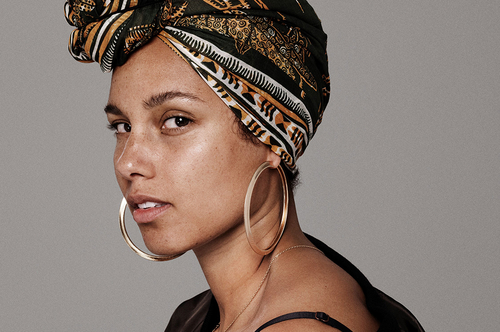
From the cover photo, which has an afroed Alicia Keys giving the camera an equivocal gaze, to the contents, which throw her weight behind Black Lives Matter and other social justice movements, her first album since 2012 is a sobering piece of work. Its sprawling 18 tracks pit a raw-voiced Keys and her piano against a catalogue of intolerance and -isms, with New York, her lifelong home, as the fractious, polyrhythmic setting. Nina Simone and Black Panthers leader Elaine Brown, both namechecked in songs, are among her totemic figures, but much of the music transcends race: the rippling Where Do We Begin Now prettily toasts same-sex relationships; Blended Family employs hip-hop crackle to address her husband Swizz Beats’s children from former relationships; Girl Can’t Be Herself is a Tropicália-laced takedown of beauty standards. Despite an undertow of glum earnestness, Keys has never sounded so committed”.

Keys was definitely among the most regarded, revered and respected in music by 2016. There was this great wave of love for Here and, whilst there were some mediocre reviews, there were plenty who had some kind and passionate words. In their review, The Independent remarked the following:

There are several similarities between Here and Solange’s recent A Seat At The Table. Both deal with issues of family, empowerment and diversity, and both convey black history through anecdotal spoken interludes. But crucially, Alicia Keys’s musicality is far superior: whether developing swaying gospel fervour on “Pawn It All”, threading balofon through the two-part reflection on African-American queens “She Don’t Really Care/1 Luv”, or riding a perky Latin shuffle for “Girl Can’t Be Herself”, her work is grounded in a melodic appeal that’s almost magnetic. Advocating individuality, the latter is especially laudable, Keys wondering, “Why is being unique such an impurity?”. Elsewhere, “The Gospel” offers a vivid rap tableau of a poor black upbringing, and “Where Do We Begin Now” reflects on sisterly affection; but “Holy War”, critiquing the separatist urge to build walls, seems somewhat after the fact in this of all weeks”.

The great reception for Here means that, as we look into this new decade, there is plenty of demand for a new Alicia Keys album. I will mention that in a second. I am keen to quote from an interview Keys gave to The Guardian when prompting Here in 2016. We learn more about her early life, and Keys discussed the political situation at the time – 2016 is the year Donald Trump was elected President in America:

At 12, in 1993, she attended the newly created, publicly funded Professional Performing Arts School, 10 minutes walk from home and just off Broadway. Claire Danes and Britney Spears were pupils at one time. She was tutored by “Miss Aziza…” she says wistfully. Aziza Miller – “One of the most phenomenal women jazz instructors ever to be born. She was a pianist, an arranger, a producer, a composer, and she had so much vocal prowess. She was badass. And I know for a fact that she influenced a large part of what I became.” 

saas.jpg

The school kept her off the streets. “You walked out the door, you had to be ready to protect yourself,” she says. “Be covered up, just get to where you were going. I couldn’t wear skirts, I couldn’t wear heels. On the other hand, it was kind of the area where whoever didn’t belong anywhere else could come, and belong.”

Keys has said that having children has made her feel more womanly. “As I grow and I get older I’m realising more and more that there’s such a beautiful, sensual power that we have as women,” she says. “It’s really unbelievable and that’s why everybody falls to our feet.”

In a piece for Lena Dunham’s Lenny newsletter, she explained the decision to go without makeup which has gripped the world – from the TV hosts on NBC’s Today morning news show, who wiped their own off in solidarity, to the messageboards of Muslim girls debating the difference between liberation and empowerment. The stuff made her feel like a “chameleon”, she says. Going without it is a terrific marketing trick: she even wrote a lyric that goes, “Maybe all this Maybelline is covering my esteem”. And her makeup artist recently revealed that the no-makeup look actually requires quite a bit of makeup.

Does she think there’s been a change, in the way female R&B looks now?

“Yes. To me, it just seems like there’s a lot less variety,” she says. “When you talk about the TLCs, or the Marys, you had a chance to see women in different orbits. [TLC’s] Chilli was one way, T-Boz had a whole other style. Now, I think we see almost only one thing when it comes to female performers. Obviously they’re beautiful, so you want to emulate that. But I think there’s some confusion as to what beauty looks like – it can only be oversexualised. What’s refreshing is when you see people who know how to express themselves in a multitude of ways.

“We think – or maybe we’re shown – that the only way to express ourselves is through that very sexy energy. I think there’s more than that which shows our power. For me, I sometimes feel the most sexy when I’m totally covered head to toe.”

We meet in the week that it was revealed that Donald Trump acknowledged that his daughter is a piece of ass – and that 35 is the age he tends to check out on a woman.

She cracks her knuckles unnervingly loudly. “I don’t listen to anything that he says. Does anybody care what he thinks about women? That’s the only question. I just was wondering?”.

There is an album rumoured this year, A.L.I.C.I.A., that will be very interesting in the wake of #MeToo, Trump’s continued reign and political events around the world. I am not sure how long we have to wait, but keep your eyes peeled for Alicia Keys news. She has no tour dates planned yet, but that will change when we get a new album. At the moment, I was eager to show how Keys’ work has evolved and what a remarkable artist she is. Keys is, as the song goes, a girl on fire; a woman with few equals and a long career ahead. For so many reasons…

PHOTO CREDIT: Philippe Bialobos

LONG may she burn brightly!

FEATURE: A Decade In… The Very Best Billboard Hot 100 Hits, Singles and Album Tracks from the Year 2010

FEATURE:


A Decade In…

1212.jpg

IN THIS IMAGE: Gorillaz

The Very Best Billboard Hot 100 Hits, Singles and Album Tracks from the Year 2010

___________

AFTER producing a feature…

IN THIS PHOTO: Laura Marling circa 2010

that assessed the very best songs from 1990, I produced another article yesterday that combined the finest tracks from 2000. Now, I wanted to look at the songs that defined the start of the last decade – it is interesting comparing the sound of 2010 with what is happening right now. I have combined Billboard Hot 100 tracks, album cuts and singles that cover a range of genres and tastes. Whilst it is impossible to beat 1990 for sheer class and power, that is not to say 2010 was lacking in variation and memorable tracks. I will focus on the start of this decade and look forward from now but, for one last time, it has been good revisiting the past. 2010, like the start of the 1990s and ‘00s, was definitely not short…

2222.jpg

IN THIS PHOTO: Robyn

OF quality tunes.

FEATURE: Turntable Dreams: Terrific Albums Not Available on Vinyl

FEATURE: 

Turntable Dreams

as.jpg

PHOTO CREDIT: @greemsky/Unsplash

Terrific Albums Not Available on Vinyl

___________

IT is around this time of the year…

PHOTO CREDIT: @koalamoose/Unsplash

that we get reports regarding music sales and how streaming is doing compared to vinyl and C.D. sales. I am a big fan of vinyl myself, but there is that debate as to whether people are buying vinyl because they want to listen to the album, or they have to have it to be seen as cool and a ‘proper’ music fan. For the last few years, vinyl sales have been healthy, and it is pleasing to see so many people getting to record shops and picking up fantastic albums on their finest format. Every year, too, we get articles that turn their noses up at the vinyl revolution. Back in 2017, there was a lot of excitement regarding a boom in vinyl sales and how people were buying records, despite the fact we could stream all we like. This NME article had its doubts regarding the validity of the boom in vinyl sales:

At first the recent boost in sales of brand new vinyl seems to be a glorious thing, with people embracing an old-school format as a stand against the constant digitisation of our consumption of music. But when you look at the 2016 data in detail, a weird pattern starts to emerge. David Bowie’s ‘Blackstar’ and Radiohead’s ‘A Moon Shaped Pool’ aside, the albums that populate the Top 10 are old, from The Stone Roses’ 1989 debut to Nirvana’s 1991 breakthrough ‘Nevermind’, Fleetwood Mac’s 1977 smash ‘Rumours’, Amy Winehouse’s 2006 ‘Back To Black’ and Bob Marley’s posthumous 1984 best-of, ‘Legend’. They’re all records that were – and remain – bestsellers; none of them have shifted fewer than four million copies, with most selling a hell of a lot more. Which brings us to the question: why are people buying albums that they most likely already have, be it on CD or through a download?

aas.jpg

 PHOTO CREDIT: @barncreative/Unsplash

Is vinyl simply just the latest poser accessory, after beards, fixed wheel bicycles and literally anything with the word ‘craft’ in it? It’s not an entirely out-there assumption, especially considering the current popularity of vinyl frames, made for the express purpose of locking up your records and placing them on the wall, which makes them pretty difficult – even impossible – to then play. The stats seem to back the theory up; last year the BBC published a survey that stated half the people who purchase vinyl have no intention of ever playing it, while seven per cent of vinyl buyers don’t even own a record player. It’s a bit like buying a bunch of flash new workout gear when you know full well that you’re going to spend the next few months on the sofa eating Deliveroo and watching back-to-back episodes of The OA.

The fact that all vinyl now comes with a ‘download code’ seems to suggest that even record labels know that their releases are unlikely to get much love on the turntable. Add to this a new wave of unreliable record players that don’t cost much more than the actual vinyl, on which records sound, well, a bit s**t, and you’ve hardly got the makings of a real vinyl revolution. Here’s to things changing in 2017 though – and to people actually playing the records that they buy”.

Since 2017, there has been a real spike in vinyl figures, and it doesn’t look like we will see a drop anytime soon! Of course, streaming is doing wonderfully; it is the format most of us rely on but, today, there are loads of people who need to hear albums on vinyl. Vinyl compared to streaming, is cumbersome and actually quite expensive. One of the joys of streaming is how much music you can get for very little money.

PHOTO CREDIT: @estherdr/Unsplash

On the other hand, a single album on vinyl usually starts at over £10, and one can pay double that for many albums. For those who cannot afford to buy all their favourite albums on vinyl, streaming is a preferred choice. Many people have called for the price of vinyl to come down. I think it is something that needs to be considered to ensure sales stay healthy and we do not lose our love of records. This BBC article shows that, alongside streaming’s rise, vinyl sales are doing rather well:

The industry is now dominated by streaming - with fans cueing up 114 billion songs last year, a new record.

Vinyl sales also rose again. Liam Gallagher's Why Me? Why Not was the most popular LP, selling 29,000 copies.

By contrast, vinyl sales rose by 4.1%, with the format now accounting for one in every eight albums bought in the UK.

Big-sellers included Billie Eilish's debut album When We All Fall Asleep, Where Do We Go? and perennial classics like Fleetwood Mac's Rumours and Queen's Greatest Hits”.

Not only are new albums selling pretty well, but there is that love of the classics. I feel like the vinyl market is not reserved strictly to diehards and the slightly older listeners. More and more younger listeners are buying vinyl, and there is a growing passion for the sort of sound quality you can only get on vinyl. Yes, some are buying vinyl as it is collectible and artistic, but many more appreciate the substance and feel of a record – much more tactile and fascinating than simply streaming an album.

More and more people I speak to are buying vinyl alongside streaming. They can stream any album they like and, when it comes to an album they really love and want to treasure, they go out and buy it on vinyl. The experience of going to a record shop and finding that album you want and seeing it in all its glory is amazing. One might also find an album whilst shopping they didn’t intend to get but couldn’t resist. There is nothing wrong with using online services to deliver vinyl because, as one can appreciate, there is not always a record shop and, even if there is, there might not be the album in you need. The downside of retail is the competitive lack of choice compared to online so, now and then, we do need to rely on the Internet. I was musing on Twitter a few days back as to why some classic albums are not available on vinyl. I really want De La Soul’s 3 Feet High and Rising on vinyl, but one cannot get it for love nor money – I think you can get it second-hand for a lot of cash! It seems odd that, when so many new albums are released to vinyl, there are some older gems one can only get from streaming services or on C.D. I got a couple of responses and, when it comes to genres like Hip-Hop, I was told that fans of the genre are generally less into vinyl. A lot of the classic Hip-Hop records arrived in the 1980s and 1990s and they might have just been released on cassette. If they were released on vinyl, they might be out of print now or unavailable.

I think Hip-Hop, now, is one of those genres where people want it on vinyl. Cassettes and C.D.s are fading out, and streaming does not really provide the same magic and importance as vinyl. Maybe there was not much demand decades ago, but it seems strange that some true classics are still not available on vinyl. Threads like this are important, as they ask people which albums they want on vinyl that are currently unavailable. In the case of De La Soul’s debut masterpiece, it is incredibly difficult to get hold of in any format. Whilst one can get second-hand copies of Steely Dan’s Can’t Buy a Thrill and Pretzel Logic (I have the latter on vinyl), getting a new copy is impossible. That said, you can get Aja on vinyl, and it makes me wonder why some albums are on vinyl and others not. Maybe bands release their most popular and celebrated on vinyl as they know it will sell – when it comes to Steely Dan, their sheer love of composition and sound means all of their albums should be on vinyl! Whilst artists such as Madonna have recently re-released some of their classics on vinyl, there are other albums that one cannot get on that form. When it comes to vinyl, there is a minimum pressing of five-hundred copies, so it can be an expensive mistake releasing an album on vinyl and seeing it only sell a few units.

PHOTO CREDIT: @stairhopper/Unsplash

Also, C.D.s are cheaper, so many people prefer that format and vinyl can be less profitable. Vinyl takes a while to be pressed, so it can derail momentum if a single is doing well and then you have to wait for an album to be pressed to vinyl. Until there is a way to make vinyl production faster and less expensive – if that is even possible -, there will always be problems. I can understand, too, why a lot of new artists resist vinyl because of the financial concerns and possible risks, but what of those albums that will sell and have already won enormous critical acclaim?! Articles that are snobbish towards vinyl will dissuade labels from releasing albums through fear of poor sales, but I think we all know of a few albums that need to be on vinyl! I love Aaliyah’s eponymous album of 2001 and, again, here is a work that has been lauded and stands as a classic, yet I cannot find it on vinyl at all. Although Aaliyah died in 2001, there is still huge interest in her work, and I think vinyl releases would help bring her work to new worlds. She is an artist whose music is not available on Spotify, so it is incredibly difficult getting albums like Aaliyah on any format. I admit that there are drawbacks to vinyl, so it is not as simple as putting an album out and seeing it fly off the shelves! There are plenty of pros associated with vinyl.

dsds.jpg

PHOTO CREDIT: @wordsmith_sf/Unsplash

Albums on vinyl are much more immersive and cherished. One can be flippant regarding streaming and there is not the same value and meaning. Vinyl can be passed through the generations and create great memories. If you have spent a bit of money on an album, then you are much more likely to play it and revisit it time and time again. I do think there should be a call to labels and artists whose best works are not available on vinyl. Each of us can name a few great albums that are only on streaming sites, that would sell tonnes if they were brought to vinyl. I disagree that the vinyl boom is cynical and fake; that people are simply buying vinyl to fit in or be part of a trend. There are plenty who know vinyl provides an experience you cannot get anywhere else. For that reason, not being able to find certain albums on vinyl is a frustrating experience. I do hope that the continued resurgence and good health of vinyl will change minds and mean that albums that were previously not available on vinyl make their way to the shelves. It seems strange to say vinyl is here to say – as it has been available for decades – but streaming and the online is not killing its charm and appeal. So many music lovers prefer the purer and warmer sound of vinyl, so let’s hope those albums not available on vinyl, one day, find their way into your local record shop. Maybe it is a personal thing, but I have a list of albums I yearn to have on vinyl and am at a loss to explain why they are not available. That goes to show that me and so many other people do not merely own vinyl to seem hip: we do so because it is a serious passion that…

PHOTO CREDIT: @priscilladupreez/Unsplash

WE have always had and always will!

FEATURE: Attitudes and Agendas: The BRIT Awards Nominations and a Predictable Reaction

FEATURE:

Attitudes and Agendas

aaaa.jpg

IN THIS PHOTO: British rapper Little Simz was not nominated (for some reason) in the Mastercard Album of the Year category for the phenomenal and award-nominated GREY Area, provoking the question as to whether sexism is dominating once more - all five nominated albums were from male artists

The BRIT Awards Nominations and a Predictable Reaction

___________

THE title of this feature might seem vague…

but I shall make it clearer. The nominations for this year’s BRIT Awards has been released and it is another case of some good artists mingling alongside the most commercial and sound! One can say that the BRIT Awards is among the least relevant shows and it is about record companies succeeding; a bit of a back-slapping exercise that celebrates the biggest chart acts and does not truly reflect the quality of British music. Others say (the BRITs) is like any other awards: they are there to congratulate people and, really, do we really need them at all?! Those are fair points but, actually, I feel award shows celebrate achievement and it is important to give artists a chance to enjoy their accomplishments. It is good bringing the music world together and having a night where we can see which artists have made the biggest impact over the last year. Like so much of the industry now, sexism has dominated the headlines. Before I come to that, here is a brief overview of the big nominees for this year’s ceremony:

The nominations were announced this afternoon (January 11) in a special televised programme that featured a lineup of performances from Mabel, Aitch, Freya Ridings, Dermot Kennedy and Liam Payne. The winners will be revealed next month at the annual awards ceremony, which is due to take place at London’s The O2 on February 18.

Lewis Capaldi and Dave are the most nominated artists this year, with four nods apiece. Both the ‘Someone You Loved’ singer and ‘Location’ rapper are up for awards in the Male Solo Artist of the Year, Song of the Year, Best New Artist, and MasterCard Album of the Year categories.

Sam Fender in the running for Best New Artist, where he’ll go up against Aitch, Mabel, Lewis Capaldi, and Dave. Stormzy and Mabel have three nominations each”.

2020 is, I feel, a year when sexism is going to be under the spotlight in a very big way. I thought this year would start off with positivity and progression in that sense. I am still hopeful all the major festivals will adopt a fifty-fifty gender balance with their line-ups and we will see discussions occur that tackle sexism and attitudes right through the music industry. It is a little galling that we are still in January, and one of the most high-profile award shows in the calendar has made the headlines for the wrong reasons. Looking at the categories and there are two things that strike me – one good and one bad. I will say that the BRIT Awards have done something BAFTA failed to do regarding their award nominees: there is diversity and there are BAME (Black, Asian and Minority Ethnic) artists to be found. Artists such as Stormzy, Michael Kiwanuka and Lizzo ensure we do not have to endure another white faces-only show. The film industry could learn something from the BRITs, but both share common ground: there is a distinct lack of women to be found!

In the Mastercard Album of the Year category, the nominations are as follows: Dave – PSYCHODRAMA; Harry Styles – Fine Line; Lewis Capaldi – Divinely Uninspired to a Hellish Extent; Michael Kiwanuka – KIWANUKA and Stormzy – Heavy Is the Head. It is great seeing three black artists nominated and, alongside that, a variation of sounds that means the category is at its most diverse in years. Whilst one cannot accuse the judges of racism or narrow focus, where are the women?! Many people took to social media when the nominations came out, and we got two schools of thought – the former is the correct position. There were those (myself included) who wondered why a category that marks the best albums of the past year is lacking women. I will admit so many of 2019’s best albums were made by women outside of Britain but, even then, there are a few great artists who have been omitted. Little Simz’s Mercury-nominated GREY Area was better-reviewed than Lewis Capaldi’s latest album – and Stormzy’s for that matter! Also, FKA Twigs’ Magdalene scored better reviews that nearly everything on the shortlist – bar Michael Kiwanuka’s KIWANUKA. One could easily have replaced Lewis Capaldi and Stormzy and replaced them with Little Simz and FKA Twigs. We would not only have an even more diverse line-up in terms of race, but there would be two deserving women in the mix! Some will retaliate saying the BRIT Awards recognises Pop artists and it is more about the commercial than the edgy. If Capaldi has been dominating the press and conquering the world, why would one omit his album?

iiii.jpg

IN THIS PHOTO: Mabel has been nominated for three awards at this year’s BRITs: Female Solo Artist, Best New Artist and Song of the Year (for Don't Call Me Up)

This brings into question another question: Why would an award show place popularity and marketability above quality and critical acclaim!? Categories like the Album of the Year suggest there were no truly great albums from British women out there – which is patently untrue. The Best New Artist category has Aitch, Dave; Lewis Capaldi and Sam Fender on the list and only one woman: Mabel. Again, I argue against the imbalance and why an artist such as Nilüfer Yanya's could not have made the cut instead of Aitch?! There are so many great women who are coming through that warrant a nomination – Grace Carter is another promising artist who has a bright future. Whilst, again, there is a diverse field in terms of genre, I wonder why it is four-fifths men when there are so many great female artists who could have made the running. The Group of the Year category has no female artists. This is a category that is harder to balance and, whilst The Big Moon have just released a sensational album this year (Walking Like We Do), I do feel like the overall ‘quality’ of the nominees this year is worrying. Song of the Year has nine names and only one song is led by a woman: Mabel’s Don’t Call Me Up. The BRIT Awards trimmed a couple of awards. This article from last year explains more:

The Brit Awards have announced a major revamp for 2020, with fewer awards and an end to fan votes.

Organisers promise "more music" as a result, with artists being given full creative control of their performances.

Prizes like best British video and best international group have been cut, while the outstanding contribution award has been retired for 2020”.

If you look at the Female Solo Artist of the Year category, you have some great names. Charli XCX, FKA Twigs; Freya Ridings, Mabel and Mahalia are all nominated. I wonder why, then, Dua Lipa’s Don’t Start Now or FKA Twigs’ Cellophane were not nominated when they are far superior to several of the tracks on the Song of the Year List? Although there are a couple of collaborations on the list that include women, both of the songs feature American women in the ‘featured’ role: Mark Ronson ft. Miley Cyrus – Nothing Breaks Like a Heart and Sam Smith ft. Normani – Dancing with a Stranger. I will come to the second point of this article – the vitriolic and patronising reaction from many men following criticism regarding sexism – in a bit but, before moving on, there is a general positive we can all respect: the fact 2019 was synonymous with terrific women making brilliant music. It is a reason why festivals HAVE to be gender-balanced and improved this year. The International Female Solo Artist category is stuffed with talent: Ariana Grande, Billie Eilish; Camila Cabello, Lana Del Rey and Lizzo are all in the running! I was reading a couple of tweets that said there are many great international women/albums made by international women, but relatively few by British women – meaning the problem is more with British music and less about women in general. Sure, if the BRIT Awards were renamed and we had something more like the Grammys in this country, there would be an embarrassment of riches to choose from.

IN THIS PHOTO: Charli XCX has been nominated for Female Solo Artist - but her album, Charli (which was a commercial and critical success), and single, White Mercedes, have not been nominated in the album and song categories respectively

As most categories concern British talent, artists like the above women and Sharon Van Etten, Taylor Swift and many others would be included. That being said, Charli XCX’s Charli was a commercial success and won huge reviews. Why was she not nominated in the album category, and why were singles like Gone not in the running in the song field?! The BRIT Awards does have this reputation regarding placing sales and press inches over credibility, pure talent and promise. Maybe the buzz around artists like Lewis Capaldi has distorted the judging panel’s vision, or maybe they were not looking hard enough. If one looks at the successful singles from last year, why was Little Mix’s Bounce Back not nominated!? The song went top-ten in this country and has 35,815,570 views on YouTube (as of 12th January) and nearly forty-million streams on Spotify! Why could Tom Walker’s Just You and I and Calvin Harris and Rag’n’Bone Man’s Giant have made way?! Can anyone legitimately claim quality is a factor in the gender imbalance? I don’t think so. Even if sales are the deciding factor, Little Mix and Dua Lipa are far ahead of a lot of those nominated this year. I do wonder why British Video and the Outstanding Contribution award were cut because, if they were still going, you could have had some great women in contention!

I get the BRIT Awards needs to evolve and, with so many artists identifying as non-binary (such as Sam Smith and Janelle Monáe, will we have a new category for non-binary artists? Should we dispense with gender-specific categories altogether?! Those are reasonable questions, and I think they will become more pressing as we move through this new decade. Even if we integrate men and women or leave things as they are, one cannot deny women are being overlooked and shunned. This year’s BRIT Award nominations is, I fear, the start of a year that will see women side-lined as we look to see parity across the industry. Even if you feel the BRITs is meaningless and out-of-touch, it is one of the most-watched award shows in music and a lot of people look to it regarding those artists we need to see at festivals. Mabel is the only woman who appears in non-gender-specific categories so, does that mean she is the only great British woman?! Little Simz and FKA Twigs are out there; Cate Le Bon’s Reward is a remarkable album and, as Charli XCX has been nominated in Female Solo Artist of the Year, why were her singles and albums omitted? The fact the ever-popular Dua Lipa is missing makes me a little perplexed. What is done is done (sadly), and it was good to see articles from male journalists react strongly.

iii.jpg

PHOTO CREDIT: @diklein/Unsplash

Normally, it is women in the music media who have to call out sexism but, in The Guardian, both Ben Beaumont-Thomas and Alexis Petridis had their say. The former did mention how the BRITs has improved in terms of racial equality – the awards have been criticised for being too white in previous years -, but it was Petridis’ words that resonated hardest with me.

More recently, it spent several years apparently going out of its way to ignore grime, self-evidently the most important and exciting thing around, until artists and viewers started wondering aloud if the awards had an issue with representing black British music. That seemed to have an effect. The last few years’ choices have been more ethnically diverse. This year, it’s women.

At the 2019 Brit awards, the 1975 used their acceptance speech for the best British group award to protest against sexism in the music industry, quoting a feature by the Guardian’s Laura Snapes about misogyny. Twelve months later, a grand total of one British female artist has been nominated out of 25 available slots in mixed-gender categories.

Curiously, there’s the sense that the Brits knows there’s a problem here. The longlist nominations came accompanied by a statement that sounded suspiciously like a caveat: “The eligibility list has been compiled by the Official Charts Company and includes artists who have released product and enjoyed top 40 chart success. Record companies have had the opportunity to inform Brit Awards Ltd (BAL) of any eligible artists they wish to be added or inform BAL of any incorrect entries.” In other words: don’t blame us, it’s the record companies who are at fault.

IN THIS PHOTO: Billie Eilish is nominated in the International Female Solo Artist category

It’s clear there’s a wider issue here, one that involves the British music industry’s ability or otherwise to sign and develop female artists, to turn them into lasting success stories. It’s clearly not beyond the music industry to do this. After all, it was a British female artist who made the biggest-selling album of the 21st century thus far, 21 by Adele. It just doesn’t seem to happen very often, especially compared with the US, where there are so many big-hitting female artists that the Brit nominations can’t contain them all: Taylor Swift isn’t there, edged out by Lizzo, Lana Del Rey, Billie Eilish, Ariana Grande and Camila Cabello.

It’s a subject that you wouldn’t bet against one of the more switched-on winners at the awards ceremony in February addressing in their acceptance speech. Even if they don’t, the Brit nominations seem set to provoke a conversation about it. With the greatest of respect to the nominees, that might be the best thing about them”.

The fact the international women category could have had Taylor Swift, ROSALÍA; Little Princess, Weyes Blood and Brittany Howard included shows that there is no short supply of brilliance from women in music. Even us Brits have enough stunning female artists that are not being recognised. Read the comments below both of those Guardian articles – and he corresponding tweets on social media -, and one sees the predictable mix of men (and a few women) moaning and wondering why we need tokenism. Many have commented how it would be tokenism to include women. Other, with mock expression, stated how these articles were woke – the word means ‘to alert to injustice in society, especially racism’.

IN THIS PHOTO: In a competitive category, Taylor Swift (who released the brilliantly-received album, Lover, last year) was not nominated for International Female Solo Artist

The comments and exasperated tone of many who contributed suggests they feel there are few decent women out there; the BRIT Awards is about quality and who is most popular so, if women were included more, does that undermine the purpose and conform to an overly-P.C. and snowflake-like culture? Others were dismissive of the BRITs’ point and why we need to bother with it at all; some others were hostile and found is ridiculous why a national paper like The Guardian would put an article out and waste everyone’s time. It is bad enough that televised award shows are ignoring women, but the slew of sexism and ignorance one finds online is staggering. Granted, there was support and empathy online regarding this year’s nominations and, in most cases, the ignorance was from men and not women. It is clear sexism runs right through the music industry and there are plenty of people out there who feel women are inferior and tokenism is rife. That would suggest men are greatly inferior and, like a P.E. class where we give an award or clap to the un-athletic kid who is trying but failing, the women of music should be let in the club, even though they have not earned their dues. I shan’t go too much into the idiocy of the ‘logic’ behind many of the comments, suffice to say there is a bright spot in the BRIT Awards’ nominations: Celeste was named the BRITs Rising Star winner for 2020, after being nominated alongside Joy Crookes and Beababadoobee. An all-female field in that category shows that, first, the future is bright regarding great women coming through and, secondly, we need to look closely at new and emerging artists rather than those who do well in the charts and are commercial. Even if you are not a fan of the BRITs, it doesn’t matter: the award show is vastly popular and it is symptomatic of the wider industry: even though so many tremendous women are out in the music world, it is still the men who get the honours and focus. It is clear progress is not happening quickly enough and, in 2020, the industry is doomed to be mired in sexism…

wwww.jpg

PHOTO CREDIT: @luzfc/Unsplash

WHEN it should be creating balance!

FEATURE: Twenty-First Century Bliss: The Very Best Billboard Hot 100 Hits, Singles and Album Tracks from the Year 2000

FEATURE:

Twenty-First Century Bliss

WWW.jpg

IN THIS PHOTO: The White Stripes in 2001 (their second album, De Stijl, came out in 2000)/PHOTO CREDIT: Pieter M. van Hattem

The Very Best Billboard Hot 100 Hits, Singles and Album Tracks from the Year 2000

___________

I have already written a feature…

sss.jpg

that collated the very best songs from 1990 so that we can look back thirty years and remember the brilliance! As we are in a new decade, I actually wanted to go back twenty years and see how this century kicked off. After the 1990s ended, artists had that responsibility keeping the momentum going and, not only were there some great albums; there were some smashing songs that still sound incredible today. I might do another decades/decade-starting feature, just so we can see how previous decades have started, and whether 2020 has the same promise. Even if you were not alive in 2000, you will still love the cream of the crop from the start of the twenty-first century – a year that seemed futuristic years previously and, now, seems so far away. Here, in a handy playlist, is a year that provided the world with…

IN THIS PHOTO: Kelis

SO much top-notch music!

FEATURE: Sisters in Arms: An All-Female, Winter-Ready Playlist (Vol. I)

FEATURE:


Sisters in Arms

saasas.jpg

IN THIS PHOTO: PONGO

An All-Female, Winter-Ready Playlist (Vol. I)

__________

THIS is the first playlist of the winter…

IN THIS PHOTO: Yazmin Lacey

celebrating some of the finest women in music right now. This week has been a packed one for new music, so I have tried to include as much as I can! There is a great spread of music through this playlist, and I hope you discover some new favourites among the pack! This weekend is a bit gloomy and cold, so I think we need music to give us some warmth and energy. Have a listen to the magnificent artists below and I just know there will be something in there that takes your fancy. I am not sure what this year will produce but, with so many great cuts out this week already, I am confident it will be…

aaaa.jpg

IN THIS PHOTO: The Big Moon/PHOTO CREDIT: Pooneh Ghana

A wonderful 2020.

ALL PHOTOS (unless credited otherwise): Artists

__________

Bad HoneyEasily

Sofia WolfsonParty Favors

Georgia24 Hours

dssdds.png

Agnes ObelBroken Sleep

PONGO Canto

ssss.jpg

Aunty SocialCortex

Aoife Nessa Frances - Libra

asasas.jpg

Frances QuinlanYour Reply

uy.jpg

Alexandra Savior - Can’t Help Myself

ass.jpg

PoppySit / Stay

IN THIS PHOTO: Anoushka Shankar

Anoushka Shankar, Shilpa Rao, Ayanna Witter-JohnsonThose Words

MNMN.jpg

PHOTO CREDIT: Ian Horrocks

The Big MoonHoly Roller

Anna Pancaldi Why

Caroline Rose Feel the Way I Want

BB.jpg

Elley Duhé MIDDLE OF THE NIGHT

LKKL.jpg

Halsey You should be sad

SAAS.jpg

Kiesza When Boys Cry

ASSASA.jpg

Charlotte Rose Benjamin Party City

Sia Original (from Doolittle)

ASSAAS.jpg

Yazmin LaceyNot Today Mate

Lanterns on the Lake Baddies

jkjkj.jpg

IN THIS PHOTO: Normani

Megan Thee Stallion (with Normani) - Diamonds

aas.jpg

The Secret Sisters Hand Over My Heart

sa.jpg

Beach Bunny Cloud 9

xxx.jpg

Winona Oak Lonely Hearts Club

zzz.jpg

SAYGRACE Loyal

aaaa.jpg

Royal & the Serpent MMXX

sss.jpg

Selena Gomez - Fun

xxxx.jpg

Celeste Stop This Flame

sdsds.jpg

Susanne Sundfør Lene

aaaa.jpg

Little Big Town Nightfall

asasas.jpg

IN THIS PHOTO: Jenny Lewis

Jenny Lewis, Habib Koite, Artists for Peace and Justice - Under the Supermoon

FEATURE: Musicians and the Australian Bushfires: What Now Going Forward?

FEATURE:

Musicians and the Australian Bushfires

nbbn.jpg

IN THIS PHOTO: Sir Elton John/PHOTO CREDIT: Ben Gibson

What Now Going Forward?

___________

I am writing this feature…

aasas.jpg

IN THIS PHOTO: A firefighter hoses down trees and flying embers in an effort to save houses near the town of Nowra in New South Wales/PHOTO CREDIT: AFP

on a day (9th January) when Australian bushfires are still wreaking havoc and destruction. It is hard to comprehend the full scale of the carnage and what has been lost. Apart from millions of animals and wildlife to acres and acres of land, the toll is horrendous – not to mention the loss of homes and human life. There is hope the fires will abate in the coming days, and there will be an end. As it is summer in Australia, there is a danger new fires will start and there will be a lot more to ensure. In this article from The Telegraph, they investigate why the bushfires have been so severe:

Australia is no stranger to wildfires, but this season has been unprecedented in scale and intensity - and the summer is far from over.

So far at least 17 people have died in blazes that have swept the country, more than 1,200 homes have been destroyed and 5.5 million hectares (13.5 million acres) of land has been burnt.

So what has caused the blazes which have devastated huge swathes of the country?

Why are the fires so bad?

Australia’s deadly fires have been fuelled by a combination of extreme heat, prolonged drought and strong winds.

The country is in the grip of a heatwave, with record-breaking temperatures over the last three months. In mid-December the nation saw the hottest day in history - the average temperature was 41.9 degrees Celsius.

These conditions, which show few signs of abating in the next few weeks, have been accompanied by brisk winds which fan the flames and push the smoke across Australia’s major cities. On Monday wind speeds were recorded at 60 miles per hour.

All this follows the country’s driest spring since records began 120 years ago, with much of New South Wales and Queensland experiencing rainfall shortfalls since early 2017. Trees, shrubs and grasslands have turned into the perfect tinder for flames”.

A lot of people feel helpless, and they want to do what they can, wherever they are. If you want to donate to help out, this link provides good information. Of course, nothing can bring back all that has been lost so far, but it is heartening to see so many people united and donating. Around the world, people are sending their support to Australia. In terms of donations, millions (of Australian dollars) has been raised already. I have been especially struck by the music world’s reaction to the bushfires. Sir Elton John has donated to help those affected:

Sir Elton John has pledged $1m to the relief effort in Australia where wildfires have devastated a swathe of the country.

The singer made the announcement while on stage in Sydney, telling the audience they should be “in awe of the work that the firefighters are doing”.

He added: “This is a magnificent country that I’ve been coming to since 1971.

“I love it here so much. To see what is happening here breaks my heart and so we have to come together and we have to fight, and this is my bit towards it.

“I love Australia so much and to those that have lost their homes, God bless, I hope that your lives will be repaired very soon.”

It came as the smoke from the fires – which previously covered”.

PHOTO CREDIT: Brett Hemmings/Getty Images

As NME report, other musicians have joined the wave of support. It seems like artists from all corners are donating and playing gigs to help in the effort:

Nick Cave & The Bad Seeds bandmate Warren Ellis have pledged $500,000 (£382,000) to help victims of the Australia bushfires.

“Our thoughts and prayers are with all of those affected by the fires destroying our beloved Australia,” wrote Cave in a statement posted on Instagram.

“We are pledging $500,000 to some of the many organisations carrying out selfless and courageous work aiding and supporting communities and wildlife who have been hit by this overwhelming devastation. We urge everyone to do whatever they can to help.”

Queen have also revealed they have been asked to perform a Live Aid style benefit concert in Australia to help the victims of the bushfires".

It has been upsetting seeing images of animals and wildlife left dead or uprooted by relentless fires. Brave and dedicated fire crews are working around the clock, and the money that has come in will go a long way. It is not only Elton John and Nick Cave & The Bad Seeds who have provided money and support for the Australian bushfire relief effort. Many different artists have also joined together:

Courtney Barnett is throwing two benefit shows in Melbourne, Australia, with Camp Cope and Alice Skye, with all proceeds going to “bushfire disaster appeal, vic/nsw fire services and wildlife rescue.”

Sydney producer Flume has also pledged $100,000 to WIRES, posting to Instagram “It's so sad. It's breaking my heart.” Following a performance in Melbourne, Vampire Weekend donated $10,000 to Wildlife Victoria and encouraged others to lend their support.

Pink has also pledged to donate $500,000 to local firefighters, tweeting links to various fire services. A “disheartened” Kacey Musgraves asked her Twitter followers how she could help, ultimately finding an undisclosed organization to donate to”.

IN THIS PHOTO: Lizzo visits a food bank in Victoria, Australia

I think we feel those who are famous or well-known do less when it comes to charity than most regular people. When it comes to crisis like we have seen in Australia, it is humbling than those in the music industry are helping and making sure they can do all they can. There have been benefit gigs in Australia, and I wonder whether we will see any in the U.K., U.S. or the rest of the world. I shall come to that in a minute, but I want to quickly mention Lizzo, who volunteered her time earlier in the week. As NME explain, she has volunteered her time at a Melbourne food bank:

Lizzo volunteered at a Melbourne food bank earlier today (January 8) as aid efforts for those Australians affected by the country’s ongoing bushfire crisis continue.

The ‘Cuz I Love You’ artist is currently on tour in Australia, and she pitched in at a Foodbank Victoria warehouse today to help the cause as she helped sort and pack food hampers.

Speaking to volunteers at the food bank, Lizzo said: “Thank you so much for volunteering your time and your energy and your hearts. Let’s go get some boxes!” (via 10Daily).

Foodbank is the largest provider of food relief in Victoria, with the organisation issuing urgent food relief hampers to those affected by the bushfire crisis.

“​​​​​​​We need your support to continue delivering emergency food relief and water to Victorians affected by this devastating bushfire crisis,” a statement from Foodbank Victoria reads.

“With roads in the area cut off, many Victorian families are isolated – without food, water, electricity, or communication. Foodbank Victoria sent life-saving food and water to Mallacoota by sea to assist.”

You can donate to Foodbank Victoria here.

AASSAAS.jpg

IN THIS PHOTO: Grimes/PHOTO CREDIT: Eli Russell Linnetz

As I said earlier, the fires will continue, but we all hope the weather improves in a way that allows for some rain, stability and relief. The massive outpouring and awareness raised on social media regarding the situation in Australia and climate change is something that must be a priority in 2020. If our government in the U.K. and Trump in the U.S. has been slow to acknowledge and respond to the effects of climate change, they cannot remain motionless now. Seeing kindness from musicians and so many people around the world has been inspiring, but there is that concern as to whether there will be a lot more bushfires in Australia and, indeed, what other horrors we have to see. I have covered this before, but what can the music world do regarding climate change and reducing their impact? I have to make it clear that, of course, the events in Australia have not been caused by musicians and the receptibility for change lies with politicians – they are the ones who hold power and can affect change. Apart from donations and raising awareness at gigs, I think 2020 is a year where the effects of climate change will be at the forefront of many albums. Grimes’ forthcoming album, Miss Anthropocene, is out on 21st February and will put the environment at the forefront. This article from last summer explains more:

 “Grimes is one musician choosing to dive headfirst into the topic. In an interview with The Washington Post last week she announced that her upcoming fifth album will be a concept record about “the anthropomorphic Goddess of climate Change”. In practice that might not be so overtly calling for environmental action, but at least it is focusing on the issue. The same goes for Foals, who talk about the state of the world on their most recent record Everything Not Saved Will Be Lost Part 1. Speaking to us about the issues that fed into the record, frontman Yannis Phillipakis said: “What scares me right now is what scares you, right? … the bee population that’s going, environmental collapse, biodiversity collapse – the fact that on an aesthetic level there’s a plastic flotilla the size of France in the Pacific”.

IN THIS PHOTO: Madonna performing at the 2019 Billboard Music Awards/PHOTO CREDIT: Getty

Every generation has to deal with something world-changing and unsettling and, whilst it is not the same as political action and laws, music can raise greater awareness and spur others into action. It is important climate change becomes part of the scene this year, and I hope many mainstream artists do their part. 2020 is an exciting one for festivals and big artists hitting the road – everyone from Elton John to Madonna are touring -, but there are considerations regarding travel, sets and environmental damage. This Vice article talks about the way artists can reduce the negative effects their tours have:

But beyond recording albums, what happens when we start to think about practical steps musicians can take with regard to climate change? If we’re talking about the same things that we non-musicians can also do to minimise a personal effect on the planet, then yes, there are some basic starting points. They can use paper straws, energy saving light bulbs, try and get an electric van when hiring a vehicle on tour – all the stuff that’s been pushed in the past few years and is now starting to be common sense. But the bigger issue of trying to combat climate change as a musician falls on shoulders of those higher up the food chain. Soon, you realise that kicking the problem up to promoters, venues and so on really requires investment from government and major multi-national companies.

For example: is there a way for venues to bring their cost on the environment down, whether that’s removing all plastic cups and straws, or something more dramatic, such as running on renewable energy? Could a promoter who owns a venue back their plan? Thing is: things get tricky when it comes to installing renewable energy, involving planning permission and building warrants from the local council. Then there's costs, paperwork, extra checks to follow up on. So while it's not impossible, it would be a process. One venue that's already achieved this is east London's Village Underground, who describe themselves as an 'ecological project' and run on 100 percent green energy”.

PHOTO CREDIT: @chazmcgregor/Unsplash

It is great seeing a show and having a moment to be in a stadium or venue and seeing something magical and spectacular. Whilst that is important, can artists scale things back and still entrain their fans without needless excess and theatre? This BBC feature from November is worth investigation:

"Do we really need 27 scene changes? Do we need cars hanging from the ceiling?"

It might not be an obvious question for a superstar agent to be raising, but it's one Emma Banks, who co-founded the UK arm of one of the world's biggest music tour agents, is increasingly having to ask.

She says your favourite artist's tours can have up to 60 trucks moving equipment all over the world.

And she says musicians "have to be proactive" about the impact tours like that have on the environment.

Emma's roster at the Creative Artists Agency ranges from other female superstars like Katy Perry, Lorde and Kylie to some of the biggest bands on the planet - including Arcade Fire, Red Hot Chili Peppers, Green Day and Muse.

Although it's difficult to calculate the exact impact of each individual tour, a 2016 report on the impact of live music events suggested the UK festival scene produced 19,778 tonnes of carbon emissions every year - excluding the travel of artists and fans.

In comparison, football tournament Euro 2016 is reported to have produced a total on 2.8m tonnes, including travel of fans and players.

It's also been suggested that private jets, which many artists use to keep up with their hectic tour schedules, burn 40 times as much carbon per passenger as regular commercial flights.

Some artists have announced plans to reduce the impact of their tours.

1111.jpg

PHOTO CREDIT: @maxwbender/Unsplash

There is a lot more that can be done regarding musicians and ways to improve their carbon footprint, but I know how hard that can be, seeing as there is demand for new and established acts to tour and bring their music to the masses. I do feel every artist, regardless of popularity, needs to make cuts and take small steps in every area. It might be as simple as fewer tour dates or not flying as much. That might sound severe, but the music industry is one of the most loving and community-led, and fans around the world, I know, would rather artists look after the environment, even if it means they loss out. One only needs to look at the images and news reports of artists donating their time and money to help Australia to realise the music world wants to see change and action. I have argued a lot how this year needs to be more fun and together and, whilst that might sound counterintuitive, I think we can mix the serious and fun; songs that put the environment under the spotlight and others that take our minds elsewhere. Things might seem hopeless at the moment, and the task of reversing climate change is one that seems lost and futile. Maybe our politicians are unconcerned and docile, but there we will see action from the music industry – from bands who tour less to those who donate proceeds from sales to environmental charities; others that put environmental concerns in their albums and songs. It is a long road ahead, but it is very clear that…

sasa.jpg

PHOTO CREDIT: @wildlittlethingsphoto/Unsplash

ALL is not lost.

FEATURE: The January Playlist: Vol. 2: i should be sad…but I’m not

FEATURE: 

The January Playlist 

IN THIS PHOTO: Halsey

Vol. 2: i should be sad…but I’m not

__________

THIS is the start of a fresh assault…

ssss.jpg

IN THIS PHOTO: Alicia Keys

of great music. 2020 started a little slow but, in the past few days, there has been a slew of remarkable songs out there. Not only is there new material from Hasley, Selena Gomez and The Big Moon; Tame Impala, Field Music and Wire have new tracks out. There is also fresh stuff from Alicia Keys, The Orielles and Georgia to get your weekend kicked off. It is stunning how much music has come through. Artists are not wasting any time, and I cannot wait to see what come nest week. It is cleat this year will be an exceptional one! I know there is enough in the playlist to give you a kick and boost as you head about your day. This week’s very best, it must be said, is quite…

IN THIS PHOTO: Field Music

A fabulous assortment.   

ALL PHOTOS/IMAGES (unless credited otherwise): Artists

_________

saas.jpg

Halsey you should be sad

Selena Gomez - Rare

Georgia 24 Hours

111.jpg

PHOTO CREDIT: Hollie Fernando Photography

The Orielles - Space Samba (Disco Volador Theme)

Tame Impala Lost in Yesterday

Ethan Gruska (ft. Phoebe Bridgers) - Enough For Now

The Big Moon Barcelona

Lawrence Rothman, The Turning (ft. Pale Waves) - SkindeepSkyhighHeartwide

aaa.jpg

STORMZY STILL DISAPPOINTING

PHOTO CREDIT: Christian Högstedt

Algiers - We Can't Be Found

Agnes Obel - Broken Sleep

YTYYT.jpg

Gengahr - Never a Low

PHOTO CREDIT: Michelle Shiers

John Legend - Conversations in the Dark

Easy LifeDead Celebrities

122.jpg

Field Music Coffee or Wine

Wire - Primed & Ready

Alicia Keys Underdog

sdsdsd.jpg

Taylor Hawkins & The Coattail Riders - Middle Child

Nada Surf - So Much Love

Megan Thee Stallion & Normani - (Birds of Prey: The Album) - Diamonds

sddsdssd.jpg

PHOTO CREDIT: Daniel Topete

Fontaines D.C. - Liberty Belle

Ozzy Osbourne (ft. Elton John) - Ordinary Man

AAAA.jpg

Circa Waves - Move to San Francisco

PHOTO CREDIT: Alexander Black

Moses Sumney Me in 20 Years

SSSS.jpg

Kodaline Wherever You Are

SSS.jpg

Lanterns on the Lake Baddies

Future (ft. Drake) - Life Is Good

2222.jpg

CelesteStop This Flame

FEATURE: Good As Gold (Stupid As Mud): Paul Heaton: A Genius Songwriter Overlooked

FEATURE:

Good As Gold (Stupid As Mud)

IN THIS PHOTO: Paul Heaton/PHOTO CREDIT: Simon Fernandez

Paul Heaton: A Genius Songwriter Overlooked

___________

THIS is one of those random pieces…

AA.jpg

IN THIS PHOTO: Paul Heaton and Jacqui Abbott - formerly, both were members of The Beautiful South - have recorded three albums together; a fourth, Manchester Calling, is slated for release this year

that is not related to anything happening in the music news or relevant, as such. I am peppering a few of-the-moment features and bits about artists to look out for this year. As my blog is about capturing the current and mixing that with musings, it is appropriate I give a nod to one of this country’s greatest songwriters: the sensational and always-brilliant Paul Heaton. I wrote a feature not too long ago that was about Paul Heaton as this songwriting architect and inspiration that people could learn from. As a member of The Housemartins, The Beautiful South and alongside Jacqui Abbott (a former Beautiful South vocalist who reunited with Heaton years after her departure), Heaton’s words have become anthems. Of course, like all top songwriters, there have been a few less-than-titanic songs, but one can rattle off a list of classics that proves Heaton is in a league of his own. I was sad when The Beautiful South called it a day back in 2007 because, to be fair, there is nobody around like them today. That unique combination of three lead vocalists – Paul Heaton, Dave Hemmingway and Briana Corrigan/Jacqui Abbott/Alison Wheeler – singing songs that are rich in the everyday and the extraordinary is something the music world has been lacking. There was an ordinariness to The Beautiful South’s songs that was easy to love. Rather than singing about abstract things or being too experimental, the band were about these relatable songs/sounds; Heaton’s lyrics could make you laugh and provoke a tear when they needed to.

Although Heaton did some brilliant work with The Housemartins, it is the material he wrote for The Beautiful South that is my favourite. The tweet above caught my eye because, amazingly, Paul Heaton has not been truly recognised for his songwriting! Maybe he has won a few awards here and there but, when it comes to the big gongs and nods, there has been nothing. Maybe some critics feel The Beautiful South were a bit middle of the road or, as often is the way, Pop artists and big commercial artists win the big songwriting awards. Awards should go to those with the most talent and the most original so, considering that, why has Heaton been overlooked? The Beautiful South were a fantastic band whose songs were so rich and full of wonderful images and phrases. After the band split, Heaton formed the band, The Sound of Paul Heaton; he released his second solo album, The Cross Eyed Rambler, in 2008 and his third, Acid Country, in 2010. In 2014, Paul Heaton and Jacqui Abbott released What Have We Become?, and although Heaton was writing with his long-term collaborator Jonny Lexus and his bandmate Abbott, it is his brilliant and hugely memorable words that stay in the mind the longest.

This 2014 review of a Paul Heaton and Jacqui Abbott gig in London makes some great points regarding Heaton and his status:

In his bomber jacket, librarian spectacles, crew cut and awkward grin, Paul Heaton could hardly look less like a pop star. Yet see past this unpromising exterior and it is difficult to dispute the fact he has been one of British pop's most routinely underrated figures of the last three decades.

Heaton recently returned with What Have We Become, a collaboration with Jacqui Abbott, his former co-vocalist in the Beautiful South. The album went top three in its week of release – behind only Coldplay and Michael Jackson, as he reminds us tonight with relish – and confirms that the spiky yet honey-voiced Abbott has always been his most effective musical foil.

If Heaton were a dramatist, he would surely be Mike Leigh. The songs from all stages of his lengthy career boast observational acumen, dry wit and a big heart. New track Costa del Sombre is a sensitively empathic portrait of a middle-aged woman on a package trip throwing herself into a Shirley Valentine-type holiday romance with dancefloor "steps she had been saving up since 1972".

Co-fronting their six-piece band, Abbott is vivacious and full-voiced on DIY, a sardonic country-tinged diatribe written from the perspective of a wife traded in for a younger model. When they plunge into the pop alchemy of the Beautiful South's back catalogue, as with the gorgeously melodic Rotterdam, you recall exactly why their 90s greatest hits collection went platinum five times over.

A 23-song set has virtually no filler, and they close with a sweetly harmonious revisit of the Housemartins' 1986 a cappella No 1, Caravan of Love. Paul Heaton would doubtless be horrified to be categorised as a national treasure. Sadly for him, he has no real say in the matter”.

Heaton is very normal and unassuming so, perhaps, judges and prize-givers sort of miss him out. I am out of ideas as to why Heaton’s songwriting has not been properly acknowledged and, regarding the tweet earlier in the article, Heaton himself was at a loss to explain why – and he is someone who, I am guessing, would welcome an Ivor Novello or big award. Maybe he would cringe at the notion of being a national treasure, yet Heaton is one of the greatest songwriters ever, in any genre. I heard a lot of The Housemartins when I was a child, but it was The Beautiful South’s debut single, Song for Whoever, from their 1989 album, Welcome to the Beautiful South, that really caught me. The idea – as the song explains – that the song’s anti-hero (Dave Hemmingway takes lead vocals and is this cynical and ruthless songwriter) is thankful to his other half for giving him ‘inspiration’ and making him lots of money without her knowing about it is inspired. Rather than Heaton writing lyrics about the usual stuff – relationships and dishonesty -, you hear a new angle and something very fresh. The band’s music was full of these unconventional twists, tales and nuggets that, again, makes me wonder why Heaton has not been acknowledged. Maybe there are other songwriters who have been missed out and not given proper respect. Heaton has been writing gems for decades and nobody has the same gift and imagination as him. With Heaton’s golden lines familiar to us all, it is baffling he has not been given a lifetime achievement award or something bigger. Let’s hope things change, because Heaton is still working and shows no sign of slowing down. I have ended this feature with a playlist of some career-spanning belters that prove…

WHAT a truly mighty lyricist Paul Heaton is.

FEATURE: Top of the Flops: What Happened to the Glory and Heady Taste of Music Television?

FEATURE:

Top of the Flops

IMAGE CREDIT: MTV Australia/NZ

What Happened to the Glory and Heady Taste of Music Television?

___________

IN a few days…

I will put out a few names that I think we need to look out for this year. I keep putting it off, but I want to wait a while and see which artists put out singles and how things go. It is hard to narrow down those who will succeed in 2020 and, in a sea of artists, making sure you do not leave anyone aside. I think streaming sites and articles are good – those that tip the artists you need to be aware of this year. It is a good radar and sense of who will make waves and who is ahead of the pack. Apart from charts and radio playlists, one is left to discover on their own and wade through the music out there: from the brilliant to the rare through to the commercial and forgettable. I admit it is fun and exciting discovering fantastic new music and getting involved with an artist on the ground level. I know things have moved from T.V. to streaming sites and the Internet when it comes to promotion and musical discovery. This is another of those subjects that I have covered frequently through the years. I have pitched ideas for music T.V. shows in the vein of Top of the Tops, The Old Grey Whistle Test and the sort of stuff we saw on MTV back in the day – the epoch of music television. Whilst many argue everyone is online and T.V. is less necessary and powerful when it comes to music discovery, I actually think people are more engaged with television compared with streaming; there is something about a well-constructed and immersive show that you cannot replicate on the Internet – unless, of course, you combine the two in the form of a Netflix or Amazon Prime show!

The reason I am re-launching this subject is because of the latest in a line of T.V. music talent shows: the skin-crawling and bizarre The Masked Singer. The concept is both unique and utterly pointless. The ITV show features a range of ‘celebrities’ that are dressed in various costumes and sing a song; the audience votes which they want to keep on and the panel guess who might be in the costume. For a start, the title of the show is flawed. Singers are not ‘masked’; they are in full costumes so, for that reason, I wonder what the point of a ‘mask’ is, as it is not their face that is obscured but their entire body. The show has featured in countries like the U.S. and, whilst they have had guests like Chaka Khan feature, the U.K. version is a lot more budget-friendly and far less impressive. Also, the ambition of guesses is laughable. In the opening show, everyone from Sir Ian McKellen to Margot Robbie was guessed, as though people of that calibre would be on a ridiculous ITV show dressed as God knows what! The idea behind the show is laudable enough: bringing a sense of joy and fun to T.V. after a year that has been bad and divisive. Britain is never good when it comes to fun. Our comedies are laughable – not in a good way -, and T.V. is full of crap panel shows and predictable drams.

IN THIS PHOTO: A typically odd line-up in The Masked Singer/PHOTO CREDIT: ITV

Occasionally, we do create an interesting and stunning show, but this is rare. Some reviews of The Masked Singer have been positive, but this example sums up the tone and bottom liner of most: why the show even exists in the first place!

The judges are Ken Jeong, Davina McCall, Jonathan Ross and Rita Ora. Jeong, best known to British audiences for The Hangover film franchise, also judges the US version of the show and so is here because… he knows the ropes? It’s in his contract? I have no idea. He made a joke about Paula Radcliffe “taking a dump in the street”, which suited the tone of the programme perfectly.

He at least invests the panel with an off-the-wall energy. Ross is jolly. McCall is super-earnest about the whole thing, for which we can only admire her. Ora is on the panel for the reasons she is on anything, which is that her agent works hard. Her main contribution was to shout out the names of her friends: “Cara Delevingne!” “My friend Charli XCX!”

Most of the singers can’t sing, because being able to sing is not a requirement of appearing in a televised singing contest. Joel Dommett presents, proving it’s possible to radiate delight (that he’s hosting a prime-time Saturday night entertainment show) and alarm (that the show is this one) simultaneously. “Queen Bee versus Duck! Unicorn versus Butterfly! Chameleon versus Hedgehog!” were actual words spoken. I do not advise watching this programme while sober.

The only conceivable way for it to work would be if extremely famous people were behind the mask. Harrison Ford. Vladimir Putin. Princess Anne. The judges threw out wildly ambitious guesses: was the duck Margot Robbie? And that chameleon was so sexy (they really said this), surely it could only be Idris Elba?

In the end, the butterfly turned out to be Patsy Palmer, aka Bianca from EastEnders. Still, there are weeks of this to go. That duck might be Clint Eastwood”.

Admittedly, The Masked Singer is not the only disaster we have to contend with on T.V. I can understand why commissioners wanted to bring some fun to television but, given the absurd format and pointlessness of the entire show, it is a waste of time and money. When I have pitched music T.V. shows to networks, the response is the same: it costs too much money to produce. Given the costumes, guests and studio involved in shows like The Masked Singer, how can that be more cost-effective?! Look around and there are various versions of music and dancing shows. From The Greatest Dancer and Strictly Come Dancing through to The Voice and X Factor, we have to endure the same tired format. The dancing shows are not as bad but, when it comes to singing shows, the same boring, commercial and instantly forgettable artists belt out songs, get the overly-excited judges whooping and teary. I don’t think I have ever bought a record from a T.V. singing talent show contestant and, in all the years they have been running, I have never been moved or invested – and I have given these shows time. The Masked Singer has no point, really. You guess who a singer is and…that’s it.

Nothing happens after the show has finished, so I wonder what anyone gets from it. Look at the so-called ‘talent shows’ and the artists who compete will never reach the standard of real and honest artists who tread their own path. Look at the lists of ones to watch 2020 and, mostly, these are artists who have made their way through the ranks without having to rely on a talent show or some bleeding hearts sob-story – the cornerstone of every talent show around. I know times have changed but, as recently as the 1990s and early part of this century, we have enjoyed a golden period of music T.V. The advent of streaming and the Internet shifted music discovery away from the box. I know we can get music videos on YouTube, so there is not the same appeal and uniqueness when it comes to MTV, once to the must-watch station for those who wanted to see the latest hits on the screen. Apart from Later… with Jools Holland, there isn’t really a platform on T.V. to bring us the best in new music. One can say that what constitute the ‘best’ is subjective: shows like this do not cover a wide spectrum and you can only fit so much in to a single episode. That is fair, but there is scope and demand still for music T.V. From news and features to performances and new music discovery, a T.V. show seems more concise and digestible than wading through the Internet and streaming services.

New artists rely on gigs to get exposure, so bringing some of the hottest to T.V. would definitely be a good idea. Whilst doing so, we could promote venues and put the importance of live music under the microscope. Also, there are classic albums that could be featured and find a whole new audience; videos that could get an airing; album reviews and music news alongside a mix of the old-school and new. The main focus of any good music T.V. show should be new music and having a diverse platform. Recent attempts like Sounds Like Friday Night have been admirable but flawed. The last series of that show went out in 2018 and the concept was similar to Top of the Pops. With a youthful tone and music guests that were more on the Radio 1 side of the spectrum – Pop and chart-based acts -, it was too limited. The music was also too narrow and the attempts at skits, sketches and comedy was ill-judged and unnecessary. There were also guest presenters and, whereas there was something charming and appealing regarding presenters on Top of the Pops and The Old Grey Whistle Test, the lack of chemistry and consistency with Sounds Like Friday Night was another reason it did not last. If broadcasters like the BBC can afford to commission big-budget dramas, then they can commission music T.V. shows. The reason shows profit and remain on the air is because of ratings. If a music T.V. show is brilliant in terms of its concept and wins critical praise but does not prove popular with audiences, then it will still be subject to cancellation.

The act, God help us, shows like The Voice survive is because people still find time to watch T.V., despite the distractions of Smartphones and the Internet. From families and young people through to those who prefer the entertainment value rather than the music, there is at least one good thing about these talent shows: people watch, and it gets us talking. One cannot say, therefore, there wouldn’t be a demand and place for a music show that expands on these talent shows and takes away the worst elements of them, namely the facsimile singers, bleeding hearts and rigid formats (judges on the panel and the voting element). From the ridiculous drama of talent shows – winners announced after a never-ending pause to build some form of fake tension – through to the anonymity of the winners and their anodyne, overly-commercial sound, talent shows like this have had their day. There are other shows that are genre-specific, but take away the judging element, the fakery and voting and have a music show that showcases new talent from across the musical spectrum, without having the public voting and stupid judges acting like pantomime villains! I know for a fact people crave the days of Top of the Pops and the classic shows; they love old albums and magazine shows and, as a handy all-in-one, I struggle to see why a network would deny a great music T.V. show concept, given the fact it could pull in big ratings and acclaim.

I know it is risky putting a show out there with high hopes to see it mauled, yet Later… with Jools Holland has lasted decades and, endlessly, people talk about the brilliance of older music T.V. shows and their memorability. I know we cannot go back and magically summon the magic of the past in a modern format, but we can learn from recent and past failures and, with some gauging, research and sensibility, produce a new music T.V. show that pleases most people and has legs to survive. Maybe it would be more suited to Netflix or Amazon Prime, but music T.V. has so much promise. From untapped drama ideas – specific artists and albums could be brought to life – through to a world of new artists that are perfect for some airtime, I disagree that music T.V. has run its course and it is out of tune with the modern world. It is about getting the tone and concept right and, whilst tricky, it is possible and would prove successful. It is evident the talent show format has run its course and, even if shows like The Masked Singer and fun and fluffy, they lack any purpose and, judging by the critical attacks, they will not last long! Music, new and old, is so wide and fascinating, I think there is a golden T.V. show idea that would make for an irresistible proposition; one that does not rely on the conveyor belt-type formats we have now and go behind mere commercial Pop and digs deeper.

PHOTO CREDIT: @anthonydelanoix/Unsplash

START a new wave of music television.

FEATURE: Spotlight: Tyler Bryant & The Shakedown

FEATURE:

Spotlight

nnnn.jpg

PHOTO CREDIT: Robby Klein

Tyler Bryant & The Shakedown

___________

EVERY year…

poo.jpg

there is a debate whether Rock is dead. Obviously, things are not like they were. There are fewer great Rock bands, and the scene is very different. Rock has evolved and there are sub-genres that allow artists a bit more freedom. Are there any Rock bands around that summon up the same stomp and  memorability as the greats of before? It is rare these days to unearth genuine Rock contenders, but Tyler Bryant & The Shakedown are well worth a closer look! Having relocated to Nashville aged seventeen, Tyler Bryant met drummer Caleb Crosby and, just a week after that meeting, the two formed ‘The Shakedown’. Calvin Webster came in on bass; Boston guitarist Graham Whitford joined up as did Noah Denney. I do love a band with that lead who gives their crew a sobriquet. I am not sure where ‘The Shakedown’ emerged, but it seems apt when you hear the band’s music. They are better known in the U.S. but, with an album out last year, there is an opportunity for Tyler Bryant & The Shakedown to gain traction here in the U.K. I shall get to that album but, before then, I would recommend people check out the band’s debut, Wild Child, of 2013. It stands as a confident and original release from the band that merges Hard Rock and Blues Rock. Although a lot of major publications passed by the album, those who reviewed Wild Child were impressed.

Blues Rock Review gave their assessment:

From the opening notes of Wild Child, it is clear this is a band that absolutely knows what it’s doing. Everything is just right. The songwriting is simply sublime. The performance is extremely tight, focused, and expansive. And while not lacking in the least on From the Sandcastle, the production quality has been dialed up as well. This is an amazingly huge-sounding album. Nearly every track could be a single, and each one commands undivided attention. Even so, the album works exceedingly well as a cohesive unit, all while packing in a fitting amount of musical variety.

The styles vary from some hints of more traditional blues influences on “Poor Man’s Dream” to more progressive blues-infused rock similar to The Black Keys on tracks like “Say A Prayer” and “Last One Leaving.” The latter immediately felt reminiscent of the Keys’ hit “Gold on the Ceiling.” This is a very impressive, essentially perfect album. Honestly, basically any track could have been listed as one of our ‘Can’t Miss Tracks.’

Simply put, Tyler Bryant and the Shakedown have totally, unequivocally arrived. And this is only their first full length album. It’s unbelievably exciting to consider just how far this act will go when they’ve achieved what they’re ultimately capable of. Wild Child is a massively impressive effort by one of the most promising groups today. If you’re skeptical, just listen to “Last One Leaving,” the first single from the album and you’ll see. We may already have the greatest record of 2013”.

XXXX.jpg

Although the band released the E.P., The Wayside, in 2015 and the album, Tyler Bryant & The Shakedown, in 2017, I want to get to their latest release as soon as I can. Before then, I wanted to source from an interview Tyler Bryant gave to Muse on Muse, back when the band were promoting their debut album:

 “MM: The credits on the album show that many of the songs were co-written by you with other songwriters. How were the song/lyric writing tasks shared? Can you tell us a little bit about the song writing process, how the songs on the album were actually written?

TB: I have a couple of friends here in Nashville that I call up when we’re not on the road. “Hey, you wanna come over and write a tune?” I love the writing community here in Nashville. I wrote most of the tunes off of Wild Child with Neil Mason. We’ve probably written 50 songs together. We’re buds and have similar musical tastes. It just kind of works. The ideas come from all over the place. There’s really no process for me. It just happens when it happens.

MM: The live feel on “House That Jack Built” and “Say A Prayer” sound very impressive. What was the reason behind having the same songs you had on the previous EP featured again on “Wild Child”?

TB: That was a thing that the label asked us to do. They felt like since this was our first full length album it would be good to put those tunes on there to help people understand who we are. If I remember correctly it was a “We’ll do those tunes if we can put “House On Fire” on the album” situation. I think we all ended up happy!

MM: The later half of the album have a great energetic rock vibe with songs like “Still Young(Hey Kids)”, “House On Fire”, “Where I Want You”. Sounds like some great tunes to play live!

TB: For sure! We go to town!

MM: The closing song on the album “Poor Boy’s Dream” sounds magnificent with a great vibe. The album seems to have a nice mix of blues, soulful passion, and energetic rock, making it a superb album.

TB: Thanks very much. That’s my favorite song on the album. It’s the most personal to me. I’m glad you like it”.

I think it is worth people checking the band out on social media – links are at the bottom of this feature –, because I think Rock has been getting a kicking for years now. Commercial bands like Imagine Dragons are popular, but I don’t think they represent what Rock is capable of and should be. Bands like Tyler Bryant & The Shakedown are a much more exciting proposition. In terms of those underground, underrated treats from 2019, Truth and Lies is an album that takes them on from the promise of their debut and their eponymous 2017 release. Since the beginning, the band has sharpened their chops on the road and have support some giants of Rock. In this album review from Rock ‘n’ Load, we learn more about the band’s progress:  

 “This young six-string-slinger and his compadres return with an absolute banger of an album, continuing on their meteoric rise via support slots with AC/DC, Guns & Roses and Aerosmith to name but a few. A worthy addition to any line-up, TBSD is the real deal. A band that when you have the pleasure to capture them live, you’ll get it for yourself, Tyler Bryant is an enigmatic frontman alone but the band as a whole are made up by the sum of its parts, a fine collection of musicians that live and breathe their craft 24/7, 365. As a band, they have been knocking out serious quality recordings for the last few years now, from their 2013 debut album Wild Child to their more recent sophomore self-titled full-length album the progression has been there for all to see.

Fast forward to 2019 and now we have Truth & Lies, one seriously ballsy collection of tracks that are a culmination of years of grafting on the road, playing the sold-out stadium tours in support and back to reality in a dive with 30 people TBSD have seen and done it all, paid their dues and now we are reaping the rewards through these sonic delicacies. The album kicks in with a killer track in ‘Shock And Awe’ with his signature fuzz-guitar being pushed to its limits signature sound and classy vocal delivery you’re immediately thrust into TBSD in all its glory. The ride doesn’t stop there, the album is packed with first-class quality songwriting and guitar wizardry in abundance, but the beauty of Tyler is his understanding of not overplaying, tastefully done he always leaves you begging for more. Overall though the album is beautifully balanced taking you through its peaks and valleys and on a sonic journey that keeps you intrigued from start to finish. From gnarly Rock numbers to slower more melodic tracks there is a storytelling quality to engage and keep you coming back for more again and again.

For sure, their finest work to date, Truth & Lies is a perfect addition to an already impressive catalogue, a decade down the road and these guys really are coming onto their own”.

The band played a few great gigs last month, and I am not sure whether they are going to be playing this month at all. There is a fanbase in the U.K. for the Texas band, so I would not be surprised if they made the cut at a few festivals in the summer. If you want to discover a great Rock band that does not dilute their sound and evokes some of the greats of old, you need to get behind Tyler Bryant & The Shakedown. This year, make sure you…

TAKE a look in their direction!

___________

Follow Tyler Bryant & The Shakedown

SSSPSPPSPSSPSPSPSPSPS.jpg

FEATURE: The King at Eighty-Five: The Ultimate Elvis Presley Playlist

FEATURE: 

The King at Eighty-Five

The Ultimate Elvis Presley Playlist

___________

IT is a little unusual…

IN THIS PHOTO: Elvis Presley at the Ellis Auditorium in Memphis in May 1956/PHOTO CREDIT: MPTV

celebrating the birthday of musicians who have departed. I think it is important we keep these artists alive and, when it comes to big birthdays, one cannot help but salute the greats who have left us. Even though The King of Rock and Roll, Elvis Presley, died in 1977, he is one of the most influential artists ever and someone that will always be popular. In honour of The King’s eighty-fifth birthday today, I have compiled a career-spanning playlist that shows The King in all his glory. As we are in a new decade, one would feel the interest and fascination with Presley would have died down a bit. On the contrary, there is a biopic coming next year, and Presley’s eighty-fifth birthday will receive a lot of celebration and attention. Although his later life was dogged by ill health, Presley is the most successful solo recording artist ever and his name and voice are recognised around the world. Before I get to a playlist, I want to source from Biography, as they provide information about The King:

Elvis Aron Presley was born on January 8, 1935, in Tupelo, Mississippi. (He later changed the spelling of his middle name to the biblical form of Aaron.) Presley was supposed to be a twin, but his brother, Jesse Garon (sometimes spelled Jessie) was stillborn. From very humble beginnings, Presley grew up to become one of the biggest names in rock 'n' roll.

Raised by loving, working-class parents, Presley's family had little money, and they moved from place to place frequently. He was deeply devoted to his parents, especially his mother, Gladys, and was raised to have a strong faith in God. Presley attended the Assembly of God Church with his parents, where gospel music became an important influence for him.

In 1955, Presley began to develop a following with fans being drawn to his unusual musical style, provocative gyrating hips and good looks. That same year, he signed with RCA Records, a deal worked out by his manager, Colonel Tom Parker. Presley was on a roll, scoring his first No. 1 single with "Heartbreak Hotel," as well as his first No. 1 album, Elvis Presley, and signing a movie contract with Paramount Pictures — all in 1956. Despite the uproar that his sexy dance moves caused, he also became a popular guest on a number of television variety shows.

After leaving the Army in 1960, Presley resumed his career and was soon back at the top of the charts with the soundtrack for his film GI Blues. He continued recording music and acting in such films as Blue Hawaii (1961), Girls! Girls! Girls! (1962) and Viva Las Vegas (1964). Though his films were often hit or miss with both critics and audiences, they brought in a profit and the soundtracks usually sold well. By the late 1960s, however, the enigmatic performer appeared to be losing his box office appeal. Proving he was still the "King of Rock 'n' Roll," he recorded his first TV special in 1968, often referred to as the "'68 Comeback." He wowed audiences with his performance, which showcased his talents as a singer and a guitarist.

Around this time, Presley's personal life also seemed to be on an upswing. He and Priscilla wed in 1967 and had a daughter, Lisa Marie, the following year. Unfortunately, this joyous time would not last. By the early 1970s, Presley's marriage was falling apart. The couple divorced in 1973, and Priscilla received custody of Lisa Marie. Presley was also wrestling with other personal problems, including a growing addiction to prescription drugs; the once-thin rock star was battling a weight problem, and his destructive lifestyle caught up with him that fall when he was hospitalized for drug-related health problems. Despite his personal obstacles, Presley remained a popular draw in Las Vegas and on tour. He performed at his last concert in June 1977, in Indianapolis, Indiana. After the concert, he returned home to his Memphimansion, Graceland, to prepare for another tour.

Since his death, Presley has remained one of the world's most popular music icons. Over the years, several documentaries and films have explored the enigmatic performer, including a 2005 television miniseries starring Jonathan Rhys-Meyers as Elvis. In 2018, a two-part documentary, Elvis Presley: The Searcher, was released and explores his early life, rise to fame and his myriad musical influences”.

It is impossible to distill the brilliance and importance of Elvis Presley into a feature so, rather than try, I have compiled a playlist featuring some of his greatest performances and most iconic tracks. Although you always hear reports people have ‘seen’ Presley about, it is nonsense. Rather than spin conspiracies, we need to appreciate a man who, in his forty-two years of live, provided millions of people with joy. Although The King is no longer with us, his spirit and influence…

IN THIS PHOTO: Presley performing during his ‘68 Comeback Special on NBC/PHOTO CREDIT: Gary Null/NBC

LIVES through the music.

FEATURE: Vinyl Corner: Joanna Newsom – Ys

FEATURE:

Vinyl Corner

Joanna Newsom – Ys

___________

I have been covering, over the past few weeks, some of…

the albums that I feel have defined the 2010s. As we are now in the 2020s, I am looking further afield and to those albums that warrant some serious investigation on the vinyl format. Today, I am looking at Joanna Newsom’s second studio album, Ys, released in 2006. Produced by Newsom and Van Dyke Parks, it is a sumptuous and stunning effort. Newsom is not one to travel the straight and obvious; her work is more experimental and challenging. As such, there are five songs on Ys that range in length from seven to seventeen minutes. Not that Ys is a concept album as such, yet the songs do address the people who have been important to her the year prior to recording. Life in Newsom’s life prior to the album coming together was pretty tough. She has lost a close friend, was ill herself and went through a hard break-up. There is a lot to recommend and love about Ys, but I especially adore the musicianship throughout. With bass guitar from Lee Sklar and electric guitar by Grant Geissman, one can discover an incredible blend of musicians throughout – also in the mix is Matt Cartsonis who played mandolin and banjo. I would suggest one gets a copy of Ys on vinyl because, like so many great albums, it is not as common on that format as you’d hope. I might write a feature on this: how there are so many wonderful albums out there one cannot purchase on vinyl. Regardless, one can get Ys on vinyl and it is definitely worth the money.

Joanna Newsom is one of those artists who have been on a golden run. Ys’s follow-up, Have One on Me, was released in 2010 and gained big reviews; so too did 2015’s Divers. In fact, that album scored her biggest reviews to date. As Newsom releases, roughly, an album every five years, I do wonder whether this year will be the one she brings us her fifth studio album. Whereas 2004’s The Milk-Eyed Mender was more conventional in terms of the number of songs and the length of each, Ys – released only two years after her debut – takes five tracks and builds these incredible stories. Based on personal events, the songs on Ys are very personal and important, but one does not have to know the circumstances to appreciate the incredible musicianship, production and Newsom’s stunning voice. Some were unsure of Newsom’s unique voice on her debut and, like all originals, people soon got on board. Ys finds Newsom with a more nuanced and extraordinary instrument at her disposal. The long and challenging songs could, on paper, be viewed as hard to understand or self-indulgent but, as many reviewers pointed out, every string and moment has its place. I want to bring in a couple of reviews that outline what an impressive and staggering album Ys is. Here is AllMusic’s take:

Along with the beautifully filigreed arrangements and melodies, which mingle strings, jew's-harps, and spaghetti Western horns with Appalachian, Celtic, and even Asian influences, the album shows Newsom's development as a singer. She has more nuance and control, particularly over the keening edge of her voice, which is recorded so clearly that when it cracks, it tears the air like a tangible exclamation point.

Ys' daring, plentiful wordplay makes it even more of a rarity: an extremely musically accomplished album with lyrics to match. On "Only Skin" alone, Newsom goes from rhyming "fishin' poles" with "swimmin' holes" to "heartbroken, inchoate." These songs are so full of words and plot twists that sometimes it feels more like you're reading them instead of listening to them, and indeed, actually reading the lyrics in the book-like liner notes reveals that Ys has a library's worth of children's stories, myths, romances, and of course, fairy tales woven into its words. As the album unfolds, it seems like Newsom can't get more ambitious (and more importantly, pull it off), but with each song, she does. Two of the best moments: the darkly whimsical fable "Monkey & Bear," a forest romp that boasts some of the album's best storytelling and some of Parks' liveliest arrangements, and "Sawdust & Diamonds," which is surreally sensual and coltish, with surprisingly direct lyrics: "From the top of the flight/Of the wide, white stairs/For the rest of my life/Do you wait for me there?" Ys isn't exactly a reinvention of Newsom's music, but it's so impressive that it's like a reintroduction to what makes her talent so special. Its breathtaking scope makes it a sometimes bewildering embarrassment of riches, or as one of "The Monkey and the Bear"'s lyrics puts it, "a table ceaselessly being set." Yes, Ys is a demanding listen, but it's also a rewarding and inspiring one. Letting it unfold and absorbing more each time you hear it is a delight”.

There were some mixed reviews but I feel, in those cases, the reviewers did not give the album time or were prepared to immersive themselves fully. For those who want to discover a record that envelops you and is so different to anything out there, I would point you in the direction of Ys. Ys is not available on Spotify – nor is most of her work – but you can access it on TIDAL if you would rather stream the album. This is what The Guardian had to say when they reviewed Ys:

The lyrics are fantastic. You hesitate to compare Newsom to the Fall, partly because she sounds nothing like them and partly because Mark E Smith might get wind that you have equated his band with a singing Californian harpist with plaits and a medieval bent and jump on the first train from Salford with the intention of belting you one. But what Newsom does share with the Fall's dissipated leader is a rare ability to craft lyrics so mysterious and allusive that to all intents and purposes they make no sense, but which still manage to draw you in and hold you with the richness of their language. Doing this is a tall order, particularly when an album features the sheer volume of words that Ys does. There are moments when Newsom stumbles into the grim territory where prog rockers once set up camp: her love of "thee" and "fain" can seem a bit affected.

More often, her obvious love of words just carries the listener helplessly along. It's hard to work out what the 16-minute Only Skin is on about, but that doesn't stop you being beguiled by the way she turns a description of a river into something infinitely more lubricious, going from nature trail to knickers off in a matter of seconds: "I watched how the water was kneading so neatly, gone treacly, nearly slowed to a stop; frenzied coiling flush along the muscles beneath," she sings. "Press on me, we are restless things." Nor does it stop the song's denouement, which for some reason concerns a bird flying into a window, from being inexplicably moving.

Ys is full of moments like that: magical for reasons you can't quite put your finger on. Within minutes of it starting, you're struck by the rare sensation that you've entering uncharted, original territory. A hard sell, perhaps, but it could be the best musical investment you make all year.

It is a new decade, and I wonder if Joanna Newsom is working on new material. Whilst she is gigging at the moment, Newsom is an artist that does not have a Twitter or Instagram, so you never really know what is brewing. I guess we will find out in time whether new songs are a possibility. It is exciting to speculate but, until then, get Ys and discover this great artist. Once you have listened to Ys, have a listen to Joanna Newsom’s other albums as they are all different and full of gems. When it comes to musical richness, a beguiling voice and songs that hit the heart, I think Joanna Newsom is someone…

8u.jpg

PHOTO CREDIT: Brian Vu for FADER

WITHOUT any modern-day equals.  

FEATURE: Homme Mystérieux: What Now for the Queens of the Stone Age Leader?

FEATURE:


Homme Mystérieux 

sssss.jpg

IN THIS PHOTO: Josh Homme

What Now for the Queens of the Stone Age Leader?

___________

I wanted to break away from the 2020-related pieces…

PHOTO CREDIT: Andreas Neumann

and return to a musician I have covered a number of times. As head of the amazing Queens of the Stone Age, I am always interested in what Josh Homme is up to and whether he is okay. Homme himself as not been free from controversy as a member of Queens of the Stone Age and Kyuss. During a Q.O.T.S.A. gig in 2017, he kicked photographer Chelsea Lauren in the face. It is also reported Homme took a shot at Foo Fighter Taylor Hawkins when the drummer sent him a song about his son. Entitled Son of Mine, Hawkins was taken aback by some harsh words from Homme. The legendary frontman has not been free of troubles for many years. That may sound glib, but we almost lost him back in 2010. When speaking with NME in 2011, he talked about an operation he had that went horribly wrong:

I had an operation and died and survived on the table,” he said. “I had surgery on my leg and there were complications and I died on the table. I was in bed for three months”.

Homme was in a state of depression whilst recovering and, although Queens of the Stone Age brought out …Like Clockwork in 2013, it was a hard road to recuperation. The band have since released another album – 2017’s Villains -, and I wonder whether we will see another album from the Californian band. Although it has only been three years (less, even) since that album, recent events make me wonder whether the band are scaling things back and, indeed, whether we will get more music from them in the future.

Homme himself has not been idle in terms of recording since 2017. Last year, with a crew of artists including Jake Shears and Royal Blood’s Mike Kerr, we were treated to Desert Sessions Volumes 11 & 12. The album gained some positive reviews, and I think we might get more albums from the rotating collective. A few personal developments in Homme’s life have left some questions and mysteries in the air. One heartbreaking piece of news is that Homme and his wife, Brody Dalle, have ended their marriage. Consequence of Sound have provided more details:

 “Queens of the Stone Age’s Josh Homme and The Distillers’ Brody Dalle are ending their marriage after 12 years. According to TMZ, Dalle filed for legal separation on Friday (November 15th).

Homme and Dalle married in 2007. They have three children together.

As Homme recounted in 2018 interview with the Sydney Morning Herald, he first met Dalle backstage at a Kyuss show in 1997. “She came up to me backstage and asked if I was in Kyuss. We talked for an hour and a half and I never forgot her,” he remembered.

“I didn’t like her ex [Tim Armstrong from Rancid], so I lied and said I had made out with her in the hope that he would find out,” Homme added. “I didn’t see her again until seven years later.”

In his interview with the Sydney Morning Herald, Homme described Dalle as “my punk-rock dream girl,” adding, “I always thought if I could go out with a chick with a mohawk who also read philosophy, I’d be winning. Brody is the real deal. She does everything the boys can do and a whole slew of things no boy ever could.”

Beyond their personal relationship, Homme and Dalle also collaborated in the studio on several occasions. She contributed vocals to QOTSA’s song “You Got a Killer Scene There, Man” and also played on several Eagles of Death Metal tracks alongside Homme and his collaborator Jesse Hughes”.

There are various reports out there as to why they have split, but it is clearly a tough time for both. Normally, I would not usually cover subjects like a musician’s marriage ending, but I have been thinking about where Rock will head this year and whether bands like Queens of the Stone Age will play a role. They are, to me, one of the last remaining properly good Rock bands; those that can pen a catchy tune and bring plenty of undiluted swagger and punch to the party! Whilst there are no signs and suggestions Queens of the Stone Age are calling it quits, one cannot help but be concerned hearing how their lead, Homme, is going through sh*T. Of course, one does not know the circumstances behind his separation from Dalle, but it has had a big impact on him.

As Alternative Nation reports Homme has taken to Instagram:

Queens of the Stone Age singer Josh Homme appears to have quietly joined Instagram in the last month, with a new account launched that while it isn’t verified, it is followed by his best friend Jesse Hughes and Queens of the Stone Age, so if it’s an impersonator, it’s a damn good one, as Hughes has even commented on posts. Josh Homme’s wife Brody Dalle recently filed for legal separation, and Homme appears to be taking the news very hard.

The Homme Instagram account wrote, “When there was only one set of footprints on the beach, it’s because I was learning to walk alone. #jhobabyduck #queensofthestoneage #qotsa #bobrossjoyofpainting #alone #homealone #homealone2lostinnewyork.”

It later posted, “To the only woman. I love you Brody Dalle. @nerdjuice79 @truelove @TLA.”

Homme recently did charity work for a children’s hospital, with a video of Homme with a child shared, “Thanks to the children’s museum of palm desert for allowing the sweet stuff to do the sweet stuff. #thesweetstufffoundation #qotsa #queensodtheatoneage #nerdjuice #desertkids”.

Having gone through a near-death experience back in 2010, I and many people sort of hoped Homme would start this decade with a lot more happiness and hope than he did the last. The dislocation and depression will pass but, as many Queens of the Stone Age fans think a new album this year would be just the ticket, we might have to wait a bit longer for any news on that front.

IN THIS PHOTO: Homme performing in 2017/PHOTO CREDIT: Getty Images

In regards his separation, another article caught my eye. Again, Alternative Nation reported. When it comes to mystery and cryptic-ness, Homme has got many people wondering about his state of mind:

Queens of the Stone Age singer Josh Homme posted a cryptic famous poem that many fans thought referenced his state of mind after his separation from wife Brody Dalle.

“IF- If you can keep your head when all about you Are losing theirs and blaming it on you, If you can trust yourself when all men doubt you, But make allowance for their doubting too; If you can wait and not be tired by waiting, Or being lied about, don’t deal in lies, Or being hated, don’t give way to hating, And yet don’t look too good, nor talk too wise:

If you can dream—and not make dreams your master; If you can think—and not make thoughts your aim; If you can meet with Triumph and Disaster And treat those two impostors just the same; If you can bear to hear the truth you’ve spoken Twisted by knaves to make a trap for fools, Or watch the things you gave your life to, broken, And stoop and build ’em up with worn-out tools:

If you can make one heap of all your winnings And risk it on one turn of pitch-and-toss,

And lose, and start again at your beginnings And never breathe a word about your loss;

If you can force your heart and nerve and sinew To serve your turn long after they are gone,

And so hold on when there is nothing in you Except the Will which says to them: ‘Hold on!’ If you can talk with crowds and keep your virtue, Or walk with Kings—nor lose the common touch, If neither foes nor loving friends can hurt you, If all men count with you, but none too much; If you can fill the unforgiving minute With sixty seconds’ worth of distance run, Yours is the Earth and everything that’s in it, And—which is more—you’ll be a Man, my son!”.

I did not want this feature to be all about his separation and relationship troubles but, as we have started a new decade, I have been thinking about Homme and Queens of the Stone Age. They are one of my favourite bands and, whilst Homme is no saint, he is one of the most electric leads and a terrific songwriter. I was lucky enough to catch the band at London’s 02 during their Villains tour. On stage, the man is part-mystic, part-rebel, alternately quoting quasi-philosophical messages and commanding the crowd get excited and tear the roof off. I have been following the band since 2000’s Rated R and been blown away by their stamina and brilliance. That album is twenty on 6th June, and it is amazing Queens of the Stone Age are still turning in sublime music – they are a lot stronger and more interesting than a lot of newer Rock bands. Homme is forty-six now, so one can understand why he might want to slow things down a bit. He has explained he will be cutting back on the world tours in the future:

Queens Of The Stone Age‘s Josh Homme has said that the rock giants are likely to scale back on massive world tours in future.

After concluding touring for 2017’s ‘Villains’, Homme says he was left feeling burnt out by the globe-trotting jaunt.

“After the last Queens tour, I needed to take a break,” Homme told the Los Angeles Times. “I don’t think that style of putting out 10 more songs and touring for two years, I could ever do again like that.”

Discussing future plans for the band, he said: “In terms of notoriety, I really have no interest in getting any bigger. And if it were a little smaller, I’d probably be fine with that because there’s nothing down that road — unless it allows me to pull musicians from a farther world to do this”.

This will be a time of rest and reflection for Josh Homme, and I do hope this year brings him a lot of happiness and calm. As I have said, Homme has been involved in some controversy in the past – that goes beyond the attitude and edge you’d expect from a Rock lead -, but he has provided the world with so much tremendous music. A recent Instagram post has raised concerns, but I think he just needs time to get his head around his marriage troubles. As a massive Queens of the Stone Age and an admirer of Josh Homme, I hope The Ginger Elvis and his Queens cohorts will be…

BACK in full swing soon enough.

FEATURE: So Fresh, So Clean: Revisiting the Phenomenal Stankonia

FEATURE: 

So Fresh, So Clean

aaaaa.jpg

Revisiting the Phenomenal Stankonia

___________

I could have done this as a Vinyl Corner…

but I wanted to spend a few moments talking about OutKast’s Stankonia in another light. We are now (just) in a fresh decade, so that means a lot of people will be ready to see which sounds and artists define the 2020s. Maybe it is too early to predict where music will head, but the first year of this decade is an important one. Some truly genius albums have arrived since the start of this century, but OutKast’s fourth studio album set the bar immensely high as early as 31st October, 2000. Rather than it being a Halloween fright, it is an absolute treat from André ‘André 3000’ Benjamin and Antwan ‘Big Boi’ Patton. OutKast formed in 1992 in East Point, Georgia, and had been making steady steps up to the point of Stakonia. Named after their recently-purchased Stankonia Studios in Atlanta, André 3000 and Big Boi wee free to experiment more and were not being confined by usual studio rules. With production from Earthtone III (consisting OutKast and Mr. DJ) and Organized Noise, Stankonia must rank as one of the finest albums of the twenty-first century. If you are new to Hip-Hop or OutKast and feel like you need to know their history, I would encourage people to dive into Stankonia as it is so alive, varied and accessible. Comprising a series of skits and full-length songs, Stankonia is OutKast creating an experimental musical aesthetic and pushing beyond what they released on 1998’s Aquemini. In the frame of a Dirty South-orientated Hip-Hop context, OutKast fused everything from Rave and Funk to Gospel in a spellbinding album. Not only did I want to mention Stankonia because it is almost twenty years old; I also think it marks one of the best album one-twos in history.

Many can argue but how many artists have released two albums in a row that are as good as Stankonia and Speakerboxxx/The Love Below (2003) – although the latter is a double album, so many it should be a one-two-three?! One can say The Beatles and Bob Dylan have had a greater run, but Stankonia was the start of a hugely inspiring and memorable period from André 3000 and Big Boi. Whilst the music is catchy, fun and full of different flavours, the lyrics address sexuality, misogyny; African-American culture and parenthood. It is a mature, eye-opening and moving album that boosts as much heart and brain as it does sheer vitality and spirit. OutKast’s output pre-2000 was a bit more mellow and laid-back. Stankonia represents a change of the times; the duo feeling things had changed and they had to responds in kind. I guess things had changed around OutKast. New, harder drugs were on the streets and that was hitting the Hip-Hop scene. OutKast were aware and concerned by this. Rather than immerse themselves in older and new Hip-Hop whilst writing Stankonia, the guys, instead, took from Rock legends like Chuck Berry and Prince. Rather than producing something of that time or sound, they used it as a starting point. Stankonia is a very modern-sounding record and one that, to me, does not have a weak moment. I love how challenging and important the album is. A lot of Hip-Hop albums are concerned with excess, success and the author’s ego. Stankonia looks at the status of women in the South of America; it tackles misogyny in Hip-Hop and shows these women have rich and important spirits; they are not merely one-dimensional people.

Songs such as Toilet Tisha are so different to a lot of what Hip-Hop was producing in the 1990s. At the start of a new decade, OutKast wanted to change the game and reassess the way women are seen in Hip-Hop. The aforementioned song concerns a suicidal pregnant teen. The album’s biggest hit, Ms. Jackson, is about the mother of a mother of an out of wedlock child. Apparently, the song is where André 3000 takes from his own experiences. The song was inspired by his relationship with singer Erykah Badu, the mother of his child, Seven, and serves as an apology to her mother for causing her daughter pain. From start to finish, Stankonia is an album that still sounds utterly amazing and relevant. I still think there is a lot of misogyny in Hip-Hop and, with political and racial tensions still evident in the U.S., Stankonia continues to deliver sermons of truth and wisdom. Given the fact this remarkable work is held in such high esteem, it was hardly a shock that critics went nuts when it came out. The reviews are glowing and full of praise for one of the greatest albums of all-time. This is how Pitchfork assessed Stankonia:

OutKast had always consisted of a politically conscious pimp and a spiritual gangsta, but on Stankonia, those identities came to the fore with a greater distinction that paradoxically allowed them to sound closer together than they had since their inception—even as André sat out songs like “Snappin’ & Trappin’” and “We Luv Deez Hoez.” On Stankonia’s first proper song, “Gasoline Dreams” Big Boi raps about their clout and the limits thereof—“Officer, get off us, sir/Don’t make me call [my label boss] L.A. [Reid], he’ll having you walking, sir/A couple of months ago they gave OutKast the key to city/But I still gotta pay my taxes and they give us no pity”—while André throttles out a brainy hook: “Don’t everybody like the smell of gasoline?/Well burn, motherfucker, burn American dreams.”

Stankonia is an album about many things and full of epigrams; so ahead of the curve that one of its many double entendres—“I got a stick and want your automatic”—is now a bona fide triple entendre. It’s about sounds as smells and music as sex, but mostly it’s about two black kids from Southwest Atlanta, boogieing with chips on their shoulders, making Molotov cocktails of songs that sound like a revolution’s afterparty. It’s peppered with personal narratives and small slips of autobiography, and it tackles big ideas both directly and obliquely. But, ultimately, it sounds like two artists going pop on their own terms while trying to make sense of, and change, the world around them. Closing in on two decades after its release, Stankonia remains loud as bombs over Baghdad and humble as a mumble in the jungle.

It was not my first experience of OutKast, but Stankonia was the album that really got me into the duo. I wondered where they could go from here and whether it was possible to improve – debatable, they did three years later with Speakerboxxx/The Love Below. In another review, AllMusic had this to say about OutKast’s masterpiece:

Stankonia was OutKast's second straight masterstroke, an album just as ambitious, just as all-over-the-map, and even hookier than its predecessor. With producers Organized Noize playing a diminished role, Stankonia reclaims the duo's futuristic bent. Earthtone III (Andre, Big Boi, Mr. DJ) helms most of the backing tracks, and while the live-performance approach is still present, there's more reliance on programmed percussion, otherworldly synthesizers, and surreal sound effects. Yet the results are surprisingly warm and soulful, a trippy sort of techno-psychedelic funk.

aaaa.jpg

Every repeat listen seems to uncover some new element in the mix, but most of the songs have such memorable hooks that it's easy to stay diverted. The immediate dividends include two of 2000's best singles: "B.O.B." is the fastest of several tracks built on jittery drum'n'bass rhythms, but Andre and Big Boi keep up with awe-inspiring effortlessness. "Ms. Jackson," meanwhile, is an anguished plea directed at the mother of the mother of an out-of-wedlock child, tinged with regret, bitterness, and affection. Its sensitivity and social awareness are echoed in varying proportions elsewhere, from the Public Enemy-style rant "Gasoline Dreams" to the heartbreaking suicide tale "Toilet Tisha." But the group also returns to its roots for some of the most testosterone-drenched material since their debut. Then again, OutKast doesn't take its posturing too seriously, which is why they can portray women holding their own, or make bizarre boasts about being "So Fresh, So Clean." Given the variety of moods, it helps that the album is broken up by brief, usually humorous interludes, which serve as a sort of reset button. It takes a few listens to pull everything together, but given the immense scope, it's striking how few weak tracks there are. It's no wonder Stankonia consolidated OutKast's status as critics' darlings, and began attracting broad new audiences: its across-the-board appeal and ambition overshadowed nearly every other pop album released in 2000.

There is no denying the power and depth of Stankonia. The first decade of this century offered a lot of marvelous albums, yet few can compete with Stankonia. Considering we were only in 2000 when the album arrived, and that shows you how keen OutKast were to reflect a sense of urgency and uncertainty that greeted the end of the 1990s. Whilst other Hip-Hop albums blazed a trail around the same time as Stankonia, the influence of OutKast’s breakthrough cannot be understated. This article from 2015 explains more:

To put it in perspective, Stankonia was released on the same day as Jay Z’s The Dynasty: Roc La Familia. Both albums clocked in at the top of the Billboard 200. Both sold over 500,000 copies with The Dynasty besting Stankonia by 40,000 copies. One was a straight up East Coast rap record that is remembered for its intro and a few tracks near the back end. The other is OutKast’s answer in small parts to Parliament Funkadelic’s Maggot Brain and in smaller parts to Sly and the Family Stone’s There’s a Riot Going On. Both are important for particular reasons; Dynasty for laying the groundwork for what would become The Blueprint and Stankonia for steering a solid two years of Southern rap before crunk came and kicked down the buildings.

The most light-hearted moment on Stankonia? The roller-rink vibe of “Cruisin’ in the ATL.” The hardest? “Gangsta Shit.” It is a huge, huge pendulum swing that tells you there’s still nothing sweet about ’Kast or Atlanta in general. “Gangsta Shit” is nearly five minutes of the Dungeon Family from Goodie Mob to Slimm Calhoun to Dre and Big Boi breaking down what is gangsta to them. Dre offers what could be easily seen as an extension of his “Return of the G” verse and stomps all over the beat. “OutKast with a K, yeah them niggas are hard/Harder than a nigga tryna impress God/We’ll pull your whole deck, fuck pullin’ ya card/And still take my guitar and take a walk in the park….” It’s as if he’s still fighting for that legitimacy he told the world about five years prior at the Source Awards.

Stankonia also set things up for the Dungeon Family, who dropped an album, Even in Darkness, in 2001. Stankonia properly introduced Slimm Calhoun who was the next D.F. member to release a solo album. Backbone, the D.F. rapper who first broke through on 1998’s hustler’s prayer “Slump,” returned for “We Luv Deez Hoez” and released his own debut album, Concrete Law, in 2001 with his trademark single, “5 Deuce 4 Tre.” However, there is no greater debut on Stankonia than that of Killer Mike. He only gets one song, the back and forth of “Snappin’ and Trappin’,” but he declared with one verse that he’d already delivered a classic.

By the time the dust settled, Stankonia stood tall as one of the most revered rap albums of 2000 by critics, eventually landing at 359 on Rolling Stone’s list of the 500 Greatest Albums of All Time. It kicked in the door for Southern rap’s now understood dominance as more albums from Southern artists have gone gold or platinum. What Big Boi and Dre perfected here, they carried over to their 2003, Grammy-winning double album, Speakerboxxx/The Love Below. That’s what Stankonia laid the groundwork for. Not to mention it confirmed that OutKast was the undisputed greatest duo in hip-hop.

And still cooler than Freddie Jackson sippin’ a milkshake in a snowstorm”.

I wonder, as the 2020s have just begun, whether this revelation will appear; something that rivals Stankonia. It might happen, but I think Stankonia is on a different plain and, as I said, it still sounds so current and unrivaled now. If you have not heard it then go stream or buy it because, as it will soon become apparent, Stankonia is a work of…

PURE genius.

FEATURE: Modern Heroines: Part Fifteen: Julia Jacklin

FEATURE: 

Modern Heroines

qqqqq.jpg

PHOTO CREDIT: Nick Mckk

Part Fifteen: Julia Jacklin

___________

WHILST she is one of the newer artists…

llll.jpg

PHOTO CREDIT: Gem Harris for Loud and Quiet

I have included in this feature, I love Julia Jacklin’s music and I feel, in years to come, she will rise through the ranks and will inspire many other artists. I am not sure if Julia Jacklin is still based in Sydney, but the Australian-born artist, like so many, must be pretty worried regarding what is happening in New South Wales. I am writing this feature on 2nd January, and I realise the situation may be worse by the time it is published. I hope everyone is okay there but, looking ahead, Jacklin has a very busy year ahead. I shall end by discussing her tour dates but, at the moment, I want to focus on an artist who is an icon of the future. By her own admission – more on that later – Jacklin’s debut album, Don’t Let the Kids Win is an artist unsure; maybe showing some weaknesses. I really like that album and it was one of my favourites from 2016. It is understandable that an artist who was very new to the industry would not be at her peak on her first album. I will come to that record in a bit but, now, a bit about Julia Jacklin. She grew up in the Blue Mountains, Australia, and hails from a family of school teachers. Listening to her brand of Indie Folk, one would not imagine Pop artists like Britney Spears would be a source of inspiration. Indeed, Jacklin took classical singing lessons, partly because of her love of Spears’ music. After graduating from the University of Sydney, she lived in a garage in Glebe (a suburb of Sydney).

It sounds like a pretty rough-and-ready setting; a struggling artist making their way up. I think it is quite romantic and, having studied Social Policy at university that, coupled with Jacklin’s musical tastes and personality, makes for an arresting and unique artist. Jacklin worked at an essential oils factory only a couple of weeks before she started to tour and, whilst she enjoyed that job, it is amazing to picture this wonderful musicians at her day job, not knowing she would soon become known around the world. From a young age, Jacklin’s family did not really know what it was to be a musician; they did not feel it was a viable career, and so, Jacklin did not have that support when she was working on her music. After being part of a band, Salta, together with Liz Hughes, Jacklin soon began to make her way out alone. My first exposure to her work was when her first two singles, Pool Party and Coming of Age, were being played across national radio in the U.K. There are some stunning Australian artists around. I think it is a nation that we overlook and do not see in the say light as, say, the U.S.A. With contemporaries like Julia Jacklin, Stella Donnelly (she is Welsh-born but grew up in Australia) and Courtney Barnett producing strong and incredibly interesting music, we need to look closely at the scene there. All three women are very empowering and inspiring and, in future edition of this feature, I may include Courtney Barnett.

I heard Jacklin’s music on BBC Radio 6 Music and, having appeared at various festivals since March 2016 (including South by Southwest), more and more people were being turned on to an amazing talent. Jacklin has played headline sets – she headlines A Festival Called Panama (in Tasmania) in March; she is headlining the Grampians Music Festival in February – and supported artists such as First Aid Kit. Magazines and critics were dubbing Jacklin as a star of today as early as 2016 and, almost four years on, there is no stopping her! It wasn’t until August 2016 when Jacklin decided she was a full-time musician and decided she could not balance work and music. Citing influences Doris Day, The Andrews Sisters and Billy Bragg, Don’t Let the Kids Win is a wonderfully rich album that nods to classic artists and a romantic tone together with something deeply personal – many saw the album as a woman going through a quarter-life crisis. Maybe Jacklin was finding her feet and still finding herself as an artist, but I really love her debut. The songs are relatable to me. I can identify with someone who sees others ‘growing up’ and moving on whilst being stuck in a job and not really taking a leap. I guess Jacklin feels differently now that her life has moved on considerably since 2016 but, back then, her situation was very different.

lllllllllllllll.jpg

IN THIS PHOTO: Julia Jacklin and band at the End of the Road Festival in 2016/PHOTO CREDIT: Richard Gray

Loud and Quiet had this to say when they reviewed Don’t Let the Kids Win:

What does a quarter-life crisis actually sound like? Julia Jacklin’s debut record has to at least be a close approximation. The Australian singer-songwriter took the decision, bright-eyed and not long out of school, to eschew the real world in favour of pursuing a career in music in her teens, but by the time she came to record ‘Don’t Let the Kids Win’, she found herself frustrated, disillusioned and stuck in a menial day job whilst her kid sister was doing the grown-up stuff: settling down, getting married.

That context is crucial because it’s Jacklin’s emotional state that makes this record such a triumph; there is a quite brilliant balance between nervous urgency, the realisation that something needs to happen soon, and measured perfectionism, born out of the knowledge that if this is her one shot, it better be the best it can be.

‘Pool Party’ and ‘LA Dream’ are exercises in softly soulful pop, ‘Sweet Step’ leans on pretty, melodic acoustic guitar, and the murky atmospherics of ‘Same Airport, Different Man’ put Jacklin’s formidable storytelling skills front and centre. Underpinning it all is her achingly sad vocal delivery, which oozes conviction throughout.

Jacklin cites Angel Olsen as a major influence (although there are some Ryan Adams melodies in there, too), and ‘Don’t Let the Kids Win’ should not be forgotten in the wake of the North Carolina native’s recent masterpiece, ‘My Woman’”.

Although some reviewers remarked how Jacklin was not quite a complete artist – some noted how there is filler on the album -, Don’t Let the Kids Win is a broad, honest and memorable album that gained a lot of positivity. This is what AllMusic wrote:

Don’t Let the Kids Win is the debut of Australian singer/songwriter Julia Jacklin, who skillfully laces elements of alternative country-rock and early rock into haunting indie folk vignettes. Smoky vocals, discontent, and a presence that's mature beyond her twenty-something years suffuse the album with the character of a life hard-lived. That spirit is almost literal on the song "Same Airport, Different Man," a weary, single-verse rumination that ends with her deciding to try the train next time. It closes with a mumble and a quiet, dissolving guitar line, as if falling asleep over a whiskey. At the other end of the instrument range is the lush "Coming of Age," which uses echoing guitars, crashing cymbals, and a melody that yodels to express "I didn't see it coming, my coming of age." More sauntering tracks like "Leadlight" and "Small Talk" take on a light '50s nostalgia with triplet rhythms, rhythm guitar, and a country connection. The latter tune has her feeling the wrong age for anything, whether it be the cool kid at the bar, or imagining Zach Braff and Catherine Deneuve as her parents. In keeping with the album's self-consciousness about growing older and finding one's place, the title track closes Don’t Let the Kids Win with lyrics like "I've got a feeling that this won't ever change/We're gonna keep on getting older, it's gonna keep on feeling strange." Altogether, the album's palette and Jacklin's cracking, pensive delivery land her in a sphere with heavy-hitters such as Sharon Van Etten and Angel Olsen, with a touch of Lucinda Williams, making it a must for fans of thoughtful indie folk”.

Unlike a new artist out of America, I think there is an extra degree of fascination when we are made aware of someone from Australia or New Zealand. Maybe that relates to the size of the countries or the fact their music has had to travel further. There was a lot of interest in Jacklin when her album was released. One can learn so much about an artist from the music and, whilst Don’t Let the Kids Win spoke about a woman who was anxious and wondering whether she was achieving all she could, interviews allowed the musician to provide more context and story. In this 2016 interview with DIY, Jacklin spoke about her life before music and making those first steps:

Fears familiar to a ‘quarter life crisis’ generation permeate the album. After studying Social Policy at university in Sydney, the feeling of time slipping away became an acute source of concern. “I was a bit like, ‘Oh! Was that a good idea to be at uni for like four and a half years when you knew the whole time you wanted to be a musician?’”

The answer was to set herself the goal of recording an album before she reached the age of 25. Her anxieties provided food for thought as she converted her feelings of self-doubt into song form. “It’s a nice way to be productive with them and not just whinge about them all the time!”

On ‘Motherland’, for example, she admonishes herself for being hesitant (“these new lines on my face, spell out girl pick up your pace, if you want to stay true, to what your younger self would do”). By the closer, the album’s title-track, she appears to have found some acceptance in the inevitability of ageing (“we’re gonna keep on getting older, it’s going to keep on feeling strange”).

Sure enough, before she hit 25, Julia’s restlessness had spurred her on to achieve the target she’d set for herself. “I need to feel worried to make music,” she confesses. “It’s shitty but I do need to feel a little inadequate in some way to drive me to produce I guess.”

“I grew up listening to a lot of folk music and you think you have to sing about rivers and mountains and stones and bones and stuff that doesn’t really mean anything to you, but you’re just kind of using the same tropes. But then I started listening to some artists that inject a bit of humour into it and it just felt a lot more natural for me. I realised that I was allowed to do that. I didn’t just have to sing pretty words.”

Leonard Cohen was a revelation in that respect. “He manages to be super heavy-hitting with some of it, like really melancholy but also just quite hopeful and I think it’s to do with his sense of humour.” Father John Misty and Fiona Apple are others she name-checks as writing inspirations.

There is so much more to Julia Jacklin than the music alone. I think she is a remarkably frank and accessible person who provides inspiration to those who are starting out. There is this emphasis on the very young being relevant; if you are in your late-twenties or thirties, then you are not cool or starting out too late. Jacklin knows where she wants to be, but it took her a while to realise music was her path.

I want to bring in one more interview before I move on to her latest album. Jacklin spoke with Interview Magazine in 2016 and discussed her creative process and route into music:

LYRICAL FRAME OF MIND: When I’m really stuck, I have to listen to music. Sometimes I can create in a vacuum based on how I’m feeling, but if I get writer’s block or if I get really stuck, I also like to read artists’ lyrics. I read a lot of Leonard Cohen’s lyrics, I just love the way he writes—as does everyone—and seeing his turns of phrase. I also listen to a lot of Gillian Welch, because she just has these incredible song structures that blow my mind. If I’m stuck I listen to her music to see how she structures it. I think it’s a healthy thing to do.

STUDYING TO BECOME A SOCIAL WORKER: That was the big plan, I don’t know, it still might be a plan eventually, we’ll see how this goes. I kind of struggled through uni. I did well, but I took a few breaks when good things started happening with music. I finished my degree, but I guess I was always a bit naïve thinking that I could do both at the same time. Then I realized, to actually have a music career, you kind of need to charge ahead—at least for a certain time. I think maybe once you have established yourself and you can take breaks and pursue other things, it might be easier. Definitely in the beginning you need to make a lot of sacrifices.

WHEN SHE WAS IN A FOLK BAND: I was listening to a lot of folk music. I think one of the first songs I wrote was a very generic song about a sea captain, borrowing some overused folky themes. The more I wrote, the more I brought it back to my own voice and opinion. I started in a folk band. I was in this band with two of my best friends and we released an EP when I was younger and then we went to make another EP and halfway through doing it we all just realized that we didn’t really like the music anymore. We were kind of playing Appalachian folk music, we fell into playing that, but we didn’t really like playing it. We decided to break up and do our own thing. The other girl that I was in the band with is a singer-songwriter as well, so it was one of those bands where you’ve got two songwriters, so the set is always a bit weird because the songs are quite different and you have two lead singers. It was like we were doing our own thing anyway, but we were just putting ourselves together on stage.

HITTING THE ROAD: I quit my day job [a few] weeks ago. I’m very excited about that. I was working at an essential oil factory for two years. It was a good job, great people, they were super flexible with me going on tour and having time off to record and whatnot, but it was pretty repetitive work to say the least. I’m leaving on the 22nd of August and then I’ll be away until the end of November. I went backpacking in my gap year for seven months, but it’s definitely the longest time I’ve been away since then. I’ve never done this kind of touring, show after show after show. I’ll see how that goes. I’ve been waiting to do this for a long time. Until next year, my life has been planned out, so I’m just going to ride that wave and see what it’s like”. 

Between 2016 and 2019, Jacklin toured a lot and, in that time, honed her craft and strengthened as a songwriter. If Don’t Let the Kids Win showed flashes of brilliance and future promise, Crushing was the sound of a woman who was fully-formed and at her very best. Many critics named the album among their favourites from last year, and it is no surprise Jacklin has a pretty full diary this year! At the ARIA Music Awards of 2019, Crushing was nominated for six awards: Best Female Artist, Best Adult Contemporary Album; Best Independent Release, Producer of the Year; Engineer of the Year and Best Cover Art. From its wonderful cover – Jacklin looking awed and happy whilst surrounded by flowers and various nik naks -, to its amazing production (from Burke Reid), Crushing is a triumph! Like her debut, there is a lot of self-realisation on Crushing but, unlike Don’t Let the Kids Win, the ideas are huge and the songwriting is dripping in nuance. That might sound dismissive of her debut, but it is not intended to be: that record is a brilliant thing, but Jacklin hit new gears on her second outing. If Don’t Let the Kids Win’s backdrop is a woman in her twenties wondering whether she is as far along in life as she should be, Crushing is about break-ups and personal anxieties. Perhaps it Is a natural evolution in terms of her story.

Singles like Head Alone and Pressure to Party are, again, songs we can relate to. This sense of loneliness, heartache and societal pressure is universal, yet Jacklin articulates it in a way like no other songwriter. Running in at ten tracks and lasting less than forty minutes, Crushing is a focused album but one that is awash with beautiful textures, vivid scenes and the best vocal performances of Jacklin’s career to date. The reviews for Crushing are universally positive, and it is pleasing to see Jacklin winning the same publications that were a little ho-hum when her debut came out. The Telegraph loved what they heard when they sat down to review Crushing:

Jacklin is a 30-year-old Australian singer-songwriter, working in an increasingly crowded field of fragile atmospheric indie. Her spiritual godmother might be Cat Power, but Jacklin has a touch of countrywoman Courtney Barnett’s rock swagger, too, with hints of something raw and unbridled that keeps listeners on edge. It is not a particularly modern style, unlikely to set charts alight, but done well it has real emotional potency. And Jacklin does it very well.

Crushing is a break-up album, forensic in its analysis of the causes and aftermath of a failed relationship. This is well-trodden terrain but Jacklin’s focus on physical agency lends it contemporary resonance. “I don’t want to be touched all the time/ I raised my body up to be mine,” she asserts on Head Alone. Don’t Know How to Keep Loving You is a powerful song about the boredom than can infect long-term relationships. Pressure to Party, Convention and Good Guy struggle with the guilt of self-inflicted pain. “You can’t be the one to hold him/ When you were the one who left,” she sings on mournful closer Comfort.

As a body of work, Crushing feels small, intimate and inward. But these are big songs, full of big ideas, from a big talent”.

More so than ever, Julia Jacklin’s work was attracting the critical ear. Maybe it was touring and experience that lead to improvement in terms of her material. Perhaps she reflected a particular moment that translated especially effectively to music. Whatever the reason, Crushing was among the most respected and adored albums of last year. I think Jacklin will continue to get better and more amazing as a songwriter. The fact she has produced such a complete and astonishing album only a few years from her debut shows that she was right to quit her day job and pursuit music. Here is what The Independent had to say when they reviewed Crushing:

For my money, “Body” is the best thing on Crushing, a terrifically complicated breakup record that’s still got a hangar full of delights readied for takeoff. Those who fell for Jacklin’s 2016 excellent debut, Don’t Let the Kids Win, will find a continuity of alternative attitude and vintage influences. The video for new song “Pressure To Party” – Jacklin’s sneeringly ecstatic “three-minute scream” about what people expected of her after her relationship ended – is even shot in the same retro-fitted house as her first video, for “Pool Party”.

But there’s a deeper sense of personal connection to anchor Jacklin’s lyrical and melodic smarts. That snare drum keeps a relentless, nerve-snapping pulse throughout, with Jacklin sounding more confident in her contradictions: at once yearning to comfort a lover she’s dumped and then, on “Head Alone”, declaring: “I don’t wanna be touched all the time/ I raised my body up to be mine.” The rather glorious video for this one finds Jacklin running through the desolate streets of suburbia in a dress that looks like it’s been made out of 1980s curtain material for a sixth-form production of Shakespeare’s Romeo & Juliet”.

People around the world are keen to see Crushing’s songs performed by Jacklin. Last year was a fantastic one, but I think Julia Jacklin’s latest album ranks alongside the absolute best. She would have taken heart from the way critics and fans reacted; the positivity and interest it has garnered is reflective of a songwriter who puts her heart and soul into everything. Before I move on and finish up, I want to bring in two different interviews Jacklin gave.  When she spoke with The Independent last year, she was asked about ageism and sexism in the industry. Jacklin’s candour and honesty makes her a very inspiring and interesting interviewee:

 “In that case, perhaps it’s a good thing that Jacklin was well into her twenties before her music career took off. She released her debut album, 2016’s critically adored Don’t Let the Kids Win, at 26. She only half agrees. “It’s a young person’s game,” she says. “It’s ageist as hell. Sometimes, when people say to me, ‘You’ve got all the time in the world,’ I’m just like, ‘That’s not the reality I see. Sure there’s exceptions to the rule, but I think this is a very ageist industry towards women, and there’s definitely a lot of progress, but please don’t tell me I have all the time in the world. That’s bulls**t.’” Lily Allen recently discussed the same thing in a podcast interview, suggesting that at 33, she is now deemed too old to be played on Radio 1. “Thirty-three, that’s young,” says Jacklin. “I just don’t think men would have the same problem. Thirty-three, in male years, you’re still a baby.”

Jacklin has found the endless attempts to politicise her music frustrating. “I get pretty sick of the fact that every time a woman speaks about their experiences, it’s labelled political and radical,” she says, rooting around for something in her red backpack, pushing aside a copy of Sally Rooney’s Normal People. She resents “this hilarious idea that trying to advocate for your personal safety and privacy is a fashionable thing”. And she finds it vaguely patronising. “Everyone’s like, ‘Oh you’re so brave’, and I’m like… Urgh. That doesn’t make me feel good if you think that I’m doing something political and brave, because I’m not. I’m just writing about my experiences, just like men get to do, and my relationship with my body and the way that the world interacts with my body. It’s something that every woman experiences in some way or another. Yes, cool, people are starting to pay attention right now, but this is the reality of my life. I’m not trying to jump on some bandwagon. Just talking about my body as a straight, white woman, I don’t think I’m doing some crazy brave… you know? I don’t think I’m paving the way or anything”.

I do think attitudes need to change when it comes to women in music and how they are seen. Jacklin is right in what she says about women being labelled political if they have anything personal or bold to say.

Let’s hope things change this year and, with stunning artists like Jacklin putting out some of the best music in the world, I feel like steps will be made. In this interview with The Line of Best Fit, Jacklin discussed the changes between her debut and second album:

Growth as an artist is a concept that fans and critics alike tend to latch onto but for Jacklin herself the difference between her debut and new album is immeasurable.

“I kind of just didn't feel that much pressure with the second record, because it feels like I'm a completely different person from my 24-year-old self," she says. Laughing, she adds: "I don't even know what my first record sounds like. I think a few people have asked me, ‘How does your second album differ from the first one?’ and I’m like, ‘I don't know, actually.’ I have to listen back to my first one and make notes.”

Jacklin is joyful, proud and simultaneously humble when discussing Crushing. She possesses a certain unique charisma that enables her to praise her work without seeming at all boastful.

Putting this down to confidence and experience, she explains: “I think just because the first record was my first time in a studio I didn't really have much confidence in the space. And I think when I listened back to it, I could hear maybe some concessions that I made because I was just a bit shy or like, some decisions that were made because I just didn't speak up and didn't kind of know how to ask for what I want.”

By contrast, it’s evident throughout Crushing that she’s an artist who knows what they want and knows how to ask for it.

“I really care about my first record. I don't think it's a bad record. It just reminds me of a time when I just felt pretty inadequate as a musician,” she says. “Whereas with this new record I think I just kind of understood that, you know, making a record is not about having a perfect guitar take or a perfect vocal take. I thought as it’s the first time, I've got to get the songs down perfectly, because they're going to be recorded for the rest of time”.

This year has been a busy and exciting one for Julia Jacklin. If you want to catch her on the road, here are her confirmed dates, and one might need to be a bit patient if you live outside of Australia. I like the fact Jacklin has not moved to the U.S. and U.K. because, in a lot of cases, artists in Australia who cannot get exposure move here. In fact, in many incidents, it is them wanting to be closer to these nations and having more of a visible platform. Things are bad in New South Wales are pretty bad right now with the bush fires, and I hope Jacklin remains safe – and upcoming gigs are not affected. I also wonder whether she will bring the bush fires and climate change into her third album. There are no confirmed plans regarding a third album, but new-found acclaim and what is happening in her country could not have helped inspire her in one form or the other. After the success of Crushing, so many new people had their ears opened to Julia Jacklin. I feel she will go from strength to strength and, in years to come, is one of those artists we look up to and proclaim a legend. Right now, the blossoming and phenomenal Jacklin is…

PHOTO CREDIT: Gem Harris for Loud and Quiet

AN artist we should all listen to and respect.

FEATURE: A Platform for the Mainstays and Newcomers Alike: 2020: A Year Where Gender Equality Needs to Come into Sharp Focus

FEATURE:

A Platform for the Mainstays and Newcomers Alike

xddfrfr.jpg

IN THIS PHOTO: St. Vincent

2020: A Year Where Gender Equality Needs to Come into Sharp Focus

___________

I have written plenty of articles…

xxxx.jpg

IMAGE CREDIT: Coachella

asking whether we will get gender equality across the board very soon. Last year was a pretty poor one when it came to festivals putting women at the very top of their bill. I can understand why you would not have a majority of women headlining every festival, but the vast majority of festivals last year has all-male headliners. Look at the footage from Glastonbury and so many of the best sets were from women – including Lizzo and Janelle Monáe. Next year will see one female artist headline Glastonbury (Taylor Swift), and I suspect Glastonbury will be the first festival to hit a fifty-fifty gender balance. Look at all the major festivals in the U.K. over the past decade and the lack of women headlining is shocking. Although this year has just started, Coachella have announced their line-up for April. Although there are women on the bill, it is the first year in a while where there are no women headlining.

 “Rage Against The Machine, Travis Scott and Frank Ocean will headline Coachella festival this year.

It's the first time since 2016 without a female headliner - Lady Gaga, Beyonce and Ariana Grande have each had a slot in the past three years.

The Californian festival is held over two weekends each April with the same line-up appearing over both of them.

Lana Del Rey and Megan Thee Stallion and Summer Walker are among the female performers.

The line-up features a lot of British artists - from FKA Twigs and Lewis Capaldi to Calvin Harris, Slowthai, Dave and Yungblud.

Thom Yorke will be performing but without Radiohead, who headlined the festival in 2017. Next to his name is "Tomorrow's Modern Boxes" - a solo album from 2014.

Run The Jewels, Rex Orange County, DaBaby and Flume are just a few of the other acts performing.

Headliner Frank Ocean hasn't performed at Coachella since 2012, before the release of debut album Channel Orange.

Despite Lady Gaga, Beyonce and Ariana Grande delivering consecutive must-see headline Coachella sets since 2016, it appears to be a short-lived tradition.

The festival has upped the number of female acts on the top tier of the line-up in recent years, a trend which continues into 2020.

But many will argue it's a missed opportunity to not give the likes of Lana Del Rey or FKA Twigs the chance to headline - especially given they released two of the most critically-acclaimed albums of last year.

Although other festivals, including the teams behind Glastonbury and Spain's Primavera, have pledged for more gender-balanced line-ups, Coachella organisers haven't addressed calls for more female acts to be topping the bill”.

Given the fact so many of last year’s very best albums were from women makes me wonder why, for instance, Lana Del Rey was not asked to headline. Lizzo would make a great choice and, even though she did not release a new album last year, St. Vincent would be a perfect fit – someone who would deliver a stunning headline set.

zzzzzzvv.jpg

IN THIS PHOTO: Little Simz

2019 was a great year for Pop acts like Billie Eilish and established acts FKA twigs, Solange and Sharon Van Etten. Throw into the mix Little Simz, Brittany Howard and Angel Olsen, and there are a few ready headliners there! I am not suggesting every fantastic album from 2019 has been made by women, but the majority of the most striking and accomplished have been. Most of these albums have been from women who have only been releasing music for less than a decade. Look at the legends and established artists, again, who could headline a festival and you have a long list of possibilities – from Björk and Bikini Kill (who are back touring together) and Kim Gordon. I feel 2019 was defined by women and the fantastic music they created. I know Coachella is the first of many festivals who will be announcing their line-up, but I do hope this year reflects the incredible women – from female bands and duos to solo artists – who warrant a place. I am always baffled why festivals struggle to get a fifty-fifty balance; some say the pool is not deep enough and it is hard to hit that target. Listen back to all the superb music made by women last year and there is an embarrassment of riches available that means, I hope, 2020’s line-ups will be a lot closer to fifty-fifty than ever – I see no reason why any big festival would have a problem hitting a fifty-fifty split.

Even though festivals that have made a pledge to hit fifty-fifty bills have two more years to hit that target, this year needs to set an example. I have only skimmed the surface regarding women who can make it onto festival bills this year. From Dua Lipa and The Big Moon through to Weyes Blood and Jessica Pratt, there are female artists in a variety of genres that could add their voice to festivals. Of course, it is not only festivals that have an issue with gender disparity. One can argue women are underrepresented in the industry and there are more men than women; men release more songs and, therefore, are going to be more prevalent. The lack of visibility, as I have remarked in previous features, does not indicate a lack of drive and talent from women. With so many festivals struggling to put women on the bill despite the huge promise and variety (from women), it is no wonder many female artists are hesitant or being overlooked. There is still sexism in every corner, and one only needs to refer to recent articles such as this:

In Britain, countless women who work in the business testify to frequent cases of sexual misconduct and misogyny. ‘Women I know often tell me stories about sexual harassment,’ says Lara Baker, events manager at the Association of Independent Music (AIM), the organisation that looks after some of the world’s most successful independent record labels. ‘The music industry involves a lot of late nights and drinking, and in those situations it’s common for people’s sense of what’s appropriate to go out the window. A woman will be in a taxi with her boss or a client after a gig and he’ll suddenly start kissing or groping her and she’s expected not to mind. It’s not easy for her to speak out when it involves a colleague or client and her reputation is at stake’”.

In the article, British songwriter Lauren Aquilina has spoken about her experiences of sexism in the industry and how she is viewed:

Aquilina has also found that as a young female artist in the music industry, she has been patronised over her songwriting, and experienced pressure to change. According to PRS for Music, only 13 per cent of their 95,000 songwriters are currently female, so it’s little surprise that songs written by women are not always taken seriously – despite the phenomenal success of female singer-songwriters like Taylor Swift and Adele. The fact is, the majority of chart-topping songs performed by female artists, from Rihanna to Katy Perry and Miley Cyrus, are still written by men.

Aquilina says, ‘I’ve had a few mental-health issues and I’ve been told by men in the music industry that I needed to stop being so emotional; such a girl. I’ve been told to stop moaning and write a happy, upbeat song that befits a female pop star. I know for a fact a male artist would never be asked to ditch an emotional, raw song.  ‘Now, I have a female manager and A&R rep and that’s made a big difference to my confidence. I’ve learned to stick up for myself more. I’ve had to grow up at an alarming pace to handle the pressure and demands of being a 21-year-old woman in the music industry.’

It’s not just the artists who suffer as a result of sexist attitudes: they permeate the entire industry, with women who work everywhere from A&R to promotion and PR earning less than their male counterparts and struggling to rise through the ranks. The upper echelons of the business remain solidly male. Despite the music industry signing up to UK Music’s Equality and Diversity Charter in 2012, there is little sign of progress”.

222.jpg

PHOTO CREDIT: @dustinlee/Unsplash

I do genuinely feel this year will be one where progress is made and, maybe by bringing men into the conversation more, that might make a difference. By that, I mean it is traditionally women who are fighting for awareness and talking about being overlooked; more men need to do their part and getting men and women in the industry communicating with the common goal of gender equality is definitely what needs to happen. Music-wise, one cannot ignore the sea of women who are creating sensational music. Further afield, there are amazing female producers and women in every avenue of the industry making it richer and better. In the short terms, festivals have a lot of options regarding commercial and interesting female artists alike. Whereas last year saw festivals like Reading and Leeds woefully male-heavy, one hopes the situation will not be the same this year. Similarly, the incredible success and originality of female artists last year should be proffered and spotlighted. I know, in years from now, there will be a lot more women in the industry. From artists and producers through to record label bosses and festival organisers, the numbers will rise. I think there is a lot of toxicity that is resulting in discrimination against women already in the industry and discouraging others entering. There is so much passion and talent from women in music that is not being honoured. From brilliant artists who are festival-ready – and not being included on bills – to those who are side-lined and the subject of abuse, things need to change. It is easy to make those changes and, in so many ways, 2020 is the year…  

PHOTO CREDIT: @michaelbenz/Unsplash

TO make it happen.

FEATURE: Street Spirit: Music and Support for the Homeless

FEATURE:

Street Spirit

sss.jpg

PHOTO CREDIT: @tomzzlee/Unsplash

Music and Support for the Homeless

___________

THIS time of the year…

zzzz.jpg

PHOTO CREDIT: @evstyle/Unsplash

there is something especially tragic seeing so many homeless people on the street. Depending on where you live, you will see people on the street, many being overlooked by the crowds. As I live in London, I see so many homeless people about. It is winter and, as the weather grows colder, I do worry what the effect will be on those sleeping rough. Those who are on the street and not sleeping anywhere with shelter will be vulnerable to the full effects of the weather and, for those who can find a doorway or shelter, there is a chance they will be moved on. Not to mention the fact many will experience attacks and abuse, and it makes for a very bleak and sombre picture. Over the past year or so, it seems there are differing reports regarding the number of homeless people in London. I am not sure whether other towns and cities are seeing their number of rough sleepers decreasing, yet it seems like London’s problem is evident. It seems, at least, in Southwark, there are positive signs:

The Homelessness Reduction Act, in operation for the past 12 months, is potentially the greatest piece of homelessness legislation for 40 years in England, according to Southwark council in south London. The Labour-run council pioneered the government’s new flagship act, and is upbeat about it. While homelessness went up in the borough last year, as it did across London, the rise was less steep than expected: 8.6% for families placed in temporary accommodation and a similarly small increase for rough sleepers. At the same time, there was also a 50% increase in the number of people the council helped to stay in their home. “It shows the act works,” says the council’s cabinet member for housing, Stephanie Cryan.

By 2020, the £73m provided to English councils by the government over three years to implement the act runs out. There is no sign it will be renewed. The assumption from Whitehall was that savings accrued from preventing homelessness (not least from reducing the huge bill for housing homeless families in temporary accommodation) would make the act self-financing. Cryan says that in a place like Southwark, that is absurdly optimistic. Last year, even with its preventive successes, the number of homeless families in temporary accommodation rose again, from 2,300 to 2,500”.

bb.jpg

PHOTO CREDIT: @johnmoeses/Unsplash

Maybe there are improvements in some areas of London, but the wider picture is not so satisfying. Whether it is a lack of money, displaced immigrants or other reasons, so many people are hitting the streets in order to find shelter. Of course, there are brilliant charities like Shelter and Crisis that do exceptional work and are committed to ending homelessness. I want to bring in a recent article from The Evening Standard that outlines the true extent of the homelessness problem in London:

Homelessness in London has reached crisis point, with around 170,000 people in total now thought to be homeless in the capital.

Last year, research found that more than 6,000 people were either on the streets or sleeping in tents and public transport in London.

In the same period, 148 people died on the streets of the capital, many lying dead for hours before they were found.

Temperatures will start to plummet as we head into Christmas and with places across the UK likely to see snowfall, it can mean life or death for many.

During the winter months, the government works with local charities and churches to provide emergency cold weather shelters for the homeless when the temperature drops below freezing.

You can report a rough sleeper with the StreetLink app - https://www.streetlink.org.uk/ - or via their local council homelessness services; this makes sure they can be connected to the most appropriate local support service”.

The best ways to help those homeless you see is to chat to them and offer them hot food and drink. I always try to give money too but, although you do not know where it is going, one hopes that person will use it for food and drink, although there is that lingering sense that the money could be used the wrong way. I am one of those people who thinks giving small change is a good idea because, at the very least, that person will feel like people care – walking on and ignoring them is far worse. Of course, reporting homeless people to local authorities means someone can reach out and support them; you can donate clothing and bedding and, at the very least, one is doing their part. It is sad to realise that, once you have walked on by, you are never sure how that person is and what will happen next.

PHOTO CREDIT: @zacdurant/Unsplash

I have noticed spots where a homeless person was one day and then, when I walk past the following day, they are gone – whether they have been moved or decided they cannot stay where they are I am not so sure. There are great charity events that use music as their backdrop, and chances for those who have experienced homelessness to be creative and use music as a way back. This is amazing, but I wonder about those who are living on the street already. It is essential these people feel as safe as possible and, where possible, members of the public do their bit. Most homeless people sleep alone. Many sleep and are in tents because they feel that isolated or they have nothing to do but watch people walk past. Some homeless people might have a book or magazine, but that is rare. Most of the homeless people I see, they seem to have no form of reading or distraction. I know many of those living on the streets cannot afford phones or radios, but I think music and radio would provide companionship and something useful. So many homeless people do not speak with others and have that important interaction. Music cannot replace human connection, but there is something powerful about music. Whilst I have already told you about a scheme/educational facility that offer creative courses to those who used to be homeless, I think introducing music at a street level can give a homeless person a sense of purpose, company and warmth. Music is an immensely varied tool that can help those with depression, anxiety and other illnesses.

uiiuiu.jpg

PHOTO CREDIT: @rayanmuslem/Unsplash

Schemes like Songs to End Homelessness are, again, great ways for those who have experienced to channel their stories into something creative. It would be expensive for everyone to donate old iPods or radios to those on the streets, but there are inexpensive solar radios that one can do the job without disturbing other people too much. Of course, a normal radio is less expensive, but there is the issue of battery replacement. I think councils and governments could donate radios like this or, if you have a bit of money after Christmas, a radio and music can provide a wonderful gift. There are those on the street who have phones so, maybe, a Spotify gift card could be another idea. Many might argue radios are way down the list of priorities but, as I say, how often do people stop and talk to homeless people? How much company do they have? There is that thing of noise disturbance and whether people will complain so, yes, earphones might be a useful addition to a radio. In any case, I think there are benefits to music. Maybe the physical health benefits would not be applied to those who are homeless, there are psychological positives one can get from listening to music.

x.jpg

PHOTO CREDIT: @gonzalopoblete/Unsplash

Aside from people directly helping those who are on the street, I do think more needs to come from the music industry itself. This year has seen more artists open up about mental-health and subjects like climate change. This is vital, as music is a platform for awareness and change. I do think it is important personal topics are explored through music, but there is a whole world out there to address and explore. I feel homelessness is not often discussed by the music industry as a whole. How many songs have there been about homelessness in general? Articles like this collate a few and, whilst many of the songs are not serious looks at homelessness, I feel change could happen if musicians got involved more. Giving to homeless people is a wonderful thing, but real change can come about when there is commitment and impact from the music industry. As we are now in 2020, we can use this year to addressing areas of society that need support and do our part – homelessness is a big concern. Whether you provide a cup of coffee, a radio or are a musician who can write a song that raises awareness (and funds) to tackle homelessness, everything counts. The numbers of rough sleepers is shocking, so I do hope we see improvement very soon. My hope – which is echoed by so many – is to help bring all the homeless people out there…          

xddd.jpg

PHOTO CREDIT: @matheusferrero/Unsplash

IN from the cold.

FEATURE: This Is ’90 (Again?): The Music That Kicked Off an Amazing Decade

FEATURE:


This Is ’90 (Again?)

sasa.jpg

The Music That Kicked Off an Amazing Decade

___________

FOR the remainder of this month…

asasaasasas.jpg

PHOTO CREDIT: @okcdz/Unsplash

I am going to spend my time looking at artists to watch, sounds that will define the 2020s and, like now, a look back at past decades. As it is the first year of the 2020s, lots of people will be interested to see the differences between now and the start of the 2010s. When a new decade is upon us, there is great excitement and intrigue. I do not think things will be radically different to last year and, indeed, most of the 2010s. It is clear the past year has been a challenging and dark one for many reasons – not least the result pf the General Election, worsening climate problems and anxiety. Now more than ever, I feel music needs to provide as much cheer and excitement as it does importance and relevance. The march of time and technology means it is impossible to replicate the feel and sensation of the 1990s. So many people and artists are inspired by the decade and, at a time when we need some guidance and spark, I think 2020 is a great time to look back at a terrific year: 1990 and everything that it put into the world. In political and social terms, there are major differences between 1989/1990 and 2019/2020. Even now, thirty years after the 1990s kicked off, we revere it. I know there were bigger years in the 1990s for music than 1990 itself – 1991, 1994 and 1998 suggest themselves right off the bat! I was six when the 1990s broke out, and I was just getting into music and understanding its power. The final years of the 1980s saw golden Hip-Hop mix alongside brilliance Pop, Dance and Alternative music.

Although the scene did shift between 1989 and 1990, just look at the albums and songs that started the 1990s! I will end with a playlist that, I feel, defines the start of music’s finest decade; perhaps giving inspiration to artists out there. I do think the 2020s could do well to nod back to the 1990s in a very bold way. I feel like Hip-Hop has lost a lot of its fun; Dance music is more underground than it was and Pop music is more repetitive, simple and darker. The year 2000 definitely had its fair share of great Dance artists and anthems; I feel the past decade or so has lost a lot of its smile and motivation – perhaps justly considering the state of the world and what we have to face this decade. 1990 was a bold and varied year that saw Alternative classics like Sonic Youth’s Goo sit alongside brilliant rich albums like Everything But the Girl’s The Language of Life and The Sundays’ Reading, Writing, and Arithmetic. For those who wanted some quality Art Rock, there was the brilliant Wrong Way Up from Brian Eno & John Cale; Sinéad O'Connor’s I Do Not Want What I Haven't Got is an absolute classic whilst Cocteau Twins’ Heaven or Las Vegas is as beautiful as any album gets! Whilst there were some great artistic and experimental albums in 1990, I associate the year with some truly colourful and captivating Dance and Pop.

Consider the epic World Clique by Deee-Lite. In terns of albums that could kick-start something magical in 2020, I think World Clique should be up there! Singles like Groove Is in the Heart and classics and, look around, and there is nothing like Deee-Lite around – many people would love a Deee-Lite 2.0! World Party’s Goodbye Jumbo offered sumptuous melodies and wonderful lyrics; stunning Pop craft that recalls The Beatles. Pop was well represented in 1990. Madonna, arguably at the peak of her powers, was one year on from her Like a Prayer album. She appeared in Dick Tracy and, whilst the film’s soundtrack drew mixed reaction, few can fault its standout cut: the classic, biblical Vogue. The song does not really fit the vibe of the film, and it seems like this out-of-the-blue song that, once heard, will never be forgotten. A slice of gold from the I'm Breathless: Music from and Inspired by the Film Dick Tracy album, we also received Madonna’s greatest hits, The Immaculate Collection, at the end of the year. Although The La's’ There She Goes was firs released in 1988, the song was reissued in 1990; The La's’ eponymous album was released the same year – the only album the band ever brought out. Although the album was celebrated by fans and critics, it was the result of nearly three years in the studio with a string of acclaimed producers. Each attempted to capture the sound sought by Lee Mavers, the lead singer and principal songwriter of the band. Because of Mavers' exacting expectations, the sound eluded each of the producers, and the album eventually released was immediately disowned by the band.

Just look at the variety of singles that were popular in 1990, and one cannot help but be blown away! Although a lot of the singles in that link were recorded or released in 1989, I am going to include some in my playlist because they were in the charts in 1990. In 1990, we had Madchester anthems like The Charlatans’ The Only One I Know nestling alongside the novelty Pop of Betty Boo’s Where Are You Baby. As we can see from NME’s favourite songs of 1990 there were these big songs like Primal Scream’s Loaded that lifted us and made us feel alive. I love the fact we had Pop from Europe and America inspiring us with great northern bands like The Charlatans and Happy Mondays bossing it - Happy Mondays’ Step On was released in 1990. Throw into the mix The Shamen’s Move Any Mountain; I've Been Thinking About You by Londonbeat and Beats International’s Dub Be Good to Me and it was quite a year for big tunes! With mainstream Pop and Madchester, there was also some fascinating stuff coming from Europe away from pure Dance. We all remember the bizarre yet brilliant Sadeness (Part I) by Engima – a song that managed to mix Gregorian vocals with French lyrics with style and genius! There was a lot going on in British music and there are those who argue a case the decade never got better than 1990’s wonder.

Back in 2014, Billboard made a case for 1990 being the apex of a sensational decade. They explained why its sheer variation meant there was something for everyone:

All right stop, collaborate and listen. It’s hammer time. Strike a pose, rock the cradle, and then enjoy the silence. If you can hold on for one more day, you might just get a slice of that sweet cherry pie. But be careful. You can never trust a big butt and a smile.

These were the mixed messages brought to us by the pop giants of 1990, a year of glorious highs, shocking lows, and a whole lot of Wilson Phillips. It was the start of the decade that pushed “grunge” and “gangsta” into the lexicon, and yet, according to Billboard’s year-end Top 100, the biggest rock and rap songs were by Billy Idol and Vanilla Ice, respectively. That is, unless you count Roxette’s “It Must Have Been Love” and MC Skat Kat’s rap on Paula Abdul’s “Opposites Attract,” which dropped in November ’89 but didn’t hit No. 1 for a few months. Either way, the bold new era just around the corner hadn’t quite arrived.

That's what makes 1990 the greatest musical year of the greatest musical decade not called the ‘60s or the ‘80s. It didn't bring truckloads of transcendent albums, like '91 or '94, nor did it delight with the mindless teen-pop and nu-metal pleasures of '98 or '99. It was a great big neon-colored New Jack mess, and before the ‘90s could really get swinging, the last vestiges of the ‘80s had to be swept from the room. It was such a scary and exciting time that we needed two songs called "Hold On."

Speaking of holding on, Wilson Phillips and En Vogue weren’t the only ones. Pop’s old guard was hanging tough but showing signs of wear. Phil Collins and Billy Joel loomed large with late-‘89 holdovers about being old white men, and taken together, their chart-topping singles left 30- and 40-somethings feeling simultaneously guilty about their wealth ("Another Day In Paradise") and blameless in instigating the world’s problems ("We Didn't Start the Fire"). Aging boomers must have been even more confused than teenagers trying to decide if Jane Child's ear-to-nose chain was a better look than Sinead O'Connor's shaved head.

Amid all the frivolity, there was Fear of a Black Planet, Public Enemy's multi-front sonic war against everything wicked, and Depeche Mode's dark and sensual Violator. If 1990 had only given us these two albums, it would be worth building a time machine to revisit. Produced by the aptly named Bomb Squad, Black Planet is 40 years of pop music and four centuries of complex racial politics packed into aural shotgun shells and blasted into the brain at point-blank range.

This decade will be a great one, but it is this year that is especially interesting. I know we cannot replicate 1990 – which is a shame! -, yet artists can learn a lot from a sensational year. We do not have the same giddy Pop and Dance. I feel a dose of fun and 1990 back in music would add necessary spark and, maybe, inspire a fresh wave of unifying and hugely memorable Pop and Dance – the sort that boasts big choruses and memorable hooks! Music is great now, but I am hearing so much anger and darkness, without the fun to balance it out. There are some enjoyable and light songs here and there, but few actually hit you that hard or stick in the memory. The 2010s started off with some staggering albums and songs, but I feel the start of the 2020s could go even further. It is not regressive looking back at 1990: it is a decade that we all adore, so one would be foolish if they ignored it truly outstanding start. There were some bad songs and moments in 1990, but few decades have started as well. The 2020s will be full of big messages and all manner of great new artists making their way through. Maybe this decade will see stronger years than this one, but I think 2020 is going to be the most important. The scene is missing something that takes it from the excellent to the simply mesmeric. I feel, as we look ahead, a glance back would be wise. 1990 gave us so much treasure and I feel music can learn a lot and borrow from that year…

THIRTY years on.