FEATURE: Sisters in Arms: An All-Female, Winter-Ready Playlist (Vol. III)

FEATURE:


Sisters in Arms

XCXC.jpg

IN THIS PHOTO: Dana Gavanski/PHOTO CREDIT: Tess Roby

An All-Female, Winter-Ready Playlist (Vol. III)

__________

THIS weekend has started off…

IN THIS PHOTO: Poppy Ajudha

with some cloud and cold…so we all need some music and light to get us lifted and out of the door. There have been so many great tracks released this week but, as you’d expect, a lot of the very best cuts have been from women. From various corners of the sonic map, have a listen to the winter-ready playlist from some of the best women in music right now. The quality is astounding and, as you listen to these tracks, I know you will feel warmer and more energised. Without further ado, here are songs to…

IN THIS PHOTO: L Devine

MAKE your weekend shine.

ALL PHOTOS (unless credited otherwise): Artists

__________

CXXCCX.jpg

Poppy Ajudha, Mahalia - Low Ride

cccc.jpg

Katie GatelyWaltz

766767.jpg

April Ivy - Can’t Fight This Feeling

Planet 1999Party

aasaasas.jpg

Lola CocaAll That She Wants

Sharna Bass - Nobody

12211212.jpg

Eliza ShaddadOne Last Embrace

xzerer.jpg

L DevineBoring People

ccc.jpg

PHOTO CREDIT: Romaine Dixon

Romaine Dixon, D’wante NavireVibe

PHOTO CREDIT: Justin Cook

Cuffed UpFrench Exit

,MM.jpg

Kiana LedéMad At Me.

Kelsea Ballerinila

MNNMMN.jpg

Violet SkiesHalf My Life

ZZZZ.jpg

Sarah CloseCool

ZAAA.jpg

VUKOVIAura

Tate McRaethat way

ZXX.jpg

DadFresher

ZDDD.jpg

Mae MullerTherapist

1221.jpg

Eve BelleSmithereens

PHOTO CREDIT: Lindsey Byrnes

Hayley WilliamsSimmer

SAASAS.jpg

Jessie Reyez - LOVE IN THE DARK

121212.jpg

ROSALÍAJuro Que

Brooke BenthamControl

XZXXC.jpg

PHOTO CREDIT: Vedrana Vukojevic

Dana GavanskiGood Instead of Bad

Z.jpg

WaxahatcheeFire

La Roux - Automatic Driver

XCDF.jpg

Siv JakobsenFear the Fear

XDDD.jpg

Hilary WoodsTongues of Wild Boar

IMAGE CREDIT: Malky Currie

Vanessa ForeroLight Your Fires

FEATURE: The January Playlist: Vol. 4: Cops Cars and a Certain Simmer

FEATURE:


The January Playlist

ssss.jpg

IN THIS PHOTO: Mitski/PHOTO CREDIT: Bao Ngo

Vol. 4: Cops Cars and a Certain Simmer

__________

THIS is a packed week for music…

IN THIS PHOTO: Pet Shop Boys

and one where a lot of big artists are shining! This week sees new music released from Mitski, Pet Shop Boys and Hayley Williams; Radiohead, Pearl Jam and ROSALÍA gift us with tunes. Look at the playlist below and you will hear so much quality and diversity. It is an exciting week where we have so much gold to choose from. If you need a kick and spark this weekend, these tracks are sure to do the job! I am really looking forward to seeing what else comes this year and, with a week of January left, it is pretty impressive what has been released so far. Have a listen at the best of the week and I know you will find something in here that…

IN THIS PHOTO: Hayley Williams/PHOTO CREDIT: Invision/Rex/Shutterstock

SPIKES your imagination.   

ALL PHOTOS/IMAGES (unless credited otherwise): Artists

_________

33333.jpg

Mitski Cop Car

PHOTO CREDIT: Lindsey Byrnes

Hayley Williams Simmer

Radiohead I Want None of This

PHOTO CREDIT: Danny Clinch

Pearl Jam Dance of the Clairvoyants

Billie Eilish - everything i wanted

IN THIS PHOTO: J Hus

J Hus (ft. Koffee) - Repeat 

qqq.jpg

ROSALÍA - Juro Que

Pet Shop Boys i don’t wanna

The LathumsFight On

aaaa.jpg

PHOTO CREDIT: Max Knight

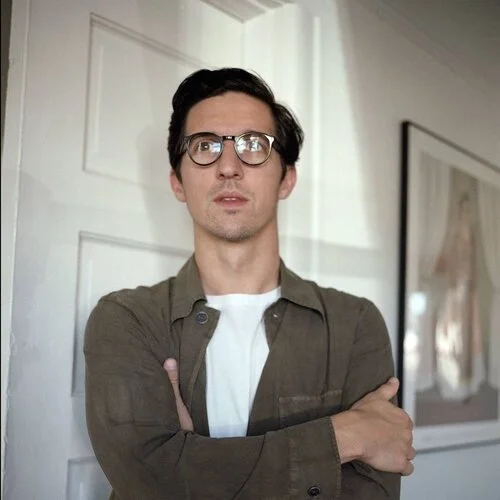
Dan Croll Yesterday

cccc.jpg

PHOTO CREDIT: Holly Whitaker Photography

Happyness Vegetable

XXXZ.jpg

La Roux - Automatic Driver

Inhaler We Have to Move On

XDSDD.jpg

IN THIS PHOTO: Brian Eno

Roger Eno & Brian Eno - Celeste

xxx.jpg

Twin Atlantic Oh! Euphoria!

Patrick Watson - Look At You

xddd.jpg

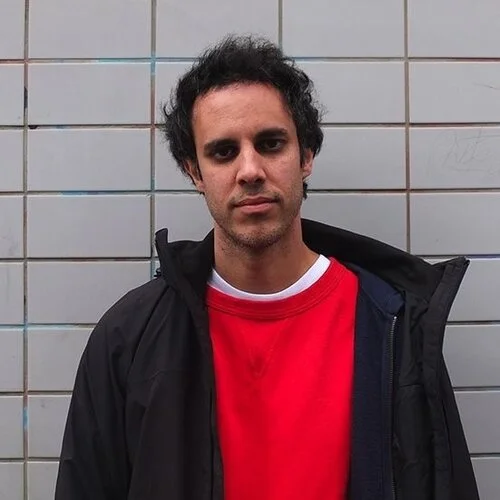
Four Tet Baby

The Coronas Haunted

zxx.jpg

Jessie Reyez LOVE IN THE DARK

c.jpg

Doja Cat - Boss B*tch (from Birds of Prey: The Album)

Ricky MartinTiburones

xdd.jpg

Chromatics TOY

PHOTO CREDIT: Charlie Cummings

The Snuts Fatboy Slim

UU77.jpg

Kelsea Ballerini la

QQ.jpg

PHOTO CREDIT: Melanie Tjoeng

Eliza ShaddadOne Last Embrace

IN THIS PHOTO: Poppy Ajudha

Poppy Ajudha (ft. Mahalia) - Low Ride

111.jpg

Badly Drawn Boy Is This a Dream?

sss.jpg

JP Cooper In These Arms

Tom GrennanThis Is the Place

dddd.jpg

Andy ShaufNeon Skyline

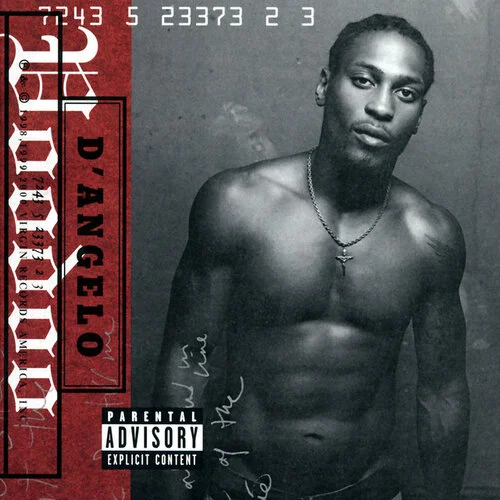
FEATURE: After the Writer’s Block… D’Angelo’s Voodoo at Twenty

FEATURE:


After the Writer’s Block…

xxxx.jpg

D’Angelo’s Voodoo at Twenty

___________

AS we are in a new decade…

PHOTO CREDIT: Jonathan Mannion

we are, inevitably, looking back to see how other decades started. I have done some playlists of the best music from 1980, 1990, 2000 and 2010. I think 2000 was a phenomenal year for music, and we saw some terrific albums arrive. On 25th January, D’Angelo brought out his second album, Voodoo. Released by Virgin Records, D’Angelo recorded the album during 1998 and 1999 at Electric Lady Studios in New York City. D’Angelo produced most of the album himself and worked with musicians of the Soulquarians collective. I will talk more about the album’s legacy later on but, compared with Brown Sugar in 1995, Voodoo is a looser album that is not as conventional as his debut. The album investigates fatherhood and spirituality in addition to love and maturation. Voodoo was a huge success and, following huge promotion, it debuted at number-one on the U.S. Billboard 200. Singles such as Untitled (How Does It Feel) were met with huge praise – although its video did garner some controversy! When you release a debut as successful as Brown Sugar, there is that pressure regarding a follow-up. That album was toured for over two years and, when the dust had settled, D’Angelo found himself unable to conjure new ideas. I am not sure what caused this block, but it is something every songwriter faces in their career. New material was a struggle, so D’Angelo put out some cover versions and remarks; flexing his creative muscles and trying to get the juice flowing.

D’Angelo eventually rediscovered his mojo and began work on his second album. Whilst his debut album is a remarkable thing, Voodoo throws together everything from Jazz, Funk and Hip-Hop. It is the way the contrasts work together that makes Voodoo so arresting. You get vintage sounds and influences stacked alongside fresh sounds and layers. D’Angelo is a lot more improvisational on Voodoo; I think these changes and evolutions make a big different. Whether you feel it is solely a D’Angelo record or more of a Soulquarians production, one cannot refute the genius throughout. A lot of Voodoo was recorded straight in one take, and one can imagine the musicians jamming in the studio and the vibe at the time. I am not sure what compelled this breakthrough and resurrection from D’Angelo, but he took his music to a new plain on Voodoo. There are Jazz elements and that sort of vibe, but one can nod to pioneers like Jimi Hendrix and many of D’Angelo’s heroes. There is a lot to unpack when it comes to D’Angelo’s staggering sophomore release. It could have gone wrong or not happened at all: instead, what we get is an album that is like nothing out there. You would struggle to find a review that is anything less than gushing and mind-blown. In this Pitchfork review, we learn more about a stunning album:

But Voodoo is more than a fetish object for analog geeks and old-soul collectors. It's peppered with hip-hop inflections largely informed by the singular work of J Dilla, the record's biggest modern influence. D'Angelo probably had Dilla's beats in mind when he wanted ?uestlove to dirty his impeccable timing to drum like he had just "drank some moonshine behind a chuckwagon," as ?uest once put it. In GQ, D cited the Detroit producer's 2006 death as the moment he decided to wake up from his booze-and-cocaine fueled lost years. "I felt like I was going to be next," he said. And when he played this year's Made in America festival in Philadelphia, he stepped out to the strains of obscure Canadian band Motherlode's "When I Die", which Dilla flipped on the finale of his last true album, Donuts.

The song's hook: "When I die, I hope to be a better man than you thought I'd be." Voodoo's element of sampling is crucial and varied as well, whether through flawless interpolations (as on "Send It On", which borrows its horn-laden lilt from Kool and the Gang's "Sea of Tranquility"), or sly cut-ups (like when DJ Premier drops in a line of Fat Joe's materialistic "Success" into the anti-materialism screed "Devil's Pie"), or well-chosen covers (the slowed-down brilliance of "Feel Like Makin' Love", a #1 for Roberta Flack in 1974)”.

Voodoo, like other albums from 2000, does not feel dated or of its time. Because there are so many classic elements to the production and sound, there is something instantly vintage; the modernity and urgency of the music means Voodoo sounds remarkable twenty years down the tracks. It is an album without a conventional structure, and there is so much nuance and depth. In this Entertainment Weekly review, they talk about D’Angelo’s growth between albums:

On his long-anticipated follow-up, Voodoo, we find D’Angelo growing as an artist, as well as The Artist. His Purple Majesty’s influence looms over Voodoo even more than Gaye’s. (Not Prince the hitmaker but Prince the bandleader of endless late-night funk workouts.) Voodoo is less like an album and more like an intimate jam session, each song bleeding into another. Cut almost entirely live, nearly every track is over five minutes, and all ride the same mid-tempo groove. Piled high with squelchy, sinuous keyboards, syncopated rhythm guitar, horny horns, and harmonies that overlap gloriously like they came from a vintage Parliament-Funkadelic album, D’Angelo creates a (Sly) stoned soul picnic bar none.

Such advances don’t negate the romance stance that made him a star — his falsetto just may serve as women’s answer to Viagra. ”Send It On” is a stately soul ballad like they just don’t make anymore, while his cover of Roberta Flack’s ”Feel Like Makin’ Love” remains a sweet, sticky delight. Only a crudely misogynistic rap from guests Method Man and Redman on ”Left & Right” upsets the organically sensual vibe. Still, what’s most thrilling about Voodoo is that D’Angelo is unafraid to tamper with his successful formula: This is elastic, impressionistic music that doesn’t cater to radio formats. If you’re looking for an antidote to the processed-cheese disease that’s infected today’s pop, a little bit o’ Voodoo is just what the witch doctor ordered”.

There will be some big album anniversaries this year, but I think Voodoo is one that deserves a lot of focus. D’Angelo and the Vanguard’s Black Messiah came out in 2014, and I wonder whether we will get another album from him – the man does take his time but, on all occasions, the results are spellbinding! Maybe we will see a new D’Angelo album this year – there are rumblings -, but it is amazing to listen to Voodoo twenty years after it came into the world. If you have not heard the album, check it out on Spotify, and prepare to have your senses altered.

It still, as I said, sounds brilliant today, and it makes me hungry for another D’Angelo record. I will wrap things up but, before that, I want to bring in a feature from early last year that looked back on a remarkable work:

Once hailed as the next Marvin Gaye, D’Angelo become the harbinger of hip-hop soul with his first release Brown Sugar in 1995. At the ripe young age of 21, he was  responsible for rethinking an entire genre and had laid the path for Maxwell’s Urban Hang Suite (‘96), Erykah Badu’s Baduizm (’97), The Miseducation of Lauryn Hill (‘98) and the neo-soul movement. But on the dawn of Y2K, contemporary R&B had morphed into a slick, club-friendly state. Voodoo emerged as a response to this, bringing back earthy 70s production powered by experimental, hip-hop-influenced rhythms.

After its release, Voodoo topped the Billboard albums chart just two weeks later, won two Grammy’s, achieved platinum status and produced a hit that would turn D’Angelo into a pin-up for ages. The album made an arresting statement, not just musically but visually. With its cover and provocative video for ‘Untitled (How Does it Feel)’, D’Angelo bared more than his soul. What perhaps meant to be a vulnerable statement looked more like an illicit invitation.

Sampling takes on an important role throughout the album, a practice that had been honed over the past decade, but D’Angelo does so with care, whether it’s Kool & the Gang‘s ‘Sea of Tranquility’ on ‘Send it On’ or the drums from Prince’s ‘I Wonder U’ on ‘Africa’. Every track serves a purpose, there is no filler here. His cover of Roberta Flack’s ‘Feel Like Makin’ Love’ is turned into a breezy song of seduction, while the Latin jazz infused ‘Spanish Joint’ hints at the heat to come. 

But none of these songs fully prepare you for the ultimate slow-burn ballad that is ‘Untitled (How Does it Feel)’. Co-written by Raphael Saadiq, it shall gown down in the annals of makeout music history and even cuts off in the middle, leaving you wanting more. Whether consciously or subconsciously inspired by the “Purple One’, it was ironic that Prince seemed be inspired as well, after releasing ‘Call My Name’ just a few years later”.

There are other great articles that are worth checking out. Voodoo is an amazing album, and its twentieth anniversary, I would have thought, should have been met with a reissue or special edition – again, I can find now word of that. No matter, as the original is out in the world and it demands your attention. I hope Voodoo gets a lot of coverage today (on its twentieth), as it a classic album that will still be talked about decades from now. Spend some time today so you can…

SPIN this masterpiece.

FEATURE: Rinse and Repeat: Are Radio Playlists the Best Way to Market a New Song?

FEATURE:

Rinse and Repeat

dsdds.jpg

PHOTO CREDIT: Freepik

Are Radio Playlists the Best Way to Market a New Song?

___________

ALTHOUGH it has been the way to promote songs…

aaaa.jpg

IMAGE CREDIT: Freepik

for decades now, I wonder whether radio playlists are the best way to bring new music to people. Obviously, new cuts need to be featured on the radio, but I listen to stations like BBC Radio 2 and BBC Radio 6 Music and you tend to find the playlists are quite repetitive. I understand that a song needs to get out to as many people as possible but, if you are a loyal listener, you might hear the same songs dozens and dozens of times before the playlist is updated. Unless the song is pure genius – very few are -, it gets to the point where you get so weary and lose that initial spark of interest. Stations have an A, B and C-list where those in the ‘A’ playlist are the more popular and played; ‘C’ is the less-played/popular tracks. Maybe, in a streaming age, the best way to get people to take note of songs is through bombardment, but I am finding myself liking a new song at first and, within a matter of a few days, it has been played to death. Playlists cannot accommodate every new track that week/month, but I do wonder whether playlists focus on a few songs too much and over-play them. I tend to find that, as a regular listener to stations like BBC Radio 6 Music, I get turned off when some new tracks are played endlessly. In many cases, one song is played a lot after it comes off the playlist, so you hear it even more than you did when it was being spotlighted. In some cases, that artist has released an album and you tend to hear few songs from that album but nothing else.

XX.jpg

PHOTO CREDIT: @gonarnaizpazos/Unsplash

I appreciate a single needs to get some decent airtime, but it is the relentless spinning of individual tracks that causes boredom and means, more often than not, a song loses its flavour – maybe that is the best tactic to get as many people listening, but there are great new songs that are played seldom or not at all. Not that this is a slight against any artist at all. They are trying their best and releasing great music, but even the biggest fan is not going to listen to the same song several times a day for weeks and weeks – maybe they will, but I find myself far less invested as time goes on. Many big radio stations do not have bespoke playlist of new songs they have featured. That way, people would be able to hear the songs and access them at their leisure, without hearing them multiple times a day when they are listening to the station. So many stations, too, do not have an archive of playlists, and I wonder why. When I was growing up, we did have stations spinning singles a bit, but it was not as intensive as it is now – not with so many different tracks, anyway. Also, in an age of social media and streaming, we all have greater access to songs through various platforms, so I wonder whether stations need to be quite so full-on with singles and their playlists. At a time when people are less interested in albums, maybe stations playing more album tracks (in addition to the single) would be better.

IMAGE CREDIT: BBC

Radio is still the best way to promote music and there are countless examples where I have heard a great new act because of various stations. If I was to miss a gem then I would be annoyed but, as I say, I think a weekly/monthly playlist link would avoid that possibility. Some stations have something fairly similar, but most do not. If you are a committed listener to a station, it can be irksome hearing a song rinsed whereas other tracks are either ignored or only played a couple of times. Even if we were back in the 1980s or 1990s, I would not want to hear the latest singles so regularly. There is also a problem where artists are releasing singles so close together so, not only do radio stations have to promote one track for a long time; they then need to accommodate another track soon after. This is more common in the Pop market. Rolling Stone investigated further in an article from last year:

But for years, radio was focused on amplifying one single by an artist for weeks on end, extending the life of an album like Katy Perry’s Teenage Dream track by track for more than 18 months. Now program directors are scrambling to support multiple singles simultaneously. “The challenge is not whether to play a record that’s really popular that the listeners want,” explains Mark McCray, the VP of programming and operations for KBFB and KZMJ in Dallas. “The challenge is making sure those records are separated the best they possibly can be so the radio station doesn’t sound like ‘97.9, Cardi B radio.'”

 PHOTO CREDIT: @willfrancis/Unsplash

The urban and rhythmic radio formats — rhythmic encompasses hip-hop, R&B, pop, an occasional dance hit and some Latin music — have already been trying to master this balancing act. “In the 2010s, a few times we’ve had several songs by popular artists all being in rotation at once,” explains McCray. (One of his charges, KBFB, is a rhythmic station.) “This has happened with Rihanna, with Drake several times, with Beyonce.”

But now pop radio, which reaches the most listeners of any format, is being forced to handle similarly fast release schedules. That’s because artists like Drake and Post Malone, who would be considered urban radio fare five years ago, have become so big that pop programmers have to at least try to play them. Not only that, rappers have been so successful with never-ending-waterfall release strategies that pop stars, including Grande, are trying to do the same thing.

“It’s a fairly new problem for us,” Graham acknowledges. “You used to have a single go for three months, then the next one. Now it’s a drop every other Thursday. [Grande]’s revolutionizing that for pop radio.”

What’s the big deal? Well, radio playlists are tighter than they once were — fewer songs are in rotation, so each spot is more heavily contested. And pop programmers center their attention on a tiny handful of songs. “A Top 40 radio station is playing five songs 120 times a week every week,” one longtime radio promotions veteran told Rolling Stone last year. Those spots traditionally go to a Swift or a Grande or an Ed Sheeran”.

It is good that, playlisted artists are not seen as disposable and, as the article explains, an album can have its life extended for months – though I contend featuring just one or two tracks from it is not the best way of getting people invested in that album.

PHOTO CREDIT: @vidarnm/Unsplash

There is that conflict between supporting the bigger artists, or those who have the best songs out and being varied. Pop stations have to prioritise the most popular artists and stations with a wider remit are limited regarding the artists they feature. It is just that sensation of hearing a ‘new’ track being played for the nth time and, ironically, the same artist has brought out another single since then – it all seems like overkill. I am not sure whether a solution can be put in place where songs are given enough oxygen and time without suffocating the listener. With stations having social media accounts and access to Spotify, surely reducing storing songs there and having links on their social media means they could expand playlists; feature the same songs for two weeks and, afterwards file them in a library and then feature a rotation of fresh songs. This would mean artists on the original playlist are still available and visible, but it would be more varied and less overly-familiar for listeners. I am not the only one who gets a bit annoyed when the same tunes are hammered week after week to the point where you can’t stand the sound. Most people would say the solution to that is obvious: turn the radio off or change stations! The point is not my personal irritations and preferences; it is the way singles are marketed at a time when the charts are changing radically, and we can stream these tracks on platforms like Spotify or Tidal. Maybe focusing on a few songs and playing them a lot – rather than more tracks less frequently played – is best for artists, listeners and record labels, but it sort of puts me off as a fan of new music. Even though I like a lot of new songs, it can be a bit much hearing the same track cycled so much. I feel stations could change and artists would not suffer but, maybe, this is just…

sasassa.png

IMAGE CREDIT: Andy Hook

THE way things have to be.

FEATURE: Smalltown Heroes: Independent Venue Week 2020

FEATURE: 

Smalltown Heroes

zzzz.jpg

PHOTO CREDIT: @kylewongs/Unsplash

Independent Venue Week 2020

___________

IF you need an event to make your January…

PHOTO CREDIT: @jmvisuals/Unsplash

warmer and more interesting, look ahead to Independent Venue Week - It runs from 27th January to 2nd February in the U.K. If you are not aware of what the week entails and what it is about, here is some more information:

Independent Venue Week is a 7-day celebration of music venues around the country and a nod to the people that own, run and work in them, week in, week out.

These venues give artists their first experience of playing live in front of an audience. They give fans somewhere to get up close to artists that one day, may well be playing stadiums and festival main stages. They also provide those wanting a career in music, off the stage, the chance to learn their craft up close in a small venue.

Independent Venue Week is unique in that it is a nationwide initiative with a completely local feel.

By championing these venues, we are able to highlight why they are so much more than just places for live music – they are cultural hubs for learning, creativity, arts and culture more widely in the local community for people from all walks of life.

Supported using public funding by Arts Council England, Wales and Creative Scotland in the UK as well as the wider music industry and brands globally, Independent Venue Week brings together these venues along with breaking and established artists, promoters, labels, media and tastemakers to create a nationwide series of gigs.

These venues, all local businesses, are the backbone of the live music scene and Independent Venue Week recognises all that they have done to create some of the most memorable nights of the past so they can continue to do the same in the future”.

PHOTO CREDIT: @overdriv3/Unsplash

We are coming up to a week where venues around the country will be celebrated and put under the spotlight. We are living in a time when so many great artists are emerging; music is busier than ever and, because of that, we need our precious venues. So many of the great artists you hear on the radio are where they are and get to your ears because they have played venues, got that attention and found an audience. It is rare for any artist t avoid performing and make a success of things on their own – it does happen, but most recording artists perform live and use that as a platform. Venues are the lifeblood of communities; they are places we can bond and feel the same; we can feel alive and lost at the same time and get to see artists at the very start. There is something exciting watching an artist perform at a smaller venue and, years later, hearing them on the radio – in the knowledge you saw them before they got big. Even at a time when streaming and digital music is dominating, there is still a huge thirst for live music. Every year, we see beloved venues closing for a number of reasons. In some cases, there are noise complaints but, a lot of the time, it is because of lack of funding and high rent costs forcing venues to close their doors.

Anna Calvi, Ambassador for Independent Venue Week this year, is someone who understands the importance of venues – she also knows how under-supported and under-funded they are:

 “Britain’s independent music venues should receive the same reverence and support as the ballet or opera, according to the musician Anna Calvi and the organisers behind a week-long initiative to promote the UK’s smaller concert halls.

Calvi, a three-time Mercury music prize nominee, told the Guardian that venues which predominantly focus on live music – and helped contribute £1.1bn to the UK economy in 2018 – need to be protected at a time when a third of smaller venues report they are struggling.

She said: “Just because it’s music that is played with guitars, why is it any different to a place like the ballet or opera? Other areas of the creative industry might have slowed down, but people are still going to gigs.”

Calvi, who is an ambassador for Independent Venue Week, added that investment in venues should be seen as a long-term project, which allows talent to develop. “There might only be 150 people in the room at the time at those early gigs, but those artists could go anywhere from there,” she said. “Playing smaller venues was instrumental for me to becoming the artist I am now.”

In February 2018, the UK’s first ever music venue census found that a third of Britain’s small venues outside London were struggling, with respondents identifying rampant property development and soaring business rates as main issues. The value of Britain’s live music sector hit a record £1.1bn in the same year, with 11.2 million music tourists – those travelling from overseas or within the UK to get to live events”. 

PHOTO CREDIT: @5tep5/Unsplash

Music venues are not only important to artists. From the venue’s staff to other businesses in a town/city, these spaces are essential. With each passing year, the importance of venues increases as artists look for somewhere to cut their teeth. I agree that more government funding needs to go to venues, as they are as important to our cultural landscape as ballet, theatre and film. I am not sure how much money is injected into the maintenance and survival of venues, but I cannot imagine it is that much at all. Independent venues are not only host to smaller artists. A lot of big artists play these venues, and we need to make sure we protect these incredible buildings. Independent Venue Week is a perfect showcase for live music and how integral venues are to its popularity and importance. From articles outlining how venues are the lifeblood of communities through to artists providing their thoughts, there is a fear that a lot of inspiring venues will close or struggle in years to come. Not only would music be poorer without music venues, so many artists would not even exist or be able to get their music heard. Let’s hope the emergence of so much great talent forces the government into committed funded. When Independent Venue Week is upon us and we can see these venues (and their staff) shine, it will, one hopes, awaken politicians to give venues…

PHOTO CREDIT: @trapnation/Unsplash

THE support they need and deserve.

FEATURE: Never Tear Us Apart: The Iconic Michael Hutchence at Sixty

FEATURE: 

Never Tear Us Apart 

222.jpg

IN THIS PHOTO: Michael Hutchence fencing, in a scene from the documentary, Mystify/PHOTO CREDIT: Ghost Pictures/Madman

The Iconic Michael Hutchence at Sixty

___________

THERE is something especially sad…

zzzzzz.jpg

PHOTO CREDIT: Chris Plytas

when we mark the birthday of a musician who is no longer with us. A few days back, we marked David Bowie’s birthday and, not only does it give us an excuse to play that artist’s music, it reminds us how much emptier the world is without them. I shall not get too gloomy but, as INXS’ Michael Hutchence would have been sixty tomorrow (22nd January), I felt it only right to celebrate that. I listened to a lot of INXS growing up, and their songs still sound so intoxicating and memorable. I think a lot of that is down to the gravitas of Hutchence and what he brings to every song. Although INXS are still performing without Hutchence, it is not quite the same without the legendary lead – that is not slight on their current lead/leads. Even all these years after his death – Hutchence died in 1997 -, there are new stories emerging that reveal fresh tragedy and complication. It is so sad we do not have Hutchence in the world as he was such a magnetic and inspiring performer. If you have not seen the documentary, Mystify, then make sure you do so. I will end this feature with a Michael Hutchence playlist that draws from his INXS work and takes some solo material into the blend.

In terms of who Hutchence was, I could try and assess him and drill down to his core but, instead, his life and legacy warrants deeper appreciation. From his official website, here is all you need to know:

Michael Kelland John Hutchence was born on January 22, 1960 at Mater Misericordiae Hospital in North Sydney, New South Wales, Australia. His mother Patricia Kennedy, was a former successful Melbourne model turned makeup artist and mother of eleven-year-old Tina when she married Sydney businessman Kelland Hutchence on January 31, 1959.

Michael was a very happy child with a big smile for everyone. He just seemed so excited to be alive. Soon after he was born the family moved to Brisbane where his brother Rhett was born. The family returned to Sydney when Michael was three years-old and just days before Michael's 5th birthday in January, 1965, the family departed for Hong Kong where Kell had accepted a position with a company which imported beef from Australia and wines and spirits from France.

Michael attended pre-school, Kindergarten and elementary, eventually going on to King George the 5th High in Hong Kong.

During those formative years in Hong Kong, Michael proved to be an excellent athlete at certain sports, namely those, which did not involve a ‘team' or running. He was a superior swimmer and also won several trophies for diving.

The music played in the Hutchence household ranged from his parents' tastes; Ella Fitzgerald and Frank Sinatra to his teenage sisters' the Beatles and the Rolling Stones. He studied classical guitar for a short time and the violin which, the way he played it, was excruciating to the ears. At other times he would sit around with his friends singing folk songs when he wasn't involved in Boy Scouts, fencing, judo, or kick boxing. Although he was interested in music, he dreamed of becoming an airline pilot.

One of his favourite past-times was visiting his mother and sister on movie sets at Shaw Brothers Studio. He started this at a very young age and instinctively knew to sit very quietly while the actors were doing a ‘take'. He watched everyone intently, interested in every aspect of movie making.

At the age of eleven, he made a recording of Christmas carols for a toy manufacturer. The recording was made to a small disc which was encased by a Santa Clause and sold quite well that Holiday Season.

When Michael was 12 the family returned to Sydney and settled into a home in Belrose, New South Wales. Michael used to call it ‘Sausage Hill' because of the weekend barbeques in the neighbourhood. This was a huge culture shock for Michael. His first day at Davidson High was eventful but not very pleasant – as the students did not take kindly to his slightly British accent. It was a blessing in disguise however when he met Andrew Farriss who was to become his lifelong friend and business partner.

Over a 25 year friendship and a writing partnership that spanned 20 years, together they wrote and performed with the other members of INXS some powerful music that is still heard in motion pictures, on commercials, in clubs and on the radio today.

At the age of 15 Michael and his mother left for California. He has said that with the breakup of his parents' marriage he felt that she needed someone and it pained him to think of her alone. He and his mother joined his sister Tina, and her son Brent in a house in Studio City. While his mother continued her work in motion pictures, Michael enrolled into North Hollywood High where he found the student population and instructor/student relationship liberating. He was quite introspective and began to write poetry with a passion. He continued to visit his mother on sets and soaked in the down to earth basics of movie making which possibly helped him later on when it came time to make videos with INXS.

Michael and his mother returned to Australia where he continued his friendship with Andrew who was seriously edging toward a career in the music industry. With Andrews' band ‘Doctor Dolphin' together, there was no place apart from vocals for Michael who did not play an instrument. Gary Beers was playing bass guitar in this first band. Slowly Michael began to expose his poetry to Andrew who was already an accomplished musician.

All three Farriss brothers played an instrument. Eldest brother Tim, a guitar player was already performing in a band with Kirk Pengilly. Youngest brother Jon was learning the drums. They eventually formed the line-up that would endure for more than 20 years. After some rehearsals in the Farriss or Hutchence garage, they debuted their band the ‘Farriss Brothers' on August 16, 1977 – Tim's 20th birthday and the day Elvis Presley passed away.

The day after Michael completed high school, he and Kirk Pengilly drove across the Nullabour Plains to join the Farriss family and Gary Beers in Perth to give their dream of becoming a band a chance.

After a tough ride in and around Perth, playing covers the band made their way back to Sydney.

By this time Michael was getting his stage legs. He had a presence that only a select few performers exhibit; a certain something that was a combination of his natural charisma and instinct. The band was spotted by Garry Morris the manager of Midnight Oil who, was too busy to manage them himself but called another manager who was searching for a band. Not only did they get a manager, they changed their name at the same time. Their stage persona was so excessive it seemed appropriate that they should call themselves ‘INXS'.

qqqq.jpg

IN THIS PHOTO: Michael Hutchence photographed in London in 1990/PHOTO CREDIT: Michael Putland/Getty Images

Chris Murphy's managerial savvy combined with the musical talent of INXS members, with Michael as front man took them to international stardom.

Chris, no stranger himself to hard work, had Michael working on his craft constantly. Gig after gig on the road 300 days out of the first year was very humbling. Michael never forgot those days of sharing one order of fish and chips between two people and one hotel room for 6.

That same year 1980, they released their first two singles ‘We Are The Vegetables' and‘Simple Simon' and began work on their first album-music by Andrew and lyrics by Michael.

Every night after performing in and around Sydney pubs, they would drive to the studio and record. It was a gruelling but satisfying time for the band. Michael and Andrew barely felt the pressure of writing and performing and recording and continued on the same routine throughout most of their careers. With every tour they were writing songs for the next album.

Michael's performances began to get noticed by the media and his stage persona was likened to Mick Jagger and Jim Morrison.

Their self-titled debut album included their first hit, ‘Just Keep Walking'. They continued to work hard and just six months later they released a cover of a sixties hit, ‘The Loved One' which truly proved to be the perfect set of tempo and lyrics to showcase Michael's sensual phrasing and erotic stage persona.

The music journalists lavished praise on the band. One journalist, Jenny Hunter Brown described him thus: “He stares quite fearlessly, slightly surlily, out at the milling pub crowd. And for a moment Michael Hutchence echoes the late Jim Morrison. ” She continues; “He's twenty, fit a fine dancer. He swings side to side with the mike stand as access in a mutant, Austral skank. A great mat of damp curls flopping over one angry eye, he shoots out each rounded word like a rocket off a pad.”

In no time at all INXS were on their way to the international scene in a short leap. In 1984 they embarked on their first world tour. This would mark the beginning of years of constant touring, writing and recording for Michael.

In 1985 INXS played to 50,000 fans over three sold out shows in their homeland and dominated the music award shows –something they continued to do for the next 5 years. In the same year Michael and the band performed for Prince Charles and Lady Diana in a charity concert called ‘Rocking with the Royals'.

In March of 1986 Michael made his movie debut in Richard Lowenstein's Dogs In Space. Michael played Sam Sejavka, real life punk rock singer from Melbourne in the late seventies who had struggled unsuccessfully with heroin addiction. Richard had written the movie with Michael in mind, positive that he could carry it off. Michael did not let him down receiving admirable reviews for his performance and entering the top ten with a single titled Rooms For The Memory .

By the mid eighties Michael was no longer residing in Australia, he had moved back to Hong Kong. This began a habit of Andrew and Michael writing on separate continents. Michael had a habit of writing on anything available as he often misplaced his notebook and rarely was it around when the creative thought reared. It was not unusual for Andrew to send Michael 25 pieces of music. 

By late 1986 INXS was breaking out in North America with ‘What You Need' on heavy MTV rotation. Michael was becoming a ‘video' star as he was a natural in front of a camera.

In 1987 INXS recorded ‘Kick' which was to become their most successful album. In September 1988 they swept the MTV Music Awards with ‘Kick'.

ZZZZ.jpg

In 1989 Michael teamed with Melbourne musician Ollie Olsen to record ‘Max Q'. For the first time

Michael explored life in and out of the studio without INXS. It was a critically acclaimed album and a personal success for Michael.

Michael then accepted a call from Roger Corman to co-star in his movie ‘Frankenstein Unbound' starring John Hurt and Brigit Fonda. It was shot in Lake Como, Italy . It was not a commercial success and the critics hated it, but as Michael said, “You really don't know what the end result is going to be with a movie. You just do your best and trust your director.”

By 1989 Michael's private life was taking a front seat with romantic partners such as Kylie Minogue and Helena Christensen. Although he was taking time off from INXS, he continued to write and listen to new music and absorb ‘life'. He didn't understand the pre-occupation the press had with his personal life.

During this time INXS played the big stage at Wembley, arriving by helicopter to a screaming, throbbing audience of approximately 75,000 and a recorded live performance "Live Baby Live".

Although future album sales would never hit the heights of Kick, the bands' live performances were still at a premium. They were always known as an exciting live band and INXS always delivered.

Michael's base was in the South of France but he also spent a lot of time in the U.S. and London. He was known for taking exotic vacations and was often photographed with celebrities though never sought the limelight. He was proud of the fact that he could walk around unrecognized.

That all changed when he became involved with British television personality Paula Yates with whom he had a daughter, Heavenly Hiraani Tiger Lily Hutchence on the 22th July, 1996. The press would not leave him alone and he was placed in the unenviable position of defending himself when the British press dubbed him the man Paula had left Bob Geldof for. He was swept up in the Yates/Geldof child custody wars –a position he should never have been placed in. After 18 years of a love affair with the media, he was no match for the onslaught of mud slinging and nastiness from the tabloids.

In 1997 he embarked on his last tour with INXS for the very personal album, ‘Elegantly Wasted'; taking a large amount of Prozac to keep on an even keel; he was not being monitored and had only seen a therapist twice. His last shows on the east coast of the U.S. were not his best by far. He had recently signed with a U.S. agent for his acting and his manager had been negotiating with Quentin Tarrantino about a movie beginning in early 1998. But personal problems plagued him. On November 22, 1997, just 4 days prior to beginning the Australian leg of the tour, seemingly despondent over his personal life, Michael took his life in a hotel room in Sydney”.

Whilst it is sad that Hutchence is not here to celebrate his sixtieth birthday, it is clear there is still so much love for him out in the world! Hutchence was a bit of an enigma and did have his troubles but, when you listen to interviews where people have spoken about him, it is clear Hutchence was such a lovely and warm man whose music changed lives - and it still changes lives now. There are articles around that speak of a troubled legacy and someone who did not often get the respect he deserved; there are others that collect tributes to INXS and their stunning lead:

Still, a younger generation has spoken up about the band’s influence, particularly women artists such as London Grammar’s Hannah Reid, Paloma Faith, Courtney Barnett (who sang the whole “Kick” album) and Bishop Briggs, who said her take on “Never Tear Us Apart” for the “Fifty Shades Freed” soundtrack last year gave her a deep appreciation for Hutchence’s “soulful essence.”

The singer Ben Harper, who performed on INXS’s 2010 album “Original Sin,” believes there’s still time for the band to be discovered. “The music isn’t going anywhere, it will be here as long as humans let it,” he said. “INXS stands out, because not a lot of the bands from the 1980s had those pop sensibilities with a true rock edge.”

Last month, the Matchbox 20 singer Rob Thomas performed with INXS’s Andrew Farriss in Australia to mark the anniversary of Hutchence’s death. “More people should have been saying the name Michael Hutchence as much as they said Prince, Madonna or any of the other great icons from that era,” Thomas wrote in an email, adding that a resurgence could be right around the corner, “maybe a film or television moment that brings them back into the grand consciousness. They certainly should be in the Rock & Roll Hall of Fame”.

As we mark Michael Hutchence’s sixtieth birthday tomorrow, I think it is a perfect time to dig into the brilliant archives of INXS and what Hutchence gave to the world. Although he died in 1997, it is clear his importance and legacy can never fade. He is a true star who…

STILL burns bright.

FEATURE: Vinyl Corner: The Pretenders - Pretenders

FEATURE: 

Vinyl Corner 

The Pretenders - Pretenders

___________

IT passed me by until now…

xzzx.jpg

 IN THIS PHOTO: The Pretenders in N.Y.C. in 1980/PHOTO CREDIT: Lynn Goldsmith

but The Pretenders’ debut, Pretenders, turned forty earlier this month! I did not hear much in the news but, looking online, and it was released in early January, 1980. To be fair, there are various dates as to its ACTUAL release that range from 7th - 11th January (in the U.K.). In any case, the album is forty and it is one that people overlook when they talk of classic debuts. The band are an American-English Rock band fronted by the sensational Chrissie Hynde. The band has changed line-up since 1980 but, on the first outing, the group was as follows: Chrissie Hynde – lead vocals, rhythm guitar and backing vocals; Martin Chambers – drums, percussion and backing vocals; Pete Farndon – bass guitar, backing vocals and James Honeyman-Scott – lead guitar, keyboards and backing vocals. The majority of the songs were penned by Hynde, and Pretenders features hits such as Precious, Private Life and Brass in Pocket (co-written with Honeyman-Scott). The band’s latest studio album, 2016’s Alone, features a new line-up, but the band have not lost their consistency and quality. My favourite album from The Pretenders is their debut, as there is that mix of the big hits and other numbers that grow and reveal themselves over time. Nick Lowe, as it goes, produced the band’s first single, Stop Your Sobbing, but did not work with them after as he felt they did not have legs – Chris Thomas stepped in and took over the production duties from then on.

Pretenders went to the number-one spot in the U.K. on the week of its release, and it stayed there for four weeks. Since its release, it has scored highly in features of the 1980s’ best albums and the album was remastered in 2006 and included some bonus tracks. In terms of song quality, The Pretenders did not really drop a step through their first three albums. It was only by the time they got to Get Close in 1986 that the genius faded a bit. Pretenders stands as a remarkable debut. One should get it on vinyl because, as is obvious, that is the point of this feature! I am not overly-sure whether there was anything similar to Pretenders bubbling in 1980 but, if you look at the year’s best albums – Talking Heads’ Remain in Light and Joy Division’s Closer was released in 1980, as was David Bowie’s Scary Monsters (and Super Creeps), Bruce Springsteen’s The River and The Jam’s Sound Affects -, it was not shy of genius records! I listen to Pretenders now and it sounds so fresh and inspiring. One wonders why more bands of the moment are not following their lead as, whilst we have tough female-led bands, few have the same qualities and depths of The Pretenders.

Forty years after its release, the songs on Pretenders spark and endure. Maybe it is the band chemistry or the stunning leadership of Chrissie Hynde; whatever the reason, she still leads the band and, whilst Alone felt like more of a solo project (hence the title, I guess?), Hynde will be producing music for years to come. I have looked online for a couple of reviews regarding Pretenders. One is hard-pressed to find a negative one because, as AllMusic write, the band wasted no time making an impression!

Few rock & roll records rock as hard or with as much originality as the Pretenders' eponymous debut album. A sleek, stylish fusion of Stonesy rock & roll, new wave pop, and pure punk aggression, Pretenders is teeming with sharp hooks and a viciously cool attitude. Although Chrissie Hynde establishes herself as a forceful and distinctively feminine songwriter, the record isn't a singer/songwriter's tour de force -- it's a rock & roll album, powered by a unique and aggressive band. Guitarist James Honeyman-Scott never plays conventional riffs or leads, and his phased, treated guitar gives new dimension to the pounding rhythms of "Precious," "Tattooed Love Boys," "Up the Neck," and "The Wait," as well as the more measured pop of "Kid," "Brass in Pocket," and "Mystery Achievement." He provides the perfect backing for Hynde and her tough, sexy swagger. Hynde doesn't fit into any conventional female rock stereotype, and neither do her songs, alternately displaying a steely exterior or a disarming emotional vulnerability. It's a deep, rewarding record, whose primary virtue is its sheer energy. Pretenders moves faster and harder than most rock records, delivering an endless series of melodies, hooks, and infectious rhythms in its 12 songs. Few albums, let alone debuts, are ever this astonishingly addictive”.

I do think many people overlook the early years of the 1980s when it comes to the all-time greatest albums. Look at a few of the album I mentioned a minute ago and, clearly, there was something in the air in 1980! Whilst The Pretenders never quite matched the brilliance of their debut album, they did go on to release plenty of excellent material. I will bring in another review, because it is interesting to see how various sources assess a masterpiece. Back in 2006, Sputnikmusic had their say:

Kicking things off with a blast of punk inspired heat, the album get's started with Hynde front and center leading the band through the sexually charged "Precious". No wilting flower, its obvious from the start Hynde is not your average girl playing pretty girl music in a cute little rock band. Much more Patti Smith then Stevie Nicks, Hynde smolders and burns from the very start on this cut and establishes the tone for the entire album before the first verse is even over. Never crass in its innuendos or even in the emphatic cry of "*** Off" near the end of the song, Precious storms along in a way that grabs you from the start and doesn't let go. Its propulsive beat addicting, its melody strong, and its punk roots on full display, the listener doesn't have a chance to question what it is, punk or otherwise. Hitting like a freight train, we just know its good. And we're happy to go along for the ride.

After the noisy, pseudo instrumental "The Phone Call", which is basically two and a half minutes of noisy, propulsive jamming with some interesting flourishes, comes the very conventional "Up The Neck". With Hynde's smooth vocals front and center and some nice melodic guitar work, this song of sexual lust and desire is as daring a song as one was likely to find in 1980 or anytime, for that matter. "Lust turns to anger / A kiss to a slug / Something was sticky on your shag rug / Look at the tile / I remember the way he groaned and moved with an animal skill / I rubbed my face in the sweat that ran down his chest / It was all very run of the mill / But I noticed his scent started to change somehow / His face went berserk and the veins bulged on his brow / I said baby, oh sweetheart" Subtle without being vague and obvious without being obnoxious, Hynde treats these bold lyrics as just a matter of fact, and the band plays it the same way. A conventional pop/rock song in new music clothes with lyrics no decent woman would even think, "Up The Neck" sounds exactly like what it is. A dirty love song for a new generation of desperate lovers. Or at least music lovers.

As if what had come previous was just a tepid warm up however, on the next track, the brash and wild to this date "Tattooed Love Boys", Chrissie shows she's not afraid to be a proud rock n roll slut and makes no apologies for it. Behind the chiming guitar work of Honeymoon-Scott and driving force of the pumped up rhythm section of Farndon and Chambers, Hynde asserts herself here like few women in mainstream rock ever had up to this point, and challenges you to knock the rock n roll chip off her shoulder with lyrics such as "I tore my knees up getting to you / Because I needed to find out what that thing was about" and "I shot my mouth off / And you showed me what that hole was for".

 PHOTO CREDIT: Lynn Goldsmith

Certainly not the territory of the mainstream rock woman of the day, these kinds of statements by a female singer leading an all male band of rough punk style players would certainly not go down easily for the American masses. But this Ohio born songstress and her band would help change the rules and perception of what was mainstream for good with this song and album, as they would show themselves on the rest of the record to be not one trick punk rock ponies, but a well rounded rock n roll band that does not just one thing well, but like the old guard which was passing away right before them, did all things well. The Pretenders didn't come to destroy rock n roll like the punks before them or of the day, but help to restore rock n roll to what it once was. And they would spend the rest of the album completing the job”.

I shall leave things there but, as it has just celebrated an anniversary – with a distinct lack of fanfare! -, I felt it only right to put Pretenders into Vinyl Corner. It is a record you need to own and, as always, go and stream it if you prefer. Last week, I published an article about The Sundays’ debut album, Reading, Writing and Arithmetic. That was released on 15th January, 1990, and started music’s greatest decade off with a bang! In a similar fashion, ten years previously, The Pretenders’ semi-eponymous debut began the 1980s…

WITH stylish swagger.

FEATURE: Spotlight: Sinead O'Brien

FEATURE:

Spotlight

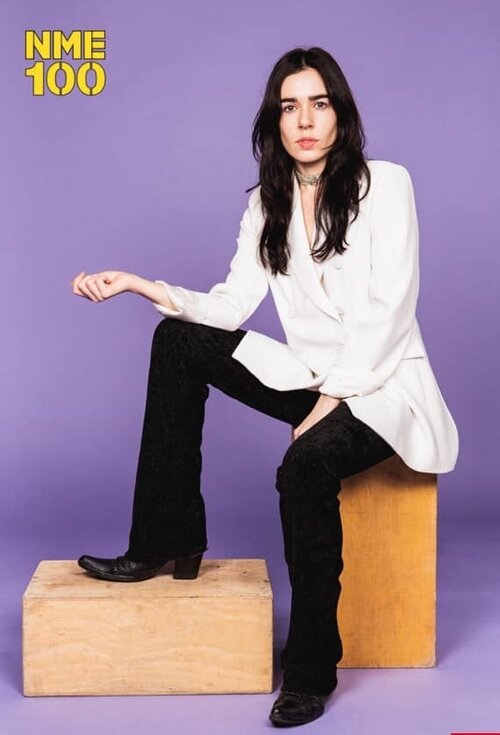
PHOTO CREDIT: Zachariah Mahrouche

Sinead O'Brien

___________

YOU’LL forgive the opening lines…

PHOTO CREDIT: @_SineadOBrien_

of this feature but, for so many reasons, I am smitten and blown away by Sinead O’Brien. Her voice has rawness and a passion that makes the heart skip; she is a poet and big fan of poetry and, as I am a big fan of poetry myself, she ticks a lot of boxes. She is based in London (like me), but the fact she was born in Dublin and used to be based in Limerick is another bonus – I adore Irish artists and how various regional accents play into the music. A Thing You Call Joy was one of my favourite songs from last year, and I think the stunning and epically-talented O’Brien is primed for huge things in 2020. I will be sourcing from a few different sites and interviews because, I feel, hearing from O’Brien herself is important. I shall put aside my dreamy-eyed tones and get focused here! This year is a huge one for O’Brien, as she is working off of the momentum of singles and a lot of press interest. She is one of NME’s ‘ones to watch’ for this year, and is an artist who will have a very busy year indeed! I have been getting pretty nostalgic recently because, let’s face it, music has changed a lot since I was young. Not that this is a bad thing necessarily; it is just harder to bond with artists and feel the same sort of excitement as one did years ago. The music industry is bustling, which means one misses so many great artists. In the case of Sinead O’Brien, there is this distinct admiration and connection that lasts beyond expectation and the moment – someone who will continue to impress and mould into a huge star of the future.

2019 was an astonishing year for women in music and, as we are seeing festival line-ups unfurled, one hopes they are given platforms and opportunities not provided in 2019 – although the line-up for this year’s Coachella is a worrying step back (there are no female headliners). Strong and unique women like O’Brien are definitely opening eyes. She is someone I can imagine headlining in years to come and, although she has a few singles out in the world, festivals will certainly be interested – O’Brien is already confirmed for The Great Escape in Brighton in May, and a lot of fans and industry figures will go and see her perform. Go and see her in Brighton if you can but, before I talk about her tour dates and future, I want to bring in an interview from So Young Magazine last year. O’Brien was asked about her home and start in music:

Can you tell us who you are, where you’re from and about the music you make?

Originally from Limerick in Ireland, I stopped by Paris for a few months after graduating before finally deciding on moving to London with a gang of close friends. It felt like the right place to be based. It still does. The music I make is a very collaborative process with my band Julian Hanson (Guitar) and Oscar Robertson (drums). The words are central. Melody, tone, pace, mood – all of these elements radiate outwards from the lyrics. I started out by writing observational pieces, noting expressions, environment, the slightest changes in atmosphere and behavior of people. I am completely fascinated by these subtleties.

qqq.jpg

 PHOTO CREDIT: Matilda Hill-Jenkins for Loud and Quiet

What’s special about where you’re from? Has it inspired your music?

Limerick (home of The Cranberries & Richard Harris) named after a form of poetry which was used by writers and poets including Joyce, Lewis Carrol and Mark Twain.

Growing up, I went to an all girls catholic school. My art teacher was the last remaining nun who was surprisingly focused on helping me get into art school. It was quite picturesque – six hundred girls in floor length skirts, ties done all the way up, marching up and down six flights of stairs in this big beautiful 19th century building. I looked for points of differences amongst the uniformity. The city has influenced me strongly too – it still does. I went to a lot of gigs during those years. When bands from London or Tokyo which no-one had ever heard of would come – it felt like a time of discovery. Laying the foundation for my own musical taste and ideas. The music you listen to – its such a commitment, it almost cut people up into distinctive groups, dividing and coming together. Flocks of young animals just trying to understand. When I come back to Limerick I pick up just there, where I left off. I keep coming back and understanding and discovering. It’s coming back with purpose, reflecting who I am now against the place I grew up. It’s a very sensitive and almost invisible process but something precious.

What led you to start writing and performing songs?

I moved to Paris in 2012 after graduating from Art school in Dublin. A friend saying goodbye casually suggested that I write an online piece and call it ‘freak watching in the city’! I started to write short pieces during my off time from beneath rainy cafe awnings, inside the Pompidou centre, at my home on canal St Martin and every place between.  I love to observe and write my environment and found a kind of humor in it at that time. To me it was almost ridiculous – to be a ‘stranger’ noting down strange things. I found it surreal and really connected with that. It’s quite theatrical to say ‘here I am and this is what I’m seeing’. Like opening a curtain and revealing your world. Impact and drama. I alway find a sense of drama in the everyday. It’s interesting and gritty.

The pieces began to take on the shape of poems and I began working on them to give more symmetry and form. It’s not like you know why or what you’re doing, just a piece or work which needs working on. It wasn’t until I had several notebooks full that I felt a reason to perform.

In terms of musical output, it has been a busy past year or so for Sinead O’Brien. She put out the E.P., A List of Normal Sins (great title!), in 2018 and some singles last year.

I might get the discography a bit muddled, but I wanted to revert back to mention of A Thing You Call Joy. Maybe it is O’Brien’s delivery and wordplay; maybe it is the strength of her voice, but something hits you the first time you listen. It is not a conventional song with the verse-chorus-verse or any such thing. Instead, A Thing You Call Joy is like a poem set to music. It is free and emotional; it is full of character and visual stimuli in addition to being completely intoxicating. I have been spinning the song lately, trying to get to the heart of Sinead O’Brien and how her words come together. I get the vision of a young woman with her notepad nearby; jotting down a line and then pacing the room or looking out into the street before another line forms. One feels something very physical from songs like A Thing You Call Joy. In this feature from CLASH, we learn more about the song:

The rising voice has a real potency to her work, linking with Chess Club Records for an incoming 10 inch vinyl release.

Set to support Pond and Whenyoung respectively on their upcoming UK shows, Sinead will also play London's Roundhouse Rising on October 26th.

Ahead of all this, Sinead O'Brien shows she is ready to move ahead with the fluid creativity of new release 'A Thing You Call Joy' 

Written alongside her live band while retaining a singular identity, there's a poetic flourish to Sinead's word play.

She offers...

“The track works out its themes by way of moving us continuously through lyrics, rhythm and narrative.”

The opening line, ‘Grip the water flowing and it falls, faster from the palms’ comes from my mother. Imagery of water gives momentum driving the narrative forward while exploring different physical landscapes: “Into the cave I keep going”, “in the hallways of the mind, in the corridors of midnight”.

I recall A Thing You Call Joy getting some airplay but, considering the strength of the song, not as much as it warranted! It (the song) was a sign that we were seeing a very promising artist lay down her mark. If O’Brien was inspired to get into music because of artists such as Nick Cave and Mark E. Smith (The Fall), what we hear on songs like A Thing You Call Joy is very much her own voice and soul – maybe with a touch of her heroes and heroines showing up in the tapestry. I will move on in a second but, just before, I want to stay on A Thing You Call Joy and some words Rough Trade wrote:

Irish poet and performer Sinead O’Brien releases her new single A Thing You Call Joy on Chess Club Records. Originally from Limerick, O’Brien’s work captures the everyday and the inbetween in a way that transcends any genre label. Writing from her own observations, O’Brien’s influences can be found in the realism of Mark E. Smith of The Fall and the works of literary icons such Frank O’Hara, W.B. Yeats, Joan Didion, Albert Camus. “I am inspired by an honest face on the train, a rhythm, a melody, a feeling, or it can hit me as nothing at all - a vacuum, limbo! Every detail matters,” she explains.

A Thing You Call Joy follows O’Brien’s first music of 2019 Taking On Time - the landmark 30th single release on Dan Carey's Speedy Wunderground label. A mesmerising call-to-arms, Taking On Time is equal parts Mark E and Patti Smith - set against a taut, frenetic bed recalling post-punk underdogs Life Without Buildings and The Slits but with the classic krautrock groove typical of Carey’s production”.

PHOTO CREDIT: DIY

I am not sure even O’Brien herself can believe how fast time has gone and the accolades she is receiving! The inclusion in NME is just the tip of an iceberg. Limbo is another song that made 2019 truly arresting and exciting. I am not sure whether an E.P. is planned this year or whether O’Brien, with an E.P. and a few singles under her belt, will put them together and add some further songs for an album. It would be good to think an album is in the pipeline because, as we look around to see which artists will define the scene this year, one has to put Sinead O’Brien’s name near the top of anyone’s list. Although O’Brien has a definite sound and core, each of her songs has their own skin and story. Another cracking song from 2019 is Limbo. A dizzying and stunning track, it is another gem I hope ends up on an E.P. or album this year. The Line of Best Fit made it their Song of the Day in October:

Following this summer's Speedy Wunderground-released stunner “Taking On Time”, the second part to Sinead O’Brien's double release details a strong-willed struggle of fighting through a period of static boredom. “Limbo” sees the now London-based artist determined to escape feeling listless (“It's the wish of the weak to stay still / it's the will of the brave to go higher”), and struggle to push through drudgery of routine.

Limerick-born Sinead O’Brien has released the headstrong “Limbo”, the second side of her AA release on Chess Club Records, complementing last month's “A Thing You Call Joy”.

Following this summer's Speedy Wunderground-released stunner “Taking On Time”, the second part to Sinead O’Brien's double release details a strong-willed struggle of fighting through a period of static boredom. “Limbo” sees the now London-based artist determined to escape feeling listless (“It's the wish of the weak to stay still / it's the will of the brave to go higher”), and struggle to push through drudgery of routine.

“Written while living in a shared mansion in Hampstead, the scenery of my everyday routine became the backdrop to this 'Limbo' state. Stuck in static,” explains O'Brien. “Words catch onto branches, flowers illuminate the hill walk home, and the rubbish. On the street - so close to the flowers.”

“'Limbo' is not a resolute piece of work, is it a clue, an idea I have began to chase down and open up. I saw the passing of days unmarked, and moments unnoticed, the in between was brimming to the surface so that I could no longer ignore it!

“There is a need to get on top of my experiences and to reclaim them in my own words and to get above everyday. I am forced to relive and revisit memory to get somewhere outside of the static. I revisit the same landscapes over and over making a ritual of the routine. The 'Limbo' state is a place where subtle signs, gestures and motions begin to gain importance. Between two two pillars lies limbo.

PHOTO CREDIT: Matilda Hill-Jenkins for Loud and Quiet

“The underlying motivation or idea in 'Limbo' is the hook which follows itself to the end of the piece,” O'Brien says of the line “Do days like this hurt the head / Or do days like this help?”. She asks: “How do you make progress and turn the wheel to get out of a static place? There is a heavy presence in the piece of obstacles which create a lot of tension and the lyrics charge directly through, desperate for some light.”

O'Brien thoughtfully wrote and recorded parts of the wording to convey the track's restlessness and anxiety through heavy, breathy sounds. “Performing this piece is almost dizzying,” she explains, “it’s frenzied because I packed all of these heavy ‘h’ sounds so close together in the lyrics. But I like that - to hear breathing, gasping and any struggle involved in the delivery. I wanted to get all of that down on the recording”.

I am going to end the feature soon, but I wanted to quote from a couple more interviews because, whilst the music can reveal so much, I think it is important to hear from the artists themselves. I listen to songs like Limbo and Taking on Time, and I wonder how they started life; I wonder about the author and what she was thinking when she wrote them. I think Sinead O’Brien’s best moments are still ahead, but it is clear she has come a long way. This Patti Smith-cum-Nick Cave-style artist who is as accessible as she is unique, many people will want to know about her and how she has arrived at the point she is now.

In this interview with Loud and Quiet last year, we learn more about O’Brien’s progress and background:

A couple of years ago Sinead O’Brien found herself comfortable. She was briefly settled – living in a “cosy” flat in Hoxton, east London – and the feeling didn’t sit well. So she made a commitment: a pledge to disrupt her life and surroundings. “I had a year, it was called The Year Of The Yes Girls,” she explains. Encouraging a club of friends to do the same, she spent 12 months “saying yes”. It wasn’t some haphazard scheme to chase thrills; rather, it was about actively inviting opportunity and seeing what stimulation could come out of that. “It was putting myself into situations with absolutely no second guessing. I can very easily do things when I say I’m going to do it. I’ll just commit to it and make it happen afterwards.” The resulting period “took some twists,” she admits.

Some of those experiences were fleeting – spontaneously going dancing on a night out – others more lasting. Like moving home. Or, perhaps most pivotally, when she said yes to an invitation to appear at New Gums, a night of spoken word performances, collaboration and music at south London venue the Brixton Windmill. At that point the writer didn’t even have a band, music or a plan, but still she accepted. “I think it’s a healthy exercise to challenge yourself,” she recalls, “saying yes to almost everything… well, what’s not possible then?”

PHOTO CREDIT: DIY

O’Brien was born in Dublin before the family moved west to Limerick where she lived until she returned to the Irish capital to study in her late teens. Her love of words and music began to develop at an early age, though they wouldn’t marry until much later. Sinead tells the story of how, when she was five or six, she would return from school with her ‘spelling book’ bulging with advanced new entries. Her parents grew suspicious and checked with the next-door neighbour (a primary teacher). “My dad was like, ‘she’s giving herself extra homework so that she can be better!” I was pretty keen on homework in general. I had a school bag before I had a school.”

Music wasn’t far behind either. “I was sitting in the car with my mum, I was six, and I completely remember. I just had this notion – I want to learn piano.” Initially, lessons were at a chaotic School for Music before she swapped those for the more formal private tutorials administered by a stern old-fashioned antiques dealer. “She took care of my hands,” remembers O’Brien. “Sometimes she would even take my nail varnish off. It was etiquette – you come like this to the class. I absolutely loved it.” She kept taking lessons until she was 18. “I’ve always done best under very tough teaching,” she says.

By her late teens the allure the big(ger) city – “my New York or something” – was growing. She had enlisted at college in Limerick, but after one year transferred onto a course in Fashion Design in Dublin – an intensive group with four teachers and twelve students. The rigorous mentoring style suited her, and towards the end of her studies O’Brien was selected to work at Dior in Paris for five months. 

The Sinead O’Brien live show is developing, too. When on stage she conducts the pace and intensity of the performance alongside bandmates Julian Hanson and Oscar Robertson. This past summer they played at a number of festivals including All Points East and Electric Picnic, and will support Pond and British Sea Power during the autumn. Each show, she says, should never be the same.

“I’m interested in it being different each time. I want it to do with what kind of day you had and what the place is like. I’m not interested in repeating or getting into a frenzied state of it being identical each time. You want to feel like that was the only time that was like that

I have borrowed a lot of other people’s words but, as I only know about O’Brien’s music and very little about her as a human and songwriter, I think it is important to source and add some media biography. I am going to source from another interview before I bring this feature to a close, as I am really interested in Sinead O’Brien’s connection to poetry and her love of words. I would usually not write as many words as I have for an artist in a Spotlight feature, but O’Brien is someone who really strikes a chord with me. I know where my love of poetry and music came from – English lessons at school -, so I was hunting around for an interview that revealed the same from O’Brien.

ZZZZ.jpg

PHOTO CREDIT: @hotpress

In this feature from Hot Press, O’Brien talks about how poetry spoke to her at a young age:

I always had an interest in English, but I had some pretty tough teachers,” she explains. “The way poetry was taught in school didn’t interest me at that point. It was all about learning the poems off by heart. The fact that we were supposed to be analysing the poet’s intention kind of disgusted me, too. To me, it was up to everyone to find their own interpretation.

“When it comes to the word ‘poetry’, people get so uptight,” she laughs. “I’m quite loose with the word – I’m definitely not calling myself an academic. But I don’t think anyone should be afraid to use their words, because there’s no better way to express yourself.”

zzz.jpg

PHOTO CREDIT: Jenn Five for NME

Despite this early discouragement, there was no burying Sinead’s creative streak.

“Me and my best friend Aoife would go around Limerick, exploring and making up these different narratives,” she recalls. “We’d written some funny things about the convent school that we went to – inventing fiction about the priests and nuns. That was the earliest writing I can think of. It was in college that I started writing more, initially in an academic way.”

Her studies in NCAD led to a career in womenswear design, and an opportunity to travel the world. While living in Paris and London, she began exploring poetry.

“I would read out bits of my writing when we were having parties,” she says. “Then a friend was putting on a night in Brixton, and she asked me perform at it. I was going through this phase called ‘Yes Girls’ – a movement I invented where I had to say yes to everything. So I said yes, and obviously the thought was terrifying, but when I was doing it, I wasn’t nervous. After the first one I was hooked. Performing something that’s been private is a nice feeling in itself, but I also found a reason for why I was doing it – the connection I was making with people became a really big thing for me.”

“I’m on this border between spoken word and singing, and people seem to be confused and intrigued by that,” she muses. “Me too! But this is the only way I know how to do it. This is starting point, but it’s definitely not the end point. With me, it’s all about development”.

If you do not know about Sinead O’Brien now then, well…you really should! I have included her social media links so, if you can, give her a follow and check out her music on Spotify. I know she has gigs coming up, and I will do my best to catch her! I hope she has had a rest over Christmas and got chance to head back to Ireland. Now in London, Sinead O’Brien will be looking ahead and plotting her moves for this year. I have heard feedback from O’Brien’s gigs and she is a captivating and memorable live performer. There are a lot of great artists being tipped for success this year but, in my opinion, there are few better…  

PHOTO CREDIT: @nicholasodonnell

THAN the sensational Sinead O’Brien.

___________

Follow Sinead O'Brien

FEATURE: Masters of the Stereo and Silver Screen: The Beatles in 2020

FEATURE:


Masters of the Stereo and Silver Screen

zzzz.jpg

IN THIS PHOTO: The Beatles sitting outside studios in North London, January 1967/PHOTO CREDIT: Express Newspapers via AP Images

The Beatles in 2020

___________

LAST year was a pretty…

dsdsds.jpg

busy one for The Beatles. Not only was there a Beatles-themed film, Yesterday, directed by Danny Boyle; one of the band’s biggest albums, Abbey Road, turned fifty. That was a really exciting day – on 26th September -, and it was good to see how much attention was put onto this classic album. BBC Radio had special shows, and there was celebration around the world. It is sad, in a way, that this is the last time we can celebrate one of their studio albums turning fifty because, on 8th May, their final-released album, Let It Be, has its birthday. Its birthday is a day before mine so, I hope, there will be a remastered version of the album like there was last year. I will talk more about the remasters and whether we will see any that take us before Sgt. Pepper’s Lonely Hearts Club Band (1967). We have to wait until 3rd December, but Rubber Soul - The Beatles’ sixth studio album – turns fifty-five. This is an album I would love to see given the makeover treatment and include unheard gems and demos. It may seem like I am taking any excuse to discuss The Beatles – I SORT of am… -, but it goes to show that a band that broke up fifty years ago can still capture our imagination. Although John Lennon privately announced in 1969 that he was leaving The Beatles, Paul McCartney announced on 10th April, 1970 he was also departing – that sort of signalled the end of the world’s great group.

I am not sure whether I am missing any anniversaries but, as Paul McCartney plays Glastonbury later in the year, it will mean a new generation of fans get to hear Beatles classics performed by one of their genius songwriters (John Lennon, of course, being the other; George Harrison and Ringo Starr wrote Beatles songs, I know). It is amazing to think that, over sixty years since the band formed (1957), The Beatles are still courting so much focus. I am not sure whether there are plans to bring our remastered versions of Let It Be like they did last year. Giles Martin – son of the late Beatles producer, Sir George Martin – has laboured to bring fans songs that, until recently, were unheard and in the archives. Let It Be is not as popular as Abbey Road because of the tension within the band in 1969. Let It Be was released after Abbey Road, but it was recorded before. Although there are some classics on the album – including Let It Be, Get Back and The Long and Winding Road -, a lot of people associate the album with the moments of disharmony; the fact Phil Sector was producing and, at various points, it looked like the band were through and would not carry on – articles from last year actually suggested The Beatles wanted t carry on recording after Abbey Road. Sir Peter Jackson is bringing us a Beatles documentary this year, mined from hours of unreleased material of the band during the Let It Be period:

Sir Peter, meet Sir Paul, and Mother Mary. “Lord of the Rings” filmmaker Peter Jackson has come aboard a project that Paul McCartney had previously hinted was in the works: a new Beatles documentary using the 55 hours of in-studio footage that were shot in early 1969 for the 1970 feature film “Let It Be.”

The announcement is being made today — on the 50th anniversary of the Beatles’ rooftop concert atop the Apple Records offices in London — by Apple Corps Ltd. and WingNut Films Ltd., Jackson’s production company.

No release date or plan has been set, but sources say there’s every reason to suspect that the still-untitled film will come out in 2020 to celebrate the 50th anniversary of the “Let It Be” album and movie.

“The 55 hours of never-before-seen footage and 140 hours of audio made available to us ensure this movie will be the ultimate ‘fly on the wall’ experience that Beatles fans have long dreamt about,” Jackson said in a statement. “It’s like a time machine transports us back to 1969, and we get to sit in the studio watching these four friends make great music together.”

The original “Let It Be” film was shot in 16mm and not exactly known for its pristine cinematography. So one point of considerable interest with the new film is that Jackson plans to spruce up the footage using some of the same techniques used for his highly acclaimed World War I documentary, “They Shall Not Grow Old.” As on that doc, which recently had sold-out single-day engagements in U.S. theaters, Jackson, his producer Clare Olssen and editor Jabez Olssen will be relying on the restorative powers of Park Road Post in New Zealand to make those 50-year-old reels look less dated.

Jackson, in his statement, concurred with McCartney’s assessment that the 1970 film undersold just how much fun the Beatles had in the studio when they were making the album that ended up being titled “Let It Be.”

“I was relieved to discover the reality is very different to the myth,” Jackson said. “After reviewing all the footage and audio that Michael Lindsay-Hogg shot 18 months before they broke up, it’s simply an amazing historical treasure trove. Sure, there’s moments of drama, but none of the discord this project has long been associated with. Watching John, Paul, George and Ringo work together, creating now-classic songs from scratch, is not only fascinating. it’s funny, uplifting and surprisingly intimate. … I’m thrilled and honored to have been entrusted with this remarkable footage. Making the movie will be a sheer joy.”

The dozens of hours of outtakes from “Let It Be” have remained a source of fascination for Beatles fans for 50 years — with many of the audio discards, if not the filmic ones, circulating on bootlegs. The album being documented was originally to be titled “Get Back,” with an initial concept that called for the Beatles to pull a back-to-roots move and resurrect some of their favorite oldies on record as well as debuting new tracks in their first live performance in years. That concept fell away, but fans will soon get a chance to officially hear and see the Beatles jamming on cover tunes, not to mention some original compositions that ended up not on the “Let It Be” album but “Abbey Road” or their post-breakup solo records.

As the lack of video bonuses on the “Sgt. Pepper” and White Album packages has made even clearer, the Beatles were rarely filmed at work in the recording studio for even a minute, much less the 55 hours committed to celluloid for this project”.

I do not believe an official release date has been announced but, with Let It Be’s fiftieth anniversary less than four months away, maybe we are looking at a May release. It would be strange were there not an anniversary release of the album. Although there is not as much gold in the vaults as with, say, The Beatles (‘The White Album’, 1968), one has to think there are various takes and demos that would provide a fascinating window into the recording of Let It Be. I know we have a film/documentary coming out, but there is something hugely important about Let It Be. It was the last studio album The Beatles put out and, after 1970, that was it. In a way, marking fifty years since The Beatles split should provoke more activity and re-releases than fifty years of Let It Be. Since Let It Be is the final studio album that will get a fiftieth anniversary nod, I do wonder when we will see the remainder of their studio albums expanded. For Giles Martin and his team, the process of releasing an anniversary edition of a Beatles album is immense work so, as they would possibly be remastering eight studio albums (Let It Be and the seven studio efforts prior to Sgt. Pepper’s Lonely Hearts Club Band), they might have to be selective. Many would welcome the more popular albums – such as Rubber Soul and Revolver – remastered, with as many outtakes and song versions as possible.

I am not sure why the fiftieth anniversary celebrations/re-releases happened from 2017, but I guess there is something about Sgt. Pepper’s Lonely Hearts Club Band that led to that decision. I think 2020 is the year to re-examine other Beatles albums and, with Let It Be in focus, I think we will hear other Beatles-related announcements. On 8th May, Let It Be turns fifty, and it is a great opportunity to examine this album in a new light. I know it is seen as one of the lesser albums from The Beatles, but there are some brilliant moments – it will be fascinating to see how Jackson’s documentary turns out and whether it changes our opinions of Let It Be. In any case, this year will see more Beatles activity and an opportunity for long-time fans and those new to band to get their fill and fix. At the very least, we have a much-anticipated documentary, and it would be criminal were Let It Be not marked on its fiftieth anniversary with gold-star treatment from Giles Martin and the team at Abbey Road Studios. Fifty years after the Liverpool band split up, their music is still as popular as ever, here, there and everywhere and right…

ACROSS the universe.

FEATURE: The Start of a Much-Underrated Decade: The Very Best Billboard Hot 100 Hits, Singles and Album Tracks from the Year 1980

FEATURE:

The Start of a Much-Underrated Decade

sdsdsds.jpg

IN THIS PHOTO: Diana Ross

The Very Best Billboard Hot 100 Hits, Singles and Album Tracks from the Year 1980

___________

LIKE other editions of this feature…

k.png

IN THIS PHOTO: ABBA

I have already written a piece that celebrated albums released at the start of the same decade. This might be my last decade-starting spotlight, but, as it is the opening few weeks of 2020, I have been looking back and seeing which songs kicked off various decades – 1980 is in focus now. I wrote a feature regarding the best albums of 1980, but I wanted to expand it and look at the songs that defined the start of an underrated decade. The 1980s would have better years for music than 1980 itself (1986, for starters), but there are some real gems to be found – not just in terms of singles but the biggest albums of the year. As I say, this might be the last feature in this series – unless the 1970s tempts me -, and it has been interesting comparing various decade and seeing just how strongly they started. I hope you enjoy the playlist below, as there are some seriously great tracks in there. Many people mock the 1980s for being a bit naff and cheesy but, if you know your music and avoid the worst Pop from the decade, there is so much gold to be discovered. Here, in playlist-form, is a representation of the best… 

1122112.jpg

IN THIS PHOTO: David Bowie in 1980/PHOTO CREDIT: The Duffy Archive

TRACKS of 1980.

FEATURE: Stirred, Not Shaken: Billie Eilish and the Evolution of the James Bond Theme

FEATURE: 

Stirred, Not Shaken

iui.jpg

IN THIS PHOTO: Billie Eilish at the 2019 Pukkelpop Music Festival/PHOTO CREDIT: Lars Crommelinck Photography

Billie Eilish and the Evolution of the James Bond Theme

___________

I have used those three particular words…

111.jpg

IN THIS PHOTO: Daniel Craig as James Bond in a still of the latest film in the franchise, No Time to Die, which is released in cinema on 2nd April

at the top of the article because, not only is it a rewording of James Bond’s martini request, it also sort of represents how the James Bond theme has changed through the years. A lot of people are not into the James Bond films but, in my view, the themes take on a life of their own and outlive the films. I can remember the opening theme to Goldeneye and Tomorrow Never Dies but not the film I watched – the title track/theme becomes its own beast and can stand alone! It was announced earlier in the week that Billie Eilish would be performing the latest Bond theme:

Billie Eilish will write and sing the theme song to No Time to Die, the 25th film in the James Bond franchise. At 18 years old, she is the youngest musician ever to provide the soundtrack to a Bond film.

Eilish said in a statement: “It feels crazy to be a part of this in every way. To be able to score the theme song to a film that is part of such a legendary series is a huge honour. James Bond is the coolest film franchise ever to exist. I’m still in shock.”

As with her debut album, 2019’s When We All Fall Asleep, Where Do We Go?, Eilish wrote the titular song alongside her older brother and co-producer Finneas. He said that the siblings had always dreamed of writing the theme to a Bond film. “There is no more iconic pairing of music and cinema than the likes of Goldfinger and Live and Let Die. We feel so so lucky to play a small role in such a legendary franchise, long live 007.”

Film producers Michael G Wilson and Barbara Broccoli said that Eilish’s song had been “impeccably crafted to work within the emotional story of the film”. Director Cary Joji Fukunaga described himself as a huge fan of Eilish and her brother: “Their creative integrity and talent are second to none and I cannot wait for audiences to hear what they’ve brought – a fresh new perspective whose vocals will echo for generations to come.”

Eilish is the latest sign of the Bond franchise’s modernisation. Phoebe Waller-Bridge was hired to liven up the script at the request of star Daniel Craig. Industry publication Variety described the hiring of Fukunaga, known for directing the films Sin Nombre and Beasts of No Nation, and TV’s True Detective, as a “stunning and risky move”.

Hans Zimmer was recently drafted in as a last-minute replacement to score No Time to Die. He replaced Dan Romer, who departed due to creative differences with the film’s production company Eon Productions.

No Time to Die is released in the UK on 2 April”.

Even though Writing's on the Wall by Sam Smith won the Academy Award for Best Original Song and Golden Globe Award for Best Original Song, I did not like his Spectre theme. I can appreciate he did not go for the bombastic and overblown because, as I will explore, Bond themes have changed in tone. I think Radiohead’s song, Spectre, would have been a more popular choice – Smith’s song divided people -, and it was suitably emotional and tender.

It is the sort of song that stirred the senses rather than shook the bones. American songwriter Eilish is the youngest person to perform the Bond theme – she is eighteen – and her 2019 album, When We All Fall Asleep, Where Do We Go?, was one of the best of the year. I think Eilish will have a busy year ahead and will definitely be asked to play Glastonbury again – having produced such a classy and powerful set last year. She is one of the most promising artists around, and I look forward to hearing her Bond effort. I am not sure when it is going to be released, but one suspects it will be close to the film’s release date. There is a consensus that themes like Paul McCartney & Wings’ Live and Let Die, Carly Simon’s Nobody Does It Better and Shirley Bassey’s Goldfinger are the best Bond themes. Articles such as this and this rank the best to the worst. I think a sense of rush and the theatrical is largely favoured when it comes to Bond themes of the past. I guess it is only right. James Bond is a spy who is all about fast cars, women and danger, so critics and fans want something that is daring and grand – that might not be the case anymore. I think, since 1963’s Dr. No with Sean Connery as James Bond, the franchise has evolved. Sure, the foundations and main ingredients have remained the same – Martini, lots of women falling under Bond’s spell and fast cars (although the Aston Martin is not necessarily the only car for Bond!) -, but there have been changes.

I think Daniel Craig’s Bond is a moodier and more serious alternative to that of, say, Roger Moore or even Pierce Brosnan and, with No Time to Die upcoming, I think we need a theme that reflects all that. Phoebe Waller-Bridge has been drafted in – on the request of Daniel Craig – to liven up the Bond script, so there might be more humour this time around. I think James Bond has had the reputation as being a bit stale, cliché and old-timey. Look at more modern heroes like Jason Bourne, and Bond’s tuxedos, cheesy line and sports cars seem a little tame. I think the series has improved and has become a lot cooler and edgier over the past few years – whilst retaining the geekiness and keeping the espionage element true. From the orchestral swells, the belted choruses and frantic rush, James Bond themes have sort of gone through a change. Granted, Jack White and Alicia Keys’ Another Way to Die for 2008’s Quantum of Solace was a ragged and energetic song, but many critics and fans were left cold and felt it was far beyond the very best. I feel Bond themes now are synonymous with an emotional undercurrent and a tenderness. I wonder whether Eilish will carry on from where Sam Smith left off or maybe summon the rawness of Chris Cornell’s You Know My Name from Casino Royale. Adele’s title track for Skyfall in 2015, again, had an element of Shirley Bassey but it relied more on sending shivers down the spine rather than getting the blood pumping like themes of old.

This article asks whether a trendy artist like Billie Eilish is too cool to sing a Bond theme:

What’s especially exciting about this news is that, compared with the last couple of insipid – though admittedly Oscar-winning – efforts, Billie Eilish is refreshing. She’s young. She’s authentic. She has a signature sound that doesn’t automatically align with the overwrought warbling of, say, Sam Smith. The history of the James Bond franchise contains a smattering of fantastic outliers – Live and Let Die, A View to a Kill, We Have All the Time in the World – that have flourished precisely because they haven’t hewed to the ossified blueprint of what constitutes a Bond theme. If this song is as good as the director and producer are promising, then we could really have something special on our hands.

Better yet, a title like No Time to Die is a songwriter’s dream, in that lots of things rhyme with the word “die”. Daniel Craig’s Bond tenure has been littered with some truly abysmal titles that were no use to the musical art whatsoever. No wonder so many of them had their performers squirming around loopholes. Nothing rhymes with “Casino Royale”, so Chris Cornell sang a song called You Know My Name. Sam Smith, knowing that any song entitled Spectre would have had to at some point use the word “hectare”, chickened out and sang Writing’s on the Wall instead. Faced with the abomination that was Quantum of Solace, Jack White just made up his own Bond title with Another Way to Die. Only Adele took on the mantle of writing a song named after the actual film, and even she screwed it up by rhyming “sky fall” with “crumble”. So this is a golden opportunity for Eilish. No Time to Die is an open goal of a title, and she has the chops to really make it work.

However, let’s not get carried away here. This is James Bond we’re talking about, so we should never underestimate the franchise’s tendency to bungle a sitter. Because, yes, Billie Eilish is authentic and unique and unwilling to turn in a traditional theme. But that doesn’t automatically mean it’ll be any good. Remember when they got Madonna in to jazz up the Bond theme as a genre? Remember how horrible that was? Remember how Die Another Day sounded like a bad song being fed through a worse Bluetooth connection? Or remember how bad Another Way to Die was, with White almost rapping his verses and then Alicia Keys using the chorus to make a noise like she’d just found a dead snake in her bed? Remember Sheryl Crow? Of course you don’t”.

There have been a lot of changes since the ‘60s that has modernised Bond and, whilst there is still a whiff of the tired and predictable, I think Bond has changed enough with the times. The theme is not the most important part of the film, but the music does need to evolve and move with Bond. Although I didn’t like Smith’s theme, Adele’s Skyfall hit the right notes and I think Eilish has the potential to produce something unique and memorable. No Time to Die is Daniel Craig’s last outing so, as we will get a new Bond, it is intriguing to think where the theme will go and whether it will shift directions once more. I am excited to hear what Eilish comes up with and whether he matches the very best Bond themes…

WE have ever heard.

FEATURE: Station to Station: Song Seven: Shaun Keaveny (BBC Radio 6 Music)

FEATURE:

Station to Station

IN THIS PHOTO: BBC Radio 6 Music’s Shaun Keaveny/PHOTO CREDIT: BBC

Song Seven: Shaun Keaveny (BBC Radio 6 Music)

___________

I have three music-related ambitions…

ttt.jpg

PHOTO CREDIT: BBC

that I want to fulfill in my lifetime. The first, obviously, is to interview my favourite artist, Kate Bush – one feels that this is unlikely given the fact there is stiff competition and I am not in a position to command an interview of that calibre. The second ambition is to have my own show – a one-off or regular – on BBC Radio 6 Music; where I can play my favourite tracks and fulfill every much lover’s dream! My third, actually, is to appear on Shaun Keaveny’s show as a guest - again, I have to achieve something and develop a talent! I know that sounds strange but, as an avid listener every weekday, his show is one that attracts the ear and eye! Where to start with Shaun Keaveny? Why include him in a feature that focuses on radio icons and inspiring figures? Well, I would give you a potted history, Wikipedia-style but, as I’m not sure how accurate the biography is there, I will have to go with what I know: the fact he is a fabulous broadcaster on BBC Radio 6 Music and someone who has a lot more years in the industry. I will pepper in a few Keaveny links throughout this feature – apologies as it is not going to be linear; I think he would approve of that! The past year or so has been busy for Keaveny. At the start of last year, he moved from the breakfast slot on BBC Radio 6 Music (a relief and chance for a lie-in), and now occupies the 1 – 4 p.m. slot. I was actually in attendance when he delivered his final breakfast broadcast at the legendary Maida Vale Studios on 14th December, 2018 (if you look at the still image on YouTube, I am the tall streak of piss standing up at the back dressed in a black Beastie Boys T-shirt!).

322.jpg

Like the other BBC Radio 6 Music presenters I have included in this feature – Mary Anne Hobbs, Lauren Laverne and Mark Radcliffe -, Keaveny helps make the station truly addictive and essential! Every presenter has their own style and sound, but I especially love Keaveny’s show because of a few things. He jokes – or is at least half-serious – that the wheels will fall off or he is a bit shoddy at times but, like any broadcaster, helming a radio show is like air traffic controlling! He is a masterful impressionist and funny as hell; he has a cartwall (a bank of clips and sounds that can be called upon to add sparks and colour to any link or moment) that he can access and organise ninja-like, and he has to juggle that with the usual duties of a broadcaster: speaking with callers, playing songs and providing links etc. I will move on to his radio show in a bit but, in the past, Keaveny has been at the front of some great podcasts. Look up Shaun Keaveny’s Not So Simple. He also provided Show & Tell but, for some reason, the series is not on Spotify anymore…or it has moved. It is a shame, as Keaveny sat down with a number of well-known peeps – including comedian Bridget Christie -, and it was utterly engaging and fun (not sure whether it has been removed for some reason or Cup & Nuzzle, the production company behind it, have done something with it?!).

I hope Keaveny does return with a new series, as there are options he could take. From speaking with musicians about their musical memories and favourite songs – much like Matt Everitt does on his The First Time with… series on BBC Radio 6 Music (more on Keaveny’s music news cohort later) – to discussing something specific, I think there are avenues he could take – I have a few, but it is sort of me pitching ideas vicariously; stuff I cannot do as, a) I have very little money and, b) I have nowhere decent to record a podcast. Keaveny has recently welcomed a daughter into the world – he already has two sons -, so I imagine family life is taking up any free time he has! There was a period where people tampered with his Wikipedia page; they made up names for his daughter and made outrageous claims. It is back to normal now and, in fact, is a bit out of date – it says Keaveny is a single dad to two sons. I am not sure what his daughter’s name is, but that does not matter – he seems to have, ironically, gained a lot of new energy and happiness from the new arrival! You can follow Shaun Keaveny’s show on Instagram, and make sure you catch Keaveny speaking with Professor Brian Cox and Brian Eno from Christmas, as it is only available for a few days more! I wonder why BBC Radio 6 Music does not have its own Spotify account or retain shows, as there are so many golden episodes and moments that are subject to entropy and archiving – it would be wonderful to be able to access some of Keaveny’s older broadcasts and specials!

What else is there to say about Shaun Keaveny?! He is a mega fan of Led Zeppelin – as veracious and passionate about them as I am about queen Kate Bush –, and he is a pretty nifty guitarist (he has played in bands before). He is originally from Leigh, Lancashire, and currently resides in London (probably nicer than the area of North London I am in!). He is one of BBC Radio 6 Music’s best broadcasters and, now and then, can be heard on BBC Radio 4 doing the odd bit here and there (maybe he could do something called Hear and There about his favourite current and older music – I digress, mind…). You can hear Keaveny share his Inheritance Tracks, or catch him on Saturday Live from 2018. He has been on the Fortunately… with Fi and Jane podcast before (more than once) and, in 2020, I am sure there are various irons in fires. When writing about BBC Radio 6 Music before, I have dissected Shaun Keaveny’s shows and what makes them great. As a presenter, he has this ready wit and incredible humour; a thick skin – some of the listeners can be pretty cheeky/insulting/soul-crushing -, and the music he plays is among the best on the station. Each month, Keaveny has a new music guest to play live for him, and I have discovered some great artists by listening to his show – including Brighton-based Penelope Isles. I often wonder whether, despite them being my favourite station, BBC Radio 6 Music is too cool for school at times; opening their channels up to incorporate different music would lend them a larger demographic.

By that, I mean (BBC Radio 6 Music can play) the sort of older hits BBC Radio 2 might spin; some of the new artists that pass by their radar – Keaveny is someone who accommodates this and plays a pleasing mix of the BBC Radio 6 Music ‘sound’ – artists who are on the cooler side of the spectrum –, and some nice cheese here and there! I was delighted when Keaveny played a Belinda Carlisle track (last year, I think) on his afternoon show; I think a caller had requested it on a Friday slot where Keaveny is the landlord of the fictional Open Arms pub - he chats to members of the public who order a ‘drink’ and select a tune from the jukebox. The fact Carlisle was played struck me – as I am a big fan -, and shows that he can blend the mega-cool and hip with songs that, well…are just a bit better and make you happy and lifted. There are great features on Keaveny’s show. He has the long-running Small Claims Court (listeners reveal their brush with minor celebrity); there is Uncle Funky Frank’s Friday Floor Fillers (that’s some serious alliteration!). There is Circadian Rhythms, where Keaveny announces a topic and the listeners have to choose a song appropriate to it; Keaveny picks his choice and the listeners decider the winner. Keaveny plays lesser-heard tracks from legendary artists – BBC Radio 6 Music often (the majority of the time) plays the same three Kate Bush songs from Hounds of Love (a personal gripe of mine!); Keaveny goes off the grid a bit (which is what you want from a broadcaster!); I have heard him play some lesser-exposed Beatles tracks, too, and you can tell music hits him as hard as anyone out there! Although Shaun Keaveny is not doing stand-up anymore, one feels like he may be back on the stage in some form this year.

333.jpg

IN THIS PHOTO: Shaun Keaveny alongside actor Maxine Peake at Leigh Library in 2014

Another great component of Keaveny’s afternoon show is the music news. It is presented by the brilliant Matt Everitt – sometimes Georgie Rogers presents; as does Siobhán McAndrew now and then -, and the relationship between them is incredible. They have been on the show together for so many years, and one hears the affection and connection between the two friends. Although they like to tease one another, the brotherly banter and bond always makes me laugh, and it is that humour that means you’d be a fool for overlooking Keaveny’s show. Matt Everitt is someone who, like Shaun Keaveny, is a recent dad (Everitt for the first time (a daughter); Keaveny for the third time), and they both keep pretty busy outside of BBC Radio 6 Music. I am not sure why it has taken me so long to spotlight Keaveny, but I have written about him a few times when dedicating space to BBC Radio 6 Music. That magic spark and to and fro between Matt Everitt (who is someone I can imagine presenting his own show (without guests) very soon) is a pleasure to behold (I have a fondness for this clip). I am going to wrap things – as I do prattle on a bit! -, but I wanted to bring in a couple of Shaun Keaveny interviews/features before I do. Whilst colleagues like Lauren Laverne are featured in the press fairly regularly, there are relatively few articles and interviews concerning Keaveny – which is a shame, as he is an inspiration for so many people getting into radio.

Although his life has changed significantly recently – given his new daughter and move from the breakfast show –, I wanted to bring in an article from The Guardian in 2017, where Keaveny discussed a number of things. The way he speaks about his family and their role struck me in particular:

My parents did everything for me when I was growing up. I was like one of those Italian sons who don’t have to lift a finger. The hilarious apotheosis of this came when I was studying at college at Leeds. My parents would insist on driving me there and picking me up at the end of each term. One Easter, I went with my mates from Leigh to see Living Colour play in Leeds and we planned to stay at my student house. My mate Leon drove us and on the M62 he said to me, “So, how do we get to your house?”. I didn’t have a clue because I had never had to navigate my way there.

Everyone thinks I’m Dr Fun, always having a laugh, but when it comes to being a single parent to my sons, Arthur, eight, and Wilfy, six, I’m not that guy a lot of the time. I remember stopping at some motorway services during a hellish and torturous journey. I was trying to get the boys’ seat belts on and they kept playing about. In the midst of gales of laughter, Wilfy said, “Oh, Daddy. Why do you never smile?” It completely flattened me. These are things that happen as a parent; your ego is checked at the door every single day.

My dad is the main reason I do the job I do. He is renowned as being a card. He’s always got the mot juste; he has always got the gag ready much quicker than I have. He has always got hilarious jokes in his locker. Occasionally, he will text me a bit of material that I’ll use on my 6 Music breakfast show.

My parents are quintessentially proud parents. My mum will be rushing out to read this interview when it hits the newsstands. My dad sent me a lovely text the other day while I was on the air. It read, “I’m just in heaven here sat in my back garden, the sun’s out, I’m holding a freshly brewed cup of coffee and my boy’s on the radio. It’s fantastic”.

Shaun Keaveny’s breakfast show was the first I heard on BBC Radio 6 Music so, in many ways, he is responsible for me and so many other people being hooked and in love. Keaveny treats his listeners – the loyal, lovely fans and snarky cu*ts alike – with respect and friendship. I think striking up that tone is hard. Many broadcasters are a bit cold or they try too hard with their listeners. Keaveny is matey and warm, but he has a professionalism that means he is not overly-matey – if that makes any sense at all?! He is a compelling and inspiring voice who plays awesome music – he recently played Steely Dan’s Night by Night; a band that are shockingly under-played on BBC Radio 6 Music – and has made Wogan House (on Great Portland Street), London his second home.

I know the late Sir Terry Wogan is someone Keaveny admires and, nearly four years after the legend’s death (he died on 31st January, 2016), I think Wogan would be proud of him. I am just going to bring in a fairly recent interview – from 4th January, 2019 -, where Keaveny was asked by Prospect about his new show and transitioning from breakfast to the afternoon. He was asked about his path into radio and, like other interviews, parenthood and family:

Prospect: When did you think this was something you wanted to do?

Keaveny: I remember being at uni—I went to Leeds Trinity All Saints college—and I was utterly rudderless. Completely without direction. I had no idea what I wanted to do. But I did enjoy writing little not-necessarily-very-funny comedy skits. We were allowed free rein in the studio, occasionally. We could attempt radio comedy. I really enjoyed the freedom of that. That was the first time I thought maybe there’s a career in this somehow.

When I came out of college I was basically unemployable. If I could just get a job on the radio doing anything I’d be quite happy. And that led to me getting a job as a radio copy writer for a few years and that was brilliant because it’s sort of the same metier, it’s the same arena, isn’t it? It’s using voices and using comedy, mixing them together.

It’s not always like that. Sometimes you’re selling Ford Fiestas for 4995 including VAT, there’s nothing funny in that. But occasionally you were given free rein to try and come up with something that would make you laugh and that was a really great start point for me. It started me off thinking about how you can just use people’s imagination and a few sound effects and a few funny lines to paint a picture and I think that was quite an influential moment for me.

I first got on air behind a microphone in April 2000 on what was then known as London’s 104.9 Xfm. I used to do this arduous, tortuous six-hour, midnight to six am show Sunday into Monday. It was horrible. You can’t imagine what it’s like to try and talk bullshit for six hours. Three is a stretch. But six. And you’re on your own.

It gets real Colonel Kurtz. You put on a long song, you nip to the toilet and you stare at yourself in the mirror and it’s 4.43 in the morning and you think what am I doing here. Everyone that I loved at that point, all my friends and family, they’re all up north and I’m there in Leicester Square thinking ‘what on earth.’ I’ve got to get back because Heroes by David Bowie is about to finish and I’ve got to come up with some wry comment about the news.

It took about six years from that point to get on the BBC. And it has been a dream come true in many ways because it is still the best broadcasting corporation in the world as far as I’m concerned.

Prospect: Are there things that make you more worried than five or ten years ago?

Keaveny: Yeah. I’m dreadfully worried at the moment. I’ve got two kids who are 10 and eight. When you’re that invested in society and the future of it I think you’d have to be pretty stupid at the moment to not feel concerned about the path that we’re on. I’m not going to get political about it because it’s not my place to do that. But yeah, it keeps me up at night, the sort of things that are happening, internationally, economically.

It seems that we’re losing our way a bit at the moment, things are getting a little darker than they were 10 or 15 years ago. I don’t think we realised how optimistic and how comfortable a place we had societally a few years ago. We were doing alright and it feels like now the wheels of the tea trolley are coming off a little bit”.

I am excited to see where Shaun Keaveny’s year heads and what he has in store for his listeners. As he is in his mid-forties, I can see him being in radio for at least a couple more decades. One feels radio is where he was born to be and it is a sort of calling! In th interview from Prospect, Keaveny was asked about the afternoon show and what he hoped to achieve:

Prospect: What are you trying to achieve with the new show?

Keaveny: It feels like, more than ever, we humans need safe spaces to just relax and to have fun with each other and not judge each other. I’m imagining the show to be a bit like the holiday I’ve never achieved where I’ve rented a huge villa, somewhere really beautiful and there’s like two swimming pools and there’s 30 rooms and there’s a games room there’s a lovely garden and there’s the beach over there and there’s a huge kitchen. You invite everybody and loads of different people show up and your son’s girlfriend comes along and a couple from around the corner and the only rule is you have a good time, you tell a story, you have a chat around the fire, you play some amazing music, you pass around the Spotify. That’s the kind of vibe we’re trying to create. But it won’t be that different. It’ll be me and the music and the listeners.

For people like me – journalists, music lovers etc. – Keaveny is an inspiration and someone who provides guidance. I think he was right with what he said above – how there is the need for a safe space in these hectic times. It is hard to find a person who makes us feel more together, warmer and safe but, with an afternoon show that keeps getting stronger…

4.jpg

IN THIS PHOTO: Shaun Keaveny and Matt Everitt/PHOTO CREDIT: BBC

THAT is just what Shaun William Keaveny does (and we offer him so much love for that!).

FEATURE: Sisters in Arms: An All-Female, Winter-Ready Playlist (Vol. II)

FEATURE:

Sisters in Arms

DSSD.jpg

IN THIS PHOTO: Rina Sawayama

An All-Female, Winter-Ready Playlist (Vol. II)

__________

AS it is the weekend once more…

 IN THIS PHOTO: Ella Eyre

it is time for another female-led playlist. This week, like last, has seen so many great tracks arrive. I have done my best to collate all the finest cuts from some brilliant women in music. Spanning multiple genres, it is fascinating seeing how 2020 is shaping up already. It is pretty cold out there at the moment, so I hope this playlist warms you up and gives you a pick-me-up. I am already looking forward to seeing what comes next week – this year is going to be another extraordinary one for new music. Have a listen to these fabulous tunes, and I’m sure you will find something in the mix that…

333.jpg

IN THIS PHOTO: Chloe Foy/PHOTO CREDIT: @danwiebephotography

TURNS the head.

ALL PHOTOS (unless credited otherwise): Artists

__________

12121212.jpg

PHOTO CREDIT: Jessie Morgan Photo

OrchardsSincerely Overwhelmed

WilsenFeeling Fancy

ASASAS.jpg

Ultraísta - Tin King

bnnm.jpg

Rina Sawayama - Comme Des Garçons (Like the Boys)

sdsddsds.jpg

The Naked and FamousBury Us

zxxzzx.jpg

Ashley McBrydeMartha Divine

sddffd.png

Charlotte LawrenceJoke’s on You

ddd.jpg

Ella EyreNew Me

PHOTO CREDIT: David Boni 

MALKAMoving Together

Tove LoBikini Porn

TORRESDressing America

PPPO.jpg

Matilda MannThe Fucking Best

XXX.jpg

Sarah ProctorI’ve Got You

Orla GartlandHeavy

Vanessa CarltonThe Only Way to Love

222.jpg

WILDESCircles

TwinnieLie to Me

333.png

Gabrielle AplinKintsugi

Keeley ForsythIt’s Raining

232323.jpg

HedaraHurts

GazelCloudpatterns

sdsdsd.jpg

PHOTO CREDIT: Jordan Rose

HANYAI’ll Do It Tomorrow

E3.jpg

Squirrel FlowerStreelight Blues

333.jpg

Margo PriceStone Me

Chloe FoyCallous Copper

233323.jpg

PHOTO CREDIT: @cowboycrush

MamalarkyFury

Halsey Without Me

PHOTO CREDIT: Nathan Russell

Lauran HibberdBang Bang Bang

23323.jpg

POLIÇA Steady

Soccer Mommycircle the drain

Mandy MooreSave a Little for Yourself

FEATURE: Better Off: Martyn’s Law: Making Music Venues Safer for Everyone

FEATURE:

Better Off

98.jpg

IN THIS PHOTO: Martyn Hett (right) and his partner, Russell - Hett died alongside twenty-two others during a suicide bombing attack at The Manchester Arena on 22nd May, 2017 following an Ariana Grande concert/PHOTO CREDIT: martynhett/Twitter

Martyn’s Law: Making Music Venues Safer for Everyone

___________

IT has been almost three years…

sdasdds.jpg

IN THIS PHOTO: Ariana Grande

since the awful suicide bombing attack in Manchester that left twenty-three people dead. The bombing happened at an Ariana Grande concert on 22nd May, 2017, and rocked the world. I remember hearing the news and could not believe the images coming through. It was startling hearing about the destruction and carnage after what should have been such a peaceful concert. Although there has not been an attack at a U.K. venue as severe as this since, there is always a fear that we could see something like it again. The memories of the Manchester attack are still fresh, and we want to make sure everyone can attend a concert or gig without fear of attack. One of the people killed in the attack, Martyn Hett, has a law named after him. ‘Martyn’s Law’ ensures there are stronger anti-terrorist measures at venues:

Airport-style security checks could be introduced across public venues after the government backed a campaign by the mother of a Manchester Arena attack victim.

Figen Murray, whose son Martyn Hett was one of the 22 people who died in the 2017 attack, has lobbied for stronger anti-terror security measures.

Brandon Lewis, the security minister, said Boris Johnson was “100%” behind the proposals for bag searches and metal detectors at big venues such as concert and sport arenas.

Manchester city council has pledged to adopt “Martyn’s law” early through new licensing rules.

IN THIS PHOTO: The Manchester Arena

Writing in the Mail on Sunday, Lewis said: “The prime minister, home secretary and I are all 100% behind Figen and are working to improve security measures at public venues and spaces.

“We are working quickly to come up with a solution that will honour Martyn’s memory and all of those affected by terrorism.

He added: “I am pleased that last week Manchester city council announced new licensing rules, but we are committed to going further and making Martyn’s law a reality for all public venues across the UK.”

Murray has been pushing for stronger anti-terror security measures since 2018. The government has now backed the plan, but has not yet set a timetable for its implementation.

The government announcement represents a shift from the Home Office’s 2019 resistance to Murray’s petition, when it responded that while it provided advice to venues on appropriate and proportionate security measures, there were “no plans to mandate specific security measures”

Murray told the BBC: “I am absolutely delighted. I met with Mr Lewis a few weeks ago but did not realise they were moving things on so quickly.

“If the government do make this a reality then it will be a fitting tribute to not only Martyn but all those who died that night”.

I can appreciate how good security is at venues and, in the wake of the bombing in 2017, there have been extra measures imposed. It is a shame that we have to up security because of the threat of terrorism but, in terms of making people safer and keeping those out who can cause so devastation, this is a good measure.

122121.jpg

PHOTO CREDIT: @ev/Unsplash

I have always wondered why such checks have not been in place at venues already. Consider the size of arenas and how many people are passing through. I know the logistics involved with processing and checking thousands of people is immense, but consider the fact it takes only one person to slip through unchecked to perpetrate an act of violence. I am not sure how extensive the checks are and whether people’s bags will be scanned; whether each ticket holder will go through a metal detector and it is very much like an airport experience. It sounds quite police-like and off-putting, but it is comforting knowing there are such rigid checks. I think this is a way to guarantee we will not see a repeat of the bombing of 2017. I am not sure how venues will monitor those outside venues and whether there are barriers imposed with security guards on every corner. It has been almost three years since we learned the terrible news of the Manchester attack, and it still seems pretty current and hard to accept. Martyn Hett, the twenty-two others who died that night and the many injured are very much in our minds. Manchester city council has pledged to take on Martyn’s Law early, but it seems very likely that it will be rolled out across the country and reach major venues across the U.K. Although Hett lost his life on 22nd May, 2017, Martyn’s Law is definitely…

PHOTO CREDIT: martynhett/Twitter

QUITE a legacy.

FEATURE: The January Playlist: Vol. 3: Learning with Your Eyes Open

FEATURE:


The January Playlist

jjh.jpg

IN THIS PHOTO: The 1975

Vol. 3: Learning with Your Eyes Open

__________

THIS week…

IN THIS PHOTO: Mac Miller

is packed with brilliant artists and great songs. Not only is there new material from Halsey, Eminem and The 1975; we also have music from the late Mac Miller, Thundercat and Missy Elliott. Add in some Green Day, Ultraista and U.S. Girls and here is a packed and eclectic assortment of tunes. If you want something to kick off your weekend and provide some boost, then look no further! Settle in and enjoy the week’s best tracks. This playlist is guaranteed to get you excited…

IN THIS PHOTO: Halsey

AND moving.   

ALL PHOTOS/IMAGES (unless credited otherwise): Artists

_________

PHOTO CREDIT: Axelle/Bauer-Griffin/FilmMagic

Halsey - Still Learning

nnb.jpg

Mac Miller I Can See

gg.jpg

Eminem Darkness

bn.jpg

The 1975 - Me & You Together Song

bn.jpg

Bombay Bicycle Club Good Day

aassaas.jpg

Hayley Kiyoko She

asasa.jpg

IN THIS PHOTO: Thundercat/PHOTO CREDIT: Eddie Alcazar

Thundercat, Steve Lacy, Steve Arrington - Black Qualls

bvb.jpg

Ultraísta - Tin King

yyy.jpg

PHOTO CREDIT: @issarae

Missy Elliott - Why I Still Love You

YH.jpg

Soccer Mommy - circle the drain

IN THIS PHOTO: Leon Bridges/PHOTO CREDIT: Sam Wilson Photo

Khruangbin, Leon Bridges C-Side

TTT.jpg

Mura Masa No Hope Generation

GFFG.jpg

PHOTO CREDIT: Mary Ellen Matthews

Joywave - Half Your Age

QQ.jpg

PHOTO CREDIT: Bella Podpadec

Porridge RadioSweet

LA Priest - What Moves

Green Day Oh Yeah!

SA.jpg

PHOTO CREDIT: Colin Medley

U.S. Girls - Overtime

HGGH.jpg

COINYouuu

AASSA.jpg

Gregory Porter Revival

XCCXCX.jpg

Marie Dahlstrom, Jeremy Passion Through Your Eyes

DSDSSD.jpg

Lauv Tattoos Together

WWW.jpg

Ella Eyre - New Me

SDSSDSD.jpg

Sea GirlsReady for More

SSSS.jpg

The Naked and Famous - Bury Us

vfg.jpg

BTS Black Swan

www.jpg

Empress OfCall Me

Real Estate - Paper Cup

122.jpg

Rina Sawayama - Comme Des Garçons (Like the Boys)

33233.jpg

Lily MooreNow I Know

FEATURE: Inspired by the 1967 BBC Mini-Series… Kate Bush’s Incredible Debut Single, Wuthering Heights, at Forty-Two

FEATURE:

Inspired by the 1967 BBC Mini-Series… 

XDD.jpg

IN THIS PHOTO: Kate Bush in 1978/PHOTO CREDIT: Gered Mankowitz

Kate Bush’s Incredible Debut Single, Wuthering Heights, at Forty-Two

___________

MAYBE a forty-second anniversary…

ccccccc.jpg

is not worth covering but, as Kate Bush is entering her sixth decade as a recording artist, I wanted to look back at her almighty and utterly unique debut single. Wuthering Heights was originally slated for a November 1977 release, but it was delayed until 20th January, 1978. Bush wanted to change the sleeve design and was not happy with it and, also, there were huge Christmas singles like Wings’ Mull of Kintyre – that was released on 11th November, 1977 and was a huge hit. I will come to my thoughts and particular experiences of the song soon but, before moving on, here is some background and information about Wuthering Heights courtesy of the Kate Bush Encyclopedia:

Song written by Kate Bush, released as her debut single in January 1978. She wrote the song after seeing the last ten minutes of the 1967 BBC mini-series based on the book ‘Wuthering Heights’, written by Emily Brontë. Reportedly, she wrote the song within the space of just a few hours late at night. The actual date of writing is estimated to be March 5, 1977.

Lyrically, "Wuthering Heights" uses several quotations from Catherine Earnshaw, most notably in the chorus - "Let me in! I'm so cold!" - as well as in the verses, with Catherine's confession to her servant of "bad dreams in the night." It is sung from Catherine's point of view, as she pleads at Heathcliff's window to be allowed in. This romantic scene takes a sinister turn if one has read Chapter 3 of the original book, as Catherine is in fact a ghost, calling lovingly to Heathcliff from beyond the grave. Catherine's "icy" ghost grabs the hand of the Narrator, Mr Lockwood, through the bedroom window, asking him to let her in, so she can be forgiven by her lover Heathcliff, and freed from her own personal purgatory.

The song was recorded with Andrew Powell producing. According to him, the vocal performance was done in one take, "a complete performance" with no overdubs. "There was no compiling," engineer Kelly said. “We started the mix at around midnight and Kate was there the whole time, encouraging us… we got on with the job and finished at about five or six that morning." The guitar solo that fades away with the track in the outro was recorded by Edinburgh musician Ian Bairnson, a session guitarist.

Originally, record company EMI's Bob Mercer had chosen another track, James And The Cold Gun as the lead single, but Kate Bush was determined that ‘Wuthering Heights’ would be her first release.  She won out eventually in a surprising show of determination for a young musician against a major record company, and this would not be the only time she took a stand against them to control her career.

The release date for the single was initially scheduled to be 4 November 1977. However, Bush was unhappy with the picture being used for the single's cover and insisted it be replaced. Some copies of the single had already been sent out to radio stations, but EMI relented and put back the single's launch until the New Year. Ultimately, this proved to be a wise choice, as the earlier release would have had to compete with Wings' latest release, ‘Mull of Kintyre’, which became the biggest-selling single in UK history up to this point in December 1977.

‘Wuthering Heights’ was finally released on 20 January 1978, was immediately playlisted by Capital Radio and entered their chart at no. 39 on 27 January. It crept into the national Top 50 in week ending 11 February at No.42. The following week it rose to No.27 and Bush made her first appearance on Top of the Pops ("It was like watching myself die", recalls Bush), The song was finally added to Radio One's playlist the following week and became one of the most played records on radio. When the song reached number 1, it was the first UK number 1 written and performed by a female artist.

For those who were growing up in the late-1970s, hearing an artist like Kate Bush on the radio would have been mind-blowing! Punk was still raging in 1978 and, when you look around the scene forty-two years ago, there was nothing on the same planet as Kate Bush! Sure, there were talented female songwriters, but Bush’s voice, sound and look was very much her own. A debut single concerning a classic novel (it was published in 1847 and written by Emily Brontë) is not the most conventional of things and, in 2020, it would still be considered rare! Also, although there are plenty of artists inspired by Kate Bush, if Bush arrived fresh today, I still think we would be mesmerised. My discovery of the song happened when I was a child when I saw Wuthering Heights’ video; it would have been on the ‘best of’ VHS, The Whole Story.

It was not the first of her videos I saw – that would be Them Heavy People; also from her debut album, The Kick Inside (1978) -, but I was mesmerised the first time I saw the Wuthering Heights video. Two music videos were created for the song. In one version, directed by Nick Abson, Bush dances on Salisbury Plain while wearing a red dress. It was filmed before the intended November 1977 release date. In the second version, directed by Keef, Bush is seen performing the song in a dark room filled with mist while wearing a white dress. It was the U.K. video of her in the white dress that I saw – and the preferable of the two. Although Bush, when talking about the choreography, said she was inspired by Lindsay Kemp – she attended dance lessons Kemp held in Covent Garden; she was drawn to dance due to Kemp’s Flowers (Kemp’s free interpretation of Jean Genet’s novel, Our Lady of the Flowers, with Kemp playing the central role of Divine, a transvestite transcending gender in a world of criminals, whores and angels) -, the choreography credit should have gone to Robin Kovac (or most of it). Bush did mention in interviews the influence of Lindsay Kemp but, learning of Kovac’s sense of exclusion, Bush wrote her an apology letter and mentioned her in some big interviews. The marriage of the simple-yet-compelling video with the song is amazing. Bush, wide-eyed and entranced, created a video that still seems alien and utterly beguiling all these years later. Whilst she created more developed and sophisticated videos – and looked back with a modicum of embarrassment at early videos like Wuthering Heights -, the song itself is, in my mind, the best debut single ever.  

My favourite album ever is The Kick Inside, and I play Wuthering Heights and still have the same response I did as a child: disbelieving of this pure and gorgeous sound and highly unusual song. In 2019/2020, there has not been a debut single as powerful and original as Wuthering Heights. Written by an eighteen-year-old Bush in March 1977, I can imagine her with the window open as the night held silent. The fact Bush wrote the song so quickly and naturally amazes me. To have that sort of talent and unorthodox creative inspiration so young is inspiring. Wuthering Heights is the most-streamed song of Bush’s and remains her most notable track; it is her signature and, in my view, is more nuanced and staggering than some of her later hits like Running Up That Hill (A Deal with God) and Cloudbusting – both from 1985’s Hounds of Love. Although a remixed version featuring rerecorded vocals was included on the greatest hits album, The Whole Story, the original is still the superior version (why re-record a perfect vocal performance?!). On 20th January (Monday), I do hope radio stations play it and, if you are unfamiliar with the song or have not heard it for a while, make sure you do! Radio stations do play Kate Bush’s music but, as I have said before, many focus on a few songs from Hounds of Love and do not dig any deeper.

xxx.jpg

IN THIS PHOTO: Kate Bush in 1978/PHOTO CREDIT: Patrick Harbron

Wuthering Heights is where it all began, and it introduced the world to an artist who is practically a national institution; she has gone beyond the level of a national treasure and is almost a deity to some. The word ‘unique’ is bandied about so often, and it usually is misjudged in many cases. When we call Kate Bush unique, nobody can argue against it. She has evolved and produced stunning album after stunning album since 1978 and, although her latest album, 50 Words for Snow, was released in 2011, I am hopeful an eleventh studio album will arrive in the next year or two. Wuthering Heights scored high in charts around the world - Australia: 1, Belgium: 6; France: 14, Germany: 11; Ireland: 1, Italy: 1; Netherlands: 3, New Zealand: 1 and Switzerland: 8 – and features a truly incredible performance from Bush and her band. With some legendary shredding from Ian Bairnson – whose impassioned notes take the song over the horizon –, Wuthering Heights mixes the heavenly highs of Bush’s voice with the electricity and intensity of the guitar. Before wrapping up, I want to return to the Kate Bush Encyclopedia and a quote relating to Wuthering Heights:

When I first read Wuthering Heights I thought the story was so strong. This young girl in an era when the female role was so inferior and she was coming out with this passionate, heavy stuff. Great subject matter for a song.

I loved writing it. It was a real challenge to precis the whole mood of a book into such a short piece of prose. Also when I was a child I was always called Cathy not Kate and I just found myself able to relate to her as a character. It's so important to put yourself in the role of the person in a song. There's no half measures. When I sing that song I am Cathy.

ZZX.jpg

(Her face collapses back into smiles.) Gosh I sound so intense. Wuthering Heights is so important to me. It had to be the single. To me it was the only one. I had to fight off a few other people's opinions but in the end they agreed with me. I was amazed at the response though, truly overwhelmed “ - Kate’s Fairy Tale, Record Mirror (U.K.), February 1978.

Over forty years after its release, Kate Bush’s debut single is instantly recognisable, magical and out of this world. I am not sure whether she is releasing a new album this year, but no matter. Bush’s back catalogue is finding new fans all of the time and there is so much to enjoy. When it comes to songs that knock you sideways, they don’t come…

MUCH better than Wuthering Heights.

FEATURE: Spotlight: Joy Crookes

FEATURE:

Spotlight

sssss.jpg

PHOTO CREDIT: Frank Fieber

Joy Crookes

___________

A few days back…

A.jpg

I reviewed a track from the BBC’s Sound of 2020 winner, Celeste. Now, I am spotlighting the fourth-placed artist on the list: the incredible Joy Crookes. This year’s shortlisted and celebrated Sound of 2020 rundown is brimming with talent and promise. Although, vocally, both Celeste and Joy Crookes have been compared with Amy Winehouse, the two are very different artists. Born in 1998, Crookes is a Neo Soul singer of Bangladeshi-Irish heritage. Even though Crookes has only been releasing music for a few years, she has put out three E.P.s since 2017 – pretty prolific when you consider other work rate of many artists out there. Crookes was nominated for the Rising Star Award at the 2020 Brit Awards, and one can find her name on most of the ‘ones to watch’ articles that herald the artists that will define 2020. Growing up in Elephant and Castle, London, Crookes attended Jazz and Blues workshops as a child. That sparked her interest in music and, at the age of thirteen, she was posting covers of Laura Marling songs to YouTube – she already is making me feel very old! Crookes, like so many incredible artists, taught herself to play a variety of instruments – including piano, guitar and the bass. I have nothing against mainstream Pop artists, but if one wants to find credibility, proper musical talent and skill, they need to look at artists like Joy Crookes. She may not command the same Twitter numbers (not yet) as big stars, but her music seems much more personal and purer – free as it is from a host of writers and producers.

Britain has produced some great R&B and Neo Soul artists over the past few years, including Jorja Smith. Crookes is another fine talent who has years ahead of her. In April of 2013, a cover of Ray Charles’ Hit the Road Jack was uploaded to YouTube; Crookes’ rendition won her huge praise and, as it happens, her current manager! I will bring in an interview she gave to Vogue fairly recently in a bit but, when we think about the rise and talent of Joy Crookes, it is hard to take in just how much she has done in a short time! Her debut E.P., Influence, came out in July 2017 and, from there, things got properly busy. More and more people were turning on to her music and wanted to know about the young woman behind the songs. One of my favourite Crooks songs, Don’t Let Me Down, was released in November 2018 and was followed by another E.P., Reminiscence, in January 2019. That E.P. gained a smattering of impressed reviews, showing that we were definitely witnessing something special. In this review, we learn about some of Crookes’ influences:

Crookes has previously listed some her influences, which range from Kendrick Lamar’s To Pimp a Butterfly to Frank Sinatra, both of which are apparent on the second track Man’s World. A classical jazz piano leads the melody whilst tuneful rap speaks of female empowerment through rebelling expectations of women in relationships.

The only single that was previously released on the EP is Don’t Let Me Down. After being released in November last year, the music video was premiered by i-D magazine and quickly reinforced the comparisons of Crookes to Amy Winehouse. The single, that is still classed as a demo, is a simple yet passionate song that consists only of Crookes and her guitar, making the track feel more intimate than the other more structured songs.

Because of the timeless soulful voice of Crookes, it’s easy to forget that this is only her second ever release, after she released her first EP Influence last year. Yet, compared to the first EP, it is evident that Crookes is beginning to experiment more with electronic production, more synth melodies are seen in tracks such as For a Minute which seems less like R&B and hints more at the bedroom pop genre.

Joy Crookes is an artist who injects her heritage, upbringing and identity into her work. The personal element gives her music a more intimate and modern feeling and Crookes being picked up by DJs such as Clara Amfo, with such a limited discography, should entice any new listener to her soulful music”.

The E.P. is great, as there is a confident mixture of distinct tracks that do not stand still. Crookes navigates through various genres but keeps her identity and focus intact. After the success and building attention, Crookes released the E.P., Perception, in May 2019. Before that, the singles Since I Left You and London Mine arrived; each gained a lot of positive feedback and big reviews. – the latter song is a celebration of migrants and London’s fabric. Given the success and quality of her music, Crookes was performing at more and more events and festivals. She appeared on the Introducing Stage at the BBC Radio 1 Big Weekend. Crookes also appeared at Glastonbury last year – taking her music to a whole new world and loads of new fans.

2332.jpg

 PHOTO CREDIT: Chris Almeida for The Line of Best Fit

One suspects Crookes will be back at Glastonbury this year, and she will have a new album under her belt. She has said that she wants to bring an album out before May so, with a new honour under her belt, so many people will be looking in her direction in the coming weeks. Crookes has a gorgeous and effecting voice, and she matches that with songs that look at gentrification, social injustice and racism. She is part of a wave of artists who is bringing big themes to life. In terms of artists who have motivated her, The Pogues, Sinéad O’Connor and Marvin Gaye are three of many who run through her veins. I said I would source an interview Crookes gave to Vogue. In March last year, she was asked about her heritage and artistry:

From Bangladeshi and Irish descent, Joy's dual identity is at the centre of her artistry and what drives both her music and visuals.

“It just makes me, doesn’t it? My dual identity reflects more about me as an artist. I grew up with so many different cultures and influences around me, but it’s not as if I play the fiddle and sitar in my songs. Irish people have a real way with words, we have incredible writers like Oscar Wilde, Paddy Kavanagh, Van Morrison. Then Bangladeshi culture is different – the way we style our hair, the way we present ourselves, our mannerisms. Sure, it would be easy for me to do lots of Indian scales – they do after all, influence jazz – but I’m more about my lyrics.”

Joy Crookes, the 20-year-old singer-songwriter from South London, is undoubtedly one of the most exciting artists to emerge in the music scene this year. Her voice is gentle, yet husky, her music is as elegant as a classic jazz track”.

While, at 20, Joy has impressed many with her unapologetic songwriting that is beyond her years and yet, one of her main goals before turning 21, she told Miss Vogue, is “to become a more confident and eloquent writer – going from lyricist to poet.”

Many have compared her to legendary artists, Amy Winehouse and Lauryn Hill. Though, Joy is wary of such comparisons, explaining, “it’s the highest compliment to be compared to them both, but I think it's dangerous territory – particularly for female artists because we’re so easily boxed. I just want to do my own thing.”

I am going to wrap things up soon but, as I have not brought in any gig reviews, I thought I would mention one Bristol Post published in November. Crookes is playing Oslo in Hackney in March, so go and see her if you can. She is a fantastic live performer:

With a string of top releases, the latest of which recently made its way onto Radio 1’s playlist, Joy Crookes is being tipped as one of the UK’s most exciting rising stars.

After a busy summer playing major festivals including Glastonbury, Latitude and Radio 1’s Big Weekend, the 20-year-old is currently in the midst of her first UK tour, which included a stop at Bristol’s Rough Trade on Friday night.

The husky, powerful vocals possessed by the precocious talent are reminiscent of those which saw Amy Winehouse rise to fame, particularly on soulful track Don’t Let Me Down, and she was at her best on Friday when her voice was allowed to flourish on its own without the distraction of backing instruments - although that’s not to say her band weren’t impressive.

It’s clear that the Londoner has already developed a solid following despite being in the embryonic stages of her career, as swathes of the exuberant crowd sang along to the catchy chorus of opener Hurts, a song upbeat in style but one in which she discusses drifting apart from a close friend.

She told us about her love of Massive Attack’s Unfinished Sympathy, which she was listening to as she wrote London Mine, adding how she wishes she had written it, and admitted to us that she finds encores “so wet” before finishing with Too Late - the track currently and rightly receiving airtime on Radio 1 - prompting another mass singalong.

Such was the quality of the performance, some members of the crowd tried to twist her arm into performing an encore, despite her voicing her dislike of them. Sadly she stood firm in her viewpoint and was in the adjacent record store signing merchandise for fans before you could say "one more tune".

Crookes is an entrancing performer with an entrancing voice and there’s a reason she’s being tipped as a future star by many. The next time she plays in Bristol it will be at a much bigger venue, and you should seriously consider buying a ticket”.

Last year was a fairly busy one for Crookes, but this one is going to be her most packed and itinerant. Venues around the world will want to host Crookes, and there is the business of her debut album. After the BBC announced Crookes as one of their artists to watch this year, that momentum will make a difference. There are a lot of great artists you need to get involved with this year, and Crookes is among the very best. She is, quite simply, an…

EXCEPTIONAL young voice.

_____________

Follow Joy Crookes

uyyu.jpg

FEATURE: Their Finest Hour: The Sundays’ Reading, Writing and Arithmetic at Thirty

FEATURE:


Their Finest Hour

The Sundays’ Reading, Writing and Arithmetic at Thirty

___________

I was going to write another article…

IN THIS PHOTO: The Sundays in 1990

but I noticed The Sundays’ debut album, Reading, Writing and Arithmetic, is thirty today (15th January). This is an album I have been aware of since it was released. At the time, I was only six, but I remember songs such as Here’s Where the Story Ends and Can’t Be Sure being played on the radio. Of course, at the time, I was a little naïve – or just too young to understand – what the songs were about. I was struck by the sweetness and unusual tones of Harriet Wheeler’s voice and the sophistication of the music – Wheeler and David Gavurin wrote all the songs on The Sundays’ debut album. The Sundays were/are David Gavurin, Harriet Wheeler, Patrick Hannan and Paul Brindley and, alongside Ray Shulman, they produced this quiet masterpiece. I recently wrote a piece about the tracks of 1990 and, as you can see, people like Madonna and Sonic Youth were defining the scene. That said, bands like Everything But the Girl, Cocteau Twins and The La’s were providing something alternative; a catchiness and strength that different to everything else out there; It is hard to articulate, but I think there was this very interesting wave of British Indie/Jangle Pop that emerged at the start of the 1990s. Whilst the decade would see some true works of genius released, I think The Sundays’ debut should be considered among the very best. Yes, it does not shout as loud as Nirvana’s Nevermind (1991) or has the same influence as, say, Radiohead’s OK Computer (1997), but I think The Sundays influenced a lot of bands – and they still influence artists today.

One of the things I love about Reading, Writing and Arithmetic is the mix of simplicity and sophistication. In terms of personnel, it is just these five people: Harriet Wheeler – vocals; David Gavurin – guitar; Paul Brindley – bass; Patrick Hannan – drums; Lindsay Jamieson – tambourine. The tracks might seem breezy and light on the surface, yet they are deep and full of nuance. I am listening back to tracks I heard first thirty years ago and discovering new things. Despite the fact Here’s Where the Story Ends is The Sundays’ biggest hit, it was never released as a single in the U.K. It reached number thirty-six in John Peel’s Festive Fifty in 1990, and it topped the U.S. Modern Rock Tracks chart. Reviews were positive for the song, and many artists have covered the track – including Tin Tin Out in 1998. Lots of great albums are turning thirty this year and, as it is only January, it might be a while before we see the next big anniversary. The Sundays’ Reading, Writing and Arithmetic definitely warrants investigation. I will bring in a review later on but, before then, a couple of articles that salute The Sundays’ mighty debut. In this XS Noize article from 2015, they look at the start of The Sundays and why Reading, Writing and Arithmetic resonated:

The Sundays came into existence when Harriet Wheeler and David Gavurin met and started to date while attending Bristol University. They were messing about with songwriting and prose when the idea of a band first became a possibility. The band would eventually compose Harriet on vocals and David as guitarist with Paul Brindley on bass and Patrick Hannan on drums. Things moved rapidly for The Sundays, the band quickly went from fiddling around making demos to being signed by Rough Trade after a bit of a bidding war. The quickness with which they were signed might not have served them as well as many would think, as Gavurin observed,” A lot of bands who get signed, have been playing for years and have 30 songs for the first album… but we didn’t have enough songs for our first album, let alone a second, we could not write to a deadline.

You can’t force a whole amount of quality songs quickly.” They were almost accidental musicians. The band, fortunately, hit the sweet spot of arriving at a time when a new decade was dawning and suddenly from the ruins of the last musical decade The Sundays emerged and were in parts The Smiths and the Cocteau Twins all in one. The band has the appeal of instant breezy hooks, delicate swirling rhythms and Harriet’s amazing vocals.

Reading, Writing, and Arithmetic was a perfect meditation on post-grad life when the world is your oyster and you either go into plastics like the adults suggest or start a rock band. The Sundays were able to capture the feeling of being totally confident you would never make the same mistakes as the adults and that surely the life you had dreamed of was just around the corner. The disc kicked off with Skin and Bone starting off like someone dropped a sonic bomb. The song then proffered the very British ethos of not getting too big for your britches, “…actually oh well there’s something I’ve found it’s true we are just flesh and bone.” The song breaks forth with the celestial sound of Harriet’s voice over an all so pleasing guitar. Those first vocals were all you needed to indicate you were in for something special.

Alas, The Sundays would only release three albums with Reading Writing and Arithmetic being the strongest commercial performer. Hobbled by their record company Rough Trade’s financial troubles and the commitment to managing themselves may have undercut the band. The Sundays would go on to release Blind in 1992, with the singles Goodbye and the scintillating cover of the Rolling Stone’s Wild Horses, the album would go to 15 on the UK charts. Their last recording Static and Silence would yield Monochrome and Summertime with longtime fan producer Nigel Godrich aiding on the song She. Blind would also reach into the UK top 15. Harriet and Matthew would eventually marry and have two children. They decided to put the band on hiatus to raise their family, but they are still writing, so who knows what the future holds. Hope springs eternal.

The Sundays enduring influence was that they were the first key dive circuit band to break out in their era. They were a response to the Stone Roses and Happy Monday’s invasion. Their success provided a platform for many other thrilling talents to be allowed a look in on the mainstream charts. Those opportunities in all likelihood would not have happened without The Sunday’s success. Their shimmering lyrical economy and sonic transparency make them after all these years a band to sonically enjoy and treasure”.

I do think Reading, Writing and Arithmetic gets overlooked because, not only did it arrive at the very start of the 1990s; the decade is synonymous with brilliance and staggering albums. It is obvious The Sundays have opened the door for many artists, yet there is something unique about their music that cannot be replicated. If you have a moment today, go and stream the album – it is at the bottom of this feature. Reading, Writing and Arithmetic is one of those albums that is not on vinyl, and I wonder why. Maybe there was not much of a market or demand in 1990 – although it was available on vinyl - and, if it was on vinyl today, I think there would be a demand! It sounds beautiful and hugely memorable no matter what format you listen to the album on. Some albums from the 1990s have been lost or do not get coverage – that is not the case with Reading, Writing and Arithmetic. In 2015, The Quietus revisited The Sundays’ debut and had this to say:

 “Harriet Wheeler's voice is a genuine one-off, giddy and effortlessly gymnastic without ever losing sight of the humanistic warmth at its core - the crystalline prettiness she brings to 'You're Not The Only One I Know' lends it a gorgeous quality brilliantly at odds with the mundane minutiae of the lyrics, while her hurtling from punchy gurgles to stage-whispery confiding makes 'Skin & Bones' a terrifically arresting opening. Conversely, David Gavurin is one of the great overlooked guitarists of the entire canon; he might display shameless debts to more familiar figures at times (the aforementioned Marr on 'A Certain Someone', James Honeyman-Scott on 'I Kicked A Boy'), but there's a passion and a very real sense of release to his excursions in spangle'n'jangle that make for listening that's much more bewitching that any mere xeroxing could be.

What's also especially striking - and, given the title, wholly appropriate - is just how strong a reflection of student-age life this is, which, on reflection, is a rarer gift than might initially be assumed (consider, if you will, how much easier it is to rattle off lists of artists whose oeuvres correlate with adolescent experiences or properly grown-up concerns). At times, this can be remarkably specific - the excellent 'I Won' is perhaps the only song to ever build itself around flatshare politics - but it also captures the sensation of a life spent in preparation for a rather daunting sense of possibility. 'Hideous Towns' best expresses the intimidation this entails ("never went to Rome / I took the first bus home" etc), but it rears its head repeatedly, Wheeler at one point taking solace in the thought that "there's no harm in voicing your doubts" and, on 'Can't Be Sure', reflecting with perhaps an overly optimistic confidence that absolute conviction in what lies ahead is bound to emerge. Eventually.

But its real influence is a more benign and lasting one: as the first key toilet-circuit-departing release in the wake of the Roses/Mondays Pops invasion, it kicked the door completely off its hinges, letting a thrilling glut of talents who would previously never have had a look-in on the Smash Hits (or, indeed, smash hits) side of things come haring through in the weeks and months that followed. And, while the NME's review at the time was right to observe that it seemed unlikely you'd ever hear Tina Turner referring to sheds in a song, the alternative would go on to make such a good fist of setting the agenda for the mainstream through the decade that, come '98, the most played song on British radio was a cover of that selfsame shed-mentioning 'Here's Where The Story Ends'. As a signpost for a bewilderingly terrific time, then, Reading, Writing And Arithmetic remains impeccable, while, as an album in its own right, it's still a seldom-bettered affair”.

I will wrap things up shortly, but I am eager to bring in a review. It is hard to find a review from 1990 as, they have even been lost or archived or, in a lot of cases, people were still trying to get their heads around this fresh and exciting band! In 2014, Sputnik Music were eager to throw some love the way of a simply sensational work of brilliance:

But what ultimately makes The Sundays are successful band, rather than just Harriet Wheeler And Her Backing Group, is what the rest of the band contributes. David Gavarin's guitar playing is the other highlight of the album. Gavarin is an underrated guitarist who crafted nearly as many memorable hooks as frequent subject of comparison Johnny Marr, and beyond his keen ear for composition, his guitar playing perfectly balances with Harriet's singing. The Sundays display a finely-tuned sense for melodies and countermelodies, never tipping the balance too far in one direction or the other. And Gavarin's taste for suspended chords and ethereal melodies on songs like "Joy" set The Sundays apart from groups like the derivative Cranberries.

“Here's Where The Story Ends” is a fine song, to be certain, but the album is filled with tracks that match or exceed its quality. “Hideous Towns” and “You're Not The Only One I Know” are particular standouts, and “Can't Be Sure” builds up in a satisfying way. Though Wheeler and Gavarin tended to get most of the attention, the rhythm section deserves compliments as well. Paul Brindley's bass playing, in particular, makes a subtle but enjoyable contribution to each of the tracks. Although it's tempting to remember The Sundays just for Harriet's vocals, the satisfying manner in which all the pieces come together give the record an enduring charm that sounds as fresh today as it did twenty-five years ago.

The Sundays' influence is found in, of all places, Japanese indie rock, where groups like The Pillows, Advantage Lucy, and Soutaisei Riron owe a lot of their guitar stylings and melodic sensibility to the band. Curiously, Mike Kinsella, in speaking about American Football, cited the band as an influence, in spirit if not exactly in style. In the same way Kinsella's album conjures impressions of the autumnal, suburban American midwest, The Sundays channel the English countryside with its stony, bucolic cottages and anxiously uncertain college days in equal measure. Its distance from the cynicism and detachment of modern independent music make Reading, Writing, and Arithmetic an album that's immediately charming in its honesty and appreciation of simple beauty”.

The Sundays’ third and final album, Static & Silence, arrived in 1997. Whilst that album gained some great reviews, it was not quite as lauded as their debut – even though the album got into the top-ten in the U.K. There has been this talk of the band reforming and playing and, on 10th October, 2014, during an interview on BBC Radio 6 Music's Radcliffe & Maconie radio programme, David Baddiel described Dave Gavurin as his "oldest mate" and stated that "they [Dave and Harriet] are doing music, but whether they ever put that out there, I’ve no idea. They're the most paranoid people about actually putting stuff out there". I doubt The Sundays’ will record anything else, though it is a shame their debut has not been given the anniversary treatment as it turns thirty – new vinyl and a few demos from the studio floor. Regardless, we can access Reading, Writing and Arithmetic on streaming services and revel in its wonder. On 15th January, 2020, Reading, Writing and Arithmetic sounds as beguiling, entrancing and fascinating…

AS it did thirty years ago.

FEATURE: A Musical Icon at Fifty-One: The Dave Grohl Ultimate Playlist

FEATURE:

A Musical Icon at Fifty-One

ssss.jpg

The Dave Grohl Ultimate Playlist

___________

I realise I wrote about Dave Grohl

ssss.jpg

IN THIS PHOTO: Grohl with his Nirvana bandmates, Kurt Cobain and Krist Novoselic

this time last year when he celebrated his fiftieth birthday but, as he prepares to enter his fifty-second year of life, I wanted to revisit this titan of music. Although Grohl has not recorded a lot recently, he has been out on the road and bringing the classics to the people. Whether he is speaking with NME about the Reading & Leeds Festivals or chatting about some of his best tracks, you are never too far away from a brilliant Dave Grohl interview – which is a good thing! When it comes to the young having access to music and music education, Grohl is a passionate supporter. Schools in the U.K. and U.S. are not providing music lessons the same as they did years ago, and so many are suffering because it:

Grohl advocates for being resourceful when it comes to learning how to play because the public school system in the US is so lacking in financial support for music. “You have to be imaginative and do things on your own,” he says. “Making music is everybody’s right. Fucking pick up a harmonica and blow the shit out of it. See what happens.” For this track, Grohl played piano. It wasn’t easy. What instrument is he going to attempt next? “I’ll try anything, baby,” he smirks. “I’ll fake it till I make it!

From his brilliant period as the drummer with Nirvana through to his leadership of Foo Fighters and work with Them Crooked Vultures and Queens of the Stone Age, Grohl has inspired so many people to go into music. It is no exaggeration that Grohl is one of the nicest people in the industry. He is one of these people you want to keep making music and  be around forever. It seems like we might see a new Foo Fighters record soon:

 “Dave, how is the new Foo Fighters record going to differ from 2017’s Concrete and Gold?” asked Eric Blair, host of the insanely named Blairing Out With Eric Blair Show, in a recent interview with the musician.

“You’ll hear. It’s fucking weird,” replied Grohl.

That was about all he offered, though. Asked about the “lyrical themes” of the upcoming album, Grohl wasn’t sharing any more hints: “I don’t want to give away too much, but … we’re, like, right in the middle of it right now.”

The Foo Fighters frontman has been teasing fans with incremental updates on the progress of Concrete and Gold’s follow-up since September, when the Foos finally finished their tour. “We go home next week and we start making a new Foo Fighters record,” said Grohl at a September 28 show in Rio. “It’s good, it’s good.”

Later in the Eric Blair interview, Grohl spoke about his experience interviewing Ringo Starr for a recent piece in Rolling Stone: “The best part about interviewing him is he’s real. If you talk to him about Lennon or if you talk to him about George Harrison, you know, those were his friends, and his family. So when you start talking about that stuff, he gets emotional”.

I wonder where Grohl will head this year and what he has in store. Maybe there is a new Foo Fighters album coming soon. Perhaps he will be at some of the biggest festivals, producing a typically epic set. As he is fifty-one today (14th January), I wanted to end with a playlist that collects together his work with Foo Fighters, Nirvana; Queens of the Stone Age and Them Crooked Vultures. It now left to me to wish Dave Grohl…

121121212.jpg

PHOTO CREDIT: Gina Wetzler/Redferns

THE happiest of birthdays.

FEATURE: Vinyl Corner: Red Hot Chili Peppers – By the Way

FEATURE:

 Vinyl Corner

111.jpg

Red Hot Chili Peppers – By the Way

___________

THERE is relevance behind selecting this album…

PHOTO CREDIT: MTV/Getty Images

for inclusion in Vinyl Corner. For a start, I have not included the Red Hot Chili Peppers in anything much for a long time but, more importantly, they are going to release a new album this year. Not only that, but their estranged guitarist John Frusciante is back with them! It is good news for Chili fans, and I am interested to see what their upcoming album sounds like. This article provides more details:

After confirming late last year that estranged guitarist John Frusciante is back in the fold, Red Hot Chili Peppers have now announced that work is underway on a new album.

Talking to Rolling Stone, drummer Chad Smith has confirmed that the band, including Frusciante – who played on the band's classic albums – are writing and recording together again. In an interview about his new art exhibition, Smith let a few details slip about the new material.

"I was given strict orders for this interview: ‘DON’T TALK ABOUT THE BAND,'" Smith tells Rolling Stone. "But, yes, John is back in the band, and everyone knows that. We’re psyched.

"The festivals are the only shows booked. For now, we’ll mostly be concentrating on new songs and writing a new record. We’re all real excited to make new music."

When asked to clarify if that means the band are in the middle of recording new music, Smith replies: "Yes. That’s all I can say".

It is great Frusciante is back with the band, as I love his work and I think the Red Hot Chili Peppers are stronger with him. That is not disrespect to any other band members, but there is a magic and chemistry you get with Frusciante that you do not get with anyone else. By the Way is an album you will want to get on vinyl, because it sounds incredible. It is their eight studio album and was released back in 2002. I remember when the album came out. I was in my second year at university and had just moved from London to Cambridge. It was a scary time, because it was a new city and university. I settled in pretty quick and was surrounded by some great people at the halls of residence I was staying. A lot of good music was played here, but the Red Hot Chili Peppers were a common soundtrack. Not only was I hearing Californication – the band’s previous album released in 1999 - playing a lot; By the Way became a new and firm favourite. It is not a surprise the album sold so many copies in its first week (286,000), and it was a chart success. Singles like Can’t Stop and By the Way are instant classics. In fact, I think By the Way contains so many of the band’s best songs.

Maybe the Red Hot Chili Peppers were a bit more challenging and innovative earlier on; delving deeper and not quite as commercial as they were in 2002. That said, listen to Universally Speaking, The Zephyr Song and Dosed, and these are songs that you will recall to mind and sing to yourself long after you have listened to them. Maybe the Red Hot Chili Peppers were at their peak earlier in the 1990s, but they were still very much on fire in 2002! If previous Chili records wee more outward and less personal, there was an air of reflectiveness on By the Way that marked a welcome shift. Maybe the album is calmer and more emotional than we are used to, but I think it brings new sides from the band – and tracks like Can’t Stop are definitely as energised and kicking as anything they have produced! John Frusciante was a crucial element regarding By the Way’s sound as he wrote most of the melodies and backing vocal arrangements; he also penned most of the bass lines and guitar progressions. Some diehard Chili fans felt the new direction took the band away from a more Punk-scented style and softened them. Every great artist needs to progress and change, and I think By the Way is a record where the band sound connected and committed. Frusciante has said the recording of By the Way was one of the happiest of his life – let’s hope the guitarist’s return to the brand is equally happy and productive!

After the immense Californication tour, the band members started working on the new album in the spring of 2001. The band laid down new ideas and songs in practice locations and (band members’) homes, as Frusciante and Anthony Kiedis (the band’s lead singer) collaborated. They would sit and discuss song ideas, lyrics and arrangements; Frusciante was back to his normal self – In 1998, he successfully completed drug rehabilitation and rejoined the Red Hot Chili Peppers -, and things were back to the golden days of the band. Legendary producer Rick Rubin was back on production duties, having helmed Californication, and he allowed the band freedom to create what they wanted without too much direction and dictation. I am not sure what the band had originally planned for By the Way, but the final sound is very different from what was suggested. I think the band were going to include more Punk-Rock songs but, inspired by groups such as The Beach Boys, Frusciante took By the Way in another direction. He was also listening to The Beatles and Emerson, Lake & Palmer, and you can hear touches of each in By the Way. Flea (the band’s bassist) felt his voice was not being heard and, when it came to the guitar and bass parts, Frusciante composed them himself, rather than collaborating with Flea. This was not a personal beef: Frusciante had a solid idea of what he wanted and felt the Red Hot Chili Peppers needed to move in a new direction.

Frusciante would record one more album, 2009’s Stadium Arcadium, before he departed the group; I think Flea felt that, in hindsight, Frusciante was not valuing his opinions and taking too much charge. Whatever slight tension there was from Flea, one cannot deny the brilliance and range on By the Way. There are few weak moments, and the band sound completely in-step and tight. Whilst there were lots of positive reviews – I shall bring two in soon -, some felt By the Way was not an adequate and notable improvement on Californication; more like a sequel rather than a whole new album. Others, knowing lyrics were not necessarily the strong suit of the band, wondered if Kiedis missed a trick. The singer is not the strongest writer around, but it is the fun and slight nonsense you get with Red Hot Chili Peppers that makes them so appealing. By the Way is a more supplicated and nuanced album that Californication, whilst Kiedis’ voice sound incredible throughout. AllMusic remarked the following when reviewing By the Way:

The Red Hot Chili Peppers' eighth studio album finds the California foursome exploring the more melodic freeways of harmony and texture, contrasting the gritty, funky side streets of their early days. Luckily, with this more sophisticated sound, the Peppers have not sacrificed any of their trademark energy or passions for life, universal love, and (of course) lust. Although they recorded the spiky Abbey Road EP in 1988, this album actually sounds a lot closer to the Beatles' Abbey Road, with a little of Pet Sounds and elements of Phil Spector's lushest arrangements all distilled through the band's well-traveled funk-pop stylings. Harmony vocals and string arrangements have replaced some of the aggressive slap bass that the group was initially recognized for, but fans of both the gentle and the fierce Chili Peppers styles will embrace the title track and first single, "By the Way."

In fact, this song on its own could almost be a brief history of everything the Red Hot Chili Peppers have recorded: fiery Hollywood funk, gentle harmonies, a little bit of singing about girls, a little bit of hanging out in the streets in the summertime, some rapid-fire raps from Anthony Kiedis, some aggro basslines from Flea -- the song plays like a three-and-a-half-minute audio version of Behind the Music. Overall, the album leans more toward the melodic end of their oeuvre, but they have grown into this kinder, gentler mode organically, progressively working toward this groove little by little, album by album. What once were snapshots of a spastic punk-funk lifestyle have grown into fully realized short stories of introspection and Californication. Though the pace of the album falters at times (particularly in the verses; the choruses are all pretty spectacular), it is refreshing to see that as the four Chili Peppers continue to grow older and more sure of themselves, their composition and performing skills are maturing along with them”.

It is hard to rank the Chilis’ albums, because they sound very different on Mother’s Milk (1989) as they did on 2016’s Getaway. I think By the Way would be top of my list, then I’d place Blood Sugar Sex Magik (1991) above Californication. I think we can all agree that By the Way should be in every fan’s top-five! I want to highlight this review from The Guardian before moving on:

The Chilis have definitively taken the socks off their cocks: now they wear them to keep their feet warm while they sip cocoa and concoct lovely melodies. Far from the gloriously brutal funk-metal workouts of old, By the Way is their most relaxed and mellow album yet.

A grainy string orchestra swells through cosmically minded love song Universally Speaking, ballad Midnight features a theremin, and Cabron is a pungently surprising flamenco singalong. That said, the Chilis haven't forgotten how to dance. Self-explanatory manifesto Throw Away Your Television boils with Flea's bass rumblings and an irresistible tom battery, On Mercury brilliantly rehabilitates the idea of ska, and Can't Stop is possibly the funkiest thing they have ever done.

Singer Anthony Kiedis does his rap-shouting thing while backing himself with a swooning falsetto countermelody; drummer Chad Smith cunningly saves his hi-hats for the most devastating moments; and John Frusciante's clean-toned guitar is thrilling: you can almost hear the wound metal of the strings scraping against the fretboard.

The lyrics throughout are the usual rhyming nonsense, and all the more pleasing for it”.

If you are new to the Red Hot Chili Peppers, I think you can be a bit selective regarding the album you listen to. I would definitely suggest you spend some time listening to By the Way – preferably on vinyl, but go and stream it if not. It is a remarkable album that, I think, is defined by John Frusciante. As he is back with the Red Hot Chili Peppers after a decade away, I think now is a good time to highlight By the Way. I am excited to see what the Los Angeles band come up with this year and whether their new album matches the sheer beauty of…

THE exceptional By the Way.