FEATURE: Spotlight: Charlotte Dos Santos

FEATURE:


Spotlight

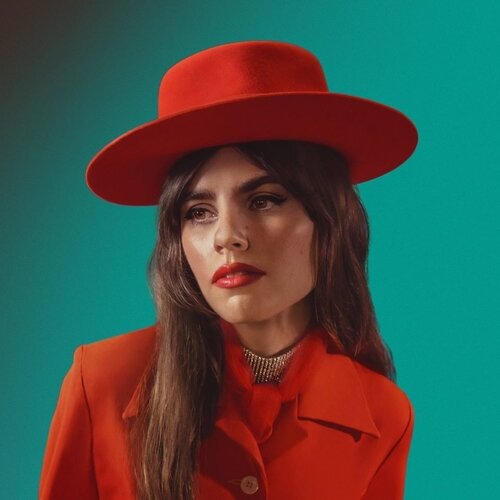
Charlotte Dos Santos

___________

I know I have spotlighted quite a few…

qqqq.jpg

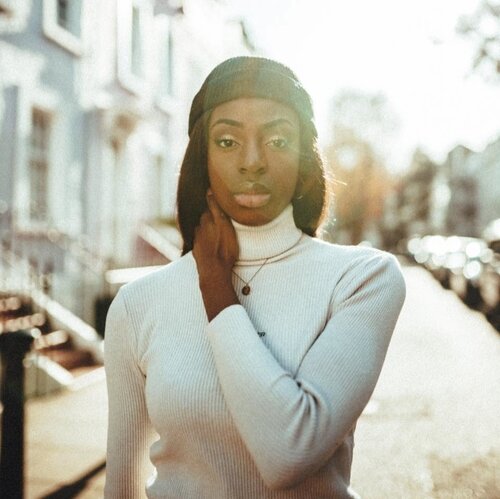
female artists over the past week but, to be honest, there are so many strong women emerging that I feel like it would be wrong to ignore them. Although Charlotte Dos Santos has been releasing music for a few years now, I do think she is primed for explosion. I can see her being one of the big names of 2020; someone who is demanded at festivals and, when you hear her music, it is hard not to be cast under her spell. The E.P., Cleo, was released in 2017, and it received very little in the way of critical attention. Maybe there was a lack of awareness for Do Santos but, when it comes to this artist, everyone needs to be aware of her! She grew up in Bærum with a Norwegian mother and Brazilian father. Dos Santos attended Jazz studies at the Berklee College of Music in Boston, Massachusetts between 2013–‘16), where she earned a Bachelor of Music in Contemporary Writing and Production, and Vocal Jazz Performance. I love the soulfulness of Dos Santos’ voice, and her music mixes Jazz, Neo-Soul and South-American tastes. Although her E.P. received some good reviews in the Norwegian media, it did not get too much scope past there. There are some gigs coming up so, if you can get to see her, make sure you do. There are so many artists I need to see this year, but I just know I will forget! Harvest Time was released a couple of months back, but I have heard it get a lot of love on BBC Radio 6 Music.

I adore the sound of her voice as it whispers and seduces; the song is dream-like but there is power and potency to be found. I am not sure whether there is an album planned and any firm dates, but I would not be surprised if Dos Santos released an E.P. or album before the end of the summer. In terms of interviews and articles, a lot of them have been with smaller sites/blogs, but this year will definitely be one where her music reaches more people and she gets some big acclaim. In 2018, she spoke with Soul Feeder, and was asked about her sounds, influences, and being a woman of colour in the industry:

Recently, Latin American music has massively increased in popularity – not merely Puerto Rican and Colombian reggaeton but also more alternative or traditional Latin American music have received attention, partially due to the promotion of DJs such as Gilles Peterson. Your album clearly has some Latin American influences (among many other influences). Do you think it would’ve been as successful and critically acclaimed if you had released it for example 10 years ago?

Many of the first tracks that formed Cleo circulated the internet amongst the soul collectors and hip hop heads a few years before being heard by the commercial market. I first released a song called “Stay” on Soundcloud in 2012 which was a Shuggie Otis tune that I recorded melody and lyrics to just straight on top of the instrumental. At the time I was a part of the Oslo collective Mutual Intentions and was working with producer Fredfades and we made “Take It Slow” “Move On” “Watching You” and Cleo” which are all sampled based and I really thought they would forever stay within our “niche geeky collectors scene”. But then they didn’t. Granted it did take a few years of circulation!

When writing the rest of Cleo, which came together over a time span of three years, it was important for me that I got to express how free and varied I like to be as a musician and wanted to put that on the project as this would be people’s first introduction to my music. I don’t particularly have one style or type of music that influences me. “King Of Hearts” was melodically inspired by a 1930s Russian avant-garde film on the revolution in Mexico that I watched in my apartment in Brooklyn and simultaneously dealing with emotionally unavailable people and that song came out. “Sumer is Icumen In” is a Middle English reading rota from the 12th century which started out as a school assignment on my exchange semester in Valencia that ended up as the intro because I liked my re-harm so much. “Red Clay” is partially a Freddie Hubbard tribute, who is one of my favorite trumpet players, so when I wrote it I definitely was surprised it got such a warm reception from the commercial market. I think because all the songs are so varied they keep resonating with different people from different scenes, but I do think there is a time for when people are receptive to certain types of sounds and music, yes. It’s a little difficult for me to debate whether or not people would’ve been as receptive to my music ten years ago, as I think it just depends on what people are going through personally that makes them being able to connect lyrically.

In an interview with Utopie Tangible you cited a wide variety of soul artists as your influences, but also renowned hip-hop producers such as J. Dilla and Madlib. Have you ever considered adding a rap feature to one of your songs and is there any hip-hop artist in particular you’d like to work with someday?

No I haven’t considered that actually. I think it’s funny, just because you are an admirer of an art form or impressed and inspired by it doesn’t mean that I should take that and embed that in my own music. I heavily grew up on rap and hip hop and will always continue to listen. But we don’t always have to take on things that we like. To me it is the same thing as just wanting to be a part of everything and not having enough insight to watch it, admire it, and let it be what it is. Like a flower, you wouldn’t rip it up and take it home just because it’s beautiful. At least that’s what my father told me.

In several interviews you’ve stated that you wish to be a role model for people of color by showcasing that by working hard, anything is possible. Are you, nevertheless, not afraid of ever being seen as a “person who made it in a white industry” rather than an actual role model?

I don’t even know what that means. The music industry is an industry at the end of the day, and has been dominated by black culture historically. The entertainment industry has been the only platform through which people of color have been able to claim respect which has been a part of the problem for so long. As black and POC we were accepted either as athletes or musicians but what happened to seeing black and POC doctors, scholars, presidents, businessmen, prime ministers? They weren’t seen even though they thrived in sectors that have been outwardly dominated by white people due to racism. Being a part of breaking that image is what is important to me. That is the metaphor for me behind Cleo – being able to do whatever I/she likes. In the end if you are in any industry moving towards being true and uplifting people you are already a role model to somebody, but I have been focusing on uplifting WOC musicians especially back home in Norway where there are close to none, and I grew up without any role model in my field so I try to be the change I would like to see.

One can detect elements of Neo Soul greats in her voice, but there are other shades and layers that are unique to Dos Santos. I am looking forward to seeing where she heads next as, with her voice and musical talent, the future is going to be very bright.

Charlotte Dos Santos will be looking ahead and planning her moves but, from a creative point, I was interested to understand how songs came together for her, as every artist is different. In this interview from Urban Outfitters, Dos Santos revealed her process:

What is your process like for creating new music?

I use my piano to write. I don't necessarily know what the end result is going to be or sound like but I might start with a bass line or hear certain string arrangements in my head. It's a journey! And all depending on my mood. I also always have my phone with me and record whenever I come up with something. On the plane ride back from Berlin a few days ago I was recording different parts for strings and the guy next to be probably thought I was crazy”.

This article reveals some of Dos Santos’ musical influences - and I definitely approve of her choices! I shall leave things there but, looking ahead, I hope there are more interviews and features that highlight this fantastic artist. After putting out a single a couple of months back, many are looking her way and are very excited (I am one of them!). The stunning Charlotte Dos Santos is…

PHOTO CREDIT: Nathan Bajar for FADER

ONE of 2020’s names to watch.

______________

Follow Charlotte Dos Sanrtos

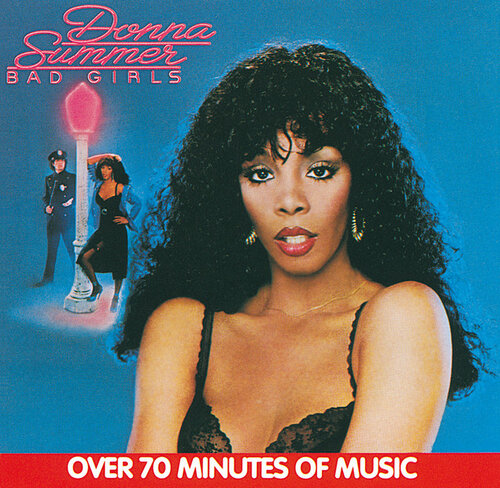
FEATURE: Vinyl Corner: Donna Summer - Bad Girls

FEATURE:


Vinyl Corner

Donna Summer - Bad Girls

___________

I have not included too many women…

in this feature recently, but I have been listening to Donna Summer’s Bad Girls and, on vinyl, it sounds terrific! Even if you are not a huge fan of Summer, I would suggest people grab the album, as it is remarkable and fresh. It was the seventh studio album from Donna Summer, and it was released on 25th April, 1979. I remember when its fortieth was marked last year – I will bring in a feature relating to that later -, and thinking whether we have seen an album like it since. Donna Summer, for sure, has inspired many other artists and was ahead of her time. The album was originally issued as a double album and it was Summer’s best-selling release of her career. The album received a deluxe and remastered edition in 2003 and, as I said, it still sounds new and cutting in 2020. It is a testament to the remarkable songwriting and durability of the album that it is being celebrated and people keep coming back to it. Upon its release, Bad Girls went to the top of the U.S. Billboard 200, and it stayed there for six weeks. With singles like Hot Stuff and Bad Girls owning the airwaves, it is no surprise the album was such a commercial success. It is one of the best albums of 1979, and it arrived at a time when Disco was sort of on its last legs; Summer showed there was plenty of life left, even though Punk was starting to muscle in and steal a lot of focus. Donna Summer was the first female artist to have two songs in the top-three of the Billboard Hot 100 – with the two singles I just mentioned.

Bad Girls is a stunning work from an artist who was at her peak. Although Summer was dubbed ‘The First Lady of Love’ by the press because of songs like Love to Love You Baby, she was never comfortable with that label. There are steamy tracks on Bad Girls but, rather than Summer trying to earn any sort of tag or be associated with sex and love, the album is simply a wondrous work. Summer was experiencing personal problems prior to Bad Girls and she suffered a breakdown. When she was recovered, she worked with long-term partners Girogio Moroder and Pete Bellote (including some additional collaborators). Because Summer knew Disco was dying out, Bad Girls is the most diverse work of her career to that point. The album incorporates Soul and R&B, and I think that is why it resonated and was so popular, as Summer managed to reach new audiences and was evolving. Hot Stuff won Summer a Grammy for Best Female Rock Vocal Performance, and it famously featured in The Full Monty film in the 1990s. Although Summer died in 2012, Bad Girls, I think, remains her finest work. It is an album a lot of artists of today can learn from when it comes to penning catchy and instant songs that lodge in the head. I do think we need more Disco-Soul blends today; something that takes you back to the late-1970s.

In their review, this is what AllMusic wrote:

Bad Girls marked the high-water mark in Donna Summer's career, spending six weeks at Number One, going double platinum, and spinning off four Top 40 singles, including the chart-topping title song and "Hot Stuff," which sold two million copies each, and the million-selling, Number Two hit "Dim All the Lights." Producers Giorgio Moroder and Pete Bellotte recognized that disco was going in different directions by the late '70s, and they gave the leadoff one-two punch of "Hot Stuff" and "Bad Girls" a rock edge derived from new wave. The two-LP set was divided into four musically consistent sides, with the rocksteady beat of the first side giving way to a more traditional disco sound on the second side, followed by a third side of ballads, and a fourth side with a more electronic, synthesizer-driven sound that recalled Summer's 1977 hit "I Feel Love." Though remembered for its hits, the album had depth and consistency, concluding with "Sunset People," one of Summer's best album-only tracks. The result was the artistic and commercial peak of her career and, arguably, of disco itself”.

Maybe Bad Girls is the peak of Disco, but I think it is so much more than a pure Disco album. It has attitude and seduction; there is so much emotion and passion running through the blood, and the songs are never throwaway or too simplistic.

I want to bring in a review from Rolling Stone that was published in 1987. It is interesting comparing a review a decade after the album’s release and, in the case of AllMusic, quite a bit further down the line:

In 1977, Donna Summer -- the first no-bullshit soul singer to have an icy, businesslike edge to her voice -- delivered "I Feel Love," one of the greatest, unalloyed disco songs ever. Two years later, Summer transcended her disco origins and stormed the old rock-pop traditions with Bad Girls. The album was more concise and scorching than Summer's earlier work -- particularly the title jam and the Rolling Stones-worthy "Hot Stuff." The general impression at the time was that Summer was assuming a place within the line of red-hot rock-soul belters, but the truth was much more important: Along with her brilliant producers Giorgio Moroder and Pete Bellotte, she was creating a new idea of international pop. Madonna's career without Summer and "Bad Girls"? Unthinkable.

Bad Girls is the first major album to use synthesizer-based disco studio techniques in the service of pop-rock songs. Much of it is played on live instruments; the guitar solo in "Hot Stuff" is as universal as, say, the Lindsey Buckingham riff on Fleetwood Mac's "Go Your Own Way." But on uncannily biting and hook-y tunes such as "Can't Get to Sleep at Night," Summer and Moroder showed how dance music could kick like the meanest real-time rock & roll. For years after, an entire commercial strain of rock and pop would obsess about technology in ways that would revolutionize the sound of music, for both good (Duran Duran) and ill (Kajagoogoo). 

1111.jpg

This reissue contains a companion disc that collects Summer's previous and subsequent hits: the minimalist masterwork "I Feel Love" and the sweet, soaring "On the Radio." Like Bad Girls itself, it's just about unimproveable”.

If you can get the album on vinyl, then do so. It sound so much bolder and more moving when you listen on vinyl and, aside from the obvious hits and highlights, there is a lot of treasure to be found. Last year the sensational, Bad Girls celebrated forty years and, as the feature below proves, it was a groundbreaking release. I know it will be poured over in 2029, when it has its fiftieth anniversary:

 “Summer delivers every composition with precision and heart, her amorphic instrument reveling in its might on uptempo (“Journey to the Centre of Your Heart”) or downtempo (“On My Honor”) moments.

Musically, as with much of her canon up to this point, there had been other genres at work underneath or adjacent to the seductive disco element. One such genre—rock & roll—had long since been in Summer’s sights. Having recently been in a cooperative sphere with Brooklyn Dreams on her December 1978 smash “Heaven Knows,” Summer was sonically smitten with their rock-disco-soul vibe that merged with her own shimmering dance music shape on that effort.

Bad Girls strikingly split itself three ways with an aggressive, bottom-heavy rock-funk-disco fusion (“Dim All the Lights”), experimental electronics (“Our Love”) and booming AOR balladry (“All Through the Night”). That Summer could command these different sounds over an entire recording demonstrated that she couldn’t be confined to just one space.

It was the mark of a true pop pioneer.

Preceded by the aptly titled four-on-the-floor firestorm “Hot Stuff” in mid-April 1979, Bad Girls arrived later that month. It subsequently stormed the charts to become Summer’s best-selling collection and her second double album (of an eventual three) to top the U.S. Billboard 200. It’s a record set and held by Summer to this day.

In addition to its commercial triumph, its critical scores were near universal and culminated in a groundbreaking achievement with a Grammy nomination—and win—in 1980 for its lead-off single “Hot Stuff” for Best Female Rock Vocal Performance. The newly minted category saw Summer as not only the first woman to win this accolade, but she was the only woman of color to compete in this category that year alongside Carly Simon, Rickie Lee Jones and Bonnie Raitt. She secured nominations again in 1982 and 1983, which put Summer at the head of an elite cache of black frontierswomen such as Joan Armatrading, Melba Moore, Nona Hendryx (of Labelle) and Tina Turner to receive entry into an exclusively white field”.

I am going to listen to Bad Girls again this week, as I really miss artists like Donna Summer, and I feel the music scene could do with a new explosion of Disco and Soul. We have some uplifting and spirited music now, but nothing that resembles Donna Summer’s 1979-released gem. It is a brilliant album that will continue to stun and amaze for years and years to come. If you have not heard this cracker, then make sure you investigate Bad Girls

WITHOUT delay.

FEATURE: Dream for You: The Struggle to ‘Switch Off’ in the Social Media Age

FEATURE:


Dream for You

111111111111.jpg

PHOTO CREDIT: @entersge/Unsplash 

The Struggle to ‘Switch Off’ in the Social Media Age

___________

ANYONE who is involved…

11010.jpg

PHOTO CREDIT: @cikstefan/Unsplash

in the music industry – I, technically, am as a journalist – struggles to relax and unwind. Whether you are a megastar traveling the world and playing major gigs to someone much further down the ladder, music is something that consumes you! Most of us are happy for music to take us over and, whilst this is another subject I have explored in the past, I want to return, as I am finding it harder to detach than ever before. Maybe it is fitting my day-job around music, but my sleep is particularly affected. It is difficult to put music aside or reduce your workload; there is something about music that keeps driving you and obsessing every waking hour! One of the biggest problems in the industry is the toll music has on mental-health. By that, I mean the hours people put in and how many of us spend so long online. I think my problem stems from trying to balance a full-time job and keeping the blog going, but it is the sleeplessness that is affecting me at the moment. I, like many, try not to be on the laptop too close to bedtime, but there is always that temptation to check the latest music news and have a gander on social media – just in case something has been missed out on. I read a lot of posts online where artists, journalists and those in music struggle with sleep and anxiety, as they dedicate so much of their time and thought to it. Music and music therapy are very good for your mental-health, but it is more the social media aspect that worries me.

PHOTO CREDIT: @diklein/Unsplash

I have not read any study that suggests that listening to too much music – whatever that would constitute – is that bad for your mental wellbeing; it is the associated baubles, commitments and aspects around music that takes its toll – from emails and social media through to long hours etc. I have huge sympathy for those in music with greater responsibility than me. Think about the major artists whose every hour is spoken for; the affect that sort of pressure has is immense! It may seem like an impossible ask, but I think all of us in music need to take some time away to recharge or just get away from the screen. It may seem easy to say this, but there is an addictive quality to music where one needs to know every happening and development; where the latest track could arrive any moment and one needs to be all over it. Not only will this lead to poorer sleep, but you find the mind never really switches itself off. It is not only me who is finding it hard to limit time online and be so involved with music all of the time. As I said, I am reading a lot of stuff online where people are getting buried and they are struggling to find peace. Maybe it is the natural urge and personality of the music lover that means we need to stay in the loop and know everything happening. This, in this day, means a lot of time online. Some are good at rationing time on social media. They can turn off and only spend a few hours a day online.

xdd.jpg

PHOTO CREDIT: @austindistel/Unsplash

At the moment, my ‘working day’ – the full-time job and writing – runs from 5 a.m. to about 8 p.m. That might sound manageable, but it is the time asleep (or trying to) with the brain musing and wondering about what is happening in music that creates the fatigue. Is there any likelihood any of us can make realistic adjustments? I have been pledging to limit my online time but, as a journalist, I feel like I need to be online to capture everything and be at the top of my game – not that my standard and talent is that lofty! I am not one for resolutions, but I think all of us in music who are feeling a little over-committed or tired need to make up a plan and eliminate the inessential. This might mean spending fewer hours a day online or taking a couple of days off during the week. For musicians, it might be harder to achieve because they need to be on the road, but I think we can all cut back and find time for ourselves. Not only can this lead to better sleep and relaxation, but the quality of our mental-health will be improved. Of course, it is easier said than done, and a musical diet can be hard to stick to. I think just enjoying music for therapeutic reasons is better than spending so much time on social media and getting overwhelmed with information. I think, if we all did that, then it could make an impact – I definitely need to find a better balance. It may involve small steps at first, but it can lead to…

PHOTO CREDIT: @brookecagle/Unsplash

A more peaceful and relaxed year.

FEATURE: Modern Heroines: Part Eighteen: Anna Calvi

FEATURE:

Modern Heroines

sjshytsyds.jpg

PHOTO CREDIT: Maisie Cousins

Part Eighteen: Anna Calvi

___________

I am not sure why I have left it so long…

232332.jpg

to include Anna Calvi in this feature! I have scanned back and cannot see her name so, rather timely as it is, I will get to it. Calvi is the Ambassador for this year’s Independent Venue Week, and is someone who has relied on smaller venues - early in her career – to get where she is. I will circle back to that at the end of this feature but, before I mention her debut album, I want to bring in a bit of news that came out earlier in the week. Calvi’s excellent 2018 album, Hunter, has been re-tuned; she has stripped and modified the tracks and has collaborated with some great artists. This article explains more:

Art rocker Anna Calvi set a record last year when her latest full-length, Hunter, earned her a third consecutive Album of the Year Mercury Prize nomination. No other solo artist has achieved that feat — and now she’s looking to make the record even more unbreakable. Calvi has today announced a new LP, a stripped-down reimagining of Hunter she’s dubbed, Hunted.

Between tour legs, Calvi revisited some of the early recordings she’d made for Hunter. “These recordings capture the very moment I first wrote these songs, and recorded them on my own, in my attic studio,” she said in a statement. Calvi was struck by the “intimate” nature of “these most private recordings,” and decided to highlight that feeling on Hunted.

However, she wouldn’t be reworking the tracks on her own. She invited a number of guests to help her give the songs new life, including Julia Holter, Charlotte Gainsbourg, and IDLES’ Joe Talbot. Lead single “Don’t Beat the Girl out of My Boy” (which, incidentally, was the first track shared off Hunter, as well) sees Calvi teaming with Courtney Barnett.

“Anna is a completely awe-inspiring performer, it’s impossible to take your eyes off her onstage,” Barnett said of her fondness for Calvi. “I love her songwriting for its beautiful and perfect balance between aggression and tenderness”.

It is great that artists take a successful album and then see potential to take it further; whether that is an acoustic version of said album or bringing others into the fold. Right now, Calvi is one of the most revered and talented artists around and, right from her earliest work, there was that spark of brilliance. What about Anna Calvi herself? Born in 1980, she has received three Mercury nominations – every one of her studio albums has earned one! -, and she has won several other gongs. Calvi is renowned for her virtuosic guitar skills, her powerful voice and incredible songwriting. Born to therapist parents in London, Calvi graduated from the University of Southampton with a degree in Music, having studied violin. I often wonder whether children whose parents have jobs like Calvi’s are more attuned to the human condition and have a different insight compared with other musicians – I will muse on that later, perhaps.

Calvi worked with a private guitar tutor and, by 2011, her acclaimed debut album came out (on Domino). It was a Mercury-nominated album – I wonder why Calvi has not won one yet! -, and it is a remarkable offering. Calvi grew up exposed to a variety of musical genres; she was seduced by artists like Captain Beefheart and it seemed, right from childhood, music was her path and connection. Inspired by the likes of Jimi Hendrix, Ravel and Debussy, there are a lot of different artists in her heart. For sure, the stunning guitar work throughout can be traced to Hendrix, but I think Calvi is very much her own artist on the debut. With material written in her parents’ attic using eight-track equipment, there is something intimate and charmingly lo-fi about her eponymous debut. Many artists are a little disappointed with their debut, as they feel they could have done better or changed things. Calvi was very proud of her first outing – and rightfully so! -, and she wanted the music to tell a story more than the lyrics. Anna Calvi is an evocative and immersive album from a unique and hungry artist. Whilst Calvi would go on to better things, Anna Calvi is a remarkable album that, I feel, does not get enough airplay and focus. This is what AllMusic had to say when they reviewed the album:

Citing the likes of Debussy, Captain Beefheart, and Nina Simone as her main influences, it's clear from the outset that Anna Calvi isn't your average, run-of-the-mill singer/songwriter. She may have been tipped for success by everyone from the broadsheet music press to Brian Eno, but her blend of sultry blues-rock and dark, mysterious flamenco is a million miles away from the chart-friendly output of her fellow Sound of 2011 nominees.

Her self-titled debut, therefore, is unlikely to reap the same commercial rewards as the likes of Jessie J and Clare Maguire, its uncompromising, gothic, David Lynch-esque nature certainly won't spawn any bite-size TV ad soundtracks or airplay favorites your mom can sing along to. But in a music scene dominated by female solo artists, Calvi's romantic but often sinister ten songs certainly helps her to stand out from the crowd. Opening track "Rider to the Sea," sets the scene immediately, a brooding instrumental whose atmospheric twanging guitars would provide the perfect score should Quentin Tarantino's much rumored Kill Bill 3 ever come to fruition. Calvi's haunting and intense vocals first come to the forefront on "No More Words," a gloriously menacing number which evokes the shimmering distorted harmonies of My Bloody Valentine. But it's on the grandiose "Desire" when Calvi really unleashes the impassioned post-punk tones that have drawn favorable comparisons with the likes of Patti Smith and PJ Harvey (whose regular collaborator, Rob Ellis, is also here on production duties). Backed by an impressively tight backing band, the likes of "Suzanne and I," a future James Bond theme in the making, "I'll Be Your Man," which would sit comfortably on Florence and the Machine's Lungs, and "Blackout," which evokes Phil Spector's expansive Wall of Sound, prove Calvi isn't averse to delivering slightly more accessible material.

But it's the more unconventional "The Devil," which undoubtedly provides the album's highlight, a mesmerizing, stripped-down fusion of classical, rock, and flamenco that showcases her virtuoso guitar skills, and her effortless shifts from whispering restraint to primitive aggression before ending in layers of drenched feedback. By the time the epic strings have reverberated on closing track "Love Won't Be Leaving," you're left in no doubt as to why the industry appears to be so excited about her. Capturing the intensity and raw emotion of her captivating live shows, Anna Calvi is an ambitious and always intriguing debut which heralds the arrival of a unique and inventive addition to the plethora of U.K. female singer/songwriters.

I am going to bring in reviews of all three of her studio albums in a minute – not including her latest work – but, right from the start of her career, Calvi was speaking with the media and telling her story – a lot of artists avoid interviews for a while, which is a shame. Calvi is someone who arrived on the scene with a very original and interesting sound, so it is understandable people were keen to know more. I am not sure when I first encountered her music, but it might have been just after her sophomore album was released in 2013. I have gone back to her debut a lot since then, and I am struck by how complete and confident it sounds. In this interview with The Guardian, Calvi talked about her influences, confidence, and where her voice emerges from:

In fact, almost everything about Calvi's musical vision seems to be the result of intense fixations and pushing herself to uncomfortable limits. In many ways, performing seems to be a release for her. It gives her courage, putting her in touch with "a different side of me that's strong and braver and more powerful", which, perversely, allows her to be more vulnerable, too. "The singers I love, that's what they have," she says. "Nina Simone is extremely vulnerable but her voice is powerful.

222.jpg

This rawness, this complete fearlessness, in giving everything, and leaving nothing. It's a really inspiring quality." On a personal level, she says being creative "stops the annoying side of consciousness that's like, 'Nanananana!' You know, all that crap that your mind is filled with, worrying about what you said yesterday, what you're going to do about this. All of that completely goes away. Without it I'd be a bit of a nervous wreck."

“…But that takes confidence, which was slower to come than technique. "Often you have singers and you know who it is in the band because they walk in strutting, if it's a girl, in heels, clop, clop, clop," she says. "And I look at them and think, 'God, I can't do that. I can't be that kind of person.'"

Instead, she's created a world of her own. From the smuttily seductive Blackout ("Here in the dark/ I could be anyone") to the pining but sinister First We Kiss ("...then you will lock the door, my dear"), the album is heavy and close. "There's a sense of internal forces taking you over and finding a way to survive them," Calvi says. "They can be anything from loneliness to passion. At times it can feel really close, and at times really vast. Musically, I love the sense of tension and release that you get a lot in orchestral music. You get it in bite-sized form in pop music but I like to extend it and make the most of it, because I find it really exciting; the dynamics you get from really building something up until it's almost unbearable, then letting it go."

…Is this where that enormous voice comes from? "It's a bit like when something really bad happens, there's a survivor in you that kicks in and you don't realise how strong you are," she explains. "It's the same part of me that kicks in when I sing. Physically and emotionally, because it's both. It's a very physical thing to do." Being so slight, she says, means that performing takes it out of her. "I think that's why I like Edith Piaf, because I know she was small as well, and it's really nice that even if you're of a small frame – and I'm really weak – there's something in me that's like that".

After such an intriguing and well-received debut, Calvi could have taken a few years off and taken a breath. Calvi was busy gigging and preparing the songs for her follow-up, One Breath. Recorded at Black Box studios in France, it was mixed (in Texas) by Calvi’s new producer, John Congleton. The fact such an esteemed and legendary producer was working with Calvi so early in her career shows what an impression she was making and how good her music was/is! One Breath is full of thrills and vulnerability; about being open and surrendering to that feeling of fear, but then embracing it. I think One Breath is an even more confident and nuanced album than her debut. Eliza, Suddenly, and Piece by Piece were released as singles, and the whole album shines and sparks. It is a terrific creation and, again, critics were keen to lend their praise.

This is what The Irish Times wrote when they listened to One Breath:

Described by Brian Eno as “the biggest thing since Patti Smith” and addled with bounteous comparisons to PJ Harvey, Anna Calvi does have her work cut out for her. But the Londoner makes certain to brand her own style across her second album. The tumultuous rock of Eliza, the intimate, woozy throb of One Breath, and the primal bluster of Tristan are distinctive yet complementary. Still, it is Piece by Piece that best sums up Calvi’s appeal. Tiptoeing through verses of whispered choruses and swaddled drums, she unleashes an abrasive scramble of atonal guitar and noisy keyboards at the song’s most vulnerable points. It confirms that you never quite know what’s coming next with Calvi, be it ghostly hymnal passages, cinematic strings or buzzing rock’n’roll – but the anticipation is both delicious and satisfying”.

I am keen to get to Anna Calvi’s latest album and a couple of interviews she provided fairly recently. With each album, she has grown stronger and more assured. One Breath is a remarkable album that exceeded the high standard of her debut and announced her as one of the finest songwriters in the U.K. Again, she had another Mercury nod under her belt, and so many people were eager to explore this ever-evolving and blossoming artist. I do not have too much to add to what I have already said about One Breath, other than to say it is a stunning album that everyone should listen to – I am ending this feature with a playlist that includes One Breath’s best tracks. 

asasas.jpg

PHOTO CREDIT: Eva Pentel

I want to quote from this interview in The Independent, as it is a really interesting piece and, whilst I would recommend you read the entire interview, I have selected a few choice passages:

That voice has certainly helped her records, 2011's eponymous debut and 2013's One Breath, win fans and acclaim; both were Mercury Prize-nominated. Yet Calvi says she was "phobic" about singing for many years, not able even to warble in the shower or along with the radio. "I guess I always felt a bit hemmed in. I just decided one day, I'm going to work and work and see if I can sing. I practised for hours every day. I had a few lessons at the beginning, and they were more like therapy sessions: me being like, 'I can't, I can't,' and [the therapist] being like, 'You can, you can!' I would say it is the thing I'm most proud of in my life, finding this voice."

"I can get really lost in my own imagination, and there's something important about having that space," she says. "Not speaking, not writing, just thinking. It's funny, when you're left with your thoughts, they go to different places… k I do think it affects how I write – this idea of loneliness, what it means, how it can be liberating, but also reminds you of all the most scary things about being a human… I kind of like that."

As you can tell, Calvi is not afraid of exploring the deep stuff: loneliness, anxiety, identity, reinvention. Before our interview, I'm told by the PR she'd like to "discuss gender". So we do.

She claims it's a topic she didn't used to think about much – until she became a famous musician and journalists started asking her highly gendered questions. "I felt I was being reminded constantly about my gender in a way you never usually are. 'What's it like as a woman playing guitar?' 'As a woman, how do you…?' 'What is it like to play such a phallic instrument?' At first it surprised me, then it made me angry, and now it's like my eyes are opened to seeing the world in a slightly different way. You're so brought up in the patriarchal way we live, you don't notice it, yet it's everywhere. It's everywhere."

She fears we're sliding backwards in terms of gender roles, that pressure is again increasingly being put on women to simply be pretty and passive, as if their appearance is their primary purpose. "It's beyond perfection, the way a woman is supposed to look. And shapeless – like an 11-year-old boy. You look in the mirror and see that you have hips and you imagine they shouldn't be there. I do shave my legs and my armpits but really, what are you being told, that you have to shave off parts of yourself? You're not allowed to just be in the world. You're always being told that your natural state is a bit disgusting".

After the success of One Breath in 2013 and increased interest, there was a bit of a gap before a third album arrived. Hunter came out in 2018 – five years after One Breath -, but it is Calvi’s strongest work yet. It runs deeper and hits harder; singles like Don’t Beat the Girl Out of My Boy, Hunter, and As a Man see Calvi with her voice in incredible form; her musicianship and guitar playing is truly extraordinary. I love the album and, whilst it was nominated for a Mercury again, it lost out last year – Dave won for PSYCHODRAMA. Produced by Nick Launay and Anna Calvi, Hunter is one of 2018’s very best albums. Few artists manage to hit such peaks on their third album. Calvi released a sensational album that blew fans critics away. Taking in subjects such as gender and sexuality, the songs make you think, but they are striking in terms of the vocals and compositions, and not just the lyrics. AllMusic remarked the following when reviewing Hunter:

Anna Calvi took a five-year break after releasing 2013's One Breath, but the intervening time didn't diminish the grand sound she's been cultivating since her debut. From the title track's breathy opening to the soaring melody of "Away," her gift for elucidating the drama of a bygone era is intact and just as effective. If anything, the lustily provocative nature of her artistry reaches its dizzy apex on Hunter.

She takes the drama of '80s power ballads and extracts its most gothic textures, no doubt aided by Nicolas Launay's (Nick Cave and the Bad Seeds, Yeah Yeah Yeahs) expansive production, which recalls the airiness he gave the Bad Seeds' Push the Sky Away. A great deal of the record explores the fluidity of gender by playing with many of the common tropes associated with masculinity, from "Alpha" to "Hunter." The former track's arch, elongated riffs, and the predatory prowl of "Indies or Paradise," include some of Calvi's most warped and consummate shredding to date, further dispelling another macho myth -- that only boys can play guitar. Nevertheless, these virile expressions never come at the expense of Calvi's femininity, as the lush swirl of "Swimming Pool" attests.

Like gender, the record also examines sexuality. Calvi has flirted with a queer point of view before, as on "I'll Be Your Man" from her 2011 debut. But Hunter is the record which fundamentally lives and breathes queerness, a record where on "Chains" she suggests, "I'll be the boy, you be the girl/I'll be the girl you be the boy." Unlike earlier efforts, this feels less like theater for theater's sake, and ultimately, unbridled and infinitely real. On "Wish," for instance, she's never sounded so liberated, and that lack of constraint bleeds into her guitar playing, hinting at a newfound joy amid the curious majesty of her music.

Hunter is the record where, more than any other, Calvi's talents have fully crystallized. The true character of her music has been unleashed and will likely see all those PJ Harvey comparisons finally fade, eclipsed by the radiance of this tough yet open-hearted work.

oiy.jpg

I will conclude and wrap things up soon but, before then, I want to source from another review of Hunter. It is an album that deserves all the love it received and, when The Guardian wrote about Hunter, they made some keen observations:

The more one listens, the more Hunter seems like a filmic album: it is defined by colour. Swimming Pool, a gorgeous, rippling ballad was apparently inspired by David Hockney’s 1960s paintings, and the celebration of shameless pleasure. Yet it seems to recall the films of Douglas Sirk, where colours were used as signifiers of repressed desire.

There are depths to be explored here, depths to wallow in. The title track switches decades: Hunter’s stately, four-chord synth pattern, and little twanged guitar detailing calls to mind something from Bruce Springsteen’s Tunnel of Love, albeit with a female protagonist as the seeker of prey.

There are missteps – the refrain “I’m an alpha / I divide and conquer” on Alpha feels more like a truism than a truth – but ones so tiny as not to reduce the impact of the album. Hunter is glorious and triumphant, a record that succeeds on any terms you try to force upon it”.

With every new album, Anna Calvi was talking about a new phase of life and developments. Queerness has always been a part of her music, but much more so on Hunter. Artists such as Calvi, Shura and Marika Hackman are putting queerness in the spotlight, yet it is still an area that is under-exposed and supported. I wonder whether the industry is as open as it should be, or whether queer/L.G.B.T.Q.I.A.+ artists feel like they can be open and expressive.

Hunter is an album that stays with you long after you have heard it. I have a couple of interviews to cover before I come on to her post-Hunter work/activity. I came across an interview in i that interested me, where Calvi talked about the period before Hunter and how she was rebuilding things:

 “It was a time to rebuild my life, my identity and confidence”, she says. “I wrote the record very much in tandem with falling in love again and exploring being happy and experiencing pleasure and being more free. All the possible things a human can be, which is so restricted by the constraints of having to perform one’s gender. That was what I wanted the record to feel like.”

And she has had to defend her relationship. When Calvi and her girlfriend were looking to rent a flat in France, a landlady – on realising that they were a couple rather than a pair of students – refused them. “It was like wow, shit, this stuff really happens.”

So you can understand why Calvi is angry. In the years since she emerged as an esteemed art-rock guitarist and singer, alongside winning best breakthrough act at the 2012 BRIT Awards and being twice nominated for the Mercury, she has found herself answering such questions as: “What’s it like playing a phallic instrument?”, and that other favourite: “What’s it like being a woman in music?”

“It’s this idea that women are a genre and that you would be compared to really random female artists because you have breasts, but not compared to a male artist”, she says”.

With Hunter, a whole new clan of fans and supports headed the way of Anna Calvi. It is an album that still sounds so refreshing and important now, over a year after its release. The record is very intimate and personal in places; that mixes with the more outward-looking and charged. That combination of sounds and emotions makes Hunter such a magnificent album. I am going to bring us into the present soon but, quickly, I want to quote from an interview from The Independent where Calvi talked about releasing such intimate music:

It was “scary”, she says, to release such intense, intimate music. “It’s a weird thing to say really personal things and then think that any old person is gonna hear them. Especially if you’re quite an introverted person, which I am.”

The risk has paid off. The record is one of 12 in the running at tonight’s Mercury Prize, shortlisted alongside albums by Foals, Dave, Little Simz and The 1975. Calvi says it feels “incredible” to be nominated, but she’s not concerning herself with what happens on the night. “I’ve experienced losing twice, I know how it works,” she says with a laugh. Her self-titled debut was shortlisted in 2011, as was its follow-up, One Breath, two years later. “You spend the whole time thinking, ‘I’m not gonna win’, and then you get there, and you’re waiting at the table, and there’s two minutes where you’re like, ‘Hang on a minute, I could win this!’ And then they announce the winner, and it’s someone else. So I’m so ready and prepared for that. I’ve got it down.”

xcc.jpg

Calvi is buoyed by the increasing acceptance of queer artists into the mainstream, though she worries about her identity being commodified. “I talked to a journalist who was a bit older who was saying, ‘Is this whole sudden queer thing the new counter-culture, like the punks?’ And I tried to explain to her that the main difference is that if a trans person doesn’t feel they can be understood... we’re talking about life and death. People kill themselves. It’s not just for fun, it’s not about what music you like or what hobbies you have, this is about people’s lives. And I think it’s really dangerous to try and condense it and make it a product. But I do think it’s great for me as an artist that there’s a family of queer artists. The difficult thing is if only people in that community hear about each other, then there’s a sense of ghettoising. I suppose equality is only when it’s not even a thing anymore. And we obviously are far away from that being the case”.

Since Hunter’s release in 2018, Calvi has been touring a lot and keeping busy. I will end by talking about gigs (and bringing in a live review from last year), but Calvi has been doing some T.V. composition for Peaky Blinders. She is a big fan of the show, and she has contributed her magic. I will include a cut from the Peaky Blinders soundtrack in this feature but, if you are not a fan of the show – or missed it -, here is an article from July 2019 where the news was announced:

 “Anna Calvi is pleased to announce that she has written and performed the score for the entire new season of BBC One’s Peaky Blinders.

Peaky Blinders had its season 5 premiere in Birmingham yesterday evening, where Anna Calvi joined the cast and director Anthony Byrne on the red carpet.

Previously a fan of the series, Calvi said on writing the original score: “This is a new thing for me but it was a really good fit, I love everything about the show. I completely immersed myself in it and became quite obsessed with the characters, especially Tommy Shelby [played by Cillian Murphy] and getting lost in his mind”.

Anna adds: “There is a duality to the show, a beauty and a brutality, which I have been exploring in my own music and on the Hunter album. I want to say thank you to the director Anthony Byrne for believing in me and letting me seek out what I needed to".

Anna Calvi is an artist who can step into film and T.V. with ease and is instantly adaptable. I wonder where she might head next, and whether she will write music for other T.V. shows or films. 2020’s Independent Venue Week Ambassador Calvi joined BBC Radio 6 Music on Friday, and she spoke about the event/week and live music. I opened by stating how Calvi, like so many artists, relied on venues to get her break and experience. She is vocal and passionate when it comes to supporting live venues and ensuring their survival. In this report from The Guardian, Calvi spoke about the importance of music; asking why there is not as much funding (for music) as ballet or other areas of the arts:

Britain’s independent music venues should receive the same reverence and support as the ballet or opera, according to the musician Anna Calvi and the organisers behind a week-long initiative to promote the UK’s smaller concert halls.

Calvi, a three-time Mercury music prize nominee, told the Guardian that venues which predominantly focus on live music – and helped contribute £1.1bn to the UK economy in 2018 – need to be protected at a time when a third of smaller venues report they are struggling.

She said: “Just because it’s music that is played with guitars, why is it any different to a place like the ballet or opera? Other areas of the creative industry might have slowed down, but people are still going to gigs.”

Calvi, who is an ambassador for Independent Venue Week, added that investment in venues should be seen as a long-term project, which allows talent to develop. “There might only be 150 people in the room at the time at those early gigs, but those artists could go anywhere from there,” she said. “Playing smaller venues was instrumental for me to becoming the artist I am now”.

I have not even mentioned Calvi as a live performer. I have not seen her live, but I have watched televised performances and she is incredible! The passion she puts into each performance is electrifying. She has a couple of dates announced this year, but I am sure there will be more dates revealed down the line. I am hoping to catch her live this year, because it is clear Calvi is one of the best live performers around. CLASH caught Calvi in London last year and were mesmerised by what they saw:

A combination of some Kate Bush gothica; amazing, jaw dropping, on-just-the-right-side of overindulgent virtuoso 80s-era Prince guitar, PJ Harvey sultriness… and – dare I say – a touch of Bruce Springsteen? Oh, and also an incredible soaring voice that, from what I can gather, physically knocks one woman in the audience over at the front. 

xxxx.jpg

PHOTO CREDIT: Eva Pentel

This is a performer that you can’t take your eyes off for one second. Her voice is insane – and I hope I’m not doing her a disservice when I suggest that she should be a shoo-in for the next Bond theme – she could Carly Simon the shit out of it.

But back to the gig – the unconventional and unexpected rhythms; the very of-the-moment themes of androgyny and sexual fluidity; the heavy atmosphere cut through with thrusting guitar and operatic voice - and the highlight - and my new favourite track of hers, ‘Don’t Beat the Girl Out of My Boy’.

She didn’t play ‘Suddenly’, but maybe that would have lifted the atmosphere too much. As it was, the occasion has an almost David Lynch-like quality - like you’ve got too drunk in the Red Room, and someone is holding a blue velvet cushion over your face... in a good way.

It she ventures anywhere close to you this year I urge you to catch her – it’s like a fever dream that never quite leaves you”.

I will leave it there, but I think this year will be big for Anna Calvi. There are no plans for a new studio album yet, but one wouldn’t bet against it – and, I suspect, it will be nominated for a Mercury! There are going to be tour dates and, as festivals are announcing their line-ups, I feel like Calvi will be featuring on more than a few. There are some truly great artists in the music world right now, but few are as impressive and inspiring as Anna Calvi. She is an artist who will be a true…

ICON of the future.

FEATURE: Inside the Pop Documentary: Taylor Swift and Miss Americana

FEATURE:

Inside the Pop Documentary

aalaalal.png

IMAGE CREDIT: Netflix

Taylor Swift and Miss Americana

___________

IN an age where we do not have…

sasaas.jpg

IN THIS PHOTO: Taylor Swift with the Miss Americana director, Lana Wilson

music television as such, I wonder whether we have lost out a lot. We stream music and have a lot at our fingertips, but there is a definite lack of great music documentaries and shows. I used to love the VH1 and MTV shows that spotlighted artists or albums. Now, in 2020, we have so much technology and viewing options, but there seems to be less reliance on music documentaries. From Madonna: Truth or Dare of 1991 to the patchy Katy Perry: Part of Me in 2012, there has been some great Pop documentaries. Maybe modern artists feel like they are exposed enough with social media, but a good Pop documentary can reveal so much, in a good way. I understand one can feel venerable and exposed on camera, and giving too much detail away can backfire or damage their career. Whether it is a tour documentary like Beyoncé’s Homecoming or a straight look into an artist’s life, I think a good documentary can reveal depths to an artist. I am not a massive fan of Taylor Swift’s music, but I think there is so much pressure on her shoulders. A star of that stature and fame is not going to have an ordinary life or be able to feel normal. Wherever she goes, there is going to be someone taking a picture or somebody trying to get a piece of her.

Miss Americana is directed by Lana Wilson, and he film covers a number of events in Swift's life and career, including the making of her seventh studio album, Lover; her past battle with an eating disorder, her sexual assault trial; her mother's cancer diagnosis, and Swift's decision to go public with her politics. There have been some incredible documentaries through the years, but there have been very few since streaming sites like Netflix came around – surely we should see quite a few in this day?! I think huge Pop artists like Taylor Swift can feel misrepresented in the media, or like they do not have a chance to be open and honest. Not only is Swift’s discussion about her politics and eating disorder brave and inspiring, it makes you feel more bonded to her, even if you are not a fan of her music. I have seen clips from the documentary and feel Swift comes across as articulate, brave and strong. I listen to her music now and then, but I rarely think about what inspired the song or the artist behind the words. I would like to see more documentaries from Pop artists. Whilst some might see documentaries as self-serving and a little egotistical, I think it is great to see an artist talking freely and letting you into their world. Miss Americana can be seen here, and it is a must-see for her fans, but also for those (like me) who respect and like her political stance and how inspiring she is to others.

Even if Miss Americana does miss out some things, there are some very raw and emotional scenes; different sides to a Pop artist. I think Miss Americana will open doors for other artists to produce documentaries. I think many people get the wrong impression about huge artists and what their lives consist. There was a lot of build-up regarding Miss Americana and, when it was released on Netflix, reviewers were keen to have their say. It is clear many expected Swift to be goody-goody and hold back but, clearly, here is an artist keen to have her say. This is what The Independent had to say when they viewed Miss Americana:

Perhaps most compelling, though, are the arguments Swift has with music executives, as well as her own father, about why she feels compelled to speak about politics after years of silence. For younger viewers, and those who aren’t from the US, it’s difficult to grasp the scale of the backlash faced by The Dixie Chicks when they criticised then-president George W Bush in 2003. That is, until you see the footage of news hosts calling them “dumb bimbos” and claiming they “deserved to be slapped around”, and placards announcing they should “burn in hell”. Before then, The Dixie Chicks had been the reigning queens of country music, with more than 30 million records sold. But an off-the-cuff remark turned America’s sweethearts into the country’s most-hated. With that in mind, it isn’t all that shocking that Swift – a country-pop star in her early twenties appealing to stone-faced label executives demanding she stay quiet – was reluctant to follow that path.

By incorporating home videos, professionally shot backstage films and to-camera interviews, Miss Americana makes an admirable attempt at covering as much ground as possible. There are moments that feel too well-trodden – the Kanye West feud, or her support of the LBGT+ community. And elsewhere, you wish Swift and Wilson would delve a little deeper, such as when she references her former compulsion to appear “sweet” or “nice” all the time.

Before Miss Americana, I only really knew about Taylor Swift’s music and, from a few interviews, various bits and pieces. It could have been a gamble releasing a documentary but, actually, she comes across as this complex but very real woman who has garnered a lot of respect. Even though I am not going to listen to her music a lot more, I am definitely moved by Swift. She has so much passion and belief in what she does, and she is not someone who forgoes her independence – like so many of her Pop peers. In Miss Americana, Swift talked about motherhood and her relationship with Joe Alwyn:

 “Swift spoke in the film about how she doesn't feel ready for motherhood yet, so tabloids, please quit it with any pregnancy rumors. “There’s part of me that feels like I’m 57 years old, but there’s part of me that’s definitely not ready to have kids and definitely not ready for all that grown up stuff,” Swift said at one point. “I kind of don’t really have the luxury of figuring stuff out, though, because my life is planned two years ahead of time. Literally, in two months, they’ll come at me with dates for the next tour.”

What she said—and what was shown—of her with Alwyn was pretty minimal. But she did discuss, without naming him explicitly, why she fell in love with him in the fall of 2016, after her Kim Kardashian Snapchat scandal tainted her, and the singer chose to take a step back from the spotlight for a bit. “I felt alone, I felt really bitter,” Swift said, via Hollywood Life. “I felt sort of like a wounded animal lashing out. I figured I had to reset everything. I had to reconstruct an entire belief system for my own personal sanity. I also was falling in love with someone who had a wonderfully normal, balanced life.”

She also addressed their choice to keep their relationship under the wraps. "We decided together we wanted our relationship to be private," she said. “Even though it [Swift's public image in 2016] was really horrible, I was happy. But I wasn’t happy in the way I was trained to be happy. It was happiness without anyone else’s input. We were just…happy”.

One of the most talked-about and revealing scenes of Miss Americana is when her album, Reputation, was overlooked at the Grammys in 2019. This review from The New York Times highlights that scene:

“On Grammy nomination day in the winter of 2018, a camera watches from a low angle as Swift sits in sweats alone on a sofa and hears from her publicist that her perturbed sixth album, “Reputation,” has been omitted from three of the big categories. She’s stoic. She’s almost palpably hurt. But Swift’s songwriting treats hurt as an elastic instrument, and she resolves in that moment of snubbing, “I just need to make a better record.” And the movie watches as she writes and records “Lover,” another album eventually rejected by the string-pullers at the Grammys”.

asaasas.jpg

Along the way, Swift does a lot of ruminating and recounting, a lot of arguing and apologizing on her own behalf. She’s rueful about sitting out the 2016 presidential election and failing to mobilize her millions of fans and followers against Donald Trump’s candidacy. So “Miss Americana” is also about an apolitical star waking up to herself as a woman and a citizen. She wants to spend her “good girl” credit to decry the scorched-earth-conservative Senate campaign that Marsha Blackburn was running in Tennessee, Swift’s adopted home. Her management team deems this unwise. The team, at that symbolic point, is two slouchy, old white men who counter their client’s raging passion with financial and prehistoric umbrage. Bob Hope and Bing wouldn’t let their politics dent ticket sales 50 percent. It’s part of strong stretch of the movie that argues that Swift’s own experience with a handsy (and consequently litigious) radio personality helped push her off the fence — a passage that culminates with the most stressful sending of an Instagram post you’re likely to see from a star.

At the other extreme is a different trauma, normal only for the famous: Folks who camp outside of Swift’s Manhattan apartment building and shriek as she exits; who, upon seeing her backstage, tearfully come apart; who so adore her that they need her as an unwitting accessory to their surprise marriage proposal. We’re supposed to call these people fans. But the ones who turn up here tend toward the most disturbing adulation. She tells the singer Brendon Urie that a man broke into her apartment and slept in her bed”.

It is fascinating seeing Swift fully explored, and I do think it will ignite a new hunger for music documentaries. As I said at the start, there have been relatively few music documentaries recently; those that investigate current artists. I think modern Pop artists like Billie Eilish would be fascinating to watch in a documentary. I think documentaries, if balanced and open, can be hugely memorable – Lady Gaga’s excellent and memorable Gaga: Five Foot Two is a perfect example. Taylor Swift’s Miss Americana is an insightful documentary that provides rare access to one of the world’s…

zzxzxzxzxzx.jpg

BIGGEST artists.

FEATURE: Listen Before I Go: Making Sure Billie Eilish Is Allowed to Breathe in 2020

FEATURE:


Listen Before I Go

zzxzx.jpg

Making Sure Billie Eilish Is Allowed to Breathe in 2020

___________

THE title of this feature…

sssa.jpg

might confuse some people but, over the past few weeks, few artists have been as busy as Billie Eilish. Maybe this feeds into a wider narrative regarding young Pop artists, but there is going to be a lot of attention trained the way of Eilish. She has been commissioned to write the next James Bond theme, No Time to Die, and has cleaned up at the Grammys. This BBC article explains more:

Pop star Billie Eilish swept the board at the 2020 Grammys, winning five awards, including best new artist and song of the year.

The 18-year-old also won album of the year for her debut, When We All Fall Asleep, Where Do We Go, which was recorded in her childhood home in LA.

She replaces Taylor Swift as the youngest person ever to win the award.

"I joke around a lot at these things, but I genuinely want to say I'm so grateful," said the singer.

Eilish triumphed in all of the Grammys "big four" marquee categories - song of the year, record of the year, album of the year and best new artist.

She is the first person to achieve the feat since Christopher Cross in 1981.

Eilish appeared to be overwhelmed by the extent of her domination of the awards. Accepting the album of the year prize, she turned to fellow nominee Ariana Grande and said: "Can I just say that I think Ariana deserves this?" (Grande waved off the comments, ceding the prize back to the winner).

Earlier, on the red carpet, the singer said she felt like an impostor.

"I feel like I'm not supposed to be here," she joked. "I feel like they accidentally let in a fan."

But the teenager has re-written the rules of pop over the last 12 months, creating ominous, unsettling songs that disrupt typical song structures and lure listeners down dark sonic avenues”.

It has been a really successful time for Eilish and her debut album, When We All Fall Asleep, Where Do We Go?, got a lot of love from critics. She is still eighteen, and so much acclaim and focus has arrived at her feet. This will only expand and increase as we head through this year. I can imagine Eilish is favourite to headline a few festivals. She will not be headlining Glastonbury – but one suspects she will be booked -, but there are so many other festivals to announce their line-ups. In terms of gigs, she is heading over here to the U.K. later in the summer and there will be that demands from venues around the world. Not only will people want to see Eilish play, but there will be expectations from her record label. Eilish’s debut was released through Darkroom and Interscope, so I hope there is not going to be that pressure for her to release an album so soon. I know Eilish is an independent and strong artist, but there is only so much one can do when it comes to saying ‘no’.

I worry about big artists like her and Taylor Swift and what impact success has. Eilish was overwhelmed to receive those Grammys, and that memory will stay with her for a lifetime. It is wonderful seeing a young artist given such kudos so early on, and I hope this triumph means Eilish will be given the freedom to move and create in her own way. There is that concern that she will be subject to a lot of recording and touring demand all at once and, inevitably, this will create a problem. Artists have come out before and discussed their mental-health problems and stresses. Billie Eilish has a cool head on her shoulders but, even so, a lot of people will be bidding for her time. Who knows what she can achieve in 2020 and how far her music will spread. She is a brilliant talent for sure, and I hope she gets the chance to relax; to find some time to write on her own terms and manage to detach away from the bustle and demand of the industry. One album in, and this is just the future for the American artist. It is obvious – if it wasn’t before – that Billie Eilish has a…   

LONG future ahead.

FEATURE: Modern Life Is Rubbish: Can Pop Regain Its Euphoria?

FEATURE: 

Modern Life Is Rubbish

PHOTO CREDIT: @alexb/Unsplash

Can Pop Regain Its Euphoria?

___________

I am writing a separate feature…

PHOTO CREDIT: @belart84/Unsplash

later this weekend that reacts to Billie Eilish scoring big at the Grammys (26th January). There is no doubting she is an immense talent and an artist who has a long future ahead of her. Whilst I love her style of music and think that it is original and memorable, she is considered one of the biggest Pop artists of the moment; someone who is at the very top of the industry right now. Look around the Pop landscape right now, and one can see a pattern emerging in terms of sound. Taylor Swift, Ariana Grande and Drake are the biggest Pop artists in the world. One can put in names such as ROSALÍA, Halsey and The 1975 but, in general, one can make links and definitions. Whether you consider all of these artists purely ‘Pop’ – in terms of a sound rather than what is seen as popular – that is up to you. They are artists who are enormous and command huge popularity. Whilst the likes of Billie Eilish and Taylor Swift are idols and are creating great music, I do wonder whether Pop has turned a corner and will never get back on its former track. What I mean is that, by and large, the Pop staple of today is something darker and more introspective. I know artists like Lizzo and Christine and the Queens write more spirited music but, even then, there is a lack of euphoria and the upbeat. I have respect for artists that write from the heart and are unafraid to bring in big subjects.

Music is a platform for raising awareness and talking about important issues, but we are living through some rough times right now. I know I have concentrated on this subject numerous times and, as we move through 2020, I do wonder whether Pop will change its course. How influential is social media when it comes to the course of modern Pop? Look at your Twitter and Facebook feeds and there is so much introspection, unhappiness and narcissism. It is unavoidable when you consider anyone can post anything and, at a period in history where so many people are afraid and unsure, it does create this very negative and anxious feel. Music is a perfect way to unleash those negative feelings and find connection. If you are feeling anxious, upset or heartbroken, music seems like a safer space than social media. Fans can relate to what you are saying, and you are speaking to people who are going through the same thing. What else is to be done? If you are feeling overwhelmed or your contemporaries are writing in a certain way, you sort of have to do the same thing and fit into the scene. Naturally, there are artists who can write happier songs and big choruses but, as I will look at later, there are few that stick in the head and stand out. If anyone knows how to write big Pop hits that make you feel better, then it is the Pet Shop Boys.

Neil Tennant and Chris Lowe have been writing classics for decades and their latest album, Hotspot, is out now. They recently spoke with The Guardian about their latest album and music in general. The duo, quite rightly, joked (or were serious) that the acoustic guitar should be banned – we do not have the likes of Joni Mitchell making music right now so, really, what point does it serve!? Pop today is authentic and real, but is this obsession with the pure, personal and sorrowful the new normal?

They do feel a little out of place in the current pop climate’s obsession with authenticity and ordinariness (“authenticity is a style,” notes Tennant, “and it’s always the same style”), its lyrical penchant for what they waspishly term “narcissistic misery”.

“We’re always looking for euphoria and excitement in music,” he says, “that sort of feeling we got the first time we heard Bobby O’s records, or Helter Skelter by the Beatles, or even She Loves You, going right back to being a child. That euphoric thing came back in with the rave scene in the 80s, but it isn’t really at the core of pop music now. Its context is social media; social media has actually created and defined the form of popular music and I think, unfortunately, that takes it down the narcissistic misery route. It doesn’t have the importance it once had, and that’s been the case for quite a while. It’s become a facet of social media. You know, everything we do, there’s people working out how to edit it down to 10 seconds, literally everything. I wonder what would happen now if you released Bohemian Rhapsody”.

One cannot blindly say all Pop music is dour and lacking in warmth, but it is clear the mainstream is defined by something edgy, colder and unhappy. Even when artists try warmth and lift, it seems rather empty and weak. I have been thinking and musing as to when I last heard a good-old Pop banger. Lizzo has created big songs like Juice, but I find I cannot sing along to that song and it is not as universal as the best Pop music. There are smaller artists who write nice Pop songs with a bit of kick, but they are buried and not as regarded as the bigger artists. My point is that, even when the world is shaking and on fire, that does not preclude musicians from writing great and happy Pop. I have said it many times before: the world was not in this perfect state back in the 1980s and 1990s. We have always struggled and, actually, faced bigger dilemmas and struggles than what we are going through now. Is it the case artists feel silly writing euphoric Pop? Do they lack the talent to pen big hooks and choruses, or do they feel that sort of sound has no place? It is clear the biggest and best Pop artists command attention now, but how many of their songs will be played and remembered decades from now? The best Pop music is not remembered fondly because it was a better time then or we want to be nostalgic. These songs endure because there is an optimism and something in them that speaks to everyone and transcends time and place.

I have just written a feature about Róisín Murphy and the fact that she is releasing these Disco bangers. There are, I know, sadder elements to the lyrics, but you listen to songs like Incapable, and there is this optimism; a beat and strut that makes you feel better. Pop artists like Dua Lipa are trying to bring something more impassioned to Pop but, even then, one feels like third gear is being used a lot – can artists truly get into fifth gear and provide the world something that is genuinely euphoric, without dampening it down? Artists like Murphy are, sadly, in the minority right now. All is not lost in this world; it is never going to be lost and, in our ordinary lives, most of us have a lot to be thankful for and are not living under a cloud of misery. Why, then, does Pop music (and many other genres) feel the need to keep the mood low and edgy? There are articles that posit a link between social media and music, and other articles underline the fact there are so many distractions these days. Perhaps it is impossible to go back and recapture that spirit. Solo artists like Ed Sheeran and Lewis Capaldi are defining modern music with music that is very personal, pained and plain boring. I can appreciate how difficult it is to summon up something original and euphoric that sounds fresh and is not a repeat of an older sound.

I will round things up but, as we all need to be roused and made positive, music is not really delivering. One cannot solely blame Pop but, as it garners the most focus, one has to put some of the blame at its feet. I do really respect big artists like Billie Eilish but, alongside her and her peers, where is the euphoria and the alternative wave? Pop now is so skewed to the darker or experimental, there is desperately little in the way of anthems, happiness and the sort of track that nestles in the brain and releases endorphins. We have not got to the point where the darkness has descended and there is no ray of hope, but one wouldn’t know that listening to modern Pop. It might be tricky to find that energy and inspiration, but we all need music that joins us together and puts us in a better mood. Narcissism and experimentation has become too much a staple. Even when artists are trying to write something upbeat, I find there is something lacking – almost hitting fifth gear, but still stuck in third. I tend to find I listen more to older music now and, as I need something happier, there are few acts from today that I go back to time and time again. Maybe that is me being picky and elitist, but it is hard to find a lot of joy and euphoria in modern music. It is not only Pop that is culpable of putting the personal above the unifying and uplifting. I am not one who thinks Pop music is lost and can never regain its spark. Although euphoric explosion in Pop seems a long way away, I think the revival…    

PHOTO CREDIT: @danimota/Unsplash

CAN still happen.

FEATURE: Play Devil’s Advocate: Sam Fender and the Realities of Touring

FEATURE:


Play Devil’s Advocate

Sam Fender and the Realities of Touring

___________

WHEN it comes to artists who do not have…

zzzzzx.jpg

much luck with their voice, Sam Fender must be near the top of the list. It seems he has been struck down with a chest infection, so he has had to reschedule a load of gigs here. I guess artists cannot avoid it because, like all humans, these things do happen. This NME article reveals more:

Sam Fender has been forced to reschedule shows on his UK tour for the second time, after suffering from continued ill health.

The ‘Hypersonic Missiles’ was set to begin a run of postponed shows in Birmingham, Bristol and Newcastle tonight – which were originally shelved when he suffered a respiratory tract infection in December 2019. 

In a message to fans this afternoon (January 30), Fender has confirmed that the shows will be rescheduled once more after he experienced continued health issues and a family bereavement.

“I’m gutted to have to do this again.. I’ve had an absolute shocker with my health,” Fender told fans.

“It’s been a series of unfortunate events this last month with chest infections, laryngitis and a family bereavement, and now I’ve come down again with tonsillitis. I’m raging, all I want to do is get back out and sing, but I just can’t.

“We’re going to reschedule these shows, and will let you know on the new dates as soon as possible. I know this is massively inconvenient, I can’t apologise enough, I’m so sorry.

“My immune system is totally shit at the moment, I’m doing everything I can to combat that. The only thing I can do is tear the fucking roof off when we reschedule again”.

Fender, it seems, has not been fortunate when it comes to illness and gig timing. I will source from this Guardian interview of August 2019 later, but Fender talked about his voice and problems with it:

This is, to be fair, possibly the worst time Fender could be doing an interview. Tomorrow’s show is the first since his voice went on strike a month ago. The following day he is due to support Neil Young and Bob Dylan in Hyde Park. Last month, his voice problems meant he had to cancel his scheduled Glastonbury appearance; until yesterday, he didn’t know whether he’d be able to sing this week at all, let alone do a press interview. “I did too much and haemorrhaged my vocal cord on the right side,” he says. “I’ve not stopped touring for two years, and then I crashed and burned. I realised that you can’t maintain that high. And now I’ve got myself back on my feet and I’m naturally a bit scared. Because this thing, it can destroy you, it really can”.

One can appreciate fans have been waiting to see him play and, with the release his debut album, Hypersonic Missiles last year, the demand and buzz has increased. I do wonder whether there is too much pressure on artists to perform, and whether we take into consideration the effort and resilience needed. There was a social media backlash against Fender. Many were wondering how he could be blighted by vocal issues yet again. Again, musicians are human beings, and one would not slag off their local mechanic if they took some time off now and then to recover – or maybe they would.

Things are worse for musicians, as they are naturally in contact with a lot of people; they also use tour buses, so are in close confines. Avoiding illness and issues is, sadly, part of music. In Fender’s case, maybe there is a deeper issue that needs addressing. One cannot speculate as to his overall health and prognosis, but he must be feeling stressed and gutted having to reschedule. The sort of opprobrium aimed the way of Fender has been galling. Fans do pay a lot for tickets; they have to book time off and look forward, but most will not lose money, and it is a necessary move from Fender. I have written a feature about Madonna, who has had to cancel a few of her gigs lately because of pain and ill health. Regardless of age of how many dates you play, there is that risk of injury or illness. Fans are entitled to feel annoyed, but I find little use blaming an artist or wondering how they could get ill. Artists like Sam Fender do not do it on purpose and, added with the pressure of gigs and the long hours on the road, I am surprised that tour cancellations are so uncommon. I will end by stating why we need to have more compassion for artists but, before, I want to return to that interview from The Guardian. As a working-class artist from the North, Fender has had some years of struggle, but the tag of a ‘poor’ or ‘struggling‘ artist is not something Fender associates with himself:    

Fender has the guitar, but also the cheekbones of a supermodel and songs about male suicide, the spice epidemic and fear of nuclear disaster. The only songs in his repertoire that are in any way romantic are about drunken casual sex. His foamier lager anthems recall Liam Gallagher, if Liam was in any way woke. But Fender really can write songs. His singles, such as Hypersonic Missiles (also the name of his forthcoming debut album), are lethally catchy – like a more brooding Killers coupled with a boyish, brass-loving Bruce Springsteen, albeit more Newcastle than New Jersey. And his voice is nothing like the pigeon-warble of his peers, often high-vaulting to Jeff Buckley levels of vulnerability. Elton John is a fan. So is Stormzy, who recently left him a nine-minute voice message about how much he loved his song Dead Boys, a title that leaves little to the imagination.

Fender says he feels uncomfortable being lumped in with the Toms, Jameses and Georges of guitar pop. “I don’t see myself as part of that, because I’m from Shields, and up here is a very different world,” he says. It exasperates him a little that most people “can’t see that – they probably assume that I’m privately educated”. Or, worse, manufactured. 

He stops himself. “[I sound like] I’m playing the whole ‘poor northerner boy’ sympathy card. I hate that. You don’t want to cling on to the whole ‘I’m a class hero’ thing, because it can seem not genuine at all, like. Technically, I started off quite comfortable. I lived in a council estate for half of my life, but not the beginning of it. Before my parents split up, we lived in one of them terraced houses, which was quite nice. And my dad was working, and my mum was a nurse. But if I’m honest about it, the past 10 years of my life were tough. It wasn’t easy”.

Sam Fender is an artist worth supporting, and someone who will enjoy a very long career. Over the past few years, we have heard of artists living with depression and mental-health problems. It is tough being in the limelight and not letting fans down. So many artists have to put on a façade, and a lot people do not appreciate the hours an artist has to put in. Fender will make it up to the fans who were due to see him on tour very soon. It must be difficult playing so many gigs when you have a voice that has faced problems in the past. Some people are vilifying Fender, whilst the man himself has apologised and feels bad about the situation. It is annoying for fans when a tour is cancelled, but the artists cannot help it so, in the case of Sam Fender and other artists who are afflicted by illness, let us…

PLAY Devil’s advocate.

FEATURE: Still the Queen of Pop: Madonna and the Madame X Revolution

FEATURE: 

Still the Queen of Pop

Madonna and the Madame X Revolution

___________

THERE are other artists I love more…

sddsds.jpg

than Madonna, but there are few I have greater respect for. Interestingly, I am writing two pieces this weekend that relate to illness/injury and the demands of the stage; both artists involved (the other is Sam Fender) have been met with a lot of press coverage and some criticism. In the case of Madonna, she has been battling through a lot of pain lately. Back in November, she announced some cancellations:

Madonna has cancelled three dates of her Madame X tour dates in Boston, saying she was experiencing "overwhelming" pain.

"Please forgive this unexpected turn of events," she told fans on Facebook.

"Doing my show every night brings me so much joy and to cancel is a kind of punishment... But the pain I'm in right now is overwhelming, and I must rest and follow doctor's orders."

The star did not specify the cause of her injury.

However, earlier this month, she told fans in San Francisco she was suffering from a "torn ligament" and "a bad knee".

After her most recent tour date in Los Angeles, an Instagram video showed her taking "my usual ice bath for multiple injuries". In an earlier video, she displayed a painful bruise on her right thigh.

The reason I did not want to put her and Sam Fender together is that I want to talk more about Madonna and her latest incarnation, Madame X. Madonna is no stranger to adopting different looks but, not since Erotica in 1992 has Madonna taken on this new guise and character.

Madonna is currently in London, and the demand has been huge. She did have to pull her first night at The London Palladium earlier in the week due to ill health/injury, but there is this sort of defiance and strength you get from Madonna that means she cannot be put down too long. She is also cancelling two future shows, but is defying doctors’ orders whilst doing so! I think there is this assumption that, when an artist gets to a certain age, they need to scale down live performance and are unable to cut it with younger artists. The fact of the matter is that touring is grueling, and an artist like Madonna puts on a huge show! Even though she is playing in a smaller venue than she is used to at the moment, it seems like she is packing an enormous show in. The Guardian caught her in London and had this to say:

Madonna plays up her proximity to the audience: usually seated in a different postal district to the stage, today they are within touching distance. She talks about the venue’s wonderful intimacy – a speech she delivers, oddly, while hidden behind a black wooden screen with only her feet visible, which feels a little like talking about a breathtaking view when you’ve got a paper bag over your head. She gamely interacts with the audience, up to and including stealing first a punter’s seat, then his beer, occasionally scuppered by the fact that the people she interacts with are too overawed by her regal presence to make any kind of sense.

Otherwise, the performance doesn’t really do low key: it feels like an arena show crammed into a smaller space, with suitably eye-popping results. There are a series of tableaux that suggest Madonna is an ungovernable force of insurrection oppressed by shadowy forces – soldiers, trench-coated private eyes and indeed actual shadows. There is an appearance by Cape Verde’s Orquestra Batukadeiras, whose performance is so gleeful you scarcely notice Madonna herself, respectfully seated at the side of the stage. There is a fake riot, a moment where Madonna unexpectedly starts playing the bongos, a moment where Madonna is bundled across the stage shouting “fuck the patriarchy!” and a flatly brilliant staging of Frozen, accompanied by a sensuously choreographed video that initially appears to feature Madonna, but turns out to be her daughter Lourdes.

There are also points where the show feels slightly scrappy and disjointed, and points where it sags – you really do get an awful lot of Portuguese fado for your buck – but it’s hard to feel short-changed. There’s such a lot going on over the course of two hours and it’s hard to imagine another star of her stature even thinking about trying anything as clearly experimental as this. The gammy hip that’s dominated headlines in recent weeks doesn’t seem to have much impact on her dancing, and she’s genuinely funny about both the price of tickets for the show and the bizarre moment in the early 00s when, living in Britain, she suddenly developed an English accent: “Why did you let me do that? I’m from Michigan.” Whether it’s really giving you a more intimate glimpse of Madonna is a moot point – physically closer to her fans or not, it’s still a show, not an evening of unvarnished soul-baring. But the racket they make when she finally leaves the stage suggests that, quite understandably, none of them care”.

Madonna is still thrilling her fans, and it is great to see her produce such a big and varied show (Will Gompertz reviewed Madonna at the Palladium). Sure, the routines and energy is not the same as her Blond Ambition World Tour of 1990, but that was three decades ago now. On 13th April, it will be thirty years since that tour began. On 27th March, it is thirty years since Vogue was released. One looks back of the Madonna of 1990 – having released the acclaimed Like a Prayer the year before - and matches her with the Madonna of now. She still has the same verve and passion for performance and holds her fans in high regard. Madame X is her latest album – released last year –, and I think it is quite underrated. It is an inventive record, and I actually like the heroine; this idea that Madonna is a spy-cum-teacher-cum-everything. Some turned their noses up at the idea, but who wants an artist who writes the same albums and never pushes themselves!? Apart from the fact Madonna has to wear an eyepatch for live shows and shoots – which must be a pain in the arse! -, she has crafted this really interesting figures. I did not get a ticket for her London shows, but it seems her wit is sharper than ever. Whether joking about curfews, or blaming Guy Ritchie for her English accent, there are few performers like her! There are some great Pop artists now, but few that can ever compete with Madonna. It is important to look at the present and her Madame X revolution, but there are reasons to look back and respect the durability and continued popularity of an artist who has moved with the times yet retained her independence and own sound.

kjjk.jpg

IN THIS PHOTO: Madonna in 1998

I grew up listening to Pop music in the 1980s and 1990s, and Madonna was a big part of that. I caught the video for Material Girl when I was seven or eight, I think, and I followed her career. I think my favourite album of hers is 1998’s Ray of Light - but I do love her latest album. It is the way she manages to stay with the times and adapt that is amazing. Although, as we see in this interview from last year, the modern landscape is something that she is not a huge fan of:

Sometimes when she talks, she unmistakably sounds like a pop star forged in a different era. She is “dizzy” at the sheer turnover of pop in the digital age – “There are so many distractions, so much noise, so many people coming and going so quickly, it takes away the artist’s ability to grow” – and says the modern way of writing pop songs, where artists are thrown together with a rotating cast of random star producers and writers at songwriting camps, didn’t suit her at all. “Oh, I tried that on MDNA and Rebel Heart. I worked with a lot of talented people, but it’s too hard to have a vision when you work with so many people: there’s so much input. I didn’t enjoy the process at all. Sometimes it was great, but it’s very weird to sit in a room with strangers and go: ‘OK, on your marks, set, write a song together!’ You have to reveal yourself, you have to be vulnerable, and it’s hard to do that right away.”

Nevertheless, uniquely among her peers, she is still resolutely a pop artist, still making music informed by what is happening in the charts and the clubs. These days, she sometimes learns about it via her 13-year-old daughter, Mercy, an “urban queen” whose taste in hip-hop apparently sits badly with her Elton John-loving brother, David: “He says the lyrics degrade women, and he’s right.”

“There’s nothing forced about it,” she says of her continuing quest to personify pop. “This is the music that I listen to in my house, this is the music that inspires me. Oh, you’re not allowed to make youthful, fun, sexy music if you’re a certain age? That’s a load of” – she dips into an English accent – “bollocks, to speak your language”.

Madonna will have a fair few tour dates this year, and I hope she does not have to miss too many dates through injury and illness. Whether it is through her humour, performances or albums, Madonna is still leading the way for Pop; so many artists have her to thank and, let’s hope, there are going to many more years of new Madonna music. It is great seeing such an icon still going strong and, as I will discuss later in the Sam Fender piece, artists are not immune from illness and touring is a strain – it is a shame gigs get cancelled, but these things can’t be helped! Writing about Madonna now, it has made me a bit nostalgic, so I am going to listen to her classics, alongside Madame X. Regardless of setbacks with health, Madonna is still proving why she is the Queen of Pop (Kate Bush, let’s establish, is Queen of all Music). Nearly thirty-eight years after she released her debut single – Everybody was released in 1982 -, she is definitely still…

sdsdsdsd.jpg

LEADING the way.

FEATURE: Sisters in Arms: An All-Female, Winter-Ready Playlist (Vol. IV)

FEATURE:

Sisters in Arms

IN THIS PHOTO: Hazel English 

An All-Female, Winter-Ready Playlist (Vol. IV)

__________

LOOKING out at the weather…

IN THIS PHOTO: Lilla Vargen

today, and it seems like the weather is getting warmer! It is getting lighter earlier, and we have not experienced the worst the winter has to offer – not in the South at least! That is good, but I am sure the winter has not left us yet. There have been a lot of great tracks released this week, and so many of them are by the terrific women of music. In this playlist will be artists you know, and some new ones that you may not. Have a listen to this mighty playlist and it will give you the kick and energy you need…

IN THIS PHOTO: Amber Mark

TO banish the winter blues.  

ALL PHOTOS (unless credited otherwise): Artists

__________

PHOTO CREDIT: Ashton Fernihough

Julia Bardo - I Wanna Feel Love

PHOTO CREDIT: Lindsey Byrnes

Hayley WilliamsLeave It Alone

Lissy Taylor - Mayday

TORRESA Few Blue Flowers

SDSD.jpg

PHOTO CREDIT: Ariana Molly

BraidsYoung Buck

Mathilda HomerToo Much

Demi LovatoAnyone

PHOTO CREDIT: Lottie Turner

KAHLLASense of Self

Madison BeerGood in Goodbye

H.E.R.Sometimes

Hannah Jane LewisLemonade 

qwqww.jpg

Lilla Vargen Cold

Hannah Grace Blue

Saint Agnes And They All Fall Down

Taylor Swift Only the Young

Margaret Glaspy Killing What Keeps Us Alive

Malena Zavala I’m Leaving Home

PHOTO CREDIT: Billy Holmes

Lindsay Munroe Mirrors

Hazel English Off My Mind

Dawn Richard Die Without You

Amber Mark Generous

Eve Owen So Still for You

Jaguar JonzeRabbit Hole

JFDR Shimmer

121212.jpg

Josie Dunne Back to It

Allie X Devil I Know

Dua Lipa - Physical

sdsdds.jpg

Kesha Honey

FEATURE: The February Playlist: Vol. 1: A Concrete Pony and Some Momentary Bliss

FEATURE:


The February Playlist

IN THIS PHOTO: Ghostpoet 

Vol. 1: A Concrete Pony and Some Momentary Bliss

__________

THIS is a packed week…

zxzxzxz.jpg

where some seriously amazing songs are out! There are new tracks from Dua Lipa, Ghostpoet and Gorillaz (featuring slowthai and Slaves). Also in the pack are Tame Impala, Liam Gallagher, and Taylor Swift; mix in some Hot Chip, Caribou and Squarepusher and we have a mighty and eclectic week! If you do need a boost to get you in the mood and get the weekend swinging, make sure you check the playlist. It is a busy week, and the quality is sky-high! This year has kicked off with a bang and I am looking forward to seeing what else is coming up. In the meantime, have a listen to the epic tunes below and…

bvbvbv.jpg

IN THIS PHOTO: Dua Lipa

GET the weekend off to a great start.   

ALL PHOTOS/IMAGES (unless credited otherwise): Artists

_________

Ghostpoet Concrete Pony

Dua Lipa Physical

Gorillaz (ft. slowthai and Slaves) - Momentary Bliss

Squarepusher Terminal Slam

Hayley Williams - Leave It Alone

Liam GallagherOnce

PHOTO CREDIT: Raffaele Cariou

James RightonEdie

Tame Impala - Lost in Yesterday

xxxx.jpg

Taylor Swift - Only the Young

PHOTO CREDIT: Ewan Ogden

Blossoms - If You Think This Is Real Life

Hot Chip Positive

SHSDHDH.jpg

Margaret Glaspy - Killing What Keeps Us Alive

KeshaTonight

H.E.R. Sometimes

Morrissey - Love Is On Its Way Out

PHOTO CREDIT: Harley Weir

These New Puritans The Mirage

211212.jpg

Caribou - Never Come Back

Amber Mark Generous

aaa.jpg

Demi Lovato Anyone

Declan McKenna Beautiful Faces

aaa.jpg

Allie X Devil I Know

qqq.jpg

Noel Gallagher's High Flying Birds - Blue Moon Rising

PHOTO CREDIT: Ashton Fernihough

Julia Bardo - I Wanna Feel Love

SA.jpg

IN THIS PHOTO: Saweetie

Saweetie & GALXARA - Sway with Me (from Birds of Prey: The Album)

Little Dragon Hold On

Alex Ebert - Fluid

Cat Burns Fool in Love

asasas.jpg

AustraRisk It

FEATURE: At This Rate… Music Venues’ Prosperity in 2020

FEATURE:


At This Rate…

PHOTO CREDIT: @johnmarkarnold/Unsplash

Music Venues’ Prosperity in 2020

___________

SOME good news broke this week…

PHOTO CREDIT: @single_lens_reflex/Unsplash

that is cause for celebration in the music industry. I have talked a lot about small venues but, as the Government announced it is cutting business rates for small and medium-sized venues, it means their survival and prosperity is much more likely. I want to look at how governments can help venues further and, when we look at changing eating and drinking habits, whether some venues could adapt to draw more people in. Before then, here is that report:

The government has committed to reducing business rates for small and medium-sized music venues in England and Wales for the first time. The 50% reduction available to smaller retailers will be extended to 230 small and medium-sized music venues with a rateable value below £51,000. Independent cinemas will also benefit from the reduction.

The Music Venue Trust estimates that the move will save each site an average of £7,500 a year, and release more than £1.7m back into the grassroots live music sector. Music Venue Trust strategic director Beverley Whitrick said it was a “much needed and long overdue boost”.

Nathan Clark of the Brudenell Social Club in Leeds said he was overjoyed by the news. “This reduction of business rates supports an ability to reinvest, helping new and emerging artists, create accessible events, and further support a vibrant, but financially strained environment for the wider community.”

The last decade has seen 35% of grassroots music venues across England and Wales close. The UK’s first live music census, published in February 2018, found that a third of British venues outside London were fighting to survive in the face of high business rates and noise restrictions.

Of almost 200 small music venues (with a capacity of up to 350 people) surveyed, 33% reported that increases in business rates had an “extreme, strong or moderate” impact on their existence in the past 12 months. One medium-sized venue (351–650 capacity) reported their rateable value quadrupling from £17,500 to £72,000.

PHOTO CREDIT: @johnmarkarnold/Unsplash

Business rates are by no means the only challenge facing the UK’s music venues. In March 2019, the British music industry body that collects royalty payments for musicians said it planned to more than double the rates paid by pubs, bars and nightclubs to play recorded music. Changing drinking habits have also been blamed for the closure of small venues”.

It is good that so many venues will benefit from these measures. I wonder, as we are just finishing Independent Venue Week (it ends on 2nd February), whether more money can be earmarked for venues. There is that issue of noise pollution and, whilst I have mentioned this in a feature before, I do think venues that are especially afflicted by noise concerns – and receive complains – could benefit from capital. I know there is not an endless kitty for music but, when we consider the money injected into film, theatre and other areas of the arts, I think music is equally valuable. Any support that can be provided to venues is great and, with the reduction of business rates, a lot of money will go to grassroots venues. Past this, what about prevention, growth, and the existence of new sites? I think noise complaints are important to consider and, whilst people who move near venues should know better, venues threatened with penalties because of noise pollution could benefit from funding. Similarly, so many of us are not eating and drinking out, but I wonder how venues (that are not making a lot from food and drink) could benefit from extra money available.

PHOTO CREDIT: @jmuniz/Unsplash

I guess it is hard to reverse current trends but, as a lot of venues are struggling to make profits, the £1.7m being poured back into small and medium-sized venues could help out. I think more awareness and promotion of the great venues around the U.K. could bring more people in. Independent Venue Week is a great way to shine a spotlight on venues, but government campaigns and more spending promoting venues through the media would be a big help. It might be a stretch to think new venues could form but, as we are hearing positive news, who would bet against it? There has been much celebration on social media; people relieved that so many venues will benefit and, with a lot of new money going into the industry, how it will benefit the industry as a whole – and all the great artists who rely on venues. I am still worried many close and rent prices are so steep – especially if you are in a major city like London. Of course, the fact fewer people are going out contributes, but preservation of existing venues and making people conscious of the fantastic music available near them could well help. Those who argue that venues are less relevant in an age of social media need to realise that, without venues, artists struggle to perform, hone their craft, and have the confidence to release music. The experience of watching an artist play and being in that space is electric. This BBC article is interesting to read:

It was at Barfly where Bombay Bicycle Club met producer Jim Abbiss, who worked with them on their debut album and throughout their career.

Jack says the venues provide a lifeline.

"Playing live has kind of become the main source of sustenance for bands... bands aren't going to be able to rely on income from royalties. 

PHOTO CREDIT: @ben_neale/Unsplash

"I know there's lots of smaller venues struggling but we all need to try our hardest to keep them open."

"There's so many people in and around the venues in their local communities who are willing to come down, paint walls, make repairs, give their time for free - because they're so appreciative of having these spaces," Chloe Ward, director of UK for Independent Venue Week, tells Radio 1 Newsbeat.

"They open their doors to audiences to come in and be inspired to become managers or artists themselves or to get into the music industry."

Chloe says current "astronomical business rates" are the "main struggle" for lots of the small venues who take part in their event.

"You recognise how passionate and innovative the owners are. They are nurturing talent who goodness knows where they're going to be in five years - they could be headlining Glastonbury or arenas.

"They'll probably start out on the bottom of the bill playing to 10 of their mates... it's where they get noticed".

It is great that there is positive news coming out, just as we throw love towards out vital venues. With so many great artists entering the industry, all hungry to perform and get their music heard, I think our Government should think more about allotting money to music’s live scene so, in generations to come, we have a healthy and diverse live scene. That, obviously, is for the good…

PHOTO CREDIT: @kylewongs/Unsplash

OF all music fans.

FEATURE: Master Hunter: The Magnificent Laura Marling: The Playlist

FEATURE:

Master Hunter

The Magnificent Laura Marling: The Playlist

___________

I do quite a few playlists and, whilst I did…

not want to put it in large print at the top of this article, I am marking Laura Marling’s thirtieth birthday (she turns thirty on 1st February). I feel more comfortable mentioning men’s ages, but I wasn’t sure if it was that tactful, despite the fact she is still in her twenties! I wanted to put a playlist together, as Marling is an artist who has not put a foot wrong! I mentioned on Twitter how, in spite of the fact she has a few albums under her solo belt (and one as part of LUMP), Laura Marling has not received a bad review. That is a feat for any artists but, look at each of her albums, and there is so much imagination, poetic brilliance and emotion throughout. Listening to a Laura Marling album is almost like reading a novel or watching a film, so immersive and stunning is the music. Her sixth studio album, Semper Femina, was released in 2017 – to, of course, critical acclaim! -, and she released the eponymous LUMP album with Mike Lindsay in 2018. I wonder whether there are any plans for this year and whether we might see a seventh solo album. Although Marling has been on this unbroken streak of excellence, there is no pressure on her shoulders to keep up this quality because, unless she goes completely off-tangent or changes musical direction, she will continue to produce the same startling and memorable music she has since Alas, I Cannot Swim in 2008 – she was barely eighteen (her birthday was a few days before) when that debut came into the world. Rather than share my opinions on Laura Marling, I felt it best to put together a selection of her very best songs to mark her thirtieth birthday. Here is an artist who has not put a creative foot wrong and, to be I honest, I don’t think…

SHE ever will.

FEATURE: Tomorrow Never Knows: Can Festival Line-Ups Display Greater Gender Parity This Year?

FEATURE:


Tomorrow Never Knows

2222.jpg

 PHOTO CREDIT: @michaelbenz/Unsplash

Can Festival Line-Ups Display Greater Gender Parity This Year?

___________

IT is not that I am going after one festival…

111.jpg

 IMAGE CREDIT: @ThisIsNCL

above all of the rest but, yesterday, This Is Tomorrow announced their line-up. It is a great festival in the North East but, as you can see from the names announced, there are very few women! Even though it is a festival for new artists, Brighton’s The Great Escape is a demonstration in how you can have a balanced line-up that includes a lot of sensational female artists. I have already talked about The Great Escape, and produced a playlist featuring some of the artists announced. It is an exciting festival that gives you a window into the artists who are going to rise through the ranks. I think bigger festivals who house established artists are in no different situation to a festival like The Great Escape. This Is Tomorrow is not a massive festival, so there is no reason why it had to go male-heavy and ignore the plethora of great women who could easily boss a spot. In terms of the new and bigger acts, there are plenty of women available who would not be too expensive and, actually, afford a festival like This Is Tomorrow greater diversity. One assumes the notoriously male-heavy Reading and Leeds Festivals are going to refer to type, and they will not push any closer to having a fifty-fifty split in terms of gender. Anyone who argues festivals are reacting to commercial demand and there are fewer women to fill slots need to look around them!

333.jpg

IMAGE CREDIT: @Primavera_Sound

Yes, there are fewer women in music than men and fewer women being signed to labels. That is not the same as saying there are not enough women to fill slots. Glastonbury was close to a fifty-fifty balance last year; Primavera Sound know how to throw a party and make sure there is a deserved and pleasing balance of male and female artists across multiple genres. Look at their line-up, and so many women on the bill could have featured on the bill for This Is Tomorrow. We will have to wait to see how some of the major festivals in the U.K. – including Glastonbury and the Isle of Wight Festival – adapt and reveal themselves this year. If a couple of big festivals can strike gender equality (or get very close) there are no excuses for others that have a similarly wide approach when it comes to genres. It seems like the same problems are cropping up time and time again. Parklife 2020 have announced their line-up and, despite it being a small festival, it is close to a fifty-fifty split. Whilst I predict Glastonbury will have a fifty-fifty gender balance, the fact they booked a female headliner (Taylor Swift) when there have been drastically few since its inception (it is the festival’s fiftieth anniversary this year), shows there is a problem right across the board. I thought this year would be a big step up for festivals but, with a few smaller festivals revealing line-ups that are decidedly male-focused, it does worry me.

It seems festivals like The Great Escape are an exception and, whilst I appreciate there are small festivals who have female headliners and a lot more progressive than most other festivals, there are far too many festivals not doing enough. 2019 was a fantastic year for music which saw the release of terrific albums by everyone from FKA twigs, Lana Del Rey and Sharon Van Etten. Angel Olsen and Lizzo can be thrown into the mix and, whilst I’d lose my breath naming all the women who made 2019 so good, it seems odd that this very obvious fact is not translating to better representation at festivals. One can dispel the notion there are few women worthy to headline festivals; that there are not enough to lay down a great show and, most definitely, there are few to put the bill at fifty-fifty. It is not just festivals that are dragging their heels; award shows are just as culpable. The BRIT Awards is, again, short of female nominees when there are some very obvious names that should have been selected. I read a lot of music blogs and websites, and there are so many female artists highlighted. Although radio playlists are still too male-heavy, there are ample female solo artists, duos and bands (or female-led bands) that would give any festival options a-plenty!

IMAGE CREDIT: @thegreatescape

I am not going to literally name every woman who should be booked for any festival but, off the top of my head, I could name around fifty who would be inexpensive, awesome and as popular/strong as any male act – and yet they are not being booked. There are two main reasons why a lack of female inclusion is tragic. At a time when so much of the best music is being made by women, young artists coming through are not seeing that on the big stages; they are missing out and, in years to come, will women avoid getting into the industry because festivals are skewed to the men? I know festivals are not the main benefit of being a musician, but they are important and greater gender quality means variation and a wider palette. I look at festival line-ups and there is very little in the way of surprise or the eclectic. Maybe there is the problem with festivals being run by men who book men. There is a lack of protest from a lot of festival goers which, to be fair, is their choice, but I worry whether many festivals will adopt a fifty-fifty gender balance by 2022 – forty-five festivals pledged to have a fifty-fifty split by 2022 but, as we are two years off, I wonder whether they can realistically achieve that. Just like award line-ups and a lack of female inclusion, artists need to speak up and use their platform to call out those who continue to deny women slots at festivals. A lot of the protest and awareness is coming from women in music and the media: men need to do more and not just let things remain as they are.

PHOTO CREDIT: Ryan Watts

There are articles that claim that, if we ask for gender balance, that means quotas are being filled. There is no denying things are better now than they were in the past regarding gender, but my argument is that quotas are not being filled. There are plenty of female artists who deserve festival shots, and it is not a case of throwing them a treat or making them feel included! Those who warn against quota-filling feel that women would feel patronised or though they are being booked to create equality, rather than reflect their talent. I can never understand this argument, as it implies there are not enough women out there now to make gender parity a reality at festivals. Glastonbury will achieve it this year; Primavera Sound can do it easily, so what do they have to say to that?! I agree there are festivals that deal with particular genres where there are so many more men than women in that field – Electronic and Rap are examples. Whilst it may be harder to get a fifty-fifty balance there quickly, these festivals are still excluding women who are more than worthy, thus exacerbating the problem of inclusion and gender imbalance in these genres. Most festivals do not have a strict remit when it comes to sound/genre, so it is not the case the talent pool is not that deep, seeing as women are visible and strong across multiple genres. This Is Tomorrow have announced their line-up, and several other festivals will do the same before the spring – The Great Escape have laid out their stable, and it looks pretty good! Against all those who claim a fifty-fifty split at festivals represents society being too P.C. and putting gender over quality, they need to listen to music properly and realise there are scores of women who could be added to any festival line-up right now. Many hoped we would see great progress than we have so far but, sadly, festival organisers are just not…

1122.png

IMAGE CREDIT: @OfficialRandL

DOING enough.

FEATURE: Spotlight: Glossii

FEATURE:


Spotlight

zzz.jpg

 Glossii

___________

ALTHOUGH NME have also highlighted…

a couple of recent artists I have put into my Spotlight feature, I have been aware of Glossii for a little while now. Like all great bands, they are hard to pin down or define. Glossii have been compared with Wolf Alice but, when you listen to their music, they are very much on their own plain. The band put out some music last year and, after being included in NME’s list of the one-hundred artists to watch this year, they must be thrilled! In terms of biography, here is some information from Camden Rocks Festival:

 “Glossii is a four-piece post-punk band created around South London in early 2017 by Charlie Lock and Guitarist Lewis Smith, along with vocalist Sofia Zanghirella and latest joining member, drummer Reuben Rost.

Glossii’s hard-hitting riffs and bursts of aggression create the ubiquitous back-beat for Sofia’s femme-fatale lyrical insight- reminiscent of other bands such as Wolf Alice and Garbage with a detection and a nod to the original allure of Blondie.

2018 has been an impressive debut year for the band, performing at Camden Rocks Festival on the Doc Martens stage, supporting HMLTD in Guildford and releasing their debut single: Headache, which has received significant support from Diva Magazine &  Amazing Radio.

Headache and Runaway Rockaway was produced, engineered and mixed at Eastcote Studios by the renowned George Murphy”.

I wonder what the band have planned for 2020. It is obvious there is momentum behind them and, as you can hear from the songs incorporated into this feature, they create a sound that is hard to forget – and it is original, despite comparisons to other acts.

There is something really down to Earth and relatable about Glossii; a band you could hang down the pub with and chill. There are not a lot of interviews and features out there about them but, when looking online, I did find a feature from NME from August:

 “It’s a drizzly Tuesday night at the Shacklewell Arms and Glossii vocalist Sofia Zanghirella is delivering a menacing history lesson from the stage. “Divorced, beheaded, died!” she chants, making wild chopping motions. “Divorced, beheaded, survived!” Anyone getting hazy flashbacks to sitting on a tiny chair in a dingy classroom and learning about the Tudor period of British history? You’re not alone.

“Learned it in Year 2, and still doing it now,” smiles bassist Charlie Lock ahead of Glossii’s set at NME’s gig night Girls To The Front. He’s attempting to explain how on earth a children’s memory rhyme — which charts the gruesome fates of King Henry VIII’s six wives — found its way into a punk-rock band’s repertoire. “Henry VIII was her first crush,” he says of Sofia, who appears delighted. “Big boy, let me love you!” she declares, quoting a lyric from ‘Cut’. “I love Henry VIII. We like to take the piss out of how people love the monarchy so much. It’s a bit silly. It’s like a soap opera nowadays. Look in any magazine: The Queen does this, the queen does that. Ridiculous.”

It’s an apt introduction to Glossii’s kingdom, which started out not-too-seriously around two-and-a-half years ago — they’ve only been gigging for about 12 months. Charlie and guitarist Lewis Smith originally formed the band as an excuse to get glammed up. “I FaceTimed Lewis and asked him if he wanted to start a band where we would go in drag on stage,” Charlie recalls. Accidentally, their playful project turned into the real deal after a succession of increasingly bigger slots evolved into a kind of unofficial residency at The Boileroom in Guildford. Gradually, they found themselves sharing bills with like-minded bands HMLTD and Sorry. “Bands that we never thought we would be able to do things with,” admits Charlie. “I thought someone had made a mistake!”

A scrappy new band springs up out of south London’s incendiary music scene every week, it seems. Though Glossii are focused on “doing our own thing,” they reckon that for bands south of the river “there’s a community feel [as we] play in most of the same venues,” says Charlie. “We’ve made a lot of friends along the way”.

I think it is harder now to make an impression than ever; artists have to hustle and work all hours. Whilst I have seen many artists who were tipped a couple of years ago fade away, I think Glossii can build a big fanbase and play huge venues. The desire for an album is there as, inevitably, when an artists shows glimmers of promise and brilliance, there is that pressure.

I will wrap things up but, on the subject of features and interviews, I want to source from one more. Glossii spoke with Get in Her Ears last year and, in addition to talking about their formation, they also talked about the industry now and how it is set up for band:

 “Hi Glossii, welcome to Get In Her Ears! Can you tell us a bit about the band? How did you initially all get together and start creating music?

We all used to play in different bands on a Saturday music club. Our bassist Charlie Face-timed Lewis asking to be in a band where they would go on stage in drag. It developed into the androgynous style we have today.

Your new single ‘Watching Me’ is out now – can you tell us what it’s all about?

‘Watching Me’ is about growing up and going against your parents’ rules.

You’ve been compared to the likes of Wolf Alice and Garbage, but who would you say are your main musical influences?

We each all have different influences, and that is what creates our sound. Between all of us our main influences are Wolf Alice, Slaves, Idles, Marmozets and Haze to name a few.

And how do you feel the music industry is for new bands at the moment – would you say it’s difficult to get noticed?

The music industry is hard for new bands to understand and it does take a huge amount of determination and perseverance to get noticed. Your music is not always going to be liked by everyone, even if it’s well produced or written, but your can’t take that to heart. Just move on and do what you like the sound of”.

Things are hotting up in the Glossii camp and, with the year ahead of them, many people are looking their way. It is quite right they are being tipped for success, so make sure you connect with them on social media and check out their music. The South London are primed to…

GO a very long way.

________________

Follow Glossii 

FEATURE: Vinyl Corner: Radiohead – Kid A

FEATURE:

Vinyl Corner

Radiohead – Kid A

___________

I am not sure whether I have…

aaaa.jpg

covered this album before for Vinyl Corner (I cannot see any repetition) but, if I have, I think this warrants a rare double inclusion! There are a few reasons why I am including Radiohead’s Kid A in Vinyl Corner - I was going to feature Queen Latifah’s All Hail the Queen, but I will include that next week. For one, this masterful album turns twenty on 2nd October. It is hard to believe that Kid A is almost twenty; it still sounds ahead of its time, and I swear I first heard it only a few years ago! Another reason I want to feature Radiohead’s gem is because the band have made the music news recently. It must have taken a biblical effort, but the band have put together all their music and information onto a website. The Radiohead Public Library has been launched. Here is what Pitchfork reported last week:

Radiohead.com is now home to the Radiohead Public Library. Today (January 20), the band has launched the comprehensive archive of all things Radiohead in a corrective to the disorder of the online space. To commemorate the launch, the band has released a handful of rarities to streaming services: Below, check out their debut EP, 1992’s Drill; the loosie “I Want None of This” from the 2005 charity compilation Help!: A Day in the Life; and the 2011 remix EP TKOL RMX 8.

The archive groups the miscellanea by era, with thumbnails linking to ad-free videos and galleries. After creating their own library card, fans can explore the band’s catalog, visuals, and various artifacts in a “highly curated and organized archive,” a press release notes. That includes detailed artwork, music videos, HD live and TV performances, B-sides and rarities, previously out-of-print merchandise, and the playlists band members shared around their latter-period recording sessions”.

I have not dipped in yet, but I am going to set aside some serious time to investigate this great archive. Yet another reason why I want to put Kid A under the spotlight is, back in 2000, there were some harsh and mediocre reviews aimed the way of this album. It seems baffling now, but maybe critics were reacting to the shift from the more accessible OK Computer of 1997 – such a left-turn and reinvention displeased some who wanted a more conventional Rock album. It is understandable critics were a bit miffed considering, to that point, Radiohead hadn’t dabbled too much with Electronic-influenced songs and been quite as experimental. Of course, things were rectified down the line when critics had time to digest the album and appreciate the fact it was part of an evolution. The band continued to shift and mutate after Kid A, so people have reacted in hindsight with more awareness and positivity. The fourth album from Radiohead, here was a band who were on a fine run!

They released OK Computer in 1997 and, two years after The Bends, so many people were tuning into this remarkable group. Led by the sensational Thom Yorke, I remember hearing Kid A for the first time. It took me a fair while to get my mind around an album that I was not expecting – I was not anticipating drum machines and synthesisers. I gave it a few spins and, before long, its magic and brilliance got into my heart! Recorded with producer Nigel Godrich, I think Kid A is one of the best albums of the past twenty-five years – it kicked off the twenty-first century in style! I am going to bring in a couple of features later in this feature, but it is clear Radiohead had grown tired of the mainstream Rock scene or doing things like they had before. There were no singles from Kid A, and the band did few promotional bits. They were one of the first bands to use the Internet as a promotional tool – I remember how comparatively fresh and primitive the Internet was back in 2000! Thom York especially suffered burn-out after the success of OK Computer; the band toured extensively, and everyone wanted a piece of them. Jonny Greenwood, Colin Greenwood, Ed O'Brien and Philip Selway were also feeling the strain; like the band were a bit one trick pony-like and that they needed to do something new. Yorke did not want snappy Rock songs: he want melody and something more immersive and long-lasting.

After 1997, so many bands were following Radiohead, so a repeat of that album would have been unwise and samey. There was a lot of guitar music so, looking to the fringes and acts like Aphex Twin, Radiohead stepped into new territory. Yorke felt Rock was reaching a dead-end and there was not a lot of fresh inspiration out there. Maybe he was on to something: it wasn’t until acts like The White Stripes and Queens of the Stone Age came about at the end of the 1990s/start of the next decade that there was a glimmer of promise. The likes of Aphex Twin excited a downbeat and exhausted Thom Yorke; a new dimension that he could venture into. On Kid A, Radiohead took inspiration from a number of sources. There is a bit of Can here and there and Jazz artists like Charles Mingus; some Hip-Hop and Björk’s Homogenic in other areas. I think Underworld’s music provided guidance and impetus; the Polish composer Krzysztof Penderecki was the inspiration behind the strings on How to Disappear Completely – a song that seems to soundtrack Thom Yorke’s emotional state after the whirlwind of OK Computer and its aftermath.

I am not going to quote any of the unfair reviews from 2000 because, nearly twenty years after its release, I think the album sounds stronger than ever! Get it on vinyl if you can, as it sounds incredible when you drop the needle! Kid A is one of several masterpieces from Radiohead, and I am excited to see what the band have planned to mark its twentieth (I understand there will be something released). This is what AllMusic offered when they reviewed Kid A:

In the wake of OK Computer, it became taken for granted among serious rock fans of all ages that Radiohead not only saved rock from itself, but paved the way toward the future. High praise, but given the static nature of rock in the last half of the '90s, it was easy to see why fans and critics eagerly harnessed their hopes to the one great rock band that wanted to push the limits of its creativity, without grandstanding or pandering. Daunting expectations for anyone, even for a band eager to meet them, so it's little wonder that Kid A was so difficult to complete. Radiohead’s creative breakthrough arrived when the band embraced electronica -- which was nearly a cliché by the end of the '90s, when everyone from U2 to Rickie Lee Jones dabbled in trip-hop or techno.

poop.jpg

IN THIS PHOTO: Radiohead around the release of OK Computer in 1997/PHOTO CREDIT: Jim Steinfeldt/Michael Ochs Archives/Getty Images

The difference is that the wholehearted conversion on Kid A fits, since OK Computer had already flirted with electronica and its chilly feel. Plus, instead of simply adding club beats or sonic collage techniques, Radiohead strove for the unsettling "intelligent techno" sound of Autechre and Aphex Twin, with skittering beats and stylishly dark sonic surfaces. To their immense credit, Radiohead don't sound like carpetbaggers, because they share the same post-post-modern vantage point as their inspirations. As perhaps befitting an album that’s coolly, self-consciously alienating, Kid A takes time to unfold; multiple plays are necessary just to discern the music's form, to get a handle on quiet, drifting, minimally arranged songs with no hooks. This emphasis on texture, this reliance on elliptical songs, means that Kid A is easily the most successful electronica album from a rock band: it doesn't even sound like the work of a rock band, even if it does sound like Radiohead”.

If you have not heard Kid A before, go and grab a copy and experience something monumental. I don’t think you need to know a lot about Radiohead or the artists they are inspired by to understand Kid A. There is so much variety on the album, you cannot fail to find something that peaks your interest! Many refute the claim that Kid A is a work of genius and hugely influential. I know some find Kid A boring and overrated, but I think it is an album that still sounds utterly amazing! In their assessment, Pitchfork provided some keen observations:

There's no storyline to pick out from Yorke's lyrics, but a unified thread moves through the album nonetheless: Basically, Kid A is scary as hell. It might be the paranoid, nearly subliminal, unbroken undercurrent of haunted drone, courtesy of a Rhodes or a tape loop or Jonny Greenwood's Ondes-Martenot, a instrument for nightmares if there ever was one. Or it might be Yorke's terrifying one-line, Chicken Soup for the Agoraphobic Soul mantras that alternate between honeyed violence ("cut the kids in half") and clichés and hum-drum observations twisted into panic attacks ("where'd you park the car?").

(A brief intermission to talk about the bonus tracks included with this reissue. Capitol's in a tough spot with finding Kid A outtakes, because they already released such a thing-- it's called Amnesiac...rimshot. So instead the bonus-disc padding is all live tracks, culled from British and French radio or TV shows. In keeping with the album's isolation fixation, the empty studio of the four-track BBC session is the most fitting environment for the band's performance, the vocal manipulations of "Everything in Its Right Place" ricocheting off egg-crate walls. Contrast that with the clap-along crowd on an "Idioteque" from France, which neuters the song's sinister undercurrent and turns it into an inappropriate party jam.)

Every great album needs a great resolution, and Kid A has two: the angelic choir and harps of "Motion Picture Soundtrack" which serve as a much-needed (if fragile and a bit suspicious) uplift needed after such unrelenting bleakness, and a brief ambient coda that justifies the hidden-track gimmick. The silence that surrounds that final flash of hazy analog hiss is almost as rich, conferring a eerie feeling of weightlessness upon anyone who's completed the journey with a proper headphones listen”.

If Radiohead had remained on their OK Computer path, I think they would have retreated or retired for a while. Even if that sound is what fans and critics were hoping for, the band could not keep going that way and knew they could take their music to new places.

There have been a lot of positive articles written since 2000 that highlight the legacy and importance of Kid A. I have been sifting through a few articles, but I came across this from Rolling Stone:

Man, was this music fun to argue about. Whether you loved or hated Kid A, it gave undeniable entertainment value. All through the miserable fall of 2000, the debates raged on. Is it a masterpiece? A hype? A compendium of clichés? Will it stand the test of time? Why aren’t “Knives Out” or “You and What Army” on this album? Where’d you park the car? Is Al Gore blowing it on purpose? Why didn’t the umpires toss Clemens after he threw the bat? Where’s “Pyramid Song”? Who let the dogs out? When is the second half of this album coming out — you know, the half with the actual Radiohead songs? How did they get away with that in Florida? Is this really happening?

The argument is over, obviously; there’s no controversy over Kid A anymore, and something’s been lost there. The original concept of the album requires an antagonist — the whole “dammit, an artist’s gotta do what an artist’s gotta do” narrative, which requires somebody to do the actual hating. But anybody vaguely interested in Radiohead loves this album; it’s much more fun to argue about In Rainbows or Hail to the Thief. Nobody admits now they hated Kid A at the time, the same way folkies never admit they booed Dylan for going electric. Nobody wants to be the clod who didn’t get it.

I love this album so much now, it’s difficult to find any failed moments on it. Not impossible, though. The horn section in “The National Anthem” was a cornier-than-usual art-rock cliché, trying way too hard for a way-too-obvious gimmick. Sorry, but the “bad horn section as symbol of alienation” thing had been done a time or two before. The premise was Pink Floyd’s “Jugband Blues,” but instead it evoked nightmarish flashbacks of Pete Townshend’s huge 1985 hit “Face the Face” — an acclaimed artistic statement at the time, a forgotten novelty a few months later, a fate that seemed easy to imagine for Kid A. (“Face to Face” sounds a bit like “Idioteque,” too.) All over the album, these guys were trying too hard. The synths had the same painfully gauche effect as Conor Oberst’s voice, so forlorn and hammy, straining for sensitivity until it sounded vaguely humiliating. Yet I ended up loving Kid A, and loving Conor Oberst too. Gauche is beautiful, in a world of dime-a-dozen cool”.

I shall wrap things up in a minute but, looking back to that period between 1998 and 2000, it was such a brave move for Radiohead to jettison that traditional Rock vibe and embrace something (at that point) so unexpected and unusual. The final article I want to bring in is from Classic Albums Sundays, who talk about Radiohead’s progression after OK Computer:

Yorke had become disenchanted with the rock clichés of machismo, indulgent guitar solos and verse chorus, verse chorus, bridge verse chorus structures. As he told The Guardian, ‘I just wasn’t interested in guitar anymore’ and to Rolling Stone he proclaimed, ” I find it difficult to think of the path we’ve chosen as ‘rock music’. Kid A is like getting a massive eraser out and starting again.” He even said he found melody ‘an embarrassment’.

Rather than repeat the musical blueprint that had jettisoned them into international stardom, the band members maneuvered yet another musical turn this time going even deeper. For inspiration, they turned to the Krautrock of Can and Neu, the forward-thinking jazz of Charles Mingus, Miles Davis, and Alice Coltrane, the experimental pop of Bjork and the Talking Heads, the pulsating beats of DJ Shadow and DJ Krush, and the edgy electronica of Aphex Twin and Autechre.

They were so inspired with their new way of working that they recorded enough material for two albums. This conundrum resulted in another inter-band argument as to whether the new album should be a double, but it was agreed to release them as two separate albums.

‘Kid A’ was released in October of 2000 and it showed a band that had not only re-defined their own sound but had also re-defined rock music itself. Its new sound divided fans with some yearning for another ‘Bends’ or ‘OK Computer’ and others hailing it as a ‘post-rock’ masterpiece”.

Almost two decades after it came into the world, the sensational and unique Kid A keeps revealing layers and nuances. It is a staggering album, and one that you need to listen to! I shall end things here, but I wonder whether the critics who slated Kid A back in 2000 feel differently now. Retrospective acclaim has definitely put the album in a new light, and it shows those who underestimated Kid A all these years ago just…

HOW wrong they were.

FEATURE: One for the Record Collection! Essential February Releases

FEATURE:

One for the Record Collection!

Essential February Releases

___________

IT is always the way…

121221.jpg

IN THIS PHOTO: Green Day

albums drop out of nowhere so, the albums I mention below might not be all we receive next month. Regardless, I am looking ahead to the standout releases from February; the ones you will want to put your pennies towards! 7th February is a Friday you will want to block out, as there are a few terrific albums due. Green Day’s much-anticipated Father of All… is arriving and, released through Reprise Records, it is an album I am looking forward to. Although the U.S. band are not as incendiary and thrilling as they were back at their peak, they have not lost all of their spark and innovation.

In Kerrang!’s new world-exclusive interview with Green Day, frontman Billie Joe Armstrong, bassist Mike Dirnt and drummer Tré Cool unpack their new era, and how their mindset coming out of 2016’s Revolution Radio affected the sound of Father Of All…

“Do you want to go back and do the same old thing?” Tré muses. “We don’t want to do what everyone would expect us to do, so it was just kinda mischief and making it fun. That was the bottom line of it.”

“There’s a very fine line threading the needle for us, because we do want to try new things, but we always want to make sure it’s absolute Green Day, you know?” says Billie Joe. “It’s a very fine line – clever and stupid (laughs). But Green Day’s credo is mischief, no matter what. We’re always down for mischief and we want to fuck with people… to the point of it being abusive!” he jokes”.

It will be good to see what Green Day come up with and, as Donald Trump is still President, I am sure they will have a lot to say! Make sure you also investigate La Roux’s Supervision. It has been nearly six years since her second studio album, Trouble in Paradise, and many have been waiting a long time for one of music’s best artists to come back with an album. The album is available on a variety of formats, so make sure you get your copy! It is an album that will definitely be among the most-anticipated of this year:

Grammy-winning and Brit and Mercury-Prize-nominated artist La Roux re­turns with her first new album since 2014’s Trouble In Paradise. From the cover to the contents, this is unequivocally the album Elly Jackson always wanted to make. A claim that with some artists might ring alarm bells, but in this instance simply means that Supervision sounds precisely, unmistakably, gloriously like La Roux. She has collaborated with the likes of Tyler The Creator, Skream, Kanye West, and Major Lazer”.

zzzz.jpg

IN THIS PHOTO: La Roux

When speaking with The Evening Standard last year, she was asked about her time away. Elly Jackson (La Roux) has been working through some things: 

Elly Jackson has a lot to say. The musician, who trades as La Roux, talks for half an hour longer than our intended interview slot, then carries on for another 20 minutes after I’ve turned off the dictaphone. When we finally wrap up, she looks out of the window of her publicist’s Brixton office to see that she’s been up here for so long that she’s been given a parking ticket.

Well, she has a lot to get through. It’s been over five years since her last album — the tellingly titled Trouble in Paradise — four years since she last toured, and a full decade since she was the hottest thing in pop, hitting number one with her invincible single Bulletproof and making her self-titled debut album a platinum seller. Now 31, she’s back with a new single — the empowering disco strut International Woman of Leisure — has an even better one, Gullible Fool, coming next week, and her third album will arrive in February. It’s very much a fresh start.

“I was really ready for the last 10 years to just DIE,” she says with huge emphasis. “Please say I had a smile on my face when I said that. It’s not in an angry or bitter way, but that cycle has ended and it was a very welcome ending. I did a lot of things wrong. You have to practise to be good at something, and I don’t just mean being good at going on stage or writing songs. I mean good at being a human being”.

One album I advise you get on 7th February is All or Nothing by Shopping. You can pre-order here, and it is an album you will want. The London band are one of these acts that will rise through the ranks and headline festivals before long. Check out their music on Spotify and, if you need to know a little more about their forthcoming release, they had a chat with Aquarium Drunkard earlier this month:

 “Taut, tense, and exhilarating, Shopping emerged from an East London DIY scene in the early teens, bringing together guitarist Rachel Aggs, bassist Billy Easter and drummer Andrew Milk together in jittery, angular conjunction, not unison. That is to say, their parts careened off one another in pinballing trajectories creating intricate, geometrical patterns of rhythm, riff, and melody. Since forming Shopping, the three have made four albums together, moved to different cities but stayed connected, while all the while juggling a mini-festival’s worth of other bands, Aggs in Trash Kit and Sacred Paws, Easter in Wet Dog, and Milk in Current Affairs.

For their latest, All Or Nothing, they worked with Godmode producer Nick Sylvester to amp up the hedonism and beef up Shopping’s often skeletal songs. In this interview with all three members, we talked about the band’s new sleeker, synth-augmented sound, the balance of individual autonomy and group voice and why nobody in Shopping wants to be compared to your standard “starter-pack” of post-punk bands.  / j kelly

AD: So, you say that song sounds the most like you. Were you trying to do something different with this album? Can you articulate what that was?

Rachel Aggs: We wanted it to sound more poppy, I think. We’re not sure if it sounds poppy or if it’s ever going to sound poppy. We also wanted to make the songs sound good and not be too attached to our own individual parts and the way we wrote it, not being too precious about that. In the past, we were very faithful to the way things were written when we went to the studio. They didn’t change at all from when we wrote them to when we played them live. This time, we were just trying to experiment and be a bit freer with things.

Andrew Milk: I think it helped working with Nick, because he’s such an amazing producer. We had spent some time with him before and felt quite at ease working with him. He helped us feel a bit more free to experiment, just because we had spent some time with him just kind of jamming with him for a different project we were working on together. So, when we came in to work with him, we were totally at ease with his suggestions.

He’s the guy that did the Shamir record that was amazing. I love that record and the sound of it. It’s super pop. So, for us, it’s a really poppy sound. It still sounds like a Shopping record, but it’s got this really nice dance pop layer to it that Nick brought it.

Billy Easter: Because dancing has always been important in terms of our music. It’s really dance-y. And people in the press always describe this as a dance band, and I’m always a little bit confused. I find it too minimal for that. I think we did want to have a more expansive sound, I guess, to enhance that danceability”.

Moving onto Valentine’s Day and, if you want to buy something for the music-loving other in your life, there are some cracking albums around. There are two particular (very different) albums that I urge people to buy on 14th February. One is Cindy Lee’s What's Tonight to Eternity. You can pre-order the album here, and it is, as described on Cindy Lee’s Bandcamp page, as follows:

For Patrick Flegel, Cindy Lee is more than just a recording music project. It is the culmination of a lifelong exploration of art, the electric guitar, queer identity and gender expression. "Singers like Patsy Cline and The Supremes carried me through the hardest times of my life," explains Flegel, "and also provided the soundtrack to the best times."

Following the dissolution of Canadian experimental indie band Women, Flegel would delve deeper into songwriting that bends further toward high atmospherics and bracing melodies – a unique space where splendor naturally collides with experimentation. Delivering moments of sheer beauty through somber reflections on longing and loneliness, Cindy Lee is something to hold onto in a world of disorder.

What's Tonight To Eternity, Cindy Lee's fifth long-form offering, showcases the project's most entrancing strengths: ethereal snowdrift pop and sly nods toward classic girl-group motifs. Recorded at Flegel's Realistik Studios in Toronto and featuring younger brother Andrew Flegel on drums, the album travels hand in hand with a spectral guide.

Flegel found inspiration for Cindy Lee in the form of Karen Carpenter, drawing on the singer / drummer's early recordings as well as her look and style. "I found a deep interest and comfort in Karen's story, which is a cautionary tale about the monstrosity of show business, stardom at a young age and being a misfit looking for connection. The darkness and victimizing tabloid sensationalism she suffered is easily tempered and overwhelmed by her earnest output, her artistry, her tireless work ethic. Something utterly unique and magical takes shape in the negative space, out of exclusion. What I relate to in her has to do with what is hidden, what is unknown."

What's Tonight To Eternity remains a mix of pop culture indoctrination, pain and suffering, hopes and dreams, fierce confrontations and wide-open confessional blurs. Closing with the song "Heavy Metal" (dedicated to the memory of former Women bandmate Chris Reimer) and adorned by Andrea Lukic's Journal of Smack artwork, the album continues the bold and rewarding path on which Cindy Lee has embarked”.

Another great Valentine’s Day gift is The Slow Rush from Tame Impala. The Australian artist is one of the most amazing and consistent around, and it is the fourth studio album from Kevin Parker. Get your copy set:

The Slow Rush was recorded between Los Angeles and Parker’s studio in his hometown of Fremantle, Australia. The twelve tracks were recorded, produced and mixed by Parker. The Slow Rush is Parker’s deep dive into the oceans of time, conjuring the feeling of a lifetime in a lightning bolt, of major milestones whizzing by while you’re looking at your phone, it’s a paean to creation and destruction and the unending cycle of life. The album cover was created in collaboration with photographer Neil Krug and features a symbol of humanity all but swallowed whole by the surrounding environment, as though in the blink of an eye”.

Following on from the magnificent Currents in 2015, there are lots of eyes and ears trained the way of Tame Impala. Parker is not one to give too much away about new albums, and there has been a distinct lack of conversation about The Slow Rush; he likes to release albums and let music do the talking. It is a little frustrating not knowing too much about the songs on the record, but we will have to get involved and see what The Slow Rush is all about. Tame Impala always bring the heat, so you just know it will be another remarkable album!

Stepping into 21st February, and there are a few albums worth investigation. Best Coast’s Always Tomorrow is upcoming, so do make sure you pre-order it. It seems like we are in for a treat:

Always Tomorrow is the culmination of the last ten years of Best Coast front person Bethany Cosentino's life, seeing her stand back from the past decade of the band's existence and taking stock in where she's been and who she has become. It's an album full of intense personal discovery amidst a whirlwind backdrop of global tours, heartbreak, newfound sobriety, dark thoughts, immense joy, giving a f, not giving too many fs, substances, boredom, public personas, and gratitude”.

Again, there aren’t too many recent interviews with Best Coast, and very little to suggest what we will get from Always Tomorrow. Following from 2018’s Best Kids, I am intrigued to see what the Los Angeles duo come up with. The biggest album of February arrives from Grimes: Miss_Anthrop0cene is going to be hugely reviewed and exposed. It is her fifth album and one you can pre-order here. Grimes is sensational, and you just know her latest album will be masterful. In terms of themes and subjects explored, she is leaving some of her cards close to the chest. I want to bring in a piece from Interview Magazine where, interestingly, Lana Del Rey interviewed her about Miss_Anthrop0cene and her process:

DEL REY: Yes, in the abstract. I was thinking about your new album. I don’t know if I’m saying it right—is it Miss_Anthropocene?

GRIMES: Yeah.

DEL REY: Do you feel like the songs are more personal, or do they have the overculture weighing on them?

GRIMES: A bit of both. I’m really obsessed with polytheism. I love how the ancient Greeks or the ancient Egyptians lived in this weird anime world where there were just tons of gods that could be anything. It’s like every form of suffering had a representation. I wonder if it almost has a positive psychological effect. If your kid dies in a war, you can literally go speak to War and be like, “Why did you do this?” Or, “I hope you did this for a reason.” There’s a weird philosophical justification for all pain, and there’s an anthropomorphization of every form of pain. In our current society, we don’t even know how to talk about things. So my album’s about a modern demonology or a modern pantheon where every song is about a different way to suffer or a different way to die. If you think about it, god-making or god-designing just seems so fun. The idea of making the Goddess of Plastic seems so fun to me.

DEL REY: It’s a very creative infrastructure to work within.

GRIMES: Yeah. Religion is like the best science fiction. I know a lot of people who are atheist or agnostic, and they just hate religion and can’t see anything good in it. Even if you don’t believe in god or anything, this is incredible art. It’s incredible storytelling, incredible character design, incredible visual art. I know we both love reverb. Imagine going into a church in medieval Europe, and you had only ever heard music as someone playing a lute. You enter a cathedral for the first time, and you hear someone singing through a super long reverb. What a mystical experience that would be.

DEL REY: What is mysticism to you, and is it important in your art?

GRIMES: Mysticism is an evolutionary byproduct. I think we’re inherently religious, even if we’re not explicitly religious. We get emotional about things that feel religious. Even the way people feel about you, it’s a form of idol worship. I don’t know what else you would call it. If there’s an artist I love, I see them live and I cry, and I’m like, “Man, I’m acting like some 14th-century farmer right now.” I feel like some pilgrim seeing a holy relic or something”.

The next album you need to get on 21st February is Lanterns on the Lake’s Spook the Herd. The Newcastle five-piece are a terrific band and, if you are searching for a great album in February, I can recommend Spook the Herd. Here is some information from Bella Union:

Lanterns On The Lake have announced news of their new studio album, Spook The Herd, released 21st February via Bella Union and available to preorder here. Additionally, the band have announced an extensive UK tour including a headline show at London’s EartH, the dates of which are below, and shared a striking b/w video for lead track “Every Atom”. Of the track Lantern’s vocalist Hazel Wilde says: “This is a song about grief and how your subconscious takes a long time to accept when someone is dead and gone forever, even when the rational side of you understands it. I put that idea into a story where the narrator is my subconscious searching for someone in this dream-like fictional world. I go to the extremes to search for even just a trace of them… through all of space and time, splitting every atom, ‘until Andromeda and the Milky Way collide’. I won’t give up. I can’t let go.”

It’s strange – not to mention fundamentally disconcerting – to live through turbulent times. Yet as many feel like the world is slipping out of control, artists are enlivened as they seek to make sense of the shifting sands. Hazel Wilde of Lanterns on the Lake is now a songwriter necessarily emboldened. On Spook the Herd, the band’s fourth record, her voice and preoccupations rise to the fore like never before. In tandem, the band break new ground on a set of songs that are direct and crucial.

Wilde does nothing less than dive headlong into the existential crises of our times. Beginning with the record’s title – a pointed comment at the dangerously manipulative tactics of ideologues – its nine songs turn the microscope to issues including our hopelessly polarized politics, social media, addiction, grief and the climate crisis.

The world is brought into focus, but Wilde’s style is not declarative. She also proves herself a songwriter possessed of a rare talent for finding the personal contours to contemporary issues, fully inhabiting them to make them real. Recorded as live where possible, the band’s natural touchstones of gauzy dream-pop and monumental post rock still float in the air, but listening to Lanterns on the Lake now feels like actually sitting in the corner of the room as they play. As guitarist and producer Paul Gregory says of approaching their fourth album, “There was a sense of release in terms of what kind of music we felt we could make. The idea of what kind of band you’re supposed to be really disappeared. It was great; you felt you could do whatever you like.”

Musically, this is a leaner Lanterns on the Lake – at times unusually stark. Their sound has been beautifully winnowed into something more pared back, urgent and direct – in keeping with Wilde’s messages – on an album loaded with songs marked by an arresting intimacy. “Swimming Lessons”, first teased as an in-progress idea on Instagram, is writhing and supple as Gregory’s arpeggiated guitar dovetails with Ol Ketteringham’s pulsating drumming and Wilde’s keening vocal. “Every Atom” rides on insistent beats which lay a bed for a warped and playfully robotic guitar line, while “Secrets and Medicine” weaves and lopes achingly, weaving its atmosphere from Spartan means: piano, celestial guitars and diminished brass”.

As I say, there might be other albums coming in February that have not been announced – you never know with music! There are three albums from 28th February that I would recommend you check out. Real Estate’s The Main Thing is one of the trio. Released through Domino Recording Company, I think this is another album that will score big love:

Over the last decade, Real Estate have crafted warm yet meticulous pop-minded music, specialising in soaring melodies that are sentimentally evocative and unmistakably their own. The Main Thing dives even further into the musical dichotomies they’re known for—lilting, bright guitar lines set against emotionally nuanced lyrics, complex arrangements conveyed breezily— and what emerges is a superlative collection of interrogative songs as full of depth, strangeness and contradictions as they are lifting hooks”.

Go and pre-order a copy, because this album is going to be a sizzler! Real Estate are another band who have not done many interviews lately, so one cannot really gauge what their album concerns and what inspired it. Like Tame Impala and other elusive artists, one needs to get the album and decide for themselves!

Soccer Mommy’s Color Theory is an album that I have been looking forward to for a long time, as I am a fan of her work. Here are some more details:

Entitled color theory, the announcement comes with a video for the lead single circle the drain. Produced by Atiba Jefferson, the four-minute visual was shot in Palm Springs and features pro-skateboarders Sean Malto, Jake Anderson, Curren Caples, and Nicole Hause.

The LP will serve as the follow-up to her 2018 debut Clean. According to the press release, color theory sees Allison confront ongoing mental health and familial challenges she has faced since childhood. The album explores three central, interlinking themes: blue – a representation of sadness and depression; yellow, which symbolises physical and emotional illness; and the colour grey for darkness, depression and loss.

On the album, Allison said, “I wanted the experience of listening to color theory to feel like finding a dusty old cassette tape that has become messed up over time, because that’s what this album is: an expression of all the things that have slowly degraded me personally.”

“The production warps, the guitar solos occasionally glitch, the melodies can be poppy and deceptively cheerful. To me, it sounds like the music of my childhood distressed and, in some instances, decaying”.

I think there is one more album that you need to reserve some money for in February: The Orielles’ Disco Volador. Go pre-order the upcoming album from the Halifax band. It is going to be a smash:

Defiant in the face of existential dread, The Orielles were always going to approach their second album with nothing but stellar levels of intent. Disco Volador sees the 4-piece push their sonic horizon to its outer limits as astral travellers, hitching a ride on the melodic skyway to evade the space-time continuum through a sharp collection of progressive strato-pop symphonies.

Voyaging through cinematic samba, 70s disco, deep funk boogies, danceable grooves and even tripping on 90s acid house, Disco Volador propels The Orielles spinning into a higher zero-gravity orbit. Written and recorded in just 12 months, it captures the warp-speed momentum of their post-Silver Dollar Moment debut album success; an unforgettable summer touring, playing festivals like Green Man and bluedot, and deepening their bond whilst witnessing the sets of their heroes Stereolab, Mogwai, and Four Tet. Disco Volador’s library catalogue vibes stem from a band lapping up and widening their pool of musical discovery whether nodding to Italian film score maestros Sandro Brugnolini and Piero Umiliani, or the Middle Eastern tones of Khruangbin and Altin Gün.

aaaaa.jpg

IN THIS PHOTO: The Orielles

Built from instrumentals around the concept of “boogie to space, space to boogie,” Disco Volador’s energy comes from the melodic fission of tension and release. Recurring motifs explore space, not only of earth’s celestial atmosphere, but also what happens within the gaps and how sound manipulation has the power to carry, or displace, its listener.

At times haunting and unsettling, Disco Volador’s film-like structure flows from fact to fiction. Its tales are culled from waking life as easily as they become a soundtrack for lucid dream sequences. Whilst the future of the world and its current cosmic wasteland might be up in the air, The Orielles’ new album has its feet beating out a much-needed four to the dancefloor. Welcome to Disco Volador; time really does fly when you’re having this much fun”.

It is a busy month ahead, and I have selected the albums I feel are worthy of purchase. You can see which other albums are out. I feel this year is going to be very strong and interesting. As the weather warms up, so too do the albums but, that said, there are some phenomenal albums due next month. All I know is that there is plenty to keep you occupied and amused so, if you need some guidance, I hope my recommendations above have helped. All you need to do now is wait for the albums to arrive and make sure to…

SET some money aside.

FEATURE: Modern Heroines: Part Seventeen: Róisín Murphy

FEATURE:


Modern Heroines

ZASS.jpg

Part Seventeen: Róisín Murphy

___________

THERE is a fair bit of ground to cover…

and I will be bringing in quite a few interviews and reviews to illustrate and illuminate the extraordinary, fiery and wonderfully-talented Róisín Murphy. When it comes to Murphy, there is an embarrassment of riches! I am not going to cover her work with Moloko because, in this feature, I am investigating Murphy as a solo artist. I love Moloko and bought their albums; they were a wonderful act, but I thought it was best to separate Murphy from her former life – even though I adore Moloko and everything they put out. Murphy is one of these people who speaks the truth and does not beat around the bush! She is full of charm, cheekiness and humour and, when it comes to the Arklow-born songwriter, she is hugely inspiring and refreshing. Not only do we get a unique and eye-catching wardrobe when you see Murphy perform live, her songs are among the most interesting and original around. I will end this feature by talking about her single releases through 2018 and 2019 and, as we are in a new year, there is going to be huge demand for a new album. To me, a new Róisín Murphy album is just what the world needs right now – it is top of my list when it comes to albums that will make 2020 pop! Before I get to all of that, it is worth talking about a new development in the Murphy camp.

iuuiui.jpg

PHOTO CREDIT: Fraser Taylor 

I was listening to Murphy on BBC Radio 6 Music yesterday (21st January), as she has been announced as one of the acts for the 6 Music Festival in Camden. Lauren Laverne and Mary Anne Hobbs co-hosted a show and announced all the names – Murphy was in the studio to give her reaction. Here is some more information about the festival:

The event will host stages at some of Camden's most popular venues, including Roundhouse (main space and Sackler space), FEST Camden, Dingwalls and Electric Ballroom, between March 6 and 8. Details were revealed on air by Lauren Laverne this morning.

The festival will be split into By Night and By Day offerings. The opening night will feature Black Midi, Brittany Howard, Michael Kiwanuka, Black Country, New Road, Sports Team, Norman Jay MBE, DJ Yoda, Nemone, Kelly Lee Owens, Greentea Peng, GAIKA, Mary Anne Hobbs DJ set, and Mike Skinner DJ set.

Saturday night, meanwhile, has confirmed performances by the Orielles, the Big Moon, the Selecter, Kojey Radical, EOB (Ed O’Brien), Róisín Murphy, Planningtorock, Tom Ravenscroft, Jamz Supernova and ELKKA.

Sunday night will feature an International Women’s Day celebration at the Roundhouse main space with Nadine Shah, Jehnny Beth, Anna Meredith, Kim Gordon and Kate Tempest, as well as sets from Warmduscher, Squid, Bombay Bicycle Club, Melt Yourself Down, and KOKOROKO elsewhere.

The By Day portion of the festival will take place at Dingwalls and Fest on March 7 and 8 between 12pm – 6pm. Jordan Rakei, Sudan Archives, Robert Glasper have been confirmed for the Saturday, and the Staves, Ghostpoet, and Hot 8 Brass Band for the Sunday, with more acts still be announced”.

What makes Róisín Murphy a leader of today? I think she is someone we will consider an idol in years to come, simply because she is consistently brilliant and does things her own way. In a music scene that is producing little joy and foot-stomping classics, Murphy has a knack of smashing out these wonderfully bright and energetic tunes; the sort that can fill dancefloors around the world! I discovered Murphy when she was part of Moloko, and I was pleased that she released solo material after Moloko called time. Ruby Blue arrived in 2005, and it was recorded alongside producer Matthew Herbert. Rather than leap straight from Moloko to solo territory, Murphy released the album’s songs through three E.P.s and then brought them into her first studio album. Maybe Moloko’s best moments occurred between, say, 1998 and 2000, but there was still plenty of inspiration in Murphy’s heart that translated brilliantly to her debut solo outing. As one would expect from a stunning songwriter, the Ruby Blue album contains sounds made by everyday objects – including cosmetics, ornaments and brass mice! Mixing together the Electronic sound of Moloko with new shades of Pop and Jazz, Ruby Blue is not shy of brilliant moments. Songs like Night of the Dancing Flame and Sow into You are among some of Murphy’s best compositions, and the album barely has a weak moment. Rather than Ruby Blue being similar to anything Moloko recorded, this album was about Murphy’s voice and using objects that were around her. I think Ruby Blue is more cohesive and nuanced than any Moloko record, and it is great to hear Murphy step out alone – again, no disrespect to the brilliance of her work with Mark Brydon in Moloko!

Some critics were a little unsure of what to make of the newly-solo Murphy and how her first solo outing would compare with Moloko’s Statues of 2003. Ruby Blue is its own beast; a strong artist not abandoning her previous sound, but embracing new elements and direction, incorporating them together and coming up with something sensational. In their review, AllMusic had this to offer:

As brilliant as Moloko could be -- on both their most eccentric and most conventionally pop moments -- their albums never quite jelled into something as uniformly great as Roisin Murphy's solo debut, Ruby Blue. By teaming up with producer Matthew Herbert, who remixed Moloko's "Sing It Back" back in the I Am Not a Doctor days, Murphy keeps the alluring sensuality and unpredictable quirks that made Moloko unique, without sounding like she's rehashing where she's already been. Both Murphy and Herbert are artists who are equally at home with the wildest and most accessible sounds (and especially when they bring those extremes together), so their reunion on Ruby Blue feels very natural, and gives the album a smoother, more organic sound than might be expected from a debut. Herbert's concept was to build the album around Murphy -- not just her gorgeous voice, but her life as well, and Ruby Blue reflects this with his skillful, witty use of environmental sounds throughout the album. Coughing, rustling, and other studio noise become a rhythm that in turn unfolds the gorgeously summery keyboards of "Through Time," while the more literal-minded "Dear Diary" surrounds Murphy with everyday noises like ringing telephones, buzzing doorbells, and what sounds like a ball bouncing on pavement.

As quirky as the album might be -- and it doesn't get much quirkier than the spring-loaded, tribal rhythms of "Rama Lama" -- Ruby Blue never feels off-putting, because its flights of fancy are in service of the songs instead of distracting from them. The mix of '20s-style hot jazz and cool synths on the surreally sexy "Night of the Dancing Flame," the title track's elegant mischief, and "Sow Into You"'s crisp layers of vocals and brass are all mini-masterpieces of avant electronic pop. Indeed, the first two-thirds of Ruby Blue are almost too smooth, too perfectly realized to be the work of someone involved with a group as eccentric as Moloko was, so more experimental, unruly tracks like "Off on It" and "Prelude to Love in the Making" almost come as a relief (and act as a palate cleanser before Ruby Blue's striking piano ballad finale, "Closing of Doors"). As Murphy herself sings on "Through Time," "Could there be such a thing as beautifully flawed?" Ruby Blue flirts with perfection and settles for being the perfect start to the next phase of Roisin Murphy's career instead”.

There are artists who come from duos/bands and record a solo album. They struggle to adapt or succeed in their new environment, and it can take a while for them to stand alone and win critics over. In Murphy’s case, she proved herself fully able to flourish as a solo artist. Ruby Blue gained some great critical praise, and that must have given her motivation and confidence to keep recording and push herself.

aaaa.jpg

Indeed, 2007’s Overpowered sort of occurred at a time when she was balancing new material with retrospection. In 2006, whilst she was promoting Moloko’s greatest hits album, Catalogue, it was announced that Murphy was working on fresh solo material. Murphy signed to EMI in 2006, and she wanted to make her music bigger and brighter than it was when recording for Echo Records – a larger budget meant she could bring in more Disco and big Pop into an album that was, perhaps, truer to herself. Recording with different producers and writers in Miami, London and Barcelona, Overpowered is a big step up from her experiences in Moloko and her first solo album. Ruby Blue was Murphy and Matthew Herbert in this tight team, whereas Overpowered sees Murphy working with various writers and producers. I think it was important for Murphy to have things fairly small-scale and personal on her first solo album, so soon after Moloko ended. If she had raced in with loads of writers and producers, I think her first solo album would not have been as successful as Ruby Blue. She had this new impetus and acclaim; maybe she was more trusting of people and wanted to see what others could bring to her music. The gamble (if that is the correct word?) paid off: Overpowered was better-reviewed than Ruby Blue, and I think the songs are stronger. One only need look at the cover of Overpowered – take a look to see what I mean! – to realise this was going to be a strange, beautiful and uniquely Róisín Murphy experience!

The opening (genius) one-two of Overpowered and You Know Me Better is perfect – both songs were released as singles and Murphy ensured this new album got off to the strongest possible start! I love the fact that Murphy sounds completely her own boss, despite the fact there a few names in the pot. I am not sure what other albums were out in 2007, but none could have contained the same colours and components as Overpowered. Reviews were positive, with people keen to praise an artist growing ever stronger. I will bring in another AllMusic review, as they hold a lot of love for Muprhy and can articulate her brilliance like no one else:

Arty, cerebral, and sometimes downright kooky, Róisín Murphy zigs where other British pop singers zag. She's been one of pop's best-kept secrets since Moloko disbanded, edging her way toward a sound that isn't exactly mainstream but will give her the more widespread acclaim she deserves. For her first solo album, Ruby Blue, she collaborated with producer Matthew Herbert, who streamlined her sound into something creative but not gratingly quirky; even though "Rama Lama" ended up on So You Think You Can Dance, of all places, Ruby Blue wasn't quite a smash success. This time, Murphy teamed with Bugz in the Attic's Seiji, Groove Armada's Andy Cato, All Seeing I's Parrott & Dean, and Jimmy Douglass -- all forward-thinking producers, but with more conventionally pop sounds than Herbert's approach. Of course, by the late 2000s, even the most mainstream singles had at least a few unique production flourishes, so while Overpowered is without a doubt Murphy's most straightforward music yet, she hasn't sacrificed much to make it that way.

With its sleek beats, bubbling synths, and nagging chorus, "Overpowered" closely resembles a state-of-the-art pop single, but the way Murphy sings of science and oxytocin over a heart-fluttering harp is unmistakably her. The rest of Overpowered follows suit, giving familiar sounds clever twists that will please longtime Murphy fans and win new ones. The effortless "You Know Me Better," "Let Me Know," and "Checkin' on Me" are chilly yet soulful, touching on disco, house, and '80s pop; "Movie Star" is Murphy's spin on Goldfrapp's glossy glam pop (and the only time she seems in danger of being overpowered by someone else's sound on the album). Even though these songs are immaculately crafted, there's plenty of life -- and Murphy's personality -- in them. "Primitive"'s synths and strings flit around like mosquitoes in a swamp as she wails "I need to let you out of your cage," while "Dear Miami"'s deadpan delivery and spare beats make it possibly the frostiest song ever written about global warming. Overpowered often feels less intimate than Ruby Blue, but that's a minor quibble, especially when "Scarlet Ribbons" shows off Murphy's tender side and the outstandingly crisp, bouncy, and sassy "Footprints" and "Body Language" rank with her best songs. Aptly enough for such a pop-focused album, nearly every song on Overpowered sounds like a potential smash hit. Even if this album is a bid for the big time, it's done with such flair that it just underscores what a confident and unique artist Murphy really is”.

If you have not checked out Overpowered, have a listen – alongside her other solo albums – as it is packed with sensational moments and easy highlights. By 2007 (quite rightly!), some were viewing Murphy as a national treasure! She is definitely that, and I might be a bit short-sighted when I say she is an idol of the future: she may well be one now! Her sheer consistency and ability to exceed expectation is what makes hearts skip. She is a truly magnificent talent, and one who stands aside from her peers. I wanted to bring in The Guardian’s take on Overpowered before I move on:

 “But Roisin was always far closer in spirit to Bjork than Kylie. After a personal and professional split with Brydon, she chose to work with visionary art-jazz producer Matthew Herbert for her first solo album, 2005's Ruby Blue, on the kind of ambitious avant-pop hybrid that gets Bjork rapturous acclaim, but only got Murphy... well, a deal with EMI, at least, who thankfully recognised a genuine maverick when they heard one.

Inspired by the Eighties proto-house of D Train, Mantronix and Gwen Guthrie, but often sounding a dead-ringer for Yazoo, early Eurythmics and rave-era dance-popsters Electribe 101, Overpowered's bubbling, sensual, and soulful glitterball gems effortlessly tap into the perennial glory of feeling lost and lonely at the disco at the end of the world. If it feels like Murphy is singing about, and to, Mark Brydon on the likes of 'You Know Me Better' and 'Movie Star', then the deep beats, lush synths and subtle horns and strings provided by male producers/co-writers including Jimmy Douglass, Groove Armada's Andy Cato and Richard X work overtime to establish Murphy as sole captain of her own swish and swoony destiny.

xxxx.jpg

PHOTO CREDIT: Anthony Woods

As closing ballad 'Scarlet Ribbons' wends its gently reggae-fied way to the sweetest of endings, you realise that you've just been dreamily immersed in the best grown-up dance-pop album since Madonna's Ray of Light. Yep - that good. I hope Ireland doesn't get too offended if Britain comes to its senses and recognises Roisin Murphy as a National Treasure”.

Róisín Murphy has provided more interviews over the past couple of years than she did at the start of her solo career. In fact, I was looking for interviews around the time of Ruby Blue and Overpowered, and there wasn’t a lot to select from. The reason for this (looking for interviews) is to add texture and background to the albums; to get a sense of how Murphy was feeling and what she had coming up. I did find an interview from The Guardian from 2008, where Murphy answered a few questions – maybe providing some revelations many people were not aware of:

What advice would you give a young singer?

If you really want to do it, you can - especially today. Records are cheaper to make; you can even put out your own.

What work of art would you most like to own?

When I was 16 and on a tour of Europe, I fell in love with Le Corbusier's Notre Dame du Haut chapel in Ronchamp, France. I'd quite like to live in it.

Complete this sentence. At heart I'm just a frustrated ...

Sexual maniac. I'm brave and fearless when I'm performing, but in real life I'm actually quite prudish.

What cultural tip would you give to a tourist about Britain's arts scene?

It's not as good as you think. In eastern Europe, you can feel the politics in the air. People ask me why London is so cool and I say it's not - look at Warsaw.

What's the biggest myth about being a pop star?

I wouldn't know, because I'm not one.

What's the greatest threat to music today?

There isn't one. Music will go on regardless. What people are actually concerned about is the threat to music revenues. But I'm sure they'll figure out how to make more money; they always have in the past”.

Whilst there was only a two-year wait between Murphy’s first and second solo albums, there was eight years before Hairless Toys arrived in 2015. She did release the Mi Senti E.P. in 2014, but I think Murphy needed to recharge after a busy few years. Rather than rush out with another album that was similar to Overpowered, Hairless Toys was more refined. This time around, the music is barer and the compositions, perhaps, not quite as packed as previously – although Murphy said she wanted to take Pop in new directions (with Hairless Toys) and put together live instrumentation and multi-layered sounds. In many ways, Hairless Toys is like nothing Murphy ever produced. It is a reinvention and, again, another step up from her – an artist who seems to get better with every album! There are delicious grooves and snatches of Italian House and Disco that captivate and stun. Consider the panache of Exploitation put next to the more subdued Exile – Murphy going all over the place and sounding exceptional in every guise. Although my favourite Murphy solo album is her most-recent effort, Take Her Up to Monto, Hairless Toys is a joy to behold! Reviews were typically positive and, like me, many people considered Hairless Toys a triumphant work. This is Drowned in Sound’s take:

 “And that darkness is also really highlighted on ‘Exploitation’. A nine-minute-journey through what it feels like to cede control and give power to another. You can apply that to both a relationship or whatever you might do for your career. A sparse but effective beat whispers behind the track and gives the impression that the song is being delivered from a happy place. To achieve all of that within one (admittedly lengthy) track is a tribute to how well Murphy has honed her craft.

If there’s a criticism to be made of the album, and there aren’t many as long as you give it your love and attention, it’s that there isn’t enough deviation from her previous records Ruby Blue and Overpowered. At this stage of her career, with her art so finely honed and creative, does she need to deviate significantly? There’s also a temptation to write that there aren’t enough key moments on the record but this is meant to be understated and subtle. That’s something that has intentionally been done. And no doubt, the longer you spend with an album like this, the clearer those moments become.

And there are times where she strays from her own path on the album. While the vibe and tempo of the record remain mostly consistent, the country-jazz of ‘Exile’ and there is a dip in tempo for both closing tracks in ‘Hairless Toys’ and ‘Unputdownable’. It’s subtle but when you really envelop yourself within the record it’s something that you’re going to pick up on.

So eight years is a long time to wait for a record but Hairless Toys shows Murphy remains expertly consistent in her craft. She has created an album here that is not for the social pre-drinkers but for the listener that wants to absorb alone. A bottle of red wine and a full listen of the album is when you’re really going to uncover the caveats and subtleties of the record. Anything else and you’re just wasting a wonderfully dark and seething record”.

There is a lot to explore in Hairless Toys. The songs hit you when you first hear them, but you keep coming back and detect new details and stuff that evaded the senses before. Indeed, it is an album that I listen to now, and I am still amazed by its quality and ability to surprise. It seems like the gap between Overpowered and Hairless Toys was a wise one! I will move on soon but, just now, I wanted to bring in another review for Hairless Toys. This is what The Guardian wrote:

Where there’s disco, there’s an intoxicating darkness. Róisín Murphy’s first album in eight years embraces that dichotomy on intimate late-night tales, both personal and in an imagined voice of the 1980s LGBT community of New York’s ball scene. A regal glamour illuminated previous albums Ruby Blue and Overpowered , but the former Moloko star’s third is her most exquisitely produced yet: inside is a hedonistic haven. It’s an album that distracts from the tyranny of the norm – the rent-paying rigmarole and relentlessness of everyday life – with Murphy cooing as if lounging in a giant champagne glass. Never is it gaudy, however. From the glasslike Gone Fishing to its Italo-disco and house mutations and unusual country diversions, it draws from the past but adds a crisp, modern polish; and unlike other revivalists, there’s a depth to Murphy’s vocals, as if she has experienced the freaks and fantasy of Studio 54 firsthand. Hairless Toys is pure, evocative elegance, her performance as flamboyant and fragile as the subculture she celebrates”.

One of the things that seems obvious with Murphy’s music is how she is making it for herself! Rather than create music for others – and to please them -, she is writing songs that feel good to her. I think this comes through in her music and, when you listen to the singles she has put out over the past couple of years, one senses this in spades. I am keen to explore Murphy’s Take Her Up to Monto shortly, but I did find an interview from 2015, where Murphy discussed her music and we learn more about her path prior to Moloko forming:

 “Being 'normal' in Murphy's case means the birth of her two children. Her life up until that point however had been pretty extraordinary by anyone's standards. Born in County Wicklow in Ireland, her family moved to Manchester when she was 12, only to return to Ireland four years later, leaving Murphy behind to fend for herself at her own insistence. It was at a party in Sheffield a few years later that she introduced herself to soon-to-be boyfriend and musical collaborator Mark Brydon with the chat-up line, “Do you like my tight sweater?” A year later, it would become the name of their first album as Moloko.

It was their third album, Things to Make and Do, in 2000 that catapulted the band into the public consciousness thanks to their break out hits 'Sing It Back' and 'The Time is Now'. One more album followed, Statues in 2003, after which Murphy and Brydon ended their musical and romantic relationship. It paved the way for a solo career that has gone from strength to strength, starting with the Matthew Hubert produced Ruby Blue in 2005 and the aforementioned Overpowered in 2007.

Murphy has arguably taken more creative control on Hairless Toys than any of her previous projects, most notably directing her first music video for 'Exploitation'. She attributes this to the confidence she has gained over the years. “Milestones you pass on your career, every time they give you that extra little confidence. Creative confidence. I would still say today I still suffer from not being confident in knowing that I will definitely have a place in the world or that I will be appreciated. I'm much more confident about that than I ever was but its still a thing that drives me.” Nearly 20 years since Moloko's debut, did she ever imagine she would come this far?

“No. Well I did, that's a lie. Certainly once I started to do good shows [I did]. For a long time it was awkward if I'm fair and honest about it. We were a studio act so to try and transcend that and transpose it into a live show was very difficult in the beginning. But once that stopped being awkward, which I suppose was maybe the third album or something, then if anything I expected to be more famous! And more loved! And more revered than I was than anything else (laughs). Before that it was an absolute blag”.

There was to be no big pause between Hairless Toys and Take Her Up to Monto. In fact, Take Her Up to Monto was recorded during the sessions for Hairless Toys. Before the album came out, Mastermind and Ten Miles High were released as single – the latter’s video was directed by Murphy. Every album from Murphy has a new skin and direction. Take Her Up to Monto is about the London in which she lives; it’s about the future and the present. If that all sounds a bit glum and tense, Take Her Up to Monto is designed to make you feel glad to be alive – which I think is the major selling-point of all of her music! I actually reviewed the album when it came out and I awarded it four stars. Murphy herself actually tweeted, sort of wondering why it was not a five-star review – as my words suggested it should be! I was asked by the editor of the website I was writing for to only give five-star reviews to the really, really great albums – giving too many five-star reviews was not a great look. To be fair, I would give the album five stars today, as it is a fantastic album! Although the ace Take Her Up to Monto only has nine tracks, we see longer songs like Mastermind and Nervous Sleep sit alongside shorter cuts such as Whatever. I think Murphy’s great strength is allowing a track to unfurl and grow, rather than being confined to three and four-minute songs – her latest singles definitely prove that point!

Maybe the critical reception was not quite as hot for Take Her Up to Monto as it was for Hairless Toys, but there was still a lot of praise and love. It was clear that Róisín Murphy was no longer dealing with rigid song structures and conventional tones. This was a welcome thing in a musical landscape that, even in 2016, was lacking in real spark and originality. Take Her Up to Monto is an amazing album that CLASH were keen to have an opinion on:

Structurally, these tracks have given the verse-chorus-verse format a P45. They inhabit an electronic, melodic world that’s as loose, creative and nuanced as their lyrics. Speaking to Clash, Róisín played this down somewhat: “It might be that I just don’t know what I’m doing,” she said (lies, obviously) before confiding that “from the beginning it’s been my collaborators that have had the most input/influence as I react very intensely and even intimately with the music. I go where it takes me.”

In ‘Take Her Up To Monto’, Róisín’s collaboration with Eddie Stevens has taken her into moments that recall the filmic soundscapes of classic-era Trevor Horn, the spontaneous flow of Arthur Russell, or even recent Scott Walker. If 2015’s Mercury prize-nominated ‘Hairless Toys’ was made out of cut glass, ‘Take Her Up…’ is a more sensual affair. It carries itself like curious piece of colourful matter, hovering and changing shape, at times shimmering, or just shifting colour. But the thing is, first you need to commit to buying the ticket”.

It was good to see Murphy back in the swing of recording and releasing albums, following the gap between Overpowered and Hairless Toys. I am not sure why Take Her Up to Monto strikes me as hard as it does, but I remember being transported into the album when I was reviewing, and I returned to the album time and time again. I have always loved Murphy’s voice, but I think it incorporates new emotions and nuances on Take Her Up to Monto. I wanted to source another review from AllMusic and their impressions of Róisín Murphy’s fourth solo album:

Róisín Murphy kept fans waiting nearly a decade for new music when Hairless Toys arrived in 2015, which made the release of Take Her Up to Monto just over a year later all the more surprising. While many artists might coast for a while after releasing a comeback album, this is the kind of unexpected move that's quintessentially Murphy. Recorded during the same five-week sessions that resulted in Hairless Toys, Take Her Up to Monto often feels like that album's counterpart. "Mastermind," a disco epic that feels as vast as a galaxy, evokes Toys' massive, shape-shifting songs (as well as Murphy's 2012 marathon single "Simulation") in its sheer scope. And while "Whatever" may be the shortest song here, it shares the intimacy that made her previous album so striking. But where Hairless Toys was a seamless journey, this is a wilder ride.  

XXDDD.jpg

Murphy takes her listeners in different directions with little warning; "Thoughts Wasted," which morphs from sleek to lush to lamenting, feels like a microcosm of the album. Fortunately, Take Her Up to Monto is always engaging, even as she takes her signature sounds to extremes. The teasing, flamboyant sensuality of "Pretty Gardens" and whimsical electro-bossa nova of "Lip Service" hark back to her playful Moloko and Ruby Blue days, though her more understated vocals strike a different balance with the theatrical music than they did back in the day. She contrasts Monto's brassier moments with the much quieter but just as expressive "Nervous Sleep," a dreamy yet unsettled track that captures middle-of-the-night anxiety perfectly, and "Sitting and Counting," a meditation on love so whispery, it sounds like Murphy is singing it to herself. Even on more dynamic songs like "Ten Miles High," Take Her Up to Monto continues the more personal feel of her post-Mi Senti music (the album title even references the Dubliners hit that her father used to sing to her). As pop has become more eclectic, so has Murphy; even if it takes a little more effort to follow her on Monto, the results are worth it”.

It has been a few years since her last album, but Murphy has been busy over the past couple of years. I wonder whether she will bring an album out this year, as many people would love to see that! I think she is actually in the form of her life right now, so I would be fascinated seeing what she comes up with next! I am going to bring us up to the present day in a second, but I wanted to source from an interview Murphy conducted with London in Stereo from last year:

 “This time last year, Roisin was in the midst of releasing her collection of floor-filling funk and house tracks with Baltimore music polymath Maurice Fulton, having just directed and released the gorgeous video for ‘All My Dreams’. Naturally, we had to start by asking how she felt knowing the project had been completed and was now out in the world. “That was actually a relief. I thought that was going to be easier than it turned out to be,” She laughs, admitting, “I just had to slow the whole thing down a little because it was taking a toll to be honest.”

This artistic freedom and sheer drive that Roisin exudes is something that’s helped her stay on top form throughout the years. “I don’t think there’s a secret to longevity, but I think my secret is just the people I work with, the fact that I can just change everything on every project by changing who I collaborate with.” She says, “The music is always the beginning of everything, while I’m a very visual artist and I make the videos and concept the art, deep, deep, deep, the music remains the very centre of it all. It’s the seed of everything”.

It has been an exciting last year for Murphy, and it has been interesting hearing her singles. Rather than produce shorter songs that can slot onto an album, tracks like Incapable have been longer and developed. It does make me think that, if there is an album, we might see maybe eight or nine longer songs that, say, twelve or thirteen shorter ones. 2020 is wide open, and I am sure Murphy has ideas and plans afoot. She spoke with Another Mag last year when promoting Incapable

 “NL: Is there any kind of artistic tension between making new music, which you obviously love, and working on legacy stuff like album reissues?

RM: It’s all just a massive positive to be honest. I’m in probably the most creative time of my life – I’m creative-directing everything I do, I’m directing videos for other people, I’m pumping out new music and working with all sorts of exciting people who want to work with me. And then in between, I can re-release these records that I’m really proud of. The next thing’s going to be re-releasing all the Moloko albums on vinyl, one by one. So there’s no kind of difficult tension there. I mean, I would say that the idea of doing a Moloko reunion tour or anything like that is totally off the table. Because I just don’t need to do that, and I don’t want to become some kind of heritage act all of a sudden. I feel like, even though I’m a woman of a certain age, my work’s relevant and has traction in the modern world. So what more can I ask for, really?

NL: When I interviewed you last summer, you said that in terms of running your career, you’d “really had a wobble”. It’s obvious now that you’re fully energised again – how have you turned things around?

RM: The right people weren’t around me before; it’s really as simple as that. Now a very close friend of mine has come in to manage me, so I feel like the very first point of contact is someone who cares about me. That’s made me feel a lot more sane. And I’m starting to gather other people around me who appreciate what I do and want to help me. And that just makes life so much.

NL: What do you want people to think when they hear the name Róisín Murphy?

RM: Well, sometimes someone at school will have said to my children: “Your mum sang that song Sing It Back.” So they’ll come back home and say, “Mum, are you famous?” And I’ll look them straight in the eye and say: “I swear I’m not famous – you know I’m not famous, because when we’re walking down the road, no one comes up to me screaming and shouting. But I am very well thought of.” And to be able to say that to my children, as the God’s honest truth, that’s really a pleasure for me”.

Slightly newer tracks like Jacuzzi Rollercoaster and Narcissus point at a tantalising future: these great Disco sounds that mix the glory of the 1970s but, as you’d expect from Róisín Murphy, her D.N.A. is all over it! You can check out her official website and get all her social media links. She is an artist worth following, and someone who is among the best artists in the world right now. There are a few dates confirmed for this year, and I am sure there will be more when festivals announce their line-ups. The world of Róisín Murphy is a wonderful place, and one that keeps changing and evolving. I have been mesmerised by her singles over the past couple of years, and it is stunning how she continues to push on and move in new directions. I will try and catch her at the 6 Music Festival in Camden, because I have never seen her live – an experience that, once encountered, is never forgotten. When she played at the Boiler Shop last year, Adam Kennedy provided plenty of praise in his review:

This evening’s setlist is packed full of back to back bangers. From the top of the show, there is just no slowing Roisin Murphy down as she belts through the likes of “Innocence”, “Plaything” and “Forever More”. Each song brought to life by Murphy and her uber talented and somewhat versatile ensemble, who each, in turn, grapple with a whole raft of instruments throughout.

One thing that sets Róisín Murphy apart from the rest is her theatrical onstage antics and passion for fashion that would even give Lady Gaga a run for her money. Throughout Róisín Murphy’s live performance she brings to life and plays out on stage each of the incredible songs that she has created. This evening’s show is as captivating visually as it is musically.

A huge screen at the rear of the stage is filled with projections that accompany the electronic sounds produced by the band throughout. Furthermore, with almost every song in the set, Murphy undertakes a costume change or draws from her arsenal of accessories including a multitude of hats and sunglasses which are housed centre stage which further adds to the spectacle of the show.

The crowd never knows what is about to come next and subsequently, they can’t take their eyes off Róisín for one minute. Murphy’s relentless energy, limitless creativity and engaging persona spur on the crowd throughout. Tonight the musical and somewhat theatrical fashionista proves that her talent and creativity knows no bounds”.

We are all primed to see where Róisín Murphy heads and what scintillating tracks are coming over 2019. Her music provokes so many interesting and memorable images, one is helpless but to resist her power and abilities. I have been revisiting Jacuzzi Rollercoaster a bit recently and, whilst, on paper, it does not sound like a particularly comfortable or inviting place, it is actually…

XXSSS.jpg

JUST the sort of place you’d want to be!

FEATURE: Brighton Rocks: The Great Escape Festival 2020 Playlist (So Far)

FEATURE: 

Brighton Rocks

IMAGE CREDIT: @thegreatescape

The Great Escape Festival 2020 Playlist (So Far)

___________

ALTHOUGH there are going to be more names…

PHOTO CREDIT: @bjhguerin/Unsplash

announced down the line, Brighton’s Great Escape Festival has put out some brilliant names. It runs between 13th and 16th May and, if you are in the market for the best new music around, this is the only festival you’ll need! If you do not know about The Great Escape Festival, here is some information from the official website:

 “The Great Escape is the festival for new music, showcasing 500 emerging artists from all over the world in 30+ walkable venues across the city and a pop-up festival site on Brighton Beach. It’s the first place to discover your new favourite artist and see them in an intimate setting before they go on to headline major festival stages.

TGE is also attended by the music industry who are on the hunt for the next big thing. We run a conference alongside the gigs featuring insightful panels, topical debates, keynote speeches and networking opportunities in abundance.

The Alternative Escape, our Spotlight Shows, secret gigs, club nights and spontaneous collaborations all add to the festivities and make this weekend in Brighton one not to miss.

You can grab your tickets and get to see some of the finest and most original new artists do their thing. If anything, Brighton is a haven for exploration and relaxation. It is great heading down there and getting lost, as there is so much to see and discover. The Great Escape Festival is an event that every much lover should get involved with.

IN THIS PHOTO: Phoebe Green is one of the names announced who will play The Great Escape Festival this year/PHOTO CREDIT: @ph0ebegreen

In terms of the press acclaim/coverage, The Great Escape Festival has received its fair share of plaudits and kudos:

If anyone had any doubts that The Great Escape is the most important UK music festival for new bands, new trends and making new friends then they most certainly got knocked out of the water this year. 10 years in, and TGE went harder than ever before.”

Crack

“Although similar to the new-music mecca SXSW in Texas, in many ways Britain’s equivalent event is better: more manageable, less brand-led and with just as many emerging talents, who play in tiny venues across Brighton.”

The Times

‘The festival sits in a space all of its own. Billing a very international line-up in a very British city, it can rival any of the international competitors and tops the pile in the UK for value and variety alone.’

Virtual Festivals

‘The Great Escape has established itself as the best place in Europe to discover new bands’

The Times

‘The Cannes of the music world’

Steve Lamacq, BBC Radio 6 Music

“As one the biggest music showcases here in Europe, The Great Escape in Brighton was a fantastic kick off to the UK festival season. Transforming the bustling seaside town into a mecca for music lovers and performing musicians alike … The Great Escape  has proved to be once again a monumental success.”

1883 Magazine

“Increasingly exciting, taste-making festival … [A] wild set in a tiny, sweltering club on Friday night is the kind of “Were you there?” moment that makes the Great Escape, well, Great”

Will Hodgkinson, Chief Pop & Rock Critic, The Times

As so many great names have been announced for this year’s Great Escape Festival, I have compiled them into a handy playlist that shows you just what talent…

QQQQQ.jpg

IN THIS PHOTO: Lunch Money Life are on The Great Escape Festival’s bill

IS on display.

FEATURE: The Boxer’s Last Stand: Simon & Garfunkel’s Bridge Over Troubled Water at Fifty

FEATURE:


The Boxer’s Last Stand

xxx.jpg

Simon & Garfunkel’s Bridge Over Troubled Water at Fifty

___________

THIS month has already seen a…

sssss.jpg

IN THIS PHOTO: Paul Simon and Art Garfunkel in 1968

couple of big albums celebrating anniversaries and, tomorrow, Simon & Garfunkel’s final album together is fifty. Bridge Over Troubled Water is a masterpiece that connected the glory and promise of the 1960s with the new decade. The album draws from a wide range of influences; from Roots Rock and Gospel through to Soul and Jazz, it is a phenomenal swansong. The album indicated two artists moving in different directions; two who would be parted and embark on solo careers. Bridge Over Troubled Water went to the number-one spot and was 1970’s best-selling album. It took home six Grammy Awards, including Album of the Year and Best Engineered Recording; the title track won Song of the Year, and the album has sold over twenty-five million copies. The song, Bridge Over Troubled Water, has been covered dozens of times and has seen some enormous artists take it on – including Elvis Presley and Aretha Franklin. To mark fifty years of one of the greatest albums ever, a new E.P. has arrived. This article explains more:

January 26 marks the 50th Anniversary of Simon & Garfunkel’s iconic masterpiece, Bridge Over Troubled Water. Legacy Recordings celebrates with Simon & Garfunkel – Live At Carnegie Hall 1969 — an EP of Four Early Live Versions from the Duo’s Then-Upcoming Fifth Studio Album, Available Exclusively for Streaming Now.

Recorded in November 1969 during a sold-out two-night run at New York’s Carnegie Hall, this new four-song EP captures S&G’s live magic at the height of the folk-rock duo’s massive popular success. Simon & Garfunkel – Live At Carnegie Hall 1969 includes previously-unreleased early live versions of “Bridge Over Troubled Water,” “So Long, Frank Lloyd Wright,” “The Boxer” and “Song For The Asking.” The recordings from Carnegie Hall capture early performances of songs that Simon & Garfunkel were introducing in concert to their fans, two months before the release of their fifth and final studio album, Bridge Over Troubled Water (originally released January 26, 1970)”.

Simon & Garfunkel’s fifth and final album, there is something bittersweet about Bridge Over Troubled Water. Garfunkel took on an acting role in Catch-22 following the duo’s soundtrack of The Graduate; Paul Simon spent time writing songs for the album – everything expect Felice and Boudleaux Bryant's Bye Bye Love. In terms of tones and sounds, Bridge Over Troubled Water is similar to Bookends – an album that is almost as sensational as its follow-up. Although there are similarities between their final two Simon & Garfunkel albums, Bridge Over Troubled Water brings in more Rock, Gospel and World sounds; a broader palette and lyrics that endure for longer and dig deeper. The duo would part after the album (although they performed together on a few occasions afterwards) but, in sheer terms of ambition, Bridge Over Troubled Water is an amazing achievement. Simon & Garfunkel split later in 1970: Garfunkel worked in film whilst Simon released a series of world-class and hugely memorable albums (including 1986’s Graceland).

It is understandable why Paul Simon and Art Garfunkel could not carry on but, when you consider the genius of the album and how important it is, one wonders what could have happened if they kept playing. Some argue both artists were strongest as a duo and never matched the same levels and heights they achieved on their final album. Certain critics, looking back, feel Bridge Over Troubled Water is a little overwrought, overrated and underwritten; most agree that the album is one of the very best the duo created and a very fitting and stunning goodbye. Songs like Cecilia, The Boxer and the title track are classics; So Long, Frank Lloyd Wright, The Only Living Boy in New York and Why Don’t You Write Me are classic Paul Simon numbers. Even though the songwriting duo was heading in different directions, they sound united and harmonious throughout. Bridge Over Troubled Water is a song that perfectly frames Art Garfunkel’s voice, whilst it is impossible to listen to The Boxer without being moved. I want to bring in a couple of retrospective reviews before I move on. Here is how Pitchfork judged the album:

This diverse album contains the roots of Paul Simon's subsequent incorporation of African and South American rhythms into astute pop songs, especially "El Condor Pasa (If I Could)". The tune is hundreds of years old, but Simon came to it via a contemporary Peruvian group called Los Incas. He wrote new English lyrics about the rural versus the urban, and he and Garfunkel sang them over the original instrumental track. Especially coming after the grandiose gospel of the title track, the song sounds both exotic and humble. Later, "Keep the Customer Satisfied" swells with gargantuan blasts of brass, "Baby Driver" revs up some R&B sax, and "Cecilia" sounds impossibly infectious with its pennywhistle solo and handclap/thighslap percussion. Despite the breadth of sound-- and despite the splintering of their relationship-- Bridge sounds like a unified statement enlivened by styles and rhythms not often heard on pop radio at the juncture of those two decades.

The album cuts on Bridge hold up arguably better than the singles-- or maybe it's just that we've all heard the title track and side-two opener "The Boxer" so many times, while songs like "Keep the Customer Satisfied" and "Baby Driver" still sound less familiar, and therefore full of surprises. Especially on this subtle remastering, Bridge reveals a surfeit of strange, exciting sonic details, as Simon, Garfunkel, and co-producer Roy Halee insert small flourishes of sound, such as the disruptive skiffle beat on "Why Don't You Write Me" or the audience rhythm section on the live version of "Bye Bye Love". The title track derives its outsize drama not only from Garfunkel's intense, measured vocals but also from the resonating percussion, which mimics the echoing crack of sound against a cathedral wall. Thanks to the echo-chambered vocals, disembodied organ, and Joe Osborn's melodically prominent bass, "The Only Living Boy in New York" sounds practically weightless, as if Manhattan were as lonely and desolate as the moon”.

The remarkable Bridge Over Troubled Water sprouted the roots of Paul Simon’s love of African and South American rhythms. Listen to the big brass Keep the Customer Satisfied and one can see new worlds opening up for Simon; elements that would feed into his solo work. In their review of Simon & Garfunkel’s final album, AllMusic had this to say:

 “Bridge Over Troubled Water was one of the biggest-selling albums of its decade, and it hasn't fallen too far down on the list in years since. Apart from the gospel-flavored title track, which took some evolution to get to what it finally became, however, much of Bridge Over Troubled Water also constitutes a stepping back from the music that Simon & Garfunkel had made on Bookends -- this was mostly because the creative partnership that had formed the body and the motivation for the duo's four prior albums literally consumed itself in the making of Bridge Over Troubled Water.

The overall effect was perhaps the most delicately textured album to close out the 1960s from any major rock act. Bridge Over Troubled Water, at its most ambitious and bold, on its title track, was a quietly reassuring album; at other times, it was personal yet soothing; and at other times, it was just plain fun. The public in 1970 -- a very unsettled time politically, socially, and culturally -- embraced it; and whatever mood they captured, the songs matched the standard of craftsmanship that had been established on the duo's two prior albums. Between the record's overall quality and its four hits, the album held the number one position for two and a half months and spent years on the charts, racking up sales in excess of five million copies. The irony was that for all of the record's and the music's appeal, the duo's partnership ended in the course of creating and completing the album”.

As a standalone, Bridge Over Troubled Water is a sensational album crammed with brilliance. If you figure it into the history and story of Paul Simon and Art Garfunkel, the album is so much bigger and more important. One can read subtext in certain songs but, to me, this is two musicians providing the world with something timeless and majestic, knowing they would not record another album again. On its fiftieth anniversary tomorrow (26th January), lots of fans will mark an incredible album; musicians have been inspired by it since its release and, even though Paul Simon and Art Garfunkel are not together (and not speaking) and their friendship was strained in 1970, it is obvious their final album together will endure and influence…

FOR another fifty years.