FEATURE: Vinyl Corner: Tears for Fears – Songs from the Big Chair

FEATURE: 

Vinyl Corner

Tears for Fears – Songs from the Big Chair

___________

ON 25th February…

Tears for Fears’ second studio album, Songs from the Big Chair, turns thirty-five! It is an album that played a role in my very early life and, whilst it is not as celebrated as their debut, The Hurting (1983), it is a magnificent album. Tears for Fears formed in Bath in 1981 by Roland Orzabal and Curt Smith- Manny Elias and Ian Stanley are former members. Songs from the Big Chair is looser and more experimental than their debut – as many critics have remarked – and some felt that the band lacked real depth on the album. Regardless of some doubts and ho-hum reviews, the album reached number-two in the U.K. and peaked at number-one in the U.S. and Canada. If The Hurting boasted classics like Mad World, Songs from the Big Chair had more than its share of big tracks: Mother’s Talk, Shout, Head Over Heels, and the monster that is Everybody Wants to Rule the World among them. The album’s title derived from a 1976 television film, Sybil, which concerned a woman with multiple personality disorder; she feels safe sitting in ‘The Big Chair’. Even though I was too young to realise the messages and meanings behind songs like Everybody Wants to Rule the World, I was hooked and seduced by the incredible production (by Chris Hughes), and the catchiness of the songs. I am baffled why some critics felt (and still do) the album is not that deep and serious.

If you did not see the Classic Albums documentary about Songs from the Big Chair, you must see it, as it was illuminating and full of great insights. Although many songs on the album have a Pop sheen, the lyrics are pretty effecting. Shout is about the aftermath of The Cold War and an encouragement to protest; Everybody Wants to Rule the World is about desire humans have for control and power – not many Pop contemporaries were writing songs as political and serious. Regardless, I think Songs from the Big Chair is a perfect blend of observational and socially-aware lyrics and accessible compositions. Make sure you buy Songs from the Big Chair on vinyl and experience an album that is almost thirty-five years old. I think many of the songs seem more relevant now than they did in 1985, what with the rising awareness of climate change and politicians’ ignorance and zeal for power. I think there has been more love and respect for Songs from the Big Chair in the years since its release, as opposed to its 1985 launch. It is a terrific album that deserves a lot of attention as it approaches its anniversary. Here is what AllMusic wrote in their review:

 “If The Hurting was mental anguish, Songs from the Big Chair marks the progression towards emotional healing, a particularly bold sort of catharsis culled from Roland Orzabal and Curt Smith's shared attraction to primal scream therapy. The album also heralded a dramatic maturation in the band's music, away from the synth-pop brand with which it was (unjustly) seared following the debut, and towards a complex, enveloping pop sophistication. The songwriting of Orzabal, Smith, and keyboardist Ian Stanley took a huge leap forward, drawing on reserves of palpable emotion and lovely, protracted melodies that draw just as much on soul and R&B music as they do on immediate pop hooks.

The album could almost be called pseudo-conceptual, as each song holds its place and each is integral to the overall tapestry, a single-minded resolve that is easy to overlook when an album is as commercially successful as Songs from the Big Chair. And commercially successful it was, containing no less than three huge commercial radio hits, including the dramatic and insistent march, "Shout" and the shimmering, cascading "Head Over Heels," which, tellingly, is actually part of a song suite on the album. Orzabal and Smith's penchant for theorizing with steely-eyed austerity was mistaken for harsh bombasticism in some quarters, but separated from its era, the album only seems earnestly passionate and immediate, and each song has the same driven intent and the same glistening remoteness. It is not only a commercial triumph, it is an artistic tour de force. And in the loping, percolating "Everybody Wants to Rule the World," Tears for Fears perfectly captured the zeitgeist of the mid-'80s while impossibly managing to also create a dreamy, timeless pop classic. Songs from the Big Chair is one of the finest statements of the decade”.

I think the passing of time has revealed the album in a new light and, as I said, Songs from the Big Chair seems more relevant now than ever. When they tackled the album in 2017, here is what Pitchfork said:

 “Tears for Fears synthesize all of the threads on Songs From the Big Chair—intricacy, romance, psychology, and politics—on the album’s centerpiece, the everlasting “Everybody Wants to Rule the World.” Hughes says that he, Orzabal, and Stanley put the song together in a week, astonishing because the track has so many components: the twinkling synth at the beginning joined by a spider-like guitar, the snappy instrumental lead-up to the opening verse, the shuffling drum beat, the chorus, the galvanizing bridge, a moody instrumental passage, a guitar solo, a new melody for a verse afterwards, another guitar solo. And the genius of “Everybody Wants to Rule the World” is how it escalates, how each part increasingly amplifies the passion of the music.

More than any other Tears for Fears track, “Everybody Wants to Rule the World” most successfully transposes Janov’s psychological texts into a pop song with global resonance. Though “Everybody Wants to Rule the World” is obviously a meditation on power, you could project virtually every major issue of the 1980s onto the lyrics: the environment (“Turn your back on mother nature”), the fleeting nature of financial success (“Help me make the most of freedom and of pleasure/Nothing ever lasts forever”), authoritarian rule (“Even while we sleep/We will find you”), and the Cold War (“Holding hands while the walls come tumbling down”).

“Everybody Wants to Rule the World” is a song with a near-universal appeal, and likewise Songs From the Big Chair seemed to resonate with everyone—jocks, goths, pre-teens, adults. “At our gigs, you’ll get young girls at the front, the Joy Division fans at the back and even some hippies putting in an appearance,” Smith told Hall. “Our fan mail is certainly very varied, containing letters from everyone from twelve-year-old girls to mothers with five-year-old daughters”.

Make sure you buy the album if you have not heard it or, if you cannot afford it, go and stream it instead. It is a remarkable record that has so many huge numbers. I am not sure whether Tears for Fears are still touring, but one looks back at albums like the genius Songs from the Big Chair and listens in amazement! Its brilliance, legacy, and power still moves me…

TO this day.  

FEATURE: Rage Within the Machine: Will the Touring Return of the Los Angeles Legends Lead to a New Album?

FEATURE:

Rage Within the Machine

zzz.jpg

Will the Touring Return of the Los Angeles Legends Lead to a New Album?

___________

THINK about the music scene when…

mm.jpg

Rage Against the Machine arrived. Their eponymous album was released in 1992 and, at the time, they were heading into a landscape that was seeing Grunge acts like Nirvana rule. It was clear that there were these bands who could articulate a frustration that, perhaps, was not common at the time. Although Nirvana’s lyrics were more personal in nature, Rage Against the Machine were more political. George H.W. Bush was U.S. President in 1992, and it is not a surprise a band like Rage Against the Machine would appear and represent a fury and sense of isolation many Americans were feeling. Their debut remains one of the greatest ever, and it combines Zack de la Rocha’s intense and mesmeric vocals; there is Tom Morello’s insane and genius guitar work; Tim Commerford brings his epic bass chops to the party, whilst Brad Wilk’s percussion gives the album intensity and heartbeat. Songs like Killing in the Name became anthems for the disenfranchised youth, and it is a song that sounds relevant and timely today – police brutality, racism and oppression. Rage Against the Machine continued to impress, and they released Evil Empire in 1996; The Battle of Los Angeles came out in 1999, and Renegades (an album of covers) came out the year after – that was the last studio album from the band. 2020 is an important year, as it is twenty years since their last album but, as we are seeing political tensions and a lot of anger swell up, their return is very welcome!

There have been a lot of articles released this week, as the band has been announced as a headliner for the Reading and Leeds festivals. Here are some more details from NME:

Rage Against The Machine have been confirmed as headliners of this year’s Reading & Leeds Festival.

The political rock icons, who’ve also announced they will top the bill at France’s Rock en Seine festival alongside a host of other dates, are set to play Leeds festival on August 28 and close Reading festival on August 30”.

It is not only Reading & Leeds Rage Against the Machine will play this year. It seems like they are in full frontal, and there are many other dates confirmed. In this feature from Pitchfork, we learn more about their plans:

After announcing a string of reunion shows, Rage Against the Machine have unveiled a full tour, as Rolling Stone notes. Featuring support from Run the Jewels, they kick things off next month in El Paso, Texas and currently wrap up in Krakow, Poland in September. Their “Public Serve Announcement Tour” itinerary also includes a headlining slot at Coachella. Proceeds from the band’s shows in El Paso, Phoenix, and La Cruses will go to immigrant rights efforts, the band announced in a statement, according to the Detroit Free Press. Proceeds will go toward different activist groups in other cities.

According to a press release, Run the Jewels’ return to the road will accompany the release of their long-awaited new album Run the Jewels 4. It was recorded at Rick Rubin's Shangri-La Studios as well as Electric Lady in New York. While a specific date has not yet been confirmed, it is due for release this spring”.

It is excited the band are back, as there has been talk and speculation for many years. Although they did play a gig at Finsbury Park in 2010, there has been nothing as extensive as a tour since then. Tom Morello has done some work with his other band, Prophets of Rage, and the other members of the band have done bits here and there. There is that debate as to whether this is a sort of one-off tour and the band are getting back together to fulfil the dates they have committed to already. Many fans will ask whether this reunion means we will see another album. There have been no announcements made just yet, but one feels it will only be a matter of time before something comes to the fore. As much as anything, the music scene now is full of artists who are speaking against hate and have that Rage Against the Machine-like bite. With that said, does it mean the Los Angeles band is almost like the old guard in a sea of younger acts?! Is this nothing more than nostalgia, and can a band where its members are quite wealthy and a lot older than they were when they came through in the 1990s resonate and connect in 2020?

aaa.jpg

One can argue a case to state Rage Against the Machine’s salad days are gone, but it nice that they are touring again. I think there is as much appetite for this music now as there was in the 1990s. If anything, the world is in a worse state than it was in 1992, and age does not mean the band have lost their edge and meaning. Touring will sharpen their skills, and there will be so much love from the fans. Will that spark the imagination of the guys and lead to a new studio album? Certainty, there are plenty of bands who return after decades away and release albums that sound evolved but retain their spark. I do think there will be another album, because the guys are back together and it wouldn’t make much sense them returning for a few gigs and going their separate ways again. They are not short of cash, and I feel they are shaping up for something; maybe it will be a new track, but there are many who would love to see an album. Some have asked whether a band that railed against the government and were these acolytes of truth will stand out in a scene where they have plenty of competition. Is the ‘machine’ now something they are part of, in the sense artists have bandied together and are not this united organism for change and progress?

They are valid points, but I do think the band has inspired so many others, and a new album will definitely speak to other artists coming through. It is exciting, none the less, that Rage Against the Machine are a unit again, and they will be heading to Reading & Leeds this summer. I have been listening back to their classic albums and, as we look ahead, many will speculate what comes next. Will the band keep the touring juggernaut going, or will they head into the studio and pen a new album? If Trump remains President after the U.S. Election later this year, you just know the band will have something to say about it! That is what leads me to believe there will be an album coming soon enough. A band that shot into the consciousness because of their thought-provoking and powerful songs would not just reform to do a few dates, surely?! I think they have a lot to say and, as this year reveals surprises, great announcements, and stunning albums, will we hear more from the Rage Against the Machine boys? Those who doubt their purpose and motivation for touring need to listen back to albums like Rage Against the Machine and Evil Empire and realise how important these albums are. Their upcoming shows will be immense, and it provides an opportunity for those who did not hear the band back in the 1990s to get their first experience of Rage Against the Machine. If they do indeed head into the studio, I think the resultant album will prove…

JUST how relevant they still are.

FEATURE: Sisters in Arms: An All-Female, Winter-Ready Playlist (Vol. VI)

FEATURE:


Sisters in Arms

SSSSS.jpg

IN THIS PHOTO: PINS

An All-Female, Winter-Ready Playlist (Vol. VI)

__________

LIKE last weekend…

ZSS.jpg

IN THIS PHOTO: Daughters of Reykjavík

there is a lot of wind and rain about. We have another big storm here, and most people are going to be affected around the U.K. As many will be staying in, have a listen to this great selection of tracks from some of the finest female artists (and female-led bands) around. It is another bumper week of terrific music that covers so much ground! This week has seen gender imbalance in the news. Reading & Leeds’ line-up is male-heavy and, like so many festivals, there is a long way to go. It is very obvious there are so many awesome women out there who would be perfect for any festival. As you can see from the playlist below, the women of music…

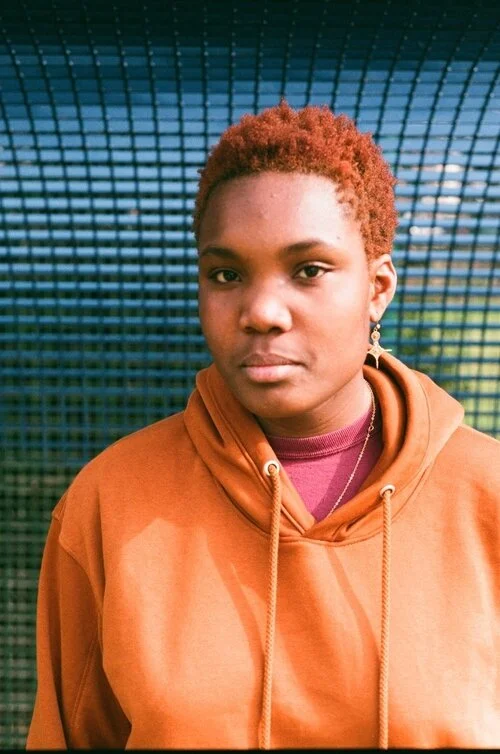
IN THIS PHOTO: Arlo Parks/PHOTO CREDIT: Pamela Boland for Love Letters Zine

DESERVE to be heard! 

__________

dsdsdsdsdsdsdsds.jpg

I Break Horses I’ll Be the Death of You

PHOTO CREDIT: Alex Lovell-Smith

Nadia Reid Oh Canada

XXXX.jpg

Harkin Nothing the Night Can’t Change

GrimesDelete Forever

DDSSDDS.jpg

Hilary WoodsOrange Tree

1121111.jpg

Daughters of Reykjavik Fool’s Gold

Robinson I Tried

DSSDSD.jpg

Matilda Mann The Loch Ness Monster

XCDD.jpg

Bad Honey Circles

xxxx.jpg

PINS Hot Slick

cccccccc.jpg

King Princess Back of a Cab

fff.jpg

Ingrid Andress Life of the Party

Sabrina Carpenter Honeymoon Fades

Katie Gately Allay

Natalie Shay Not the Girl

cccc.jpg

Madison Beer Selfish

3333.jpg

Nova Twins Taxi

sssssssssssss.jpg

Store Front You Gave Me

0990.jpg

Laura Veirs I Was a Fool

Arlo Parks Eugene

BLOXX Coming Up Short

zaaa.jpg

Caroline Rose Freak Like Me

sss.jpg

PHOTO CREDIT: Laurie Barraclough

Wyldest Quiet Violet - Redream

SSSSS.jpg

Becca Stevens - Feels Like This

ASS.jpg

PHOTO CREDIT: Colin Medley

U.S. Girls 4 American Dollars

SAAA.jpg

PHOTO CREDIT: Melanie Hyams

Drug Store Romeos Frame of Reference

E33.jpg

PHOTO CREDIT: James Hornsby

Alex Lahey Sucker for Punishment

Kim Petras Reminds Me

FEATURE: The February Playlist: Vol. 3: Heartbeats, a Slow Rush – and a Spy Who Doesn’t Love Me

FEATURE:


The February Playlist

LKKLLKKL.jpg

IN THIS PHOTO: Tame Impala/PHOTO CREDIT: Neil Krug

Vol. 3: Heartbeats, a Slow Rush – and a Spy Who Doesn’t Love Me

__________

ALTHOUGH there are fewer tracks…

in the playlist than normal, there are some pretty hefty releases in the pack! Not only is there new material from Billie Eilish, Tame Impala, and Grimes; we have some cool tunes from Sam Fender, Mystery Jets, and The Strokes. It is a busy week, and one where some serious big-hitters have come out. In the mix are King Princess, Sam Smith, and Tim Burgess. If you need to get your weekend off to a pretty epic start, you could do worse than have a listen to this seriously good rundown. This year has got off to a flyer, and each week provides some serious gold and surprises. It is going to be pretty rough weather this weekend, so stay warm and listen to…

IN THIS PHOTO: Sam Fender/PHOTO CREDIT: Sarah Louise Bennett

THESE gems.

ALL PHOTOS/IMAGES (unless credited otherwise): Artists

_________

Mystery Jets A Billion Heartbeats

Tame Impala On Track

1111.jpg

Billie Eilish No Time to Die

Grimes - Delete Forever

The StrokesAt the Door

Tim Burgess Empathy for the Devil

Sam Fender Hold On

zzx.jpg

Arlo Parks Eugene

ssss.jpg

Sam SmithTo Die For

ssssddd.jpg

King Princess Ohio

PHOTO CREDIT: Melanie Hyams

Drug Store Romeos - Frame of Reference

WWWW.jpg

PHOTO CREDIT: Gemma Dagger

Catholic Action Another Name for Loneliness

AASASAS.jpg

Pumarosa - Lose Control

WWWW.jpg

Inhaler - We Have to Move On

Gregory Porter If Love Is Overrated

Caroline RoseFreak Like Me

PHOTO CREDIT: Dan Monick

Cold War Kids - Who's Gonna Love Me Now

WQQQWQW.jpg

PHOTO CREDIT: Kevin Tachman

Jake Shears Meltdown

PHOTO CREDIT: Photography by Daniel Stark

The Pale White Polaroid

WEWWEEW.jpg

VC PinesBluebirds

David GrayWalking in Circles

Kodak Black Because of You

You Me at SixOur House (The Mess We Made)

Sofia Reyes IDIOTA

New Hope Club Why Oh Why

FEATURE: Spotlight: Dry Cleaning

FEATURE:

Spotlight

PHOTO CREDIT: Jody Evans for Loud and Quiet

Dry Cleaning

___________

I am going to break one of my cardinal rules…

PHOTO CREDIT: Ed Miles for DIY

when covering and investigating Dry Cleaning. I am one who does not include artists on my blog who are not on Twitter. Whilst, previously, I have included some non-Twitter users, I ensure that every musician included – whether it is a standalone feature or playlist – is on Twitter. Dry Cleaning’s reasoning for not being on Twitter is, I think, that there is no real upside; no benefit or point beyond being on there. I can understand why some acts would want to avoid being exposed, but for a new act these days, Twitter is invaluable. Whilst I empirically disagree with Dry Cleaning’s stance on social media – their Instagram is a bit crap too -, their music is pretty decent. Maybe, when they put together their debut album, they will reverse their Twitter embargo but, right now, I shall continue. I know their music but, really, I do not know too many details about the band themselves so, largely, I am going to bring together features and interviews to flesh things out – and include some key tracks to give you an idea of the band’s vibe. The band consists bassist Lewis Maynard, drummer Nick Buxton and guitarist Tom Dowse. Florence Shaw leads and writes lyrics that seem almost random and cut together but are incredibly meaningful and relatable. I think, when it comes to background and getting a taste of Dry Cleaning, The Quietus’ interview from October of last year does a pretty good job:

 “Maynard, Buxton and guitarist Tom Dowse had been friends and musicians in various projects for a while before they packed in their respective groups and formed Dry Cleaning at a karaoke night. “The previous band me and Nick were in had got to the point where we were trying to bring a choir and a horn section on stage,” laughs Maynard of his time in wonky-slick indie quintet La Shark. “We had to make this one quite simple: let’s never have to do a soundcheck ever again.”

Dowse, who had been performing in hardcore band Sans Pareil (formerly Pariah), was brought in on guitar, and the three went lo-fi, cramming their equipment into Susan’s garage, made even more cramped because it had been double walled owing to a lack of planning permission. “It was such a small space so we were literally on top of each other,” says Buxton. “It was touch and go if Flo could join the band at all because we didn’t know if she could actually fit in the room.”

Florence Shaw, a visual artist, drawing lecturer and picture researcher, was recruited by Dowse, who she knew from art school. She had no prior experience in music, other than two years’ worth of piano as a child, but had incorporated the written word into her art. In a pub, after a friend’s exhibition, Dowse played Shaw some phone recordings of what he, Buxton and Maynard had been working on in the garage. “Something about it seemed to click, those two worlds meeting, Florence and the music.”

Shaw has a keen interest in language, especially the particularly close kind of weirdness that can occur in its most mundane forms, like advertising jargon and greetings cards. “There’s something really interesting about things written from a marketing perspective or written to a template, and how that makes up so much of what you actually read,” she says. “It tells you a lot about how people’s brains work. It’s that thing of ‘how do you write something that’s tantalising, and makes you want to know more, and doesn’t give you enough information, and is still a bit mysterious?’ I find that really compelling, I think so much writing on the internet is like that, or the opposite of that where there’s way too much information, YouTubers unboxing something for 50 minutes; you think ‘My god! I want less!’ Have you seen that video ‘all my pets’? It’s a girl showing off all her pets, she’s got like 80 pets. You’re intrigued for like 10 pets. That’s my pet threshold.”

The lyrics to ‘Goodnight’, the first song on their first EP, come from a selection of YouTube comments culled from an Aphex Twin YouTube binge, a particularly rich arena for witterings both inspired and insane. “During what was probably the longest two and a half months of my life after a near death experience, I could not sleep. I was on edge at all times and the only thing that kept me going was Saw 2,” comes the first. Then, without a shift in voice, we’re in the midst of another. “My cat died three months ago at 17 years old. When this song plays I can remember the good old days when I was a kid how we played together with my cat at home alone with my brother and all the good days I had with her...goodnight sweet princess.” Then again: “She said have you ever spat cum onto the carpet of a Travelodge?

I think I have renewed my interest in Dry Cleaning because of their track of last year, Viking Hair. It has this sort of moody and gothic quality, but there is energy and tension bubbling through. It is hard to describe the song, which proves Dry Cleaning have their own sound and, as many people have predicted, they are primed for bigger things. I am going to come to their two E.P.s very soon but, now, one more interview from last year.

zxzxzxzxxz.jpg

DIY put the band in their Class of 2020 feature: predicting the best acts of this year and those who we should know about – I think they are also included in NME’s list of ones to watch this year. This excellent feature from DIY makes for very interesting reading:

 “Describing their early mantra as aiming to be like “a cheap date” (“We never wanted to soundcheck; we wanted to be as easy as possible, just play a few parties for friends”), Dry Cleaning happily puttered along for a year, penning their strange tales - a combination of sparse, propulsive post-punk music and idiosyncratic storytelling - for themselves. It was only after a friend heard an early demo and offered them a support slot at London’s Shacklewell Arms that the band began to properly entertain the idea of playing live - a development that brought its own preparation. “We definitely had a few chats around ‘what gigs are like’, which was for my benefit,” laughs Florence. “Before then, we hadn’t had that much feedback on what we were doing at all. I didn’t have much of a clue how it would go down, or if people would respond to it in any way, so it was nice. People stayed until the end... they clapped...

“I’m quite pragmatic so I’d thought about it in terms of ‘How do I deal with this problem?’” she continues. “I don’t really dance, and I’m not a natural performer in that way, so I was always like, ‘Oh crap’. I had all these problems in my head where I wasn’t traditionally that kind of person, so my main plan was that if I feel nervous, I’m just going to show it. If I feel worried, I’m gonna look worried; I’m not just going to smile my way through it and be fake. I can just think about how to deliver the words, and just look however the hell I ended up looking.”

“The sheer logistics of being in a band are crazy. The amount of shit you have to sort out could easily overtake the creative side, if you let it. And I think our mindset is that we’re quite protective of that, and up for whatever can help us to remain creative with the additional attention that we’ve got,” nods Florence. “This last year, when things have been picking up, we’ve said we just want to do whatever helps the band’s output progress. So if someone’s expecting us to tour for two-thirds of the year, which probably won’t help us write stuff, then that’s probably not the best idea,” continues Lewis. “We’re finding our feet with what brings out the best in us as a band”.

The Sweet Princess EP was released last August, and that was followed up pretty quickly with a second E.P. Some asked why the band did not just combine the two into an album. You can check it out on the band’s Bandcamp page, and  it makes for very interesting listening. I think one or two of the songs were available before the E.P. arrived, but it is nice having the full thing and listening in a single sitting. I also love the artwork of their E.P.s, and one gets a real sense of identity from Dry Cleaning. I am interesting seeing what they produce this year but, whilst some were still unaware of Dry Cleaning when the Sweet Princess EP arrived, the people at Pitchfork were ready to review. Here is an example of what they had to offer:

 “Enter Meghan Markle. From the Sex Pistols to the Specials, British punks have long rallied against their heads of state. But over spirals of guitar that conjure memories of the Raincoats or the B-52’s, first single “Magic of Meghan” offers a staccato accounting of Markle’s graces. The Duchess of Sussex is illustrated as if she’s a young guidance counsellor who lets Shaw call her by her first name, or a friend from school she admires from afar. On the day of Markle’s engagement, we learn, Shaw was moving out after a breakup. The way she writes about Markle is almost like fan fiction: a morsel of celebrity bent and manipulated until it forms a new narrative specific to its author. It’s so endearing that it could almost stand to be a touch more critical of, you know, the monarchy.

Like empty bottles melted down and repurposed as stained glass, Dry Cleaning’s assembled observations capture the distortion of life on and off the internet, of spewing our deepest emotions into an anonymous void but biting our tongue when we encounter a real person. Type what you really feel, then close the tab and delete your history—maybe Florence Shaw will find it”.

I remember BBC Radio 6 Music playing Dry Cleaning quite a bit when their first E.P. came out and, like all bands who have a bit of mystery, there was great fascination as to who they were and where they were heading. I was surprised Dry Cleaning released another E.P. a short time after their debut. The fabulous and engaging Boundary Road Snacks and Drinks EP came out in October, and it sort of continues where the previous E.P. left off, but I think the tunes are stronger and the band seem tighter – even if songs from both E.P.s were laid down pretty close to one another. I do recall seeing Prescription Music put out some details regarding the E.P. and I was intrigued:

Lyrically, Sit Down Meal is about being lost for words; there is some reference to both the language of placeholder text and greetings cards throughout the song.

Vocalist Florence Shaw has said the following about the inspiration for the single:

"It’s set at the moment just after being suddenly dumped. You cling to details, things you did together and reel at their significance. If you smell their perfume on someone else you feel overwhelmed, but immediately and painfully aware of how lightning quick a relationship can evaporate into thin air."

Boundary's collection of songs takes its name from the location and context of a shared genesis, and marks a significant chapter for the band as the last tracks to be written in their original rehearsal space.

The offering displays a more evolved sound than its predecessor; more textured and confidently realised without overlooking the melodic subtleties or minimal approach implicit on their debut.

There is a pop sensibility to the lyrics and a sense that this writing process has become more fluid; words are consciously used with more economy and are often repeated.

With this new recording, Dry Cleaning are seeking to expand the palette of their sound without nagging the simplicity and directness of their songwriting”.

Viking Hair and Spoils are terrific tracks that are full of bite, keen observations and humour. I especially like Spoils, as it jabs at the sad men of the Internet who are ripe for condemnation and mockery. I love Shaw’s delivery, which goes from spoken word to singing. I know some people do not like talk-singing, but I think Dry Cleaning’s music is at its most affecting when delivered in this manner. As I said, I will bring in more reviews and bits and pieces. I love both of the band’s E.P.s, but there is an extra edge or quality to Boundary Road Snacks and Drinks EP that makes the mouth water for 2020 promise. Again, a few sites and journalists reviewed the band’s second E.P., and I hope more people tune into their music and get involved with them – maybe a lack of Twitter presence is a reason why they have not been shared and exposed as they should have been.

Here is what Under the Radar wrote when they assessed Dry Cleaning’s second release:

The purposely off-titled "Spoils" taunts the comically inadequate men of the Internet, romanticizes video games pretty effectively, and even takes the time for a cruelly basic guitar solo that sounds like a middle finger to guitar solos. "What's your problem, huh?/Hot cuties ignore you," Shaw enquires, before demanding "Stream my favorite shows/Just tell me who dies, tell me who finds love," a numbed, tired request that rattles against the furious heat of Nick Buxton's drums, Lewis Maynard's bass, and Tom Dowse's guitar behind it.

"Bullshit masculine mountain conquering crap," she concludes harshly on the wonky post-punk-funk of "Jam After School," which skewers the mores of middle England's middle classes while Dowse just riffs gloriously all over it, painting it huge and red and angry.

"You're nothing but a fragrance to me now," Shaw dismisses a former dinner date as the band lurch into a heads-down doom groove sparked with spectacular splurges of guitar as exciting as the title "Sit Down Meal" is heroically banal.

It's this wondrous and simple-seeming clash of hefty, post punk with snarky sarcasm and stoic poetry that lifts the band out of the realms of the many soundalike new-New Wave UK bands and places them firmly in the territory of a band it's unwise to ignore.

Dry Cleaning's blend of American indie influenced music and strange, dissociated, listicle-like lyrics is a beguiling potion. The phrase "I could listen to them read from the phone book" could never be more applicable”.

If you have not seen Dry Cleaning do their stuff, they have some dates upcoming, so you might be able to go and see them if you are nearby. If you think the band sound great in the studio – and they do! -, then they seem to sound even stronger when they are on the stage. The band played Ramsgate last month, and Contact Music were there to catch the show. Here are their impressions:

Shaw's ability to capture, or steal or recognise, a phrase and re-present it along with other seemingly random anecdotes is what sets Dry Cleaning apart from many other bands. Yes, the soundtrack is compelling, very well delivered, full of hooks and ear worms but it is the lyrical prowess of Florence Shaw that makes Dry Cleaning something rather special. Her understated delivery with a hint of a smouldering soulful undercurrent is the perfect vehicle for her very creative and inspired words. "You're nothing but a fragrance to me now", Shaw sings as she imparts the tale of a failed relationship in 'Sit Down Meal'. While the guitar whirls around her, the bass rumbles on and the drums pound out the beat Shaw remains calm and centred throughout as if somehow deliberately detached and distant giving yet more gravitas to the performance.

ssaassa.jpg

Dry Cleaning played one new, as yet unreleased, song on the night, 'Unsmart Lady'. With a fevered drum roll from Nick, who was playing through an injury to his hands incurred earlier in the week, Dry Cleaning unleashed another potent song on the audience. "Don't mess it up", came a shout from the partisan crowd. Penultimately, and poignantly, on the eve of the 'Sandringham Summit', Dry Cleaning played arguably their biggest song to date, 'Magic Of Meghan'. The two youngest members of the audience clearly enjoyed this song, in appreciation of Meghan Markle, the most. As Shaw whooped her way through the song. "She's a smasher, perfectly suited to the roll... Just what England needs, you're going to change us."

Florence and her band closed out the night and their set with another track from 'Sweet Princess', 'Conversation'. Shaw's ability to deliver the trill of the phone ringing was something quite amazing in itself! On the Kent coast Dry Cleaning gave a great account of themselves highlighting why they are garnering so much attention and critical acclaim. Their collective musical artistry is something quite extraordinary and the fascinating lyrical construction that Shaw has made her own is nothing short of genius at times. A short but very sweet set from a band that are surely destined for bigger and better things

Go and follow them on Facebook; check out their music on Spotify and Bandcamp – links are at the bottom -, as you will hear a lot more from Dry Cleaning this year. They have already put out two strong and unique E.P.s, and I feel 2020 is a year when they will…

REALLY lay down their mark.

___________

Follow Dry Cleaning

FEATURE: Heart-Shaped Box: The Alternative Valentine’s Day Playlist

FEATURE:


Heart-Shaped Box

ssss.jpg

PHOTO CREDIT: @amyshamblen/Unsplash 

The Alternative Valentine’s Day Playlist

___________

WE all know it is Valentine’s Day…

mm.jpg

 PHOTO CREDIT: @yirage/Unsplash

tomorrow, so that will mean a slew of romantic songs - from the classics to new love songs, we will be inundated with sounds that celebrate love and togetherness. Whilst I think it would be better to have a universal Valentine’s Day – throwing love at the world and those without others in their lives -, we have to endure another day of smoochy, cheesy love songs. There are many of us – myself included – who sit Valentine’s Day out as we are single; it is another day to us but, rather irksomely, there is an added element of rubbing things in. To honour those who are tired of the same love songs being played this time each year, I have compiled a list of edgier/alternative love songs and cuts that rally against love altogether. Some might find that combative and bitter – true enough! – but it is nice to speak for those without love and those not invited to the prom this year. Here, in all its glory, is a selection of tunes for those who…

ssss.jpg

 PHOTO CREDIT: @jamie452/Unsplash

LIKE their love songs ‘alternative’.

FEATURE: Levelling the Score: The Importance of Hildur Guðnadóttir’s Oscar Win – and Why There Are Still Big Problems That Need Addressing

FEATURE:


Levelling the Score

12121212.jpg

IN THIS PHOTO: Hildur Guðnadóttir/PHOTO CREDIT: Timothée Lambrecq

The Importance of Hildur Guðnadóttir’s Oscar Win – and Why There Are Still Big Problems That Need Addressing

___________

LAST Sunday was Oscars night…

ZZZ.png

and it was a chance to celebrate the finest in the film industry. Most of the attention goes to the films, actors, and directors; few look further down the list and nod to the costume designers and composers. As a music journalist, I was particularly interested to see who would win the music categories. You can see all the winners here - but it was a good night for Bernie Taupin and Elton John – they won Music (Original Song) for (I’m Gonna) Love Me Again from Rocketman. The Music (Original Score) Oscar went to Hildur Guðnadóttir. It is a big deal, because Hildur Guðnadóttir is the first woman to win in the best Original Score category since the Academy of Motion Picture Arts and Sciences combined all of the Score categories into one in 2000. Guðnadóttir is one of only seven women to be nominated in any score composition category - only three have won. I have seen articles and tweets put up that highlight Guðnadóttir and, predictably, there is a mass of sexist comments that follows. People are either not bothered by the imbalance or they feel like women need to do better. The apathy and sexism are shocking, because there are plenty of talented women who compose, but are not given the same attention and opportunities and men. Before I move on, here is a statistic that outlines the problem we have:

On the top 250 grossing films of 2019, women comprised 6% of composers. This represents no change since 2019. (Center for the Study of Women in Television and Film)”.

PHOTO CREDIT: @kaelbloom/Unsplash

It was a good night for Hildur Guðnadóttir and her remarkable score for Joker. Let’s hope that her accomplishment opens eyes and ears to the brilliant female composers out there: This Pitchfork article reacts to her win:

Hildur Guðnadóttir has won the 2020 Oscar for Best Original Score. The Icelandic composer took home the trophy for her work Joker, which previously netted her the Golden Globe for Best Original Score. She won the Academy Award over John Williams (Star Wars: The Rise of Skywalker), Alexandre Desplat (Little Women), Randy Newman (Marriage Story), and Thomas Newman (1917).

“To the girls, to the women, to the mothers, to the daughters who hear the music bubbling within, please speak up,” Guðnadóttir said in her acceptance speech. “We need to hear your voices.” Watch her speech below.

Guðnadóttir is the seventh woman in Oscars history to be nominated for Best Original Score and only the fourth ever to win in the category. She’s also the first woman ever to win the Golden Globe for Best Original Score”.

Her score for Joker is sensational, and I suggest you listen to it when you can. Like all fantastic composers, Guðnadóttir uses instruments like the cello and characters and voices; she connects her music with the character in a way that heightens the performance and adds something remarkable to the film. In this BBC article, Guðnadóttir discussed her process and how she came to work on Joker:

"Joker is the story of basically one person, so it felt fitting that one instrument was leading the way into his head, leading us forward," she tells BBC News.

Of all the instruments at her disposal, she chose the cello. "It's my instrument, so it was convenient as I played it on the soundtrack," she says.

Hildur was lured into working on the Joker origin film by director Todd Phillips, and she recalls: "The script was just fantastic - it struck me very hard."

She collaborated on Arthur's transformation into Joker with Phillips and Phoenix, the favourite to win best actor at the Oscars.

"I fell in love with the film and wrote all the main themes before they started shooting, so they were able to use that music, and I was able to be a part of that."

Indiewire reported that Hildur's score became "the actor's muse" and "thereafter, he could be seen listening to the music in his ear piece on set throughout the shoot".

Hildur, whose work includes composing the score for last year's TV series Chernobyl, has already caused a stir with her recent winning streak at the award ceremonies.

So far she's notched up a Bafta and a Golden Globe for Joker and an Emmy for Chernobyl”.

PHOTO CREDIT: @jan_strecha/Unsplash

There are a few reasons why there are so few women being recognised and honoured for their work. The number of women in orchestras is pretty low, and I think there is this assumption that orchestras are a man’s domain; there is sexism and barriers that women have to face. The above article from 2012 highlights some problems:

Is, then, the explanation for the low numbers of women in orchestras that of indirect sexism rather than outright prejudice? Women not wanting, or not being able to afford, to combine Kinder and Küche (if not now Kirche) with concert tours? It is surely no coincidence that the Berlin Philharmonic, the orchestra with the heaviest touring schedule of any in Germany, is only 14 per cent female. Sarah Willis, a horn player with the orchestra for the past 20 years (and thus part of the ostensibly clubbish boys' brass section), states that she has never been witness to any sexist behaviours within it – either day-to-day or during auditions.

She has, however, spoken to young female musicians who are put off by the lack of family-friendly working practices. This is surely why the thesis that over time the proportion of men and women will naturally continue to level out fails to hold water. Admittedly the number of women in the Bavarian Radio Orchestra has doubled since Schwaabe joined in 1994 – but that only takes the numbers from 14 to 29. 

PHOTO CREDIT: @albertobigoni/Unsplash

An important building block in the argument that orchestras are moving naturally towards equality is the fact that, by and large, the gender split in youth orchestras is already 50:50 and this can be taken to signify that the gender balance of major orchestras will inevitably even out in the future. Sara Nigard Rosendal, a young female percussionist with the European Youth Orchestra, is adamant that she will make her career in symphony orchestras and will not allow children to get in her way”.

The numbers have slightly improved since 2012, but I feel like so many talented female players and composers are put off because of issues like a lack of family-friendly working practices. Look out at the music industry, and there are some fantastic composers and songwriters. Artists like Anna Calvi are crossing over into film and T.V., but are enough doors being opened for women!? I think a lot of film producers and studios hire men to compose their scores, because of history and the assumption there are very few good female composers out there. Now that women from mainstream music are showing they can compose fantastic scores; I think we need to dispense with the assumption that female composers can only be found in orchestras. Even in orchestras, there is a shocking imbalance that some would argue means there is a lack of girls and women who want to join orchestras. A lot of girls are directed to play instruments like violins and pianos; instruments that are considered appropriate and ‘girly’.

Maybe there is a feeling that they (girls and women) are limited in their capabilities and should stick to instruments that ‘suit them’. There are a lot of women in charities and working in orchestras but, when it comes to executives and those who can make the decisions, there are fairly few women. Work by women is being featured and celebrated more, but there is still a way to go. This illuminating article raised some interesting points:

When we think of the great movie composers, these are the names that come to mind: Hans Zimmer; John Williams; Nino Rota; Danny Elfman; John Barry; James Horner and Alan Silvestri. All men. Most people can name one female film composer, but can you name two?

Zimmer, known for his work on blockbusters such as The Dark Knight Trilogy and Interstellar, has recently been hired for Patty Jenkins’ Wonder Woman 1984. This isn’t just a missed opportunity for a female oriented film to also employs a female for the soundtrack, but it’s also the latest example of women being largely unheard in the world of film composing. A study by the University of Southern California in 2018 found that, of the top 100 fiction films at the box office every year from 2007 to 2017, only 16 female composers were hired, in comparison to 1,218 men.

Additionally, a supporting report from the Center for the Study of Women in Television and Film revealed that 94 per cent of the top 250 films at the domestic box office in 2018 used male composers. In an era of Time’s Up, an organisation set up in support for equal pay and opportunities, female composers are still lingering in the shadows behind the men who hold domination in this industry”.

There are some brilliant women composing for film, and I think Hildur Guðnadóttir’s Oscar triumph will break down a lot of barriers and force the industry, orchestras, and film studios to work towards inclusivity and accept the fact that there are some remarkable women who warrant focus. As things stand, the figures are alarming:

Another report, from the Center for the Study of Women in Television and Film, showed that of the top 250 films at the domestic box office in 2018, 94 percent were scored by men.

“The numbers are bleak, but the landscape isn’t,” said Laura Karpman, a veteran film composer (“Paris Can Wait”) and a governor in the music branch of the Academy of Motion Picture Arts and Sciences. “People are reaching out in a way that I’ve never seen it my whole career.”

Karpman was instrumental in expanding the diversity of her branch’s membership, which now includes the Russian composer Sofia Gubaidulina. Karpman also spearheaded the creation of a shortlist in the score category of the Academy Awards. “Had we had a voted-upon shortlist last year, I think we would have more diversity,” she said. Citing the composers behind “Get Out” and “Mudbound,” she added, “I want to see Michael Abels and Tamar-kali on Oscar shortlists.” (Karpman spoke before the shortlist was announced in December. It includes Terence Blanchard’s score for “BlacKkKlansman” — his first Oscar nomination if he moves to the next round — but, alas, no women.)

Tamar-kali is one of several new voices in a persistently white male milieu. “Mudbound,” directed by Dee Rees, was the Brooklyn artist’s first score, which she followed with the Netflix drama “Come Sunday.” She’s also reteaming with Rees for an adaptation of the Joan Didion novel “The Last Thing He Wanted.” As an Afro-indigenous woman in the New York punk rock scene, she said, she was already used to being “an outlier within the outliers.”

“It just kind of fuels your creativity,” she explained. “The ethos means even more to you, because you’re practicing it every moment — even in the pit, even at shows.”

The women interviewed for this article offered a variety of reasons for the longstanding inequality: institutionalized sexism; a lack of precedents and female role models to inspire girls to go into the field; and the social conditioning of women to be selfless caretakers and not seize the spotlight.

Increasingly, women are entering the profession, but are still outnumbered by men. The film scoring certificate program at the University of California, Los Angeles has produced 120 graduates since 2013, of which only 25 percent were female. Likewise, only a quarter of applicants to the film scoring graduate program at U.S.C. this year were female — although the school invited seven women to join its 20-student program.

(Portman suggested that universities pumping so many aspiring composers into such a small competitive field might itself be a problem.)”.

I know things will not change overnight, but there will be girls and women out there inspired by Hildur Guðnadóttir’s Oscar win who will strive to get to where she is. I feel the fact schools in the U.K. and U.S. are reducing music’s visibility on the curriculum, but, even with that aside, orchestras need to be a lot more welcoming of women and dispose of the culture of sexism. I know there are orchestras where there is parity and equality, but so many are male-dominated, when there are phenomenally eager and talented female musicians and composers. Just seeing someone like Guðnadóttir acclaimed and speaking out means people will open their eyes. I do not think we will wait very long before another female composer is celebrated at the Oscars or BAFTAs. I accept there are fewer female composers in general, but that does not mean that the talent pool is dry; orchestras need to do more and commission their work. The film and music industries have a problem with sexism, and those in charge need to work harder to foster women and make improvements. There are some fantastic women kicking down misconceptions and showing that they are as talented as their male counterparts. Maybe true equality is a way away, but we will still small steps and changes. Hildur Guðnadóttir’s Joker genius – and her female peers’ brilliant work -, will go a very long way to…

LEVELLING the score.

FEATURE: Not One of Us: Reading & Leeds and a Continuing Sexism Problem

FEATURE:


Not One of Us

Reading & Leeds and a Continuing Sexism Problem

___________

ANOTHER festival has announced their line-up…

IN THIS PHOTO: Stormzy has been announced as one of the Reading & Leeds headline acts, alongside Liam Gallagher, and Rage Against the Machine/PHOTO CREDIT: Louie Banks

for this year and, predictably, Reading & Leeds’ poster raises a common question: Where are the female artists?! I am excited Rage Against the Machine are headlining, and it is good to have the band back on a big stage! Even if you have Rage Against the Machine headlining, that leaves two slots that could have been filled by women – even a single female artists would have made the line-up look less sexist! The Guardian report the news of this year’s Reading & Leeds line-up:

Rage Against the Machine, Stormzy and Liam Gallagher have been announced as the headliners for 2020’s Reading and Leeds festival.

Rage Against the Machine’s sets are part of a newly announced 40-date world tour for the political rap-rockers, who are playing together for the first time since 2011. The tour includes two nights at New York’s Madison Square Garden, and seven dates across Europe. It comes after a short spring tour where they will perform gigs close to the US-Mexico border, as well as the Coachella festival in California.

Stormzy’s Reading and Leeds sets come amid a major world tour, featuring 55 dates across five continents, and will be his first UK festival headline slots since his triumphant appearance at Glastonbury in 2019. Liam Gallagher was originally announced in November for the pair of festivals, which run simultaneously in both cities.

Other rock and indie names include the Courteeners, Gerry Cinnamon, Two Door Cinema Club, Sam Fender and Idles, while rap is represented with Migos, AJ Tracey, D-Block Europe and Run the Jewels.

Typically for the festivals, the top 13 announced artists are all male – Mabel, Mahalia and Beabadoobee are among the female names to have been announced further down the bill.

Reading and Leeds takes place 28-30 August, with tickets going on sale at 9am on 13 February”.

Look down the poster, and the sheer lack of women on the bill is shocking! There are no female headliners, and one has to scan pretty hard to see any women at all! The line-up proves that the tone is not all Rock and Alternative – as Mabel and Joy Crookes are booked -, so why the lack of female representation? It seems uninspired having Liam Gallagher and Stormzy headlining. Stormzy is a great act, but he headlined Glastonbury last year, and I wonder what more he has to add and whether his booking is a reaction to that set last year. It is good to have some Grime and Rap headlining, but it seems like a lazy booking. Liam Gallagher, too, seems like a throwback to older days or someone who is booked because of his Oasis fame. He will put in a good set, but it is hardly original or bold for a festival(s) that lacks the clout and quality it did years ago. Look down the bill this year, and there is not a lot of spark or fascination. There are some boring bands, and a lot of artists who will struggle to raise the temperature. Every time a major festival announces their line-up, you have to wonder why so few women are included.

Reading & Leeds could have booked artists like Nadine Shah, Sharon Van Etten, and Anna Calvi, yet they have been ignored. In fact, as the event does not cater to a single genre, there are so many female artists who could have been included – Self Esteem, The Big Moon, and Grimes spring to mind. What about Dua Lipa or Brittany Howard? Even female-fronted bands like Amyl & the Sniffers or Big Thief could have been included, not to mention PINS or Wolf Alice. I know there are more acts to be included, but look back at Glastonbury’s bill last year and the fact they almost hit a fifty-fifty balance and ensured the bill was full of gold and variation. Look at the incredible line-up for The Great Escape in Brighton this year, and Primavera Sound and their continued gender balance and inclusion. Every year, Reading & Leeds announce their line-up and they get accused of being terrible and boring. Whilst 2020’s line-up has some brilliance and a lot of boredom, I think it is the continued exclusion of women that worries me and so many. Reading & Leeds are not even close to fifty-fifty at a time when so many festival-worthy women deserve exposure. I have only named a few artists, but one could easily have removed a dozen or so weaker male acts on the bill and replaced them with equally popular female artists who are stronger. So many festivals, year after year, lack gender diversity - and they are not doing their bit to ensure there are more women on the bill. Reading & Leeds is one of the very worst offenders and, predictably, I do not think we will see a major change next year! Male artists need to use their platform to rebel and campaign because, if they do not, there will be slow movement. In a world where scores of wonderful women are producing sensational work, festivals like Reading & Leeds are letting them down. I was hoping 2020 was going to be a year when the festival opened their eyes and changed their ways but, lo and behold, it is a case of the…     

IN THIS PHOTO: Dua Lipa would have been a great inclusion to the Reading & Leeds bill

SAME old excuses and problems.

FEATURE: Eponymously Yours: Peter Gabriel at Seventy: His Five Finest Albums

FEATURE: 

Eponymously Yours

Peter Gabriel at Seventy: His Five Finest Albums

___________

AS the sensational Peter Gabriel

PHOTO CREDIT: York Tillyer

turns seventy on 13th February, I have been thinking about his music and have already written a feature. I think Gabriel is an artist who is very underrated, considering the brilliance he has put into the world! I am not sure whether there will be much celebration on Thursday, but I hope there are a few nods and songs of his played on the radio. To continue my salute of a musical pioneer, I have collected together Gabriel’s five finest albums; those that you definitely need to own. Whilst there are a couple in particular that stand out from the pack, I think all five of these albums provide great spread and representation of an artist through the years. I am including only solo albums in this feature because I am celebrating Perter Gabriel’s work, rather than that of his former band, Genesis. Have a look at the selection below and familiarise yourself with the work of…

111.jpg

IN THIS PHOTO: Peter Gabriel in Bath in 1978/PHOTO CREDIT: Clive Arrowsmith

A true great.

_____________

Peter Gabriel 1: Car

Release Date: 25th February, 1977

Labels: Charisma (U.K.)/Atco (North America)

Producer: Bob Ezrin

Key Cuts: Modern Love/Slowburn/Here Comes the Flood

Review:

Peter Gabriel tells why he left Genesis in "Solsbury Hill," the key track on his 1977 solo debut. Majestically opening with an acoustic guitar, the song finds Gabriel's talents gelling, as the words and music feed off each other, turning into true poetry. It stands out dramatically on this record, not because the music doesn't work, but because it brilliantly illustrates why Gabriel had to fly on his own. Though this is undeniably the work of the same man behind The Lamb Lies Down on Broadway, he's turned his artiness inward, making his music coiled, dense, vibrant. There is still some excess, naturally, yet it's the sound of a musician unleashed, finally able to bend the rules as he wishes. That means there are less atmospheric instrumental sections than there were on his last few records with Genesis, as the unhinged bizarreness in the arrangements, compositions, and productions, in tracks such as the opener "Moribund the Burgermeister" vividly illustrate. He also has turned sleeker, sexier, capable of turning out a surging rocker like "Modern Love." If there is any problem with Peter Gabriel, it's that Gabriel is trying too hard to show the range of his talents, thereby stumbling occasionally with the doo wop-to-cabaret "Excuse Me" or the cocktail jazz of "Waiting for the Big One" (or, the lyric "you've got me cookin'/I'm a hard-boiled egg" on "Humdrum"). Still, much of the record teems with invigorating energy (as on "Slowburn," or the orchestral-disco pulse of "Down the Dolce Vita"), and the closer "Here Comes the Flood" burns with an anthemic intensity that would later become his signature in the '80s. Yes, it's an imperfect album, but that's a byproduct of Gabriel's welcome risk-taking -- the very thing that makes the album work, overall” – AllMusic

Standout Track: Solsbury Hill

Peter Gabriel 3: Melt

Release Date: 23rd May, 1980

Labels: Charisma (U.K.)/Geffen (North America)/Mercury (Original U.S. L.P. pressing)

Producer: Steve Lillywhite

Key Cuts: Intruder/Family Snapshot/Biko  

Review:

PG3 is where Gabriel ascends, where he hits the perfect point on the curve between artistic ambition and accessibility, between dark and light, between floridness and reticence. Songs, themes, sonics and presence come together to create a cohesive yet many-limbed piece which pitches up somewhere between Lodger and Scary Monsters. Challenged by the NME at the time about Bowie comparisons, he replied defensively, “I get the feeling he’s more calculating. There’s not too much coincidence emanating. With me there is still quite a large functioning of randomness, accident and mistakes.” Going on to praise Bowie’s willingness to keep moving, he added, “You must let go of what you’ve got, cause if you try and clutch on to something which you think is yours, it withers and dies.” It would be facile to pin this album as an anti-Genesis statement though: much of it is every bit as self-important. It’s just leaner, sharper, quicker to make its points. It’s speed (with all the nervous glances over the shoulder), not dope, not comfortable or relaxing.

While this will not turn into a detailed discussion of drum sounds, it has to be mentioned that the outstanding, ominous opener 'Intruder' is where the “gated drums” technique which so dominated and ultimately defiled the subsequent decade was invented.

Gabriel and (the then very fashionable) co-producer Steve Lillywhite banned cymbals, asked Collins and Jerry Marotta to adopt a less-is-more approach, and found the results to be sinister, dramatic and arresting. (Freeing up the higher frequencies thus allowed room for exploration that few artists had realised was possible. They used the spaces for creaks, screeches, whistles, sirens and found sounds that are just as important to the record’s feel as the conventional keyboards, guitars, etc. This subsequently became common practice for a while, then it wasn’t, and now – in a period where music has a chronic lack of drama - it would be good if it was again.)” – The Quietus

Standout Track: Games Without Frontiers 

Peter Gabriel 4: Security

Release Date: 6th September, 1982

Labels: Charisma (U.K.)/Geffen (U.S.)

Producers: David Lord/Peter Gabriel

Key Cuts: The Rhythm of the Heat/I Have the Touch/Kiss of Life

Review:

Album number four had a lot to live up to. Starting with two of Gabriel’s most ambitious pieces, The Rhythm Of The Heat and San Jacinto, from the off it was clear that PG4 was taking the promise and the core elements of Melt even further. Gabriel’s voice was full, throaty and emotional, and the music – sounding simultaneously ancient and ultra-modern – had more space to roam and a greater dynamic range.

“Lyrics about Jung’s experiences in Africa, US cultural imperialism and the ritualistic nature of the seemingly mundane, mingled with the claustrophobic and poignant prisoner of conscience narrative of hymnal highlight Wallflower.

“As on Melt, Gabriel’s use of revolutionary instruments (like the Fairlight CMI, the LinnDrum and the Stick) served to illuminate his song’s contents rather than swamp them with pointless novelty.

“Like the album’s opening pieces, deep cuts Lay Your Hands On Me and The Family And The Fishing Net were as epic as anything Gabriel had written with Genesis, yet shared almost nothing of his former band’s musical vocabulary (or anybody else’s for that matter).

“PG4 was (and remains) a shining example of a truly rare thing, genuinely innovative genuinely popular music” – Louder Sound

Standout Track: Shock the Monkey 

So

12s.jpg

Release Date: 19th May, 1986

Labels: Charisma/Virgin/Geffen

Producers: Peter Gabriel/Daniel Lanois

Key Cuts: Red Rain/Don’t Give Up/In Your Eyes

Review:

“Thanks to his deep engagement with Jung, Gabriel believed that dream interpretation was the most important key to personal emotional transformation. “I take dreams very seriously,” he told Spin in 1986. “I think everyone should.” Imagery drawn from the unconscious suffuses So from the first verse of the first song, the U2-sized “Red Rain”: “I am standing up at the water's edge in my dream/I cannot make a single sound as you scream.” Dreams are the subject of “Mercy Street,” as well, inspired by a posthumously published work by Pulitzer-winning poet Anne Sexton. Sexton started writing poetry while recovering from a breakdown, and her therapist encouraged her to pull subject matter from her dreams. Gabriel was drawn to her poem “45 Mercy Street,” where Sexton recounts wandering through a dreamscape, looking for the imaginary address through which she could access a fictional idyllic past. With misty synths muting Djalma Correa’s ululating percussion, Gabriel offers an exegesis of Sexton’s work and then expands her narrative universe, ending with the poet peacefully sailing on the ocean with her father.

The heady emotional state of So was further complicated by the fact that Gabriel’s 15-year marriage was on the verge of collapse. His side-relationship with Rosanna Arquette was an open secret, and the album’s lyric sheet is rife with references to fledgling attempts at personal communication. Though “That Voice Again” has the album’s most appealing non-“Sledgehammer” chorus, it also contains the album’s most biting lyric, which could have been drawn straight from a counseling session: “I want you close I want you near/I can’t help but listen/But I don't want to hear/Hear that voice again.” In this context, the album’s inclusion of longtime concert staple “We Do What We’re Told (Milgram’s 37)”—named for the notorious psychological experiment that claimed to prove humans were innately predisposed to harm others—gains an added layer of resonance” - Pitchfork

Standout Track: Sledgehammer 

Passion (Soundtrack for The Last Temptation of Christ)

Release Date: 5th June, 1989

Labels: Geffen (U.S. & Canada)/Virgin/Real World

Producer: Peter Gabriel

Key Cuts: Gethsemane/ Lazarus Raised/ With This Love

Review:

“Passion is the belated release of Peter Gabriel’s two-LP soundtrack for Martin Scorsese’s riveting, controversial film The Last Temptation of Christ. It works as both amplification of Scorsese’s obsessively vivid rendering of the biblical tale as well as an opportunity for hitmaker Gabriel to hop off the rock-industry merry-go-round for a while and experiment with some different rhythms and styles. In this way, Gabriel’s journey is just as deeply felt as Scorsese’s.

As evocative as Passion‘s twenty-one tracks are for those who have seen Last Temptation, the collection also stands as a testament to the breadth of Gabriel’s interests, as well as his talents. Quite simply, Passion is that rare progressive-rock album that isn’t so enamored of its own cleverness that all it does is show off its own technical achievements. Working with his usual collaborators (among them guitarist David Rhodes and violinist Shankar, as well as occasional contributors David Sancious and Youssou N’Dour), Gabriel conjures up moods that seem at once period specific (many of the tunes are expansions of centuries-old Armenian, Egyptian and Kurdish motifs) and up-to-date.

Cuts like “Gethsemane” and “Of These, Hope” successfully accommodate third-world melodies and cross-rhythms in a Western pop context. Passion is stirring, stunning stuff: You won’t hear it on the radio like you heard “Sledgehammer” or “Big Time,” but if you do search it out, you’ll find a piece of work by an artist who remains idiosyncratic without being obtuse” – Rolling Stone

Standout Track: Stigmata

FEATURE: Vinyl Corner: Hole – Celebrity Skin

FEATURE: 

Vinyl Corner

Hole – Celebrity Skin

___________

THERE are a couple of reasons why…

121212.jpg

IN THIS PHOTO: From left: Hole’s Samantha Maloney, Melissa Auf der Maur, Eric Erlandson, and Courtney Love in 1998/PHOTO CREDIT: Jeff Kravitz/FilmMagic

I am including Hole’s Celebrity Skin in my Vinyl Corner section. For one, Courtney Love – the band’s lead singer – will pick up NME’s Icon Award on Wednesday (12th). In their article, NME highlight why Love is such an inspiration. Here is a snippet:

One of the most influential figures in the past 30 years of alternative culture, there are countless reasons why she’s worthy of the award. Here are just a few.

Think of Courtney Love, and quite reasonably, her band Hole will be the first of her musical project to spring to mind. Their 1991 debut album ‘Pretty on the Inside’ was co-produced by none other than Sonic Youth’s Kim Gordon, and made immediate ripples across the punk scene. The more polished but no less powerful multi-platinum ‘Live Through This’ and rip-roaring ‘Celebrity Skin followed. Years later, in 2010, came another Hole record, ‘Nobody’s Daughter’ – and album cut ‘For Once in Your Life’ is one of the more understated gems from her discography.

But there’s so much more. There was her first band Sugar Babydoll, the short-lived Pagan Babies and she’s also put out a whole bunch of solo material. In 2004, she released her debut solo album ‘American Sweetheart’ – and though she’s since spoken negatively about it (she later called it a “really crap record” during a talk at Oxford Union) it’s hard to deny its force. “Believe it or not, ‘All the Drugs’, ‘Sunset Strip’, ‘Mono’ and ‘But Julian…’ are all good songs,” she said in 2006. She was bang on”.

Hole have released some cracking albums, but Celebrity Skin is one of their most-famous and accomplished. After 1998’s Celebrity Skin, the band would not release another album until 2010’s Nobody’s Daughter - one wonders whether we will see another album from them. Whereas some prefer 1994’s Live Through This – boasting songs like Miss World and Jennifer’s Body -, I find myself coming back to Celebrity Skin. I will talk about the influence and impact of Celebrity Skin later but, now, a bit of information about the record. Released on 8th September, 1998, Celebrity Skin is the third album from Hole. The band dissolved in 2002 so, in a way, this is like a farewell – whether they knew it at the time or not. The band wanted an album that diverged from the Grunge influences of albums like Pretty on the Inside (1991) and Live Through This. The band brought in producer Michael Beinhorn to record Celebrity Skin over nine months, which saw Hole record in California, New York, and the U.K. California was especially important for Hole, and saw Celebrity Skin as a ‘California album’. The Celebrity Skin album saw Hole experimenting more; Smashing Pumpkins’ Billy Corgan co-wrote the musical arrangements on five songs. Also featured on the album was Go-Go’s guitarist Charlotte Caffey. Life in the Hole camp was a bit of a whirlwind prior to 1998. In 1995, Hole completed the final leg of their promotion for Live Through This – one of the best albums released in 1994. Rather than rest, the individual members worked on their own stuff. Courtney Love appeared in The People vs. Larry Flynt; lead guitarist Eric Erlandson collaborated in a side project, and the band members were keeping busy.

After Love completed promotion of The People vs. Larry Flint, the band reconvened. Initial sessions were not promising; songs were a little underwhelming but, as Hole relocated to different parts of the U.S., things started to shine and take shape. Whilst they were in New Orleans, the band recorded an early version of Awful. One of the reasons why I think people need to listen to Hole is because of the depth and strength of the lyrics. First off, go and get Celebrity Skin on vinyl, as it is a record that should be cherished. For Celebrity Skin, Courtney Love included several literary references, including T.S. Eliot. The song Celebrity Skin quotes from The House of Life by Dante Rossetti; there are also references of Neil Diamond, too – quite an eclectic album! I love the fact Love, as a writer, was not copying everyone else and writing about love in a very ordinary and cliched way. Instead, she penned tracks that takes from literature; it looks at L.A. in a positive way as, by 1998, Love was an A-list star – contrasting earlier material which cast L.A. in a more shallow and dirty light.

The 1990s was a rich and stunning decade for music, and it would be a very successful one for Hole. Although they split – albeit it temporarily – in 2002, look at the music they put out in the 1990s and it rivals the best from anyone else. Celebrity Skin is a remarkable album with some serious highlights. I want to source from two interviews. One is from 1998 – when the album was released -, whilst the other was written twenty years later; one can see how Celebrity Skin was viewed the immediate aftermath and how it has survived and affected so many years later. This is Rolling Stone’s take in 1998:

The album teems with sonic knockouts that make you see all sorts of stars. It’s accessible, fiery and intimate — often at the same time. Here is a basic guitar record that’s anything but basic. On high points like “Awful” and the gorgeous “Malibu,” Hole act as though making big radio-ready hits smart now equals pure punk rock.

Love herself is a combination of Los Angeles messiness and London obliqueness, a mix of the ungovernable expressiveness of Stevie Nicks and the refracted psychedelicism of a British loner like Julian Cope. Producer Michael Beinhorn — who steered Soundgarden through the wiry heavens of guitar rock on Superunknown — helps pull together these two unlikely sides of Love’s artistic personality. The result is more shiftingly special than the heavy-handed grunge of Live Through This. Celebrity Skin is all minimalist explosion, idiomatic flair and dead-on rhythms. On “Malibu,” a ballad about separation and escape, Erlandson’s guitar changes from silveriness to something rougher in a heartbeat. This is rock & roll that’s supple enough to handle Love’s amphitheaters of emotion.

It’s wavy, like the Pacific Ocean. That’s one of Love’s other obsessions on Celebrity Skin: the promises and the agonies of Southern California. Sold-out sluts, fading actresses, deluded teenagers, “summer babes” and hunks — all this “beautiful garbage” crowds the roadside of the album. So Billy Corgan, Hole’s other major collaborator, who co-wrote five superb songs on Skin, makes real sense here. By advocating structure in ’92 with the Smashing Pumpkins, Corgan stood firm for the L.A. tradition of closely considered studio rock as an avenue to freedom. The songs he worked on here include “Hit So Hard,” an unhurried groove about full-on crushes that never lays back; “Dying,” a slightly electronicized ballad where Love reveals her need to be “under your skin”; and “Petals,” whose subtle minor-key remembrances and grand demands build to a spectacular climax. Clearly, Corgan has shown Hole how to relax and go for it”.

In spite of the fact Love was more successful and well-known than she was previously, there is that dissatisfaction and sense of discomfort. Vivid images of failed stars and beautiful bodies mingle in an album that is more like a film soundtrack; a film noir about L.A. in the late-1990s, penned by someone who has experienced the ups and downs of the music and film industries. I can remember the album coming out in 1998 but, apart from singles like Malibu, I don’t think I investigated that closely. More recently, I have been listening to Celebrity Skin and seeing it in a new light. It is interesting seeing how an album ages and whether it sounds dated. I think Celebrity Skin is a record that sounds so relevant and important in 2020.  

In their review of 2008, this is what Spin had to say about Hole’s Celebrity Skin:

Pop” is the crucial term: Celebrity Skin carries the conversation beyond the traditional postpunk loop of raw power and pretty poison, dirty glam and curdled self-loathing. These things all figure. But Love manages also to chat up early pop star Shakespeare and latter-day saint Stephen Malkmus, hi-cred novelist Denis Johnson, and lo-life Art Alexakis; the title off-quotes Burt Bacharach. Twice.

Still, pop isn’t a reference game; it’s a way of life on which the record bets everything. Celebrity Skin is likely to piss off anyone still indulging in the fantasy of Courtney as punk Goddess/feminist Fury; if you want the howl and the open wound, you’ll have to dredge Puget Sound. But that’s not where this record is calling from; it dials in from a more southern Pacific. After various production peregrinations, Michael Beinhorn ends up finding a bastard mix of sweetness and weight: ice cream grunge, with a shock of fab guitar parts from Eric Erlandson plus a gang of new-wave synthesizers. Most of the music was written by the band, with free advice from a Smashing Pumpkin (five tracks) and help from both a Go-Go and a Blinker the Star on “Reasons to Be Beautiful.” In exchange for the astonishing consistency of mood that made Live Through This a breakwater of ‘90s rock, Celebrity Skin produces a cataract of great songs, spectacularly polished.

The challenge for Celebrity Skin is whether it can be heard above the din, the life stories and public displays of affliction. But like all great records, it’s at its best when it attempts the impossible task of swallowing all that noise. At the end of “Reasons To Be Beautiful,” rather than turning away from the tell-all, the singer puts her back into it until the song trasmutes into an answer to her husband’s suicide note, talking back to the lost summer: “When the fire goes out / You better learn to fake,” she sings, knowing the last say counts for nothing and having it anyway. “It’s better to rise than fade away,” she promises, as if all pop stars weren’t doomed to do both”.

Look around the music landscape now, and one can find artists and albums that pick up little pieces from Celebrity Skin. Whether it is the rich compositions or the striking lyrics; the panache and power of Love’s vocals or something else…Celebrity Skin is an album that has influenced through the years. I will wrap up soon but, before then, I want to bring in an article that examined Celebrity Skin twenty years after its release:

 “Despite the cultural whitewashing of Hole’s significance stemming from fear of strong women and the questionable personal actions of lead singer Love, the huge significance of Live Through This – a feminist punk rock album – on modern rock and even mainstream pop music is astounding. Females who are taking over the pop industry or fulfilling Courtney Love’s wish that ‘Every girl in the world would pick up a guitar and start screaming’ are joined by a battalion of rule-breaking queer men and women alike.

Bands that are loud and impossible to ignore and have the rebellious and unwavering spirit of Hole at heart – disavowing the patriarchal sentence placed on Hole to become lost in history at every turn. To state my opinions on the sexist treatment of Hole’s legacy would be one thing, but – instead – let’s explore the sheer amount of significant contemporary artists from all genres affected by that legacy. That’s right, I brought receipts.

The teachings of saint Courtney have not escaped some of rock’s heavyweights as well. UK Alt-rock giants Garbage’s 2001 Record ‘Beautiful Garbage’ is named after a quote from Hole’s 1998 mega-hit, Celebrity Skin. A dingy, begrimed, rock song about the cult of Hollywood hidden behind a snarling eye-roll of pop overtures. It lies somewhere closer to the bastard child of Fleetwood Mac and Blink-182 than it does Nirvana. Brody Dalle of the Distillers is another example and is probably the artist who owe’s the most to the first lady of grunge – Brody’s ‘Signature growl’ is her version of a vocal technique that Courtney coined.

Inspiring women who have become icons themselves, the girl-rockers of today also pay homage to their virulent mother. Upcoming superstars from bands like Pale Waves, Dilly Dally and Skating Polly all look like clones of each other because they’re all drawing inspiration from the ‘Kinderwhore’ fashion trend coined by Love. Every time you see an angry goth-girl in a Wednesday Addams dress and Dr Martens, or a girl with bangs chain-smoking in a leopard print fur coat, it’s down to the girl with the most cake. The alt-rock grrl band Honeyblood suspiciously share a name with a lyrics from Hole’s ‘Gutless’.

In the same vein, other contemporary pop artists who may not sound similar to Courtney but acknowledge her influence on their artistry include: Charli XCX, Lorde, St Vincent, Marina and the Diamonds, Tove Lo, Sky Ferreira and Avril Lavigne. There you go Love-haters – IMAGINE LIVING IN A WORLD WITHOUT SK8TR BOI. But seriously, the blood Courtney shed throughout the nineties has seeped so deeply into the fabric of pop-culture whilst the male-dominated industry tried to hide the stain – if you look for it, and god forbid let women talk about what inspires them, it’s really not that hard to find”.

If you have not got Celebrity Skin on vinyl, make sure you grab a copy or, as I keep saying, stream it if you cannot get it on vinyl. Nearly thirty-two years after its release, this mighty album still sounds…

ABSOLUTELY amazing.  

FEATURE: Modern Heroines: Part Nineteen: Robyn

FEATURE: 

Modern Heroines

aaaa.jpg

PHOTO CREDIT: Clare Shilland

Part Nineteen: Robyn

___________

I am not sure why it has taken me so long to…

include Robyn in one of my features like this – I am pretty sure I haven’t! -, but she is an artist that is going to be an icon of the future – she may well be already. Check out her Facebook page, and follow her on Twitter; go see her videos on YouTube, and follow her on Instagram. You can also hear her music on Spotify, and get involved with this wonderful artist. I will look through her career in a minute but, as it is a new year, there are gigs coming up for Robyn. I wonder why she has not been asked to headline Glastonbury before but, as we know she won’t this year, I do hope other festivals make her a headliner! One festival Robyn will be attending is London’s Lovebox :

 “The London festival has shared the complete program for its 18th edition.

Tierra Whack, Robyn and Kaytranada have been added to the bill at this year’s edition of Lovebox, which takes place at London’s Gunnersbury Park over three days from June 12 – 14 .

They join Tyler, The Creator, Charli XCX, FKA twigs, Little Simz and many more for the festival’s biggest lineup yet”.

PHOTO CREDIT: Luke Gilford for GARAGE Magazine

Also, adding to the above, Robyn is to be crowned Songwriter of the Decade at the NME Awards! It has been a busy and wonderful career for Robyn who, since her debut in the 1990s, has grown and evolved as an artist.  Born in 1979, the Swedish artist, songwriter, and producer burst onto the scene with her 1995 debut album, Robyn Is Here. Her latest album, Honey, was released in 2018, and it is a fantastic album. I shall come to that later, but I need to start at the beginning – or when Robyn was fifteen. She started her Pop career at this age, and she signed with RCA Records in 1994. She released her debut single, You’ve Got That Somethin’ in Sweden and, later that year, she got a breakthrough with Do You Really Want Me (Show Respect).

The singles would form part of her album, Robyn Is Here, in 1995. Although the start of her career was modest, she did lend her voice to a series of projects – she was Sweden’s pre-selection for the Eurovision Song Contest 1997. That debut album stands as a fascinating and strong work from an artist who, right from the off, created something stunning. It peaked at number-right in the Swedish chart, and it was certified double-platinum by the Swedish Recording Industry Association. Some debate when Robyn’s breakthrough came. Some say it was when she released her debut; others say a bit later in her career. No matter where your mind is, one has to admit that her debut is a fantastic offering. Although her debut arrived in 1995, we waited for four years until she followed it up with My Truth. Robyn co-wrote all of the album’s fourteen tracks, and the album was the culmination of a period of movement and transition. Whilst she was in Sweden for a lot of the time, she went to the U.S. several times to work on the album. Robyn felt it was important to contribute to all the tracks, and the idea for all the songs came from Robyn. Working with a range of producers, her second album is more experimental and varied than her debut. Whereas her debut was more Pop-based, My Truth brings together House and Rock vibes with Pop and R&B. If her debut was too heavy on R&B and Pop, the expansive and explorative My Truth is a lot stronger. Maybe the stronger material was a case of Robyn experiencing more and bringing that to the music. Electric and Play are incredible singles, whilst there are some underrated gems like My Truth still sound great. Everything from the relationship between love and hate and feeling misunderstood are covered on the album.

Reviews were pretty solid for My Truth, but I am not bringing any in at the moment, as I will scatter reviews through this feature to show how critics took to her albums. I think 2002’s Don’t Stop the Music was the first real breakthrough for Robyn. Released through BMG in Sweden, it peaked at number-two in the charts there. Singles such as Keep This Fire Burning and Don’t Stop the Music helped get the album worldwide acclaim and attention. I will bring in a review of Robyn’s eponymous album of 2005, as it is a terrific thing. In 2003, Robyn left her Jive Records label, as she felt she had little artistic freedom. I think Robyn was being marketed in the U.S. as a Pop artist like Britney Spears or Christina Aguilera, and there was a feeling that she had compromised and not produced work true to who she was. In 2003, Robyn also discovered the brother-and-sister duo The Knife whilst record shopping. She bought herself out of her existing contract and, reluctant to sign with a big label – inspired by The Knife – she started her own label, Konichiwa Records. This allowed Robyn the freedom to create and record as she felt fit. The lyrics are very strong and self-confident; I think Robyn said she returned to her youth, and that feeling of being on the subway and listening to Hip-Hop. There is also a fragility to the album; a mix of the strong and reflective. Maybe it was the break from her old record company that meant Robyn resonated harder than previous albums. Here is AllMusic’s take:

"I present to you/Unleashed in the East/Best dressed in the West/Sorted in the North/Without a doubt in the South/the queen of queen bees," intones the booming voice on Robyn's opening track, "Curriculum Vitae." It's not bragging if you can back it up, and Robyn does just that, channeling all the frustration of her creative differences with her previous labels into a freewheeling, accomplished pop album that is so fresh that it could pass for a debut -- and, as the first release for her own label, Konichiwa Records, it is a debut of sorts.

Robyn feels like she crammed everything she couldn't do before into a space that can barely contain it, starting with "Konichiwa Bitches," a sassy hip-pop manifesto with a title that could very well have been the first thing she said to her old bosses once she got her own label set up. On this song and the rest of the album, Robyn sounds equally empowered and irresistible, and doesn't hesitate to tell off labels, trifling boys, or anyone else who stands in the way of what she wants. She doesn't mince words on "Handle Me," but she purrs "you're a selfish, narcissistic, psycho-freakin', boot-lickin' creep" so sweetly that it stings even more. And even on the songs where she isn't so strong, like "Bum Like You" and "I Should Have Known"'s catchy recriminations, she's never the less than self-aware. She has a few words for the ladies as well: the cautionary tale "Crash and Burn Girl" is one of the album's funkiest tracks.

"Who's That Girl," the song that her old label didn't want to release, and sparked her emancipation from them, is also here, and its distinctive skipping, tropics-go-Nordic rhythms and aggressively buzzy synths -- courtesy of the Knife -- sound great, but it isn't even the best song here. That honor goes to one of two songs that really hit home that true independence can be the hardest thing. "Be Mine!" nails the complicated, sad yet liberated feelings surrounding an impossible relationship, celebrating "the sweet pain of watching your back as you walk away" as it propels itself on a buoyant rhythm. "With Every Heartbeat," the epic, Kleerup-produced breakup song that was Robyn's breakthrough single in the U.K., pushes her forward on percolating, escalating synths and strings until it peaks with the chorus echoing all around her. Not every independent moment on Robyn is so lonely, however. The way the album moves from whimsical tracks like the Teddybears cover "Cobrastyle" or "Robotboy" to subtle ballads like "Eclipse" and "Any Time You Like" just emphasizes that this album is a space for expression for and by Robyn. And like any self-titled album should, Robyn defines what she's all about. Even if it took a few years to put together the label and album (and a few more to get the album released everywhere), this is the pop tour de force that Robyn has always had in her.

If the first decade of the 21st century was Robyn finding her feet and making music on her own terms, she began the next with huge productiveness and intent – three albums were released in 2010 alone! Body Talk Pt. 1 was her first installment, and Robyn was eager to get music out there, having left a gap of five years between records. Many artists would pace albums out and take a few years between them. Robyn felt that she had all these great songs, so why wait?! Robyn’s thoughts were that she could release material and tour albums; she could then record more. If that sounds like a rather samey and machine-like, it is Robyn displaying a real passion. She was in fine creative form, and that shows on Body Talk Pt. 1. The albums songs were the first songs she finished during the previous spell of writing/recording. Here is what The Guardian had to say when they reviewed the album:

It's possible that Robyn, the Swedish singer who reached No 1 with With Every Heartbeat in 2007, is a little bit too interesting ever to be a contemporary pop star. Certainly, opening a mini-album – the first of three she plans to release this year – with a song called Don't Fucking Tell Me What to Do and closing with a traditional Swedish ballad, Jag Vet en Dejlig Rosa, is not in the Simon Cowell playbook. But those bookends are clues to both her defiant independence of spirit and her versatility within the pop idiom, and show precisely why she should be treasured. Of the other six songs, Dancing On My Own's pulsing synths and electronic percussion manage to sound both jackbooted and ineffably melancholy, Cry When You Get Older is blessed with a melody that sounds as if it came from Celtic folk music but is here reshaped into sophisticated electropop, while the piano-and-strings ballad Hang With Me is blessed with a startlingly sincere performance that adds weight even to its lyrical clichés”.

I will bring in other albums soon but, to this point, I have not sourced from any interviews. 2010 was the first year, I think, when Robyn started to really talk about her music in positive and passionate tones. I came across a great feature from Dummy, who put Robyn under the spotlight:

In a way, it’s funny that the Pop music Robyn started making in her mid-twenties would capture those teenage feelings of longing, loving and danced out frustration more authentically than anything she released as a teenager. I guess because when you grow up you realise those feelings never really end; you’re just better acquainted with them and subsequently more equipped to give them shape. While the Pop landscape has changed considerably over the last few years, as David discusses in his review of ‘Body Talk Pt.1’, Robyn is more relevant than ever and that’s because of her biggest strength – that authenticity. Big songs grab attention but staying power in Pop music comes down to the person and their ability to resonate with so many people across a whole multitude of walks and stages of life. Music industry ideas about universal appeal often dictate a generic approach, the something-for-everyone route, which is why much commercial Pop pedals sanitised emotion. But human hearts and minds don’t work like that when it comes to music. It’s the songs that break the rules (we can hazard a guess that it was Who’s That Girl’s subject matter of deep-rooted female insecurity that freaked out industry heads), pairing a catchy hook with a taboo subject, that are the ones we champion. Robyn has always known this. After all, this is the woman who wrote her first song aged 11 about her parents divorce. She gives voice to awkward emotions, the ones we all struggle to keep a lid on. That’s why her music continues to connect, and what makes Dancing On My Own such a perfect Pop song – at its heart is a pain we all recognise and that makes it powerful.

IN THIS PHOTO: Robyn in 2010/PHOTO CREDIT: Getty Images

This album is a lot more clubby – there’s techno, dancehall, electro – I was wondering if you felt dance music, or club music, afforded you more freedom?

Yeah, I think actually after making With Every Heartbeat I found a way to be pop but also emotional in a way that I don’t really did before. I think that’s steered this album in the direction that it’s gone. It’s like the whole is a continuation of the last album but definitely of With Every Heartbeat as well. It was obvious to me that I wanted to take this album to a four to the floor world because of that song.

I completely relate to the feeling of, when you’re at you’re lowest, wanting to dance all night. Obviously something that Dancing On My Own continues. What I also liked was the theme of growing up in suburbia and wanting to escape. It feels like the night-time world is a place you can do that.

Yeah, it’s funny with clubs. It’s a grown-up playground where people just let everything hang out and get stupid drunk. It’s where you let your emotions out if you’re happy or unhappy, sad or in love – whatever it is, it tends to come out when you go out. I think it’s an important place for our generation; it has a role in our everyday lives that you could almost compare to a church or something that has a bigger meaning to people”.

Hardly pausing for breath, Body Talk Pt. 2 arrived a few months after the first chapter. Released in September 2010, it is the second part of the trilogy. Whilst the albums are closer to mini-albums than full albums, the consistency and quality is exceptional. Collaborating with Klas Åhlund, Kleerup, Savage Skulls, Diplo, Snoop Dogg, and Niggaracci, the songs for this second part were conceived and developed whilst she was working on Body Talk Pt. 1.

This is what The A.V. Club had to say about Body Talk Pt. 2:

After ending Body Talk Pt. 1 on a low-and-slow note, Robyn bounds back onto the dance floor on Pt. 2 with seven breathless, synth-driven gems before taking another respite with the orchestral album closer “Indestructible,” which will likely receive the same sort of up-tempo reworking on Pt. 3 that “Hang With Me” gets this time around. Like any good sequel, Pt. 2 dials up its predecessors’ best parts: “Hang With Me” reprises the anthemic, emotional beats of Pt. 1’s “Cry When You Get Older”; “Criminal Intent” ratchets up the sexiness of “Fembot” and adds a Peaches-like electro-bounce; and the album highlight, “U Should Know Better,” has the same club-bumping energy and smirking sass of Robyn’s “Cobrastyle,” with a Snoop Dogg cameo as the cherry on top. Only “We Dance To The Beat” hews a little too close to the robotic chill of “Don’t Fucking Tell Me What To Do” to avoid feeling like a retread, but overall, Body Talk has more than enough life in it to power through into Pt. 3”.

In 2010, the third part of the trilogy arrived in the form of Body Talk. Released in November 2010, this is the best-reviewed and considered album of the three. I am not sure why that is, but the fact it has songs like Indestructible didn’t hurt! The former is one of the best songs of the 2010s, and it is Robyn’s signature track. I love the album, and I think it was the moment Robyn entered the next phase of her career; when her worked stepped up another gear and that lack of big label interference paid dividends! There are lots of great reviews for Body Talk, but I want to return to The A.V. Club:

 “With Body Talk Pt. 3, Robyn caps an exceptional run of EPs that combine to form what is hands-down the best dance-pop album of the year. (A compilation of most of these songs, called simply Body Talk, is also available.) At only five tracks, it’s the shortest of the bunch, but it also might be the best, a short, sweet burst of dance-floor delirium that proves there’s still room for smart, mature songwriting and heartfelt performance in the high-gloss world of club music.  

Unlike with the first two parts, there’s no space given over to a solitary ballad or minimalist electro pulse; Pt. 3 storms out of the gate with a joyfully pumped-up version of the Pt. 2 ballad “Indestructible,” and it doesn’t let up from there. “Time Machine” reunites Robyn with fellow Swede Max Martin for the first time since 1997’s “Show Me Love,” and the result is just as infectious, and hat-tips Back To The Future to boot. “Stars 4-Ever” and “Get Myself Together” nod back to the ’80s and ’90s, respectively, mining deep veins of nostalgia without being overly retro-cute. The record reaches its apex at its midpoint with “Call Your Girlfriend,” which turns the breakup-anthem conceit on its ear in a manner that makes getting dumped seem inspiring. Over the course of Body Talk, Robyn has proved that there’s real emotion to be found among the ones and zeros of electronic music, and Pt 3. is the culmination of that outlook: euphoric, personal, and inspirational to the last beat”.

Given the fact Robyn put out so much work in 2010, it is understandable she left it until 2018 to bring out Honey. She began work on Honey in 2015 following the death of a close friend and collaborator, Christina Falk. She also went through a breakup, so it was a difficult time for Robyn. She reached out to Joseph Mount of Metronomy, and they collaborated on a few occasions. More involved in the production side, Robyn recorded the album at studios in Stockholm, London, Paris, New York, and Ibiza. I think Honey is a lot softer and more sensual than any previous album. There are hot and electric moments, but the feel one gets from Honey is a more sensuous and warmer sensation. Honey was one of the most-acclaimed albums of 2018, and it was definitely in my top-five! There are some interviews that I want to source from, but I will bring in a review from The Telegraph first of all 

Middle age is a difficult transition for a pop star. Yet at 39, it feels like Honey could be the moment Robyn gets her due as an artist in complete command of her medium. Deftly sketched lyrics of relationship travails glide across irresistible beats on gossamer melodies, driven by nimble bass figures, sparkling synthetic strings and off-kilter, earworm noises.

Because It’s in the Music evokes the bittersweet addictiveness of pop, memorialising a break-up tune (“The day they released it/ Was the day you released me/ And even though it kills me/ I still play it every night”).

Halfway through the album, she switches audaciously, between the sadness of Baby Forgive Me to the dynamic empowerment of Send to Robyn Immediately, when the same lyric is transformed from plea to ultimatum (“If you’ve got something to say/ Say it tonight”). From there, the only way is up, on a journey through sensual reconciliation (Honey) and joyous romance (Between the Lines) playing out on the delightfully buoyant Ever Again (“never gonna be broken-hearted, ever again”).

Robyn is not a vocalist given to diva-style over-singing but the feeling in her songs is utterly transparent. “All these emotions are out of date,” she gently laments on Human Being – but real emotion never gets old. Honey is moving in more senses than one, a hypnotically groovy dance floor opus, set to the beat of Robyn’s tender heart”.

I think, in terms of peaks, 2018 was another one for Robyn. Again, she had found new ground and proved that, twenty-three years after her debut album, she was one of the finest and most original artists around. There are a lot of interviews online from 2018, and there have been features since then I want to first bring in an interview from The Standard, where Robyn talked about Honey in terms of rediscovering the purpose of music:  

 “It was all about rediscovering her purpose. Or, the purpose of her music. “I thought: ‘What is so special about me that I have to take up all this space in people’s consciousness and tell them about my feelings? What can I offer them?’

“Maybe that’s why I like people like David Bowie and Prince. I seriously feel like Bowie was an astronaut who went into space and experienced things and brought back these... treasures,” she says, beaming.

The psychoanalysis, she concludes, made the music better. “In a way, that was my space trip.”

It was the album’s title track that was the breakthrough. She had sent an unfinished version to superfan Lena Dunham, who had requested something new for the soundtrack to last year’s final season of her hit TV comedy Girls. Its airing caused clamorous excitement — was the Robyn comeback finally afoot?

It wasn’t, and she admits with another laugh that she found that expectation really stressful. “Part of me was thinking, ‘Maybe I should just release Honey the way it is. Am I just being silly, thinking I can do something special here?’ But I decided not to, to try and get to where I wanted to get to. And I got there, I think.”

Robyn will be touring next year, although certainly not to the extent of the three-year trek she undertook in support of Body Talk. But certainly the creativity of this daughter of experimental Swedish theatre folk is, once more, firing on all cylinders.

“Honey was the first song I wrote where I was really enjoying myself again, after questioning the idea of being an artist,” she admits”.

It is clear that the Robyn of her 1995 debut was different to the one on 2018’s Honey. Of course, a lot of time had passed, but I think there is more than that. She seems like a more confident artist now, and I actually think Honey is her finest work. Few artists experience that upward trend and get stronger as they get older. There is a softness on Honey that was not necessarily present as prolifically beforehand. This interview from Vice reveals more:

 “This album is a lot softer than what you’ve done before. Why do you think it came out like that?

I was in a very vulnerable state. Before, my go-to way of dealing with challenges was to push through them, but I don’t think I could with this. When I wrote this album, I was really sad and reflective. My instinct was to calm down and try to be more present in my life. I had to find a more comfortable, relaxed space where I could learn how to take care of myself. When I started making music, it was from a place of doing things to make me feel good; listening to music I like, dancing. So I kind of had to seduce myself again – not push, but lure things out of myself.

Did you find therapy helped you get back to a place in which you could express certain feelings and experiences, for this album?

I think that’s what therapy is about, figuring out how you feel, not necessarily solving anything directly but understanding how you feel. It’s a long and complicated, indirect process. I was in therapy for another three years after that.

Pretty soon afterwards I was able to write again, once I’d made space for it. My therapy started working and I was writing properly and spending all my time on the album by mid-2015. But it was also a quiet period for me. I was back in Stockholm in the studio, sometimes travelling and seeing friends, but I wasn’t working all the time. It was very luxurious in a way, to be able to do that”.

If you can see Robyn play live, then do so, as she is a tremendous performer. I cannot wait to see what comes next and whether we see any new material in 2020. After the acclaim Honey received, that must have resonated and spurred her on. Maybe she is focusing on touring this year, but I’d like to think there will be something out later in the year. Robyn is one of the music world’s finest artists, and she has inspired so many other artists. This phenomenal artist will continue to rule the music scene…

FOR years to come.

FEATURE: God’s Jukebox: Is It Possible for a TRUE Music Lover to Have a Favourite Album or Song?

FEATURE:


God’s Jukebox 

PHOTO CREDIT: @kellysikkema/Unsplash

Is It Possible for a TRUE Music Lover to Have a Favourite Album or Song?

___________

IT may be a simple case of…

SSSSS.jpg

PHOTO CREDIT: @stairhopper/Unsplash

a person’s view differing from someone else’s, but I have heard a couple of musicians say lately that, if you are a true music lover, you cannot have a favourite or song – there is too much choice for a start! To be fair, I say my favourite year for music is 1994 and, when I listen to some other classic years, I wonder whether I am right. I was especially annoyed, as I have a favourite track (Steely Dan’s Deacon Blues) and album (Kate Bush’s The Kick Inside) and am not going to change my view. Those choices have not been there forever: when I was younger, other albums and songs were favoured. One might say that this proves the point that, truly, one cannot limit music to a single album or song. Maybe other people struggle to rationally choose one album and single that is better than all the rest. I think each music fan differs and, to be honest, I can say with great certainty that my favourite band are The Beatles; I can also say that my favourite solo artist (and the artist I covert most) is Kate Bush and, to my dying day, this will be the case, in spite of the fact there are thousands of options! On the subject of The Beatles, I have been listening to them a lot lately – their final-released album, Let It Be, turns fifty in May. I love all of their albums, and I would place Rubber Soul, Revolver, and The Beatles (or ‘The White Album’) – and Sgt. Pepper’s Lonely Hearts Club Band – high in the mix.

xxxcxc.jpg

PHOTO CREDIT: @rocinante_11/Unsplash

Even if The Beatles’ empirical brilliance and genius makes me rethink my choices regarding my favourite song and album, I am determined to stick by my convictions. Those who argue one cannot call themselves a proper music fan if they place a song and album above all the rest do so because of the staggering amount of options around. How can I say I hold The Beatles in such high esteem yet not put any of their albums or songs at the top of my list?! I have personal reasons for loving particular artists, albums, and songs, and my connection to Steely Dan’s Deacon Blues is stronger than any other when it comes to song. Maybe it is the memories summoned when I think of the track or a formula within the song that resonates hard. The same is true of Kate Bush’s The Kick Inside, in as much as I feel different listening to it compared with any other album. I acknowledge the fact that, yes, my mind can change in years to come, but I listen to more music than most people and I feel fine saying that I have a favourite album and song – and that there are so many other great tracks and albums that I adore and are so important to me. It feeds into a feature I am writing soon that asks why there isn’t a radio show/format that invites guests to chart their favourite music through the years – covering vinyl, C.D., and digital (I know there is Desert Island Discs and BBC Radio 2’s Tracks of My Years, but this is a bit different).

zzzz.jpg

PHOTO CREDIT: @moco1384/Unsplash

I think music, at its core, is all about the emotional attachment and very little to do with science and numbers. Whilst many fickle and unadventurous young music fans will say their favourite album ever is a recent Pop smash, one feels they are just reacting to what is popular and, if they did some digging, they would find other albums that stand out more! I do not object to young fans latching onto new albums and saying it is their favourite, but I have been listening to music since I was a child, and I consider myself to be a music nut of the highest order! I don’t know why it bothers me when people say one cannot have a favourite song or album, and I can appreciate why people change their mind when they think of their choices. I have interviewed so many artists and ask them the question as to the albums they hold dearest. Some can answer with certainty, whilst others find it impossible to be so defined and concrete. Music is always changing and there is new stuff out all of the time. Maybe some leave their mind open and embrace everything equally, though I find it troubling people do not have a connection with an album or song that is so strong that it will not waver. I love the fact that I hold The Kick Inside and Deacon Blues in such esteem, and I also love a wide range of music and do not write anything off that fails to meet the heights of these fantastic recordings. I appreciate the fact some music fans cannot funnel down their music tastes to a defining album or song but, in my case (and so many other people), there is that one track and album that…

mmm.jpg

PHOTO CREDIT: @rolinsndvl/Unsplash

MEANS more than the rest.

FEATURE: From the Ashes: The Apollo Masters Corp. Fire and the Impact on Vinyl Production

FEATURE: 

From the Ashes

zzz.jpg

PHOTO CREDIT: @halannahalila/Unsplash

The Apollo Masters Corp. Fire and the Impact on Vinyl Production

___________

WHEN I checked Twitter yesterday…

aaa.jpg

PHOTO CREDIT: Petr David Josek/AP/Shutterstock

I heard news that a Californian record plant for Apollo Masters Corp. was devastated by a fire on Friday. One might assume that a single factory/facility cannot threaten vinyl production, but they would be wrong. Apollo Masters is one of two manufacturers in the world that produced lacquer discs needed for vinyl masters. This article from Billboard explains more:

The California plant is one of only two in the world that manufactures lacquers, vital to the production of vinyl records.

The manufacturing and storage facility for Apollo Masters Corp. -- a Banning, Calif.-based manufacturing plant that supplies the lacquer used for making master discs, which are then used to create vinyl records -- has burned down in a massive fire, the company confirmed in a statement posted to its official website.

“To all of [our] wonderful customers. It is with great sadness we report the Apollo Masters manufacturing and storage facility had a devastating fire and suffered catastrophic damage,” the statement reads. “The best news is all of our employees are safe. We are uncertain of our future at this point and are evaluating options as we try to work through this difficult time. Thank you for all of the support over the years and the notes of encouragement and support we have received from you all.”

The fire, which was first reported around 8 a.m. PT Friday morning (Feb. 7), broke out while employees were inside the building, though all escaped safely, according to The Desert Sun, which first reported the blaze. But the loss of the plant -- which, along with MDC in Japan, is one of only two worldwide that produces the lacquers needed to create vinyl records -- comes as a difficult blow to the booming vinyl record industry. Billboard reported just last month that 26% of all physical albums sold in the U.S. in 2019 were vinyl.

1111.png

ILLUSTRATION CREDIT: Lucy-Rae Naylor

As to how the sudden shortage might be remedied going forward, Tamazyan says that short of Apollo rebounding, it will take either a new company acquiring Apollo's intellectual property and creating a new plant or MDC expanding its operations -- though he notes that even prior to the Apollo fire, MDC was falling behind. "They were already having a hard time keeping up with the demand," wrote Tamazyan, who says that as an existing MDC customer, Capsule Labs is at least temporarily in the clear. Still, he continued, "a U.S.-based supplier is imperative."

Also weighing in on the fire via social media was Duplication, a Canadian company that offers vinyl pressing, among other services. In a tweet, the company wrote that the Apollo plant’s destruction is a “disaster” for the vinyl pressing industry, noting the lacquer shortage resulting from the fire could possibly result in “plants having to close or scale back operations”.

It is a tragedy for the employees and those who rely on the plant but, as vinyl sales are so healthy and so many of us are huge vinyl fans, there is a fear that sales and production will be affected massively. It seems strange that there are only two facilities that produce lacquer discs needed for vinyl masters. Many people rely on digital music, so cannot appreciate how a record comes together and, after this fire, there will be great uncertainty and delay. In the long run, things will recover and there will be a return to normal but, right now, it is a very scary situation.

zzz.jpg

PHOTO CREDIT: Freepik

Maybe the effects will be felt hardest in the U.S., but there is surely going to be repercussions in the U.S. I am glad nobody was hurt in the fire, and I wonder how it started in the first place. Last year, we saw reports about the hugely distressing Universal Studios fire in Hollywood in 2008 that resulted in the loss of so much precious material and masters. I guess every building is vulnerable to fire, but when it hits the music industry like this, it has an impact on more than the people who work in these places – it spreads around the world and impacts consumers, artists, and record labels. This latest fire is not as devastating as the Universal blaze, but it makes me wonder whether new measures should be brought in to protect factories, facilities and buildings like Apollo Masters Corp. The fire occurred a couple of days ago, so there is no telling what financial and physical cost will result. I am seeing on social media a lot of questions from people who ask whether they can order vinyl; artists who are curious as to whether they will be able to put their upcoming records to vinyl – one can understand the anxiety being felt right across the industry at the moment.

aassa.jpg

PHOTO CREDIT: @florenciaviadana/Unsplash

This Wall Street Journal article reacted to the news and asked what impact this horrific fire will have on the vinyl sector:

This is going to create a mess,” says Len Horowitz, a vinyl expert who is one of a handful of people who know how to fix sensitive electronic components involved in record mastering. Mr. Horowitz thinks that production of new records will be significantly hampered.

“This is very bad, especially for independent vinyl manufacturers in the U.S.,” says Jessa Zapor-Gray, a music and audio marketing and vinyl-production consultant.

In recent years, the vinyl business had settled into a steady, healthy clip after a period of booming growth. Sales of vinyl LPs in the U.S. rose 14.5% last year to 18.8 million units, up from 16.5 million, according to Nielsen Music. Despite its growth, vinyl revenues in the U.S. amounted to $224 million in the first half of 2019, the latest data available, according to the Recording Industry Association of America.

The lacquers are used to make the master discs behind individual vinyl albums. These master discs are, in turn, sent to vinyl-pressing plants, which use them to make “stampers,” from which thousands of copies are pressed.

Consumers won’t feel the effects of the fire for a few months, says Ms. Zapor-Gray. But “behind the scenes, the effect on the industry’s psyche has been immediate,” she says. The record-cutting professionals who rely on lacquers have existing stashes—but these aren’t likely big enough to last long.

zzz.jpg

IN THIS PHOTO: Jack White

Much of the industry’s infrastructure remains archaic and hard to replace. Many pressing plants rely on aging equipment.

There’s been significant investment into the business over the past few years—by rock star Jack White, for example—but the Apollo fire is a reminder of just how wobbly the supply-chain supporting the vinyl business is”.

It is simply awful hearing stories like this, considering there is this investment in the vinyl industry. So many fans and artists prefer vinyl over any other format but, at a time when it is so much less expensive and easy to stream and get music online, events like this in the U.S. will put strain on vinyl producers. We shall see how things pan out, but there is going to be this recovery and restoration process that will cost a lot of time and money. I hope the music industry will not suffer too much, and vinyl production is able to continue – although at a decreased capacity, I am sure. This horrible news will affect and shake all those who…

xxxx.jpg

PHOTO CREDIT: @julemergener_/Unsplash

LOVE their vinyl.

FEATURE: The College Genius: BBC Radio 6 Music As It Prepares for Its Eighteenth Birthday

FEATURE:

The College Genius

IN THIS IMAGE: Lauren Laverne presents weekday breakfasts between 7:30-10:30 on BBC Radio 6 Music/IMAGE CREDIT: BBC

BBC Radio 6 Music As It Prepares for Its Eighteenth Birthday

___________

I know its birthday is not until…

IN THIS PHOTO: Mark Radcliffe (alongside Stuart Maconie) presents weekend breakfasts between 7:00-10:00/PHOTO CREDIT: BBC

11th March but, with about a month to go, it is like celebrations of album anniversaries. You post something ahead of time so people are aware and, let’s be fair, so other people do not beat you to it! I have written about BBC Radio 6 Music quite a few times in the past (including this recent article) but, as the station is about to turn eighteen – and it can legally buy itself a beer! -, I think that is worth celebrating! Known as BBC 6 Music from its launch in 2002 to April 2011, it has added the ‘Radio’ since – I prefer it. BBC Radio 6 Music – I shall refer to it as such from here on -, was the first national music radio station to be launch by the BBC in thirty-two years. One can access the official site or tune your DAB in – you can also access the station on digital television. Whilst I am going to tip my hat to the presenters and everyone who makes the station run and grow, I wanted to focus on two things as BBC Radio 6 Music turns eighteen: its survival and how influential it is. BBC Radio 6 Music has always been dogged by the perception that it caters heavily towards Alternative music and guitars. Maybe that was partially true when they started – the first song played was Ash’s Burn Baby Burn -, but the station is broader than any out there. This is why I, and so many others, make it our station of choice! I hope that, one day, the station broadens out a bit when it comes to Pop and older songs; maybe picking up a few songs one might find on BBC Radio 2’s playlist!

IN THIS PHOTO: Steve Lamacq (pictured with Nadine Shah) presents weekdays from 4-7 p.m./PHOTO CREDIT: BBC

That is a minor quibble because, as you will notice when you tune in and listen to all the shows, there is a huge variety of music on display. I listen to the fabulous Lauren Laverne and Chris Hawkins a lot. I also listen to the brilliant Shaun Keaveny every weekday in addition to Steve Lamacq. From Cerys Matthews, to Gideon Coe, through to Craig Charles, Liz Kershaw, Iggy Pop, and Gilles Peterson, each presenter has their own flavour and theme - I cannot write a detailed appraisal of each presenter, but trust me when I say they are ace! Each person on the station adores what they do, and the fact so many of the presenters have been at the station for many years shows it is a place to be; a haven and station that does what others cannot. A few of the talent – including Chris Hawkins and Tom Robinson (who also presents the BBC Introducing Mixtape) – have been there since the early days, and one feels they will be at the station for many years more – let us hope so! Whether you love the wit of Mark Radcliffe and Stuart Maconie on weekend breakfasts or Mary Anne Hobbs’ expertise weekday mornings, there is something for every ear! I also love Miranda Sawyer’s Sound and Vision, Guy Garvey’s Finest Hour, and Don Letts’ Culture Clash Radio! I am going to try and tag every presenter and music news peep I can when posting this article but, if I have left too many people off, I hope they will forgive me! The BBC Radio 6 Music family is a united and strong one, where everyone there provides golden radio; one can hear the passion in every single moment. BBC Radio 6 Music have seen their listener figures increase, and the station is growing larger and stronger:

And Virgin’s digital-only rival BBC Radio 6 Music had a stonking quarter, up 8.4% year-on-year at 2.49m – it’s now back in front of Kisstory (2.2m, up 22.1% year-on-year) and the biggest digital station. The result for 6 Music comes 10 years after the BBC announcement that the station would close - a decision later reversed. Meanwhile, 1Xtra is still hovering around a million, but slips back with a 6.5% decline year-on-year to 987,000. BBC Radio 3 had its biggest audience since 2016 (2.13m, up 16.4% year-on-year)”.

It is testament to the dedication of the broadcasters and the quality of the shows that means BBC Radio 6 Music will continue to swell and build its empire. It is shocking to imagine what could have been if the BBC had scrapped the station in 2010! There were plenty of articles published around the time perplexed by the BBC’s cut plans.

XCC.jpg

IN THIS PHOTO: Mary Anne Hobbs at Jumbo Records in 2019 - Hobbs can be heard weekdays from 10:30 a.m.-1 p.m. on BBC Radio 6 Music/PHOTO CREDIT: BBC

Music news presenters like Matt Everitt, Georgie Rogers, Helen Weatherhead, Siobhán McAndrew, and Clare Crane keep us informed of all the latest happenings and need-to-know announcements…and one often overlooks the dedicated producers who do not get the same credit as presenters but are invaluable and ensure we actually get to hear a show! I think we can put the issue of diversification, sonically, to bed, as one of the most frequent things I see on social media related to BBC Radio 6 Music is how varied they are! Not only does this extend to the classics and well-known tracks, but the brand-new stuff. Not limited by genre, the station throws the door open to the best music around. I first encountered BBC Radio 6 Music quite a few years after it started, but I have found so many artists through them; many I have written about and follow closely. In the same vein, I am always picking up on songs I had forgotten about, those that BBC Radio 6 Music bring back into my life. Whether it is Jon Hillcock, Lauren Laverne, Tom Ravenscroft or Tom Robinson digging up some new brilliance, or Marc Riley and the ultra-cool Huey Morgan offering up some tasty cuts, there is no station like BBC Radio 6 Music! I have not even mentioned the wonderful Amy Lamé and Nemone - check out their incredible shows! (The marvellous Katie Puckrik and Huw Stephens are passionate stand-in presenters who would be popular in a larger role). It was only eight years into its life that BBC Radio 6 Music was faced with extinction. By July 2010, a BBC Trust announced that it had rejected plans by the BBC to close the station; though the mere suggestion BBC Radio 6 Music is expendable is laughable. The station has grown since but, even a decade ago, the BBC Trust knew that BBC Radio 6 Music was highly-valued and offered a rich contribution.

By 2018, BBC Radio 6 Music was the most-listened-to digital-only station; it brings new listeners in all of the time, and there will never be talk again of closures or cutbacks. The station is not perfect, I’ll admit: the comparative lack of female broadcasters is alarming (even if there is more balance in terms of gender when it comes to producers), and I think there could be greater recruitment in that area. We have Gemma Cairney (who presents The Leisure Society) and Georgie Rogers on the music news – who, as I have said many times, is qualified and popular enough to helm her own show. This is an aside because, aside from some minor quibbles, BBC Radio 6 Music goes from strength to strength! The dedication of its broadcasters, producers, and staff will ensure the station continues to draw in new listeners for decades to come. It is humbling to think that, in a matter of weeks, BBC Radio 6 Music will be eighteen! In 2002, albums like The Streets’ Original Pirate Material, Queens of the Stone Age’s Songs for the Deaf, and Norah Jones’ Come Away with Me were turning heads. In the middle of an eclectic and exciting year for music, this fledgling station was coming into the world. BBC Radio 6 Music responds with the times, and it keeps its music roster fresh and multifarious. There are great features one gets hooked on, and there is this addictive, warm quality that means, once tuned in, one is hooked!

In its third decade (making me feel old!), I can see new successes for BBC Radio 6 Music. The 6 Music Festival is back and coming from Camden this year. It runs from 6th-8th March, and you can see more details here. Keep abreast of all the latest happenings via the station’s Instagram and fantastic Twitter accounts. Go and see all the latest videos and live sessions on BBC Radio 6 Music’s YouTube channel. I think the fact BBC Radio 6 Music is alternative and strays away from the mainstream is appealing to people. Whereas other big BBC stations tend to have a defined demographic, BBC Radio 6 Music speaks to listeners of all ages and tastes. A decade after the station was threatened with closure, the future looks very bright for BBC Radio 6 Music! I think the success and growing popularity of BBC Radio 6 Music has inspired so many people to get into radio; it has influenced others to start their own podcast and, actually, I wouldn’t be surprised to see another digital station appear on the BBC that builds on BBC Radio 6 Music and adds in new angles and ideas – a sister station that would have a similar ethos. On 11th March, the station turns eighteen and leaves college; it is bound for university, it can buy alcohol and it is an adult. So many people remember when BBC Radio 6 Music was an infant and finding its feet - my, how our child has grown! Now, it is one of the jewels in the BBC crown, and a station that offers so, so much. Artists consider it a badge of honour being played on BBC Radio 6 Music and, with so many stations providing very little in the way of entertainment, variety and wide-ranging music, we are very lucky to have BBC Radio 6 Music! It is only left for us to raise a glass and wish this sensational station…

IMAGE CREDIT: BBC

ONE hell of a birthday!

FEATURE: Her Sensual World: Kate Bush’s Language of Love

FEATURE:


Her Sensual World

PHOTO CREDIT: John Carder Bush

Kate Bush’s Language of Love

___________

WE are heading closer to Valentine’s Day…

IN THIS PHOTO: Kate Bush photographed on 23rd October, 1983/PHOTO CREDIT: Sunday Mirror/Mirrorpix/Getty Images

and I have been thinking about Kate Bush’s music. I have written a fair few features about her, but I don’t think, if I remember rightly, I have ever really talked about her sensuality and sexuality. One of the most affecting things about her music is its honesty and openness. Even on her debut, The Kick Inside, Bush was writing about desire, sex, and love in a very arresting and uninhibited way. It is one of the reasons I love that album as much as I do. Bush’s take on love, even as a teenager, was never of someone scornful and judgmental. One would be hard-placed to name many modern artists whose music has the same balance of sensuality, positivity and depth. I am reminded of a song like The Man with the Child in His Eyes. It is about a man having that innocence and child-like curiosity; Bush songs in a very impassioned and committed way. It was about her then-boyfriend, Steve Blacknell, and right throughout The Kick Inside, we hear this young woman exploring love and sex in a very positive way. Not only was Bush hopeful and lacking in any resentment, she could describe lust and attraction like nobody else. Phrases like “You came out of the night/Wearing a mask in white colour” (from L'Amour Looks Something Like You) is a superb image; Feel It is a gorgeously-delivered song where Bush sings: “Here comes one and one makes one/The glorious union, well, it could be love/Or it could be just lust but it will be fun/It will be wonderful”.

Whilst Bush would write more complex love songs later in her career, that combination of her angelic, arresting voice and the way she describes longing and affecting…it is like no other artist! I am not saying a positive outlook on love is rare – as plenty of artists have written songs that are hopeful -, but Bush has rarely penned a line where she scolds her lover or talks about the cruelty of love. Maybe some of her expressions and lyrics on The Kick Inside – “My heart is thrown to the pebbles and the boatmen/All the time I find I'm living in that evening/With that feeling of sticky love inside” from L'Amour Looks Something Like You veers from the poetic to the explicit in a manner of seconds – are not overly-sophisticated and, at times, they bordered on the explicit. The Kick Inside turns forty-two on 17th February, and I have been revisiting it quite a bit. When a then-teenage Bush sings of desire and sex, It does not sound like her contemporaries – rather juvenile and commercial -, but more like an older soul; one who has greater wisdom and curiosity and, with it, a much more interesting take on love and romance. Bush’s debut album came at a time when Punk was all the rage and, with very few comparisons out there, her songwriting was a breath of fresh air. I want to quote from Laura Snapes’ review of The Kick Inside where she discusses Bush’s musical urges and the way her writing/mindset differed from artists of the time:

Besides, Bush had always felt that she had male musical urges, drawing distinctions between herself and the female songwriters of the 1960s. “That sort of stuff is sweet and lyrical,” Bush said of Carole King and co. in 1978, “but it doesn’t push it on you, and most male music—not all of it, but the good stuff—really lays it on you. It’s like an interrogation. It really puts you against the wall and that’s what I’d like my music to do. I’d like my music to intrude.”

But provocation for its own sake wasn’t Bush’s project. EMI not pushing her to make an album at 15 was a blessing: The Kick Inside arrived the year after punk broke, which Bush knew served her well. “People were waiting for something new to come out—something with feeling,” she said in 1978. For anyone who scoffed at her punk affiliation—given her teenage mentorship at the hands of Pink Floyd’s Dave Gilmour and her taste for the baroque—she indisputably subverted wanky prog with her explicit desire and sexuality: Here was how she might intrude. The limited presence of women in prog tended to orgasmic moaning that amplified the supposed sexual potency of the group’s playing. Bush demanded pleasure, grew impatient when she had to wait for it, and ignored the issue of male climax—rock’s founding pleasure principle—to focus on how sex might transform her. “I won’t pull away,” she sings almost as a threat on “Feel It,” alone with the piano. “My passion always wins.”

What made Bush’s writing truly radical was the angles she could take on female desire without ever resorting to submissiveness. “Wuthering Heights” is menacing melodrama and ectoplasmic empowerment; “The Saxophone Song”—one of two recordings made when she was 15—finds her fantasizing about sitting in a Berlin bar, enjoying a saxophonist’s playing and the effect it has on her. But she is hardly there to praise him: “Of all the stars I’ve seen that shine so brightly/I’ve never known or felt in myself so rightly,” she sings of her reverie, with deep seriousness. We hear his playing, and it isn’t conventionally romantic but stuttering, coarse, telling us something about the unconventional spirits that stir her”.

www.jpg

PHOTO CREDIT: Trinity Mirror/Mirrorpix/Alamy

Bush was an artist who did not just write about relationships and love. A lot of modern artists could learn something from Bush when it comes to lyrics variety and imagination but, when she did put passions in the spotlight, she was always unique, original and engaging. Lionheart’s Don't Push Your Foot on the Heartbrake uses images of a vehicle and a slippery road to describe a woman (Emma) losing her flame. In the Warm Room begins with the evocative and stunning opening verse: “In the warm room/Her perfume reaches you/Eventually you'll fall for her/Down you'll go/To where the mellow wallows”. Some people – idiots – scoff at Bush’s gymnastic vocals and lyrics, thinking they are a bit ridiculous and hippy-dippy. Even from her first album, Bush was writing lines that took love away from the cliché and heartbroken to new realms and heights. I was actually going to write a feature about the song, Breathing, as it turns forty on 14th April; a gem of a song from Never for Ever (1980), it is a moment where Bush embraced the political in a way she had never done before. I digress. Running Up That Hill (A Deal with God) from Hounds of Love (1985) is about Bush trading shoes/bodies with a man so they could see what the other goes through and, in doing so, have a greater understanding of one another.

There was a period of Bush’s recording life where she was actually writing more about subjects away from relationships – The Kick Inside (1978) to The Sensual World (1989). Even though I love Bush when stepping away from love, I find myself awed and dumbstruck when she sings of sensuousness and passion. I missed out on mentioning Wuthering Heights from The Kick Inside, where Bush plays the role of Catherine Earnshaw from Emily Brontë’s masterpiece; a spectral figure at Heathcliffe’s window. Bush steps beyond the personal and limited and incorporates literature, the natural world, and a variety of settings when she sings of love and passion. The title track from The Sensual World (1989) was inspired by Molly Bloom stepping out of the black-and-white, two-dimensional pages of James Joyce's Ulysses into the real world…and is immediately struck by the sensuality of it all. Love and Anger (from The Sensual World) is one of Bush’s finest set of lyrics: “Take away the love and the anger/And a little piece of hope holding us together/Looking for a moment that'll never happen/Living in the gap between past and future/Take away the stone and the timber/And a little piece of rope won't hold it together”. The Red ShoesAnd So Is Love is one of Bush’s most impassioned performances; 50 Words for Snow’s (2011) Misty – Bush showing she is as saucy, boundary-pushing and unique as she was on The Kick Inside – concerns a snowman lover who melts away after a night of passion.

It is almost Valentine’s Day and, on the radio, we will hear a slew of classic love songs that, whilst good, are riddled with clichés, hyperbole and, often, negativity. I have only mentioned a few of Kate Bush’s great songs but, on every occasion, she wrote something original and different to what came before. I have mentioned how Bush rarely wrote anything judgmental and bitter; she has a very positive attitude towards men and, when it comes to love, she could blend incredible poetry with racy images without losing focus. Bush’s voice is, obviously, very beautiful and varied, but few people mention her way with words when it comes to matters of the heart. If you are not a fan of Valentine’s Day or the usual kind of love song, spend some time investigating Kate Bush’s music and one will find something much more immersive and intriguing. Her incredible lyrical approach and majestic voice is a stunning blend that overpowers the heart and mind. I think a lot of songs that deal with love and relationships leave a bitter taste and can be quite forlorn. Even when Bush has lost love and is looking around for meaning – “Every day and night I pray/And pray that you will stay away forever/It's so hard for love to stay together/With the modern Western pressures” (Between a Man and a Woman, The Sensual World), there seems to be this hope; something the listener can take away or, at the very least, a set of lyrics that is miles removed from anything anyone else is doing. Bush is a masterful lyricist and is someone who can talk of war and loss as memorably as desire and passion. When it comes to matters of the heart and soul (and loins), Kate Bush is…

ONE of the all-time greats writers.

FEATURE: Sisters in Arms: An All-Female, Winter-Ready Playlist (Vol. V)

FEATURE:


Sisters in Arms

zzz.jpg

IN THIS PHOTO: H.E.R.

An All-Female, Winter-Ready Playlist (Vol. V)

__________

THIS weekend is going to be…

IN THIS PHOTO: Adwaith

a changeable one for weather, and tomorrow is especially rough. Many people will experience some wild weather, so I think it is a chance to stay in with some music and just relax. Rather than brave the elements, stay in with this collection of tracks from some of the finest women in music right now. Every week produces killer tracks from all corners of the musical map – this week is no exception. It has been a fantastic week for music, so have a listen to these golden cuts, and they will make you feel safe…

D.jpg

IN THIS PHOTO: Isabelle Brown

AND warm.  

__________

La Roux He Rides

zzz.jpg

I Break Horses Death Engine

LåpsleyWomxn

aasasas.jpg

PHOTO CREDIT: @andrea_savall

Hinds Good Bad Times

ZZZ.jpg

Sharon Van Etten Beaten Down

Ina Wroldsen Pale Horses

xxxx.jpg

MARINA About Love (from the Netflix film, To All the Boys: P.S. I Still Love You)

zzzzz.jpg

PHOTO CREDIT: @mariesutter

Red Moon Dogma

AAAA.jpg

Phantogram Pedestal

MMNMN.jpg

Isobel Campbell Rainbow

ssddssd.jpg

Adwaith - Lan Y Môr

Georgia Ku Ever Really Know

zz.jpg

Lauren Jauregui Invisible Chains

Maisie Peters Smile

x.jpg

Frazey Ford Purple and Brown

SIIGHTS Better Now

xxx.jpg

lau.ra, Secaina Sideways

Anne-Marie Birthday

zz.jpg

Carly Rae Jepsen Let’s Be Friends

Christine and the QueensPeople, i’ve been sad

Nadine Shah Ladies For Babies (Goats For Love)

Beach Bunny Promises

jjkjk.jpg

Dagny Come Over

zzzz.jpg

H.E.R. Comfortable

zzz.jpg

Isabelle Brown To Say Goodbye

zzz.jpg

PHOTO CREDIT: Brandon Hicks

Victoria Monét Moment

QQQ.jpg

Basia Bulat Already Forgiven

FEATURE: The February Playlist: Vol. 2: Beaten Down, But Not Defeated

FEATURE:

The February Playlist

IN THIS PHOTO: Sharon Van Etten

Vol. 2: Beaten Down, But Not Defeated

__________

THIS week is crammed with great tracks…

and some really big artists are in the spotlight. Apart from new tracks from Sharon Van Etten, Christine and the Queens, and La Roux, there are ace tunes from Nadine Shah, Green Day, and FOALS - in addition to some sparklers from Hayley Williams, Moses Sumney, and Willy J Healey. This weekend is going to be pretty unsettled weather-wise, so it is best to settle down with some good music. It is a typically eclectic week, so have fun with this great selection! Although we are only just in February, this year has started off incredibly. It makes me wonder what gold we will receive…

x.jpg

IN THIS PHOTO: Christine and the Queens/PHOTO CREDIT: Eve Pentel for DIY

NEXT week.

ALL PHOTOS/IMAGES (unless credited otherwise): Artists

_________

PHOTO CREDIT: Ryan Pfluger

Sharon Van Etten - Beaten Down

qqq.jpg

Christine and the Queens - People, I’ve been sad

aaaa.jpg

Nadine Shah - Ladies for Babies (Goats for Love)

Green Day Oh Yeah!

Isobel Campbell Ant Life

EOB Shangri-La

PHOTO CREDIT: Joe Wheatley

Willie J Healey - Why You Gotta Do It

xcc.jpg

La Roux Everything I Live For

cccc.jpg

Hayley WilliamsCinnamon

PHOTO CREDIT: Eddie Chacon

Best Coast - Different Light

C.jpg

PHOTO CREDIT: Sam Neill

FOALS Neptune

H.E.R. Comfortable

The Pussycat Dolls - React

Jack GarrattTime

The 1975 - Me & You Together Song

Halsey Experiment on Me

Moses Sumney Cut Me

Anne-Marie Birthday

12112.jpg

Hinds - Good Bad Times

Beabadoobee - Sun More Often

211212.jpg

Circa Waves Sad Happy

Beardyman - Every End Is A Beginning | SHEER VOLUME - 1/52

Oh Wonder Hallelujah

PHOTO CREDIT: Jack McKain

Khruangbin, Leon Bridges - Conversion

Adam Lambert (ft. Nile Rodgers) - ROSES

Carly Rae Jepsen - Let's Be Friends

DD.jpg

PHOTO CREDIT: Charlotte Patmore

King KruleAlone, Omen 3

Q.jpg

Beach Bunny Promises

AA.jpg

The Shires Independence Day

Adwaith - Lan Y Môr

DSSS.jpg

PHOTO CREDIT: Erica Hernandez

Victoria MonétMoment

Nathaniel Rateliff - All or Nothing

FEATURE: All Together Now: Can the Music World (and Fans) Unite for a Universal Movement?

FEATURE:


All Together Now

1111.jpg

PHOTO CREDIT: @trapnation/Unsplash

Can the Music World (and Fans) Unite for a Universal Movement?

___________

THAT question sounds both huge and vague…

PHOTO CREDIT: @li_anlim/Unsplash

but what I mean is, as we are experiencing bushfires, climate change, and violence on the streets, there are a lot of people concerned and scared. There are a lot of issues and big problems that need tackling, and one wonders how much the world leaders are prepared to do. It is a tense time but, with so much passion and desire for change in the world, it seems like a revolt or peaceful movement might be needed. When it comes to passion, the music industry is no short supply! From musicians through to broadcasters, and journalists, there is a wealth of strength and activation. I know there are charities and movements that are dedicated to tackling climate change and other issues, but I wonder whether it is possible to create a unified movement that joins people in a common cause: to make the world a better place. We had Punk in the 1970s and 1980s that seemed to speak to a great many people but, in 2020, I think there are more problems and bigger emergencies that could benefit from mass action. Artists are talking about climate change and violence (and other subjects) in their music, but the industry is so compartmentalised and wide-ranging, one doesn’t see too much togetherness. Maybe it would take the form of a new musical movement; it does not need to be all angry and charged. I think a certain urgency is needed but, as I have said in many pieces, we need more fun and euphoria in music.

PHOTO CREDIT: @kristsll/Unsplash

That may seem inappropriate given the situation we are in, but I do think we all need to realise things will get better. I was researching for a forthcoming Peter Gabriel feature, and he was saying that the young or technological-minded will start a change/revolution in the same way Punk did decades ago. Music has the power to change so much; from an individual to the world itself, I think artists can affect change faster and more effectively than politicians. All is never lost, but it is evident we have a lot of fires to put out – both literal and metaphorically -, and music does not have the same movements that we used to see. Many artists today do not like genre labels but, rather than define this movement by sound, it can have a name instead; it can consist multiple sounds and ideas. Having a genre/movement that mixed together the positivity and Pop of Britpop with something akin to Punk would be fascinating. I look around music now and there are some great artists, for sure, but so many different sounds and colours. Variation is a great thing but, with so many people in the industry keen to do their bit, a strong and proactive movement would be much-needed. In terms of aims, I guess it would involve calling for change and raising awareness, both through song and in speech.

I think a lot of us are also feeling suffocated and frightened by the news and, whilst the truth needs to come out, another side of the movement would be a new euphoria; a sort of third Summer of Love. I know I have talked about that possibility before and, thirty years since its last incarnation, I feel now is a time to revive it. It would take a bit of work but, with so much at stake – in terms of the damage to the planet -, I do feel music can alter so much. With technology and the sheer potential of music itself, who knows what could happen? I was also thinking about viral campaigns and the fact we have not had one for a long time. Whereas previous viral campaigns have involved people doing certain tasks or dares, this would be music-based and either a playlist or a person nominating a song. They would share that on social media, and one will donate on a homepage that collates money for a single charity that tackles a range of problems. There are times when music has changed the world and, reading this article, it seems like a Live Aid-style event would be potent. So much money and awareness could be generated with a global concert that is broadcast around the world. I am just throwing ideas out there, but there is so much potential in music/musicians that is not being tapped. This year is one where so many huge issues will be put under the spotlight, and there are going to be various charities and bodies calling for action. I do think music has that ability to bring us all together and make the world better. Some sort of scene or movement could be just the start and, even though it may start as a rumbling, it could lead to…

PHOTO CREDIT: @adityachinchure/Unsplash

A huge tremor.

FEATURE: Freedom Days: Gorillaz’s ‘Song Machine’

FEATURE:


Freedom Days

qqq.jpg

IMAGE CREDIT: Gorillaz

Gorillaz’s ‘Song Machine’

___________

I am always interested when someone…

IMAGE CREDIT: Gorillaz

comes along and makes music more interesting and less routine. We are living at a time, as I say often, where the digital rules and social media is the way we promote music. Campaigns seem very samey, and you get the cycle happening time and time again. To be fair to artists, they need to do things this way because it is the best method to market and get the most engagement and focus. When it comes to recording music, do we need to be slavish to the studio and the usual process!? This may sound random, but the animated band, Gorillaz, have unveiled something unique. They are recording songs in their Kong Studios, and letting people more into the recording process. They are also working with a range of different collaborators, and it is a very different way of doing an album. This Rolling Stone article explains more:

Gorillaz will launch a new music and cartoon series, “Song Machine,” Thursday with a new track, “Momentary Bliss,” featuring British MC Slowthai and the punk duo Slaves.

“Song Machine” will find Gorillaz moving forward outside the constraints of a typical album cycle. Per a press release, the series will find the animated outfit teaming with an “ever-evolving roster” of collaborators, with episodes coming together in the band’s Kong Studios. The series won’t have a set schedule, with Gorillaz promising the “spontaneous delivery of episodes throughout the year.”

Tuesday, Gorillaz shared the “Song Machine” theme music, while today they dropped “Machine Bitez #1,” a short skit featuring members 2D, Murdoc and Russel.

In a “statement,” Gorillaz drummer Russel said, “‘Song Machine’ is a whole new way of doing what we do. Gorillaz breaking the mould ‘cos the mould got old. World is moving faster than a supercharged particle, so we’ve gotta stay ready to drop. We don’t even know who’s stepping through the studio next. ‘Song Machine’ feeds on the unknown, runs on pure chaos. So whatever the hell’s coming, we’re primed and ready to produce like there’s no tomorrow. Y’know, just in case.”

Gorillaz — the long-time project of Damon Albarn and Jamie Hewlett — released their most recent album, The Now Now, in 2018. The previous year, they dropped Humanz, which at the time marked their first LP since 2010’s The Fall. Last December, the band released a new documentary, Reject False Icons, which chronicled the prolific three-year period that produced The Now Now and Humanz”.

There are few more hard-working bands than Gorillaz and, when it comes to Damon Albarn, he is always looking at ways to push music forward and doing something new. I am interested to see how this song cycle pans out, and what we get. I like the fact we might get a new song out of the blue, and one is not going to know in advance who it is. So often, we get so much warning online regarding albums/songs, and they are mercilessly teased online. It can get predictable and rather dull. Most smaller artists cannot afford to do what Gorillaz are doing, but I wonder whether there are ways to change the way albums are recorded.

aqq.jpg

PHOTO CREDIT: @jesmanfabio/Unsplash

I have seen examples where artists have recorded an album live and streamed it at the same time. That is pretty exciting, and it means one can literally see an album being recorded. Maybe the whole process of writing, releasing, and marketing music means musicians are loathed to break from the usual course. I think Gorillaz’s new tact/idea will spark interest in others. I like the idea of songs sort of springing up, and we can actually see what is happening from the studio. Perhaps artists feel like cameras in a studio would be too intrusive, considering social media makes us feel exposed and vulnerable. I think there is something to be said for changing up things and thinking outside the box. Maybe artists could find a new way to market songs but, actually, I love the recording process and seeing the nuts and bolts of a track. We hear songs on streaming services or vinyl (or other formats), but few of us can appreciate how a song is created and recorded. At a time when we are short of attention spans, I do actually think something more immersive and forensic would interest people. I find myself skimming through tracks and being interested; I might listen a few more times, but the fascination fades. Maybe it is just me, but I am always intrigued when an artist goes beyond what we expect. (The risk doesn’t always pay off, mind). In the case of Gorillaz, I was finding myself turning away from their music because it was sort of blending in too much – maybe that is me being fickle.

 PHOTO CREDIT: @dpmb87/Unsplash

Now that they have an incentive and new way of releasing an album, I am re-invested and look forward to what comes next – and the track they made with Slaves and slowthai is pretty good! I can appreciate how demanding music is, and how little time artists get to actually create and release their music. I am not suggesting people go too much out of their way regarding releases and promotion. Anything that lets the listener know more about the creative process benefits both the listener and musician. Also, anything that can surprise people in 2020 is pretty necessary. I think there is a mass of music out there, and a way of making it more real or differentiating it from the herd is always impressive and welcomed. I shall leave things there, but I think it is cool Gorillaz have sort of opened up their world more to fans – even if they are animated -; they have this album campaign that is kind of unpredictable and unconventional. It is another bold step from a simian band who are…  

nbbn.jpg

IMAGE CREDIT: Gorillaz

PRETTY damn evolved!

FEATURE: This Will Be My Testimony: The Iconic Peter Gabriel at Seventy

FEATURE:


This Will Be My Testimony

IN THIS PHOTO: Peter Gabriel captured in 2012/PHOTO CREDIT: Jon Enoch

The Iconic Peter Gabriel at Seventy

___________

WHERE does one start with…

the iconic and legendary Peter Gabriel?! As it is his seventieth birthday on 13th February, I felt it would be wrong to ignore such an important occassion! I grew up listening to Gabriel’s music and, in terms of songs, I think Steam was the first track of his I heard (I also love those songs only the diehard fans know). Steam appears on his 1992 album, US, and I first heard it on Now That's What I Call Music! 24 in 1993. After hearing that track, I listened back to Gabriel’s catalogue and was mesmerised. I think, oddly, me and Gabriel have a distant connection. He has said in interviews how, when young, he would listen to albums in Record Corner in Godalming, Surrey. I spent many happy lunchtimes there when I attended college in Godalming between 1999-2001. Apart from that, me and Peter Gabriel are worlds apart! Before I go into more detail about his work – especially his solo career –, here is some pretty good overview/biography regarding Gabriel:

In 1980 he founded WOMAD (World of Music Arts and Dance), which has presented 170 festivals in over 30 countries. The festival became the inspiration for Real World Records, which he launched in 1989 with the aim of providing talented artists from around the world with access to state-of-the-art recording facilities, and help get their music better known around the world. Artists released by the label such as Hukwe Zawose, Ayub Ogada, Nusrat Fateh Ali Khan, Papa Wemba, Totó La Momposina, Sheila Chandra and more recently The Gloaming and Loney dear, have all helped establish the label’s eclectic credentials.

Since 1980, when Peter released the anti-apartheid single ‘Biko’ he has been actively involved in human rights campaigning. He has participated in many benefit concerts, notably Amnesty International’s 1988 Human Rights Now! Tour, which was the first benefit concert to tour globally with Youssou N’Dour, Bruce Springsteen, Tracy Chapman and Sting. It was on this tour he saw first hand how video can transform a human rights activist’s chances of achieving justice and change, and in 1992 proposed the creation of an organization to pioneer the use of video in human rights work, Witness.org. Around 2000 he co-founded TheElders.org, with Richard Branson, to bring together a small group of highly respected global leaders, launched with Nelson Mandela in July 2007.

In 1999 Peter co-founded On Demand Distribution (OD2) with Charles Grimsdale and others, which quickly became Europe’s first successful Digital Music Download retailer (and pre-dated Apple’s iTunes launch in Europe by some four years). OD2 is now Nokia Music.

Still convinced in the need for easy digital access to music, he co-founded WE7, a streaming service, with John Taysom and Steve Purdham in 2006 (two years before Spotify). It was sold in 2013.

In 2008 Peter, along with Real World and British Hi-fi manufacturer Bowers and Wilkins, created the Society of Sound to record and release new music in high definition audio. The Society of Sound has recorded over 100 albums of previously unheard music (as well as many recordings from the archives of the LSO) in the highest possible quality.

aaaa.jpg

PHOTO CREDIT: Jon Enoch

For his music, Peter has received several Grammy and MTV awards, an Oscar nomination, the Chevalier dans l’Ordre des Arts et des Lettres and various lifetime achievement awards including BT’s Digital Music Pioneer Award and The Polar Music Prize. He has twice been inducted into the Rock and Roll Hall. For his activism, The Nobel Peace Prize Laureates awarded him Man of Peace award in 2006 and TIME magazine named him one of the 100 most influential people in the world.

Peter is now writing and recording, and working on a plan to create a streaming service for digital medicine and an Interspecies Internet”.

I will talk more about his activism and politics a bit later but, in terms of artists who should be considered geniuses, Peter Gabriel definitely needs to feature in the conversation! I am going to talk more about Gabriel’s solo work but, when looking back at his roots, one has to mention Genesis. Before Gabriel went solo, he was part of this incredible band. Some say that his departure changed the band and they were less credible without him. This article provides a perspective:

At first sight there doesn’t seem to be much connection between the Genesis of the 70s fronted by Peter Gabriel and the Genesis of the 80s fronted by Phil Collins. The former is a rock legend; the latter is a rock phenomenon.

Fans of both bands tend to be mutually exclusive as well. The millions upon millions who picked up on Genesis in the 80s as a succession of world-wide hits dominated the airwaves had little idea of the band’s legendary progressive rock past. "In the later years there were people coming to our concerts who didn’t know that I drummed,” laughs Collins.

And the fervent cult following that nurtured Genesis as they became progressive rock legends in the 70s perversely drifted away as the band’s popularity increased. "I think that happens with every band that becomes successful,” reflects Mike Rutherford. "It’s just the way it goes.”

But both bands have the same core membership. Keyboard player Tony Banks and guitarist Mike Rutherford were ever-present from the first Genesis single in 1968 to the last in 1997. And Phil Collins can claim 26 years continuous service with the band from 1970 to 1996. Indeed from 1978 when they released the appropriately titled album …And Then There Were Three…, Genesis consisted of just Banks Collins and Rutherford for nearly 20 years.

For them of course, there is an obvious continuity between the two bands, summed up by Collins: "The spirit of the way we write songs has never really changed. A lot of the older fans think that Genesis should be a brand name for progressive rock or whatever, but actually Genesis is the name for a group of songwriters who have always done whatever they felt like doing under that banner.”

Banks is more specific: "We’ve always liked something to be distinctive about a song, even a simple song. There is usually an element of quirkiness about a Genesis song and that’s important to us”.

I am going to end with a Peter Gabriel playlist that charts his best tracks with Genesis and solo (and soundtracks). Before starting with his albums - I shall TRY and keep the timeline linear and sober! -, you need to follow Gabriel and experience this artist on social media. Follow the legend on Twitter; his brilliant official website contains all of the latest news and happenings. His Instagram account is pretty up to date and cool, and one can find a lot of information and photos on his official Facebook page. Look at all those epic and inventive videos - more, too, on that a bit later - on his YouTube channel, and understand why Gabriel is such a treasured and unique artist.

aaaadsyteyeewye.jpg

There are some great Peter Gabriel books, and last year’s Peter Gabriel: A Life in Vision by Alan Hewitt is a treasure chest of great images and information! I have ordered the book and am looking forward to it arriving. If you need a bit more information, here is what you can expect:

As Gabriel is close to entering his seventh decade A Life In Vision is a chronological, visual biography of his extraordinary and colourful career. From the early days of Genesis through to the present day it is crammed full of glorious photography, much of which is previously unpublished, along with a timeline narrative by Genesis aficionado Alan Hewitt”.

One only needs to look at Peter Gabriel on the Grammys website to see what this pioneering musician has achieved. Peter Gabriel’s first eponymous album of 1977 is masterful. Gabriel announced to his Genesis bandmates, during The Lamb Lies Down on Broadway tour, that he was leaving the band. Gabriel stayed until the end of the tour, but it was clear he needed to embark on a different path. In terms of Peter Gabriel’s albums, his debut outing is overlooked in favour of Peter Gabriel 3 or Melt and So. I love Gabriel’s introductory solo album, and it is full of tremendous songs, innovative sounds and memorable moments.

The difficult pregnancy of his wife, Jill, and the birth of his first child meant that he was committed to stay at home and could not continue with Genesis. Gabriel would create more consistent and highly-regarded eponymous albums, but his first contains some magnificent music. Solsbury Hill was written about a spiritual experience he had atop Little Solsbury Hill in Somerset. The song is about letting go and making way for new beginnings. I did say how other Gabriel albums have scored bigger, but Peter Gabriel (also known as Peter Gabriel 1 or Car) is a terrific debut solo album. This is AllMusic’s review:

 “Peter Gabriel tells why he left Genesis in "Solsbury Hill," the key track on his 1977 solo debut. Majestically opening with an acoustic guitar, the song finds Gabriel's talents gelling, as the words and music feed off each other, turning into true poetry. It stands out dramatically on this record, not because the music doesn't work, but because it brilliantly illustrates why Gabriel had to fly on his own. Though this is undeniably the work of the same man behind The Lamb Lies Down on Broadway, he's turned his artiness inward, making his music coiled, dense, vibrant. There is still some excess, naturally, yet it's the sound of a musician unleashed, finally able to bend the rules as he wishes. That means there are less atmospheric instrumental sections than there were on his last few records with Genesis, as the unhinged bizarreness in the arrangements, compositions, and productions, in tracks such as the opener "Moribund the Burgermeister" vividly illustrate.  

He also has turned sleeker, sexier, capable of turning out a surging rocker like "Modern Love." If there is any problem with Peter Gabriel, it's that Gabriel is trying too hard to show the range of his talents, thereby stumbling occasionally with the doo wop-to-cabaret "Excuse Me" or the cocktail jazz of "Waiting for the Big One" (or, the lyric "you've got me cookin'/I'm a hard-boiled egg" on "Humdrum"). Still, much of the record teems with invigorating energy (as on "Slowburn," or the orchestral-disco pulse of "Down the Dolce Vita"), and the closer "Here Comes the Flood" burns with an anthemic intensity that would later become his signature in the '80s. Yes, it's an imperfect album, but that's a byproduct of Gabriel's welcome risk-taking -- the very thing that makes the album work, overall”.

D.I.Y. and Mother of Violence feature on Peter Gabriel’s second album, A.K.A. Peter Gabriel 2 or Scratch, and here is a step up from the incredible songwriter. Although his biggest hits were yet to come – although Solsbury Hill is a classic! -, his first couple of albums are full of invention and memorable moments. Gabriel is the person who introduced Kate Bush to the magic of the Fairlight CMI. Bush would use the Fairlight heavily from her 1980 album, Never for Ever, and the two worked together on several songs – more on that later. I want to bring in a review of Peter Gabriel’s second eponymous album.

The pairing sounds ideal - the former front man of Genesis, as produced by the leading light of King Crimson. Unfortunately, Peter Gabriel's second album (like his first, eponymous) fails to meet those grandiose expectations, even though it seems to at first. "On the Air" and "D.I.Y." are stunning slices of modern rock circa 1978, bubbling with synths, insistent rhythms, and polished processed guitars, all enclosed in a streamlined production that nevertheless sounds as large as a stadium. Then, things begin to drift, at first in a pleasant way ("A Wonderful Day in a One-Way World" is surprisingly nimble), but by the end, it all seems a little formless.

 It's not that the music is overly challenging - it's that the record is unfocused. There are great moments scattered throughout the record, yet it never captivates, either through intoxicating, messy creativity (as he did on his debut) or through cohesion (the way the third Peter Gabriel album, two years later, would). Certain songs work well on their own -- not just the opening numbers, but the mini-epic "White Shadow," the tight "Animal Magic," the tense yet catchy "Perspective," the reflective closer "Home Sweet Home" -- yet for all the tracks that work, they never work well together. Ironically, it holds together a bit better than its predecessor, yet it never reaches the brilliant heights of that record. In short, it's a transitional effort that's well worth the time of serious listeners, even it's still somewhat unsatisfying”.

I am not going to discuss and dissect each of his studio albums, but it is worth mentioning the first Peter Gabriel masterpiece: Peter Gabriel 3 or Melt. Not many albums can start with a better one-two than Intruder and No Self Control. Although the songs are experimental and eerie, they are strangely alluring and enticing! The album, produced by Gabriel and Steve Lillywhite, was Gabriel's first and only release for Mercury Records in the United States, after being rejected by Atlantic Records. Upon hearing mixes of session tapes in early-1980, Atlantic A&R executive John Kalodner deemed the album not commercial enough for release and he suggested Atlantic drop Gabriel from their roster.

PG3 is an album that has amazed and fascinated critics since its release in 1980. This is what The Quietus had to say in 2010:

PG3 is where Gabriel ascends, where he hits the perfect point on the curve between artistic ambition and accessibility, between dark and light, between floridness and reticence. Songs, themes, sonics and presence come together to create a cohesive yet many-limbed piece which pitches up somewhere between Lodger and Scary Monsters. Challenged by the NME at the time about Bowie comparisons, he replied defensively, “I get the feeling he’s more calculating. There’s not too much coincidence emanating. With me there is still quite a large functioning of randomness, accident and mistakes.” Going on to praise Bowie’s willingness to keep moving, he added, “You must let go of what you’ve got, cause if you try and clutch on to something which you think is yours, it withers and dies.” It would be facile to pin this album as an anti-Genesis statement though: much of it is every bit as self-important. It’s just leaner, sharper, quicker to make its points. It’s speed (with all the nervous glances over the shoulder), not dope, not comfortable or relaxing.

While this will not turn into a detailed discussion of drum sounds, it has to be mentioned that the outstanding, ominous opener 'Intruder' is where the “gated drums” technique which so dominated and ultimately defiled the subsequent decade was invented.

IN THIS PHOTO: Peter Gabriel at his home in 1984/PHOTO CREDIT: Peter Noble/Redferns/Getty

Gabriel and (the then very fashionable) co-producer Steve Lillywhite banned cymbals, asked Collins and Jerry Marotta to adopt a less-is-more approach, and found the results to be sinister, dramatic and arresting. (Freeing up the higher frequencies thus allowed room for exploration that few artists had realised was possible. They used the spaces for creaks, screeches, whistles, sirens and found sounds that are just as important to the record’s feel as the conventional keyboards, guitars, etc. This subsequently became common practice for a while, then it wasn’t, and now – in a period where music has a chronic lack of drama - it would be good if it was again.)

'And Through The Wire' is relatively straight-ahead rock, but after the repeated teaser of “I want you”, that’s one doozey of a chorus, and he sings the title line like he’s gargling emeralds. You’ll know 'Games Without Frontiers' (with a barely audible Kate Bush on backing vocals). As an anti-war lyric it’s facile; as a pop song it’s a peach. 'Not One Of Us' is a prescient piss-take of the NIMBY anti-immigration lobby. “A foreign body... and a foreign mind... never welcome in the land of the blind.” Then comes the track which grabs you last but, after many listens, grabs you hardest. 'Lead A Normal Life' is barely there, a whisper, a rivulet. It can be interpreted as an asylum inmate’s murmurings as he glimpses the trees. It haunts, in your peripheral vision.

You keep returning to it, like a flicker of a memory, willing it to catch flame. Grand finale 'Biko' signals where Gabriel was next to travel, becoming pop music’s patron saint of all things worthy and earnest.

That said, his story of the murder of the apartheid activist, even with its big singalong coda, is lyrically extremely restrained and pointed, eschewing see-how-clever-I-am imagery: “The man is dead, the man is dead”. And again, one must recall that the first people to champion good causes should not be blamed for those who later jump the bandwagon to further their own careers. This is not Geri Halliwell posing with Nelson Mandela. This is a guy singing about something few people in the Western world had then heard of.

There are great podcasts that dissect the album and underline why it is such a staggering achievement. It has received impassioned reviews through the years and, nearly forty years after its release (it turns forty on 23rd May), a lot of the songs and themes seem more relevant now more than ever. I want to bring in a couple of reviews concerning Peter Gabriel’s third, and most successful, eponymous album. Here is what AllMusic had to say:

Generally regarded as Peter Gabriel's finest record, his third eponymous album finds him coming into his own, crafting an album that's artier, stronger, more song-oriented than before. Consider its ominous opener, the controlled menace of "Intruder." He's never found such a scary sound, yet it's a sexy scare, one that is undeniably alluring, and he keeps this going throughout the record. For an album so popular, it's remarkably bleak, chilly, and dark -- even radio favorites like "I Don't Remember" and "Games Without Frontiers" are hardly cheerful, spiked with paranoia and suspicion, insulated in introspection.

aaaaa.jpg

For the first time, Gabriel has found the sound to match his themes, plus the songs to articulate his themes. Each aspect of the album works, feeding off each other, creating a romantically gloomy, appealingly arty masterpiece. It's the kind of record where you remember the details in the production as much as the hooks or the songs, which isn't to say that it's all surface -- it's just that the surface means as much as the songs, since it articulates the emotions as well as Gabriel's cubist lyrics and impassioned voice. He wound up having albums that sold more, or generated bigger hits, but this third Peter Gabriel album remains his masterpiece”.

When I mention So later, I want to explore why it was so different to Gabriel’s earlier works. There are fans who prefer Gabriel’s more commercial So, and those who think Gabriel was at his insanely-brilliant-best in 1980. This is The A.V. Club’s take on a work of genius:

The greatness: Genesis was all about bombastic excess, and Gabriel's later solo work struck a balance between mainstream pop and world music. But Melt and its follow-up, Security, share more with the contemporaneous Talking Heads albums Remain In Light and Fear Of Music, by exploring themes of paranoia and violence with densely layered, aggressive post-punk production. Gabriel opens the album with the palpably menacing "Intruder," a disturbing first-person account that a night-stalking creep directs at the listener, whose house he's breaking into for purposes best left unspoken. "Family Snapshot," based on the autobiography of the would-be assassin of presidential candidate George Wallace, even engenders some sympathy for its lonely, deluded gunman protagonist, who waits patiently with his rifle for the motorcade to come into range, dreaming of the day he'll be famous. But Gabriel shows his true colors on the album-closing "Biko," an elegy for murdered South African activist Stephen Biko. It begins as a dirge, then slowly evolves into a thundering cry for justice: "You can blow out a candle, but you can't blow out a fire / Once the flame begins to catch, the wind will blow it higher." Melt is still influential, too, with echoes showing up in songs like TV On The Radio's "Wash The Day," which shares the distinctive drumbeat of "Intruder".

1982’s Peter Gabriel 4 or Security was not as packed with hits and his finest work but, that said, I think it is an amazing album that warrants a lot of acclaim. The Rhythm of the Heat is about Carl Jung’s experiences whilst observing a group of African drummers; San Jacinto is the fear of a Native American man who sees his culture and world overrun by the white man; Shock the Monkey – one of Gabriel’s very finest efforts – is about insecurities and infidelities. Maybe Peter Gabriel’s fourth eponymous album was a bridge between his first huge revelation and peak and the more commercial and equally brilliant So of 1986 – where he would ditch the eponymous titles and opened his musical palette up. Although Peter Gabriel’s fourth solo album opened the door for the commercial breakthrough of So in 1986, the recording process had its ups and downs:

Peter Gabriel's long-awaited fourth self-titled album – later retitled Security before its September 1982 U.S. release – began with the rhythm. Always fascinated by textures, Gabriel had been digging deeply into folk drumming from Africa. He'd also become intrigued by early sampling technology.

"I think the rhythm is like the spine of the piece," Gabriel told the South Bank Show in 1982. "If you change that, then the body that forms around it is changed as well. So, the style of writing which I was then attracted to put with it was very different from what I would have done with a normal rock rhythm."

Once he got the cadences down, Gabriel worked for a long period of time improvising over these basic skeletons of song. At one point, he and David Lord – the fourth new Gabriel producer in as many albums – were dealing with a stack of 100 demos.

Gabriel's decision to record at home on rented equipment proved to be a boon, as it encouraged this free-form sense of discovery, but it also meant that there was no natural time frame to govern things. Ultimately, Gabriel would go nearly two and a half years between solo albums, an eternity in that era.

"Initially, we had a mobile outside the farm building and then gradually built a studio as we went along," Gabriel explained on his website. "I was working with David Lord, who I’d known a bit in Bath. He had studio there. He'd come really more from a classical background, but was very good with textures and sounds. A lot of time, as always, I had been noodling away, and he was quite good at helping forge through that."

This tactile focus on both ageless sounds and modern technology would become the hallmark of Gabriel's solo career. The lengthy experiments on Security led directly to his belated post-Genesis mainstream breakthrough on 1986's So. For the time being, however, Security was a mess.

At one point, Gabriel was still juggling 18 songs, and several of those rough drafts were more than 10 minutes long. "He's a slow worker," Lord told the South Bank Show. "And the main problem is, he likes to keep every possible option open as long as he can." When things got particularly tense, Gabriel would break for a game of croquet.

"I'm trying to enlarge what I do with my voice, not through technique but just through the sounds," Gabriel told the South Bank Show. "I think we all make noises and, particularly when we get involved or emotional about something, the colors and the tones of those noises change."

No matter how far afield he got, the songs coalesced around world music influences that had first popped up on Gabriel's 1980 album, which ended with a rousing tribute to slain South African anti-apartheid activist Steve Biko. This balance of old and new still intrigued him. As he delved ever deeper into these clashing cultural touchstones, the theme worked its way into Gabriel's songs”.

Whatever it was called, the gold-selling Security held together better than any previous Gabriel solo album. As the door to stardom cracked open for Gabriel, it was clear the work had paid off. "Shock the Monkey," a song not about animal rights but raging jealousy, became his first Billboard Top 40 hit, reaching No. 29 on the strength of a heavy-rotation MTV video. Security also notched Gabriel's fourth straight Top 10 finish in the U.K.

Despite the lengthy gestation period, he had set the stage for a commercial breakthrough. "It worries me sometimes that I'm taking too long over these things," Gabriel admitted in his talk with the South Bank Show, "and then I think, it really doesn't matter a damn if the end product works".

I was born in 1983, but I remember songs from So being played on the radio. Gabriel continued to use the Fairlight CMI in new ways; although songs on this album were less experimental than previous efforts, I think that So is, perhaps, Gabriel’s best album. Although So is less experimental than his earlier work, Gabriel brings in elements of World music; fusing different cultures and sounds together wonderfully. Sledgehammer, with its eye-opening and spectacular video, is a song that bursts from the trap! It is MTV’s most-played video ever and still seems awe-inspiring to this day. I look at the video today and, well, it just moves me so much! Gabriel helped bring the music video to the mainstream and his visual flair has been evident throughout his career. I will look at the rest of the album soon but, as it is such a popular song, here is some information about the mighty Sledgehammer:

Sledgehammer was the first single to be taken from Peter’s fifth solo studio album So, and was released on 21 April 1986.

‘Sledgehammer’ was obviously a big track from that record and that was, in part, homage to the music that I grew up with. I loved soul music, blues music and that was a chance to work with some of the brass players that had worked with Otis Redding, who’s my all time favourite singer. It was a fun thing to do, but again that was built around a great groove and a good feel.

Written by Peter Gabriel, the song was produced by Daniel Lanois and Peter and engineered by Kevin Killen and Lanois.

The single first charted in the UK on 26 April 1986, peaked at 4 and stayed in the UK Top75 for 18 weeks.

The accompanying video for Sledgehammer was directed by Stephen R Johnson, produced by Adam Whitaker, with animation by Nick Park, The Brothers Quay, Peter Lord and Richard Goleszowski. The video won a record nine awards at the 1987 MTV Video Music Awards, including Video of the Year as well as Best British Video at the 1987 Brit Awards. In 2018 a remastered 4K version of the video was premiered on Apple Music, after extensive restoration work was completed by the team at Aardman”.

I mentioned how there was this clash between those who prefer Gabriel at his experimental and political best and those who love the more accessible and commercial sounds on So. There are some great interviews around 1986, where Gabriel talked about So. Whilst I adore Peter Gabriel’s early period, So remains a magnificent album:

The first of Peter’s studio albums to have a proper title So was a watershed release in his career. Its marriage of the artistic and the commercial made for an indisputable success, with the album quickly sitting atop the album charts on both sides of the Atlantic. Aside from some intriguing collaborations – with Laurie Anderson on This Is The Picture, Kate Bush on Don’t Give Up and Youssou N’Dour on In Your Eyes – it was the unity of singer, band and producer that made So such a crucial record in the Gabriel canon.

“There is always wisdom from hindsight. And because ‘So’ was my most successful record, I think that a lot of people, particularly in America, think that it was designed to be that.

From the other end of it, you never really know which records are going to do well. You know that some things are going to be so obscure and difficult for a mainstream audience that they’re no-hopers but generally, with what I do, it’s hard to predict which albums are going to do well.

You know certain songs have a better chance of getting on the radio when you do them, for sure, but I think part of the reason that ‘So’ works so well was that the band was really firing off each other and we had a great sound and production team. It was compact in the process and the way it was put together.

One of the things I learned with Daniel Lanois is a total respect for the magic of the moment. When you have some spine-tingling event musically, you’ve got to capture it. I remember talking to Brian Eno about the Talking Heads record ‘Remain In Light’ and ‘The Great Curve’, I believe, is a track which was recorded on cassette from a band rehearsal because the band were really cooking at that point. They tried it again and again in the studio and never got it to feel as good. I think all musicians know that process, and you never really know when it’s hitting and when it isn’t, and I think one of the things that makes Dan’s records very strong is that there’s a real consciousness of when the performance is good. It’s quite difficult to spot because, you sort of hear what’s good in any particular thing and you forget whether the one before was actually a lot better or a lot worse. Holding all that emotional memory is quite hard.

PHOTO CREDIT: Anton Corbijn

‘In Your Eyes’ was the first thing that I’d recorded, I think, with Youssou and it was very important for that reason. It was around the time I was going to Africa and really getting inspired by a lot of the music I was hearing there, particularly rhythmically and vocally. I’ve described Youssou’s voice as “liquid gold” and I think when he comes in singing on that track it’s just a fantastic moment. We’ve since gone on to do a lot of other things, but that was one of the most exciting”.

What I love about So is that the energetic tracks such as Sledgehammer and Big Time balance seamlessly against the emotional, rawer numbers like In Your Eyes, Red Rain and Don’t Give Up – Kate Bush providing empyrean joint-lead vocals this time; a stunning and moving performance with Gabriel (the video is another work of genius that brings tears to the eyes!). I will bring in an interview with Gabriel reflected on So but, first, a couple of reviews. Here is what AllMusic have to say about So:

Peter Gabriel introduced his fifth studio album, So, with "Sledgehammer," an Otis Redding-inspired soul-pop raver that was easily his catchiest, happiest single to date. Needless to say, it was also his most accessible, and, in that sense it was a good introduction to So, the catchiest, happiest record he ever cut. "Sledgehammer" propelled the record toward blockbuster status, and Gabriel had enough songs with single potential to keep it there. There was "Big Time," another colorful dance number; "Don't Give Up," a moving duet with Kate Bush; "Red Rain," a stately anthem popular on album rock radio; and "In Your Eyes," Gabriel's greatest love song, which achieved genuine classic status after being featured in Cameron Crowe's classic Say Anything.

These all illustrated the strengths of the album: Gabriel's increased melodicism and ability to blend African music, jangly pop, and soul into his moody art rock. Apart from these singles, plus the urgent "That Voice Again," the rest of the record is as quiet as the album tracks of Security. The difference is, the singles on that record were part of the overall fabric; here, the singles are the fabric, which can make the album seem top-heavy (a fault of many blockbuster albums, particularly those of the mid-'80s). Even so, those songs are so strong, finding Gabriel in a newfound confidence and accessibility, that it's hard not to be won over by them, even if So doesn't develop the unity of its two predecessors”.

Although I will not include everything from Pitchfork’s review, here are a few key exerts/observations:

The first 20 seconds of So’s first single “Sledgehammer”—a trilling, echo-laden bamboo flute created by an E-mu Emulator II synthesizer—is just a feint before the song explodes into a sharp left turn: a ’60s soul rave-up. Gabriel’s latest revelation wasn’t rooted in geopolitics, but his own libido (“I wanna be your sledgehammer” is a classic R&B double-entendre). And though he could have easily programmed the song’s brassy trumpet hook into his synthesizer, Gabriel was an R&B aficionado who valued cultural authenticity, so he flew in Otis Redding’s 1960s sideman Wayne Jackson to play the chart. In Gabriel’s global mindset, Jackson was every bit the bearer of a distinct musical tradition as Katché. He called the duo’s participation “a commanding blend of parallel heritages.”

Gabriel tackled the opposite side of ballooning Western capitalism on “Don’t Give Up,” an emotional response to the growing sense of working-class British despair under the stifling austerity of the Margaret Thatcher era. Like Reagan in the U.S., Thatcher preached the gospel of free-market individual resilience in the face of the skyrocketing unemployment. While Gabriel sketches a despondent scenario about a man on the verge of losing everything, Kate Bush alights on the chorus, her empyrean voice offering sincere comfort: “Don’t give up/’Cause you have friends/Don’t give up/You’re not beaten yet.” Bush and Gabriel had collaborated before (she provided the eerie vocal counterpoint on “Games Without Frontiers”), and she had zoomed past him in his absence to the vanguard of experimental UK art-pop. Now, they held one another in a deep embrace for the length of the “Don’t Give Up” video, the perfect visualization of such a simple, compassionate sentiment, cradled by the gossamer chords of the CS-80 synthesizer. Though rooted in a very 1980s political reality, three-and-a-half decades later it is perhaps Gabriel’s most affecting song.

The heady emotional state of So was further complicated by the fact that Gabriel’s 15-year marriage was on the verge of collapse. His side-relationship with Rosanna Arquette was an open secret, and the album’s lyric sheet is rife with references to fledgling attempts at personal communication. Though “That Voice Again” has the album’s most appealing non-“Sledgehammer” chorus, it also contains the album’s most biting lyric, which could have been drawn straight from a counseling session: “I want you close I want you near/I can’t help but listen/But I don't want to hear/Hear that voice again.” In this context, the album’s inclusion of longtime concert staple “We Do What We’re Told (Milgram’s 37)”—named for the notorious psychological experiment that claimed to prove humans were innately predisposed to harm others—gains an added layer of resonance”.

In 2012, Gabriel spoke to Rolling Stone, as he was playing So on tour:

Why do you think So managed to reach a much broader audience than your previous albums?

There was less sort of esoteric songwriting. I think they were simpler songs in some ways, but I think we caught a wave. They were done with passion and we had a really good team working on them. Then, of course, we had things like the “Sledgehammer” video, which helped enormously. It got us a wider audience. Also, the one concession I agreed to was to place an actual photo of myself on the cover rather than the usual obscured stuff I had been doing.

When you made So, did you try and make it more accessible, or that was just sort of a natural development?

I think that was a bunch of songs that were there at the time. With “Sledgehammer,” everyone thinks, “Oh, he must have created that to get a hit.” And it wasn’t done that way. In fact, [bassist] Tony Levin reminded me that he was packing his bags to go home, and I called him back into the studio, saying “I’ve got this one idea that maybe we can fool around with for the next record – but I like the feel.” That was “Sledgehammer.” It was late in the day and we just fell into the groove, landed a beautiful drum track on it, a great bass line and it all came together.

I think the video really helped get it to a different audience. I’ve not had many intersections with mass culture, so that was one occasion where that happened.

You didn’t release a follow-up to So for six years. Do you think that was a mistake? You sort of lost some momentum there.

I’m sure commercially it wasn’t the smartest thing to do, but I’ve never really worried about that. And to be honest, I think one of the reasons I’m still lucky enough to put out records and have audiences come to shows is cause I haven’t played that game very well. I think that consumer culture tends to be very hungry. It can’t get enough of you for a very short time and then your taste gets boring and they spit you out and take the next new thrill. And so, while it was never a predetermined strategy, I would probably recommend it to artists now if they want a long career. If you got something worth saying, if you’ve got something to put out, don’t worry about what the record company tells you. Take your time”.

I am going to merely mention Up (2002), the intriguing Scratch My Back (2010) and New Blood (2011) – and include songs from each album in the playlist at the end -, but 1992’s US is the first Gabriel album I came across. Steam – despite the fact it is very similar to Sledgehammer – boasts another majestic video, and it is one of Gabriel’s best songs I think. Although the album has some weaker moments, it does boast Digging in the Dirt and Blood of Eden (with Sinéad O'Connor). I will move on and wrap up soon but, before I do, a little information about US:

US, which was released six years after the phenomenally successful So, was, at that time, arguably Peter’s most personal record yet as he stepped into the confessional to explore and dissect many of the relationship issues he was then experiencing. But US is far from just being bleakly introspective featuring several songs that have gone on to be amongst the most cherished in the Gabriel songbook.

The album also continued the now well-established Gabriel motif of mixing high technology with decidedly analogue contributions from musicians from West Africa, Egypt and Armenia. Reunited with Daniel Lanois as co-producer, Peter extends the hand of collaboration to Led Zeppelin’s John Paul Jones, Brian Eno, Peter Hammill and Sinead O’Connor.

“Although US was not nearly as big a seller as So, I’m pleased that it is now getting better regarded, with hindsight, and I think it has some of my best songs on it.

Part of the idea of using US, other than the fact that it was another two-letter title which doesn’t give me huge room for variation, was the sense that there is a dividing line between ‘us’ and ‘them’. The further back you can push the dividing line, the less problems the world is going to have. The more people you feel compassion, sympathy and understanding for the better. It’s very easy to fall into a state of mind where you just put blame and responsibility on other people and you don’t connect with them. I know that my life works much better when I don’t do that”.

Whilst US gained some mixed reviews, I think it contains some of Gabriel’s most interesting material - including Digging in the Dirt and Secret World. Here is what The Los Angeles Times said in 1992 when US was released:

Temporarily setting aside his social conscience, Gabriel is using the title pronoun not in the we-are-the-world sense, but as an umbrella for writing about couples and about his own failed relationships. He explores his lack of self-esteem and sees as much division as unity in love, more than once going back to the Garden of Eden for imagery to describe a split between the sexes that seems all but unmendable.

The album’s thematic cohesion in this regard puts it in marked contrast to 1986’s “So,” which had such variance it was like a greatest-hits album. There are a couple of attempts here to update the horn-driven fun(k) of “Sledgehammer” (most notably the near-sound-alike “Steam”) that provide a lively break in the sonorous soul-searching. But it’s the dominant consistency of Gabriel’s more quietly revelatory material that is the album’s artistic strength, and potentially its commercial weakness.

Though most of his musical tricks no longer come as surprises to anyone familiar with “So” and the instrumental album “Passion,” you do have to marvel more than ever at how seamlessly and unshowily he integrates the plethora of world-beat guest players into his ethereal post-art-rock sound. Just as you have to admire the former pop philanthropist of the year for making a melancholy chorus out of the refrain “I love to be loved”.

Not only has Gabriel recorded solo studio albums, he has also written several soundtrack albums: Birdy (1985), Passion (1989); the underrated OVO (2000), and the excellent Long Walk Home of 2002. Peter Gabriel’s genius and importance extends beyond music. Gabriel has been a champion of World music for much of his career. He co-founded the WOMAD festival in 1982. He has continued to focus on producing and promoting World music through his Real World Records label. Gabriel has also been involved in numerous humanitarian efforts. In 1980, he released the anti-apartheid single, Biko. He has participated in several human rights benefit concerts, including Amnesty International's Human Rights Now! tour in 1988, and co-founded the Witness human rights organisation in 1992. Gabriel developed The Elders with Richard Branson, which was launched by Nelson Mandela in 2007 (information taken from his Wikipedia page). In 2013, Gabriel spoke with The Telegraph about his music and the album, I’ll Scratch Yours – where a range of brilliant artists covered some of Gabriel’s best-known songs:

Although Gabriel’s photograph may not be hanging there in reception, and it is decades since his Sledgehammer heyday, you sense the industry might quietly have a lot to thank the former Genesis singer for. It was him after all who, while most record companies were burying their head in the sand about digital music and downloading, invested in services that allowed people to buy music online easily and later on to listen to records via streaming.

In 2003 he warned that “the music industry is the canary down the coal mine and, unless we do something about it, will be the first to be extinguished by the gases of file sharing.” Is he surprised it’s still here then, I ask him? He laughs: “I’m pleasantly surprised to find there is more than a receptionist, a computer and a boss, because that is what I was expecting the record industry to end up as.”

If anything, the sheer variety of styles reveals new depths to Gabriel’s own songwriting. Arcade Fire’s take on Games Without Frontiers makes it sound like a Clash song, reminding you that Gabriel was one of the few prog rockers who withstood the ire of the punk movement.

Perhaps the hardest challenge was presented to Feist and Timber Timbre who took on Don’t Give Up, Gabriel’s duet with Kate Bush. To avoid direct comparison, Gabriel suggested they switch gender on the words, and Feist’s delicate, folk-tinged delivery has hints of Dolly Parton, the singer Gabriel first had in mind when he wrote the song, influenced by the Great Depression.

Bush, he says, hasn’t heard the new version. “I should send it to Kate because that song is very much hers as well. I was very lucky that she did it. It has some extraordinary stories attached to it, people who say it stopped them committing suicide. It is that loving tenderness that come out of her voice that nails it”.

There are articles dedicated to Gabriel’s role as a digital innovator; he has talked about reworking his back catalogue and, as we prepare to celebrate the seventieth birthday of a brilliant artist, activist, and pioneer, many are asking whether we will see any new material from Gabriel. You can check his official website and over on his Twitter account for all the latest news and happenings. I would suggest people look back at classic interviews and deeper conversations; videos where he talks about his past, and great interviews like this. I know Gabriel is keeping busy, and we might be lucky enough to hear some new music soon enough. (He has inspired so many artists).

Gabriel is a prolific talent, but 2010’s excellent Scratch My Back was his first studio album since 2002’s Up. Despite the fact Gabriel did not release a lot after Up, there was always that fascination and interest - not just from his fans but from the media as well. Gabriel was interviewed and featured by The Arts Desk in 2011 ahead of the release of his album, New Blood (it consists orchestral re-recordings of various tracks from throughout Gabriel's career). It is a fantastic and underrated album, and one that a lot of people pass over when they talk about Gabriel’s work. In the interview, he was quizzed about the gaps between albums:

The last three studio albums with new material have been So in 1986, Us in 1992 and Up in 2002, while last year saw a project in which he did cover versions of songs he liked called Scratch My Back (the idea was that the covered artists would then do a cover of a Gabriel song in return).

PHOTO CREDIT: York Tillyer

Perhaps one of the problems is that he has his own studio, so there are no time limits. The Beatles, after all, used to record an album in one day in the early years. “I’m a master of distraction, that’s true. But on the other hand, I have an interesting life, and in the long run that is what nourishes you. If I’d been on a commercial trek of doing album-tour-album I would have got tired very quickly of it.”

If he absolutely had to do an album in 10 days he probably would, I suggest. “I did think of doing a song a day, and if I had to I think I could do it. There would, of course, be a ton of crap but some good stuff as well.”

In fact, he just wrote a song in a day, dedicated to Archbishop Desmond Tutu for his 80th birthday. Tutu is the Chair of The Elders, an idea by Gabriel and Richard Branson for an informal group which they developed when they met Nelson Mandela. As leader, Mandela brought in Mary Robinson, Jimmy Carter and others. As Gabriel said of rationale of The Elders "In traditional societies, the elders always had a role in conflict resolution, long-term thinking and applying wisdom wherever it was needed. We are moving to this global village and yet we don't have our global elders."  The likes of Tutu and Carter are able as he says "to speak truth to power." and cites Tutu outspokenly criticising the ANC this month for denying the Dalai Lama a visa to visit South Africa. Their website mentions numerous collective and individual interjections on questions like child marriage and the situation in Zimbabwe. How effective it is remains to be seen, but the slightly lunatic ambition of of it all is pure Gabriel.

The good news on the music front for Gabriel fans is that, “there is a quite a lot in the can. If I can clear the time and hold it…” he pauses. “The problem is more the lyrics - generating the initial idea is not a problem but finishing lyrics I am happy with is”.

I haven’t talked a lot about Peter Gabriel’s film work but, last year, he released PG. It is a stunning collection of songs that shows how evocative his music is on the screen:

Rated PG is a collection of Peter Gabriel songs from the movies.

Having always loved the combination of film and music (aged 17 he gave up a place at film school to pursue a career in music) Peter Gabriel’s first opportunity to really marry these twin interests came when he was asked to create the music for Alan Parker’s film Birdy in 1985. Further film work, including his music for Martin Scorsese’s The Last Temptation of Christ (that became the album Passion) and the soundtrack to Philip Noyce’s film Rabbit-Proof Fence (released as the album Long Walk Home), has continued to feed that interest.

“I have always loved film and any chance I have been offered to work with good film projects and good directors I have jumped at. This is a mixture of songs that have been written for specific films, and existing songs that found an appropriate place in a story. Consequently, there is a mix of different styles and moods.” – Peter Gabriel

Alongside those longer soundtrack commissions Peter Gabriel has also regularly contributed songs to a diverse range of movies and Rated PG explores this other connection forged by Peter between his music and film.

Rated PG is an opportunity to bring together in one place, for the first time, a selection of songs written especially for, or used to notable effect in, movies and includes new and previously unreleased versions, otherwise unavailable songs and a brand new track.

zzzz.jpg

Originally released for Records Store Day in April 2019, where the album was a single LP picture disc in a die-cut sleeve. Numbered and limited edition. Due to the nature of the picture disc manufacturing process the sound quality may not be comparable to our recent black vinyl releases, though every effort has been made to make this LP sound as good as possible within the limitations of the picture disc format. For the audiophiles amongst you a hi-res download code is included”.

Peter Gabriel spoke to the brilliant Matt Everitt of BBC Radio 6 Music last year (I shall mention Everitt again in a second), and he discussed why there have been long recording gaps in recent times:

To promote his new film song LP Rated PG (see here), Peter Gabriel was interviewed on BBC Radio 6, which was aired yesterday.

Peter said about taking a longer break in recent years: "...my wife was ill for a while, so I'd slowed down and being a carer a good while, but now I'm very happy to say she's doing very well, so I'm getting back into music making and really loving it."

About the kind of stuff he is currently working on: "...and there's is about 50 ideas I'm working on - working in my usual snails pace – but there will be something coming out soon and all this time I had been working on new stuff so there should be ... I mean there is stuff that comes through for films, like the Snowden song and then you have Down To Earth, and there was a film about religion etc."

About a new record: "... I'm hoping to get the songs nailed by the end of this year and then open it up to the band and get a record out."

About the style and atmosphere of the new material: "Well I think that hose two songs, Show Yourself and the Snowden one, are slightly over direction but there's a wide bunch in there, so it depends on what makes the final cut. And I'm also trying to do some simple piano versions of things which I don't know being enough to make a whole record or not, but that's something I'm looking at".

I am going to end this feature in a second, but there are some truly great podcasts like Peter Gabriel: Genesis of a Rock Star and this fantastic installment from All Songs Considered; Gabriel chats about his career, and his music tastes are put in the spotlight. This year, WOMAD starts on 21st February in Chile, and it is a festival Gabriel is passionate about.

If you have not purchased Matt Everitt’s excellent book, The First Time: Stories & Songs from Music Icons, then make sure you grab a copy! I wanted to end with a couple of snippets from it because, when it comes to Peter Gabriel interview, one learns something new from each one. Everitt mentions, in the introduction to the interview in the book, how Gabriel does not recall when he met him (Everitt the first time). Everitt’s band, Menswear, were recording at Real World studios near Bath (for Nuisance, I assume), and they had made a mess of Gabriel’s recording facility; behaving “like total idiots” and “inviting local kids over for parties”. Gabriel was cool about it and, throughout the introduction, one thing is clear: Peter Gabriel is a Very. Cool. Guy. It turns out, when Everitt mentioned their first encounter in 1995, Gabriel was fine about it - “It was much worse when The Libertines, and Shaun Ryder and Black Grape visited”, as it happens! It is worth getting Everitt’s book to read this interview (and all the others), but it is his first question that I wanted to quote:

Matt Everitt: The first thing we always ask everybody is when were they first aware of music as a kid.

My mum’s family were all musical, so Christmases were full of songs and different people playing piano, particularly. My mum still plays ‘Buttons and Bows’.(Dinah Shore, 1948) - that was probably the first melody.

I grew up around music, and church music had a significant impact.

I loved some hymns - not all of them, but when they were good, they were fantastic. And I remember at school we used to scream our hearts out with the right hymns. I would come into the chapel with my bells hidden under my trousers. That was my musical-accompaniment skill”.

f

I am not sure whether Gabriel is planning any original material this year but, with WOMAD upcoming and his seventieth birthday on Thursday (13th), I am not sure. There are plenty of years ahead for Gabriel, and I am sure we will see some more brilliance from an iconic musician. Gabriel has come an awful long way since his young days at school where he would scream his heart out along to hymns. From his time with Genesis in 1967 until 1975, through his remarkable and varied career, Peter Gabriel has influenced so many artists and released some of the finest albums ever. I first encountered the magic of Gabriel as a child, and I have been beguiled, moved, and motivated by his music ever since. I think Gabriel is one of the most underrated artists ever, and I hope this feature - or parts of it - have highlighted his range and brilliance. Peter Gabriel deserves a lot of love, fresh inspection and affection on his seventieth birthday. His incredible back catalogue is among music’s best! Peter Gabriel, let there be no doubt about it, is an…

ABSOLUTE legend.