FEATURE: The February Playlist: Vol. 5: A Stupid Kind of Love That Can’t Cool Me Down

FEATURE:


The February Playlist

a.jpg

IN THIS PHOTO: Lady Gaga

Vol. 5: A Stupid Kind of Love That Can’t Cool Me Down

__________

AS this is the last day of February…

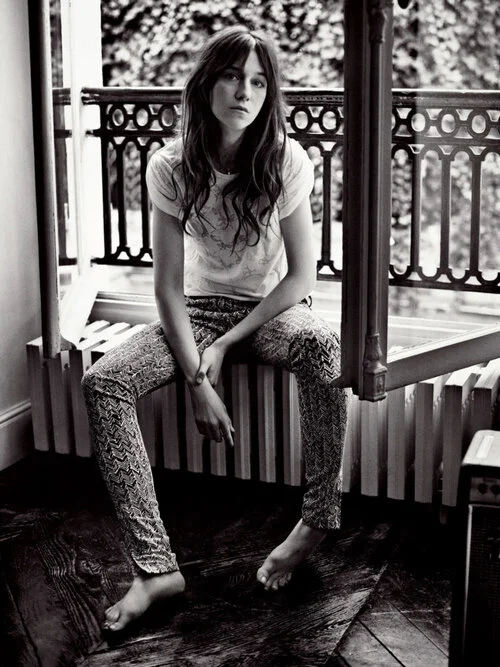
IN THIS PHOTO: Christine and the Queens/PHOTO CREDIT: Camille Vivier

it is a chance to celebrate a leap year with a selection of terrific songs! I think this week has been the busiest and biggest week for new music. There are fresh tracks from Lady Gaga, Carseat Headrest and Taylor Swift. There are tunes from Christine and the Queens, Caribou and Princess Nokia. It is such a varied and exciting week for music so, as the weather is predictably grim and ‘British’, it is best to stay inside and listen to some fantastic cuts. As we are into the weekend now, it is best to get it started…

SSASAS.jpg

IN THIS PHOTO: Caribou

WITH a real bang.

ALL PHOTOS/IMAGES (unless credited otherwise): Artists

_________

Lady Gaga - Stupid Love

ssa.jpg

PHOTO CREDIT: Kris Fuentes Cortes

Car Seat Headrest - Can't Cool Me Down

SSAA.jpg

Taylor Swift - The Man

XXX.jpg

Christine and the Queens - La vita nuova

S][SYSGHYDSGDYHDGDDHDGHDGHDGHDCGDGDGDFGD.jpg

Jessie Ware Spotlight

The Naked and Famous - Come As You Are

SSS.jpg

Lianne La Havas Bittersweet

GHGGHG.jpg

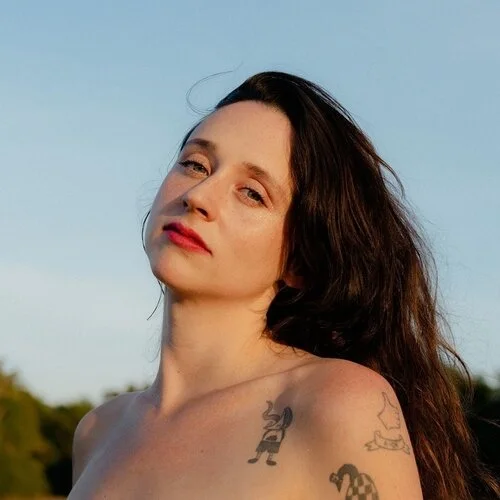
Phoebe Bridgers Garden Song

Doja Cat - Say So

AAAS.jpg

Princess Nokia Harley Quinn

CCC.jpg

Disclosure Ecstasy

Soccer Mommy bloodstream

Caribou New Jade

Kelly Lee Owens Melt!

PHOTO CREDIT: Jason Frank Rothenberg

Dirty Projectors Overlord

ZXX.jpg

Mabel Boyfriend

PHOTO CREDIT: @denisha_anderson

Oscar Jerome - Sun For Someone

DFFDFD.jpg

PHOTO CREDIT:  Alan Messer

Rumer Hard TimeS for Lovers

CXXX.jpg

Noel Gallagher’s High Flying BirdsCome on Outside

PHOTO CREDIT: Neelam Khan Vela

The Orielles7th Dynamic Goo

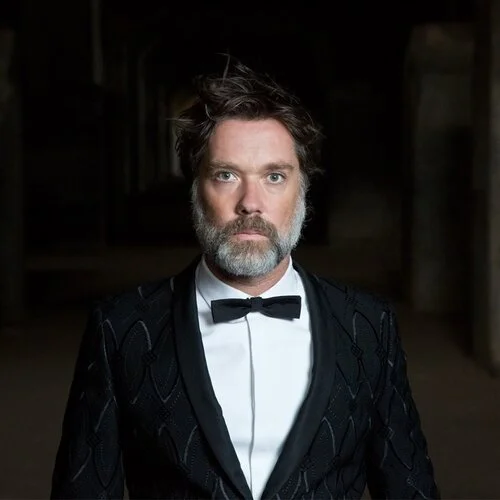
Rufus Wainwright Damsel in Distress

AAS.jpg

LooteThis Is How U Feel

HJ.jpg

Stephen Malkmus - Shadowbanned

aaaaaaaaaa.jpg

Perfume Genius Describe

Real Estate - The Main Thing

Gorillaz (ft. Fatoumata) - Désolé Diawara (Episode Two)

111.jpg

Orlando WeeksSafe in Sound

Leonard Cohen - Thanks for the Dance

aaa.jpg

PHOTO CREDIT: Charlie Cummings

The Snuts Coffee & Cigarettes

Half WaifHalogen 2

FEATURE: Behind the Music: How Artists’ Illnesses Can Open Up Conversation

FEATURE:


Behind the Music

m.jpg

IN THIS PHOTO: Ozzy Osbourne

How Artists’ Illnesses Can Open Up Conversation

___________

THAT may sound like a vague title…

IN THIS PHOTO: slowthai/PHOTO CREDIT: Phil Smithies for DIY

but this is something I have covered before. I think a lot of people do not really think about the artists we listen to and whether, like you and me, they have conditions and illnesses that affect them. There has been, thankfully, a lot more discussion around mental-health recently; it is a subject that is still not as prevalent in the mainstream and media as one would like, but things are changing. I often wonder whether there is taboo regarding artists and whether they can open up about illness. Now that social media is dominant, being revealing can have its downsides. There are people that support you, but there are others who will attack and troll. I will mention Lady Gaga later – because she is an artist who has been quite open about her health problems -, but there have been a couple of recent incidents that involved well-loved artists speaking about their struggles. They have both been met with support and kindness. Not that record labels and the media expect artists to be stoic and not talk about illness, but I think there is something very brave in speaking out. Slowthai is an artist who has been in the media for the wrong reasons recently. But, as this recent article in NME explains, he has discussed his life with ADHD:

Slowthai has opened up on his battle with ADHD, and says the behavioural condition has left him with a “need to be loved”.

The ‘Nothing Great About Britain’ rapper, real name Tyron Frampton, discussed the condition in a lengthy Twitter post.

“I often laugh when I feel anxious, this awkward laughter only shows how uncomfortable I feel,” wrote Frampton on Twitter. “I’ve always been socially awkward and found it hard to articulate to people how I truly feel, often lie. Sometimes it’s harder to stay quiet than force conversation and it makes my skin crawl.”

Frampton added: “I build myself up from pieces of other people and when I look in the mirror I shiver ’cause I feel like I’m wearing someone else’s skin.”

After explaining how he has a “need to be loved’, Frampton explained how he has previously considered taking his own life.

“I think about the end every night. But I’m too afraid to say goodbye,” he explained”.

I think, in a way, slowthai’s ADHD explains some of his recent ‘erratic’ behaviour – where he was inappropriate with Katherine Ryan at NME Awards as he collected his Hero of the Year gong from the host -, but it does definitely not let him off of the hook. Life people with other forms of mental illness, it can be hard maintaining a career in the creative industries. Inevitably, success and pressure can have negative impact, and I think slowthai’s ADHD has been as responsible for his focus and energy as it has been some of his less glorious moments. Fans and the media can raise artists to the status of superheroes, so it is difficult talking about an illness that is very common and human. I know slowthai will get a lot of support and, let’s hope, he is provided some guidance and rest by his management and label. He will not want to slow down too much, but I think he needs to take a breather soon to catch up with himself and recharge.

There are others with ADHD that will look up to slowthai and be inspired by him. We do not realise that musicians are just like me and you, in the sense that they are not immune to illness and it can affect them in a very big way. Another artist who has recently spoken about his health struggles is the legendary Ozzy Osbourne. The Black Sabbath icon has been diagnosed with Parkinson’s, and it means that he has to cut back on touring. Through his career, Osbourne has faced obstacles, but this is his biggest test. He has said he is focusing on his health and family and, whilst it will be disappointing to cancel some dates and slow things down, he needs to put himself first. This recent interview reveals more about his Parkinson’s and an accident that proceeded his diagnosis:

Still, Ozzy went along with the plan. He’d been in a slump since a serious fall in February 2019, when he’d hit his head on a metal bed frame and seriously fucked himself up. He needed something to get him back to work, and recording his hook for the Post Malone track ‘Take What You Want’ went so well that Watt worked up the courage to ask Ozzy if he’d be up for making a whole album.

“I was feeling sorry for myself, miserable and in fucking agony,” remembers Ozzy. “I’ve never been laid up for a year in my life and still been in so much pain at the end of it, but Andrew Watt and fucking Post Malone and my daughter Kelly got me going in the right direction. If it’s not a big hit that’s fine, but this album is quite possibly one of the most important albums I’ve ever made because it saved my life.” 

aaaaa.jpg

PHOTO CREDIT: Greg Doherty/Getty Images

“I didn’t say it before, but I knew I had Parkinson’s fucking 18 years ago,” he reveals. “I was diagnosed in 2003 and I’ve been doing gigs since then. The problem I’m having right now is this fucking neck problem I’ve had since I fell over and had to have surgery…” At this point he starts to get up, and he tosses his head and hair forward so that he can show me the gnarly scar on the back of his neck, but the commotion brings Sharon in from the next room. “Ozzy,” she pleads. “Don’t – it’s horrible!”

Sharon isn’t sure Ozzy’s quite right about his illness. “You had Parkinson’s, but it wasn’t active,” she explains to him, then turns to me to elaborate: “He was born with a gene called the PARK2 gene, but it wasn’t active. It’s like being born with certain cancer genes. They’re not active, and it’s usually stress or shock to the body that makes them active.”

Ozzy looks up at her from the armchair, confusion written across his face, and asks: “Is it active now, then?

It will be a hard road ahead for Osbourne, and I know there has been a lot of love from his fans. We do not expect our favourite artists to suffer from serious illnesses, but I think artists like slowthai and Ozzy Osbourne will help raise discussions, make others (with the same condition) know they are not alone. I know of people who live with fibromyalgia and, until a few years ago, there had not been a lot of discussion in the music industry.

SSSSSSS.jpg

IN THIS PHOTO: Lady Gaga/PHOTO CREDIT: Daniel Jackson for Allure

Back in September 2017, we learned more about the condition as it affected one of music’s biggest artists:

On Monday it was announced that Lady Gaga has cancelled her European tour, due to begin next week, because of “severe physical pain that has impacted her ability to perform”. She has fibromyalgia, and has made a Netflix documentary, Gaga: Five Foot Two, to raise awareness about this long-term condition. A statement says: “She plans to spend the next seven weeks proactively working with her doctors to heal from this and past traumas that still affect her daily life and result in severe physical pain in her body. She wants to give her fans the best version of the show she built for them when the tour resumes.”

We’ve all heard of Lady Gaga, but fibromyalgia syndrome (FMS) may be more of a mystery. It is a condition that is hard to diagnose, explain or treat. And many people with the condition say they struggle to get medical professionals to take their symptoms seriously. FMS is a long-term condition that causes widespread pain. Its debilitating symptoms include extreme tiredness, muscle aches, difficulty sleeping and concentrating; headaches and bloating are also common. In Lady Gaga’s case, it is easy to see how she may have initially put these problems down to touring and performing. But the fatigue and pains persist even when you rest, and can be far more draining than normal tiredness.

People with FMS often notice that a fairly innocuous injury, such as stubbing a toe, hurts more intensely and for longer than it should. And even a light touch that shouldn’t hurt at all can be experienced as an unpleasantly painful sensation. The fatigue means you need to sleep a lot but wake up feeling groggy, stiff and achy. Even mental processes feel sluggish, so it becomes a huge effort to concentrate or learn anything new, and your speech may sound slow and a bit muddled. Patients call this “fibro-fog”, and it is not clear whether Lady Gaga experiences it or not”.

I wanted to write this article because, as we are becoming more aware of the extent of mental-health concerns like depression and anxiety, I think there are some illness that are relatively under-exposed, in the sense we do not hear them discussed in the media a lot. I have mentioned merely a few artists – two who have made the music news recently -, but I think it forces us to look at artists in a very human way. There is this façade and shield artists have to deploy when touring and promoting, and I feel too much pressure is put on their shoulders. Of course, Ozzy Osbourne and slowthai are in very different situations, but I think there will be many people out there who are going through the same experiences who will identify and, perhaps, feel more confident in discussing their illnesses because of that. To any artist that is dealing with an illness, whatever it may be, the entire music community…

WISHES them all the very best.

FEATURE: Hard for the Heart: How Duffy’s Brave Revelation Will Give Strength to Other Women

FEATURE:


Hard for the Heart

How Duffy’s Brave Revelation Will Give Strength to Other Women

___________

ON Tuesday (25th) evening…

many of us reacted to something horrible that was reported. It has been almost a decade since Duffy released her second studio album, Endlessly. Many of us have been wondering whether she will release more music and why she has been away from the spotlight for so long. Although there are personal reasons why she stepped back from music, a post on her Instagram revealed some shocking news. I woke up yesterday and saw the news reports in this article from The Guardian:

Aimee Duffy, the Welsh pop singer known as Duffy who retreated from the public eye following her hugely successful debut album Rockferry, has said she was drugged, held captive and raped by an unidentified person.

In a statement on her official Instagram account she said: “The truth is, and please trust me I am OK and safe now, I was raped and drugged and held captive over some days. Of course I survived. The recovery took time. There’s no light way to say it. But I can tell you in the last decade, the thousands and thousands of days I committed to wanting to feel the sunshine in my heart again, the sun does now shine.”

She does not detail when the attack happened, but said she came to the decision to reveal the attack after a journalist had contacted her: “He was kind and it felt so amazing to finally speak … In the following weeks I will be posting a spoken interview. If you have any questions I would like to answer them, in the spoken interview, if I can.”

View this post on Instagram

You can only imagine the amount of times I thought about writing this. The way I would write it, how I would feel thereafter. Well, not entirely sure why now is the right time, and what it is that feels exciting and liberating for me to talk. I cannot explain it. Many of you wonder what happened to me, where did I disappear to and why. A journalist contacted me, he found a way to reach me and I told him everything this past summer. He was kind and it felt so amazing to finally speak. The truth is, and please trust me I am ok and safe now, I was raped and drugged and held captive over some days. Of course I survived. The recovery took time. There’s no light way to say it. But I can tell you in the last decade, the thousands and thousands of days I committed to wanting to feel the sunshine in my heart again, the sun does now shine. You wonder why I did not choose to use my voice to express my pain? I did not want to show the world the sadness in my eyes. I asked myself, how can I sing from the heart if it is broken? And slowly it unbroke. In the following weeks I will be posting a spoken interview. If you have any questions I would like to answer them, in the spoken interview, if I can. I have a sacred love and sincere appreciation for your kindness over the years. You have been friends. I want to thank you for that x Duffy Please respect this is a gentle move for me to make, for myself, and I do not want any intrusion to my family. Please support me to make this a positive experience.

A post shared by @ duffy on

Duffy, 35, adds: “You wonder why I did not choose to use my voice to express my pain? I did not want to show the world the sadness in my eyes. I asked myself, how can I sing from the heart if it is broken? And slowly it unbroke.” She pleaded for support, and for no intrusion into her family life.

With a vintage pop sound that matched contemporaries like Amy Winehouse and Adele, Duffy’s 2008 debut album Rockferry was sensationally successful. Powered by the chart-topping single Mercy and the ballad Warwick Avenue which peaked at No 3, it became the UK’s biggest selling album that year, and won her three Brit awards. It eventually sold over 9m copies worldwide, and was a hit in the US, reaching the top five and winning a Grammy”.

A lot of people reacted to the news yesterday and on Tuesday and, with the news still fresh and impacting others, there will be shockwaves felt for a very long time. I have seen a few Twitter posts that ask how many incidents like this we will see. We have all seen the news involving Harvey Weinstein, and how he has been brought to justice for the vile sexual assaults he perpetrated over many years. In Hollywood, there is the #MeToo movement, which has spread to the wider world. I have posted an article that asked whether music needs a similar movement because, over the past few years, there have been many cases of sexual assault and rape in the music industry.

From artists like R Kelly and Ryan Adams accused and put in the spotlight, to artists like Kesha and Duffy speaking out about their ordeals, one wonders how many other women in music have bene affected. Sadly, there are too many cases of women being abused and assaulted, and something needs to change. We do not know the details of Duffy’s situation – and whether she was raped by someone in the music industry -, but her words and courage will give other women the courage to speak out. One can only imagine how hard it was for her to type that Instagram post, and what it has been like living with what she has for so many years. One has a horrible feeling that there are other women in the music industry who have faced something similar to Duffy; who have either been silenced or have not felt like they could speak up until now. Ahead of International Women’s Day on 8th March, I do think more discussions need to happen regarding women in music and how they are treated. Whether women affected by sexual abuse are victims of men in the industry or those outside of music, I think there need to be campaigns that shine a light on a problem that is not going away. It is complicated regarding resolution and progression, but artists like Duffy will start movement and, as I said, give other women the courage to speak about their experiences. I really wanted to write something following the news about Duffy, as it is a shocking and upsetting thing to hear about. Let’s hope that she will be okay and, I know, everyone in music will send Duffy…   

s.jpg

SO much love.

FEATURE: Spotlight: Phoebe Green

FEATURE:

Spotlight

x.jpg

PHOTO CREDIT: Sara Carpentieri

Phoebe Green

___________

I think we can all agree that anyone called Phoebe…

SASS.jpg

is pretty kick-ass and cool. To be fair, I can only think of Phoebe Waller-Bridge and Phoebe from Friends – who, to be fair, is fictional. That said, Phoebe Green is a very cool artist that you need to follow! I am basing my recommendation off of her music and, with Easy Peeler and Dreaming Of out in the ether, Green is already turning heads. Although she has only put out a bit of material, the impact of her music and power of her personality has made her an artist to watch closely – NME named Green as one of their one-hundred to look out for this year. I am going to include her music in this feature but, as I am not overly-familiar with her background and ambitions, I am going to source from a few interviews. Forgive a lack of strict chronology, as I am going to go back and forth a bit. I want to, first, source from an interesting BBC article published last April, where we learn more about her upbringing and how she values the power and importance of lyrics:

Born and bred in the small Lancashire seaside town of Lytham St Annes, Green - who is studying in Manchester - has just released her debut single, Dreaming Of. It's an uptempo indie pop track whose breezy production by Mercury Prize nominees, Everything Everything's Alex Robertshaw, masks some biting questions about issues of identity and self-worth.

You don't get to choose what makes me blue / I don't want to compromise myself for you / You always find a way back in / You creep, you crawl under my skin.

ASSAAS.jpg

PHOTO CREDIT: Sara Carpentieri for DAZED

Green puts "everything, literally everything" into her lyrics, she explains.

"I find it so hard to write anything if it hasn't happened to make me want to write it. So I only really write about stuff that is actually going on and people that I actually know. I really want to explore more, because I'm just a very opinionated person, but I only seem to write about what I'm actually feeling.

"I think I do want the music to be a lot more representative of me, the person and my world views and stuff like that."

She started trying to write songs from the age of 12 but went one better than most when, aged 17, she recorded 02:00 AM; a 10-song mini-album, which she self-released on Spotify and which has accumulated more than three million streams without a record label or distribution deal.

"I basically could never, ever sleep when I was in sixth form, I just had really bad insomnia," she says.

"So, I just started writing down my notes on my phone, like every little thing that was going through my head. And then if I came up with any melodies or anything like that, I would just kind of like hum them really quietly into my phone, because everyone else would be asleep”.

I love the fact that Phoebe Green is an original artist who refuses to compromise. I can never understand why big Pop artists are all over the place, and the best artists out there – i.e., the new ones who do things differently – are not more celebrated.

Maybe that is the way things will always be, but I do thing Green will rise her way through the ranks and be a mainstay of the future. When it comes to new artists like Green, there is that air of mystery that you do not get with mainstream artists. I only discovered Green a couple of months ago, but I have been intrigued by her sound. Easy Peeler has a slightly drawled-yet-cool vocal, and there are these brilliant stabs of electric bush that rush and take the song in a new direction. Green and her band are super-talented and tight, and they create songs that strike instantly and readily, but the lyrics keep you coming back as you try to get to the bottom of them. Green has been involved with a few interviews, and one learns something new from each. When she spoke with the guys at DAZED in August last year, we learn more about the importance of Manchester, and where her ideas come from:

 “How has Manchester impacted your approach to art?

Phoebe Green: It’s made me more appreciative of other genres and styles, massively. I’m a lot more likely to actively seek out bands and artists that don’t fall into the same category as me, so that I don’t get complacent and find myself within a scene where all the bands sound the same. Manchester has an incredible queer art scene as well, with it being a pretty small city it’s definitely exposed me to work that I otherwise might not have come across. I’m lucky to have artists and musicians as friends that are so creative and talented.

Where have you been getting your ideas from recently?

Phoebe Green: I’ve been writing a lot about changes within myself, and therefore changes in my relationships as a consequence. I find that kind of thing really interesting. I like writing about the way I perceive others and the way they perceive me, and how we treat each other as a result.

Are there any other artists you’re excited by that you want to shout out?

Phoebe Green: My good mates Witch Fever are one of the best live bands I’ve ever seen. They’re a feminist punk band that are so unapologetic with their rage, their sexuality, and their emotion. Their performances are incredible. Alex Rave & the Sceptical are a new band fronted by my boyfriend, they put on a really good show, along with our friends Document, who I share a guitarist with and are doing dead well, and Bleach Boy, another really amazing band. All of them are unique, but make such a cool, eclectic scene”.

There are a lot of great acts out in the world at the moment and, understandably, it is difficult narrowing them down and keeping everything in mind. Phoebe Green’s music is clever and cool; it has a filmic quality to it, and her and the band stir this incredible potion that emanates so many different emotions and visions. It is best to listen to her music but, as one can do that and glean so much about Green, I want to source from a couple of other interviews.

In a pretty cool feature in NME back in September, Green was asked some pretty ‘interesting’ questions:

Scenario: We’ve given you a shit load of money to make a big budget video – what do you do

“Probably like the ‘Easy Peeler’ video, in the whole ’50s noir, gangster/glam style but a full film following a lead character (me) with a big catharsis, probably a gory death, and a big romantic ending. Really beautiful cinematography, maybe with a narrator and all. Obviously full of my own musical numbers.”

What do you want to achieve with your music?

“I really want it to be the soundtrack to all kinds of memories, I of course want people to connect with my lyrics, but also I just want to write really cool, interesting songs that capture the person I am and the world I‘m in at particular points in my life.”

If your tour bus was hanging over the edge of a cliff and you needed to throw out one band member as ballast, which member would it be and why?

“It’d probably end up being me because not only am I incapable of making minor decisions, I can see me throwing myself out with the stress of the situation”.

I am not sure what Green has planned for the rest of this year, but many people are keen to see how she follows the amazing music she has put out already and whether there will be an E.P. or albums. Critics are already on board, and her music has won praise from both sides of the Atlantic. Pitchfork sat down to review her track, Dreaming Of, and  were suitably impressed:

 “Phoebe Green styles herself on social media as the “shirley temple of the north [of England]”. But in case you missed the sarcasm, the Manchester-based singer-songwriter is no one’s little darling. “I don’t want to compromise myself for you,” she announces over shuffling drums on her debut single “Dreaming Of,” a synth-filled indie-pop song that grows ever more biting. (She sighs on the chorus: “You make me feel like I’m anyone/Does it make you feel less insecure?”)

On her self-released 2016 mixtape 02:00 AM, Green showed an uncanny ability to move between power-anthem choruses and moments of tenderness. “Dreaming Of” offers more of the same with a self-reflexive twist: Despite the song’s uplift, her lyrics reflect on how bittersweet it is to finally get what you want, only to discover that it’s not as perfect as you imagined it would be. For Green, though, this is empowering: As she sings the final chorus, the band swells to a new size and her radiant voice fills the enormous space around her. In a world that attempts to make young women feel small, Green finds the fuel to make herself sound huge. Or, as she put it on Twitter: “she is releasin a fuckin tune”.

I do know that Green and her band have some gigs upcoming, and it will be a great chance to see this captivating new talent in her element. I did say how I am not sure whether there is more music coming soon but, in October, Green spoke with DORK . She was asked about sources of inspiration, but there was also a bit of discussion about future recording plans:

Is there anywhere or anything you find yourself repeatedly looking to for inspiration?

I think I draw a lot of inspiration musically from seeing my friends playing and going to see new bands as often as I can, but my favourite sounds definitely come from old artists like the Beatles, Shangri Las, Bowie etc. Very cliché, I know, but I like not to be too pastiche about it but rather to take elements from past records and incorporate modern lyrics to create something more current and accessible. Then you have the familiarity and comfort of that retro sound but the relatability of the modern-day commentary.

Do you have a bucket list of things you’d like to achieve? What do you reckon’s next to be ticked off?

I’d love to sell out a few venues around the UK this year, but I really wanna do a European tour in the next couple of years, even if it’s a support slot. I’m already over the moon with supporting Swim Deep in October, they’ve honestly been one of those bands I’ve listened to for years, mum and dad were well happy, it’s one of the only CDs we have in the car that they voluntarily listen to. But yeah, more tours and festivals would be nice. And an album, obviously, which I don’t think I’m too far off”.

Get involved with Phoebe Green and keep an eye to see where she goes next. I have included social media links below, so you can get you fix of Phoebe Green news and happenings. Go see her perform and check out her music, because Phoebe Green is…

ONE of 2020’s most promising artists.

______________

Follow Phoebe Green 

C.jpg

FEATURE: When You Was Fab: George Harrison at Seventy-Seven: The Ultimatum Playlist

FEATURE:


When You Was Fab

KKLLK.jpg

George Harrison at Seventy-Seven: The Ultimatum Playlist

___________

IT is sad that we no longer have George Harrison

aaaa.jpg

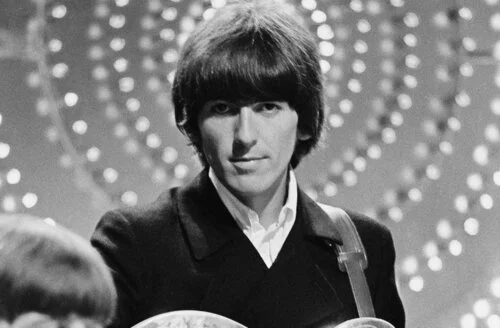
IN THIS PHOTO: George Harrison - with The Beatles - performs Rain and Paperback Writer for Top of the Pops in London on 16th June, 1966/PHOTO CREDIT: Mark and Colleen Hayward/Redferns

in the world, because I think he could talk a lot of sense and write music that reflects on these hard times. The former Beatles died in 2001, and I think he is very underrated as a songwriter. When we think of The Beatles, a lot of the focus is on Paul McCartney and John Lennon. Harrison’s contributions cannot be ignored and, between his work with The Beatles, as a solo artist, and as part of the Traveling Wilburys, Harrison made an enormous impact on music. To celebrate what would have been his seventy-seventh birthday today (25th), I have put together a playlist of the best Harrison-fronted/written songs that showcases his talents as a singer and songwriter. I think it is important to give a nod to one of the most important and influential artists…

IN THIS PHOTO: George Harrison attends a press conference to launch the new book by Derek Taylor, Fifty Years Adrift, at the Sydney Opera House on 30th November, 1984/PHOTO CREDIT: Peter Carrette Archive/Getty Images

WHO has ever lived.

FEATURE: Vinyl Corner: Manic Street Preacher - The Holy Bible

FEATURE:


Vinyl Corner

Manic Street Preacher - The Holy Bible

___________

I have featured the Manic Street Preachers on…

dfff.jpg

IN THIS PHOTO: The Manic Street Preachers in 1994/PHOTO CREDIT: NME

Vinyl Corner before – I included This Is My Truth Tell Me Yours – and, whilst I was hoping to spotlight Everything Must Go, I cannot easily find that album on vinyl. I have found The Holy Bible on vinyl and, if anything, it is a more interesting and influential album. There are a couple of reasons for including this album. For one, 1st February marked twenty-five years since the band’s lyricist (with Nicky Wire) and rhythm guitarist went missing. Also, James Dean Bradfield (the band’s lead) celebrated his birthday on Friday (21st). The Manic Street Preachers released Gold Against the Soul in 1993 and, whilst it does contain some great songs, the album is patchy in places. The Holy Bible was a follow-up that exceeded expectations and wowed critics – 1996’s Everything Must Go continued to impress, despite the fact it was the first album recorded without Richey Edwards. The Holy Bible was the band’s third album, and the writing and recording saw Edwards living with severe depression. One can look at the lyrics and hear the songs to get a feel of where Edwards’ mind was and how, perhaps, what would follow. Despite the fact Edwards was self-harming and abusing alcohol, he helped craft an album which is among the best and most important of the 1990s. The Holy Bible – among other things – concentrates on human suffering, and politics, and it is an album that stays in your head the minute you hear it.

Before the Manic Street Preachers recorded The Holy Bible, it was felt – especially by their drummer Sean Moore – that they had gone astray; maybe Gold Against the Soul was a departure and the next album needed to be a grassroots response. Maybe the Welsh Rock band had become a little American and were taking in influences from U.S. Rock bands. The Holy Bible is the band stripping things back and producing something rawer and more honest then they ever had. Nicky Wire and Richey Edwards split lyrics fairly evenly prior to The Holy Bible but, this time around, Edwards took on the majority of the lyrics – after Edwards disappeared, Wire became the band’s lyricist. There is debate as to how much Wire did contribute and, through the years, Wire discovered he penned more than he thought – chunks of Of Walking Abortion and Mausoleum are his. It was initially felt that Edwards wrote 75% or so of the lyrics, but I think that figure has come down considerably. Regardless, The Holy Bible is considered Edwards’ album; a representation of his mindset and look into his world – Wire, it seems, was able to connect with Edwards regarding the lyrical tone and subject matter. In 1994, bands like Blur and Oasis were rereleasing big, unifying albums full of anthems. The Holy Bible’s acknowledgment of The Holocaust, starvation, and British imperialism was completely out of step with those bands; the Manic Street Preachers never did fit into the Britpop movement – the outsiders who, perhaps, were saying something more important than many of their peers.

If Everything Must Go (The Holy Bible’s follow-up) is the Manic Street Preachers moving on after personal loss and doing things differently, The Holy Bible is a dark and uncomfortable album that I recommend people listen to. I am not usually drawn to albums as bleak (in places; not everywhere), but The Holy Bible is such a powerful and important album, that proved to be a watershed moment for the Manic Street Preachers. The Holy Bible is an album that mixes the personal with voyeuristic – which James Dean Bradfield struggled with some songs, in terms of how to write music for them -, and a lot of the tracks sound radio-friendly, but they are defined by quite explicit and radio-unfriendly lyrics! In spite of the fact that The Holy Bible is not as commercial as a lot of albums that were out in 1994, press reaction was extremely positive – I have barely seen a negative review of the album. There has also been a lot of retrospective acclaim for The Holy Bible. Here is what AllMusic wrote in their review:

Only in that brief moment in the '90s, when the record industry was grappling with the impact of alternative rock going mainstream and just as Brit-pop was hitting its stride, could the Manics release such a dark, difficult album on a major label, get it played on such pop-oriented programs as Top of the Pops and MTV’s Most Wanted, and make appearances at the Glastonbury and Reading festivals. And then, in a flash, it was over. Richey James went missing on February 1, 1995, and after that The Holy Bible was frozen in amber, forever seen as his last will and testament, just like how In Utero seemed like a suicide note in the wake of Kurt Cobain's suicide in April 1994.

After James' disappearance, plans for an American release of the LP were shelved, but in retrospect, it's likely that The Holy Bible -- like some latter-day Manics albums -- would never have had an American release at all. To those who know the album -- and it's a small, dedicated group of partisans who do, since not only didn't it see American shores for a decade, but it didn't sell as well as previous or subsequent Manics albums in the U.K. -- it can comfortably be compared to the Clash's London Calling, but that's not quite accurate, no matter how much inspiration the Manics drew from the ClashLondon Calling is a sprawling, exuberant celebration, so generous and big-hearted it can't be contained by a single album, whereas The Holy Bible is a bleak, introspective, insular album that's bracing in its darkness. It's not that The Holy Bible deliberately alienates listeners, but that it wears its pain too openly and presents it too vividly to be an easy listen. It can be a cathartic experience, but it's the kind of experience that doesn't lend itself to everyday listening: not only was it too dark, it was too English for a mass American audience, but years later, those things don't seem to matter as much, and in its tenth anniversary edition it can finally be seen -- and easily heard by American audiences -- as a singular, bracing rock album, quite unlike any LP before or since”.

The Manic Street Preachers recorded their thirteenth album, Resistance Is Futile, in 2018, but I think The Holy Bible remains their most important work. I personally prefer Everything Must Go and This Is My Truth Tell Me Yours (it always annoyed me there isn’t a comma between ‘Truth’ and ‘Tell’), but I have to show respect to an immense and vital record!

Before closing, I want to bring in an article that looked back at The Holy Bible, twenty-five years after its release:

“Since its release twenty-five years ago, the record has been autopsied countless times. In articles, essays, interviews, documentary films, and PHD dissertation after PHD dissertation. Biographies of the band, such as Simon Price’s exquisite Everything, dwell on the era that surrounds the record, hovering over the details that led to the writing and creation of the music, the Beatlemania type frenzy of the band’s tour in Thailand, the European gigs with Suede, the British festival appearances, the mismatched military uniforms, the infamous Top of the Pops performance of the record’s first single “Faster” that generated over 25,000 complaints from viewers, the final gig at London’s Astoria where the band smashed up every instrument, amplifier and light fitting causing thousands of pounds worth of damage.

Despite its dour worldview, antagonistic posture, and, at the time, quite poor sales, The Holy Bible has been recast as a triumph of extreme art, a perception that the fans and the band themselves have been happy to help promote. The record has also been honored with two in-depth retrospective reissues—one on its tenth anniversary and another on its twentieth—followed by a tour and a cumulative performance at Cardiff Castle in which the band dolled themselves up in military regalia and spun the record out in its entirety followed by another set of crowd-pleasing hit singles.

To think of The Holy Bible as an anomaly, a blade that punctures the narrative of the band, is a mistake. It has to be heard as a perfectly executed part of the evolution in sound. The real spanner in the works came with the disappearance of Richey Edwards that changed the direction and tone of the remaining members. The confrontation heard on Generation Terrorists and The Holy Bible was scaled back and could never really be repeated, though they certainly tried on 2001’s Know Your Enemy.

No more youthful proclamations of “I laughed when Lennon got shot” as they had delivered on “Motown Junk” or “I am stronger than Mensa, Miller and Mailer” as they had boasted on “Faster.” Now the band’s approach was “analysis through paralysis” (from the EMG era B-side “Dead Trees and Traffic Islands”), or in other words, treading on the shadow of Edwards whilst still, in essence, remaining the same band to themselves and their fans, new and old.

So, yes a lot has been written and said about The Holy Bible. And what I've written here is not original nor has it added anything new to the discussion about this record. I've lightly trod on the same ground everyone else has. Everyone is guilty”.

The Holy Bible, even to this day, knocks you back and unfurls new layers. It is an extraordinary album that was the last to feature Richey Edwards. 1994 was a magical and packed time for genius and these stunning albums. The Holy Bible, by some, gets overlooked when we assess the best from 1994, but it is a masterful album that stands out…

FROM a phenomenal year for music.  

FEATURE: All We Ever Look For: Might We See Some Kate Bush Anniversary Releases This Year?

FEATURE:

All We Ever Look For

3322222222222.jpg

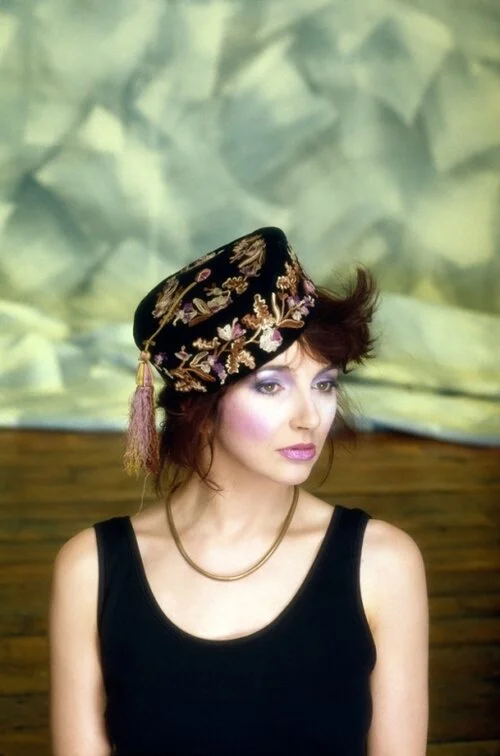
IN THIS PHOTO: Kate Bush shot for the cover of Never for Ever’s second single, Babooshka, in 1980/PHOTO CREDIT: John Carder Bush

Might We See Some Kate Bush Anniversary Releases This Year?

___________

ALTHOUGH we have to wait until the…

wwww.jpg

IN THIS PHOTO: Kate Bush photographed by her brother, John Carder Bush, in 1980

autumn to mark the anniversaries of two of Kate Bush’s finest albums, it has me returning to that subject of re-releases and anniversary editions. I have written about a couple of albums that are celebrating anniversaries ext week: Led Zeppelin’s Physical Graffiti is forty-five tomorrow (24th), whilst Tears for Fears’ Songs from the Big Chair is thirty-five the following day. Of course, on 8th May, we mark fifty years of The Beatles Let It Be – the final album to be released from The Fab Four. Kate Bush is not one for retrospection but, through her career, there have been occasions where she has revisited the past. When she produced her Hammersmith residency, Before the Dawn, in 2014, she performed songs from past albums – most taken from Hounds of Love (1985) and the exceptional Aerial (2005). In 1986, The Whole Story was released – it was a greatest hit package that I remember seeing (there was a VHS version) when I was young. She re-released her back catalogue in 2018 and released vinyl sets that collated her work for fans and newcomers. The same year, she brought out a book of lyrics; collating some of her most memorable tracks in a lovely edition. Bush has always been one for looking forward and doing something new but I wonder, as we await a possible eleventh studio album -, there are going to be many who would like to see anniversary editions of two fabulous albums. Never for Ever was released on 8th September, 1980 whilst her big smash, Hounds of Love, was released on 16th September, 1985 (also, Aerial, is fifteen on 7th November).  

Both are important albums for different reasons. Never for Ever was released during a busy time for Kate Bush. She released her first two albums in 1978 – The Kick Inside and Lionheart -, and then went to do her Tour of Life in 1979. There was so much attention her way and huge expectations. Whilst Lionheart did not perform as well as The Kick Inside – the label rushed her into a second album and she there was not a song as big as Wuthering Heights on Lionheart (although Wow came close) -, the Tour of Life was a sensation, and Bush could have taken some time out to rest and plan her next moves. Instead, she delivered Never for Ever in 1980; how many artists can release three studio albums and a huge tour in the space of just over three years?! In my view, Never for Ever is Bush’s most-underrated album. With three huge singles – Breathing (14th April, 1980), Babooshka (27th June, 1980), and Army Dreamers (22nd September, 1980) – released, the album went to number one in the U.K.  – it was the first ever album by a British female solo artist to top the U.K. album chart, as well as being the first album by any female solo artist to enter the chart at number one. It is not a surprise that Never for Ever was so successful, given the way people reacted to her Tour of Life and (an album) that boasted songs like Babooshka, All We Ever Look For and The Wedding List.

Also, this was the album when a more political tone was coming into her music. Breathing is from the perspective of a fetus who is aware of nuclear war outside the womb; Army Dreamers concerns the waste of young lives who are sent to war to die. The mix of the more accessible tracks and those with a bigger message made it Bush’s most complete and lyrically varied album to that date. Although Bush is not a perfectionist – she has said so herself -, she is someone who makes sure songs are right, and that can often mean doing multiple takes to get the right sound. Bush was only twenty-two years old when Never for Ever was released, and I listen back almost forty years later and marvel at the sheer scope, confidence, and quality of the record. Maybe the inclusion of more political songs stemmed from a (patronising) interview Bush was subjected to by Danny Baker back in 1979 where there was an impression (from Baker) that Bush was nothing more than a fluffy Pop artist; someone who was a bit hippy-dippy and lacked seriousness. Regardless, Never for Ever is a remarkable album, and you just know there are alternate takes and little gems that are in the Kate Bush vault. I realise Bush has released remastered sets that includes original studio albums and some rarities. Fascination regarding her work continues, and I think Never for Ever’s fortieth later in the year warrants celebration and new inspection. It was a new phase in her career, and she would shift directions two years later when releasing The Dreaming.

aza.jpg

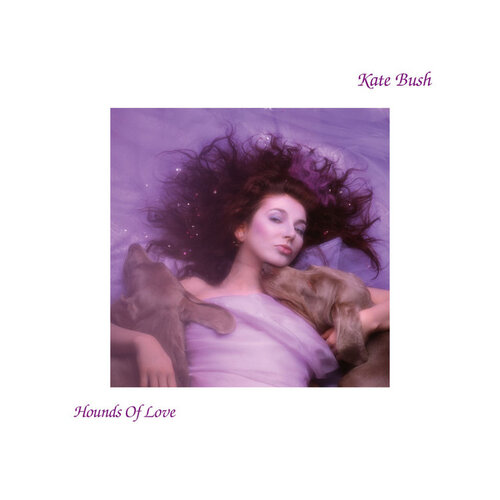
I am not sure how many alternate takes and tracks there are left in the archives, but there are B-sides that could be included onto the original album. Some might say the fact we have Never for Ever in remastered form means that, two years from that, it might not be a necessary release. Like The Beatles and other bands that have seen classic albums released with extras on their anniversary, it is a rare chance for fans to get a more detailed insight into the creation of an album; to hear early versions of huge songs and little snippets from the studio. Nearly forty years after the release of Bush’s third studio album, it still sounds unlike anything else. The same can be said for her fifth studio album, Hounds of Love. Released in 1985, it is widely considered to be her finest album. It received tremendous and impassioned reviews when it was released, and is her most accomplished work. With The Ninth Wave second side to the album – the story of a woman out at sea and waiting to be rescued – to the more accessible first half, Hounds of Love is a masterpiece. Only twenty-seven when Hounds of Love was released, it is another album of extraordinary ability and depth from an artist so young. After the rather stressful process of recording The Dreaming, Bush needed to make some changes.

That album was her most experimental to date, and her record label, EMI, were a bit disappointed by its relatively poor sales and the fact it took her two years to release another album after Never for Ever – now, two years seems a pretty quick turnaround! In 1983, Bush discovered a fantastic space in the countryside that allowed her to move out of London; she found this wonderful barn/facility that she turned into her own studio and, with her boyfriend, Del Palmer (her engineer and long-time friend and performer), and family close, it was a hugely happy and productive time. Songs like Running Up That Hill, Cloudbusting and Hounds of Love are instantly recognisable; The Ninth Wave is this engrossing and wonderfully rich series of songs charting the isolation of a woman at sea who, happily is rescued as she sees all of her hope fade away. Hounds of Love is considered one of the 1980s’ best albums, and it has not had an anniversary release yet. Maybe a thirty-fifth anniversary is not that important but, consider the fact Tears for Fears have released a thirty-fifty anniversary set for the less-adored Songs from the Big Chair, and it makes me wonder whether Bush or EMI will dip into the vault and bring out a Hounds of Love special. It is a wonderful record that Bush is very proud of and counts as one of her all-time favourite releases – I think 2005’s Aerial remains at the top of her list.

When it comes to reviews, one would be pushed to find one that is anything less than glowing and radiantly positive. This is AllMusic’s take on Kate Bush’s 1985 masterwork:

Kate Bush's strongest album to date also marked her breakthrough into the American charts, and yielded a set of dazzling videos as well as an enviable body of hits, spearheaded by "Running Up That Hill," her biggest single since "Wuthering Heights." Strangely enough, Hounds of Love was no less complicated in its structure, imagery, and extra-musical references (even lifting a line of dialogue from Jacques Tourneur's Curse of the Demon for the intro of the title song) than The Dreaming, which had been roundly criticized for being too ambitious and complex. But Hounds of Love was more carefully crafted as a pop record, and it abounded in memorable melodies and arrangements, the latter reflecting idioms ranging from orchestrated progressive pop to high-wattage traditional folk; and at the center of it all was Bush in the best album-length vocal performance of her career, extending her range and also drawing expressiveness from deep inside of herself, so much so that one almost feels as though he's eavesdropping at moments during "Running Up That Hill." Hounds of Love is actually a two-part album (the two sides of the original LP release being the now-lost natural dividing line), consisting of the suites "Hounds of Love" and "The Ninth Wave."

2.jpg

The former is steeped in lyrical and sonic sensuality that tends to wash over the listener, while the latter is about the experiences of birth and rebirth. If this sounds like heady stuff, it could be, but Bush never lets the material get too far from its pop trappings and purpose. In some respects, this was also Bush's first fully realized album, done completely on her own terms, made entirely at her own 48-track home studio, to her schedule and preferences, and delivered whole to EMI as a finished work; that history is important, helping to explain the sheer presence of the album's most striking element -- the spirit of experimentation at every turn, in the little details of the sound. That vastly divergent grasp, from the minutiae of each song to the broad sweeping arc of the two suites, all heavily ornamented with layered instrumentation, makes this record wonderfully overpowering as a piece of pop music. Indeed, this reviewer hadn't had so much fun and such a challenge listening to a new album from the U.K. since Abbey Road, and it's pretty plain that Bush listened to (and learned from) a lot of the Beatles' output in her youth”.

It is a remarkable album, and people are still hugely moved by Hounds of Love. It is great that one can buy Hounds of Love on vinyl – it was hard to get a new copy before 2018 -, and I play the album now and then. I would love to see whether there are alternative versions of the tracks from the album.

Like Never for Ever five years before, I can imagine Bush and her musicians/engineer working through these songs before the finished version came about. I know for a fact one of the singles from Hounds of Love, The Big Sky, started out completely differently, and it was a struggle getting the song from where it started to where it ended up. I think a thirty-fifth anniversary edition of Hounds of Love could include alternate takes/early versions, some snippets of reviews around the time the album was release, in addition to the original album and B-sides. It would expand on what is already out there and give people a chance to experience this legendary album in a new light. As I keep saying, I am not sure what Bush’s plans are this year and whether there is a new album being worked on. Even if she is releasing something later this year, I do think there is a demand and genuine space for anniversary editions of two of her best albums. Bush has shown that she is not adverse to looking back, and I don’t think she would be repeating herself if Never for Ever got a special edition to mark its fortieth, and Hounds of Love’s thirty-fifth was celebrated with a new set. I, and so many other music fans, love that studio process and wondering how these immense songs began and how they changed through the recording process. Never for Ever and Hounds of Love arrived five years apart, but they are extremely different alums that arrived, in a way, after intense periods in Bush’s life – Never for Ever after touring and a relentless first couple of years; Hounds of Love followed the busyness and draining (but exceptional) The Dreaming. 1980’s Never for Ever and 1985’s Hounds of Love are two remarkable albums from…

111.jpg

IN THIS PHOTO: Kate Bush captured in 1985/PHOTO CREDIT: Guido Harari

A true genius.

FEATURE: Drama and Common Sense: The Dominance and Importance of U.K. Grime and Rap

FEATURE:

Drama and Common Sense

IN THIS PHOTO: Dave won the Best Album prize at this year’s BRIT Awards for PSYCHODRAMA on 18th February

The Dominance and Importance of U.K. Grime and Rap

___________

IT was the BRIT Awards earlier in the week…

IN THIS PHOTO: Lewis Capaldi won two awards at the BRITs

and there was a mixture of surprise and the expected. On the expected side of things, there were some great performances – including Billie Eilish premiering her new Bond theme -, and Lewis Capaldi walked away with a couple of awards - he won the Best New Artist award, and he won Song of the Year for Someone You Loved. I was surprised Mabel won Female Solo Artist as, nominated alongside her, was Charli XCX and FKA Twigs. I have nothing against Mabel, but I think FKA Twigs was more deserving. Perhaps it was a Brit-appropriate win as, in terms of music, they tend to go for the more commercial artists rather than those who have released stronger, deeper worker. This BBC article rounds up the winners and highlights:

Mabel won best female artist, and was congratulated by her mother, Neneh Cherry, who took home two Brits exactly 30 years ago.

Billie Eilish choked back tears as she accepted the award for best international female, having been overwhelmed by the audience's response to her performance minutes earlier.

"I felt very hated recently," said the 18-year-old, who had earlier told the BBC she had stopped reading comments on social media.

"And when so was on the stage and I saw all you guys smiling at me… It genuinely made me want to cry. And I want to cry right now, so thank you."

Best male artist went to Stormzy, who performed a stunning medley of songs from his second album, Heavy Is The Head, accompanied by more than 100 performers, including a gospel choir, a saxophonist, and Nigerian artist Burna Boy.

The night opened with a brief tribute to Love Island host Caroline Flack, formerly a backstage presenter at the Brits, after her death on Saturday.

"She was a kind and vibrant person with an infectious sense of fun," said the show's presenter Jack Whitehall.

"I'm sure I speak for everyone here when I say our thoughts are with her friends and family."

There were several references to the lack of female nominees at the ceremony; with Paloma Faith and Foals saying they hoped for better representation at next year's awards.

Whitehall also acknowledged the imbalance as he introduced the award for best female, saying: "Environmental issues have been a big theme of awards show this year. And in the spirit of sustainability the Brits has been recycling all the same excuses for why so few women were nominated".

It was a night of fun on Tuesday (18th), and there were no massive upsets or any real surprises. That said, many expected Lewis Capaldi to win Male Solo Artist and Divinely Uninspired to a Hellish Extent to scoop the Mastercard Album of the Year. It is good that, unlike previous years, there was diversity in regards the type of music celebrated.

It is not all about chart-based Pop and, in a year that is still having to answer criticism of gender imbalance, the fact that several black artists won awards, is a positive step. A couple of things struck me about the change of tide at the BRIT Awards. Before I explain, here in a piece that reacts to a standout performance from Dave:

Rapper Dave performed a politically charged version of his song Black at the Brit Awards, before picking up the biggest prize of the night for his album Psychodrama.

The 21-year-old accused Boris Johnson of being "a real racist" in additional verses, before touching on the Grenfell Tower victims and the Windrush generation.

He also criticised the media's treatment of the Duchess of Sussex, and paid tribute to London Bridge terror attack victim Jack Merritt as "my brother in arms".

"It is racist whether or not it feels racist/The truth is our prime minister's a real racist," he rapped, later adding: "Now if you don't want to get it then you are never gonna get it/How the news treats Kate versus how they treated Meghan".

Maybe the lack of progress – regarding female artists not being nominated – and few shocks/surprises (there was not a lot of controversy or rebellion) meant that, in many ways, it was business as usual. The most extraordinary and powerful moments came from Dave and Stormzy.

It got me thinking about how music has changed and how the words ‘popular music’ have also shifted meaning. When I was growing up, popular music was dominated by Pop artists and Rock bands. These acts, largely, put out feelgood songs, with hooks and big choruses. Although Mabel and Billie Eilish won awards on Tuesday, listen to the type of music they make, and it is very different to Pop of the past. Eilish makes slightly darker music, more reliant on atmosphere and innovation rather than epic choruses and a big sound. Mabel is a commercial artist and, whilst her songs appeal to a certain demographic, they do not necessarily appeal to a wider audience and stay in the head. Everyone is entitled to their own opinion, but I am not a fan of modern Pop music (as a genre), and I find a lot of it rather boring and forgettable. I am also not a fan of Rap and Grime – not as much as I used to be –, but one cannot deny its importance. In many ways, the dominance of Pop and Rock has been replaced by Rap and Grime. If Pop, Rock and other genres were the biggest scenes in years past, they are not necessarily as powerful as they were before. Artists right across the spectrum are bringing politics and important themes into their music, but it seems that artists like Dave and Stormzy are representative of modern times and needs.

Even though the music is angrier and less melodic than popular sounds of years past – which is why I only occasionally dip in and out of Grime and Rap -, it shows that music fans want truth and artists who speak about the big things. From rallying against racism and the Government, to addressing gentrification and crime, artists like Dave are doing what Pop, Rock, and Punk artists used to do before: get people standing to attention and staying in the mind. Maybe the fact we are responding to more urgent and political music reflects a troubled time. Even though I hanker after the positive Pop of my youth, one cannot ignore young artists doing their own thing and producing music that resonates and connects. Rather than appeal to big Pop markets or to labels, the best Grime and Rap artists of today are speaking to and for those without a voice and, with no barriers, sending their message out to the masses – one can throw in artists like slowthai and Little Simz, who are also producing some sensational music. The burgeoning British Grime and Rap scenes are speaking volumes and moving people in a way that modern Pop and Rock cannot. The shift in tastes is not really a surprise. Whilst I do think music of the 1980s and 1990s was stronger because of its memorability and positivity, one has to accept that the 2010s (and 2020s) were defined by other sounds and lyrics themes. The finest Grime and Rap artists of today are more truthful and inspiring than most politicians and, in these tough times, they are…

IMAGE CREDIT: GQ

BRINGING people together.

FEATURE: Putting Music Back on the Screen: Is There Too Much Choice?

FEATURE:

Putting Music Back on the Screen

aaaa.jpg

PHOTO CREDIT: @spencerimbrockphoto/Unsplash

Is There Too Much Choice?

___________

I was reading an interesting article…

PHOTO CREDIT: @lastly/Unsplash

that argued how we need a return for MTV. I have covered this topic before but, in those cases, it was a slightly nostalgic throwback to the days when music had more substance and there were fewer choices. Now, every music taste is catered for. There are artists in every genre releasing great music all of the time, and streaming allows us easy access to whatever sounds we like. It is great to have so much freedom and choice but, when there are so many artists and it is hard to keep abreast of everything going on. I have talked before about the lack of scenes and movements in modern music, and how we need some unity now. I can understand why MTV and music television faded away. When sites like YouTube and, before then, MySpace, arrived, it helped give artists access to the world. Before then, it was only the biggest acts and those with record deals that could get their music heard. The fact we have these platforms for artists to get their music heard is not only good for them, but it allows the listening public more choice and diversity. I would not want to change this but, as a recent article from Consequence of Sound highlights, we need T.V. stations like MTV – how it used to be – back:

Even the most die-hard fanatics of the underground can admit that we owe a lot to the famed “Music Television” because it gave the world many of the acts we couldn’t imagine our lives without. No matter how punk rock you are, MTV introduced us to many of the artists that define us, still. From Michael Jackson and Madonna to Nirvana, Limp Bizkit, and Pantera. From Tupac to N’Sync. Whatever your personal feelings are towards these artists, MTV opened a lot of doors for genres, and those toes in the water made us see subcultures with new, interested eyes.

PHOTO CREDIT: @stereophototyp/Unsplash

It’s nice to have everything at our fingertips. YouTube is at the ready, iTunes locked and loaded, but there are too many choices. MTV worked because Headbangers Ball, YO! MTV Raps, Alternative Nation, and 120 Minutes fostered a community.

Those shows worked on the simple premise of if you like this thing, let us show you these other things like it. There are blogs curated to tastes and algorithms that help us to discover similar artists, but the shared cultural experience of the music video, not knowing what would come next, the charisma of the host … all of those things played a role in the growth of the music. There’s value to that magic.

With all of the options for streaming, for specialized channels, could a music-driven version of MTV make a cultural comeback? Would the kids adopt it? Considering how hyper-fractured our cultural touchstones are, I think the idea of shared reality is quaint, but also possible and needed. If you’re reading this, you love music. So, why can’t we get together like weirdos, leave the TV on all night, talk over fast food, and wait for that one moment of pure rock and roll fury to surprise us”.

PHOTO CREDIT: @ytcount/Unsplash

I agree with a lot that is written in the article. Whilst I do agree there was a higher standard of music before the introduction of streaming sites and options like YouTube, I think the biggest problem now is to do with division and too many options in too many places. I think there are some great artists that do not get discovered because it is hard to experience everything; others that are too exposed and, in a music world where there are countless artists, I do not think there is any structure or real magic anymore. I do not think one could return to the heady days of Top of the Pops or MTV because, let’s face it, there is something about today’s music and culture that seems less memorable and enticing as years ago. I do think there could be a modern relaunch of MTV – or a bespoke, new music channel – that would put focus on the importance of the music video; spend some time curating segments featuring the best new artists and, like days of old, put the album back in focus. There would still be streaming and all the existing options but, for those who want some clarity and depth to music discovery I think, ironically, a return to the older days is needed. Look around the channels we have now and there is only really one British music show: Later… with Jools Holland. By that, I mean shows that feature live performances and are not chart shows or whatever MTV throws out these days. So many artists perform on cookery or news shows because that is the only T.V. exposure available. I tune in to various radio stations, but I feel like I am missing out on a lot and, with the pace of modern life, things tend to zoom past. I am not sure what the solution would be, but it is obvious that there have been changes for the worse in the music industry. With all the choice we have, have we lost a lot of the feeling and excitement? I think so.

PHOTO CREDIT: @jamakassi/Unsplash

Maybe we are too modern to see a full return to music television, but I do maintain there is value in stations like MTV and how they used to be. I am not discouraging artists from making music, but even the most ardent music fan has to admit that there is a huge amount of choice that can be quite difficult to absorb. I am not sure we would remember classic music as we do now were it not for music television and the fact there was this visual experience. Not only, as I have said before, does music television allow us the best fresh sound; we can also learn about music of the past and important events. That question as to whether this generation would dispense with – or combine music television – streaming or make it less a part of their life is hard to say. We have streaming television services, so it sort of ties in with my features about music television and combining the elements of classic music television – videos and presenters – and integrating the best elements of today’s music culture (the fact new artists can get their music heard). I do feel, the more we are flooded with music the more we need direction and focus. I am not saying MTV or a new channel would instantly do that, but it would allow us to reconnect with music and culture in a way that we have not done for many years – the station could also bring in documentaries and music news. I do love modern music but I think, between streaming, radio, and every other platform, it can get…      

PHOTO CREDIT: @sickhews/Unsplash

A bit too much!

FEATURE: Sisters in Arms: An All-Female, Winter-Ready Playlist (Vol. VII)

FEATURE:

Sisters in Arms

1121.jpg

IN THIS PHOTO: Charlotte Dos Santos/PHOTO CREDIT: Nathan Bajar

An All-Female, Winter-Ready Playlist (Vol. VII)

__________

IT is another weekend…

IN THIS PHOTO: Emily Burns

and the weather is a little better than it was this time last week. Yet again, there are some phenomenal female artists putting out some sensational music. This week has been a really great one for music and, as you can see from this playlist, so many terrific tracks have come from women. As always, the variety is staggering; covering so many different sounds and genres. Have a listen to this packed playlist, and I know it will give your weekend a boost and buzz. Settle back, play these tracks and…

zzxzx.jpg

IN THIS PHOTO: Wye Oak/PHOTO CREDIT: Ryan Obermeyer

LET them work their magic.  

ALL PHOTOS (unless credited otherwise): Artists

__________

Coach Party Breakdown

dhgdhd.jpg

PHOTO CREDIT: Rosie Ann Butcher

Sophie MorganBar to Bar

ZXX.jpg

Call Me Loop Downhill from Here

ASSAAS.jpg

Cameron Hayes Drown

AASAS.jpg

Orla Gartland oh GOD

ZZZZ.jpg

Emmi Elliott Face to Face

bvb.jpg

PHOTO CREDIT: Eddie Chacon

Best Coast Graceless Kids

hggh.jpg

Caylee Hammack Small Town Hypocrite

nbn.jpg

IN THIS PHOTO: Anna Calvi

Anna Calvi (ft. Charlotte Gainsbourg) Eden (Hunted Version)

csds.jpg

PHOTO CREDIT: Bao Ngo

Ada Leawoman, here

PHOTO CREDIT: Alysse Gafkjen Photography

Katie PruittLoving Her

ASASAS.jpg

Agnes ObelCan’t Be

WEEW.jpg

PHOTO CREDIT: Vanessa Heins

Sarah HarmerWildlife

22323.jpg

PHOTO CREDIT: @cf.watkins

WilsenWedding

ZXSASD.jpg

PHOTO CREDIT: Aaron Lee

Yumi Zouma - Southwark

Allie XRegulars

Pip Millett Deeper Dark

ZZZ.jpg

Mae Muller Therapist (Acoustic)

April – The Impossible Task of Feeling Complete

QQA.jpg

GrimesNew Gods

AAAA.jpg

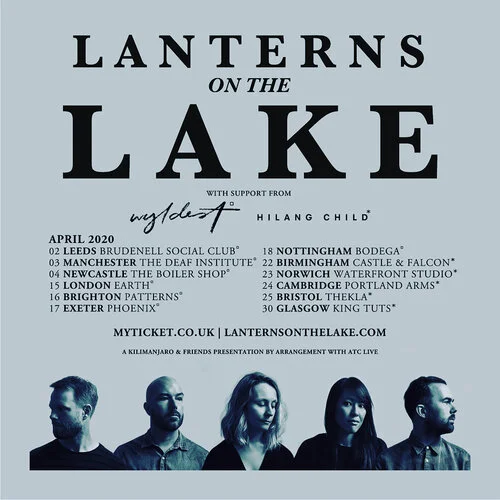
Lanterns on the Lake Secrets & Medicine

AQQ.jpg

Maggie Miles WHATDOISAY?

LY.jpg

PHOTO CREDIT: @rayana

Banoffee Chevron

HGBB.jpg

Charlotte Dos Santo Helio

Gracie Abrams 21

AASAS.jpg

ShitKid Always Amber

Z.jpg

GRACEY Gone

l;l.jpg

Emily BurnsHello

assssss.jpg

Jessy Lanza Lick in Heaven

q.jpg

Wye Oak Walk Soft

FEATURE: The February Playlist: Vol. 4: Even If You Make Bad Decisions, We Will Always Love You

FEATURE:

The February Playlist

sss.jpg

IN THIS PHOTO: Thundercat

Vol. 4: Even If You Make Bad Decisions, We Will Always Love You

__________

THIS week is not short…

sa.jpg

IN THIS PHOTO: Charlotte Gainsbourg/PHOTO CREDIT: Interview Magazine

of huge tracks from mainstream artists and those slightly away from the spotlight. We have fresh cuts from The Strokes, The Avalanches (ft. Blood Orange), and Anna Calvi (ft. Charlotte Gainsbourg). Thundercat, Grimes, and Agnes Obel have songs out, as does Morrissey, The 1975, the incredible Sparks, and Glass Animals. It is an impressively full and varied week of terrific music. No matter what your tastes, there should be something in the playlist that tickles your fancy! It has been exciting seeing some real great songs arrive this week from some of the world’s most popular artists. If you need something to give your spirits a kick and a bit of energy, get involved with the best tracks…

ssss.jpg

IN THIS PHOTO: Grime

OF this week.

ALL PHOTOS/IMAGES (unless credited otherwise): Artists

_________

asaas.jpg

The Strokes Bad Decisions

The Avalanches (ft. Blood Orange) - We Will Always Love You

ss.jpg

IN THIS PHOTO: Anna Calvi

Anna Calvi (ft. Charlotte Gainsbourg) - Eden (Hunted Version)

Thundercat - Dragonball Durag

wwq.jpg

Grimes You’ll miss me when I’m not around

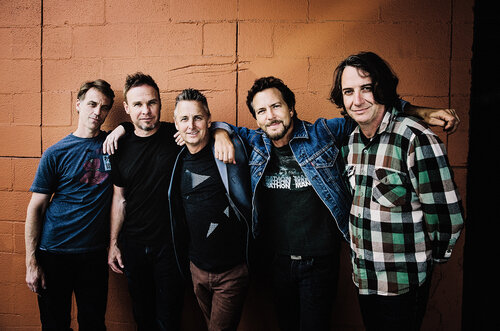
PHOTO CREDIT: Danny Clinch

Pearl Jam Superblood Wolfmoon

The 1975 The Birthday Party

Glass Animals - Your Love (Déjà Vu)

Agnes Obel Broken Sleep

V.jpg

Sports Team Here’s the Thing

The Districts - Velour and Velcro

Sparks - Self-Effacing

SSS.jpg

Waxahatchee Lilacs

AASAAS.jpg

Morrissey - Knockabout World

JHHJ.jpg

Wye Oak Walk Soft

SDSDSD.jpg

PHOTO CREDIT: Alex Knowles

Saint Saviour (ft. Willy Nelson) - Rock Pools

sdsdds.jpg

Aitch MICE

aaaaaads.jpg

Orla Gartland - oh GOD

ssssssssss.jpg

Ozzy Osbourne - Eat Me

assas.jpg

The Weeknd After Hours

asasasas.jpg

Coach Party Breakdown

dd.jpg

Yves Tumor Gospel for a New Century

ssssssssssss.jpg

Biffy Clyro Instant History

xxxx.jpg

PHOTO CREDIT: Eric Gyamfi

Moses Sumney Neither/Nor

Charlotte Dos Santos Hello

AAAAAAAAAAAAAAAAAAAAAAAAAAAAA.jpg

Best CoastWreckage

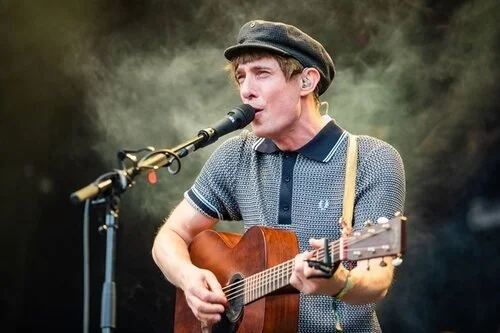
Gerry Cinnamon - Where We're Going

ZXX.jpg

The Lottery Winners Headlock

XXXX.jpg

PHOTO CREDIT: Kerrang!

All Time Low - Sleeping In

www.jpg

Maddie Jay - The Peanut Butter Song

FEATURE: Not Your Average Day Out… Why the World Needs an International Museum of Music

FEATURE:

Not Your Average Day Out…

sssssssss.jpg

IN THIS PHOTO: Stevie Wonder

Why the World Needs an International Museum of Music

___________

ONE of the problems with suggesting something…

PHOTO CREDIT: The Natural History Museum, London

as unwieldly as an International Museum of Music is, as you can imagine, that the world of music cannot be easily contained and explained in a single building. We have the superb National History Museum in London; one can also visit our Science Museum, and these facilities are invaluable in terms of education and delight – in fact, I have been meaning to return to the Natural History Museum for years now! They are great places to take the family because, not only is there the mix of interactive sections and displays; one can also enjoy time leisurely walking around in a calm and interesting environment. The fact one can also visit for free is another big bonus! One hopes these great institutions remains for decades and centuries more, as they benefit so many people. Whilst we house natural history and science in full wonder in splendid locations, what of music? There is an argument that one can stream and play music, whereas it is hard to get a tangible sense of natural history and science online. That is fair enough, yet there is the educational and tangible side to music that is either impossible to get online or very difficult. We have smaller music museums in this country; there is the British Music Experience in Liverpool, and there is the Universal Hip Hop Museum in the U.S. If you want a fix of music goodness, there are choices out there. The Internet is a valuable resource, but there is so much information out there and so MUCH music, one can miss out on a lot, and it can be tricky to hear and see it all!

PHOTO CREDIT: @mparzuchowski/Unsplash

If one does bring about an international museum for music, why not one for film too? That is another valid point, but I think music holds greater power and has made a bigger impact on the world than film. Music joins us all, and it is an international language. I have been wondering why there is not a museum as impressive and big as London’s National History Museum in the world as, surely, it would be a hit – apologies if there is an international music museum or something of that stature in the world (I have done a Google search and nothing comes up!). America is pretty well covered when it comes to smaller musicians that cover specific areas of music – including the National Museum of African American Music. Years ago, I wrote features mooting the possibility of a music café that mixed elements of a museum – interactive features and exhibits – with a traditional café. Maybe that concept is a slightly flawed design, but I think a museum could work really well. Of course, as I said at the top, one could not include every aspect of musical history in a building. That said, look at the size of bigger museums in London, and there is a lot you can pack in! In terms of what would be included, there would be different sections that focus on different areas and times - from Motown and Grunge across to Britpop and back to the Pop of the 1960s (The Beatles themselves deserve an entire wing!).

saaa.jpg

IN THIS PHOTO: Madonna in 1983

I think one gets complacent on the Internet, and we often do not have time to listen to a lot of music; if we do, it is either our reliable favourites or brand-new music. A museum of this size would not be only about older artists: indeed, new technology and music would be part of it. From exhibits about changing technology and devise – the Sony Walkman and iPod, for instance -, to big musical events, documentaries, and festivals, I think a lot of people would go. At the moment, we have some great music museums in the world that have incredible features such as instruments, classic costumes and albums. Even in America, I do not think there is anything as comprehensive as a National History-style museum. Just think about Hip-Hop itself and how much history there is there – whilst there is a Hip Hop museum in America, incorporating aspects of it into a one-stop museum would open fresh eyes to a genre and scene they might not be familiar with. There have been some iconic gig performances, music videos and music documentaries through the years and, rather than sift through YouTube or wait for them to appear on T.V., having access to them in a special space – either a cinema-type section or interactive displays – would be much more convenient. This weekend, I am writing a feature regarding new music discovery and whether a return to MTV’s classic dynamic – lose the reality T.V. shows and stick with videos and interviews – would help at a time when we are flooded with new music. The legacy and importance of MTV could also feature (in a museum).

IN THIS PHOTO: The Beatles in 1965/PHOTO CREDIT: PRNewsFoto/Apple Corps Ltd./EMI Music/AP Images

In terms of what, logistically, the museum would look like, I think it would be a three-floor space where there is a similar feel to somewhere like the Science Museum. Ranging from displays of music memorabilia and screens showing videos and documentaries, there would be bespoke areas that allow visitors to immerse themselves in a way that you cannot on the Internet. I think the Internet is so vast, and we can get overwhelmed by all the music and information out there. Having a single space where one could browse and digest information in a more ‘leisurely’ way seems like a good idea – I think there is a definite market and desire. As to where it would be based, logically it would have to be in the U.S. or U.K. – either in a city like New York/Los Angeles or London, Manchester or another big city (Glasgow and Liverpool are possibilities). As we move forward and become advanced, oddly, I think we are losing a bit of what made music special; at the very least, it is challenging taking in all the music, options and various websites around. Having a museum where one could learn, interact and have that physical side would, I feel, resonate and connect with so many people. It is in the concept stage, and I realise it would take – if it were to happen – years of planning and financing to bring it to life. I am always fascinated by music, but I find myself yearning for something more communal and interactive; a place I can go that would open my eyes and imagination in a way that has not happened for years. If an International Museum of Music were to see the light of day, I think it could stand…

jkkj.jpg

PHOTO CREDIT: @milltownphotography/Unsplash

ALONGSIDE the best museums in the world.

FEATURE: Filter It Out: Instagram, Social Media and Protecting the Mental-Health of Musicians

FEATURE:

Filter It Out

PHOTO CREDIT: @anthonytran/Unsplash

Instagram, Social Media and Protecting the Mental-Health of Musicians

___________

MANY of were rocked by the news of…

axx.jpg

PHOTO CREDIT: @freestocks/Unsplash

Caroline Flack’s suicide last Saturday (15th February). The former Love Island host was hardly allowed a moment to breathe by the press, and she was subjected to trolling on Twitter. There is no telling what exactly caused her to take her own life, though one can be sure the press intrusion, mocking and the nastiness she received online played their part. It is a desperately sad case, and the loss of a hugely popular figure and incredible human will, I hope, lead Twitter and other social media platforms to rethink the way they tolerate trolling. I am not saying there will be radical change, but social media sites and the tabloid press, between them, need to take their share of the blame – not to mention the trolls who perpetrated the abuse that, doubtless, would have impacted Flack considerably. Her death hit me very hard – despite the fact we never met -, and it, sadly, brought up the toxicity of social media and how it has allowed everyone and anyone to say anything they like. When it comes to online abuse and privacy invasion, artists are not immune. Nobody should have to face criticism or such ugliness on Twitter, and it shocks me so many artists have to shut down their social media account or had to come offline for a bit. Although Billie Eilish is a megastar whose has won awards and triumphed lately, one would hope that she would face very little negativity and unhappiness.

IN THIS PHOTO: Billie Eilish/PHOTO CREDIT: Vanity Fair

As this article explains, Eilish has had to step away from Instagram:

Billie Eilish has announced that she is no longer reading the comments left on her Instagram account. Speaking to the BBC with her brother Finneas O’Connell about their Bond film theme song “No Time to Die”, the 18-year-old also shared some candid thoughts about the social media app and its affect on her mental health.

When asked whether she reads everything on Instagram, Eilish said she recently stopped reading comments, saying: “It was ruining my life, once again.”

O’Connell added: “I think you might see someone like a famous celebrity and you may think, ‘Sticks and stones, nothing I say is going to be potent to them… but it’s all very equal online.”

Eilish, who took home five Grammys this year for her debut LP WHEN WE ALL FALL ASLEEP, WHERE DO WE GO?, continued: “Cancel culture is crazy. The internet is just a bunch of trolls. A problem is that a lot of it is really funny. I think that’s the issue, I think that’s why nobody really stops”.

It is interesting that Eilish mentions humour and how people find online abuse funny. I guess, when there is no filter or punishment, people feel like they can write anything they want and feel protected. One bad thing about Instagram and Twitter especially is how many fans artists accrue, and how easy it is, despite lots of positive comments, to be affected by the bad ones.

PHOTO CREDIT: @burst/Unsplash

Many might say artists should come off platforms like this, but they are selling their music and want to connect with their fans. It is not fair for them to be forced off because some people offer nothing but hatred and idiocy! It is hard to say the true impact of social media trolls across the music industry, but a lot of artists have seen their mental-health impacted by trolls. It is hard enough staying on social media and promoting your music without the negative stuff; adding that into the pot is too much. Others will say people have the right to say what they want and, really, they are just words! I cannot fathom why anyone would post anything hurtful to artists like Billie Eilish or celebrities like Caroline Flack. Although it is good for artists to step away from social media as much as they can afford, it is not a practical solution having all artists remove themselves. They are not the ones spreading negativity and hatred, so why should they suffer? I do think a couple of things need to happen – especially in the wake of Caroline Flack’s death. I do think there should be stricter punishment for those caught trolling; bans need to be imposed too. Whilst it is hard to avoid trolling before it happens, maybe a filter of sort could be applied so that, before a comment is posted on Instagram or Twitter, it goes through moderators. That may sound extreme and unfair on those who are perfectly respectful, but it would mean artists do not have to face the sort of poison that is taking its toll.

looo.jpg

PHOTO CREDIT: @tjump/Unsplash

Perhaps an easy solution would be to push adverts and campaigns that outline the effects of trolling; to encourage a kinder community by showing the damage harsh comments can cause. Maybe, when it comes to bigger artists, their label and management could moderate their pages and ensure the comments that reach their artists are free from the sort of bile that so many people have to read. It is clear a tough approach needs to be taken by those who run Twitter and other social media sites. In sheer terms of mental-health impact, trolling and online abusers probably do not realise just how bad it can get, and how their words make someone feel. I think lifetime bans from social media would deter a lot of people and, whilst one could easily make up a name and get a new Twitter account, every effort needs to be made to ensure trolls are not allowed to breed and return to the Internet. I am sure there is a way – it might be costly – to create a programme that can read a tweet or Instagram comment and detects negativity or offensive words; it would mean those words do not reach the Internet and, if someone is caught constantly abusing social media, they could be banned. It is heartbreaking seeing anyone pushed to such extremes by online trolling and a lack of kindness. Society needs to change, and we need to ask why it is okay to attack someone and abuse people we do not know – and ask whether people who do not care about anyone but themselves should be allowed on social media. We need to put first the welfare and mental-health of users above anything else. Big changes need to happen now in order to make social media…

kkmmm.jpg

PHOTO CREDIT: @lukeporter/Unsplash

BETTER for everyone.  

FEATURE: More Love: The Iconic Smokey Robinson at Eighty: The Playlist

FEATURE:


More Love

2222.jpg

The Iconic Smokey Robinson at Eighty: The Playlist

___________

IT is always great celebrating a music birthday…

and I could not pass up the chance to mark Smokey Robinson’s eightieth birthday today (19th February)! He is an artist that I grew up listening to, and was instantly fascinated by. As a solo artist or with The Miracles, there is nobody who has the same sort of range and talent as Robinson! Seen as The King of Motown, Smokey Robinson is credited with four-thousand songs, and thirty-seven Top-40 hits, including Tears of a Clown, Tracks of My Tears, and Love Machine. Robinson also served as Vice President of Motown Records, writing and producing hits for groups such as The Temptations (My Girl) and Mary Wells (My Guy). William ‘Smokey’ Robinson Jr. was born on 19th February, 1940, and is a truly legendary American singer, songwriter, record producer, and former record executive. Robinson is the founder and lead of the Motown vocal group, The Miracles. He fronted the group from 1955 until 1972, but announced his retirement from the group to concentrate on his role as Motown's Vice President. Robinson came back to music as a solo artist the next year - following the sale of Motown Records in 1988, Robinson left the company in 1990. Quite rightly, Robinson was inducted into the Rock and Roll Hall of Fame in 1987. There is no telling just how far his influence spreads as, as we have already discovered, he has written so many songs and his genius seems to know no limits!

I want to bring in an interview from 1968, where Rolling Stone declared Robinson the ‘reigning genius of the top 40’. It was clear, even then, how much music and creating meant to him:

Smokey does four tunes an afternoon because he is a Top-40 hitmaker, a professional. He is Mr. Motown; small, agile, and very lightskinned, his physical presence is the opposite of the late Otis Redding‘s. In his dressing room after a show at a plush, white middle class club in San Francisco, he whipped off the orange handkerchief he had put over his closely razored process when he noticed pictures were being taken; the do-rag, apparently, is not the Motown image.

Interviewed, he was like a bright salesman for a progressive company. Yet his politeness, good nature, and respect for all performers, while the cliched public attributes of a showman, seemed also the virtues of a man beyond vanity. He and his group, he said, “just dig music, jazz, pop, rock and roll, folk, blues, or whatever.”

Up at the top of his great list (also on it are Henry Mancini, Bacharach and David, Otis Redding, baseball, basketball, swimming, and Motown – “one big happy, spiritual family, man”) are the Miracles. “We’ve stayed together because we legitimately love each other. Some groups, everything becomes more important to the group than the members. You see groups of cats, and they’re falling out about a different girl or this and that. It’s a drag.

IN THIS PHOTO: Smokey Robinson performs at the BET Awards on 28th June, 2015 in Los Angeles/PHOTO CREDIT: MPI10/MediaPunch/IPX

“Staying together has a lot to do with the way you treat people and the simple aspect of being lucky that people dig you for that long – because people don’t have to dig you. This is one thing that recording artists get off into where after they’ve had a few hit records they think it’s them. They think, ‘well, if I was the milkman, when I was coming down the street all the girls would come out of the house and say “oh, he’s coming with the milk,” and tear their clothes off’.

I wonder whether we will see another album from Smokey Robinson. He released Christmas Everyday (Amazon Original) through his Smokey Robinson label, and Smokey & Friends through Verve Records in 2015. As the wonderful, one and only Smokey Robinson celebrates his eightieth birthday, I have compiled a playlist below contained some of his best songs. I have skimmed his history and legacy, and I would encourage people to read up and look at interviews he has conducted to learn more about the great man. In this 2018 interview, Robinson was asked what it was like being a central figure of the Motown label:

You were a central figure in the most important label of the century, in terms of music and in terms of social impact. What does that mean to you?

That means everything to me, man. That’s beyond our wildest dreams. Berry and I talk about it all the time. We never dared to dream that Motown would become what it has become. The very first day of Motown, there were five people there. Berry Gordy sat us down and said, “I’m going to start my own record company. We are not just going to make black music — we’re going to make music for the world.” That was our plan, and we did it”.

Just listen to Smokey Robinson’s amazing and decades-spanning back catalogue, and one realises there is nobody else in the world quite like this…

SIMPLY masterful songwriter.  

FEATURE: Part of the Crowd: Making the Gig Experience Accessible to Everyone

FEATURE:

Part of the Crowd

zxx.jpg

PHOTO CREDIT: @marvelous/Unsplash

Making the Gig Experience Accessible to Everyone

___________

I was listening to the radio the…

asss.jpg

PHOTO CREDIT: @chrisjoelcampbell/Unsplash

other day, and a caller was saying how his daughter, who has autism, was only really free and confident when she was going to gigs. The rest of the time – at home and out and about – she was a lot more nervous and anxious. There are great organisations like Gig Buddies that pair up those with learning difficulties and autism to ensure that they can go to events. It is a great organisation, and one that enables those who can feel isolated become more involved and part of a community. I think an initiative like Gig Buddies is brilliant. On their website, you can discover what they are about:

The idea behind Gig Buddies is that we want to enable people with learning disabilities and/or autism to enjoy all the great things going on in their community, especially live music. Gig Buddies is a project that pairs up people with and without learning disabilities (and/or autism) to be friends and to go to events together. The Gig Buddies project aims to make volunteering easier for people in Sussex by enabling volunteers to go to gigs they’d already probably be going to anyway, but with someone with a learning disability.

This means they’ll be sharing their passions with each other and be able to fit their volunteering around their other commitments.

Gig Buddies people come from all over Sussex, including Brighton and Hove, Worthing, Chichester, Lewes, Uckfield, Eastbourne and Hastings”.

Whilst Gig Buddies is growing and is helping so many people, it got me thinking about my own predicament – and so many people similar to myself. It is wonderful for people who can go to gigs confidently and blend in but, for so many people, that is not a reality. I have been to gigs in the past, but I find it quite challenging contemplating gigs; the idea of a festival is appealing but, when it comes to navigating my way around and feeling comfortable, it is not something I can do alone. Last year, it was announced that Lewis Capaldi was making his gigs more accessible to those with anxiety and mental-health problems. Whilst it is not possible for every artist to do this for every gig, I do wonder whether a wider scheme can be run. There are plenty of dating websites and apps, but I wonder how many equivalent sites there are when it comes to partnering people for gigs. There are so many people who want to see an artist but have nobody to go with; there are others who feel intimated at gigs and would benefit from someone more experienced and confident partnering with them. It would be similar to Gig Buddies, but I think one could develop an app that catered specifically to gig-goers who have autism, mental-health issues, or feel isolated and in need of company.

zzzzzzzzz.jpg

PHOTO CREDIT: @timscreate/Unsplash

I think the status of live venues around the country will improve; more and more will be secure and get the funding they need. With that, so many acts are going to be out there and cutting their teeth. One cannot get the gig experience online, so they need to be in venues and at festivals. There are so many people in society that are made nervous at the thought of going to gigs alone, even if they sorely want to see that audience. Maybe it is a problem with social interaction or a sense of feeling trampled when in large crowd. In any case, I do think there is a market for a website or organisation that goes nationwide and provides gig companions – I’ll avoid saying ‘buddies’ to avoid copyright - for those who struggle on their own. Over the next couple of days, I am writing a couple of features that suggest ideas in the music industry – I am writing about an interactive music museum and the return of MTV (in its classic form) very soon. I know there are a lot of people who are confining themselves to home, because they cannot handle the gig/festival experience on their own. Whilst an app or national incentive might be great for pairing people together, what about venues and festivals in general? Whilst some big artists (like Lewis Capaldi) are ensuring there are safe spaces at their gigs for people with anxiety and other mental-health concerns, how realistic would it be for all venues and festivals to make similar accommodations?

sssd.jpg

PHOTO CREDIT: @aranxa_esteve/Unsplash

Some argue those with physical disabilities and restrictions are not catered for when it comes to big venues – another area that needs to be addressed. The live music scene is wonderful, and every artist wants as many people to see their gigs as possible. It is going to be costly and time-consuming making sure venues are comfortable for all gig-goers and, right now, the sheer power and importance of having someone by your side cannot be undervalued. I like the fact that Sofar Sounds host smaller gigs at random locations, which can be less intimidating – even then, those with autism and other mental-health problems can still feel exposed. I realise there are various forms of autism, and not just anyone can pair up and be able to cope with an illness that can be quite hard to understand. There is a lot to work out, but it all comes back to that radio call-in – that I mentioned right at the top – and how, wonderfully, gigs can be a lifeline to those with conditions like autism. I think there are short and long-term ways to make sure venues and festivals are open and accommodating to everyone. As festivals announce their line-ups and there are tantalising gigs happening all around the world, I have a desire to go and see a few – though I often feel worried about venturing out on my own or sort of getting lost in the crowd. That’s why I think new initiatives would help me and many other people feel…  

PHOTO CREDIT: @maximebhm/Unsplash

INCLUDED and safe.  

FEATURE: Spotlight: Ali Barter

FEATURE: 

Spotlight

zzz.jpg

Ali Barter

___________

THIS year’s festivals are announcing their…

zzx.jpg

PHOTO CREDIT: Lindsey Byrnes

line-ups, and there are a few that have been in the press because of the lack of female representation – most recently, Reading & Leeds. My eye has been drawn to the ever-reliable The Great Escape which, down in Brighton each year, showcases the best new talent around. Make sure you catch Ali Barter at the festival alongside all the other great acts – a celebration of the finest rising artists and, with that, we get equality and variation in spades! Barter is one of these artists who can mix a more sugared Pop sound but provide deep and layered music with plenty of bite and edge; capturing you with her amazing voice and keeping you engrossed with her music, which seems to unfurl and reveal new things every time you listen. Barber was born in Melbourne in 1986. An internment childhood involved time in Lae, Papa New Guinea; the family then relocated to Cairns before ending up in Melbourne. Barter trained as a classical violinist and spend eight years singing as part of the Australian Girls Choir. Maybe that life and sound was too constrained, and Barber sound isolated herself from the choir – by her own admission, she did not contribute a huge amount. I have included all the Ali Barter social media links at the bottom of this feature – make sure you follow her and check out her music.

I will do a bit of a chronological look at her career so far, mentioning her two studio albums. Before her accomplished 2017 debut, A Suitable Girl, Barter put out the E.P.s Trip (2012), Community (2014), and the excellent AB-EP (2015). Although A Suitable Girl reached number-seventeen in the Australian chart, it did get coverage from media sources around the world. Singles like Far Away, Cigarette, and Please Stay are remarkable moments that formed part of a varied and personal album. Even before the album arrived in 2017, Barter was turning heads and shaping up to be a name to watch. In 2016, she was interviewed by Howl & Echoes. Barter was asked about her recording and preparation of her debut album:

 “On Instagram, you have been sharing pictures from the studio. Is it ever a challenge getting your backing band on board with what you are doing musically?

I write all my own music, so I start off writing by myself and then I do some co-writing with other people before bringing it to the band. I’m lucky that they like what I bring to them, they are pretty chill. They just like to play music and they play with various other bands to so I’ve never had to deal with issues. They might think bad things but they never say it.

One of the highlights of 2016 for was collaborating onstage with Ecca Vandal for Triple J’s 10 years of Unearthed party. Are there any big collaborations coming up for you over the next 12 months?

I did some co-writing on the album I’m currently writing which was fun. Nobody is performing on the record, but Bertie Blackman and I did some co-writing, and I also some co-writing with Adalita which was a dream co-write, despite the fact that she had a horrible cold and was only there for two hours, with me feeling really bad that she had come such a long way just to write a song with me. She was amazing, though.

You’ve said in the past that “classic songwriting” is what you really love and aim for. How do you define this personally?

I grew up listening to Frank Sinatra, my dad and I would listen to him along with Cole Porter and Geroge Gershwin and all those old standard writers. When I think of classic songwriting I think of really simple structures, like “verse, chorus, verse, chorus, bridge, chorus.” Song. Done. I also love pop music so I love a catchy hook or a tag-line, similar to Sia in Chandelier. I guess they are two artists that I look to. Country music also has classic songwriting. Stuff that has a really nice melody and simple structure, plus a message”.

It is interesting reading Barter describe her influences and the combination of acts/sounds that influence her own music. Every artist grows up around different music, and it seems like Barter’s musical upbringing was a remarkably good and eclectic one.

 PHOTO CREDIT: @charlesengelken

I stumbled upon Barter’s music just before she put out her second album last year, so I have been working backwards in a way and digging into her earliest material now! Although most of the reviews (by and large) for A Suitable Girl were from Australia and New Zealand, there was plenty of positive proclamation and support. This NZ Herald review is full of praise:

 “Is it time for the grunge revival yet? What about Britpop? Ali Barter probably doesn't fit snugly in either pigeonhole, but the very notion should be enough to tell you where her sound is coming from.

The Melbourne-based singer songwriter's debut album is loud and proud, like Courtney Barnett turned up to 11.

But don't get lost in the catchy guitar hooks, Barter has a way with lyrics too. Her breakthrough single Girlie Bits details the treatment of women in the music industry: "Give us a smile, princess, it's better for business," she sings sweetly. "You don't understand what it's like to be a man," she repeats.

Another standout track is Cigarette, which asks questions about male superficiality, about the reduction of a woman to her looks. "If I shaved my head would you tell your friends you don't really care."

The album harks back to the 90s guitar pop era, with Barter's vocals a meeting of L7 and Veruca Salt, and the odd nod to Smashing Pumpkins in the music (she has cited Billy Corgan as an influence).

Beware: the heavy guitars can be a bit of an onslaught for the ears, but like all good rock music, that's what we're here for”.

I have scattered some songs through this feature, and you can see an artist evolving all the time; from her 2017 debut album to now, Barter has grown and gained new confidence. There was a lot of fascination from the media around the time of her debut album. Barter spoke with London in Stereo in 2017. Here, we learn more about her recording path and break into music:

 “Her creative journey saw her develop first through open mic nights and then through a series of EPs. Tracing her songwriting lineage she describes a period of the latter as one where “at some point I thought I should be more creative and I should use more complex metaphors and it should be darker and moodier.” Listening to the songs that form 2014’s Community, there’s an undercurrent of widescreen nocturnal drama running throughout, a world apart from from the sharp bursts that have come to characterise the earlier offerings of recently released debut album A Suitable Girl. It’s a record that draws from personal experience to create a soundtrack to a romantic drama, and draws from a Barter wanting to write a pop-punk album. “When I was writing it I was listening to a lot of Weezer and I’ve always loved people like Katy Perry and Britney Spears. I just wanted to write in a pop style and for it to be immediate and ‘wham-bam-thank you ma’am’. Big choruses, big fun beats and short, sharp songs.” It also marks an about-turn in her songwriting practices, with Barter summarising her style as “closer to the ones I wrote when I first started, and in the middle. My work when I first started – as it is now – was built from a place of wearing my heart on my sleeve with simple chords and lyrical honesty.”

But if a greater appreciation of women in music history needs a serious overhaul, Barter thinks the current situation has improved with “many [more] women in the Triple J Hottest 100 compared to years gone by. There’s so much more awareness about it now – it used to be where women could either be a rock chick or a pop princess. They can still be, those things still exist, but now we’ve got people who work in a folk style or with beats or people like Camp Cope being quite grungey. We have women who combine so many different aspects of their femininity to their music in an incredible way and it’s great to see. It’s not perfect by any means but it’s certainly better than it was.”

Not one to stand still, Barter has ambitions overseas. “I love playing in Australia but I definitely would like to go playing overseas at somepoint too, [but] the timing has to be right for that kind of stuff. If there’s interest, I’d love to go,” she says. “I think everyone wants to go overseas because Australia’s quite a small market and it’s very difficult to break through over here. I think deep down everyone has big ambitions and the internet has made it so easy for people to know who you are without leaving the country”.

It is interesting hearing Ali Barter talk about her desire to play overseas because, from April, she is in the U.K. and playing a few dates. I am sure there will be U.S. dates before long, but the fact there is a lot of interest in Britain shows how her music has translated and resonated far across the globe.

PHOTO CREDIT: Kane Hibbard

I am going to skip ahead and bring things up to next year and the run-in to her latest album, Hello, I’m Doing My Best. I want to pick out a couple of interviews from 2019; I also want to source from a review of the album. Barter is, as I said, an artist who developed and incorporated new aspects into her mix from her debut to sophomore album. By the time Hello, I’m Doing My Best was released last October, there was a fresh wave of attention at her feet. When she chatted with XS Noize, that question of upbringing and influence came up; she was also asked about the songwriting process for the second album – and whether she had ideas ahead of the recording:

 “Hi, Ali, can you remember when you first discovered your love for music?

AB: There was always music in my house growing up. My mum loved Patsy Cline and Fleetwood Mac but it was really my dad who played the most music. It was usually Frank Sinatra records and musicals, so I have memories singing ‘On My Own’ from Les Miserables in the mirror when I was very young. Music has always been my greatest passion.

Who were your musical influences growing up?

AB: I loved The Spice Girls and Sheryl Crow as a kid and then I moved on to Oasis and the Foo Fighters in my teens. I loved music with a strong melody and big anthemic choruses. I later discovered Cat Power and Liz Phair and found female songwriters and performers that I could relate too and emulate.

You release your second album ‘Hello, I’m Doing My Best’ on October 18th. Did you go into the recording with any preconceived ideas on how it should sound and the kind of songs you wanted to write about?

AB: I wanted this record to be less polished than the first one. More ‘band in a room’ style. I listened to the Weezer record ‘Pinkerton’ and lots of The Breeders. I wanted to have more space and fewer tracks, fewer guitars, and vocals mainly. I was intentionally writing songs that were more fun but the subject matter remained very autobiographical and honest. More so this time. Some of the topics are very raw.

What is your songwriting process for this record?

AB: I started out alone, getting my new ideas and intentions out, then I wrote with Oscar, my husband, and producer of the record to develop the sound of the songs. I also spent some time overseas writing with people I have written with before. I enjoy being out of my comfort zone when writing. It’s when all my feelings come up. When I’m home with all my safety nets, I don’t really write. I need to be lonely or scared or stressed to write”.

When she spoke with Stack, Barter was asked about why, when writing the album, she was pushing against herself:

You also said that during writing, you discovered the “thing [you] were pushing against was [yourself].” That’s a pretty massive detection. Do you suspect that more of these kinds of personal revelations are coming in the future?

Haha, yes, always. I’m a very introspective person, so I’m always looking in to work out why I feel the way I do. It helps me to move forward. I’m definitely writing about stuff for the third record that is spinning me out a bit! But it’s all good and I enjoy digging out my flaws and letting them go. Or just accepting them, because some fears or flaws never leave – they just become quieter”.

XXX.jpg

I think Hello, I’m Doing My Best was one of 2019’s most-underrated album, and one that warrants a lot of fresh ears and investigation. I will wrap things up soon but, just now, I want to quote from The Line of Best Fit’s review of Barter’s stunning second studio album:

A remarkable singer, Barter’s vocal confidence and skill is handed a refreshing lease of life throughout, and there is no doubt it is the right course of action. Plenty of high-pitched notes are delivered, and a balance is achieved with some of the deeper vocal range of her voice. “January” is an obvious, irresistible winner on this respect.

In terms of themes, there is plenty of consistency, and Barter is able to make sure a healthy amount of ground is covered. With her natural gift for the observational and the tragicomic, she tackles previous relationships, sobriety and people she has known. Sounding quite girlie at times, it is a record full of self-assurance and side-tracked by a brave, impossible-to-find honesty and vulnerability. Similar records may well have been made in the past, but they don’t project the same heartfelt vibe as this one.

It is possible to be fooled by the compelling, sugary pop song layers that unfold on this record, but there is so much more going on underneath it all and therein lies some of the complexity and fascination”.

Barter is coming to the U.K. very soon, and go and see her perform if you can. I am excited to see where Ali Barter might go and what lays ahead. Her music is the kind that definitely impacts when you first hear it – because of her amazing voice and knack of getting under the skin -, but one is compelled to keep listening, as these are tracks that bury themselves in the mind and grab the senses. If you are unfamiliar with Melbourne’s Ali Barter, take some time to get acquainted with this…

SENSATIONAL artist.

__________

Follow Ali Barter

xxx.jpg

FEATURE: Modern Heroines: Part Twenty: Grimes

FEATURE:


Modern Heroines

zza.jpg

Part Twenty: Grimes

___________

MY twentieth edition of this feature…

is quite timely. Whilst Grimes has only a few albums under her belt, I think she is an idol of the future. Certainly, she is someone who inspires others; she is an artist who does things like no other. Her album, Miss Anthropocene, is out on Friday (21st), and she has just released a new single: Delete Forever is an intriguing song and something she has not really done before. In terms of sound, it is a mix of Oasis and Country music and, if you know her previous work, it is quite a departure! She said that this was the first song that made her feel like she was a singer. Rather than experimentation and electronics, there is a more natural performance but, even if she has stepped away from her usual blueprint, it is a fantastic song that could only come from her mind! Miss Anthropocene is one of the most anticipated albums of this year, and I know it will be met with huge critical acclaim. Claire Elise Boucher is Grimes; born in 1988 in Canada, she is a multi-talented singer, songwriter, and producer – not to mention a visual artist! One reason why I think she is an idol is that her music mixes all sorts of sounds together. You get all these exotic tones and strange beats; it all melts together naturally, and you are transported into a new world.

Grimes was born and raised in Vancouver, and she began releasing material independently in the late-2000s. Grimes released two albums in 2010 – Geidi Primes and Halifaxa – more on them soon. Those albums were released through Arbutus Records, but she soon signed to 4AD. Just to track back a second…Boucher relocated from Vancouver to Montreal in 2006, where she attended McGill University; she studied for a double major in Neuroscience and Russian Literature – which might explain why her music is so damn smart and remains in the brain long after you have heard it! Although she left in 2011 before she got her degree, I can how her academic studies would have impacted her creativity and what she addressed in her music. Grimes released music on MySpace in 2007 – remember that great site?! – and her name came about because artists had to list their three favourite genres – ‘Grime’ was one of them Boucher chose! By 2010, Geidi Primes was out in the world. It was released on 10th January by Arbutus Records, and it was released in the U.K. the following year. As you’d expect from Grimes, her debut album was not conventional and lacking in depth. It is a concept album based on Frank Herbert’s novel, Dune, and David Lynch’s 1984 film adaptation. Despite the fact it would be a little while before Grimes accrued worldwide attention, her debut album did get a lot of positive reviews. This is Pitchfork’s reaction:

As a vocalist, Grimes knows how to work her range. Though she's become known for her impressive falsetto (which she pushes to rapturous, Donna Summer-like heights on the Darkbloom single "Vanessa") and she can occasionally pull of a spooky low tone that's faintly reminiscent of Karin Dreijer Andersson, she spends much of Geidi Primes in mid-range, tuneful deadpan, which lends wry humor to the lines she coos to a lover on "Zoal, Face Dancer": "Everybody thinks that I'm boring/ Many people think I've got no clue." Just because she's spacey-- yes, nerds, those are Dune references scattered throughout the track listing-- doesn't mean she's without earthly wit. It takes a pretty good sense of humor to write an utterly gorgeous closer and call it "Beast Infection".

Given her restlessly prolific creativity (she followed up Geidi Primes with another solid 2010 release, Halfaxa) and the bounding artistic strides she's displayed with her recent singles, Grimes could very well be poised for a meteoric rise with the release of her next full length. But Geidi Primes shows that even her earliest recordings displayed a distinct point of view and an oddly mesmerizing quality. There’s something refreshingly "post-Internet" about that too-- a dreamy soundscape that invites an escape from the glitchy universe, a brief provocation to let go and just bliss out.

People spotted potential and brilliance back then, and it is over ten years since that album came out! I am not sure when I discovered Grimes, but it was probably around 2016 or 2017 – quite late to the party! After a successful and unique debut, Halifaxa cemented Grimes’ reputation as an artist to watch very closely. Grimes does mix a lot together and she covers a pretty large spread when it comes to genres. She is never reckless and scattershot when putting sounds together. Halifaxa is a superb album where Grimes is always in control and never sound disconnected. It is hard to describe the album; it is one that you need to come back to a few times as it has so much going on. In their excellent review, this is what the BBC wrote:

 “But it’s not a difficult set, really, not after revisiting its tracks a few times. Constituents might echo from distant homes, spread across the genre spectrum, but Boucher’s quite the craftsman when it comes to weaving a common thread between the elements. Ultimately, one arrives at a clutch of comparison-worthy acts – Gang Gang Dance being the most obvious, though only when the New Yorkers have turns their beats down and their ambient weirdness up. Also crawling, rather than springing, to mind are Salem, whose robust production is summoned on occasion; and Toro Y Moi, in the occasional shaft of sunlight that breaches the otherwise all-consuming darkness. There’s also a retro feel to some of the more upbeat moments – not exactly Studio 54, but certainly brighter than some other ‘net-charming solo sorts recalling 70s and 80s dancefloors behind their digital haze.

Spend long enough in Boucher’s company and one could conclude that, actually, this isn’t as clever as it thinks it is. Not true, though: that she’s made such an initially impenetrable album come brilliantly to life after a second or third spin is a clear sign of (quite a singular) talent. Halfaxa is literally a grower: come back again, and again, and it spreads a second-skin over the listener, one that feels like it was always there. Highs are hard to isolate given the album’s well-designed overall arc, but nevertheless: Weregild breaks from 16-bit twitchiness to some arrestingly witchy vocals and surrounding atmospherics; Devon is a delightful drift that represents one of the record’s most accessible pieces – part Washed Out, part Enya, incredibly; and Hallways glitches and sloshes like Hudson Mohawke trapped in a haunted dungeon.

Persevere, then, and Halfaxa is quite the beguiling beauty – though it’ll likely have you waking in a cold sweat if enjoyed right before bedtime.

It was 2012 when Grimes started to really get into the consciousness of the worldwide media. Her albums in 2010 are brilliant, but it was 2012’s Visions that took her to a whole new level. It was her first album for the 4AD label, and Visions was recorded entirely on Apple’s GarageBand. Now, artists are recording albums on phones and using technology to replace the studio. It was happening in 2012, but not nearly as much as it is now. I am not saying Grimes inspired artists today to record in a less expensive and more accessible way, but the groundbreaking Visions definitely went a long way to change the way artists record and release their music.

mmn.png

With songs like Genesis and Oblivion, Visions is an album that was always going to garner a lot of praise and focus. Still, Grimes was this very original and experimental artist, but I feel like Visions is actually pretty accessible. One does not need to be steeped in any knowledge of a particular genre to appreciate the brilliance of the album. I am going to spend a bit more time – compared with her other albums – on Art Angels, but I want to introduce a couple of reviews of Visions, showing how critics felt about this remarkable work. AllMusic wrote a detailed and interesting assessment:

"Genesis" begins with what sounds like the ethereal atmospheres of old-school sounds of her label 4AD before coalescing into irresistibly bouncy pop. Boucher performs a similar trick on the brilliant "Oblivion," which sets lyrics inspired by a sexual assault to deceptively radiant synth pop buoyed by an insistent, instantly recognizable bass line. While Visions' songs are still largely free from obvious structures -- "Symphonia IX (My Wait Is U)" segues into a minor-key passage like a dream turning dark -- Boucher has learned the values of space and control, as the intricate layers within "Infinite Love Without Fulfillment" and "Visiting Statue" attest. And though "Know the Way" and "Skin" spotlight Grimes' flair for ethereal sensuality, Visions' most kinetic songs are the most distinctive, and allow her to draw on many different influences and sounds.

"Be a Body" boasts a surprisingly funky bass line; on "Circumambient," the song's shadowy R&B leanings are only heightened when Boucher busts out a super-soprano trill that would do Syreeta or Minnie Riperton proud. When she borrows from '80s pop, it never feels slavish, even when she uses frosty Casios on "Vowels = Space and Time" or lets "Colour of Moonlight (Antiochus)" ride on a beat that sounds borrowed from "When Doves Cry." Instead, these retro winks end up bringing out the darkly rhapsodic, kinetic heart of Boucher's music as much as the Asian-tinged melodies, harps, and operatic samples she uses elsewhere. Though little sounded like it when it was released, the impact of Visions' futuristic fantasies was felt, and heard, for years to come”.

Visions is a remarkable album, and one of the best releases of the 2010s. It is all the little details, voices and elements Grimes puts into an album that makes it so remarkable and interesting. I am excited to hear what her new album has to offer but, in 2012, she was riding a critical high. Actually, rather than bring in another review, I want to quote from an interview in The Guardian. They spoke to Grimes and we got to learn a lot more about this extraordinary musical talent:

"From an early age I knew I would be unhappy if I wasn't doing something creative," she says, settling into an old wheelchair that constitutes La Brique's most comfortable seat. "It could have been art, it could have been architecture. I was always really into painting but I didn't feel like I would be able to do anything new, whereas with music there's still so much to be explored."

A former goth kid from Vancouver, Claire originally moved to Montreal to study Russian literature at McGill University, before switching to the neuroscience course. Music never seemed like a viable option until she started hanging out at La Brique's predecessor Lab Synthèse, where she was encouraged to produce her own tracks by her now-manager and engineer Sebastian Cowan. When Lab Synthèse's co-founder David Matthew Peet killed himself in 2008, she decided that she owed it to him to submit to her to true calling.

"I was like: 'Fuck, I could die. We could all die, at any time. Why the hell am I wasting my time? I'm just going to do what I want to do for the rest of my life. I don't need money.'" To the mild horror of her parents, Claire turned her back on the world of brain biology to pursue Grimes full time. "I've completely fucked my life," she admits cheerily. "I don't live anywhere, I don't see my friends. You have to sacrifice a lot of things to do this. But the pay-off is this incredible freedom."

She concedes that this narrative might be difficult to glean from her lyrics, which are generally elusive and impressionistic, shying away from specifics. "I feel Visions could go a lot further emotionally. It worked for me at the time but now it does seem like I was hiding. I definitely want the next record to be a lot more direct."

zzz.jpg

PHOTO CREDIT: Ben Grieme for FADER

The names of Nine Inch Nails and notoriously uncompromising noise band Swans are mentioned. But then so is Michael Jackson. "I still want to make pop music," she assures. "I want the music to be more assaulting but more comforting at the same time." Claire gazes happily around the vibrant clutter of La Brique. "That's the basis of this whole Montreal scene. Everyone is really into pop music, everyone has a strong image and everyone is into branding. But everyone also does tons of drugs, makes really experimental music, does crazy shit and lives in a hovel with no heating".

The immense follow-up to Visions, Art Angels, took Grimes from an artist with a huge future to a modern-day idol. Released on 6th November, 2015 (digitally; 11th December on all other formats), Art Angels is a stunning work. I think, as time elapses, Grimes is becoming more accessible, but she is still on a different plain – an artist who can connect with many people, but she does not compromise her vision and ambitions. Featuring appearances by Taiwanese rapper Aristophanes and American singer Janelle Monáe, the album’s two singles- Flesh Without Blood, and Kill V. Maim - are phenomenal; they sport incredible videos! In their review of Art Angels, Billboard remarked the following:

Throughout Art Angels, she equates love with derangement and disappointment: “Your love kept me alive and made me insane,” she sings in “Realiti,” italicizing the lyric by switching from her usual light and airy voice to something more nasal and choked. She punctuates other tracks with images of blood, destruction, death and defeat. Even though top 40 radio has gotten much weirder recently, as the The Weeknd or Major Lazer’s oddball “Lean On” proves, Grimes’ album probably doesn’t have a career-catapulting single, akin to Talking Heads’ “Burning Down the House” or the Tubes’ “She’s a Beauty.” Radio likes a vocal to be shockingly clear and loud in the mix, but Boucher prefers to hide and distort her voice, which is her least impressive, most commonplace tool.

Boucher directs her own videos, paints her album covers, exhibits drawings, curates a great Tumblr, and gives hilarious and nuanced interviews. Even discounting for the tendency of Americans to perceive Canadians as intellectually superior (Marshall McLuhan was a Canuck, but so were Bachman-Turner Overdrive), she’s a canny, self-aware performer. Grimes is an art project at risk of going mainstream, and Boucher knows it. She closes Art Angels with “Butterfly.” Boucher starts the beat, then briefly halts it. The lyrics seem to be about deciding to speak up, in addition to environmental damage. After an album that’s so happily angry, it’s soothing to float above nature. Butterfly is also the name of an out-of-the-cocoon album by Mariah Carey, whom Boucher loves, unironically, and the song feels like a coy, coquettish come-on from a pop star putting herself up for sale, especially when she repeats the sibilant line “Sweeter than a sugarcane.” But the last sound on the album is Boucher, softly vowing, “I’ll never be your dream girl.” Everything she is, she also isn’t”.

I remember hearing about Grimes not that long after Art Angels came out – maybe the year after -, and diving into this immersive and hugely intoxicating album. From what we have heard of Miss Anthropocene so far, it looks likely she has crafted another triumphant album. There was universal acclaim for Art Angels and, five years on, and it still sounds so fresh and interesting.

I will bring in one more review, because it is an album that won a lot of love. The Telegraph were keen to show some affection for Grimes’ fourth studio album:

“…Or SCREAM, which pits a whispered-punchy Taiwanese rap against a springy nu-metal groove and ends with military drums. This may make it sound like a difficult record, but the perfect polish of  Grimes' s production enables listeners to surf her quick-fire tangents as easily as an aural internet.

As she opens windows of sound and then clicks them closed before boredom has a chance to settle in, you catch snatches of Taylor Swift, Madonna, Nicki Minaj, Prodigy, Aphex Twin and many, many more scudding past.

All the while, she is delivering her own big, melodic hooks (Flesh without Blood) and club bangers like feminist Venus Fly (featuring Janelle Monáe) with its haunting, gallic instrumental break. all adds up to a fearless and fascinating record”.

I am going to move on soon, but I want to bring in an interview from 2015, where Grimes she was very open and revealing. Not that she had been insular beforehand, but I think part of her magic comes from a sense of mystery. It is amazing to think how far Grimes came from that debut album in 2010 to Art Angels in 2015.

Her music was always outstanding, but her fourth album is a revelation. This interview from The Guardian is a fascinating read:

With Grimes, 27-year-old Claire Boucher has never made any secret of the fact that what you see is not what you get. When she released her last album Visions in 2012 – a collection of phantasmal, banging electropop that sounded as if it had been fed through both a rasping old desktop and the prism of a dream – its rapturous reception took the Vancouver native from cult concern to internet darling (Oblivion, the album’s best known song, was last year named Pitchfork’s track of the decade so far). At the time, Boucher spoke of Grimes as a business venture – a sort of Svengali-meets-singer deal in which she played both parts, exploiting her own self for her own ends. It was an idea that highlighted her creative clout, but it was also a coping mechanism, forming a pop-star proxy to deal with the invasiveness of fame.

“There are things I would never say in interviews that are my opinions. I’m way more political than I am publicly – significantly more extreme,” Boucher tells me when I ask how the Grimes persona manifests itself on occasions such as this (that is, being asked questions by a stranger while perched on the bed of a London hotel room). “There’s lots of people I hate,” she says. But Boucher is struggling to keep up anodyne appearances.

zzz.jpg

PHOTO CREDIT: Chuck Grant for Interview Magazine

As an enterprise, Grimes has always seemed like a scuffle between creative abandon and calculated moves: what happens when a highly inventive mind attempts to construct a consumer product. The Grimes aesthetic – discordantly multi-coloured hair, not-quite-trendy clothes, album art that looks as if it was done on the inside of a ringbinder during double maths – I’d already describe as pretty unselfconscious-seeming. But Boucher insists her visuals are designed to appease the public.

“In my life, I’m a lot more weird than this,” she explains. “Grimes is more palatable for humans. If it was up to me maybe I’d wear a moustache or something,” she continues, as I start seeing her less as a hipster making bleeding-edge pop, more a kindred spirit of Vic Reeves”.

There has been quite a bit of activity since 2015, but Miss Anthropocene is her upcoming fifth album – it is out on 21st February. Make sure you pre-order the album but, before continuing on, I want to source from an excellent interview that Grimes gave last year. In it, she was asked about her relationship with Elon Musk and how she is perceived by others – especially the media:

 “Alongside her artistic output, Boucher has consistently proved herself unafraid to speak out on the political issues that are important to her. In 2016, in the face of a Trump presidency, she recreated a 1964 Lyndon B. Johnson advert in support of Hillary Clinton, stating that in the coming election: “The stakes are too high for you to stay home.” The following year, after President Trump announced a travel ban on seven predominantly Muslim countries, she tweeted that she would match donations up to $10,000 for the Council on American-Islam Relations. Last year she joined protesters in British Columbia against Kinder Morgan's Trans Mountain pipeline expansion.

It was in this context that Boucher and Musk’s relationship was swiftly and mercilessly dissected in the press. Many publications were quick to link (Elon) Musk to Boucher’s decision to remove the phrase “anti-imperialist” from her Twitter bio. In an article headlined The Trouble with Elon Musk and Grimes, the New Yorker painted their pairing as nothing less than the final collapse of indie culture. “What if ideological distinctions still mattered and were not so easily swept away by a levelling torrent of information and capital?” asked staff writer Naomi Fry. “What if anything still meant something?”

It’s a difficult realisation for anyone who finds themselves in the public eye that they’re no longer in control of their own narrative. But it seems like a particularly cruel irony for Boucher after she worked so hard for so long to make sure she had complete artistic control over every aspect of Grimes. She self-produced every song on every Grimes album, drew her own artwork and directed her own videos, creating a distinct aesthetic universe influenced by Japanese manga and gothic dystopias but became something all of her own. She has never relied on anybody else. “For most artists if you’re not cool for 20 minutes then you can’t get in a room with a good producer and your career is fucking over,” she says. “I never want to be in that situation. I want to be in a situation like I am now where my reputation is at an all-time low and I can still make sick-ass fucking music because I don’t rely on anybody.” 

Where does she go from here? The answer, to Boucher, is simple. “If I’m stuck being a villain, I want to pursue villainy artistically,” she says. “If there’s nothing left to lose, that’s actually a really fun idea to me. I think it has freed me artistically. The best part of the movie is the Joker. Everyone loves the villain. Everyone fucking loves Thanos. Let’s make some Thanos art.”

All of which goes some way to explain why the next Grimes album will be, in Boucher’s words, “an evil album about how great climate change is.”

I think Grimes has overcome a lot of judgement from certain quarters, but she has responded with grace and honesty. Her music is what matters most and, as we are less than a week away from her new album, I wanted to celebrate an artist who is on course to becoming a legend; someone that people will look back on years from now and mention alongside the greats. Some might find that rash of me, but one needs to only…

LISTEN to her music to find out.

FEATURE: A Wonderful Escape: The Superb Artists Confirmed for Brighton’s Festival for New Music

FEATURE:


A Wonderful Escape

saaaa.jpg

IMAGE CREDIT: @thegreatescape

The Superb Artists Confirmed for Brighton’s Festival for New Music

___________

EVEN though I have already provided a…

IN THIS PHOTO: Sinead O’Brien/PHOTO CREDIT: Matilda Hill-Jenkins for Loud and Quiet

smaller playlist of artists booked for Brighton’s The Great Escape this May (13th-16th), more names have been added to the line-up. We are less than three months away and, whilst I may update the playlist, I wanted to put together all the artists that are confirmed so far – those that have their music on Spotify, that is! It is a marvellous festival and, as the weather is so horrid at the moment, I think staying in and checking out these artists is a good idea! Not only is The Great Escape a festival that is more varied and gender-aware than most of the bigger festivals in this country; one also gets to see and hear the acts that will define the coming year – these artists that you need in your life. Without further ado, here is a bumper playlist of artists that you need to go and see. Order your ticket now because, in this playlist are some seriously big stars…

IN THIS PHOTO: Odunsi (The Engine)

OF the future.  

FEATURE: Black Diamond, Solid Gold: A New Era for Janet Jackson: Her Ultimate Cuts

FEATURE:


Black Diamond, Solid Gold

A New Era for Janet Jackson: Her Ultimate Cuts

___________

I know I have included Janet Jackson

xxx.jpg

on this blog before, and I have collated playlists of her biggest hits. I think it is important to revisit a musical icon who has just announced her Black Diamond World Tour and album of the same name. Here are some more details from Pitchfork:

 “Janet Jackson will be hitting the road this summer with her new “Black Diamond World Tour.” The shows will feature music from a forthcoming album called Black Diamond, as well as “a special performance of Rhythm Nation 1814,” according to a press release.

Jackson’s tour begins in June. Find her poster below. Get tickets here. (Pitchfork may earn a commission from purchases made through affiliate links on our site.)

On The Tonight Show, Jackson talked about the new album’s title in her interview with Jimmy Fallon. “It’s the toughest of the stones—of the diamonds—to cut. And I heard that immediately as it’s hardest to hurt and destroy. And I’ve come to realize in recent years that I’m incredibly strong. U see myself as this rock.” Watch the interview below.

Janet Jackson’s last new album, Unbreakable, was released in October 2015. She reissued Rhythm Nation 1814 last year to celebrate its 30th anniversary”.

The last year or so have been quite busy for Janet Jackson. She was inducted into the Rock & Roll Hall of Fame last year, and it was a well-deserved honour, as Jackson has been responsible for some of the most groundbreaking and spectacular albums in music history. Albums like 1986’s Control moved her a step closer to Pop domination and, to many people, Jackson is an icon. Certainly, she is someone who takes control of her music and legacy, and her last studio album, Unbreakable, was released in 2015. Jackson’s appearance at Glastonbury last year showed that she is one of the music world’s finest performers – even if there were sound hitches -, and she is heading full steam into the 2020s with a new tour and album. I will move on to a playlist, but I want to source from a BBC article from last year that argues why Jackson is one of Pop’s most underrated artists – something I completely agree with:

Janet’s creative and commercial breakthrough came in 1986, when she teamed up with Minneapolis-based producers Jimmy Jam and Terry Lewis to make Control, a game-changing dance-pop-R&B album that paved the way for the new jack swing sound of the late-'80s. When Janet declared “this time, I’m gonna do it my way,” on the title track, she meant it: Jam and Lewis’s sleek, teak-tough beats gave her a state-of-the-art platform to establish her own powerful pop persona – that of a strong, self-assured young woman who had no time for “nasty boys”. Then, with 1989’s formidableJanet Jackson’s Rhythm Nation 1814 album, she became more overtly political. "Join voices in protest to social injustice," she sang on the title track. "A generation full of courage, come forth with me."

"Long before Beyoncé was flashing the word 'feminist' in the background while performing on stage, Janet was exploring how navigating the world as a black woman is never not political," says Dr Kirsty Fairclough from the School of Arts and Media at the University of Salford. "Her music and image melded to explicitly address racism and sexism with songs about trying to flourish as a person in an environment ruled by both. In a 1987 interview following the release of Control, Jackson responded to a question about being a feminist by saying, 'If it’s someone, a woman, who’s taking control of her life as well as her career, then I say that I am a feminist.'"

These two albums contain some of Janet’s most enduring songs, including What Have You Done for Me Lately?, Escapade and Nasty, on which she delivers an iconic rebuke to disrespectful males: “No, my first name ain’t baby – it’s Janet, Miss Jackson if you’re nasty.” They also established her as one of the most dynamic music video creators of all time. When I Think of You is a joyous homage to old-school Hollywood musicals directed by Absolute Beginners’ Julien Temple; The Pleasure Principle contains a dazzling dance performance from Janet that peaks with a famous chair sequence that Britney Spears referenced in her 2000 video for Stronger.

But in recent years, Janet’s reputation has definitely enjoyed a revival. Her 2015 album Unbreakable debuted at number one on the Billboard 200, and her recent tours have won appreciative reviews. “When [acclaimed French singer-songwriter] Christine and the Queens did a segment on my radio show called Your Song [in which guests select a song that is special to them], she chose Janet’s The Pleasure Principle and she was just so elated when she was speaking about it,” says Clara Amfo. “Janet has and continues to be a template for so many artists: Christine, Ciara, fellow Glastonbury performer Janelle Monáe, MNEK, Beyoncé, the list goes on”.

Let’s hope Janet Jackson comes back to the U.K. later this year, as there are many people here who will want to experience her Black Diamond tour and, ahead of the album of the same name, spend some time revisiting her incredible back catalogue; go and get classics like Rhythm Nation 1814 on vinyl, and witness a truly awesome talent. It is clear that Janet Jackson is one of music’s…

RAREST and most precious gems.

FEATURE: Forty-Five Years Gone: Celebrating Led Zeppelin’s 1975 Masterpiece, Physical Graffiti

FEATURE: 

Forty-Five Years Gone

assa.jpg

Celebrating Led Zeppelin’s 1975 Masterpiece, Physical Graffiti

___________

HOW many bands around…

IN THIS PHOTO: Led Zeppelin at Earls Court in 1975

start so strongly and then barely drop a step until very late in their career?! In a way, Physical Graffiti was the final album in that golden run. Presence arrived in 1976 and, with it, an album that did not resonate as hard as previous works in the Zeppelin cannon. I am not saying that album is bad, but it had a lot to live up to after Physical Graffiti was unleashed into the world on 24th February, 1975! I look back at Zeppelin’s output prior to 1975 and the quality boggles the mind! Although Physical Graffiti, now, is seen as one of their greatest works, there were some at the time who could get behind their sprawling double album. Released through Led Zeppelin’s Swan Song Records, it had its detractors in 1975. The band composed and recorded eight new songs for the album in early-1974 at Headley Grange. The idyllic setting provided few distractions, so they were free to experiment more and write in a different way. They found, soon enough, that their efforts would take up three sides of an L.P., so this would be a double album. Alongside these new tracks were unreleased songs from the majestic Led Zeppelin III, Led Zeppelin IV, and Houses of the Holy. The fact Zeppelin were dusting off tracks not included in previous albums might suggest weaker material was coming onto Physical Graffiti. Sure, there are some less-than-biblical songs on the double album, but there is plenty of gold.

Look at a double album Like The Beatles’ eponymous album of 1968, and there are cuts on there that are not their finest – yet the album is heralded as a work of genius by many! What is startling about Physical Graffiti – among many other things – is the width of sound and ambition on the record. Whilst the band were never stingy regarding scope previously, they really dug deep and offered up a feast for the senses on Physical Graffiti – covering Hard Rock, Folk, and so many other styles. The origins of Physical Graffiti’s recording go back to 1973, where John Bonham (drums) and Jimmy Page (guitar and production) were stationed at Headley Grange – this is where they recorded their untitled fourth album (or ‘Led Zeppelin IV’). There was some motion and productivity, but the studio facility was turned over to Bad Company so they could record their debut album. There were tensions around the time, and John Paul Jones (bass and keys) became dissatisfied with touring and considered leaving the band. The band reconvened and set to work in January and February 1974 and, sojourned at Headley Grange, they recorded eight tracks for their new album – the improvisational nature of the sessions was new for Led Zeppelin, and they were given freedom to re-record tracks and spend longer on them. John Bonham especially was pivotal during the sessions; offering up suggestions and making a big impact throughout. Although I love the songs on Physical Graffiti, it is the iconic sleeve – designed by Peter Corriston (themed around a tenement block in Manhattan, New York) – that really wowed me as a child.

I think Physical Graffiti is still in my parents’ record drawer and, every time I look at it, I am intrigued by what is on the vinyl and whether any of the songs would represent different tales from that apartment block – like there is a song dedicated to each resident. Led Zeppelin’s sixth album contains some of their best material, and I think each of the four sides contains a nice blend of belters and songs that take a while to embed. Consider the first side, which, actually, is all gold! Custard Pie, The Rover, and In My Time of Dying is twenty-one minutes of brilliance that ranges from the tighter first two numbers and the epic side-closer! Side two, too, is a right classic – the first two sides are stronger than the second two. Houses of the Holy, Trampled Underfoot, and Kashmir are three of Led Zeppelin’s best works. All four members of the band agreed Kashmir is one of Led Zeppelin’s best compositions. it was written by Jimmy Page and Robert Plant (with contributions from John Bonham) over a period of three years - with lyrics dating to 1973. Although the final two sides contain fewer classics, we still have In the Light, Ten Years Gone, and The Wanton Song sitting alongside underrated gems like Night Flight, and Black Country Woman. There were, as I said earlier, some fans and critics who were a little tepid towards Led Zeppelin’s new release in 1975. Maybe it was the scale of the album, or the fact it was less tight than their previous work; more genres playing out.

Retrospective reviews have been even more positive than contemporary reviews; perhaps the passing of time and the influence of Physical Graffiti has led to this fresh wave of affection. Here is what AllMusic wrote in their review:

Led Zeppelin returned from a nearly two-year hiatus in 1975 with the double-album Physical Graffiti, their most sprawling and ambitious work. Where Led Zeppelin IV and Houses of the Holy integrated influences on each song, the majority of the tracks on Physical Graffiti are individual stylistic workouts. The highlights are when Zeppelin incorporate influences and stretch out into new stylistic territory, most notably on the tense, Eastern-influenced "Kashmir." "Trampled Underfoot," with John Paul Jones' galloping keyboard, is their best funk-metal workout, while "Houses of the Holy" is their best attempt at pop, and "Down by the Seaside" is the closest they've come to country. Even the heavier blues -- the 11-minute "In My Time of Dying," the tightly wound "Custard Pie," and the monstrous epic "The Rover" -- are louder and more extended and textured than their previous work. Also, all of the heavy songs are on the first record, leaving the rest of the album to explore more adventurous territory, whether it's acoustic tracks or grandiose but quiet epics like the affecting "Ten Years Gone." The second half of Physical Graffiti feels like the group is cleaning the vaults out, issuing every little scrap of music they set to tape in the past few years.

That means that the album is filled with songs that aren't quite filler, but don't quite match the peaks of the album, either. Still, even these songs have their merits -- "Sick Again" is the meanest, most decadent rocker they ever recorded, and the folky acoustic rock & roll of "Boogie with Stu" and "Black Country Woman" may be tossed off, but they have a relaxed, off-hand charm that Zeppelin never matched. It takes a while to sort out all of the music on the album, but Physical Graffiti captures the whole experience of Led Zeppelin at the top of their game better than any of their other albums”.

When Physical Graffiti was remastered to mark its fortieth anniversary in 2015, there was a batch of new appreciation and reviews. In their spotlighting, The Guardian examined, perhaps, Led Zeppelin’s finest moment:

Not many of those copies went straight to secondhand stores, because Physical Graffiti turned out to be a masterpiece. It’s not without its oddities: the second side of its vinyl iteration (and its pacing really does work much better across four sides of vinyl) might be the most monumental 20 minutes or so in rock. The heavy, riffy southern R&B of Houses of the Holy moves into the extraordinary, Stevie Wonder-inspired Trampled Under Foot, which manages to invent funk rock and – by virtue of John Bonham’s no-city-left-unrazed approach to drumming – be deeply unfunky at the same time, before concluding with Kashmir, the cod-mystic epic that defies you to laugh at it, but offers not a single dull moment across its eight minutes.

xxxxxxxxx.jpg

IN THIS PHOTO: Led Zeppelin in New York City, 1975/PHOTO CREDIT: Lynn Goldsmith

This is the Led Zeppelin that shouted from the top of mountaintops, the group you might reasonably expect to be announced as your new overlords were their private jet – the Starship – to land at your local airport. So why is it side two? It feels for all the world like a side four. It’s even odder on CD, where those three tracks are preceded by the equally towering In My Time of Dying, which rather overbalances the disc.

But some of Physical Graffiti’s best moments are the less dramatic ones. In the Light would be a standout on an album less frontloaded with the kind of songs that routinely crop up high on magazine polls. Down By the Seaside, originally recorded for the fourth album, on to which it would have fitted about as well as gatefold photo of Ken Dodd instead of that picture of the old hermit, is delicious. Though everyone who has ever listened to Led Zeppelin knows they were about far more than stürm und drang, they stürmed and dranged so persuasively that it’s easy to forget they could be nostalgic and wistful and utterly unpompous when the mood took them. Page’s mastery extended not just to studio techniques and soloing and making up riffs: he was fantastic at creating and changing atmospheres, and for all the musical themes that crop up again and again across the group’s catalogue, he rarely repeats himself”.

I really like all of the songs on Physical Graffiti and, through the years, journalists have ranked the songs; to be fair, it is hard to beat anything as majestic as Kashmir! In this interview, Jimmy Page reflected on the recording of Physical Graffiti:

The essence of Physical Graffiti is the fact that we go back to this house, this residential house in the countryside called Headley Grange, where we recorded the fourth album. It's in a residential house and it's the equivalent of the sitting room, the lounge, the main formal room where you'd have your Christmases, in a large house. And there was a fire in there, you could put logs on the fire and it was all really, really nice. And you had a multitrack recording studio so you could actually get to work on this stuff without having to necessarily go into a studio and comply by other peoples' hours. With this you could just wake up in the morning, have your breakfast, get into the music. Have an evening meal. (I can't remember now what we used to have for lunch.) But I really, I just remember the sort of whole work ethic of this, and it was just so productive.

It was always a fascinating prospect going in to record, to be honest with you, because it was always gonna be a sort of summing up of where we were at any given point in time and where we were trying to push ourselves collectively. And in the process of that, because of the quality of these four musicians individually, let alone collectively, we were pushing the boundaries of music and [we were] aware of that. And on this album, I should say the double album Physical Graffiti, the whole thing is just full of character, sort of statements of music and numbers, and some are really, really groundbreaking. You get things which may be very sensitive and caressing. You get other things which are really hard and coming at you.

I always consider Led Zeppelin to be a perfect group, in so much as you have four supreme artists together that have few equals. From the impassioned and remarkable vocals of Robert Plant to Jimmy Page’s guitar wizardry; John Bonham’s immense drumming and John Paul Jones’ eclectic musicianship – not to mention Page’s role as producer and Jones’ compositional brilliance -, here is this staggering band who, in 1975, were at the peak of their powers. Led Zeppelin announced their split in December 1980 (two months after the death of John Bonham) and, although Physical Graffiti was not their final studio album as a four-piece (that would be In Through the Out Door of 1979), I don’t think they ever matched the genius of their sixth studio album. If you have not got this album in your vinyl collection, rectify that, and witness a musical banquet… 

LIKE no other.