FEATURE: Immerse Your Soul in Love: Radiohead’s The Bends at Twenty-Five

FEATURE:

Immerse Your Soul in Love

Radiohead’s The Bends at Twenty-Five

___________

EVERY time an important album…

nears an anniversary, it provides me an opportunity to do a bit of research and discover more about it. Radiohead’s second album, The Bends, is twenty-five on 13th March, and it is a record that so many people hold dear. I love Radiohead to death, and The Bends is my favourite album of theirs – I would place it in my top-five albums ever. I am not sure whether any other artist has made such a leap between their debut and sophomore albums, but Radiohead’s progress was startling! I have probably mentioned this in other features regarding The Bends, but few who listened to their debut, Pablo Honey, in 1993 would have predicated an album like The Bends to come so soon – if at all, for that matter! It must have been tense in the Radiohead camp in 1993. Pablo Honey is a solid (if unspectacular) record, which most people remember for the single, Creep. By the time the band began touring the U.S. early in 1993, Creep was a massive hit and there was this pressure to follow it. It is strange to think that, at one point, Radiohead were considered a one-hit wonder. Radiohead cancelled an appearance at the Reading Festival, as Thom Yorke was exhausted, both physically and mentally. Maybe the story is untrue, but EMI wanted the band to get sorted and sort of get their act together within six months, or else they’d be dropped.

That expectation to keep touring and produce more music must have been intense for the band, but I imagine Yorke, as Radiohead’s lead, struggled the most. Radiohead did set to work following up Pablo Honey. They were pleased to work with producer John Leckie and engineer Nigel Godrich (who would become their producer after The Bends - and he is to this day), but EMI were keen for them to have an album out by October 1994. A lead single was needed, and the band had a choice between The Bends, Just, Sulk, and (Nice Dream). Early on in the recording process, there was this tension and sense of split. The band could not discuss which single to release first, and John Leckie faced challenges with guitarist Jonny Greenwood – Greenwood was experimenting with new sounds (on rented guitars); Leckie felt Greenwood’s sound was already good and did not need to change. Early in 1994, there was slow progress, and songs were coming together gradually. By April, there was a bit of tension between Yorke and the band as to whether they should take a break. Leckie told Yorke to go and record some songs by himself. The group were scheduled to go on tour from May until mid-June, and they resumed recording in the middle of June. Recording at The Manor, Oxfordshire, there was definitely improvement and a more relaxed band. Despite some strains and false starts, The Bend was released on 13th March, 1995. The Bends is a more expansive, experimental, and interesting album than the Grunge-inspired Pablo Honey. The guitars are more interesting and varied; the lyrics mix the cryptic with personal, and there are more sounds thrown into the pot.

Whilst the album did reach number-four on the U.K. chart, there were some mixed reviews when The Bends arrived. It seems extraordinary to think about it now, but the fact The Bends was snubbed by some is outrageous. 1995 was the height of Britpop, and Radiohead did not really fit in with other bands like Blur and Oasis. Shortly before The Bends was released, Oasis and Blur were embroiled in a famous chart battle – Blur’s Country House pipped Oasis’ Roll with It to the top spot. The Bends received the praise it deserved in retrospective reviews. That said, Radiohead were credited with widening the British music scene and creating some diversity in a time dominated by Britpop. The Bends did take Radiohead from potential one-hit wonders to a band on the rise. I do wonder what those critics were listening to when they were a bit tepid regarding The Bends. Those who did praise the album in 1995 knew Radiohead were a properly big band who were releasing stadium-sized gems. Since The Bends, Radiohead have evolved their sound and seem to reinvent themselves on every album. Whilst many people say The Bends’ follow-up, OK Computer (1997) is their finest moment, I think The Bends is the best album they produced. This is AllMusic’s assessment:

Pablo Honey in no way was adequate preparation for its epic, sprawling follow-up, The Bends. Building from the sweeping, three-guitar attack that punctuated the best moments of Pablo Honey, Radiohead create a grand and forceful sound that nevertheless resonates with anguish and despair -- it's cerebral anthemic rock. Occasionally, the album displays its influences, whether it's U2, Pink Floyd, R.E.M., or the Pixies, but Radiohead turn clichés inside out, making each song sound bracingly fresh. Thom Yorke's tortured lyrics give the album a melancholy undercurrent, as does the surging, textured music. But what makes The Bends so remarkable is that it marries such ambitious, and often challenging, instrumental soundscapes to songs that are at their cores hauntingly melodic and accessible. It makes the record compelling upon first listen, but it reveals new details with each listen, and soon it becomes apparent that with The Bends, Radiohead have reinvented anthemic rock”.

zzz.jpg

When they reviewed The Bends in 2008, the BBC had some really interesting points to make about an album that was not only a big change in terms of Radiohead’s output, but a hugely important album for the British music world in 1995:

Thom Yorke and his band of merry men have taken the musical landscape and toyed, spliced and even at times mollycoddled it. Where most bands pick a path and stick to it, the Oxford five-piece have danced over and beyond various musical landscapes, carving out a unique hollow for others to marvel at. But before they achieved such a status, Radiohead had some establishing to do.

At a time when the main argument in the music industry was Blur vs. Oasis, Radiohead were following up their debut Pablo Honey with a more progressive move towards the largely unpopular art rock movement. The Bends sounded different. Why? It had subtle creativity at its core. Producer John Leckie, who also produced Pink Floyd, gave the band an unprecedented freedom of expression and the band had more than enough ability to take the ball and run...

The first track Planet Telex feels genuinely refreshing even thirteen years later. Further on, High and Dry and Fake Plastic Trees are simply acoustic treats – stirring and poignant. Bones swiftly picks up the mood before Just blows most of the previous tracks out of the water, with the gain whacked up to ten and '90s guitar solos aplenty. Street Spirit (Fade Out), although notoriously downbeat contains one of the most recognizable guitar riffs in musical history. Accompany that with haunting harmonies and a string section and it all amounts to a stunning finish to the album.

Popular opinion places OK Computer as Radiohead's finest release to date, yet the The Bends was where they really put themselves firmly into the public consciousness. On the title track, Yorke sings, ''where do we go from here?'' like he didn’t have a plan…Luckily for us, he had a pretty good one.

From its first defiant line, “Where do we go from here?”, Radiohead’s landmark releaseThe Bends is a polished bottling of the quintet’s napalm, teething through post-rock classicism and bursting with a tortured falsetto from our beloved Thom Yorke. It combines the darkest tones of rock with a haunting dread that makes it marginally okay to digest it all — even if every song sees no resolution amid the harshness of reality. It feels honest. We’re all aware that making music is no easy feat. Since The Bends has always felt like the product of both ideas and effort, the fact that it sounds like it took neither idea nor effort is an upshot of talent. This is a raw ritual, a visionary blend of brooding texture, tension, spirit, and synth”.

As I said earlier, it is staggering to see how Radiohead went from being defined by Creep to releasing an album that is considered one of the best from the ‘90s. I do not think there are any anniversary releases planned to mark The Bends’ twenty-fifth anniversary – I think the band are working on something to celebrate Kid A’s twentieth later in the year -, but I would encourage people to go and seek it out. You can buy it on vinyl, or just go and stream the album.

It is a wonderful album that still sounds unrivalled nearly twenty-five years after it was brought into the world. Five years ago, many people reviewed and reassessed The Bends. I came across an article from Consequence in Sound that is fascinating to read:

So what do Radiohead’s undisputed craftsmanship and self-projection add up to here? After all, the one great theme of this work is that it’s thrilling because it’s just so unassuming. An acoustic-sounding guitar, bass, drums, and striking synth harmonically open up lyricism that creates new possibilities for improv. At the time, no one would have dreamed there was anything lyrical or lean coming from a band who two years prior wrote a song called “Anyone Can Play Guitar”. Yorke’s best lines sound less like they’ve been written with force and more like they’ve just seeped from a conversation or personal thought. “You can force it, but it will not come/ You can taste it, but it will not form,” he murmurs on “Planet Telex”. And later, “Everything is broken/ Everyone is broken” finds him flippant without apology, cerebral without warning. “All your insides fall to pieces,” goes the line from “High and Dry”; returning seconds later with a hurt soaked in passive bitterness, he sings: “You will be the one screaming out.”

With a gentleness whose comforts only a corpse could resist, the cracked cadence of the word “be” during the beautiful “Fake Plastic Trees” plea of “if I could be who you wanted” knocks you off your feet fast enough to swivel you around and catch you again. Of course, the riling guitar-howler “Just” and the barrage of Jonny Greenwood’s strings on “My Iron Lung” tear through bass lines so fast that it purges the air right out of your lungs, but it’s perhaps Pablo Honey’s poppier colorations, marking songs like “Sulk”, that allow Yorke and crew to slather thick coats of dread onto “Street Spirit (Fade Out)”.

You can love this record, because it’s brave, because it’s needed. So “where do we go from here?” Radiohead leaves us with the last line on the album to answer that question: “Immerse your soul in love”.

There is barely a wasted or weak moment anywhere on The Bends (that being said though, I have never been a fan of the opening number, Planet Telex). From the intense and captivating songs like The Bends, Just, and My Iron Lung, to the more emotional High and Dry, Fake Plastic Trees, and Bullet Proof… I Wish I Was, The Bends is such a rounded and accomplished album. The track programming is perfect, so the first half has The Bends, High and Dry, and Fake Plastic Trees; the second half contains Just, My Iron Lung, and Street Spirit (Fade Out). Thom Yorke (lead vocals, guitars, piano and string arrangements), Jonny Greenwood – (guitar, organ, recorder, synthesizer, piano and string arrangements), Ed O'Brien (guitar and backing vocals) Colin Greenwood (bass) and Phil Selway (drums) are sublime throughout, and I especially love Thom Yorke’s huge vocal range and lyrical dexterity. I am sure you can find some rarities from The Bends at the Radiohead library, and it is clear the album influenced a host of British bands. Maybe it was Thom Yorke’s angsty falsetto that seemed like a real change against singers like Liam Gallagher (Oasis). Before The Bends, there were not a massive amount of popular bands whose singer was projecting this falsetto sound – it is hard to imagine Coldplay were it not for The Bends. Quite a few of Radiohead’s albums appear in the lists of the best albums ever – including OK Computer and Kid A -, but it is clear The Bends most certainly deserves every accolade it gets! Maybe there was some tension and struggle at the start, but Radiohead produced a simply stunning album in 1995. The album’s swansong highlight, Street Spirit (Fade Out), ends with the line “Immerse your soul in love”. That seems like a perfect way…

TO end one of the best albums ever..

FEATURE: It's Not Right and It's Not Okay: Time to Put Hologram Tours to Rest

FEATURE:


It's Not Right and It's Not Okay

IN THIS PHOTO: Whitney Houston

Time to Put Hologram Tours to Rest

___________

I am a big fan of Whitney Houston…

a.jpg

IN THIS PHOTO: A hologram Whitney Houston/PHOTO CREDIT: Danny Lawson/PA

and I have written about her before. Her death in 2012 took everyone by surprise, and her absence in the music world is still being felt. Although it is not a recent occurrence, deceased artists are being made to live on through holograms.  I have discussed this before but, as Houston is the latest star to receive this rather weird treatment, I wanted to re-investigate. NME caught the experience at the Manchester Apollo on 28th February:

Good evening everyone and welcome to Whitney Houston – very much live!” gushes the controversial Whitney Houston hologram, performing at the Manchester Apollo eight years after the global icon’s death. “There’s going to be a lot of love coming off the stage tonight! We’re going to be giving you the best we’ve got!”

As avatar Whitney launches into ‘Saving All My Love For You’, the woman next  to me erupts into tears. Some fans are so taken in by the digital phantasm, they wave at ‘her’. At points, words can’t quite do justice to how unusual tonight is – the dictionary is waving a white flag.

An Evening With Whitney Houston has been endorsed by Houston’s estate, but early reviews of the first night in Sheffield were splenetic, with reports that audiences had taken to heckling, which feels like a very 2020 “Sue, you’re shouting at a hologram!” moment. But this didn’t deter the crowds from turning out in droves to Manchester; some I spoke with have come as far afield as Poland. Like many here, Oliver – celebrating his 17th birthday – was too young to see IRL-Whitney when she was in her prime. He doesn’t feel it’s macabre – or “ghost slavery” as one critic memorably dubbed it. 

Because it’s obviously a pre-recorded singing voice taken from live performances, there’s no spontaneity, no interaction, no sense of drama over whether she’ll hit the high note. While Houston’s stunning, soulful vocal pyrotechnics cut through the artifice, it’s often more interesting to watch how the crowd reacts to the hologram than what’s onstage. They clap after each song (which initially feels akin to saying “Thank you” to a self-service check-out). By the time ‘I Wanna Dance with Somebody (Who Loves Me)’ rolls around, they’re up out of their seats and moving with abandon. Some even suspend disbelief enough to cry a euphoric, “G’wan Whitney!’.

Whitney always strove for perfection: this is the idealised Disney-version fans see in their mind’s misty eye, and some have even claimed that tonight has helped them wash away memories of her disastrous 2010 tour, where she appeared drug-ravaged and raddled. The atmosphere is that of a communal live album listening party meets mass raucous hen do. Take the moment, during ‘I Will Always Love You’, when Whitney’s vocal pauses for tension and dramatic effect: fans drunkenly finish the lyrics before she does, with multiple karaoke renditions competing with each other and sounding like a fire on Noah’s Ark”.

One can only imagine the oddness of seeing a Whitney Houston show and, instead of her on the stage interacting and belting out her classics, there is this projection that, oddly, will receive applause and adulation! Perhaps people saw this coming years ago because, as technology becomes more advanced, we are finding new waves of delivering music.

IN THIS PHOTO: Roy Orbison

Everyone from Tupac to Roy Orbison have been revived and returned to the stage as a hologram. I can understand why some would want to see a hologram version of their favourite artist. It provides a chance to see them perform again, but what is the point of watching a dead artist when they cannot connect with the audience and there is no sense of connection?! Maybe we joked about cartoons and comedies that had people projecting images of dead people through headsets and were able to communicate with them. That was okay, as it seemed so far-fetched and extreme. Now, there is this odd craving for holograms that seems to make no sense. I know people who saw Houston’s show paid so much for that experience, and one wonders what they got out of it. Surely, a Netflix show could have been made and fans could watch it for free?! That image of people all together and seeing an artist who has been dead for years….it sort of unnerves me. Sadly, as people do go and watch these shows, there will be demand; another famously departed artists will be reanimated for their fans. There were plans for Amy Winehouse to return as a hologram but, thankfully, I think that has been held back! The pleasure and magic of a gig is seeing the artist and them reacting to the fans going wild.

IN THIS PHOTO: Amy Winehouse/PHOTO CREDIT: Phil Knott

Having a hologram that is unable to respond seems very cold and robotic. It can be hard letting go of artists we all love…but is that why fans pay lots of money to see a hologram version?! I worry it is us as people not being able to detach from technology. Whilst fans cannot film holograms – their images will not show on phones -, it is people watching music rather than actually experiencing it. I would hate to see artists like Tom Petty or David Bowie come back as a hologram, and I hope their estates refuse any offer, should it come their way. I cannot see any justification for having holograms perform. It seems more expensive than seeing the live artist, and what difference is there between YouTube videos and old T.V. footage and a hologram?! It is all rather unsavoury, and I do sort of question anyone who would happily see a deceased artist back on the stage in such a ghoulish form. The revolution is here to stay, but I struggle to get my head around it all. It seems that profitability and revenue is, as always, at the heart of things – as this fascinating article explains:

Pop-star holograms are exploding out of a chemical reaction between three elements that have been influencing human decision-making for thousands of years: supply, demand, and survival instinct. Binelli points out in the Times that, per Pollstar, “roughly half of the 20 top-grossing North American touring acts of 2019 were led by artists who were at least 60 years old,” including the top three: the Rolling Stones, Elton John, and Bob Seger. His conversation with a member of one major hologram-production company suggests this technology could transform those data points from evidence of an imminent music-industry crisis into evidence of an enduring business opportunity:

“If you’re an estate in the age of streaming and algorithms, you’re thinking: Where is our revenue coming from?” Brian Baumley, who handles publicity for Eyellusion, told me. Some of those estates, Baumley bets, will arrive at a reasonable conclusion about the dead artists whose legacies they hope to extend: “We have to put them back on the road.”

PHOTO CREDIT: @ericmuhr/Unsplash

The art industry has just as much of a stake in extending the legacies—and profit windows—of major talents approaching (or past) the ends of their productive lives. By this point in time, the interplay between aesthetic evangelism and financial opportunism has been incentivizing choices within artists’ studios and estates for over a century, with each project finding its ethical level based on weighing those two factors.

Consider that every single plaster, bronze, or marble cast by Auguste Rodin was actually fabricated by another skilled artisan using only Rodin’s small clay models. Or that the Dia Art Foundation and the artist’s estate (with funding from Gagosian) completed Walter De Maria’s installation Truck Trilogy four years after his death. Or that the estates of Roy Lichtenstein and Constantin Brancusi both produced new editions of important sculptures decades past the dates their respective creators beamed up to that big studio in the sky.

Assuming performance art’s popularity surge continues, then, why wouldn’t a major gallery and/or institution be tempted to restage, say, the centerpiece of Abramović’s “The Artist Is Present” via hologram for a paying audience? Abramović herself might—might—be appalled by the idea as she lives and breathes now, but anything can happen when opportunities present themselves to estate executors. After all, visitors to the Dalí Museum in St. Petersburg, Florida can already interact with a ghost of its namesake digitally resurrected on flat screens throughout the institution”.

I shall leave things here but, whilst I can appreciate technology allows artists to live after death, it also gives record labels an excuse to milk their legacy – and artists who have died do not have a say in things. Although the hologram market is a lucrative one, our beloved and departed favourites…

PHOTO CREDIT: David Corio

ARE worth far more than that.

FEATURE: With the Summer Looming… The Coronavirus and How It Will Affect Live Performance

FEATURE:


With the Summer Looming…

zzz.jpg

PHOTO CREDIT: @trapnation/Unsplash

The Coronavirus and How It Will Affect Live Performance

___________

THERE is a lot of doubt…

zzzz.jpg

PHOTO CREDIT: @v_well/Unsplash

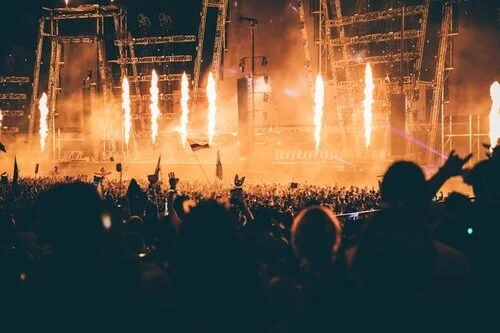
as to how the coronavirus will spread and what impact it will have on the music industry. Of course, some nations are affected worse than others, and it will be a while before the disease is contained and things can return to normal. I have seen some gigs in the U.K. cancelled (near areas where people have tested positive) but, so far, it seems like Glastonbury is going ahead – as this article from The Guardian explains:

The London book fair, which was scheduled to run from 10-12 March, has been one of the highest-profile cancellations, but organisers of other mass participation events taking place in the spring and early summer are ploughing on with their plans.

Glastonbury takes place in 16 weeks’ time, with Taylor Swift, Paul McCartney and Diana Ross as headline acts and more than 200,000 people expected to attend. Organisers said they were working closely with all the relevant agencies: “We continue to plan and prepare for the event, while at the same time closely monitoring developments with the coronavirus situation”.

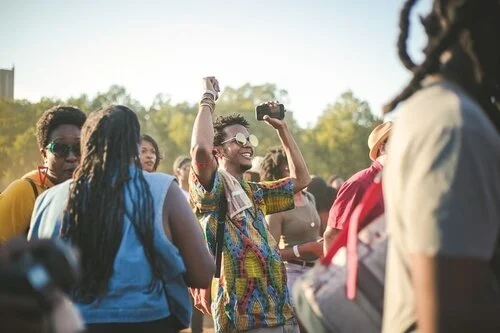
It must be a tense time for music fans, as we do not know how far the disease will spread and whether it will impact summer festivals nearer the time. At the moment, only a very small number have people have contracted coronavirus, so I think it is a case of hoping for the best. There is a worry that festivals and gig organisers might err on the side of caution when it comes to protecting the public.

PHOTO CREDIT: Jay Janner/Associated Press

I think festivals closer to big cities will be more vulnerable, as there will be more tourists and those from overseas attending. It is hard to protect those festivals and gigs already announced, but one of America’s biggest annual festivals has been struck:

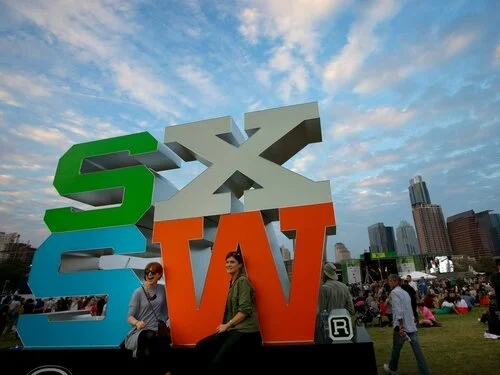
Following South by Southwest’s announcement on Friday that the annual conference will not be held this year due to concerns over the coronavirus, artists and other members of the music industry say they’re losing critical professional opportunities and financial investments.

SXSW was scheduled to start next weekend and run March 13-22, but was canceled following a press conference where Austin Mayor Steve Adler declared a local disaster. This is the first time SXSW's 34-year history that the entire event has been cancelled.

For emerging artists in particular, SXSW provides a significant platform for fan and industry exposure alongside networking opportunities with members of the music business whom they may not otherwise encounter. Many of the artists, managers and publicists with whom Billboard spoke say that their tours, album releases and marketing campaigns were designed around the conference, which last year drew close to 160,000 attendees.

“We picked March to put out our record because we were gonna go to SXSW,” says Sean Solomon, singer-guitarist for L.A. post-punk band Moaning, who were scheduled to play more than a dozen shows at the festival. “Every time we played past years, we were able to reach as many people as we would touring for a whole month, because you’re playing three or four shows a day.”

PHOTO CREDIT: Jack Plunkett/AP

Solomon continues, "Had I known I wasn't gonna be there I would've tried to get work in L.A. We still operate as an indie band, we're not raking in a ton of money. We all have jobs. Now I don't have anything lined up."

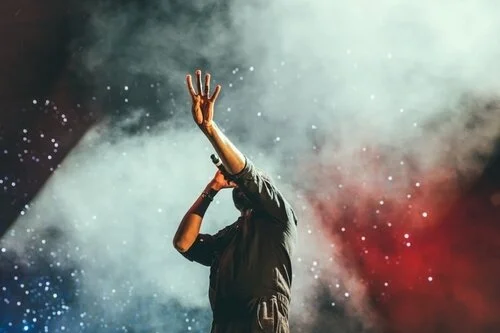
It is hard for those acts who were due to play SXSW this year. I wonder whether there will be smaller gigs organised around the world that includes the artists booked for SXSW. Maybe some of the smaller acts who rely on the exposure of SXSW will be able to band together and perform. In any case, there will be eyes trained the way of festivals here like Glastonbury and Reading & Leeds. As I say, there have been no announcements regarding cancellations, but we are hearing of more cases of the coronavirus, so I am not sure. It is a shame for the ticket holders, but the biggest loss is for the artists themselves. So many hungry and promising artists were due to attend SXSW, and it would have been a massive opportunity. I hope there are contingency plans should a major festival like Glastonbury have to be scaled-back or cancelled. Whilst it would be rash to cancel any big festival here without just cause, there does need to be some sort of guarantee for artists playing festivals. I know organisers are not to blame when they have to cancel, but it is gutting if you have to lose out on this big festival/gig appearance.

PHOTO CREDIT: @arstyy/Unsplash

This article explains what has been cancelled or postponed, and I wonder whether SXSW could have been reorganised or held somewhere else – maybe it is a bit too close to the day to do that. I think other festivals should offer a rescheduled date(s) if the worse comes to the worse, but let’s hope things will be alright. I feel sorry for artists who have been building to a big festival, and they have found the thing cancelled. Smaller venues have less to lose – and artists cancelled can book at another venue – but live music around the world is being affected. Some fans would argue that, in the case of SXSW, they would have risked things, and it is a bit premature cancelling an entire festival when measures could have been taken to isolate those with coronavirus from the rest of the punters. It is tricky to see whether, in the U.K. at least, there will be a big rise in cases, and when we might see the last of it. Every sector is being impacted at the moment, but there is something heartbreaking when an artist is not able to perform and fans are unable to see them. Every music fan hopes that, in this current climate, our summer festivals…

zzz.jpg

PHOTO CREDIT: @marvelous/Unsplash

WILL be alright.

FEATURE: Spotlight: PINS

FEATURE:

Spotlight

sa.jpg

PHOTO CREDIT: Debbie Ellis

PINS

___________

THERE are a few different reasons…

FFFF.jpg

why I am including PINS in this feature. Usually, I include acts that are a bit newer, but I think the Manchester-fronted band warrant a lot more exposure, and they are on the precipice of hitting the big-time. Consisting singer/guitarist Faith Vern, guitarist Lois MacDonald, and bassist Kyoko Swan, PINS have been around for a few years, but they look set – I hope – to release a new album this year. Having already released E.P.s and a couple of albums, the PINS trio are fully in their stride, but I keep looking at festival line-ups that lack women on them. The argument, from organisers and a lot of ignorant music fans, is that there are not enough women to fill slots; most great bands are men and, so, festivals have to respond to demand. International Women’s Day was yesterday, and I saw so many posts bigging up female artists and highlighting the great work done by women in music. With bands like PINS capable of owning the stage and providing a storming set, I know they will headline a major festival very soon. I love their single, Aggrophobe, with Iggy Pop from 2017 and stormers like All Hail. The band are sensational and, according to their Twitter feed, they have some exciting news to share with us this week – might it be a new album?! This is what makes this feature timely: PINS are new to some people, and they need to keep their ears and eyes trained the way of this incredible trio.

By the time many people read this, the news from PINS will be out. Before I conclude, I want to bring in reviews from their two albums, and quote from an interview they provided to promote their E.P., Bad Thing. Girls Like Us arrived in 2013 and, as debuts go, it is pretty impressive! It is rare for a band to put out a debut that is tight but has so much going on; a blend of emotions and sounds with a distinct and fresh personality. I can recall hearing about Girls Like Us in 2013, and I could not think of anyone on the scene like them – to be fair, I still cannot compare anyone to PINS. Girls Like Us received some positive reviews. In their assessment, this is what Pitchfork had to say:

Similarly, the band manage to obtain a skilful control of dynamics and pacing throughout the course of the record's wiry 33 minutes; meaning that it coalesces into far more than the sum of its parts. And in terms of standout points, the superb ‘Get With Me’ twists and turns around a memorable anthemic chorus, the aforementioned ‘Lost Lost Lost’ carries a superb understanding of pop music within its chameleonic DNA, whilst the spoken word ‘Velvet Morning’ – set against a kaleidoscope of backwards guitars, descending chord sequences and intricate drum work – is quite beautiful.

Influences carry scant relevance when they’re used appropriately. The truth is that any guitar music is heavy with influences spreading back over six decades. It is the way that you distil said influences that matter and when they’re sprinkled throughout the course of a record in carefully dropped combinations, they become an amalgam, a catalyst: their own. What PINS do is to turn those influences into their own sound: a synthesis that Walter White would approve of to create a record that genuinely strikes out PINS as a thrillingly new and unique voice in the contemporary British scene”.

Whilst a couple of the songs on the album include some less-than-striking lyrics, the energy, tightness and force you get from this band is clear! It would be two years before they followed up their debut, but they were definitely in demand on the live circuit. If you want to catch them this year, check out if they are heading your way. I think PINS’ instant appeal came from the fact that there was a gap in the market in 2013, and many people hooked on to Girls Like Us. In 2015, they put out the stunning Wild Nights. Perhaps a little stronger than their debut, there were some great reviews for Wild Nights. Apart from a few tin-eared critics (I’m looking at Pitchfork!), most people were on board with another cracking album. The Line of Best Fit were eager to (all) hail PINS:

Fear not though, PINS haven’t lost their bite. Certainly their second effort eschews aggression for aggressions’ sake – but rather than wasting their breath howling and rallying, the band whip up tension in order to harden their edges.

“House of Love” has a dusty, almost western feel which is built around a monotonous bassline and Holgate’s deadpan intone of:  “Before you leave this house of love, take more, it’s what you came here for.” Later, “Oh Lord” walks a wire stretched to breaking point before insistent bass and angular guitars disintegrate into a messy climax.

The clamorous moments are not over-laboured, however. Wild Nights is a much more concentrated effort than its predecessor: the songs here are streamlined and longer than on their debut, yet the album itself is shorter. The noise-based, jammy interludes that interspersed Girls Like Us have been abandoned.

In 2012, PINS were put together by Holgate who longed to be in a band without having to be the token female member, but a real bond was forged between the girls over a love of Hole, The Jesus and Mary Chain and Best Coast records. Their second album is ultimately the sound of the band exploring the myriad influences that make up their sonics, in doing so realising who they are and focusing bloody-mindedly on driving the point home”.

I like the fact that PINS were formed because of a desire to have an all-female force, rather than there being one woman surrounded by men. There are all-female groups at the moment – including The Big Moon, and The Staves -, but not a whole lot. I think PINS have actually inspired a lot of other women to form bands, not that there is anything wrong with a male band with a female lead. There are some great interviews online with PINS, but I wanted to source from a Skiddle interview of 2018. The band were promoting their Bad Thing E.P. and, among other things, they talked about working with Iggy Pop. They were also asked about releasing music on their own label:

 “Tell us a bit about your label Haus of PINS?

That's pretty much something we started as soon as we started the band because we wanted to release our own first single, which was called 'Eleventh Hour'. We hadn't really got into it with any labels at that point, different people we're asking us if they could put it out for us, but we didn't want to be tied down to something so early because we'd literally played about three gigs.

PHOTO CREDIT: Asupremeshot

So we decided - in true PINS fashion - just to make our own label and the first thing we released was our own music. After that, we spoke to the bands we met while we were out touring and if any of them wanted to put something out we would take it and create the artwork and everything.

Why did you create your own label? Is it important to you to be able to put your own music out?

Yeah! I think it's good because there needs to be a stepping stone between being a band that's completely alone and being a band that's on a label. You need that in between, where you're not tidied down to being in a contract but you can still release some music - it was just enjoyable to work with other bands. We've kind of gone full circle because we released the record we just did on Haus of PINS, so we've gone from Haus of PINS, to being on a label, back to Haus of PINS again.

Is there a particular reason you went from releasing music on a label to going back to putting it out yourself?

I think it was just about... because we were in between everything and not sure what the next step should be, we just thought, "well, let's do what we usually do and take back the control and do it out own way", because then we know everything that's happening with the release and there's no extra people involved - to an extent anyway.

Obviously we're fortunate enough to have radio people now, and press people, but with the actual record that was just completely down to us. The artwork, what songs went on it, when it was released, what video would go with it. So we just wanted to hold the reigns again for a little while.

Where there any particular influences on the new Bad Things EP?

I think the whole thing just took more of an electronic influence. That was our first introduction to having drum pads and I think they're used on every song. So Sophie has drum pads and samples now, which she didn't have before. I think that was the main thing that's made it sound a little bit different to what we were doing before. I can't think of a band I could say it was specifically influenced by, just generally more electronic sounds.

There's a Joy Division song on there. I wouldn't say that it necessarily stayed true to the Dead Souls song, but maybe there's a bit of a New Order influence. I don't know if you knew, but I think it's on the Unknown Pleasures Joy Division album, they made like spray sounds. I don't know whether they actually used a can of aerosol into the microphone for that, so it's like "chh chh", so we recorded or own version and made a sample of that, we put that all over the record too.

Was there a particular influence for the EP artwork? It's very striking and bold, is that what you were aiming for?

Well, we always aim for timeless - but we don't always get it right - that's always the aim. Just something bright and colourful because everything's always been so dark before. We just wanted to do something a little bit more cheeky with this. Something that says, "Yep! We're here, we're doing this now, deal with it." I guess we wanted to be a bit sassy with it!”.

I have been a fan of PINS before, but I know there are those who have not discovered them yet. I definitely feel they are one of the bands to watch in 2020 and, whatever news it is they have to announce next week – whether it is a new track or album -, that will only increase the interest their way. I am looking forward to seeing what comes next, and I know 2020 will be very busy for PINS. Let’s hope there are festival dates, and that we get to see a lot of them on the road. Whatever is going down this week, it is an exciting…

PHOTO CREDIT: James Sutton

CHAPTER for the band.

__________

Follow PINS 

FEATURE: Vinyl Corner: Björk – Homogenic

FEATURE:

Vinyl Corner

aaa.jpg

Björk – Homogenic

___________

ALTHOUGH this album is not…

xxxx.png

IN THIS PHOTO: Björk in 1997/PHOTO CREDIT: Danny Clinch

celebrating an anniversary, I think everyone should buy Björk’s Homogenic on vinyl if they can. I am a big Björk fan, and it is hard to rank her albums. Homogenic is her third album, and it was released on 22nd September, 1997. Whereas her first two albums – Debut and Post – were more energised and club-based, Homogenic is Björk returning to her native Iceland, in musical terms. There is a beautiful blend of electronics and strings to create an album that sounds gorgeous and stirring at the same time. At the time of making the album, Björk was based in London, and recording started there. The album was later recorded in Spain, and there was a little bit of movement and disruption before Homogenic was completed. Björk’s first couple of records were noted for their eclectic, multidimensional sounds; she explored genres and different worlds in these evocative and broad albums. Homogenic is a more stripped and simpler album in many ways, though it manages to arrest the senses like Björk always could! Maybe, because the album is a paen to Iceland, there is a chillier sound than previous Björk outings. I love the fact she could have repeated her first two albums but, as is common with all innovators and great artists, Björk keep moving, both sonically and geographically. I think there was some uncertainty from critics and fans in 1997, as Homogenic does not sound too like Debut and Post – it is an album harder to define than its predecessors.

Producer Markus Dravs recalled how Björk wanted to project the sound of rough volcanoes with soft moss growing. Homogenic is so hard to label, which is what you want from an album. I feel, in a year that saw Radiohead release OK Computer, Spirtualized put out Ladies and Gentlemen We Are Floating in Space, and the mighty Dig Your Own Hole from The Chemical Brothers hit the market, Homogenic sounded like a natural companion. There is a clash of the natural world and technological in Homogenic. In 1997, technology was on the rise, yet Björk was fascinated by the beauty of her homeland – both are contrasted against one another on the album. Even though Homogenic was released almost twenty-three years ago, it still sounds completely original and ripe for exploration. The reviews for Homogenic was hugely positive. In their assessment, this is what AllMusic had to say:

By the late '90s, Björk's playful, unique world view and singular voice became as confining as they were defining. With its surprising starkness and darkness, 1997's Homogenic shatters her "Icelandic pixie" image. Possibly inspired by her failed relationship with drum'n'bass kingpin Goldie, Björk sheds her more precious aspects, displaying more emotional depth than even her best previous work indicated. Her collaborators -- LFO's Mark Bell, Mark "Spike" Stent, and Post contributor Howie B -- help make this album not only her emotionally bravest work, but her most sonically adventurous as well.

A seamless fusion of chilly strings (courtesy of the Icelandic String Octet), stuttering, abstract beats, and unique touches like accordion and glass harmonica, Homogenic alternates between dark, uncompromising songs such as the icy opener, "Hunter," and more soothing fare like the gently percolating "All Neon Like." The noisy, four-on-the-floor catharsis of "Pluto" and the raw vocals and abstract beats of "5 Years" and "Immature" reveal surprising amounts of anger, pain, and strength in the face of heartache. "I dare you to take me on," Björk challenges her lover in "5 Years," and wonders on "Immature," "How could I be so immature/To think he would replace/The missing elements in me?" "Bachelorette," a sweeping, brooding cousin to Post's "Isobel," is possibly Homogenic's saddest, most beautiful moment, giving filmic grandeur to a stormy relationship. Björk lets a little hope shine through on "Jòga," a moving song dedicated to her homeland and her best friend, and the reassuring finale, "All Is Full of Love." "Alarm Call"'s uplifting dance-pop seems out of place with the rest of the album, but as its title implies, Homogenic is her most holistic work. While it might not represent every side of Björk's music, Homogenic displays some of her most impressive heights”.

Although Björk was only on her third album, she had been in the industry for many years – both as part of The Sugarcubes; her actual solo debut album was released when she was a child. Many people had watched this unique and highly captivating artist evolve and produce these incredible songs. I think Homogenic is one of Björk’s best works – in a career where she has barely put a foot wrong -, and I think it set a course for her.

She would revert back to some of Debut and Post’s tones for future albums, but Björk as this artist who mixed technology and nature together came to the fore on Homogenic. In this interesting review from Pitchfork, they talk about Björk’s evolution, and why the incredible Homogenic resonates:

By 1997, when she released Homogenic, Björk had been a familiar face to pop fans for a decade. The Icelandic singer and composer had first appeared on many listeners’ radars in 1987, when the Sugarcubes’ surprise hit “Birthday” made actual stars out of a quintet whose entire raison d'être had been to lampoon pop. (Her countrymen, meanwhile, had been listening to her since 1977, when she recorded her debut album—a collection of covers translated into Icelandic along with a few original songs, including an instrumental written by Björk herself— at the tender age of 11.)

But the main theme running through the album is the wish to rush headlong into a life lived to the fullest—an unbridled yearning for the sublime. “State of emergency/Is where I want to be” she sings on “Jóga,” a song dedicated to her close friend and tour masseuse, in which churning breakbeats and slowly bowed strings mediate between lava flows and Björk’s own musculature—a kind of Rosetta Stone linking geology and the heart. “Alarm Call,” the closest thing on the album to a club hit (the Alan Braxe and Ben Diamond remix, in fact, is a storming breakbeat house anthem) shouts down doubt with the indomitable line, “You can’t say no to hope/Can’t say no to happiness,” as Björk professes her desire to climb a mountain “with a radio and good batteries” and “Free the human race/ From suffering.”

If you’re looking for catharsis, you won’t find better than the album’s final, three-song stretch: Following “Alarm Call” comes the incensed “Pluto”: “Excuse me/But I just have to/Explode/Explode this body off me,” she sings, launching into an ascending procession of wordless howls as buzzing synthesizers flash like emergency beacons. Finally, the quiet after the storm: The soft, beatless “All Is Full of Love,” a downy bed of harp and processed strings. The title is self-explanatory, the lyrics wide-eyed, nearly liturgical. It is a song about ecstasy, about oneness, about infinite possibility—and about letting go”.

If you are new to Björk, I would say Homogenic is as good a start as any! She is a terrific artist who, for decades, has startled and moved people. Her ninth studio album, Utopia, was released in 2017, so many people will ask whether we will see another album this year. Björk is always working, and you just know she is brewing something, somewhere. I would urge people to pick up a copy of Homogenic and…

EXPERIENCE the album on vinyl.

FEATURE: After an Ocean Rescue and a Glorious Summer’s Day… Might Kate Bush Record Another Song Suite Like Hounds of Love’s The Ninth Wave and Aerial’s A Sky of Honey?

FEATURE:


After an Ocean Rescue and a Glorious Summer’s Day…

AAA.jpg

IN THIS PHOTO: Kate Bush photographed for The Ninth Wave (from the album, Hounds of Love) in 1985

Might Kate Bush Record Another Song Suite Like Hounds of Love’s The Ninth Wave and Aerial’s A Sky of Honey?

___________

I must note two things before…

zzz.png

IN THIS PHOTO: Kate Bush captured in 2005/PHOTO CREDIT: Trevor Leighton/National Portrait Gallery, London

continuing on. For one, I have featured a lot of women on my site over the past week. That is never an apologetic thing: I understand I need to balance things a bit to include some guys soon but, with so many incredible female artists around, it seems only right to acknowledge them. The other thing I should mention is that, previously, I have tried to limit the number of Kate Bush-related posts on this site. I figured, even at one a month, it was a little excessive! Although my site is not a Kate Bush fan page, there are a lot of articles dedicated to her. Whilst I shall limit myself to two features concerning her this month, I have other angles I want to explore throughout this year. In fact, there is a relevance to his article. Apart from the news that Prime Minister Boris Johnson counts Bush as one of his five favourite women (and managed to do so in an unsettling way!), it is International Women’s Day. I have been celebrating female artists on a weekly basis, but today is especially important – and what better artist to write about than Kate Bush?! Now that I have cleared all that up, I am excited because, later this year, three of her albums celebrate big anniversaries. Her third album, Never for Ever, is forty in September; Hounds of Love is thirty-five on 16th September, whilst Aerial is fifteen on 7th November.

Of course, I will investigate each album closer to their anniversaries, but there are similarities between them that are worth noting. Both albums are, in a sense, crucially important. Hounds of Love was the album that followed The Dreaming. The Dreaming was the first album Kate Bush produced on her own, and it was her most experimental and challenging work to date – I don’t think she has made an album as loaded with texture and different styles. Although The Dreaming is an underrated masterpiece, it did divide critics, and there were big changes between The Dreaming and Hounds of Love. Bush changed her diet and took up dancing again; she moved to the country and built her own studio. If The Dreaming was made in the city and has quite an intense feel, Hounds of Love reflects nature and is more open; an album containing different colours and an artist hitting her peak. Hounds of Love was the first Kate Bush album with a song suite/cycle. Before then, she was working with songs in a traditional format; Hounds of Love featured a first side of separate tracks, whereas the second was a concept called The Ninth Wave: a woman is alone at sea and, until her rescue, she battles to stay awake and, when it seems hope is slipping away, she remembers her family and yearns for the mundane comfort of daily life.

DSS.jpg

I have not done it full justice but, on an album where Bush was under a bit of pressure, she created this magnificent suite that is accomplished, cinematic, and unique. It was rare, in 1985, for a Pop artist to construct an album with two distinct sides – even in 2020, one does not see it too often. That idea of someone being lost at sea and you do not know if they are going to be saved…I think it is a fear, irrational or not, we all share. The Ninth Wave is one of many reasons why Hounds of Love is considered Bush’s finest moment. The second time she created a suite of songs for an album was twenty years later for Aerial. If Hounds of Love was a huge evolution and a return from, if not absence, then exhaustion, Aerial was a return from the wilderness. Of course, Bush was not idle between The Red Shoes (her 1993 processor to Aerial) and her 2005 comeback. She had a son, Bertie, in 1998, and was enjoying being a mother; in addition to preparing her first double album. Not only do Hounds of Love and Aerial celebrate big anniversaries later in the year, I think both albums represent a sort of creative, spiritual, and personal rebirth. Both are very connected to nature and, whilst Hounds of Love’s suite is about the water, morning fog, and the fight for life, Aerial’s A Sky of Honey is the course of a day; a look at the sunset, of nature, and a modern-day Classical piece that is among the best things Bush has ever written – A Sky of Honey was re-titled An Endless Sky of Honey in 2010 when Aerial was released for the first time on iTunes (I have embedded the 2018 remaster of Aerial, as Rolf Harris appears on the original release, on the tracks An Architect's Dream and The Painter's Link - Bush’s son, Bertie, replaces him on the 2018 version). It is a single piece of music, but there are separate song titles and movements we run through.

Bush has said in interviews – she was asked which of her albums she likes best in a 2011 interview to promote 50 Words for Snow -, how much she loves Aerial and the importance of Hounds of Love. Although the albums were released at different points in her life, one can analyse The Ninth Wave as, perhaps, being a subconscious reaction to the post-The Dreaming period and a sense of dislocation – in spite of the fact that the album is remarkable. Aerial’s light and captive sound seems to reflect Bush as the new mum; someone embracing the tranquillity of home, but someone who was also releasing her first album in twelve years. Bush combined both of her suites when she performed in Hammersmith in 2014; her Before the Dawn residency linked her simply brilliant Hounds of Love majesty with the incredibly beautiful A Sky of Honey (such a great title!) from 2005. I have been thinking really deeply about Hounds of Love and Aerial. It has almost been fifteen years since Aerial arrived, and nearly nine years since 50 Words for Snow, I wonder whether Bush’s next album will contain a suite. The remarkable and immersive Aerial appeared three albums after Hounds of LoveThe Sensual World (1989), and The Red Shoes (1993) appeared between them -, and, if there is another Bush album, that would be the third after Aerial50 Words for Snow was preceded by interesting Director’s Cut in 2011.

I am not going to speculate when Bush might release another album, but I do feel she will explore another suite. Given the fact the environment is under great threat, could there be a sort of combination of The Ninth Wave and A Sky of Honey?! I do think some of Bush’s most vivid, spellbinding and immersive songs have come from her song suites. I am not saying her next album should be a concept album, but a sort of modern update of Hounds of Love or Aerial would be very intriguing. Of course, she may have already recorded new songs, so my curiosity is moot. In a time for music where singles are released so quickly and there is a flood of stuff out there, do artists feel like they need to put out material quickly, or they cannot spend too long releasing a song cycle that would require some serious attention? I love the usual format of an album and singles, but there is something wonderful about concepts and song suites. Hounds of Love’s The Ninth Wave took us from the discovery of a woman at sea to her rescue; A Sky of Honey is a single piece of music revelling in the experience of outdoor adventures on a single summer day, beginning in the morning and ending twenty-four hours later with the next sunrise. Maybe the fact Bush’s son, Bertie, is in his twenties and things have changed in the world drastically since 2005 will force her mind in the direction of a new chapter; who knows what could come?! When it comes to Kate Bush and her next musical steps…

YOU just never know what you’ll get.

FEATURE: Stage Bite: The Struggles of Touring Life for Older Artists

FEATURE:

Stage Bite

Q.jpg

PHOTO CREDIT: @josephtpearson/Unsplash

The Struggles of Touring Life for Older Artists

___________

THIS matches a feature…

PHOTO CREDIT: @roccocaruso/Unsplash

that was published in The Guardian last week. Whilst any artist is capable of suffering injury or getting ill, one has to look at the touring demands that most major artists face, and it is amazing that there is not more absence and suffering! It is always sad when an established, iconic artist has to retreat from the stage because of ill health or they cannot carry on. The legendary Tom Petty died only a few days after finishing a tour. He was sixty-six. He was taking medication for pain associated with touring, and it is heart-breaking realising that Petty would still be here if the rigors of touring had not have taken its toll. Artists like Tom Petty do not want to let their fans down, and they love live performance. I think touring schedules have become more punishing, and people expect bigger and bigger shows. The article from The Guardian raised some interesting points about artists who has quit the road and how profitable older acts are:

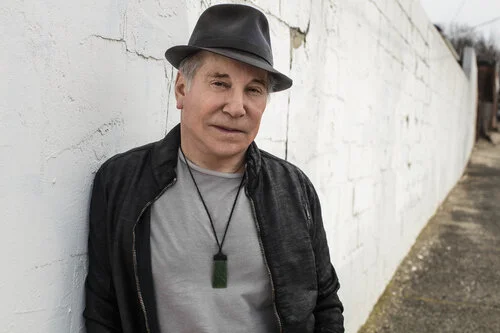
 “All this comes hot on the heels of an escalating wave of older stars who’ve either quit the road entirely or begun their last hurrahs, including Paul Simon at 78, Bob Seger at 74, Kiss aged between 68 to 70, Neil Diamond at 79, and Eric Clapton at 74.

“The fact is, it’s really hard to tour,” says Dave Brooks, who covers the concert industry for Billboard. “It’s terribly hard on your body, and mentally difficult too.” 

zzzzzzzzzz.jpg

IN THIS PHOTO: Paul Simon/PHOTO CREDIT: Myrna Suarez

Jem Aswad, senior music editor of the trade publication Variety, says: “People think it’s easy to be a rock star. But try to hold the attention of 18,000 people, and perform really well, for two and a half hours every night. It’s an incredibly tough thing to sustain.”

If all that wear-and-tear takes a toll on older performers, their increasing absence from the road threatens to weaken the concert industry’s bottom line. According to the industry’s most authoritative source, Pollstar, five out of the top 10 worldwide tours of the last year featured band members over the age of 50. Three of those were peopled with players aged 60 to nearly 80. In Pollstar’s list of top 200 North American tours, the top three earners were over 70, including Elton, Bob Seger and the Stones.

When it comes to the highest grossing single shows worldwide, four of the top five positions were occupied by a group with players over age 70, while 16 of the top 20 shows featured the same band. That would be the Rolling Stones, who are about to embark on yet another American jaunt this spring and summer, despite the fact that Mick Jagger had to have heart valve replacement surgery last April”.

There is this struggle between the profitability and popularity of older musicians and the natural results of touring extensively. Although artists like Paul McCartney and The Rolling Stones seem immortal and are performing lively in their seventies, the reality for most older artists is different.

34.jpg

PHOTO CREDIT: @kdarmody/Unsplash

One cannot blame fans and demand for the retirement of great artists and the health problems of others. I do wonder whether labels and promoters need to be a bit more vigilant and ensure that artists of a certain age – I am not sure what the best term to use is! -, are not pushed too far. Cases like that of Tom Petty’s are rare, but I worry so many artists in general are taking medication to cope with pain, and then are taking more than prescribed so they do not have to cancel gigs. Whilst the stage is not only for the young, it does seem like a very daunting place for artists from past generations. Now that the Internet allows fans and artists to connect, I feel tour schedules in general are more demanding, and artists have to travel further. It is inspiring that there are so many of the old guard on tour, and that is because they love their fans and the thrill of live performance. Musicians across the board are experiencing mental-health issues because of touring, and this also impacts older artists. At a time when Spotify is replacing physical sales to an extent, are artists touring much more so they can make the money they used to with album sales? Maybe the modern age and all its convenience will negatively impact various sides of the music industry. I was reading that Guardian article, and I did not realise just how popular – compared to younger artists – older acts were.

IN THIS PHOTO: Elton John/PHOTO CREDIT: Greg Gorman

Maybe it is that need to go on the road and fulfill demand that means, invariably, there will be consequences. Look at artists like Elton John who, at the moment, is working his way through an epic, months-long farewell tour. He has not been free from illness recently, and I can imagine how affected he is when he has to pull dates because of this. It is tricky finding a balance and remedy, though it is clear that, for many older artists, the stage today is quite intimidating. In a wider sense, I wonder whether touring has become more taxing with digital music. It would be nice to think that all of the legends still touring will be able to do so for many more years, but I think there will be a time when the physical and emotional cost will become too much. I was aware that a few classic artists have had to retire for various reasons, but reading more about this, and it is clear that many older artists are finding it hard to remain on the stage – despite the fact they are among the most popular and profitable in all of music. It is easier for younger artists to break through and perform, because of platforms like Spotify. Just look at festival line-ups, and there are so many artists there who have only been performing for a few years. Radio stations, largely, feature music from younger acts – meaning it is harder, even for the icons, to get the same sort of attention and demand without slogging it out in the live arena. I do hope things improve regarding touring and our more experienced artists because they are people who…

zzx.jpg

PHOTO CREDIT: @horizonchurch/Unsplash

MEAN so much to us all

FEATURE: Sisters in Arms: An All-Female, Winter-Ready Playlist (Vol. IX)

FEATURE:


Sisters in Arms

AZZ.jpg

IN THIS PHOTO: Millie Turner

An All-Female, Winter-Ready Playlist (Vol. IX)

__________

IN terms of weather this weekend…

xxxx.jpg

IN THIS IMAGE: Austra

it is a bit less drastic outside, and starting to feel a tiny bit like spring. Tomorrow is International Women’s Day, so this playlist feels appropriate and timely; showcasing some of the fantastic women in music at the moment. I am going to post a few features tomorrow, but I was keen to put out this playlist with as many artists as I could – some of the very best tracks of the past week. Have a listen to the cracking tunes below, and I know you will find much to enjoy. As we head into the weekend, I think we need music accompaniment. Let’s hope there is something in this playlist that…

u8.jpg

IN THIS PHOTO: Greentea Peng

CATCHES your attention.  

ALL PHOTOS (unless credited otherwise): Artists

__________

Rina Sawayama XS

HAIM The Steps

32.jpg

Blondage Over It

Dixie Chicks Gaslighter

Jhené Aiko Speak

PHOTO CREDIT: Si Moore

Esmé Patterson Light in Your Window

Overcoats I’ll Be There

aaa.jpg

Lisa Marini Kite

Brandy Clark Apologies

bvvvb.jpg

PHOTO CREDIT: Alex Lovell-Smith

Nadia Reid High & Lonely

Millie Turner Jungle

sdsdds.jpg

PHOTO CREDIT: Amalia Navarro

Berne To the Lions

PHOTO CREDIT: Lucy Foster Photography.

Saint Sister Dynamite

xcccc.jpg

Grace VanderWaal Today and Tomorrow (From Disney’s Stargirl)

1qqaa.jpg

PVRIS Dead Weight

apapap.jpg

IN THIS IMAGE: Peaking Lights

Automatic, Peaking Lights Calling It (Peaking Lights Disco Rerub)

Austra Anywayz

zxxzxz.jpg

Courtney Marie Andrews If I Told

PHOTO CREDIT: She Is Aphrodite

merci, mercy Fucked Myself Up

MORGAN My Year

ssososois.jpg

Empress Of Give Me Another Chance

2211.jpg

PHOTO CREDIT: Adeline Mai

The Aces Daydream

Greentea Peng Ghost Town

szaqw.jpg

Katie MalcoAnimal

bnbnnbbn.jpg

PHOTO CREDIT: Willie Runte

Luna Bec Come over Tonight

xxkxkxk.jpg

SKIA IDWTAI

xxc.jpg

Fickle FriendsEats Me Up

211.jpg

PHOTO CREDIT: El Hardwick

Porridge RadioCircling

Róisín Murphy Murphy’s Law

sss.jpg

Hilary Woods - The Mouth

za.jpg

Hazel English Combat

ssss.jpg

Hannah Georgas That Emotion

Chromatics Famous Monsters

2ss.jpg

PHOTO CREDIT: Jessie Morgan Photography

OrchardsMagical Thinking

111.jpg

Diet Cig Thriving

zzz.jpg

PHOTO CREDIT: Rasmus Luckmann

Kiesza All of the Feelings

FEATURE: A Year for Acknowledgment and Progress? International Women’s Day 2020

FEATURE: 

A Year for Acknowledgment and Progress?

IMAGE CREDIT: Rough Trade

International Women’s Day 2020

___________

AT this time of year…

121221.jpg

IMAGE CREDIT: Kelsey Dake

I think about women in music a lot. It is International Woman’s Day on Sunday (8th March), and it is a day where we celebrate women’s rights, call for chance and ask for a more equal world. This year’s International Women’s Day seems very appropriate and something we can all agree on:

International Women's Day 2020 campaign theme is #EachforEqual

An equal world is an enabled world.

Individually, we're all responsible for our own thoughts and actions - all day, every day.

We can actively choose to challenge stereotypes, fight bias, broaden perceptions, improve situations and celebrate women's achievements.

Collectively, each one of us can help create a gender equal world.

Let's all be #EachforEqual”.

Music, like so many other industries and corners of the landscape, is affected by sexism and a lack of gender equality. Although Reading & Leeds Festivals added some more women to their line-up very recently, they were called out because of their male-heavy line-up. It is sad that there is still so much ignorance of great music made by women, across so many genres and styles. Festivals, especially larger ones, are culpable of lacking awareness and ignoring a lot of great female artists. Festivals like Glastonbury are yet to announce their bill, but I think we will see a fifty-fifty gender balance; they have already booked one female headliner, Taylor Swift. There are minor steps occurring regarding festival bills, but it is shocking that we are still so far away from seeing equality in 2020 – the rest of this year needs to be about reversing past omissions and acknowledging the great women who deserve exposure and their opportunity.

It is not only festivals that have a problem with sexism. The music industry as a whole has an issue, but the past couple of years has been defined by incredible women dominating and releasing some of the best music around. It is impossible for me to name all the great female artists who have strengthened music and could own festivals, but artists such as Grimes, Halsey, The Big Moon and Georgia have already released huge albums. Last year, FKA twigs, Solange, Little Simz and Lizzo were among the tremendous women making 2019 bright, varied and packed with wonder. I think there was the assumption – or still is – women are solo artists and, as bands are favoured at festivals, that explains the lack of women on bills. From female-fronted bands like Wolf Alice and Amyl and the Sniffers to female bands like The Big Moon, there is no shortage of options. If you want women who can shred it with the best of the rest, there is Anna Calvi and Sharon Van Etten; confident and impassioned performers like Lizzo and Christine and the Queens can rule, whilst Billie Eilish is a sensational fit for any bill. In a wider sense, the lack of respect provided to women is unacceptable. I think music is best when everything is embraced, but I look around and there are still woeful imbalances that are not being corrected.

It is mostly women calling for change, with relatively few men in the industry joining them in condemnation and protest. I keep saying how 2020 needs to be a year for clear vision and balance, and International Women’s Day will shine a light on the importance of women in music and how, when you listen to the best music of the moment, so much of it is coming from them. There are articles that state how we really need more women producers and musicians in order to work towards parity. In terms of producers, there are women in studios and many others coming through – studios are still male-heavy, and I think there is this assumption that women cannot produce or do not want to. Whilst there might be fewer women making music than men, there are more than enough stunning artists out there. The imbalance and ignorance has very little to do with statistics and percentage graphs: more accurately those in power (mainly men) are peddling the same excuse when women are not booked for festivals and, when it comes to change, how many men are actively committed to listening to women’s voices and asking why so many women are leaving music because of abuse and exclusion?! Rather than end on a sour or angry note, it is International Women’s Day on Sunday, so I will end with a playlist that puts some of music’s finest women in the spotlight. Of course, there are many more women – and many more current women – making the music industry so strong and promising, all of whom deserve equality and a fairer industry. Let’s hope, after the countless social media posts regarding women in music and why International Women’s Day is so important, it will spur those in power to…

MAKE promises they can keep!

FEATURE: The March Playlist: Vol. 1: House Music All Night Long Is Murphy’s Law

FEATURE:


The March Playlist

IN THIS PHOTO: Róisín Murphy

Vol. 1: House Music All Night Long Is Murphy’s Law

__________

WHILST there are fewer big releases…

IN THIS PHOTO: The Lemon Twigs

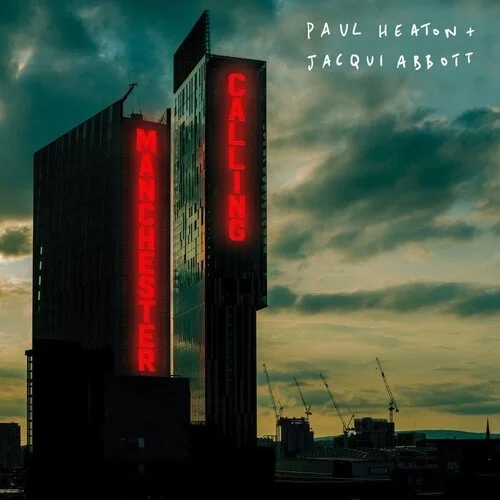
than previous weeks, there are still some mighty artists in the mix. Included in this week’s selection are Róisín Murphy, JARV IS…, The Lemon Twigs, and Katy Perry. There are also tracks from Paul Heaton & Jacqui Abbott, HAIM, and Sea Girls. It is another typically eclectic week, so there should be something in there for everyone! I think this weekend is going to be more settled than previous ones in terms of the weather, so more of us will be venturing out. Take this playlist with you, and discover some of the best tracks from this year. Enjoy this assortment of huge tracks, and I hope there is more than enough included that…

IN THIS PHOTO: Paul Heaton & Jacqui Abbott

GETS the weekend off to a flyer!

ALL PHOTOS/IMAGES (unless credited otherwise): Artists

_________

JARV IS... - House Music All Night Long

1221.jpg

Katy Perry - Never Worn White

PHOTO CREDIT: Paul Thomas Anderson

HaimThe Steps

PHOTO CREDIT: Adrian Samson at Industry Art

Róisín Murphy - Murphy's Law

The Lemon Twigs The One

Rina SawayamaXS

Little Dragon (ft. Kali Uchis) - Are You Feeling Sad?

Demi Lovato - I Love Me

DEE.jpg

PorchesPatience

Biffy ClyroEnd Of

PHOTO CREDIT: Andrew Cooper

Sea Girls Why Won’t You Admit

Bush - Flowers on a Grave

Dixie ChicksGaslighter

CS.jpg

PVRIS - Dead Weight

Empress Of - Give Me Another Chance

Deacon BlueIn Our Room

DCC.jpg

Austra Anywayz

X.jpg

KodalineSometimes

Megan Thee Stallion Captain Hook

Lauv Invisible Things

Paul Heaton & Jacqui Abbott A Good Day Is Hard to Find

Luke Sital-Singh - Undefeated

PHOTO CREDIT: Mariella Driskell

Stealing Sheep Just Do

The Aces Daydream

sdxc.jpg

The Jaded Hearts Club, Miles KaneNobody But Me

Dermot Kennedy Resolution

PHOTO CREDIT: Alex Lovell-Smith

Nadia ReidAll of My Love

FEATURE: Second Spin: Betty Boo – Boomania

FEATURE:


Second Spin

Betty Boo – Boomania

___________

I am starting a new feature…

that shines a light on the albums that were underrated at the time of their release, deserve wider acclaim now, or have aged better as the years have progressed. There are a couple of reasons why I am featuring Boomania as the first album of this feature. For a start, the woman behind the Betty Boo alter ego is Alison Clarkson. She is fifty today (6th March), and Boomania turns thirty later this year. I also remember Boomania fondly when it came out. I was seven when the album came out, and Boomania, to my young ears, was an exciting and exceptional addition to 1990. At the end of the 1980s and the start of the 1990s, there was this wave of great Dance, Club, and Pop music that was defined by its anthemic, fun, and catchy tone. This feature from Louder than War, published in 2016, talks about what was happening in 1990:

It’s 1990. Pop/Rock Music was in flux. Madchester!  Soul II Soul. Rock was ‘Dead’ – apart from in the USA where punk was ‘breaking’.  I was still young (at 26) and my musical identity was somewhat in-flux too.  Goth had become a joke. The Mary Chain were repeating themselves. The Pixies were the only band that mattered until the fledgling Manics emerged…  so even I resorted temporarily to Pop Music as a source of tacky disposable joy.

as.jpg

Neneh Cherry was cool -due to her associations with the Slits and Co -and was the Queen of Pop – peerless and majestic rap/pop which never sounds nothing more than joyful.

Salt’n’Pepa had appeared on the Tube as early as 1987 (My Mic Sound Nice, Check One, My Mic Sound Nice Check Two, Are. You. Ready!) pre-major label make-over and were inspirational and a gap must’ve appeared in the market for a UK equivalent.

Deee-Lites Groove is in the Heart was the party record of 1990 but Betty Boo just looked fabulously right and we wanted her to be Grrrreat!”.

I was just musing, when thinking about Betty Boo/Alison Clarkson, about another British talent who released her debut album in 1990. Monie Love was born a few months after Clarkson; both are London artists and, in terms of their rapping style, there are some similarities. If Monie Love’s debut, Down to Earth, was better reviewed – and she and Betty Boo were very different in terms of their backgrounds -, I think there was something in the air in 1990. Maybe it was a continuation of the 1980s’ gold, but 1990 was a stunning year for music. Maybe Betty Boo got overlooked when you consider we had Soul II Soul and Deee-Lite owning the airwaves. What I love about Betty Boo is how she mixed elements of the cartoonish with the serious. Clarkson, as a twenty year old, was sassy and mature, but there was a sense of the throwaway and camp in her videos. That mix of the sassy and flirty can be heard in big hits like Doin’ the Do and Where Are You Baby?

These are the two songs that we all remember from the album, but there is huge quality throughout. 24 Hours and Don’t Know What to Do are classic Pop gems and, throughout Boomania, there is plenty of energy and vitality. Like all good albums, there is emotional blend and balance – Boomania would be too exhausting were it all wild jams and giddy choruses! Although some feel Boomania has not aged well and was very much a product of its time, I feel it is an underrated album that warrants a second spin. Other albums I will include in this feature have fared better through the years and are regarded more fondly, but one cannot dismiss the big moments and confidence that runs through this 1990 debut. This article from 2012 digs deeper into Betty Boo’s Boomania:

Although Boo’s biggest hit was the slightly kitsch and commercial ‘Where Are You Baby?’, which reached #3 back in 1990, the remainder of the album is full of brassy raps delivered over hip-hop beats, matched with infectious pop choruses. Her initial break came courtesy of a collaboration with Beatmasters in 1989, appearing as the guest vocalist on the #7 hit, ‘Hey DJ/I Can’t Dance (To That Music You’re Playing)’. This single was rightfully included on Boomania, and was a great introduction to the Boo persona.

Other tracks released from Boomania were ‘Doin’ The Do’ and the superb ‘24 Hours’. The former was her first solo single and opened with the lines ‘It’s me again / Yes, how did you guess? / ‘Cause the last time you were really impressed’ – Boo certainly started as she meant to go on. The latter (embedded below) was the final single to come from her début, sadly and undeservedly reaching a paltry #25 on the UK charts. It wouldn’t be until Craig David’s ‘7 Days’ that the days of the week would again be used so well in a song’s chorus.

The great thing about her début album is how it mixes up the pace perfectly. Boo handles up-tempo and mid-tempo equally well, even throwing in the occasional curveball such as the striking and rather haunting ‘Valentine’s Day’. A particular highlight for me though is the quirky funk of ‘Mumbo Jumbo’ which sees Boo in 100% fierce mode, sending a lover packing for two-timing her. The attitude overflows here, beginning with her yelling, ‘You’re a damn liar!’, followed by the sound of a door slamming”.

I think there is some interesting Pop music coming through now that takes from what was around in 1990, whether it was Betty Boo, Madonna, or The Sundays. I think there is a relative lack of joy in Pop. Do people look back and feel albums like Boomania are too twee and gleeful? Unlike some of her contemporaries, I think Betty Boo managed to bring plenty of attitude and class to the party.

Although Betty Boo burned brightly for a short time – Boomania’s 1992 follow-up, GRRR! It's Betty Boo, was not as successful as her debut; she is yet to release a third album -, I think Boomania is a great album that deserves more respect. Last year, Classic Pop caught up with Alison Clarkson and asked her about that debut album and how she got into music:

Growing up, pop music and football were Alison Clarkson’s twin obsessions. Duran Duran (John Taylor in particular) would battle it out with Glenn Hoddle and Garth Crooks for space on her bedroom wall, but it was Adam Ant who was the adolescent Clarkson’s biggest musical crush. “His videos were like mini films,” she coos. “I think they probably had a huge impact on when I started making records, that I wanted videos to be a bit more fun.”

The arrival in the mid-80s of a tornado of searingly provocative, lyrically inventive hip-hop bands would however prove the catalyst for Clarkson to strike out as a musician. She devoured the work of Public Enemy, EPMD, LL Cool J and Erik B & Rakim before forming the Salt-N-Pepa-inspired She Rockers with chums Donna McConnell and Dupe Fagbesa while still at school. Keen to make her own records, she signed on for a sound engineering course, only to drop out after a year. “It was far too technical,” she winces, “I just wanted to get on and make music”.

Though she succumbed to Rhythm King’s desire to hire a seasoned producer to sprinkle some professional fairy dust over her bedroom-demoed tracks, it’s clear that Clarkson, for all her diffidence, had a steely determination to remain in control of her artistic output. The Betty Boo persona wasn’t committee-cooked or crafted by a gaggle of image consultants, it was 100% Alison Clarkson. A long-time fan of The Avengers TV show, she’d been inspired by that series’ Emma Peel, the feminine, kickass superspy played with flirtatious relish by Diana Rigg. “The way she looked, the catsuits, it was so simple, but so powerful,” enthuses Clarkson. In the Doin’ The Do video, she’s there, strutting imperiously around a school in a leather jacket and hotpants, topped by her iconic black bob ‘do. As videos go, it feels electrifyingly rebellious”.

I do miss some of those Pop artists from the 1980s and 1990s and wonder, if they arrived now, would they fit in? 1990 was a brilliant year for music, and Betty Boo was part of a Pop/Rap wave that managed to blend the fun with the strong. She was not a marketed and committee-spun Pop artists that one might have found on Top of the Pops at the time. Will we ever see another Betty Boo album?

But what about new Betty Boo material? With her back doing the live thing, is there any hunger to finally put out that long-waited-for third album? It’s not even like ‘Betty Boo’ has ever gone away. It’s never just been a professional alter ego. Even today, most of her mates call her ‘Boo’. And that famous black bob with the flipped-up sides is comfortingly intact, three decades on. “It just does that,” she smiles. “Because I play a lot of tennis I try not to get it cut too often. It was flat when I left the house, then it just went whoop!”

As regards that new music then…?

“Now I feel like it’s the right time,“ she says, “because even people that were before me, like Bananarama, they keep making records and I’m thinking, I’ve gotta do it! What’s stopping me?”

What indeed? But who would the performing Betty Boo be at 49? What would a middle-aged Betty Boo rap about? “That’s the thing!” she laughs. “Country life? Tennis? I’m hoping the spark will just come. I think I’ve got quite a few fans out there who’d still like a record from me and I’d do it just for them really”.

As it is Alison Clarkson’s birthday today, I have been compelled to look back at the debut Betty Boo album and wonder whether people got too fixated on the two big singles – Doin’ the Do and Where Are You Baby? – and ignored the rest of the album. Sure, there were stronger albums out in 1990, but I think Boomania could provide inspiration to artists/bands emerging now regarding how to write a Pop gem – in fact, 1990 in general is a year many acts should study closely. Although there are no plans for another album, I do believe Betty Boo is touring this year. Nearly thirty year after its release, the epic Boomania

STILL sounds fresh and intoxicating.  

FEATURE: Nostalgia vs. The Present: The Difficulty in Defining the ‘Best Year in Music’

FEATURE:

Nostalgia vs. The Present

aaa.jpg

The Difficulty in Defining the ‘Best Year in Music’

___________

I am bringing up this subject…

aaaaaaaaaaaaaaaaaaaaaaaaaaaaaaaaaaaaaaaaaaa.jpg

because there is always a debate about which year is the best for music. I think it is impossible to limit it to a single year but, ask most people and see most polls, and many of the years selected will be before the last decade. In fact, there is always a focus on the 1970s and 1990s. Maybe a prosperity in these decades means that people recall them fondly. I have alluded to James Acaster before but, when thinking about this recent article from the BBC, something interesting popped out. He didn’t explicitly say that 2016 was the best year for music, but he says it is one of his favourites – and he brought up a debate regarding nostalgia and current music; whether we need to open up more to new music and how it is important to have a blend of the old and new in the mind:

What was the greatest year for music of all time? Many of us, when asked, would probably choose an era from our own youth.

Certain songs or albums which remind you of school, your rebellious teenage years or college and university are the ones most people would choose to return to again and again.

But not James Acaster.

In his new book, Perfect Sound Whatever, the comedian argues 2016 was the greatest ever year for music. And, to be fair, he puts forward a compelling case.

IN THIS PHOTO: James Acaster/PHOTO CREDIT: James Acaster

Some of the albums he highlights were both groundbreaking and hugely successful. Beyonce's Lemonade, for example, or Frank Ocean's critically-acclaimed Blonde. Kanye West and Radiohead are also namechecked, as is David Bowie's final studio album Blackstar, released days before his death.

And while some albums he writes about are much more obscure and unlikely to be remembered by anyone other than the most dedicated fans, Acaster says overall it was a significant year for evolution and innovation in music.

"We need to stop this writing off of modern day music, because the rules for what was the best year for music of all time keep getting made by old people," he says. "I bought over 500 albums from 2016... and if I list my favourite albums now, most of them were released in 2016.

"So I'd be a liar if I said any other year was the best for music. I just think there are so many different types of music now, a level of diversity across all the genres. People go on about the '70s, and you've still got the same styles as there were in the '70s, but [there are] even more now. Music keeps progressing and keeps getting more exciting".

It is interesting because, as part of my existence relies on scouring for new artists and sharing fresh sounds, I am heading back in time more and more. Perhaps, as I have said previously, this is a reaction to hard times and the embrace of the warm and familiar. I think there are elements of the past that are missing from today’s scene: The Pop market is not as uplifting as it was; there was definitely greater unity, and it was easier to get on top of all the new music coming out.

I would say my favourite year for music is 1994, but I cannot confidently claim this is music’s greatest year. Although 1994 was rich with diversity and genius, there are plenty of other years that come close. I wouldn’t say the past decade or so has been a bit bare in comparison, because there have been plenty of brilliant albums released. 2016, as Acaster noted, in bounteous and it (the year) gave us some gold. It is tempting to define a year as being the best – as we would with an album or song -, but I think we can be too subjective and ignore a lot from these times. Although the last decade has not been as memorable as, perhaps, times past, there is so much music coming out from all corners, one cannot ignore what has been happening the past few years. I think it is tempting to be overtly-reliant on the past, but music from now instructs our future and is moulding so many people. We often choose a year from our childhood as being best, as the memories we had back then were stronger and, perhaps, more instrumental and defining. Today’s music is more advance and varied than ever; the past couple of years has seen great strides and revelations; the sheer number of new artists adding different shades and contours to the landscape is stunning.

Whilst I will always reserve my preference of older music, I do love new music. That said, I have been ignoring a lot of new music and becoming too insular regarding discovery. It is hard to absorb so much of what is being put out, which can make us feel a little intimidating. Whilst one cannot listen to everything good, I think there is a lot to be said of modern music. Politics and social issues are prevalent; there is greater visibility of artists from other nations (apart from the U.K. and U.S.), and so many original and innovative albums are being released. It is too tempting to snuggle into the warm embrace of past sounds, but I think what is happening in music at the moment is really interesting. The best blend is to keep alive those old favourites whilst splicing in the best of the contemporary. As I said, it can be tricky controlling the stream of new music. There is no right answer when it comes to which period/year was best for music, but I do think a lot of people either neglect the potential of new music or they are a little narrow regarding their focus. The greatest thing one can experience in the world…   

bnnb.jpg

PHOTO CREDIT: @nataliedivine/Unsplash

IS music’s rich variety and evolution.  

FEATURE: Spotlight: Gerry Cinnamon 

FEATURE:

Spotlight

a.jpg

Gerry Cinnamon 

___________

THERE are some artists who…

are quite divisive, and one never knows why there is objection and that negativity. Gerry Cinnamon is an artist I have been aware of for a while now, and I was told about his music about a year ago. He has been compared with artists like Lewis Capaldi but, to be fair, Cinnamon is more interesting and attractive then Capaldi. I really like his music, and he is an artist who puts on a top live set, and builds word of mouth. I love artists who build that word of mouth, and you get people chatting passionately. Although some find Cinnamon a little controversial or a bit similar to other artists, I think he is an original voice that has a long future. This interesting NME feature from last year shone a light on a breakthrough artist with an amazing sound:

 “The lack of mainstream media uptake on Cinnamon speaks to a sort of snobbishness about his genre of music and his fans. It’s easy to caricature him as nu-ladrock (‘Belter’ is about a girl who is “a belter”) and his fans as stray members of Liam’s parka monkey tribe, but that is, at heart, regional and class snobbery.

Cinnamon makes music for mates, essentially. And everyone here is in a group of mates who’ve shared his music among them. It’s a word-of-mouth sensation, the kind of analogue oddity you don’t expect in the digital age, but is so much bigger and stronger than Twitterati leaping on the latest trend.

Cinnamon’s presence here, and that of peoples’ prince Lewis Capaldi, and The Courteeners, is a marker of a revolution that’s happening in music at the moment – ordinary people bashing down the doors previously guarded by tastemakers”.

Cinnamon is set to release The Bonny on 10th April; it follows his 2017 album, Erratic Cinematic. I am looking forward to that album, and it will be interesting to see what Cinnamon produces. It is clear that Cinnamon’s early life – he was born Gerry Crosbie – was pretty tough, and I think a certain determination and toughness feeds into his work. He is an exceptional live performer, and he makes for a compelling interviewee. When he spoke with The Face last year, we learned more about an artist who can charm and wow people with ease:

Gerry Cinnamon – born Gerry Crosbie – is a 35-year-old musician from the Castlemilk housing scheme in Glasgow. His childhood was challenging (“my life was fucking mental growing up”): no father figure around, it seems, and some trouble in his teens. He’s worked as a scaffolder and plumber, and he’s tried the band route, but it didn’t suit him. He has, then, some life experiences under his belt, and it comes pouring out in his songs.

He’s a stick-thin pocket Mod, lean and compact and smiley, a cheerful man bristling with wiry energy. Underneath his near permanently-affixed Bob Dylan cap is a carefully coiffed Britpop haircut. The rest of his uniform comprises skintight, heavy selvedge jeans and Adidas sportswear. Covering the entirety of the back of his right hand is a full tattoo of the face of his beloved Rascal. The wee terrier accompanies Cinnamon on tour, as does his (Gerry’s, not the dog’s) manager, Kayleigh. She’s given up her dayjob as a human rights lawyer to look after her partner. Cinnamon doesn’t drink before shows and is trying to give up the fags on this tour, but is allowing himself the odd weed vape now and then.

Before he comes onstage, he tickles the audience with a carefully curated playlist: a bit of Oasis, a bit of Courteeners, before climaxing with Neil Diamond’s Sweet Caroline, which everyone in the room tears into with vocal gusto. It’s like your best mate’s bevvied-up birthday party or wedding, or an arena-sized one-night alcoholiday.

The music and the vibe of Gerry Cinnamon, then: it’s not cool, it’s not clever, it’s not edgy. It’s just real. He’s just real. That’s all – and everything – his fans want.

“I started writing songs, and I was like: right, I need to gig these,” he begins by way of explaining his one-man-band approach. But playing multi-band bills in the pubs and clubs of Glasgow, typically, ​“you get ripped off. They take five to six quid for a £7 ticket. You need to sell between 25 and 50 tickets, then you have to get on the bill and stuff and it’s a fucking cattle market.

“I thought, ​‘fuck this, man,’ and sold all my electric guitars. With the money, I bought a loop pedal.”

That way, even when playing shitty pub gigs, Cinnamon could control his own sound. ​“When the sound guy fucked off for a fag, I could [hit] a kick drum, do my own mix and if he’s done a shit mix, just pump the volume. I would have the place absolutely rocking. And then from there you start taking over a wee bit, you know what I mean? I started establishing myself”.

I have seen a lot of ‘ones to watch’ lists for 2020, and I have not seen Gerry Cinnamon appear as much as he should have. Maybe the fact he has been recording for a few years means he is considered a bit established and not ‘new’. I think it is well worth checking out Cinnamon’s work, and go and follow him on social media if you can – the links are at the bottom of this feature.

I am going to wrap things up in a bit but, with an album due and a lot of new fans discovering his music, I think 2020 will be a stellar year for Cinnamon. I think his live sets are largely responsible for so much buzz and word of mouth. He seems to transform himself when he is faced with an audience. This is The Guardian’s review of a performance in Sydney from December:

On stage Cinnamon transforms them into out-and-out bangers. Armed busker-style with an acoustic guitar, harmonica and a loop pedal with a stonking sonic boom, he stomps and shouts and races about, barking with delighted laughter mid-ballad and serving up a leave-everything-on-stage energy that sends audiences into ecstasy.

When Cinnamon finally takes the stage he launches straight into the bluesy, riff-laden Lullaby, its chorus accompanied by stage-to-ceiling blasts of smoke (as if Sydney needed any more), then the breezy album opener, Sometimes. Both are songs you could end a set with and are met with rapture.

Dark Days, from the forthcoming album The Bonny, delivers the line: “These are the best days that you’re ever gonna have.” Canter starts with: “This is the beginning of the rest of your life / You better start movin’ like you’re running out of time.” Exhortations to seize the moment, and this man is playing as if it’s his Last. Gig. Ever.

The crowd are dancing and moshing and singing and hugging and high fiving and livestreaming the show to friends back home, whose stunned faces stare back at us from phones held high. It’s a sweaty, glorious frenzy of connection”.

If you want to see Cinnamon perform, then you can do so. He is a fantastic musician and someone who will keep on growing and noticing up success. If you need a new artist that is different to everyone out there, then Gerry Cinnamon is…

ONE to look out for.  

____________

Follow Gerry Cinnamon

aa.jpg

FEATURE: Terrorvision: Can the United Kingdom Ever Realistically Compete in the Eurovision Song Contest?

FEATURE:

Terrorvision

Can the United Kingdom Ever Realistically Compete in the Eurovision Song Contest?

___________

I cannot claim to be…

IN THIS PHOTO: James Newman is the U.K.’s entrant for this year’s Eurovision Song Contest/PHOTO CREDIT: Tomodo Photography

a big fan of Eurovision, but it does provide a sense of theatre and excitement that one cannot argue against. Although the music on display is not always so good and conventional, it is a rare occasion where nations are joined together in a single night. I know there is always going to be bias and nations voting for/against one another – the United Kingdom is going to fare worse than other nations because of political tensions. I guess there is an added burden this year, as we have left the E.U., which will create extra tension and a sense of isolation. Maybe, no matter how good a U.K. song entrant is, we are going to suffer because other nations do not like us. The United Kingdom's five winners of the Eurovision Song Contest are Sandie Shaw’s Puppet on a String (1967); Lulu with Boom Bang-a-Bang (1969 tied); Brotherhood of Man with Save Your Kisses for Me (1976); Bucks Fizz with Making Your Mind Up (1981), and Katrina and the Waves with Love, Shine a Light (1997). It has been twenty-three years since our last victory, and one suspects that it will be a very long time until we win again. Some argue that the Eurovision Song Contest is irrelevant, and British music is not representative of the artists we showcase every year. This is true, but that makes me wonder why we send such weak songs into battle.

Look at other nations and the sort of spectacle they present, and the U.K. looks pretty weak in comparison. I have nothing against James Newman but, his track, My Last Breath, is pretty poor. In this BBC article, there was a note of positivity:

 “James Newman has produced the UK's best Eurovision entry in years - but will that be enough?

The 31-year-old, whose younger brother is Brit Award nominee John Newman, has already written for Ed Sheeran, Jess Glynne, Calvin Harris and Little Mix.

He got a Brit Award and a Grammy nomination for his work on Rudimental's song Waiting All Night. On the other hand, he co-wrote Ireland's 2017 Eurovision entry, Dying To Try, and got knocked out in the semi-finals.

In May, he'll head to Rotterdam as a solo artist with a mid-tempo banger called My Last Breath. It's short and direct, with the sort of "woah-oh" hook that would make Chris Martin envious”.

Although Eurovision is about fun and catchy songs, is a track that reminds us of Coldplay really a mark of quality?! We seem to have this fixation with sending in entrants that you would hear on BBC Radio 1 or 2: songs that are chart fodder and do not challenge the mind or have any depth top to them. The fact that someone has written songs for big artists is not a great thing. Ed Sheeran and Jess Glynne can hardly be called brilliant or have that much credibility. Maybe they appeal to people whose musical tastes are not that broad, but it is not like Newman has worked with genuinely credible and decent artists.

Can we solely blame tactical voting and resentment against the U.K. for our poor form?! I think it is the rather weedy and unmemorable calibre of songs we dish out that could be blamed. It is not like the U.K. is short of exciting and decent Pop, either – the likes of Charli XCX and Dua Lipa show we have promise. We have a sensational Grime and Rap scene, and we can produce wonderful artists across all genres. Perhaps the more respected and high-profile artists feel Eurovision is beneath them but, as this review from The Guardian shows, Last Breath is another colour-by-numbers, lumpen effort:

Is My Last Breath going to change this? Probably not. It’s a serviceable song that nods to the earnest post-Ed Sheeran acoustic troubadours exemplified by Lewis Capaldi and to the tub-thumping folksiness of Mumford & Sons’ debut album; the chorus throws in some Coldplay-ish massed “woah-oh”ing. You can see the logic: these artists represent three of Britain’s most successful musical exports of recent years. My Last Breath wouldn’t sound out of place on the Radio 2 playlist – but nor would it stand out on the Radio 2 playlist. The hook is OK, rather than indelible.

The main sense of intrigue about My Last Breath comes from the man singing it: Newman has a successful career as a songwriter, having been employed by Jess Glynne, Little Mix and Rudimental. You look at his track record and think: you’re doing pretty well, so why are you doing this? Why would you want to subject yourself to what is almost inevitably going to happen on 16 May in Rotterdam? Do you think this is the song to turn our fortunes around? Or are you possessed of some crazed, masochistic desire to give a succession of brave smiles to camera and half-heartedly wave a little union jack on a stick as Belarus gives the UK a desultory deux points and we’re left for dust on the leaderboard by North Macedonia?

With so much choice at our feet in terms of established artists, why are we not moulding potential Eurovision entrants in their shadow? Rather than have the lamentable ballads and the mid-pace songs, what is wrong with a decent Pop effort or a track that has edge and potency? Look at the way we present ourselves on stage too. Whereas other nations have dancers and big sets, the U.K. is reserved, stripped-back and devoid of any festivity. Although we are maligned by many other nations, the fact there doesn’t seem to be much passion and effort project explains why we have not won for so long. It seems pointless repeating patterns and sending up the same type of artist year in year out. We can change things and have a chance of getting some points on the board, even if making the top-five seems like a stretch – no matter how good our entrant is, we are not going to win. It is the fact we barely scrape any points at all which makes me wonder why we are bothering and why our song choices every year as so beige. Let’s hope that the inevitable embarrassment this year spurs us on to reconsider next year; to be compete with a great song and make the nation proud – not that the U.K. has had much to proud of the last couple of years! I do fear the U.K. are in for a mauling this year, as so many other nations are fielding much stronger songs. Maybe another low-scoring year is just what we need to…

PROVOKE us into action.  

FEATURE: Vinyl Corner: PJ Harvey – To Bring You My Love

FEATURE:


Vinyl Corner

a.jpg

PJ Harvey – To Bring You My Love

___________

QUITE a few classic albums are celebrating anniversaries…

,m.jpg

IN THIS PHOTO: PJ Harvey in 1995/PHOTO CREDIT: Kevin Cummins

very soon but, last week (on 27th February; some sources say 28th February), PJ Harvey’s brilliant and hugely memorable To Bring You My Love turned twenty-five. Released through Island Records, it is the third album from the iconic songwriter. Before To Bring You My Love, Harvey was performing as part of the PJ Harvey Trio; this was her first proper solo album. Producing alongside Flood and John Parish, it would be the start of a rich and long-running relationship between the three. In terms of the topics addressed on her third album, there is a shift away from previous efforts. If Rid of Me (released in 1993) is more negative or angry regarding love and loss, there is a since of longing and passion. Powerful, moving declarations sit alongside biblical imagery in an album that sounds as staggering and memorable now as it did twenty-five years ago. I think that, in terms of musical brilliance, 1994 and 1995 are hard to beat. Maybe there was something in the air, or perhaps it was a golden time for music that cannot be explained. In any case, To Bring You My Love ranks alongside the finest albums of 1995. The reviews at the time were hugely positive and, since then, critics have been keen to laud and explore an album from a singular talent. In their review, this is what AllMusic had to say:

Following the tour for Rid of Me, Polly Harvey parted ways with Robert Ellis and Stephen Vaughn, leaving her free to expand her music from the bluesy punk that dominated PJ Harvey's first two albums. It also left her free to experiment with her style of songwriting. Where Dry and Rid of Me seemed brutally honest, To Bring You My Love feels theatrical, with each song representing a grand gesture. Relying heavily on religious metaphors and imagery borrowed from the blues, Harvey has written a set of songs that are lyrically reminiscent of Nick Cave's and Tom Waits' literary excursions into the gothic American heartland.

Since she was a product of post-punk, she's nowhere near as literally bluesy as Cave or Waits, preferring to embellish her songs with shards of avant guitar, eerie keyboards, and a dense, detailed production. It's a far cry from the primitive guitars of her first two albums, but Harvey pulls it off with style, since her songwriting is tighter and more melodic than before; the menacing "Down by the Water" has genuine hooks, as does the psycho stomp of "Meet Ze Monsta," the wailing "Long Snake Moan," and the stately "C'Mon Billy." The clear production by Harvey, Flood, and John Parish makes these growths evident, which in turn makes To Bring You My Love her most accessible album, even if the album lacks the indelible force of its predecessors”.

Maybe it is the mix of a raw and transfixing voice set against desirous lyrics and yearning that makes PJ Harvey’s third studio album such an intoxicating brew. Perhaps it is something else. I have revisited the album recently, and I am still struck and moved by this remarkable work. Back when the album was released in 1995, Entertainment Weekly reviewed To Bring You My Love:

Polly Jean Harvey doesn’t give love a bad name, just an intense one. On album No. 4, she continues grappling with all things carnal and sensual: Her lyrics convey desire and love, while her barbed-wire voice betrays uncertainty about giving over that much of herself. Instead of topping the musical squall of her earlier work, though, the British alterna-queen has opted for arrangements (some of them sans drums) as spare and spooky as the sound of footsteps on an empty street. She should have pared down some of the excessive wind-rain-desert imagery, but To Bring You My Love (Island) is the most welcome of rarities: a move toward maturity without any loss of Harvey’s visceral power”.

Although one cannot find To Bring You My Love on vinyl easily, there are options, and I almost decided to do this as a standalone feature, rather than put it in Vinyl Corner. I think, if you can, grab it on its true format, as this is an album that demands to be played on vinyl! Of course, PJ Harvey has gone on to record so many other phenomenal albums, and she has evolved, grown, and captured the heart of millions. There is debate as to which of her albums is best, though one feels To Bring You My Love should be in most people’s top-three. Rather than bring in my own feelings and experiences of the album, I thought mixing in some reviews and other pieces would better serve this stunning album. The Quietus have been celebrating To Bring You My Love’s twenty-fifth anniversary, and discussing the evolution of Harvey from her first couple of albums:

By 1995, Harvey had spent a depressing amount of time debunking the assumption that her music was autobiographical. Many had figured that the brutal imagery of her 1992 debut, Dry, must have stemmed solely from real-life experience; the truth was that if you’d cut her open, she’d have probably bled greasepaint. It could be violent and disturbing, but she also played for murky laughs by deliberately sending up tired virgin-whore tropes, pivoting from a licentious other woman’s leer on ‘Oh My Lover’ to an ingenue’s clumsy breathlessness on ‘Dress’. And while her nervous breakdown gave Rid Of Me a bleak backstory, that album wasn’t a confessional outpouring either.

As Judy Berman’s terrific reappraisal explains, its songs were about performances – the parts people were forced to play, or tried to challenge – as well as being stellar performances themselves. Sometimes Harvey became other characters, like Tarzan’s fed-up other half, or Eve venting her spleen at the serpent. Sometimes she adopted a terrifying alter-ego: her delivery on ‘50 Ft Queenie’ was, she said, inspired by the braggadocio of hip hop, a literally monstrous way of bigging herself up.

Harvey knew she had to throw herself fully into her ideas to pull them off. "If you write words like that and sing it in the wrong way, it’s a complete disaster," she told Rolling Stone. Her voice may have sounded like a force of nature, but focusing on its elemental power sold short her judicious precision, the way she manipulated it to do her bidding. When she told the LA Times her favourite singer was Elvis, they assumed she meant Costello because of their shared sense of musical ambition; she was actually talking about Presley, another artist who, like her, knew exactly how to use their primal talent. “I love his singing, the passion, the depth in his vocals,” she enthused.

But on To Bring You My Love, Harvey is less like either Elvis and more Marlon Brando: an actor with intense, chameleonic charisma, as tough, scary, heartbreaking or unnerving as each role demands, bringing the record’s desperate souls to life with her full-blooded, full-bodied portrayals. “I’ve lain with the devil, cursed God above,” she seethes over the title track’s sinister, serpentine guitar and eerie organ, full of such bitter longing that her voice shakes and trembles and sounds inhuman; when she rasps “I was born in the desert, I’ve been down for years”, she sounds like a hungrier, lustier incarnation of the rough beast from WB Yeats’ The Second Coming.

On an album that explores how anyone can be unhinged by the all-consuming craving for sex, love, spiritual salvation and human connection, it’s the perfect transformation: a spurned admirer turned into an unearthly creature, dragging herself across the sand and bringing the apocalsypse with her”.

I have featured PJ Harvey a few times on my blog, but I am not sure whether I have covered To Bring You My Love. If you can track down a vinyl copy, then that is awesome; if not, you can stream the album. It is a wonderful work from one of the world’s greatest talents. I am not sure what she has planned next in terms of studio albums and plans, but I am sure (whatever comes) will be amazing. 1995 was, as I said, a year that had more than its share of genius albums but, in my opinion, PJ Harvey’s To Bring You My Love had…

VERY few equals.

FEATURE: From Dingwalls to the Roundhouse: The BBC Radio 6 Music Festival 2020 Playlist

FEATURE:

From Dingwalls to the Roundhouse

IMAGE CREDIT: @BBC6Music

The BBC Radio 6 Music Festival 2020 Playlist

___________

THERE are some great festivals happening…

PHOTO CREDIT: @BBC6Music

this year, but a lot of them will face criticism over a lack of gender equality and musical variety. It is hard getting the balance right, but there are festivals that easily manage to get the mix spot on when it comes to gender and genres. The BBC Radio 6 Music Festival occurs between 6th-8th of this month in the historic and iconic Camden. Here are some more details:

The line-up features headline sets from: Michael Kiwanuka, Mike Skinner, Róisín Murphy, Kate Tempest, Bombay Bicycle Club, Sports Team, The Big Moon and KOKOROKO as well as performances from Anna Meredith, Black Country, New Road, black midi, Brittany Howard, EOB (Ed O’Brien - who will be performing his debut European show at the 6 Music Festival), GAIKA, Ghostpoet, Greentea Peng, Hot 8 Brass Band, Jehnny Beth, Jordan Rakei, Kim Gordon, Kojey Radical, Melt Yourself Down, Nadine Shah, The Orielles, Robert Glasper, The Selecter, Squid, The Staves, Sudan Archives and Warmduscher..

Live music, Q&A sessions, DJ sets and more will take place across the weekend at some of Camden’s most popular venues: Roundhouse (main space and Sackler space), FEST Camden, Dingwalls and Electric Ballroom.

zaa.jpg

IN THIS PHOTO: Michael Kiwanuka plays the BBC Radio 6 Music Festival By Night at the Roundhouse on Friday, 6th March/PHOTO CREDIT: Jodie Canwell

On Sunday 8 March, International Women’s Day, 6 Music Festival By Night will see an all-female line-up in the Roundhouse main space, including Kate Tempest, Kim Gordon, Anna Meredith, Jehnny Beth and Nadine Shah.

Paul Rodgers, Head of 6 Music, says: “I’m delighted that the 6 Music Festival will be bringing so many talented artists to Camden, to play in historic venues like the Roundhouse, FEST, Dingwalls and Electric Ballroom. We hope you’ll join us at a gig - or else enjoy a weekend of live music, celebration and fun on BBC 6 Music, BBC Sounds, BBC Four, BBC iPlayer and BBC Red Button.”

Lauren Laverne says: "It’s a fantastic line-up in a brilliant location. I can’t wait to see the artists behind some of my favourite records of the past year - Brittany Howard, Michael Kiwanuka and Kate Tempest - as well as some of the brightest hopes for 2020 like Squid and The Orielles." 

Mary Anne Hobbs says: “Super-hot line-up in 2020, personally I’m excited to be DJing before Mike Skinner at Dingwalls. I'd always love to read the graffiti on the walls of the ladies loos, back in the 80s, it was just as pointed as the NME.”

On Thursday 5 March, Steve Lamacq will broadcast his show live from Dingwalls, including a special festival edition of Roundtable and a 6 Music Recommends night will follow, showcasing a selection of the stations favourite new music finds including Pongo and Ghum.

IMAGE CREDIT: @BBC6Music

On Wednesday 4 March from 7pm, BBC Music Introducing will take over the Roundhouse, Sackler space. BBC Music Introducing’s Jess Iszatt and 6 Music’s Tom Robinson will host the evening and the line-up will feature Hak Baker, Beabadoobee and Sorry”.

It will be a buzzing and hugely memorable festival, featuring some of the finest artists in music. To celebrate the BBC Radio 6 Music Festival, I have put together a playlist featuring the acts who will play the event (keep abreast of the station’s Twitter, Facebook, and Instagram accounts for more details and updates). Although tickets are now sold out, there will be broadcasts that you can tune into throughout the three-day festival. If want to get involved with the BBC Radio 6 Music Festival, take a listen to the playlist below and tune in to BBC Radio 6 Music…

ASSA.jpg

IN THIS PHOTO: The Staves are playing the BBC Radio 6 Music Festival By Day at Dingwalls on Sunday, 8th March/PHOTO CREDIT: The Staves

FROM Friday, 8th March!

FEATURE: One for the Record Collection! Essential March Releases

FEATURE:

One for the Record Collection!

ww.jpg

IN THIS IMAGE: The cover for Alicia Keys’ upcoming album, ALICIA

Essential March Releases

___________

MARCH is a fantastic month for new albums…

ww.jpg

IN THIS PHOTO: Anna Calvi/PHOTO CREDIT: Eva Pentel

so you might want to save some pennies and get on it! On 6th March, Anna Calvi releases Hunted. Make sure you pre-order a copy, as it is an album that adds new elements to her 2018 release, Hunter. It is, as Domino describe, going to be interesting:

18 months after the release of Hunter, which explored sexuality and breaking the laws of gender conformity, Anna Calvi revisited her initial, more intimate recordings of those songs. The versions on Hunted find her masterful guitar playing and formidable vocals distilled to their bare essence, in the company of collaborators Courtney Barnett, Joe Talbot (IDLES), Charlotte Gainsbourg and Julia Holter. The tracks on Hunted shine under the light of a different lens, one that brings the innate fragility of the compositions to the forefront and exquisitely melds together the dichotomy of the hunter and the hunted, the primal and the beautiful, the vulnerable and the strong”.

I am a big fan of Anna Calvi, so I cannot wait to see what we get. The recent single, Eden (ft. Charlotte Gainsbourg), is tremendous, and it is interesting hearing Calvi take the original song and bring it in a new direction. Not only has Anna Calvi got big plans for 6th March; a few other artists are worth your attention. Released through Ample Play, Cornershop release the long-awaited England Is a Garden. Make sure you get a copy, as it is great to have Cornershop back – their last album, Hold On It's Easy, was released in 2015.

Here are a few more details regarding their forthcoming album:

In the latest of a series of albums that have mirrored the exceptional story of the band itself, Cornershop return with a new album England Is A Garden on Ample Play Records. It is an album that strides in an upbeat fashion, to deliver a full listening experience, bringing songs of experience, empire, protest and humour, steeped in the way only Tjinder Singh would come with. Listen to a first taste of the album now, No Rock: Save In Roll, that is to say that there is not one without the other, that rock, for all its focus on death is the saviour of life. The anvil here is music itself, and a celebration of Tjinder’s birth place - The Black Country, which also gave birth to heavy metal that has gone on to influence the world to dirty rock, whether the streets are lined with pylons or palm trees, the Black Country has allowed us to see things differently. So the sound here goes back to Englands’ Midlands with two thumbs up to the feeling of hearing heavy metal from the back of a stage, as we all ride on and await the female backing vocals of our song to come in”.

Make sure you get Moby’s latest, All Visible Objects. This is how Pitchfork announced the album’s release back in January:

Moby has announced his new album, All Visible Objects. It’s out March 6 via Mute. Moby also shared a new track, “Power Is Taken,” which features Dead Kennedys drummer D. H. Peligro.

The proceeds from All Visible Objects will go to charity, with each individual track benefiting a different outlet. They include environmentally focused organizations (Brighter Green, the Rainforest Action Network, Extinction Rebellion) and animal welfare groups (Mercy for Animals, Animal Equality, the Humane League, the International Anti-Poaching). The ACLU, the Physicians Committee, the Good Food Institute, and the Indivisible Project are also named as beneficiaries.

Moby’s last album, Everything Was Beautiful and Nothing Hurt, came out in March 2018”.

I am going to get my copy because, as Rough Trade write, it is definitely an interesting record:

Recorded in the legendary EastWest studios, Moby created this album in Studio 3 where Pet Sounds was recorded, using the same board that was used in the making of Ziggy Stardust and the same piano that Sinatra used to record some of his most notable hits. Keeping with Moby’s history of donating to charity (in 2018, he started selling off his records and collection of synthesizers and drum machines, donating the proceeds to charity), he is using this album as a sounding board to bring attention to a long list of charities dedicated to preserving our planet and all its inhabitants”.

U.S. Girls’ Heavy Light is one you should purchase, as this is an artist who everybody needs to know. In this extract, 4AD provide more details:

The highly anticipated seventh album by U.S. Girls, the protean musical enterprise of multi-disciplinary artist Meg Remy, will be released on 6th March entitled Heavy Light.

While Remy has been widely acclaimed for a panoply of closely observed character studies, on Heavy Light she turns inward, recounting personal narratives to create a deeply introspective about-face.  The songs are an inquest into the melancholy flavour of hindsight, both personal and cultural.  Remy makes this notion formally explicit with the inclusion of three re-worked, previously released songs: ‘Statehouse (It’s A Man’s World)’, ‘Red Ford Radio’, and ‘Overtime’, the latter of which is released today as Heavy Light’s lead single.

Heavy Light follows 2018’s internationally critically-acclaimed breakout album In A Poem Unlimited.  Recently named one of the best albums of the decade by Pitchfork, it was lauded by the likes of The Guardian, The Sunday Times, Crack and Q Magazine for being Remy’s most accessible record in her then decade-long career”.

Circa Waves bring us the dichotomy that is Sad Happy. You can pre-order your copy, and it is interesting to see how the band approached this two-part album. They have released the ‘happy’ part of the album: the ‘sad’ part arrives on 13th March:

Continuing the theme of double-albums being the new “thing”, Circa Waves have announced that their forthcoming fourth studio album will also be split into two-parts.

Called ‘Sad Happy’, the “sad” part will be available on 10th January with the “happy” follow-up available from 13th March, and the group are sharing first track ‘Jacqueline’ to give a little glimpse into what we can expect.

“We live in a world split into two extreme halves,” Kieran Shudall explains. “One moment you’re filled with the existential crisis of climate doom and the next you’re distracted by another piece of inconsequential content that has you laughing aloud. I find this close proximity of immense sadness and happiness so jarring, bizarre and fascinating. Our brains rattle back and forth through emotions at such a rate that happiness and sadness no longer feel mutually exclusive. This idea was the blueprint for ‘Sad Happy’ and is the theme that underpins the album. Sad / Happy is written in my Liverpool home, it’s also hugely inspired by my surroundings and the love I have for the city. It runs through thoughts on mortality, love and observations of people”.

The upcoming band spoke to NME about their new concept and the first, optimistic, half of the record:

Liverpool guitar pop firebrands Circa Waves own take on the double header album comes with ‘Happy’ at the start of 2020, side one of their new album which will combine with its more sullen sister-piece ‘Sad’ to make a full album a few months later. But the two halves aren’t as easily defined as the titles suggest; there’s plenty of upbeat sounds on both, only the tone is different. “It’s more the vibe of the lyrics,” frontman Kieran Shudall explains. “I’ve always been a fan of sad euphoria…”.

Is the ‘Happy’ side of the album going to be relentless joyous, just smashing us full in the face with positivity?

Kieran: “Potentially, yeah! You might feel too happy at the end of listening to it! It’s positive but if there’s anything the world needs now it’s positivity. I think the job of a band is to entertain and pull people out of living the everyday 9-to-5. The ‘Happy’ side is the antidote to the terrible things going on today.”

What was the thinking behind releasing the album in two distinct halves?

“We were inspired by how quickly pop and hip-hop move and didn’t want to be left behind. We felt like alternative music needed a quicker turnaround. People tend to consume music at such a high rate now. An album, as soon as it’s released, it’s kind of done with and people expect the next thing”.

Two more albums to look out for are from Porridge Radio and The Districts. The former release Every Bad on 13th March, and you can pre-order it here. If you are new to the band/album, here is a bit more information:

About the album Porridge Radio grew out of Dana Margolin’s bedroom, where she started making music in private. Living in the seaside town of Brighton, she recorded songs and slowly started playing them at open mic nights to rooms of old men who stared at her quietly as she screamed in their faces.

Though she eventually grew out of them, for Margolin these open mic nights unlocked a love of performing and songwriting, as well as a new way to express herself. She decided to form a band through which to channel it all, and be noisier while she was at it – so Porridge Radio was born.

Inspired by interpersonal relationships, her environment - in particular the sea - and her growing friendships with her new bandmates (bassist Maddie Ryall, keyboardist Georgie Stott, and drummer Sam Yardley) Margolin’s distinctive, indie-pop-but make-it-existentialist style soon started to crystallise. Quickly, the band self-released a load of demos and a garden-shed-recorded collection on Memorials of Distinction, while tireless touring cemented their firm reputation as one of UK DIY’s most beloved and compelling live bands.

As the band’s sound – bright pop-rock instrumentation blended with Margolin’s tender, open-ended lyrics – has developed and refined, Porridge Radio have also received enthusiastic radio airplay on the BBC, Radio X and more. Now, they are taking that development a step further, as they put out their label debut, Every Bad”.

I have been familiar with the band for a little while now, and I am excited to see what we will get from their second album. I think Porridge Radio are a band who have a big future and will be playing some very big festivals soon. Porridge Radio’s Dana Margolin spoke to the guys ar Stereogum about the band’s new album:

 “Though Every Bad is the band’s second album, everything points to it feeling like a debut: It features a few songs dating back to the beginning of the project, and its booming production gives it the feeling of a significant breakthrough after five years of toil. Today, they’ve officially announced the album will arrive on 3/13 via Secretly Canadian. The announcement comes with a new single, “Sweet.” Following superb recent tracks like “Give Take” and “Lilac,” “Sweet” is another leap forward for the band, Margolin’s lyrical adaptability coming to the fore.

“You will like me when you meet me/ You might even fall in love,” she sings over indie rock that swells and retreats like the ever-present sea. You can’t quite work out whether it’s an honest, endearing statement or a slightly creepy one. This intriguing middle ground continues throughout the album, with a lot of second guessing required on the listener’s part. Margolin says she wrote the song trying to imitate Lorde’s nimble, playful “Loveless,” from 2017’s Melodrama — and though musically the pair don’t have too many ties, they both possess a similar emotional dexterity.

Margolin has described Every Bad as “an unfinished sentence,” and the spaces in between are as vital to the album as its color and shape. “I love that it doesn’t hold all the answers,” she affirms. “The title, Every Bad, feels like it’s full of potential as a part of a sentence that could go any way. It could fit into so many sentences that could mean so many things, and I think a lot of my lyrics are like that as well, the way that they can change shape over time depending on who you are or where you hear it. It’s unfinished because everything has the potential to be reimagined and re-understood and re-misunderstood”.

The Districts’ upcoming album, You Know I’m Not Going Anywhere, is also out on 13th March, and I advise people to check it out. If you can see the band touring in the U.S., then do so.

Their upcoming album is going to be very special

A deeply personal album for bandleader Rob Grote - all of the songs were written in his bedroom as a means of coping with struggles he was facing at the time with no intention of them putting them on a record. He wound up with 32 songs during that writing session, of which he and the band chose the 11 featured on the new record. The new album was produced by the band and frequent collaborator Keith Abrams, and mixed by Dave Fridmann (The Flaming Lips, Spoon, MGMT, Tame Impala)”.

There are five more albums out next month that are worth your pennies. If you want a list of what other albums are out in March, you can check here.  I am excited by Alicia Keys’ ALICIA. You can pre-order the album here, and it is the seventh studio album from the American superstar. Although this interview is not linked to ALICIA, I wanted to bring it in (the interview is from last year), as Keys was asked about her success and image in modern music:

12 Grammy Awards, 11 Billboard Music Awards and 5 American Music Awards... hasn’t success become something of a routine?
No way! You must be kidding! The minute I start looking at things that way, I’m in big trouble. I’ve genuinely, honestly enjoyed every step of it. The creative process is so fascinating, so magical that I’m forever dumbfounded by it. It’s like, ‘Wow!’ So when things like that come of it, it’s always the biggest blessing. The awards don’t make me feel cocky, quite the contrary: I always accept any form of recognition with the greatest humility. And when people rattle off numbers like that, I’m in shock.

j.jpg

IN THIS PHOTO: Alicia Keys

You seem like quite a gentle soul for a bona fide r’n’b diva... don’t you ever hurl cellphones or demand that your assistants never look you in the eye?

People actually want you to act like a diva. People are always telling me: “Oh! Alicia! You’re so normal!” Well, aren’t I supposed to be? People come to expect you to be totally unreasonable, capricious and completely off your rocker. I’ve met ‘em. There are artists that I love, and I’ve met them, and I’m like: “Wow! I don’t ever want to meet you again! You’re acting so damn ridiculous that I’m going to end up hating you!”

How can you possibly have sold thirty-five million records in an age of free downloading on the net?

The problem arose when there was a lack of good, complete albums. People got sick and tired of liking a particular song, and then buying the album, only to discover that it sounded like someone had thrown a bunch of crap songs together on it. When you produce an album that’s a journey, an experience that moves you from beginning to end, then folk will buy it. Music-lovers want to be treated with respect and not just messed around.

To what extent is image a deal-breaker for an accomplished singer, songwriter, composer and producer such as yourself?

Image carries way too much importance in the music industry today. You can completely suck and yet run a successful career as a recording artist on the sole strength of your image. I’ve never played around with my image to sell records: what you see is what you get. It takes too much time and energy to pretend, and it distracts from what ultimately matters: the music”.

There are some other gems that you will want to investigate next month. One of my favourite modern artists, Baxter Dury, releases The Night Chancers on 20th March. You ca pre-order the album here, and I would encourage people to do so. Dury’s lyrics are poetic and unique; he brings together these fabulous images and beautifully uneasy scenes together:

Baxter Dury releases his brand new album The Night Chancers through Heavenly Recordings. The album was co - produced by long time collaborator Craig Silvey (Arcade Fire, John Grant, Artic Monkeys)a nd Baxter, and was recorded at Hoxa studios West Hampstead in May 2019.

From thrilling affairs that dissolve into sweaty desperation (Night Chancers) to the absurd bloggers, fruitlessly clinging to the fag ends of the fashion set (Sleep People), via soiled real life (Slum Lord) social media – enabled stalkers (I’m not Your Dog) and new day, sleep – deprived optimism (Daylight), the record’s finely drawn vignettes, are all based on the corners of world Dury has visited.

Baxter says “Night Chancers is about being caught out in your attempt at being free”, it’s about someone leaving a hotel room at three in the morning. You’re in a posh room with big Roman taps and all that, but after they go suddenly all you can hear is the taps dripping, and all you can see the debris of the night is around you. Then suddenly a massive party erupts, in the room next door. This happened to me and all I Could hear was the night chancer, the hotel ravers”.

On 27th March, there are a few albums that are worthy of attention. Little Dragon’s New Me, Same Us is going to be a corker. If you needs a few more details about the album, this is what Rolling Stone wrote about the Swedish four-piece’s upcoming album:

New Me, Same Us will arrive March 27th via Ninja Tune. The album was entirely self-produced and recorded at the four-piece Swedish band’s home-built studio in Gothenburg.

The band said in a statement: “This album has been the most collaborative for us yet, which might sound weird considering we’ve been making music together for all these years, but we worked hard at being honest, finding the courage to let go of our egos and be pieces of something bigger. We are all on our own personal journeys, full of change, yet still we stand united with stories we believe in, that make us who we are.”

Little Dragon will kickoff their 2020 tour in Europe this March, and will tour the U.S. starting in April. They previously shared the single “Tongue Kissing” in October, and released their Love Chanting EP in 2018”.

The last two albums I want to mention are from very different artists. The iconic Pearl Jam give us the mighty Gigaton on 27th March. You can pre-order the album. In an interview with Rolling Stone earlier this year, the band’s guitarist Stone Gossard talked more about the album:

Pearl Jam guitarist Stone Gossard explained how the group’s upcoming album, Gigaton, captures “the spirit of the band” in a new interview with Zane Lowe on Beats 1 radio.

The first single from Gigaton, “Dance of the Clairvoyants,” found the band exploring funkier and more experimental sonic territories, with Gossard saying the track exemplifies “the outer edge of something that we haven’t tried before, a new way of configuring our sort of collaborative talents.” But he went on to note that “Dance of the Clairvoyants” is just one of several flavors on the record.

“There’s definitely some really straight-ahead rock songs,” he said. “There’s some very spare and very simple ballads. It’s got it all, I think. And it’s really us. We really did it by ourselves. [Eddie Vedder] did a great job. There was a pile of songs, and he sort of took and really, really, in the last two months, mixed and sort of selected the tracks that really were going to be special. And he did such a great job of bringing everybody’s personalities out. It was probably different than any of us would’ve made individually, but it really captures, I think, the spirit of the band.”

Gossard also touched on Vedder’s lyrics, which he called “stunning” and said grapple with the weight of the world in clever and abstract ways. “He’s not going to come out and say exactly in sort of very plain language maybe what you might think after reading the newspaper,” Gossard said. “But I think that his mysticism and his way of using words and art and music is a powerful sort of tonic. I think that underlying it all is going to continue to be a hopeful and beautiful but at times tragic message.”

Gigaton will be released March 27th, and it marks Pearl Jam’s first album since 2013’s Lightning Bolt. The band is set to embark on a 16-date North American tour March 18th in Toronto”.

sss.jpg

IN THIS PHOTO: The cover of Waxahatchee’s forthcoming album, Saint Cloud

The last album that is an essential purchase next month is Waxahatchee’s Saint Cloud. Released through Merge Records, go and get your copy of what will be one of this year’s best albums. If you want to know more about Saint Cloud, here are some details:  

What do we hold on to from our past? What must we let go of to truly move forward? Waxahatchee’s Katie Crutchfield spent much of 2018 reckoning with these questions and revisiting her roots for answers. The result is Saint Cloud, an intimate journey through the places she’s been, filled with the people she’s loved.

Written immediately in the period following her decision to get sober, the album is an unflinching self-examination. This raw, exposed narrative terrain is aided by a shift in sonic arrangements as well. While her last two records featured the kind of big guitars, well-honed noise, and battering sounds that characterized her Philadelphia scene and strongly influenced a burgeoning new class of singer-songwriters, Saint Cloud strips back those layers to create space for Crutchfield’s voice and lyrics. The result is a classic Americana sound with modern touches befitting an artist who has emerged as one of the signature storytellers of her time. Many of the narratives on Saint Cloud concern addiction and the havoc it wreaks on ourselves and our loved ones, as Crutchfield comes to a deeper understanding of love not only for those around her but for herself. This coalesces most clearly on Fire, which she says was literally written in transit, during a drive over the Mississippi River into West Memphis, and serves as a love song to herself, a paean to moving past shame into a place of unconditional self-acceptance.

Over the course of Saint Cloud, which was recorded the summer of 2019 and produced by Brad Cook (Bon Iver), Crutchfield peels back the distortion of electric guitars to create a wider sonic palette than on any previous Waxahatchee album. It is a record filled with nods to classic country, folk-inspired tones, and distinctly modern touches. To bolster her vision, Crutchfield enlisted Bobby Colombo and Bill Lennox, both of the Detroit band Bonny Doon, to serve as backing band on the record, along with Josh Kaufman (Hiss Golden Messenger, Bon Iver) on guitar and keyboards and Nick Kinsey (Kevin Morby) on drums and percussion. Saint Cloud marks the beginning of a journey for Crutchfield, one that sees her leaving behind past vices and the comfortable environs of her Philadelphia scene to head south in search of something new. If on her previous work Crutchfield was out in the storm, she’s now firmly in the eye of it, taking stock of her past with a clear perspective and gathering the strength to carry onward”.

This month is a busy and eclectic one for new music, and I have pointed you in the direction of some of the best on offer. Of course, one can stream the albums, but do try and purchase where you can. Also, there are some other big albums out in March, so go and have an investigation if you get a moment. We are still in February, but it is clear that 2020 is going to be...

aww.jpg

IN THIS PHOTO: Circa Waves

ANOTHER year packed with gold.

FEATURE: Different Tracks on the Same Side: Pete Paphides, Broken Greek, and a Familiar Musical Passion

FEATURE:


Different Tracks on the Same Side

21112.jpg

IMAGE CREDIT: Quercus/@petepaphides

Pete Paphides, Broken Greek, and a Familiar Musical Passion

___________

IT is quite common for me to write…

PHOTO CREDIT: @sohoradio/@petepaphides

a feature of my own based on an interview or feature concerning a musician. It is not often I am moved and inspired by a music critic. That may seem like a slight, but it not a bad thing: most of my features relate to events concerning musicians and stuff revolving around the moving modern scene. I am publishing a piece next week that relates to Pop music and how some people are nostalgic and yearn for the warmth of past Pop, and how others prefer the variety and more experimental nature of modern Pop – and how the best blend is to keep hold of the past’s glory and keep an open heart and mind to the wave of modern music. I am not going to get into a discussion about modern Pop and whether it is as catchy and heartwarming as the older stuff (it isn’t), and whether the Pop market is weaker (it is not; it is just more eclectic) and if Pop needs a big boost of positivity in these hard times (there are a few acts bringing in sunshine – including Dua Lipa and The Orielles -, but we could do with more anthems, big choruses and a bit of a return to the past). It is a complex and subjective matter talking about modern Pop and its relationship with years past. I digress, though. I was struck by an interview concerning the music critic and broadcaster, Pete Paphides.

IN THIS PHOTO: Pete Paphides captured in 2007/PHOTO CREDIT: Chris McAndrew

Although Paphides and I have a few things in common – we both live in North London, we are both fantastic about music, and we are both music journalists/critics (although he is far superior) -, our experiences and childhoods are/were very different. Although Paphides is a tad older than me (well, fourteen years) and we would have been exposed to different albums when we were young, I was affected and inspired by the interview in The Times. Not only does his London home look idyllic and a space of creativity, love, and musical discussion – he is married to the journalist, author and writer, Caitlin Moran -, but I was enticed by what lingered beneath the record sleeve, as it were. On 5th March, one can purchase his book, Broken Greek. Not only has it received some great reviews and reactions so far; it is fascinating to hear about the impact music had on a young boy who would go on to make music his career; the very real link between discovery and that burning passion to follow music as a career. Here are some details regarding Broken Greek:

Non-fiction publisher Katy Follain secured UK and Commonwealth rights from Jo Unwin at JULA for publication in spring 2020.

The book covers Paphides’ early childhood in Birmingham, the city where his parents had moved from Cyprus, charting how the writer found solace from his problems in pop music.

zzz.jpg

IN THIS PHOTO: ABBA

Its synopsis explains: “Shy and introverted, he stopped speaking from age four to seven, and found refuge instead in the bittersweet embrace of pop songs thanks to 'Top of the Pops' and 'Dial-A-Disc'. From Brotherhood of Man to UB40, from ABBA to The Police, music provided the safety net Pete needed to protect him from the tensions of his home life and to navigate his way around the challenges surrounding school, friendships and phobias such as visits to the barber, standing near tall buildings and Rod Hull & Emu. With every passing year, his guilty secret became more horrifyingly apparent to him: his parents were Greek but all the things that excited him were British.”

Follain admitted she pestered Paphides for 17 years to write a book ever since reading his Time Out columns. She said: “At last, I have been rewarded for my patience: Pete has written one of the most extraordinary childhood memoirs I have ever read, full of poignancy, humour and vivid detail, so much so that as the reader you are there in this lost kid’s head, feeling all the feels. Not only that, Pete can write about music like no one else can, and I cannot wait for others to experience what I did when I read his book. It has been worth the wait.”

Paphides, who is married to Caitlin Moran, started his career in music journalism at Melody Maker before going on to write for Time Out, the Guardian, Mojo, Q, Observer Music Monthly and the Times, where he spent five years as their chief rock critic. He has made several music documentaries for BBC Radio 4, contributes to BBC Four music documentaries and he also made a pilot for BBC 6 Music show "Vinyl Revival" which was later commissioned for two series.

aaaa.jpg

IN THIS PHOTO: Paphides is married to the authour, screenwriter and journalist, Cailtin Moran

He said: “At the end of 2016, I started writing down an episode from my childhood without a clear idea of what it was for. Somehow it felt different to previous things I’d written about my early life. Upon a friend’s advice, I sent it to Jo Unwin at JULA and, to my delight, she offered to represent me. By the beginning of 2019, it had turned into a book. The plan had always been to send it to Katy first and I’m thrilled and relieved by her response”.

I will come to the aforementioned Times interview soon, but I would encourage people to buy Broken Greek, as it is as important as any memoir/autobiography from any musician. I think the industry puts a lot of focus on musicians and those at the forefront. Whilst it is important to learn about musicians’ beginnings and discover the sounds that shaped them, I think we should give more spotlight to music critics/journalists. In the interview with The Times, Robert Crampton reflected on his links with Paphides: “I’m five years older than Paphides. Because his obsession with pop music started so young, however, our reference points are almost identical. The thrill of Abba doing Waterloo at Eurovision”. I cannot claim to have had a similar upbringing to Paphides – who grew up above a chip shop in Birmingham; he is the son of Greek-Cypriot immigrants. Though now his life seems very happy and comfortable, his early life was very different and far from where it is at the moment.

xc.jpg

PHOTO CREDIT: @rexcuando/Unsplash

The reason for writing this feature – aside from pointing people in the direction of Paphides and his coming-of-age book – was to remark how Pop and music in general can change lives across language and cultural barriers:

Perhaps this explains why the songs coming from the radio, and later the TV once he’d discovered Top of the Pops, had such a searing, lasting influence on him. “I was trying to find a way into things,” he remembers. “I was curious.” But he was also shy and reticent, reluctant to commit to one culture or another. He was far from being ashamed of his family heritage, but he witnessed his dad’s homesickness – on Sundays, his only day off, the older man would play Greek Cypriot folk music in the flat above the shop. “I felt suffocated slightly by that. It didn’t feel like a joyful thing. There was this disjuncture between the music and where we were. There was a sadness in the air.”

Paphides agrees that, back at the age of seven, he was looking – subconsciously – for a bridge into Britishness. He found it in music. “One impulse for writing the book was that, for those of us who have written about music our whole adult lives, things are different now. We can’t be gatekeepers any more. People used to get their pocket money or wages and open the music press to see what to buy. Now we’re in a ‘try before you buy’ world. People don’t respond to being told what to like, but rather to writing that articulates your relationship with the record. That seems more truthful. We don’t experience music in isolation.”

zzzz.jpg

Another reason for writing Broken Greek was that Paphides wanted to honour the sacrifice of his mum and dad. Now 78 and 82 respectively, they still live in Birmingham, in Solihull rather than Acocks Green where he grew up. Aki works in fashion and lives in south London. The brothers are still extremely close. “It’s a hard thing to give up all your support systems and come to another country. It’s difficult for any marriage to survive that pressure. Theirs has”.

I am not saying British Pop music liberated Paphides and changed his life, but I am moved how a shy and introverted boy living in a different nation (he lived in Cyprus before moving to Britain) was drawn to British music. I love how, in The Times’ interview, we learn about Paphides’ top-fifty albums and his relationship with Caitlin Moran – a person (Paphides) who has a huge heart but, in reality, has come a very long way; the importance music has can be reflected in his 50,000+-album collection and his endless passion for artists new and old. If Paphides’ experiences and heritage is a world away from mine, I read The Times interview – and I have been struck by a lot of the feedback regarding Broken Greek – and found parallels and fascinating takeaways. In terms of my own shyness and introvert nature, music provided me a connection to my peers and people in general. If music now is more digitally-shared and not as communal as it was decades ago – I cannot imagine many children talking about new albums and singles in the playground like me and my friends did in the 1990s -, the way it can speak to people and change their lives is amazing!

For me, British Pop and Dance music helped me make sense of a tough period of my life – from primary school in, around, 1988 through to sixth-form college in 1999 – and made me feel less alone. Although I cannot directly identify with someone like Pete Paphides and his childhood, I was touched by how he talks about music and its power. I can identify with his passion and obsession with music, and how it helped a shy child (and young man) grow and learn. I have discussed my childhood and music before but, after learning more about Broken Greek, it has made me think about music and how it helped me. Paphides, in a way, found a voice/conversation through a variety of artists at a time when his home life was strained and he was feeling isolated – indeed, how the Pop scene and biggest albums of the 1970s would have given him strength and company at a time when life was very unsure and he was struggling with phobias and cultural identity questions. It is remarkable how music, especially Pop, can provide a dialect and friendship that can connect people from different walks of life. Not only did I avidly buy music and digest Pop and Dance (and other genres) so I could share them with friends; the struggles of school and growing up were quite harsh for someone who was (and still is) introverted, shy and anxious.

I learned to read fairly late into childhood, and I found a lot of subjects hard to grasp. Even though I have a degree and did well in the end, school and further education was a struggle, and I felt music provided a comfort blanket and sense of strength that I could not find anywhere else. If Pete Paphides had a sense of guilt regarding his love of British music (and European acts like ABBA), and how that contrasted with his childhood and the fact his parents were (and are) Greek, one cannot underestimate how important music was to him; how it provided belonging and fascination when he needed it most. I could write a larger feature regarding Pop music and how magical it is, but I was blown away by The Times’ interview and what we will learn in Broken Greek. I can, actually, see Broken Greek being turned into a comedy-drama/film – if it is not already in the works – maybe Paphides and his wife, Cailtin Moran, could write it together?! -, because it has that mix of the moving, humorous and familiar. I have never met Paphides before (and probably never will get that chance), but I was fascinated how music changed his life in such a radical way. When I write about my young life and how my musical tastes, I often wonder whether there are like-minded souls and whether anyone can really relate. I am really glad Paphides is settled and happy now, but I cannot get out of my mind the image of the young boy losing himself in music and wrestling with so many questions. His life and progress begs for film/T.V. adaptation – although he might want to keep his childhood and personal life personal -, and many people will be moved to tears when they read Broken Greek. Although his recollections and revelations are unique to him, there are so many people - generations and nations apart - who will feel connected to such an inspiring…  

BROADCASTER and journalist.  

FEATURE: Sisters in Arms: An All-Female, Winter-Ready Playlist (Vol. VIII)

FEATURE:


Sisters in Arms

IN THIS PHOTO: Princess Nokia

An All-Female, Winter-Ready Playlist (Vol. VIII)

__________

THIS weekend…

IN THIS PHOTO: Yazmin Lacey

is another blustery and unpredictable one but, when it comes to music, there is more than enough brilliance to keep us indoors and listening! I think we all need the sort of comfort and strength music provides and, in a very busy week, these female-led gems are all you need. This is one of the biggest weeks of the year for great new releases. From mainstream artists to those you might not have heard of, there is going to be something in the playlist that captures your attention. Settle down and have a listen to a selection of new tracks from some truly…

xzs.jpg

IN THIS PHOTO: The Orielles/PHOTO CREDIT: Neelam Khan Vela

ORIGINAL and amazing artists.  

ALL PHOTOS (unless credited otherwise): Artists

__________

MALKA - Tiny Fires

a.jpg

Princess Nokia Happy Place

zz.jpg

Simonne Jones Abduction

aaa.jpg

LOONY WhiTE LiE

zz.jpg

PHOTO CREDIT: Jason Frank Rothenberg

Dirty ProjectorsOverlord

Siv Jakobsen Island

ZZZ.jpg

PHOTO CREDIT: Camille Blake

Laurel Halo Hyphae

Alex Jayne90s Dream

Z.jpg

PHOTO CREDIT: Brian Vu

Half Waif Halogen 2

LK.jpg

PHOTO CREDIT: @arvidnybergmusic

After Eden Outlaw

ZZZ.jpg

IMAGE CREDIT: Malky Currie

Vanessa Forero YHWH

SASS.jpg

Maddy Storm Dizzying Heights

Fi All I Have

Z.jpg

Jessie WareSpotlight

Z.jpg

Annie TaylorA Thousand Times

Lianne La HavasBittersweet

Sharna BassPrivate Love

CXCCX.jpg

Yazmin Lacey Morning Matters

ZZXX.jpg

Kelly Lee Owens Melt!

Winnie Raeder BABY

XDS.jpg

Chandler Juliet Love Language

XXX.jpg

Olivia DeanCrosswords

ZZZZZZZZZZZ.jpg

PHOTO CREDIT: Lindsay Ellary for GQ

Phoebe Bridgers Garden Song

The Naked and FamousCome As You Are             

aaaas.jpg

PHOTO CREDIT: Neelam Khan Vela

The Orielles 7th Dynamic Goo

Soccer Mommy lucy

Tallsaint Feel Like Myself

PHOTO CREDIT: Shervin Lainez

Katie Von Schleicher Caged Sleep

SUSDUS.jpg

Charlotte OC Freedom

Gordi Sandwiches

PHOTO CREDIT: Dean Chalkley

Alice Jemima Minefield

XXCCC.jpg

PHOTO CREDIT: @lottieanneturner

KAHLLA In the Morning


ZeplynBrother

ZZZ.jpg

ZELAH Static

SSDSD.jpg

Azure Ryder Dizzy

ZZZX.jpg

Mabel Boyfriend

CDDD.jpg

Sierra Hull Middle of the Woods

XZZ.jpg

Palehound See a Light

FEATURE: Sound Investment: The Difficulty of Launching Your Own Podcast

FEATURE:


Sound Investment

PHOTO CREDIT: @farber/Unsplash

The Difficulty of Launching Your Own Podcast

___________

ONE need only do a bit of basic searching…

PHOTO CREDIT: @juja_han/Unsplash

to see how many podcasts are out in the world! There is pretty much a podcast for every taste, and the market is growing by the day. Music is an area of the podcast empire that I do not think is that overly-exploited and hectic. One can research what podcasts are out there but, in terms of gaps, there are a few. Of course, that may be because there is not a demand, or someone has not thought of it yet. Podcasts are great, as they allow people to express their opinions and air their ideas without having to go via radio. I am currently pitching an idea for a radio commission, and there is so much competition and procedures. The advantage of going down this route is that you are in the hands of professionals and do not have to stump up a lot of money. The podcast can be made whenever you like and you do not need approval for an idea – you can, as I say, do anything you want to do. It is great to have that freedom now, so anyone can be heard around the world. Whilst the podcast list is exhaustive and confusing, you can find some great ones if you look through search engines; there are others you stumble upon by luck. I wonder whether there is a website that brings together all podcasts available; so one can search through and find the one they want and other like it.

zxx.jpg

PHOTO CREDIT: @austindistel/Unsplash

It is no revelation when I say I have wanted to get a Kate Bush podcast up and running. There are a couple of great Bush podcast available, but mine would be a more forensic look at her albums, bringing in guests – musicians, journalists and fan – who would discuss her work and there would be a combination of musical clips and interviews. In terms of concept and intent, there is no more work needed; the stumbling blocks seem to revolve around financing, studio space and getting things off the ground. I have talked about podcasts and my idea before, and I have got some great advice regarding equipment needed and websites to consult regarding set-up. Although the basic equipment is not a massive overhead, things get more complex when it comes to recording. Many people record from their houses but, owing to the fact I am in a small house, sound quality would be poor and I do not have the room or privacy to record a podcast – and I would not feel comfortable having guests ferry themselves across London – it does get more costly. I know money is an unavoidable barrier when it comes to any project, but one is not always lucky to have the space and right environment to record a podcast free of charge. There are facilities in London such as Outset Studio, which offer great facilities. Even so, the cost of hiring a studio for an hour is £35; similar studios have the same sort of quote.

PHOTO CREDIT: @filmlav/Unsplash

Although the equipment purchase is a single cost that, hopefully, will not need to be repeated, there are running costs and ongoing expenses that, for people with very little savings, is a nightmare. My podcast would not be live but, even for each one-hour episode, it would take longer than an hour to record. I want to put together a series of twelve episodes so, if each took just over an hour to record, I’d be looking at a cost of £420+. Guests also need to be booked, and there are other considerations. Great articles like this give a guide regarding price, depending on the sort of sound quality you want. There are a few steps to carry out when launching a podcast, including finding a good hosting site, but cost is an issue that might limit aspirations and scope. I have heard a few good podcasts that have had quite poor sound quality and, although it gives it a nice homemade feel, one looks for something crisp, clear, and professional – or has a professional feel. When it comes to a musician and playing tracks, sound quality is paramount. I have found an article that provides guidance regarding song clearance and cost, and there is that drawback when making a music-related podcast. Of course, artists and labels deserve payment to have their songs used but, even if you include a few songs per episode, that comes to another big cost!

sdd.jpg

PHOTO CREDIT: @cowomen/Unsplash

I can understand that even a relatively unambitious podcast runs in at quite a price, but what of those people who want to produce something that is a bit larger in concept?! I return to the top of this feature, and the radio commissioning route. Here, the costs and expertise are handled; one has less financial stress but, perhaps, a lot less flexibility regarding concept, running length and where that podcast/show is broadcast. It is a pickle and, whilst my intent and passion has not waned, my financial situation has – the inevitable result of living in London! I have my concept and plan regarding a podcast series, and a good idea of the guests, sound clips and songs. I have options when it comes to distribution and assistance regarding platforms – getting it launched on Spotify or somewhere similar. I know ambition and dreams do not get realised easily and, more often than not, financial issues outweigh intent, talent and focus. I am not sure whether crowd-funding is the way to combat high costs, or whether that has its perils – and how would backers be rewarded? It is a bit frustrating having energy and enthusiasm for a podcast, but there is that financial hurdle that, whilst not impossible to overcome, does slow things down considerably. I am still determined to get a podcast out there but, if you want to produce something that is quite deep and differs from what is already out there, it can be quite…

zxzx.jpg

PHOTO CREDIT: @farber/Unsplash

A big investment.