FEATURE: Spotlight: Jockstrap

FEATURE:


Spotlight

2.jpg

Jockstrap

___________

WHEREAS there were a lot of albums…

due in the coming month or so, so much of it has been put on hold. I am looking forward to venturing back out, and I hope there is some improvement in the current situation. Whilst we wait for things to get better and go back to normal, there are some great new acts that are catching my ear. I know Jockstrap have been together for a little while, but I think they are starting to rise and produce their finest work. Listening to BBC Radio 6 Music, I have been digging Jockstrap’s new single, Acid. It has elements of Jazz and 1950s music; it is quite dreamy and sort of swoons and sweeps. It is a wonderful song, and I have been compelled to find out more. Here is some information about the duo:

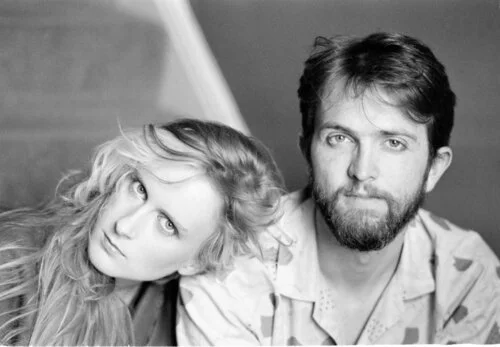
Imagine luscious Hollywood strings and soft vocals set to Latin-tinged and elegantly composed songs on a bed of sharp bright synths, metallic beats and jarring electronic noise. PC music meets Paul Simon and Nouvelle Vague. Jockstrap are the alternative pop duo based in London who offer this eclectic style of contemporary music. Georgia Ellery and Taylor Skye met at the Guildhall School of Music and Drama in 2016, forming the group a year later and releasing their debut track, 'I Want Another Affair' in December.

The pair's incredibly firm footing in classical music and jazz is evident within the writing, which combined with their love of experimental and contemporary music, creates a unique and advanced approach to the pop format. Ellery's lyrics are honest - sometimes powerful, or tender, and largely influenced by Plath and Rossetti. Her songs are structured like a jazz standard, yet they are distorted by Skye's darker, more intense instrumentation and vocal manipulation after they are fed through an analog tape recorder. Jockstrap take all the right cues from the pop world and blend them with experimental values to produce a sophisticated and exciting proposition”.

The duo’s debut single, Hayley, was released back in 2018, and they have grown in strength since then. I love their earlier work, but I think songs like Acid mark a new peak for Jockstrap. If you want to follow Jockstrap, I have put some links at the bottom of this feature. They are a fantastic act, and one that I think will go a very long way. I am not sure what their plans are for the rest of the year, but touring is obviously going to be affected. I am always looking for original sounds, and Jockstrap have that in spades. Despite the fact their name is pretty terrible, I think we will be hearing a lot more from them in the coming years. I want to bring in a couple of features before wrapping up, just to introduce them and provide some more information. Last year, they were interviewed by the BBC:

Guildhall in London has some pretty famous former music students. Legendary cellist Jacqueline Du Pre went there as did famed trumpeter Alison Balsom, Dido and Robbie William's songwriting partner Guy Chambers.

It's also the birthplace of the uniquely-named duo Jockstrap (be careful searching it on Google).

"I like the fact that it's quite shocking," says singer and violinist Georgia Ellery, who is studying for a degree in jazz music and is one half of the band. "But it's quite anonymous.

"I don't think people really think it's me and Taylor behind it. It's just a bit of fun, really.

"Also, there was no Jockstrap on Spotify."

Ellery met electronic music student Taylor Skye a little over a year ago and began making music which defies categorisation. Mixing strings, electronic beats, samples and flutes, with a bit of French new wave thrown in for good measure, thanks to Ellery's half-whispered lyrics - delivered in the style of French wave ingénue.

"We didn't say, 'Oh we want it to sound like this or that', we just wanted to see what came out," she says. "We just had what we had in our experience, which was a lot of classical music for me, loads of electronic music and the degrees that we're studying, I guess."

"We also both like Totally Enormous Extinct Dinosaurs and James Blake quite a lot," adds Skye

In terms of new interviews, there hasn’t been too much out recently, but there is more than enough information online about Jockstrap and their music. If you want to get to know them, there are great articles that let us into their world. It is a shame Jockstrap won’t be able to gig for a little while, but I know there will be a big demand when they back on the road. I want to quote from a DIY feature from last year where Ellery and Skye discussed their take on Jazz and how they are expanding their horizons:

"It's important to make the classical, jazz, electronic thing fun," Taylor affirms. "So often, we're surrounded by people who take it ridiculously seriously, and I think the best things are those that are heartbreaking and funny at the same time. There are so many examples…" he continues. "Connan Mockasin - he's ridiculous, but his songs are so beautiful and heartfelt."

Singular in both its sound and vision, Jockstrap is a project like few others, and it's one that gained them a hefty collaboration before even releasing a note of music under the name. The pair contributed strings to Dean Blunt's 2018 EP 'Soul On Fire', which features A$AP Rocky and Mica Levi among others, after the producer saw them at a show and got in touch via Cherish Kaya, founder of the band's label, Kaya Kaya Records.

"I think he was just wanting to work with loads of up and coming people," Taylor remembers. "We were at the top on the credits - above A$AP - cos we had the most contribution on it. Jockstrap, then A$AP"

Make sure you follow the incredible Jockstrap, as they are so bright, brilliant and original. I think they will put out an album very soon, as they have a healthy body of songs that they can put out there. Until that – and touring -, check them out on YouTube and Spotify and make them your new favourite band. You only need to hear a few notes from them to be spellbound and hypnotised. The music of Jockstrap is…

SUCH an aural treat.

_________________

Follow Jockstrap

xz.jpg

FEATURE: The Lockdown Playlist: Vol. IV: 1992-1995

FEATURE:


The Lockdown Playlist

PHOTO CREDIT: @georgiadelotz/Unsplash

Vol. IV: 1992-1995

___________

I am enjoying putting together this series…

PHOTO CREDIT: @stuchy/Unsplash

as I get to include U.K. hits from various periods in the 1980s and 1990s. When I get to the end of the '00s, I might circle back and go to the 1970, but I am having fun compiling playlists to lift the mood. We are all in the same boat right now, and I think music is a wonderful source of strength and inspiration – and comfort too. If you need a playlist for a kitchen disco or a playlist to keep you occupied for a while, I have compiled some big tunes from 1992-1995 (inclusive) that should…

PHOTO CREDIT: Henry Be/Unsplash

MOVE your body.

FEATURE: Vinyl Corner: Fleetwood Mac – Tango in the Night

FEATURE:


Vinyl Corner

Fleetwood Mac – Tango in the Night

___________

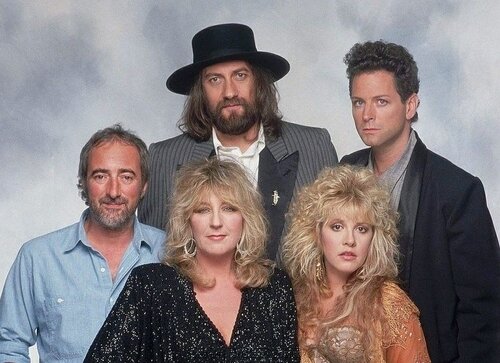
I have not included Fleetwood Mac…

21.jpg

IN THIS PHOTO: Fleetwood Mac in 1987

too much in this feature, but I have been listening back to Tango in the Night. It is the fourteenth album from the legendary band and, when artists release that many albums, there is usually a sag and sense of decline. Released in 1987, Tango in the Night follows from 1982’s Mirage. Both are exceptional records, but I think Tango in the Night is slightly stronger. The album was reissued in 2017, and it received a lot of praise. Produced by Lindsey Buckingham and Richard Dashut, and the album did start out as a Buckingham solo record, before turning into a Fleetwood Mac album. Tango in the Night contains some of the band’s biggest singles. Aside from the immense Big Love, Seven Wonder, Little Lies, and Everywhere can be found on this album. In fact, the one-two-three of Big Love, Seven Wonders, and Everywhere is one of the strongest opening trio of songs ever – with Buckingham, Stevie Nicks and Christine McVie (the band’s principal songwriters) with a song each. Although the album did have its share of complications, it has sold over fifteen-million copies! Tango in the Night took almost eighteen months to complete, and Stevie Nicks only spent about two weeks in the studio with the band – she was promoting her third solo album, Rock a Little, throughout the period.

When Nicks was in the studio, she felt flat and unmotivated. Because of Nicks’ addiction issues, she would often take a drink and a few shots and perform songs intoxicated – causing an issue for Buckingham who was producing. In fact, Buckingham recorded a few of Nicks’ vocals using a Fairlight. Fleetwood Mac were no strangers to disruption and conflict. Look at Rumours and the period from 1975-1977 (they released Tusk in 1977). I would advise people get Tango in the Night on vinyl, as it is one of the band’s best albums. Although most of the big songs are in the first half of the album, I think there is quality throughout. On the second side, we have Family Man, and Welcome to the Room... Sara – two of the best cuts from Tango in the Night. Although some critics did not show much love for Tango in the Night back in 1987, I think reviews since then have been kinder. Here is AllMusic’s assessment of a terrific album:

Artistically and commercially, the Stevie Nicks/Lindsey Buckingham/Mick Fleetwood/Christine and John McVie edition of Fleetwood Mac had been on a roll for over a decade when Tango in the Night was released in early 1987. This would, unfortunately, be Buckingham's last album with the pop/rock supergroup -- and he definitely ended his association with the band on a creative high note. Serving as the album's main producer, Buckingham gives an edgy quality to everything from the haunting "Isn't It Midnight" to the poetic "Seven Wonders" to the dreamy "Everywhere." Though Buckingham doesn't over-produce, his thoughtful use of synthesizers is a major asset. Without question, "Family Man" and "Caroline" are among the best songs ever written by Buckingham, who consistently brings out the best in his colleagues on this superb album”.

I really love Tango in the Night, and I think the album gets overlooked when we think of the classic Fleetwood Mac releases. I think, as we have more time to listen to music, it is a perfect opportunity to revisit this classic. Pitchfork reviewed the Deluxe Edition that was released in 2017:

Still, it’s McVie whose work is most realized by Buckingham’s impressionism. Her “Everywhere” is the best song on the record. Like “Big Love” it too is about encountering an idea too big to contain within oneself (love, again). But where “Big Love” apprehends it with icy suspicion, “Everywhere” responds with warmth, empathy, and buoyancy, describing a kind of devotion so deeply felt that it produces weightlessness in a person. Its incandescent texture is felt in almost any music that could be reasonably described as balearic. Elsewhere, “Isn’t It Midnight,” McVie’s co-write with Buckingham and her then-husband Eddy Quintela, seems an inversion of the values of “Everywhere,” a severe ’80s guitar rock song that gets consumed by a greater, more unnerving force by its chorus, as if it’s succumbing to a conspiratorial dread. “Do you remember the face of a pretty girl?” McVie sings, and Buckingham echoes her in an unfeeling monotone (“the face of a pretty girl”) while behind him synths chime in a moving constellation, UFOs pulsing in the dark.

This is the essence of Tango in the Night: something falling apart but held together by an unearthly glow. More of a mirage than Mirage, it is an immaculate study in denial (its most enduring hit revolves around McVie asking someone to tell her “sweet little lies”). It’s a form of dreaming where you could touch the petals of a flower and feel something softer than the idea of softness. In this way, Tango seems to emerge less from Buckingham’s pure will and imagination than from a question that haunts art in general: How can one make the unreal real, and the real unreal?”.

I am going to spin Tango in the Night again, as I have so much appreciation and respect for Fleetwood Mac. If you have some time on your hands, go and order Tango in the Night – or stream it – and show this huge work…

SOME big love.  

FEATURE: Optimistic: Radiohead’s Weekly Concert Series: Will Other Artists Follow Suit?

FEATURE:


Optimistic

PHOTO CREDIT: Gie Knaeps/Getty Images

Radiohead’s Weekly Concert Series: Will Other Artists Follow Suit?

___________

THIS year…

I am going to talk about Radiohead’s work. Kid A turns twenty later in the year, and there is always something to discuss when it comes to one of the world’s greatest-ever bands. I am going to keep this short but, pleasingly, Radiohead are gifting us with yet more musical wonder. Radiohead have already opened their Public Library to the people, and one can access endless Radiohead tracks and rarities. It is wonderful that a band who have been around for decades are still offering up treats and surprises. As we are all inside and yearning to see live music, artists are giving up gigs from their homes. It is interesting seeing these more intimate sets, so that we can get our fill of live music without leaving the house. I have been looking around, and quite a few artists are giving the public access to archived live shows. Radiohead are putting one of their gigs on their YouTube site every week. Live from a Tent in Dublin (October 2000) went up a few days ago, and this is a gig that I have not seen before. Here are more details of Radiohead’s series:

Radiohead are set to upload a number of full concert videos to their YouTube channel in the coming weeks to keep fans entertained through isolation amid the COVID-19 pandemic.

The band will draw on the vast archive of live footage that forms part of the Radiohead Public Library, launched earlier this year, for the uploads. "We will be releasing one a week until either the restrictions resulting from [the] current situation are eased, or we run out of shows," reads a note shared via their Facebook page.

The first of those sets, Live From a Tent In Dublin - October 2000, will go live at 10pm BST tonight (April 9). You will be able to watch it via Radiohead's YouTube page here. The show, which took place at Dublin's Punchestown Racecourse, formed part of Radiohead's tour in support of the albums Kid A and Amnesiac, having come shortly after the release of the first of those records”.

Whilst one does not get the same rush and tangibility watching a gig online compared to being there, the pleasure of watching a legendary band absolutely blow the crowd away is more than enough to lift the energy levels and create a smile. I am not sure when Radiohead will gig again, but there is something wonderfully nostalgic about seeing one of their classic gigs. I know there are videos on YouTube of their iconic Glastonbury set in 1997, but I wonder whether a version with better video and audio will be part of the series. There are some Radiohead gigs on YouTube already, but I think we will see some real gems come to the surface. There are a few artists, as I said, who are putting out some of their gigs whilst we are in lockdown, but it will be interesting to see whether other acts follow suit. I realise there are a lot of classic gigs online, but it would be good if some major artists did a weekly series whilst we are in lockdown.

For me, I would love to see The Beatles’ early gigs streamed. I think there are a few floating around on YouTube, but a weekly Beatles gig series would be awesome. As Madonna’s Blond Ambition Tour is thirty this month, having some of her gigs available on her YouTube channel would be incredible. I think Blond Ambition exists in various forms on YouTube, but a better-rendered video from one of the shows doesn’t really exist. There are other shows and sets of hers that are harder to find and, even if the videos already exist, having Madonna backing a weekly series would bring a lot of people together. We all have our dream list of other artists we’d like gig series from, and I feel it makes for a nice companion to the home-streamed gigs that we see on social media. It is a difficult time for everyone, and we are seeing gigs presented in a whole new way. Whilst we might not be able to see live gigs for another couple of months or so, there are those in lockdown (myself included) who are searching through the online archives and seeing what big gigs are available to watch. Radiohead’s new is brilliant indeed, and I feel other major artists may well try a similar endeavour for a few weeks at least – or just carry it on past lockdown. I’d also like to see some classic Oasis gigs; maybe some of Glastonbury’s archives dug up – I know there are highlights from various years available, but watching full sets would be a thrill. Even though we are in lockdown, we are being treated to so much…

GREAT live music.

FEATURE: Everything in Its Right Place: The Fine Art of Album Sequencing

FEATURE:

Everything in Its Right Place

bbb.jpg

PHOTO CREDIT: @alexiby/Unsplash

The Fine Art of Album Sequencing

___________

I may have addressed this before…

PHOTO CREDIT: @mikeferreira/Unsplash

but many people overlook the importance of getting an album’s sequencing right. I think potentially great albums have been made average because tracks are placed in the wrong order; albums that could have been a little so-so have been gifted new life because the track sequencing makes for a must-listen experience! I think someone said the golden rule for sequencing an album was to have one of the best tracks at the top – so you start strong but can still build to the best track. The strongest track, logically, should occur at the end, so that you end with a bang; arrange the rest of the songs so the top and bottom half are equally weighted and there is a nice flow. I know it is hard to achieve that, but a couple of albums have accomplished this feat. Think about Radiohead’s The Bends. We start things off with Planet Telex (strong, but not a top-three cut) and end with the standout, Street Spirit (Fade Out). The album has some brilliant tracks in the opening half (The Bends, High and Dry, and Fake Plastic Trees) and strong material in the second half (My Iron Lung, and Sulk). There is a nice balance of more emotive songs and the hard-driving numbers, so that there is not a run of same-sounding tracks. I think The Beatles achieved the same thing on Sgt. Pepper’s Lonely Hearts Club Band. The album starts with the title track and ends with the epic A Day in the Life – that song could not have appeared anywhere else on the record as it is a titanic statement that cannot be followed! Although most of the best songs are on the first half of this album, there are some wonderful tunes on the second half. I think the band, George Martin (the producer) and team sequenced the album wonderfully.

This article from The Guardian in 2008 investigates the importance of getting the sequencing right:

There's a story that Kirsty MacColl - who was married to producer Steve Lillywhite - sequenced The Joshua Tree for U2, and she did it in order of her favourite songs, but that's probably unusual," says Hugo Turquet, A&R man at EMI, who says that ideally albums should be sequenced like vinyl, with an imaginary two sides. "Start each with a really good track and end with a really good track. You want a strong Side B starter and strong Side B ender ... if you have those four points everything else can fit around it. You don't want two songs with the same theme next to each other. The best albums sequence themselves."

According to Turquet, bands choose tracklistings themselves - aided by their manager - although they'll usually have heard a record company voice saying "we want the strong songs first". However, he warns against "front-loading" an album with big singles - if you play all your ace cards too early, the listener might not make it to the end.

Looking at a couple of classic albums, Turquet's formula seems about right. Nirvana's Nevermind opens with Smells Like Teen Spirit. Come As You Are and Lithium appear fairly early, and the strong kidnap-song Polly ends side one. The dark, lengthy Something In The Way similarly provides an epic album closer. Blur's Parklife also opens with smash hit Girls And Boys; the Phil Daniels-sung smash Parklife appears four tracks in, while the huge, melancholy ballad This Is A Low appears just before the end (the actual closer is the one minute long organ whirl Lot 105 - another occasional theme, the novelty-track ending). 

The opener isn't always a big hit single. The Smiths' classic The Queen Is Dead opens with the rampaging title track ... but imagine it kicking off with the playful Vicar In A Tutu? The whole album just wouldn't have had the same momentum. Peter Hook of Joy Division and New Order - responsible for sequencing a fair few classic albums in their time, aided by manager Rob Gretton - compares choosing an album's track listing to pacing a live set. "Build up ... slow down ... with a big finish".

There are those who say that say the concept and traditional structure of albums have been rendered obsolete in the age of streaming. If people get an album from Spotify, will they play every track in order, or merely pick at the singles? There is an argument that says albums should start very strongly and have the singles near the top. If a listener has an album that starts slow and builds up, will they be patient enough to make it to the end? Will they merely hear a few songs and discard the remainder of the album? I think there is an art to sequencing an album; there are various movements and acts that tell a story and hook the listener. I do not think the album is dead; we still invested in listening to a full album, and those who really love their music will digest a work from the opening track to the finale. Many artists put their big hit at the very start of an album, but one must be conscious of not giving away all your treasure too soon.

If all the best tracks are done with in the top half of an album, it will create a rather uneven and unsatisfying listen. It appears that album sequencing is a science that is difficult to comprehend. I don’t think it is. When an album is being made, artists will have an idea of the story and order of songs. This article talks about album sequencing in the streaming age, and it gives useful steps to create a rich and flowing album:

From start to finish, the best albums show a good sense of dynamics, detail, and story telling. Sequencing is crucial in this process. Two soft songs in a row will play much differently than a transition from a soft song to an edgy one.

Listeners can easily skip from one song to another, so take this as your chance to convince them otherwise. Give them a reason to stick around and listen to multiple songs in a row, the way they were intended”.

There are some great articles that discuss how important getting an album’s sequence right. Bands and artists can spend months deciding which tracks go where to create the finest experience. Iconic albums like Songs in the Key of Life gets the balance just so – it is a long album, but there is never a weak patch or a run of tracks that doesn’t amaze. People debate albums that suffer from good and poor sequencing.

As a big Radiohead fan, I love Hail to the Thief, but I think there are one or two many tracks; the record starts with 2 + 2 = 5, but the album sages a little in the middle. I think U2’s Pop is an example of an album with misjudged sequencing; an album the band were fiddling around with after its release. I wonder how good the original could have been if the tracks were in a different order. Even if more people are streaming albums rather than buying them on vinyl, I feel albums are stories and bodies of work that should keep you locked in from the first song to the last. Even if there is some filler on a track, an album can still seem wonderful if those songs are put in the right place – normally, you’d expect them to go in the middle of the pack or on the second half. The album as a full body of work will always have a place, and people will always marvel over a whole story – without skipping tracks and cherry-picking the singles. Because of that, I think the sequencing is as important as the songs themselves. If every track on the album is great but the songs are ordered wrong, it creates a rather uneven and displeasing experience. Likewise, putting all the gold too far up or too far down in the running order can be a mistake. I have sourced a few articles that advise how to sequence albums just right, but there is no golden rule. I love albums in so many ways: from the cover to the completeness of it, absorbing an album is a very special thing. Whilst the sound and quality of the individual tracks is crucial, I think an album can be elevated to heavenly heights with…

PHOTO CREDIT: @jesmanfabio/Unsplash

A dream sequence.

FEATURE: Set Adrift on Memory Bliss: Nostalgia at a Time of Trouble

FEATURE:

Set Adrift on Memory Bliss

azz.png

ILLUSTRATION CREDIT: dawohx

Nostalgia at a Time of Trouble

___________

IT is inevitable that…

IN THIS PHOTO: Resident, Brighton/PHOTO CREDIT: @residentmusic

at a time when we are inside and unable to appreciate the here and now as urgently and physically as we’d like, many of us are regressing to better times and childhood memories. I am going to publish another feature soon that looks at compilation albums and the best year for music. Right now, I have seen a lot of posts online that relate to fond memories of the past and treasured music memories. It might sound morbid or defeatist, but I think now is a perfectly fine time to be nostalgic and look back. For me, I have missed the tangible delight of looking for albums and browsing. When things start to get back to normal, I hope to get down to Brighton and visit Resident – a fantastic record shop. Of course, I will do other things whilst in Brighton, but I very much miss record shops and leafing through all the new releases; seeing which older albums grab my fancy and, inevitably, spending too much money! Of course, I can still order from Resident online, but there is something to be said for the mingling and being among like-minded people. I do worry about record shops at the moment, and I wonder how many will be forced to close because they cannot trade and sustain themselves. Thinking of buying albums in 2020 turns my thoughts back to when I started visiting music shops to buy singles and albums.

It must have been in the early-1990s when my curiosity began, and I think one of the earliest music-buying memories I have is purchasing NOW That's What I Call Music! 24. That album was released back in 1993, and it was a compilation of the best tracks from the year – and some older ones too. With Snow’s Informer and Shaggy’s Oh Carolina, I am taken back to middle school and a very happy time. One of the hard things about now is we cannot be sociable with music. Before lockdown, most of us listened to albums alone and streamed them; how often do you see people swapping albums and chatting about new releases? Now, we have this physical distance, which casts my thoughts to school. It was a very playful and collaborative environment where tapes would be swapped; I’d often chat with a group of friends about Top of the Pops or what was going to be number-one for that week. High school intensified my passion, and the school playground was awash with conversation about music. As I started high school in 1994, it was Britpop that was all the rage. There was terrific Pop, and a wonderfully colourful musical landscape that was irresistible to impressionable and hungry children. It was during these high-school years where I started to buy a lot of music and, in a way, that was what lit my eventual path to music journalism.

Getting the bus into town and buying a single by Basement Jaxx or the latest Manic Street Preachers album was a simple joy that, now, we long for. Pre-streaming days, having an album in your hand and going home and playing it was the highlight of the week. I had a pile of C.D. singles, and I would often buy compilations and all the biggest studio albums that came out. Once or twice, I would queue early to get an album, and so much of my savings went to music. I think I grew up at the right time. Born in the 1980s; at the peak of my fervour in the 1990s, the physicality of music was what connected me to artists. This is a reason why I still buy music as much as possible and get so much pleasure from visiting record shops. Sure, the sounds and flavour of modern music is very different to what it was in the 1980s and 1990s, but record shops give me a nostalgic buzz every time I visit – even if I am buying a new album. From high-school and the schoolyard sharing and after-school bonding, music was a source of joy, comfort and education. The fact the music industry has been contracted and repurposed during a very rough period means that, for now, I am spending a lot of time going back to music I grew up around. Not only does the warm recollection of better times give me strength to move forward; I am also rediscovering music that I have not played for a while now. I used to listen to quite a bit of Club and Electronic music when I was in high school and sixth form college, and it is wonderful dipping back in.

I publish special lockdown playlists that each cover a particular timeframe in music – I cover three years per playlist -, and that is a nice way of reacquainting myself with some cherished tunes. I feel too much escapism can be a bad thing, but a lot of people are doing it right now. Whether it is a protective blanket or a way of accessing past pleasure in order to find stamina to stay upbeat right now, I am not too sure. For me, I am hoping for a bright feature when this is all done. I know, in the span of our lives, this crisis is a very small part; it will pass and, years from now, it will be a distant memory – though we will not forget what we learned and encountered in 2020. New music is providing fuel and enjoyment, but I am pining for all the great singles and albums that I enjoyed growing up. When I hear these songs, memories of school, home and life in general come back – it gives that little boost and fond nostalgia that I feel we can all do with. I think I am also listening to music more right now than I ever have; not just older stuff, but newly-released material too. We will get through the other side of this with a new appreciation of musicians, live music and albums in general. One of my first desires is to go record shopping, but I have been streaming too much, whereas I should be buying more – that will change soon enough. Whilst we adapt to a new way of life (for now), think about the albums, artists and moments that soundtracked your young life. It provides a wonderful solace and ray of sunshine. I am going to cast my mind back to school-time jams and…       

SET adrift on memory bliss.

FEATURE: The Lockdown Playlist: Vol. III: 1988-1991

FEATURE:

The Lockdown Playlist

PHOTO CREDIT: @georgiadelotz/Unsplash

Vol. III: 1988-1991

___________

THIS is the third instalment of…

PHOTO CREDIT: @johnnymcclung/Unsplash

this playlist series, and I will be splitting features between current stuff (reviews and reaction to the coronavirus) and stuff that is a bit more nostalgic. If you need a playlist to soundtrack a lockdown party/kitchen rave/a weary afternoon, I have some tunes that should fit the bill. In this playlist, I have selected some of the biggest singles from the years 1988-1991 (inclusive). This was one of the most interesting and golden periods of music and, whilst I have not included non-singles – there are some great album tracks that have been missed -, I am sure you’ll agree there is more than enough in the pack to get the spirits lifted and the energy flowing. Take a listen to this latest Lockdown Playlist, and revel in…

PHOTO CREDIT: @leecampbell/Unsplash

SOME musical comfort.

FEATURE: Second Best: Ten Brilliant Sophomore Albums

FEATURE:

Second Best

aass.jpg

IN THIS PHOTO: Björk captured by Enver Hirsch in 1995

Ten Brilliant Sophomore Albums

___________

ALTHOUGH I looked at sophomore albums…

IN THIS PHOTO: Madonna shot by Helmut Werb in 1984

a while back, I want to revisit the subject. The second album is that tricky thing. If you have a masterful debut, it is inevitable there is pressure to follow it with an even better sophomore effort. If you start off quite weak, there is a different pressure: in order to keep people interested, that second record has to be something special! Everyone has their views regarding the best sophomore albums and what defines a true classic. Whether it is an artist who vastly improved from a weak debut, or someone who topped an amazing first effort, there are some truly wonderful second albums. I have collected together what I think are the best sophomore albums ever. Here is a rundown of some albums that are definitely…

assaa.jpg

IN THIS PHOTO: Radiohead circa 1995

NOT second best!

_____________

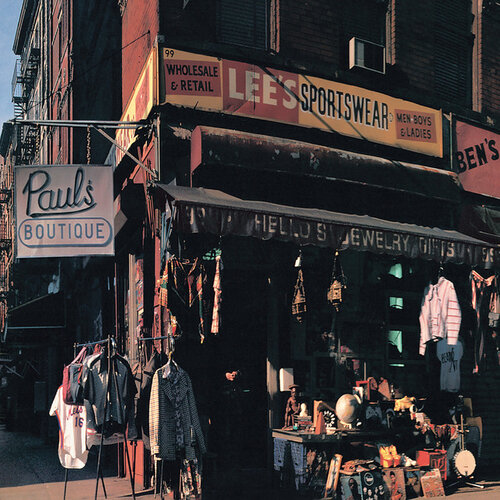
Beastie Boys - Paul’s Boutique

Release Date: 25th July, 1989

Producers: Beastie Boys/The Dust Brothers/Mario Caldato Jr.

Label: Capitol

The Debut: Licensed to Ill (1986)

Standout Tracks: To All the Girls/Hey Ladies/Shadrach

Key Cut: Shake Your Rump

Sample Review:

While each member has their spotlight moments—MCA’s pedal-down tour de force fast-rap exhibition in “Year and a Day,” Mike D having too much to drink at the Red Lobster on “Mike on the Mic,” and Ad-Rock’s charmingly venomous tirade against coke-snorting Hollywood faux-ingénues in “3-Minute Rule”—Paul's Boutique is where their back-and-forth patter really reached its peak. At the start of their career, they built off the tag-team style popularized by Run-DMC, but by ’89 they'd developed it to such an extent and to such manic, screwball ends that they might as well have been drawing off the Marx Brothers as well. It’s impossible to hear the vast majority of this album as anything other than a locked-tight group effort, with its overlapping lyrics and shouted three-man one-liners, and it’s maybe best displayed in the classic single “Shadrach.” After years of post-Def Jam limbo and attempts to escape out from under the weight of a fratboy parody that got out of hand, they put together a defiant, iconographic statement of purpose that combined giddy braggadocio with weeded-out soul-searching. It’s the tightest highlight on an album full of them, a quick-volleying, line-swapping 100-yard dash capped off with the most confident possible delivery of the line “They tell us what to do? Hell no!” – Pitchfork

RadioheadThe Bends

Release Date: 13th March, 1995

Producer: John Leckie

Labels: Parlophone/Capitol

The Debut: Pablo Honey (1993)

Standout Tracks: The Bends/Fake Plastic Trees/Just

Key Cut: Street Spirit (Fade Out)

Sample Review:

Pablo Honey in no way was adequate preparation for its epic, sprawling follow-up, The Bends. Building from the sweeping, three-guitar attack that punctuated the best moments of Pablo Honey, Radiohead create a grand and forceful sound that nevertheless resonates with anguish and despair -- it's cerebral anthemic rock. Occasionally, the album displays its influences, whether it's U2, Pink Floyd, R.E.M., or the Pixies, but Radiohead turn clichés inside out, making each song sound bracingly fresh. Thom Yorke's tortured lyrics give the album a melancholy undercurrent, as does the surging, textured music. But what makes The Bends so remarkable is that it marries such ambitious, and often challenging, instrumental soundscapes to songs that are at their cores hauntingly melodic and accessible. It makes the record compelling upon first listen, but it reveals new details with each listen, and soon it becomes apparent that with The Bends, Radiohead have reinvented anthemic rock” – AllMusic

Carole King - Tapestry

Release Date: 10th February, 1971

Producer: Lou Adler

Labels: Ode/A&M

The Debut: Writer (1970)

Standout Tracks: I Feel the Earth Move/Will You Still Love Me Tomorrow?/(You Make Me Feel Like) A Natural Woman

Key Cut: It’s Too Late

Sample Review:

Two of the album’s pleasantest moments are hearing Carole sing “Will You Love Me Tomorrow” and “Natural Woman.” She makes no effort to compete with the standard versions but instead gives each an entirely fresh and original interpretation. The next to the last song on the album is the lovely title song and Miss King performs it as a solo. For the last song. “Natural Woman,” she is joined only by her husband, Charlie Larkey, on bass. It sounds like something out of one of her songs…

Conviction and commitment are the life blood of Tapestry and are precisely what make it so fine. Of course, commitment alone means nothing; but commitment coupled with the musical talents of a genuine pop artist mean everything. To paraphrase Pauline Kael, writing about director Jean Renoir, Carole King is thoroughly involved with her music; she reaches out towards us and gives everything she has. And this generosity is so extraordinary that perhaps we can give it another name: passion.

Curtis Mayfield, in a song written at just about the same time Carole was writing “The Locomotion” put it another way: “The woman’s got soul” – Rolling Stone

Amy WinehouseBack to Black

Release Date: 27th October, 2006

Producers: Mark Ronson/Salaam Remi

Label: Island

The Debut: Frank (2003)

Standout Tracks: Rehab/You Know I’m No Good/Love Is a Losing Game

Key Cut: Back to Black

Sample Review:

What was particularly intriguing about the 22-year-old was how she managed to sound like a Fifties jazz club singer while singing outre lyrics about life in contemporary London. This compelling duality is continued with a deft change of backdrop on Back to Black, wherein she assumes the role of an Aretha Franklin-style soul singer complete with doo-wop backing groups while again singing of her contemporary urban experiences. It should keep popular culture students busy for the next 20 years in the way that Mick Jagger in the mid-Sixties prompted countless theses on the subliminal black person within. None the less it works - even though this area of pop culture has been mined remorselessly for the past 50 years - by dint of its clever melody lines and smart lyrics.

As if to emphasise just how wise she is, Winehouse has kept each track to around the length of a 45 (remember those?), enabling her to make her point and move on without running the risk of outstaying her welcome. So whether it's the rousing, churchy 'Rehab', in which Winehouse describes how her father tries to wean her off alcohol ('Try to make me go to rehab/ I say no, no, no'), or the serious soul of 'Love is a Losing Game', Back to Black isn't shy of betraying its debt to pop” – The Observer

The Beatles - With the Beatles

Release Date: 22 November, 1963

Producer: George Martin

Label: Paralophone

The Debut: Please Please Me (1963)

Standout Tracks: It Won’t Be Long/Don’t Bother Me/I Wanna Be Your Man

Key Cut: All My Loving

Sample Review:

Things get more interesting on With The Beatles, particularly for audiences who feel the hi-hat should be the dominant musical instrument on all musical recordings. Only one track lasts longer than three minutes, but structurally, it would appear that the Beatles were more musical than any songwriters who had ever come before them, even when performing material that had been conceived for The Music Man. It’s hard to understand why the rock press wasn’t covering the Beatles during this stretch of their career; one can only assume that the band members’ lack of charisma and uneasy rapport made them unappealing to the mainstream media. Still, the music itself has verve—With The Beatles earns another” – The A.V. Club

Nirvana - Nevermind

bbnbnb.jpg

Release Date: 24th September, 1991

Producer: Butch Vig

Label: DGC

The Debut: Bleach (1989)

Standout Tracks: Smells Like Teen Spirit/Breed/Something in the Way

Key Cut: Come as You Are

Sample Review:

‘Come As You Are' has something eerie about it, while opening track (and forthcoming single) 'Smells Like Teen Spirit' has a 'Goo'ey feeling inherent in its lurching structure. At other times, the threesome lean into thrashier territory with the berserk 'Territorial Pissings' and screaming-pop of 'Breed'.

This is the natural progression from their debut LP 'Bleach', exploring different avenues. They are less specific lyrically than SY, sometimes annoyingly so, but yet they still produce these vivid moods with 'Drain You', 'Polly' and the closing, quieter 'Something In The Way'.

'Nevermind' is the big American alternative record of the autumn. But better still, it'll last well into next year” – NME

MadonnaLike a Virgin

Release Date: 12th November, 1984

Producer: Nile Rodgers

Labels: Sire/Warner Bros.

The Debut: Madonna (1983)

Standout Tracks: Angel/Like a Virgin/Dress You Are

Key Cut: Material Girl

Sample Review:

Madonna had hits with her first album, even reaching the Top Ten twice with "Borderline" and "Lucky Star," but she didn't become a superstar, an icon, until her second album, Like a Virgin. She saw the opening for this kind of explosion and seized it, bringing in former Chic guitarist Nile Rodgers in as a producer, to help her expand her sound, and then carefully constructed her image as an ironic, ferociously sexy Boy Toy; the Steven Meisel-shot cover, capturing her as a buxom bride with a Boy Toy belt buckle on the front, and dressing after a night of passion, was as key to her reinvention as the music itself. Yet, there's no discounting the best songs on the record, the moments when her grand concepts are married to music that transcends the mere classification of dance-pop. These, of course, are "Material Girl" and "Like a Virgin," the two songs that made her an icon, and the two songs that remain definitive statements. They overshadow the rest of the record, not just because they are a perfect match of theme and sound, but because the rest of the album vacillates wildly in terms of quality. The other two singles, "Angel" and "Dress You Up," are excellent standard-issue dance-pop, and there are other moments that work well ("Over and Over," "Stay," the earnest cover of Rose Royce's "Love Don't Live Here"), but overall, it adds up to less than the sum of its parts -- partially because the singles are so good, but also because on the first album, she stunned with style and a certain joy. Here, the calculation is apparent, and while that's part of Madonna's essence -- even something that makes her fun -- it throws the record's balance off a little too much for it to be consistent, even if it justifiably made her a star” – AllMusic

BjörkPost 

Release Date: 13th June, 1995

Producers: Björk/Nellee Hooper/Graham Massey/Tricky/Howie B

Labels: One Little Indian/Elektra

The Debut: Debut (1993)

Standout Tracks: Army of Me/Hyperballad/It’s Oh So Quiet

Key Cut: Isobel

Sample Review:

On Björk second solo album, Post, the ex-Sugarcube finds a bizarre and irresistible connecting point between industrial-disco, ambient-trance, and catchy synth pop. She even shoehorns in a big-band number, though few will confuse the Icelandic pixie — with her otherworldly lyrics and supernatural pipes — with Peggy Lee. Luckily, there’s a conviction to Björk’s delivery and an assurance to her hooks that make her most surreal passages as relatable as moon-June standards. Ultimately, she reinvents that tradition, constructing standards for the cyber age” – Entertainment Weekly

BlurModern Life Is Rubbish

Release Date: 10th May, 1993

Producers: Blur/John Smith/Steve Lovell/Stephen Street

Labels: Food (U.K.)/SBK (U.S.)

The Debut: Leisure (1991)

Standout Tracks: Blue Jeans/Chemical World/Sunday Sunday

Key Cut: For Tomorrow

Sample Review:

Further in there’s a very intriguing mix of obscurities that clearly indicate a band entering their stride as musicians, if not entirely sure of their identity: you would never in a million years pick out the reverb-heavy blues of the excellent ‘Pop Scene’ b-side ‘Garden City’ out as Blur; by the October 1993 ‘Sunday Sunday’ single their infatuation with Englishness had reached something like self-parody, with punk rock covers of ‘Daisy Bell (A Bicycle Made for Two)’ and ‘Let’s All Go Down the Strand’.

There’s none of the romance or cohesiveness of the album proper, but – on the original compositions - the songcraft is almost faultless, from the clean new wave guitars of ‘Mace’ to the weirdly successful Krautrock experiment of ‘Es Schmecht’. If the Modern Life Is Rubbish b-sides are the sound of a band coming into peak form as musicians, then Modern Life Is Rubbish is them deciding what to do with that form. Reputedly the band – after their pissiness over ‘Popscene’ – were unfazed that neither their second album nor its singles sold particular well: they knew how good it was, they knew it was only a matter of time before they hit the big time… and they were right” – Drowned in Sound

PavementCrooked Rain, Crooked Rain

Release Date: 2nd February, 1994

Producers: Pavement

Label: Matador

The Debut: Slanted and Enchanted (1992)

Standout Tracks: Elevate Me Later/Gold Soundz/Range Life

Key Cut: Cut Your Hair

Sample Review:

Pavement may still be messy, but it's a meaningful, musical messiness from the performance to the production: listen to how "Silence Kit" begins by falling into place with its layers of fuzz guitars, wah wahs, cowbells, thumping bass, and drum fills, how what initially seems random gives way into a lush Californian pop song. That's Crooked Rain a nutshell -- what initially seems chaotic has purpose, leading listeners into the bittersweet heart and impish humor at the core of the album. Many bands attempted to replicate the sound or the vibe of Crooked Rain, Crooked Rain, but they never came close to the quicksilver shifts in music and emotion that give this album such lasting appeal. Here, Pavement follow the heartbroken ballad "Stop Breathin'" with the wry, hooky alt-rock hit "Cut Your Hair" without missing a beat. They throw out a jazzy Dave Brubeck tribute in "5-4=Unity" as easily as they mimic the Fall and mock the Happy Mondays on "Hit the Plane Down." By drawing on so many different influences, Pavement discovered its own distinctive voice as a band on Crooked Rain, Crooked Rain, creating a vibrant, dynamic, emotionally resonant album that stands as a touchstone of underground rock in the '90s and one of the great albums of its decade” – AllMusic

FEATURE: A Foetus's Perspective of Nuclear Holocaust: Kate Bush’s Breathing at Forty

FEATURE:


A Foetus's Perspective of Nuclear Holocaust

z.jpg

Kate Bush’s Breathing at Forty

___________

THERE is never any shortage of…

Kate Bush-related things to explore and, in the coming weeks, I have a few things to tick off the list. Right now, an important song of hers is turning forty. Breathing was released on 14th April, 1980, and it is from her album, Never for Ever. Some might query why Breathing is such an important work. Bush has songs in her cannon that are more celebrated and finer – including Wuthering Heights, and Running Up That Hill (A Deal with God) -, but there was this very noticeable and important growth that occurred in 1980. What propelled this shift? Well, Kate Bush is an artist who always likes to move and never likes to repeat herself. After Lionheart in 1978 – her second album -, and the Tour of Life of 1979, there was this feeling of taking a step in a new direction. Her first two albums, The Kick Inside (1978), and Lionheart, are defined by a very distinct vocal sound and musical texture. Bush’s voice, for the most part, is agile and high-pitched; she has this romantic, seductive quality, and most of her songs concerned the personal rather than the political. Sure, right from her debut album, she was writing songs that went way beyond matters of the heart. Look at The Kick Inside’s Wuthering Heights, Them Heavy People, and The Kick Inside, for instance – between the three tracks, she ticks off classic literature, spirituality/spiritual teachers, and incest. Bush has never been afraid to let her imagination roam, and her songwriting is among the most original ever committed to tape.

Whilst she was certainly unique and broad in terms of themes, her first couple of albums featured little in the way of political songs; numbers that were symphonic and raw. Whilst there is no single reason why Bush wrote Breathing, I think there was a sense of tension in the air that there was going to be nuclear destruction. I will talk about the song’s meaning and details soon but, not only did she write Breathing for Never for Ever; Army Dreamers concerns young soldiers, barely out of school, being sent to die. Whilst that song features quite high-pitched vocals (Bush imitating an Irish accent), Breathing is a completely different thing. Vocally, one can notice a slight move away from the more theatrical and gymnastic sounds of The Kick Inside , and Lionheart. Breathing features, in my view, one of Bush’s best-ever vocals. Symphonic, utterly engrossing and compelling, it is almost a transformation of the girl into a young woman. I think many people in the press considered Bush to be a bit hippy-dippy, airy-fairy; maybe a bit naïve and wide-eyed – someone who was very different to a lot of her Rock and Punk peers. Of course, this sort of patronising attitude was not the reason Bush included a song like Breathing into an album. That idea of Bush as this ingenue who was a bit out-there and not too serious…that must have hit her quite hard.

IN THIS PHOTO: Kate Bush shot by Andy Phillips in 1980

I want to source an interview from NME of 1979, where Danny Baker met Kate Bush. I think, in the years since the interview was published, Baker has distanced himself somewhat; he wanted to make the people at NME laugh and, to his credit, there is a jocularity and sense of confrontation that is refreshing – most interviews with Kate Bush were very well-mannered and samey. I want to source a few extracts from the interview – which was published on 20th October, 1979 – not very long before Breathing was recorded over a few days in early-1980:

Asking a few more questions, I begin to realise that this isn't the kind of stuff that weekloads of Gasbags [NME letters page] are made of. I'm searching for a key probe, but with Kate Bush – well, there's not likely to be anything that will cause the 12-inch banner-headline stuff, is there now? I recall Charlie Murray's less than enthusiastic review of her Palladium shows, which were apparently crammed with lame attempts to "widen" the audience's artistic horizons – y'know, lots of people dressed as violins and carrots an' that. CSM reckons it was one of the most condescending gigs in the history of music. Kate had read the review, but she didn't break down.

Well, that certainly seems a worthwhile thing to do, all right, although it has in fact been done before. Y'see, occasionally Kate allows the poet and all-round Tyrannosaurus Rex dreamer to slip out, a sucker for Lord of the Rings. For a start I have cut about a hundred "wows" and "amazings" from her speech. She talks at length about how important she feels it is to be "creating" all the time, and when I asked her if she looked to the news for any song inspiration I got this curious answer:

"Well, whenever I see the news, it's always the same depressing things. War's hostages and people's arms hanging off with all the tendons hanging out, you know. So I tend not to watch it much. I prefer to go and see a movie or something, where it's all put much more poetically. People getting their heads blown off in slow motion, very beautifully."

IN THIS PHOTO: Kate Bush in May 1979/PHOTO CREDIT: Mirrorpix

She grins broadly again. Kate is an artist through and through, seeing the world as a crazy canvas on which to skip. Her outrageous charm covers the fact that we are in the midst of a hippy uprising of the most devious sorts. I approach her on the question of being a woman in pop music once more”.

You can read the full interview, but there is a sense that Baker had little respect for Bush’s music at the time. I am not suggested this interview was what compelled Bush to ‘get serious’, but some corners of the press had a very particular impression of who she was and how deep her music was. Breathing is the lead single from her third album. Bush released Breathing as the first single from the album, which signals that she wanted to send out a big message straight away. Army Dreamers, the other big political-minded track, was released as the third single – the more commercial Babooshka was the second single from the album. Whilst there are tracks on the album that are a bit more accessible and ‘commercial’ (if that is the most fiting word) – such as The Wedding List, and Violin, I love the fact that Breathing was the first single from Never for Ever – quite a big change from Wuthering Heights (her iconic debut single) and Hammer Horror (the lead single from Lionheart). 

IN THIS PHOTO: Kate Bush circa 1980

Breathing concerns nuclear war as seen from the perspective of a foetus. The foetus cannot hear or see the bombs, but he/she knows that their life might be terminated as his/her mother is breathing in radioactive air – “Outside/Gets inside/Through her skin/I've been out before/But this time it's much safer in”. Bush’s lyrics are always extraordinary, but the way she delivers “Breathing/Breathing my mother in/Breathing my beloved in…”, is a mix of the soothing-cum-haunting. Whilst those lines are the mantra and most devastating part of the song, there are other lines that catch my ear. “We've lost our chance/We're the first and the last, ooh/After the blast/Chips of plutonium/Are twinkling in every lung” is so evocative and striking! In terms of her vocals, I think this is the first real high point after Wuthering Heights for Bush. Her band are incredible and give her exceptional support. Breathing featured: drums: Stuart Elliott; fretless bass: John Giblin; Fender Rhodes: Max Middleton; electric guitar: Alan Murphy, Brian Bath; Prophet: Larry Fast; percussion: Morris Pert; backing vocals: Roy Harper. The backing vocal from Roy Harper is especially stirring and impactful – Bush provided her vocals to Harper’s 1980 album, The Unknown Soldier. In terms of explaining Breathing and its background, Kate Bush gave some explanations in the press. When speaking with Keyboard in 1985, she said the following: 

"'Breathing' is about human beings killing themselves. I think that people smoking is one of those tiny things that says a lot about human beings. I mean, I smoke and enjoy it, but we smoke and we know it's dangerous. Maybe there's some kind of strange subconscious desire to damage ourselves. It would seem so if you looked back through history, wouldn't it?"

Bush was worried at the time that Breathing was quite negative and heavy; that it was a bit real and might not be as popular and widely-played as previous singles like Wow (the second single from Lionheart). Rather than the foetus/embryo reflecting on the present (1980), Bush saw it more as a vision from the future; a spiritual embryo that gives warning about what could happen to the world if things continue as they are. Although Breathing only charted as high as number-sixteen in the U.K., I think the track is hugely important. Look at what is happening now and the position we are in. Whilst we are not threatened with nuclear war, it is a very scary time, and I think Breathing sounds as relevant today as it did in 1980. I want to bring in a few extracts from the Kate Bush Encyclopaedia that pertain to Breathing:

The track includes spoken words describing the flash from a nuclear bomb. The exact words - which are missing from the artwork on the album - are: "In point of fact it is possible to tell the Difference between a small nuclear explosion and a large one by a very simple method. The calling card of a nuclear bomb is the blinding flash that is far more dazzling than any light on earth - brighter even than the sun itself - and it is by the duration of this flash that we are able to determine the size of the weapon…

After the flash a fireball can be seen to rise, sucking up under it the debris, dust and living things around the area of the explosion, and as this ascends, it soon becomes recognisable as the familiar 'mushroom cloud'. As a demonstration of the flash duration test let's try and count the number of seconds for the flash emitted by a very small bomb; then a more substantial, medium-sized bomb; and finally, one of our very powerful, 'high-yield' bombs".

'Breathing' is a warning and plea from a future spirit to try and save mankind and his planet from irretrievable destruction. (Kate Bush Club newsletter, September 1980)”.

From my own viewpoint that's the best thing I've ever written. It's the best thing I've ever produced. I call that my little symphony, because I think every writer, whether they admit it or not, loves the idea of writing their own symphony. The song says something real for me, whereas many of the others haven't quite got to the level that I would like them to reach, though they're trying to. Often it's because the song won't allow it, and that song allowed everything that I wanted to be done to it. That track was easy to build up. Although it had to be huge, it was just speaking - saying what had to be put on it. In many ways, I think the most exciting thing was making the backing track. The session men had their lines, they understood what the song was about, but at first there was no emotion, and that track was demanding so much emotion. It wasn't until they actually played with feeling that the whole thing took off. When we went and listened, I wanted to cry, because of what they had put into it. It was so tender. It meant a lot to me that they had put in as much as they could, because it must get hard for session guys. They get paid by the hour, and so many people don't want to hear the emotion. They want clear, perfect tuning, a 'good sound'; but often the out-of-tuneness, the uncleanliness, doesn't matter as much as the emotional content that's in there. I think that's much more important than the technicalities. (Kris Needs, 'Fire In The Bush'. Zigzag (UK), 1980)”.

IN THIS PHOTO: Kate Bush circa 1980

There was a point in people's lives when the imminent prospect of war was scaring the shit out of them, and that resulted in a lot of anti-war songs. At that time it was worthwhile. When I wrote 'Breathing' it seemed like people were sitting waiting for a nuclear bomb to go off. Nuclear power seemed like... Someone was getting set to blow us up without our consent. I felt I wanted to write a song about it. If it was something that was bothering so many people then yes, I think it was worthwhile. Songs or films or little individuals don't do anything on a big level. Big things need bigger things to change them (Richard Cook, 'My Music Sophisticated? I'd Rather You Said That Than Turdlike!'. NME (UK), October 1982)”.

I do think the pre-Hounds of Love period is very underrated. Bush was exceptional from the start, but I think Breathing, and Never for Ever marked a turning point. The video, too, in an extraordinary thing – from an artist who always put her all into her videos. When Breathing turns forty on 14th April, I do hope it gets some airplay, and more people discover the song. It is one of Kate Bush’s many gems, and I felt it only right to mark its fortieth anniversary. Listening to Breathing, it is clear that the power, relevance and beauty of the song will…  

saaa.jpg

IN THIS PHOTO: Kate Bush photoed at the British Rock and Pop Awards on 26th February, 1980/PHOTO CREDIT: Mirrorpix

NEVER fade.

FEATURE: The April Playlist: Vol. 2: From Los Angeles to London to Kyoto…

FEATURE:


The April Playlist

IN THIS PHOTO: Phoebe Bridgers

Vol. 2: From Los Angeles to London to Kyoto…

__________

THIS is an unusually busy week…

IN THIS IMAGE: Charli XCX/ARTWORK: Caroline Polachek

and I did not expect so many ace songs! There is a great mix from big artists and the underground alike. Not only is there new music from Charli XCX, Phoebe Bridgers, Laura Marling, and Gorillaz (ft. Peter Hook & Georgia); we have some fantastic cuts from Kojey Radical, Dua Lipa, The Strokes, Hayley Williams, and Ghostpoet. I have only just skimmed the surface: there are so many wonderful songs that span multiple genres and moods. Have a listen to the amazing playlist that is full of tunes from…

IN THIS PHOTO: Laura Marling

A fantastic week in music!

ALL PHOTOS/IMAGES (unless credited otherwise): Artists

__________

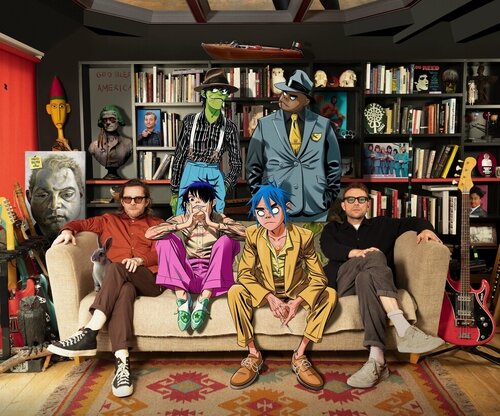
Gorillaz (ft. Peter Hook & Georgia) Aries

PHOTO CREDIT: Artists Den Entertainment/Shutterstock

Charli XCX Forever

PHOTO CREDIT: Molly Matalon for FADER

Phoebe Bridgers - Kyoto 

Dua Lipa Hallucinate

Chelsea Jade – Superfan

Kojey RadicalProud of You

Alfie TemplemanHappiness in Liquid Form

PHOTO CREDIT: Adeline Mai

The Aces - Lost Angeles

PHOTO CREDIT: Tomm Roeschlein

Harkin - Dial It In

PHOTO CREDIT: Vic Frankowski

Laura Marling - Held Down

Ghostpoet Nowhere to Hide Now

COVER PAINTING: Bird on Money by Jean-Michel Basquiat

The Strokes - Brooklyn Bridge to Chorus

PHOTO CREDIT: Hollie Fernando Photography.

Willie J Healey - True Stereo

Hazel EnglishFive and Dime

Remi Wolf - Woo!

Hayley Williams - My Friend

PHOTO CREDIT: @SELFESTEEM___

Self Esteem - Favourite Problem (Alternative Version / Pseudo Video)

Selena GomezBoyfriend

Alison Mosshart - Rise

PHOTO CREDIT: Fog Again

blink-182 - Happy Days

Toni Braxton Do It

Washed Out - Too Late

IN THIS PHOTO: Leon Bridges

Leon Bridges (ft. John Mayer) Inside Friend

Mabes Stuck in the Rain

Stalking Gia The Kindest Thing

Tash Sultana Pretty Lady

Kid Ink Just Chill

Pip Millett Heavenly Mother

Joy Crookes Anyone But Me

Hamilton Leithauser The Garbage Men

11010.jpg

Lennon Stella Fear of Being Alone

Gregory Porter Thank You

Rico NastyPopstar

PHOTO CREDIT: Ash Dye

Ohmme Ghost

a.jpg

Charlotte OC Falling for You

Yves Tumor Strawberry Privilege

Gracie Abrams I miss you, I’m sorry

80.jpg

Baby TaylahHome

Fia Moonbetter days

FEATURE: The Beatles’ Let It Be at Fifty: Don’t Let Me Down: The Strange Case of Let It Be… Naked

FEATURE:


The Beatles’ Let It Be at Fifty

Don’t Let Me Down: The Strange Case of Let It Be… Naked

___________

MAYBE it is a bit odd celebrating an album…

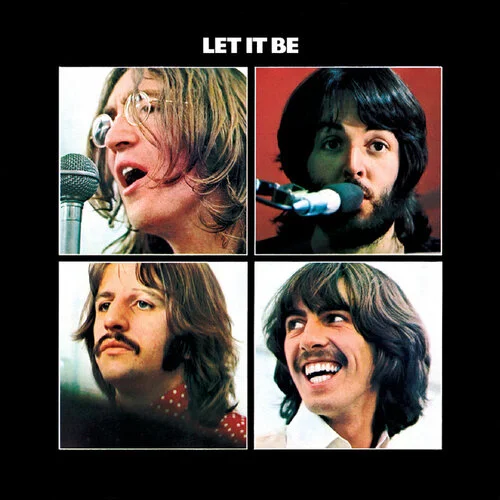
by mentioning a remake of that album. It is not often a band brings out a different version of a studio album with a different track listing and a different sound. The Beatles’ Let It Be is fifty on 8th May, and it is the final studio album of theirs to celebrate fifty years – it was the final studio album from them, but they recorded it before Abbey Road. Last year, there was a big celebration for Abbey Road; there was a remastered version of the album, and some lovely C.D. and vinyl sets. This year, as we are in lockdown, there is unlikely to be any remastered version of the album. For one, Let It Be was not produced by long-time Beatles brother, George Martin. This was a Phil Spector-produced album and, as George Martin’s son Giles is overseeing remastered Beatles releases, this is one album that he is not going to be involved with. There is a film, The Beatles: Get Back, which is a film/documentary featuring in-studio footage that was shot in early-1969 for the 1970 feature film, Let It Be. I hope there are mentions on radio and in the media, as Let It Be is a hugely important album. There is a divide between fans and the media regarding the quality and relevance of Let It Be. As a ‘final chapter’ for the band, it is not as brilliant and fitting as Abbey Road.

In terms of the song quality, there are a few gems, but not as many as Abbey Road. I think the biggest ‘controversy’ relates to the production of Phil Spector. He brought in his Wall of Sound production technique and, as such, as songs like Let It Be, and The Long and Winding Road are drenched in strings and choirs – it sounds over-produced, cloying and not a patch on George Martin’s work. Some people don’t mind, as it is only a couple of songs, and the production is not too bad elsewhere. Others wonder what it would have been like had George Martin have produced – he was persuaded to come back on Abbey Road. Technically, George Martin produced the sessions that would become Let It Be, but Phil Spector had final say over the mixes. One person who especially disliked Let It Be was Paul McCartney. In this article, we lean why Macca was not a fan:

In the early months of 1970, The Beatles had split into two camps: those who accepted Allen Klein as the band’s new manager (John, George, and Ringo) and he who didn’t (Paul). From those two positions, we can’t see how everyone would end up happy with the new album.

As Paul worked on his first solo album and the other Beatles tried to tend to business, Spector got the nod to finish Let It Be. “Paul has been quoted as saying he didn’t want Phil Spector involved … but I personally thought it was a really good idea,” George said in Anthology.

Since many hours of raw material existed, Spector had to do his best with “Across the Universe” and (much to Paul’s chagrin) “The Long and Winding Road.” “I like what Phil did, actually,” Ringo said. “He put the music somewhere else.” John also went on the record backing Spector.

“[Spector] had always wanted to work with The Beatles, and he was given the sh–tiest load of badly recorded s–t with a lousy feeling to it ever, and he made something out of it. He did a great job.”

During interviews for the 1990s Anthology project, Paul still couldn’t stomach the Let It Be album. “I heard the Spector version again recently, and it sounded terrible,” he said. “I prefer the original sound that’s show on Anthology 3.”

Paul didn’t stop hating Let It Be. After the turn of the century, he had engineers at Abbey Road studios dig out the original tapes and take another stab at the album. This time, Paul (with the approval of George and Ringo) insisted the tapes go out as he originally intended (i.e., stripped-down)”.

This brings me to the strange-but-necessary Let It Be… Naked. In a way, the album is a way of hearing songs like Let It Be, and The Long and Winding Road in a rawer and more natural state. Whilst the album does not exactly reverse Spector’s work and sound like a George Martin-produced record, it is closer to what McCartney had in mind – even if the rest of The Beatles were not unfavourable towards Let It Be and Spector. Paul McCartney had more artistic control/leadership of The Beatles by the time of Sgt. Pepper’s Lonely Hearts Club Band.

Whilst there was more of a division by 1968’s The Beatles, when Abbey Road was being recorded, again, McCartney was almost like the band’s leader. I don’t think Let It Be… Naked was McCartney wrestling control and making ‘his’ version of the album. Tracks like The Long and Winding Road and gorgeous, and I admit that Phil Spector’s additions ruin a lot of the genius McCartney wrote. Maybe the other Beatles liked what Spector did on Let It Be – George Harrison did give approval to McCartney for Let It Be… Naked before he died -, but McCartney always felt like the album could sound better. Here is a list of the Let It Be… Naked tracks and the versions used:

"Get Back" – A remix of the take recorded on 27 January 1969 used for both the single and album; without the coda recorded on 28 January or framing dialogue from the studio and rooftop concert added to the album version.

"Dig a Pony" – A remix of the take from the rooftop concert on 30 January 1969; framing dialogue and false start removed; error in second verse (the "because" in Lennon's vocal track) digitally corrected.

"For You Blue" – A remix of the 25 January 1969 take used on the album, including Harrison's re-recorded lead vocal from 8 January 1970; framing dialogue removed.

"The Long and Winding Road" – A remix of the final take recorded on 31 January 1969, instead of the album take from 26 January. Previously unreleased.

"Two of Us" – A remix of the take recorded on 31 January 1969 used on the album; framing dialogue removed; minor error in Lennon's acoustic guitar performance digitally corrected.

"I've Got a Feeling" – A composite edit of two takes from the rooftop concert.

"One After 909" – A remix of the take from the rooftop concert; impromptu rendition of "Danny Boy" removed.

"Don't Let Me Down" – A composite edit of two takes from the rooftop concert. Previously unreleased.

"I Me Mine" – A remixed, slightly different recreation of Spector's edit (copying the chorus in the middle of the song and adding it to the end) to lengthen the track recorded on 3 January 1970; guitar overdubs and organ parts mixed in and out to make the repeated verse sound different.

"Across the Universe" – A remix of the original version recorded on 4 February 1968, played at the correct speed; sound effects, piano, maracas and backing vocals mixed out; tape echo added.

"Let It Be" – A remix of take 27A from 31 January 1969 used for George Martin's single version and Spector's album version, with edit pieces including Harrison's guitar solo from take 27B edited in”.

Whilst we look ahead to the fiftieth anniversary of Let It Be, questions remain. Is the McCartney-helmed Let It Be… Naked a better album? Is the original Let It Be all that you need? Is Let It Be… Naked a disaster?

I do think the sound and production of Let It Be is a crucial talking point. I can see why McCartney wanted to do justice to songs of his that were sugar-drenched by Phil Spector…but was there a need to take the whole album and change it?! Maybe not. In any case, I think that Let It Be… Naked is a rare case of a Beatles album being remixed and remade rather than remastered – whilst keeping the original production and tracks intact. Reviews for Let It Be… Naked ranged from lukewarm to positive. This is AllMusic’s view on the 2003 album:

In its original form, Let It Be signaled the end of an era, closing the book on the Beatles, as well as literally and figuratively marking the end of the '60s. The 1970 release evolved from friction-filled sessions the band intended to be an organic, bare-bones return to their roots. Instead, the endless hours of tapes were eventually handed over to Phil Spector, since neither the quickly splintering Beatles nor their longtime producer George Martin wanted to sift through the voluminous results. Let It Be... Naked sets the record straight, revisiting the contentious sessions, stripping away the Spectorian orchestrations, reworking the running order, and losing all extemporaneous in-studio banter. On this version of the album, filler tracks ("Dig It," "Maggie Mae") are dropped, while the juicy B-side "Don't Let Me Down" is added. The most obvious revamping is on the songs handled heavily by Spector. Removing the orchestrations from "The Long and Winding Road" and "Across the Universe" gives Paul McCartney's vocals considerably more resonance on the former, doing the same for John Lennon's voice and guitar on the latter. This alternate take on Let It Be enhances the album's power, reclaiming the raw, unadorned quality that was meant to be its calling card from the beginning”.

Track order and production are things that not many music fans consider. I think albums can be made or broken by the tracks being in a certain order. Similarly, if the production if off or there is something missing, a potentially great album can come out sounding rather tame or cluttered. I think the stripping-down of the some of the more drenched and saccharine tracks is a blessing. In another review, Pitchfork had their take:

The tracks that struck me most on Naked were "Let It Be" and "Across the Universe". The former because it seems very much improved with this remix; the Harrison guitar solo is new, so this is likely a different version than was released originally, and the hymnal-esque backing vocals are gorgeously placed across the aural plane in the mix. These are the kinds of changes that make Naked an interesting listen for longtime fans, and raise the question of the powers that be possibly issuing a full-length project of Beatles remixes wherein drastic changes are made to songs without the obligation of placing the project alongside the rest of their proper LPs, as if this is the way they were "meant" to be.  

z.jpg

That said, "Across the Universe" is the same (slowed-down) vocal and guitar from Let It Be, but with more reverb and soft sitar-like sounds. Though there's already a beautiful, lesser-known version of this track available (an elaborate George Martin-produced studio version with a background children's choir and bird chirps), this take eclipses the already beautiful original Let It Be version as the second-best performance of the song”.

This will be my penultimate piece relating to Let It Be. I think the album deserves a lot of attention when it turns fifty on 8th May. I have respect for the original, and it is sort of a shame that it will not receive the attention that other Beatles have on their fiftieth. I wanted to talk about Let It Be… Naked, as it is a fascinating release that has split a lot of people. The big question is whether the 2003 release is better and more in the spirit of The Beatles’ sound than the 1970 version. I am a bit torn, as I think Beatles albums should not really be reworked and re-released in such a different state, though I do understand why some people – Paul McCartney especially – hated some of the production. Whilst many applaud McCartney and those who worked on Let It Be… Naked for ‘undoing’ some of Spector’s work, there are others who think The Beatles’ final-released album is fine, and that we should just…

LET it be.  

FEATURE: Second Spin: The Cardigans – Gran Turismo

FEATURE:


Second Spin

The Cardigans – Gran Turismo

___________

IN this feature…

PHOTO CREDIT: Martin Bogren

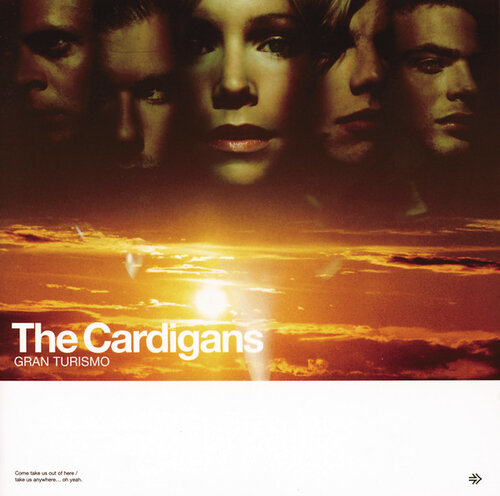
I am looking back at albums that did not get the attention they deserved the first time around. Whether the album was ahead of its time, critics were unfairly comparing it to that artist’s best work, or the album was not quite as good as expected, there are these works that are being overlooked or not put into the light. In this edition, I am focusing on The Cardigans’ Gran Turismo. One reason why some critics were a little down on the album is that, when you compare it to previous albums from The Cardigans, it is a radical shift. Their previous album, 1996’s First Band on the Moon, contained the smash hit, Lovefool – one of the best singles of the 1990s. I love The Cardigans, and the fourth album from the Swedish band saw them step off of the moon and to somewhere more atmospheric. It was released on 19th October, 1998, and the band mixed darker, more electronic sounds into the palette this time around. This was a very deliberate move by the group. I guess, when you have established yourself as a Pop band with elements of the 1960s and this rather charmingly uplifting sound, there is that need to move on and try something new. Maybe people were looking for a record that contained more tracks like Lovefool. The music scene changed quite a lot since 1996.

In 1998, Massive Attack put out Mezzanine. Madonna, an artist who established her name with these upbeat Pop tracks, released the more experimental and electronic Ray of Light – The Cardigans had to move with the times and evolve. Whilst Gran Turismo is not as strong as albums like Version 2.0 (Garbage), and Celebrity Skin (Hole), it was a fine addition to an eclectic and fantastic year. I think The Cardigans (Peter Svensson - guitar, vocals; Magnus Sveningsson - bass, vocals; Bengt Lagerberg - drums, percussion; Lars-Olof Johansson - keyboards, piano; Nina Persson - lead vocals) created something very special with Gran Turismo. Who can forget the singles Erase/Rewind, and My Favourite Game?! Producer Tore Johansson manages to bring something new and exciting from the band. I have always adored Nina Perssons’s voice, and she really shines on this album. I love her vocal performances on all Cardigans albums, but there is this tougher, slightly moodier persona that comes out on Gran Turismo. I want to bring in a couple of reviews of Gran Turismo, so that you can see how critics viewed The Cardigans fourth album. Here is a review from NME from 2000:

'Gran Turismo' endeavours to plumb the depths, to take us into seriously doleful and sonically experimental territory, yet remains inextricably moored in shallow waters. There are glimmers of true loveliness - the gentle wash of 'Explode', where a minimalist beat and synth drone evoke untold sadness; the stealthy sub-industrial clangings and aching lyrics of 'Paralyzed'.

Angular guitars edge their way in cunningly, too, providing some of the album's finest moments - notably 'My Favourite Game' and 'Do You Believe', which is possibly a cynical response to 'Lovefool': "Do you really think that love is going to save the world?/Well I don't think so". Still, it's all too rare when real emotion, rather than canned sentiment, is allowed a look-in. Hence the tinny drums and saccharine vocals of 'Marvel Hill' and the faux-gospel Celine Dion schmaltz of 'Higher'.

The Cardigans will never crumble with genuine fragility or explode with absolute wrath. Pretty songs, sure. But throw a rock to see them shatter like glass and you'll only hear the hollow thump of Perspex”.

I guess there was a sense of the band taking this radical departure from their best-known work and trying something new. Whilst the album sold incredibly well, I feel there is this slightly sense of resignation from critics – many were hoping that the band would continue down their own path. When Pitchfork assessed Gran Turismo in 2008, they remarked the following:

I'm not ashamed to admit that the Cardigans grabbed my attention not with their spacepop hit "Lovefool," but with their deliciously sexy vocalist Nina Persson, and the way she beckoned me seductively from the video of the same name. I knew she wanted me, and her ocean- blue eyes yearned to whisper "Jag alskar dig," in my hairy ears. I played hard- to- get back in 1996, when they released First Band on the Moon, and I contine to play hard- to- get, safe in the secret knowledge that Nina fights through every day, yearning for my touch. Believe me when I tell you, Nina, absence breeds anticipation-- we must wait for the proper moment for our Scando- American vibes to be combined like a tasty black- and- white milkshake. We must wait...

xxc.jpg

Our delicious waiting is made even more appetizing by the Cardigans "new" release, Gran Turismo. The sounds I hear disturb me, though. Where the Cardigans seemed so on top of their game on Last Band, Gran Turismo gives me a Nina that seems to have grown morose from her waiting. The light, sharply- arranged and smilingly ironic attitude that saturated their previous effort has metamorphosed into a self- concerned dragging effort devoid of the featherweight happiness that the Cardigans have been notable for.

Leaning more heavily on distorted guitars and electronica tidbits, most lyrics circulate thematically around breakups and regret. Nina's vocals are fitting to the subject, but where the Cardigans' past tracks about disappointment would often initially sound like a romp through the fertile fields of first love, Gran Turismo regretably strips away this façade. Let's be clear, though-- Gran Turismo isn't a bad album, it's just a distinct downer when compared to their earlier records”.

Go stream or buy Gran Turismo, as it is a cracking record, and one that I remember buying back in 1998. I excitedly got the bus to town, and bought it from a local market that sold C.D.s. I had been a fan of the band for years, and I loved what they did on Gran Turismo. Sure, it was very different and unexpected, but the album is far stronger than the singles. I think the album sounds bigger and better now, as other artists have incorporated some of Gran Turismo’s sounds and ideas.

In the years since the album was released, it has been reappraised and reconsidered. Not only do I play the album for a bit of nostalgia; it also sounds excellent and memorable in its own right. If a band put out an album like this today, it would be held in higher esteem than Gran Turismo was back in 1998. In a feature from 2018, Louder Than War explored the album:

Those surprised by Gran Turismo’s sharp left turn obviously had not read up on The Cardigans’ taste for change. Since forming in the early nineties at a Swedish art school, they proved impossible to pigeonhole. Lest we forget that Persson and the gang were raised on a beefy diet of black metal, before slowly discovering the jangle pop joy of The Smiths and The Stone Roses. Deep Anglophiles, they honoured the country by naming their debut album Emmerdale, allegedly because it was the most British name they could think of (although there were no guest spots for the Dingles).

Gran Turismo, then, showed natural progression and a desire to evolve. Persson channelled her alienation into aching, trembling vocals. Her voice, both volatile and velveteen, soars and sighs on the downbeat groove of Explode, while the chunky guitars and fragmented beats of Higher enable her tight rasp to truly shine. Junk of the Hearts and Marvel Hill also display the band’s mercurial talents, bringing together textural fretwork, thumping bass and programmed beats.

Gran Turismo proved to be a worldwide success, cementing The Cardigans as one of rock music’s trailblazers. However, once the world tour finally came to a close at the turn of the century, Persson wanted out. They eventually reconvened in 2003 for their greatest record, the beautiful, broken country rock of Long Gone Before Daylight, and 2005’s reliable Super Extra Gravity. However, despite sporadic gigs since, the band’s future as recording artists seems to dangle on Persson’s desire. “I have to feel 100 per cent conviction about doing another Cardigans record,” she said in an interview back in 2009, “and right now I don’t. I feel terribly guilty, yes, as I know they are waiting… It’s not my fault I’m irreplaceable, is it?” Nearly ten years later and it seems she’s yet to be truly convinced”.

It is a shame the band have not recorded another album since 2005; Nina Persson recorded a solo album, Animal Heart, in 2014, but there has been very little from her since then. I will move on soon but, before then, I want to bring in a final article that gives some to Gran Turismo. In this feature, Albumism dug deep:

Work on Gran Turismo, The Cardigans’ fourth album, began in early-to-mid 1998 and saw Tore Johansson return to the producer’s seat to assist the band in achieving their vision for a layered, weightier sound. As the sessions began picking up speed, The Cardigans whipped up a heavy and stormy aural composite of modern rock and electronic aesthetics—a significant departure from the overall sweet-faced vibes of their initial records.

Coming in succinctly at eleven tracks, Gran Turismo possesses the breadth and grandiosity of a double album. Much of this rests on how The Cardigans build their songs. Take the chameleonic, rhythmic foundation of the effort, forged from the percussion, bass and programming skills of Lagerberg, Sveningsson and Johansson. Said foundation can form itself to whatever unique lyrical or melodic set-up the tracks call for. Whether it is the late-night, alt-pop glide of “Erase/Rewind,” the electro crawl of “Higher” or the rapid-fire rock and roll bluster of “My Favourite Game”—all the music on Gran Turismo lends itself to a cinematic gait.

Songwriting wise, Gran Turismo evinces continual involvement from the outfit’s frontwoman, Nina Persson. In the beginning on Emmerdale, the lyrics were almost evenly divided between Peter Svensson and Magnus Sveningsson. But on Life and First Band on the Moon, more writing tasks were fielded from the other three members of the group in relation to the arranging and words; notably Persson stepped up for the latter.

The Cardigans were unbothered by haughty stateside tastemakers and trekked onward with the requisite gigging to support their fourth LP. Two more amazing projects in Long Gone Before Daylight and Super Extra Gravity emerged in 2003 and 2005 respectively, before The Cardigans placed a moratorium on any further collective recording activities. Though there have been a few small reunions—including a recent 20th anniversary commemorative tour for Gran Turismo—no plans for a full-on return in the studio have materialized.

Even with their diminutive discography, each album from The Cardigans stands as inventive and immersive affairs. But, Gran Turismo was the moment when the group pivoted from the safety of expectation and set off toward the horizons of the musical unknown—its boldness has lost none of its power”.

I am going to dive back into Gran Turismo, as I have not lost my passion for it since 1998. It is an album that has depth and so many great moments. I would encourage other people to spend some time in the coming days to explore…

SUCH a fine record.

FEATURE: Behind Closed Doors: What is the Future of Grassroots Venues After Lockdown?

FEATURE:

Behind Closed Doors

22222.jpg

PHOTO CREDIT: @jmvisuals/Unsplash

What is the Future of Grassroots Venues After Lockdown?

___________

EVERY day…

pooppopo.jpg

PHOTO CREDIT: @single_lens_reflex/Unsplash

seems to bring bad news regarding the music industry. Whilst artists in lockdown have to postpone album releases, some are moving them forward – like Dua Lipa and Laura Marling. Nearly all festivals scheduled for the summer have been postponed. It is sad to think that we might need get to see any festivals this year but, where they can be reorganised and go ahead next year, the same confidence cannot be applied to a lot of smaller artists who rely on grassroots venues. I have mentioned live venues recently, but the subject warrants repetition. Music Venue Trust is set up to protect venues and, at this hard time, ensure that as many as possible are reopened when we are out the other side of the coronavirus crisis. This announcement is on the Music Venue Trust website:

Support Announced by UK Government

The following is the latest information available (as of 8am Saturday 21 March) of the various measures that are being made available by Government to support Grassroots Music Venues (GMVs) in England during the COVID-19 crisis. Many of these measures are UK-wide. For national variations, please see below.

In each case, this is the best information that Music Venue Trust has been able to acquire from government at this time. We are in contact with departments across government to ensure that as soon as additional advice on how to access this support becomes available we can deliver it to GMVs, together with instructions on how to qualify for it and access it.

We will continue to update each section with full guidance when we receive it from UK and national governments.

Scottish Government have announced a package of measures to support businesses in 2020/21, please click here for info.

Welsh Government have announced a package of measures to support businesses in 2020/21, please click here for info.

Northern Ireland’s Government have announced a package of measures to support businesses in 2020/21, please click here for info.

Across all nations of the UK, Music Venue Trust will continue to work with government to ensure that the entire sector, wherever located, is able to access a full range of support so that permanent closures are averted.”.

At the moment, there is confusion what the exit strategy is for the U.K. economy as a whole, so the fate of grassroots venues might not be clarified just yet. I do worry, as nearly all small spaces at the moment are posting online that they need support. Long before the pandemic hit, so many venues struggled to survive – because of rent prices, competition from the Internet and changing tastes. There will be such an appetite for live music later in the summer. I know many larger gigs and festivals have been postponed, but I wonder what will happen when live gigs can happen again. Not only will every artist be clambering to play as soon as possible – causing a nightmare for bookers and organising the diary -, but I wonder how many smaller venues are going to reopen in a few months.

IN THIS PHOTO: Guildford’s Boileroom is one of many venues that has faced huge difficulty since the lockdown came into force in the U.K./PHOTO CREDIT: TMS

It is a testing time, and grassroot venues can only rely on public support for so long. I realise the Government are injecting as much money into the economy so that as many businesses as possible can survive at this tough time. Whilst it might mean raising taxes, it is paramount that music venues are protected and can reopen. Organisations like the Music Venue Trust are brilliant, and it is great seeing the ingenuity of artists whilst they are unable to perform. Many are releasing albums, whilst others are streaming gigs from their homes. We all want to get back out and see gigs, but we have to be patient to allow the situation to improve. I can only imagine how stressful it is for those who run and work at grassroot venues. This article from Music Business Worldwide spells out the current predicament:

In these unprecedented times the very foundations of our industry are under grave threat so of course urgent action is needed.  Whether it is the wider supply chain, the future of both salaried and freelance workers , record stores or the live sector there can be no doubt that unless we all do something to stabilize the situation we will have a very different landscape to return to if and when things return to normal.

The Music Venue Trust is an organisation representing 670 UK music venues and as such we are uniquely placed to comment on the issues currently affecting the live music scene at a grassroots level.

PHOTO CREDIT: @everythingcaptured/Unsplash

The decision by the UK government to enforce social distancing through a ‘lockdown’ policy while fully understandable has been catastrophic for the live music sector, and hardest hit have been those grassroots venues already operating on thin margins.

Since these restrictions really started to bite three week ago, we have surveyed, audited and analysed the situation and our findings are grim.  Just 17%, equating to 114 grassroots music venues out of the 670 we represent, are currently secure for the next eight weeks.

The other 556 venues are at imminent risk of being permanently closed down.

The situation is dire, and it is now incumbent on the wider music industry to do something about it.

Many music careers start in grassroots music venues. Without them the opportunities for the industry and music fans alike to discover and engage with new talent would shrink exponentially. Developing artists nurture their fanbases here, they learn their craft in places that are often important cultural hubs for a local scene.

Put bluntly, without these venues the opportunities for artists and audiences to connect in a meaningful way at a local level will simply disappear in a lot of cases.

There is no sugar coating it, if you don’t help now there will be no going back.

We have a goal. Not 556 closures. Not 555. Not 300, or 200, or 100. None.

Please help us. Visit www.musicvenuetrust.com to find out more about what we do and how you can help”.

It is devastating to think that scores of much-loved venues will close as they have no other options. Whilst out politicians have their hands full dealing with a whole range of economic quandaries, I do hope there is a relief fund set up for venues; a kitty that means, at the very least, relatively few will close down. If we can protect the majority of grassroot venues struggling, it will mean their future is more secure than it is now without aid. When things begin to return to normal, artists will not have festivals to play; they have singles and albums due, so they need smaller venues to cut their teeth and spread the word. Now more than ever, the fate and importance of grassroot spaces needs to be recognised. I do hope that there is a plan in action from the Government, as the depletion of grassroot venues not only impacts musicians, but everyone who works and relies on the venues. There is no exact telling how many more weeks these venues will be closed, so it is paramount money is set aside to safeguard our vital spaces. In the meantime, you can support local venues by donating, buying merchandise and sharing them online – all pulling together to ensure there is a healthy live music scene when we come out the other side.

PHOTO CREDIT: @kdarmody/Unsplash

A report in Music Week yesterday (9th April), shed some more light on the situation venues are in:

Mark Davyd has told Music Week that it would be “impossible to exaggerate” the scale of the problems facing the grassroots venues circuit as the coronavirus lockdown continues..

The Music Venue Trust (MVT) boss told us he’s adopting “guerrilla tactics” to save the 556 venues – the vast majority of the 670 venues under his organisation’s stewardship – that are currently facing closure.

Davyd was speaking to Music Week as part of a special report on the situation indie venues are in with the UK in lockdown, many staff furloughed and many, many freelancers suffering as a result of widespread venue closures.

In 2019, the MVT was faced with 96 imminent threats of venue closure. Now confronted with a vast increase, Davyd has launched the £1 million Grassroots Music Venue Crisis Fund (GMVCF), a direct appeal to the music business for help.

How can artists help this situation?

“We’re working with artists to pick venues that they strongly feel they want to save and we’re going to host a virtual online fundraisers. Frank Turner and Ferris & Sylvester have already done them. We’re negotiating with more artists to save a particular venue. Most of these venues can be saved for between £10-20,000. So, in the next eight weeks, which is the crunch period, if we could host 200 or 300 gigs online, raising money for venues to pay off the bill they have to pay, and in the meantime we run this national service, we have an ambition that not one venue will be lost in this crisis”.

Though we can see live music online, we are all looking forward to the moment when we can see gigs together at our favourite venues. We truly cannot wait…

PHOTO CREDIT: @rebeca_calavera/Unsplash

UNTIL that day comes.

FEATURE: The Lockdown Playlist: Vol. II: 1984-1987

FEATURE:

The Lockdown Playlist

PHOTO CREDIT: @georgiadelotz/Unsplash

Vol. II: 1984-1987

___________

IN the second part of this feature…

dsdss.jpg

PHOTO CREDIT: @dre0316/Unsplash

I am putting together a lockdown-ready playlist that collates the biggest hits from a certain time period. I started off at the beginning of the 1980s, and I am continuing through the decade by covering the years 1984-1987 (inclusive). In the playlist will be a selection of upbeat tunes that will, I hope, get the spirits lifted. I am going to continue the series so that we go into the ‘00s, as it has been fun looking at all the great singles that came out during the 1980s. I will move on without further ado, but have a listen if you can, as there are some great cuts in the mix. We are all at home and in need of some tonic and energy, so with that in mind, here is a lockdown playlist of 1980s heavyweights that will definitely get you…

PHOTO CREDIT: @fixelgraphy/Unsplash

DANCING in the kitchen.

FEATURE: Spotlight: Melt Yourself Down

FEATURE:


Spotlight

IN THIS PHOTO: Kushal Gaya and Pete Wareham of Melt Yourself Down

Melt Yourself Down

___________

WHEN there is not a great deal happening in terms…

ccccc.jpg

PHOTO CREDIT: The Line of Best Fit

of big album releases or major music news, I am focused on newer acts coming through. Over the coming weeks, I want to spotlight great artists that are primed for big things. One such act that has been turning my head are Melt Yourself Down. Their new album, 100% Yes, has just come out, and it is a fantastic thing! I have been hearing one of the album’s singles, Crocodile, on BBC Radio 6 Music, and I really like it! It is juddering and fast; it is hooky and catches you in, yet it sounds like nothing else out there. Founded in 2012, and fusing North African musical styles, Punk, Jazz and Funk, the band’s last album was 2016’s Last Evenings on Earth. Before I go on, I want to take a little from the band’s (the band includes Pete Wareham, George Crowley, Dave Smith, Ruth Goller, Kushal Gaya, Satin Singh and Leafcutter John) Facebook biography. With associated acts like Sons of Kemet, and The Comet Is Coming blazing a trail, what does one get from Melt Yourself Down? 

 “In an unassuming leafy South London street, Pete Wareham’s sonic sanctuary is enabling London six-piece Melt Yourself Down to create their most vital music yet. The sax innovator’s home studio merges both futurist thinking and time-honoured tradition. Here, state-of-the-art recording equipment sits beneath wall hangings with Tibetan designs — and, essentially, his two treasured saxophones. He produces these with a flourish: huge, hulking things with oxidised patches that look as if they’ve been exhumed from the long-forgotten closet of a roaring 20s jazz club (in fact, they’re only a few years old). “You can have shiny ones that you put lacquer on,” Pete explains, holding a weathered-looking baritone sax. “Or you can have no lacquer, which I think gives you more character, and you have to forge your own sound.”

The desire to create new sonic pathways is an integral philosophy to Melt Yourself Down, whose two critically-lauded albums to date have alchemised influences from noisy No Wave to Nubian rhythms to create an eclectic and pan-global kind of party-punk. But their epochal third album 100% YES (released on the band’s new label Decca) is their strongest statement yet, representing both a peak of musical synthesis for the band as well as a personal triumph.

“After the second album, Melt Yourself Down was at a crossroads,” says vocalist Kush Gaya. “We left our label, we had no certainties, no life vests and very limited resources, it was a live or die situation. We had to change course, and modify our direction to reflect life beyond just the musical concepts and ideas that we had before. The answers soon came as we started looking within ourselves rather than looking out. By starting a process of finding out who we were as people, and how we related to the world around us, we found the music!” Pete agrees: “We had to deepen our process, which we did,” he says. “We really started working on this towards the end of 2016, so loads of shit was happening — Brexit, Trump.”

The result is songwriting with an unflinching focus on the pressing realities of life in Britain today. “Born in the Manor” takes on the Grenfell tragedy amidst looming synths and staccato brass, as Kush’s vocals morph from menacing speak-raps to a desperate wail. Lyrics indict the powers that be whose negligence allowed the West London fire to happen: "Born in the manor / Born in the gutter / For dem it don’t matter / Blacker, whiter, browner / You burn in a tower.” Kush explains: “It’s harrowing. Those lyrics are a shout against the authorities for not really caring whether you're black white or brown”.

I think bands like The Comet Is Coming, and Melt Yourself Down, whilst very different, are not given the same respect and oxygen as a lot of acts in different genres. Splicing Jazz and Avant Garde together, one gets this incredible sound. Melt Yourself Down are, as you can see, unafraid to put politicians and injustices under the microscope. As you can tell from Born in the Manor’s lyrics and the reference to the Grenfell tragedy, Melt Yourself down can balance the serious with the more energetic and playful. Although they have been playing together for a while, I think they are still yet to capture the attention of the upper leagues. They deserve wider appeal and more airplay; their music is some of the very best out there. I will conclude with a review of their album, 100% Yes, but I wanted to bring in an interview from The Line of Best Fit where Kushal Gaya and Pete Wareham talked about their latest album:

This music has been about alignment too – internally aligning and aligning with each other but then also aligning with all the elements that we’re trying to work with. Now it feels like it’s working in such a way that if something isn’t right, it falls away effortlessly and then the correct thing comes into play.” Part of this uplift has come from letting go of inner pressure. “You don’t have to assert yourself to make something happen,” says Wareham. “You just have to align yourself and that’s the way this has worked.” Gaya agrees enthusiastically: never force anything. “Our writing relationship feels really natural.”

While both musicians have spent years honing their craft in various projects, separately and together, they’ve never once anchored themselves and settled completely. Where other songwriters might seek some semblance of satisfaction, Gaya and Wareham continue to ask questions, to dig, nurture and evolve, finding new sounds for today’s pressing sentiments The notion of being "100% Yes" – of always embracing life in its entirety – not only fed into the creation of their album, but it exists as an everyday maxim for the group. “We had a lot of challenges to make this album happen,” Wareham and Gaya point out. “We’ve had to really change our state of mind. Whenever something bad was coming our way, well, we just had to embrace it. You have to be open to it – 100% yes to all experiences,” explains Gaya. Every step they took on their walks in the wild was purified by song.

I ask them about how their pop music fuses with politics. “We don’t do things on the nose,” Gaya makes clear, “but there’s a lot of sentiment inside the music that resonates with the politics of the moment.” Wareham adds that, besides reflecting the world stage, they also might be looking for the human element in what’s seen as just a news item. “We’re not trying to promote a particular approach politically. If some of the tracks deal with sombre realities, some are energetic and “meant to feel like Saturday night,” Wareham tells me. 100% Yes feels wildly exhilarating, important even, both as a document of contemporary injustices and as an act of breathing fresh new life into the group’s reformation”.

ddduu.jpg

PHOTO CREDIT: The Line of Best Fit

I am just including a few little snippets here and there, but I would recommend people do a lot more digging and go and check out the back catalogue of Melt Yourself Down. This year is going to be a strange one in terms of releases and live performances, so I am not sure what Melt Yourself Down’s plans are for the summer. Regardless, they have 100% Yes out, and it is one of the best albums of this year so far. I will return to The Line of Best Fit, as they wanted to have their say regarding 100% Yes:

 “On their third studio album, legendary saxophonist (and jazz-punk band Acoustic Ladyland founder) Pete Wareham and vocalist/lyricist Kush Gaya lead a politically charged manifesto that is at its most powerful becomes a rallying cry or an acerbic, pointed question. “Born in The Manor” might be the most candid example of this. Offering up a more surreal and subdued sound, it holds no punches when it comes to the subject matter as Gaya’s vocals take vitriolic aim at those responsible for Grenfell: "Born in the manor / Born in the gutter / For dem it don’t matter / Blacker, whiter, browner / You burn in a tower.”

Album opener “Boot and Spleen” is, sonically, every bit as joyous as we’ve come to expect from the London six-piece but it too has a dark side inspired by the history of British colonialism in India. Elsewhere stand-out single “Crocodile” explores the terrors of the Russian drug ‘Krokodil’ as a metaphor for youth decay and Gaya’s time in Bristol where he witnessed friends struggle with, and die from, addiction.

All this heartbreak and hardship doesn’t stop the new record bubbling with a hopeful energy born from the meandering psychedelic melodies and looped mantras of the title track, to explosive sax solos to thrashing rhythm sections of “It Is What It Is” that kick the shit out of your ear drums. Everything is potent, everything has purpose. The six-piece have retained a strong sense of the wonderfully free spirit improvisers they are on stage, but with Youth and Ben Hillier on production duties there is a more refined focus to their output. 100% Yes in turn deserves greater focus from the world at large”.

If you are new to Melt Yourself Down or unsure of whether you’ll like them, I would say 100% Yes is a good place to begin. From there, pace your way back and get a real sense of how far the band have come and what they can offer. I do hope they get on the road later this year and manage to reach the people. As I said, I will be featuring more new artists or those that have not had the same celebration as mainstream acts. Do yourself a favour and make sure you get Melt Yourself Down…

IN your life.

_______________

Follow Melt Yourself Down

FEATURE: Boys Will Be Boys: The Continuing Issue of Gender Disparity

FEATURE


Boys Will Be Boys

IN THIS PHOTO: Dua Lipa

The Continuing Issue of Gender Disparity

___________

WHILST it is important to have some fun…

and keep things light at this time, I also feel it is key to keep things as close to normal as possible. It has been a while since I have penned a piece relating to sexism and gender imbalance and, whilst that might suggest an improvement in attitudes and the state of affairs, that is not necessarily the case. It is a shame that Glastonbury is not taking place this year, as their bill included more female artists than ever. I think matters will improve concerning gender balance at festivals, but what about general attitudes and perceptions? One would have hoped that, in 2020, we would not need to keep discussing gender inequality and the way women are perceived. I have mentioned Dua Lipa in a few recent pieces, for a number of different reasons. Today, I want to use her as an example of an artist who had to retreat and pull back from social media due to negativity and toxicity and, even though she has just unveiled one of the year’s best albums, Future Nostalgia, she has to contend with a lot of crap. Maybe it has been the way of things for many years when it comes to big Pop artists. Women especially are put under a lot of scrutiny; they are assumed to be less talented than men, and they are judged much more harshly. When women express their sexuality, they are often condemned, whereas men are not judged. In an interview with NME, Dua Lipa talked about her song, Boys Will Be Boys, and the fact women are set to different standards than men:

 “In a new interview with The Sunday Times, Lipa discussed ‘Boys Will Be Boys’ – a new track from her ‘Future Nostalgia’ album – which explores men’s treatment of women, saying she hoped the song would start a “conversation” because these were “real things [she has] gone through.”

She continued: “Getting home from school, scared of boys, I put keys between my knuckles. We constantly change the way we are so we don’t get harassed. Cover our bodies so boys don’t say things. From when we are kids we are told the way boys act towards us is completely normal.

“There is a lot less scrutiny of male pop stars,” Lipa said, adding: “…the way women are described compared to men, it’s, like, she is wearing shorts? ‘She puts on a leggy display!’ I just feel I’m here because I do music, but when people write articles like that about me, it takes it away from my talent and makes me a thing. An object. People like to just objectify women”.

Dua Lipa is one of countless female artists who are objectified and marketed in a certain way. Whilst she has a say and some control regarding her album’s content and what her videos look like, she does not have any say regarding the media. Men have always garnered the most acclaim and biggest platforms, and there still seems to be a perception that women are only valid when they ae singing ballads or creating a weepy song – if they are independent, different or wield a guitar, then they are not taken as seriously (as men). Maybe there is slight improvement here and there, but I still feel many women are flying under the radar because they do not conform to the standards and ideals set by the industry. Maybe Pop music has struggled to break from the homogenised and sadder/slower is because that is what is required and, when a woman like Dua Lipa proffers something different, it is a struggle to get it heard. Certainly, women need to be seen as authentic and real – if they give us something experimental and upbeat, then hey are not going to be talked about in overly-positive tones. In another interview – this time with The Guardian -, Dua Lipa talked more about the subject of authenticity:

Pop’s detractors like to point out that it is an industry where artists conform to conventions. In the immortal words of Eilish: duh. Lipa is a canny operator who understood that she had to play a certain game to reach the point where she could be herself. (Her ambition/achievement conversion rate is a big part of her aspirational appeal.) Lipa was surprised by the under-recognition of female talent at this year’s Brits – evidence, critics said, of the British industry’s inability to develop female talent – but she is pragmatic about what might seem like a conservative feeder system where new acts spew out singles and accept every possible collaboration. “Artists that are already well known get the upper hand, so you do have to get on those playlists as much as possible to be heard,” she says.

Lipa – who no longer goes on Twitter – did not respond. “I don’t like to apologise if I don’t believe I should be apologising for something,” she says now. “I believe in supporting women in all fields of work. Nothing at that party was derogatory; everyone was just dancing and having fun.” In our supposedly enlightened culture about sex work, she was surprised by the prudish response. “That’s something we all have to work on,” she says. “Not every sex worker is being forced to do something they don’t wanna do. I think a lot of the women found it really empowering and really like to dance.”

Women’s work is always undermined, says Lipa. “We all have to work a little bit harder to be taken seriously, but it’s not something that we’re not used to doing,” she says, rolling her eyes and grinning. She has pointedly described Future Nostalgia as “fun” even though she knows that is exactly the stick critics use to beat it with; that women in pop are only judged as “authentic” when they are weeping by the piano. “Time always tells,” she shrugs. “And in the meantime, I’ll just work for people to take me seriously”.

It is not just the tone of the music and the way women dress and act that we need to tackle. Age is a factor, too. I think men are commercially viable and accepted when they get into their thirties and forties but, when it comes to women, age is a huge factor.

IN THIS PHOTO: Rita Ora

Not only do women find their music excluded from certain stations’ playlists, but there is a sense of isolation from the media. It is not only in the field of Pop will one find a division between the way men and women are viewed. On social media, I see female artists across multiple genres explain how they are expected to record a certain type of song; they find it harder to get festival slots because there are all these guidelines and expectations. Before I move on, I want to bring in another NME interview – this one concerns Rita Ora. She spoke about her experiences with ageism:

 “You stood up for Bebe Rexha when she spoke out against ageism in the music industry. Is that an issue close to your heart?

The problem is that insecurity gets put onto you through comments that you read over the years. You start to think, ‘I’m not as young as I used to be. I’m not the fresh girl on the scene I once was’. I can proudly say, ‘Yeah – I use my looks because I’m very comfortable in my skin and I like my body’, but that gives people an opportunity to say: ‘Oh, well – you’re getting older’. I stand up for these girls because age really doesn’t matter – J. Lo had her first hit in her thirties. And men don’t get asked how old they are all the time!

IN THIS PHOTO: Tiffany Calver

Women, unfortunately, have had to put up with this for a long time. I hope the rest of the year is dedicated, not only to rebuilding music and getting things back on track, but ensuring barriers are broken down, and women are taken much more seriously. As this interview with Tiffany Calver suggests, there are small movements in certain areas:

Has much changed?

“What’s really interesting is that the listenership has kind of shifted a bit: it’s more equal now. Someone messaged me recently saying how I make women feel comfortable to go into a mosh pit, or go to a rap show, or be a DJ, or listen to the music they listen to because they didn’t really feel comfortable before. I’ve kind of co-signed it in a way, which is a really interesting perspective to have. But I can understand it: there’s never been someone that looks like me in England that does the show I do, so I guess it is refreshing to be in that position where I can kind of make a change in how people perceive women in rap.”

What else needs to be done to help break down barriers for women in music?

“It’s definitely progressing. There are still barriers that need to broken, unfortunately. There are so many areas, especially in music, where people lack an understanding of how to support and be allies in helping shift this weird, unequal balance between women and men. I think we’re so vocal and so aware of it now that as long as we keep making a big deal about it, it can’t really go away”.

Conversations are happening but, as women are under-represented in music, I do hope things will improve over the next year or two. Given the scope and wealth of female talent out there, we need to change attitudes towards women and ensure that they are given the respect they deserve. When we come out of lockdown, let’s aim to foster…

PHOTO CREDIT: @vidarnm/Unsplash

A more progressive and accepting industry.  

FEATURE: Vinyl Corner: Prefab Sprout – Steve McQueen

FEATURE:


Vinyl Corner 

Prefab Sprout – Steve McQueen

___________

TIM Burgess is hosting…

daily album listening parties, which brings together members of various bands who tweet about their albums as the listeners absorb the music in real-time. It is a great idea, and there have been some great albums included already – and there are brilliant ones to come. On Wednesday (1st April), Wendy James of Prefab Sprout discussed the band’s 1985 sophomore album, Steve McQueen. I wonder whether Paddy McAloon (the band’s songwriter and lead) and the producer Thomas Dolby was asked to contribute. I know McAloon has health issues, so it might not have been possible for him to get involved. Swoon was the debut from County Durham’s Prefab Sprout and, whilst a great album, Steve McQueen was a huge step forward. Released by Kitchenware, Steve McQueen was released in the Two Wheels Good – due to a conflict with the Steve McQueen estate. You are hooked before you even get to the music itself. The cover features the band posing on a Triumph motorcycle; a reference to Steve McQueen’s The Great Escape. When he appeared on BBC Radio 1 before the album began life, Thomas Dolby talked about his love of the song, Don’t Speak from Swoon. Paddy McAloon contacted Dolby, and the two met at McAloon’s home. McAloon, a prolific writer, had amassed up to fifty songs; Dolby selected his favourite and asked McAloon to demo them. In this Sound on Sound feature from 2015, McAloon discussed the recording of Steve McQueen:

Others didn’t agree, of course, as proven by the fact that Swoon was picked up by CBS Records and, upon its release, attracted gushing reviews. For its successor, the major label hooked Prefab Sprout up with Thomas Dolby, the synth–pop solo artist who was then branching out into production. As well as overseeing the band’s second album, Steve McQueen, released in 1985, Dolby effectively became the fifth member of the group, augmenting their sound with creamy digital keyboard washes. “I’d read in a magazine somewhere that he was working with Michael Jackson, and I thought, ‘That’s good enough for me,’ Paddy laughs. “I don’t know whether that was actually true he’d met Michael Jackson. Tom had loved Swoon, but he thought he could be helpful in terms of unpicking the sort of tangled knots of amateur arrangements.”

The songs for Steve McQueen were worked up in rehearsals with Dolby at Nomis Studios in West London in the autumn of 1984, before the sessions moved to Marcus Studios and the mixing was done at Farmyard Studios in Buckinghamshire. “It’s taken me decades to try to absorb what it was that Thomas did,” Paddy admits. “I mean, he had a great ear for individual sounds, he wasn’t swayed so much by the things of the day. He had a Fairlight and a PPG Wave and he would use them sparingly, and he had no time for the Yamaha DX7 and the things that everyone else rushed out and bought. He was into synthesis really. He didn’t make a big thing of it it was just what he did, in addition to having a good sense of structure.”

The album yielded a major hit in the shape of ‘When Love Breaks Down’, but the much in–demand Dolby couldn’t commit himself fully to the third Prefab Sprout album, having decided to work with Star Wars director George Lucas on the soundtrack for his 1986 cinematic flop Howard The Duck. At the same time, McAloon and Dolby failed to see eye–to–eye when it came to the demo of the band’s next obvious hit, the clever Bruce Springsteen–lampooning pop of ‘Cars And Girls’. “He said, ‘You could get anybody to do that,’” Paddy recalls. “And I’m not sure what he meant by that. ‘Cause I thought, Well, yeah, you could get lots of people to do any of them, but that’s not the point.”

In addition, McAloon had hatched what he now calls a “slightly bonkers” plot to make the album with a different producer for each song — an idea that was quickly torpedoed due to the massive expense it would have involved. Nevertheless, the resulting From Langley Park To Memphis was still a hugely ambitious affair, its credits listing no fewer than 19 engineers. The sessions were divided between London and Los Angeles, with four of its tracks produced by Dolby and the remainder produced by McAloon himself, sometimes in cahoots with Jon Kelly (Kate Bush, Deacon Blue).

Surely then McAloon must have at this stage felt far more confident as a producer in his own right? “No, I didn’t,” he confesses. “I feel as if I was there under false pretences. It could have been done an awful lot quicker. I’ve got to say I wasn’t a record producer and it would take me a long time to understand really what goes on there. That’s my take on it. I’m not being self–deprecating. I just think the truth is, we got through something, that’s all”.

In my opinion, some of Prefab Sprout’s very best work is on Steve McQueen. Although they had commercial success with From Langley Park to Memphis – the follow up – and songs like Cars and Girls, and The King of Rock ‘n’ Roll, McAloon songwriting, together with Dolby’s production, is a dream.

In terms of themes, McAloon was focused on heartache, regret and infidelity. Faron Young, Appetite, When Love Breaks Down, and Desire As are gorgeous songs; it is not a surprise that Steve McQueen received huge acclaim and the sophistication of the record means that it still sounds so relevant and stunning today. There are great articles like this, which gives detail and insight into a truly phenomenal album. If you can grab a copy on vinyl, I suggest you do. It sounds remarkable nearly thirty-five years after its release – Steve McQueen was released in June 1985. In their review, this is what AllMusic had to say:

Smart, sophisticated and timelessly stylish, Two Wheels Good (titled Steve McQueen throughout the rest of the world) is a minor classic, a shimmering jazz-pop masterpiece sparked by Paddy McAloon's witty and inventive songwriting. McAloon is a wickedly cavalier composer, his songs exploring human weaknesses like regret ("Bonny"), lust ("Appetite") and infidelity ("Horsin' Around") with cynical insight and sarcastic flair; he's also remarkably adaptable, easily switching gears from the faux-country of "Faron" to the stately pop grace of "Moving the River." At times, perhaps, his pretensions get the better of him (as on "Desire As"), while at other times his lyrics are perhaps too trenchant for their own good; at those moments, however, what keeps Two Wheels Good afloat is Thomas Dolby's lush production, which makes even the loftiest and most biting moments as easily palatable as the airiest adult-contemporary confection”.

I do wonder whether there will be any more Prefab Sprout albums in the future. Crimson/Red arrived in 2013 but, to be honest, it was closer to a Paddy McAloon album. Regardless, we can look back at this magnificent period where there was nobody like Prefab Sprout – there still isn’t! When Pitchfork reviewed the Deluxe Version of Steve McQueen in 2007, they made some keen observations:

 “One thing the new versions do highlight is the astonishing maturity of the songs. Coincidentally, almost all of Dolby choices dated from 1979, when Paddy was 22. Yet they sound all the more appropriate sung by a man of 50. "Life's not complete, 'til your heart's missed a beat," he sighed on "Goodbye Lucille #1", but now when he sings "and you'll never get it back," his voice breaks with the wisdom of another two decades.

Ironically, considering the producer's name, it's a record in so many ways about infidelity. Or let's say about the consequences of romanticism. Take that cover: Paddy, looking like a dreamy young D.H. Lawrence, astride the kind of Triumph that would have carried the record's namesake to freedom. But the whole album rails against easy escapism: "Appetite", sung from the perspective of a girl left to bring up the baby of some young firebrand; "Desire As" seeing no escape from a lifetime of new flames; the rueful regrets of "Bonny".

I am looking back at older albums because, as there are fewer new ones coming out, I am naturally drifting and recalling some of my absolute favourites. Ahead of its thirty-fifth birthday, spin Prefab Sprout’s marvellous Steve McQueen and luxuriate in...

eed.jpg

IN THIS PHOTO: Wendy Smith and Paddy McAloon in 1985/PHOTO CREDIT: Michael Putland

A sublime album.

FEATURE: The Lockdown Playlist: Vol. 1: 1980-1983

FEATURE:

The Lockdown Playlist

zxx.jpg

PHOTO CREDIT: @georgiadelotz/Unsplash

Vol. 1: 1980-1983

___________

IT is a warm and sunny weekend…

PHOTO CREDIT: @aginsbrook/Unsplash

but we are being encouraged to stay inside and not venture out unless necessary. I know it is tempting to go to a park or for a long walk, but we are having to be sensible and put the safety of others first. That is not to say that one cannot get active and lifted being indoors. Music is vitally important, and so many people are using the time they have isolated to create kitchen discos and isolation playlists. I have been thinking about my own, and I will put together a series of Lockdown Playlists that cover various periods in music - taking in some of the biggest hits from that time. I am starting off by covering 1980-1983 inclusive and, in future editions, I will dive into other decades and periods. If you need to unwind, de-stress or have a lockdown playlist of your own, I have combined some 1980s’ gold that will…

cccc.jpg

PHOTO CREDIT: @aginsbrook

DO the job.

FEATURE: Single Minded: Could Radio Stations Dig Deeper?

FEATURE:


Single Minded

PHOTO CREDIT: @itzisraa/Unsplash

Could Radio Stations Dig Deeper?

___________

I realise that this is quite…

PHOTO CREDIT: @nataliedivine/Unsplash

a niche article and, having covered it before, I am minded to return. Not that everything I do is propelled by Kate Bush, but she is an artist whose incredible back catalogue is limited to the singles. I am not saying that this is a bad thing – any airplay she gets is great -, but there are so many terrific artists whose music is defined by the hits and the songs everyone is familiar with. I listen to BBC radio – so independent stations might be better -, and it seems rare when an album track is played. This is a time when more people than ever are listening to the radio, and I think the comfort and variety it offers is what we all need. I have been listening a lot lately and, apart from the mandated playlists – which can be very boring and bled to death before too long – we rely on the mix of older and new music. In fact, not only are the major acts the ones who have their singles prioritised: there are artists/albums from the past few years where we hear the same music. Over the past few days, I have heard Madonna, The Stone Roses, and Radiohead played. In each case, it was the big hitters that were played and, refreshing my memory, I am struggling to think when non-singles from those artists were featured. I know some D.J.s like to go off the well-trodden road and dig deep, I wonder whether radio stations are limited when it comes to artists and which songs are played.

PHOTO CREDIT: @danimota/Unsplash

I know it can be a bit risky playing an album track that few people have heard but, when we are being encouraged to buy albums to keep labels and record shops in business, does it not make more sense to widen the scope and open things up? Everyone from Kate Bush to The Stones Roses through to Joni Mitchell have immaculate songs that are free to use. There is no restriction from the artists themselves, so I wonder whether it is a sense of reliability and comfort playing the same big songs. Some artists get their discography dissected and explored, but there are a lot where we will hear the most entrenched and commercial songs. An article from 2016 shed some light on FM radio stations and rotation playlists:

It’s true – radio stations do have a bias towards certain tracks. A song will last as long as it needs to on a station (some would say too long), but there’s more going on behind the scenes than you would think.

The choice of which songs a radio station will air is not a simple one. There are a hundred different factors behind the choice, but let’s start at the basics.

Radio play works in rotations. When you hear that a track has ‘been added to rotation’, it means it joins the list of currently airing songs on that particular station. Additionally, these lists are tiered; the highest level of rotation can see a song being played as frequently as every hour (or less!) and the lowest can be well, pretty damn low.

PHOTO CREDIT: @joaosilas/Unsplash

How does a song make it to rotation? Often it’s a toss-up between the song’s popularity and it’s sound. A FM station that exclusively plays classic rock won’t ever rotate a Flume banga even if it’s copping the #1 spot on the ARIA chart.

Two of these news songs are hugely popular international hits, and the third is a home-ground Aussie anthem from a much smaller (albeit totally fantastic) local band. This is where the role of the music director comes in. For FBi radio, that’s Stephen Goodhew.

We had a quick chat with him to find out just how his role differs from that of a more commercial station’s music director.

“Well I have to listen to much more music. I would listen to anywhere between three and four hundred entries per week, and a commercial director would listen to about thirty or forty. A commercial station is looking for something that has a narrative around it already.”

In terms of rotations, Goodhew explained that Fbi’s programming is a bit of a juggling act.

“You have to strike the right balance between name recognition and stuff people don’t know. There needs to be an entry point for listeners”.

I have mused before, but I do think it is strange that new and established artists are treated the same. Often, when a single is out, that will be added to a playlist and repeated as much as possible. When that artist has brought the album out, the same single is played. I do not understand why an album track can’t be played instead – as the station is no longer promoting that single, and the artist is not on their playlist.

mmmm.jpg

PHOTO CREDIT: @simon_noh/Unsplash

I can appreciate radio stations playing a familiar track in the hope that people will love it so much they seek out the album or more work by the artist. What I run up against is the lack of imagination when it comes to huge artists, and the assumption that people just want to hear the singles. I will not mention Kate Bush again but, every time you hear her music on the radio, it is the singles – often only taken from two or three albums. There are so many terrific album tracks that have never been played that deserve focus. The same is the case with bands like The Beatles and Fleetwood Mac, for instance. You might occasionally get a nice surprise and hear a rarely-played track on the air, but there is that stubbornness from stations to keep things familiar and the same. Maybe there are reasons to do with listener figures and demands, but I find it hard to believe that mainstream stations and the independents need to be so tight and samey regarding playlists. Many will say that, if you want to hear album tracks and not the singles, then go and listen to the albums yourself! That is not really the point, is it. Radio has always been vital, but now is a moment when radio is a lifeline and joiner together. We cannot go to gigs and interact like we used to, so this is a massive moment for a fantastic medium. Maybe it is just me, but I do get weary of the formulaic and ‘reliable’ playlists – songs that people recognise and mainly sticking to the singles. As I mentioned, some artists get a wide range of their stuff played, but so many acts do get defined by a handful of tracks. It seems strange. I do feel that, with a little tweak of playlists that allowed room for album tracks, it would strengthen radio’s golden grip and…   

zzzz.jpg

PHOTO CREDIT: @danidums/Unsplash

GET even more people listening.

FEATURE: A Pop Revolution: Madonna’s Blond Ambition Tour at Thirty

FEATURE:


A Pop Revolution

IN THIS PHOTO: Madonna on stage during the Blond Ambition Tour at Wembley Stadium, London on 20th July, 1990/PHOTO CREDIT: Peter Still/Redferns

Madonna’s Blond Ambition Tour at Thirty

___________

IT is impossible to do full service…

IN THIS PHOTO: Madonna during the Blond Ambition Tour at Feyenoord Stadion, De Kuip, Rotterdam, Holland on 24th July, 1990

to Madonna’s Blond Ambition Tour of 1990. From its globe-straddling schedule to the controversy it stirred at the Vatican, through to the iconic songs and costumes, it was not only the best concert tour of the 1990s…it completely transformed the Pop concert in general! Starting on 13th April and running through to 5th August – with a few cancelled gigs -, the tour was set over three legs and comprised nine gigs in Asia; thirty-two in North America, and sixteen in Europe – a staggering fifty-seven-date extravaganza! I was only six when the tour started, so my recollections of the coverage are pretty much non-existence. As someone who was exposed to Madonna’s music when at primary school, I look back now, nearly thirty years after the Blond Ambition Tour started, and it is eye-watering. I have been checking out a few of the various tour posters – the one for London is quite risqué! -, and thinking about where we are now. Madonna has taken to social media the past few weeks whilst we are in lockdown and, whilst some of her messages have been quite odd – her sitting in a bath talking about us all being equal was a highlight! -, it is great she is still recording and touring. Whilst her recent tour to promote Madame X is not as iconic as her Blond Ambition Tour, she still puts her everything into shows! Just think about the songs that people were treated to back in 1990!

A set-list from a show she performed in Japan showed she performed seventeen songs - starting with Express Yourself, ending with Keep It Together. Whilst the tour was designed to capatlise on the success of her 1989 smash, Like a Prayer, and 1990’s I’m Breathless – the soundtrack (which contained Vogue) to 1990’s Dick Tracy, where she appeared as a character called Breathless Mahoney -, there are hits from further back. In fact, Dick Tracy was not released in the U.S. until June 1990; the I’m Breathless soundtrack arrived on 22nd May, but Vogue was released on 20th March. The Blond Ambition Tour was Madonna’s fourth but, as she was supporting her most successful album to date, it was her biggest, most-anticipated tour. Pepsi sponsored the tour but, after the controversy the Like a Prayer video stirred (with images of burning crosses), and the fact Pepsi cancelled an advertising deal with Madonna at the same time, the Vatican condemned the Blond Ambition Tour and asked people to boycott Pepsi. Rather than just produce a stage show that comprised some hits and not much else, Madonna divided her Blond Ambition Tour into five sections. There was a Metropolis section, inspired by the film of the same name; a Religious section that was made up of religious themes; Dick Tracy (based on cabaret and the film of the same name); Art Deco, which was inspired by early Hollywood films which used the works of the Polish artist, Tamara de Lempicka; the fifth section was an encore.

IN THIS PHOTO: On the Blond Ambition Tour, Madonna unveiled the iconic cone bra by Jean Paul Gaultier/PHOTO CREDIT: Getty Images

It was an ambitious and hefty undertaking, and the tour required a lot of hands. One of the most important members of the creative entourage was the French fashion designer Jean-Paul Gaultier. He was responsible for those memorable outfits – the famous conical bra/top is one of the defining outfits/images of that 1990 tour. It is unsurprising that the tour garnered huge reviews and massive audiences. In 1990, Madonna was the biggest Pop artist in the world – perhaps Michael Jackson was her closest rival. After Like a Prayer’s influence and impact – both good and bad – and the newly-arrived Vogue, this was a moment when Madonna became the confirmed Queen of Pop. Because of the sexual and Catholic imagery, the tour received some controversial backlash. There was condemnation from religious communities and organisations, in addition to protests – three Italian dates were cancelled. Toronto’s police were alerted to so-called lewd and indecent performances; especially Madonna’s routine for Like a Virgin – I am not sure what people were expecting; it shows how prudish some were back then! Although, to be fair, Madonna and her male dancers simulated masturbation during that song, it was all part of the spectacle – the Pop icon pushing boundaries and producing a memorable show! The fantastic Like a Virgin appeared at the start of the Religious section – albeit a slowed and more seductive version that is on the Like a Virgin album of 1984.

For Like a Prayer, Madonna shifted from the Gaultier corset and red velvet bed of Like a Virgin to a black robe and votive candles on the stage; her dancers were dressed like priests and nuns – Papa Don’t Preach, as you’d imagine, closed the Religious portion. Not only was the scope, sets and routines radical and groundbreaking – can you think of a Pop show since that has reached as far and deep?! -, but the sheer range of sounds and textures must have blown people away. The Dick Tracy act was less commercial and familiar, but no less artistic, theatrical and sense-altering. As I said, I am not going to be able to do full justice to all the movements and moments that defined the Blond Ambition Tour, one can have a look at the performances on YouTube…and go have a look at the mass of articles dedicated to it. Last year, the folks at NME published a feature that spotlighted a worldwide monster of a tour:

Watch a pop show now, and you may well take the sheer scale of production for granted. From Troye Sivan rising onto the stage of Hammersmith Apollo while reclined on the sofa of a full living room set, to Lorde performing ‘Melodrama’ inside a floating box with a rotating cast of characters within, pop’s motto has become go big, or go home. When Olly Alexander gyrated steamily behind a floodlit curtain on Years & Years recent ‘Sanctify’ tour (the group were supported, no less, by London vogue house Kiki House of Tea) the nods to Madonna were clear and deliberate.  ‘Like A Prayer’ – and the genius of the Blond Ambition tour – led the way to all of this bold, visual expression, making room in the pop landscape for artists with ambitious, conceptual ideas that provoke discussion and nimbly tread the line between euphoria and danger.

“As with everything that involves something that is a hot button – the [masturbation] simulation on stage, stuff like that – you’re always gonna have people who root for it, and others who aren’t enthused,” Luis says. “If it fits, then do it regardless – it’s expression.”

“I think it was a great forerunner for what we have now,” Ian concludes. “Blond Ambition definitely raised the bar, and where Madonna led at that time, people had to follow“.

In 2017, Rolling Stone covered their favourite live shows of the past fifty years. Madonna’s Blond Ambition was a huge step up from her previous tours:

As Madonna’s career was taking off in the mid-Eighties, most of her tours were relatively straightforward affairs, based around her singing and dancing. But for the stadium blowouts that supported her 1989 classic, Like a Prayer, she wanted to up her game. In the process, she reinvented the pop megatour itself. “I really put a lot of myself into it,” she said. “It’s much more theatrical than anything I’ve ever done.” That year, Madonna had caused a nationwide controversy with the video for “Like a Prayer,” which daringly mixed sexual and religious imagery. Blond Ambition extended that provocation and upped the spectacle.

The show opened with Madonna climbing down a staircase into a factory world inspired by German expressionist filmmaker Fritz Lang. She sang in a giant cathedral for “Like a Prayer” and under a beauty-shop hair dryer in “Material Girl.” And, most infamously, she simulated masturbation while wearing a cone-shaped bustier on a crimson bed during “Like a Virgin.” “The Blond Ambition Tour was what really catapulted her into the stratosphere,” says Vincent Paterson, the tour’s co-director and choreographer.

Madonna took a hands-on approach to the show, working with her brother, painter Christopher Ciccone, to design sets, and creating the costumes with fashion designer Jean Paul Gaultier. “I tried to make the show accommodate my own short attention span,” she said. “We put the songs together so there was an emotional arc in the show. I basically thought of vignettes for every song.”

Starting out in Japan in April 1990 and hitting the U.S. the following month, the tour grossed almost $63 million. But it didn’t go off without any complications: Madonna had to ditch the blond-ponytail hair extensions she wore early in the tour because they kept getting caught in her headset microphone. And in Toronto, the masturbation sequence almost got her and her dancers arrested in what became a bonding moment for her entire crew.

Madonna’s close relationship with her collaborators would be a major theme in the blockbuster 1991 tour documentary Truth or Dare, especially in memorable scenes where she invited her backup dancers into her bed. Today, Blond Ambition’s over-the-top intimacy is a staple of live pop music, from Lady Gaga to Miley Cyrus. In 1990, it was a revolution. “It was a kind of turning point,” says Darryl Jones, who played bass on the tour. “A lot of young girls were watching.”

I am not suggesting tours prior to 1990 lacked theatre and fashion allure, but the Blond Ambition Tour changed the face of pop-culture, not only because of the sets and different sections, but because of the weight and breadth of material Madonna has to wrestle with. In 2008, Lucy O'Brien noted that the singer had previously explored "conceptual musical theatre as concert" with her Who's That Girl World Tour, but it wasn't until Blond Ambition that "art, spectacle and dance really came together". Perceptions regarding what a Pop tour was and could be were forever changed after Blond Ambition. Madonna knew that she was breaking rules: that was the point of the show. Making bold statements about cross-dressing, religion and sexuality, Madonna wanted to give fans an experience rather than a formulaic and ordinary show. Some critics noted how Madonna seems to have redesigned the Pop tour, whilst others observed how one of the most famous women on the planet managed to live up to her promise and hope, and she delivered something beyond expectation. There are elements of Madonna and Blond Ambition in modern Pop artists, whether it is Rhianna and Ariana Grande’s more sexual, whips-and-chains approach; artists who are keeping Pop exciting, raw and honest. I am going to wrap the feature up soon, but I want to bring in an article from People (from 2015), who listed reasons why, twenty-five years after Blond Ambition arrived, it is hugely memorable – I have selected a few choice points:

2. It has full-on acts

The fact that Madonna divided her performances into five thematic categories – Metropolis, Religious, Dick Tracy, Art Deco and Encore – suggests not only a level of creative planning unusual for concerts at the time but also the sheer volume of material Madonna had to work with – and at only 31 years old, no less. 

IN THIS PHOTO: Madonna in a fur-trimmed corset dress on her Blond Ambition tour/PHOTO CREDIT: Getty Images

3. It made a ton of money.

In the first two hours that tickets went on sale, a total of 482,832 were purchased, for a grand total of $14,237,000. By the end of the tour, Madonna had generated more than $62 million – that’s $113 million adjusted for inflation.

4. It helped cement the link between pop costumes and couture.

In addition to the vast majority of Blond Ambition’s many stage costumes, Madonna’s bullet bra was designed by haute couture legend Jean Paul Gaultier. In 2012, one of these very bras sold at a Christie’s auction for $52,000.

8. It featured Madonna at her most perfectionist, for better or worse.

And according to the New York Times review of the concert, that meant the concert was more “live” than live. “Madonna has become so perfectionistic, and so athletic in her dancing, that she would clearly rather lip-sync than risk a wrong note,” the review notes. “With tickets priced at $30, concertgoers might expect a more live concert”.

When Blond Ambition turns thirty on 13th April – the start of it -, I hope Madonna herself will nod back to a time in her life when she was on top of the world and created a masterful tour. It is equally impressive that, in her sixties, she is still able to produce these fantastic live shows and get the press talking. It seems odd, as I said, to talk about a massive worldwide tour when musicians everywhere have to gig from home, but I could not overlook an important anniversary. Even though I am not the biggest Madonna fan, I have always loved her work and have so much respect for the Blond Ambition Tour. It is an event that, in my opinion, has not really…

BEEN topped since.