FEATURE: Thank You for the Music: Björn Ulvaeus at Seventy-Five: The ABBA Playlist

FEATURE:


Thank You for the Music

aaaa.jpg

Björn Ulvaeus at Seventy-Five: The ABBA Playlist

___________

EVERY time a legendary artist or songwriter…

IN THIS PHOTO: ABBA

celebrates a big birthday, I feel it only right to nod to them and put together a comprehensive playlist. Today is the seventy-fifth birthday or ABBA’s Björn Ulvaeus. Although he was one of four members of the Swedish band – alongside Agnetha Fältskog, Benny Andersson and Anni-Frid Lyngstad -, he, alongside Andersson, is responsible for the band’s hits. I keep referring to them in the past tense, but there has been this whisper that ABBA are releasing new music very soon. This rumour has been going around for a while, so one never knows whether it will be realised. Let’s hope they do put out new music, as I think this is just what we all need right now! We all have our favourite ABBA tracks and albums, and, to me, I think they really hit their stride on 1976’s Arrival – featuring tracks such as Dancing Queen and Knowing Me, Knowing You. In terms of songs, my favourite is Super Trouper (from the 1980 album of the same name). There are so many wonderful songs in the ABBA cannon so, to mark Ulvaeus’ seventy-fifth birthday, I have compiled a selection of the best ABBA tracks ever. Enjoy these tracks from…

A songwriting icon.

FEATURE: Houston, We Have a Problem? Will the Planned Biopic of Whitney Houston Strike the Balance and Remain Respectful?

FEATURE:

Houston, We Have a Problem?

xxx.jpg

Will the Planned Biopic of Whitney Houston Strike the Balance and Remain Respectful?

___________

THERE has been a bit of a slowdown…

regarding planned music biopics. I guess it is inevitable, given the fact there is no filming right now. I am not sure when cinemas will reopen, so there might be some films held back that shine a light on a famous musician. Last year, Elton John got his own biopic with Rocketman – Taron Egerton played John. The year before, the Queen biopic, Bohemian Rhapsody, came out, and it received a lot of praise. That said, both films suffered some criticism because there was a holding back of the truth. Elton John and Freddie Mercury are passionate and flamboyant musicians, and, in both films, their more hedonistic sides were not really covered; their sexuality was not explored, and I think a lot was missing from both films. I guess it is hard to produce a biopic and get everything right. In the case of the films I have mentioned, maybe being too revealing would lead to censorship or sensualism. It is important to concentrate on the music and getting facts right but, also, filmmakers need to delve into the personal lives of their subjects. I know there are plans to make an Amy Winehouse biopic, so I wonder whether the film will stick to her records and music, or whether her drink problems and run-ins with the press will also be mixed in. Another prodigious talent who lived with addiction was Whitney Houston.

It is always weird when a biopic is announced for a departed artist, as you never know whether they’d approve of a biopic or be happy with it. The latest artist to get the biopic treatment is Whitney Houston. This article from The Guardian explains more:

Whitney Houston’s life is set to be the subject of a big-screen biopic from the Grammy-winning producer Clive Davis and the singer’s estate.

According to Deadline, the film, to be called I Wanna Dance with Somebody, will be scripted by Anthony McCarten, who will also act as producer. McCarten has received Oscar nominations for his screenplays for the fact-based dramas The Two Popes and The Theory of Everything. His writing credits also include Bohemian Rhapsody and Darkest Hour.

Davis, who discovered Houston in her teens and worked with her for many years, recently said he was “very disappointed” with two documentaries about the singer: Nick Broomfield’s Whitney: Can I Be Me and Kevin Macdonald’s Whitney. In January, when speaking of a potential biopic, he said he had no interest in “whitewashing” either the singer’s struggles with addiction or her romantic relationship with Robyn Crawford.

In a new statement, he claims that McCarten has committed to a “no holds barred, musically rich screenplay that finally reveals the whole Whitney”.

The project will also be produced by Pat Houston, the singer’s manager and sister-in-law, who will act on behalf of the estate. She has promised an “uplifting and inspiring” film. No director has been confirmed yet but producers are negotiating with Stella Meghie, who recently made the romantic drama The Photograph.

A recent tour, backed by the estate, featuring a hologram of the singer was widely criticised, with the Guardian’s Dave Simpson calling it “deeply unsettling” and Entertainment Weekly’s Emma Madden describing it as “tacky”.

I was not a fan of the hologram tour, as it seems ghoulish to have a projected image of the late Houston played to fans. A biopic is different in that someone else will be playing her but, importantly, will the filmmakers manage to encapsulate all sides of Whitney Houston? The biopic could go down two paths: one that omits Whitney Houston’s addiction and personal issues and focuses just on her music highs and lows; the other that tries to blend the two together. In terms of her turbulent years, I have looked on her Wikipedia page and selected a few passages of times where Houston faced struggle:

She then met R&B singer Bobby Brown at the 1989 Soul Train Music Awards. After a three-year courtship, the two were married on July 18, 1992.[103] Brown would go on to have several run-ins with the law for drunken driving, drug possession and battery, including some jail time.[104][105][106] On March 4, 1993, Houston gave birth to their daughter Bobbi Kristina Brown (March 4, 1993 – July 26, 2015),[107] the couple's only child. Houston stated during a 1993 interview with Barbara Walters that she had had a miscarriage during the filming of The Bodyguard.[108]

Though Houston was seen as a "good girl" with a perfect image in the 1980s and early 1990s, her behavior had changed by 1999 and 2000. She was often hours late for interviews, photo shoots and rehearsals, she canceled concerts and talk-show appearances, and there were reports of erratic behavior.[203][204] Missed performances and weight loss led to rumors about Houston using drugs with her husband. On January 11, 2000, while traveling with Brown, airport security guards discovered half an ounce of marijuana in Houston's handbag at Keahole-Kona International Airport in Hawaii, but she departed before authorities could arrive.[205][206] Charges against her were later dropped,[207] but rumors of drug usage by Houston and Brown would continue to surface. Two months later, Clive Davis was inducted into the Rock & Roll Hall of Fame; Houston had been scheduled to perform at the event, but was a no-show.[208]

In May 2011, Houston enrolled in a rehabilitation center again, citing drug and alcohol problems. A representative for Houston said that the outpatient treatment was a part of Houston's "longstanding recovery process".[258]

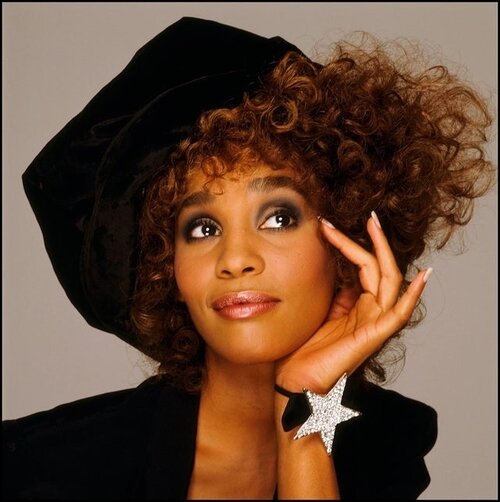
IN THIS PHOTO: Whitney Houston in 1980/PHOTO CREDIT: Pictorial Press Ltd/Alamy Stock Photo

The filmmakers are saying that, unlike other biopics, they will not whitewash Houston and stick only with the music. It is important, to an extent, that they are truthful and show all sides of Whitney Houston. Although there are going to be scenes depicting addiction and marriage woes, how far will the filmmakers be allowed to go before it is censored? I also wonder whether I Wanna Dance with Somebody will go a bit too far with Houston’s addiction problems and sensationalise things. There is that balance where you need to show the complexities of the artist, but also be respectful and not spend too much time pouring over the scars and headlines. The title suggests there will be a lot of fun in the film and we will see Houston grow from the fresh-faced woman on the cover of 1987’s Whitney to the more mature artist on 1998’s My Love Is Your Love. Whitney Houston is an icon who boasted an incredible vocal range. So many artists owe her a debt of gratitude, and she released so many classic songs. I wonder whether her pre-fame days are going to take precedence; where she grew up and how music first struck her. As there have been slightly disappointing documentaries about her, will the biopic redress some of the perceived wrongs? It is hard to get a full and comprehensive study of an artist in a single film.

There is a danger that some sections and periods of her career will be rushed, and too much time will be spent lingering on Houston’s darkest days. That said, so many biopics skip over artists’ addiction and personal problems and give this lopsided portrait. I think transparency and respect are the two words that need to dominate I Wanna Dance with Somebody. The film will draw diehard fans and those fairly familiar with her work alike. Whitney Houston wasn’t perfect but, at the same time, she had her demons and had a lot of pressure on her shoulders. If the filmmakers can get the balance right and shine a light on Houston’s genius but also look behind closed doors, then it will be one of the most honest and balanced biopics of recent years. I am not sure why Rocketman and Bohemian Rhapsody shied away from drug and sexual content; I suppose the producers wanted to strike a particular tone and portray their subjects in a certain way. I am a fan of Houston, and I will be interested to see how the biopic turns out and whether the actor who plays her will be singing or miming. It will be fascinating to see who is chosen to play Houston, as I think that is important regarding credibility and authenticity. Although production will not start for a while, when things are underway, more details will come to life. Let’s hope I Wanna Dance with Somebody shows Whitney Houston’s highs and lows but, above all…

DOES her full justice.

FEATURE: Pay Dirt: Why Music Streaming Sites Need to Re-Evaluate Their Fees After the Coronavirus Pandemic

FEATURE:

Pay Dirt

zzzii.jpg

PHOTO CREDIT: @markusspiske/Unsplash

Why Music Streaming Sites Need to Re-Evaluate Their Fees After the Coronavirus Pandemic

___________

THIS is a subject that I have covered…

zzzzz.jpg

PHOTO CREDIT: @markusspiske/Unsplash

a few times before but, rather than bemoan the relatively low fees artists earn from streaming their music, I wanted to ask whether things will change in the coming months. At the moment, the money that artists receive from streaming sites is pretty low. It makes for some eye-opening reading:

PRS director Tom Gray shared a chart of the data, which was collated by The Trichordist, on Twitter yesterday (April 18) as part of his #BrokenRecord campaign.

The numbers show the average payout per stream, the number of streams needed to earn £1 and the number of streams needed to earn one hour of minimum wage pay in the UK (£8.72) for each major streaming service, including Amazon, Tidal, Apple Music, Spotify, YouTube and more.

With an average payout of £0.009 per stream, it would take 970 streams on Amazon two earn minimum wage – the lowest amount needed out of all the streaming services represented. Artists uploading their music to YouTube would need to get the most streams to get £8.72, with 7,267 required at an average rate of £0.0012. Apple Music users would need 1,615 streams, while those promoting on Spotify would need 3,114 plays.

Last month, musicians called on Spotify to triple their royalty payments to cushion their loss of earnings caused by the coronavirus pandemic. Musician Evan Greer set up an online petition asking the streaming giant to boost its royalty rates for artists permanently, as well as donate $500,000 (£400k) to music charity Sweet Relief”.

aaaa.jpg

PHOTO CREDIT: @belart84/Unsplash

I can understand why artists are struggling right now. Because so many people are not releasing albums, there is less opportunity to earn money from music streaming sites. It is a very challenging time. I guess streaming sites’ prosperity and profitability relies on every aspect of the music industry being in place. As The Guardian explains, physical sales are also slowing down:

The music business is a highly interconnected ecosystem. Remove one part and everything else sways like a Jenga tower in a hurricane. Months of teasing, dropping singles and doing interviews are carefully synchronised to set up a release, and the next year-and-a-half is spent whipping along that momentum with more releases, touring and TV promotion. But now those failsafes have crumbled. It is partly why Dua Lipa brought her album forward before the promotional bridge completely collapsed. It is also why Lady Gaga and Sam Smith pushed theirs back in the hope that things will return to something resembling normal when they finally drop.

With physical sales now at a slow dribble, first-week chart performances – normally boosted by limited-edition, fan-seducing formats – are entering the 100m dash with their ankles tied to their wrists. Dua Lipa’s album was beaten to No 1 in the UK by 5 Seconds of Summer, who had pre-sold a glut of cassettes to fans and nosed ahead. That marketing trick will not happen again for a while”.

zz.jpg

PHOTO CREDIT: @thibaultpenin/Unsplash

Maybe we are watching more T.V., and that is contributing. Although streaming sites are earning less money at the moment, maybe there are fewer new people subscribing to join sites like Spotify too. I can understand why streaming fees are low, but it has been this way for a long time. When the music industry returns to normal, I do think there needs to be consideration regarding increasing payout. I am someone who pays a monthly subscription fee for Spotify, but I do not subscribe to other platforms like Apple Music. I guess it is hard to recruit people to use multiple platforms. For me, Spotify covers everything I need. I would be happy to pay more than I do for subscription, and I think there should be a review of subscription fees in a few weeks or months. Although Spotify only started making money last year, it is making a lot more profit now. Whilst Spotify has competition from other platforms, the growth of podcasts and people subscribing to listen to podcasts has made a big difference:

One of Spotify's most impressive areas of recent growth has been in user engagement with podcasts. In its Q3 2019 letter to shareholders, the company noted that it saw the number of podcast hours streamed grow at an exponential rate and that certain aspects of the increased engagement were "extraordinary, almost too good to be true." During that three-month period, subscriber growth, gross margins, and operating profit all exceeded Spotify's own expectations”.

zaaa.jpg

IMAGE CREDIT: Apple Music

I know that big artists are earning enough to get by whilst we are in lockdown but, with slower streaming figures, it is a very hard time for smaller. Subscription figures suggest that no streaming service is in trouble or cannot afford to pay artists more. With podcasts booming and advertising revenues fairly stable, I wonder what the solution is. Increasing subscription costs would be one way, but I do think dividing more of the profit to all artists should happen. I want to quote from an article of 2016. Things have not changed dramatically in terms of fees to artists, and the article uses Spotify as an example – the theories and conclusions can apply to other streaming sites:

At the moment, Spotify and every other major on-demand music streaming service pays according to a certain formula. Out of the service’s total number of plays, they figure out the percentage of plays that represented each artist. That artist gets that percentage of Spotify’s total revenue minus Spotify’s cut.

That means, if Calvin Harris receives 1 billion plays out of a total 7 billion plays on Spotify, 14% of your $9.99 subscription (after Spotify takes 30%) goes to Calvin Harris’ record label regardless of whether you actually played his music or not. These are not real numbers and Calvin Harris is actually very vocal about fair compensation for artists, but you get the point.

This royalty distribution model does not reward artists for the quality of their fan base but instead their quantity of streams. If one lone listener listens to Calvin Harris 1,001 times, Harris will make more money than if 100 fans listened to him 10 times each. If a niche artist has a very loyal following of listeners that generate 10,000 song plays but Drake gets 1.8 billion plays (actual), their royalty share is literally 0.0005% when only put up against Drake. Now imagine competing against Rihanna, Bieber, and every other artist on the service.

zaaa.jpg

IN THIS PHOTO: Drake/PHOTO CREDIT: John Phillips/Getty Images

Is there a solution that can be applied to streaming sites moving through 2020 and the future?

There is an alternative way to distribute royalties. It doesn’t have to be done the way it’s being done now. Those familiar with this issue call the current model the “pro-rata” model. Here is a new model: the “user-centric” model. Here’s how it works:

Instead of every paying listener throwing their money in a pool and divvying up the percentage of royalties that goes to each artist based on their amount of song plays, you take the songs each listener listens to, calculate the percentage of time they spend listening to each song, and then distribute their monthly subscription based on those songs they actually listen to.

So, when I listen to a song from an independent niche artist, 80% of my subscription isn’t going to Universal because 80% of everyone else listens to Fergie. If I were to only listen to my favorite niche artist 100% of the time, they would get 100% of my subscription, presuming it’s about $10. This really isn’t a complicated concept, and in fact, many people assume this is how it works already. But it doesn’t.

Changing to the user-centric royalty distribution model would reward those artists with a loyal following versus just a high play count. But most importantly, it removes the competitive factor in royalty distribution. Indie artists are no longer competing with Fergie, Rihanna, or Justin Timberlake. They are betting on themselves, and other artists can’t drive down the purchase power of a single listener. There is no inflationary effect. Support is again tied directly to the listener, as it would be if you purchased an artist’s music. And it is about the quality of music versus quantity”.

Maybe things are not as simple as changing business and distribution models – if that can be considered simple?! -, but it is clear the biggest artists benefit more than those artists who are struggling more. I think there does need to be emphasis on the quality of music rather than commercial appeal; artists who have a very loyal fanbase, rather than huge artists who might appeal because they are trending. So many artists are making virtually nothing from streaming, so I think the bosses of the platforms need to…

zxx.jpg

PHOTO CREDIT: @plhnk/Unsplash

MAKE that change.

FEATURE: The Lockdown Playlist: Vol. VI: 2000-2003

FEATURE:

The Lockdown Playlist

PHOTO CREDIT: @georgiadelotz/Unsplash

Vol. VI: 2000-2003

___________

HEADING out of the 1990s…

PHOTO CREDIT: @quanlightwriter/Unsplash

I am not looking at some of the best hits that started the twenty-first century. We are still in lockdown for a little while, so it is a perfect chance to get more acquainted with some epic tunes from a few years back. I have been searching online, and I have compiled some terrific songs from 2000-2003 (inclusive). If you need a bit of a boost and something to give you a kick, take a listen to the playlist at the bottom of this feature and you will be recharged in no time at all! Just stay at home, turn the playlist up loud, and simply…

PHOTO CREDIT: @www_erzetich_com/Unsplash

SURRENDER to the music.

FEATURE: Out of the City, Into the Country, Then Out to the World: Kate Bush and the Importance of the Year 1983

FEATURE:


Out of the City, Into the Country, Then Out to the World

IN THIS PHOTO: Kate Bush captured in 1983/PHOTO CREDIT: Brian Griffin

Kate Bush and the Importance of the Year 1983

___________

IN this feature…

IN THIS PHOTO: Kate Bush in October 1983/PHOTO CREDIT: Sunday Mirror/Mirrorpix/Getty Images

I want to discuss an important time in Kate Bush’s career. 1983 was the year I was born (I was born in May) and, unbeknownst to me, this incredible artist was about to embark on decisions and life changes that would feed into her most successful album, Hounds of Love (1985). To understand why 1983 was so important, one needs to look at 1982’s The Dreaming. The album was released on 13th September, and it was the first album Kate Bush produced alone. One of the things one can say about The Dreaming is that it was uncommercial. The Dreaming (single) did not crack the top-forty; Sat in Your Lap finished outside the top-ten, whilst There Goes a Tenner did not even scrape into the top-seventy-five. Even though The Dreaming made the top-three in the album charts, it was clearly the biggest step away from the Kate Bush we knew in 1978 – when her debut album, The Kick Inside, was released. The album was certified silver, but it was her lowest-selling album to that point: ironically, Hounds of Love (her next album) was her highest-selling studio album. Having released two records in 1978 (Lionheart was her second release), embarked on a huge tour (Tour of Life) in 1979, and followed that with a brilliant third album, Never for Ever, in 1980, it is small wonder Bush wanted to take more control of her work! The fact she managed to release an album in 1982 at all was a minor miracle – today, one does not see artists take on so much demand and work!

That is not to say that Bush was unhappy with everything prior to The Dreaming - yet the album definitely marked an evolution. Bush was producing; the music was more experimental and demanding than anything she had put out. I will not go into too much detail regarding The Dreaming – suffice to say it was a very challenging time. It was a surprise for such an unconventional album to enter the charts at number-three! Clearly, it did resonate with a lot of people! The Dreaming was the first Bush album to enter the US Billboard Top 200, largely due to the rise of college radio there. I will talk more about her growth in the U.S., as she really started to plant some seeds in 1983. I also want to source from Graeme Thomson’s biography, Kate Bush: Under the Ivy. The Dreaming was a marked shift forward, and one suspects it was more where Kate Bush wanted to be at the start of her career in terms of sounds and scope. By the standard in the 1980s, The Dreaming did take a long time to come together and, with fairly poor sales (in their terms rather than what was actually achieved), EMI were a bit concerned. The fact Bush wanted to produce her next album definitely met with resistance and concern – how long would a follow up to The Dreaming take…and how much would it cost?

Reading page 197 from Thomson’s biography of Bush, it is interesting to see where the songwriter was in 1982. Bush had clearly immersed herself in recording and the world of the studio; somewhere that was “an inclement micro-climate, a hostile, self-contained ecosystem fuelled by smoke, chocolate, fast food – she was “lasting three months on Chinese takeaways during the last part of the album,” she (Bush) said”. Bush was not sleeping well and, this combined with a poor diet, meant that she was losing some of the discipline she had accrued during the busy period of 1978-1980. In June 1982, Bush holidayed in Jamaica with her family, but she was unable to unwind – the calm, sun and relaxation of the setting must have been jarring for someone who had been consecrated and sequestered in a small space for a long period! Bush was busy promoting The Dreaming by filming its videos, making personal appearances and generally going full-out.

IN THIS PHOTO: Kate Bush signing copies of The Dreaming/PHOTO CREDIT: Peter Still

From the end of 1982 until the summer of 1985, Bush was rarely seen in the public forum – at least in comparison to the previous few years of her career. She made the odd appearance here and there, but there was this important spell of recovery and rest that preceded 1983. “During her prolonged absence, there were mischievous media rumours of nervous breakdowns…” (page 198 (paperback edition) of Graeme Thomson’s Kate Bush: Under the Ivy); other sources remarked on her weight gain and disappearance from the public eye – not that Bush ever courted it at all! Now, we do not think twice when an artist takes a few years to follow up from one album; there was expectation that Bush would be right back to work and release something not long after The Dreaming – looking back at Hounds of Love, it is clear that period of a couple of years or so was just what was needed in order to create a masterpiece!

IN THIS PHOTO: Kate Bush looking on in 1982/PHOTO CREDIT: Steve Rapport Photography

One of the big changes that happened in 1983 was Bush’s diet. “Tea (up to 20 cups a day) chocolate and cigarettes have been her most enduring vices, but work has always been her addiction. It took her six months to recover from the experience of making The Dreaming” (page 199, Kate Bush: Under the Ivy). Bush, by her own admission, was a wreck and needed to slow down. She consulted her father, a doctor, who diagnosed stress and nervous fatigue. His advice was for her to rest. Having released an album and promoted it hard, if Bush had continued to work on a new album straight after The Dreaming, one wonders what a toll that would have taken. I will talk about commercial decisions of 1983 that benefited her career but, during 1983, Bush went to see films; she spent the summer with her boyfriend, Del Palmer (who was playing bass (and other instruments) for her up to that point; he was one of the engineers on Hounds of Love and remains her right-hand man to this day – the two met and began playing together in 1977; they started dating not that long after); she bought a VW Golf and drove herself, and she enjoyed cooking, space, and a much better diet. Largely subsiding on chocolate, tea and fast food through much of 1982, she did overhaul her eating habits in the period afterwards; she also took up dance instruction again – she was not dancing as often during 1980-1982 than she had been from 1978-1979. Whereas she was making The Dreaming in a dingy London studio through 1982 (and in 1980 and 1981), Bush built her own studio to professional specifications this time around.

One can imagine the scenes and sights whilst Bush and Palmer (largely) were making The Dreaming in a very small space. The intensity, experimentation and darker colours of The Dreaming were a world away from the natural world-influenced, brighter and happier sounds of Hounds of Love. 1983 was a very important and productive year for Bush. She and Palmer moved into a seventeenth-century farmhouse in the Kent countryside, which was not far from Central London and Wickham Farm (her family site in East Wickham, Welling). Bush described her new farmhouse thus: “I’m sure there’s a kind of force, a magnetic energy saying, ‘Come in, we’re meant for each other” (page 199, Kate Bush: Under the Ivy; quote source: The Times, 27th August, 1985). Maybe the romance of stumbling upon an idyllic farmhouse was slightly exaggerated, but the clean air of the country and the influence of nature and the open space was something Bush responded to very positively. In 1983, she spent a summer out of the house – something, as she said, “I didn’t do for several years” (page 200, Kate Bush: Under the Ivy; quote source: Fachblatt Musikmagazin, November 1985). The image of Kate Bush gardening and not toiling in the studio was a rare and welcomed sight! She had failed to ease into a balanced and rounded life since 1978. As Kate Bush: Under the Ivy explains (on page 200), Bush and Palmer’s relationship was more committed and, during a rare radio phone-in on 29th July, 1983 (the day before her twenty-fifth birthday), she revealed that Del was her boyfriend.

ART CREDIT: Noelle McClanahan Broughton

I can guess any domestic time she and Palmer shared prior to 1983 was quite short; meals were very samey and, largely, unhealthy…and there would be little time to enjoy time outside – although the hustle and grime of London is not especially beckoning! Bush had a London home in Eltham as a base, but she was not often found there. After 1979’s Tour of Life, she was more often found in the studio, so taking up dance again was a big step (no pun intended). Before the run-up to Hounds of Love, a lot of her dance routines were assembled on tour vans and in rushed moments. Now, she was getting g fit again and enjoying a more regular routine of dance. Not only did the smiling nature encourage songwriting and inspiration; physical movement played its part. The Dreaming was quite gloomy and raw; Hounds of Love is an album of brighter colours - as Graeme Thomson explains in Kate Bush: Under the Ivy: (Hounds of Love was) “decked out in greens, lights blues, dusky purple and silvers” (page 202). I will come to her professional pursuits of 1983 very soon but, in terms of harmony and comfort, it seems like the year was one for change. “For me, it’s like 1976”, she wrote to her fan club in the summer of 1983. “It was a particularly special year, when things were full of adventure…I feel in many ways that ’76 and this year linked it together for me” (page 202, Kate Bush: Under the Ivy; quote source: ibid). Bush returned to making music at East Wickham Farm, and she invested in a 48-track studio in the barn at the farm.

1q.jpg

PHOTO CREDIT: Denis Oregan

She equipped her recording space with a Soundcraft mixing desk, two Studer A80 24-track machines, along with compressors, emulators and a Fairlight (taking influence from Peter Gabriel, who sort of introduced Bush to the ground-breaking technology years previous). Although there was a slight distance between Bush and her record label EMI by 1983, she was becoming more comfortable around technology – in no small part due to her new happiness and setting -, and she definitely wanted to produce. The idea of Bush producing another album alone after The Dreaming’s poor (ish) sales performance was not overly-welcomed by EMI – one of the first times Bush had faced real push and doubt from the label. By autumn of 1983, Bush had her studio completed, and there were not the same pressures she felt beforehand regarding cost and time schedules. Whereas studios like Abbey Road could charge £90 an hour, having her own studio was a huge money-saver and lifeline. If EMI were unhappy with Bush’s production ambitions and the fact a new album was not instantly on the cards, they could not object to her new-found happiness and autonomy – they would not have to spend quite so much money on Hounds of Love had Bush recorded it all at a professional studio. With a room that looked out on trees, birds and the countryside, Bush has a perfect view in which to dream and create some of the best music of her career. Kate Bush and Del Palmer worked up most of Hounds of Love between the summer and autumn of 1983.

Rather than discarding demos and working on final versions later, demos were kept and worked on at East Wickham Farm for the final versions. In the summer of 1983, Running Up That Hill (originally entitled A Deal with God; the title was changed, as the mention of ‘God’ was seen as blasphemous/controversial by religious organisations and bodies in the U.S. and, as Bush was looking for more exposure there, she begrudgingly changed the song’s title). Most of the remainder of Hounds of Love was written by the end of 1983. As Hounds of Love turns thirty-five in September, I think it is important to note Bush’s change of environment from 1983. I am not going to get into the blow-by-blow diary of Hounds of Love, but Bush worked up the twelve tracks from Hounds of Love and B-sides by the end of the year – the album itself was recorded between January 1984 – June 1985. Bush played her new tracks to Paul Hardiman (engineer) on 6th October, 1983, as he visited the newly-constructed farm studio for the first time. Hardiman engineered the first stages of Hounds of Love; sessions began on 4th November and, between 7th November and 8th December, they began working on backing tracks. When it came to transitioning from the fatigue of The Dreaming in 1982 (and the recording and writing in the months and years prior to that) to the germination and development of Hounds of Love in 1983, Kate Bush was a very different woman – healthier, happier, more confident and enjoying the benefits of country air, love and family.

IN THIS PHOTO: Kate Bush and some canine friends in an outtake from the Hounds of Love photo session/PHOTO CREDIT: John Carder Bush

Not only was Bush laying the foundations for Hounds of Love in 1983; there were a couple of different releases that arrived that year too. Before I mention them, take a listen to this interview here:

In this 1983 interview Kate talks about the 1979 video to her UK concerts. The videos were released in the US in 1983 with the intention to help promote her music there and reflected performances of songs from her first two albums, The Kick Inside and Lionheart.

In the interview Kate talks about what inspires her to write and where the ideas come from and how she discovered dance which has become a feature of her live and recorded performance”.

Kate Bush’s eponymous E.P. arrived on 15th June, 1983 (you can check it out here; it was released by EMI in the United States to promote Bush, who was relatively unknown there at that time. It peaked at 148 in the US Billboard Pop Albums chart. The E.P. was also released in Canada, but with an extra song. The E.P. was in the U.S. press. "An excellent, if somewhat schizophrenic, introduction to British singer Bush" wrote Alex Cain in Pulse! (August 1983). J.D. Considine wrote in Musician, in September 1983: "An easy introduction, at the same time it introduces (...) a number of Kate Bush's failings". If the reviews were mixed, it was important to have a release for the North American market. Fans were aware of her there, but Hounds of Love was the first of her studio albums that made a big impression – The Dreaming reached 157 on the US Billboard 200; Hounds of Love reached 30 on the same chart.

In an interview with Brian Berry from Wireless in September 1983, we learn more about the E.P. and Bush’s feelings towards it:

Capital/EMI America's latest attempt to bring Kate Bush's music to a wider audience is in the form of a "mini-album" simply titled, "Kate Bush". Kate hails from England and has been an international sensation since her first album, The Kick Inside, was released in 1978. However, in America her music has only been enjoyed by a small, but devoted cult following. The "mini-album" contains no new material, but rather it includes five songs previous [sic previously] available on three of her previous recordings. The album had been timed to coincide with a visit by Kate to the States last June. A massive promotion via the press had been planned. However, the visit was postponed due to transportation problems that arose. I asked Kate about the five songs and if she felt that they were fully representative of her work. "Quite honestly, I don't think I would have chosen those five. It has very much to do with the record company and what they see a market for. I did want "Sat In Your Lap" to be on there. It's also quite nice to get the French song on there 'cause I quite like that." The French song is a new version of "The Infant Kiss", which originally appeared in English on her third album Never For Ever. The French version, as it turned out, was targeted for the Canadian record market.

"I think there's so much aimed at the Canadian market where there's a French population and the song was especially done for the French people, so it made sense to put in on the Canadian version." The "mini" concept is something that Capital/EMI has had substantial success with in breaking new or unknown artists. Thomas Dolby, Missing Persons, and Duran Duran are but some of the acts that have been established through this approach. The record is lower priced and is appealing to a customer that may want to sample an artist's work. This is a welcome idea if it will help sell Kate's music to the masses”.

If Kate Bush is inessential in terms of her cannon, it was important to make her better-known to U.S. and Canadian audiences. The tracklist was as follows:

Side one

Sat in Your Lap

James and the Cold Gun (live, taken from the On Stage EP)

Ne t'enfuis pas (only on Canadian version)

Side two

Babooshka

Suspended in Gaffa

Un baiser d'enfant (French recording of The Infant Kiss)

The Single File video was also released in 1983 (a box-set was released in 1984). It contains all of her music videos, from Wuthering Heights, to There Goes A Tenner. The compilation was originally slated for release in April 1983 - it was then put back until June 1983. In the end, the video was released at the end of November. There was a strong poster campaign in London in support of this release too.

PHOTO CREDIT: Getty Images

Three personal appearances were planned in co-operation with the retailer, WHSmith: 7th December, 1983 in Cardiff; 8th December, 1983 in Kingston-upon-Thames, and 9th December, 1983 in London's Holborn Kingsway. The first one was aborted when Kate missed the train to Cardiff and then got on another one heading in the wrong direction: fortunately, the other two went ahead as planned. Although Bush was not gigging or releasing new material in 1983 – although The Dreaming’s Night of the Swallow was put out as a single on 21st November, 1983 –, she was busy preparing a new album and promoting a couple of releases to widen her popularity and push her music to new territories. In spite of the fact it is rarely talked about, 1983 was a busy and transformative year for Kate Bush - she began recording demos for Hounds of Love in January 1984. Few in the media knew what changes she was making and what was coming together in these relaxed and idyllic settings! I can understand why EMI were sceptical regarding Bush helming her fifth studio album but, as we know, that gamble paid off handsomely! In a Q Magazine interview of December 1993, Bush reacted to The Dreaming and her experiences with it:

"I look back at that record and it seems mad," she says now. "I heard it about three years ago and couldn't believe it. There's a lot of anger in it. There's a lot of 'I'm an artist, right!'" Fingers burned by the experience of The Dreaming, she decided that a studio of her own and a retreat into her domestic shell was a priority. Thus was ushered in a period of stability from whence came the enormously successful Hounds of Love and, in 1990 [1989], The Sensual World. These later records reflected her growing interest in the studio as a compositional tool and her growing desire to stay well out of the public eye”.

IN THIS PHOTO: Kate Bush photographed for The Dreaming in 1982/PHOTO CREDIT: Guido Harari

I can understand why, post-Hounds of Love, Bush felt that The Dreaming was her going a bit mad. Although, that said, Aristotle was very wise when it came to the subject of madness: “No great mind has ever existed without a touch of madness”. Although some corners of the media were not completely seduced by Kate Bush in 1983, I think a lot of people were discovering her music off the back of The Dreaming and the E.P. release in North America. Though 1983 was not the most important and game-changing year for Bush, I think it was a time when she made some huge decisions and embarked on the finest and most successful stage of her career. It is clear the creation of Hounds of Love was a very happy space. Bush, as this article explains – would take her time recording future albums and not burn herself out with promotion:

We had lovely times,” says Haydn Bendall. “You walked through the garden into the kitchen: all the family’s business and conversations took place around this huge kitchen table. [Her brother] Paddy was always around, and the two dogs were there, Bonnie and Clyde, the hounds of love on the album’s cover. There were pigeons and doves all over the place, her dad smoking his pipe and her mum making sandwiches. It was idyllic.”

If The Dreaming had been uneasily ahead of its time, on Hounds Of Love Bush seemed effortlessly attuned to the mood music of the mid-’80s: big hair, slick technology, irresistible hooks married to an insistent rhythmic pulse. Melodic and diamond hard, it was a bewitching alchemy of lean pop classicism and intrepid, occasionally unhinged experimentation. Not only was it a superb artistic statement, it was cleverly constructed, front-loaded with the most accessible songs before introducing the more demanding “Ninth Wave” material.

Ever since, she has recorded new material at her own pace in her own studio, releasing it with increasingly little fanfare or promotion and then promptly vanishing again for lengthy intervals. She may now be a negligible physical presence in the pop firmament, but 25 years after its completion, Hounds Of Love still casts a magical spell, and having a hand in its creation remains a high watermark for all those involved”.

I have huge admiration for The Dreaming and the singles Kate Bush put out in 1982 but, clearly, she worked herself to the bone to get it made in her own image. The subsequent mixed reviews and poor sales (for the singles at least) must have dented her confidence somewhat. Other artists would have taken years to recover and toiled to make an album that was as personal and original as The Dreaming, but one which would sell better and find them back in the critical good books. Three years after The Dreaming was put out into the world, Bush delivered her most successful and well-received album. After a tough and tiring 1982, she was keen to revitalise and rejuvenate, not only as an artist but as a person. More relaxed, working at her own speed; a brighter, calmer and more inspired artist emerged – aided and augmented by the picturesque surroundings of her countryside residence. In a way, the year 1983 was the warm and promising spring…     

IN THIS PHOTO: Kate Bush as a nun in 1983/PHOTO CREDIT: Brian Griffin

AFTER a long and slightly cold winter.

FEATURE: Vinyl Corner: The Sugarcubes – Life’s Too Good

FEATURE:


Vinyl Corner

The Sugarcubes – Life’s Too Good

___________

UP now in Vinyl Corner…

is the debut studio album from The Sugarcubes. Although Björk leads the band, the record is a lot more than her stunning voice. Life’s Too Good is a perfect Pop record that mixes in silliness with the serious; there are different tones and sounds that weave together. Of course, Björk’s vocal gymnastics help take the songs over the edge. Released in April 1988 by One Little Indian in the U.K. and Europe, the album was an unexpected hit. Few thought that Life’s Too Good would translate outside of the band’s native Iceland; in 1993, Björk launched her solo career with Debut. Piecing together strands of Post-Punk and Pop, there is a lot of clout and wonderful performances, but I think it is the infectiousness and joy of Life’s Too Good that means it stays in your mind. In terms of huge singles, they do not come much huger than Birthday. With a wonderful sound and Björk at her best, the U.K. press were keen to catch on. Although The Sugarcubes were courting attention and love from the British press, they were reluctant to have their faces plastered on magazines. Preferring greater control of their music and less exposure in terms of the music media, The Sugarcubes did get offers from big labels, but they recorded Life’s Too Good on One Little Indian so they could assume greater control of their work. I would encourage people to buy the album on vinyl, as it is a marvellous work that can really cheer the soul. Before 1992, I had not really encountered any Icelandic records.

Of course, there were plenty of Icelandic artists putting out music prior to The Sugarcubes’ arrival; few that could produce something accessible and hugely popular. Before long, there was greater interest in Icelandic music; Life’s Too Good not only influenced the scene in Iceland, but popular artists like Florence + the Machine have been affected. In terms of debut importance, Life’s Too Good pushed the boundaries of Rock and Pop; it put Iceland more firmly on the map, and the album still sound so alive and fresh twenty-eight years later. I want to bring in a couple of reviews before I wrap things up here. I think, in 1992, there were a couple of positive reviews; many might not have known what to do with an album such as Life’s Too Good. Maybe the idiosyncrasies of Björk and the band were a little too out-there at the time. In the years since, Life’s Too Good has gone down as a cult classic; so many corners have been keen to praise a wonderful record. This is what The Line of Best Fit had to say in 2015:

Much like The B52’s and Talking Heads, The Sugarcubes proved that post-punk could be playful and seriousness could be silly. "Birthday", despite being The Sugarcubes’ defining moment, isn’t indicative of the debut as a whole, though. In fact, as with some of the best LP’s, it’s hard to place this album within a specific genre, a persistent theme even in Björk's previous venutres. Having begun recording music as early as 1977, when she released Björk Guðmundsdóttir - an album of sickly sweet covers of rock songs - she soon found herself in bands that were similarly averse to the restrictions of meaningless categories.

Björk's idiosyncratic voice might be the main prevailing aspect here, but however fleeting their existence was, The Sugarcubes were very much a band, with each member having their own respective pedigree in various other outfits prior to their formation. All members had previously been in various post-punk or experimental groups - their origins tracing back to the likes of Theyr and of course KUKL - while some even collaborated with Current 93 and various members of Psychic TV. The creation of The Sugarcubes was a direct result of the negation of the anarcho-punk route (KUKL released two record on Crass’ label) and the desire to create something more accessible. Einar’s spoken word contributions are as imperative as they are bizarre, and the contrast between his inane discourse and Björk's more popular vocalisations gives the band their famed uniqueness.

Despite its moments of innate pop brilliance, there remains a dark chaos on Life’s Too Good - repressed, but ever-present. An understated classic, and by far the band's best album, it still sounds vital 27 years since its initial release. It's strange but accessible, silly but genius, and ultimately unfailing from start to finish”.

So long after its release, Life’s Too Good has grown in importance and status. Although Björk would depart from the band not long after Life’s Too Good, I think she sounds completely in her element here. The songs burrow into the head and, when we are stuck indoors and cannot get out to gigs, I would recommend Life’s Too Good to ease any anxieties.


In their review, XS Noize dived into Life’s Too Good and highlighted its brilliance:

Life’s Too Good had a popiness in attitude that brought the 1980’s listener in and then presented them with the band’s post punk heritage, Goth vibes and darkness. There are some critics who have always felt the album would have been better without sans Einar’s vocals, and that he was the proverbial fly in the ointment. What many of them would have loved, was if he had been ditched to enable Bjork to be entirely front and center. However that was never the intent of the band. The tension of Einar’s asides and vocals presents something that would be missing from songs like Motorbike and Deus if he was not there. He is the surreal musical Dali reeking havoc with the songs that would have been almost too perfect until his ridiculous interruptions and sometimes unsettling rap. He singlehandedly made sure the listener understood The Sugarcubes wanted more than mainstream acceptance.

The band would put out Here Today, Tomorrow, Next Week in 1989, it would not perform as well commercially as Life’s Too Good. They released a third album, Stick Around For Joy, in 1992 which would fare better. In 1991 Bjork had decided to leave the band to start her solo career but was contracted with The Sugarcubes to do one more record and unlike many artists honored her contractually obligations. The Sugarcubes would open for U2 on their Zoo TV Tour in Oct and Nov 1992, and then disbanded. Bjork would continue onto her stellar solo career with the release of her aptly titled Debut; which would launch her reputation and a solo career that has now stretched for over twenty years.

A band that was meant as a joke ended up becoming indie legends. Ever insightful about their unconventionality, they left it to the critics and listeners to answer the question of what good taste and art were and whether or not the band’s output could be classified as either. If you are serious about understanding the development of Indie Music you need to give this album your consideration”.

I love the music from the 1980s, but I am not sure many would associate The Sugarcubes with a typical ’80s sound. They sort of arrived from nowhere and created this sensation. Almost thirty years after Life’s Too Good was unleashed into the world, this album still manages to sprinkle its magic. If you can get it on vinyl, please do – if not, then you can stream it. I am going to play it now and…

SURRENDER to its wonder.

FEATURE: Spotlight: Black Pumas

FEATURE:


Spotlight

zzz.jpg

Black Pumas

___________

IF albums and tours are…

PHOTO CREDIT: Christopher Goyette

being held back, there is no end and delay when it comes to great new music. Black Pumas have been playing for a while now, but their eponymous albums arrived last year. I have been hearing Black Pumas’ music on BBC Radio 6 Music, and there is this wonderful fusion of the old-skool and modern. The band are led by singer Eric Burton and guitarist/producer Adrian Quesada. The Psychedelic-Soul band are based out of Texas and, to me, I think Texas is a part of the world where classic Soul still has life. Artists like Black Pumas and Leon Bridges are using 1960s and 1970s Soul as a foundation and adding something special into the pot. Black Pumas formed in 2017, and they have been gathering buzz and attention since then. The band/duo played South by Southwest last year, and they were nominated for a Grammy (Best New Artist) recently. It seems like the meeting and collaboration of Burton and Quesada was meant to be. Quesada met Burton through a mutual friend; Burton had been a busker for a while, and it seemed like his powerful and distinct vocals were the ideal match for Quesada’s Funk/R&B compositions. Although it is still the early days for the band, their unique sound and brilliant music is going to be a much bigger fixture soon enough. Though most festivals are cancelled this year, the guys will, no doubt, be booked to play a lot of the major festivals next year. In this interview with Rolling Stone, we learn about Black Pumas’ beginning:

When the two finally met at Quesada’s Austin studio, it became immediately clear that they could complement each other. Burton’s smooth but gritty voice and original songs, like his rainbow-themed “Colors” (“My sisters and my brothers/See ’em like no other”), fit alongside the tracks Quesada had already cut, which were heavy on old-school electric pianos, live drums, and Quesada’s rumbly surf guitar. Quesada enhanced the classic-soul mood by introducing his younger collaborator to vintage R&B. “It made me want to go back and listen and figure out how to project the way Otis Redding and Marvin Gaye could,” Burton says. “Adrian really appreciated the tonality of my voice and the way I was reaching to embody these older artists that fit the canvas he was giving to me.”

Soon enough, the duo had a name, Black Pumas, inspired by Quesada’s fascination with jaguars (his studio has a jaguar logo) and a play on the Black Panthers. The moment of creative truth came on stage, when they debuted their act at an Austin club. “I remember telling my wife not to come — give us a few weeks, because it might suck the first couple of times,” Quesada recalls. Quesada assumed Burton would be seated with his guitar, but to his — and Burton’s — surprise, the singer opted to stand up and perform, drawing on his theatrical background.  “When I got to put the guitar down, I found it was very freeing,” says Burton. “It elevated what we were doing.”

“Everything I had ever seen, Eric was playing troubadour, singer-songwriter style with a guitar,” says Quesada. “I didn’t even know that he had James Brown-level frontman chops. As soon as we stepped off the stage the first time, we pulled each other aside and said, ‘There’s a spark here.’”

From there, buzz began building. Black Pumas released “Black Moon Rising” on Spotify, scored a single deal and then a full-album contract with ATO Records (the label co-founded by Dave Matthews and currently home to My Morning Jacket, Brittany Howard, and King Gizzard and the Lizard Wizard). About a year ago, they scored a Best New Band award at the Austin Music Awards and released their debut, Black Pumas, a few months later”.

Many publications tipped Black Pumas as ‘ones to watch’ in 2020, and I am excited to see whether they will follow up on their impressive debut soon enough. It is a shame they cannot tour at the moment, as so many people here would love to see them play. Their songs, as I said, seem to melt the classic Soul sounds with something modern and local to them. If you have not heard of Black Pumas, go and investigate them now (the links are at the bottom of this review). When the band had a chat with The Independent about their debut album, they addresses claims about revisiting Soul’s past:

While most critics have been enthusiastic about the Black Pumas debut, some have suggested that their sound can drift into pastiche territory. “I’d agree with that analysis only to the degree that we were trying to honour soul music, to honour the song structure and the lyrics,” Burton says. “The poetry of soul is more a feeling, as opposed to being super worried about where we’re headed.”

“One of our goals is unity in a time when there’s a lot of divisiveness,” Quesada says of their music. “We’re not trying to make a political statement, but you look at our live show and you see these people from all different backgrounds and ethnicities and genders – it’s about inclusiveness.”

“Whatever’s going on politically doesn’t decide who we are,” Burton agrees. “Our biggest challenge is to be honest in the sharing of our experience. We don’t worry about trying to make explicit political statements… life is more precious than that”.

I am going to finish up shortly, but Black Pumas is an album that you need to check out. I think it is one of 2019’s most-underrated records; a debut that is full of memorable cuts and original intent. Pitchfork reviewed the album and had this to say:

Black Pumas sounds like a band name coined at the twilight of the soul era, when R&B turned grittier, trippier, and funkier. It’s a name that evokes that of the Black Panthers, the African-American activist group who defined militant protest during the late 1960s and early 1970s—which is not coincidentally the period that the Austin-based duo of guitarist/producer Adrian Quesada and vocalist Eric Burton consciously conjure on their eponymous debut album.

At no point on Black Pumas do Quesada and Burton shy away from signifiers of the past. Rhythms roll with the tight precision of the Hi Records rhythm section, “Fire” is punctuated with horns straight out of Stax, “OCT 33” finds Burton obliquely nodding at Otis Redding’s “Fa-Fa-Fa-Fa-Fa (Sad Song),” the title of its opener “Black Moon Rising” echoes Creedence Clearwater Revival’s doomsday classic “Bad Moon Rising.” Black Pumas are too clever to succumb to pure nostalgic pandering, though. They pointedly avoid the pitfalls that plague well-intentioned retro-soul records, favoring feel over authenticity, playing as much for the head as the heart”.

Black Pumas are a group you need in your life. I think they are primed for some very big things and some huge festival slots. One does not hear a great deal of Soul and Psychedelia in the U.K., so Black Pumas are going to inspire a lot of artists. They are terrific and, when you dig deep, you will be bowled over by…

SUCH a sweet sound.

______________

Follow Black Pumas

FEATURE: All I Can Do Is Write About It: The Need to Fund the Music Press

FEATURE:

All I Can Do Is Write About It

PHOTO CREDIT: @brookecagle/Unsplash

The Need to Fund the Music Press

___________

WHILST there is this ongoing argument…

PHOTO CREDIT: @nickmorrison/Unsplash

as to whether the music press is in a good state, one cannot deny that, during this difficult period, so many more of us are relying on music journalism than we did before we went into lockdown. Though there is less activity regarding album releases and gigs, so much is still happening in the industry. Interviews can take place online, and there are tracks and albums coming out. Journalists are also dipping into the archives and publishing cool features regarding classic albums and other interesting stuff from the archives. A lot of music magazines are still publishing at the moment; working remotely to compile the content and having it ready to deliver to your door. Even though most music websites are free to view, that is not to say they have very few costs to incur. I am in a good situation, as I am not spending money; I am putting together features that are relatively easy. A lot of websites still are putting out as much content as they did before lockdown and, whilst they are not spending money on gigs and traveling to interview artists, compiling features and putting content onto a website still incurs a cost. There are sites like CLASH, and NME that have physical additions; MOJO do too. It is business as usual for the music press, as there is still so much to report on, in spite of the fact there are no gigs outside or as many albums coming through as usual.

IMAGE CREDIT: MOJO

Every corner of the music industry is in danger at the moment, and I do agree that venues and artists require the most urgent funding. For those music sites that rely on physical sales for revenue, it is important people buy as many magazines as possible. Costs are still being incurred, and I do think a small chunk of money should be reserved to ensure that these wonderful music sites that have been keeping us informed and entertained over the last few weeks are able to continue and expand. I think there is an assumption that online music sites run with no cost, but so many need to pay for photographers, for hosting and they still have to pay their contributors. I think right now, understandably, many people are getting as much free music journalism content as they can, as money is a bit tight at the moment. I check CLASH, NME, The Guardian, Pitchfork, and The Line of Best Fit regularly, and they are an invaluable source of information, news and uplift. I have felt a bit guilty not contributing funds to these sites because, at a time when we all need some positivity and music, they are continuing to put out so much content and giving us all such a high standard of journalism. I am going to change my ways and give more these sites; I am going to buy more print editions and ensure that, when we come out the other side, all the great sites that I check daily are able to run both online and in print.

PHOTO CREDIT: @stanleydai/Unsplash

In fact, I think artists are relying more on the press in order to promote – as they cannot get out and promote in the same manner as they did before the coronavirus hit. Regardless on your opinions regarding the music press and whether they are struggling, I have looked on a lot of websites that are kindly asking for support to keep them going. Venues and artists’ livelihoods take priority when it comes to ensuring that the industry is strong at the other side of this; the importance of the music press is evident. I have been leaning on it more than I ever have, and I know that, in order to keep producing great content and delivering physical copies to people, it does involve financial undertaking. It is a difficult time for us all in terms of budgeting, but if you can contribute to your favourite music sites, then do so. Also, try to buy as many magazines as you can, as I can imagine it is a lot trickier putting them together than usual! It won’t be long until we can go to gigs again and visit record shops. – another corner of the industry that need protecting. For the time being, we are all keeping inside, and I know that many more of us are looking online for music content. The Government is setting aside some money to help venues and artists, but there are so many that will lose out. I do hope there is some consideration of the music press, so that music websites and magazines can continue to produce and enrich us. For me, and many others, music journalism has been…  

ccxxx.jpg

IMAGE CREDIT: NME

SUCH a source of optimism and comfort.

FEATURE: Don’t Stand So Close to Me: Social Distancing and Live Music

FEATURE:


Don’t Stand So Close to Me

PHOTO CREDIT: @dannyhowe/Unsplash

Social Distancing and Live Music

___________

WHILST it might be a bit of…

PHOTO CREDIT: @trapnation/Unsplash

an exaggeration that live music will take many months to return, there is worrying news from Dr. Zeke Emmanuel. Many people read the news that, perhaps, live music as we knew it will not return until later next year:

Dr Zeke Emmanuel, director of the Healthcare Transformation Institute at the University of Pennsylvania and host of a new podcast about coronavirus called Making the Call, has claimed that “larger gatherings” including concerts may not return until “fall 2021 at the earliest.”

Emmanuel was speaking as part of a roundtable piece in New York Times Magazine. When asked about restarting the American economy, he said:

“Restarting the economy has to be done in stages, and it does have to start with more physical distancing at a work site that allows people who are at lower risk to come back. Certain kinds of construction, or manufacturing or offices, in which you can maintain six-foot distances are more reasonable to start sooner. Larger gatherings — conferences, concerts, sporting events — when people say they’re going to reschedule this conference or graduation event for October 2020, I have no idea how they think that’s a plausible possibility. I think those things will be the last to return. Realistically we’re talking fall 2021 at the earliest”.

I have seen so many artists promoting gigs and tours for the autumn; they have had to reschedule them from earlier this year. We are all excited to get back out there but, as the Government suggest we will be social distancing for months to come, will it be possible to hold gigs at all?

PHOTO CREDIT: @joewthompson/Unsplash

At the very least, there is suggestion we will have to social distance until a vaccine is found for the coronavirus. These sorts of measures are hard enough for pubs, cafes and workplaces but, for the music industry, it is near-impossible to implement something so strict. I do worry about all businesses and areas of life right now. Whilst we have to gradually ease back into life, I wonder what form that will take. Will there still be social distancing at supermarkets? Will people buying coffee at cafes have to queue outside? Will it be mandatory for people to wear face masks when using public transport? Nothing is set in stone yet, but one feels it will be a gradual easing back to normal life. Record shops might be able to open and trade relatively normally, and many can run themselves online and keep afloat. For so many musicians, touring is a vital stream of revenue. Sweden has introduced a social distancing scheme where the famous venue, Plan B, is capping the audience to forty people. This allows people to keep a safe distance from one another and enjoy live music. It must be a weird experience, and some have called it irresponsible. It must be unsettling for a band not to see the usual bustling crowds and rapturous response. Maybe small venues could implement something similar in the U.K., but I wonder whether there will be allowed and if it will work.  

PHOTO CREDIT: @rebeca_calavera/Unsplash

Artists could still gig, but they would not earn as much, and it will be difficult keeping people apart during songs. It does seem that, when the lockdown is lifted, we need instructions regarding live gigs. Large gatherings at venues, for example, will probably face bans for a few months more. The risk of infection is higher there; it is the smaller spaces that are struggling more and need some reassurance. I guess there is not a lot one can do to fast-track a semblance of normality: we all need to be patient and wait for things to calm down. There is a real concern that a lot of venues, if they are shut for too long, they will not be able to continue. There is support and funding available, but that is surely going to start to run dry the longer we are in lockdown. The U.K. government have decided that we are all in lockdown until 8th May at least – it may be extended further if there is not a decent enough decline in the number of deaths and new cases of the coronavirus. It will be hard to see how things will go back to how they were soon. I think there will be an adjustment, and I wonder whether our government will allow venues to open until a vaccine is found. If that is the case, it will be devastating for the music scene.

qaaaa.jpg

PHOTO CREDIT: @blackpoetry/Unsplash

I think there does need to be some sort of plan in place where venues can be funded and, like Sweden, some socially distanced gigs can go on. It might be a weird feeling, but there can be measured in place where live music can exist, and we can keep people safe. Maybe apps will exist where people can test themselves and see if they have the coronavirus; that can be verified by people at venues, which will mean others will feel safe. I think we are getting used to being socially distanced at the= moment, but there is a keenness for people to get out and experience music in its physical form. Right now, we are seeing a lot of live-streamed gigs and artists performing from home. That can carry on for a while longer, but the lockdown will ease and there will be these questions regarding live music’s future and when we can once more go to gigs. It does seem strange that we are all inside and not able to go and see artists play, so the day we can start to assimilate again and watch artist up-close will be fantastic. We are being responsible and patient right now, but there is a hope that things will start to improve very soon. Live gigs are a cornerstone of the industry and getting back into the normal swing of things is something that…         

PHOTO CREDIT: @jaywennington/Unsplash

EVERYONE is keen to do.

FEATURE: Compilation Heaven! The Continued Popularity of the NOW That’s What I Call Music! Series

FEATURE:


Compilation Heaven!

The Continued Popularity of the NOW That’s What I Call Music! Series

___________

BECAUSE NOW That’s What I Call Music! 105 is due…

very soon, I am putting the series under the microscope. I wrote about the compilation series a while back, but I think there is a chance to reassess it and see why it remains so popular. I think the next edition of the series is out next month but, considering what is happening now, it might be delayed. I think reaching the milestone of one-hundred-and-five is pretty special! The NOW That’s What I Call Music! compilation was born in the same year as me: 1983. I cannot remember the original T.V. advert for the first one, but I look back at it now and it must have been so exciting! Before then, there had not really been a proper compilation of the year’s best hits. On 28th November, 1983, You Can’t Hurry Love by Phil Collins sat alongside Temptation by Heaven 17 and Shy by Kajagoogoo! Although these hits would have been on the radio and familiar to everyone, the fact you could own it on cassette must have been something! Now, that sort of convenience almost seems impractical, as one can stream all the latest hits on their phone. I think it was much more than having ownership of all the top tunes; something you could digest and share with friends. Although what defines the best hits is subjective and often based on commercial measures, look through the series and you cannot really fault them. NOW That’s What I Call Music! 5 of 5th August, 1985 is one of the highlights of the 1980s - I think there are some pretty decent tracks on that edition.

For me, it is the NOW That’s What I Call Music! runs of the 1990s that particular appeal. I may have mentioned this a few times, but the first album I recall buying is NOW That’s What I Call Music! 24 not long after it came out on 16th April, 1993. I was just about ten at that time, and the sheer delight of having so many tracks – thirty-seven – in my hands was a bit too much. Through the years, the series increased the number of tracks included and, whilst most of the tracks were Pop and chart-based, I think it became more diverse as time went on. I think the years 199-1993 were golden for Pop music in general. NOW That’s What I Call Music! 23 arrived earlier in 1993 and sported Sleeping Satellite by Tasmin Archer, Would I Lie to You? By Charles & Eddie, People Everyday by Arrested Development and the terrific Digging in the Dirt by Peter Gabriel among its thirty-nine cuts! NOW That’s What I Call Music! 24 has everything from Ain't No Love (Ain't No Use) by Sub Sub featuring Melanie Williams, Step It Up by The Stereo MC's and Is It Like Today by World Party. Look at the tracklisting for NOW That’s What I Call Music! 25 from later in 1993, and you can see what a marvellous year it really was! I was aware of NOW That’s What I Call Music! before I bought my first copy, but I became hooked for many years.

Not only was the compilation a dream in terms of the standard of material, but it opened my eyes to what music really was. I think, until that point in 1993, I was listening to certain albums and was not really mixing things together at all; not as much as I should have been. The NOW That’s What I Call Music! compilation was like a yearbook of musical memories, but it also opened up school conversation: we would discover new artists and genres from dissecting the latest NOW That’s What I Call Music! I think the series remained fairly loyal to its Pop and Dance base through the years, and it is wonderful to see things continue to this very day. Maybe the quality has declined through the years too – as the mainstream and charts is not as strong as it once was -, but people still download and buy the album. The fact that a compilation album is still purchased is testament to its appeal. One does not merely skip tracks on NOW That’s What I Call Music! and discard the album. For so many people, the latest collection is a document of the year’s music and, as such, there is a lot more to grab the attention that most albums. NOW That’s What I Call Music! also started to branch out and include decades and genres as opposed to a particular year of music – you can see the whole range here.

When NOW That’s What I Call Music! 100 arrived in 2018, a few articles were published to pay tribute to the wonderful, decades-running series. This feature from The Guardian took us inside the process and spoke with those compiling the latest series. The piece ended with various people in music remarking why they like NOW That’s What I Call Music! The Guardian’s Alexis Petridis sort of hits the nail on the head:

Alexis Petridis, music critic I never bought a Now compilation when I was a kid. I’ve no idea why – I was 12 in 1983, the ideal age. Then, a few years ago, I was researching a feature about compilations, and ended up listening to Now 5. Somewhere between Simple Minds’ Don’t You Forget About Me and The Commentators’ N-n-nineteen Not Out, I found myself fully transported back to 1985. It happened because the albums were, and are, compiled without discrimination: if it’s a hit, it’s in, regardless of whether it’s good or bad, built to last for ever or destined to be forgotten in a flash. It offered pop’s past not seen through the distorting lens of nostalgia, but as it really was: a perfect time capsule”.

The series took over America fifteen years after it started in U.K., and there is even a NOW That’s What I Call Music! night in Manchester.

Regardless of whether you were alive when NOW That’s What I Call Music! started, or you have got into it because of your parents; one can refute the well-stocked and varied hits one gets on the compilation. I have been dipping into various NOW That’s What I Call Music! years online, and comparing the hits of the 1980s, ‘90s and ‘00s with the last decade or so. I think that many agree that the 1990s provided some of the very best NOW That’s What I Call Music! released – and some will disagree when it comes to the exact placing. I guess it sort of all depends on when you were born and were a teenager in regards the very ‘best’ compilation. I guess we sort of cherish the ones we experienced when in middle and high school, but I love so many of the NOW That’s What I Call Music! compilations. One can gleam a feel of a year from Spotify; you can stream various playlists, but NOW That’s What I Call Music! is different. Constantly, NOW That’s What I Call Music! hits the number-one slot for compilation album, and it is wonderful we still have an appetite for the series nearly thirty-seven years after it started. Maybe it is the sheer quality and number of tracks provided, or it might have something to do with NOW That’s What I Call Music! being this institution and collector’s series. I wonder whether those in charge of the NOW That’s What I Call Music! archives will reissue all the series on cassettes. I think they would prove popular and, if anyone has one of the old NOW That’s What I Call Music! albums on tape, I can imagine they would sell for a pretty penny! To the young, the NOW That’s What I Call Music! release might be a handy way of streaming/buying the best tracks from the year but, for me and so many others, NOW That’s What I Call Music! is this comforting time capsule that soundtracks the music we grew up on; how things have changed through the years too. I really hope that NOW That’s What I Call Music! continues strong…   

FOR many more years.  

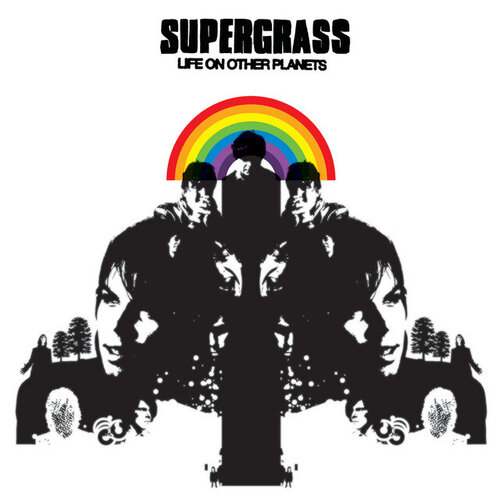
FEATURE: Second Spin: Supergrass – Life on Other Planets

FEATURE:


Second Spin

Supergrass – Life on Other Planets

___________

IN this series…

IN THIS PHOTO: Supergrass in 2002/PHOTO CREDIT: Martyn Goodacre

I am investigating albums that were sort of overlooked or underrated when they first came out. Assessing Supergrass’ Life on Other Planets seems timely – the band are touring again (or will be soon enough), and there might be new material sometime in the future. Released in 2002, Life on Other Planets followed their 1999 eponymous album. There are several different phases to Supergrass’ career. Their first two albums are full of buoyant songs and energy; the songs are youthful, and they are considered their very best – 1995’s I Should Coco and 1997’s In It for the Money. Supergrass is a more calmed affair; more reflective in places. Although there was more critical love for the band’s first two albums, it is folly to ignore the following two. I think Life on Other Planets is a sort of return to flavour and spring of their first two albums. The band said that they were inspired to write the albhum following a working holiday in the Côte d'Azur, Southern France. Sam Williams produced Supergrass’ debut album; John Cornfield joined Supergrass in producing their next two but, by the time Life on Other Planets came along, the band felt that they needed more urgency and a different approached. They hired Tony Hoffer, who kept takes short and brought back an urgency that can be found early on in Supergrass’ career.

Although there are no big anthems like Alright and Going Out on Life on Other Planets, I think there are so many gems to be found. Za and Rush Hour Soul are a brilliant pair of opening tracks – the latter is one of the most charged songs the band ever laid down. Can’t Get Up is a highlight with a huge chorus; Funniest Thing is the band going about left-field, whilst Grace is the band in classic territory. Maybe there are a couple of filler tracks (Prophet 15 and Run is quite a weak way to end a wonderful album), but there is more than enough to make Life on Other Planets stay in the mind. The guys did recapture much of the energy they displayed in the 1990s but, as the scene was different in 2002 and things had moved on, maybe that accounts for a slightly meagre response to their fourth album. It is a shame that so many critics gave the album short shrift. I will bring in three reviews for Life on Other Planets: one that is positive and sees the whole picture; one that is constructive (I have highlighted the more negative aspects), and one that is quite negative overall. The former is a more current review, so it might be a case of the album growing in strength and sounding stronger further down the line. This is what AllMusic had to say when they reviewed Life on Other Planets:

 “Supergrass makes music so effervescent and so effortlessly joyous that it's easy to take them and their skills for granted. Surely that was the case around the release of their third album, 1999's eponymous effort, which in its labored fun and weary ballads illustrated just how much hard work it was to craft records as brilliant as I Should Coco and In It for the Money. It suggested the group might have burned too bright and flamed out, but, happily, 2002's Life on Other Planets is a smashing return to form, an album giddy with the sheer pleasure of making music.

What makes this all the more impressive is that this is the record that Supergrass attempted to be -- a perfect balance of the sensibility and humor of I Should Coco with the musicality and casual virtuosity of In It for the Money. Where that album felt labored and a little weary, Life on Other Planets is teeming with life. The tempos are sprightly, the hooks tumble out of the speakers, the band mixes up styles and eras, and they never, ever forget the jokes (Gaz's fleeting Elvis impression on "Seen the Light," an allusion to Spinal Tap's "All the Way Home," or the chorus of "Evening of the Day"). Sure, it's possible to spot the influence all the way through the album -- most clearly T. Rex on "Seen the Light" and "Brecon Beacons," where Gaz's warble is uncannily like Marc Bolan's -- but it never sounds exactly like their inspirations -- it all sounds like Supergrass. And Supergrass hasn't offered such pure, unabashed pop pleasure since their debut; there hasn't been an album that's this much fun in a long time. Since they've been away for a while and have never broken in the States, Supergrass has been curiously overlooked, even though they're better than 99 percent of the power pop and punk-pop bands out there (plus, their everything-old-is-new-again aesthetic can be heard in such albums as the Strokes' Is This It?). But, as this glorious record proves, there are few bands around these days who are as flat-out enjoyable as this trio. The world is a better place for having Supergrass in it”.

I think the band themselves have sort of said Life on Other Planets is not one of their favourites, but I think it is such a varied and exciting album, one cannot ignore it. Drowned in Sound did praise aspects of Life on Other Planets, though they did highlight some flaws:

The negatives first, then; ‘Evening Of The Day’ is the sort of sub-standard album filler that Supergrass should really have got out of their system by now. It is an annoying, lightweight, novelty song with a false ending, daft harmonies and comedy whistling. Stuck slap bang in the middle of the record, it does nothing except destroy the momentum gained by the opening five tracks.

The decision to recruit Tony Hoffer as producer for this record is an interesting one. Hoffer’s previous credits include work for artists such as Air and Beck, and it is clear he has gently attempted to bring a more experimental approach to this band’s notoriously traditionalist recording methods.

On ‘LA Song’ you wonder if it was worth him bothering. The track itself is not really up to much anyway - again it comes over like a badly thought out pastiche, Supergrass forcing their ‘wacky’ side upon us once too often. Add to this a load of unnecessary synthesiser effects that feel like after-thoughts, throw in some rubbish Buggles/Daft Punk-style solo parts, and it’s a proper old mess.

Closing track ‘Run’ is the only other song where you suspect Hoffer was really calling the shots. A thoughtful electro-acoustic piece, it sounds like Supergrass trying to sound like Air, and discovering, surprisingly, that it rather suits them.

Elsewhere, ‘Life On Other Planets’ is mostly conventional Supergrass. The singles ‘Grace’ and ‘Never Done Nothing Like That Before’, whilst being great on their own, fit snugly into the rest of the album, and listening to the latter is like hearing the teenage indie of ‘I Should Coco’ all over again, now fully grown up, more muscular and with hairs on its chest”.

It is a shame that the once-celebrated Supergrass found themselves on the receiving end of some negative reviews. Although 2005’s Road to Rouen gained back some of the critical praise, I think so many people were either unfairly comparing Life on Other Planets to previous Supergrass albums, or they were not listening long enough to give the album full respect. The Guardian reviewed the album in 2002, and had this to remark:

Supergrass's role in the Britpop revolution should not be underestimated. Their debut, I Should Coco, was the work of assured young terriers who snapped at the heels of the bloated US grunge bands and made them go away. However, despite making their "mature" album with 1997's In It for the Money, the Oxford trio have never made the convincing leap from snotty-nosed racketeers to grown-up pop band. In a bid to halt the rot, Life on Other Planets harks back to the youthful effervescence of their debut - but the energy feels laboured. A bigger problem is the obvious lack of ideas: on three tracks, they sound like a T Rex tribute band.

As Gaz Coombes's muse flails around, mostly in the debris of the 1970s, occasionally they hit the spot. Grace is one of their most naggingly tuneful singles, and the supernatural revenge fantasy of Brecon Beacons has some intriguing lyrics. But the album predominately feels adrift and lightweight. Can't Get Up ("... no more") sums up their career”.

Though 2008’s Diamond Hoo Ha was the final studio album from Supergrass, one can never rule out another release from them. If fans had to rank their six albums, I guess Diamond Hoo Ha might be in sixth; perhaps Life on Other Planets is fifth; Road to Rouen is fourth, whilst Supergrass would be third; maybe In It for the Money is second, whilst their debut, I Should Coco, comes in the top spot. That might suggest the band got weaker as time went on, but I think that would do them a disservice. They were always evolving, and I have a lot of love for their later work. I would recommend people check out Life on Other Planets, as it is a much-underrated album that boasts some cracking tracks! Perhaps some of those critics who were a little unkind to Life on Other Planets when they reviewed it will listen again and…

SEE the light.

FEATURE: Three-in-Ten: The PopMaster Effect

FEATURE:

Three-in-Ten

xxxx.jpg

IMAGE CREDIT: BBC

The PopMaster Effect

___________

I have been meaning to write…

xxxxx.jpg

IMAGE CREDIT: BBC

a feature about PopMaster for many months now! It is an incredibly popular quiz hosted by Ken Bruce on his weekday BBC Radio 2 show at 10:30 a.m. Between 10.30-10.45 a.m., so many people in Britain pretty much stop what they are doing to take part. It is almost an institution of radio, and it has aired on weekday mornings since 16th February, 1998. The questions are devised by radio producer and music collector, Phil ‘The Collector’ Swern. Before I continue, here are some more details:

Two contestants play against each other for the chance to win a DAB digital radio. Each contestant is asked ten questions based on popular music from the 1950s through to the present day. Correct answers to the questions are worth three points, other than for the third, sixth and ninth "bonus" questions on a topic chosen by the contestant, from two options offered by the host prior to the start of the quiz. The bonus questions involve listening to a snippet of music and, if answered correctly, are worth six points. There is, therefore, a maximum total of thirty-nine points on offer.

The winning contestant then goes on to play "Three-in-Ten". In this part of the quiz they have ten seconds to name three UK Singles Chart hits for a particular artist or group named by Ken Bruce. If they successfully manage this they win the DAB digital radio; if they fail, they win an MP3 player. As of early 2015, the prize for failing the Three-in-Ten has been changed to a Bluetooth speaker. However, if a contestant scores thirty-nine points in the main round, they win the Digital Radio anyway, and the other contestant would play Three-in-Ten instead. Should both contestants score the same number of points (and the score is less than the maximum), a tie-break is used to decide who will play Three-in-Ten.

IN THIS PHOTO: Ken Bruce

A "One Year Out" t-shirt can be won, so-designed because when answering "Name the Year" type questions, contestants are very often just one year out, causing Ken to exclaim "One year out!". Previously, the losing contestant would receive a consolation prize of a Radio 2 CD wallet. One Year Out t-shirts are often heard to be accepted by contestants as a desirable consolation.

At the end of the year, the best contestants (those who score thirty-nine points, or thirty-six points and also win the "Three-in-Ten") return for a "Champions League PopMaster", the structure of which is different. The contestants start with their original score from their first appearance, and then proceed to answer ten questions which are worth their ordinal values i.e. question 1 is worth one point, question 2 is worth two points and so on. The contestants still choose a bonus subject, but this is only worth its value in the order of the questions. The score is then added to their original score, and the highest-scoring two contestants return for a final to determine the year's champion.

An interactive version of PopMaster was launched on Monday 1 March 2010. The game can now be played on the BBC Radio 2 web and mobile sites, or in a Facebook application. The game features text, image, sound and video questions, and scores are determined by how quickly the player answers correctly. A voiceover from Ken Bruce features throughout the game. Players can also challenge friends to beat their high scores. The maximum score possible is 39.

Since Monday 29 October 2018, PopMaster has been available as a podcast for 30 days after broadcast. The podcast edits out some personal details of the contestants for privacy reasons. Instead, at the end of the podcast episode, Ken reads out a selection of listener emails from after the live broadcast”.

I listen to PopMaster as much as I can, as there is something hypnotic and addictive about the segment of Ken Bruce’s show. There are many reasons why PopMaster is one of the must-hear segments of radio every weekday. You can hear Bruce has a passion for it after all these years. He is funny and warm, and the callers are always interesting. I am not sure what my highest score is; I think I have scored thirty points in the past – there are some callers who have got every question right. There is that excitement of seeing who will win and, when it is a close contest, just who pips it! The format is pretty simple, in that there are general questions and specialised subjects; there is a nice mix of years/artists (in the questions), and I can imagine PopMaster continuing for many more years to come! I want to bring in an interview from the BBC that featured Ken Bruce. He is broadcasting from home – like so many broadcasters -, but he is still able to present his BBC Radio 2 show. He spoke about that adaption, and why PopMaster remains so loved:

Any surge in listening won't be reflected in official figures for a few months, but the BBC says there has been a significant increase in live radio listening via the BBC Sounds app since lockdown measures came into force.

Not that Bruce needed any help attracting listeners. With an audience of 8.27 million, his is the most popular show in the UK - a particularly impressive accolade given that he doesn't host the breakfast show, traditionally a radio station's flagship programme.

IMAGE CREDIT: BBC

Bruce is one of countless radio presenters currently broadcasting from home, but technical advances make this much easier than it used to be.

Many listeners won't even have noticed a change - as was the case when the presenters of Radio 4's Today programme began broadcasting from home last month.

"Radio does provide friendship, companionship, in an undemanding kind of way, so strong relationships are formed between listener and broadcaster on radio, and I think that will only increase as time goes on," Bruce says.

"We're certainly aware of more people listening and taking part in Popmaster, for example, than before, and the texts and emails have massively grown, so I think there will be a general rediscovery of radio and how important it can be at times like this."

One specific feature within Bruce's show which has seen a significant increase in engagement is the famous quiz broadcast at 10:30 every morning.

"We're hearing a lot about the Popmaster effect," says Bruce's producer Ricky Marshall.

"It's always been an appointment to listen, but I think now more than ever it's really ramping up - families are sitting down to do Popmaster, people are saying they're playing along with their friends on a Zoom call.

"The hashtag seems to trend most days with people all joining in together, so I think there's a real sense of online community around the quiz which is quite nice."

Popmaster sees two callers face a series of (often quite difficult) music questions. If they hesitate for too long, a five-second countdown begins, which adds to the pressure.

"With the five-second counter, you've got to feel it," Bruce says. "You don't play it too soon on the early questions, and if you think somebody might be getting a little assistance, shall we say, then you can slam the five-second countdown clock down quite quickly. So it's a question of touch and feel".

I think radio is a lifeline right now, and I am listening a lot more than I did a few weeks back. I think the cult of PopMaster is one of those comforting and wonderful beacons of light that not only provides distraction, but it is also joining people together. The pleasure of playing along with relatives or friends – we are seeing a lot more of that than we did before lockdown. Ken Bruce is that most charming of hosts that makes PopMaster a real treasure of the airwaves. I hope that it (and Ken Bruce) continues on BBC Radio 2 for a lot longer, as I do not think weekday mornings would be the same without it. If you are someone who loves their music and is new to PopMaster, I suggest you join the army of loyal listeners. Tune in to BBC Radio 2 and Ken Bruce’s show and…

GET involved.

FEATURE: Residents of Kensington Gardens, Brighton: Saluting a Truly Brilliant Record Shop

FEATURE: 


Residents of Kensington Gardens, Brighton

aaaaa.jpg

Saluting a Truly Brilliant Record Shop

___________

AS today should have been Record Store Day

aaaaa.jpg

I have been thinking a lot about the different, fantastic record shops around the country. Although Record Store Day has been rescheduled, we all took place online and supported shops that way. I have great respect for all record shops in the country, but I have a special attachment to Resident Music in Brighton. You can check out Resident on Facebook, Twitter, and Instagram. Today should have been, in their own words, one of the most fun days; there would have been a load of people passing through – despite the bad weather -, and it would have been a terrific occasion today. Sadly, like all other record shops, the doors are closed and there is little cause for celebration. I can understand why morale was low for the team at Resident. The shop should have been bustling and buzzing; so many people would have been interacting, and the tills would be ringing all day long! Whilst there is hope Record Store Day can pick back up in June, at the moment, Resident are relying on online orders. Support them if you can, because the team are dedicated and are here to serve our record-buying needs! There are a number of different reasons why I love Resident more than any other record shop. I think people go to shops to buy records is because of the atmosphere and the desire to actually hold and own records.

When so many of us are streaming music, it is pleasing to know that record shops still attract so many people. I think they are a vital pillar of the community, and essential for the music industry. Whilst places like Resident can survive on online orders and will be back in business soon enough, it is a tragedy that we cannot visit and all share in the joys of Record Store Day. I have some time off in June, and I hope to get down to North Laine Bazaar and visit Resident in Kensington Gardens, Brighton. There is more to the wonder of Resident than the music alone. I know I have written about them before, but the store attracts people from all over the country. Not only is there a fantastic range of brand-new and older records alike; one can purchase music books and all manner of treats. The staff are so friendly and knowledgeable, and there is such a great vibe. Whilst one always walks away having spent way too much money, there is never any sense of regret. Record shopping is one of the best experiences ever, and I feel so at home flicking through the vinyl at Resident! Based where it is, the shop is in such a lovely setting. With unique shops, colours and smiling people around, shopping at Resident and walking around Brighton is a perfect day out!

xxxx.jpg

As the weather improves and summer is not too far away, we all hope Resident and Brighton can reopen soon. Before I continue, I want to bring in an interview from Pleece & Co, who spoke with Resident Music’s co-founder Natasha Youngs back in 2018:

Resident Music is a Record Store with a big reputation. Based on Kensington Gardens in the North Laine, Resident has become a Brighton institution, catering to crowds of record enthusiasts and growing with the revitalisation of vinyl in the past 5-10 years. We spoke to Natasha Youngs, co-founder of Resident to ask about her journey and how a modern day record store works.

HOW WAS RESIDENT MUSIC STARTED?

Myself & my now husband Derry Watkins met whilst working for Virgin / Our Price & realised we had similar dreams to set up our own business doing what we love best: running a record shop.

HOW HAS THE POPULARITY OF FORMATS CHANGED THE BUSINESS OVER RECENT YEARS?

We opened as a CD only shop, as vinyl was already heavily catered for in Brighton at the time (we opened in 2004). There were more than 20 places selling music in Brighton & Hove at that time so competition was strong & we wanted to be sure we were doing what we did really well rather than dabbling in a bit of everything. At the time, the demand for CD far outstripped the demand for vinyl but clearly, over the last 14 years, this has changed dramatically. We introduced a box of vinyl on the counter. This quickly became a lot of boxes under the CD racks. This this then became CD racks being swapped out for new vinyl racks. Then we just ran out of space! So we took on the shop next door, knocked the 2 together & now we have a happy CD / vinyl balance with space to shop more comfortably & a book corner too.

IN THIS PHOTO: Resident Music co-founder, Natasha Youngs

HOW DO YOU BALANCE THE STOCKING OF BIG AND SMALL BANDS AND LABELS?

We don’t really consider our curation of releases so much in this way. We try to consider lots of different elements surrounding our buying – customer demand (across a hugely diverse customer base, all ages ranges, locals & tourists, hardcore devotees & occasional buyers), how previous releases have sold, how much we are into it ourselves, press / radio coverage, how much we trust that label’s own tastes & previous releases.

ARE THERE SOME HIGH FIDELITY STYLE QUIRKS THAT COME WITH WORKING IN A RECORD STORE?

Of course – we all have geek like tendencies & obsessive behaviours. It’s what holds us together!

Hopefully we come with a lot less snobbery though. I personally hate any snobbiness related to music. Who’s to say whether one noise is more superior to another? Whatever engages someone’s brain, makes them dance, takes them to a different place, helps them feel a sense of belonging, has a nostalgic warmth, challenges them, makes them feel fuzzy, causes cathartic release – that’s the joy of music. One person’s intolerable racket is another person’s melody. One person’s cheesy pop is another person’s euphoria.

DO YOUR STAFF INFLUENCE THE SELECTION OF RECORDS IN-STORE?

Yes, all of them, whether they realise it or not. We always try to recruit people with a fresh approach or who bring a set of knowledge with them that we are lacking as a team. The wider the tastes in the shop, the more people we can confidently cater for. Derry & I can’t possibly hear, understand, know or like everything out there so we need a set of people around us that can help filter & curate”.

Resident (or Resident Music) will take part in Record Store Day in June, and I hope I can get down there at the same time as there are quite a few records that I want to snap up! Whilst I am tempted to buy on their online site, I also want to be there in person and be around fellow record buyers; to get that special experience and be in one of my favourite places. Whilst we are experiencing an online Record Store Day today, I want to bring in another interview with Natasha Youngs; this one is with The Line of Best Fit from 2011. I wanted to source from this interview, as Youngs talks about Resident’s ethos and the type of customer that shops there – and how they manage during the digital age:

How effective do you think initiatives like Record Store Day are for reminding people to buy music as opposed to downloading it illegally?

It’s a great event and it does an important job of raising the profile of independent record shops but I’m not sure it does much to prevent illegal downloading. To be honest, I’m not really sure that is part of the agenda. It’s more about rewarding those who do support physical product.

Have you noticed a shift in clientele in the years since Resident opened? Is there a typical Resident shopper?

Thinking about it, fewer students / young people buy physical releases these days so our customer base will undoubtedly have got older. We have gradually made a name for ourselves among the more discerning music types so we attract more and more music geeks and that’s a compliment in our books by the way. We also attract a lot more women than your average indie, which may be because the store has a very relaxed atmosphere with three girls working behind the counter, balancing out the testosterone! 

xasas.jpg

Does any aspect of running the shop make you wish you’d never opened the doors?

We live and breathe the shop so we never get a proper day off, especially since we bought iPhones! To run a record shop properly these days takes immense commitment, 7 days a week, 52 weeks a year although we do give ourselves Christmas Day off. We also took a breather to get married and have a honeymoon! Sometime it gets a bit much, but then we wouldn’t want to do anything else either.

It means the world to us to be voted England’s favourite independent store in the Record Store Day Poll. It is a really special accolade bestowed upon us by our customers and it’s brilliant for us to know that the ridiculous amount of work we all put into making Resident this good, is genuinely appreciated.

Have you ever considered selling downloads or does what defeat the object?

It’s not an area we’re interested in exploring right now.

Why do you feel vinyl sales have been rising again in this digital age?

In an age of disposability when music is not given the value it deserves, vinyl feels and sounds more authentic…and more permanent, which is something we all seem to be craving at the moment. We want to own things again, beautiful things”.

Things have come a long way since that interview was published nine years ago, and Resident is one of the most sought-after record stores in the U.K. I know it is frustrating that the party of Record Store Day has been put on hold, but we only have to wait until June and, hopefully, things will be back to normal. In its idyllic setting in Brighton – surrounded by wonderful shops -, if you have not been to Resident before, making sure you do when it reopens. On 20th June, Record Store Day will, we all hope, go ahead for real, and Resident have some great releases you can investigate. It is a strange time, but support them as much as possible; I already have a wish-list of Record Store Day releases that I want to get from them – I better get down there in June and get near the front of the queue! It is a slightly grim day for Resident but, with so much love from those online, their dedicated and passionate staff are being lifted by the support. Like all great record shops, there is so much on offer for the true music fan. Resident host fantastic in-store gigs that, thorough the years, have opened their arms to some of the music world’s finest artists. I can imagine why artists want to play in-stores at Resident: such a warm and inviting space is very hard to resist!

The coronavirus pandemic will continue for a while here, but it will ease, and we can all start shopping and buying records soon. When the lockdown is over, one of the first places I will get to is Brighton; Resident is right at the top of the list when I get there! I am pretty sad they are unable to open today and benefit from the beauty and popularity of Record Store Day. In the meantime, I am keeping abreast of the tweets from their Twitter page where various releases are being promoted. It seems like there is a huge demand for Resident, even though they are operating online at the moment - which must be very humbling for those that work there; knowing there is this very loyal base that will help them through this very tough time. On 20th June, Record Store Day happens (I keep saying because it absolutely MUST go on), and Resident will ready themselves for a barrage of customers. I will see them then, with my cash ready. I look forward to walking out of the store with…

A bundle of vinyl!

PHOTOS/IMAGES: Resident Music

FEATURE: The Lockdown Playlist: Vol. V: 1996-1999

FEATURE:

The Lockdown Playlist

PHOTO CREDIT: @georgiadelotz/Unsplash

Vol. V: 1996-1999

___________

AS I take this series of lockdown playlists…

ool.jpg

PHOTO CREDIT: @melodyjacob1/Unsplash

to the end of the 1990s, I am looking forward to entering a different century. It has been good compiling this series, as I have got to revisit some of my favourite tracks, and it is nice to see so many diverse tracks hang together in the same playlist. If you need to release some energy, or require some tunes to get the mood lifted, I have a playlist for you. Take a listen to these U.K. hits from 1996-1999 (inclusive) and have a nice kitchen rave! We are well into lockdown at the moment and, with maybe a few more weeks of it ahead, I think we all need a musical distraction. It is quite a tense time right now so, with these tracks, take the opportunity to…

PHOTO CREDIT: @sgcreative/Unsplash

LET things loose.

FEATURE: A Groundbreaking Stage Revolution: Kate Bush’s Tour of Life

FEATURE:


A Groundbreaking Stage Revolution

kkkk.jpg

IN THIS PHOTO: Kate Bush during the Tour of Life in Hammersmith in May 1979/PHOTO CREDIT: Max Browne

Kate Bush’s Tour of Life

___________

BETWEEN 2nd April and 14th May, 1979…

xxxx.jpg

IN THIS PHOTO: Kate Bush during the Tour of Life in Hammersmith in May 1979/PHOTO CREDIT: Max Browne

Kate Bush embarked on the mighty Tour of Life. I am revisiting it again (I wrote a feature last year), as this is an aspect of Bush’s career that is not discussed much. I am going to bring in a couple of articles concerning her Tour of Life but, as recently as the start of the previous decade, people were talking about this extravaganza as a one-off; would she ever get back on the stage? Of course, in 2014, she shocked everyone but announcing a residency at in London – yet again, she produced this visual feast that was so different to any other live event. Though Bush was nervous about performing again, she managed to equal the genius of her Tour of Life with 2014’s Before the Dawn. Whilst some reviews of her first big live foray were not entirely glowing, there were plenty of people who witnessed the tour who were blown away. Maybe some of the sets and concepts lacked cohesiveness and were a bit too out-there; perhaps there was a sense of style over substance at times. Bush felt, prior to the Tour of Life, that many acts were simply turning up, playing their latest album, and then leaving the stage. Her tour broke moulds and boundaries when it came to explore what a Pop concert could be.

IN THIS PHOTO: Kate Bush during the Tour of Life in 1979/PHOTO CREDIT: Getty Images/EMI

Sure, artists like David Bowie were combining dance, theatre and music in a very original way, but Bush went one step further. Her ambitions were big, and her performances were exhilarating. She pioneered the now-ubiquitous head microphone (as she could not hold a microphone and dance/sing at the same time) and redefined what a live show could be. Before I move on, here is some detailed information regarding the Tour of Life and where it took Kate and her crew:

The Tour of Life, also known as the Lionheart Tour or even the Kate Bush Tour, was Kate Bush's first, and until recently only, series of live concerts. The name, 'Tour of Life', was not coined until after its completion, with all promotional material referring to it simply as the Kate Bush Tour.

Consisting of 24 performances from Bush's first two studio albums The Kick Inside and Lionheart, it was acclaimed for its incorporation of mime, magic, and readings during costume changes. The simple staging also involved rear-screen projection and the accompaniment of two male dancers. The tour was a critical and commercial success, with most dates selling out and additional shows being added due to high demand. Members of the Kate Bush Club were provided with a guaranteed ticket.

The shows featured almost all the songs from Kate Bush's two albums, divided into three 'Acts', in the following order:

Act 1

Moving

Saxophone Song

Room For The Life

Them Heavy People

The Man With The Child In His Eyes

Egypt

L'amour Looks Something Like You

Violin

The Kick Inside

Act 2

In The Warm Room

Fullhouse

Strange Phenomena

Hammer Horror

Kashka From Baghdad

Don't Push Your Foot On The Heartbrake

Act 3

Wow

Coffee Homeground

Symphony In Blue

Feel It

Kite

James And The Cold Gun

Encore

Oh England My Lionheart

Wuthering Heights

IN THIS PHOTO: Kate Bush during the Tour of Life in Hammersmith in May 1979/PHOTO CREDIT: Max Browne

Tour dates

2 April 1979: Arts Centre, Poole (UK)

3 April 1979: Empire, Liverpool (UK)

4 April 1979: Hippodrome, Birmingham (UK)

5 April 1979: Hippodrome, Birmingham (UK)

6 April 1979: New Theatre, Oxford (UK)

7 April 1979: Gaumont, Southampton (UK)

9 April 1979: Hippodrom, Bristol (UK)

10 April 1979: Apollo Theatre, Manchester (UK)

11 April 1979: Apollo Theatre, Manchester (UK)

12 April 1979: Empire Theatre, Sunderland (UK)

13 April 1979: Usher Hall, Edinburgh (UK)

16 April 1979: Palladium, London (UK)

17 April 1979: Palladium, London (UK)

18 April 1979: Palladium, London (UK)

19 April 1979: Palladium, London (UK)

20 April 1979: Palladium, London (UK)

24 April 1979: Konserthuset, Stockholm (Sweden)

26 April 1979: Falkoner Theatre, Copenhagen (Denmark)

IN THIS PHOTO: Kate Bush during the Tour of Life in Hammersmith in May 1979/PHOTO CREDIT: Max Browne

28 April 1979: Congress Centrum, Hamburg (Germany)

29 April 1979: Theater Carré, Amsterdam (Netherlands)

2 May 1979: Liederhalle, Stuttgart (Germany)

3 May 1979: Circus Krone, Munich (Germany)

6 May 1979: Théâtre des Champs-Elysées, Paris (France)

7 May 1979: Mercatorhalle, Duisburg (Germany)

8 May 1979: Rosengarten, Mannheim (Germany)

10 May 1979: Jahrhunderthalle, Frankfurt (Germany)

12 May 1979: Hammersmith Odeon, London (UK)

13 May 1979: Hammersmith Odeon, London (UK)

14 May 1979: Hammersmith Odeon, London (UK)

On 24, 26, 28 and 29 April, In the Warm Room, Kite, Oh England My Lionheart, and Wuthering Heights were dropped from the set because Kate was suffering from a throat infection.

The 12 May concert had a very different setlist because this was a benefit performance 'In Aid Of Bill Duffield', featuring guest stars Steve Harley and Peter Gabriel.

'Fullhouse' was not performed on 13 and 14 May”.

I am not sure what preparation is needed for traditional live shows, but I know full well the major artists who tour arenas can spend months rehearsing and planning a show. I know there are artists who are quite-hands off when it comes to lighting, costume and every aspect of a show: Kate Bush, by contrast, was hugely involved with her first live tour, and it was a real labour of love for her. This NME article reveals Tour of Life’s scale and cost:

Preparations for the dates, named The Tour Of Life, began in late December 1978, spending three months between January and March in intensive dance classes, choreographing the production.

With a cast of 13 dancers and musicians, plus a 40-strong behind-the-scenes crew, each show cost more than £10,000 a night to stage.

“People said I couldn’t gig, and I proved them wrong,” said Bush after gushing reviews for the tour”.

It is amazing watching video clips and the documentary about the Tour of Life; not just seeing how much effort was put in to achieve the final show, but the ecstatic reaction of the audiences. I cannot really understand any critic who gave the tour short shrift as, in 1979, the world had not realty seen a show like it – to be fair, few artists have matched the Tour of Life since then!

IN THIS PHOTO: Kate Bush during the Tour of Life in Hammersmith in May 1979/PHOTO CREDIT: Max Browne

I am fascinated learning about the months before the show and how hard Bush worked to do something completely different. Her debut album, The Kick Inside, was well-received and remains this remarkable album. She also released her second album in 1978, Lionheart. This was more rushed, as her label (EMI) wanted to capitalise on her success and, as such, she could not do justice to her potential and talent in such a short space. Although Bush wrote every song on her first two albums, she did not produce them; she felt like she was more part of the machine; a spectator rather than an artist taking control and releasing an album in her own vision. The Tour of Life was a chance, not only to embark on her first tour, but to create something where she had more say and direction. Louder Sound talk about the sheer effort Bush expended realising her dream:

But in many other respects, the tour was utterly grounded in reality. The singer spent six months beforehand working herself to the bone as she attempted to forge a brand new model of what a live show could be, then another two months doing the same as she took it around Britain and Europe. And it was hit by tragedy when lighting engineer Bill Duffield was killed in an accident after a warm-up show, his death almost bringing the whole juggernaut to a halt before it had even started.

But all that was in the future when the idea for the tour was conceived. Ironically, Bush herself was the first to admit that there was no need for her to do it. “There’s no pressure,” she said in 1979. “But I do feel that I owe people a chance to see me in the flesh. It’s the only opportunity they have without media obstruction.”

IN THIS PHOTO: Kate Bush in 1979/PHOTO CREDIT: EMI

EMI were unsure what the show would involve, so the costs were reportedly split between the label and Bush herself. In return, they got an artist who threw everything into her biggest endeavour so far.

“She was very determined about how her music was presented and performed – that was pretty obvious from her first album,” says Southall. “So no one saw any reason to step in and stop it. The rock’n’roll story was that you put singles out, you put albums out, you went on Top Of The Pops, you toured. But she wasn’t prepared to do the conventional thing.”

In fact no one realised just how unconventional it would be – with its choreography, dancers, props, multiple costume changes, poetry and in-house magician, there was no precedent with which it could be compared. 

On an ever-shifting stage of which only a central ramp was the sole constant physical factor, Bush was a human conductor’s baton leading the entire show. As the scenery shifted through the opening Moving, Room For The Life and Them Heavy People, so did the costumes – and the atmosphere.

IN THIS PHOTO: Kate Bush during the Tour of Life in Hammersmith in May 1979/PHOTO CREDIT: Max Browne

“I saw our show as not just people on stage playing the music, but as a complete experience,” she later explained. “A lot of people would say ‘Pooah!’ but for me that’s what it was. Like a play.”

Indeed it was – or perhaps several plays in one. On Egypt, she emerged dressed as a seductive Cleopatra. On Strange Phenomena, she was a magician in top hat and tails, dancing with a pair of spacemen. Former single Hammer Horror replicated the video, with a black-clad Bush dancing with a sinister, black-masked figure behind her, while Oh England My Lionheart cast her as a World War II pilot.

Like every actor, she was surrounded by a cast of strong supporting characters. As well as dancers Stewart Avon Arnold and Gary Hurst, several songs featured magician Simon Drake, who performed his signature ‘floating cane’ trick during L’Amour Looks Something Like You. And then there was her brother, John Carder Bush, who recited his own poetry before The Kick Inside, Symphony In Blue (fused with elements of experimental composer Erik Satie’s Gymnopédie 1) and the inevitable encore, Wuthering Heights.

IN THIS PHOTO: Kate Bush during the Tour of Life in Hammersmith in May 1979/PHOTO CREDIT: Max Browne

But at the heart of it all was Bush, whirling and waving, reaching for the sky one moment, swooping to the floor the next. Occasionally she looked like she was concentrating on what was coming next. More often, she looked lost in the moment.

“When I perform, that’s just something that happens in me,” she later said. “It just takes over, you know. It’s like suddenly feeling that you’ve leapt into another structure, almost like another person, and you just do it”.

I have selected a few passages from that article, because it highlights a few things about Kate Bush and the Tour of Life. For one, she was not a conventional artist who was going to do things in the traditional manner. She was (and is) a passionate and ambitious artist who was not going to be defined and limited by what came before. The fact that she invested so much of her own money into the tour showed just what it meant. Performance was a release and something hugely freeing for Bush. The fact she did not do another huge run of shows like the Tour of Life until 2014 is not because she disliked the experience. The Tour of Life was exhausting and involved a lot of travel; it took huge preparation, and she was eager to get down to recording albums as the tour ended (she was talking about the possibility of another big show/tour in 1993, but it never materialised). Forty-one years since she took this incredible spectacle around Europe, people are still referencing it as a groundbreaking and landmark event. It is almost a tragedy Bush never toured again after 1979 (Before the Dawn was a residency), but I can understand her desire to record and focus more on the studio. Kate Bush is a truly unique artist, and the epic Tour of Life is a live experience…   

IN THIS PHOTO: Kate Bush during the Tour of Life in Hammersmith in May 1979/PHOTO CREDIT: Max Browne

LIKE no other.

FEATURE: The April Playlist: Vol. 3: With the Bolt Cutters in Hand…

FEATURE:


The April Playlist

IN THIS IMAGE: Fiona Apple/IMAGE CREDIT: Getty Images/Ringer illustration

Vol. 3: With the Bolt Cutters in Hand…

__________

THIS is a big week for music…

IN THIS PHOTO: Florence Welch (Florence + the Machine)

and Fiona Apple has released one of the best albums of the last decade with Fetch the Boltcutters. Also releasing music this week are EOB, Florence + the Machine, Bon Iver, Jehnny Beth, and Bob Dylan. There are new cuts from Hayley Williams, Orlando Weeks, PINS, Car Seat Headrest, and PINS. There is something for everyone in an eclectic and busy mix! If you require some weekend inspiration, this week’s best and brightest are sure to get you in the mood. Even though we are in lockdown, the music industry is producing amazing music from each corner of the map. Although so much of 2020 is bad right now, the music being released is…

IN THIS PHOTO: EOB (Ed O’Brien)/PHOTO CREDIT: @concertfitzzz

SO strong.

ALL PHOTOS/IMAGES (unless credited otherwise): Artists

__________

cccc.jpg

Fiona Apple Shameika

PHOTO CREDIT: Rhys Frampton for Sorbet Magazine 

Florence + the Machine - Light of Love

Molly HammarAlone

Bon IverPDLIF

PHOTO CREDIT: Anthony Byrne

Jehnny Beth – Innocence

PHOTO CREDIT: Fred Tanneau/AFP/GettyImages

Bob DylanI Contain Multitudes

Chromatics – Teacher

Faye Webster - In a Good Way

PHOTO CREDIT: David Munoz.

Courtney Marie Andrews - Burlap String

Kelly Clarkson I Dare You

Kid Cudi - Leader of the Delinquents

PHOTO CREDIT: Lindsey Byrnes

Hayley Williams Why We Ever

Jamie xx Idontknow

Orlando Weeks - Blood Sugar

IN THIS PHOTO: Mike Skinner (The Streets)

The Streets (ft. Tame Impala) - Call My Phone Thinking I'm Doing Nothing Better

11a.jpg

Declan McKenna - The Key to Life on Earth

8j.jpg

PINSGhosting

EOB Banksters

Lauren Jauregui 50ft.

Car Seat Headrest Hollywood

PHOTO CREDIT: Max Knight

Dan Croll - Grand Plan

Pottery - Hot Like Jungle

Kelly RowlandCOFFEE

Deee-Lite Riding on Through

XCCC.jpg

Billie Joe Armstrong, Green Day I Think We’re Alone Now

CFRFR.jpg

girl in red - midnight love

John LegendBigger Love

FGGG.jpg

Rina Sawayama Bad Friend

Gerry CinnamonHead in the Clouds

Kelsy KarterDevil on My Shoulder

GlowieDaughter

Hannah Grace Wasted Love

Oh WonderKeep on Dancing

Twinnie Chasing

PHOTO CREDIT: Charlotte Rudd Photo

Abbie OzardPink Sky (Endless Summer)

FEATURE: Women at the Forefront: 2020: Another Year of Female Dominance?

FEATURE:


Women at the Forefront

IN THIS PHOTO: Laura Marling 

2020: Another Year of Female Dominance?

___________

ALTHOUGH this year is going to be shorter…

IN THIS PHOTO: Halsey

in terms of the number of big albums we will see, there have been some phenomenal albums already dropped. I think we will get a load of albums released in the autumn and winter and relatively few in the summer months. That said, I think this year mirrors a trend that was seen last year: the dominance of women. Look at the best albums of 2019, and so many of them are by women; from Billie Eilish’s When We All Fall Asleep, Where Do We Go?, to FKA twigs’ Magdalene, through to Solange’s When I Get Home, and Brittany Howard’s Jaime…it was a monumental year for women in music. There were some phenomenal albums released by men in music, but I think the most interesting and rewarding albums were made by women. Fiona Apple’s Fetch the Bolt Cutters is out, and it is picking up five-star reviews all over the place!. It is a masterful album, and one that will define the year, I think. I am not predicting the album of 2020 already, but Apple’s new record is surely not going to be equalled year. This is what Pitchfork had to say when they reviewed Fetch the Bolt Cutters:

She calls men out for refusing to show weakness, for treating their wives badly, for needing women to clean up their messes. Where The Idler Wheel explored a form of self-interrogation—“I’m too hard to know,” she crooned—on Fetch the Bolt Cutters, she unapologetically indicts the world around her. And she rejects its oppressive logic in every note. The very sound of Fetch the Bolt Cutters dismantles patriarchal ideas: professionalism, smoothness, competition, perfection—aesthetic standards that are tools of capitalism, used to warp our senses of self. Where someone else might erase a mistake—“Oh fuck it!” she chuckles on “On I Go”—she leaves it in. Where someone might put a bridge, she puts clatter. Where she once sang, “Hunger hurts but starving works,” here, in the devouring chorus of “Heavy Balloon,” she screams: “I spread like strawberries/I climb like peas and beans.” There is nothing top-down about the sound of Fetch the Bolt Cutters. “She wanted to start from the ground,” her guitarist David Garza told The New Yorker. “For her, the ground is rhythm.”

There’s considerable power in how Apple entertains so many of these wild, inexhaustible impulses. “Don’t you, don’t you, don’t you, don’t you shush me!” she chips back on “Under the Table.” She will not be silenced. That’s patently clear from the start of Fetch the Bolt Cutters. In gnarled breaths on its opening song—feet on the ground and mind as her might—Apple articulates exactly what she wants: “Blast the music! Bang it! Bite it! Bruise it!” It’s not pretty. It’s free”.

As I say, I know there are going to be a lot of albums released later this year, but the next few months are a little less busy and predictable.

Whilst 2020 has seen some strong albums by men – including Tame Impala’s The Slow Rush, and 3.15.20 from Childish Gambino -, it is the female-led albums that have struck hardest. Although Heavy Light by U.S. Girls has received some mixed reviews in certain corners, most reviewers heaped plenty of praise on a wonderful album. The project of Meghan Remy, U.S. Girls, many wondered how she would follow up on 2018’s masterful In a Poem Unlimited. I think Heavy Light is one of the year’s best albums, from one of the finest artists around right now. Here is what The Line of Best Fit had to say about Heavy Light:

The closest track to the sound of the previous record comes on “And Yet It Moves/Y Se Mueve”, filled with Latin tropicália and funky percussion. It’s an album highlight on a record full of them. Across the rest, Heavy Light covers topics ranging from the personal (on “Woodstock ’99”, where Remy’s narrator compares her experience of that disastrous day with her friends) to the ‘planetary’, even on the conversational interludes - which add their own nostalgic kick. On “The Quiver To The Bomb”, the focus is on how short human history is in the grand scheme of universal expansion. There’s even some suitably cheap-sounding sci-fi synths and a dizzying vocal crescendo.

From a personal perspective, you might miss the electric-burn intensity of the lead guitars from In a Poem Unlimited, or you might miss the Iggy’s The Idiot-meets-Marc Bolan-and-Madonna-on-a-Tarantino-soundtrack vibes, but ultimately, there’s just as much to enjoy here. Heavy Light is more subdued, more restrained, and certainly more beautiful than its big sister. God knows where Remy will go from here, but you can rest assured that it won’t be boring”.

There are a few other albums that I want to highlight as defining 2020. In terms of Pop albums, there have been a couple of wonderful releases so far. I will discuss Dua Lipa soon, but Halsey’s Manic – her third studio album – won big acclaim. Whilst the lyrics are quite confessional and raw, Halsey released this stunning album that has a sense of shared experience and catharsis; there is so much variation and depth that runs through Manic. Whilst 3am is my favourite track, there are so many highlights through the record. Halsey never sticks to one sound or mood on the album, yet she has produced something cohesive and very much her own. AllMusic said this when they reviewed Manic:

Listen closely, certain stylistic aspects assert themselves -- a fingerpicked guitar line rolls along here, there's a reggae bounce there -- and her choice of guest stars is telling. Alanis Morissette -- who is by some measures a clear precursor to Halsey -- vies with rapper Dominic Fike and Suga of K-pop sensations BTS for splashiest cameo, with each of their appearances labeled as an "interlude." The lack of concrete song titles winds up emphasizing the presence of artists who cross genres, a clear sign of how Manic's seemingly scattershot appearance disguises how Halsey designed the album to appeal to as broad an audience as possible, streamlining all these sounds so they slide onto every conceivable playlist. It's a shrewd ploy that winds up not seeming crass thanks to Halsey's affectless emo bloodletting -- she never resists an opportunity to hit her target squarely on the nose, such as the "I'm so glad I never ever had a baby with you" refrain on "You Should Be Sad" -- and the clever way Manic is sequenced. The artiest, wobbliest songs start the record, followed by her saddest and starkest ballads, so it takes a while before it settles into its comfortable groove of adolescent angst doubling as AAA crossover pop. Such distinctions would be lost on the playlists individual tracks may later call home, but assembled in this fashion as a proper album, Manic showcases Halsey at her nerviest and at her best”.

There will be more Pop magic later in the year but, with Future Nostalgia out in the world, Dua Lipa threw down the gauntlet on 27th March. There is the nostalgia of Disco and Pop – with elements of Madonna and artists like Blondie -, but there is the modernity and sharpness of today. More accomplished and complete than her debut album, Dua Lipa, in 2017, the indelibility of the songs makes Future Nostalgia one of 2020’s albums to beat. I think Pop has been dominated by women for many years now, and Dua Lipa’s blend of the 1980s and the now is an intoxicating brew that is hard to resist. Future Nostalgia will be one of the best-reviewed and popular albums come the end of this year. Not only are the tracks on Future Nostalgia memorable and hooky; Lipa also covers issues like sexism and gender. She is an artist who wants to use her platform to speak about big topics and important matters but bring in plenty of fun and fizz. This is NME’s take on the record:

All the way through this album, the pop star is in the driving seat, both behind the scenes and in the situations she describes in the lyrics. On ‘Break My Heart’ – which she recently  described on recent Instagram Live as “my forte, dance crying” – she questions whether a new love is going to leave her nursing a broken heart again. But it’s her decision to open herself up to that possibility, making herself vulnerable but stronger for it. Then there’s last year’s stone-cold banger ‘Don’t Start Now’, a kind of counterpart to ‘New Rules’ that finds her delivering instructions to an ex: “Don’t show up/Don’t come out/Don’t start caring about me now.” It’s powerful pop perfection.

When she made this album, the musician couldn’t know just how awful a state the world would be upon it’s released. But that just makes her achieving her mission all the more important. ‘Future Nostalgia’ is a bright, bold collection of pop majesty to dance away your anxieties to… if only for a little while”.

Waxahatchee is led by Katie Crutchfield; Saint Cloud is her fifth album. Released on 27th March, I think it is the strongest album of the year so far – reviewers tend to agree. I think the very best albums of this year have not only been released by women, but there is so much range and originality. One cannot easily compare Dua Lipa with Waxahatchee, for instance, but both artists are incredible performers who have crafted stunning albums. The Independent were eager to praise Saint Cloud:

There’s always something tempering the beauty of Waxahatchee’s music. I mean that as a compliment: on the American singer-songwriter’s fifth album, Saint Cloud, luscious melodies are undercut by a lingering unease, sentimentality by steeliness.

The glorious “Fire”, which starts with plaintive keyboard strains, might have been described as “lovely” were it sung down an octave. As it is, with Waxahatchee (real name Katie Crutchfield) stretching to the upper limits of her range, her voice sounds like a match being struck. Her lolloping delivery on “Lilacs” – “and the lilacs drank the water/ and the lilacs die/ and the lilacs drank the water/ marking the slow, slow, slow passing of time” – is Bob Dylan by way of Lucinda Williams.

Written just after Crutchfield decided to get sober, Saint Cloud offers up a sort of gradual unmasking. “You don’t worship me, you strip the illusion,” she sings on “Hell”. “Can’t Do Much”, which she wanted to be “an extremely unsentimental love song”, is funny, frank and poetic: “We will coalesce our heaven and hell, my eyes roll around like dice on the felt.” Later, she drops the poetry. “I want you, all the time.”

On “The Eye”, which sounds like the sun rising, Crutchfield professes, “I have a gift, I’ve been told, for seeing what’s there.” For singing about it, too”.

I want to mention three more albums before wrapping things up. Miss Anthropocene is the fifth studio album from Grimes and, as an artist who rarely puts a foot wrong, it is another phenomenal work. Grimes’ music is seen, by some, as quite out-there and experimental, but I think Miss Anthropocene is one of her most accessible works to date. I have always loved her work, and I feel Miss Anthropocene is pretty close to Art Angels (her fourth studio album of 2015) in terms of quality and potency. The Independent reviewed Miss Anthropocene:

Sonically speaking, Miss Anthropocene operates much like a greatest hits record. It sees Grimes pull from many of the sounds that have made her one of pop’s most inventive artists, her voice elastic and fibrous over industrial-rock synths, acoustic guitar and bubblegum squeaks and gurgles. In its chaos is its own sense of odd cohesion.

“4ÆM” is a Benny Hill chase sequence of a track, theatrical wailing segueing into a relentlessly sped-up chorus. The thrilling and sensual “Violence” doubles as a surreal kind of orgasm, reimagining humanity and Mother Nature as a mutually punishing love affair (“You wanna make me bad, make me bad / And I like it like that, and I like it like that”).

There’s brilliance here, but it’s when the album slows down that it becomes transcendent. “So Heavy I Fell Through the Earth” is a perfect storm of the slinky and the tortured, Grimes urging a lover to “weigh me down”. “You’ll Miss Me When I’m Not Around” is a gloomy synth-pop ballad that brings to mind Til Tuesday and Bauhaus.

New single “Delete Forever” is akin to a fresh bruise. Inspired by the death of rapper Lil Peep, along with a number of friends who have succumbed to opioid addiction, it finds Grimes’ voice cracking, her sticky vocal placed over banjo, guitar and strings. It’s a song that marks Miss Anthropocene at its most emotionally potent, and Grimes at her most human. She might consider that an insult, long having adopted the public image of a demonstratively wacky robot-girl on the arm of a madman. For her more wavering fans, however, it’ll be a blessed relief”.

Two very different albums that are competing for the best of 2020 have come from Georgia and Laura Marling. Georgia’s Seeking Thrills has some D.N.A. in common with Dua Lipa’s Future Nostalgia. Both albums have a sense of emotion and melancholy, but both have an abandon and strut that marries past sounds with current sounds. I think Georgia is an artist who has a very bright career ahead; she will headline festivals and is one of these musicians that we all need to watch closely.

Seeking Thrills is one of this year’s best albums because it is so thrilling, yet there is something heart-aching under the surface. The Guardian made some keen observations:

It perfectly fits the contents of Seeking Thrills, an album that is ostensibly about hedonistic exhilaration. Over the next 12 months, British pop theoretically could come up with a more stirring evocation of losing yourself on the dancefloor than Barnes repeatedly crying “It’s the rhythm, the rhythm” at the close of 24 Hours, but you wouldn’t bank on it. Furthermore, the album seems to be modelled, at least vaguely, on the trajectory of a big night out, from the dusk-settling anticipation of opener Started Out (“Be wicked and bold now”), through the aforementioned saucer-eyed euphoria, to a becalmed comedown that’s equal parts dazed and reflective. There is a distinctly woozy, 6am quality to the electronics on Ultimate Sailor, while closer Honey Dripping Sky features wistful lyrics – “Did you want to stay? Mistakes were made – I wasn’t thinking straight” – streaked with smears of dissonant synthesiser. So far, so in keeping with a grand tradition of albums from the Chemical Brothers’ Dig Your Own Hole to Katy B’s On a Mission, that hymn the thrills of being, as 24 Hours puts it, “consumed by night”. But Seeking Thrills gradually reveals itself to be something less straightforward than that.

IN THIS PHOTO: Georgia

A lot has been made of the influence of 80s house and techno on its sound, which feels slightly inaccurate. It’s not that Barnes doesn’t know her dance music history – virtually the first thing you hear on Seeking Thrills is a bass line modelled on that of Larry Heard’s Chicago house classic Mystery of Love. And the whole album feels infected with the weird, reverb-slathered spaciness that helped make early house singles sound so jolting and alien on arrival. But Barnes is blessed with the ability to take vintage influences and absorb them so thoroughly that what seeps out sounds different from her source material, and stamped with her own character. Highlight Ray Guns is a case in point. It manages to be influenced by dub reggae while scrupulously avoiding the kind of lichés artists tend to indulge in when making music influenced by dub reggae. It achieves the cavernous, chaotic feel without using any of the standard sonic signifiers. The results are fantastic: a dense, disorientating swirl of electronic sound, a killer tune with a beat that sounds more like Missy Elliott’s Get Ur Freak On than anything that came out of Kingston’s studios in the 1970s”.

All the albums I have mentioned so far can comfortably sit in the top-ten albums of 2020 so far, and I think the remaining months of this year will see more marvellous revelations from women. Sure, male artists aren’t being hugely overshadowed, but I don’t think there was any close competition last year and, so far this year, it is the women with the bigger voices and strongest albums.

In terms of defining albums of this year, Laura Marling’s Song for Our Daughter is right near the top. Released on 10th April, the album was moved forward (from the summer) to give to fans whilst we are in lockdown. Marling is an artist who has never released an average album or anything less than divine. Having just turned thirty, one wonders whether she will ever release anything bad, as she seems to get stronger with age! The marvellous Song for Our Daughter is an album about a generation of younger women and the idea of a maternal lineage, according to Marling. The songwriting and performances throughout her seventh solo album are incredible! She is one of this generation’s best songwriters, and I think Song for Our Daughter might actually be the best album of 2020 – there is close competition between her, Dua Lipa and Waxahatchee. Among the five-star reviews that came in, The Telegraph were phenomenal glowing:

At 30, Song For Our Daughter (Chrysalis / Partisan, ★★★★★) is her most measured and mature work, and perhaps the most accessible to those as yet unpersuaded. Marling has returned from adventures in America to settle back in London, co-producing this collection in her home studio, with long time collaborator Ethan Johns (Kings of Leon, Paul McCartney, Ryan Adams) and string arrangements by Rob Moose (Anthony and the Johnsons, Bon Iver, The National). As far as I am aware, Marling does not have a daughter. These are songs of empathy and advice for her younger self, tales of departure, abandonment, love, grief and reconciliation told at a slight distance, offering a wise, thoughtful voice in troubled times.

Marling has often been compared to Joni Mitchell, as perhaps too many female singer-songwriters have, but there is something about her cool, cerebral tone and carefully wrought poetic lines that evokes that most revered of musical role models. Marling too has a core of toughness, a fierce feminism and sense of independence that burns through the deceptively sweet timbre of her singing voice. The title track has little truck with the sexism routine in the music industry and this whole world of men: “With your clothes on the floor/ Taking advice from some old balding bore/ You’ll ask yourself did I want this at all?”

In her self-control, her skillful guitar playing, and almost arrogantly presumptive authorial boldness, Marling is determined to indicate there is another way. Even amidst the melancholy vulnerability of sonorous piano and string ballad Blow By Blow and the bittersweet regrets of Held Down and The End of the Affair, you can always sense a counterbalancing weight implying that there are things to be gained from loss, strength to be found in lessons learned. That sense of abiding self-worth lifts up the flyaway autobiographical trip Strange Girl (“I love you my strange girl, my lonely girl, my angry girl, my brave”).

The harmonies throughout, arranged and sung by Marling herself, are exquisite. It ends with a loving little ditty, For You, with a melodic flow and dainty charm worthy of classic Paul McCartney. Perhaps Songs For Our Daughter lacks some of the dark strangeness of Marling’s earlier work but it is a really fine collection of thoughtful, heartfelt, meaningful songs grappling with life’s challenges. It was not scheduled for immediate release but Marling brought it forward because, she says, “In light of the change to all our circumstances, I saw no reason to hold back on something that, at the very least, might entertain, and at its best, provide some sense of union”.

I have touched the surface of some remarkable albums, and I would urge people to check them out in full. Although we are less than months of the way through 2020, I do think the very best albums have been made by women. Not only are they superb and moving, but each album and artist is very different. I would say that this quality should translate to festival headline slots for women but, as festivals are pretty much on hold until next year, we might have to wait a while to see this materialise. There is still imbalance and gender disparity in the industry, and I wonder why it still happens considering the fact that, for the last couple/few years, the scene has been ruled by women – one can argue this assertion, but there is ample evidence to back up my point. I think the rest of this year will see women deliver the biggest albums, and I do hope this means that things start to change in the industry. Artists like Dua Liupa  have spoken about online abuse and discrimination, and I do hope there is a culture shift in music that gives women much more respect and exposure – Dua Lipa, actually, has revealed she is starting work on her third album whilst in lockdown. From sublime Folk from Laura Marling, to brilliant Pop from Halsey and Dua Lipa, to the conviction of Grimes, Georgia, and U.S. Girls, this year has seen women produce truly incredible music that is…

IN THIS PHOTO: Waxahatchee

BETTER than the rest.

FEATURE: After The Beatles… Paul McCartney’s McCartney at Fifty

FEATURE:

After The Beatles…

Paul McCartney’s McCartney at Fifty

___________

WHILST I am going to write one more…

sas.jpg

feature about The Beatles’ Let It Be turning fifty before the day itself on 8th May, there is something to celebrate before then. It did not take long for all the solo Beatles to release albums away from the band. The Beatles announced their split in April 1970, though Ringo Starr had released Sentimental Journey the year before. When it comes to the best of the four solo albums released in 1970, perhaps Starr’s Sentimental Journey and Paul McCartney’s McCartney were overshadowed by their bandmates’ efforts. McCartney would go on to produce stronger albums after 1970, but I think McCartney is a great album. Whilst John Lennon’s John Lennon/Plastic Ono Band (Dec 1970) and George Harrison’s All Things Must Pass (27th November, 1970) are superior solo albums – and among the very best of the 1970s -, McCartney is a big deal. McCartney was, essentially, the one who signalled the end of The Beatles, and he recorded a lot of the album in secrecy, using home-recording equipment. I can only imagine how strange it was for the four Beatles to go their separate ways and regroup after the band split. Whereas The Beatles final-recorded album, Abbey Road, was polished, McCartney is a lot looser and more lo-fi. His wife, Linda, did contribute here and there but, largely, McCartney is the album of one man recording in a very different setting to Abbey Road Studios.

A world away from the sound of The Beatles at the very end, some critics were cold towards the album because of that. Although McCartney’s announcement to the press in April 1970 sort of shut the door on The Beatles, John Lennon made it clear he wanted to walk away from the band in 1969. The rest of the group were angry when they learned about McCartney’s solo album, and the fact that he was not going to delay its release. Let It Be arrived on 8th May, 1970 – several weeks after McCartney came out. I think McCartney has gained a lot more warmth in the years after its release, compared to the reaction in 1970. Many critics blamed McCartney for breaking up The Beatles, and the under-produced sound of the album turned many others away. I am going to mark John Lennon, and George Harrison’s debut solo albums later in the year, but it would be unfair to ignore McCartney as it turns fifty. I think Every Night, Maybe I’m Amazed, and Junk are among McCartney’s best solo cuts, and his 1970 is far from a failure. Although McCartney is a one-man effort that differs vastly from the George-Martin produced Beatles best, I like the fact the album is quite sparse and doesn’t have that gloss and layers. With Phil Spector producing Let It Be – and McCartney unhappy with a lot of what he was doing -, maybe McCartney was an attempt to produce an anti-Let It Be. In any case, the press reaction was quite hostile, and it is a shame the album was released when it was; were it held back for a few more years, maybe the reception would have been more positive.

Take McCartney away from the legacy and tangle of The Beatles and their break-up, and many more-modern reviews have seen positives in the album. This is what AllMusic had to say:

Paul McCartney retreated from the spotlight of the Beatles by recording his first solo album at his home studio, performing nearly all of the instruments himself. Appropriately, McCartney has an endearingly ragged, homemade quality that makes even its filler -- and there is quite a bit of filler -- rather ingratiating. Only a handful of songs rank as full-fledged McCartney classics, but those songs -- the light folk-pop of "That Would Be Something," the sweet, gentle "Every Night," the ramshackle Beatles leftover "Teddy Boy," and the staggering "Maybe I'm Amazed" (not coincidentally the only rocker on the album) -- are full of all the easy melodic charm that is McCartney's trademark. The rest of the album is charmingly slight, especially if it is read as a way to bring Paul back to earth after the heights of the Beatles. At the time the throwaway nature of much of the material was a shock, but it has become charming in retrospect. Unfortunately, in retrospect it also appears as a harbinger of the nagging mediocrity that would plague McCartney's entire solo career”.

Every Paul McCartney album deserves respect, but I feel McCartney gets a bit overlooked because of the association with The Beatles’ demise. There are some weaker tracks on the album, for sure, but McCartney is a really interesting work from a man who was in a bad situation.

Maybe that sounds like a defence, but one cannot judge McCartney or blame him for wanting to release a solo album. Pitchfork had this to say when they reviewed McCartney in 2011:

Paul played everything on the record himself, apart from some backing vocals by Linda, recording much of it at home on a four-track. No singles were released, there are several instrumentals, and it's all a bit ramshackle, the type of album that in the hands of most musicians would lend itself to introspection. And yet McCartney doesn't really tell us much about McCartney. As a songwriter, he wasn't (and still isn't, really) the confessional type. To a degree, McCartney is an actor whose medium is his songs. His love for Linda, expressed so ebulliently on "Maybe I'm Amazed", was certainly genuine, but he wrote this eventual FM-radio staple as a classic, universal love song. When presented with the opportunity to let his guard down and show us his unvarnished self, Paul McCartney never did-- even in this intimate setting, his songs remain extroverted and devoted to achieving some measure of pop accessibility.

The highlights of McCartney's later solo albums were often uptempo rock songs, or big, show-stopping tunes, but here, apart from "Maybe I'm Amazed", the peaks include two versions of the same quiet song, "Junk". The sparse vocal version features McCartney accompanying himself with acoustic guitar and a bit of bass and percussion, ticking through a nostalgic inventory of disused objects. McCartney later reprises "Junk" in a "singalong" instrumental version, with mellotron and piano joining in for a pretty waltz. I'd be surprised if Elliott Smith didn't learn something from it.

Much of the rest of the album was written and recorded off the cuff, and it shows-- McCartney plays with Latin rhythms ("The Lovely Linda"), a bit of blues ("That Would Be Something"), and some bounding, half-time country pop ("Man We Was Lonely"). "Teddy Boy" is sentimental storytelling, and closer "Kreen-Akrore" is McCartney experimenting in his weird, humorous way with oddball drum patterns and sound effects“.

Today (17th April), it is fifty years since the release of McCartney: a body of work that deserves new appreciation and dissection. It is true that Macca’s solo career has its average and less-than-brilliant moments, but I have a soft spot for McCartney. It is now, as it was in 1970: an underrated…

AND brilliant album.

FEATURE: Fast as You Can: The Return of Fiona Apple

FEATURE:


Fast as You Can

aqa.jpg

PHOTO CREDIT: Rick Kern/WireImage

The Return of Fiona Apple

___________

TOMORROW is going to be a great day…

PHOTO CREDIT: Jack Vartoogian/Getty Images

as Fiona Apple returns with her long-awaited album, Fetch the Bolt Cutters. The reviews will start pouring in, and many are expecting this to be among the best and finest-received albums of this year. Apple has always received huge love from critics, and it seems like her fifth studio album will be golden. It has been eight years since The Idler Wheel… and many were asking whether Apple would give us an album anytime soon. It is a great time to release new material, as many more of us are picking up albums and investigating music. Not to say Apple has a captive audience; there will be even more eyes and ears trained her way. I am not sure what the album feel will be on Fetch the Bolt Cutters, but Apple is one of the most original and intoxicating songwriters in the world. Even on her 1996 debut, Tidal, we knew Apple was something special! Apple was a teenager when that album came out, but songs such as Shadowboxer, Sleep to Dream, and Criminal are so compelling; like they have come from an artist much older and experienced. It is testament to her talent and authority that her debut is so memorable and timeless. My favourite album of hers is 1999’s When the Pawn..., which contains the tracks, Paper Bag, and Fast As You Can. If you need to know where to start with Fiona Apple, here is a guide regarding her albums. Although she releases albums rarely, when they do arrive, you get something otherworldly and peerless.

Apple is not someone who courts media attention, so it is a treat when she does provide interviews. I want to bring in a recent interview from The New Yorker. I will source a few passages that really stuck out. We learn more about Fetch the Bolt Cutter’s title origins, and how Apple reacted to fame:

 “Fetch the Bolt Cutters” is a reference to a scene in “The Fall,” the British police procedural starring Gillian Anderson as a sex-crimes investigator; Anderson’s character calls out the phrase after finding a locked door to a room where a girl has been tortured. Like all of Apple’s projects, this one was taking a long while to emerge, arriving through a slow-drip process of creative self-interrogation that has produced, over a quarter century, a narrow but deep songbook. Her albums are both profoundly personal—tracing her heartaches, her showdowns with her own fragility, and her fierce, phoenix-like recoveries—and musically audacious, growing wilder and stranger with each round. As her 2005 song “Extraordinary Machine” suggests, whereas other artists might move fast, grasping for fresh influences and achieving superficial novelty, Apple prides herself on a stickier originality, one that springs from an internal tick-tock: “I still only travel by foot, and by foot it’s a slow climb / But I’m good at being uncomfortable, so I can’t stop changing all the time.”

Apple knows the cliché about early fame—that it freezes you at the age you achieved it. Because she’d never had to toil in anonymity, and had learned her craft and made her mistakes in public, she’d been perceived, as she put it to me ruefully, as “the patron saint of mental illness, instead of as someone who creates things.” If she wanted to keep bringing new songs into the world, she needed to have thicker skin. But that had never been her gift.

It seems that Fetch the Bolt Cutters has formulated and grown through various different stages. Maybe the initial stages were sporadic and not quite as productive as Apple hoped but, soon enough, things started to come together:

Once Apple returned to Venice Beach, she finally began making headway, rerecording and rewriting songs in uneven intervals, often alone, in her former bedroom. At first, she recorded long, uncut takes of herself hitting instruments against random things; she built these files, which had names like “metal shaker,” “couch tymp,” and “bean drums,” into a “percussion orchestra,” which she used to make songs. She yowled the vocals over and over, stretching her voice into fresh shapes; like a Dogme 95 filmmaker, she rejected any digital smoothing. “She’s not afraid to let her voice be in the room and of the room,” Garza said. “Modern recording erases that.”

But Apple brightened whenever she talked about writing lyrics, speaking confidently about assonance and serendipity, about the joy of having the words “glide down the back of my throat”—as she put it, stroking her neck—when she got them exactly right. She collects words on index cards: “Angel,” “Excel,” “Intel,” “Gel.” She writes the alphabet above her drafts, searching, with puzzle-solver focus, for puns, rhymes, and accidental insights.

The new songs were full of spiky, layered wordplay. In “Rack of His,” Apple sings, like a sideshow barker, “Check out that rack of his! / Look at that row of guitar necks / Lined up like eager fillies / Outstretched like legs of Rockettes.” In the darkly funny “Kick Me Under the Table,” she tells a man at a fancy party, “I would beg to disagree / But begging disagrees with me.” As frank as her lyrics can be, they are not easily decoded as pure biography. She said, of “Rack of His,” “I started writing this song years ago about one relationship, and then, when I finished it, it was about a different relationship.”

If one listens back to Apple’s previous albums, there are striking and angry lyrics alongside vulnerability, huge intellect and beautiful sentiment. It seems that Apple, even this far into her career, still has the ability to stir the senses and catch people off guard with some pretty evocative lyrics:

Some of the new material was strikingly angry. The cathartic “For Her” builds to Apple hollering, “Good mornin’! Good mornin’ / You raped me in the same bed your daughter was born in.” The song had grown out of a recording session the band held shortly after the nomination hearings of the Supreme Court Justice Brett Kavanaugh; like many women, Apple felt scalded with rage about survivors of sexual violence being disbelieved. The title track came to her later; a meditation on feeling ostracized, it jumps between lucidity and fury. Drumsticks clatter sparely over gentle Mellotron notes as Apple muses, “I’ve been thinking about when I was trying to be your friend / I thought it was, then— / But it wasn’t, it wasn’t genuine.” Then, as she sings, “Fetch the bolt cutters, I’ve been in here too long,” her voice doubles, harmonies turning into a hubbub, and there’s a sudden “meow” sound. In the final moments, dogs bark as Apple mutters, “Whatever happens, whatever happens.”

sa.jpg

PHOTO CREDIT: Beatrice De Sea/The New York Times/Redux

Late one afternoon, Apple talked about the album’s themes. She said, of the title, “Really, what it’s about is not being afraid to speak.” Another major theme was women—specifically, her struggle to “not fall in love with the women who hate me.” She described these songs as acts of confrontation with her “shadow self,” exploring questions like “Why in the past have you been so socially blind to think that you could be friends with your ex-boyfriend’s new girlfriend by getting her a gift?” At the time, she thought that she was being generous; now she recognized the impulse”.

By the time this feature goes online (16th April), there will be one or two reviews regarding Fetch the Bolt Cutters. I am looking forward to its release on 17th April, as it is one of the most anticipated albums for many years. It is wonderful to see albums put out into the world, in spite of the fact we are in lockdown and it is very strange. Whilst we have scheduled albums for the next few months, I am not sure how many artists will delay and hold things back until the autumn. I think Fetch the Bolt Cutters is a sizeable event, as it marks a return of one of the greatest songwriters of her generation. The digital release happens tomorrow (17th), and I am not sure when the physical release will arrive – keep your eyes peeled. What a joy to have back to the musical forefront…

A very special talent.

FEATURE: Kate Bush: Beautiful Phenomena: Turning the Pages of Gered Mankowitz’s WOW! and Guido Harari’s The Kate Inside

FEATURE: 

Kate Bush: Beautiful Phenomena

ccxx.png

IN THIS PHOTO: A sample photographic extract from Gered Mankowitz’s WOW!

Turning the Pages of Gered Mankowitz’s WOW! and Guido Harari’s The Kate Inside

___________

ONE can forgive…

xc.jpg

PHOTO CREDIT: Guido Harari

another Kate Bush feature so close to the last one. Whilst my last feature related to her track, Breathing, turning forty, this is more of a general appreciation. Actually, that is slightly off the mark; there is a timeliness. I have written before about Kate Bush in front of the camera. I have Kate: Inside the Rainbow, which is a collection of photos and notes from her brother, John Carder Bush. That book was released in 2015, and you can buy it here. Carder Bush was interviewed about the book, and it is a fantastically personal and revealing look at a musical genius from childhood to the current time. I think it is amazing there are several photographic collections and books dedicated to Kate Bush. Clearly, there is something about her that drew photographers in and made for incredible collaborations. I – like all of Bush’s fans – have been waiting Gered Mankowitz’s book, Kate Bush: Symphony of You. It was due last year (I am not sure why the release was delayed), and it is a collection of photographs that many people have not seen:

From the blurb: “Symphony of You is a complete celebration of Kate Bush – her music, her look, her impact, her creativity. Showcasing hundreds of Gered Mankowitz’s breathtaking photographs from the early years of Kate’s career, the majority of the images in this book have never been seen outside of the author’s own private works. The book also features essays from authors across a number of disciplines – from best-selling novelists and award-winning musicians to academics – offering their opinions on how Kate has shaped the cultural landscape. Symphony of You is a truly special collection, and a homage to a unique artist

zaaa.jpg

IN THIS PHOTO: Guido Harari (left) with Kate Bush and Lindsey Kemp/PHOTO CREDIT: Guido Harari

You can pre-order the book, and I am not sure whether the coronavirus crisis will delay the release date in September – one hopes not. Looking at the Kate Bush News website, and there has been this whisper of another possible book emerging:

Also in the works is a new book by photographer Max Browne, no publishing date yet. He took some great photos of Kate on her 1979 tour – see examples at his site here”.

Look at Max Browne’s website here that includes some gorgeous shots of Bush as she performed on that ground-breaking 1979 tour. I would love to see a photo book, as her Tour of Life was such a visual feast; this young performer creating something magnificent on stage. I will come to a Gered Mankowitz book that I yearn to own – I think the upcoming book from him is sort of a reduced and smaller version of the one I will highlight…it will all make sense. I am writing this feature as Kate Bush, more than most artists who have ever come, manages to steal the heart when she is being photographed. The fact that there are books with images of her shows that, truly, she had this magnetic quality. Look online for images of her, and one is smitten and intrigued by the sheer range of images from 1978 through to 2011. There are two very important – and mighty expensive – volumes of photography that I wanted to highlight; it is a sense of Bush being turned into works of art.

xzz.jpg

PHOTO CREDIT: Guido Harari

I love a normal hardback book of photographs, and Kate Bush: Symphony of You will be a real treat for fans of Kate Bush and newcomers alike. The Kate Inside is Guido Harari’s photos of Bush from 1982-1993 (that covers the release of The Dreaming (1982), Hounds of Love (1985), The Sensual World (1989), and The Red Shoes (1993). You can check out the Facebook page that gives more details about the book/project; this is something that so many fans want to possess. Not only do we get these rare and incredible photos documenting an artist who was, in the period between 1982-1993, one of the most in-demand and popular artists in the country. Go to the Wall of Sound Gallery, and one can marvel:

The Kate Inside, Guido Harari’s lavish tribute to one of the world’s greatest music geniuses, is finally happening to ya!

As you know, Guido’s collaboration with Kate Bush spans from 1982 to 1993. During that period he was invited by Kate to shoot her official press photos for landmark albums like Hounds Of Love, The Sensual World and The Red Shoes, including a completely never-before-seen reportage on the set of Kate’s film The Line, The Cross & The Curve.

Accompanied by Guido’s own commentary, The Kate Inside is packed with over 300 photographs from his extensive Kate Bush archives. They include all of Guido’s classic images of Kate, a wealth of outtakes, contact sheets, unseen photographs and other materials (including test Polaroids and personal notes by Kate) that are showcased here for the first time.

Such an expensive project has been made possible by a crowdfunding we’ve launched from this website in September 2015. The campaign was successfully completed on March 31, 2016. Our heartfelt thanks have gone to everyone who believed in our project: their names are featured in a special "Acknowledgments" section in the book.

THE BOOK

DELUXE EDITION (copies 1-350) - 520€

REGULAR EDITION (copies 351-1500) - 120€

The Kate Inside is a limited edition book of 1500 copies worldwide. It's available both as a Deluxe Edition (copies numbered 1-350, signed by Guido Harari and Lindsay Kemp) and a Regular one (copies numbered 351-1500, signed by Guido).

The 240 pages hard-bound book measures an awesome 29x39cm (11"x15" ca) and has been printed on heavy-weight paper and bound by Grafiche Milani, the master printers in Milano who print luxurious editions for many major international publishers.

THE DELUXE EDITION

The Deluxe Edition is limited to the first 350 copies, all personally signed by both Guido and Kate’s legendary mentor Lindsay Kemp, who has also written a special foreword for the book.

Presented in a solander slip case, the Deluxe feature extra pages!

It also includes a 24x30cm (10"x11") signed/numbered fine art pigment print (unique to this edition and unavailable elsewhere) as well as a set of 8 replica Polaroids (14x18cm/5,3"x7,3", unsigned and non editioned). These are replicas of the actual Polaroids used by Guido with Kate on the 1985 and 1989 shoots and have never been seen before. They are only available as part of the Deluxe Edition”.

PHOTO CREDIT: Guido Harari

The book is expensive, yes, but I have been seriously considering! One can get some of the photos online, but it is not the same as seeing the image large and in a book; the physical sensation of holding these images. Between 1982-1993, Bush transformed from this artist near her peak in 1982 (on The Dreaming) to her apex, Hounds of Love; into the rather difficult 1993 – The Red Shoes did not receive as much as love as it deserves…and the film, The Line, The Cross & The Curve, received some negative feedback (in addition, Bush broke up with her long-time boyfriend, Del Palmer, and her mother died (on 14th February, 1992). Kate Bush gave plenty of interviews during the time period Harari explores in his book, but there is something about photography that tells its own story – the whole story, as it were. Great volumes like The Kate Inside can be treasured and kept; it is almost like the photographic equivalent of vinyl. Rather than streaming through tracks, vinyl offers something real and more substantial. Likewise, a book of photographs is a wonderfully rich and engrossing thing; one can leaf through the pages, look at the images and imagine the scenes and conversations around the photo. There is another equally-impressive Kate Bush photographic monument that I am keen to own. Although Guido Harari’s The Kate Inside and Gered Mankowitz’s WOW! are not brand-new, they are both available and as relevant as ever! I am not sure whether Mankowitz’s Symphony of You will feature photos from WOW!, but I will be interested to see.

PHOTO CREDIT: Gered Mankowitz

The period between 1978-1979, I think, is one of the most formative and important when we think of Kate Bush. Bush released The Kick Inside, her debut album, in 1978, and quickly followed that up with Lionheart later that year – and album that was not received as fondly. Bush then took her Tour of Life on the road in 1979. That period of less than two years was a frantic one for an artist who captured the curiosity of the world and was exploring just where her incredible passion and gift could take her. Whilst one can peruse WOW!’s photos online, the actual book itself is a work that is made with love and real commitment

 “WOW! Kate Bush by Gered Mankowitz features the very best work from Gered Mankowitz’s incredible 1978 / 1979 archive of Kate Bush photographs, with the majority of photographs previously unpublished. Each copy is personally signed by Gered Mankowitz.

As with all previous Ormond Yard Press volumes, it is a book on a spectacular scale: a hardcover volume housed in its own printed slipcase and measuring 24 inches high x 18 inches wide (60x45cm) when closed, 24 x 36 inches (60 x 90cm) when open, with 96 pages of photographs. The physical scale may be large, but the edition size for WOW! is reassuringly small – just 750 individually signed and numbered copies are available to collectors worldwide.

WOW! is in stock and shipping now

The final copies of WOW!  to complete the edition are in stock

Quantities are limited so if you do want one, we recommend you put your order in to avoid disappointment.

WOW! costs £ 395 (plus overseas shipping if required.)

PHOTO CREDIT: Gered Mankowitz

Why should you buy this book?

“Kate was a wonderful subject and I worked with her over several sessions throughout 1978 and into 79. She was always a delight and an inspiration to work with. I am immensely proud of the work I have done with her and will always be grateful to have been associated with such a gifted artist from the very beginning of her long and important career. I am tremendously excited to be launching WOW! and hope that it excites you too”  Gered Mankowitz

WOW! is a book on a spectacular scale: an ultra-large-format 96 page limited edition hardcover which measures 24 inches high x 18 inches wide (60x45cm) when closed. When the book is open, a double page spread measures 24 inches high by 36 inches wide (60cm x 90cm). The physical size of WOW! may be large, but the edition size is reassuringly low. Just 750 are being offered for sale worldwide.

WOW! includes approximately 250 images, and contains the very best material from Gered Mankowitz’s archive of Kate Bush photographs. The vast majority of photographs are previously unpublished. The book is housed in a handsome printed slipcase, and each copy is personally signed by Gered.

WOW! defies the normal ‘coffee table’ convention. Much larger than a traditional coffee table volume, it is slim and elegant at the same time. WOW! is housed in a beautiful custom slipcase which reproduces the front and back book cover art. All our publications seek to redefine the book as more than just a book – and as a piece of art in its own right. With this in mind, the cover of the book and slipcase have been deliberately left free of text so that nothing detracts from the power of the images.

PHOTO CREDIT: Gered Mankowitz

Why is this book important?

Why is this book important? Because something revelatory happens when a photograph is presented in a very large format like this. Hidden details come to light, and the power and impact of the image are magnified exponentially. Unless you go to a gallery and see a large format print on the wall, you can’t experience this. WOW! is like an entire art gallery exhibition that you get to take home and keep forever.

Our publishing arm, Ormond Yard Press, was established to bring to life a carefully curated series of spectacular large format limited edition photography books and has an express, and quite literal aim, of bringing you the bigger picture.

Each of our books focuses on a key moment or personality in the history of popular culture, and showcases the work of a photographer at the very top of his or her profession. We wanted to give these subjects the epic treatment they deserved, in a physical scale that was missing from traditional photo book publishing. 

PHOTO CREDIT: Gered Mankowitz

WOW! facts and figures

This ultra-large-format book measures a staggering 18 x 24 inches (45 x 60cm) when closed, and 36 x 24 inches (90 x 60cm) when open.

WOW! has 96 large format pages, with approximately 250 stunning black and white and colour photographs, reproduced in sizes up to 24×36 inches (60x90cm), together with an introductory essay by Gered Mankowitz, and is limited to 750 individually signed and numbered copies worldwide.

WOW! is housed in a custom protective slipcase, with front and back cover artwork showing two of Gered’s best loved photographs of Kate Bush.

An optional acrylic slide-in slide-out wall unit allows you to display WOW! on your wall”.

Whilst WOW! is another quite expensive book, it is worth owning if you are a fan of Kate Bush. I might have to choose between WOW!, and The Kate Inside when it comes to the big-money purchase, but I love how there are two works that catalogue different time periods in Kate Bush’s career. Some fans have bought WOW! - and the excitement of owning the book must be immense! Whilst we might see another Mankowitz book of Bush photographs in the autumn, there are these incredible works out in the ether already.

PHOTO CREDIT: Guido Harari

To finish off, I want to bring in an interview The Big Issue conducted with Mankowitz in 2014, as he promoted the collection of photos that he took of Bush between 1978-1979. Mankowitz discusses the shoot for the Wuthering Heights – and a famous leotard shot -; but he talks about Bush’s magnetism and sense of allure:

She could just look at the camera you would melt. You sense that she was really special and felt Wuthering Heights was going to be a big hit and I know that EMI was going to really get behind it. What nobody knew was how huge she would be and how important.

I had worked with a lot of people who had become incredibly successful for one reason or another – The Rolling Stones, Jimi Hendrix, who had that same charisma and presence as Kate, as did Annie Lennox and Suzi Quattro. What you recognise is talent and charisma but that doesn’t necessarily turn into longevity.

We know you’re going to move from one single, one album to the next and hope that the artist and everything in their support structure around them is going to remain intact and supportive, and that the artist will build a fan base that is solid enough to support them.

The one thing that was very clear was here was a very individual and unique special artist. There’s always terrible pressure on people especially if your first record is a huge hit. I don’t think that any of her records have been as big as Wuthering Heights but she’s big enough, talented enough and clever enough not to be overwhelmed by the success.

IN THIS PHOTO: Kate Bush captured during the Wuthering Heights shoot in 1978/PHOTO CREDIT: Gered Mankowitz

She would appear to be completely in control of her career, and she’s managed to maintain her privacy. When she makes an appearance [in public] she’s thought about it, and considered it, and the response to it is always huge.

The one picture that in a way is inescapable is the pink leotard Wuthering Heights picture. It’s one of those pictures that become iconic and represents so much, and that doesn’t happen very often. It has a life of its own and it has energy. I think it’s a beautiful portrait of a very beautiful young woman.

There is no doubt about Kate Bush’s popularity and appeal from a photographic viewpoint. I think we often discuss Bush in terms of the music and her videos, but there are few articles shored up that spotlight photos of her and how stunning her photoshoots are. I have written a couple of articles, but as I am so enamoured of these vast works by Guido Harari and Gered Mankowitz (you can see some photos here). I wanted to talk about them and reiterate what a transfixing presence Kate Bush is when she is away from the music and giving us these iconic and memorable images. If you want a deeper understanding of Kate Bush, I would recommend The Kate Inside, and WOW! They might seem pricey – you get good value for money – but, as they are these illustrative and passionate photographic collects concerning one of music’s most original and beloved artists, I think they are…

WORTH the investment..