FEATURE: Memory Lanes: Brighton on My Mind

FEATURE:


Memory Lanes

PHOTO CREDIT: @bjhguerin/Unsplash

Brighton on My Mind

___________

THIS is not completely random…

xxxxzz.jpg

IN THIS PHOTO: Brighton’s North Laine

and unrelated to music because, as I will explain, venues around the nation need our help. At the moment, I am confined to a small area of London, and it is rather than strange not being able to get that far. Apart from missing family, it is various different places I am thinking about. The towns near where I live, I wonder whether all the great shops and cafes are still open; whether, when things go back to normal, everything will open back up and be okay. There is that fear that some shops and businesses that have been around for years will have to close – which makes it all a bit heartbreaking. I think the yearning to get behind the wheel and go somewhere far away has brought my mind to Brighton. This is my favourite place in the country and, like everywhere, there is a worry that the economy will struggle. About this time of year, I would be planning a jaunt to Brighton and thinking about having a great wander around the streets. The Lanes is a network of shops and cafes/restaurants in Brighton. They are very scenic, and one can get lost in these unique and charming shops. It is a buzzing and vibrant area, and one that I miss sorely. North Laine is a great place to start, and I walk from there and head my way to Resident: a music shop located in North Laine Bazaar, it is a must-visit if you ever go to Brighton.

So many independent record shops are struggling but, now, Resident are seeing a roaring trade online. I know they will reopen soon enough, and I look forward to having my credit card ready and making up for lost time. There is no news as to when smaller shops will open – probably June or July -, but I do fear that, when I go to Brighton next, so many of the places I love will be shut and gone for good. I also love walking on the beach and the pier, and it will be sad to think we won’t be able to do that as freely in the summer as we’d like. I guess it is inevitable that some places will shut, but let’s hope the Government can support as many as possible. Brighton’s great venues are still in business but, over the year, quite a few have closed. The Green Door Store is one venue that is among the country’s best that will need some support and financial injection. I think that the Brighton music scene is one of the finest around, and so many up-and-coming acts rely on spaces like Green Door Store to cut their teeth. Music fans flock from around the world and, when places like Green Door Store are buzzing, it makes the local economy stronger. The same can be said for Resident and Bella Union’s Vinyl Shop who serve the community and are part of the rich fabric of the music scene.
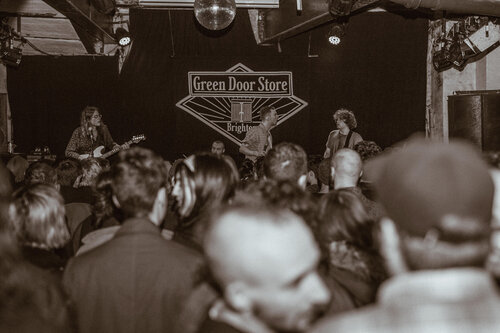
If we lose venues and record shops, it will have a devastating effect on the industry. There is also the terrifc showcase, The Great Escape Festival that was due to take place this year. It is a brilliant platform for artists and brings so many people down to Brighton every year. It is such a shame it will not happen next month. I am going to write more about venues more later next week, but I have been pining for the familiar and I hope that, when I return home and get to Brighton too, everything is sort of as it was left. From the coffee shops that are so welcoming, to the brilliant attractions and people – it would be so sad if there was a lot of damage as a result of Covid-19. I know everyone in the country is making plans for when this all over and, as we are confined to home for the most part, it is inevitable that we are looking ahead and, hope of all hopes, things will not change too much. It seems like there will be some movement regarding easing lockdown by late next month/June, so it will be exciting to think that we will be able to enjoy the start of summer and are not going to have to wait too long – even if it might not be possible for venues to reopen as soon as June. For now, we all must be sensible and bide our time to make sure we do not make the coronavirus crisis worse than it is. Slow progress is being seen, but we might have another month or longer before we can start to (gradually) assimilate. I hope to get home very soon and get back in the car (I do not drive when I am in London; my parents live in West Sussex), and I really do hope I can spend a fabulous day in Brighton…  

PHOTO CREDIT: @jamessutton_photography/Unsplash

VERY soon.

FEATURE: Second Spin: Beyoncé - 4

FEATURE:


Second Spin

zzzz.jpg

Beyoncé - 4

___________

AS I am back in Second Spin territory…

I wanted to focus on an album that did not get the acclaim it deserved the first time around. Beyoncé released her fourth studio album, 4, in 2011, and it was her first album since 2008’s I Am... Sasha Fierce. Beyoncé was on a career hiatus; 4 was the album that album that re-inspired her. If her earliest albums were more contemporary and rooted towards Pop and R&B, 4 took in classic R&B, Funk and Soul. For 4, Beyoncé collaborated with The-Dream, Tricky Stewart and Shea Taylor; they helped produce a mellower tone, developing diverse vocal styles. Beyoncé wanted an album that was more intimate and personal than anything she had produced before and, because of that, I think a lot of critics were put off. Beyoncé would score huge reviews by the time her eponymous (fifth) album came out in 2013. I think 4 is a necessary and important evolution that allowed her greater freedom. If she had carried on making the sort of albums she did with Destiny’s Child and the start of her career, I think she would have been in a rut. 4 focuses on female empowerment and monogamy: Beyoncé – who was approaching thirty at this point – wanted an album that was more mature and meaningful. 4 was promoted in 2011 with a string of television and festival appearances. Beyoncé headlined Glastonbury in 2011 with an incredible set and, although 4 debuted at number one in the album chart in the U.S. – and many other countries-, reviews were not all positive.

It is baffling why so many critics were not fully on board with 4 when you consider the singles released. Run the World (Girls), Best Thing I Never Had, Party, Love on Top and Countdown are among the finest tracks of Beyoncé’s career; Love on Top scooped the Grammy for Best Traditional R&B Performance. 4 had shifted over 1.5 million copies by the end of 2015. It is clear that Beyoncé was not only dissatisfied, to an extent, with her previous direction but with contemporary radio in general. Rather than walk down the same path as everyone else, 4 is her attempt to get R&B back on the radio – at a time when Pop was dominating (as it still does, I guess). There are mixes of ‘70s, ‘80s and ‘90s sounds with big horns and cool grooves, live instrumentation and bold songwriting. I know Beyoncé went on to create stronger work, but I feel 4 is a very impressive album that warranted more love when it was released. Because Beyoncé was maturing as a person, it wouldn’t have been appropriate for her to continue to release the sort of music she was years before. Many critics wrote 4 off because of its change of sound and the fact there are more sensitive and tender songs. Maybe it was the balladry of 4’s first half that divided people. With variegated vocal styles and live instrumentation, it was very different to anything Beyoncé had done before. Start Over, with its R&B vocals and modern beats, is a perfect example of what Beyoncé wanted to achieve.

I think 4 is a fantastic album that is a lot more worthy than its singles. It is a complete and fascinating album from an artist who wanted reignition and fresh impetus. Love on Top is funky as hell and sports a terrific video; Best Thing I Never Had is a female call to arms – and it is one of the best songs she had recorded to that point. Run the World (Girls), a huge anthem that would not have sounded out of place on a Destiny’s Child album. Whilst Beyoncé was moving forward and evolving, I think there are pleasing touches of her earlier work; a great balance of the captivatingly free-spirited and the tender-hearted. There are some good reviews for 4, but there are so many that divide the album in two: people who prefer the more spirited songs and are not too convinced with the ballads. AllMusic reviewed 4 and, despite the fact they had encouraging words, only gave the album three stars:

“Beyoncé reportedly delivered over 70 songs to Columbia for her fourth solo studio album. The dozen that made the cut, combined with their sequencing, make it plain that straightforward crossover-dance singles and cohesion were not priorities. Taking it in at once is mystifying, even when little attention is paid to the lyrics. The opening “1+1,” a sparse and placid vocal showcase, fades in with a somber guitar line, throws up occasional and brief spikes in energy, and slowly recedes. It’s the kind of song one would expect to hear during an album’s second half, certainly not as the opener -- not with the (fittingly) slight sonics and heavy lines like “Just when I ball up my fist, I realize I’m laying right next to you, baby.”

Three additional ballads follow. Each one features its own set of collaborators and contrasts both sonically and lyrically. “I Care” rolls in on pensive percussion and low-profile synthesizer drones, surging during a cathartic chorus. “I Miss You,” alluringly bleak and hushed, is a codependent confessional. The only one that’s rote, “Best Thing I Never Had” is a bombastic kiss-off saved by Beyoncé’s ability to plow through it. From there, the album restlessly bounces between tempos and moods: a desperate midtempo chest thumper, a couple cyborg marching-band dancefloor tracks, an ecstatic early-‘90s throwback, yet more ballads. What’s most surprising is that a song titled “Party,” co-produced by Kanye West with a guest verse from André 3000, quickly settles into a low-watt groove and remains there. Wildcard interludes and a Euro-pop party-anthem cash-in would be the only ways to make the album more scattered, but the strength of most of the material, propelled by Beyoncé’s characteristically acrobatic vocal skills, eases the trouble of sifting through the disjointed assortment. No one but one of the most talented and accomplished singers -- one with 16 Grammys, nothing left to prove, and every desired collaborator at her disposal -- could have made this album”.

I will bring in a more positive review but, to highlight some of the attitudes that were flying around in 2011, this is what NME wrote when assessing 4:

“You’d think that when, five similarly paced tracks in, a song entitled ‘Party’ pops up produced by Kanye West and featuring Andre 3000, some respite may have arrived, but no: it’s more mid-paced, synth-heavy cheese, with a phoned-in guest rap. It doesn’t make you want to have a party. In fact, soon, as yet more anonymous, barely distinguishable slowies arrive (‘Rather Die Young’, ‘Start Over’), the will to continue listening departs. Beyonce’s cry of “Bring the beat in!” on the at-least-slightly-uptempo ‘Love On Top’, feels like it should be preceded by a “For fuck’s sake, PLEASE CAN SOMEBODY…” The latter song turns out to be a light but pleasant tribute to mid-’80s pop of the Whitney variety, and introduces a mid-album interlude of actually quite good music.

aqq.jpg

IN THIS PHOTO: Beyoncé at Glastonbury in 2011/PHOTO CREDIT: Getty Images

Despite sampling Boyz II Men, ‘Countdown’ pedals a nice line in squelchy keyboards, while ‘End Of Time’ exhibits the much talked about influence of Fela Kuti, and – along with the closing ‘Run The World (Girls)’ – is the best thing here by quite some distance. Sadly, between these two songs comes – you guessed it – another ballad, and this time of the power, showstopper, curtain-call variety. It sounds unmistakably like an X-Factor winner’s single, full of unbelievably trite sentiments. It is called ‘I Was Here’, and it goes: “When I leave this world, I leave no regrets, I’ll leave something to remember, so they won’t forget… I was here”.

Beyonce, of course, has already done more than enough to ensure this is the case. She’d done enough with Destiny’s Child, or with the first 30 seconds of ‘Crazy In Love’, to guarantee her entry into the annals of greatness. But there ain’t too much here that’s going to add to her legacy. Rather, there’s the unmistakable sense of someone treading water, with even the OK bits here sounding uninspired. Not what you want from Beyoncé. Not at all. Let’s hope her Glastonbury performance brings better memories”.

Maybe, nearly a decade after 4 was released, it makes sense in terms of where Beyoncé was heading and why she needed to change. As I say, I don’t think she would have created brilliant albums like Beyoncé and Lemonade if she had not expanded and moved directions on 4.

Clearly, she required a change of pace and an album that was truer to her. I think some of the ballads on 4 are incredibly affecting and moving. 4 is such a rich album that has fire and passion, but there is plenty of heartfelt offerings. Pitchfork made some interesting points when they reviewed the album:

“The only recent pop ballad that comes close to its power is Adele's stunning "Someone Like You". But where that song-- and its massively successful corresponding album, 21-- wrung out the aftermath of young heartbreak, Beyoncé is aiming for something a bit more challenging with 4: love the one you're with, and have some fun doing it, too. The album's relative riskiness extends to its music, which side-steps Top 40 radio's current Eurobeat fixation for a refreshingly eclectic mix of early-90s R&B, 80s lite soul, and brass'n'percussion-heavy marching music. All of the album's best elements, thematically and sonically, burst ahead on Jay-Z ode "Countdown", a honking, stutter-step sequel of sorts to "Crazy in Love". The new track makes 10 years of loyalty seem just as thrilling as the first time, with Beyoncé offering her partner copious praise in that famed half-rap cadence: "Still love the way he talks/ Still love the way I sing/ Still love the way he rock them black diamonds in that chain".

Maybe 4 does not crack the top-three in terms of Beyoncé’s greatest albums, yet it is an album that is really solid and has some terrific moments. I have read a lot of the reviews for 4 and, whilst some offering big praise, many are divided and compare it unfavourably with her previous work. I would encourage people to check out 4, as it is a powerful, inventive and rewarding…

ALBUM that stands tall.

FEATURE: Tonight, We’re Gonna Party Like It’s 1989! Why We Need a Viewable Top of the Pops Archive on the BBC iPlayer

FEATURE:


Tonight, We’re Gonna Party Like It’s 1989!

cbcbcb.jpg

IMAGE CREDIT: BBC

Why We Need a Viewable Top of the Pops Archive on the BBC iPlayer

___________

WHEN I have written about Top of the Pops…

IMAGE CREDIT: BBC

in past features, I have asked whether it should be revived and, when there is very little music T.V. around, why there is not a modern-day equivalent. Everyone should be aware of Top of the Pops but, if not, here is a little bit of history:

“Top of the Pops, also known as TOTP, is a British music chart television programme, made by the BBC and originally broadcast weekly between 1 January 1964 and 30 July 2006. The world's longest running weekly music show, TOTP was shown every Thursday evening on BBC One, except for a short period on Fridays in mid-1973, and again in autumn 1974, before once again being moved to Fridays at 7:30 pm from 1996 to 2005 and then to Sundays on BBC Two from 2005 till the last ever weekly show in 2006. Each weekly show consisted of performances from some of that week's best-selling popular music records, usually excluding any tracks moving down the chart, including a rundown of that week's singles chart. This was originally the Top 20, changing to the Top 30 during the 1970s and the Top 40 in the 80s. The distinctive TOTP theme tune – a riff of Led Zeppelin's "Whole Lotta Love" – first appeared in 1973 as the background music to the chart countdown.

The Official Charts Company states "performing on the show was considered an honour, and it pulled in just about every major player." The Rolling Stones were the first band to perform on TOTP with "I Wanna Be Your Man". Snow Patrol had the distinction of being the last act to play live on the weekly show when they performed their hit single "Chasing Cars". In addition to the weekly show there was a special edition of TOTP on Christmas Day (and usually, until 1984, a second edition a few days after Christmas), featuring some of the best-selling singles of the year, and, the coveted Christmas Number 1. Although the weekly show was cancelled in 2006,[6] the Christmas special has continued. In recent years, end-of-year round-up editions have also been broadcast on BBC1 on or around New Year's Eve, albeit largely featuring the same acts and tracks as the Christmas Day shows. It also survives as Top of the Pops 2, which began in 1994 and features vintage performances from the Top of the Pops archives.

Most performers on TOTP mimed until 1991 when the producers of the show allowed artists the option of singing live over a backing track. Miming has resulted in a number of notable moments. In 1991 Nirvana refused to mime to the pre-recorded backing track of "Smells Like Teen Spirit" with Kurt Cobain singing in a deliberately low voice and altering lyrics in the song. In 1995, the Gallagher brothers of Oasis switched places while performing "Roll with It". When an artist could not appear on the show the song would be played while a TOTP dance act (most notably Pan's People) would dance on stage. Later, music videos of artists unable to attend would be used. According to Queen guitarist Brian May, the groundbreaking 1975 music video for "Bohemian Rhapsody" was produced so that the band could avoid miming on TOTP since they would have looked off miming to such a complex song”.

There were numerous attempts to rebrand and relaunch Top of the Pops. I think, by the end of the 1990s, Top of the Pops was looking for a new lease of life. In 2003, with the music industry a lot different to how things were decades before:

“On 28 November 2003 (three months after the appointment of Andi Peters as executive producer), the show saw one of its most radical overhauls since the ill-fated 1991 'Year Zero' revamp in what was widely reported as a make-or-break attempt to revitalise the long-running series. In a break with the previous format, the show played more up-and-coming tracks ahead of any chart success, and also featured interviews with artists and a music news feature called "24/7". Most editions of the show were now broadcast live, for the first time since 1991 (apart from a couple of editions in 1994). The launch show, which was an hour long, was notable for a performance of "Flip Reverse" by Blazin' Squad, featuring hordes of hooded teenagers choreographed to dance around the outside of BBC Television Centre.

Although the first edition premièred to improved ratings, the All New format, hosted by MTV presenter Tim Kash, quickly returned to low ratings and brought about scathing reviews. Kash continued to host the show, but Radio 1 DJs Reggie Yates and Fearne Cotton (who had each presented a few shows in 2003, before the revamp) were brought back to co-host alongside him, before Kash was completely dropped by the BBC, later taking up a new contract at MTV. The show continued to be hosted by Reggie Yates and Fearne Cotton (usually together, but occasionally solo) on Friday evenings until 8 July 2005.

On 30 July 2004, the show took place outside a studio environment for the first time by broadcasting outside in Gateshead. Girls Aloud, Busted, Will Young and Jamelia were among the performers that night.

Figures had plummeted to below three million, prompting an announcement by the BBC that the show was going to move, again, to Sunday evenings on BBC Two, thus losing the prime-time slot on BBC One that it had maintained for more than forty years.

This move was widely reported as a final "sidelining" of the show, and perhaps signalled its likely cancellation. At the time, it was insisted that this was so the show would air immediately after the official announcement of the new top 40 chart on Radio 1, as it was thought that by the following Friday, the chart seemed out of date. The final Top of the Pops to be shown on BBC One (barring Christmas and New Year specials) was broadcast on Monday 11 July 2005, which was edition number 2,166.

The first edition on BBC Two was broadcast on 17 July 2005 at 7.00 pm with presenter Fearne Cotton. After the move to Sundays, Cotton continued to host with a different guest presenter each week, such as Rufus Hound or Richard Bacon. On a number of occasions, however, Reggie Yates would step in, joined by female guest presenters such as Lulu and Anastacia. Viewing figures during this period averaged around 1½ million. Shortly after the move to BBC Two, Peters resigned as executive producer. He was replaced by the BBC's Creative Head of Music Entertainment Mark Cooper, while producer Sally Wood remained to oversee the show on a weekly basis”.

Top of the Pops ended in 2006 and, whilst there has been talk of bringing it back, there has been no capitalisation on that interest. The BBC launched the short-lived Sounds Like Friday Night – a more youth-driven version of Top of the Pops. I think it would be odd to see Top of the Pops back, as the success of the show, I feel, is rooted in the key components that make it such a nostalgia trip. By that, I love the fashions of the time and the cool titles; the fact there was big hair, cheesy introductions and a whole array of chart acts – not to mention the obligatory chart rundown itself! I think, if Top of the Pops was rebooted, there would not be that chart element – as there is less stock in the position songs reach -, and it would not have the same warmth and heart. As we are in a digital age, I think the look and format of Top of the Pops would be radical and unwelcome. For that reason, I think it is important we remember Top of the Pops as it was, and digest as much of it as possible.

On BBC Four, we are seeing repeats of Top of the Pops from 1989. This has been running for a while, and I know there will be more 1989 editions coming up. It is wonderful to see this fruitful and diverse period of music; the typically ‘80s clothes and the rush one gets when watching the top-ten played out! It is a magical thing and, at a time when the BBC and other organisations are opening their archives, I wonder why there are only a few episodes of Top of the Pops. It is the way of things, with BBC iPlayer, that shows are normally available for thirty days and they disappear. I have never understood why there is this thirty-day period, but I guess there are sensible reasons. I am surprised there is not an official Top of the Pops website where archived shows are kept. I think you can stream most episodes here and, whilst some early episodes might have been deleted or lost, now seems like a perfect time to open the Top of the Pops archive on the BBC iPlayer so that we can all binge for the next month. I can see no reason why, when those thirty days are up, the episodes cannot be stored on a website. I know the BBC are ladling out the episodes on T.V., but it is a bit confusing why there is not this archive where we can all access. I have seen posts on social media from people who have watched Top of the Pops on BBC Four and get that nostalgic shiver.

At this difficult time, I think a treasure chest of Top of the Pops would be wonderful. As BBC Four are focused on 1989 at the moment, I am curious looking further back and the stuff we have not seen – or not seen for a while. It might be impossible to load every single episode. After all, there were 2,267 (508 missing) in total, so putting that onto a website would crash it. Rather than dumping them all online at once, maybe a year-by-year offering might be best; working from the very earliest episodes and maybe working to the end of the 1990s/middle of the next decade? As things stand, there are so many episodes that would bring delight, and it seems a shame that the ones on the iPlayer disappear after thirty days, and we only have a limited amount at one time. I think a yearly archive would work. If we started in 1964 or 1965 and then had a load of episodes for thirty days, that would be a start. Granted, it would take a long time before we got to the very end, but I would like to see an assortment of other episodes available on iPlayer. I am a huge fan of the 1990s, and there is nothing from that decade available. Similarly, the years 1985-1988 fascinate me, and many would embrace an assortment of classic episodes from that period. Maybe the BBC are running chronologically after 1989, but there is a long time to wait until we make our way through the years.

Logistical reasons mean the fleet of Top of the Pops’ episodes has to be broken up and disseminated gradually. I have actually found an explanation online regarding the thirty day rule:

“Why are programmes available for 30 days? To put programmes on iPlayer, we need to pay the people who made them. And we want to give you the best value for money. Making programmes available for longer than 30 days would cost more, and mean there would be less money for making new programmes”.

That seems fair, but I wonder if the same rules apply to old Top of the Pops episodes compared with new shows. In any case, whilst fewer new shows are coming around, there is this window to at least put a portion of the Top of the Pops gems alongside the ones currently available from 1989. It has been brilliant watching 1989’s best on BBC Four, and then revisiting them on the iPlayer. There are so many golden years that people would want to watch; it would provide joy and a sense of escape when we really need it. It would be a relief and welcomed blast from the past…

FOR all music lovers.

FEATURE: All the Love: Remastered: Pushing a Kate Bush Podcast Forward

FEATURE:


All the Love: Remastered

444.jpg

IN THIS PHOTO: Kate Bush at Abbey Road Studios (circa 1980)

Pushing a Kate Bush Podcast Forward

___________

THIS is not the first time…

assaa.jpg

IN THIS PHOTO: Kate Bush looking relaxed in 1978

I have talked about a Kate Bush podcast - and apologies for covering trodden ground. I was formulating All the Love before lockdown and, although I have not yet set up a recording space, the idea of putting one together is stronger now more than ever. In lockdown, I am seeing more tweets concerning Bush and her music; people comforted and strengthened by her incredible catalogue. I have heard more of her music on the radio and, whilst this is good, I think one of the problems is, with all radio stations, the narrowness regarding the music played. I am not against the big hits being played but, now, I think it is a perfect opportunity for stations to play lesser-spun cuts from her albums - as they are not mandated to play singles in the same way they would for a new artist. I realise other artists experience the same; radio stations only playing a few singles and the big songs we know. When it comes to Kate Bush, we never really hear album tracks.

IN THIS PHOTO: A still of Kate Bush in the Suspended in Gaffa video (1982)/PHOTO CREDIT: John Carder Bush

A few songs from Hounds of Love are played (normally Cloudbusting, Running Up That Hill (A Deal with God) and Hounds of Love). If broadcasters play songs from other albums, we might get Sat in Your Lap from The Dreaming; perhaps The Red Shoes from The Red Shoes, The Sensual World from The Sensual World, or Babooshka from Never for Ever – all of them are pretty well-known singles. For a punt, here are some great songs from a selection of her albums that warrant more airplay (some of these songs have never been played on radio): The Kick Inside: Strange Phenomena, Kite, Feel It and Them Heavy People; Lionheart: Symphony in Blue and Kashka from Baghdad; Never for Ever: Delius (Song of Summer), The Wedding List and The Infant Kiss; The Dreaming: Suspended in Gaffa, Leave It Open, Houdini (my favourite of her songs) and Get Out of My House…

<

Hounds of Love: The Big Sky, Under the Ivy (the B-side of Running Up That Hill), Waking the Witch and Jig of Life - Experiment IV; a non-album single from The Whole Story (1986) -; The Sensual World: Love and Anger (a lesser-played U.K. single) and Never Be Mine; The Red Shoes: Rubberband Girl, And So Is Love and Top of the City; Aerial: Mrs. Bartolozzi, How to Be Invisible and A Coral Room; 50 Words for Snow: Wildman and Among Angels - not to mention Be Kind to My Mistakes, Warm and Soothing, Sexual Healing and My Lagan Love from Kate Bush: The Other Sides (2019). I guess, if people are familiar with songs then they are easier to identity and they sink in faster. It is a shame that even bands as big as Led Zeppelin and The Beatles, as I have said a few times, are not really opened up more on the radio in terms of album tracks and rarer moments.

sas.jpg

IN THIS PHOTO: Kate Bush in 1989

Kate Bush seems to get defined by a few songs; she is an artist whose album tracks are spectacular; so many of them have never been heard on the radio and, because of that, people do not really go exploring and think about her albums like they would if non-singles were played. Also, looking online, and there is only really the one decent Kate Bush podcast around: the Kate Bush Fan Podcast has been running for a long time now, and it is hosted by Seán Twomey (no offence to any other Bush podcasts, of course). The man knows his stuff and, whilst the podcast covers pretty much everything related to Kate Bush – from specific songs through to periods of her career -, there are gaps to exploit. I love the podcast and, when it comes to knowledge and dedication, Twomey beats me. The man knows Kate Bush better than most people around, but I have never been a massive fan of the audio quality. I am not sure whether Twomey has a home studio or professional kit, but there is that homemade feel that I wanted to improve on. I am not taking a dig at the podcast, but it is important that I do not stray too close to the Kate Bush Fan Podcast when making mine.

IN THIS PHOTO: Kate Bush in less than glamorous surroundings in 1980/PHOTO CREDIT: John Carder Bush

I am not suggesting All the Love would be this shiny and hugely polished podcast, but sound quality and clarity is key. I think it is important that all the music and conversation is as clear and crisp as it can be. Also, although Twomey has contributors on his podcast, they do not often sit in the same room and dissect her albums (not that I have heard, anyway). Having heard I am the Eggpod and The David Bowie album podcast (more on them in a second), I know how wonderful it is when people discuss and pour over an album in proper detail! I love a podcast that is broad with an artist like Kate Bush because, to be fair, she is a lot more than just her albums. There is the live element, her sense of style and attachment to literature and cinema. Long may his Kate Bush Fan Podcast reign – it is one I tune into and really enjoy. I am not sure whether it is ever going to be possible, but the thought of involving Bush herself is tantalising. Whether she would ever conduct an interview is hard to say, but it would be a dream to hear from the ‘subject’ herself, as it were!  

I have been listening a lot to Chris Shaw’s I am the Eggpod, which features guests (usually in a studio/room with him; they are communicating via the Internet at the moment) who talk about a particular albums from The Beatles or a solo album from one of the band members. It is an excellent listen and, not only is the audio quality wonderful; Shaw and his guests go through an album track by track. There is also The David Bowie Albums Podcast which, like I am the Eggpod, features a guest chatting about a Bowie album in depth. Whilst Kate Bush has released fewer albums than The Beatles and David Bowie – 2011’s 50 Words for Snow was her tenth and most-recent release -, she has released E.P.s and other albums (greatest hits, and albums of rarities) that would be ripe for exploration. One other reason for wanting to do my own Kate Bush podcast is because there is a gap in the market. There have been one-off podcasts and other broadcasts which have shone a light on her music, but they have been archived. At the moment, there is very little out there dedicated to Kate Bush and her work. Even though she has not released music for a long time now, there is always this fascination around her – who knows; one day she might put out her eleventh studio record!

IN THIS PHOTO: Kate Bush captured for the Lionheart album in 1978/PHOTO CREDIT: Gered Manowitz

It is a shame radio stations do not really dig that deep regarding her music. There are so many brilliant tracks that never get played. I think a podcast like All the Love would sit alongside the Kate Bush Fan Podcast and, as there would be relatively few episodes, it would be fairly cost-effective to run – I shall come onto that a bit later. Outside of podcasts, there has been very little in the way of Kate Bush coverage in terms of radio or T.V. documentaries. In fact, I think the last documentary to air was the BBC’s The Kate Bush Story: Running Up That Hill in 2014. I know one can watch it on YouTube and, whilst it was necessary, the fact it was only an hour long and had some flaws (one or two superfluous, non-musical guests; no real revelations and new information), means that there is an opportunity for someone to come along and make a properly detailed and comprehensive Kate Bush documentary – it is also something I have been trying to get off of the ground. All the Love is designed to provide these ten or more episodes that put one of her studio albums at the centre. That is not to say the only thing that will be featured is a song by song assessment: there is the period before and after the album’s release that provides conversation and illumination. Take, for example, Lionheart and the fact it was a slightly rushed album – she released it a matter of months after The Kick Inside (this is a good accompaniment to the album; I also can’t believe she advertised watches in Japan around the time of The Kick Inside!): her phenomenal and underrated debut, in 1978. It is such a wonderful album that, to this day, I am being surprised by in so many different ways.

saaa.jpg

IN THIS PHOTO: A colourful Kate Bush snapped in Amsterdam in 1979/PHOTO CREDIT: Barry Schultz

I do not mean to rant on too much about 1978 - a lot of the photos in this piece are taken from 1978 and 1979 -, but it was a huge year and I think it gets overlooked - one area that will be focused on in the podcast. I will move on shortly but, as Kate Bush is the artist I adore more than any (apart from The Beatles) and The Kick Inside is my favourite album ever, this is the main reason I want to get a podcast started (listening to her speak in 1978 truly melts me). Bush released two albums in 1978, and she was busy promoting The Kick Inside around the globe. In this feature, we learn about a phenomenal busy six months for the young artist:

“Following the release of The Kick Inside, Kate Bush undertook an astonishingly busy 6-month promotional campaign. In addition to topping charts and appearing on what seemed like every TV program in the UK, Bush did an extensive amount of traveling, visiting West Germany, the Republic of Ireland, the Netherlands, France, the United States, Canada, and Japan. One could unpack any one of these tips individually, but they mostly consist of Bush performing songs from The Kick Inside. As Dreams of Orgonon is a song-by-song blog, we analyze episodes in Kate Bush’s career through the lenses of new songs as they come. Bush’s promotional visit to Japan in June of 1978 not only offers a couple songs we haven’t heard her sing before, even if they are covers, but it gives a chance to see what Kate Bush does when she’s not doing Kate Bush things”.

Although Kate Bush’s trip to Japan was a little troubled - she was culturally out of her depth, she didn’t have her own band with her and, on 18th June, 1978, she, ironically, nervously performed Moving to an audience of 11,000 people at the Nippon Budokan for the 7th Tokyo Music Festival -, she did cover so much ground and get her music to so many people (Bush quickly grew to hate flying and travel as it took her away from the studio and sapped her). One can only imagine how bracing and unusual The Kick Inside sounded when it was released in February 1978. Although so few people rank The Kick Inside in the top-three Bush albums (it normally comes in fourth or fifth), I just adore the bones of it. The vocals - a source of division among critics at the time - are sumptuous, and the maturity and confidence throughout is dazzling. Wuthering Heights still sounds otherworldly to this day, and I cannot fathom how a thirteen-year-old Kate Bush managed to write The Man with the Child in His Eyes! I will talk more about The Kick Inside when I do a big Kate Bush feature close to her birthday but, for now, I shall move on…

Bush then finished the album and, the year after, took her massive, groundbreaking Tour of Life around Europe. Even before then, Bush was promoting and travelling a lot. It is amazing to think how much she packed in over such a short time! There are albums of Bush’s that get overlooked and passed by quite quickly. Whilst Lionheart and The Red Shoes (1993) might not be her finest moments, they are both really interesting albums that contains some terrific songs – again, they are not exploited by radio stations. The cost and location are things I have raised in previous blog posts. I would not consider pushing this podcast forward until after lockdown – in terms of getting a recording space set up -, but, as I am sequestered in a rather small house in Haringey, North London – where there is neither the space to record (and it is a very noisy area where it would be impossible to sound-proof adequately); it is not an ideal setting for a podcast -, I have to look at recording facilities around London. I realise the home-made podcast is more affordable and, at this time, how many people are doing things. I don’t think I can do justice to Bush and her music if I narrowed things back or slimmed back my ambitions - though, in terms of putting a pilot/test together, I may need to experiment at home and work on the format before developing it and bringing it out into the wider world.

900ik.jpg

IN THIS PHOTO: Kate Bush in 2005/PHOTO CREDIT: Trevor Leighton/National Portrait Gallery, London

Depending on the hourly charge, it depends on how many episodes I can record this/next year. Of course, it would be ideal to feature all of Bush’s ten studio albums, in addition to a few other key releases. Definitely, I want to cover off The Kick Inside, Never for Ever (1980), The Dreaming (1982), Hounds of Love (1985), The Sensual World (1989), The Red Shoes and Before the Dawn (the live album was released in 2016; Bush performed a sold-out run of gigs in Hammersmith in 2014). These albums are rich with interesting music, and there is plenty to discuss regarding the songs and the periods before and after the albums’ release. I would love to also feature Lionheart, Aerial (2005), Director’s Cut (2011) and 50 Words for Snow, but I am not necessarily going to run the episodes chronologically; there might be budget and time for all of her albums. In terms of cost, maybe running a ‘series one’ that focuses on five or six albums would be smarter and, if the podcast has legs and appeal, then branching out and doing a second series would be prudent. Monetising a podcast is a big consideration, so I may have to crowd-fund to get All the Love lit, and then look at sponsorship in order to generate some revenue. There are great and successful production companies like Cup & Nuzzle I have been looking at that would make for a nice home (for the podcast).

IN THIS PHOTO: Kate Bush and Felice Fumagalli in Italy in 1982 preparing to promote The Dreaming

Once a record facility is set up and the format is worked out – I have been tinkering a lot and think I have it down -, there is the case of getting the guests. Budget-wise, a lot will go to record facilities and getting the rights to play her music (from EMI and Fish People (Kate Bush’s own label). It is like when you are a kid and you have a birthday coming up and you get excited sending out invites and seeing how many of your friends will R.S.V.P. – remember those simpler days?! I pretty much have a guest(s) in mind for the albums The Kick Inside, Hounds of Love (Bush herself gave a breakdown of Hounds of Love in a radio broadcast that was first aired in 1992) and The Sensual World. There are other big Kate Bush fans that I will do some more digging on to see which album would be best to chat about. I know journalist Laura Snapes is a big Kate Bush fan, and I love her review of The Kick Inside. It would be wonderful to chat with her about Bush’s 1978 debut, and dive into her lyrics and how she was such a revelation and unique explosion when she arrived. Actor Guy Pearce is another massive Kate Bush fan, and I know he loves her early work – maybe having him discuss The Kick Inside or Lionheart? It would be a big-budget booking – and probably won’t ever be realistic – but I know Björk counts The Dreaming as one of her favourite albums.

9999.jpg

IN THIS PHOTO: Kate Bush photographed by her brother, John Carder Bush, in 1985

Author and writer Andy Miller has told me his favourite Kate Bush album is The Dreaming, and he has expressed interest in talking about that album. I am keen to feature people from various corners of the media, but having musicians involved would allow us to see how Bush has inspired her contemporaries. Of course, regarding The Kick Inside, I think David Gilmour (Pink Floyd) is also crucial, as he helped discover her and was the Executive Producer for The Kick Inside’s The Saxophone Song and The Man with the Child in His Eyes. (both songs were recorded in 1975) Part of each episode, I hope, would involve me interviewing (pre-recorded) those involved with her music – engineers, producers and musicians who played on her albums. Paddy and Jay Bush (her brothers), Del Palmer (her engineer and a musician who played with her before The Kick Inside (and dated her for many years) and Ian Bairnson (a fabulous musician who played with her a lot through her career) are names on my list. Before I mention the next few guests I am aiming to speak with, think about those who were in attendance during her Before the Dawn residency – a plethora of famous fans who could contribute or discuss her albums. Natasha Khan, Florence Welch, Anna Calvi, Alison Goldfrapp and Tori Amos saw Bush play in 2014, as did Cerys Matthews. St. Vincent is another huge Bush fan, and someone who could talk about her work with a real sense of identification and authority. Actors Stephen Fry (who contributed to her 2011 album, 50 Words for Snow) and Gemma Arterton (who is a big fan of Hounds of Love) were also at Before the Dawn. It is amazing to see the wealth of celebrities that flocked to see her back in 2014. I am not sure how many I can get involved with the podcast, but it would be interesting to hear their reflections and recollections of that once-in-a-generation gig/series of gigs.

There is ample choice when it comes to interviews and, when covering the Before the Dawn album, I think quite a few names would be able to express what it was like being at those gigs – of course, budget is another thing that might restrict my ambitions. The fact so many well-known people attended one of the Before the Dawn gigs shows how far and wide Bush’s popularity extends. Bush is a big fan of literature and cinema, so it is no surprise that so many from the worlds of stage, screen and literature wanted to see her perform. There are other guests I would like to bring into All the Love. Mark Radcliffe (BBC Radio 2, BBC Radio 6 Music) is a super-devoted Kate Bush fan, and he has interviewed her a number of times. He could probably discuss her entire catalogue without much trouble, but I know he holds The Sensual World in high esteem. He interviewed Bush when she was promoting Aerial and 50 Words for Snow (and Director’s Cut), so he is someone I am very keen to have involved. His passion and knowledge of her music is infectious. Thinking about Mark Radcliffe links me to his BBC Radio 6 Music chum and co-host, Stuart Maconie (he recently featured on the David Bowie Albums podcast; Bush, interestingly, incorporated quite a bit of David Bowie-era Lodger on The Dreaming).

IN THIS PHOTO: Kate Bush in a promotional photo for The Red Shoes (1993)

His connection with and love of Kate Bush goes far back. I have been browsing an interview published in Q, where Maconie spoke to Bush about her work (she released The Red Shoes not long before the interview was published). I want to quote from a chunk of that interview, as he asks some very original questions – we got to learn new things about Bush:

“She is oddly disparaging of albums like Lionheart and Never For Ever now and even then seemed keen to leave this phase behind, perhaps understandably -- she had been given two years to write the songs for The Kick Inside and, allegedly, four weeks to come up with Lionheart. By 1982 she was under the influence of Peter Gabriel and the revolutionary drum sound of Phil Collins's In The Air Tonight. Determined to do something like this herself, she became locked into a hellishly expensive round of aborted studio stints, finally emerging with The Dreaming, easily her weirdest effort and one that effectively stalled her career, peaking at Number 3 (Never For Ever entered at Number 1) and spawning a batch of flop singles.

Wild rumours abounded, including the choice story advanced by the Daily Mail that she had ballooned up to 18 stone. This was patently untrue but she *had* ground herself down into a state of nervous fatigue, not helped by a reputed diet of junk food and chocolate. It was not the happiest of times.

You are famously uncynical. Or at least, you were. Has all that changed?

"I think it has. I think it's impossible to move through this business -- in fact, it's impossible to move through life without adopting a bit of cynicism. It's a protective and defensive thing. People are going to rip you off, they're going to stitch you up, and if you're cynical, it prepares you for the reality of this. It prepares you for things that, chances are, are going to happen to you (laughs)."

Do you ever lose your temper?

"Yeah. How can you be human and not? It's healthy for you. I used to see it as totally negative, when I was much more uncynical (laughs). I'm not so sure now. It's quite a motivator, you know."

Would you make a good therapist?

"I really don't know. When I was little, I really wanted to be a psychiatrist. That's what I always said at school. I had this idea of helping people, I suppose, but I found the idea of people's inner psychology fascinating, particularly in my teens. Mind you, it's probably just as well I didn't become one. I would have driven all these people to madness. I'm better off just fiddling around in studios."

What newspapers and magazines do you read?

"I don't, really. I find them all slightly biased and angry in their own ways, and generally I prefer the radio or the television, especially where news is concerned. I know the television is biased too, but it doesn't seem as sort of characterised as the press. And magazines I don't read at all, I'm afraid. I did for a while and found them quite boring and slightly manipulative. I thought a lot of magazines were trying to -- or if not trying to, then ending up, making you feel inadequate. I didn't think a lot of healthy things were going on in them. I had friends who got magazines regularly and they were getting more and more concerned about them, more and more obsessed with the articles and the quizzes. It took me a long time to grow out of The Beano, though, so perhaps I'm just not grown up enough for magazines".

IN THIS PHOTO: Kate Bush captured on 28th August, 1980/PHOTO CREDIT: Andy Phillips

Before moving on, I want to link to a couple of other Maconie-Bush pieces. In 2011, he spoke about the enduring popularity of Bush, and why she continues to amaze and stand in a league of her own. He talked about her earliest work and Wuthering Heights; how could, someone who was essential a schoolgirl, conceive and deliver such affecting, original and against-the-times music? She has, as Maconie notes, endured for decades and continues to forge her own path. He was talking about 50 Words for Snow and how it is up there will the best stuff she has ever done - an album that sound completely different to any that she has released. Stuart Maconie penned a feature for the Evening Standard and discussed 1980s music – he highlighted Bush’s impact and influence:

“Bush transfixed a generation with her image and gloriously romantic musical style. ‘Wuthering Heights’ was as revolutionary as ‘God Save the Queen’, and those shock waves are still heard today in the music of Florence + the Machine, Bat For Lashes et al. By the mid-1980s she’d arrived at her mature style: dense, opaque, intense and oblique”.

I am not sure whether 50 Words for Snow, Aerial, The Kick Inside or Hounds of Love means more to him but, in some form or the other, it would be valuable to have his experience and love of Bush’s music on the podcast. Not that Stuart Maconie and Mark Radcliffe need to go everywhere together, but the two of them have a great interest in Bush’s music, so perhaps they could appear together? They play quite a bit of her music on their BBC Radio 6 Music, and have no doubt introduced so many people to her albums. The two of them have been followers and fans of Bush for decades so, yeah, that would be a major coup having them involved - however small their involvement is. I am just thinking out loud, mind! Of course, all of this might come to nothing if I can afford guests or get things together but, as I said, it is nice to have a plan and, in the case of All the Love, it is a podcast that does not have too many close rivals.

mm.jpg

IN THIS PHOTO: Kate Bush in 1982/PHOTO CREDIT: Pierre Terrasson

I have already mentioned Gemma Arterton, who I know has been a fan of Kate Bush for years. She loves Hounds of Love, I know, so she is keen in my mind when it comes to finding a guest(s) for the Hounds of Love episode. I also know musician and BBC Radio2 broadcaster Jamie Cullum spoke with Bush in 2011 (I cannot find the whole interview available to listen to; it used to be on YouTube), and they discussed 50 Words for Snow. As a Jazz musician, Cullum would be perfectly placed to explore and undress that remarkable album. One more potential guest that I have been thinking about is the superb author, broadcaster and writer, Pete Paphides. I know he is a big fan of her work (as is his wife: the writer, journalist and author, Caitlin Moran), and he was in attendance when Bush hit the stage in 2014. I am not sure whether he has a favourite of her albums – it might be another case of getting quite a few people to give their thoughts on Before the Dawn.

IN THIS PHOTO: Kate Bush on stage in August 2014 during her Before the Dawn residency/PHOTO CREDIT: Gavin Bush

Paphides has also written about The Sensual World (track), and, although he found some weaknesses on her 2005’s album, Aerial, it would be interested to hear his take on one of Bush’s albums – maybe Aerial – or her residency in 2014. I have read his brilliant book, Broken Greek, and he mentioned how he was at a Co-op department store on his birthday and browsing for a football kit. The Kick Inside was playing in full and he heard The Man with the Child in His Eyes play and was blown away. By the time Wuthering Heights came on, he had selected a kit! He also mentions how he was struck by the Englishness of the Lionheart album so, maybe, one of those two could be right for him. It is hard to know whether there are members of the media or the arts who have a favourite Kate Bush album, so it might be the case of throwing out an invite via social media and gauging reaction. For me, The Kick Inside is queen – it is my favourite album ever -, and I have not seen anyone in film, T.V. or radio (and all other areas) who specifically name-check that album as being their favourite. Maybe this is me being a bit too defensive, but this is an album that is hugely underestimated, so I do hope there are people out there who could chat about The Kick Inside and how important it is - though The Dreaming, Hounds of Love and The Sensual World would be easier to pair with people…probably secondary considerations after actually getting the podcast sorted and in a good format. Matt Everitt is someone I have omitted until now (not intentionally), but he was the last person to conduct a radio interview with Kate Bush back in 2016 – I am making it sound like Bush has gone missing and Everitt was the last person to see her safe and well! He interviewed her when she was talking about the album release of Before the Dawn…and I know he has been a fan of her work for years. It would be interesting to see which of her albums, if any, he has a special attachment with.

IN THIS PHOTO: Kate Bush climbing high in 1982/PHOTO CREDIT: John Carder Bush

I am spinning on a tangent – as I am prone to doing! -, but I think many of us are planning projects for when lockdown ends. I love podcasts that take apart an album because, more and more, people tend to hand-pick songs, and there is not a Kate Bush podcast out there that focuses on her albums and invites a guest to go through the tracks – I may be wrong, but I have researched far and wide. Bush is an artist whose albums are filled with unique gems, yet so few of them make their way onto the radio – most stations focus solely on the singles and the cuts we all know. I will stop blathering on in a second, but I have been trying for months to get a podcast/documentary kicked off regarding Kate Bush. I know there are so many people out there – well-known and regular fans alike – who hold Kate Bush very close to their heart, and it would be great to talk with them about her albums – rather than me going on and on and boring people! As I said near the start of this feature: Bush’s music is reaching out to new people at the moment, and it is providing a lot of comfort and joy. I am surprised there are not more Bush-related podcasts around so, in that spirit, I am determined to get activated and forward-thinking. All the Love, whilst it has been on paper and in my mind for months now, is a podcast I need to get moving…

WHEN lockdown is lifted.

FEATURE: The Lockdown Playlist: Vol. VII: 2004-2007

FEATURE:


The Lockdown Playlist

qaa.jpg

 PHOTO CREDIT: @georgiadelotz/Unsplash

Vol. VII: 2004-2007

___________

I am going to head back…

xzz.jpg

PHOTO CREDIT: @marcishere/Unsplash

into the 1970s once I have completed the 2010s. I am enjoying putting together these playlists, as I get to see the songs that were riding high in the U.K. during different years. Although the sound of music has changed through the decades, there are always big tunes and catchy cuts to keep us smiling and upbeat. If you need some music to keep you busy whilst we are in lockdown, I think the playlist below will definitely do the job. It is a rather odd time, so I think music is going to join and help us all more and more. For those who need their bodies moved, I think I’ve…

PHOTO CREDIT: @jelle_van_leest/Unsplash

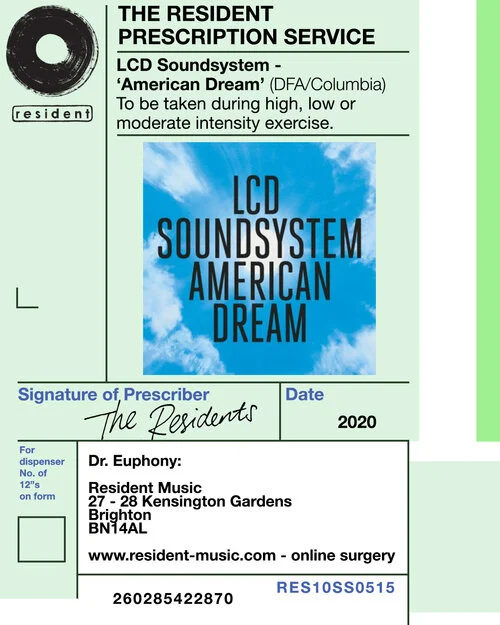
GOT the prescription. 

FEATURE: Would I Lie To You? The Popular Music of 1992

FEATURE:


Would I Lie To You?

The Popular Music of 1992

___________

I am still pretty keen to do…

zaa.jpg

IN THIS PHOTO: Rage Against the Machine in 1992

as many current features as possible. By that, I will react to what is happening now and try to put as much ‘relevant’ content online. I am still doing Spotlight: a feature that investigates an artist that is worth keeping an eye out for. It is important to do that but, whilst we are in lockdown, I am revisiting classic albums and taking a trip through various periods of time. As part of my Lockdown Playlist series, I am combining the biggest U.K. hits from particular years; each playlist joins four years of top tunes together. I have already sort of covered 1992 already but, when I was putting together the Lockdown Playlist that included 1992, I was blown away by the range and brilliance of the music! I am not going to make this a feature about which year of music is best – I am fond of 1989 and 1994 -, but I have been casting my ears towards the familiar sounds of 1992. When the year started, I was eight, so I was just about to leave for middle school, and just the right age to absorb what was playing on radio and music T.V. I love the music that has been put out the last few years, but isolate 1992 and compare it with the last few years of music. Scenes come and go, but there has been a rapid shift in terms of tastes and sounds.

Maybe there was something bubbling through the industry in 1992; an energy and sense of momentum left over from the years 1988-1990 which, to me, were among the most impressive and significant when it comes to Pop and Hip-Hop. I am going to source from a Billboard article that makes a case for 1992 being the strongest year for music in the ‘90s. The closing words are useful to keep in mind:

“Nostalgia is a dirty business, often rewiring the past with false assumptions about its conditions without recognizing that interesting things are happening regardless of the year or location you're in. We get ups, we get downs, and 1992 was no different”.

Indeed, there were many downs and average moments in 1992. Commercial Pop was raging and, inevitably, that brings with it tracks that are sugar-sweet or plain awful. No one year is flawless and lacking in criminal releases – 1992 was no exception. Everyone has as an opinion as to the worst of 1992, and I accept that there were some dodgy and cringe-worthy songs that we need to bury. Whilst some have claimed Madonna’s This Use to Be My Playground s among the worst of 1992, I think the song is very moving – I think some people don’t like Madonna unless she is full of energy and putting out bubbly Pop. I digress, of course.

Billboard gave a great summary of all the biggest artists and movements away from the more traditional and conventional Pop music:

“Grunge had broken and famously displaced the Aqua Net-scented glam rock of the previous decade, and while “Smells Like Teen Spirit,” a song from 1991, was just beginning to take off, 1992 naturally brought the imitators and weirdos. Stone Temple Pilots' first album, Core, foretold grunge's undoing, both in attitude and sound. Bob Mould's first record with Sugar, Copper Blue, introduced the world to the sound of "alternative," a genre that would bring us Fastball, Better Than Ezra, Marcy Playground... too much. It was just too much. NOFX's White Trash, Two Heebs and a Bean gave us snide pop-punk light on politics and heavy on carefree beer consumption -- hardly novel, but they totally didn't care! And we were still two years away from Green Day’s “Longview.”

Much like Nirvana's Nevermind the year before, Rage Against the Machine's self-titled debut in 1992 gave jocks a brutal soundtrack with lyrics meant to be heard that they would ignore (an angle of which "Weird Al" Yankovic mocked with his '92 record Off the Deep End). Not so much with House Of Pain's self-titled debut. Sir Mix-A-Lot let us know what he thinks about big butts, a sentiment which hasn't gone anywhere in the interim. Garth Brooks channeled Michael Jackson's "Black and White" (released the year previous) with his cover for The Chase.

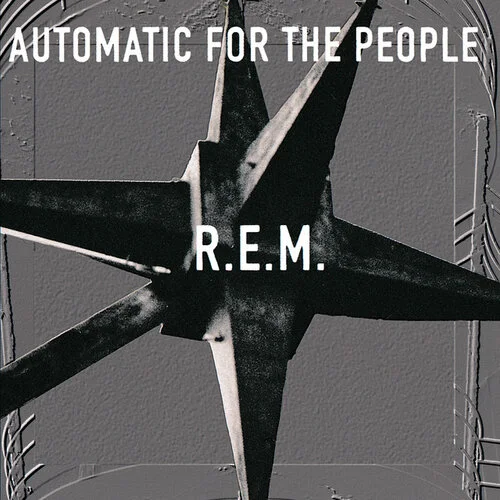
It wasn't all bad though! Beastie Boys' dropped Check Your Head, an album that would be inescapable for the rest of the decade. Same for Dr. Dre and The Chronic, and R.E.M. and Automatic for the People. Less so for the not-as-good but equally notable Dead Serious from Das EFX.

We received The Jesus and Mary Chain's best record, Honey's Dead, and were introduced to their sonic and titular cousins The Stone Roses on that band's record Turns Into Stone. In fact, the year was big on introductions. We also met a young woman named PJ Harvey, who released her debut Dry. We met a ginger who called himself Aphex Twin. Across the ocean from Richard D. James was a bald-headed, punk-leaning producer named Moby, who put out his self-titled record. Heads shook to Stereo MC's still-weird, still-memorable hit single "Connected," from the album of the same name.

1992 was a brilliant year for Grunge and Alternative Rock, in addition to some pretty fine Hip-Hop. I think some years have been very much all about a particular genre or style, yet 1992 could accommodate Pop and Rap without any problem. Although Billboard have talked about the good and bad of 1992, I want to revisit the charts because, as I found when compiling a recent Lockdown Playlist, there was some wonderfully uplifting music coming out.

Earlier this week, I shared the song, The Best Things in Life Are Free from Luther Vandross and Janet Jackson. The song was from the film, Mo’ Money, and it sort of encapsulates the spirit of the year. Although there was some bad Pop and Alternative Rock following in Nirvana’s wake, there was ample gold to compensate. It is the clash of the best albums of 1992 with the most-popular tracks of 1992 that amazes me. In terms of albums, R.E.M.’s Automatic for the People and Beastie Boys’ Check Your Head were among the very best. Dr. Dre’s The Chronic and Sonic Youth’s Dirty suggested it was a case of American dominance. If the introduction of Britpop would soon level the playing field, 1992 is synonymous with some huge U.S. releases. 3 Years, 5 Months and 2 Days in the Life Of... by Arrested Development is one of the best albums of the 1990s, whilst Rage Against the Machine’s eponymous debut and Tori Amos’ Little Earthquakes were blowing people away. Prince’s Love Symbol and En Vogue’s Funky Divas gave us plenty of sweat, sass and style. In a year where k.d. lang gave us Ingénue, Generation Terrorists from Manic Street Preachers showed just how exceptional and diverse 1992 was! Joining the Manics in the British fight was PJ Harvey; she released the mesmeric Dry, whilst Annie Lennox’s Diva remains one of her best work – containing, as it does, the hits, Why and Walking on Broken Glass. Aphex Twin’s genius Selected Ambient Works 85–92, and the Morrissey’s Your Arsenal meant the British best could sit alongside the best of American.

Whilst the best albums of 1992 suggest something more serious, look at the British charts and that is counterbalanced. I was drinking in artists like Rage Against the Machine but, as that was a little bit charged and intense for my young ears, I was being steered more to the charts. We Got a Love Thang by CeCe Peniston and The Prodigy’s Everybody in the Place hit the charts in January; Shakespears Sister’s Stay and Michael Jackson’s Remember the Time were here in February; in the same month, Ride and The Jesus and Mary Chain were releasing big singles alongside the best names in Pop. Whilst some dismiss Shanice’s I Love Your Smile, it is an infectious track that brought plenty of cheer and delight. Guns N' Roses’ November Rain and U2’s One peaked in the charts in March – two of the best tracks of the 1990s -, whilst Nirvana’s Come as You Are and CeCe Peniston’s Finally meant two of March’s biggest singles were worlds apart! April was a little bit slower when it comes to the memorable singles, but May brought us Michael Jackson, En Vogue, Kriss Kross, and The Cure. June’s big tracks included Something Good from Utah Saints and Too Funky by George Michael. One can look at the list here to see the songs I am omitting, but I think some of the most interesting and formative tracks rode high in the charts from July 1992.

Maybe it is unique to me, but I was a big fan of Jimmy Nail’s Ain’t No Doubt. Madonna’s This Used to Be My Playground still stirs me; Snap!’s Rhythm Is a Dancer is  club classic, and The Best Things in Life Are Free by Luther Vandross and Janet Jackson was a huge hit in August – I am aware I have skipped over Billy Ray Cyrus in order to get to Luther Vandross and Janet Jackson! Annie Lennox stood tall in August, but I love the Dance tracks that were being put out in 1992. Ebeneezer Goode by The Shamen is an absolute classic, and I Love Dr. Albarn’s It’s My Life. Outside of Dance, I was falling for songs like Iron Lion Zion from Bob Marley and the Wailers and Sleeping Satellite from Tasmin Archer – one of the underrated pearls of the entire decade! Boyz II Men brought us End of the Road, whilst Prince and The New Power Generation’s My Name Is Prince was a big hit. The fact Madonna’s Erotica and Arrested Development’s People Everyday were huge chart successes a few weeks apart shows that, in 1992, single buyers were not going to be restricted! I really love Charles & Eddie’s Would I Lie to You?, and Temptation (Brothers in Rhythm Remix) by Heaven 17 is one of the essential tracks of 1992. Whilst 1991 and 1993 are just as crammed with all manner of gems, I feel there is something especially brilliant about 1992. It was just at the edge of the golden age of Hip-Hop (some say it ended in 1992), and we were not quite at the Britpop stage. Dance music was transforming and growing. I am not heading down a nostalgic road, but I want to investigate certain years and show what was going on in terms of the best albums and singles. I am writing about Top of the Pops 1989 and the fact that BBC Four has been showing certain editions. It makes me wonder why years like 1992 are not shown more – if at all. It is clear that 1992 was… 

A stunning year for music. 

FEATURE: The April Playlist: Vol. 4: Good Job with the Claws

FEATURE:


The April Playlist

wwww.jpg

Vol. 4: Good Job with the Claws

__________

THIS must rank as one of the best weeks…

IN THIS PHOTO: Nadine Shah

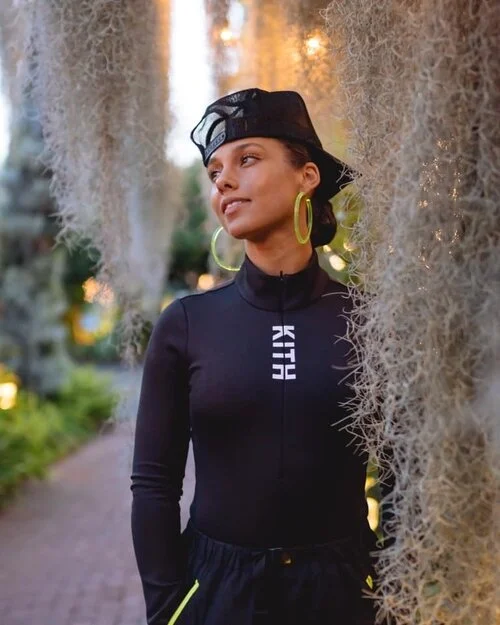
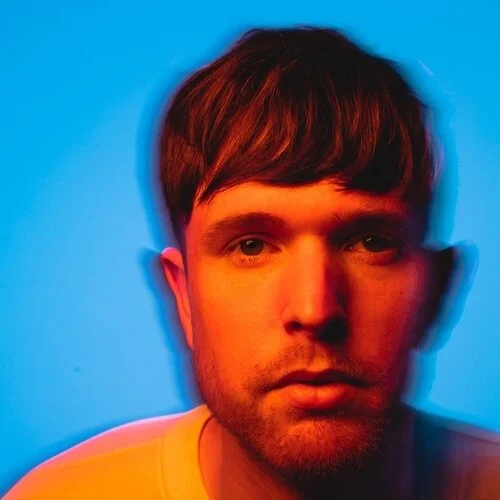
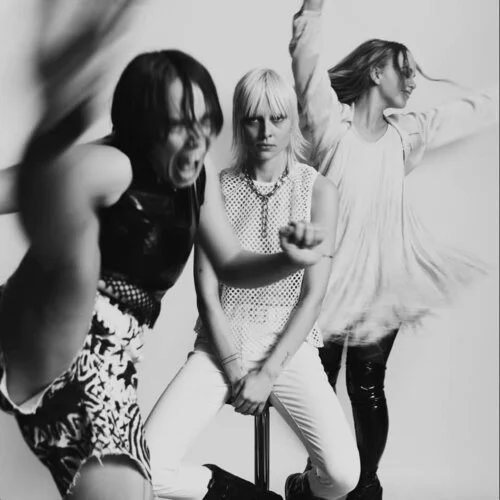
for new music we have seen for many months. There are few cuts from Charli XCX and Alicia Keys; Jessie Ware, Nadine Shah and James Blake have music out, as does BC Camplight, The 1975, Rufus Wainwright and Everything Everyrthing. Throw into the mix new music from The Rolling Stones, Joan As Police Woman, Jónsi and Dream Wife, and is another packed and exciting week! If you require some great music to keep your energy levels up and improve your mood, this selection of music will do the job! This week’s Playlist contains some of the best music…

IN THIS PHOTO: BC Camplight

OF the year so far.

ALL PHOTOS/IMAGES (unless credited otherwise): Artists

__________

Charli XCX – claws

Alicia Keys – Good Job

xx.jpg

Jessie Ware - Ooh La La

qw.jpg

Nadine Shah – Kitchen Sink

James Blake – You’re Too Precious

Rufus Wainwright – Alone Time

Nasty Cherry – Shoulda Known Better

ewwe.jpg

PHOTO CREDIT: Lucy Lièvres

Kirsty Merryn - Mary

BC Camplight – Ghosthunting

Everything Everything – In Birdsong

WQW.jpg

The 1975 – If You’re Too Shy (Let Me Know)

Dream Wife – Hasta La Vista

SSS.png

The Rolling Stones – Living in a Ghost Town

AAAA.jpg

PHOTO CREDIT: Jonangelo Molinari

Kelly Lee Owens – Night

Bright Eyes - Forced Convalescence

CXCX.jpg

Hayley Williams – Dead Horse

DDS.jpg

Sneakbo – Last Night in Brixton

Chelsea Peretti - LATE         

Sarah Barrios – I Didn’t Mean To

54.jpg

Jack Garratt - Better

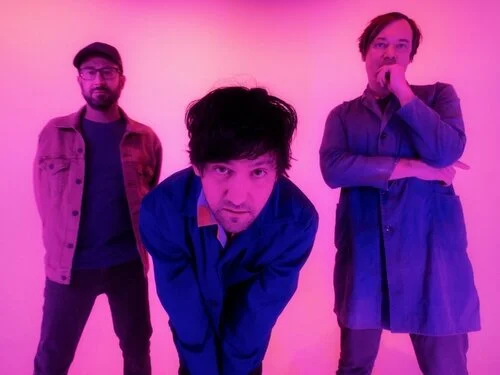
IN THIS PHOTO: Nick Hakim

Nick Hakim (ft. Mac DeMarco) - CRUMPY

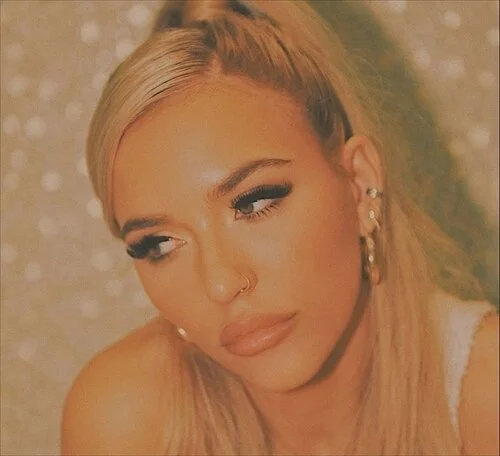
Lennon Stella – Older Than I Am

Maya Hawke – Coverage

Harkin – Up to Speed

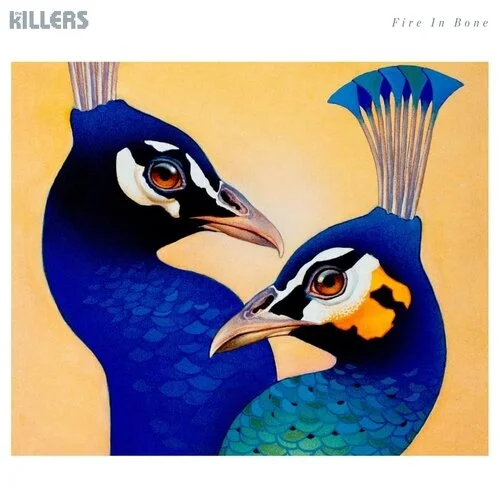
The Killers – Fire in Bone

Lilla Vargen – Love You Twice

Joan As Police Woman – Not the Way

Missy Elliott – Cool Off

Caleb Landry Jones – I Dig Your Dog

12.jpg

Lauran Hibberd - Old Nudes

PHOTO CREDIT: Brandon Hicks

Victoria Monét - Dive

Brendan Benson – I Can If You Want Me To

Car Seat Headrest – There Must Be More Than Blood

Jónsi – Exhale

Hazel English – Wake UP!

PHOTO CREDIT: Flore Diamant

I See Rivers – How

4TTY.jpg

Katie Von Schleicher – Wheel

Lissy Taylor – Wildflowers

Nadia Rose – Sugar Zaddy

FEATURE: Thank You for the Music: Björn Ulvaeus at Seventy-Five: The ABBA Playlist

FEATURE:


Thank You for the Music

aaaa.jpg

Björn Ulvaeus at Seventy-Five: The ABBA Playlist

___________

EVERY time a legendary artist or songwriter…

IN THIS PHOTO: ABBA

celebrates a big birthday, I feel it only right to nod to them and put together a comprehensive playlist. Today is the seventy-fifth birthday or ABBA’s Björn Ulvaeus. Although he was one of four members of the Swedish band – alongside Agnetha Fältskog, Benny Andersson and Anni-Frid Lyngstad -, he, alongside Andersson, is responsible for the band’s hits. I keep referring to them in the past tense, but there has been this whisper that ABBA are releasing new music very soon. This rumour has been going around for a while, so one never knows whether it will be realised. Let’s hope they do put out new music, as I think this is just what we all need right now! We all have our favourite ABBA tracks and albums, and, to me, I think they really hit their stride on 1976’s Arrival – featuring tracks such as Dancing Queen and Knowing Me, Knowing You. In terms of songs, my favourite is Super Trouper (from the 1980 album of the same name). There are so many wonderful songs in the ABBA cannon so, to mark Ulvaeus’ seventy-fifth birthday, I have compiled a selection of the best ABBA tracks ever. Enjoy these tracks from…
A songwriting icon.

FEATURE: Houston, We Have a Problem? Will the Planned Biopic of Whitney Houston Strike the Balance and Remain Respectful?

FEATURE:

Houston, We Have a Problem?

xxx.jpg

Will the Planned Biopic of Whitney Houston Strike the Balance and Remain Respectful?

___________

THERE has been a bit of a slowdown…

regarding planned music biopics. I guess it is inevitable, given the fact there is no filming right now. I am not sure when cinemas will reopen, so there might be some films held back that shine a light on a famous musician. Last year, Elton John got his own biopic with Rocketman – Taron Egerton played John. The year before, the Queen biopic, Bohemian Rhapsody, came out, and it received a lot of praise. That said, both films suffered some criticism because there was a holding back of the truth. Elton John and Freddie Mercury are passionate and flamboyant musicians, and, in both films, their more hedonistic sides were not really covered; their sexuality was not explored, and I think a lot was missing from both films. I guess it is hard to produce a biopic and get everything right. In the case of the films I have mentioned, maybe being too revealing would lead to censorship or sensualism. It is important to concentrate on the music and getting facts right but, also, filmmakers need to delve into the personal lives of their subjects. I know there are plans to make an Amy Winehouse biopic, so I wonder whether the film will stick to her records and music, or whether her drink problems and run-ins with the press will also be mixed in. Another prodigious talent who lived with addiction was Whitney Houston.

It is always weird when a biopic is announced for a departed artist, as you never know whether they’d approve of a biopic or be happy with it. The latest artist to get the biopic treatment is Whitney Houston. This article from The Guardian explains more:

“Whitney Houston’s life is set to be the subject of a big-screen biopic from the Grammy-winning producer Clive Davis and the singer’s estate.

According to Deadline, the film, to be called I Wanna Dance with Somebody, will be scripted by Anthony McCarten, who will also act as producer. McCarten has received Oscar nominations for his screenplays for the fact-based dramas The Two Popes and The Theory of Everything. His writing credits also include Bohemian Rhapsody and Darkest Hour.

Davis, who discovered Houston in her teens and worked with her for many years, recently said he was “very disappointed” with two documentaries about the singer: Nick Broomfield’s Whitney: Can I Be Me and Kevin Macdonald’s Whitney. In January, when speaking of a potential biopic, he said he had no interest in “whitewashing” either the singer’s struggles with addiction or her romantic relationship with Robyn Crawford.

In a new statement, he claims that McCarten has committed to a “no holds barred, musically rich screenplay that finally reveals the whole Whitney”.

The project will also be produced by Pat Houston, the singer’s manager and sister-in-law, who will act on behalf of the estate. She has promised an “uplifting and inspiring” film. No director has been confirmed yet but producers are negotiating with Stella Meghie, who recently made the romantic drama The Photograph.

A recent tour, backed by the estate, featuring a hologram of the singer was widely criticised, with the Guardian’s Dave Simpson calling it “deeply unsettling” and Entertainment Weekly’s Emma Madden describing it as “tacky”.

I was not a fan of the hologram tour, as it seems ghoulish to have a projected image of the late Houston played to fans. A biopic is different in that someone else will be playing her but, importantly, will the filmmakers manage to encapsulate all sides of Whitney Houston? The biopic could go down two paths: one that omits Whitney Houston’s addiction and personal issues and focuses just on her music highs and lows; the other that tries to blend the two together. In terms of her turbulent years, I have looked on her Wikipedia page and selected a few passages of times where Houston faced struggle:

“She then met R&B singer Bobby Brown at the 1989 Soul Train Music Awards. After a three-year courtship, the two were married on July 18, 1992.[103] Brown would go on to have several run-ins with the law for drunken driving, drug possession and battery, including some jail time.[104][105][106] On March 4, 1993, Houston gave birth to their daughter Bobbi Kristina Brown (March 4, 1993 – July 26, 2015),[107] the couple's only child. Houston stated during a 1993 interview with Barbara Walters that she had had a miscarriage during the filming of The Bodyguard.[108]

Though Houston was seen as a "good girl" with a perfect image in the 1980s and early 1990s, her behavior had changed by 1999 and 2000. She was often hours late for interviews, photo shoots and rehearsals, she canceled concerts and talk-show appearances, and there were reports of erratic behavior.[203][204] Missed performances and weight loss led to rumors about Houston using drugs with her husband. On January 11, 2000, while traveling with Brown, airport security guards discovered half an ounce of marijuana in Houston's handbag at Keahole-Kona International Airport in Hawaii, but she departed before authorities could arrive.[205][206] Charges against her were later dropped,[207] but rumors of drug usage by Houston and Brown would continue to surface. Two months later, Clive Davis was inducted into the Rock & Roll Hall of Fame; Houston had been scheduled to perform at the event, but was a no-show.[208]

In May 2011, Houston enrolled in a rehabilitation center again, citing drug and alcohol problems. A representative for Houston said that the outpatient treatment was a part of Houston's "longstanding recovery process".[258]

IN THIS PHOTO: Whitney Houston in 1980/PHOTO CREDIT: Pictorial Press Ltd/Alamy Stock Photo

The filmmakers are saying that, unlike other biopics, they will not whitewash Houston and stick only with the music. It is important, to an extent, that they are truthful and show all sides of Whitney Houston. Although there are going to be scenes depicting addiction and marriage woes, how far will the filmmakers be allowed to go before it is censored? I also wonder whether I Wanna Dance with Somebody will go a bit too far with Houston’s addiction problems and sensationalise things. There is that balance where you need to show the complexities of the artist, but also be respectful and not spend too much time pouring over the scars and headlines. The title suggests there will be a lot of fun in the film and we will see Houston grow from the fresh-faced woman on the cover of 1987’s Whitney to the more mature artist on 1998’s My Love Is Your Love. Whitney Houston is an icon who boasted an incredible vocal range. So many artists owe her a debt of gratitude, and she released so many classic songs. I wonder whether her pre-fame days are going to take precedence; where she grew up and how music first struck her. As there have been slightly disappointing documentaries about her, will the biopic redress some of the perceived wrongs? It is hard to get a full and comprehensive study of an artist in a single film.

There is a danger that some sections and periods of her career will be rushed, and too much time will be spent lingering on Houston’s darkest days. That said, so many biopics skip over artists’ addiction and personal problems and give this lopsided portrait. I think transparency and respect are the two words that need to dominate I Wanna Dance with Somebody. The film will draw diehard fans and those fairly familiar with her work alike. Whitney Houston wasn’t perfect but, at the same time, she had her demons and had a lot of pressure on her shoulders. If the filmmakers can get the balance right and shine a light on Houston’s genius but also look behind closed doors, then it will be one of the most honest and balanced biopics of recent years. I am not sure why Rocketman and Bohemian Rhapsody shied away from drug and sexual content; I suppose the producers wanted to strike a particular tone and portray their subjects in a certain way. I am a fan of Houston, and I will be interested to see how the biopic turns out and whether the actor who plays her will be singing or miming. It will be fascinating to see who is chosen to play Houston, as I think that is important regarding credibility and authenticity. Although production will not start for a while, when things are underway, more details will come to life. Let’s hope I Wanna Dance with Somebody shows Whitney Houston’s highs and lows but, above all…

DOES her full justice.

FEATURE: Pay Dirt: Why Music Streaming Sites Need to Re-Evaluate Their Fees After the Coronavirus Pandemic

FEATURE:

Pay Dirt

zzzii.jpg

PHOTO CREDIT: @markusspiske/Unsplash

Why Music Streaming Sites Need to Re-Evaluate Their Fees After the Coronavirus Pandemic

___________

THIS is a subject that I have covered…

zzzzz.jpg

PHOTO CREDIT: @markusspiske/Unsplash

a few times before but, rather than bemoan the relatively low fees artists earn from streaming their music, I wanted to ask whether things will change in the coming months. At the moment, the money that artists receive from streaming sites is pretty low. It makes for some eye-opening reading:

“PRS director Tom Gray shared a chart of the data, which was collated by The Trichordist, on Twitter yesterday (April 18) as part of his #BrokenRecord campaign.

The numbers show the average payout per stream, the number of streams needed to earn £1 and the number of streams needed to earn one hour of minimum wage pay in the UK (£8.72) for each major streaming service, including Amazon, Tidal, Apple Music, Spotify, YouTube and more.

With an average payout of £0.009 per stream, it would take 970 streams on Amazon two earn minimum wage – the lowest amount needed out of all the streaming services represented. Artists uploading their music to YouTube would need to get the most streams to get £8.72, with 7,267 required at an average rate of £0.0012. Apple Music users would need 1,615 streams, while those promoting on Spotify would need 3,114 plays.

Last month, musicians called on Spotify to triple their royalty payments to cushion their loss of earnings caused by the coronavirus pandemic. Musician Evan Greer set up an online petition asking the streaming giant to boost its royalty rates for artists permanently, as well as donate $500,000 (£400k) to music charity Sweet Relief”.

aaaa.jpg

PHOTO CREDIT: @belart84/Unsplash

I can understand why artists are struggling right now. Because so many people are not releasing albums, there is less opportunity to earn money from music streaming sites. It is a very challenging time. I guess streaming sites’ prosperity and profitability relies on every aspect of the music industry being in place. As The Guardian explains, physical sales are also slowing down:

“The music business is a highly interconnected ecosystem. Remove one part and everything else sways like a Jenga tower in a hurricane. Months of teasing, dropping singles and doing interviews are carefully synchronised to set up a release, and the next year-and-a-half is spent whipping along that momentum with more releases, touring and TV promotion. But now those failsafes have crumbled. It is partly why Dua Lipa brought her album forward before the promotional bridge completely collapsed. It is also why Lady Gaga and Sam Smith pushed theirs back in the hope that things will return to something resembling normal when they finally drop.

With physical sales now at a slow dribble, first-week chart performances – normally boosted by limited-edition, fan-seducing formats – are entering the 100m dash with their ankles tied to their wrists. Dua Lipa’s album was beaten to No 1 in the UK by 5 Seconds of Summer, who had pre-sold a glut of cassettes to fans and nosed ahead. That marketing trick will not happen again for a while”.

zz.jpg

PHOTO CREDIT: @thibaultpenin/Unsplash

Maybe we are watching more T.V., and that is contributing. Although streaming sites are earning less money at the moment, maybe there are fewer new people subscribing to join sites like Spotify too. I can understand why streaming fees are low, but it has been this way for a long time. When the music industry returns to normal, I do think there needs to be consideration regarding increasing payout. I am someone who pays a monthly subscription fee for Spotify, but I do not subscribe to other platforms like Apple Music. I guess it is hard to recruit people to use multiple platforms. For me, Spotify covers everything I need. I would be happy to pay more than I do for subscription, and I think there should be a review of subscription fees in a few weeks or months. Although Spotify only started making money last year, it is making a lot more profit now. Whilst Spotify has competition from other platforms, the growth of podcasts and people subscribing to listen to podcasts has made a big difference:

“One of Spotify's most impressive areas of recent growth has been in user engagement with podcasts. In its Q3 2019 letter to shareholders, the company noted that it saw the number of podcast hours streamed grow at an exponential rate and that certain aspects of the increased engagement were "extraordinary, almost too good to be true." During that three-month period, subscriber growth, gross margins, and operating profit all exceeded Spotify's own expectations”.

zaaa.jpg

IMAGE CREDIT: Apple Music

I know that big artists are earning enough to get by whilst we are in lockdown but, with slower streaming figures, it is a very hard time for smaller. Subscription figures suggest that no streaming service is in trouble or cannot afford to pay artists more. With podcasts booming and advertising revenues fairly stable, I wonder what the solution is. Increasing subscription costs would be one way, but I do think dividing more of the profit to all artists should happen. I want to quote from an article of 2016. Things have not changed dramatically in terms of fees to artists, and the article uses Spotify as an example – the theories and conclusions can apply to other streaming sites:

“At the moment, Spotify and every other major on-demand music streaming service pays according to a certain formula. Out of the service’s total number of plays, they figure out the percentage of plays that represented each artist. That artist gets that percentage of Spotify’s total revenue minus Spotify’s cut.

That means, if Calvin Harris receives 1 billion plays out of a total 7 billion plays on Spotify, 14% of your $9.99 subscription (after Spotify takes 30%) goes to Calvin Harris’ record label regardless of whether you actually played his music or not. These are not real numbers and Calvin Harris is actually very vocal about fair compensation for artists, but you get the point.

This royalty distribution model does not reward artists for the quality of their fan base but instead their quantity of streams. If one lone listener listens to Calvin Harris 1,001 times, Harris will make more money than if 100 fans listened to him 10 times each. If a niche artist has a very loyal following of listeners that generate 10,000 song plays but Drake gets 1.8 billion plays (actual), their royalty share is literally 0.0005% when only put up against Drake. Now imagine competing against Rihanna, Bieber, and every other artist on the service.

zaaa.jpg

IN THIS PHOTO: Drake/PHOTO CREDIT: John Phillips/Getty Images

Is there a solution that can be applied to streaming sites moving through 2020 and the future?

“There is an alternative way to distribute royalties. It doesn’t have to be done the way it’s being done now. Those familiar with this issue call the current model the “pro-rata” model. Here is a new model: the “user-centric” model. Here’s how it works:

Instead of every paying listener throwing their money in a pool and divvying up the percentage of royalties that goes to each artist based on their amount of song plays, you take the songs each listener listens to, calculate the percentage of time they spend listening to each song, and then distribute their monthly subscription based on those songs they actually listen to.

So, when I listen to a song from an independent niche artist, 80% of my subscription isn’t going to Universal because 80% of everyone else listens to Fergie. If I were to only listen to my favorite niche artist 100% of the time, they would get 100% of my subscription, presuming it’s about $10. This really isn’t a complicated concept, and in fact, many people assume this is how it works already. But it doesn’t.

Changing to the user-centric royalty distribution model would reward those artists with a loyal following versus just a high play count. But most importantly, it removes the competitive factor in royalty distribution. Indie artists are no longer competing with Fergie, Rihanna, or Justin Timberlake. They are betting on themselves, and other artists can’t drive down the purchase power of a single listener. There is no inflationary effect. Support is again tied directly to the listener, as it would be if you purchased an artist’s music. And it is about the quality of music versus quantity”.

Maybe things are not as simple as changing business and distribution models – if that can be considered simple?! -, but it is clear the biggest artists benefit more than those artists who are struggling more. I think there does need to be emphasis on the quality of music rather than commercial appeal; artists who have a very loyal fanbase, rather than huge artists who might appeal because they are trending. So many artists are making virtually nothing from streaming, so I think the bosses of the platforms need to…

zxx.jpg

PHOTO CREDIT: @plhnk/Unsplash

MAKE that change.

FEATURE: The Lockdown Playlist: Vol. VI: 2000-2003

FEATURE:

The Lockdown Playlist

PHOTO CREDIT: @georgiadelotz/Unsplash

Vol. VI: 2000-2003

___________

HEADING out of the 1990s…

PHOTO CREDIT: @quanlightwriter/Unsplash

I am not looking at some of the best hits that started the twenty-first century. We are still in lockdown for a little while, so it is a perfect chance to get more acquainted with some epic tunes from a few years back. I have been searching online, and I have compiled some terrific songs from 2000-2003 (inclusive). If you need a bit of a boost and something to give you a kick, take a listen to the playlist at the bottom of this feature and you will be recharged in no time at all! Just stay at home, turn the playlist up loud, and simply…

PHOTO CREDIT: @www_erzetich_com/Unsplash

SURRENDER to the music.

FEATURE: Out of the City, Into the Country, Then Out to the World: Kate Bush and the Importance of the Year 1983

FEATURE:


Out of the City, Into the Country, Then Out to the World

IN THIS PHOTO: Kate Bush captured in 1983/PHOTO CREDIT: Brian Griffin

Kate Bush and the Importance of the Year 1983

___________

IN this feature…

IN THIS PHOTO: Kate Bush in October 1983/PHOTO CREDIT: Sunday Mirror/Mirrorpix/Getty Images

I want to discuss an important time in Kate Bush’s career. 1983 was the year I was born (I was born in May) and, unbeknownst to me, this incredible artist was about to embark on decisions and life changes that would feed into her most successful album, Hounds of Love (1985). To understand why 1983 was so important, one needs to look at 1982’s The Dreaming. The album was released on 13th September, and it was the first album Kate Bush produced alone. One of the things one can say about The Dreaming is that it was uncommercial. The Dreaming (single) did not crack the top-forty; Sat in Your Lap finished outside the top-ten, whilst There Goes a Tenner did not even scrape into the top-seventy-five. Even though The Dreaming made the top-three in the album charts, it was clearly the biggest step away from the Kate Bush we knew in 1978 – when her debut album, The Kick Inside, was released. The album was certified silver, but it was her lowest-selling album to that point: ironically, Hounds of Love (her next album) was her highest-selling studio album. Having released two records in 1978 (Lionheart was her second release), embarked on a huge tour (Tour of Life) in 1979, and followed that with a brilliant third album, Never for Ever, in 1980, it is small wonder Bush wanted to take more control of her work! The fact she managed to release an album in 1982 at all was a minor miracle – today, one does not see artists take on so much demand and work!

That is not to say that Bush was unhappy with everything prior to The Dreaming - yet the album definitely marked an evolution. Bush was producing; the music was more experimental and demanding than anything she had put out. I will not go into too much detail regarding The Dreaming – suffice to say it was a very challenging time. It was a surprise for such an unconventional album to enter the charts at number-three! Clearly, it did resonate with a lot of people! The Dreaming was the first Bush album to enter the US Billboard Top 200, largely due to the rise of college radio there. I will talk more about her growth in the U.S., as she really started to plant some seeds in 1983. I also want to source from Graeme Thomson’s biography, Kate Bush: Under the Ivy. The Dreaming was a marked shift forward, and one suspects it was more where Kate Bush wanted to be at the start of her career in terms of sounds and scope. By the standard in the 1980s, The Dreaming did take a long time to come together and, with fairly poor sales (in their terms rather than what was actually achieved), EMI were a bit concerned. The fact Bush wanted to produce her next album definitely met with resistance and concern – how long would a follow up to The Dreaming take…and how much would it cost?

Reading page 197 from Thomson’s biography of Bush, it is interesting to see where the songwriter was in 1982. Bush had clearly immersed herself in recording and the world of the studio; somewhere that was “an inclement micro-climate, a hostile, self-contained ecosystem fuelled by smoke, chocolate, fast food – she was “lasting three months on Chinese takeaways during the last part of the album,” she (Bush) said”. Bush was not sleeping well and, this combined with a poor diet, meant that she was losing some of the discipline she had accrued during the busy period of 1978-1980. In June 1982, Bush holidayed in Jamaica with her family, but she was unable to unwind – the calm, sun and relaxation of the setting must have been jarring for someone who had been consecrated and sequestered in a small space for a long period! Bush was busy promoting The Dreaming by filming its videos, making personal appearances and generally going full-out.

IN THIS PHOTO: Kate Bush signing copies of The Dreaming/PHOTO CREDIT: Peter Still

From the end of 1982 until the summer of 1985, Bush was rarely seen in the public forum – at least in comparison to the previous few years of her career. She made the odd appearance here and there, but there was this important spell of recovery and rest that preceded 1983. “During her prolonged absence, there were mischievous media rumours of nervous breakdowns…” (page 198 (paperback edition) of Graeme Thomson’s Kate Bush: Under the Ivy); other sources remarked on her weight gain and disappearance from the public eye – not that Bush ever courted it at all! Now, we do not think twice when an artist takes a few years to follow up from one album; there was expectation that Bush would be right back to work and release something not long after The Dreaming – looking back at Hounds of Love, it is clear that period of a couple of years or so was just what was needed in order to create a masterpiece!

IN THIS PHOTO: Kate Bush looking on in 1982/PHOTO CREDIT: Steve Rapport Photography

One of the big changes that happened in 1983 was Bush’s diet. “Tea (up to 20 cups a day) chocolate and cigarettes have been her most enduring vices, but work has always been her addiction. It took her six months to recover from the experience of making The Dreaming” (page 199, Kate Bush: Under the Ivy). Bush, by her own admission, was a wreck and needed to slow down. She consulted her father, a doctor, who diagnosed stress and nervous fatigue. His advice was for her to rest. Having released an album and promoted it hard, if Bush had continued to work on a new album straight after The Dreaming, one wonders what a toll that would have taken. I will talk about commercial decisions of 1983 that benefited her career but, during 1983, Bush went to see films; she spent the summer with her boyfriend, Del Palmer (who was playing bass (and other instruments) for her up to that point; he was one of the engineers on Hounds of Love and remains her right-hand man to this day – the two met and began playing together in 1977; they started dating not that long after); she bought a VW Golf and drove herself, and she enjoyed cooking, space, and a much better diet. Largely subsiding on chocolate, tea and fast food through much of 1982, she did overhaul her eating habits in the period afterwards; she also took up dance instruction again – she was not dancing as often during 1980-1982 than she had been from 1978-1979. Whereas she was making The Dreaming in a dingy London studio through 1982 (and in 1980 and 1981), Bush built her own studio to professional specifications this time around.

One can imagine the scenes and sights whilst Bush and Palmer (largely) were making The Dreaming in a very small space. The intensity, experimentation and darker colours of The Dreaming were a world away from the natural world-influenced, brighter and happier sounds of Hounds of Love. 1983 was a very important and productive year for Bush. She and Palmer moved into a seventeenth-century farmhouse in the Kent countryside, which was not far from Central London and Wickham Farm (her family site in East Wickham, Welling). Bush described her new farmhouse thus: “I’m sure there’s a kind of force, a magnetic energy saying, ‘Come in, we’re meant for each other” (page 199, Kate Bush: Under the Ivy; quote source: The Times, 27th August, 1985). Maybe the romance of stumbling upon an idyllic farmhouse was slightly exaggerated, but the clean air of the country and the influence of nature and the open space was something Bush responded to very positively. In 1983, she spent a summer out of the house – something, as she said, “I didn’t do for several years” (page 200, Kate Bush: Under the Ivy; quote source: Fachblatt Musikmagazin, November 1985). The image of Kate Bush gardening and not toiling in the studio was a rare and welcomed sight! She had failed to ease into a balanced and rounded life since 1978. As Kate Bush: Under the Ivy explains (on page 200), Bush and Palmer’s relationship was more committed and, during a rare radio phone-in on 29th July, 1983 (the day before her twenty-fifth birthday), she revealed that Del was her boyfriend.

ART CREDIT: Noelle McClanahan Broughton

I can guess any domestic time she and Palmer shared prior to 1983 was quite short; meals were very samey and, largely, unhealthy…and there would be little time to enjoy time outside – although the hustle and grime of London is not especially beckoning! Bush had a London home in Eltham as a base, but she was not often found there. After 1979’s Tour of Life, she was more often found in the studio, so taking up dance again was a big step (no pun intended). Before the run-up to Hounds of Love, a lot of her dance routines were assembled on tour vans and in rushed moments. Now, she was getting g fit again and enjoying a more regular routine of dance. Not only did the smiling nature encourage songwriting and inspiration; physical movement played its part. The Dreaming was quite gloomy and raw; Hounds of Love is an album of brighter colours - as Graeme Thomson explains in Kate Bush: Under the Ivy: (Hounds of Love was) “decked out in greens, lights blues, dusky purple and silvers” (page 202). I will come to her professional pursuits of 1983 very soon but, in terms of harmony and comfort, it seems like the year was one for change. “For me, it’s like 1976”, she wrote to her fan club in the summer of 1983. “It was a particularly special year, when things were full of adventure…I feel in many ways that ’76 and this year linked it together for me” (page 202, Kate Bush: Under the Ivy; quote source: ibid). Bush returned to making music at East Wickham Farm, and she invested in a 48-track studio in the barn at the farm.

1q.jpg

PHOTO CREDIT: Denis Oregan

She equipped her recording space with a Soundcraft mixing desk, two Studer A80 24-track machines, along with compressors, emulators and a Fairlight (taking influence from Peter Gabriel, who sort of introduced Bush to the ground-breaking technology years previous). Although there was a slight distance between Bush and her record label EMI by 1983, she was becoming more comfortable around technology – in no small part due to her new happiness and setting -, and she definitely wanted to produce. The idea of Bush producing another album alone after The Dreaming’s poor (ish) sales performance was not overly-welcomed by EMI – one of the first times Bush had faced real push and doubt from the label. By autumn of 1983, Bush had her studio completed, and there were not the same pressures she felt beforehand regarding cost and time schedules. Whereas studios like Abbey Road could charge £90 an hour, having her own studio was a huge money-saver and lifeline. If EMI were unhappy with Bush’s production ambitions and the fact a new album was not instantly on the cards, they could not object to her new-found happiness and autonomy – they would not have to spend quite so much money on Hounds of Love had Bush recorded it all at a professional studio. With a room that looked out on trees, birds and the countryside, Bush has a perfect view in which to dream and create some of the best music of her career. Kate Bush and Del Palmer worked up most of Hounds of Love between the summer and autumn of 1983.

Rather than discarding demos and working on final versions later, demos were kept and worked on at East Wickham Farm for the final versions. In the summer of 1983, Running Up That Hill (originally entitled A Deal with God; the title was changed, as the mention of ‘God’ was seen as blasphemous/controversial by religious organisations and bodies in the U.S. and, as Bush was looking for more exposure there, she begrudgingly changed the song’s title). Most of the remainder of Hounds of Love was written by the end of 1983. As Hounds of Love turns thirty-five in September, I think it is important to note Bush’s change of environment from 1983. I am not going to get into the blow-by-blow diary of Hounds of Love, but Bush worked up the twelve tracks from Hounds of Love and B-sides by the end of the year – the album itself was recorded between January 1984 – June 1985. Bush played her new tracks to Paul Hardiman (engineer) on 6th October, 1983, as he visited the newly-constructed farm studio for the first time. Hardiman engineered the first stages of Hounds of Love; sessions began on 4th November and, between 7th November and 8th December, they began working on backing tracks. When it came to transitioning from the fatigue of The Dreaming in 1982 (and the recording and writing in the months and years prior to that) to the germination and development of Hounds of Love in 1983, Kate Bush was a very different woman – healthier, happier, more confident and enjoying the benefits of country air, love and family.

IN THIS PHOTO: Kate Bush and some canine friends in an outtake from the Hounds of Love photo session/PHOTO CREDIT: John Carder Bush

Not only was Bush laying the foundations for Hounds of Love in 1983; there were a couple of different releases that arrived that year too. Before I mention them, take a listen to this interview here:

“In this 1983 interview Kate talks about the 1979 video to her UK concerts. The videos were released in the US in 1983 with the intention to help promote her music there and reflected performances of songs from her first two albums, The Kick Inside and Lionheart.

In the interview Kate talks about what inspires her to write and where the ideas come from and how she discovered dance which has become a feature of her live and recorded performance”.

Kate Bush’s eponymous E.P. arrived on 15th June, 1983 (you can check it out here; it was released by EMI in the United States to promote Bush, who was relatively unknown there at that time. It peaked at 148 in the US Billboard Pop Albums chart. The E.P. was also released in Canada, but with an extra song. The E.P. was in the U.S. press. "An excellent, if somewhat schizophrenic, introduction to British singer Bush" wrote Alex Cain in Pulse! (August 1983). J.D. Considine wrote in Musician, in September 1983: "An easy introduction, at the same time it introduces (...) a number of Kate Bush's failings". If the reviews were mixed, it was important to have a release for the North American market. Fans were aware of her there, but Hounds of Love was the first of her studio albums that made a big impression – The Dreaming reached 157 on the US Billboard 200; Hounds of Love reached 30 on the same chart.

In an interview with Brian Berry from Wireless in September 1983, we learn more about the E.P. and Bush’s feelings towards it:

“Capital/EMI America's latest attempt to bring Kate Bush's music to a wider audience is in the form of a "mini-album" simply titled, "Kate Bush". Kate hails from England and has been an international sensation since her first album, The Kick Inside, was released in 1978. However, in America her music has only been enjoyed by a small, but devoted cult following. The "mini-album" contains no new material, but rather it includes five songs previous [sic previously] available on three of her previous recordings. The album had been timed to coincide with a visit by Kate to the States last June. A massive promotion via the press had been planned. However, the visit was postponed due to transportation problems that arose. I asked Kate about the five songs and if she felt that they were fully representative of her work. "Quite honestly, I don't think I would have chosen those five. It has very much to do with the record company and what they see a market for. I did want "Sat In Your Lap" to be on there. It's also quite nice to get the French song on there 'cause I quite like that." The French song is a new version of "The Infant Kiss", which originally appeared in English on her third album Never For Ever. The French version, as it turned out, was targeted for the Canadian record market.

"I think there's so much aimed at the Canadian market where there's a French population and the song was especially done for the French people, so it made sense to put in on the Canadian version." The "mini" concept is something that Capital/EMI has had substantial success with in breaking new or unknown artists. Thomas Dolby, Missing Persons, and Duran Duran are but some of the acts that have been established through this approach. The record is lower priced and is appealing to a customer that may want to sample an artist's work. This is a welcome idea if it will help sell Kate's music to the masses”.

If Kate Bush is inessential in terms of her cannon, it was important to make her better-known to U.S. and Canadian audiences. The tracklist was as follows:

Side one

Sat in Your Lap

James and the Cold Gun (live, taken from the On Stage EP)

Ne t'enfuis pas (only on Canadian version)

Side two

Babooshka

Suspended in Gaffa

Un baiser d'enfant (French recording of The Infant Kiss)

The Single File video was also released in 1983 (a box-set was released in 1984). It contains all of her music videos, from Wuthering Heights, to There Goes A Tenner. The compilation was originally slated for release in April 1983 - it was then put back until June 1983. In the end, the video was released at the end of November. There was a strong poster campaign in London in support of this release too.

PHOTO CREDIT: Getty Images

Three personal appearances were planned in co-operation with the retailer, WHSmith: 7th December, 1983 in Cardiff; 8th December, 1983 in Kingston-upon-Thames, and 9th December, 1983 in London's Holborn Kingsway. The first one was aborted when Kate missed the train to Cardiff and then got on another one heading in the wrong direction: fortunately, the other two went ahead as planned. Although Bush was not gigging or releasing new material in 1983 – although The Dreaming’s Night of the Swallow was put out as a single on 21st November, 1983 –, she was busy preparing a new album and promoting a couple of releases to widen her popularity and push her music to new territories. In spite of the fact it is rarely talked about, 1983 was a busy and transformative year for Kate Bush - she began recording demos for Hounds of Love in January 1984. Few in the media knew what changes she was making and what was coming together in these relaxed and idyllic settings! I can understand why EMI were sceptical regarding Bush helming her fifth studio album but, as we know, that gamble paid off handsomely! In a Q Magazine interview of December 1993, Bush reacted to The Dreaming and her experiences with it:

"I look back at that record and it seems mad," she says now. "I heard it about three years ago and couldn't believe it. There's a lot of anger in it. There's a lot of 'I'm an artist, right!'" Fingers burned by the experience of The Dreaming, she decided that a studio of her own and a retreat into her domestic shell was a priority. Thus was ushered in a period of stability from whence came the enormously successful Hounds of Love and, in 1990 [1989], The Sensual World. These later records reflected her growing interest in the studio as a compositional tool and her growing desire to stay well out of the public eye”.

IN THIS PHOTO: Kate Bush photographed for The Dreaming in 1982/PHOTO CREDIT: Guido Harari

I can understand why, post-Hounds of Love, Bush felt that The Dreaming was her going a bit mad. Although, that said, Aristotle was very wise when it came to the subject of madness: “No great mind has ever existed without a touch of madness”. Although some corners of the media were not completely seduced by Kate Bush in 1983, I think a lot of people were discovering her music off the back of The Dreaming and the E.P. release in North America. Though 1983 was not the most important and game-changing year for Bush, I think it was a time when she made some huge decisions and embarked on the finest and most successful stage of her career. It is clear the creation of Hounds of Love was a very happy space. Bush, as this article explains – would take her time recording future albums and not burn herself out with promotion:

“We had lovely times,” says Haydn Bendall. “You walked through the garden into the kitchen: all the family’s business and conversations took place around this huge kitchen table. [Her brother] Paddy was always around, and the two dogs were there, Bonnie and Clyde, the hounds of love on the album’s cover. There were pigeons and doves all over the place, her dad smoking his pipe and her mum making sandwiches. It was idyllic.”

If The Dreaming had been uneasily ahead of its time, on Hounds Of Love Bush seemed effortlessly attuned to the mood music of the mid-’80s: big hair, slick technology, irresistible hooks married to an insistent rhythmic pulse. Melodic and diamond hard, it was a bewitching alchemy of lean pop classicism and intrepid, occasionally unhinged experimentation. Not only was it a superb artistic statement, it was cleverly constructed, front-loaded with the most accessible songs before introducing the more demanding “Ninth Wave” material.

Ever since, she has recorded new material at her own pace in her own studio, releasing it with increasingly little fanfare or promotion and then promptly vanishing again for lengthy intervals. She may now be a negligible physical presence in the pop firmament, but 25 years after its completion, Hounds Of Love still casts a magical spell, and having a hand in its creation remains a high watermark for all those involved”.

I have huge admiration for The Dreaming and the singles Kate Bush put out in 1982 but, clearly, she worked herself to the bone to get it made in her own image. The subsequent mixed reviews and poor sales (for the singles at least) must have dented her confidence somewhat. Other artists would have taken years to recover and toiled to make an album that was as personal and original as The Dreaming, but one which would sell better and find them back in the critical good books. Three years after The Dreaming was put out into the world, Bush delivered her most successful and well-received album. After a tough and tiring 1982, she was keen to revitalise and rejuvenate, not only as an artist but as a person. More relaxed, working at her own speed; a brighter, calmer and more inspired artist emerged – aided and augmented by the picturesque surroundings of her countryside residence. In a way, the year 1983 was the warm and promising spring…     

IN THIS PHOTO: Kate Bush as a nun in 1983/PHOTO CREDIT: Brian Griffin

AFTER a long and slightly cold winter.

FEATURE: Vinyl Corner: The Sugarcubes – Life’s Too Good

FEATURE:


Vinyl Corner

The Sugarcubes – Life’s Too Good

___________

UP now in Vinyl Corner…

is the debut studio album from The Sugarcubes. Although Björk leads the band, the record is a lot more than her stunning voice. Life’s Too Good is a perfect Pop record that mixes in silliness with the serious; there are different tones and sounds that weave together. Of course, Björk’s vocal gymnastics help take the songs over the edge. Released in April 1988 by One Little Indian in the U.K. and Europe, the album was an unexpected hit. Few thought that Life’s Too Good would translate outside of the band’s native Iceland; in 1993, Björk launched her solo career with Debut. Piecing together strands of Post-Punk and Pop, there is a lot of clout and wonderful performances, but I think it is the infectiousness and joy of Life’s Too Good that means it stays in your mind. In terms of huge singles, they do not come much huger than Birthday. With a wonderful sound and Björk at her best, the U.K. press were keen to catch on. Although The Sugarcubes were courting attention and love from the British press, they were reluctant to have their faces plastered on magazines. Preferring greater control of their music and less exposure in terms of the music media, The Sugarcubes did get offers from big labels, but they recorded Life’s Too Good on One Little Indian so they could assume greater control of their work. I would encourage people to buy the album on vinyl, as it is a marvellous work that can really cheer the soul. Before 1992, I had not really encountered any Icelandic records.

Of course, there were plenty of Icelandic artists putting out music prior to The Sugarcubes’ arrival; few that could produce something accessible and hugely popular. Before long, there was greater interest in Icelandic music; Life’s Too Good not only influenced the scene in Iceland, but popular artists like Florence + the Machine have been affected. In terms of debut importance, Life’s Too Good pushed the boundaries of Rock and Pop; it put Iceland more firmly on the map, and the album still sound so alive and fresh twenty-eight years later. I want to bring in a couple of reviews before I wrap things up here. I think, in 1992, there were a couple of positive reviews; many might not have known what to do with an album such as Life’s Too Good. Maybe the idiosyncrasies of Björk and the band were a little too out-there at the time. In the years since, Life’s Too Good has gone down as a cult classic; so many corners have been keen to praise a wonderful record. This is what The Line of Best Fit had to say in 2015:

“Much like The B52’s and Talking Heads, The Sugarcubes proved that post-punk could be playful and seriousness could be silly. "Birthday", despite being The Sugarcubes’ defining moment, isn’t indicative of the debut as a whole, though. In fact, as with some of the best LP’s, it’s hard to place this album within a specific genre, a persistent theme even in Björk's previous venutres. Having begun recording music as early as 1977, when she released Björk Guðmundsdóttir - an album of sickly sweet covers of rock songs - she soon found herself in bands that were similarly averse to the restrictions of meaningless categories.

Björk's idiosyncratic voice might be the main prevailing aspect here, but however fleeting their existence was, The Sugarcubes were very much a band, with each member having their own respective pedigree in various other outfits prior to their formation. All members had previously been in various post-punk or experimental groups - their origins tracing back to the likes of Theyr and of course KUKL - while some even collaborated with Current 93 and various members of Psychic TV. The creation of The Sugarcubes was a direct result of the negation of the anarcho-punk route (KUKL released two record on Crass’ label) and the desire to create something more accessible. Einar’s spoken word contributions are as imperative as they are bizarre, and the contrast between his inane discourse and Björk's more popular vocalisations gives the band their famed uniqueness.

Despite its moments of innate pop brilliance, there remains a dark chaos on Life’s Too Good - repressed, but ever-present. An understated classic, and by far the band's best album, it still sounds vital 27 years since its initial release. It's strange but accessible, silly but genius, and ultimately unfailing from start to finish”.

So long after its release, Life’s Too Good has grown in importance and status. Although Björk would depart from the band not long after Life’s Too Good, I think she sounds completely in her element here. The songs burrow into the head and, when we are stuck indoors and cannot get out to gigs, I would recommend Life’s Too Good to ease any anxieties.


In their review, XS Noize dived into Life’s Too Good and highlighted its brilliance:

“Life’s Too Good had a popiness in attitude that brought the 1980’s listener in and then presented them with the band’s post punk heritage, Goth vibes and darkness. There are some critics who have always felt the album would have been better without sans Einar’s vocals, and that he was the proverbial fly in the ointment. What many of them would have loved, was if he had been ditched to enable Bjork to be entirely front and center. However that was never the intent of the band. The tension of Einar’s asides and vocals presents something that would be missing from songs like Motorbike and Deus if he was not there. He is the surreal musical Dali reeking havoc with the songs that would have been almost too perfect until his ridiculous interruptions and sometimes unsettling rap. He singlehandedly made sure the listener understood The Sugarcubes wanted more than mainstream acceptance.

The band would put out Here Today, Tomorrow, Next Week in 1989, it would not perform as well commercially as Life’s Too Good. They released a third album, Stick Around For Joy, in 1992 which would fare better. In 1991 Bjork had decided to leave the band to start her solo career but was contracted with The Sugarcubes to do one more record and unlike many artists honored her contractually obligations. The Sugarcubes would open for U2 on their Zoo TV Tour in Oct and Nov 1992, and then disbanded. Bjork would continue onto her stellar solo career with the release of her aptly titled Debut; which would launch her reputation and a solo career that has now stretched for over twenty years.

A band that was meant as a joke ended up becoming indie legends. Ever insightful about their unconventionality, they left it to the critics and listeners to answer the question of what good taste and art were and whether or not the band’s output could be classified as either. If you are serious about understanding the development of Indie Music you need to give this album your consideration”.

I love the music from the 1980s, but I am not sure many would associate The Sugarcubes with a typical ’80s sound. They sort of arrived from nowhere and created this sensation. Almost thirty years after Life’s Too Good was unleashed into the world, this album still manages to sprinkle its magic. If you can get it on vinyl, please do – if not, then you can stream it. I am going to play it now and…

SURRENDER to its wonder.

FEATURE: Spotlight: Black Pumas

FEATURE:


Spotlight

zzz.jpg

Black Pumas

___________

IF albums and tours are…

PHOTO CREDIT: Christopher Goyette

being held back, there is no end and delay when it comes to great new music. Black Pumas have been playing for a while now, but their eponymous albums arrived last year. I have been hearing Black Pumas’ music on BBC Radio 6 Music, and there is this wonderful fusion of the old-skool and modern. The band are led by singer Eric Burton and guitarist/producer Adrian Quesada. The Psychedelic-Soul band are based out of Texas and, to me, I think Texas is a part of the world where classic Soul still has life. Artists like Black Pumas and Leon Bridges are using 1960s and 1970s Soul as a foundation and adding something special into the pot. Black Pumas formed in 2017, and they have been gathering buzz and attention since then. The band/duo played South by Southwest last year, and they were nominated for a Grammy (Best New Artist) recently. It seems like the meeting and collaboration of Burton and Quesada was meant to be. Quesada met Burton through a mutual friend; Burton had been a busker for a while, and it seemed like his powerful and distinct vocals were the ideal match for Quesada’s Funk/R&B compositions. Although it is still the early days for the band, their unique sound and brilliant music is going to be a much bigger fixture soon enough. Though most festivals are cancelled this year, the guys will, no doubt, be booked to play a lot of the major festivals next year. In this interview with Rolling Stone, we learn about Black Pumas’ beginning:

“When the two finally met at Quesada’s Austin studio, it became immediately clear that they could complement each other. Burton’s smooth but gritty voice and original songs, like his rainbow-themed “Colors” (“My sisters and my brothers/See ’em like no other”), fit alongside the tracks Quesada had already cut, which were heavy on old-school electric pianos, live drums, and Quesada’s rumbly surf guitar. Quesada enhanced the classic-soul mood by introducing his younger collaborator to vintage R&B. “It made me want to go back and listen and figure out how to project the way Otis Redding and Marvin Gaye could,” Burton says. “Adrian really appreciated the tonality of my voice and the way I was reaching to embody these older artists that fit the canvas he was giving to me.”

Soon enough, the duo had a name, Black Pumas, inspired by Quesada’s fascination with jaguars (his studio has a jaguar logo) and a play on the Black Panthers. The moment of creative truth came on stage, when they debuted their act at an Austin club. “I remember telling my wife not to come — give us a few weeks, because it might suck the first couple of times,” Quesada recalls. Quesada assumed Burton would be seated with his guitar, but to his — and Burton’s — surprise, the singer opted to stand up and perform, drawing on his theatrical background.  “When I got to put the guitar down, I found it was very freeing,” says Burton. “It elevated what we were doing.”

“Everything I had ever seen, Eric was playing troubadour, singer-songwriter style with a guitar,” says Quesada. “I didn’t even know that he had James Brown-level frontman chops. As soon as we stepped off the stage the first time, we pulled each other aside and said, ‘There’s a spark here.’”

From there, buzz began building. Black Pumas released “Black Moon Rising” on Spotify, scored a single deal and then a full-album contract with ATO Records (the label co-founded by Dave Matthews and currently home to My Morning Jacket, Brittany Howard, and King Gizzard and the Lizard Wizard). About a year ago, they scored a Best New Band award at the Austin Music Awards and released their debut, Black Pumas, a few months later”.

Many publications tipped Black Pumas as ‘ones to watch’ in 2020, and I am excited to see whether they will follow up on their impressive debut soon enough. It is a shame they cannot tour at the moment, as so many people here would love to see them play. Their songs, as I said, seem to melt the classic Soul sounds with something modern and local to them. If you have not heard of Black Pumas, go and investigate them now (the links are at the bottom of this review). When the band had a chat with The Independent about their debut album, they addresses claims about revisiting Soul’s past:

“While most critics have been enthusiastic about the Black Pumas debut, some have suggested that their sound can drift into pastiche territory. “I’d agree with that analysis only to the degree that we were trying to honour soul music, to honour the song structure and the lyrics,” Burton says. “The poetry of soul is more a feeling, as opposed to being super worried about where we’re headed.”

“One of our goals is unity in a time when there’s a lot of divisiveness,” Quesada says of their music. “We’re not trying to make a political statement, but you look at our live show and you see these people from all different backgrounds and ethnicities and genders – it’s about inclusiveness.”

“Whatever’s going on politically doesn’t decide who we are,” Burton agrees. “Our biggest challenge is to be honest in the sharing of our experience. We don’t worry about trying to make explicit political statements… life is more precious than that”.

I am going to finish up shortly, but Black Pumas is an album that you need to check out. I think it is one of 2019’s most-underrated records; a debut that is full of memorable cuts and original intent. Pitchfork reviewed the album and had this to say:

“Black Pumas sounds like a band name coined at the twilight of the soul era, when R&B turned grittier, trippier, and funkier. It’s a name that evokes that of the Black Panthers, the African-American activist group who defined militant protest during the late 1960s and early 1970s—which is not coincidentally the period that the Austin-based duo of guitarist/producer Adrian Quesada and vocalist Eric Burton consciously conjure on their eponymous debut album.

At no point on Black Pumas do Quesada and Burton shy away from signifiers of the past. Rhythms roll with the tight precision of the Hi Records rhythm section, “Fire” is punctuated with horns straight out of Stax, “OCT 33” finds Burton obliquely nodding at Otis Redding’s “Fa-Fa-Fa-Fa-Fa (Sad Song),” the title of its opener “Black Moon Rising” echoes Creedence Clearwater Revival’s doomsday classic “Bad Moon Rising.” Black Pumas are too clever to succumb to pure nostalgic pandering, though. They pointedly avoid the pitfalls that plague well-intentioned retro-soul records, favoring feel over authenticity, playing as much for the head as the heart”.

Black Pumas are a group you need in your life. I think they are primed for some very big things and some huge festival slots. One does not hear a great deal of Soul and Psychedelia in the U.K., so Black Pumas are going to inspire a lot of artists. They are terrific and, when you dig deep, you will be bowled over by…

SUCH a sweet sound.

______________

Follow Black Pumas

FEATURE: All I Can Do Is Write About It: The Need to Fund the Music Press

FEATURE:

All I Can Do Is Write About It

PHOTO CREDIT: @brookecagle/Unsplash

The Need to Fund the Music Press

___________

WHILST there is this ongoing argument…

PHOTO CREDIT: @nickmorrison/Unsplash

as to whether the music press is in a good state, one cannot deny that, during this difficult period, so many more of us are relying on music journalism than we did before we went into lockdown. Though there is less activity regarding album releases and gigs, so much is still happening in the industry. Interviews can take place online, and there are tracks and albums coming out. Journalists are also dipping into the archives and publishing cool features regarding classic albums and other interesting stuff from the archives. A lot of music magazines are still publishing at the moment; working remotely to compile the content and having it ready to deliver to your door. Even though most music websites are free to view, that is not to say they have very few costs to incur. I am in a good situation, as I am not spending money; I am putting together features that are relatively easy. A lot of websites still are putting out as much content as they did before lockdown and, whilst they are not spending money on gigs and traveling to interview artists, compiling features and putting content onto a website still incurs a cost. There are sites like CLASH, and NME that have physical additions; MOJO do too. It is business as usual for the music press, as there is still so much to report on, in spite of the fact there are no gigs outside or as many albums coming through as usual.

IMAGE CREDIT: MOJO

Every corner of the music industry is in danger at the moment, and I do agree that venues and artists require the most urgent funding. For those music sites that rely on physical sales for revenue, it is important people buy as many magazines as possible. Costs are still being incurred, and I do think a small chunk of money should be reserved to ensure that these wonderful music sites that have been keeping us informed and entertained over the last few weeks are able to continue and expand. I think there is an assumption that online music sites run with no cost, but so many need to pay for photographers, for hosting and they still have to pay their contributors. I think right now, understandably, many people are getting as much free music journalism content as they can, as money is a bit tight at the moment. I check CLASH, NME, The Guardian, Pitchfork, and The Line of Best Fit regularly, and they are an invaluable source of information, news and uplift. I have felt a bit guilty not contributing funds to these sites because, at a time when we all need some positivity and music, they are continuing to put out so much content and giving us all such a high standard of journalism. I am going to change my ways and give more these sites; I am going to buy more print editions and ensure that, when we come out the other side, all the great sites that I check daily are able to run both online and in print.

PHOTO CREDIT: @stanleydai/Unsplash

In fact, I think artists are relying more on the press in order to promote – as they cannot get out and promote in the same manner as they did before the coronavirus hit. Regardless on your opinions regarding the music press and whether they are struggling, I have looked on a lot of websites that are kindly asking for support to keep them going. Venues and artists’ livelihoods take priority when it comes to ensuring that the industry is strong at the other side of this; the importance of the music press is evident. I have been leaning on it more than I ever have, and I know that, in order to keep producing great content and delivering physical copies to people, it does involve financial undertaking. It is a difficult time for us all in terms of budgeting, but if you can contribute to your favourite music sites, then do so. Also, try to buy as many magazines as you can, as I can imagine it is a lot trickier putting them together than usual! It won’t be long until we can go to gigs again and visit record shops. – another corner of the industry that need protecting. For the time being, we are all keeping inside, and I know that many more of us are looking online for music content. The Government is setting aside some money to help venues and artists, but there are so many that will lose out. I do hope there is some consideration of the music press, so that music websites and magazines can continue to produce and enrich us. For me, and many others, music journalism has been…  

ccxxx.jpg

IMAGE CREDIT: NME

SUCH a source of optimism and comfort.

FEATURE: Don’t Stand So Close to Me: Social Distancing and Live Music

FEATURE:


Don’t Stand So Close to Me

PHOTO CREDIT: @dannyhowe/Unsplash

Social Distancing and Live Music

___________

WHILST it might be a bit of…

PHOTO CREDIT: @trapnation/Unsplash

an exaggeration that live music will take many months to return, there is worrying news from Dr. Zeke Emmanuel. Many people read the news that, perhaps, live music as we knew it will not return until later next year:

“Dr Zeke Emmanuel, director of the Healthcare Transformation Institute at the University of Pennsylvania and host of a new podcast about coronavirus called Making the Call, has claimed that “larger gatherings” including concerts may not return until “fall 2021 at the earliest.”

Emmanuel was speaking as part of a roundtable piece in New York Times Magazine. When asked about restarting the American economy, he said:

“Restarting the economy has to be done in stages, and it does have to start with more physical distancing at a work site that allows people who are at lower risk to come back. Certain kinds of construction, or manufacturing or offices, in which you can maintain six-foot distances are more reasonable to start sooner. Larger gatherings — conferences, concerts, sporting events — when people say they’re going to reschedule this conference or graduation event for October 2020, I have no idea how they think that’s a plausible possibility. I think those things will be the last to return. Realistically we’re talking fall 2021 at the earliest”.

I have seen so many artists promoting gigs and tours for the autumn; they have had to reschedule them from earlier this year. We are all excited to get back out there but, as the Government suggest we will be social distancing for months to come, will it be possible to hold gigs at all?

PHOTO CREDIT: @joewthompson/Unsplash

At the very least, there is suggestion we will have to social distance until a vaccine is found for the coronavirus. These sorts of measures are hard enough for pubs, cafes and workplaces but, for the music industry, it is near-impossible to implement something so strict. I do worry about all businesses and areas of life right now. Whilst we have to gradually ease back into life, I wonder what form that will take. Will there still be social distancing at supermarkets? Will people buying coffee at cafes have to queue outside? Will it be mandatory for people to wear face masks when using public transport? Nothing is set in stone yet, but one feels it will be a gradual easing back to normal life. Record shops might be able to open and trade relatively normally, and many can run themselves online and keep afloat. For so many musicians, touring is a vital stream of revenue. Sweden has introduced a social distancing scheme where the famous venue, Plan B, is capping the audience to forty people. This allows people to keep a safe distance from one another and enjoy live music. It must be a weird experience, and some have called it irresponsible. It must be unsettling for a band not to see the usual bustling crowds and rapturous response. Maybe small venues could implement something similar in the U.K., but I wonder whether there will be allowed and if it will work.  

PHOTO CREDIT: @rebeca_calavera/Unsplash

Artists could still gig, but they would not earn as much, and it will be difficult keeping people apart during songs. It does seem that, when the lockdown is lifted, we need instructions regarding live gigs. Large gatherings at venues, for example, will probably face bans for a few months more. The risk of infection is higher there; it is the smaller spaces that are struggling more and need some reassurance. I guess there is not a lot one can do to fast-track a semblance of normality: we all need to be patient and wait for things to calm down. There is a real concern that a lot of venues, if they are shut for too long, they will not be able to continue. There is support and funding available, but that is surely going to start to run dry the longer we are in lockdown. The U.K. government have decided that we are all in lockdown until 8th May at least – it may be extended further if there is not a decent enough decline in the number of deaths and new cases of the coronavirus. It will be hard to see how things will go back to how they were soon. I think there will be an adjustment, and I wonder whether our government will allow venues to open until a vaccine is found. If that is the case, it will be devastating for the music scene.

qaaaa.jpg

PHOTO CREDIT: @blackpoetry/Unsplash

I think there does need to be some sort of plan in place where venues can be funded and, like Sweden, some socially distanced gigs can go on. It might be a weird feeling, but there can be measured in place where live music can exist, and we can keep people safe. Maybe apps will exist where people can test themselves and see if they have the coronavirus; that can be verified by people at venues, which will mean others will feel safe. I think we are getting used to being socially distanced at the= moment, but there is a keenness for people to get out and experience music in its physical form. Right now, we are seeing a lot of live-streamed gigs and artists performing from home. That can carry on for a while longer, but the lockdown will ease and there will be these questions regarding live music’s future and when we can once more go to gigs. It does seem strange that we are all inside and not able to go and see artists play, so the day we can start to assimilate again and watch artist up-close will be fantastic. We are being responsible and patient right now, but there is a hope that things will start to improve very soon. Live gigs are a cornerstone of the industry and getting back into the normal swing of things is something that…         

PHOTO CREDIT: @jaywennington/Unsplash

EVERYONE is keen to do.

FEATURE: Compilation Heaven! The Continued Popularity of the NOW That’s What I Call Music! Series

FEATURE:


Compilation Heaven!

The Continued Popularity of the NOW That’s What I Call Music! Series

___________

BECAUSE NOW That’s What I Call Music! 105 is due…

very soon, I am putting the series under the microscope. I wrote about the compilation series a while back, but I think there is a chance to reassess it and see why it remains so popular. I think the next edition of the series is out next month but, considering what is happening now, it might be delayed. I think reaching the milestone of one-hundred-and-five is pretty special! The NOW That’s What I Call Music! compilation was born in the same year as me: 1983. I cannot remember the original T.V. advert for the first one, but I look back at it now and it must have been so exciting! Before then, there had not really been a proper compilation of the year’s best hits. On 28th November, 1983, You Can’t Hurry Love by Phil Collins sat alongside Temptation by Heaven 17 and Shy by Kajagoogoo! Although these hits would have been on the radio and familiar to everyone, the fact you could own it on cassette must have been something! Now, that sort of convenience almost seems impractical, as one can stream all the latest hits on their phone. I think it was much more than having ownership of all the top tunes; something you could digest and share with friends. Although what defines the best hits is subjective and often based on commercial measures, look through the series and you cannot really fault them. NOW That’s What I Call Music! 5 of 5th August, 1985 is one of the highlights of the 1980s - I think there are some pretty decent tracks on that edition.
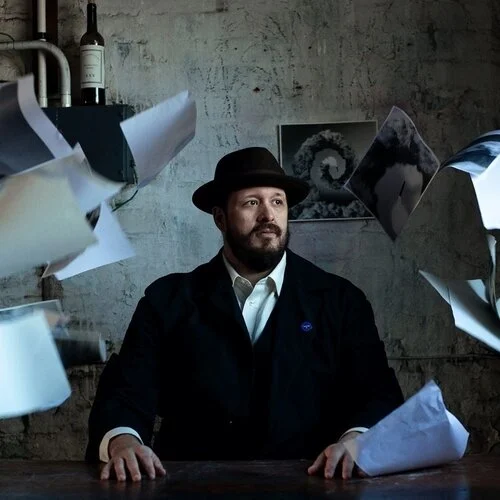
For me, it is the NOW That’s What I Call Music! runs of the 1990s that particular appeal. I may have mentioned this a few times, but the first album I recall buying is NOW That’s What I Call Music! 24 not long after it came out on 16th April, 1993. I was just about ten at that time, and the sheer delight of having so many tracks – thirty-seven – in my hands was a bit too much. Through the years, the series increased the number of tracks included and, whilst most of the tracks were Pop and chart-based, I think it became more diverse as time went on. I think the years 199-1993 were golden for Pop music in general. NOW That’s What I Call Music! 23 arrived earlier in 1993 and sported Sleeping Satellite by Tasmin Archer, Would I Lie to You? By Charles & Eddie, People Everyday by Arrested Development and the terrific Digging in the Dirt by Peter Gabriel among its thirty-nine cuts! NOW That’s What I Call Music! 24 has everything from Ain't No Love (Ain't No Use) by Sub Sub featuring Melanie Williams, Step It Up by The Stereo MC's and Is It Like Today by World Party. Look at the tracklisting for NOW That’s What I Call Music! 25 from later in 1993, and you can see what a marvellous year it really was! I was aware of NOW That’s What I Call Music! before I bought my first copy, but I became hooked for many years.
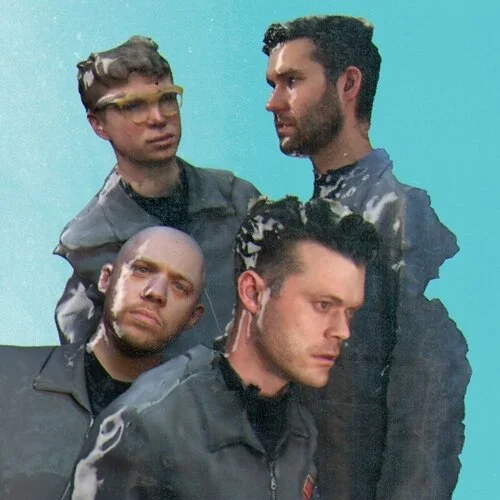
Not only was the compilation a dream in terms of the standard of material, but it opened my eyes to what music really was. I think, until that point in 1993, I was listening to certain albums and was not really mixing things together at all; not as much as I should have been. The NOW That’s What I Call Music! compilation was like a yearbook of musical memories, but it also opened up school conversation: we would discover new artists and genres from dissecting the latest NOW That’s What I Call Music! I think the series remained fairly loyal to its Pop and Dance base through the years, and it is wonderful to see things continue to this very day. Maybe the quality has declined through the years too – as the mainstream and charts is not as strong as it once was -, but people still download and buy the album. The fact that a compilation album is still purchased is testament to its appeal. One does not merely skip tracks on NOW That’s What I Call Music! and discard the album. For so many people, the latest collection is a document of the year’s music and, as such, there is a lot more to grab the attention that most albums. NOW That’s What I Call Music! also started to branch out and include decades and genres as opposed to a particular year of music – you can see the whole range here.

When NOW That’s What I Call Music! 100 arrived in 2018, a few articles were published to pay tribute to the wonderful, decades-running series. This feature from The Guardian took us inside the process and spoke with those compiling the latest series. The piece ended with various people in music remarking why they like NOW That’s What I Call Music! The Guardian’s Alexis Petridis sort of hits the nail on the head:

“Alexis Petridis, music critic I never bought a Now compilation when I was a kid. I’ve no idea why – I was 12 in 1983, the ideal age. Then, a few years ago, I was researching a feature about compilations, and ended up listening to Now 5. Somewhere between Simple Minds’ Don’t You Forget About Me and The Commentators’ N-n-nineteen Not Out, I found myself fully transported back to 1985. It happened because the albums were, and are, compiled without discrimination: if it’s a hit, it’s in, regardless of whether it’s good or bad, built to last for ever or destined to be forgotten in a flash. It offered pop’s past not seen through the distorting lens of nostalgia, but as it really was: a perfect time capsule”.

The series took over America fifteen years after it started in U.K., and there is even a NOW That’s What I Call Music! night in Manchester.

Regardless of whether you were alive when NOW That’s What I Call Music! started, or you have got into it because of your parents; one can refute the well-stocked and varied hits one gets on the compilation. I have been dipping into various NOW That’s What I Call Music! years online, and comparing the hits of the 1980s, ‘90s and ‘00s with the last decade or so. I think that many agree that the 1990s provided some of the very best NOW That’s What I Call Music! released – and some will disagree when it comes to the exact placing. I guess it sort of all depends on when you were born and were a teenager in regards the very ‘best’ compilation. I guess we sort of cherish the ones we experienced when in middle and high school, but I love so many of the NOW That’s What I Call Music! compilations. One can gleam a feel of a year from Spotify; you can stream various playlists, but NOW That’s What I Call Music! is different. Constantly, NOW That’s What I Call Music! hits the number-one slot for compilation album, and it is wonderful we still have an appetite for the series nearly thirty-seven years after it started. Maybe it is the sheer quality and number of tracks provided, or it might have something to do with NOW That’s What I Call Music! being this institution and collector’s series. I wonder whether those in charge of the NOW That’s What I Call Music! archives will reissue all the series on cassettes. I think they would prove popular and, if anyone has one of the old NOW That’s What I Call Music! albums on tape, I can imagine they would sell for a pretty penny! To the young, the NOW That’s What I Call Music! release might be a handy way of streaming/buying the best tracks from the year but, for me and so many others, NOW That’s What I Call Music! is this comforting time capsule that soundtracks the music we grew up on; how things have changed through the years too. I really hope that NOW That’s What I Call Music! continues strong…   

FOR many more years.  

FEATURE: Second Spin: Supergrass – Life on Other Planets

FEATURE:


Second Spin

Supergrass – Life on Other Planets

___________

IN this series…

IN THIS PHOTO: Supergrass in 2002/PHOTO CREDIT: Martyn Goodacre

I am investigating albums that were sort of overlooked or underrated when they first came out. Assessing Supergrass’ Life on Other Planets seems timely – the band are touring again (or will be soon enough), and there might be new material sometime in the future. Released in 2002, Life on Other Planets followed their 1999 eponymous album. There are several different phases to Supergrass’ career. Their first two albums are full of buoyant songs and energy; the songs are youthful, and they are considered their very best – 1995’s I Should Coco and 1997’s In It for the Money. Supergrass is a more calmed affair; more reflective in places. Although there was more critical love for the band’s first two albums, it is folly to ignore the following two. I think Life on Other Planets is a sort of return to flavour and spring of their first two albums. The band said that they were inspired to write the albhum following a working holiday in the Côte d'Azur, Southern France. Sam Williams produced Supergrass’ debut album; John Cornfield joined Supergrass in producing their next two but, by the time Life on Other Planets came along, the band felt that they needed more urgency and a different approached. They hired Tony Hoffer, who kept takes short and brought back an urgency that can be found early on in Supergrass’ career.

Although there are no big anthems like Alright and Going Out on Life on Other Planets, I think there are so many gems to be found. Za and Rush Hour Soul are a brilliant pair of opening tracks – the latter is one of the most charged songs the band ever laid down. Can’t Get Up is a highlight with a huge chorus; Funniest Thing is the band going about left-field, whilst Grace is the band in classic territory. Maybe there are a couple of filler tracks (Prophet 15 and Run is quite a weak way to end a wonderful album), but there is more than enough to make Life on Other Planets stay in the mind. The guys did recapture much of the energy they displayed in the 1990s but, as the scene was different in 2002 and things had moved on, maybe that accounts for a slightly meagre response to their fourth album. It is a shame that so many critics gave the album short shrift. I will bring in three reviews for Life on Other Planets: one that is positive and sees the whole picture; one that is constructive (I have highlighted the more negative aspects), and one that is quite negative overall. The former is a more current review, so it might be a case of the album growing in strength and sounding stronger further down the line. This is what AllMusic had to say when they reviewed Life on Other Planets:

 “Supergrass makes music so effervescent and so effortlessly joyous that it's easy to take them and their skills for granted. Surely that was the case around the release of their third album, 1999's eponymous effort, which in its labored fun and weary ballads illustrated just how much hard work it was to craft records as brilliant as I Should Coco and In It for the Money. It suggested the group might have burned too bright and flamed out, but, happily, 2002's Life on Other Planets is a smashing return to form, an album giddy with the sheer pleasure of making music.

What makes this all the more impressive is that this is the record that Supergrass attempted to be -- a perfect balance of the sensibility and humor of I Should Coco with the musicality and casual virtuosity of In It for the Money. Where that album felt labored and a little weary, Life on Other Planets is teeming with life. The tempos are sprightly, the hooks tumble out of the speakers, the band mixes up styles and eras, and they never, ever forget the jokes (Gaz's fleeting Elvis impression on "Seen the Light," an allusion to Spinal Tap's "All the Way Home," or the chorus of "Evening of the Day"). Sure, it's possible to spot the influence all the way through the album -- most clearly T. Rex on "Seen the Light" and "Brecon Beacons," where Gaz's warble is uncannily like Marc Bolan's -- but it never sounds exactly like their inspirations -- it all sounds like Supergrass. And Supergrass hasn't offered such pure, unabashed pop pleasure since their debut; there hasn't been an album that's this much fun in a long time. Since they've been away for a while and have never broken in the States, Supergrass has been curiously overlooked, even though they're better than 99 percent of the power pop and punk-pop bands out there (plus, their everything-old-is-new-again aesthetic can be heard in such albums as the Strokes' Is This It?). But, as this glorious record proves, there are few bands around these days who are as flat-out enjoyable as this trio. The world is a better place for having Supergrass in it”.

I think the band themselves have sort of said Life on Other Planets is not one of their favourites, but I think it is such a varied and exciting album, one cannot ignore it. Drowned in Sound did praise aspects of Life on Other Planets, though they did highlight some flaws:

“The negatives first, then; ‘Evening Of The Day’ is the sort of sub-standard album filler that Supergrass should really have got out of their system by now. It is an annoying, lightweight, novelty song with a false ending, daft harmonies and comedy whistling. Stuck slap bang in the middle of the record, it does nothing except destroy the momentum gained by the opening five tracks.

The decision to recruit Tony Hoffer as producer for this record is an interesting one. Hoffer’s previous credits include work for artists such as Air and Beck, and it is clear he has gently attempted to bring a more experimental approach to this band’s notoriously traditionalist recording methods.

On ‘LA Song’ you wonder if it was worth him bothering. The track itself is not really up to much anyway - again it comes over like a badly thought out pastiche, Supergrass forcing their ‘wacky’ side upon us once too often. Add to this a load of unnecessary synthesiser effects that feel like after-thoughts, throw in some rubbish Buggles/Daft Punk-style solo parts, and it’s a proper old mess.

Closing track ‘Run’ is the only other song where you suspect Hoffer was really calling the shots. A thoughtful electro-acoustic piece, it sounds like Supergrass trying to sound like Air, and discovering, surprisingly, that it rather suits them.

Elsewhere, ‘Life On Other Planets’ is mostly conventional Supergrass. The singles ‘Grace’ and ‘Never Done Nothing Like That Before’, whilst being great on their own, fit snugly into the rest of the album, and listening to the latter is like hearing the teenage indie of ‘I Should Coco’ all over again, now fully grown up, more muscular and with hairs on its chest”.

It is a shame that the once-celebrated Supergrass found themselves on the receiving end of some negative reviews. Although 2005’s Road to Rouen gained back some of the critical praise, I think so many people were either unfairly comparing Life on Other Planets to previous Supergrass albums, or they were not listening long enough to give the album full respect. The Guardian reviewed the album in 2002, and had this to remark:

“Supergrass's role in the Britpop revolution should not be underestimated. Their debut, I Should Coco, was the work of assured young terriers who snapped at the heels of the bloated US grunge bands and made them go away. However, despite making their "mature" album with 1997's In It for the Money, the Oxford trio have never made the convincing leap from snotty-nosed racketeers to grown-up pop band. In a bid to halt the rot, Life on Other Planets harks back to the youthful effervescence of their debut - but the energy feels laboured. A bigger problem is the obvious lack of ideas: on three tracks, they sound like a T Rex tribute band.

As Gaz Coombes's muse flails around, mostly in the debris of the 1970s, occasionally they hit the spot. Grace is one of their most naggingly tuneful singles, and the supernatural revenge fantasy of Brecon Beacons has some intriguing lyrics. But the album predominately feels adrift and lightweight. Can't Get Up ("... no more") sums up their career”.

Though 2008’s Diamond Hoo Ha was the final studio album from Supergrass, one can never rule out another release from them. If fans had to rank their six albums, I guess Diamond Hoo Ha might be in sixth; perhaps Life on Other Planets is fifth; Road to Rouen is fourth, whilst Supergrass would be third; maybe In It for the Money is second, whilst their debut, I Should Coco, comes in the top spot. That might suggest the band got weaker as time went on, but I think that would do them a disservice. They were always evolving, and I have a lot of love for their later work. I would recommend people check out Life on Other Planets, as it is a much-underrated album that boasts some cracking tracks! Perhaps some of those critics who were a little unkind to Life on Other Planets when they reviewed it will listen again and…

SEE the light.

FEATURE: Three-in-Ten: The PopMaster Effect

FEATURE:

Three-in-Ten

xxxx.jpg

IMAGE CREDIT: BBC

The PopMaster Effect

___________

I have been meaning to write…

xxxxx.jpg

IMAGE CREDIT: BBC

a feature about PopMaster for many months now! It is an incredibly popular quiz hosted by Ken Bruce on his weekday BBC Radio 2 show at 10:30 a.m. Between 10.30-10.45 a.m., so many people in Britain pretty much stop what they are doing to take part. It is almost an institution of radio, and it has aired on weekday mornings since 16th February, 1998. The questions are devised by radio producer and music collector, Phil ‘The Collector’ Swern. Before I continue, here are some more details:

“Two contestants play against each other for the chance to win a DAB digital radio. Each contestant is asked ten questions based on popular music from the 1950s through to the present day. Correct answers to the questions are worth three points, other than for the third, sixth and ninth "bonus" questions on a topic chosen by the contestant, from two options offered by the host prior to the start of the quiz. The bonus questions involve listening to a snippet of music and, if answered correctly, are worth six points. There is, therefore, a maximum total of thirty-nine points on offer.

The winning contestant then goes on to play "Three-in-Ten". In this part of the quiz they have ten seconds to name three UK Singles Chart hits for a particular artist or group named by Ken Bruce. If they successfully manage this they win the DAB digital radio; if they fail, they win an MP3 player. As of early 2015, the prize for failing the Three-in-Ten has been changed to a Bluetooth speaker. However, if a contestant scores thirty-nine points in the main round, they win the Digital Radio anyway, and the other contestant would play Three-in-Ten instead. Should both contestants score the same number of points (and the score is less than the maximum), a tie-break is used to decide who will play Three-in-Ten.

IN THIS PHOTO: Ken Bruce

A "One Year Out" t-shirt can be won, so-designed because when answering "Name the Year" type questions, contestants are very often just one year out, causing Ken to exclaim "One year out!". Previously, the losing contestant would receive a consolation prize of a Radio 2 CD wallet. One Year Out t-shirts are often heard to be accepted by contestants as a desirable consolation.

At the end of the year, the best contestants (those who score thirty-nine points, or thirty-six points and also win the "Three-in-Ten") return for a "Champions League PopMaster", the structure of which is different. The contestants start with their original score from their first appearance, and then proceed to answer ten questions which are worth their ordinal values i.e. question 1 is worth one point, question 2 is worth two points and so on. The contestants still choose a bonus subject, but this is only worth its value in the order of the questions. The score is then added to their original score, and the highest-scoring two contestants return for a final to determine the year's champion.

An interactive version of PopMaster was launched on Monday 1 March 2010. The game can now be played on the BBC Radio 2 web and mobile sites, or in a Facebook application. The game features text, image, sound and video questions, and scores are determined by how quickly the player answers correctly. A voiceover from Ken Bruce features throughout the game. Players can also challenge friends to beat their high scores. The maximum score possible is 39.

Since Monday 29 October 2018, PopMaster has been available as a podcast for 30 days after broadcast. The podcast edits out some personal details of the contestants for privacy reasons. Instead, at the end of the podcast episode, Ken reads out a selection of listener emails from after the live broadcast”.

I listen to PopMaster as much as I can, as there is something hypnotic and addictive about the segment of Ken Bruce’s show. There are many reasons why PopMaster is one of the must-hear segments of radio every weekday. You can hear Bruce has a passion for it after all these years. He is funny and warm, and the callers are always interesting. I am not sure what my highest score is; I think I have scored thirty points in the past – there are some callers who have got every question right. There is that excitement of seeing who will win and, when it is a close contest, just who pips it! The format is pretty simple, in that there are general questions and specialised subjects; there is a nice mix of years/artists (in the questions), and I can imagine PopMaster continuing for many more years to come! I want to bring in an interview from the BBC that featured Ken Bruce. He is broadcasting from home – like so many broadcasters -, but he is still able to present his BBC Radio 2 show. He spoke about that adaption, and why PopMaster remains so loved:

“Any surge in listening won't be reflected in official figures for a few months, but the BBC says there has been a significant increase in live radio listening via the BBC Sounds app since lockdown measures came into force.

Not that Bruce needed any help attracting listeners. With an audience of 8.27 million, his is the most popular show in the UK - a particularly impressive accolade given that he doesn't host the breakfast show, traditionally a radio station's flagship programme.

IMAGE CREDIT: BBC

Bruce is one of countless radio presenters currently broadcasting from home, but technical advances make this much easier than it used to be.

Many listeners won't even have noticed a change - as was the case when the presenters of Radio 4's Today programme began broadcasting from home last month.

"Radio does provide friendship, companionship, in an undemanding kind of way, so strong relationships are formed between listener and broadcaster on radio, and I think that will only increase as time goes on," Bruce says.

"We're certainly aware of more people listening and taking part in Popmaster, for example, than before, and the texts and emails have massively grown, so I think there will be a general rediscovery of radio and how important it can be at times like this."

One specific feature within Bruce's show which has seen a significant increase in engagement is the famous quiz broadcast at 10:30 every morning.

"We're hearing a lot about the Popmaster effect," says Bruce's producer Ricky Marshall.

"It's always been an appointment to listen, but I think now more than ever it's really ramping up - families are sitting down to do Popmaster, people are saying they're playing along with their friends on a Zoom call.

"The hashtag seems to trend most days with people all joining in together, so I think there's a real sense of online community around the quiz which is quite nice."

Popmaster sees two callers face a series of (often quite difficult) music questions. If they hesitate for too long, a five-second countdown begins, which adds to the pressure.

"With the five-second counter, you've got to feel it," Bruce says. "You don't play it too soon on the early questions, and if you think somebody might be getting a little assistance, shall we say, then you can slam the five-second countdown clock down quite quickly. So it's a question of touch and feel".

I think radio is a lifeline right now, and I am listening a lot more than I did a few weeks back. I think the cult of PopMaster is one of those comforting and wonderful beacons of light that not only provides distraction, but it is also joining people together. The pleasure of playing along with relatives or friends – we are seeing a lot more of that than we did before lockdown. Ken Bruce is that most charming of hosts that makes PopMaster a real treasure of the airwaves. I hope that it (and Ken Bruce) continues on BBC Radio 2 for a lot longer, as I do not think weekday mornings would be the same without it. If you are someone who loves their music and is new to PopMaster, I suggest you join the army of loyal listeners. Tune in to BBC Radio 2 and Ken Bruce’s show and…

GET involved.

FEATURE: Residents of Kensington Gardens, Brighton: Saluting a Truly Brilliant Record Shop

FEATURE: 


Residents of Kensington Gardens, Brighton

aaaaa.jpg

Saluting a Truly Brilliant Record Shop

___________

AS today should have been Record Store Day…

aaaaa.jpg

I have been thinking a lot about the different, fantastic record shops around the country. Although Record Store Day has been rescheduled, we all took place online and supported shops that way. I have great respect for all record shops in the country, but I have a special attachment to Resident Music in Brighton. You can check out Resident on Facebook, Twitter, and Instagram. Today should have been, in their own words, one of the most fun days; there would have been a load of people passing through – despite the bad weather -, and it would have been a terrific occasion today. Sadly, like all other record shops, the doors are closed and there is little cause for celebration. I can understand why morale was low for the team at Resident. The shop should have been bustling and buzzing; so many people would have been interacting, and the tills would be ringing all day long! Whilst there is hope Record Store Day can pick back up in June, at the moment, Resident are relying on online orders. Support them if you can, because the team are dedicated and are here to serve our record-buying needs! There are a number of different reasons why I love Resident more than any other record shop. I think people go to shops to buy records is because of the atmosphere and the desire to actually hold and own records.

When so many of us are streaming music, it is pleasing to know that record shops still attract so many people. I think they are a vital pillar of the community, and essential for the music industry. Whilst places like Resident can survive on online orders and will be back in business soon enough, it is a tragedy that we cannot visit and all share in the joys of Record Store Day. I have some time off in June, and I hope to get down to North Laine Bazaar and visit Resident in Kensington Gardens, Brighton. There is more to the wonder of Resident than the music alone. I know I have written about them before, but the store attracts people from all over the country. Not only is there a fantastic range of brand-new and older records alike; one can purchase music books and all manner of treats. The staff are so friendly and knowledgeable, and there is such a great vibe. Whilst one always walks away having spent way too much money, there is never any sense of regret. Record shopping is one of the best experiences ever, and I feel so at home flicking through the vinyl at Resident! Based where it is, the shop is in such a lovely setting. With unique shops, colours and smiling people around, shopping at Resident and walking around Brighton is a perfect day out!

xxxx.jpg

As the weather improves and summer is not too far away, we all hope Resident and Brighton can reopen soon. Before I continue, I want to bring in an interview from Pleece & Co, who spoke with Resident Music’s co-founder Natasha Youngs back in 2018:

“Resident Music is a Record Store with a big reputation. Based on Kensington Gardens in the North Laine, Resident has become a Brighton institution, catering to crowds of record enthusiasts and growing with the revitalisation of vinyl in the past 5-10 years. We spoke to Natasha Youngs, co-founder of Resident to ask about her journey and how a modern day record store works.

HOW WAS RESIDENT MUSIC STARTED?

Myself & my now husband Derry Watkins met whilst working for Virgin / Our Price & realised we had similar dreams to set up our own business doing what we love best: running a record shop.

HOW HAS THE POPULARITY OF FORMATS CHANGED THE BUSINESS OVER RECENT YEARS?

We opened as a CD only shop, as vinyl was already heavily catered for in Brighton at the time (we opened in 2004). There were more than 20 places selling music in Brighton & Hove at that time so competition was strong & we wanted to be sure we were doing what we did really well rather than dabbling in a bit of everything. At the time, the demand for CD far outstripped the demand for vinyl but clearly, over the last 14 years, this has changed dramatically. We introduced a box of vinyl on the counter. This quickly became a lot of boxes under the CD racks. This this then became CD racks being swapped out for new vinyl racks. Then we just ran out of space! So we took on the shop next door, knocked the 2 together & now we have a happy CD / vinyl balance with space to shop more comfortably & a book corner too.

IN THIS PHOTO: Resident Music co-founder, Natasha Youngs

HOW DO YOU BALANCE THE STOCKING OF BIG AND SMALL BANDS AND LABELS?

We don’t really consider our curation of releases so much in this way. We try to consider lots of different elements surrounding our buying – customer demand (across a hugely diverse customer base, all ages ranges, locals & tourists, hardcore devotees & occasional buyers), how previous releases have sold, how much we are into it ourselves, press / radio coverage, how much we trust that label’s own tastes & previous releases.

ARE THERE SOME HIGH FIDELITY STYLE QUIRKS THAT COME WITH WORKING IN A RECORD STORE?

Of course – we all have geek like tendencies & obsessive behaviours. It’s what holds us together!

Hopefully we come with a lot less snobbery though. I personally hate any snobbiness related to music. Who’s to say whether one noise is more superior to another? Whatever engages someone’s brain, makes them dance, takes them to a different place, helps them feel a sense of belonging, has a nostalgic warmth, challenges them, makes them feel fuzzy, causes cathartic release – that’s the joy of music. One person’s intolerable racket is another person’s melody. One person’s cheesy pop is another person’s euphoria.

DO YOUR STAFF INFLUENCE THE SELECTION OF RECORDS IN-STORE?

Yes, all of them, whether they realise it or not. We always try to recruit people with a fresh approach or who bring a set of knowledge with them that we are lacking as a team. The wider the tastes in the shop, the more people we can confidently cater for. Derry & I can’t possibly hear, understand, know or like everything out there so we need a set of people around us that can help filter & curate”.

Resident (or Resident Music) will take part in Record Store Day in June, and I hope I can get down there at the same time as there are quite a few records that I want to snap up! Whilst I am tempted to buy on their online site, I also want to be there in person and be around fellow record buyers; to get that special experience and be in one of my favourite places. Whilst we are experiencing an online Record Store Day today, I want to bring in another interview with Natasha Youngs; this one is with The Line of Best Fit from 2011. I wanted to source from this interview, as Youngs talks about Resident’s ethos and the type of customer that shops there – and how they manage during the digital age:

“How effective do you think initiatives like Record Store Day are for reminding people to buy music as opposed to downloading it illegally?

It’s a great event and it does an important job of raising the profile of independent record shops but I’m not sure it does much to prevent illegal downloading. To be honest, I’m not really sure that is part of the agenda. It’s more about rewarding those who do support physical product.

Have you noticed a shift in clientele in the years since Resident opened? Is there a typical Resident shopper?

Thinking about it, fewer students / young people buy physical releases these days so our customer base will undoubtedly have got older. We have gradually made a name for ourselves among the more discerning music types so we attract more and more music geeks and that’s a compliment in our books by the way. We also attract a lot more women than your average indie, which may be because the store has a very relaxed atmosphere with three girls working behind the counter, balancing out the testosterone! 

xasas.jpg

Does any aspect of running the shop make you wish you’d never opened the doors?

We live and breathe the shop so we never get a proper day off, especially since we bought iPhones! To run a record shop properly these days takes immense commitment, 7 days a week, 52 weeks a year although we do give ourselves Christmas Day off. We also took a breather to get married and have a honeymoon! Sometime it gets a bit much, but then we wouldn’t want to do anything else either.

It means the world to us to be voted England’s favourite independent store in the Record Store Day Poll. It is a really special accolade bestowed upon us by our customers and it’s brilliant for us to know that the ridiculous amount of work we all put into making Resident this good, is genuinely appreciated.

Have you ever considered selling downloads or does what defeat the object?

It’s not an area we’re interested in exploring right now.

Why do you feel vinyl sales have been rising again in this digital age?

In an age of disposability when music is not given the value it deserves, vinyl feels and sounds more authentic…and more permanent, which is something we all seem to be craving at the moment. We want to own things again, beautiful things”.

Things have come a long way since that interview was published nine years ago, and Resident is one of the most sought-after record stores in the U.K. I know it is frustrating that the party of Record Store Day has been put on hold, but we only have to wait until June and, hopefully, things will be back to normal. In its idyllic setting in Brighton – surrounded by wonderful shops -, if you have not been to Resident before, making sure you do when it reopens. On 20th June, Record Store Day will, we all hope, go ahead for real, and Resident have some great releases you can investigate. It is a strange time, but support them as much as possible; I already have a wish-list of Record Store Day releases that I want to get from them – I better get down there in June and get near the front of the queue! It is a slightly grim day for Resident but, with so much love from those online, their dedicated and passionate staff are being lifted by the support. Like all great record shops, there is so much on offer for the true music fan. Resident host fantastic in-store gigs that, thorough the years, have opened their arms to some of the music world’s finest artists. I can imagine why artists want to play in-stores at Resident: such a warm and inviting space is very hard to resist!

The coronavirus pandemic will continue for a while here, but it will ease, and we can all start shopping and buying records soon. When the lockdown is over, one of the first places I will get to is Brighton; Resident is right at the top of the list when I get there! I am pretty sad they are unable to open today and benefit from the beauty and popularity of Record Store Day. In the meantime, I am keeping abreast of the tweets from their Twitter page where various releases are being promoted. It seems like there is a huge demand for Resident, even though they are operating online at the moment - which must be very humbling for those that work there; knowing there is this very loyal base that will help them through this very tough time. On 20th June, Record Store Day happens (I keep saying because it absolutely MUST go on), and Resident will ready themselves for a barrage of customers. I will see them then, with my cash ready. I look forward to walking out of the store with…

A bundle of vinyl!

PHOTOS/IMAGES: Resident Music