FEATURE: A Three-Sided Vinyl: Record Store Day 2020

FEATURE:


A Three-Sided Vinyl

c.jpg

IMAGE CREDIT: @RSDUK 

Record Store Day 2020

___________

ONE of the big tragedies of this year…

 PHOTO CREDIT: @annietheby/Unsplash

has been record stores closing their doors. Whilst many are providing online deliveries, the fact we cannot visit and browse is a source of pain for all music lovers. Record Store Day was supposed to happen last month, and the date has been moved again. There were plans to move it to June but, as things are uncertain still, there is this new plan – as Pitchfork explain in this article:

Record Store Day 2020 has been rescheduled once again in the wake of COVID-19. It was originally planned to take place on April 18 and was postponed until June 20. Now, the annual celebration of independent record stores will be held through a series of “RSD Drops.” These will occur on three Saturdays spread across three consecutive months: August 29, September 26, and October 24.

On each day, record stores will receive a different bundle of exclusive releases. A press release notes that the focus of these drops will be “bringing revenue to the stores, as well as to the artists, labels, distribution and every other business behind the scenes making record stores work. ” A new version of the previously announced list of releases will be available on June 1”.

It is a shame we could not celebrate Record Store Day last month, but the fact we get three different days to enjoy it is a good thing! Let us hope things stand and we can celebrate the first Record Store Day in August.

popo.jpg

 PHOTO CREDIT: @kxvn_lx/Unsplash

By then, we should be in a better situation, and things will start to return to normal. It will be wonderful for record shops, as they will have three days where business is booming. For most, Record Store Day is their busiest trading day, so to cancel altogether would have been a disaster. At the present, many are getting buy through online sales, but I hope most will be able to reopen and will not suffer too much during this difficult time. By having three different days and staggering Record Store Day, we get to, if you are a proper vinyl nut, visit our local record shop three times! I love the fact there are going to be these special releases and rare offerings. I love record shopping the rest of the year, but Record Store Day provides this chance to pick up something different and mingle with lots of other record lovers. When the first Record Store Day happens in August, it will see a huge outpouring of love for local record stores. Maybe there will be social distancing rules and a change of pace then, but it will be great to be back out at record stores and enjoying a very important date in the calendar. For music lovers around the country, the three dates of Record Store Day 2020 are…

aaaaaa.jpg

 PHOTO CREDIT: @rocinante_11/Unsplash

SOMETHING to look forward to.

FEATURE: The Right Cooks, the Wrong Ingredients: Wasted Musical Collaborations

FEATURE:


The Right Cooks, the Wrong Ingredients

IN THIS PHOTO: Prince performing in The Netherlands on 5th August, 1990/PHOTO CREDIT: Rex 

Wasted Musical Collaborations

___________

NOT that this is relevant of anything particular…

IN THIS PHOTO: Kylie Minogue

but I have been thinking about musical collaborations and the ones that would be really cool. I guess we all have a list of the artists that we’d love to see get together and jam; maybe they would be from different generations but, when mixed together, the effect would be wonderful. I think Jack White and Florence Welch would team together nicely. Maybe putting together Dua Lipa and Kylie Minogue together. How about, in a musical partnership domino link, having Nick Cave and Fiona Apple singing together? I say that, as one of the best collaborations ever was when Kylie Minogue and Nick Cave released Where the Wild Roses Grow – it was taken from the Nick Cave and the Bad Seeds’ Murder Ballads. There are articles like this and this one that bring us some truly epic duets. I think Elton John and Kiki Dee together on Don’t Go Breaking My Heart is right up there with them. I also like Gwen Stefani and Eve bringing the swagger on Let Me Blow Ya Mind; Queen and David Bowie’s Under Pressure is epic, as is Run-D.M.C. and Aerosmith on Walk This Way. Who can forget Kenny Rogers and Dolly Parton’s Islands in the Stream and Alison Krauss and Robert Planet’s album, Raising Sand?! There is no magic recipe when it comes to getting a collaboration right.

It is usually best, I feel, to have two artists together, as it can be tricky to balance with more – though there have been some great joint efforts where several artists have been in the mix. Great duets and collaborations can work with artists from different genres who mesh seamlessly or singers who blend naturally. From Kate Bush and Peter Gabriel harmonised in Don’t Give Up to Beyoncé and Jay-Z killing it on Crazy in Love…there have been some tantalising and explosive combinations! There have been some occasions where brilliant artists have come together, but either the song has been wrong, or they didn’t quite mesh at that particular time. I am not going to mention the truly awful hybrids that have occurred through the years but, looking back, and it is a shame these artists performed together on the wrong song. I have been thinking of Paul McCartney and how, through the years, he has worked with some great. He is someone who can easily cross genres and make anything sound great. Though I love him and Michael Jackson’s Say Say Say from Macca’s 1983 album, Pipes of Peace, I think Ebony & Ivory is not up to his best work. I am not one of those people who slags it off – as it sends a positive message -, but this cut from 1982’s Tug of War united two musical giants. I think McCartney and Wonder could have blended in this epic Soul jam or something funky. Ebony & Ivory is a nice song, but considering who was singing on it, and I wonder what could have happened if Macca and Stevie would have joined strong for a really dazzling song in the vein of Superstition?!

McCartney and Michael Jackson got it right on Say Say Say, but The Girl Is Mine from Jackson’s Thriller (1982) was a bit underwhelming. It is hard to bring two titanic artists together and create instant gold, but I feel there was a lost opportunity to bring Jackson and McCartney together in a sublime moment. More recent collaborations like John Mayer and Katy Perry performing Who Do You Love? makes me think they could have gone in a different direction and sung this Blues number that would have brought something new from Perry. I think she is more than a Pop singer: someone who, like Lady Gaga, can take her voice in a new direction. Again, I like the idea of Miley Cyrus and The Flaming Lips collaborating, but their version of Lucy in the Sky with Diamonds was not the best song choice. I think they could do a really good Rock song that is trippy and has some cool orchestration in; a bit heavier/faster than Lucy in the Sky with Diamonds. Two artists blessed with staggering voices are Björk and Antony Hegarty (Anohni). The Dull Flame of Desire is from Björk’s album, Volta, but I wonder whether the song was the right choice for them both. I think they can still duet, but I would like to hear something a bit more elevating and interesting than The Dull Flame of Desire. Going in a completely different direction…and can anyone recall Meat Loaf and Cher doing Dead Ringer for Love?!

That song came out in 1981, and I guess it seemed like a good fit at the time. I love both of them, but things didn’t really click or linger in the memory on Dead Ringer for Love. Lou Reed and Metallica released a collaborative album, Lulu, in 2011. Many say that partnership was ill-fated and odd, but I think they could have pulled off a single rather than a whole album. It is a shame, as I would have loved to have seen a better Metallica/Lou Reed pairing. Perhaps one of the most talked about duets gone wrong is Mick Jagger and David Bowie doing Dancing in the Street. Like Macca and Jacko, having two icons together is a chance for real brilliance to shine – or something a bit misjudged and naff. I think Bowie and Jagger could have created fireworks with a different song, but they were not really suited to tackle a song made famous by Martha and the Vandellas. I love Tom Jones and The Cardigans, but I think Burning Down the House was a song that would have been better in other artists’ hands. I feel the partnership was good, but the material was not really spot on. The same can be said for Marilyn Manson and Alice Cooper performing Sweet Dreams. I feel artists who are similar to one another – Marilyn Manson seems like the rebellious kid of Alice Cooper – can work well, and the best duets are not necessarily from artists who bring something very different to the plate.

I am going to end by featuring Prince. Lord knows how many classic albums the man produced in his life, and he was comfortable working with different artists. Paula Abdul ft. Prince on U is great; Prince ft. Sheena Easton on U Got the Look is wonderful! Two occasions that could have been legendary involved Kate Bush and Madonna. I will mention Bush quickly, as it is the Madonna hook-up that seemed like the biggest waste. Prince contributed vocals, keys and the kitchen sink of Kate Bush’s song, Why Should I Love You. These artists share things in common – they were both born in 1958; both are geniuses, and they value their privacy a lot -, so one would think that something tremendous could have arrived on 1993’s The Red Shoes. I think a Prince/Bush collaboration around The Dreaming (1982) or Hounds of Love would have been great, as Prince released 1999 in 1982 and Purple Rain in 1984 – both were on hot streaks, and I feel they could have crafted something mesmeric. Why Should I Love You is too overloaded – the track also features Lenny Henry! -, and a more pared-back and sensual song would have been a much better decision. It is a shame, again, that we will never see that possibility come to fruition. I think the biggest letdown regarding collaboration occurred when Madonna and Prince fused on her 1989 album, Like a Prayer.

Love Song has a boring title and, apart from Madonna cracking out her best French, there is no much to write home about! A few issues surround this song. I think Love Song is the only weak song on Like a Prayer, so I do wonder whether it should have been a B-side. Also, the track appears THIRD on the album – behind Like a Prayer and Express Yourself. After the drama and thrall of the previous numbers, Love Song saps so much energy and cannot complete a brilliant 1-2-3 - maybe having Cherish or Promise to Try would have made for a stronger end. Also, if you do have track on the record, put it between Spanish Eyes and Act of Contrition at the end. Like Kate Bush and Prince, Prince and Madonna were born in the same year, and I think they have a lot in common. Both were bold artists and were at the peak of their fame by the end of the 1980s. Each artist could deliver these seductive, sexual and powerful songs that made you shiver and swoon. Get that much electricity and sweat in the studio and many would have been expecting something more akin to Vogue (Madonna) or Cream/Thunder (Prince). On an album (Like a Prayer) with so many classics, Prince and Madonna could have done something iconic. Maybe the fact that Madonna and Prince had not worked together before meant that the first song from them was going to be like the first time you have sex: coveted, but not always that memorable. It would have been interesting if they re-joined for 1992’s Erotica (Madonna) or her Bedtime Stories (1994). By that point, Prince was releasing Love Symbol (1992) and Come (1994), and a mix of Love Symbol’s harder Funk on Erotica would have been intriguing. Although Come is one of Prince’s weaker albums, he might have been rejuvenated writing with Madonna on a Bedtime Stories song. Like all the other less-than-stunning collaborations I have mentioned here, if the brilliant artists tackled a different song…

kk#.jpeg

IN THIS PHOTO: Madonna appeared in SPIN magazine in April 1989/PHOTO CREDIT: Herb Ritts

WE can only imagine what could have resulted!

FEATURE: Second Spin: Queen – The Miracle

FEATURE:


Second Spin

Queen – The Miracle

___________

THERE seems to be this split…

sysytdsyds.jpg

of people who really love Queen’s music and those who have no time for it. I have always been someone who has embraced what they do but, even in their fanbase, there seems to be this division. Maybe their goldens days were between 1974-1976 when they released Sheer Heart Attack, A Night at the Opera and A Day at the Races a year apart from one another. It is a brilliant run of albums and stands as the most revered – in critical terms – spell. Albums after 1976 were not exactly hit and miss, but they didn’t receive the same sort of celebration and respect from critics. I don’t think Queen have ever made a bad album; their standard was pretty high, and there are a few albums that contain filler, for sure. That said, even their less successful and hits-jammed albums have really great songs on them. One album that received mixed reviews upon its release – and continues to do so now – is The Miracle. The thirteenth album by the band, it was released on 22nd May, 1989. The album was recorded as the band reacted and recovered from Brian May’s marital problems and the devastating news of Freddie Mercury’s AIDS diagnosis in 1987. It must have been an extremely challenging time for the band learning that their lead and friend was dying. Regardless, the band continued on and recording of The Miracle began in 1988.

Recording started in January 1988 and lasted for an entire year. The last Queen album to feature photos of all the members on the cover, I think some critics were a little unfair towards the album and its songs. I think The Miracle stands alongside the great Queen albums. I Want It All is an obvious standout; composed in 1987, it is a Brian May song and one of the best from the band’s cannon. Mercury delivers a sensational lead vocal, and he is joined by May on the bridge of the track. Breakthru is another wonderful song, written by Roger Taylor, and it was released as a single and made the top-ten in the summer of 1989. The Invisible Man, another gem, is a Taylor song. Each of the band members are name-checked in the song by Mercury. Oddly, Taylor wrote the song in his bath – as Mercury did for Crazy Little Thing Called Love -, and it is one of my favourite Queen songs. Even though it was a tricky personal period for Queen, I think they released a really solid album that is not often talked about today. Most of the reviews I have seen are two/three-star (out of five), but I feel The Miracle is ripe for reinvestigation. This is what Rolling Stone offered when they reviewed The Miracle in 1989:

Basically, The Miracle is a showcase for Freddie Mercury and his love of sweeping, quasi-operatic vocals. And indeed, Mercury — especially on the title track — has never sounded better. One of his strengths is his ability to take even the schlockiest material and make it his own, and that gift comes in handy on The Miracle.

Brian May is still in fighting trim, too — when you can hear him. May’s role on The Miracle is, for the most part, limited to a quick, typically brilliant solo here and there. As a result, the album lacks the sense of dynamics that marked most of Queen’s early work. Only on a few tracks (“Khashoggi’s Ship” and “Was It All Worth It”) does May really let it rip, and when he does, it’s like the old Queen peeping out for just a moment and then turning tail. If you’re a fan who’s been hankering for years to hear Queen get back to the bombast of its heyday, replace your old copy of A Night at the Opera or News of the World instead. But don’t give up hope. At least The Miracle offers little snippets of Queen’s former majesty”.

I have found a few good reviews for The Miracle, but most tend to a bit mixed and not entirely positive. Although AllMusic awarded the album three out of five stars, they did have some positive points to make:

Following their massive 1986 European stadium tour for the A Kind of Magic album, Queen took an extended break. Rumors swirled about an impending breakup, but it turned out the break was brought on by a painful marital divorce for guitarist Brian May (who subsequently battled depression and contemplated suicide), and Freddie Mercury being diagnosed with AIDS. Instead of sinking further into misery, the band regrouped, worked on each other's mental state, and recorded one of their most inspired albums, 1989's The Miracle.

Lyrically, the songs tend to reflect on the band's past accomplishments ("Khashoggi's Ship," "Was It All Worth It") as well as the state of the world in the late '80s (the title track, "I Want It All"). Produced by the band and David Richards, The Miracle packs quite a sonic punch, recalling the rich sounds of their past classics (1976's A Day at the Races, etc.). Split 50/50 between pop ("Breakthru," "The Invisible Man," "Rain Must Fall") and heavy rock (the aforementioned "I Want It All," "Khashoggi's Ship," "Was It All Worth It"), the album was another global smash, even re-establishing the band stateside (going Top 30 and attaining gold status). Along with The Game, The Miracle is Queen's strongest album of the '80s”.

Even if you are not a Queen fan, I think there is enough good stuff on The Miracle to keep you interested; from the more obvious hits to the more experimental or less immediate tracks. It is the band sounding incredible at a time when things were pretty disruptive. Although there are a couple of weaker tracks, I am a fan of The Miracle. Check it out if you can, and make…

THAT breakthrough.

FEATURE: I Feel Fine: The Evergreen Genius of The Beatles’ 1

FEATURE:


I Feel Fine

asaa.jpg

The Evergreen Genius of The Beatles’ 1

___________

THIS is sort of related…

zzzzzz.jpg

IN THIS PHOTO: The Beatles in 1964. (L-R): Paul McCartney, George Harrison, Ringo Starr and John Lennon/PHOTO CREDIT: Evening Standard/Getty Images

to The Beatles’ Let It Be turning fifty on 8th May because, towards the end of 1, we get to hear some cuts from that album. There is always this debate as to which Beatles album is king and, though I love Rubber Soul, all of their albums have merit. It will be interesting to see how Let It Be is marked and whether too much fuss is made. It is not one of the band’s most-loved albums, but it was the last one they released, so it is very important. I was exposed to The Beatles from a very early age, and I can remember vinyl of their music being stocked in the house. I was hooked on the cover art and the brilliantly addictive music that came from the speakers. Whilst a lot of my childhood was filled with contemporary Pop, I was a huge fan of The Beatles and music of the 1960s. 1 was released on 13th November, 2000, and I remember receiving it as a Christmas present that year. The album featured every number-one the band had in the U.S. and U.K. from 1962-1970, and it was issued to mark thirty years since the band split. The Beatles’ producer Georgie Martin compiled the package alongside the three surviving Beatles. I was familiar with the ‘red’ and ‘blue’ albums from a young age – the two records that compiled their earliest singles to 1966, whereas the blue album takes in their best from 1967-1970. 1 was a different ball game for me.

I love how you get all of the number-one singles in order, and it is like seeing The Beatles evolve from the first half of the album to the second. I have the original C.D. from twenty years or so back, and I listen to it in the car and can tell which song follows the one that it is playing. Whilst one should not be all Alan Partridge and say your favourite Beatles record is a best of, I think the 1 compilation made me dig deeper into their studio albums. I was au fait with Rubber Soul, Abbey Road and Revolver, but I kept listening to 1 and was fascinated by how different an early number-one like She Loves You sounds to Paperback Writer which, in turn, sounds very different to Get Back. Though the band only released albums for about seven years or so, they accomplished so much and, it goes without saying, transformed Pop music and culture as we know it. As much as I adore The Beatles’ studio albums, I play 1 because you get this supreme suite of genius songs. Although it is a while until 1 celebrates its twentieth anniversary, I would suggest that people buy the album as a starting point. If you are not overly-familiar with the band’s catalogue – younger listeners, for example -, I think 1 gives you a good assessment of how the band developed and why they are so revered. Like I said, I was a Beatles fan from childhood but, when I was given the album – at the age of seventeen -, I became more obsessed and in love with the band.

Like any Beatles compilation, people will quibble over the tracklisting and why certain tracks are omitted. Strawberry Fields Forever was part of a double A-side on Penny Lane, but it is not included on 1. It is a shame Strawberry Fields Forever is not on 1, but I think one listens to the rest of the tracks and will seek out Strawberry Fields Forever after that. Look down at the twenty-seven tracks, and there is some of the most astonishing and influential music ever made. I get a shiver when hearing the harmonic notes welcome in Love Me Do, and I am invested and transfixed to the very end. A few years ago, Giles Martin (son of George Martin) remixed the tracks on 1 and there was this lovely package that included the promo clips for many of the band’s singles. Here is what PASTE wrote in 2015:

Pre-YouTube, pre-internet, pre-DVD, and pre-VHS, there were some enterprising souls that would put together two-to-three hour package shows of Beatles films that would get one-off screenings at independent movie houses or college campuses. They didn’t show feature films like A Hard Day’s Night or Help!, but shorter fare, like newsreels, TV appearances and what were then called promotional films—forerunners of today’s videos. The films might be scratchy and dirty, with ill-placed edits, but they were still magical to see, in part because you never knew when you’d get the chance to see them again.

Which alone makes the release of the Beatles new 1 and 1+ CD/DVD (or Blu-ray) sets welcome; you get 27 promo clips in the 1 set, and a total of 50 in 1+, all in newly restored, pristine condition (and with new stereo, 5.1 Dolby Digital, and DTS HD surround audio mixes). For Beatles fans, it’s bliss.

The lineup is somewhat hampered by the first DVD in the set adhering to the songs on the original 1 album, released in 2000, and featuring every No. 1 hit the Beatles had in the US and UK. The label had originally wanted the promo clip set to follow up the CD’s release in 2001, but the Beatles said no. Now the idea’s been revived, and it’s something of an uncomfortable fit sticking to the 1 lineup, largely because there aren’t specifically filmed promo clips for each No. 1 song. So if a promo clip doesn’t exist, a live clip is used. In the case of “Eight Days a Week,” where there’s neither a promo clip or live performance available, a new clip has been created from footage of the 1965 Shea Stadium concert, cleverly edited to hide the fact that the Beatles aren’t actually performing the song”.

I love both editions but, for me, the original C.D. is one that has very special memories. At the time, I was in the last year of sixth form college, and I would leave for university in 2001. I was very uncertain and, as it was a challenging time, I think music played a very comforting role.

When I play 1 and let the tracks swim into my brain, I am transported back to that time in my life; one where I cemented my love of The Beatles and started to explore some of their albums I was not overly-familiar with earlier in life. As Let It Be turns fifty in a few days, I am going to re-investigate the album but also play 1 and get a very real sense of what The Beatles accomplished and how they grew. Not only did John Lennon and Paul McCartney grow in ambition and scope; George Martin came into his own as a songwriter and, though Something is his only number-one on 1, you can feel Harrison strengthen as a performer – the same can be said for drummer Ringo Starr. Maybe it is only particular to me, but 1 is an album that makes me feel safer in the future, it takes me back to early childhood and I can remember the excitement of receiving 1 in 2000. Though Let It Be’s fiftieth anniversary will be quite bittersweet in a way, it is a chance for fans new and old to remember this great band. I know 1 is still being bought and bringing The Beatles to the attention of so many eager music fans. Despite a couple of track omissions, it is a fantastic collection that proves why The Beatles are the greatest band of all time. To me, the compilation holds a lot more significance and, at a very strange and tough time for us all, it is not only providing me with this glorious music, but it is providing me with great…

STRENGTH and comfort.

FEATURE: The Chosen Hour: Music and the Positive Aspects of Lockdown

FEATURE:


The Chosen Hour

PHOTO CREDIT: @mahiruysal/Unsplash

Music and the Positive Aspects of Lockdown

___________

WHILST we have been seeing a decline in…

zzzzz.jpg

PHOTO CREDIT: @hariprasad000/Unsplash

those infected with and dying of Covid-19, we still need to wait until figures get a lot lower until we can ease lockdown and start to see some return to how things were before. It will be a slow transition, and it is a stressful time for a lot of people! Not only are venues struggling, but culture in Britain risks being destroyed if there is not more help from the Government. This article from The Guardian opened my eyes and, let’s hope, politicians here spring into action:

More than 400 of the UK’s leading artists, musicians and creative figures including Nick Cave, PJ Harvey, Meera Syal, Simon Callow and Johnny Marr have signed a letter calling on the government to release funds to support the creative industries, warning that unless more is done the country could become “a cultural wasteland” because of the economic damage done during the Covid-19 outbreak.

The letter, which is written by Creative Industries Federation (CIF) and addressed to the chancellor and culture secretary, appeals for urgent funding for creative organisations and professionals who, it says, are “falling through the gaps of existing government support measures”.

Signatories of the letter also include Anish Kapoor, Jeremy Deller and Jonathan Pryce, who argue the government “cannot allow the UK to lose half of its creative businesses and become a cultural wasteland”.

The singer Rufus Wainwright, who also signed, told the Guardian artists “protect the minds and souls of a nation”, and it could be “criminal” for the UK to not support them during the crisis.

He said: “Artists are creating so much content online that people can experience in their homes. They have not stopped producing and it would be a crime as a society to not support them through this crisis as they are nourishing us”.

There is a great website where fans and artists can donate to their local venues and make sure they get some much-needed funds. Right now, the fabric of life music is vulnerable, and venues will be among the last spaces opened when lockdown is eased. It is a worrying time, but I think our sense of community is one of the best things that has come out of lockdown. Whilst many people supported venues and artists anyway, I think we have all been more generous at this difficult time. I wonder, when things calm and venues are allowed to open again, people will think about supporting venues through donations. I think venues can survive if enough people attend gigs, but they are always subject to threats for various reasons – high rent price, a drop in demand and other factors. I would be happy to put something into the kitty to support my local venues; maybe not a monthly donation, but occasional sums that mean that, if something like Covid-19 hits again, we have all put something in to help venues and keep them afloat.

ccc.jpg

PHOTO CREDIT: @bantersnaps/Unsplash

Our government should be doing more, but the goodwill and strength of the public has been through the roof. I think this kind of altruism and respect for venues will carry on long after lockdown has ended. Similarly, I love the fact that we have been able to see live performances, gigs and even festivals during lockdown. I am not suggesting this will become the new normal, but how many of us saw live-streamed gigs and took in live music this way pre-lockdown?! I think artists will do the usual touring and attending festivals, but I feel we will see a lot more one-off gigs online and ways of connecting fans to artists. If anything, many people cannot get to see gigs, so I feel the virtual equivalent is very important. Also, so many fans are supporting their favourite artists through donations and buying their music. Streaming figures have declined a bit, but there is this appetite for, now, for buying records. There was re-lockdown, but so many record shops have seen a lot of orders come through online. It is a hard time for record shops, and I think we are all becoming aware of just how valuable these places are. Whilst we will look forward to flocking back to them when we can, I think a fresh appreciation is instilled in us all. I would not be surprised to see a lot of new people not only order online from independent record shops post-lockdown; many more fresh faces will make a trip to their local.

IN THIS PHOTO: Dua Lipa

The music industry has had to adapt and evolve whilst doors are closed, and the industry has shrunk. Whilst we cannot get together right now, the generosity and sense of connection being felt across the world is a big positive. I also like the fact that there are artists out there who have released albums whilst in lockdown. Laura Marling and Dua Lipa are two big acts who pulled their album release dates forward so they could give people something good at a bad time. Charli XCX has a new album out this month. As we see in this BBC article, she has made the album whilst in lockdown – something that she might not have considered months ago:

"Oh God, I feel so old. I'm so sorry," says Charli XCX, after two failed attempts to join our Zoom interview.

"I'm literally one of those old women going, 'Where's the camera? Is this thing on?'"

The star is speaking from her home in LA where, in reality, she's become something of a technological ninja.

In the space of just six weeks, she's planning to write and record a new album from scratch, with only the "tools I have at my fingertips to create all music, all artwork, all videos… everything".

The 27-year-old is already one of the most respected songwriters in pop, known for hits like Boys , 1999 , Boom Clap and her Icona Pop collaboration I Love It .

But this time around, she's making the writing process completely transparent - posting lyric ideas to Twitter , playing demos on Instagram live and sharing early drafts on her Apple Music radio show .

Not only that, but she's screen-grabbing texts from her producers, crowd-sourcing ideas in mass-participation Zoom calls, and getting fans to create artwork, videos and remixes.

"Part of me is like, 'I don't know why I haven't made an album like this before'," she says. "It's so fun and nice to work like this".

Although I am not a massive fan of using technology like this myself – I do not have Zoom and only use Facebook Messenger -, I have sort of come around to watching gigs through the Internet, but I am not a convert myself when it comes to recording or communicating via video – I always prefer the smoother and more human approach. That said, artists are realising that they do not need to make albums over weeks in fancy studios: many are able to produce fantastic albums from their homes. Whilst most artists will be happy to get out their homes and get into studios and venues, I think we will see a lot more homemade albums and gigs streamed online; a nice mix that benefits artists and fans alike. Before I move on, I want to nod to Tim Burgess’ Twitter album listening parties. Though he has been running these for years, the intensity and demand has been huge over the past five or six weeks. I never really delved into album listening parties before lockdown, and I bemoaned how there were no classic album series where we got to hear the stories behind iconic albums. Not only are legendary albums being discussed; new albums are also being explained via tweets, and it gives fans a chance to learn more about the gestation and creation of albums. Like virtual gigs and lockdown-style albums, I think the album listening party is another thing that will continue to germinate and inspire long after lockdown. If anything, I think technology is being used in new ways, and artists will have new skills and knowledge when they come out of lockdown.

PHOTO CREDIT: @sporlab/Unsplash

Apart from the things I have mentioned above, one big positive of the lockdown is exercise. Maybe returning to the working world will restrict our time and desire, but so many people are listening to music whilst on their permitted one hour of time outside. I know many people who exercised very little before lockdown are not more active and, when they go walking or running, they are listening to music. Not only are they checking out new artists, but radio is also being played. I think the role of radio is becoming very clear as we are locked down. The incredible service stations and broadcasters play is being realised across the world. I think that an increase in people listening to music whilst out will continue post-lockdown which, not only will make folk healthier, but there is that chance for music discovery, streaming and radio. People are also keeping fit in the home, and music is playing a big role there too. We can move and dance as much as we want at home, and people have been taking advantage of lockdown playlists, chill mixes and streamed D.J. sets. Whilst some are getting fitter through dancing, others are discovering the calming and inspiring nature of music. Whilst we have very little time to do anything but be at home or some exercise, music and radio are keeping us company. It will be interesting to see whether we all go back to our old patterns when lockdown eases, or whether the transition will be a lot slower – or whether we completely adopt a new way of life. Although lockdown has created a lot of anxiety and uncertainty, it is also clear that…

sss.jpg

PHOTO CREDIT: @brookecagle/Unsplash

A lot of good has come out.

FEATURE: The May Playlist: Vol. 1: Don’t Stop, You Cosmic Dancer!

FEATURE:


The May Playlist

qqqq.jpg

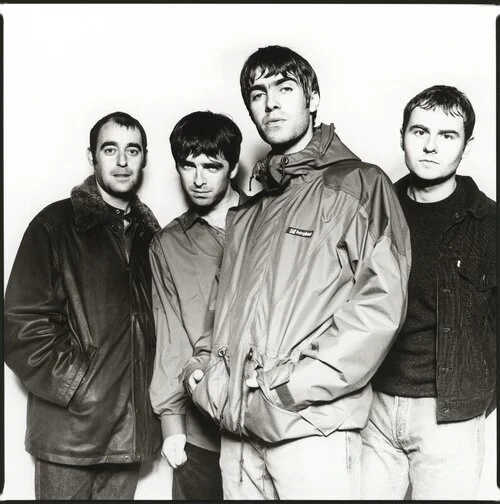
IN THIS PHOTO: Oasis in 1996/PHOTO CREDIT: Chris Floyd

Vol. 1: Don’t Stop, You Cosmic Dancer!

__________

THIS week has been another busy one…

ygg.jpg

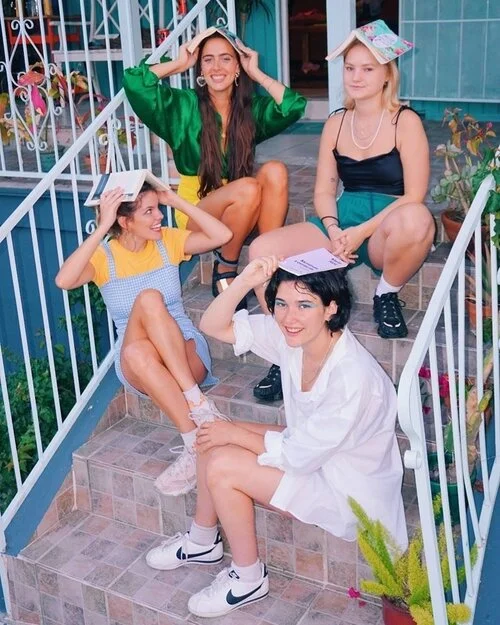
IN THIS PHOTO: HAIM/PHOTO CREDIT: Taylor Hill/FilmMagic via JTA

and some pretty big releases have come out. A new Oasis demo, Don’t Stop…, got people excited; Nick Cave has covered T. Rex’s Cosmic Dancer, and there is fresh material from HAIM, Glass Animals, Car Seat Headrest and Hinds. It is a great week for new music and, as we are all not really going anywhere much, settle down and investigate some terrific tracks. I think we all need good music right now and, with some hot tunes out this week, I think we can all feel a little better. Dip into the weekly playlist and I am sure there is plenty in there that…

hjjj.jpg

PHOTO CREDIT: Amelia Tonbridge

WILL strike a chord.

ALL PHOTOS/IMAGES (unless credited otherwise): Artists

__________

Oasis - Don't Stop…. (Demo)

ss.jpg

PHOTO CREDIT: Dustin Condren

Big Thief - Love in Mine

Nick Cave - Cosmic Dancer

HAIM - I Know Alone

qqw.jpg

Groove Armada - Get Out on the Dancefloor

Glass AnimalsDreamland

Diet Cig Broken Body

Austra Anywayz

2e.jpg

Pip Blom Sell by Date

Car Seat Headrest Famous

yyyy.jpg

Amber Mark 1894

rvvv.jpg

Gia Margaretbody

PHOTO CREDIT: @rautric

Hinds - Just Like Kids (Miau)

JoJo So Bad

5fgf.jpg

The Magic Gang Take Back the Track

Kehlani F&MU

tv.jpg

PHOTO CREDIT: Juan Veloz for Highsnobiety

H.E.R. Wrong Places (from Songland)

uy.jpg

Dixie Chicks Julianna Calm Down

1222.jpg

Braids - Just Let Me

PHOTO CREDIT: Holly Whitaker Photography

Wesley Gonzalez - Tried to Tell Me Something

dfdf.jpg

Oh Wonder I Like It When You Love Me

4gt.jpg

Moby Too Much Change

PUPAnaphylaxis

IN THIS PHOTO: Hlasey

Marshmello (with Halsey) Be Kind

6hgh.jpg

Lola Young Same Bed

oiioio.jpg

Sea Girls Do You Really Wanna Know Me?

Odina - 1,2,3,4

gv.jpg

Khruangbin - Time (You and I)

gggggg.jpg

Mabes Slow Drowning

gff.jpg

Ward ThomasHold Space

vvv.jpg

Eve Owen Mother

PHOTO CREDIT:  Daniel Alexander Harris

Grace Davies Amsterdam

98H.jpg

The Hunna Dark Times

OIII.jpg

Fenne Lily - To Be a Woman Pt. 2

FEATURE: The Lockdown Playlist: Vol. VIII: 1970-1973

FEATURE:


The Lockdown Playlist

222.jpg

PHOTO CREDIT: @georgiadelotz/Unsplash

Vol. VIII: 1970-1973

___________

NOW that I have worked my way through…

12212.jpg

PHOTO CREDIT: @taylorannwright/Unsplash

the 1980s, 1990s and the first stages of the ‘00s, I have decided to head back to the start of the 1970s with regards my Lockdown Playlist – I might well come forward again in a while. I am keen to see what music was trending and popular during particular years. This playlist features the biggest U.K. hits from the years 1970-1973 and will get you moving and energised. I am adapting to life in lockdown like so many people, and I think music is playing such a big role right now. If you need a boost and some tunes that get the spirits lifted, then take a listen…

PHOTO CREDIT: @mehdizadeh/Unsplash

TO the playlist below. 

FEATURE: A Love as Strong as Death: Bernard Butler at Fifty: The Playlist

FEATURE:


A Love as Strong as Death

PHOTO CREDIT: Alessandro Gianferrara

Bernard Butler at Fifty: The Playlist

___________

IT is good to celebrate…

a great musician’s big birthday. Today, as it is Bernard Butler’s fiftieth birthday, I have put together a playlist that covers his work with Suede, McAlmont & Butler and The Tears. Butler was the first guitarist for Suede and, to me, he was in the band when they were at their peak – Butler departed Suede in 1994 but co-wrote the songs on Suede (1993) and Dog Man Star (1994). I think Butler does not get the credit he deserves when it comes to the greatest guitarists of all time. Various sources have cited Butler as one of the best guitarists of his generations and, whilst I am going to include some of his best songs, I am only scratching the surface of his brilliance – he has played with and produced for so many terrific artists! Butler has named Johnny Marr as his favourite/most influential guitarists; Butler himself has played with or produced alongside the likes of Neneh Cherry, Edwyn Collins, The Cribs, Duffy, Trick and Pet Shop Boys. Butler contributed to Duffy’s 2005 smash album, Rockferry, and he has been part of McAlmont & Butler (alongside David McAlmont) since 1994. The duo split in 1995, but they reunited and released the album Bring It Back in 2002. Butler has released other albums since the last McAlmont & Butler albums; Here Come the Tears by The Tears (which saw Butler and his former Suede bandmate and co-writer Brett Anderson reunite) is fantastic. In honour of Butler’s fiftieth birthday, I have put together some of his best songs that shows what an incredible talent he is. Many happy returns to…

IN THIS PHOTO: Bernard Butler and David McAlmont/PHOTO CREDIT: Shirlaine Forrest/Wireimage

A music legend.

FEATURE: Fill to Capacity: The Importance of Donating to Save Your Local Venues

FEATURE:


Fill to Capacity

PHOTO CREDIT: @dannyhowe/Unsplash

The Importance of Donating to Save Your Local Venues

___________

THIS is going to be me…

zzzz.jpg

IMAGE CREDIT: Music Venue Trust

revisiting a subject I have been exploring quite a bit over the past few weeks. I have mentioned how the Music Venue Trust has set up a way one can donate to their local venues, to ensure they are safe through this hard time. Consider the fact, at this time of year, so many artists would be packing in gigs in preparation for the festivals this summer. They would be getting all the practice and exposure they could; making sure songs are up to scratch and they are festival-ready. It is also a good opportunity for gig-goers who did not get festival tickets to see their favourite artists before they head off in the summer. In fact, all-year-round, there is buzz and activity at venues. They are not only spaces for musicians to play music: venues provide activities for people of all ages and serve their communities in a way many of us do not realise. Many do craft and poetry lessons/readings; others hold special D.J. nights, whereas some might offer a whole range of other entertainment options besides new music. As we are still in lockdown and unsure when we will be able to see gigs again, so many venues are relying on funds from supporters. I will mention some venues very dear to my heart who are all hoping to stay open and thrive when the lockdown is over.

PHOTO CREDIT: Amy McCorkindale

If we lose venues, not only do we see a valuable part of our community disappear; there is a knock-on effect on the local community – bars, restaurants and shops benefit from live venues and a lot of new people in the local area. From managers, admin and technical crew, there are so many different levels to running a venue and, if we lose them, the music world will become so much poorer. At the moment, I think a few venues have hit their target fundraising figure – which means they can remain open at this hard time and, let’s hope, put on gigs later in the year. There are so many other venues that, in the next week or so, will need the backing and togetherness of the people. I was born in Guildford, and Boileroom is a hub of the community that has seen so many terrific artists pass through their doors through the years. Although Boileroom is quite a small space, I think it is the intimacy and atmosphere that one gets from the place that pulls people in. In fact, music fans from all around the world come to Boileroom because of its variety, reputation and passion. Every member of the team there puts their all into making sure Boileroom offers something for everyone. At the time of writing this feature (29th April, 09:27), Boileroom had raised just over £26,000 of their intended £30,000 target.

I know they will make it over the line but, with twelve days to go, they need a boost. There are very few music venues in Guildford so, if we ever lost Boileroom, it would be devastating for so many people. Here are some words from Boileroom themselves:

Although we are trying to stay positive, without the support of the government we have estimated that in order to be able to support our full-time staff and pay our bills, we need around £2.5k a week. This is why we are crowdfunding for the worst case scenario - 12 weeks, which comes to £30k.

Like so many other small, independent businesses, we now face an unpredictable and potentially very grave future and we need your help.

We will keep you all informed of any changes to our plan, but for now we hope that you and your loved ones stay safe and healthy. Yours and of course our staff’s safety is absolutely paramount to us.

Put simply: without support and action during these times, The Boileroom will NOT survive and its staff will be placed in a vulnerable financial position.

At this point, while we understand that so many others are facing similarly uncertain times, we are encouraging everyone in the community and beyond who is able to and and wants to play a part in safeguarding the future of The Boileroom, to pleae donate generously to this fund.

In return we will be offering Boileroom merch and other incentives for larger donations, should you have the means to help.

We are gutted, obviously, this is challenging everything that is important to us and we really hope for a time when we can put this behind us. Thank you for your words of support and helping independent family businesses like ours. Frankly no business (regardless of shape or size) is exempt from the impact of what is going on right now”.

A sort of home away from home for me – though I live now in North London – is Brighton. I have a lot of love for the music scene in London, and I will do all I can to support venues here. Looking at Resident’s Twitter page, and they are keeping busy at this difficult time. They are being highlighted in the media, and they are experiencing a lot of online demand. I know they will reopen soon enough, and Resident is an essential part of the Brighton music fabric. I do hope that they are and all the other great record shops through Brighton remain open and are able to serve their community when things improve. I saw a tweet on Tuesday that highlighted why so many people love Brighton: the incredible live music scene. If you have ever visited Brighton and see live music there, it is impetrative to donate to these venues and ensure their survival. Like Boileroom, so many venues across Brighton are relying on donations. Komedia is a wonderful space I always walk past when visiting Brighton. I will be donating to them, as Komedia offers music, theatre, comedy, kids shows and much more besides. It is a gorgeous venue, and, as with any venue, if it is closed then it impacts on all of the business around it, in addition to the wider economy of Brighton.

The Hope & Ruin is another brilliant venue that looks absolutely fantastic! Check them out - and you can see why it is such a cornerstone of the Brighton landscape. The venue has picked up some good donations already, but it can do with your help. They are not at threat from permanent closure, but they will not be able to continue producing events and shows without valuable donations:

Team Black at The Hope & Ruin is part of a national initiative launched by Music Venue Trust to prevent the closure of hundreds of independent music venues.

While we are not at threat from permanent closure, in order to continue to host live events all year round, to discover, to book and to deliver great shows, we need to return with our talented and unique team.  Sadly, as we all know, we are unable to open to the public right now and all sources of income have dried up completely.

There are a lot of people involved in the delivery of live shows and a great many of them are facing considerable challenges through the current crisis. We have an incredible team of bookers, promoters and technicians who are not covered by any of the Government interventions.  Your donations will be used to help support them through the lockdown period and beyond so when we’re able to reopen, we’ll have our full team in place with us and we’ll be ready to roll. They make The Hope & Ruin the great place it is to see amazing live bands or just hang out for a couple of pints with pals”.

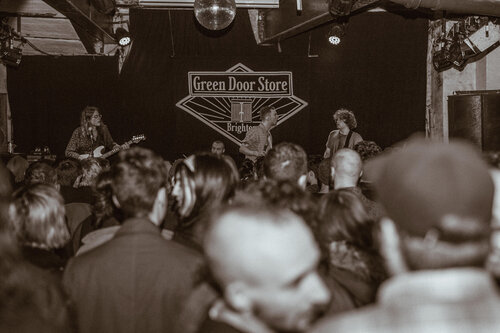
Other important Brighton venues that need support are The Pipeline, Latest Music Bar, The Brunswick (Hove) and The Old Market. Green Door Store is one of my favourite venues, and it is one of the best venues in the country. You can support them (and Rossi Bar) here, and also follow them on Twitter. I am not sure whether they would be threatened with permanent closure if they do not hit their £12,000 target, but it is clear there would be damaging losses and sustainability would be incredible difficult.

Our dear Brightonians and friends from further afield,

We reach out to you, like many others, at this time which is proving to be unfathomable for music venues. We like all of our Venue friends have had to cease operating and close our doors for an unclear amount of time. In the interim we still have so many outgoings and no way of making money (we are working on this)!

We are unsure how long this closure will be for but what we can tell you is that we are going to fight our darn hardest to stay afloat in these troubling times.

We aren’t a company that like to ask for anything. In fact we have spent the last (nearly) 10 years being proudly Independent. We have survived up to this point without funding or support from anyone other than you, our loyal gig goers and musical creatives.

We are sorry, to ask this of you when we know you too are looking at sustaining yourselves through these unpredictable weeks, and we don’t ask lightly. But we do so we can open again, as soon as physically possible. With complete transparency, all of our shows for the next five months, for both our venues, have cancelled or been postponed. We are unsure whether this will continue through the coming months.

We are fundraising for £25,000 to help protect our venues and our staff through this period of closure. If we hit our target, and we can prevent the closure of our venue, everything above the amount we need will be donated to the Music Venue Trust GMV Crisis Fund to protect other venues just like ours, right across the country”.

You can check out what is on the Green Door Store calendar, and look forward to some live music ahead. The next few weeks are going to be very tough, and it will be heartbreaking if the venue (with Rossi Bar) had to scale back or make any losses. You can support to a general pot that is raising money for venues in general, but I like so many people have been keen to also donate to important/local venues. I hope all those who I have mentioned will be fine and manage to carry on strong later this year. Venues would not be asking for donations if it were not necessary and, as I said, they provide much more than music alone. If we lose venues from our streets, it creates this snowball effect that damages musicians, the larger industry and music fans. We are all keen to get back out and see live music again, so let’s hope that all the venues looking for funding are going to be okay. I know many people are struggling financially, but many of this country’s wonderful venues are threatened, and they need your help. Check out the Music Venue Trust link, find your local venue; donate to their cause to ensure that they can… 

REOPEN their doors very soon.

FEATURE: Watching You Without Me: The Filmic Potential of Hounds of Love’s The Ninth Wave

FEATURE:

Watching You Without Me

qqq.png

PHOTO CREDIT: John Carder Bush

The Filmic Potential of Hounds of Love’s The Ninth Wave

___________

IN my latest feature relating to Kate Bush…

sasa.jpg

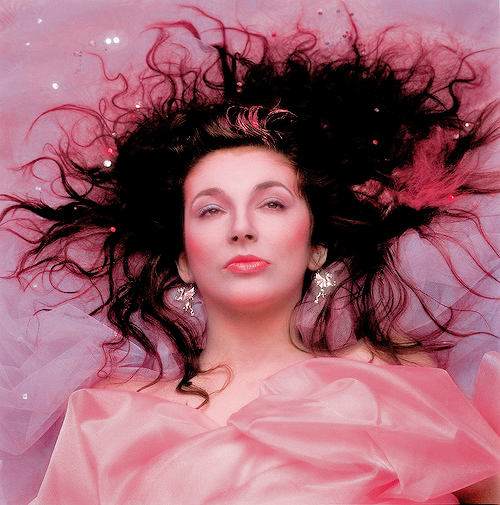
ALBUM COVER CREDIT: John Carder Bush

I am going to expand on an idea I proffered fairly recently regarding her albums Hounds of Love (1985) and Aerial (2005). Both albums have big anniversaries later this year, and both are the only albums of hers whose second sides/discs are suites. Whereas Aerial’s A Sky of Honey is a trip through a single day – with all the sounds, feelings and sights associated with a summer’s day starting and ending, and starting again -, Hounds of Love’s The Ninth Wave is almost the exact opposite: a woman’s struggle as she is adrift, alone at sea; not sure whether she will be rescued, as she fights against fear and defeat. On the first side of Hounds of Love, there are the singles and a more traditional structure – albeit it, one of the most impressive first sides of any albums of the 1980s! The second side, The Ninth Wave, features the following tracks: And Dream of Sheep (2:45); Under Ice (2:21); Waking the Witch (4:18); Watching You Without Me (4:06); Jig of Life (4:04); Hello Earth (6:13); The Morning Fog (2:34). As you can make out from some of the song’s titles, Bush’s heroine (her or a form of herself) is dreaming of sheep and being able to sleep; she then goes through this frightful terror and, near the end, finds the fortitude to keep going and survive – she is rescued at the very end, but we are not sure how or by whom.

I want to highlight why The Ninth Wave would make for a brilliant short film but, at the moment, I have come across an article that beautifully details each step of the suite:

 “According to Kate, the suite is about “…this person being in the water. How they’ve got there, we don’t know but the idea is that they’ve been on a ship and they’ve been washed over the side so they’re alone, in this water. Now I find that horrific imagery, the thought of being completely alone in all this water. And they’ve got a life jacket on with a little light so that if anyone should be traveling at night, they’ll see the light and know they’re there. And they’re absolutely terrified. And they’re completely alone at the mercy of their imagination. Which again, I personally find such a terrifying thing, the power of one’s own imagination being let loose on something like that. And the idea that, they’ve got it in their head that they mustn’t fall asleep. Because if you fall asleep when you’re in the water, I’ve heard that you roll over and so you drown so they’re trying to keep themselves awake.”

As the tiny battery-powered light on her life jacket shines like a beacon, our narrator struggles to stay awake. Of course she hopes to be found; she says that if rescuers see her racing white horses, a reference to the white caps of fast moving waves, they won’t think she is a buoy, a lifeless piece of ocean equipment.

zzzzzz.jpg

PHOTO CREDIT: John Carder Bush

Surely they would recognize her. But there is a lovely contradictory idea in her wish both to stay awake and her wish to be weak, to fall asleep and dream of sheep—a realistic wish to be granted an easy way out of her dire situation. She wishes she had a radio to listen to something, anything, even something stupid, to keep her awake. This song has a lulling, tiny, precious quality about it, punctuated with little heartbreaking rallies of half-hearted optimism (on the sections “If they find me racing white horses,” and “I’d tune into some friendly voices…”) that belies the bleakness. The most startling moment of the song, tellingly, comes from the sudden dramatic roll at the word “engines.” The entirety of “The Ninth Wave” is sonically rich with many layers of sound effects, as we will soon hear, but they are never heavy handed or intrusive. In fact, they play like sound track excerpts from a filmed version. Here we have a somnolent broadcaster giving shipping information for vessels at sea, seagulls, and Kate’s real-life mother delivering a line that foreshadows the rest of the suite as well as having deep personal meaning, which Kate explained: “When I was little, and I’d had a bad dream, I’d go into my parents' bedroom round to my mother’s side of the bed. She’d be asleep, and I wouldn’t want to wake her, so I’d stand there and wait for her to sense my presence and wake up.

She always did, within minutes; and sometimes I’d frighten her—standing there still, in the darkness in my nightdress. I’d say, ‘I’ve had a bad dream,’ and she’d lift bedclothes and say something like ‘Come here with me now.’ It’s my mother saying this line in the track, and I briefed her on the ideas behind it before she said it.” It’s the familiarity of everyday life, the comforts of home, the things she can’t have that she wishes to lull her to sleep, the warm breath of mum saying “Come here with me now,” lulling like poppies…so she succumbs and enters a world of hallucinations and dreams that is the rest of her—and our—fateful experience lost at sea…”.

There are a lot of stages and steps that unfurl through The Ninth Wave; going from this unprecedented sense of isolation to the fatigue and then all but sort of giving up on rescue…before things start to turn. I am going to skip through a few phases of The Ninth Wave but, as you can see from the descriptions below, we are listening to something more similar to a film than a conventional set of songs: 

Go to sleep little Earth.

After the NASA samples, we join our narrator floating in space like the Star Child in “2001: A Space Odyssey,” of the earth, but no longer attached to it, in fact freed from it. The tether has been cut. She is detached from her life and its meaning: there is an innocent, bemused approach as she plays a little game. She is so far from home, she can hold up one hand and block the planet from her field of vision…the earth is a toy. And we shift place, time, and point of view (as Kate so often does in her music) to our narrator driving home in a car at night, looking up at the sky, her loved one asleep on the seat beside her (a sweet, gentle, highly cinematic image, and all the more moving when we understand where our narrator currently is and the loss ahead), when she sees something bright streak across the sky. As she watches it shoot through the stars, she sings, amazed, “Just look at it go!” And what is “it?” Shooting star? Satellite? Space shuttle? A “little light?” If all time is simultaneous, has she glimpsed her own soul shooting past the planet? It is her own little light, a mind-boggling and heartbreaking idea…the cry in her voice when she sings this line indicates that she understands the meaning of this object, and its finality.

PHOTO CREDIT: John Glanville/AP

At this point, something very unexpected happens. An ethereal, arresting male choir sing a passage based on a traditional Georgian folk song from the Kakhetian region called “Tsintskaro.” It is a shocking transition, one that makes us hold our breath so as not to disturb this sudden, delicate, transcendent moment. Kate on the men’s chorus: “They really are meant to symbolize the great sense of loss, of weakness, at reaching a point where you can accept, at last, that everything can change.”

Our narrator, in full Overview Effect at this point, watches storms form and move to threaten the lives she sees below. She cries out to them in vain, all of them, the sailors, life-savers, cruisers, fishermen, anyone on or near the sea, to protect themselves. We hear in this section a few of the Irish instruments, bringing in echoes of meaning from the previous song “Jig of Life.” Here I am reminded of the idea of the Asian goddess Kuan-Yin, or the Buddhist idea of a Bodhisattva, a human who has attained ultimate awareness (Buddhahood) but motivated by compassion, refuses to leave this plane of reality for the benefit of all sentient beings. Our narrator, moved by the end of her own life, is now able to perceive the ephemeral nature of all creation. Everyone can be exposed to danger, everyone can suffer, everyone can—and will—die. This truth is universal. But she is unable to prevent or stop this truth. No one can.

PHOTO CREDIT: John Carder Bush

She then sings a passage that is full of several meanings. She says she was there at the birth, out of the cloudburst, the head of the tempest. This could be the storm that took her, or it could be, from her newly widened perspective of awareness, the start of life itself, the start of the universe. We were all there, we are all made of the matter from a singularity… we are all star dust. The murderer of calm is this physical reality itself. All that is born must die. Entropy exists. She understands this and cries out, “J’accuse.” Hence the ultimate compassion for this tiny little blue ball.

The piece ends with whale song, sounds of radar, and a very mysterious, arcane passage spoken in German which, when translated into English, means “Deeper, deeper, somewhere in the deep there is a light.” In German, the word “tiefe” can also mean “profound,” and I am reminded of the Latin phrase at the beginning of the Christian Psalm 130 “De profundis clamavi ad te:” “out of the depths I cry out to you.” In the depths of sorrow, in the endless well of suffereing, there is a light. Compassion is the light.

The Ninth Wave is evocative and scary but, as it seems like nobody can save Bush/the heroine, a light comes through the bleakness and fear:

And indeed, somewhere in the dark, there is a light. Our narrator has spent the night in open waters, battling for her life, and almost losing. But at dawn (first light), she is rescued. Perhaps someone saw, in the blue haze of early dawn, her “little light.” I always felt the vagueness of the lyrics to “The Morning Fog” could indicate that our narrator died and is reborn, reincarnated. But Kate herself has said that her narrative at this point and her intention with this song was that her heroine is rescued. Yet the tired but optimistic sound and simple, unadorned joy of this song gives us a sense of much more than a rescue. She has endured a life-changing event. She was born, died, and has been reborn to this world, to the people around her, those she loves. She is falling like a stone, as she says, from the spirit world back to the physical world and brings with her the ultimate compassion that has become a part of her psyche. She sees existence itself differently now. And we see it differently too, from sharing this harrowing journey with her.

The light

Begin to bleed,

Begin to breathe,

Begin to speak.

D'you know what?

I love you better now.

I am falling

Like a stone,

Like a storm,

Being born again

Into the sweet morning fog.

D'you know what?

I love you better now.

I'm falling,

And I'd love to hold you now.

I'll kiss the ground.

I'll tell my mother,

I'll tell my father,

I'll tell my loved one,

I'll tell my brothers

How much I love them”.

I recommend you look at the full article from the oh, by the way blog, as it perfectly illustrates how each song moves the story along and how we are seeing this truly epic and wonderful piece unfold. This is how The Ninth Wave sounds and feels on Hounds of Love. In Bush’s words, the notion of one being lost at sea is an anxiety we all have; when you are in that scenario, your imagination goes wild to allow you to keep going and adapt to the horror:

 “The Ninth Wave was a film, that's how I thought of it. It's the idea of this person being in the water, how they've got there, we don't know. But the idea is that they've been on a ship and they've been washed over the side so they're alone in this water. And I find that horrific imagery, the thought of being completely alone in all this water. And they've got a life jacket with a little light so that if anyone should be traveling at night they'll see the light and know they're there. And they're absolutely terrified, and they're completely alone at the mercy of their imagination, which again I personally find such a terrifying thing, the power of ones own imagination being let loose on something like that. And the idea that they've got it in their head that they mustn't fall asleep, because if you fall asleep when you're in the water, I've heard that you roll over and so you drown, so they're trying to keep themselves awake. (Richard Skinner, 'Classic Albums interview: Hounds Of Love'. BBC Radio 1, 26 January 1992)”.

There is a literary adaptation of The Ninth Wave which expands on Hounds of Love’s songs and does something I feel Bush was doing when she wrote the tracks: imagining what they would be like in terms of a novel or novella. Similarly, I also think Bush thinks in film terms when penning songs. I think, after Hounds of Love was released, there was a hope from Bush that The Ninth Wave could be something grander and more visual. Nearly thirty-five years after Hounds of Love was released, there has not been a short film or feature that gives light and cinematic body to The Ninth Wave. Whilst Aerial’s A Sky of Honey, I feel, would be perfectly accompanied by an animated film, The Ninth Wave demands something more in the way of a standard film – one with an epic set! Finally, nearly thirty years after The Ninth Wave was first heard, Kate Bush brought it to life on stage in Hammersmith (in 2014). The Ninth Wave appeared during the concert’s first act:

 “Act One

1.    "Lily"

2.    "Hounds of Love"

3.    "Joanni"

4.    "Top of the City"

5.    "Running Up That Hill (A Deal with God) (Extended)

6.    "King of the Mountain" (Extended)


The Ninth Wave

7.    Video Interlude – "And Dream of Sheep"

8.    "Under Ice"

9.    "Waking the Witch"

10. "Watching You Without Me"

11. "Jig of Life"

12. "Hello Earth"

13. "The Morning Fog".

I was not lucky enough to see her during her Before the Dawn residency – a lingering regret -, but any review that mentions The Ninth Wave being played out gives it praise. Because there is no DVD from the show, we can only imagine how The Ninth Wave translated to the stage after all of these years. I am going to, once more, use Graeme Thomson’s biography of Kate Bush as a guide, as he was in attendance and got to see this once-imagined suite of songs brought to life. During Before the Dawn, there was what was happening on stage, interspersed with filmed pieces – that showed the realities of a woman being lost at sea. The Ninth Wave began with a written piece by Bush and author David Mitchell called The Astronomer’s Tale. This was done to allow the stage to be set, and we learn, from a coastguard, that a distress signal was picked up from a vessel called Celtic Deep. The lights come up as the band and Chorus are inside the skeleton of a sunken ship. Bush appears on the screen at the back of stage singing And Dream of Sheep – filmed at Pinewood months earlier. Under Ice sees her return to the stage; the stage is made to look like the ocean, as Bush is buckled in a navy greatcoat. On screen, Bush remains the same (in terms of position), but she is swallowed and released by the trapdoor on stage – representing choppy and turbulent waters. Waking the Witch is a tarrying spectacle where Jo Servi plays the Grand Inquisitor, masked, as Bush struggles for air and screams out.

IN THIS PHOTO: Kate Bush during the Hounds of Love shoot in 1985/PHOTO CREDIT: Guido Harari

There is a pilot’s radio communication – written by Mitchell and voiced by Bush’s brother, Paddy -, saying that all on board Celtic Deep has been safely rescued bar one. Watching You Without Me features a comic look inside the Bush/woman’s household (on screen), as she and her son (played by her real-life son, Bertie) and husband (played by Bob Harms) play out a scene of domestic normality – a stark contrast to the lone heroine who dreams of once more being at home as she struggles to stay alive. Bush hovers behind her family ghost-like to sing the song as the house/building shakes side to side – as though Bush is haunting the house from the sea. Jig of Life is a turn to the more spirited and energised as, on stage, it is scored with Celtic rhythms and incredible musicianship. One of the best moments from Before the Dawn – and the closest thing to perfect cinema – was during Hello Earth where we see a large buoy bathed in red light; Bush tries to escape the waves (futile as it is) to be pulled back and down by the Lords of the Deep. A motionless Bush is carried from the stage/waves, carried down a ramp and into the audience. The procession stops near the first few rows of the audience as Bush is lifted in the air. A voice commands her to “go deeper”, at which point she opens her eyes and seemingly comes back to life; she is then led out of the side door to the auditorium as the crowd take it all in and catch their breath.

The buoy then slips away as the gloomy stage is now bathed in golden light, to signify the breaking of a new dawn. Rather than continue the concept and stay ion character during The Morning Fog, Bush returned to the stage and swayed and moved with the dancers. Bush almost gives thanks to her family and the audience in a moving and stunning piece of theatre. After an act of two district and hugely powerful halves, there was a twenty-minute interval so that the performers and musicians could breathe, and the audience could absorb what they had just seen. Although there are some missteps to the staged version of The Ninth Wave – some say the filmed piece of domestic disagreement and normality was a bit misjudged and poor; the limitations of the stage is not as seamless as what you can achieve through cinema/film, regarding switching between songs and sets -, most agreed that The Ninth Wave was one of the finest pieces of theatre seen at a gig. It is a tragedy that a DVD was not released but, as she explained to Matt Everitt in 2016 – when promoting the soundtrack of the residency -, she felt that, if a DVD were included with the album, people would discard the record and just watch the DVD. Bush wanted the experience and magic of The Ninth Wave to be reserved for those who were there.

xzz.jpg

IN THIS PHOTO: Kate Bush during her Before the Dawn residency in 2014/PHOTO CREDIT: Getty Images

I guess watching the songs play out would not elicit the same emotion as actually being in the theatre on the night(s). It is wonderful The Ninth Wave, finally, moved beyond Hounds of Love. I can imagine Bush was excited planning the routines and concept for the staged Ninth Wave; she would have been carrying it in her head for years! For the millions of people who were not fortunate enough to join her at one of the twenty-two dates in Hammersmith in 2014 will wonder just how brilliant The Ninth Wave looked and sounded! I suppose one, as I said, cannot get the same vibe from watching a filmed version of the performance compared to the first-hand account. I feel The Ninth Wave still begs for a cinematic or televisual treatment. One can imagine this was what Bush had in mind in 1985. She would produce a film/suite of songs with 1993’s The Line, the Cross and the Curve and, whilst it has some beautiful moments, it was a bit rushed and Bush has distanced herself from it. Because she was busy recording music after 1985, the time to film The Ninth Wave never materialised. 1993 was a busy and fraught year for her, so the possibility of realising The Ninth Wave was impossible. So many years down the line, and the vision of a woman/someone being adrift in the water and looking for salvation still seems important and frightening. Maybe Kate Bush would not play the heroine, but lots of people will re-examine The Ninth Wave when we celebrate Hounds of Love’s thirty-fifth anniversary in September.

I think a wonderful short film could be created that would bring life from The Ninth Wave’s songs that you do not get from listening to the album. I guess part of the potency comes from hearing The Ninth Wave with no images. Each listener has their own interpretation but, ever since I first heard The Ninth Wave, I have imagined it as a filmed piece that takes us inside the water; inside the mind of a woman yearning for safety and loved ones with no sense of rescue in sight. The Ninth Wave is one of the most spectacular and original suites of music ever recorded. I think so many people associate Hounds of Love with singles on the first side like Running Up That Hill (A Deal with God) and Cloudbusting; the contrasts we hear on Hounds of Love’s second side deserves just as much attention and dissection. I love how each track has a different sound and there is so much life and possibility in each. Yet, every song flows together and forms part of this amazing story! From literature through to the stage, The Ninth Wave has been presented and imagined. I think film and T.V. is somewhere Bush originally wanted to take the concept – or a longer music video -, and there are many possibility regarding The Ninth Wave on the screen. Maybe an actor could play Bush/the woman and mime to the songs; maybe she does not sing anything. When you have an album as vivid as Hounds of Love, you imagine how each song could be represented as a music video. No tracks from The Ninth Wave (obviously) were released as single in 1985, and there is that gap that could be filled. What a wonderful revelation it would be to see (the immaculate) The Ninth Wave brought…

xxxxxxx.png

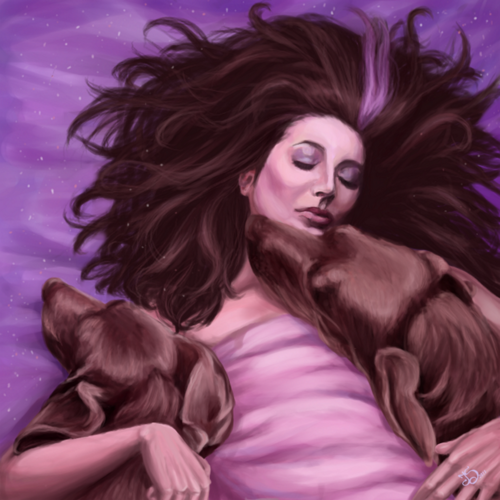
ILLUSTRATION CREDIT: rosabelieve

TO the screen.

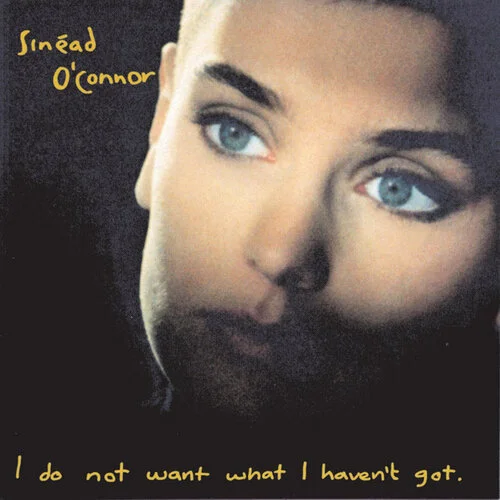
FEATURE: Vinyl Corner: Sinéad O'Connor - I Do Not Want What I Haven't Got

FEATURE:


Vinyl Corner

Sinéad O'Connor - I Do Not Want What I Haven't Got

___________

AS we have more time to listen to music…

I think it is a good opportunity to re-investigate an album you might have forgotten about or pick one up on vinyl. In terms of an album worth buying, I would suggest Sinéad O'Connor’s I Do Not Want What I Haven't Got. You can find copied here; it is a wonderful record that contains so many incredible songs. I Do Not Want What I Haven't Got is the second album from O’Connor, and it was released in March 1990 – it has just celebrated its thirtieth anniversary. One reason why the album is so popular and legendary is because of O’Connor’s version of Prince’s Nothing Compares 2 U, which was released as a single and reached number-one in multiple countries. I Do Not Want What I Haven't Got earned four nominations at the Grammys in 1991; it won for Best Alternative Music Performance but O’Connor refused the nomination and win. I think my first taste of the album was Nothing Compares 2 U. I still watch the memorable video for the song, and it is heartbreaking to watch. O’Connor channels so much personal pain and emotion into a performance that, I think, tops Prince’s original. I think I Do Not Want What I Haven't Got contains some of the best material of O’Connor’s career; it is an album that barely has a wasted sentence or moment. I Am Stretched on Your Grave, The Emporer’s New Clothes and You Cause as Much Sorrow are stunning. At ten tracks I Do Not Want What I Haven't Got

I am going to keep this feature quite short, as I want to get to a couple of positive reviews for I Do Not Want What I Haven't Got that highlight just why the album is such a classic. This is what AllMusic had to say regarding I Do Not Want What I Haven't Got:

I Do Not Want What I Haven't Got became Sinéad O'Connor's popular breakthrough on the strength of the stunning Prince cover "Nothing Compares 2 U," which topped the pop charts for a month. But even its remarkable intimacy wasn't adequate preparation for the harrowing confessionals that composed the majority of the album. Informed by her stormy relationship with drummer John Reynolds, who fathered O'Connor's first child before the couple broke up, I Do Not Want What I Haven't Got lays the singer's psyche startlingly and sometimes uncomfortably bare. The songs mostly address relationships with parents, children, and (especially) lovers, through which O'Connor weaves a stubborn refusal to be defined by anyone but herself. In fact, the album is almost too personal and cathartic to draw the listener in close, since O'Connor projects such turmoil and offers such specific detail. Her confrontational openness makes it easy to overlook O'Connor's musical versatility. Granted, not all of the music is as brilliantly audacious as "I Am Stretched on Your Grave," which marries a Frank O'Connor poem to eerie Celtic melodies and a James Brown "Funky Drummer" sample.

But the album plays like a tour de force in its demonstration of everything O'Connor can do: dramatic orchestral ballads, intimate confessionals, catchy pop/rock, driving guitar rock, and protest folk, not to mention the nearly six-minute a cappella title track. What's consistent throughout is the frighteningly strong emotion O'Connor brings to bear on the material, while remaining sensitive to each piece's individual demands. Aside from being a brilliant album in its own right, I Do Not Want What I Haven't Got foreshadowed the rise of deeply introspective female singer/songwriters like Tori Amos and Sarah McLachlan, who were more traditionally feminine and connected with a wider audience. Which takes nothing away from anyone; if anything, it's evidence that, when on top of her game, O'Connor was a singular talent”.

I first heard I Do Not Want What I Haven't Got when I was a child in 1990, and it had a huge impact on me. It still manages to elicit reactions thirty years after its release. If you do not have the album already, go and buy the vinyl or stream it if money is a bit tight. Rolling Stone reviewed I Do Not Want What I Haven't Got back in 1997:

In some ways, the album’s most affecting love song is O’Connor’s cover of Prince’s “Nothing Compares 2 U,” which was originally recorded by the Family (one of Prince’s protégé bands) in an arty, overworked manner. O’Connor redeems the song with the best voice she has yet summoned on record — a voice that is lusty and unguarded all at once. Like a seasoned torch singer, she inhabits the song and makes its deepest longings seem personally, even exclusively, her own. “Nothing can stop these lonely tears from falling/Tell me baby, where did I go wrong,” she sings in a voice that ranges between pop fragility and blues melisma. In the process, she makes the song sound like a secret pain that had to be shared before the singer could be free.

But there’s more to I Do Not Want What I Haven’t Got than bruised and angry hearts. Much of it can be enjoyed simply for its sonic surfaces — for the rapturous tune and texture of “Three Babies” or the way that O’Connor pits a half-Gaelic, half-Middle Eastern melody against a gutbucket snare beat and a low-throbbing hip-hop bass pulse in “I Am Stretched Out on Your Grave.” Some of it, like “Black Boys on Mopeds,” can be appreciated simply for its valor. A disarmingly dreamy-sounding folk song about the police-involved death of a London black youth, “Black Boys on Mopeds” takes on big targets — British racism, the hypocrisy of Margaret Thatcher’s government — and by the song’s end, O’Connor envisions leaving a country that is willing to sanction such brutality. In an album about personal suffering and transcendence, “Black Boys on Mopeds” serves as a crucial reminder of the ongoing struggles of the outside world”.

I am going to dig back into I Do Not Want What I Haven't Got, and revel in the gloriousness that is Sinéad O'Connor. I adore her voice and her incredible lyrics. I think Am I Not Your Girl? (1992) is a fairly weak follow-up to I Do Not Want What I Haven't Got and, whilst O’Connor did release the brilliant Universal Mother in 1994. I think I Do Not Want What I Haven't Got is Sinéad O'Connor’s finest moment and, if you can, grab the album on vinyl and…

LET it move you.

FEATURE: Spotlight: Alfie Templeman

FEATURE: 

Spotlight

Alfie Templeman

___________

I am enjoying this series…

aqqq.jpg

as it gives me opportunity to dedicate some space to a new-ish artist who one should keep a look out for. I have been following Alfie Templeman for a little while now, but I think this a year when many more people are discovering his music. His new E.P., Don’t Go Wasting Time, gained some positive reviews – I shall come to that later -, and it seems like Templeman is primed for some big things. He is only a teenager at the moment, so I think his best years are ahead of him. It is a strange year, and I am not sure whether some of his cancelled gigs will be rescheduled. Whilst we might not be able to see him on the road much this year, there is his music out there; we can all buy and stream his stuff. There is a lot to unpack when it comes to Templeman, and I want to source from some interviews as I go along. He spoke with DORK early last year, and they put the rising star under the spotlight:

 “Alfie Templeman doesn’t follow the norm. With the sort of mind that jumps and flows with everything he hears, no matter genre, style or era - it’s more of an unstoppable reality that music was going to be at the core of everything he does than a question.

“I’m not interested in anything else apart from music, so my life does revolve around it,” he admits, looking back over the past few years. Growing up in a house where his dad’s instruments were everywhere, it was an unexpected source that first lured Alfie in.

“It’s odd,” he cracks, “when I was young, the first band that I got really into when I was about 7 was Rush. Quite a complex thing to start with, but I just didn't have any expectations, and I dived right in. I wanted to see what it was like and it blew my mind. There’s so much going on, and watching them play live as well with there only being three of them… how is that even possible? It’s amazing.”

“I kept listening to other progressive rock bands,” Alfie continues, “bands like Yes and King Crimson, and it went from there. It’s all really colourful. It's progressive, all these time signatures and intricacies. There are all these different flavours of music going on, all these influences - it just stood out as really colourful and full of all these different sounds.”

What may seem like quite a distant influence from the music Alfie makes now, is actually bang-on for that freedom he now exudes. Shown across his debut EP, that attention to detail rings through - with his pulling voice sounding like a modern heir to Gaz Coombes across slinky indie, 80s synth-pop rides, dazzling gaze and even some jazz kicks. There are more tricks here than in a magician’s hat”.

Not only do his two E.P.s (Like an Animal was released early last year; Don’t Go Wasting Time came out at the end of last year) stand up and sound wonderful; he is one of the most engaging and popular live performers of the moment.

It is a shame Templeman cannot cut his teeth and play some of his newer material to fans right now, but there will be time for that later in the year. I want to go to a DIY interview from last December, where the nature of Templeman’s live dynamic and pulls was discussed. He also talked about what it was like releasing two E.P.s whilst at school:

Show us a performer having more fun on stage this year than Alfie Templeman and we’ll laugh you out of the room. There’s an infectious energy and enthusiasm about every second that the 16-year-old spends in front of a crowd, and it’s impossible not to be sucked in.

Along with a rotating cast of friends (“if you can get the time off school, you can play” is the unofficial rule), Alfie’s live show is uninhibited in a way that only someone of his age could transmit. Take his turn at November’s Mirrors Festival in London, where he scaled the drum kit like a climbing frame while living out his Led Zeppelin dream. Two weeks later, meanwhile, on the first date of a tour opening up for Sports Team, he’s teasing the guitar riff of their track ‘Here It Comes Again’ in between songs like a true entertainer, before thrashing out ‘Smells Like Teen Spirit’ while his bassist tunes up.

Releasing his first two EPs while still at school, a lot of the chat around Alfie’s music has predictably been defined by his age. Now, however, Alfie is ready to cement his status as a Very Good Songwriter, not simply a Very Good Songwriter (For A Teenager).

"The whole age thing you can't really escape from," he says. “But that's just something that I have to live with. Age doesn't define anything nowadays. You see these kids that are playing the hardest solos in the world and they're, like, seven! If you think I'm talented, look at them! I've been doing it all my life, so it's no different to someone playing guitar for seven years when they're 20, and then getting really good when they're 27. I just hope my age isn't the reason why I'm kind of popular...”

Though irrelevant to his talent, Alfie’s age - and the generation that’s he’s grown up in - does impact his consumption of music. He’s at the age when people discover the bands that will go on to define their lives. But, rather than fucking up his mum’s computer trying to torrent albums from Pirate Bay or passing a CD around his whole class at school, Alfie had a world of music at his fingertips from day one, and it informs his loose, genre-shrugging sound.

“I grew up listening to indie music, and then got into stuff like Frank Ocean a bit later,” he remembers. He also fondly recalls how he and his bandmate would FaceTime each other, playing tracks out loud on Spotify before dissecting their merits”.

I think his E.P.s are currently unavailable on vinyl at the moment but do try and buy his music if you can. Failing that, go and stream the work of this wonderful talent. There is a very bright future ahead of him and, when we discuss those who are going to make waves in the next year or so, Templeman’s name needs to be near the top of any list.

PHOTO CREDIT: Emma Swann

I am keen to source from a couple more interviews, as Templeman is someone who is fascinating to read about – in addition to grabbing the mind with his music. Earlier this year, Templeman spoke with Atwood Magazine about the Don’t Go Wasting Time E.P., and which artists influence him:

YOU TITLED YOUR EP “DON’T GO WASTING TIME” AND YOU CERTAINLY HAVEN’T WITH STARTING YOUR MUSIC CAREER AT A VERY YOUNG AGE. WHAT INSPIRED THAT TITLE?

Templeman: A lot of people at school were procrastinating, and I know everyone is really young, but still. The EP is about doing what you want to do. Not caring too much about what other people want you to do in life, what you want to with your life. Because for me when I’m on my death bed, I want to know that I did everything in my life that I wanted to. It’s also about relationships and focusing on the present instead of looking back, moving on and focusing on the future.

SO YOUR FIRST ALBUM YOU RELEASED COMPLETELY INDEPENDENTLY, AND YOUR SECOND ALBUM YOU RELEASED UNDER A MORE TRADITIONAL MUSIC INDUSTRY MACHINE. WHAT WAS DIFFERENT ABOUT THESE TWO PROCESSES?

Templeman: When I started out with my first release “Like An Animal,” that was just to show what I could do. I recorded it all in my bedroom and did all the production myself, all in a really short amount of time. Then awhile later I met Chess Club, my label, and they brought the tracks I released in the last half year and pointed to the ones that they thought were the best. It was easy because we agreed, which is always the most important thing, it’s about being on the same track. While working on the second album, it was more of a partnership working with the label and myself to create something that we both wanted.

YOUR MUSIC IS OBVIOUSLY VERY COLORFUL AND VARIED, SO THIS QUESTION MAY BE A TOUGH ONE – BUT WHO ARE SOME OF YOUR MUSICAL INFLUENCES AND INSPIRATIONS?

Templeman: It ranges from Todd Rungren, Big Star, Can, Bad Finger, then we go over to the Mac DeMarco’s, throw in some 80’s pop and Nirvana as well, grunge music, it’s just a big melting pot of everything. The end result is something that’s so different, that it’s similar in a way? Everything glues together in a way that really works. The first time I’ve properly done that is with Don’t Go Wasting Time. Each record to me is about branching out a little more. The first two EP’s I put out were great, but they were only a few tracks. I’ve got about 1,000 songs in the bank now, so I’m just really looking forward to releasing more music and showing people more of what I can do”.

I do think that these early days are fascinating with regards artists who go on to make it big. I wonder whether Templeman will make an L.P. soon, or whether he will continue to put out singles and E.P.s for now. Don’t Go Wasting Time is a fantastic E.P., and it is one that everyone needs to have a listen to. The reviews for it have been largely positive. Journalists are picking up on this original and engaging songwriter who is making music on his own terms. This is what NME had to say when reviewing Don’t Go Wasting Time:

But it’s when he reaches towards funk and disco – genres a young lad from suburban Britain arguably has no place meddling in – that his true spirit shines through. There are undeniably elements of this EP that Jack Peñate might claim some credit for – certainly the like of ‘Movies’ and ‘Circles’ – but it’s hard to care when they’re this sublime.

Yes, there’s laidback energy here energy here, but you sense it would be mistake to believe Alfie Templeman is simply chasing a good time. “There’s never been a better time for kids to raise their voices,” Templeman recently told NME. “As a younger generation, we’re trying to make a difference, and it’s just good to see so many forming together to prove a point, to prove that something needs to change.” Relatable? Yes. Irrelevant? Far from it”.

I shall leave things here, but please do go and spend a bit of time listening to Alfie Templeman and following this promising young artist. It is amazing to hear the music is producing right now: many seventeen year olds do not have his confidence and songwriting skills. It is testament to his passion and determination that means Templeman is being singled out as an artist with many years ahead of him. It is early days but, when it comes to worldwide acclaim and enormous longevity, few would…

BET against him.

________________

Follow Alfie Templeman

FEATURE: From Gurdjieff to Molly Bloom's Soliloquy: The Literature and Cinema of Kate Bush

FEATURE:


From Gurdjieff to Molly Bloom's Soliloquy

ccc.jpg

IN THIS PHOTO: Kate Bush shot in 1993 whilst filming The Line, The Cross & the Curve/PHOTO CREDIT: Guido Harari

The Literature and Cinema of Kate Bush

___________

EVERY article relating to Kate Bush

IN THIS PHOTO: Kate Bush and crew checking the rushes for The Line, The Cross & the Curve/PHOTO CREDIT: Guido Harari

is pretty special and appealing to me. What I try to do when I approach her is to investigate a new angle or something that has not often been covered. Today, though, I want to focus on a theme that has been documented before by others. Although artists through time have sprinkled literary references in their music, one does not really hear too much of it today. Kate Bush is someone who, from her debut album of 1978 (The Kick Inside) was dipping into the pages of classic literature and philosophy alike. Kate Bush, obviously, has a deep passion for literature and the written world and, whilst some artists merely allude to literature in their work, Bush can weave herself. inside these age-old narratives, or simply add a few familiar references here and there. Look at Flower of the Mountain from Director’s Cut – it is a reworking of The Sensual World (from the album of the same name). Flower of the Mountain uses only words taken from Molly Bloom's soliloquy from James Joyce's Ulysses. Wuthering Heights, whilst inspired by the Emily Brontë (only) novel of the same name, was actually sparked by Kate Bush catching the last ten-fifteen minutes of a T.V. adaptation. This sort of brings me to the second wonderful strand of Bush’s work: the cinematic and televisual. I will investigate this a bit later but, no lie, I sort of first got hooked on Kate Bush because of the literary sides of her work.

The first song that really opened my eyes was Wuthering Heights. Not only did the video transfix me but, as a child, the fact an artist was referencing a classic work of literature was both strange and intriguing. I am not saying it was an education, but it was a revelation for someone who was more used to listening to songs about love and, as it was the late-1980s, having fun – remember those days?! The first video I saw of hers was for Them Heavy People (both Wuthering Heights and Them Heavy People are from her debut album, The Kick Inside). As Bush was a prolific writer of poetry at school – and she was published at school – and devoured the written word, it is not a shock that she would take a different approach to songwriting compared to her peers. Them Heavy People references Gurdjieff (she also mentions the teachings of Jesus in the song), and I was staggered by the originality of the song. I had never heard of people like George Gurdjieff – who was a was a mystic, philosopher, spiritual teacher, and composer of Armenian and Greek descent -, and I have actually been compelled to investigate him (and others) down the line based on Kate Bush’s words. Whether she was merely nodding to philosophy in Them Heavy People or transposing herself into the ballad of Lizzie Wan - the heroine (called variously Lizie, Rosie or Lucy) is pregnant with her brother's child. Her brother murders her. He tries to pass off the blood as that of some animal he had killed (his greyhound, his falcon, his horse), but in the end must admit that he murdered her. He sets sail in a ship, never to return – in The Kick Inside, Bush was using literature and tales of all kinds to dazzling effect from the start – all the more impressive considering she was a teenager when The Kick Inside was released.

I am going to brings in a few articles to illustrate how literature and cinema have been key focuses for Bush through her career but, as Never for Ever is for forty and September and Hounds of Love thirty-five (also in September), both these albums once more take us inside literature and the written word. The Infant Kiss from Never for Ever is the story of a governess who is frightened by adult feelings she has for a young male; it was inspired by the 1961 film, The Innocents which, in turn, was inspired by Henry James’ The Turn of the Screw. A case of Bush combining literature and cinema in one song! Film was passionately on her mind when she wrote The Wedding List, which draws François Truffaut's 1968 film, The Bride Wore Black. Delius (Song of Summer) was inspired by the 1968 Ken Russell T.V.-movie, Song of Summer, which portrays the last years of the life of English composer Frederick Delius. Hounds of Love’s Cloudbusting was inspired by the 1973 memoir, A Book of Dreams, which Bush read and found deeply affecting. The song is about the close relationship between psychologist and philosopher Wilhelm Reich, and his young son, Peter, told from the point of view of the mature Peter. It tells of the boy's memories of his life with Reich on their family farm where the two spent time ‘cloudbusting’: a rain-making process which involved using a machine designed and built by Reich – a machine called a cloudbuster – to point at the sky.

The first article that I want to draw from takes us back to her debut single: the beguiling Wuthering Heights. I never thought about the song’s video and Bush’s movement too much and how her physical interpretation of the song takes the novel to new places. Although one cannot ignore Robin Kovac and the important role she played in helping to choreograph the video, it is Bush’s transfixing movements and facial gestures that blend both the original novel with the BBC T.V. adaptation of Wuthering Heights into Bush’s work:  

If you haven’t watched them yet, be prepared to be hypnotized because Kate’s body movement are not easy to forget. In both videos, the performance is expressive and theatrical both in the scenes, in the colors and in the eye-catching, sinuous movements. These two videos put into perspective her well versatility  and innovation as an artist.

Besides acknowledging her remarkable voice, we need to add that she writes, composes and choreographs most of her songs, creating multidisciplinary and intertwined works of art and  performances. Bush defines herself as  “the shyest megalomaniac you’re ever likely to meet” and surely she was not supposed to be forgotten as she published  the most literary hit single in history. Wuthering Heights was the catalyst of an incredible career in the music industry and, in hindsight, she was right to insist for it to be her first release despite pushback from her record label; it gained her the title of first female performer to ever have a self-written number 1 hit in the U.K.

xxx.jpg

PHOTO CREDIT: Koh Hasebe/Shinko Music/Getty Images

Bronte’s book Wuthering Heights is a traditional Victorian realist novel mixing an accurate realistic depiction of setting, language and values of the Yorkshire moors with the ghost story genre typically associated with the “Heights” and the wild nature of the moors that Bush’s recalls in the song with “Out on the wiley, windy moors, we'd roll and fall in green”. The ghosts belonged geographically and historically to the moors and their folklore. The supernatural was still widely believed by lower classes, making ghosts an element that added to the realism rather than turn it into simple “fantasy”. Moreover, Catherine’s ghost after death allows the love story between her and Heathcliff to shift to a deeper level; a spiritual spiritual love”.

PHOTO CREDIT: John Carder Bush

One fascinating and hugely detailed article I will source from a few times talks about the two different videos for Wuthering Heights and their different styles. The U.K. version features Bush in a white dress, dancing in the mist, her eyes wide. The Americans found this video a bit out-there and strange. There are interesting observations as to how the white and red dress versions differ, and the cinematic language and techniques employed:

The red dress video is overwhelming, shot in 4:3 and comprised almost entirely of medium shots to accentuate the visual language coming from the entirety of Bush’s body. Where the white dress video uses flashier techniques to evoke a very specific luminescent feeling, here the cinema is coming completely from her interpretive dance, as she uses the entirety of her body as sign language to emphasize the lyrical and tonal content of the song. The dance is note for note the same as the one in the white dress video, but the camera almost never pulls away here beyond the occasional close-up shot of Bush’s own facial acting, which in and of itself is also presenting the narrative of the song through her expressive, maximalist acting.

The video evokes an almost mythic, idealized England of deep greens, where ghosts and ghouls roamed the land alongside the living. It’s a land of beautiful old gardens, and cottages (much like the one she grew up in), but the beauty is unnerved by a cerebral pull towards death, and in “Wuthering Heights,” that very nature is in the soul of the video. It’s set in an old forest, intensely green, but beset with fog, and Bush breaks the image with her stark, loud crimson dress. The wider framing allows us to see exactly what she’s wearing and how she moves. The medium lensing is reminiscent of many of Jacques Rivette’s high fashion pictures like Duelle, Noroit, and ironically enough his own adaptation of Wuthering Heights, where the outfit was always presented in full from head to toe and worked as an extension of the characters”.

The sublime way Bush paired dancing to music not only captivated the viewers and sent them into a dream world; it also is interesting to see how Bush translated her studio songs into videos – so many new emotional and visual elements come to the surface. This is true of all her songs, but I have extra fondness and attention for those tracks where she dipped into literature and cinema – sometimes both were combined in the song number. This fascinating article details how gothic horror films, especially, were a source of influence:

“Movies – specifically gothic horror movies – have had an acknowledged influence on Bush’s back catalogue. ‘Hammer Horror’, named after the British production company, tells of a death and subsequent haunting on the film set of The Hunchback of Notre Dame. One of her most unnerving tracks, ‘Waking the Witch’ from Hounds of Love, imagines the drowning of a woman accused of sorcery and seems indebted to Michael Reeves’s Witchfinder General (1968). Sutherland was cast in the ‘Cloudbusting’ video following his appearance in Don’t Look Now (1973), and she borrowed the choral section of ‘Hello Earth’ – the Georgian folk song ‘Tsin Tskaro’ – from Werner Herzog’s remake of Nosferatu (1979).

We’re dusting off our vinyls to revisit some of the gothic highlights from Bush’s remarkable career, and explore the films that helped inspire them”.

I want to quote from the aforementioned article. The writer, Alex Davidson, mentions a few of Bush’s tracks inspired by cinema and how she adapted the original source in her music:

The Red Shoes (1948) – inspired ‘The Red Shoes’, available on The Red Shoes (1993):

The film

In Michael Powell and Emeric Pressburger’s visually ravishing Technicolor masterpiece, a young ballet dancer is torn between the demands of love and art.

The song

Powell and Pressburger’s The Red Shoes didn’t just inspire a Kate Bush song (the highlight of the eponymous album). It heavily influenced her featurette The Line, the Cross and the Curve (1993), directed by Bush and featuring Miranda Richardson as a monobrowed ballerina who ensnares poor Kate into putting on her red shoes, dooming her to dance forever, and Lindsay Kemp in the Robert Helpmann role of the ambiguous cobbler. Bush, rather unfairly, later dismissed it as a “load of old bollocks”.

I will actually spend a bit of time mentioning Bush’s biggest directorial challenge with The Line, the Cross and the Curve later, but it is clear that The Red Shoes was hugely important to Bush.

hh.jpg

IN THIS PHOTO: Kate Bush in a promotional image for 2011’s Director’s Cut/PHOTO CREDIT: John Carder Bush

Night of the Demon (1957) – inspired ‘Hounds of Love’ from Hounds of Love (1985)

The film

A sceptical American doctor comes to England to investigate a satanic cult who may be responsible for a murder – but could he be the next victim?

The song

“It’s in the trees! It’s coming!” Although this classic line is shouted in fear when the demon is spotted approaching, Bush transforms the fearful cry into an excited exclamation of the daunting thrill of falling in love. The music video, directed by Bush herself, was inspired by another film – Alfred Hitchcock’s The 39 Steps (1935)”.

The Shining (1980) – inspired ‘Get Out of My House’, available on The Dreaming (1982)

The film

An aspiring author works as the winter caretaker at the Overlook hotel with his family, but murderous insanity begins to take hold.

The song

The final song on Bush’s initially misunderstood fourth album is as frightening and puzzling as the book and film that inspired it. Borrowing the themes of intruding evil (“I hear the lift descending, I hear it hit the landing”) and a terrified woman in peril, it’s one of her most brilliant and unsettling songs”.

Thinking about a song like Get Out of My House…and it kind of makes me sad a video wasn’t made from it – one can only imagine what Bush could have done! The same can be said for another evocative song on The Dreaming, Houdini. There are these album tracks that almost begged for videos; a few lost examples are James and the Cold Gun (The Kick Inside); Kashka from Baghdad (Lionheart); The Wedding List (Never for Ever; though she did make a ‘video’ for her 1979 Christmas special); The Ninth Wave (the suite on songs on Hounds of Love’s second side was never fully adapted to film; though Bush did film a video for And Dream of Sheep for 2014’s Before the Dawn); Heads We're Dancing (The Red Shoes); Mrs. Bartolozzi  and How to Be Invisible (Aerial).

Into the 1980s, Bush dove more and more into cinema; some of her most arresting and memorable videos were more short films than conventional videos. Willow Maclay talks about Bush’s video output in the 1980s in fascinating details. She makes reference to Breathing. The song turned forty earlier this month – the album it is from, Never for Ever, has a big anniversary later this year:

In the video for “Breathing,” Bush represents a fetus, begging and pleading to be given a chance to live and be with her mother in the outside world in the wake of nuclear annihilation. It’s a song that has deep ties to maternity, childbirth, and pregnancy, and when compared with the majority macho considerations of science fiction, it becomes something complex and unique within the genre. The video is matter-of-fact in its simplicity, but deeply moving in what the images convey about the lyrics. Once again, it’s mostly shot on a soundstage, where Bush is inside of a plastic orb, with deep amber lighting underneath her frail frame. She’s wearing a sheer outfit with white trim to portray the relative innocence of the fetus, and she spends the majority of the video either in the fetal position or pushing the orb back and forth to represent the kicking or pushing a mother may feel while pregnant. The words “Breathing my mother in” are a gently affecting and deeply harrowing sentiment when set against the context of nuclear war, and the video becomes a barrage of dissonant images.

Our greatest possibility for love (giving someone life) and our greatest possible evil (the nuclear weapon) collide to create a pure statement on the human condition. When the mother’s water eventually breaks and Bush leaves the womb, what follows is a slow-motion dip into experimental imagery of one girl, bathed in shadow, peaking out from underneath a cloudy image reaching towards the reds, oranges, and bright lights of what she hopes will be a welcoming world. Only here she’s greeted with an atomic explosion that sinks into the earth in the shape of Kate Bush’s silhouette”.

I just want to quote the final section from Maclay’s article about Bush and her cinema of sound, where she makes an interesting final observation: how Bush’s body manages to project cinematic images:

Kate Bush’s music video library is epochal, constantly rewarding in its zealous fusion of artistic forms, and her fundamental understanding that cinema, movement and dance are intertwined. When watching feature films, we tend to point out whenever a scene has great music accompanying it, whether it’s Claire Denis’ use of “The Rhythm of the Night” in the disco denouement of Beau Travail or the montage set to “Layla” in Martin Scorsese’s Goodfellas, but why are music videos so vastly ignored when we canonize movies? If there’s to be a music video canon, then it’s important to understand what makes a music video cinema in the first place. Through dance, rhythm, and movement, music videos truly find their identity in the lexicon of cinema, and with Kate Bush in particular, she immerses her entire body into that very idea. Stop Making Sense is widely considered the greatest concert film of all time, thanks in part to Jonathan Demme’s understanding of rhythm and how he captured the jittery quality of David Byrne’s dancing. If the same can be extended to the work of music videos, then the entire world of images bursting out of Bush’s body time and time again must be holy and it must be considered cinema”.

IN THIS PHOTO: Kate Bush in 1980/PHOTO CREDIT: Brian Rasic/Getty Images

I am not going to take a chronological approach to Bush’s songs and how they connect with cinema and literature but, as I am discussing the subject of Bush and a cinema of sound, I found another brilliant article whilst researching. DAZED discuss how Bush approached adapting a film or piece of cinema into her music/videos:

Discussing her approach to adaptation, Bush would say that “whenever I base something on a book or film I don’t take a direct copy. I’ll put it through my personal experiences, and in some cases it becomes a very strange mixture of complete fiction and very, very personal fears within me.” Her unique method of interpretation evolved over the years, initially adapting from film to song, then sometimes adapting the same song back to a new form of film. Eventually, she was being asked to write music for specific segments of films. Bush also expressed a desire to create forms within the film medium that did not yet exist, like shorter films built around music she composed for a specific filmic purpose. In the past, Bush explained how songwriting naturally brings visual concepts to her because it requires imagining the perspective, place and atmosphere that the song’s character finds themselves in at the time

cccc.jpg

IN THIS PHOTO: Kate Bush looking on intently whilst directing/PHOTO CREDIT: John Carder Bush

Although, up until Hounds of Love in 1985, Bush was working with other directors, she definitely wanted to have more direction regarding her videos. Hounds of Love’s title track saw Bush marry performance with directing – where she crafted her own visual aesthetic and narrative style:

Hounds of Love, Bush’s most acclaimed album, was created in a studio she built to allow herself maximum freedom with her music’s production. The newfound control over she was able to exert over her art was mirrored by a heightened level of involvement with her videos: the clip for the album’s enduring classic title track was also her first self-directed music video. The video is an homage to Hitchcock’s The 39 Steps, while the song opens with a quote from Jacques Tourneur’s 1957 horror film Night of the Demon: “It’s in the trees! It’s coming!”

Meanwhile, the poignant “Cloudbusting” was made in collaboration with one of her favourite filmmakers, Terry Gilliam, and his team. Time and money limits on videos led to Bush’s continual frustration with the end results, but regardless of their outcome, she said that “what I really like about videos is that I’m working with film. It gives me the chance to get in there and learn about making films, and it’s tremendously useful for me, because one day I might like to make films myself.” Increasingly, she wished to be behind the camera rather than in front, exploring the relationship between music and image. She even developed specific ideas, such as making the second side of Hounds of Love into a half-hour film integrating music with visuals. “When I was writing it, I was really thinking visually,” she said

Some might saw all artists write songs from a visual perspective, though how many artists reference cinema so broadly and consistently? How many artists can create such diverse and rich videos time and time again? I think Kate Bush is in her own league and world in that sense. I am going to end with Bush directing and turning her hand to film so, before I come back to that, I want to return to literature and how Bush managed to blend some truly incredible works with her own unique and spectacular way with words. I have not really talked too much about The Sensual World (from the 1989 album of the same name). In 2018, The Opiate discussed the literary references in this song:

The album that Bush would choose to close out the 80s–1989’s The Sensual World–with is, what’s more, a very deliberate homage to James Joyce’s Ulysses (we will forgive her this because she’s not a white man), rounding out a decade in which she herself was cast in the novel of her own extravagant, laden-with-semiotics videos. In fact, a video collection just for the album would be released to tie together all the Ulysses-oriented motifs. That Bush was given no choice but to write her own interpretation of Molly Bloom’s illustrious soliloquy (thanks to Joyce’s non-avant garde Estate refusing to let her use the original for the song) only further gave her listeners insight into just how much a woman of letters she herself is. Being that the record was the most unapologetically “female” of Bush’s career, it only made sense to centralize the theme of the content around the most sensual of all women, Bloom”.

It only takes two lines for Bush to deftly rewrite the sentiment as, “He said, ‘I was a flower of the mountain, yes/But now I’ve powers o’er a woman’s body, yes.'” Flush with the evocativeness that is a sensual woman, the title track remains one of Bush’s most redolent, particularly when paired with the video in which she takes on the persona of this more contemporary incarnation of Bloom, cavorting through the woods with that karate-tinged choreography of hers in a velvet, Shakespeare-approved frock. Not one for devoting something entirely to Joyce, Bush also makes room to allude to Romantic poet William Blake with the line, “And then our arrows of desire rewrite the speech, mmh, yes.” Appropriate, considering how many other writers’ speech Bush has managed to rework as her own”.

It is clear that the heroes and heroes in literature and film gave Bush a stimulus that was missing from the music she grew up listening to; a more fascinating take on the world, and a much richer vein of inspiration:

“…She is not, after all, the girl who asked, “Do I look for those millionaires like a Machiavellian girl would?/When I could wear a sunset, mmh, yes,” so much as a woman very much in the vein of one of the Brontë sisters’ or Austen’s upright, endlessly noble characters. As such, she will not put out work unless it is itself as literary as the novels and poems she so admires. Which is precisely why she once said of the songwriting process, “It’s hard to find something that feels sincere. The more electronic pop music becomes, the harder it is to say meaningful things about relationships, especially since the same things are being said so trivially in pop. Pop is a trivial art form. I want to say things clearly and somehow be compassionate with all this technology.” That she has, that she has”.

IN THIS PHOTO: Kate Bush in the video for Running Up That Hill in 1985/PHOTO CREDIT: John Carder Bush

I have missed out a few missing literary references, and I have been aided by an article from The Irish Times. When they were writing about Bush’s book of lyrics, How to Be Invisible, in 2018, they mentioned a couple of literary references that many might have missed – either because the song is lesser-known, or the literary source is a little obscure:

One literary character that dwells in her second album, Lionheart, is Peter Pan. The children’s character appears in two songs on the album. On one track, In Search of Peter Pan, she sings about a boy who dreams of becoming an astronaut and finding the boy who never grew up. On a promo cassette tape from the time, Bush said the book was “an absolutely amazing observation on paternal attitudes and the relationships between the parents”.

IN THIS PHOTO: Kate Bush in a promotional photo for The Sensual World/PHOTO CREDIT: John Carder Bush

In Search of Peter Pan is not the only place on the album that the children’s character appears. He also features in Oh England My Lionheart, a track on which Bush sings about the things she associates with England, which include Peter Pan and Shakespeare.

The second side of Hounds of Love, called The Ninth Wave, is a concept album that tells the story of a woman lost at sea. The story is firmly Bush’s own work, and moves through different stages of a woman’s experience of being stranded in the water.

While the story is her own, the title comes from a poem by Alfred Tennyson. The Coming of Arthur, from Idylls of the King, provided Bush with the name for the conceptual side of the album. She even features the quote on the back of the album, which reads: “Wave after wave, each mightier than the last / ‘Til last, a ninth one, gathering half the deep / And full of voices, slowly rose and plunged / Roaring, and all the wave was in a flame”.

I want to end by talking about the most explicit and personal marriage of music and cinema for Kate Bush. Bush was not exactly a stranger to directing videos, as she directed eight videos before The Line, the Cross & the Curve in 1993. Although the film gained some harsh reviews – and Bush later dismissed it as not one of her finest moments -, that desire to direct and to create film was instilled in Bush as a youngster. As this article details, Bush pioneered new ways of combining music and movement right from the earliest days of her career:

From the very beginning, Kate Bush’s career has been defined by her pioneering synthesis of music and movement. Signed to EMI at just 16, she spent two years honing her craft by enrolling in dance and mime lessons with Bowie collaborator Lindsay Kemp before releasing any music at all; on her first (and only) tour she instructed her sound technicians to develop the first ever microphone headset so she could dance and sing simultaneously, changing the possibilities of live concert performance forever.

I have a lot of affection and respect for The Line, the Cross & the Curve, and it contains many beautiful moments. Before 1993, there had not been too many causes of artists producing a suite of songs into a short film – rather than doing single music videos. Bush felt that so many artists were not using videos to truly express themselves and use dance and movement in an interesting and bold way:

The Cross was produced in support of 1993 LP The Red Shoes to little fanfare: Bush herself lamented the rushed production schedule and limited budget, later hilariously deeming the film “a load of bollocks”. Partly due to her implicit disowning of the project and the 13-year career hiatus she took immediately after its release, the film sunk into obscurity, becoming a collector’s item for only the most devoted acolyte. Rare copies of the original VHS still fetch hundreds of dollars on fan forums and resale sites.

Now uploaded to YouTube, everyone can experience this delightfully bizarre trip through Bush’s singular imagination. Beginning in a rehearsal studio, she dances in a straitjacket and plays with a yo-yo to Rubberband Girl, before a power cut leads to a meeting with Miranda Richardson in ballerina drag, gifting her a pair of cursed dancing shoes. A fantasy sequence follows that includes Lindsay Kemp dancing on skulls to an Irish jig, Bush rolling around in fire as her legs flail wildly independent of her body, a procession through a snowstorm flanked by angels, and a Caribbean bacchanal in which she stamps across a cornucopia of fruit.

It’s also a remarkable testament to the power of dance to explore our most primordial frustrations: sex, death, desire, and most movingly here, Bush’s grief. Only two years before, her mother Hannah had passed away suddenly, and along with the recent death of her guitarist and a romantic break-up with a close collaborator, she used both album and film as a means of processing these losses — most movingly in the sequence that accompanies Lily, as Bush rests her head in the lap of a kindly looking old woman.

So too in The Cross the most powerful sequence is the most simple: Bush pirouetting slowly as if flying through outer space, singing album highlight Moments of Pleasure directly to camera with a sheet of silk billowing behind her. While her lyrics are known for their esoteric references, here the song itself is an uncharacteristically straightforward exploration of heartache and bereavement: “Just being alive / It can really hurt / And these moments given / Are a gift from time”. Whirling gently, she begins to smile, as if the sheer joy of moving her body is giving her the impetus to carry on. Despite its flaws, Bush’s belief in the therapeutic power of dance gives the film a memorable resonance, and it’s worth watching merely as a rare insight into the interior life of a fiercely private icon”.

I have not even mentioned the almost cinematic elements of her 1979 Tour of Life and her 2014 residency, Before the Dawn, and how Bush’s live sets and performances took her from the realms of the confined and traditional and into an almost filmic dimension. I think The Line, the Cross & the Curve, whilst flawed, inspired artists like Beyoncé. Look at an album like Lemonade and how Beyoncé made a series of videos/films for that album; taking Lemonade from the audio to the visual in a very stylish and cinematic way. I think we can trace a line from Beyoncé back to Kate Bush. This interview Kate Bush conducted with FADER in 2016 brings up The Line, the Cross & the Curve, but we also learn how Bush embodied different personas and characters in her videos. Whereas so many artists play themselves in every video, Bush inhabited these different roles:

She’d shift from playing a steely seductive warrior in “Babooshka” to donning military fatigues for “Army Dreamers,” as at ease with folklorish fantasy as post-Vietnam social commentary. In the ultra-conservative Thatcher/Reagan era of the 1980s, her embrace of theatrics made Bush a beacon of individuality for LGBTQ people, art freaks, and anyone who didn’t like their culture served straight-up. Three decades on, our political leaders still hate what is “other,” which often makes watching a Kate Bush video feel like an affirming few minutes of self-care.

Contemporary artists who’ve probably done just that include FKA twigs, Solange, and Christine and The Queens, all of whom don’t use movement as an adjunct to their music, but as a core expression in itself.

X.jpg

IN THIS PHOTO: Kate Bush with Miranda Richardson in The Line, The Cross & The Curve/PHOTO CREDIT: John Carder Bush

For me, one of your most impressive visual works is The Line, The Cross, & The Curve.

Oh!

These days, artists like Beyoncé are releasing full-length films to accompany their albums, but you were perhaps the first. What made you see the potential of that medium?

I really love film, I think it's just a fantastic art form. I started to really enjoy making the visual accompaniments to the tracks — it was a very challenging and exciting [evolution] from making the music to then making visuals to go with it. And I suppose in some ways it felt like a sort of natural progression to try and make something that was more like a film.

The whole process has gradually evolved for me, where I've become able to creatively work in these different mediums. Initially, I was really somebody who wrote songs, and then it developed into becoming more involved in all the processes that went with that”.

ssss.jpg

IN THIS PHOTO: Kate Bush in the make-up chair during the filming of The Line, The Cross & the Curve/PHOTO CREDIT: Guido Harari

Whilst albums like Aerial (2005) and 50 Words for Snow (2011) contained fewer literary and cinematic references compared to The Kick Inside (1978) – The Red Shoes (1993), it is clear that, through every stage of her career, the pull of literature and the diversity of cinema have spoken to Bush as loudly as affairs of the heart and the allure of passion and sex. Here is an artist who, even when she was writing about attraction and desire, was doing so in a much more literary, beautiful and cinematic way. From Wuthering Heights, through to Hounds of Love, through to The Sensual World, the always-inspiring and unique Kate Bush has taken us…

INTO her world.

FEATURE: Memory Lanes: Brighton on My Mind

FEATURE:


Memory Lanes

PHOTO CREDIT: @bjhguerin/Unsplash

Brighton on My Mind

___________

THIS is not completely random…

xxxxzz.jpg

IN THIS PHOTO: Brighton’s North Laine

and unrelated to music because, as I will explain, venues around the nation need our help. At the moment, I am confined to a small area of London, and it is rather than strange not being able to get that far. Apart from missing family, it is various different places I am thinking about. The towns near where I live, I wonder whether all the great shops and cafes are still open; whether, when things go back to normal, everything will open back up and be okay. There is that fear that some shops and businesses that have been around for years will have to close – which makes it all a bit heartbreaking. I think the yearning to get behind the wheel and go somewhere far away has brought my mind to Brighton. This is my favourite place in the country and, like everywhere, there is a worry that the economy will struggle. About this time of year, I would be planning a jaunt to Brighton and thinking about having a great wander around the streets. The Lanes is a network of shops and cafes/restaurants in Brighton. They are very scenic, and one can get lost in these unique and charming shops. It is a buzzing and vibrant area, and one that I miss sorely. North Laine is a great place to start, and I walk from there and head my way to Resident: a music shop located in North Laine Bazaar, it is a must-visit if you ever go to Brighton.

So many independent record shops are struggling but, now, Resident are seeing a roaring trade online. I know they will reopen soon enough, and I look forward to having my credit card ready and making up for lost time. There is no news as to when smaller shops will open – probably June or July -, but I do fear that, when I go to Brighton next, so many of the places I love will be shut and gone for good. I also love walking on the beach and the pier, and it will be sad to think we won’t be able to do that as freely in the summer as we’d like. I guess it is inevitable that some places will shut, but let’s hope the Government can support as many as possible. Brighton’s great venues are still in business but, over the year, quite a few have closed. The Green Door Store is one venue that is among the country’s best that will need some support and financial injection. I think that the Brighton music scene is one of the finest around, and so many up-and-coming acts rely on spaces like Green Door Store to cut their teeth. Music fans flock from around the world and, when places like Green Door Store are buzzing, it makes the local economy stronger. The same can be said for Resident and Bella Union’s Vinyl Shop who serve the community and are part of the rich fabric of the music scene.

If we lose venues and record shops, it will have a devastating effect on the industry. There is also the terrifc showcase, The Great Escape Festival that was due to take place this year. It is a brilliant platform for artists and brings so many people down to Brighton every year. It is such a shame it will not happen next month. I am going to write more about venues more later next week, but I have been pining for the familiar and I hope that, when I return home and get to Brighton too, everything is sort of as it was left. From the coffee shops that are so welcoming, to the brilliant attractions and people – it would be so sad if there was a lot of damage as a result of Covid-19. I know everyone in the country is making plans for when this all over and, as we are confined to home for the most part, it is inevitable that we are looking ahead and, hope of all hopes, things will not change too much. It seems like there will be some movement regarding easing lockdown by late next month/June, so it will be exciting to think that we will be able to enjoy the start of summer and are not going to have to wait too long – even if it might not be possible for venues to reopen as soon as June. For now, we all must be sensible and bide our time to make sure we do not make the coronavirus crisis worse than it is. Slow progress is being seen, but we might have another month or longer before we can start to (gradually) assimilate. I hope to get home very soon and get back in the car (I do not drive when I am in London; my parents live in West Sussex), and I really do hope I can spend a fabulous day in Brighton…  

PHOTO CREDIT: @jamessutton_photography/Unsplash

VERY soon.

FEATURE: Second Spin: Beyoncé - 4

FEATURE:


Second Spin

zzzz.jpg

Beyoncé - 4

___________

AS I am back in Second Spin territory…

I wanted to focus on an album that did not get the acclaim it deserved the first time around. Beyoncé released her fourth studio album, 4, in 2011, and it was her first album since 2008’s I Am... Sasha Fierce. Beyoncé was on a career hiatus; 4 was the album that album that re-inspired her. If her earliest albums were more contemporary and rooted towards Pop and R&B, 4 took in classic R&B, Funk and Soul. For 4, Beyoncé collaborated with The-Dream, Tricky Stewart and Shea Taylor; they helped produce a mellower tone, developing diverse vocal styles. Beyoncé wanted an album that was more intimate and personal than anything she had produced before and, because of that, I think a lot of critics were put off. Beyoncé would score huge reviews by the time her eponymous (fifth) album came out in 2013. I think 4 is a necessary and important evolution that allowed her greater freedom. If she had carried on making the sort of albums she did with Destiny’s Child and the start of her career, I think she would have been in a rut. 4 focuses on female empowerment and monogamy: Beyoncé – who was approaching thirty at this point – wanted an album that was more mature and meaningful. 4 was promoted in 2011 with a string of television and festival appearances. Beyoncé headlined Glastonbury in 2011 with an incredible set and, although 4 debuted at number one in the album chart in the U.S. – and many other countries-, reviews were not all positive.

It is baffling why so many critics were not fully on board with 4 when you consider the singles released. Run the World (Girls), Best Thing I Never Had, Party, Love on Top and Countdown are among the finest tracks of Beyoncé’s career; Love on Top scooped the Grammy for Best Traditional R&B Performance. 4 had shifted over 1.5 million copies by the end of 2015. It is clear that Beyoncé was not only dissatisfied, to an extent, with her previous direction but with contemporary radio in general. Rather than walk down the same path as everyone else, 4 is her attempt to get R&B back on the radio – at a time when Pop was dominating (as it still does, I guess). There are mixes of ‘70s, ‘80s and ‘90s sounds with big horns and cool grooves, live instrumentation and bold songwriting. I know Beyoncé went on to create stronger work, but I feel 4 is a very impressive album that warranted more love when it was released. Because Beyoncé was maturing as a person, it wouldn’t have been appropriate for her to continue to release the sort of music she was years before. Many critics wrote 4 off because of its change of sound and the fact there are more sensitive and tender songs. Maybe it was the balladry of 4’s first half that divided people. With variegated vocal styles and live instrumentation, it was very different to anything Beyoncé had done before. Start Over, with its R&B vocals and modern beats, is a perfect example of what Beyoncé wanted to achieve.

I think 4 is a fantastic album that is a lot more worthy than its singles. It is a complete and fascinating album from an artist who wanted reignition and fresh impetus. Love on Top is funky as hell and sports a terrific video; Best Thing I Never Had is a female call to arms – and it is one of the best songs she had recorded to that point. Run the World (Girls), a huge anthem that would not have sounded out of place on a Destiny’s Child album. Whilst Beyoncé was moving forward and evolving, I think there are pleasing touches of her earlier work; a great balance of the captivatingly free-spirited and the tender-hearted. There are some good reviews for 4, but there are so many that divide the album in two: people who prefer the more spirited songs and are not too convinced with the ballads. AllMusic reviewed 4 and, despite the fact they had encouraging words, only gave the album three stars:

Beyoncé reportedly delivered over 70 songs to Columbia for her fourth solo studio album. The dozen that made the cut, combined with their sequencing, make it plain that straightforward crossover-dance singles and cohesion were not priorities. Taking it in at once is mystifying, even when little attention is paid to the lyrics. The opening “1+1,” a sparse and placid vocal showcase, fades in with a somber guitar line, throws up occasional and brief spikes in energy, and slowly recedes. It’s the kind of song one would expect to hear during an album’s second half, certainly not as the opener -- not with the (fittingly) slight sonics and heavy lines like “Just when I ball up my fist, I realize I’m laying right next to you, baby.”

Three additional ballads follow. Each one features its own set of collaborators and contrasts both sonically and lyrically. “I Care” rolls in on pensive percussion and low-profile synthesizer drones, surging during a cathartic chorus. “I Miss You,” alluringly bleak and hushed, is a codependent confessional. The only one that’s rote, “Best Thing I Never Had” is a bombastic kiss-off saved by Beyoncé’s ability to plow through it. From there, the album restlessly bounces between tempos and moods: a desperate midtempo chest thumper, a couple cyborg marching-band dancefloor tracks, an ecstatic early-‘90s throwback, yet more ballads. What’s most surprising is that a song titled “Party,” co-produced by Kanye West with a guest verse from André 3000, quickly settles into a low-watt groove and remains there. Wildcard interludes and a Euro-pop party-anthem cash-in would be the only ways to make the album more scattered, but the strength of most of the material, propelled by Beyoncé’s characteristically acrobatic vocal skills, eases the trouble of sifting through the disjointed assortment. No one but one of the most talented and accomplished singers -- one with 16 Grammys, nothing left to prove, and every desired collaborator at her disposal -- could have made this album”.

I will bring in a more positive review but, to highlight some of the attitudes that were flying around in 2011, this is what NME wrote when assessing 4:

You’d think that when, five similarly paced tracks in, a song entitled ‘Party’ pops up produced by Kanye West and featuring Andre 3000, some respite may have arrived, but no: it’s more mid-paced, synth-heavy cheese, with a phoned-in guest rap. It doesn’t make you want to have a party. In fact, soon, as yet more anonymous, barely distinguishable slowies arrive (‘Rather Die Young’, ‘Start Over’), the will to continue listening departs. Beyonce’s cry of “Bring the beat in!” on the at-least-slightly-uptempo ‘Love On Top’, feels like it should be preceded by a “For fuck’s sake, PLEASE CAN SOMEBODY…” The latter song turns out to be a light but pleasant tribute to mid-’80s pop of the Whitney variety, and introduces a mid-album interlude of actually quite good music.

aqq.jpg

IN THIS PHOTO: Beyoncé at Glastonbury in 2011/PHOTO CREDIT: Getty Images

Despite sampling Boyz II Men, ‘Countdown’ pedals a nice line in squelchy keyboards, while ‘End Of Time’ exhibits the much talked about influence of Fela Kuti, and – along with the closing ‘Run The World (Girls)’ – is the best thing here by quite some distance. Sadly, between these two songs comes – you guessed it – another ballad, and this time of the power, showstopper, curtain-call variety. It sounds unmistakably like an X-Factor winner’s single, full of unbelievably trite sentiments. It is called ‘I Was Here’, and it goes: “When I leave this world, I leave no regrets, I’ll leave something to remember, so they won’t forget… I was here”.

Beyonce, of course, has already done more than enough to ensure this is the case. She’d done enough with Destiny’s Child, or with the first 30 seconds of ‘Crazy In Love’, to guarantee her entry into the annals of greatness. But there ain’t too much here that’s going to add to her legacy. Rather, there’s the unmistakable sense of someone treading water, with even the OK bits here sounding uninspired. Not what you want from Beyoncé. Not at all. Let’s hope her Glastonbury performance brings better memories”.

Maybe, nearly a decade after 4 was released, it makes sense in terms of where Beyoncé was heading and why she needed to change. As I say, I don’t think she would have created brilliant albums like Beyoncé and Lemonade if she had not expanded and moved directions on 4.

Clearly, she required a change of pace and an album that was truer to her. I think some of the ballads on 4 are incredibly affecting and moving. 4 is such a rich album that has fire and passion, but there is plenty of heartfelt offerings. Pitchfork made some interesting points when they reviewed the album:

The only recent pop ballad that comes close to its power is Adele's stunning "Someone Like You". But where that song-- and its massively successful corresponding album, 21-- wrung out the aftermath of young heartbreak, Beyoncé is aiming for something a bit more challenging with 4: love the one you're with, and have some fun doing it, too. The album's relative riskiness extends to its music, which side-steps Top 40 radio's current Eurobeat fixation for a refreshingly eclectic mix of early-90s R&B, 80s lite soul, and brass'n'percussion-heavy marching music. All of the album's best elements, thematically and sonically, burst ahead on Jay-Z ode "Countdown", a honking, stutter-step sequel of sorts to "Crazy in Love". The new track makes 10 years of loyalty seem just as thrilling as the first time, with Beyoncé offering her partner copious praise in that famed half-rap cadence: "Still love the way he talks/ Still love the way I sing/ Still love the way he rock them black diamonds in that chain".

Maybe 4 does not crack the top-three in terms of Beyoncé’s greatest albums, yet it is an album that is really solid and has some terrific moments. I have read a lot of the reviews for 4 and, whilst some offering big praise, many are divided and compare it unfavourably with her previous work. I would encourage people to check out 4, as it is a powerful, inventive and rewarding…

ALBUM that stands tall.

FEATURE: Tonight, We’re Gonna Party Like It’s 1989! Why We Need a Viewable Top of the Pops Archive on the BBC iPlayer

FEATURE:


Tonight, We’re Gonna Party Like It’s 1989!

cbcbcb.jpg

IMAGE CREDIT: BBC

Why We Need a Viewable Top of the Pops Archive on the BBC iPlayer

___________

WHEN I have written about Top of the Pops

IMAGE CREDIT: BBC

in past features, I have asked whether it should be revived and, when there is very little music T.V. around, why there is not a modern-day equivalent. Everyone should be aware of Top of the Pops but, if not, here is a little bit of history:

Top of the Pops, also known as TOTP, is a British music chart television programme, made by the BBC and originally broadcast weekly between 1 January 1964 and 30 July 2006. The world's longest running weekly music show, TOTP was shown every Thursday evening on BBC One, except for a short period on Fridays in mid-1973, and again in autumn 1974, before once again being moved to Fridays at 7:30 pm from 1996 to 2005 and then to Sundays on BBC Two from 2005 till the last ever weekly show in 2006. Each weekly show consisted of performances from some of that week's best-selling popular music records, usually excluding any tracks moving down the chart, including a rundown of that week's singles chart. This was originally the Top 20, changing to the Top 30 during the 1970s and the Top 40 in the 80s. The distinctive TOTP theme tune – a riff of Led Zeppelin's "Whole Lotta Love" – first appeared in 1973 as the background music to the chart countdown.

The Official Charts Company states "performing on the show was considered an honour, and it pulled in just about every major player." The Rolling Stones were the first band to perform on TOTP with "I Wanna Be Your Man". Snow Patrol had the distinction of being the last act to play live on the weekly show when they performed their hit single "Chasing Cars". In addition to the weekly show there was a special edition of TOTP on Christmas Day (and usually, until 1984, a second edition a few days after Christmas), featuring some of the best-selling singles of the year, and, the coveted Christmas Number 1. Although the weekly show was cancelled in 2006,[6] the Christmas special has continued. In recent years, end-of-year round-up editions have also been broadcast on BBC1 on or around New Year's Eve, albeit largely featuring the same acts and tracks as the Christmas Day shows. It also survives as Top of the Pops 2, which began in 1994 and features vintage performances from the Top of the Pops archives.

Most performers on TOTP mimed until 1991 when the producers of the show allowed artists the option of singing live over a backing track. Miming has resulted in a number of notable moments. In 1991 Nirvana refused to mime to the pre-recorded backing track of "Smells Like Teen Spirit" with Kurt Cobain singing in a deliberately low voice and altering lyrics in the song. In 1995, the Gallagher brothers of Oasis switched places while performing "Roll with It". When an artist could not appear on the show the song would be played while a TOTP dance act (most notably Pan's People) would dance on stage. Later, music videos of artists unable to attend would be used. According to Queen guitarist Brian May, the groundbreaking 1975 music video for "Bohemian Rhapsody" was produced so that the band could avoid miming on TOTP since they would have looked off miming to such a complex song”.

There were numerous attempts to rebrand and relaunch Top of the Pops. I think, by the end of the 1990s, Top of the Pops was looking for a new lease of life. In 2003, with the music industry a lot different to how things were decades before:

On 28 November 2003 (three months after the appointment of Andi Peters as executive producer), the show saw one of its most radical overhauls since the ill-fated 1991 'Year Zero' revamp in what was widely reported as a make-or-break attempt to revitalise the long-running series. In a break with the previous format, the show played more up-and-coming tracks ahead of any chart success, and also featured interviews with artists and a music news feature called "24/7". Most editions of the show were now broadcast live, for the first time since 1991 (apart from a couple of editions in 1994). The launch show, which was an hour long, was notable for a performance of "Flip Reverse" by Blazin' Squad, featuring hordes of hooded teenagers choreographed to dance around the outside of BBC Television Centre.

Although the first edition premièred to improved ratings, the All New format, hosted by MTV presenter Tim Kash, quickly returned to low ratings and brought about scathing reviews. Kash continued to host the show, but Radio 1 DJs Reggie Yates and Fearne Cotton (who had each presented a few shows in 2003, before the revamp) were brought back to co-host alongside him, before Kash was completely dropped by the BBC, later taking up a new contract at MTV. The show continued to be hosted by Reggie Yates and Fearne Cotton (usually together, but occasionally solo) on Friday evenings until 8 July 2005.

On 30 July 2004, the show took place outside a studio environment for the first time by broadcasting outside in Gateshead. Girls Aloud, Busted, Will Young and Jamelia were among the performers that night.

Figures had plummeted to below three million, prompting an announcement by the BBC that the show was going to move, again, to Sunday evenings on BBC Two, thus losing the prime-time slot on BBC One that it had maintained for more than forty years.

This move was widely reported as a final "sidelining" of the show, and perhaps signalled its likely cancellation. At the time, it was insisted that this was so the show would air immediately after the official announcement of the new top 40 chart on Radio 1, as it was thought that by the following Friday, the chart seemed out of date. The final Top of the Pops to be shown on BBC One (barring Christmas and New Year specials) was broadcast on Monday 11 July 2005, which was edition number 2,166.

The first edition on BBC Two was broadcast on 17 July 2005 at 7.00 pm with presenter Fearne Cotton. After the move to Sundays, Cotton continued to host with a different guest presenter each week, such as Rufus Hound or Richard Bacon. On a number of occasions, however, Reggie Yates would step in, joined by female guest presenters such as Lulu and Anastacia. Viewing figures during this period averaged around 1½ million. Shortly after the move to BBC Two, Peters resigned as executive producer. He was replaced by the BBC's Creative Head of Music Entertainment Mark Cooper, while producer Sally Wood remained to oversee the show on a weekly basis”.

Top of the Pops ended in 2006 and, whilst there has been talk of bringing it back, there has been no capitalisation on that interest. The BBC launched the short-lived Sounds Like Friday Night – a more youth-driven version of Top of the Pops. I think it would be odd to see Top of the Pops back, as the success of the show, I feel, is rooted in the key components that make it such a nostalgia trip. By that, I love the fashions of the time and the cool titles; the fact there was big hair, cheesy introductions and a whole array of chart acts – not to mention the obligatory chart rundown itself! I think, if Top of the Pops was rebooted, there would not be that chart element – as there is less stock in the position songs reach -, and it would not have the same warmth and heart. As we are in a digital age, I think the look and format of Top of the Pops would be radical and unwelcome. For that reason, I think it is important we remember Top of the Pops as it was, and digest as much of it as possible.

On BBC Four, we are seeing repeats of Top of the Pops from 1989. This has been running for a while, and I know there will be more 1989 editions coming up. It is wonderful to see this fruitful and diverse period of music; the typically ‘80s clothes and the rush one gets when watching the top-ten played out! It is a magical thing and, at a time when the BBC and other organisations are opening their archives, I wonder why there are only a few episodes of Top of the Pops. It is the way of things, with BBC iPlayer, that shows are normally available for thirty days and they disappear. I have never understood why there is this thirty-day period, but I guess there are sensible reasons. I am surprised there is not an official Top of the Pops website where archived shows are kept. I think you can stream most episodes here and, whilst some early episodes might have been deleted or lost, now seems like a perfect time to open the Top of the Pops archive on the BBC iPlayer so that we can all binge for the next month. I can see no reason why, when those thirty days are up, the episodes cannot be stored on a website. I know the BBC are ladling out the episodes on T.V., but it is a bit confusing why there is not this archive where we can all access. I have seen posts on social media from people who have watched Top of the Pops on BBC Four and get that nostalgic shiver.

At this difficult time, I think a treasure chest of Top of the Pops would be wonderful. As BBC Four are focused on 1989 at the moment, I am curious looking further back and the stuff we have not seen – or not seen for a while. It might be impossible to load every single episode. After all, there were 2,267 (508 missing) in total, so putting that onto a website would crash it. Rather than dumping them all online at once, maybe a year-by-year offering might be best; working from the very earliest episodes and maybe working to the end of the 1990s/middle of the next decade? As things stand, there are so many episodes that would bring delight, and it seems a shame that the ones on the iPlayer disappear after thirty days, and we only have a limited amount at one time. I think a yearly archive would work. If we started in 1964 or 1965 and then had a load of episodes for thirty days, that would be a start. Granted, it would take a long time before we got to the very end, but I would like to see an assortment of other episodes available on iPlayer. I am a huge fan of the 1990s, and there is nothing from that decade available. Similarly, the years 1985-1988 fascinate me, and many would embrace an assortment of classic episodes from that period. Maybe the BBC are running chronologically after 1989, but there is a long time to wait until we make our way through the years.

Logistical reasons mean the fleet of Top of the Pops’ episodes has to be broken up and disseminated gradually. I have actually found an explanation online regarding the thirty day rule:

Why are programmes available for 30 days? To put programmes on iPlayer, we need to pay the people who made them. And we want to give you the best value for money. Making programmes available for longer than 30 days would cost more, and mean there would be less money for making new programmes”.

That seems fair, but I wonder if the same rules apply to old Top of the Pops episodes compared with new shows. In any case, whilst fewer new shows are coming around, there is this window to at least put a portion of the Top of the Pops gems alongside the ones currently available from 1989. It has been brilliant watching 1989’s best on BBC Four, and then revisiting them on the iPlayer. There are so many golden years that people would want to watch; it would provide joy and a sense of escape when we really need it. It would be a relief and welcomed blast from the past…

FOR all music lovers.

FEATURE: All the Love: Remastered: Pushing a Kate Bush Podcast Forward

FEATURE:


All the Love: Remastered

444.jpg

IN THIS PHOTO: Kate Bush at Abbey Road Studios (circa 1980)

Pushing a Kate Bush Podcast Forward

___________

THIS is not the first time…

assaa.jpg

IN THIS PHOTO: Kate Bush looking relaxed in 1978

I have talked about a Kate Bush podcast - and apologies for covering trodden ground. I was formulating All the Love before lockdown and, although I have not yet set up a recording space, the idea of putting one together is stronger now more than ever. In lockdown, I am seeing more tweets concerning Bush and her music; people comforted and strengthened by her incredible catalogue. I have heard more of her music on the radio and, whilst this is good, I think one of the problems is, with all radio stations, the narrowness regarding the music played. I am not against the big hits being played but, now, I think it is a perfect opportunity for stations to play lesser-spun cuts from her albums - as they are not mandated to play singles in the same way they would for a new artist. I realise other artists experience the same; radio stations only playing a few singles and the big songs we know. When it comes to Kate Bush, we never really hear album tracks.

IN THIS PHOTO: A still of Kate Bush in the Suspended in Gaffa video (1982)/PHOTO CREDIT: John Carder Bush

A few songs from Hounds of Love are played (normally Cloudbusting, Running Up That Hill (A Deal with God) and Hounds of Love). If broadcasters play songs from other albums, we might get Sat in Your Lap from The Dreaming; perhaps The Red Shoes from The Red Shoes, The Sensual World from The Sensual World, or Babooshka from Never for Ever – all of them are pretty well-known singles. For a punt, here are some great songs from a selection of her albums that warrant more airplay (some of these songs have never been played on radio): The Kick Inside: Strange Phenomena, Kite, Feel It and Them Heavy People; Lionheart: Symphony in Blue and Kashka from Baghdad; Never for Ever: Delius (Song of Summer), The Wedding List and The Infant Kiss; The Dreaming: Suspended in Gaffa, Leave It Open, Houdini (my favourite of her songs) and Get Out of My House

<

Hounds of Love: The Big Sky, Under the Ivy (the B-side of Running Up That Hill), Waking the Witch and Jig of Life - Experiment IV; a non-album single from The Whole Story (1986) -; The Sensual World: Love and Anger (a lesser-played U.K. single) and Never Be Mine; The Red Shoes: Rubberband Girl, And So Is Love and Top of the City; Aerial: Mrs. Bartolozzi, How to Be Invisible and A Coral Room; 50 Words for Snow: Wildman and Among Angels - not to mention Be Kind to My Mistakes, Warm and Soothing, Sexual Healing and My Lagan Love from Kate Bush: The Other Sides (2019). I guess, if people are familiar with songs then they are easier to identity and they sink in faster. It is a shame that even bands as big as Led Zeppelin and The Beatles, as I have said a few times, are not really opened up more on the radio in terms of album tracks and rarer moments.

sas.jpg

IN THIS PHOTO: Kate Bush in 1989

Kate Bush seems to get defined by a few songs; she is an artist whose album tracks are spectacular; so many of them have never been heard on the radio and, because of that, people do not really go exploring and think about her albums like they would if non-singles were played. Also, looking online, and there is only really the one decent Kate Bush podcast around: the Kate Bush Fan Podcast has been running for a long time now, and it is hosted by Seán Twomey (no offence to any other Bush podcasts, of course). The man knows his stuff and, whilst the podcast covers pretty much everything related to Kate Bush – from specific songs through to periods of her career -, there are gaps to exploit. I love the podcast and, when it comes to knowledge and dedication, Twomey beats me. The man knows Kate Bush better than most people around, but I have never been a massive fan of the audio quality. I am not sure whether Twomey has a home studio or professional kit, but there is that homemade feel that I wanted to improve on. I am not taking a dig at the podcast, but it is important that I do not stray too close to the Kate Bush Fan Podcast when making mine.

IN THIS PHOTO: Kate Bush in less than glamorous surroundings in 1980/PHOTO CREDIT: John Carder Bush

I am not suggesting All the Love would be this shiny and hugely polished podcast, but sound quality and clarity is key. I think it is important that all the music and conversation is as clear and crisp as it can be. Also, although Twomey has contributors on his podcast, they do not often sit in the same room and dissect her albums (not that I have heard, anyway). Having heard I am the Eggpod and The David Bowie album podcast (more on them in a second), I know how wonderful it is when people discuss and pour over an album in proper detail! I love a podcast that is broad with an artist like Kate Bush because, to be fair, she is a lot more than just her albums. There is the live element, her sense of style and attachment to literature and cinema. Long may his Kate Bush Fan Podcast reign – it is one I tune into and really enjoy. I am not sure whether it is ever going to be possible, but the thought of involving Bush herself is tantalising. Whether she would ever conduct an interview is hard to say, but it would be a dream to hear from the ‘subject’ herself, as it were!  

I have been listening a lot to Chris Shaw’s I am the Eggpod, which features guests (usually in a studio/room with him; they are communicating via the Internet at the moment) who talk about a particular albums from The Beatles or a solo album from one of the band members. It is an excellent listen and, not only is the audio quality wonderful; Shaw and his guests go through an album track by track. There is also The David Bowie Albums Podcast which, like I am the Eggpod, features a guest chatting about a Bowie album in depth. Whilst Kate Bush has released fewer albums than The Beatles and David Bowie – 2011’s 50 Words for Snow was her tenth and most-recent release -, she has released E.P.s and other albums (greatest hits, and albums of rarities) that would be ripe for exploration. One other reason for wanting to do my own Kate Bush podcast is because there is a gap in the market. There have been one-off podcasts and other broadcasts which have shone a light on her music, but they have been archived. At the moment, there is very little out there dedicated to Kate Bush and her work. Even though she has not released music for a long time now, there is always this fascination around her – who knows; one day she might put out her eleventh studio record!

IN THIS PHOTO: Kate Bush captured for the Lionheart album in 1978/PHOTO CREDIT: Gered Manowitz

It is a shame radio stations do not really dig that deep regarding her music. There are so many brilliant tracks that never get played. I think a podcast like All the Love would sit alongside the Kate Bush Fan Podcast and, as there would be relatively few episodes, it would be fairly cost-effective to run – I shall come onto that a bit later. Outside of podcasts, there has been very little in the way of Kate Bush coverage in terms of radio or T.V. documentaries. In fact, I think the last documentary to air was the BBC’s The Kate Bush Story: Running Up That Hill in 2014. I know one can watch it on YouTube and, whilst it was necessary, the fact it was only an hour long and had some flaws (one or two superfluous, non-musical guests; no real revelations and new information), means that there is an opportunity for someone to come along and make a properly detailed and comprehensive Kate Bush documentary – it is also something I have been trying to get off of the ground. All the Love is designed to provide these ten or more episodes that put one of her studio albums at the centre. That is not to say the only thing that will be featured is a song by song assessment: there is the period before and after the album’s release that provides conversation and illumination. Take, for example, Lionheart and the fact it was a slightly rushed album – she released it a matter of months after The Kick Inside (this is a good accompaniment to the album; I also can’t believe she advertised watches in Japan around the time of The Kick Inside!): her phenomenal and underrated debut, in 1978. It is such a wonderful album that, to this day, I am being surprised by in so many different ways.

saaa.jpg

IN THIS PHOTO: A colourful Kate Bush snapped in Amsterdam in 1979/PHOTO CREDIT: Barry Schultz

I do not mean to rant on too much about 1978 - a lot of the photos in this piece are taken from 1978 and 1979 -, but it was a huge year and I think it gets overlooked - one area that will be focused on in the podcast. I will move on shortly but, as Kate Bush is the artist I adore more than any (apart from The Beatles) and The Kick Inside is my favourite album ever, this is the main reason I want to get a podcast started (listening to her speak in 1978 truly melts me). Bush released two albums in 1978, and she was busy promoting The Kick Inside around the globe. In this feature, we learn about a phenomenal busy six months for the young artist:

Following the release of The Kick Inside, Kate Bush undertook an astonishingly busy 6-month promotional campaign. In addition to topping charts and appearing on what seemed like every TV program in the UK, Bush did an extensive amount of traveling, visiting West Germany, the Republic of Ireland, the Netherlands, France, the United States, Canada, and Japan. One could unpack any one of these tips individually, but they mostly consist of Bush performing songs from The Kick Inside. As Dreams of Orgonon is a song-by-song blog, we analyze episodes in Kate Bush’s career through the lenses of new songs as they come. Bush’s promotional visit to Japan in June of 1978 not only offers a couple songs we haven’t heard her sing before, even if they are covers, but it gives a chance to see what Kate Bush does when she’s not doing Kate Bush things”.

Although Kate Bush’s trip to Japan was a little troubled - she was culturally out of her depth, she didn’t have her own band with her and, on 18th June, 1978, she, ironically, nervously performed Moving to an audience of 11,000 people at the Nippon Budokan for the 7th Tokyo Music Festival -, she did cover so much ground and get her music to so many people (Bush quickly grew to hate flying and travel as it took her away from the studio and sapped her). One can only imagine how bracing and unusual The Kick Inside sounded when it was released in February 1978. Although so few people rank The Kick Inside in the top-three Bush albums (it normally comes in fourth or fifth), I just adore the bones of it. The vocals - a source of division among critics at the time - are sumptuous, and the maturity and confidence throughout is dazzling. Wuthering Heights still sounds otherworldly to this day, and I cannot fathom how a thirteen-year-old Kate Bush managed to write The Man with the Child in His Eyes! I will talk more about The Kick Inside when I do a big Kate Bush feature close to her birthday but, for now, I shall move on…

Bush then finished the album and, the year after, took her massive, groundbreaking Tour of Life around Europe. Even before then, Bush was promoting and travelling a lot. It is amazing to think how much she packed in over such a short time! There are albums of Bush’s that get overlooked and passed by quite quickly. Whilst Lionheart and The Red Shoes (1993) might not be her finest moments, they are both really interesting albums that contains some terrific songs – again, they are not exploited by radio stations. The cost and location are things I have raised in previous blog posts. I would not consider pushing this podcast forward until after lockdown – in terms of getting a recording space set up -, but, as I am sequestered in a rather small house in Haringey, North London – where there is neither the space to record (and it is a very noisy area where it would be impossible to sound-proof adequately); it is not an ideal setting for a podcast -, I have to look at recording facilities around London. I realise the home-made podcast is more affordable and, at this time, how many people are doing things. I don’t think I can do justice to Bush and her music if I narrowed things back or slimmed back my ambitions - though, in terms of putting a pilot/test together, I may need to experiment at home and work on the format before developing it and bringing it out into the wider world.

900ik.jpg

IN THIS PHOTO: Kate Bush in 2005/PHOTO CREDIT: Trevor Leighton/National Portrait Gallery, London

Depending on the hourly charge, it depends on how many episodes I can record this/next year. Of course, it would be ideal to feature all of Bush’s ten studio albums, in addition to a few other key releases. Definitely, I want to cover off The Kick Inside, Never for Ever (1980), The Dreaming (1982), Hounds of Love (1985), The Sensual World (1989), The Red Shoes and Before the Dawn (the live album was released in 2016; Bush performed a sold-out run of gigs in Hammersmith in 2014). These albums are rich with interesting music, and there is plenty to discuss regarding the songs and the periods before and after the albums’ release. I would love to also feature Lionheart, Aerial (2005), Director’s Cut (2011) and 50 Words for Snow, but I am not necessarily going to run the episodes chronologically; there might be budget and time for all of her albums. In terms of cost, maybe running a ‘series one’ that focuses on five or six albums would be smarter and, if the podcast has legs and appeal, then branching out and doing a second series would be prudent. Monetising a podcast is a big consideration, so I may have to crowd-fund to get All the Love lit, and then look at sponsorship in order to generate some revenue. There are great and successful production companies like Cup & Nuzzle I have been looking at that would make for a nice home (for the podcast).

IN THIS PHOTO: Kate Bush and Felice Fumagalli in Italy in 1982 preparing to promote The Dreaming

Once a record facility is set up and the format is worked out – I have been tinkering a lot and think I have it down -, there is the case of getting the guests. Budget-wise, a lot will go to record facilities and getting the rights to play her music (from EMI and Fish People (Kate Bush’s own label). It is like when you are a kid and you have a birthday coming up and you get excited sending out invites and seeing how many of your friends will R.S.V.P. – remember those simpler days?! I pretty much have a guest(s) in mind for the albums The Kick Inside, Hounds of Love (Bush herself gave a breakdown of Hounds of Love in a radio broadcast that was first aired in 1992) and The Sensual World. There are other big Kate Bush fans that I will do some more digging on to see which album would be best to chat about. I know journalist Laura Snapes is a big Kate Bush fan, and I love her review of The Kick Inside. It would be wonderful to chat with her about Bush’s 1978 debut, and dive into her lyrics and how she was such a revelation and unique explosion when she arrived. Actor Guy Pearce is another massive Kate Bush fan, and I know he loves her early work – maybe having him discuss The Kick Inside or Lionheart? It would be a big-budget booking – and probably won’t ever be realistic – but I know Björk counts The Dreaming as one of her favourite albums.

9999.jpg

IN THIS PHOTO: Kate Bush photographed by her brother, John Carder Bush, in 1985

Author and writer Andy Miller has told me his favourite Kate Bush album is The Dreaming, and he has expressed interest in talking about that album. I am keen to feature people from various corners of the media, but having musicians involved would allow us to see how Bush has inspired her contemporaries. Of course, regarding The Kick Inside, I think David Gilmour (Pink Floyd) is also crucial, as he helped discover her and was the Executive Producer for The Kick Inside’s The Saxophone Song and The Man with the Child in His Eyes. (both songs were recorded in 1975) Part of each episode, I hope, would involve me interviewing (pre-recorded) those involved with her music – engineers, producers and musicians who played on her albums. Paddy and Jay Bush (her brothers), Del Palmer (her engineer and a musician who played with her before The Kick Inside (and dated her for many years) and Ian Bairnson (a fabulous musician who played with her a lot through her career) are names on my list. Before I mention the next few guests I am aiming to speak with, think about those who were in attendance during her Before the Dawn residency – a plethora of famous fans who could contribute or discuss her albums. Natasha Khan, Florence Welch, Anna Calvi, Alison Goldfrapp and Tori Amos saw Bush play in 2014, as did Cerys Matthews. St. Vincent is another huge Bush fan, and someone who could talk about her work with a real sense of identification and authority. Actors Stephen Fry (who contributed to her 2011 album, 50 Words for Snow) and Gemma Arterton (who is a big fan of Hounds of Love) were also at Before the Dawn. It is amazing to see the wealth of celebrities that flocked to see her back in 2014. I am not sure how many I can get involved with the podcast, but it would be interesting to hear their reflections and recollections of that once-in-a-generation gig/series of gigs.

There is ample choice when it comes to interviews and, when covering the Before the Dawn album, I think quite a few names would be able to express what it was like being at those gigs – of course, budget is another thing that might restrict my ambitions. The fact so many well-known people attended one of the Before the Dawn gigs shows how far and wide Bush’s popularity extends. Bush is a big fan of literature and cinema, so it is no surprise that so many from the worlds of stage, screen and literature wanted to see her perform. There are other guests I would like to bring into All the Love. Mark Radcliffe (BBC Radio 2, BBC Radio 6 Music) is a super-devoted Kate Bush fan, and he has interviewed her a number of times. He could probably discuss her entire catalogue without much trouble, but I know he holds The Sensual World in high esteem. He interviewed Bush when she was promoting Aerial and 50 Words for Snow (and Director’s Cut), so he is someone I am very keen to have involved. His passion and knowledge of her music is infectious. Thinking about Mark Radcliffe links me to his BBC Radio 6 Music chum and co-host, Stuart Maconie (he recently featured on the David Bowie Albums podcast; Bush, interestingly, incorporated quite a bit of David Bowie-era Lodger on The Dreaming).

IN THIS PHOTO: Kate Bush in a promotional photo for The Red Shoes (1993)

His connection with and love of Kate Bush goes far back. I have been browsing an interview published in Q, where Maconie spoke to Bush about her work (she released The Red Shoes not long before the interview was published). I want to quote from a chunk of that interview, as he asks some very original questions – we got to learn new things about Bush:

She is oddly disparaging of albums like Lionheart and Never For Ever now and even then seemed keen to leave this phase behind, perhaps understandably -- she had been given two years to write the songs for The Kick Inside and, allegedly, four weeks to come up with Lionheart. By 1982 she was under the influence of Peter Gabriel and the revolutionary drum sound of Phil Collins's In The Air Tonight. Determined to do something like this herself, she became locked into a hellishly expensive round of aborted studio stints, finally emerging with The Dreaming, easily her weirdest effort and one that effectively stalled her career, peaking at Number 3 (Never For Ever entered at Number 1) and spawning a batch of flop singles.

Wild rumours abounded, including the choice story advanced by the Daily Mail that she had ballooned up to 18 stone. This was patently untrue but she *had* ground herself down into a state of nervous fatigue, not helped by a reputed diet of junk food and chocolate. It was not the happiest of times.

You are famously uncynical. Or at least, you were. Has all that changed?

"I think it has. I think it's impossible to move through this business -- in fact, it's impossible to move through life without adopting a bit of cynicism. It's a protective and defensive thing. People are going to rip you off, they're going to stitch you up, and if you're cynical, it prepares you for the reality of this. It prepares you for things that, chances are, are going to happen to you (laughs)."

Do you ever lose your temper?

"Yeah. How can you be human and not? It's healthy for you. I used to see it as totally negative, when I was much more uncynical (laughs). I'm not so sure now. It's quite a motivator, you know."

Would you make a good therapist?

"I really don't know. When I was little, I really wanted to be a psychiatrist. That's what I always said at school. I had this idea of helping people, I suppose, but I found the idea of people's inner psychology fascinating, particularly in my teens. Mind you, it's probably just as well I didn't become one. I would have driven all these people to madness. I'm better off just fiddling around in studios."

What newspapers and magazines do you read?

"I don't, really. I find them all slightly biased and angry in their own ways, and generally I prefer the radio or the television, especially where news is concerned. I know the television is biased too, but it doesn't seem as sort of characterised as the press. And magazines I don't read at all, I'm afraid. I did for a while and found them quite boring and slightly manipulative. I thought a lot of magazines were trying to -- or if not trying to, then ending up, making you feel inadequate. I didn't think a lot of healthy things were going on in them. I had friends who got magazines regularly and they were getting more and more concerned about them, more and more obsessed with the articles and the quizzes. It took me a long time to grow out of The Beano, though, so perhaps I'm just not grown up enough for magazines".

IN THIS PHOTO: Kate Bush captured on 28th August, 1980/PHOTO CREDIT: Andy Phillips

Before moving on, I want to link to a couple of other Maconie-Bush pieces. In 2011, he spoke about the enduring popularity of Bush, and why she continues to amaze and stand in a league of her own. He talked about her earliest work and Wuthering Heights; how could, someone who was essential a schoolgirl, conceive and deliver such affecting, original and against-the-times music? She has, as Maconie notes, endured for decades and continues to forge her own path. He was talking about 50 Words for Snow and how it is up there will the best stuff she has ever done - an album that sound completely different to any that she has released. Stuart Maconie penned a feature for the Evening Standard and discussed 1980s music – he highlighted Bush’s impact and influence:

Bush transfixed a generation with her image and gloriously romantic musical style. ‘Wuthering Heights’ was as revolutionary as ‘God Save the Queen’, and those shock waves are still heard today in the music of Florence + the Machine, Bat For Lashes et al. By the mid-1980s she’d arrived at her mature style: dense, opaque, intense and oblique”.

I am not sure whether 50 Words for Snow, Aerial, The Kick Inside or Hounds of Love means more to him but, in some form or the other, it would be valuable to have his experience and love of Bush’s music on the podcast. Not that Stuart Maconie and Mark Radcliffe need to go everywhere together, but the two of them have a great interest in Bush’s music, so perhaps they could appear together? They play quite a bit of her music on their BBC Radio 6 Music, and have no doubt introduced so many people to her albums. The two of them have been followers and fans of Bush for decades so, yeah, that would be a major coup having them involved - however small their involvement is. I am just thinking out loud, mind! Of course, all of this might come to nothing if I can afford guests or get things together but, as I said, it is nice to have a plan and, in the case of All the Love, it is a podcast that does not have too many close rivals.

mm.jpg

IN THIS PHOTO: Kate Bush in 1982/PHOTO CREDIT: Pierre Terrasson

I have already mentioned Gemma Arterton, who I know has been a fan of Kate Bush for years. She loves Hounds of Love, I know, so she is keen in my mind when it comes to finding a guest(s) for the Hounds of Love episode. I also know musician and BBC Radio2 broadcaster Jamie Cullum spoke with Bush in 2011 (I cannot find the whole interview available to listen to; it used to be on YouTube), and they discussed 50 Words for Snow. As a Jazz musician, Cullum would be perfectly placed to explore and undress that remarkable album. One more potential guest that I have been thinking about is the superb author, broadcaster and writer, Pete Paphides. I know he is a big fan of her work (as is his wife: the writer, journalist and author, Caitlin Moran), and he was in attendance when Bush hit the stage in 2014. I am not sure whether he has a favourite of her albums – it might be another case of getting quite a few people to give their thoughts on Before the Dawn.

IN THIS PHOTO: Kate Bush on stage in August 2014 during her Before the Dawn residency/PHOTO CREDIT: Gavin Bush

Paphides has also written about The Sensual World (track), and, although he found some weaknesses on her 2005’s album, Aerial, it would be interested to hear his take on one of Bush’s albums – maybe Aerial – or her residency in 2014. I have read his brilliant book, Broken Greek, and he mentioned how he was at a Co-op department store on his birthday and browsing for a football kit. The Kick Inside was playing in full and he heard The Man with the Child in His Eyes play and was blown away. By the time Wuthering Heights came on, he had selected a kit! He also mentions how he was struck by the Englishness of the Lionheart album so, maybe, one of those two could be right for him. It is hard to know whether there are members of the media or the arts who have a favourite Kate Bush album, so it might be the case of throwing out an invite via social media and gauging reaction. For me, The Kick Inside is queen – it is my favourite album ever -, and I have not seen anyone in film, T.V. or radio (and all other areas) who specifically name-check that album as being their favourite. Maybe this is me being a bit too defensive, but this is an album that is hugely underestimated, so I do hope there are people out there who could chat about The Kick Inside and how important it is - though The Dreaming, Hounds of Love and The Sensual World would be easier to pair with people…probably secondary considerations after actually getting the podcast sorted and in a good format. Matt Everitt is someone I have omitted until now (not intentionally), but he was the last person to conduct a radio interview with Kate Bush back in 2016 – I am making it sound like Bush has gone missing and Everitt was the last person to see her safe and well! He interviewed her when she was talking about the album release of Before the Dawn…and I know he has been a fan of her work for years. It would be interesting to see which of her albums, if any, he has a special attachment with.

IN THIS PHOTO: Kate Bush climbing high in 1982/PHOTO CREDIT: John Carder Bush

I am spinning on a tangent – as I am prone to doing! -, but I think many of us are planning projects for when lockdown ends. I love podcasts that take apart an album because, more and more, people tend to hand-pick songs, and there is not a Kate Bush podcast out there that focuses on her albums and invites a guest to go through the tracks – I may be wrong, but I have researched far and wide. Bush is an artist whose albums are filled with unique gems, yet so few of them make their way onto the radio – most stations focus solely on the singles and the cuts we all know. I will stop blathering on in a second, but I have been trying for months to get a podcast/documentary kicked off regarding Kate Bush. I know there are so many people out there – well-known and regular fans alike – who hold Kate Bush very close to their heart, and it would be great to talk with them about her albums – rather than me going on and on and boring people! As I said near the start of this feature: Bush’s music is reaching out to new people at the moment, and it is providing a lot of comfort and joy. I am surprised there are not more Bush-related podcasts around so, in that spirit, I am determined to get activated and forward-thinking. All the Love, whilst it has been on paper and in my mind for months now, is a podcast I need to get moving…

WHEN lockdown is lifted.

FEATURE: The Lockdown Playlist: Vol. VII: 2004-2007

FEATURE:


The Lockdown Playlist

qaa.jpg

 PHOTO CREDIT: @georgiadelotz/Unsplash

Vol. VII: 2004-2007

___________

I am going to head back…

xzz.jpg

PHOTO CREDIT: @marcishere/Unsplash

into the 1970s once I have completed the 2010s. I am enjoying putting together these playlists, as I get to see the songs that were riding high in the U.K. during different years. Although the sound of music has changed through the decades, there are always big tunes and catchy cuts to keep us smiling and upbeat. If you need some music to keep you busy whilst we are in lockdown, I think the playlist below will definitely do the job. It is a rather odd time, so I think music is going to join and help us all more and more. For those who need their bodies moved, I think I’ve…

PHOTO CREDIT: @jelle_van_leest/Unsplash

GOT the prescription. 

FEATURE: Would I Lie To You? The Popular Music of 1992

FEATURE:


Would I Lie To You?

The Popular Music of 1992

___________

I am still pretty keen to do…

zaa.jpg

IN THIS PHOTO: Rage Against the Machine in 1992

as many current features as possible. By that, I will react to what is happening now and try to put as much ‘relevant’ content online. I am still doing Spotlight: a feature that investigates an artist that is worth keeping an eye out for. It is important to do that but, whilst we are in lockdown, I am revisiting classic albums and taking a trip through various periods of time. As part of my Lockdown Playlist series, I am combining the biggest U.K. hits from particular years; each playlist joins four years of top tunes together. I have already sort of covered 1992 already but, when I was putting together the Lockdown Playlist that included 1992, I was blown away by the range and brilliance of the music! I am not going to make this a feature about which year of music is best – I am fond of 1989 and 1994 -, but I have been casting my ears towards the familiar sounds of 1992. When the year started, I was eight, so I was just about to leave for middle school, and just the right age to absorb what was playing on radio and music T.V. I love the music that has been put out the last few years, but isolate 1992 and compare it with the last few years of music. Scenes come and go, but there has been a rapid shift in terms of tastes and sounds.

Maybe there was something bubbling through the industry in 1992; an energy and sense of momentum left over from the years 1988-1990 which, to me, were among the most impressive and significant when it comes to Pop and Hip-Hop. I am going to source from a Billboard article that makes a case for 1992 being the strongest year for music in the ‘90s. The closing words are useful to keep in mind:

Nostalgia is a dirty business, often rewiring the past with false assumptions about its conditions without recognizing that interesting things are happening regardless of the year or location you're in. We get ups, we get downs, and 1992 was no different”.

Indeed, there were many downs and average moments in 1992. Commercial Pop was raging and, inevitably, that brings with it tracks that are sugar-sweet or plain awful. No one year is flawless and lacking in criminal releases – 1992 was no exception. Everyone has as an opinion as to the worst of 1992, and I accept that there were some dodgy and cringe-worthy songs that we need to bury. Whilst some have claimed Madonna’s This Use to Be My Playground s among the worst of 1992, I think the song is very moving – I think some people don’t like Madonna unless she is full of energy and putting out bubbly Pop. I digress, of course.

Billboard gave a great summary of all the biggest artists and movements away from the more traditional and conventional Pop music:

Grunge had broken and famously displaced the Aqua Net-scented glam rock of the previous decade, and while “Smells Like Teen Spirit,” a song from 1991, was just beginning to take off, 1992 naturally brought the imitators and weirdos. Stone Temple Pilots' first album, Core, foretold grunge's undoing, both in attitude and sound. Bob Mould's first record with Sugar, Copper Blue, introduced the world to the sound of "alternative," a genre that would bring us Fastball, Better Than Ezra, Marcy Playground... too much. It was just too much. NOFX's White Trash, Two Heebs and a Bean gave us snide pop-punk light on politics and heavy on carefree beer consumption -- hardly novel, but they totally didn't care! And we were still two years away from Green Day’s “Longview.”

Much like Nirvana's Nevermind the year before, Rage Against the Machine's self-titled debut in 1992 gave jocks a brutal soundtrack with lyrics meant to be heard that they would ignore (an angle of which "Weird Al" Yankovic mocked with his '92 record Off the Deep End). Not so much with House Of Pain's self-titled debut. Sir Mix-A-Lot let us know what he thinks about big butts, a sentiment which hasn't gone anywhere in the interim. Garth Brooks channeled Michael Jackson's "Black and White" (released the year previous) with his cover for The Chase.

It wasn't all bad though! Beastie Boys' dropped Check Your Head, an album that would be inescapable for the rest of the decade. Same for Dr. Dre and The Chronic, and R.E.M. and Automatic for the People. Less so for the not-as-good but equally notable Dead Serious from Das EFX.

We received The Jesus and Mary Chain's best record, Honey's Dead, and were introduced to their sonic and titular cousins The Stone Roses on that band's record Turns Into Stone. In fact, the year was big on introductions. We also met a young woman named PJ Harvey, who released her debut Dry. We met a ginger who called himself Aphex Twin. Across the ocean from Richard D. James was a bald-headed, punk-leaning producer named Moby, who put out his self-titled record. Heads shook to Stereo MC's still-weird, still-memorable hit single "Connected," from the album of the same name.

1992 was a brilliant year for Grunge and Alternative Rock, in addition to some pretty fine Hip-Hop. I think some years have been very much all about a particular genre or style, yet 1992 could accommodate Pop and Rap without any problem. Although Billboard have talked about the good and bad of 1992, I want to revisit the charts because, as I found when compiling a recent Lockdown Playlist, there was some wonderfully uplifting music coming out.

Earlier this week, I shared the song, The Best Things in Life Are Free from Luther Vandross and Janet Jackson. The song was from the film, Mo’ Money, and it sort of encapsulates the spirit of the year. Although there was some bad Pop and Alternative Rock following in Nirvana’s wake, there was ample gold to compensate. It is the clash of the best albums of 1992 with the most-popular tracks of 1992 that amazes me. In terms of albums, R.E.M.’s Automatic for the People and Beastie Boys’ Check Your Head were among the very best. Dr. Dre’s The Chronic and Sonic Youth’s Dirty suggested it was a case of American dominance. If the introduction of Britpop would soon level the playing field, 1992 is synonymous with some huge U.S. releases. 3 Years, 5 Months and 2 Days in the Life Of... by Arrested Development is one of the best albums of the 1990s, whilst Rage Against the Machine’s eponymous debut and Tori Amos’ Little Earthquakes were blowing people away. Prince’s Love Symbol and En Vogue’s Funky Divas gave us plenty of sweat, sass and style. In a year where k.d. lang gave us Ingénue, Generation Terrorists from Manic Street Preachers showed just how exceptional and diverse 1992 was! Joining the Manics in the British fight was PJ Harvey; she released the mesmeric Dry, whilst Annie Lennox’s Diva remains one of her best work – containing, as it does, the hits, Why and Walking on Broken Glass. Aphex Twin’s genius Selected Ambient Works 85–92, and the Morrissey’s Your Arsenal meant the British best could sit alongside the best of American.

Whilst the best albums of 1992 suggest something more serious, look at the British charts and that is counterbalanced. I was drinking in artists like Rage Against the Machine but, as that was a little bit charged and intense for my young ears, I was being steered more to the charts. We Got a Love Thang by CeCe Peniston and The Prodigy’s Everybody in the Place hit the charts in January; Shakespears Sister’s Stay and Michael Jackson’s Remember the Time were here in February; in the same month, Ride and The Jesus and Mary Chain were releasing big singles alongside the best names in Pop. Whilst some dismiss Shanice’s I Love Your Smile, it is an infectious track that brought plenty of cheer and delight. Guns N' Roses’ November Rain and U2’s One peaked in the charts in March – two of the best tracks of the 1990s -, whilst Nirvana’s Come as You Are and CeCe Peniston’s Finally meant two of March’s biggest singles were worlds apart! April was a little bit slower when it comes to the memorable singles, but May brought us Michael Jackson, En Vogue, Kriss Kross, and The Cure. June’s big tracks included Something Good from Utah Saints and Too Funky by George Michael. One can look at the list here to see the songs I am omitting, but I think some of the most interesting and formative tracks rode high in the charts from July 1992.

Maybe it is unique to me, but I was a big fan of Jimmy Nail’s Ain’t No Doubt. Madonna’s This Used to Be My Playground still stirs me; Snap!’s Rhythm Is a Dancer is  club classic, and The Best Things in Life Are Free by Luther Vandross and Janet Jackson was a huge hit in August – I am aware I have skipped over Billy Ray Cyrus in order to get to Luther Vandross and Janet Jackson! Annie Lennox stood tall in August, but I love the Dance tracks that were being put out in 1992. Ebeneezer Goode by The Shamen is an absolute classic, and I Love Dr. Albarn’s It’s My Life. Outside of Dance, I was falling for songs like Iron Lion Zion from Bob Marley and the Wailers and Sleeping Satellite from Tasmin Archer – one of the underrated pearls of the entire decade! Boyz II Men brought us End of the Road, whilst Prince and The New Power Generation’s My Name Is Prince was a big hit. The fact Madonna’s Erotica and Arrested Development’s People Everyday were huge chart successes a few weeks apart shows that, in 1992, single buyers were not going to be restricted! I really love Charles & Eddie’s Would I Lie to You?, and Temptation (Brothers in Rhythm Remix) by Heaven 17 is one of the essential tracks of 1992. Whilst 1991 and 1993 are just as crammed with all manner of gems, I feel there is something especially brilliant about 1992. It was just at the edge of the golden age of Hip-Hop (some say it ended in 1992), and we were not quite at the Britpop stage. Dance music was transforming and growing. I am not heading down a nostalgic road, but I want to investigate certain years and show what was going on in terms of the best albums and singles. I am writing about Top of the Pops 1989 and the fact that BBC Four has been showing certain editions. It makes me wonder why years like 1992 are not shown more – if at all. It is clear that 1992 was… 

A stunning year for music. 

FEATURE: The April Playlist: Vol. 4: Good Job with the Claws

FEATURE:


The April Playlist

wwww.jpg

Vol. 4: Good Job with the Claws

__________

THIS must rank as one of the best weeks…

IN THIS PHOTO: Nadine Shah

for new music we have seen for many months. There are few cuts from Charli XCX and Alicia Keys; Jessie Ware, Nadine Shah and James Blake have music out, as does BC Camplight, The 1975, Rufus Wainwright and Everything Everyrthing. Throw into the mix new music from The Rolling Stones, Joan As Police Woman, Jónsi and Dream Wife, and is another packed and exciting week! If you require some great music to keep your energy levels up and improve your mood, this selection of music will do the job! This week’s Playlist contains some of the best music…

IN THIS PHOTO: BC Camplight

OF the year so far.

ALL PHOTOS/IMAGES (unless credited otherwise): Artists

__________

Charli XCX claws

Alicia Keys Good Job

xx.jpg

Jessie Ware - Ooh La La

qw.jpg

Nadine Shah Kitchen Sink

James Blake You’re Too Precious

Rufus Wainwright Alone Time

Nasty CherryShoulda Known Better

ewwe.jpg

PHOTO CREDIT: Lucy Lièvres

Kirsty Merryn - Mary

BC Camplight Ghosthunting

Everything Everything In Birdsong

WQW.jpg

The 1975 If You’re Too Shy (Let Me Know)

Dream Wife Hasta La Vista

SSS.png

The Rolling StonesLiving in a Ghost Town

AAAA.jpg

PHOTO CREDIT: Jonangelo Molinari

Kelly Lee OwensNight

Bright Eyes - Forced Convalescence

CXCX.jpg

Hayley Williams Dead Horse

DDS.jpg

Sneakbo Last Night in Brixton

Chelsea Peretti - LATE         

Sarah BarriosI Didn’t Mean To

54.jpg

Jack Garratt - Better

IN THIS PHOTO: Nick Hakim

Nick Hakim (ft. Mac DeMarco) - CRUMPY

Lennon StellaOlder Than I Am

Maya HawkeCoverage

Harkin Up to Speed

The Killers Fire in Bone

Lilla Vargen Love You Twice

Joan As Police Woman Not the Way

Missy Elliott Cool Off

Caleb Landry Jones I Dig Your Dog

12.jpg

Lauran Hibberd - Old Nudes

PHOTO CREDIT: Brandon Hicks

Victoria Monét - Dive

Brendan Benson I Can If You Want Me To

Car Seat HeadrestThere Must Be More Than Blood

Jónsi Exhale

Hazel English Wake UP!

PHOTO CREDIT: Flore Diamant

I See Rivers How

4TTY.jpg

Katie Von SchleicherWheel

Lissy Taylor Wildflowers

Nadia RoseSugar Zaddy