FEATURE: Out of Shazam’s Reach: Musical Memories: Recalling Treasured Songs and Creating a Comfort Blanket at This Hard Time

FEATURE:


Out of Shazam’s Reach

PHOTO CREDIT: @loravisuals/Unsplash

Musical Memories: Recalling Treasured Songs and Creating a Comfort Blanket at This Hard Time

___________

I am not sure why it has hit me so hard…

xxx.png

ILLUSTRATION CREDIT: Lucy-Mae Naylor

but I was reading an article by Cailtin Moran on The Times’ website, regarding the potency and importance of cinema, literature and music at this very rough time. Whilst it is clear new music is very vital, a lot of us are going back to tunes that we know and love. This NME article provides more details:

“The pull of nostalgia has intensified with the strange new restrictions placed on us all in 2020. Spotify reported a 54% increase in searches for ‘oldies’ or ‘throwback’ since the lockdown, with a surge in nostalgic playlists. Music from the ’60s,’ 70s and ’80s have all seen a spike on the streaming platform, as well as tracks you’d always hear at the end of a night (and by that I do mean ‘Wonderwall’)”.

I guess nostalgia is that form of comfort and strength that we all need right now. Also, with new music a little more staggered, I think we are all relying more on our trusted favourites. I have been doing this, and really listening back to music I was into back at school. Whilst thinking about childhood music, a particular memory has come to mind. We all get annoyed when we are trying to remember a song and cannot place it. If one hears a song playing and they need to know the name of it, the Shazam app can name it in seconds.

PHOTO CREDIT: @moco1384/Unsplash

It is useful because, so often, I have been in a café or shop and a song has been playing. I get curious as to what the song is and, with Shazam, you can put a name to the tune. One of my greatest frustrations is the fact there is this song buried deep inside my brain that I cannot get out. I wonder whether anyone has the same issue whereby there are flicks of sounds and notes. I can recall the family visiting Hayling Island when I was a small child, and the song I am trying to recall was one I heard there. It would have been the early-1990s and the song in question is a club/Dance song. I can determine notes and slight flashes but, when I try and make something more concrete and cohesive, the song fades away. I do not know why I am so annoyed, but I think this song is a reason why I can remember that particular break/holiday the family had. I am sure that, years from now, I will remember the song and it will either be a wonderful moment or a bit disappointing. I have written about music and memory before but, at this moment in time, I think many of us are reverting back to the safe shell of childhood and youth and using it as a carapace in order to survive and feel optimistic. It is stunning how a single song or album can unlock a whole stream of memories and visions.

xcvv.jpg

PHOTO CREDIT: @sarandywestfall_photo/Unsplash

More and more, bits of my childhood are sort of getting buried and lost in the mists of time. Maybe it is my slightly knackered memory letting them go more readily than most – it is depressing to realise that, one day, I might lose every memory from my childhood. I think music has this unique power to unlock the past and keep better times alive. Everyone will have a different reason why certain songs make us think back to when we were younger, but I have been re-investigating singles and albums from my first eighteen years of life. I think a bit of a nostalgia trip right now is good because, when we listen to our favourite music, we can remember what life was like then and we can think about the time that has passed since and how, through everything, we have survived and been okay. Granted, this pandemic is like nothing we have seen, but music can ingrain fortitude and optimism in us. When I play back various songs and treasured albums, I can recall where I was when I first heard them or when I bought them. I can remember hearing Carole King for the first time in primary school; the buzz and thrill of Dance music and mainstream Pop in middle school; the variation of the 1990s through high school, and so on.

sddss.jpg

PHOTO CREDIT: @skylarfaithfilm/Unsplash

When recalling those tracks, memories are opened up like a book, where various people, conversations and contemporary cultural sights, sounds and smells envelop the mind. One of the saddest things (for me) is forgetting some of those great memories. Others are becoming more distorted but, from time to time, I can play a particular song and it is like petrol in the tank of my memory – it will keep that time running for a while before I need to ‘top up’ as it were. I guess it is inevitable that we cannot cling on to every treasured memory in quality HD. If I could invent anything, it would be a device or programme that allowed us all to perfectly preserve memories from various ages – we could select exactly what time period we’d like to select. Granted, there would be a lot of boring stuff, as it is essentially CCTV or every second of your life through many years. It would be good to have everything preserved for prosperity and be able to look back when the moment calls for it. Music, in its way, is the way many of us now – and through the years – are able to look back. Any other time of the year, we would be accused of being too nostalgic or being too dismissive of new music. I think recalling pivotal music memories not only lets us know how far we have come and the fact we can endure the troubles around us now; music is providing energy and positivity when we all sorely need it. Although I would like a psychic and ultra-hi-tech Shazam implanted in my brain that not only recalls songs I have forgotten but projects videos of my life and those songs, I am still able to bring back to life so many past times by listening to my favourite tracks from back then. Whether we are replaying our favourite Pop and Dance hits from school or songs that soundtracked holidays, friendships or scary times, this practice is helping so many people look forward and feel safe and, truly, there is…

cccc.jpg

PHOTO CREDIT: @simon_noh/Unsplash

NO shame in that.

FEATURE: Thunder in Our Hearts: The Determination and Defiance of Kate Bush

FEATURE:


Thunder in Our Hearts

ax.jpg

The Determination and Defiance of Kate Bush

___________

WHEN it comes to writing future Kate Bush-related pieces…

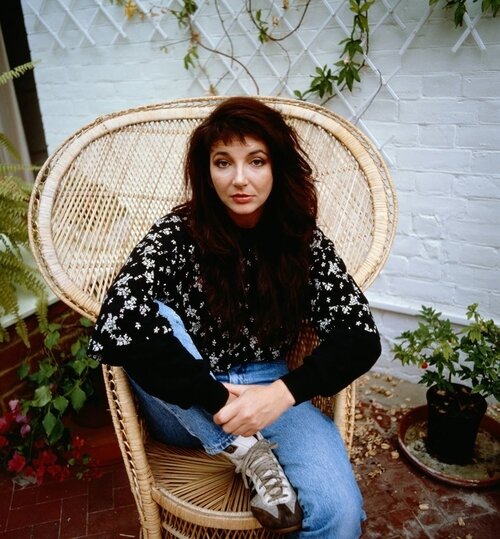
IN THIS PHOTO: Kate Bush in the studio in 1978/PHOTO CREDIT: Mirrorpix

I will look at specific time periods and songs. I have been listening a lot to her music (as you would expect) and watching interviews, and I am always amazed by the determination and sheer strength of Bush. In terms of her musical vision, Bush knew what she wanted to achieve. Right from the off, on 1978’s The Kick Inside, Bush was keen to have as much say as possible. I know I am repeating myself – and others who have written about her -, but Wuthering Heights was not intended to be her debut single. Her record company wished the more conventional James and the Cold Gun would be her opening single. Accounts vary regarding the course of events, but Bush was near the point of tears trying to convince her label that she knew best regarding Wuthering Heights. By the time it came to her next single, though the battle was not as intense, Bush disagreed with what the record company had in mind – The Man with the Child in His Eyes was picked. Moving and Them Heavy People were released as singles in Japan, whilst Strange Phenomena was released as a single in Brazil. One gets the sense that EMI would have been happier with tracks such as Moving put out as singles, but Bush wanted to ensure that her music was being fairly represented and the singles were as strong as possible.

I am going to extensively cover The Kick Inside soon, as the year 1978 was a busy and particularly important one for Bush. Look at some of the interviews from 1978 and a pattern emerges that would follow her for much of her career: a patronising tone and lack of respect from some interviewers. Not all of the media were condescending, but I think Bush was seen as this rather slight girl and one who was surely determined. I look back at interviews she conducted in 1978 and 1979 – when she promoted her stage show, the Tour of Life -, and there is this very worrying angle. It is mainly men interviewing her, but they sort of felt like she was very fragile, and it was amazing, God forbid, that a young woman would be so strong-willed and ambitious! Bush was not a massive feminist early in her career, and the media was not being held to account like they should have been. Look and read any interview she gave early on, and there is this exceptional strength and maturity that blows you away. Yes, Bush’s voice was sweet and melodic, but she countered any stupid question and rather foolish naivety with plenty of fact and reason: she is an artist who knows what she wants and has a bigger plan.


Maybe songs on The Kick Inside concerning spirituality and synchronicity led many to assume that Bush was hippy-dippy and somewhat insignificant. I will pull from an article published in The New Yorker, as it is a rare article that focuses on Bush as an innovator who, whilst she was strong and incredible talented, was often portrayed as this beautiful woman; there was a little too much focus on her natural assets and looks, rather than what she was producing in the studio and on the stage:

“She’s got credit for her pioneering use of the Fairlight synthesizer, in the eighties, and the headset microphone onstage, for producing her own albums, and for evolving an ahead-of-its-time sound that combined heavy bass with the ethereal high notes, swoops, and screeches of her own remarkable voice. She is a dark-haired, dark-eyed beauty, and critics have always noticed that”.

Perhaps interviewers fancied themselves as suitors as they talked to Bush, and one can forgive any wide-eyed adoration and incoherent babbling. Bush was, and is, a remarkably striking woman and she has a beauty that is incomparable. I feel Bush wanted to assume a mantel of control over her output because she did not want to be lumped in with the more conventional singer-songwriters of the 1970s. Whilst Carole King and Joni Mitchell are legends, their lyrical style and vocal delivery was not what Bush wanted to do.

IN THIS PHOTO: Kate Bush in 1978/PHOTO CREDIT: Gered Mankowitz

She deliberately listened to very few female singers as she did not want to be influenced. I think EMI sort of had plans for Bush to be more commercial and accessible. Songs like Wuthering Heights meant more, and Bush did not want to be taken down a path that was not right for her. By her second album, Lionheart, she was co-producing/assisting with production, and she was in the co-producer’s seat by 1980’s Never for Ever. I think Bush looks back on her first two albums with a little bit of regret. She wanted to move her voice from the more high-pitched and dramatic to something more masculine, anchored and diverse. She also laments the lack of control she had over her career; she felt like she was part of the machine rather than the one controlling it. As a teenager, it would have been unrealistic for Bush to produce solo – she needed the wisdom and expertise of Andrew Powell (producer) -, and her vocal style actually made her stand aside from her peers. This passion and ambition, one might say, is quite common and has been seen a lot since 1978. Perhaps so, but I think Bush has influenced so many artists and she inspired countless artists to follow her lead. Against this pioneering spirit and indefatigable vision, Bush was being written about in the media in not always positive tones. Like I said, many of her T.V. interviews were rather belittlingly, and she was ripe for parody and intense scrutiny.

As Margaret Talbot wrote in The New Yorker, the fact Bush was quite privileged and came from a comfortable home, maybe, provoked journalists to attack and underestimate her:

“In “Under the Ivy,” the music journalist Graeme Thomson’s smart and respectful biography of Bush, from 2010, the author describes how, early on, reactions to Bush often condescended to her as a child of privilege. She was a doctor’s daughter from Kent, raised by an affectionate, mildly oddball family in a rambling old farmhouse (I kept thinking of the Weasleys from the Harry Potter series), where she was kindly listened to and afforded time and space in which to play the piano and write songs”.

By 1980 – I will not go through her entire career, but I want to concentrate on her 1978-2005 output at least -, Bush was co-producing Never for Ever (alongside Jon Kelly, who was one of her engineers on The Kick Inside and Lionheart). It is ironic that aspects that divided critics are the very facets that left people spellbound in 1978. Look at Bush’s output from 1978-1980, and there are scenes of mystics and strange characters, of teachers and literary heroines, of lust and dreams no less. Alongside unique and gymnastic vocals, maybe there was a feeling that Bush’s songs were not angry enough; her voice not as charged and political as it should have been – Punk still had legs by the end of the 1970s and early-1980s.

Let us not forget that, in 1979, Bush took the massive Tour of Life around Europe. Bush’s set was mind-blowing, and her routines and performances were heralded and rhapsodised. It seems a shame that – with the help of a very dedicated team – someone who was pushing boundaries and transforming the realms of live performance still had to ‘answer’ criticism and a lack of respect past 1979 – not that she should have received any at all! A lot of the press patronising subsided after the Tour of Life, as they could see what Bush was capable and just how exceptional she was. I cannot include all interviews in this feature, but there was a bit of a turning point when Danny Baker interviewed Bush for NME back in 1979. Although Never for Ever’s Army Dreamers and Breathing was Bush reacting to the news and fears of the time, I do feel like a lot of people wrote her off by the end of the 1970s. This impression of the hippy-ish girl singing twee songs followed her around. Baker’s tone throughout the NME interview illustrates my point:

“Well, that certainly seems a worthwhile thing to do, all right, although it has in fact been done before. Y'see, occasionally Kate allows the poet and all-round Tyrannosaurus Rex dreamer to slip out, a sucker for Lord of the Rings. For a start I have cut about a hundred "wows" and "amazings" from her speech. She talks at length about how important she feels it is to be "creating" all the time, and when I asked her if she looked to the news for any song inspiration I got this curious answer:

"Well, whenever I see the news, it's always the same depressing things. War's hostages and people's arms hanging off with all the tendons hanging out, you know. So I tend not to watch it much. I prefer to go and see a movie or something, where it's all put much more poetically. People getting their heads blown off in slow motion, very beautifully".

Of course, like most interviews of the time, Bush was asked about men fancying her and, rather than dig into her music, Bush was keen to explore her attractions and whether she had many hearts fluttering in her direction:

“Incredible. Do you find men in awe of you?

"Socially? Well, I find that – with people that I haven't seen for a couple of years, because they won't treat me as a human being. And people in the street will ask for autographs and also won't treat you as human, but … ah … sometimes I get really scared. Sometimes when I'm going to the supermarket to get the coffee and cat litter, I get freaked out and see all these people staring, and you turn around and there's like 40 people all looking at you… and when you go around the corner, they're all following you! You start freaking out like a trapped animal”.

Baker signed off the interview with a rather dismissing sentence that echoed a lot of what was being felt in the media at the time:

“Here, listen, I think you've got the picture. Kate Bush, to meet, is a happy, charming woman that can totally win your heart. But afterwards on tape, when she's not there and you actually listen to all this, well… golly gosh. Don't lose sleep, old mates, it's just pop music-folk and the games they spin. Wow”.

Danny Baker has come out since to say he is a Kate Bush fan and, at the time, he was trying to get a rise and be a bit more jocular; maybe push some buttons and deliver a memorable interview. I agree that we get something interesting and original from the interview, but that underlying whiff of contempt and condescension is genuine.

IN THIS PHOTO: Kate Bush performs The Big Sky in Germany for the T.V. show Peter's Pop Show in November 1985

Bush did not change herself and her music in 1980 to please critics and throw off the uneducated. To her, the first couple of albums were a particular stage she evolved from. As she grew into her twenties, and moved into the Eighties, Bush’s determination to produce and lead her own musical course intensified. There was more respect from the media by the time of The Dreaming in 1982, but that album was viewed as being experimental and harder to love. No big singles like Wow (Lionheart) can be found on that album. That said, looking back review of the time, and there seems to be this common outcome: the album is very different to her previous work but it is rewarding if you stick with it. In retrospect, The Dreaming has picked up a lot of love and many positive reviews have come out. It was clear that some corners of the media were still not sold on Kate Bush. EMI were not too thrilled that The Dreaming arrived two years after Never for Ever – that was, apparently, seen as a long wait! -, and it did not sell too well. Critical impressions, thankfully, shifted by 1985’s Hounds of Love. Maybe it was a more commercial feel of the album of a toning down of her voice that sold it to many but, to me, it was Bush not following what was expected of her and making music her way. Of course, there were still drooling interviewers and some who could see Bush as a serious songwriter – her beauty was, once more, the main point of focus.

Bush built her own studio and took three years to follow The Dreaming. I have written how the year 1983 was especially restorative and important. Although there was not as much critical praise for 1989’s The Sensual World, one can admire Bush was not repeating Hounds of Love and never standing still. I will talk about Bush being Beatles-esque in the way she moved between albums in a future feature, but the 1990s was a decade where she had to face personal troubles and  speculation from the media. 1993’s The Red Shoes is the only album from her in that decade. She had been working relentlessly since her career started, and it was inevitable that she would need to make some changes. The Quietus talked about a challenging time in Bush’s career:

“Bush, who had spoken of feeling emotionally burnt-out years before the album was released, was ready to withdraw, too: she vanished for 12 years until Aerial, and then went on hiatus for another six before returning with Director’s Cut. “I think there’s always a long, lingering dissatisfaction with everything I’ve done,” she said in 2011, glad to have the chance to right some of the wrongs that had been bothering her for 20-odd years. For me, though, the original album has always been enough: it might have its flaws, and there might be a handsome alternative, but just like Bush on ‘You’re The One’, I still want to keep going back”.

qqqq.jpg

IN THIS PHOTO: Kate Bush in 1993 in a promotional photo for The Red Shoes (this is the dress she wears in the Eat The Music portion of The Line, the Cross and the Curve)

Bush would return splendidly with Aerial in 2005 – which I shall end on -, but she was having a break from music and more concerned with taking care of herself and having a family – she gave birth to her son Bertie in 1998. The media went into a frenzy when they learned of the news in 2000 - I think it was Peter Gabriel who accidentally let slip the news - and saw Bush of hiding this secret family and love child - although Bertie MacIntosh performed at Bush’s 2014 residency, Before the Dawn, some corners of the media saw it as the shielded child stepping from the shadows! Returning The New Yorker feature, and it is clear that, again, the press were not really as informed as they should have been:

“In the nineties, when Bush’s output slowed and her public appearances dwindled, the British tabloids seized on another archetype for her: she was a “mythical recluse,” as Thomas writes, a rock-and-roll Miss Havisham. It’s a persistently alluring reversal-of-fortune story—the celebrity, especially one who blazed early and prodigiously, fading away, vain and lonely, ideally in a mansion. (See narratives stretching from “Sunset Boulevard” to the 2017 podcast “Looking for Richard Simmons.”)

But her real story doesn’t conform all that well to the fable. She was most productive between 1978 and 1994, when she made seven albums, but in the years since, she’s put out two critically acclaimed albums of original material plus a live album and a collection of some new versions of her old songs. She’s raised a son, Albert, who’s now in his late teens, with her partner, the musician Danny McIntosh. In 2014, she put on “Before the Dawn,” a twenty-two-night residency at the Hammersmith Apollo, in London, that combined theatre, puppetry, film, and music in a spectacle that critics found occasionally ridiculous and genuinely, almost unbearably moving. Tickets for all twenty-two performances sold out within fifteen minutes online”.

<

There were also a lot of stories (in the 1990s) regarding Bush’s weight gain and the fact that she was out of the public eye. It is a pity that someone as beloved and non-assuming – in the fact she did not court fame and attention – would not been immune to the poison pen of the tabloid media. Before I end on Aerial, I want to track back to 1985 and an interview from Hot Press that sort out outlines a lot of the questions she had to face. At a time when she had released her most successful and respected album, the subject of sex was still needlessly being put on the table:

“At the same time, there is a projection of sexuality through the photos on the latest album.

"Do you think so, on this album cover?"

Yeah, I suppose it begins with the fact that you're in a sleeping position...

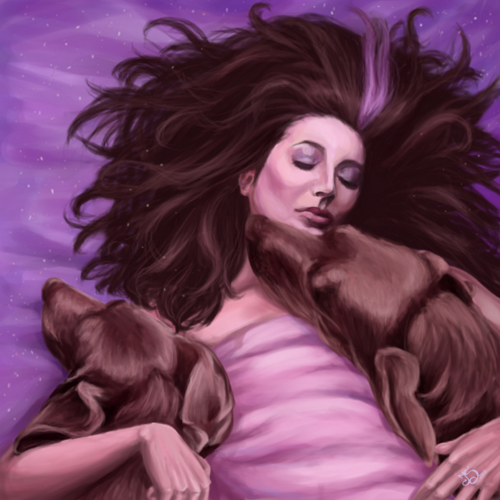
"Yes, you are right. That was very difficult. Because the album is called Hounds of Love, and it was very difficult trying to get a picture of myself with dogs that wouldn't look either like something out of Country Life or too period--it was impossible. The original idea was just to have the three heads--myself and a dog each side of me, but it just didn't work. The dogs wouldn't stay still! It was ridiculous, and the only way we could do it was to lie down with them and just get them to relax enough so that they would sort of ZZZzzz! And that was the way it worked. But I suppose you're right, though it wasn't initially or consciously thought of as a sexual thing at all. In fact it's something--I have become I think a bit--It worries me anytime I think there is any kind of sexual connotation: 'My God! Should I be careful?...'"

But why does that worry you so much?

"I don't know. It confuses me. It's really annoying, too, because I don't see what's wrong with having sexuality, with recognising the sexual quality of things. But I suppose it confuses me because when I am doing things at the time, maybe people will say "That's sexy," and I can't relate to it. I can't see myself sexually-- I just see me being silly. I can't be objective about myself."

saaas.jpg

IN THIS PHOTO: Kate Bush in 1980

The interviewer turned to feminism and whether she was one. Bush had always been a little uncomfortable discussing feminism, but this question provoked a remarkably interesting response from Kate Bush:

You have actually charted a very independent course yourself, and in some ways you'd offer a definition of what feminists would want women to be able to do.

"I would like to think that there is actually a very strong force of women who believe we should have equal opportunities, be able to work, be treated nicely without any threat, all of that. And not necessarily come on with 'We hate men--Off with your balls!' Do you know what I mean? And I think there are lots of women who are starting to really do it properly. Look at comedy. I think comedy in this country is incredible. The best. It really is, it's superb. I suppose a lot of it is negatively based, but it still is superb, and just streets ahead of anyone else in the world. But, I think women have been used so much in comedy. Either there's something really hideous and ugly that's meant to be attractive, and then when it's hideous and ugly everyone goes 'aah!", or there's Benny Hill's cutie-pies that don't speak. But now there's a revolution in comedy which involves women in a much more interesting way. They're not being used as women, they're not really pretty or really ugly, they're just people. I think that really says a lot. And it's nice to see that, because so often I think women are pandered to. Like: a couple of years ago there was a trend of these feminist programmes that were meant to be for women, and they were all basically anti-men jokes. And all the women I knew thought they were horrific. It was totally insulting and unfunny. Yet women were presumed to laugh at this. Women came on and told jokes just as sexist as the men's. But it seems to have changed. It's women--Victoria Wood, Jennifer Saunders, Tracey Ullman--it's women, real women".

IN THIS PHOTO: Kate Bush in the 1980s

When she stepped into the studio, Bush always produced something interesting and new. She is able to resonate in the heart in a way other artists cannot. She had to face a lot of rather patronising interview lines, and there was not really a lot of sea change in terms of attitudes until fairly recently. Whilst we will always get some corners of the media turning up their nose, it is amazing that Bush had to deal with dismissal, patronising interviews and those who labelled her as overly-private, reclusive and strange. Although 2005’s Aerial was this big return that saw many glowing reviews come through, some were disappointed that the music was more domestic and less, perhaps, dramatic than some of her previous output. Pitchfork were one of a few sources that, for some reason, expected Bush to bring out a Hounds of Love part two:

“Non-shocker: I was disappointed the first few times I listened to Kate Bush's first new record in 12 years. Having spent some time recently wondering if the woman responsible for so much haunted, supernatural music might be producing some beacon of artistic integrity that would shine through layers of anticipation and cynicism, it was difficult to not be let down by the mundane discovery that, in fact, she's merely being herself here, writing more about everyday epiphanies than great cosmic truths. It's a pretty Zen lesson in expectation when I think about it, teaching me a thing or two about the pitfalls of hanging onto anything other than gradual enlightenment and a zero-sum world.

By the time of the closing title track, my ears are lightly glazed over, and its frail "rock" section does little justice to lines like "I want to be up on the roof, I feel I gotta get up on the roof!" At one point, Bush trades cackles with a bird's song, suggesting she's quite happy with her simple life as a mother and artist. Far be it from me to criticize happy endings, but in musical terms, a comfortable, even-keeled existence sometimes comes out as isolated and ordinary art”.

I wanted to write this feature, just to show how Kate Bush has forged her own path and has produced such innovative and unique albums. Bush arrived at a moment when Punk and other genres were raging and, perhaps, the media were not sure to make of her. She had to battle a lot of sexism and the subject of sex coming up. Things gradually improved in that respect, but Bush, by the 1990s, was seen less as a mythical fairy and fantastical oddity and more of a reclusive – hardly surprising as she had been worked to the bone until 1993 and just wanted to be a normal person and have a break! Whilst recently she was accused of supporting the Tories (which she then denied), I wonder what sort of reception she will get when she brings a new album out. Will it be a sort of return of the recluse or will she garner more respect? I am being harsh, as it is only a minority of the media that do not show proper dignity towards Bush. There is no doubt that Kate Bush is a pioneer, genius and…

qqqq.jpg

IN THIS PHOTO: Kate Bush in a promo photo for Before the Dawn in 2014/PHOTO CREDIT: Trevor Leighton

A national treasure.

FEATURE: Vinyl Corner: Fatboy Slim – You’ve Come a Long Way, Baby

FEATURE:


Vinyl Corner

vvv.jpg

Fatboy Slim – You’ve Come a Long Way, Baby

___________

I think I was aware…

IN THIS PHOTO: Norman Cook (Fatboy Slim) in 2014

of Fatboy Slim when he released Better Living Through Chemistry in 1996. I was at high school, and I was listening to quite a lot of Dance and Big Beat. You've Come a Long Way, Baby is when his music really started to speak to me! I was aware of Norman Cook a while before his Fatboy Slim days, and I was a big fan of his band, The Housemartins. Released on 19th October, 1998 through Skint Records, Cook recorded and produced the album at his home studio in Brighton. Using an Atari ST computer, Creator software and a floppy disk, it is amazing to think what he achieved. I love its eye-catching cover – taken at the 1983 Fat Peoples Festival in Danville, Virginia -, and the songs are instant classics. Right Here Right Now, The Rockafeller Skank, Gangster Trippin and Praise You were these wonderfully unifying and memorable songs that were a big part of my last year or two at high school. Not only are these songs anthemic and brilliant; the samples deployed through the material on You’ve Come a Long Way, Baby are brilliant - Right Here Right Now contains samples of Ashes, the Rain, and I, written by Dale Peters and Joe Walsh, and performed by The James Gang; The Rockafeller Skank contains samples of Sliced Tomatoes, written by Winifred Terry and performed by the Just Brothers, and Beat Girl, written and performed by John Barry. In a year that saw Madonna’s Ray of Light, Beastie Boys’ Hello Nasty, Air’s Moon Safari and Massive Attack’s Mezzanine sit alongside one another, I think You’ve Come a Long Way, Baby ranks with the very best of them.

It is hard to compare Fatboy Slim’s second studio album with anyone else but, in a way, he manages to create his own universe and genres. Running in at just over an hour, You’ve Come a Long Way, Baby is an epic album that sounds fantastic to this day. I will bring in a couple of reviews for the album, but I found an article published in 2018 – twenty years after the album was released. There are some interesting observations made, and my favourite track on the album, The Rockafeller Skank, is commented on:

“The tune that put the Fatboy sound on the mainstream map, though, was The Rockafeller Skank. Like Renegade Master, it’s based on a repeating rap hook, but this time with the cool strains of surf guitar replacing the manic needle scratching. The guitar lines sampled came from Northern Soul track Sliced Tomatoes by Just Brothers, one of the many vintage curiosities that make up the DNA of …Baby. Its memorable “Funk soul brother” mantra, meanwhile, was lifted from the vocal intro to an LP of hip-hop instrumentals. In his book The Story of Northern Soul, David Nowell marvels at how this selection of vocal line “added the seal of approval to its soulful roots and turned the single into probably the most memorable pop song of 1998.”

“It seemed to be an instant thing among everyone who heard it,” Cook recounted to Nowell. “We hoped something would happen for it, but I never thought it would be a Top 10 single up there with the likes of George Michael.”

The Rockafeller Skank, then, was where the sound of …Baby truly began, escaping the House Of Love after party and dancing into the streets. Cook became even more in demand as a DJ, something that didn’t escape the attention of GQ’s Mike Shallcross, who told the BBC in 2002 how Cook’s sets were “full of crescendo [and] highly exciting. He drew people to his brand of dance music who’d normally prefer Oasis or Madonna.”

Reverence, though, should be paid to the album, no matter how tongue-in-cheek things get. Consider its influence over the years, inspiring the likes of The Chemical Brothers to add more whimsy to their beats, and Basement Jaxx more unusual and in-your-face samples (as on 2001 single Where’s Your Head At). Newbies such as Mylo soon debuted with the cheeky house subversion of Destroy Rock & Roll, whose hit title track sampled an American preacher denouncing the 80s pop scene. Norman Cook no doubt approved.

Sample culture really did get a major boost from You’ve Come A Long Way, Baby, with fans taking as much delight in tracking down samples as from hearing them in the first place. Acts such as The Avalanches hit fame through such fervour, with their classic debut in 2000 not being a million miles away from the Fatboy sound. More recent counterparts, meanwhile, include acts such as Major Lazer, Duck Sauce and Skrillex, who raised similarly boisterous flags high on the 2010s dancefloor”.

Not only is You’ve Come a Long Way Baby one of the best albums of the 1990s; I think it is one of the best albums every released. Whilst it is hard to find the album brand-new on vinyl, there are sellers out there. You can get a good copy here, and I recommend people do. It is a tremendous album that resonated upon its release in 1998 and is still picking up acclaim and celebration now. AllMusic had this to say when they reviewed You’ve Come a Long Way, Baby:

“Fatboy Slim's debut album, Better Living Through Chemistry, was one of the surprises of the big beat revolution of 1996 -- an eclectic blowout, all tracked to thunderous loops and masterminded by Norman Cook, a former member of the British pop band the Housemartins. It might not have been as startlingly fresh as the Chemical Brothers, but the hard-hitting beats and catchiness, not to mention consistency, of Better Living was a shock, and it raised expectations for Fatboy Slim's second album, You've Come a Long Way, Baby. And that record itself was something of a surprise, since it not only exceeded the expectations set by the debut, but came damn close to being the definitive big beat album, rivaling the Chemicals' second record, Dig Your Own Hole. The difference is, Cook is a record geek with extensive knowledge and eclectic tastes. His juxtapositions -- the album swings from hip-hop to reggae to jangle pop, and then all combines into one sound -- are wildly original, even if the music itself doesn't break through the confines of big beat. Then again, when a record is this forceful and catchy, it doesn't need to break new stylistic ground -- the pleasure is in hearing a master work. And there's no question that Cook is a master of sorts -- You've Come a Long Way, Baby is a seamless record, filled with great imagination, unexpected twists and turns, huge hooks, and great beats. It's the kind of record that gives big beat a good name”.

I have been playing You’ve Come a Long Way, Baby a lot recently, and I have been hooked on tracks that I might have passed by when I was younger. Songs like Kalifornia and Love Island have gained new light and weight, which is really interesting. The detail and nuances in every track fascinate me and, decades from now, I still feel people will be spinning this album and discovering something fresh from it. I want to quote from a Student Playlist article that dissected the album and talked about the incredible sampling. Some reviewers have dismissed You’ve Come a Long Way, Baby as being too commercial and calculated, but I think the songs balance the more commercial and stays quite faithful to Big Beat roots. I think, if the album was more obscure, it would not have connected with such a larger audience. Others say the album has not dated that well, but I feel that it has. I play it now, and there is that blast of nostalgia, but I appreciate the songs on their own terms of they stand totally stand up. Here is what The Student Playlist wrote:  

“It’s Cook’s brilliant eye for sampling, picking sonic material that could be both humorous and poignant, that makes You’ve Come A Long Way Baby such a compelling and refreshing listen. Vocal snippets looped and swooped around cut-up portions of old, obscure records from hip-hop, soul, gospel, funk, surf-pop and rock to create a fun, slightly scruffier and more accessible variant on the techno of the likes of Underworld and Orbital from earlier in the decade, and one which could appeal to the rock and pop mainstream. Thereby, Cook had hit upon an album with universal attraction, one which would appear in record collections alongside Oasis or Madonna and still make sense.

xxxx.jpg

Strangely, for a record compiled in end-of-the-century Brighton, You’ve Come A Long Way Baby evokes a timeless and distinctly American sense of cool. Everything you need to know about the album is referenced in its packaging. The image on the back of the CD cover is of a lonely American desert highway stretching into the horizon; the vast musical galaxy from which the album is stitched together is seen in the stacks upon stacks of dusty vinyl on the inside cover; and of course, the front cover image of the obese, carefree young man taken at the 1983 Fat People’s Festival in Danville, Virginia – whose identity has never been revealed, despite lots of enquiries”.

No matter what side of the fence you fall regarding You’ve Come a Long Way, Baby – too commercial and lacking in authenticity; a brilliant album that stands the test of time -, one cannot deny that there is an energy and colour sonic palette that is hard to resist! I am going to spend some time today with You’ve Come a Long Way, Baby today and immerse myself…

ONE of my favourite albums from my youth.

FEATURE: Spotlight: The Mysterines

FEATURE:


Spotlight

zz.jpg

The Mysterines

___________

IN this week’s Spotlight…

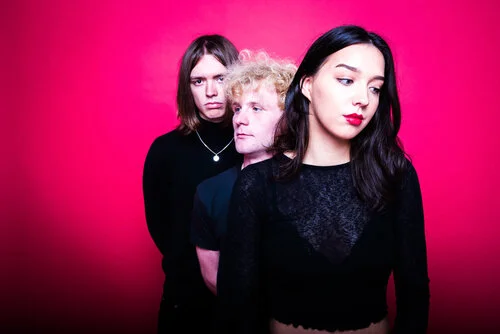
I am featuring a Liverpool band who I have heard a lot of great things about – the superb crew of The Mysterines. Their latest cut, Love’s Not Enough, has been playing on BBC Radio 6 Music, and it is one of the year’s most original and standout tracks. Led by the brilliant guitarist and singer Lia Metcalfe, the band have crafted an incredible sound. I am going to source from a few interviews from this/last year and, whilst Metcalfe remains at the centre, there have been additions to the band. I have been listening back to the band’s E.P. from last year, Take Control. It is a fabulous thing, and it has gained some really positive reviews. Here is what  Underscore Part 3 had to say:

 “Previous single and track three on the EP Gasoline features similar guitar work to Take Control, a vocal pattern clearly influenced by Bob Dylan’s Subterranean Homesick Blues and just enough angst in lead chorus line “I just love to hate you” to steer clear of being vapid; Gasoline is the anthem The Mysterines weren’t ready to write when they wrote debut single Hormone.

Finishing the EP with Bet Your Pretty Face it has all the hallmarks of garage rock anthem Hormone; separating the two on the EP was an obvious choice. Lia channels anger at “pretty face[s having] doors” opened for them in what appears to be a metaphorical comment which most will relate to; another sure singalong to briefly release the listeners anger at their co-worker they’re overlooked to for promotions. In some ways could Bet Your Pretty Face feels ironic with the band having been paired up with Steve Lamacq, James Skelly and Alan Moulder before even releasing a single, whatever their relationships are with high level industry professionals their ability to craft anthemic rock is impossible to argue with.

“The Mysterines have one goal and that is to produce punchy rock to dance to like nobodies watching and sing along to like nobodies listening; achievement unlocked!”

The Take Control EP could have been released as a knee jerk reaction to the band being offered the guest spot on Royal Blood’s tour or it could have been a way to collate this first stage of the band, whatever its motives are it’s undeniable that The Mysterines have one goal and that is to produce punchy rock to dance to like nobodies watching and sing along to like nobodies listening; achievement unlocked!”.

I will end by seeing where the band might head this year but, in light of the current situation, they may not be touring until a lot later in the year. It is hard to pin down their sound in terms of obvious influences (which is good), but they have evolved since their formation and earliest recordings. I have been looking at some interviews the band provided. The first, from Fred Perry saw, Lia, Chrissy and George discuss a bit of their musical tastes:

“Name, where are you from?
Lia, Chrissy and George from Wirral. Merseyside.

The first track you played on repeat?
George: 'Mr Blue Sky' by ELO.
Chrissy: 'Thugs' by Notorious B.I.G.
Lia: 'Love Man' by Otis Redding.

A song you wished you had written?
Lia: 'It Ain’t Me Babe' by Bob Dylan.
Chrissy: 'Bloody Mother F*cking Arsehole' by Martha Wainwright.
George: 'Valley of Tears' by Buddy Holly”.

I am going to, as I said, bob to and fro regarding timeline, as there have been exciting changes in the ranks. At the centre, though, is this wonderful bond and, in my opinion, some of the best music around. I think the band are growing stronger, and it will be exciting to see whether there is an album arriving down the tracks. Whilst we have an impression of where The Mysterines are heading and what they are about right now, where did it all start? Lia Metcalfe spoke with This Feeling last year about how the band got started – and she revealed a few of her influences:

“What inspired you to start a band?

Lia: Well I’ve been playing music for as long as I can remember, I started learning guitar when I was about 8/9 to accompany short poems I used to write as a kid and then when I was about 14 I got really consumed by it all and realised this is what I want to do with my life , I couldn’t wait to fuck school off to do it so from that I formed early days Mysterines. I guess nothing inspired me to do it, it was just natural to me, I never really looked at a band who I loved and thought I want to do that or be like them, I just did it anyway...but I suppose as I did really fucking hate school that fundamentally sparked the beginning of the band, I just wanted something else to do haha.

Influences...

Lia: Tom Waits, Bob Dylan, John Lennon, Paul Simon,  Etta James, Aretha Franklin, Lauryn Hill, PJ Harvey, Patsy Cline.... I have many and they change all the time”.

I have seen a lot of features from this year that guide us to the artists we need to watch out for. What I am seeing is a load of great acts from the North West being spotlighted. I think there has always been this focus on London as the hub and go-to city for great music. As The Mysterines prove, Liverpool is a hotspot for musical talent. That said, I think there is still some reservation from some regarding Liverpool and music from there. Metcalfe spoke with NME recently, and talked about Liverpool; Metcalfe’s songwriting style/possible influences were also explored:

“This place used to be quite stand-offish, but I think that was because we were classed as a Liverpool band,” singer Lia Metcalfe tells NME hours before stage time. We’ve swung by Parr Street Studios in the city’s Ropewalks district – just around the corner from the venue for a chat about all things Mysterines. It’s here at this studio that bands like Coldplay, Pulp and Blossoms recorded some of their biggest songs, while bands like The Mysterines are starting off their recording career in good care.

“Initially it was quite hard to gain fans in Liverpool. It definitely shocked me,” Lia says of the muted response. “At that point we realised that people always supporting bands – especially from a city with such cultural history – has maybe died out. I didn’t want to give up because we were smashing it in other parts of the country as well…

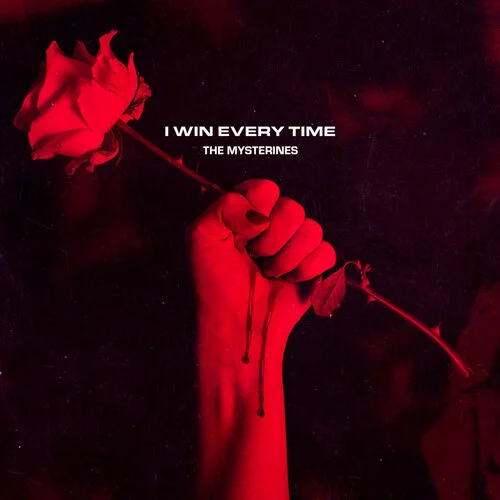
Lia’s songwriting, meanwhile, is a modern twist of the anti-anthems crafted by Nick Cave and PJ Harvey, while she admires Billie Eilish’s and Big Thief’s Adrianne Lenker and their razor-sharp observations. She’s recently signed a publishing deal with Domino Records, home to artists like Big Thief, (Sandy) Alex G and Arctic Monkeys. It’s just the start, too. Their current live set, which features blues-rock stomper ‘I Win Every Time’, showcases that there’s even more where those come from”.

It is an exciting time for The Mysterines, and I think they will continue to expand and evolve as time goes on. I think the band will be able to gig in the autumn; follow them on social media (links are at the bottom) and you can keep a track of their gig dates here. I love The Mysterines’ fresh and stunning sound; it is just what we all need right now. I want to finish off with another interview from this year, where Lia Metcalfe discusses the band’s line-up change and, sadly, a few gigs and festivals that will have been rescheduled – a little bit of a dent in the band’s momentum and incredible year so far:

“How did the band form, you've recently had a line-up change haven't you?

I met George (bass) when we were both about 13, and we just started practising in the front room of my house with all my very, very early songs. None of them were any good at all, so I'm not sure what made him stick with me haha. The line up in the band has always been mainly George and me, but yes, recently we've brought in Callum (guitar) and Paul (drums) - the more the merrier, as they say.

What's been the highlight of your time with The Mysterines so far?

I think for me personally it's probably selling out our headline tour - I really didn't expect that, and it's good to see people actually like the music I'm writing, strong indication that we must be doing something right.

Are you looking forward to your new tour? Is there anywhere you're especially keen to play?

We're all really excited for the tour; it's definitely gonna be the best tour we've done. I'm especially looking forward to the London show at The Dome - we initially had booked The Lexington, and that was the first date to sell out, so we upgraded the venue to The Dome - we were all buzzing when that happened.

What about festivals, you've loads coming up, right?

Yes, I can't wait for festival season. Neighbourhood Festival will be brilliant, can't wait to watch Sam Fender especially”.

I know The Mysterines will be back in the touring swing as much as possible very soon but, until then, support their music online and throw some love their way. There is no stopping the terrific The Mysterines. Do be sure to investigate and follow…

ONE of the country’s best rising bands.

_________________

Follow The Mysterines

FEATURE: The Lockdown Playlist: Vol. IX: 1974-1977

FEATURE:


The Lockdown Playlist

zzz.jpg

PHOTO CREDIT: @georgiadelotz/Unsplash

Vol. IX: 1974-1977

___________

YESTERDAY…

PHOTO CREDIT: @seteales/Unsplash

I published a Lockdown Playlist that took us back to (the start of) the 1970s. Today, I am carrying on through the decade and uniting some of the biggest U.K. singles. It was a brilliant time for music and, if you need a boost and some energy this weekend, I hope this playlist does the job. I think lockdown will be eased very soon but, even so, many of will not be able to go out or might be working from home. We all need some great tunes to get us through this hard time so, in that spirit, have a listen to the selection below and feel uplifted. I am not sure, in terms of years, where I am going to head next: I might do a 1978-1979 list, or I may well do specific playlists of Pop and other genres. For now, enjoy some terrific music and blissful sounds from…

zzz.jpg

PHOTO CREDIT: @jan_strecha/Unsplash

A great decade.

FEATURE: “She Knew Exactly What to Do” Kate Bush’s Babooshka and a Bold Evolution

FEATURE:


“She Knew Exactly What to Do”

a.jpg

PHOTO CREDIT: John Carder Bush

Kate Bush’s Babooshka and a Bold Evolution

___________

TO defend myself against those who will say…

aaaa.jpg

PHOTO CREDIT: John Carder Bush

Kate Bush’s music had taken a leap before Babooshka was released as a single; to be fair, I take that point, but this was another big step from an artist who had made strident and significant leaps since The Kick Inside, her debut album, in 1978. The reason I am returning to Bush’s third album, Never for Ever, is that it turns forty on 7th September. I will focus more on the rest of the album a little later down the line, but I wanted to focus on its opening track and second single: the beguiling and bewitching Babooshka. Not too long ago, I penned a feature celebrating the fortieth anniversary of Breathing. This was the first single from Never for Ever, and it was released on 14th April (1980). Although Babooshka does not turn forty until 27th June, I have seen a few social media posts recently concerning Babooshka. There is a cool video – that I cannot see on YouTube – where Bush sings the song with an array of weird backdrops. Her dancing is fantastic, and it has given me a new love for a song that, until recently, I have not played much. I love all of Bush’s work, but I have been listening to other tracks on Never for Ever. Kate Bush has always been masterful when it comes to opening tracks, but I think Babooshka is one of her very best. It gets the album off to a flyer and, when you listen to the track and watch the video, we see this artist in a new light.

aq.jpg

The first single from Never for Ever, Breathing, was a political song about a foetus observing nuclear war from inside the womb. Bush, as I have said before, did not dabble too much with political observation too much prior to 1980, and Never for Ever was a big development in terms of lyrical scope and confidence. Kate Bush produced the album alongside Jon Kelly. It was the first time she had co-produced one of her albums – she and Kelly co-produced the On Stage E.P. the year before. Babooshka reached number-two in the Australian charts; it got to number-five in the U.K. How many people could have seen Babooshka coming so soon after her debut album?! Whilst Wuthering Heights (The Kick Inside) and Wow were big hits and were/are unlike everything else, Babooshka remains one of Kate Bush’s most immediate and bold songs. Never for Ever is an album, as I will explain at some point, that gets overlooked and not written about in terms it deserves. Breathing is a phenomenal song, and it sort of blows you away with its emotion and heaviness. Army Dreamers, the third single from Never for Ever, was another political number (about young men being led to war); the reason Babooshka gets to me is the vocal delivery, the composition and video. I will explain more in a bit, but here is a bit of information on the song from the Kate Bush Encyclopaedia: 

“Song written by Kate Bush. Originally released as a single on 27 June 1980 and subsequently included on the album Never For Ever. According to Kate, the song chronicles a wife's desire to test her husband's loyalty. To do so, she takes on the pseudonym of Babooshka and sends notes to her husband in the guise of a younger woman - something which she fears is the opposite of how her husband currently sees her. In her bitterness and paranoia, Babooshka arranges to meet her husband, who is attracted to the character who reminds him of his wife in earlier times. The relationship is ruined only because of her own paranoia.

Kate performed 'Babooshka' in various European programmes, including Collaro (France), Countdown (Netherlands) and Rock Pop (Germany). Her performance of the song in a Dr. Hook television special remains the first, and is memorable for the costume she is wearing: on her the right side she resembles a staid Victorian lady in mourning dress; on the left side a glittering, liberated young woman in a silvery jumpsuit, with bright lightning-streaks painted down the left side of her face. Her figure is lit so that only the "repressed" side of her costume is visible during the verses of the song, and mainly the "free" side during the choruses”.

I think one of the reasons Babooshka was such a success is that it has the rawness and immediacy of a track like Breathing, but there is a lot of beauty and intrigue. To me, the composition is made by adding Fairlight CMI and balalaika. The balalaika adds a sense of the exotic and foreign, whilst the introduction of the Fairlight was a big revelation. At this point, Kate Bush was becoming firm friends with Peter Gabriel, who owned a Fairlight. She was fascinated by its potential. The breaking glass sound adds something strangely romantic and unique to Bush’s work. She would use the Fairlight extensively from Never for Ever on, but Babooshka is the first time it is really heard and takes her music in a new direction. With terrific backing vocals (by Paddy Bush and Gary Hurst), wonderful electric bass from John Giblin, and Bush commanding at the front, there is such richness and story right through Babooshka. I think Babooshka is one of Bush’s most assured and accomplished vocal performances to that date. She teases and beautifully moves through the verses; portraying so many emotions and bringing the lyrics firmly to life. Prior to Never for Ever, we heard a bit of Bush’s more guttural vocal side; Breathing was the first track where it really came to the fore. Listen to the chorus of Babooshka and that lovely growl and gravel that kicks the chorus right through the gears.

qqq.jpg

IN THIS PHOTO: Kate Bush in 1980/PHOTO CREDIT: Andy Phillips

After a chaotic 1978 and 1979 – two studio albums, constant promotion, a live tour and live E.P. among Bush’s duties -, she gained more production control on Never for Ever. Her work was becoming broader and more adventurous, and Babooshka is the sound of an artist reborn and truly inspired. Kate Bush talked to Countdown Australia in 1980 and discussed the song in more detail:

“It was really a theme that has fascinated me for some time. It's based on a theme that is often used in folk songs, which is where the wife of the husband begins to feel that perhaps he's not faithful. And there's no real strength in her feelings, it's just more or less paranoia suspicions, and so she starts thinking that she's going to test him, just to see if he's faithful. So what she does is she gets herself a pseudonym, which happens to be Babooshka, and she sends him a letter. And he responds very well to the letter, because as he reads it, he recognises the wife that he had a couple of years ago, who was happy, in the letter. And so he likes it, and she decides to take it even further and get a meeting together to see how he reacts to this Babooshka lady instead of her. When he meets her, again because she is so similar to his wife, the one that he loves, he's very attracted to her.

Of course she is very annoyed and the break in the song is just throwing the restaurant at him...  (...) The whole idea of the song is really the futility and the stupidness of humans and how by our own thinking, spinning around in our own ideas we come up with completely paranoid facts. So in her situation she was in fact suspicious of a man who was doing nothing wrong, he loved her very much indeed. Through her own suspicions and evil thoughts she's really ruining the relationship”.

I love the lyrics and the fact that it is not an ordinary love song or something commercial – something many of Bush’s peers were guilty of. This tale of deceit and suspicion is riveting. The composition sounds very male. Apart from a few higher-pitched notes, there is this lower-pitched vibe. The electric, fretless bass and the backing vocals firmly pushes away from the much more female and ethereal sounds of Bush’s work on The Kick Inside and Lionheart. Bush’s voice, indeed, seems more matured and lower than it did as recently as a year or two before Babooshka came out. It is the video that really takes the song over the top. Prior to Babooshka, Bush had already released these arresting and beautiful videos – Wuthering Heights, The Man with the Child in His Eyes and Breathing among them -, but Babooshka stands as one of my favourite videos from her.

In the video, Bush plays the role of the embittered and more timid wife; dressed in a black veil and standing beside a double bass (which represents her husband). She turns and plays with it, but when the chorus bursts through, Bush is transformed into this almost warrior-like character. The costume is sparse – a mix of the risqué/racing and empowered -, and her eyes are alive and bright. I think eyes, oddly, are part of Bush’s weaponry. Look at how open and expressive they are in the videos for Wuthering Heights and even Them Heavy People (from The Kick Inside; the track was released as a single only in Japan). In Babooshka, Bush’s facial mannerisms and her peerless eyes add their own dimensions and truths. That visual transformation from the verse into the chorus still shocks and amazes to this day. Almost forty years ago, this incredible video was being played, and I can only imagine how people reacted the first time they saw it! Although Bush would write better songs and more memorable videos, I think Babooshka was a bit of a watershed moment. Not only because we get to hear the Fairlight take flight: Babooshka (and the Never for Ever album) found Bush covering new ground and pulling more towards the sort of sound we would hear on The Dreaming (1982). In June, it will be forty years since Babooshka was released as a single – a few months after that, the public received Bush’s marvellous third album. To this very day, Babooshka remains…  

A staggering and truly important moment in her career.

FEATURE: Breathless Mahoney and the Rockford Peaches: Madonna’s Best Screen Roles

FEATURE:


Breathless Mahoney and the Rockford Peaches

IN THIS PHOTO: Madonna as Susan Thomas in Desperately Seeking Susan (1985)

Madonna’s Best Screen Roles

___________

I have been thinking a bit about Madonna…

IN THIS PHOTO: Madonna with her dancers for 1991’s Madonna: Truth or Dare/PHOTO CREDIT: Mirimax

and a few anniversaries coming up. Her album, Music, turns twenty later in the year whilst Confessions on a Dance Floor turns fifteen. As much as I love Madonna’s music, I think her film roles get overlooked. Madonna has worked in twenty-six feature films and, whilst many of them have been slated and slagged off, she has been in some great films. I think films like Shanghai Surprise (1986) and Swept Away (2002) are bad films she couldn’t save but, in some cases, Madonna has been attacked for no reason. I think she was great in Who’s That Girl (1987) and Body of Evidence (1993), but reviews were not that favourable. I guess, when Madonna was at her most popular, critics loved to put the claws in; sometimes justified, many times not. We have artists like Lady Gaga who have bridged film and music, but there is nobody like Madonna now who can release a studio album, tour and star in a huge film. She is an artist who always kept busy and wanted to explore different fields. Whilst a lot of her film endeavours were not overly-great, there were some shining moments involving Madonna and film. Dick Tracy, in which Madonna appeared as Breathless Mahoney, turns thirty in June; the I’m Breathless soundtrack is thirty on 22nd May and, among its songs, we have the Vogue. Whilst many people dismiss Madonna’s acting and rubbish her films, there have been some terrific releases that are definitely worth another look. Here, in my view, are the best Madonna films (or films in which she appeared). In each case, I have included the plot, box office earnings and release date (information taken from Wikipedia) and why each film is so great…

Dick Tracy

Release Date: 14th June, 1990 (Lake Buena Vista)/15th June, 1990 (United States)

Box Office: $162.7 million

The Full Lowdown:

“The film is set in the 1930s.[5][6] At an illegal card game, a young street urchin witnesses the massacre of a group of mobsters at the hands of Flattop and Itchy, two of the hoods on the payroll of Alphonse "Big Boy" Caprice. Big Boy's crime syndicate is aggressively taking over small businesses in the city. Detective Dick Tracy catches the urchin (who calls himself "Kid") in an act of petty theft. After rescuing him from a ruthless host, Tracy temporarily adopts him with the help of his girlfriend, Tess Trueheart.

Meanwhile, Big Boy coerces club owner Lips Manlis into signing over the deed to Club Ritz. He then kills Lips with a cement overcoat (referred to onscreen as "The Bath") and steals his girlfriend, the seductive and sultry singer Breathless Mahoney (Madonna). After Lips is reported missing, Tracy interrogates his three hired guns Flattop, Itchy, and Mumbles, then goes to the club to arrest Big Boy for Lips' murder. Breathless is the only witness. Instead of providing testimony, she unsuccessfully attempts to seduce Tracy. Big Boy cannot be indicted, and he is released from jail. Big Boy's next move is to try to bring other criminals, including Spud Spaldoni, Pruneface, Influence, Texie Garcia, Ribs Mocca, and Numbers together under his leadership. Spaldoni refuses and is killed with a carbomb, leaving Dick Tracy, who discovered the meeting and was attempting to spy on it, wondering what is going on. The next day, Big Boy and his henchmen kidnap Tracy and attempt to bribe him; Tracy rebuffs them, prompting the criminals to attempt to kill him. However, Tracy is saved by Kid, who is then bestowed by the police with an honorary detective certificate, which will remain temporary until he decides on a legitimate name for himself.

Breathless shows up at Tracy's apartment, once again in an attempt to seduce him. Tracy shows he is only human by allowing her to kiss him. Tess witnesses this scene and eventually leaves town. Tracy leads a seemingly unsuccessful raid on Club Ritz, but it is actually a diversion so that Officer "Bug" Bailey can enter the building to operate a secretly installed listening device so the police can listen in on Big Boy's criminal activities. The resultant raids all but wipe out Big Boy's criminal empire. However, Big Boy discovers Bug, and captures him for a trap planned by Influence and Pruneface to kill Tracy in the warehouse. In the resulting gun battle, a stranger with no face called "The Blank" steps out of the shadows to save Tracy after he is cornered, and kills Pruneface. Influence escapes as Tracy rescues Bug from the fate that befell Lips Manlis, and Big Boy is enraged to hear that The Blank foiled the hit. Tracy again attempts to extract the testimony from Breathless that he needs to put Big Boy away. She agrees to testify only if Tracy agrees to give in to her advances. Tess eventually has a change of heart, but before she can tell Tracy, she is kidnapped by The Blank, with the help of Big Boy's club piano player, 88 Keys. Tracy is drugged and rendered unconscious by The Blank, then framed for murdering the corrupt District Attorney John Fletcher, whereupon he is detained by the police. The Kid, meanwhile, adopts the name "Dick Tracy, Jr."

Big Boy's business thrives until The Blank frames him for Tess' kidnapping. Released by his colleagues on New Year's Eve, Tracy interrogates Mumbles, and arrives at a gun battle outside the Club Ritz where Big Boy's men are killed or captured by Tracy and the police. Abandoning his crew, Big Boy flees to a drawbridge and ties Tess to its gears before he is confronted by Tracy. Their fight is halted when The Blank appears and holds both men at gunpoint, offering to share the city with Tracy after Big Boy is dead. When Junior arrives, Big Boy takes advantage of the distraction and opens fire before Tracy sends him falling to his death in the bridge's gears, while Junior rescues Tess. Mortally wounded, The Blank is revealed to be Breathless Mahoney, who kisses Tracy before dying. All charges against Tracy are dropped.

Later, Tracy proposes to Tess, but is interrupted by the report of a robbery in progress. He leaves her with the ring before he and Dick Tracy, Jr. depart to respond to the robbery, whereupon Junior remarks, "You know, Tracy, I kinda like that dame”.

Why It’s Great:

“Famous detective Dick Tracy's (Warren Beatty) mission to put a brutal mob boss behind bars leads him into the arms of the enigmatic cabaret singer, Breathless Mahoney (Madonna), who, despite holding the key to dismantling Chicago's crime network, seems more interested in seducing him.

Beatty also directed this colorful adaptation of the 1930s comic strip, which sees Madonna more than holding her own with a ridiculous cast of prosthetics-laden characters. Not only does she effortlessly embody the part of a classic gangster's moll, but this is the movie that inspired her to write her album Vogue”. 

Desperately Seeking Susan

Release Date: 29th March, 1985

Box Office: $27.3 million

The Full Lowdown:

“Roberta, an unfulfilled housewife in Fort Lee, New Jersey, is fascinated by messages between lovers Susan and Jim in the personals section of a New York City tabloid, particularly an ad from Jim with the headline “Desperately Seeking Susan”, seeking a rendezvous in Battery Park.

In an Atlantic City hotel, the itinerant Susan (Madonna) reads the ad after a tryst with mobster Meeker. She steals a pair of ornate Egyptian earrings from his coat before departing; the sinister Nolan notices Susan's embellished tuxedo jacket as she leaves. Arriving in New York City, Susan dons one of the earrings, stashing the other in her suitcase in a Port Authority locker. She asks to stay with her friend Crystal, a magician's assistant at the Magic Club, and learns Meeker was killed at the hotel.

Hoping to spot the lovers, Roberta goes to Battery Park and sees Jim reunite with Susan before leaving with his band for Buffalo. Roberta follows Susan to a vintage store, watching her trade in her jacket before losing sight of her, and buys the jacket. Finding Susan's locker key, she posts another “Desperately Seeking Susan” ad to meet with her to return it. Concerned about the ad and Susan's connection to Meeker's death, Jim asks his friend Dez to check on her.

Waiting for Susan at Battery Park and wearing her jacket, Roberta is accosted by Nolan, mistaking her for Susan. Susan spots Roberta, but is arrested for not paying her cab fare. Dez arrives and rescues Roberta, who hits her head and loses her memory. Also mistaking Roberta for Susan, Dez takes her to the Port Authority to collect Susan's suitcase, finding the other earring, and lets her stay at his apartment.

Roberta, believing she must be Susan, retraces Susan's steps with Nolan in pursuit. She arrives at the Magic Club – narrowly missing Susan, who has been released from jail and discovered her suitcase gone – and is hired as Crystal's replacement. After Roberta's disastrous first performance, Nolan attacks her, demanding the earrings, but he escapes as the police arrive. Roberta hits her head again, regaining her memory, but is mistaken for a prostitute and arrested.

Searching for Roberta, her husband Gary finds his way to the vintage store and is put in touch with Susan, who believes Roberta and Dez are connected to Meeker's death and want to frame her. Susan accompanies Gary home, where they get high. Roberta calls from jail, but hangs up when Susan and Gary answer. After calling Dez to bail her out, they find his apartment ransacked by Nolan, and sleep together.

At Gary's house, Susan sees a TV report about Meeker and Nolan having stolen the earrings, once belonging to Nefertiti. She realizes the truth from Roberta's diary, and posts an ad to meet her at the Magic Club. Dez attacks an intruder in his apartment who turns out to be Jim, and confesses to his relationship with “Susan” as Roberta slips away. She reads the ad, as do Jim and Dez; they arrive at the Magic Club, along with Gary, his sister Leslie, and Nolan.

During her act, Roberta recognizes Nolan, who flees backstage. Dez leaves as Roberta tries to explain the events of her disappearance to Gary, finally voicing her unhappiness and ending their marriage. Nolan threatens Susan at gunpoint, but is knocked out by Roberta.

Later, Roberta finds Dez at work in a theater projection booth. She “introduces” herself and they kiss, as Jim and Susan reunite in the theater below. A final newspaper headline reveals that Roberta and Susan returned the earrings”.

Why It’s Great:

“While Madonna's first film role was inauspicious (she appeared in the obscure indie art film A Certain Sacrifice from 1979) and her major motion picture debut was brief (she had a cameo as a club singer in 1985's Vision Quest), her first starring role was masterful. Playing a version of herself (minus the insatiable ambition to rule the world) in Desperately Seeking Susan, Madonna charmed critics and mall rats alike with her witty delivery, fashion sense and a little song called "Into the Groove".

Here is a recent article from Isabella Trimboli that sheds new light on Desperately Seeking Susan:

“The film was a box office hit but I can see why there may have been concerns about its frankly bonkers premise. Rosanna Arquette plays Roberta, a Jersey housewife married to a gormless hot tub salesman. Bored and miserable, she lives vicariously through the personal ads in the paper, specifically those addressed to an enigmatic drifter, Susan (Madonna, in her first leading film role). Roberta’s obsession with Susan leads Roberta to get hitting on the head, waking up with amnesia and being mistaken for Susan. Screwball antics ensue, involving a chintzy magic show bar, mobsters and a pair of stolen Nefertiti earrings.

At its core, the film traces a desire to upend your identity, locating a roadmap in others. My favourite moment is when Roberta follows Susan into a secondhand clothes shop and watches as she trades in her Pyramid-embroidered jacket for a pair of diamante-studded boots Roberta then buys the jacket. Slipping it on, she gets a temporary thrill from the residues of a more impulsive, unrestricted life.

The film immortalises early-career Madonna, shot when she was on the cusp of fame but still something of a New York club kid. Basically playing herself, she’s a cool, assured presence on screen: wandering around eating cheese puffs with gloves on, drying her armpits in a public bathroom, and dancing to Into the Groove at the club (shot at the legendary Danceteria, where her career took root)”.

A League of Their Own

Release Date: 1st July, 1992

Box Office: $132.4 million

The Full Lowdown:

“In 1988, Dottie Hinson attends the opening of the new All-American Girls Professional Baseball League (AAGPBL) exhibit at the Baseball Hall of Fame. She sees many of her former teammates and friends, prompting a flashback to 1943.

When World War II threatens to shut down Major League Baseball, candy magnate and Cubs owner Walter Harvey persuades his fellow owners to bankroll a women's league. Ira Lowenstein is put in charge, and Ernie Capadino is sent out to recruit players. Capadino attends an industrial-league softball game in rural Oregon and likes what he sees in Dottie, the catcher for a local dairy's team. Dottie turns down Capadino's offer, happy with her simple farm life while waiting for her husband Bob to come back from the war. Her sister and teammate, Kit, however, is desperate to get away and make something of herself. Capadino is not impressed by Kit's hitting performance, but agrees to take her along if she can change Dottie's mind. Dottie agrees, but only for her sister's sake.

Dottie and Kit head out to Harvey Field in Chicago for the tryout. There they meet a pair of New Yorkers, taxi dancer "All the Way" Mae Mordabito (Madonna) and her best friend, bouncer Doris Murphy; along with soft-spoken right fielder Evelyn Gardner; illiterate, shy left fielder Shirley Baker; pitcher/shortstop and former Miss Georgia beauty queen Ellen Sue Gotlander; gentle left field/relief pitcher Betty "Spaghetti" Horn; homely second baseman Marla Hooch, who was scouted by Ernie, Dottie and Kit in Fort Collins, Colorado; first baseman Helen Haley; and Saskatchewan native Alice "Skeeter" Gaspers. They and eight others are selected to form the Rockford Peaches, while 48 others are split among the Racine Belles, Kenosha Comets, and South Bend Blue Sox.

The Peaches are managed by Jimmy Dugan, a former marquee Cubs slugger who initially treats the whole thing as a joke. The league attracts little interest at first. With a Life magazine photographer in the stands, Lowenstein begs the players to do something spectacular. Dottie obliges when a ball is popped up behind home plate, catching it while doing a split. The resulting photograph makes the magazine cover. A publicity campaign draws more people to the ballgames, but the owners remain unconvinced. Due to Kit's and Dottie's sibling rivalry, Kit is traded to the Peaches' rival, the Racine Belles.

The Peaches end the season qualifying for the league's World Series. In the locker room, Jimmy gives Betty a telegram that informs her her husband was killed in action in the Pacific Theater. The grief-stricken Betty leaves the team. Later that evening, Dottie receives a surprise when Bob shows up, having been wounded and discharged from the Army. The following morning, Jimmy discovers that Dottie is going home with Bob. Unable to persuade her to at least play in the World Series, he tells her she will regret her decision.

The Peaches and Belles meet in the World Series, which reaches a seventh and deciding game. Dottie, having reconsidered during the drive back to Oregon, is the catcher for the Peaches, while Kit is the starting pitcher for the Belles. With the Belles leading by a run in the top of the ninth, Dottie drives in the go-ahead run. Kit is distraught but gets a second chance when she comes to bat with two outs in the bottom of the ninth. Under immense pressure she gets a hit, and ignoring the third base coach's sign to stop, scores the winning run by knocking her sister over at the plate and dislodging the ball from Dottie's hand. The sellout crowd convinces Harvey to give Lowenstein the owners' support. After the game, the sisters reconcile before Dottie leaves with Bob.

Back in the present, Dottie is reunited with several other players, including Kit. The fates of several of the characters are revealed: Jimmy, Bob, and Evelyn have died, while Marla has been married to Nelson, the man she met in the bar in an earlier scene, for over 40 years. Kit is a mother and grandmother many times over. The original Peaches sing a team song composed by Evelyn and pose for a group photo”.

Why It’s Great:

“Filling the gap left by World War II, an ambitious candy maker assembles an all-female professional baseball league to make up for America's lack of young male athletes. Sisters Dottie Hinson (Geena Davis) and Kit Keller (Lori Petty) see a shot at fame and join the team under the tutelage of the cantankerous, past-his-prime coach Jimmy Dugan (Tom Hanks).

Madonna is part of the supporting cast (which also includes Rosie O'Donnell) that makes A League of Their Own such a fun and beloved film. As "All the Way" Mae Mordabito, the queen of pop gets to serve up doses of adorable Italian spunk without sickening the audience, a technique she probably should have perfected over taking bigger roles in soppy dramas”.

This Billboard article states why Madonna in a minor role was perfect; how she stood out and fitted in with the cast:

“Sometimes Madonna's acting works best in small doses. As a cigarette-smoking center fielder named "All the Way" Mae in A League of Their Own, Madonna shines alongside real-life pal Rosie O'Donnell. Together, they're the perfect wiseass counterparts to Geena Davis and Lori Petty's farm girl personalities”.

Madonna: Truth or Dare

Release Date: 10th May, 1991

Box Office: $29 million

The Full Lowdown:

“Madonna: Truth or Dare (also known as Truth or Dare and In Bed with Madonna outside of North America) is a 1991 American documentary film by director Alek Keshishian chronicling the life of singer and songwriter Madonna during her 1990 Blond Ambition World Tour. Madonna approached Keshishian to do an HBO special on the tour after watching his Harvard senior project. Initially planned to be a traditional concert film, Keshishian was so impressed with the backstage life that he persuaded Madonna to do an actual film focusing on that. Madonna funded the project and served as its executive producer. The film was edited to be in black-and-white, in order to emulate cinéma vérité, while the performance scenes were edited to be in color.

It was screened out of competition at the 1991 Cannes Film Festival and was given a limited release on May 10, 1991; two weeks later, it had its worldwide release. It opened to positive reviews, although certain scenes, such as one where Madonna visits her mother's grave, were criticized. Madonna was nominated for a Razzie Award for Worst Actress. With a worldwide gross of $29 million (an estimated $54.44 million in 2019 dollars[1]), it was the highest-grossing documentary of all time, until Bowling for Columbine surpassed it in 2002. Truth or Dare has been noted as a groundbreaking film for its casual portrayal of homosexuality, and was compared to the documentary Paris Is Burning (1990). It has also had an impact on reality television and celebrity culture, inspiring parodies and other music-related documentaries”.

Why It’s Great:

“Alek Keshishian's documentary follows Madonna's controversial "Blonde Ambition" tour as it travels across the globe. Sure, it may feel like a cop-out to list Madonna's appearance in this influential backstage doc among her best, but make no mistake, it is still a performance because, as a celebrity, her life is a performance.

In many ways, Madonna: Truth or Dare was the bedrock of reality TV as we know it today, providing a "candid" look at the private lives of the rich and famous that is actually highly controlled and manicured.  Perhaps Madonna has always had a poor screen presence because acting is about "telling the truth," and this documentary proves how little she cares about that. Madonna: Truth or Dare shows one of music's biggest stars as she would like you to see her”.

This SLANT article put the spotlight on Madonna: Truth or Dare and, whilst doing so, asked whether it was as spontaneous and ‘real’ as it appears:

“Madonna’s decision to allow cameras to follow her around constantly during her tour wasn’t about capturing some unguarded moments, but rather the opposite. The camera offers an omnipresent excuse for performance, an opportunity to turn every interaction, no matter how dull or personal, into a work of art. As Warren Beatty, Madonna’s then-boyfriend, at one point famously observes: “She doesn’t want to live off camera, much less talk. There’s nothing to say off camera. Why would you say something if it’s off camera? What point is there existing?” Even in ostensibly private moments, Madonna cleverly plays to the camera, switching between a handful of personae, each incarnation amplified by hair, makeup, and costume: Marilyn Monroe for coquettish charm; Marie Antoinette for an air of luxurious decadence; brassy, streetwise Italian girl to suggest her roots.

In essence, Truth or Dare is less of a concert film than an elaborately constructed exegesis on pop mythmaking and the construction of identity. One part of Madonna’s genius has consistently been the creation (and reinvention) of her persona. Rather than purporting to give an unvarnished look at the woman beneath the bustier, the Alek Keshishian film calls into question the very idea of a consistent identity. Filmed in high-contrast black-and-white 16mm, the backstage scenes intentionally evoke the vérité style of D.A. Pennebaker’s Bob Dylan documentary Don’t Look Back, but here the aesthetic is an ironic appropriation of the idea of observational cinema”.

Who’s That Girl

Release Date: 7th August, 1987

Box Office: $7.3 million

The Full Lowdown:

“Who's That Girl is a 1987 American screwball comedy film directed by James Foley and written by Andrew Smith and Ken Finkleman. It stars Madonna and Griffin Dunne, and depicts the story of a street-smart girl who is falsely accused of murdering her boyfriend and is sent to jail. After being released, she meets a man, who is supposed to make sure she gets on her bus back to Philadelphia, and convinces him to help her catch those responsible for her confinement. While searching for the embezzler, they fall in love with each other.

After the failure of her 1986 film Shanghai Surprise, Madonna decided to sign up for another comedy film titled Slammer, which was later renamed Who's That Girl. However, she had to convince both Warner Bros. and the producers of the film that she was ready for the project. Madonna enlisted her friend James Foley to direct the film. Shooting began in New York in October 1986, and continued until March 1987. Production was halted during December due to snowfall in New York. Madonna utilized the time to work on her next tour and the soundtrack of the film.

The film was released on August 7, 1987, and was a box office bomb, grossing only $2.5 million in its first week, with its final domestic total being about $7.3 million on a budget between $17 million and $20 million. Critics were highly disappointed with the film, and Foley's direction. Madonna's accompanying Who's That Girl World Tour went on to be a critical and commercial success, grossing a total of US$25 million, and playing in front of audiences totaling 1.5 million people. The soundtrack also enjoyed commercial success, with the title track becoming Madonna's sixth number one single on the US Billboard Hot 100 record chart”.

Why It’s Great:

“Don't listen to the critics: Who's That Girl is a delightful homage to the screwball comedies of Hollywood's Golden Era. Nothing that happens in this film is believable, but that's not the screwball style. Madonna is perfectly cast as the hungry-for-life, street-smart dame who upsets a stuffy tax attorney's humdrum life just before his wedding. And the running gag of "I had her in my cab once" is priceless”. 

Evita

Release Date: 14th December, 1996 (Los Angeles)/25th December, 1996 (United States)

Box Office: $141 million

The Full Lowdown:

“In a cinema in Buenos Aires on July 26, 1952, a film is interrupted when news breaks of the death of Eva Perón, Argentina's First Lady, at the age of 33. As the nation goes into public mourning, Ché, a member of the public, marvels at the spectacle and promises to show how Eva did "nothing, for years". The rest of the film follows Eva (Madonna) from her beginnings as an illegitimate child of a lower-class family to her rise to become First Lady and Spiritual Leader of the Nation of Argentina; Ché assumes many different guises throughout Eva's story.

At the age of 15, Eva lives in the provincial town of Junín, and longs for a better life in Buenos Aires. She persuades a tango singer, Agustín Magaldi, with whom she is having an affair, to take her to the city. After Magaldi leaves her, she goes through several relationships with increasingly influential men, becoming a model, actress and radio personality. She meets Colonel Juan Perón at a fundraiser following the 1944 San Juan earthquake. Perón's connection with Eva adds to his populist image, since they are both from the working class. Eva has a radio show during Perón's rise and uses all of her skills to promote him, even when the controlling administration has him jailed in an attempt to stunt his political momentum. The groundswell of support that Eva generates forces the government to release Perón, and he finds the people enamored of him and Eva. Perón wins election to the presidency and marries Eva, who promises that the new government will serve the descamisados.

At the start of the Perón government, Eva dresses glamorously, enjoying the privileges of being the First Lady. Soon after, she embarks on what is called her "Rainbow Tour" of Europe. While there, she receives a mixed reception. The people of Spain adore her, the people of Italy call her a whore and throw things at her, and Pope Pius XII gives her a small, meager gift. Upon returning to Argentina, Eva establishes a foundation to help the poor. The film suggests the Perónists otherwise plunder the public treasury.

Eva is hospitalized and learns that she has terminal cancer. She declines the position of Vice President due to her failing health, and makes one final broadcast to the people of Argentina. She understands that her life was short because she shone like the "brightest fire", and helps Perón prepare to go on without her. A large crowd surrounds the Casa Rosada in a candlelight vigil praying for her recovery when the light of her room goes out, signifying her death. At Eva's funeral, Ché is seen at her coffin, marveling at the influence of her brief life. He walks up to her glass coffin, kisses it, and joins the crowd of passing mourners”.

Why It’s Great:

“Dropping any pretense of comedy or devil-may-care charm, Madonna got serious for the starring role in the film adaptation of Andrew Lloyd Webber's Evita. Her voice is totally on point throughout the film, and her performance as the rags-to-riches Eva Peron is similarly effective. Thanks in great part to the empathy and restraint she brought to the role, Madge earned a Golden Globe win for best actress: musical motion picture or comedy”.

FEATURE: A Three-Sided Vinyl: Record Store Day 2020

FEATURE:


A Three-Sided Vinyl

c.jpg

IMAGE CREDIT: @RSDUK 

Record Store Day 2020

___________

ONE of the big tragedies of this year…

 PHOTO CREDIT: @annietheby/Unsplash

has been record stores closing their doors. Whilst many are providing online deliveries, the fact we cannot visit and browse is a source of pain for all music lovers. Record Store Day was supposed to happen last month, and the date has been moved again. There were plans to move it to June but, as things are uncertain still, there is this new plan – as Pitchfork explain in this article:

“Record Store Day 2020 has been rescheduled once again in the wake of COVID-19. It was originally planned to take place on April 18 and was postponed until June 20. Now, the annual celebration of independent record stores will be held through a series of “RSD Drops.” These will occur on three Saturdays spread across three consecutive months: August 29, September 26, and October 24.

On each day, record stores will receive a different bundle of exclusive releases. A press release notes that the focus of these drops will be “bringing revenue to the stores, as well as to the artists, labels, distribution and every other business behind the scenes making record stores work. ” A new version of the previously announced list of releases will be available on June 1”.

It is a shame we could not celebrate Record Store Day last month, but the fact we get three different days to enjoy it is a good thing! Let us hope things stand and we can celebrate the first Record Store Day in August.

popo.jpg

 PHOTO CREDIT: @kxvn_lx/Unsplash

By then, we should be in a better situation, and things will start to return to normal. It will be wonderful for record shops, as they will have three days where business is booming. For most, Record Store Day is their busiest trading day, so to cancel altogether would have been a disaster. At the present, many are getting buy through online sales, but I hope most will be able to reopen and will not suffer too much during this difficult time. By having three different days and staggering Record Store Day, we get to, if you are a proper vinyl nut, visit our local record shop three times! I love the fact there are going to be these special releases and rare offerings. I love record shopping the rest of the year, but Record Store Day provides this chance to pick up something different and mingle with lots of other record lovers. When the first Record Store Day happens in August, it will see a huge outpouring of love for local record stores. Maybe there will be social distancing rules and a change of pace then, but it will be great to be back out at record stores and enjoying a very important date in the calendar. For music lovers around the country, the three dates of Record Store Day 2020 are…

aaaaaa.jpg

 PHOTO CREDIT: @rocinante_11/Unsplash

SOMETHING to look forward to.

FEATURE: The Right Cooks, the Wrong Ingredients: Wasted Musical Collaborations

FEATURE:


The Right Cooks, the Wrong Ingredients

IN THIS PHOTO: Prince performing in The Netherlands on 5th August, 1990/PHOTO CREDIT: Rex 

Wasted Musical Collaborations

___________

NOT that this is relevant of anything particular…

IN THIS PHOTO: Kylie Minogue

but I have been thinking about musical collaborations and the ones that would be really cool. I guess we all have a list of the artists that we’d love to see get together and jam; maybe they would be from different generations but, when mixed together, the effect would be wonderful. I think Jack White and Florence Welch would team together nicely. Maybe putting together Dua Lipa and Kylie Minogue together. How about, in a musical partnership domino link, having Nick Cave and Fiona Apple singing together? I say that, as one of the best collaborations ever was when Kylie Minogue and Nick Cave released Where the Wild Roses Grow – it was taken from the Nick Cave and the Bad Seeds’ Murder Ballads. There are articles like this and this one that bring us some truly epic duets. I think Elton John and Kiki Dee together on Don’t Go Breaking My Heart is right up there with them. I also like Gwen Stefani and Eve bringing the swagger on Let Me Blow Ya Mind; Queen and David Bowie’s Under Pressure is epic, as is Run-D.M.C. and Aerosmith on Walk This Way. Who can forget Kenny Rogers and Dolly Parton’s Islands in the Stream and Alison Krauss and Robert Planet’s album, Raising Sand?! There is no magic recipe when it comes to getting a collaboration right.

It is usually best, I feel, to have two artists together, as it can be tricky to balance with more – though there have been some great joint efforts where several artists have been in the mix. Great duets and collaborations can work with artists from different genres who mesh seamlessly or singers who blend naturally. From Kate Bush and Peter Gabriel harmonised in Don’t Give Up to Beyoncé and Jay-Z killing it on Crazy in Love…there have been some tantalising and explosive combinations! There have been some occasions where brilliant artists have come together, but either the song has been wrong, or they didn’t quite mesh at that particular time. I am not going to mention the truly awful hybrids that have occurred through the years but, looking back, and it is a shame these artists performed together on the wrong song. I have been thinking of Paul McCartney and how, through the years, he has worked with some great. He is someone who can easily cross genres and make anything sound great. Though I love him and Michael Jackson’s Say Say Say from Macca’s 1983 album, Pipes of Peace, I think Ebony & Ivory is not up to his best work. I am not one of those people who slags it off – as it sends a positive message -, but this cut from 1982’s Tug of War united two musical giants. I think McCartney and Wonder could have blended in this epic Soul jam or something funky. Ebony & Ivory is a nice song, but considering who was singing on it, and I wonder what could have happened if Macca and Stevie would have joined strong for a really dazzling song in the vein of Superstition?!

McCartney and Michael Jackson got it right on Say Say Say, but The Girl Is Mine from Jackson’s Thriller (1982) was a bit underwhelming. It is hard to bring two titanic artists together and create instant gold, but I feel there was a lost opportunity to bring Jackson and McCartney together in a sublime moment. More recent collaborations like John Mayer and Katy Perry performing Who Do You Love? makes me think they could have gone in a different direction and sung this Blues number that would have brought something new from Perry. I think she is more than a Pop singer: someone who, like Lady Gaga, can take her voice in a new direction. Again, I like the idea of Miley Cyrus and The Flaming Lips collaborating, but their version of Lucy in the Sky with Diamonds was not the best song choice. I think they could do a really good Rock song that is trippy and has some cool orchestration in; a bit heavier/faster than Lucy in the Sky with Diamonds. Two artists blessed with staggering voices are Björk and Antony Hegarty (Anohni). The Dull Flame of Desire is from Björk’s album, Volta, but I wonder whether the song was the right choice for them both. I think they can still duet, but I would like to hear something a bit more elevating and interesting than The Dull Flame of Desire. Going in a completely different direction…and can anyone recall Meat Loaf and Cher doing Dead Ringer for Love?!

That song came out in 1981, and I guess it seemed like a good fit at the time. I love both of them, but things didn’t really click or linger in the memory on Dead Ringer for Love. Lou Reed and Metallica released a collaborative album, Lulu, in 2011. Many say that partnership was ill-fated and odd, but I think they could have pulled off a single rather than a whole album. It is a shame, as I would have loved to have seen a better Metallica/Lou Reed pairing. Perhaps one of the most talked about duets gone wrong is Mick Jagger and David Bowie doing Dancing in the Street. Like Macca and Jacko, having two icons together is a chance for real brilliance to shine – or something a bit misjudged and naff. I think Bowie and Jagger could have created fireworks with a different song, but they were not really suited to tackle a song made famous by Martha and the Vandellas. I love Tom Jones and The Cardigans, but I think Burning Down the House was a song that would have been better in other artists’ hands. I feel the partnership was good, but the material was not really spot on. The same can be said for Marilyn Manson and Alice Cooper performing Sweet Dreams. I feel artists who are similar to one another – Marilyn Manson seems like the rebellious kid of Alice Cooper – can work well, and the best duets are not necessarily from artists who bring something very different to the plate.

I am going to end by featuring Prince. Lord knows how many classic albums the man produced in his life, and he was comfortable working with different artists. Paula Abdul ft. Prince on U is great; Prince ft. Sheena Easton on U Got the Look is wonderful! Two occasions that could have been legendary involved Kate Bush and Madonna. I will mention Bush quickly, as it is the Madonna hook-up that seemed like the biggest waste. Prince contributed vocals, keys and the kitchen sink of Kate Bush’s song, Why Should I Love You. These artists share things in common – they were both born in 1958; both are geniuses, and they value their privacy a lot -, so one would think that something tremendous could have arrived on 1993’s The Red Shoes. I think a Prince/Bush collaboration around The Dreaming (1982) or Hounds of Love would have been great, as Prince released 1999 in 1982 and Purple Rain in 1984 – both were on hot streaks, and I feel they could have crafted something mesmeric. Why Should I Love You is too overloaded – the track also features Lenny Henry! -, and a more pared-back and sensual song would have been a much better decision. It is a shame, again, that we will never see that possibility come to fruition. I think the biggest letdown regarding collaboration occurred when Madonna and Prince fused on her 1989 album, Like a Prayer.

Love Song has a boring title and, apart from Madonna cracking out her best French, there is no much to write home about! A few issues surround this song. I think Love Song is the only weak song on Like a Prayer, so I do wonder whether it should have been a B-side. Also, the track appears THIRD on the album – behind Like a Prayer and Express Yourself. After the drama and thrall of the previous numbers, Love Song saps so much energy and cannot complete a brilliant 1-2-3 - maybe having Cherish or Promise to Try would have made for a stronger end. Also, if you do have track on the record, put it between Spanish Eyes and Act of Contrition at the end. Like Kate Bush and Prince, Prince and Madonna were born in the same year, and I think they have a lot in common. Both were bold artists and were at the peak of their fame by the end of the 1980s. Each artist could deliver these seductive, sexual and powerful songs that made you shiver and swoon. Get that much electricity and sweat in the studio and many would have been expecting something more akin to Vogue (Madonna) or Cream/Thunder (Prince). On an album (Like a Prayer) with so many classics, Prince and Madonna could have done something iconic. Maybe the fact that Madonna and Prince had not worked together before meant that the first song from them was going to be like the first time you have sex: coveted, but not always that memorable. It would have been interesting if they re-joined for 1992’s Erotica (Madonna) or her Bedtime Stories (1994). By that point, Prince was releasing Love Symbol (1992) and Come (1994), and a mix of Love Symbol’s harder Funk on Erotica would have been intriguing. Although Come is one of Prince’s weaker albums, he might have been rejuvenated writing with Madonna on a Bedtime Stories song. Like all the other less-than-stunning collaborations I have mentioned here, if the brilliant artists tackled a different song…

kk#.jpeg

IN THIS PHOTO: Madonna appeared in SPIN magazine in April 1989/PHOTO CREDIT: Herb Ritts

WE can only imagine what could have resulted!

FEATURE: Second Spin: Queen – The Miracle

FEATURE:


Second Spin

Queen – The Miracle

___________

THERE seems to be this split…

sysytdsyds.jpg

of people who really love Queen’s music and those who have no time for it. I have always been someone who has embraced what they do but, even in their fanbase, there seems to be this division. Maybe their goldens days were between 1974-1976 when they released Sheer Heart Attack, A Night at the Opera and A Day at the Races a year apart from one another. It is a brilliant run of albums and stands as the most revered – in critical terms – spell. Albums after 1976 were not exactly hit and miss, but they didn’t receive the same sort of celebration and respect from critics. I don’t think Queen have ever made a bad album; their standard was pretty high, and there are a few albums that contain filler, for sure. That said, even their less successful and hits-jammed albums have really great songs on them. One album that received mixed reviews upon its release – and continues to do so now – is The Miracle. The thirteenth album by the band, it was released on 22nd May, 1989. The album was recorded as the band reacted and recovered from Brian May’s marital problems and the devastating news of Freddie Mercury’s AIDS diagnosis in 1987. It must have been an extremely challenging time for the band learning that their lead and friend was dying. Regardless, the band continued on and recording of The Miracle began in 1988.

Recording started in January 1988 and lasted for an entire year. The last Queen album to feature photos of all the members on the cover, I think some critics were a little unfair towards the album and its songs. I think The Miracle stands alongside the great Queen albums. I Want It All is an obvious standout; composed in 1987, it is a Brian May song and one of the best from the band’s cannon. Mercury delivers a sensational lead vocal, and he is joined by May on the bridge of the track. Breakthru is another wonderful song, written by Roger Taylor, and it was released as a single and made the top-ten in the summer of 1989. The Invisible Man, another gem, is a Taylor song. Each of the band members are name-checked in the song by Mercury. Oddly, Taylor wrote the song in his bath – as Mercury did for Crazy Little Thing Called Love -, and it is one of my favourite Queen songs. Even though it was a tricky personal period for Queen, I think they released a really solid album that is not often talked about today. Most of the reviews I have seen are two/three-star (out of five), but I feel The Miracle is ripe for reinvestigation. This is what Rolling Stone offered when they reviewed The Miracle in 1989:

“Basically, The Miracle is a showcase for Freddie Mercury and his love of sweeping, quasi-operatic vocals. And indeed, Mercury — especially on the title track — has never sounded better. One of his strengths is his ability to take even the schlockiest material and make it his own, and that gift comes in handy on The Miracle.

Brian May is still in fighting trim, too — when you can hear him. May’s role on The Miracle is, for the most part, limited to a quick, typically brilliant solo here and there. As a result, the album lacks the sense of dynamics that marked most of Queen’s early work. Only on a few tracks (“Khashoggi’s Ship” and “Was It All Worth It”) does May really let it rip, and when he does, it’s like the old Queen peeping out for just a moment and then turning tail. If you’re a fan who’s been hankering for years to hear Queen get back to the bombast of its heyday, replace your old copy of A Night at the Opera or News of the World instead. But don’t give up hope. At least The Miracle offers little snippets of Queen’s former majesty”.

I have found a few good reviews for The Miracle, but most tend to a bit mixed and not entirely positive. Although AllMusic awarded the album three out of five stars, they did have some positive points to make:

“Following their massive 1986 European stadium tour for the A Kind of Magic album, Queen took an extended break. Rumors swirled about an impending breakup, but it turned out the break was brought on by a painful marital divorce for guitarist Brian May (who subsequently battled depression and contemplated suicide), and Freddie Mercury being diagnosed with AIDS. Instead of sinking further into misery, the band regrouped, worked on each other's mental state, and recorded one of their most inspired albums, 1989's The Miracle.

Lyrically, the songs tend to reflect on the band's past accomplishments ("Khashoggi's Ship," "Was It All Worth It") as well as the state of the world in the late '80s (the title track, "I Want It All"). Produced by the band and David Richards, The Miracle packs quite a sonic punch, recalling the rich sounds of their past classics (1976's A Day at the Races, etc.). Split 50/50 between pop ("Breakthru," "The Invisible Man," "Rain Must Fall") and heavy rock (the aforementioned "I Want It All," "Khashoggi's Ship," "Was It All Worth It"), the album was another global smash, even re-establishing the band stateside (going Top 30 and attaining gold status). Along with The Game, The Miracle is Queen's strongest album of the '80s”.

Even if you are not a Queen fan, I think there is enough good stuff on The Miracle to keep you interested; from the more obvious hits to the more experimental or less immediate tracks. It is the band sounding incredible at a time when things were pretty disruptive. Although there are a couple of weaker tracks, I am a fan of The Miracle. Check it out if you can, and make…

THAT breakthrough.

FEATURE: I Feel Fine: The Evergreen Genius of The Beatles’ 1

FEATURE:


I Feel Fine

asaa.jpg

The Evergreen Genius of The Beatles’ 1

___________

THIS is sort of related…

zzzzzz.jpg

IN THIS PHOTO: The Beatles in 1964. (L-R): Paul McCartney, George Harrison, Ringo Starr and John Lennon/PHOTO CREDIT: Evening Standard/Getty Images

to The Beatles’ Let It Be turning fifty on 8th May because, towards the end of 1, we get to hear some cuts from that album. There is always this debate as to which Beatles album is king and, though I love Rubber Soul, all of their albums have merit. It will be interesting to see how Let It Be is marked and whether too much fuss is made. It is not one of the band’s most-loved albums, but it was the last one they released, so it is very important. I was exposed to The Beatles from a very early age, and I can remember vinyl of their music being stocked in the house. I was hooked on the cover art and the brilliantly addictive music that came from the speakers. Whilst a lot of my childhood was filled with contemporary Pop, I was a huge fan of The Beatles and music of the 1960s. 1 was released on 13th November, 2000, and I remember receiving it as a Christmas present that year. The album featured every number-one the band had in the U.S. and U.K. from 1962-1970, and it was issued to mark thirty years since the band split. The Beatles’ producer Georgie Martin compiled the package alongside the three surviving Beatles. I was familiar with the ‘red’ and ‘blue’ albums from a young age – the two records that compiled their earliest singles to 1966, whereas the blue album takes in their best from 1967-1970. 1 was a different ball game for me.

I love how you get all of the number-one singles in order, and it is like seeing The Beatles evolve from the first half of the album to the second. I have the original C.D. from twenty years or so back, and I listen to it in the car and can tell which song follows the one that it is playing. Whilst one should not be all Alan Partridge and say your favourite Beatles record is a best of, I think the 1 compilation made me dig deeper into their studio albums. I was au fait with Rubber Soul, Abbey Road and Revolver, but I kept listening to 1 and was fascinated by how different an early number-one like She Loves You sounds to Paperback Writer which, in turn, sounds very different to Get Back. Though the band only released albums for about seven years or so, they accomplished so much and, it goes without saying, transformed Pop music and culture as we know it. As much as I adore The Beatles’ studio albums, I play 1 because you get this supreme suite of genius songs. Although it is a while until 1 celebrates its twentieth anniversary, I would suggest that people buy the album as a starting point. If you are not overly-familiar with the band’s catalogue – younger listeners, for example -, I think 1 gives you a good assessment of how the band developed and why they are so revered. Like I said, I was a Beatles fan from childhood but, when I was given the album – at the age of seventeen -, I became more obsessed and in love with the band.

Like any Beatles compilation, people will quibble over the tracklisting and why certain tracks are omitted. Strawberry Fields Forever was part of a double A-side on Penny Lane, but it is not included on 1. It is a shame Strawberry Fields Forever is not on 1, but I think one listens to the rest of the tracks and will seek out Strawberry Fields Forever after that. Look down at the twenty-seven tracks, and there is some of the most astonishing and influential music ever made. I get a shiver when hearing the harmonic notes welcome in Love Me Do, and I am invested and transfixed to the very end. A few years ago, Giles Martin (son of George Martin) remixed the tracks on 1 and there was this lovely package that included the promo clips for many of the band’s singles. Here is what PASTE wrote in 2015:

“Pre-YouTube, pre-internet, pre-DVD, and pre-VHS, there were some enterprising souls that would put together two-to-three hour package shows of Beatles films that would get one-off screenings at independent movie houses or college campuses. They didn’t show feature films like A Hard Day’s Night or Help!, but shorter fare, like newsreels, TV appearances and what were then called promotional films—forerunners of today’s videos. The films might be scratchy and dirty, with ill-placed edits, but they were still magical to see, in part because you never knew when you’d get the chance to see them again.

Which alone makes the release of the Beatles new 1 and 1+ CD/DVD (or Blu-ray) sets welcome; you get 27 promo clips in the 1 set, and a total of 50 in 1+, all in newly restored, pristine condition (and with new stereo, 5.1 Dolby Digital, and DTS HD surround audio mixes). For Beatles fans, it’s bliss.

The lineup is somewhat hampered by the first DVD in the set adhering to the songs on the original 1 album, released in 2000, and featuring every No. 1 hit the Beatles had in the US and UK. The label had originally wanted the promo clip set to follow up the CD’s release in 2001, but the Beatles said no. Now the idea’s been revived, and it’s something of an uncomfortable fit sticking to the 1 lineup, largely because there aren’t specifically filmed promo clips for each No. 1 song. So if a promo clip doesn’t exist, a live clip is used. In the case of “Eight Days a Week,” where there’s neither a promo clip or live performance available, a new clip has been created from footage of the 1965 Shea Stadium concert, cleverly edited to hide the fact that the Beatles aren’t actually performing the song”.

I love both editions but, for me, the original C.D. is one that has very special memories. At the time, I was in the last year of sixth form college, and I would leave for university in 2001. I was very uncertain and, as it was a challenging time, I think music played a very comforting role.

When I play 1 and let the tracks swim into my brain, I am transported back to that time in my life; one where I cemented my love of The Beatles and started to explore some of their albums I was not overly-familiar with earlier in life. As Let It Be turns fifty in a few days, I am going to re-investigate the album but also play 1 and get a very real sense of what The Beatles accomplished and how they grew. Not only did John Lennon and Paul McCartney grow in ambition and scope; George Martin came into his own as a songwriter and, though Something is his only number-one on 1, you can feel Harrison strengthen as a performer – the same can be said for drummer Ringo Starr. Maybe it is only particular to me, but 1 is an album that makes me feel safer in the future, it takes me back to early childhood and I can remember the excitement of receiving 1 in 2000. Though Let It Be’s fiftieth anniversary will be quite bittersweet in a way, it is a chance for fans new and old to remember this great band. I know 1 is still being bought and bringing The Beatles to the attention of so many eager music fans. Despite a couple of track omissions, it is a fantastic collection that proves why The Beatles are the greatest band of all time. To me, the compilation holds a lot more significance and, at a very strange and tough time for us all, it is not only providing me with this glorious music, but it is providing me with great…

STRENGTH and comfort.

FEATURE: The Chosen Hour: Music and the Positive Aspects of Lockdown

FEATURE:


The Chosen Hour

PHOTO CREDIT: @mahiruysal/Unsplash

Music and the Positive Aspects of Lockdown

___________

WHILST we have been seeing a decline in…

zzzzz.jpg

PHOTO CREDIT: @hariprasad000/Unsplash

those infected with and dying of Covid-19, we still need to wait until figures get a lot lower until we can ease lockdown and start to see some return to how things were before. It will be a slow transition, and it is a stressful time for a lot of people! Not only are venues struggling, but culture in Britain risks being destroyed if there is not more help from the Government. This article from The Guardian opened my eyes and, let’s hope, politicians here spring into action:

“More than 400 of the UK’s leading artists, musicians and creative figures including Nick Cave, PJ Harvey, Meera Syal, Simon Callow and Johnny Marr have signed a letter calling on the government to release funds to support the creative industries, warning that unless more is done the country could become “a cultural wasteland” because of the economic damage done during the Covid-19 outbreak.

The letter, which is written by Creative Industries Federation (CIF) and addressed to the chancellor and culture secretary, appeals for urgent funding for creative organisations and professionals who, it says, are “falling through the gaps of existing government support measures”.

Signatories of the letter also include Anish Kapoor, Jeremy Deller and Jonathan Pryce, who argue the government “cannot allow the UK to lose half of its creative businesses and become a cultural wasteland”.

The singer Rufus Wainwright, who also signed, told the Guardian artists “protect the minds and souls of a nation”, and it could be “criminal” for the UK to not support them during the crisis.

He said: “Artists are creating so much content online that people can experience in their homes. They have not stopped producing and it would be a crime as a society to not support them through this crisis as they are nourishing us”.

There is a great website where fans and artists can donate to their local venues and make sure they get some much-needed funds. Right now, the fabric of life music is vulnerable, and venues will be among the last spaces opened when lockdown is eased. It is a worrying time, but I think our sense of community is one of the best things that has come out of lockdown. Whilst many people supported venues and artists anyway, I think we have all been more generous at this difficult time. I wonder, when things calm and venues are allowed to open again, people will think about supporting venues through donations. I think venues can survive if enough people attend gigs, but they are always subject to threats for various reasons – high rent price, a drop in demand and other factors. I would be happy to put something into the kitty to support my local venues; maybe not a monthly donation, but occasional sums that mean that, if something like Covid-19 hits again, we have all put something in to help venues and keep them afloat.

ccc.jpg

PHOTO CREDIT: @bantersnaps/Unsplash

Our government should be doing more, but the goodwill and strength of the public has been through the roof. I think this kind of altruism and respect for venues will carry on long after lockdown has ended. Similarly, I love the fact that we have been able to see live performances, gigs and even festivals during lockdown. I am not suggesting this will become the new normal, but how many of us saw live-streamed gigs and took in live music this way pre-lockdown?! I think artists will do the usual touring and attending festivals, but I feel we will see a lot more one-off gigs online and ways of connecting fans to artists. If anything, many people cannot get to see gigs, so I feel the virtual equivalent is very important. Also, so many fans are supporting their favourite artists through donations and buying their music. Streaming figures have declined a bit, but there is this appetite for, now, for buying records. There was re-lockdown, but so many record shops have seen a lot of orders come through online. It is a hard time for record shops, and I think we are all becoming aware of just how valuable these places are. Whilst we will look forward to flocking back to them when we can, I think a fresh appreciation is instilled in us all. I would not be surprised to see a lot of new people not only order online from independent record shops post-lockdown; many more fresh faces will make a trip to their local.

IN THIS PHOTO: Dua Lipa

The music industry has had to adapt and evolve whilst doors are closed, and the industry has shrunk. Whilst we cannot get together right now, the generosity and sense of connection being felt across the world is a big positive. I also like the fact that there are artists out there who have released albums whilst in lockdown. Laura Marling and Dua Lipa are two big acts who pulled their album release dates forward so they could give people something good at a bad time. Charli XCX has a new album out this month. As we see in this BBC article, she has made the album whilst in lockdown – something that she might not have considered months ago:

"Oh God, I feel so old. I'm so sorry," says Charli XCX, after two failed attempts to join our Zoom interview.

"I'm literally one of those old women going, 'Where's the camera? Is this thing on?'"

The star is speaking from her home in LA where, in reality, she's become something of a technological ninja.

In the space of just six weeks, she's planning to write and record a new album from scratch, with only the "tools I have at my fingertips to create all music, all artwork, all videos… everything".

The 27-year-old is already one of the most respected songwriters in pop, known for hits like Boys , 1999 , Boom Clap and her Icona Pop collaboration I Love It .

But this time around, she's making the writing process completely transparent - posting lyric ideas to Twitter , playing demos on Instagram live and sharing early drafts on her Apple Music radio show .

Not only that, but she's screen-grabbing texts from her producers, crowd-sourcing ideas in mass-participation Zoom calls, and getting fans to create artwork, videos and remixes.

"Part of me is like, 'I don't know why I haven't made an album like this before'," she says. "It's so fun and nice to work like this".

Although I am not a massive fan of using technology like this myself – I do not have Zoom and only use Facebook Messenger -, I have sort of come around to watching gigs through the Internet, but I am not a convert myself when it comes to recording or communicating via video – I always prefer the smoother and more human approach. That said, artists are realising that they do not need to make albums over weeks in fancy studios: many are able to produce fantastic albums from their homes. Whilst most artists will be happy to get out their homes and get into studios and venues, I think we will see a lot more homemade albums and gigs streamed online; a nice mix that benefits artists and fans alike. Before I move on, I want to nod to Tim Burgess’ Twitter album listening parties. Though he has been running these for years, the intensity and demand has been huge over the past five or six weeks. I never really delved into album listening parties before lockdown, and I bemoaned how there were no classic album series where we got to hear the stories behind iconic albums. Not only are legendary albums being discussed; new albums are also being explained via tweets, and it gives fans a chance to learn more about the gestation and creation of albums. Like virtual gigs and lockdown-style albums, I think the album listening party is another thing that will continue to germinate and inspire long after lockdown. If anything, I think technology is being used in new ways, and artists will have new skills and knowledge when they come out of lockdown.

PHOTO CREDIT: @sporlab/Unsplash

Apart from the things I have mentioned above, one big positive of the lockdown is exercise. Maybe returning to the working world will restrict our time and desire, but so many people are listening to music whilst on their permitted one hour of time outside. I know many people who exercised very little before lockdown are not more active and, when they go walking or running, they are listening to music. Not only are they checking out new artists, but radio is also being played. I think the role of radio is becoming very clear as we are locked down. The incredible service stations and broadcasters play is being realised across the world. I think that an increase in people listening to music whilst out will continue post-lockdown which, not only will make folk healthier, but there is that chance for music discovery, streaming and radio. People are also keeping fit in the home, and music is playing a big role there too. We can move and dance as much as we want at home, and people have been taking advantage of lockdown playlists, chill mixes and streamed D.J. sets. Whilst some are getting fitter through dancing, others are discovering the calming and inspiring nature of music. Whilst we have very little time to do anything but be at home or some exercise, music and radio are keeping us company. It will be interesting to see whether we all go back to our old patterns when lockdown eases, or whether the transition will be a lot slower – or whether we completely adopt a new way of life. Although lockdown has created a lot of anxiety and uncertainty, it is also clear that…

sss.jpg

PHOTO CREDIT: @brookecagle/Unsplash

A lot of good has come out.

FEATURE: The May Playlist: Vol. 1: Don’t Stop, You Cosmic Dancer!

FEATURE:


The May Playlist

qqqq.jpg

IN THIS PHOTO: Oasis in 1996/PHOTO CREDIT: Chris Floyd

Vol. 1: Don’t Stop, You Cosmic Dancer!

__________

THIS week has been another busy one…

ygg.jpg

IN THIS PHOTO: HAIM/PHOTO CREDIT: Taylor Hill/FilmMagic via JTA

and some pretty big releases have come out. A new Oasis demo, Don’t Stop…, got people excited; Nick Cave has covered T. Rex’s Cosmic Dancer, and there is fresh material from HAIM, Glass Animals, Car Seat Headrest and Hinds. It is a great week for new music and, as we are all not really going anywhere much, settle down and investigate some terrific tracks. I think we all need good music right now and, with some hot tunes out this week, I think we can all feel a little better. Dip into the weekly playlist and I am sure there is plenty in there that…

hjjj.jpg

PHOTO CREDIT: Amelia Tonbridge

WILL strike a chord.

ALL PHOTOS/IMAGES (unless credited otherwise): Artists

__________

Oasis - Don't Stop…. (Demo)

ss.jpg

PHOTO CREDIT: Dustin Condren

Big Thief - Love in Mine

Nick Cave - Cosmic Dancer

HAIM - I Know Alone

qqw.jpg

Groove Armada - Get Out on the Dancefloor

Glass Animals – Dreamland

Diet Cig – Broken Body

Austra – Anywayz

2e.jpg

Pip Blom – Sell by Date

Car Seat Headrest – Famous

yyyy.jpg

Amber Mark – 1894

rvvv.jpg

Gia Margaret – body

PHOTO CREDIT: @rautric

Hinds - Just Like Kids (Miau)

JoJo – So Bad

5fgf.jpg

The Magic Gang – Take Back the Track

Kehlani – F&MU

tv.jpg

PHOTO CREDIT: Juan Veloz for Highsnobiety

H.E.R. – Wrong Places (from Songland)

uy.jpg

Dixie Chicks – Julianna Calm Down

1222.jpg

Braids - Just Let Me

PHOTO CREDIT: Holly Whitaker Photography

Wesley Gonzalez - Tried to Tell Me Something

dfdf.jpg

Oh Wonder – I Like It When You Love Me

4gt.jpg

Moby – Too Much Change

PUP – Anaphylaxis

IN THIS PHOTO: Hlasey

Marshmello (with Halsey) – Be Kind

6hgh.jpg

Lola Young – Same Bed

oiioio.jpg

Sea Girls – Do You Really Wanna Know Me?

Odina - 1,2,3,4

gv.jpg

Khruangbin - Time (You and I)

gggggg.jpg

Mabes – Slow Drowning

gff.jpg

Ward Thomas – Hold Space

vvv.jpg

Eve Owen – Mother

PHOTO CREDIT:  Daniel Alexander Harris

Grace Davies – Amsterdam

98H.jpg

The Hunna – Dark Times

OIII.jpg

Fenne Lily - To Be a Woman Pt. 2

FEATURE: The Lockdown Playlist: Vol. VIII: 1970-1973

FEATURE:


The Lockdown Playlist

222.jpg

PHOTO CREDIT: @georgiadelotz/Unsplash

Vol. VIII: 1970-1973

___________

NOW that I have worked my way through…

12212.jpg

PHOTO CREDIT: @taylorannwright/Unsplash

the 1980s, 1990s and the first stages of the ‘00s, I have decided to head back to the start of the 1970s with regards my Lockdown Playlist – I might well come forward again in a while. I am keen to see what music was trending and popular during particular years. This playlist features the biggest U.K. hits from the years 1970-1973 and will get you moving and energised. I am adapting to life in lockdown like so many people, and I think music is playing such a big role right now. If you need a boost and some tunes that get the spirits lifted, then take a listen…

PHOTO CREDIT: @mehdizadeh/Unsplash

TO the playlist below. 

FEATURE: A Love as Strong as Death: Bernard Butler at Fifty: The Playlist

FEATURE:


A Love as Strong as Death

PHOTO CREDIT: Alessandro Gianferrara

Bernard Butler at Fifty: The Playlist

___________

IT is good to celebrate…

a great musician’s big birthday. Today, as it is Bernard Butler’s fiftieth birthday, I have put together a playlist that covers his work with Suede, McAlmont & Butler and The Tears. Butler was the first guitarist for Suede and, to me, he was in the band when they were at their peak – Butler departed Suede in 1994 but co-wrote the songs on Suede (1993) and Dog Man Star (1994). I think Butler does not get the credit he deserves when it comes to the greatest guitarists of all time. Various sources have cited Butler as one of the best guitarists of his generations and, whilst I am going to include some of his best songs, I am only scratching the surface of his brilliance – he has played with and produced for so many terrific artists! Butler has named Johnny Marr as his favourite/most influential guitarists; Butler himself has played with or produced alongside the likes of Neneh Cherry, Edwyn Collins, The Cribs, Duffy, Trick and Pet Shop Boys. Butler contributed to Duffy’s 2005 smash album, Rockferry, and he has been part of McAlmont & Butler (alongside David McAlmont) since 1994. The duo split in 1995, but they reunited and released the album Bring It Back in 2002. Butler has released other albums since the last McAlmont & Butler albums; Here Come the Tears by The Tears (which saw Butler and his former Suede bandmate and co-writer Brett Anderson reunite) is fantastic. In honour of Butler’s fiftieth birthday, I have put together some of his best songs that shows what an incredible talent he is. Many happy returns to…

IN THIS PHOTO: Bernard Butler and David McAlmont/PHOTO CREDIT: Shirlaine Forrest/Wireimage

A music legend.

FEATURE: Fill to Capacity: The Importance of Donating to Save Your Local Venues

FEATURE:


Fill to Capacity

PHOTO CREDIT: @dannyhowe/Unsplash

The Importance of Donating to Save Your Local Venues

___________

THIS is going to be me…

zzzz.jpg

IMAGE CREDIT: Music Venue Trust

revisiting a subject I have been exploring quite a bit over the past few weeks. I have mentioned how the Music Venue Trust has set up a way one can donate to their local venues, to ensure they are safe through this hard time. Consider the fact, at this time of year, so many artists would be packing in gigs in preparation for the festivals this summer. They would be getting all the practice and exposure they could; making sure songs are up to scratch and they are festival-ready. It is also a good opportunity for gig-goers who did not get festival tickets to see their favourite artists before they head off in the summer. In fact, all-year-round, there is buzz and activity at venues. They are not only spaces for musicians to play music: venues provide activities for people of all ages and serve their communities in a way many of us do not realise. Many do craft and poetry lessons/readings; others hold special D.J. nights, whereas some might offer a whole range of other entertainment options besides new music. As we are still in lockdown and unsure when we will be able to see gigs again, so many venues are relying on funds from supporters. I will mention some venues very dear to my heart who are all hoping to stay open and thrive when the lockdown is over.

PHOTO CREDIT: Amy McCorkindale

If we lose venues, not only do we see a valuable part of our community disappear; there is a knock-on effect on the local community – bars, restaurants and shops benefit from live venues and a lot of new people in the local area. From managers, admin and technical crew, there are so many different levels to running a venue and, if we lose them, the music world will become so much poorer. At the moment, I think a few venues have hit their target fundraising figure – which means they can remain open at this hard time and, let’s hope, put on gigs later in the year. There are so many other venues that, in the next week or so, will need the backing and togetherness of the people. I was born in Guildford, and Boileroom is a hub of the community that has seen so many terrific artists pass through their doors through the years. Although Boileroom is quite a small space, I think it is the intimacy and atmosphere that one gets from the place that pulls people in. In fact, music fans from all around the world come to Boileroom because of its variety, reputation and passion. Every member of the team there puts their all into making sure Boileroom offers something for everyone. At the time of writing this feature (29th April, 09:27), Boileroom had raised just over £26,000 of their intended £30,000 target.

I know they will make it over the line but, with twelve days to go, they need a boost. There are very few music venues in Guildford so, if we ever lost Boileroom, it would be devastating for so many people. Here are some words from Boileroom themselves:

“Although we are trying to stay positive, without the support of the government we have estimated that in order to be able to support our full-time staff and pay our bills, we need around £2.5k a week. This is why we are crowdfunding for the worst case scenario - 12 weeks, which comes to £30k.

Like so many other small, independent businesses, we now face an unpredictable and potentially very grave future and we need your help.

We will keep you all informed of any changes to our plan, but for now we hope that you and your loved ones stay safe and healthy. Yours and of course our staff’s safety is absolutely paramount to us.

Put simply: without support and action during these times, The Boileroom will NOT survive and its staff will be placed in a vulnerable financial position.

At this point, while we understand that so many others are facing similarly uncertain times, we are encouraging everyone in the community and beyond who is able to and and wants to play a part in safeguarding the future of The Boileroom, to pleae donate generously to this fund.

In return we will be offering Boileroom merch and other incentives for larger donations, should you have the means to help.

We are gutted, obviously, this is challenging everything that is important to us and we really hope for a time when we can put this behind us. Thank you for your words of support and helping independent family businesses like ours. Frankly no business (regardless of shape or size) is exempt from the impact of what is going on right now”.

A sort of home away from home for me – though I live now in North London – is Brighton. I have a lot of love for the music scene in London, and I will do all I can to support venues here. Looking at Resident’s Twitter page, and they are keeping busy at this difficult time. They are being highlighted in the media, and they are experiencing a lot of online demand. I know they will reopen soon enough, and Resident is an essential part of the Brighton music fabric. I do hope that they are and all the other great record shops through Brighton remain open and are able to serve their community when things improve. I saw a tweet on Tuesday that highlighted why so many people love Brighton: the incredible live music scene. If you have ever visited Brighton and see live music there, it is impetrative to donate to these venues and ensure their survival. Like Boileroom, so many venues across Brighton are relying on donations. Komedia is a wonderful space I always walk past when visiting Brighton. I will be donating to them, as Komedia offers music, theatre, comedy, kids shows and much more besides. It is a gorgeous venue, and, as with any venue, if it is closed then it impacts on all of the business around it, in addition to the wider economy of Brighton.

The Hope & Ruin is another brilliant venue that looks absolutely fantastic! Check them out - and you can see why it is such a cornerstone of the Brighton landscape. The venue has picked up some good donations already, but it can do with your help. They are not at threat from permanent closure, but they will not be able to continue producing events and shows without valuable donations:

“Team Black at The Hope & Ruin is part of a national initiative launched by Music Venue Trust to prevent the closure of hundreds of independent music venues.

While we are not at threat from permanent closure, in order to continue to host live events all year round, to discover, to book and to deliver great shows, we need to return with our talented and unique team.  Sadly, as we all know, we are unable to open to the public right now and all sources of income have dried up completely.

There are a lot of people involved in the delivery of live shows and a great many of them are facing considerable challenges through the current crisis. We have an incredible team of bookers, promoters and technicians who are not covered by any of the Government interventions.  Your donations will be used to help support them through the lockdown period and beyond so when we’re able to reopen, we’ll have our full team in place with us and we’ll be ready to roll. They make The Hope & Ruin the great place it is to see amazing live bands or just hang out for a couple of pints with pals”.

Other important Brighton venues that need support are The Pipeline, Latest Music Bar, The Brunswick (Hove) and The Old Market. Green Door Store is one of my favourite venues, and it is one of the best venues in the country. You can support them (and Rossi Bar) here, and also follow them on Twitter. I am not sure whether they would be threatened with permanent closure if they do not hit their £12,000 target, but it is clear there would be damaging losses and sustainability would be incredible difficult.

“Our dear Brightonians and friends from further afield,

We reach out to you, like many others, at this time which is proving to be unfathomable for music venues. We like all of our Venue friends have had to cease operating and close our doors for an unclear amount of time. In the interim we still have so many outgoings and no way of making money (we are working on this)!

We are unsure how long this closure will be for but what we can tell you is that we are going to fight our darn hardest to stay afloat in these troubling times.

We aren’t a company that like to ask for anything. In fact we have spent the last (nearly) 10 years being proudly Independent. We have survived up to this point without funding or support from anyone other than you, our loyal gig goers and musical creatives.

We are sorry, to ask this of you when we know you too are looking at sustaining yourselves through these unpredictable weeks, and we don’t ask lightly. But we do so we can open again, as soon as physically possible. With complete transparency, all of our shows for the next five months, for both our venues, have cancelled or been postponed. We are unsure whether this will continue through the coming months.

We are fundraising for £25,000 to help protect our venues and our staff through this period of closure. If we hit our target, and we can prevent the closure of our venue, everything above the amount we need will be donated to the Music Venue Trust GMV Crisis Fund to protect other venues just like ours, right across the country”.

You can check out what is on the Green Door Store calendar, and look forward to some live music ahead. The next few weeks are going to be very tough, and it will be heartbreaking if the venue (with Rossi Bar) had to scale back or make any losses. You can support to a general pot that is raising money for venues in general, but I like so many people have been keen to also donate to important/local venues. I hope all those who I have mentioned will be fine and manage to carry on strong later this year. Venues would not be asking for donations if it were not necessary and, as I said, they provide much more than music alone. If we lose venues from our streets, it creates this snowball effect that damages musicians, the larger industry and music fans. We are all keen to get back out and see live music again, so let’s hope that all the venues looking for funding are going to be okay. I know many people are struggling financially, but many of this country’s wonderful venues are threatened, and they need your help. Check out the Music Venue Trust link, find your local venue; donate to their cause to ensure that they can… 

REOPEN their doors very soon.

FEATURE: Watching You Without Me: The Filmic Potential of Hounds of Love’s The Ninth Wave

FEATURE:

Watching You Without Me

qqq.png

PHOTO CREDIT: John Carder Bush

The Filmic Potential of Hounds of Love’s The Ninth Wave

___________

IN my latest feature relating to Kate Bush…

sasa.jpg

ALBUM COVER CREDIT: John Carder Bush

I am going to expand on an idea I proffered fairly recently regarding her albums Hounds of Love (1985) and Aerial (2005). Both albums have big anniversaries later this year, and both are the only albums of hers whose second sides/discs are suites. Whereas Aerial’s A Sky of Honey is a trip through a single day – with all the sounds, feelings and sights associated with a summer’s day starting and ending, and starting again -, Hounds of Love’s The Ninth Wave is almost the exact opposite: a woman’s struggle as she is adrift, alone at sea; not sure whether she will be rescued, as she fights against fear and defeat. On the first side of Hounds of Love, there are the singles and a more traditional structure – albeit it, one of the most impressive first sides of any albums of the 1980s! The second side, The Ninth Wave, features the following tracks: And Dream of Sheep (2:45); Under Ice (2:21); Waking the Witch (4:18); Watching You Without Me (4:06); Jig of Life (4:04); Hello Earth (6:13); The Morning Fog (2:34). As you can make out from some of the song’s titles, Bush’s heroine (her or a form of herself) is dreaming of sheep and being able to sleep; she then goes through this frightful terror and, near the end, finds the fortitude to keep going and survive – she is rescued at the very end, but we are not sure how or by whom.

I want to highlight why The Ninth Wave would make for a brilliant short film but, at the moment, I have come across an article that beautifully details each step of the suite:

 “According to Kate, the suite is about “…this person being in the water. How they’ve got there, we don’t know but the idea is that they’ve been on a ship and they’ve been washed over the side so they’re alone, in this water. Now I find that horrific imagery, the thought of being completely alone in all this water. And they’ve got a life jacket on with a little light so that if anyone should be traveling at night, they’ll see the light and know they’re there. And they’re absolutely terrified. And they’re completely alone at the mercy of their imagination. Which again, I personally find such a terrifying thing, the power of one’s own imagination being let loose on something like that. And the idea that, they’ve got it in their head that they mustn’t fall asleep. Because if you fall asleep when you’re in the water, I’ve heard that you roll over and so you drown so they’re trying to keep themselves awake.”

As the tiny battery-powered light on her life jacket shines like a beacon, our narrator struggles to stay awake. Of course she hopes to be found; she says that if rescuers see her racing white horses, a reference to the white caps of fast moving waves, they won’t think she is a buoy, a lifeless piece of ocean equipment.

zzzzzz.jpg

PHOTO CREDIT: John Carder Bush

Surely they would recognize her. But there is a lovely contradictory idea in her wish both to stay awake and her wish to be weak, to fall asleep and dream of sheep—a realistic wish to be granted an easy way out of her dire situation. She wishes she had a radio to listen to something, anything, even something stupid, to keep her awake. This song has a lulling, tiny, precious quality about it, punctuated with little heartbreaking rallies of half-hearted optimism (on the sections “If they find me racing white horses,” and “I’d tune into some friendly voices…”) that belies the bleakness. The most startling moment of the song, tellingly, comes from the sudden dramatic roll at the word “engines.” The entirety of “The Ninth Wave” is sonically rich with many layers of sound effects, as we will soon hear, but they are never heavy handed or intrusive. In fact, they play like sound track excerpts from a filmed version. Here we have a somnolent broadcaster giving shipping information for vessels at sea, seagulls, and Kate’s real-life mother delivering a line that foreshadows the rest of the suite as well as having deep personal meaning, which Kate explained: “When I was little, and I’d had a bad dream, I’d go into my parents' bedroom round to my mother’s side of the bed. She’d be asleep, and I wouldn’t want to wake her, so I’d stand there and wait for her to sense my presence and wake up.

She always did, within minutes; and sometimes I’d frighten her—standing there still, in the darkness in my nightdress. I’d say, ‘I’ve had a bad dream,’ and she’d lift bedclothes and say something like ‘Come here with me now.’ It’s my mother saying this line in the track, and I briefed her on the ideas behind it before she said it.” It’s the familiarity of everyday life, the comforts of home, the things she can’t have that she wishes to lull her to sleep, the warm breath of mum saying “Come here with me now,” lulling like poppies…so she succumbs and enters a world of hallucinations and dreams that is the rest of her—and our—fateful experience lost at sea…”.

There are a lot of stages and steps that unfurl through The Ninth Wave; going from this unprecedented sense of isolation to the fatigue and then all but sort of giving up on rescue…before things start to turn. I am going to skip through a few phases of The Ninth Wave but, as you can see from the descriptions below, we are listening to something more similar to a film than a conventional set of songs: 

“Go to sleep little Earth.

After the NASA samples, we join our narrator floating in space like the Star Child in “2001: A Space Odyssey,” of the earth, but no longer attached to it, in fact freed from it. The tether has been cut. She is detached from her life and its meaning: there is an innocent, bemused approach as she plays a little game. She is so far from home, she can hold up one hand and block the planet from her field of vision…the earth is a toy. And we shift place, time, and point of view (as Kate so often does in her music) to our narrator driving home in a car at night, looking up at the sky, her loved one asleep on the seat beside her (a sweet, gentle, highly cinematic image, and all the more moving when we understand where our narrator currently is and the loss ahead), when she sees something bright streak across the sky. As she watches it shoot through the stars, she sings, amazed, “Just look at it go!” And what is “it?” Shooting star? Satellite? Space shuttle? A “little light?” If all time is simultaneous, has she glimpsed her own soul shooting past the planet? It is her own little light, a mind-boggling and heartbreaking idea…the cry in her voice when she sings this line indicates that she understands the meaning of this object, and its finality.

PHOTO CREDIT: John Glanville/AP

At this point, something very unexpected happens. An ethereal, arresting male choir sing a passage based on a traditional Georgian folk song from the Kakhetian region called “Tsintskaro.” It is a shocking transition, one that makes us hold our breath so as not to disturb this sudden, delicate, transcendent moment. Kate on the men’s chorus: “They really are meant to symbolize the great sense of loss, of weakness, at reaching a point where you can accept, at last, that everything can change.”

Our narrator, in full Overview Effect at this point, watches storms form and move to threaten the lives she sees below. She cries out to them in vain, all of them, the sailors, life-savers, cruisers, fishermen, anyone on or near the sea, to protect themselves. We hear in this section a few of the Irish instruments, bringing in echoes of meaning from the previous song “Jig of Life.” Here I am reminded of the idea of the Asian goddess Kuan-Yin, or the Buddhist idea of a Bodhisattva, a human who has attained ultimate awareness (Buddhahood) but motivated by compassion, refuses to leave this plane of reality for the benefit of all sentient beings. Our narrator, moved by the end of her own life, is now able to perceive the ephemeral nature of all creation. Everyone can be exposed to danger, everyone can suffer, everyone can—and will—die. This truth is universal. But she is unable to prevent or stop this truth. No one can.

PHOTO CREDIT: John Carder Bush

She then sings a passage that is full of several meanings. She says she was there at the birth, out of the cloudburst, the head of the tempest. This could be the storm that took her, or it could be, from her newly widened perspective of awareness, the start of life itself, the start of the universe. We were all there, we are all made of the matter from a singularity… we are all star dust. The murderer of calm is this physical reality itself. All that is born must die. Entropy exists. She understands this and cries out, “J’accuse.” Hence the ultimate compassion for this tiny little blue ball.

The piece ends with whale song, sounds of radar, and a very mysterious, arcane passage spoken in German which, when translated into English, means “Deeper, deeper, somewhere in the deep there is a light.” In German, the word “tiefe” can also mean “profound,” and I am reminded of the Latin phrase at the beginning of the Christian Psalm 130 “De profundis clamavi ad te:” “out of the depths I cry out to you.” In the depths of sorrow, in the endless well of suffereing, there is a light. Compassion is the light.

The Ninth Wave is evocative and scary but, as it seems like nobody can save Bush/the heroine, a light comes through the bleakness and fear:

And indeed, somewhere in the dark, there is a light. Our narrator has spent the night in open waters, battling for her life, and almost losing. But at dawn (first light), she is rescued. Perhaps someone saw, in the blue haze of early dawn, her “little light.” I always felt the vagueness of the lyrics to “The Morning Fog” could indicate that our narrator died and is reborn, reincarnated. But Kate herself has said that her narrative at this point and her intention with this song was that her heroine is rescued. Yet the tired but optimistic sound and simple, unadorned joy of this song gives us a sense of much more than a rescue. She has endured a life-changing event. She was born, died, and has been reborn to this world, to the people around her, those she loves. She is falling like a stone, as she says, from the spirit world back to the physical world and brings with her the ultimate compassion that has become a part of her psyche. She sees existence itself differently now. And we see it differently too, from sharing this harrowing journey with her.

The light

Begin to bleed,

Begin to breathe,

Begin to speak.

D'you know what?

I love you better now.

I am falling

Like a stone,

Like a storm,

Being born again

Into the sweet morning fog.

D'you know what?

I love you better now.

I'm falling,

And I'd love to hold you now.

I'll kiss the ground.

I'll tell my mother,

I'll tell my father,

I'll tell my loved one,

I'll tell my brothers

How much I love them”.

I recommend you look at the full article from the oh, by the way blog, as it perfectly illustrates how each song moves the story along and how we are seeing this truly epic and wonderful piece unfold. This is how The Ninth Wave sounds and feels on Hounds of Love. In Bush’s words, the notion of one being lost at sea is an anxiety we all have; when you are in that scenario, your imagination goes wild to allow you to keep going and adapt to the horror:

 “The Ninth Wave was a film, that's how I thought of it. It's the idea of this person being in the water, how they've got there, we don't know. But the idea is that they've been on a ship and they've been washed over the side so they're alone in this water. And I find that horrific imagery, the thought of being completely alone in all this water. And they've got a life jacket with a little light so that if anyone should be traveling at night they'll see the light and know they're there. And they're absolutely terrified, and they're completely alone at the mercy of their imagination, which again I personally find such a terrifying thing, the power of ones own imagination being let loose on something like that. And the idea that they've got it in their head that they mustn't fall asleep, because if you fall asleep when you're in the water, I've heard that you roll over and so you drown, so they're trying to keep themselves awake. (Richard Skinner, 'Classic Albums interview: Hounds Of Love'. BBC Radio 1, 26 January 1992)”.

There is a literary adaptation of The Ninth Wave which expands on Hounds of Love’s songs and does something I feel Bush was doing when she wrote the tracks: imagining what they would be like in terms of a novel or novella. Similarly, I also think Bush thinks in film terms when penning songs. I think, after Hounds of Love was released, there was a hope from Bush that The Ninth Wave could be something grander and more visual. Nearly thirty-five years after Hounds of Love was released, there has not been a short film or feature that gives light and cinematic body to The Ninth Wave. Whilst Aerial’s A Sky of Honey, I feel, would be perfectly accompanied by an animated film, The Ninth Wave demands something more in the way of a standard film – one with an epic set! Finally, nearly thirty years after The Ninth Wave was first heard, Kate Bush brought it to life on stage in Hammersmith (in 2014). The Ninth Wave appeared during the concert’s first act:

 “Act One

1.    "Lily"

2.    "Hounds of Love"

3.    "Joanni"

4.    "Top of the City"

5.    "Running Up That Hill (A Deal with God) (Extended)

6.    "King of the Mountain" (Extended)


The Ninth Wave

7.    Video Interlude – "And Dream of Sheep"

8.    "Under Ice"

9.    "Waking the Witch"

10. "Watching You Without Me"

11. "Jig of Life"

12. "Hello Earth"

13. "The Morning Fog".

I was not lucky enough to see her during her Before the Dawn residency – a lingering regret -, but any review that mentions The Ninth Wave being played out gives it praise. Because there is no DVD from the show, we can only imagine how The Ninth Wave translated to the stage after all of these years. I am going to, once more, use Graeme Thomson’s biography of Kate Bush as a guide, as he was in attendance and got to see this once-imagined suite of songs brought to life. During Before the Dawn, there was what was happening on stage, interspersed with filmed pieces – that showed the realities of a woman being lost at sea. The Ninth Wave began with a written piece by Bush and author David Mitchell called The Astronomer’s Tale. This was done to allow the stage to be set, and we learn, from a coastguard, that a distress signal was picked up from a vessel called Celtic Deep. The lights come up as the band and Chorus are inside the skeleton of a sunken ship. Bush appears on the screen at the back of stage singing And Dream of Sheep – filmed at Pinewood months earlier. Under Ice sees her return to the stage; the stage is made to look like the ocean, as Bush is buckled in a navy greatcoat. On screen, Bush remains the same (in terms of position), but she is swallowed and released by the trapdoor on stage – representing choppy and turbulent waters. Waking the Witch is a tarrying spectacle where Jo Servi plays the Grand Inquisitor, masked, as Bush struggles for air and screams out.

IN THIS PHOTO: Kate Bush during the Hounds of Love shoot in 1985/PHOTO CREDIT: Guido Harari

There is a pilot’s radio communication – written by Mitchell and voiced by Bush’s brother, Paddy -, saying that all on board Celtic Deep has been safely rescued bar one. Watching You Without Me features a comic look inside the Bush/woman’s household (on screen), as she and her son (played by her real-life son, Bertie) and husband (played by Bob Harms) play out a scene of domestic normality – a stark contrast to the lone heroine who dreams of once more being at home as she struggles to stay alive. Bush hovers behind her family ghost-like to sing the song as the house/building shakes side to side – as though Bush is haunting the house from the sea. Jig of Life is a turn to the more spirited and energised as, on stage, it is scored with Celtic rhythms and incredible musicianship. One of the best moments from Before the Dawn – and the closest thing to perfect cinema – was during Hello Earth where we see a large buoy bathed in red light; Bush tries to escape the waves (futile as it is) to be pulled back and down by the Lords of the Deep. A motionless Bush is carried from the stage/waves, carried down a ramp and into the audience. The procession stops near the first few rows of the audience as Bush is lifted in the air. A voice commands her to “go deeper”, at which point she opens her eyes and seemingly comes back to life; she is then led out of the side door to the auditorium as the crowd take it all in and catch their breath.

The buoy then slips away as the gloomy stage is now bathed in golden light, to signify the breaking of a new dawn. Rather than continue the concept and stay ion character during The Morning Fog, Bush returned to the stage and swayed and moved with the dancers. Bush almost gives thanks to her family and the audience in a moving and stunning piece of theatre. After an act of two district and hugely powerful halves, there was a twenty-minute interval so that the performers and musicians could breathe, and the audience could absorb what they had just seen. Although there are some missteps to the staged version of The Ninth Wave – some say the filmed piece of domestic disagreement and normality was a bit misjudged and poor; the limitations of the stage is not as seamless as what you can achieve through cinema/film, regarding switching between songs and sets -, most agreed that The Ninth Wave was one of the finest pieces of theatre seen at a gig. It is a tragedy that a DVD was not released but, as she explained to Matt Everitt in 2016 – when promoting the soundtrack of the residency -, she felt that, if a DVD were included with the album, people would discard the record and just watch the DVD. Bush wanted the experience and magic of The Ninth Wave to be reserved for those who were there.

xzz.jpg

IN THIS PHOTO: Kate Bush during her Before the Dawn residency in 2014/PHOTO CREDIT: Getty Images

I guess watching the songs play out would not elicit the same emotion as actually being in the theatre on the night(s). It is wonderful The Ninth Wave, finally, moved beyond Hounds of Love. I can imagine Bush was excited planning the routines and concept for the staged Ninth Wave; she would have been carrying it in her head for years! For the millions of people who were not fortunate enough to join her at one of the twenty-two dates in Hammersmith in 2014 will wonder just how brilliant The Ninth Wave looked and sounded! I suppose one, as I said, cannot get the same vibe from watching a filmed version of the performance compared to the first-hand account. I feel The Ninth Wave still begs for a cinematic or televisual treatment. One can imagine this was what Bush had in mind in 1985. She would produce a film/suite of songs with 1993’s The Line, the Cross and the Curve and, whilst it has some beautiful moments, it was a bit rushed and Bush has distanced herself from it. Because she was busy recording music after 1985, the time to film The Ninth Wave never materialised. 1993 was a busy and fraught year for her, so the possibility of realising The Ninth Wave was impossible. So many years down the line, and the vision of a woman/someone being adrift in the water and looking for salvation still seems important and frightening. Maybe Kate Bush would not play the heroine, but lots of people will re-examine The Ninth Wave when we celebrate Hounds of Love’s thirty-fifth anniversary in September.

I think a wonderful short film could be created that would bring life from The Ninth Wave’s songs that you do not get from listening to the album. I guess part of the potency comes from hearing The Ninth Wave with no images. Each listener has their own interpretation but, ever since I first heard The Ninth Wave, I have imagined it as a filmed piece that takes us inside the water; inside the mind of a woman yearning for safety and loved ones with no sense of rescue in sight. The Ninth Wave is one of the most spectacular and original suites of music ever recorded. I think so many people associate Hounds of Love with singles on the first side like Running Up That Hill (A Deal with God) and Cloudbusting; the contrasts we hear on Hounds of Love’s second side deserves just as much attention and dissection. I love how each track has a different sound and there is so much life and possibility in each. Yet, every song flows together and forms part of this amazing story! From literature through to the stage, The Ninth Wave has been presented and imagined. I think film and T.V. is somewhere Bush originally wanted to take the concept – or a longer music video -, and there are many possibility regarding The Ninth Wave on the screen. Maybe an actor could play Bush/the woman and mime to the songs; maybe she does not sing anything. When you have an album as vivid as Hounds of Love, you imagine how each song could be represented as a music video. No tracks from The Ninth Wave (obviously) were released as single in 1985, and there is that gap that could be filled. What a wonderful revelation it would be to see (the immaculate) The Ninth Wave brought…

xxxxxxx.png

ILLUSTRATION CREDIT: rosabelieve

TO the screen.

FEATURE: Vinyl Corner: Sinéad O'Connor - I Do Not Want What I Haven't Got

FEATURE:


Vinyl Corner

Sinéad O'Connor - I Do Not Want What I Haven't Got

___________

AS we have more time to listen to music…

I think it is a good opportunity to re-investigate an album you might have forgotten about or pick one up on vinyl. In terms of an album worth buying, I would suggest Sinéad O'Connor’s I Do Not Want What I Haven't Got. You can find copied here; it is a wonderful record that contains so many incredible songs. I Do Not Want What I Haven't Got is the second album from O’Connor, and it was released in March 1990 – it has just celebrated its thirtieth anniversary. One reason why the album is so popular and legendary is because of O’Connor’s version of Prince’s Nothing Compares 2 U, which was released as a single and reached number-one in multiple countries. I Do Not Want What I Haven't Got earned four nominations at the Grammys in 1991; it won for Best Alternative Music Performance but O’Connor refused the nomination and win. I think my first taste of the album was Nothing Compares 2 U. I still watch the memorable video for the song, and it is heartbreaking to watch. O’Connor channels so much personal pain and emotion into a performance that, I think, tops Prince’s original. I think I Do Not Want What I Haven't Got contains some of the best material of O’Connor’s career; it is an album that barely has a wasted sentence or moment. I Am Stretched on Your Grave, The Emporer’s New Clothes and You Cause as Much Sorrow are stunning. At ten tracks I Do Not Want What I Haven't Got

I am going to keep this feature quite short, as I want to get to a couple of positive reviews for I Do Not Want What I Haven't Got that highlight just why the album is such a classic. This is what AllMusic had to say regarding I Do Not Want What I Haven't Got:

“I Do Not Want What I Haven't Got became Sinéad O'Connor's popular breakthrough on the strength of the stunning Prince cover "Nothing Compares 2 U," which topped the pop charts for a month. But even its remarkable intimacy wasn't adequate preparation for the harrowing confessionals that composed the majority of the album. Informed by her stormy relationship with drummer John Reynolds, who fathered O'Connor's first child before the couple broke up, I Do Not Want What I Haven't Got lays the singer's psyche startlingly and sometimes uncomfortably bare. The songs mostly address relationships with parents, children, and (especially) lovers, through which O'Connor weaves a stubborn refusal to be defined by anyone but herself. In fact, the album is almost too personal and cathartic to draw the listener in close, since O'Connor projects such turmoil and offers such specific detail. Her confrontational openness makes it easy to overlook O'Connor's musical versatility. Granted, not all of the music is as brilliantly audacious as "I Am Stretched on Your Grave," which marries a Frank O'Connor poem to eerie Celtic melodies and a James Brown "Funky Drummer" sample.

But the album plays like a tour de force in its demonstration of everything O'Connor can do: dramatic orchestral ballads, intimate confessionals, catchy pop/rock, driving guitar rock, and protest folk, not to mention the nearly six-minute a cappella title track. What's consistent throughout is the frighteningly strong emotion O'Connor brings to bear on the material, while remaining sensitive to each piece's individual demands. Aside from being a brilliant album in its own right, I Do Not Want What I Haven't Got foreshadowed the rise of deeply introspective female singer/songwriters like Tori Amos and Sarah McLachlan, who were more traditionally feminine and connected with a wider audience. Which takes nothing away from anyone; if anything, it's evidence that, when on top of her game, O'Connor was a singular talent”.

I first heard I Do Not Want What I Haven't Got when I was a child in 1990, and it had a huge impact on me. It still manages to elicit reactions thirty years after its release. If you do not have the album already, go and buy the vinyl or stream it if money is a bit tight. Rolling Stone reviewed I Do Not Want What I Haven't Got back in 1997:

“In some ways, the album’s most affecting love song is O’Connor’s cover of Prince’s “Nothing Compares 2 U,” which was originally recorded by the Family (one of Prince’s protégé bands) in an arty, overworked manner. O’Connor redeems the song with the best voice she has yet summoned on record — a voice that is lusty and unguarded all at once. Like a seasoned torch singer, she inhabits the song and makes its deepest longings seem personally, even exclusively, her own. “Nothing can stop these lonely tears from falling/Tell me baby, where did I go wrong,” she sings in a voice that ranges between pop fragility and blues melisma. In the process, she makes the song sound like a secret pain that had to be shared before the singer could be free.

But there’s more to I Do Not Want What I Haven’t Got than bruised and angry hearts. Much of it can be enjoyed simply for its sonic surfaces — for the rapturous tune and texture of “Three Babies” or the way that O’Connor pits a half-Gaelic, half-Middle Eastern melody against a gutbucket snare beat and a low-throbbing hip-hop bass pulse in “I Am Stretched Out on Your Grave.” Some of it, like “Black Boys on Mopeds,” can be appreciated simply for its valor. A disarmingly dreamy-sounding folk song about the police-involved death of a London black youth, “Black Boys on Mopeds” takes on big targets — British racism, the hypocrisy of Margaret Thatcher’s government — and by the song’s end, O’Connor envisions leaving a country that is willing to sanction such brutality. In an album about personal suffering and transcendence, “Black Boys on Mopeds” serves as a crucial reminder of the ongoing struggles of the outside world”.

I am going to dig back into I Do Not Want What I Haven't Got, and revel in the gloriousness that is Sinéad O'Connor. I adore her voice and her incredible lyrics. I think Am I Not Your Girl? (1992) is a fairly weak follow-up to I Do Not Want What I Haven't Got and, whilst O’Connor did release the brilliant Universal Mother in 1994. I think I Do Not Want What I Haven't Got is Sinéad O'Connor’s finest moment and, if you can, grab the album on vinyl and…

LET it move you.

FEATURE: Spotlight: Alfie Templeman

FEATURE: 

Spotlight

Alfie Templeman

___________

I am enjoying this series…

aqqq.jpg

as it gives me opportunity to dedicate some space to a new-ish artist who one should keep a look out for. I have been following Alfie Templeman for a little while now, but I think this a year when many more people are discovering his music. His new E.P., Don’t Go Wasting Time, gained some positive reviews – I shall come to that later -, and it seems like Templeman is primed for some big things. He is only a teenager at the moment, so I think his best years are ahead of him. It is a strange year, and I am not sure whether some of his cancelled gigs will be rescheduled. Whilst we might not be able to see him on the road much this year, there is his music out there; we can all buy and stream his stuff. There is a lot to unpack when it comes to Templeman, and I want to source from some interviews as I go along. He spoke with DORK early last year, and they put the rising star under the spotlight:

 “Alfie Templeman doesn’t follow the norm. With the sort of mind that jumps and flows with everything he hears, no matter genre, style or era - it’s more of an unstoppable reality that music was going to be at the core of everything he does than a question.

“I’m not interested in anything else apart from music, so my life does revolve around it,” he admits, looking back over the past few years. Growing up in a house where his dad’s instruments were everywhere, it was an unexpected source that first lured Alfie in.

“It’s odd,” he cracks, “when I was young, the first band that I got really into when I was about 7 was Rush. Quite a complex thing to start with, but I just didn't have any expectations, and I dived right in. I wanted to see what it was like and it blew my mind. There’s so much going on, and watching them play live as well with there only being three of them… how is that even possible? It’s amazing.”

“I kept listening to other progressive rock bands,” Alfie continues, “bands like Yes and King Crimson, and it went from there. It’s all really colourful. It's progressive, all these time signatures and intricacies. There are all these different flavours of music going on, all these influences - it just stood out as really colourful and full of all these different sounds.”

What may seem like quite a distant influence from the music Alfie makes now, is actually bang-on for that freedom he now exudes. Shown across his debut EP, that attention to detail rings through - with his pulling voice sounding like a modern heir to Gaz Coombes across slinky indie, 80s synth-pop rides, dazzling gaze and even some jazz kicks. There are more tricks here than in a magician’s hat”.

Not only do his two E.P.s (Like an Animal was released early last year; Don’t Go Wasting Time came out at the end of last year) stand up and sound wonderful; he is one of the most engaging and popular live performers of the moment.

It is a shame Templeman cannot cut his teeth and play some of his newer material to fans right now, but there will be time for that later in the year. I want to go to a DIY interview from last December, where the nature of Templeman’s live dynamic and pulls was discussed. He also talked about what it was like releasing two E.P.s whilst at school:

“Show us a performer having more fun on stage this year than Alfie Templeman and we’ll laugh you out of the room. There’s an infectious energy and enthusiasm about every second that the 16-year-old spends in front of a crowd, and it’s impossible not to be sucked in.

Along with a rotating cast of friends (“if you can get the time off school, you can play” is the unofficial rule), Alfie’s live show is uninhibited in a way that only someone of his age could transmit. Take his turn at November’s Mirrors Festival in London, where he scaled the drum kit like a climbing frame while living out his Led Zeppelin dream. Two weeks later, meanwhile, on the first date of a tour opening up for Sports Team, he’s teasing the guitar riff of their track ‘Here It Comes Again’ in between songs like a true entertainer, before thrashing out ‘Smells Like Teen Spirit’ while his bassist tunes up.

Releasing his first two EPs while still at school, a lot of the chat around Alfie’s music has predictably been defined by his age. Now, however, Alfie is ready to cement his status as a Very Good Songwriter, not simply a Very Good Songwriter (For A Teenager).

"The whole age thing you can't really escape from," he says. “But that's just something that I have to live with. Age doesn't define anything nowadays. You see these kids that are playing the hardest solos in the world and they're, like, seven! If you think I'm talented, look at them! I've been doing it all my life, so it's no different to someone playing guitar for seven years when they're 20, and then getting really good when they're 27. I just hope my age isn't the reason why I'm kind of popular...”

Though irrelevant to his talent, Alfie’s age - and the generation that’s he’s grown up in - does impact his consumption of music. He’s at the age when people discover the bands that will go on to define their lives. But, rather than fucking up his mum’s computer trying to torrent albums from Pirate Bay or passing a CD around his whole class at school, Alfie had a world of music at his fingertips from day one, and it informs his loose, genre-shrugging sound.

“I grew up listening to indie music, and then got into stuff like Frank Ocean a bit later,” he remembers. He also fondly recalls how he and his bandmate would FaceTime each other, playing tracks out loud on Spotify before dissecting their merits”.

I think his E.P.s are currently unavailable on vinyl at the moment but do try and buy his music if you can. Failing that, go and stream the work of this wonderful talent. There is a very bright future ahead of him and, when we discuss those who are going to make waves in the next year or so, Templeman’s name needs to be near the top of any list.

PHOTO CREDIT: Emma Swann

I am keen to source from a couple more interviews, as Templeman is someone who is fascinating to read about – in addition to grabbing the mind with his music. Earlier this year, Templeman spoke with Atwood Magazine about the Don’t Go Wasting Time E.P., and which artists influence him:

“YOU TITLED YOUR EP “DON’T GO WASTING TIME” AND YOU CERTAINLY HAVEN’T WITH STARTING YOUR MUSIC CAREER AT A VERY YOUNG AGE. WHAT INSPIRED THAT TITLE?

Templeman: A lot of people at school were procrastinating, and I know everyone is really young, but still. The EP is about doing what you want to do. Not caring too much about what other people want you to do in life, what you want to with your life. Because for me when I’m on my death bed, I want to know that I did everything in my life that I wanted to. It’s also about relationships and focusing on the present instead of looking back, moving on and focusing on the future.

SO YOUR FIRST ALBUM YOU RELEASED COMPLETELY INDEPENDENTLY, AND YOUR SECOND ALBUM YOU RELEASED UNDER A MORE TRADITIONAL MUSIC INDUSTRY MACHINE. WHAT WAS DIFFERENT ABOUT THESE TWO PROCESSES?

Templeman: When I started out with my first release “Like An Animal,” that was just to show what I could do. I recorded it all in my bedroom and did all the production myself, all in a really short amount of time. Then awhile later I met Chess Club, my label, and they brought the tracks I released in the last half year and pointed to the ones that they thought were the best. It was easy because we agreed, which is always the most important thing, it’s about being on the same track. While working on the second album, it was more of a partnership working with the label and myself to create something that we both wanted.

YOUR MUSIC IS OBVIOUSLY VERY COLORFUL AND VARIED, SO THIS QUESTION MAY BE A TOUGH ONE – BUT WHO ARE SOME OF YOUR MUSICAL INFLUENCES AND INSPIRATIONS?

Templeman: It ranges from Todd Rungren, Big Star, Can, Bad Finger, then we go over to the Mac DeMarco’s, throw in some 80’s pop and Nirvana as well, grunge music, it’s just a big melting pot of everything. The end result is something that’s so different, that it’s similar in a way? Everything glues together in a way that really works. The first time I’ve properly done that is with Don’t Go Wasting Time. Each record to me is about branching out a little more. The first two EP’s I put out were great, but they were only a few tracks. I’ve got about 1,000 songs in the bank now, so I’m just really looking forward to releasing more music and showing people more of what I can do”.

I do think that these early days are fascinating with regards artists who go on to make it big. I wonder whether Templeman will make an L.P. soon, or whether he will continue to put out singles and E.P.s for now. Don’t Go Wasting Time is a fantastic E.P., and it is one that everyone needs to have a listen to. The reviews for it have been largely positive. Journalists are picking up on this original and engaging songwriter who is making music on his own terms. This is what NME had to say when reviewing Don’t Go Wasting Time:

“But it’s when he reaches towards funk and disco – genres a young lad from suburban Britain arguably has no place meddling in – that his true spirit shines through. There are undeniably elements of this EP that Jack Peñate might claim some credit for – certainly the like of ‘Movies’ and ‘Circles’ – but it’s hard to care when they’re this sublime.

Yes, there’s laidback energy here energy here, but you sense it would be mistake to believe Alfie Templeman is simply chasing a good time. “There’s never been a better time for kids to raise their voices,” Templeman recently told NME. “As a younger generation, we’re trying to make a difference, and it’s just good to see so many forming together to prove a point, to prove that something needs to change.” Relatable? Yes. Irrelevant? Far from it”.

I shall leave things here, but please do go and spend a bit of time listening to Alfie Templeman and following this promising young artist. It is amazing to hear the music is producing right now: many seventeen year olds do not have his confidence and songwriting skills. It is testament to his passion and determination that means Templeman is being singled out as an artist with many years ahead of him. It is early days but, when it comes to worldwide acclaim and enormous longevity, few would…

BET against him.

________________

Follow Alfie Templeman

FEATURE: From Gurdjieff to Molly Bloom's Soliloquy: The Literature and Cinema of Kate Bush

FEATURE:


From Gurdjieff to Molly Bloom's Soliloquy

ccc.jpg

IN THIS PHOTO: Kate Bush shot in 1993 whilst filming The Line, The Cross & the Curve/PHOTO CREDIT: Guido Harari

The Literature and Cinema of Kate Bush

___________

EVERY article relating to Kate Bush…

IN THIS PHOTO: Kate Bush and crew checking the rushes for The Line, The Cross & the Curve/PHOTO CREDIT: Guido Harari

is pretty special and appealing to me. What I try to do when I approach her is to investigate a new angle or something that has not often been covered. Today, though, I want to focus on a theme that has been documented before by others. Although artists through time have sprinkled literary references in their music, one does not really hear too much of it today. Kate Bush is someone who, from her debut album of 1978 (The Kick Inside) was dipping into the pages of classic literature and philosophy alike. Kate Bush, obviously, has a deep passion for literature and the written world and, whilst some artists merely allude to literature in their work, Bush can weave herself. inside these age-old narratives, or simply add a few familiar references here and there. Look at Flower of the Mountain from Director’s Cut – it is a reworking of The Sensual World (from the album of the same name). Flower of the Mountain uses only words taken from Molly Bloom's soliloquy from James Joyce's Ulysses. Wuthering Heights, whilst inspired by the Emily Brontë (only) novel of the same name, was actually sparked by Kate Bush catching the last ten-fifteen minutes of a T.V. adaptation. This sort of brings me to the second wonderful strand of Bush’s work: the cinematic and televisual. I will investigate this a bit later but, no lie, I sort of first got hooked on Kate Bush because of the literary sides of her work.

The first song that really opened my eyes was Wuthering Heights. Not only did the video transfix me but, as a child, the fact an artist was referencing a classic work of literature was both strange and intriguing. I am not saying it was an education, but it was a revelation for someone who was more used to listening to songs about love and, as it was the late-1980s, having fun – remember those days?! The first video I saw of hers was for Them Heavy People (both Wuthering Heights and Them Heavy People are from her debut album, The Kick Inside). As Bush was a prolific writer of poetry at school – and she was published at school – and devoured the written word, it is not a shock that she would take a different approach to songwriting compared to her peers. Them Heavy People references Gurdjieff (she also mentions the teachings of Jesus in the song), and I was staggered by the originality of the song. I had never heard of people like George Gurdjieff – who was a was a mystic, philosopher, spiritual teacher, and composer of Armenian and Greek descent -, and I have actually been compelled to investigate him (and others) down the line based on Kate Bush’s words. Whether she was merely nodding to philosophy in Them Heavy People or transposing herself into the ballad of Lizzie Wan - the heroine (called variously Lizie, Rosie or Lucy) is pregnant with her brother's child. Her brother murders her. He tries to pass off the blood as that of some animal he had killed (his greyhound, his falcon, his horse), but in the end must admit that he murdered her. He sets sail in a ship, never to return – in The Kick Inside, Bush was using literature and tales of all kinds to dazzling effect from the start – all the more impressive considering she was a teenager when The Kick Inside was released.

I am going to brings in a few articles to illustrate how literature and cinema have been key focuses for Bush through her career but, as Never for Ever is for forty and September and Hounds of Love thirty-five (also in September), both these albums once more take us inside literature and the written word. The Infant Kiss from Never for Ever is the story of a governess who is frightened by adult feelings she has for a young male; it was inspired by the 1961 film, The Innocents which, in turn, was inspired by Henry James’ The Turn of the Screw. A case of Bush combining literature and cinema in one song! Film was passionately on her mind when she wrote The Wedding List, which draws François Truffaut's 1968 film, The Bride Wore Black. Delius (Song of Summer) was inspired by the 1968 Ken Russell T.V.-movie, Song of Summer, which portrays the last years of the life of English composer Frederick Delius. Hounds of Love’s Cloudbusting was inspired by the 1973 memoir, A Book of Dreams, which Bush read and found deeply affecting. The song is about the close relationship between psychologist and philosopher Wilhelm Reich, and his young son, Peter, told from the point of view of the mature Peter. It tells of the boy's memories of his life with Reich on their family farm where the two spent time ‘cloudbusting’: a rain-making process which involved using a machine designed and built by Reich – a machine called a cloudbuster – to point at the sky.

The first article that I want to draw from takes us back to her debut single: the beguiling Wuthering Heights. I never thought about the song’s video and Bush’s movement too much and how her physical interpretation of the song takes the novel to new places. Although one cannot ignore Robin Kovac and the important role she played in helping to choreograph the video, it is Bush’s transfixing movements and facial gestures that blend both the original novel with the BBC T.V. adaptation of Wuthering Heights into Bush’s work:  

“If you haven’t watched them yet, be prepared to be hypnotized because Kate’s body movement are not easy to forget. In both videos, the performance is expressive and theatrical both in the scenes, in the colors and in the eye-catching, sinuous movements. These two videos put into perspective her well versatility  and innovation as an artist.

Besides acknowledging her remarkable voice, we need to add that she writes, composes and choreographs most of her songs, creating multidisciplinary and intertwined works of art and  performances. Bush defines herself as  “the shyest megalomaniac you’re ever likely to meet” and surely she was not supposed to be forgotten as she published  the most literary hit single in history. Wuthering Heights was the catalyst of an incredible career in the music industry and, in hindsight, she was right to insist for it to be her first release despite pushback from her record label; it gained her the title of first female performer to ever have a self-written number 1 hit in the U.K.

xxx.jpg

PHOTO CREDIT: Koh Hasebe/Shinko Music/Getty Images

Bronte’s book Wuthering Heights is a traditional Victorian realist novel mixing an accurate realistic depiction of setting, language and values of the Yorkshire moors with the ghost story genre typically associated with the “Heights” and the wild nature of the moors that Bush’s recalls in the song with “Out on the wiley, windy moors, we'd roll and fall in green”. The ghosts belonged geographically and historically to the moors and their folklore. The supernatural was still widely believed by lower classes, making ghosts an element that added to the realism rather than turn it into simple “fantasy”. Moreover, Catherine’s ghost after death allows the love story between her and Heathcliff to shift to a deeper level; a spiritual spiritual love”.

PHOTO CREDIT: John Carder Bush

One fascinating and hugely detailed article I will source from a few times talks about the two different videos for Wuthering Heights and their different styles. The U.K. version features Bush in a white dress, dancing in the mist, her eyes wide. The Americans found this video a bit out-there and strange. There are interesting observations as to how the white and red dress versions differ, and the cinematic language and techniques employed:

“The red dress video is overwhelming, shot in 4:3 and comprised almost entirely of medium shots to accentuate the visual language coming from the entirety of Bush’s body. Where the white dress video uses flashier techniques to evoke a very specific luminescent feeling, here the cinema is coming completely from her interpretive dance, as she uses the entirety of her body as sign language to emphasize the lyrical and tonal content of the song. The dance is note for note the same as the one in the white dress video, but the camera almost never pulls away here beyond the occasional close-up shot of Bush’s own facial acting, which in and of itself is also presenting the narrative of the song through her expressive, maximalist acting.

The video evokes an almost mythic, idealized England of deep greens, where ghosts and ghouls roamed the land alongside the living. It’s a land of beautiful old gardens, and cottages (much like the one she grew up in), but the beauty is unnerved by a cerebral pull towards death, and in “Wuthering Heights,” that very nature is in the soul of the video. It’s set in an old forest, intensely green, but beset with fog, and Bush breaks the image with her stark, loud crimson dress. The wider framing allows us to see exactly what she’s wearing and how she moves. The medium lensing is reminiscent of many of Jacques Rivette’s high fashion pictures like Duelle, Noroit, and ironically enough his own adaptation of Wuthering Heights, where the outfit was always presented in full from head to toe and worked as an extension of the characters”.

The sublime way Bush paired dancing to music not only captivated the viewers and sent them into a dream world; it also is interesting to see how Bush translated her studio songs into videos – so many new emotional and visual elements come to the surface. This is true of all her songs, but I have extra fondness and attention for those tracks where she dipped into literature and cinema – sometimes both were combined in the song number. This fascinating article details how gothic horror films, especially, were a source of influence:

“Movies – specifically gothic horror movies – have had an acknowledged influence on Bush’s back catalogue. ‘Hammer Horror’, named after the British production company, tells of a death and subsequent haunting on the film set of The Hunchback of Notre Dame. One of her most unnerving tracks, ‘Waking the Witch’ from Hounds of Love, imagines the drowning of a woman accused of sorcery and seems indebted to Michael Reeves’s Witchfinder General (1968). Sutherland was cast in the ‘Cloudbusting’ video following his appearance in Don’t Look Now (1973), and she borrowed the choral section of ‘Hello Earth’ – the Georgian folk song ‘Tsin Tskaro’ – from Werner Herzog’s remake of Nosferatu (1979).

We’re dusting off our vinyls to revisit some of the gothic highlights from Bush’s remarkable career, and explore the films that helped inspire them”.

I want to quote from the aforementioned article. The writer, Alex Davidson, mentions a few of Bush’s tracks inspired by cinema and how she adapted the original source in her music:

“The Red Shoes (1948) – inspired ‘The Red Shoes’, available on The Red Shoes (1993):

The film

In Michael Powell and Emeric Pressburger’s visually ravishing Technicolor masterpiece, a young ballet dancer is torn between the demands of love and art.

The song

Powell and Pressburger’s The Red Shoes didn’t just inspire a Kate Bush song (the highlight of the eponymous album). It heavily influenced her featurette The Line, the Cross and the Curve (1993), directed by Bush and featuring Miranda Richardson as a monobrowed ballerina who ensnares poor Kate into putting on her red shoes, dooming her to dance forever, and Lindsay Kemp in the Robert Helpmann role of the ambiguous cobbler. Bush, rather unfairly, later dismissed it as a “load of old bollocks”.

I will actually spend a bit of time mentioning Bush’s biggest directorial challenge with The Line, the Cross and the Curve later, but it is clear that The Red Shoes was hugely important to Bush.

hh.jpg

IN THIS PHOTO: Kate Bush in a promotional image for 2011’s Director’s Cut/PHOTO CREDIT: John Carder Bush

“Night of the Demon (1957) – inspired ‘Hounds of Love’ from Hounds of Love (1985)

The film

A sceptical American doctor comes to England to investigate a satanic cult who may be responsible for a murder – but could he be the next victim?

The song

“It’s in the trees! It’s coming!” Although this classic line is shouted in fear when the demon is spotted approaching, Bush transforms the fearful cry into an excited exclamation of the daunting thrill of falling in love. The music video, directed by Bush herself, was inspired by another film – Alfred Hitchcock’s The 39 Steps (1935)”.

“The Shining (1980) – inspired ‘Get Out of My House’, available on The Dreaming (1982)

The film

An aspiring author works as the winter caretaker at the Overlook hotel with his family, but murderous insanity begins to take hold.

The song

The final song on Bush’s initially misunderstood fourth album is as frightening and puzzling as the book and film that inspired it. Borrowing the themes of intruding evil (“I hear the lift descending, I hear it hit the landing”) and a terrified woman in peril, it’s one of her most brilliant and unsettling songs”.

Thinking about a song like Get Out of My House…and it kind of makes me sad a video wasn’t made from it – one can only imagine what Bush could have done! The same can be said for another evocative song on The Dreaming, Houdini. There are these album tracks that almost begged for videos; a few lost examples are James and the Cold Gun (The Kick Inside); Kashka from Baghdad (Lionheart); The Wedding List (Never for Ever; though she did make a ‘video’ for her 1979 Christmas special); The Ninth Wave (the suite on songs on Hounds of Love’s second side was never fully adapted to film; though Bush did film a video for And Dream of Sheep for 2014’s Before the Dawn); Heads We're Dancing (The Red Shoes); Mrs. Bartolozzi  and How to Be Invisible (Aerial).

Into the 1980s, Bush dove more and more into cinema; some of her most arresting and memorable videos were more short films than conventional videos. Willow Maclay talks about Bush’s video output in the 1980s in fascinating details. She makes reference to Breathing. The song turned forty earlier this month – the album it is from, Never for Ever, has a big anniversary later this year:

“In the video for “Breathing,” Bush represents a fetus, begging and pleading to be given a chance to live and be with her mother in the outside world in the wake of nuclear annihilation. It’s a song that has deep ties to maternity, childbirth, and pregnancy, and when compared with the majority macho considerations of science fiction, it becomes something complex and unique within the genre. The video is matter-of-fact in its simplicity, but deeply moving in what the images convey about the lyrics. Once again, it’s mostly shot on a soundstage, where Bush is inside of a plastic orb, with deep amber lighting underneath her frail frame. She’s wearing a sheer outfit with white trim to portray the relative innocence of the fetus, and she spends the majority of the video either in the fetal position or pushing the orb back and forth to represent the kicking or pushing a mother may feel while pregnant. The words “Breathing my mother in” are a gently affecting and deeply harrowing sentiment when set against the context of nuclear war, and the video becomes a barrage of dissonant images.

Our greatest possibility for love (giving someone life) and our greatest possible evil (the nuclear weapon) collide to create a pure statement on the human condition. When the mother’s water eventually breaks and Bush leaves the womb, what follows is a slow-motion dip into experimental imagery of one girl, bathed in shadow, peaking out from underneath a cloudy image reaching towards the reds, oranges, and bright lights of what she hopes will be a welcoming world. Only here she’s greeted with an atomic explosion that sinks into the earth in the shape of Kate Bush’s silhouette”.

I just want to quote the final section from Maclay’s article about Bush and her cinema of sound, where she makes an interesting final observation: how Bush’s body manages to project cinematic images:

“Kate Bush’s music video library is epochal, constantly rewarding in its zealous fusion of artistic forms, and her fundamental understanding that cinema, movement and dance are intertwined. When watching feature films, we tend to point out whenever a scene has great music accompanying it, whether it’s Claire Denis’ use of “The Rhythm of the Night” in the disco denouement of Beau Travail or the montage set to “Layla” in Martin Scorsese’s Goodfellas, but why are music videos so vastly ignored when we canonize movies? If there’s to be a music video canon, then it’s important to understand what makes a music video cinema in the first place. Through dance, rhythm, and movement, music videos truly find their identity in the lexicon of cinema, and with Kate Bush in particular, she immerses her entire body into that very idea. Stop Making Sense is widely considered the greatest concert film of all time, thanks in part to Jonathan Demme’s understanding of rhythm and how he captured the jittery quality of David Byrne’s dancing. If the same can be extended to the work of music videos, then the entire world of images bursting out of Bush’s body time and time again must be holy and it must be considered cinema”.

IN THIS PHOTO: Kate Bush in 1980/PHOTO CREDIT: Brian Rasic/Getty Images

I am not going to take a chronological approach to Bush’s songs and how they connect with cinema and literature but, as I am discussing the subject of Bush and a cinema of sound, I found another brilliant article whilst researching. DAZED discuss how Bush approached adapting a film or piece of cinema into her music/videos:

“Discussing her approach to adaptation, Bush would say that “whenever I base something on a book or film I don’t take a direct copy. I’ll put it through my personal experiences, and in some cases it becomes a very strange mixture of complete fiction and very, very personal fears within me.” Her unique method of interpretation evolved over the years, initially adapting from film to song, then sometimes adapting the same song back to a new form of film. Eventually, she was being asked to write music for specific segments of films. Bush also expressed a desire to create forms within the film medium that did not yet exist, like shorter films built around music she composed for a specific filmic purpose. In the past, Bush explained how songwriting naturally brings visual concepts to her because it requires imagining the perspective, place and atmosphere that the song’s character finds themselves in at the time”

cccc.jpg

IN THIS PHOTO: Kate Bush looking on intently whilst directing/PHOTO CREDIT: John Carder Bush

Although, up until Hounds of Love in 1985, Bush was working with other directors, she definitely wanted to have more direction regarding her videos. Hounds of Love’s title track saw Bush marry performance with directing – where she crafted her own visual aesthetic and narrative style:

“Hounds of Love, Bush’s most acclaimed album, was created in a studio she built to allow herself maximum freedom with her music’s production. The newfound control over she was able to exert over her art was mirrored by a heightened level of involvement with her videos: the clip for the album’s enduring classic title track was also her first self-directed music video. The video is an homage to Hitchcock’s The 39 Steps, while the song opens with a quote from Jacques Tourneur’s 1957 horror film Night of the Demon: “It’s in the trees! It’s coming!”

Meanwhile, the poignant “Cloudbusting” was made in collaboration with one of her favourite filmmakers, Terry Gilliam, and his team. Time and money limits on videos led to Bush’s continual frustration with the end results, but regardless of their outcome, she said that “what I really like about videos is that I’m working with film. It gives me the chance to get in there and learn about making films, and it’s tremendously useful for me, because one day I might like to make films myself.” Increasingly, she wished to be behind the camera rather than in front, exploring the relationship between music and image. She even developed specific ideas, such as making the second side of Hounds of Love into a half-hour film integrating music with visuals. “When I was writing it, I was really thinking visually,” she said”

Some might saw all artists write songs from a visual perspective, though how many artists reference cinema so broadly and consistently? How many artists can create such diverse and rich videos time and time again? I think Kate Bush is in her own league and world in that sense. I am going to end with Bush directing and turning her hand to film so, before I come back to that, I want to return to literature and how Bush managed to blend some truly incredible works with her own unique and spectacular way with words. I have not really talked too much about The Sensual World (from the 1989 album of the same name). In 2018, The Opiate discussed the literary references in this song:

“The album that Bush would choose to close out the 80s–1989’s The Sensual World–with is, what’s more, a very deliberate homage to James Joyce’s Ulysses (we will forgive her this because she’s not a white man), rounding out a decade in which she herself was cast in the novel of her own extravagant, laden-with-semiotics videos. In fact, a video collection just for the album would be released to tie together all the Ulysses-oriented motifs. That Bush was given no choice but to write her own interpretation of Molly Bloom’s illustrious soliloquy (thanks to Joyce’s non-avant garde Estate refusing to let her use the original for the song) only further gave her listeners insight into just how much a woman of letters she herself is. Being that the record was the most unapologetically “female” of Bush’s career, it only made sense to centralize the theme of the content around the most sensual of all women, Bloom”.

“It only takes two lines for Bush to deftly rewrite the sentiment as, “He said, ‘I was a flower of the mountain, yes/But now I’ve powers o’er a woman’s body, yes.'” Flush with the evocativeness that is a sensual woman, the title track remains one of Bush’s most redolent, particularly when paired with the video in which she takes on the persona of this more contemporary incarnation of Bloom, cavorting through the woods with that karate-tinged choreography of hers in a velvet, Shakespeare-approved frock. Not one for devoting something entirely to Joyce, Bush also makes room to allude to Romantic poet William Blake with the line, “And then our arrows of desire rewrite the speech, mmh, yes.” Appropriate, considering how many other writers’ speech Bush has managed to rework as her own”.

It is clear that the heroes and heroes in literature and film gave Bush a stimulus that was missing from the music she grew up listening to; a more fascinating take on the world, and a much richer vein of inspiration:

“…She is not, after all, the girl who asked, “Do I look for those millionaires like a Machiavellian girl would?/When I could wear a sunset, mmh, yes,” so much as a woman very much in the vein of one of the Brontë sisters’ or Austen’s upright, endlessly noble characters. As such, she will not put out work unless it is itself as literary as the novels and poems she so admires. Which is precisely why she once said of the songwriting process, “It’s hard to find something that feels sincere. The more electronic pop music becomes, the harder it is to say meaningful things about relationships, especially since the same things are being said so trivially in pop. Pop is a trivial art form. I want to say things clearly and somehow be compassionate with all this technology.” That she has, that she has”.

IN THIS PHOTO: Kate Bush in the video for Running Up That Hill in 1985/PHOTO CREDIT: John Carder Bush

I have missed out a few missing literary references, and I have been aided by an article from The Irish Times. When they were writing about Bush’s book of lyrics, How to Be Invisible, in 2018, they mentioned a couple of literary references that many might have missed – either because the song is lesser-known, or the literary source is a little obscure:

“One literary character that dwells in her second album, Lionheart, is Peter Pan. The children’s character appears in two songs on the album. On one track, In Search of Peter Pan, she sings about a boy who dreams of becoming an astronaut and finding the boy who never grew up. On a promo cassette tape from the time, Bush said the book was “an absolutely amazing observation on paternal attitudes and the relationships between the parents”.

IN THIS PHOTO: Kate Bush in a promotional photo for The Sensual World/PHOTO CREDIT: John Carder Bush

In Search of Peter Pan is not the only place on the album that the children’s character appears. He also features in Oh England My Lionheart, a track on which Bush sings about the things she associates with England, which include Peter Pan and Shakespeare.

The second side of Hounds of Love, called The Ninth Wave, is a concept album that tells the story of a woman lost at sea. The story is firmly Bush’s own work, and moves through different stages of a woman’s experience of being stranded in the water.

While the story is her own, the title comes from a poem by Alfred Tennyson. The Coming of Arthur, from Idylls of the King, provided Bush with the name for the conceptual side of the album. She even features the quote on the back of the album, which reads: “Wave after wave, each mightier than the last / ‘Til last, a ninth one, gathering half the deep / And full of voices, slowly rose and plunged / Roaring, and all the wave was in a flame”.

I want to end by talking about the most explicit and personal marriage of music and cinema for Kate Bush. Bush was not exactly a stranger to directing videos, as she directed eight videos before The Line, the Cross & the Curve in 1993. Although the film gained some harsh reviews – and Bush later dismissed it as not one of her finest moments -, that desire to direct and to create film was instilled in Bush as a youngster. As this article details, Bush pioneered new ways of combining music and movement right from the earliest days of her career:

“From the very beginning, Kate Bush’s career has been defined by her pioneering synthesis of music and movement. Signed to EMI at just 16, she spent two years honing her craft by enrolling in dance and mime lessons with Bowie collaborator Lindsay Kemp before releasing any music at all; on her first (and only) tour she instructed her sound technicians to develop the first ever microphone headset so she could dance and sing simultaneously, changing the possibilities of live concert performance forever.

I have a lot of affection and respect for The Line, the Cross & the Curve, and it contains many beautiful moments. Before 1993, there had not been too many causes of artists producing a suite of songs into a short film – rather than doing single music videos. Bush felt that so many artists were not using videos to truly express themselves and use dance and movement in an interesting and bold way:

The Cross was produced in support of 1993 LP The Red Shoes to little fanfare: Bush herself lamented the rushed production schedule and limited budget, later hilariously deeming the film “a load of bollocks”. Partly due to her implicit disowning of the project and the 13-year career hiatus she took immediately after its release, the film sunk into obscurity, becoming a collector’s item for only the most devoted acolyte. Rare copies of the original VHS still fetch hundreds of dollars on fan forums and resale sites.

Now uploaded to YouTube, everyone can experience this delightfully bizarre trip through Bush’s singular imagination. Beginning in a rehearsal studio, she dances in a straitjacket and plays with a yo-yo to Rubberband Girl, before a power cut leads to a meeting with Miranda Richardson in ballerina drag, gifting her a pair of cursed dancing shoes. A fantasy sequence follows that includes Lindsay Kemp dancing on skulls to an Irish jig, Bush rolling around in fire as her legs flail wildly independent of her body, a procession through a snowstorm flanked by angels, and a Caribbean bacchanal in which she stamps across a cornucopia of fruit.

It’s also a remarkable testament to the power of dance to explore our most primordial frustrations: sex, death, desire, and most movingly here, Bush’s grief. Only two years before, her mother Hannah had passed away suddenly, and along with the recent death of her guitarist and a romantic break-up with a close collaborator, she used both album and film as a means of processing these losses — most movingly in the sequence that accompanies Lily, as Bush rests her head in the lap of a kindly looking old woman.

So too in The Cross the most powerful sequence is the most simple: Bush pirouetting slowly as if flying through outer space, singing album highlight Moments of Pleasure directly to camera with a sheet of silk billowing behind her. While her lyrics are known for their esoteric references, here the song itself is an uncharacteristically straightforward exploration of heartache and bereavement: “Just being alive / It can really hurt / And these moments given / Are a gift from time”. Whirling gently, she begins to smile, as if the sheer joy of moving her body is giving her the impetus to carry on. Despite its flaws, Bush’s belief in the therapeutic power of dance gives the film a memorable resonance, and it’s worth watching merely as a rare insight into the interior life of a fiercely private icon”.

I have not even mentioned the almost cinematic elements of her 1979 Tour of Life and her 2014 residency, Before the Dawn, and how Bush’s live sets and performances took her from the realms of the confined and traditional and into an almost filmic dimension. I think The Line, the Cross & the Curve, whilst flawed, inspired artists like Beyoncé. Look at an album like Lemonade and how Beyoncé made a series of videos/films for that album; taking Lemonade from the audio to the visual in a very stylish and cinematic way. I think we can trace a line from Beyoncé back to Kate Bush. This interview Kate Bush conducted with FADER in 2016 brings up The Line, the Cross & the Curve, but we also learn how Bush embodied different personas and characters in her videos. Whereas so many artists play themselves in every video, Bush inhabited these different roles:

“She’d shift from playing a steely seductive warrior in “Babooshka” to donning military fatigues for “Army Dreamers,” as at ease with folklorish fantasy as post-Vietnam social commentary. In the ultra-conservative Thatcher/Reagan era of the 1980s, her embrace of theatrics made Bush a beacon of individuality for LGBTQ people, art freaks, and anyone who didn’t like their culture served straight-up. Three decades on, our political leaders still hate what is “other,” which often makes watching a Kate Bush video feel like an affirming few minutes of self-care.

Contemporary artists who’ve probably done just that include FKA twigs, Solange, and Christine and The Queens, all of whom don’t use movement as an adjunct to their music, but as a core expression in itself.

X.jpg

IN THIS PHOTO: Kate Bush with Miranda Richardson in The Line, The Cross & The Curve/PHOTO CREDIT: John Carder Bush

For me, one of your most impressive visual works is The Line, The Cross, & The Curve.

Oh!

These days, artists like Beyoncé are releasing full-length films to accompany their albums, but you were perhaps the first. What made you see the potential of that medium?

I really love film, I think it's just a fantastic art form. I started to really enjoy making the visual accompaniments to the tracks — it was a very challenging and exciting [evolution] from making the music to then making visuals to go with it. And I suppose in some ways it felt like a sort of natural progression to try and make something that was more like a film.

The whole process has gradually evolved for me, where I've become able to creatively work in these different mediums. Initially, I was really somebody who wrote songs, and then it developed into becoming more involved in all the processes that went with that”.

ssss.jpg

IN THIS PHOTO: Kate Bush in the make-up chair during the filming of The Line, The Cross & the Curve/PHOTO CREDIT: Guido Harari

Whilst albums like Aerial (2005) and 50 Words for Snow (2011) contained fewer literary and cinematic references compared to The Kick Inside (1978) – The Red Shoes (1993), it is clear that, through every stage of her career, the pull of literature and the diversity of cinema have spoken to Bush as loudly as affairs of the heart and the allure of passion and sex. Here is an artist who, even when she was writing about attraction and desire, was doing so in a much more literary, beautiful and cinematic way. From Wuthering Heights, through to Hounds of Love, through to The Sensual World, the always-inspiring and unique Kate Bush has taken us…

INTO her world.