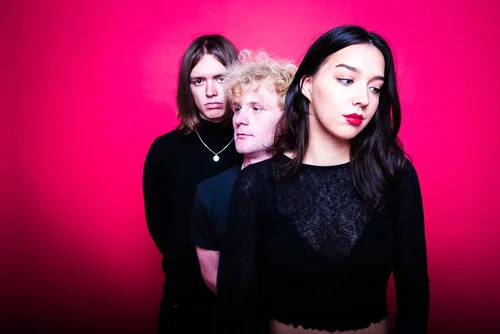
FEATURE: Spotlight: Emma-Jean Thackray

FEATURE:


Spotlight

S0S0S0S.jpg

Emma-Jean Thackray

___________

ALTHOUGH the simply fantastic…

xxx.jpg

PHOTO CREDIT: @sabinerovers

Emma-Jean Thackray has been on the scene for a few years now, I think her music is starting to spread far and wide. I say this about all artists I cover in this feature that are not fresh from the box, as it were. I have heard people refer to Thackray as a Jazz musician and, whilst Jazz is a part of her music, that label would be too limiting and narrow. The Yorkshire-raised, London-based musician is one of my favourite artists of the moment, and I want to bring in a couple of interviews so, essentially, she can tell us more about herself. Rain Dance is her new E.P., and I suggest people listen to it, as Thackray is a huge talent that is going from strength to strength. Normally, I talk about tour dates upcoming for artists and where you can go and catch them. At the moment, there is uncertainty whether any gigs will happen his year at all, so nobody is quite sure just what the rest of the year holds for Thackray. Keep an eye on her social channels – the links are at the bottom of this feature -, and I am sure we will hear from her very soon. I do want to source from some interviews this year, as it is interesting reading about her and the artists who have inspired her.

When she spoke with DAZED, she was asked about her influences and what effect growing up on Yorkshire has on her music:

Emma-Jean Thackray is many things: a trumpeter, a producer, a multi-instrumentalist, a beatmaker, a composer, a DJ, and more. She’s also, now, a record label boss: Movementt is a new label, affiliated with the legendary Warp Records, set up by Thackray to showcase new music of her own as well as new talent from the wider jazz and exploratory music scenes that she’s involved with. Thackray’s manifesto for the label is simple: it’s music that moves the body, moves the mind, and moves the soul. “The coming together of the visceral, the cerebral, and music that nourishes the soul,” she says.

The Movementt label takes both its title and its mantra from a track of the same name on Thackray’s new EP, Rain Dance, which is due for release this Friday (March 6). The EP parlays Thackray’s diverse influences – classic jazz by Miles Davis and Alice Coltrane, LA’s leftfield hip hop beat scene, Moodymann’s unique Detroit house, etc – into four distinctive tracks.

What sort of music would you hear around the house growing up?

Emma-Jean Thackray: My mum listened to a lot of 80s soul/pop, that kind of pop from back in the day with the catchiest hooks and great session musicians playing some really groovy shit. I still love that stuff even today, and it definitely gave me an appreciation for pop done well, which I’ve definitely taken through to my own music. Even if I’m making some freaky shit, there’s always a singable melody that sticks in your head.

How did growing up in Yorkshire influence your relationship with music?

Emma-Jean Thackray: Yorkshire has a really rich tradition of brass band music. I grew up playing in brass bands – my primary school even had a brass band – and that’s not only where I learnt my main instrument, the trumpet (first, cornet), but it’s where I learned to make a nice sound, not just individually, but as an ensemble. Making a great sound together is one of the most important things: everyone has to be listening, saying each note with the same syllable, shaping the phrases the same way… The timbre of brass will stay with me forever, that’s why my music is so brass-forward now.

Although Thackray has had to cancel or postpone gigs for this year, as she revealed to DAZED, she has no plans to slow this year and sit on her hands – I can imagine we will hear a lot more from her this year:

What are you working on post-EP release?

Emma-Jean Thackray: So many things. More records, more music, more art. This year is gonna be busy! But even on top of that there’s lots of things I’m sitting on and haven’t released yet, mainly live stuff. It’ll all come out when it’s meant to come out. Practice patience and know I’m here for the long haul. I’ll be making music ’til my death day because it’s my purpose”.

Whilst many were looking forward to seeing Thackray on the road, we can still enjoy her music. Not only is the musician one of the most talented artists in the country; Thackray has set up her own label, Movementt, and she will use this platform for her own music, but also to bring other musicians into the fold. When she spoke with CLASH earlier in the year, she was asked about her role as a musician and producer, and how it feels to be one of the few female label bosses around:

Now she’s set to embark on another groundbreaking project, heading up her very own record label – Movementt – an imprint of the legendary Warp Records, to showcase new music of her own as well as new talent from the wider jazz and exploratory music scenes that she’s a core part of.

How are you able to think of both elements – production and playing – at once?

When I'm composing I can visualise the score, that's the way I'd put it. I can see things being written out, that probably makes me sound really strange - but whenever I'm working and can just see it all in front of me.

Production was always something that I used to do on the side. I used to keep it as a bit of a secret – I didn't think it was compatible with all the jazz stuff I was doing. It was when I was studying at Royal Welsh [College of Music and Drama] I was starting to produce. It was pretty open but still very instrumental-based, and if you did anything electronic, it was kind of discouraged – there wouldn’t even be any places to plug in. You were there to be a trumpet player or whatever, you weren't there to do these different things.

Do you think it’s because of this quite intense musical study that you’re now able to be an effective producer?

There are loads of producers that don't necessarily play. I think it just gives me a better understanding of how music was put together, I've been reading music since I was really young. I had to – I was playing in loads of different groups and bands, in lots of different styles. It just gives me a better understanding of what I'm making.

The producing then feeds into my performing because it helps me consider things as a whole, kind of trying to have one ear on myself and one on the band – it's a different way of listening.

And you’re probably one of just a handful of female label bosses out there.

I think everything area of my music is quite male-dominated, whether it's playing the trumpet or producing, and I mix my own stuff as well. People always ask who has mixed or produced my stuff, and I have to say its me. My partner used to be in my band and everyone thought he had produced everything – it made me so angry.

Now you’ve got the reigns at a label, what’s your approach going to be?

I don't think that I need to do a particular thing, my reaction would always just to do the opposite. I just want to tell a different story, if I started a label and didn't differentiate it from anyone else, I'd think it was pointless and just a waste of energy.

I have a motto that I try to apply to everything I do: move the body, move the mind, move the soul.

I want it to be music that balances groove and stuff that is a bit nuts and forward thinking, with stuff that is about real subjects. I want it to be a collaborative label, with music that doesn't necessarily belong in other places. It's almost like I want to legitimise bootlegs that people just throw up on SoundCloud - not just thinking about how things will sell. If people just wanted to come to my place and record things on one mic, it doesn't have to be super fleshed-out”.

PHOTO CREDIT: @_saoirseoleary

I have quoted a lot from others, but it is the best way to discover more about a truly extraordinary artist. I wanted to spotlight her, as I have been digging into her back catalogue and seeing how she has grown through the years. Although this year is rather strange and we will not see many more gigs happen, I do think 2021 will be a year when Emma-Jean Thackray takes to some big stages and gets a lot more exposure. I can imagine Thackray is busy during lockdown with her label responsibilities and, perhaps, planning some new music. If you have not heard of Emma-Jean Thackray, do go and source her music and find out more. She is a wonderful talent and, as a producer and label boss, someone who is going to be helping to nurture other artists. She is one of those rare artists who has evolved through the years and seems to become more impressive and accomplished by the year. Although she has laid down some wonderful music already, I am sure she’d be the first to agree that, in her career, she has…

ONLY just begun.

_______________

Follow Emma-Jean Thackray

xxxx.jpg

FEATURE: Vinyl Corner: Dire Straits – Brothers in Arms

FEATURE:

Vinyl Corner

zz.jpg

Dire Straits – Brothers in Arms

___________

THIS week for Vinyl Corner…

I want to shine a light on an album that is about to turn thirty-five. If you can get Brothers in Arms on vinyl then do so, as it is an incredible record and one that some people might not be aware of. Released on 13th May, 1985, Brothers in Arms followed 1982’s Love Over Gold. The fifth album from the band, it charted at number-one in several countries; it spent fourteen consecutive weeks at the top of the U.K. charts, and it was the first album to be certified ten-times platinum in the U.K. It has sold more than thirty-million copies worldwide so, for that reason, Brothers in Arms warrants a lot of love. Brothers in Arms was also one of the first albums to be recorded on a Sony 24-track digital tape machine. The reason behind this was because Dire Straits’ lead, Mark Knopfler, was seeking a better sound and was always searching how to make a recording better. Alongside co-produced Neil Dorfsman, Knopfler and the band produced an epic record. Recorded at AIR Studios, Montserrat, the line-up included Knopfler (guitar), John Illsley (bass), Alan Clark (piano and Hammond B-3 organ) and Guy Fletcher; Terry Williams was the band's then-permanent drummer. I cannot recall when I first heard the album, but I must have heard singles from the album played on MTV. Money for Nothing (featuring Sting) was a big part of my early childhood, and I also remember seeing the video for Walk of Life play.

The energy and power of these songs resonated in me and, whilst there was some mixed reaction to Brothers in Arms upon its release, one cannot deny the fact that it is a classic and an album with more than a few brilliant tunes. So Far Away, Your Latest Trick and Brothers in Arms are incredible tracks; I do not think there is a filler track on the album. I know some have sort of turned their noses up at the sound of the album and the fact it can lumber into cheese territory; how the album is quite long and so forth. I think a lot in the British press was less kind towards Brothers in Arms than others, as they reacted to Knopfler’s attempts to Americanise the music and criticised his lyrical style too. The American press themselves were more kind, and although many noted a lack of consistency through Brothers in Arms, they praised the guitar riffs and grandeur of the music. Some tracks on Brothers in Arms sound dated now, but I think the album as a whole stands up and deserves respect. The BBC reviewed the album a few years back and had this to say:

29 Million copies sold. Third best-selling album of all time in the UK. First album to succeed in the CD market, Grammy winning, earner of enough Platinum to build a house: Brothers In Arms is a phenomenon on every level. Its production raised the bar for all music to come, its songs and videos became household items. It also almost destroyed the band.

By 1984, incessant touring and recording schedules hadn’t dimmed Mark Knopfler’s enthusiasm for perfection. Having taken over the production duties on previous album Love Over Gold, he now went even further towards a kind of pop-oriented Americana. Brothers…has a fine array of chart moments, including, of course, the Sting-assisted video hit “Money for Nothing”, the moody “So far Away” and faux bop “Walk Of Life”. But it gets them out of the way in the manner of mere aperitifs and then massages you with a suite of Knopfler’s very fine brand of JJ Cale-lite. Along with gruff nods to Dylan and James Burton. Like contemporaries U2 they had the golden touch that made their gold instantly more American and mythical than most acts from the States.

They toured this album for two years. After that amount of time surely any band would falter. They certainly had a very long hiatus. This album was bigger than them. On that final night of the tour in they must have never wanted to hear a note of this album again. Twenty years on, it’s still echoing around the world. As inescapable as ever”.

I do wonder whether there will be any anniversary edition or any news that comes out to mark Brothers in Arms’ thirty-fifth birthday, as it is an important album that has affected a lot of people. I love nearly all the tracks on the album, and it is great to listen to them in lockdown; I am picking up stuff that I did not notice years ago. As of July 2016, Brothers in Arms was the eighth-best-selling album of all time in the U.K. That is not bad going at all!

When they reviewed the album, AllMusic were full of praise:

Brothers in Arms brought the atmospheric, jazz-rock inclinations of Love Over Gold into a pop setting, resulting in a surprise international best-seller. Of course, the success of Brothers in Arms was helped considerably by the clever computer-animated video for "Money for Nothing," a sardonic attack on MTV. But what kept the record selling was Mark Knopfler's increased sense of pop songcraft -- "Money for Nothing" had an indelible guitar riff, "Walk of Life" is a catchy up-tempo boogie variation on "Sultans of Swing," and the melodies of the bluesy "So Far Away" and the down-tempo, Everly Brothers-style "Why Worry" were wistful and lovely. Dire Straits had never been so concise or pop-oriented, and it wore well on them. Though they couldn't maintain that consistency through the rest of the album -- only the jazzy "Your Latest Trick" and the flinty "Ride Across the River" make an impact -- Brothers in Arms remains one of their most focused and accomplished albums, and in its succinct pop sense, it's distinctive within their catalog. [In 2005 Mercury released a 20th anniversary limited edition version of Brothers in Arms in the Hybrid/SACD format.]

Five years ago, to mark thirty years of Brothers in Arms, Ultimate Classic Rock looked at the album’s birthday and how the digital route helped it get to the top of the charts:

But before it topped charts, sold millions and won Grammys, Brothers in Arms had a fairly humble birth. After working the songs out with the band in rehearsal, Dire Straits leader Mark Knopfler took the group and co-producer Neil Dorfsman out to AIR Studios on the Caribbean island of Montserrat — a setting that proved idyllic in some ways and frustrating in others.

"It was pretty torturous," Dorfsman told Sound on Sound. "It was a good-sounding studio, but the main room itself was nothing to write home about. ... Still, we crowded everybody in there, recording with at least three or four guys on every tune, while I built little rooms out of gobos and baffles and blankets."

What saved the tracks — and helped make Brothers in Arms a benchmark recording for the early years of the nascent digital era — was the studio's Neve console, which combined with the overall Montserrat vibe to produce a purity of sound as well as intent. "It was a great place to hang out and it was very relaxed, so you could focus on what you were doing," explained Dorfsman. "And the board was so good that anything you put through it just sounded great."

Also aiding Brothers in Arms' steady ascent to No. 1 on the charts was Knopfler and Dorfsman's decision to record using a digital deck. Although the album wasn't completely digital, it came close enough to be marketed as one of the few titles whose sonics took advantage of the new CD format's capability for cleaner sound, and the sales bore that out: Brothers became the first record to move a million compact discs, and the first whose CD sales outmatched its LP's. For a variety of reasons, it was the right album at the right time — not that Knopfler ever professed to understand the huge surge in popularity that followed.

"It was a sheer fluke," Knopfler said years later. "If it hadn't been that album, it would have been something else. It was just an accident of timing. It got connected -- 'Brothers in Arms' was the first CD single, or so I'm told, and I suppose it was one of the first CD albums. ... Plus, we had a couple of hits in America -- 'Money for Nothing' and 'Walk of Life' -- so it got connected with the American success, but people will always want to make something like that into something else completely".

The success Dire Straits achieved after 1985 meant that Mark Knopfler could not be anonymous or go unnoticed. It did take the band to new heights, and Knopfler considered retiring the Dire Straits now following Brothers in Arms’ dominance. I am not sure how he feels about the album now, but I think it is a wonderful record indeed. With some epic production, incredible tracks and so many memorable moments, Brothers in Arms is, indeed, an album that everyone…

NEEDS in their lives.

FEATURE: The Lockdown Playlist: Chillout Nation  

FEATURE:

The Lockdown Playlist

xxxx.jpg

PHOTO CREDIT: @seantookthese/Unsplash

Chillout Nation  

___________

WHEN there is a lot of stress and uncertainty…

azz.jpg

PHOTO CREDIT: @robin_g/Unsplash

flying about at the moment, I feel music is a tool that is helping many of us cope and push forward. Whilst previous Lockdown Playlists have been more upbeat and energised, this one combines tracks that are more chilled and relaxed. I am a big fan of Chillout music and genres that manage to ease the strain and allow you to drift and wander. As the weather is quite warm at the moment, I think these tracks will help evoke somewhere far-off and remote; a place that many of us would welcome, I am sure. Sit back and let these tunes…

PHOTO CREDIT: @elidefaria/Unsplash

MELT away the tension.

FEATURE: A Buyer’s Guide: Part One: Blur
FEATURE:


A Buyer’s Guide

xxx.jpg

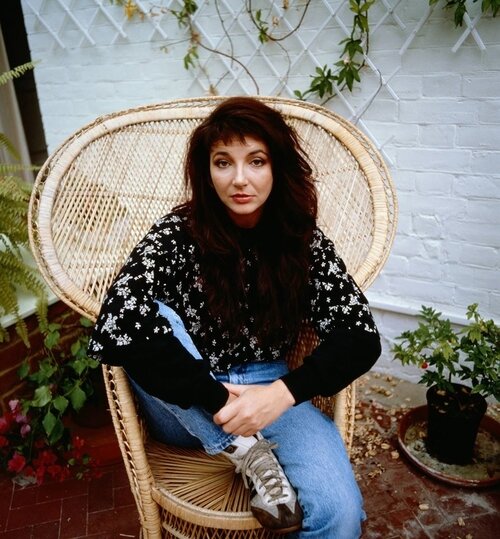
IN THIS PHOTO: Blur shot by Zanna in 1993

Part One: Blur

___________

I want to start a small feature…

where I select a few bands/artists and give you the lowdown on the albums and books to buy. A lot of other sites have been doing this and, rather than filling space and providing something quite generic, I want to flip some attention the way of an artist that warrants a bit more investigation; albums that sound great today and would definitely make for quality listening. To kick things off, I have chosen Blur, as they are one of my favourite bands ever, and there are a couple of albums in their cannon that maybe have not been as poured over as they should – in addition to the classic discs. Whether you are familiar with Blur or are approaching them fresh, here is where you should start/continue with one of… 

BRITAIN’S greatest bands ever.

________________

The Four Essential Albums

Modern Life Is Rubbish

Release Date: 10th May, 1993

Labels: Food (U.K.), SBK (U.S.)

Producers: Blur/John Smith/Steve Lovell/Stephen Street

Standout Tracks: Star Shaped/Chemical World/Sunday Sunday

Buy: https://shop.blur.co.uk/uk/modern-life-is-rubbish-2cd-special-edition.html

Stream: https://open.spotify.com/album/4filJ9pPVmAczwssCkpePe

Review:

As a response to the dominance of grunge in the U.K. and their own decreasing profile in their homeland -- and also as a response to Suede's sudden popularity -- Blur reinvented themselves with their second album, Modern Life Is Rubbish, abandoning the shoegazing and baggy influences that dominated Leisure for traditional pop. On the surface, Modern Life may appear to be an homage to the Kinks, David Bowie, the Beatles, and Syd Barrett, yet it isn't a restatement, it's a revitalization. Blur use British guitar pop from the Beatles to My Bloody Valentine as a foundation, spinning off tales of contemporary despair. If Damon Albarn weren't such a clever songwriter, both lyrically and melodically, Modern Life could have sunk under its own pretensions, and the latter half does drag slightly. However, the record teems with life, since Blur refuse to treat their classicist songs as museum pieces. Graham Coxon's guitar tears each song open, either with unpredictable melodic lines or layers of translucent, hypnotic effects, and his work creates great tension with Alex James' kinetic bass. And that provides Albarn a vibrant background for his social satires and cutting commentary. But the reason Modern Life Is Rubbish is such a dynamic record and ushered in a new era of British pop is that nearly every song is carefully constructed and boasts a killer melody, from the stately "For Tomorrow" and the punky "Advert" to the vaudeville stomp of "Sunday Sunday" and the neo-psychedelic "Chemical World." Even with its flaws, it's a record of considerable vision and excitement. [Most American versions of Modern Life Is Rubbish substitute the demo version of "Chemical World" for the studio version on the British edition. They also add the superb single "Pop Scene" before the final song, "Resigned."]” – AllMusic

Choice Cut: For Tomorrow

Parklife  

xss.jpg

Release Date: 25th April, 1994

Label: Food

Producers: Stephen Street/Stephen Hague/John Smith/Blur

Standout Tracks: Girls & Boys/Parklife/To the End

Buy: https://shop.blur.co.uk/uk/parklife-2lp-vinyl-special-edition.html

Stream: https://open.spotify.com/album/0YS25Dr3hMtMFlVTfuvzl4

Review:

“From their beginnings, Blur have got up peoples' noses with a strike-rate that more blatantly antagonistic bands can only dream of. During baggy, when it was cool to look like Peter Beardsley's less attractive cousin, Blur were unabashed pin-ups. Later, when their contemporaries stared at their plimsolls and courted grunge attitude, they employed a brass section and looped around like space hoppers. And as we looked to Seattle for new language, Albarn name-checked Primrose Hill and sang with an accentuated Southern accent that hadn't been heard since the likes of Anthony Newley were hip.

Still Blur were accused of that most heinous of crimes - the jumping of bandwagons. Yet they re-invented themselves, it was no corporate marketing play, and what 18 months ago looked like retrograde precociousness (sticking up for Little England as US culture steamrollered into Hertfordshire) is not little short of maverick genius.

'Parklife' is 'Modern Life Is Rubbish's' older brother - bigger, bolder, narkier and funnier. Musically they're leagues better than before, the ill-formed ideas have reached fruition and lyrically Blur now find themselves at the end of an inheritance that starts with The Kinks and The Small Faces and goes through to Madness and The Jam. Not just because they are blatantly inspired by all four - the comparisons are easy to make - but because they articulate the everyday world with equal potency and humour. Where Ray Davies saw beauty in the skies over Waterloo Station, Damon Albarn sees it in the mirror ball above a Mykonos dancefloor. And while contemporaries like Pulp are drawn towards the seedy glamour of sex behind the net curtains, Blur see the mundanity and ennui of suburban living.

Although they may affect the stance of council estate lads (the sleeve artwork pictures them down the dog track) the characters knowingly portrayed in much of 'Parklife'” – NME

Choice Cut: This Is a Low

Blur

s.jpg

Release Date: 10th February, 1997

Label: Food

Producers: Stephen Street/Blur

Standout Tracks: Song 2/On Your Own/Death of a Party

Buy: https://www.amazon.co.uk/Blur-VINYL/dp/B007SAKXVG/ref=sr_1_2?dchild=1&keywords=Blur+-+Blur&qid=1588765385&s=music&sr=1-2

Stream: https://open.spotify.com/album/6Gv1zpuMsO4XfWSw22YQhP

Review:

“The Great Escape, for all of its many virtues, painted Blur into a corner and there was only one way out -- to abandon the Britpop that they had instigated by bringing the weird strands that always floated through their music to the surface. Blur may superficially appear to be a break from tradition, but it is a logical progression, highlighting the band's rich eclecticism and sense of songcraft. Certainly, they are trying for new sonic territory, bringing in shards of white noise, gurgling electronics, raw guitars, and druggy psychedelia, but these are just extensions of previously hidden elements of Blur's music. What makes it exceptional is how hard the band tries to reinvent itself within its own framework, and the level of which it succeeds. "Beetlebum" runs through the White Album in the space of five minutes; "M.O.R." reinterprets Berlin-era Bowie; "You're So Great," despite the corny title, is affecting lo-fi from Graham Coxon; "Country Sad Ballad Man" is bizarrely affecting, strangled lo-fi psychedelia; "Death of a Party" is an affecting resignation; "On Your Own" is an incredible slice of singalong pop spiked with winding, fluid guitar and synth eruptions; while "Look Inside America" cleverly subverts the traditional Blur song, complete with strings. And "Essex Dogs" is a six-minute slab of free verse and rattling guitar noise. Blur might be self-consciously eclectic, but Blur are at their best when they are trying to live up to their own pretensions, because of Damon Albarn's exceptional sense of songcraft and the band's knack for detailed arrangements that flesh out the songs to their fullest. There might be dark overtones to the record, but the band sounds positively joyous, not only in making noise but wreaking havoc with the expectations of its audience and critics” – AllMusic

Choice Cut: Beetlebum

Think Tank

Release Date: 5th May, 2003

Label: Parlophone

Producers: Ben Hillier/Norman Cook/William Orbit/Blur

Standout Tracks: Out of Time/Good Song/Battery in Your Leg

Buy: https://shop.blur.co.uk/uk/think-tank-2cd-special-edition.html

Stream: https://open.spotify.com/album/6RuHU0yzckZOsYNDcjctq8

Review:

“Almost a decade on, it's difficult to believe that Blur and Oasis were once considered rivals. Today, the two bands seem incomparable. They have nothing in common, a fact underlined by Blur's sixth album.

Think Tank provokes adjectives you are never likely hear used about Oasis: experimental, intriguing, dignified. Its sound varies continually, taking in crepuscular atmospherics, punky noise and the appealing plunk of unfamiliar world- music instruments.

What should in theory sound like a random selection of Damon Albarn's dilettantish enthusiasms is held together by largely superb songwriting: doleful and world-weary on single Out of Time, gently love-struck on opener Ambulance.

Despite his early departure from the project, even Graham Coxon emerges looking good: his solitary contribution, Battery in Your Leg, is a triumph of soaring guitar racket and poignant lyrics. Only the cluttered-sounding collaborations with Fatboy Slim fall short of their ambition - a disappointment, but not a crime on an album informed by a winningly adventurous spirit” – The Guardian

Choice Cut: Caravan

The Underrated Gem

13

21.jpg

Release Date: 15th March, 1999

Labels: Food, Parlophone

Producers: William Orbit/Blur

Standout Tracks: Coffee & TV/Mellow Song/No Distance Left to Run

Buy: https://shop.blur.co.uk/uk/13-2lp-vinyl-special-edition.html

Stream: https://open.spotify.com/album/5YuZ4DjvtZBywtIbHIqtGJ

Review:

“…Blur, on the other hand, have no such innate talents. Notoriously chameleonlike, the band has always been more interested in complex conceits than self-examination, adopting Anglo poses that referenced everyone from the Kinks to Madness. But their fifth album, 1997’s Blur, was a major departure, a supposed homage to American indie bands like Pavement and Tortoise, and it generated their biggest U.S. hit, ”Song #2.”

The influence of those groups is much stronger on the sprawling 13. Written following singer Damon Albarn’s split with his girlfriend of eight years (Elastica’s Justine Frischmann), the album has been billed as a tortured post-breakup meditation, and at least in one respect that rings true: It’s extremely messy. Kicking off with the gentle, gospel-tinged single ”Tender,” the album lurches between gritty guitar workouts (”Bugman,” ”B.L.U.R.E.M.I”), druggy dub experiments (”Battle,” ”Mellow Song”), and trembling laments (”1992,” ”No Distance Left to Run”). Orbit’s masterfully sludgy production adds a layer of grime to even the poppiest songs, and his cut-and-paste edits and swooshing studio flourishes create a sense of dizzy late-night anguish throughout.

Albarn’s self-pitying soul-baring isn’t always convincing (”Come on, come on, come on/Get through it/Come on, come on, come on/Love’s the greatest thing that we have”), but musically the album is perfectly evocative of some of life’s lowest moments. While I’ll take Reservation‘s romanticized melancholia over 13‘s harsh realism, each is undeniably powerful in its own way” – Entertainment Weekly

Choice Cut: Tender

The Latest/Final Album

The Magic Whip

Release Date: 27th April, 2015

Labels: Parlophone, Warner Bros.

Producers: Stephen Street/Graham Coxon/Damon Albarn

Standout Tracks: Go Out/There Are Too Many of Us/Ong Ong

Buy: https://shop.blur.co.uk/uk/the-magic-whip-double-vinyl-album.html

Stream: https://open.spotify.com/album/0nSzBICzQHea8grwfqa5Gb

Review:

“But a crowd-pleasing recreation of past glories a la Suede’s 2013 comeback ‘Bloodsports’ just wouldn’t be Blur. The fascination of ‘The Magic Whip’ is in how a reanimated Blur imagine they’d have developed by 2015, and how the Hong Kong environment fed into that. ‘I Broadcast’ comes on like a Far Eastern arcade machine playing ‘Popscene’. ‘New World Towers’ is a full-band sister-piece to Damon’s ‘Everyday Robots’, Alex’s bass and Graham’s acoustic set to hazy electronics, sonorous thuds and laptop textures. ‘Ice Cream Man’ washes a classic Blur character study with the bleeps, clicks and whirrs of the modern age trying to sound like 1995’s idea of 2015.

Damon’s current obsession with technological dislocation combines with the clinical confusion of Hong Kong to give stretches of the album a lingering, sombre tone where Blur albums of old might have thrown in a wild-assed ‘Bugman’ or ‘Song 2’. The military strings of ‘There Are Too Many Of Us’ reflect the brooding threat of the population explosion that struck Damon in China and post-apocalyptic images of a desert engulfing Hyde Park on death-ray doom tune ‘Thought I Was A Spaceman’ speak of a soul-sapped humankind sleepwalking into oblivion. Blur have always striven to make their albums era-defining snapshots of life and culture, and ‘The Magic Whip’’s portrait, in contrast with its garish artwork, is often a mournful monochrome.

But you only need listen to the stunning ‘Pyongyang’, the album’s lustrous ‘This Is A Low’ named after the downtrodden North Korean capital, to see how Blur still find hope and beauty in desolation. This is a reunited band making music to rival their very best. There’s airmiles aplenty in these Essex Dogs yet” – NME

Choice Cut: Lonesome Street

The Blur Book

Blur: 3862 Days: The Official History

Author: Stuart Maconie

Publication Date: 16th July 1999

Publisher: Virgin Books

Synopsis:

It's been 3862 Days since Blur formed as seymour, a shambolic, alcoholic art rock four piece

from England's sleepy violent, marginal dormitory towns. In the course of those 3862 daysthey've fought with themselves and others, been to the very brink of self-destruction and stillfound time to become the most significant and important British band of the nineties. 3862 Days is a story that encompasses sex, art, politics, football, drugs, drink, aviation, evenspace travel, based on hours of exclusive interviews told to the writer that knows them bestand has travelled, celebrated and commiserated with them since the early days of pub gigsand on-stage anarchy. It's 3862 days in the life of a very British phenomenon whose musichas soundtracked the last years of the century. It's the story of Blur. 3862 Days: The official History of Blur is the candid story of four very different personalities -Damon Albarn, Graham Coxon, Alex James and Dave Rowntree; rakes, wits, boffins, actors,lads, hearthrobs, philosophers, artists and ultra-cool nerds, often simultaneously - and howthis intense, hedonistic quartet became superstars. It;s the story of bitter rows with recordcompanies, farcical feuds with oasis, fist fights with each other, struggles with the bottle,fall-outs with Tony Blair, romances foundering in full public gaze and their complicatedlove-hate relationship with America. It's the decade-long odyssey that led to the making of13, their most complex and rewarding album yet” - Blur.org.uk

Buy (used): https://www.amazon.co.uk/3862-Days-Official-History-Blur/dp/075350287

FEATURE: All Around the World: The Reaction to the Loss of the Mighty Little Richard

FEATURE:


All Around the World

xxxx.jpg

IN THIS PHOTO: Little Richard 1957/PHOTO CREDIT: Michael Ochs archives/Getty Images

The Reaction to the Loss of the Mighty Little Richard

___________

OVER the past few weeks…

xxx.jpg

IN THIS PHOTO: Little Richard in the mid-1950s/PHOTO CREDIT: Michael Ochs Archives/Getty Images

we have lost a lot of terrific musicians. It is very upsetting that we have to say goodbye to so many greats, but yesterday (9th May) was an extremely hard day – as the iconic Little Richard died the age of eighty-seven. Whilst he lived a full and rich life, his loss is still pretty hard to take. Rather than write my own reaction to the death, I wanted to look at how the media has responded. Before then, I will provide a little personal context. I was brought up on a lot of eclectic music, and I actually listened to a lot of music from the 1950s and 1960s when I was young. From The Tremeloes to The Everly Brothers, I was very interested in this older sound that was so different to anything around. I also discovered Little Richard when I was a child. I was not aware of his influence on artists like Elvis Presley and The Beatles; Little Richard’s incredible vocal prowess and captivating songs definitely moved me with their power and electricity. The Architect of Rock and Roll definitely left a huge mark on music and inspired some of the greatest artists ever seen. When news broke about Little Richard’s death, so many fans and musicians paid tribute and explained why they love Little Richard. In this feature, Slate had this to say:

It was loud and it was blatant. The story of the original, raunchy lyrics of “Tutti Frutti” gets told over and over, as if adding or restoring the words “good booty” or “grease it” would prove something that wasn’t already there on the vinyl, as if the slippin’ and slidin’ and Bald-Headed Sally and the insinuating lisp at the start of “Send Me Some Lovin’” didn’t make it clear enough. The self-styled King and Queen of Rock and Roll was trying to be in a renunciatory phase by the ‘80s, but so was all of America. The contemporary pop charts were extremely queer and extremely closeted, to a degree that’s probably impossible to convey to anyone who grew up on the 21st century—such a degree that even if you were personally oriented toward heterosexuality and cis identity, it was impossible to shake the sense that everything the popular culture was saying about meaning and desire was confounding bullshit, meant to conceal.

Little Richard had already heard and lived the contradictions everyone was busily trying to ignore. He was joyously black under white tyranny, flamboyantly queer under straight tyranny, deeply God-troubled under the tyranny of secular commercial fame. It all came clattering and swaggering back out in fury and delight, in well under three minutes, if not two”.

Rolling Stone wrote an incredible article regarding Little Richard’s modest start and how, like so many iconic artists, he had to work his way up from quite a hard start in life; overcoming obstacles to grow into this hugely influential star. His music and stage persona was like nothing else; Little Richard inspired some massive artists:

Although he never hit the Top 10 again after 1958, Little Richard’s influence was massive. The Beatles recorded several of his songs, including “Long Tall Sally,” and Paul McCartney’s singing on those tracks – and the Beatles’ own “I’m Down” – paid tribute to Little Richard’s shredded-throat style. His songs became part of the rock & roll canon, covered over the decades by everyone from the Everly Brothers, the Kinks, and Creedence Clearwater Revival to Elvis Costello and the Scorpions. “Elvis popularized [rock & roll],” Steven Van Zandt tweeted after the news broke. “Chuck Berry was the storyteller. Richard was the archetype.”

Little Richard’s stage persona – his pompadours, androgynous makeup, and glass-bead shirts — also set the standard for rock & roll showmanship; Prince, to cite one obvious example, owed a sizable debt to the musician. “Prince is the Little Richard of his generation,” Richard told Joan Rivers in 1989, before looking at the camera and addressing Prince. “I was wearing purple before you was wearing it!

The great Richard Penniman (Little Richard) will be remembered as one of the all-time great, and I don’t think his music is confined to certain generations. So many people of all ages expressed their grief yesterday, and it is amazing to think how wide his influence and magic reached. The Independent wrote an article that spoke about Little Richard’s life; how he had a turbulent start before going through a career change in the 1950s:

The musician’s son, Danny Penniman, confirmed to Rolling Stone that Little Richard had died but said the cause of his death was unknown.

Born Richard Wayne Penniman in Macon, Georgia, in 1932, Little Richard was the second of 12 children. His father, Bud, kicked him out as a teenager; he was taken in by a white family, who ran the club where he first performed.

“My daddy wanted seven boys, and I had spoiled it, because I was gay,” he told The South Bank Show in 1985.

While the Fifties were widely considered as the most prolific and successful period of Little Richard’s career, his influence continued for decades after.

Little Richard attempted to pursue a career as a gospel artist in the late Fifties after seeing fireball crossing the sky (actually the Sputnik 1 satellite) and interpreting it as a sign from God that he needed to change his ways. He became a preacher in 1958 but returned to secular music in 1962; the tussle between God and “the devil’s music” would remain a theme in Little Richard’s work for the rest of his life.

While he stated he was gay on a number of occasions, Little Richard also had relationships with women. He married Ernestine Harvin, a fellow Evangelical, in 1959, and later adopted a son, Danny.

“When I first came along, I never heard any rock & roll,” he told Rolling Stone in a 1990 interview, during which he called himself the “architect” of rock and roll. “When I started singing [rock & roll], I sang it a long time before I presented it to the public because I was afraid they wouldn’t like it. I never heard nobody do it, and I was scared.”

He was one of the first class of inductees into the Rock and Roll Hall of Fame, in 1986, and received a Lifetime Achievement Award at the Grammys in 1993”.

I think Little Richard’s unique persona and style had this profound on musicians that followed. Truly, there was nobody like him! One can draw a link between Prince and David Bowie to Little Richard in terms of their stage personas and flamboyance. Little Richard’s sexual force and scintillating delivery was irresistible to artists, as The Guardian explains:

Of course, Richard Penniman’s sonic impact was only part of his outrageous long-term cultural impact. An erotic wild man, a drag queen, with a pencil moustache and pancake makeup, he had no predecessors; no one was about to confuse him with Dickie Valentine. Think how far beyond description Prince and Bowie seemed at their point of breakthrough, then think how Richard Penniman was doing much the same – and with greater extravagance – two to three decades earlier.

James Brown adored Little Richard, mimicked his scream and his rhythmic whoops, although Richard would be the first to defer to Brown’s dancing prowess. The sound and style of Otis Redding – the second most famous son of Macon, Georgia – owed Richard everything. Later, there would be Sly Stone, Bootsy Collins, Janelle Monáe. Beyond that, Slade’s breakthrough hit, Get Down and Get With It, was a cover of Richard’s UK-recorded 1967 single Get Down With It, and Noddy Holder’s voice was a direct descendant. Led Zeppelin took the thundering drum intro to Rock and Roll from Richard’s Keep A-Knockin’. Elton John was a shy member of Bluesology when they supported Richard at London’s Saville theatre in 1967 and saw the excitement generated by a peacock-plumaged star standing on top of a piano. When the Beatles supported Richard at the Tower Ballroom in the Merseyside resort of New Brighton in October 1962, he reportedly gave Paul McCartney tips on how to scream in tune; his advice would be put to good use on I’m Down, Hey Jude, Maybe I’m Amazed and other raucous Macca moments”.

I would suggest people read up on Little Richard, as I have only scratched the surface with the articles I have sourced from. It is interesting reading the different perspectives and how various journalists focus on something different about Little Richard – whether it was his sexuality, boldness or indelible songs. Every fan had their own reason for loving Little Richard. For me, it is the screams and the whoops; the joy and thrills one gets from listening to the music. From the swell of love that appeared on social media yesterday, it is clear the world of music owes so much to Little Richard; he truly changed the game:

Mick Jagger, Keith Richards, Ringo Starr, Jerry Lee Lewis, Jimmy Page, Brian Wilson, Patti Smith, Carole King and Steven van Zandt were among musicians to pay tribute.

Bob Dylan wrote an impassioned series of tweets about the man he called “my shining star and guiding light back when I was only a little boy”.

zxx.jpg

 IN THIS PHOTO: Little Richard on stage in Paris in 2005/PHOTO CREDIT: Stephane de Sakutin/AFP/Getty Images

“His was the original spirit that moved me to do everything I would do,” Dylan said. “I played some shows with him in Europe in the early nineties and got to hang out in his dressing room a lot. He was always generous, kind and humble. And still dynamite as a performer and a musician and you could still learn plenty from him.

“In his presence he was always the same Little Richard that I first heard and was awed by growing up and I always was the same little boy. Of course he’ll live forever. But it’s like a part of your life is gone.”

Bryan Ferry, the lead singer of the art pop band Roxy Music, spoke for the sense of awe Richard inspired in many aspiring rockers when he gained fame in the late 1950s, telling the Guardian: “He hit me and the rest of my generation like a bolt of lightning.”

On social media, Jagger, 76, called Richard “the biggest inspiration of my early teens”, and said “his music still has the same raw electric energy when you play it now as it did when it first shot through the music scene in the mid 50s.

Other musicians acknowledged his influence on the music that came in the wake of the rock’n’roll he played.

Joan Jett called him “the original glam rocker, and he took a lot of abuse for being in the first wave. He forged a path for all of us who followed.”

Some artists, meanwhile, tweeted about how Richard married them, in his second and perhaps at first glance unlikely career as a Christian minister.

“Maureen and I were so honored being the first marriage he conducted,” said Van Zandt. “We were lucky to know him. He lives forever in the Underground Garage.”

The singer Cyndi Lauper wrote: “So sad Little Richard passed away. He married my husband and I. He was really one of the truly great rock and roll singers and one of the rock and roll pioneers. He will be missed”.

I have ended this feature with a playlist of some of Little Richard’s greatest tracks – that I found on Spotify -, and it is hard to put into words what his absence means. His star will shine bright for decades more, but it is almost impossible to state just how important he was and how much influential he was. Whilst he did live to the ripe age of eighty-seven, it is still tragic that we have lost Little Richard. It is another hugely sad death in…

A year that has seen so many legends depart.

FEATURE: Equalization: The Lack of Female Producers: Encouraging More Women into the Studio

FEATURE:

Equalization

zzzz.jpg

PHOTO CREDIT: @www_erzetich_com/Unsplash

The Lack of Female Producers: Encouraging More Women into the Studio

___________

ONE music news piece caught my eye…

xccc.png

IN THIS PHOTO: Dua Lipa

the other day, that once again raised to the surface a big problem in music: the lack of female producers. Dua Lipa has just released her album, Future Nostalgia, and she is already planning another album whilst in lockdown. This NME article caused me to reflect and question:  

Dua Lipa has stated that she wants to work with more female producers in future, saying that all-male studio environments can be “intimidating” for younger artists.

Speaking to GQ, the singer admitted that no female producers were involved in the recording of ‘Future Nostalgia’, but remains optimistic that could change on her next album.

“Hopefully in the future I would be able to work with more of them,” Lipa said. “I just, in all honesty, don’t know very many. And I really wish I did, because I would really take the time to sit down and hone in a sound with women.”

The ‘Physical’ singer previously worked with female producers on her debut album, including Emily Warren and Caroline Ailin, who co-wrote ‘New Rules’, and Sarah Hudson, who co-wrote ‘Genesis’, and cited their collaboration as a positive experience.

“They really helped me come into myself and be able to write things that come from the heart,” Lipa explained. “My very, very closest friends are all girls. I always feel it’s easier to talk to girls and I’m more open around female energy. Maybe if women in general had a little bit more of that in studios it wouldn’t feel so intimidating to begin with.”

The singer also stated that she was less confident expressing herself with male producers when she first started, as she “felt these people had been doing it for longer than me”.

We all know that there is a pay gap in the music industry that favours men. From songwriters through to producers, men are being paid more. Some more say that higher pay reflects quality and success and, because there are fewer female songwriters and producers hitting the top-ten and being behind huge albums, men deserve more money. I think that is a faulty logic. Look at the best albums from the past couple of years, and you will see women dominating. I think the pay gap is a reason why a lot of women are reluctant to step inside the studio as producers, but there is also, for many, the feeling that the studio is male-dominated. I do think that most male producers are respectful and open to working alongside female producers, but it must be intimidating for women to enter a profession that is so male-dominated. I can understand where Dua Lipa is coming from. Whilst there are a lot of female artists who produce their own work, how many female producers are there? This recent Billboard article highlights some shocking statistic (click on the link as there is a video included that shed more light:

Did you know, in 2019, only 2% of popular music was produced by women? The disconcerting statistic from last year's Annenberg Initiative study is the focus of a powerful new video from the Recording Academy and She Is the Music, in conjunction with the Diversity & Inclusion Task Force, and it's premiering exclusively on Billboard above.

c.jpg

PHOTO CREDIT: @jesmanfabio/Unsplash

The clip physically represents the data through a 50-person, all-female ensemble choir featuring Loyola Marymount University singers. The group belts Alicia Keys' "Underdog" -- at first all together, but over the course of the video, the women begin to slowly sit down to symbolize the percentage of male-produced songs. At the end, only a single woman -- the 2% -- is left to sing alone.

The video is part of the #WomenInTheMix initiative, which promotes opportunities for female producers and engineers. When the initiative was launched a year ago, in February 2019, approximately 200 employers and creative decision-makers agreed to get onboard, but over the past year, there are now well over 650 employers who have joined. As seen in USC's latest Annenberg Initiative study released last month, the number of female producers has now jumped from 2% to 5% -- encouraging numbers for "Underdog" singer/songwriter Alicia Keys, who co-founded She Is the Music in 2018 along with Jody Gerson, Sam Kirby Yoh and Ann Mincieli.

"When there are more women in the mix -- magic happens,” Keys tells Billboard. “We all have more work to do to bring female creative energy, talent and heart into the studio too.” Fellow artist and activist Brandi Carlile adds: “I know from personal experience that, to truly move the music industry forward, we need to make a clear effort to engage and empower women. Artists and studios should commit fully to initiatives such as Women in the Mix, which help ensure representation and gender diversity in all aspects of music making -- from the stage to the studio”.

saa.jpg

PHOTO CREDIT: @jonathanvez/Unsplash

It is true that, when women are in the mix, something magical happens. I am not suggesting male producers have limited perspective and a way of working, but female producers can offer a fresh perspective and dynamic. I personally feel more comfortable around women, and I find I am more open and less anxious. I think a lot of musicians will feel the same way, and I do think psychology and personal interaction between musicians and a producer is something not often explored. What is the reason behind the lack of women in the studio? Some feel they will not be listened to because they are a woman and, with so few women in the studio, it is a very odd situation. There are women who want to produce but, looking at statistics, it is daunting to consider being a producer with so few female peers. There are long and unsociable working hours, so there is that to consider. For women who are mothers or want to become mothers, they might not be able to commit to these long and rigorous hours. I think the pay gap is another reason why there are relatively few women in the studio. In the case of Dua Lipa and other artists looking to work with female producers, there are some wonderful producers out there. Catherine Marks is someone I have a lot of respect for, and she has produced for the likes of Frank Turner and The Big Moon. Olga Fitzroy, Lauren Deakin Davies and Rhiannon Mair are brilliant producers, and are helping to pave the way for other women in the industry.

x.png

IN THIS PHOTO: Catherine Marks

I want to source from an article I found on The Culture Trip that looked at Dance and Electronica, and how these are areas where there are more women in production roles – Pop and the mainstream is still struggling to recruit more women. The article also spoke with Catherine Marks and Olga Fitzroy, as they shared their experiences:

More female producers are emerging now, especially in dance and electronica—although the pop scene, where the charts are still dominated by manufactured bands, has a lot of catching up to do. “In pop music, it is pretty much 100 per cent male-dominated, but there are definitely more on the underground scene … hopefully that will leak into the mainstream one day,” Ronika says.

When Olga Fitzroy studied music and sound recording at the University of Surrey, she was one of just a handful of women on the course. She now works as a recording and mix engineer for the likes of Coldplay, Daughter, and The Streets. Olga blames gender stereotypes for preventing women from seeing music production as a viable career path. “I think it’s to do with social conditioning; the way we’ve been brought up,” she says. “A boy is given more technical toys to play with and encouraged to build things, whereas girls’ toys are more dolls and kitchens.”

There’s also the issue of the working conditions in the music business, which normally involve long, unsociable hours—even more of problem when women become mothers and have to balance their family life with work. Fitzroy says this is something she was worried about before becoming a mum. “Being freelance, I have got a bit more control of the hours that I work than I did when I was employed as an assistant, and in a way it’s quite good because it forces me to be a bit more choosy about the work I take on. At the moment, I think the balance is working out OK, but the hours I work are so varied, and my son is constantly changing. I know I can’t be complacent about it. I think it will always be a challenge.”

During her career, Marks has worked with bands like Foals, Kanye West, MIA, PJ Harvey, and Wolf Alice. “The studio system is still a really good system, but that’s just one approach. I think that kind of technology being more accessible is allowing women who have felt that they’re uncomfortable in a studio environment to do it on their own,” she observes. But the answer isn’t just to hide away in your bedroom; collaboration is the key. “There’s a lot of other things involved in producing, especially for other people, and the best way to learn that is from other people.”

Music as an industry has struggled when it comes to sexual equality—not just in production. Women make up just 30% of senior executive roles in the UK music industry, even though they make up more than 60% of interns and 59% of entry-level business roles, according to figures from the UK Music Diversity Survey. As more women enter the business, more girls will begin to see this as a viable career path, and that cycle will continue until gender ratios are more representative of the population at large”.

I do think that more of a spotlight needs to be shone on women in production roles. I feel artists like Dua Lipa are helping to raise awareness but, as there are some terrific female producers around, I feel more artists should be working with them.

zz.jpg

IN THIS PHOTO: Olga Fitzroy/PHOTO CREDIT: Blake Ezra

Although female producers are in the minority, if we see their names credited on big albums, it will give heart and hope to young women who want to become producers. More artists need to speak out and highlight a clear discrepancy. I also think that, when more women are encouraged into the studio, this will help redress the balance; women will see other women in the studio and, as such, they will feel safer and less isolated themselves. Women are sexualised and viewed as less talented; there are these stereotypes and prejudices that are holding back development. I feel that, as mentioned, the dynamic between men and women is different. A female producer can offer a new voice and approach, and it is a shame that the studio is so male-heavy. Despite the fact there is a gulf between female-male producers, there are steps and schemes in place to tackle the problem. This article from last year that highlights some great initiatives:

In addition to noting the barriers facing women in music, the study also offers solutions and highlights the work of different organizations to improve the numbers for women. For women creators, the work of She Is The Music, an organization dedicated to amplifying women's voices is highlighted. She Is The Music runs songwriting camps and offers mentorship opportunities. For producers and engineers, Spotify's EQL Studio Residency program, an opportunity that provides mentorship and work experience in three recording studios, is another way to improve the numbers. With the pipeline in mind, the report cites the need to highlight role models in music. The For The Record Collective is a call to action for inclusion that will feature a first-of-its-kind collection of EPs, docuseries and live events with music produced, written and engineered by women”.

ooo.jpg

PHOTO CREDIT: @yohannlibot/Unsplash

There are so many terrific female songwriters and producers but, as many are not in the mainstream or D.I.Y., they are not getting the same exposure as some of their peers. I also think, because so many artists are self-producing, we assume there are very few great female producer; in actuality, they are not working out of studios, but at home. Also, many of the big studios and labels are run by men, they are less likely to address the gender balance compared to women in roles of power – that may seem all-sweeping but, largely, it is true. I realise there are problems with inequality right through the musical chain that extends to festivals, the charts and in offices, so there does need to be a concerted effort to improve the situation. I feel that, if an artist like Dua Lipa worked with female producers on her next album, that would not only bring something new from her work, but it would spotlight some terrific women who could then work with other big artists. From there, I feel women coming through would feel more confident. It will not be an easy fix, but the continuing problem regarding gender inequality in the studio is worrying. Change and balance will not be easy, but I do feel something needs to happen to change the current reality. Having such a male-saturated studio is depressing to see and problematic when we consider the next generation of women producers. As much as anything, having more women in the studio is a hugely positive thing and will lead to…

mmmmnnn.jpg

IN THIS PHOTO: Producer Sylvia Massy has worked with the likes of  System of a Down and the Red Hot Chili Peppers

A much stronger and more interesting industry.

FEATURE: Strange Magic: Fifty Years of the Electric Light Orchestra

FEATURE:


Strange Magic

xxx.jpg

Fifty Years of the Electric Light Orchestra

___________

THERE are some bands that do not…

aaaaa.jpg

IN THIS PHOTO: Jeff Lynne (centre) and ELO

really get as much respect and appreciation as they deserve. Electric Light Orchestra (ELO), I guess, are seen as a bit uncool by some corners, yet I think the music the band have put out since the 1970s is among the finest ever. Led by the remarkable songwriter and producer Jeff Lynne, Electric Light Orchestra formed in 1970 in Birmingham, and the original line-up consisted Jeff Lynne, Roy Wood and Bev Bevan. Wood departed the band in 1972, and Lynne, Bevan and keyboardist Richard Tandy formed the initial line-up. I think one of the reasons Electric Light Orchestra were sort of written off or dismissed is because of the influence of The Beatles. Listen to classic cuts like Mr. Blue Sky and Telephone Line, and one can compare these songs to the work of The Beatles. Although Jeff Lynne was a big fan of The Beatles – he would join Beatle George Harrison in the Traveling Wilburys in the 1980s -, I think the two bands are very different and, if there is some crossover, it works in Electric Light Orchestra’s favour. I love the compositions and the polished production. Evil Woman, Don’t Bring Me Down and Livin’ Thing are some of my favourite tracks, and I think any band that has been operational for fifty years demands props! Although Electric Light Orchestra/ELO are now Jeff Lynne’s ELO, Jeff Lynne is still taking these classic songs on the road – I believe the band have tour dates booked for the autumn (let’s hope that they are able to play by then). During Electric Light Orchestra’s original fourteen-year period, they managed to sell over fifty-million records worldwide. Between 1972 and 1986, ELO accumulated twenty-seven top-forty songs on the UK Singles Chart, and fifteen top-20 songs on the US Billboard Hot 100. In 2017, the ELO line-up of Wood, Lynne, Bevan and Tandy were inducted into the Rock and Roll Hall of Fame. In hour of the band’s five decades of innovation and success, I will end with a career-spanning playlist of Electric Light Orchestra gold. Enjoy some classic moments from a…

TRULY fantastic band.

FEATURE: Second Spin: The Bangles – Different Light

FEATURE:


Second Spin

popo.jpg

The Bangles – Different Light

___________

I am not sure whether to call…

IN THIS PHOTO: The Bangles in 1986

the band ‘Bangles’ or ‘The Bangles’ as I have seen it written both ways. I am going to use ‘The Bangles’, as that is what I know them as. I love the band, and I vividly remember hearing them for the first time when their third album, Everything, came out in 1988. It was a bit of an eye-opening hearing this band that was so different to what I was listening to at the time. I was largely listening to all-male bands and what was in the charts; The Bangles provided something fresh and exciting. All Over the Place was their 1984 debut, and it is a more spirited album than what they would produce later in their careers. That album scored some great reviews and, with songs like Hero Takes a Fall and Going Down to Liverpool (a cover of the Katrina and the Waves track), it is small wonder the U.S. band received a lot of love. I think Different Light gets unfairly overlooked as a less successful and impactful version of their debut album. It was, as the title suggests, a change of pace and a step on from their debut. Rather than embrace a more 1960s-influencfed sound, The Bangles’ second album was inspired more by the current Pop sound. Released in January 1986, Different Light is a fantastic record that, despite some mixed reviews, spawned singles like Walk Like an Egyptian and Manic Monday. Different Light is the first album where Michael Steele (their bassist) sings lead on some of the album’s tracks.

Whilst more underrated cuts like Walking Down Your Street, Let It Go and Following do not get a lot of mention, one of the songs that is pretty much synonymous with Different Light is Manic Monday. Written by Prince, the icon wrote the song as a result of meeting The Bangles’ Susannah Hoffs in 1985. Hoffs asked Prince to provide the band with songs for their next album, and Manic Monday was used – Jealous Girl was pitched but rejected. A lot of people attack Manic Monday as being a bit too Prince, but it is a brilliantly written song that sports a wonderful lead vocal by Hoffs. Many jabbed at Walk Like an Egyptian as a bit novelty and Pop. I think Different Light mixes the harder edges and 1960s influences of their debut with a more contemporary sound. I like the mix of sounds and the fact there are the big singles and slightly less commercial numbers. I want to bring in two reviews of Different Light. One is quite mixed, whilst the other is more positive. As I said, the album has not really been given the respect and praise it deserves, so that is why I wanted to shine a spotlight on it now. This is what AllMusic wrote when they reviewed Different Light:

The Bangles' first album, All Over the Place, may have earned them a smattering of radio and MTV airplay, but it's clear that with Different Light they were aiming for much higher stakes, especially when Prince -- who was reportedly infatuated with Susanna Hoffs -- offered to write a song for them. "Manic Monday"'s baroque, keyboard-dominated sound was a far cry from anything the Bangles had recorded before, and while Hoffs' breathy voice and her bandmates' fine harmonies fit the song like a glove, it also sent the group down a path that led them away from the '60s-influenced pop/rock that was their strongest suit, and though Vicki Peterson does get to show off her guitar work on a few songs here, the differences between Different Light and All Over the Place are telling and a bit sad.

The drum machines that dominate "Walk Like an Egyptian" and "Walking Down Your Street" rob the performances of the organic feel of this group's best music, the funky accents of "Standing in the Hallway" are simply out of place, and while covering Big Star ("September Gurls") and Jules Shear ("If She Knew What She Wants") may have sounded good on paper, neither performance captures what makes each song special. And while the album struggles to rally in the last innings with the more personal air of "Following" and "Not Like You," most of the songs struggle to stand up under David Kahne's overly slick production and the layers of gingerbread added by a handful of guest musicians. Different Light turned the Bangles into bona fide pop stars, but it also transformed a spunky and distinctive band into a comparatively faceless vehicle for a hit-seeking producer; the group tries to let its personality shine through despite it all, but the effort fails most of the time”.

I agree that, perhaps, the drum machine is over-used in places, but I would argue against the assumption that songs such as Walk Like an Egyptian suffer because of them. Different Light is an album that was definitely reacting to the tastes and tones of the 1980s and, as such, maybe some critics preferred The Bangles when they were channelling the cool and sparser sounds of the 1960s. I think Different Light has not dated too much, and it sounds pretty damned catchy, cool and current today. I can hear artists of today who, in some way, have taken various elements from The Bangles/Different Light for their own work. SLANT reviewed the album in 2003 and made some interesting observations:

 “Though it was considered a slicker, more commercial move for the Bangles at the time of its release, Different Light (the band’s sophomore effort) sounds surprisingly fresh in hindsight. From their Beatles-inspired moniker to their warm, Mamas & The Papas-esque harmonies, the band seemed determined to pay homage to the past. But their ‘60s-style pop melodies and classic rock references (check the Doors-ish, carnival-like keyboards and quirky guitars of “Standing in the Hallway” and “Return Post”) were deftly matched with the then-current new wave and rock rhythms of the early ‘80s. “Following” is a dark acoustic ballad reminiscent of Joni Mitchell’s brand of ‘70s folk, while the title track rollicks along with genuine pop-punk fervor.

Guitarist Vicki Peterson’s voice might pale in comparison to Susanna Hoffs’ distinctive vocal, but her songwriting skills are clearly the strongest here: “I wanna paint your portrait/Hang your colors on my wall/Discussing form and content with my friends and drinks.” And while its biggest hits were written by other artists—the Prince-penned “Manic Monday,” the novelty tune “Walk Like an Egyptian” (a slice of ‘80s-pop kitsch that sounds out of place here), and “If She Knew What She Wants”—album tracks like “Angels Don’t Fall in Love” and “Let It Go,” which were written by the Bangles themselves, are the glue that holds Different Light together”.

The Bangles would pick up some new support for 1988’s Everything, but even that album does not really get the positivity that it warrants. The fact that Susanna Hoffs (lead vocals and rhythm guitar), Debbi Peterson (drums and vocals) and Vicki Peterson (lead guitar and vocals) share lead vocals affords Different Light a richness and variety that was missing from so many Pop albums of the 1980s. Different Light is an album I would recommend people check out if they haven’t already and, for those who were a little underwhelmed when it came out, spin it now and see if your opinion has changed! The Bangles’ second studio album is definitely…

WORTHY of fond reappraisal.

FEATURE: Master Blaster on a Higher Ground: Stevie Wonder at Seventy: The Ultimate Playlist

FEATURE:

Master Blaster on a Higher Ground

wwwwwwwwwwwwwwwww.jpg

IN THIS PHOTO: Stevie Wonder performing at Madison Square Garden in New York City on 25th March, 1974/PHOTO CREDIT: Waring Abbott/Getty

Stevie Wonder at Seventy: The Ultimate Playlist

___________

ON Thursday (13th May)…

the legendary Stevie Wonder turns seventy. A prominent figure in popular music, he is one of the most successful songwriters and musicians in the history of music. Through his heavy use of electronic instruments and innovative sounds, Wonder became a pioneer and influence on musicians of various genres including Pop, Rhythm and Blues, Soul, Funk and Rock. I have been following Wonder since a child, and I adore his work. Classic albums like Songs in the Key of Life and Innervisions are among the absolute best ever laid down. The man’s genius extends far and wide, and so many musicians owe a debt to Stevie Wonder. In honour of Stevie Wonder’s upcoming seventieth birthday, rather than writing a long feature that documents his life and best works, I wanted to put together a playlist that spans his career. Here, to salute the great man, is a playlist of some of the best songs…

kiii.jpg

EVER recorded.

FEATURE: The Lockdown Playlist: Vol. X: 1978-1979

FEATURE:


The Lockdown Playlist

PHOTO CREDIT: @georgiadelotz/Unsplash

Vol. X: 1978-1979

___________

ROUNDING of the 1970s…

cc.jpg

PHOTO CREDIT: @ryanquintal/Unsplash

I am combining the best U.K. singles from 1978-1979 inclusive. After this, I might be genre-specific regarding playlists and include themes and different types of songs with a common thread. It has been cool putting these playlists together, as we all need a bit of a lift, and music is one of the best ways to achieve this. If you require some great tunes to start your own lockdown disco, here are some suggestions that should bring energy and heat. Whilst we have a while still to go in lockdown, it is the best time to immerse yourself in music so, with another Lockdown Playlist reading, the best advice I can give is to…

PHOTO CREDIT: @lucaslenzi/Unsplash

GET on it.

FEATURE: The Infant Kiss: Introducing Kate Bush to the Younger Listener

FEATURE:


The Infant Kiss

zzz.jpg

IN THIS PHOTO: Kate Bush captured in 1979/PHOTO CREDIT: Gered Mankowitz

Introducing Kate Bush to the Younger Listener

___________

I am going to nod back…

zxxx.jpg

IN THIS PHOTO: Kate Bush with Lindsay Kemp in The Line, the Cross and the Curve in 1993/PHOTO CREDIT: Guido Harari

to another feature I wrote regarding Kate Bush, and where to start regarding her albums and books written about her. It is hard to know where to start if you are a fan, but for those who are new to her work, the task is that much harder. One of my biggest gripes concerns the specificity of Bush’s material on the radio. Rather than take from all of her studio albums and dig deep, stations tend to just select the big singles and do not delve too far beyond that. I know there is a lot of love – as always – circulating online for Kate Bush; she seems to receive this wave of affection every day, just because of what she has already put out in the world. My introduction to her music would have been in the late-1980s and seeing the video for Wuthering Heights on her The Whole Story VHS. I think I saw the video for Them Heavy People around the same sort of time, and I sort of discovered her albums through radio and my parents. Most of my passionate investigation arrived later in life, and I have made up for a lot of lost time. That first bloom, as a young child, was what opened my eyes and set me off on this path. I do feel that, now, there is less exposure to Kate Bush’s music in a visual form. We have YouTube and other platforms, yet the algorithms in place would not necessarily direct a younger person to the music of Kate Bush were they not listening to something similar at the time.

The scene is very different now to how it was when I was young, in terms of how we find new music. Back in the 1980s and 1990s, music T.V. played a bigger role, and there were classic album series where you could discover artists like Kate Bush more easily. We have Spotify and streaming services, but I get a feeling there are a lot of curious young ears out there who might not come into contact with Kate Bush’s music. Parents are still passing down vinyl, but it is less common than it used to be. A younger person (someone who is not yet a teenager) might not listen to radio that much, so they will rely more heavily on streaming services regarding their next fix. Maybe it extends beyond Kate Bush: many legendary acts will not be picked up by the younger generation and a lot of great music will be lost. Most of the people I see commenting on social media about Kate Bush are in their twenties or older – there are some younger people talking about her music, but it is quite rare. How does one open younger eyes to the beauty of Kate Bush’s musical legacy? Radio stations are sadly rigid when it comes to demographic and the type of music played. There are some more varied station but, as I said, the Kate Bush songs played are quite familiar and over-played.

IN THIS PHOTO: Kate Bush in a promotional image for her 2011 album, Director’s Cut/PHOTO CREDIT: John Carder Bush

I do worry there are a lot of young people out there discovering music in all its forms who will not have the same luck as me when it comes to upbringing and access to a huge range of artists. Kate Bush has not released a studio album since 2011’s 50 Words for Snow, and a lack of brand-new music limits her scope a little, I feel. I think it is important that Kate Bush’s music is not only played on more radio stations – how often does BBC Radio 1, Kiss or Capital FM spin her stuff?! – but parents today are getting their kids hooked. Radio stations have their remits and target a particular audience, but I do feel like there is a place and a lot of space for her music on stations that might otherwise play more current and youth-orientated artists. In terms of exposure away from radio, I feel parents need to do as much as they can to get Kate Bush’s music to their children. It is not just me being a huge fan and wanting to impose my tastes on other people. Bush’s music is so deep, diverse and compelling; her lyrics are so immersive and stunning, and I don’t think her music is reserved for certain people. When it comes to the best albums to first play to children, I would recommend Hounds of Love (1985), The Kick Inside (1978) and Lionheart (1978).

The Kick Inside and Lionheart are her first two albums, and they are quite accessible, and I think the beauty and higher-pitched vocals from Bush would appeal more to younger listeners – or that might just be my viewpoint. I feel Hounds of Love’s first side – with a few hug singles – is as memorable as any modern Pop, and the second side, The Ninth Wave, is almost storytelling; it would provide a different and imaginative stimulus. The rest of Bush’s music is perfectly accessible in its way, but I would advise that trio of albums first before moving on to something more experimental like Aerial (2005) and The Dreaming (1982). I have kept this feature relatively short (until now) so that, rather than provide a list of all the albums worth seeking out, I write something more general. You can buy Bush’s music at her website, and check her out through Spotify. I do think there are a lot of children either discovering Kate Bush through their parents or by their own steam. The problem is that this demographic is pretty small, and I (like many people) discovered Bush when very young. I do worry whether the traditional practice of handing records down and sharing music within the family happens as much as it perhaps should. I do think that, if radio stations were a bit more open regarding Bush’s music and there was this wider spread, it would introduce her music to a whole other demographic – though that might be easier said than done. Her music exists on vinyl, C.D. and streaming so, for parents out there: share the beautiful and wonderful world of Kate Bush and gift her music to…

A whole new army of fans.

FEATURE: The May Playlist: Vol. 2: A False Prophet Saved My Life

FEATURE:


The May Playlist

IN THIS PHOTO: St. Vincent/PHOTO CREDIT: @philipmontgomery

Vol. 2: A False Prophet Saved My Life

__________

THIS week is another packed one…

dsss.jpg

IN THIS PHOTO: Bob Dylan/PHOTO CREDIT: Getty Images

for great new tracks, and I think this might be the most ambitious and standout week for music so far this year – though that might be a big claim! This week features new music from St. Vincent, Bob Dylan, Jessie Ware, Little Simz, Matt Bellamy, Jehnny Beth, Charli XCX, Fontaines D.C., Sleaford Mods, Paul Epworth, Jora Smith and many more! If you want this three-day weekend to get off with a bang and kick, there is more than enough in the playlist to satisfy that desire! Keep safe, play some fantastic music, and have a very relaxing…

IN THIS PHOTO: Sinead O Brien

BANK Holiday weekend.

ALL PHOTOS/IMAGES (unless credited otherwise): Artists

__________

xcc.jpg

PHOTO CREDIT: David Titlow

St. Vincent The Eddy

z.jpg

Bob Dylan - False Prophet

Sia - Saved My Life

xxx.jpg

Jessie WareSave a Kiss

eeee.jpg

Little Simz might bang, might not

1221.jpg

L Devine Don’t Say It

aaaa.jpg

Jon Hopkins - Singing Bowl (Ascension)

G Flip - Hyperfine

c.jpg

LA Priest Beginning

cxx.jpg

Matt Bellamy - Tomorrow's World

cvvv.jpg

PHOTO CREDIT: Mariano Regidor/Redferns

Jehnny Beth - Heroine

Ella Eyre L.O.V.(e).

Sinead O BrienRoman Ruins

saa.jpg

NZCA LINES - Real Good Time

aasaaa.jpg

PHOTO CREDIT: Simon Parfrement

Sleaford Mods Second

XCCC.jpg

Charli XCX I Finally Understand

XSS.jpg

Fontaines D.C. - A Hero's Death

f.jpg

The StreetsWhere the F*&K Did April Go

PHOTO CREDIT: Michaela Quan

Jorja Smith - Kiss Me in the Morning

OII.jpg

PHOTO CREDIT: Sean Murphy

Weezer - Hero

IN THIS PHOTO: Paul Epworth

Paul Epworth, Jay Electronica, Lil Silva Love Galaxy

Jacob Banks Like You’ll Never See Me Again

Bishop Nehru Too Lost

gff.jpg

Kim Petras - Malibu

ty.jpg

The Aces - My Phone is Trying to Kill Me

es.jpg

PHOTO CREDIT: Peter Ryle

Rolling Blackouts Coastal Fever Falling Thunder

Rebecca Ferguson (ft. Nile Rodgers) Nothing Left But Family

ssaa.jpg

PHOTO CREDIT: Silvia Grav

Cass McCombs The Wine of Lebanon

PHOTO CREDIT: Lindsey Byrnes

Hayley Williams Pure Love

cxxxx.jpg

Poppy - Pokémon

Gordi Volcanic

cxx.jpg

Arlo Parks - Black Dog

322.jpg

Chelsea Collins 07 Britney

cv.jpg

PHOTO CREDIT: Jason Frank Rothenberg

Dirty Projectors - Lose Your Love

PHOTO CREDIT: Steve Gullick

Mark Lanegan This Game of Love

XXCC.jpg

Josie Dunne Lost

Tatum Bloodsport

FEATURE: Conception to Dissection: Obtaining and Paying for Song Rights, and the Many Upsides of an Album Podcast

FEATURE:


Conception to Dissection

PHOTO CREDIT: @convertkit/Unsplash

Obtaining and Paying for Song Rights, and the Many Upsides of an Album Podcast

___________

I wanted to split this feature…

PHOTO CREDIT: @kateoseen/Unsplash

into two, as I have been reading a few articles regarding podcasts – I will bring them in later. I have been planning my own podcast for a while and, whilst I shall not bore you (again) with the specifics, there is a lot to sort out before starting out. Because I am planning a podcast that looks inside the studio albums of an artist, music from them will be used. Of course, it is a myth that one can use a small clip of music without paying, or that you can use whatever you want if your podcast if not-for-profit or you credit an artist. When it comes to use of music in podcasts, one needs to make sure that they are asking for permission. There are some great albums podcasts out in the market that have a very healthy fanbase. Song Exploder takes apart songs and we get to see how they came together and get a look at the engine inside the machine, as it were. I love podcasts like this, as it has inspired me to start my own. When it comes to copyright and getting song clearance, this article explains how one must act:

How to correctly use copyrighted material

To make a long story short, there is no loophole to get around the use of copyrighted media without purchasing the rights to the use the work or obtaining permission from the copyright holder. If you do not have express permission to access and use a person’s copyrighted works, you cannot include them in your podcast without risking legal action.

So you may now be wondering, “Well then, how can I use music and sound effects in my podcast?” Luckily, there are a number of ways you can obtain access to media for use in your production, both paid and free.

cfff.jpg

 PHOTO CREDIT: @convertkit/Unsplash

Licensing music and audio

Your first option is to license the rights to a piece of music or sound. Basically, licensing requires you to purchase the permission to use a piece of copyrighted material. Unless your budget is astronomical, you probably won’t be able to purchase a license for something like a Beatles song, but that doesn’t mean you can’t get access to music. There are a number of stock music and sound effects websites that allow you to purchase copyrighted materials. Depending on the site, you may be able to purchase a subscription to a catalog of files, or you may have to purchase each individual asset separately. You can simply search the internet for the stock audio site that best fits your individual needs. One of the benefits of purchasing the rights to a work is that the license likely does not require attribution of the media”.

For me, I am not sure how to get around the issue of cost. Using stock audio and subscribing that way might be an option, but it is quite daunting realising, before I have even started, how expensive it might be to secure permission to use songs/an album on my podcast. This might sound like I am encouraging people to avoid doing podcasts that involve music, but I think we should be encouraging more to come onto the market. There are some great music-related podcasts around that are listening to, but there is a bit of a gap when it comes to album podcasts and those that dissect an artist and their work.

PHOTO CREDIT: @austindistel/Unsplash

I want to bring in a recent feature from The Guardian where Miranda Sawyer discussed the rise of podcasts, how niche podcasts can go big and, why, mixing podcasts and music might not be the best recipe:

This is podcasting’s boom time. There are now more than 900,000 podcasts to choose from. In the US, 22% of the population listens to at least one podcast every week and 51% to at least one podcast in their life (roughly 168 million people). In the UK, 12.5% of us (about 7.1 million people) listen to podcasts weekly, up 58% in the past two years. And on average, those UK podcast fans are hoovering up approximately seven podcasts a week. Even throughout lockdown, when other art forms closed or stopped producing, podcasts have continued to grow. The big shows just got bigger.

There is an argument, though, that niche is where it’s at, especially when niche goes big. The most popular podcasts in the UK are made by enthusiasts, from Kermode and Mayo to My Dad Wrote a Porno. Jamie Morton, with his other MDWAP hosts, James Cooper and Alice Levine, has now done a full world tour twice, selling out the Sydney Opera House and New York’s Radio City Music Hall. Still, he says that when he moved into a new house recently, he had to explain to his neighbour what he did, “which was embarrassing. They didn’t know what a podcast was and the title was a bit… suspect.”

 So, can Big Niche go Big Big? Perhaps not. First, podcasts don’t really do music very well, due to rights issues. And second, they have always been about individual listening, on headphones. It’s emphatically not a shared experience, listening to a podcast. Which is why many people find it hard to convert. They want a voice chuntering in the background, not someone whispering in their ear. Headphones can feel oppressive and podcasts are too intimate (or sweary!) to blast out to everyone in the room”.

I agree that podcasts are quite personal – though they do not need to be. I know of households that listen to podcasts together as they have shared interests; others share podcasts with friends and family. The more common way of listening to a podcast is through earphones/headphones, so it does remove that community feel. That said, it need not be a bad thing. We all need somewhere we can get away from everything else and have that sense of isolation through audio. I agree that the expense and difficulty of using music for podcasts means there are fewer music podcasts that other genres. It is a shame, as some of the finest podcasts I have heard recently have been about albums and going through them song by song – including the much-mentioned (on this blog) I am the Eggpod (as Beatles fan Chris Shaw guides us through Beatles and solo Beatle albums with a guest). For music nerds, a podcast that forensically examines a song or album is like catnip! We spend a lot of time listening to music, but how often do we consider how they came together? By learning more about the creation and inspiration behind songs, I feel we get a new understanding and appreciation. So often, we skip through tracks and never really allow the music to absorb. Whether a podcast involves a well-known face discussing their favourite tracks or we look at one artist’s back catalogue with more detail, I think there is this balance of the intimate and communal.

898989.jpg

PHOTO CREDIT: @melanie_sophie/Unsplash

Whilst we might not blare a music podcast in a house or street, I have bonded with people online through our shared love of a music podcast. From there, you discover other artists or new albums/songs from the artist in question. Having heard album podcasts about The Beatles and David Bowie, I have connected with new people, got more involved with those artists’ work, and I have found myself listening to artists that inspired them – expanding my musical library and horizon. I think podcasts and music do mix really well, in the same way as radio mixes chat with music perfectly. The biggest reason why there has not been a bigger explosion of music/album-related podcasts is rights and costs. It is a shame but, as those in the market has shown, there is a real appetite; not just from people subscribing but guests that are on the podcasts – the unmissable opportunity to discuss at length their favourite songs and albums. I think, if more podcasts creators could manage to balance talk with music in a way that was affordable – using fewer songs or obtaining them at a lower cost -, then we could see some great new albums podcasts emerge. I would love to hear artists like Joni Mitchell, Blur, Radiohead and Madonna given a podcast treatment – I realise some of these artists have had podcasts made about them, but very few that pull apart albums and discuss songs in depth. For me, hearing people examine an album in detail is eye, opening, mind-expanding, soul-soothing and…  

PURE bliss.

FEATURE: Out of Shazam’s Reach: Musical Memories: Recalling Treasured Songs and Creating a Comfort Blanket at This Hard Time

FEATURE:


Out of Shazam’s Reach

PHOTO CREDIT: @loravisuals/Unsplash

Musical Memories: Recalling Treasured Songs and Creating a Comfort Blanket at This Hard Time

___________

I am not sure why it has hit me so hard…

xxx.png

ILLUSTRATION CREDIT: Lucy-Mae Naylor

but I was reading an article by Cailtin Moran on The Times’ website, regarding the potency and importance of cinema, literature and music at this very rough time. Whilst it is clear new music is very vital, a lot of us are going back to tunes that we know and love. This NME article provides more details:

The pull of nostalgia has intensified with the strange new restrictions placed on us all in 2020. Spotify reported a 54% increase in searches for ‘oldies’ or ‘throwback’ since the lockdown, with a surge in nostalgic playlists. Music from the ’60s,’ 70s and ’80s have all seen a spike on the streaming platform, as well as tracks you’d always hear at the end of a night (and by that I do mean ‘Wonderwall’)”.

I guess nostalgia is that form of comfort and strength that we all need right now. Also, with new music a little more staggered, I think we are all relying more on our trusted favourites. I have been doing this, and really listening back to music I was into back at school. Whilst thinking about childhood music, a particular memory has come to mind. We all get annoyed when we are trying to remember a song and cannot place it. If one hears a song playing and they need to know the name of it, the Shazam app can name it in seconds.

PHOTO CREDIT: @moco1384/Unsplash

It is useful because, so often, I have been in a café or shop and a song has been playing. I get curious as to what the song is and, with Shazam, you can put a name to the tune. One of my greatest frustrations is the fact there is this song buried deep inside my brain that I cannot get out. I wonder whether anyone has the same issue whereby there are flicks of sounds and notes. I can recall the family visiting Hayling Island when I was a small child, and the song I am trying to recall was one I heard there. It would have been the early-1990s and the song in question is a club/Dance song. I can determine notes and slight flashes but, when I try and make something more concrete and cohesive, the song fades away. I do not know why I am so annoyed, but I think this song is a reason why I can remember that particular break/holiday the family had. I am sure that, years from now, I will remember the song and it will either be a wonderful moment or a bit disappointing. I have written about music and memory before but, at this moment in time, I think many of us are reverting back to the safe shell of childhood and youth and using it as a carapace in order to survive and feel optimistic. It is stunning how a single song or album can unlock a whole stream of memories and visions.

xcvv.jpg

PHOTO CREDIT: @sarandywestfall_photo/Unsplash

More and more, bits of my childhood are sort of getting buried and lost in the mists of time. Maybe it is my slightly knackered memory letting them go more readily than most – it is depressing to realise that, one day, I might lose every memory from my childhood. I think music has this unique power to unlock the past and keep better times alive. Everyone will have a different reason why certain songs make us think back to when we were younger, but I have been re-investigating singles and albums from my first eighteen years of life. I think a bit of a nostalgia trip right now is good because, when we listen to our favourite music, we can remember what life was like then and we can think about the time that has passed since and how, through everything, we have survived and been okay. Granted, this pandemic is like nothing we have seen, but music can ingrain fortitude and optimism in us. When I play back various songs and treasured albums, I can recall where I was when I first heard them or when I bought them. I can remember hearing Carole King for the first time in primary school; the buzz and thrill of Dance music and mainstream Pop in middle school; the variation of the 1990s through high school, and so on.

sddss.jpg

PHOTO CREDIT: @skylarfaithfilm/Unsplash

When recalling those tracks, memories are opened up like a book, where various people, conversations and contemporary cultural sights, sounds and smells envelop the mind. One of the saddest things (for me) is forgetting some of those great memories. Others are becoming more distorted but, from time to time, I can play a particular song and it is like petrol in the tank of my memory – it will keep that time running for a while before I need to ‘top up’ as it were. I guess it is inevitable that we cannot cling on to every treasured memory in quality HD. If I could invent anything, it would be a device or programme that allowed us all to perfectly preserve memories from various ages – we could select exactly what time period we’d like to select. Granted, there would be a lot of boring stuff, as it is essentially CCTV or every second of your life through many years. It would be good to have everything preserved for prosperity and be able to look back when the moment calls for it. Music, in its way, is the way many of us now – and through the years – are able to look back. Any other time of the year, we would be accused of being too nostalgic or being too dismissive of new music. I think recalling pivotal music memories not only lets us know how far we have come and the fact we can endure the troubles around us now; music is providing energy and positivity when we all sorely need it. Although I would like a psychic and ultra-hi-tech Shazam implanted in my brain that not only recalls songs I have forgotten but projects videos of my life and those songs, I am still able to bring back to life so many past times by listening to my favourite tracks from back then. Whether we are replaying our favourite Pop and Dance hits from school or songs that soundtracked holidays, friendships or scary times, this practice is helping so many people look forward and feel safe and, truly, there is…

cccc.jpg

PHOTO CREDIT: @simon_noh/Unsplash

NO shame in that.

FEATURE: Thunder in Our Hearts: The Determination and Defiance of Kate Bush

FEATURE:


Thunder in Our Hearts

ax.jpg

The Determination and Defiance of Kate Bush

___________

WHEN it comes to writing future Kate Bush-related pieces…

IN THIS PHOTO: Kate Bush in the studio in 1978/PHOTO CREDIT: Mirrorpix

I will look at specific time periods and songs. I have been listening a lot to her music (as you would expect) and watching interviews, and I am always amazed by the determination and sheer strength of Bush. In terms of her musical vision, Bush knew what she wanted to achieve. Right from the off, on 1978’s The Kick Inside, Bush was keen to have as much say as possible. I know I am repeating myself – and others who have written about her -, but Wuthering Heights was not intended to be her debut single. Her record company wished the more conventional James and the Cold Gun would be her opening single. Accounts vary regarding the course of events, but Bush was near the point of tears trying to convince her label that she knew best regarding Wuthering Heights. By the time it came to her next single, though the battle was not as intense, Bush disagreed with what the record company had in mind – The Man with the Child in His Eyes was picked. Moving and Them Heavy People were released as singles in Japan, whilst Strange Phenomena was released as a single in Brazil. One gets the sense that EMI would have been happier with tracks such as Moving put out as singles, but Bush wanted to ensure that her music was being fairly represented and the singles were as strong as possible.

I am going to extensively cover The Kick Inside soon, as the year 1978 was a busy and particularly important one for Bush. Look at some of the interviews from 1978 and a pattern emerges that would follow her for much of her career: a patronising tone and lack of respect from some interviewers. Not all of the media were condescending, but I think Bush was seen as this rather slight girl and one who was surely determined. I look back at interviews she conducted in 1978 and 1979 – when she promoted her stage show, the Tour of Life -, and there is this very worrying angle. It is mainly men interviewing her, but they sort of felt like she was very fragile, and it was amazing, God forbid, that a young woman would be so strong-willed and ambitious! Bush was not a massive feminist early in her career, and the media was not being held to account like they should have been. Look and read any interview she gave early on, and there is this exceptional strength and maturity that blows you away. Yes, Bush’s voice was sweet and melodic, but she countered any stupid question and rather foolish naivety with plenty of fact and reason: she is an artist who knows what she wants and has a bigger plan.


Maybe songs on The Kick Inside concerning spirituality and synchronicity led many to assume that Bush was hippy-dippy and somewhat insignificant. I will pull from an article published in The New Yorker, as it is a rare article that focuses on Bush as an innovator who, whilst she was strong and incredible talented, was often portrayed as this beautiful woman; there was a little too much focus on her natural assets and looks, rather than what she was producing in the studio and on the stage:

She’s got credit for her pioneering use of the Fairlight synthesizer, in the eighties, and the headset microphone onstage, for producing her own albums, and for evolving an ahead-of-its-time sound that combined heavy bass with the ethereal high notes, swoops, and screeches of her own remarkable voice. She is a dark-haired, dark-eyed beauty, and critics have always noticed that”.

Perhaps interviewers fancied themselves as suitors as they talked to Bush, and one can forgive any wide-eyed adoration and incoherent babbling. Bush was, and is, a remarkably striking woman and she has a beauty that is incomparable. I feel Bush wanted to assume a mantel of control over her output because she did not want to be lumped in with the more conventional singer-songwriters of the 1970s. Whilst Carole King and Joni Mitchell are legends, their lyrical style and vocal delivery was not what Bush wanted to do.

IN THIS PHOTO: Kate Bush in 1978/PHOTO CREDIT: Gered Mankowitz

She deliberately listened to very few female singers as she did not want to be influenced. I think EMI sort of had plans for Bush to be more commercial and accessible. Songs like Wuthering Heights meant more, and Bush did not want to be taken down a path that was not right for her. By her second album, Lionheart, she was co-producing/assisting with production, and she was in the co-producer’s seat by 1980’s Never for Ever. I think Bush looks back on her first two albums with a little bit of regret. She wanted to move her voice from the more high-pitched and dramatic to something more masculine, anchored and diverse. She also laments the lack of control she had over her career; she felt like she was part of the machine rather than the one controlling it. As a teenager, it would have been unrealistic for Bush to produce solo – she needed the wisdom and expertise of Andrew Powell (producer) -, and her vocal style actually made her stand aside from her peers. This passion and ambition, one might say, is quite common and has been seen a lot since 1978. Perhaps so, but I think Bush has influenced so many artists and she inspired countless artists to follow her lead. Against this pioneering spirit and indefatigable vision, Bush was being written about in the media in not always positive tones. Like I said, many of her T.V. interviews were rather belittlingly, and she was ripe for parody and intense scrutiny.

As Margaret Talbot wrote in The New Yorker, the fact Bush was quite privileged and came from a comfortable home, maybe, provoked journalists to attack and underestimate her:

In “Under the Ivy,” the music journalist Graeme Thomson’s smart and respectful biography of Bush, from 2010, the author describes how, early on, reactions to Bush often condescended to her as a child of privilege. She was a doctor’s daughter from Kent, raised by an affectionate, mildly oddball family in a rambling old farmhouse (I kept thinking of the Weasleys from the Harry Potter series), where she was kindly listened to and afforded time and space in which to play the piano and write songs”.

By 1980 – I will not go through her entire career, but I want to concentrate on her 1978-2005 output at least -, Bush was co-producing Never for Ever (alongside Jon Kelly, who was one of her engineers on The Kick Inside and Lionheart). It is ironic that aspects that divided critics are the very facets that left people spellbound in 1978. Look at Bush’s output from 1978-1980, and there are scenes of mystics and strange characters, of teachers and literary heroines, of lust and dreams no less. Alongside unique and gymnastic vocals, maybe there was a feeling that Bush’s songs were not angry enough; her voice not as charged and political as it should have been – Punk still had legs by the end of the 1970s and early-1980s.

Let us not forget that, in 1979, Bush took the massive Tour of Life around Europe. Bush’s set was mind-blowing, and her routines and performances were heralded and rhapsodised. It seems a shame that – with the help of a very dedicated team – someone who was pushing boundaries and transforming the realms of live performance still had to ‘answer’ criticism and a lack of respect past 1979 – not that she should have received any at all! A lot of the press patronising subsided after the Tour of Life, as they could see what Bush was capable and just how exceptional she was. I cannot include all interviews in this feature, but there was a bit of a turning point when Danny Baker interviewed Bush for NME back in 1979. Although Never for Ever’s Army Dreamers and Breathing was Bush reacting to the news and fears of the time, I do feel like a lot of people wrote her off by the end of the 1970s. This impression of the hippy-ish girl singing twee songs followed her around. Baker’s tone throughout the NME interview illustrates my point:

Well, that certainly seems a worthwhile thing to do, all right, although it has in fact been done before. Y'see, occasionally Kate allows the poet and all-round Tyrannosaurus Rex dreamer to slip out, a sucker for Lord of the Rings. For a start I have cut about a hundred "wows" and "amazings" from her speech. She talks at length about how important she feels it is to be "creating" all the time, and when I asked her if she looked to the news for any song inspiration I got this curious answer:

"Well, whenever I see the news, it's always the same depressing things. War's hostages and people's arms hanging off with all the tendons hanging out, you know. So I tend not to watch it much. I prefer to go and see a movie or something, where it's all put much more poetically. People getting their heads blown off in slow motion, very beautifully".

Of course, like most interviews of the time, Bush was asked about men fancying her and, rather than dig into her music, Bush was keen to explore her attractions and whether she had many hearts fluttering in her direction:

Incredible. Do you find men in awe of you?

"Socially? Well, I find that – with people that I haven't seen for a couple of years, because they won't treat me as a human being. And people in the street will ask for autographs and also won't treat you as human, but … ah … sometimes I get really scared. Sometimes when I'm going to the supermarket to get the coffee and cat litter, I get freaked out and see all these people staring, and you turn around and there's like 40 people all looking at you… and when you go around the corner, they're all following you! You start freaking out like a trapped animal”.

Baker signed off the interview with a rather dismissing sentence that echoed a lot of what was being felt in the media at the time:

Here, listen, I think you've got the picture. Kate Bush, to meet, is a happy, charming woman that can totally win your heart. But afterwards on tape, when she's not there and you actually listen to all this, well… golly gosh. Don't lose sleep, old mates, it's just pop music-folk and the games they spin. Wow”.

Danny Baker has come out since to say he is a Kate Bush fan and, at the time, he was trying to get a rise and be a bit more jocular; maybe push some buttons and deliver a memorable interview. I agree that we get something interesting and original from the interview, but that underlying whiff of contempt and condescension is genuine.

IN THIS PHOTO: Kate Bush performs The Big Sky in Germany for the T.V. show Peter's Pop Show in November 1985

Bush did not change herself and her music in 1980 to please critics and throw off the uneducated. To her, the first couple of albums were a particular stage she evolved from. As she grew into her twenties, and moved into the Eighties, Bush’s determination to produce and lead her own musical course intensified. There was more respect from the media by the time of The Dreaming in 1982, but that album was viewed as being experimental and harder to love. No big singles like Wow (Lionheart) can be found on that album. That said, looking back review of the time, and there seems to be this common outcome: the album is very different to her previous work but it is rewarding if you stick with it. In retrospect, The Dreaming has picked up a lot of love and many positive reviews have come out. It was clear that some corners of the media were still not sold on Kate Bush. EMI were not too thrilled that The Dreaming arrived two years after Never for Ever – that was, apparently, seen as a long wait! -, and it did not sell too well. Critical impressions, thankfully, shifted by 1985’s Hounds of Love. Maybe it was a more commercial feel of the album of a toning down of her voice that sold it to many but, to me, it was Bush not following what was expected of her and making music her way. Of course, there were still drooling interviewers and some who could see Bush as a serious songwriter – her beauty was, once more, the main point of focus.

Bush built her own studio and took three years to follow The Dreaming. I have written how the year 1983 was especially restorative and important. Although there was not as much critical praise for 1989’s The Sensual World, one can admire Bush was not repeating Hounds of Love and never standing still. I will talk about Bush being Beatles-esque in the way she moved between albums in a future feature, but the 1990s was a decade where she had to face personal troubles and  speculation from the media. 1993’s The Red Shoes is the only album from her in that decade. She had been working relentlessly since her career started, and it was inevitable that she would need to make some changes. The Quietus talked about a challenging time in Bush’s career:

Bush, who had spoken of feeling emotionally burnt-out years before the album was released, was ready to withdraw, too: she vanished for 12 years until Aerial, and then went on hiatus for another six before returning with Director’s Cut. “I think there’s always a long, lingering dissatisfaction with everything I’ve done,” she said in 2011, glad to have the chance to right some of the wrongs that had been bothering her for 20-odd years. For me, though, the original album has always been enough: it might have its flaws, and there might be a handsome alternative, but just like Bush on ‘You’re The One’, I still want to keep going back”.

qqqq.jpg

IN THIS PHOTO: Kate Bush in 1993 in a promotional photo for The Red Shoes (this is the dress she wears in the Eat The Music portion of The Line, the Cross and the Curve)

Bush would return splendidly with Aerial in 2005 – which I shall end on -, but she was having a break from music and more concerned with taking care of herself and having a family – she gave birth to her son Bertie in 1998. The media went into a frenzy when they learned of the news in 2000 - I think it was Peter Gabriel who accidentally let slip the news - and saw Bush of hiding this secret family and love child - although Bertie MacIntosh performed at Bush’s 2014 residency, Before the Dawn, some corners of the media saw it as the shielded child stepping from the shadows! Returning The New Yorker feature, and it is clear that, again, the press were not really as informed as they should have been:

In the nineties, when Bush’s output slowed and her public appearances dwindled, the British tabloids seized on another archetype for her: she was a “mythical recluse,” as Thomas writes, a rock-and-roll Miss Havisham. It’s a persistently alluring reversal-of-fortune story—the celebrity, especially one who blazed early and prodigiously, fading away, vain and lonely, ideally in a mansion. (See narratives stretching from “Sunset Boulevard” to the 2017 podcast “Looking for Richard Simmons.”)

But her real story doesn’t conform all that well to the fable. She was most productive between 1978 and 1994, when she made seven albums, but in the years since, she’s put out two critically acclaimed albums of original material plus a live album and a collection of some new versions of her old songs. She’s raised a son, Albert, who’s now in his late teens, with her partner, the musician Danny McIntosh. In 2014, she put on “Before the Dawn,” a twenty-two-night residency at the Hammersmith Apollo, in London, that combined theatre, puppetry, film, and music in a spectacle that critics found occasionally ridiculous and genuinely, almost unbearably moving. Tickets for all twenty-two performances sold out within fifteen minutes online”.

<

There were also a lot of stories (in the 1990s) regarding Bush’s weight gain and the fact that she was out of the public eye. It is a pity that someone as beloved and non-assuming – in the fact she did not court fame and attention – would not been immune to the poison pen of the tabloid media. Before I end on Aerial, I want to track back to 1985 and an interview from Hot Press that sort out outlines a lot of the questions she had to face. At a time when she had released her most successful and respected album, the subject of sex was still needlessly being put on the table:

At the same time, there is a projection of sexuality through the photos on the latest album.

"Do you think so, on this album cover?"

Yeah, I suppose it begins with the fact that you're in a sleeping position...

"Yes, you are right. That was very difficult. Because the album is called Hounds of Love, and it was very difficult trying to get a picture of myself with dogs that wouldn't look either like something out of Country Life or too period--it was impossible. The original idea was just to have the three heads--myself and a dog each side of me, but it just didn't work. The dogs wouldn't stay still! It was ridiculous, and the only way we could do it was to lie down with them and just get them to relax enough so that they would sort of ZZZzzz! And that was the way it worked. But I suppose you're right, though it wasn't initially or consciously thought of as a sexual thing at all. In fact it's something--I have become I think a bit--It worries me anytime I think there is any kind of sexual connotation: 'My God! Should I be careful?...'"

But why does that worry you so much?

"I don't know. It confuses me. It's really annoying, too, because I don't see what's wrong with having sexuality, with recognising the sexual quality of things. But I suppose it confuses me because when I am doing things at the time, maybe people will say "That's sexy," and I can't relate to it. I can't see myself sexually-- I just see me being silly. I can't be objective about myself."

saaas.jpg

IN THIS PHOTO: Kate Bush in 1980

The interviewer turned to feminism and whether she was one. Bush had always been a little uncomfortable discussing feminism, but this question provoked a remarkably interesting response from Kate Bush:

You have actually charted a very independent course yourself, and in some ways you'd offer a definition of what feminists would want women to be able to do.

"I would like to think that there is actually a very strong force of women who believe we should have equal opportunities, be able to work, be treated nicely without any threat, all of that. And not necessarily come on with 'We hate men--Off with your balls!' Do you know what I mean? And I think there are lots of women who are starting to really do it properly. Look at comedy. I think comedy in this country is incredible. The best. It really is, it's superb. I suppose a lot of it is negatively based, but it still is superb, and just streets ahead of anyone else in the world. But, I think women have been used so much in comedy. Either there's something really hideous and ugly that's meant to be attractive, and then when it's hideous and ugly everyone goes 'aah!", or there's Benny Hill's cutie-pies that don't speak. But now there's a revolution in comedy which involves women in a much more interesting way. They're not being used as women, they're not really pretty or really ugly, they're just people. I think that really says a lot. And it's nice to see that, because so often I think women are pandered to. Like: a couple of years ago there was a trend of these feminist programmes that were meant to be for women, and they were all basically anti-men jokes. And all the women I knew thought they were horrific. It was totally insulting and unfunny. Yet women were presumed to laugh at this. Women came on and told jokes just as sexist as the men's. But it seems to have changed. It's women--Victoria Wood, Jennifer Saunders, Tracey Ullman--it's women, real women".

IN THIS PHOTO: Kate Bush in the 1980s

When she stepped into the studio, Bush always produced something interesting and new. She is able to resonate in the heart in a way other artists cannot. She had to face a lot of rather patronising interview lines, and there was not really a lot of sea change in terms of attitudes until fairly recently. Whilst we will always get some corners of the media turning up their nose, it is amazing that Bush had to deal with dismissal, patronising interviews and those who labelled her as overly-private, reclusive and strange. Although 2005’s Aerial was this big return that saw many glowing reviews come through, some were disappointed that the music was more domestic and less, perhaps, dramatic than some of her previous output. Pitchfork were one of a few sources that, for some reason, expected Bush to bring out a Hounds of Love part two:

Non-shocker: I was disappointed the first few times I listened to Kate Bush's first new record in 12 years. Having spent some time recently wondering if the woman responsible for so much haunted, supernatural music might be producing some beacon of artistic integrity that would shine through layers of anticipation and cynicism, it was difficult to not be let down by the mundane discovery that, in fact, she's merely being herself here, writing more about everyday epiphanies than great cosmic truths. It's a pretty Zen lesson in expectation when I think about it, teaching me a thing or two about the pitfalls of hanging onto anything other than gradual enlightenment and a zero-sum world.

By the time of the closing title track, my ears are lightly glazed over, and its frail "rock" section does little justice to lines like "I want to be up on the roof, I feel I gotta get up on the roof!" At one point, Bush trades cackles with a bird's song, suggesting she's quite happy with her simple life as a mother and artist. Far be it from me to criticize happy endings, but in musical terms, a comfortable, even-keeled existence sometimes comes out as isolated and ordinary art”.

I wanted to write this feature, just to show how Kate Bush has forged her own path and has produced such innovative and unique albums. Bush arrived at a moment when Punk and other genres were raging and, perhaps, the media were not sure to make of her. She had to battle a lot of sexism and the subject of sex coming up. Things gradually improved in that respect, but Bush, by the 1990s, was seen less as a mythical fairy and fantastical oddity and more of a reclusive – hardly surprising as she had been worked to the bone until 1993 and just wanted to be a normal person and have a break! Whilst recently she was accused of supporting the Tories (which she then denied), I wonder what sort of reception she will get when she brings a new album out. Will it be a sort of return of the recluse or will she garner more respect? I am being harsh, as it is only a minority of the media that do not show proper dignity towards Bush. There is no doubt that Kate Bush is a pioneer, genius and…

qqqq.jpg

IN THIS PHOTO: Kate Bush in a promo photo for Before the Dawn in 2014/PHOTO CREDIT: Trevor Leighton

A national treasure.

FEATURE: Vinyl Corner: Fatboy Slim – You’ve Come a Long Way, Baby

FEATURE:


Vinyl Corner

vvv.jpg

Fatboy Slim – You’ve Come a Long Way, Baby

___________

I think I was aware…

IN THIS PHOTO: Norman Cook (Fatboy Slim) in 2014

of Fatboy Slim when he released Better Living Through Chemistry in 1996. I was at high school, and I was listening to quite a lot of Dance and Big Beat. You've Come a Long Way, Baby is when his music really started to speak to me! I was aware of Norman Cook a while before his Fatboy Slim days, and I was a big fan of his band, The Housemartins. Released on 19th October, 1998 through Skint Records, Cook recorded and produced the album at his home studio in Brighton. Using an Atari ST computer, Creator software and a floppy disk, it is amazing to think what he achieved. I love its eye-catching cover – taken at the 1983 Fat Peoples Festival in Danville, Virginia -, and the songs are instant classics. Right Here Right Now, The Rockafeller Skank, Gangster Trippin and Praise You were these wonderfully unifying and memorable songs that were a big part of my last year or two at high school. Not only are these songs anthemic and brilliant; the samples deployed through the material on You’ve Come a Long Way, Baby are brilliant - Right Here Right Now contains samples of Ashes, the Rain, and I, written by Dale Peters and Joe Walsh, and performed by The James Gang; The Rockafeller Skank contains samples of Sliced Tomatoes, written by Winifred Terry and performed by the Just Brothers, and Beat Girl, written and performed by John Barry. In a year that saw Madonna’s Ray of Light, Beastie Boys’ Hello Nasty, Air’s Moon Safari and Massive Attack’s Mezzanine sit alongside one another, I think You’ve Come a Long Way, Baby ranks with the very best of them.

It is hard to compare Fatboy Slim’s second studio album with anyone else but, in a way, he manages to create his own universe and genres. Running in at just over an hour, You’ve Come a Long Way, Baby is an epic album that sounds fantastic to this day. I will bring in a couple of reviews for the album, but I found an article published in 2018 – twenty years after the album was released. There are some interesting observations made, and my favourite track on the album, The Rockafeller Skank, is commented on:

The tune that put the Fatboy sound on the mainstream map, though, was The Rockafeller Skank. Like Renegade Master, it’s based on a repeating rap hook, but this time with the cool strains of surf guitar replacing the manic needle scratching. The guitar lines sampled came from Northern Soul track Sliced Tomatoes by Just Brothers, one of the many vintage curiosities that make up the DNA of …Baby. Its memorable “Funk soul brother” mantra, meanwhile, was lifted from the vocal intro to an LP of hip-hop instrumentals. In his book The Story of Northern Soul, David Nowell marvels at how this selection of vocal line “added the seal of approval to its soulful roots and turned the single into probably the most memorable pop song of 1998.”

“It seemed to be an instant thing among everyone who heard it,” Cook recounted to Nowell. “We hoped something would happen for it, but I never thought it would be a Top 10 single up there with the likes of George Michael.”

The Rockafeller Skank, then, was where the sound of …Baby truly began, escaping the House Of Love after party and dancing into the streets. Cook became even more in demand as a DJ, something that didn’t escape the attention of GQ’s Mike Shallcross, who told the BBC in 2002 how Cook’s sets were “full of crescendo [and] highly exciting. He drew people to his brand of dance music who’d normally prefer Oasis or Madonna.”

Reverence, though, should be paid to the album, no matter how tongue-in-cheek things get. Consider its influence over the years, inspiring the likes of The Chemical Brothers to add more whimsy to their beats, and Basement Jaxx more unusual and in-your-face samples (as on 2001 single Where’s Your Head At). Newbies such as Mylo soon debuted with the cheeky house subversion of Destroy Rock & Roll, whose hit title track sampled an American preacher denouncing the 80s pop scene. Norman Cook no doubt approved.

Sample culture really did get a major boost from You’ve Come A Long Way, Baby, with fans taking as much delight in tracking down samples as from hearing them in the first place. Acts such as The Avalanches hit fame through such fervour, with their classic debut in 2000 not being a million miles away from the Fatboy sound. More recent counterparts, meanwhile, include acts such as Major Lazer, Duck Sauce and Skrillex, who raised similarly boisterous flags high on the 2010s dancefloor”.

Not only is You’ve Come a Long Way Baby one of the best albums of the 1990s; I think it is one of the best albums every released. Whilst it is hard to find the album brand-new on vinyl, there are sellers out there. You can get a good copy here, and I recommend people do. It is a tremendous album that resonated upon its release in 1998 and is still picking up acclaim and celebration now. AllMusic had this to say when they reviewed You’ve Come a Long Way, Baby:

Fatboy Slim's debut album, Better Living Through Chemistry, was one of the surprises of the big beat revolution of 1996 -- an eclectic blowout, all tracked to thunderous loops and masterminded by Norman Cook, a former member of the British pop band the Housemartins. It might not have been as startlingly fresh as the Chemical Brothers, but the hard-hitting beats and catchiness, not to mention consistency, of Better Living was a shock, and it raised expectations for Fatboy Slim's second album, You've Come a Long Way, Baby. And that record itself was something of a surprise, since it not only exceeded the expectations set by the debut, but came damn close to being the definitive big beat album, rivaling the Chemicals' second record, Dig Your Own Hole. The difference is, Cook is a record geek with extensive knowledge and eclectic tastes. His juxtapositions -- the album swings from hip-hop to reggae to jangle pop, and then all combines into one sound -- are wildly original, even if the music itself doesn't break through the confines of big beat. Then again, when a record is this forceful and catchy, it doesn't need to break new stylistic ground -- the pleasure is in hearing a master work. And there's no question that Cook is a master of sorts -- You've Come a Long Way, Baby is a seamless record, filled with great imagination, unexpected twists and turns, huge hooks, and great beats. It's the kind of record that gives big beat a good name”.

I have been playing You’ve Come a Long Way, Baby a lot recently, and I have been hooked on tracks that I might have passed by when I was younger. Songs like Kalifornia and Love Island have gained new light and weight, which is really interesting. The detail and nuances in every track fascinate me and, decades from now, I still feel people will be spinning this album and discovering something fresh from it. I want to quote from a Student Playlist article that dissected the album and talked about the incredible sampling. Some reviewers have dismissed You’ve Come a Long Way, Baby as being too commercial and calculated, but I think the songs balance the more commercial and stays quite faithful to Big Beat roots. I think, if the album was more obscure, it would not have connected with such a larger audience. Others say the album has not dated that well, but I feel that it has. I play it now, and there is that blast of nostalgia, but I appreciate the songs on their own terms of they stand totally stand up. Here is what The Student Playlist wrote:  

It’s Cook’s brilliant eye for sampling, picking sonic material that could be both humorous and poignant, that makes You’ve Come A Long Way Baby such a compelling and refreshing listen. Vocal snippets looped and swooped around cut-up portions of old, obscure records from hip-hop, soul, gospel, funk, surf-pop and rock to create a fun, slightly scruffier and more accessible variant on the techno of the likes of Underworld and Orbital from earlier in the decade, and one which could appeal to the rock and pop mainstream. Thereby, Cook had hit upon an album with universal attraction, one which would appear in record collections alongside Oasis or Madonna and still make sense.

xxxx.jpg

Strangely, for a record compiled in end-of-the-century Brighton, You’ve Come A Long Way Baby evokes a timeless and distinctly American sense of cool. Everything you need to know about the album is referenced in its packaging. The image on the back of the CD cover is of a lonely American desert highway stretching into the horizon; the vast musical galaxy from which the album is stitched together is seen in the stacks upon stacks of dusty vinyl on the inside cover; and of course, the front cover image of the obese, carefree young man taken at the 1983 Fat People’s Festival in Danville, Virginia – whose identity has never been revealed, despite lots of enquiries”.

No matter what side of the fence you fall regarding You’ve Come a Long Way, Baby – too commercial and lacking in authenticity; a brilliant album that stands the test of time -, one cannot deny that there is an energy and colour sonic palette that is hard to resist! I am going to spend some time today with You’ve Come a Long Way, Baby today and immerse myself…

ONE of my favourite albums from my youth.

FEATURE: Spotlight: The Mysterines

FEATURE:


Spotlight

zz.jpg

The Mysterines

___________

IN this week’s Spotlight…

I am featuring a Liverpool band who I have heard a lot of great things about – the superb crew of The Mysterines. Their latest cut, Love’s Not Enough, has been playing on BBC Radio 6 Music, and it is one of the year’s most original and standout tracks. Led by the brilliant guitarist and singer Lia Metcalfe, the band have crafted an incredible sound. I am going to source from a few interviews from this/last year and, whilst Metcalfe remains at the centre, there have been additions to the band. I have been listening back to the band’s E.P. from last year, Take Control. It is a fabulous thing, and it has gained some really positive reviews. Here is what  Underscore Part 3 had to say:

 “Previous single and track three on the EP Gasoline features similar guitar work to Take Control, a vocal pattern clearly influenced by Bob Dylan’s Subterranean Homesick Blues and just enough angst in lead chorus line “I just love to hate you” to steer clear of being vapid; Gasoline is the anthem The Mysterines weren’t ready to write when they wrote debut single Hormone.

Finishing the EP with Bet Your Pretty Face it has all the hallmarks of garage rock anthem Hormone; separating the two on the EP was an obvious choice. Lia channels anger at “pretty face[s having] doors” opened for them in what appears to be a metaphorical comment which most will relate to; another sure singalong to briefly release the listeners anger at their co-worker they’re overlooked to for promotions. In some ways could Bet Your Pretty Face feels ironic with the band having been paired up with Steve Lamacq, James Skelly and Alan Moulder before even releasing a single, whatever their relationships are with high level industry professionals their ability to craft anthemic rock is impossible to argue with.

“The Mysterines have one goal and that is to produce punchy rock to dance to like nobodies watching and sing along to like nobodies listening; achievement unlocked!”

The Take Control EP could have been released as a knee jerk reaction to the band being offered the guest spot on Royal Blood’s tour or it could have been a way to collate this first stage of the band, whatever its motives are it’s undeniable that The Mysterines have one goal and that is to produce punchy rock to dance to like nobodies watching and sing along to like nobodies listening; achievement unlocked!”.

I will end by seeing where the band might head this year but, in light of the current situation, they may not be touring until a lot later in the year. It is hard to pin down their sound in terms of obvious influences (which is good), but they have evolved since their formation and earliest recordings. I have been looking at some interviews the band provided. The first, from Fred Perry saw, Lia, Chrissy and George discuss a bit of their musical tastes:

Name, where are you from?
Lia, Chrissy and George from Wirral. Merseyside.

The first track you played on repeat?
George: 'Mr Blue Sky' by ELO.
Chrissy: 'Thugs' by Notorious B.I.G.
Lia: 'Love Man' by Otis Redding.

A song you wished you had written?
Lia: 'It Ain’t Me Babe' by Bob Dylan.
Chrissy: 'Bloody Mother F*cking Arsehole' by Martha Wainwright.
George: 'Valley of Tears' by Buddy Holly”.

I am going to, as I said, bob to and fro regarding timeline, as there have been exciting changes in the ranks. At the centre, though, is this wonderful bond and, in my opinion, some of the best music around. I think the band are growing stronger, and it will be exciting to see whether there is an album arriving down the tracks. Whilst we have an impression of where The Mysterines are heading and what they are about right now, where did it all start? Lia Metcalfe spoke with This Feeling last year about how the band got started – and she revealed a few of her influences:

What inspired you to start a band?

Lia: Well I’ve been playing music for as long as I can remember, I started learning guitar when I was about 8/9 to accompany short poems I used to write as a kid and then when I was about 14 I got really consumed by it all and realised this is what I want to do with my life , I couldn’t wait to fuck school off to do it so from that I formed early days Mysterines. I guess nothing inspired me to do it, it was just natural to me, I never really looked at a band who I loved and thought I want to do that or be like them, I just did it anyway...but I suppose as I did really fucking hate school that fundamentally sparked the beginning of the band, I just wanted something else to do haha.

Influences...

Lia: Tom Waits, Bob Dylan, John Lennon, Paul Simon,  Etta James, Aretha Franklin, Lauryn Hill, PJ Harvey, Patsy Cline.... I have many and they change all the time”.

I have seen a lot of features from this year that guide us to the artists we need to watch out for. What I am seeing is a load of great acts from the North West being spotlighted. I think there has always been this focus on London as the hub and go-to city for great music. As The Mysterines prove, Liverpool is a hotspot for musical talent. That said, I think there is still some reservation from some regarding Liverpool and music from there. Metcalfe spoke with NME recently, and talked about Liverpool; Metcalfe’s songwriting style/possible influences were also explored:

This place used to be quite stand-offish, but I think that was because we were classed as a Liverpool band,” singer Lia Metcalfe tells NME hours before stage time. We’ve swung by Parr Street Studios in the city’s Ropewalks district – just around the corner from the venue for a chat about all things Mysterines. It’s here at this studio that bands like ColdplayPulp and Blossoms recorded some of their biggest songs, while bands like The Mysterines are starting off their recording career in good care.

“Initially it was quite hard to gain fans in Liverpool. It definitely shocked me,” Lia says of the muted response. “At that point we realised that people always supporting bands – especially from a city with such cultural history – has maybe died out. I didn’t want to give up because we were smashing it in other parts of the country as well

Lia’s songwriting, meanwhile, is a modern twist of the anti-anthems crafted by Nick Cave and PJ Harvey, while she admires Billie Eilish’s and Big Thief’s Adrianne Lenker and their razor-sharp observations. She’s recently signed a publishing deal with Domino Records, home to artists like Big Thief, (Sandy) Alex G and Arctic Monkeys. It’s just the start, too. Their current live set, which features blues-rock stomper ‘I Win Every Time’, showcases that there’s even more where those come from”.

It is an exciting time for The Mysterines, and I think they will continue to expand and evolve as time goes on. I think the band will be able to gig in the autumn; follow them on social media (links are at the bottom) and you can keep a track of their gig dates here. I love The Mysterines’ fresh and stunning sound; it is just what we all need right now. I want to finish off with another interview from this year, where Lia Metcalfe discusses the band’s line-up change and, sadly, a few gigs and festivals that will have been rescheduled – a little bit of a dent in the band’s momentum and incredible year so far:

How did the band form, you've recently had a line-up change haven't you?

I met George (bass) when we were both about 13, and we just started practising in the front room of my house with all my very, very early songs. None of them were any good at all, so I'm not sure what made him stick with me haha. The line up in the band has always been mainly George and me, but yes, recently we've brought in Callum (guitar) and Paul (drums) - the more the merrier, as they say.

What's been the highlight of your time with The Mysterines so far?

I think for me personally it's probably selling out our headline tour - I really didn't expect that, and it's good to see people actually like the music I'm writing, strong indication that we must be doing something right.

Are you looking forward to your new tour? Is there anywhere you're especially keen to play?

We're all really excited for the tour; it's definitely gonna be the best tour we've done. I'm especially looking forward to the London show at The Dome - we initially had booked The Lexington, and that was the first date to sell out, so we upgraded the venue to The Dome - we were all buzzing when that happened.

What about festivals, you've loads coming up, right?

Yes, I can't wait for festival season. Neighbourhood Festival will be brilliant, can't wait to watch Sam Fender especially”.

I know The Mysterines will be back in the touring swing as much as possible very soon but, until then, support their music online and throw some love their way. There is no stopping the terrific The Mysterines. Do be sure to investigate and follow…

ONE of the country’s best rising bands.

_________________

Follow The Mysterines

FEATURE: The Lockdown Playlist: Vol. IX: 1974-1977

FEATURE:


The Lockdown Playlist

zzz.jpg

PHOTO CREDIT: @georgiadelotz/Unsplash

Vol. IX: 1974-1977

___________

YESTERDAY

PHOTO CREDIT: @seteales/Unsplash

I published a Lockdown Playlist that took us back to (the start of) the 1970s. Today, I am carrying on through the decade and uniting some of the biggest U.K. singles. It was a brilliant time for music and, if you need a boost and some energy this weekend, I hope this playlist does the job. I think lockdown will be eased very soon but, even so, many of will not be able to go out or might be working from home. We all need some great tunes to get us through this hard time so, in that spirit, have a listen to the selection below and feel uplifted. I am not sure, in terms of years, where I am going to head next: I might do a 1978-1979 list, or I may well do specific playlists of Pop and other genres. For now, enjoy some terrific music and blissful sounds from…

zzz.jpg

PHOTO CREDIT: @jan_strecha/Unsplash

A great decade.

FEATURE: “She Knew Exactly What to Do” Kate Bush’s Babooshka and a Bold Evolution

FEATURE:


She Knew Exactly What to Do

a.jpg

PHOTO CREDIT: John Carder Bush

Kate Bush’s Babooshka and a Bold Evolution

___________

TO defend myself against those who will say…

aaaa.jpg

PHOTO CREDIT: John Carder Bush

Kate Bush’s music had taken a leap before Babooshka was released as a single; to be fair, I take that point, but this was another big step from an artist who had made strident and significant leaps since The Kick Inside, her debut album, in 1978. The reason I am returning to Bush’s third album, Never for Ever, is that it turns forty on 7th September. I will focus more on the rest of the album a little later down the line, but I wanted to focus on its opening track and second single: the beguiling and bewitching Babooshka. Not too long ago, I penned a feature celebrating the fortieth anniversary of Breathing. This was the first single from Never for Ever, and it was released on 14th April (1980). Although Babooshka does not turn forty until 27th June, I have seen a few social media posts recently concerning Babooshka. There is a cool video – that I cannot see on YouTube – where Bush sings the song with an array of weird backdrops. Her dancing is fantastic, and it has given me a new love for a song that, until recently, I have not played much. I love all of Bush’s work, but I have been listening to other tracks on Never for Ever. Kate Bush has always been masterful when it comes to opening tracks, but I think Babooshka is one of her very best. It gets the album off to a flyer and, when you listen to the track and watch the video, we see this artist in a new light.

aq.jpg

The first single from Never for Ever, Breathing, was a political song about a foetus observing nuclear war from inside the womb. Bush, as I have said before, did not dabble too much with political observation too much prior to 1980, and Never for Ever was a big development in terms of lyrical scope and confidence. Kate Bush produced the album alongside Jon Kelly. It was the first time she had co-produced one of her albums – she and Kelly co-produced the On Stage E.P. the year before. Babooshka reached number-two in the Australian charts; it got to number-five in the U.K. How many people could have seen Babooshka coming so soon after her debut album?! Whilst Wuthering Heights (The Kick Inside) and Wow were big hits and were/are unlike everything else, Babooshka remains one of Kate Bush’s most immediate and bold songs. Never for Ever is an album, as I will explain at some point, that gets overlooked and not written about in terms it deserves. Breathing is a phenomenal song, and it sort of blows you away with its emotion and heaviness. Army Dreamers, the third single from Never for Ever, was another political number (about young men being led to war); the reason Babooshka gets to me is the vocal delivery, the composition and video. I will explain more in a bit, but here is a bit of information on the song from the Kate Bush Encyclopaedia

Song written by Kate Bush. Originally released as a single on 27 June 1980 and subsequently included on the album Never For Ever. According to Kate, the song chronicles a wife's desire to test her husband's loyalty. To do so, she takes on the pseudonym of Babooshka and sends notes to her husband in the guise of a younger woman - something which she fears is the opposite of how her husband currently sees her. In her bitterness and paranoia, Babooshka arranges to meet her husband, who is attracted to the character who reminds him of his wife in earlier times. The relationship is ruined only because of her own paranoia.

Kate performed 'Babooshka' in various European programmes, including Collaro (France), Countdown (Netherlands) and Rock Pop (Germany). Her performance of the song in a Dr. Hook television special remains the first, and is memorable for the costume she is wearing: on her the right side she resembles a staid Victorian lady in mourning dress; on the left side a glittering, liberated young woman in a silvery jumpsuit, with bright lightning-streaks painted down the left side of her face. Her figure is lit so that only the "repressed" side of her costume is visible during the verses of the song, and mainly the "free" side during the choruses”.

I think one of the reasons Babooshka was such a success is that it has the rawness and immediacy of a track like Breathing, but there is a lot of beauty and intrigue. To me, the composition is made by adding Fairlight CMI and balalaika. The balalaika adds a sense of the exotic and foreign, whilst the introduction of the Fairlight was a big revelation. At this point, Kate Bush was becoming firm friends with Peter Gabriel, who owned a Fairlight. She was fascinated by its potential. The breaking glass sound adds something strangely romantic and unique to Bush’s work. She would use the Fairlight extensively from Never for Ever on, but Babooshka is the first time it is really heard and takes her music in a new direction. With terrific backing vocals (by Paddy Bush and Gary Hurst), wonderful electric bass from John Giblin, and Bush commanding at the front, there is such richness and story right through Babooshka. I think Babooshka is one of Bush’s most assured and accomplished vocal performances to that date. She teases and beautifully moves through the verses; portraying so many emotions and bringing the lyrics firmly to life. Prior to Never for Ever, we heard a bit of Bush’s more guttural vocal side; Breathing was the first track where it really came to the fore. Listen to the chorus of Babooshka and that lovely growl and gravel that kicks the chorus right through the gears.

qqq.jpg

IN THIS PHOTO: Kate Bush in 1980/PHOTO CREDIT: Andy Phillips

After a chaotic 1978 and 1979 – two studio albums, constant promotion, a live tour and live E.P. among Bush’s duties -, she gained more production control on Never for Ever. Her work was becoming broader and more adventurous, and Babooshka is the sound of an artist reborn and truly inspired. Kate Bush talked to Countdown Australia in 1980 and discussed the song in more detail:

“It was really a theme that has fascinated me for some time. It's based on a theme that is often used in folk songs, which is where the wife of the husband begins to feel that perhaps he's not faithful. And there's no real strength in her feelings, it's just more or less paranoia suspicions, and so she starts thinking that she's going to test him, just to see if he's faithful. So what she does is she gets herself a pseudonym, which happens to be Babooshka, and she sends him a letter. And he responds very well to the letter, because as he reads it, he recognises the wife that he had a couple of years ago, who was happy, in the letter. And so he likes it, and she decides to take it even further and get a meeting together to see how he reacts to this Babooshka lady instead of her. When he meets her, again because she is so similar to his wife, the one that he loves, he's very attracted to her.

Of course she is very annoyed and the break in the song is just throwing the restaurant at him...  (...) The whole idea of the song is really the futility and the stupidness of humans and how by our own thinking, spinning around in our own ideas we come up with completely paranoid facts. So in her situation she was in fact suspicious of a man who was doing nothing wrong, he loved her very much indeed. Through her own suspicions and evil thoughts she's really ruining the relationship”.

I love the lyrics and the fact that it is not an ordinary love song or something commercial – something many of Bush’s peers were guilty of. This tale of deceit and suspicion is riveting. The composition sounds very male. Apart from a few higher-pitched notes, there is this lower-pitched vibe. The electric, fretless bass and the backing vocals firmly pushes away from the much more female and ethereal sounds of Bush’s work on The Kick Inside and Lionheart. Bush’s voice, indeed, seems more matured and lower than it did as recently as a year or two before Babooshka came out. It is the video that really takes the song over the top. Prior to Babooshka, Bush had already released these arresting and beautiful videos – Wuthering Heights, The Man with the Child in His Eyes and Breathing among them -, but Babooshka stands as one of my favourite videos from her.

In the video, Bush plays the role of the embittered and more timid wife; dressed in a black veil and standing beside a double bass (which represents her husband). She turns and plays with it, but when the chorus bursts through, Bush is transformed into this almost warrior-like character. The costume is sparse – a mix of the risqué/racing and empowered -, and her eyes are alive and bright. I think eyes, oddly, are part of Bush’s weaponry. Look at how open and expressive they are in the videos for Wuthering Heights and even Them Heavy People (from The Kick Inside; the track was released as a single only in Japan). In Babooshka, Bush’s facial mannerisms and her peerless eyes add their own dimensions and truths. That visual transformation from the verse into the chorus still shocks and amazes to this day. Almost forty years ago, this incredible video was being played, and I can only imagine how people reacted the first time they saw it! Although Bush would write better songs and more memorable videos, I think Babooshka was a bit of a watershed moment. Not only because we get to hear the Fairlight take flight: Babooshka (and the Never for Ever album) found Bush covering new ground and pulling more towards the sort of sound we would hear on The Dreaming (1982). In June, it will be forty years since Babooshka was released as a single – a few months after that, the public received Bush’s marvellous third album. To this very day, Babooshka remains…  

A staggering and truly important moment in her career.

FEATURE: Breathless Mahoney and the Rockford Peaches: Madonna’s Best Screen Roles

FEATURE:


Breathless Mahoney and the Rockford Peaches

IN THIS PHOTO: Madonna as Susan Thomas in Desperately Seeking Susan (1985)

Madonna’s Best Screen Roles

___________

I have been thinking a bit about Madonna

IN THIS PHOTO: Madonna with her dancers for 1991’s Madonna: Truth or Dare/PHOTO CREDIT: Mirimax

and a few anniversaries coming up. Her album, Music, turns twenty later in the year whilst Confessions on a Dance Floor turns fifteen. As much as I love Madonna’s music, I think her film roles get overlooked. Madonna has worked in twenty-six feature films and, whilst many of them have been slated and slagged off, she has been in some great films. I think films like Shanghai Surprise (1986) and Swept Away (2002) are bad films she couldn’t save but, in some cases, Madonna has been attacked for no reason. I think she was great in Who’s That Girl (1987) and Body of Evidence (1993), but reviews were not that favourable. I guess, when Madonna was at her most popular, critics loved to put the claws in; sometimes justified, many times not. We have artists like Lady Gaga who have bridged film and music, but there is nobody like Madonna now who can release a studio album, tour and star in a huge film. She is an artist who always kept busy and wanted to explore different fields. Whilst a lot of her film endeavours were not overly-great, there were some shining moments involving Madonna and film. Dick Tracy, in which Madonna appeared as Breathless Mahoney, turns thirty in June; the I’m Breathless soundtrack is thirty on 22nd May and, among its songs, we have the Vogue. Whilst many people dismiss Madonna’s acting and rubbish her films, there have been some terrific releases that are definitely worth another look. Here, in my view, are the best Madonna films (or films in which she appeared). In each case, I have included the plot, box office earnings and release date (information taken from Wikipedia) and why each film is so great…

Dick Tracy

Release Date: 14th June, 1990 (Lake Buena Vista)/15th June, 1990 (United States)

Box Office: $162.7 million

The Full Lowdown:

The film is set in the 1930s.[5][6] At an illegal card game, a young street urchin witnesses the massacre of a group of mobsters at the hands of Flattop and Itchy, two of the hoods on the payroll of Alphonse "Big Boy" Caprice. Big Boy's crime syndicate is aggressively taking over small businesses in the city. Detective Dick Tracy catches the urchin (who calls himself "Kid") in an act of petty theft. After rescuing him from a ruthless host, Tracy temporarily adopts him with the help of his girlfriend, Tess Trueheart.

Meanwhile, Big Boy coerces club owner Lips Manlis into signing over the deed to Club Ritz. He then kills Lips with a cement overcoat (referred to onscreen as "The Bath") and steals his girlfriend, the seductive and sultry singer Breathless Mahoney (Madonna). After Lips is reported missing, Tracy interrogates his three hired guns Flattop, Itchy, and Mumbles, then goes to the club to arrest Big Boy for Lips' murder. Breathless is the only witness. Instead of providing testimony, she unsuccessfully attempts to seduce Tracy. Big Boy cannot be indicted, and he is released from jail. Big Boy's next move is to try to bring other criminals, including Spud Spaldoni, Pruneface, Influence, Texie Garcia, Ribs Mocca, and Numbers together under his leadership. Spaldoni refuses and is killed with a carbomb, leaving Dick Tracy, who discovered the meeting and was attempting to spy on it, wondering what is going on. The next day, Big Boy and his henchmen kidnap Tracy and attempt to bribe him; Tracy rebuffs them, prompting the criminals to attempt to kill him. However, Tracy is saved by Kid, who is then bestowed by the police with an honorary detective certificate, which will remain temporary until he decides on a legitimate name for himself.

Breathless shows up at Tracy's apartment, once again in an attempt to seduce him. Tracy shows he is only human by allowing her to kiss him. Tess witnesses this scene and eventually leaves town. Tracy leads a seemingly unsuccessful raid on Club Ritz, but it is actually a diversion so that Officer "Bug" Bailey can enter the building to operate a secretly installed listening device so the police can listen in on Big Boy's criminal activities. The resultant raids all but wipe out Big Boy's criminal empire. However, Big Boy discovers Bug, and captures him for a trap planned by Influence and Pruneface to kill Tracy in the warehouse. In the resulting gun battle, a stranger with no face called "The Blank" steps out of the shadows to save Tracy after he is cornered, and kills Pruneface. Influence escapes as Tracy rescues Bug from the fate that befell Lips Manlis, and Big Boy is enraged to hear that The Blank foiled the hit. Tracy again attempts to extract the testimony from Breathless that he needs to put Big Boy away. She agrees to testify only if Tracy agrees to give in to her advances. Tess eventually has a change of heart, but before she can tell Tracy, she is kidnapped by The Blank, with the help of Big Boy's club piano player, 88 Keys. Tracy is drugged and rendered unconscious by The Blank, then framed for murdering the corrupt District Attorney John Fletcher, whereupon he is detained by the police. The Kid, meanwhile, adopts the name "Dick Tracy, Jr."

Big Boy's business thrives until The Blank frames him for Tess' kidnapping. Released by his colleagues on New Year's Eve, Tracy interrogates Mumbles, and arrives at a gun battle outside the Club Ritz where Big Boy's men are killed or captured by Tracy and the police. Abandoning his crew, Big Boy flees to a drawbridge and ties Tess to its gears before he is confronted by Tracy. Their fight is halted when The Blank appears and holds both men at gunpoint, offering to share the city with Tracy after Big Boy is dead. When Junior arrives, Big Boy takes advantage of the distraction and opens fire before Tracy sends him falling to his death in the bridge's gears, while Junior rescues Tess. Mortally wounded, The Blank is revealed to be Breathless Mahoney, who kisses Tracy before dying. All charges against Tracy are dropped.

Later, Tracy proposes to Tess, but is interrupted by the report of a robbery in progress. He leaves her with the ring before he and Dick Tracy, Jr. depart to respond to the robbery, whereupon Junior remarks, "You know, Tracy, I kinda like that dame”.

Why It’s Great:

Famous detective Dick Tracy's (Warren Beatty) mission to put a brutal mob boss behind bars leads him into the arms of the enigmatic cabaret singer, Breathless Mahoney (Madonna), who, despite holding the key to dismantling Chicago's crime network, seems more interested in seducing him.

Beatty also directed this colorful adaptation of the 1930s comic strip, which sees Madonna more than holding her own with a ridiculous cast of prosthetics-laden characters. Not only does she effortlessly embody the part of a classic gangster's moll, but this is the movie that inspired her to write her album Vogue”. 

Desperately Seeking Susan

Release Date: 29th March, 1985

Box Office: $27.3 million

The Full Lowdown:

Roberta, an unfulfilled housewife in Fort Lee, New Jersey, is fascinated by messages between lovers Susan and Jim in the personals section of a New York City tabloid, particularly an ad from Jim with the headline “Desperately Seeking Susan”, seeking a rendezvous in Battery Park.

In an Atlantic City hotel, the itinerant Susan (Madonna) reads the ad after a tryst with mobster Meeker. She steals a pair of ornate Egyptian earrings from his coat before departing; the sinister Nolan notices Susan's embellished tuxedo jacket as she leaves. Arriving in New York City, Susan dons one of the earrings, stashing the other in her suitcase in a Port Authority locker. She asks to stay with her friend Crystal, a magician's assistant at the Magic Club, and learns Meeker was killed at the hotel.

Hoping to spot the lovers, Roberta goes to Battery Park and sees Jim reunite with Susan before leaving with his band for Buffalo. Roberta follows Susan to a vintage store, watching her trade in her jacket before losing sight of her, and buys the jacket. Finding Susan's locker key, she posts another “Desperately Seeking Susan” ad to meet with her to return it. Concerned about the ad and Susan's connection to Meeker's death, Jim asks his friend Dez to check on her.

Waiting for Susan at Battery Park and wearing her jacket, Roberta is accosted by Nolan, mistaking her for Susan. Susan spots Roberta, but is arrested for not paying her cab fare. Dez arrives and rescues Roberta, who hits her head and loses her memory. Also mistaking Roberta for Susan, Dez takes her to the Port Authority to collect Susan's suitcase, finding the other earring, and lets her stay at his apartment.

Roberta, believing she must be Susan, retraces Susan's steps with Nolan in pursuit. She arrives at the Magic Club – narrowly missing Susan, who has been released from jail and discovered her suitcase gone – and is hired as Crystal's replacement. After Roberta's disastrous first performance, Nolan attacks her, demanding the earrings, but he escapes as the police arrive. Roberta hits her head again, regaining her memory, but is mistaken for a prostitute and arrested.

Searching for Roberta, her husband Gary finds his way to the vintage store and is put in touch with Susan, who believes Roberta and Dez are connected to Meeker's death and want to frame her. Susan accompanies Gary home, where they get high. Roberta calls from jail, but hangs up when Susan and Gary answer. After calling Dez to bail her out, they find his apartment ransacked by Nolan, and sleep together.

At Gary's house, Susan sees a TV report about Meeker and Nolan having stolen the earrings, once belonging to Nefertiti. She realizes the truth from Roberta's diary, and posts an ad to meet her at the Magic Club. Dez attacks an intruder in his apartment who turns out to be Jim, and confesses to his relationship with “Susan” as Roberta slips away. She reads the ad, as do Jim and Dez; they arrive at the Magic Club, along with Gary, his sister Leslie, and Nolan.

During her act, Roberta recognizes Nolan, who flees backstage. Dez leaves as Roberta tries to explain the events of her disappearance to Gary, finally voicing her unhappiness and ending their marriage. Nolan threatens Susan at gunpoint, but is knocked out by Roberta.

Later, Roberta finds Dez at work in a theater projection booth. She “introduces” herself and they kiss, as Jim and Susan reunite in the theater below. A final newspaper headline reveals that Roberta and Susan returned the earrings”.

Why It’s Great:

While Madonna's first film role was inauspicious (she appeared in the obscure indie art film A Certain Sacrifice from 1979) and her major motion picture debut was brief (she had a cameo as a club singer in 1985's Vision Quest), her first starring role was masterful. Playing a version of herself (minus the insatiable ambition to rule the world) in Desperately Seeking Susan, Madonna charmed critics and mall rats alike with her witty delivery, fashion sense and a little song called "Into the Groove".

Here is a recent article from Isabella Trimboli that sheds new light on Desperately Seeking Susan:

The film was a box office hit but I can see why there may have been concerns about its frankly bonkers premise. Rosanna Arquette plays Roberta, a Jersey housewife married to a gormless hot tub salesman. Bored and miserable, she lives vicariously through the personal ads in the paper, specifically those addressed to an enigmatic drifter, Susan (Madonna, in her first leading film role). Roberta’s obsession with Susan leads Roberta to get hitting on the head, waking up with amnesia and being mistaken for Susan. Screwball antics ensue, involving a chintzy magic show bar, mobsters and a pair of stolen Nefertiti earrings.

At its core, the film traces a desire to upend your identity, locating a roadmap in others. My favourite moment is when Roberta follows Susan into a secondhand clothes shop and watches as she trades in her Pyramid-embroidered jacket for a pair of diamante-studded boots Roberta then buys the jacket. Slipping it on, she gets a temporary thrill from the residues of a more impulsive, unrestricted life.

The film immortalises early-career Madonna, shot when she was on the cusp of fame but still something of a New York club kid. Basically playing herself, she’s a cool, assured presence on screen: wandering around eating cheese puffs with gloves on, drying her armpits in a public bathroom, and dancing to Into the Groove at the club (shot at the legendary Danceteria, where her career took root)”.

A League of Their Own

Release Date: 1st July, 1992

Box Office: $132.4 million

The Full Lowdown:

In 1988, Dottie Hinson attends the opening of the new All-American Girls Professional Baseball League (AAGPBL) exhibit at the Baseball Hall of Fame. She sees many of her former teammates and friends, prompting a flashback to 1943.

When World War II threatens to shut down Major League Baseball, candy magnate and Cubs owner Walter Harvey persuades his fellow owners to bankroll a women's league. Ira Lowenstein is put in charge, and Ernie Capadino is sent out to recruit players. Capadino attends an industrial-league softball game in rural Oregon and likes what he sees in Dottie, the catcher for a local dairy's team. Dottie turns down Capadino's offer, happy with her simple farm life while waiting for her husband Bob to come back from the war. Her sister and teammate, Kit, however, is desperate to get away and make something of herself. Capadino is not impressed by Kit's hitting performance, but agrees to take her along if she can change Dottie's mind. Dottie agrees, but only for her sister's sake.

Dottie and Kit head out to Harvey Field in Chicago for the tryout. There they meet a pair of New Yorkers, taxi dancer "All the Way" Mae Mordabito (Madonna) and her best friend, bouncer Doris Murphy; along with soft-spoken right fielder Evelyn Gardner; illiterate, shy left fielder Shirley Baker; pitcher/shortstop and former Miss Georgia beauty queen Ellen Sue Gotlander; gentle left field/relief pitcher Betty "Spaghetti" Horn; homely second baseman Marla Hooch, who was scouted by Ernie, Dottie and Kit in Fort Collins, Colorado; first baseman Helen Haley; and Saskatchewan native Alice "Skeeter" Gaspers. They and eight others are selected to form the Rockford Peaches, while 48 others are split among the Racine BellesKenosha Comets, and South Bend Blue Sox.

The Peaches are managed by Jimmy Dugan, a former marquee Cubs slugger who initially treats the whole thing as a joke. The league attracts little interest at first. With a Life magazine photographer in the stands, Lowenstein begs the players to do something spectacular. Dottie obliges when a ball is popped up behind home plate, catching it while doing a split. The resulting photograph makes the magazine cover. A publicity campaign draws more people to the ballgames, but the owners remain unconvinced. Due to Kit's and Dottie's sibling rivalry, Kit is traded to the Peaches' rival, the Racine Belles.

The Peaches end the season qualifying for the league's World Series. In the locker room, Jimmy gives Betty a telegram that informs her her husband was killed in action in the Pacific Theater. The grief-stricken Betty leaves the team. Later that evening, Dottie receives a surprise when Bob shows up, having been wounded and discharged from the Army. The following morning, Jimmy discovers that Dottie is going home with Bob. Unable to persuade her to at least play in the World Series, he tells her she will regret her decision.

The Peaches and Belles meet in the World Series, which reaches a seventh and deciding game. Dottie, having reconsidered during the drive back to Oregon, is the catcher for the Peaches, while Kit is the starting pitcher for the Belles. With the Belles leading by a run in the top of the ninth, Dottie drives in the go-ahead run. Kit is distraught but gets a second chance when she comes to bat with two outs in the bottom of the ninth. Under immense pressure she gets a hit, and ignoring the third base coach's sign to stop, scores the winning run by knocking her sister over at the plate and dislodging the ball from Dottie's hand. The sellout crowd convinces Harvey to give Lowenstein the owners' support. After the game, the sisters reconcile before Dottie leaves with Bob.

Back in the present, Dottie is reunited with several other players, including Kit. The fates of several of the characters are revealed: Jimmy, Bob, and Evelyn have died, while Marla has been married to Nelson, the man she met in the bar in an earlier scene, for over 40 years. Kit is a mother and grandmother many times over. The original Peaches sing a team song composed by Evelyn and pose for a group photo”.

Why It’s Great:

Filling the gap left by World War II, an ambitious candy maker assembles an all-female professional baseball league to make up for America's lack of young male athletes. Sisters Dottie Hinson (Geena Davis) and Kit Keller (Lori Petty) see a shot at fame and join the team under the tutelage of the cantankerous, past-his-prime coach Jimmy Dugan (Tom Hanks).

Madonna is part of the supporting cast (which also includes Rosie O'Donnell) that makes A League of Their Own such a fun and beloved film. As "All the Way" Mae Mordabito, the queen of pop gets to serve up doses of adorable Italian spunk without sickening the audience, a technique she probably should have perfected over taking bigger roles in soppy dramas”.

This Billboard article states why Madonna in a minor role was perfect; how she stood out and fitted in with the cast:

Sometimes Madonna's acting works best in small doses. As a cigarette-smoking center fielder named "All the Way" Mae in A League of Their Own, Madonna shines alongside real-life pal Rosie O'Donnell. Together, they're the perfect wiseass counterparts to Geena Davis and Lori Petty's farm girl personalities”.

Madonna: Truth or Dare

Release Date: 10th May, 1991

Box Office: $29 million

The Full Lowdown:

Madonna: Truth or Dare (also known as Truth or Dare and In Bed with Madonna outside of North America) is a 1991 American documentary film by director Alek Keshishian chronicling the life of singer and songwriter Madonna during her 1990 Blond Ambition World Tour. Madonna approached Keshishian to do an HBO special on the tour after watching his Harvard senior project. Initially planned to be a traditional concert film, Keshishian was so impressed with the backstage life that he persuaded Madonna to do an actual film focusing on that. Madonna funded the project and served as its executive producer. The film was edited to be in black-and-white, in order to emulate cinéma vérité, while the performance scenes were edited to be in color.

It was screened out of competition at the 1991 Cannes Film Festival and was given a limited release on May 10, 1991; two weeks later, it had its worldwide release. It opened to positive reviews, although certain scenes, such as one where Madonna visits her mother's grave, were criticized. Madonna was nominated for a Razzie Award for Worst Actress. With a worldwide gross of $29 million (an estimated $54.44 million in 2019 dollars[1]), it was the highest-grossing documentary of all time, until Bowling for Columbine surpassed it in 2002. Truth or Dare has been noted as a groundbreaking film for its casual portrayal of homosexuality, and was compared to the documentary Paris Is Burning (1990). It has also had an impact on reality television and celebrity culture, inspiring parodies and other music-related documentaries”.

Why It’s Great:

Alek Keshishian's documentary follows Madonna's controversial "Blonde Ambition" tour as it travels across the globe. Sure, it may feel like a cop-out to list Madonna's appearance in this influential backstage doc among her best, but make no mistake, it is still a performance because, as a celebrity, her life is a performance.

In many ways, Madonna: Truth or Dare was the bedrock of reality TV as we know it today, providing a "candid" look at the private lives of the rich and famous that is actually highly controlled and manicured.  Perhaps Madonna has always had a poor screen presence because acting is about "telling the truth," and this documentary proves how little she cares about that. Madonna: Truth or Dare shows one of music's biggest stars as she would like you to see her”.

This SLANT article put the spotlight on Madonna: Truth or Dare and, whilst doing so, asked whether it was as spontaneous and ‘real’ as it appears:

Madonna’s decision to allow cameras to follow her around constantly during her tour wasn’t about capturing some unguarded moments, but rather the opposite. The camera offers an omnipresent excuse for performance, an opportunity to turn every interaction, no matter how dull or personal, into a work of art. As Warren Beatty, Madonna’s then-boyfriend, at one point famously observes: “She doesn’t want to live off camera, much less talk. There’s nothing to say off camera. Why would you say something if it’s off camera? What point is there existing?” Even in ostensibly private moments, Madonna cleverly plays to the camera, switching between a handful of personae, each incarnation amplified by hair, makeup, and costume: Marilyn Monroe for coquettish charm; Marie Antoinette for an air of luxurious decadence; brassy, streetwise Italian girl to suggest her roots.

In essence, Truth or Dare is less of a concert film than an elaborately constructed exegesis on pop mythmaking and the construction of identity. One part of Madonna’s genius has consistently been the creation (and reinvention) of her persona. Rather than purporting to give an unvarnished look at the woman beneath the bustier, the Alek Keshishian film calls into question the very idea of a consistent identity. Filmed in high-contrast black-and-white 16mm, the backstage scenes intentionally evoke the vérité style of D.A. Pennebaker’s Bob Dylan documentary Don’t Look Back, but here the aesthetic is an ironic appropriation of the idea of observational cinema”.

Who’s That Girl

Release Date: 7th August, 1987

Box Office: $7.3 million

The Full Lowdown:

Who's That Girl is a 1987 American screwball comedy film directed by James Foley and written by Andrew Smith and Ken Finkleman. It stars Madonna and Griffin Dunne, and depicts the story of a street-smart girl who is falsely accused of murdering her boyfriend and is sent to jail. After being released, she meets a man, who is supposed to make sure she gets on her bus back to Philadelphia, and convinces him to help her catch those responsible for her confinement. While searching for the embezzler, they fall in love with each other.

After the failure of her 1986 film Shanghai Surprise, Madonna decided to sign up for another comedy film titled Slammer, which was later renamed Who's That Girl. However, she had to convince both Warner Bros. and the producers of the film that she was ready for the project. Madonna enlisted her friend James Foley to direct the film. Shooting began in New York in October 1986, and continued until March 1987. Production was halted during December due to snowfall in New York. Madonna utilized the time to work on her next tour and the soundtrack of the film.

The film was released on August 7, 1987, and was a box office bomb, grossing only $2.5 million in its first week, with its final domestic total being about $7.3 million on a budget between $17 million and $20 million. Critics were highly disappointed with the film, and Foley's direction. Madonna's accompanying Who's That Girl World Tour went on to be a critical and commercial success, grossing a total of US$25 million, and playing in front of audiences totaling 1.5 million people. The soundtrack also enjoyed commercial success, with the title track becoming Madonna's sixth number one single on the US Billboard Hot 100 record chart”.

Why It’s Great:

Don't listen to the critics: Who's That Girl is a delightful homage to the screwball comedies of Hollywood's Golden Era. Nothing that happens in this film is believable, but that's not the screwball style. Madonna is perfectly cast as the hungry-for-life, street-smart dame who upsets a stuffy tax attorney's humdrum life just before his wedding. And the running gag of "I had her in my cab once" is priceless”. 

Evita

Release Date: 14th December, 1996 (Los Angeles)/25th December, 1996 (United States)

Box Office: $141 million

The Full Lowdown:

In a cinema in Buenos Aires on July 26, 1952, a film is interrupted when news breaks of the death of Eva Perón, Argentina's First Lady, at the age of 33. As the nation goes into public mourning, Ché, a member of the public, marvels at the spectacle and promises to show how Eva did "nothing, for years". The rest of the film follows Eva (Madonna) from her beginnings as an illegitimate child of a lower-class family to her rise to become First Lady and Spiritual Leader of the Nation of Argentina; Ché assumes many different guises throughout Eva's story.

At the age of 15, Eva lives in the provincial town of Junín, and longs for a better life in Buenos Aires. She persuades a tango singer, Agustín Magaldi, with whom she is having an affair, to take her to the city. After Magaldi leaves her, she goes through several relationships with increasingly influential men, becoming a model, actress and radio personality. She meets Colonel Juan Perón at a fundraiser following the 1944 San Juan earthquake. Perón's connection with Eva adds to his populist image, since they are both from the working class. Eva has a radio show during Perón's rise and uses all of her skills to promote him, even when the controlling administration has him jailed in an attempt to stunt his political momentum. The groundswell of support that Eva generates forces the government to release Perón, and he finds the people enamored of him and Eva. Perón wins election to the presidency and marries Eva, who promises that the new government will serve the descamisados.

At the start of the Perón government, Eva dresses glamorously, enjoying the privileges of being the First Lady. Soon after, she embarks on what is called her "Rainbow Tour" of Europe. While there, she receives a mixed reception. The people of Spain adore her, the people of Italy call her a whore and throw things at her, and Pope Pius XII gives her a small, meager gift. Upon returning to Argentina, Eva establishes a foundation to help the poor. The film suggests the Perónists otherwise plunder the public treasury.

Eva is hospitalized and learns that she has terminal cancer. She declines the position of Vice President due to her failing health, and makes one final broadcast to the people of Argentina. She understands that her life was short because she shone like the "brightest fire", and helps Perón prepare to go on without her. A large crowd surrounds the Casa Rosada in a candlelight vigil praying for her recovery when the light of her room goes out, signifying her death. At Eva's funeral, Ché is seen at her coffin, marveling at the influence of her brief life. He walks up to her glass coffin, kisses it, and joins the crowd of passing mourners”.

Why It’s Great:

Dropping any pretense of comedy or devil-may-care charm, Madonna got serious for the starring role in the film adaptation of Andrew Lloyd Webber's Evita. Her voice is totally on point throughout the film, and her performance as the rags-to-riches Eva Peron is similarly effective. Thanks in great part to the empathy and restraint she brought to the role, Madge earned a Golden Globe win for best actress: musical motion picture or comedy”.