FEATURE: Keeping It Lo-Fi: Will Recording Move from the Studio to the Home After Lockdown?

FEATURE:


Keeping It Lo-Fi

xxx.jpg

PHOTO CREDIT: @paullywooten/Unsplash

Will Recording Move from the Studio to the Home After Lockdown?

___________

AS we are still in lockdown and…

PHOTO CREDIT: @jesmanfabio/Unsplash

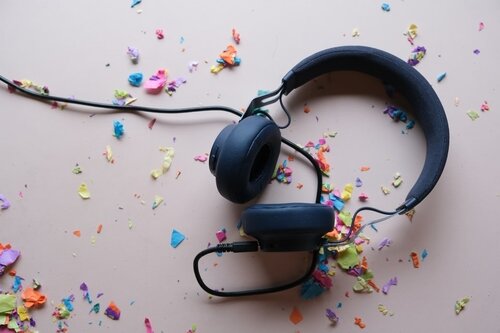
places like recording studios have not reopened yet, more and more artists are putting out songs and albums from home. The idea of a home studio is not particularly new. It provides a more cost-effective option for artists; there is convenience and the fact that one can set up their studio how they want. I guess it can be more solitary working at home, and artists do not often have access to the best equipment and producers around. This lockdown period has seen big artists record tracks from home, and some less popular acts bring out material because they have more time to record. This article from The Guardian shines a light on home studios and some of the major artists who have/had their own.

“Home studios, from Prince’s Paisley Park to Lee Scratch Perry’s Black Ark, have long played pivotal roles in musical history, with the likes of Joe Meek, Brian Wilson and Paul McCartney also favouring them. More recently, Billie Eilish recorded her multimillion-selling debut in her family home, while Grimes’ breakthrough LP, Visions, was made in her apartment. Kevin Parker records all Tame Impala’s albums at home. Grime flourished from kids making beats on PlayStations or cheap software, and dance tracks are rattled out in bedrooms constantly; Grammy-nominated LA artist Steve Lacy even produces beats on his iPhone.

Calvin Johnson, of K Records and the indie-pop band Beat Happening, set up Dub Narcotic studios in his basement in 1993. Miranda July, Built to Spill and Beck all recorded there. “It was to demystify that it’s hard to record,” he says. “If you want to record, just hit record. It’s not about equipment. For the Beck record we had nothing, just inspiration.” Years later, Greta Kline of Frankie Cosmos, often labelled bedroom pop, took influence. “Calvin’s approach made me feel like I could make music too,” she says, “to connect to a song without it being produced in an unachievable way”.

mk.jpg

PHOTO CREDIT: @farber/Unsplash

I am interested in the different varieties of home studios: from the hugely decked-out to the more modest, every artist is able to lay down tracks from their homes.  There is a concern at the moment when the music industry will be able to get back to how it was. The live music scene looks set to be on hold until later this year/next year, and there are fears the sector will collapse if there is not enough financial support. Studios do not have quite the same problem, but they are quite close spaces that do not necessarily allow for huge social distancing. I think a lot of artists at the moment have lost money that would have been earned through touring and merchandise. Maybe the big artists can return to studios soon, but many will not have the money to spend cutting their new single/album at a studio. That is not to say most studios will struggle, but I think the home-made, D.I.Y. approach will provide a safer and more cost-effective route for many artists. I do think the benefit of a professional studio is working with other producers and engineers, and the fact the sound quality is superior. I do feel like there’s going to be a bit of a shift from studio to home; where artists are putting out tracks from home, rather than going into an outside studio.

iioioi.jpg

PHOTO CREDIT: @sickhews/Unsplash

I think it is good that there have been more recordings done at home, and it is good seeing artists setting up their own studio and making the most of this time. I feel studios will need support during this difficult time. The biggest studios will be okay, but there are so many smaller studios that will suffer and might not be able to welcome back artists until much later in the year. In the same way live gigs from home will become a new normal until next year, big and small artists writing and recording in lockdown will start to record and release music more in isolation. In the piece from The Guardian, musicians explained the appeal of working from a home studio: 

“Aside from these practical benefits, what is the deeper appeal of home recording now? “I’m a cheap bastard,” jokes DeMarco. “Also, I’m a control freak, I don’t like to be on the clock and I don’t play well with others.” Creative autonomy is another factor. “When small new indie bands bring in producers, it’s weird to me,” he says. “It’s like being a painter and having someone else go to the store and choose your palette for you.”

My studio feels like having an extra limb right now

Marie Ulven

Home recording can bolster confidence. “It’s less pressured,” says Ulven. “I can fool around and have nothing come out of it but in a studio there’s expectations. There’s also something intimate about recording in your own space; that’s where you’re your most authentic self.”

PHOTO CREDIT: @princeabid708/Unsplash

Singer-songwriter Kurt Vile echoes this. “At home I’m completely relaxed, but every time I go into the studio my heart jumps out of my chest. I feel exposed and it’s a totally different energy.” Vile’s first two albums were home recordings and he’s now, like Pink, returning to these origins”.

Depending on tour budget depends how sophisticated your studio will be, but I can understand how there are fewer time and money pressures recording at home; you can be autonomous, and that doesn’t mean you have to work alone – producers and artists can hook up online; artists can collaborate with their peers on songs too. I do feel like we’ll see more and more homemade music from everyone in music in months to come. Some have said how, in this day and age, studios are becoming obsolete, but I have a lot of love for them. Not only do you get to work with amazing people in studios; they offer the space, equipment and atmosphere to create music you would not be able to at home. The rest of the year will be a challenge for everyone in the music industry, and I do wonder, like live music, the way songs are recorded and released will alter drastically when we come out lockdown. If anything, we are seeing more artists setting up their little studio space at home, which gives them a chance to record music on their timetable. With regards the popularity of studios, after lockdown, it will be…

PHOTO CREDIT: @jonathanvez/Unsplash

INTERESTING to see what happens.

FEATURE: Get Out of My House: Will a Kate Bush Biopic Always Be Out of the Picture?!

FEATURE:


Get Out of My House

ddyhdu.jpg

IN THIS PHOTO: Kate Bush in a promotional shot for 2011’s Director’s Cut/PHOTO CREDIT: John Carder Bush

Will a Kate Bush Biopic Always Be Out of the Picture?!

___________

THIS is a rare Kate Bush feature…

xxxx.jpg

where I am sort of focusing on the idea of someone else playing her in a film. If I asked any Kate Bush fan whether a biopic should happen, the unanimous answer is likely to be ‘no’. Most people know, quite rightly, how Bush protects her privacy and does not court the spotlight. Look through her career, and she has collaborated with other musicians outside of her own albums – including Peter Gabriel and Roy Harper -, and everyone from Ian Bairnson, Stephen Fry and Micha Paris has been in the studio with Bush and contributed to one of her songs (or more). It is one thing bringing other people into her orbit but, when we come to the idea of having someone play Kate Bush in a biopic, that steps into new territory. There are, of course, Kate Bush tribute acts; other artists have covered her songs, and there has been the odd documentary down the years – though not as many as there should be! I might divert for one moment, because it is strange there has been so little in the way of documentary footage revolving around Bush. I have attempted to pitch a documentary over the past couple of years, but it has always been met with resistance or a lack of investment. I am hoping that, at some point, a documentary will come to light, since Kate Bush has been in the public eye for over forty years, and she has inspired so many artists.

Maybe it is hard to distil her essence into a short documentary, or people are not sure where to start when it comes to putting her on the screen. I think the lack of documentaries is a gap that needs to be addressed, and plenty of people would love to see one. The past few years have seen a lot of different iconic musicians portrayed on the big screen. From Elton John in Rocketman to Queen in Bohemian Rhapsody, there have been some real successes. I know there is word of an Amy Winehouse biopic coming down the tracks, and I think one reason why people want to see biopics is the artists themselves have a sense of drama and controversy. Although we did not see a real exploration of Elton John’s sexuality and more fiery side in Rocketman, we did get to see the great man on stage and get an insight into his career and rise. The same is true of Freddie Mercury in Bohemian Rhapsody. The film is excellent, but we did not see too much about his sex life and the film’s timeline did not really align with fact. Kate Bush, compared to a lot of artists, has lived a quieter and less dramatic life. She has not really been embroiled in controversy or excess; her privacy and grounded nature, one assumes, would not be that enticing to filmmakers. I think a great biopic relies on more than a mixture of the artistic genius and something reckless.

xs.jpg

IN THIS PHOTO: Kate Bush in 1985/PHOTO CREDIT: Guido Harari

Perhaps rebellion and torment make an artist more interesting in a way, but I am more hooked on the music itself and a look inside the artist and their path to stardom – whether it involves torment or not. Kate Bush might wince at the idea of someone playing her in film or a T.V. production, but I do feel a lot of upcoming artists would get a real insight into her genius and career if we had a biopic before us. It is always hard doing a biopic with artists who are alive, as they might be resistant to the idea or disagree with the direction a producer or director takes. Madonna is a famous case and, as she is the same age as Kate Bush, there is this desire now to see this Pop icon put onto the big screen. Madonna is going to be more challenging to work with than Kate Bush, but a Madonna biopic would be immense; granted that the tone is right, and she was involved in its creation. Kate Bush has not released as many albums as Madonna or toured as much, but I think Bush is a more popular artists and a more fascinating musician. Of course, if the biopic studied Bush from her debut single – or before – and took us up to the present day, a few actors would need to play her. With a lack of documentaries giving us access to the long and wonderful career of Kate Bush, I do think there is an opportunity for a biopic, were it to be produced alongside Bush herself. It might seem like an impossibility talking around to that way of thinking, but I bet there are a lot of people out there now who would kill to see a Kate Bush biopic.

Maybe it is me dreaming and putting it out there, but Bush is an icon, and I think there is a lot to explore. From her 1979 spectacle, Tour of Life, to the making of The Dreaming and her earliest career days, there is more than enough to hook in diehards and casual fans alike. It would be a little strange to see someone playing Kate Bush, but I think a biopic could happen that manages to remain truthful and open without being too revealing. I do not think one needs to see scandal and drama to make a biopic work. The changes and rises in Bush’s career are amazing; her successes and unique talent is primed for big screen adoration. If a biopic seems near-impossible and something for fans to drool about rather than actually see, I do feel like 2020 is a year where we are listening to a lot of our favourite music and, as I hear Kate Bush’s albums, I do wonder why there is an absence of Kate Bush documentaries. It seems bizarre that someone who has been putting out music for over four decades should be limited to a few documentaries – the last one was in 2014 with the BBC’s Running Up That Hill. I do feel that a biopic, if done in collaboration with Bush herself, would work out wonderfully and prove successful. In any case, I think there should be something in the way of a documentary/documentaries for T.V. or film because, as we are in the 2020s, there are five different decades of fans to interview; so much work out there and a lot to cover. Though it seems unlikely Kate Bush would authorise a biopic, one can never say never, and there are countless people that would flock to cinemas (when they reopen) and see the icon…

lo.jpg

IN THIS PHOTO: Kate Bush in 1979/PHOTO CREDIT: Alamy

ON the big screen.

FEATURE: The May Playlist: Vol. 3:  Daisies Grew After 7 Years

FEATURE:


The May Playlist

IN THIS PHOTO: Charli XCX/PHOTO CREDIT: Getty Images

Vol. 3:  Daisies Grew After 7 Years

__________

IN this week’s Playlist…

gff.jpg

IN THIS PHOTO: Moses Sumney

there are some fantastic new tracks for people to enjoy. Charli XCX, Nadine Shah, Katy Perry, Perfume Genius, Moses Sumney and Alison Mosshart have great tracks out, as do The 1975, Everything Everything, and Sharon Van Etten/Josh Homme. It is a busy week that is filled with gold and stunning songs. If you need a boost and some energy to get you into the weekend, this combination of songs should do the trick. Each week seems to bring so much quality, despite the fact we are all in lockdown right now. I think we all need our spirits raised, and music is giving us all strength and energy. This week has certainly delivered…

ss.jpg

IN THIS PHOTO: Nadine Shah

SO many musical treats.

ALL PHOTOS/IMAGES (unless credited otherwise): Artists

__________

Charli XCX – 7 years

ss.jpg

Katy Perry – Daisies

dss.jpg

PHOTO CREDIT: Michael Clement Photography

Nadine Shah - Buckfast

ass.jpg

PHOTO CREDIT: Camille Vivier

Perfume Genius – Without You

qqqqq.jpg

Katie Von Schleicher – Brutality

IN THIS PHOTO: slowthai/PHOTO CREDIT: Phil Smithies

slowthai & Kenny Beats – MAGIC

Izzy Bizu – Faded

Alison Mosshart - It Ain't Water

PHOTO CREDIT: Alex Knowles

Saint Saviour – For My Love

SSS.jpg

Kamasi Washington – Becoming

DFDFDFDF.jpg

Sharon Van Etten, Josh Homme - (What’s So Funny ‘Bout) Peace, Love and Understanding

ree.jpg

PHOTO CREDIT: Christopher Lane/The Guardian

Moses Sumney – Bless Me

The 1975 – Guys

3333.jpg

Flyte - Easy Tiger

AURORA - Exist for Love

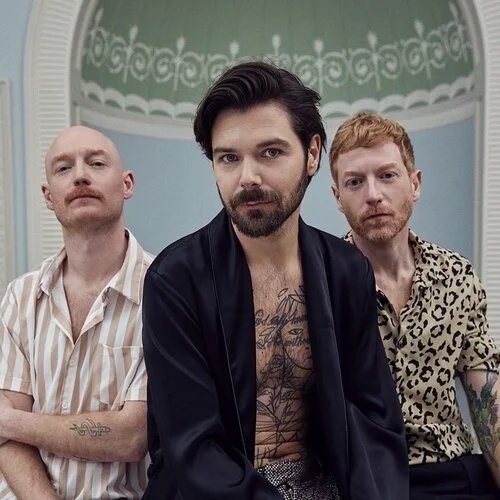
Biffy Clyro – Tiny Indoor Fireworks

Maisie Peters – The List

1111.jpg

Everything Everything – Arch Enemy

FLETCHER, Kito - Bitter

cvv.jpg

PHOTO CREDIT: Jonathan Nesvadba

Moby – Morningside

PHOTO CREDIT: Helge Brekke

Resa – Sunday

Glowe - Better Than You Do

rrr.jpg

Nick Hakim – BOUNCING

Hurts – Voices

211.jpg

ALMA – LA Money

Donna Missal – Let You Let Me Down

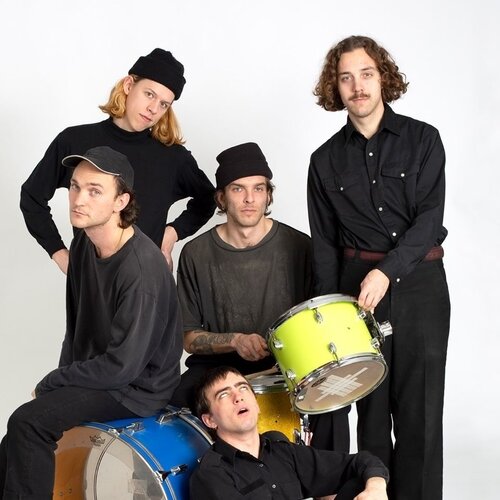
Pottery - Hot Heater

Jess Williamson – As the Birds Are

PHOTO CREDIT: Phil Sharp

Girlhood – The Love I Need

322.jpg

Charlotte OC – Blue Eyes Forever

dddd.jpg

Imelda May - Home

xxxx.jpg

The Coronas, Gabrielle Aplin – Lost in the Thick of It

1111.jpg

PHOTO CREDIT: Marieke Macklon Photography 

Rider - Stay

FEATURE: Second Spin: Deacon Blue – When the World Knows Your Name

FEATURE:


Second Spin

Deacon Blue – When the World Knows Your Name

___________

THIS feature throws a spotlight…

xc.jpg

IN THIS PHOTO: Deacon Blue in a publicity shot for Real Gone Kid in 1988

on albums that I feel were overlooked or underrated when they first came out. I am a big fan of Deacon Blue and have been intoxicated by their music since the 1980s. I remember when their debut album, Raintown, arrived 1988. I was very young when that album came out, but it sold a huge amount and spawned classics like Loaded, Chocolate Girl and Dignity. It was a hard task following such a successful and lauded album. In the case of the Scottish band, they put out When the World Knows Your Name the following year. The album remains their only number-one, and it knocked Madonna’s Like a Prayer off at the top spot. 1989 was a phenomenal year for music, and this incredible album arrived from Deacon Blue in April. Whilst I think Raintown is a more consistent and often deeper album than When the World Knows Your Name, I think Deacon Blue’s second album contains some of their best work. There is tongue firmly in cheek regarding the album’s title: the band’s name was widely known, and they transcended from this fairly unknown band to one that was known across the world. Maybe there are a couple of filler tracks on When the World Knows Your Name, but there is so much to enjoy that was not necessarily appreciated back in 1989. In their Deacon Blue feature of last year, Classic Pop gave an assessment of When the World Knows Your Name:

“Brilliantly crafted, with an eye firmly on the prize of commercial triumph, it includes no fewer than five hit singles, among them their first Top 10 hit, Real Gone Kid, as well as Wages Day and Fergus Sings The Blues.

Ross remains the fulcrum, but McIntosh is integral to When The World Knows Your Name, impelling Deacon Blue into the big time.

As Mat Snow succinctly summed it up in his Q magazine review, she “adroitly feminises the band’s texture and so saves us on more than one occasion from being flattened by an excess of overwrought macho breast-beating”.

I think there was a lot of variety in the charts in 1989, and Deacon Blue’s brand of well-crafted and thought-provoking Pop – not always but in most cases – was certainly more compelling and interesting than a lot of music from that year. It is a shame that many critics either focused too much on the hits or were a bit stuffy regarding Deacon Blue’s style and lyrical content. With their lead, Ricky Ross, penning most of the tracks – some were with keyboardist James Prime -, I think there is a unity and cohesiveness that holds the album together. With Lorraine McIntosh – she and Ross have been married for thirty years – providing stunning vocals and accompaniment to Ross, When the World Knows Your Name is a hugely pleasurable ride from the start to finish. I think When the World Knows Your Name is well-balanced in terms of the biggest moments. Queen of the New Year, Wages Day, Real Gone Kid and Love and Regret are the first four tracks, and When the World Knows Your Name gets off to a flyer! Fergus Sings the Blues is in the middle of the album, and Your Constant Heart and Orphans end proceedings.

Any album that has one massive hit on it should be celebrated; When the World Knows Your Name has at least four of them! Real Gone Kid is Deacon Blue’s signature song and it is one of my favourite tracks. I recall hearing that track not long after it came out and I was hooked by its energy and vivacious chorus! It is a magnificent song and it is one of those go-to tracks for when you need a boost! The band are terrific throughout, and the range of songs on When the World Knows Your Name keeps the album flowing and constantly interesting. I do like how the vocals of Ricky Ross and Lorraine McIntosh blend; the blend of sounds across When the World Knows Your Name that balances the masculine and feminine. I want to bring in a review from AllMusic that follows the same sort of lines as other reviews in terms of balancing compliments with constructive criticism:

“Their name may come from a Steely Dan song, but, as far as their musical makeup goes, Deacon Blue owes a lot more to Simple Minds and Prefab Sprout than the Dan. On When the World Knows Your Name, the band blends AOR, Celtic flourishes, and dashes of blue-eyed soul to create a polished album that, while it won't make any "best-of" lists in a hurry, has more than a few pleasures to offer nevertheless. Deacon Blue isn't on the mark all the time. They have their failings, notably a tendency to get overly precious and self-indulgent when trying too hard to be impressionistic on the slower songs toward album's end.

But when they get it right, like on "Queen of the New Year," "Wages Day," "Real Gone Kid," and "Fergus Sings the Blues," their driving melodies and hooks are fine compensation. Ricky Ross' songwriting is accomplished enough when he's not striving too hard for poetic effect: his word-picture evocations of light and shade are particularly impressive. The material is mostly strong, if not uniformly so; the playing is rather more consistently focused and energetic. If Deacon Blue gets the balance right, and plays to their strengths, they could be rather more than the minor-league U2 they come off as on this album”.

Over thirty years since its release, I feel When the World Knows Your Name sounds fresh and stands up. It is an album where some of the lesser-known cuts - This Changing Light and One Hundred Things – warrant attention, as they are songs that might have been overlooked in favour of the hits back in 1989. If you need a bit of a lift at this hard time, listen to Deacon Blue and an album like When the World Knows Your Name. I have always been very fond of the album, and I have never understood why so many have been a bit ambivalent towards it. When the World Knows Your Name is a varied, often scintillating record packed with wonderful choruses, brilliant lyrics and stunning musicianship from the whole band – and the always-wonderful vocals from Lorraine McIntosh. Diving back into Deacon Blue’s When the World Knows Your Name has been…

A real joy.

FEATURE The Lockdown Playlist: Reggae Vibes

FEATURE:


The Lockdown Playlist

PHOTO CREDIT: @brunogomiero/Unsplash

Reggae Vibes

___________

HAVING compiled playlists…

a.jpg

PHOTO CREDIT: @heftiba/Unsplash

that string together various years and the U.K. chart hits from them, I am moving into genres and other territories. In this edition, I wanted to splice some Reggae cuts together that should hopefully lift people’s moods. I am taking from various decades and combining true, authentic Reggae with songs that are often considered ‘Reggae-lite’ – more commercial than Reggae that is a bit more real. Between these songs, there is plenty of kick and fun that will provide a welcome companion to these rather strange and dark times. We are looking ahead as lockdown is easing and wondering when we might be able to get back to regular life. In the meantime, kick back and enjoy a selection of Reggae tracks that promise…

xxxx.jpg

PHOTO CREDIT: @amyjoyhumphries/Unsplash

SPIRITED vibes.

FEATURE: Sunshine Underground: No Regrets: Embracing the Musical ‘Guilty Pleasures’

FEATURE:


Sunshine Underground

cx.jpg

PHOTO CREDIT: @thanospal/Unsplash

No Regrets: Embracing the Musical ‘Guilty Pleasures’

___________

I can’t remember when…

PHOTO CREDIT: @alicemoore/Unsplash

I last covered this subject, but I have been digging deeper into music now than ever before. I am not sure whether it is lockdown or something that has compelled me to look more closely at the wider music world. In examining and investigating something away from my usual rotation, I am wondering whether one can actually have a guilty pleasure. I think all music is subjective, but I guess there are reasons why we ignore certain music and have our own tastes. Whilst we cannot all embrace everything; I have always been pretty reserved when it comes to exploring too far from my comforting sounds and personal favourites. I have always been a fan of 1980s Pop, but I have been listening back to a lot of early Lisa Stansfield, and I have been checking out Amy Grant, Tiffany and a bit of the early Spandau Ballet stuff too. Some might say that these are all excellent artists, but there are others that claim (these artists) are more suitable for certain people – a slightly older listener, perhaps! I am in my thirties, but I have been loving a lot of Pop and New Romantic music. I have seen a lot of other people sharing some of the music they have been listening to during lockdown, and there is this feeling from some that it is a bit of a guilty pleasure. I didn’t think I would get hooked on Robbie Williams, but I have checked out his 1998 album, I've Been Expecting You. There are some great tunes on there – like No Regrets and Strong -, but it is not an album that I would normally play; some might see Williams’ music as a guilty pleasure.

I have also been all over the place and checked back on artists like Simply Red – can’t beat a bit of Mick Hucknall -, and I became reacquainted with some of Kylie Minogue’s early output. I guess a lot of this increased curiosity is down to needing something upbeat and comforting. A lot of music, especially today’s music, is quite downbeat or lacks real spark. Many of us are using this hard time to dip back in a nostalgic way and find something inspiring in the music we grew up around. I have been doing that, of course, but there are songs in my current YouTube and Spotify histories that I think are less of a response to the lockdown and more to do with broadening my horizons. Maybe I am listening to more cheesy music, but I have been snobbish in the past. From listening to more Lady Gaga and Taylor Swift to older hits from Hue & Cry and Deacon Blue, I have been embracing so much more than before. I would argue that Deacon Blue are a pretty cool act, but they are a fantastic band in my view. The fact of the matter is that I have not opened my arms to every piece of music I previously considered a bit uncool and unworthy – there will always been songs that I will not touch, regardless of what is happening in the world! There are some who have compiled an article of guilty pleasure songs, and I have listened to everyone from New Kids on the Block and 2 Unlimited over the past few weeks.

Others might say that words like ‘guilty pleasure’ can be shameful and make it seem like certain artists are not worth listening to. All music, to an extent, is worth checking out, and I wonder whether we need to appraise that term. Perhaps music we consider ‘guilty pleasures’ feed back to childhood and how music often divided as well as joined people. During the 1990s, me and my friends followed particular bands and what we considered hip in the charts. Anything that was considered a bit twee, uncool or whatever was marginalised. Granted, there were some songs back then that I never listened to because of how others might perceive me – Whigfield’s Saturday Night is one such song that I have now come to love. I do think there is such a thing as ‘bad music’ and I do not agree that we should all embrace everything; that all music is fantastic. I do feel like our early experiences of music as a social tool follow us through adulthood. Most of the people I know would agree there are songs that they avoid because it is not their thing, or they feel a little embarrassed listening to it. I just read an article extolling the virtues of Carly Rae Jepsen’s Call Me Maybe. This is a song that I would not normally take a look at but, now, I have been getting into it and also following a line to her peers. I think the guilty pleasures tag might need to be readdressed, but I can understand why we all exclude certain music or consider other tracks a bit hard to love. It has been good finding new appreciation for songs and artists I overlooked for a long time and, at a time when we are using music to give us strength, this has been…

A great revelation.

FEATURE: Full House: Kate Bush and the Year 1978

FEATURE:


Full House

ssaaa.jpg

IN THIS PHOTO: Kate Bush during the Wuthering Heights shoot in 1978/PHOTO CREDIT: Gered Mankowitz

Kate Bush and the Year 1978

___________

THERE are so many song titles…

aaaaa.jpg

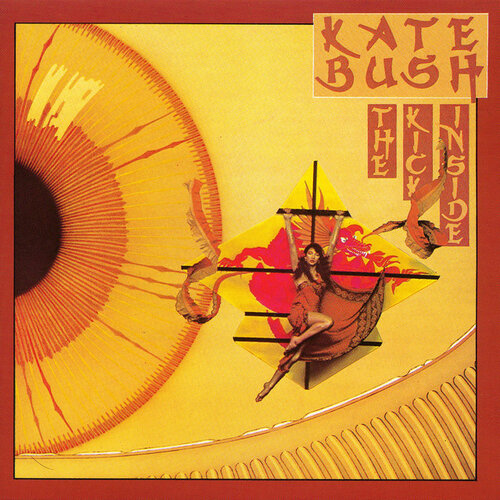
I could have applied to this feature to describe the sheer weight of 1978 on Kate Bush. In fact, she would not really slow down and have chance to breathe until 1983! Where do we start before ploughing through such a biblically busy and eventful year?! Before I go on, I will be addressing other periods in Kate Bush’s career, as I realise I have been looking at 1978 and her earliest years quite a bit – very soon, I want to talk about Aerial (2005). One reason why I want to discuss 1978 is to show how much Bush had on her plate that year. One assumes that it was a case of releasing her debut album, The Kick Inside, in February and doing some promotion around the U.K. I think many of the biggest artists of today have a less crammed diary than Kate Bush did in the first full year of her professional career. Having recorded The Kick Inside in 1977 (a couple of tracks were recorded in 1975), her debut single was unveiled: the bewitching and utterly arresting Wuthering Heights. Bush had planned to put the single out late in 1977 but, owing to some upset regarding the single’s cover, the track was finally released on 20th January, 1978. Photographer Gered Mankowitz worked with Bush on a cover for Wuthering Height and, by all accounts, the sessions flowed and were very creative. Bush was dressed in a pink leotard and gave this mysterious-yet-engaged look to the camera that suggested a serious artist, but one would take a bit of unwrapping.

xcc.jpg

IN THIS PHOTO: Kate Bush during the Wuthering Heights shoot in 1978/PHOTO CREDIT: Gered Mankowitz

The photos from that session are stunning, but an image that caused some stir was her in that pink leotard with her nipples showing. Today, I think an artist could get away with it – there have been more explicit album covers released -, and there was never any intention to exploit Bush’s sexuality. Bush herself saw no problem, and at the time she wanted people to focus more on her face – in years since, she did wonder why the photo was not cropped. In a 2014 interview with The Big Issue, Mankowitz discussed the Wuthering Heights cover that never was – a photo from that session was used as the cover for the Japanese version of The Kick Inside:

“Gered: It didn’t occur to me at that time that [the nipples visible in the full-length shot] would be a problem. I know that it was pretty edgy for the late ’70s but it wasn’t sort of discussed or thought about a great deal. That was how she looked and I wasn’t going to say to her “I think you should cover up”.

She looked absolutely gorgeous. I’m looking at a cropped version of it now and it still has all the power that it did then. Her breasts might have been titillating to a few young boys but her beauty and her serenity, her stillness are what really make this a special photograph”.

In any case, the single was put out in January 1978, and some stations and sources were sent a copy of the single back in 1977 – there were attempts to retrieve the song and not get it played, but that was to prove a futile task! The track definitely caught people’s ears. Nothing like it had ever been released, and radio stations were getting requests before the single was officially released! People wanted to know who the artist was because, before then, very few were aware of Kate Bush. The single started life at a modest number-forty-two in the charts. Now, we are hooked on streaming and ther4e is not the same fascination regarding the charts. Back in 1978, this strange and wonderful song went from forty-two to thirteen, to five…it eventually went to number-one on 7th March (and stayed there for a month). The track toppled ABBA’s Take a Chance on Me, and it kept Blondie’s Denis from claiming the top prize – pitting Debbie Harry and Kate Bush against one another must have been thrilling! Wuthering Heights was usurped, oddly, by Brian and Michael’s Matchstalk Men and Matchstalk Cats and Dogs – showing you just how varied and mad the music scene was back in early-1978! The anticipation for The Kick Inside grew before February 1978 and, as the album went to number-three, that helped the popularity of Wuthering Heights – one big factor why the song stayed at number one for so long.

Today, an artist releases a few singles before an album is released, and the promotion might include some radio interviews but, in reality, the performance and P.R. workload are relatively light. The album itself might involve more bigging-up but, even then, I think the biggest strain comes from eventual touring – only the biggest artists embark on worldwide jaunts and rigorous gigging. Bush had soon sold over 250,000 copies of the song, and her routine was now blown apart. She was courting so much intrigue and focus in the media, and she could not have envisaged what impact the song would have when she recorded it one summer’s night in 1977! She performed the song numerous times on Top of the Pops:

16th February, 1978: Kate performs Wuthering Heights. Kate described it as "a bloody awful performance".

9th March, 1978: Kate performs Wuthering Heights for the second time, dressed in a white nightgown.

16th March, 1978: Kate performs Wuthering Heights for the third time, seated at the piano.

23rd March, 1978: Kate performs Wuthering Heights for the fourth time, wearing a long black dress.

30th March, 1978: Kate performs Wuthering Heights for the fifth time.

Apart from the first Top of the Pops appearance being a nightmare – Bush, as a solo artist, was not allowed to use her band and had to use a cheesy backing track; this upset her greatly -, she came back to promote the track and was, before long, one of the most talked-about artists in the country. When it came to promoting The Kick Inside around Europe, Bush put together a version of her KT Bush band – she played in a band before releasing her debut album -, and they set off across Europe.

I will talk about a rather interesting trip to Japan soon but, with this brilliant debut album out in the ether – bolstered and augmented by Wuthering Heights’ success -, Bush and her band set off. Bush was not a fan of air travel, and the experience of promotion was something she grew to dislike quickly. She was not comfortable flying, but the exhaustion and time consumption of travel took its toll. One can look back at 1978 as an instant turning point. Bush had to promote her debut album wherever she was asked to go, but she vowed to spend more time in the studio and less time on the road/promoting very soon. Among her T.V. appearances in 1978, there was Magpie, Saturday Night at the Mill, Revolver, and the Late Late Show; T.V. appearances all around Europe and the world. On a positive note, Bush was getting valuable attention and ensuring her album and music reached as many people as possible. Increased performance meant that, by 1979 – when she took her Tour of Life around Europe – she was more confident as a stage artist. Bush would not appear on Top of the Pops again until 1985 – so that she could perform with whoever she wished-, but her face was all over the press and her music played all around the world in 1978. Bush would resolve to assume more control and say regarding her music after such a hectic and disruptive year. This bright and hugely talented artist was being pushed and pulled in every direction, and her feet barely touched the floor in 1978.

Whilst some publications focused heavily on her agile voice and use/overuse of words like ‘wow’, they were happy to have her on the cover, and Bush was being interviewed by all and sundry – some were genuinely invested in her music, whilst others just wanted to get some time with, what they saw as a flavour of the month. Bush released The Man with the Child in His Eyes on 26th May, (1978) – Moving was released in Japan only on 5th February; Them Heavy People, again in Japan only, on 5th May , and it reached number-five on the singles chart. I said earlier how artists now release several singles digitally, and the promotion for a single and album is usually not too strenuous. For Bush, this was to be the start of a period where she was very much in the tabloid gaze – for someone who guarded her private life, one can imagine how anxious and reserved Bush was regarding details of a boyfriend and her daily routine. I will end this feature by looking at her sophomore album, Lionheart, but one can look at the print interviews from 1978. Bush, later in her career, would do more radio interviews and fewer print and T.V. interviews but, in 1978, her face was all over the screen and in print. I want to quote from an interview/article entitled You Don't Have To Be Beautiful... from March of 1978 with Sounds.

“Kate has a habit of gesturing constantly with her hands, and often expressing herself with unspellable sounds and grimaces. Though this make tape transcriptions difficult, it does accentuate something which is very much a part of her, 'movement expression'. She has studied under the inimitable Lindsay Kemp, mime artiste, an experience shared with Kate's favourite musician, David Bowie.

"I admire actresses and actors terribly and think it's an amazing craft. But singing and performing your songs should be the same thing. At this point I would rather develop my music and expressing it physically, as opposed to having a script. I think I'm much better off as a wailer. . ."

She is, indeed a beautiful woman. Carved ivory, with nary a nick. So obviously there is no way she can avoid becoming the target for sexist minds. Although she does not advocate this reaction, she's not flustered by it. After all, it is a compliment.

"As long as it does not interfere with my progress as a singer/songwriter, it doesn't matter. I just wish people would think of that first, I would be foolish to think that people don't look. I suppose in some ways it helps to get more people to listen . . ."

'THE KICK Inside' suggests a keen interest in mysticism.

"I try to work on myself spiritually, and am always trying to improve my outlook on life. We really abuse all that we've got, assuming that we are so superior as beings, taking the liberties of sticking up cement stuff all over the place. I think there is a lot to astrology, and the effect the moon has upon us all' but I hate the way it's become so trendy now.

"I'm a vegetarian, and now that's trendy as well . . . but what annoys me the most is the way people are so automatically cynical about astrology. I mean, like the Greeks put an incredible amount of hard work into carefully planned geometric charts, based purely on mathematics. People just shrug off. It's the same with coincidence, as I said in the song 'Strange Phenonema'".

Re-reading Graeme Thomson’s brilliant Kate Bush biography, Under the Ivy: The Life & Music of Kate Bush, and he speculates as to the reasons behind such intense media interest in Kate Bush.

asaa.jpg

IN THIS PHOTO: Kate Bush in her first T.V. appearance on West Germany’s Bios Bahnhof (Bio’s Station) on 9th February, 1978

Of course, The Kick Inside is a unique album that arrived in a year when Punk was still a valuable commodity. The Clash, Bruce Springsteen and Blondie were popular during 1978, and Kate Bush did not really sit alongside anyone else. She deliberately avoided listening to too many female artists to avoid being influenced heavily; she disliked the more bleeding hearts/love-lost sounds of Joni Mitchell and Carole King, so Bush’s style of writing and performance was enormously enticing. Thomson suggests Bush’s looks, class and age. She was not as young (nineteen/twenty; Bush was born on 30th July, 1958) as many of her contemporaries when she began promoting The Kick Inside and continued to do so through much of 1978 – John Lydon (Sex Pistols) was twenty-one; Paul Weller was eighteen. Bush was the daughter of a doctor and came from an extremely comfortable home. She was, clearly, incredibly bright and engaging, but a lot of people focused heavily on her looks and sex appeal – especially the tabloids. One’s eyes water when they look at Bush’s itinerary in 1978.  Bush was gifted a £7,000 Steinway piano by EMI following Wuthering Heights’ success and was flown to Paris for dinner (in March 1978). Bush made a brief trip to the U.S. in May – she was never truly popular and known in the U.S. until Hounds of Love arrived in 1985 -, and the cover to the U.S. release of The Kick Inside (shot by Gered Mankowitz) eschewed the oriental composition of the U.K. release and showed Bush wearing denim and gingham – a more wholesome image; one where her face was very much at the centre.

Bush performed on Saturday Night Live – where she showcased Them Heavy People and The Man with the Child in His Eyes -, but she did not tour America. Bush was offered a support slot on Fleetwood Mac’s Rumours tour, but she could not limit herself to a fifteen-minute slot for a major artist where she was very much limited and confined. Bush was not concerned with cracking America and never saw that as a golden destination. She was not defined by international acclaim and loads of press inches. Bush’s goal was to make music and have her music represented in her own vision – something that was exceedingly difficult in 1978. As The Man with the Child in His Eyes’ release meant more promotion across Europe – and The Kick Inside continued to sell well -, Bush was being dragged from home and comfort to strange new lands; places she would very briefly visit before being ferried to the next country! Bush’s dislike of long-haul flights was cemented when she visited Japan, New Zealand and Australia. It is her trip to Japan that interests me. As this article explains, Bush’s busy and sapping trip to Japan might have contributed to her retreating more into the studio after 1978 – there were factors on the trip that contributed to change:

“On the 18th of June, 1978, Kate Bush performed “Moving” to an audience of 11,000 people at the Nippon Budokan for the 7th Tokyo Music Festival. This is just the number of people watching who were present, however. About 33 million people watched Bush on TV, a staggeringly large number. Japan and its huge physical music market had its eyes on Bush, and she was suitably terrified. For all that the lead track status of “Moving” makes it a fitting opening number for a performance, Bush is visibly terrified while singing this song, her voice wavering as a band she’s never met before coming to Japan played her music.

The entirety of the trip consists of Bush doing not-very-Kate-Bush things, and she’s visibly ill at ease with this. A studio artist with no tour experience was going to be out of sorts performing to thousands of people 9 and a half thousand kilometers away from home. Yet Bush was clearly set on getting as much done in a short period of time as she could. She respected Japanese cultural norms, attending a Shinto shrine and (apparently) conducting herself with characteristic etiquette. Sadly few details about the shrine visit are known, as history has generally not recorded Bush’s time in Japan well.

Bush’s relationship with Japan is slightly vexed. She’s… well, Bush is a bit rough on the issue of cultural appropriation. The cover of The Kick Inside is famously orientalist, and we’ll have lots to talk about when we talk about The Dreaming. Bush certainly has respect for other cultures, but takes the European artist’s path of lifting cultural touchstones rather than delicately conversing with their creators — indeed, she slightly flubs her one English TV interview discussing Japan when she refers to Japanese people as “not saying how they feel.” It’s a cryptic moment and some of the messages it sends aren’t great.

The most jarring moment of all comes in the form of… Kate Bush doing Japanese watch commercials. That’s not a shitpost, that is a thing that literally happened. Twice. And they use “Them Heavy People,” which didn’t seem to catch a break in Japan (as it was released as a Japan-exclusive single and reached #3 on the charts, this is understandable). “We have many varieties of mood within us, but it’s up to you to choose,” Bush enunciates possibly the most animistic commercial slogan ever. It’s a strange pair of adverts, and there’s probably a reason Bush did commercials so sparingly her next foray in the business wouldn’t be until the Nineties.

It doesn’t entirely work out for her. I mean, Bush won a silver medal at the Tokyo Music Festival, but the highest honor went to Al Green (which is hard to get upset about. If Kate Bush is going to lose to any singer, Al Green is an honorable choice). Yet she never engages with mainstream pop in the same way again. Bush will remain popular in the charts, but she doesn’t pursue the festival circuit as an artistic path. Soon she’ll retreat even further inward, abandoning a career that involved touring for a studio-bound career. Yes, this has led to tragedies like no songs from The Dreaming ever being performed live. Yet with the slightly hollow and rushed showmanship of her excursion to Japan, it’s hard not to feel like Bush benefits from staying close to home”.

The increase and rolling ball of press attention and demand meant that, amazingly, EMI were asking for another album in 1978. I cannot think of too many artists since Kate Bush who were so in-demand following a debut album and had such a head-spinning first year! Moving from London to Berre-Les-Alpes  in the south of France for the recording of Lionheart, recording was to start on 7th July (1978). Bush had scant chance to pen new material since The Kick Inside, but she did write some new songs for the album: Coffee Homeground, Symphony in Blue and Full House are rare examples.

I cannot source too many contemporary reviews for Lionheart, but there was a perception that (the album) was a weaker version of The Kick Inside that did not sufficiently move her forward. Bush demoed a few songs from Lionheart to her band back in 1977; others were either considered for The Kick Inside or are earlier creations. In May, June and July, Bush and her band demoed these new songs whilst, back at Wickham Farm, Welling (where Bush and her family lived) a studio was being constructed. With Brian Bath as a friend and musical director, she had a trusted source she could bounce idea off. Her family were in awe of Bush’s family, and it must have been grounding and comforting to have her family supporting her after such a gruelling promotional year.

Barely a year since she was performing in pubs with her KT Bush band, Bush was readying her second album! Bush wanted her band (of mates) to play on Lionheart, but Andrew Powell (the producer of The Kick Inside and Lionheart) did not want to break the formula on The Kick Inside: a slick and wonderful-sounding album that resonated far and wide. Bush, as early as February 1978 felt her debut was unsatisfactory and she was more of a participant in the album rather than the architect. Although Bush’s band were tight and there was a great bond between artist and band, Powell felt they lacked experience and there was this power struggle. The fact Lionheart was recorded in the more luxurious shadow of the Alps – and not a the nosier and more polluted AIR Studios in London – did not help remove a lot of tension that was evident.

In the end, the musicians who played on The Kick Inside were flown in and, whilst there was no great falling out between Bush’s and Powell’s bands, there was not a lot of affection either – Bush was in the middle of all of this. Bush also has a credit as a production assistant on Lionheart, so Bush was already trying to redress some of the problems she encountered on The Kick Inside regarding not having much say regarding production. Although there was a comfortable and relaxed feel to rehearsals and recording – Bush and the band eating together and chilling by the pool -, one can feel an emotional and physiological shift between The Kick Inside and Lionheart. Though many of Lionheart’s tracks were already written, Full House was a new song that reflected a more troubled mind. Bush was feeling the weight of press attention and being a commodity rather than a human being. Despite the fact that Bush had this rather tight and unrealistic deadline for putting another album out, she grew ever more fascinated by the studio and what it could offer. Working to multiple tracks, she could layer vocals and instruments, and she was also able to do take after take. Maybe this fastidious technique was not ideal in terms of keeping studio costs low but, as someone who hardly had a moment to record since The Kick Inside came out, one can understand Bush’s need to focus and record the songs how they sounded in her head. Even with the songs recorded, Bush’s 1978 was not going to let up!

By September, she returned to London to do promotional rounds; Lionheart was mixed in October, and Bush was flown to New Zealand and Australia to perform and chat. Journalists were given five minutes to talk to Bush, and it was another conveyer belt of promotion. Lionheart arrived on 12th November, and some reviewers were quite harsh. Many concentrated, again, on Bush’s high voice, whilst others felt the tracks lacked maturity and memorability. Whilst songs like Symphony in Blue and Wow were standouts and among the best tracks she had ever recorded, other tracks felt either rushed or half-finished. It is no wonder, given the fact Bush was not given time to write new songs and take her music in a direction that was truer to her. Lionheart entered the charts at thirty-six, and it peaked at number-six. EMI were happy enough, but there was a tinge of disappointment regarding sales and the chart position. Bush would look back on 1978 as a reminder that she did not want to be led by the record company and promoted everywhere. 1979’s Tour of Life was a chance for Kate Bush to prove what a great performer she was and, importantly, assume a lot more creative control – though she had a large team on that tour, most of the big decisions were Bush’s. By 1980, when Never for Ever was released, Bush was co-producing – she co-produced her On Stage E.P. the year before -, and she was travelling and promoting far less.

I can understand why 1978 was important from EMI’s perspective. They had this amazing artist they wanted to show off but, in the process, I think they did not consider the determinant to Bush’s emotional and physical health. Although Lionheart was not as good as it could have been, and Bush spent a load of time travelling, I think The Kick Inside is splendid – it is my favourite album ever -, and there is no doubt the increase in live performances and travelling meant the Tour of Life was such a success – and Bush was more used to international travel; she might have been reluctant to travel/fly had it not been for the experience the year before. It is staggering to think of all that was achieved in 1978 and just how much was expected of Kate Bush! From the enormous success of Wuthering Heights and the publicity demands that followed to the international promotion and having to put out a second album so soon after her debut, Kate Bush had a lot taken out of her – even if there were some positives and useful lessons learned. 1979’s Tour of Life allowed Bush a chance to focus and concentrate on live performance, and she would change the way she promoted her albums by the time of 1980’s Never for Ever. 1978 was like a baptism of fire and, after such a draining year she would…

sxx.png

IN THIS PHOTO: Kate Bush in 1979/PHOTO CREDIT: Gered Mankowitz

NOT let that happen again.

FEATURE: Spotlight: Emma-Jean Thackray

FEATURE:


Spotlight

S0S0S0S.jpg

Emma-Jean Thackray

___________

ALTHOUGH the simply fantastic…

xxx.jpg

PHOTO CREDIT: @sabinerovers

Emma-Jean Thackray has been on the scene for a few years now, I think her music is starting to spread far and wide. I say this about all artists I cover in this feature that are not fresh from the box, as it were. I have heard people refer to Thackray as a Jazz musician and, whilst Jazz is a part of her music, that label would be too limiting and narrow. The Yorkshire-raised, London-based musician is one of my favourite artists of the moment, and I want to bring in a couple of interviews so, essentially, she can tell us more about herself. Rain Dance is her new E.P., and I suggest people listen to it, as Thackray is a huge talent that is going from strength to strength. Normally, I talk about tour dates upcoming for artists and where you can go and catch them. At the moment, there is uncertainty whether any gigs will happen his year at all, so nobody is quite sure just what the rest of the year holds for Thackray. Keep an eye on her social channels – the links are at the bottom of this feature -, and I am sure we will hear from her very soon. I do want to source from some interviews this year, as it is interesting reading about her and the artists who have inspired her.

When she spoke with DAZED, she was asked about her influences and what effect growing up on Yorkshire has on her music:

“Emma-Jean Thackray is many things: a trumpeter, a producer, a multi-instrumentalist, a beatmaker, a composer, a DJ, and more. She’s also, now, a record label boss: Movementt is a new label, affiliated with the legendary Warp Records, set up by Thackray to showcase new music of her own as well as new talent from the wider jazz and exploratory music scenes that she’s involved with. Thackray’s manifesto for the label is simple: it’s music that moves the body, moves the mind, and moves the soul. “The coming together of the visceral, the cerebral, and music that nourishes the soul,” she says.

The Movementt label takes both its title and its mantra from a track of the same name on Thackray’s new EP, Rain Dance, which is due for release this Friday (March 6). The EP parlays Thackray’s diverse influences – classic jazz by Miles Davis and Alice Coltrane, LA’s leftfield hip hop beat scene, Moodymann’s unique Detroit house, etc – into four distinctive tracks.

What sort of music would you hear around the house growing up?

Emma-Jean Thackray: My mum listened to a lot of 80s soul/pop, that kind of pop from back in the day with the catchiest hooks and great session musicians playing some really groovy shit. I still love that stuff even today, and it definitely gave me an appreciation for pop done well, which I’ve definitely taken through to my own music. Even if I’m making some freaky shit, there’s always a singable melody that sticks in your head.

How did growing up in Yorkshire influence your relationship with music?

Emma-Jean Thackray: Yorkshire has a really rich tradition of brass band music. I grew up playing in brass bands – my primary school even had a brass band – and that’s not only where I learnt my main instrument, the trumpet (first, cornet), but it’s where I learned to make a nice sound, not just individually, but as an ensemble. Making a great sound together is one of the most important things: everyone has to be listening, saying each note with the same syllable, shaping the phrases the same way… The timbre of brass will stay with me forever, that’s why my music is so brass-forward now.

Although Thackray has had to cancel or postpone gigs for this year, as she revealed to DAZED, she has no plans to slow this year and sit on her hands – I can imagine we will hear a lot more from her this year:

What are you working on post-EP release?

Emma-Jean Thackray: So many things. More records, more music, more art. This year is gonna be busy! But even on top of that there’s lots of things I’m sitting on and haven’t released yet, mainly live stuff. It’ll all come out when it’s meant to come out. Practice patience and know I’m here for the long haul. I’ll be making music ’til my death day because it’s my purpose”.

Whilst many were looking forward to seeing Thackray on the road, we can still enjoy her music. Not only is the musician one of the most talented artists in the country; Thackray has set up her own label, Movementt, and she will use this platform for her own music, but also to bring other musicians into the fold. When she spoke with CLASH earlier in the year, she was asked about her role as a musician and producer, and how it feels to be one of the few female label bosses around:

“Now she’s set to embark on another groundbreaking project, heading up her very own record label – Movementt – an imprint of the legendary Warp Records, to showcase new music of her own as well as new talent from the wider jazz and exploratory music scenes that she’s a core part of.

How are you able to think of both elements – production and playing – at once?

When I'm composing I can visualise the score, that's the way I'd put it. I can see things being written out, that probably makes me sound really strange - but whenever I'm working and can just see it all in front of me.

Production was always something that I used to do on the side. I used to keep it as a bit of a secret – I didn't think it was compatible with all the jazz stuff I was doing. It was when I was studying at Royal Welsh [College of Music and Drama] I was starting to produce. It was pretty open but still very instrumental-based, and if you did anything electronic, it was kind of discouraged – there wouldn’t even be any places to plug in. You were there to be a trumpet player or whatever, you weren't there to do these different things.

Do you think it’s because of this quite intense musical study that you’re now able to be an effective producer?

There are loads of producers that don't necessarily play. I think it just gives me a better understanding of how music was put together, I've been reading music since I was really young. I had to – I was playing in loads of different groups and bands, in lots of different styles. It just gives me a better understanding of what I'm making.

The producing then feeds into my performing because it helps me consider things as a whole, kind of trying to have one ear on myself and one on the band – it's a different way of listening.

And you’re probably one of just a handful of female label bosses out there.

I think everything area of my music is quite male-dominated, whether it's playing the trumpet or producing, and I mix my own stuff as well. People always ask who has mixed or produced my stuff, and I have to say its me. My partner used to be in my band and everyone thought he had produced everything – it made me so angry.

Now you’ve got the reigns at a label, what’s your approach going to be?

I don't think that I need to do a particular thing, my reaction would always just to do the opposite. I just want to tell a different story, if I started a label and didn't differentiate it from anyone else, I'd think it was pointless and just a waste of energy.

I have a motto that I try to apply to everything I do: move the body, move the mind, move the soul.

I want it to be music that balances groove and stuff that is a bit nuts and forward thinking, with stuff that is about real subjects. I want it to be a collaborative label, with music that doesn't necessarily belong in other places. It's almost like I want to legitimise bootlegs that people just throw up on SoundCloud - not just thinking about how things will sell. If people just wanted to come to my place and record things on one mic, it doesn't have to be super fleshed-out”.

PHOTO CREDIT: @_saoirseoleary

I have quoted a lot from others, but it is the best way to discover more about a truly extraordinary artist. I wanted to spotlight her, as I have been digging into her back catalogue and seeing how she has grown through the years. Although this year is rather strange and we will not see many more gigs happen, I do think 2021 will be a year when Emma-Jean Thackray takes to some big stages and gets a lot more exposure. I can imagine Thackray is busy during lockdown with her label responsibilities and, perhaps, planning some new music. If you have not heard of Emma-Jean Thackray, do go and source her music and find out more. She is a wonderful talent and, as a producer and label boss, someone who is going to be helping to nurture other artists. She is one of those rare artists who has evolved through the years and seems to become more impressive and accomplished by the year. Although she has laid down some wonderful music already, I am sure she’d be the first to agree that, in her career, she has…

ONLY just begun.

_______________

Follow Emma-Jean Thackray

xxxx.jpg

FEATURE: Vinyl Corner: Dire Straits – Brothers in Arms

FEATURE:

Vinyl Corner

zz.jpg

Dire Straits – Brothers in Arms

___________

THIS week for Vinyl Corner…

I want to shine a light on an album that is about to turn thirty-five. If you can get Brothers in Arms on vinyl then do so, as it is an incredible record and one that some people might not be aware of. Released on 13th May, 1985, Brothers in Arms followed 1982’s Love Over Gold. The fifth album from the band, it charted at number-one in several countries; it spent fourteen consecutive weeks at the top of the U.K. charts, and it was the first album to be certified ten-times platinum in the U.K. It has sold more than thirty-million copies worldwide so, for that reason, Brothers in Arms warrants a lot of love. Brothers in Arms was also one of the first albums to be recorded on a Sony 24-track digital tape machine. The reason behind this was because Dire Straits’ lead, Mark Knopfler, was seeking a better sound and was always searching how to make a recording better. Alongside co-produced Neil Dorfsman, Knopfler and the band produced an epic record. Recorded at AIR Studios, Montserrat, the line-up included Knopfler (guitar), John Illsley (bass), Alan Clark (piano and Hammond B-3 organ) and Guy Fletcher; Terry Williams was the band's then-permanent drummer. I cannot recall when I first heard the album, but I must have heard singles from the album played on MTV. Money for Nothing (featuring Sting) was a big part of my early childhood, and I also remember seeing the video for Walk of Life play.

The energy and power of these songs resonated in me and, whilst there was some mixed reaction to Brothers in Arms upon its release, one cannot deny the fact that it is a classic and an album with more than a few brilliant tunes. So Far Away, Your Latest Trick and Brothers in Arms are incredible tracks; I do not think there is a filler track on the album. I know some have sort of turned their noses up at the sound of the album and the fact it can lumber into cheese territory; how the album is quite long and so forth. I think a lot in the British press was less kind towards Brothers in Arms than others, as they reacted to Knopfler’s attempts to Americanise the music and criticised his lyrical style too. The American press themselves were more kind, and although many noted a lack of consistency through Brothers in Arms, they praised the guitar riffs and grandeur of the music. Some tracks on Brothers in Arms sound dated now, but I think the album as a whole stands up and deserves respect. The BBC reviewed the album a few years back and had this to say:

“29 Million copies sold. Third best-selling album of all time in the UK. First album to succeed in the CD market, Grammy winning, earner of enough Platinum to build a house: Brothers In Arms is a phenomenon on every level. Its production raised the bar for all music to come, its songs and videos became household items. It also almost destroyed the band.

By 1984, incessant touring and recording schedules hadn’t dimmed Mark Knopfler’s enthusiasm for perfection. Having taken over the production duties on previous album Love Over Gold, he now went even further towards a kind of pop-oriented Americana. Brothers…has a fine array of chart moments, including, of course, the Sting-assisted video hit “Money for Nothing”, the moody “So far Away” and faux bop “Walk Of Life”. But it gets them out of the way in the manner of mere aperitifs and then massages you with a suite of Knopfler’s very fine brand of JJ Cale-lite. Along with gruff nods to Dylan and James Burton. Like contemporaries U2 they had the golden touch that made their gold instantly more American and mythical than most acts from the States.

They toured this album for two years. After that amount of time surely any band would falter. They certainly had a very long hiatus. This album was bigger than them. On that final night of the tour in they must have never wanted to hear a note of this album again. Twenty years on, it’s still echoing around the world. As inescapable as ever”.

I do wonder whether there will be any anniversary edition or any news that comes out to mark Brothers in Arms’ thirty-fifth birthday, as it is an important album that has affected a lot of people. I love nearly all the tracks on the album, and it is great to listen to them in lockdown; I am picking up stuff that I did not notice years ago. As of July 2016, Brothers in Arms was the eighth-best-selling album of all time in the U.K. That is not bad going at all!

When they reviewed the album, AllMusic were full of praise:

“Brothers in Arms brought the atmospheric, jazz-rock inclinations of Love Over Gold into a pop setting, resulting in a surprise international best-seller. Of course, the success of Brothers in Arms was helped considerably by the clever computer-animated video for "Money for Nothing," a sardonic attack on MTV. But what kept the record selling was Mark Knopfler's increased sense of pop songcraft -- "Money for Nothing" had an indelible guitar riff, "Walk of Life" is a catchy up-tempo boogie variation on "Sultans of Swing," and the melodies of the bluesy "So Far Away" and the down-tempo, Everly Brothers-style "Why Worry" were wistful and lovely. Dire Straits had never been so concise or pop-oriented, and it wore well on them. Though they couldn't maintain that consistency through the rest of the album -- only the jazzy "Your Latest Trick" and the flinty "Ride Across the River" make an impact -- Brothers in Arms remains one of their most focused and accomplished albums, and in its succinct pop sense, it's distinctive within their catalog. [In 2005 Mercury released a 20th anniversary limited edition version of Brothers in Arms in the Hybrid/SACD format.]”

Five years ago, to mark thirty years of Brothers in Arms, Ultimate Classic Rock looked at the album’s birthday and how the digital route helped it get to the top of the charts:

“But before it topped charts, sold millions and won Grammys, Brothers in Arms had a fairly humble birth. After working the songs out with the band in rehearsal, Dire Straits leader Mark Knopfler took the group and co-producer Neil Dorfsman out to AIR Studios on the Caribbean island of Montserrat — a setting that proved idyllic in some ways and frustrating in others.

"It was pretty torturous," Dorfsman told Sound on Sound. "It was a good-sounding studio, but the main room itself was nothing to write home about. ... Still, we crowded everybody in there, recording with at least three or four guys on every tune, while I built little rooms out of gobos and baffles and blankets."

What saved the tracks — and helped make Brothers in Arms a benchmark recording for the early years of the nascent digital era — was the studio's Neve console, which combined with the overall Montserrat vibe to produce a purity of sound as well as intent. "It was a great place to hang out and it was very relaxed, so you could focus on what you were doing," explained Dorfsman. "And the board was so good that anything you put through it just sounded great."

Also aiding Brothers in Arms' steady ascent to No. 1 on the charts was Knopfler and Dorfsman's decision to record using a digital deck. Although the album wasn't completely digital, it came close enough to be marketed as one of the few titles whose sonics took advantage of the new CD format's capability for cleaner sound, and the sales bore that out: Brothers became the first record to move a million compact discs, and the first whose CD sales outmatched its LP's. For a variety of reasons, it was the right album at the right time — not that Knopfler ever professed to understand the huge surge in popularity that followed.

"It was a sheer fluke," Knopfler said years later. "If it hadn't been that album, it would have been something else. It was just an accident of timing. It got connected -- 'Brothers in Arms' was the first CD single, or so I'm told, and I suppose it was one of the first CD albums. ... Plus, we had a couple of hits in America -- 'Money for Nothing' and 'Walk of Life' -- so it got connected with the American success, but people will always want to make something like that into something else completely".

The success Dire Straits achieved after 1985 meant that Mark Knopfler could not be anonymous or go unnoticed. It did take the band to new heights, and Knopfler considered retiring the Dire Straits now following Brothers in Arms’ dominance. I am not sure how he feels about the album now, but I think it is a wonderful record indeed. With some epic production, incredible tracks and so many memorable moments, Brothers in Arms is, indeed, an album that everyone…

NEEDS in their lives.

FEATURE: The Lockdown Playlist: Chillout Nation  

FEATURE:

The Lockdown Playlist

xxxx.jpg

PHOTO CREDIT: @seantookthese/Unsplash

Chillout Nation  

___________

WHEN there is a lot of stress and uncertainty…

azz.jpg

PHOTO CREDIT: @robin_g/Unsplash

flying about at the moment, I feel music is a tool that is helping many of us cope and push forward. Whilst previous Lockdown Playlists have been more upbeat and energised, this one combines tracks that are more chilled and relaxed. I am a big fan of Chillout music and genres that manage to ease the strain and allow you to drift and wander. As the weather is quite warm at the moment, I think these tracks will help evoke somewhere far-off and remote; a place that many of us would welcome, I am sure. Sit back and let these tunes…

PHOTO CREDIT: @elidefaria/Unsplash

MELT away the tension.

FEATURE: A Buyer’s Guide: Part One: Blur

FEATURE:


A Buyer’s Guide

xxx.jpg

IN THIS PHOTO: Blur shot by Zanna in 1993

Part One: Blur

___________

I want to start a small feature…

where I select a few bands/artists and give you the lowdown on the albums and books to buy. A lot of other sites have been doing this and, rather than filling space and providing something quite generic, I want to flip some attention the way of an artist that warrants a bit more investigation; albums that sound great today and would definitely make for quality listening. To kick things off, I have chosen Blur, as they are one of my favourite bands ever, and there are a couple of albums in their cannon that maybe have not been as poured over as they should – in addition to the classic discs. Whether you are familiar with Blur or are approaching them fresh, here is where you should start/continue with one of… 

BRITAIN’S greatest bands ever.

________________

The Four Essential Albums

Modern Life Is Rubbish

Release Date: 10th May, 1993

Labels: Food (U.K.), SBK (U.S.)

Producers: Blur/John Smith/Steve Lovell/Stephen Street

Standout Tracks: Star Shaped/Chemical World/Sunday Sunday

Buy: https://shop.blur.co.uk/uk/modern-life-is-rubbish-2cd-special-edition.html

Stream: https://open.spotify.com/album/4filJ9pPVmAczwssCkpePe

Review:

“As a response to the dominance of grunge in the U.K. and their own decreasing profile in their homeland -- and also as a response to Suede's sudden popularity -- Blur reinvented themselves with their second album, Modern Life Is Rubbish, abandoning the shoegazing and baggy influences that dominated Leisure for traditional pop. On the surface, Modern Life may appear to be an homage to the Kinks, David Bowie, the Beatles, and Syd Barrett, yet it isn't a restatement, it's a revitalization. Blur use British guitar pop from the Beatles to My Bloody Valentine as a foundation, spinning off tales of contemporary despair. If Damon Albarn weren't such a clever songwriter, both lyrically and melodically, Modern Life could have sunk under its own pretensions, and the latter half does drag slightly. However, the record teems with life, since Blur refuse to treat their classicist songs as museum pieces. Graham Coxon's guitar tears each song open, either with unpredictable melodic lines or layers of translucent, hypnotic effects, and his work creates great tension with Alex James' kinetic bass. And that provides Albarn a vibrant background for his social satires and cutting commentary. But the reason Modern Life Is Rubbish is such a dynamic record and ushered in a new era of British pop is that nearly every song is carefully constructed and boasts a killer melody, from the stately "For Tomorrow" and the punky "Advert" to the vaudeville stomp of "Sunday Sunday" and the neo-psychedelic "Chemical World." Even with its flaws, it's a record of considerable vision and excitement. [Most American versions of Modern Life Is Rubbish substitute the demo version of "Chemical World" for the studio version on the British edition. They also add the superb single "Pop Scene" before the final song, "Resigned."]” – AllMusic

Choice Cut: For Tomorrow

Parklife  

xss.jpg

Release Date: 25th April, 1994

Label: Food

Producers: Stephen Street/Stephen Hague/John Smith/Blur

Standout Tracks: Girls & Boys/Parklife/To the End

Buy: https://shop.blur.co.uk/uk/parklife-2lp-vinyl-special-edition.html

Stream: https://open.spotify.com/album/0YS25Dr3hMtMFlVTfuvzl4

Review:

“From their beginnings, Blur have got up peoples' noses with a strike-rate that more blatantly antagonistic bands can only dream of. During baggy, when it was cool to look like Peter Beardsley's less attractive cousin, Blur were unabashed pin-ups. Later, when their contemporaries stared at their plimsolls and courted grunge attitude, they employed a brass section and looped around like space hoppers. And as we looked to Seattle for new language, Albarn name-checked Primrose Hill and sang with an accentuated Southern accent that hadn't been heard since the likes of Anthony Newley were hip.

Still Blur were accused of that most heinous of crimes - the jumping of bandwagons. Yet they re-invented themselves, it was no corporate marketing play, and what 18 months ago looked like retrograde precociousness (sticking up for Little England as US culture steamrollered into Hertfordshire) is not little short of maverick genius.

'Parklife' is 'Modern Life Is Rubbish's' older brother - bigger, bolder, narkier and funnier. Musically they're leagues better than before, the ill-formed ideas have reached fruition and lyrically Blur now find themselves at the end of an inheritance that starts with The Kinks and The Small Faces and goes through to Madness and The Jam. Not just because they are blatantly inspired by all four - the comparisons are easy to make - but because they articulate the everyday world with equal potency and humour. Where Ray Davies saw beauty in the skies over Waterloo Station, Damon Albarn sees it in the mirror ball above a Mykonos dancefloor. And while contemporaries like Pulp are drawn towards the seedy glamour of sex behind the net curtains, Blur see the mundanity and ennui of suburban living.

Although they may affect the stance of council estate lads (the sleeve artwork pictures them down the dog track) the characters knowingly portrayed in much of 'Parklife'” – NME

Choice Cut: This Is a Low

Blur

s.jpg

Release Date: 10th February, 1997

Label: Food

Producers: Stephen Street/Blur

Standout Tracks: Song 2/On Your Own/Death of a Party

Buy: https://www.amazon.co.uk/Blur-VINYL/dp/B007SAKXVG/ref=sr_1_2?dchild=1&keywords=Blur+-+Blur&qid=1588765385&s=music&sr=1-2

Stream: https://open.spotify.com/album/6Gv1zpuMsO4XfWSw22YQhP

Review:

“The Great Escape, for all of its many virtues, painted Blur into a corner and there was only one way out -- to abandon the Britpop that they had instigated by bringing the weird strands that always floated through their music to the surface. Blur may superficially appear to be a break from tradition, but it is a logical progression, highlighting the band's rich eclecticism and sense of songcraft. Certainly, they are trying for new sonic territory, bringing in shards of white noise, gurgling electronics, raw guitars, and druggy psychedelia, but these are just extensions of previously hidden elements of Blur's music. What makes it exceptional is how hard the band tries to reinvent itself within its own framework, and the level of which it succeeds. "Beetlebum" runs through the White Album in the space of five minutes; "M.O.R." reinterprets Berlin-era Bowie; "You're So Great," despite the corny title, is affecting lo-fi from Graham Coxon; "Country Sad Ballad Man" is bizarrely affecting, strangled lo-fi psychedelia; "Death of a Party" is an affecting resignation; "On Your Own" is an incredible slice of singalong pop spiked with winding, fluid guitar and synth eruptions; while "Look Inside America" cleverly subverts the traditional Blur song, complete with strings. And "Essex Dogs" is a six-minute slab of free verse and rattling guitar noise. Blur might be self-consciously eclectic, but Blur are at their best when they are trying to live up to their own pretensions, because of Damon Albarn's exceptional sense of songcraft and the band's knack for detailed arrangements that flesh out the songs to their fullest. There might be dark overtones to the record, but the band sounds positively joyous, not only in making noise but wreaking havoc with the expectations of its audience and critics” – AllMusic

Choice Cut: Beetlebum

Think Tank

Release Date: 5th May, 2003

Label: Parlophone

Producers: Ben Hillier/Norman Cook/William Orbit/Blur

Standout Tracks: Out of Time/Good Song/Battery in Your Leg

Buy: https://shop.blur.co.uk/uk/think-tank-2cd-special-edition.html

Stream: https://open.spotify.com/album/6RuHU0yzckZOsYNDcjctq8

Review:

“Almost a decade on, it's difficult to believe that Blur and Oasis were once considered rivals. Today, the two bands seem incomparable. They have nothing in common, a fact underlined by Blur's sixth album.

Think Tank provokes adjectives you are never likely hear used about Oasis: experimental, intriguing, dignified. Its sound varies continually, taking in crepuscular atmospherics, punky noise and the appealing plunk of unfamiliar world- music instruments.

What should in theory sound like a random selection of Damon Albarn's dilettantish enthusiasms is held together by largely superb songwriting: doleful and world-weary on single Out of Time, gently love-struck on opener Ambulance.

Despite his early departure from the project, even Graham Coxon emerges looking good: his solitary contribution, Battery in Your Leg, is a triumph of soaring guitar racket and poignant lyrics. Only the cluttered-sounding collaborations with Fatboy Slim fall short of their ambition - a disappointment, but not a crime on an album informed by a winningly adventurous spirit” – The Guardian

Choice Cut: Caravan

The Underrated Gem

13

21.jpg

Release Date: 15th March, 1999

Labels: Food, Parlophone

Producers: William Orbit/Blur

Standout Tracks: Coffee & TV/Mellow Song/No Distance Left to Run

Buy: https://shop.blur.co.uk/uk/13-2lp-vinyl-special-edition.html

Stream: https://open.spotify.com/album/5YuZ4DjvtZBywtIbHIqtGJ

Review:

“…Blur, on the other hand, have no such innate talents. Notoriously chameleonlike, the band has always been more interested in complex conceits than self-examination, adopting Anglo poses that referenced everyone from the Kinks to Madness. But their fifth album, 1997’s Blur, was a major departure, a supposed homage to American indie bands like Pavement and Tortoise, and it generated their biggest U.S. hit, ”Song #2.”

The influence of those groups is much stronger on the sprawling 13. Written following singer Damon Albarn’s split with his girlfriend of eight years (Elastica’s Justine Frischmann), the album has been billed as a tortured post-breakup meditation, and at least in one respect that rings true: It’s extremely messy. Kicking off with the gentle, gospel-tinged single ”Tender,” the album lurches between gritty guitar workouts (”Bugman,” ”B.L.U.R.E.M.I”), druggy dub experiments (”Battle,” ”Mellow Song”), and trembling laments (”1992,” ”No Distance Left to Run”). Orbit’s masterfully sludgy production adds a layer of grime to even the poppiest songs, and his cut-and-paste edits and swooshing studio flourishes create a sense of dizzy late-night anguish throughout.

Albarn’s self-pitying soul-baring isn’t always convincing (”Come on, come on, come on/Get through it/Come on, come on, come on/Love’s the greatest thing that we have”), but musically the album is perfectly evocative of some of life’s lowest moments. While I’ll take Reservation‘s romanticized melancholia over 13‘s harsh realism, each is undeniably powerful in its own way” – Entertainment Weekly

Choice Cut: Tender

The Latest/Final Album

The Magic Whip

Release Date: 27th April, 2015

Labels: Parlophone, Warner Bros.

Producers: Stephen Street/Graham Coxon/Damon Albarn

Standout Tracks: Go Out/There Are Too Many of Us/Ong Ong

Buy: https://shop.blur.co.uk/uk/the-magic-whip-double-vinyl-album.html

Stream: https://open.spotify.com/album/0nSzBICzQHea8grwfqa5Gb

Review:

“But a crowd-pleasing recreation of past glories a la Suede’s 2013 comeback ‘Bloodsports’ just wouldn’t be Blur. The fascination of ‘The Magic Whip’ is in how a reanimated Blur imagine they’d have developed by 2015, and how the Hong Kong environment fed into that. ‘I Broadcast’ comes on like a Far Eastern arcade machine playing ‘Popscene’. ‘New World Towers’ is a full-band sister-piece to Damon’s ‘Everyday Robots’, Alex’s bass and Graham’s acoustic set to hazy electronics, sonorous thuds and laptop textures. ‘Ice Cream Man’ washes a classic Blur character study with the bleeps, clicks and whirrs of the modern age trying to sound like 1995’s idea of 2015.

Damon’s current obsession with technological dislocation combines with the clinical confusion of Hong Kong to give stretches of the album a lingering, sombre tone where Blur albums of old might have thrown in a wild-assed ‘Bugman’ or ‘Song 2’. The military strings of ‘There Are Too Many Of Us’ reflect the brooding threat of the population explosion that struck Damon in China and post-apocalyptic images of a desert engulfing Hyde Park on death-ray doom tune ‘Thought I Was A Spaceman’ speak of a soul-sapped humankind sleepwalking into oblivion. Blur have always striven to make their albums era-defining snapshots of life and culture, and ‘The Magic Whip’’s portrait, in contrast with its garish artwork, is often a mournful monochrome.

But you only need listen to the stunning ‘Pyongyang’, the album’s lustrous ‘This Is A Low’ named after the downtrodden North Korean capital, to see how Blur still find hope and beauty in desolation. This is a reunited band making music to rival their very best. There’s airmiles aplenty in these Essex Dogs yet” – NME

Choice Cut: Lonesome Street

The Blur Book

Blur: 3862 Days: The Official History

Author: Stuart Maconie

Publication Date: 16th July 1999

Publisher: Virgin Books

Synopsis:

“It's been 3862 Days since Blur formed as seymour, a shambolic, alcoholic art rock four piece

from England's sleepy violent, marginal dormitory towns. In the course of those 3862 daysthey've fought with themselves and others, been to the very brink of self-destruction and stillfound time to become the most significant and important British band of the nineties. 3862 Days is a story that encompasses sex, art, politics, football, drugs, drink, aviation, evenspace travel, based on hours of exclusive interviews told to the writer that knows them bestand has travelled, celebrated and commiserated with them since the early days of pub gigsand on-stage anarchy. It's 3862 days in the life of a very British phenomenon whose musichas soundtracked the last years of the century. It's the story of Blur. 3862 Days: The official History of Blur is the candid story of four very different personalities -Damon Albarn, Graham Coxon, Alex James and Dave Rowntree; rakes, wits, boffins, actors,lads, hearthrobs, philosophers, artists and ultra-cool nerds, often simultaneously - and howthis intense, hedonistic quartet became superstars. It;s the story of bitter rows with recordcompanies, farcical feuds with oasis, fist fights with each other, struggles with the bottle,fall-outs with Tony Blair, romances foundering in full public gaze and their complicatedlove-hate relationship with America. It's the decade-long odyssey that led to the making of13, their most complex and rewarding album yet” - Blur.org.uk

Buy (used): https://www.amazon.co.uk/3862-Days-Official-History-Blur/dp/075350287

FEATURE: All Around the World: The Reaction to the Loss of the Mighty Little Richard

FEATURE:


All Around the World

xxxx.jpg

IN THIS PHOTO: Little Richard 1957/PHOTO CREDIT: Michael Ochs archives/Getty Images

The Reaction to the Loss of the Mighty Little Richard

___________

OVER the past few weeks…

xxx.jpg

IN THIS PHOTO: Little Richard in the mid-1950s/PHOTO CREDIT: Michael Ochs Archives/Getty Images

we have lost a lot of terrific musicians. It is very upsetting that we have to say goodbye to so many greats, but yesterday (9th May) was an extremely hard day – as the iconic Little Richard died the age of eighty-seven. Whilst he lived a full and rich life, his loss is still pretty hard to take. Rather than write my own reaction to the death, I wanted to look at how the media has responded. Before then, I will provide a little personal context. I was brought up on a lot of eclectic music, and I actually listened to a lot of music from the 1950s and 1960s when I was young. From The Tremeloes to The Everly Brothers, I was very interested in this older sound that was so different to anything around. I also discovered Little Richard when I was a child. I was not aware of his influence on artists like Elvis Presley and The Beatles; Little Richard’s incredible vocal prowess and captivating songs definitely moved me with their power and electricity. The Architect of Rock and Roll definitely left a huge mark on music and inspired some of the greatest artists ever seen. When news broke about Little Richard’s death, so many fans and musicians paid tribute and explained why they love Little Richard. In this feature, Slate had this to say:

“It was loud and it was blatant. The story of the original, raunchy lyrics of “Tutti Frutti” gets told over and over, as if adding or restoring the words “good booty” or “grease it” would prove something that wasn’t already there on the vinyl, as if the slippin’ and slidin’ and Bald-Headed Sally and the insinuating lisp at the start of “Send Me Some Lovin’” didn’t make it clear enough. The self-styled King and Queen of Rock and Roll was trying to be in a renunciatory phase by the ‘80s, but so was all of America. The contemporary pop charts were extremely queer and extremely closeted, to a degree that’s probably impossible to convey to anyone who grew up on the 21st century—such a degree that even if you were personally oriented toward heterosexuality and cis identity, it was impossible to shake the sense that everything the popular culture was saying about meaning and desire was confounding bullshit, meant to conceal.

Little Richard had already heard and lived the contradictions everyone was busily trying to ignore. He was joyously black under white tyranny, flamboyantly queer under straight tyranny, deeply God-troubled under the tyranny of secular commercial fame. It all came clattering and swaggering back out in fury and delight, in well under three minutes, if not two”.

Rolling Stone wrote an incredible article regarding Little Richard’s modest start and how, like so many iconic artists, he had to work his way up from quite a hard start in life; overcoming obstacles to grow into this hugely influential star. His music and stage persona was like nothing else; Little Richard inspired some massive artists:

“Although he never hit the Top 10 again after 1958, Little Richard’s influence was massive. The Beatles recorded several of his songs, including “Long Tall Sally,” and Paul McCartney’s singing on those tracks – and the Beatles’ own “I’m Down” – paid tribute to Little Richard’s shredded-throat style. His songs became part of the rock & roll canon, covered over the decades by everyone from the Everly Brothers, the Kinks, and Creedence Clearwater Revival to Elvis Costello and the Scorpions. “Elvis popularized [rock & roll],” Steven Van Zandt tweeted after the news broke. “Chuck Berry was the storyteller. Richard was the archetype.”

Little Richard’s stage persona – his pompadours, androgynous makeup, and glass-bead shirts — also set the standard for rock & roll showmanship; Prince, to cite one obvious example, owed a sizable debt to the musician. “Prince is the Little Richard of his generation,” Richard told Joan Rivers in 1989, before looking at the camera and addressing Prince. “I was wearing purple before you was wearing it!”

The great Richard Penniman (Little Richard) will be remembered as one of the all-time great, and I don’t think his music is confined to certain generations. So many people of all ages expressed their grief yesterday, and it is amazing to think how wide his influence and magic reached. The Independent wrote an article that spoke about Little Richard’s life; how he had a turbulent start before going through a career change in the 1950s:

“The musician’s son, Danny Penniman, confirmed to Rolling Stone that Little Richard had died but said the cause of his death was unknown.

Born Richard Wayne Penniman in Macon, Georgia, in 1932, Little Richard was the second of 12 children. His father, Bud, kicked him out as a teenager; he was taken in by a white family, who ran the club where he first performed.

“My daddy wanted seven boys, and I had spoiled it, because I was gay,” he told The South Bank Show in 1985.

While the Fifties were widely considered as the most prolific and successful period of Little Richard’s career, his influence continued for decades after.

Little Richard attempted to pursue a career as a gospel artist in the late Fifties after seeing fireball crossing the sky (actually the Sputnik 1 satellite) and interpreting it as a sign from God that he needed to change his ways. He became a preacher in 1958 but returned to secular music in 1962; the tussle between God and “the devil’s music” would remain a theme in Little Richard’s work for the rest of his life.

While he stated he was gay on a number of occasions, Little Richard also had relationships with women. He married Ernestine Harvin, a fellow Evangelical, in 1959, and later adopted a son, Danny.

“When I first came along, I never heard any rock & roll,” he told Rolling Stone in a 1990 interview, during which he called himself the “architect” of rock and roll. “When I started singing [rock & roll], I sang it a long time before I presented it to the public because I was afraid they wouldn’t like it. I never heard nobody do it, and I was scared.”

He was one of the first class of inductees into the Rock and Roll Hall of Fame, in 1986, and received a Lifetime Achievement Award at the Grammys in 1993”.

I think Little Richard’s unique persona and style had this profound on musicians that followed. Truly, there was nobody like him! One can draw a link between Prince and David Bowie to Little Richard in terms of their stage personas and flamboyance. Little Richard’s sexual force and scintillating delivery was irresistible to artists, as The Guardian explains:

“Of course, Richard Penniman’s sonic impact was only part of his outrageous long-term cultural impact. An erotic wild man, a drag queen, with a pencil moustache and pancake makeup, he had no predecessors; no one was about to confuse him with Dickie Valentine. Think how far beyond description Prince and Bowie seemed at their point of breakthrough, then think how Richard Penniman was doing much the same – and with greater extravagance – two to three decades earlier.

James Brown adored Little Richard, mimicked his scream and his rhythmic whoops, although Richard would be the first to defer to Brown’s dancing prowess. The sound and style of Otis Redding – the second most famous son of Macon, Georgia – owed Richard everything. Later, there would be Sly Stone, Bootsy Collins, Janelle Monáe. Beyond that, Slade’s breakthrough hit, Get Down and Get With It, was a cover of Richard’s UK-recorded 1967 single Get Down With It, and Noddy Holder’s voice was a direct descendant. Led Zeppelin took the thundering drum intro to Rock and Roll from Richard’s Keep A-Knockin’. Elton John was a shy member of Bluesology when they supported Richard at London’s Saville theatre in 1967 and saw the excitement generated by a peacock-plumaged star standing on top of a piano. When the Beatles supported Richard at the Tower Ballroom in the Merseyside resort of New Brighton in October 1962, he reportedly gave Paul McCartney tips on how to scream in tune; his advice would be put to good use on I’m Down, Hey Jude, Maybe I’m Amazed and other raucous Macca moments”.

I would suggest people read up on Little Richard, as I have only scratched the surface with the articles I have sourced from. It is interesting reading the different perspectives and how various journalists focus on something different about Little Richard – whether it was his sexuality, boldness or indelible songs. Every fan had their own reason for loving Little Richard. For me, it is the screams and the whoops; the joy and thrills one gets from listening to the music. From the swell of love that appeared on social media yesterday, it is clear the world of music owes so much to Little Richard; he truly changed the game:

“Mick Jagger, Keith Richards, Ringo Starr, Jerry Lee Lewis, Jimmy Page, Brian Wilson, Patti Smith, Carole King and Steven van Zandt were among musicians to pay tribute.

Bob Dylan wrote an impassioned series of tweets about the man he called “my shining star and guiding light back when I was only a little boy”.

zxx.jpg

 IN THIS PHOTO: Little Richard on stage in Paris in 2005/PHOTO CREDIT: Stephane de Sakutin/AFP/Getty Images

“His was the original spirit that moved me to do everything I would do,” Dylan said. “I played some shows with him in Europe in the early nineties and got to hang out in his dressing room a lot. He was always generous, kind and humble. And still dynamite as a performer and a musician and you could still learn plenty from him.

“In his presence he was always the same Little Richard that I first heard and was awed by growing up and I always was the same little boy. Of course he’ll live forever. But it’s like a part of your life is gone.”

Bryan Ferry, the lead singer of the art pop band Roxy Music, spoke for the sense of awe Richard inspired in many aspiring rockers when he gained fame in the late 1950s, telling the Guardian: “He hit me and the rest of my generation like a bolt of lightning.”

On social media, Jagger, 76, called Richard “the biggest inspiration of my early teens”, and said “his music still has the same raw electric energy when you play it now as it did when it first shot through the music scene in the mid 50s.

Other musicians acknowledged his influence on the music that came in the wake of the rock’n’roll he played.

Joan Jett called him “the original glam rocker, and he took a lot of abuse for being in the first wave. He forged a path for all of us who followed.”

Some artists, meanwhile, tweeted about how Richard married them, in his second and perhaps at first glance unlikely career as a Christian minister.

“Maureen and I were so honored being the first marriage he conducted,” said Van Zandt. “We were lucky to know him. He lives forever in the Underground Garage.”

The singer Cyndi Lauper wrote: “So sad Little Richard passed away. He married my husband and I. He was really one of the truly great rock and roll singers and one of the rock and roll pioneers. He will be missed”.

I have ended this feature with a playlist of some of Little Richard’s greatest tracks – that I found on Spotify -, and it is hard to put into words what his absence means. His star will shine bright for decades more, but it is almost impossible to state just how important he was and how much influential he was. Whilst he did live to the ripe age of eighty-seven, it is still tragic that we have lost Little Richard. It is another hugely sad death in…

A year that has seen so many legends depart.

FEATURE: Equalization: The Lack of Female Producers: Encouraging More Women into the Studio

FEATURE:

Equalization

zzzz.jpg

PHOTO CREDIT: @www_erzetich_com/Unsplash

The Lack of Female Producers: Encouraging More Women into the Studio

___________

ONE music news piece caught my eye…

xccc.png

IN THIS PHOTO: Dua Lipa

the other day, that once again raised to the surface a big problem in music: the lack of female producers. Dua Lipa has just released her album, Future Nostalgia, and she is already planning another album whilst in lockdown. This NME article caused me to reflect and question:  

“Dua Lipa has stated that she wants to work with more female producers in future, saying that all-male studio environments can be “intimidating” for younger artists.

Speaking to GQ, the singer admitted that no female producers were involved in the recording of ‘Future Nostalgia’, but remains optimistic that could change on her next album.

“Hopefully in the future I would be able to work with more of them,” Lipa said. “I just, in all honesty, don’t know very many. And I really wish I did, because I would really take the time to sit down and hone in a sound with women.”

The ‘Physical’ singer previously worked with female producers on her debut album, including Emily Warren and Caroline Ailin, who co-wrote ‘New Rules’, and Sarah Hudson, who co-wrote ‘Genesis’, and cited their collaboration as a positive experience.

“They really helped me come into myself and be able to write things that come from the heart,” Lipa explained. “My very, very closest friends are all girls. I always feel it’s easier to talk to girls and I’m more open around female energy. Maybe if women in general had a little bit more of that in studios it wouldn’t feel so intimidating to begin with.”

The singer also stated that she was less confident expressing herself with male producers when she first started, as she “felt these people had been doing it for longer than me”.

We all know that there is a pay gap in the music industry that favours men. From songwriters through to producers, men are being paid more. Some more say that higher pay reflects quality and success and, because there are fewer female songwriters and producers hitting the top-ten and being behind huge albums, men deserve more money. I think that is a faulty logic. Look at the best albums from the past couple of years, and you will see women dominating. I think the pay gap is a reason why a lot of women are reluctant to step inside the studio as producers, but there is also, for many, the feeling that the studio is male-dominated. I do think that most male producers are respectful and open to working alongside female producers, but it must be intimidating for women to enter a profession that is so male-dominated. I can understand where Dua Lipa is coming from. Whilst there are a lot of female artists who produce their own work, how many female producers are there? This recent Billboard article highlights some shocking statistic (click on the link as there is a video included that shed more light:

“Did you know, in 2019, only 2% of popular music was produced by women? The disconcerting statistic from last year's Annenberg Initiative study is the focus of a powerful new video from the Recording Academy and She Is the Music, in conjunction with the Diversity & Inclusion Task Force, and it's premiering exclusively on Billboard above.

c.jpg

PHOTO CREDIT: @jesmanfabio/Unsplash

The clip physically represents the data through a 50-person, all-female ensemble choir featuring Loyola Marymount University singers. The group belts Alicia Keys' "Underdog" -- at first all together, but over the course of the video, the women begin to slowly sit down to symbolize the percentage of male-produced songs. At the end, only a single woman -- the 2% -- is left to sing alone.

The video is part of the #WomenInTheMix initiative, which promotes opportunities for female producers and engineers. When the initiative was launched a year ago, in February 2019, approximately 200 employers and creative decision-makers agreed to get onboard, but over the past year, there are now well over 650 employers who have joined. As seen in USC's latest Annenberg Initiative study released last month, the number of female producers has now jumped from 2% to 5% -- encouraging numbers for "Underdog" singer/songwriter Alicia Keys, who co-founded She Is the Music in 2018 along with Jody Gerson, Sam Kirby Yoh and Ann Mincieli.

"When there are more women in the mix -- magic happens,” Keys tells Billboard. “We all have more work to do to bring female creative energy, talent and heart into the studio too.” Fellow artist and activist Brandi Carlile adds: “I know from personal experience that, to truly move the music industry forward, we need to make a clear effort to engage and empower women. Artists and studios should commit fully to initiatives such as Women in the Mix, which help ensure representation and gender diversity in all aspects of music making -- from the stage to the studio”.

saa.jpg

PHOTO CREDIT: @jonathanvez/Unsplash

It is true that, when women are in the mix, something magical happens. I am not suggesting male producers have limited perspective and a way of working, but female producers can offer a fresh perspective and dynamic. I personally feel more comfortable around women, and I find I am more open and less anxious. I think a lot of musicians will feel the same way, and I do think psychology and personal interaction between musicians and a producer is something not often explored. What is the reason behind the lack of women in the studio? Some feel they will not be listened to because they are a woman and, with so few women in the studio, it is a very odd situation. There are women who want to produce but, looking at statistics, it is daunting to consider being a producer with so few female peers. There are long and unsociable working hours, so there is that to consider. For women who are mothers or want to become mothers, they might not be able to commit to these long and rigorous hours. I think the pay gap is another reason why there are relatively few women in the studio. In the case of Dua Lipa and other artists looking to work with female producers, there are some wonderful producers out there. Catherine Marks is someone I have a lot of respect for, and she has produced for the likes of Frank Turner and The Big Moon. Olga Fitzroy, Lauren Deakin Davies and Rhiannon Mair are brilliant producers, and are helping to pave the way for other women in the industry.

x.png

IN THIS PHOTO: Catherine Marks

I want to source from an article I found on The Culture Trip that looked at Dance and Electronica, and how these are areas where there are more women in production roles – Pop and the mainstream is still struggling to recruit more women. The article also spoke with Catherine Marks and Olga Fitzroy, as they shared their experiences:

“More female producers are emerging now, especially in dance and electronica—although the pop scene, where the charts are still dominated by manufactured bands, has a lot of catching up to do. “In pop music, it is pretty much 100 per cent male-dominated, but there are definitely more on the underground scene … hopefully that will leak into the mainstream one day,” Ronika says.

When Olga Fitzroy studied music and sound recording at the University of Surrey, she was one of just a handful of women on the course. She now works as a recording and mix engineer for the likes of Coldplay, Daughter, and The Streets. Olga blames gender stereotypes for preventing women from seeing music production as a viable career path. “I think it’s to do with social conditioning; the way we’ve been brought up,” she says. “A boy is given more technical toys to play with and encouraged to build things, whereas girls’ toys are more dolls and kitchens.”

There’s also the issue of the working conditions in the music business, which normally involve long, unsociable hours—even more of problem when women become mothers and have to balance their family life with work. Fitzroy says this is something she was worried about before becoming a mum. “Being freelance, I have got a bit more control of the hours that I work than I did when I was employed as an assistant, and in a way it’s quite good because it forces me to be a bit more choosy about the work I take on. At the moment, I think the balance is working out OK, but the hours I work are so varied, and my son is constantly changing. I know I can’t be complacent about it. I think it will always be a challenge.”

During her career, Marks has worked with bands like Foals, Kanye West, MIA, PJ Harvey, and Wolf Alice. “The studio system is still a really good system, but that’s just one approach. I think that kind of technology being more accessible is allowing women who have felt that they’re uncomfortable in a studio environment to do it on their own,” she observes. But the answer isn’t just to hide away in your bedroom; collaboration is the key. “There’s a lot of other things involved in producing, especially for other people, and the best way to learn that is from other people.”

Music as an industry has struggled when it comes to sexual equality—not just in production. Women make up just 30% of senior executive roles in the UK music industry, even though they make up more than 60% of interns and 59% of entry-level business roles, according to figures from the UK Music Diversity Survey. As more women enter the business, more girls will begin to see this as a viable career path, and that cycle will continue until gender ratios are more representative of the population at large”.

I do think that more of a spotlight needs to be shone on women in production roles. I feel artists like Dua Lipa are helping to raise awareness but, as there are some terrific female producers around, I feel more artists should be working with them.

zz.jpg

IN THIS PHOTO: Olga Fitzroy/PHOTO CREDIT: Blake Ezra

Although female producers are in the minority, if we see their names credited on big albums, it will give heart and hope to young women who want to become producers. More artists need to speak out and highlight a clear discrepancy. I also think that, when more women are encouraged into the studio, this will help redress the balance; women will see other women in the studio and, as such, they will feel safer and less isolated themselves. Women are sexualised and viewed as less talented; there are these stereotypes and prejudices that are holding back development. I feel that, as mentioned, the dynamic between men and women is different. A female producer can offer a new voice and approach, and it is a shame that the studio is so male-heavy. Despite the fact there is a gulf between female-male producers, there are steps and schemes in place to tackle the problem. This article from last year that highlights some great initiatives:

“In addition to noting the barriers facing women in music, the study also offers solutions and highlights the work of different organizations to improve the numbers for women. For women creators, the work of She Is The Music, an organization dedicated to amplifying women's voices is highlighted. She Is The Music runs songwriting camps and offers mentorship opportunities. For producers and engineers, Spotify's EQL Studio Residency program, an opportunity that provides mentorship and work experience in three recording studios, is another way to improve the numbers. With the pipeline in mind, the report cites the need to highlight role models in music. The For The Record Collective is a call to action for inclusion that will feature a first-of-its-kind collection of EPs, docuseries and live events with music produced, written and engineered by women”.

ooo.jpg

PHOTO CREDIT: @yohannlibot/Unsplash

There are so many terrific female songwriters and producers but, as many are not in the mainstream or D.I.Y., they are not getting the same exposure as some of their peers. I also think, because so many artists are self-producing, we assume there are very few great female producer; in actuality, they are not working out of studios, but at home. Also, many of the big studios and labels are run by men, they are less likely to address the gender balance compared to women in roles of power – that may seem all-sweeping but, largely, it is true. I realise there are problems with inequality right through the musical chain that extends to festivals, the charts and in offices, so there does need to be a concerted effort to improve the situation. I feel that, if an artist like Dua Lipa worked with female producers on her next album, that would not only bring something new from her work, but it would spotlight some terrific women who could then work with other big artists. From there, I feel women coming through would feel more confident. It will not be an easy fix, but the continuing problem regarding gender inequality in the studio is worrying. Change and balance will not be easy, but I do feel something needs to happen to change the current reality. Having such a male-saturated studio is depressing to see and problematic when we consider the next generation of women producers. As much as anything, having more women in the studio is a hugely positive thing and will lead to…

mmmmnnn.jpg

IN THIS PHOTO: Producer Sylvia Massy has worked with the likes of  System of a Down and the Red Hot Chili Peppers

A much stronger and more interesting industry.

FEATURE: Strange Magic: Fifty Years of the Electric Light Orchestra

FEATURE:


Strange Magic

xxx.jpg

Fifty Years of the Electric Light Orchestra

___________

THERE are some bands that do not…

aaaaa.jpg

IN THIS PHOTO: Jeff Lynne (centre) and ELO

really get as much respect and appreciation as they deserve. Electric Light Orchestra (ELO), I guess, are seen as a bit uncool by some corners, yet I think the music the band have put out since the 1970s is among the finest ever. Led by the remarkable songwriter and producer Jeff Lynne, Electric Light Orchestra formed in 1970 in Birmingham, and the original line-up consisted Jeff Lynne, Roy Wood and Bev Bevan. Wood departed the band in 1972, and Lynne, Bevan and keyboardist Richard Tandy formed the initial line-up. I think one of the reasons Electric Light Orchestra were sort of written off or dismissed is because of the influence of The Beatles. Listen to classic cuts like Mr. Blue Sky and Telephone Line, and one can compare these songs to the work of The Beatles. Although Jeff Lynne was a big fan of The Beatles – he would join Beatle George Harrison in the Traveling Wilburys in the 1980s -, I think the two bands are very different and, if there is some crossover, it works in Electric Light Orchestra’s favour. I love the compositions and the polished production. Evil Woman, Don’t Bring Me Down and Livin’ Thing are some of my favourite tracks, and I think any band that has been operational for fifty years demands props! Although Electric Light Orchestra/ELO are now Jeff Lynne’s ELO, Jeff Lynne is still taking these classic songs on the road – I believe the band have tour dates booked for the autumn (let’s hope that they are able to play by then). During Electric Light Orchestra’s original fourteen-year period, they managed to sell over fifty-million records worldwide. Between 1972 and 1986, ELO accumulated twenty-seven top-forty songs on the UK Singles Chart, and fifteen top-20 songs on the US Billboard Hot 100. In 2017, the ELO line-up of Wood, Lynne, Bevan and Tandy were inducted into the Rock and Roll Hall of Fame. In hour of the band’s five decades of innovation and success, I will end with a career-spanning playlist of Electric Light Orchestra gold. Enjoy some classic moments from a…

TRULY fantastic band.

FEATURE: Second Spin: The Bangles – Different Light

FEATURE:


Second Spin

popo.jpg

The Bangles – Different Light

___________

I am not sure whether to call…

IN THIS PHOTO: The Bangles in 1986

the band ‘Bangles’ or ‘The Bangles’ as I have seen it written both ways. I am going to use ‘The Bangles’, as that is what I know them as. I love the band, and I vividly remember hearing them for the first time when their third album, Everything, came out in 1988. It was a bit of an eye-opening hearing this band that was so different to what I was listening to at the time. I was largely listening to all-male bands and what was in the charts; The Bangles provided something fresh and exciting. All Over the Place was their 1984 debut, and it is a more spirited album than what they would produce later in their careers. That album scored some great reviews and, with songs like Hero Takes a Fall and Going Down to Liverpool (a cover of the Katrina and the Waves track), it is small wonder the U.S. band received a lot of love. I think Different Light gets unfairly overlooked as a less successful and impactful version of their debut album. It was, as the title suggests, a change of pace and a step on from their debut. Rather than embrace a more 1960s-influencfed sound, The Bangles’ second album was inspired more by the current Pop sound. Released in January 1986, Different Light is a fantastic record that, despite some mixed reviews, spawned singles like Walk Like an Egyptian and Manic Monday. Different Light is the first album where Michael Steele (their bassist) sings lead on some of the album’s tracks.

Whilst more underrated cuts like Walking Down Your Street, Let It Go and Following do not get a lot of mention, one of the songs that is pretty much synonymous with Different Light is Manic Monday. Written by Prince, the icon wrote the song as a result of meeting The Bangles’ Susannah Hoffs in 1985. Hoffs asked Prince to provide the band with songs for their next album, and Manic Monday was used – Jealous Girl was pitched but rejected. A lot of people attack Manic Monday as being a bit too Prince, but it is a brilliantly written song that sports a wonderful lead vocal by Hoffs. Many jabbed at Walk Like an Egyptian as a bit novelty and Pop. I think Different Light mixes the harder edges and 1960s influences of their debut with a more contemporary sound. I like the mix of sounds and the fact there are the big singles and slightly less commercial numbers. I want to bring in two reviews of Different Light. One is quite mixed, whilst the other is more positive. As I said, the album has not really been given the respect and praise it deserves, so that is why I wanted to shine a spotlight on it now. This is what AllMusic wrote when they reviewed Different Light:

“The Bangles' first album, All Over the Place, may have earned them a smattering of radio and MTV airplay, but it's clear that with Different Light they were aiming for much higher stakes, especially when Prince -- who was reportedly infatuated with Susanna Hoffs -- offered to write a song for them. "Manic Monday"'s baroque, keyboard-dominated sound was a far cry from anything the Bangles had recorded before, and while Hoffs' breathy voice and her bandmates' fine harmonies fit the song like a glove, it also sent the group down a path that led them away from the '60s-influenced pop/rock that was their strongest suit, and though Vicki Peterson does get to show off her guitar work on a few songs here, the differences between Different Light and All Over the Place are telling and a bit sad.

The drum machines that dominate "Walk Like an Egyptian" and "Walking Down Your Street" rob the performances of the organic feel of this group's best music, the funky accents of "Standing in the Hallway" are simply out of place, and while covering Big Star ("September Gurls") and Jules Shear ("If She Knew What She Wants") may have sounded good on paper, neither performance captures what makes each song special. And while the album struggles to rally in the last innings with the more personal air of "Following" and "Not Like You," most of the songs struggle to stand up under David Kahne's overly slick production and the layers of gingerbread added by a handful of guest musicians. Different Light turned the Bangles into bona fide pop stars, but it also transformed a spunky and distinctive band into a comparatively faceless vehicle for a hit-seeking producer; the group tries to let its personality shine through despite it all, but the effort fails most of the time”.

I agree that, perhaps, the drum machine is over-used in places, but I would argue against the assumption that songs such as Walk Like an Egyptian suffer because of them. Different Light is an album that was definitely reacting to the tastes and tones of the 1980s and, as such, maybe some critics preferred The Bangles when they were channelling the cool and sparser sounds of the 1960s. I think Different Light has not dated too much, and it sounds pretty damned catchy, cool and current today. I can hear artists of today who, in some way, have taken various elements from The Bangles/Different Light for their own work. SLANT reviewed the album in 2003 and made some interesting observations:

 “Though it was considered a slicker, more commercial move for the Bangles at the time of its release, Different Light (the band’s sophomore effort) sounds surprisingly fresh in hindsight. From their Beatles-inspired moniker to their warm, Mamas & The Papas-esque harmonies, the band seemed determined to pay homage to the past. But their ‘60s-style pop melodies and classic rock references (check the Doors-ish, carnival-like keyboards and quirky guitars of “Standing in the Hallway” and “Return Post”) were deftly matched with the then-current new wave and rock rhythms of the early ‘80s. “Following” is a dark acoustic ballad reminiscent of Joni Mitchell’s brand of ‘70s folk, while the title track rollicks along with genuine pop-punk fervor.

Guitarist Vicki Peterson’s voice might pale in comparison to Susanna Hoffs’ distinctive vocal, but her songwriting skills are clearly the strongest here: “I wanna paint your portrait/Hang your colors on my wall/Discussing form and content with my friends and drinks.” And while its biggest hits were written by other artists—the Prince-penned “Manic Monday,” the novelty tune “Walk Like an Egyptian” (a slice of ‘80s-pop kitsch that sounds out of place here), and “If She Knew What She Wants”—album tracks like “Angels Don’t Fall in Love” and “Let It Go,” which were written by the Bangles themselves, are the glue that holds Different Light together”.

The Bangles would pick up some new support for 1988’s Everything, but even that album does not really get the positivity that it warrants. The fact that Susanna Hoffs (lead vocals and rhythm guitar), Debbi Peterson (drums and vocals) and Vicki Peterson (lead guitar and vocals) share lead vocals affords Different Light a richness and variety that was missing from so many Pop albums of the 1980s. Different Light is an album I would recommend people check out if they haven’t already and, for those who were a little underwhelmed when it came out, spin it now and see if your opinion has changed! The Bangles’ second studio album is definitely…

WORTHY of fond reappraisal.

FEATURE: Master Blaster on a Higher Ground: Stevie Wonder at Seventy: The Ultimate Playlist

FEATURE:

Master Blaster on a Higher Ground

wwwwwwwwwwwwwwwww.jpg

IN THIS PHOTO: Stevie Wonder performing at Madison Square Garden in New York City on 25th March, 1974/PHOTO CREDIT: Waring Abbott/Getty

Stevie Wonder at Seventy: The Ultimate Playlist

___________

ON Thursday (13th May)…

the legendary Stevie Wonder turns seventy. A prominent figure in popular music, he is one of the most successful songwriters and musicians in the history of music. Through his heavy use of electronic instruments and innovative sounds, Wonder became a pioneer and influence on musicians of various genres including Pop, Rhythm and Blues, Soul, Funk and Rock. I have been following Wonder since a child, and I adore his work. Classic albums like Songs in the Key of Life and Innervisions are among the absolute best ever laid down. The man’s genius extends far and wide, and so many musicians owe a debt to Stevie Wonder. In honour of Stevie Wonder’s upcoming seventieth birthday, rather than writing a long feature that documents his life and best works, I wanted to put together a playlist that spans his career. Here, to salute the great man, is a playlist of some of the best songs…

kiii.jpg

EVER recorded.

FEATURE: The Lockdown Playlist: Vol. X: 1978-1979

FEATURE:


The Lockdown Playlist

PHOTO CREDIT: @georgiadelotz/Unsplash

Vol. X: 1978-1979

___________

ROUNDING of the 1970s…

cc.jpg

PHOTO CREDIT: @ryanquintal/Unsplash

I am combining the best U.K. singles from 1978-1979 inclusive. After this, I might be genre-specific regarding playlists and include themes and different types of songs with a common thread. It has been cool putting these playlists together, as we all need a bit of a lift, and music is one of the best ways to achieve this. If you require some great tunes to start your own lockdown disco, here are some suggestions that should bring energy and heat. Whilst we have a while still to go in lockdown, it is the best time to immerse yourself in music so, with another Lockdown Playlist reading, the best advice I can give is to…

PHOTO CREDIT: @lucaslenzi/Unsplash

GET on it.

FEATURE: The Infant Kiss: Introducing Kate Bush to the Younger Listener

FEATURE:


The Infant Kiss

zzz.jpg

IN THIS PHOTO: Kate Bush captured in 1979/PHOTO CREDIT: Gered Mankowitz

Introducing Kate Bush to the Younger Listener

___________

I am going to nod back…

zxxx.jpg

IN THIS PHOTO: Kate Bush with Lindsay Kemp in The Line, the Cross and the Curve in 1993/PHOTO CREDIT: Guido Harari

to another feature I wrote regarding Kate Bush, and where to start regarding her albums and books written about her. It is hard to know where to start if you are a fan, but for those who are new to her work, the task is that much harder. One of my biggest gripes concerns the specificity of Bush’s material on the radio. Rather than take from all of her studio albums and dig deep, stations tend to just select the big singles and do not delve too far beyond that. I know there is a lot of love – as always – circulating online for Kate Bush; she seems to receive this wave of affection every day, just because of what she has already put out in the world. My introduction to her music would have been in the late-1980s and seeing the video for Wuthering Heights on her The Whole Story VHS. I think I saw the video for Them Heavy People around the same sort of time, and I sort of discovered her albums through radio and my parents. Most of my passionate investigation arrived later in life, and I have made up for a lot of lost time. That first bloom, as a young child, was what opened my eyes and set me off on this path. I do feel that, now, there is less exposure to Kate Bush’s music in a visual form. We have YouTube and other platforms, yet the algorithms in place would not necessarily direct a younger person to the music of Kate Bush were they not listening to something similar at the time.

The scene is very different now to how it was when I was young, in terms of how we find new music. Back in the 1980s and 1990s, music T.V. played a bigger role, and there were classic album series where you could discover artists like Kate Bush more easily. We have Spotify and streaming services, but I get a feeling there are a lot of curious young ears out there who might not come into contact with Kate Bush’s music. Parents are still passing down vinyl, but it is less common than it used to be. A younger person (someone who is not yet a teenager) might not listen to radio that much, so they will rely more heavily on streaming services regarding their next fix. Maybe it extends beyond Kate Bush: many legendary acts will not be picked up by the younger generation and a lot of great music will be lost. Most of the people I see commenting on social media about Kate Bush are in their twenties or older – there are some younger people talking about her music, but it is quite rare. How does one open younger eyes to the beauty of Kate Bush’s musical legacy? Radio stations are sadly rigid when it comes to demographic and the type of music played. There are some more varied station but, as I said, the Kate Bush songs played are quite familiar and over-played.

IN THIS PHOTO: Kate Bush in a promotional image for her 2011 album, Director’s Cut/PHOTO CREDIT: John Carder Bush

I do worry there are a lot of young people out there discovering music in all its forms who will not have the same luck as me when it comes to upbringing and access to a huge range of artists. Kate Bush has not released a studio album since 2011’s 50 Words for Snow, and a lack of brand-new music limits her scope a little, I feel. I think it is important that Kate Bush’s music is not only played on more radio stations – how often does BBC Radio 1, Kiss or Capital FM spin her stuff?! – but parents today are getting their kids hooked. Radio stations have their remits and target a particular audience, but I do feel like there is a place and a lot of space for her music on stations that might otherwise play more current and youth-orientated artists. In terms of exposure away from radio, I feel parents need to do as much as they can to get Kate Bush’s music to their children. It is not just me being a huge fan and wanting to impose my tastes on other people. Bush’s music is so deep, diverse and compelling; her lyrics are so immersive and stunning, and I don’t think her music is reserved for certain people. When it comes to the best albums to first play to children, I would recommend Hounds of Love (1985), The Kick Inside (1978) and Lionheart (1978).

The Kick Inside and Lionheart are her first two albums, and they are quite accessible, and I think the beauty and higher-pitched vocals from Bush would appeal more to younger listeners – or that might just be my viewpoint. I feel Hounds of Love’s first side – with a few hug singles – is as memorable as any modern Pop, and the second side, The Ninth Wave, is almost storytelling; it would provide a different and imaginative stimulus. The rest of Bush’s music is perfectly accessible in its way, but I would advise that trio of albums first before moving on to something more experimental like Aerial (2005) and The Dreaming (1982). I have kept this feature relatively short (until now) so that, rather than provide a list of all the albums worth seeking out, I write something more general. You can buy Bush’s music at her website, and check her out through Spotify. I do think there are a lot of children either discovering Kate Bush through their parents or by their own steam. The problem is that this demographic is pretty small, and I (like many people) discovered Bush when very young. I do worry whether the traditional practice of handing records down and sharing music within the family happens as much as it perhaps should. I do think that, if radio stations were a bit more open regarding Bush’s music and there was this wider spread, it would introduce her music to a whole other demographic – though that might be easier said than done. Her music exists on vinyl, C.D. and streaming so, for parents out there: share the beautiful and wonderful world of Kate Bush and gift her music to…

A whole new army of fans.

FEATURE: The May Playlist: Vol. 2: A False Prophet Saved My Life

FEATURE:


The May Playlist

IN THIS PHOTO: St. Vincent/PHOTO CREDIT: @philipmontgomery

Vol. 2: A False Prophet Saved My Life

__________

THIS week is another packed one…

dsss.jpg

IN THIS PHOTO: Bob Dylan/PHOTO CREDIT: Getty Images

for great new tracks, and I think this might be the most ambitious and standout week for music so far this year – though that might be a big claim! This week features new music from St. Vincent, Bob Dylan, Jessie Ware, Little Simz, Matt Bellamy, Jehnny Beth, Charli XCX, Fontaines D.C., Sleaford Mods, Paul Epworth, Jora Smith and many more! If you want this three-day weekend to get off with a bang and kick, there is more than enough in the playlist to satisfy that desire! Keep safe, play some fantastic music, and have a very relaxing…

IN THIS PHOTO: Sinead O Brien

BANK Holiday weekend.

ALL PHOTOS/IMAGES (unless credited otherwise): Artists

__________

xcc.jpg

PHOTO CREDIT: David Titlow

St. Vincent – The Eddy

z.jpg

Bob Dylan - False Prophet

Sia - Saved My Life

xxx.jpg

Jessie Ware – Save a Kiss

eeee.jpg

Little Simz – might bang, might not

1221.jpg

L Devine – Don’t Say It

aaaa.jpg

Jon Hopkins - Singing Bowl (Ascension)

G Flip - Hyperfine

c.jpg

LA Priest – Beginning

cxx.jpg

Matt Bellamy - Tomorrow's World

cvvv.jpg

PHOTO CREDIT: Mariano Regidor/Redferns

Jehnny Beth - Heroine

Ella Eyre – L.O.V.(e).

Sinead O Brien – Roman Ruins

saa.jpg

NZCA LINES - Real Good Time

aasaaa.jpg

PHOTO CREDIT: Simon Parfrement

Sleaford Mods – Second

XCCC.jpg

Charli XCX – I Finally Understand

XSS.jpg

Fontaines D.C. - A Hero's Death

f.jpg

The Streets – Where the F*&K Did April Go

PHOTO CREDIT: Michaela Quan

Jorja Smith - Kiss Me in the Morning

OII.jpg

PHOTO CREDIT: Sean Murphy

Weezer - Hero

IN THIS PHOTO: Paul Epworth

Paul Epworth, Jay Electronica, Lil Silva – Love Galaxy

Jacob Banks – Like You’ll Never See Me Again

Bishop Nehru – Too Lost

gff.jpg

Kim Petras - Malibu

ty.jpg

The Aces - My Phone is Trying to Kill Me

es.jpg

PHOTO CREDIT: Peter Ryle

Rolling Blackouts Coastal Fever – Falling Thunder

Rebecca Ferguson (ft. Nile Rodgers) – Nothing Left But Family

ssaa.jpg

PHOTO CREDIT: Silvia Grav

Cass McCombs – The Wine of Lebanon

PHOTO CREDIT: Lindsey Byrnes

Hayley Williams – Pure Love

cxxxx.jpg

Poppy - Pokémon

Gordi – Volcanic

cxx.jpg

Arlo Parks - Black Dog

322.jpg

Chelsea Collins – 07 Britney

cv.jpg

PHOTO CREDIT: Jason Frank Rothenberg

Dirty Projectors - Lose Your Love

PHOTO CREDIT: Steve Gullick

Mark Lanegan – This Game of Love

XXCC.jpg

Josie Dunne – Lost

Tatum – Bloodsport

FEATURE: Conception to Dissection: Obtaining and Paying for Song Rights, and the Many Upsides of an Album Podcast

FEATURE:


Conception to Dissection

PHOTO CREDIT: @convertkit/Unsplash

Obtaining and Paying for Song Rights, and the Many Upsides of an Album Podcast

___________

I wanted to split this feature…

PHOTO CREDIT: @kateoseen/Unsplash

into two, as I have been reading a few articles regarding podcasts – I will bring them in later. I have been planning my own podcast for a while and, whilst I shall not bore you (again) with the specifics, there is a lot to sort out before starting out. Because I am planning a podcast that looks inside the studio albums of an artist, music from them will be used. Of course, it is a myth that one can use a small clip of music without paying, or that you can use whatever you want if your podcast if not-for-profit or you credit an artist. When it comes to use of music in podcasts, one needs to make sure that they are asking for permission. There are some great albums podcasts out in the market that have a very healthy fanbase. Song Exploder takes apart songs and we get to see how they came together and get a look at the engine inside the machine, as it were. I love podcasts like this, as it has inspired me to start my own. When it comes to copyright and getting song clearance, this article explains how one must act:

“How to correctly use copyrighted material

To make a long story short, there is no loophole to get around the use of copyrighted media without purchasing the rights to the use the work or obtaining permission from the copyright holder. If you do not have express permission to access and use a person’s copyrighted works, you cannot include them in your podcast without risking legal action.

So you may now be wondering, “Well then, how can I use music and sound effects in my podcast?” Luckily, there are a number of ways you can obtain access to media for use in your production, both paid and free.

cfff.jpg

 PHOTO CREDIT: @convertkit/Unsplash

Licensing music and audio

Your first option is to license the rights to a piece of music or sound. Basically, licensing requires you to purchase the permission to use a piece of copyrighted material. Unless your budget is astronomical, you probably won’t be able to purchase a license for something like a Beatles song, but that doesn’t mean you can’t get access to music. There are a number of stock music and sound effects websites that allow you to purchase copyrighted materials. Depending on the site, you may be able to purchase a subscription to a catalog of files, or you may have to purchase each individual asset separately. You can simply search the internet for the stock audio site that best fits your individual needs. One of the benefits of purchasing the rights to a work is that the license likely does not require attribution of the media”.

For me, I am not sure how to get around the issue of cost. Using stock audio and subscribing that way might be an option, but it is quite daunting realising, before I have even started, how expensive it might be to secure permission to use songs/an album on my podcast. This might sound like I am encouraging people to avoid doing podcasts that involve music, but I think we should be encouraging more to come onto the market. There are some great music-related podcasts around that are listening to, but there is a bit of a gap when it comes to album podcasts and those that dissect an artist and their work.

PHOTO CREDIT: @austindistel/Unsplash

I want to bring in a recent feature from The Guardian where Miranda Sawyer discussed the rise of podcasts, how niche podcasts can go big and, why, mixing podcasts and music might not be the best recipe:

“This is podcasting’s boom time. There are now more than 900,000 podcasts to choose from. In the US, 22% of the population listens to at least one podcast every week and 51% to at least one podcast in their life (roughly 168 million people). In the UK, 12.5% of us (about 7.1 million people) listen to podcasts weekly, up 58% in the past two years. And on average, those UK podcast fans are hoovering up approximately seven podcasts a week. Even throughout lockdown, when other art forms closed or stopped producing, podcasts have continued to grow. The big shows just got bigger.

There is an argument, though, that niche is where it’s at, especially when niche goes big. The most popular podcasts in the UK are made by enthusiasts, from Kermode and Mayo to My Dad Wrote a Porno. Jamie Morton, with his other MDWAP hosts, James Cooper and Alice Levine, has now done a full world tour twice, selling out the Sydney Opera House and New York’s Radio City Music Hall. Still, he says that when he moved into a new house recently, he had to explain to his neighbour what he did, “which was embarrassing. They didn’t know what a podcast was and the title was a bit… suspect.”

 So, can Big Niche go Big Big? Perhaps not. First, podcasts don’t really do music very well, due to rights issues. And second, they have always been about individual listening, on headphones. It’s emphatically not a shared experience, listening to a podcast. Which is why many people find it hard to convert. They want a voice chuntering in the background, not someone whispering in their ear. Headphones can feel oppressive and podcasts are too intimate (or sweary!) to blast out to everyone in the room”.

I agree that podcasts are quite personal – though they do not need to be. I know of households that listen to podcasts together as they have shared interests; others share podcasts with friends and family. The more common way of listening to a podcast is through earphones/headphones, so it does remove that community feel. That said, it need not be a bad thing. We all need somewhere we can get away from everything else and have that sense of isolation through audio. I agree that the expense and difficulty of using music for podcasts means there are fewer music podcasts that other genres. It is a shame, as some of the finest podcasts I have heard recently have been about albums and going through them song by song – including the much-mentioned (on this blog) I am the Eggpod (as Beatles fan Chris Shaw guides us through Beatles and solo Beatle albums with a guest). For music nerds, a podcast that forensically examines a song or album is like catnip! We spend a lot of time listening to music, but how often do we consider how they came together? By learning more about the creation and inspiration behind songs, I feel we get a new understanding and appreciation. So often, we skip through tracks and never really allow the music to absorb. Whether a podcast involves a well-known face discussing their favourite tracks or we look at one artist’s back catalogue with more detail, I think there is this balance of the intimate and communal.

898989.jpg

PHOTO CREDIT: @melanie_sophie/Unsplash

Whilst we might not blare a music podcast in a house or street, I have bonded with people online through our shared love of a music podcast. From there, you discover other artists or new albums/songs from the artist in question. Having heard album podcasts about The Beatles and David Bowie, I have connected with new people, got more involved with those artists’ work, and I have found myself listening to artists that inspired them – expanding my musical library and horizon. I think podcasts and music do mix really well, in the same way as radio mixes chat with music perfectly. The biggest reason why there has not been a bigger explosion of music/album-related podcasts is rights and costs. It is a shame but, as those in the market has shown, there is a real appetite; not just from people subscribing but guests that are on the podcasts – the unmissable opportunity to discuss at length their favourite songs and albums. I think, if more podcasts creators could manage to balance talk with music in a way that was affordable – using fewer songs or obtaining them at a lower cost -, then we could see some great new albums podcasts emerge. I would love to hear artists like Joni Mitchell, Blur, Radiohead and Madonna given a podcast treatment – I realise some of these artists have had podcasts made about them, but very few that pull apart albums and discuss songs in depth. For me, hearing people examine an album in detail is eye, opening, mind-expanding, soul-soothing and…  

PURE bliss.