FEATURE: The May Playlist: Vol. 4:  Mr. Motivator Raining on My Parade

FEATURE:


The May Playlist

ssss.jpg

IN THIS PHOTO: Lady Gaga and Ariana Grande 

Vol. 4:  Mr. Motivator Raining on My Parade

__________

THIS week’s new cuts…

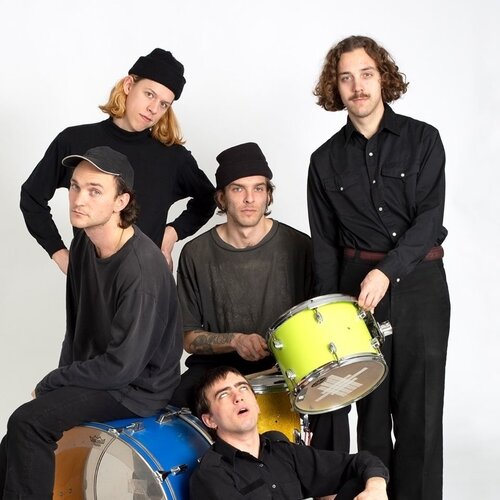
IN THIS PHOTO: IDLES/PHOTO CREDIT: Pooneh Ghana

includes some real gold! Not only is there music from Lady Gaga and Ariana Grande; there are selections from Tim Burgess, IDLES, Phoebe BridgersLucy Rose, HAIM, The 1975, Sia and Lianne La Havas. It has been another packed and interesting week for music and, if you require a soundtrack to get the weekend off to a good start, I have the playlist for you! It is going to be a bright and warm weekend, so I think it is a perfect time to acquaint yourself with the best tunes of the week and take them wherever you go. Despite the fact that we are in lockdown, it is amazing to see the quality of music coming through…

PHOTO CREDIT: Tim Burgess

WEEK after week.

ALL PHOTOS/IMAGES (unless credited otherwise): Artists

__________

Lady Gaga, Ariana Grande - Rain on Me

sss.jpg

IDLES - Mr. Motivator

PHOTO CREDIT: Lera Pentelute

Phoebe Bridgers I See You

aqq.jpg

Tim BurgessLucky Creatures

Orlando Weeks - Milk Breath

Lucy Rose - White Car

The 1975Tonight (I Wish I Was Your Boy)

Lianne La Havas - Can't Fight

HAIM - Don't Wanna

Khruangbin - So We Won't Forget

Bombay Bicycle Club Lose You to Love Me

Sia Together

The Mysterines I Win Every Time

PHOTO CREDIT: Shervin Lainez

Katie Von Schleicher - Nowhere

iii.jpg

We Are Scientists - I Cut My Own Hair

Fiona Harte - Auburn
saaa.jpg

Foster the People Lamb’s Wool

The Naked and FamousDeath

asaa.jpg

Tove Lo sadder badder cooler

PHOTO CREDIT: Alex Perkins

Carly Rae Jepsen This Is What They Say

>

Mariah the ScientistRIP

Nick Mulvey - Begin Again

Badly Drawn BoyBanana Skin Shoes

Nasty Cherry - I am King

Inhaler Falling In

Ellie GouldingPower

India Jordan Rave City

PHOTO CREDIT: Chris Sgroi

Matt Berninger - Serpentine Prison

Sinead Harnett Quarantine Queen

Steve Earle Union, God and Country

PHOTO CREDIT: OPD Brooks

Aidan Knight - Sixteen Stares

Marie Dahlstrom (ft. James Vickery) - I Don't Wanna Wake Up

Dream Wife - So When You Gonna…

Gia Woods NAIVE

Will Joseph Cook - Driverless Cars

FEATURE: New Order: Utilising T.V. Streaming to Raise Finance and Awareness for the Music Industry

FEATURE:


New Order

wwwww.jpg

PHOTO CREDIT: @thibaultpenin/Unsplash

Utilising T.V. Streaming to Raise Finance and Awareness for the Music Industry

___________

A few articles and bits of news…

qqqqqq.jpg

PHOTO CREDIT: @john_matychuk/Unsplash

have come out in the past few days that has made me think about the lack of music T.V. and, when we have streaming giants like Netflix, why do we not have a channel or show that helps raise finance for the industry. Right now, venues are struggling and, whilst the Music Venue Trust has their #SaveOurVenues campaign, a lot of venues are being threatened with permanent closure. Social media and music journalism are great, but so many music fans are either unaware of the campaign, or they assume that everything is okay. I think there should either be a dedicated channel for the arts that allows for greater exposure and awareness, or a show on a platform like Netflix. So many venues require funding, and I think a show that gives information, links and videos from venues would be more effective than various news reports and tweets from myriad venues. A station would be even better, but I think a daily show on Netflix, or some other platform would provide a central and essential source for all the music needs and developments happening. Another heartbreaking story that has arrived is the possible end of Q magazine. Here is what The Quietus reported:

Music magazines Q and Planet Rock could soon disappear from the shelves of newsagents after German-owned company Bauer Media announced a review of its portfolio of UK print titles.

The magazines are two of 10 print titles that are currently under review with Bauer Media saying that the coronavirus crisis is speeding up the shift of audiences and advertisers to online media. The company – which also owns UK radio stations such as Magic and Absolute – believes that maintaining its current portfolio of print magazines will not be possible beyond the COVID-19 pandemic. 

sssss.jpg

IMAGE CREDIT: Q

Following a review of its current portfolio, that will be carried out over the next month, Bauer is considering closing, selling, merging or moving to digital-only format the 10 named magazines. Q and Planet Rock are the only music-focused magazines under review.

"The pandemic and lockdown has further accelerated the trends already affecting the publishing industry," said Chris Duncan, the chief executive of UK Publishing at Bauer. "Bauer publishes nearly 100 magazines in the UK, and some titles that were already challenged, unfortunately, are not expected to be sustainable after the crisis. We must protect the long-term health of our business and ability to invest in future growth by re-shaping our portfolio".

I have been following the magazine since I was a child, and I got properly into music because of magazines like Q. I can understand that fewer people are buying the print edition, but I think a music show would help. There could be ongoing news about how Q are doing, and films made that look at how the magazine has changed through the years; some interviews with musicians and people who have worked at Q. I think the magazine will survive, but there are so many people that might have missed the news or are not sure how to best support Q. There would be many benefits to a music show on a streaming service. Think about the way Spotify treats artists and how little they are paid. Presenting that news and having a discussion laid out would better inform and motivate Spotify, and, in time, I’d like to think there will be real change where artists are paid depending on the quality of their music, rather than whether they are a mainstream act represented by a huge label.

xxxx.jpg

PHOTO CREDIT: @kushagrakevat/Unsplash

The idea of a music television show would not just be about fundraising, but I think the music industry is facing its toughest challenge ever, and there are so many people out there who want to help out. Conversations could take place, important information could be laid out, and there would be a huge portal where people can donate. Sara Quin of Tegan and Sara; Pop singer-songwriter Ella Eyre; James McGovern of The Murder Capital; Jeremy Pritchard, bassist of Manchester’s Everything Everything and the singer-songwriter Jack Garratt spoke with The Guardian about their time in lockdown and the challenges they face. I have selected a couple of questions-answers that caught my eye:

Lockdown has underlined that most musicians make their living from playing live, not from recorded music. How has the closure of all live venues for the foreseeable future affected you?

Jack Garratt: I’ve got an album coming out 12 June, so what do we do? It has inspired some really creative and interesting conversations but the fork in the road is a really big fork. Touring has completely dried up for the foreseeable future. Everything’s getting pushed until 2021, and even that’s a maybe. So not only is that promotion that I can’t do any more – the thing that I love doing – any revenue that I was going to make from shows, that’s just gone.

Sara Quin: We’re fucked, too. It’s not just about making money, it’s about that ecosystem of our agents, managers, band, crew, our creative collaborators, our merchandise business; they’re all so integrated and the engine is that we get on the bus and play for people. We see the pain of all the people who are working on commission for us, who rely on our contract work. We’re in emergency mode, thinking about: what if we never return to normal? Is there a normal we can build for our business that won’t require us going back to the way it was before?

kii.jpg

IN THIS PHOTO: Sara Quin (Tegan and Sara)/PHOTO CREDIT: FSG

Spotify has introduced a tip jar for artists – what are your thoughts? There has been a lot of talk about how unfair to artists the royalty system on streaming services is; is this the time to change it? If so, how?

Jack Garratt: do I bite cats in my spare time? No!

Garratt: It’s offensive to artists that are putting the music on that platform and it’s offensive to the consumer. It’s a platform owning up to the fact that there’s an issue, and the Band-Aid they are putting around that issue is to make it the consumer’s problem to fix it.

McGovern: It’s a load of fucking horseshit. It’s exactly what you’re saying: a PR cover-up for a situation where we’re not being paid clearly for having our music on their platform.

I have seen a lot of live-streamed gigs and, in fact, there has been a host of musical activity, including album listening parties and other interviews. I am not sure how to work it, but I think streaming gigs on Netflix on a dedicated show would offer fans a chance to connect on a bigger scree, maybe pay a ‘ticket price’, so there could be a virtual gig happening.

saaa.jpg

PHOTO CREDIT: @bukowski/Unsplash

That would allow artists to get some more funding whilst in lockdown, and it would sort of be like Jools Holland’s Later… show but with extra dimensions. I have long-argued why we need another music T.V. show. Jools Holland features mainly established artists, but there are a lot of underground acts who have had gigs cancelled who need exposure and a platform. Maybe it comes back to financing, but a mix of big and smaller artists could promote their music and play virtual gigs ‘together’. I am not suggesting a music T.V. show on a streaming platform would fix issues and ensure venues survive and artists are paid, but channels like BBC Four are being threatened, and with that loss would come a huge blow to the arts. So many people are not using their Netflix substitutions at the moment, or they feel like there is nothing on there for them. I would be inclined to get a Netflix subscription and donate to a kitty/various venues/musicians if there was a show/daily show where I could learn about everything happening in music at the moment, and have that balanced with some great gigs, documentaries, interviews and features. Not only could there be a chance to combine everything being reported on social media and on various sites, but it would be another music T.V. show that could mix the current and the classic – I also forgot to mention record stores struggling; a T.V. show could shine a light on them. I really hope, what with a crisis looming and the music industry struggling, that a Netflix-streamed music T.V. show…

PHOTO CREDIT: @glenncarstenspeters/Unsplash

COULD be a reality.

FEATURE: The Lockdown Playlist: Motown Jams

FEATURE:


The Lockdown Playlist

PHOTO CREDIT: @alekzanpowell/Unsplash

Motown Jams

___________

IN this Lockdown Playlist…

dddddd.jpg

PHOTO CREDIT: @lightrisephotography/Unsplash

I am concentrating on Motown and have compiled an assortment of some real classics. If you need something to up your mood and get you energised, then have a listen to these great songs. With these playlists, I have moved away from years and time periods, and I am spotlighting various genres and avenues of music. I was keen to explore Motown, as the scene is almost synonymous with upbeat songs that are tight, punchy and memorable. I have tried my best to mix in some of the biggest tracks with some that might not be all that well known – apologies if any obvious ones have been omitted! Enjoy this assortment of Motown cuts that should get you up, get you moving and energised and, whilst you’re doing that, get the voice…

PHOTO CREDIT: @jakobowens1/Unsplash

SINGING loud.

FEATURE: A Buyer’s Guide: Part Three: Joni Mitchell

FEATURE:


A Buyer’s Guide

Part Three: Joni Mitchell

___________

IN the third part…

zzzzzz.jpg

IN THIS PHOTO: Joni Mitchell in 2019/PHOTO CREDIT: Mark Seliger

of this feature, I wanted to feature a legendary artist who has inspired numerous other artists. Joni Mitchell is one of my favourite artists ever, and she has produced so many tremendous albums. If you are new to her or have not dipped into her catalogue in a  while, I have compiled a list of her essential albums that you need to own; one that is underrated and worth new respect, and her final/latest studio album – in addition to a definitive Joni Mitchell book. Have a look through the rundown, and I know you will discover some real gems! Joni Mitchell is a true musical genius, and it has been great celebrating…

xdd.jpg

IN THIS PHOTO: Joni Mitchell in 1968/PHOTO CREDIT: Jack Robinson/Hulton Archive/Getty Images

HER wonderful work.

_____________

The Four Essential Albums

Ladies of the Canyon

aaaa.jpg

Release Date: 2nd March, 1970

Labels: Reprise/Warner Bros.

Producer: Joni Mitchell

Standout Tracks: For Free/The Arrangement/Big Yellow Taxi

Buy: https://jonimitchell.com/Music/album.cfm?id=4

Stream: https://open.spotify.com/album/7JOdtLDLyXJIppDRB7kxr9

Review:

This wonderfully varied release shows a number of new tendencies in Joni Mitchell's work, some of which would come to fuller fruition on subsequent albums. "The Arrangement," "Rainy Night House," and "Woodstock" contain lengthy instrumental sections, presaging the extensive non-vocal stretches in later selections such as "Down to You" from Court and Spark. Jazz elements are noticeable in the wind solos of "For Free" and "Conversation," exhibiting an important influence that would extend as late as Mingus. The unusually poignant desolation of "The Arrangement" would surface more strongly in Blue. A number of the selections here ("Willy" and "Blue Boy") use piano rather than guitar accompaniment; arrangements here are often more colorful and complex than before, utilizing cello, clarinet, flute, saxophone, and percussion. Mitchell sings more clearly and expressively than on prior albums, most strikingly so on "Woodstock," her celebration of the pivotal 1960s New York rock festival. This number, given a haunting electric piano accompaniment, is sung in a gutsy, raw, soulful manner; the selection proves amply that pop music anthems don't all have to be loud production numbers. Songs here take many moods, ranging from the sunny, easygoing "Morning Morgantown" (a charming small-town portrait) to the nervously energetic "Conversation" (about a love triangle in the making) to the cryptically spooky "The Priest" (presenting the speaker's love for a Spartan man) to the sweetly sentimental classic "The Circle Game" (denoting the passage of time in touching terms) to the bouncy and vibrant single "Big Yellow Taxi" (with humorous lyrics on ecological matters) to the plummy, sumptuous title track (a celebration of creativity in all its manifestations). This album is yet another essential listen in Mitchell's recorded canon” – AllMusic

Choice Cut: Woodstock

Blue

Release Date: 22nd June, 1971

Label: Reprise

Producer: Joni Mitchell

Standout Tracks: Little Green/Blue/River

Buy: https://jonimitchell.com/Music/album.cfm?id=5

Stream: https://open.spotify.com/album/1vz94WpXDVYIEGja8cjFNa

Review:

About that follow-up: 1971's Blue is possibly the most gutting break-up album ever made. After Mitchell's relationship with Nash dissolved, she headed to Europe to lose the tether of her fame, eventually taking exile in a cave on the Greek island Crete. The trip would inspire the how-Joni-got-her-groove-back ditties "Carey" and "California". The album is suffused with melancholy for all that is missing: her daughter ("Little Green"), innocence ("The Last Time I Saw Richard"), and connection ("All I Want"). Mitchell bleeds diffidence and highlights it with spare notes plucked out on her Appalachian dulcimer. While her pals Neil Young, Leonard Cohen, and Laura Nyro were also pushing the singer-songwriter genre forward, none of them managed to stride the distance that Mitchell did here in a single album.

"Will you take me as I am/ Strung out on another man?" Mitchell pleads on "California". She was (in)famously strung out on other talents that were as mercurial as hers, fueling constant speculation as to whether this song was about Leonard Cohen, or that one about James Taylor or Nash or that puerile heartbreaker Jackson Browne. The year Mitchell issued Blue, an album that would be a landmark in any artist's career, Rolling Stone named her "Old Lady of the Year," a dismissal effectively saying her import was as a girlfriend or muse to the men around her more than as an artist in her own right. Worse still, they called her "Queen of El Lay," and offered a diagram of her supposed affairs and conquests. She'd made the best album of her career and in exchange she got slut-shamed in the biggest music magazine in America” – Pitchfork

Choice Cut: Carey

For the Roses

Release Date: November 1972

Label: Asylum 

Producer: Joni Mitchell

Standout Tracks: Banquet/For the Roses/Blonde in the Bleachers

Buy: https://jonimitchell.com/Music/album.cfm?id=6

Stream: https://open.spotify.com/album/1yyPagl5Z7wE6rmJoqv8wj

Review:

Joni’s lyrics are meaningful and self-reflective, like on ‘For The Roses’: “In some office sits a poet/And he trembles as he sings/And he asks some guy/To circulate his soul around/On your mark red ribbon runner.

Lyrically, she was pushing past contemporary pop and folk without giving in to female stereotypes surrounding “relationship songs” (or whatever you want to call them) in rock music. The defiant ‘Woman of Heart and Mind’ is an admission of personal flaws and at the same an ode to independence: “I’m looking for affection and respect, a little passion…you want stimulation, nothing more.

A quick look at online lists of 1972’s top chart hits should make us even more thankful for this album. There was the sticky patriotism of ‘American Pie’ and the excruciating electronic instrumental ‘Popcorn,’ which was covered by about a million different bands that year (why, why, WHY??) Amongst that ridiculousness Joni and Neil’s honesty, perhaps even naivety, of expression must’ve been refreshing. There were also Nilsson’s pukey/strangely-catchy ‘Without You,’ Derek & the Dominos’ great/self-indulgent ‘Layla’ and Young’s wonderful ‘Heart of Gold’. Shoot me for writing this, but all that manly philosophising about love and women and stuff can get annoying (yes, that reason for revisiting For The Roses is a tad biased). The boldness and brilliance of Joni’s lyricism should be considered in its own right, not simply categorised with Young, Dylan, etc. The way it recasts folk music in classical terms is beautiful, original, and…well, listen to the album…” – For Folk’s Sake

Choice Cut: You Turn Me On, I’m a Radio

The Hissing of Summer Lawns

ssaa.jpg

Release Date: November 1975

Label: Asylum 

Producer: Joni Mitchell

Standout Tracks: Edith and the Kingpin/The Hissing of Summer Lawns/Shadows and Light

Buy: https://jonimitchell.com/music/album.cfm?id=9

Stream: https://open.spotify.com/album/3gUlFM3azK6ZIkKz1zK7Nj

Review:

Mitchell never makes things simple. Nor needlessly complex. The music on these songs flows like water running downhill, switching this way or that not for the sake of it but because it must. Its course is unpredictable and ineluctable; once followed, it could not, you sense , have gone any other way. The same is true of the feelings and images it carries along. They are as plain and as complicated as the lives they invoke. So there is no easy dichotomy whereby women at liberty are happier than women trapped by men, or by themselves. Freedom has its own hazards. “Since I was seventeen/I’ve had no one over me,” snarls the narrator of ‘Don’t Interrupt The Sorrow’, the scene of a fierce and terse battle of the sexes in which ancient, Abrahamic patterns of domineering and resistance play out via the mores of the day. Religion clutches at everything. ‘Out of the fire like Catholic saints/Comes Scarlett and her deep complaint.” Woman as something wounded. Woman as something bloody and unbowed. Woman as something red, aflame and dangerous. This is ‘Shades of Scarlett Conquering’. A lambent piano ballad, invoking Gone With The Wind and depicting a creature of unblinking will: ‘It is not easy to be brave/Walking around in so much need... Cast iron and frail/With her impossibly gentle hands/and her blood-red fingernails.’ Mitchell unfolds the femme fatale from the inside, in the most delicate and ingenious reverse origami, and makes you quiver at the truth of it.

The Hissing Of Summer Lawns closes even more anomalously than it opens, with ‘Shadows And Light’, a breathtaking choral and synth meditation; a Gregorian chant made so modern that, after 45 years and countless hommages, it still sounds as if it is beaming in on a mainline from the future, in a steady rush of ideas and sound. Again, Mitchell pulls in and juxtaposes images, this time creating a gorgeously tempered aural collage. It is a song about meaning, about the futility of the binary, about the way meaning itself hides in shades and creases. It is among the most extraordinary four minutes in the history of popular music. You can take it as an epilogue for the album; a commentary on all that’s gone before; a guide to how to hear it. It certainly works that way. It also stands entirely alone. As, amid her hordes of disciples and imitators, does Joni Mitchell - and never in more enrapturing fashion than on this subtle marvel of an album” – The Quietus

Choice Cut: In France They Kiss on Main Street

The Underrated Gem

Clouds

Release Date: 1st May, 1969

Label: Reprise 

Producers: Joni Mitchell, Paul A. Rothchild

Standout Tracks: Tin Angel/Roses Blue/Shadows and Light

Buy: https://jonimitchell.com/music/album.cfm?id=3

Stream: https://open.spotify.com/album/03iFLgmgkLT7X5gnXVPID5

Review:

Clouds is a stark stunner, a great leap forward for Joni Mitchell. Vocals here are more forthright and assured than on her debut and exhibit a remarkable level of subtle expressiveness. Guitar alone is used in accompaniment, and the variety of playing approaches and sounds gotten here is most impressive. "The Fiddle and the Drum," a protest song that imaginatively compares the Vietnam-era warmongering U.S. government to a bitter friend, dispenses with instrumental accompaniment altogether. The sketches presented of lovers by turns depressive ("Tin Angel"), roguish ("That Song About the Midway"), and faithless ("The Gallery") are vividly memorable. Forthright lyrics about the unsureness of new love ("I Don't Know Where I Stand"), misuse of the occult ("Roses Blue"), and mental illness ("I Think I Understand") are very striking. Mitchell's classic singer/songwriter standards "Chelsea Morning" and "Both Sides Now" respectively receive energetically vibrant and warmly thoughtful performances. Imaginatively unusual and subtle harmonies abound here, never more so in her body of work than on the remarkable "Songs to Aging Children Come," which sets floridly impressionistic lyrics to a lovely tune that is supported by perhaps the most remarkably sophisticated chord sequence in all of pop music. Mitchell's riveting self-portrait on the album's cover is a further asset. This essential release is a must-listen.- and never in more enrapturing fashion than on this subtle marvel of an album” – AllMusic

Choice Cut: Chelsea Morning

The Latest/Final Album

Shine

Release Date: 25th September, 2007

Labels: Hear Music/Universal 

Producer: Joni Mitchell

Standout Tracks: One Week Last Summer/Bad Dreams/Shine

Buy: https://jonimitchell.com/music/album.cfm?id=28

Stream: https://open.spotify.com/album/2U5MjSQ07NGHV7rCLfSU6G

Review:

Meditative, graceful and becalmed are surprising adjectives, given the prevailing subject matter. Mitchell has said she was provoked out of retirement by the war on terror and looming ecological catastrophe, and a sense of impending doom is never far away. She's hardly the first artist in recent times to make with the End Is Nigh sign, but her response is the diametric opposite of the Arcade Fire's sturm-und-drang or Thom Yorke's anguished finger-pointing. In Hana she suggests we "tackle the beast alone with its tenacious teeth", and there's a sense of fight about the closing rewrite of Rudyard Kipling's If, but more often the tone is not so much one of defiance as a disquieting acceptance of fate. You hear it in the beautiful ballad If I Had A Heart in its chilling refrain of "bad dreams are good in the great plan", and in the echoing drift of the title track, which comes up with a litany of modern-day ills, but never raises its voice in anger.

The sense of an artist roused by the fear that we're all going to hell in a handcart, only to discover that it may be too late and there's nothing we can do to avert disaster, gives much of Shine its emotional heft.

Sanctimony is a condition to which the musical denizens of Laurel Canyon were always prone - in his twenties, Graham Nash was already loftily instructing the world how to Teach their Children - but the urge to wag fingers arises only once. There's a hint of I-told-you-so smugness about revisiting her 1970 eco-anthem Big Yellow Taxi, but that's not the reason the re-recording backfires. Listening to it, you notice there's a sparkiness about the lyric - "they took all the trees, put 'em in a tree museum" - noticeably absent elsewhere: This Place's "money makes the trees come down" suddenly sounds a bit clunky and laboured.

Ultimately, that's a minor quibble in the face of a strange, intoxicating and unsettling album, idiosyncratic enough to make you glad Joni Mitchell put her retirement on hold. Shine is an album worth spoiling the greatest flounce-out in rock history for” – The Guardian

Choice Cut: If I Had a Heart

The Joni Mitchell Book


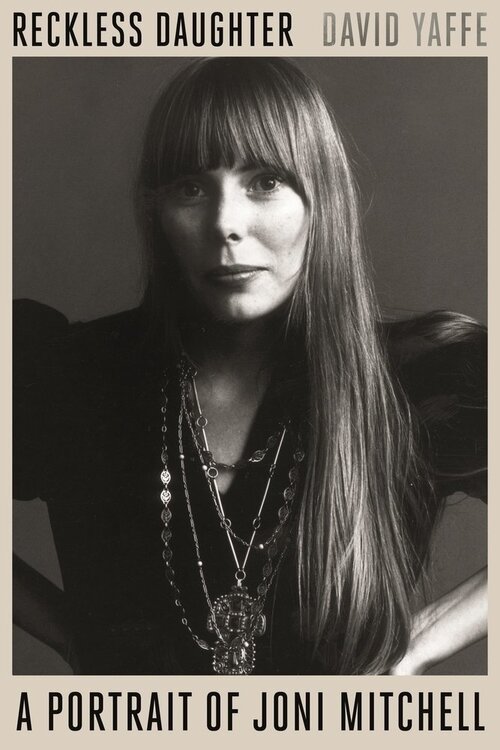
Reckless Daughter: A Protective Biography of Joni Mitchell

Author: David Yaffe

Publication Date: 13th June, 2017

Publisher: Sarah Crichton Books

Review:

Yaffe staunchly defends his subject from criticism; Rickie Lee Jones’s accusation that Mitchell “didn’t walk on the jazz side of life,” Yaffe writes, prompts an outraged rebuttal: “Rickie Lee Jones sang with a fake black accent. Wasn’t that pretentious?” Only at rare moments does the biographer let Mitchell’s dark side — evident, for example, in how pitiless she can be toward former lovers and spouses — speak for itself. Chuck Mitchell was a “major exploiter,” Leonard Cohen a “phony Buddhist” and “the high prince of envy.” Mitchell’s second husband, Larry Klein, was one of several “puffed-up dwarfs.” James Taylor “was incapable of affection. He was just a mess.”

Uncritical admiration can make “Reckless Daughter” seem like a 400-page fan letter, though one certainly prefers Yaffe’s approach to that of biographers who despise their subjects. Championing Mitchell, right or wrong, and trying to stay on her good side is not exactly the same as taking her seriously as a composer and performer. Ultimately, it hardly matters. The person who wrote and sang “Blue,” “Court and Spark” and “Hejira” doesn’t need protection from readers who, decades after those albums appeared, remember Mitchell’s songs. Anthems not only of restlessness and heartbreak but also of intelligence, insight and courage, they are tributes to the power of music to imprint itself indelibly on the consciousness of its listeners” – The New York Times

Buy: https://www.goodreads.com/book/show/31450894-reckless-daughter

FEATURE: Spotlight: Margaret Glaspy

FEATURE:


Spotlight

zx.jpg

Margaret Glaspy

___________

MANY people might not be aware…

of Margaret Glaspy and her music, but she is an artist that you definitely need in your life. Glaspy is based in New York, but she was born in Sacramento (in 1989) and grew up in California. As an artist, Glaspy was curious from a young age, where she learned the fiddle, guitar and trombone – she decided to focus on the guitar from the age of sixteen. Glaspy’s first L.P., 2016’s Emotions and Math, was released to acclaim, and she released Devotion, her latest album, very recently. Glaspy has released E.P.s and been busy through most of her career, but I think Devotion is the album that has introduced her music to many people who, until now, might have been unaware. I will come to that album in a minute, but I want to bring in an interview from 2015 where Glaspy spoke with Interview Magazine. There was a lot of anticipation around her music and, in the interview, Glaspy spoke about her early years and moving to New York; she spoke to the nature of the songs on Emotions and Math:

 “After attending the Berklee College of Music for one semester before dropping out, Glaspy spent time in Boston working and performing. In September 2010 she made the inevitable move to New York. “Since I was a tiny girl I knew I was going to live in New York,” she says. “It was a dream of mine. Living in Boston, it was so close. It just felt like, ‘Why not take the opportunity?'” After six years in the city spent babysitting and, at times performing two shows a week, she planned to release Emotions and Math via Bandcamp, but luckily, ATO Records picked up on her music and released the LP last month.

When we’d be around the campfire my family would all play together. We were a camping family when I was young. At home—I see it now as such a special environment—someone would be on the couch playing the guitar and someone else would pick one up and start strumming along. That was the vibe in the house.

I would argue [the songs are] not autobiographical or from my diary, only because I approach the whole songwriting process pretty objectively. I think that it’s really fun to hear people’s perspectives on the songs because often they’re argued as being straight from my life. A lot of them are kind of character studies or taking something I’ve seen a thousand times, honing in on it, and capturing it in a certain way”.

I have only recently discovered the music of Margaret Glaspy, but I have listened back to her older work and sort of caught up. I adore her voice and lyrical style; there is a rawness in her voice that is emphatic, whiskey-soaked and filled with emotion. Tracks such as You and I (from Emotions and Math) are full of kick and memorability. Glaspy, on her latest album, is more experimental and far-reaching, but she has retained so much of her sound. The best way to get a sense of who Glaspy is is to listen to her music. Devotion is a terrific album that I have been listening to for a few weeks now.

She spoke with Billboard about the artists that inspired her album, and the nature of her hugely accomplished voice came up:

Devotion doesn’t dwell on the world going up in flames so much as forging something beautiful -- and foreign -- from that fire. On 2016’s Emotions and Math, Glaspy, firmly rooted in the indie intersection of rock and folk, clutched a guitar and established herself as a talent to watch following her years at Boston’s Berklee College of Music and two self-released EPs. She toured in support of Emotions and Math for three years, and returning home to New York offered an opportunity to recalibrate and switch up her palette in the process.

Devotion is as experimental as it is classic, in that it builds on Glaspy’s desire to expand her multi-instrumentalist skill set and her lyrical profundity. From the shimmery major chords and unabashedly adoring choruses of “Without Him” and “Young Love” to the metallic clashes of “You’ve Got My Number” and the dizzying breakdown of “Consequences,” Devotion is a study in contrasts and cohesion: each song sounds further afield from Emotions and Math, yet every verse fortifies Glaspy’s voice and the vulnerability she chooses to embrace in life, love and a world gone mad.

Did any artist or outside inspiration leave a particularly strong imprint on Devotion?

I’d always been hip to Alexander McQueen, the designer, and I think that one thing that really pushed me was learning more about his life and his lineage. I started to watch a lot of his runway shows and got really into his clothing, his art, what he did in his lifetime. That inspired Devotion and made me want to shift directions a lot. I wanted to make music that was inspired by his clothing, and also wanted to make music that made sense of the clothes that he made, that you could wear them or even just look at them, and the music would make sense on some level. ... He had a sense of being able to mix a lot of unexpected mediums, and also had a real eye for the future. Sometimes the things that he was making felt like science fiction.

Of course, the things that I’m making, everything is very derivative of something I’ve heard, and you can’t help it -- that’s kind of the joy of music in a way, that you’re just going to be kind of recycling bits that you’ve got at some point. He inspired me to want to reach past what I’ve used before and try and make the things I was hearing instead of just recycling all the things I’ve used in the past. So, yeah -- a lot of different angles in the way I was inspired by his aesthetic. He was also just a brilliant, brilliant man who was a transcendent artist, for sure, that made me want to just do my best.

Your voice is crystal clear, and a potent messenger, throughout Devotion:It’s romantic and loving in some songs, but downright devastating in others. Which songs best demonstrate the challenges you set for yourself with Devotion?

I think one of the biggest songs that was an orienter for the record was probably “Killing What Keeps Us Alive.” The demo feels very much so like the record version -- synthesized vocals, and also, I had written a short story that was the inspiration for that song. All of a sudden it put me on the map, in my brain, of what the record was about. That was a song that I think challenged me to make a lot of different elements, production-wise, lyrically, be vulnerable, and also at the same time kind of command the experience.

When you start to work in a different medium or in ways that you haven’t, you’re vulnerable anyway, because you’re kind of off your game -- I’m not just playing the guitar the whole time or trying to construct music the way I have been. I felt a little bit like, “Whoa, I’m making myself vulnerable, consciously.”

In that process of making that song, I felt like I was doing things that I hadn’t done before and I had to power through it and make some decisions in order to get to that spot. When I did, that was the first time that I had felt proud of it: I had written a lot of s---ty songs before that, that poked at it, and that was the first success of me finding a sonic and lyrical footprint that made sense together all in one fell swoop”.

It is amazing to think about what Glaspy has mixed into her music since Emotions and Math. Her confidence has grown and, whilst many great artists expand and diversify as their careers go on, I think Glaspy has made some big steps on Devotion. I have seen some reviews that were a little underwhelming; some sources that were not as blown away by Devotion as they were with Emotions and Math. I think Devotion is an album you need to spend some time with and let it sink in. In their review, Rolling Stone had this to say:

Margaret Glaspy’s second album begins with a brief jolt of vocoder that recalls the statement-making opening to “Oh, What a World,” a highlight from Kacey Musgraves’ 2018 album Golden Hour. Musgraves’ synth-country blockbuster provided a template for how roots-based songwriters can strive for modern pop ambition without sacrificing songcraft.

Devotion, the latest from New York singer-songwriter Glaspy, is one of the most fully-formed efforts to come out in the wake of Golden Hour. Glaspy doesn’t tear down so much expand and build upon the warm Seventies folk-rock of her wonderful 2016 debut Emotions + Math, incorporating drum loops and processed vocals into an effortless mix of swooping indie-pop (“Without Him”), industrial noise (“What’s the Point”) and Ben Folds-piano sing-alongs (“Vicious”).

“Anybody with a pulse, or even half a heart, has a reason to be foaming at the mouth,” Glaspy sings on “Angry Again, a forceful Fifties-style torch ballad about being paralyzed by one’s emotions (in this case, outrage). That raw track feels like an aberration from Glaspy, who usually writes with uncommon emotional dexterity and precision. When Glaspy asks, “who’s the clown, and who’s the savior?” on the bouncy “Stay With Me,” the song’s refrain pokes fun at the idea that any such categorization could ever be so black and white: “Me/You/Me/You/Me/You”.

If you have not heard of Margret Glaspy, I would recommend you check her out and go and follow her on social media. Devotion is her latest statement, and I am sure we will see a lot more music from her in the coming years. Glaspy’s latest album is a stunning work that boasts…

A wonderful blend of sounds.

________________

Follow Margaret Glaspy

FEATURE: Nightmares and Awakenings: Kate Bush’s The Dreaming

FEATURE:


Nightmares and Awakenings

ssss.jpg

Kate Bush’s The Dreaming

___________

I was poised and ready for it to come around…

aaaaa.jpg

PHOTO CREDIT: Guido Harari

because, at the moment, The Guardian are running a series where they focus on a big artist and give a buyer’s guide: where the best place to start with them is; the albums you need to buy, in addition to some suggested reading. Kate Bush was up on the block, and I knew that whatever was written about her would draw some discussion and division. The article is pretty interesting, as the album they recommended to start with is The Dreaming:

When Big Boi from Outkast said that The Dreaming, the worst performing of Kate Bush’s 10 studio albums, was “a good place to start” in her catalogue, he was not wrong. Her previous three releases had established the high-octane prog-pop and catsuited hand-wafting image that still lingers today. But, though it seems ludicrous considering her legendary status now, Bush still wasn’t widely acclaimed by then. Most of the men writing about her would describe her looks or her tits, or ask her band whether she ever loses her temper with them, before acknowledging her songwriting craft. Even despite achieving a UK No 1 with Wuthering Heights at 19, her role as the architect of her own musical universe went largely unrecognised.

Faced with such idiocy, it’s little wonder that Bush secreted herself away and came up with something as deranged as The Dreaming. This isn’t the album that took her stratospheric (that was its follow-up, Hounds of Love) but it’s her Willy Wonka-sized adventure in sound; the self-sufficient cocoon that turned her, some say, from musician into “artiste”. The Dreaming was the first record that she produced entirely herself, which she would continue to do, using an expensive Fairlight sampler to dazzling effect. Listening to it now, it sounds like Bush unbound, unleashing her frustration like never before. 

23.jpg

IN THIS PHOTO: Kate Bush with a Fairlight CMI in 1982

These are brilliant rackets where her ingenious use of sampling (smashed marbles! Twittering birds!) defies expectation and her voice pole-vaults to new heights. The intricacy is overwhelming and thrilling. Opening track Sat in Your Lap is one of her best ever, foreshadowing Running Up That Hill with its gated drum gallop, as she screeches how people think that a knob equals knowledge, the rhythm pushing and pulling with kinetic energy. Every song after comes like a shock: the Artful Dodger oompah-pah of There Goes a Tenner, the guttural howling of “I am aliiiiive!” on the onyx slink of Pull Out the Pin to rival any hair-metaller’s, a title track about aborigines having their homeland stolen that unfortunately has Rolf Harris on didgeridoo, a chorus of donkeys on the closing song …

Bush has called The Dreaming her “mad” album, amused that many, like Björk, have called it their favourite. But perhaps she shouldn’t be so surprised: in the decades since, it’s been reappraised as technically pioneering – especially poignant because women in the studio are still not being given due credit compared to their male peers. And, once you’ve got through it, the rest of her oeuvre will land on your ears like tufty down”.

It was obvious that the selection of The Dreaming as the best Kate Bush starting place would draw some shock and reaction. Most people would say, logically, that The Kick Inside (her debut album) or Hounds of Love (1985) would be the best starting place, as they are quite accessible and popular.

A lot of people expressed consternation regarding The Dreaming being highlighted as the one to investigate for new fans, but I think it is an album that remains underrated and wonderful. I think most of the negativity towards The Dreaming was less to do with quality and more to do with its accessibility. Logic would dictate one starts at the beginning and sort of works their way to The Dreaming, much like Kate Bush did as an artist. The Dreaming was released in 1982, and Bush’s fourth album peaked at number-three in the charts. Although five singles were released from the album, they were less commercially successful (overall) than her work on The Kick Inside, Lionheart and Never for Ever – nothing as instantly catchy as Babooshka or Wuthering Heights. Since 1982, The Dreaming has risen in the estimation of critics – many mention it in their list of the 1980s’ best albums. I am not sure why The Dreaming did not get a bigger reaction when it was released. Bush produced The Dreaming alone, and she created her most diverse and experimental album yet. The Fairlight CMI was a technological asset that Bush used on Never for Ever and would extensively deploy through The Dreaming. As such, her sound palette moved further away from the piano; Bush was pushing her limits and taking her music in new directions – much more ambitious and adventurous than anything she had ever created.

IN THIS PHOTO: Kate Bush signing copies of The Dreaming in 1982

I can appreciate how some critics might have felt like the lack of commercial hits signalled a defeat. Opinion has shifted quite a bit, and many fans and artists rank The Dreaming as their favourite Kate Bush album. This is AllMusic’s take on the album:

Four albums into her burgeoning career, Kate Bush's The Dreaming is a theatrical and abstract piece of work, as well as Bush's first effort in the production seat. She throws herself in head first, incorporating various vocal loops, sometimes campy, but always romantic and inquisitive of emotion. She's angry and pensive throughout the entire album, typically poetic while pushing around the notions of a male-dominated world. However, Kate Bush is a daydreamer. Unfortunately, The Dreaming, with all it's intricate mystical beauty, isn't fully embraced compared to her later work. Album opener "Sat in Your Lap" is a frightening slight on individual intellect, with a booming chorus echoing over throbbing percussion and a butchered brass section. "Leave It Open" is goth-like with Bush's dark brooding, which is a suspending scale of vocalic laments, but it's the vivacious and moody "Get Out of My House" that truly brings Bush's many talents for art and music to the forefront. It prances with dripping piano drops and gritty guitar, and the violent rage felt as she screams "Slamming," sparking a fury similar to what Tori Amos later ignited during her inception throughout the '90s. Not one to be in fear of fear, The Dreaming is one of Kate Bush's underrated achievements in depicting her own visions of love, relationships, and role play, not to mention a brilliant predecessor to the charming beauty of 1985's Hounds of Love”.

Whilst many argue over the best Kate Bush albums, I do think that some new appreciation should go the way of The Dreaming. Opening track Sat in Your Lap is one of Bush’s finer songs, and it reached the top-twenty. The first half of the album is impressively broad, and there is that urgent and tribal opening salvo; There Goes a Tenner concerns a bank robbery and finds Bush cracking out her best cockney/mockney accent. Pull Out the Pin sports one of Bush’s most impassioned vocals, whilst Leave It Open has this amazing composition that sort of spins the head! The Dreaming’s title track finds Kate Bush inhabiting an Australian accent, whilst All the Love is this gorgeous and affecting song. The album switches between more energetic and layered songs and these very touching and moving songs. Bush found this balance, not only in terms of dynamics and tone, but lyrical content – from the political to matters of the heart, The Dreaming is overloaded with brilliance! The album’s final two tracks, Houdini and Get Out of My House, between them, cover The Shining-inspired possession and an escapologist faced with the peril of drowning. Houdini mixes beautiful strings and a rare romance with a well-known subject in the form of Harry Houdini, whereas Get Out of My House propels and rumbles as Bush (aided by Paul Hardiman) brays and eyores with the best of them!

I would rank The Dreaming in my top-five favourite Bush albums, and I think a lot of the problems stems from the way many perceived it back in 1982: as this album that was too far from the mainstream which lacked ready singles, shafts of light and the same sort of appeal that was evident in earlier albums. It is a challenging album but, to me, one of her most rewarding. This sort of brings us to the matter as to whether The Dreaming is the best place to start regarding Kate Bush’s albums. I would say that, if one were new to Bush or was making someone aware of her music, I would say to start out with The Kick Inside and work that way – doing it chronologically seems like the best approach. I do think that The Guardian’s article raised interesting debate. I would disagree with those who said The Dreaming should be overlooked – there were a few – or anyone who suggested it is too out-there to be lovable. What I would say is that this album – in addition to Bush’s entire cannon – warrants fresh ears and study. I think The Dreaming has gained a lot of fresh respect since 1982, but it is an album that demands some serious attention. I love all the madness and chaos and how one can get buried in something intense; the album then offers up something absolutely beautiful and moving. It is a thrilling, intoxicating and varied listen, and I am still amazed that Bush managed to pack so much into the album! I have covered The Dreaming before but, in the wake of fresh focus (from The Guardian), I wanted to have my say. If you have not experienced The Dreaming before, please do spend some time listening to…      

A truly masterful work.

FEATURE: Music Is Our Radar: Mental Health Awareness Week 2020

FEATURE:

Music Is Our Radar

PHOTO CREDIT: @evphotocinema/Unsplash

Mental Health Awareness Week 2020

___________

THIS week is an important one…

PHOTO CREDIT: @jblesly/Unsplash

as it is Mental Health Awareness Week. Hosted by the Mental Health Foundation, Mental Health Awareness Week takes place from 18th-24th May, 2020. The theme is kindness. I think spreading kindness is important now more than ever, as many of us are seeing our mental-health take a bit of a battering. I think that things will improve when we are out, but things are quite strained right now. This week, more than ever, I think music is going to play a huge role. It is known that music and happiness are linked.

Music can lift the spirits. But science has now shown it has a physical effect on our bodies, too. As we listen, music works on the autonomic nervous system, which is responsible for controlling blood pressure and heartbeat, as well as the limbic system, which is responsible for feelings and emotions. A review of 23 studies by Bradt & Dileo (in 2009) involving almost 1,500 people found music helped to reduce blood pressure, heart rate and anxiety in heart disease patients.

Music can benefit psychological wellbeing, too. Research from the University of Missouri published in The Journal Of Positive Psychology found for the first time, that upbeat music can have a very positive effect on our wellbeing.

‘People were successful at raising their positive mood as long as the music they listened to was happy and upbeat,’ said Dr Yuna Ferguson, the lead author.

And participating in music-making can also increase our happiness, and help us to get on better with others. A 2013 Finnish study of 1,000 pupils who took singing classes found they reported higher satisfaction at school in almost every area.

Lead researcher Päivi-Sisko Eerola said ‘synchronising’ with each other may ‘even make people like each other more than before’”.

xxxx.jpg

PHOTO CREDIT: @austinloveing/Unsplash

Although we can exercise outside as much as we need, we are not able to go to the gym, but the fact that the weather is brighter and warmer means that many of us are listening to music whilst walking and running. I think that, for many of us, music is playing a bigger role than it did pre-lockdown. Not only are there streamed gigs and album listening parties; I think we are all streaming more and using music as a bit of a lifeline. The power of music is different to everyone but, for me, I have been listening back to favourite tracks to get a nostalgia boost and blast of warmth. I also digging out new artists and digging deeper than I have ever done. Maybe the tangible benefits of live gigs are not going to be felt for quite a few months, but we are able to connect with one another online and share music. Recent statistics relating to the effect and prolificacy of mental illness makes for alarming reading: 

  • Mental health problems are one of the main causes of the overall disease burden worldwide.1

  • Mental health and behavioural problems (e.g. depression, anxiety and drug use) are reported to be the primary drivers of disability worldwide, causing over 40 million years of disability in 20 to 29-year-olds.2

  • Major depression is thought to be the second leading cause of disability worldwide and a major contributor to the burden of suicide and ischemic heart disease.3

  • It is estimated that 1 in 6 people in the past week experienced a common mental health problem4

zz.jpg

PHOTO CREDIT: @benwhitephotography/Unsplash

  1. Vos, T., et al. (2013) Global, regional, and national incidence, prevalence, and years lived with disability for 301 acute and chronic diseases and injuries in 188 countries, 1990–2013: a systematic analysis for the Global Burden of Disease Study. The Lancet. 386 (9995). pp. 743-800.

  2. Lozano, R. et al. (2012) Global and regional mortality from 235 causes of death for 20 age groups in 1990 and 2010. a systematic analysis for the global burden of disease study 2010. The Lancet. 380(9859), pp. 2095–2128.

  3. Whiteford, H. A. et al. (2013) Global burden of disease attributable to mental and substance use disorders: findings from the Global Burden of Disease Study 2010. The Lancet. 382 (9904). pp. 1575-1586.

  4. McManus S, Bebbington P, Jenkins R, Brugha T. (eds.) (2016) Mental health and wellbeing in England: Adult Psychiatric Morbidity Survey 2014. Leeds: NHS Digital. Available at: http://content.digital.nhs.uk/catalogue/PUB21748/apms-2014-full-rpt.pdf [Accesed 5 October 2016]

I am not sure how much worse lockdown has made the plight of mental illness, but I think it is brilliant how we are all together and, even though times are bad, we are able to communicate, share music and still access so many brilliant tracks and albums. I want to keep this fairly short but, really, this feature is for everyone. There will be those who are using music as a shelter and balm, whereas others are finding it compatible with exercise and good physical health.

aaaa.jpg

PHOTO CREDIT: @jontyson/Unsplash

For me, I think music can provide inspiration and a sense of hope. It is important to know that we are not alone; this is especially true in the world of music. An article that was published/updated last year showed the multiple benefits of music on mental health and memory:

It has long been suggested that music can help reduce or manage stress. Consider the trend centered on meditative music created to soothe the mind and inducing relaxation. Fortunately, this is one trend supported by research. Listening to music can be an effective way to cope with stress.

In one 2013 study, participants took part in one of three conditions before being exposed to a stressor and then taking a psychosocial stress test. Some participants listened to relaxing music, others listened to the sound of rippling water, and the rest received no auditory stimulation.

The results suggested that listening to music had an impact on the human stress response, particularly the autonomic nervous system. Those who had listened to music tended to recover more quickly following a stressor.

One of the most surprising psychological benefits of music is that it might be a helpful weight-loss tool. If you are trying to lose weight, listening to mellow music and dimming the lights might help you achieve your goals.

According to one study, people who ate at low-lit restaurants where soft music was played consumed 18 percent less food than those who ate in other restaurants.

The researchers suggest that music and lighting help create a more relaxed setting. Since the participants were more relaxed and comfortable, they may have consumed their food more slowly and have been more aware of when they began to feel full.

poopop.jpg

PHOTO CREDIT: @annhwa/Unsplash

Insomnia is a serious problem that affects people of all age groups. While there are many approaches to treating this problem as well as other common sleep disorders, research has demonstrated that listening to relaxing classical music can be a safe, effective, and affordable remedy.​

In a study looking at college students, participants listened to classical music, an audiobook, or nothing at all. One group listened to 45 minutes of relaxing classical music while another group listened to an audiobook at bedtime for three weeks. Researchers assessed sleep quality both before and after the intervention.

The study found that participants who had listened to music had significantly better sleep quality than those who had listened to the audiobook or received no intervention.

Another important psychological benefit of music lies in its ability to boost performance. While people have a preferred step frequency when walking and running, scientists have discovered that the addition of a strong, rhythmic beat, such as fast-paced musical track, could inspire people to pick up the pace. Runners are not only able to run faster while listening to music; they also feel more motivated to stick with it and display greater endurance.

According to researcher Costas Karageorghis of Brunel University, the ideal tempo for workout music is somewhere between 125 and 140 beats per minute.

While research has found that synchronizing body movements to music can lead to better performance and increased stamina, the effect tends to be the most pronounced in cases of low to moderate intensity exercise. In other words, the average person is more likely to reap the rewards of listening to music more than a professional athlete might

PHOTO CREDIT: @andriklangfield/Unsplash

There are so many ways music can help us at the moment, but I felt it was important to write a feature during Mental Health Awareness Week, as there will be many people out there struggling. Music is not a magical cure, but I feel there are numerous benefits regarding listening to more music and trying to connect with people online through music. Whether you are listening to radio, checking out a great music podcast, or watching a streamed gig, having that sense of company and companionship is very valuable and powerful. If you do need to talk to someone if your mental-health declines, The Samaritans are available on 116 123 twenty-four hours a day. It is important that we take care of ourselves but, over the past couple of months, music has been this bedrock and endless source of uplift for many people. From uplifting playlists on Spotify to online record stores where you can order albums, make sure this week is one fore improving mental-health through music. For me and so many people in the world, music is having a positive effect on our mental-health, and it also…

aaaa.jpg

PHOTO CREDIT: @wackomac007/Unsplash

MEANS lockdown is easier to bear.

FEATURE: Vinyl Corner: The Streets – Original Pirate Material

FEATURE:


Vinyl Corner

The Streets – Original Pirate Material

___________

FOR this edition of Vinyl Corner…

IN THIS PHOTO: Mike Skinner (The Streets) in 2002/PHOTO CREDIT: Harry Borden

I was keen to feature The Streets’ Original Pirate Material. I have been a huge fan of The Streets since that album came out in 2002 – it must rank alongside the best debut albums ever released. It is a wonderful immersive and accomplished album from Mike Skinner (The Streets). If you can get it on vinyl then do so, as it is truly wonderful. The album was mostly recorded in a South London flat Skinner was renting at the time, and it was put together using a laptop and digital audio software. Mixing influences of U.K. Garage and U.S. Hip-Hop, it was not a surprise that Original Pirate Material was a big success. Skinner’s incredible lyrics and lo-fi songs get in the head and stay in the heart. Singles such as Has It Come to This? and Let’s Push Things Forward are classics that sound incredible nearly twenty years after the album’s release. One can hear the influence of American Hip-Hop and Skinner himself stated how groups like Wu-Tang Clan were big influences. The lyrics and vibe of the album, mind, puts us on the London streets; in cafes and settings that are distinctly British. Skinner’s main drive was to incorporate the emerging and rising British Garage scene of the late-’90s, and make the album genuine. He could not well discuss the same sort of themes you’d hear in Hip-Hop: boasting about wealth and trying to be American. A flash and braggadocio-laden album would not have played well.

Original Pirate Material is full of confidence, but it is much humbler and more grounded than a lot of Hip-Hop records. I think it is the relatability of the album that makes it so enduring. I do think those who have not experienced Original Pirate Material should snap it up on vinyl. Although Skinner followed the album with the immense A Grand Don’t Come for Free (2004), I still think his debut is his finest moment. The reviews for Original Pirate Material – with very few exceptions – were hugely positive. This is AllMusic’s take on one of the finest albums from the first decade of the twenty-first century:

When Streets tracks first appeared in DJ sets and on garage mix albums circa 2000, they made for an interesting change of pace; instead of hyper-speed ragga chatting or candy-coated divas (or both), listeners heard banging tracks hosted by a strangely conversational bloke with a mock cockney accent and a half-singing, half-rapping delivery. It was Mike Skinner, producer and MC, the half-clued-up, half-clueless voice behind club hits "Has It Come to This?" and "Let's Push Things Forward." Facing an entire full-length of Streets tracks hardly sounded like a pleasant prospect, but Skinner's debut, Original Pirate Material, is an excellent listen -- much better than the heavy-handed hype would make you think.

Unlike most garage LPs, it's certainly not a substitute for a night out; it's more a statement on modern-day British youth, complete with all the references to Playstations, Indian takeaway, and copious amounts of cannabis you'd expect. Skinner also has a refreshing way of writing songs, not tracks, that immediately distinguishes him from most in the garage scene. True, describing his delivery as rapping would be giving an undeserved compliment (you surely wouldn't hear any American rappers dropping bombs like this line: "I wholeheartedly agree with your viewpoint"). Still, nearly every song here succeeds wildly, first place (after the hits) going to "The Irony of It All," on which Skinner and a stereotypical British lout go back and forth "debating" the merits of weed and lager, respectively (Skinner's meek, agreeable commentary increasingly, and hilariously, causes "Terry" to go off the edge). The production is also excellent; "Let's Push Things Forward" is all lurching ragga flow, with a one-note organ line and drunken trumpets barely pushing the chorus forward. "Sharp Darts" and "Too Much Brandy" have short, brutal tech lines driving them, and really don't need any more for maximum impact. Though club-phobic listeners may find it difficult placing Skinner as just the latest dot along a line connecting quintessentially British musicians/humorists/social critics Nöel Coward, the Kinks, Ian Dury, the Jam, the Specials, and Happy Mondays, Original Pirate Material is a rare garage album: that is, one with a shelf life beyond six months”. 

In this review, NME were keen to praise an album from a very special British talent who was capturing the attention of so many different people:

What we’re dealing with here is an album that owes a lot to garage, but also quite a lot to the all-night garage, too. By turns dark, funny and heartbreaking, the songs on ‘Original Pirate Material’ are snapshots of ordinary life as a young midlands resident, set to innovative two-step production: tales of love, going out, being skint, getting drunk (there’s a lot of this – sometimes it’s a surprise Skinner has called himself Streets and not The Coach and Horses), and eating chips. It’s Streets by name, and streets by nature, and it’s great.

The single ‘Has It Come To This?’ may have given you the idea already, but there’s an incredible strength of character to Streets. It’s small wonder that Mike Skinner presently finds himself feeling the love of the people (the single reached number 18), but not of garage’s more established crews – he sounds nothing like them, and he’s making the isolation sound splendid.

There’s the voice, of course, upfront in the mix as if this were a spoken-word record, but what it’s saying is better still. The heartbreaking ‘It’s Too Late’ is a musical highpoint and tearful updating of [a]Specials[/a], but includes the line: ‘We first met through a shared view/She loved me, and I did too‘. Elsewhere there’s the heavy hip-hop of ‘Sharp Darts’, and Specials-like ‘Same Old Thing’, casting an eye over the late night takeaway scene to further smash the urban mould. As he says on ‘Let’s Push Things Forward’, ‘this ain’t your archetypal street sound’, and it’s an admirable mission statement.

Because the sound of the streets is too often like an episode of ‘The Bill’ – hard hitting and ‘real’, certainly but without any of the stupidity, joy and occasional moments of beauty that you’ll find in here. As in records, as in life – you’re simply much poorer if you never get a chance to experience it”.

I will wrap things up soon, but I wanted to bring in an article (from 2017) from FADER published to mark the fifteenth anniversary of The Streets’ Original Pirate Material. It is a testament to the strength and diversity of Original Pirate Material that it has resonated so far and has made an impact on so many people. The feature brought in a range of artists and journalists to give their take on the album. I have selected a couple of extracts:

Rob Mitchum, journalist

In 2002, the nuances of British electronic and hip-hop culture went way over your typical American music critic’s head — which is my lame excuse for wildly misinterpreting Original Pirate Material when reviewing the album for Pitchfork that year. Since then we’ve had grime and dubstep to put U.K. garage in retrospective context. But I was pleased to discover Original Pirate Material still sounds bonkers 15 years later. Tracks like “Don’t Mug Yourself” and “Sharp Darts” are like head-on car collisions that somehow build a motorcycle — there’s no way these combinations of beat and flow should work, but they do. Mike Skinner was also ridiculously adept at mixing the grand and the mundane, with severe, ragged orchestra loops scoring the most minute of observations. “Weak Become Heroes” might still be the most accurate song about raves in existence, with a woozy pulse, a relentless, wavy piano loop, and stream-of-consciousness imagery detailed enough to trigger flashbacks. Call it first-timer luck or genius, but The Streets’s sound aged a lot better than its genre labels and clueless reviewers”.

Kojey Radical, artist

I remember hearing [Original Pirate Material] for the first time and thinking, This feels like the perfect medium between garage culture and indie music. It was like the perfect soundtrack for not knowing what you want to listen to. Hearing “Stay Positive” in [2006 U.K. film] Kidulthood confirmed it was the soundtrack for growing up in London and marrying all the cultures that you come across. I’m from east London and the way [Skinner] spoke reminded me of just going to a cafe on Roman Road and speaking with the people there. Lyrical rap can feel daunting, but Mike Skinner’s approach removed all that tension in understanding lyrics, and made it sound like a conversation. (As told to Jacob Roy.)”.

If you need album suggestions, then I will point you the way of The Streets’ Original Pirate Material, as it is a remarkable record. You can also stream it, and however you do it, marvel in the skill and genius of Mike Skinner! It is one of my favourite albums from the past twenty years, and it is one that never sounds old or boring. Without further ado, make sure you give this remarkable album…

SOME serious attention!

FEATURE: The Lockdown Playlist: Boybands and Girl Groups

FEATURE:


The Lockdown Playlist

PHOTO CREDIT: @thefakebhogra/Unsplash

Boybands and Girl Groups

___________

THROUGH various parts…

qwww.jpg

IN THIS PHOTO: Take That photographed in 1992/PHOTO CREDIT: Tim Roney/Getty Images

of this feature, I have covered quite a bit of music! Taking in some huge U.K. hits, I have now headed away from something more general and am focusing on different aspects of music. In this edition of The Lockdown Playlist, I am focusing on boybands and girl groups. These are types of groups that do not exist in the same way now as they did years ago, and it is a shame. I think boy and girl groups get a bad rap or do not get the sort of respect they deserve. This playlist collates some crackers that, hopefully, will appeal to a wide range of people – there are going to be bands I have missed out and apologise for any omission! Enjoy this playlist of crackers that should help get…

aaaaa.jpg

IN THIS PHOTO: Destiny’s Child/PHOTO CREDIT: Dave Hogan/Hulton Archive

THE energy levels up.

FEATURE: Never Going Back Again: Will We Hear Another Fleetwood Mac Album?

FEATURE:


Never Going Back Again

qaa.jpg

IN THIS PHOTO: Fleetwood Mac in 2019 (L-R: Mike Campbell, Stevie Nicks, Neil Finn, Mick Fleetwood, Christine McVie and John McVie/PHOTO CREDIT: Press

Will We Hear Another Fleetwood Mac Album?

___________

THE past few years…

1aa.jpg

IN THIS PHOTO: Fleetwood Mac in the 1970s with Lindsey Buckingham (far right)

has been a pretty eventful and changeable one for Fleetwood Mac. Long-time member Lindsey Buckingham was fired from the band in 2018 and he sued the band off of the back of it. I bring this subject up because, on 11th July, their eponymous album turns forty-five. It was the first Fleetwood Mac album to feature Lindsey Buckingham and Stevie Nicks, and songs like Rhiannon and Landslide became classic pretty soon. Former Tom Petty and the Heartbreakers guitarist Mike Campbell and Neil Finn of Crowded House have replaced Buckingham, and the newly-rearranged band have been touring a bit. Right now, although the band have to wait until they can get back on the road, it makes me wonder whether they are considering an album. The last studio album, Say You Will, was released in 2003 and gained some positive reviews. I want to bring in an interview from The Independent published last year, where drummer Mick Fleetwood discussed the endurance of Fleetwood Mac; the situation involving Buckingham’s departure was also raised:

I think we were damned lucky that our music never went down the drain because we went down the drain,” the 71-year-old drummer says now, “and I think in truth there are moments where you could have said we got pretty close, you know.

“Cocaine was everywhere, people who worked in banks [used it]. Personally, I had a run on that lifestyle, but fortunately, I didn’t get into any other type of drug that would have been more damaging – I don’t even know why, but I’m very thankful. Brandy and cocaine and beer,” he says, naming his poisons, as he describes the 20 years of “high-powered lunacy” that he put his body through. “That lifestyle became something that had to come to an end… hopefully, you come out of it with your trousers still on, and not taken out in a plastic bag.”

The tension between Nicks and Buckingham though was intense, and famously led to a violent confrontation in 1987, in which Buckingham reportedly tried to choke her over a car bonnet. “That whole situation is for Stevie and Lindsey to answer about, but it’s no secret that their journey has been volatile in emotional terms,” Fleetwood says.

Buckingham told Rolling Stone in October that he was given a message that “Stevie never wants to appear on a stage with you again” after he “smirked” during a thank you speech that she gave at a charity concert and claimed that she had given a “him or me” ultimatum to the rest of the band. Other reports suggested that Buckingham’s request to take three or four months off to go on a solo tour had been part of the decision. He took legal action against the group after being asked to leave, but in December it was reported that this had been settled, which may be why Fleetwood doesn’t want to discuss the issue”.

It is a shame ties have been cut with Buckingham, but with Christine McVie, Stevie Nicks, John McVie and Mick Fleetwood still going strong, I think something magic could happen if the band got back in the studio. As much as I love all of the members of Fleetwood Mac, I have an incredibly soft spot for Stevie Nicks!

I fell for her voice when I heard it on Fleetwood Mac’s 1975 album when I was a child (in the 1990s); I hold Rumours up as one of my favourite albums, and Dreams is my favourite song from that album. I think Nicks adds something magical to the mix, and I hope to see Fleetwood Mac perform one day. There has been speculation that they will get into the studio, but I think the main objective of the band post-Buckingham was to get on the road and have Campbell and Finn cut their teeth in the new line-up. Although my favourite period for Fleetwood Mac was 1975-1987, I did really love Say You Will. Now that we are in lockdown, many people are looking ahead to see which artists will put out albums. We all have out dream list of the ones we want to hear. Some speak of Fleetwood Mac and a new album, but I personally would jump at the chance to hear new material from them. This is all guessing, but I can imagine there are songs in the locker, not just from Christine McVie and Stevie Nicks, but from Mike Campbell and Neil Finn. The pedigree of Finn and Campbell is incredible, and I would love to see how they write with Nicks and McVie, and whether they combine or work alone. Nicks released 24 Karat Gold: Songs from the Vault back in 2014; the album contains new versions of demos that Nicks primarily recorded between 1969 and 1987.

211.jpg

IN THIS PHOTO: Stevie Nicks in 2019/PHOTO CREDIT: Randee St Nicholas

Before then, 2011’s In Your Dreams was released – both are fantastic albums. Christine McVie released In the Meantime in 2004, and that is a terrific album. The thought of Nicks and McVie penning some new Fleetwood Mac songs alongside Campbell and Finn would be a dream; I don’t think they have ruled out a return to the studio, but I think touring has been highest on their priorities list. Although Buckingham is not in the crew, there is this generation of new fans that is discovering Fleetwood Mac. I think there would be this huge wave of affection from older fans and young if Fleetwood Mac stepped back in the studio. In an interview with Rolling Stone last year, Stevie Nicks (who was talking about being the first woman to be inducted into the Rock and Roll Hall of Fame twice) discussed a big Fleetwood Mac fan and admirer of hers (one suspects the feeling is mutual):

You somehow have this timeless appeal to every new generation of fans. Harry Styles does such a great version of “The Chain.”
He’s Mick [Fleetwood]’s and my love child. When Harry came into our lives, I said, “Oh my God, this is the son I never had.” So I adopted him. I love Harry, and I’m so happy Harry made a rock & roll record —  he could have made a pop record and that would have been the easy way for him. But I guess he decided he wanted to be born in 1948, too — he made a record that was more like 1975”.

Maybe we might have to wait a while for new Fleetwood Mac material but, for me, a new record from them would be near the top of my wishlist. Nearly forty-five years since their eponymous album – that introduced Stevie Nicks and Lindsey Buckingham -, having four of the five original band members returning to the studio would thrill the fanbase. Maybe it is on the back of their minds, but I hope they consider it more during this tense time. So many people (myself included) would be so joyed…

IF a new album came to fruition.  

FEATURE: Long Promised Road: 2021 and the Possibility of The Beach Boys’ Sixtieth-Anniversary Tour

FEATURE:


Long Promised Road

xxxxx.jpg

IN THIS PHOTO: The Beach Boys (from left): Al Jardine, Brian Wilson, Carl Wilson, Dennis Wilson and Mike Love/PHOTO CREDIT: Pictorial Parade/Alamy

2021 and the Possibility of The Beach Boys’ Sixtieth-Anniversary Tour

___________

MANY of us are…

aasa.jpg

IN THIS PHOTO: The Beach Boys pose for a portrait in 1964. From left to right: Carl Wilson, Dennis Wilson, Mike Love, Al Jardine and Brian Wilson/PHOTO CREDIT: Gems/Redferns/Getty Images

now looking to next year for gigs and festivals. There might be some gigs later in the year, but I think 2021 is more realistic for most gigs. One band who might be making moves in 2021 are The Beach Boys. The band formed in 1961 so, next year, it will be sixty years of this brilliant musical force of nature! I am a big fan, and it seemed likely, until fairly recently, that the band would get together; that Mike Love, Al Jardine and Brian Wilson would share the stage for a Beach Boys reunion. This article from Rolling Stone explains more and mentions how the fiftieth-anniversary tour of 2012 did not go down as planned:

The surviving members of the Beach Boys have been touring in two competing camps since the bitter conclusion of their 50th-anniversary tour in 2012, but Mike Love told Rolling Stone he is open to the idea of another reunion — this time for the 60th anniversary. “I’m not against anything like that,” he said. “Anything that’s creative and done for positive reasons is good with me. We will continue thinking about stuff like that and see what we can do.”

Next year would mark the 60th anniversary of the formation of the group. They debuted with “Surfin'” in December 1961 and released their first album, Surfin’ Safari, in October 1962.

The idea of a 60th anniversary tour first surfaced in March, when Al Jardine told Chicago Concert Reviews that another reunion tour was a strong possibility. “Oh, it will happen,” he said. We’ll probably do about 20 or 30 [shows] together next year.”

Responding to Jardine’s comment, Love told Rolling Stone, “He and I have spoken, but not about that specifically. Al’s a really good singer, but he’s been traveling and performing with Brian Wilson, [and] Brian has some serious health issues. We are in a very fortunate and blessed position to be able to do music for a lifetime. It’s pretty amazing. I can remember when my cousin Brian was a young boy. He sang ‘Danny Boy’ sitting on my Grandma Wilson’s lap. So that’s how far back we go musically.”

The 50th anniversary tour didn’t end well in 2012, after Love unexpectedly announced new tour dates for the fall that weren’t part of the reunion. “As we move on, Bruce and I look forward to performing live for Beach Boys fans everywhere,” Love said.

“As far as I know, I can’t be fired — that wouldn’t be cool,” Wilson told the Los Angeles Times. “The negativity surrounding all the comments bummed me out. What’s confusing is that by Mike not wanting or letting Al, David [Marks] and me tour with the band, it sort of feels like we’re being fired”.

I am not sure whether the restrictions in place because of Covid-19 will ease soon, but I feel like next year will be one where every artist gets out there to make up for lost time. I think the possibility of The Beach Boys being together to celebrate sixty years since their formation is wonderful. I recall listening to the band as a young child, and I really loved their earlier surf period – songs like Surfin’ U.S.A. are among my all-time favourites. Pet Sounds turned fifty-four yesterday (16th May), and it is considered by many to be their finest album. Whether you prefer the earlier material or like them when they were a bit more experimental and emotionally-broad, everyone will be able to connect with The Beach Boys. It is staggering to think they have been together for almost sixty years, and a wonderful celebration to mark that anniversary would bring so many people together. It is a way off now, but let’s hope that the guys can work something out and make the sixtieth-anniversary show/series of show happen! I know so many people around the world will want to see them play and, almost sixty years after their formation, they are one of the most beloved and inspiring bands. We have all heard The Beach Boys’ music, and I often wonder how these harmonies-laden songs with intricate compositions translate to the stage. If we got to see original members of the iconic band come together to mark sixty years of their musical brilliance, it would be…

ONE hell of a thing to see.

FEATURE: A Buyer’s Guide: Part Two: Blondie

FEATURE:


A Buyer’s Guide

IN THIS PHOTO: Debbie Harry (Blondie)/PHOTO CREDIT: @christein

Part Two: Blondie

___________

IN the second part of this feature…

xc.jpg

I am concentrating on a band who have put out so many incredible records. Blondie are an American band founded by singer Debbie Harry and guitarist Chris Stein. The band were pioneers in the early American New Wave and Punk scenes of the mid-late 1970s. The band’s lead, Debbie Harry, turns seventy-five on 1st July, and she remains as cool and iconic as she did back in the 1970s. Blondie have a lot of fans, but there are people out there who are not aware or might need some guidance regarding the albums to buy. In this guide, I have collected together the albums worth buying, and a book about the band that is pretty interesting. In this Blondie mix are…

sa.jpg

SOME real treats.

_____________

The Four Essential Albums

Blondie

cccc.jpg

Release Date: December 1976

Label: Private Stock (later re-released on Chrysalis)

Producer: Richard Gottehrer

Standout Tracks: Little Girl Lies/In the Flesh/Rip Her to Shreds

Buy: https://www.amazon.co.uk/Blondie/dp/B00005MNP5

Stream: https://open.spotify.com/album/54V45InMvJ6uVtRtO6h1Co

Review:

If new wave was about reconfiguring and recontextualizing simple pop/rock forms of the '50s and '60s in new, ironic, and aggressive ways, then Blondie, which took the girl group style of the early and mid-'60s and added a '70s archness, fit right in. True punksters may have deplored the group early on (they never had the hip cachet of Talking Heads or even the Ramones), but Blondie's secret weapon, which was deployed increasingly over their career, was a canny pop straddle -- they sent the music up and celebrated it at the same time. So, for instance, songs like "X Offender" (their first single) and "In the Flesh" (their first hit, in Australia) had the tough-girl-with-a-tender-heart tone of the Shangri-Las (the disc was produced by Richard Gottehrer, who had handled the Angels ["My Boyfriend's Back"] among others, and Brill Building songwriter Ellie Greenwich even sang backup on "In the Flesh"), while going one step too far into hard-edged decadence -- that is, if you chose to see that. (The tag line of "Look Good in Blue," for example, went, "I could give you some head and shoulders to lie on.") The whole point was that you could take Blondie either way, and lead singer Deborah Harry's vocals, which combined rock fervor with a kiss-off quality, reinforced that, as did the band's energetic, trashy sound. This album, released on independent label Private Sound, was not a major hit, but it provided a template for the future” – AllMusic

Choice Cut: X Offender

Plastic Letters

Release Date: February 1978

Label: Chrysalis

Producer: Richard Gottehrer

Standout Tracks: (I'm Always Touched by Your) Presence, Dear/Love at the Pier/Kidnapper

Buy: https://www.amazon.co.uk/Plastic-Letters-VINYL-Blondie/dp/B00U88WD0O/ref=tmm_vnl_swatch_0?_encoding=UTF8&qid=1589269665&sr=8-1

Stream: https://open.spotify.com/album/0N12rQBwFaD13ELCuEmUDl

Review:

In artistic terms, Plastic Letters, Blondie's second album, was a classic example of the sophomore slump. If their debut, Blondie, was a precise update of the early-'60s girl group sound, delivered with an ironic, '70s sensibility, its follow-up seemed to consist of leftovers, the songwriting never emerging from obscurity and pedestrian musical tracks. The production (again courtesy of Richard Gottehrer) was once again bright and sharp, but in the service of inferior material it alone couldn't save the collection. The two exceptions to the general mediocrity were "Denis," a revival of Randy & the Rainbows' 1963 hit "Denise," for which Deborah Harry sang a verse in French to justify the name and gender change, and "(I'm Always Touched by Your) Presence, Dear," written by Gary Valentine, who had left Blondie shortly before the recording of the album. Due to these two songs, the album became a commercial success, at least overseas. British-based Chrysalis Records had bought out Private Stock, giving Blondie greater distribution and more of an international marketing focus. The result was that "Denis" broke them in Europe, nearly topping the U.K. charts and followed into the Top Ten by "(I'm Always Touched by Your) Presence, Dear," with the album also peaking in the Top Ten. In the U.S., Blondie finally charted, making the Top 100. The songwriting problem did not seem to bode well, but they would take a distinctly different approach next time out.” – AllMusic

Choice Cut: Denis


Parallel Lines

2s.jpg

Release Date: 23rd September, 1978

Label: Chrysalis

Producer: Mike Chapman

Standout Tracks: Hanging on the Telephone/One Way or Another/Sunday Girl

Buy: https://www.amazon.co.uk/Parallel-Lines-Blondie/dp/B00005MNP8

Stream: https://open.spotify.com/album/4M6s2jbhKWEcOdXZ8WiHts

Review:

Blondie turned more than a few punk purist heads with Parallel Lines. Originally born out of the New York punk rock scene of the mid-1970s, the band made a surprising shift toward more pop-oriented material on their third album, a deft mix of new wave, pop and disco produced by Mike Chapman. The album’s biggest hit, of course, is “Heart of Glass,” its swirling synths and Chic-like guitar riffs radiating off a drum machine beat and singer Deborah Harry’s sweet, honey-dipped vocal. (One can only imagine what disco maven Giorgio Moroder could have done with the track, but the fact is that he probably wouldn’t have changed a single thing.) Harry displays a remarkable range throughout the album, her voice purring like a kitten and then building to a mean growl on tracks like “Hanging on the Telephone” and “Picture This.” Many of the songs find Harry in some state of wont desire: she simultaneously predicts and dreads her lover’s rock stardom on “Will Anything Happen,” and stalks him during the creepy b-section of “One Way or Another” (“I will drive past your house/And if the lights are all down/I’ll see who’s around”). The song’s quick meter shifts and carnival-esque finale add to its sinister vibe. “Fade Away & Radiate” starts off just as ominous with a coquettish Harry praising some kind of deity; the track builds from cool synth tones and lone tom-drum beats to jangly guitars, tight drum fills and multiple chord changes, revealing that Harry’s god is actually a television set. The ‘60s-girl-group-pop meets ‘70s-new-wave of “Pretty Baby” and “Sunday Girl” give Parallel Lines its two most whimsical moments. The former chugs along with tongue-in-cheek splendor, offering spoken bits (in French no less), while the latter finds a girlish Harry capturing her own rock-goddess essence: “I know a girl from a lonely street/Cold as ice cream but still as sweet.” Just as her band struck an infuriating balance of punk and pop on Parallel Lines, Harry paved the road for multihued, genre-defying female rockers like Madonna, Gwen Stefani, and even Pink” – SLANT

Choice Cut: Heart of Glass

Eat to the Beat

Release Date: 13th October, 1979

Label: Chrysalis

Producer: Mike Chapman

Standout Tracks: Dreaming/Union City Blue/Eat to the Beat

Buy: https://www.amazon.co.uk/s?k=blondie+eat+to+the+beat+vinyl&crid=HU1JZQRS30NF&sprefix=blondie+eat+t%2Caps%2C124&ref=nb_sb_ss_i_3_13

Stream: https://open.spotify.com/album/4gbZS6jj6ufbiSG4C8jLv5

Review:

Behind all this was, again, the genius (and superhuman levels of attention to detail, spending hours listening to playbacks at eardrum bursting volume) of bubblegum producer, Mike Chapman. He may have recognised in Blondie the ability to be moulded like the Sweet, Mud and all his other RAK creations at the beginning of the 70s, yet the band was equally responsible for this chart assault - writing the material that fitted Chapman's vision. One look at the credits shows exactly how democratic a place Blondie was to be as a band member. Everyone gets a mention at some point.

Maybe this accounts for the stylistic ragbag that emerges. Eat To The Beat still bears the traces of the art punk roots that had given birth to them back in their CBGB's days in New York (on the title track, the manic Accidents Never Happen and Living In The Real World); but at times the album reads like a veritable history of chart styles: Here was their first proper foray into reggae with Die Young Stay Pretty, the Duane Eddy-at-the-disco grandeur of Atomic, the skittering, Spectorish pure pop of Dreaming and Union City Blue and the Motown stomp of Slow Motion. Sound-A-Sleep goes even further back into the kind of 50s dream pop that might feature in a David Lynch film.

Americans, still hamstrung by the double-edged values of the late 60s, were always suspicious that a band first marketed as 'new wave' could be so mercenary and saw it as ersatz 'selling out', giving the album a lukewarm reception. Meanwhile in Europe their ability to soundtrack every great disco, wedding and barmitzvah was rightly valued. In the end, pop is pop and Blondie, at this point, were making the timeless variety that still sounds box fresh today” – BBC

Choice Cut: Atomic

The Underrated Gem

No Exit 

Release Date: 23rd February, 1999

Label: Beyond

Producer: Craig Leon

Standout Tracks: No Exit/Nothing Is Real but the Girl/Out in the Streets

Buy: https://www.amazon.co.uk/No-Exit-Blondie/dp/B00000ILST/ref=sr_1_1?crid=3B6C96H884D7C&dchild=1&keywords=blondie+no+exit&qid=1589269976&sprefix=blondie+no+e%2Caps%2C125&sr=8-1

Stream: https://open.spotify.com/album/0suodQyBq4rdq7xh23XaCE

Review:

Otherwise, No Exit‘s sanitized mix puts too much emphasis on Harry’s thin voice and not enough on Burke and the boys. Blow-dried ballads such as “Forgive and Forget,” “Night Wind Sent” and “Double Take” could have been lifted off a Top Gun-era movie soundtrack, with their schmaltzy keyboards and dire lyrics (“In the silence of your steps/I can see into the depths”). And instead of teeth-rattling power pop in the tradition of “Hanging on the Telephone” or “Dreaming,” Blondie indulge in the kind of dilettantish genre dabbling that preceded their 1982 demise: lounge swing (“Boom Boom in the Zoom Zoom Room”), defanged blues (“Happy Dog [For Caggy]”), languid reggae (“Divine”) and a can of country corn (“The Dream’s Lost on Me”).

Even more gimmicky is the title song, a slice of gothic hip-hop bombast with contributions from Coolio, and “Dig Up the Conjo,” a big-beat goof that at least evinces some of Blondie’s smartass personality. Only a spectral remake of the Shangri-Las’ “Out in the Streets” — a trippy girl-group homage that Madonna might covet — shows any imagination from a production standpoint. It’s the kind of seductive pop moment that used to be routine, back in the days when Blondie sounded like a band” – Rolling Stone

Choice Cut: Maria


The Latest/Final Album

Pollinator

Release Date: 5th May, 2017

Labels: BMG/Infectious

Producer: John Congleton

Standout Tracks: Long Time/My Monster /Too Much

Buy: https://www.amazon.co.uk/Pollinator-VINYL-Blondie/dp/B01LTI9PQG/ref=sr_1_1?crid=311S756LZK45F&keywords=blondie+pollinator&qid=1589271262&sprefix=blondie+poll%2Caps%2C124&sr=8-1

Stream: https://open.spotify.com/album/6o4STrKI7oQoWppn6Nkdp5

Review:

It doesn’t bode well when formerly prolific bands reach for outside songwriters, but a cast stretching from Johnny Marr to Sia to Charli XCX and the Strokes’ Nick Valensi have helped recreate Blondie’s classic late-1970s band sound, albeit with a modern sheen. Clem Burke’s trademark machine-gun drumming propels songs with teasingly familiar big hooks and earworm choruses.

Four writers – including TV on the Radio’s Dave Sitek – collaborate on Fun’s Chic-style disco-funk. However, the old Chris Stein/Debbie Harry partnership contributes excellent opener Doom Or Destiny, sung with Joan Jett. Love Level has a glorious pop brass riff. Already Naked and When I Gave Up on You find Harry at her most warm and emotional.

One or two songs drop the ball, but the Dev Hynes/Harry-penned electro shimmer Long Time shares the DNA of Sunday Girl and Heart of Glass. The 71-year-old singer’s tales of youthful “racing down the Bowery” are wonderfully evocative, as Blondie rediscover their Midas touch” – The Guardian

Choice Cut: Fun

The Blondie Book

Face It: A Memoir

aqq.jpg

Author: Debbie Harry

Publication Date: 1st October, 2019

Publisher: HarperCollins Publishers

Synopsis:

As a musician, an actor, a muse, an icon, the breadth of Debbie Harry’s impact on our culture has been matched by her almost Sphinx-like reticence about her inner life. Through it all – while being acclaimed as one of the most beautiful women in the world, prized by a galaxy of leading photographers and fashion designers, beloved by legions of fans for her relentless, high-octane performances, selling 50 million albums or being painted by Andy Warhol – Debbie Harry has infused her perennial Blondie persona with a heady mix of raw sexuality and sophisticated punk cool.

In Face It, Debbie Harry invites us into the complexity of who she is and how her life and career have played out over the last seven decades. Upending the standard music memoir, with a cutting-edge style keeping with the distinctive qualities of her multi-disciplined artistry, Face It includes a thoughtful introduction by Chris Stein, rare personal photos, original illustrations, fan artwork installations and more.

Peppered with colourful characters, Face It features everyone from bands Blondie came up with on the 1970s music scene – The Ramones, Television, Talking Heads, Iggy Pop and David Bowie – to artists like Jean-Michel Basquiat, Marina Abramović and H.R. Giger of Alien fame. It explores her successful acting career (she has starred in over 30 film roles, including David Cronenberg’s Videodrome and John Waters’s Hairspray), her weekends with William S. Burroughs and her attempted abduction by serial killer Ted Bundy. Ranging from the hardscrabble grit and grime of the early New York City years to times of glorious commercial success, interrupted by a plunge into heroin addiction, the near-death of partner Chris Stein, a heart-wrenching bankruptcy and Blondie’s break-up as a band, an amazing solo career and then a stunning return with Blondie, this is a cinematic story of an artist who has always set her own path. Inspirational, entertaining, shocking, humorous and eye-opening, Face It is a memoir as dynamic as its subject” – Waterstones

Buy: https://www.waterstones.com/book/face-it/debbie-harry/9780008229429

FEATURE: Cutting Costs and Making Space: What Is the Future of BBC Four?

FEATURE:

Cutting Costs and Making Space

cccc.png

IMAGE CREDIT: BBC

What Is the Future of BBC Four?

___________

IT is hard to say how hard hit…

PHOTO CREDIT: @molliesivaram/Unsplash

T.V. stations will be during this current time. I guess more and more people are streaming and using services like Netflix, meaning broadcasters like the BBC might see fewer people tuning in. It would be a shame if we were to see any stations cut back. News is circulating that BBC Four might be scrapped or, at the very least, it will change. I think the demographic for BBC Four is older than most BBC channels – given the nature of the shows, a more mature audience tunes in. Some have this stuffy impression of BBC Four being quite artsy and stuffy, but I think the rang of programmes broadcast is incredible. Given the news there might be cuts that affect BBC Four, many have come out and thrown a weight of support behind BBC Four:

BBC Four presenters are rallying to save the arts and culture channel which is rumoured to be facing closure as the corporation looks to cut costs and invest in younger audiences.

Presenters including Lucy Worsley, art historian Dr James Fox, Oxford historian Dr Janina Ramirez and Waldemar Januszczak have taken to social media to campaign against widespread rumours that it could be shut as a TV channel by the end of this year.

BBC Four, which has an annual budget of £44m, attracts a small, niche audience of mostly older viewers to its schedule of shows, although it was responsible for creating the hit comedy The Thick Of It.

Rumours that BBC Four could be under threat have been circulating for some time as the corporation has made it clear that its goal is to pursue younger audiences increasingly slipping away to rivals such as Netflix.

Speculation intensified earlier this month when it was announced that Cassian Harrison, BBC Four’s long-serving controller, is to move to BBC Studios, the corporation’s commercial arm, on a nine-month attachment.

However, there are several options available as an alternative to a full closure of the channel. One option, which has been floated a number of times over the years, is to merge BBC Four with BBC Two. Another is for BBC Four to follow sister channel BBC Three and cease to exist as a TV channel, instead becoming online-only”.

I can understand why the BBC would want to compete with streaming services that attract a younger audience, but it seems baffling that they woulf consider merging BBC Four with another station or getting rid altogether. Surely the best compromise would be to keep BBC Four and, instead, blend shows into the broadcast that a bit more youth-orientated. I think BBC Four will not be able to make the impact it has in the past, but I do not think the solution is to merge the station with another like BBC Two. I have enjoyed repeats of Top of the Pops and music documentaries; arts and culture shows on the station are great, and it is a valuable corner of the BBC that I fear might be lost.

In lockdown, we are seeing a new appetite for arts and culture because we have more time free. I feel there will be a surge of programme-makers who will react to that post-lockdown. I worry that, if BBC Four was merged with BBC Two, we would lose a lot of the music show repeats and the great documentaries that are currently on. I think one of the reasons why BBC Three moved online was because of a narrow age demographic and the fact it did not resonate as widely as hoped, and the BBC needed to make cuts. I get that the Beeb does have to think about budget and, if they are struggling, it will be mean sacrificing stations. If BBC Four is lost, I do think a lot of people will lose out. I have discovered so many interesting things from watching BBC Four. I love the music programming that allows us to look back, and shows about art, literature and theatre that provides nourishment and entertainment. Although nothing is set in stone yet, it does seem that there will be some form of cuts that will either see BBC Four heading online or it being scaled back. The Radio Times wrote an article that reacted to rumours of BBC Four’s potential demise:

At times frightening, at other times frustrating, lockdown is a stressful state to be in, and BBC Four represents everything that’s keeping us sane during this pandemic. We find refuge in the arts: escapism, a creative outlet, or else a place to disappear. Under lockdown, galleries, theatres and film sets are (rightly) closed. Concerts are cancelled, and booksellers struggling. But as we’ve discovered, the arts aren’t luxuries: they are a vital part of our own identities, of our culture and communities.

Through film and art and reading books, we travel to places we may never go, meet people we would never encounter otherwise; it’s a lifeline for those who are currently staring at the same four walls day in, day out, and particularly for those self-isolating alone.

For those stuck at home and looking for creative ways to fill their time, BBC Four has filled that gap. Tomorrow at 8pm, for example, BBC Four viewers are invited to pick up their pencils for a life drawing class – with real nude models – as the nation channels its artistic side.

t’s via BBC Four that we were first introduced to many foreign dramas, from Twin (the Scandi-noir, starring Game of Thrones’ Kristofer Hivju, that’s recently gripped the nation), The Killing and the original Wallander, to American imports like Mad Men and the gentle art series Painting with Bob Ross, which has enjoyed a resurgence of interest and achieved cult status among millennials and Generation Z viewers (it even featured in teen drama Euphoria).

Britain’s future music stars, like the royal wedding cellist Sheku Kanneh-Mason, are discovered on the contest BBC Young Musician, which has been televised solely for BBC Four since 2014.

Music, literature, drama, comedy, theatre, art: it’s all there. And now more than ever, we need channels like BBC Four, to plug the gap that’s currently missing from our lives.

Through channels like BBC Four, we can all access the arts. It doesn’t matter if we couldn’t attend that famous play at The Globe Theatre, or couldn’t visit the Tate Modern; and it certainly doesn’t matter if we’d normally be too shy to attend a real-life life drawing class.

But taking BBC Four off-air, and limiting its resources, would make it that little bit harder for people to experience world-class culture – whether we’re in lockdown or not”.

I do feel, as I said, there will be an appetite for more culture and arts after lockdown, and BBC Four seems like the natural place to go. If the BBC combined more original arts programmes and combined that with ‘younger’ shows, then they could retool the station. Maybe this would cause some confusion, but I think it would be a bad idea to funnel BBC Four online and get rid of the station. So many people are only now discovering BBC Four and how valuable it is during this time – to lose it would be a real shame. I hope the BBC realises that there is an audience for BBC Four, and how many out there would mourn its loss. Nothing is confirmed yet, though things do look quite bleak. It is clear there is so much love out there for…

SUCH a great station.

FEATURE: Keeping It Lo-Fi: Will Recording Move from the Studio to the Home After Lockdown?

FEATURE:


Keeping It Lo-Fi

xxx.jpg

PHOTO CREDIT: @paullywooten/Unsplash

Will Recording Move from the Studio to the Home After Lockdown?

___________

AS we are still in lockdown and…

PHOTO CREDIT: @jesmanfabio/Unsplash

places like recording studios have not reopened yet, more and more artists are putting out songs and albums from home. The idea of a home studio is not particularly new. It provides a more cost-effective option for artists; there is convenience and the fact that one can set up their studio how they want. I guess it can be more solitary working at home, and artists do not often have access to the best equipment and producers around. This lockdown period has seen big artists record tracks from home, and some less popular acts bring out material because they have more time to record. This article from The Guardian shines a light on home studios and some of the major artists who have/had their own.

Home studios, from Prince’s Paisley Park to Lee Scratch Perry’s Black Ark, have long played pivotal roles in musical history, with the likes of Joe Meek, Brian Wilson and Paul McCartney also favouring them. More recently, Billie Eilish recorded her multimillion-selling debut in her family home, while Grimes’ breakthrough LP, Visions, was made in her apartment. Kevin Parker records all Tame Impala’s albums at home. Grime flourished from kids making beats on PlayStations or cheap software, and dance tracks are rattled out in bedrooms constantly; Grammy-nominated LA artist Steve Lacy even produces beats on his iPhone.

Calvin Johnson, of K Records and the indie-pop band Beat Happening, set up Dub Narcotic studios in his basement in 1993. Miranda July, Built to Spill and Beck all recorded there. “It was to demystify that it’s hard to record,” he says. “If you want to record, just hit record. It’s not about equipment. For the Beck record we had nothing, just inspiration.” Years later, Greta Kline of Frankie Cosmos, often labelled bedroom pop, took influence. “Calvin’s approach made me feel like I could make music too,” she says, “to connect to a song without it being produced in an unachievable way”.

mk.jpg

PHOTO CREDIT: @farber/Unsplash

I am interested in the different varieties of home studios: from the hugely decked-out to the more modest, every artist is able to lay down tracks from their homes.  There is a concern at the moment when the music industry will be able to get back to how it was. The live music scene looks set to be on hold until later this year/next year, and there are fears the sector will collapse if there is not enough financial support. Studios do not have quite the same problem, but they are quite close spaces that do not necessarily allow for huge social distancing. I think a lot of artists at the moment have lost money that would have been earned through touring and merchandise. Maybe the big artists can return to studios soon, but many will not have the money to spend cutting their new single/album at a studio. That is not to say most studios will struggle, but I think the home-made, D.I.Y. approach will provide a safer and more cost-effective route for many artists. I do think the benefit of a professional studio is working with other producers and engineers, and the fact the sound quality is superior. I do feel like there’s going to be a bit of a shift from studio to home; where artists are putting out tracks from home, rather than going into an outside studio.

iioioi.jpg

PHOTO CREDIT: @sickhews/Unsplash

I think it is good that there have been more recordings done at home, and it is good seeing artists setting up their own studio and making the most of this time. I feel studios will need support during this difficult time. The biggest studios will be okay, but there are so many smaller studios that will suffer and might not be able to welcome back artists until much later in the year. In the same way live gigs from home will become a new normal until next year, big and small artists writing and recording in lockdown will start to record and release music more in isolation. In the piece from The Guardian, musicians explained the appeal of working from a home studio: 

Aside from these practical benefits, what is the deeper appeal of home recording now? “I’m a cheap bastard,” jokes DeMarco. “Also, I’m a control freak, I don’t like to be on the clock and I don’t play well with others.” Creative autonomy is another factor. “When small new indie bands bring in producers, it’s weird to me,” he says. “It’s like being a painter and having someone else go to the store and choose your palette for you.”

My studio feels like having an extra limb right now

Marie Ulven

Home recording can bolster confidence. “It’s less pressured,” says Ulven. “I can fool around and have nothing come out of it but in a studio there’s expectations. There’s also something intimate about recording in your own space; that’s where you’re your most authentic self.”

PHOTO CREDIT: @princeabid708/Unsplash

Singer-songwriter Kurt Vile echoes this. “At home I’m completely relaxed, but every time I go into the studio my heart jumps out of my chest. I feel exposed and it’s a totally different energy.” Vile’s first two albums were home recordings and he’s now, like Pink, returning to these origins”.

Depending on tour budget depends how sophisticated your studio will be, but I can understand how there are fewer time and money pressures recording at home; you can be autonomous, and that doesn’t mean you have to work alone – producers and artists can hook up online; artists can collaborate with their peers on songs too. I do feel like we’ll see more and more homemade music from everyone in music in months to come. Some have said how, in this day and age, studios are becoming obsolete, but I have a lot of love for them. Not only do you get to work with amazing people in studios; they offer the space, equipment and atmosphere to create music you would not be able to at home. The rest of the year will be a challenge for everyone in the music industry, and I do wonder, like live music, the way songs are recorded and released will alter drastically when we come out lockdown. If anything, we are seeing more artists setting up their little studio space at home, which gives them a chance to record music on their timetable. With regards the popularity of studios, after lockdown, it will be…

PHOTO CREDIT: @jonathanvez/Unsplash

INTERESTING to see what happens.

FEATURE: Get Out of My House: Will a Kate Bush Biopic Always Be Out of the Picture?!

FEATURE:


Get Out of My House

ddyhdu.jpg

IN THIS PHOTO: Kate Bush in a promotional shot for 2011’s Director’s Cut/PHOTO CREDIT: John Carder Bush

Will a Kate Bush Biopic Always Be Out of the Picture?!

___________

THIS is a rare Kate Bush feature…

xxxx.jpg

where I am sort of focusing on the idea of someone else playing her in a film. If I asked any Kate Bush fan whether a biopic should happen, the unanimous answer is likely to be ‘no’. Most people know, quite rightly, how Bush protects her privacy and does not court the spotlight. Look through her career, and she has collaborated with other musicians outside of her own albums – including Peter Gabriel and Roy Harper -, and everyone from Ian Bairnson, Stephen Fry and Micha Paris has been in the studio with Bush and contributed to one of her songs (or more). It is one thing bringing other people into her orbit but, when we come to the idea of having someone play Kate Bush in a biopic, that steps into new territory. There are, of course, Kate Bush tribute acts; other artists have covered her songs, and there has been the odd documentary down the years – though not as many as there should be! I might divert for one moment, because it is strange there has been so little in the way of documentary footage revolving around Bush. I have attempted to pitch a documentary over the past couple of years, but it has always been met with resistance or a lack of investment. I am hoping that, at some point, a documentary will come to light, since Kate Bush has been in the public eye for over forty years, and she has inspired so many artists.

Maybe it is hard to distil her essence into a short documentary, or people are not sure where to start when it comes to putting her on the screen. I think the lack of documentaries is a gap that needs to be addressed, and plenty of people would love to see one. The past few years have seen a lot of different iconic musicians portrayed on the big screen. From Elton John in Rocketman to Queen in Bohemian Rhapsody, there have been some real successes. I know there is word of an Amy Winehouse biopic coming down the tracks, and I think one reason why people want to see biopics is the artists themselves have a sense of drama and controversy. Although we did not see a real exploration of Elton John’s sexuality and more fiery side in Rocketman, we did get to see the great man on stage and get an insight into his career and rise. The same is true of Freddie Mercury in Bohemian Rhapsody. The film is excellent, but we did not see too much about his sex life and the film’s timeline did not really align with fact. Kate Bush, compared to a lot of artists, has lived a quieter and less dramatic life. She has not really been embroiled in controversy or excess; her privacy and grounded nature, one assumes, would not be that enticing to filmmakers. I think a great biopic relies on more than a mixture of the artistic genius and something reckless.

xs.jpg

IN THIS PHOTO: Kate Bush in 1985/PHOTO CREDIT: Guido Harari

Perhaps rebellion and torment make an artist more interesting in a way, but I am more hooked on the music itself and a look inside the artist and their path to stardom – whether it involves torment or not. Kate Bush might wince at the idea of someone playing her in film or a T.V. production, but I do feel a lot of upcoming artists would get a real insight into her genius and career if we had a biopic before us. It is always hard doing a biopic with artists who are alive, as they might be resistant to the idea or disagree with the direction a producer or director takes. Madonna is a famous case and, as she is the same age as Kate Bush, there is this desire now to see this Pop icon put onto the big screen. Madonna is going to be more challenging to work with than Kate Bush, but a Madonna biopic would be immense; granted that the tone is right, and she was involved in its creation. Kate Bush has not released as many albums as Madonna or toured as much, but I think Bush is a more popular artists and a more fascinating musician. Of course, if the biopic studied Bush from her debut single – or before – and took us up to the present day, a few actors would need to play her. With a lack of documentaries giving us access to the long and wonderful career of Kate Bush, I do think there is an opportunity for a biopic, were it to be produced alongside Bush herself. It might seem like an impossibility talking around to that way of thinking, but I bet there are a lot of people out there now who would kill to see a Kate Bush biopic.

Maybe it is me dreaming and putting it out there, but Bush is an icon, and I think there is a lot to explore. From her 1979 spectacle, Tour of Life, to the making of The Dreaming and her earliest career days, there is more than enough to hook in diehards and casual fans alike. It would be a little strange to see someone playing Kate Bush, but I think a biopic could happen that manages to remain truthful and open without being too revealing. I do not think one needs to see scandal and drama to make a biopic work. The changes and rises in Bush’s career are amazing; her successes and unique talent is primed for big screen adoration. If a biopic seems near-impossible and something for fans to drool about rather than actually see, I do feel like 2020 is a year where we are listening to a lot of our favourite music and, as I hear Kate Bush’s albums, I do wonder why there is an absence of Kate Bush documentaries. It seems bizarre that someone who has been putting out music for over four decades should be limited to a few documentaries – the last one was in 2014 with the BBC’s Running Up That Hill. I do feel that a biopic, if done in collaboration with Bush herself, would work out wonderfully and prove successful. In any case, I think there should be something in the way of a documentary/documentaries for T.V. or film because, as we are in the 2020s, there are five different decades of fans to interview; so much work out there and a lot to cover. Though it seems unlikely Kate Bush would authorise a biopic, one can never say never, and there are countless people that would flock to cinemas (when they reopen) and see the icon…

lo.jpg

IN THIS PHOTO: Kate Bush in 1979/PHOTO CREDIT: Alamy

ON the big screen.

FEATURE: The May Playlist: Vol. 3:  Daisies Grew After 7 Years

FEATURE:


The May Playlist

IN THIS PHOTO: Charli XCX/PHOTO CREDIT: Getty Images

Vol. 3:  Daisies Grew After 7 Years

__________

IN this week’s Playlist…

gff.jpg

IN THIS PHOTO: Moses Sumney

there are some fantastic new tracks for people to enjoy. Charli XCX, Nadine Shah, Katy Perry, Perfume Genius, Moses Sumney and Alison Mosshart have great tracks out, as do The 1975, Everything Everything, and Sharon Van Etten/Josh Homme. It is a busy week that is filled with gold and stunning songs. If you need a boost and some energy to get you into the weekend, this combination of songs should do the trick. Each week seems to bring so much quality, despite the fact we are all in lockdown right now. I think we all need our spirits raised, and music is giving us all strength and energy. This week has certainly delivered…

ss.jpg

IN THIS PHOTO: Nadine Shah

SO many musical treats.

ALL PHOTOS/IMAGES (unless credited otherwise): Artists

__________

Charli XCX 7 years

ss.jpg

Katy Perry Daisies

dss.jpg

PHOTO CREDIT: Michael Clement Photography

Nadine Shah - Buckfast

ass.jpg

PHOTO CREDIT: Camille Vivier

Perfume Genius Without You

qqqqq.jpg

Katie Von SchleicherBrutality

IN THIS PHOTO: slowthai/PHOTO CREDIT: Phil Smithies

slowthai & Kenny Beats MAGIC

Izzy Bizu Faded

Alison Mosshart - It Ain't Water

PHOTO CREDIT: Alex Knowles

Saint Saviour For My Love

SSS.jpg

Kamasi Washington Becoming

DFDFDFDF.jpg

Sharon Van Etten, Josh Homme - (What’s So Funny ‘Bout) Peace, Love and Understanding

ree.jpg

PHOTO CREDIT: Christopher Lane/The Guardian

Moses Sumney Bless Me

The 1975 Guys

3333.jpg

Flyte - Easy Tiger

AURORA - Exist for Love

Biffy Clyro Tiny Indoor Fireworks

Maisie Peters The List

1111.jpg

Everything Everything Arch Enemy

FLETCHER, Kito - Bitter

cvv.jpg

PHOTO CREDIT: Jonathan Nesvadba

MobyMorningside

PHOTO CREDIT: Helge Brekke

Resa Sunday

Glowe - Better Than You Do

rrr.jpg

Nick HakimBOUNCING

HurtsVoices

211.jpg

ALMA LA Money

Donna Missal Let You Let Me Down

Pottery - Hot Heater

Jess WilliamsonAs the Birds Are

PHOTO CREDIT: Phil Sharp

Girlhood The Love I Need

322.jpg

Charlotte OC Blue Eyes Forever

dddd.jpg

Imelda May - Home

xxxx.jpg

The Coronas, Gabrielle Aplin Lost in the Thick of It

1111.jpg

PHOTO CREDIT: Marieke Macklon Photography 

Rider - Stay

FEATURE: Second Spin: Deacon Blue – When the World Knows Your Name

FEATURE:


Second Spin

Deacon Blue – When the World Knows Your Name

___________

THIS feature throws a spotlight…

xc.jpg

IN THIS PHOTO: Deacon Blue in a publicity shot for Real Gone Kid in 1988

on albums that I feel were overlooked or underrated when they first came out. I am a big fan of Deacon Blue and have been intoxicated by their music since the 1980s. I remember when their debut album, Raintown, arrived 1988. I was very young when that album came out, but it sold a huge amount and spawned classics like Loaded, Chocolate Girl and Dignity. It was a hard task following such a successful and lauded album. In the case of the Scottish band, they put out When the World Knows Your Name the following year. The album remains their only number-one, and it knocked Madonna’s Like a Prayer off at the top spot. 1989 was a phenomenal year for music, and this incredible album arrived from Deacon Blue in April. Whilst I think Raintown is a more consistent and often deeper album than When the World Knows Your Name, I think Deacon Blue’s second album contains some of their best work. There is tongue firmly in cheek regarding the album’s title: the band’s name was widely known, and they transcended from this fairly unknown band to one that was known across the world. Maybe there are a couple of filler tracks on When the World Knows Your Name, but there is so much to enjoy that was not necessarily appreciated back in 1989. In their Deacon Blue feature of last year, Classic Pop gave an assessment of When the World Knows Your Name:

Brilliantly crafted, with an eye firmly on the prize of commercial triumph, it includes no fewer than five hit singles, among them their first Top 10 hit, Real Gone Kid, as well as Wages Day and Fergus Sings The Blues.

Ross remains the fulcrum, but McIntosh is integral to When The World Knows Your Name, impelling Deacon Blue into the big time.

As Mat Snow succinctly summed it up in his Q magazine review, she “adroitly feminises the band’s texture and so saves us on more than one occasion from being flattened by an excess of overwrought macho breast-beating”.

I think there was a lot of variety in the charts in 1989, and Deacon Blue’s brand of well-crafted and thought-provoking Pop – not always but in most cases – was certainly more compelling and interesting than a lot of music from that year. It is a shame that many critics either focused too much on the hits or were a bit stuffy regarding Deacon Blue’s style and lyrical content. With their lead, Ricky Ross, penning most of the tracks – some were with keyboardist James Prime -, I think there is a unity and cohesiveness that holds the album together. With Lorraine McIntosh – she and Ross have been married for thirty years – providing stunning vocals and accompaniment to Ross, When the World Knows Your Name is a hugely pleasurable ride from the start to finish. I think When the World Knows Your Name is well-balanced in terms of the biggest moments. Queen of the New Year, Wages Day, Real Gone Kid and Love and Regret are the first four tracks, and When the World Knows Your Name gets off to a flyer! Fergus Sings the Blues is in the middle of the album, and Your Constant Heart and Orphans end proceedings.

Any album that has one massive hit on it should be celebrated; When the World Knows Your Name has at least four of them! Real Gone Kid is Deacon Blue’s signature song and it is one of my favourite tracks. I recall hearing that track not long after it came out and I was hooked by its energy and vivacious chorus! It is a magnificent song and it is one of those go-to tracks for when you need a boost! The band are terrific throughout, and the range of songs on When the World Knows Your Name keeps the album flowing and constantly interesting. I do like how the vocals of Ricky Ross and Lorraine McIntosh blend; the blend of sounds across When the World Knows Your Name that balances the masculine and feminine. I want to bring in a review from AllMusic that follows the same sort of lines as other reviews in terms of balancing compliments with constructive criticism:

Their name may come from a Steely Dan song, but, as far as their musical makeup goes, Deacon Blue owes a lot more to Simple Minds and Prefab Sprout than the Dan. On When the World Knows Your Name, the band blends AOR, Celtic flourishes, and dashes of blue-eyed soul to create a polished album that, while it won't make any "best-of" lists in a hurry, has more than a few pleasures to offer nevertheless. Deacon Blue isn't on the mark all the time. They have their failings, notably a tendency to get overly precious and self-indulgent when trying too hard to be impressionistic on the slower songs toward album's end.

But when they get it right, like on "Queen of the New Year," "Wages Day," "Real Gone Kid," and "Fergus Sings the Blues," their driving melodies and hooks are fine compensation. Ricky Ross' songwriting is accomplished enough when he's not striving too hard for poetic effect: his word-picture evocations of light and shade are particularly impressive. The material is mostly strong, if not uniformly so; the playing is rather more consistently focused and energetic. If Deacon Blue gets the balance right, and plays to their strengths, they could be rather more than the minor-league U2 they come off as on this album”.

Over thirty years since its release, I feel When the World Knows Your Name sounds fresh and stands up. It is an album where some of the lesser-known cuts - This Changing Light and One Hundred Things – warrant attention, as they are songs that might have been overlooked in favour of the hits back in 1989. If you need a bit of a lift at this hard time, listen to Deacon Blue and an album like When the World Knows Your Name. I have always been very fond of the album, and I have never understood why so many have been a bit ambivalent towards it. When the World Knows Your Name is a varied, often scintillating record packed with wonderful choruses, brilliant lyrics and stunning musicianship from the whole band – and the always-wonderful vocals from Lorraine McIntosh. Diving back into Deacon Blue’s When the World Knows Your Name has been…

A real joy.

FEATURE The Lockdown Playlist: Reggae Vibes

FEATURE:


The Lockdown Playlist

PHOTO CREDIT: @brunogomiero/Unsplash

Reggae Vibes

___________

HAVING compiled playlists…

a.jpg

PHOTO CREDIT: @heftiba/Unsplash

that string together various years and the U.K. chart hits from them, I am moving into genres and other territories. In this edition, I wanted to splice some Reggae cuts together that should hopefully lift people’s moods. I am taking from various decades and combining true, authentic Reggae with songs that are often considered ‘Reggae-lite’ – more commercial than Reggae that is a bit more real. Between these songs, there is plenty of kick and fun that will provide a welcome companion to these rather strange and dark times. We are looking ahead as lockdown is easing and wondering when we might be able to get back to regular life. In the meantime, kick back and enjoy a selection of Reggae tracks that promise…

xxxx.jpg

PHOTO CREDIT: @amyjoyhumphries/Unsplash

SPIRITED vibes.

FEATURE: Sunshine Underground: No Regrets: Embracing the Musical ‘Guilty Pleasures’

FEATURE:


Sunshine Underground

cx.jpg

PHOTO CREDIT: @thanospal/Unsplash

No Regrets: Embracing the Musical ‘Guilty Pleasures’

___________

I can’t remember when…

PHOTO CREDIT: @alicemoore/Unsplash

I last covered this subject, but I have been digging deeper into music now than ever before. I am not sure whether it is lockdown or something that has compelled me to look more closely at the wider music world. In examining and investigating something away from my usual rotation, I am wondering whether one can actually have a guilty pleasure. I think all music is subjective, but I guess there are reasons why we ignore certain music and have our own tastes. Whilst we cannot all embrace everything; I have always been pretty reserved when it comes to exploring too far from my comforting sounds and personal favourites. I have always been a fan of 1980s Pop, but I have been listening back to a lot of early Lisa Stansfield, and I have been checking out Amy Grant, Tiffany and a bit of the early Spandau Ballet stuff too. Some might say that these are all excellent artists, but there are others that claim (these artists) are more suitable for certain people – a slightly older listener, perhaps! I am in my thirties, but I have been loving a lot of Pop and New Romantic music. I have seen a lot of other people sharing some of the music they have been listening to during lockdown, and there is this feeling from some that it is a bit of a guilty pleasure. I didn’t think I would get hooked on Robbie Williams, but I have checked out his 1998 album, I've Been Expecting You. There are some great tunes on there – like No Regrets and Strong -, but it is not an album that I would normally play; some might see Williams’ music as a guilty pleasure.

I have also been all over the place and checked back on artists like Simply Red – can’t beat a bit of Mick Hucknall -, and I became reacquainted with some of Kylie Minogue’s early output. I guess a lot of this increased curiosity is down to needing something upbeat and comforting. A lot of music, especially today’s music, is quite downbeat or lacks real spark. Many of us are using this hard time to dip back in a nostalgic way and find something inspiring in the music we grew up around. I have been doing that, of course, but there are songs in my current YouTube and Spotify histories that I think are less of a response to the lockdown and more to do with broadening my horizons. Maybe I am listening to more cheesy music, but I have been snobbish in the past. From listening to more Lady Gaga and Taylor Swift to older hits from Hue & Cry and Deacon Blue, I have been embracing so much more than before. I would argue that Deacon Blue are a pretty cool act, but they are a fantastic band in my view. The fact of the matter is that I have not opened my arms to every piece of music I previously considered a bit uncool and unworthy – there will always been songs that I will not touch, regardless of what is happening in the world! There are some who have compiled an article of guilty pleasure songs, and I have listened to everyone from New Kids on the Block and 2 Unlimited over the past few weeks.

Others might say that words like ‘guilty pleasure’ can be shameful and make it seem like certain artists are not worth listening to. All music, to an extent, is worth checking out, and I wonder whether we need to appraise that term. Perhaps music we consider ‘guilty pleasures’ feed back to childhood and how music often divided as well as joined people. During the 1990s, me and my friends followed particular bands and what we considered hip in the charts. Anything that was considered a bit twee, uncool or whatever was marginalised. Granted, there were some songs back then that I never listened to because of how others might perceive me – Whigfield’s Saturday Night is one such song that I have now come to love. I do think there is such a thing as ‘bad music’ and I do not agree that we should all embrace everything; that all music is fantastic. I do feel like our early experiences of music as a social tool follow us through adulthood. Most of the people I know would agree there are songs that they avoid because it is not their thing, or they feel a little embarrassed listening to it. I just read an article extolling the virtues of Carly Rae Jepsen’s Call Me Maybe. This is a song that I would not normally take a look at but, now, I have been getting into it and also following a line to her peers. I think the guilty pleasures tag might need to be readdressed, but I can understand why we all exclude certain music or consider other tracks a bit hard to love. It has been good finding new appreciation for songs and artists I overlooked for a long time and, at a time when we are using music to give us strength, this has been…

A great revelation.

FEATURE: Full House: Kate Bush and the Year 1978

FEATURE:


Full House

ssaaa.jpg

IN THIS PHOTO: Kate Bush during the Wuthering Heights shoot in 1978/PHOTO CREDIT: Gered Mankowitz

Kate Bush and the Year 1978

___________

THERE are so many song titles…

aaaaa.jpg

I could have applied to this feature to describe the sheer weight of 1978 on Kate Bush. In fact, she would not really slow down and have chance to breathe until 1983! Where do we start before ploughing through such a biblically busy and eventful year?! Before I go on, I will be addressing other periods in Kate Bush’s career, as I realise I have been looking at 1978 and her earliest years quite a bit – very soon, I want to talk about Aerial (2005). One reason why I want to discuss 1978 is to show how much Bush had on her plate that year. One assumes that it was a case of releasing her debut album, The Kick Inside, in February and doing some promotion around the U.K. I think many of the biggest artists of today have a less crammed diary than Kate Bush did in the first full year of her professional career. Having recorded The Kick Inside in 1977 (a couple of tracks were recorded in 1975), her debut single was unveiled: the bewitching and utterly arresting Wuthering Heights. Bush had planned to put the single out late in 1977 but, owing to some upset regarding the single’s cover, the track was finally released on 20th January, 1978. Photographer Gered Mankowitz worked with Bush on a cover for Wuthering Height and, by all accounts, the sessions flowed and were very creative. Bush was dressed in a pink leotard and gave this mysterious-yet-engaged look to the camera that suggested a serious artist, but one would take a bit of unwrapping.

xcc.jpg

IN THIS PHOTO: Kate Bush during the Wuthering Heights shoot in 1978/PHOTO CREDIT: Gered Mankowitz

The photos from that session are stunning, but an image that caused some stir was her in that pink leotard with her nipples showing. Today, I think an artist could get away with it – there have been more explicit album covers released -, and there was never any intention to exploit Bush’s sexuality. Bush herself saw no problem, and at the time she wanted people to focus more on her face – in years since, she did wonder why the photo was not cropped. In a 2014 interview with The Big Issue, Mankowitz discussed the Wuthering Heights cover that never was – a photo from that session was used as the cover for the Japanese version of The Kick Inside:

Gered: It didn’t occur to me at that time that [the nipples visible in the full-length shot] would be a problem. I know that it was pretty edgy for the late ’70s but it wasn’t sort of discussed or thought about a great deal. That was how she looked and I wasn’t going to say to her “I think you should cover up”.

She looked absolutely gorgeous. I’m looking at a cropped version of it now and it still has all the power that it did then. Her breasts might have been titillating to a few young boys but her beauty and her serenity, her stillness are what really make this a special photograph”.

In any case, the single was put out in January 1978, and some stations and sources were sent a copy of the single back in 1977 – there were attempts to retrieve the song and not get it played, but that was to prove a futile task! The track definitely caught people’s ears. Nothing like it had ever been released, and radio stations were getting requests before the single was officially released! People wanted to know who the artist was because, before then, very few were aware of Kate Bush. The single started life at a modest number-forty-two in the charts. Now, we are hooked on streaming and ther4e is not the same fascination regarding the charts. Back in 1978, this strange and wonderful song went from forty-two to thirteen, to five…it eventually went to number-one on 7th March (and stayed there for a month). The track toppled ABBA’s Take a Chance on Me, and it kept Blondie’s Denis from claiming the top prize – pitting Debbie Harry and Kate Bush against one another must have been thrilling! Wuthering Heights was usurped, oddly, by Brian and Michael’s Matchstalk Men and Matchstalk Cats and Dogs – showing you just how varied and mad the music scene was back in early-1978! The anticipation for The Kick Inside grew before February 1978 and, as the album went to number-three, that helped the popularity of Wuthering Heights – one big factor why the song stayed at number one for so long.

Today, an artist releases a few singles before an album is released, and the promotion might include some radio interviews but, in reality, the performance and P.R. workload are relatively light. The album itself might involve more bigging-up but, even then, I think the biggest strain comes from eventual touring – only the biggest artists embark on worldwide jaunts and rigorous gigging. Bush had soon sold over 250,000 copies of the song, and her routine was now blown apart. She was courting so much intrigue and focus in the media, and she could not have envisaged what impact the song would have when she recorded it one summer’s night in 1977! She performed the song numerous times on Top of the Pops:

16th February, 1978: Kate performs Wuthering Heights. Kate described it as "a bloody awful performance".

9th March, 1978: Kate performs Wuthering Heights for the second time, dressed in a white nightgown.

16th March, 1978: Kate performs Wuthering Heights for the third time, seated at the piano.

23rd March, 1978: Kate performs Wuthering Heights for the fourth time, wearing a long black dress.

30th March, 1978: Kate performs Wuthering Heights for the fifth time.

Apart from the first Top of the Pops appearance being a nightmare – Bush, as a solo artist, was not allowed to use her band and had to use a cheesy backing track; this upset her greatly -, she came back to promote the track and was, before long, one of the most talked-about artists in the country. When it came to promoting The Kick Inside around Europe, Bush put together a version of her KT Bush band – she played in a band before releasing her debut album -, and they set off across Europe.

I will talk about a rather interesting trip to Japan soon but, with this brilliant debut album out in the ether – bolstered and augmented by Wuthering Heights’ success -, Bush and her band set off. Bush was not a fan of air travel, and the experience of promotion was something she grew to dislike quickly. She was not comfortable flying, but the exhaustion and time consumption of travel took its toll. One can look back at 1978 as an instant turning point. Bush had to promote her debut album wherever she was asked to go, but she vowed to spend more time in the studio and less time on the road/promoting very soon. Among her T.V. appearances in 1978, there was Magpie, Saturday Night at the Mill, Revolver, and the Late Late Show; T.V. appearances all around Europe and the world. On a positive note, Bush was getting valuable attention and ensuring her album and music reached as many people as possible. Increased performance meant that, by 1979 – when she took her Tour of Life around Europe – she was more confident as a stage artist. Bush would not appear on Top of the Pops again until 1985 – so that she could perform with whoever she wished-, but her face was all over the press and her music played all around the world in 1978. Bush would resolve to assume more control and say regarding her music after such a hectic and disruptive year. This bright and hugely talented artist was being pushed and pulled in every direction, and her feet barely touched the floor in 1978.

Whilst some publications focused heavily on her agile voice and use/overuse of words like ‘wow’, they were happy to have her on the cover, and Bush was being interviewed by all and sundry – some were genuinely invested in her music, whilst others just wanted to get some time with, what they saw as a flavour of the month. Bush released The Man with the Child in His Eyes on 26th May, (1978) – Moving was released in Japan only on 5th February; Them Heavy People, again in Japan only, on 5th May , and it reached number-five on the singles chart. I said earlier how artists now release several singles digitally, and the promotion for a single and album is usually not too strenuous. For Bush, this was to be the start of a period where she was very much in the tabloid gaze – for someone who guarded her private life, one can imagine how anxious and reserved Bush was regarding details of a boyfriend and her daily routine. I will end this feature by looking at her sophomore album, Lionheart, but one can look at the print interviews from 1978. Bush, later in her career, would do more radio interviews and fewer print and T.V. interviews but, in 1978, her face was all over the screen and in print. I want to quote from an interview/article entitled You Don't Have To Be Beautiful... from March of 1978 with Sounds.

Kate has a habit of gesturing constantly with her hands, and often expressing herself with unspellable sounds and grimaces. Though this make tape transcriptions difficult, it does accentuate something which is very much a part of her, 'movement expression'. She has studied under the inimitable Lindsay Kemp, mime artiste, an experience shared with Kate's favourite musician, David Bowie.

"I admire actresses and actors terribly and think it's an amazing craft. But singing and performing your songs should be the same thing. At this point I would rather develop my music and expressing it physically, as opposed to having a script. I think I'm much better off as a wailer. . ."

She is, indeed a beautiful woman. Carved ivory, with nary a nick. So obviously there is no way she can avoid becoming the target for sexist minds. Although she does not advocate this reaction, she's not flustered by it. After all, it is a compliment.

"As long as it does not interfere with my progress as a singer/songwriter, it doesn't matter. I just wish people would think of that first, I would be foolish to think that people don't look. I suppose in some ways it helps to get more people to listen . . ."

'THE KICK Inside' suggests a keen interest in mysticism.

"I try to work on myself spiritually, and am always trying to improve my outlook on life. We really abuse all that we've got, assuming that we are so superior as beings, taking the liberties of sticking up cement stuff all over the place. I think there is a lot to astrology, and the effect the moon has upon us all' but I hate the way it's become so trendy now.

"I'm a vegetarian, and now that's trendy as well . . . but what annoys me the most is the way people are so automatically cynical about astrology. I mean, like the Greeks put an incredible amount of hard work into carefully planned geometric charts, based purely on mathematics. People just shrug off. It's the same with coincidence, as I said in the song 'Strange Phenonema'".

Re-reading Graeme Thomson’s brilliant Kate Bush biography, Under the Ivy: The Life & Music of Kate Bush, and he speculates as to the reasons behind such intense media interest in Kate Bush.

asaa.jpg

IN THIS PHOTO: Kate Bush in her first T.V. appearance on West Germany’s Bios Bahnhof (Bio’s Station) on 9th February, 1978

Of course, The Kick Inside is a unique album that arrived in a year when Punk was still a valuable commodity. The Clash, Bruce Springsteen and Blondie were popular during 1978, and Kate Bush did not really sit alongside anyone else. She deliberately avoided listening to too many female artists to avoid being influenced heavily; she disliked the more bleeding hearts/love-lost sounds of Joni Mitchell and Carole King, so Bush’s style of writing and performance was enormously enticing. Thomson suggests Bush’s looks, class and age. She was not as young (nineteen/twenty; Bush was born on 30th July, 1958) as many of her contemporaries when she began promoting The Kick Inside and continued to do so through much of 1978 – John Lydon (Sex Pistols) was twenty-one; Paul Weller was eighteen. Bush was the daughter of a doctor and came from an extremely comfortable home. She was, clearly, incredibly bright and engaging, but a lot of people focused heavily on her looks and sex appeal – especially the tabloids. One’s eyes water when they look at Bush’s itinerary in 1978.  Bush was gifted a £7,000 Steinway piano by EMI following Wuthering Heights’ success and was flown to Paris for dinner (in March 1978). Bush made a brief trip to the U.S. in May – she was never truly popular and known in the U.S. until Hounds of Love arrived in 1985 -, and the cover to the U.S. release of The Kick Inside (shot by Gered Mankowitz) eschewed the oriental composition of the U.K. release and showed Bush wearing denim and gingham – a more wholesome image; one where her face was very much at the centre.

Bush performed on Saturday Night Live – where she showcased Them Heavy People and The Man with the Child in His Eyes -, but she did not tour America. Bush was offered a support slot on Fleetwood Mac’s Rumours tour, but she could not limit herself to a fifteen-minute slot for a major artist where she was very much limited and confined. Bush was not concerned with cracking America and never saw that as a golden destination. She was not defined by international acclaim and loads of press inches. Bush’s goal was to make music and have her music represented in her own vision – something that was exceedingly difficult in 1978. As The Man with the Child in His Eyes’ release meant more promotion across Europe – and The Kick Inside continued to sell well -, Bush was being dragged from home and comfort to strange new lands; places she would very briefly visit before being ferried to the next country! Bush’s dislike of long-haul flights was cemented when she visited Japan, New Zealand and Australia. It is her trip to Japan that interests me. As this article explains, Bush’s busy and sapping trip to Japan might have contributed to her retreating more into the studio after 1978 – there were factors on the trip that contributed to change:

On the 18th of June, 1978, Kate Bush performed “Moving” to an audience of 11,000 people at the Nippon Budokan for the 7th Tokyo Music Festival. This is just the number of people watching who were present, however. About 33 million people watched Bush on TV, a staggeringly large number. Japan and its huge physical music market had its eyes on Bush, and she was suitably terrified. For all that the lead track status of “Moving” makes it a fitting opening number for a performance, Bush is visibly terrified while singing this song, her voice wavering as a band she’s never met before coming to Japan played her music.

The entirety of the trip consists of Bush doing not-very-Kate-Bush things, and she’s visibly ill at ease with this. A studio artist with no tour experience was going to be out of sorts performing to thousands of people 9 and a half thousand kilometers away from home. Yet Bush was clearly set on getting as much done in a short period of time as she could. She respected Japanese cultural norms, attending a Shinto shrine and (apparently) conducting herself with characteristic etiquette. Sadly few details about the shrine visit are known, as history has generally not recorded Bush’s time in Japan well.

Bush’s relationship with Japan is slightly vexed. She’s… well, Bush is a bit rough on the issue of cultural appropriation. The cover of The Kick Inside is famously orientalist, and we’ll have lots to talk about when we talk about The Dreaming. Bush certainly has respect for other cultures, but takes the European artist’s path of lifting cultural touchstones rather than delicately conversing with their creators — indeed, she slightly flubs her one English TV interview discussing Japan when she refers to Japanese people as “not saying how they feel.” It’s a cryptic moment and some of the messages it sends aren’t great.

The most jarring moment of all comes in the form of… Kate Bush doing Japanese watch commercials. That’s not a shitpost, that is a thing that literally happenedTwice. And they use “Them Heavy People,” which didn’t seem to catch a break in Japan (as it was released as a Japan-exclusive single and reached #3 on the charts, this is understandable). “We have many varieties of mood within us, but it’s up to you to choose,” Bush enunciates possibly the most animistic commercial slogan ever. It’s a strange pair of adverts, and there’s probably a reason Bush did commercials so sparingly her next foray in the business wouldn’t be until the Nineties.

It doesn’t entirely work out for her. I mean, Bush won a silver medal at the Tokyo Music Festival, but the highest honor went to Al Green (which is hard to get upset about. If Kate Bush is going to lose to any singer, Al Green is an honorable choice). Yet she never engages with mainstream pop in the same way again. Bush will remain popular in the charts, but she doesn’t pursue the festival circuit as an artistic path. Soon she’ll retreat even further inward, abandoning a career that involved touring for a studio-bound career. Yes, this has led to tragedies like no songs from The Dreaming ever being performed live. Yet with the slightly hollow and rushed showmanship of her excursion to Japan, it’s hard not to feel like Bush benefits from staying close to home”.

The increase and rolling ball of press attention and demand meant that, amazingly, EMI were asking for another album in 1978. I cannot think of too many artists since Kate Bush who were so in-demand following a debut album and had such a head-spinning first year! Moving from London to Berre-Les-Alpes  in the south of France for the recording of Lionheart, recording was to start on 7th July (1978). Bush had scant chance to pen new material since The Kick Inside, but she did write some new songs for the album: Coffee Homeground, Symphony in Blue and Full House are rare examples.

I cannot source too many contemporary reviews for Lionheart, but there was a perception that (the album) was a weaker version of The Kick Inside that did not sufficiently move her forward. Bush demoed a few songs from Lionheart to her band back in 1977; others were either considered for The Kick Inside or are earlier creations. In May, June and July, Bush and her band demoed these new songs whilst, back at Wickham Farm, Welling (where Bush and her family lived) a studio was being constructed. With Brian Bath as a friend and musical director, she had a trusted source she could bounce idea off. Her family were in awe of Bush’s family, and it must have been grounding and comforting to have her family supporting her after such a gruelling promotional year.

Barely a year since she was performing in pubs with her KT Bush band, Bush was readying her second album! Bush wanted her band (of mates) to play on Lionheart, but Andrew Powell (the producer of The Kick Inside and Lionheart) did not want to break the formula on The Kick Inside: a slick and wonderful-sounding album that resonated far and wide. Bush, as early as February 1978 felt her debut was unsatisfactory and she was more of a participant in the album rather than the architect. Although Bush’s band were tight and there was a great bond between artist and band, Powell felt they lacked experience and there was this power struggle. The fact Lionheart was recorded in the more luxurious shadow of the Alps – and not a the nosier and more polluted AIR Studios in London – did not help remove a lot of tension that was evident.

In the end, the musicians who played on The Kick Inside were flown in and, whilst there was no great falling out between Bush’s and Powell’s bands, there was not a lot of affection either – Bush was in the middle of all of this. Bush also has a credit as a production assistant on Lionheart, so Bush was already trying to redress some of the problems she encountered on The Kick Inside regarding not having much say regarding production. Although there was a comfortable and relaxed feel to rehearsals and recording – Bush and the band eating together and chilling by the pool -, one can feel an emotional and physiological shift between The Kick Inside and Lionheart. Though many of Lionheart’s tracks were already written, Full House was a new song that reflected a more troubled mind. Bush was feeling the weight of press attention and being a commodity rather than a human being. Despite the fact that Bush had this rather tight and unrealistic deadline for putting another album out, she grew ever more fascinated by the studio and what it could offer. Working to multiple tracks, she could layer vocals and instruments, and she was also able to do take after take. Maybe this fastidious technique was not ideal in terms of keeping studio costs low but, as someone who hardly had a moment to record since The Kick Inside came out, one can understand Bush’s need to focus and record the songs how they sounded in her head. Even with the songs recorded, Bush’s 1978 was not going to let up!

By September, she returned to London to do promotional rounds; Lionheart was mixed in October, and Bush was flown to New Zealand and Australia to perform and chat. Journalists were given five minutes to talk to Bush, and it was another conveyer belt of promotion. Lionheart arrived on 12th November, and some reviewers were quite harsh. Many concentrated, again, on Bush’s high voice, whilst others felt the tracks lacked maturity and memorability. Whilst songs like Symphony in Blue and Wow were standouts and among the best tracks she had ever recorded, other tracks felt either rushed or half-finished. It is no wonder, given the fact Bush was not given time to write new songs and take her music in a direction that was truer to her. Lionheart entered the charts at thirty-six, and it peaked at number-six. EMI were happy enough, but there was a tinge of disappointment regarding sales and the chart position. Bush would look back on 1978 as a reminder that she did not want to be led by the record company and promoted everywhere. 1979’s Tour of Life was a chance for Kate Bush to prove what a great performer she was and, importantly, assume a lot more creative control – though she had a large team on that tour, most of the big decisions were Bush’s. By 1980, when Never for Ever was released, Bush was co-producing – she co-produced her On Stage E.P. the year before -, and she was travelling and promoting far less.

I can understand why 1978 was important from EMI’s perspective. They had this amazing artist they wanted to show off but, in the process, I think they did not consider the determinant to Bush’s emotional and physical health. Although Lionheart was not as good as it could have been, and Bush spent a load of time travelling, I think The Kick Inside is splendid – it is my favourite album ever -, and there is no doubt the increase in live performances and travelling meant the Tour of Life was such a success – and Bush was more used to international travel; she might have been reluctant to travel/fly had it not been for the experience the year before. It is staggering to think of all that was achieved in 1978 and just how much was expected of Kate Bush! From the enormous success of Wuthering Heights and the publicity demands that followed to the international promotion and having to put out a second album so soon after her debut, Kate Bush had a lot taken out of her – even if there were some positives and useful lessons learned. 1979’s Tour of Life allowed Bush a chance to focus and concentrate on live performance, and she would change the way she promoted her albums by the time of 1980’s Never for Ever. 1978 was like a baptism of fire and, after such a draining year she would…

sxx.png

IN THIS PHOTO: Kate Bush in 1979/PHOTO CREDIT: Gered Mankowitz

NOT let that happen again.