FEATURE: Sunday Girl: The Iconic Debbie Harry at Seventy-Five

FEATURE:


Sunday Girl

IN THIS PHOTO: Debbie Harry photographed in 2019/PHOTO CREDIT: Celeste Sloman for The New York Times

The Iconic Debbie Harry at Seventy-Five

___________

WHEN it comes to marking big birthdays…

of music icons, I can be a bit early and quick off of the mark! Debbie Harry turns seventy-five on 1st July, but I wanted to be one of the first to send a nod her way – I am sure I will write something else and publish on the day she turns seventy-five. Although Harry’s age is not important as such, I do think that it is important to salute one of the most inspiring artists of all-time. At the age of seventy-five (almost), she is still inspiring new artists, and has no equals. I encountered Blondie’s music when I was a child, and I think the first song I discovered was Sunday Girl – it is from their 1978 masterpiece, Parallel Lines. Although that song was written by the band’s guitarist, Chris Stein – he and Harry were in a relationship for over a decade -, I think it is Harry’s cool and powerful voice that takes the song to a very special place. I will end this feature with a playlist of the best Blondie and Debbie Harry solo material, but I listen to the music of Blondie and look at images of Harry from the 1970s and 1980s, and there was nobody who had that same magnetism and sense of authority! I can only imagine what it was like female artists in the 1970s in terms of how they were perceived and marketed. Debbie Harry was in various bands before forming Blondie (with Chris Stein), and they played various clubs throughout New York.

qqq.jpg

IN THIS PHOTO: Debbie Harry with Blondie

Harry soon become an icon and key figure in the Punk movement because of her incredible style, streetwise cool and her obvious musical talent. I know she would have faced a lot of sexism and prejudice, but she, alongside the band, became a global megastar and inspired and gave strength to many other women. It is hard to narrow down to the best Blondie albums, but I think their debut, Blondie (1976), Parallel Lines (1978), and Eat to the Beat (1979) contains some of their best work. I think Debbie Harry gets overlooked as a songwriter, but she co-wrote some of the band’s biggest songs – including Union City Blue, Heart of Glass, X Offender, and Rapture. Rapture was an important song, as it was the first number-one song in the U.S. to feature Rap vocals – which was a huge catalyst and shook the music scene in 1981. The year 1999 was a scary one for me, as it was the last at high school, and I was about to embark on a move to sixth-form college. Though Blondie’s comeback album, No Exit – their first since Hunter in 1982 – is underrated and not ranked alongside their best, I think Debbie Harry (and the band) are amazing throughout. Maria is a phenomenal track and can rank alongside the best Blondie tracks. I feared that album might be a one-off from the band. Luckily, they continue to put out albums and their latest album, 2017’s Pollinator, is a fantastic record and one of their strongest to date.

I felt I knew a lot about Debbie Harry and her career before her memoir, Face It, came out last year. I would urge people to buy it, as it is very honest and well-written. I learnt so much from it, and I got a lot better impression of a fascinating woman who has experienced some real highs and lows. The memoir received a lot of praise and fresh wave of media attention. Here is what The Atlantic wrote when they reviewed Face It:

It’s hard to put your, um, finger on the Harry that emerges from Face It. While other aging-rocker memoirs have earned press for the gossip they’ve revealed, so far the biggest brouhaha about Harry’s book has been about a clumsy attempt at summing her up. “In her memoir, Debbie Harry proves she’s more than just a pretty blonde in tight pants,” read a Washington Post tweet that went viral for the wrong reasons. Sibbie O’Sullivan’s corresponding book review began with disdain (“Even if Debbie Harry, of the band Blondie, isn’t to your taste—her voice too thin, her sexiness too blatant, her music too smooth—you can’t dismiss certain truths about her”) and ended with the backhanded praise of the tweet. In the scorn storm that brewed on social media in response, the journalist Alicia Lutes asked, “Legitimately who has ever thought so little about Debbie fucking Harry?”

q11.jpg

PHOTO CREDIT: David Levene for The Guardian

One revelation of the memoir is that the public hasn’t been given a ton to think, good or bad, about Harry over the years. Absolutely there’s a well of fervent and uncomplicated admiration for Blondie’s music, which includes some of the most crystalline pleasure-rushes of the ’70s and ’80s: “Heart of Glass,” “Hanging on the Telephone,” “One Way or Another,” “Call Me.” Definitely she’s remembered as a fixture of CBGB, the legendary New York City punk club. But when I went to look up her role in Please Kill Me, the canonical dirt download about that era and place, I found an interview in which she told the writer Legs McNeil, “Supposed to be questions about fucking punk, man,” when he asked about her backstory. Now, with Face It, Harry is here to fill in some of the blanks—briskly, humorously, and mixed in with abstract riffs on appendages and animals”.

Before I get to the playlist, I want to source from a few interviews, as it is interesting to hear from Debbie Harry herself and get a personal insight into a music legend. Not only does Face It paint a picture of the music scene in the 1970s and how Harry and Blondie approached things, but she does not hold back when it comes to writing about some of the more painful and harrowing events that have happened to her. One reads various extracts and chapters of Face It and you cannot help but be moved by Harry’s plight and strengthened by her resolve and bravery.

1aqa.jpg

IN THIS PHOTO: Debbie Harry in 1977

When she spoke with The Evening Standard earlier this year, Harry was asked about an occasion where she was raped and how she wrote about it (in her memoir):

On and off stage, Harry has never been one to conform to expectations, and in Face It, she describes her rape in a breezy tone that some have found uncomfortable. ‘I was more embarrassed than afraid,’ she writes, adding it was the perpetrator’s theft of Stein’s guitars that ‘stung the most’.

What would she say to those who see her response as unusually flippant? ‘It’s an opinion,’ she shrugs brusquely. Can she honestly say the attack had no psychological impact on her? ‘I have a friend who is a great example to me,’ she says, going off at a tangent. ‘I used to be all morbid about things and this friend would say, “Well, I’ve got five minutes for that,” and then she’d move on. For a while I wondered how she did it, but I took a lesson from it and managed to make it work for me. I can’t always make it work. Sometimes I live with this darkness or idea of impossibility, but I was in a great relationship [with Stein] at the time and we supported each other through it.’

As well as the rape, during the 1970s Harry endured a violent ex-boyfriend who became her stalker and constant encounters with institutional sexism in the music industry — she has also written about a kidnap attempt by a man whom she believes was the serial killer Ted Bundy. Although she’s adamant that none of these incidents has had any long-lasting effects on her life, it’s hard not to see her Blondie persona as a riposte to the men who did her wrong. ‘I was saying things in the songs that female singers didn’t really say back then,’ Harry writes of the band’s early years. ‘I wasn’t submissive or begging him to come back. I was kicking his ass, kicking him out, kicking my own ass, too’”.

I do not want to make this feature about the trauma that Harry has encountered; more that there are events and periods of her life where she has encountered setbacks (if that is a fair word?!), but one needs to address them to get a bigger and clearer picture of her – and not just focus on the hits and Blondie albums. Bearing in mind Blondie’s eponymous album made a big impression and turned heads, it is not a surprise that Harry was in demand and all over the media. It must have been crazy for her and the band to receive such attention so soon. When she spoke with GQ last year to promote Face It, she was asked about the sort of attention she received in the early days:

Did you enjoy that first flush of fame?

It was weird, because so much was happening in London at the time, but when you’re riding a success like we were with Blondie, it’s hard to keep up with everything, hard to be a part of an evolution or revolution or whatever you want to call it. You’re too busy to work out what’s going on. I should have enjoyed the process a bit more, but you just didn’t have the time. You never have the time. You’re just in the middle of all this crazy activity and you just hang on for dear life. What I do know is that it was wonderful and it was especially wonderful being in London. It was exciting and it was a huge learning experience and, of course, we had all been aware of The Beatles and The Stones and all of that period from the Sixties, I guess. As music is such an important part of British culture, it felt great to play such an important part in it”.
1q.jpg

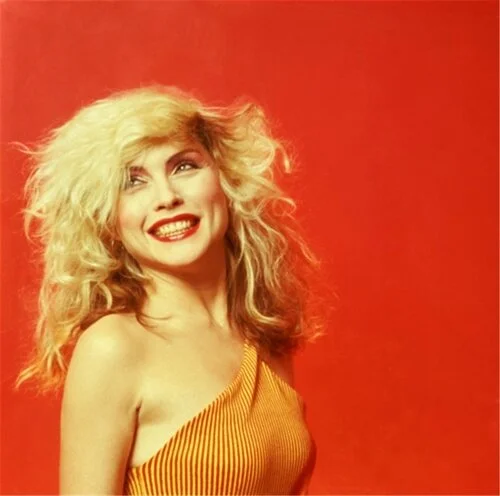
IN THIS PHOTO: Debbie Harry in 1978/PHOTO CREDIT: Mick Rock

Debbie Harry is an icon, for sure – whether that is a term she feels comfortable with -, and many wondered why it took a long time to write her memoir. I guess it can be quite revealing writing about your life, and there is that feeling of being naked or the reader having complete access to a lot of information that would have been secret for a long time. In the same interview, Harry addressed the reason why it took a while for the memoir to come about:

I guess I was a coward really. I never really thought of doing it and I never really wanted to do it especially. People came to me and said, “Oh, you’ve got all of these great stories, you really ought to tell them,” but I was kind of reluctant. This is the first interview I’ve done for the book and I’m still quite tentative about it if I’m honest with you. It seems unnatural. To me it just seems like the same old story, but then I guess you’re not me. I mean we all have stories to tell, so in the end I did get it together, but I feel like there’s so much missing from this book actually, because it’s impossible to cram everything in. There are lots of stories in the book that aren’t just me and so-and-so going out and having a night or doing this or doing that, little anecdotal kind of stories about the process of writing songs or that day in the studio or my phone conversation or this or that. I suppose the book is an overall kind of broad brushstroke book, trying to externalise internal events. In the end I just had to stop or else I’d still be writing”.

One cannot forget the wonderful music of Blondie and just what an innovator Debbie Harry is. I do not use the word ‘icon’ lightly: few artists have achieved as much and changed the music world like she has. So many artists owe a debt to her, and I don’t think we will ever see anyone like her ever again! I want to finish by casting back and imagining what it would have been like for an obviously very beautiful woman to be thrust into the limelight, and the sort of attitudes she had to deal with. It still happens today, but Debbie Harry (and her peers) experienced a lot of sexism and objectification. I found an interview Harry conducted with The Guardian last year, and the subject of sexism and being objectified arose:

Few women have been objectified as much as Harry. Her face – those killer cheekbones and heart-shaped mouth – is immortalised on Blondie album covers and in Warhol’s famous portrait. Was she always aware of men’s reaction to her? “I think we all have issues of self-esteem and I’m not clear of that,” she says, by way of an answer. “I also think that because it’s my occupation – to be a performer and to attract attention and to appeal to sexuality – it’s sort of a given in showbiz.”

Did she feel objectified? “There was a time in the earlier Blondie years when I was trying hard to perform, sing and write, and all of those contributions would be overlooked [by critics]. And that was, well …” She doesn’t finish the sentence. She was furious when Blondie’s record label put out a poster with a picture of her wearing a see-through blouse. In the book, she writes: “Sex sells, that’s what they say, and I’m not stupid, I know that. But on my terms, not some executive’s.”

sslslsl.jpg

IN THIS PHOTO: Chris Stein and Debbie Harry in 1980/PHOTO CREDIT: Lynn Goldsmith

Did she feel dismissed because of the way she looked? “Yes. A bit of fluff.” Wasn’t that infuriating? “Yes, but, you know, in a way it was good because I can sneak up on them unawares. I think times have changed in that respect. Women are serious wage-earners, and we create great things, and it seems clear to me that we can be supportive of one another regardless of what sex [we are]”.

I wonder how Debbie Harry is dealing with lockdown, and whether there are any Blondie songs taking shape. The band have not ruled out another album, so it would be wonderful to think they have written songs or are planning stuff for later in the year. I want to track back to that interview from The Evening Standard, as Debbie Harry discussed her life today:

A conventional life with a husband and kids never appealed, although she admits to pangs of jealousy when Stein married Sicuranza. She lives in Manhattan with her dogs and spends her time writing music, painting and reading. Does she date? ‘Very much so. There are less men around for people my age, though. They’re all married with children. What’s wrong with them?’ She wrinkles her nose. ‘I think what’s going on, there’s more extra-marital relationships and maybe that is the right way. I’m looking for something really chemical’”.

I have thrown a lot of information out – not necessarily in the most cohesive manner! -, but go and get the Face It memoir, and buy as many Blondie albums as you can. Long may we hear music from the wonderful Debbie Harry. As her seventy-fifth birthday is a matter of days away, I want to show some love, and end the feature with a playlist of the finest songs from her Blondie and solo catalogue. On 1st July, I hope all corners of the media and music world will pay their respects…

TO a music legend!

FEATURE: “Mmh, yes” Inside Kate Bush’s The Sensual World

FEATURE:


Mmh, yes

IN THIS PHOTO: Kate Bush shot for The Sensual World’s single cover in 1989/PHOTO CREDIT: John Carder Bush

Inside Kate Bush’s The Sensual World

___________

THOUGH I have…

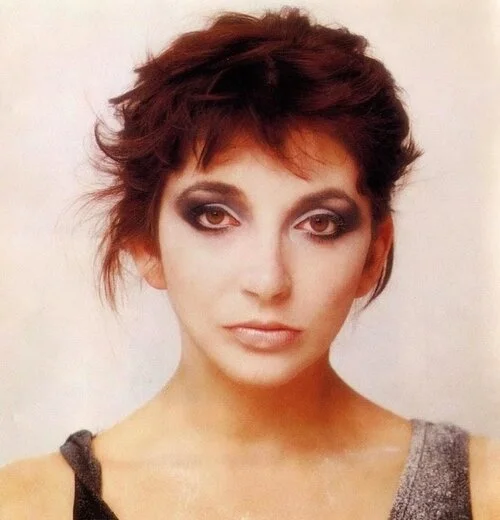
discussed Kate bush’s album, The Sensual World, before, I have not really investigated its title cut. It is a song I have seen shared online quite a bit over the past week, and 16th  June marked the famous Dublin day spent by the character Leopold Bloom in James Joyce's novel, Ulysses. Kate was drawn to the book's closing speech by Leopold's wife, Molly (Bloom). I do love artists who are curious about literature and can get something from classic literature. Usually, a songwriter, might sprinkle in a couple of words from a novel or they might loosely base a song on it. In Kate Bush’s music, you hear someone inhabit a character like Molly Bloom. Literature has always played a role in her creativity. Although Bush wrote Wuthering Heights after seeing a T.V. adaptation, one has to draw back to the original novel by Emily Brontë. I can imagine why Bush was struck by this moment where Cathy comes to Heathcliff as a ghostly vision, and the sheer power and strange romance that this image conveys. Similarly, Molly Bloom’s sensual soliloquy in Ulysses would have resonated for a different reason. Although The Sensual World and Wuthering Heights both take from classic literature, the songs are very different; by 1989, Bush was heading in a new direction and not the same artist she was on 1978’s The Kick Inside.

zzz.jpg

IN THIS PHOTO: Kate Bush in 1989/PHOTO CREDIT: Guido Harari

Pitchfork, when they reviewed The Sensual World last year remarked on how the album was an important step forward for Bush:

She didn’t need to prove her own steeliness to anyone, especially the male journalists who patronized her and harped on her childishness as a way of cutting her down to size. Instead, The Sensual World is the sound of someone deciding for themselves what growing up and grown-up pop should be, without being beholden to anyone else’s tedious definitions. It gave her a new template for the next two decades, inspiring both the smooth, stylish art-rock of 1993’s The Red Shoes and the picturesque beauty of 2005’s Aerial”.

The Sensual World was the first song from the album of the same name, and it was released in September 1989. As I was born in 1983, I was not around first time to experience Bush’s first four albums. The Sensual World might well have been the album that I was aware of when it came out. I think the record remains quite under-explored and exposed, and songs like The Sensual World prove that Bush could evolve and change direction and remain more captivating and original than any other songwriter. The song reached number-twelve in the U.K. charts, and it remains a favourite among fans. I love the musicianship and rich sounds on the song. I think the composition is the first thing that hits me. We have Del Palmer on bass, Charlie Morgan on percussion, who provide this tight and incredible rhythm section.

It is the way the bass and drums work with the more unconventional instruments that gives The Sensual World its personality and aura. Paddy Bush’s swished fishing rod is subtle but powerful; Davy Spillane’s uilleann pipes gives the song its Irish blood and rush; John Sheahan’s fiddle and Dónal Lunny’s bouzouki are perfect, and these musicians bring so much to the song. I think Bush’s voice is at its most stirring and tremulous, and she provides this incredible sensuality and beauty. I will talk more about the music and vocal but, interestingly, the most notable aspect of The Sensual World is the fact that Bush could not get permission to use text from Ulysses when the song was recorded. It was not until 2011’s Director’s Cut – when one assumes the copyright might have expired –, when Bush was finally granted permission from the Joyce estate to use the original words from the novel. This article discusses the atmosphere of The Sensual World, and the challenges Bush faced when trying to obtain the rights to source from Ulysses:

Musically, one of the main hooks in the chorus of The Sensual World was inspired by a traditional Macedonian piece of music called Nevestinsko Oro, or "Bride's Dance". As in the traditional version, the melody is played on uilleann pipes, in this case by Irish musician Davy Spillane.[2]

She found inspiration in the literary world again, scouring the pages of James Joyce’s landmark 1920s novel Ulysses to find Molly Bloom’s closing monologue, in which the character steps from the pages of the book and revels in the real world. Bush was delighted to find that the rhythm and sound of the words fit perfectly with the music she had been working on.

aaa.jpg

IN THIS PHOTO: Kate Bush in 1989

This revelation was frustrated by the intractability of Joyce’s estate, which repeatedly refused Bush permission to use the words as her lyrics on ‘The Sensual World’. She was forced to rebuild from the ground-up, writing new passages that captured the same breathless energy as Bloom’s soliloquy. The finished product mirrored the inspirational text very closely, anchored around the repeated erotically charged ‘Yes’ which Bush delivers with a quivering intensity. The lyrics detail a panoply of sensual stimuli, from peaches, to mountain flowers, to seed-cake, whilst the syncopated rhythm of her voice rides the irresistible flow of music. Bush had often resisted the urge to write in such a potently sexualised voice due to the exploitative nature of her early career, but here it felt as if feminine sensuality was finally being expressed on its own terms. Molly Bloom simply supplied the creative insulation – a mask to slip behind when things became too personal”.

I think one of the big motivations Bush recorded the Director’s Cut album was so that she could record The Sensual World again – the new version, Flower of the Mountain, saw her record the lyrics she had always wanted to, some twenty-two years after The Sensual World was released. Of course, there are other songs on that album that Bush wanted to tackle again, but I feel there was this huge desire to ‘complete’ The Sensual World.

wsww.jpg

IN THIS PHOTO: Kate Bush in 1989/PHOTO CREDIT: Kevin Cummings

I have a lot of respect for the 1989 album, and the way The Sensual World perfectly opens and closes: the title track is this wonderfully evocative opening, and we end with the startling and deeply emotional This Woman’s Work. After the success of 1985’s Hounds of Love, Bush could have repeated herself and written an album that was inspired by similar themes. Bush always moves and never wants to rehash what has come before. I think The Sensual World is a more mature album, in the sense we never hear a track as child-like as The Big Sky, or as propulsive as Running Up That Hill (A Deal with God). It is the sheer awe and hush Bush portrays through her voice that makes The Sensual World’s title track so affecting and popular – and I can completely understand why she was very keen to secure the rights to quote Molly Bloom. I also really love the song’s video, which was directed by Bush and The Comic Strip co-creator Peter Richardson. In it, Bush is dancing through a forest wearing a red medieval dress. To me, she has never looked so entrancing and beautiful as she does in that video – maybe And So Is Love (from 1993’s The Red Shoes) comes close! I really like the way the video sits alongside the song and how Bush (and Richardson) brings her song to life so fully and beautifully. Watching the music video is this wonderful experience, where one is drawn into a different world. I have watched the video countless times, and I am always moved and mesmerised.

The Sensual World (track) gathered a lot of reviews. This is Sounds’ review from 14th October, 1989:

Isn't the single absolutely withoug equal? Especially the way the "mmh yes" punctuation gets progressively more urgent as the song unwinds. There is really no doubt about it, when Kate Bush says "The Sensual World" is "a string expression of positive female energy" she isn't kidding. That 45 proves that she's come a long way from "Wuthering Heights" and is now writing approximations of the soundtrack to Body Heat. Stunning stuff.

That song is the best thing on this, her sixth album. It's probably her best song to date, although -- lyrically at least -- it's possibly rivalled by "Rocket's Tail" and "The Fog" for classic Bush-like unsettling, mesmerising undertones”.

This is how The Quietus assessed the song when they wrote about The Sensual World (album) in 1989:

The Sensual World' itself sets out the album's autumnal stall immediately – soft, pealing bells give way to an arrangement that incorporates pipes, warm synth washes, and an insistent drum pattern; its accompanying video, following the singer through a forest of crimson leaves, is as seamless a supplement as could be”.

If you have not explored The Sensual World, I would advise you do, as it is a terrific song that marked a real growth and departure for Bush – never before had she sounded so grown-up, autumnal and alluring.

ass.jpg

PHOTO CREDIT: Guido Harari

I just want to quote another passage from The Quietus’ review, as they make some very interesting observation about The Sensual World’s title track:

The Molly Bloom of Joyce's soliloquy escapes the confines of his text, "stepping out of the page into the sensual world," to enjoy the "down of a peach," the "kiss of seedcake," to "wear a sunset," where bodies roll "off of Howth Head and into the flesh." Kate described the album as her first to really explore "positive female energy" – "I think it's to do with me coming to terms with myself on different levels," she told NME. "In some ways, like on Hounds Of Love, it was important for me to get across the sense of power in the songs that I'd associated with male energy and music. But I didn't feel that this time and I was very much wanting to express myself as a woman in my music rather than as a woman wanting to sound as powerful as a man. And definitely 'The Sensual World', the track, was very much a female track for me. I felt it was a really new expression, feeling good about being a woman musically".

Kate Bush was thirty-one when the single came out, and it has almost been thirty-one years since the track came out. I remember listening to The Sensual World when I was a child and being struck by this amazing song. I listen back now, and it still provokes something deep inside of me. The Sensual World must go down as…

spsp.jpg

IN THIS PHOTO: Kate Bush in 1989/PHOTO CREDIT: John Carder Bush

ONE of Kate Bush’s most important and impressive tracks.

FEATURE: Spotlight: Pillow Queens

FEATURE:


Spotlight

q9902.jpg

Pillow Queens

___________

WHEN we talk about new artists…

making a splash right now, Pillow Queens have to be in the mix. I think I was one of the first people to host them in London a while back. I was one of a selection of guest bloggers as part of Blogtober: a month of nights where some of the best upcoming artists played at The Finsbury. It was a big moment for them, and they got a great reception from the crowd – many of whom were not aware of them. That was almost a few years ago, and the Irish band have just released the single, Handsome Wife. The band also have an album coming along. Here is some further details from The Line of Best Fit :

Four-piece Pillow Queens have proven to be no strangers to heavy-hitters, but they might have outdone themselves on their new single “Handsome Wife”.

Sonically, “Handsome Wife” carves itself out a lot of space, and then shows it has the power to fill it. Everything about the song soars: an alt-rock mix of scruffy and grandiose with a rush of a chorus that seems to stretch out to fill the entire skyline.

Emotionally, Pillow Queens have that knack for projecting the small conversations, worries and wants we wrap our relationships around onto the bigger screen that music provides, and on “Handsome Wife” those feelings erupt into a scream that gives the song the total knockout force to win anyone over.

“'Handsome Wife' begins with a glimpse into an emotional homecoming, one that intensifies and romanticises the seemingly insignificant,” the band say. “Throughout, the mundane but tender moments are held up and deified, paying reverence to the ease in which a love can thrive outside the realms of tradition. The song continuously references structures and rituals that were once out of reach, but are now within our grasp. In spite of this ‘Handsome Wife’ affirms that they pale in comparison to the communities we’ve built ourselves.”

“Handsome Wife” is out now, and Pillow Queens’ debut album In Waiting will release on 25 September, available to pre-order now.

I love their new song, and the album is going to find a big audience. The group have released quite a few tracks, and it has been great seeing them grow and gain new confidence with each release. Having seen them live, I can attest to their connection, chemistry and craic. I am going to bring in a couple of interviews, as the band themselves can give more details and history than me. I do think In Waiting is going to be one of this year’s best albums and, if gigs are kicking back off next year, they will want to get on the road and bring these tracks to the people! Not that I have a leaning towards female bands, but I do think that the industry is skewed in favour of male artists.

There are some great bands fronted by/consisting of women, but I do think they are overlooked. Pillow Queens are a band one can see enduring for years to come. I think they will get a lot of festival bookings for next year when the album is out and being played. I do love what is coming out of Ireland right now. Pillow Queens, Fontaines D.C., Sinead O’Brien and The Murder Capital are among my favourite bands/artists of the moment. I want to bring in an interview from a couple of years back, when Pillow Queens were interviewed by The Irish Times. We learn more about their 2016 E.P., Calm Girls, and how the band have this very tight connection:

Rachel Lyons (drums, vocals, from Kill, Co Kildare), Cathy McGuinness (guitar, vocals, from Arklow, Co Wicklow), Pamela Connolly (bass, guitar, lead vocals, from Donaghmede in Dublin) and Sarah Corcoran (guitar, bass, lead vocals, from Finglas in Dublin) arrive to a pub smoking area, lugging gear, a few days after a triumphant appearance on the main stage at Body & Soul.

Pillow Queens write charmingly scruffy and smart tunes, and perform them with vigour. On record, their songs’ lo-fi qualities belie a brilliant catchiness and emotional depth. Live, they’re lovable, unaffected, loud. They are gimmick-free, hardworking and with an authenticity marketeers would kill for, and there’s a purity to their breezy modus operandi: write good songs, play them well, have fun, and enjoy the opportunities such endeavours are now bringing.

An EP in 2016, Calm Girls (a joke about their collective anxiety) gave them an instant anthem, Rats, as good a rock song as any that has come out of Ireland this decade. After the fingers-in-the-air audience-built call and response of Rats came Wonderboys, illustrating where Pillow Queens’ brilliance lies: it’s in the space between tender and tough, knowing and naive, wry and goofy, ironic and straight-up.

That confidence was born out of the instant chemistry Corcoran felt when they were in a room together for the first time, “I was just watching it going ‘woah, this is cool’.” Lyons was the last to join the band. “This last year and a half has been a whirlwind for me,” she says. “My personal development has been massive . . . I’m doing what I’ve wanted to do since I was a teenager. I’ve also learned to work with other people in a different kind of environment. You have to listen to people, they have to listen to you, and you have to give them a part of you, because we’re all emotional wrecks.” She pauses. “Mostly me.”

Connolly is seen as the peacemaker in the band. During moments where people may be “overwhelmed and tensions are high”, McGuinness says, “Pamela will be super chill and she’ll come back at a more logical time and say ‘this is what I think’.” Connolly’s humour, Corcoran says, tends to diffuse situations. “Pamela will say something and you can’t help but laugh”.

I will bring in one more interview before rounding this thing off, but I would recommend people follow Pillow Queens on social media. They are a great band, and I think they have a very promising future. Having seen them grow in reputation and stature, I think 2021 will be a very important year. Their music definitely has a unique stamp, but each track is different and remarkable. The band spoke with KEXP earlier this year, and I latched on to questions that asked about the Irish music community and queer identify:

You were all in bands before forming Pillow Queens. What's the Irish music scene and community like?

Pamela Connolly: It's amazing. I guess maybe when we were all in bands, it was a little bit before it became as good as it is now. Most of us were in bands during the recession. So it was good, but people would get taken advantage of a lot. But now the scene – not even just Dublin, all around Ireland – is amazing. The scene coming out of Limerick is class. And it's not just guitar music. It's hip-hop. It's R&B. There's a revival with trad and lovely folk music as well. The scene is really strong and people are taken a lot more seriously now being from Ireland. I hope it keeps going that way and it just gets better. But I highly recommend [to] look up as many Irish bands as you can because they're all pretty good. We're only OK [laughs].

Corcoran: Irish bands really support each other at the moment, which is really nice. I mean, maybe that's always been the case, but definitely, from our experience of being in Pillow Queens, we've received support from bands of every genre on touring, recording, on just getting local gigs. One of the guys from Bitch Falcon lent me a bass for this session because my bass is terrible and I can't afford to buy a new one. So I was like, "Can I borrow a bass?" And he was like, "Yeah, absolutely!" Just gave me his bass for this.

Sarah Corcoran: mean, writing is always cathartic anyway. So you can put your worries into a song and then it's just like boxing them up and not dealing with them [laughs].

Queer identity seems to come through in a lot of your music. Pretty directly in songs like "Gay Girls." Is it important for you to share that perspective in your music?

Connolly: And yes and no. I think it's it's hard to not because it's so much a part of your identity that when you're writing it just comes out anyway. Then someone may ask you a question like, 'Oh, you're really trying to protect your career identity.' I'm actually not. I'm just writing the way maybe a straight man would write about his experiences, I'll write about mine. We'll write about ours. So it's not at the forefront of our mind, but we do know that it's important. But I don't think it's a thing that's always on the table. It just happens. It's not conscious. And I like it that way because I think if we were trying too hard it would come across that way. I like casual queerness [laughs].

Corcoran: I think as well, a song like "Gay Girls," the title would make you think that it's a song about queerness, but it's only really on the very cusp of being a queer song. The title, obviously, but it's more a comment on religion and that sort of thing. I mean, the wringing hand imagery is like... We can't help but write about religious things. We all were brought up in very religious environments so it always comes out. And because I suppose queer themes are so contradictory maybe of like religious themes, maybe that's where the juxtaposition happens”.

This year has been a bit of a pain for all musicians, but I know there will be a load of gigs next year. Make sure you pre-order your copy of In Waiting, as it is going to be one of those albums that scoops some huge reviews! I think bands like Pillow Queens are helping to raise awareness for Irish bands – a vital corner of music that has not been slightly ignored and not given the oxygen it deserves. Long may Pillow Queens reign and put out excellent music! They are a tremendous force, and one you need to get involved with. If you have not investigated the music of this incredible band, then make sure you do…

RIGHT away.

________________

Follow Pillow Queens

FEATURE: Vinyl Corner: Eagles – Hotel California

FEATURE:


Vinyl Corner

Eagles – Hotel California

___________

IN future editions…

PHOTO CREDIT: RB/Redferns/Getty Images

of this feature, I will include more albums made by women – as I am aware that many of them in Vinyl Corner are from men. I wanted to cover the Eagles’ Hotel California as, to me, it is one of the strongest albums ever. I suggest people buy the album on vinyl, as it is a tremendous record and one that is absolutely jammed with classics! How many albums have an opening trio of songs as strong as Hotel California, New Kid in Town and Life in the Fast Lane?! I think this might be up there with the very best opening three songs ever! The album’s title track is one of the greatest songs ever, and it is this incredible piece that has various movements and stages; one of the best choruses you can imagine, and an amazing band performance. It is a perfect way to open a phenomenal album, and it sets the bar very high! Life in the Fast Lane ends that open set with a kick and has a slightly different pace to the other two tracks. Wasted Time completes the first half and, even after four songs, it feels like you have been listening to a greatest hits collection! I think Hotel California is top-heavy if anything, as its three best songs are done with by the end of the first side. That said, Victim of Love and The Last Resort are awesome tracks, and there isn’t really a weak song on Hotel California. The fifth album from the U.S. band, Hotel California was recorded between March and October of 1976.

There is debate as to which Eagles album is the very best, but I think it would be between Hotel California and One of These Nights – released in 1975, it is the album that preceded Hotel California. I think the fact guitarist Joe Walsh replaced Bernie Leadon offered the band new direction and possibilities. One does notice new sounds and varieties that were not present on the band’s first few albums. Hotel California topped the Billboard chart, and it was nominated for Album of the Year at the Grammys – it lost out to Fleetwood Mac’s Rumours (showing what stiff competition there was that year!). Interestingly, Hotel California was not recorded in Los Angeles, as the band favoured, but Miami. Producer Bill Szymczyk was fearful of earthquakes in L.A., so they recorded largely in Miami – although there was also some recording in Los Angeles. I am not sure the Eagles had a stronger line-up than Don Felder – guitars, backing vocals; Glenn Frey – guitars, backing vocals, keyboards, lead vocals; Don Henley – drums, percussion, lead vocals, backing vocals, synthesizer; Randy Meisner – bass, backing vocals, lead vocals, guitarrón, and Joe Walsh – guitars, keyboards, backing vocals, lead vocals. With the songwriting powerful of Don Henley and Glenn Frey (who died in 2016) leading the songs, it is no wonder Hotel California is such a popular and enduring album. I think the band possibly hit their peak on the album, and you can hear that they are giving their everything to each song.

The reviews for Hotel California are largely positive. When AllMusic assessed the album, this is what they had to say:

 “The Eagles took 18 months between their fourth and fifth albums, reportedly spending eight months in the studio recording Hotel California. The album was also their first to be made without Bernie Leadon, who had given the band much of its country flavor, and with rock guitarist Joe Walsh. As a result, the album marks a major leap for the Eagles from their earlier work, as well as a stylistic shift toward mainstream rock. An even more important aspect, however, is the emergence of Don Henley as the band's dominant voice, both as a singer and a lyricist. On the six songs to which he contributes, Henley sketches a thematic statement that begins by using California as a metaphor for a dark, surreal world of dissipation; comments on the ephemeral nature of success and the attraction of excess; branches out into romantic disappointment; and finally sketches a broad, pessimistic history of America that borders on nihilism. Of course, the lyrics kick in some time after one has appreciated the album's music, which marks a peak in the Eagles' playing. Early on, the group couldn't rock convincingly, but the rhythm section of Henley and Meisner has finally solidified, and the electric guitar work of Don Felder and Joe Walsh has arena-rock heft.

In the early part of their career, the Eagles never seemed to get a sound big enough for their ambitions; after changes in producer and personnel, as well as a noticeable growth in creativity, Hotel California unveiled what seemed almost like a whole new band. It was a band that could be bombastic, but also one that made music worthy of the later tag of "classic rock," music appropriate for the arenas and stadiums the band was playing. The result was the Eagles' biggest-selling regular album release, and one of the most successful rock albums ever”.

The current line-up of the Eagles recently thrilled Madison Square Garden with a Hotel California show, and I am learning new stuff about the album. I think everyone should check out Hotel California, as it is one of the best albums of the 1970s, and a good place to start if you are new to the Eagles. If you are in need of some vinyl recommendation and want to listen to a classic album, then I can definitely steer you in the direction of…

A damn fine record.

FEATURE: The Lockdown Playlist: Songs from the Best Albums of 2020

FEATURE:


The Lockdown Playlist

css.jpg

PHOTO CREDIT: @gift_habeshaw/Unsplash

Songs from the Best Albums of 2020

___________

IN this latest…

PHOTO CREDIT: @dizzyd718/Unsplash

part of The Lockdown Playlist, I have been thinking about the best albums of this year. It has been a terrific year for music so far, and we have been treated to some of the best releases for years. Because of that, I want to put together a playlist featuring a track from each album, with the hope of providing some form of energy and motivation. I wonder what more will come this year in terms of terrific albums and just what we might receive. Even though we are still in lockdown – to a lesser extent than we were -, I do feel like music continues to deliver and artists have not really slowed down all that much. In this playlist, I am championing the very finest albums of this year. I hope you get something from…

PHOTO CREDIT: @dizzyd718/Unsplash

THIS assortment of terrific cuts.

FEATURE: Second Spin: Amy Winehouse - Frank

FEATURE:


Second Spin

Amy Winehouse - Frank

___________

I often wonder what…

aslslsl.jpg

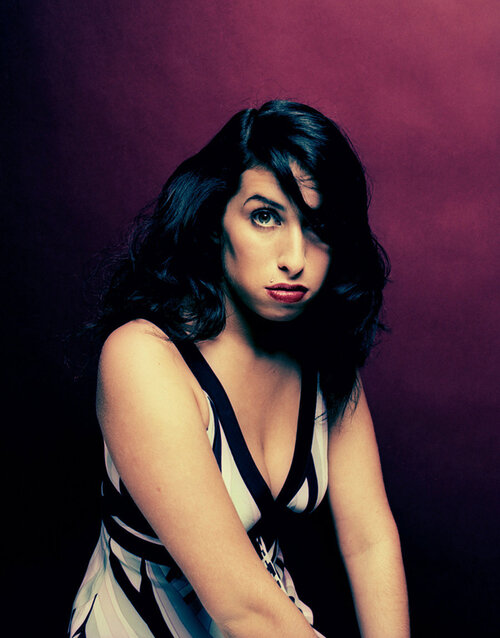
IN THIS PHOTO: Amy Winehouse photographed by Phil Knott 2003

Amy Winehouse would be doing if she was still with us. It is so sad that the world lost her in 2011, but I think she would have a few things to say about the current lockdown and what is happening in the world. Although she released two studio albums, her legacy and impact are huge. So many artists today count Winehouse as an idol, and I do not think the music world has seen anything like her since. Winehouse’s 2006 breakthrough, Back to Black, is considered a masterpiece, and it is her most-successful album. There is a planned biopic coming very soon, and it will be interesting to see how she is portrayed on the screen. It is great that Back to Black has won so much acclaim, but I do think many people overlook her debut, Frank. It did collect some good reviews in 2003, but I think a lot of people thought that Winehouse was too close in sound to singers like Ella Fitzgerald, and that there were few standout songs on that album. Winehouse began writing music at the age of fifteen, but she worked in a few different jobs before getting her break in music – including entertainment journalism and singing with a local group, Bolsha Band. Camden’s most-famous daughter’s distinct and powerful voice is one that arrests and stuns to this day. Counting artists like Sarah Vaughan and Dinah Washington as influences, I can only imagine the younger Amy Winehouse listening to these Jazz greats at home. Of course, she would have been listening to contemporary music and classics bands, but I think it is these iconic female artists who made the biggest impression on her.

Eventually, Winehouse was signed to Simon Fuller’s 19 Management in 2002, but they were not allowed to let their prodigy out of the bag yet. One of the people who was struck by Winehouse was Darcus Besse. He was A&R at Island Records – who Winehouse would sign with -, and it took several months of persistence of asking around before Besse was able to connect with Winehouse – Winehouse had already signed a publishing deal with EMI, so there was competition and a lot of fascination aimed at her. One of the key figures in Frank is Salaam Remi. The two formed a close working relationship, and they would continue that partnership for Back to Black. Remi co-writes and produces several songs on Frank, but I think one of the problems with the album is that there are quite a few people in the mix. Frank was recorded at several studios in the U.S. and U.K., and there is quite a cast of writers and producers on the album. One might not think that unusual as, if you look at so many Hip-Hop and R&B albums from big stars like Beyoncé and Drake, and you wonder how much input the artist had in any song! On Back to Black, Winehouse took greater charge as a songwriter, and there are fewer cooks in the kitchen. I think it is the increased confidence, more personal nature of Back to Black and the fact Winehouse proved herself on Frank that means her second album is more cohesive, resonant and stunning.

I feel some people look at Frank as a scrappy-yet-promising debut, and one where Winehouse was finding her voice and making her way. It was necessary for there to be quite a few producers and writers on Frank, as Winehouse, prior to Frank, was largely singing covers, and she would not necessarily have had that many original tracks formed before signing her record deal. I think the pressures of fame and the pains of love was a big influence for Back to Black, whereas Winehouse was lesser-known prior to Frank, and she was writing from a different perspective. I do not think that Frank is Winehouse mimicking her heroes and showcasing her voice – on songs that are quite lightweight -, as that would be doing her a disservice. Frank has gained new respect and depth in the years after Winehouse’s death, but I can remember the excitement of hearing Frank in 2003. I love the album’s cover, as we see a radiant and fresh-faced Winehouse let loose – whereas Back to Black finds her sat down with a glum and serious look on her face. I am not going to get into the way the tabloids hounded her and the problems Winehouse experienced, but to see her in those early days perform and look so excited is bittersweet. With greater attention, she would feel the pressure and it is so tragic the way things worked out. I love Frank, as it is Winehouse coming through; before all the tabloid s*it (or most of it) and the addiction issues.

IN THIS PHOTO: Amy Winehouse photographed by Hamish Brown for Harpers & Queen Magazine in 2003

Although Back to Black is a masterpiece and one of the most affecting albums ever, I do reckon Frank has more than its fair share of diamonds that means, seventeen years after its release, it is fit for reappraisal. I will pick my highlights, but I wanted to bring in one of the positive reviews for Frank. This is AllMusic’s take on Amy Winehouse extraordinary debut:

If a series of unfortunate comparisons (like the ones to follow) cause listeners to equate British vocalist Amy Winehouse with Macy Gray, it's only natural. Both come on like a hybrid of Billie Holiday and Lauryn Hill who's had a tipple and then attempted one more late-night set at a supper club than they should have. Despite her boozy persona and loose-limbed delivery, though, Winehouse is an excellent vocalist possessing both power and subtlety, the latter an increasingly rare commodity among contemporary female vocalists (whether jazz or R&B). What lifts her above Macy Gray is the fact that her music and her career haven't been marketed within an inch of their life. Instead of Gray's stale studio accompaniments, Winehouse has talented musicians playing loose charts behind her with room for a few solos. Instead of a series of vocal mellifluities programmed to digital perfection, Winehouse's record has the feeling of being allowed to grow on its own -- without being meddled with and fussed over (and losing its soul in the process).

Simply hearing Winehouse vamp for a few minutes over some Brazilian guitar lines on "You Sent Me Flying" is a rare and immense pleasure. Also, like Nellie McKay (but unlike nearly all of her contemporaries), Winehouse songs like "Fuck Me Pumps," "Take the Box," and "I Heard Love Is Blind" cast a cool, critical gaze over the music scene, over the dating scene, and even over the singer herself. With "In My Bed," she even proves she can do a commercial R&B production, and a club version of "Moody's Mood for Love" not only solidifies her jazz credentials but proves she can survive in the age of Massive Attack”.

Stronger Than Me is a wonderful opener, and I am surprised it did not do better in the U.K. singles chart – it only got to number seventy-one. It is one of Winehouse’s best songs, and I love how naked and raw it is. In My Bed, and Take the Box are wonderful tracks, and the penultimate number, Help Yourself, is another cracker! I do not think there is any filler on the album, and there is a lot of lyrical, musical and vocal diversity across Frank. The album has enough personality and unique perspective to make it far stronger than many suggest, and Frank has taken on new life and meaning, given the way Winehouse would explode into the public consciousness soon enough. It is disappointing that there were so many mixed reviews.

Many people felt the same: a few great cuts and brilliant vocals, but not a lot to rival the best albums of 2003. I feel there was a perception that Winehouse was promising and would come into her own a few albums down the line – the fact that she managed to do that on her second album is quite a leap! This is what Pitchfork wrote in their review of 2007 (perhaps comparing it unfavourably against Back to Black, rather than reviewing it on its own terms when it was fresh in 2003):

Winehouse has a hell of a voice, even when she imitates her favorite jazz vocalists-- especially Billie Holiday-- much too closely. (Just in case anybody misses the idea that she's supposed to be a jazz singer who's somehow stumbled into a neo-soul record, Frank begins with a little fragment of Winehouse scat-singing, and the chorus of "October Song" doesn't just namedrop Sarah Vaughan but lifts its melody from "Lullaby of Birdland".) None of her songs here are as indelible as "Rehab" or as cutting as "You Know I'm No Good"-- and the best are co-written with Nas and Fugees collaborator Salaam Remi-- but you can hear the development of the high-powered songwriter she turned into on Back to Black in the snarky character sketch "F*** Me Pumps" and in the way the sharp-nailed ballad "You Sent Me Flying" breaks into a Soul II Soul beat halfway through.

And although she hasn't quite nailed the 1972 vibe of her later record (despite some corny vintage-vinyl sound effects), a couple of her stylistic experiments pay off, especially the high-drama soul loop that underpins "In My Bed".

I strongly feel Frank warrants fresh inspection, and if one listens to the album in full, they will get a lot from it. There are those standout hits, but even the ‘lesser’ tracks have real weight and depth. Winehouse would go on to better with Back to Black, but Frank is more than a promising debut. It is a wonderful album that sound epic on vinyl, and it definitely connected with a lot of upcoming artists at the time – many of whom cite Frank as a key album. I know it is dangerous to think what kind of music Winehouse would be making were she still alive, and just what she would be doing right now. After the exceptional debut, and the majestic Back to Black, it is evitable that we all wonder…

WHAT could have been.

FEATURE: A Deal with God: Kate Bush and a Positive Approach to Love

FEATURE:


A Deal with God

IN THIS PHOTO: Kate Bush in 1989/PHOTO CREDIT: John Carder Bush

Kate Bush and a Positive Approach to Love

___________

I have written other Kate Bush features…

IN THIS PHOTO: Kate Bush and Michael Hervieu in the video for Running Up That Hill (A Deal with God) in 1985/PHOTO CREDIT: John Carder Bush

where I said I would keep it short and, inevitably, it would be quite a long and drawn-out thing! This time around, it will be a little more succinct! I recently wrote about Bush’s approach to love and the sort of language she employs. Right from her earliest work, there was something in the lyrics that was very different to anything else around. She would mix quite poetic and florid descriptions alongside sentiments that were quite explicit and left very little to the imagination. At other times, she would articulate lust and passion better than anyone else and, in every song, she was written from her heart and mind – and not following what was commercial and plain. I might write a feature in the future about Kate Bush’s influences and how she nodded to artists like Laura Nyro and David Bowie, and how their approach to writing might have shaped Bush in some way. Following on from my previous feature regarding love and how Bush approached that, I wanted to highlight her positive side. The title of this feature was the original title for one of her most-famous songs, Running Up That Hill (A Deal with God). As some American quarters were rather conservative and there was a fear the song would not be picked up in the U.S. because of the mention of ‘God’ – even though there is no blasphemy involved -, A Deal with God was changed to the less-striking, Running Up That Hill (A Deal with God).

That Hounds of Love track was released on 5th August, 1985. It did not reach number-one (it got to number-four here), but it remains one of Bush’s most-recognisable and iconic moments. I will look back at earlier albums from her, but the 1985 masterpiece celebrates its thirty-fifth anniversary in September, and it will be examined and have features written about it. I think its best-known song is so timeless and wonderous because of the sentiments expressed. Although there is a lot of fear and uncertainty expressed through the album – predominantly on the second side, The Ninth Wave, and Mother Stands for Comfort -, I think there is an optimism and sense of understanding that bonds one closer to Kate Bush. In an interview with Richard Skinner from 1991, Bush had this to say about Running Up That Hill:

I was trying to say that, really, a man and a woman can't understand each other because we are a man and a woman. And if we could actually swap each other's roles, if we could actually be in each other's place for a while, I think we'd both be very surprised! [Laughs] And I think it would lead to a greater understanding. And really the only way I could think it could be done was either... you know, I thought a deal with the devil, you know. And I thought, 'well, no, why not a deal with God!' You know, because in a way it's so much more powerful the whole idea of asking God to make a deal with you. You see, for me it is still called "Deal With God", that was its title. But we were told that if we kept this title that it would not be played in any of the religious countries, Italy wouldn't play it, France wouldn't play it, and Australia wouldn't play it! Ireland wouldn't play it, and that generally we might get it blacked purely because it had God in the title”.  

addod.jpg

PHOTO CREDIT: Gered Mankowitz

A little earlier, in 1985, she spoke with The Times, and remarked:

It seems that the more you get to know a person, the greater the scope there is for misunderstanding. Sometimes you can hurt somebody purely accidentally or be afraid to tell them something because you think they might be hurt when really they'll understand. So what that song is about is making a deal with God to let two people swap place so they'll be able to see things from one another's perspective”.

It might have something to do with the fact that Bush was in a positive space and frame of mind when she was writing for Hounds of Love, but that natural inclination to write about relationships from an understanding and warm place is inspiring. Think about a lot of the more commercial artists who were around her at that time, and there were a lot of songs about blame, broken hearts and negativity. I am not suggesting the majority of love songs are break-up tracks where someone is pointing the finger, but it rare to find an artist who has a very healthy and positive nature when it comes to love, disagreements and break-ups. Although Kate Bush, like some of her peers, did not court a lot of tabloid gossiping and engage in high-profile romance, she is someone who has had her heart broken or broken the heart of a man. One could forgive her for being scornful and accusatory in her tracks, but there is always this aspect of hope and balance – something g I touched on when I wrote about her lyrics last time around. I wanted to expand on that feature and talk about the purely positive side of her music. Running Up That Hill is a song where she is trying to put herself in the shoes of the man; she wonders what it would be like if men and women could trade places so they could see what it is like to be them and, maybe, that would make relationships stronger, or provide this sense of respect and patience that you do not often encounter. Long before 1985, Bush was putting out these very pragmatic and hopeful songs. Maybe Bush had very little interest in airing her dirty laundry or being angry in music. Look at one of her earliest songs, The Man with the Child in His Eyes (from 1978’s The Kick Inside), and that was about a young girl and older man. The man had this innocence and child-like quality in him, but nobody else knows about this man. Bush said that she wrote the song as she admired how most men/boys had this sort of magic inside them and a child-like innocence that never really went away. Rather than framing it in a song that lambasts immaturity and a lack of growth, Bush decided to use that observation and frame it in a beautiful way – The Man with the Child in His Eyes was written when Bush was thirteen, and it was about her then-boyfriend (and her first boyfriend) Steve Blacknell.

amama.jpg

Even when a song has a slightly rawer quality, like Lionheart’s Don’t Push Your Foot on the Heartbrake, there is this defiance to be found – “Don't drive too slowly/Don't put your blues where your shoes should be”.  Even when a song dealt with something fictional with an element of deception – like Never for Ever’s Babooshka -, there is not really any real anger and sorrow to be heard. Never for Ever’s All We Ever Look For seems to be about searching for meaning and something more; its stable-mate, The Wedding List, is a humorous tale of a groom being shot at his wedding (it does not sound as dark as I make it seem!), but we do not get Bush blaming a man or opening a bleeding heart. Maybe it is because, even when she is discussing the loss of love or the throes of passion, she is often writing about characters or not directly referencing herself. Her language is exquisite and unique, but that might suggest Bush does not do the direct and bare. Far from it: she is capable of letting her pain show but, even then, it is more about healing and coping rather than trying to kick someone and be negative. I will not go through album-by-album, but there are a couple of tracks from 1982’s The Dreaming where there is an interesting perspective on a relationship. The gorgeous Night of the Swallow is one where an adult relationship is seen through the prism of a child’s view/bond with their mother. Bush remarked the following in a Melody Maker interview from 1982:

"In this song she wants to control him and because he wants to do something that she doesn't want him to she feels that he is going away. It's almost on a parallel with the mother and son relationship where there is the same female feeling of not wanting the young child to move away from the nest. Of course, from the guy's point of view, because she doesn't want him to go, the urge to go is even stronger. For him, it's not so much a job as a challenge; a chance to do something risky and exciting”.

I wrote a feature about The Dreaming’s Houdini not long ago, and I love it so much, as it concerns Harry Houdini and his wife, Bess; the fact that they have this special code they only they know as Bush sings about the  escapologist hitting the water and wondering if he will be able to escape from the watery depths. One could explain Bush’s lack of negativity because she is a very nice and warm person. She had some breakups when she was younger and, even though her and long-time boyfriend Del Palmer (who she still works with today) were very much in love, they did have fights and bad periods. Other songwriters would have been desperate to get that hurt and stress off of their chests, but Bush’s default setting is to find the good in everything and approach something as hard-hitting as a relationship crumbling in a very constructive way. Hounds of Love was when she was at her happiest (she would enjoy similar happiness and contentment when writing 2005’s Aerial), so it might have been counter-intuitive to pen music that was sorrowful. I cannot think of many other artists who have rarely written a bad-natured or negative love song – or any song for that matter. Bush has written songs where she examines her own state of mind, anxieties and sadness, but she is not one for firing shots and engaging in confrontation. Hounds of Love’s The Ninth Wave is Bush looking for safety, home and the embrace of her loved ones. Whilst Bush was rarely aggressive and blame-shifting, she was often vulnerable and exceptionally moving. Consider this lyrics from The Dreaming’s All the Love: “Only tragedy allows the release/Of love and grief never normally seen/I didn't want to let them see me weep/I didn't want to let them see me weak/But I know I have shown/That I stand at the gates alone”. The Sensual World is an album of great beauty and self-examination, and that endless desire to find common ground, to embrace peace and love. Love and Anger might suggest Bush cast aside and shouting out against being wronged, but it is one of her most tender and moving tracks – “Tell you what I'm feeling/But I don't know if I'm ready yet/You come walking into this room/Like you're walking into my arms/What would I do without you?”. Though Between a Man and a Woman starts with an argument – from a third-person perspective -, Bush is not blaming the man or taking sides; there is an objective truth (“But the truth lies somewhere in the middle”, as she says). 1993’s The Red Shoes has mystery and questions about the right one to love – Why Should I Love You? -, and of bouncing back time and time again – Rubberband Girl -, and, through it all, there is this strength-against-the-odds mantras combined with searching, sensuality and deep curiosity – hallmarks one can find on all Kate Bush albums. Although this feature is turning out to be longer than anticipated, I want to finish by quoting from an interesting article. I do think that it is amazing how Bush has remained positive and shied away from love songs that have a sour tone.

Bush has experienced loss in her life – her mother died in 1992; she ended a long-term relationship at the time of The Red Shoes, and she has seen friends pass -, but she never strikes out at the world and writes these songs that make you feel uncomfortable. Instead, Bush tries to find sense and reason; always looking for a positive in the darkness - or, at the very least, some safe footing and place where she can recharge and reflect. A lot of her songs do employ characters or versions of herself – as she has said how she finds it more interesting to write from this perspective -, but I really love how there is this whiff of eccentricity and the unusual in every album. Consider Misty from 50 Words for Snow where a woman spends the night with a snowman, awakes and find he has melted (“Sunday morning/I can't find him/The sheets are soaking”); Mrs. Bartolozzi (from Aerial), is a tale of the mundane nature of domestic life and housework but, this being Kate Bush, there is eroticism and the fantastical to be found. I think Bush’s lyrical approach is very uplifting, because she can be honest and open with the listener, but one never feels uncomfortable or ill at ease. I think this is one big reason why Bush has inspired so many female songwriters – from Tori Amos and k.d. lang through to Solange Knowles and Natasha Khan (Bat for Lashes).

IN THIS PHOTO: Kate Bush in 1985/PHOTO CREDIT: Guido Harari

In a feature for Her Campus, Ellie Spenceley highlighted Kate Bush as a feminist icon, and why she is such a much-loved and influential person:

On both a lyrical and practical level, Bush laid groundwork for women being able to exist unapologetically in an otherwise male-dominated industry. Her lyrics are confessional and tender. She demonstrates a stunning versatility in subject matter, being able to go from a slow and emotionally charged ballad like ‘You’re The One’ to a more upbeat song like ‘Babooshka’ in a manner that never steers from a central identifiable style. Her music is raw and tender, encapsulating feelings of loss, grief and simply being allowed to feel. It is no surprise that in 2018 she released a book, ‘How to Be Invisible’, filled with lyrics from her songs, notable as they are in their encapsulation of the dynamic nature of the female experience. Bush is able to light a fire of hope inside all of us when she sings lyrics like ‘I just know that something good is gonna happen’ in ‘Cloudbusting’, speak to our desperate desire to feel significant in ‘Running Up That Hill’ when she says ‘Tell me, we both matter, don’t we?’, and speak to a universal desire to be set free from rigid societal expectation in the experimental ‘Leave It Open’ when she says that ‘we let the weirdness in’.

What makes Kate great is that she is able to be so distinctly personal whilst reaching out and resonating so stunningly with multiple generations of women and making them feel seen. Catherine Pierce from The Pierces said that Running Up That Hill felt like Kate was ‘reading her heart’, and this is a common feeling. In the introduction to her lyric book, David Mitchell says that a ‘paradox about her is that while her lyrics are avowedly idiosyncratic, those same lyrics evoke emotions and sensations that feel universal’. No stone is left unturned; every emotion is acknowledged, explored, displayed without shame”.

The warmth, intelligence and imagination Bush has laced into her music since her debut album is one reason why she is my favourite album ever. I have approached Bush’s songs and lyrics from different angles over the past few years, but I have been listening to her music a lot more lately than normal, and I am getting a lot from it. Bush can connect and dig into the heart, but there is this abiding aura of positivity and understanding. It takes me back to the opening and discussion around the song, Running Up That Hill. There is a section of the song that seems to underline what I say about Bush being able to feel pain and the capriciousness of love and human relationships but, rather than put her hands up to attack, her arms are open to accept and talk: “Is there so much hate for the ones we love?/Tell me, we both matter, don't we?”. Songs that are raw in their confessional tone can stay in the mind and give one strength (through this feeling of shared emotion and relatability), but taking a practical, communicative and open-hearted approach to love, loss and heartache…

IS so much more powerful.

FEATURE: The First Cut Is Not Always the Deepest: Moving Radio Playlists Away from the Well-Known Singles

FEATURE:


The First Cut Is Not Always the Deepest

PHOTO CREDIT: @dmjdenise/Unsplash

Moving Radio Playlists Away from the Well-Known Singles

___________

I have sort of covered this…

lklkl.jpg

PHOTO CREDIT: @duck58cth/Unsplash

in other pieces concerning radio, but I thought that it warranted repetition. I love radio and, like so many people, these tough times have been made more bearable and positive by radio. It is great to tune into your favourite station and hear a collection of brilliant new and established tracks being played. I do love that you get music, listener interaction and this real sense of community coming through the airwaves. At the heart of radio, of course, is the music itself. I will try not to repeat myself too much, but I know stations have playlists where they play new tracks from various artists every month. Those individual tracks get played several times a day so, if you are a dedicated listener to a station, you might hear the same track several times a day for over a month. It is the way new music is covered by radio, so that as many people as possible can be reached. I am not a huge fan of that method because, even if you really like the song, there are few who will want to listen to it that much – the life and colour of the track is rinsed, and it can get quite irritating. I am not sure what the alternative is but, in previous features, I suggested having playlists refreshed every couple of weeks; so that you’d have an A, B and C-list (depending on the status of the artist and which list they made), and that would be refreshed every fortnight. That way, you’d get quite intense coverage, but it would not be too over the top.

aalala.jpg

IN THIS PHOTO: Phoebe Bridgers/PHOTO CREDIT: Frank Ockenfels

It is not a big quibble, but I am not a fan of the new music playlists because, ironically, a song might still feature on the playlist as the artist has released another single! The problem I butt up against is when a new artist releases an album, and the fact that there is an opportunity for stations to play non-singles. If, say, Phoebe Bridgers’ Kyoto is on a playlist – as it is on several radio stations -, one has heard that quite a lot. Her Punisher album is now out, and it is receiving massive acclaim and plaudits. Same radio stations might make it their album of the day, which means some deeper cuts are offered and spun. The big issue is, further down the line, how they will revert to the single. That same song that was on the playlist days/weeks ago goes back into rotation, rather than a newer single or an album track. I think, once an album is out and stations have fulfilled an obligation to promote the lead/latest single from it, why then do they not explore the album and play deeper cuts. Bridgers is an excellent example. Punisher has had a few tracks out as singles and, as it is out in the world, people are noticing these great songs that were not released as singles. I think radio should be a space where albums are explored and less-obvious songs are spun.

aspsps.jpg

PHOTO CREDIT: @akeenster/Unsplash

Who wants to hear the same single repeated endlessly, when there is a whole album out there full of gold?! I think many people will miss out on a great album if they just hear the same song or two; if they are so used to it and do not realise that the album from which those songs came is so packed with brilliance. This year has provided us with so many world-class albums, and I know so many wonderful songs from those albums will never get airplay. As far as I am aware, as I have stated before, there is no rule that says non-singles are excluded from airplay when an album/single is being promoted. Especially after the release, why are radio stations reluctant to take a song from that album that has not been heard before?! It seems a bit odd. That repetition and over-familiarity with a single can be grating, and it doesn’t seem like the most logical way of promoting an artist and their album. Playing the hits and best-known tracks is important, but the most satisfying thing about radio is when a band or artist is played who you have known for years hits you because this album track arrives. You might think you have heard all the music of Blondie, or Kraftwerk, or Pixies but, just as you think you have them all figured out, a deep cut is played and it changes everything!

xxmxm.jpg

PHOTO CREDIT: @brucemars/Unsplash

I have moaned about this before when talking about artists like The Beatles and Kate Bush; how the singles are played and you very rarely hear a deeper cut. Album are a beautiful thing, and I think there is a fear that, if a station plays a deep cut or a song that is not instantly recognisable, people will turn the radio off or complain. It is like a band playing a gig and performing an album track when the punters want all the big hits! The same rules don’t really apply to radio. The reason I do love radio is that, now and then, you will hear these rarer tracks that completely hook you. One might buy the album the track is from. At the very least, you have something new and unexpected! I give full credit to radio stations, as they are playing eclectic music and new stuff and trying to please everyone. It is such a tough job balancing the music and making sure you are giving the listeners what they want. It does bother me that so many artists are reduced to a few songs, and the fact that, on their albums, there are some awesome songs that never see the light of the day. The same happens with new artists and that single promotional cycle. When the associated album comes around, the same track or two are aired, but what of the album songs?! I shan’t bring up this subject again for a while, but it is a little shoulder-sagging to hear the same tracks from big and new acts on the radio! I have nothing but respect for radio, but I wonder how the playlists are created and whether there is a genuinely good reason why deep cuts are, for the most part, in the minority when it comes to airtime. There is so much brilliance going begging and, when it comes to the music we hear on our favourite stations, a change would…

PHOTO CREDIT: @claybanks/Unsplash

DO them good.

FEATURE: A Buyer’s Guide: Part Seven: Red Hot Chili Peppers

FEATURE:


A Buyer’s Guide

amama.jpg

Part Seven: Red Hot Chili Peppers

___________

THIS time around…

PHIOTO CREDIT: MTV/Getty Images

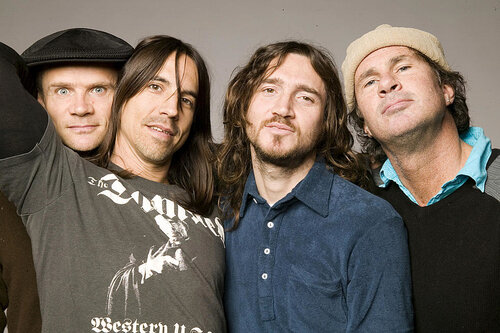
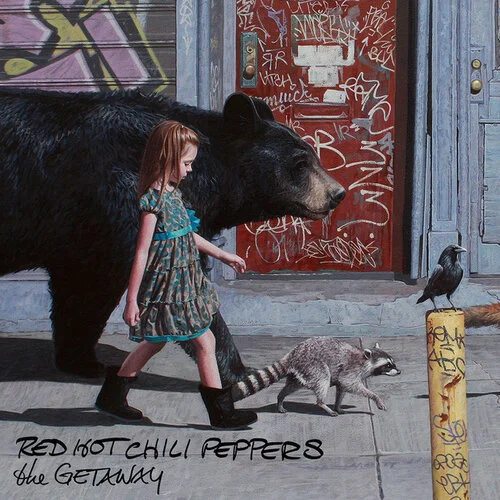
I am recommending the essential albums from the band, the Red Hot Chili Peppers. They can divide people, but I really like them, and I feel they have produced some terrific albums! I have recommended four that you need to own, an underrated one, and their latest. I have also popped in a book suggestion so you can get fully acquainted with the band. I am going to continue this series for a few weeks, as it is opening my eyes to the work of some truly brilliant artists. If you are not overly-familiar with the Red Hot Chili Peppers, take a look at the suggestions below and…

amama.jpg

DIVE right in.

_____________

The Four Essential Albums

Blood Sugar Sex Magik

Release Date: 24th September, 1991

Label: Warner Bros.

Producer: Rick Rubin

Standout Tracks: Breaking the Girl/Give It Away/Under the Bridge

Buy: https://www.discogs.com/Red-Hot-Chili-Peppers-Blood-Sugar-Sex-Magik/master/42522

Stream: https://open.spotify.com/album/30Perjew8HyGkdSmqguYyg

Review:

The Red Hot Chili Peppers' best album, Blood Sugar Sex Magik benefits immensely from Rick Rubin's production -- John Frusciante's guitar is less overpoweringly noisy, leaving room for differing textures and clearer lines, while the band overall is more focused and less indulgent, even if some of the grooves drag on too long. Lyrically, Anthony Kiedis is as preoccupied with sex as ever, whether invoking it as his muse, begging for it, or boasting in great detail about his prowess, best showcased on the infectiously funky singles "Give It Away" and "Suck My Kiss." However, he tempers his testosterone with a more sensitive side, writing about the emotional side of failed relationships ("Breaking the Girl," "I Could Have Lied"), his drug addictions ("Under the Bridge" and an elegy for Hillel Slovak, "My Lovely Man"), and some hippie-ish calls for a peaceful utopia. Three of those last four songs (excluding "My Lovely Man") mark the band's first consistent embrace of lilting acoustic balladry, and while it's not what Kiedis does best as a vocalist, these are some of the album's finest moments, varying and expanding the group's musical and emotional range. Frusciante departed after the supporting tour, leaving Blood Sugar Sex Magik as probably the best album the Chili Peppers will ever make” - AllMusic

Choice Cut: Suck My Kiss

Californication

Release Date: 8th June, 1999

Label: Warner Bros.

Producer: Rick Rubin

Standout Tracks: Around the World/Parallel Universe/Scar Tissue

Buy: https://www.discogs.com/Red-Hot-Chili-Peppers-Californication/master/42546

Stream: https://open.spotify.com/album/2Y9IRtehByVkegoD7TcLfi

Review:

On the surface filled with the usual punk funk, the band had now matured enough to make it sound more convincing. Keidis' voice, ravaged by age and excess, now emerged as a mighty instrument, while Frusciante's guitar held far more subtle nuance.

The album yielded four hit singles (Around the World, Otherside, Californication and the Grammy Award–winning Scar Tissue) but even more interesting waas the way the band let more than just fun and frolics into the mix. Frusciante on Get On Top even fused Public Enemy with prog rock, admittting that his unsdersatated solo had been influenced by Steve Howe of Yes.

Overall the album has a far more meditative feel, allowing you to finally believe that they'd come to do more than just party your town dry. It was the album that confirmned them as world class. They remain such today, and it's all down to this re-birth” – BBC

Choice Cut: Californication

By the Way

ssa.jpg

Release Date: 9th July, 2002

Label: Warner Bros.

Producer: Rick Rubin

Standout Tracks: By the Way/Universally Speaking/Dosed

Buy: https://www.discogs.com/Red-Hot-Chili-Peppers-By-The-Way/master/42557

Stream: https://open.spotify.com/album/4ueGcY7b6BzBFyssWpEjZb

Review:

The Red Hot Chili Peppers' eighth studio album finds the California foursome exploring the more melodic freeways of harmony and texture, contrasting the gritty, funky side streets of their early days. Luckily, with this more sophisticated sound, the Peppers have not sacrificed any of their trademark energy or passions for life, universal love, and (of course) lust. Although they recorded the spiky Abbey Road EP in 1988, this album actually sounds a lot closer to the Beatles' Abbey Road, with a little of Pet Sounds and elements of Phil Spector's lushest arrangements all distilled through the band's well-traveled funk-pop stylings. Harmony vocals and string arrangements have replaced some of the aggressive slap bass that the group was initially recognized for, but fans of both the gentle and the fierce Chili Peppers styles will embrace the title track and first single, "By the Way." In fact, this song on its own could almost be a brief history of everything the Red Hot Chili Peppers have recorded: fiery Hollywood funk, gentle harmonies, a little bit of singing about girls, a little bit of hanging out in the streets in the summertime, some rapid-fire raps from Anthony Kiedis, some aggro basslines from Flea -- the song plays like a three-and-a-half-minute audio version of Behind the Music. Overall, the album leans more toward the melodic end of their oeuvre, but they have grown into this kinder, gentler mode organically, progressively working toward this groove little by little, album by album. What once were snapshots of a spastic punk-funk lifestyle have grown into fully realized short stories of introspection and Californication. Though the pace of the album falters at times (particularly in the verses; the choruses are all pretty spectacular), it is refreshing to see that as the four Chili Peppers continue to grow older and more sure of themselves, their composition and performing skills are maturing along with them” – AllMusic

Choice Cut: Can’t Stop

Stadium Arcadium

Release Date: 9th May, 2006

Label: Warner Bros.

Producer: Rick Rubin

Standout Tracks: Snow (Hey Oh)/Stadium Arcadium/Slow Cheetah

Buy: https://www.discogs.com/Red-Hot-Chili-Peppers-Stadium-Arcadium/master/38645

Stream: https://open.spotify.com/album/7xl50xr9NDkd3i2kBbzsNZ

Review:

That’s not to say they’ve turned into simpering acoustic-botherers though; this album yields a lot of great songs. ‘Hump De Bump’ is straight back to the old school – fast, goofy guitar toying, with reverberating bass that jumps around the frets à la ‘Love Rollercoaster’, with vocal gymnastics to match and odd brass squiggles. ‘Storm In A Teacup’ is a P-funk ‘Freaky Styley’ classic, sanded down to ‘Californication’-era smoothness, and John Frusciante gets to do what he does best on the likes of ‘Turn It Again’ and ‘Animal Bar’. Here is a player increasingly interested in the sonic, tonal capabilities of his instrument as opposed to fret wankery. Somewhere along the line the Chilis got sophisticated on our asses.

‘Charlie’ (not just about cocaine we’re relentlessly informed) is a syncopated treat that stumbles into anthem territory, while the likes of ‘Snow (Hey Oh)’ sees them opt for power-songwriting from the outset, throwing on “hey oh, whoo ah oh” choruses labelled “For Crowds At Wireless Festival Only”. ‘Hey’ is another titanic tune lumbered with wah-wah-esque guitar solos – an awesome prospect and even better if you’re partial to a bit of ’80s Eric Clapton among your coffee table lounge jazz” – NME

Choice Cut: Dani California

The Underrated Gem

Mother’s Milk

Release Date: 16th August, 1989

Label: EMI America

Producer: Michael Beinhorn

Standout Tracks: Subway to Venus/Taste the Pain/Fire

Buy: https://www.discogs.com/Red-Hot-Chili-Peppers-Mothers-Milk/master/42512

Stream: https://open.spotify.com/album/1oOkcBu5bgkUzZTvKD1m8z

Review:

A pivotal album for the Red Hot Chili Peppers, 1989's Mother's Milk turned the tide and transformed the band from underground funk-rocking rappers to mainstream bad boys with seemingly very little effort. Mother's Milk brought them to MTV, scored them a deal with Warner Bros., and let both frontman Anthony Kiedis and the ubiquitous Flea get back into a good groove following the death of co-founding member Hillel Slovak. With a new lineup coalescing around the remaining duo plus new drummer Chad Smith and guitarist John Frusciante, and with producer Michael Beinhorn again behind the boards, the band took everything that The Uplift Mofo Party Plan hinted at, and brought it fully to bear for this new venture. If anyone doubted the pulsating power of the opener, "Good Time Boys," it took only a few bars of band's outrageous and brilliant interpretation of the Stevie Wonder classic "Higher Ground" to prove that this new lineup was onto something special. Wrapping up with the aptly titled and truly punked-out "Punk Rock Classic" and the band's own punched-up tribute to "Magic Johnson," Mother's Milk was everything the band had hoped for, and a little more besides. Effortlessly going gold as "Knock Me Down" and "Taste the Pain" careened into the charts, the album not only set the stage for the band's Blood Sugar Sex Magic domination, it also proved that funk never died; it had just swapped skins” – AllMusic

Choice Cut: Higher Ground

The Latest/Final Album

The Getaway

Release Date: 17th June, 2016

Label: Warner Bros.

Producer: Danger Mouse

Standout Tracks: We Turn Red/Goodbye Angels/Go Robot

Buy: https://www.discogs.com/Red-Hot-Chili-Peppers-The-Getaway/master/1015499

Stream: https://open.spotify.com/album/43otFXrY0bgaq5fB3GrZj6

Review:

After 25 years, the Chili Peppers chose to record with a producer other than Rick Rubin; but in Danger Mouse, they chose wisely. He imposed the same method that proved so successful with The Black Keys, co-writing new material and bringing a keen pop sensibility to the arrangements – damped guitar picking and mouthed hi-hats for the title-track; crisp synthesiser sci-fi funk for “Go Robot”; and piano and two guitar figures muscled aside by Flea’s slap-bass for “Dark Necessities”, Anthony Kiedis’s claim of dangerous charm. As ever, California gets plenty of mentions, though there’s less filler than usual, the album reaching a yearning epiphany in the string-draped song for a son, “The Hunter”The Independent

Choice Cut: Dark Necessities

 The Red Hot Chili Peppers Book

Scar Tissue

Authors: Anthony Kiedis/Larry Sloman

Publication Date: 3rd November, 2005

Publishers: Little, Brown/Book Group

Synopsis:

In SCAR TISSUE Anthony Kiedis, charismatic and highly articulate frontman of the Red Hot Chili Peppers, recounts his remarkable life story, and the history of the band itself.

Raised in the Midwest, he moved to LA aged eleven to live with his father Blackie, purveyor of pills, pot, and cocaine to the Hollywood elite. After a brief child-acting career, Kiedis dropped out of U.C.L.A. and plunged headfirst into the demimonde of the L.A. underground music scene. He formed the band with three schoolfriends - and found his life's purpose. Crisscrossing the country, the Chili Peppers were musical innovators and influenced a whole generation of musicians.

But there's a price to pay for both success and excess and in SCAR TISSUE, Kiedis writes candidly of the overdose death of his soul mate and band mate, Hillel Slovak, and his own ongoing struggle with an addiction to drugs.

SCAR TISSUE far transcends the typical rock biography, because Anthony Kiedis is anything but a typical rock star. It is instead a compelling story of dedication and debauchery, of intrigue and integrity, of recklessness and redemption” – Waterstones

Buy: https://www.waterstones.com/book/scar-tissue/anthony-kiedis/9780751535662

FEATURE: The June Playlist: Vol. 3:  Satellites and Muses Going Their Separate Ways

FEATURE:


The June Playlist

aqq.jpg

IN THIS PHOTO: Beyonce/PHOTO CREDIT: Elle

Vol. 3:  Satellites and Muses Going Their Separate Ways

__________

THIS year has been a marvelous one for music…

IN THIS PHOTO: Phoebe Bridgers/PHOTO CREDIT: Frank Ockenfels

and this week has seen three of the best albums of the year released. Phoebe BridgersPunisher, Bob Dylan’s Rough and Rowdy Ways, and Neil Young’s ‘lost’ album, Homeground, have been picking up five-star reviews! Apart from these artists, there are great new tracks from Beyonce, Doves, IDLES, Noname, Public Enemy, H.E.R., Dream Wife, and Khruangbin. Also in the mix this week are The Killers, Braids, Max Pope, and All We Are. It is a great and bumper week for music, so if you need some energy and motivation to get you through today, then have a listen to the songs in the playlist! It has been a tough time for all of us lately, and music is playing a part in lifting us up. Hopefully, the best music from this week will help in…

ss0s0.jpg

IN THIS PHOTO: Bob Dylan/PHOTO CREDIT: Dave J Hogan/Getty Images for ABA

MAKING things a little better.

ALL PHOTOS/IMAGES (unless credited otherwise): Artists

__________

Beyoncé Black Parade

aapapa.jpg

PHOTO CREDIT: Frank Ockenfels

Phoebe Bridgers Chinese Satellite

Bob Dylan Mother of Muses

Neil Young Separate Ways

Doves - Carousels

ARTWORK CREDIT: Russell Oliver

IDLES Grounds

PHOTO CREDIT: Eitan Miskevich

Public Enemy - State of the Union (STFU)

Noname - Song 33

122.jpg

PHOTO CREDIT: Mary Kang

KhruangbinPelota

AALOL.jpg

Dream Wife Temporary

01`0101.jpg

Braids Young Buck

ALAALL.jpg

Alicia Keys Perfect Way to Die

The KillersMy Own Soul’s Warning

H.E.R. I Can’t Breathe

ds.jpg

L.A. Witch - I Wanna Lose

All We Are - Not Your Man

J. ColeSnow on Tha Bluff

aaa.jpg

PHOTO CREDIT: Cass Meyers‬

Anderson .Paak Lockdown

Tom Morello Marching on Ferguson

SAAA.jpg

JettaI Wanna Know

Max Pope - Candy

Gregory PorterMister Holland

2233.jpg

PHOTO CREDIT: Ida Bjørvik

Lil HalimaFriends

Songhoy Blues Worry

Kate Teague The Temporary

saaa.jpg

BTSStay Gold

The Ninth WaveI’m Only Going to Hurt You

John Legend Ooh Laa

3222.jpg

Amber Mark My People

Saweetie Tap In

saaa.jpg

Frank Carter & The Rattlesnakes Fire

e33.jpg

PHOTO CREDIT: @eivindhamran

BETSY Behind Her Smile

Tiana Major9 - Lucky

Tyga VACATION

Victoria Monet, KhalidExperience

FEATURE: Through the Windshield: Are Drive-In Gigs Going to Replace Festivals in the U.K. and Other Parts of the World?

FEATURE:

Through the Windshield

PHOTO CREDIT: @carlodagnolo/Unsplash 

Are Drive-In Gigs Going to Replace Festivals in the U.K. and Other Parts of the World?

___________

IN some ways…

PHOTO CREDIT: @kdarmody/Unsplash

we have sort of gone back to the 1950s and 1960s! Because of social distancing rules, many have been going to drive-in cinemas, and that is being seen here in the U.K. and other nations. Drive-in films are being seen in Canberra (Australia) for the first time in many years, and it seems that the comfort and relative safety of the car is giving people access to films and other forms of entertainment. There is no telling when festivals can return in their traditional form. Some say it will be next year, whilst there have been forecasts that we will not see festivals resume until 2022. That is a worrying proposition for music lovers, artists and festival organisers, so there are alternatives being suggested. I am not sure how far we are from having a track-and-trace system implemented where people can be tested before they go to a festival/gig and we can avoid social distancing. Whilst that is being worked on/discussed, the drive-in gig might become more common. It is something that has already been trialed in Denmark, and it must be an odd experience for everyone involved! Rather than dancing and bonding at gigs, it is a lot more static and confined. Fewer people will be able to attend, but it does offer musicians a chance to perform and get some money coming in. It will be interesting to see whether there is a way to make festivals accessible sooner rather than later.

PHOTO CREDIT: @micheile/Unsplash

Drive-in concerts will provide encouragement for many artists who have not been able to earn revenue during the past few months. This article from The Guardian looks at Australia and how their festivals will look for the immediate future:

Theirs is just one of many drive-in gigs set to take place next month as Australia slowly begins to reopen. For three nights from 10 July, drive-in festival Airwaves will set up on the Sunshine Coast with a line-up led by the Chats. In Melbourne a “live entertainment precinct” called The Drive-In will take over Flemington racecourse, offering weekly live music as well as comedy and movie nights. Another offering, Drive-in Entertainment Australia, plans to launch around the country next month.

Drive-in gigs have emerged as a creative solution for an industry in crisis. The pandemic has indefinitely halted traditional live shows, music’s financial lifeblood. Large public gatherings sardine-packed with sweaty bodies will be among the last things to return: Splendour in the Grass, which was previously rescheduled from July until October, announced this week its 2020 event will not go ahead.

And while major events like Falls festival plan to proceed with local line-ups in December, some are predicting festivals as we know them won’t be able to return until late 2022. With thousands out of work, the industry is lobbying the government for financial assistance including business grants and an expansion of the jobkeeper scheme”.

Some might say that a drive-in festival or gig is like watching music on T.V. In the sense you do not get to actually see the artists up-close and get close to people. With the Government not doing much to subside and sustain the live music sector, there is a real worry that the majority of concert spaces in the U.K. will close permanently.

PHOTO CREDIT: @bukowski/Unsplash

Gig-goers are being asked how they will approach live music going forward, and I do think that there is this sort of unease; people worrying about going to gigs but, on the other hand, not wanting venues to close. Drive-in will work better for festivals, and it might have to be the way things are next year, unless there is a vaccine or things have improved considerably. In terms of smaller gigs, I guess some form of socially-distanced alternative will need to come in, but I think the drive-in option is a way for festivals to restart in some form. It is very strange we have readopted the notion of the drive-in for entertainment! I do think drive-in festivals will be rolled out in the U.K. and U.S., and I think most of Europe will do things this way. Whilst bigger festivals might not go drive-in, there are some U.K. gigs that will benefit from this format:

A series of drive-in concerts are to take place across the UK this summer, promoters Live Nation have announced.

The likes of Ash, Dizzee Rascal, The Lightning Seeds and Gary Numan, have all signed up to play at the "Live From The Drive-In" events.

Outdoor spaces in Birmingham, Liverpool, London will play host, as well as Edinburgh, Bristol and beyond.

The 300-car gigs have been designed to provide a safe alternative to the many events that have been cancelled.

The concert series, which will also feature The Streets and Tony Hadley, will run from mid-July until September, while music venues continue talks with the government about how and when they might reopen in the wake of the Covid-19 pandemic”.

I keep coming back to small venues, who do not have the option of doing drive-ins. If venues cannot get adequate funding and relief in the coming months, then there will have to be some form of contingency where they can open their doors but have fewer people inside or have virtual gigs. Laura Marling recently performed a live-streamed gig in London, and some have asked whether this initiative might be a solution. Can we have virtual gigs and festivals, or should artists follow the likes of Marling and film gigs at beautiful venues, to at least provide something more exciting and immersive than home-filled gigs? The lack of connection between performer and artist is loss, and there is not that reception and rapture you get at normal live gigs. I do think these options need to be explored, as there is a real danger of losing most of our live sector. Festivals might fare better in the short/long-term, as there is more space to explore drive-ins and have people at least get within sight of a real gig. Although the notion of a drive-in gig/festival might same old-world and unusual, it might be the only way to keep… 

PHOTO CREDIT: @samuele_piccarini/Unsplash

LIVE music going.

FEATURE: The Lockdown Playlist: The Best U.K. Number-Two Tracks

FEATURE:


The Lockdown Playlist

PHOTO CREDIT: @melodyjacob1/Unsplash

The Best U.K. Number-Two Tracks

___________

NOW that so many …

wwww.jpg

PHOTO CREDIT: @wildlittlethingsphoto/Unsplash

shops have reopened, it feels like we are almost out of lockdown – even if many of us cannot return to work or see family. I am not sure how many weeks we have left but, for this Lockdown Playlist, I wanted to look at those brilliant tracks that were denied the number-one slot. We all know of those singles that should have been awarded a top-of-the-chart placing in the U.K. but, for some reason, they were beaten. Because of that, this playlist assembles a mighty collection of cruelly-denied smashes that not only were overlooked by music-buyers, but they also provide a kick or a definite source of beauty – as many of us need it right now! Here, in this latest rundown, are some uplifting, memorable and incredible songs that almost made it…

aass.jpg

PHOTO CREDIT: @mehdizadeh/Unsplash

TO the top of the charts.

FEATURE: Spotlight: Katy J Pearson

FEATURE:


Spotlight

PHOTO CREDIT: @Sharon Lopez

Katy J Pearson

___________

A lot of radio stations…

PHOTO CREDIT: Phillip J Randall

are playing artists and songs that, to them, define this year. We are past the half-way point of 2020, and I am considering the albums, singles and artists who have made this year special. One of the bets new artists around is Katy J Pearson. I love her new single, Take Back the Radio, and how different it sounds to everything around. To me, there are elements of Stevie Nicks in Pearson’s voice – one can imagine Nicks being an influence on Pearson. I have been listening to Pearson for a little bit, and I wonder whether we will see an album later in the year. There is a lot of talk around her, and I am excited to see where she heads. Before moving on, here is an introduction and information about Pearson for the Heavenly Recordings website:

A hazy dusk falls on a crossroads somewhere between Gloucestershire and Bristol. A wooden signpost points in two directions: good ol’ fashioned country heartache to the left; effortless pop hooks to the right – and underneath, cross-legged on still-warm car bonnet, sits Katy J Pearson, strumming an acoustic guitar as she spins a tale of blossoming dancefloor romance.

‘Tonight’ is the product of scrapping everything and going back to basics – Katy’s first outing as a solo artist after a joint project with her brother ran its course. Writing for her own enjoyment and “no longer writing songs for men in suits, or trying to impress them”, the springy riffs and sweet, upbeat melody of ‘Tonight’ were gently coaxed into being in Katy’s home city of Bristol, in her own time and on her own terms; the antithesis of the fast-paced, surreal and London-centric blur of her previous musical career.

QGFG.jpg

The first of a handful of songs written during solo sessions at community artist space Island Studios, ‘Tonight’ was later recorded with Ali Chant (PJ Harvey, M. Ward, Perfume Genius, Gruff Rhys) at his studio, Toy Box. Its premise is classic and universally relatable: the meeting of two people, be it in a club or anywhere else, and how they are made instantly more vulnerable by their romantic spark.

With its wheedling strings and warm production, ‘Tonight’ sounds more tinged by the South Western states of America than the South West of England. But any country inclination is happily accidental, says Pearson – it just kind of happened. “People said I was sounding quite country and I hadn’t even realised – my eyes were opened!

For its physical release, the fizzing anticipation of new love captured on ‘Tonight’ is perfectly counterbalanced with a tender and soulful B-side ballad – a cover of M. Ward’s ‘Poison Cup’. Though similarly romantically-inclined with a softly-country-round-the-edges vibe, ‘Poison Cup’ sees Pearson strip instrumental accompaniment way back, allowing her striking voice to take the front seat, and further cementing the message: here is Katy J Pearson in her most undiluted form”.

I do like the fact that there is a mixture of the British countryside and America in Katy J Pearson’s music. I can imagine the songwriter playing in America in the future and maybe living there for a bit. When one listens to a Katy J Pearson song, you get all these emotions and colours that flood forth. They are so deep and interesting.

Her music is getting some love from the likes of BBC Radio 6 Music, and I know there is going to be a lot of demand for her when we are allowed to go to gigs again. I want to pinch some words from a few interviews, as it gives context and detail regarding this fantastic artist. I mentioned Stevie Nicks earlier and, when Pearson spoke did an interview with Fred Perry last year, Fleetwood Mac were mentioned:

 “Describe your style in three words?

1970’s Texas Mom.

If you could be on the line up with any two artists in history?

Fleetwood Mac since they’ve been one of my favourite bands since I was a little ween - I used to have a tape recorder that had 'Little Lies' on it - and Interpol - only got into them a few years ago but that first record is so raw it’s unreal.

Which subcultures have influenced you?

The 1970s folk scene and New Romantics; both such an interesting time for fashion and music”.

Hey You is another fantastic track from Katy J Pearson that I have been listening to a lot lately. I do really love singers who have a dreaminess and whisper to their voice, yet there is a lot of power and sweetness too. Whilst I have compared Pearson to Stevie Nicks, I think that would be unfair. Pearson’s voice is very much her own, and the composition is fantastic.

With Pearson’s vocals layered and providing this wonderful harmony, there is a blend of the warmth from the organ and something a little more emotional and sadder in the lyrics – as Pearson offers a hand and a shoulder to a friend in need. One might assume that Katy J Pearson is very fresh on the scene and has not recorded much before. She is with Heavenly Recordings now, but she had a whole different musical life before signing to them. When she spoke with Loud and Quiet earlier in the year, Pearson talked about that phase of her life – and how important Bristol is to her:

Before penning the dream deal with indie heartthrob Heavenly Records, Katy was in a hype band with her brother called Ardyn. A major label deal and three EP releases down, they were dropped before putting out a debut album. It was the kind of situation where parameters for success had to become recalibrated – 14 million streams just don’t cut it. “When we were dropped, my brother and I moved back home, and he had glandular fever and so I just went into the studio every day by myself, using Logic and started writing. It was hard work, once you’ve been on such a busy journey. As soon as it stops you hit the rock bottom… or at least, a very low point. Maybe that was how I was able to write these very personal songs. I was writing to make myself feel better rather than writing to do something for my career. It definitely gives you a bit of a kick, too. When it’s only you, you realise that you’ve got to do all the work or literally nothing happens.

“When I was signed to a bigger label and had more of a monthly income, I found it so detrimental because I wasn’t doing anything but sitting there and trying to write. When you’re busy, it’s so much better for your head, being able to live and let the creativity hit you. Being able to take time over it is so important. And I enjoy working, it gives me balance.”

Bristol has been an essential part of nurturing this new creative world around her. “It’s such a lovely music scene, and there’s a bit more space to grow,” she says. “Everyone’s doing entirely different things – Scalping are doing heavy rock, techno, massive vibes, and then there’s Grandma’s House who are my really good friends – they do this surfy post-punk thing. Then there’s Fenne Lily doing folk. I dunno, there’s not really anyone doing exactly the same thing, which feels special. You don’t think about Bristol and easily categorise it”.

I am not sure what the immediate future holds for Pearson, but I can imagine she is keen to perform as soon as possible. It does seem like her signing with Heavenly Recordings has been a real turning point, and I would not be shocked if we saw a lot more songs coming out before the end of this year. I will wrap things up soon, but I have been scouring interviews and looking online, in an attempt to discover more about Katy J Pearson and her musical world.

PHOTO CREDIT: @downatthefront

In a recent interview with Groovy Tunes, she was asked about Take Back the Radio, and creating this unique visual persona:

 “Now that you have the freedom to write about topics and themes of your own choosing, are things naturally pouring out of you? Has your subconscious been expressing things you might not have realized you had or were feeling?

Yes for sure... but it doesn’t happen all the time. I feel like at the moment it’s such a surreal and strange situation that I’m finding it hard to draw upon just one feeling or emotion when I write, as I’m feeling quite a few at once.

You’ve got this very authentic sweet country gal persona that can be seen through your quirky music video but also the way you perform live. At what point did you start to cultivate the visual aspect to this personality? Were you always attracted to the rhinestone/twangy/southern look you present?

Thank you! Well I’ve always loved denim and rhinestones a lot. But I think the more I got closer to my sound and style the more confident I became with the visual aspect. I think it was from day 1 really I started dressing pretty western on stage but I love it.

You recently released your new single ‘Take Back The Radio.’ With the certain world situation, was this a natural pick for your next release?

Yes definitely! I think right now is a time where there are no rules really so we were like let’s do ‘Take Back The Radio’ next. I’m so glad we released in this time period as it seems to have really connected with people which is so so wonderful.

You had Davey Newington (Boy Azooga) and your flatmate Laurie Nankivell (Squid) get involved by bringing in drums, cornet, and various other textures to the piece. Is it sort of a breath of fresh air to have that community of other Bristol musicians there to get involved and support you in your work? People with similar artistic tastes and styles?

Yes so so much! It was loads of fun and just really exciting to have new faces in the studio with me. They are both so talented so it was a real pleasure to collaborate with them”.

Go and follow Katy J Pearson and check out all of her music. She is one of the most promising artists of this year, and I would love to see her play when gigs start back up. I adore her voice and aesthetic; how her songs have a personal touch, but they are wider and more all-encompassing than a lot of songwriters – one feels a part of her music. I also really like the fact that she is growing in confidence and is primed to be this big artist. Ensure you follow her movements, as she is as truly phenomenal proposition. If you are new to the music of Katy J Pearson, then change that right away, as, very soon, you will be hearing…

A lot more about her.

________________

Follow Katy J Pearson

FEATURE: Beyond the Piano Keys… Kate Bush and an Incredibly Broad Sound Palette

FEATURE:


Beyond the Piano Keys…

loo.jpg

IN THIS PHOTO: Kate Bush during filming for The Line, The Cross and the Curve in 1993/PHOTO CREDIT: Guido Harari

Kate Bush and an Incredibly Broad Sound Palette

___________

I have talked a lot…

IN THIS PHOTO: Kate Bush in a Lionheart album outtake in September/October 1978 at Great Windmill Street in Soho, London/PHOTO CREDIT: Gered Mankowitz

about Kate Bush’s debut album, The Kick Inside, lately as, not only is it my favourite album, but it has a quite different sound to albums that followed. I really like the fact that The Kick Inside has this simpler, more romantic sound that largely uses piano, voice, bass and guitar. Apart from the odd celeste, mandolin, beer bottle and Fender Rhodes here and there, The Kick Inside utilises the beauty of the piano, combined with the physicality of the guitar and percussion. In fact, before I move things along, it might be worth (briefly) mentioning the album and how the assimilation of a few well-selected sounds enhances the music. I am not suggesting other artists lack the compositional expansiveness as Kate Bush but, more and more, I am hearing new artists come through who are either not that adventurous when it comes to physical instruments – rather than samples and electronic sounds -, or they do not resonate or connect in the same manner (as Bush). The celeste, piano and acoustic guitar together gives Wuthering Heights a richness and depth that other artists might not have concocted. I listen to the song and notice these little touches that takes it to rarefied heights. The mandolin on Them Heavy People is a genius touch, whilst the boobam on Room for the Life has stayed with me ever since I first heard it.

It is hard to say why particular instruments makes the songs more interesting and memorable, but I do love the fact that Bush was thinking outside of the box from the very start! In 1978, there were innovative and broad-minded artists like Talking Heads, David Bowie and Wire, but a lot of the most popular artists of that year – from Elvis Costello, The Rolling Stones to Bruce Springsteen and The Jam – could have led Bush in a more conventional and formulaic direction. Maybe it was her established love of artists like Roy Harper, Pink Floyd, Steely Dan and David Bowie that opened her eyes to the possibility of imaginative instrumentation, or it may have been the familial inspiration of her brother, Paddy Bush – who would often show her weird and wonderful musicians, instruments and sounds. I think it was a combination of family, influence and her own desire to give her incredible songs a physicality and voice that you would not get from piano, bass and guitar alone. Those who dismiss The Kick Inside as a ‘piano album’ or overly-simple should listen to songs like The Saxophone Song (with tenor saxophone), Kite (with clavinet) and Oh to Be in Love (with synthesiser), and realise that this assumption would be faulty and negligent. Andrew Powell produced Kate Bush’s first two albums and, as a classically trained musician with perfect pitch, I guess he was also bringing in different sounds that could bring these magnificent songs to new places.

From Lionheart (her second album), one could hear a noticeable change in musical direction. Though the album was rushed and was not allowed to form and percolate as freely as it should have been – owing to the pressure from EMI and the want to capitalise on Bush’s rising stock and stardom -, I do love the way these lesser-heard instruments made an introduction. Consider one of the album’s best tracks, Kashka from Baghdad, and the fact there is a Joanna Strumentum (an unidentified instrument), a strumento de porco (psaltery), and a pan flute. Few other artists would even think of adding much into the mix beyond more routine instruments, but Bush had this interesting and original song that she wanted to bring to life. I have always loved Oh England My Lionheart and the recorder and harpsichord, rather than making it twee and offbeat, gives the track an elegance that is essential. Over a dozen musicians played on Lionheart, and there is a variety and musical broadness that few other solo artists of the time would have considered. One can easily say unique songs strung together would naturally call for the compositions to be just as varied, but few artists have the bravery and foresight to combine such disparate and unusual sounds. When Bush took more control of the production from 1980’s Never for Ever onward, her compositions widened, and she pushed further away from the sounds one hears on The Kick Inside.

Bush’s songwriting was always astonishingly fresh and away-from-the-mainstream, but heavier songs on Never for Ever called for new arsenal. I have not even mentioned backing vocals. On The Kick Inside, Bush herself was layering her own voice (there was the odd backing vocal), but she utilised other voices more on Never for Ever. Roy Harper’s voice gives Breathing huge gravity, and the fretless bass, electric guitars and percussion combined with that vocal (and Bush’s) is a potent blend. I recently examined how Bush’s love of the Fairlight CMI enhanced her work and gave her so many new possibilities. I think Kate Bush is on the same level as David Bowie when it comes to stylistic changes and producing albums that are vastly eclectic yet focused. The balalaika on Babooshka and the koto on All We Ever Look For is inspiring. Again, I am not sure whether her brother’s endless fascination with the unusual guided her firmly…but look at the musical credits for Never for Ever, and there are so many unusual instruments listed! One can just overlook this but, when you hear them in the context of the song, you notice harder and get a new experience – such as the Minimoog on Egypt or the musical saw on The Wedding List! Kate Bush’s albums never really conformed to what was happening around her – in terms of her peers or what was popular -, but her restlessness and desire to always evolve and not repeat herself meant that, on The Dreaming and Hounds of Love, she once more brought new instruments into the studio and showed that she took nothing for granted. The reason Bush used so many different instruments was not to overload her songs needlessly: she was trying to find that distinct sound that her songs demanded.

The Dreaming is a classic case of a lot of cooks in the kitchen resulting in a magnificent feast. Bush almost went mad making the album, as she solo produced for the first time and, as such, was listening only to her own voice. Percy Edwards contributed an array of animal noises on the title track and, without mentioning him too deeply, Rolf Harris’ digeridoo gave the song and authentic edge (The Dreaming concerns the destruction of aboriginal homelands). Get Out of My House has some brilliant praying, whilst the backing vocals from Paddy Bush, Ian Bairnson, Stewart Arnold and Gary Hurst on the album’s opener, Sat In Your Lap is sublime. In terms of non-vocal instruments, The Dreaming does not repeat albums that came before. Aside from the Fairlight CMI – which I shall not tread over again -, I do love how, again, some pretty cool instruments give certain numbers a real kick. The Dreaming features a bullroarer, and the uilleann pipes on Night of the Swallow gives the song an Irish kiss that we would hear more explicitly on Hounds of Love’s Jig of Life. Combine the instruments and voices I have mentioned with the array of sounds and effects Bush accessed on the Fairlight CMI and you get this clash of the natural and artificial.

Not to skip through the rest of Bush’s discography, but Hounds of Love is a very different-sounding record to The Dreaming, Warmer sounds are elicited from the Fairlight CMI, and the drum sounds are less anxious and frenetic. Maybe to match Bush’s happier mind and settled mood, the colour palette on Hounds of Love is brighter and warmer - more in common with the countryside and open air rather than the indoors or the claustrophobic. There are almost twenty-five different musicians on Hounds of Love, but they all brought something special to the plate. The fiddles and bodhrán on The Ninth Wave’s Jig of Life provides insatiable kick and Irish blood; the fujara on The Morning Fog takes us to Slovakia, oddly. Bush not only suggests new colours and emotions with these instruments, but she takes the music to different countries and provides a more itinerant and explorative experience than you get from most musicians. Whilst Bush did retain a lot of the same musicians between albums, even the drumming, bass and guitar playing changed in tone and personality. Strip away every other instrument from The Sensual World, and the band are different to how they were on Hounds of Love in  terms of their sound and vibe. The Sensual World arrived in 1989 but, rather than copy what was happening in the charts, Bush brought a flavour of the Middle East to Deeper Understanding with the tupan, and the Bulgarian vocal ensemble, Trio Bulgarka, add something spine-tingling to various numbers.

Kate Bush’s writing and lyrics infuse the senses and stimulate the mind, but it is the subtle touches and wonderful chemistry of the instruments that gives the music its beating heart. 1993’s The Red Shoes was less-well-received than previous albums, but Bush was definitely not limiting her ambitions when it came to the compositions. Listen to the kabosy on Eat the Music, or the valiha on Lily . These African sounds were not often heard on Pop records of the 1980s – if at all (maybe Talking Heads are the exception)! -, and I think these instruments say so much. By 2005’s Aerial, Bush moved away from using unusual instruments to the more heard-of in order to create arrest and power. Aerial’s orchestration and strings is no less imaginative and awe-inspiring than all the sounds of Hounds of Love or The Dreaming. If anything, one feels more moved and impressed by Aerial’s strings than the chaos on The Dreaming. On 50 Words for Snow – Bush’s latest studio album from 2011 -, there was almost a return to the more stripped sound of The Kick Inside. Although the lyrics and songs are different in terms of their maturity and intention, Bush takes things down to (largely) piano, bass, drums, and vocals – through we do hear flute, whistle, and harmonica. There are far fewer musicians on the album, and I think Bush’s desire to stay fresh meant that the wintry and almost Jazz-like sounds of 50 Words for Snow reminds many of The Kick Inside.

These albums were released thirty-three years apart, but the piano is very much the focal point. I think 50 Words for Snow’s percussion is more standout – the legendary Steve Gadd can be held responsible for that! I love all of her albums, in no small part because of how Bush unites accessible sounds with something that we have not heard before. I do hope she puts out more music but, until then, listen back to her catalogue and pay close attention to the songs. There are few artists out there where I unpick the compositions and listen out for particular instruments. With Kate Bush, songs stand in the memory because some rare instrument hits your ear and catches you by surprise. In terms of the albums that stand out most because of the instruments used…that would be a hard one. I would say Hounds of Love and The Red Shoes are particularly special, but one cannot discount the sheer beauty and emotion one gets from The Kick Inside and 50 Words for Snow and how, even though piano is at the centre, Bush uses it in a very personal and different manner. The last time I wrote about Kate Bush, I underlined how nobody has equaled her and, even though many are inspired by her, one cannot say there is a ‘new Kate Bush’ – as the fountainhead is very much untouchable and not going anywhere fast! One gets so much from a Kate Bush album; everyone will experience something different from each record. One thing is for sure: hearing a Kate Bush album take flight is…

fff.jpg

IN THIS PHOTO: Kate Bush goes through her Babooshka routine in 1980

SUCH an aural treat.

FEATURE: Rough and Rowdy, Yet Utterly Sublime: The Ageless Brilliance of Bob Dylan

FEATURE:


Rough and Rowdy, Yet Utterly Sublime

54454.jpg

IN THIS PHOTO: Bob Dylan in 2012/PHOTO CREDIT: Christopher Polk/Getty Images

The Ageless Brilliance of Bob Dylan

___________

I wanted to pen a few words…

to reflect on the new Bob Dylan album, Rough and Rowdy Ways. The album is out on Friday (19th June), but I have been reacting to a review that came out recently in The Guardian - there is also one from NME that I want to quote from. It seems that Dylan is enjoying a new peak right now. At the age of seventy-nine, one might forgive the songwriting genius if he slowed down a bit and produced an album that was sort of okay. As it seems, he has put out one of his best albums in years! I have heard the singles from the album, and Dylan has lost none of his sharpness, observational brilliance and humour. I am a big fan of albums like Highway 61 Revisited and Bringing It All Back Home and, on those albums, he put our shorter songs together with longer ones that were epic and hugely engrossing in terms of their detail and story. Rough and Rowdy Ways confirms that Dylan is one of the greatest songwriters who has ever lived, and I wonder whether the divisions of the current time have been influential. He clearly does not have a lot of time for President Donald Trump, and he spoke out against the death of George Floyd – how he was sickened and horrified by what we all saw. Some have written Dylan off when it comes to his very best work and whether he will ever be able to get anywhere near these days. His last album of mainly original compositions, 2013’s Tempest, is brilliant, but I did see some reviews that were dismissive or were comparing it unfavourably to his best work.

ssdsd.jpg

I think that Dylan has had some uneven patches, and albums that did not hit the mark – that is going to happen when you have put out so many records! I am seeing a lot of huge reviews for Rough and Rowdy Ways. Here is an extract from The Guardian’s review:

This is obviously humour of a dark hue: if Tempest’s prevalent mood was one of murderous fury, then here it’s brooding menace and imminent doom. It’s there in the music – the weird tension in Crossing the Rubicon’s muted R&B shuffle and the way the backing on Black Rider keeps lapsing into ominous silence. You lose count of the lyrical references to judgment day and Armageddon, of the mysterious characters that keep cropping up with malevolence on their minds: “I can feel the bones beneath my skin and they’re trembling with rage, I’ll make your wife a widow, you’ll never see middle age,” he sings on Crossing the Rubicon. Of course, grouchily informing the world that everything is turning to shit has been one of Dylan’s prevalent songwriting modes for a quarter of a century – it’s the thread that binds Not Dark Yet, Things Have Changed, Ain’t Talkin’ and Early Roman Kings, among others – but this time the message seems to have shifted slightly: if you think everything has turned to shit now, Rough and Rowdy Ways keeps insisting, just you wait.

This isn’t perhaps the most comforting communique to issue in the middle of a global pandemic, but then the man behind it has seldom dealt in soothing reassurance. And besides, it doesn’t matter. For all its bleakness, Rough and Rowdy Ways might well be Bob Dylan’s most consistently brilliant set of songs in years: the die-hards can spend months unravelling the knottier lyrics, but you don’t need a PhD in Dylanology to appreciate its singular quality and power”.

Look at iconic and decades-enduring songwriters like Bob Dylan, Joni Mitchell and Paul McCartney, and I am always amazed how they are putting out work after so long – though Mitchell has not released an album for a while –, and how they are able to give the world such brilliance! I urge people to buy Dylan’s Rough and Rowdy Ways, as one is in for a real treat! His voice sounds incredible and moving, and I think his lyrics are as staggering as ever. This is a sort of love letter to a master of music, and one who many have sort of overlooked and assumed his best is far behind him – and those who just aren’t interested anymore. I think Dylan is one of those people who can take what is happening around him, craft this incredible song, and make sure that it speaks to everyone. In their five-star, this is what NME had to say:

The roots of the erosion of US democracy plays out against a backdrop of counter-culture revolution. Between flickering scenes from Dealey Plaza and Parkland hospital, Dylan widens the shot to take in the birth of rock’n’roll, The Beatles, Woodstock and Altamont, before unleashed a bombardment of musical, cinematic and social references stretching the entire 20th Century, like ‘We Didn’t Start The Fire’ grew up and got a degree. Bluesmen, silent movie clowns, soul queens, jazz greats, rockers, hippies and pin-ups – Dylan revels in a hundred years of creative progress as if in accusation of America’s immutable ideological savagery. JFK, he’s saying, was just the highest profile, on-camera bloodstain to be splashed across the stars and stripes.

“The song is like a painting, you can’t see it all at once if you’re standing too close,” Dylan recently told The New York Times, “the individual pieces are just part of a whole.” As such, it’s a vision of which DeLillo, Picasso or Eliot would be proud, and serves as a fitting close on a record that aspires to be the musical equivalent of the Great American Novel. It would be foolish indeed to assume that ‘Rough And Rowdy Ways’ is Dylan’s last word, but it’s certainly a historic address”.

I do hope that we see Dylan release many more albums, as I feel he is going through one of the most productive and impressive stages of his illustrious career. He recently gave a rare interview to The New York Times, and he was asked about his new album and various tracks from it. He was asked about the strangeness and tense of 2020:

There is a lot of apocalyptic sentiment in “Murder Most Foul.” Are you worried that in 2020 we’re past the point of no return? That technology and hyper-industrialization are going to work against human life on Earth?

Sure, there’s a lot of reasons to be apprehensive about that. There’s definitely a lot more anxiety and nervousness around now than there used to be. But that only applies to people of a certain age like me and you, Doug. We have a tendency to live in the past, but that’s only us. Youngsters don’t have that tendency. They have no past, so all they know is what they see and hear, and they’ll believe anything. In 20 or 30 years from now, they’ll be at the forefront. When you see somebody that is 10 years old, he’s going to be in control in 20 or 30 years, and he won’t have a clue about the world we knew. Young people who are in their teens now have no memory lane to remember. So it’s probably best to get into that mind-set as soon as we can, because that’s going to be the reality.

As far as technology goes, it makes everybody vulnerable. But young people don’t think like that. They could care less. Telecommunications and advanced technology is the world they were born into. Our world is already obsolete.

“I Contain Multitudes” is surprisingly autobiographical in parts. The last two verses exude a take-no-prisoners stoicism while the rest of the song is a humorous confessional. Did you have fun grappling with contradictory impulses of yourself and human nature in general?

I didn’t really have to grapple much. It’s the kind of thing where you pile up stream-of-consciousness verses and then leave it alone and come pull things out. In that particular song, the last few verses came first. So that’s where the song was going all along. Obviously, the catalyst for the song is the title line. It’s one of those where you write it on instinct. Kind of in a trance state. Most of my recent songs are like that. The lyrics are the real thing, tangible, they’re not metaphors. The songs seem to know themselves and they know that I can sing them, vocally and rhythmically. They kind of write themselves and count on me to sing them”.

Robert Zimmerman is a genius, and I do think that, if you can, go and check out his new album. It is frightening to think that, when he turns eighty next year, he will be in his seventh decade as a recording artist – although he would have been recording music before his eponymous album came out in 1962! To listen to a Bob Dylan album is an experience like no other. I remember when Murder Most Foul came out, and just being blown away by his peerless wordplay and gravitas-filled vocal. Bob Dylan is one of the greatest poets and voices who has ever lived and, when it comes to turning out these unbelievable albums, I…

IN THIS PHOTO: Bob Dylan in the 1960s

HOPE that does not stop anytime soon.

FEATURE: Vinyl Corner: Radiohead – A Moon Shaped Pool

FEATURE:


Vinyl Corner

Radiohead – A Moon Shaped Pool

___________

THE reason I am recommending…

sss.png

people go out and buy Radiohead’s A Moon Shaped Pool on vinyl is that it is a magnificent record, and it is the most-recent release from the band. There have been rumours that Radiohead will release another album, but there is no idea when that might be. I have very good memories of A Moon Shaped Pool. It was released a day before my birthday on 8th May, 2016, and I was very struck by the record. It is a classic case of a few songs hitting you and then, the more you listen, the more you love it. The album was recorded in southern France alongside their long-time producer, Nigel Godrich. Radiohead have always been able to combine their traditional and incredible sound with strings. Through the years, I think strings have become more key and played a bigger role. Performed by the London Contemporary Orchestra (arranged by guitarist Jonny Greenwood), they range from the sumptuous to the frightening. The first single, Burn the Witch, was released on 3rd May, 2016, and I was hooked from the start. Its strings are Hitchcock-esque in places; it is a wonderful score, and I think Thom Yorke’s voice is sublime. In terms of the lyrics, there are nods to groupthink and corruption; the video (directed by Chris Hopewell, it uses stop-motion animation in the style of the Trumptonshire trilogy) is so memorable and wonderful.

I think A Moon Shaped Pool sounds different to 2011’s The King of Limbs. You can hear a more digital and computer-based sound on that album. A Moon Shaped Pool, whilst not lo-fi, does use analog multitrack recorders. If the band made an error or needed to do another take, they’d have to erase the previous take – forcing them into a different way of working. Whilst there are some political and social-economic themes addressed, a lot of the lyrical inspiration revolves around loss and heartache – no doubt inspired by Yorke's recent separation from his partner of almost twenty-five years, Rachel Owen. I genuinely feel A Moon Shaped Pool is one of Radiohead’s best albums, and I love every song on it. Radiohead have moved away from the guitar-based sound of albums like The Bends and OK Computer, and I wasn’t overly-keen on The King of Limbs. I felt that there were relatively few standout moments, and there wasn’t a great deal to hook me in and listen to it again. Conversely, A Moon Shaped Pool has these incredibly beautiful and heartfelt songs that draw you in and stay in the mind. Even when the band are darker and more paranoid, the electronics and strings provide this nuance that nestles in the mind and leaves you wanting more. In terms of the reviews, Radiohead got positive feedback more or less right across the board. It is one of their highest-rated albums ever.

Before bringing in a couple of reviews, it is pretty cool that the album’s tracks are arranged alphabetically – starting out with Burn the Witch, and ending with the fan favourite, True Love Waits. In their review, this is what AllMusic had to say:

Sly, dissonant strings grace some cuts, acoustic guitars provide a pastoral counterpoint to an electronic pulse, Thom Yorke's voice floats through the music, often functioning as nothing more than an element of a mix; what he's saying matters not as much as how he murmurs. Such subtle, shifting textures emphasize Radiohead's musicianship, a point underscored when this version of "True Love Waits" is compared to its 2001 incarnation. There, Yorke accompanied himself with a simple acoustic guitar and he seemed earnest and yearning, but here, supported by piano and strings, he sounds weary and weathered, a man who has lost his innocence. What he and Radiohead have gained, however, is some measure of maturity, and with this, their music has deepened. Certainly, sections of A Moon Shaped Pool contain an eerie, disconcerting glimmer, usually attained through power kept in reserve -- nothing stabs as hard as the sawing fanfare of "Burn the Witch," while the winding, intersecting guitars that conclude "Identikit" provide the noisiest element -- yet the album as a whole doesn't feel unsettling. Instead, there's a melancholic comfort to its ebb and flow, a gentle rocking motion that feels comforting; it's a tonic to the cloistered, scattered King of Limbs and even the sleek alienation of Kid A.

Radiohead are recognizably the same band that made that pioneering piece of electronica-rock but they're older and wiser on A Moon Shaped Pool, deciding not to push at the borders of their sound but rather settle into the territory they've marked as their own. This may not result in a radical shift in sound but rather a welcome change in tone: for the first time Radiohead feel comfortable in their own skin”.

I am still listening to A Moon Shaped Pool four years after its release, and I am finding that the songs still sound fresh and full of mystery. I am not surprised that it gained such applause in 2016, as it is an album anyone can appreciate and get something from – even if you are not a Radiohead fan. This is what Pitchfork wrote when they reviewed the album:

 “A song title like “Glass Eyes” hints at many of the band’s longstanding morbid preoccupations—the semblance of humanity in something cold and dead, or the violation of the biological body by foreign objects—but the song is a bloodflow of strings straight into the heart. “Hey it’s me, I just got off the train,” Yorke sings, and it’s a strikingly ordinary image: the Paranoid Android himself, picking up the phone and calling someone to tell them he’s just arrived. “I feel this love turn cold,” he confesses as the ballad draws to a close, the phrasing an echo, subconscious or not, of his Kid A sign-off “I’ll see you in the next life.” A throbbing cello appears like a lump in the throat; the song fades away.

Throughout the album, Yorke’s everyday enlightenment is backed by music of expanse and abandon. The guitars sound like pianos, the pianos sound like guitars, and the mixes breathe with pastoral calm. “The Numbers,” a song about the impending apocalypse brought on by climate change, meanders along, its groove as wide as an ocean. Even the malevolent synth wave that passes through “Ful Stop” sounds like a visitor, a momentary darkness rather than a caged spirit. As the song builds, the band works up a coursing groove that will feel familiar to longtime fans, with its interlocking guitars and an arterial bustle of rhythms serving to launch Yorke’s wordless moan. It’s a sound that Radiohead has spent the last decade honing, but the payoff here is deeper and more gratifying than it has been in a while”.

I would urge people to go and buy A Moon Shaped Pool on vinyl but, if you cannot, then it is available to stream. As we look forward to possible Radiohead material in the future, familiarise yourself with their ninth studio album. It is an album that becomes more powerful and arresting the…

MORE you listen to it.

FEATURE: The Lockdown Playlist: Brilliant Scottish Bands

FEATURE:


The Lockdown Playlist

PHOTO CREDIT: @omarlopez1/Unsplash

Brilliant Scottish Bands

___________

MOST shops are opening…

PHOTO CREDIT: @clarissemeyer/Unsplash

tomorrow, and it is another step towards regaining some feeling of normality. Of course, there are still going to be limitations and strict guidelines in place when shops do open their doors. I think it is good that things are improving but, still, we are in lockdown and are a bit of a way off from seeing things get back to how they were. Because of that, I am continuing with the playlists and I am combining some brilliant Scottish bands into the latest ones. I am a big fan of Scottish music, and I think it is an area of the musical landscape that gets overlooked a bit. I hope there is something in the rundown that gets the energy levels flowing and raised, as it is a weekend where many of us are feeling a bit tired. Here is a collection of terrific songs from some…

PHOTO CREDIT: @dariusbashar/Unsplash

TRULY excellent Scottish bands.

FEATURE: Every Night, Another Day: The Paul McCartney Playlist

FEATURE:


Every Night, Another Day

werf.jpg

PHOTO CREDIT: Mary McCartney

The Paul McCartney Playlist

___________

THE next in my series…

PHOTO CREDIT: Mary McCartney/MPL Communications 

of birthday playlists concerns the sensational Paul McCartney. The legendary songwriter celebrates his birthday on 18th June, so I wanted to put out a playlist with some of his best Wings and solo tracks. McCartney is my favourite songwriter, and I love his work. I wanted to avoid Beatles recordings, as I have done that in the past, and I wanted to spend some more time with his solo and Wings material instead - as it is often overlooked. I think Macca’s non-Beatles output gets criticised unfairly, and he penned so many classics outside of the band. It is amazing to think McCartney is still recording and performing just shy of his seventy-eighth birthday. To honour the great man, I have been trawling through his back catalogue and assembled some terrific tracks that proves just what a varied and amazing songwriter Paul McCartney is! I, like many out there, wish him…

PHOTO CREDIT: Linda McCartney

A very happy birthday.

FEATURE: Dressed to Impress: As Record Shops Reopen: The Beauty and Tactile Wonder of the Album

FEATURE:


Dressed to Impress

PHOTO CREDIT: @suryavu/Unsplash

As Record Shops Reopen: The Beauty and Tactile Wonder of the Album

___________

ON Monday (15th June)…

1dff.jpg

PHOTO CREDIT: @lensinkmitchel/Unsplash

non-essential shops will open and, happily, this means that some record shops will open their doors. You will have to check online to see if your local record shop is going to be open but, as the Government have announced that non-essential shops can trade, it will bring a lot of relief for record stores. I know that Rough Trade have announced they will be open from Monday. This NME article explains more:

Rough Trade have announced that they will be re-opening all four of their UK record stores next week.

The record stores will re-open next Tuesday (June 16) at 11AM, ending the coronavirus-enforced closure of the business which began back in March when the UK lockdown was first ordered. Rough Trade have been operating solely online in the interim.

In a message to customers, Rough Trade said that they were “very pleased” to resume business across their four stores, and advised customers that safety measures will be implemented in line with the latest government guidance.

All four stores will also observe limited opening hours (Tuesday to Saturday, 11AM-5:30PM), while the stores will be closed on Mondays and Sundays”.

At the moment, record stores have been relying on online orders, and I think some are delivering to people’s doors; others are allowing customers to come to the store and collect their order from outside. It has been a strange time, and over this weekend, I am going to address how music has provided such inspiration and motivation for people – perhaps more than at any other time.

I have been missing the community and unique buzz that you only get from record shops. My favourite, Resident in Brighton, have been doing well with online orders, and they will look forward to welcoming customers in – although I am not sure whether they are opening next week. I guess we will all have to distance, and there will be queues outside of shops; contactless payment and less of the feel we are used to. Things will eventually get back to how they were, but at the moment we are going to adapt. The reason I wanted to write this feature is, even though we are going to see fewer people under one record store roof, I think there will be this new appreciation for vinyl. It has been great streaming albums but, more than ever, I am keen to hold an album and see a selection of great albums together. One reason why vinyl thrives and record shops carry on is because people want that physicality and tactility. Rather than write a piece about the album cover, I wanted to generally speak about the record shop as a whole. Of course, the beauty of picking up an album and being able to own this very special thing is hard to put into words. I have a list of albums I want to buy, and there is that sense of satisfaction one gets when holding vinyl.

ssasa.jpg

PHOTO CREDIT: @annietheby/Unsplash

Perhaps the buying experience will be a little better. Whilst fewer people will be allowed to browse together, it provides more room for those in the store, and one can still converse with the record shop staff – albeit, from a safe distance. People have asked why vinyl sustains and it is still popularity. Record shops provide something you cannot get from streaming. There is that community feel, and I think you come across great discoveries more in a shop than you would online. There is a special buzz and feel you get from being in a record shop, and I feel you are more invested in an album if you buy one, rather than stream it – more likely to come back weeks and months down the line. There is the sound quality that one gets from vinyl; one that is superior to the digital alternative, and the listening experience is different with a vinyl record. Rather than listen through earphones and sort of let the music pass you by, vinyl forces someone to sit back and listen in a very connective and immersive way. All of this makes the reopening of record shops all the more needed and welcome. To me, it is about the physical nature of vinyl, and the stimulating and mesmeric effect album art has. Those who love record shops want to be able to hold an album and get something from this thing that is like a work of art. One gets so much more from a physical album than they would the equivalent on streaming sites. I long to browse through the racks and grab those albums I have been desperate to own for months. I also think buying a record is more rewarding when you are in a store. It feels like you are giving something back, and that exchange is really satisfying. Conversing with fellow record-buyers and shop staff will still be allowed, and that is a big reason why record shops are so valuable. It has been a tough few months for the music industry, and record shops have had to switch to the online and try and keep their tills ringing. Next week will allow many record stores to open and, for me and so many music lovers, it comes as…

q22.jpg

PHOTO CREDIT: @rocinante_11/Unsplash

A blessed relief.

FEATURE: And So Is Love: Without Modern Equivalent: The Incomparable Kate Bush

FEATURE:


And So Is Love

awew.jpg

IN THIS PHOTO: Kate Bush shot in February 1979 by Gered Mankowitz

Without Modern Equivalent: The Incomparable Kate Bush

___________

IT is important to focus on some big issues…

IN THIS PHOTO: Kate Bush captured in March 1978 by Gered Mankowitz

that affect the music industry, such as venues struggling, black artists speaking out about their experiences of racism, and freelancers and creatives struggling for money – to address all of that and to have a conversation is key. Although it is important to reflect this, I do need chance to unwind and find some sense of uplift and escape! I write about Kate Bush twice a week, but I wanted to bring in a more general topic that has come back to mind recently. It is happening a little less now but, through the years, so many artists have been compared with Kate Bush. I will bring in an article I have quoted from before concerning Billie Eilish and whether she is the modern-day Bush. I have hailed Kate Bush in a similar piece before, but it is interesting to think that, forty-five years ago to the month Bush recorded The Man with the Child in His Eyes and The Saxophone Song at the age of sixteen – they would appear on The Kick Inside, her debut album, in 1978 -, there is nobody quite like her! This forty-fifth anniversary is important, and it is interesting to see how Bush was perceived back in the earliest days, and how she had to win a lot of people over. I am not going to talk about 1978 again – as I did so recently -, but I think Bush’s voice, beauty and songwriting gift was unlike anything out there; people didn’t know what to make of it.

I have been looking on the Kate Bush News website, and there has been a series of interviews between Guido Harari (who photographed Bush at various points in her career, and he shot behind the scenes while she was working on the film, The Line, The Cross and the Curve) and those who have worked with Bush. The message that has come from each interview is how unique Kate Bush is, and how there is nobody like her. Del Palmer – who has engineered several of her albums, played bass and various instruments since the earliest days and was in a long-time relationship with her -, spoke about her energy and brilliance; how it was thrilling to be on the Tour of Life in 1979, and why she endures. Stewart Avon Arnold is a dancer who has worked with Bush for a long time, and he discussed her energy and creativity – he also talked about the Tour of Life and her working with wireless mic (which she helped to invent), and how that helped her performance for songs like Kite and Don't Push Your Foot on the Heartbrake. Arnold considers Bush to be one of best dancers ever, and he singled out Rubberband Girl (from The Red Shoes) as a particularly great routine and moment. Mandy Watson – the singer for the Kate Bush tribute band, Cloudbusting - spoke of her love of Bush and, even though she is in a successful tribute band, how it is hard to equal her.

IN THIS PHOTO: Kate Bush photographed in January 1978 by Gered Mankowitz

I love the fact that people who worked with her years ago/for years – even if it was briefly -, still see Bush as this iconic and irreplaceable talent. I loved hearing Gered Mankowitz chatting about photographing Bush for The Kick Inside and Lionheart. Again, I have talked about Kate Bush’s ‘leotard shot’ that was going to be used for the Wuthering Heights single but was not used. Not to get back into the problems with The Kick Inside’s cover, but the shots Mankowitz took outline and emphasise another reason why Bush is incomparable: the aura and look she gave to camera; how she could inhabit various guises and looks and stun you every time. Mankowitz mentioned how the leotard shot stopped traffic, but the Americans wanted something less sexual/more conservative for the U.S. version of The Kick Inside. On that cover, Mankowitz shot Bush in jeans and boots, and it is homely-yet-captivating. He photographed Bush in a constructed wooden box/frame, and she sat in it. Mankowitz wanted his photos to pull people in. I wanted to mention these interviews, as these are people who have known Bush for years – apart from Mandy Watson – and still have not seen anyone like her. Seán Twomey has been running the Kate Bush News & Information website since 1998, and he runs a brilliant podcast. If you are new to Kate Bush, I would urge you to listen, as Twoney definitely knows his beans!

IN THIS PHOTO: Charli XCX is one of many artists who cites Kate Bush as an influence/PHOTO CREDIT: AP

I think we all need some distraction and positivity, so I would say that investigating Kate Bush’s music not only will bring some positivity and warmth, but it becomes apparent how there is no one like her. Look at Kate Bush’s Wikipedia page, and see the artists who count her as an influence:

Musicians who have cited Bush as an influence include Beverley Craven,[134] Regina Spektor,[135] Ellie Goulding,[136] Charli XCX,[137] Tegan and Sara,[138] k.d. lang,[139] Paula Cole,[140] Kate Nash,[141] Bat for Lashes,[142] Erasure,[143] Alison Goldfrapp of Goldfrapp,[144] Rosalía,[145] Tim Bowness of No-Man,[146] Chris Braide,[147] Kyros,[148] Aisles,[149] Darren Hayes[150]Grimes,[151] and Solange Knowles.[152] Nerina Pallot was inspired to become a songwriter after seeing Bush play "This Woman's Work" on Wogan.[153] Coldplay took inspiration from "Running Up That Hill" to compose their single "Speed of Sound".[154] In 2015, Adele stated that the release of her third studio album was inspired by Bush's 2014 comeback to the stage.[155]

In addition to those artists who state that Bush has been a direct influence on their own careers, other artists have been quoted expressing admiration for her work including Tori Amos,[156] Annie Lennox,[157] Björk,[158] Florence Welch,[159] Little Boots,[160] Elizabeth Fraser of Cocteau Twins,[161] Dido,[162] Sky Ferreira,[163] St. Vincent,[164] Lily Allen,[165] Anohni of Antony and the Johnsons,[166] Big Boi of OutKast,[167] Stevie Nicks,[168] Steven Wilson,[169] Steve Rothery of Marillion,[170] and André Matos.[171] According to an unauthorized biography, Courtney Love of Hole listened to Bush among other artists as a teenager.[172] Tricky wrote an article about The Kick Inside, saying: "Her music has always sounded like dreamland to me.... I don't believe in God, but if I did, her music would be my bible".[173] 

IN THIS PHOTO: Courtney Love/PHOTO CREDIT: Nicholas Hunt/Getty Images

Suede front-man Brett Anderson stated about Hounds of Love: "I love the way it's a record of two halves, and the second half is a concept record about fear of drowning. It's an amazing record to listen to really late at night, unsettling and really jarring".[174] John Lydon, better known as Johnny Rotten of the Sex Pistols, declared her work to be "beauty beyond belief".[165] Rotten once wrote a song for her, titled "Bird in Hand" (about exploitation of parrots) that Bush rejected.[175] Bush was one of the singers whom Prince thanked in the liner notes of 1991's Diamonds and Pearls.[176] In December 1989, Robert Smith of The Cure chose "The Sensual World" as his favourite single of the year, The Sensual World as his favourite album of the year and included "all of Kate Bush" plus other artists in his list, "the best things about the eighties".[177]” 

I do think that the media is quick to compare new artists to legends like Kate Bush. Last year, there was an article in Variety that made suggestions that Billie Eilish is a 2019-version of Kate Bush. They made some interesting observations:

Is Billie Eilish 2019’s answer to Kate Bush? The parallels are hard to ignore, starting with the fact that both collaborated with their respective brothers; that each made her cultural impact in visuals as much as the music itself; and, most importantly, that the two game-changing female artists broke the pop mold.

Eilish is an outlier who arrived at a time of need: Despite her couture-in-a-blender look, her songs represent a move away from verses full of conspicuous consumption. Rather than focusing on the well-worn territory of interpersonal transactions — “Me!” “You!” “We!” — the 17-year-old vital and visual artist twists our notion of gender.

IN THIS PHOTO: Billie Eilish/PHOTO CREDIT: Heather Hazzan

Both are pop prodigies: Bush started writing songs at 11 but she didn’t sign her contract with EMI Records until she was 16, coming in with major credentials — Pink Floyd’s David Gilmore produced her demo tape. Eilish broke out at 15 — and quickly became sick of talking about it. “That’s all I hear: What’s it like being 15,” she said at the time, adding: “Why does it define me?” What’s remarkable is that it didn’t. But they’ve both redefined the meaning of “teen idol” in their own way.

They’re stubborn non-conformists (A.K.A. proud weirdos): “Shape-shifting brilliance and an airy indifference to what’s expected of you are not the music industry’s favorite assets in any performer, but they are probably easier to accept in a man than in a woman,” wrote Margaret Talbot, reflecting on the genius of Kate Bush in The New Yorker. Similarly, The New York Times recently said of Eilish that she “is not your typical pop star” while Thrillist dubbed her “the strangest pop act in ages” — perhaps since Kate Bush?

They’re both album artists. Great songs make great single experiences, but they both know how to tie them into  conceptual arcs — Eilish, with her stunningly circular debut “When We All Fall Asleep, Where Do We Go” and Bush with such seminal long form story side albums such as “Hounds Of Love” and “Aerial.” Centering on themes of dream states, melding death imagery with pop melodies, both artists weave a fine web of melancholy and exuberance”.

I have also seen articles where Florence Welch (Florence + the Machine) and Charli XCX have been seen as the ‘new Kate Bush’ and, whilst there are similar elements – a love of dance and movement; a lack of commercial convention and a voice that can swoop and glide -, there is something unique and incredibly special that makes Kate Bush a once-in-a-lifetime. I think it goes back to the interviews I mentioned; hearing Gered Mankowitz reveal Bush’s magnetism and how she could stop traffic; Del Palmer has worked with very few artists because they cannot match Bush’s talent; Guido Harari was struck and in love with her as a photographer, and, well, it is hard to put into words just why Kate Bush can never be equalled or reincarnated and inhabited by a modern artist. I have nothing against the media and fans noticing similarities between Kate Bush and another artist, but I think these common strands are on the surface and, if you dig deep and look closer at Kate Bush, you will find that there is nobody who has her remarkable D.N.A. For me, it is how she was so determined and ambitious right from the start of her career. She challenged EMI when it came to selecting her debut single – they wanted James and the Cold Gun; her choice, Wuthering Heights, won and went to number-one! I also love how she stood firm against those who were snotty or wrote her off; how she grew and evolved between albums and, in every album, how she managed to create such variety.

3222.jpg

Her music still reveals layers so many years later, and you only need to listen to an interview with her to realise how humble she is and how easy it is to be drawn to her! I will wrap things up soon, but I want to bring in an article from The New Yorker, where Margaret Talbot discussed the incandescent power and originality of Kate Bush:

And yet—in part because she emerged into the public eye at just eighteen, and with “Wuthering Heights,” surely the most literary and therefore one of the strangest hit singles in history—Bush struck some people as a wide-eyed sprite to whom music somehow happened, not an artist fully in command of her own ideas and craft. The evidence against this reading, even then, included the fact that Bush had defied EMI record executives to pick “Wuthering Heights” as the lead single from her 1978 début album, “The Kick Inside”; it went to No. 1, making Bush the first female performer with a self-written No. 1 hit in the U.K.”.

Many corners of the media have been kind to her music and her as a person, but many have been quick to label her as a recluse or strange; someone who is kooky and this middle-class girl delivering music that is quite insubstantial or unimportant. In actuality, Kate Bush is and always has been someone who is impossible to define and limit.

qww.jpg

IN THIS PHOTO: Kate Bush with Lindsay Kemp in The Line, the Cross and the Curve (1993)/PHOTO CREDIT: Guido Harari

I think people forget just how much she has achieved in her career and, as Talbot explains, how different Bush’s real story is to the fable and impression that others have created: 

She was most productive between 1978 and 1994, when she made seven albums, but in the years since, she’s put out two critically acclaimed albums of original material plus a live album and a collection of some new versions of her old songs. She’s raised a son, Albert, who’s now in his late teens, with her partner, the musician Danny McIntosh. In 2014, she put on “Before the Dawn,” a twenty-two-night residency at the Hammersmith Apollo, in London, that combined theatre, puppetry, film, and music in a spectacle that critics found occasionally ridiculous and genuinely, almost unbearably moving. Tickets for all twenty-two performances sold out within fifteen minutes online.

Forty-five years since Bush recorded The Man with the Child in His Eyes and The Saxophone Song in London under the watch of David Gilmour, why is she someone we are still trying to figure out? Can others legitimately compare artists to Kate Bush and make a solid case for it? Is there ever going to be anyone like her again? The last section of the Talbot article I want to source from sort of hits the nail on the head regarding Bush’s boldness and how she was never one for walking the path of the predictable:  

One secret of Bush’s artistry is that she has never feared the ludicrous—she tries things that other musicians would be too careful or cool to go near. That was apparent from the very first lines of “Wuthering Heights”—“Out on the wiley, windy moors / we’d roll and fall in green / You had a temper like my jealousy / too hot, too greedy.” When she wrote that song, she hadn’t yet read the Emily Brontë novel; she’d only caught the end of a TV adaptation. But of course she got the essence of the book, sucked it in, and transmogrified it in her teen-aged soul, and she knew how to keen those lyrics like a ghost ceaselessly yearning”.

I do love how Kate Bush has inspired other artists, but I do not think there will ever be a ‘new her’ – seeing as the original and best is still very much with us! Rather than try to compare any other artists with her – everyone is going to come off short! -, it is worth listening to the artists who cite her an influence and just how much Bush, without knowing it, has given to the music world. Here is a great article that outlines how many artists owe so much to Bush, and how she has not only changed the music world, but she has become an L.G.B.T.Q.I.A.+ icon, and given strength to so many people. Another reason why I wanted to do a general feature about Bush and her music is that, during a time when there is so much anger, anxiety and uncertainty around, I do think that her words and work can help bring some form of solace and uplift. It was forty-five years ago (more or less to the day) since she stepped into the studio to record the earliest tracks on her debut album but, in my opinions, her brilliance, music and incomparable genius…

IS even more powerful and relevant today.