FEATURE: Don’t Pass Me By: Ringo Starr at Eighty: Saluting a Drumming Icon

FEATURE:


Don’t Pass Me By

xxxx.jpg

IN THIS PHOTO: Ringo Starr in 1967/PHOTO CREDIT: Richard Avedon

Ringo Starr at Eighty: Saluting a Drumming Icon

___________

WHEN a musician I love celebrates…

saa.jpg

a big birthday, I am keen to throw a lot of passion their way. I have already penned a couple of Ringo Starr features, where I saluted his drumming genius and picked his ten best performances. I think there are some quarters who, rather unoriginally, think he was not even the best drummer in The Beatles, or that his work deserves to be mocked! I hope that notion has been dispelled because, not only has Starr been behind some of the finest drumming ever, but he is one of those human beings that inspires you. The fact that he is on Twitter, and sends out these messages of peace and love is infectious and, frankly, what we all need right now! Starr ()Richard Starkey) turns eighty on 7th July, and he continues to put out brilliant music – his last album, What’s My Name, was released last year. I have already published some general pieces regarding Starr’s best work, so I will not cover the same ground. I wanted to write a feature that showed what Ringo Starr means to me on a personal level. There is no doubt that Starr has influenced so many drummers, and there are so many musicians who owe him a lot. My first experience of The Beatles was listening to albums like Rubber Soul, and Revolver. Of course, I loved the music because it was The Beatles and I was struck by their incredible power and talent!

aqqqq.jpg

IN THIS PHOTO: The Beatles at Twickenham Film Studios on 9th April, 1969/PHOTO CREDIT: Bruce McBroom/Apple Corps Ltd

I had always heard about John Lennon and Paul McCartney being these songwriting titans who were responsible for some of the best music that has ever been made. I think I almost take Ringo Starr for granted when I heard those records; assuming he was not as important as John Lennon and Paul McCartney (or George Harrison). At a certain age, I really started listening out for Ringo Starr’s drums and realised just how essential they were in regards The Beatles’ brilliance. From Rain, and In My Life through to Strawberry Fields Forever, and Here Comes the Sun, it was obvious just how unbelievable his work was. I listen now and am blown away by Starr’s originality and talent. He provides these fills and beats that no other drummer would attempt. He hooks up amazingly with Paul McCartney’s bass and gives the songs of The Beatles such power and personality. The Beatles’ promotional clips are infectious, and I remember as a child seeing them and always drawing my eye to Starr, as he seemed like the coolest and funniest! There is so much to idolise when we think of Starr, but the sheer weight and brilliance of his drumming cannot be understated. I am listening to Rain whilst typing this and, to me, this is his greatest performance. I am not a musician or know the technical details, but I listen to that song and I cannot for the life of me understand how he manages to make the sounds he does – it is no wonderer Starr ranks Rain as his finest Beatles moment!

Now more than ever, I am listening to Beatles classics and I am appreciating the drumming in new ways. As a child, I was not quite aware of just how instrumental Starr’s role was and how much he contributed to each song. I also love Ringo Starr as a singer, and I think he gives so much heart to songs like Don’t Pass Me By, Boys, Yellow Submarine, and With A Little Help from My Friends. In The Beatles’ films, I think Starr provides the best acting performances (though some would say George Harrison was the best actor), and I loved his turn in A Hard Day’s Night. In short, Ringo Starr is this amazing all-rounder that, for so long, has to fight off idiots who questioned his drumming ability! There is no questioning the importance and genius of Starr, and he means a lot to me and so many music lovers. I think he warrants a lot of love and tribute as he turns eighty, and fresh appreciation. I think Starr’s drumming is so amazing, that one can debate as to which album truly defines him. I would say Rubber Soul, and Abbey Road are the best albums that showcase Starr’s range, but there are others who say Revolver is king.

I want to source from a fabulous article from Modern Drummer, where they look at Starr’s work on Sgt. Pepper’s Lonely Hearts Club Band, and Magical Mystery Tour in 1967; how he really added something to The Beatles and changed the way they sounded for the better:

There was no doubt that Ringo was listening to his influences, and that’s what came out in his playing. And this is when they, as a complete group, started changing the landscape of recording. The songs they were writing really dictated his new style of playing and what the drums did. It wasn’t solely based on the Mersey beat anymore, with that open hi-hat and driving beat, which had been the hallmark of their sound. That was the major change in Ringo’s drumming. And then you add the sonic experimentation with the drums, which was also pioneering. In the recording process they now used compression, limiting, phasing, and backward recording. And then there was the use of the tea towels on his drums. So you combine those elements and you have sounds and playing that no one had ever heard before. All of this was brand new.

For anyone who’d ever questioned Ringo’s playing before, this [period] really highlighted his or her ignorance about the value of his playing and what his contribution was to the greatest band of all time. The drums are so prominent on Sgt. Pepper’s Lonely Hearts Club Band and Magical Mystery Tour—very dominant. It was clear to me, and I believe everyone else, that it was absurd to not understand his importance.

On 1967’s “Strawberry Fields Forever”/“Penny Lane” single and the Sgt. Pepper’s Lonely Hearts Club Band and Magical Mystery Tour albums, the Beatles were doing more complicated and orchestrated music, as well as experimenting more with sound. To fit in, Ringo’s drums became part of the orchestra. The miking of his drums was different, and he started placing tea towels on his drums for a flatter sound. Not only was he keeping time, he was now creating different parts for the intro, verse, chorus, and bridge of the song—his parts changed with the mood changes in the song. On “A Day in the Life” and “Strawberry Fields,” his drums were the instrument that answered the vocals, whereas before the release of Sgt. Pepper, it was normal to hear guitar or keys doing the answering. This took the mind of a thinking drummer. When the melody changed, so did Ringo’s drum part. To change a Ringo drum part in a Beatles arrangement would be like changing the chords to the song”.

 I will wrap things up, but I think Ringo Starr turning eighty is a great excuse, not only to listen to The Beatles and his solo work, but really appreciate what an inspirational musician he is - Starr is also streaming a birthday celebration, and Paul McCartney is one of the artists who will help mark Starr’s eightieth. One does not have to listen too hard to modern music to realise that countless drummers cite Starr as pivotal; how he has managed to help transform the music scene. For the last time before his birthday, I want to tip my cap and sing the praises of one of music’s…

222.jpg

UNTOUCHABLE geniuses.

FEATURE: “Do You Want to Feel How it Feels?” Kate Bush’s Running Up That Hill (A Deal with God)

FEATURE:


Do You Want to Feel How it Feels?”

PHOTO CREDIT: John Carder Bush

Kate Bush’s Running Up That Hill (A Deal with God)

___________

WHEN I think about one of Kate Bush’s…

qaa.jpg

most-famous songs, there are things that baffle me. The title is one thing that is a point of contention. It was originally to be called A Deal with God, but a number of countries refused to play the song because of the word ‘God’ in the title, even though there is nothing blasphemous or disrespectful in the title or track! This article from Far Out Magazine explains more:

Bush also revealed that while the title is more widely known as ‘Running Up That Hill’ that’s not how she thinks of it. She said, “You see, for me it is still called “Deal With God”, that was its title. But we were told that if we kept this title that it would not be played in any of the religious countries, Italy wouldn’t play it, France wouldn’t play it, and Australia wouldn’t play it! Ireland wouldn’t play it, and that generally we might get it blacked purely because it had God in the title”.

It is a bit weird that the title is, now, Running Up That Hill (A Deal with God), when the original title worked better and is actually very positive and would not offend anyone. Released on 5th August, 1985, this iconic track is almost thirty-five, and I have never really looked inside it at all. I shall dive into the track in a bit, but I think the fact Running Up That Hill (A Deal with God) – or ‘Running Up That Hill’ – did not hit the top spot is really strange!

Many people assume the single went to number-one, but it reached number-three in the U.K. To be fair, Madonna’s Into the Groove was number-one when Running Up That Hill (A Deal with God) – I am going to refer to the song as such throughout – was released. The song also reached number-three in Germany, four in Ireland, and thirty in the U.S. Chart positions aren’t everything, but I wonder whether Running Up That Hill (A Deal with God) would have reached the top of the charts if it was released earlier or later in 1985. The fact that Running Up That Hill (A Deal with God) was successful (to an extent) in the U.S. was a big push forward, as Bush’s singles and albums weren’t always well-received there before that. Also, the terrific Under the Ivy was the B-side to Running Up That Hill (A Deal with God) in the U.K., and I am surprised Under the Ivy didn’t make the Hounds of Love album – the record was so strong that a song as monumental as Under the Ivy was a B-side! In terms of its birth, Running Up That Hill (A Deal with God) was written during a summer’s evening in 1983. I was born in May 1983, and I think it is kind of cool that one of Kate Bush’s best songs were written just after/around the time I was born. I can just picture Bush sitting looking across the countryside (she moved from London to the country after 1982’s The Dreaming) and coming up with this magical and positive song.

axxx.jpg

IN THIS PHOTO: Kate Bush in 1983/PHOTO CREDIT: Brian Griffin

Running Up That Hill (A Deal with God) was the first song recorded for Hounds of Love, and there is a great mix of natural instrumentation and the Fairlight CMI – which was playing a much bigger role in Bush’s work, and it was hugely important during The Dreaming’s recording. Recorded between 4th November and 6th December, 1983, Stuart Elliott added his drum parts in accordance with a predetermined and pre-programmed part; Alan Murphy provided guitar, whilst Paddy Bush spliced in some balalaika, to give the song a scent and taste of the more unconventional. The music video featured Bush performing an interpretive dance with dancer Michael Hervieu. The video was directed by David Garfath. Bush and Hervieu are shown wearing grey Japanese hakama. I love the video, and it remains one of her most memorable and affecting pieces. Though I am a huge fan of Bush’s work pre-Hounds of Love, I cannot deny the importance and quality of her 1985 opus – the album celebrates thirty-five years on 16th September. When it comes to the story of Running Up That Hill (A Deal with God), this article reveals more information (as Kate Bush explains the lyrics’ meaning):

I was trying to say that, really, a man and a woman, can't understand each other because we are a man and a woman. And if we could actually swap each others roles, if we could actually be in each others place for a while, I think we'd both be very surprised! [Laughs] And I think it would be lead to a greater understanding. And really the only way I could think it could be done was either... you know, I thought a deal with the devil, you know.

asds.jpg

And I thought, "well, no, why not a deal with God!" You know, because in a way it's so much more powerful the whole idea of asking God to make a deal with you. You see, for me it is still called "A Deal With God", that was its title. But we were told that if we kept this title that it wouldn't be played in any of the religious countries, Italy wouldn't play it, France wouldn't play it, and Australia wouldn't play it! Ireland wouldn't play it, and that generally we might get it blacked purely because it had "God" in the title. Now, I couldn't believe this, this seemed completely ridiculous to me and the title was such a part of the song's entity. I just couldn't understand it. But none the less, although I was very unhappy about it, I felt unless I compromised that I was going to be cutting my own throat, you know, I'd just spent two, three years making an album and we weren't gonna get this record played on the radio, if I was stubborn. So I felt I had to be grown up about this, so we changed it to 'Running Up That Hill'. But it's always something I've regretted doing, I must say. And normally I always regret any compromises that I make. (Richard Skinner, 'Classic Albums interview: Hounds Of Love. Radio 1 (UK), aired 26 January 1992)”.

When you see polls of the best Kate Bush songs and moments, inevitably Running Up That Hill (A Deal with God) appears at the top or very near. You can tell that, in this period – 1983-1985 -, Bush was at her most content and inspired. There is so much to love about Running Up That Hill (A Deal with God). The composition is powerful, driving, yet it has romance and tenderness. Bush’s voice was deeper and less acrobatic on Hounds of Love (except for a few songs) than on albums like The Kick Inside, and Lionheart (both from 1978), and there is so much emotion, depth and beauty in her delivery. I think it is the lyrics, like so many of her songs, that are the most potent. That idea of lovers switching places to better understand one another had not been explored in Pop in quite the same way – I don’t think it really has since 1985! The fact that everyone from Tori Amos, First Aid Kit, and Patrick Wolf have covered the song shows how it resonates with different people through the years. Placebo famously covered the song (as Running Up That Hill) in 2003, and I can see many more artists tackling the song in years to come. Although Running Up That Hill (A Deal with God) is not thirty-five for a little while, I wanted to get in ahead and shine a light on one of Kate Bush’s finest moments. Running Up That Hill (A Deal with God) is a song that is widely played to this day – perhaps in favour of many other of her songs that warrant a spin -, and you can see why it is so enduring and loved. Running Up That Hill (A Deal with God) is a slice of genius from…

PHOTO CREDIT: John Carder Bush

ONE of the greatest songwriters in full flight.

FEATURE: The Lockdown Playlist: Super Film Soundtrack Cuts

FEATURE:


The Lockdown Playlist

13d.jpg

PHOTO CREDIT: @merrikh/Unsplash

Super Film Soundtrack Cuts

___________

I have covered quite a lot of ground…

1qaa.jpg

PHOTO CREDIT: @dmjdenise/Unsplash

when putting together various Lockdown Playlists. For this edition, I wanted to delve into some of the best film soundtracks there has been, including the odd musical. I think these get overlooked when we think of the best albums ever, which is a bit odd. I am including soundtracks rather than scores, as I might do scores another day. Have a listen to the selections in the playlist below, and I am sure there are songs in there that you would not have heard before. I think the lockdown will end soon enough, as things are beginning to ease, the COVID-19 death rate is starting to come down. Until then, I will be putting out playlists that cover a broad spectrum. Enjoy this current installment that takes in tracks from some…

qsss.jpg

PHOTO CREDIT: @dmjdenise/Unsplash

SIMPLY amazing film soundtracks.

FEATURE: The July Playlist: Vol. 1:  The Blood of America

FEATURE:


The July Playlist

IN THIS PHOTO: Kanye West  

Vol. 1:  The Blood of America

__________

WHEN looking at this week’s…

IN THIS PHOTO: Sufjan Stevens

rundown of new songs, there are a lot of brilliant releases. Powerful songs from Kanye West (with Travis Scott), and Sufjan Stevens have arrived; fantastic emotional cuts from Willie Nelson, and Shirley Collins, and some terrific songs from Christine and the Queens, Paul Weller, Dream Wife, Glass Animals, Kele, and Fontaines D.C. It is a packed and extraordinary week for music, and one that is – as I seem to say a lot – among the strongest of the year! If you need a mix of energy and contemplation to get your weekend going, then this Playlist is the one for you! It goes to show that, even though the music world is not able to operate as it normally does, we are still seeing songs come out that are…

IN THIS PHOTO: Dream Wife

STRONGER than ever.

ALL PHOTOS/IMAGES (unless credited otherwise): Artists

__________

PHOTO CREDIT: Paolo Pellegrin

Kanye West (ft. Travis Scott) Wash Us in the Blood

1111.jpg

Sufjan Stevens America

1111.jpg

PHOTO CREDIT: Ryan Pfluger for The New York Times

Christine and the Queens - Eyes of a Child

qaa.jpg

Paul Weller Village

Willie Nelson Don’t Let the Old Man In

q111.jpg

Glass Animals - Heat Waves

PHOTO CREDIT: Asia Werbel

Kele Melanin

qaaa.jpg

Soccer Mommy Drive

Alfie Templeman - Obvious Guy

qaa.jpg

Martha Hill - Grilled Cheese

zxx.jpg

Ellie Goulding Slow Grenade

SASAMIToxicity

Shirley Collins Sweet Greens and Blues

zaaa.jpg

NZCA Lines - For Your Love

zxxx.jpg

Fontaines D.C. - Televised Mind

Dream WifeOld Flame

1aaa.jpg

Liela Moss - Watching the Wolf

PHOTO CREDIT: Alexa Viscius

Courtney Marie Andrews - How You Get Hurt

AJ Tracey, Mabel West Ten

AAA.jpg

PHOTO CREDIT: Rachel Juarez-Carr

Porridge Radio, Lala LalaGood for You

The Lathums All My Life

Devendra Banhart - Let's See

Idris Elba, The Knocks, Tiggs Da Author One Fine Day

1qq.jpg

This Is the Kit This Is What You Did

Ellie Moon - Kylie Jenner

MistaJam When

xccc.jpg

Charlotte Clark Disarray

Maisie Peters - Sad Girl Summer

Maia Wright I’m Ready

Christinna OHot Head

Saweetie Pretty Bitch Style

PHOTO CREDIT: Dan Harris

MarthaGunn Caught Up & Confused

qaaa.jpg

Ingrid Andress Waste of Lime

zzzzz.jpg

Lydia Evangeline Strange

PHOTO CREDIT: Rett Rogers

Nathaniel Rateliff - Time Stands

FEATURE: A Buyer’s Guide: Part Nine: Janet Jackson

FEATURE:


A Buyer’s Guide

Part Nine: Janet Jackson

___________

FOR this edition…

xccc.jpg

PHOTO CREDIT: Bill Lovelace/ANL/REX/Shutterstock

I am looking at the essential albums from a truly terrific artist. Janet Jackson is someone I grew up listening to, and she has put out some incredible albums. It is hard to distil them like this, but I think there are some standouts that everyone needs to investigate. I have whittled her catalogue down to the four essential albums, the underrated one, her latest album – and there is a Janet Jackson-related book that makes a useful companion. If you are a bit new to Janet Jackson or require some steering, I hope this feature provides some form of guidance! In honour of one of the music’s world’s true greats, here is an investigation of Janet Jackson’s…

GREATEST albums.

_____________

The Four Essential Albums

Control

1.jpg

Release Date: 4th February, 1986

Label: A&M

Producers: John McClain (exec.)/Jimmy Jam and Terry Lewis/Janet Jackson/Monte Moir/Jellybean Johnson/Steve Wiese/Spencer Bernard

Standout Tracks: Nasty/What Have You Done for Me Lately/The Pleasure Principle

Buy: https://www.discogs.com/Janet-Jackson-Control/master/79648

Stream: https://open.spotify.com/album/7GWkceE5McMVfffd1RGL6Y

Review:

Although Janet Jackson had released two records in the early '80s, they were quickly forgotten, and notably shaped by her father's considerable influence. Janet's landmark third album, 1986's Control, changed all that. On the opening title track, Jackson, with passion and grace, declares her independence, moving out of the gargantuan shadow of her brother Michael and on to the business of making her own classic pop album. The true genius of Control lies in the marriage of her extremely self-assured vocals with the emphatic beats of R&B production wizards Jimmy Jam and Terry Lewis. The duo was already well established in the music industry, but the practically flawless Control showcased Jam and Lewis' true studio mastery. For the better part of two years, Janet remained on the pop chart, with two-thirds of the album's tracks released as singles, including the ever-quotable "Nasty," the assertive "What Have You Done for Me Lately," the frenetically danceable "When I Think of You," and the smooth, message-oriented ballad "Let's Wait Awhile." Jackson achieved long-awaited superstar status and never looked back” – AllMusic

Choice Cut: Control

Janet Jackson's Rhythm Nation 1814

Release Date: 19th September, 1989

Label: A&M

Producers: Jimmy Jam and Terry Lewis/Janet Jackson/Jellybean Johnson/John McClain (exec.)

Standout Tracks: State of the World/Escapade/Black Cat

Buy: https://www.discogs.com/Janet-Jackson-Janet-Jacksons-Rhythm-Nation-1814/release/6244501

Stream: https://open.spotify.com/album/5C1LeBW1gM3ttpepzPShxc

Review:

That some dismissive critics then thought the politics were separable from the love songs was an incorrect reading. Jackson’s further assertion of self was as personal-as-political as the era demanded, reflecting in part her relationship and eventual marriage to René Elizondo, done in secret to keep both the press and her former dadager at bay. She was fully growing into herself as a human, exploring her internal territory and reconciling it with the world outside, while pushing herself musically more than ever. “Black Cat,” which she wrote entirely herself, was the fully manifested example of this internal and external congealing. She threw down a slinky, sexy snarl over a rock guitar shred that was also wildly jiggy, making an unlikely dive-bar banger that spoke to both gang members and the wronged women who loved them. Another nod to history—topically, the bad boy lament could be traced back to Big Mama Thornton, the black blueswoman who invented rock’n’roll—Jackson was proving to the world she was as versatile as any other chart-topper of the day, and no move she made was without substance. Perhaps by presenting her self-made utopia, she also envisioned that the real-life dystopian one would recognize her not for what it wanted her to be, but for who she was” – Pitchfork

Choice Cut: Rhythm Nation

janet.

Release Date: 18th May, 1993

Label: Virgin

Producers: Jimmy Jam and Terry Lewis/Janet Jackson/Jellybean Johnson

Standout Tracks: You Want This/This Time/Whoops Now (hidden track)

Buy: https://www.discogs.com/Janet-Janet/master/92705

Stream: https://open.spotify.com/playlist/0xCewDvTw0PmnPm7K3Dbgt

Review:

janet. was at the forefront of the increasingly popular sampling trend in the ‘90s, with one song even employing three different samples as its foundation. Some make perfect sense on a thematic as well as sonic level, like Kool & the Gang’s “Kool It (Here Comes the Fuzz)” and Stevie Wonder’s “Superwoman, Where Were You When I Needed You” on “New Agenda,” or the orchestral flourish from Diana Ross & the Supremes’ “Someday We’ll Be Together” on “If,” which otherwise seems to exist for the sole purpose of providing the impetus behind one of the greatest dance-break routines in music video history. Others, like that group’s only socially conscious tune, “Love Child,” on a song about playing hard to get, seem arbitrary and gratuitous. Of course, Janet, Jam, and Lewis didn’t have to rely on samples to effectively pay homage to Stax Records soul (a sorta-cover of Johnny Daye’s “What’ll I Do”) or label alumni the Emotions (“Because of Love”).

The mother of eclectic, genre-hopping albums by Christina Aguilera, Gwen Stefani, and Fergie, janet. incorporates new jack swing, house, pop, rock, hip-hop, jazz, and even opera, but the album’s range of styles isn’t jarring in the least. Save for some of the more literal ones (“Wind” and “Rain” among them), the interludes serve as bridges between dance and rock, songs about racism and love” – SLANT

Choice Cut: That’s the Way Love Goes

The Velvet Rope

Release Date: 7th October, 1997

Label: Virgin

Producers: Janet Jackson/René Elizondo Jr./Jimmy Jam and Terry Lewis

Standout Tracks: You/Got ‘til It’s Gone/Rope Burn

Buy: https://www.discogs.com/Janet-The-Velvet-Rope/master/100041

Stream: https://open.spotify.com/album/37WYZ1tN3kn5D9hw6yfwsA

Review:

In every conceivable way the most “adult” album of Janet’s career, The Velvet Rope is also the most naïve. Its vitality owes almost nothing to its stabs at sexual frankness. Because, truthfully, a lot of the “naughty” material doesn’t exactly seem that much more convincing than the Prozac-fuelled aphorisms of the follow-ups, nor is it more politically intriguing than her advocacy of color-blindness in Rhythm Nation. The bisexuality of her cover of Rod Stewart’s “Tonight’s the Night” never manages to convince that Miss Jackson has ever been so nasty as to even consider loosening pretty French gowns. “Rope Burn” isn’t so ribald that Janet doesn’t have to remind listeners that they’re supposed to take off her clothes first, though producers Jimmy Jam and Terry Lewis’s Chinese water torture beat does approximate sonic bondage. It’s hardly surprising that when Janet uses the word “fuck” in “What About,” she’s not talking about it happening to her. For a sex album that also seems to aim at giving fans an unparalleled glance behind the fetish mask (literally, in the concert tour performance of “You”), Janet’s probably never been more cagey.

But behind the sex is something even more compelling, because it gradually dawns on you that Janet’s use of sexuality is an evasive tactic. That it’s easier for her to sing about cybersex (on the galvanizing drum n’ bass “Empty,” one of Jam and Lewis’s very finest moments, maybe even their last excepting Jordan Knight’s “Give It to You”) and to fret about her coochie falling apart than it is to admit that it’s her psyche and soul that are in greater danger of fracturing. Soul sister to Madonna’s Erotica (which, in turn, was her most daring performance), The Velvet Rope is a richly dark masterwork that illustrates that, amid the whips and chains, there is nothing sexier than emotional nakedness” – SLANT

Choice Cut: Together Again

The Underrated Gem

Damita Jo

dfff.jpg

Release Date: 22nd March, 2004

Label: Virgin

Producers: Jimmy Jam and Terry Lewis/Janet Jackson/Dallas Austin/Babyface/Anders Bagge/Scott Storch/Télépopmusik/Kanye West/Avila Brothers

Standout Tracks: Damita Jo/All Nite (Don't Stop)/Just a Little While

Buy: https://www.discogs.com/Janet-Damita-Jo/master/79663

Stream: https://open.spotify.com/album/3bjgTLRtiDKO8FF36PJPAQ

Review:

Luckily, Jackson’s new studio pals open up her insular sound, as each shows respect for the “Janet sound” and the centrality of Jam and Lewis’s cuts. Dallas Austin gives her a snappy single with the guitar-driven “Just a Little While.” Babyface guides her through a lovely trip back to his own chart-dominating days with the gentle, finger-snapping “Thinkin’ ’Bout My Ex.”

Though Kanye West fails to take Jackson past the generic with “My Baby” — the “urban” single released at the same time as the pop-leaning “Just a Little While” — he also guided “I Want You,” one of the most entertaining moments here. Coproduced with Jam and Lewis, it’s poignant, too, as Jackson seems to sympathetically describe her big brother’s innocent youth.

Jackson sings as forcefully as she can there, and she still ends up sounding like a 12-year-old boy. But her lack of vocal capacity may even be the reason she has matured as an artist while her peers have generally stalled.

Unable to wail like Whitney Houston, unwilling to strain like Madonna, Jackson has instead explored all the subtleties of the whisper, relying on her mind instead of her vocal cords. With each album, she has added depth to her persona — a woman whose pursuit of desire has given her a lifetime’s worth of clever ideas about lust and love.

What’s titillating about Damita Jo isn’t some easy flash of sexuality, but the varied soundbeds that Jackson and her producers create to house her love games, and the confidence with which she plays. Mature seduction in pop music? Now that’s a pleasant shock” – Blender

Choice Cut: I Want You

The Latest/Final Album

Unbreakable

Release Date: 2 October, 2015

Labels: Rhythm Nation/BMG

Producers: J. Cole/Dem Jointz/Missy Elliott/Janet Jackson/Jimmy Jam and Terry Lewis/Thomas "Tommy McClendon" Lumpkins

Standout Tracks: Burnitup!/No Sleeep/Promise

Buy: https://www.discogs.com/Janet-Unbreakable/master/892999

Stream: https://open.spotify.com/album/2j0empM5LNVUMB5u5Quo3Y

Review:

Yet the best thing about Unbreakable is that it proves Janet can still surprise us. Who would’ve ever envisioned her slipping on a pair of boots and cowboy-cut Wranglers to sing “Lessons Learned,” a country-tinged ballad about co-dependency? Or that she and the boys would’ve gone full Nashville and let a steel guitar cry and a little twang curl the edges of her voice on “Well Traveled” (and that the whole thing would work!)?

Then again, back in 1986, no one expected sweet, baby-faced Janet to boss up, slam the door and snarl in some dickhole’s face, “No, my first name ain’t ‘baby,’ it’s Janet, Miss Jackson if you’re nasty.” From the easygoing sound of Unbreakable, she doesn’t snap like that anymore, but we still wouldn’t recommend trying her” – SPIN

Choice Cut: Unbreakable

The Janet Jackson Book

Janet Jackson: All the Top 40 Hits

frr.jpg

Author: Craig Halstead

Publication Date: 12th June, 2017

Publisher: CreateSpace Independent Publishing Platform

Synopsis:

The youngest of ten children, Janet Jackson was a child actress before she turned to music. She didn’t release her debut album until 1982, when she was 16. However, she had little input to her first two albums, and it wasn’t until took control of her own career in 1986 that she finally found success with the lead single of her third album, What Have You Done For Me Lately.Janet has won five Grammy Awards, eleven American Music Awards, and has seen her song Again nominated for an Academy AwardFor the purposes of this book, to qualify as a Top 40 hit, a single or album must have entered the Top 40 chart in at least one of the featured countries. The Top 40 hits are detailed chronologically, according to the date they first entered the chart in one or more of the featured countries. Each Top 40 single and album is illustrated and the catalogue numbers and release dates are detailed for the USA & UK, followed by the chart runs in each country.The main listings are followed by ‘The Almost Top 40 Albums’, which gives an honourable mention to albums that peaked between no.41-50 in one or more countries, but which failed to enter the Top 40 in any. There is also a points-based list of the Top 30 singles Top 10 albums and Top 10 music videos, plus a fascinating Trivia section, which looks at the most successful singles, albums and in music videos in each of the featured countries” – Amazon.co.uk

Buy: https://www.amazon.co.uk/Janet-Jackson-All-Top-Hits/dp/1548061530/ref=sr_1_1?crid=FZWKYUQIZ5QW&dchild=1&keywords=janet+jackson&qid=1593499064&s=books&sprefix=janet+ja%2Caps%2C126&sr=1-1

FEATURE: Second Spin: Madonna – American Life

FEATURE:


Second Spin

Madonna – American Life

___________

THERE are a few reasons…

aqqq.jpg

IN THIS PHOTO: Madonna in 2003

why I want to put Madonna’s American Life into Second Spin. For a start, it is an underrated album that features a few of her best tracks; given the fact that Donald Trump is U.S. President, and the album was written when George W. Bush was in power in 2002/2003, I think there are parallels regarding inept leadership and anger – American Life has political edges, but it also addresses the worthlessness of material objects (this from the Material Girl). I also think American Life sounds more relevant and better now compared to 2003. There are some big hits – including the title track, Hollywood, and Love Profusion – that are wonderful; most of the non-singles stand up strong. In a way, American Life is seen as a bit of a blip and misstep between two really strong albums. In 2000, Madonna released the wonderful Music – this came two years after, arguably, her greatest album, Ray of Light. Whilst Music did retain a lot of the Electronic flavours of Ray of Light, the two are very different albums. In terms of image, Madonna embraced her inner-cowgirl for Music, and it was another successful transformation from a music icon. Madonna would win a lot of critics back with 2005’s Confessions on a Dance Floor where, again, she changed directions and embraced Disco and Dance. American Life is often seen as the first Madonna album that received largely mixed reviews.

Perhaps people were not expecting Madonna to produce an album like American Life, or they thought she was insincere and unable to convince as a more political artist. Unlike Ray of Light, and Music, the singles did not fare as well, and her ninth album is a slow-burner, that’s for sure! The album is a concept album, with themes of the American Dream and materialism. These themes reject the reputation Madonna held in the 1980s, earned by songs such as her worldwide hit, Material Girl (1985). Despite the fact critics were a little cold, the Recording Industry Association of America (RIAA) and British Phonographic Industry (BPI) both certified it platinum in recognition of one-million shipments in the United States and 300,000 shipments in the United Kingdom, respectively. The album became the 32nd-best-selling album of 2003 and it has sold five-million copies to date. American Life garnered two nominations at the 46th Grammy Awards in 2004. I guess it just goes to show that, even when critics are not keen on an album, Madonna’s fanbase can make up for things! Some might say the fans buy and are biased, and that big sales do not equate to quality. When ranking Madonna albums, I would include it in the bottom half, but I think there is a lot to appreciate on American Life. At the time the album was recorded, Madonna was married to Guy Ritchie, and that definitely had a positive impact on her music and mood.

There is no doubt that the terrorist attacks in 2001 had a profound effect on Madonna, who questioned the American Dream and modern life. She wanted to write a record that, for the most part, reflected change and anger that was in the air. I think the image of Madonna as this political rebel and someone pointing the finger at the U.S. Government is striking, and she sounds effecting and memorable throughout the album. There is a nice balance of more charged songs and calmed love songs. Consider the first four tracks of the album, where we have the great 1-2 of American Life, and Hollywood; Love Profusion ends that run of four, and the shift in emotion and tone is palpable. The brilliant Nobody Knows Me, and Nothing Fails arrive next, and it completes a solid first half. Like many underrated albums, I think the fact the first half is so much stronger than the second maybe accounts for many of the average reviews. That said, X-Static Process, and Easy Ride are great tracks, and I even like her James Bond theme, Die Another Day. Madonna and Mirwais Ahmadzaï wrote and produced most of the album between them – they worked together on 2000’s Music -, and I think the collaboration is brilliant. Apart from a couple of weak tracks – Intervention, and Mother and Father -, the rest of American Life is brilliant, and I wonder whether the year American Life was released affected people’s judgement, or they were just waiting for an excuse to attack Madonna.

I think a lot of critics didn’t so much dislike the songs, but they were not convinced by Madonna’s political messages and what she was trying to say through the album. This review from AllMusic is similar to what a lot of other critics have observed:

American Life is an album performed by a vocalist who has abandoned the U.S. for the U.K. and co-produced by a French techno mastermind, recorded during a time of strife in America, and released just after the country completed a war. Given that context and given that the vocalist is arguably the biggest star in the world, the title can't help but carry some import, carry the weight of social commentary. And it follows through on that promise, sometimes explicitly and sometimes implicitly, but either way, American Life winds up as the first Madonna record with ambitions as serious as a textbook. It plays as somberly as either Like a Prayer or Ray of Light, just as it delves into an insular darkness as deep as Erotica while retaining the club savviness of the brilliant, multi-colored Music. This is an odd mixture, particularly when it's infused with a searching, dissatisfied undercurrent and a musical sensibility that is at once desperate and adventurous, pitched halfway between singer/songwriterisms and skimming of current club culture. It's pulled tight between these two extremes, particularly because the intimate guitar-based songs (and there are a lot of them, almost all beginning with just her and a guitar) are all personal meditations, with the dance songs usually functioning as vehicles for social commentary.

Even if the sparer ballads are introspective, they're treated as soundscapes by producer Mirwais, giving them an unsettling eerie quality that is mirrored by the general hollowness of the club songs. While there are some interesting sounds on these tracks, they sound bleak and hermetically sealed, separate from what's happening either in the mainstream or in the underground. Perhaps that's because she's aligned herself with such flash-in-the-pan trends as electroclash, a hipster movement that's more theoretical than musical, whose ill effects can be heard on the roundly panned James Bond theme "Die Another Day," featured toward the end of American Life. Then again, it could also be that this is the first time that Madonna has elected to rap -- frequently and frenetically -- on a record, something that logistically would fit with Mirwais' dense, house-heavy productions, but sound embarrassingly awkward coming out of her mouth. But that insular feel also comes from the smaller-scale, confessional songs, particularly because Mirwais doesn't give them depth and the songs themselves are imbalanced, never quite having a notable hook in the music or words. Even so, there's a lot that's interesting about American Life -- the half-hearted stabs at politics fall aside, and there are things bubbling in the production that are quite infectious, while the stretch from "Nobody Knows Me" to "X-Static Process" in the middle of the record can be quite moving. But, overall, American Life is better for what it promises than what it delivers, and it's better in theory than practice”.

It is a shame to see mixed and poor reviews out there for American Life, as I like the album and feel it warrants fresh investigation. In their assessment, Billboard remarked the following:

Unlike recent collections Music and Ray of Light, the lyrical content of American Life relies less on spiritual introspection and more on woman-in-the-mirror confrontation. Here, Madonna takes a look at where she's been, where she's at, and where she hopes to go. Perhaps age, yoga, and the teachings of the Kabbalah have truly enlightened Madonna about human nature—and the reality that nobody's perfect. Musically, American Life continues where Music left off, with stuttering beats and acoustic guitar providing the bulk of the foundation. Highlights include the gorgeous lullaby "X-Static Process," which is equal parts Joni Mitchell and Cat Stevens; the tear-inducing "Nothing Fails," replete with gospel choir; the electro-skewed "Mother and Father"; and the punky "Hollywood," which is this album's "Ray of Light." Consider American Life Madonna's own version of Don Miguel Ruiz's book The Four Agreements: A Practical Guide to Personal Freedom”.

Do yourself a favour and stream/buy American Life, as it is a fine album that has more than a couple of standouts. Madonna is never going to win everyone all the time, and there are some that want her to keep repeating albums like Like a Prayer, and Ray of Light. American Life was a bold move and one that, for the most part, pays off! American Life is not Madonna’s strongest work, but it is definitely…

WORTHY of much more love.

FEATURE: Spotlight: Buzzard Buzzard Buzzard

FEATURE:


Spotlight

Buzzard Buzzard Buzzard

___________

THERE are some great bands around…

that one can see being mainstay fixtures in years to come. The Welsh powerhouse Buzzard Buzzard Buzzard are definitely primed for something big! It is sad Glastonbury was cancelled this year, as I imagine the guys would have been there in some form. Maybe they will be invited to play next year, as they have a sound, tightness and power that demands festival audiences! Their upcoming The Non Stop EP (out on 10th July) is going to met with a lot of interest, as they have put some singles out and a lot of people wondered where they would head; whether we would get an E.P. or album this year. The track, Hollywood Actors, was out a couple of months back, and the song and video typify what the band is all about. The video is full of humour and originality, whilst the song has a punch and rousing sound that is very much their own. I am going to provide a link where you can buy that E.P. near the end of the feature but, before then, I wanted to bring in a few interviews; charting them from last year where they will getting a lot of buzz…to this year, when they are more established and many were hoping to see them perform live. I guess the band can put gigs on ice until next year, but it is a shame their E.P. will come into the world, and the guys won’t be able to bring it direct to the people.

In terms of introduction, this interview from The Line of Best Fit from last year sets out some backstory, and we get this insight into rather humble (and slightly ramshackle) beginnings:

 “Hailing from Barry and Cardiff, they are Tom Rees (vocals/guitar), his brother Ed on bass, Zac White (guitar) and Ethan Hurst (drums).

Rees went on to play in a local band called Howl, who one fateful night supported Cardiff mainstays The Keys, for whom Newington was drumming. “On the first tune I kicked Dave’s bass drum through, just straight away – the skin went entirely through on the first song, and the gig got cancelled because of it. Everyone was really mad, except Dave because he’s the sweetest person in the world. So that’s how we met, officially.”

Rees went on to play in another Cardiff band called Tibet, gigging in the same circles as Newington and his myriad projects. Now Buzzard drummer Ethan Hurst was also in the band, and he and Rees would write together in the day time when they should have been in college, in Hurst’s parents’ front room. But unbeknownst to Hurst, Rees was also recording whilst his bandmate slept.

“He used to be really lazy so he’d get up at one, two in the afternoon,” says Rees of Hurst. “I used to sneak in after his parents went to work at 8.30am, set up a whole drum kit, set up all the mics and stuff, track, and then set down before he woke up. Like, ‘hey man, how’s it going? I just got here’. And it worked for like, six months,” he laughs. “He’s a very very deep sleeper. I used to bring my mixing desk round, just everything. His neighbours were really liberal, freewheelin’, hippie types who were just fine with it. It was really cool”.

I found the band a few months back, and they have been getting a lot of intertest from radio stations across the country. I have found myself steering more to solo artists as opposed to bands, as I have found that there have not been many (bands) that have caught my ear. That is definitely not the case with Buzzard Buzzard Buzzard. The guys are definitely putting out something special and proprietary, and I look forward to seeing where they head through this year. I was interested in an interview from So Young Magazine and, apologies if some of the questions/answers overlap, but it is interesting to hear Tom Rees discuss the band’s start – and what they wanted to accomplish through 2019:

 “How did you find each other?

Ed on the bass is my brother, so I found him (too) long ago, myself and Ethan on the drums have played in a couple of bands together, whilst Zac on guitar was a childhood friend of Ethan’s. The thing about playing (and living) in Cardiff is that it’s so small you kind of know everyone anyway, so we all had met each other a long time ago but only took the opportunity to play together a couple of years back.

What led you to form a band? A particular happening or mutual love for a record or sound?

Me and Ethan used to record a lot in his parents house, and I was just mucking around one day after listening to ‘Spirit in the Sky’ by Norman Greenbaum, an experience that still haunts my memory to this day – I had listened to that tune innumerable times before but for some reason this time when I listened to it, it had a really deep impact on what I wanted to do musically (I had been in an indie-hole for a while) – essentially I tried ripping off that Norman Greenbaum tune and it really worked. 

Following this I started digging deep into old 70’s records I loved as a kid but had neglected in my late teens, like Todd Rundgren’sSomething / Anything and Dennis Wilson’s Pacific Ocean Blue, before I had been substituting them for Green Day and My Chemical Romance (forgive me Father for I have sinned). With a fresh love for the 70’s I started working on more bits, and that’s how I arrived at Double Denim Hop, our latest single.

What can we be excited for over the next 12 months?

We’re really excited to be releasing new music and playing more shows – the new single will be coming soon, and we’ve got a few festivals tricks up our sleeve”.

It is a weird time for all artists, and so many have no option but to put material out during lockdown; as they have worked on it and it was ready to go anyway. It is not the 2020 Buzzard Buzzard Buzzard envisaged, but they will still be excited that an E.P. is on its way. I do think they will make up for lost time next year and, even though they are not in action at the moment, their fanbase is growing. It is quite rare to see a Welsh act being heralded. By that, I mean the media still focuses a lot of energy on London, and it is only recently where Irish, Welsh and Scottish bands are getting more attention.

I love the Welsh music scene, and there is so much variety and vibrancy emanating from here at the moment. The band were interviewed by DIY earlier in the year, where they were asked about the scene in Cardiff, and whether there are any upcoming acts that they were being moved by:

 “You’re from Cardiff! What do you think of the music scene there at the moment?

Cardiff’s wild! We have a really great community of musicians and bands coming through at the moment, everyone seems to be towing the same “rock is kind” line as well which is great, everyone’s into helping each other succeed which is really refreshing. For such a small city we have such a wild variety of music too, from bands like Private World to the Bug Club, we pretty much cover the entire musical landscape.

Are there any other artists breaking through at the same time that you take inspiration from?

I’m a huge Katy J Pearson fan she absolutely rocks, I saw her at the Lexington the other week and her voice broke me down to a pile of dust I felt like a five year old boy it was wild. I think Private World are one of the best bands on the planet at the moment too, all their music is so clean and calculated it makes me feel born anew.

If people could take away one thing from your music, what would it be?

All I’d ever want is for people to forget about everything else that is going on and have a moment of focussed happiness. We, more than anything, want to be a great rock band, so as long as we can capture people and help them to only think about rock for a couple of minutes, I’m happy, there’s a whole lot else that doesn’t bear thinking about right now”.

I have sort of raced through their career, but I have put some links at the bottom of this feature, and I would suggest people dig their music and follow them, as this is a band that have many more years coming. The Non Stop EP arrives on 10th July, and you should definitely go and pre-order a copy. It looks set to be one of the hottest releases of this year:

The band aired their debut single Double Denim Hop in 2018 to widespread acclaim from the likes of The Guardian - “Thin Lizzy or T-Rex in the back room of a pub, riffs and tunes intact but with an endearing slacker attitude”- who included them in their 2019 list of artists to watch out for. A BBC Radio 6 Music spin for Double Denim Hop from none other than Iggy Pop, and a session for Huw Stephens on the same station followed at the beginning of 2019. Subsequent singles Late Night City and Love Forever drew airplay from BBC Radio 1’s Annie Mac, Jack Saunders and Huw Stephens, and BBC Radio 6 Music. The band also landed a slot at Glastonbury courtesy of BBC Introducing.

Now comes this 10 track mini LP featuring Double Denim Hop, Late Night City and 8 other nuggets”.

I am going to follow the Welsh wonders, and their music is providing me with energy during this rather tough time. If you have not stumbled across this terrific group, then investigate them now. Their music is wonderful, and the brilliant Buzzard Buzzard Buzzard really are…

A stunning force.

________________

Follow Buzzard Buzzard Buzzard

FEATURE: Independence Day: Foo Fighters’ Eponymous Debut Album at Twenty-Five

FEATURE:


Independence Day

Foo Fighters’ Eponymous Debut Album at Twenty-Five

___________

RATHER than cover this…

IN THIS PHOTO: Dave Grohl/PHOTO CREDIT: Gie Knaeps/Getty Images

for Vinyl Corner, I want to do a separate piece to mark the Foo Fighters’ eponymous album. It turns twenty-five on Friday (4th July), and it is an album that I overlooked for a long time. I am not a massive fan of the Foo Fighters’ more recent output, but one cannot ignore the brilliance and importance of the debut – which is, essentially, a Dave Grohl solo album. After the break-up of Nirvana – following Kurt Cobain’s suicide in 1994 -, it must have been a very weird and scary time for Dave Grohl – who had been part of this tight band for years. Not only did Grohl have to process the news, but he had to figure out what to do as a musician. It would have been odd joining another band so soon but, with songs in his pocket and the desire to keep moving, Grohl wrote and recorded the album himself. There is a guest spot from Greg Dulli, but Foo Fighters is, on the debut album, a pseudonym for Dave Grohl – it was only later when he added band members. Foo Fighters started out as a way of Grohl to have a bit of fun and release some of the anger and sadness felt over the death of Kurt Cobain. In a way, it was like Grohl was returning to the days before Nirvana, or when he first joined the band, as things were very stripped-back and simple.

He was starting from scratch as a solo artist and passed around cassettes to his friends of the sessions he was recording. The music caught the ear of Capitol, who he signed to, and it was only after the album came out that Grohl hired some band members so he could perform the songs live. Foo Fighters had six singles released from it, including the epic This Is a Call. It seems like the recording proves was quite hectic. Grohl and Barrett Jones produced the album in just one week in October 1994, where Grohl would record a guitar part, run to a different room and lay down bass, and do that for all the instruments required. About four songs were completed a day, and although there was a lot of energy and rush, it seemed like things were quite civil too. Grohl and Jones had this routine, and that process resulted in one of the best albums of 1995. I think there was reticence from Grohl regarding his singing voice, as he had not done a lot of vocal work with Nirvana. Many people had not heard Grohl away from the drums, so it was an eye-opening experience for a number of different reasons. About one-hundred L.P.s and cassettes were made, and it was intended to be a very low-key release. Being Dave Grohl, Foo Fighters was always going to grab attention, and you only need to listen to the urgency of the album to realise why it resonated in 1995. It still sounds fresh today, and it is amazing to see how the Foo Fighters grew from there – today, they are one of the biggest bands in the world and have headlined numerous festivals!

Twenty-five years after its release, new listeners are picking up the Foo Fighters’ debut, and I am sure it is inspiring bands to form. It is a great record, and it would have been a tragedy if the songs were just for Grohl’s amusement and never saw the light of day. Luckily, he did put out the album, and it got a lot of critical acclaim. There would have been the temptation for many to compare Foo Fighters with Nirvana and, whilst Grohl’s vocal shares similarities with Kurt Cobain, the two projects are different. Foo Fighters would follow up the eponymous debut with The Colour and the Shape in 1997 and, whilst some say that album is more successful and consistent, I have a soft spot for the debut. In this review, this is what AllMusic had to say:

Essentially a collection of solo home recordings by Dave Grohl, Foo Fighters' eponymous debut is a modest triumph. Driven by big pop melodies and distorted guitars, Foo Fighters do strongly recall Nirvana, only with a decidedly lighter approach. If Kurt Cobain's writing occasionally recalled John Lennon, Dave Grohl's songs are reminiscent of Paul McCartney -- they're driven by large, instantly memorable melodies, whether it's the joyous outburst of "This Is a Call" or the gentle pop of "Big Me." That doesn't mean Grohl shies away from noise; toward the end of the record, he piles on several thrashers that make more sense as pure aggressive sound than as songs. Since he recorded the album by himself, they aren't as powerful as most band's primal sonic workouts, but the results are damn impressive for a solo musician. Nevertheless, they aren't as strong as his fully formed pop songs, and that's where the true heart of the album lies. Foo Fighters has a handful of punk-pop gems that show, given the right musicians and songwriters, the genre had not entirely become a cliché by the middle of the '90s”.
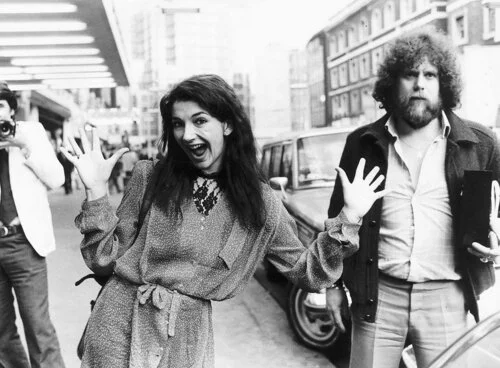
I have seen some anniversary articles pop up to celebrate twenty-five years of Foo Fighters, and I think it is a big anniversary! The band would have been playing festivals this year, and it would have been cool to mark that debut album with a special set. They will be back in force next year, and I am sure the Foo Fighters album will get particular consideration. I will wrap things up soon but, just before, I want to bring in an article published this time last year, that shone the spotlight on an album both huge and modest. Whilst Foo Fighters is this expansive and physical record, the fact that its release and promotion was not a big event – all the more impressive considering the fame and importance of the man who created the music! In their piece, UDiscoverMusic discussed Foo Fighters’ immense songs, and the fact the touring and promotion of the album was not this major thing:

Filled with punk-pop anthems

Even with the deck stacked against him, Grohl delivered an exceedingly fun album, filled with punk-pop anthems and DIY sound that satiated post-grunge fans while hinting at the throbbing arena-rock that was to come. But you can’t play rock venues of any size without a band and so Grohl quickly assembled a band to take Foo Fighters on tour. Having heard about the disbanding of Seattle-based rock band Sunny Day Real Estate, Grohl drafted the group’s bass player, Nate Mendel, and drummer, William Goldsmith, as well as Nirvana touring guitarist and former Germs member, Pat Smear to complete the line-up.

Like the album release, the tour was also decidedly under the radar, with the band playing a friends loft in Seattle as their first gig. Throughout the whole album cycle, Grohl remained healthily sceptical, telling Kerrang! in 1996, “I don’t think we’re capable of being a sensation like Oasis or Alanis Morissette. Sure it has some hook and melodies, but I just don’t think it’s the kind of thing that eight million 12-year-olds are ever going to be able to palate”. Ironically enough, Grohl would go on to recruit Miss Morissette’s drummer Taylor Hawkins to join his band and go on to release eight more albums, selling over 30 million records worldwide”.

Dave Grohl couldn’t have predicted what would happen to Foo Fighters after that debut album, and how successful he would become as a frontman. Twenty-five years from that incredible and much-loved debut album, the band have conquered the world. Fans can debate as to which Foo Fighters is the best, but I don’t think there is any as important as the debut of 4th July, 1995. As it has a big anniversary coming on Friday, go and stream the album and let it do its work. It is an incredible album, and I just felt I had to mark its quarter-century. 1995 was a phenomenal year for music, so it would have been possible Foo Fighters sort of got overlooked or struggled to make an impact. As it was, it won a lot of respect, and it resonated with Dave Grohl fans and non-fans alike. To this very day, Foo Fighters

REMAINS a classic.

FEATURE: Leave It Open: Kate Bush: A Dream Interviewee

FEATURE:


Leave It Open

wq2.jpg

IN THIS PHOTO: Kate Bush in 1993/PHOTO CREDIT: Guido Harari

Kate Bush: A Dream Interviewee

___________

THROUGH the course of my features…

PHOTO CREDIT: Brian Rasic/Getty Images

about Kate Bush, I have read a lot of interviews and done as much research as possible. I have never written a feature about Kate Bush as an interviewee! When reading through magazine interviews through the years and listening to ones for radio – and watching the few T.V. ones -, I am always charmed and blown away by her. Bush is someone who has been under the media microscope since her debut single, Wuthering Heights, was aired in 1977 – it was officially released in 1978, but it found its way onto the air beforehand. I am going to include some recorded interviews and share some snippets from written ones, as it is wonderful to hear her speak and radiate. Even in magazine interviews, you can feel that warmth and charm come through. Even when she is faced with more personal or challenging questions, Bush always responds with calm and professionalism. Bush is asked a lot of the same questions, and I guess that is an issue every artist faced. She does get similar questions asked, but you never get the feeling that she is bored or batting the question away. In fact, Bush is always open, and she leaves this sense of mystery lingering – you never feel like you know everything about her, even when you consider the sheer number of interviews she has been involved with!

I have heard the same thing from a lot of people: simply listening to Kate Bush speak is a nurturing and relaxing experience! She is so warm and engaging, one is helpless to resist. Whilst this feature might seem like an excuse to praise Bush and point one in the direction of her work (in part, it is!), I think we overlook the promotional cycle and how difficult it can be for artists. Many musicians are not fan of interviews and are unwilling to give a lot away. Some give the same answers to every question, and you can tell that their heart is not really in it. If anyone asked which artist would I like to review above them all, Kate Bush wins without a doubt. It is not just because I adore her music and it would be fascinating to ask her about it; there are so many stories – from those who have interviewed her – regarding her hospitality, friendliness, and rapport. One only needs to listen to a sample interview (I shall drop some in soon) to pick up on that. This all makes me wonder, like so many, whether we will ever hear her interviewed again because, unlike some artists, Bush only conducts interviews when she puts something out. The last time we hear her interviewed was 2016, when the vinyl/C.D. of Before the Dawn (Bush’s sell-out 2014 residence in London) was released.

aqq.jpg

PHOTO CREDIT: Alamy

After so many years of being interviewed, and being asked similar questions, Bush treated everyone with warmth, and she delivered something different every time. I guess one cannot get too caught up as to whether a new album will ever arrive, as part of the excitement is waiting and being surprised when you least expect it. A lot of people are desperate to hear new Kate Bush music but, oddly, I just want to hear her speak! It has been over eight years since her last album – 2011’s 50 Words for Snow – and, since then, she has re-released her back catalogue and book of lyrics (which she didn’t promote through interviews), and she has, like us all, been part of the COVID-19 pandemic. If one is new to Kate Bush or they are struggling to get to the bottom of her work, I would suggest spending some time listening to interviews with her on YouTube, or doing a search of written interviews, as Bush lets us into her world, but you also feel a little closer to this remarkable, iconic and decades-lasting artist. I am not sure why I am suddenly digging into the interview archives, but I do really love the way Bush engages with those she is interviewed by. In the first year or two of her career, she did face some rather condescending (male) interviewers, but she was also asked about her family, background, and songwriting process. I think, as the years rolled on, Bush began to become a bit wary of the press and interviews.

With every album, she needed to do some promotion, but I think she preferred being in the studio and was not always comfortable being so personal – one can understand and appreciate that! The past couple of albums – Director’s Cut and 50 Words for Snow of 2011 – were met with a blizzard of interviews - Bush letting a lot of journalists into her home and conducting radio interviews with British and North American stations. It is heartening to see that generosity coming from Bush, as one might suspect she would wind down interviews as she is so far into her career. I guess she was very proud of 50 Words for Snow (rightfully so!), and she released the album on her own label, Fish People, so wasn’t taking directions from EMI; Bush doing things her own way and less restrained and guided. I am not sure, but it was great to see her speaking to so many people even if, inevitably, the same questions came up – many revolving around the fact Stephen Fry and Elton John were on the album; others asked her about Snowed in at Wheeler Street, and whether she based that on a real place etc. I am going to quote from a few interviews, and I might jump back and forth regarding chronology. One of my favourites is when Bush was interviewed by Q Magazine in 1993 to promote The Red Shoes; the magazine ran a quote, “Booze, fags, blokes and me”, on the front cover!

IN THIS PHOTO: Kate Bush in 1982

Whilst the interview is not as racy as that quote implies, it is fascinating to see how different interviewers approached her, and what questions were being asked at different times. I love the Q interview, as it is a varied and great interview where Bush is asked about The Red Shoes/her work…but she also got a chance to show different sides of her personality:

Would you make a good therapist?

"I really don't know. When I was little, I really wanted to be a psychiatrist. That's what I always said at school. I had this idea of helping people, I suppose, but I found the idea of people's inner psychology fascinating, particularly in my teens. Mind you, it's probably just as well I didn't become one. I would have driven all these people to madness. I'm better off just fiddling around in studios."

What newspapers and magazines do you read?

"I don't, really. I find them all slightly biased and angry in their own ways, and generally I prefer the radio or the television, especially where news is concerned. I know the television is biased too, but it doesn't seem as sort of characterised as the press. And magazines I don't read at all, I'm afraid. I did for a while and found them quite boring and slightly manipulative. I thought a lot of magazines were trying to -- or if not trying to, then ending up, making you feel inadequate. I didn't think a lot of healthy things were going on in them. I had friends who got magazines regularly and they were getting more and more concerned about them, more and more obsessed with the articles and the quizzes. It took me a long time to grow out of The Beano, though, so perhaps I'm just not grown up enough for magazines."

IN THIS PHOTO: Kate Bush in 1979

Which of your old songs make you wince?

"My God, loads. Absolutely loads. Either the lyric's not thought out properly or it's just crap or the performances weren't well executed. But you have to get it in context. You were doing it at the time and it was the best you could do then. You've got to live with it. Some of those early songs, though, you think, 'What was I *thinking* about? Did *I* write that?'"

Have you got into grunge yet?

"Err, no. I like a lot of diverse music, but nothing really wild. Nothing very odd. I don't watch The Sound of Music every night or anything...But what is unexpected these days? I like classical music, but I wish I was more eloquent with it. I hear things and think, 'That's beautiful,' but don't know what it is. As you get older, you do get more into instrumental music, don't you? It's as if as you get older you don't want people telling you what they think or what you've got to think or do. Also, those great composers really knew what they were doing. A lot of contemporary art is made by people who haven't got any talent. Art made by talentless people can sometimes really work, but it's not the same as real craft."

Do you worry about getting old?

"I don't actually worry about aging, but I am at a point when I'm older than I was and there's a few things I'd like to be doing with my life. I've spent a lot of time working and I'd like to catch up. Over the next few years I'd like to take some time off".

As much as I love hearing Bush talk about her latest album and the process, when interviewers go off piste a bit and broaden their horizons, I think that is when we learn more – Bush always provides great answers and approaches every question with thought. When Kate Bush spoke with Len Brown of NME in 1989 to promote her album, The Sensual World, the two went into depth - and there is a lot we learn about Bush and her approach to her work. Many musicians might wince when they are asked about their age and getting older, but Bush’s response to passing thirty (she turned thirty a year before The Sensual World came out), is intriguing:

Many mumbles have breathed their last since Kate Bush first arrived on our screens, flouncing about in dry ice and funeral shroud, oddly crowing 'Wuthering Heights'; obviously different and apart from any musical movement before or since. But whereas the all-conquering, universally acclaimed Hounds Of Love affair at least slotted into the-then pop world, The Sensual World is clearly even more out of step with the current piss poor post-SAW scene.

Probably because it's got a slightly ethnic feel, founded on Kate's use of Irish and Bulgarian musics and musicians in the creative process. Perhaps because she's been free from pop for so long. Maybe because she's crossed the threshold of 30?

IN THIS PHOTO: Kate Bush in a promotional image for 2011’s 50 Words for Snow/PHOTO CREDIT: John Carder Bush

"God! Yes, I'm sure it's all tied in with it," she laughs. "I think it's a very important time from 28 to 32-ish, where there's some kind of turning point. Someone said in your teens you get the physical puberty and between 28 and 32 mental puberty. Let's fact it, you've got to start growing up when you're 30, it does make you feel differently, I feel very positive having gone through the last couple of years".

I want to quote from a 2011 interview Bush provided to John Doran when promoting 50 Words for Snow as it proves that, so many years after she entered music, she possessed (and still does) such grace, interest and humour! It is an interesting interview, as Doran seems detached and tired at times – nothing to do with Kate Bush -, and Bush responds really well:

I think that if I lived outside of London, maybe in the countryside where it doesn’t turn to a mixture of slush and hazardous black ice, I might like it more. Also, I’m very tall and for whatever reason I just fall over when it’s icy, I always have done. It’s very dangerous I think.

KB: [laughs] Are you a kind of glass half empty kind of guy?

My glass used to be completely dry. Now it’s half empty but I’m working on making it half full… No, I’m joking, of course I like snow, it’s simply marvelous stuff. But obviously there’s been a great thematic shift between Aerial and this album.

KB: Yeah”.

Yeah, ‘Misty’, which has the reference to the girl's affair with a snowman, the wet sheets, the idea of him melting in her hands and on her bed.

KB: Yeah. [massive pause] I’m sorry John, did you ask me a question? What was the question?

I asked if there was a sexual undercurrent to this record, which is ostensibly quite childlike and innocent?

KB: To that song, yeah. Yeah, because of the story that’s being told. But with the other tracks… I don’t know…

Listen, thanks very much. It was great to talk to you and I’m sorry for being half asleep at the start of the interview.

KB: That’s alright, I know what it’s like having a little lad. What’s his name?

Little John.

KB: Little John… How cute! Well, you just enjoy it, they grow up so quickly. It’s exhausting but my god… there’s nothing like it. Now you go and have a nice cup of coffee my love! Ha ha ha! Bye-bye!”.

In 2011, Bush spoke with FADER and, even though she was asked why she doesn’t give too many interviews – she said she prefers for the work to do the talking -, again, you can feel a very personal bond between Bush and the interviewer (Owen Myers); I think she makes every person who interviews her feel like they can explore and go deep:

Your songs usually write from the point of view of a character, rather than from an autobiographical point of view. Do you feel it frustrating if people assume that your lyrics are confessional?

No. I'm really very happy if people can connect at all to anything I do. I don't really mind if people mishear lyrics or misunderstand what the story is. I think that's what you have to let go of when you send it out in the world. I'm sure with a lot of paintings, people don't understand what the painter originally meant, and I don't really think that matters. I just think if you feel something, that's really the ideal goal. If that happens, then I'm really happy”.

mmm.jpg

PHOTO CREDIT: Phil Dent/Redferns

Although she has been asked about her lyrics and how personal they are, she is still happy to answer those questions, and she adds new perspective with every answer. The final interview I want to grab from sort of takes us up to date – it is a 2016 interview with Andy Gill of The Independent, where she discussed the Before the Dawn live album and the process of putting the stage shows together. Bush has always been asked about performing live and why she didn’t do it again after 1979 – when her Tour of Life was taken around the U.K. and Europe -, but it was interesting to hear her speak about that subject a couple of years after she completed her second huge live commitment:

She was helped, as director, by her experience making videos and short films, an interest which effectively supplanted her interest in live performance. Despite being one of pop’s more naturally gifted and inventive stage performers, Kate had not done live shows since her initial tour in 1979, a hiatus that led to her reputation as something of a recluse.

“It wasn’t designed that way, because I really enjoyed the first set of shows we did,” she says. “The plan at the time was that I was going to do another two albums’ worth of fresh material, and then do another show. But of course, by the time I got to the end of what was The Dreaming album, it had gone off on a slight tilt, because I’d become so much more involved in the recording process. And also, every time I finish an album, I go into visual projects, and even if they’re quite short pieces, they’re still a huge amount of work to put together. So I started to veer away from the thing of being a live performing artist, to one of being a recording artist with attached visuals”.

Looking through the interviews archives not only provides an illuminating insight into one of the music world’s most interesting artists; even though Bush is a private person and does not bring her personal life into interviews too much, we get to learn a lot and explore the pages of an icon. I do hope that we get to hear and see more interviews from Kate Bush (in addition to some great music!), because I would love to know how she has adapted to the current COVID-19 situation – though I guess it has not hit Bush as hard as other people! As much as anything, discovering how Kate Bush tackles her albums and what inspires her gives impetus and guidance to fans and musicians alike. She is in her sixth decade as a recording artist and, as she turns sixty-two on 30th July, I think she will have a lot to share. Whatever happens from now going forward, I think Kate Bush’s interviews are as important and revealing as her work; like two different sides to this wonderful artists. As I have said in this feature, hearing or reading a Kate Bush interview provokes so many emotions, and it is calming in these tough times. If you have some time free, I recommend you go through the archives and learn more about Bush, her music, and, well, her as a person. Over forty years after she gave her first interview, Kate Bush is this wonderful blend of the grounded…

SASAS.jpg

PHOTO CREDIT: Alamy

AND the enigmatic.

FEATURE: Plan B: The Uncertain Future of Venues, and the Human Cost Involved

FEATURE:


Plan B

1222.jpg

PHOTO CREDIT: @nivtop/Unsplash 

The Uncertain Future of Venues, and the Human Cost Involved

___________

THESE are tense times…

PHOTO CREDIT: @overdriv3/Unsplash

and the future of many venues is under threat. There are various estimates, but some say that up to 90% of venues could be at risk of permanent closure by October if there is not a sufficient amount of money injected into the sector to ensure they can hibernate until then – otherwise the effects could be devastating for the industry. The sector needs a £46 million rescue, a roadmap to reopen, support to recover, and it seems like there is a contrast between what the Government is proposing, and what is needed in order to ensure that the live sector can survive until later this year. This article from The Evening Standard explains the Government’s recent five-step plan – and how it has been received by some:

The CEO of the Music Venue Trust, the body representing grassroots music venues in the UK, has slammed the Government’s proposed ‘roadmap’ plan for restarting live concerts.

It comes after Culture Secretary Oliver Dowden outlined a five-step plan, which aims to get in-person performances back up and running in the nation’s theatres and music venues.

Responding to the plan, Mark Davyd, CEO of the MVT, said: “We have consistently told [the] Government that what the culture sector needs is the support to enable them to do what they do best.

 “We don’t need guidance on how to organise creative activity and connect with audiences, this is what our venues do professionally. We need the money to survive the crisis and plan our own route back to full use.”

PHOTO CREDIT: @antoinejulien/Unsplash

Mr Davyd proposed an alternative five-step plan for the sector. Read it in full below:

"Step 1: Create the sector support financial package that is immediately required so that any sort of grassroots music venue sector survives to require any more steps at all.

"Step 2: Check if you have completed Step 1. If not, keep checking until you have.

"Step 3: Get out of the way of one of the most dynamic and innovative creative industries in the world and let them get on with it.

"Step 4: Continue to receive massive social cultural and economic benefits for decades to come because you got Step 1 right.

"Step 5: Realise this doesn’t need five steps, it only needs Step 1."

The MVT has called on the Government to provide a £50m financial aid package, writing an open letter which was signed by more than 550 venues across the country.

Grassroots music venues are particularly at risk during the pandemic. No concrete date has been given by the Government as to when they will be able to welcome audiences again, and many venues are crowdfunding to survive”.

This week, there will be a lot of discussion and protestation regarding that five-step plan, and I have seen on social media so many venues setting up initiatives so that they can raise money. Things are a bit of a mess, so it is imperative that the Government react to what has been said regarding their plan, so that they can revise it and help venues stay alive. The weekend just gone would have been Glastonbury, and many of us have caught various sets of the past via the BBC iPlayer.

aqqq.jpg

PHOTO CREDIT: @seththr/Unsplash

There are big plans for next year, and many of us are looking forward to festivals happening then. The problem is, if a lot of venues are forced to close, that will have an impact on festivals. New artists will not have anywhere to play, and I think, if you remove the grassroots venues, then that will make it a lot harder for underground acts to be discovered, which will have a real impact on festivals. I hope that there will be a structured recovery plan, and we can preserve as many venues as possible. A lot of people are bemoaning the fact they cannot see gigs and get together with other people. Others just what that social aspect but, in truth, how many of us consider the people who make venues run and the human cost that would come with their closure?! From administrators and managers through to cleaners, technical staff and those who work behind the bar, there is a chain of people, a family, who make the venues what they are. At the moment, these people are subsisting on furlough payment, and others are applying for Universal Credit. There is a lot of anxiety around, as they are not sure when they can return to work – if at all. Some venues have already closed, and many more are in a precarious position. It is a terrible predicament, and I do hope that things get better very soon. The public and patrons have been great regarding donating to their local venues are getting involved with the #SaveOurVenues initiative. You can do your part here, because so many venues risk having their doors closed permanently.

PHOTO CREDIT: @kylewongs/Unsplash

I do think it is the people that keep these spaces buzzing that deserve our fondest wishes and thoughts. Few of us realise how many people work at venues, even the smaller ones, and keep them going. Right now, no venue can assume they are safe and make solid plans for next year. The Government do need to put that £46 million into the sector, and that will allow venues to keep their doors closed longer, to ensure that people are safe and they are not forced to reopen soon and risk making people ill. It is a struggle between wanting to open and get artists playing again but having to follow advice and wait patiently. There are drive-in festivals happening, and some have suggested that socially-distanced gigs could take place, though there would be very few people allowed into a venue and, really, how useful would that be?! Would people even want to do that?! The reopening of record shops has been brilliant, and it has helped physical music sales rise – many feared a lot of record shops would have to close, but most have survived. Venues are not as lucky in the sense that they can provide an online service and welcome people back in with measures in place. Because of that, they require money so that they can keep their staff furloughed, and they can pay rent/other expenses until they can safely reopen. It is the people in these venues that are struggling, in addition to artists who would normally be performing at this time of year. It is a tense time, but I have optimism that there will be some good news soon. Venues are waiting on tenterhooks for some tide of positive change and, considering all that they give us, it is…

PHOTO CREDIT: @mitchy___/Unsplash

THE least they deserve.  

FEATURE: Vinyl Corner: Róisín Murphy - Overpowered

FEATURE:


Vinyl Corner

1222.jpg

Róisín Murphy - Overpowered

___________

ON 5th July…

221.jpg

IN THIS PHOTO: Róisín Murphy in 2018/PHOTO CREDIT: Damon De Backer for Enfnts Terribles

Róisín Murphy celebrates her birthday (it is random, but I just wanted to throw it in!). I am a huge fan of her work, and I have been invested since she was a member of Moloko. I think there is a difference between what she was doing with Moloko compared to her solo stuff. To me, Murphy climbed to new heights when she went solo and, on her second studio album, Overpowered, she hit a new peak! I would urge people to buy it on vinyl, as it a tremendous album that proves there is nobody like Róisín Murphy in the music world. Released on 11th October, 2007, Overpowered was a more successful follow-up to her debut, Ruby Blue – that was a pretty terrific album. I am not sure why Overpowered was not shortlisted for the Mercury Prize, as it fully warranted inclusion – that was rectified when Murphy’s third album, Hairless Toys, was nominated in 2015. Maybe the fact that there was a big gap between Overpowered and Hairless Toys meant that Murphy could craft this layered and detailed album; Overpowered, to me, is as strong as Hairless Toys, and I am glad that a lot of critics provided positive reviews when it was released. It was in 2006, when she was promoting Moloko’s greatest hits album, that she announced a second solo album was coming. Murphy signed to EMI in 2006, and Overpowered is a bigger, more Disco-influenced album that Ruby Blue. There was a bigger budget this time around, and I think Murphy sounds more confident and ambitious on her second solo album.

On future albums, Murphy would streamline regarding the number of writers she worked with, but I think a more collaborative sound works for Overpowered. Murphy definitely wanted to make a different record to her debut, and something different to what she did with Moloko. Overpowered starts incredibly with the title track and then You Know Me Better. Let Me Know and Movie Star are terrific singles, and there are wonderful deeper cuts throughout – Dear Miami and Scarlet Ribbons are songs that warrant closer inspection and are tremendous albums cuts. Overpowered has eleven tracks, and all of them last over three minutes. There is no excess at all, and the album consists these incredibly strong tracks that are allowed to breathe and roam. Murphy’s voice is electric and stunning throughout, and I think Overpowered is one of the best albums of that decade (the ‘00s). As mentioned, it would be a while until we saw a third solo record, but I think Murphy did not want to repeat herself for Hairless Toys; she is an artist who creates these unique albums and wants to make sure everything she puts out is as great as it can be. Take Her Up to Monto, released in 2016, is Murphy’s latest studio album, and she has released singles since then. I cannot wait until we get another album from her, as Murphy is in a league of her own. I have a lot of affection for Overpowered – as did many critics.

This is AllMusic’s review of a huge album:

 “Arty, cerebral, and sometimes downright kooky, Róisín Murphy zigs where other British pop singers zag. She's been one of pop's best-kept secrets since Moloko disbanded, edging her way toward a sound that isn't exactly mainstream but will give her the more widespread acclaim she deserves. For her first solo album, Ruby Blue, she collaborated with producer Matthew Herbert, who streamlined her sound into something creative but not gratingly quirky; even though "Rama Lama" ended up on So You Think You Can Dance, of all places, Ruby Blue wasn't quite a smash success. This time, Murphy teamed with Bugz in the Attic's Seiji, Groove Armada's Andy Cato, All Seeing I's Parrott & Dean, and Jimmy Douglass -- all forward-thinking producers, but with more conventionally pop sounds than Herbert's approach. Of course, by the late 2000s, even the most mainstream singles had at least a few unique production flourishes, so while Overpowered is without a doubt Murphy's most straightforward music yet, she hasn't sacrificed much to make it that way. With its sleek beats, bubbling synths, and nagging chorus, "Overpowered" closely resembles a state-of-the-art pop single, but the way Murphy sings of science and oxytocin over a heart-fluttering harp is unmistakably her. The rest of Overpowered follows suit, giving familiar sounds clever twists that will please longtime Murphy fans and win new ones. The effortless "You Know Me Better," "Let Me Know," and "Checkin' on Me" are chilly yet soulful, touching on disco, house, and '80s pop; "Movie Star" is Murphy's spin on Goldfrapp's glossy glam pop (and the only time she seems in danger of being overpowered by someone else's sound on the album).

Even though these songs are immaculately crafted, there's plenty of life -- and Murphy's personality -- in them. "Primitive"'s synths and strings flit around like mosquitoes in a swamp as she wails "I need to let you out of your cage," while "Dear Miami"'s deadpan delivery and spare beats make it possibly the frostiest song ever written about global warming. Overpowered often feels less intimate than Ruby Blue, but that's a minor quibble, especially when "Scarlet Ribbons" shows off Murphy's tender side and the outstandingly crisp, bouncy, and sassy "Footprints" and "Body Language" rank with her best songs. Aptly enough for such a pop-focused album, nearly every song on Overpowered sounds like a potential smash hit. Even if this album is a bid for the big time, it's done with such flair that it just underscores what a confident and unique artist Murphy really is”.

Overpowered still sounds fresh today, and I have been playing the album a lot lately. I am not sure what Róisín Murphy’s secret is, but she has this pull and panache that you do not get from anyone else! I think Overpowered is among her strongest work, and I think it sounds terrific on vinyl! I want to source from one more interview before wrapping things up. This is what The Guardian wrote when they tackled Murphy’s second solo album:

But Roisin was always far closer in spirit to Bjork than Kylie. After a personal and professional split with Brydon, she chose to work with visionary art-jazz producer Matthew Herbert for her first solo album, 2005's Ruby Blue, on the kind of ambitious avant-pop hybrid that gets Bjork rapturous acclaim, but only got Murphy... well, a deal with EMI, at least, who thankfully recognised a genuine maverick when they heard one.

nspired by the Eighties proto-house of D Train, Mantronix and Gwen Guthrie, but often sounding a dead-ringer for Yazoo, early Eurythmics and rave-era dance-popsters Electribe 101, Overpowered's bubbling, sensual, and soulful glitterball gems effortlessly tap into the perennial glory of feeling lost and lonely at the disco at the end of the world. If it feels like Murphy is singing about, and to, Mark Brydon on the likes of 'You Know Me Better' and 'Movie Star', then the deep beats, lush synths and subtle horns and strings provided by male producers/co-writers including Jimmy Douglass, Groove Armada's Andy Cato and Richard X work overtime to establish Murphy as sole captain of her own swish and swoony destiny.

As closing ballad 'Scarlet Ribbons' wends its gently reggae-fied way to the sweetest of endings, you realise that you've just been dreamily immersed in the best grown-up dance-pop album since Madonna's Ray of Light. Yep - that good. I hope Ireland doesn't get too offended if Britain comes to its senses and recognises Roisin Murphy as a National Treasure”.

If you need a vinyl recommendation, then I would point you in the direction of Róisín Murphy’s incredible Overpowered. It is a masterful album from an artist who seems to get better with every new song she puts out there! I am excited to see if we will get anything more from her this year. Overpowered is this simply amazing album that reveals new emotions, colours and joys…

WITH every spin.

FEATURE: CD:OK? Can the Compact Disc Survive Post-Lockdown?

FEATURE:

CD:OK?

PHOTO CREDIT: @rocinante_11/Unsplash

Can the Compact Disc Survive Post-Lockdown?

___________

I am keen to tackle a few…

PHOTO CREDIT: @rocinante_11/Unsplash

music-related aspects in the context of the current COVID-19 situation. Venues are struggling at the moment and, if they were to close permanently or there was any financial hit, that could have big ramifications for the venues’ staff and the infrastructure. Many people focus on venues and festivals as places of fun and community and, whilst any detriment to the survival of venues/festivals would be a blow, we overlook the situation regarding those people who run and make venues/festivals happen and buzz. I shall cover that, as there is some doubt as to whether the live music sector can continue as it did prior to lockdown. Today, I am looking at physical music sales, and specifically the decades-lasting compact disc. I have been cheered, like so many people, to see record shops open – albeit, with social distancing and fewer customers. Even when record shops were shut, many people were ordering from their local, and getting vinyl delivered to them. I feared that many of the best record shops would not survive the current times, but it does seem that, as shops are open again, the future is rosier than we all thought. During the past few months, vinyl sales have been doing well, and it seems like there is a dedicated appetite. If it were not for online sales, it would be heart-breaking to think where record shops would be.

PHOTO CREDIT: @kxvn_lx/Unsplash

Whilst we visit our local record store, how many of us are still invested in C.D.s? I mainly buy compact discs online, but I try and pick one up when I go to a record store. I have a C.D. player in my car, and I do love the portability of the compact disc. Vinyl is great, but it does cost more and there is that issue of having to listen to a record in a fixed spot. I think the C.D. has struggled against the tide of streaming, and vinyl remains converted because of the sound quality, the tactile nature of it, and the fact that the format is more reliable and sturdier than the compact disc. I was reading an article from Music Week, when they spoke with HMV’s owner, Dough Putman. HMV is a chain that relies on the sale of compact discs, in addition to vinyl. He explained how compact discs might fare as we move forward:  

Physical sales have bounced back to their pre-Covid market share with the reopening of stores, although retailers had already made up some of the lost ground during lockdown with online sales.

With the market moving to streaming, CD sales for the overall market were still down 47% year-on-year last week. But, based on his experience at Canadian chain Sunrise Records, Putman believes the format still has a future.

IN THIS PHOTO: Doug Putman/PHOTO CREDIT: John Rennison/The Hamilton Spectator

“I always tell a story that seven years ago, when I bought Sunrise, the buyer of CDs at the time said, ‘You know, the CD has been dead for 10 years, that's what they tell me,’” said Putnam. “So I think it's one of those things where sometimes we're too quick to say, ‘iTunes is going to kill it’; then we're too quick to say, ‘streaming is going to kill it’. What we're seeing is that, in my belief, nothing really ends up killing it. People will still want to buy a physical format, whether it's a CD or vinyl, and I think they will continue to do that”.

Vinyl has suffered less during the lockdown, although Official Charts Company figures show a 32% year-on-year decline in units for the overall market last week. But the week-on-week sales increase for vinyl last week hit 28%.

“Vinyl has always performed really well for us,” said Putman. “Catalogue outperforms [the market] for HMV, so catalogue has still been really strong. CD is similar in that new releases are strong, but really catalogue drives our business. It’s the same when we look at our studios and visual suppliers: new releases are good but catalogue is HMV’s really great sweet spot”.

I feel vinyl will continue to sell, and we will see a surge in sales when social distancing is relaxed further on 4th July – and another peak when social distancing is scrapped. Online sales are helping many record shops tick over, but I always associate C.D. sales with local bands and merchandise, rather than people going to a record shop and buying one.

AMAMAMA.jpg

PHOTO CREDIT: @adamtones/Unsplash

That is a shame, as I grew up listening to compact discs, and I think they genuinely have a place. I can appreciate that, in many ways, vinyl provides a more enriching sonic experience, and there is something special about riffling through crates and flipping through records at the local record shop, whereas the experience is different when you shop for compact discs – less about diving and browsing, and more, I feel, about buying something by chance. I also feel compact discs are, perhaps, more a generational thing - maybe middle-aged or older listeners favour them; fewer younger buyers are out there -, but Bob Dylan’s new album, Rough and Rowdy Ways, hit the number-one position; it sold 34,000 units. 29,000 of these were C.D. sales - showing that, for certain artists at least, there is a huge market for C.D.s. I think physical formats are very important now, as many artists and labels criticise streaming services for the way artists are paid – and how little they generate from streaming revenues. I am not sure how much of a C.D. sale goes to an artist vs. the label when we purchase one, but many artists still have a lot of love for the compact disc and want people to buy them. Maybe we own fewer C.D. players and stereos than record players, but I would hate to see the format die! I do feel that the music-buying public will inject more money into record shops, and I do hope that there is a mix of vinyl and compact discs. Over the next few months, the music industry will open up again – maybe venues will hibernate until later in the autumn -, and the desire to own physical music will increase. I feel that, whilst compact disc sales will dip, they will continue to sell, and stores like HMV will continue to stock them. I completely get people’s love for vinyl, but I do hope that the humble and still-relevant compact disc will still be a part of everyone’s musical collection. After so many years of the C.D. shaping our lives, it would be such a shame if its life…

kkakak.jpg

PHOTO CREDIT: @shunyakoide/Unsplash

ENEDED in 2020.

FEATURE: The Lockdown Playlist: The Summer Mix

FEATURE:


The Lockdown Playlist

PHOTO CREDIT: @gaspanik/Unsplash

The Summer Mix

___________

I may wrap up these playlists…

amama.jpg

PHOTO CREDIT: @dariusbashar/Unsplash

as we are getting nearer to being outside and having a bit more freedom. At the moment, we have lockdown, and there are restrictions in place. Because of that, I thought it appropriate to put together a playlist that was full of big tunes. This edition is a summer mix of tracks that will match the warmer weather. It has been a roasting week, and we have seen some exceptionally high temperatures. If you need a soundtrack to go along with the weather, then I think that these tunes can do the job and can definitely…

PHOTO CREDIT: @simonrae/Unsplash

MATCH the heat outside!

FEATURE: One for the Record Collection! Essential July Releases

FEATURE:


One for the Record Collection!

21212.jpg

IN THIS PHOTO: Fontaines D.C.

Essential July Releases

___________

THINGS could change…

sasas.jpg

IN THIS PHOTO: Paul Weller

between now and July, but there are some fantastic releases due then – artists are still pushing back releases due to the COVID-19 situation. At the moment, the albums below have been announced for July, and there are some real gems in the list! Out on 3rd July is Paul Weller’s excellent new album, On Sunset. You can pre-order it here, and The Guardian have already reviewed it. In their review, they made some interesting observations:

Another curveball comes with Equanimity, which features Jim Lea of Slade on violin and sounds like David Bowie, an artist Weller paid open homage to on True Meanings: not, it’s worth noting, the Bowie of Ziggy Stardust or Low, but the Bowie found on his eponymous 1967 debut, in thrall to music hall and Anthony Newley’s brand of musical theatre. At the other extreme, meanwhile, there’s Baptiste and On Sunset, offering warm, soul-infused rock that could have been released in 1969 and 1972 respectively.

The rest lurks somewhere in between, offering gentle disruptions of the familiar. More offers the kind of relaxed bucolic sound found on 1993’s Wild Wood, but underpinned by a taut, metronomic bass line that leans towards krautrock. Old Father Tyme has a naggingly familiar guitar riff weaving through satisfyingly off-beam production – a drum machine fades in and out of the mix, Weller’s vocal comes decorated with little bursts of dubby echo – and one of a number of lyrics on which Weller, who spent his early years as a songwriter obsessed with his own youth, addresses ageing with surprising equanimity. There’s a lot of stuff here about contentment and growing into yourself: “Not a thing I’d change if I could, I’m happy here in my neighbourhood,” he sings in Village”.

There are a few decent albums out on 10th July that you need to invest some money in. One of those albums comes from Margo Price in the form of That's How Rumors Get Started is available to pre-order here, and it is her third album. The highly-acclaimed All American Made was released in 2017, and it is shaping up to be another tremendous release from the U.S. Country/Americana artist! Even if you are not a fan of the genres, the songs are so accessible and will appeal to all listeners. I am excited by NZCA Lines’ Pure Luxury album. The title track has been doing the rounds; NZCA Lines are a British Synthpop band founded by Michael Lovett. Previous members of the band include Charlotte Hatherley and Sarah Jones. Go and ensure you pre-order your copy of Pure Luxury. Lovett recently spoke with Under the Radar about his lockdown experiences, and whether it has been a creative time for him:

Have you been doing any live-streamed concerts during COVID-19 or do you plan to? A lot of artists have been doing them, do you think it’s a challenge to make them original and interesting?

Yes, I started out doing stripped back performances of songs from my two albums, NZCA/LINES and Infinite Summer, throughout March and April on Instagram Live, and have been adding in covers—figuring out what live-streaming is for me, really! I do think the challenge is bringing something original to it. Personally, without the prospect of playing live in the near future, I’m trying to bring in some kind of production value, so it can introduce people to the world of my music a little more. I’m very keen on aesthetics, and whilst the intimacy of live-streams is quite special, the lo-fi aspect can get a bit limiting.

Has the quarantine been a fertile creative time (are you writing or recording new music, for example) or have you found it hard to focus on creative endeavors?

I entered into this quarantine period with a big to-do list surrounding plans I’d already made for releasing my recent single, “Pure Luxury,” and its accompanying video, which I directed with Alina Rancier. This helped me stay busy, which in turn definitely gave me purpose over the past weeks. Now that both are released, I’m starting to focus on making new music, and making visuals for the next releases I have planned. I’m not going to lie, it’s a little tough to get started sometimes, but creating your own structure is really important. I’m definitely having to radically rethink my plans, as it’s impossible to shoot videos like I was planning to for these new releases, but I’m trying to view these limitations as a creative challenge”.

Rufus Wainwright’s Unfollow the Rules was one of those albums that was due for an earlier release, so that might have changed again by the time this feature is published. It is slated for a 10th July release, and you can pre-order a copy now. From interviews I have been hearing, it seems lockdown suits Wainwright, and he has been able to get quite a bit done! The Beths’ Jump Rope Gazers is an album you’ll want to order, as the New Zealand band’s second album – after Future Me Hates Me of 2018 – is going to be one of the biggest of the summer.

In this NME feature, we learn more about the album:

In a statement, frontperson Liz Stokes said the writing on the album was influenced by the band’s hectic overseas touring schedule in 2019, resulting in them being thousands of miles away from their friends and family.

“It was a rough year in general, and I found myself saying the words, ‘wish you were here, wish I was there,’ over and over again,” she said.

“When you’re home, you miss everybody, and when you’re away, you miss everybody. We were just missing people all the time”.

Nobody needs me to tell them how great The Streets (Mike Skinner) is, and the new album, None of Us Are Getting Out of This Life Alive, is looking pretty awesome! It is available from 10th July, but you can pre-order a copy now. Whilst Skinner’s music and lyrics has changed since his debut, Original Pirate Material, of 2002, he remains one of the most relevant and sharp artists in music. Here are some more details regarding the album:

The return of Mike Skinner. The 12-track mixtape marks The Streets’ first album in nearly a decade and features collaborations with the likes of Tame Impala, IDLES, Hak Baker, Ms Banks, Donae’O, Kasien, Dapz on the Map. and many more.

Tonga, the balloon filled rap, grime and dubstep party by Mike Skinner and Murkage Dave, had been a series of shoobs to remember. Copenhagen to Manchester to Berlin. Brum to Brixton. Usually arriving with a coterie of legendary UK figureheads and gobby upcomers in tow, like Kano, Giggs, Jammer or Jaykae, the pulsating essence of the nights needed to be immortalised.

IN THIS PHOTO: Mike Skinner (The Streets)/PHOTO CREDIT: Jenn Five for DIY

The original plan had been to release a Tongs album. But as night moved to day, and day moved along to night, it… just didn’t happen. Instead, a new mixtape titled None Of Us Are Getting Out Of This Life Alive steps up to take its place. Recorded between work on his film and accompanying solo The Streets album, it is the unpredictable sonic continuation of those parties.

Taking in UK Funky and twilight zone UK rap, and with guest spots ranging from Grammy nominated psychedelia sovereign Tame Impala to cult south London rapper Jesse James, as well as 2019’s key-fiend-friendly drum’n’bass collab with Chris Lorenzo, None Of Us Are Getting Out Of This Life Alive is the most eclectic and highly collaborative collection of songs from The Streets yet. Or as Mike puts it with characteristic distinction: “it’s really just a rap duets album”.

There are a few awesome albums that are coming along on 24th July. The Chicks’ Gaslighter is one I would recommend. The legendary Country group recently changed their name (from The Dixie Chicks), release their eighth album very soon, and I would urge people to listen to it if you are not familiar with them – they consist Natalie Maines, Emily Strayer and Martie Maguire. You can pre-order the album, and this was another one that was delayed for various reasons. I am looking forward to the album, as the title track is already out, and it is one of the best songs from the group.

This is what Pitchfork wrote when they reviewed the Gaslighter single earlier this year:

With its buoyant rhythm and singalong chorus, “Gaslighter” merges the open-road optimism of their early records with the sharper power-pop of Taking the Long Way. Other than their vocal harmonies—still radiant and seamless, like different strings on the same instrument—banjo player Emily Strayer and fiddle player Martie Maguire accompany Maines in subtle ways, weaving the confrontational verses into the rallying cry of a chorus. The songcraft is so compact, and their trademark sound so welcome and familiar, that its message of empowerment comes across equally jubilant and defiant. And while it may soften the heavier implications of the title, their breezy mix of emotions makes its own statement. The Dixie Chicks know that history has been good to the battles they’ve fought. So now they’re working on their own time, answering to no one”.

Although I have not listened to all of her albums, Ellie Goulding’s Brightest Blue is one I am interested in. You can pre-order the album, and I think Goulding is one of the more underrated Pop artists on the scene. Brightest Blue is Goulding’s fourth album since her 2010 debut, Lights. I think she has changed and matured a lot since then, and it will be interesting to see how critics respond to Brightest Blue. Goulding recently spoke with Vanity Fair about her experiences in lockdown and how that has affected her work:

The pace is not what Goulding had planned for 2020. The last 10 years saw the singer hit the top of the charts with singles “Love Me Like You Do” and “On My Mind,” nab a few Grammy and Brit Award nominations, make a name as a climate change advocate, and attend a few royal weddings. After a punishing two years spent touring behind her acclaimed 2015 album Delirium, she took some time off to regroup. “Somebody said the other day, ‘Oh, you must be having a nice break.’ But I kind of had a break before the lockdown. I was just doing my own thing. Now I have all this energy and nowhere to direct it,” she said. “I’ve been so excited and so ready to get back out on the road and travel again, and now I’ve definitely got the itch to do it again.”

Despite the disruptions, Goulding said she appreciates how our new normal has changed her thinking about the songs she’s been working on for years. “I’m really feeling for people who are naturally extroverted but are spending these times by themselves. I’m really feeling for people who are still out there working, like health workers,” she said. “I’m just going to release this new music and if people out there happen to be fans, they’ve got a new album to listen to. I’ve stopped being preoccupied with it.”

By herself, she’s been thinking more about some of the elements she might have left to others. “I think you can get quite complacent as a pop singer, because you get given so much on a plate. You’re given a band, you’re given a musical director, you’ve got everyone around you doing stuff for you—which is great because it makes your life easier,” she said. “I’ve definitely played guitar more in the last two weeks than I have in years”.

One of the most-anticipated albums of 2020 is the upcoming JARV IS... album, Beyond the Pale. Fronted by Jarvis Cocker, it is an album you are going to want to buy. Singles such as Save the Whales and Must I Evolve? are like nothing out there, and nearly everything Jarvis Cocker turns his hand to turn to gold! JARV IS… are a band featuring Jarvis Cocker (vocals, guitar, percussion), Serafina Steer (harp, keyboards, vocals), Emma Smith (violin, guitar vocals), Andrew McKinney (bass, vocals), Jason Buckle (synthesiser & electronic treatments) and Adam Betts (drums, percussion, vocals), and I cannot wait until their album is out on 17th July. 

Another album that is out on 17th July is The Pretenders’ Hate for Sale. Led by Chrissy Hynde, Hate for Sale is a phenomenal album you will want to pre-order. This is from the Rough Trade website:

Hate For Sale, produced by the revered Stephen Street (The Smiths, Blur), is the latest studio album by The Pretenders via BMG. The album features 10 new songs written collaboratively by Chrissie Hynde and the electrifyingly dynamic guitarist James Walbourne, in what is the first Hynde/Walbourne song writing collaboration to date”.

Jumping to 31st July, and the final album that I suggest people investigate is Fontaines D.C.’s A Hero's Death. It can be pre-ordered here, and it comes barely a year after their Mercury Prize-nominated debut, Dogrel. Capitalising on the wave of affection and acclaim they received, A Hero’s Death looks set to scoop the same sort of passion and acclaim Dogrel did! Frontman Grian Chatten spoke with NME recently, and he discussed the early stages of A Hero’s Death, and what influenced the new album:

An initial version of the album was recorded in Los Angeles but scrapped and re-recorded with ‘Dogrel’ producer Dan Carey in Streatham at the start of 2020. Now just a ghost memory of the place remains on the record; it’s there in lines such as “You shoulda heard ’em in the Bowery” (from the churning, early R.E.M.-like opener ‘I Don’t Belong’) and the track ‘Living In America’, which sounds like The National’s ‘Bloodbuzz Ohio’ – if it were trapped, Pulp Fiction­-style, in a basement in Buttfuck, USA. That song makes their stateside experience sound like a hellish prowl through a world of spray tans and “snowman coal”. Was it all cocaine and superficiality out there?

 “There was an awful lot of that, yeah,” Grian nods. “A few of us were fairly heavy on the gargle, on the booze for a while. We drank almost exclusively whiskey for the whole tour. A pint or so of it before each gig, just to see you through and a bit more then after to help you sleep in the van. We weren’t really eating and we were burning the candle at both ends. It became a bit surreal as towns melted into each other and faces started to look a bit strange. It was a surreal environment we created for ourselves.”

Fontaines D.C. are a band born beneath bootheels – ‘Dogrel’ brimmed with disgust at the gentrification of Dublin and simmered with the knowledge that greed and capitalism are the real virus. Yet ‘A Hero’s Death’ surges with pride, self-belief, a rebellious defiance and – dare we say it in such troubled times – optimism.

It’s there in the title track, written as an open letter from an estranged father to their child, imparting advice such as “Don’t get stuck in the past… Bring your own two cents, don’t borrow them from someone else”. It concludes: “Life ain’t always empty… If you give ourselves to every breath then we’re all in the running for a hero’s death”. And it’s there when Fontaines cast their minds forwards to the post-corona world”.

There are some great albums due next month and, if you cannot afford to buy the albums I have recommended, they will be available to stream on the day of release. It is going to be an exciting month, and I think we will see one or two year-defining albums released. It has been a busy and fantastic year so far and, with a crop of fantastic albums coming out way in July, I reckon the momentum of 2020…

wwww.jpg

IN THIS PHOTO: Rufus Wainwright/PHOTO CREDIT: Suki Dhanda/The Observer

WILL continue unabated.

FEATURE: She’s an Artist, She Don’t Look Back: Kate Bush’s Views on Her Early Work, and a Reluctance to Revisit the Past

FEATURE:

She’s an Artist, She Don’t Look Back

IN THIS PHOTO: Kate Bush in 1978

Kate Bush’s Views on Her Early Work, and a Reluctance to Revisit the Past

___________

IN this piece…

alal.jpg

IN THIS PHOTO: Kate Bush in 1978 during the taping of the Hammer Horror video shoot

I am going to revisit a subject I have looked at before – as I am prone to do -, and look at Kate Bush as someone who does not really look back/look back fondly at her older work - and I want to also cover Bush’s love of older technology and recording equipment. A lot of artists look forward and do not often discuss what came before. There seems to be this split of musicians who do not mind harking back to their past albums, and those who are a bit hesitant. I guess artists change over time, and it can be a little embarrassing talking about a time that was very different and, maybe, a little below their best. I think Kate Bush is someone who naturally does not listen to her own music a lot. She works on albums for so long, that she must get sick of hearing it by the time it is mixed and released! In so many interviews, she has been asked about her past albums, and she always says how she doesn’t really listen to them. That is understandable, I guess; it might be a bit odd to put on one of your own albums and, unless a song of hers comes on the radio, there are not many occasions when she would be exposed to the past. I have talked about most of her studio albums before, and how it would be good to hear some demos put out. There are some remarkable early demos out there, but they were never really meant for public consumption.

IN THIS PHOTO: Kate Bush celebrates after scooping the Top Female Singer Award from Melody Maker in 1979

Kate Bush has always been about moving forward. She did remaster and release her back catalogue a couple of years back, and that was chance to put those albums on her own label, Fish People, and ensure that her studio work was out there on vinyl – before 2018, a few of her albums were hard to find on vinyl. Bush also performed her Before the Dawn residency in 2016, and that found her performing songs from (largely) Hounds of Love and Aerial. 2011’s Director’s Cut was Bush reworking tracks from The Sensual World and The Red Shoes and, as I have said she is not a fan of revisiting the past and talking about older albums, she has touched on the past when the occasion was right. I do like how Bush concentrates on what she is recording and is not really one for nostalgia and reminiscence. When she has been asked which of her albums are favourites, she has named Hounds of Love and Aerial as ones that mean a lot – two times in her life when she was very happy and fulfilled. I will end the feature by briefly mentioning how, even though Bush does not look back that often, she does have a fondness for traditional/older recording equipment and sounds – rather than fully embracing modern technology and the present-day method of consumption. I think one of the most surprising aspects of Kate Bush’s career is how she sort of draws a line under anything before 1985. She loved Hounds of Love (1985), but she kind of feels The Dreaming (1982) was a mad and unsettled time; the albums before then were not quite what she wanted to say and is all about.

IN THIS PHOTO: Kate Bush in 1993

I can appreciate how Hounds of Love was a peak for her, and it was the result of years of experimentation, growth and hard work. As a big fan of her pre-Hound of Love work, it is a shame that the first four albums are not held in such high regard by her. When she was interviewed by Q, she was asked about her earlier albums – and one particular song was mentioned that, years later, is not one she cherishes:

She is oddly disparaging of albums like Lionheart and Never For Ever now and even then seemed keen to leave this phase behind, perhaps understandably -- she had been given two years to write the songs for The Kick Inside and, allegedly, four weeks to come up with Lionheart. By 1982 she was under the influence of Peter Gabriel and the revolutionary drum sound of Phil Collins's In The Air Tonight. Determined to do something like this herself, she became locked into a hellishly expensive round of aborted studio stints, finally emerging with The Dreaming, easily her weirdest effort and one that effectively stalled her career, peaking at Number 3 (Never For Ever entered at Number 1) and spawning a batch of flop singles. Wild rumours abounded, including the choice story advanced by the Daily Mail that she had ballooned up to 18 stone. This was patently untrue but she *had* ground herself down into a state of nervous fatigue, not helped by a reputed diet of junk food and chocolate. It was not the happiest of times.

IN THIS PHOTO: Kate Bush during her Tour of Life in 1979

"I look back at that record and it seems mad," she says now. "I heard it about three years ago and couldn't believe it. There's a lot of anger in it. There's a lot of 'I'm an artist, right!'" Fingers burned by the experience of The Dreaming, she decided that a studio of her own and a retreat into her domestic shell was a priority. Thus was ushered in a period of stability from whence came the enormously successful Hounds of Love and, in 1990 [1989], The Sensual World. These later records reflected her growing interest in the studio as a compositional tool and her growing desire to stay well out of the public eye”.

As someone who's written a very stirring song about England (Oh England My Lionheart), will you always be happiest here?”

(Astonished:) "Do you like that one? That's one of the ones I meant. It makes me just want to die. There's just something about that time. It's such an old song. Ooh God, I haven't heard it for so long. Must have been on tour in 1979. Anyway, England, yeah, I am happiest here. We're a funny race, we give each other such a hard time, don't you think? One thing we take very, very seriously is this whole business of taking the piss, the whole stuff about irony. I think there's a real integrity about us under all the layers and our sense of humour is so strong. I've always felt pulled to Ireland because my mother was Irish, but whenever I've gone, I've never felt very at home. So I've played with the idea of staying there. I'm not sure I really could live anywhere else but here. But it might be interesting. For a while".

I guess it sort of answers my question but, as we await (if it will happen) another Kate Bush album, there are plenty of fans who would die to hear her albums from 1978-1982 (inclusive) re-released with demos or receive new attention. I can appreciate how Lionheart, her sophomore release, was rushed and she was given the impossible task of repeating a successful debut in a matter of weeks. I think it is an album that has some wonderful moments; Never for Ever (1980) is a much-underrated record where Bush become bolder in terms of lyrics and compositions (and her vocals), whilst The Dreaming, to me, is one of her best albums. Bush has said, in so many interviews, how she is never truly happy with anything she records – she is at the time, but there is always something that niggles. Perhaps Bush considers her work pre-1985 to be too controlled by the record label/other people. Hounds of Love was the first album she produced solo where there wasn’t this feeling of strain and burden. Maybe it was freedom and the album she had wanted to make all along but, as I have said in features previously, it wouldn’t have been advisable or possible for her to solo produce too much earlier, as she was still learning and benefited from the advice and expertise of more experienced producers and engineers.

IN THIS PHOTO: Kate Bush in 1985/PHOTO CREDIT: John Carder Bush

That reluctance to live in the past and discuss her older records might be a bit stifling for an interviewer – in the next feature, I am going to discuss Bush as a dream interview subject -, but that focus on the here and now is what makes her albums sound so new and original. If she was to try to ‘redo’ The Dreaming or Lionheart, then it would seem regressive and lacking in motivation. I do feel that her first four albums are very impressive, and I sort of struggle to understand why Bush is a bit embarrassed. Certainly, she sounds very different on an album like Aerial compared to The Kick Inside. Not only is there a huge time gap between the albums; Bush would naturally change her sound and music as it was. I think Bush should re-examine her earlier albums, as they sound wonderful, and there are so many incredible tracks to be found – even if she is not a fan of Oh England My Lionheart. Whilst Kate Bush is not massively keen regarding her earliest work or talking about that period too much, she is someone who, from a technical and recording standpoint, is more than happy to look back at the past. I have also spoken about this before, but Bush is not overly-fond of digital recordings and the sort of production sound she had to adapt to in 1993 (for The Red Shoes). She feels that digital recording is less warm and full than what you get from analogue.

IN THIS PHOTO: Kate Bush poses for the painted cover of Never for Ever (1980)

Nowadays, she mixes digital and analogue, but I think Bush would happily stick with analogue, if it didn’t take so long to record and layer on that format! She is also – and never has been – a real advocate of the way music is being consumed now. Perhaps it is unconnected with Bush’s lack of fervour for her earlier work, but I wanted to illustrate that, whilst Bush is very much about the here and now regarding her albums and not wanting to hark back; in other respects, she is not that happy about the march of time and how it has affected the industry. Many of us consume music digitally, but Bush much prefers her albums to be heard on a physical format, so that people enjoy them as a full piece, rather than selecting tracks or skipping through them. Also, she loves what a vinyl provides: a great album cover, something you can hold, and a real feeling that this is a very real thing. As the album cover is less important, I feel Bush is becoming more dissatisfied. It is a shame that there is so much reliance on the online, but look at the album cover for 50 Words for Snow (2011) and hoe good that it; the fact that so much effort was expended making the songs sound right and producing such brilliant sound – an album that one simply must listen to as a full thing.

ew0303.jpg

PHOTO CREDIT: Armando Gallo

I think all Kate Bush albums have their own skin, and they are all very different. Whilst her first couple of albums are defined by a more romantic, piano-led tone and a particular vocal sound, she did change fairly quickly and, on 1980’s Never for Ever and 1982’s The Dreaming, she opened up her musical palette and grew in confidence and ambition. It is a pity we might not get a retrospective or revisit of the earlier albums from Bush herself, I don’t think they should be seen as embarrassing or insignificant, as they have affected so many people. Bush has changed her opinions since that 1993 Q interview, but I have heard interviews since then where she almost skips past the albums and feels they were a leaping-off point. I think Bush’s work from 1978-1985 was as important as anything after that point, and what we get to hear is a unique artist entering the scene and, with each album, revealing new layers and possibilities. I do think that nostalgia can be a dangerous thing and, if you are a long-serving artist like Kate Bush, you are not going to wasn’t to discuss previous albums when you want to move forward – and they were so long ago, so it can be hard summoning too many clear memories from that time. Bush will now, as she always has, look ahead and almost draw this dividing line through Hounds of Love. Considering Kate Bush’s (relative) dislike of retrospection, it is unlikely we will see too much revisionism and fresh love of those earlier albums that are, in my opinion, astonishing. Though it will never happen, I would love to hear The Kick Inside, Lionheart, Never for Ever and The Dreaming get a new vinyl release with demos and lesser-heard tracks. It is a bit sad that this, alas, will never…

IN THIS PHOTO: Kate Bush in a promotional photo for The Red Shoes (1993)

COME to light.

FEATURE: A Buyer’s Guide: Part Eight: Tori Amos

FEATURE:


A Buyer’s Guide

asa.jpg

IN THIS PHOTO: Tori Amos in 1999/PHOTO CREDIT: Lynn Goldsmith

Part Eight: Tori Amos

___________

THIS is an exciting…

edition of A Buyer’s Guide, as I am a big fan of Tori Amos, and I have been following her work since the 1990s. It is hard to whittle down to her essential albums, but I have been looking through her back catalogue and have selected, what I think, are her very best albums, an underrated one that is prime for new appreciation, and her latest album – in addition to highlighting a great new book from Amos herself. If you are new to Tori Amos, I hope this feature acts as a guide and can point you in the right direction regarding her work. In this week’s A Buyer’s Guide is the very best work of one of the music world’s…

BRIGHTEST stars.

_____________

The Four Essential Albums

Little Earthquakes 

Release Date: 6th January, 1992

Labels: Atlantic (U.S.)/East West (Europe)

Producers: Tori Amos/Eric Rosse/Davitt Sigerson/Ian Stanley

Standout Tracks: Crucify/Silent All These Years/China

Buy: https://www.discogs.com/Tori-Amos-Little-Earthquakes/master/64690

Stream: https://open.spotify.com/album/4xbivyNgO8FTIfxnzBtr5j

Review:

With her haunting solo debut Little Earthquakes, Tori Amos carved the template for the female singer/songwriter movement of the '90s. Amos' delicate, prog rock piano work and confessional, poetically quirky lyrics invited close emotional connection, giving her a fanatical cult following and setting the stage for the Lilith Fair legions. But Little Earthquakes is no mere style-setter or feminine stereotype -- its intimacy is uncompromising, intense, and often far from comforting. Amos' musings on major personal issues -- religion, relationships, gender, childhood -- were just as likely to encompass rage, sarcasm, and defiant independence as pain or tenderness; sometimes, it all happened in the same song. The apex of that intimacy is the harrowing "Me and a Gun," where Amos strips away all the music, save for her own voice, and confronts the listener with the story of her own real-life rape; the free-associative lyrics come off as a heart-wrenching attempt to block out the ordeal. Little Earthquakes isn't always so stomach-churning, but it never seems less than deeply cathartic; it's the sound of a young woman (like the protagonist of "Silent All These Years") finally learning to use her own voice -- sort of the musical equivalent of Mary Pipher's Reviving Ophelia. That's why Amos draws strength from her relentless vulnerability, and that's why the constantly shifting emotions of the material never seem illogical -- Amos simply delights in the frankness of her own responses, whatever they might be. Though her subsequent albums were often very strong, Amos would never bare her soul quite so directly (or comprehensibly) as she did here, nor with such consistently focused results. Little Earthquakes is the most accessible work in Amos' catalog, and it's also the most influential and rewarding” – AllMusic

Choice Cut: Winter

Under the Pink

ww0w0.jpg

Release Date: 31st January, 1994

Labels: Atlantic (U.S.)/East West (Europe)

Producers: Tori Amos/Eric Rosse

Standout Tracks: Pretty Good Year/God/The Waitress

Buy: https://www.discogs.com/Tori-Amos-Under-The-Pink/master/64981

Stream: https://open.spotify.com/album/3Lqd8nVPIU0X3vFrBZZPrB

Review:

These adjustments transformed Amos from rising singer-songwriter to major alt-rock upstart: "Cornflake Girl"—the cartwheeling UK hit that preceded the album and showcases one of her spunkiest solos—helped Pink enter the UK chart at #1, while "God"—the grousing, gnarly U.S. single—topped modern rock playlists. It’s nice that Sam Smith and Hozier subvert the religious overtones of their churchy presentations with orthodoxy-slamming videos, but both lack the clarity and courage of Amos chanting, "God sometimes you just don’t come through."

The rest wasn’t as pointed as that, but Pink’s extroverted arrangements worked as hard as Earthquakes’ lyrics and melodies. Amidst other overseas hits like "Pretty Good Year", Amos dug deeper, particularly on "Bells for Her", which suggests a ghost pirouetting across John Cage’s prepared piano. The pitch on certain keys is way off, like an old upright in your grandparents’ basement, but the effect is finessed the way Jimi Hendrix bent notes from music to cacophony and back again. "Can’t stop what’s coming," she moans repeatedly while refusing to name her subject. Adulthood? The rupture of a childhood friendship? Orgasm? Amos’ mysteriousness sometimes subsequently got the best of her, but here she masters it” – Pitchfork

Choice Cut: Cornflake Girl

Boys for Pele

Release Date: 22nd January, 1996

Label: Atlantic (U.S.)/East West (Europe)

Producer: Tori Amos

Standout Tracks: Caught in a Life Sneeze/Hey Jupiter/Putting the Damage On

Buy: https://www.discogs.com/Tori-Amos-Boys-For-Pele/master/64995

Stream: https://open.spotify.com/album/7vuSTl6tuWg0CQdmfphkFQ

Review:

There is a classical grandeur to Boys for Pele, a timelessness that stretches far beyond 1996. Tori Amos is simply not operating on the same plane as the rest of us. The imagery she employs, the power and conviction of her singing and playing, the defiantly unorthodox song structures, moments of astonishing beauty and harsh ugliness… it reflects the real dynamic of a relationship, perhaps many relationships, but it does so through the lens of fearless imagination riven from personal turmoil. Boys for Pele is audacious, often difficult and impenetrable, not an easy listen that immediately captures its audience with sharp melodic hooks. It’s completely uncompromising, and if it seems to wallow in self-pity at times, well, that’s what we humans often do when we’ve been hurt down to our core. It’s an album like no other, and it only could have come from Tori Amos. It’s winding curves and unexpected trajectories are endlessly fascinating. Twenty years have passed since Boys for Pele was released and viscerally captured the feelings of countless fans who have also lived the heartbreak, confusion and turbulence the album expresses so poetically. People relate to it because it’s undeniably real and compelling, and often speaks to their own experiences. Its power is undiminished. Boys for Pele continues raging unabated, eternal fires blazing” – Pop Matters

Choice Cut: Professional Widow

Unrepentant Geraldines

Release Date: 9th May, 2014

Label: Mercury Classics

Producer: Tori Amos

Standout Tracks: Wild Way/Selkie/Invisible Boy

Buy: https://www.discogs.com/Tori-Amos-Unrepentant-Geraldines/master/686093

Stream: https://open.spotify.com/album/0kkamqFFUDYRuQWwQ7SJkA

Review:

In the last 15 years, Tori Amos’ pop albums have gravitated toward two distinct categories: those where she utilizes elaborate characters and extended metaphors to illustrate her points, and those where she uses more straightforward, subjective inspirations for her lyrics. For fans, this has been somewhat frustrating, as Amos has always been a confessional commentator—especially at the intersection of the personal and political—and deriving emotional attachment from her intricate fictions has often been challenging.

The engaging Unrepentant Geraldines, however, splits the difference between these categories perfectly—mainly because this time, Amos’ muse led her into a variety of deeply personal, vulnerable places. An affinity for visual art is clear in an affecting treatise about the unique struggles women face while they age (the Cézanne-inspired “16 Shades Of Blue”) and a powerful song about not being spiritually oppressed by government or religion (the title track, inspired by an etching from Irish artist Daniel Maclise). A talented trio of bakers Amos knows in real life is the backdrop for a scathing attack on the NSA and unfair taxation in “Giant’s Rolling Pin,” while her daughter Tash inspired “Rose Dover”—which stresses that growing up doesn’t mean having to lose whimsy—and “Promise,” a simple proclamation of love and support” – The A.V. Club

Choice Cut: Trouble’s Lament

The Underrated Gem

To Venus and Back

Release Date: 20th September, 1999

Labels: Atlantic (U.S.)/East West (Europe)

Producer: Tori Amos

Standout Tracks: Concertina/Glory of the 80’s/1000 Oceans

Buy: https://www.discogs.com/Tori-Amos-To-Venus-And-Back/master/65199

Stream: https://open.spotify.com/album/7kB4e3bz7DZBzwXw3vzY3t

Review:

Originally intended as a rarities collection to tide fans over until she completed the follow-up to From the Choirgirl Hotel, the double-disc To Venus and Back mutated into something entirely different as Tori Amos worked on it. She experienced a sudden creative burst, writing 11 new songs. In light of these new tunes, she decided to devote the first disc of the collection to the fresh material, with the second dedicated to live material recorded during 1998. As such, it provides an interesting contrast. With Choirgirl, she decided to add muscle to her music by working with a full band, which naturally transformed her fragile, intimate songwriting into something weightier, or at least heavier. That much is evident from the live album, Still Orbiting, which puts many old favorites in a new light. The first disc, titled Venus Orbiting, proves that Amos is better in a more intimate setting. Ironically, the album was recorded with her touring band, but the arrangements aren't as showy as the live reworkings, and her songwriting is a bit more straightforward. That's not to say that she has changed direction or ironed out all her quirks -- her lyrics remain almost impenetrably cryptic, her songs follow elastic, unpredictable structures -- but she has returned to her strengths: namely, concentrating on ethereal, dream-like song-poems. She's still expanding her music, but she's letting it breathe naturally, resulting in her best, most cohesive record since Under the Pink. It's a bit of a shame that it's married to the live album, since that gives the impression that both discs are for hardcore fans. That's not the case at all -- Venus Orbiting will likely win back fans that have strayed from the fold in the past few years” – AllMusic

Choice Cut: Bliss

The Latest/Final Album

Native Invader

Release Date: 8th September, 2017

Label: Decca

Producer: Tori Amos

Standout Tracks: Reindeer King/Up the Creek/Climb

Buy: https://www.discogs.com/Tori-Amos-Native-Invader/master/1233888

Stream: https://open.spotify.com/album/79ZYYTpqesBlTe4hrWiO8b

Review:

This album is buttressed by the terror of our current political climate, but it is more significantly a quest to counter it; to use “the militia of the mind.” That is to say: this is an album of resilience and not melancholy. Amos may have found the power to resist in the Tennessee Smoky Mountain area, where for her, the natural, cosmic, natural and political coexist. She undertook this trip around the time her mother suffered a stroke which left her permanently unable to speak, and Donald Trump’s presidency began. In ‘Wildwood’, Amos invokes Wiccan mythology to draw significance from her hikes around North Carolina’s woodland. She imagines walking off the pilgrim’s path’ with a talisman to guide her to ‘winter’s past’. She weaves through a wilderness of ‘Alders and the Oaks’ which bare a history of history of violence and renewal. She remarks on the parade of trees, who had been savaged by floods and fires, and learns that: “you can’t escape anguish/but how to live with it”.

This is the lesson that Amos puts forward in Native Invader’ She encourages us to invoke nature’s power of regeneration and renewal, as she ends her quest with the knowledge that human beings possess the resilience of nature. She draws on Greek mythology to refer to us as “Knowledge sown in Gaia’s bones” on the ritualistic ‘Up The creek’. On ‘Benjamin’ she even encourages us to reappropriate invasion. Singing over computer signals which sound like a 1960's conception of 'the future', she refers to the case of Juliana vs the U.S. – and encourages us to invade undesirable information in the digital age. The invasion of references and allusions – which may appear to be doggerel on first listen – are the key to infiltrating this bizarre masterpiece. They not only point to the idiosyncrasy of narrative itself, but give us the strength to combat our dominant and despicable white-people-against-the-world one. So, if the music sounds outdated then it should do. That's exactly what the winds of Donald Trump and fascists and Nazis carrying tikki torches are” – Drowned in Sound

Choice Cut: Cloud Riders

The Tori Amos Book

Resistance: A Songwriter’s Story of Hope, Change and Courage

Author: Tori Amos

Publication Date: 5th May, 2020

Publisher: Hodder & Stoughton

Synopsis:

Since the release of her first, career-defining solo album Little Earthquakes, Tori Amos has been one of the music industry's most enduring and ingenious artists. From her unnerving depiction of sexual assault in 'Me and a Gun' to her post-9/11 album Scarlet's Walk, to her latest album Native Invader, her work has never shied away from combining the personal with the political.

Amos was a teenager when she began playing piano for the politically powerful at hotel bars in Washington, D.C., and her story continues from her time as a hungry artist in Los Angeles to the subsequent three decades of her formidable music career. Amos explains how she managed to create meaningful, politically resonant work against patriarchal power structures - and how her proud declarations of feminism and her fight for the marginalised always proved to be her guiding light. She teaches readers to engage with intention in this tumultuous global climate and speaks directly to supporters of #MeToo and Time's Up, as well as to young people fighting for their rights and visibility in the world.

Filled with compassionate guidance and actionable advice - and using some of the most powerful, political songs in Amos's canon - Resistance is for readers determined to steer the world back in the right direction” – Waterstones

Buy: https://www.waterstones.com/book/resistance/tori-amos/9781529325607

FEATURE: The June Playlist: Vol. 4:  Club Cougar, Los Angeles

FEATURE:

The June Playlist

IN THIS PHOTO: HAIM/PHOTO CREDIT: Daria Kobayashi Ritch for Rolling Stone

Vol. 4:  Club Cougar, Los Angeles

__________

IN this week’s…

IN THIS PHOTO: Nadine Shah

Playlist, there are some really strong tracks in the mix! There is new music from Nadine Shah, HAIM, Jessie Ware, The Flaming Lips, and Khruangbin. We also have some great slices from The Chicks, Arca, Skott, Lianne La Havas, The Streets, Jónsi, and Paul Weller. It is another big and eclectic week for music so, if you need some boost and energy to get you going, then I think the tracks below will do the job! Have a listen to the best tracks from…

IN THIS PHOTO: Skott

A brilliant week.

ALL PHOTOS/IMAGES (unless credited otherwise): Artists

__________

PHOTO CREDIT: Fraser Taylor

Nadine Shah - Club Cougar

PHOTO CREDIT: Paul Thomas Anderson

HAIM Los Angeles

Jessie Ware - Soul Control

PHOTO CREDIT: Mary Kang

Khruangbin Dearest Alfred

The Chicks - March March

apap.jpg

Skott Settle Down

PHOTO CREDIT: George Salisbury

The Flaming Lips - My Religion Is You

sslslsl.jpg

Arca - Riquiqui

Lianne La Havas Weird Fishes

Matilda Mann As It Is

PHOTO CREDIT: Hollie Fernando Photography

Willie J HealeyFashun

ssaas.jpg

Becca Mancari First Time

PHOTO CREDIT: Jenn Five

The Streets (ft. Hak Baker) - Falling Down

sddd.jpg

PHOTO CREDIT: Jess Gleeson

Gordi - Extraordinary Life

SDD.jpg

PHOTO CREDIT: Ebru Yildiz

Anna B Savage - Dead Pursuits

PHOTO CREDIT: Andy Crofts

Paul Weller More

Kesha - Children of the Revolution

ddldldld.jpg

PHOTO CREDIT: Ciaran O'Brien

Ailbhe Reddy - Time Difference

Tenille Townes I Kept the Roses

Hurts Suffer

PHOTO CREDIT: Ian Laidlaw

Tash Sultana Greed

JónsiSwill

Kelly Lee Owens - On

Emily Burns Curse

Dermot KennedyGiants

HoopsFall Back

PHOTO CREDIT: Alex Joseph

OceanatorA Crack in the World

Keaton HensonOntario

Bright Eyes - Mariana Trench

Carlie Hanson Stealing All My Friends

Oh Wonder Don’t You Worry

Noga Erez - NO news on TV

BLACKPINK - How You Like That

Holly HumberstoneOverkill

UsherI Cry

Cheat CodesHeaven

Bad Moves Local Radio

aqaaa.jpg

CeeLo GreenFor You

FEATURE: Second Spin: The Beautiful South - Quench

FEATURE:


Second Spin

The Beautiful South - Quench

___________

IN the latest part…

IN THIS PHOTO: The Beautiful South’s Paul Heaton and Jacqui Abbott/PHOTO CREDIT: Getty Images

of my Second Spin feature, I am focusing on a band that I have a lot of love for. Although The Beautiful South split years ago, I still think their music stands apart, and they are one of those groups that have penned so many classics. With the songwriting coming from Paul Heaton and Dave Rotheray, the band put out ten studio albums – their final, Superbi, came out in 2006. Whilst my favourite album from The Beautiful South is Choke from 1990, I think Quench is an album that gets overlooked a lot. It arrived in 1998 and, following the success of 1996’s Blue Is the Colour, maybe it marked a bit of a dip from the band. I love the tracks on the album, and the vocals from Paul Heaton, Jacqui Abbott and Dave Hemingway are stunning. You can buy Quench here, and it is well worth getting hold of. The band’s sixth studio album was not a big critical success but, thanks to some epic singles, it was the band’s third album in a row to hit the top of the charts. The eye-catching cover of Quench depicts a boxer by Scottish painter Peter Howson. Commissioned for the album, the original painting can be seen in the Ferens Art Gallery, Hull. After the band cropped the image and used it in merchandise and promotional material, Howson took legal action against the band. It is a bit of a shame that was some controversy regarding the album cover because, when you explore Quench, you get this great mix of instant gems and those more slow-burning numbers.

If, like me, you were a teen when Quench arrived, a lot of your friends would have been chatting about singles such as Perfect 10, and Dumb. Perfect 10 was this huge hit, and it reached number-two in the charts. That natural and striking interplay between Paul Heaton and Jacqui Abbott is one reason why the song is such a fantastic piece of work. The lyrics are humorous and memorable, and it is one of those songs that we all know. I think Dumb is one of those songs that doesn’t get the acclaim is warrants. The second single from Quench, I love the simplicity of it, and the effectiveness of backing vocals from Dave Hemingway and Jacqui Abbott. How Long's a Tear Take to Dry? Is another single from the album and, when you look at the tracklist, there are three or four songs that match the very best from The Beautiful South. One of Quench’s problems might be that the biggest hits are in the top half. The album is quite top-heavy, and some momentum does get lost. Songs on the second half such as The Table, Window Shopping for Blinds, and Your Father and I are brilliant, and I think the compositions are varied and brilliant throughout. Heaton’s lyrics are always sharp and gold, and I don’t think he lost any of his touch on Quench. Maybe there is nothing quite as sharp as Don’t Marry Her, or the mighty Old Red Eyes Is Back, but that is not to say Quench is arid and dehydrated.

In fact, listen to the non-single tracks, and there are some really interesting stories being told. Look What I Found in My Beer contains the brilliant lines “Look what I found in my beer/A couple of dancing ladies and a ticket out of here/Look what I found in my beer/A start to being lonely and an end to my career”, whilst I love the intrigue and poetry of these lines from Big Coin – “It's a tiny little heart that challenges the coin/But the coin has no beat or no breath/Big coin won't even leave you a love note/Big coin, big death”. The reviews for Quench are largely mixed, despite the fact the album sold really well and spawned a few enduring hits. This is what AllMusic had to say when they tackled the album:

In what has become a familiar pattern, Quench, the Beautiful South's sixth regular album release (not counting the singles compilation Carry on Up the Charts), entered the British charts at number one in October 1998, following the number two success of its single, "Perfect 10," while in the U.S. its release was delayed until July 1999, when it made no commercial impression at all. As usual, Paul Heaton and his comrades take a jaundiced look at the world while crooning melodically over pop, rock, and cocktail jazz tracks. The CD booklet contains only one photograph, an out-of-focus shot of a barroom, and as the album's title implies, Quench is awash in alcohol.

Its most telling self-portrait may be "Look What I Found in My Beer," in which Heaton views his musical career as his salvation from alcoholism and self-loathing. "Look what I found in the mic," he sings, "An end to screwed-up drinking and a Paul I actually like." But he often uses metaphors to get across his viewpoint, notably on such songs as "The Slide," "The Table," and "Window Shopping for Blinds." Singer Jacqueline Abbott serves as his foil and expands the dramatic possibilities, especially on the album-closing "Your Father and I," in which parents tell conflicting stories about a child's conception and birth, only to conclude, "Your father and I won't tell the truth." If the Beautiful South's early work mixed biting sarcasm with pop riffs, Quench finds the group playing in less of a pop style, while Heaton's lyrics have become more bitter and self-pitying, but no less witty. Still, American recognition continues to seem unlikely for a writer who likes to make puns involving Peter Lorre and a lorry (that's a truck to us Yankees)”.

It is a shame that, years after The Beautiful South split, that albums like Quench are not being revaluated and given new attention. The band did record more consistent and popular albums, but I think Quench is awash with their patented mix of humour, pathos, and that wonderful chemistry that they held onto through the years. I like the vocal line-up of Paul Heaton, Jacqui Abbott and Dave Hemingway, as the different tones blend wonderfully. I have been looking around to see a review that does Quench justice, but most are quite lukewarm.

This is PopMatters’ assessment of Quench:

 “It may be inexplicable to the Brits, but on this side of the pond the Beautiful South barely rate a "yeah, they're OK" among the folks that have even heard of them. That's an injustice, of course, and may have more to do with the lack of appreciation, much less a market, for terribly, clever subversion (just ask Neil Hannon (Divine Comedy) about it). That's what Paul Heaton and company do best, you know. Beneath the middle of the road arrangements, which Heaton himself has acknowledged are nothing earth shattering, lurk some of the most bitterly funny lyrics to emerge from the sceptered Isle since the days of Noel Coward. One can almost imagine Heaton's pen being behind a line like: "If England is a garden/then we ought to have more manure." (from Coward's "There Are Bad Times Just Around the Corner").

Quench follows up the bluesy Blue Is The Colour, and, while is not on the level of their debut Welcome to the Beautiful South, does manage to add a bit rockier touch and the witty lyrics for which they are famous. If you're a fan, give it a go. If you've never heard these guys, start with the greatest hits album Carry On Up the Charts”.

I have a lot of affection for Quench, perhaps because I was in high-school when it came out, and there were some good memories from that time. Listening back some twenty-two years later, and I think Quench stands up, and the tracks do not sound dated or slight. There are one or two weak spots near the end of the album, but the majority of tracks are strong and stand up to repeated listens. There is, as I said, that blend of the hits and lesser-heard tracks that makes Quench such an interesting record. If you get the chance to play this brilliant album, you’ll hear that it deserves…

MORE love than the critics gave it.

FEATURE: Podcast Picks: Sodajerker on Songwriting

FEATURE:


Podcast Picks

Sodajerker on Songwriting

___________

FOR a brief feature…

22332.jpg

I am highlighting some great podcasts that are helping me stave off the boredom and help educate me at the same time. As a huge music fan, there are ample options out there when it comes to podcasts and audio stimulation. One podcast that I have recently switched onto is Sodajerker on Songwriting. I would encourage people to visit the podcast’s website (and their Instagram), and to give Sodajerker a follow on Twitter. Here is some more information about Sodajerker and the podcast they run:

Sodajerker is a songwriting team from Liverpool in the United Kingdom. Founded by co-writers Simon Barber and Brian O’Connor, Sodajerker is the creative outlet for two friends raised on the celebrated songbooks of such luminaries as Lennon and McCartney, Bacharach and David, Holland-Dozier-Holland, Goffin and King and The Chic Organisation.

Like the profession from which they take their name, Sodajerker use their hard-won skills to conjure artistry from the everyday. Their songs have been heard on radio stations around the world and on a number of film soundtracks.

Simon and Brian are also the co-hosts of the Sodajerker On Songwriting podcast, a programme featuring interviews with some of the world’s most successful songwriters. Subscribe in Apple Podcasts or listen to episodes here on the site”.

I like the fact Barber and O’Connor are songwriters, so they have this understanding of the industry and, as such, you get some real insight and connection with the artists featured. I have just listened to one of the most-recent episodes (Laura Marling is the latest to feature) with Rina Sawayama, and it was great to learn more about her musical upbringing and how her album, SAWAWYAMA, came together.

aaosiopsio.jpg

IN THIS PHOTO: Rina Sawayama/PHOTO CREDIT: Jess Farana for DIY

Paul McCartney has featured on the Sodajerker on Songwriting podcast, and that must have been quite a coup, as Barber and O’Connor are huge Beatles fans! In fact, I first heard about Sodajerker, when they appeared on a Beatles podcast, I am the Eggpod, last year. I think music-related podcasts are great, and it is nice to hear an artist sat down in conversation, and it allows the listener to get deep with the subject. I think so many chat shows turn guests around so fast, you never really learn anything at all. On podcasts like Sodajerker on Songwriting, for just under an hour, one can sit back and become absorbed in this fantastic chat. During lockdown, things have not changed radically for the podcast, but the guests are remote, so there is a slightly different feel and tone to the episodes. Apart from that, it is business as usual! I know I am a little late to the Sodajerker party, but I would recommend it to all music fans out there, and anyone who is thinking of starting their own podcast.

The interviews are really interesting; Barber and O’Connor are knowledgeable, funny and warm, and I am spending the next couple of weeks catching up on all of the episodes I have not heard yet. I think my favourite so far are the two with Prefab Sprout’s Paddy McAloon, and he is someone who does not give too many interviews, and I love to hear McAloon speak – I think McAloon is the only guest who has appeared on the podcast twice! If you can donate to the podcast then do so, as it is one of the very best on the market. I will leave things there, but if you are looking around for a brilliant music source that delivers humour, depth and variety, then make sure you tune your ears into…

ewww.jpg

IN THIS PHOTO: Paddy McAloon

THE Sodajerker on Songwriting podcast.

FEATURE: The Lockdown Playlist: Epic New Jack Swing

FEATURE:


The Lockdown Playlist

zxxx.jpg

PHOTO CREDIT: @roxy142/Unsplash

Epic New Jack Swing

___________

THIS edition of The Lockdown Playlist…

PHOTO CREDIT: @chrisyangchrisfilm/Unsplash

is all about those New Jack Swing classics. I love this genre of music, and I think it was most popular during the 1980s and 1990s. One does not hear it around so much, but there are so many gems from that time that just pop and jam! I think the lockdown is coming to an end very soon, in the sense that many of us can start to return to normal. I might rename the playlist if I continue it but, for now, I am putting a couple/few out every week. If you require a bit of a spring and are lacking in energy, then have a listen to these songs in the playlist and I am sure that they will give you that…

cccc.jpg

PHOTO CREDIT: @ryanquintal/Unsplash

EXTRA kick you are searching for.