FEATURE: Moving: Kate Bush and Dance

FEATURE:


Moving

zzzzzzzzzxxc.jpg

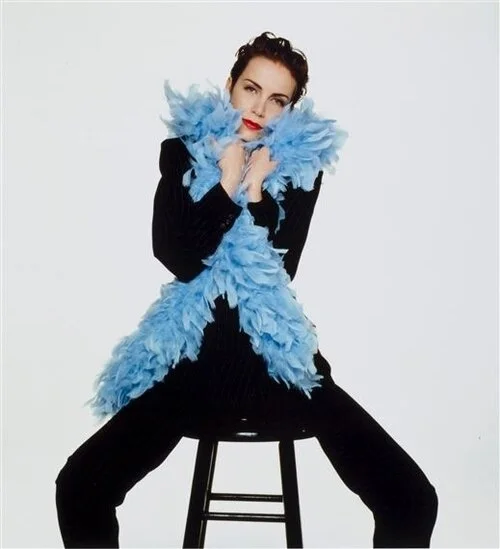
IN THIS PHOTO: Kate Bush in 1993/PHOTO CREDIT: Guido Harari

Kate Bush and Dance

___________

I am sort of sticking in the early years…
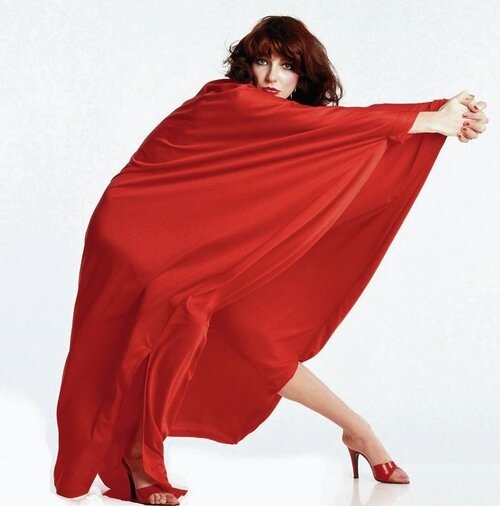
IN THIS PHOTO: Kate Bush in 1979/PHOTO CREDIT: Gered Mankowitz

when it comes to Kate Bush. My last feature concerned Lionheart and how it is vastly underrated – Bush’s second studio album was released in 1978. I have discussed Bush’s music from a variety of angles, but I have not really focused on love and use of dance. I guess I did mention it when discussing her Tour of Life and how physicality and movement really defines her best videos but, in so many ways, it is Bush’s attachment and dedicated to dancing that, in my view, really brought her music to life. Whilst dance did not feature as much in Kate Bush’s videos from, say, Aerial (2005) to the present day, I think that was not an abandonment of dance; if you listen to the albums, most of the songs are less physical than her earlier work. Before Bush recorded her debut album – but after EMI has spotted her talent and was preparing this promising star -, there was something missing from her lie. I cannot imagine that Bush’s school life provided many opportunities for interpretative dance. Bush did take Dance classes at school, but the teaching was very formal, and the relationship between Bush and her Dance teacher was not strong. Sure, Bush excelled in English classes and had her poetry published in the school magazine; she took violin lessons and had a definitely passion for music but, until she fell under the spell of Lindsay Kemp, there was this definitely hole.

As we can see on this page from the Kate Bush Encyclopaedia, it was difficult to get into dance when she left school:

Once I'd left school I tried to get into a dance school full-time, but no one would accept me as I had no qualifications in ballet. I had almost given up the idea of using dance as an extension of my music, until I met Lindsay Kemp, and that really did change so many of my ideas. He was the first person to actually give me some lessons in movement. I realized there was so much potential with using movement in songs, and I wanted to get a basic technique in order to be able to express myself fully. Lindsay has his own style - it's more like mime - and although he studied in many ballet schools and is technically qualified as a dancer, his classes and style are much more to do with letting go what's inside and expressing that. It doesn't matter if you haven't perfect technique. (Electronics & Music Maker, 1982)”.

Graeme Thomson’s excellent biography of Kate Bush, Under the Ivy: The Life & Music of Kate Bush, spends some time looking at Bush’s early relationship with dancing. Lindsay Kemp’s Flowers – a re-imagining of Jean Genet’s Notre Dame Des Fleures – was a seismic moment for Kate Bush. Bush saw the production in Bloomsbury and Chalk Farm, and she was mesmerised by the power and originality of Flowers.

The fact that it was such an unusual and moving piece of theatre would have been transformative for someone whose exposure to dance prior to this experience – Bush saw Flowers in 1975 – was relatively traditional. Bush would learn and spend hours doing dance routines at her family home at Wickham Farm, where songs such as The Beatles’ Eleanor Rigby would be honed and explored. Bush was inspired by Gurdjieff’s Fourth Way – the notion that mind and body are not separate creative entities, and the secret to fulfilment and realisation is being able to fuse the two -, and she referenced this important lesson in The Kick Inside’s Them Heavy People (as I mentioned in a feature earlier this year, where I discussed Bush’s love of literature and cinema). I can picture a young and hungry Bush paying 50p a session to take mime lessons with Lindsay Kemp – each session would last about three hours. I think these early experiences were pivotal when it came to Bush’s music and how she would incorporate movement and dance into her music; how she would bring the emotion from her songs and represent them in this very bold and inventive manner through her videos. I will not repeat what I said in my literature/cinema feature, but dance and mime allowed Bush the chance to free various voices and personas within herself; to dive into various characters and, in the process, become a stronger and braver individual. Bush then started taking classes in Dance at the Dance Centre in Covent Garden, where there were these drop-in classes five days a week – she did this for over a year.

IN THIS PHOTO: Kate Bush in 1978/PHOTO CREDIT: Gered Mankowitz

When the late Lindsay Kemp talked about him teaching Kate Bush, he explained how she was very reserved and timid to begin – hiding at the back of class -, but was encouraged to the front and, very soon, blossomed and stood out from the rest. Bush’s dancing was not great to start with but, as she was lured by the unconventional, she, fuelled by discipline and determination, grew and improved – Bush was very tough on herself, and she was eager to succeed. One of Kate Bush’s tutors, Robin Kovac, was instantly struck by Bush, and she helped the songwriter with the famous and much-imitated routine for Wuthering Heights. From as early as her debut single, Wuthering Heights, in January 1978, dance was a central part of Bush’s psyche. Many of her contemporaries were creating simple dance routines for their music videos, but very few were pushing boundaries and had this very intimate and evocative relationship with movement. My first exposure to Kate Bush was watching the video for Wuthering Heights when I was a child. The song was definitely special, but it was Bush’s routine and incredible aura that struck me hard. This article from AnOther magazine outlines how Buh’s music videos were game-changing:

From the very beginning, Kate Bush’s career has been defined by her pioneering synthesis of music and movement. Signed to EMI at just 16, she spent two years honing her craft by enrolling in dance and mime lessons with Bowie collaborator Lindsay Kemp before releasing any music at all; on her first (and only) tour she instructed her sound technicians to develop the first ever microphone headset so she could dance and sing simultaneously, changing the possibilities of live concert performance forever.

With the sensual shiver and outstretched arms of Wuthering Heights and the elegant, expressive pas de deux of Running up that Hill, Bush’s music videos also introduced a wider public to contemporary dance. In the case of the latter video, the choreography was considered so radical that MTV were unwilling to screen it and chose to air a live performance of the song instead.

It’s also a remarkable testament to the power of dance to explore our most primordial frustrations: sex, death, desire, and most movingly here, Bush’s grief. Only two years before, her mother Hannah had passed away suddenly, and along with the recent death of her guitarist and a romantic break-up with a close collaborator, she used both album and film as a means of processing these losses — most movingly in the sequence that accompanies Lily, as Bush rests her head in the lap of a kindly looking old woman.

When discussing the Running up that Hill video, Bush noted that she saw other musicians using movement “quite trivially… haphazard images, busy, without really the serious expression, and wonderful expression, that dance can give”, countering this by dressing herself and fellow dancer Michael Harvieu in simple grey Japanese hakamas, the camera quietly following them around a spartan room lit only by moonlight”.

So many people lionise Kate Bush because of her incredible lyrics and that staggering voice but, to me, I think it is dance that really defines her – and is the reason why her music and music videos have an essence and nuance that makes them indelible and captivating. When Kate Bush started out – and her debut album arrived -, a lot of the promotional photos revolved around her a dancer.

I do not think she was overly-sexualised in those photos, but I do love the photos Bush shot with Gered Mankowitz (where she was dressed in a leotard) as, like her music, there was this fluidity and physicality that seduced and stuck in the mind. I do feel there is this very direct and entrancing correlation between dance and Bush’s music; how she almost dances her way through songs and gives her words flight. Maybe I am not explaining it well, but it is obvious than early experiences with Lindsay Kemp and dance classes deeply influenced Bush’s songwriting and music videos. There were periods where Bush sort of put dancing on the back burner – especially around the time of The Dreaming in 1982 -, but she reignited that passion for Hounds of Love. On each album, you get a new experience and style in terms of dance. Look at the video for Sat in Your Lap from The Dreaming, and it is more frenetic; Running Up That Hill (A Deal with God), and The Big Sky from Hounds of Love is different to what we would see on The Sensual World (from the album of the same name), and Rubberband Girl from The Red Shoes. Whilst Bush’s 1993 film, The Cross, The Line and The Curve, was largely panned by critics, it is notable for (among other things) Bush’s routines and her marriage of movement and music.

The article from AnOther magazine that I quoted from discussed how Bush could create simple routines and blow you away because, in everything she did, that love of dance was evident:

So too in The Cross the most powerful sequence is the most simple: Bush pirouetting slowly as if flying through outer space, singing album highlight Moments of Pleasure directly to camera with a sheet of silk billowing behind her. While her lyrics are known for their esoteric references, here the song itself is an uncharacteristically straightforward exploration of heartache and bereavement: “Just being alive / It can really hurt / And these moments given / Are a gift from time”. Whirling gently, she begins to smile, as if the sheer joy of moving her body is giving her the impetus to carry on. Despite its flaws, Bush’s belief in the therapeutic power of dance gives the film a memorable resonance, and it’s worth watching merely as a rare insight into the interior life of a fiercely private icon”.

IN THIS PHOTO: Lindsay Kemp and Kate Bush in 1993’s The Line, the Cross and the Curve/PHOTO CREDIT: Guido Harari

From The Kick Inside’s opening track, Moving – dedicated to mentor Lindsay Kemp, who “crushed the lily in my soul” (in other words: he brought the fire and physicality out of a timid young woman) – to her video for King of the Mountain (where Bush evoked the spirit of Elvis Presley), the symbiotic and crucial bond between dance and music has defined Kate Bush and elevated her above everyone else. I would recommend people watch her music videos, as it is impossible to look away and not fall under her spell! I have not even mentioned her two live extravaganza: 1979’s Tour of Life, and 2014’s Before the Dawn residence (I have covered both in various features), which allowed Kate Bush the chance to give her songs almost theatrical and cinematic levels of movement and reality. It was clear from The Kick Inside’s Moving that, that early, dance was life-changing for Bush – “You give me life, please don't let me go (please don't let me go)”. Bush might not have known it, but her study and dedication to dance and mime (in 1975/1976) would not only open up something inside her, but it would…

CHANGE the music world forever.  

FEATURE: Spotlight: Holly Humberstone

FEATURE:


Spotlight

Holly Humberstone

___________

FOR this round of Spotlight…

aaaa.jpg

I wanted to include an artist who is one of the best new acts around. Holly Humberstone is someone I am new to, but I have been amazed by her new single, Overkill. From the rumbling drums through to Humberstone’s dreamy-yet-direct vocals, it is a great track! She has been compared to the likes of Phoebe Bridgers but, in truth, Humberstone ploughs her own furrow, and her music is very much hers. I love what she is doing, and I feel she will become one of Britain’s brightest talents and, when festivals kick back up, she will be included in the mix. Humberstone is planning on releasing an E.P. soon – and has material for a second! -, and I will come to that later. Before then, I wanted to quote from a few interviews, as it reveals more about the rising star. When she spoke with Sound Dazed earlier in the year, she discussed her earlier material, and she was asked about how she first got into music – and what Humberstone does outside of her career to keep busy:

 “When did you first get into songwriting and creating original music?

I used to have piano lessons and music lessons when I was little. My parents are quite musical, my dad loves poetry, and my mum is a really good cellist. They don’t do it professionally, but they love it and are keen on it. My sisters and I had music lessons when I was really small, and then I was just writing songs. They were just really rubbish, obviously, songs when I was really small. I just kept writing and never really stopped. Didn’t think about doing it, it just kind of happened quite naturally. I uploaded a few of the demos I did on my own to BBC Introducing, and from there, I got heard by my manager Josh. It’s all been cool from there.

When you aren’t creating music, how are you keeping busy?

I can work hard and write songs for a lot of the day, but I have to have done that to be able to just chill. I also just love chilling and not doing anything, so I love just binging Netflix shows. At the moment, I’m binging Arrested Development, which is so funny. I love cartoons, as well. So I love Adventure Time at the moment, obviously because it’s perfect, and I love Studio Ghibli films. Do you know them?”.

Tracks like Falling Asleep at the Wheel, and Deep End are brilliant songs that signal and instant and unique talent. Humberstone has been getting some airplay from BBC Radio 6 Music recently – a station I sort of use as a barometer when it comes to hot talent -, and there is a lot of excitement regarding an E.P. I think Deep End might be my favourite song of Humberstones so far, as it sounds very personal and hits you hard. Humberstone chatted with EUPHORIA. fairly recently, and she talked about that first single, and her writing process:

Deep End” was your first ever single release. What was it about the track that made you know you wanted it to serve as an introduction to you as an artist?

Originally I’d planned to release “Falling Asleep At The Wheel” as the first single, but after writing “Deep End” towards the end of summer last year, I figured it made so much more sense to come first. “Deep End” was written about the people closest to me, my sisters, and all about our struggles with mental health, and sticking by the ones you love. I felt like “Deep End” was probably the most personal song I’d ever written, and so it made sense as my debut single. I was also getting tons of messages from people who had seen me perform it live, saying how much they related to the tune so I wanted to put it out into the world so they could connect with me and my music on a deeper level.

When something emotionally impactful happens, do you normally feel the urge to write about it instantly or do you take a bit of time to process the feeling/experience?

I find when I’m going through something, writing is a way of making sense of emotions and working through situations and clearing my head a bit, so I tend to write when I’m feeling the most. I think writing is my way of processing things, so the best and most honest songs usually come from songs I’ve written when I’ve had the urge.

Sort of following on from that, when you’re writing, do you ever think about the potential interpretations that listeners might have when they hear your songs?

Of course. I try to make my lyrics as personal as possible and include as much detail as I can, as I feel people relate more to specific things, imagery and storytelling rather than to a general event/ feeling if that makes any sense?  I think if it’s honest and I’ve put real emotions into a song, then people should hopefully be able to interpret in their own way and feel something from it themselves”.

I want to pop in some quotes from a couple of other interviews, as Humberstone has been quite active promoting her new music. It is small wonder there is so much buzz and anticipation regarding the Grantham-born artist. From her days uploading music to BBC Introducing, to performing at festivals and shows around the U.K., she has performed alongside Lewis Capaldi, and it seems like there is no stopping the rise of Holly Humberstone! Whilst Damien Rice, Lorde, Bon Iver, Phoebe Bridgers, HAIM and a lot of other artists have inspired Humberstone’s sound, as I said, she is very much concocting something that is hers.

It is a great time for singer-songwriters, and I do feel that the upcoming E.P. will gain a lot of huge reviews. When Humberstone was interviewed by The New Nine, the subject of her E.P. was among the questions – in addition to the challenges she has encountered and what she would say to young women coming through:

What can we expect from your upcoming EP?

Holly: I’ve been working so hard on this EP for so long to get it right, and it’s now sounding so much like me, and sonically exactly where I want to head with my music. The songs are very special to me and I can’t wait for people to hear them. I try and make my music as personal and as honest as possible so I’m looking forward to being able to connect with people in that way.

What has been one of the biggest challenges for you in the music industry?

Holly: I'd probably say the hardest challenge I’ve faced with music so far is having a lot of self-doubt and comparing myself to others. It’s so so easy to do and I think every artist is probably guilty of it. I’ve come to realise over time that it’s really unhealthy and it actually stops me from being as creative and productive, so there’s really no point in worrying about that sort of thing!

What’s your best piece of advice for young women?

Holly: My best piece of advice would be to trust yourself and your instinct. You know yourself the best and what’s good for you and what isn’t. Don’t spend your time worrying about other people too much, just focus on you and you’ll be great!”.

In terms of the artists that you need to watch this year, Holly Humberstone should be right up there! I am not sure what the rest of 2020 holds, because she won’t be able to gig and do a lot. 2021 will be a year where she can make a charge and get that brilliant music out to the people. If you have not heard Overkill, take a listen to the song and it will become evident why so many people hold her in such high esteem. The final interview I want to source from is NME. The subject of Overkill and what comes next was put to her:

 “Tell us about the inception of ‘Overkill’?

“I wrote this single last November with two of my close friends, producer Rob Milton (Easy Life, Maisie Peters) and Benjamin Francis Leftwich. I was in a really good headspace at the time and I’d just started seeing someone, so I was really excited about everything. We wanted to write a positive song about the weird, confusing and exciting feelings that come with a new relationship. ‘Overkill’ is about wanting to tell someone about how you feel, but also not wanting to scare them off – personally, I know that sometimes I can come across as a bit full on.”

Your first EP is on its way. How did you find putting your first body of work together?

“It has definitely been a journey – both lyrically and sonically, because I have been trying to discover who I am as an artist through the music I am making. I had the first track down in 2018, and from there, I knew where I wanted to go with my music. I think that it sums me up on the whole. It feels like me, and it was really important for us to take our time and get it right.”

What is the future looking like for Holly Humberstone?

“I am already starting to work on my second EP, which I am really, really excited about now. I am always writing, and the sooner I can get back to more of a routine, the better. Hopefully I’ll be able to do some touring next year. I am really enjoying this process, and I feel so lucky to be able to create”.

The fact Holly Humberstone has so many ideas brewing and she is in this prolific vein of form bodes well for next year. I don’t think an official release date has been announced regarding her first E.P., so keep your eyes peeled on her social media channels. The music industry is packed, and it can be really tough deciding which acts you need to follow, and which ones are going to remain for years to come. I have no doubt regarding Holly Humberstone’s talent and stamina. With an amazing voice, brilliant songs and an insatiable passion, here is an artist who is very much…

PRIMED for the big stages.

______________

Follow Holly Humberstone

FEATURE: Vinyl Corner: Annie Lennox - Diva

FEATURE:


Vinyl Corner

aqqqa.jpg

Annie Lennox - Diva

___________

I have covered a lot of albums…

IN THIS PHOTO: Annie Lennox in 1992/PHOTO CREDIT: Francesco Scavullo

for Vinyl Corner, but I have not tackled Annie Lennox’s debut solo album, Diva, yet. I would recommend people grab it on vinyl if they can, as I really love Diva. I was raised around a lot of music, and I became aware of Eurythmics from a young age. Not only did the songcraft and quality of the music capture me: the stunning and peerless voice of Annie Lennox took the music beyond the realm of the ordinary. I think Diva is an album I first encountered when it came out. Diva reached number-one when it was released, and it was also a success in the U.S. It won the Album of the Year at the BRIT Awards in 1993, and you only need to listen to the opening two songs of Diva to realise why it was so successful – which I shall come to in a bit. After Eurythmics split in 1990, Annie Lennox briefly stepped away from the industry, but she did work on her debut solo album with producer Stephen Lipson in 1991. Whether you were part of a band or duo, it is strange stepping away from that and working on your own. If you are used to writing with another person, going alone is not necessarily natural and easy. Lennox penned many of Diva’s tracks alone and, whilst some critics feel the punch and extra ears of Dave Stewart would have added another layer to Diva, I think the album is terrific as it is, and it was intended to sound different to a Eurythmics album.

I often wonder if the two opening tracks from Diva are in the right place. We open with the sumptuous and gorgeous Why, before moving to Walking on Broken Glass. I feel the distinct and instant introduction of Walking on Broken Glass would have got Diva off to a flyer, but one cannot quibble too much! These two enormous singles – Why reached number five in the U.K. in March 1992; Walking on Broken Glass got to number eight in the U.K. in September 1992 -, ensure that Diva grabs you right away. The third track, Precious, was also a successful single – it made the top-thirty in June 1992. The sheer variation of Diva makes it such an interesting and utilitarian album. Whether you prefer a more stately or romantic Lennox, or edge towards rockier numbers, there is something for everyone on Diva! For anyone who felt that Eurythmics was a Dave Stewart project where Annie Lennox was merely singing the songs would have that notion dispelled on Diva. Lennox proved how amazing a songwriter she is, and that icy-yet-yearning voice enters new territories. I think there were some who were sceptical whether Lennox could go solo and cope without Dave Stewart – outlined in some of the reviews at the time -, but Diva got a lot of praise in 1992 – and it has managed to speak to critics years after its release.

In 2011, this is what AllMusic wrote:

Those expecting Annie Lennox to come out full-guns-blazing for her solo debut, Diva, with the high energy electro-Europop-meets-American- R&B of her Eurythmics work may have to wind their pacemakers down a notch. The enigmatic vocalist who made a career toying with different notions of gender plays on the concept of fame here -- Lennox dresses up in the persona of a solitary Diva trapped by counterfeit glory. The framework offers an effective stage for Lennox's husky voice, showcasing her as much more of a chanteuse than in the past. But the music is strangely muted and understated. In fact, the album almost works best as one integrated mood piece rather than a collection of individual songs. While Lennox succeeds in carving out a personality distinct from her Eurythmics days with Diva, one can't help but crave a shot of former partner Dave Stewart's musical muscle”.

I concede that Diva is a little lopsided when it comes to arranging the hits in the order. I think the strongest moments can be found on the first side, but that is not to say the second side of Diva lacks clout and standouts – Little Bird, and Stay by Me are terrific tracks! In their review, this is what SLANT had to say:

The first album Lennox released after the Eurythmics called it quits, Diva's relative quietude is reflective of a woman in full awareness—if not complete control—of the occasional ostentation of her emotional whims. It's musically analogous to All About Eve's ferocious Margo Channing during those rare moments when she's alone and contemplating the social consequences of her violent temper. It speaks exactly what she (Margo, Annie, every woman…) wished she could convey, but the music underneath most of the album's tracks is filled with the rumbling turbulence that betrays her best intentions.

Practically speaking, the music video for Lennox's baroque dance hit "Walking On Broken Glass" harnesses this stress to a T. Dressed in Amadeus boudoir finery (not to be confused with the Vegas headdress crowning Lennox on the album's disingenuously gaudy cover), the clip's heroine finds her flirtations ignored until she gets her paramour alone in her chambers. He mistakenly reads her interest as sexual heat and, outraged, she casts him away, banging her fist against the wall in synchronization to the song's rimshots. "Every one of us was made to suffer," she reasons. "Every one of us was made to weep." One of the most brilliant singles of the era, "Walking On Broken Glass" and its video cast a suspicious eye on the deliberate façade-maintenance of modern pop by playing up the same mixed signals that equips Diva with its power.

Elsewhere on the album, the brooding "Legend In My Living Room" seems to address the false hopes Lennox experienced early in her career from the promises of fame, fortune, and ultimately self-definition (i.e. the notion that she would find her soul in her image), while the lyrics to "Primitive" ("Wipe your tears and let the salt stains dry") almost seem to address Lennox's performance in Amos Gitai's Birth of the Golem, in which she personified the creature born of clay (another role played, another legend in her screening room).

Ultimately, the album (well, the CD version of it, anyway) lands on its soft shoes with an incongruous cover of the 1930s MGM showtune "Keep Young And Beautiful," which ends the introspection on a note of carefree self-parody. As befitting any diva, Lennox isn't above a little bit of self-deprecation, but Diva glides with a rich, feminine dignity that stands tall in pop history”.

You only need to look at Diva’s cover to realise that Lennox meant business! The image is arresting, and Lennox seems determined, but there is a note of vulnerability and wonder. All of this comes through on an amazing solo debut album. If you have not heard the album, then make sure you get a hold of it and experience something truly spectacular! I really love Annie Lennox’s solo work, and I think she made the biggest impact on her debut. There is so much treasure on Diva, and I like the deeper cuts in addition to the singles like Walking on Broken Glass. From Legend in My Living Room, to The Gift, Diva has so many exceptional songs that showcases Lennox’s writing gift – she wrote eight of the ten tracks on her own. If you need an album recommendation for the week ahead, I would definitely point you in the direction of this classic from…

ONE of the all-time musical greats.

FEATURE: Love Wears No Disguise: Madonna’s Into the Groove at Thirty-Five

FEATURE:


Love Wears No Disguise

amamama.png

IN THIS PHOTO: Madonna in a promotional image for Desperately Seeking Susan (1985)/PHOTO CREDIT: Rex Features

Madonna’s Into the Groove at Thirty-Five

___________

IT is not often I focus on a single…

and celebrates its anniversary – normally, I will tackle a whole album instead. One reason for marking Madonna’s Into the Groove as it approaches thirty-five is that it remains one of her most underrated tracks and is one of the best tracks from 1985. On 15th July, Into the Groove turns thirty-five, and I think it still sounds pretty fresh today. There are reports out that says Pop has got faster and happier this year and, whilst it might not reach the same levels as Madonna’s best, artists like Jessie Ware are definitely being inspired by the sort of Pop and Dance sounds Madonna was putting out in the mid-’80s. Originally intended for the soundtrack of the 1985 film, Desperately Seeking Susan (where Madonna’s role was praised by many), it made its way onto the reissue of Like a Virgin (1984) outside of America. One does not really hear of it too much these days, but big stars like Madonna was recording songs for film soundtracks and there were these great non-studio album cuts flying around! She did it a lot through her career, and I wonder what an album such as Like a Virgin would have sounded like with Into the Groove in the mix to bolster it! Put out as the fourth single from Like a Virgin (released as a single outside of the U.S.), I think Madonna’s sound would take a real turn and leap by the time True Blue arrived in 1986 – not that she had abandoned frivolous and fun; there was definitely more depth in her music, which was no bad thing!

I do think that a lot of modern Pop stars are updating songs like Into the Groove for 2020. Written and produced by Madonna and her then-boyfriend Stephen Bray (a frequent collaborator), there was a bit of friction between Madonna and her friend Mark Kamins, who the song was written for. Madonna did not inform him that Into the Groove was intended for the Desperately Seeking Susan soundtrack and, whilst it did not appear there, it showed that Madonna was pretty tough and was going to do things her way! Into the Groove is one of her tracks, like Cherish (that appears on Like a Prayer), where Madonna sort of dismissed it as a bit lame or dorky. She wrote Into the Groove about a Puerto Rican man who was suiting across the way from her on a fourth-floor walk-up on Avenue B (in Manhattan). Although the two got together and the relationship did not last long, Into the Groove is more a call to the dancefloor: somewhere Madonna felt at her most liberated and happiest. Just the fact that there was this simple story behind the song is great; a sort of lust that turned into a date but, more than that, she produced a song that ranks alongside her very best works! Madonna would release more iconic songs – including Like a Prayer, and Vogue -, but it showed that she was capable of penning these infectious hits that got people dancing.

As a songwriter, I feel Madonna was a lot stronger and more individual than many of her peers – who had teams writing tracks for them – and, by 1985, her voice was growing a lot stronger and more expressive. Though Into the Groove can be seen as quite a light confection, it has an evocative nature that provokes images of New York chic and effortless cool. Into the Groove was assessed by some as Madonna’s first great single – though I have a fondness for Material Girl (the second single from Like a Virgin) -and others have called it one of the 1980s’ greatest Pop anthems. Into the Groove originally was B-side for Like a Virgin’s third single, but it was released as a single by Sire Records in the U.K. on 15th July, 1985 (though some say the release date was 23rd July in the U.K., Discogs lists it as 15th July) – such was the impact of the song, it topped the charts in Australia, Belgium, Ireland, Japan, The Netherlands, New Zealand and Spain; it became her first number-one song in the United Kingdom (it initially entered at four on the chart dated 27th July, 1985, becoming the highest-debuting single for any female artist in the history of the chart at that time). Rather than Into the Groove competing against Angel in the U.S., the fact it was a B-side meant that it was not eligible for the Billboard Hot 100. No matter. Into the Groove has taken on a life of its own, and Madonna herself has performed the song on tours. It appeared on the setlist to The Virgin Tour in 1985, and it  was added to the setlist of the 2008–2009 Sticky & Sweet Tour.

dsddlld.jpg

IN THIS PHOTO: Madonna captured in 1985 by Herb Ritts

It goes to show that, despite the fact she wasn’t completely in love with the song back in 1985, she values it a lot and knows how much it means to fans. To mark the thirty-fifth anniversary of Into the Groove being released in the U.K. (and countries outside of the U.S.), I wanted to give a nod to an awesome track – it’s B-side, Shoo-Bee-Doo, isn’t too bad either! Although my favourite Madonna song is Take a Bow – from 1994’s Bedtime Stories -, I think Into the Groove is one of her classics, and definitely one of the most fun tracks she ever released! Ahead of its thirty-fifth anniversary, I have been listening to the song and not only realising how impactful and important it was in Madonna’s career: Into the Groove has endured through the decades and it is inspiring songwriters and Pop sounds today! Even if you are not a fan of Madonna’s work as a whole, one cannot deny the lure, energy, and passion of…  

THE incredible Into the Groove.

FEATURE: The Lockdown Playlist: Mercury Prize Nominees and Winners

FEATURE:


The Lockdown Playlist

IN THIS PHOTO: Nadine Shah is surely guaranteed to be in the shortlist of this year’s Mercury Prize nominees after her recent album, Kitchen Sink, received hugely positive reviews - Shah was previously nominated for the Mercury Prize in 2018 for her album, Holiday Destination

Mercury Prize Nominees and Winners

___________

IT is that time of the year…

PHOTO CREDIT: @leecampbell/Unsplash

when we look forward to the Mercury Prize nominations. This year is a little different to previous ones, but there is every hope that the ceremony will take place, in some form, later in the year. The official Mercury Prize website provides more details:

We, along with BBC Music, the Prize’s broadcast partner, believe that it is important in the current crisis to continue to showcase and celebrate the achievements of British & Irish artists and musicians.

The Shortlist of 12 Hyundai Mercury Prize Albums of the Year will be revealed on Thursday 23 July.

The overall winner of the 2020 Hyundai Mercury Prize will be announced on Thursday 10 September at the Awards Show, which is being held at the Eventim Apollo in Hammersmith. The event will celebrate the twelve shortlisted artists and their albums, with BBC Music providing live television and radio coverage of the event.

Hyundai Motor, the Mercury Prize’s title partner, will be celebrating the shortlisted artists and continuing to support innovations in British & Irish music”.

The first ceremony was held in 1992, and Primal Scream’s Screamadelica won that year. There have been some shocks and upsets through the years, and some titanic albums have walked away with the prize. In anticipation of 2020’s Mercury shortlist, here is a playlist that combines many of the Mercury Prize winners and nominees…

zxx.jpg

PHOTO CREDIT: @chrisyangchrisfilm/Unsplash

SINCE its start in 1992.

FEATURE: A Buyer’s Guide: Part Ten: Sheryl Crow

FEATURE:

A Buyer’s Guide

Part Ten: Sheryl Crow

___________

WHEN I was considering who should be…

azz.jpg

in this week’s A Buyer’s Guide, I was listening to Sheryl Crow and noticing how great her albums are! I love her brilliant albums from the 1990s (and those afterwards for that matter!), and so many of the songs from them soundtracked my school days. Her last album, Threads, from last year may well be her very last. It is a shame but, since her debut in 1993, Crow has given the word some truly magnificent music. I really dig her lyrics and storytelling; her voice carries so many emotions and is instantly recognisable, and she can pen an epic chorus when she needs to! To honour one of the greatest artists of her generation, I have put together the Sheryl Crow albums that you need to own, the one that, to me, is underrated, and her latest record – in addition to a useful book that one should get a hold of. This is a tip of a cap to an artist who has given me…

aamam.jpg

SO much pleasure through the years.

_______________

The Four Essential Albums

Tuesday Night Music Club

Release Date: 3rd August, 1993

Label: A&M

Producer: Bill Bottrell

Standout Tracks: Run Baby Run/Leaving Las Vegas/What I Can Do for You

Buy: https://www.discogs.com/Sheryl-Crow-Tuesday-Night-Music-Club/master/90311

Stream: https://open.spotify.com/album/7dC6axVAeBDpRMmNtRbpwU

Review:

Sheryl Crow earned her recording contract through hard work, gigging as a backing vocalist for everyone from Don Henley to Michael Jackson before entering the studio with Hugh Padgham to record her debut album. As it turned out, things didn't go entirely as planned. Instead of adhering to her rock & roll roots, the record was a slick set of contemporary pop, relying heavily on ballads. Upon hearing the completed album, Crow convinced A&M not to release the album, choosing to cut a new record with producer Bill Bottrell. Along with several Los Angeles-based songwriters and producers, including David Baerwald, David Ricketts, and Brian McLeod, Bottrell was part of a collective dubbed "the Tuesday Night Music Club." Every Tuesday, the group would get together, drink beer, jam, and write songs. Crow became part of the Club and, within a few months, she decided to craft her debut album around the songs and spirit of the collective. It was, for the most part, an inspired idea, since Tuesday Night Music Club has a loose, ramshackle charm that her unreleased debut lacked. At its best -- the opening quartet of "Run, Baby, Run," "Leaving Las Vegas," "Strong Enough," and "Can't Cry Anymore," plus the deceptively infectious "All I Wanna Do" -- are remarkable testaments to their collaboration, proving that roots rock can sound contemporary and have humor. That same spirit, however, also resulted in some half-finished songs, and the preponderance of those tracks make Tuesday Night Music Club better in memory than it is in practice. Still, even with the weaker moments, Crow manages to create an identity for herself -- a classic rocker at heart but with enough smarts to stay contemporary. And that's the lasting impression Tuesday Night Music Club leaves” – AllMusic

Choice Cut: All I Wanna Do

Sheryl Crow

Release Date: 24th September, 1996

Label: A&M

Producer: Sheryl Crow

Standout Tracks: A Change Would Do You Good/Home/If It Makes You Happy

Buy: https://www.discogs.com/Sheryl-Crow-Sheryl-Crow/release/442516

Stream: https://open.spotify.com/album/49fcfLcicBYSqitKzXDJpN

Review:

Crow’s voice sounds more assured when she’s sober. The critically-hailed singer took full-reign of the production duties, partially in response to suggestions that she was a mere puppet to her all-male Tuesday Night Music Club. As such, there’s a palpable, fear-driven ambition to the album. Her drive paid off and not only did Crow avoid the dreaded sophomore slump, but Sheryl Crow is easily her greatest achievement. The album’s lead single, the crunchy rocker “If It Makes You Happy,” was both a retort to the criticism she received as well as a fatigued reflection on two years of fame and touring (which included a stint at Woodstock ‘94, specifically referenced here). While the structure of the single is fairly straightforward, other tracks are filled with quirky, stream-of-conscious lyrics (pop-culture references abound: to Kurt Cobain, John Lennon, Ouija boards, etc.) and a collage of drum loops, organs, and layered voices. Songs like “Ordinary Morning,” with its lazy piano figures and raw blues vibe, are cushioned comfortably next to loopy tracks like “Maybe Angels” and understated folk ballads like “Home,” in which Crow recounts the emotional strains of a deteriorating marriage.

As always, Crow’s lyrics take a decidedly moralistic stance but never sound preachy. “Hard to Make a Stand” touches on abortion clinic terrorism while “Love Is a Good Thing” sees the solution to the world’s problems in the same four-letter word so many other rockers have enthusiastically endorsed over the years. Crow makes subtle references to the Beatles’ “Love Is All You Need,” but not before giving us a dose of modern reality: “Watch our children while they kill each other/With a gun they bought at Walmart discount stores.” This is certainly not the same hippie mentality of the ‘60s and ‘70s, and one can’t help but think that Crow is a tad less confident with her miracle product than, say, Lennon ever was. “These are the days when anything goes,” she sings on the buoyant “Everyday Is a Winding Road,” and the sentiment speaks for both the song’s playful optimism and the album’s sonic adventurousness. Crow has had some other great moments (“Leaving Las Vegas,” “My Favorite Mistake”), but none of her other full-length albums have been as consistent, immaculately produced or distinctly modern” – SLANT

Choice Cut: Everyday Is a Winding Road

The Globe Sessions

Release Date: 21st September, 1998

Label: A&M

Producer: Sheryl Crow

Standout Tracks: There Goes the Neighborhood/The Difficult Kind/Mississippi

Buy: https://www.discogs.com/Sheryl-Crow-The-Globe-Sessions/master/130301

Stream: https://open.spotify.com/album/08enrSAkHTYkQwhRlKXQgB

Review:

Since her dense, varied, postmodernist eponymous second album illustrated that Sheryl Crow was no one-album wonder, she wasn't left with as much to prove the third time around. Having created an original variation on roots rock with Sheryl Crow, she was left with the dilemma of how to remain loyal to that sound without repeating herself on her third album, The Globe Sessions. To her credit, she never plays lazy, not when she's turning out Stonesy rockers ("There Goes the Neighborhood") or when she's covering Dylan (the remarkable "Mississippi," an outtake from Time Out of Mind). However, she has decided to abandon the layered, yard-sale production and pop culture fixations that made Sheryl Crow a defining album of the mid-'90s. The Globe Sessions, instead, is the work of a craftswoman, one who knows how to balance introspective songs with pop/rockers, one who knows how to exploit her signature sound while becoming slightly more eclectic. In that sense, the album is a lot like a latter-day album from her idols, the Stones -- it finds pleasures within the craft and the signature sounds themselves. That means that there are no surprises (apart from the synthesized handclaps, of course). The Celtic homage "Riverwide" may be new, but it's not unexpected, much like how the whiplash transition in "Am I Getting Through" isn't entirely out of the blue. That's not necessarily a bad thing, though, since The Globe Sessions has a strong set of songs. Since it lacks the varied sonics, humor, and flat-out weirdness of Sheryl Crow, it's never quite as compelling a listen as its predecessor, yet it is a strong record, again confirming Crow's position as one of the best roots rockers of the '90s” – AllMusic

Choice Cut: My Favorite Mistake

Feels like Home 

Release Date: 10th September, 2013

Labels: Old Green Barn/Sea Gayle Music/Warner Bros. Nashville

Producers: Sheryl Crow/Justin Niebank

Standout Tracks: Shotgun/Callin’ Me When I’m Only/Homecoming Queen

Buy: https://www.discogs.com/Sheryl-Crow-Feels-Like-Home/master/600820

Stream: https://open.spotify.com/playlist/5LYNsXNQUGSZlHnjw7K01s

Review:

Sheryl Crow is nothing if not versatile: A former Michael Jackson backup singer who mixes pop, country, R&B and classic rock, she’s built a career as an outspoken singer-songwriter and a Grammy-friendly go-to collaborator. Her eighth LP digs deeper into country tradition than she’s ever gone before. The results are uneven, but never feel forced or faked. The ultimate stylistic diplomat, Crow makes every twang her own. It helps to have major Nashville songwriting firepower: Luke Laird, Brad Paisley, Shane McAnally and Chris DuBois help Crow serve a half-century’s worth of styles without sounding like a history teacher. The lushly orchestrated, tear-jerking Paisley-co-write “Waterproof Mascara” and the Loretta Lynn/Bobbie Gentry-style “Drinking” (about getting “shitfaced” on a Wednesday night, instead of rolling “a big fat one and watchin’ Nashville alone”) update vintage countrypolitan and honky-tonk sounds. “Shotgun” and “Easy” are smart, airbrushed ’00s mainstream contenders in the spirit of Miranda Lambert and country’s tough new radio sweethearts. Crow still sounds most at home on the rockers – especially the steel-laced “Callin’ Me When I’m Lonely” and the Bad Company bow “Nobody’s Business.” But this set suggests the Opry crowd might want to keep her on speed dial” – Rolling Stone

Choice Cut: Easy

The Underrated Gem

Wildflower  

Release Date: 27th September, 2005

Label: A&M

Producers: Sheryl Crow/Jeff Trott/John Shanks

Standout Tracks: Good Is Good/Lifetimes/Always on Your Side

Buy: https://www.discogs.com/Sheryl-Crow-Wildflower/master/130310

Stream: https://open.spotify.com/album/1MhK8H2ZRTgCIljAz2EzFM

Review:

Whether she’s pondering the afterlife in ”Letter to God” or blandly wondering ”Where Has All the Love Gone,” Sheryl Crow clearly wants Wildflower to be a bit more somber and reflective than her recent, interchangeable albums. But while there’s no denying the craft in the yearning ”I Don’t Wanna Know” or the sternly devotional ”Lifetimes,” her fondness for overblown L.A.-rock clichés undercuts the intimacy she’s after; the music sounds homogenized. Crow has become like my General Electric oven: dependable, reliable, and not very exciting” – Entertainment Weekly

Choice Cut: Perfect Lie

The Latest/Final Album

Threads 

Release Date: 30th August, 2019

Label: Big Machine

Producers: Steve Jordan/Sheryl Crow/Jeff Trott

Standout Tracks: Prove You Wrong/Redemption Day/Border Lord

Buy: https://www.discogs.com/Sheryl-Crow-Threads/master/1598632

Stream: https://open.spotify.com/playlist/1pJGYnd7uAJe5Behy75EK1

Review:

Someone who definitely is not shunted into a secondary role is Johnny Cash, who sings a “duet” with Crow on “Redemption Day,” a song she wrote and recorded for her second album and which he covered as part of his latter-day run with Rick Rubin. Her remake of the song is so startlingly good and haunting — with not much more than a piano backing and some striking chordal changes that render it even more melancholy — that it almost seems like gilding, or interrupting, the lily to suddenly have Cash’s voice come in from the afterworld. But his autumnally vulnerable and sweet voice and her unshakable one sound so good ‘n’ sad together that you may override any biases you harbor about grave-spanning collaborations and embrace this one as the spooky triumph it is.

No doubt Crow means it when she says this is it for her as an album artist — she’s been saying it for the couple of years that she’s been promising “Threads.” But will she stick with it, or is declaring that you’re abandoning making music in the supposedly passe album form the modern-day equivalent of going on your first “farewell” tour? “Threads” is strong enough that we should probably all agree now not to shame her if she goes back on her word” – Variety

Choice Cut: Everything Is Broken

The Sheryl Crow Book

The Words and Music of Sheryl Crow (Praeger Singer-Songwriter Collection)

ssa.jpg

Author: Christopher Gable

Publication Date: 6th September, 2016

Publisher: Praeger

Synopsis:

Offering commentary, musical analysis, and detailed interpretation of her songs' lyrics, this book examines the qualities of Sheryl Crow's music that have served to establish the artist's success and popularity. * Presents an in-depth and complete listening guide to all of Crow's songs, including B-sides and rarities * Features insightful commentary with song analysis * Includes a glossary of musical and technical terms for the non-specialist” - Abe Books

Buy: https://www.abebooks.co.uk/9781440831287/Words-Music-Sheryl-Crow-Praeger-1440831289/plp

FEATURE: The Lockdown Playlist: Pub/Drink-Related Tracks

FEATURE:

The Lockdown Playlist

asss.jpg

PHOTO CREDIT: @andrew_wong

Pub/Drink-Related Tracks

___________

IN the next Lockdown Playlist…

aaaaa.jpg

PHOTO CREDIT: @gitfo/Unsplash

I am reacting to the fact pubs are open again. Whilst we all have to be responsible and keep our distance, it is good that some sense of normality is creeping back in. I have not been out to the pub yet, but I will do in the next couple of months. In honour of the re-openings, I have put together a selection of pub/drink-related songs that are either anthemic in their nature or mention an alcoholic beverage. It may be a bit tenuous but, as the weather is warming and it is still summer, I think it fits just nicely! If you require some kick to get you through the weekend, then I think I have a set of songs that should…

saasasas.jpg

PHOTO CREDIT: @fwed/Unsplash

WORK their magic!

FEATURE: Change of the Guard: A New Chapter for BBC Radio 6 Music

FEATURE:


Change of the Guard

IN THIS PHOTO: BBC Radio 6 Music’s new Head, Samantha Moy/PHOTO CREDIT: International Radio Faces

A New Chapter for BBC Radio 6 Music

___________

THIS will be a brief article…

polpoop.jpg

IMAGE CREDIT: BBC

but, as I am a huge BBC Radio 6 Music fan, I wanted to talk about a big change that has happened. When we listen to a radio station, we think about the broadcasters and the artists played, but how often do we think about those behind the scenes?! I think the success of stations like BBC Radio 6 Music relies as much on those away from the microphone as it does the on-air talent. The brilliant Paul Rodgers is the Senior Head of Commissioning at BBC Radio 6 Music, and he has helped take the station to new heights. I will talk about the importance of BBC Radio 6 Music in a bit but, this week, Samantha Moy was appointed Head at the station. This Music Week article explains more:

Samantha Moy has been named as the new head of station for BBC Radio 6 Music.

Moy has been 6 Music’s head of content commissioning since 2018, having previously worked as the station’s network editor.

Paul Rodgers, currently senior head of commissioning for 6 Music, is leaving the BBC this summer.

Lorna Clarke, BBC controller of pop, said: “Using her wide range of experience in broadcast production, Sam will continue to evolve this exciting radio station that means so much to music lovers. ”

Moy said: “I’m privileged and honoured to be appointed to lead BBC Radio 6 Music – a radio station made for and made by music lovers. The relationship with our audience has gone from strength to strength, as our brilliant presenters, supported by our talented production teams, have provided the perfect combination of music, conversation and connection during these challenging times. I’m proud to lead this fantastically creative and inspiring team, who I know feel as passionately about 6 Music as I do.”

IN THIS PHOTO: Lauren Laverne/PHOTO CREDIT: BBC

Moy started her career in radio at Kiss in London, joining independent production company Somethin’ Else to produce programmes for Radio 1, Radio 2 and the BBC World Service. She joined BBC Radio 1 in 2002 where she produced the Evening Session, Jo Whiley and the Live Lounge, The Chris Moyles Show, Greg James and Annie Mac amongst others. Moy was also an event producer at the BBC Electric Proms in 2008-9, broadcast on BBC TV and radio.

She joined 6 Music and latterly Radio 2 as executive producer, overseeing shows like Steve Lamacq, Steve Wright in the Afternoon and projects including The Peel Lecture with Charlotte Church and the Sound of Style season in collaboration with BBC 4.

In her current role, Moy’s commissions have included Stay Home Rave Safe Saturday series, The Wu-Tang Clan Radio Show, the Rose D’or and New York Festival Radio award winning Amazing Grace and the Independent Venue Week Tour. She also leads on the annual 6 Music Festival, which was held in Camden earlier this year.

Moy is a mentor for the Sandy Chalmers Women in Radio scheme and has taken part in the Women in Music series at the Southbank Centre and at the BPI.

6 Music currently has a record 2.56m weekly listeners on air.

Moy will start her new role on August 17. The 6 Music position is one of five new head of station roles responsible for the BBC’s pop music networks”.

IN THIS PHOTO: Huey Morgan/PHOTO CREDIT: BBC

I think Moy’s appointment/promotion is a great move, and she will bring a lot of new impetus and strength to a station that continues to grow and inspire. I am excited to see how BBC Radio 6 Music evolves and moves as we head through 2020 and beyond. It is a challenging time to come into a new role, and I think Moy will have to make a lot of important decisions as we slowly ease out of lockdown and think about returning to near-normal. I think Moy will ensure that BBC Radio 6 Music continues its incredible trajectory regarding new listeners, and I will be interested to see whether new blood is brought into the station. Regardless of any speculation regarding alterations, I know Moy will do a phenomenal job and help bring BBC Radio 6 Music to new ears. The station has been a beacon for many of us as we continue with lockdown and cannot enjoy life as we once did. I have listened to the station more than ever during the past few months, and I have discovered strength and solace listening to an always-reliable fountain of uplift. I listen to Chris Hawkins from about 6 a.m., and I keep it tuned to Lauren Laverne, Mary Anne Hobbs/Shaun Keaveny, and Steve Lamacq; I tune in at the weekend and make sure I catch Radcliffe and Maconie in the mornings.

zxx.jpg

IN THIS PHOTO: Mark Radcliffe (front) and Stuart Maconie/PHOTO CREDIT: BBC

As BBC Radio 6 Music continues to accumulate listeners and expand, many wonder whether it is an alternative station that strays away from the predictable mainstream. I think, even though BBC Radio 6 Music has built and grown in popularity, it maintains its blend of originality and the rare; in that the music played is different to other stations, and the broadcasters have kept their individual shows constant. I think a radio station can be underground and alternative and have an army of listeners. I know Samantha Moy will help get the listener figures to (new) record highs, whilst bringing in some great ideas – in addition to incredible strong leadership. It is an exciting time for BBC Radio 6 Music because I feel this pandemic has brought a lot of new listeners their way. It is hard to say what the secret ingredient is, but the musical depth and versatility is incredible – the station was accused of being too guitar-based in the early years. From presenters like Tom Robinson backing the best new artists around, to Craig Charles providing an enormously energised and brilliant show, there is so much to enjoy. All the broadcasters at the station put their everything into the shows, and the dedication and passion is addictive. I have loved listening to BBC Radio 6 Music and hearing listener emails and correspondences read out; seeing how vital the station is and what it means to them. With rising listening figures, a new Head, and a loyal family of listeners, BBC Radio 6 Music keeps getting…

IN THIS PHOTO: Mary Ann Hobbs/PHOTO CREDIT: BBC

BETTER and better.

FEATURE: Definitely NOT a Hammer Horror! In Defence of Kate Bush’s Lionheart

FEATURE:


Definitely NOT a Hammer Horror!

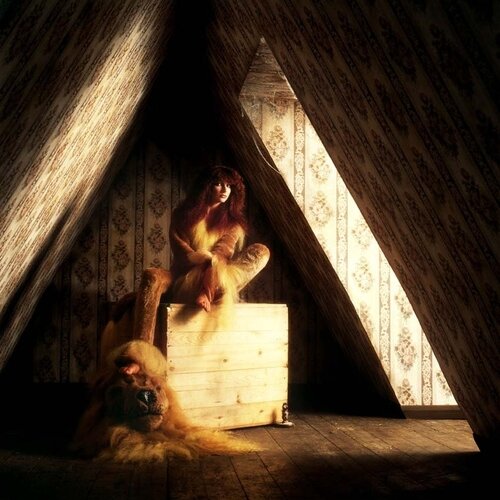
IN THIS PHOTO: Kate Bush in an outtake from the Lionheart photo session/PHOTO CREDIT: Gered Mankowitz/PHOTO CONCEPT: John Carder Bush

In Defence of Kate Bush’s Lionheart

___________

SO many times…

I have extolled the virtues of Kate Bush’s 1978 debut album, The Kick Inside, and how it is my favourite album ever. There are a number of reasons why the album remains so captivating. Songs like Wuthering Heights, and The Man with the Child in His Eyes are classics; Bush had time and freedom to write the songs and bring everything together and, whilst the album was recorded fairly quickly, there was no sense anything was rushed – in fact, Bush wrote The Man with the Child in His Eyes in the early-Seventies! One can sympathise with Kate Bush in the wake of The Kick Inside’s release. The album was put out in February of 1978, and its first single, Wuthering Heights, was official released the month before. Because of the success of Wuthering Heights and the growing attention that came her way, Bush’s promotional schedule was insane! She was traveling all over the world; she visited Japan and Europe, and demands were coming her way – she was offered the support slot in Fleetwood Mac’s massive Rumours tour! Not only was Bush promoting her album/music on T.V., but she was speaking with the press and barely had a moment to rest. Whereas Bush’s debut album was the result of a lot of preparation and material that had been written before she entered the studio, Lionheart was a rushed album that reacted to the success of The Kick Inside. Bush had loose plans for a U.K. tour, but they were held back because of her schedule and everything else happening.

Whilst The Kick Inside was recorded in the reputable (if not glamorous) AIR Studios, London, Lionheart was recorded at Super Bear Studios, Berre-les-Alpes, France. No doubt, the mountain views and swimming pool by the studio would have made for a relaxing and inspiring setting…but recording for Lionheart ran from July to September 1978 – with gaps in that period -; The Kick Inside was released seven months before Lionheart was complete! At times, Bush was promoting The Kick Inside whilst working on material for her follow-up. The fact that both albums overlapped was always going to be a problem. Because EMI wanted a quick follow-up to The Kick Inside, the majority of the songs for Lionheart were from Bush’s pre-debut days – the only newly-written songs were Symphony in Blue, Full House, and Coffee Homeground. Most of the musicians who appeared on The Kick Inside were used for Lionheart – though Bush wanted to her own band to play on the album -, and Del Palmer featured for the first time – he played bass, and would appear on Bush’s albums from then on (and would go on to engineer her albums). As I have said before, Lionheart is a classic ‘difficult second album’, in the sense it follows a massively important debut, and Bush was faced with the unenviable task of completing an album very quickly, with the shadow of her debut very much in her sights.

There were obvious problems that mean Lionheart was never going to ignite the same way as The Kick Inside. Many of the songs on the album were similar-sounding to her work on The Kick Inside, whereas a lot of critics bemoaned the lack of evolution and change. If you release two albums in the same year, there is unlikely to be radical progress between the two. I am not sure what people were expecting, but there are impressive steps forward, even though Bush was demoing songs for Lionheart whilst she was recovering from the promotion of The Kick Inside! Symphony in Blue is one of the most mature and beautiful songs she ever recorded, whereas Wow makes for a wonderful single. I will come to the songs themselves soon but, in terms of the recording experience, she was fighting against different voices. Though Bush was not experienced enough to produce solo, she did assist Andrew Powell – who produced The Kick Inside -, but one suspects that she would have liked more control and the ability to craft the album in her own vision. EMI wanted an album that was similar to The Kick Inside, but Bush wanted one that reacted against that album. As it turned out, neither really got their way. The mix of few new songs and older ones worked up quickly resulted in quite an inorganic and incomplete experience. The luxury of the studio setting and the heat of the setting would have provided positivity, but I think the struggle regarding Bush wanting her own band and Powell/EMI preferring the same band from The Kick Inside would have affected Bush.

xzz.png

Her band lacked necessary studio experience, so I think the right call was made. The final overdubs and bits were added to Lionheart in September 1978, but it was clear that Bush would change the way she worked (and who she worked with) going forward. Bush was a very diplomatic and nurturing artist who gave her musicians room to interpret and experiment a bit but, whilst not a perfectionist, Bush would do multiple takes for various songs – never quite happy with what she was doing. That sort of self-criticism and demand would have been hard enough if she had sufficient time to germinate and mother song but, when faced with a tight deadline, there were clear worries. When Lionheart arrived in November 1978, there was a feeling that a lot of the songs were half-cooked or lacking the depth and fascination of The Kick Inside’s gems. Having read biographies, reviews and articles that mention Lionheart, and few have anything truly encouraging to say about the album! Indeed, Kate Bush herself has sort of dismissed the album – she sort of views The Kick Inside-The Dreaming (1982) as a time when she was still trying to find her peak; Hounds of Love was the breakthrough and truest representation of her sound and brilliance.

In their review, this is what AllMusic wrote:

Proving that the English admired Kate Bush's work, 1978's Lionheart album managed to reach the number six spot in her homeland while failing to make a substantial impact in North America. The single "Hammer Horror" went to number 44 on the U.K. singles chart, but the remaining tracks from the album spin, leap, and pirouette with Bush's vocal dramatics, most of them dissipating into a mist rather than hovering around long enough to be memorable. Her fairytale essence wraps itself around tracks like "In Search of Peter Pan," "Kashka From Baghdad," and "Oh England My Lionheart," but unravels before any substance can be heard. "Wow" does the best job at expressing her voice as it waves and flutters through the chorus, with a melody that shimmers in a peculiar but compatible manner. Some of the tracks, such as "Coffee Homeground" or "In the Warm Room," bask in their own subtle obscurity, a trait that Bush improved upon later in her career but couldn't secure on this album. Lionheart acts as a gauge more than a complete album, as Bush is trying to see how many different ways she can sound vocally colorful, even enigmatic, rather than focus on her material's content and fluidity. Hearing Lionheart after listening to Never for Ever or The Dreaming album, it's apparent how quickly Bush had progressed both vocally and in her writing in such a short time”.

If Lionheart underperformed from a critical standpoint, one can argue that it was a success commercial. It peaked at number six in the album chart in the U.K., and it reached the top five in several nations. Wow went to fourteen in the U.K. singles chart, and Hammer Horror reached the top forty in various countries – though it only hit forty-four here. Although the public were eager to buy Lionheart and its singles, it must have been an odd experience for many, who were still hearing about The Kick Inside and were possibly not expecting a new album from Bush so soon! Despite some flaws and overly-strict expectations from EMI, I think there are positives that can be found on Lionheart. The cover photo is, in my view, one of her very best. I never really liked the cover for The Kick Inside, as Bush is sort of buried in the design; the Oriental motif seems a bit puzzling, and I thought that the intended single cover for Wuthering Heights from Gered Mankowitz – which was not used because you could see Bush’s nipples in one photo, and that image was plastered around when it shouldn’t have been and was not seen as appropriate – would have made a better album cover – one can see that image (with cropped nipples!) on the Japanese release of The Kick Inside. Gered Mankowitz did get to shoot the cover for Lionheart (from a concept by Bush’s brother, John), and I really love it!

Shot to look like a bit of a dusty-yet-magical attic, Bush is seen on a wooden toybox dressed in a lion’s costume (apart from the head). It is a wonderful shot, and it projects a sense of the mysterious, child-like and beautiful! Whereas one can link the cover of The Kick Inside to songs like Kite (the cover does feature Bush mounted on a kite), I feel one can link many of Lionheart’s songs to its cover – including In Search of Peter Pan, Wow, Oh England My Lionheart, and In the Warm Room. Some have suggested that Lionheart is the sort of out-takes album, as many of the songs included on the album were not considered/used on The Kick Inside. I think it was the case that Bush had so many songs for her debut, that she had to draw a line. Whilst Wow would have made a better lead single for Lionheart than Hammer Horror, I actually really like Hammer Horror. Of course, Bush would take to the stage in 1979 for her Tour of Life, and all the songs from Lionheart were reimagined in the most stunning manner! It might have been the case that the Tour of Life was when Lionheart’s tracks really purred and roared, but I listen to the album now and I can see many positives. Like The Kick Inside, the tracklisting is flawless. We start with the gorgeous Symphony in Blue. The Kick Inside could have led with Kite, or James and the Cold Gun, but it opened with Moving and worked up to its more electric tracks.

Symphony in Blue is one of those ‘new’ songs for Lionheart that is as sumptuous, elegant and arresting as anything on her debut. In fact, I think Symphony in Blue is a track that would have been a successful single in the U.K. – it was released in Japan and Canada -, and it is a stunning opener! In Search of Peter Pan follows, and it is a hugely underrated track. It has the same beauty as Symphony in Blue, but it takes us into a different headspace. This is how Bush described the track:

There's a song on [Lionheart] called 'In Search Of Peter Pan' and it's sorta about childhood. And the book itself is an absolutely amazing observation on paternal attitudes and the relationships between the parents - how it's reflected on the children. And I think it's a really heavy subject, you know, how a young innocence mind can be just controlled, manipulated, and they don't necessarily want it to happen that way. And it's really just a song about that. (Lionheart promo cassette, EMI Canada, 1978)”.

Wow is perfectly placed as the third track, and it gives the album its first real energy boost. Replete with a hooky and whirling chorus, Wow is one of Bush’s most-loved tracks. Its video is cheeky and beguiling, and we are only three tracks in yet have witnessed so much diversity and quality. As much as I love The Kick Inside, I think Lionheart is more ambitious, lyrically broader and sonically diverse. I think Don’t Push Your Foot on the Heartbrake is a more successful rocker than James and the Cold Gun, and it is another track that could have made for a good single – Bush performed a brilliant routine for it for her Tour of Life.

Combining descriptions of heartache and motoring imagery, I think the song is really clever and gutsy, where Bush lets her voice fly. I can see why it would not have been suitable for an album like The Kick Inside, which is more elegiac and already had two faster, harder-flying tracks in Kite, and James and the Cold Gun. Finishing the first side on a similar sonic and soft note as the opening, we get the divisive Oh England My Lionheart. Kate Bush lauded the track when Lionheart came out, but she has, in years since, brushed the track off as being naff and embarrassing. I think the production on the track is not brilliant, and it would have been good to hear Bush’s piano higher in the mix and heard more often. This is what Bush said about the song back in 1978:

It's really very much a song about the Old England that we all think about whenever we're away, you know, "ah, the wonderful England'' and how beautiful it is amongst all the rubbish, you know. Like the old buildings we've got, the Old English attitudes that are always around. And this sort of very heavy emphasis on nostalgia that is very strong in England. People really do it alot, you know, like "I remember the war and...'' You know it's very much a part of our attitudes to life that we live in the past. And it's really just a sort of poetical play on the, if you like, the romantic visuals of England, and the second World War... Amazing revolution that happened when it was over and peaceful everything seemed, like the green fields. And it's really just a exploration of that. (Lionheart Promo Cassette, EMI Canada, 1978)”.

I really love Oh England My Lionheart and, whilst I am not a big fan of the recorder, we get a sound of classic England and history on this track. It is a beautiful way to end Lionheart’s first side – with a sort of title track! This fascinating article goes into more depth about Oh England My Lionheart and its context:

The title track “Oh England My Lionheart” engages with this British tradition. It is a classical song in a fair few regards. Unlike most of Bush’s music, the song is played features acoustic instruments exclusively, including Richard Harvey’s recorder and Francis Monkman’s harpsichord. If reading that you thought “huh, this sounds like a Renaissance song,” you would be correct. Bush described the song as being done “madrigally.” It’s not difficult to imagine “Oh England My Lionheart” being used in a classicist production of Twelfth Night. “Lionheart” sounds like a folk song, with its fixed structure of repeated chords, its descending melody, and its lengthy descriptions of scenery. This isn’t the first time Bush has interacted with folk music, of course. Bush often imbues antiquated styles with her own vision of strange things. With “Oh England My Lionheart” she takes the folk ballad and takes it on a tour through England, from the Thames to London Bridge to Kensington Park. Yet for its breadth, “Oh England My Lionheart” is dreary, positively crawling through its three minutes and twelve seconds. Bush is outright crooning in this song, doing little heavy lifting on lyrics like “give me one wish/and I’d be wassailing.” It’s an uncharacteristically mellow performance with an iffy production. Few songs could get over these hurdles, and “Oh England My Lionheart” is put to the test by them.

IN THIS PHOTO: Kate Bush poses in her home in September 1978/PHOTO CREDIT: Getty Images

The production does the song a disservice, as it makes “Oh England My Lionheart” sound more conservative than it actually is. It’s easy to read the song as a nationalist ballad, but “Lionheart” is more nuanced than that. The song narrowly treads a line with its war-inflected imagery, but let’s look at exactly what Bush explores here. She’s living in a postwar England where “the air raid shelters are blooming clover.” “Dropped from my black Spitfire to my funeral barge,” Bush sings as if the country is going to land on her. Pastoral England is growing over wartime England. The country is a romantic lead here, giving solitude to those in it. “Oh England My Lionheart” is a return to Bush songs about spying on an inaccessible love. Bush cries “I don’t want to go” in the outro, desperate for her country to stay with her. Without England, there is no Kate Bush, and she knows it”.

I concede the fact that Lionheart’s second side is a little weaker that the first, as it does not contain a song as big as Wow. After the madrigal tones of Oh England My Lionheart, the vinyl flips and we get something that heralds a new direction for Kate Bush. Full House is another underrated jewel, and it is a song that sort of takes us into the mind of Kate Bush and how she was feeling at the time. As Full House was one of three new songs for Lionheart, it is a diary of a woman who was under a lot of strain and pressure.

The pre-chorus – though Bush might claim it is not autobiographical -, is quite haunting: “Imagination sets in/Then all the voices begin/Telling you things that aren't happening/But they nig and they nag/'til they're under your skin”. Bush’s voice swoons and soars, and I think Full House shows the leaps Bush made as a writer in such a short space; never willing to repeat herself and stay in the same lyrical and thematic wheelhouse. In the Warm Room has been simultaneously singled out as a highlight and miss by various sources. I agree that it is very similar to songs from The Kick Inside such as Feel It, and L'Amour Looks Something Like You, it is no way inferior. Lionheart has a nice blend of where Bush would head with Never for Ever (her third album, released in 1980) and where she came from. It might not be one of the best five tracks from Lionheart, but I adore the chorus and the sheer crystal-clear quality of Bush’s singing. Bush was asked onto the children's T.V. programme Ask Aspel, where she wanted to present In the Warm Room, but the BBC felt this song was too explicitly sexual, so she opted for Kashka from Baghdad – a song about two homosexual lovers! I do love how Bush was raising eyebrows! This is what Kate Bush remarked about In the Warm Room in an interview from 1979:

I'm always getting accused of being a feminist. Really I do write a lot of my songs for men, actually. In fact, 'In The Warm Room' is written for men because there are so many songs for women about wonderful men that come up and chat you up when you're in the disco and I thought it would be nice to write a song for men about this amazing female. And I think that I am probably female-oriented with my songs because I'm a female and have very female emotions but I do try to aim a lot of the psychology, if you like, at men. (Personal Call, BBC Radio 1, 1979)”.

The Kick Inside sported thirteen tracks, whereas Lionheart only has ten. I that concision works in its favour, as Bush might have felt pressured to rush a few new tracks or put some songs on the album that are more B-side material. I have heard some demos from pre-1978, and there are some interesting songs that would have fitted on Lionheart – including Humming (recorded in 1973, in 2018, the track was finally released as part of the Remastered box set, on the album The Other Side 2), and Scares Me Silly (recorded as a demo, presumably in 1977). Kashka from Baghdad is a great track that includes some joanna strumentum and strumento de porco (psaltery), mandocello and pan flute. It is one of her most instrumentally adventurous and exotic tracks, and I do love the subject matter. To add some depth, I want to bring in Kate again and her interpretation (these quotes and recollections are taken from the excellent Kate Bus Encyclopaedia):

That actually came from a very strange American Detective series that I caught a couple of years ago, and there was a musical theme that they kept putting in. And they had an old house, in this particular thing, and it was just a very moody, pretty awful serious thing. And it just inspired the idea of this old house somewhere in Canada or America with two people in it that no-one knew anything about. And being a sorta small town, everybody wanted to know what everybody what else was up to. And these particular people in this house had a very private thing happening. (Personal Call, BBC Radio 1, 1979)”.

Two of the most original and unusual tracks are reserved until the end. Coffee Homeground inspired a years-running Kate Bush fanzine, HomeGround, and it includes some wonderful synthesizer from Duncan Mackay. Bush was inspired by a taxi driver she encountered – who she described as a bit nutty -, and the song concerns someone who thinks there is belladonna in their tea and that whenever they offer them something to eat, it's got poison in it. One can look at Coffee Homeground as a companion to Full House, in the sense both songs drip with paranoia – can Coffee Homeground be seen as more personal? Bush worried about her decisions and how her career was being directed? The track is one of the weaker offerings, but I love the fact it is humorous and original; not just another love song with a simple vocal. Bush’s voice is characterful and incredible, and I think many people overlook the song unfairly. Taking us into land is the first single from the album, Hammer Horror. I think the chorus for Hammer Horror is deceptively catchy, and, again, it is a track rich with wild and strange images. As I said, it is amazing that Bush was writing such eclectic songs! I don’t think Hammer Horror would have worked on The Kick Inside, but it was another track that signalled she was always looking to venture into new territory, and we would see more experimental and less conventional songs appear on Never for Ever, and The Dreaming (1982).

zzzz.png

IN THIS PHOTO: One of the film siren portraits made for general promotional purposes of Hammer Horror in March 1978/PHOTO CREDIT: Gered Mankowitz

The story of the song concerns an actor who gets thrust into the lead role of The Hunchback of Notre Dame after the original actor dies in an accident on the film set. He is guilt-ridden ends up being haunted by the ghost of the jealous original actor, who was a former friend. Borrowing from the Kate Bush Encyclopaedia, here is critical reaction concerning Hammer Horror, and some words from Kate Bush:

On Radio 1's Round Table on October 27, 1978 the single was reviewed by DJ's John Peel ("I didn't like the album at all and I'm not too enthused with this either") and Paul Gambaccini ("It doesn't grab me immediately as The Man With The Child In His Eyes"). Record Mirror's Ronnie Gurr opined: "Kate keeps up the formula and doesn't upset the fans... sounds like Joni Mitchell popping tabs with the LSO." In NME, Tony Parsons wrote: "Ominous post ELO orchestration with the unrequited lust of a broken affair viewed as living dead love-bites-back as in classic 50's British celluloid, a real nail biter, hypnotic and disconcerting."

The song is not about, as many think, Hammer Horror films. It is about an actor and his friend. His friend is playing the lead in a production of The Hunchback of Notre Dame, a part he's been reading all his life, waiting for the chance to play it. He's finally got the big break he's always wanted, and he is the star. After many rehearsals he dies accidentally, and the friend is asked to take the role over, which, because his own career is at stake, he does. The dead man comes back to haunt him because he doesn't want him to have the part, believing he's taken away the only chance he ever wanted in life. And the actor is saying, "Leave me alone, because it wasn't my fault - I have to take this part, but I'm wondering if it's the right thing to do because the ghost is not going to leave me alone and is really freaking me out. Every time I look round a corner he's there, he never disappears."

The song was inspired by seeing James Cagney playing the part of Lon Chaney playing the hunchback - he was an actor in an actor in an actor, rather like Chinese boxes, and that's what I was trying to create. (Kate Bush Club Newsletter, November 1979)”.

It is a shame that, in 1978 and now, Lionheart has not been given too much love. This review from 2013 sort of underlines how many feel about The Kick Inside’s follow-up:

Overall, the album has its faults - a lot of them, and it's probably Kate Bush's worst album although it brings some musical highlights. It's not an annoying listen, it just fails to live up to the standard we would expect from the prodigy and sometime-genius Kate Bush is. Bush herself, too, has expressed that she felt this album was rushed through and consequently, she took over more and more of the production of her albums, marking longer gaps in between and leading up to masterpieces 'The Dreaming' and 'Hounds of Love'.

Maybe my disappointment stems from the knowledge that she would go on to do only better and better things and this is the least essential entry in her discography. Maybe, though, it also stems from the fact that there is less congruence between music and lyrics, and that most of the music is only conceived on quite an average level, except for 'Wow', 'Fullhouse' and 'Hammer Horror', two of which are on the compilation The Whole Story which is a more rewarding summary than this is an album”.

From NME in 2019, BBC America in 2014, through to this blog, to Stereogum, Lionheart is either seen as her worst album or it is in the bottom two or three. I think Lionheart is stronger than both Director’s Cut (2011), and maybe even The Red Shoes (1993); it is not far behind The Sensual World (1989) too in terms of the albums I revisit and love!

It is a pity Lionheart is viewed as the runt of the Bush litter or an album that is a disappointing follow-up to The Kick Inside. Maybe Bush herself feels Lionheart was bad and she would have preferred more time to record, but it is what it is. EMI did not help by expecting such a fast turnaround after The Kick Inside, and one wonders what Bush could have released if things worked out differently. I will admit there are weaknesses on Lionheart – two slightly weak tracks, Full House, and Coffee Homeground, is perhaps too many on a ten-track record; the production does not seem as strong as it did on The Kick Inside; Bush wasn’t given adequate time to complete an album that countered and evolved from The Kick Inside -, but there are numerous strengths: brilliant sequencing (in terms of mood, tone, and placing the slightly weaker tracks further down the order), fantastic performances from Bush and her band; a sonic and lyrical palette that is wide, colourful and rich, and several songs that rank alongside Bush’s very best – including Symphony in Blue, Wow, Oh England My Lionheart, In the Warm Room, and Kashka from Baghdad. I do think the public got a chance to see Lionheart’s tracks revealed in a stronger light for the Tour of Life, but as a studio album, Lionheart is definitely not a failure! There are prophetic and oblique lyrics that point more towards Bush’s feelings at the time (Apart from Full House, In Search of Peter Pan’s lyrics (even though they were written years before Lionheart came out) could be about her situation and struggle in 1978 – “So much crying/I no longer see a future/I've been told when I get older/That I'll understand it all/But I'm not sure if I want to”). Lionheart warrants re-evaluation because it is definitely more of a wow than it is…

A Hammer Horror!

FEATURE: The July Playlist: Vol. 2: Hetty O’Hara and a Confidential Smile

FEATURE:


The July Playlist

saaa.jpg

IN THIS PHOTO: Alanis Morissette/PHOTO CREDIT: Max Mara for Interview Magazine

Vol. 2: Hetty O’Hara and a Confidential Smile

__________

THIS is a big week for music…

IN THIS PHOTO: Elvis Costello

where there are singles from some of the biggest names around. Not only is there new music from Elvis Costello, but there are tracks from Rufus Wainwright, Margo Price, Katy Perry, James Blake, The Streets, and Doves. Throw into the mix Summer Walker, Wyvern Lingo, Declan McKenna, The Flaming Lips, and The Lemon Twigs, and it is one of the most eclectic weeks of 2020 so far! It is an amazing week so, if you require some energy and motivation, then you will not go far wrong with the playlist. Settle back and let the brilliant tracks of the week…

IN THIS PHOTO: Rufus Wainwright/PHOTO CREDIT: V. Tony Hauser

GET you moving!

ALL PHOTOS/IMAGES (unless credited otherwise): Artists

__________

xcc.jpg

Elvis Costello - Hetty O’Hara Confidential

as.jpg

Alanis Morissette Reckoning

xx.jpg

Katy Perry Smile

Rufus Wainwright This One’s for the Ladies (THAT LUNGE!)

aalalal.jpg

James Blake - Are You Even Real?

Bill Callahan - Another Song

zzz.jpg

PHOTO CREDIT: Jennifer Medina

Julianna BarwickSafe

PHOTO CREDIT: Linda Nylind/The Guardian

The Streets (ft. IDLES) None of Us Are Getting Out of This Alive

Summer Walker (ft. PARTYNEXTDOOR) My Affection

Kacy Hill Much Higher

aqq.jpg

The Flaming Lips - Dinosaurs on The Mountain

qqq.jpg

Wyvern Lingo - Don't Say It

DovesPrisoners

aaaa.jpg

PHOTO CREDIT: George Chinsee/WWD

H.E.R. Do to Me

1SSS.jpg

The Lemon TwigsLive in Favor of Tomorrow

nnnn.jpeg

NZCA Lines Opening Night

ccc.jpg

PHOTO CREDIT: Jeff Hahn for The Times

Declan McKenna - Daniel, You’re Still a Child

Future Islands - For Sure

PHOTO CREDIT: Jillian Sollazzo/WWD

Snoh Aalegra - DYING 4 YOUR LOVE

FLFLFL.jpg

PHOTO CREDIT: Jonathan Roensch

Kate Bollinger - Grey Skies

Easy Life Pop Tarts

ALAKSKS.jpg

PHOTO CREDIT: Charlotte Rudd Photo

Abbie Ozard - TV Kween

E333.jpg

PHOTO CREDIT: Max Knight

Dan Croll - Hit Your Limit

aamamamam.jpg

RAYE - Natalie Don't

dsss.jpg

Barns Courtney Hard to Be Alone

tptptpt.jpg

Zara Larsson Love Me Land

Mabes Too Young to Love

Connie Constance - James

xcded.jpg

Nia Archives Don’t Kid Urself

Eaves Wilder Won’t You Be Happy

dldld.jpg

Boniface - Happy Birthday

FEATURE: Second Spin: The White Stripes – Get Behind Me Satan

FEATURE:


Second Spin

The White Stripes – Get Behind Me Satan

___________

NEXT week…

zxxx.png

IN THIS PHOTO: The White Stripes in 2005

I am going to assess a truly underrated album: Nelly Furtado’s Whoa, Nelly! This week, I am looking at an album from a brilliant duo that did not get the same focus as albums like White Blood Cells, and Elephant. It was The White Stripes’ Jack White’s forty-fifth birthday earlier this week, and I put together a playlist that brought in his solo work, stuff with The White Stripes, The Raconteurs, and The Dead Weather. He is a genius and one of the hardest-working artists of this generation. Normally in this feature, I will write about an album that was given short shrift by critics or did not get the respect it deserved when it was released. Although 2005’s Get Behind Me Satan gained some big reviews and was applauded, not many people speak about the album when they think of The White Stripes! The duo never released a bad album in their career, and Jack White’s songwriting was sharp and agile through Get Behind Me Satan. I did hear a few people grumble in 2005, as 2003’s Elephant is seen as the band’s crowning achievement. Recorded in England, the album is guitar-heavy and features some of The White Stripes’ best material. Get Behind Me Satan retains a lot of the guitar leaning, but it sounds very different! One cannot compare a track like Ball and Biscuit, and Black Math with, say, Red Rain, or Instinct Blues. The biggest difference between Elephant and Get Behind Me Satan is that the crunch and dominance of guitar has been replaced, in some part, with piano and a lighter mood.

Songs such as My Doorbell, and The Denial Twist are stompers that are more Pop in tone compared with Elephant’s Rock and Blues. I think some fans wanted the directness and anthems of Elephant and, when people asses The White Stripes’ cannon today, they sort of see Get Behind Me Satan as great, but inferior to albums such as Elephant, De Stijl, and White Blood Cells – brilliant, but nothing as memorable as Fell in Love with a Girl, Seven Nation Army, or Hotel Yorba! There are numerous reasons why I think Get Behind Me Satan is as strong as Elephant. The White Stripes always came in hard with album openers, and Blue Orchid is a mesh of ragged, tussling guitar strings and Jack White unleashing his brilliant falsetto. It is a great introduction that leads into the strange The Nurse. I love Get Behind Me Satan as it is the band’s broadest album, and I love Elephant, but I think it was a bit too simple in terms of sounds and genres. From the Garage and Rock that dominated The White Stripes’ work pre-2003, here we get marimba on The Nurse, a jaunty piano on My Doorbell, and Country sounds on Little Ghost, and White Moon. If that wasn’t enough, there is Jack White investigating a red-haired star (possibly Rita Hayworth) being hassled by an over-eager fan on Take Take Take; White exasperated at a lover who is not being more ‘willing’ – unlike every animal out there – on Instinct Blues; a rare Meg White vocal in the all-too-brief Passive Manipulation, and we get the beautiful ending of the funny-yet-touching I'm Lonely (But I Ain't That Lonely Yet).

Get Behind Me Satan is a wonderfully varied album with no weak spots and so many different ideas working alongside one another! There are some great riffs on Get Behind Me Satan, but they don’t always come from the guitar! Rather than trade on shorter songs that pack a punch, The White Stripes’ fifth studio album, I feel, is underrated. In some ways, the duo would return (to an extent) to Elephant and earlier albums on their final record, Icky Thump, though there are elements of Get Behind Me Satan on Icky Thump. I love the fact that Get Behind Me Satan stands on its own and doesn’t really sound like any other White Stripes album. It is sad that some people ignore it, and not that many people rank it alongside the White Stripes’ best. I think Get Behind Me Satan is one of the most nuanced and rewarding albums from the duo, and one that I keep returning to. I have always loved Jack White as a songwriter, but I think he hits new heights on Get Behind Me Satan. To go from Elephant and create what he did on Get Behind Me Satan is a brave move! Jack White could have repeated that genius album, but he was more curious and ambitious than that. I think Meg White’s percussion is as brilliant as ever, and it is a shame she did not get the same vocal opportunities she did on songs (from Elephant) like In the Cold, Cold Night, and Well It's True That We Love One Another – that would be rectified, slightly, by the time Icky Thump arrived. 

The reviews for Get Behind Me Satan are largely positive. This is what AllMusic wrote in their review:

But despite Get Behind Me Satan's hairpin turns, its inspired imagery and complicated feelings about love hold it together. Though "the ideal of truth" sounds cut-and-dried, the album is filled with ambiguities; even its title, which shortens the biblical phrase "get thee behind me Satan," has a murky meaning -- is it support, or deliverance, from Lucifer that the Stripes are asking for? There are pleading rockers, like the alternately begging and accusatory "Red Rain," and defiant ballads, like "I'm Lonely (But I'm Not That Lonely Yet)," which has a stubborn undercurrent despite its archetypal, tear-in-my-beer country melody. Even Get Behind Me Satan's happiest-sounding song, the joyfully backwoods "Little Ghost," is haunted by loving someone who might not have been there in the first place. The ghostly presence of Rita Hayworth also plays a significant part on the album, on "White Moon" and the excellent "Take, Take, Take," a sharply drawn vignette about greed and celebrity: over the course of the song, the main character goes from just being happy to hanging out with his friends in a seedy bar to demanding a lock of hair from the screen siren. As eclectic as Get Behind Me Satan is, it isn't perfect: the energy dips a little in the middle, and it's notable that "Instinct Blues," one of the more traditionally Stripes-sounding songs, is also one of the least engaging.

Though Jack and Meg still find fresh, arty reinterpretations of their classic inspirations, this time the results are exciting in a different way than their usual fare; and while the album was made in just two weeks, it takes awhile to unravel and appreciate. Get Behind Me Satan may confuse and even push away some White Stripes fans, but the more the band pushes itself, the better”.

Just over fifteen years after its release, Get Behind Me Satan sounds as fascinating and important as ever! If you have not heard the album, go stream it when you can, as The White Stripes sound completely committed and wonderful throughout. One could argue they created better albums than Get Behind Me Satan, but I do not think they ever released anything as eclectic, interesting and intoxicating! From the unusual pull of The Nurse, through to the emotional As Ugly as I Seem, The White Stripes run a gamut of situations and sounds in the pursuit of excellence. Whilst not particularly underrated or under-assessed, Get Behind Me Satan does not get talked about as fervently as other White Stripes albums, and I barely hear any of the songs from the album on the radio – occasionally Blue Orchid or My Doorbell will be spun! I think every song is a treat, and everyone needs to investigate…

AN utterly sensational album.

FEATURE: Forever in Our Lives: Prince’s Sign o’ the Times Reissue, and a Golden Vault That Keeps on Giving

FEATURE:


Forever in Our Lives

Prince’s Sign o’ the Times Reissue, and a Golden Vault That Keeps on Giving

___________

THIS might seem a bit niche…

zzzz.jpg

IN THIS PHOTO: Prince in 1987/PHOTO CREDIT: REX

but I am doing a few features this week that involves smaller releases and stuff away from the bigger news. A little while ago, an announcement was made regarding Prince’s Sign o' the Times being re-released in a number of formats. This is exciting for Prince and non-fans alike, as the legend died in 2016, but we are still seeing so much ace material emerging from his vaults. Sign o' the Times was the ninth studio album by Prince. It was first released as a double album on 30th March, 1987. The album was the follow-up to Parade, and it was Prince's first album following his disbanding of The Revolution. In terms of which Prince album is the best, people can argue about this, because there are quite a few contenders! Whether you prefer Purple Rain, or fancy The Black Album, it is hard to say which album best defines the genius that is Prince. I think Sign o' the Times is a classic and very much part of a purple patch – if you’ll excuse the pun (Prince was, after all, The Purple One!). Before I go on, here are some details regarding the upcoming Sign o' the Times packages:

Prince‘s 1987 album Sign O’ The Times will be reissued by Warner Records in September and amongst the formats are two enormous CD and vinyl super deluxe editions that offer a massive 63 previously unreleased tracks, including 45 studio ‘vault’ tracks. Read on for all the details…

Getting straight down to it, the super deluxe edition box sets comprise the following:

CD1 or LP 1- Sign O’ The Times (Remastered)

CD2 or LP 2 – Sign O’ The Times (Remastered)

CD3 or LP 3 & 4 – Singles Mixes / Edits / B-Sides (Remastered)

CD4 or LP 5 & 6 – Vault Tracks (Unreleased)

CD5 or LP 7 & 8 – Vault Tracks (Unreleased)

CD6 or LP 9 & 10 – Vault Tracks (Unreleased)

CD8 or 9 / LPs 11-13 – Live In Utrecht June 20th 1987 (Unreleased)

DVD – Live at Paisley Park December 31st 1987 (Unreleased Sign O’ The Times show ft Miles Davis)

The 45 vault tracks are full of unreleased gems including a 1979 version of ‘I Could Never Take The Place Of Your Man‘, two unreleased versions of ‘Strange Relationship‘ (including a Shep Pettibone club remix!), alternate versions of ‘The Ballad of Dorothy Parker‘ and ‘Forever in My Life‘ and a fantastic amount of songs that Prince simply never issued, many of which were destined for three aborted albums conceived in 1986:  The Dream Factory, Camille and Crystal Ball. These songs include ‘Rebirth of the Flesh‘, two completely different versions of ‘Witness 4 the Prosecution‘ and ‘Wonderful Day‘ (again two versions, one of which is a 12-inch remix).

It’s an embarrassment of riches and of course as well as all this unreleased material, the super deluxe editions contain a CD (or two LPs) of all the commercially released seven-inch edits, 12-inch remixes, B-sides, dub mixes and more. Like the album itself these have all been remastered by Bernie Grundman.

The box sets also deliver an entire previously unreleased audio recording of Prince’s Sign O’ The Times tour performance in Utrecht from 20 June 1987 and a DVD (NTSC, region free) with a complete previously unreleased recording of Prince’s benefit performance at Paisley Park, 31 December 1987 (featuring Prince’s only on-stage collaboration with Miles Davis).

Both vinyl and CD boxes are presented in a 12″ x 12″ sets and come with a 120-page hardcover book featuring brand new liner notes from various parties including Lenny Kravitz (who provides a foreword), audio engineer Susan Rogers, Dave Chappelle and Minneapolis music scene commentator Andrea Swensson. There are also detailed notes on the vault tracks by Prince scholar Duane Tudahl and the book also includes previously unseen photos and Prince’s handwritten lyrics.

As well as the two big boxes, 3CD and 4LP packages offer remastered album alongside the single mixes, edits and B-sides while the album-only editions come on limited 2LP peach-coloured vinyl and 2CD. All formats except 2CD and 2LP are ONE TIME ONLY pressings. Once the initial run sells out that’s it! Once the 2LP peach vinyl is gone, it will be replaced with a black vinyl version. Fans will be well aware that the 1999 super deluxe editions are now out of print less than a year after release. The vinyl sets will come with a download code!

Additionally, a special seven-inch singles box set on peach vinyl, with some vault tracks included, is limited to 1987 units and is exclusive to the Prince store and Third Man Records.

SDE has had an exclusive preview of some of the vault tracks and discussed this reissue with vault archivist Michael Howe. Stay tuned for more coverage!

Sign O’ The Times is reissued on 25 September 2020 by Warner Music”.

That is a lot of information in there and, to be honest, I think it is a lot to take in! I am keen to get hold of one of the vinyl packages, but one reason I wanted to write this feature is to express my admiration for the vault that Prince left us.

Most artists, when they die, might see a posthumous album or two. There is always this cash-in from estates, that involves putting out older material or anything that will keep the memory alive. With Prince, I don’t think he was ever thinking about the end of his career or life. He was just so prolific and hard-working; he was recording albums but had so many other songs recorded that have never made it to the public. I am not sure how much more music is in the vault, but I can imagine there are decades more left to reveal! Some might say that it is hard to quality-control now that Prince is no longer with us. He might not have wanted the songs to be out there, but it would be a huge tragedy if all this incredible music was to be left in the vault forever. You can get some more information regarding his vault and everything that has come out in the last few years. I am always staggered when I hear music come from that vault, as it sounds like it should have been on an album! With the upcoming Sign o’ the Times releases, we will get to hear a load of new tracks that have yet to see the light of the day. It is amazing to think that the coming years will reveal regarding these rare Prince tracks! Even if you are not going to get one of the remastered editions of Sign o’ the Times, then I am sure the unreleased tracks will be available via streaming platforms; a chance for us to hear gems from the vaults from an artist who continues to amaze and stagger…

OVER four years since he left us.

FEATURE: The Beat Goes On: The Return of The Go-Go’s

FEATURE:


The Beat Goes On

IN THIS PHOTO: From left: Gina Schock, Jane Wiedlin, Kathy Valentine, Charlotte Caffey, and Belinda Carlisle photographed in 1982/PHOTO CREDIT: Mario E. Ruiz/ZUMAPRESS.com

The Return of The Go-Go’s

___________

WHEN this year started…

PHOTO CREDIT: Aaron Rapoport/Corbis/Getty Images

I was not expecting that The Go-Go’s would be announcing a return! They are a band that I became aware of in the 1990s, and I was really hooked on their music. Their debut album, Beauty and the Beat, of 1981 remains a classic and their last studio album, God Bless the Go-Go's, was put out in 2001. Led by Belinda Carlisle, the incredible group - Belinda Carlisle, Jane Wiedlin, Charlotte Caffey, Gina Schock, and Kathy Valentine – made a big impression on my childhood. I think that The Go-Go’s have inspired so many bands since their formation, and I did wonder whether they would put another album into the world after God Bless the Go-Go's. This article from Pitchfork provides more details:

On July 31, the Go-Go’s will release “Club Zero,” the L.A. band’s first new song since their 2001 album God Bless the Go-Go’s. According to a press release, the self-produced song was “created via email exchanges amongst bandmembers.”

The following day, on August 1, a new documentary directed by Alison Ellwood (Laurel Canyon, History of the Eagles) will air on Showtime. The Go-Go’s, which premiered at Sundance earlier this year, will provide insight into “the group’s place in music history as it focuses on their roots as a formidable contender in L.A.’s late ’70s punk scene, detailing their rise to the top as they become one of the decade’s most beloved acts as well as an unstoppable force”.

I am sometimes sceptical when it comes to band reunions or acts returning with new material after such a time out, but I think the comeback (if that is the right word?) will hit the right note. I love The Go-Go’s, and I think their energy and sound is just what we need! Not only will the single, hopefully, lead to a new album, but the documentary will provide a fascinating into the Punk scene of the late-1970s - the documentary had its world premiere on 26th January at the 2020 Sundance Film Festival, but it airs on Showtime on 1st August (so some people have already seen it). I often wonder about that time period, and how bands like The Go-Go’s would have been received. It was quite a male-dominated time, and I know The Go-Go’s and Blondie would have had to fight harder than their male/male-led peers. It is testament to The Go-Go’s’ brilliant music and defiance that they were celebrated and taken to heart. I am interested seeing the documentary, as it would be interesting to hear how they started out and what sort of reaction they faced when they became popular. I also think that The Go-Go’s will be a documentary that spurs bands to get into music, and it will also show just how far and wide the influence of The Go-Go’s stretches. This udiscovermusic article explains more:

With full access to The Go-Go’s, both past and present, this candid archive-rich documentary assesses the group’s place in music history as it focuses on their roots as a formidable contender in L.A.’s late ‘70s punk scene, detailing their rise to the top as they become one of the decade’s most beloved acts as well as an unstoppable force. It also examines the personalities and dynamics behind their rise, fall and numerous reincarnations. Until this film, there has never been a serious appraisal of and showcase for The Go-Go’s’ talents or achievements – as musicians, ground-breakers, but even more so, as survivors.

To date, The Go-Go’s have the notable distinction of being the only all-female band to write their own songs and play their own instruments on a #1 album. Formed in 1978, they were a vital part of the early Los Angeles punk scene. Following the release of their debut album in 1981, the landmark multi-platinum Beauty And The Beat, they topped the Billboard 200 chart for six consecutive weeks and received a nomination for Best New Artist at The 24th Annual Grammy Awards”.

I will keep this brief, but I just wanted to make people aware of a brilliant band (if they have not heard of them) and keep their ears and eyes open for some big releases. It is a huge welcome back to a super group that remain…

SO hugely important.

FEATURE: The Same Boy You've Always Known: Jack White at Forty-Five: The Essential Playlist

FEATURE:


The Same Boy You've Always Known

Jack White at Forty-Five: The Essential Playlist

___________

I have done a few playlists lately…

IN THIS PHOTO: Jack and Meg White

but there are some big birthdays this week. We saw Ringo Starr turn eighty and Beck turn fifty earlier this week, and another musical giant, Jack White, is forty-five today (9th July). I have loved The White Stripes since I was in university, and I was sad that they broke up after Icky Thump in 2011. It is amazing to think that, in spite of Jack and Meg White releasing just six albums – which is quite a lot -, the impact they made with them is immense. The White Stripes’ eponymous debut is one of my favourite albums, and I just love how multi-talented and varied Jack White is. Since The White Stripes called time, White has played with bands The Raconteurs (who he is still with), and The Dead Weather (I am not sure what their future holds). He has also put out three excellent solo records…and let us not forget a certain record label! Third Man Records is an independent record label founded by White in Detroit, Michigan, in 2001. Third Man established its first physical location - a combination record store, performance venue, and headquarters for the label - in Nashville, Tennessee, in 2009. White has also produced for other artists (including Loretta Lynn’s Van Lear Rose), and I hope we see many more albums and projects from the brilliant Jack White! To mark his forty-fifth birthday, I wanted to put together a playlist that unites his solo work, and the brilliant material he helped produce for The White Stripes, The Raconteurs, and The Dead Weather. Here is a salute to a musical genius and…

IN THIS PHOTO: The Dead Weather

A true innovator.

FEATURE: Single File, Double Digits: Charting the Singles of Kate Bush

FEATURE:


Single File, Double Digits

Charting the Singles of Kate Bush

___________

ONE thing that I have always found…

mmm.jpg

IN THIS PHOTO: Kate Bush in 1980

a bit odd is why Kate Bush’s singles did not chart higher than they did! One can say that she is a unique artist whose sound was not overly-commercial but, when you consider the fact Wuthering Heights hit number one in 1978, no other single flew as high as her debut! I have mused aloud in previous features about her tracks and why they did not sell more. It is definitely nothing to do with Kate as an artist  and innovator. I realise there was a moment in her career where she did not promote as heavily but, from 1978-1985, there was a pretty stead and committed promotional cycle for her albums and tracks. Wuthering Heights definitely set a precedence, and one can argue Wuthering Heights is one of Bush’s least orthodox and strange creations. The Man with the Child in His Eyes was the second single from The Kick Inside, and it achieved the highest chart position in the U.K. – it reached number-six. I think one of the big mysteries is why America did not take her to heart! When you consider that artists similar to Kate Bush have managed to do well in America since Bush came through, it is weird that the ‘original’ was not a commercial success. This NPR article from 2011 provides some (rather faulty) explanation:

She's too weird. During the time that Bush was putting out her best work, we made Cyndi Lauper a feminist icon and transformed Peter Gabriel from a peculiar art-rocker into a superstar with an album that featured cerebral oddball Laurie Anderson, Senegalese singer Youssou N'Dour and Bush herself. There may been a limited number of "weirdo" slots available, but we certainly weren't instinctively turning them away at the door.

She’s too reclusive. That she is. After the aforementioned 1979 tour, she retired from live performance (save for the occasional one-off like the 1987 Secret Policeman’s Ball). She also started taking longer and longer between albums, until the amount of time Bush spent gestating Aerial (her last album of all-new material) was only seven years less than the amount of time she spent gestating her entire career. (She was 19 when “Wuthering Heights” came out.) But while those certainly had their impact, it again doesn’t explain why she was successful in her home country, where Aerial hit #3 and its lone single, “King Of The Mountain,” reached #4. Reclusive though she may be, it didn’t hurt her in England”.

It does take a while for a great artists to make an impact, so I could appreciate how it might have taken a while for a nation like America to latch onto Kate Bush – it took until 1985 before she got proper chart respect! Whilst The Man with the Child in His Eyes did well in the U.K., it only made the top thirty in many European nations, and less of an impact elsewhere – given the fact Wuthering Heights hit number one and was a big success in many territories, I thought the follow-up single would be as successful. If The Kick Inside’s singles were not as celebrated in Europe as they were in the U.K., Lionheart’s singles seemed to do better away from the U.K.

I think Hammer Horror – the first single from the album - is a really underrated track, and Bush definitely winning a big fanbase. Her name was all over the media and, if Lionheart was not as acclaimed and solid as The Kick Inside, I think Hammer Horror’s number forty-four chart position in the U.K. did not do the song justice! Hammer Horror did break the top thirty in Australia and Ireland, but I wonder why U.K. audiences did not give it huge support in 1978. Maybe people were expecting something like Wuthering Heights, but I think Hammer Horror is a more conventional single that would/should have resonated with the masses. Maybe changing musical tastes explain why Bush’s singles were not hitting the top-five. Wow was released in March of 1979, and it was competing against songs like The Real Thing’s Can You Feel the Force?, and Painter Man by Boney M. Wow, to me, is one of the best singles Kate Bush released, because it has all the ingredients you’d want: a catchy and memorable chorus, a brilliant central performance, and something that strays away from the bland of the mainstream. It is another case of her singles not being given the full credit they deserve. From 1978, Bush was releasing singles for specific nations, most notably Japan. Moving reached number one, and Them Heavy People hit number-three, so it seems that the Japanese were ahead of the rest of the world concerning the importance and esteem of Bush’s work!

Perhaps genres like Disco and Punk were affecting Bush’s chart prospects in 1978 and 1979 but, as she headed into the 1980s, the public were not necessarily making up for lost time. Breathing, from 1980’s Never for Ever, was another evolution that concerned nuclear war scare and a post-apocalyptic birth. Again, subject matter-wise, it was not the most commercial, but the sheer size and impressiveness of the song should have, one thought, have put it into the top ten in the U.K. – Breathing only hit sixteen here! Breathing did remain in the U.K. charts for seven weeks but, considering the likes of Madness and UB40 were in the upper echelons of the charts in April 1980, why was Bush confined to the lower rungs of the top-twenty?! Maybe a relatively lack of promotional oomph from Bush can account for lower chart positions, but there are plenty of interviews from her in 1980. In 1979, she completed a massively successful Tour of Life, so that should have added momentum in terms of exposure and wider recognition. By the time Babooshka arrived in June 1980, there was a bit of a correction. It reached the top five in the U.K. and many European nations; it got to number two in Australia. Perhaps it was a magical touch of Fairlight CMI or a time when the competition was weak, but I think singles prior to Babooshka were just as strong, so why was Babooshka one of the few tracks that reached the respectable chart position it deserved?!

It only took until September of 1980 until Bush’s music was being comparatively overlooked when Army Dreamers hit sixteen – maybe the fact it was less bracing than Babooshka or more political meant that it was not as lauded?! I know Bush’s albums were selling well, and there would not have been much concern from EMI and Bush at the time if a single did not make the top ten. I think it is a travesty some of her big songs did not reach the top spot, and it is inexplicable that many other singles languished behind some much weaker tracks (from other artists)! The Dreaming is an album that arrived in a year when bands like Roxy Music and Duran Duran were doing big business. I do not concede that Bush was away from the mainstream and her songs were on the fringes. Every year, less conventional singles climb the charts, but it was only Sat in Your Lap (the first single from The Dreaming, released in 1981) that managed to get inside the top twenty – it got as high as number-eleven. The Dreaming did not make the top forty; There Goes a Tenner, released in November 1982, was Bush's first single to miss the top seventy-five in the U.K., peaking at ninety-three. Whereas There Goes a Tenner was released in the U.K. and Ireland only, the stronger Suspended in Gaffa was put out in Europe, but the single barely troubled the top forty. The Dreaming’s Night of the Swallow was released in 1983 in Ireland only, but it failed to chart.

I can appreciate how The Dreaming pushed boundaries and had mixed success in terms of the charts, but the album did reach number-three in the U.K., so why did the singles falter?! The Dreaming is an album that needs time to bed in, but I would have thought Bush would enjoy greater chart recognition. Whereas albums previous to The Dreaming had some good singles released, maybe The Dreaming’s choice of singles was not quite right. The Kick Inside’s Wuthering Heights, and The Man with the Child in His Eyes were fantastic choices, and Bush battled against EMI who favoured James and the Cold Gun, and Them Heavy People. I do think that a fourth single could have come from Never for Ever, in the form of the excellent The Wedding List – which I feel would have hit the top ten! Look back to Lionheart, and I feel Don't Push Your Foot on the Heartbrake would have been a success if it were a single, as it has a rocking vibe and chart appeal. Bush might have been thinking about the less obvious songs as singles but, again, Wuthering Heights reached the top of the singles charts – maybe a song that was impossible to ignore and just HAD to be a number one! The Dreaming was a case where stronger singles were pushed aside as singles. Sat in Your Lap was a great introduction, but the final three tracks on the album, All the Love, Houdini, and Get Out of My House, I feel, would have charted much higher than The Dreaming, and There Goes a Tenner.  

One of the main reasons for writing this was to sort of prepare for the thirty-fifth anniversary of Hounds of Love. I have just written about Running Up That Hill (A Deal with God) and asked why it only reached number-three. Hounds of Love was Bush’s biggest-selling album and her second to hit the top spot (Never for Ever was thew first). One would have thought that, perhaps, the album’s biggest track would have reached number-one in a few nations. It hit three here, and it was a top thirty in the U.S. – seven years after Bush released her debut single, finally, she was getting some credit in the U.S. If the U.S.’s bonding with Bush marked a moment when she combined the commercial with the unique, then that should have translated to better single sales?! In each case, it is impossible to understand why the public were not more generous, but perhaps it was the popularity of Madonna’s Into the Groove that kept Bush’s majestic track off the top spot – one can understand why Into the Groove was a chart-topping single! The formidable Cloudbusting came out in October 1985, and some areas of the press were a little sniffy towards the song. With a big video that saw Donald Sutherland star, it is baffling Cloudbusting only got to twenty in the U.K.

Hounds of Love was already out at this point, so many might have preferred to hear the song on the album and did not want to buy it as a single. Hounds of Love’s title cut was released in 1986, and it barely scarped into the top twenty! It seemed that there was no pleasing the public in 1986, as the unstoppable The Big Sky did not make it into the top ten! Was it the case that, as the album was out, the song was over-familiar?! Everything considered – from accessibility, to originality and scope -, The Big Sky should have at least made it inside the top five! I think it is the best song on Hounds of Love, and the wave of affection that greeted Hounds of Love should have infused the singles and lead to some higher chart positions. Even though Bush’s singles enjoyed mixed success prior to 1986, a greatest hits package, The Whole Story was released that year. One can line up the track on that album and see a progression, but also so much variety and depth. It is angering that only Wuthering Heights made the top spot (and no other single ever would), and some tracks were denied much higher chart positions. Hounds of Love was Bush’s biggest album, and from 1989’s The Sensual World on, Bush would not see many tracks make the top ten. The Sensual World reached twelve in the U.K., whereas This Woman’s Work reached twenty-five here – it made a small dent in the U.K. These are truly excellent songs, and both were worthy of much higher chart positions! The Sensual World was another case of an album selling well and the singles not doing quite as well.

The album peaked at number-two and sold really well, so was it another incident of the wrong songs being selected? I do not think so. I think Deeper Understanding might have been a stronger single than Love and Anger (the third single reached thirty-eight in the U.K.), but the contrast between the album hitting number two and the singles not firing high confuses me! The Red Shoes is seen by many as the weakest album Bush has released and, in 1993, there had been some changes in regard production techniques and the move towards the compact disc. Bush released four singles from the album – five if you include Eat the Music, released in the U.S. only -, but none of them fared as well as they should, again considering the album itself reached number two in the U.K., reaching the top thirty in multiple nations, including the U.S. It was obvious that Bush had cachet in the 1990s, and many people connected with The Red Shoes, despite the fact that it was not as consistent an album as her earlier work. Rubberband Girl is a huge Pop song, and it boasts one of Bush’s best choruses! It only got to twelve in the U.K., and I wonder why the public did not snap it up. I guess Brtitpop was almost here, and artists like PJ Harvey and Björk were putting out these albums that differed hugely to what Kate Bush weas producing.

Even so, Moments of Pleasure is a sumptuous track that deserved better than number twenty-six here; the title song only got to twenty-one, whereas And So Is Love got to twenty-six! I guess the fact Bush appeared on Top of the Pops for the first time in eight years to promote And So Is Love might have explained why singles between then and Hounds of Love were not massive chart successes. Bush was conducting interviews and the albums were selling, but maybe a more intense promotional campaign could have set her singles higher?! King of the Mountain was a strange case of Kate Bush recouping some of the chart swing she had at the peak of her career. Given she had been away since 1993’s The Red Shoes in terms of albums, Aerial’s arrival in 2005 was a delight and surprise! The sole single from that album, King of the Mountain, reached four here, but it did not climb quite as high in other European nations. A top twenty in many nations can be judged as a success, seeing as singles are less important then (2005) than they were in the 1970s, 1980s, and 1990s. Aerial is a brilliant album, but there are few songs that stand out as natural singles. I do feel that Bush could have released Mrs. Bartolozzi, as many reviewers highlighted it as a standout on Aerial, and I think it would have charted well.

Kate Bush has always been an albums artist, so one can say that singles are a way of selling albums, so chart positions are not that important. I am pleased her albums have sold so well, and she remains one of the most revered and treasured artists ever. There has not been a greatest hits collection since The Whole Story in 1986, which might signal a reluctance from Bush to look back, or the feeling that her albums are more important and relevant than individual singles. What bugs me is the fact that, at the time, Kate Bush wanted her singles to do well, and the majority of them deserved to do better in the charts than they did. 2011’s Director’s Cut spawned a reworking of Deeper Understanding from The Sensual World, but it only got to eighty-seven in the U.K. 50 Words for Snow, also released in 2011, had one single taken from it: the excellent and underrated Wild Man was released as a download and only got to seventy-three! That was the second album released solely on Bush’s own Fish People label - and the album got to number five here. Looking back, and Kate Bush’s singles range from the otherworldly (Wuthering Heights), to the propulsive (Sat in Your Lap), to the heavens-reaching (Running Up That Hill (A Deal with God), to the sensual (The Sensual World). She is an artist who provides something for everyone, and one can not accuse of being either too weird for the mainstream or lacking in commercial potential! Even her more out-there singles – such as The Dreaming – should have got higher in the charts than they did. I am not sure why her singles did not get higher, but I would urge people to listen to each of them and realise how incredible they are. I kind of hope there is a career-spanning greatest hits album put out in the next few years, as it puts fresh spotlight on her amazing singles; cuts that are much more original and stronger…

THAN what most artists can produce!

FEATURE: Spotlight: Crack Cloud

FEATURE:


Spotlight

aqqq.jpg

Crack Cloud

___________

THIS is a bit of a strange one…

aqqq.jpg

PHOTO CREDIT: Matilda Hill-Jenkins for Loud and Quiet

for my Spotlight feature, as I am not aware of Crack Cloud having a Facebook or Twitter account. I normally avoid acts that do not have that social media coverage because, at this hard time, you wonder why anyone would overlook the reach you get on these platforms. I am sure there is a particular reason why they have swerved Twitter and Facebook – or maybe I have not looked hard enough to find their accounts! I have been hearing them on the radio a lot lately, as their album, PAIN OLYMPICS, is out on 17th July. I really love their sound and, unlike so many bands, Crack Cloud have so much personality and intrigue. I will get to their upcoming album soon but, before then, I wanted to look at a couple of interviews they provided in 2018. I know Crack Cloud have been on the scene for a while but, as a lot of people have not heard of them – and the social media output is pretty slim -, I thought I would include them now. The first interview that I want to bring in is from The Guardian. In every sense, back in 2018, the band were unlike anything out there:

Wedged on the tiny stage of Manchester venue Peer Hat, Canadian seven-piece Crack Cloud make an arresting spectacle. As well as playing conventionally, the four guitarists strum their guitars’ headstock, creating a high-pitched “ching” sound. Their furiously intense post-punk also takes in two keyboardists – one of whom is a tall, Canadian-Pakistani man with a beard, dyed blond hair and gold nail varnish who also plays a penny whistle.

Stage-front, founding member Zach Choy is their hypnotic, shirtless drummer. He has “laughing at the system” tattooed over his bellybutton and plays left-handed on a drum kit set up for a right-handed person. Why doesn’t he swap the kit around? “I have a hard time following the rules,” he says the next day, to much laughter, as the band mill around the house where they stayed after the gig, drinking coffee and dyeing their hair.

Crack Cloud are certainly unconventional: a multimedia collective of musicians, film-makers, artists and designers, made up of recovering addicts and people who work with mental health patients and people with addiction. Their influences stretch from Gang of Four and Talking Heads to Fela Kuti, Malcolm X and hip-hop. Thus far, the band have recorded two excellent EPs (on Coventry indie Tin Angel, after the label owner, Richard Guy, flew to Canada to meet them) and are recording an album that will be more informed by hip-hop, with “less post-punk tropes and more storytelling,” says Choy”.

It is clear that this is no ordinary band. Crack Cloud are more an artistic movement that happens put out music. I love the fact that they are not conventional and linear but, at the same time, they produce songs that anyone can appreciate. A lot of bands that are unique can be a little on the fringes and they do not appeal to everyone. I am hearing from so many people who love Crack Cloud and what they have been putting out the past couple of years.

I was looking back at the interview archives and following this band who have grown in confidence and ability since 2018. I think Crack Cloud have a huge future ahead of them, and they are one of these bands who will do things their own way and not conform to the mainstream. I was struck by an interview from The Quietus published last year, where drummer Zach Choy, again, spoke and showed why Crack Cloud are such an interesting and different force for music:

 “What’s most obvious about Crack Cloud, from listening to their music and from speaking to them in person, is that they are an extremely intelligent band, and one who are always looking forwards. That is not to say that they want to simply ‘move on’ from their past, but rather they feel far more comfortable expressing what they want to say about it through their art, rather than interviews. Where their terse and tight first two EPs, collected as a 2018 self-titled album, drew immediate (and to the band, tiresome) comparisons to Gang Of Four, the material that follows is a distinctly more open-hearted affair. They are currently working on an ongoing series called ‘Pain Olympics’, the first part of which was shared earlier this year in the shape of ‘The Next Fix’, followed by 'Crackin Up' two months later. 'The Next Fix' is remarkably moving and expansive, opening up the band’s sound into a gorgeous sprawl with a video that celebrates strength through community. Themes of addiction and recovery are more prevalent on the song than they ever were before, but they are very much in the hands of the band.

“The reason why we make art is that it allows us to communicate philosophically on a more profound level,” says Choy. “I’m ambivalent about the purpose of interviews like this. It’s one thing to have these to have these conversations and talk candidly, as support workers within our own community there’s a lot of candid conversation and that’s how you cope and debrief. It’s important to talk about these things, but when it’s being publicised as a means of tokenising…

The guys are preparing to release a long-awaiting L.P., and I think they will win a lot of new fans. I was not aware of their work pre-2020, so I have been going back and seeing how they sort of started out. Looking at this 2018 interview from Loud and Quiet, and I learned that the band’s debut album was a combination of their first couple of E.P.s:

And Crack Cloud should have their sights set high. Their self-titled debut LP is a reissue of their two bedroom EPs, ‘Crack Cloud’ and ‘Anchoring Point’, but carries the self-assuredness of a band much further down the line. True to its name, ‘Anchoring Point’ in particular is the band finding their centre; a many layered art project that sees Zach hit his mark in danceable post-punk akin to Gang of Four and early Talking Heads.

“The first EP was a bit more organic, more live off of the floor – we built it from rhythm sections and then added guitars and structured it,” Zach says. “It’s always been a studio project. It’s been a collage of sorts. ‘Anchoring Point’ was when we really started experimenting with layering and with fleshing everything out piece by piece, one at a time.”

The two EPs were never meant to be a package deal but they were both born out of an emotionally tumultuous time for the band, and together they close the door on an era that Zach and the others are happy to have relegated to the past.

“They definitely represent a chapter in our life that now we can all let go of,” says Zach.

Guitarist Jon Varley, who up until this point has been quietly rolling a cigarette and nodding along, leans around him into the conversation. “It’s definitely a jumping off point stylistically too,” he points out”.

I have listened to the music from those E.P.s, and what they are putting out now. You can hear the little improvements and changes since 2016 (when their eponymous E.P. was released) – I think that rate of progression will continue to occur. I am really excited by the prospect of PAIN OLYMPICS, as it is primed to be one of the best albums of the year. I have loved the single, Ouster Stew, and it seems like the remainder of PAIN OLYMPICS is going to be just as strong. You can pre-order the album here, but, if you need a few more details, here is some information from DIY:

Vancouver collective Crack Cloud have finally announced that their debut album is on the way!

Following 2018’s EPs ‘Crack Cloud’ and ‘Anchoring Point’, the group’s first full length ‘PAIN OLYMPICS’ is set to land on 17th July, and to celebrate their sharing the video for punk-funk lead single ‘Ouster Stew’ as well.

 ‘PAIN OLYMPICS’ Tracklisting:

1. Post Truth (Birth of a Nation)

2. Bastard Basket

3. Something’s Gotta Give

4. The Next Fix (A Safe Space)

5. Favour Your Fortune

6. Ouster Stew

7. Tunnel Vision

8. Angel Dust (Eternal Peace)”.

Even they are a little lacking in social media platforms, their music has got out there, and it is connecting with so many people. This year has been a busy and incredible one for albums, and I feel Crack Cloud are going to add to that with something sensational. I love what they do; Crack Cloud are such…

A tremendous band.

________________

Follow Crack Cloud

FEATURE: Vinyl Corner: Michael Kiwanuka - KIWANUKA

FEATURE:


Vinyl Corner

Michael Kiwanuka - KIWANUKA

___________

WHEN I do this feature…

I do not normally feature an album that is so recent. The reason I want to include Michael Kiwanuka’s KIWANUKA is because the Mercury Prize nominations are coming later this month – and Kiwanuka’s semi-eponymous third studio album must be one of the frontrunners! Released in November last year, I would urge people to buy KIWANUKA on vinyl, as it sounds incredible! I also think KIWANUKA is one of the best albums of recent times, and it is his finest work. I loved his debut, Home Again, and he took another big leap on his sophomore album of 2016, Love & Hate. Whilst the transition from the debut to second album was more to do with confidence and a shift from ‘70s Soul to a more original and personal sound, I am not sure what it is that makes KIWANUKA so good. I think Michael Kiwanuka took another massive step, and the songwriting is phenomenal. Kiwanuka manages to mix bigger sounds with more intimate moments, and everything on KIWANUKA is so powerful and urgent. Michael Kiwanuka is only thirty-three, but he seems to emanate the wisdom and experience of someone much older. Truly, on his third album, he has hit a peak that many of his peers can only dream of! At fourteen tracks and a running time of just under an hour, there is that mixture of a great selection of songs, but the album does not last too long, so you are both satisfied and left wanting more.

In terms of the best tracks, it is hard to pick just one! I love You Ain't the Problem, and Piano Joint (This Kind of Love), but there are so many great selections! It is an album where a promising artist rises to the status of legend. I think KIWANUKA is an album that a lot of upcoming artists will look at and want to emulate. I want to bring in a few sections of an interview Kiwanuka gave to NME last year where, among other things, he discussed a growth in confidence, and defying stereotypes imposed on black artists:

 “It’s no accident that Michael Kiwanuka’s most assured album is self-titled, he explains: “A lot of this record is about how you get to an age where you feel confident in yourself and comfortable in your own skin. You’re not trying as hard to be accepted. The songs were feeling a bit more boisterous than the ones on my previous albums. I thought, ‘What’s a bold way to describe this album?’”

With ‘KIWANUKA’, though, “the penny dropped… With ‘Love & Hate’ and ‘Home Again’ [his second album, released in 2016], I always had that imposter syndrome that someone was gonna figure me out. In the process of making this album, I got so tired of that way of thinking. I thought: ‘I’ve really got to nip that in the bud.’ You miss the best thing ever because you’re not present – you’re over-thinking.”

“I’m a black man and the music I make isn’t necessarily specific to who I could be typecast as,” he says. “I was into guitar and rock’n’roll music, as well as soul, jazz and ‘70s music. People were like, ‘Your music taste is crazy!’ People thought I was this crazy weird black guy from Muswell Hill that plays guitar. They assumed I was this rich kid and that I didn’t understand anything. I was always desperate to be a bit bland. I don’t know why you would want that… Maybe you just think you’re gonna have an easier life and no-one’s gonna mention things”.

It will be exciting to see where Michael Kiwanuka heads next, as his KIWANUKA album really hit critics hard! I would be shocked if it missed out on a Mercury nomination, as it is a work of brilliance. Before wrapping things up, I will bring in a couple of huge reviews that show how critics reacted to KIWANUKA when it arrived last November. This is what AllMusic wrote when they sat down to the listen to the album:

Born to Ugandan parents who fled during Idi Amin's reign of terror and settled in Muswell Hill, Kiwanuka has had to fight to keep his identity at the forefront of the culture; numerous record execs tried to get him to dump his birth name for one easier to market, resulting in such a crisis of self-confidence that he shelved an earlier album called Night Songs, recorded as the initial follow-up to Home Again, so he could decide if he even wanted to continue pursuing a musical vocation. This third album wears its self-titling as a badge of honor, a statement of who Michael Kiwanuka as artist and individual is. Once more produced by Danger Mouse and Inflo, this 13-song set is a brave, colorful collection that provides an exceptionally well-rounded aural portrait of Kiwanuka's massive and diverse talent.

If one had to choose a genre umbrella for this release, the term "21st century psychedelic soul" would fit better than anything else. The opening tune here, "You Ain't the Problem," carries the inspiration of Curtis Mayfield in its rave-up chorus, while "Rolling" melds sweeping soul and the reverbed guitar psychedelia of Arthur Lee and Love. "Hero," at least initially, is a haunted, acoustically driven folk ballad: "I won't change my name/No matter what they call me." It transforms from a first-person manifesto into a trippy yet direct folk-rock homage to Fred Hampton, late president of the Chicago chapter of the Black Panther Party, who was gunned down by city police as he slept. "This Kind of Love" is perhaps the first tune to ever meld Bill Withers' folksy, funky soul to Terry Callier's singular, jazzed-up take on the genre. "Hard to Say Goodbye" is a weave of exotica-tinged, pillowy strings; Pink Floyd-esque guitar and effects atmospherics; and the sophisticated soul of Stevie Wonder circa Talking Book. Lyrically, the album reveals Kiwanuka at his most vulnerable and strident (no mean feat). The dramatic nature of his songwriting is gifted to listeners in catchy earworms, adventurous textural interludes, provocative lyrics, and through an ambitious melodic palette. As fine as Love & Hate was -- worthy of all its accolades -- Kiwanuka stands head and shoulders above it as a complex, communicative, poetic, and somet”.

To me, KIWANUKA is an album one absorbs themselves in, like the young artist wants people to return to past times when albums were enjoyed in a single sitting – hence why I wanted to put KIWANUKA into Vinyl Corner! Indeed, one gets a very different experience listening to the album in full, rather than picking a few tracks or skipping through the album. This is something The Guardian commented on in their review of KIWANUKA:

Unusually, in these streaming-led times, Kiwanuka is a contemplative song cycle intended to be listened to in one extended sitting, which he says is “a reaction against this fast-paced, throwaway, machine-led world”. It sounds timeless and contemporary; the instrumental interludes and the stylistic and tempo shifts all hang together because of his warm, sincere vocals and fantastic songwriting. At the core is Kiwanuka’s inner battle between anxiety, self-doubt, spirituality and wisdom, which is then set against racism and rueful glances at the state of the world. Thus, killer opener You Ain’t the Problem is both an encouraging nudge to himself and a sharp put-down of attitudes towards immigration: “If you don’t belong, you’re not the problem.”

Hero compares the murder of 60s activist Fred Hampton with recent US police shootings (“on the news again, I guess they killed another”), also referenced in the insistent Rolling (“No tears for the young, a bullet if you’re wrong”). Piano Joint (This Kind of Love) and Hard to Say Goodbye are beautifully pensive and Final Days ponders nuclear apocalypse. But for all its melancholy, Kiwanuka is never downbeat. There are moments – such as the “Time is the healer” gospel choir in I’ve Been Dazed, or hopeful closer Light – when positivity bursts through with such dazzling effect you want to cheer. Kiwanuka is a bold, expansive, heartfelt, sublime album. He’s snuck in at the final whistle, but surely this is among the decade’s best”.

If you can grab a copy of KIWANUKA on vinyl then do so - or go and stream the album and spend some time listening to it. It is a sensational record, and one that I have been returning to and being uplifted by. Not only is KIWANUKA a big leap and evolution in terms of Michael Kiwanuka’s career…I think it is also…

ONE of the best of the 2010s.

FEATURE: Guess I’m Doing Fine: The Incredible Beck at Fifty: An Essential Playlist

FEATURE:


Guess I’m Doing Fine

aaaaa.jpg

PHOTO CREDIT: Rachael Wright

The Incredible Beck at Fifty: An Essential Playlist

___________

THERE are a couple of big musical birthdays…

zzzz.jpg

PHOTO CREDIT: Michael Kovac/Getty Images

happening next week. Ringo Starr is eighty on Tuesday (7th July), whereas Beck turns fifty the following day. I think it is impossible to distil the essence of Beck so simply, but I wanted to put out a playlist of his best songs. In terms of albums, my favourite is 2005’s Guero, but most people would either go for Odelay (1996), or Sea Change (2002). His latest album, Hyperspace, was released last year and was his fourteenth studio album. I do not think there is another artist around who has the same innovative streak as Beck. He can go from this freewheelin’ artist who splices sounds together around these fast-flowing songs, and then he can create an album that is a lot more personal and emotional. At either end of the spectrum, he sounds incredible and completely original. I hope we see many more years of Beck’s music because, as he enters his sixth decade of life, I am sure he will be flowing with inspiration. To celebrate the extraordinary Bek David Campbell turning fifty, I have compiled a playlist of tracks from one of…

aqqqq.jpg

THE world’s most innovative and incredible artists.

FEATURE: Present, Future, Nostalgia: What Might a Dua Lipa and Madonna Collaboration Sound Like?

FEATURE:


Present, Future, Nostalgia

IN THIS PHOTO: Dua Lipa/PHOTO CREDIT: Zoey Grossman for Elle

What Might a Dua Lipa and Madonna Collaboration Sound Like?

___________

AS a bit of a distraction…

sddd.jpg

IN THIS PHOTO: Madonna

from a lot of heavy stuff going on in music right now, I wanted to expand on a piece of news that broke last week. It has been a pretty intense week, and venues are closer to the precipice of extinction than ever; nobody knowing whether the Government will bail them out and do what is required! Inside all of this uncertainty and anger, there was a story – or rumour – that Dua Lipa and Madonna might work together. This article explains more:

Dua Lipa is reaching out to Madonna about a future collaboration, according to the singer's manager.

Ben Mawson of Tap Music spoke to Music Week about how Dua's latest album Future Nostalgia was heavily influenced by Madonna's Confessions on a Dancefloor, both of which featured songs produced by Stuart Price.

When asked by the magazine if Dua Lipa could be the next Madonna, Mawson responded: "Well it depends what you mean. She's definitely going to have a long career. She's definitely the complete pop star and obviously the album was heavily influenced by Madonna. In fact, we're about to try and get Madonna on a record. I'm going to write the email and see if she's up for a track."

Mawson continued: "Dua told me she aspired to be Madonna when I met her, when she was 17, and there was something about the way she said it that made me believe her! It was about her personality, her charisma, her competitiveness and her drive and that came across. Dua's got it all, so she's got unlimited potential."

Both Dua's Future Nostalgia and Madonna's Confessions eras were hugely successful. Confessions spawned Madonna's first UK Number 1 single for five years - and longest-reigning for 15 years - in Hung Up and produced four Top 10 singles. For Dua, Future Nostalgia topped the Official Albums Chart, generated the longest-reigning Top 10 single ever by a female artist Don't Start Now, and saw Dua become the first British female to score three Top 10 singles concurrently since 1955”.

It is interesting to consider the artists who could collaborate and what could occur! As we are still in lockdown, musicians are not really thinking much about creative hook-ups, but the potential of one of modern Pop’s biggest stars joining forces with the Queen of Pop is exciting. Madonna’s last album, Madame X, was released last year and is one of the best-reviewed or her later career. She has been popping up on Instagram and making the news for various different reasons – mainly people sticking their noses in or judging Madonna for everything she says or does. I think Dua Lipa’s new album, Future Nostalgia, is one of the year’s best, and one can hear elements of Madonna’s early career – from her debut album to True Blue in 1986. Dua Lipa recently spoke with Elle, and she talked about her album and gender equality – and the subject of where she heads next:

Talking about the meaning behind Boys Will Be Boys, the album’s most serious track, Lipa says: ‘I often will speak up about female equality, especially in the workplace, but this song is talking about the personal experiences and growing pains of what it’s like to be a woman. I’ve spoken to my friends, and they’ve all done the same things, whether it’s holding keys between your knuckles or pretending you’re on the phone while walking alone at night.

PHOTO CREDIT: Erik Madigan Heck for GQ

We’ve all tried to avoid confrontation, or worn something we didn’t really want to wear in order to protect ourselves. We’ve all been like, Oh, I can’t bear the idea of wearing this short dress and then hopping on public transport to get to the party.’ Lipa is hopeful that she can contribute to important conversations about what kind of behaviour society is willing to accept and why. She also finds hope in the fact that some men are finally suffering the consequences of their actions. ‘It’s a massive wake-up call to people all around the world that no one is invincible and no one is untouchable,’ she says.

On the work front, she’s already starting to think about her next album – although don’t expect it to reflect too much on what’s taken place this year: ‘Hopefully we’ll be trying to resume life as normal,’ she says. ‘Once we’ve decided to move on, I don’t think we will want to be reminded too much of this time. Of course, this is a major moment in history that we will never forget, but I don’t know whether that’s going to influence where my music is going to go next. I think I’m probably just going to carry on and try to take my mind off things’”.

I am not sure whether Madonna and Dua Lipa have spoken, and how concrete the plans are. I think it opens up the possibility of a big track! Consider the impact Madonna has made in her career and what she did on Madame X. Whereas artists like Dua Lipa are inspired by Madonna’s early sound, Madonna herself is moving forward and sounding more similar to modern chart Pop and Dance.

In terms of what a song would sound like – if they did get together -, I think there will be a clash of Future Nostalgia-Dua Lipa and modern-Madonna, rather than either artist changing their course or reverting to the past. Many might want Madonna to throw back to her younger sound, but I love what she did on Madame X. I feel a duo between the two artists would provide easy and intriguing chemistry. There would be Disco beats and, maybe, a little suggestion of Madonna’s 2005 album, Confessions on a Dance Floor. Lyrically, I feel a Madonna-Dua Lipa blend would be less about love and lust; there would be something more serious and heavier at work. Maybe an empowering anthem asking for change and equality? Perhaps we would hear against political ineptitude, or something that aims its anger at the governments in the U.K. and U.S. Given the talent on offer, the possibilities are endless! I do think that this possibility should become a reality, as Madonna has worked with artists over her last few albums, but none that have the same sort of quality and appeal as Dua Lipa – one has to go back to Like a Prayer in 1989 when Madonna worked with Prince to get that same sort of excitement level. If anything is to be realised, I assume it will happen when they can get into the studio together, as I am not sure a song that features them recording vocals separately would be as natural and good. Dua Lipa is moving forward and busy, and one suspects Madonna is putting together some music. Whether they would release a song as a standalone single or include it on one of their albums, I am not certain. What I do know is that two of the modern world’s biggest Pop artists unifying would create…

QUITE an explosion.

FEATURE: The Lockdown Playlist: Best Album Openers

FEATURE:


The Lockdown Playlist

aaa.jpg

PHOTO CREDIT: @rocinante_11/Unsplash

Best Album Openers

___________

IN this edition of The Lockdown Playlist…

PHOTO CREDIT: @jamakassi/Unsplash

I am interested in these great album openers. I think opening an album with a real sense of purpose and immediacy is difficult and important, and if you can hook the listener with the first song, then you have done pretty good! Everyone has their own views as to which songs are the best album openers, but there are some that are undeniably classic! I cannot name all the albums that are included in the playlist, but you can do some digging and find out if you are curious. I hope that you enjoy the selection of album-opening gems, and that they give you a bit of a spark. Maybe I shall do a playlist regarding album closers but, for now, here are a group of songs that got albums off…

aqqq.jpg

PHOTO CREDIT: @davidhofmann/Unsplash

TO a real flyer!