FEATURE: The July Playlist: Vol. 4: According to Folklore

FEATURE:


The July Playlist

aaaa.jpg

IN THIS PHOTO: Kylie Minogue

Vol. 4: According to Folklore

__________

THIS week…

azzz.jpg

IN THIS PHOTO: Taylor Swift/PHOTO CREDIT: Beth Garrabrant

is a really huge one for new music. Two of music’s biggest stars, Kylie Minogue and Taylor Swift have released music – a single from the former, and an album from the latter. Taylor Swift’s folklore has been met with huge acclaim, and Kylie Minogue’s Say Something is among her best work. There is also music from Catherine Anne Davies & Bernard Butler, Katy J Pearson, Gorillaz (ft. ScHoolboy Q), and The Avalanches (ft. Jamie xx, Neneh Cherry, CLYPSO). Throw into the mix The Rolling Stones with Jimmy Page, The Flaming Lips, Sinead O Brien, and Biig Piig. It is a busy and eclectic week, with enough in the pack to excite every music lover. If you require some fizz and kick for the weekend ahead, then have a listen to the best of the week’s releases and…

IN THIS PHOTO: The Rolling Stones/PHOTO CREDIT: Kevin Westenberg

IT will do the job.!

ALL PHOTOS/IMAGES (unless credited otherwise): Artists

__________

Kylie Minogue Say Something

Taylor Swift cardigan

Catherine Anne Davies & Bernard Butler - The Breakdown

qqq.jpg

Gorillaz (ft. ScHoolboy Q) - PAC-MAN (Episode Five)

Little Mix Holiday

Katy J Pearson Fix Me Up

wqq.jpg

IN THIS PHOTO: Neneh Cherry/PHOTO CREDIT: Vogue España

The Avalanches (ft. Jamie xx, Neneh Cherry, CLYPSO) - Wherever You Go  

PJ Harvey Oh My Lover (Demo)

23.jpg

PHOTO CREDIT: Kevin Winter, Getty Images

The Rolling Stones, Jimmy Page - Scarlet

Sinead O'Brien - Strangers in Danger

PHOTO CREDIT: George Salisbury

The Flaming Lips - You n Me Sellin’ Weed

Courtney Marie Andrews Together or Alone

Kero Kero Bonito - It’s Bugsnax!

PHOTO CREDIT: Enda Bowe

Shirley Collins Wondrous Love

qqq.jpg

Hannah Georgas - Just a Phase

qa.jpg

LogicPerfect

w222.jpg

Nadia Rose - Bad N Boujee

PHOTO CREDIT: Parri Thomas

Native Harrow - If I Could

Another Sky All Ends

Biig Piig Don’t Turn Around

zaaa.jpg

Fenne LilyBerlin

sxc.jpg

Jaga Jazzist - Tomita

xsss.jpg

Madeline KenneyPicture of You

Lola Lennox - Back at Wrong

Sylvan Esso Ferris Wheel

Creeper - Poisoned Heart

PHOTO CREDIT: Steve Gullick

The Wytches - A Love You’ll Never Know

BLOXX Off My Mind

IN THIS PHOTO: Bree Runway

Bree Runway, Maliibu Miitch Gucci

Thin Lear - Netta

waaa.jpg

Charlotte Lawrence - Slow Motion

FEATURE: Second Spin: Paul McCartney – McCartney II

FEATURE:


Second Spin

aaaaa.jpg

Paul McCartney – McCartney II

___________

WHEN it comes to albums that…

z.jpg

IN THIS PHOTO: Paul McCartney in 1980/PHOTO CREDIT: Hulton Archive, Getty Images

have divided people, not many have done it as extremely as Paul McCartney’s McCartney II. Some write the album off as experimental workings with only a few decent moments; too many weird songs that should not have been released. It was McCartney second solo studio album and, following the dissolvement of his band, Wings, he was keen to keep busy – Wings ended in 1981 and the recording of McCartney II occurred in 1979. Regardless, McCartney was reacting to the split of Wings in 1979 like he did with the split of The Beatles when he released the original McCartney in 1970. Released on 16th May, 1980, the album is much-underrated. Apart from Linda McCartney providing some backing vocals, Paul McCartney did everything himself, and the album was a radical departure from his work with Wings, or what we heard on his debut solo album – in fact, I don’t think McCartney put out anything as radical and unexpected since McCartney II! With some serious synthesiser work and experimentation, McCartney was taking from New Wave and Electronica and doing things his own way! I love how McCartney always reacts to what is happening in music and never really rests on his laurels. With little more than a 16-track recorder and some microphones, there is this delightful lo-fi sound to the album that very much differs to his work with The Beatles, and what was around in 1980 for that matter.

It is amazing to think about the story behind McCartney II, and what could have happened if events had worked out differently. Wings’ final album, Back to the Egg, of 1979 must have been quite emotional for McCartney, who must have known that the band were on their final legs. He went home to his farm in north Scotland, and he started working on some private recordings in July 1979. To him, there was no intention to release an album, but McCartney wanted to keep busy and was not quite sure what to do with himself. McCartney had up to twenty songs completed, and he then looked ahead to Wings’ U.K. tour of November and December. McCartney was allowed back into Japan after years of Visa issues, and this was his first trip to the country after performing with The Beatles there in 1966! When he arrived in Japan, customs searched him and found a massive amount of weed in his possession. McCartney was arrested and spent nine days in jail; Wings had to cancel the tour, and it was a major blow, as there was huge anticipation in the Japan for Wings’ arrival. Maybe Wings would have continued if the tour had gone well; McCartney might have had this new urge to write and record with them but, returning home, he pondered his future and this is where his shelved solo recordings came in.

It was inevitable McCartney would want to record and release an album after such a difficult period, and a new Wings album was not really on the cards. Some people wonder why McCartney did not rework the songs for McCartney II, as there are a few sketches that are not really complete or that appealing. I think a lot of contemporary reviews were very unfair, and critics wanted to attack McCartney or could not accept anything that wasn’t Beatle-esque. Yes, there are some songs that never resonate or sound that great – such as Frozen Jap, and Bogey Music -, but there is plenty to like in an album that, since 1980 has received greater positivity. I still think many critics are overly-harsh towards the album, but consider the fact that bands like Hot Chip are inspired by McCartney II; the album was forward-thinking and unlike anything around in 1980. With Coming Up, and Temporary Secretary opening the album, here are two great McCartney cuts – the former found a fan in his Beatles brother, John Lennon (who very rarely dished out compliments to McCartney, and was not that impressed by the rest of the album). Waterfalls, and Nobody Knows are great tracks, the first half is really eclectic and strong. I do love the weirdness and synth sounds on Temporary Secretary, and the sheer brilliance of Coming Up, and how he does naked and emotional with Waterfalls – even if the track does suffer a little from under-production.

On the second side, Front Parlour, and One of These Days provides gold, but there are a few weaker tracks that mean McCartney II is top-heavy/front-loaded. Tracks that did not feature on the album such as Blue Sway, and Check My Machine are excellent, and I think the album would have got more love if they replaced two of the inferior songs on the second side. The fact McCartney was so prolific and inventive should be commended. So many people have just taken a track or two from the album and dismissed the rest. As it has been forty years since McCartney II’s release, the musical landscape has changed, and I think one can look back and actually see how many people were influenced by that album! I think there is an argument to suggest that some songs would have been stronger without vocals – Darkroom, and Bogey Music are prime examples. Faults and all, I think McCartney II is a really interesting and strong album that boasts at least five or six truly awesome tracks. The fact McCartney released it all, put it all together by himself and merely plugged microphones into the back of a recorder and was not using a mixing desk is amazing – and I really do like the homemade feel of the album. AllMusic are one of the sites that have given it a retrospective review, and I disagree with their almost casual dismissal of McCartney II:

Entitled McCartney II because its one-man band approach mirrors that of his first solo album, Paul McCartney's first record since the breakup of Wings was greeted upon its release as a return to form, especially since its synth-heavy arrangements seemed to represent his acceptance of new wave. In retrospect, the record is muddled and confused, nowhere more so than on the frazzled sequencing of "Temporary Secretary," where McCartney spits out ridiculous lyrics with a self-consciously atonal melody over gurgling synths.

Things rarely get worse than that, and occasionally, as in the effortless hooks of "Coming Up," the record is quite enjoyable. Nevertheless, the majority of McCartney II is forced, and its lack of memorable melodies is accentuated by the stiff electronics, which were not innovative at the time and are even more awkward in the present. At least McCartney II finds Paul in an adventurous state of mind, which is a relief after years of formulaic pop. In some ways, the fact that he was trying was more relevant than the fact that the experiments failed”.

This 2011 review from Pitchfork offers more positives I feel:

Elsewhere on the album, McCartney remains similarly difficult to pigeonhole. If I told you the instrumental "Front Parlour", with its tinny drum machine and sunny keyboard melody, was a 2009 blog hit by a lo-fi synth act, you'd likely believe me. And then there's "Temporary Secretary", a frankly irritating but still interesting song that combines frenzied synth programming with a self-consciously bizarre vocal-- McCartney sings as nasally as possible on the refrain, and tweaks it to sound robotic. Other songs turn away from this type of maximalist approach. "Summer's Day Song" is pretty and sparse, featuring just McCartney and a few keyboards. TLC-presaging single "Waterfalls" is even more bare, only McCartney and an electric piano, with a tiny dollop of synth and acoustic guitar.

Two other songs stand out on McCartney II, and they're as distinct from each other as this record is from McCartney. Album closer "One of These Days" is simply great, benefiting from a rudimentary approach that strips away the synths and drum machines that dominate McCartney II. Bonus track "Secret Friend", included on the second disc of this reissue, is also pretty jaw-dropping-- a 10-minute, beat-driven synth opus that shares plenty in common aesthetically with dance music a decade its junior. Though relegated to the B-side of the "Temporary Secretary" single, "Secret Friend" is among the most forward-looking things McCartney has recorded in his post-Beatles career”.

I have a lot of love for McCartney II, but I can see why some people overlook it, as there are songs that seem half-finished, and others that would have benefited from more time and thought. The classics from the album – Coming Up, Temporary Secretary, and Waterfalls among them – show that one cannot call McCartney II bad. I think it deserves a second spin, and, forty years after its release, I feel critics might be a bit kinder to it. Like all of Paul McCartney’s albums, it is clear that one could…

NEVER predict what he’d do next

FEATURE: The Lockdown Playlist: The Hyundai Mercury Prize 2020 Shortlist

FEATURE:


The Lockdown Playlist

IN THIS PHOTO: Kano

The Hyundai Mercury Prize 2020 Shortlist

___________

ON Thursday…

IN THIS PHOTO: Charli XCX

the shortlist for this year’s Hyundai Mercury Prize was unveiled. The ceremony will take place in September but, at the moment, nobody is sure what form it will take. The past year has been a strong one for British and E.I.R.E. music, and the shortlist is a broad and interesting one. There has been some criticism that not many albums from the fringes has been included; perhaps too little in the way of anything heavier-sounding but, as only twelve albums can be included, it is difficult to please everyone! The Hyundai Mercury Prize shortlist this year consists:

Porridge Radio - Every Bad
Dua Lipa - Future Nostalgia
Laura Marling - Song for Our Daughter
Sports Team - Deep Down Happy
Kano - Hoodies All Summer
Anna Meredith - FIBS
Georgia - Seeking Thrills
Lanterns on the Lake - Spook the Herd
Moses Boyd - Dark Matter
Charli XCX - how i’m feeling now
Stormzy - Heavy Is the Head
Michael Kiwanuka - KIWANUKA

To honour the announced shortlist, I have put together a playlist featuring three songs from each of the nominated dozen albums. I am sure that there is enough in the playlist to get your weekend kicking. No matter what your music tastes are, one has to concede that the shortlist this year, all things considered, is actually… 

IN THIS PHOTO: Lanterns on the Lake

PRETTY damned good.

FEATURE: Tantalising Lines and Divine Rumours: Might a Collaboration Between Kate Bush and Big Boi Happen?

FEATURE:


Tantalising Lines and Divine Rumours

IN THIS PHOTO: Kate Bush in a promotional shot for Director’s Cut (2011)/PHOTO CREDIT: John Carder Bush 

Might a Collaboration Between Kate Bush and Big Boi Happen?

___________

THIS will be genuinely short…

qaaa.png

IN THIS PHOTO: Big Boi

because I have another Kate Bush feature to put out on Wednesday! A lot has happened this week in the music world. Taylor Swift put out an unexpected/’surprise’ eighth studio album, Folklore, that is a completely different direction for her - and it gathering its fair share of five-star reviews! The nominations for this year’s Mercury Prize were announced on Thursday, and Kylie Minogue released a brilliant new track, Say Something, too. It seems that good news is coming in more, and we are being treated to these great releases! I just had to react to the news that maybe, perhaps…there might be a collaboration between Kate Bush and Big Boi. CRACK were among several sources to report the news:

Big Boi has hinted that Kate Bush may feature on his upcoming Big Sleepover project with Sleepy Brown.

Speaking toSiriusXM Volume, Big Boi listed Bush as his second favourite artist of all time and spoke about meeting her following a performance in London during her 2014 sell-out 22-date residency at the Hammersmith Eventim Apollo.

“And at the end of the show, she invited me and my wife back to the dressing room to have a glass of wine.” Big told the host. He then revealed that three years later they met up again. When asked whether we might hear a collaboration soon, Big Boi answered, “Stay tuned, stay tuned. Just stay tuned. I can’t even talk about it right now!”

Of course, there is every chance that this could all be tease and, in fact, the Kate Bush we could hear in a Big Boi recording is pre-existing – maybe a sample from one of her classic hits. It would seem strange to be asked the question about a Kate Bush collaboration and then, rather than deny it, sort of give a cheeky grin and tell people to stay tuned. The potential hook-up has been met with a lot of curiosity and excitement. There is no telling when we might see (the) The Big Sleepover project, as Big Boi says that he wants the album to arrive when there is greater movement and we can all get together. As he is in the U.S., this might be a fair few months away! Of course, as we all have to realise, it that there has been no announcement made officially by either Big Boi or Kate Bush. I just thought that it was worth writing about, as there has not been a huge amount of musical activity from Kate Bush since 50 Words for Snow came out in 2011. As a super-fan of Kate Bush, I am not going to wrestle Big Boi for the title of The World’s Biggest Kate Bush fan, as that title is hotly-fought and contentious! It is evident Big Boi is an enormous fan, and he contributed to a documentary about Kate Bush in 2014 that was broadcast on the BBC (Big Boi appears from 37:02).

Big Boi’s last studio album, Boomiverse, arrived in 2017, and I am excited to hear new music from him. Of course, if we do get some new music from him this year and there is no hint of an original Kate Bush vocal, then there will be an air of disappointment – though, there is nothing to say Kate Bush herself is quiet and not preparing to announce something. I love the image of the two of them sitting down for dinner in 2017, as they are very different people but, in reality, they share a lot of musical D.N.A. and passion. Some say a collaboration might sound a bit mis-matched, but think about the collaborations Kate Bush has had through the years. Though she has not performed with anyone quite as different as Big Boi, she collaborated with Peter Gabriel multiple times (on backing vocals for No Self Control, and Games Without Frontiers on Peter Gabriel III: Melt, and the duet, Don’t Give Up, from 1986’s So); she had Roy Harper provide backing vocals on her single, Breathing (from Never for Ever, 1980), and she provided vocals for his track, You, from his 1980 album, The Unknown Soldier) Kate Bush sung with the Trio Bulgarka – they are a Bulgarian vocal ensemble - on her albums, The Sensual World (1989), and The Red Shoes (1993). Kate Bush had Lenny Henry perform on a track from The Red Shoes, Why Should I Love You? Mica Paris provided some backing vocals for Kate Bush’s 2011 album, Director’s Cut, and there have been many other cases of different musicians and singers entering Bush’s world. She has been all over the musical map since her career began. I might do a separate feature on her collaborative nature but, from incorporating unconventional instruments in her songs, to her unique vocal phrasings and incredible lyrics, Bush has always strayed from the boringly conventional and embraced something much more interesting and original – so it would not be a shock is she was to trade lines with the OutKast legend (though one doubts Bush will be rapping!).

The slightest whiff of any new Kate Bush news and music is cause for great celebration and, though many would like the arrival of a new album from her, the potential of a collaboration would be fantastic. We shall have to wait and see because, whilst the rumours were out of the bag on social media yesterday – and there followed a few articles documenting a possible Big Boi-Kate Bush song -, it might be a long while before we get anything substantiated. In the meantime, one can only imagine what Kate Bush and Big Boi together would sound like and, if she is in the mix of a new project, whether she provides piano, vocals, or is sampled in some way. I am ramping up my Kate Bush writing ahead of her birthday on Thursday (30th July), and I couldn’t wait a few days to put out my thoughts regarding the Big Boi tease. Kate Bush fan sites and Twitter feeds have seen people post comments and theories, and Big Boi himself has sort of augmented that possibility by retweeting a post from someone who said that, finally, a Kate Bush and Big Boi link-up is happening. Whether you thought you needed it or not, 2020 could provide the world with one of the most unexpected collaborations in recent years! We shall keep an eye and ear out to see what, if anything, comes about, but I cannot help thinking that two musical giants (if very different) like Big Boi and Kate Bush together…

IN THIS PHOTO: Kate Bush in 1978/PHOTO CREDIT: Richard Young/REX/Shutterstock

WOULD be something to witness!

FEATURE: Those Who Are Cool, Spool: Nostalgia, Rarity or a Reaction Against the Digital: What’s Behind the Revival of the Cassette?

FEATURE:


Those Who Are Cool, Spool

IMAGE CREDIT: Freepik

Nostalgia, Rarity or a Reaction Against the Digital: What’s Behind the Revival of the Cassette?

___________

EARLIER in the week…

PHOTO CREDIT: MenKind

a report came out – which I shall quote in a minute – that showed cassettes sales are increasing. I looked at various music sites’ social media pages, and they asked people whether they listen to cassettes now and have boomboxes/tape players. Many have cassettes still but, of those people asked, not too many played theirs. Maybe it is an age thing, but I fondly remember cassettes when I was discovering music in the late-1980s and 1990s, and I have a few hanging around. I will talk about that more, but the ‘revival’ of cassettes is not a new thing. Last year, The Guardian reported the comeback:

Pause. Stop. Rewind! The cassette, long consigned to the bargain bin of musical history, is staging a humble comeback. Sales have soared in the last year – up 125% in 2018 on the year before – amounting to more than 50,000 cassette albums bought in the UK, the highest volume in 15 years.

It’s quite a fall from the format’s peak in 1989 when 83 million cassettes were bought by British music fans, but when everyone from pop superstar Ariana Grande to punk duo Sleaford Mods are taking to tape, a mini revival seems afoot. But why?

“It’s the tangibility of having this collectible format and a way to play music that isn’t just a stream or download,” says techno DJ Phin, who has just released her first EP on cassette as label boss of Theory of Yesterday”.

PHOTO CREDIT: @jontyson/Unsplash

Although the growth of cassette sales cannot hit the heights of vinyl, it seems that many people are embracing the cassette in 2020. In this NME article, we can see that the decades-lasting music format still has a place in the modern world:

New figures from the Official Charts company have revealed that cassette sales have more than doubled in 2020.

Describing the cassette as “the unlikely comeback kid of music formats”, the Official Charts Company said there was a 103% increase on cassette sales in the first half of 2020 compared to the same period in 2019.

65,000 cassettes were purchased in the first half of 2020 and the figures are on course to top 100,000 for the first time since 2003.

The best selling cassettes of 2020 were largely in the pop genre, with 5 Seconds of SummerLady GagaThe 1975Selena Gomez and Dua Lipa taking the top five spots.

5 Seconds of Summer’s ‘CALM’ sold 12,000 in the first week making it the fastest selling cassette in 18 years.

Last month (June 22), it was revealed that vinyl sales soared after record stores re-opened for the first time since lockdown.

According to data from the Official Charts Company, sales in the first week since re-opening reached the highs of pre-COVID-19.

Vinyl sales surged by 27.57% week-on-week to a total of 88,486 units, while CDs also experienced a rise of 11.09% to 253,779 units”.

IMAGE CREDIT: Freepik

What are the reasons behind the continuation and rise of cassette sales?! I think, right now, there is a real drive among music fans to support new artists. I think cassettes are becoming more readily available than they used to. So many artists are releasing their albums on various different format and, more often than not, this will include a cassette option. The COVID-19 pandemic has hindered a lot of progress for artists in terms of touring and revenue, so I do feel like people are buying music to help aid artists. More than that, there is an increased feeling that streaming platforms are not compensating artists adequately, and physical sales are increasing because of that. Even though C.D.s have stalled during lockdown, vinyl sales are doing well, and people are really keen to experience music in a physical form. It is strange how cassette sales are increasing whilst compact discs are struggling a little. Many feared that streaming services would eliminate and replace physical formats, but music lovers of all ages still want the experience you cannot get with digital music. I love the fact cassettes are doing well; even if you do not own a cassette player, I think it is nice to own albums on cassette as a keepsake. Many might say that defeats the object of buying an album – and this is why I do not like people buying vinyl for that reason -, but many people will amass cassettes and, down the line, procure a suitable device on which to play them.

PHOTO CREDIT: @laimannung/Unsplash

Another reason why cassettes are continuing their incline in sales might be a sense of nostalgia. I do not think that people are buying albums from their childhood on cassette to get a sense of the past. I think many are buying new albums, but they want it on cassette to, maybe, get a sense of what it felt like to buy music when they were younger. Certainly, I feel people of my age (in their thirties) misses the portability of cassettes and the tangible experience where one can read the insert and have that experience of flipping the tape halfway through an album. One can definitely not claim cassettes are a perfect format. The all-too-regular experience of tapes jamming and having to remove them carefully; often using a pencil to put the spooling back in the cassette where, inevitably, you’d play it again and it wouldn’t work! The sound quality is not as great as vinyl, and it can be easy to damage cassettes because they are pretty small. In an article from last year, the Los Angeles Times explored the faults with the cassettes, in addition to explaining why they are making a comeback:

The hissing cassette was never music lovers’ first choice. The only reason these things were popular throughout my childhood and adolescence in the 1970s and ’80s was their portability: You could play them on a boom box, in a car, on a Walkman when they appeared 40 years ago. The CD killed them off more ruthlessly than it did vinyl records: There was simply no reason to compromise so deeply on sound quality anymore.

IMAGE CREDIT: Freepik

Many people perceive music through stories, both personal and invented, but always emotionally resonant. Sometimes the story is attached merely to a piece of music. Few people can remember what device played the song to which they first danced with their partner. Sometimes, though, the specific gadget or technology is important too.

As Goran Bolin of the Södertörn University in Stockholm wrote in 2014, people “develop specific, sometimes passionate, relationships with reproduction technologies such as the vinyl record, music cassette tape, comics and other now-dead or near-dead media forms.” The passion, as Bolin put it, “is activated by the nostalgic relationships with past media experiences, the bittersweet remembrances of media habits connected to one’s earlier life phases.” That means an attachment not just to a record but to a specific record, which hiccups in a specific place and has a specific rip on its sleeve; not just to a song but to the cassette on which it was recorded as an afterthought.

There’s also something about the tape revival that recalls the radicalism of the 1980s cassette culture: Tapes were cheap, and people used them to copy and share music from expensive records, an early form of piracy. In the Soviet Union, when I grew up, the state record company wouldn’t put out the music we listened to — so bands and underground entrepreneurs distributed them on cassettes.

“Today’s cassette culture, by eschewing contemporary media forms for more esoteric ones, is building on the older cassette-culture tradition of rejecting dominant industry formats,” audio producer Craig Eley wrote in a 2011 essay”.

zaaaa.jpg

PHOTO CREDIT: @helloimnik/Unsplash

I do hope that the cassette holds firm but, as only one firm in Europe still makes cassettes, the survival of the format is precarious! Whilst you can buy a pretty cool boombox like this for not a lot of money, I think the increased portability of a Walkman is favoured by many. They cost a pretty penny, but there is this desire to strike against the emptiness of digital music and its disposability and actually spend money ensuring that we listen to music with our full attention on a format that, to be honest, is flawed. Despite its downsides, I like a cassette because you listen to the album the whole way through, and you have this immersive experience. Can the cassette boom continue through this year? Last year, the feeling was that cassettes were being bought because they were fashionable, but I think things are a little different this year with people reacting to COVID-19 by buying more physical music than they might have. More new albums are being offered on cassette, so I don’t think it is just nostalgia. Whilst the rise in cassette sales might be relative – the total figures are not huge -, and the revival might not last too long for various reasons (the scarcity of facilities that make cassettes for example), there is clearly an appetite! In spite of the limitations of the cassette market, I hope that this upward trend continues. Most artists, when they offer an album on cassette, might a limited run because of the lack of cassettes compared with compact discs, and a lot of record shops do not stock cassettes at all – and one would be hard-pushed to find too many on sites like Amazon!

PHOTO CREDIT: @laurenkashuk/Unsplash

I found an interesting article from Goldmine Mag that talks about used cassettes and their boom:

And so on, because what this all adds up to is, there is currently a very buoyant market in used cassettes, and it’s probably not going anywhere. Again, the generation that grew up spending its pocket money on cassettes feels exactly the same way about their old purchases as their older siblings do about vinyl: the thrill of opening the case for the first time, the ritual of pressing the buttons and adjusting all the switches — depending, of course, on whether your player had any: chrome, metal or normal; MPX in or out; Dolby on or off, autoplay, Megabass. This isn’t a cassette player, it’s Cape Canaveral!

Sitting on the subway into work, with Lou Reed’s Metal Machine Music playing through your Walkman, while everyone else is listening to Phil Collins and Dire Straits. Compiling the ultimate 90-minute Rolling Stones collection, and then having to redo it because you forgot the song you wanted in the middle. And then accidentally taping over it because someone just loaned you the new Yes LP and, though you know that home taping is piracy, because there it says so on the inner sleeve (alongside a very smart cassette skull and crossbones cartoon), what difference will one fewer copy really make to their fortune?”.

Who would have thought that, in 2020, we’d be looking at the (relative) health of the cassette market?! It is great to see and, though the sales increase is not exactly a revolution, one cannot say that physical formats are only bought by a single demographic, as it seems buyers of all tastes and ages are buying cassettes – whether it is because of their retro value, or they like the feel and experience of putting a cassette into a player. Personally, I really love the cassette and feel that it has a future ahead of it. Now that I have been thinking about cassettes, it has got me thinking about the albums I want to buy on that form and, though it is going to be an expensive quest, I feel that the expense is…

IMAGE CREDIT: Freepik

MORE than worth it!

FEATURE: Back to Paradise City: Slash at Fifty-Five: His Finest Works

FEATURE:


Back to Paradise City

azz.jpg

PHOTO CREDIT: Gene Kirkland

Slash at Fifty-Five: His Finest Works

___________

I like putting together a birthday playlist…

IN THIS PHOTO: Guns N’ Roses/PHOTO CREDIT: Ross Halfin

as it gives me a chance to collate the essential cuts from a popular artist. As Slash is fifty-five today (23rd July), I have compiled a playlist of the best work from the Guns N' Roses legend. I am a big fan of his guitar work, and I think he has one of the most distinct styles ever. Not only is Slash synonymous with his Guns N' Roses riffs; he has worked with a lot of other artists. In this article from The Guardian that was published last year, Slash selected his favourite tracks/moments and, when talking about his work on Lenny Kravitz’s Always on the Run, this passage stood out:

 “The story goes that Slash took the riff of Always on the Run to Lenny Kravitz because Adler wasn’t a funky enough drummer to play along with it. “I don’t recall ever saying that,” Slash says with a raised eyebrow. “It was a riff that I came up with that I didn’t present it Guns N’ Roses because it didn’t seem appropriate.” The truth is that Kravitz heard Slash playing the riff while working on his second album, Mama Said, and asked if he could have it. “It was a free piece of property, so …”

The list of artists who have asked Slash to play on their records reads like an awards ceremony lineup: Bob Dylan, Michael Jackson, Iggy Pop, Motörhead, Carole King, Rihanna. Sometimes, though, it didn’t work out as expected. Such as when he went to record Wiggle Wiggle with Bob Dylan in 1990. “I go in and I did what I consider to be a really good one-off in my own style,” he says. “A couple days later I asked Don [Was, the producer], ‘Can you send me a rough of what it what it sounds like?’ I’d done an acoustic rhythm track through the whole song. I’m listening – it’s Bob Dylan, cool!” But Slash’s solo hadn’t made the cut. “Bob said it sounded a little bit too much like Guns N’ Roses. So he just took it off”.

In honour of the great man turning fifty-five, I wanted to tip my cap and salute his brilliant. I am going to wish Slash a happy birthday and end with a playlist which proves why…

HE is such an iconic musician.

FEATURE: Turn Back the Pages: Reflecting on the Sad Loss of Q Magazine

FEATURE:


Turn Back the Pages

xzz.jpg

ALL IMAGES: Q Magazine

Reflecting on the Sad Loss of Q Magazine

___________

VERY few people were expecting…

the news that arrived on Monday (20th) regarding Q Magazine. After thirty-four years, a giant of the music press has had to make the sad notice that they are closing. I have loved Q Magazine since I was in school, and it was an essential part of my music magazine-buying existence; a new edition each month was a real highlight for me!  This BBC article provides more details regarding Q’s closure:

Q Magazine, a cornerstone of rock journalism in the UK, is to close after 34 years.

"The pandemic did for us and there was nothing more to it than that," said the editor Ted Kessler in a tweet.

He also shared the editor's letter for the final issue, due on 28 July, in which he said: "I must apologise for my failure to keep Q afloat."

The magazine's circulation had fallen to 28,000 per month from a peak of 200,000 in 2001.

Founded in 1986 by Smash Hits writers Mark Ellen and David Hepworth, Q arrived at the same time as the CD revolution took off - and its glossy, aspirational format chimed perfectly with the times.

Its hefty and comprehensive reviews section not only covered new releases, but the copious re-issues that were starting to appear as record labels plundered their archives to bolster the new format.

More recently, the magazine had rediscovered its voice under Kessler, who was appointed editor in 2017, and promoted revealing, in-depth interviews with the likes of Lana Del Rey, Tame Impala and The Streets; alongside deep dives into the back catalogues of The Specials and the Beastie Boys.

However, in May, Q's owner Bauer Media put the title under review, along with a number of others in its portfolio, as sales and advertising revenues diminished during the coronavirus pandemic.

The penultimate issue of the magazine read like a eulogy, with writers past and present recalling their most memorable interviews of the last 34 years”.

Many people knew that Q was struggling, and there were hopes that it would be able to ride the COVID-19 black spell but, alas, it has not been able to survive. I think it is just people not getting out there buying physical copies and, with avenue opportunities reduced, the cost of running the magazine was too high. It is a shame that the Government could not bail the magazine out as, unfortunately, the print press is declining. This report from May forecast the struggle ahead for music magazines and, invariably, we were going to see casualties – though the impact of Q Magazine’s loss is being felt around the world. I will come to my feelings regarding Q but, when reacting to the news, Alexis Petridis wrote a feature for The Guardian where he predicted Q’s demise is the beginning of the end for the music press of old:

And so Q – its name a play on the act of “cueing up” a CD – rushed into the vacuum. Its early issues featured McCartney, Rod Stewart, Paul Simon, Elton John, Genesis and Eric Clapton on the cover. None of them exactly at their artistic zenith in the late 80s, but all still hugely successful, and all with richly entertaining histories to talk about. The interviews were respectful, but never fawning or hagiographic. Its founders had helmed Smash Hits in its early 80s purple patch, and something of that magazine’s irreverence, its belief that finding pop music hugely thrilling and completely ridiculous wasn’t contradictory, clung to Q’s tone.

You could sneer at Q as uncool and lacking edge (“The magazine that says ‘Hey kids, it’s alright to like Dire Straits’,” chuckled the NME’s Steven Wells) but Q was sharper than the caricature suggested. It was smart enough to realise that soul veteran Bobby Womack had a hell of a story to tell – his name was emblazoned across the cover early on. And it occasionally bared its fangs, as in Tom Hibbert’s “Who the Hell Does ______ Think He Is?”, a series of virulent, pomposity-pricking interviews.

In its final iteration, under editor Ted Kessler, Q became something like the opposite of the magazine it started out as: it was wide-ranging and hip, closer to one of the now-vanished inkies than the Q of old – one recent cover flagged up features on Waxahatchee, US Girls, Låpsley and veteran dub producer Mad Professor – and promoted female writers in a realm that had once been almost exclusively male. As a one-stop digest of what was happening in music, it was hard to fault, but it wasn’t enough to save Q.

Without wishing to sound melodramatic, its closure seems to signal the final passing of the music press as we once knew it. What’s left are specialist titles, small operations surviving on small circulations and magazines that concentrate largely on the past. The latter suggests that the only people who still buy music titles in quantity are old enough to remember the music press at its height”.

I know that there are corners of the music press that will be able to survive this time. Some magazines have been boosted by new subscriptions and donations; others have been able to exist online but, for everyone, COVID-19 is going to be a real test! I do worry that other big magazines like MOJO might be unable to exist post-COVID-19, but let’s hope that we will not see all of our favourite music magazines die. We always knew that the Internet would threaten the music press, but I never thought the damage would be so great! I guess, when people can get music news and information for free online, there is less incentive to buy a magazine. It is a shame, because I grew up reading magazines like NME, and Q Magazine. I loved NME because it is a slim edition, and there was this coolness when buying a copy; it was more aimed at Indie and Rock, whereas Q Magazine was always a little broader in terms of the mainstream. Getting both of a month provided all the information and guidance I needed regarding my music purchases and what was happening. I always loved   Q Magazine because of the glossiness and the thickness – one got great value for money with so many beautiful pages and a variety of articles. If you wanted the latest reviews or interviews with the big stars of the day, I would always turn to Q Magazine!

For me, perfection was grabbing a copy of Q, going to a local coffee shop, and devouring the pages as I drank – and then taking it home and re-reading as much as possible! Though I admit I did not buy the magazine as much post-2000 as I did between, say, 1994-1999, I have bought the magazine steadily, and I have also looked at editions from the 1980s and can only imagine how exciting it would have been working for the magazine back then! Even though the Internet and streaming services changed Q Magazine in terms of its popularity and the sort of artists they were featuring, I don’t think there were radical changes from the 1990s/early-2000s to now. Q has always been about covering Pop, Rock and other genres, and it is not quite as cutting-edge as NME or as deep as MOJO. I think some of the best work the magazine has produced has occurred in the past few years, and I have discovered so many new acts through them. The loss of Q Magazine will be felt more by the smaller acts rather than the cover stars, as the latter can make it onto pretty much any magazine or website. It is the smaller artists who get a huge boost from featuring in Q that will be hit hardest. Also, the talented and committed team who have lost their jobs will be bereft!

The final edition of Q Magazine arrives on 28th July (Tuesday), so make sure that you buy it, as it will be a historic item that will be looked back on decades from now. Whether Q’s premature end signals the fold of the music press as we know it, I am not so sure. I do feel other magazines will close in the coming years, but I do think that things are not entirely bleak. It has been a very sad week, and it seems strange that Q will not be on the newsagent shelves anymore. Even if I did not buy the magazine one month, I would always gaze at the cover and smile. Since 1986, Q Magazine has been a staple of the British music press, and there are countless iconic covers that stand in the mind; in edition to some more-recent ones – I have tried to put a few of the best in this feature. So many people like me who grew up reading the magazine will feel the loss hard, but the memories and good times Q has given us all cannot be taken away! Without them, I don’t think I would have been as fascinated in music, and I sort of got my first taste of music journalism reading the pages of the magazine. I wish that we could go back in time and preserve Q but, after thirty-four years, it bows out. Q Magazine was more than a monthly fix: it was almost an institution that, whilst slightly less relevant in the last decade, has provided a platform for new acts, and has it has given so much joy to so many people. As the final edition of Q Magazine is about to make its way to us, it is clear that we will…

NEVER see their like again.

FEATURE: “That Cloud, That Cloud/Looks Like Ireland!” The Development and Brilliance of Kate Bush’s The Big Sky

FEATURE:


That Cloud, That Cloud/Looks Like Ireland!

sccc.jpg

The Development and Brilliance of Kate Bush’s The Big Sky

___________

NOT that I need a reason…

but there are a few that has motivated me to write this feature. Not only, as I have said, is Hounds of Love approaching its thirty-fifth anniversary – in September -, but I am fascinated in the idea of Kate Bush’s singles and why many of them did not chart higher. I will not go into too much depth – as I have already written about this topic – but The Big Sky is a classic case of a fantastic single not getting its just dues. As Hounds of Love reached the top spot in the album charts, I wonder why the singles did not do better. Running Up That Hill hit number-three, and none of the singles after that hit as high. Cloudbusting went to twenty; Hounds of Love reached sixteen, whilst The Big Sky only got to thirty-seven. Maybe it was a sense that, as The Big Sky was the fourth single from Hounds of Love, people knew the song and it was familiar and people did not feel the need to get the single. It is a shame because, even now, not that many people select The Big Sky as a highlight of Hounds of Love. I saw a social media post on BBC Radio 6 Music that asked what people’s favourite track from Hounds of Love was – it was connected to as rebroadcast of a Richard Skinner interview with Kate Bush where she discussed Hounds of Love.

Lots of people selected the album’s second side, The Ninth Wave, and that is a fascinating result; I will need to reexplore that in the coming weeks. When it came to the singles on the first side (and Mother Stands for Comfort), The Big Sky was rarely picked! Maybe few people have heard it on the radio – I have not heard it played in many years -, and, to me, the song is the best thing from a wonderous album! With fantastic B-sides, Not This Time, and The Morning Fog (on the 12" only), The Big Sky deserved a lot more love and chart success than it received when it was released on 28th April, 1986. There is so much to unpack when it comes to The Big Sky. Directed by Bush herself, it was filmed on 19th March at Elstree Film Studios. The visuals for the video are spectacular! This was a period when Kate Bush was delivering these incredible, cinematic videos, and this was Bush’s second directorial outing follow Hounds of Love. She had already adopted her own style but, in terms of concepts, the two videos are very different. For The Big Sky, we see Bush adopt a variety of guises as she watches the skies and the clouds passing by. From a sailor/pirate to her wearing a cool jumpsuit, there is an eclectic and large cast that dances and moves alongside her, including air pilots and Superman! The video is a real feast, and we see a studio audience in the video that consisted of fans/followers of the HomeGround fanzine that was operating at the time – two coaches took the fans to set, where they would appear in a fantastic video!

The Big Sky is a track that took a long time to get together. Not to say everything on Hounds of Love was completed quickly, but there were no songs that took as long to realise and coalesce as The Big Sky. Listen to the finished version and it is a big song. The chorus is uplifting and swelling, and there is a lot going on. I get a feeling the lyrics came together quicker than the rest of the song, which must have started life very differently. As a side note: grab a copy of the HomeGround book and you can read about the shoot of the video and how much fun (and hard work at times) it was to put together, and the number of people involved! I wish there were demos online of the songs from Hounds of Love, as it would be illuminating to see how the song began and what the first few versions sounded like. Maybe Bush did not record too many takes prior to entering the studio, and it as just a case of her working through the song in stages at home. Listening to The Big Sky, and it is not a surprise that it took a lot of negotiation, experimentation and time to realise. Although the song’s musicians – including her brother Paddy Bush on didgeridoo – help realise this incredible vision, I think it is Bush herself that delivers the most stunning results.

wqwqq.jpg

Her vocal performance on the song is one of her all-time finest, and the final seconds – where she delivers these incredible screams – is exhilarating! You hear the song and cannot imagine any stress: Bush sounds completely free, organic, and fresh. Bush has talked about the song a number of times, and it is clear that The Big Sky was a problem child of Hounds of Love. This articles from the Kate Bush Encyclopaedia sources a couple of interviews where Bush talked about The Big Sky’s issues:

'The Big Sky' was a song that changed a lot between the first version of it on the demo and the end product on the master tapes. As I mentioned in the earlier magazine, the demos are the masters, in that we now work straight in the 24-track studio when I'm writing the songs; but the structure of this song changed quite a lot. I wanted to steam along, and with the help of musicians such as Alan Murphy on guitar and Youth on bass, we accomplished quite a rock-and-roll feel for the track. Although this song did undergo two different drafts and the aforementioned players changed their arrangements dramatically, this is unusual in the case of most of the songs. (Kate Bush Club newsletter, Issue 18, 1985)

'The Big Sky' gave me terrible trouble, really, just as a song. I mean, you definitely do have relationships with some songs, and we had a lot of trouble getting on together and it was just one of those songs that kept changing - at one point every week - and, um...It was just a matter of trying to pin it down. Because it's not often that I've written a song like that: when you come up with something that can literally take you to so many different tangents, so many different forms of the same song, that you just end up not knowing where you are with it”.

In September, Hounds of Love will get a lot of honour and coverage to celebrate thirty-five years. Although a lot of focus will be on the biggest singles – Running Up That Hill, and Cloudbusting -, and the brilliant second side, The Ninth Wave, I feel The Big Sky deserves some fresh investigation. It is a brilliant Pop song, and I feel it is the jewel of Hounds of Love. Even though the song did not chart too high in 1986, that is no reflection on its quality and appeal. I do feel more radio stations need to play the track as, when Hounds of Love’s songs are featured on radio, it is often Hounds of Love, Running Up That Hill/Running Up That (A Deal with God), and Cloudbusting that are played – maybe And Dream of Sheep gets played from The Ninth Wave, but what about Waking the Witch, Jig of Life, or Hello Earth?! It is a shame that Bush’s most-celebrated and treasured album is defined by a few songs, and gems such as The Big Sky rarely make it onto playlists. From its gleeful and hugely memorable video, to the rumbling chorus and those brilliant screams at the end, The Big Sky is in my top-five Kate Bush songs, and I wanted to write about as it is overlooked. I feel many people should check out the song before Hounds of Love’s anniversary. I am glad Bush stuck with the song and didn’t scrap it, as she could easily have brought Under the Ivy (the B-side for Running Up That Hill) in as track three. Even though Under the Ivy is quite tender and passionate, and The Big Sky keeps the momentum rolling before the more haunted and tense Mother Stands for Comfort, Bush was in no small supply of great tracks at that time! The Big Sky might have started as a stormy and cloudy struggle, but it ended up a warm, bright and…

BRILLIANT masterpiece of a song.

FEATURE: Spotlight: Do Nothing

FEATURE:

Spotlight

Do Nothing

___________

AS I normally do…

PHOTO CREDIT: Adrian Vitelleschi-Cook

there are going to be some interviews and various bits quoted, as it gives a bigger impression of the act that I am recommending than I could on my own. Nottingham’s Do Nothing are among a wave of new bands coming through that are primed for big success in the future. Their E.P., Zero Dollar Bill, was met with positive reviews, and I will bring one of them in near the end of the feature. I have been aware of the band for a while, and their single, LeBron James, is still bouncing around my head over seven months since I heard it! I love what the guys are doing and, last year, they were being tipped by various sources for success in 2020. NME spoke with the band’s lead Chris Bailey, where it was revealed that the singer has a unique approach to performance: 

With plenty of room for listener interpretation and grey areas, the music and performance of Do Nothing isn’t to be taken at face value. “I hate when singer-songwriters are so obviously trying their best to make you feel something,” Chris says. “I sit there like ‘No! I refuse to feel the thing that you want me to!’ I like when things allow you to feel that yourself rather than trying to tug your heartstrings the whole time.” It’s firmly clear that they’re not ones to patronise their audience.

Chris is also heavily influenced by stand-up comedy when thinking about his onstage persona, and towing the line of acceptability. “It’s definitely an influence on the music and me as a person, in terms of delivery and timing and the set-up of a lot of onstage comedy,” he affirms. “A good comparison is with Stewart Lee. He has an onstage persona which is, again, an exaggerated version of himself, and a cynical, angry version of himself, which is sort of a similar thing to what I am trying to do. He describes it as quite a ‘high-risk strategy’, because he basically berates the audience half the time, and tries very hard to make them not enjoy the show, and within that are the ingredients for them actually enjoying the show. It’s an interesting way to potentially take it”.

I found, last year, that there were a few bands hitting my ear, but very few that were making a genuine impression. I was aware of Do Nothing in 2019, and I felt they were a lot stronger than most of the bands out there – even if I do think last year was defined by solo acts. Many sources were attuned to the brilliance and promise of Do Nothing. In their excellent Class of 2020 feature, DIY caught up with Chris Bailey, as they were eager to laud the Nottingham band:

In London there's bands everywhere, whereas in Nottingham you can wriggle away in the shadows before anyone notices, just being a little Nottingham band,” nods the singer. “We took a year off, and then it took another year even to find a name for this [project]. We wrote a whole bunch of songs, and then scrapped songs.” “The benefit of being from a small town is you can truck along and make all of those really important mistakes, and learn the lessons from them without it being spotlit in front of everybody,” Andrew picks up, before Chris continues: “A lot of that old material was very meandering and trying to be clever, but now we're just trying to be dumb. Trying to be dumb, dumb men...”

However, with breakthrough single 'Gangs' colliding The Fall's knack for sardonic storytelling and LCD Soundsystem's leftfield dancefloor sensibilities, and 'Handshakes' allowing a slower, more unsettling side to unfurl, Do Nothing's early teasers actually strike a far artier chord than their assertions might suggest. Piecing together a collage of strange, intriguing lyrics (“I phone home fast to get a hold of my provider/ I eat every single thing I own and then catch fire”), Chris might play dumb, but there's a lot of thought not-so-secretly going on behind the scenes. “I watch loads of stupid shit on the internet, and [the lyrics] all seem abstract because they're just little phrases smashed together, but they're actually all really laboriously thought out. I do it on my computer so I can cut and paste it all. People are always on about, 'Oh I only write with a pen and paper',” he continues, adopting a snooty voice and an eye-roll. “Fuck off! Why?! The lyrics all make complete sense to me, but they wouldn't make any sense to anyone else. It's sort of pointless for anyone else to listen to them”.

I want to stick with press from 2019, as it is great to see how Do Nothing were being hailed, and how far they have come since then. They were brilliant in 2019 but, with an E.P. out, I think they have grown in stature and potential. That said, there are some fantastic articles around that gives us some different sides to the band and what they are about. I want to bring in some words from Loud and Quiet who spoke with Chris Bailey; they remarked how the band have complexity and depths that some might miss:

Chris Bailey has figured out how to be himself. The frontman of Nottingham band Do Nothing, who are set to release their debut EP early in 2020, might have taken the long route to arrive at this point, but the British guitar music firmament had better steel itself for his impact.

“In the past I’ve tried to be something else, I’ve always tried to emulate something that I like,” he tells me. “But there came a certain point when I just started doing exactly what is me. We used to play quite complex music, but I just wanted to do something a bit more minimalist, that just had the ingredients that it needed and left a bit of space. And then later on you can add some fucking bells and flowers and shit when you’ve run out of simple things to do.”

If ‘LeBron James’, the lead track from the EP, is anything to go by, then Do Nothing are not quite the simple band that he makes out. Kasper Sandstrom’s guitar is clipped and chirrupy, slick and abrasive in alternating turns, grounded by the devious post-punk groove of Charlie Howarth’s bass and Andy Harrison’s drums, over which Bailey scatters a flurry of spoke-sung attack lines, a stream of non-sequitur exclamations. It is a wry, knowing track that side-steps the obvious confrontations of punk, detouring with unexpected left turns just when you feel you are getting a grasp on their character. As breakout songs go, it is a slam dunk”.

I will wrap things in a moment, but I wanted to show how great Do Nothing are by dropping in some songs and interview clips. It is clear that, in Chris Bailey, the band have a passionate, unique and excellent frontman who is taking the band to new levels. If you missed their Zero Dollar Bill E.P., then check out their Bandcamp page – the link is at the bottom of this feature -, as it is one of the best from this year. When NME reviewed it, they had this to say:

 “‘Contraband’ will likely be the release’s defining moment, though. It’s a dropping of the guard where their signature absent delivery eases off, and the guitars and lyrics coalesce into something flecked with a gripping sadness and agony. The confusion and anger from those early singles remain on ‘LeBron James’, a sinister track and witty lyricism where Bailey ends up bemoaning that he got “all dressed up for nothing”, like a moody child mid-tantrum. ‘Fits’, penned about the emotions of drifting away from the things that meant a lot to you when you were younger, delivers a final thrilling sucker-punch.

PHOTO CREDIT: Adrian Vitelleschi-Cook

If you’re faced with a sense of confusion or boredom at the state of things in life right now – then Do Nothing are the people providing your anthems. After all, the band have said they deal in such currencies. It might have taken some working out, but this EP has all the makings of a legendary first statement. They’re a voice that we should be immensely thankful for right now”.

I am excited to see where Do Nothing head in the next year or so. I am not sure how many of their planned live dates can go ahead this year, but I know they will be back in force next year! I love their Zero Dollar Bill E.P., and I think that the band are going to be festival darlings soon enough. The whole band market is very healthy right now, and there are some great acts coming from the Nottingham area. Follow Do Nothing, and go and support them any way you can. Maybe it is early days for them and, whilst they have made some smaller impression at the moment, the boys in the band are primed to leave…

A huge footprint.

_________________

Follow Do Nothing

sasss.jpg

FEATURE: Vinyl Corner: R.E.M. - New Adventures in Hi-Fi

FEATURE:


Vinyl Corner

R.E.M. - New Adventures in Hi-Fi

___________

THERE are a few R.E.M. albums that…

xxcc.jpg

IN THIS PHOTO: R.E.M. in 1996/PHOTO CREDIT: Anton Corbijn

have divided critics and, whilst 1996’s New Adventures in Hi-Fi has split some, there has been a lot of praise for it. I have seen some reviews that felt New Adventures in Hi-Fi was inferior to previous albums like Automatic for the People (1992), and Out of Time (1991), but I think the legends of Athens, Georgia put out a stunner in 1996. Adventures in Hi-Fi was the last album recorded with founding member Bill Berry (who left the band amicably the following year), original manager Jefferson Holt, and long-time producer Scott Litt. I love how, whatever is happening in music, R.E.M. do their own thing are sound completely different to anything else around. Big albums of 1996 include Beck’s Odelay, DJ Shadow’s Endtroducing….., the Fugees’ The Score, and Manic Street Preachers’ Everything Must Go. I think R.E.M.’s New Adventures in Hi-Fi is equal to them all – and it goes to show what a varied year 1996 was! New Adventures in Hi-Fi clocks in at over an hour and, in terms of running time, it is their longest album. Michael Stipe has said that New Adventures in Hi-Fi is his favourite album from the band, and I think R.E.M. are very proud of it – as they should be. More commercial albums like Out of Time, and Automatic for the People might contain more of the more memorable hits, but New Adventures in Hi-Fi feels deeper and more interesting.

Alongside instant songs like E-Bow the Letter are more nuanced songs like Undertow, and Be Mine. R.E.M. were on this golden run in the 1990s, and they followed the huge Monster in 1994 with New Adventures in Hi-Fi. Even though, arguably, New Adventures in Hi-Fi was R.E.M.’s last truly great record before a (natural) decline, I think they continued to produce great work until their split. Perhaps there were some in 1996 who were judging the album based on R.E.M.’s previous work or what was happening at the time. In years since, New Adventures in Hi-Fi has grown in status, and it is seen as one of R.E.M.’s classics; a natural evolution and album that should not be compared to Monster, Document, or Out of Time, for instance. Unlike a lot of longer albums, I think New Adventures in Hi-Fi is a truly rewarding listen and one is never bored. How the West Was Won and Where It Got Us is a stunning opening track, and Electrolite ends things superbly. There is a distinct contrast between the first and second sides of New Adventures in Hi-Fi. The first side is the ‘Hi’ side, whilst ‘Fi’ is the second half; we get a nice contrast of the Acoustic and Country sounds of albums like Out of Time with the more Rock-based sound of Monster. It means that, whatever period of R.E.M. you prefer, you get something that will satisfy you – rather than an album that was quite restricted in its sounds and genres. Since its release, New Adventures in Hi-Fi has been ranked alongside the best albums of all-time.

I think it is definitely in the top-three R.EM. albums, and it was an album I was aware of back in 1996 – even though I have dug deeper now than I did when it was initially released. In their review, this is what AllMusic had to say:

“Recorded during and immediately following R.E.M.'s disaster-prone Monster tour, New Adventures in Hi-Fi feels like it was recorded on the road. Not only are all of Michael Stipe's lyrics on the album about moving or travel, the sound is ragged and varied, pieced together from tapes recorded at shows, soundtracks, and studios, giving it a loose, careening charm. New Adventures has the same spirit of much of R.E.M.'s IRS records, but don't take the title of New Adventures in Hi-Fi lightly -- R.E.M. tries different textures and new studio tricks. "How the West Was Won and Where It Got Us" opens the album with a rolling, vaguely hip-hop drum beat and slowly adds on jazzily dissonant piano. "E-Bow the Letter" starts out as an updated version of "Country Feedback," then it turns in on itself with layers of moaning guitar effects and Patti Smith's haunting backing vocals. Clocking in at seven minutes, "Leave" is the longest track R.E.M. has yet recorded and it's one of their strangest and best -- an affecting minor-key dirge with a howling, siren-like feedback loop that runs throughout the entire song. Elsewhere, R.E.M. tread standard territory: "Electrolite" is a lovely piano-based ballad, "Departure" rocks like a Document outtake, the chiming opening riff of "Bittersweet Me" sounds like it was written in 1985, "New Test Leper" is gently winding folk-rock, and "The Wake-Up Bomb" and "Undertow" rock like the Monster outtakes they are. New Adventures in Hi-Fi may run a little too long -- it clocks in at 62 minutes, by far the longest album R.E.M. has ever released -- yet in its multifaceted sprawl, they wound up with one of their best records of the '90s”.

There is no denying that R.E.M. did not want to repeat themselves and follow Monster with something that was very similar. That did, to an extent, alienate some critics, but most were thoroughly impressed and loved New Adventures in Hi-Fi. In their review of 1996, NME wrote this:

 “Next up, 'New Age Leper' comes on more melancholy. Reminiscent of 'Man In The Moon', it sets religion against television and uses the chat show as symbolic of Stipe's predicament - he's worshipped as a superstar and yet it gives him no power and no influence. Even in the process of making this record, he feels morally bankrupt: "I know this show doesn't matter," he barely whispers, "It means nothing to me..." More horrific still is 'Undertow'. Hardly audible above the band's cacophony, he contemplates suicide and then trashes the romance of the option. "I don't need no heaven," he wails. "I don't need religion/I am in the place I ought to be/I am breathing water..." So there's no solace in the legendary way out then, no dumb notion of joining his friend Kurt Cobain in "that stupid club" which guarantees immortality through membership of the rock'n'roll hall of fame. Imagine, it's so dark there's no escape, even through death! And then hear 'E-Bow The Letter' where Stipe reads through a list reminiscent of 'It's The End Of The World As We Know It (And I Feel Fine)' only drained of all the energy and joy.

While Patti Smith mewls in the shadows like a vampire, Stipe basically just gives up on relationships. It's a deliberately perverse first single with which to launch an album, an act which once more indicates that REM have lost all inclination to play the game and pander to the promotional market.

'Leave' and 'Departure' follow, both ragged blow-outs. The former is continually punctuated by a siren that annoys like a persistent car alarm at the dead of night, as though the band are actually challenging us to stick with the song".

If you are a fan of R.E.M. but have not really listened to New Adventures in Hi-Fi, then I would urge you to give it a spin and discover an album that is not often spoken about as highly as Automatic for the People, but I think it is just as good. I love the fact that the band themselves rate the album so highly, and one can really hear them together and committed to each song. It is a shame that R.E.M. are no longer making music together, but we have brilliant albums such as New Adventures in Hi-Fi that remind us what they gave to the world. If you can buy it on vinyl then do so, as the record sounds incredible! As a caveat, I would have to warn people that the album is quite expensive, as it is a double album, and it is fairly rare. One can get a copy through Discogs for around £120 (not including packaging) and, whilst that it is very steep, I think an album like New Adventures in Hi-Fi is such a rewarding listen, and it is as much an investment as a simple purchase – if the vinyl is too expensive then, naturally, you can stream it or grab the album on C.D. I shall leave it there, but I wanted to proffer and highlight as 1996 classic from…

ONE of the most iconic bands ever.

FEATURE: The Lockdown Playlist: Best of Britpop  

FEATURE:


The Lockdown Playlist

IN THIS PHOTO: Oasis/PHOTO CREDIT: Steve Double

Best of Britpop  

___________

FOR this part of The Lockdown Playlist…

qqqqq.jpg

IN THIS PHOTO: Blur in 1995/PHOTO CREDIT: Chris Taylor

I am focusing on Britpop gems. The movement started around 1993, and it sort of hit a peak, I think, in 1995, when you had the likes of Oasis and Blur fighting it out for chart supremacy. There are some who are not keen on Britpop, but I think it was a fabulous time for British music. It is a shame that, during this tough time, there is not something like that around that we can get behind and support. No matter. I think there should be a song or two in the playlist below that will satisfy your tastes! Even if you are not a massive Britpop fan, you cannot deny that some of the very best anthems are timeless and demand respect this many years on. As it is quite a warm weekend, I think these songs will help raise…

IN THIS PHOTO: Elastica/PHOTO CREDIT: Glen Miles/Redferns

THE temperature further.

FEATURE: Send Her Love to Us: PJ Harvey’s To Bring You My Love Vinyl Reissues

FEATURE:


Send Her Love to Us

PJ Harvey’s To Bring You My Love Vinyl Reissues

___________

FORGIVE the slightly…

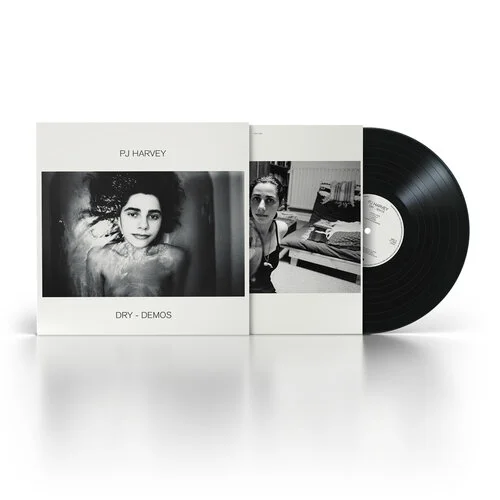
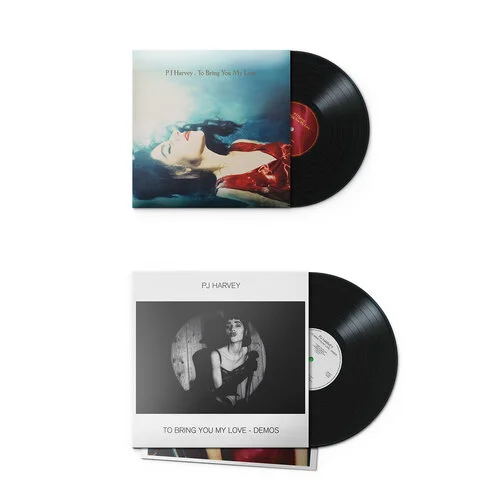
roundabout nature of this feature, but I do love a good vinyl reissue! Whilst some reissues are not tied to anniversaries, it is good when we get to mark a great album celebrating a big birthday with a reissue and, if we are lucky, some extras and demos! Not to skip over two great vinyl reissues but, not only are we getting a reissue and vinyl of demos from PJ Harvey’s To Bring You My Love (in September), but there will be reissues of Dry, Rid of Me, and 4-Track Demos. Next week, you can get your hand on Dry, and Dry Demos, and for August there is the Rid of Me, and 4-track Demos bundles. It is brilliant that Harvey is getting behind the reissues, and it gives new fans and existing ones alike a chance to experience these wonderful albums on vinyl! The fact that there are demos coming out is fascinating. One of my big things is wondering what it would be like if we got reissues of classic albums with demos included, it gives us a chance to see how these established songs started life and what changes they went through. Some might see putting demos out as cashing-in or putting out stuff that is incomplete, but I think demos are an essential glimpse into the creative process, and some real treats can come along!

I do wonder, during this COVID-19 crisis, whether we will see a lot of other reissues and re-releases come about. As it is 2020, classic albums from 1990 and 1995 will definitely be in line for some fresh attention – not to mention albums turning twenty this year! I wanted to promote all of the albums PJ Harvey is reissuing but, as the phenomenal To Bring You My Love turned twenty-five in February, I wanted to give it extra acclaim and space. 1992’s Rid of Me must stand as one of the best debut albums ever, and there are staggering songs right throughout the album – my favourite, Dress, is one of Harvey’s best songs. 1993’s Rid of Me contains songs like 50ft Queenie, and Rid of Me. Harvey followed that later in the year with 4-Track Demos: it consists of eight demos of songs from her previous album, Rid of Me, along with six demos of some unreleased tracks which never made it to release with the three-piece PJ Harvey line-up. Hardly dropping a step since her debut album – it would be a while until Harvey got any bad or average reviews for her music - , To Bring You My Love was Harvey’s breakthrough album, and it differed in tone from her previous two studio albums; less aggressive and, perhaps, more accessible, whilst still tackling lost love and deeper themes – Harvey is not an artist who was going to go mainstream and lose her edge!

I am looking forward to the To Bring You My Love reissues, as there will be a demos edition that will, perhaps, give us a chance to see a bit of Rid of Me, and Dry in the songs, if you see; a rawer and more lo-fi tone to how they appeared on To Bring You My Love. I love all of PJ Harvey’s albums, but C’mon Billy, and Down by the Water are two of her masterpieces, and I think the album as a whole is one of her most satisfying and magnificent. Before moving on, I want to bring in a review and an article, as To Bring You My Love turned twenty-five in February. Hopefully, this will give people more ammunition and persuasion to buy the new vinyl editions – as if you needed that push at all! I would urge people to go and buy the other studio albums that are coming out on new vinyl, but I think To Bring You My Love is especially important. In their review, this is what AllMusic reported:

Following the tour for Rid of Me, Polly Harvey parted ways with Robert Ellis and Stephen Vaughn, leaving her free to expand her music from the bluesy punk that dominated PJ Harvey's first two albums. It also left her free to experiment with her style of songwriting. Where Dry and Rid of Me seemed brutally honest, To Bring You My Love feels theatrical, with each song representing a grand gesture. Relying heavily on religious metaphors and imagery borrowed from the blues, Harvey has written a set of songs that are lyrically reminiscent of Nick Cave's and Tom Waits' literary excursions into the gothic American heartland.

Since she was a product of post-punk, she's nowhere near as literally bluesy as Cave or Waits, preferring to embellish her songs with shards of avant guitar, eerie keyboards, and a dense, detailed production. It's a far cry from the primitive guitars of her first two albums, but Harvey pulls it off with style, since her songwriting is tighter and more melodic than before; the menacing "Down by the Water" has genuine hooks, as does the psycho stomp of "Meet Ze Monsta," the wailing "Long Snake Moan," and the stately "C'Mon Billy." The clear production by Harvey, Flood, and John Parish makes these growths evident, which in turn makes To Bring You My Love her most accessible album, even if the album lacks the indelible force of its predecessors”.

Not only are vinyl reissues from PJ Harvey a great way for new fans to discover her work; I also think we get to see this evolution and jump between albums. To Bring You My Love was another big step forward, and it helped bring her work to people who, before 1995, were perhaps a little unsure and intimidated by the image Harvey projected in her music – or, perhaps, the fact that many people were a bit easily shocked in terms of an artist being open, raw and challenging! In an article from earlier in the year, The Quietus celebrated To Bring You My Love’s twenty-fifth, and they discussed the significance of the album and where PJ Harvey was in 1995:

People were often easily shocked by images of Harvey – it had only been three years since NME’s cover featuring her naked back caused much clutching of pearls – but this transition would make anyone double-take. Yet it made sense, too: she’d rung the changes for her third LP, and they went far beyond her lurid makeover. She disbanded the PJ Harvey Trio, her group since 1991, to go solo, and brought in new foils including Bad Seed Mick Harvey and old friend John Parish. Steve Albini, whose raw production contributed to Rid Of Me’s flayed-alive style, was replaced by the more melodically inclined Flood. And while Harvey’s work had always betrayed her love for the blues, it had never had been so dramatically devilish: the sound of some gothic, godforsaken Deep South full of blood and bibles, sinners and victims, love and despair.

You could never deny To Bring You My Love was a huge stylistic shift; not when Harvey’s songs had mutated into something from her hero Howlin’ Wolf’s worst nightmares, and she debuted her famous hot-pink catsuit at that year’s Glastonbury. But 25 years on, the idea that it marked an artistic watershed isn’t quite right, either. Yes, she’d changed how she sounded and looked, but not how she worked. In fact, its stormy sensuality and torrid theatrics only put up in lights what Harvey had always said, even if people seldom listened: she was a storyteller, not a diarist, and an actor as much as a singer.

By 1995, Harvey had spent a depressing amount of time debunking the assumption that her music was autobiographical. Many had figured that the brutal imagery of her 1992 debut, Dry, must have stemmed solely from real-life experience; the truth was that if you’d cut her open, she’d have probably bled greasepaint. It could be violent and disturbing, but she also played for murky laughs by deliberately sending up tired virgin-whore tropes, pivoting from a licentious other woman’s leer on ‘Oh My Lover’ to an ingenue’s clumsy breathlessness on ‘Dress’.

IN THIS PHOTO: PJ Harvey in 1995/PHOTO CREDIT: Kevin Cummins

And while her nervous breakdown gave Rid Of Me a bleak backstory, that album wasn’t a confessional outpouring either. As Judy Berman’s terrific reappraisal explains, its songs were about performances – the parts people were forced to play, or tried to challenge – as well as being stellar performances themselves. Sometimes Harvey became other characters, like Tarzan’s fed-up other half, or Eve venting her spleen at the serpent. Sometimes she adopted a terrifying alter-ego: her delivery on ‘50 Ft Queenie’ was, she said, inspired by th braggadocio of hip hop, a literally monstrous way of bigging herself up”.

Do make sure you pre-order your copy(ies) of To Bring You My Love, as it is going to be an album you’ll want to (re)own. I think there are plans for the rest of PJ Harvey’s catalogue to come out, but I am really excited to see one of 1995’s best albums arrive with an accompanying set of demos. These are essential releases from one of Britain’s…

GREATEST songwriting treasures.


FEATURE: Groovelines: Beyoncé (ft. Jay-Z) - Crazy in Love

FEATURE:


Groovelines

xxxx.jpg

Beyoncé (ft. Jay-Z) - Crazy in Love

___________

IT has been a while since I last put out…

IN THIS PHOTO: Beyoncé in 2003/PHOTO CREDIT: The Face

an instalment of Groovelines! It is a feature that spotlights a single song, and I go a bit in depth with its creation and release. Rather than focusing on an album, I can drill down a track that has made an impact on me. In previous editions, I have featured Kate Bush’s Wuthering Heights, Madonna’s Vogue, The Beatles’ Paperback Writer, and Queen’s Bohemian Rhapsody, and now I come to Beyoncé’s Crazy in Love. Released in 2003, it features her now-husband Jay-Z (they married in 2008), and is regarded as one of the best songs of the 2000s (as in the first decade of this century). I know I feature Beyoncé a fair bit on this blog, but I think it is important to feature Crazy in Love, as it is from her debut solo album, Dangerously in Love, and many eyes were on her as her band, Destiny’s Child, were sort of in their final phases – their last album, Destiny Fulfilled, was released in 2004. Released as the lead-off single from the album on 18th May, 2003, Crazy in Love is a combination of Beyoncé’s powerful vocal – with Jay-Z adding his brilliant part – and a great sample from The Chi-Lites – their song, Are You My Woman (Tell Me So) is used. I heard the song when it first came out and, whilst I was familiar with Beyoncé and her music, I had heard nothing like Crazy in Love until 2003. From the sassy horns that open it to the thrilling chorus, it is a song that still sounds incredible, and one cannot help but sing along to it!

It is not a shock the song reached the top spot in the U.S. and U.K., as the lyrics can be appreciated by pretty much anyone! I mentioned how you can sing alongside the track, as it is catchy, but one can relate to the lyrics and the spirit of Crazy in Love. Jay-Z’s vocals contrast Beyoncé’s in terms of flow and sound, but the two naturally complement one another perfectly. Dating and in love couples do not necessarily melt together better than anyone else, and it could have been a different experience if the song was quite slushy. The two have worked together through Beyoncé’s solo career and as part of The Carters, and this is the two of them in their finest collaboration. There is modernity in Crazy in Love, but 1970s-inspired Funk and Hip-Hop gives the song this classic edge. The beat of the song is immense, and there is so much punch and physicality running through the track! Working alongside that passion and panache is something sensual, softer and more tender. Recorded at Sony Music Studios (New York City) and mixed at The Hit Factory (New York City), I would be interested to see a breakdown of the song and who played what. Written by Rich Harrison, Beyoncé Knowles, Eugene Record, and Shawn Carter (Jay-Z), I would also be interested in hearing how the song was written and whether Beyoncé and Jay-Z wrote their parts together and then they sent that to Rich Harrison and Eugene Record.

I will end things in a bit as it is one of those classics that will be spun and dissected decades from now. I am a fan of Beyoncé, but I don’t think she ever released anything as epic and utilitarian as Crazy in Love, in the sense that so many people can relate to the song and it is not just restricted to a certain demographic. The track is a summery blast; it is a clarion call and demand for people to head to the dancefloor. I love the song, and I think there are few R&B/Pop songs that can match the dizzying heights of Crazy in Love. The Dangerously in Love album is not exactly defined by Crazy in Love, but it is clear what the jewel of the album is! The confidence Beyoncé had to transition from an established group – even if they were still going and had another album in them by 2003 – and make it solo is amazing. Some would note that she was the standout of Destiny’s Child and it was only a matter of time before she stood alone, but it must have been tricky changing paths. One cannot talk about the '00s without acknowledging the stature and importance of Crazy in Love – not bad for a debut solo single! I listen to Crazy in Love when I need a lift because, even though I have heard it countless times, every spin delivers…

SUCH an incredible thrill!

FEATURE: The Lockdown Playlist: Sad on the Dancefloor

FEATURE:


The Lockdown Playlist

zzzz.jpg

PHOTO CREDIT: @acreativegangster/Unsplash

Sad on the Dancefloor

___________

FOR this Lockdown Playlist…

PHOTO CREDIT: @dylan_nolte/Unsplash

I have put together a selection of songs that could be considered to be ‘sad bangers’ – that they have energy and are primed for the dancefloor, but convey some form of heartbreak. It is an interesting phenomenon and, whilst some might say some of the tracks in the playlist are not sad bangers, I think there is a dichotomy and contrast that means (the songs) will give you energy, but the messages are not quite as charged as the music. In any case, these tracks, I hope, will provide a boost and ensure that your body moves. I am sure there will be something in this playlist that…

PHOTO CREDIT: @vadimpng/Unsplash

STRIKES the right note.

FEATURE: Red Shoes, a White Dress and Anything in Between: The Unique Style and Fashion of Kate Bush

FEATURE:

Red Shoes, a White Dress and Anything in Between

IN THIS PHOTO: Kate Bush in 1979

The Unique Style and Fashion of Kate Bush

___________

RIGHT from the first videos I saw…

IN THIS PHOTO: Kate Bush photographed by Claude Vanheye in 1978

featuring Kate Bush, I knew she would strike me visually as much as she did musically! I am not a big fashion expert – most men aren’t -, but I wanted to talk about the unique looks of Kate Bush. It is testament to the strength and individuality of Bush that she was not led by the record label in terms of how she appeared for photos or what she was wearing for musical videos. There might have been suggestions here and there but, from the Wuthering Heights video in 1978 to the promotional images for 50 Words for Snow (released in 2011), Bush has very much called the shots. I am going to bring a few articles in that highlight the fashion of Kate Bush and, whilst I am not sure whether Bush ranks alongside the most stylish Pop artists ever (if you want to limit her music to Pop), I do find that she did not follow the herd. So many Pop artists through time have been dressed by a committee or seem to have a very limited palette and imagination. The first two videos I saw involving Kate Bush – that I saw in 1986/1987 – was Wuthering Heights, and Them Heavy People. There are two versions of Wuthering Heights: the U.K. version of the single where she wears a white dress, and the U.S. one where she is in a red dress.

Every year, Kate Bush fans gather and dance to Wuthering Heights whilst wearing red dresses and, though I prefer the British video and think fans should have adopted that, the fact that masses unite to recreate that video says as much about the striking look of the video in addition to the song. I also saw the video for Them Heavy People where Bush wears a fedora – again, my hat knowledge might be lacking -, and a purple skirt. If Wuthering Heights saw Bush as this almost-gothic, spectral figure looking ghostly, beautiful and elegant, Them Heavy People was a cooler look with a bit more edge. Just look at Bush’s videos, and her attire is as iconic as the songs; from Babooshka’s Jekyl and Hyde-like contrasts, to her robber’s outfit in There Goes a Tenner, to the jumpsuit look in The Big Sky, there was no limits to her imagination and guises! I will talk more about the Tour of Life in 1979 and her Before the Dawn residency in 2014 later, but these huge productions relied on so many different outfit changes – especially the Tour of Life! One might assume that, at the start of her career, Bush might stick with a rather simple and homely style, before changing things up as time elapsed. Even in 1978 and 1979, she could be seen in a variety of styles and clothes; from colourful jumpers and boots, through to robes, gowns and leather jackets.

IN THIS PHOTO: Kate Bush in Italy in 1978

Kate Bush herself might say that this was her being natural and not wanting to repeat herself, but she definitely signalled herself out as a style icon from the start, and inspired a lot of artists since. One might also say that fellow heavyweights like Madonna was as chameleon-like and evolving, but Kate Bush has that extra spark and distinction – it is hard to put my finger on! Like rare alumni like David Bowie, Kate Bush created her own style world, and each album and single seemed to introduce a new persona and side to a true innovator. I want to introduce an article from Vogue in 2014, where we got to learn more about Bush’s ever-changing looks; how she remained distinct from her debut album through to the present day:

Nobody is more excited about Bush's Before the Dawn concert series than fashion people. She hasn't performed live on stage since 1979, but few artists, reclusive or not, are played more often at runway shows. Alexander McQueen, Gucci, Chanel—if you've been there, you've heard the British singer-songwriter's idiosyncratic soprano voice and surreal lyrics. On the catwalks, being first is paramount, so repeat spins are rare, but DJs are willing to make an exception for Bush's songs.

xz.jpg

IN THIS PHOTO: Kate Bush in 1978/PHOTO CREDIT: Gered Mankowitz

Take "Wuthering Heights," the chart-topping debut single Bush wrote at 18 after she realized she shares a birthday with the novel's author, Emily Brontë—it soundtracked Thom Browne's Spring 2013 women's show and Isabel Marant's collection for Spring 2014. "I think there isn't a thing that girl didn't have," says Marant's musical director, Ariel Wizman, of Bush. "Beauty, talent, personality, spirituality, amazing singing and acting technique…no taste approximation, and a lot of what fashion is missing nowadays: a personal universe." What fashion and music are missing, Wizman seems to think: "You can win The Voice 10 times with vibratos, dramas, and makeup artists, but you will never be Kate Bush." 

Frédéric Sanchez has played Bush's songs twice, once 20 years ago for the second Marc Jacobs show (Spring 1995)—"it was a cover of 'Wuthering Heights' by the L.A. punk band White Flag," he says—and the second time for Miu Miu (Fall 2011), when he did a soundtrack of Bush songs, including "The Infant Kiss," "Breathing," "Hammer Horror," and "In Search of Peter Pan." "Without listening, you can already feel the poetic and inspiring side of her music in those titles," he says. Equal to her poetry are the pictures her words paint. Fashion is a visual business, and insiders old enough to remember her early concerts or curious enough to have sought out her videos on YouTube will be familiar with her theatrical performance style. (The shearling-lined, over-the-knee boots she wore in the 1978 picture we found weren't bad, either.) "Like David Bowie," Sanchez adds, "she belongs to a world of artists where you immediately get the 'sound and vision'".

Though Bush adopted multiple attire, I think, at its heart, her look was defined by something true to her; she never sought to dress like Pop artists of the day. There was an honest to her style but, alongside this, she threw in twists and combinations that made her videos and photoshoots so fascinating and timeless. Her 1979 Tour of Life was Bush performing tracks from her first two albums and, for each number, there was something different in terms of her appearance.

zzzz.jpg

IN THIS PHOTO: Kate Bush in 1982/PHOTO CREDIT: John Carder Bush

I want to source from an article that celebrates a few of Bush’s best looks; I have selected a passage relating to the Tour of Life, and her off-stage/set style by 1985:

The Tour of Life, in 1979, was Kate Bush’s first and only concert tour. A spectacular of the highest caliber, the show featured song, dance, mime, poetry readings and a magic show. Unprecedented in the grandeur of its production, Kate’s singular tour has become the benchmark for performing artists from Florence Welch to Björk. It also spawned the invention of the wireless microphone, which was later made famous by Britney Spears and is standard for modern pop stars. Did we mention that the show featured 17 costume changes? Across the 24-song setlist Kate becomes a magician, a butterfly, a cowboy... the list goes on. Here, at the Amsterdam show, she wears one of her many glittered leotards and a pair of very 80s leg warmers.

While Kate’s on-stage outfits were notoriously eccentric, her off-stage looks represented a more low-key, albeit equally idiosyncratic, side of the singer. In the studio, she frequently wore brightly-colored kimono tops with jeans. To and from airports, she wore oversized blazers and her beloved red knee-high boots. During interviews she was photographed in patterned jumpers -- very British. She often integrated dancewear -- leotards and satin leggings -- into her day-to-day outfits, perhaps by pairing a bodysuit and electric blue trousers with simple white trainers. Here, Kate wears her preferred bohemian-esque look: a dainty puff sleeve top with a long, patterned skirt”.

I can appreciate how Bush’s songs are often not directly about her so, in videos, she is almost being somebody different, so it is natural her outfits would be quite varied. If many of her contemporaries in the 1970s, 1980s and 1990s were being inspired by the high street or what was deemed fashionable at the time, Bush’s aesthetic was more varied: from the pages of literature and genius artistic canvases, to something more homegrown and comfortable. Her videos, as I have intimated, are wildly different and one can see a vastly different-looking Kate Bush in the video for Suspended in Gaffa (1982) as, say, Eat the Music (1993). Of course, one cannot mention Bush’s visual aesthetic without referencing her natural beauty and sex appeal – something many reviewers and press sources focused on through her career. Her stunning beauty, teamed with incredible style and allied to a keen eye for the visual meant that, from the first days of her career, one could not peg and easily define Kate Bush. In this 2017 feature from the Glasgow University Magazine, it was argued how Bush was a style icon who was more forward-thinking (or backward-thinking in a way?!) than many of her musician peers:

Nobody ever perfected the feminine as ethereal quite like Kate Bush. An influence on innumerable modern pop stars and style icons – Florence + the Machine, Bat for Lashes, Bjork and St Vincent, to name but a few, Bush is an icon of music, style, and feminism all at once. Incorporating costume wholeheartedly into her music videos and performances, she used her attire as an equal arm of her unbounded creativity as any other artistic medium. Her iconic, enormous wavy brown hair and angelic Wuthering Heights white dress cemented her place in pop culture iconography, and informed my relationship to femininity and performance more than any other artist.

zzlzlzl.jpg

IN THIS PHOTO: Kate Bush in 1978/PHOTO CREDIT: Gered Mankowitz

At a time when fashion tended overwhelmingly towards the forward-looking, the shiny, futuristic fabrics, the business-influenced party power-dressing, the big skirts and sleeves and hair and a vision of the future from the 50s, Bush took a softer, more nostalgic, more quietly theatrical view; borrowing from Pre-Raphaelite painting, Japanese art history and textiles, and the culture of mine and contemporary dance from which she rose, Bush’s look – like her sound – operated in its own imaginative sphere.  Her countless bodysuits and leotards spoke of a practical, dance school mentality; the idea of wearing the easiest outfits to perform in, to allow for movement, to dance and fly and fully express yourself, can be seen in the classic bodysuits and worshipping of good basics of the recently-passed American Apparel. Bush approached fashion from an artist’s sensibility and with the eye of a costume designer; her commitment was, first and foremost, to character, to performance and to creative freedom”.

Look at this article from The Guardian, and a selection of Bush’s looks are laid out. From body stockings and something free-flowing and eye-catching that pre-dated Florence and the Machine by decades; to a red-white-blue/jeans-and-boots combination, one can see why Bush has been so influential to artists looking to establish themselves in terms of style as much as the music – from Tori Amos, and Bat for Lashes, through to Grimes, and St. Vincent, so many artists we know today can trace a lot of their visual essence back to Kate Bush.

I am going to write a separate piece regarding Kate Bush and her legacy closer to her birthday on 30th July, but I have a few more articles I want to source from as, through the years, so many inches of screen and page have been shored up to emphasise the beguiling and inspiring sides of Kate Bush’s fashion. AnOther saluted Bush in 2017, and they also mentioned her individuality and how, when she could have been led by labels and trends, she was very much keen to retain her own sense of style and what felt right to her – often with extraordinary results:

Bush’s appreciation for dramatic flair where her music was concerned spilled over into her sartorial choices, often to stunning results. Far from existing as separate entities, Bush’s musical and sartorial experimentation were in constant conversation, resulting in the creation of her very own visual universe. Her striking features paired with her pre-Raphaelite curls served as the template to an ever-shifting array of eclectic looks: she never shied away from bold colours (think blood reds and electric blues), extreme silhouettes (she frequently donned kimonos and gender-bending pantsuits), and a healthy dose of pure theatricality. It’s not hard to see why designers – from the late Alexander McQueen to Gucci – have frequently turned to Bush for inspiration over the past few decades, whether by setting their runway shows to her music or by referencing her surreally romantic ethos in their collections”.

As Hounds of Love approaches thirty-five in September, we can look at the album’s songs and see how they have fared through the years. We can also look at the videos for the singles, and see how Bush changed from the previous decade. In a decade that is not associated with great fashion and subtle clothing, Bush managed to be bold without being garish and naff. She looked positively classy and sublime in the video for Running Up That Hill (A Deal with God), and her various costumes for The Big Sky were awesome – where she was a pirate one moment and she indulged in some light falconry the next (and she rocked every look!). Even when people’s hair was at its most tragic and sky-scraping, Bush managed to look dignified, cool and restrained. Which decade was her best in terms of the looks and video aesthetic? I still have a very soft spot for the 1970s myself. It was the contrast and the clashes that made Bush such an enigma – though someone who could inspire others with her accessibility and grounded nature. This article from The Telegraph talks of the (many) shades of Kate Bush:

That was Bush all over: part Stanislavsky, part sex-kitten with an approach to make-up that was more school of Whatever Happened to Baby Jane than Bobbi Brown. And the hair - a leonine fusion of Body Shop henna and static crinkles (no John Frieda Frizz Ease back then. I know. How ever did we cope?) it was punk meets the Pre-Raphaelites. I don't think any of us had ever seen anything quite like it.

IN THIS PHOTO: Kate Bush in 1979/PHOTO CREDIT: Gered Mankowitz

Best of all, you could do it all yourself, sort of, at no cost. Dunk tresses into sink of something orange, twist hair into hundreds of plaits over night, smoosh a lot of blue shadow in the vicinity of your eyes and voila: Kate Bush - ish.

There were other components, but then again, too few to mention, although the ivory, floaty Cathy-dress she wore in the video for Wuthering Heights was /is a classic piece of loveliness. Great sleeves too, especially when she gets to the mimey-hand stuff part and it all goes a bit Tales of the Unexpected.

But like all the female style goddesses of that time, Bush was not put on this planet to sign lucrative deals with the mega-brands. I can't even recall whether she ever flaunted a designer bag. Probably not. That's why we loved her. That and the songs. She was, at the time, a one-off, albeit much copied, traduced and palely imitated in the three decades since her astonishing debut. Let's not forget she was 13 - 13! - when she wrote the beautiful Man With the Child in His Eyes”.

If you want a sense of the variety of looks Bush adopted through the 1970s and 1980s, this article is handy but, to me, I felt she was sporting some incredible choices in the 1990s around the time of The Red Shoes.

One can see elements of massive music style icons like David Bowie, Madonna and Deborah Harry in musicians. I think a lot of the most influential style icons – from Lady Gaga to Kylie Minogue – can trace their roots to Kate Bush. Not only has Kate Bush’s styles and fashion infiltrated musicians today, but one can see it at big festivals. Coachella founder Paul Tollett tried to book Bush to play in 2017, but many were not sure whether Bush would translate or know who she was – she only got proper recognition in the U.S. after Hounds of Love’s release, and is perhaps not as played and known there as she should be. This Vogue article underpins how Bush’s music videos rubbed off on artists who followed which, in turn, has made its voice known at festivals like Coachella:

Tollett’s response is not only off base considering the countless acts that Bush has influenced (her dramatic sound reverberates through the music of Florence Welch and Lady Gaga, to name two major artists), but it also fails to recognize the profound influence that Bush’s iconic videos have had on modern style—and in particular, the carefree looks that flood the Coachella Valley each spring. While Bush responded to the slight by saying that she had no intention of playing the event (no surprise there, as Bush has never played in the U.S. and her recent high-profile series of shows in the U.K. were her first in 35 years), her romantic, dramatic approach to dressing would fit right in among the festival’s fashionable set.

xzz.jpg

IN THIS PHOTO: Kate Bush in 1985/PHOTO CREDIT: Anwar Hussein/Hulton Archive/Getty Images

Knowingly or not, many festival-goers have been reinterpreting Bush’s quintessential looks for years, whether through romantic, ’70s-inspired lace numbers or satiny ballerina dresses. If imitation is the sincerest form of flattery, it would appear that the Coachella crowd would be honored to see Bush on stage. Well, there’s always next year”.

There is proof that Bush was stylish even from childhood, and it is interesting to see where that flair might have come from. She was raised in an artistic household, but one that was middle-classed and nestled in the idyllic Wickham Farm on Wickham Street in Welling, Kent. Maybe it was the music she listened to and was inspired by when growing up – David Bowie, Captain Beefheart and Elton John were all the mix -, that fused into her subconscious; perhaps it was a sense of rebellion or need to be different to her friends. I would also urge people to buy the photo book, Kate: Inside the Rainbow, from her brother John Carder Bush, as it boasts a collection of stunning photos covering Bush’s childhood to 2011; there are some stunning shots/outfits on display! Whether Bush was sporting some knee-length boots or blue spandex, there is just something completely natural and ‘her’. I will wrap this up in a minute, but from modern female Pop artists to the L.G.B.T.Q.I.A.+ community, Kate Bush has inspired and changed lives.

aqqq.jpg

IN THIS PHOTO: Kate Bush in 2011

Her music and talent is all a part of that, but I think her incredible fashion sense – that was at once otherworldly and intimate the next – and visual element is just as important. Liz Eggleston, in 2008 explained why Kate Bush was such a fashion icon:

Her wild auburn hair was similarly bohemian, always curly or crimped, and has remained her trademark look to this day. Her expressive, open features were enhanced with heavy eye and lip make-up, there was no following the only-emphasise-one-feature rule for our Ms. Bush! She almost defies explanation. Most men I know positively glaze over with lust if you simply mention her name, and there’s definitely a lesson to be learned about subtle seduction in your appearance. And she’s still a very hot lady, without having resorted to botox and facelifts. Personally, this year Kate Bush has emerged as my main squeeze style icon and will remain so for a long while yet”.

From those famous dresses in the Wuthering Heights videos to her Tour of Life extravaganza, all the way through to the promotional images for her last studio album, 50 Words for Snow, Kate Bush has had an enormous impact in terms of her sartorial brilliance. As we look ahead to the possibility (we hope) or another album, in terms of the promotional shots and videos, it is curious to think…

WHAT will come next.

FEATURE: The July Playlist: Vol. 3: Sleep at Night…Please Don’t Make Me Cry

FEATURE:


The July Playlist

IN THIS PHOTO: Lianne La Havas

Vol. 3: Sleep at Night…Please Don’t Make Me Cry

__________

FOR this week’s Playlist…

IN THIS PHOTO: IDLES/PHOTO CREDIT: @tomhaaam

there is some new music from Lianne La Havas, The Chicks, IDLES, JARV IS…, Ellie Goulding, Nubya Garcia, King Gizzard and the Lizard Wizard, and Win Butler. It is another busy and eclectic week that sees Poppy Ajudha, Ed Harcourt, Julia Stone, and beabadoobee line up against one another! If you require some pep and extra step to get you into the weekend, then I think the assortment of the best tracks of the week should do the job! It is going to be a warm weekend, so get stuck in and enjoy the very best tracks from another…

IN THIS PHOTO: Ellie Goulding

EXTRAORDINARY week of releases.

ALL PHOTOS/IMAGES (unless credited otherwise): Artists

__________

Lianne La Havas Please Don’t Make Me Cry

The Chicks Sleep at Night

azzz.jpg

PHOTO CREDIT: Tom Gallo

IDLES - A Hymn

zxx.jpg

Ellie Goulding Love I’m Given

Win Butler Surrender

Poppy Ajudha - Watermelon Man (Under the Sun)

JARV IS… - Swanky Modes

Tinashe - Rascal (Superstar)

Yaeger - Catch Me If You Can

PHOTO CREDIT: Tom Pallant/Courtesy of YUNGBLUD

YUNGBLUD Strawberry Lipstick

1AAA.jpg

PHOTO CREDIT: @georgeaugusto

Hinds Burn

Ed Harcourt - Drowning in Dreams

Grace Carter, Jacob Banks Blame

Matt Berninger - Distant Axis

PHOTO CREDIT: Anthony Harrison

The Big Moon Why

IN THIS PHOTO: Princess Nokia

Aluna, Princess Nokia & Jada Kingdom - Get Paid

Koffee Lockdown

IN THIS PHOTO: Nubya Garcia

Nubya Garcia & Richie Seivwright - Source (ft. Ms MAURICE & Cassie Kinoshi)

IN THIS IMAGE: Anne-Marie

Anne-Marie (ft. Doja Cat) - To Be Young

PHOTO CREDIT: Vedrana Vukojevic

Dana Gavanski At Last I Am Free

PHOTO CREDIT: @sub_lation

King Gizzard & the Lizard Wizard - Honey

XSDDS.jpg

beabadoobee Care

PHOTO CREDIT: Brooke Ashley Barone

Julia Stone Break

Nasty Cherry Better Run

Troye Sivan Easy

WhitneyHammond Song

The Aces801

Helena Deland - Lylz

Gracie Abrams - Friend

IN THIS PHOTO: Rejjie Snow

Rejjie Snow, MF DOOM, Cam O’bi Cookie Chips

Cults Trials

cclclclc.jpg

Bob Mould - Forecast of Rain

FEATURE: A Buyer’s Guide: Part Eleven: Paul Simon

FEATURE:


A Buyer’s Guide

Part Eleven: Paul Simon

___________

IN this new edition…

of A Buyer’s Guide, I am featuring one of music’s greatest icons: the wonderful Paul Simon. I am including only his solo albums, but his music as part of Simon & Garfunkel is sensational, and definitely worth exploration. It is always hard to filter Paul Simon’s best albums and, whilst I have missed out a couple of classics – including The Rhythm of the Saints -, I feel I have included the best albums from one of music’s true geniuses – and a book that is a useful companion. Have a look at the list below and, if you are not over-familiar with Paul Simon, I hope this provides illuminating and a good guide. I have been listening back to his best albums whilst doing this, and it is amazing how many classics Simon penned! It just goes to show that he truly is one of…

THE greatest artists we will ever see.

_______________

The Four Essential Albums

Paul Simon

Release Date: 24th January, 1972

Labels: Columbia/Warner Bros.

Producer: Roy Halee/Paul Simon

Standout Tracks: Duncan/Me and Julio Down by the Schoolyard/Hobo’s Blue

Buy: https://www.discogs.com/Paul-Simon-Paul-Simon/master/97959

Stream: https://open.spotify.com/album/7npBPiCHjPj8PVIGPuHXep

Review:

If any musical justification were needed for the breakup of Simon & Garfunkel, it could be found on this striking collection, Paul Simon's post-split debut. From the opening cut, "Mother and Child Reunion" (a Top Ten hit), Simon, who had snuck several subtle musical explorations into the generally conservative S&G sound, broke free, heralding the rise of reggae with an exuberant track recorded in Jamaica for a song about death. From there, it was off to Paris for a track in South American style and a rambling story of a fisherman's son, "Duncan" (which made the singles chart). But most of the album had a low-key feel, with Simon on acoustic guitar backed by only a few trusted associates (among them Joe Osborn, Larry Knechtel, David Spinozza, Mike Manieri, Ron Carter, and Hal Blaine, along with such guests as Stefan Grossman, Airto Moreira, and Stephane Grappelli), singing a group of informal, intimate, funny, and closely observed songs (among them the lively Top 40 hit "Me and Julio Down by the Schoolyard"). It was miles removed from the big, stately ballad style of Bridge Over Troubled Water and signaled that Simon was a versatile songwriter as well as an expressive singer with a much broader range of musical interests than he had previously demonstrated. You didn't miss Art Garfunkel on Paul Simon, not only because Simon didn't write Garfunkel-like showcases for himself, but because the songs he did write showed off his own, more varied musical strengths” – AllMusic

Choice Cut: Mother and Child Reunion

There Goes Rhymin' Simon

Release Date: 5th May, 1973

Labels: Columbia/Warner Bros.

Producers: Paul Simon/Phil Ramone/Muscle Shoals Rhythm Section/Paul Samwell-Smith/Roy Halee 

Standout Tracks: Take Me to the Mardi Gras/Something So Right/Love Me Like a Rock

Buy: https://www.discogs.com/Paul-Simon-There-Goes-Rhymin-Simon/master/55686

Stream: https://open.spotify.com/playlist/52K9aSfhUfCtd0OOZBpQrX?p=449

Review:

The second side begins with “American Tune”, which is right out of the Simon & Garfunkel playbook. It is a folk-based motif on on the American experience with references to struggle, weariness, and hard work. The song was released as a single but failed to make any ripples on the charts. “Was a Sunny Day” is a hybrid of folk and reggae with a bouncy, McCartney-esque bass line by David Hood. “Learn How to Fall” is an upbeat acoustic jazz tune with some great instrumental sections packed into its brief two minutes and 44 seconds.

“St. Judy’s Comet” is the best song on the album, a lullaby of pure musical beauty. Beckett’s electric piano and vibraphone along with subtle electric guitar overtones by Pete Carr, accent the perfect, calm melody and hypnotizing acoustic riff by Simon. The album concludes with “Loves Me Like a Rock”, a pop song with heavy Gospel influence, especially with the background vocals of The Dixie Hummingbirds. This was the second song on the album to peak at #2 and remains one of Simon’s most famous songs.

There Goes Rhymin’ Simon proved to be a bigger hit than its predecessor (ironically peaking at #2 on the album charts and gave Paul Simon the latitude to continue his mix of pop and experimentation with future albums” – Classic Rock Review

Choice Cut: Kodachrome

Hearts and Bones

Release Date: 4th November, 1983

Label: Warner Bros.

Producers: Roy Halee/Paul Simon/Russ Titelman/Lenny Waronker

Standout Tracks: Hearts and Bones/Rene and Georgette Magritte with Their Dog after the War/Cars Are Cars

Buy: https://www.discogs.com/Paul-Simon-Hearts-And-Bones/master/55670

Stream: https://open.spotify.com/playlist/6NtecJFgFqkfB9UJqZpuM4

Review:

Hearts and Bones was a commercial disaster, the lowest-charting new studio album of Paul Simon's career. It is also his most personal collection of songs, one of his most ambitious, and one of his best. It retains a personal vision, one largely devoted to the challenges of middle-aged life, among them a renewed commitment to love; the title song was a notable testament to new romance, while "Train in the Distance" reflected on romantic discord. Elsewhere, "The Late Great Johnny Ace" was his meditation on John Lennon's murder and how it related to the mythology of pop music. Musically, Simon moved forward and backward simultaneously, taking off from the jazz fusion style of his last two albums into his old loves of doo wop and rock & roll while also incorporating current sounds with such new collaborators as dance music producer Nile Rodgers and minimalist composer Philip Glass. The result was Simon's most impressive collection in a decade and the most underrated album in his catalog” – AllMusic

Choice Cut: The Late Great Johnny Ace

Graceland

Release Date: 25th August, 1986

Label: Warner Bros.

Producer: Paul Simon

Standout Tracks: The Boy in the Bubble/Under African Skies/Homeless

Buy: https://www.discogs.com/Paul-Simon-Graceland/master/55658

Stream: https://open.spotify.com/album/7dgTCL6gWSguwfCRepvkh2

Review:

But more than Simon's single-minded devotion to his art and Tambo's ideological politics, the experience surrounding this album is best conveyed by the musicians who made it. They were violating the boycott, too, just by participating in a dialogue with non-South African musicians, and there's a moment where Ray Phiri describes a meeting he was called to in London with African National Congress officials while touring to support the album that speaks volumes. The ANC officials told Phiri that he was violating the boycott and had to go home, and his response was that he was already a victim of apartheid, and to force him to go home would make him a victim twice. In the end, Simon's assertion that Graceland helped put an emotional, human face on black South Africans for millions of people around the world doesn't seem off the mark. This set also comes with a DVD of the concert Simon and these musicians played with South African exiles Hugh Masekela and Miriam Makeba in Harare, Zimbabwe, in 1987, and the joy visible on stage and in the audience certainly speaks to that.

It's easy to overstate what Graceland was. It wasn't the first world-music album, as some critics claim. But it was unique in its total, and totally natural, synthesis of musical strains that turned out to be not nearly as different from each other as its listeners might have expected, and the result resonated strongly around the world and across generations” – Pitchfork

Choice Cut: Graceland

The Underrated Gem

Still Crazy After All These Years

Release Date: 25th October, 1975

Label: Columbia

Producers: Paul Simon/Phil Ramone 

Standout Tracks: My Little Town/50 Ways to Leave Your Lover/Gone at Last

Buy: https://www.discogs.com/Paul-Simon-Still-Crazy-After-All-These-Years/master/43964

Stream: https://open.spotify.com/album/4A366gjTrYQwmRtkTezF2W

Review:

Still Crazy after All These Years, Simon’s grim and ambitious new album, begs these and other questions as it sure-handedly paints itself into the usual corner under the familiar shadow of Bob Dylan. For inside the lush and dolorous Still Crazy, there is a lean, hungry Blood on the Tracks trying to get out. Both LPs chronicle the dissolution of a marriage, but where Dylan, with ofttimes awkward agony, makes you feel it. Simon, with more slick professionalism than is good for his subject matter, makes you think you feel it — a crucial difference. Dylan’s pragmatic, toughminded “I hear her name here and there as I go from town to town/And I’ve never gotten used to it, I’ve just learned to turn it off” walks tall with its heartbreak, while Simon’s

Paul Simon’s myths were always too pretty to be believed — they lacked the necessary mystery and danger to have size, his Moby Dick would have been a disaster — but no one has ever questioned his craftsmanship, the quality of his melodies or his seemingly inherent decency. It is difficult to imagine him “still crazy” because his pervasive intelligence has never allowed us to think him crazy in the first place. Good middleweights never are. If they were, they wouldn’t need that hotel reservation” – Rolling Stone

Choice Cut: Still Crazy After All These Years

The Latest/Final Album

In the Blue Light

Release Date: 7th September, 2018

Label: Legacy

Producers: Paul Simon/Roy Halee 

Standout Tracks: One Man's Ceiling Is Another Man's Floor/How the Heart Approaches What It Yearns/The Teacher

Buy: https://www.discogs.com/Paul-Simon-In-The-Blue-Light/master/1418728

Stream: https://open.spotify.com/playlist/6HgMGLjoOaj1Z1aoOnR5Ws

Review:

The Orwellian satire Pigs, Sheep and Wolves is now jazzier. Marsalis’s woozy sax in How the Heart Approaches What It Yearns wonderfully recreates the atmosphere of the “downtown [formerly ‘local’] bar and grill”. There is often a reflective, wistful feel, but Simon’s best reworkings benefit from his age and increased experience. The 1975 song Some Folks’ Lives Roll Easy is much more poignant, as he brings his septuagenarian voice to the words: “Here I am, Lord, I’m knocking on your place of business, but I have no business here.” Simon doesn’t sound at peace with the post-crash, Trump-era world at all, and the exquisite new arrangement of Love emphasises lines such as: “When evil walks the planet, love is crushed like clay.” But perhaps he can now be content with an extraordinary canon.

There are four selections from the 2000 album You’re the One, which Simon presumably feels is his most overlooked. There are no hits and nothing from Graceland. Generally, sparser arrangements allow more space for Simon’s dazzling imagery and oblique but relevant ruminations on subjects including immigration (René and Georgette …; The Teacher), domestic violence (a bluesier One Man’s Ceiling Is Another Man’s Floor) and the state of humanity and the planet (Questions for the Angels)” – The Guardian

Choice Cut: René and Georgette Magritte with Their Dog after the War

The Paul Simon Book

Paul Simon: The Life

Author: Robert Hilburn

Publication Date: 8th May, 2018

Publisher: Simon & Schuster Ltd

Synopsis:

'There's no tougher a mind, no more tender a voice than Paul Simon, and there's no better man than Robert Hilburn to decipher the hardwiring of this hyperintellect...great songs can never be fully explained, but the great man on his way to find those songs surely can.' - Bono

Through such hits as "The Sound of Silence," "Bridge Over Troubled Water," "Still Crazy After All These Years," and "Graceland," Paul Simon has spoken to us in songs for a half-century about alienation, doubt, survival, and faith in ways that have established him as one of the most honoured and beloved songwriters in American pop music history. Yet Simon has refused to talk to potential biographers and urged those close to him to also remain silent. But Simon not only agreed to talk to biographer Robert Hilburn for what has amounted to more than sixty hours, he also encouraged his family and friends to sit down for in-depth interviews.

Paul Simon is  a revealing account of the challenges and sacrifices of artistry at the highest level. He has also lived a roller-coaster life of extreme ups and downs. We not only learn Paul's unrelenting drive to achieve artistry, but also the subsequent struggles to protect that artistry against distractions - fame, wealth, marriage, divorce, drugs, complacency, public rejection, self-doubt - that have frequently derailed pop stars and each of which he encountered. From dominating the charts with Art Garfunkel and a successful reinvention as a solo artist, to his multiple marriages and highly publicized second divorce from Carrie Fisher, this book covers all aspects of this American icon” – Waterstones

Buy: https://www.waterstones.com/book/paul-simon/robert-hilburn/9781471174179

FEATURE: Second Spin: Nelly Furtado - Whoa, Nelly!

FEATURE:


Second Spin

Nelly Furtado - Whoa, Nelly!

___________

THERE are some pretty big albums…

that will be turning twenty later this year – no less Radiohead’s Kid A! Among those albums approaching twenty, I wonder how many people will nod to Nelly Furtado’s Whoa, Nelly! It was released on 24th October (2000), and it did get some good reviews when it arrived, but there were some who were not too kind; others felt that the album had some good moments but was no more than the sum of its singles. I think a lot of people buzzed at the time, but few talked about Whoa, Nelly! years later. If you want an album that is diverse and unique, then Whoa, Nelly! is a perfect place to start. The debut album from the Canadian singer-songwriter, Whoa, Nelly! peaked at number twenty-four on the US Billboard 200 chart. It produced three international singles: I'm Like a Bird, Turn Off the Light, and ...on the Radio (Remember the Days). Whilst one cannot call Whoa, Nelly! underrated, one can definitely say that it is under-looked in regards the great albums of 2000; few rank Whoa, Nelly! with the best albums of the '00s. Nelly Furtado wrote seven of the album’s twelve tracks solo – she co-wrote the other five with Gerald Eaton and Brian West (the album’s hits and best cuts were Furtado’s alone). Although many embraced Furtado in 2000, some thought her a bit tricky to pigeonhole or a bit of an oddity.

This is what NME wrote in their review of Whoa, Nelly!

Whether she’ll be a musical one is more tricky. Which – as it’s already on heavy rotation – makes her decision to call another song ‘Shit On The Radio (Remember The Days)’ just a little rich. Or it would be, if that song didn’t prove Nelly has just enough alternative style to give it a backbone of R&B steeliness. Meanwhile, ‘Baby Girl’ is sweeter, with fiesta horns and an electro-smooth take on Destiny’s Child’s lyrical concerns. Opener ‘Hey, Man!’ sounds like The Sundays gone Mardi Gras crazy. Lord. Allowing bonus points for successfully merging personal lyrics and shuffling beats without once evoking lazy trip-hop, she still too often confuses blandness for adult sophistication. There’s enough here, however, to suggest she could become a less irritatingly prima donna Jennifer Lopez, or an interesting, beat-driven Dido. All she need do is refine her musical syntax”.

To me, Whoa, Nelly! is an artist entering a new decade and not following what happened in the 1990s. Furtado’s debut album incorporates a number of styles, but she manages to weave them all together around her incredible voice. It is the way Furtado punctuates and elongates; how some lines flow free, whist other stutter and delay. Not only is the delivery unique, but Furtado’s language and songwriting is very much her own! There is this clash of uplifting choruses and more emotive lyrics. The singles, I'm Like a Bird, and Turn Off the Light sound incredible and get you singing along, but they are a lot deeper than that and, when you look at the lyrics, there is more than meets the eye.

Whoa, Nelly! is a very personal album to Nelly Furtado, but she can be honest and free without being too glib or overly-serious. The album has this wonderful mix of the thought-provoking and challenging with the colourful and frivolous. In their review of 2011, this is what AllMusic had to say:

Nelly Furtado's Whoa, Nelly! is one of those albums that's designed to be a surprising, precocious debut -- the kind of record that's meant to make a listener exclaim, well, "whoa nelly" upon the first spin. From that first play, it's evident that Furtado is indeed an audacious songwriter, not at all hesitant to bare her emotions, tackle winding melodies, and bend boundaries to the point that much of the record sounds like folk-pop tinged with bossa nova and backed by a production designed for TLC. Clearly, this is a musician with big, serious ambitions, a notion that is supported not only by her naked lyrics but especially by her singing. Furtado is a restless vocalist, skitting and scatting with abandon, spitting out rapid repetitions, bending notes, and frequently indulging in melismas. This, more than anything, makes her a bit of an acquired taste, since her relentless vocalizing can obscure hooks that are nevertheless there.

Once you appreciate (or grow to understand) her quirks, Whoa, Nelly! unfolds as a rewarding, promising debut, albeit one with its flaws. True, most of those flaws arise from its naïveté: a tendency to push too hard, whether it's in piecing together genres in an attempt to create something original or lyrics that can sound a little sophomoric in their soul-searching. These don't arrive in isolated instances, either -- they're wound into the songs themselves. You either choose to be annoyed by these quirks or become charmed by them, realizing it's a first album, and savoring the talent that's apparent on much of the album. Many of her blends of pop, folk, dance, and Latin are beguiling; she has a knack for strong pop hooks (particularly on "On the Radio," "Well, Well," and "Turn Off the Light"); her lyrical imagery can be evocative; she has a sly sense of humor; and, when she doesn't get carried away, she's an inventive, endearingly eccentric vocalist. These are the things that endure after that first slightly bewildering spin of Whoa, Nelly! and those are the things that make you wonder where she goes from here”.

I still think Whoa, Nelly! sounds unusual and original, as very few artists have managed to equal the magic and impressions on Nelly Furtado’s debut! Before Nelly Furtado came onto the scene, I don’t think there were many artists doing what she was in terms of the style and sounds being incorporated. I have a lot of affection for Whoa, Nelly!, as it was an album I encountered when I was in college. I listen to tracks like Turn Off the Light, and it takes me back to time.

Although Nelly Furtado released her sixth studio album, The Ride, in 2017, I feel she flies highest on her debut. Nearly twenty years after its release, Whoa, Nelly! continues to dazzle and amaze. I do not hear many of its tracks on the radio, either. I might catch I’m Like a Bird now and then, but consider non-singles like Baby Girl, Trynna Finda Way, and Party, and there are some stunners in there. Whilst Whoa, Nelly!’s biggest hitters occur in the first half of the album – all four singles are included in the first six songs -, there is plenty to love in the second half. From the wonderful opener of Hey, Man!, to the closer that is Scared of You, Whoa, Nelly! is a beautiful album with no filler! I discovered an interesting article written two years ago that talks about the impact of Whoa, Nelly! eighteen years after its release:

Today, pop feels less gatekept than it used to. Calling someone “pop” no longer relegates them to the realm of boy bands and J-14 magazine. Lady Gaga is pop. Mitski is pop. Even Cardi B is pop, now that hip-hop is the most popular genre in the country. But women in music are still burdened with pushing back against oversimplified media categorizations, particularly in a time where pithy headlines get more attention than whatever nuanced set of words will follow them.

Eighteen years later, Whoa, Nelly!’s subversiveness is easier to parse. Its influence has come into clearer focus, as female artists, queer artists, and genre-defying iconoclasts pummel expectations of how a popular artist should look and sound. Unlike Furtado, they have a safety net in the Wild West of the Internet that did not exist back when labels still dictated who became famous or didn’t. With her 2017 independent album The Ride, Furtado continues to be every bit as ungraspable as she was in 2000, veering away from the artist we knew on Loose, and embracing sounds as disparate as stripped-down indie rock and industrial-tinged dance music. Critics praised the effort, with Billboard going so far as to call it “the most slept-on release of 2017.” But that ability to experiment was truly honed at the turn of the century with her debut. Whoa, Nelly! may never be celebrated as the work of feminist rebellion that it is—but as Furtado expresses on the album, she wasn’t vying for our approval anyway”.

I do think Whoa, Nelly! gained a lot of applause in 2000, but there was not too much focus on it after that; or at least people do not really look back on Nelly Furtado’s debut albums as one of the best from that decade! I would encourage people to listen to the album, as it is a wonderful work from an artist who was such a breath of fresh air compared to everything else that was out there in 2000. The powerful and sensational Whoa, Nelly! is such…

A wonderful debut album.

FEATURE: After the Pandemic Is Over… What Is the Future of HMV?

FEATURE:


After the Pandemic Is Over…

xddd.jpg

What Is the Future of HMV?

___________

THIS week…

PHOTO CREDIT: Leon Neal/Getty Images

I have reacted to a couple of music news stories that broke a little while back. Now that record shops are back and operating, they are seeing their loyal customer base return. Whilst there is not the usual influx and bustle one would normally see at record shops – because of social distancing and people feeling less comfortable spending a while browsing -, it is a relief that most record shops will not have to close – and many offer an online service, which has helped sustain them at this difficult time. Though I prefer independent record shops, I grew up visiting HMV for all my music needs. I was shocked when many of their stores were forced to close last year and the fortunes of the retail giant have dwindled over the past few years. Like so many businesses, HMV have struggled during lockdown, and I was worried that there would be closures and there would be more gaps on the high street! Luckily, it seems like HMV have grown in strength, and their new owner Doug Putman has helped turn around their fortunes. I think one of the problems with HMV is that they stock a lot of DVDs, at a time when streaming is taking over. The nature of what they sell and promote has come into question. I am glad that not only is there a sense of hope for the chain, but there might be a return to London for HMV – the flagship store on Oxford Street was closed last year, and it was a massive blow:

 “HMV’s revival under new owner Doug Putman has taken a hit from the Covid-19 pandemic.

But with the entertainment chain now trading on the High Street again after the easing of lockdown measures, Putman is ready to look at new opportunities.

Last year he launched the HMV Vault store in Birmingham, the biggest music and entertainment store in Europe.

IN THIS PHOTO: HMV’s Doug Putman

However, the famous retail brand is still lacking a London flagship as it approaches its 100th anniversary in 2021. The historic HMV Oxford Street branch was shuttered last year, because of the high rents and rates.

“Birmingham has been great,” said Putman. “It was definitely the best store we opened up, it’s doing phenomenally well for us. We’re always talking about more London stores because we know we're really under-indexed in London.

“The problem is the [business] rates are just crazy. I know there's a [rates] holiday until April 2021, but what happens after that? So we're very cautious. We'd love to have a flagship in London and we'd loved to have a few more smaller shops throughout London. I think we're going to look at those, and if we can get the right kind of deal you will see us open more of those stores.”

In his recent Music Week interview, Putman spoke about the need for the industry and suppliers to support the chain. While physical music sales are now back up above 20% of the overall market, CD sales have seen a sharp downturn during the pandemic because of store closures and a lighter release schedule.

Putman has expressed his belief that the format has a future.

But he also acknowledged that HMV could expand its pop culture, apparel and merchandise business. Putman’s Canadian chain Sunrise Records is active in this area, while his family business is in the toy, games and gift sector

lool.jpg

PHOTO CREDIT: @okcdz/Unsplash

Putman is even considering open a separate retail brand – previous working title of Cherrybomb – to capitalise on pop culture sales.

“It's a unique time where suppliers are very aggressive on that pop culture side to do business with HMV, and also to grow their business,” he told Music Week. “So I think we should harness that and look at that. We probably do need more apparel and more of those things”.

It seems that, when it comes to the high street, it has been bad news for as long as I can remember. Although HMV is not exactly booming to the point where there will be no more store closures, it is a relief that they have been able to ride the COVID-19 tide well. I would like to see HMV back on Oxford Street, as there are so few bigger record stores in Central London, and the flagship store had a nice balance of vinyl, C.D.s, books and merchandise. I would say that the DVD side of things is a little excessive, and I think there is a chance to increase vinyl stocks and merchandise.

IN THIS PHOTO: HMV’s flagship store on Oxford Street/PHOTO CREDIT: Alys Key/PA

I know business rates and rents in Central London are insane, but I think HMV could survive post-COVID-19 because people will be keen to get out and buy music, and we are already seeing independent record shops survive and look to the future. Maybe we will not see the closed HMV stores reopen, but there is nothing to suggest that those already on the high street cannot grow larger, and there might be the opportunity for a few new stores open in cities like London, Manchester, and Birmingham. I do love independent stores, but it is a shame that chains like HMV are a rarity now – Our Price and others like them were part of my childhood that struggled as I got older. It is a strange time right now, so it would be foolhardy to say whether HMV will be okay and add new stores, but things aren’t looking too bad! Business rates will always be a barrier to real growth and success, and that is especially true right now but, looking to 2021, it would be wonderful to see more HMV stores open! Personally, I think DVDs will decline in terms of shop space, and there will be some rejigs and redesigns based on current sales and demand. In the last couple of years, there have been store closures for HMV and those who have predicted the chain’s demise and, whilst the latest news/developments do not signal a full revival and security-guaranteed explosion, it is…

qaaa.jpg

PHOTO CREDIT: @jblesly/Unsplash

SOME much-needed good news.

FEATURE: Everybody’s Happier Nowadays: Is Pop Music’s Recent Move Towards the Faster and Happier Here to Stay?

FEATURE:


Everybody’s Happier Nowadays

zzz.jpg

PHOTO CREDIT: @hyingchou/Unsplash

Is Pop Music’s Recent Move Towards the Faster and Happier Here to Stay?

___________

ALTHOUGH this story broke a little while back…

zzz.jpg

PHOTO CREDIT: @kalvisuals/Unsplash

I have been thinking about modern Pop music and how it is changing. Last year, I bemoaned the relative lack of happiness in music and I asked why so many artists felt the need to be downcast and too self-absorbed when it came to their subject matter. Although there are plenty of depressive songs around at the moment, there is a split between sad bangers – songs that are sadder in terms of lyrics but have energy and a big sound – and tracks which are pretty optimistic and uplifting. This BBC article talks about the shift in tone of Pop, and what could be behind it:

The outbreak of euphoria is as sudden as it is unexpected.

For the last few years, pop has been getting slower, as artists like Ariana Grande and Billie Eilish incorporate the leisurely cadences and rhythms of southern hip-hop and trap music into their songs.

Lyrics have taken a darker turn, too, with expressions of loneliness, fear and anxiety becoming increasingly common.

In 2017, a Californian mathematician called Natalia Komarova was so shocked by the negativity of the songs her daughter listened to, she decided to investigate.

The rise of the 'sad banger'

Using the research database AcousticBrainz - which allows you to examine musical properties like tempo, key and mood - she and her colleagues at the University of California Irvine examined half a million songs released in the UK between 1985 and 2015.

aaaa.jpg

PHOTO CREDIT: @laurenkashuk/Unsplash

Music journalist Charlie Harding, who hosts the Switched On Pop podcast, agrees there's been "an important psychological change" in people's listening habits.

"During moments of great distress, music provides hope. A pop song gives us permission to access joy, even when the world is burning.

"But music is more than just escapism. It can help us imagine a different way of life. Protest anthems motivate us to keep marching in the streets even when our feet are tired. Dance songs help us blow off steam at home, especially when we can't go dancing out on the town.

"This upbeat shift happened during the great depression and during World War Two. Once again we need sounds that help us forge a path to the world we want to live in, not the one we're inhabiting today".

I guess COVID-19 has shifted music in so many ways, and I was a bit worried that most artists would respond to the pandemic in a negative and deafest way. There is, again, some of that happening, but there is this movement towards something happier. Whilst modern music cannot match the catchiness and quality of the 1980s and 1990s – in my view -, it is heartening that Pop is, slowly, starting to turn towards the more positive. One of my favourite albums of the year so far is Jessie Ware’s What’s Your Pleasure?, and it splices Disco, Pop of the 1980s and modern-day sounds to tremendous effect! It is a brilliant album where one is lifted and motivated.

There are some serious and sadder moments, but Ware is showing that you can be personal and honest without being overly-morbid or serious. I think a lot of artists are seeing what is happening around them and, while it is hard to keep a smile or feel too hopeful about the future, maybe there is a sense that putting something positive and more fun into the world is a good way to spread something more joyous. I do not think that Pop as we know it will transform, and we will see this sort of return to a golden heyday. I do feel there is going to be a shift in the balance of the sad bangers/downbeat songs and the more colourful and sunnier. Pop music is at its best when it is broad and is not completely one-directional, so I feel the increase of happier songs, alongside Pop as we know it now, will do a lot of good. Many people have avoided modern Pop because it too unhappy. Modern artists like Phoebe Bridgers, Lady Gaga, Charli XCX, and The 1975 have put out albums this year that are not all-positive/happier, but there is something faster and more positive when you compare it to a lot of albums released last year. Maybe I am being too simplistic, but the report regarding a slightly more optimistic Pop sound is good news. I wonder where this will lead. As we move through 2020, I think the euphoria that has been coming out the last few months will continue but, when things slowly return to normal, will artists write Pop that is more introspective and a return to what we once knew? I don’t think that will be the case. I believe there will be a continuation of the Pop sound of now. So many people, myself included, listen to Pop of our childhood to get a burst of happiness and comfort, as we listen to what is coming now and it is hard to feel motivated. As modern Pop is increasing the serotonin and upping the pace, it will definitely…

xdd.jpg

PHOTO CREDIT: @cajugos/Unsplash

KEEP people tuned to the Pop music of the here and now.