FEATURE: Queen of the Mountain: The Legacy and Influence of Kate Bush: A Time for Fresh Revision and Examination

FEATURE:


Queen of the Mountain

azzz.jpg

PHOTO CREDIT: Mike Prior

The Legacy and Influence of Kate Bush: A Time for Fresh Revision and Examination

___________

WITHOUT stepping on the toes…
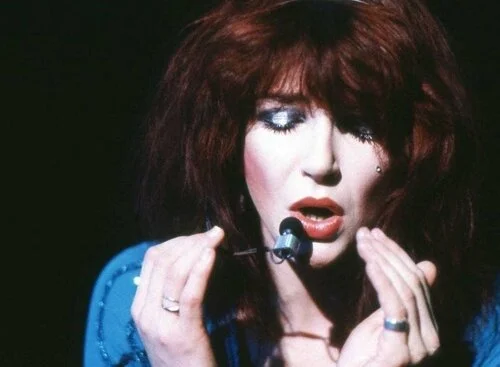
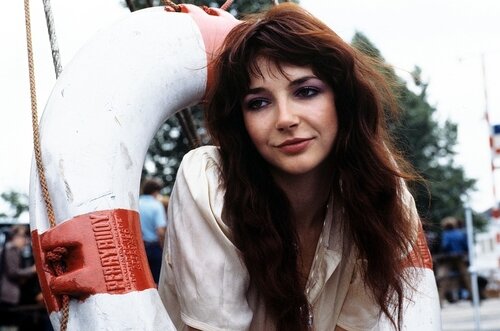
IN THIS PHOTO: Kate Bush during her Tour of Life in 1979

of articles I have written before, I wanted to write a feature about Kate Bush ahead of her birthday tomorrow (30th July). Recently, I wrote how there is no modern equivalent to Bush and, whilst that is very true, there are many who have been inspired by her; so many talk about her music, and her impact extends beyond musicians and songwriting. A few years back, I heralded the continuing influence of Bush and how extraordinary her legacy is – not that she has retired or will ever be forgotten. In this feature, I wanted to look at some of the artists/sounds she has impacted, and how her personality, music and essence has made big changes – and why she is still, in some ways, overlooked. If you have not watched the 2014 documentary, The Kate Bush Story: Running Up That Hill, then give it a watch. Ahead of her sixty-second birthday, and over forty-five years since Kate Bush recorded her first songs for the debut album, The Kick Inside, she is being referenced by artists. From modern artists like The Anchoress and Taylor Swift (on her new album, Folklore) and longer-serving acts like St. Vincent and Tori Amos, Bush’s impact has been huge. In fact, and quoting from Bush’s Wikipedia page and one can see her legacy:

 “Musicians who have cited Bush as an influence include Beverley Craven,[129] Regina Spektor,[130] Ellie Goulding,[131] Charli XCX,[132] Tegan and Sara,[133] k.d. lang,[134] Paula Cole,[135] Kate Nash,[136] Bat for Lashes,[137] Erasure,[138] Alison Goldfrapp of Goldfrapp,[139] Rosalía,[140] Tim Bowness of No-Man,[141] Chris Braide,[142] Kyros,[143] Aisles,[144] Darren Hayes[145], Grimes,[146] and Solange Knowles.[147] Nerina Pallot was inspired to become a songwriter after seeing Bush play "This Woman's Work" on Wogan.[148] Coldplay took inspiration from "Running Up That Hill" to compose their single "Speed of Sound".[149] In 2015, Adele stated that the release of her third studio album was inspired by Bush's 2014 comeback to the stage.[150]
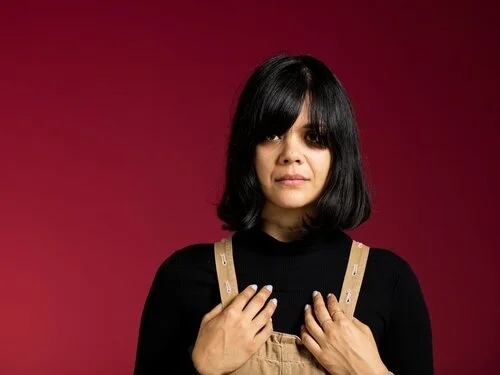
IN THIS PHOTO: Bat for Lashes/PHOTO CREDIT: Observer New Review

In addition to those artists who state that Bush has been a direct influence on their own careers, other artists have been quoted expressing admiration for her work including Tori Amos,[151] Annie Lennox,[152] Björk,[153] Florence Welch,[154] Little Boots,[155] Elizabeth Fraser of Cocteau Twins,[156] Dido,[157] Sky Ferreira,[158] St. Vincent,[159] Lily Allen,[160] Anohni of Antony and the Johnsons,[161] Big Boi of OutKast,[162] Stevie Nicks,[163] Steven Wilson,[164] Steve Rothery of Marillion,[165] and André Matos.[166] According to an unauthorized biography, Courtney Love of Hole listened to Bush among other artists as a teenager.[167] Tricky wrote an article about The Kick Inside, saying: "Her music has always sounded like dreamland to me.... I don't believe in God, but if I did, her music would be my bible".[168] Suede front-man Brett Anderson stated about Hounds of Love: "I love the way it's a record of two halves, and the second half is a concept record about fear of drowning. It's an amazing record to listen to really late at night, unsettling and really jarring".[169] John Lydon, better known as Johnny Rotten of the Sex Pistols, declared her work to be "beauty beyond belief".[160] Rotten once wrote a song for her, titled "Bird in Hand" (about exploitation of parrots) that Bush rejected.[170] Bush was one of the singers whom Prince thanked in the liner notes of 1991's Diamonds and Pearls.[171] In December 1989, Robert Smith of The Cure chose "The Sensual World" as his favourite single of the year, The Sensual World as his favourite album of the year and included "all of Kate Bush" plus other artists in his list, "the best things about the eighties".[172]
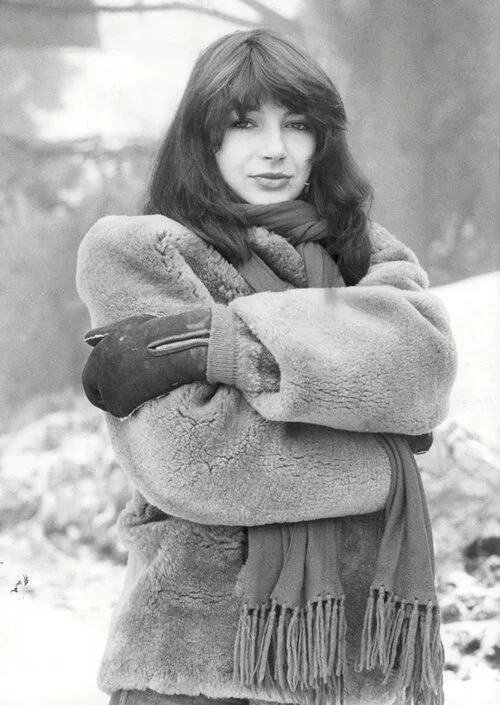
It is almost impossible to calculate how many modern artists have been inspired by Bush and are, in their way, incorporating some of her essence in their music. From Ellie Goulding recently name-checking Bush in an interview with The New York Times, to some flavour of Kate Bush in Jess Cornelius’ new music, through to connections between a heavy band like Aurium, and a very different-sounding artist like Katie Wood vibing from Bush, we can see that so many modern artists are moving to the beat of the icon – her music was even covered during lockdown. When Kate Bush celebrates her birthday tomorrow, there will be an outpouring of love, not just from artists old and new who count her as an inspiration, but from every corner of the world. Although Bush’s latest studio album, 50 Words for Snow, is almost nine years old, I am seeing so many articles and posts on social media extolling her passion, unique music and magic. Last year, I asked how long it will take Kate Bush to become a Dame, and I stand by that – if ever there was anyone who deserves that honour, it is her! Bush is a national treasure but, more than that, she is enormously relevant today, whereas so many established or iconic artists have lost a lot of their magnetism and importance. When Kate Bush took to the stage in 2014 for her residency in Hammersmith between 26th August and 1st October, a whole swathe of celebrities from film, T.V., music and all areas flocked to pay tribute. There is something in the music that has endured through the years and resonated far and wide.
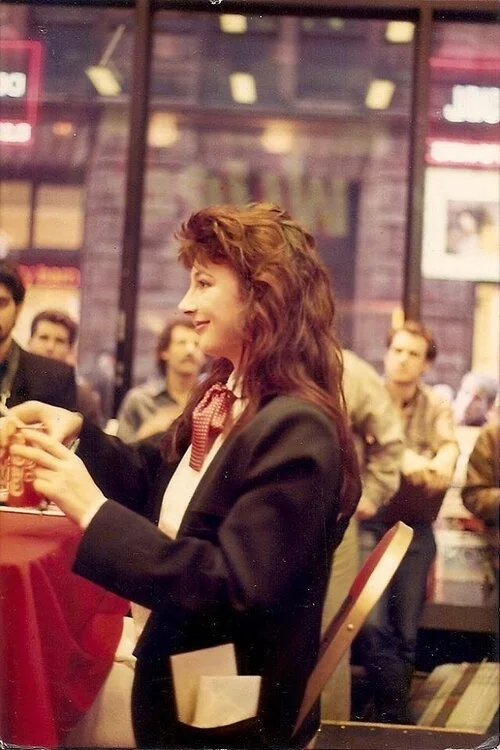
IN THIS PHOTO: Kate Bush signing copies of Hounds of Love in 1985 at Tower Records in New York City

What is it about Bush’s music that means she has such a strong legacy and phenomenally wide fanbase? I have investigated her love of cinema and literature, and how Bush often dipped into her favourite films and novels when seeking inspiration. When talking of desire and passion, Bush approaches the subjects in a very varied and fascinating way and, when it comes to her albums, no two sound the same. I think it is the bold originality and constantly evolution that has meant artists through all genres have been spellbound by her music. In this New Yorker article from 2018, journalist Margaret Talbot made some interesting observations when trying to explain her love of Kate Bush: 

“Yet, with this listen, I discovered that I really liked the animalistic cacophony of “Get Out of My House”—for all it suggested about how few fucks Bush gave when it came to getting radio play or charming people in any conventionally girlish way, and for its brazen strangeness. And I loved a song called “Suspended in Gaffa.” It starts with a tinny music-hall bounce that swells into a rich, chunky rhythm, accented with a chirping, distorted vocal that sounds trippy and modern. The lyrics, about seeing God or achieving some creative peak, only to have the vision snatched away, were inspired by Bush’s Catholic upbringing. The title is a reference to sticky black gaffer tape—a metaphor for frustrating ensnarement. But it also sounds, marvellously, like a geographical location in which a character from a Paul Bowles novel might be immured.

And then there was the extraordinary “Hounds of Love.” Bush’s voice is deeper and more resonant than on earlier records, the use of the synthesizer is more assured, and the experiments are never awkward, as Bush’s sometimes can be. When “Hounds of Love” came out, in 1985, I was in graduate school, at Harvard, and my mother had just had a stroke that robbed her of most of her speech. I’d soon be leaving school for a year to help take care of her. But, in the meantime, I’d walk home from Widener Library every day in a pen-and-ink drawing of a Cambridge November, the metallic smell of incipient snow permanently in the air, and when I got to my apartment with the sloping floors in Central Square—sometimes before I’d removed my winter coat or said more than hello to my boyfriend—I’d put “Hounds of Love” on the turntable, turn it up very, very loud, and wait for the galloping drum loops and the salty-sweet emotional rush of Bush’s vocals to comfort and exalt me. When it got to the end of the first side, I’d lift the needle up and put it right back at the first track, “Running Up That Hill,” the song with the pounding beat and irresistible synthesizer hook about “making a deal with God” so that men and women might “swap our places” and feel what it was like to be one another”.

In 2016, The Observer wrote a fascinating article that compartmentalised various aspects of Bush’s music and artistry and, when investigating the huge breadth and variety of artist who imbue something of Kate Bush in their own work, we can make an argument to say that she remains overlooked and under-exposed. I will move on soon, but I want to quote a section from that article, as they talked of Bush’s influence on artists who include sexual and gender identity issues in their music:

“These three artists—who grapple with issues of sexual and gender identity—all bear the hallmarks of Bush’s influence.

Mike Hadreas, the brainchild behind Perfume Genius, uses his glammed-up image and music as tools of both attraction and repulsion. The vocal/piano compositions that first brought Perfume Genius notice show that art-school flair works across the chromosomal divide.

Despite his love of opera and theatricality, Wainwright possesses less of an obvious connection to Bush. However, the Montreal-born singer/songwriter has both piano chops and humor to spare—both very much in keeping with Bush’s template.

Anohni, singer and focal point of Antony and the Johnsons has one of those rare voices, like Bush’s, which evokes an emotional response through its timbre alone. Words become secondary to Anohni’s delivery, which softly commands attention”.

Kate Bush’s fearlessness and openness in her music not only resonated with female songwriters at the time and those who have followed; as seen above, her music has made a big impact on the L.G.B.T.Q.I.A.+ community.
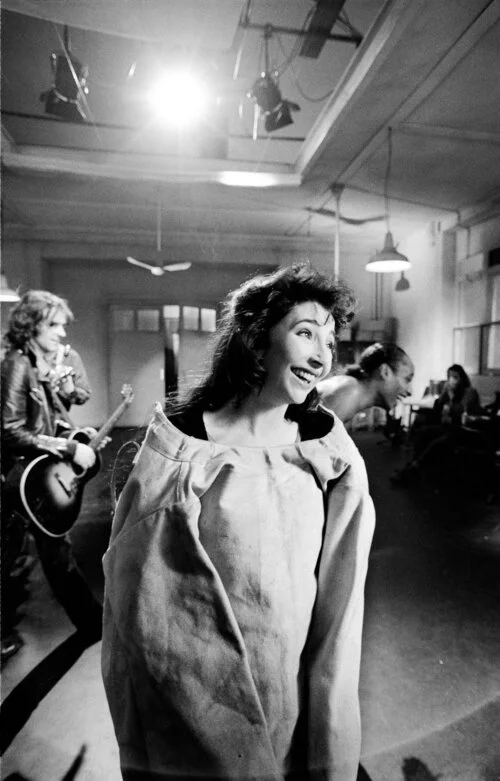
IN THIS PHOTO: Kate Bush during filming of The Line, the Cross and the Curve in 1993/PHOTO CREDIT: Guido Harari

I will not quote from too many other articles – as I am keen to put as many original thoughts in as possible -, but Attitude discussed Bush as a gay icon in 2018.

“Queer people identified with Kate Bush because of that otherness, because of her bravery and defiance, her fearless examination of previously ‘taboo’ themes, and her often high-camp performance style. As Rufus Wainwright told The Guardian in 2006: “She is the older sister that every gay man wants. She connects so well with a gay audience because she is so removed from the real world. She is one of the only artists who makes it appear better to be on the outside than on the inside.”

The magnificent, lushly exotic 'Kashka from Baghdad' from 1978’s Lionheart, is one of the prime examples of Kate’s celebration of the joy of the outsider status. “Kashka from Baghdad,” she sings over sensual piano chords, “lives in sin, they say, with another man – but no one knows who.”

Her frank openness and recognition of a gamut of gender norms and of the reality of sexual fluidity became a recurrent theme in her work; 'Wow', a biting satire of the theatrical business, finds Kate singing “He’ll never make the scene / he’ll never make the Sweeney / be that movie queen / he’s too busy hitting the Vaseline.” If we were in any doubt as to her underlying meaning, her performance in the video removes all doubt as she taps her buttock on the payoff line.

Kate Bush is an LGBT icon for several reasons, not least because she built a successful career, without compromise, on her own terms, with thorough originality, ingenuity, and, crucially, trueness to herself. She did, and continues to do, things her own way, and is undaunted in her distinctiveness and navigation of the peculiarities of life”.
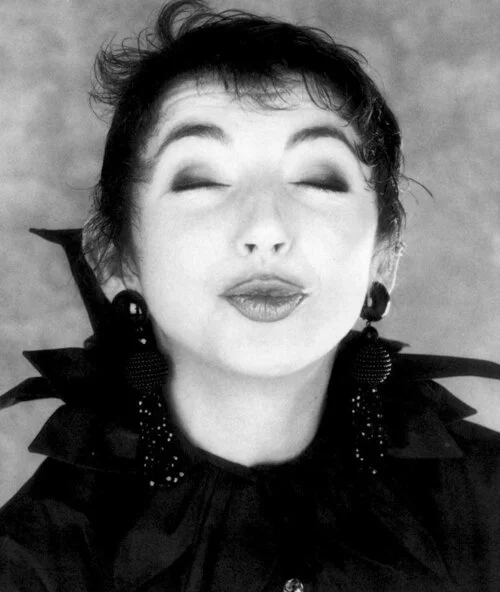
IN THIS PHOTO: Kate Bush in 1989/PHOTO CREDIT: John Carder Bush

Before Madonna was being talked about as an ally to the L.G.B.T.Q.I.A.+ community, Kate Bush was a role model herself – albeit it in a different manner. I am only going to really be able to scratch slightly beneath the surface in this feature, as Bush’s legacy and influence extends beyond the imagination and perception of most people – whether subtle or overt, Kate Bush has changed so much through her music, videos and pioneering change. The last article I want to grab from dates back to 2010, and it illuminates how Bush has opened doors for female artists, and why so many artists we know and love today can help trace their roots back to Bush’s music:

 “Then a wave of solo female artists followed – from Florence Welch to Fever Ray – all happy to namecheck Bush as an influence. Before Florence and the Futureheads, however, Deborah Withers, guitarist with Bristol's Drunk Granny, began a study of Bush's music, exploring themes that were perhaps obvious to a female fanbase but invisible to some male listeners. We're talking about "the polymorphously perverse Kate, the witchy Kate, the queer Kate, the Kate who moves beyond the mime". Withers develops these ideas in her new book, Adventures in Kate Bush and Theory, published on her own imprint Hammeron Press.

Drawing from feminism and contemporary philosophy, Withers attempts to unlock the secrets of Bush's oeuvre. She argues that Bush liberated female creativity as much as punk did; it's essential reading for 21st-century grrrls. It wasn't just that Bush wrote and produced her own material, breaking barriers in a male-dominated industry, or the way she sang about subjects that women were not supposed to touch.

Bush's music seems to have a womb-like function, providing incubation for artists, at least for a while. Björk has spoken of her teenage years spent under the covers listening to Kate Bush, and Bat for Lashes' Natasha Kahn acknowledges her influence on her first album, although she now feels she has found her own voice. "It's important to have visible and creative examples that you can draw inspiration from," says Withers, "otherwise it's really difficult to express yourself. Women found it a lot more difficult to be cultural producers, but Kate Bush changed that".

Kate Bush has empowered so many people, and her legacy and importance will continue for an awful long time to come. It makes me wonder, as I have mused before, whether there should be an updated and expansive documentary. Maybe it would not take the form of the 2014 BBC effort, but I do think that, in that instance, there was room for improvements – a longer running time than one hour; a broader look at her career, and something that did her full justice. Whether it happened on radio or T.V., I do think that there is so much to explore and celebrate, in addition to paying tribute to someone who, since 1978, has put her unique footprint on the scene. I do feel there is room now to put together a proper, multi-part, career-spanning documentary or piece that drills deep into Kate Bush’s work, and studies her from various different perspectives. One cannot really define Kate Bush by her music alone, as there are so many layers and facets to her being. Perhaps there will be a new documentary when Wuthering Heights, her debut single, turns forty-five in 2023, but that is quite a long way away – my hope is that something comes along sooner! A few days before her birthday, I wanted to paying fitting tribute to an artist whose legacy will continue to grow strong…

FOR many decades to come.

FEATURE: Spotlight: JGrrey

FEATURE:


Spotlight

JGrrey

___________

WHEN looking around for artists…

aapapap.jpg

who can provide something new and exciting in 2020, I take into consideration a variety of things: the originality of the music, the nuances on offer, and whether the artist has longevity and appeal. I think JGrrey is an artist providing something stunning and new. It is hard to categorise her music, but the Neo-Soul flavours are hard to ignore. It is sort of a mix of artists like Erykah Badu and India Arie combined with modern-day production values; a sense of dreaminess envelops the tracks, but there is something quite personal and serious in the lyrics. Like many artists, JGrrey investigates love, mental-health and other subjects that, at times, can make the heart skip and force one to stop. Around these incredible songs is a voice that is both steeped in embers of icons and known artists, with a sense of the individual that is hard to ignore. I love tracks such as Half Full, and Ain’t So, and JGrrey is an artist whose music could easily slot on any radio station – as it is not limited in terms of tastes and demographics like so many artists of today. The new iPhone visualiser video for Ain’t So is amazing, and I wonder what plans JGrrey has for the rest of 2020. Like her peers, this is not how she expected the year to go and, as such, touring and bigger plans have been curtailed. Before I look at the here and now, I want to pick from a few interviews that introduce us to this amazing artist.

Last year, The Line of Best Fit selected JGrrey as an artist to watch – and they talked about her start and early life:

“The story of Jennifer Clarke - better known as - JGrrey has fast become something of urban legend. From gaining her moniker because the Instagram handle for Grey was already taken to the phenomenal success of her now COLORS session, her whole journey to date has been a fortunate series of what she calls happy accidents. The 25-year-old - who great up in South London before moving to Edgware aged six her with her adoptive parents - didn’t even know she could sing for most of her young life. It was only when she started jamming with friends that her talent started to become clear: “I’d never wanted to be a singer, but I always wrote songs," she tells me, "but never listened to them. But now I’m happy that I wrote songs, it’s like second nature to me. But it was never planned.”

It was around that time when JGrrey realised that if she wanted to do anything with her music, then she was going to have to work it out on her own terms and give herself the space to grow. Recalling her first experience of actively going into the studio with a friend, she tells me, “I heard my voice on a track and started cringing because I didn’t like the sound of it and that was the point of me deciding that I needed to get my own studio; I needed to set it up myself and I need to be able to grow so when people hear it, I could be happy with what I made. I had to be happy with that experience and then I just started to fucking love it. I could say anything that I wanted to say and you know and tell any story that wanted to tell and people would listen to it”.

The melting of R&B and Neo-Soul is an amazing brew that is parts slinky and soft, but there is that energy and fire that raises the heat. The Grrey Daze E.P. was released last year and, whilst it did not get the sort of attention and widespread focus it deserved, it is a brilliant release. I would urge people to go to JGrrey’s official website and Spotify and listen to the E.P. When she spoke with CLASH last year, she broke down the tracks on the E.P. It was clear that CLASH were impressed by what they heard:

 “Each new release from the vocalist has that relaxed feel, a laid back approach that turns her gilded slow jams into heavenly R&B.

New EP 'Grrey Daze' is her boldest statement yet, full of gorgeous production, nuanced songwriting, and those stellar vocals.

Out now, it opens with 'Feelings', a song JGrrey tells Clash she finds "comfort in, I remember writing to it and thinking that I didn’t feel rushed, it could just take its own time, it’s laid back an honest, two traits I pride myself in also."

Those are traits that keep on occurring on the EP. Take her recent single 'Pretty Insane', which was "a free-style, just an instrumental I liked and myself singing obscure truths about how I felt... I do it all the time, this one just worked out well".

When considering an artist, I sort of think it is great having appealing music at your fingertips, but one craves something more. Maybe it is a personality that speaks to you or a spark that you do not get from other artists. Having read up about JGrrey, I connected with her instantly. Maybe it is the fact that we share a love of similar artists – like Amy Winehouse and Nelly Furtado -, but it is the experience of discovering music and how she approaches songwriting that connected with me. When she was interviewed by Stylist last year, JGrrey discussed her early exposure to music:

 “The first record I ever bought…

Wasn’t technically bought, I never really bought records for myself. My dad was and still is a DJ so I wouldn’t need to buy any records because he had them all. I would just steal whatever he was listening to or whatever I liked that I knew he had because he would always be the first person to have it.

I think the first record I got from my Dad was a Nelly Furtado song, but I couldn’t tell you what single it was. I remember falling in love with her, she was one of those artists that really resonated with me.

My first source of inspiration…

I remember listening to Nelly Furtado’s music and her lyricism and thinking I totally get it. Even though everything she writes about is so obscure, I definitely think that it subconsciously inspired me.

Alongside Nelly Furtado, there are all the obvious names as well like Lauren Hill, Erykah Badu, Jill Scott and Amy Winehouse.

To be honest music is a new thing for me. I’ve only really been an artist properly for three years and even now I’m still working that out - to me it’s still kind of crazy that this is something I am genuinely doing. So, when I was younger and watching all of these people, I was just watching these people and thinking they were amazing. I wasn’t necessarily taking note of them, at the time, as sources of inspiration.

Despite that though Amy Winehouse has always stuck out in my mind as a person who I think is beautiful. Her music, her style and what she created was obviously amazing but as a person, she was just so cool”.

I am going to conclude things soon enough, but I have seen JGrrey’s name shared by various sources as one to watch this year. I am definitely going to keep my eyes and ears open to see where she goes next, as I really love her music and attitude. I will bring in a couple more interview snippets, as I think it gives more colour and shows different side to the songwriter. In terms of influences, this interview from Fred Perry highlights a few sounds and sonic directions that have resonated with JGrrey:

“A song that defines the teenage you?

'I Luv U' by Dizzee Rascal.

One record you would keep forever?

Amy Winehouse's.

aaa.jpeg

 “A song lyric that has inspired you?

“I don’t need nobody telling me the time”

From 'Certainly' by Erykah Badu.

The song that would get you straight on the dance floor?

'Beige 70' by Cola Boyy.

A song you wished you had written?

'Thinkin Bout You' by Frank Ocean”.

Things have been pretty busy for JGrrey the past year or so. From a relatively unknown artist, she has risen and captured the attention of many. I think JGrrey has a big future ahead, and I feel that debut album will be the real test. Her latest E.P., UGH, is another fabulous release, and it is clear that JGrrey is a prolific and hungry artist that is always looking ahead. CLASH caught up with her earlier this year, where she talked about the E.P., in addition to what music means to her:

 “New EP ‘UGH’ (it stands for Understanding Greater Highs) is outstanding, with JGrrey capable of cutting right to the bone. Working with a dizzying array of guests - production comes from Cadenza and Kadiata, amongst others - it’s held together by a palpable sense of purpose.

“It all comes from something I said, and something I felt,” she insists. “It’s weird: I’ve never seen something through. Like, I’ve never held down a job, or done well at something. So when I do hear a project that I’ve made, in it’s entirety like a body of work, that sense of completion is great for me.”

JGrrey writes continuously, almost relentlessly - spending time in LA following a tour with Billie Eilish, she returned to London and went straight back to work. “Without sounding ungrateful or lazy or anything,” she adds, “I wasn’t putting much thought into ‘UGH’. It’s like, if it works, it works.”

It’s a constant sense of forward momentum, this perpetual drive that pushes JGrrey into daring new places. “I’m learning a lot about myself,” she comments. “Music is literally therapy for me. I’m talking about a lot of shit I wouldn’t talk about with anyone, but I’m putting it in songs and releasing it to thousands of people”.

The fact JGrrey is already touring with Billie Eilish – one of the music world’s biggest new names – shows that, soon, she will be touring bigger stages herself. I would advise people to check out JGrrey’s music, as it is fantastic, and the future is very bright! There are few out there who have the same power to hook the listener in as JGrrey, and I think next year will be especially important for her. Right now, investigate a truly incredible artist whose music will only get…

BETTER and better.

_________________

Follow JGrrey

FEATURE: Vinyl Corner: Green Day - Dookie

FEATURE:


Vinyl Corner

zxxx.jpeg

Green Day - Dookie

___________

IF one considers the classic albums…

of the 1990s, then they have to think of Green Day’s Dookie. I celebrated the album’s twenty-fifth anniversary last year, and it is an album I would encourage people to get it on vinyl . There is a lot of debate as to which Green Day album is best but, when it comes to the critics, I think Dookie wins – though Nimrod, and American Idiot are pretty brilliant. Released on 1st February, 1994 – a year that is practically synonymous with legendary albums! – Dookie was the biggest release from the Californian band. Apologies if I repeat some of the things I said in my article from last year, but Dookie was a massive leap from the band’s second studio album, Kerplunk. Working with producer Rob Cavallo – who produced their albums up until 2009 -, I feel Dookie is one of the defining albums of the 1990s, as it arrived in a year when Grunge was undergoing a lot of change; it was definitely not as vibrant as it was in the first couple of years of the 1990s. I think the Pop-Punk/Punk-Rock of the album sort of bridges the sound of Grunge with the more accessible sounds of the mainstream, though Dookie is never watered-down or too commercial. A lot of labels were trying to snap up Green Day following Kerplunk, but it was Reprise representative Rob Cavallo who connected with the band. One can imagine the scores of labels trying to get Green Day to sign, and the sort of offers they would have been presented with. Green Day felt Cavallo understood them as a band and would serve them well, and it is no surprise the band stuck with him for so long. With frontman Billie Joe Armstrong writing most of the track by himself, one feels a lot of soul-searching and nakedness on songs such as Basket Case, Longview, and When I Come Around.

The band embarked on international touring following Dookie’s release, and the critical acclaim that met (the album) was humongous!  Though Green Day had their detractors back then, I remember the album coming out in 1994 and so many people talking about it. I am not sure whether I bought the album, but many people I knew did, and I feel Dookie sound just as incredible today as it did in 1994. The mix of the well-known singles and album tracks that are almost single-worthy – including Burnout, and Coming Clean -, there is nothing but brilliance to be found. Whilst 1995’s Insomniac was a success and garnered positive reviews, it did not make the same splash as Dookie. Since its release, Dookie has been included in many lists compiling the best albums of all-time/the 1990s. It is no wonder, because I think Dookie reached behind cliques and certain camps. I do feel that, in 1994, there were those who liked Britpop, those who were into Grunge; there were acts that could unite and appeal to those who rarely strayed from their comfort zone. I knew people in school who were mad about mainstream Pop that connected with Dookie; those who refuted everything but Grunge and Alternative music that were taken by Green Day’s third album. It was a big moment, and Dookie definitely had an impact on the scene and musicians who were around at the time – in ways, one can hear shades of the album in artists of today.

In their review, AllMusic had this to say about Dookie:

“Green Day couldn't have had a blockbuster without Nirvana, but Dookie wound up being nearly as revolutionary as Nevermind, sending a wave of imitators up the charts and setting the tone for the mainstream rock of the mid-'90s. Like Nevermind, this was accidental success, the sound of a promising underground group suddenly hitting its stride just as they got their first professional, big-budget, big-label production. Really, that's where the similarities end, since if Nirvana were indebted to the weirdness of indie rock, Green Day were straight-ahead punk revivalists through and through. They were products of the underground pop scene kept alive by such protagonists as All, yet what they really loved was the original punk, particularly such British punkers as the Jam and Buzzcocks. On their first couple records, they showed promise, but with Dookie, they delivered a record that found Billie Joe Armstrong bursting into full flower as a songwriter, spitting out melodic ravers that could have comfortably sat alongside Singles Going Steady, but infused with an ironic self-loathing popularized by Nirvana, whose clean sound on Nevermind is also emulated here. Where Nirvana had weight, Green Day are deliberately adolescent here, treating nearly everything as joke and having as much fun as snotty punkers should. They demonstrate a bit of depth with "When I Come Around," but that just varies the pace slightly, since the key to this is their flippant, infectious attitude -- something they maintain throughout the record, making Dookie a stellar piece of modern punk that many tried to emulate but nobody bettered”.

I didn’t want to quote from scores of reviews, but I think it is useful to bring in a couple from different sites and gauge their opinions. This is what Pitchfork remarked in 2017:

 “What set Dookie apart from the grunge rock bellowers of its day was Armstrong’s voice, foggy and vaguely unplaceable. “I’m an American guy faking an English accent faking an American accent,” he teased at the time. Though Armstrong’s tone was bratty, his phrasing had that lackadaisical quality that left room for listeners to fill in their own interpretations. On Dookie, Armstrong channeled a lifetime of songcraft obsession into buzzing, hook-crammed tracks that acted like they didn’t give a shit—fashionably then, but also appealingly for the 12-year-old spirit within us all. Maybe they worked so well because, on a compositional and emotional level, they were actually gravely serious. Sometimes singing about the serious stuff in your life—desire, anxiety, identity—feels a lot more weightless done against the backdrop of a dogshit-bombarded illustration of your hometown by East Bay punk fixture Richie Bucher”.

I have very fond memories of Dookie, and it is an album I myself need to grab on vinyl when I am in a record shop next. It is a fantastic work from a band who are still going strong today. If you have not heard the album before, I think now is a pretty good time to become acquainted. It is a record that most certainly…

BLOWS the cobwebs away.

FEATURE: The Lockdown Playlist: The Best Album Closing Tracks

FEATURE:


The Lockdown Playlist

zxxx.jpg

PHOTO CREDIT: @alexiby/Unsplash

The Best Album Closing Tracks

___________

AS the new working week…

PHOTO CREDIT: @priscilladupreez/Unsplash

hoves into view, I thought it was time to put out another Lockdown Playlist that should give you an extra kick of energy and motivation that you need. I recently compiled a playlist that collected together the best album openers ever. I thought I would go down the other end of the album, and unite those fantastic finales – tracks that close albums in absolute style! I hope there are songs in the playlist that tickle your fancy, and you recognise the songs in the list – thought there may be a few that are fresh and take you by surprise. Whether you like the albums these tracks come from, there is no denying that the songs themselves ended the albums…

zzz.jpg

PHOTO CREDIT: @lensinkmitchel/Unsplash

WITH a huge bang.

FEATURE: One for the Record Collection! Essential August Releases

FEATURE:

One for the Record Collection!

IN THIS PHOTO: Glass Animals/PHOTO CREDIT: Pooneh Ghana

Essential August Releases

___________

NOT withstanding any surprise releases…

there are some great albums slated for release next month – that could be added to and, to be fair, some artists might delay their albums because of the lockdown situation. If you are in need of some guidance regarding the albums to own in August, then I have a few suggestions. Glass Animals’ Dreamland is out on 7th August, and I would encourage people to pre-order the album. The album was due earlier in the year because of various issues – the COVID-19 situation, and the band wanted to delay the album to support Black Lives Matter -, but is coming very soon. It seems that Dreamland will be a very different record to their last, How to Be a Human Being, of 2016. Dave Bayley of the band spoke with NME earlier in the year and talked about revelations from their previous album:

“The last album saw me digging into other people’s lives and asking them quite heavy questions – quite probing stuff that I probably shouldn’t have asked,” Bayley says. “The people I spoke to were amazingly open and at the end of all that, I thought it wasn’t fair I was asking them to do this and not myself.” Only one song on the album was personal to Bayley – the emotive closer, ‘Agnes’, which tells the story of a close friend who died from suicide. It received a staggering response from fans.

“The fan response to ‘Agnes’ was totally unexpected,” Bayley says. “I’ve always been really, really afraid to write about myself. I always thought it was selfish”.

Looking ahead to 14th August, and Biffy Clyro will release A Celebration of Endings. Go and pre-order a copy, as Biffy Clyro always bring something incredible. When Simon Neil spoke with NME, he revealed how Biffy Clyro are putting a lot of urgency into their next album:

“Lyrically, the record is a rallying cry. Having battled with depression and fought his way back to self-confidence for the band’s previous album, 2016’s freewheeling ‘Ellipsis’, frontman Simon Neil looked outside himself for the first time to find inspiration in society’s ills. A whirlwind on stage, Neil has never been a shrinking violet in person – but he’s also never allowed his politics to spill into the music before.

“I feel like I’ve investigated myself more than I probably should – more than is probably healthy!” Neil told NME as he talked us through the new tunes. “When you’re younger, you think that you can keep the personal and the political separate, but I really don’t think that we can now in this world that we’re living in. The world needs to change in the right way. It’s just been bad news for years”.

Turning in another direction and Pop superstar Katy Perry is releasing Smile. 2017’s Witness was one of her more divisive albums, so it will be interesting to see what comes from her upcoming sixth studio album. Singles like Daisies, and Smile show new lease and life in Perry, and I think the album will be met with more acclaim that previous works. You can pre-order the album, and it will be a record that Perry’s fanbase will snap up.

Although August is a quieter month in terms of big releases than July, there are a few other great albums arriving before the end of the month. On 21st August via Dead Oceans, Bright Eyes release Down in the Weeds Where the World Once Was. It is going to be an album you will want to own, and it is clear there are very few bands like Bright Eyes around:

“Sometimes it feels like you hear a Bright Eyes song with your whole body. From Conor Oberst’s early recordings in an Omaha basement in 1995 all the way up to 2020, Bright Eyes’ music tries to unravel the impossible tangles of dissent: personal and political, external and internal. It’s a study of the beauty in unsteadiness in all its forms – in a voice, beliefs, love, identity, and what fills up the spaces in-between. And in so many ways, it’s just about searching for a way through.

The year 2020 is full of significant anniversaries for Bright Eyes. Fevers and Mirrors was released 20 years ago this May, while Digital Ash in a Digital Urn and I’m Wide Awake It’s Morning both turned 15 in January. The latter, a singer-songwriter tour-de-force released amidst the Bush presidency and Iraq war, wades through incisive anti-war rhetoric and micro, intimate calamities. On the title track and throughout the record, Oberst sings about body counts in the newspaper, televised wars, the bottomless pit of American greed, struggling to understand the world alongside one’s own turmoil. In its own way, I’m Wide Awake It’s Morning carved out its place in the canon of great anti-war albums by being both present and prophetic, its urgency enduring 15 years later.

And while 2020 is a year of milestones for the band, it’s also the year Bright Eyes returns, newly signed to indie label Dead Oceans. Amidst the current overwhelming uncertainty and upheaval of global and personal worlds, Oberst, Mogis, and Walcott reunited under the moniker as both an escape from, and a confrontation of, trying times. Getting the band back together felt right, and necessary, and the friendship at the core of the band has been a longtime pillar of Bright Eyes’ output. For Bright Eyes, this long-awaited re-emergence feels like coming home”.

Erasure’s The Neon is another key release coming next month, and I would suggest the album to people, whether there are a fan of the band or not. The legendary English Synth-Pop duo, consisting of singer and songwriter Andy Bell and songwriter and keyboardist Vince Clarke, are preparing their eighteenth studio album. It does seem like The Neon is going to be something pretty special:

“The Neon is a place that lives in the imagination, that we – you and me – put in the real world. It could be a night club, a shop, a city, a cafe, a country, a bedroom, a restaurant, any place at all. It’s a place of possibility in warm, glowing light and this is music that takes you there.

Written and produced by Erasure, the album’s initial sessions saw the Vince and Andy reunited to work on the follow up to 2017’s World Be Gone with a fresh optimism and energy, in part born from their own recent personal projects. Vince goes on to explain, “Our music is always a reflection of how we’re feeling. He was in a good place spiritually, and so was I – really good places in our minds. You can hear that.”

Taking inspiration from pop music through the decades, from bands Andy loved as a child through to the present day, he explains, “It was about refreshing my love – hopefully our love – of great pop. I want kids now to hear these songs! I wanted to recharge that feeling that pop can come from anyone”.

There are a few more albums that I want to push people’s ways. Not everyone is a fan of The Lemon Twigs, but I really like the band, and, on 21st August, they release Songs for the General Public. It comes out on the 4AD label, and it is going to be an album you’ll want to own. I think a lot of music sounds very samey but, with The Lemon Twigs, you get something genuinely inventive and different. They are so young and prodigiously talented so, for a sense of sheer wonder, their upcoming album is worth investment and time:

“The D’Addario brothers return with their third Lemon Twigs album, Songs For The General Public - written, recorded and produced by the D’Addarios at their home studio in Long Island, Sonora Studios in Los Angeles and Electric Lady in New York City.

The prodigiously-talented brothers first emerged as The Lemon Twigs in 2016 with their debut LP Do Hollywood, whose showstopping melodies mined from every era of rock quickly earned fans in Elton John, Questlove, and Jack Antonoff. Go To School, the ambitious 15-track coming-of-age opus, followed in 2018 and solidified the band’s reputation for building grand walls of sound around an audacious concept”.

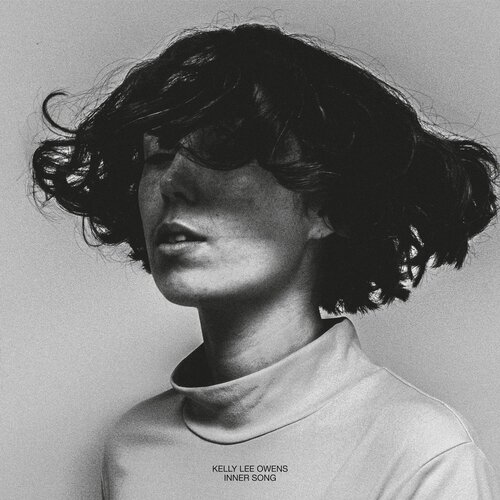
Two great albums come out on 28th August that will be worthy of your money. One of them is Inner Song from Kelly Lee Owens. She is an incredible talent, and the Welsh artist spoke with The Guardian earlier in the year. It seems that, even during lockdown, she is finding some positives:

“Owens is keen to find positives everywhere she possibly can. She recently tweeted the definition of the word “apocalypse”, to mean “revelation – an unveiling or unfolding of things not previously known”. Does she think, then, that there could be tiny positives to the pandemic at all? “I do, and that’s just because I’m in a very privileged position to say it,” she says. “I’m hyper-aware of how you can come across when you say: ‘This is good for the planet.’ But it also is important to point out the duality of consciousness, and raise awareness of what can happen when we are apathetic.”

The track on her album, Wake-Up, points to this idea, too. “One of the things [it questions],” she says, “is never pausing to take it in, always avoiding your sense of dread.” A world-changing event like this “forces us to ask important questions. Globally, we are connecting now. That’s what’s important”.

Disclosure’s ENERGY is the last album that I want to recommend for August, as it is going to be a huge one, and Disclosure are another one of these acts that deliver incredible albums:

“Disclosure return with a their most direct album Energy. A global spectrum of talented artists grace the record – and for the first time this includes rappers. Appearances from Mick Jenkins, Channel Tres, Aminé and slowthai sit comfortably alongside the legend that is Common. Other features include the inimitable Kelis who opens the album and Fatoumata Diawara who the boys have also linked up with previously. Cameroon’s Blick Bassy brings his own flow to the table while a powerhouse team of Kehlani and Syd ease the pace with their contribution.

Every track was written really quickly. Through an epic process of creation and distillation the path to producing their shortest, most direct album - 11 songs, 39 minutes - ran through around 200 tracks: everything from drum loops to fully realised songs. Since live touring has been paused during the global pandemic and their own plans for 2020 now being put on hold, Guy (and sadly not Howard as they isolated in different countries) found an outlet for his desire to give people a good time no matter what the circumstances by doing a regular run of their popular Kitchen Mix parties via live stream, a set for Boiler Room and a one off special to celebrate Earth Day”.

Those are the albums that you will want to own through August and, whilst there are others that are worthy of investigation, the ones I have outlined are the best. As we are still sort of in lockdown, I think music is going to be very important, and what better way to get through these tough times than stock up on some terrific sounds?! Even if there are not quite as many blockbusters out next month, there are still some golden records due that are bound to…

IN THIS PHOTO: Katy Perry

KEEP you entertained.

FEATURE: For Your Pleasure: The New Post-Disco Wave and Much-Needed Escapism in 2020

FEATURE:

For Your Pleasure

xxxds.jpg

IN THIS PHOTO: Jessie Ware

The New Post-Disco Wave and Much-Needed Escapism in 2020

___________

THIS will be a fairly short feature…

but, as this year has been a pretty hard one, there is a collective of artists who have provided music with something thrilling, body-moving and energised. There have been great Pop albums from Georgia (Seeking Thrills), and Charli XCX (how i'm feeling now) that has taken the genre in new directions. They have both been nominated for a Hyundai Mercury Prize, and I think it is clear that people – and the Mercury judging panel – are embracing music that is not only interesting and original, but also has a positive edge. I think last year’s best was defined by a more political edge, but 2020, to me, feels more about musicality and something warmer. Certainly, there have been some great albums that are personal and rich, but there is an emphasis on movement and physicality. I recently wrote a feature that reacted to the news that Pop music is getting happier and faster. This has been long-overdue, and I feel lockdown and COVID-19 has changed music in so many ways. One other thing that is apparent is how Post-Disco is burning strong. It is said that Disco died on 12th July, 1979 - rock D.J. Steve Dahl donned a combat helmet to blow up a crate of disco records, a stunt now known as Disco Demolition. Of course, Disco kept going, but it was definitely not too long for the world.

At a time when Punk and more political music was dominating, Disco was losing some of its lustre. Post-Disco sort of describes the period between 1979-1984, where an underground movement of Disco music of stripped-down vibes and radically different sounds came through on the East Coast of the U.S. Getting to my point, and the spirit of that period lived on, and many artists in 2020 are shaping Post-Disco in their own vision. I think one of the most pleasing and satisfying musical breakthroughs this year has been from the likes of Jessie Ware, Dua Lipa and Kylie Minogue. Minogue releases her new album, DISCO, on 4th November. Minogue is no stranger to Disco sounds, and albums like Light Years (2000), and Fever (2001) mixed Synth, Pop and Disco to incredible effect. Minogue shared her new single, Say Something, this week, and it is almost futuristic Disco; it has an edge of her earlier work, but there is something unique working away. I am looking forward to hearing her fifteen studio album and what it offers up. Jessie Ware’s incredible album, What’s Your Pleasure?, was released in June. Although I have not mentioned the amazing Róisín Murphy – who is masterful when it comes to serving up Post-Disco treats -, I think Ware has borrowed (as a tribute or nod) some of Murphy’s wardrobe for What’s Your Pleasure? Although there are moments where Ware puts her heart on her sleeve and goes deep, I think the best moments are when the lights come up and she surrenders to the pull of the dancefloor.

I just want to quote AllMusic’s review to see what they said about the album:

“Rhapsodic dancefloor intimacy became a new specialization for Jessie Ware with "Overtime," the first in a wave of tracks the singer released from 2018 up to the June 2020 arrival of What's Your Pleasure?, her fourth album. Other than "Adore You," a chiming glider made with Metronomy's Joseph Mount, each one in the series was either produced or co-produced by James Ford, consolidating and rerouting a partnership that started during the making of Tough Love. Unlike Ford and Ware's collaborations on that 2014 LP, the new material didn't merely simmer. Hottest of all, "Mirage (Don't Stop)" worked a ripe disco-funk groove with Ware's opening line, "Last night we danced, and I thought you were saving my life" -- sighed in a Bananarama cadence -- a sweet everything if there ever was one. The loved-up energy was kept in constant supply with the dashing "Spotlight," the Freeez-meet-Teena Marie-at-Compass-Point bump of "Ooh La La," and the sneaky Euro-disco belter "Save a Kiss." All but "Overtime" are included here. That makes the album somewhat anti-climactic, but there's no sense in complaining when the preceding singles keep giving and the new material is almost always up to the same standard. Among the fresh standouts, the bounding Morgan Geist co-production "Soul Control" and the dashing "Step Into My Life" recontextualize underground club music with as much might and finesse as anything by Róisín Murphy”.

Also in the Post-Disco mix is Dua Lipa. Her Mercury-nominated album, Future Nostalgia, is different-sounding compared to Jessie Ware, and I wonder whether the term ‘Post-Disco’ would fit the bill. I wonder whether the original Disco pioneers or those who kickstarted Post-Disco would have believed that some forty years later, artists would be carrying on their legacy. In a way, I think we call almost say artists like Kylie Minogue, Jessie Ware, Róisín Murphy and Dua Lipa are Post-Post-Disco! I love Dua Lipa’s album, as there are so many hypnotic songs that beckon movement, but they also make you think. I think the current movement has a dichotomy of emotional resonance and depth, combined with compositions and jams that cast one’s mind back to the heady Post-Disco days. I guess it is not something that has become more prominent this year, but I guess it is more noticeable considering the challenging times, and one would forgive artists if they were a bit more downbeat and downcast. I would not say that Post-Disco in 2020 exclusively has to be defined or narrowed. I think one can say that the genre/movement is more of a spirit, and there are other albums that fit the category. Pet Shop Boys’ fourteenth studio album, Hotspot, fuses Disco, Post-Disco, Synth-Pop and Electropop. It is one of their best albums of the past couple of decades, and it is guaranteed to lift the spirits. NZCA LINES’ Pure Luxury is another album that can splice more affecting lyrics with an outer shell that is more extrovert, colourful and glistening:

“Written and produced almost entirely by Lovett, yet featuring a wide range of collaborators, Pure Luxury revels in both the insular – the sound of one man processing anxiety-inducing world events - and the communal. It is a record of diverse styles, voices and textures, expanding the musical universe of Lovett’s previous albums whilst cementing his own playful voice with an inescapable sense of joy and excitement.

Tired of the now over-familiar sound of Big Analog Synths and words like glacial, austere, and wistful, he set out with one clear intention: to be Extra. Extra is the governing musical direction on Pure Luxury, accepting that we live in a world of dwindling attention spans whilst acknowledging that traditional notions of accessible musical form are fast becoming irrelevant in a world of online streaming”.

This has been a year like no other, and there was a worry that so many artists would react with music that was quite fearful and depressive. Sure, there is still some of that, but I do love how these big and bold albums have been released; allowing one to escape somewhat or, at the very least, lose some of their anxiety. I love Disco and Post-Disco, and it is encouraging to see new strands and offshoots in 2020. It makes me wonder whether we might enter a new phase where a more traditional and old-skool Disco sound emerges in the mainstream. I know there are D.J.s and artists on the fringes that are doing it, but I would love to see more of its at the forefront! Pop itself is reshaping and lightening its mood, and I do feel that, more often than not, the compositions and production of so much mainstream Pop is quite soulless and predictable – even if it is trying to be lighter and optimistic. Adding in a sprinkle of Disco brings some stardust that has more flair and panache than Pop.

I was not a huge fan of previous albums by Jessie Ware and Dua Lipa, for instance, but I do love their current work, as I think they have both hit peaks. It will be interesting to see whether Kylie Minogue steps back in time twenty years – or thirty -, and gives us some of her best work, and other great albums from this year have projected some Disco moments of bliss, including Tame Impala’s The Slow Rush and Lady Gaga’s Chromatica. I do hope, post-COVID-19, that there is this summation of increasingly upbeat Pop and the brilliant Post-Disco swathes that retains some pains in the heart and shows the scars, but there is this light shining; a desire to get the blood pumping. For those who feel modern music has lost its smile and is becoming more depressing, they need to listen to some of the best albums of this year and realise that there is a sense of reversal and encouragement. Perhaps it is the natural response to a traumatic year, or a moment where music is evolving and entering a new phase. I know we are not going to return to the flares, Studio 54s and anthemic sounds of the 1970s, but a modern-day equivalent would not be too bad! I would urge people to keep their eyes open to see what comes next, as I am sure there are going to be a few big Post-Disco/Pop albums that will get people moving! After everything that has happened – and for everything that lies ahead -, this variegated and edifying music is…

IN THIS PHOTO: Dua Lipa

JUST what we need.

FEATURE: A Buyer’s Guide: Part Twelve: Patti Smith

FEATURE:


A Buyer’s Guide

zxxx.jpg

IN THIS PHOTO: Patti Smith in 1976/PHOTO CREDIT: Lynn Goldsmith

Part Twelve: Patti Smith

___________

IN this edition of…

sss.jpg

PHOTO CREDIT: Steven Sebring

A Buyer’s Guide, I am recommending the essential albums of one of music’s greatest songwriters, Patti Smith. Nearly forty-five years since the release of her debut album, Horses, she has produced some of the greatest work the world has ever seen and, as her eleventh studio album, Banga, was released in 2012, I wonder whether we will see another album from the iconic Smith. I really love her albums, and there are some that are definitely underrated and warrant fonder appreciation. We are very lucky to have an artist like Patti Smith and, if you are a little new to her work, I hope the recommendations below help out. Have a look and I am sure you will become closer acquainted with…

A staggering artist.

______________

The Four Essential Album

Horses

xc.jpg

Release Date: 10th November, 1975

Label: Aritsa

Producer: John Cale

Standout Tracks: Redondo Beach/Free Money/Land (Part I: Horses; Part II: Land of a Thousand Dances; Part III: La Mer(de)

Buy: https://www.discogs.com/Patti-Smith-Horses/master/40109

Stream: https://open.spotify.com/album/4AEKf48nR2rvEt4I5HBuUP

Review:

“It isn't hard to make the case for Patti Smith as a punk rock progenitor based on her debut album, which anticipated the new wave by a year or so: the simple, crudely played rock & roll, featuring Lenny Kaye's rudimentary guitar work, the anarchic spirit of Smith's vocals, and the emotional and imaginative nature of her lyrics -- all prefigure the coming movement as it evolved on both sides of the Atlantic. Smith is a rock critic's dream, a poet as steeped in '60s garage rock as she is in French Symbolism; "Land" carries on from the Doors' "The End," marking her as a successor to Jim Morrison, while the borrowed choruses of "Gloria" and "Land of a Thousand Dances" are more in tune with the era of sampling than they were in the '70s. Producer John Cale respected Smith's primitivism in a way that later producers did not, and the loose, improvisatory song structures worked with her free verse to create something like a new spoken word/musical art form: Horses was a hybrid, the sound of a post-Beat poet, as she put it, "dancing around to the simple rock & roll song” – AllMusic

Choice Cut: Gloria

Easter

Release Date: 3rd March, 1978   

Label: Arista

Producer: Jimmy Iovine

Standout Tracks: Till Victory/Privilege (Set Me Free)/High on Rebellion

Buy: https://www.discogs.com/Patti-Smith-Group-Easter/master/40121

Stream: https://open.spotify.com/album/1p6cWoueuunhpgy6131zAd

Review:

“But Smith’s version of “Because the Night” was an absolute monster of a hit. What she forged lyrically out of Springsteen’s unfinished, unwanted demo was an anthem of frank and unapologetic desire. In 1978, a woman wasn’t allowed to be an overtly sexual being in public unless she met the standards of the male gaze; if she did, there were always repercussions, and there would be constant attempts to diminish her power and/or her legitimacy. The fact that it went to No. 13 on the Billboard Hot 100 and was on every FM radio station, especially the ones who never played her before, was righteousness incarnate, as would be Easter’s eventual ascension to #20 on the Billboard 200.

The other love songs may not be as legendary as “Because the Night,” but their complexity is vital to the story being told on the album. The first line of “We Three”—“Every Sunday I would go down to the bar where he played guitar”—speaks absolute volumes. It is Smith’s history, it is rock’n’roll history, it is a quiet sentence whispered with a veneer of the innocence of early love, then immediately contrasted with a torch ballad, decisive and resolute, the expression of unresolved ardor, the saga of her relationships with Tom Verlaine and Allen Lanier. It’s not tragic so much tinged with the sadness of resignation, but it’s not the type of love song women had been writing” – Pitchfork

Choice Cut: Because the Night

Gone Again

Release Date: 18th June, 1996

Label: Arista

Producers: Malcolm Burn/Lenny Kaye

Standout Tracks: About a Boy/Summer Cannibals/Wicked Messenger

Buy: https://www.discogs.com/Patti-Smith-Gone-Again/master/115513

Stream: https://open.spotify.com/album/70BHwvG9ikXsffsWfHrWzi

Review:

“The Smith who returns on Gone Again after another prolonged absence is a changed woman once more. In the past seven years, a devastating number of her family and friends have died, including husband Fred ”Sonic” Smith, a brother, a former band mate, and her most celebrated intimate, photographer Robert Mapplethorpe. Gone Again is, not surprisingly, an album that dwells on loss. ”I don’t know why/But when it rains/It rains on me,” she sings in ”Farewell Reel,” one of several songs about her husband. She even mourns Kurt Cobain (yes, another Cobain tribute song) in the elliptical ”About a Boy,” which builds to a feedback-grating mantra, rekindling memories of Smith’s boho-outta-control work on bristling records like Easter. In each case, death is treated less as a horror than as an escape to a better, more serene place.

As insensitive as it might be to say, the succession of tragedies has lent a much-needed focus (and terseness) to Smith’s work. Death becomes her — and not merely in her lyrics. Reunited with guitarist and longtime coproducer Lenny Kaye (whose absence was felt on Dream of Life), Smith has set most of the songs to plaintive arrangements that resemble nothing so much as contemporary variations on Appalachian death ballads. Songs are structured with the roundelay melodies of folk songs, and Smith’s voice has the throaty cragginess of a woman coal miner. She sounds and looks like an extra in a John Sayles movie. The album’s second half — heavy on stark, strummed ballads like ”Wing” and ”Ravens,” which both employ images of flying above the sorrow — is particularly powerful. ”Dead to the World” even finds her having a little fun with the Grim Reaper by adopting a hillbilly twang” – Entertainment Weekly

Choice Cut: Gone Again

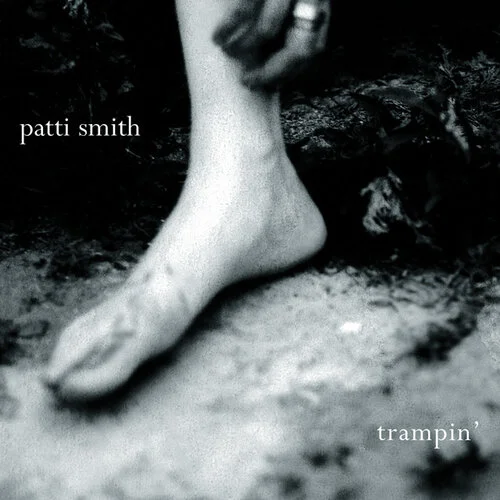
Trampin’

Release Date: 27th April, 2004

Label: Columbia

Producer: Patti Smith

Standout Tracks: Stride of the Mind/My Blakean Year/Radio Baghdad

Buy: https://www.discogs.com/Patti-Smith-Trampin/master/181779

Stream: https://open.spotify.com/playlist/6Ks8jCJfXjZETFYBzHS2eb?nAi=

Review:

“A lot of this is due to Smith's current band. Now also approaching their third decade as her sidemen, old hands like Lenny Kaye and Jay Dee Daugherty along with second guitarist Oliver Ray (Smith's partner) provide a bedrock that's equal parts garage and tight professionalism. Not only is the playing accomplished, but Smith's vocals haven't lost the ability to glide between ballad and rant with ease. This adds a humanity that stops a song like the opener, ''Jubilee'' ('We will never fade away. Doves shall multiply. Yet I see hawks circling the sky, Scattering our glad day') becoming too anthemic. Yet she's still able to do the extended stream of invective stuff on ''Gandhi'' (a rather simplistic take on the man of peace) and ''Radio Baghdad''. The latter is a chilling, 12 minute condemnation of US foreign policy that focuses on the cultural heritage being tramped (ho ho) all over by Bush and his ilk. It also contains the sounds of Iraqi children at play.

But, for someone who's made her reputation as a somewhat scary, hard-hitting advocate of individual freedom and a woman's place in the phallocentric world of rock, this album drips with a sensitivity that makes all the worthiness infinitely more palatable. ''Mother Rose'' and ''Peaceable Kingdom'' (an optimistic song of solace for a country still traumatised by the loss of the twin towers) both beguile as much as move, and the title track's touching combination of Smith and her daughter on piano reminds us of her unquenchable belief in the human spirit over tyranny. In an age of apathy and irony Smith still wants to give power to the people -and that in itself is a reason to love this album...” – BBC

Choice Cut: Jubilee

The Underrated Gem

Dream of Life

sa.jpg

Release Date: June 1988

Label: Arista

Producers: Fred Smith/Jimmy Iovine

Standout Tracks: Up There Down There/Dream of Life/Looking for You (I Was)

Buy: https://www.discogs.com/Patti-Smith-Dream-Of-Life/master/40263

Stream: https://open.spotify.com/album/3TxNFi3uBnjDBFlfnbmIPe

Review:

“The big difference between Patti Smith's four 1970s albums and this return to action after nine years lies in the choice of collaborator. Where Smith's main associate earlier had been Lenny Kaye, a deliberately simple guitarist, here her co-writer and co-producer (with Jimmy Iovine) was her husband, Fred "Sonic" Smith, formerly of the MC5, who played guitar with a conventional rock competence and who lent his talents to each of the tracks, giving them a mainstream flavor. In a sense, however, these polished love songs, lullabies, and political statements are not to be compared to the poetic ramblings of Smith's first decade of music-making -- she's so much...calmer this time out. But you can't help it. Where the Patti Smith of Horses inspired a generation of female rockers, the Patti Smith of Dream of Life sounds like she's been listening to later Pretenders albums and taking tips from Chrissie Hynde, one of her spiritual daughters. Dream of Life is the record of someone who is simply showing the flag, trying to keep her hand in, rather than announcing her comeback. Not surprisingly, having made it, Smith retreated from the public eye again until the '90s” – AllMusic

Choice Cut: People Have the Power

The Latest/Final Album

Banga

Release Date: 1st June, 2012

Label: Columbia

Producers: Patti Smith/Tony Shanahan/Jay Dee Daugherty/Lenny Kaye

Standout Tracks: Amerigo/Banga/After the Gold Rush

Buy: https://www.discogs.com/Patti-Smith-Banga/master/443906

Stream: https://open.spotify.com/playlist/00w8oLfAbJhENcGgkEhCOt

Review:

“Patti Smith has returned to the poetic-punk format of 1975's Horses, which the Polar prize committee recently described as "Rimbaud with amps". Four of Horses' personnel – Smith, guitarist Lenny Kaye, drummer Jay Dee Daugherty and Television' Tom Verlaine – are present here. It's a mixture of pop songs and poetic explorations, aided by the instantly resumed chemistry between Kaye's shimmering hooks and Smith's sensual vocals. While she has never sung better, the pop songs hit home first: the dreamy Amerigo, the reflective Maria and sublime April Fool, a headrushing tale of outlaw lovers who "race through alleyways in our tattered coats". The more esoteric monologues demand – and reward – perseverance, especially the 10-minute Constantine's Dream, a passionate defence of her other great love, art, complete with fantasy sequences set in the Garden of Eden. The collision of sound and language is exhilarating; if it is also occasionally impenetrable, that's down to her death-or-glory manifesto to "let me die on the back of adventure, with a brush” – The Guardian

Choice Cut: April Fool

The Patti Smith Book

Year of the Monkey 

apapa.jpg

Author: Patti Smith

Publication Date: 1st September, 2020

Publisher: Bloomsbury Publishing PLC

Synopsis:

“A NEW YORK TIMES BESTSELLER From the National Book Award-winning author of Just Kids 'Magical' GUARDIAN 'A gripping tale of the search for meaning in times of turbulence - expressed with Smith's signature poetic flair' VOGUE 'Extraordinary ... A tense, teasing mix of reality and dream' Sunday Times 'A melancholy mood and poetic language distinguish Smith's third memoir' BBC 'Her willingness to look closely at life's closing chapters makes for a magical book' WASHINGTON POST, 'The 10 books to read in September' Following a run of New Year's concerts at San Francisco's legendary Fillmore, Patti Smith finds herself tramping the coast of Santa Cruz, about to embark on a year of solitary wandering. Unfettered by logic or time, she draws us into her private wonderland, with no design yet heeding signs, including a talking sign that looms above her, prodding and sparring like the Cheshire Cat. In February, a surreal lunar year begins, bringing with it unexpected turns, heightened mischief, and inescapable sorrow. In a stranger's words, "Anything is possible: after all, it's the year of the monkey." For Patti Smith - inveterately curious, always exploring, tracking thoughts, writing the year evolves as one of reckoning with the changes in life's gyre: with loss, aging, and a dramatic shift in the political landscape of America. Smith melds the Western landscape with her own dreamscape. Taking us from Southern California to the Arizona desert; to a Kentucky farm as the amanuensis of a friend in crisis; to the hospital room of a valued mentor; and by turns to remembered and imagined places - this haunting memoir blends fact and fiction with poetic mastery. The unexpected happens; grief and disillusionment. But as Patti Smith heads toward a new decade in her own life, she offers this balm to the reader: her wisdom, wit, gimlet eye, and above all, a rugged hope of a better world. Riveting, elegant, often humorous, illustrated by Smith's signature Polaroids, Year of the Monkey is a moving and original work, a touchstone for our turbulent times” – Waterstones

Pre-order: https://www.waterstones.com/book/year-of-the-monkey/patti-smith/9781526614766

FEATURE: The July Playlist: Vol. 4: According to Folklore

FEATURE:


The July Playlist

aaaa.jpg

IN THIS PHOTO: Kylie Minogue

Vol. 4: According to Folklore

__________

THIS week…

azzz.jpg

IN THIS PHOTO: Taylor Swift/PHOTO CREDIT: Beth Garrabrant

is a really huge one for new music. Two of music’s biggest stars, Kylie Minogue and Taylor Swift have released music – a single from the former, and an album from the latter. Taylor Swift’s folklore has been met with huge acclaim, and Kylie Minogue’s Say Something is among her best work. There is also music from Catherine Anne Davies & Bernard Butler, Katy J Pearson, Gorillaz (ft. ScHoolboy Q), and The Avalanches (ft. Jamie xx, Neneh Cherry, CLYPSO). Throw into the mix The Rolling Stones with Jimmy Page, The Flaming Lips, Sinead O Brien, and Biig Piig. It is a busy and eclectic week, with enough in the pack to excite every music lover. If you require some fizz and kick for the weekend ahead, then have a listen to the best of the week’s releases and…

IN THIS PHOTO: The Rolling Stones/PHOTO CREDIT: Kevin Westenberg

IT will do the job.!

ALL PHOTOS/IMAGES (unless credited otherwise): Artists

__________

Kylie Minogue – Say Something

Taylor Swift – cardigan

Catherine Anne Davies & Bernard Butler - The Breakdown

qqq.jpg

Gorillaz (ft. ScHoolboy Q) - PAC-MAN (Episode Five)

Little Mix – Holiday

Katy J Pearson – Fix Me Up

wqq.jpg

IN THIS PHOTO: Neneh Cherry/PHOTO CREDIT: Vogue España

The Avalanches (ft. Jamie xx, Neneh Cherry, CLYPSO) - Wherever You Go  

PJ Harvey – Oh My Lover (Demo)

23.jpg

PHOTO CREDIT: Kevin Winter, Getty Images

The Rolling Stones, Jimmy Page - Scarlet

Sinead O'Brien - Strangers in Danger

PHOTO CREDIT: George Salisbury

The Flaming Lips - You n Me Sellin’ Weed

Courtney Marie Andrews – Together or Alone

Kero Kero Bonito - It’s Bugsnax!

PHOTO CREDIT: Enda Bowe

Shirley Collins – Wondrous Love

qqq.jpg

Hannah Georgas - Just a Phase

qa.jpg

Logic – Perfect

w222.jpg

Nadia Rose - Bad N Boujee

PHOTO CREDIT: Parri Thomas

Native Harrow - If I Could

Another Sky – All Ends

Biig Piig – Don’t Turn Around

zaaa.jpg

Fenne Lily – Berlin

sxc.jpg

Jaga Jazzist - Tomita

xsss.jpg

Madeline Kenney – Picture of You

Lola Lennox - Back at Wrong

Sylvan Esso – Ferris Wheel

Creeper - Poisoned Heart

PHOTO CREDIT: Steve Gullick

The Wytches - A Love You’ll Never Know

BLOXX – Off My Mind

IN THIS PHOTO: Bree Runway

Bree Runway, Maliibu Miitch – Gucci

Thin Lear - Netta

waaa.jpg

Charlotte Lawrence - Slow Motion

FEATURE: Second Spin: Paul McCartney – McCartney II

FEATURE:


Second Spin

aaaaa.jpg

Paul McCartney – McCartney II

___________

WHEN it comes to albums that…

z.jpg

IN THIS PHOTO: Paul McCartney in 1980/PHOTO CREDIT: Hulton Archive, Getty Images

have divided people, not many have done it as extremely as Paul McCartney’s McCartney II. Some write the album off as experimental workings with only a few decent moments; too many weird songs that should not have been released. It was McCartney second solo studio album and, following the dissolvement of his band, Wings, he was keen to keep busy – Wings ended in 1981 and the recording of McCartney II occurred in 1979. Regardless, McCartney was reacting to the split of Wings in 1979 like he did with the split of The Beatles when he released the original McCartney in 1970. Released on 16th May, 1980, the album is much-underrated. Apart from Linda McCartney providing some backing vocals, Paul McCartney did everything himself, and the album was a radical departure from his work with Wings, or what we heard on his debut solo album – in fact, I don’t think McCartney put out anything as radical and unexpected since McCartney II! With some serious synthesiser work and experimentation, McCartney was taking from New Wave and Electronica and doing things his own way! I love how McCartney always reacts to what is happening in music and never really rests on his laurels. With little more than a 16-track recorder and some microphones, there is this delightful lo-fi sound to the album that very much differs to his work with The Beatles, and what was around in 1980 for that matter.

It is amazing to think about the story behind McCartney II, and what could have happened if events had worked out differently. Wings’ final album, Back to the Egg, of 1979 must have been quite emotional for McCartney, who must have known that the band were on their final legs. He went home to his farm in north Scotland, and he started working on some private recordings in July 1979. To him, there was no intention to release an album, but McCartney wanted to keep busy and was not quite sure what to do with himself. McCartney had up to twenty songs completed, and he then looked ahead to Wings’ U.K. tour of November and December. McCartney was allowed back into Japan after years of Visa issues, and this was his first trip to the country after performing with The Beatles there in 1966! When he arrived in Japan, customs searched him and found a massive amount of weed in his possession. McCartney was arrested and spent nine days in jail; Wings had to cancel the tour, and it was a major blow, as there was huge anticipation in the Japan for Wings’ arrival. Maybe Wings would have continued if the tour had gone well; McCartney might have had this new urge to write and record with them but, returning home, he pondered his future and this is where his shelved solo recordings came in.

It was inevitable McCartney would want to record and release an album after such a difficult period, and a new Wings album was not really on the cards. Some people wonder why McCartney did not rework the songs for McCartney II, as there are a few sketches that are not really complete or that appealing. I think a lot of contemporary reviews were very unfair, and critics wanted to attack McCartney or could not accept anything that wasn’t Beatle-esque. Yes, there are some songs that never resonate or sound that great – such as Frozen Jap, and Bogey Music -, but there is plenty to like in an album that, since 1980 has received greater positivity. I still think many critics are overly-harsh towards the album, but consider the fact that bands like Hot Chip are inspired by McCartney II; the album was forward-thinking and unlike anything around in 1980. With Coming Up, and Temporary Secretary opening the album, here are two great McCartney cuts – the former found a fan in his Beatles brother, John Lennon (who very rarely dished out compliments to McCartney, and was not that impressed by the rest of the album). Waterfalls, and Nobody Knows are great tracks, the first half is really eclectic and strong. I do love the weirdness and synth sounds on Temporary Secretary, and the sheer brilliance of Coming Up, and how he does naked and emotional with Waterfalls – even if the track does suffer a little from under-production.

On the second side, Front Parlour, and One of These Days provides gold, but there are a few weaker tracks that mean McCartney II is top-heavy/front-loaded. Tracks that did not feature on the album such as Blue Sway, and Check My Machine are excellent, and I think the album would have got more love if they replaced two of the inferior songs on the second side. The fact McCartney was so prolific and inventive should be commended. So many people have just taken a track or two from the album and dismissed the rest. As it has been forty years since McCartney II’s release, the musical landscape has changed, and I think one can look back and actually see how many people were influenced by that album! I think there is an argument to suggest that some songs would have been stronger without vocals – Darkroom, and Bogey Music are prime examples. Faults and all, I think McCartney II is a really interesting and strong album that boasts at least five or six truly awesome tracks. The fact McCartney released it all, put it all together by himself and merely plugged microphones into the back of a recorder and was not using a mixing desk is amazing – and I really do like the homemade feel of the album. AllMusic are one of the sites that have given it a retrospective review, and I disagree with their almost casual dismissal of McCartney II:

“Entitled McCartney II because its one-man band approach mirrors that of his first solo album, Paul McCartney's first record since the breakup of Wings was greeted upon its release as a return to form, especially since its synth-heavy arrangements seemed to represent his acceptance of new wave. In retrospect, the record is muddled and confused, nowhere more so than on the frazzled sequencing of "Temporary Secretary," where McCartney spits out ridiculous lyrics with a self-consciously atonal melody over gurgling synths.

Things rarely get worse than that, and occasionally, as in the effortless hooks of "Coming Up," the record is quite enjoyable. Nevertheless, the majority of McCartney II is forced, and its lack of memorable melodies is accentuated by the stiff electronics, which were not innovative at the time and are even more awkward in the present. At least McCartney II finds Paul in an adventurous state of mind, which is a relief after years of formulaic pop. In some ways, the fact that he was trying was more relevant than the fact that the experiments failed”.

This 2011 review from Pitchfork offers more positives I feel:

“Elsewhere on the album, McCartney remains similarly difficult to pigeonhole. If I told you the instrumental "Front Parlour", with its tinny drum machine and sunny keyboard melody, was a 2009 blog hit by a lo-fi synth act, you'd likely believe me. And then there's "Temporary Secretary", a frankly irritating but still interesting song that combines frenzied synth programming with a self-consciously bizarre vocal-- McCartney sings as nasally as possible on the refrain, and tweaks it to sound robotic. Other songs turn away from this type of maximalist approach. "Summer's Day Song" is pretty and sparse, featuring just McCartney and a few keyboards. TLC-presaging single "Waterfalls" is even more bare, only McCartney and an electric piano, with a tiny dollop of synth and acoustic guitar.

Two other songs stand out on McCartney II, and they're as distinct from each other as this record is from McCartney. Album closer "One of These Days" is simply great, benefiting from a rudimentary approach that strips away the synths and drum machines that dominate McCartney II. Bonus track "Secret Friend", included on the second disc of this reissue, is also pretty jaw-dropping-- a 10-minute, beat-driven synth opus that shares plenty in common aesthetically with dance music a decade its junior. Though relegated to the B-side of the "Temporary Secretary" single, "Secret Friend" is among the most forward-looking things McCartney has recorded in his post-Beatles career”.

I have a lot of love for McCartney II, but I can see why some people overlook it, as there are songs that seem half-finished, and others that would have benefited from more time and thought. The classics from the album – Coming Up, Temporary Secretary, and Waterfalls among them – show that one cannot call McCartney II bad. I think it deserves a second spin, and, forty years after its release, I feel critics might be a bit kinder to it. Like all of Paul McCartney’s albums, it is clear that one could…

NEVER predict what he’d do next

FEATURE: The Lockdown Playlist: The Hyundai Mercury Prize 2020 Shortlist

FEATURE:


The Lockdown Playlist

IN THIS PHOTO: Kano

The Hyundai Mercury Prize 2020 Shortlist

___________

ON Thursday…

IN THIS PHOTO: Charli XCX

the shortlist for this year’s Hyundai Mercury Prize was unveiled. The ceremony will take place in September but, at the moment, nobody is sure what form it will take. The past year has been a strong one for British and E.I.R.E. music, and the shortlist is a broad and interesting one. There has been some criticism that not many albums from the fringes has been included; perhaps too little in the way of anything heavier-sounding but, as only twelve albums can be included, it is difficult to please everyone! The Hyundai Mercury Prize shortlist this year consists:

Porridge Radio - Every Bad
Dua Lipa - Future Nostalgia
Laura Marling - Song for Our Daughter
Sports Team - Deep Down Happy
Kano - Hoodies All Summer
Anna Meredith - FIBS
Georgia - Seeking Thrills
Lanterns on the Lake - Spook the Herd
Moses Boyd - Dark Matter
Charli XCX - how i’m feeling now
Stormzy - Heavy Is the Head
Michael Kiwanuka - KIWANUKA

To honour the announced shortlist, I have put together a playlist featuring three songs from each of the nominated dozen albums. I am sure that there is enough in the playlist to get your weekend kicking. No matter what your music tastes are, one has to concede that the shortlist this year, all things considered, is actually… 

IN THIS PHOTO: Lanterns on the Lake

PRETTY damned good.

FEATURE: Tantalising Lines and Divine Rumours: Might a Collaboration Between Kate Bush and Big Boi Happen?

FEATURE:


Tantalising Lines and Divine Rumours

IN THIS PHOTO: Kate Bush in a promotional shot for Director’s Cut (2011)/PHOTO CREDIT: John Carder Bush 

Might a Collaboration Between Kate Bush and Big Boi Happen?

___________

THIS will be genuinely short…

qaaa.png

IN THIS PHOTO: Big Boi

because I have another Kate Bush feature to put out on Wednesday! A lot has happened this week in the music world. Taylor Swift put out an unexpected/’surprise’ eighth studio album, Folklore, that is a completely different direction for her - and it gathering its fair share of five-star reviews! The nominations for this year’s Mercury Prize were announced on Thursday, and Kylie Minogue released a brilliant new track, Say Something, too. It seems that good news is coming in more, and we are being treated to these great releases! I just had to react to the news that maybe, perhaps…there might be a collaboration between Kate Bush and Big Boi. CRACK were among several sources to report the news:

“Big Boi has hinted that Kate Bush may feature on his upcoming Big Sleepover project with Sleepy Brown.

Speaking toSiriusXM Volume, Big Boi listed Bush as his second favourite artist of all time and spoke about meeting her following a performance in London during her 2014 sell-out 22-date residency at the Hammersmith Eventim Apollo.

“And at the end of the show, she invited me and my wife back to the dressing room to have a glass of wine.” Big told the host. He then revealed that three years later they met up again. When asked whether we might hear a collaboration soon, Big Boi answered, “Stay tuned, stay tuned. Just stay tuned. I can’t even talk about it right now!”

Of course, there is every chance that this could all be tease and, in fact, the Kate Bush we could hear in a Big Boi recording is pre-existing – maybe a sample from one of her classic hits. It would seem strange to be asked the question about a Kate Bush collaboration and then, rather than deny it, sort of give a cheeky grin and tell people to stay tuned. The potential hook-up has been met with a lot of curiosity and excitement. There is no telling when we might see (the) The Big Sleepover project, as Big Boi says that he wants the album to arrive when there is greater movement and we can all get together. As he is in the U.S., this might be a fair few months away! Of course, as we all have to realise, it that there has been no announcement made officially by either Big Boi or Kate Bush. I just thought that it was worth writing about, as there has not been a huge amount of musical activity from Kate Bush since 50 Words for Snow came out in 2011. As a super-fan of Kate Bush, I am not going to wrestle Big Boi for the title of The World’s Biggest Kate Bush fan, as that title is hotly-fought and contentious! It is evident Big Boi is an enormous fan, and he contributed to a documentary about Kate Bush in 2014 that was broadcast on the BBC (Big Boi appears from 37:02).

Big Boi’s last studio album, Boomiverse, arrived in 2017, and I am excited to hear new music from him. Of course, if we do get some new music from him this year and there is no hint of an original Kate Bush vocal, then there will be an air of disappointment – though, there is nothing to say Kate Bush herself is quiet and not preparing to announce something. I love the image of the two of them sitting down for dinner in 2017, as they are very different people but, in reality, they share a lot of musical D.N.A. and passion. Some say a collaboration might sound a bit mis-matched, but think about the collaborations Kate Bush has had through the years. Though she has not performed with anyone quite as different as Big Boi, she collaborated with Peter Gabriel multiple times (on backing vocals for No Self Control, and Games Without Frontiers on Peter Gabriel III: Melt, and the duet, Don’t Give Up, from 1986’s So); she had Roy Harper provide backing vocals on her single, Breathing (from Never for Ever, 1980), and she provided vocals for his track, You, from his 1980 album, The Unknown Soldier) Kate Bush sung with the Trio Bulgarka – they are a Bulgarian vocal ensemble - on her albums, The Sensual World (1989), and The Red Shoes (1993). Kate Bush had Lenny Henry perform on a track from The Red Shoes, Why Should I Love You? Mica Paris provided some backing vocals for Kate Bush’s 2011 album, Director’s Cut, and there have been many other cases of different musicians and singers entering Bush’s world. She has been all over the musical map since her career began. I might do a separate feature on her collaborative nature but, from incorporating unconventional instruments in her songs, to her unique vocal phrasings and incredible lyrics, Bush has always strayed from the boringly conventional and embraced something much more interesting and original – so it would not be a shock is she was to trade lines with the OutKast legend (though one doubts Bush will be rapping!).

The slightest whiff of any new Kate Bush news and music is cause for great celebration and, though many would like the arrival of a new album from her, the potential of a collaboration would be fantastic. We shall have to wait and see because, whilst the rumours were out of the bag on social media yesterday – and there followed a few articles documenting a possible Big Boi-Kate Bush song -, it might be a long while before we get anything substantiated. In the meantime, one can only imagine what Kate Bush and Big Boi together would sound like and, if she is in the mix of a new project, whether she provides piano, vocals, or is sampled in some way. I am ramping up my Kate Bush writing ahead of her birthday on Thursday (30th July), and I couldn’t wait a few days to put out my thoughts regarding the Big Boi tease. Kate Bush fan sites and Twitter feeds have seen people post comments and theories, and Big Boi himself has sort of augmented that possibility by retweeting a post from someone who said that, finally, a Kate Bush and Big Boi link-up is happening. Whether you thought you needed it or not, 2020 could provide the world with one of the most unexpected collaborations in recent years! We shall keep an eye and ear out to see what, if anything, comes about, but I cannot help thinking that two musical giants (if very different) like Big Boi and Kate Bush together…

IN THIS PHOTO: Kate Bush in 1978/PHOTO CREDIT: Richard Young/REX/Shutterstock

WOULD be something to witness!

FEATURE: Those Who Are Cool, Spool: Nostalgia, Rarity or a Reaction Against the Digital: What’s Behind the Revival of the Cassette?

FEATURE:


Those Who Are Cool, Spool

IMAGE CREDIT: Freepik

Nostalgia, Rarity or a Reaction Against the Digital: What’s Behind the Revival of the Cassette?

___________

EARLIER in the week…

PHOTO CREDIT: MenKind

a report came out – which I shall quote in a minute – that showed cassettes sales are increasing. I looked at various music sites’ social media pages, and they asked people whether they listen to cassettes now and have boomboxes/tape players. Many have cassettes still but, of those people asked, not too many played theirs. Maybe it is an age thing, but I fondly remember cassettes when I was discovering music in the late-1980s and 1990s, and I have a few hanging around. I will talk about that more, but the ‘revival’ of cassettes is not a new thing. Last year, The Guardian reported the comeback:

“Pause. Stop. Rewind! The cassette, long consigned to the bargain bin of musical history, is staging a humble comeback. Sales have soared in the last year – up 125% in 2018 on the year before – amounting to more than 50,000 cassette albums bought in the UK, the highest volume in 15 years.

It’s quite a fall from the format’s peak in 1989 when 83 million cassettes were bought by British music fans, but when everyone from pop superstar Ariana Grande to punk duo Sleaford Mods are taking to tape, a mini revival seems afoot. But why?

“It’s the tangibility of having this collectible format and a way to play music that isn’t just a stream or download,” says techno DJ Phin, who has just released her first EP on cassette as label boss of Theory of Yesterday”.

PHOTO CREDIT: @jontyson/Unsplash

Although the growth of cassette sales cannot hit the heights of vinyl, it seems that many people are embracing the cassette in 2020. In this NME article, we can see that the decades-lasting music format still has a place in the modern world:

“New figures from the Official Charts company have revealed that cassette sales have more than doubled in 2020.

Describing the cassette as “the unlikely comeback kid of music formats”, the Official Charts Company said there was a 103% increase on cassette sales in the first half of 2020 compared to the same period in 2019.

65,000 cassettes were purchased in the first half of 2020 and the figures are on course to top 100,000 for the first time since 2003.

The best selling cassettes of 2020 were largely in the pop genre, with 5 Seconds of Summer, Lady Gaga, The 1975, Selena Gomez and Dua Lipa taking the top five spots.

5 Seconds of Summer’s ‘CALM’ sold 12,000 in the first week making it the fastest selling cassette in 18 years.

Last month (June 22), it was revealed that vinyl sales soared after record stores re-opened for the first time since lockdown.

According to data from the Official Charts Company, sales in the first week since re-opening reached the highs of pre-COVID-19.

Vinyl sales surged by 27.57% week-on-week to a total of 88,486 units, while CDs also experienced a rise of 11.09% to 253,779 units”.

IMAGE CREDIT: Freepik

What are the reasons behind the continuation and rise of cassette sales?! I think, right now, there is a real drive among music fans to support new artists. I think cassettes are becoming more readily available than they used to. So many artists are releasing their albums on various different format and, more often than not, this will include a cassette option. The COVID-19 pandemic has hindered a lot of progress for artists in terms of touring and revenue, so I do feel like people are buying music to help aid artists. More than that, there is an increased feeling that streaming platforms are not compensating artists adequately, and physical sales are increasing because of that. Even though C.D.s have stalled during lockdown, vinyl sales are doing well, and people are really keen to experience music in a physical form. It is strange how cassette sales are increasing whilst compact discs are struggling a little. Many feared that streaming services would eliminate and replace physical formats, but music lovers of all ages still want the experience you cannot get with digital music. I love the fact cassettes are doing well; even if you do not own a cassette player, I think it is nice to own albums on cassette as a keepsake. Many might say that defeats the object of buying an album – and this is why I do not like people buying vinyl for that reason -, but many people will amass cassettes and, down the line, procure a suitable device on which to play them.

PHOTO CREDIT: @laimannung/Unsplash

Another reason why cassettes are continuing their incline in sales might be a sense of nostalgia. I do not think that people are buying albums from their childhood on cassette to get a sense of the past. I think many are buying new albums, but they want it on cassette to, maybe, get a sense of what it felt like to buy music when they were younger. Certainly, I feel people of my age (in their thirties) misses the portability of cassettes and the tangible experience where one can read the insert and have that experience of flipping the tape halfway through an album. One can definitely not claim cassettes are a perfect format. The all-too-regular experience of tapes jamming and having to remove them carefully; often using a pencil to put the spooling back in the cassette where, inevitably, you’d play it again and it wouldn’t work! The sound quality is not as great as vinyl, and it can be easy to damage cassettes because they are pretty small. In an article from last year, the Los Angeles Times explored the faults with the cassettes, in addition to explaining why they are making a comeback:

“The hissing cassette was never music lovers’ first choice. The only reason these things were popular throughout my childhood and adolescence in the 1970s and ’80s was their portability: You could play them on a boom box, in a car, on a Walkman when they appeared 40 years ago. The CD killed them off more ruthlessly than it did vinyl records: There was simply no reason to compromise so deeply on sound quality anymore.

IMAGE CREDIT: Freepik

Many people perceive music through stories, both personal and invented, but always emotionally resonant. Sometimes the story is attached merely to a piece of music. Few people can remember what device played the song to which they first danced with their partner. Sometimes, though, the specific gadget or technology is important too.

As Goran Bolin of the Södertörn University in Stockholm wrote in 2014, people “develop specific, sometimes passionate, relationships with reproduction technologies such as the vinyl record, music cassette tape, comics and other now-dead or near-dead media forms.” The passion, as Bolin put it, “is activated by the nostalgic relationships with past media experiences, the bittersweet remembrances of media habits connected to one’s earlier life phases.” That means an attachment not just to a record but to a specific record, which hiccups in a specific place and has a specific rip on its sleeve; not just to a song but to the cassette on which it was recorded as an afterthought.

There’s also something about the tape revival that recalls the radicalism of the 1980s cassette culture: Tapes were cheap, and people used them to copy and share music from expensive records, an early form of piracy. In the Soviet Union, when I grew up, the state record company wouldn’t put out the music we listened to — so bands and underground entrepreneurs distributed them on cassettes.

“Today’s cassette culture, by eschewing contemporary media forms for more esoteric ones, is building on the older cassette-culture tradition of rejecting dominant industry formats,” audio producer Craig Eley wrote in a 2011 essay”.

zaaaa.jpg

PHOTO CREDIT: @helloimnik/Unsplash

I do hope that the cassette holds firm but, as only one firm in Europe still makes cassettes, the survival of the format is precarious! Whilst you can buy a pretty cool boombox like this for not a lot of money, I think the increased portability of a Walkman is favoured by many. They cost a pretty penny, but there is this desire to strike against the emptiness of digital music and its disposability and actually spend money ensuring that we listen to music with our full attention on a format that, to be honest, is flawed. Despite its downsides, I like a cassette because you listen to the album the whole way through, and you have this immersive experience. Can the cassette boom continue through this year? Last year, the feeling was that cassettes were being bought because they were fashionable, but I think things are a little different this year with people reacting to COVID-19 by buying more physical music than they might have. More new albums are being offered on cassette, so I don’t think it is just nostalgia. Whilst the rise in cassette sales might be relative – the total figures are not huge -, and the revival might not last too long for various reasons (the scarcity of facilities that make cassettes for example), there is clearly an appetite! In spite of the limitations of the cassette market, I hope that this upward trend continues. Most artists, when they offer an album on cassette, might a limited run because of the lack of cassettes compared with compact discs, and a lot of record shops do not stock cassettes at all – and one would be hard-pushed to find too many on sites like Amazon!

PHOTO CREDIT: @laurenkashuk/Unsplash

I found an interesting article from Goldmine Mag that talks about used cassettes and their boom:

“And so on, because what this all adds up to is, there is currently a very buoyant market in used cassettes, and it’s probably not going anywhere. Again, the generation that grew up spending its pocket money on cassettes feels exactly the same way about their old purchases as their older siblings do about vinyl: the thrill of opening the case for the first time, the ritual of pressing the buttons and adjusting all the switches — depending, of course, on whether your player had any: chrome, metal or normal; MPX in or out; Dolby on or off, autoplay, Megabass. This isn’t a cassette player, it’s Cape Canaveral!

Sitting on the subway into work, with Lou Reed’s Metal Machine Music playing through your Walkman, while everyone else is listening to Phil Collins and Dire Straits. Compiling the ultimate 90-minute Rolling Stones collection, and then having to redo it because you forgot the song you wanted in the middle. And then accidentally taping over it because someone just loaned you the new Yes LP and, though you know that home taping is piracy, because there it says so on the inner sleeve (alongside a very smart cassette skull and crossbones cartoon), what difference will one fewer copy really make to their fortune?”.

Who would have thought that, in 2020, we’d be looking at the (relative) health of the cassette market?! It is great to see and, though the sales increase is not exactly a revolution, one cannot say that physical formats are only bought by a single demographic, as it seems buyers of all tastes and ages are buying cassettes – whether it is because of their retro value, or they like the feel and experience of putting a cassette into a player. Personally, I really love the cassette and feel that it has a future ahead of it. Now that I have been thinking about cassettes, it has got me thinking about the albums I want to buy on that form and, though it is going to be an expensive quest, I feel that the expense is…

IMAGE CREDIT: Freepik

MORE than worth it!

FEATURE: Back to Paradise City: Slash at Fifty-Five: His Finest Works

FEATURE:


Back to Paradise City

azz.jpg

PHOTO CREDIT: Gene Kirkland

Slash at Fifty-Five: His Finest Works

___________

I like putting together a birthday playlist…

IN THIS PHOTO: Guns N’ Roses/PHOTO CREDIT: Ross Halfin

as it gives me a chance to collate the essential cuts from a popular artist. As Slash is fifty-five today (23rd July), I have compiled a playlist of the best work from the Guns N' Roses legend. I am a big fan of his guitar work, and I think he has one of the most distinct styles ever. Not only is Slash synonymous with his Guns N' Roses riffs; he has worked with a lot of other artists. In this article from The Guardian that was published last year, Slash selected his favourite tracks/moments and, when talking about his work on Lenny Kravitz’s Always on the Run, this passage stood out:

 “The story goes that Slash took the riff of Always on the Run to Lenny Kravitz because Adler wasn’t a funky enough drummer to play along with it. “I don’t recall ever saying that,” Slash says with a raised eyebrow. “It was a riff that I came up with that I didn’t present it Guns N’ Roses because it didn’t seem appropriate.” The truth is that Kravitz heard Slash playing the riff while working on his second album, Mama Said, and asked if he could have it. “It was a free piece of property, so …”

The list of artists who have asked Slash to play on their records reads like an awards ceremony lineup: Bob Dylan, Michael Jackson, Iggy Pop, Motörhead, Carole King, Rihanna. Sometimes, though, it didn’t work out as expected. Such as when he went to record Wiggle Wiggle with Bob Dylan in 1990. “I go in and I did what I consider to be a really good one-off in my own style,” he says. “A couple days later I asked Don [Was, the producer], ‘Can you send me a rough of what it what it sounds like?’ I’d done an acoustic rhythm track through the whole song. I’m listening – it’s Bob Dylan, cool!” But Slash’s solo hadn’t made the cut. “Bob said it sounded a little bit too much like Guns N’ Roses. So he just took it off”.

In honour of the great man turning fifty-five, I wanted to tip my cap and salute his brilliant. I am going to wish Slash a happy birthday and end with a playlist which proves why…

HE is such an iconic musician.

FEATURE: Turn Back the Pages: Reflecting on the Sad Loss of Q Magazine

FEATURE:


Turn Back the Pages

xzz.jpg

ALL IMAGES: Q Magazine

Reflecting on the Sad Loss of Q Magazine

___________

VERY few people were expecting…

the news that arrived on Monday (20th) regarding Q Magazine. After thirty-four years, a giant of the music press has had to make the sad notice that they are closing. I have loved Q Magazine since I was in school, and it was an essential part of my music magazine-buying existence; a new edition each month was a real highlight for me!  This BBC article provides more details regarding Q’s closure:

“Q Magazine, a cornerstone of rock journalism in the UK, is to close after 34 years.

"The pandemic did for us and there was nothing more to it than that," said the editor Ted Kessler in a tweet.

He also shared the editor's letter for the final issue, due on 28 July, in which he said: "I must apologise for my failure to keep Q afloat."

The magazine's circulation had fallen to 28,000 per month from a peak of 200,000 in 2001.

Founded in 1986 by Smash Hits writers Mark Ellen and David Hepworth, Q arrived at the same time as the CD revolution took off - and its glossy, aspirational format chimed perfectly with the times.

Its hefty and comprehensive reviews section not only covered new releases, but the copious re-issues that were starting to appear as record labels plundered their archives to bolster the new format.

More recently, the magazine had rediscovered its voice under Kessler, who was appointed editor in 2017, and promoted revealing, in-depth interviews with the likes of Lana Del Rey, Tame Impala and The Streets; alongside deep dives into the back catalogues of The Specials and the Beastie Boys.

However, in May, Q's owner Bauer Media put the title under review, along with a number of others in its portfolio, as sales and advertising revenues diminished during the coronavirus pandemic.

The penultimate issue of the magazine read like a eulogy, with writers past and present recalling their most memorable interviews of the last 34 years”.

Many people knew that Q was struggling, and there were hopes that it would be able to ride the COVID-19 black spell but, alas, it has not been able to survive. I think it is just people not getting out there buying physical copies and, with avenue opportunities reduced, the cost of running the magazine was too high. It is a shame that the Government could not bail the magazine out as, unfortunately, the print press is declining. This report from May forecast the struggle ahead for music magazines and, invariably, we were going to see casualties – though the impact of Q Magazine’s loss is being felt around the world. I will come to my feelings regarding Q but, when reacting to the news, Alexis Petridis wrote a feature for The Guardian where he predicted Q’s demise is the beginning of the end for the music press of old:

“And so Q – its name a play on the act of “cueing up” a CD – rushed into the vacuum. Its early issues featured McCartney, Rod Stewart, Paul Simon, Elton John, Genesis and Eric Clapton on the cover. None of them exactly at their artistic zenith in the late 80s, but all still hugely successful, and all with richly entertaining histories to talk about. The interviews were respectful, but never fawning or hagiographic. Its founders had helmed Smash Hits in its early 80s purple patch, and something of that magazine’s irreverence, its belief that finding pop music hugely thrilling and completely ridiculous wasn’t contradictory, clung to Q’s tone.

You could sneer at Q as uncool and lacking edge (“The magazine that says ‘Hey kids, it’s alright to like Dire Straits’,” chuckled the NME’s Steven Wells) but Q was sharper than the caricature suggested. It was smart enough to realise that soul veteran Bobby Womack had a hell of a story to tell – his name was emblazoned across the cover early on. And it occasionally bared its fangs, as in Tom Hibbert’s “Who the Hell Does ______ Think He Is?”, a series of virulent, pomposity-pricking interviews.

In its final iteration, under editor Ted Kessler, Q became something like the opposite of the magazine it started out as: it was wide-ranging and hip, closer to one of the now-vanished inkies than the Q of old – one recent cover flagged up features on Waxahatchee, US Girls, Låpsley and veteran dub producer Mad Professor – and promoted female writers in a realm that had once been almost exclusively male. As a one-stop digest of what was happening in music, it was hard to fault, but it wasn’t enough to save Q.

Without wishing to sound melodramatic, its closure seems to signal the final passing of the music press as we once knew it. What’s left are specialist titles, small operations surviving on small circulations and magazines that concentrate largely on the past. The latter suggests that the only people who still buy music titles in quantity are old enough to remember the music press at its height”.

I know that there are corners of the music press that will be able to survive this time. Some magazines have been boosted by new subscriptions and donations; others have been able to exist online but, for everyone, COVID-19 is going to be a real test! I do worry that other big magazines like MOJO might be unable to exist post-COVID-19, but let’s hope that we will not see all of our favourite music magazines die. We always knew that the Internet would threaten the music press, but I never thought the damage would be so great! I guess, when people can get music news and information for free online, there is less incentive to buy a magazine. It is a shame, because I grew up reading magazines like NME, and Q Magazine. I loved NME because it is a slim edition, and there was this coolness when buying a copy; it was more aimed at Indie and Rock, whereas Q Magazine was always a little broader in terms of the mainstream. Getting both of a month provided all the information and guidance I needed regarding my music purchases and what was happening. I always loved   Q Magazine because of the glossiness and the thickness – one got great value for money with so many beautiful pages and a variety of articles. If you wanted the latest reviews or interviews with the big stars of the day, I would always turn to Q Magazine!

For me, perfection was grabbing a copy of Q, going to a local coffee shop, and devouring the pages as I drank – and then taking it home and re-reading as much as possible! Though I admit I did not buy the magazine as much post-2000 as I did between, say, 1994-1999, I have bought the magazine steadily, and I have also looked at editions from the 1980s and can only imagine how exciting it would have been working for the magazine back then! Even though the Internet and streaming services changed Q Magazine in terms of its popularity and the sort of artists they were featuring, I don’t think there were radical changes from the 1990s/early-2000s to now. Q has always been about covering Pop, Rock and other genres, and it is not quite as cutting-edge as NME or as deep as MOJO. I think some of the best work the magazine has produced has occurred in the past few years, and I have discovered so many new acts through them. The loss of Q Magazine will be felt more by the smaller acts rather than the cover stars, as the latter can make it onto pretty much any magazine or website. It is the smaller artists who get a huge boost from featuring in Q that will be hit hardest. Also, the talented and committed team who have lost their jobs will be bereft!

The final edition of Q Magazine arrives on 28th July (Tuesday), so make sure that you buy it, as it will be a historic item that will be looked back on decades from now. Whether Q’s premature end signals the fold of the music press as we know it, I am not so sure. I do feel other magazines will close in the coming years, but I do think that things are not entirely bleak. It has been a very sad week, and it seems strange that Q will not be on the newsagent shelves anymore. Even if I did not buy the magazine one month, I would always gaze at the cover and smile. Since 1986, Q Magazine has been a staple of the British music press, and there are countless iconic covers that stand in the mind; in edition to some more-recent ones – I have tried to put a few of the best in this feature. So many people like me who grew up reading the magazine will feel the loss hard, but the memories and good times Q has given us all cannot be taken away! Without them, I don’t think I would have been as fascinated in music, and I sort of got my first taste of music journalism reading the pages of the magazine. I wish that we could go back in time and preserve Q but, after thirty-four years, it bows out. Q Magazine was more than a monthly fix: it was almost an institution that, whilst slightly less relevant in the last decade, has provided a platform for new acts, and has it has given so much joy to so many people. As the final edition of Q Magazine is about to make its way to us, it is clear that we will…

NEVER see their like again.

FEATURE: “That Cloud, That Cloud/Looks Like Ireland!” The Development and Brilliance of Kate Bush’s The Big Sky

FEATURE:


“That Cloud, That Cloud/Looks Like Ireland!”

sccc.jpg

The Development and Brilliance of Kate Bush’s The Big Sky

___________

NOT that I need a reason…

but there are a few that has motivated me to write this feature. Not only, as I have said, is Hounds of Love approaching its thirty-fifth anniversary – in September -, but I am fascinated in the idea of Kate Bush’s singles and why many of them did not chart higher. I will not go into too much depth – as I have already written about this topic – but The Big Sky is a classic case of a fantastic single not getting its just dues. As Hounds of Love reached the top spot in the album charts, I wonder why the singles did not do better. Running Up That Hill hit number-three, and none of the singles after that hit as high. Cloudbusting went to twenty; Hounds of Love reached sixteen, whilst The Big Sky only got to thirty-seven. Maybe it was a sense that, as The Big Sky was the fourth single from Hounds of Love, people knew the song and it was familiar and people did not feel the need to get the single. It is a shame because, even now, not that many people select The Big Sky as a highlight of Hounds of Love. I saw a social media post on BBC Radio 6 Music that asked what people’s favourite track from Hounds of Love was – it was connected to as rebroadcast of a Richard Skinner interview with Kate Bush where she discussed Hounds of Love.

Lots of people selected the album’s second side, The Ninth Wave, and that is a fascinating result; I will need to reexplore that in the coming weeks. When it came to the singles on the first side (and Mother Stands for Comfort), The Big Sky was rarely picked! Maybe few people have heard it on the radio – I have not heard it played in many years -, and, to me, the song is the best thing from a wonderous album! With fantastic B-sides, Not This Time, and The Morning Fog (on the 12" only), The Big Sky deserved a lot more love and chart success than it received when it was released on 28th April, 1986. There is so much to unpack when it comes to The Big Sky. Directed by Bush herself, it was filmed on 19th March at Elstree Film Studios. The visuals for the video are spectacular! This was a period when Kate Bush was delivering these incredible, cinematic videos, and this was Bush’s second directorial outing follow Hounds of Love. She had already adopted her own style but, in terms of concepts, the two videos are very different. For The Big Sky, we see Bush adopt a variety of guises as she watches the skies and the clouds passing by. From a sailor/pirate to her wearing a cool jumpsuit, there is an eclectic and large cast that dances and moves alongside her, including air pilots and Superman! The video is a real feast, and we see a studio audience in the video that consisted of fans/followers of the HomeGround fanzine that was operating at the time – two coaches took the fans to set, where they would appear in a fantastic video!

The Big Sky is a track that took a long time to get together. Not to say everything on Hounds of Love was completed quickly, but there were no songs that took as long to realise and coalesce as The Big Sky. Listen to the finished version and it is a big song. The chorus is uplifting and swelling, and there is a lot going on. I get a feeling the lyrics came together quicker than the rest of the song, which must have started life very differently. As a side note: grab a copy of the HomeGround book and you can read about the shoot of the video and how much fun (and hard work at times) it was to put together, and the number of people involved! I wish there were demos online of the songs from Hounds of Love, as it would be illuminating to see how the song began and what the first few versions sounded like. Maybe Bush did not record too many takes prior to entering the studio, and it as just a case of her working through the song in stages at home. Listening to The Big Sky, and it is not a surprise that it took a lot of negotiation, experimentation and time to realise. Although the song’s musicians – including her brother Paddy Bush on didgeridoo – help realise this incredible vision, I think it is Bush herself that delivers the most stunning results.

wqwqq.jpg

Her vocal performance on the song is one of her all-time finest, and the final seconds – where she delivers these incredible screams – is exhilarating! You hear the song and cannot imagine any stress: Bush sounds completely free, organic, and fresh. Bush has talked about the song a number of times, and it is clear that The Big Sky was a problem child of Hounds of Love. This articles from the Kate Bush Encyclopaedia sources a couple of interviews where Bush talked about The Big Sky’s issues:

“'The Big Sky' was a song that changed a lot between the first version of it on the demo and the end product on the master tapes. As I mentioned in the earlier magazine, the demos are the masters, in that we now work straight in the 24-track studio when I'm writing the songs; but the structure of this song changed quite a lot. I wanted to steam along, and with the help of musicians such as Alan Murphy on guitar and Youth on bass, we accomplished quite a rock-and-roll feel for the track. Although this song did undergo two different drafts and the aforementioned players changed their arrangements dramatically, this is unusual in the case of most of the songs. (Kate Bush Club newsletter, Issue 18, 1985)

'The Big Sky' gave me terrible trouble, really, just as a song. I mean, you definitely do have relationships with some songs, and we had a lot of trouble getting on together and it was just one of those songs that kept changing - at one point every week - and, um...It was just a matter of trying to pin it down. Because it's not often that I've written a song like that: when you come up with something that can literally take you to so many different tangents, so many different forms of the same song, that you just end up not knowing where you are with it”.

In September, Hounds of Love will get a lot of honour and coverage to celebrate thirty-five years. Although a lot of focus will be on the biggest singles – Running Up That Hill, and Cloudbusting -, and the brilliant second side, The Ninth Wave, I feel The Big Sky deserves some fresh investigation. It is a brilliant Pop song, and I feel it is the jewel of Hounds of Love. Even though the song did not chart too high in 1986, that is no reflection on its quality and appeal. I do feel more radio stations need to play the track as, when Hounds of Love’s songs are featured on radio, it is often Hounds of Love, Running Up That Hill/Running Up That (A Deal with God), and Cloudbusting that are played – maybe And Dream of Sheep gets played from The Ninth Wave, but what about Waking the Witch, Jig of Life, or Hello Earth?! It is a shame that Bush’s most-celebrated and treasured album is defined by a few songs, and gems such as The Big Sky rarely make it onto playlists. From its gleeful and hugely memorable video, to the rumbling chorus and those brilliant screams at the end, The Big Sky is in my top-five Kate Bush songs, and I wanted to write about as it is overlooked. I feel many people should check out the song before Hounds of Love’s anniversary. I am glad Bush stuck with the song and didn’t scrap it, as she could easily have brought Under the Ivy (the B-side for Running Up That Hill) in as track three. Even though Under the Ivy is quite tender and passionate, and The Big Sky keeps the momentum rolling before the more haunted and tense Mother Stands for Comfort, Bush was in no small supply of great tracks at that time! The Big Sky might have started as a stormy and cloudy struggle, but it ended up a warm, bright and…

BRILLIANT masterpiece of a song.

FEATURE: Spotlight: Do Nothing

FEATURE:

Spotlight

Do Nothing

___________

AS I normally do…

PHOTO CREDIT: Adrian Vitelleschi-Cook

there are going to be some interviews and various bits quoted, as it gives a bigger impression of the act that I am recommending than I could on my own. Nottingham’s Do Nothing are among a wave of new bands coming through that are primed for big success in the future. Their E.P., Zero Dollar Bill, was met with positive reviews, and I will bring one of them in near the end of the feature. I have been aware of the band for a while, and their single, LeBron James, is still bouncing around my head over seven months since I heard it! I love what the guys are doing and, last year, they were being tipped by various sources for success in 2020. NME spoke with the band’s lead Chris Bailey, where it was revealed that the singer has a unique approach to performance: 

“With plenty of room for listener interpretation and grey areas, the music and performance of Do Nothing isn’t to be taken at face value. “I hate when singer-songwriters are so obviously trying their best to make you feel something,” Chris says. “I sit there like ‘No! I refuse to feel the thing that you want me to!’ I like when things allow you to feel that yourself rather than trying to tug your heartstrings the whole time.” It’s firmly clear that they’re not ones to patronise their audience.

Chris is also heavily influenced by stand-up comedy when thinking about his onstage persona, and towing the line of acceptability. “It’s definitely an influence on the music and me as a person, in terms of delivery and timing and the set-up of a lot of onstage comedy,” he affirms. “A good comparison is with Stewart Lee. He has an onstage persona which is, again, an exaggerated version of himself, and a cynical, angry version of himself, which is sort of a similar thing to what I am trying to do. He describes it as quite a ‘high-risk strategy’, because he basically berates the audience half the time, and tries very hard to make them not enjoy the show, and within that are the ingredients for them actually enjoying the show. It’s an interesting way to potentially take it”.

I found, last year, that there were a few bands hitting my ear, but very few that were making a genuine impression. I was aware of Do Nothing in 2019, and I felt they were a lot stronger than most of the bands out there – even if I do think last year was defined by solo acts. Many sources were attuned to the brilliance and promise of Do Nothing. In their excellent Class of 2020 feature, DIY caught up with Chris Bailey, as they were eager to laud the Nottingham band:

“In London there's bands everywhere, whereas in Nottingham you can wriggle away in the shadows before anyone notices, just being a little Nottingham band,” nods the singer. “We took a year off, and then it took another year even to find a name for this [project]. We wrote a whole bunch of songs, and then scrapped songs.” “The benefit of being from a small town is you can truck along and make all of those really important mistakes, and learn the lessons from them without it being spotlit in front of everybody,” Andrew picks up, before Chris continues: “A lot of that old material was very meandering and trying to be clever, but now we're just trying to be dumb. Trying to be dumb, dumb men...”

However, with breakthrough single 'Gangs' colliding The Fall's knack for sardonic storytelling and LCD Soundsystem's leftfield dancefloor sensibilities, and 'Handshakes' allowing a slower, more unsettling side to unfurl, Do Nothing's early teasers actually strike a far artier chord than their assertions might suggest. Piecing together a collage of strange, intriguing lyrics (“I phone home fast to get a hold of my provider/ I eat every single thing I own and then catch fire”), Chris might play dumb, but there's a lot of thought not-so-secretly going on behind the scenes. “I watch loads of stupid shit on the internet, and [the lyrics] all seem abstract because they're just little phrases smashed together, but they're actually all really laboriously thought out. I do it on my computer so I can cut and paste it all. People are always on about, 'Oh I only write with a pen and paper',” he continues, adopting a snooty voice and an eye-roll. “Fuck off! Why?! The lyrics all make complete sense to me, but they wouldn't make any sense to anyone else. It's sort of pointless for anyone else to listen to them”.

I want to stick with press from 2019, as it is great to see how Do Nothing were being hailed, and how far they have come since then. They were brilliant in 2019 but, with an E.P. out, I think they have grown in stature and potential. That said, there are some fantastic articles around that gives us some different sides to the band and what they are about. I want to bring in some words from Loud and Quiet who spoke with Chris Bailey; they remarked how the band have complexity and depths that some might miss:

“Chris Bailey has figured out how to be himself. The frontman of Nottingham band Do Nothing, who are set to release their debut EP early in 2020, might have taken the long route to arrive at this point, but the British guitar music firmament had better steel itself for his impact.

“In the past I’ve tried to be something else, I’ve always tried to emulate something that I like,” he tells me. “But there came a certain point when I just started doing exactly what is me. We used to play quite complex music, but I just wanted to do something a bit more minimalist, that just had the ingredients that it needed and left a bit of space. And then later on you can add some fucking bells and flowers and shit when you’ve run out of simple things to do.”

If ‘LeBron James’, the lead track from the EP, is anything to go by, then Do Nothing are not quite the simple band that he makes out. Kasper Sandstrom’s guitar is clipped and chirrupy, slick and abrasive in alternating turns, grounded by the devious post-punk groove of Charlie Howarth’s bass and Andy Harrison’s drums, over which Bailey scatters a flurry of spoke-sung attack lines, a stream of non-sequitur exclamations. It is a wry, knowing track that side-steps the obvious confrontations of punk, detouring with unexpected left turns just when you feel you are getting a grasp on their character. As breakout songs go, it is a slam dunk”.

I will wrap things in a moment, but I wanted to show how great Do Nothing are by dropping in some songs and interview clips. It is clear that, in Chris Bailey, the band have a passionate, unique and excellent frontman who is taking the band to new levels. If you missed their Zero Dollar Bill E.P., then check out their Bandcamp page – the link is at the bottom of this feature -, as it is one of the best from this year. When NME reviewed it, they had this to say:

 “‘Contraband’ will likely be the release’s defining moment, though. It’s a dropping of the guard where their signature absent delivery eases off, and the guitars and lyrics coalesce into something flecked with a gripping sadness and agony. The confusion and anger from those early singles remain on ‘LeBron James’, a sinister track and witty lyricism where Bailey ends up bemoaning that he got “all dressed up for nothing”, like a moody child mid-tantrum. ‘Fits’, penned about the emotions of drifting away from the things that meant a lot to you when you were younger, delivers a final thrilling sucker-punch.

PHOTO CREDIT: Adrian Vitelleschi-Cook

If you’re faced with a sense of confusion or boredom at the state of things in life right now – then Do Nothing are the people providing your anthems. After all, the band have said they deal in such currencies. It might have taken some working out, but this EP has all the makings of a legendary first statement. They’re a voice that we should be immensely thankful for right now”.

I am excited to see where Do Nothing head in the next year or so. I am not sure how many of their planned live dates can go ahead this year, but I know they will be back in force next year! I love their Zero Dollar Bill E.P., and I think that the band are going to be festival darlings soon enough. The whole band market is very healthy right now, and there are some great acts coming from the Nottingham area. Follow Do Nothing, and go and support them any way you can. Maybe it is early days for them and, whilst they have made some smaller impression at the moment, the boys in the band are primed to leave…

A huge footprint.

_________________

Follow Do Nothing

sasss.jpg

FEATURE: Vinyl Corner: R.E.M. - New Adventures in Hi-Fi

FEATURE:


Vinyl Corner

R.E.M. - New Adventures in Hi-Fi

___________

THERE are a few R.E.M. albums that…

xxcc.jpg

IN THIS PHOTO: R.E.M. in 1996/PHOTO CREDIT: Anton Corbijn

have divided critics and, whilst 1996’s New Adventures in Hi-Fi has split some, there has been a lot of praise for it. I have seen some reviews that felt New Adventures in Hi-Fi was inferior to previous albums like Automatic for the People (1992), and Out of Time (1991), but I think the legends of Athens, Georgia put out a stunner in 1996. Adventures in Hi-Fi was the last album recorded with founding member Bill Berry (who left the band amicably the following year), original manager Jefferson Holt, and long-time producer Scott Litt. I love how, whatever is happening in music, R.E.M. do their own thing are sound completely different to anything else around. Big albums of 1996 include Beck’s Odelay, DJ Shadow’s Endtroducing….., the Fugees’ The Score, and Manic Street Preachers’ Everything Must Go. I think R.E.M.’s New Adventures in Hi-Fi is equal to them all – and it goes to show what a varied year 1996 was! New Adventures in Hi-Fi clocks in at over an hour and, in terms of running time, it is their longest album. Michael Stipe has said that New Adventures in Hi-Fi is his favourite album from the band, and I think R.E.M. are very proud of it – as they should be. More commercial albums like Out of Time, and Automatic for the People might contain more of the more memorable hits, but New Adventures in Hi-Fi feels deeper and more interesting.

Alongside instant songs like E-Bow the Letter are more nuanced songs like Undertow, and Be Mine. R.E.M. were on this golden run in the 1990s, and they followed the huge Monster in 1994 with New Adventures in Hi-Fi. Even though, arguably, New Adventures in Hi-Fi was R.E.M.’s last truly great record before a (natural) decline, I think they continued to produce great work until their split. Perhaps there were some in 1996 who were judging the album based on R.E.M.’s previous work or what was happening at the time. In years since, New Adventures in Hi-Fi has grown in status, and it is seen as one of R.E.M.’s classics; a natural evolution and album that should not be compared to Monster, Document, or Out of Time, for instance. Unlike a lot of longer albums, I think New Adventures in Hi-Fi is a truly rewarding listen and one is never bored. How the West Was Won and Where It Got Us is a stunning opening track, and Electrolite ends things superbly. There is a distinct contrast between the first and second sides of New Adventures in Hi-Fi. The first side is the ‘Hi’ side, whilst ‘Fi’ is the second half; we get a nice contrast of the Acoustic and Country sounds of albums like Out of Time with the more Rock-based sound of Monster. It means that, whatever period of R.E.M. you prefer, you get something that will satisfy you – rather than an album that was quite restricted in its sounds and genres. Since its release, New Adventures in Hi-Fi has been ranked alongside the best albums of all-time.

I think it is definitely in the top-three R.EM. albums, and it was an album I was aware of back in 1996 – even though I have dug deeper now than I did when it was initially released. In their review, this is what AllMusic had to say:

“Recorded during and immediately following R.E.M.'s disaster-prone Monster tour, New Adventures in Hi-Fi feels like it was recorded on the road. Not only are all of Michael Stipe's lyrics on the album about moving or travel, the sound is ragged and varied, pieced together from tapes recorded at shows, soundtracks, and studios, giving it a loose, careening charm. New Adventures has the same spirit of much of R.E.M.'s IRS records, but don't take the title of New Adventures in Hi-Fi lightly -- R.E.M. tries different textures and new studio tricks. "How the West Was Won and Where It Got Us" opens the album with a rolling, vaguely hip-hop drum beat and slowly adds on jazzily dissonant piano. "E-Bow the Letter" starts out as an updated version of "Country Feedback," then it turns in on itself with layers of moaning guitar effects and Patti Smith's haunting backing vocals. Clocking in at seven minutes, "Leave" is the longest track R.E.M. has yet recorded and it's one of their strangest and best -- an affecting minor-key dirge with a howling, siren-like feedback loop that runs throughout the entire song. Elsewhere, R.E.M. tread standard territory: "Electrolite" is a lovely piano-based ballad, "Departure" rocks like a Document outtake, the chiming opening riff of "Bittersweet Me" sounds like it was written in 1985, "New Test Leper" is gently winding folk-rock, and "The Wake-Up Bomb" and "Undertow" rock like the Monster outtakes they are. New Adventures in Hi-Fi may run a little too long -- it clocks in at 62 minutes, by far the longest album R.E.M. has ever released -- yet in its multifaceted sprawl, they wound up with one of their best records of the '90s”.

There is no denying that R.E.M. did not want to repeat themselves and follow Monster with something that was very similar. That did, to an extent, alienate some critics, but most were thoroughly impressed and loved New Adventures in Hi-Fi. In their review of 1996, NME wrote this:

 “Next up, 'New Age Leper' comes on more melancholy. Reminiscent of 'Man In The Moon', it sets religion against television and uses the chat show as symbolic of Stipe's predicament - he's worshipped as a superstar and yet it gives him no power and no influence. Even in the process of making this record, he feels morally bankrupt: "I know this show doesn't matter," he barely whispers, "It means nothing to me..." More horrific still is 'Undertow'. Hardly audible above the band's cacophony, he contemplates suicide and then trashes the romance of the option. "I don't need no heaven," he wails. "I don't need religion/I am in the place I ought to be/I am breathing water..." So there's no solace in the legendary way out then, no dumb notion of joining his friend Kurt Cobain in "that stupid club" which guarantees immortality through membership of the rock'n'roll hall of fame. Imagine, it's so dark there's no escape, even through death! And then hear 'E-Bow The Letter' where Stipe reads through a list reminiscent of 'It's The End Of The World As We Know It (And I Feel Fine)' only drained of all the energy and joy.

While Patti Smith mewls in the shadows like a vampire, Stipe basically just gives up on relationships. It's a deliberately perverse first single with which to launch an album, an act which once more indicates that REM have lost all inclination to play the game and pander to the promotional market.

'Leave' and 'Departure' follow, both ragged blow-outs. The former is continually punctuated by a siren that annoys like a persistent car alarm at the dead of night, as though the band are actually challenging us to stick with the song".

If you are a fan of R.E.M. but have not really listened to New Adventures in Hi-Fi, then I would urge you to give it a spin and discover an album that is not often spoken about as highly as Automatic for the People, but I think it is just as good. I love the fact that the band themselves rate the album so highly, and one can really hear them together and committed to each song. It is a shame that R.E.M. are no longer making music together, but we have brilliant albums such as New Adventures in Hi-Fi that remind us what they gave to the world. If you can buy it on vinyl then do so, as the record sounds incredible! As a caveat, I would have to warn people that the album is quite expensive, as it is a double album, and it is fairly rare. One can get a copy through Discogs for around £120 (not including packaging) and, whilst that it is very steep, I think an album like New Adventures in Hi-Fi is such a rewarding listen, and it is as much an investment as a simple purchase – if the vinyl is too expensive then, naturally, you can stream it or grab the album on C.D. I shall leave it there, but I wanted to proffer and highlight as 1996 classic from…

ONE of the most iconic bands ever.

FEATURE: The Lockdown Playlist: Best of Britpop  

FEATURE:


The Lockdown Playlist

IN THIS PHOTO: Oasis/PHOTO CREDIT: Steve Double

Best of Britpop  

___________

FOR this part of The Lockdown Playlist…

qqqqq.jpg

IN THIS PHOTO: Blur in 1995/PHOTO CREDIT: Chris Taylor

I am focusing on Britpop gems. The movement started around 1993, and it sort of hit a peak, I think, in 1995, when you had the likes of Oasis and Blur fighting it out for chart supremacy. There are some who are not keen on Britpop, but I think it was a fabulous time for British music. It is a shame that, during this tough time, there is not something like that around that we can get behind and support. No matter. I think there should be a song or two in the playlist below that will satisfy your tastes! Even if you are not a massive Britpop fan, you cannot deny that some of the very best anthems are timeless and demand respect this many years on. As it is quite a warm weekend, I think these songs will help raise…

IN THIS PHOTO: Elastica/PHOTO CREDIT: Glen Miles/Redferns

THE temperature further.

FEATURE: Send Her Love to Us: PJ Harvey’s To Bring You My Love Vinyl Reissues

FEATURE:


Send Her Love to Us

PJ Harvey’s To Bring You My Love Vinyl Reissues

___________

FORGIVE the slightly…

roundabout nature of this feature, but I do love a good vinyl reissue! Whilst some reissues are not tied to anniversaries, it is good when we get to mark a great album celebrating a big birthday with a reissue and, if we are lucky, some extras and demos! Not to skip over two great vinyl reissues but, not only are we getting a reissue and vinyl of demos from PJ Harvey’s To Bring You My Love (in September), but there will be reissues of Dry, Rid of Me, and 4-Track Demos. Next week, you can get your hand on Dry, and Dry Demos, and for August there is the Rid of Me, and 4-track Demos bundles. It is brilliant that Harvey is getting behind the reissues, and it gives new fans and existing ones alike a chance to experience these wonderful albums on vinyl! The fact that there are demos coming out is fascinating. One of my big things is wondering what it would be like if we got reissues of classic albums with demos included, it gives us a chance to see how these established songs started life and what changes they went through. Some might see putting demos out as cashing-in or putting out stuff that is incomplete, but I think demos are an essential glimpse into the creative process, and some real treats can come along!

I do wonder, during this COVID-19 crisis, whether we will see a lot of other reissues and re-releases come about. As it is 2020, classic albums from 1990 and 1995 will definitely be in line for some fresh attention – not to mention albums turning twenty this year! I wanted to promote all of the albums PJ Harvey is reissuing but, as the phenomenal To Bring You My Love turned twenty-five in February, I wanted to give it extra acclaim and space. 1992’s Rid of Me must stand as one of the best debut albums ever, and there are staggering songs right throughout the album – my favourite, Dress, is one of Harvey’s best songs. 1993’s Rid of Me contains songs like 50ft Queenie, and Rid of Me. Harvey followed that later in the year with 4-Track Demos: it consists of eight demos of songs from her previous album, Rid of Me, along with six demos of some unreleased tracks which never made it to release with the three-piece PJ Harvey line-up. Hardly dropping a step since her debut album – it would be a while until Harvey got any bad or average reviews for her music - , To Bring You My Love was Harvey’s breakthrough album, and it differed in tone from her previous two studio albums; less aggressive and, perhaps, more accessible, whilst still tackling lost love and deeper themes – Harvey is not an artist who was going to go mainstream and lose her edge!

I am looking forward to the To Bring You My Love reissues, as there will be a demos edition that will, perhaps, give us a chance to see a bit of Rid of Me, and Dry in the songs, if you see; a rawer and more lo-fi tone to how they appeared on To Bring You My Love. I love all of PJ Harvey’s albums, but C’mon Billy, and Down by the Water are two of her masterpieces, and I think the album as a whole is one of her most satisfying and magnificent. Before moving on, I want to bring in a review and an article, as To Bring You My Love turned twenty-five in February. Hopefully, this will give people more ammunition and persuasion to buy the new vinyl editions – as if you needed that push at all! I would urge people to go and buy the other studio albums that are coming out on new vinyl, but I think To Bring You My Love is especially important. In their review, this is what AllMusic reported:

“Following the tour for Rid of Me, Polly Harvey parted ways with Robert Ellis and Stephen Vaughn, leaving her free to expand her music from the bluesy punk that dominated PJ Harvey's first two albums. It also left her free to experiment with her style of songwriting. Where Dry and Rid of Me seemed brutally honest, To Bring You My Love feels theatrical, with each song representing a grand gesture. Relying heavily on religious metaphors and imagery borrowed from the blues, Harvey has written a set of songs that are lyrically reminiscent of Nick Cave's and Tom Waits' literary excursions into the gothic American heartland.

Since she was a product of post-punk, she's nowhere near as literally bluesy as Cave or Waits, preferring to embellish her songs with shards of avant guitar, eerie keyboards, and a dense, detailed production. It's a far cry from the primitive guitars of her first two albums, but Harvey pulls it off with style, since her songwriting is tighter and more melodic than before; the menacing "Down by the Water" has genuine hooks, as does the psycho stomp of "Meet Ze Monsta," the wailing "Long Snake Moan," and the stately "C'Mon Billy." The clear production by Harvey, Flood, and John Parish makes these growths evident, which in turn makes To Bring You My Love her most accessible album, even if the album lacks the indelible force of its predecessors”.

Not only are vinyl reissues from PJ Harvey a great way for new fans to discover her work; I also think we get to see this evolution and jump between albums. To Bring You My Love was another big step forward, and it helped bring her work to people who, before 1995, were perhaps a little unsure and intimidated by the image Harvey projected in her music – or, perhaps, the fact that many people were a bit easily shocked in terms of an artist being open, raw and challenging! In an article from earlier in the year, The Quietus celebrated To Bring You My Love’s twenty-fifth, and they discussed the significance of the album and where PJ Harvey was in 1995:

“People were often easily shocked by images of Harvey – it had only been three years since NME’s cover featuring her naked back caused much clutching of pearls – but this transition would make anyone double-take. Yet it made sense, too: she’d rung the changes for her third LP, and they went far beyond her lurid makeover. She disbanded the PJ Harvey Trio, her group since 1991, to go solo, and brought in new foils including Bad Seed Mick Harvey and old friend John Parish. Steve Albini, whose raw production contributed to Rid Of Me’s flayed-alive style, was replaced by the more melodically inclined Flood. And while Harvey’s work had always betrayed her love for the blues, it had never had been so dramatically devilish: the sound of some gothic, godforsaken Deep South full of blood and bibles, sinners and victims, love and despair.

You could never deny To Bring You My Love was a huge stylistic shift; not when Harvey’s songs had mutated into something from her hero Howlin’ Wolf’s worst nightmares, and she debuted her famous hot-pink catsuit at that year’s Glastonbury. But 25 years on, the idea that it marked an artistic watershed isn’t quite right, either. Yes, she’d changed how she sounded and looked, but not how she worked. In fact, its stormy sensuality and torrid theatrics only put up in lights what Harvey had always said, even if people seldom listened: she was a storyteller, not a diarist, and an actor as much as a singer.

By 1995, Harvey had spent a depressing amount of time debunking the assumption that her music was autobiographical. Many had figured that the brutal imagery of her 1992 debut, Dry, must have stemmed solely from real-life experience; the truth was that if you’d cut her open, she’d have probably bled greasepaint. It could be violent and disturbing, but she also played for murky laughs by deliberately sending up tired virgin-whore tropes, pivoting from a licentious other woman’s leer on ‘Oh My Lover’ to an ingenue’s clumsy breathlessness on ‘Dress’.

IN THIS PHOTO: PJ Harvey in 1995/PHOTO CREDIT: Kevin Cummins

And while her nervous breakdown gave Rid Of Me a bleak backstory, that album wasn’t a confessional outpouring either. As Judy Berman’s terrific reappraisal explains, its songs were about performances – the parts people were forced to play, or tried to challenge – as well as being stellar performances themselves. Sometimes Harvey became other characters, like Tarzan’s fed-up other half, or Eve venting her spleen at the serpent. Sometimes she adopted a terrifying alter-ego: her delivery on ‘50 Ft Queenie’ was, she said, inspired by th braggadocio of hip hop, a literally monstrous way of bigging herself up”.

Do make sure you pre-order your copy(ies) of To Bring You My Love, as it is going to be an album you’ll want to (re)own. I think there are plans for the rest of PJ Harvey’s catalogue to come out, but I am really excited to see one of 1995’s best albums arrive with an accompanying set of demos. These are essential releases from one of Britain’s…

GREATEST songwriting treasures.


FEATURE: Groovelines: Beyoncé (ft. Jay-Z) - Crazy in Love

FEATURE:


Groovelines

xxxx.jpg

Beyoncé (ft. Jay-Z) - Crazy in Love

___________

IT has been a while since I last put out…

IN THIS PHOTO: Beyoncé in 2003/PHOTO CREDIT: The Face

an instalment of Groovelines! It is a feature that spotlights a single song, and I go a bit in depth with its creation and release. Rather than focusing on an album, I can drill down a track that has made an impact on me. In previous editions, I have featured Kate Bush’s Wuthering Heights, Madonna’s Vogue, The Beatles’ Paperback Writer, and Queen’s Bohemian Rhapsody, and now I come to Beyoncé’s Crazy in Love. Released in 2003, it features her now-husband Jay-Z (they married in 2008), and is regarded as one of the best songs of the 2000s (as in the first decade of this century). I know I feature Beyoncé a fair bit on this blog, but I think it is important to feature Crazy in Love, as it is from her debut solo album, Dangerously in Love, and many eyes were on her as her band, Destiny’s Child, were sort of in their final phases – their last album, Destiny Fulfilled, was released in 2004. Released as the lead-off single from the album on 18th May, 2003, Crazy in Love is a combination of Beyoncé’s powerful vocal – with Jay-Z adding his brilliant part – and a great sample from The Chi-Lites – their song, Are You My Woman (Tell Me So) is used. I heard the song when it first came out and, whilst I was familiar with Beyoncé and her music, I had heard nothing like Crazy in Love until 2003. From the sassy horns that open it to the thrilling chorus, it is a song that still sounds incredible, and one cannot help but sing along to it!

It is not a shock the song reached the top spot in the U.S. and U.K., as the lyrics can be appreciated by pretty much anyone! I mentioned how you can sing alongside the track, as it is catchy, but one can relate to the lyrics and the spirit of Crazy in Love. Jay-Z’s vocals contrast Beyoncé’s in terms of flow and sound, but the two naturally complement one another perfectly. Dating and in love couples do not necessarily melt together better than anyone else, and it could have been a different experience if the song was quite slushy. The two have worked together through Beyoncé’s solo career and as part of The Carters, and this is the two of them in their finest collaboration. There is modernity in Crazy in Love, but 1970s-inspired Funk and Hip-Hop gives the song this classic edge. The beat of the song is immense, and there is so much punch and physicality running through the track! Working alongside that passion and panache is something sensual, softer and more tender. Recorded at Sony Music Studios (New York City) and mixed at The Hit Factory (New York City), I would be interested to see a breakdown of the song and who played what. Written by Rich Harrison, Beyoncé Knowles, Eugene Record, and Shawn Carter (Jay-Z), I would also be interested in hearing how the song was written and whether Beyoncé and Jay-Z wrote their parts together and then they sent that to Rich Harrison and Eugene Record.

I will end things in a bit as it is one of those classics that will be spun and dissected decades from now. I am a fan of Beyoncé, but I don’t think she ever released anything as epic and utilitarian as Crazy in Love, in the sense that so many people can relate to the song and it is not just restricted to a certain demographic. The track is a summery blast; it is a clarion call and demand for people to head to the dancefloor. I love the song, and I think there are few R&B/Pop songs that can match the dizzying heights of Crazy in Love. The Dangerously in Love album is not exactly defined by Crazy in Love, but it is clear what the jewel of the album is! The confidence Beyoncé had to transition from an established group – even if they were still going and had another album in them by 2003 – and make it solo is amazing. Some would note that she was the standout of Destiny’s Child and it was only a matter of time before she stood alone, but it must have been tricky changing paths. One cannot talk about the '00s without acknowledging the stature and importance of Crazy in Love – not bad for a debut solo single! I listen to Crazy in Love when I need a lift because, even though I have heard it countless times, every spin delivers…

SUCH an incredible thrill!