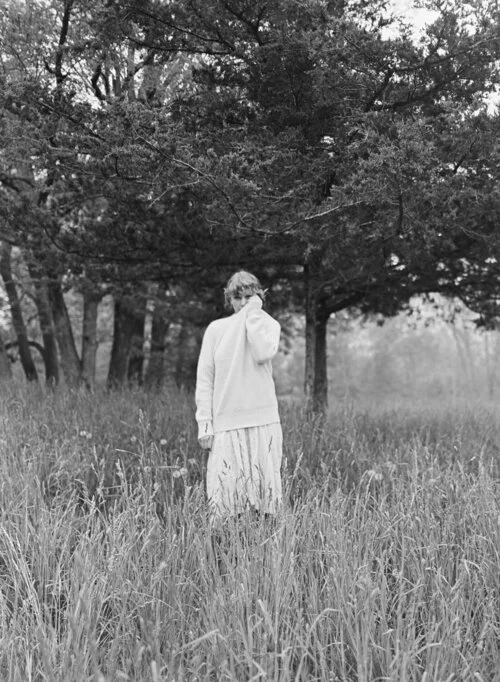
FEATURE: Vinyl Corner: Garbage - Garbage

FEATURE:


Vinyl Corner

Garbage - Garbage

___________

I have been meaning to include Garbage’s eponymous album…

in Vinyl Corner for a while and, as its twenty-fifth anniversary is tomorrow (it came out on 15th August in the U.S., but was not released in the U.K. until 2nd October), I thought it was only right that I take a closer look. Garbage is the debut album from the brilliant band – consisting Shirley Manson, Duke Erikson, Steve Marker and Butch Vig. Although  three-quarters of the band are American, their incredible lead, Shirley Manson, is Scottish, and I think that is one of the keys to that success, in terms of her accent and, if you have a Scottish lead, I think you could call Garbage a British band rather than America – it is only right that we claim them! If you have not got Garbage on vinyl, then go grab a copy, as it is one of the best debuts of the 1990s! Whilst some have greeted the album with a mixture of praise and dubiousness – saying some of the songs sound dated and there are filler tracks -, Garbage has been greeted with acclaim for the most part! It got to number-six on the U.K. charts and, in 1995, I think it stands out as one of the most original and innovative albums – in a year where the likes of Radiohead’s The Bends, Björk’s Post, and PJ Harvey’s To Bring You My Love were out there (such an incredible year for music!). When Garbage was released and made an impression, the band embarked on a year-long tour; huge singles like Queer, and Stupid Girl were ubiquitous in 1995/1996 – the latter was released in March 1996.

It is a bit of a long story as to how Shirley Manson came to the attention of Butch Vig – a producer she admired hugely, and with the likes of Nirvana’s Nevermind under his belt, one could see why! She was a member of Edinburgh’s Goodbye Mr Mackenzie, and several members (Manson included) formed the side-band, Angelfish. Vig was shown a video of Angelfish’s Suffocate Me, and he was intrigued. Vig, at the time, was in a band with the two other male members of Garbage, and they were keen for a female lead. Their manager, Shannon O’Shea, tracked Shirley Manson down, and it grew from there. To be fair, considering what I was saying about Butch Vig’s reputation: Manson was not aware at the time Butch Vig produced Nevermind, so she was in for a pleasant surprise! Garbage’s ethos was that they would combine different sounds and not be bound by limitations and barriers. A lot of bands in the mid-1990s were sticking doggedly to Grunge or Rock, but Garbage looked beyond and brought in elements of Hip-Hop and Funk. I love how Garbage is a balanced album that does not load all of its best singles at the top. Opening with Supervixen, Queer, and Only Happy When It Rains, one gets three golden cuts, but they all sound different and have their own identity – rather than having three singles that are identical.

Vow, and Stupid Girl occur in the middle, and Milk ends the album. Aside from the better-known tracks, there are plenty of brilliant numbers – A Stroke of Luck, and Fix Me Now are underrated are exceptional. As of August 2015, Garbage had sold over four-million copies worldwide, and the album is influencing bands and selling healthily after twenty-five years since its release! I think the album will continue to be seen as a classic, as the songs sound so urgent and timeless – I disagree with critics that feel some of the songs have not aged well or are a product of the ‘90s. In their review of 1995, this is what Rolling Stone had to say:

As Heaven Is Wide” rides cool grooves high in focus and fiber, locomoting toward unknown dance-floor destinations. “Not My Idea,” another querulous high-speed track, patiently explains its depressed circumstances, then bangs its silverware on the plate, insisting that “this is not my idea of a good time” Warm Euro-style balladry shows up with “A Stroke of Luck,” but Manson shivers. “Here comes the cold again,” she sings with regret. On “Vow,” the current single, she’s throwing fits again, threatening to tear somebody’s world apart to the tune of industrialized guitar noise.

Near the end of Garbage, Manson affects a kind of peace with her own ravings. On “Stupid Girl” she marches along to a funky bass, indicting someone – herself? – for not believing in fear, pain or people she can’t control. “All you had,” she sings, seething, “you wasted.” After another tuneful near-metal tantrum called “Dog New Tricks,” she and Garbage crest on “My Lover’s Box.”

On this great piece, arranged with those mangy riffs but reframed with syncopations from the Spinners and outbreaks from Bad Brains, Manson fears she’ll never get to heaven and pleads, “Send me an angel to love.” The album ends on a lovely two-song coda comprising “Fix Me Now,” a wracked appeal for togetherness, and the lush “Milk,” a ballad in which Manson and Garbage go grunge torch, and she explains her previous moments of cruelty in terms of having been “lost.” Oh, was that it? Garbage teems with such disjunctions of tragedy and junk. Like so much fun and important rock & roll, it’s the product of brilliant misunderstandings”.

I have seen some reviews that are a little mixed; those not fully appreciating the incredible band interplay and the sheer force of Shirley Manson’s vocals, but the majority of reviews throw a lot of love towards Garbage. When reviewing the twentieth anniversary edition of Garbage in 2015, Consequence of Sound observed the following:

Another of the band’s singles, “Queer”, challenged expectations on multiple levels. First and foremost was the lyrical content: Manson’s, tongue-in-cheek, sexual lines had to have elicited some blushing in the Clinton era. But it also pushes past the grunge signifiers and into the other half of the band’s sound, specifically their interest in drum loops and samples. The opening ringing notes and shuffling drum patterns evoke European trip-hop rather than punk rock. Even with all the guitar back-and-forth, the production and arrangements remain lush and hypnotic. It’s a clear indication that Garbage aspired to be more Portishead than Pearl Jam.

Their ambitions are made even more clear on tracks like “A Stroke of Luck” and the haunting closer “Milk”, in which samples are placed front-and-center rather than hidden behind distortion. “My Lover’s Box” draws even more focus on the drum loops, before bursting into another massive chorus. Garbage bridged two very different worlds in an era that often felt separated, drawing different audiences together under their unique banner. Their self-titled debut feels just as instrumental for post-grunge as it does for dance rock and trip-hop.

Not everything about the band’s debut has aged particularly well. “As Heaven Is Wide” gets a bit heavy-handed with the angel imagery, though this does seem to be a common trope for the era (Sunny Day Real Estate, Pearl Jam). The assertive sexuality Manson brings to the lyrics remains fascinating and bold, but still, lines like “You can pull it out if you like it too much” on “Supervixen” have lost some of the shock value they had two decades ago. Even so, opening the record with that song highlights the band’s unwillingness to compromise and throws the listener right into Manson’s world”.

It is amazing to think Garbage’s debut is twenty-five, as I remember the album coming out when I was in high school. Singles like Stupid Girl were all over the place, and I was instantly gripped by this exceptional band! Twenty-five years later, Garbage still manages to move and stun the senses and, for that reason, I could not resist but to…

BOW to its majesty 

FEATURE: “He's Got Morning Glory and Life's a Different Story" The Blur/Oasis Britpop Chart Battle at Twenty-Five

FEATURE:


He's Got Morning Glory and Life's a Different Story

aaaaa.jpg

IN THIS PHOTO: Blur circa 1995

The Blur/Oasis Britpop Chart Battle at Twenty-Five

___________

ONE chapter of music history that creates division…

IN THIS PHOTO: Oasis in 1995/PHOTO CREDIT: PA

is Britpop. There are some who adore the spirit and brilliance of the music produced by the likes of Oasis, Blur, Supergrass, Suede, and so many other great bands at the time. There are others that feel Britpop was a rather cloying and over-hyped movement that did not really produce anything substantial or memorable. I have a lot of affection for the period, and I was fascinated as a child watching these great British bands of the time rising and creating anthems. There is conflict as to when Britpop officially started but, by 1995, it was reaching its peak. Tomorrow (14th August), it will be twenty-five years since the two biggest British bands of 1995, Oasis and Blur, launched singles. Today, it feels strange to get excited about singles and the charts, but back in 1995, so many people were watching with interest as Blur’s Country House took on Oasis’ Roll with It. Country House was the lead single from Blur’s underrated 1995 classic, The Great Escape, whilst Roll with It was taken from Oasis masterpiece second album, (What's the Story) Morning Glory? No doubt, those tracks are not among the biggest and best tracks from those albums. I think pitting Blur’s Charmless Man against Oasis’ Morning Glory would have made for a better battle; two stronger songs that, whilst not as spirited and commercial as the tracks they released on 14th August, 1995, would be more enduring.

The chart battle was won by Blur, but one can say that Oasis benefited more in the long-term; their career rose and the two bands would experience different paths in 1995 – Blur would overtake Oasis in 1997 in terms of album quality – the former’s eponymous album is much finer than Oasis’ Be Here Now (which was heralded in 1997, but has since been seen as overblown and overrated). I know there will be a lot of articles in the next week or so, as many reflect on a very exciting and charged time for British music. I recall reading the music press at the time and feeling this real sense of anticipation, conflict, and rivalry! In 2015, SPIN marked twenty years since the Country House/Roll with It showdown:

On this day 20 years ago, Britpop reached its apex as a pop-culture phenomenon, with the simultaneous release of Blur’s “Country House” and Oasis’ “Roll With It” singles. Not that the songs were all that great — today, neither would necessitate a spot in either band’s greatest-hits live set — but what they represented certainly was: The climax of a long-brewing feud between the movement’s two biggest bands, and a chance to empirically determine which was truly the greater outfit, by vote of the people.

Of course, it wasn’t close to that simple: Nearly as soon as the victor was crowned in the first round of Blur vs. Oasis, the momentum of the fight shifted dramatically in the other direction. And so it would go over the decades to come, the groups constantly toggling back and forth in who was leading in popularity, public perception, and overall legacy. Long after the bands stopped fighting in real life — and really it’s been radio silence for some time now on that front, with respective leaders Damon Albarn and Noel Gallagher even dueting with one another on the former’s “Tender” two years ago — the debate rages on among fans, who couldn’t let the thrill of ’95 go even if they wanted to”.

If it was just a case of Oasis and Blur releasing two good singles from poor albums, then I don’t think many people would be so invested in this Britpop peak so far down the road! The fact is that both bands were on top form and released majestic records in 1995. If (What's the Story) Morning Glory? Is better-reviewed and remembered, Blur’s The Great Escape was a worthy follow-up to Parklife (1994) – tracks such as Stereotypes, Charmless Man, Fade Away, He Thought of Cars, and The Universal are classic Blur cuts! One can only imagine how much pressure there was in Oasis and Blur’s camps when they released their singles in 1995, and so many people were creating this huge sense of drama. We do not really have that thing now of different but beloved bands take on one another and have this very healthy rivalry – the fact Oasis and Blur released albums in 1994, 1995, and 1997 and there was this sense of tribalism and both bands having distinct sets of fans who, for the most part, did not really overlap. It was a very exciting time for British music was Britpop and, in a feature from NME from last year, Stephen Street (who produced for Blur) and Oasis’ press officer, Johnny Hopkins, cast their minds back to the heady Britpop days of 1995:

Stephen Street (Blur producer): “Following [1994’s] ‘Parklife’, optimism was very high. There was a lot of confidence flying through Blur. We knew that when we made a record there was a good chance it would get heard on the radio, which hadn’t been the case three or four years previously. At that point Damon was revelling in being one of the hottest things on the planet. He was still going out with Justine (Frischmann, of Elastica) at that time, so they were the hottest couple in town.”

Johnny Hopkins (Oasis press officer): “The first Oasis album had been the best-selling debut album ever. There was a lot of confidence, a lot of excitement, a lot of celebration around that time. The intention was to keep them away from Britpop as much as possible. I saw them as an international rock’n’roll band. I found the whole Britpop idea to be pretty parochial and limiting, and in parts pretty sinister. They weren’t hanging out at [Camden pub] The Good Mixer like all the other so-called Britpop bands were. The only time they ever went in there was after a Creation Unplugged press conference at NME. There was an idea that they should go in there, just to fire a warning shot across the bows. Mission accomplished”.

This year has been a rotten one, and I think it is good that we can be nostalgic and mark a brilliant time in music. No matter whether you supported Oasis or Blur, or if you liked Roll with It, or Country House, or felt that the songs were a bit weak, one cannot deny that August 1995 was a hugely memorable time! I want to go back to that SPIN article, that talks a bit about the aftermath and fallout from that epic chart battle:

Blur won the battle, as “Country House” outsold “Roll With It” by about 60,000 copies, but the rest of the war was a bloodbath for them. Oasis would brush off the loss and springboard to their greatest success ever almost immediately afterwards, as “Wonderwall” would not only trump any subsequent single from Blur’s The Great Escape, but also catapult them to superstardom in the U.S. and everywhere else.

Oasis’ (What’s the Story) Morning Glory? would go on to vastly outsell The Great Escape pretty much everywhere, and continued to spin off hits (“Champagne Supernova,” “Don’t Look Back in Anger”) on both sides of the pond well into ’96. Blur ended the year as clear silver medalists — bronze, perhaps, if you counted Pulp — and were in serious need of regrouping”.

I look forward to seeing what comes out in the media in the coming days regarding the infamous Blur and Oasis Britpop war, and I am sure we will see Liam Gallagher post something on Twitter – maybe he’ll take a dig at Blur’s Damon Albarn or the band in general! It was a wonderful time to be a child/young – I was twelve when Oasis and Blur faced up in 1995 -, and I look back with fondness. I know we will be talking about Britpop for decades to come, and we will focus on the time when two enormous bands put their singles into the world, and there was this feverishness in the air! I will leave things there but, if you have heard much about Britpop or are unfamiliar with the Blur/Oasis rivalry, then Noel Gallagher from Oasis explains more (in his unique way!), and this interesting video gives some context. Me, personally, I love both Oasis and Blur, but when it comes to choosing between those two Britpop singles of 1995, I will always be in the corner…

OF Blur’s Country House!

FEATURE: Take a Bow: Madonna the Icon

FEATURE:


Take a Bow

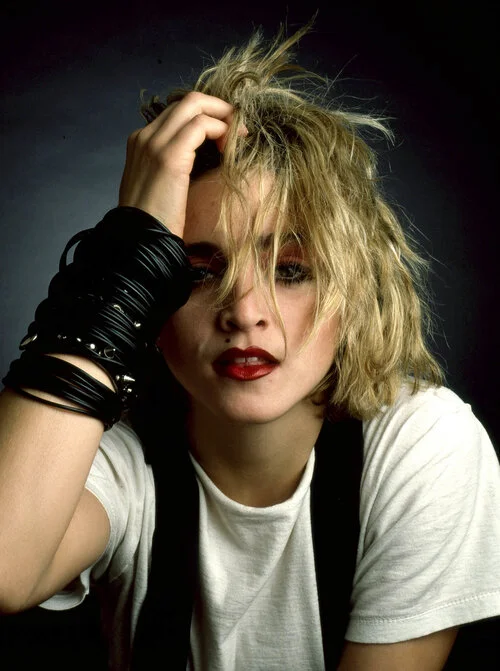
IN THIS PHOTO: Madonna captured by Deborah Feingold in 1983

Madonna the Icon

___________

THE reasons why I wanted to write a feature…

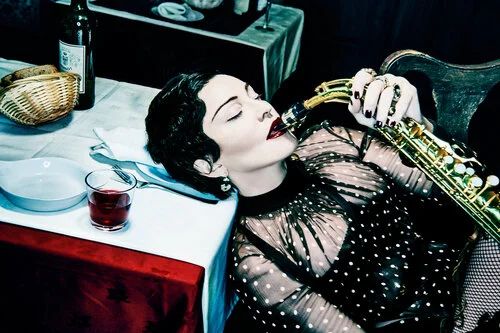
IN THIS PHOTO: Madonna in a promotional photo for Madame X (2019)/PHOTO CREDIT: Steven Klein

about Madonna is because, a) she recently departed the record label Interscope for Warner. One suspects that Warner better understand Madonna, and they can take her career to the next stage. I am not one who delves too deep when artists switch labels, as it is difficult to understand the true reasons why it happens and what benefits the artist experiences from the switch. Madonna’s latest album, 2018’s Madame X, is one of the best of her later career, and I am interested to see where she heads next and whether there are already plans in place for her fifteenth studio album. The main reason for me revisiting Madonna – I have written about her a lot through the years – is that it is her birthday on 16th August. Although Madonna gets a lot of stick from the press and some people – she has been on the receiving of abuse and judgement her whole career! -, I have always admired her and consider her one of the last living icons. I will move onto the idea of an icon now but, when you think about the artists living, how many rank alongside Madonna in terms of their power and influence? Prince and David Bowie died in 2016, and maybe the likes of Paul McCartney are comparable in terms of their impact on music. As she is about to turn sixty-two, there is no slowing Madonna!

Madonna is one of those artists who attracts fans from all corners of the musical spectrum. No matter who you are, what you believe and how you live your life, she brings people together and her music translates across all borders and boundaries. Maybe she has put her foot in mouth a few times in recent years because of what she has said online and her beliefs, but Madonna cannot be censored and is someone who is not being told what to say by the record label – maybe Interscope were clamping down or trying to reign her in. I look at a lot of today’s artists and, with social media, it must be very hard to authentic and be who you are: there is always someone directing what an artist says and just how much they can get away with. Even now, in 2020, Madonna seems as bold and real as she did back in the 1980s! My first taste of her music was when I was about six or seven. I think the first song of hers I encountered was Material Girl – it is from her 1984 album, Like a Virgin. I was instantly hooked by Madonna, as it was not just the music that stuck in the mind. Madonna is famous for her changing styles and, whilst fashion is not especially important to me, I was intrigued by someone who was not your average chart start – someone who seemed like a clone and does not display much personality.

Madonna’s chameleon-like ability to change her looks and persona between albums kept me invested, and my second real wave of affection for her came when I was in high school and, in 1998, she released the sensational Ray of Light. Compare that album to her 1983 eponymous debut, and it shows just how far she had come! I love that idea of Madonna having $35 in her pocket at the start and making it from there. There is this myth surrounding some legends regarding the fact they had very little in their pocket and became a star when they had nothing to their name. Some are exaggerated but, with Madonna, you can feel she had to struggle and work hard. On her sixtieth birthday in 2018, The Independent wrote an article and talked about her start and why she was so determined:

Born in Michigan in 1958, Madonna Louise Ciccone was the third of six children in a working-class Italian-American family. No one could have guessed that this little girl would become renowned the world over by a single name. But the history books will say that she did.

Perhaps it was the death of her mother when she was just five years old which lit the fuse of her determination, or a desire to break out of a provincial town and a big family. Maybe she was simply a born show-off. Whatever the motivation, after 60 years, Madonna is the wealthiest woman in the music business and one of its most radical icons.

Madonna’s journey from the American suburbs to the American Dream began in 1978, when she arrived in New York with nothing but a winter coat and $35 – “The bravest thing,” she once said, “I have ever done.” In 1983, after years of hard grit, she appeared before the world fully formed”.

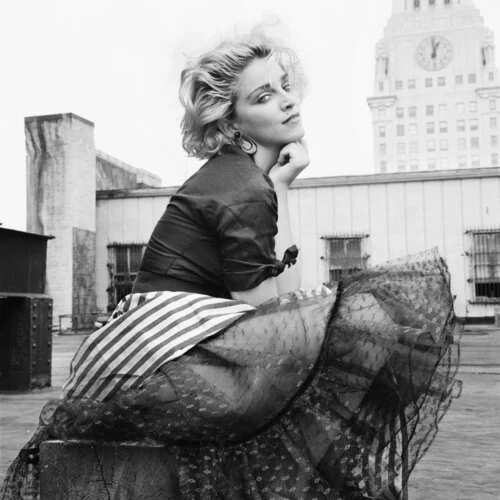
IN THIS PHOTO: Madonna in 1992

With the inspiring and iconic comes the more controversial side. Through her career, Madonna has never held back her sexuality and physicality. Perhaps 1992’s Erotica was the moment when she found herself receiving a lot of negative attention from the press. This was compounding with the release of her Sex book at the same time:

When topless photos from Madonna’s younger years leaked in 1985, they quickly found themselves in sell-out issues of Penthouse and Playboy. But in 1992, when she photographed herself completely naked for her own coffee table book, opprobrium rained down on her from all sides.

Here, she proved a crucial double standard around women’s bodies and sexuality. It was all fun and games for men to enjoy, so long as they were in control. Once women took charge themselves, their sexuality was deemed unacceptable.

In her defiance of the patriarchy, Madonna also garnered adoration from millions of gay men, who saw her reaching out a hand to them through her music, her imagery, and her vocal activism. For many, she was the accepting mother they never had”.

I would recommend great books like Madonna: Like an Icon to get a bigger sense of where she came from and why she is so inspiring, but I have been following her music for over three decades, and the fact Madonna is still at the forefront and influencing artists shows how indelible and potent her music is! Taylor Swift is in the news at the moment because her surprise album, folklore, was recently released, and it is breaking sales records.

Madonna herself knows that modern stars like Swift and Lady Gaga for instance rely a lot on the power and universality of social media. It is a powerful marketing machine, and I often feel like it is a bit of an unfair leg-up for major stars. Madonna was utilising radio and music television early in her career, but I think the reach of social media is bigger than radio back in the 1980s and 1990s, and it can be a bit of a crutch. Not that Madonna worked from the bottom and did everything herself. She has had the help of record labels and other writers/producers, but I think it was harder than to make a name and sustain compared to things now. People will contend that, but I feel the idea of an icon today is very different. I have a lot of respect for big Pop artists of today, but it is hard to see beyond the lure and ubiquitous nature of social media and discern how much of today’s stars are where they are because of talent or Internet popularity. To me, Madonna is still the biggest icon in Pop, even if there are a lot of younger artists who are creating records and getting everyone talking. The fact we do not really have music T.V. anymore is a disadvantage for many modern stars.

A lot of Madonna’s appeal and legacy comes from her amazing videos. From the rather cutesy Material Girl, through to the epic Like a Prayer (1989), and the extraordinary Frozen (1998), we see this artist embody different guises and worlds! Now, I think digital sales and social media is more important and influential than videos and the depth of songs. That is my opinions, but I also think it is harder to get noticed in modern music, so I guess there is more to it. Regardless, there is no doubt that Madonna is one of the most important artists ever, and she has released at least five iconic albums – her 1983 debut, Like a Virgin, Like a Prayer, Erotica, and Ray of Light. I have as very soft spot for 1994’s Bedtime Stories as it contains my favourite-ever Madonna song, Take a Bow. That song shows the versality of Madonna – a tender and heartfelt song where Madonna puts her heart out there is a world away from songs like Holiday (from 1984’s Like a Virgin), and La Isla Bonita from 1986’s True Blue! From her role as a fashion icon, to the role she played in connecting with the L.G.B.T.Q.I.A.+ community (tracks like Vogue are especially powerful when we think about that), to her continued evolution and musical curiosity, there is nobody in music like her!

I tend not to take big chunks from Wikipedia but, when it comes to her legacy, I could not resist but to quote the following:

According to Tony Sclafani from MSNBC, "It's worth noting that before Madonna, most music mega-stars were guy rockers; after her, almost all would be female singers ... When the Beatles hit America, they changed the paradigm of performer from solo act to band. Madonna changed it back—with an emphasis on the female."[377] Howard Kramer, curatorial director of the Rock and Roll Hall of Fame, asserted that "Madonna and the career she carved out for herself made possible virtually every other female pop singer to follow ... She certainly raised the standards of all of them ... She redefined what the parameters were for female performers."[378] According to Fouz-Hernández, subsequent female artists such as Britney SpearsChristina AguileraKylie Minogue, the Spice GirlsDestiny's ChildJennifer Lopez, and Pink were like her "daughters in the very direct sense that they grew up listening to and admiring Madonna, and decided they wanted to be like her."[379] Madonna has also influenced male artists, inspiring rock frontmen Liam Gallagher of Oasis and Chester Bennington of Linkin Park to become musicians.[380][381]

Madonna's use of sexual imagery has benefited her career and catalyzed public discourse on sexuality and feminism.[382] As Roger Chapman documents in Culture Wars: An Encyclopedia of Issues, Viewpoints, and Voices, Volume 1 (2010), she has drawn frequent condemnation from religious organizations, social conservatives and parental watchdog groups for her use of explicit, sexual imagery and lyrics, religious symbolism, and otherwise "irreverent" behavior in her live performances.[383] 

IN THIS PHOTO: Madonna in 1983/PHOTO CREDIT: Richard Corman

The Times wrote that she had "started a revolution amongst women in music ... Her attitudes and opinions on sex, nudity, style and sexuality forced the public to sit up and take notice."[384] Professor John Fiske noted that the sense of empowerment that Madonna offers is inextricably connected with the pleasure of exerting some control over the meanings of self, of sexuality, and of one's social relations.[385] In Doing Gender in Media, Art and Culture (2009), the authors noted that Madonna, as a female celebrity, performer, and pop icon, is able to unsettle standing feminist reflections and debates.[386] According to lesbian feminist Sheila Jeffreys, Madonna represents woman's occupancy of what Monique Wittig calls the category of sex, as powerful, and appears to gleefully embrace the performance of the sexual corvée allotted to women.[387] Professor Sut Jhally has referred to Madonna as "an almost sacred feminist icon."[388]

I will leave things there but, in the past few weeks, Madonna has courted negative attention because of her theories relating to COVID-19, but she is going to appear on a remix album from Dua Lipa. A recent article in The Metro asked whether Madonna was obliterating her own legacy. In the modern age, where we have cancel culture – artists being cancelled and wiped out because of what they say online -, is Madonna in danger of undoing decades of great work?

But 2020 is a different beast.  Our collective patience has been pushed to the limit. We’re viewing the world, including celebrities and public figures, through a different lens.  Sure, famous faces survive multiple cancellations these days. They seem to get away with saying and doing increasingly controversial things. But not without the gentle erosion of a legacy. The point is, nobody’s untouchable anymore, including Madonna. For a die-hard fan like me, that’s worrying”.

Madonna has faced sexism and judgement through her career; she has faced censorship and anger and, in her fifties and sixties, ageism and less airplay. It does take more than a few misguided comments and posts to undo her legacy but, because everything online is amplified and we have this mentality to attack and devour artists if they make an error, I think we just have to accept that Madonna is not perfect and there are going to be occasions where she will need to think about what she puts out there. Considering all she has given to music and all she will give, we need to remember her incredible songs and tours; all the staggering moments and the inspiration she has given to countless artists! On 16th August, Madonna celebrates her birthday, and I hope she gets a lot of love. I want to return to that tweet Madonna sent regarding the $35 she had when she started her career, and how far she went! I wonder whether there will be a biopic anytime soon, as her life and rise demands cinematic attention. That is up to her but, right now, I wanted to salute one of my favourite artists whose music still means so much. Whilst we have huge artists around like Taylor Swift, Dua Lipa, Lady Gaga and so forth, I think it would be unfair to say that they are challengers and will be ‘The New Madonna’ – even if, clearly, Madonna has a lot of respect for Dua Lipa. The Queen of Pop can rest easy because, in 2020, her legacy and title is…

333.jpg

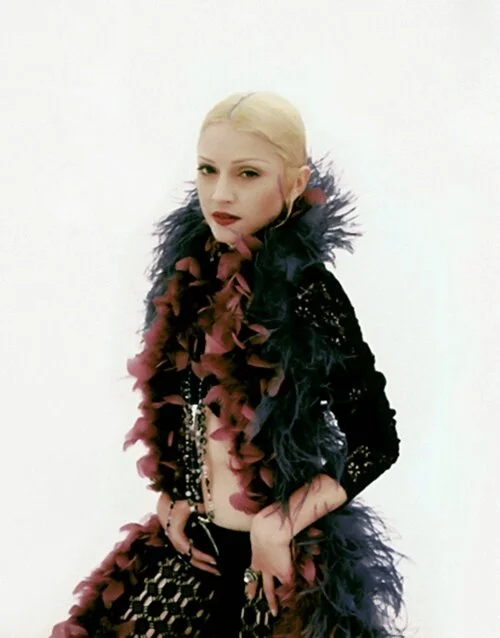
IN THIS PHOTO: Madonna in 1998/PHOTO CREDIT: RANKIN

DEFINITELY not under threat!

FEATURE: Dreams of Orgonon: Kate Bush’s Cloudbusting

FEATURE:


Dreams of Orgonon

zzzz.jpg

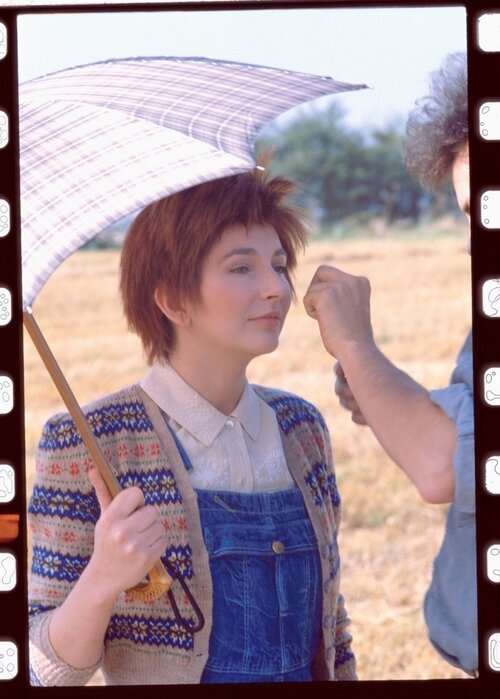
IN THIS PHOTO: Kate Bush on the set of the video for Cloudbusting/PHOTO CREDIT: John Carder Bush

Kate Bush’s Cloudbusting

___________

I am going to do some anniversary…

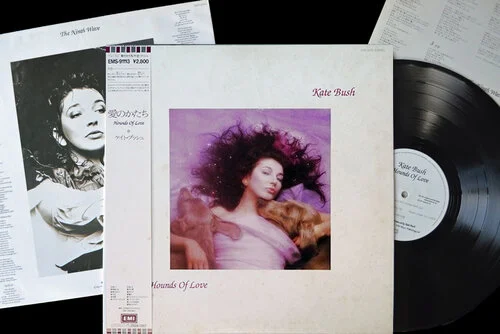
features relating to Kate Bush, as two of her biggest albums, Never for Ever, and Hounds of Love are approaching big birthdays in September – I am looking at the latter today. I am interested in covering Hounds of Love’s second side, The Ninth Wave, a bit before September, but this is the next feature looking at one of the songs from the first side. I love Running Up That Hill (A Deal with God) and the title track (in addition to Mother Stands for Comfort), but there is something about Cloudbusting that strikes me hard! Released as the second single from Hounds of Love (after Running Up That Hill (A Deal with God), the song only made number-twenty in the U.K. I think it is a real shame that the song did not do better, as it not only is one of the standouts from Hounds of Love, but it has a truly amazing video – which I will talk about very soon. Bush took inspiration from the 1973 memoir, A Book of Dreams; she reads the book and was affected by it – it tells of the relationship between psychiatrist, Wilhelm Reich, and his son, Peter. The track describes the son’s memories of his life with his father at the family farm, Orgonon, where the two spent time constructing a device so that they could (they felt) make it rain – they were cloudbusting!

Bush expanded on the premise and, on Cloudbusting, documented the relationship between the two and the creation of a cloudbusting machine; the arrest of Wilhelm Reich as his son looks on. Cloudbusting was an obvious single, and I wonder why it did not soar as high as Running Up That Hill (A Deal with God) – that single was released on 5th August, 1985 and reached number-three. On 14th October, 1985, Cloudbusting was released to the world, and I guess its B-side(s) - Burning Bridge was the B-side of the U.K. 7”; Burning Bridge, and My Lagan Love on the U.K. 12” -, were not as strong as Under the Ivy on Running Up That Hill (A Deal with God). Hounds of Love’s title track was the third single from the album and, whilst it managed to get to number-eighteen in the U.K., perhaps the fact Hounds of Love (album) was released on 16th September meant that many people already owned a copy of Cloudbusting – it is hard to say. What I do know is that Cloudbusting is one of the best songs of Kate Bush’s career, and it works brilliantly as the final track on the first side of Hounds of Love – it follows Mother Stands for Comfort; here we have two songs relating to the relationship between a parent and a child – Mother Stands for Comfort is eerier and colder, whilst Cloudbusting is lighter, even if it does have quite a sad end!

IN THIS PHOTO: Kate Bush in a promotional photo for Hounds of Love’s The Ninth Wave/PHOTO CREDIT: John Carder Bush

Bush actually contacted Peter Reich to explain her motives in writing Cloudbusting, and to express the wish that she hoped he would approve of the song. She received his reply a while later, saying that he loved what she was doing. I love the whole of Hounds of Love, but there is something that really stands out about Cloudbusting. It perfectly ends a wonderful end of the album’s first half, and sort of prepares us for the thrill-ride and epic adventure that is The Ninth Wave. It is amazing that Bush, still in her twenties when she wrote and released Hounds of Love, sounded so accomplished and ambitious. Not just in terms of lyrics and sonics; her vocals reached new levels, and that is all evident in Cloudbusting. I want to bring in a couple of exerts where Bush discussed Cloudbusting. These are taken from the Kate Bush Encyclopaedia:

This was inspired by a book that I first found on a shelf nearly nine years ago. It was just calling me from the shelf, and when I read it I was very moved by the magic of it. It's about a special relationship between a young son and his father. The book was written from a child's point of view. His father is everything to him; he is the magic in his life, and he teaches him everything, teaching him to be open-minded and not to build up barriers. His father has built a machine that can make it rain, a 'cloudbuster'; and the son and his father go out together cloudbusting. They point big pipes up into the sky, and they make it rain. The song is very much taking a comparison with a yo-yo that glowed in the dark and which was given to the boy by a best friend.

It was really special to him; he loved it. But his father believed in things having positive and negative energy, and that fluorescent light was a very negative energy - as was the material they used to make glow-in-the-dark toys then - and his father told him he had to get rid of it, he wasn't allowed to keep it. But the boy, rather than throwing it away, buried it in the garden, so that he would placate his father but could also go and dig it up occasionally and play with it. It's a parallel in some ways between how much he loved the yo-yo - how special it was - and yet how dangerous it was considered to be. He loved his father (who was perhaps considered dangerous by some people); and he loved how he could bury his yo-yo and retrieve it whenever he wanted to play with it. But there's nothing he can do about his father being taken away, he is completely helpless. But it's very much more to do with how the son does begin to cope with the whole loneliness and pain of being without his father. It is the magic moments of a relationship through a child's eyes, but told by a sad adult. (Kate Bush Club newsletter, 1985

IN THIS PHOTO: Kate Bush in a Hounds of Love album cover outtake/PHOTO CREDIT: John Carder Bush

“If I've got this right, he believed that sexual energy was positive, usable energy that he tied in with his concept of orgone energy. He upset a lot of people selling orgone boxes, saying they could cure cancer and stuff. He ended up being arrested and put in prison. I knew nothing about Wilhelm when I read the book, which was his son's experience of all this, written from a child's point of view with a tremendous innocence and sadness. Years ago, I just went into a shop and picked it off the shelf, and really liked the title and the picture on the front. I'd never bought a book before which I hadn't known anything about; I just felt I'd found something really special. And nine, 10 years later, I re-read it and it turned into a song. When it was finished, I wrote a letter to Peter Reich saying what I'd done. It was important to me in some way to have a sense of his blessing because his book really moved me. He sent me back such a lovely letter. It was an incredible feeling of returning something he'd given to me. (Mat Snow, 'Follow That!'. Q/HMV special magazine, 1990)”.

 Kate Bush was known for her stunning videos ever since her first, Wuthering Heights, arrived in 1978. Cloudbusting, in terms of its concept and set, was the biggest thing Bush tackled. She would direct her own videos on singles after Cloudbusting, but Julian Doyle did a fantastic job on Cloudbusting! Although Kate Bush, playing Wilhelm Reich’s son, is not the most convincing young boy in terms of looks, the emotion and affection she displays in the video is genuine and heartfelt.

I think the fact that Donald Sutherland played her dad was one reason why Bush’s acting performance was so genuine. She was a big fan of Sutherland’s work, and she was not expecting him to say yes when he was asked. Sutherland was in London at the time shooting a film at the time and, not having the best experience, I think the idea of filming a music video, whilst different, would have offered a small distraction! Sutherland only had a small window of time available, so the scene at the end of the video where he (as Reich) is driven away after his arrest is actually the Canadian actor departing the video set! The gravitas of having someone as esteemed as Sutherland on set was a big coup, and Bush learned a lot about acting and performance whilst working alongside Sutherland – something she took into subsequent videos and her role as a director. Sutherland and Bush work wonderfully alongside one another, and the relationship between the two is so sweet and touching! The concept is amazing: the two of them working on this rain-maker, as government officials bust their lab and take Reich (Sutherland away); the father being driven off as he sees his son (Bush) making it rain with their contraption – he is delighted but, of course, knows that his future is quite bleak. The setting – the video was filmed at The Vale of White Horse and Dragon Hill in Oxfordshire -is idyllic, and one witnesses a wonderful meteorological event unfold – even if the effect was created by using technology.

Before concluding, I want to bring in an article from DAZED of 2015, where they were commemorating Cloudbusting’s thirtieth anniversary. I wanted to bring in some interesting parts of the article – they spoke with Donald Sutherland, director Julian Doyle and editor Terry Gilliam, with additional insights from Peter Reich:

Kate Bush (excerpt from a Kate Bush Club newsletter, 1985): “I was inspired by a book that I first found on a shelf nearly nine years ago. It was just calling me from the shelf, and when I read it I was very moved by the magic of it. It’s about a special relationship between a young son and his father. The book was written from a child’s point of view. His father is everything to him; he is the magic in his life, and he teaches him everything, teaching him to be open-minded and not to build up barriers... But there’s nothing he can do about his father being taken away, he is completely helpless. But it’s very much more to do with how the son does begin to cope with the whole loneliness and pain of being without his father. It is the magic moments of a relationship through a child's eyes, but told by a sad adult.”

Terry Gilliam: “Kate called me to direct the video and I said, ‘No, how about Julian (Doyle)?’ They had a great time shooting, but somewhere in the editing a conflict developed and I became the mediator. Kate knows exactly what she’s doing, she knows what she wants. She’s the sweetest person on the planet but she’s absolute steel inside!”

IN THIS PHOTO: Director Julian Doyle

Julian Doyle: “Kate came to me with a storyboard, which I remember had the sun coming up with a face on it. She was a lovely lady, with a great smile that she gave generously. I understood her influences – like, I knew immediately where ‘It’s coming through the trees’ (film sample on ‘The Hounds of Love’) came from and things like that. I also knew about Wilhelm Reich, because there was interest in him among the new women’s movement which was exploring the female orgasm and I was close to the women involved.

Donald Sutherland: “Barry Richardson, who was the hairdresser on Nic Roeg’s Don’t Look Now, asked me if I’d do a music video with Kate Bush. I told him no and we went on to other conversations. A couple of days later there was a knock on my door. I lived in the Savoy Hotel (in London). On the river. Suite 312. I loved it there. So cosseted. So private. Only the floor butler rang the door. I opened it. There was no one there. I heard a voice saying hello and I looked down. Standing down there was a very small Kate Bush. Barry had told her where I lived. What can you do? She wanted to explain what her video was about. I let her in. She sat down, said some stuff. All I heard was ‘Wilhelm Reich’. I’d taken an underground copy of his The Mass Psychology of Fascism with me when I went to film (Bernardo) Bertolucci’s Novecento in Parma. Reich’s work informed the psychological foundations of Attila Mellanchini, the character Bernardo had cast me to play.

IN THIS PHOTO: Donald Sutherland

Everything about Reich echoed through me. He was there then and now he was here. Sitting across from me in the person of the very eloquent Kate Bush. Synchronicity. Perfect. She talked some more. I said OK and we made ‘Cloudbusting’. She’s wonderful, Kate Bush. Wonderful. I love that I did it. (What do I remember) about doing it? I remember being in the car and the hill and them taking me, taking Reich, away and looking back through the back window of the car and seeing her, seeing Reich’s son Peter, standing there. And I remember the first morning on set seeing her coming out of her trailer smoking a joint and I cautioned her, saying she shouldn’t smoke that, it’d affect her work, and she looked at me for a second and said she hadn’t been straight for nine years and I loved her”.

Ahead of Hounds of Love’s thirty-fifth anniversary next month, I wanted to spend some time spotlighting individual tracks and aspects of the album. Cloudbusting is one of the finest tracks from the album and, despite its modest chart position, I really love it. Kudos to the musicians who helped Bush create this masterpiece - Drums: Stuart Elliott, Charlie Morgan/Strings: The Medicci Sextet/Arranged for strings by Dave Lawson/Backing vocals: Brian Bath, Paddy Bush, John Carder Bush and Del Palmer -, and, of course, Bush herself for the wonderful production! The video is amazing and, nearly thirty-five years after its release, one still feels a pang of emotion watching it unfold! How can one not be impacted and moved by the obvious chemistry and realism of Kate Bush and Donald Sutherland playing son and father – even if Bush looks too old and beautiful to play a younger male. All in all, Cloudbusting is a magnificent song, and one that, through this, I hope people have a deeper understanding of. Strangely, in these hard times, some of Cloudbusting’s most-memorable lyrics seem to sum up the song itself: “But every time it rains/You're here in my head/Like the sun coming out/Ooh, I just know that…

IN THIS PHOTO: Kate Bush in a shot from the Cloudbusting video/PHOTO CREDIT: John Carder Bush

GOOD is going to happen”.

FEATURE: Spotlight: Inhaler

FEATURE:


Spotlight

PHOTO CREDIT: Lewis Evans

Inhaler

___________

SOMETHING has happened in the band market…

over the past couple of years. Bands have always been visible, but not necessarily vocal. By that, I mean there were bands around, but what was being produced did not necessarily connect or leave a lasting impression. Hailing from Dublin, Inhaler are a group who are already primed for big things! Consisting Elijah Hewson – vocals, guitar, Robert Keating – bass guitar, Josh Jenkinson – guitar, and Ryan McMahon – drums, the lads are in their early-twenties, but they have a sound and conviction that is reserved for groups with greater age and experience. I want to source from a few interviews they have provided but, first, it is best to provide an introduction to Inhaler:

Dublin quartet Inhaler recently completed a UK and European tour that saw them sell over 7,000 tickets and play to frenzied, sold-out crowds. November saw them support Blossoms across the US, before heading to Mexico for a slot at Corona Capital. They’ve announced a new run of dates in the UK & Europe for 2020 that will include a show at London’s Heaven on Thursday 20th February, their biggest headline show to date. Kasabian recently announced Inhaler as one of the support acts at their huge hometown show at Leicester’s Victoria Park next summer. Four friends who formed the band in school, Elijah Hewson, Robert Keating, Ryan McMahon and Josh Jenkinson bonded over a love of similar groups, taking in The Stone Roses, Joy Division, The Strokes, Depeche Mode, Interpol, Kings Of Leon, The Cure and more. Over a handful of singles – It Wont Always Be Like This, My Honest Face & Ice Cream Sundae – they have amassed a diehard fanbase, with their tracks being streamed over 8 million times. They make songs about being young and finding your way, music that connects. “I’m just trying to write about the joy of being alive, being a teenager, and the bad things that can come with that. I don’t like it to be all happy, I don’t like it to be all sad”, says frontman Hewson”.

Inhaler deliver impassioned and memorable Indie Rock with a slight Pop edge, and there is a tightens and quality that marks them out for longevity and intriguing progression. So far, they have six singles in their lifetime – the band formed in 2012 and named themselves Inhaler in 2015 -, and they have found themselves lauded and celebrated. NME named them as one of their ones to watch in 2020, and the Dublin band came fifth in the BBC’s Sound of… for this year. The guys have, like all artists, found themselves restricted and improvising during this crisis. They are keen to get back on the road and play as much as possible, and keep an eye on their socials to see if there are going to be any dates later this year or next year. When Inhaler spoke with JOE earlier in the year, they were asked about bands like The 1975 and The Strokes, and whether they are artists they emulate. The latter, especially, with a barer, rawer sound and songs about being a loner in New York City, for example, is a lot different to what you might expect from a group like The 1975. They were asked whether The Strokes’ style is something that connects with them:

"I think we're all as cool as each other, and we're all very cool," Keating knowingly deadpans. "I hope so, anyway."

"For us, we want to be a band," Hewson underlines. "We don't want to be a backing band and a singer. That's uninteresting to us. I think, as individuals, we're not that interesting but together we're slightly interesting."

Someone who agrees with that last part is enduring industry tastemaker Zane Lowe, who featured the band on his Beats 1 show on Apple Music in December.

"He basically reached out to us when he heard we were coming to LA," notes Hewson. "We were supporting Blossoms. He'd been a fan of 'My Honest Face', he'd heard that and was like, 'If you're in LA, come on the show' so we rocked up".

Right now, the band has a healthy fanbase behind them, and there is so much anticipation regarding what they will do next - and whether there will be an E.P. or album arriving. It has been a really successful and productive past year for Inhaler and, with the release of the single Fade Into You (released a couple of weeks ago, it is a cover of the Mazzy Star classic) still reverberating, it is onwards and upwards. I want to go back to last year, when Inhaler were interviewed by NME. They were a band on the rise and, at the time, had no scooped accolades from the BBC and NME in terms of their promise in 2020. It is interesting reading the interview and hearing about their early days and influences:

 “We’ve done our fair share of small pubs and clubs, which was great but it’s also good to have those big shows where you’re given 30 minutes to do what you like,” said bassist Rob Keating of their experience. “There was no pressure on us and to have that platform was great. To see what it’s like to perform on those stages, because obviously that’s our end goal.”

But what can newcomers expect from their sound? While ‘My Honest Face’ sees the band experimenting with post-punk, they say that there’s a whole range of influences at play.

“We’ve all grown up listening to different music and when we come together that shows. We’re creating our own style from that,” they explain.

“For me and for us as a band, we’ve known that there’s going to be doors open,” Eli said. “There’s no doubt about it, but those doors will shut just as fast as they open if we’re not good. It’s the pressure to step up our game and not be shite”.

Although Inhaler, in terms of their youth and looks, might seem like a band akin to The 1975: there are harder sounds to be heard but, for the most part, it is Pop being produced. I do not mean to return to The 1975, but Inhaler have been compared. I think the Dublin band have an edge to them, and they seamlessly unite sounds of the 1990s and early-2000s with what is happening today; there is swagger to be found and, in an interview with GQ recently, they talked about their experiences with Rock legends Bono and the Gallaghers. It is an interesting and revealing interview, but I think the most interesting exerts relate to GQ’s assessment of Inhaler’s sound/appeal and their tireless work ethic:

Inhaler’s appeal is rooted in the kind of 1990s nostalgia that’s been reborn for 2020’s generation, for kids who dress like Stone Island versions of Shaun Ryder. The singles they’ve released so far are Madchester-influenced, feel-good, jangly pop-rock – like their latest single, “We Have To Move On”, which sounds like an early Killers record. There’s a purity in Inhaler’s dedication to vintage guitar music in a TikTok era.

Back to that intense schedule for 2020. Currently the boys are living at home with their parents in Dublin, mainly because they’re on the road so much this year that it’s nigh on impossible to plant roots, even harder when you’re 20.

It means that this year is in a state of flux, between selling out US venues and keeping their sisters from moving into their rooms at home. Caught between being on BBC Radio 1 and being out of the loop with their friends in Dublin. Navigating between working with Pulp’s Antony Genn on their debut album and learning how to wash and pack for the road.

What really sets Inhaler apart as a band is their work ethic. They’re all in agreement that work takes precedence over a night out. “No matter what we got up to that night, no matter what you do in the day, no matter what, you've got to be on top for the gig,” says Eli, with the same focus as a TED Talk speaker whose background is in motivation”.

Keep an eye on Inhaler as they are a rare example of a band being hyped all over the place that will be able to live up to that and not lose their identity and focus. I have seen so many bands being hailed and heralded and, before long, they ever lose that momentum or they go in the wrong direction. Inhaler are that rare breed: they seem humble but have a bit of a cocky side; they are young and upcoming but they already seem defined, accomplished and mature and, when it comes to their music, the music can simultaneously get your feet moving and…

TAKE your breath.

_____________

Follow Inhaler

FEATURE: Vinyl Corner: Kacey Musgraves – Golden Hour

FEATURE:

Vinyl Corner

Kacey Musgraves – Golden Hour

___________

FOR the latest…

PHOTO CREDIT: Eric T. White for Spin

Vinyl Corner, I wanted to revisit an album that was released in 2018 and, to me, it stands as one of the best albums of the past decade. Kacey Musgraves’ Golden Hour is an album you need on vinyl, as it is full of brilliant music. Her second album, 2015’s Pageant Material, was celebrated by critics, but some felt that the album was a bit soft and didn’t have much energy or diversity in terms of its mood. Forward a few years, and Golden Hour incorporated the best elements of Pageant Material – consistently brilliant songwriting and incredible performances from Musgraves -, and it added in new layers. Her fourth studio album was released through MCA Nashville. Musgraves co-wrote all thirteen tracks and co-produced the album with Daniel Tashian and Ian Fitchuk. I am not surprised that Golden Hour won four Grammys – including Album of the Year. One does not have to be a fan of Country/County-Pop music to appreciate Golden Hour and enjoy the songs. It is that unification of more traditional Country tones and themes mixed with a more widespread and polished Pop sound that makes Golden Hour such a fantastic album, able to appeal to everyone but, when you listen to it, it is very much the work of Kacey Musgraves – in that it sounds very personal top her and you can tell how committed she is throughout the album.

Singles such as Butterflies, Space Cowboy, and High Horse are phenomenal, and I wasn’t overly-aware of Musgraves prior to Golden Hour, but I have gone back and listened to her albums since. She has grown and evolved between every album, and Golden Hour is a brilliant peak. It makes me wonder where her fifth album might take her, as she is a terrific songwriter and someone who will only grow stronger! One of the bigger shifts from Pageant Material to Golden Hour was the inclusion of more love songs. Musgraves said how she never usually wrote love songs and felt connected to them before. Not that she was unhappy but, perhaps, the relationships she was in at various points of her career didn’t feel that real or long-lasting. When writing the songs on Golden Hour, Musgraves was married (she married Ruston Kelly in 2017; they sadly divorced last month), and it was easier to write about the throes of love and that depth of feeling. The fact that, sadly, she is not married anymore takes nothing away from Golden Hour and how you experience the songs. Oddly, for a Pop/Country artist, LSD played a small part in some songs’ creation; when writing Mother, and Slow Burn, that lysergic influence was very helpful – not that Musgraves was condoning the use of LSD, as it can have quite a negative effect on the mind.

I look back at the albums of 2018, and it was a big and impactful year for female artists. Terrific albums from Courtney Barnett, Mitski, Janelle Monáe, Cardi B, Ariana Grande, Let’s Eat Grandma, and Rosalía made 2018 such a strong and vibrant year. Not that male artists were lacking, but it was a year when women were ruling and producing the best albums around! I think Golden Hour is among the finest albums of that year and, as I said, one of the best albums from the 2010s. The reviews for Golden Hour were glistening and glowing. This is what AllMusic wrote in their assessment:

Golden Hour shimmers with the vivid colors that arrive when the sun starts to set, when familiar scenes achieve a sense of hyperreality. Such heightened emotions are a new aesthetic for Kacey Musgraves, who previously enlivened traditional country with her sly synthesis of old sounds and witty progressive lyrics. Musgraves barely winks on Golden Hour, disguising her newfound emotional candidness behind a gorgeous veneer of harmonies and synthesizers. Sonically, the album doesn't scan country. Whenever Musgraves makes an explicit nod to the past, she acknowledges the smooth grooves of yacht rock and the glitterball pulse of disco, styles that only have a tangential relationship with country but feel more welcome in a landscape where R&B and hip-hop are embraced by some of the biggest stars in country. Musgraves doesn't mine this vein, preferring a soft, blissed-out vibe to skittering rhythms and fleet rhymes.

At their core, the songs on Golden Hour – which Musgraves largely co-wrote with her co-producers Ian Fitchuk and Daniel Tashian, but also featuring Natalie Hemby, Luke Laird, and Shane McAnally, among other collaborators – don’t play with form: they are classic country constructions, simply given productions that ignore country conventions from either the present or the past. This is a fearless move, but Golden Hour is hardly confrontational. It’s quietly confident, unfurling at its own leisurely gait, swaying between casual confessions and songs about faded love. The very sound of Golden Hour is seductive – it’s warm and enveloping, pitched halfway between heartbreak and healing – but the album lingers in the mind because the songs are so sharp, buttressed by long, loping melodies and Musgraves’ affectless soul-baring. Previously, her cleverness was her strong suit, but on Golden Hour she benefits from being direct, especially since this frankness anchors an album that sounds sweetly blissful, turning this record into the best kind of comfort: it soothes but is also a source of sustenance”.

I am still listening to tracks from Golden Hour and, whilst one wouldn’t want to rush Kacey Musgraves into another album – I have written about expectations artists face and why there is too much pressure on their shoulders -, but Golden Hour was so great, there are going to be many people out there wondering where she will go next in terms of inspiration.

I want to bring in another review of Golden Hour before wrapping things up here. When they tackled the album, this is what The Guardian offered:

The success of High Horse is indicative of the ease and confidence that courses through Golden Hour. Regardless of genre, you’ll be hard pushed to find a better collection of pop songs this year. Everything clicks perfectly, but the writing has an effortless air; it never sounds as if it’s trying too hard to make a commercial impact, it never cloys, and the influences never swallow the character of the artist who made it. In recent years, there have been plenty of artists who’ve clumsily tried to graft the sound of Fleetwood Mac’s Rumours on to their own. On Lonely Weekend, possibly the best track here, Musgraves succeeds in capturing some of that album’s dreamy atmosphere without giving the impression that she’s striving to sound like Fleetwood Mac. It’s an album that imagines a world in which its author is the mainstream, rather than an influential outlier. It says something about its quality that, by the time it’s finished, that doesn’t seem a fanciful notion at all”.

If you are not familiar with Kacey Musgraves, I would say begin at the start and check out her incredible 2013 debut, Same Trailer Different Park. You can see her grow between albums, and each album offers an insight into her life and story. I think Golden Hour is her most assured and uplifting album, and one cannot deny that Musgraves sounds happy and settled through much of the record. It is a truly remarkable album, and it is one that I would easily…

RECOMMEND to anyone.

FEATURE: Fridays I’m in Love: Why Bandcamp’s Attitude Towards Artists Should Give Spotify and Other Platforms Pause for Thought  

FEATURE:


Fridays I’m in Love

aaaaa.jpeg

IN THIS PHOTO: The Anchoress

Why Bandcamp’s Attitude Towards Artists Should Give Spotify and Other Platforms Pause for Thought  

___________

IN terms of music news…

IMAGE CREDIT: Bandcamp

there has not been much to cheer about these past few months! It has been a bleak and unstable time, and, from venues facing closure and large sections of the industry facing peril, alongside that is artists struggling to make ends meet. We all know that life on streaming platforms is pretty tough for most artists. Unless you are a mainstream artists who can command millions of streams per song, you are not going to be making a realistic wage from sites like Spotify. It is not just them that are guilty of paying of paying artists so little, but it does seem ridiculous that, at a time when artists cannot tour and they are seeing their revenue cut to the bone, that there has not been a revision of the guidelines regarding payment! I guess streaming sites cannot afford to pay too much per stream, but there has to be some sort of change whereby smaller artists are having their music promoted because, right now, most adverts and attention is levied the way of big artists who are not exactly struggling for money! Luckily, there is a platform that is conscious of the difficult time, and they are responding. Bandcamp, to me, has always been one of the fairest-minded and conscious of the big platforms. The Bandcamp Fridays has helped so many artists and labels.

This article from Vice explains a bit more:

There's not enough good news. But thankfully, there's been one positive in an otherwise dire year and it's that Bandcamp has been waiving its revenue share for all online sales on the first Friday of every month since March. So far, the first four "Bandcamp Fridays" have generated over $20 million dollars directly for artists and labels. With live music on an indefinite and already-too-long hiatus, this is potentially life-altering money for any struggling artist. While it's not going to fix the struggles of the music industry this year, these promotions, which are continuing throughout 2020, are undeniably meaningful.

In a world where streaming services pay out fractions of a penny and Spotify's CEO Daniel Ek claims that "you can’t record music once every three to four years and think that’s going to be enough," it's more important than ever to vote with your wallet. Buying directly from artists on Bandcamp—and from your local independent record store—are the absolute best ways to get money into the hands of musicians. While there's an endless list of deserving talents who need support, here is a list of five acts worth considering on August's Bandcamp Friday”.

It is always tough being able to get money into musicians’ hands through streaming sites. Even with physical releases, one wonders how much goes to the label and whether the act gets a reasonable slice of the pie.

I do worry that too much money is going to massive organisations, and so little is making its way to artists. In an article from The Star Tribune, it seems like Bandcamp is making waves in a way other streaming sites are not:

Most musicians see Bandcamp as a better alternative to Spotify, Apple Music and other streaming sites, which pay a fraction of a penny for each song stream. Bandcamp offers limited streaming for free but focuses more on download and physical album purchases, from which it takes 10 to 15% of each sale (on the other days of the month).

Many of the country’s biggest indie-rock labels have also cozied up to Bandcamp and its Friday, including Sub Pop, Epitaph, Jagjaguwar and Merge.

Mac McCaughan, founder of Merge Records and singer in Superchunk, recently said of Bandcamp in online magazine Pitchfork: “When someone recommends something I’ve never heard of before, that’s often the first place I’ll go”.

Some argue Bandcamp’s fees are too high and they suffer the same sort of greed as other streaming services/platfirms, but I think it is incredible hard to be ethical and remain in business. The fact that there have been these Bandcamp Fridays is a real step in the right direction, and maybe Tidal, Spotify and Apple might follow suit. Things are going to be a struggle for artists for the remainder of the year, and the next year is looking pretty uncertain, depending on what happens with COVID-19.

I have seen so many artists take to social media and extol the benefit’s of Bandcamp’s initiative, and how much it has helped them. If you need recommendations of which artists to support on Bandcamp, there are articles that will point you in the right direction. Bandcamp themselves have provided some guidance as to how music fans can do their bit, if their situation affords that freedom:

We recognize that plenty of music fans are also seeing their livelihoods disrupted by this virus, but if you’re lucky enough to be in a position to spare some funds (or find yourself in that position in the coming months), please consider sharing your good fortune by buying music and merchandise directly from artists on Bandcamp. Today, Bandcamp’s share of sales will also go to the artists and labels you choose to support, and as always, it will reach them in 24-48 hours.

If you already have all the music and merchandise you want from your favorite artists, consider discovering new favorites via our editorial publication, Bandcamp Daily — our best-of’s are a great place to start. Bandcamp Discover is another solid way to find new favorites, and browse our inventory of over 800,000 unique physical items, including vinyl, cassettes, and more. You can also send your favorite music and merch to a friend (there’s a “send as gift” option below every item on an album page and in your collection), or give them a Bandcamp gift card and let them make their own selections.

Finally, most of the items on Bandcamp have an option to pay more than the asking price, and leave a note for the artist. A tip and words of support are always appreciated, but especially so now”.

The latest Bandcamp Friday (from two days ago) brought in a lot of money through sales, and that is not the end of it. Bandcamp are keen to keep the ball rolling until the end of the year:

Because the pandemic is far from over, we’ll continue to hold Bandcamp Fridays on the first Friday of every month until the end of the year. A more detailed calendar is below.

Stay tuned for more details, and until then we’ll continue working to make Bandcamp the best place to support artists every single day. Thank you again, and we wish you all safety and good health.

// bandcamp

Bandcamp Fridays 2020 Calendar:

August 7, 2020

September 4, 2020

October 2, 2020

November 6, 2020

December 4, 2020”.

I know every corner of the music industry is in a tricky spot, and it is easy to vilify streaming services, but movements and great incentives like Bandcamp Friday should spur others forward. At a time when Spotify seem to be pushing artists away, I think they could learn a lot from Bandcamp. Just once a month, if you have some spare pennies, hop onto Bandcamp on their Bandcamp Fridays, and help artists out. Not only has Bandcamp Fridays made a big difference to so many artists, but it has given me new respect…

IN THIS IMAGE: The album cover for Dog Day’s Present (due for release on 14th August)

FOR a terrific platform.

FEATURE: The Lockdown Playlist: The Best of '66

FEATURE:


The Lockdown Playlist

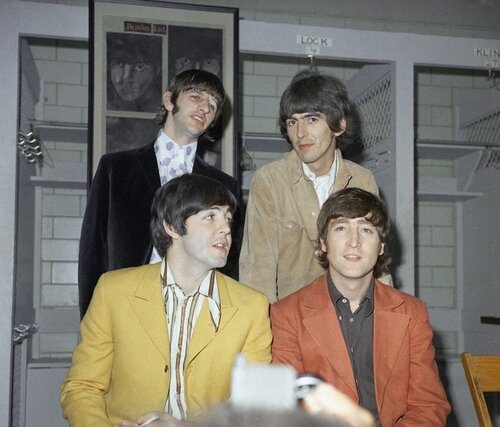
IN THIS PHOTO: The Beatles in Washington, D.C. on 13th August, 1966/PHOTO CREDIT: AP

The Best of '66

___________

THIS week has seen two albums from The Beatles…

IN THIS PHOTO: The Mamas and the Papas circa 1966

celebrating anniversaries. Although Help! turned fifty-five on Thursday (6th), one of their masterpieces, Revolver, turned fifty-four on Wednesday. I love both of these albums, but Revolver is seen as one of the best albums from The Beatles, and I have been re-listening to it. The Liverpool band put out so many tremendous albums, but did they ever fly as high as they did on Revolver?! That is up for debate but, when celebrating that album’s birthday, it made me think about the other albums released in 1966; who was around them at the time and what other gems were released. In honour of that, I have compiled a Lockdown Playlist comprising songs from the best albums of 1966 – I am including two tracks from each. This weekend is a pretty hot one, so it is probably best to stay inside and listen to some great music. I have you sorted because, in the playlist below, are some great cuts from 1966’s…

ssaa.jpg

IN THIS PHOTO: Bob Dylan in 1966

VERY best albums.

FEATURE: Second Spin: David Bowie - Lodger

FEATURE:


Second Spin

David Bowie - Lodger

___________

THIS is a rarity for me…

IN THIS PHOTO: David Bowie in London in 1979/PHOTO CREDIT: Duffy

because, normally, when I do a Second Spin, I include albums that were underrated or poorly-reviewed when they were released, or they are not talked about as much as they should. With David Bowie, there are definitely albums that were not reviewed highly – as the albums are not up to his best -, and I think there is a period in the 1980s and 1990s when Bowie was not as consistent and revered as he was in the 1970s and the latter period of his career. It is amazing to think about Bowie’s career and the sort of peaks and dips he experienced. Maybe there was a section of his career when the gold was starting to tarnish, but many have argued his final album, 2016’s Blackstar (released the same week as his death), is his finest album of all. With Bowie, the standard is so high, and the man put out at least half a dozen albums that rank alongside the very best ever! I think about these golden runs in music: where a band or artist releases sensational album after the next with no faults at all. The Beatles had it, debatably, through their entire career until Let It Be (the last album they released) but, realistically, we can apply it to Help! (1965), Rubber Soul (1965), Revolver (1966), Sgt. Pepper’s Lonely Hearts Club Band (1967), Magical Mystery Tour (1967), and The Beatles (1968) – a total of six albums. The Rolling Stones had their run between 1968’s Beggars Banquet, through to Exile on Main St. in 1972 – a total of four albums. With Bowie, I think that run extends even further than The Beatles, maybe!

It would be interesting, as a side-note, to see which artists enjoyed the longest golden run, and ask why they were so consistently innovative; whether it was to do with the climate at the time or something in their music that resonated with people. The reason I wanted to include Lodger in Second Spin is not because it is an album that is underrated – as it got great reviews and is seen as a classic -, but it is not necessarily seen as one of Bowie’s best; many exclude it from their top-ten Bowie albums, and they tend to consider the first two albums of his ‘Berlin trilogy’ -  Low (1977), and "Heroes" (1977) – as his best. Lodger completed that trilogy, and he would continue his wonderful run of albums with Scary Monsters.....and Super Creeps in 1980. Just think about Bowie’s majestic run of albums: 1975’s Young Americans, 1976’s Station to Station, Low, “Heroes”, Lodger, Scary Monsters.....and Super Creeps, Let’s Dance…and I would even add 1974’s Diamond Dogs at the start! That is a run of eight albums and, though The Beatles enjoyed that kind of consistency, I think Bowie’s albums were more wide-ranging, and he was writing most of the material either on his own or with Brian Eno – Lodger is one such album where Eno was co-writing. That is a remarkable run of albums and, considering Bowie was battling substance and drug issues and mounting expectations, the fact he managed to release so many flawless albums is majestic!

Also, I know I have missed Prince out when talking about album golden runs, but I must move on. Lodger, to me, should be heralded as much as “Heroes”, Low, or Station to Station. It was interesting seeing how Bowie transitioned from the 1970s to the 1980s and whether his material would shift dramatically. When Lodger was being recorded in 1978 and 1979, Punk was swelling and raging, and there was a definite change in the air. Bowie was always inspired by other sound and genres, never repeating himself and keen to keep moving. Also, he has always done things his own way, and you can never directly link him to other artists. If previous albums from the 1970s of his had big standout hits, Lodger is perhaps less obvious in that sense. His thirteenth studio album, it was recorded in Switzerland and New York City with collaborator Brian Eno and producer Tony Visconti. Lodger arrived two years after “Heroes”, and it was a more Pop-scented affair than previous work. Whilst Lodger lacked the instrumental splits of Low, and “Heroes”, Lodger has two major themes: that of travel (primarily side one) and critiques of Western civilisation (primarily side two). I think the album is a consistently brilliant and interesting work, and I love the elements of World music. African Night Flight was inspired by a trip Bowie took to Kenya with his son, Zowie. World music – if that is the most appropriate term? – was not heard a great deal in the mainstream in 1979, and one can look ahead to artists like David Byrne (Talking Heads), and maybe even Paul Simon (on Graceland, 1986).

Highlights on Lodger include Red Sails, Look Back in Anger, and Boys Keep Swinging – maybe they are not among his classic cuts, but they are terrific songs! I will bring in a couple of positive reviews soon, but I think Lodger is one of the albums that gained momentum years after its release; a more slow-burning record that rewarded people the more they listened – whereas the wonder and potency of albums like “Heroes” was clear from the start. Maybe Lodger is not underrated like, say, 1993’s Black Tie White Noise, but I do think Lodger should be rated as effusively as his very best records. In their review, this is what AllMusic had to say:

On the surface, Lodger is the most accessible of the three Berlin-era records David Bowie made with Brian Eno, simply because there are no instrumentals and there are a handful of concise pop songs. Nevertheless, Lodger is still gnarled and twisted avant pop; what makes it different is how it incorporates such experimental tendencies into genuine songs, something that Low and Heroes purposely avoided. "D.J.," "Look Back in Anger," and "Boys Keep Swinging" have strong melodic hooks that are subverted and strengthened by the layered, dissonant productions, while the remainder of the record is divided between similarly effective avant pop and ambient instrumentals. Lodger has an edgier, more minimalistic bent than its two predecessors, which makes it more accessible for rock fans, as well as giving it a more immediate, emotional impact. It might not stretch the boundaries of rock like Low and Heroes, but it arguably utilizes those ideas in a more effective fashion”.

Perhaps the sonic and thematic shifts took people by surprise, or they were expecting an album similar to Low, or Young Americans. Lodger was Bowie being Bowie: this curious and ever-changing genius who seemed to be making music because of its worth and depth, rather than to satisfy the critics and commercial corners. I want to bring in an interesting segment from Pitchfork’s review of Lodger:

The title alone reduces his myth to something banal and transactional: No longer the Lonely Starchild gracing us with his unusual point of view, we instead meet Safari Bowie, half-drunk tourist working out his masculinity issues by haggling with street vendors, Bowie the houseguest who can't stop talking about getting "authentic" tacos. The first half of Lodger especially, with its cartoon jungles and mysterious Bedouins and Englishmen too dumb to stay out of trouble but too powerful to ever really be in it, belongs more to the colonial satire of Evelyn Waugh than late-'70s art rock. (Bowie said that "African Night Flight" in particular was inspired by a trip to Kenya where he met a bunch of old German pilots who seemed to spend most of their time getting drunk and the rest doing profitable crime in the bush.) Lodgers aren't heavenly beings; they're people with enough money to rent a room.

All this didn't just humanize Bowie, it made him whole. By the time he'd released Lodger, he was 32, halfway divorced and trying to keep his drug thing in check, rich and famous and still staring down the long rest of his life. "Radical genius" would be nice, but so would making it to 1985 and having people still remember your name. In that sense, Lodger is an anxious, humble album, the sound of an artist ceding the wheel to a younger generation he'd be a fool to pretend he was part of. To let the culture take him out and chauffer him for a little while”.

If you have not discovered Lodger, or you are a David Bowie fan and consider Lodger to be one of his lesser works, I would advise people to check out this pearl from 1979. The album came near the end of this diamond run of classics, but the early part of 1980s saw Bowie in a creative and pioneering groove - Scary Monsters.....and Super Creeps, and Let’s Dance are both different but equally wonderful. If you talk about the best of Bowie, I think Lodger needs to be a part of the discussion! It is not as hits-packed as some of his albums, but I think the richness and textures throughout Lodger are so rewarding – one will find themselves coming back to the album time and time again. I have been revisiting a lot of Bowie’s albums, and listening to ones I have not heard in a while. Lodger, whilst not underrated or dismissed, definitely warrants fresh appreciation and augmentation. It is another staggering album from one of music’s…

GREATEST and most-loved souls.

FEATURE: The Lockdown Playlist: Epic Garage Tracks

FEATURE:


The Lockdown Playlist

IN THIS PHOTO: Ms. Dynamite

Epic Garage Tracks

___________

FOR a pretty hot weakened…

IN THIS PHOTO: MJ Cole

I felt that this Lockdown Playlist should be about epic Garage tracks. We still have Garage music today, but there was a period where the sound was blooming; British artists were at the forefront, and it was a great time for music. Most of the biggest Garage tracks arrived in the mid/late-1990s or the first few years of the next century, and I remember being grabbed and hooked from the start. It was a brilliant time to be around and, listening back, most of the best Garage tracks have endured and sound tremendous. In honour of the epicness of Garage music, I have compiled a playlist that should ensure that, on a hot day, the heat…

IN THIS PHOTO: So Solid Crew

RISES even further!

FEATURE: We Know All Her Lines So Well… From The Tour of Life, Through to Before the Dawn: What Might Have Been

FEATURE:


We Know All Her Lines So Well…

eee.jpg

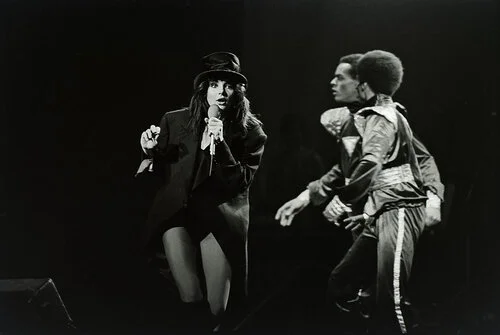
IN THIS PHOTO: Kate Bush and her band/performers take a bow during The Tour of Life in 1979/PHOTO CREDIT: Max Browne

From The Tour of Life, Through to Before the Dawn: What Might Have Been

___________

I am going to spend the next few weeks…

IN THIS PHOTO: Kate Bush and dancers performing Strange Phenomena during The Tour of Life/PHOTO CREDIT: Max Browne

focusing on features relating to Never for Ever, and Hounds of Love, as those albums celebrate big anniversaries next month – Never for Ever s forty; Hounds of Love is thirty-five. I am keen to explore those albums as they approach their birthdays but, now, I am minded to go back to 1979. I have written about Kate Bush’s The Tour of Life a few times before, as it was a remarkable spectacle, and it redefined what a Pop concert could be; it extended the realms of what a live show could be, and there were not many artists like Kate Bush really going beyond the ordinary when it came to shows – I guess David Bowie was the closest comparison in regards what he was doing in the 1970s at his shows. Before I move on, and in case you have not listened to it, Absolute Radio’s series, I Was There, aired a show regarding The Tour of Life recently. Kate Bush News provide further explanation:

Absolute Radio in the UK is continuing a new season of documentaries called “I Was There“, introduced by Sophie K, with an episode about Kate’s 1979 tour featuring contributions from choreographer Anthony Van Laast, tour manager Richard Ames and writer Graeme Thomson. You can listen live at 8pm UK time on Sunday August 2nd here: https://planetradio.co.uk/absolute-radio/shows/i-was-there/

The series looks at the most iconic gigs in rock history, and also includes Woodstock, Live Aid, the Isle of Wight Festival 1970, Rolling Stones Altamont 1969, Pink Floyd, Bob Marley and more, all told by the people who were there; from the artists to the roadies, the producers to the fans.

From the episode description: “The first and (up until very recently) last tour of mercurial pop superstar Kate Bush. A show that aimed to combine music, dance, poetry, mime, burlesque, magic and theatre, was it too ambitious for its own good? Or did it change what could be achieved in pop?” Kate also features heavily in the series promo trailer below”.

There is a lot to unpack when it comes to The Tour of Life. Questions can be asked as to whether Bush bit off more than she could chew. Certainly, after 1978, there was a need to assert control over her music more and to do something that she was helming – she felt a little detached in the creation and production of The Kick Inside, and Lionheart, and the desire for command was there. 1978 was such a frenetic and non-stop year in terms of promotion and activity. Of course, Bush did want to perform and had these two albums out, but I think one of the main impetuses for The Tour of Life was to put herself at the forefront, rather than releasing albums where others were producing and Bush did not have as big a role as she hoped. Was The Tour of Life too ambitious? Certainty, one can watch the preparations for that tour, and Bush was pretty much involved in everything! From set designs and staging, through to the routines and costumes, she was there and making decisions – even though she had a dedicated and large team supporting her. I think it was crucial for her to embark on a tour like this, and it proved that Bush could definitely handle a lot more responsibility; she could see a gigantic show through from conception to execution, and the reception The Tour of Life received proved that the fans and critics loved it!

Some critics were a bit short when it came to their reaction; feeling the show was a bit overblown and there were few standout moments. Not a lot of great video exists from The Tour of Life period, but there are bits and pieces on YouTube. Some of the routines and sets are staggering. Watch James and the Cold Gun, and Bush stalks the stage with a gun as she fires down people and the percussion riffles behind her. The song is much more physical and vivid that it appears on The Kick Inside and, whilst I love Bush’s first two albums, some of the songs never reach full potential because of the limitations of the studio: to see them brought to life in such an explosive way is a reason why so many people were startled by the magnitude and resonance of The Tour of Life. All but one song from Bush’s first two albums were performed (Oh to Be in Love, from The Kick Inside, was the omission), and there were some songs that would appear on her next album, 1980’s Never for EverViolin, and Egypt were two terrific tracks that sounded fuller and more atmospheric on The Tour of Life as opposed the album! From the warm-up gig in Poole on 2nd April, through to the final show at the Hammersmith Odeon on 14th May, the sheer scale and ambition of the tour was stunning!

IN THIS PHOTO: Kate Bush in 1979/PHOTO CREDIT: Gered Mankowitz

I think, despite some flaws, The Tour of Life was a success. Whilst the urgency Bush felt to finally tour (she recorded her first songs for The Kick Inside in 1975, and this was her first real taste of larger live performance), maybe the fact she had only put out two albums was the biggest flaw. Today, artists pretty much tour after every album, but there was this gap between 1979’s The Tour of Life and Bush’s stage return in 2014 with Before the Dawn. She did perform between 1979 and 2014, but this was T.V. appearances and the odd stage appearance – never anything as full-scale and with the consistency as The Tour of Life! Before the Dawn was such a great return, as it brought Bush back to the stage in front of thousands of fans, but it was the first time Hounds of Love’s second side, The Ninth Wave, was performed. From 26th August to 1st October, Bush returned to the Hammersmith Odeon (or the Eventim Apollo as it is known today). Rather than travelling – which is a reason why she was so drained after many shows during The Tour of Life and was reluctant to perform again after that -, she was based close to home and was able to put her energies into each night. I love the fact that Bush incorporated The Ninth Wave, and Aerial’s second side/disc, A Sky of Honey, beside one another – The Ninth Wave was the second half of the first act, whilst A Sky of Honey formed the second act.

They complement one another gracefully, and it was wonderful to see her two conceptual suites of songs performed in 2014 – The Ninth Wave, and A Sky of Honey were released twenty years apart – to a loving crowd. Alongside Aerial, and Hounds of Love’s great moments - Hounds of Love (Hounds of Love), Joanni (Aerial), Running Up That Hill (A Deal with God) (Hounds of Love), King of the Mountain (Aerial), and Cloudbusting (Hounds of Love), as an encore track, were the other tracks from those two albums -, we had 2011’s 50 Words for Snow’s Among Angels as an encore track, and The Red Shoe’s (1993) Lily, and Top of the City were also featured. Bush performed for the BBC a few times between 1978 and 1994, and there are videos of her performing live between 1979 and 2014 – including spots on Top of the Pops. The Tour of Life is mainly about The Kick Inside, and Lionheart of 1978; there are some nods to Never for Ever, whilst Before the Dawn mostly covered Hounds of Love, and Aerial – with some bits from The Red Shoes, and 50 Words for Snow in the mix. With Never for Ever, The Dreaming, Hounds of Love (some of its first side), The Sensual World, The Red Shoes (most of the tracks), Aerial (its first side for the most part), and 50 Words for Snow (bar one song) still virginal in terms of tour/residency inclusion, one wonders what could have been – and what still might be.

xxx.jpg

IN THIS PHOTO: Kate Bush in 1989/PHOTO CREDIT: John Carder Bush

When Bush has been asked about the lack of touring after 1979, she explained how it was a great experience but it was exhausting. Also, if she spent a lot of time putting together tours every couple of years, she would not be able to record new material. It is a chicken and egg situation where she needs new music to perform on stage, but she also needs the time to record the music! Bush has always written quickly, whereas the recording process has been more gradual – not that she is a perfectionist; more that it does take time to make her songs as brilliant as they are. In 2020, there is no word whether Bush will return to the stage, either in a one-off gig or a residency like 2014. Maybe now, at sixty-two, it would seem odd to revisit music she released in her twenties and thirties, and I feel there is greater impetus in her to do something new rather than go back to the stage. One can never say never when it comes to Kate Bush, but I feel like the likelihood of her performing live diminishes by the year! It is one of the greatest tragedies in music that she never did anything like The Tour of Life for so long, but one can understand her reasoning and, if she did, would we have the albums we do?! I don’t think so. This feature is less about a push to Kate Bush for future shows, but a look back and imagine what could have occurred.

As Never for Ever approaches its fortieth (it turns forty on 7th September), just think about the songs that could have been mounted on the stage in a wonderful show! I will not muse and concoct imaginary setlists, but a show opening with Babooshka (from Never for Ever) would have been epic! I think, after seeing subsequent music videos, people could have envisaged what the songs would look like on the stage. Never for Ever also has The Wedding List – a great song that should have been a single -, and the two incredible singles, Army Dreamers, and Breathing! The whole album is so underrated, but the sheer power these songs would hold on stage is…well, one can imagine! Beautiful songs like The Infant Kiss, and All We Ever Look For are on Never for Ever, and I think there could have been this wonderful set where she combined Never for Ever, and the more progressive and experimental tracks on 1982’s The Dreaming. I know some of the tracks from these two albums were performed/filmed in some capacity but, like a splice of Hounds of Love/Aerial or The Kick Inside/Lionheart, a Never for Ever/The Dreaming combination would be something! I know that would mean that, in this imagined alternative universe, Bush would not have been able to start writing and recording for Hounds of Love – she was productive during 1983 and continued right through to 1985.

Again, if she did tour rather than record, I don’t think we would have had the albums we did, but one cannot help but dream a tour/show where two brilliant albums stood aside. The Dreaming is an album that has never been exposed on a large stage in any real way. Singles like Sat in Your Lap, The Dreaming, and There Goes a Tenner, whilst not as successful as the best cuts from Hounds of Love, and The Kick Inside, boasted terrific videos, and I can just imagine a wonderful story. Maybe it could have been a concept as Bush as this alter ego who travels from Australia (The Dreaming), to London (There Goes a Tenner), to other lands; maybe a two-tone show with harder and light songs, or a suite similar to her film, The Line, the Cross and the Curve, (1993) where other actors are involved. The Dreaming is still underrated, and Pull Out the Pin, Leave It Open, Night of the Swallow, All the Love, Houdini, and Get Out of My House are songs one hardly hears played, and I think they would have been staggering sets if Bush brought them alive on stage! I think Never for Ever, and The Dreaming are so great because Bush gained new confidence and ambition in 1979, and she brought this into the studio. Hounds of Love, though a lot of the songs have been performed on stage, warrants fresh inspection.

Two albums, again, that could have been paired, are The Sensual World, and The Red Shoes. I will not, again, predict what concepts could have been employed, but to see The Fog, Heads We’re Dancing, Deeper Understanding, and Rocket’s Tail (The Sensual World) entwined with Rubberband Girl, And So Is Love, Top of the City, and Why Should I Love You? (The Red Shoes) would have been quite an experience! I have not even mentioned B-sides between 1980-2013 and what could have appeared in live shows between then. Think about the interesting songs on Aerial’s first side - Mrs. Bartolozzi, and How to Be Invisible among them – that would be wonderfully realised on stage; terrific songs from 50 Words for Snow – the title track and Misty especially – that would be grand and stirring! As this NME article shows (where Bush was quoted after being interviewed by The Independent), there were always plans to perform live again after The Tour of Life:

Asked about her lengthy hiatus from the stage, Bush told The Independent: “It wasn’t designed that way, because I really enjoyed the first set of shows we did [in 1979]. The plan at the time was that I was going to do another two albums’ worth of fresh material, and then do another show.”

IN THIS PHOTO: Kate Bush during her Before the Dawn residency at the Hammersmith Apollo in 2014/PHOTO CREDIT: Ken McKay/Rex Features

She continued: “But of course, by the time I got to the end of what was ‘The Dreaming’ album, it had gone off on a slight tilt, because I’d become so much more involved in the recording process.

“And also, every time I finish an album, I go into visual projects, and even if they’re quite short pieces, they’re still a huge amount of work to put together. So I started to veer away from the thing of being a live performing artist, to one of being a recording artist with attached visuals”.

I know Bush scouted Wembley around the time of The Red Shoes as a venue for a possible concert/residency, but I can never see her performing at big stadiums! The reclusive tag has always been applied to Kate Bush, and many people have asked if she disappeared from live performance post-1979 and why that might have been. The main reason I wanted to write this feature was not to outline what a loss it is that Bush never brought so many of her albums to the stage, but to wonderfully picture these unfurled songs in a live setting; tracks that may have had videos or be non-singles, but would have been translated to the stage in such an original and evocative manner. As I said to start, one can never predict Kate Bush, and one cannot dismiss the notion that Before the Dawn was the final chapter when it comes to live performance. It is unlikely she will perform live again, but that decision is never set in stone. It all depends on how she feels and what the motivation is. Regardless, if you have not heard the Before the Dawn album, then go and buy it, and there are videos online of her performing at The Tour of Life. The sheer joy of watching Kate Bush on stage is addictive, but the world is thankful that she committed herself to albums and gave the world so much incredible music! Although Bush has only performed one tour and one residency in her professional life (in terms of bigger, longer performances), those two seismic events most definitely…

LEFT their mark on the world.

FEATURE: The August Playlist: Vol. 2: SULA’s Cosmic Day Through Nazareth

FEATURE:


The August Playlist

IN THIS PHOTO: Greentea Peng

Vol. 2: Hu Man, A Cosmic Day Through Nazareth

__________

WHEN looking at this week’s new tracks…

IN THIS PHOTO: The Staves

there is a real assortment and breadth of gold! There is new music from The Staves, Jamila Woods, Prince, and Greentea Peng. Throw into the mix Victoria Monét, Willie J Healey, Another Sky, Glass Animals, and beabadoobee, and it is another typically exciting and broad week! If you need some tunes to get your weekend off to a great start, I think there is enough below to get you fixed and sorted! It is a hot weekend, and the playlist below will definitely…

IN THIS PHOTO: Jamila Woods

RAISE the energy levels.

ALL PHOTOS/IMAGES (unless credited otherwise): Artists

__________

www.jpg

PHOTO CREDIT: Sequoia Ziff

The Staves Nazareth

qqq.jpg

PHOTO CREDIT: Matthew Avignone

Jamila Woods - SULA (paperback)

Prince Cosmic Day

Victoria Monét - Jaguar

xxx.jpg

Cardi B (ft. Megan Thee Stallion) - WAP

Greentea Peng Hu Man

PHOTO CREDIT: Hollie Fernando

Willie J Healey Big Nothing

PHOTO CREDIT: Ollie Trenchard

Glass Animals Tangerine

beabadoobeeSorry

Another Sky The Cracks

Declan McKenna - Be an Astronaut

Nadia Rose, Leon Jean-Marie - Higher

All We Are Heart of Mine

Sasha Sloan - Lie

Kelly Lee Owens (ft. John Cale) - Corner of My Sky

lo.jpg

blink-182 Quarantine

IAMDDBEnd of the World

fss.jpg

PHOTO CREDIT: Charlotte Zoller

Bon Iver AUATC

saa.jpg

PHOTO CREDIT: Melanie Lehmann

Gia Ford Sleeping in Your Garden

JONES Camera Flash

Cults - No Risk

Icona Pop Feels in My Body

PHOTO CREDIT: Astrophe Magazine

GRAACE Body Language

Tiwa SavageKoroba

Remi Wolf - Monte Carlo

Olivia Dean The Hardest Part

Doja CatFreak

zzz.jpg

Tiana Major9 Real Affair…

Sea Girls Forever

PHOTO CREDIT: Alex Barakat

Naomi BanksCloser

PHOTO CREDIT: Paula Trojner

Kynsy - Cold Blue Light

Dylan ConriqueBaby Blue

PHOTO CREDIT: Matt Puccinelli

Psychedelic Porn Crumpets - Mr Prism

JoJo What U Need

Zella DayOnly a Dream

FEATURE: #LetTheMusicPlay: What Now for Live Music and Those Behind the Scenes?

FEATURE:

#LetTheMusicPlay

IMAGE CREDIT: UK Music

What Now for Live Music and Those Behind the Scenes?

___________

WITH each passing week…

xxxx.jpg

IMAGE CREDIT: UK Music

the fate and stability of live music becomes less certain. There are drive-thru gigs that one can attend, and there are plans to try and get live music going in a smaller capacity than normal. Some recent socially distanced gigs have not been a major success, as venues cannot make profit with only a third or half of seats/spaces taken. Until social distancing is dropped – which may not be until the end of the year -, any notion that venues can open and operate as normal is absurd. I am pleased that there is live music happening and, through drive-thrus, virtual gigs and occasions where artists perform on their own at a venue and people buy tickets online, it does mean that we get some semblance of normality. What is worrying is that, at the moment, the security of the crews that help bring shows together is threatened. This article from NME explains more:

Figures from the music industry are adding more volume to the #LetTheMusicPlay campaign to demand that the government share arts funding to protect the future live crew, musicians and the individuals working behind the scenes.

Last month, more than 1,500 artists and industry figures came together to call on the government to stop “catastrophic damage” to live music amid the COVID-19 pandemic in the launch of the #LetTheMusicPlay campaign. After months of campaigning from fans and the world of musicthe UK government revealed plans for an unprecedented cash injection of £1.57 billion to help the arts, culture and heritage industries survive the impact of closures brought on by coronavirus – providing music venues, independent cinemas, museums, galleries, theatres and heritage sites with emergency grants and loans.

zzz.jpg

IMAGE CREDIT: UK Music

While the relief for venues was welcome, many warned that without urgent government clarity, support and action, the pipeline of talent that plays within them could be cut short – declaring that musicians and crew were facing their “biggest crisis since the 1920s” without support. 

Now, the #LetTheMusicPlay campaign seeks to highlight the size and scale of the jobs and companies that make up the UK live music industry which need urgent support and “ensure that the government cannot ignore the complex ecosystem that supports live music in their funding decisions”.

“It takes a lot of people to build a show,” wrote Enter Shikari on Twitter. “The live music industry is project to lose approximately 60 percent of its jobs due to COVID-19. Please share, show solidarity with the teams behind the scenes & call for further support for the live industry

The fact that so many people could lose their jobs would result in huge infrastructure damage, and it would be extremely hard for the music industry to recover. We think of venues and consider the artists who play there, but many are not aware of all of the people at these venues that make them what they are; those who help bring live shows and festivals together. I know the Government cannot save every job in live music, but the fact that such a handsome fund was earmarked for the arts and music, I wonder how much, if any, has been stored aside for crew and venue staff?!

zzzz.jpg

PHOTO CREDIT: @sctgrhm/Unsplash

I have been looking online, and a lot of people have been sharing the hashtag #LetTheMusicPlay. It is important that awareness if raised and, as there is a kitty there to help the music industry, it is only right that, sooner rather than later, the Government can be more specific regarding who will receive the money and when. It is confusing for so many people and, as live music is being planned for 2021, without adequate support and financing, many venues might have to close, and so many jobs will be lost! The fact that £1.57 billion was eventually pledged by the Government was as a result of campaigning and a lot of great work from so many different corners, so the hope is that there will be a response and some sort of blueprint regarding the dissemination and distribution of that money. Nobody knows how next year will play out and whether live music will be able to return to its former self – or whether it might take another year for everything to ease and COVID-19 to subside. It is a frightening time for those who rely on live music, and I also feel for musicians who are doing their best to stay connected with their fans, but are having to adapt with a life without (or very little) live music. Things will gradually get better but, in order for the live music industry to flourish and sustain next year, we need to make sure that there is a guarantee to those whose jobs are vulnerable right now. If that does happen, then venues, staff, artists and fans can breathe a sigh of relief and looking forward to return to venues and festivals before too long! That would be wonderful, and it is something that…

PHOTO CREDIT: @roccocaruso/Unsplash

WE all really want!

FEATURE: A Buyer’s Guide: Part Fourteen: Björk

FEATURE:


A Buyer’s Guide

PHOTO CREDIT: Inez & Vinoodh

Part Fourteen: Björk

___________

I can’t think of many artists…

PHOTO CREDIT: Tim Walker

who are more original and influential than the Reykjavík-born pioneer, Björk. Since her 1993 debut solo album, Debut (which was actually her second album: her eponymous debut was released in 1977), she has created masterful album after masterful album. Her ninth studio album, Utopia, was released in 2017, and it was another astonishing work from Björk. Whether solo or as a member of The Sugarcubes, there has been nobody in music like Björk! She is an amazing artist and, if you need some guidance regarding her best albums, I have collected together her four essential studio albums (solo); the one that I feel is underrated, and her most current release – in addition to a Björk book that is worth consideration. I am such a massive fan of Björk, so it is a pleasure to include her in… 

A Buyer’s Guide.

_______________

The Four Essential Albums

Debut

sas.jpeg

Release Date: 5th July, 1993

Labels: One Little Indian/Elektra

Producers: Nellee Hooper/Björk

Standout Tracks: Venus as a Boy/Big Time Sensuality/Violently Happy

Buy: https://www.discogs.com/Bj%C3%B6rk-Debut/master/34486

Stream: https://open.spotify.com/album/5BTTaN1CMOdiPtJHagNCes

Review:

Freed from the Sugarcubes' confines, Björk takes her voice and creativity to new heights on Debut, her first work after the group's breakup. With producer Nellee Hooper's help, she moves in an elegantly playful, dance-inspired direction, crafting highly individual, emotional electronic pop songs like the shivery, idealistic "One Day" and the bittersweet "Violently Happy." Despite the album's swift stylistic shifts, each of Debut's tracks are distinctively Björk. "Human Behaviour"'s dramatic percussion provides a perfect showcase for her wide-ranging voice; "Aeroplane" casts her as a yearning lover against a lush, exotica-inspired backdrop; and the spare, poignant "Anchor Song" uses just her voice and a brass section to capture the loneliness of the sea. Though Debut is just as arty as anything she recorded with the Sugarcubes, the album's club-oriented tracks provide an exciting contrast to the rest of the album's delicate atmosphere. Björk's playful energy ignites the dance-pop-like "Big Time Sensuality" and turns the genre on its head with "There's More to Life Than This." Recorded live at the Milk Bar Toilets, it captures the dancefloor's sweaty, claustrophobic groove, but her impish voice gives it an almost alien feel. But the album's romantic moments may be its most striking; "Venus as a Boy" fairly swoons with twinkly vibes and lush strings, and Björk's vocals and lyrics -- "His wicked sense of humor/Suggests exciting sex" -- are sweet and just the slightest bit naughty. With harpist Corky Hale, she completely reinvents "Like Someone in Love," making it one of her own ballads. Possibly her prettiest work, Björk's horizons expanded on her other releases, but the album still sounds fresh, which is even more impressive considering electronic music's whiplash-speed innovations. Debut not only announced Björk's remarkable talent; it suggested she had even more to offer” – AllMusic

Choice Cut: Human Behaviour

Post

Release Date: 13th June, 1995

Labels: One Little Indian/Elektra

Producers: Björk/Nellee Hooper/Graham Massey/Tricky/Howie B

Standout Tracks: It’s Oh So Quiet/Isobel/I Miss You

Buy: https://www.discogs.com/Bj%C3%B6rk-Post/master/36251

Stream: https://open.spotify.com/album/2Ul7B1LEHxXzYubtkTMENs

Review:

It’s Oh So Quiet,” an instrumentally faithful cover of a 1940s Betty Hutton big band number, was Björk’s biggest crossover moment ever, and if it’s usually rejected by most Björkheads, well, then that’s another testament to the extent she implores people to open up their musical horizons. Each track on Post reveals another emotional extreme: “Possibly Maybe,” an almost masturbatory ode to the wax and wane of love affairs; “Enjoy,” a dark and dubby dalliance with the seedier side of sexuality; and “I Miss You,” which should resonate with anyone familiar with the “Amor Omnia” speech in Carl Dreyer’s Gertrud. And in case some odd ducks still hadn’t caught on to Björk’s lost-in-a-costume-shop approach to public guises, Post came fully equipped with another barrage of music videos (six of the little buggers!), many of which have gone on to become classics, most notably Michel Gondry’s industrial wasteland “Army of Me” and Spike Jonze’s clodhopping tribute to Busby Berkeley and Jacques Demy, “It’s Oh So Quiet.”

Collaboration has always been an important aspect of Björk’s work ethic. Testifying to this is the fact that she has had romantic affairs with a great many of her colleagues (Tricky, Stephane Sednaoui…though probably not Lars von Trier). She also suggested that the Post remix album, Telegram, is, if anything, even more true to her personal vision than the prototype, despite having an even wider range of styles and producers (a shrieking, classical Brodsky Quartet “Hyper-Ballad” mingles with a distorted, NIN-like “Possibly Maybe” and a ghetto-blasting hip-hop “I Miss You”).

For many, the delicate balance of Post represented the ultimate Björkian pop experience, and one that has yet to be topped. In fact, Björk’s next album, her 1997 glass-dragon Homogenic, indicated with one fell swoop that Björk had moved beyond pop into what one might call her own cloistered “genre of me.” The shimmering Vespertine, from 2001, suggested a move on Björk’s part to translate her own unique musical style back into the world of pop (with some fantastically emotional moments like “Undo” and “It’s Not Up to You”), but Post will likely always remain the Björk album that most successfully sustains her winning balance of experimental whimsy and solid pop magic” – SLANT

Choice Cut: Army of Me

Vespertine

Release Date: 27th August, 2001

Labels: One Little Indian/Elektra

Producers: Björk/Thomas Knak/Martin Gretschmann/Marius de Vries

Standout Tracks: Hidden Place/Pagan Poetry/Sun in My Mouth

Buy: https://www.discogs.com/Bj%C3%B6rk-Vespertine/master/37082

Stream: https://open.spotify.com/album/5vBpIxm8ws6pWyVmTWiGE1

Review:

Vespertine ("occurring in the evening") is an apposite title for Björk's first studio album since 1997's Homogenic. Its stillness and space evoke the Arctic night - probably a fanciful impression now that Björk's corner of the Arctic has been overrun by British clubbers, but her music has always suspended reality. Her modish collaborators, including electro-duo Matmos and harpist Zeena Parkins, confect a world of crunches, crackles and celestial choirs, through which Björk flutters, unconstrained as ever by rhythm. Her least commercial effort yet, its impact derives from the enchanted union of that wild voice and intimate instrumentation. The odd lapse into tweeness (a tinkling instrumental called Frosti) aside, there's magic afoot: on the soaring Hidden Place, amid the whirrs of Undo, and near enough everywhere else”  The Guardian

Choice Cut: Cocoon

Medúlla

Release Date: 30th August, 2004

Labels: One Little Indian/Elektra

Producers: Björk/Mark Bell

Standout Tracks: Where Is the Line/Vökuró/Oceania

Buy: https://www.discogs.com/Bj%C3%B6rk-Med%C3%BAlla/master/39459

Stream: https://open.spotify.com/album/6bjGw9Clp684XTRPBI0h6K

Review:

The more atmospheric songs on Medulla are arguably its most evocative and powerful. "Vokuro" (or "Vigil") is one of two songs sung in Björk's native Icelandic, and is in fact an adaptation of a piano piece by Jorunn Vidar. Björk sings its plaintive strains accompanied by a solemn choir, and brings out its inherently hymn-like qualities. Wyatt overwhelms "Submarine" with his ghostly, striking vocals, thickly layered and overdubbed. Björk doesn't even enter with the melody for almost a minute-and-a-half, by which time Wyatt has already made his redoubtable mark. Not to be outdone, Björk's collage of sighs, whispers, cries and otherwise indescribable sounds on "Ancestors" might scare fans accustomed to a steady diet of actual songs. It reminds me of the work of American experimental vocalist and composer Meredith Monk (Björk has performed her "Gotham Lullaby" in concert several times), though some folks may just hear it as the "unlistenable" song on Medulla.

Medulla is an interesting record. It continues Björk's run of releases that sound nothing like their predecessors, yet is, as ever, particular to her. Furthermore, she's found a way to bathe her immediately distinctive melodies and vocal nuances in a solutions that cause me to reevaluate her voice and her craft. I shouldn't be surprised: She's made a career of making me interested in her world of sound. And that she doesn't appear to be short on ideas 25 years into her professional career should end all speculation” – Pitchfork

Choice Cut: Triumph of a Heart

The Underrated Gem

Volta

Release Date: 1st May, 2007

Labels: One Little Indian (U.K.)/Polydor (Europe)/Elektra/Atlantic (N.A.)

Producers: Björk/Timbaland/Danja/Mark Bell/Damian Taylor

Standout Tracks: The Dull Flame of Desire/Innocence/Declare Independence

Buy: https://www.discogs.com/Bj%C3%B6rk-Volta/master/5500

Stream: https://open.spotify.com/album/71wEGvzOfEbIAtNnRIh9IK

Review:

Wanderlust" follows and provides the yin to "Earth Intruders"' yang, its horns and brooding melody giving it the feel of a moodier, more contemplative version of "The Anchor Song." These two songs set the tone for the rest of Volta's pendulum-like swings between sounds and moods, all of which are tied together by found-sound and brass-driven interludes that give the impression that the album was recorded in a harbor -- an apt metaphor for how ideas and collaborators come and go on this album. Timbaland's beats resurface on "Innocence," another of Volta's most potent moments; a sample of what sounds like a man getting punched in the gut underscores Björk's viewpoint that purity is something powerful, not gentle. Antony and the Johnsons' Antony Hegarty lends his velvety voice to two outstanding but very different love songs: "The Dull Flame of Desire" captures swooning romance by pairing Björk and Hegarty's voices with a slowly building tattoo courtesy of Lightning Bolt drummer Brian Chippendale; "My Juvenile," which is dedicated to Björk's son Sindri, closes Volta with a much gentler duet. Considering how much sonic and emotional territory the album spans -- from the brash, anthemic "Declare Independence," which sounds a bit like Homogenic's "Pluto," to "Pneumonia" and "Vertebrae by Vertebrae," which are as elliptical and gentle as anything on Vespertine or Drawing Restraint 9 -- Volta could very easily sound scattered, but this isn't the case. Instead, it finds the perfect balance between the vibrancy of her poppier work in the '90s and her experiments in the 2000s” – AllMusic

Choice Cut: Earth Intruders

The Latest/Final Album

Utopia

Release Date: 24th November, 2017

Labels: One Little Independent Records/Caroline International/Universal Music Group/The Orchard Enterprises

Producers: Björk/Arca/Rabit

Standout Tracks: Arisen My Senses/utopia/Tabla Rasa

Buy: https://www.discogs.com/Bj%C3%B6rk-Utopia/master/1270127

Stream: https://open.spotify.com/album/037hz3oZyrgcJOheyhPMnC

Review:

Earlier this year Björk smirkingly described her ninth record as her “Tinder album”, dealing with the process of falling in love again after experiencing monumental heartbreak. This is most evident on the twinkling harp-swathed ‘Blissing Me’, where she dreamily sings of “two music nerds, obsessing” and “sending each other MP3s, falling in love to a song”. In keeping with the ‘Utopia’ of its title, Björk has created a paradise-like world here, with birdsong dotted throughout the album, transporting the listener to a magical sonic rainforest, with tracks like ‘Saint’ having more in common with a David Attenborough nature documentary soundtrack than a pop song. Most evocative of all though, is the sound produced by a 12-piece Icelandic female flute orchestra, the lushness of which lifts every track with a lightness that is at once hopeful but haunting.

‘Sue Me’ gets more murky however, as crunchy electronics and scattershot beats gallop under her cooing lyrics about the “sins of the father”, likely a reference to her ex – the artist Matthew Barney – suing for custody of their daughter after their split. ‘Utopia’ is where art, real life and deep experimentation intersects, and it’s utterly compelling” – NME

Choice Cut: The Gate

The Björk Book

Björk: Archives

Authors: Alex Ross/Nicola Dibben/Timothy Morton

Publication Date: 2nd March, 2015

Publisher: Thames & Hudson Ltd

Synopsis:

Bjoerk is a contemporary icon whose contributions to music, video, film, fashion and art have influenced a generation worldwide. Here, now, is the ultimate celebration of this multimillion-selling superstar. Designed by top design studio M/M (Paris) as a slipcased world of wonders, this publication - which accompanies spring's exhibition on Bjoerk at The Museum of Modern Art - is composed of six parts: four booklets, a paperback and a poster. Each booklet contains illustrated texts by, respectively, Klaus Biesenbach, Alex Ross, Nicola Dibben and Timothy Morton, while the poster features artwork of Bjoerk's albums and singles. The main book focuses on her seven major albums - Debut, Post, Homogenic, Vespertine, Medulla, Volta and Biophilia - and the personas created for each one. Poetic texts by longtime collaborator, Icelandic poet Sjon, are accompanied by shots of Bjoerk performing live; multiple stills from music videos made by directors including Michel Gondry, Chris Cunningham and Spike Jonze; images of Bjoerk in breathtaking costumes by designers such as Alexander McQueen and Hussein Chalayan; and shots by star photographers such as Nan Goldin, Juergen Teller, Stephane Sednaoui, Inez van Lamsweerde & Vinoodh Matadin, and Araki. All combine to form an extraordinary visual masterpiece, celebrating the magical world of Bjoerk” – Waterstone

Order: https://www.waterstones.com/book/bjork/klaus-biesenbach/alex-ross/9780500291948

FEATURE: Too Good to Be Forgotten: Tracks that Are Much More Than a Guilty Pleasure: Hanson - MMMBop

FEATURE:


Too Good to Be Forgotten: Tracks that Are Much More Than a Guilty Pleasure

Hanson - MMMBop

___________

MAYBE this will not turn into…

a regular feature, but there are songs that some people might consider guilty pleasures and, for that reason, they do not get much play on radio. Others might feel that the song is a bit out of step with modern sounds, so you do not hear much about it. To be fair, I think Hanson’s MMMBop captured a sound that we do need more of today! I was thirteen when the song came out in 1997 and, as a high school student, music was more than just something that was on in the background. To me, it was a way of life, a conversational centrepiece, and a way of making life a lot easier. In 1997, there were a few reasons why Hanson’s MMMBop hit me quite hard – and many people I knew. Look at the best albums of that year, and Hanson sound unlike anything really! We has Radiohead (OK Computer), Björk (Homogenic) and The Chemical Brothers (Dig Your Own Hole) putting out these albums that were a little darker and moodier than what was in the mainstream; Britpop was sort of declining and Oasis’ Be Here Now, whilst it received a rapturous reception when it was released, in hindsight, was not their greatest moment. In terms of U.K. singles, there was some Pop in the mix – the Spice Girls, Lisa Stansfield and The Cardigans all had singles out -, but it was clear that there was a change in the air. From the euphoria of late-1980s and early-1990s Dance and Rave to the Britpop movement, a noticeable transformation was a occurring. Because of that, I think I clung onto Hanson, as it was a sort of American injection of Britpop, at a time in my life when I still needed that uplift and optimism.

Politically, Labour came to power and there was optimism about the future, but it seemed that artists were reacting against Britpop and, as such, we did not see as many joyous anthems as we did between, say, 1991 and 1996. Taken from their excellent Middle of Nowhere (1997) album, MMMBop was written by band members, Isaac Hanson, Taylor Hanson, Zac Hanson…and that is pretty impressive in itself! Normally, when you have a Pop group that young – they were teens when that album came out –, there are other writers and producers crammed together who are charged with coming up with a hit. On Middle of Nowhere, that does happen on most of the tracks, but it is normally one or two writers on each song, rather than the horde you see on so many albums to this day! The Dust Brothers’ production turned MMMBop from a song that started out a lot softer and slower, and it was transformed into a Sunshine Pop monster! The song was nominated for two gongs at the 40th Annual Grammy Awards, and it is the band's most successful single to date. MMMBop was a major success worldwide, reaching number-one in Australia, Canada, Germany, New Zealand, the United Kingdom and the United States – it hit the top spot in twelve countries altogether! Whilst their album contained few songs as strong and catchy as MMMBop, they had Where’s the Love, another hugely catchy track, and Thinking of You.

sss.jpg

I think Middle of Nowhere is one of the more underrated albums of the 1990s, and a big part of its success is MMMBop. Even though some polls have placed the songs in their top-hundred tracks of the 1990s, I think MMMBop gets sneered at by some, whilst one hardly hears it on the airwaves! That is a shame. In an August 2004 interview with Songfacts, Zac Hanson explained the song's origins:

That song started out really as the background part for another song. We were making our first independent album and we were trying to come up with a background part. We started singing a slightly different incarnation of what is now the chorus of "MMMbop." That sort of stuck in our heads and never really worked as a background part, and over a couple of years, that piece really has stuck in our heads and we really crafted the rest of the song - the verses and bridge and so on.

What that song talks about is, you've got to hold on to the things that really matter. MMMbop represents a frame of time or the futility of life. Things are going to be gone, whether it's your age and your youth, or maybe the money you have, or whatever it is, and all that's going to be left are the people you've nurtured and have really built to be your backbone and your support system.

They [the lyrics] weren't inspired by one artist in particular. The first music that we got into was '50s and '60s music. If anything, "MMMbop" was inspired by The Beach Boys and vocal groups of that era - using your voice as almost a doo-wop kind of thing. It was something we almost stumbled upon [3]

I do think MMMBop is a Pop classic, and it is far more substantial than many people think. One hears the title’s word repeated and feels that it means nothing; they hear the sunny chorus and dismiss it as a sugary Pop song. Right from the first verse, the then-teen Hanson brothers were penning lyrics about love, ageing and the uncertainty of life with a lot of maturity and insight – “You have so many relationships in this life/Only one or two will last/You go through all the pain and strife/Then you turn your back and they're gone so fast”. The lyrics are delivered quite fast, so it can be hard deciphering a few of them – it makes me think that MMMBop would make a very interesting ballad! There is that contrast between the deeper and more image-provoking verses, and the chorus itself: an explosion of singalong bliss that, twenty-three years after its release, still sound so fresh and essential! A lot of Pop from the 1990s hasn’t dated that well and, to be frank, I can listen to the songs a few times and not need another look in for a while! I can spin MMMBop over and over, as it never outstays its welcome. That alluring and insatiable chorus keeps you coming back in; the nuanced and interesting lyrics mean the song demands repeated listens.

azzz.jpg

Consider lines like “Plant a seed, plant a flower, plant a rose/You can plant any one of those/Keep planting to find out which one grows/It's a secret no one knows”, and those are lyrics that puts one in a very philosophical mood! Not to hark back to their age, but those are some big and moving words from teenagers! I wonder, if MMMBop came out in 1994 or 1995, it would have been considered a sort of U.S. Britpop challenger!? The song got a lot of praise upon its release, but not many people I know look back on 1997 and rank MMMBop alongside the best music of the year. One cannot help get drawn to the song, and its video goes a long way to adding charm! The boys are seen in a variety of locations, just having fun and embracing the brevity of youth – we see them roller-skating, at a payphone, and even on The Moon! The pairing of that smile-inducing video and a song that is sunny and mature makes MMMBop a treasure. It is seen as a guilty pleasure by some, and others just ignore it as a minor track from the 1990s. It is so much more than that! Have a listen to it now, and I guarantee the song will put you in a better mood and, to boot, it will stick in your head for ages! The album, Middle of Nowhere, was an accomplished debut, and I like the fact that Hanson have performed MMMBop since then. It is a song that they feel very proud of, even if it is a little strange seeing the grown-up brothers singing this song that one associates with youthfulness and a past time! The mighty MMMBop deserves more love and reinvestigation as it is a…

BEAUTIFUL song that I can’t get enough of.

FEATURE: In My Life: Desert Island Discs and the Songs of Youth

FEATURE:


In My Life

aaaa.jpg

IN THIS PHOTO: Ian Wright appeared on Desert Island Discs in February, in one of the most celebrated and emotional episodes of recent years/PHOTO CREDIT: BBC 

Desert Island Discs and the Songs of Youth

___________

THOUGH I have written about nostalgia before…

IN THIS PHOTO: BBC Radio 6’s Lauren Laverne is the current host of Desert Island Discs - she took over from Kirsty Young in 2018/PHOTO CREDIT: Chris McAndrew for The Times

I wanted to approach it from a different angles. Through lockdown, I have been listening to a lot of Desert Island Discs, which is hosted by Lauren Laverne. I have been following the series for a while, but I love how there is an archive of the previous episodes so, amazingly, we can go back years and years and hear these vintage editions! That is quite rare as, for most other shows and radio stations, stuff is only archived for thirty days on BBC Sounds, and then it goes away. Explorer Steve Backshall was last on Desert Island Discs, and he was talking about his life experiences, but how music played into them, and what various songs mean to him. Although a lot of the castaways choose songs from more-recent times to score important memories, there does seem to be this window we all have, where music is formative and plays a much bigger role than it does later in life. I think we have all fantasised about appearing on Desert Island Discs, as we have these special songs that have meant so much. This article explains how Desert Island Discs has been studied, and research has shown that there is this band of time where music plays its biggest role in the lives of the castaways:

Researchers at the University of Westminster and City University of London analysing the music record choices of guests on BBC Radio 4's Desert Island Discs programme has found that the music we listen to between the age of 10 and 30 define us for the rest of our lives.

Music from this time which the researchers call 'self-defining period' connects an individual to the people, places, and times that are significant to their identity. The study reveals that people imagining themselves in isolation not only prefer music reminding them of a time when they were aged between 10 and 30, but also they are most likely to choose music that reminds them of an important person playing to the sense that someone is with them, or an important turning point in their life as a powerful way to strengthen their sense of self.

PHOTO CREDIT: @denissadevy/Unsplash

In Britain's longest running radio programme guests are invited to imagine they are being cast away to a desert island and are asked to choose eight records to take with them. The researchers analysed the responses of 80 Desert Island Discs guests to reveal how people choose music that is important to them and whether they are more likely to select music from a particular time in their life if they can choose anything they like.

Half of all musical choices were seen to be important between the ages of 10 and 30, a period that has been commonly known as the 'reminiscence bump'. However, this new study reveals that it is more helpful to think of this period as a 'self-defining period' because it is characterised by enduring memories that support our sense of who we are. They suggest that listening to music is typically a key feature of this age and that music is also intrinsically linked to the developing self.

The power of music in identity formation is well-demonstrated through the reasons why people select certain records on Desert Island Discs. The most frequent reason for choosing a song (17%) was that it reminded the guest of their relationship with a specific person, such as a parent, partner or a friend, followed by a memory of a period of time (16.2%) such as reminding someone of their childhood or "remembering playing this at home over and over again". The third most popular explanation for choosing a record was the song's connection to specific memories relating to the formation of identity through life-changing moments (12.9%). Such reason was given by Bruce Springsteen, who said that the Beatles song "I want to hold your hand" had inspired him to pick up the guitar and start a band.

PHOTO CREDIT: @kpebedko_o/Unsplash

Professor Catherine Loveday, Neuropsychologist at the University of Westminster and Lead Researcher, said: "Guests frequently chose songs because they were related to important memories that occurred during teenage years. This extends previous findings by showing that music from this time has particular meaning, primarily because it relates to memories from this very important developmental period of our life. Unlike previous studies, this study shows that this occurs even in a completely naturalistic setting, where people are not constrained by experimental settings and have a completely free rein on their musical choices.

"Because the premise of the programme is that people imagine themselves in isolation, this research has relevance to anyone who becomes isolated, including during lockdown measures in the current coronavirus pandemic, or who becomes displaced from their everyday environment, such as residents in care homes, refugees or hospital patients".

I am pretty similar when it comes to music: the majority of the most impactful tracks to me occurred after the age of ten and before the age of thirty. I would say that my parameter is probably from the ages of eight to twenty, but it is clear that childhood and adolescence is a very vital period where music helps us through tough times - and it seems to burrow into the mind, whether obviously or subconsciously. One of the great things about Desert Island Discs is hearing how songs many of us love mean different things to very different people. Whether you have an actor or director on the show or an academic or sports personality, these tracks the likes of you and I love have a very special place in their hearts.

1aa.jpg

IN THIS PHOTO: Ruth Jones was a castaway on Desert Island Discs in 2019/PHOTO CREDIT: BBC

It is wonderful to have this sort of bond with the castaways, though thousands of people share it too! I do love the interview part of each Desert Island Discs episode, but I am always extra-curious about the musical choices, and why a particular song resonates. It got me thinking about that study and why music from castaways and, well, everyone matters that much more when we are young or moving through adulthood, rather than later in life or when we are in primary school. Perhaps we are a bit young and inexperienced to attach importance to music when we are very young, and our minds might not work that way. When one reaches middle age, I guess one forms fewer transformative memories, and we often go back to the tracks we grew up with rather than taking to heart new songs. That 'reminiscence bump' is important to me and so many people, because we can look back and think about how music moved and shaped us when we were younger. Maybe most of us are not going to make it onto Desert Island Discs but, secretly, we all have our eight discs, book and luxury lined up, just in case that call ever comes through! Think about the songs that I would select and, yes, they all come from the ages of ten and thirty – maybe there would be one that is a little more recent. I was keen to explore reminiscence and at what ages music really digs deep but, also, I want to salute the ever-brilliant Desert Island Discs which, decades after it started, remains…

aaaa.jpg

IN THIS PHOTO: James Rebanks appeared with Lauren Laverne on Desert Island Discs in 2019/PHOTO CREDIT: BBC

SUCH an institution.

FEATURE: Love and Anger: Why the Mystery and Tension Around Whether Kate Bush Will Release Another Album Is Pointless

FEATURE:


Love and Anger

sa.jpg

IN THIS PHOTO: Kate Bush in a promotional shot for 2011’s 50 Words for Snow (‘Creating Wild Man’)/PHOTO CREDIT: John Carder Bush

Why the Mystery and Tension Around Whether Kate Bush Will Release Another Album Is Pointless

___________

I am going to start with an article…

IN THIS PHOTO: Spotify’s CEO Daniel Ek

that I sourced from last weekend - as I talked about the demands and misguided expectations of executives in the music industry. The article has caused quite a stir in the music world, and rightly so! The suggestion was, from Spotify’s CEO Daniel Ek, that artists need to engage more with their fans and cannot rely on putting an album out every few years. Music Radar explains more:

Despite the fact Spotify is still not making money, critics continue to suggest it's not paying musicians enough in royalties for the streaming of their music on its service. And Music Ally's new with interview CEO and founder Daniel Ek's is unlikely to win them around any time soon.

The interview followed the announcement of Spotify's Q2 numbers, and the billionaire Swede suggested that the royalties offered by company's business model are not the issue, and it's really a question of volume and marketing when it comes to musicians' output.

“There is a narrative fallacy here," said Ek, "combined with the fact that, obviously, some artists that used to do well in the past may not do well in this future landscape, where you can’t record music once every three to four years and think that’s going to be enough.

"The artists today that are making it realise that it’s about creating a continuous engagement with their fans. It is about putting the work in, about the storytelling around the album, and about keeping a continuous dialogue with your fans".

I can understand why some would feel putting an album into the world regularly would be possible and advisable. Look back at decades past, and some of the biggest artists ever would be releasing an album every year or so. If artists were to commit to an album or new music so regularly, they would not be able to tour, and there would be very little in the way of quality control. Whilst releasing one album every five years might seem excessively infrequent, what is the perfect time period!? It is hard to say, but it is rich for a very wealthy boss like Ek to say that artists need to step up when he is not an artist! Every artist, whether they are established or new, has their own plan, and I think there are definitely risks when it comes to leaving it too long before putting music out. I think some of the best and most rewarding albums produced have happened because artists have left things long enough so they can ruminate and take their time let the muse strike. This takes me, rather ineloquently, to the subject of Kate Bush. Last week (on 30th July), she celebrated her birthday, and thousands of fans took to the Internet to praise and pay tribute to her. It is amazing to see all the love that was poured forth! I don’t think there is any other artist that has received so much love on their birthday – maybe someone like Paul McCartney or Madonna, but there aren’t many!

a.jpg

IMAGE CREDIT: Lance Unrau

Not only was Bush’s birthday a chance for people to list their favourite songs and albums of hers but, at the same time, many were asking when she would be returning with a new album. I can appreciate why some fans would feel a little tense and, at times, angry that there has not been a new Kate Bush album since 2011. Complex wrote an article last week that highlighted Bush’s impact on other artists, but they also implied that she had vanished:

"My life and my work are very interlocked. That's partly why I like to keep my private life private,” Kate Bush said in 2005. Privacy is an integral part of the British pop star’s nature. She rarely updates her social media accounts, her latest published interview was in 2016, and her last tour was in 1979. When it comes to projects, Bush has always followed her own agenda. Her most recent album was released nine years ago and came six years after the album before that. In other words, being a fan of the singer-songwriter is a never-ending waiting game supplemented by diving into the 10 studio albums she’s produced so far. Bush’s extensive discography, which has been described as complex and ethereal, has the range to keep fans immersed, no matter how lengthy the waiting period.

For the last three decades, Bush has been crowned the queen of art-pop without ever winning a Grammy or touring after the releases of new albums. You won’t catch her in the audience at an award show or giving lengthy interviews on a talk show. In fact, it isn’t even certain where she is spending her time, but many fans assume she’s tucked away somewhere in South Devon. With her pioneering legacy of experimental sound, masterful storytelling, and unconventional lyrics and structure, Bush’s influence in the music industry has stretched across genres and borders. “Kate Bush has always been a typewriter in a renaissance," Boy George explained. "She appeared out of nowhere at the tail end of punk and sort of embodied the punk spirit by just being completely herself. She blew things apart with things like ‘Running Up That Hill’ because it defied the classic logic of pop.”

After Bush’s seventh album in 1993, The Red Shoes, she took a 12-year hiatus. The break can be attributed to the birth of her first son in 1998, which was even kept a secret until two years later when it was revealed by Peter Gabriel during an interview. A nine-year hiatus followed that, pushing the idea that Bush had become a recluse and was nearing her final years in music. Whether that be true or not, her eclectic music style has yet to go out of fashion.  

Even modern film has made space for the work of Bush. The iconic sex scene in Love and Basketball wouldn’t be nearly as steamy or moving without Maxwell’s cover of “This Woman’s Work.” More recently, “Running Up That Hill” was coined as a symbol of Angel and Stan’s relationship in Pose. Even “Cloudbusting” and Bush’s original “This Woman’s Work” helped set the tone in The Handmaid’s Tale”.

Whilst some media sources asked whether Bush had vanished others, like Graeme Thomson – the Scottish author wrote her biography, Under the Ivy: The Life & Music of Kate Bush, and he looked back at her productivity in the first and second thirty-one years of her life and asked what comes next. I think many are genuinely curious and patient, but there are those who feel like Bush has disappeared and will not return. I have been one of those people who has asked whether we will get a Kate Bush album in 2020. It seems unlikely considering it is August, but I feel the best thing about waiting for a new album is the impact it has when you finally get to hear it! Books have been written about Kate Bush’s life and how there is a long wait between some of her albums. - or how she seems to sort of fade into the mist After 1993’s The Red Shoes, there was a twelve year wait until Aerial. After that, there was six years until Director’s Cut. It has been almost nine years since 50 Words for Snow in 2011.


As we are lockdown-ed and there is no saying when things will return to normal, it seems like the perfect opportunity for Bush to concoct and percolate ideas. I can imagine that studio time has been a part of her 2020, and it would have been a shame if she felt rushed into releasing an album so soon after 50 Words for Snow. Returning to the opening paragraph regarding Spotify’s CEO and how artists need to constantly engage; I guess not everyone is in the same position as Kate Bush, but I think there is too much pressure on all artists to churn out albums and, if they had a hit with their last album, to get back into the studio and follow it up. Bush faced that sort of pressure at the start of her career, and she released two albums in 1978 – The Kick Inside (her debut), and Lionheart. She felt that this was a mistake and, after some degree of expectation and push from EMI, it led to 1979’s The Tour of Life: not only a chance to get her albums’ material on the stage, but chance for her to assume some control and have a say regarding the next step in her career. Between 1978-1993, Bush put out seven studio albums, toured the world in 1979, and there were countless T.V. appearances, interviews, and events. It was an exhausting for her, and that was a big reason why she stepped away from music in 1993 – her mother also died in 1992, and her long-term relationship with Del Palmer broke up not too long after: a twin blow for an artist who desperately needed a break.

Whilst Bush has said she feels frustrated at how long it takes her to release albums, the wait between The Red Shoes and Aerial was worth the wait! I am not the only one who thinks that, and it allowed Bush the chance to start a family (her son, Bertie, was born in 1998) and re-evaluate. The double album she gave to us in 2005 was incredible! The sort of impatience and speculation that accompanies any long pause between albums directly links into this misconception that Bush is a recluse. This is a tag that has followed her for most of her career. The fact she does not attend galas and court press attention is why some think that she is hidden away and does not go outside! The truth of the matter is much simpler: she is trying to lead a normal life and, after years of working tirelessly, Bush has earned the right to create and release albums at her own pace. In an interview with The Guardian in 2005, Bush tackled the subjects of being viewed as a recluse and why she takes so long between albums:

So, do the rumours bug you? That you're some fragile being who's hidden herself away?

"No," she replies. "A lot of the time it doesn't bother me. I suppose I do think I go out of my way to be a very normal person and I just find it frustrating that people think that I'm some kind of weirdo reclusive that never comes out into the world." Her voice notches up in volume. "Y'know, I'm a very strong person and I think that's why actually I find it really infuriating when I read, 'She had a nervous breakdown' or 'She's not very mentally stable, just a weak, frail little creature'."

zx.jpg

IN THIS PHOTO: Kate Bush in 1993/PHOTO CREDIT: Guido Harari

This is how 12 years disappear if you're Kate Bush. You release The Red Shoes in 1993, your seventh album in a 15-year career characterised by increasingly ambitious records, ever-lengthening recording schedules and compulsive attention to detail. You are emotionally drained after the death of your mother Hannah but, against the advice of some of your friends, you throw yourself into The Line, the Cross & the Curve, a 45-minute video album released the following year that - despite its merits - you now consider to be "a load of bollocks". You take two years off to recharge your batteries, because you can. In 1996, you write a song called King of the Mountain. You have a bit of a think and take some more time off, similarly, because you can.

If the completion of Aerial put paid to one set of anxieties for Bush, then its impending release has brought another - not least, a brace of newspaper stories keen to push the "rock's mystery recluse" angle. It seems the more she craves privacy, the more it is threatened. "For the last 12 years, I've felt really privileged to be living such a normal life," she explains. "It's so a part of who I am. It's so important to me to do the washing, do the Hoovering. Friends of mine in the business don't know how dishwashers work. For me, that's frightening. I want to be in a position where I can function as a human being. Even more so now where you've got this sort of truly silly preoccupation with celebrities. Just because somebody's been in an ad on TV, so what? Who gives a toss?"

All of this considered makes me glad that there is no news of a new album! The past few months has been a very strange time, and a lot of changed in Bush’s life since her last studio album came out. Maybe she has written an album’s worth of songs, or there may be a couple of songs recorded. It is the distinctly unhurried approach to releasing albums that makes her so fascinating and admired. Rather than post tweets and teases regarding new songs and sharing silent videos ahead of an album coming out, Bush shuns the current-day promotional cycle where every morsel of an album needs to be shared and pushed to everyone! Bush’s last two studio albums – excluding Director’s Cut – have been, debatably, two of her strongest-ever albums, and they are more resonant and long-lasting than some of her material when she was at the peak of her career. That not only shows that Bush grows stronger with age, but time to cultivate and germinate at her own pace leads to phenomenal music of the highest order! The recluse tag will always follow her around, but Bush is the model of domesticity and normality.

IN THIS PHOTO: Kate Bush in 1989/PHOTO CREDIT: Guido Harari

At a time when artists are being judged by the CEO of Spotify and there is a certain level of expectation from fans and record labels, someone like Kate Bush no longer feels the need to promote herself endlessly and put albums out to please the label. The fact she has her own label, Fish People, also means that she will not be getting polite reminders from EMI that it has been a while since 50 Words for Snow came out! Whether she chooses to release another album or not is up to her, and there is a wonderful joy in imagining what Bush is doing, what her next release will sound like and what might be. In any case, I think the birthday wave of affection she received last week shows that Bush has won the hearts of millions and has earned herself the right to whatever she likes! The always-adored and intriguing Kate Bush remains the subject of conversation, appreciation, and speculation…

OVER four decades after her debut album.

FEATURE: Spotlight: Another Sky

FEATURE:


Spotlight

sssaakisis.jpeg

Another Sky

___________

I have said it in previous outings of Spotlight…

but the band market is one I have ignored for a while. I have always been more attuned to solo artists however, this year, there are some terrific bands emerging that have turned my head! Though Another Sky have been playing for a few years now, the fact their debut album is coming very soon is a big reason to highlight that – I shall end the feature talking about that. From the sumptuous, almost choir-like vocals to the delicate piano, All Ends is a song that suggests the album, I Slept on the Floor, is going to be one of the best from 2020! It is a bit early to say this, but I would not be surprised if the album is nominated for a Mercury Prize next year – the shortlist for this year’s prize has just been announced. In Catrin Vincent, Another Sky has an amazing vocalist: shades of London Grammar’s Hannah Reid can be heard, yet Vincent is much more haunting and striking, I feel. So, then…who are the band? Here is some useful biography:

When you listen to Another Sky, it’s probably Catrin Vincent’s voice that’ll catch your attention first. It is a weapon – peculiar, androgynous, lurching and defiant – that she wields to beautiful, evocative effect. When Guardian music critic Caroline Sullivan saw the band perform at The Great Escape this year, she tweeted, “I'm almost dumbstruck by the singer – she has the strangest, most haunting voice I've heard in ages.” Catrin is delighted that people find it so strange. “A lot of people think I’m a man,” she laughs. “I think people are embarrassed when they initially think it’s one of the guys singing, but I love it. It’s like I’ve got two voices – there’s this soft, whispery voice that can go really high, and then suddenly there’s this angry chest voice. Somewhere along the way, I drew two voices together.”

Catrin’s unusual vocals certainly caught the attention of her future bandmates – drummer Max, bassist Naomi and guitarist Jack – when they were studying music together at Goldsmiths University. Before they came together to form Another Sky (which is named after an Emily Dickinson poem), “we were all just drifting,” says Catrin. But as soon as they found each other, something clicked. “We started by jamming, and songs would come out of just hours of jamming. Then I would put the melody and lyrics down. It’s really collaborative, no-one’s really in charge. I think that’s the best thing about it.”

Their varied but complimentary tastes helped create their inimitable sound. Max was inspired by electronic artists such as Four Tet and Bonobo; Naomi’s bass lines were influenced by Mutemath and Radiohead; Jack drew from bands like Coldplay and Talk Talk, and Catrin most connected to storytellers like Joni Mitchell. When they rehearsed, they would do so in total darkness. “The studio was on the main New Cross road, where ambulances and police cars go past all the time, and there was this really high window. You’d be in total silence and darkness, but there’d be blue lights flashing past. It was a gorgeous, atmospheric environment.” Until recently, they performed in darkness too. “I think it was just to place the focus completely on the music,” says Catrin, “so it wasn’t this spectacle of me being the singer at the front. We wanted to be anonymous, and just make it all about the music.” Now, they’re willing to let themselves be a little more visible – they’re no longer anonymous, and they show themselves on stage, albeit in silhouette – but that darkness still firmly resides in the music”.

I have been listening back to Another Sky’s previous work, and I am amazed by how far they have come. They were simply amazing to start, but their music has become even brilliant as time has progressed. If you need a band to follow that will, no doubt, unveil one of the year’s finest albums, then tilt your head in the direction of Another Sky. Looking online, and there is not as much press and kudos out there as there should be, in terms of spotlighting. I think Another Sky are going to go a very long way, and they are primed for massive success; I think they will definitely establish a big market in the U.S. Last year, in their ‘Class of 2020’ series, DIY spent some time promulgating the wonder of Another Sky:

It’s not often that an unknown new band finds themselves plonked into the infamous rotating cast of Later… with Jools Holland, in amongst jazz supremos and chart-toppers. But back in October last year, that’s exactly where Another Sky made their first break into the public consciousness. Needless to say, it was a bit of a moment.

It’s in the time since, however, that the London-based quartet have found themselves growing all the more powerful. While they were quick off the blocks with a series of dynamic and intoxicating tracks – including the tirade against the 1% of the darkly driven ‘Chillers’ - it’s been over the last twelve months that they’ve spent time building themselves into an even more intense prospect.

“It’s just been non-stop, really,” reflects front woman Catrin Vincent. “We really had to get down and grind, as they say. Or no one says… I’ve never heard that before in my life!” she laughs. “We’re all still working, so it’s literally been [about] every chance we get, being in the studio, practicing for gigs, going on tour…”

A quick glance across their recent gig schedule and social media proves as much. Alongside the release of second EP ‘Life Was Coming In Through The Blinds’, the quartet have spent much of their year performing on both sides of the Atlantic. “[We went on] a US tour which was actually quite successful,” she continues. “We didn’t think anyone would turn up at the shows, but then there were people singing the lyrics. That was really, really cool”.

Looking at the band’s social media channels, and they are pumped the album is just around the corner and, more than a debut album, it seems like this has been a real dream for them. It will be interesting to see how their sound expands into a full release, as E.P.s such as Life Was Coming in Through the Blinds (released last year) showed immense promise. That E.P. was one that I heard and fell in love with! It gained some positive reviews and, as this one shows, their music is immersive and affecting, and it does reward repeated listens:

The EP contains their two previous singles, the wonderful  ‘Apple Tree‘ and  ‘The Cracks’ alongside the EP’s title track and ‘ I Don’t Hate You’

The title track is probably their most disorientating track to date, and it does take a few listens to actually grasp it, it’s a swirling sonic soundscape that completely envelopes the senses. The EP finishes with the darkly brooding cinematic ‘ I Don’t Hate You’ which kind of sums up the Ep’s ethos which focuses on resilience and celebration in the darkest of times, loosely inspired by ‘The Wisdom Of No Escape’, by Pema Chodron. It also represents the next stage in Another Sky’s development as they continue to push the boundaries, challenges the listener’s expectations and in doing so make a sound that is uniquely their own”.

This sort of takes us to the here and now. The band have some gigs planned for later this year and next year, and I do hope they get to fulfill them, as their music is gaining a lot of traction, and they have an ever-growing fanbase behind them. I love their sound, and it has a dreaminess and weight that definitely remains in the mind and gets into the blood. I Slept on the Floor is going to be one of the most-anticipated albums of 2020, and I cannot wait to see the reviews pour forward. Go to the band’s official website to pre-order your copy now. DIY caught up with the band in June as they were preparing to release the single, Fell in Love with the City:

Woohoo! Another Sky have announced that their debut album ‘I Slept On The Floor’ is set to land on 7th August via Fiction Records, and they’re sharing brand new single ‘Fell In Love With The City’ to celebrate too!

Speaking on the new single, Catrin Vincent explains, “I hate breakup songs. I don’t know why, it’s the most universal feeling. Maybe because the world has so many of them. Moving to London was a dramatic shift from small-town life where it didn’t even occur to me I could do music, where this vision of me as a housewife who never amounted to anything felt inescapable, in to a bigger world, of people from all over, of new ideas and a new version of myself.”

Talking more about the album, Catrin also shared the following statement,

“People say I sound like a man. Maybe that means they’ll listen.

‘I Slept On The Floor’ is an amalgamation of the ever-shifting life I have shared with Another Sky over the last six years, searching for resolution between my hometown-self and the self a new city brought me. It was why in 2017, at St. Pancras Church, Another Sky performed in the dark as silhouettes, big illuminated circles behind each of us.

People left asking if the singer was a woman or a man. I wanted to ask why it mattered.

I wanted the band to be a mirror, reflecting the darkness back at itself. I thought I had found myself in that darkness.

I grew up in a white picket fence town with a fear of beds, preferring to sleep on the floors of bathrooms in case I got sick at night. My anxiety was so suppressed, so unacknowledged by my environment that my body broke to get my attention. I became very unwell. My body tried to tell me, “you can’t mould yourself into their ideal,” but I didn’t know there was an alternative. I was malleable soil instead, filling a vase, growing into a shape I couldn’t see.

You can’t see the walls around you if they look like the edges of the Universe.

In 2013, I moved to London and thought I’d found a bigger, better vase. Suddenly I was exploding into a world of a million possibilities, but rather than finding myself bursting at the seams, I couldn’t find the edges of myself at all.

Just as my hometown had shaped me, so did London begin to. Among the rising rents and an increasingly hostile political landscape, the pressure to define my limits grew. The world didn’t stop breaking me down just because I had moved on from the confines of my childhood.

I Slept On The Floor documents the childhood rejection we carry with us into adulthood. This album is about only understanding a place once you’ve left it”.

I wish the band the best of success, but I am sure they will not need it! Their music is phenomenal, and they will only get stronger as the years go by. I feel their debut album is one you cannot afford to miss out on. If you need a new band to follow, then I think you can’t go wrong with the mighty Another Sky. This simply amazing act are preparing to release a stunning debut album, and I just know there is going to be a lot of success for them…

ON the horizon.

______________

Follow Another Sky

FEATURE: Vinyl Corner: Enya - Watermark

FEATURE:


Vinyl Corner

Enya - Watermark

___________

I can’t think of another artist…

quite like Enya! Perhaps people know her only for the hit, Orinoco Flow, but many do not know the album it came from. Watermark is the second studio album from County Donegal-born artist, and I remember, just about, Orinoco Flow, being everywhere when it came out. It was one of those songs that was entirely different from anything around. Maybe it is the mood of the piece, or the Celtic flows; the beauty of Enya’s voice, or everything combined! Whatever it was, I was hooked! I would encourage people to buy Watermark on vinyl, as it is a great album that not many people talk about now, but it is one of the best from the 1980s. Released on 19th September, 1988, Enya secured a contract with Warner following the release of her eponymous debut album of 1987. Her contract granted her the creative and artist freedom she needed. Unlike a lot of big labels, Enya was not being moulded and directed. There was not a deadline to have the album ready so, with few restrictions and pressures, she was not watching the clock or having her ideas rehashed or dismissed. Because of that, I think there is a real sense of consistency, authenticity and openness on Watermark. Enya recorded Watermark with her longtime collaborators, manager, producer and arranger Nicky Ryan and his wife, lyricist Roma Ryan. It was a bountiful collaboration and, within ten months, they had this masterful album on their hands! Evening Falls…, Storms in Africa, and Exile were also released as singles from the album.

Orinoco Flow hit number-one in many nations (including the U.K.) and, though the remaining singles did not chart as well, the album itself received acclaim and big sales. Few would have expected such an unconventional and uncommercial album to sell well. Even to this day, one might label Watermark a ‘World Music’ album, or something quite niche. Perhaps it was the popularity and accessibility of Orinoco Flow that helped make the album a success but, when you listen through, there are a lot of great songs that carry the same emotion and majesty as that track. Watermark reached number-five on the U.K. album chart, and it was certified quadruple platinum by the British Phonographic Industry (BPI) and the Recording Industry Association of America (RIAA) for shipments of 1.2 million and four-million copies across the United Kingdom and the United States respectively. I think there are a few aspects that define the album. The layered and gorgeous vocals from Enya are a big reason why her music is so addicting and striking. The influence of Celtic music was quite new to a lot of people in 1988, and it helped establish that style of music to a new audience. Away from the traditional sounds and mainstream tracks, Watermark is an album that provided a fascinating alternative. Many might know Enya from Clannad - her family's Celtic band, in the early-1980s –, and she was influenced by The Beach Boys and their vocal harmonies, in addition to Phil Spector’s Wall of Sound technique.

I think Watermark would be less mesmeric if there were few layers; the fact we get to hear waves of vocals raises the songs to heavenly heights. One can well imagine the number of vocal takes Enya would have gone through…not only to get the songs sounding how she wanted them, but to experiment and see just where she could take her voice! Watermark is one of those albums not necessarily defined by the singles. Whilst they are exceptional, there is so much gold to be found, with songs like Cursum Perficio, and Na Laetha Geal M'óige as appealing and memorable as the singles. It was that lack of a deadline that meant Enya was able to work on tracks and come back to them if needs be. Orinoco Flow was the final track recorded for Watermark, and it was a difficult one – with Enya taking a break and having to come back to it. Watermark is one of those albums that is not ranked with the best albums of the late-1980s, and that is unfair. If you have a moment spare and can afford the vinyl, it will not disappoint! It is a fantastic album, and it is both calming and uplifting. The reviews for Watermark – aside from a few mixed ones – have been glowing and positive. This is what AllMusic said in their review:

Thanks to its distinct, downright catchy single "Orinoco Flow," which amusingly referenced both her record-company boss Rob Dickins and co-producer Ross Cullum in the lyrics, Enya's second album Watermark established her as the unexpected queen of gentle, Celtic-tinged new age music. To be sure, her success was as much due to marketing a niche audience in later years equally in love with Yanni and Michael Flatley's Irish dancing, but Enya's rarely given a sense of pandering in her work.

She does what she does, just as she did before her fame. (Admittedly, avoiding overblown concerts run constantly on PBS hasn’t hurt.) Indeed, the subtlety that characterizes her work at her best dominates Watermark, with the lovely title track, her multi-tracked voice gently swooping among the lead piano, and strings like a softly haunting ghost, as fine an example as any. “Orinoco Flow” itself, for all its implicit dramatics, gently charges instead of piling things on, while the organ-led “On Your Shore” feels like a hushed church piece. Elsewhere, meanwhile, Enya lets in a darkness not overly present on The Celts, resulting in work even more appropriate for a moody soundtrack than that album. “Cursum Perficio,” with her steady chanting-via-overdub of the title phrase, gets more sweeping and passionate as the song progresses, matched in slightly calmer results with the equally compelling “The Longships.” “Storms in Africa,” meanwhile, uses drums from Chris Hughes to add to the understated, evocative fire of the song, which certainly lives up to its name. Watermark ends with a fascinating piece, “Na Laetha Geal M’Oige,” where fellow Irish modern/traditional fusion artist Davy Spillane adds a gripping, heartbreaking uilleann pipe solo to the otherwise calm synth-based performance. It’s a perfect combination of timelessness and technology, an appropriate end to this fine album”.

I really love Watermark and, whilst Enya did not quite hit the same peaks on future albums, her latest studio album, 2015’s Dark Sky Island, shows that she still has plenty of terrific songs up her sleeves! Watermark is a tremendous album, and hearing it on vinyl is very special indeed. I just want to bring in one more review before moving along.

This article raises some interesting observations:

"On Your Shore" is a love poem about a past not easily forgotten. Enya's daydreamy trips to her homeland cause listeners to recall homes they have left behind. It's a bittersweet journey.

Enya may delve into folk and traditional harmonies, but that doesn't mean she can't get commercial. Her single "Orinoco Flow" is as catchy as anything on radio today. She sings of global travel while her overdubbed harmonizing urges her on: "Sail away, sail away, sail away”.

Enya's instrumental songs are simple and pleasant musical ideas but are overshadowed by the strength of her more fully realized vocalworks. Her singing is so strong that it is painfully obvious when she isn't singing.

Then there is "Na Laetha Geal M'oige," one of the most beautiful melodies recorded by anyone recently. Enya s breezy voice flows around subtle synthesizers, bridged by a mournful Irish piper. Although the lyrics are Gaelic, they are sung with such conviction and warmth that translations aren't necessary.

Enya is a hard-to-label artist. Although some of her work is New Age, her singing demands attention. You can't ignore her voice regardless of volume

The fact that this is a digital recording only heightens the ambiance she brings to the compact disc. Her every breath becomes an instrument that adds to her vocal orchestra. Watermark is more than an album of songs: It is a work of art”.

I will leave it there, but go and get Watermark if you can or, failing that, stream it. I think we all need a bit of soothing and calm, and you get plenty of that on the album, but there is ample spirit and rush! It is clear that Watermark is…

A wonderful aural treat.

FEATURE: Islands in the Stream: Will Spotify Ever Put Artists First?

FEATURE:


Islands in the Stream

IN THIS PHOTO: Spotify’s billionaire CEO, Daniel Ek, said this week that artists “can’t record music once every three to four years and think that’s going to be enough”; his comments attracted a huge backlash on social media/PHOTO CREDIT: Oru Yamanaka/Getty Images

Will Spotify Ever Put Artists First?

___________

BARELY a week goes by…

PHOTO CREDIT: @morningbrew/Unsplash

without Spotify upsetting artists, short-changing people, or making the news! I admit that I use it all of the times and pay a monthly fee, but I always have a sense of guilt thinking about how little artists are being compensated. Most artists put their everything into their careers, and they put out music as much as they can; keen to establish a continuing and close relationship with their fans. Daniel EK, the CEO of Spotify, came out this week and criticised artists who release albums every few years, arguing that they need to be more prolific if they want to connect with their fans and enjoy better revenues. This article from Far Out Magazine explains more:

Daniel Ek, the CEO of Spotify, has waded into the debate about the financial status of the music industry amid major streaming platform dominance.

Artists have relentlessly spoken against the minimal financial gain from the creations, with a single stream typically earning a figure of $0,0032 per play which is then split between the record label, producers, artists, and songwriters.

Now, as part of new interview with Music Ally, Daniel Ek has voiced his opinion on the situation, urging artists to be more proactive in the continuous engagement with their fans.

“It’s quite interesting that while the overall pie is growing, and more and more people can partake in that pie, we tend to focus on a very limited set of artists,” Ek said in the interview before adding: “Even today on our marketplace, there’s literally millions and millions of artists. What tends to be reported are the people that are unhappy.”

xx.jpg

PHOTO CREDIT: @lgnwvr/Unsplash

His controversial comments continued: “In the entire existence [of Spotify] I don’t think I’ve ever seen a single artist [publicly say] ‘I’m happy with all the money I’m getting from streaming’,” he added. “In private, they have done that many times, but in public they have no incentive to do it. But unequivocally, from the data, there are more and more artists that are able to live off streaming income in itself.”

“You can’t record music once every three to four years and think that’s going to be enough. The artists today that are making it realise that it’s about creating a continuous engagement with their fans. It is about putting the work in, about the storytelling around the album, and about keeping a continuous dialogue with your fans”.

I think more and more, Spotify is isolating and marooning artists in the streaming sea - almost like dislocated islands with no real hope tourism. That may seem like a weird metaphor, but Spotify should be there to ensure that artists are connected to one another and their fans; that the artists are paid appropriately, and it shouldn’t be a platform where the mainstream artists are okay but everyone else has to struggle! At a time like this, your bigger stars will be okay financially, but they account for a very small percentage of the total market. It is the smaller artists not signed to big labels that rely on revenue from streaming, merchandise, and gig receipts. As artists are not touring and things have slowed down, streaming is becoming more relied-upon.

IN THIS PHOTO: Producer and musician Nigel Godrich is one of many who took to Twitter in response to Daniel EK’s remarks this week/PHOTO CREDIT: Kristy Sparow/WireImage
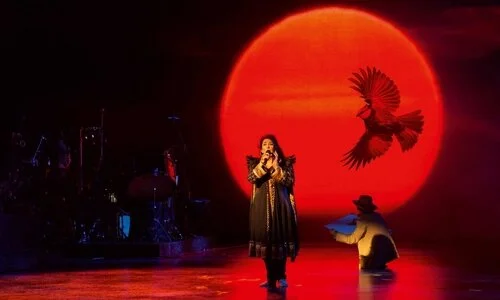
I know Ek and Spotify cannot afford to pay every artist a lot of money per stream, but to say that musicians need to be more productive and crank out albums regularly is insulting! It is unsurprising that so many people took to Twitter (and social media in general) to condemn Ek’s assessment. As a non-musician, he is unaware of the realities of the industry, and how artists struggle to make ends meet! When an album is out, artists need to tour it and, between records, they release singles and are out there as much as they can. If they were to put out albums every year, then that would mean they would not be able to play as much, and they would lose out financially. Maybe The Beatles were able to release an album a year, but the reality for the vast majority of musicians then and now is that they cannot do that! For one, they need to gather enough material and experience between records, rather than rush-writing whatever comes to mind – that would result in very poor albums. Also, touring can take a real toll on a musician, and Ek has little realisation what consistent gigging can do to an artist. Even though they love to bring music to the fans, there needs to be periods of downtime and recovery between tours, and it does not always mean that recording is the best next step. In any case, the negativity and anger that met his comments is quite right!
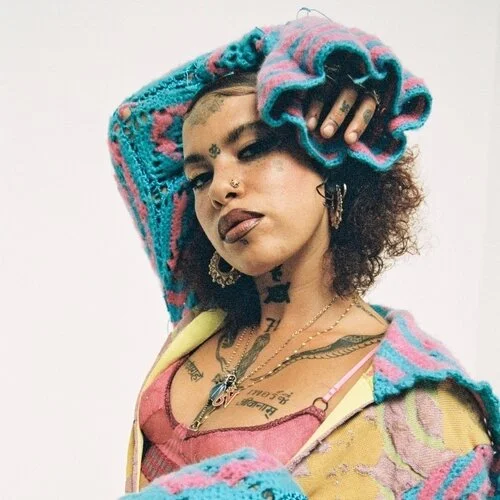
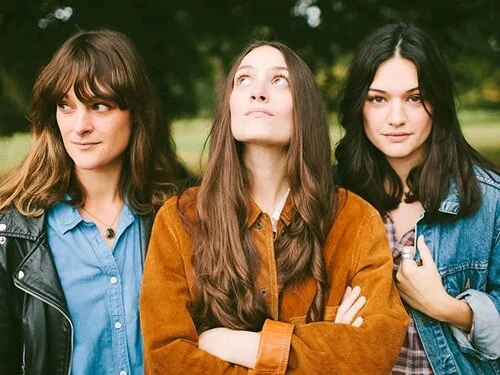
IN THIS PHOTO: The brilliant Nadine Shah took to Twitter to ask for change in light of Ek’s comments

This is someone who pays very little to artists when they release singles and albums but wants them to release them more regularly. Maybe an artist like Taylor Swift can benefit from releasing an album (folklore, 2020) so soon after her last (Lover, 2019) but even most mainstream artists leave it a couple of years or longer between records - the impact that releasing albums every year or two would have on their mental-health is worrying. For years, there has been questions as to whether Spotify needs to change its business model and think about the way it pays artists. Worryingly, I think Spotify is in danger of alienating musicians, who more and more are feeling like their voices are not being heard! This article from Music Ally discusses the subject of under-payment to artists, and how Spotify seem to be more invested in podcasts and the revenue they are bringing in from advertising:

However, in 2020 more than any other year since Spotify launched, there’s been a surge of musicians talking publicly about their streaming royalties not being enough to live on – including a campaign in the UK (#BrokenRecord) that has trained its sights not just on streaming services, but on labels and the wider industry structures.

Labels and streaming services have been pretty quiet amid this debate, so we put the question to Ek: why is there this gap between Spotify’s stated ambitions, and the experiences of the musicians who have been speaking out? And what’s needed to bridge that gap?

IN THIS PHOTO: Whilst huge artists like Taylor Swift (pictured) can generate enormous streaming revenue (even if a lot of that is going to her label) through Spotify, the reality for most artists is very different indeed/PHOTO CREDIT: Beth Garrabrant

“There are two different trends here worth picking apart. We realise that a lot of artists are impacted in the short term by Covid and the impact it has on the live industry. As you very well know, a lot of the income today that artists are getting [pre-Covid-19] is from touring and live performances. A lot of artists are struggling because of that,” said Ek.

Earlier during the conversation, we also asked Ek about podcasts, and specifically about their role in the startling growth in Spotify’s market cap (value) this year: from around $29bn at the start of 2020 to $50bn now, including noticeable spikes accompanying some of its big podcast announcements.

What’s going on here, for investors? “I can’t really speak to why other people are valuing Spotify in the way that they are,” said Ek, before venturing an opinion.

“If I made a guess, we’ve been talking about this audio-first strategy for quite some time, and now people have started understanding what we actually meant by that strategy… and understanding that not only are we talking about the music business, we’re going after all of radio, which is obviously a much bigger addressable market.”

There has been some unease within the music industry as it watches Spotify’s strategy playing out, including references by some major label executives to the need to ‘ring fence’ their royalties from Spotify, rather than see them potentially cannibalised by podcasts. Are those the kinds of negotiations going on?

PHOTO CREDT: @convertkit/Unsplash

“I can’t really talk about the specifics around that. We renewed the Universal Music deal, and I’m pretty sure they wouldn’t have renewed that deal if they didn’t feel comfortable about where this was heading, and being happy about the economics they receive from Spotify,” said Ek.

With sites like Bandcamp proving a more sustainable, fair-minded, and compassionate platform for artists, Spotify really need to look around and realise that they need to make some big changes! Unfortunately, most artists cannot afford to jump ship and not put music on Spotify, as they need to get exposure for their music; so many of their fans use Spotify. To infer that artists need to be more proactive and release albums as often as they can is not only insulting and unrealistic, but it betrays artists and shows that there is a huge gulf between the wealthy and uninformed Ek and the musicians who are bringing his streaming site so much money and popularity! I do hope that the continued outcry and condemnation from artists and music lovers compels Ek to change his ways and realise that the answer (to artists struggling financially) is not to pump albums out every year, but for him to understand they deserve more for their work; that they should be paid more per stream and, as Spotify generates astonishing amounts of money, the balance needs to shift so that smaller artists are paid as much as the A-list, mainstream acts – or the minority who have massive fanbases and have huge labels behind them. Continuingly seeing artists shafted and overlooked by Ek and Spotify is…

PHOTO CREDIT: @fixelgraphy/Unsplash

SO heartbreaking to see.