FEATURE: The Lockdown Playlist: Cherish: Artists Inspired by Madonna

FEATURE:


The Lockdown Playlist
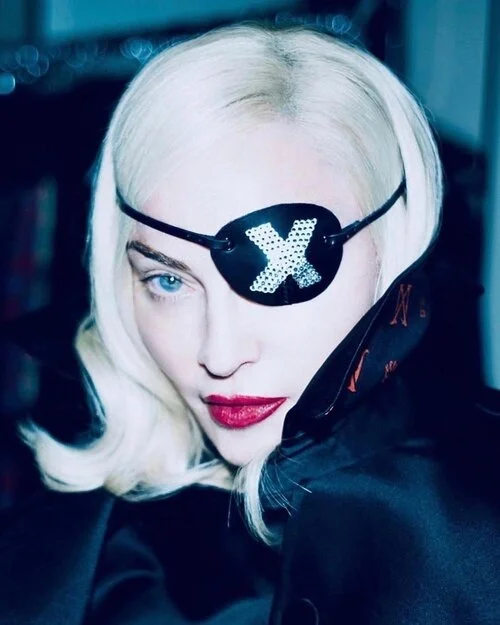
Cherish: Artists Inspired by Madonna

___________

TODAY is the birthday of…

axxxx.jpg

IN THIS PHOTO: Dua Lipa

a true Pop icon. Madonna has definitely left her mark on the music world, and she continues to inspire and move forward. Rather than put together a playlist of Madonna’s best hits, I want to include a song from Madonna, sure, but I also wanted to focus on artists who are influenced by Madonna; whether in terms of the music they produce, or (the artists) seeing her on T.V. or hearing her on the radio and wanting to get into music because of that. There is no doubt Madonna is among the most influential artists ever, and we can trace her D.N.A. to so many other acts. There are rumours Madonna is working with Diablo Cody on her biopic, and many would love to see that happen. Modern artists like Dua Lipa ­are definitely inspired by Madonna, but there is nobody quite like her. On her sixty-second birthday, I wanted to put out a playlist of artists who count Madonna as an influence. As you can see from the playlist, Madonna’s legacy stretches…
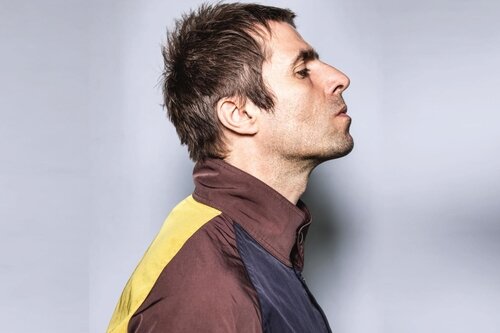
IN THIS PHOTO: Liam Gallagher counts Madonna as an influence/PHOTO CREDIT: Neale Haynes

FAR and wide

FEATURE: The Queen of Pop’s Crowning Glory: Ray of Light: A Work of Genius in a Career of Constant Evolution and Brilliance

FEATURE:


The Queen of Pop’s Crowning Glory

Ray of Light: A Work of Genius in a Career of Constant Evolution and Brilliance

___________

I am not necessarily a Madonna superfan…

aalalala.jpg

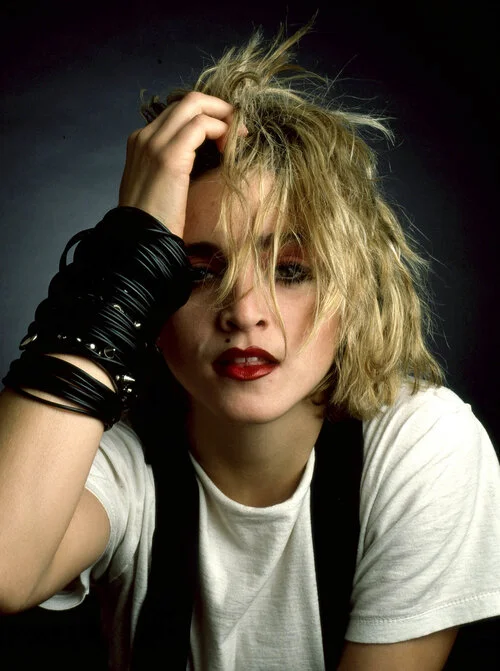
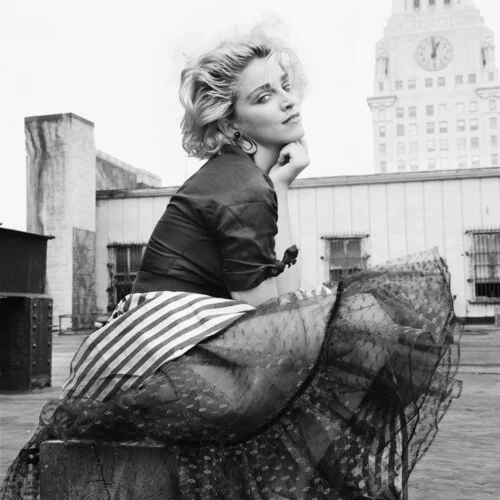
IN THIS PHOTO: Madonna in 1983

and I know there are others out there who know her work a lot better than me! The reason I am so fascinated by Madonna, as I have said so many times, is because she is an icon and a real role model. Today, we do not have a culture and society that would foster a Pop icon like Madonna. The media is very different, and I do feel it would be impossible for someone to come in like Madonna did in the early-1980s and achieve the same status and success. Whether it is entirely true or not, Madonna had $35 in her pocket and a dream and, through sheer gutsiness, determination, and gutsiness, she made a name for herself. I confess that there are some Madonna albums that are not that good – 2008’s Hard Candy, and 2012’s MDNA are rare misses -, but she has rarely put a foot wrong when it comes to albums! On 18th September, Music turns twenty, and that was the album that followed my favourite; the one I will get to in a second. It is Madonna’s birthday tomorrow (16th August), and I wanted to put out a few features because, nearly forty years since her debut arrived in 1983, she remains one of the  true originals who is unafraid to speak her mind. I cannot put into words just how incredible her legacy is and how far her influence spreads.

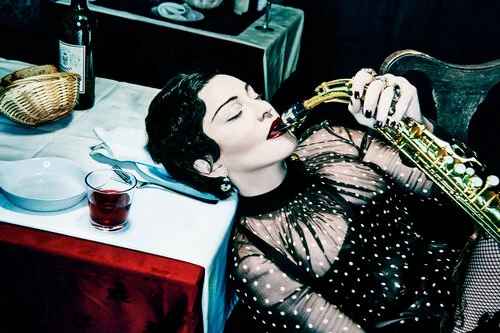
IN THIS PHOTO: Madonna in 2013/PHOTO CREDIT: Terry Richardson for Harper's BAZAAR

From her style and story through to her support for the L.G.B.T.Q.I.A.+ community and the way she managed to rule and progress in a sexist music scene, so many artists today owe a debt to her. I think Madonna, more than most artists, has put out albums that are vastly different, but they manage to sound distinctly Madonna! Her 1983 eponymous debut is light in terms of substance and subject matter, but it is joyful and underrated. Madonna wrote most of the tracks on her own, and there are some terrific cuts on the record – such as Borderline, and Lucky Star. 1984’s Like a Virgin is a stronger album, and it saw Madonna maturing and becoming bolder in terms of her songwriting and image. The title track is one of her classics, and Material Girl is the first song of hers that I discovered – and its chorus is one of the catchiest ever! 1986’s True Blue was another revolution and, maturing even more, Madonna came a long way in a few years; showing great depth as a songwriter and her voice was more varied and accomplished. Her first true masterpiece, Like a Prayer, arrived in 1989, and it is many people’s favourite album of hers. Writing alongside her long-time collaborator Patrick Leonard, the two produced and wrote most of the tracks – bar a few -, and Like a Prayer, Express Yourself (Madonna wrote that with Stephen Bray) and Cherish are terrific tracks.

Like a Prayer created a degree of controversy, no less because of the title’s track’s video, where there are images of burning crosses! In terms of turning media heads, 1992’s Erotica was her golden period; a risqué and bold album that showed another evolution from Madonna – every album seemed to see her adopt a new persona, look and story. It is an underrated album, but it is an amazing record. 1994’s Bedtime Stories, again, is underrated, and it was a move away from Erotica, but it did poke at critics who judged Madonna in 1992 – and, with tracks like Secret, and Take a Bow on the album, few can ignore such a wonderful release! From 2000’s Music, Madonna continued to move and progress and, whilst she created few albums as historic and seismic as her early work, 2005’s Confessions on a Dance Floor is one of her best. Last year’s Madame X was a great return, after a few of slightly underwhelming albums, and many are looking ahead to see what comes next in terms of touring and albums – Madonna has suffered injury and ill health recently, which she occurred during a touring run for Madame X. With so few icons like her around, I know she will get a lot of praise and love tomorrow! I love so many of her albums, and the rest of my top-five would have Madonna, Like a Prayer, Bedtime Stories, and Music alongside one another. The top spot must be reserved for 1998’s Ray of Light.

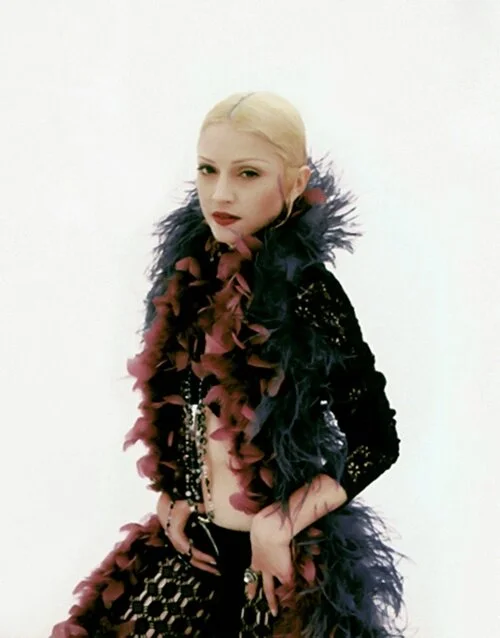
IN THIS PHOTO: Madonna in 1998

There are many reasons why I think this is the peak of Madonna’s career. Few would have expected her to release anything like Ray of Light after 1994’s Bedtime Stories. That was not one of her best-received albums, and after four years away, few would have been prepared for the nuclear bomb she was about to drop! In hindsight, that naivety seems foolish. Madonna enjoyed peals in 1984 and 1989, I feel, so one could not have predicted a slump or a natural career decline. Ray of Light was released on 22nd February, 1998 by Maverick Records. After giving birth to her first child, Madonna started working on the album with producers Babyface and Patrick Leonard. Following failed sessions with them, Madonna pursued a new musical direction with English producer William Orbit. The recording process was the longest of Madonna's career and experienced problems with Orbit's hardware arrangement, which would break down, and recording would have to be delayed until it could be repaired. I have grabbed that passage from Wikipedia, but it shows how she was making these brave moves!

IN THIS PHOTO: Madonna in 1998

By departing with trusted producers and friends, she knew that her work needed to go in a different direction, and she needed to adapt to the changing music world around her. In 1997, The Chemical Brothers’ Dig Your Own Hole, Björk’s Homogenic, The Prodigy’s The Fat of the Land, and Spiritualized’s Ladies and Gentlemen We Are Floating in Space were out in the world, and Madonna could see the influence of Electronic Music and how it had shifted since the 1980s and earlier years of the 1990s. Who knows what her seventh studio album would have sounded like if she had continued in the same vein as Bedtime Stories, but I don’t think it would have been as original and memorable if Madonna had not thrown a 180 spin! There is Ambient music and Middle Eastern flavours in the pot, and  a spirituality that added so much to Ray of Light. Later in 1998, Massive Attack’s Mezzanine, and Fatboy Slim’s You've Come A Long Way, Baby arrived.

Both are big albums in terms of the electronics but, whereas the former is darker and has more elements of Trip-Hop, the latter is more upbeat and Big Beat. Madonna’s Ray of Light sort of sits in the middle in terms of sound, and it brings in darker shades on tracks like Drowned World/Substitute for Love, Shanti/Ashtangi, and Frozen,  but there are lighter, euphoric songs like Ray of Light. Alongside the more accessible songs are cuts like Sky Fits Heaven, To Have and Not to Hold, and Mer Girl, that are deeper and demand longer focus and investigation. Throw that together with the big hits like Frozen, and The Power of Good-Bye, and Ray of Light is a masterpiece! With Madonna co-writing and producing all thirteen tracks, Ray of Light is an album that still sounds fresh today – some of her earlier work sounds a bit dated, whereas other albums of her rely a bit on nostalgic value. I think there was this wave of albums like Ray of Light from 1997-1999, but none that quite had the same blends and magic as Madonna’s magnum opus. Her voice has never sounded stronger, and I think William Orbit gave her music more edge and nuance – if Madonna has tried to repeat Bedtime Stories or her work in the early-1990s, I think it would have been a mistake! There are album-ranking articles like this, this and this and, whilst Ray of Light does not always claim the top spot, most people are going to put it in the top-two – Like a Prayer is the album that many claim is her greatest moment.

I have a lot of love for Like a Prayer, but I think Madonna was on a roll in 1989, and Like a Prayer was her building and building from her previous albums. Despite massive pressure and expectation, she delivered a staggering album in 1989, but I think there was something different happening in 1998. Many had written Madonna off, and I think the scene was so different that year compared to 1989, so it was more difficult for Madonna to deliver an album that equalled her best and fitted in with what else was occurring at the time. The reviews for Ray of Light are universally positive, and people were blown away when it came out. In a more-recent review, this is what AllMusic wrote when they tackled Ray of Light:

“Returning to pop after a four-year hiatus, Madonna enlisted respected techno producer William Orbit as her collaborator for Ray of Light, a self-conscious effort to stay abreast of contemporary trends. Unlike other veteran artists who attempted to come to terms with electronica, Madonna was always a dance artist, so it's no real shock to hear her sing over breakbeats, pulsating electronics, and blunted trip-hop beats. Still, it's mildly surprising that it works as well as it does, largely due to Madonna and Orbit's subtle attack. They've reined in the beats, tamed electronica's eccentricities, and retained her flair for pop melodies, creating the first mainstream pop album that successfully embraces techno.

Sonically, it's the most adventurous record she has made, but it's far from inaccessible, since the textures are alluring and the songs have a strong melodic foundation, whether it's the swirling title track, the meditative opener, "Substitute for Love," or the ballad "Frozen." For all of its attributes, there's a certain distance to Ray of Light, born of the carefully constructed productions and Madonna's newly mannered, technically precise singing. It all results in her most mature and restrained album, which is an easy achievement to admire, yet not necessarily an easy one to love”.

There will be a lot of articles published tomorrow on Madonna’s birthday, and there is going to be the inevitable rankings lists: people sorting out her studio albums and listing them from worst to best Rather than do that, I wanted to discuss my favourite album of hers, but also look back and show just how revolutionary and incredible her music was. From hr early singles, through to her Madame X album, Madonna has never stood still, and each album gives us something new. Ray of Light was a very special moment, and it took so many people by surprise. It is an unbelievable record that…  

STILL resonates and moves the soul today.

FEATURE: A Buyer’s Guide: Part Fifteen: Cat Power

FEATURE:

A Buyer’s Guide

PHOTO CREDIT: Stefano Giovannini

Part Fifteen: Cat Power

___________

IF you are new to Cat Power…

ssss.jpeg

PHOTO CREDIT: Julien Bourgeois

then you might not know where to start with her back catalogue. Born in Atlanta, Georgia, Charlyn Marie ‘Chan’ Marshall is a tremendous songwriter and has released some wonderful albums! I really love her work, and her tenth studio album, Wanderer, ranks alongside her very best. I think Cat Power’s albums warrant a lot of focus and attention, so I have recommended four essential albums, the underrated one, and her latest one – in addition to a related book that people should check out. Have a read of the lowdown below, and it will give you insight and a guide to one of the music world’s most…

aaaa.jpg

POWERFUL songwriters.

________________

The Four Essential Albums

What Would the Community Think

Release Date: 10th September, 1996

Label: Matador

Producer: Steve Shelley

Standout Tracks: In This Hole/King Rides By/Bathysphere

Buy: https://www.discogs.com/Cat-Power-What-Would-The-Community-Think/release/4729606

Stream: https://open.spotify.com/album/5tbykpeXPR1kEeveI0xOzK

Review:

“What Would the Community Think was the second album Chan Marshall released in 1996, but its richness suggests a longer period of evolution. From the first warm notes of "In this Hole," it's clear that Marshall's voice -- as a singer and a songwriter -- is not only stronger and more focused, but more empathetic as well. Where her previous works were dense and cathartic, What Would the Community Think gives her voice and lyrics space to unfurl and involve the listener; the title track alone holds an album's worth of eloquence in Marshall's hushed, clear vocals, backed by guitar, feedback, and an eerie, echoing piano. Fortunately, that leaves Marshall 11 other tracks with which to forge a fine balance between angular, angst-ridden punk and her gentler, folk-country tendencies. Different combinations of these extremes make Cat Power's sound more diverse but also more cohesive. Tense, tight songs like "Good Clean Fun" and "Nude as the News" retain the reflective, thoughtful nature of quieter numbers like "King Rides By" and "Water and Air," which turn the power of the album's louder moments into slow-building, implosive tension. Two of What Would the Community Think's finest moments, "They Tell Me" and "Taking People," are unabashedly blues and country-inflected, revealing Marshall not just as a cathartic vocalist, but as a true soul singer. Similarly, her covers of Peter Jefferies' "Fate of the Human Carbine" and Smog's "Bathysphere" show off Marshall's ability to make any song a Cat Power song. An intimate, personal album, What Would the Community Think makes imperfection beautiful and turns vulnerability into musical strength” – AllMusic

Choice Cut: Nude as the News

Moon Pix

Release Date: 22nd September, 1998

Label: Matador

Producer: Matt Voigt

Standout Tracks: American Flag/Say/Moonshiner

Buy: https://www.discogs.com/Cat-Power-Moon-Pix/master/36137

Stream: https://open.spotify.com/album/0PBUZ2KHPp5Q9fybGuT2ry

Review:

“All of the shapes Marshall’s music would later take were vaguely discernible here: the careful way she arpeggiates that root chord on “No Sense,” over and over, and how closely the figure evokes the luxurious stretch of Al Green’s Hi Records band, how the hesitation on the downbeat heightens the tension to near-erotic levels. You can hear her future as a soul balladeer on The Greatest whispering at you. On the rudimentary finger-picked minor chord of “Back of Your Head,” you can hear the shadows of future Cat Power dirges like “Babydoll” lurking.

And on “Metal Heart,” the album’s moral center, you can feel her clasping her fingers around a message, a mantra that would follow and sustain through the next decade. “You’re losing the calling that you’ve been faking and I’m not kidding/It’s damned if you don’t and damned if you do/Be true ‘cause they’ll lock you up in a sad, sad zoo,” she sings. The “you” in the song, addressed with such affection, feels like Marshall herself—an unverifiable, if inescapable, impression” – Pitchfork

Choice Cut: Cross Bones Style

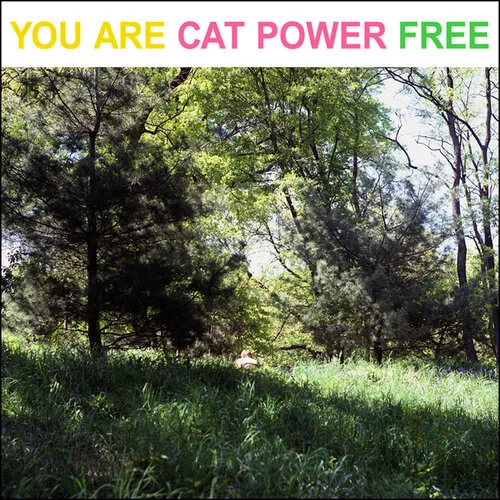
You Are Free

Release Date: 18th February, 2003

Label: Matador

Producer: Cat Power

Standout Tracks: Good Woman/He War/Half of You

Buy: https://www.discogs.com/Cat-Power-You-Are-Free/master/36181

Stream: https://open.spotify.com/album/38CsAH6IM7fKMN0XnZReR6

Review:

“She addresses the struggle to do the right, but difficult, thing on "Good Woman," a near-spiritual breakup song where, backed by a children's choir and fiddles, Marshall explains that she needs to be a good woman with -- or more likely, without -- her bad man. Aside from being a lovely song, it's also a departure; earlier in her career the song might have just focused on the conflict instead of Marshall's gently strong resolution to it. This gentle but resolute strength runs through most of You Are Free's best moments, such as "He War" and especially "Names," a terrifyingly matter-of-fact recollection of child abuse and lost friends that says more in its resigned sorrow than a histrionic tirade would. As the album progresses, it moves toward the spare, affecting ballads that give her later work a strange timelessness; listening to You Are Free gives the impression of stripping away layers to get to the essence of Marshall's music. In some ways, the quiet last half of this album is more demanding than the angsty noise of Dear Sir or Myra Lee, but hearing her find continually creative interpretations of minor keys, plaintive pianos, and folky guitars is well worth the attention it takes, whether it's the dead-of-night eroticism of her cover of Michael Hurley's "Werewolf," the pretty yet eerie longing of "Fool," or the prairie romance of "Half of You." Every Cat Power album takes at least a few listens to fully reveal itself; You Are Free may take awhile longer than expected to unfold, but once it does, its excellence is undeniable” – AllMusic

Choice Cut: I Don’t Blame You

The Greatest

qaa.jpg

Release Date: 20th January, 2006

Label: Matador

Producer: Stuart Sikes

Standout Tracks: Living Proof/Where Is My Love/The Moon

Buy: https://www.discogs.com/Cat-Power-The-Greatest/master/36169

Stream: https://open.spotify.com/album/3WJRp6WVjUQh9JhDP5YdUM

Review:

“To start the climb, Marshall enlisted players from Al Green's old Memphis soul band for The Greatest, a disc of new compositions—never mind the misleading title. Longtime Cat Power fans needn't worry about a seismic change, though: Unlike Frank Black's semi-disastrous Honeycomb, recorded with Nashville session pros, The Greatest doesn't compromise a beloved vision to fit an unlikely sound. Green's old compatriots—guitarist Mabon "Teenie" Hodges contributes most definitively—serve the songs with championship restraint, adding colors and textures that Marshall never would've found with indie-rockers, but that never cheapen the impact.

Those looking for unmitigated downers may be jolted by the pleasantly tinkling roadhouse piano and the sweetly whistled refrain of "After It All," but the song is simply a case of Marshall housing her sorrowful songs—this one about the return of an abusive lover—in brighter packages. Reflective of its title, "Islands" is almost sunny, but its walking bass and slide guitar provide the bed for lyrics about eternal sleep. Delivered starkly, "Empty Shell" could've been another entry in Cat Power's deeply dark catalog, but here, with hoedown violins and smart backing vocals, it sounds like classic country. The gorgeous title track is elevated by a string section that echoes "Moon River" for effect. Marshall nods to the old school with "Hate," an effective, bare-bones chiller, but otherwise sticks to The Greatest's plan, challenging herself to explore familiar themes with remarkable new dressing. In its own still-quiet way, it's a triumph” – The A.V. Club

Choice Cut: The Greatest

The Underrated Gem

Dear Sir

Release Date: October 1995/3rd July, 2001 (re-release)

Labels: Runt/Plain Recordings

Producer: Ed Douglas

Standout Tracks: Rockets/Itchyhead/Mr. Gallo

Buy: https://www.discogs.com/Cat-Power-Dear-Sir/master/36193

Stream: https://open.spotify.com/album/1ZzviUcCxxTTH66SPcoFUm

Review:

“Cat Power's first full-length album, Dear Sir, spotlights Chan Marshall's demanding but rewarding songwriting. Her distinctive blend of blues, country, folk and punk creates songs like the dark, noisy "Itchyhead" and "Rockets," which mixes tension and hope, and tops it with Marshall's earnest, expressive vocals. Though the album needs the listener's complete attention, Dear Sir more than keeps it with nine of Marshall's searching meditations on life” – AllMusic

Choice Cut: The Sleepwalker

  The Latest/Final Album

Wanderer 

Release Date: 5th October, 2018

Label: Domino

Producer: Cat Power

Standout Tracks: Wanderer/Stay/Nothing Really Matters

Buy: https://www.discogs.com/Cat-Power-Wanderer/master/1433078

Stream: https://open.spotify.com/album/28SMXZ4p2uQGJZJpFXw8em

Review:

“Over the lilting ‘In Your Face’, she laments, “You never take what you say seriously”. The object of her ire will meet their comeuppance, though – the song’s title alludes to the Buddhist belief that karma shows in your face, for anyone and everyone to see. ‘Robbin Hood’ is a brittle acoustic ditty – accompanied by atmospheric, glassy percussion – on which Marshall sneers at a “big cat fat cat” with the “biggest piece of the pie”. She’s said that the record was written with reverence to the generations of folk and blues musicians who came before her, and it’s on this atavistic-sounding song that that intention is most keenly felt.

For the most part, though, ‘Wanderer’ is an ode to Marshall’s indomitable sense of self. It’s the sound of someone with the confidence to reimagine Rihanna’s ‘Stay’ as a fractured, skeletal piano ballad. Other highlights include ‘Horizon’; ignoring the fact that the intro sounds alarmingly similar to Bryan Adams’ ‘(Everything I Do) I Do It for You’, the track is a beatific paean to familial love (and a dissonant squall of autotune stops everything from getting too mushy). This album is a quiet triumph, the understated work of an artist honouring herself and her creativity” – NME

Choice Cut: Woman

The Cat Power Book

Cat Power: A Good Woman

Author: Elizabeth Goodman

Publication Date: 4th April, 2009

Publisher: Three Rivers Press

Synopsis:

“How Chan Marshall, aka Cat Power, Survived Herself–and Became the Indie Rock Queen.

Chan Marshall’s stark lyrics, minimal arrangements,and wounded, smoky vocals, were an instant indie hit in the nineties–but her mental instability nearly derailed her career. How this sensitive but headstrong Georgian daughter of an unstable mother and a relatively unknown musician father–managed to make it big, burn out, and rise up again to become not only the darling of the indie music scene but also a fashion and Hollywood icon is the fabric of this irresistible story.

Covering her musical beginnings in the south and her booze-soaked rise to fame in New York City to her eventual breakdown and subsequent reclamation of herself and her music, Cat Power delves into the soul of this fragile but ferociously gifted young talent. With seven albums behind her, the hottest designers clamoring to dress her, and perpetually sold-out venues, Marshall is at the height of her career–a perfect vantage point from which to look at her notorious and intriguing history.

From interviews with her family, musicians such as Thurston Moore, Nick Cave, Dave Grohl, and Jack White, past loves like Bill Callahan and Vincent Gallo, and current friends such as Karl Lagerfeld and Wong Kar-Wai, Elizabeth Goodman gives us the real Chan Marshall–the little girl, the woman, the artist” – Amazon.co.uk

Order: https://www.amazon.co.uk/dp/B00256Z3L8/ref=dp-kindle-redirect?_encoding=UTF8&btkr=1

FEATURE: This Woman’s Work: Why We Need Much More of Kate Bush on the Page, Screen and Beyond

FEATURE:


This Woman’s Work

IN THIS PHOTO: Kate Bush in 1979/PHOTO CREDIT: Brian Aris

Why We Need Much More of Kate Bush on the Page, Screen and Beyond

___________

I could not think of a title and heading…

xxx.jpg

IN THIS PHOTO: Kate Bush in 1978

that was that succinct and said what I truly meant but, to sort of reinvestigate an idea I have put out there before, I wonder whether there will be more from Kate Bush in terms of her music and the written word. By that, I mean there are definite opportunities and gaps that could be filled! Consider someone like Madonna, for example, whose birthday it is tomorrow (16th August). She is an artist who has been heralded and studied since her debut album came out in 1983 and, whilst Madonna and Kate Bush are very different in terms of how they approach the media and their views on fame, few can tell me that Kate Bush’s career and legacy is less important than Madonna’s. Maybe the fact that Madonna has toured more and has this slight love-hate relationship with the media means that more has been written and there has been this bigger interest when it comes to documentaries. I would say that Kate Bush has more fans and love out there than anyone else, and her music is beyond comparison. I have asked whether, perhaps, there are other songs waiting to see the light of day and, when I was writing about Madonna last week in the run-up to her birthday, I discovered quite a few good books. For example – and apologies for using her as a guide -, there is a book called Madonna: Album by Album, and it is as you would expect: a look at each album, a breakdown of the tracks and a bit about what was happening in Madonna’s life at the time.

IN THIS PHOTO: Kate Bush signing her album, Never for Ever, in London/PHOTO CREDIT: Chas Sime/Getty Images

There are biographies and other guides and, when we look beyond Madonna, there are artists who have all sorts of different books written about them – from album guides through to biographies. I have mentioned before how there are a couple of great biographies out there regarding Kate Bush – Graeme Thomson’s Under the Ivy: The Life & Music of Kate Bush is essential, and there is not too much out there! I would love to see an album-by-album guide, because I think, more than anyone, Bush’s albums are so different and immersive. I can understand why Kate Bush would be reticent about there being too much information about her, but an album guide would be terrific! Not only would it open her music up to new people, but I feel it would make for a great companion to the albums themselves. I have been looking online, and there are a few books that relate to various albums, aspects of her career or such – many of them are quite old, and there have not been many new books published in the past decade or so. I would say now, more than ever, there is an appetite and hunger for Bush’s music, and there are opportunities for writers out there! Maybe another biography would be excessive, but a more general look at her life and work would be awesome; maybe a biography that focused on a particular stage of her career, and I am sure a lot of people would welcome more photography books.

IN THIS PHOTO: Kate Bush in 1985/PHOTO CREDIT: John Carder Bush

This is an area that is fairly well covered. Again, I have recommended John Carder Bush’s Kate: Inside the Rainbow, and it is beautifully presented and contains a lot of illuminating information from her brother. There are more expensive photography collections available for fans – one from Guido Harari, and the other from Gered Mankowitz. They are both beautiful, but they might be beyond the reach of many Kate Bush fans in terms of cost! I know that there were plans for Mankowitz to bring out a book pf photos last/this year, but that is not going to happen. There are whispers that Max Browne is releasing a book of photos soon. That will be interesting to see! Taken from Rock Archive, this is what Browne remarked about Bush:

"I have never photographed a more enchanting show or multi-talented performer than Kate Bush at Hammersmith om 1979 - pure magic and such incredible stamina. Almost every number required a costume change, intricate dance choreography whilst singing, and 'The Tour of Life' show lasted over two hours in total. The bar was set so high that she never toured again but what an achievement. Thank goodness the show was recorded for T.V. The shot was taken the night of the recording after the 'Wuthering Heights' finale when Kate's relief and exuberance are palpable. A personal favorite, the focus is spot on too!"

ccc.jpg

IN THIS PHOTO: Kate Bush during The Tour of Life in 1979

I think you can have overkill if you put too much out there but, considering all the incredible photos out there of Kate Bush, there have not been that many photo books. I think reading about Kate Bush is as informative as listening to her music, so I am curious whether continued interest in her career will result in more releases. One could easily welcome another few books of photos, another biography and a couple of references works and not feel like there is too much out there. The same goes with her music, I guess. I shall not tread over old ground and wonder whether we will see demos and unreleased tracks put out, but there would be an enormous appetite for these lesser-known tracks. Maybe Bush herself would feel uncomfortable, but it would be remarkable. Her 1979 Tour of Life would have been recorded, and I think a release of that in crisp form – if that is even possible – would give great insight into one of the most important events of her career. In 1979, the four-track On Stage E.P. was released, and it was recorded live at the Hammersmith Odeon on 13th May. It became Bush's first official (non-bootlegged) live performance on vinyl. The E.P. was the only audio (non-bootleg) recording of Kate Bush live for years, until 1994 when sixty minutes of the concert was released on C.D.

I cannot find that C.D., and one looks on Discogs, and there is a collection from that tour that is no longer available. At a time when we are getting new releases from Prince, despite the fact he has been dead for over four years, I do wonder whether it is time to put more out there that is collecting dust. I know Kate Bush does not have a vault as impressive and stocked as Prince, but there are live recordings that people would eat up. How about her T.V. appearances and the recordings from those appearances? Bush herself has said how she would like to see her videos on DVD, but (she said) there is not really the appetite in the U.K. I would disagree! I think a lot of people would be interested, and it would not just be a simple cash-in: Bush’s videos are so vivid, cinematic, and memorable, it would be a celebration of an artist who puts so much passion into everything she does! I guess, in terms of her albums, the vinyl editions are out and there is not much room for improvement there. I will tread over some worn ground just one more time when rounding things off. I am working on a Kate Bush podcast, and am taking the first steps to getting that realised. In an ager where there is a podcast for everything, there is not really a definitive one about Kate Bush.

The Kate Bush Fan Podcast is out there, and it is made with a lot of expertise and love. Rather than look at each album and be forensic in that manner, the podcast is more general, and they discuss everything from the gap between Bush’s albums and why 2011 was such a remarkable and productive year for her. I guess it is good for me that there has not really been another podcast, but it does seem odd that there is this void that needs filling! The last area where there needs to be more of Kate Bush is on television. It has been six years since the documentary, The Kate Bush Story: Running Up That Hill, was broadcast. This is what The Guardian wrote when they discussed the documentary:

“Guests, contributors and soon even formerly ignorant viewers like me were in awe of the talent displayed and then intelligently discussed and dissected by John, Kemp and other respected experts, such as David Gilmour, Peter Gabriel, John Lydon, Tori Amos and Del Palmer, Bush's bandmate and partner from the 1970s to 1990s. Neil Gaiman was on hand to hymn her fearlessly literary inspirations and lyrics, from – of course – Wuthering Heights (from which she derived her first single, in March 1978) to Molly Bloom's soliloquy from Ulysses in the title track of her 1989 album, The Sensual World.

Bush herself appeared only in old interview footage – so young, so fragile, so shy, but full of the sureness and certainty that only talent brings – but what emerged was a wonderful, detailed portrait of that talent. Although it gave her precocity its full due (she had written The Man With the Child in His Eyes by the time Gilmour came to listen to her when she was 14), it also gave proper weight to her evolution and her later, less commercial, still astonishing work. Why it chose to close on a stupid jarring joke by Steve Coogan, I do not know. But the rest of it succeeded in making Bush and her work less of a mystery but no less beautiful for that”.

I do like the fact that the documentary was made, as it helped to inform those who were less aware of Bush’s work, or perhaps were looking for that extra bit of information. There were some great contributors – including Del Palmer (Bush’s engineer and former boyfriend), David Gilmour, St. Vincent, and many others who paid their respects and told their stories -; seeing her videos on the screen is always great. Although the BBC and some would say that documentary is authoritative and compressive, as I have said several times before, it just was not. A one-hour documentary is barely enough time to cover an album like Hounds of Love, let alone an entire career!

It felt as though the documentary was rushed in order to coincide with Kate Bush returning to the stage in 2014 in her Before the Dawn residency, but there was little discussion about her 1979 tour, The Tour of Life. Many of the contributors seemed tenuous and expendable, and there just wasn’t enough detail. It is a documentary for those who want a basic overview, but we did not really learn a whole lot about Kate Bush that wasn’t already know. There is this chance to redress the balance in that sense, and I feel like, even without Bush being directly involved, a wonderful documentary could come about! Some say that Kate Bush is underrated, and there are articles that salute Bush’s power and brilliance. One big reason why I wanted to write this feature and argue why we need more of Kate Bush in the world – in terms of books and documentaries – is how influential she is, and the sheer number of artists she has touched. This article from 2018 talks more about Bush’s influence:

“Kate Bush is probably the artist to have influenced me the most: she really was the complete package and an artist so clearly in creative control from such an early age,” British singer-songwriter Little Boots tells me. “From pioneering the use of the Fairlight CMI synthesiser [on The Dreaming and Hounds of Love] to inventing live pop shows as we know them [with 1978’s The Tour of Life], she really was a true creative visionary and you can feel the thread of her personality running through every element of what she does. When I discovered her in my teens, I found this whole artist-world that I could dive into and immerse myself in. It just felt so special and necessary and I think that’s what inspires true fandom in her listeners.”

Little Boots joins a small army of musicians to have saluted Bush: everyone from Grimes to Florence Welch, and Bloc Party’s Kele Okereke to Outkast’s Big Boi has hailed her. “What caught me [about Bush] the most was, first, the production and the voice of course, but also the different meanings behind the stories she was telling,” Big Boi told Rolling Stone in 2011. New York-based Brazilian musician Yann similarly describes himself as a Bush super-fan. “If it wasn’t for Kate, I’m not even sure if I’d be a musician today,” he tells me. “The way she’s able to convey such vivid imagery through songwriting is masterful. The song and video that made me a huge fan at such a young age was Babooshka – the storytelling and visuals really mesmerised me. Growing up gay in a conservative culture as I did can be extremely isolating. Kate’s unapologetic weirdness felt like a safe space to me: she didn’t sound, look, dress, sing, or even dance like anyone else”.

Since Kate Bush released her first single and album in 1978, there have been an assortment of works dedicated to her; people who want to get to the bottom of her genius. I think there is a lot of great stuff out there, but I can’t help but think there are many more opportunities and gaps that need filling – without distilling her legacy and just cashing in for the sake of things. So much has been written and produced regarding Kate Bush, but I feel there is a long way to go still when it comes to…

IN THIS PHOTO: Kate Bush during Act 3 of her Before the Dawn residency in 2014

THIS woman’s work.

FEATURE: The August Playlist: Vol. 3: Midnight Sky Over the Model Village

FEATURE:


The August Playlist

cccccc.jpg

IN THIS PHOTO: Miley Cyrus

Vol. 3: Midnight Sky Over the Model Village

__________

THIS week’s Playlist…

IN THIS PHOTO: IDLES/PHOTO CREDIT: Tom Ham

contains some huge tracks from some really big artists. Not only is there new material from IDLES, Miley Cyrus and Eels; we have new music from Catherine Anne Davies & Bernard Butler, Elvis Costello, Prince, Holly Humberstone, Working Men’s Club, and The Flaming Lips. It is a pretty cloudy weekend, so I think we need some sunshine and energy to lift the mood. I think the songs below will do that and, if you require some boost, have a listen to the tracks below and I just know that they will…

IN THIS PHOTO: Mark Everett (Eels)/PHOTO CREDIT: Gus Black

DO the job.

ALL PHOTOS/IMAGES (unless credited otherwise): Artists

__________

PHOTO CREDIT: Tom Gallo

IDLES – Model Village

Miley Cyrus - Midnight Sky

Eels - Baby Let's Make It Real

aaaa.jpg

The Flaming Lips - Will You Return / When You Come Down

Catherine Anne Davies & Bernard Butler - Sabotage (Looks So Easy)

Prince – Witness 4 the Prosecution (Version 2)

IN THIS PHOTO: Dua Lipa

Dua Lipa (ft. Madonna, Missy Elliott, The Blessed Madonna) – Levitating

Elvis Costello - We Are All Cowards Now

Holly Humberstone – Drop Dead

Biffy Clyro - Space

Jónsi with Elizabeth Fraser – Cannibal

Working Men’s Club – Valleys

The Japanese House (ft. Justin Vernon) – Dionne

PHOTO CREDIT: Richard Saker/The Observer

Emmy The Great – Mary

Future Islands – Thrill

The Killers - Dying Breed

PHOTO CREDIT: Faolán Carey

Pillow Queens – Holy Show

PHOTO CREDIT: @sub_lation

King Gizzard & the Lizard Wizard – Some of Us

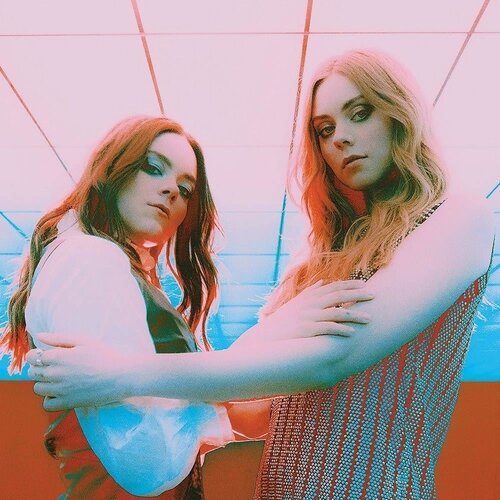
First Aid Kit – On the Road Again

Sufjan Stevens (ft. Jalaiah) – Video Game

Glasvegas – Keep Me a Space

PHOTO CREDIT: Othello Grey

Charlotte Day Wilson (ft. Syd) – Take Care of You

BENEE – Snail

Kaleida - Feed Us Some

Gloria Estefan - Samba

Keaton Henson – Prayer

L.A. Witch – True Believers

lll.jpg

Kiesza – Can’t Be Saved

lll.jpg

Sylvan Esso – Rooftop Dancing

Alicia Keys (ft. Khalid) – So Done

sss.jpg

Matt Corby - If I Never Say a Word

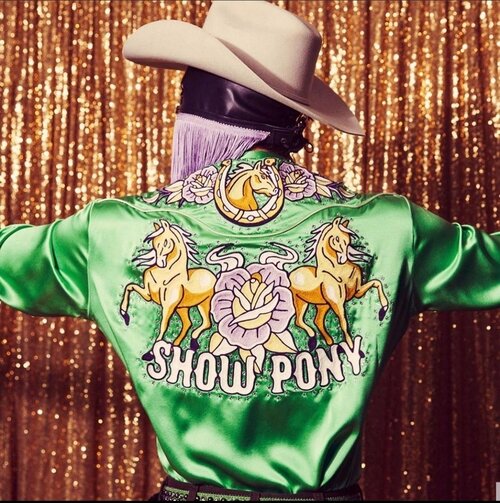
Orville Peck – No Glory in the West

Lindsay Ell – good on you

Rico Nasty – IPHONE

Poppy – If It Bleeds

Ella Eyre – Tell Me About It

PHOTO CREDIT: Cameron McCool

Alice Glass – NIGHTMARES

FLETCHER – If I Hated You

PHOTO CREDIT: Jack Bool

Helena Deland – Someone New

FEATURE: Short But (Very) Sweet: 2020’s Best E.P.s So Far

FEATURE:

Short But (Very) Sweet

IN THIS PHOTO: Holly Humberstone

2020’s Best E.P.s So Far

___________

AS much as I love an album…

IN THIS PHOTO: Do Nothing/PHOTO CREDIT: Adrian Vitelleschi-Cook

I do have a very soft spot for E.P.s, as I think they offer artists something different. Rather than commit to a whole album, you can focus on a four or five-song release, and it can be a good way of getting material out there that did not fit on an album or, rather than wait until inspiration strikes, an artist can put out some music and please their fans. I wonder whether people consider E.P.s as highly as albums and give them as much time. I really love the concept and, when we do not have physical singles anymore, I really like the idea of having a shorter release; a very different experience to a long-playing record. This year has seen some great E.P.s arrive, and I want to put out the best ten. It was hard to whittle them down, but here are the very best of the year so far. I am sure we will see a lot more great E.P.s arrive this year and, considering the quality that has already arrived, that is something that…

dsss.jpg

IN THIS PHOTO: Little Simz/PHOTO CREDIT: Linda Nylind/The Observer

WE can all look forward to.

_________________

Holly Humberstone – Falling Asleep at the Wheel

Review:

“One wounded pop gem after another, the subdued title track carefully paints a picture of an unfulfilling, one-sided relationship across a delicate keyboard chime. It builds towards a haunting, fuzzy synth lead and series of warped handclaps, yet her crystalline tones never disappear into the mix. ‘Drop Dead’, meanwhile, is a moody ballad reminiscent of Lorde’s ‘Still Sane’ and shares the pattern of ambient, barely-there beats as gently throbbing rhythms make their presence felt.

Lyrically, Humberstone is plain-spoken, exuding honesty and refreshing candour throughout the rousing ‘Vanilla’, “We coast until we hit a red light/Truth is I have my best nights without you”, so goes the unshakeable bridge atop twitchy electronic warbles. There’s also a hint of Sky Ferreira’s understated grunge spirit in the breezy vocal flourishes that pepper the slow-burning ‘Overkill’, an airy, yet secretly confident ode to the woozy highs of falling for someone new: “Don’t wanna be a buzzkill/If I’m coming on strong”, she deadpans, emotionally razed by what may have come before.

Soul-baring and candid, ‘Falling Asleep At The Wheel’ is a deeply affecting collection of songs that solely document Humberstone’s own personal fears and emotions, but the power and grace of her sentiments are sure to resonate universally” – NME

The Japanese House – Chewing Cotton Wool

Review:

“There’s a new sense of sureness in ‘Dionne’, too, something that’s echoed throughout the rest of ‘Chewing Cotton Wool’. Previous single, ‘Something Has To Change’, with its sing-a-long chorus and hand-clapped beats, is a pop smash cloaked in swirling synths. The minimalist title track sees Bain examine the memory of a lost loved one (“She’s the sound of your own voice / She’s someone else’s drink”) as electronic sounds trickle in the background. ‘Sharing Beds’, built around subtle piano lines and vocoded vocals, evokes The 1975’s glitchier moments.

‘Good At Falling’ was filled with gut-punch moments (on ‘We Talk all the Time’ Bain honestly states: “We don’t fuck anymore / But we talk all the time so it’s fine”), and her lyricism shines again here. Take ‘Dionne’’s incisive assessment of a relationship: “I’ve been thinking about / My storyline / And how your past becomes your present if it’s always on your mind”.

‘Chewing Cotton Wool’ is an elevation of Bain’s sound. It’s a short collection, but one brings the last few years of music of The Japanese House full circle, while pushing to the future with its lush sounds and huge, radio-ready hooks. Short but sweet, it’s another indication of the avant-pop maven Bain’s poised to become” – NME

Little Simz – Drop 6

Release Date: 6th May

Label: AGE 101

Stream: https://open.spotify.com/album/6QrGmXbUtjyekuW83gXBBb?si=yqrkwBz0SmmBVvGdtT64Qg

Key Cut: might bang might not

Review:

“Totalling a swift 12 minutes, a sense of urgency and immediacy propels one track into the next. From the pulsating bass of opener ‘might bang, might not’, Simz’ flow is as tight and precise as ever. It oozes with energy. “I got one life and I might just live it” she spouts over a swaggering hip-hop beat on “one life might live”, easily the EP’s catchiest track. ‘you should call mum’ takes a more contemplative turn, with lines like “bored out of my mind / how many naps can I take?” painting a painfully relatable picture of quarantine. Indeed, the whole EP feels like a snapshot of a specific time and headspace for the London rapper. Where Grey Area was more reflective and tackled broader themes in its lyrics, Drop 6 is rooted in the present. As she repeats in the opening track: “this is for the now”.

But behind the self-assured delivery is the hint of vulnerability that makes Little Simz so likeable. Unlike many rappers, she tells her stories unhindered by ego and bravado. At times it feels like a stream of consciousness or a chat with a friend, particularly on freestyling track ‘damn right’ – which is reminiscent of her earlier mixtapes. Recorded entirely at home, the finished product is naturally nowhere near as polished as Grey Area. But perfection clearly wasn’t the intention here. The stripped-back, DIY production only adds to its charm.

Musically too, Simz is up to form. Instrumentals range from jazz-infused basslines to old-school garage beats, showing off her genre-mixing abilities. Closing track ‘where’s my lighter’ veers furthest from the rest, featuring transcendent vocals from Alewya over a melancholic piano that concludes an otherwise fast-paced EP on a mellow, soulful note. Such musical range paired with powerful lyrics gives Drop 6 both style and substance. If this is what Little Simz can produce “when the world stops”, then we can only imagine what she’ll do when it starts turning again” – The Independent

Emma-Jean Thackray – Rain Dance

Review:

“Built out of her prior track “Rain Dance”, a 42-second mood piece from Thackray’s 2018 EP Ley Lines, “Rain Dance / Wisdom” broadens and blooms into a sprawling piece that pedestals the play of each member of her impressive band. “The track holds moments for each musician to shine,” explains Thackray, “and always goes down well live because it shows how well we improvise together. Lots of energy, brave moments of stillness, telepathic communication and awareness from being such a strong unit as a band.”

Because of that focus on multiple individual performances, “Rain Dance / Wisdom” traverses various dense phases, which are at the same time also freer and punchier than any of Thackray’s previous recordings. The track moves from serene keys and Thackray’s own solitary, steady trumpet into the kind of rhythmic, spiritual nu-jazz you'd expect from someone who's shared bills with Hutchings.

Lying underneath it all are synthesised textures that give the near-eight-minute track a huge, cinematic feel worthy of an artist who's a DJ and producer as well as a composer, multi-instrumentalist, singer and bandleader” – The Line of Best Fit (review of Rain Dance / Wisdom)

Jockstrap – Wicked City

Review:

“As opener ‘Robert’ proclaims, “I am really impressed.” Wicked City shows Jockstrap reaching their feelers outwards to the boundaries of what’s expected of them and simply pushing straight through. ‘The City’ starts off deceptively melodic before breaking down into what could be a different song entirely. It tracks the sad realisation that the possibilities offered to you by the city are a false promise. Singer Georgia Ellery’s meandering lament becomes looped over a cutting atonal synth, and all illusion of softness is gone. Throughout the EP, there’s something crooner-like about Jockstrap’s chord progressions and intonations; the soft arpeggiated piano on ‘Yellow In Green’ feels like a smoky jazz bar, before the introduction of Mort Garson-esque synths renders it something else entirely. Closer ‘City Hell’ is a swirling, vocoded jazzy epic of a song, almost like ‘Bohemian Rhapsody’ in its dramatic scope. At every turn, Jockstrap seem to have something else up their sleeve that make them that bit less typical.

For a sophomore EP, Wicked City packs the oomph of a debut. It’s bold and declarative, while also retaining a sense of mystery. Listening to it, you have the feeling that Jockstrap are nowhere near the bottom of their bag of tricks” – Loud and Quiet

Do Nothing – Zero Dollar Bill

Review:

“As Zero Dollar Bill rolls through, it would be reductive to say that Do Nothing fit alongside any of these peers directly, as exciting as each band may be. Fontaines are more poetic and serious and Squid convey a sense of surreal frenzy, whereas Do Nothing live firmly in overcast reality. the Nottingham band amalgamate drips of Jarvis Cocker’s wry witticisms, James Murphy’s singular voice and David Byrne’s wackiness.

The music exhibited on Zero Dollar Bill is not bombastic in any way and none of these tracks will ever be considered party anthems. What this release nails, however, is the ingredient that makes it so easy to revisit; those little flickers of vulnerability amongst the cold, detached commentary in each song on the EP.

You may not hear it on the first, or even the tenth listen, but once – maybe twice – in each of these tracks, Bailey seems to break this mindfully-crafted character. Whether it’s in the first pre-chorus of ‘Fits’, or in the unravelled climax to ‘Contraband’ as he pleads “Would you still love me if my hair falls out? / Would you make sure that I don’t do too much now?”.

These tiny, subtle payoffs are the active ingredient in tying this collection of songs together and making sense of Do Nothing. This band are all of us; exasperated and frustrated and – whether we showcase it often or not – a little bit vulnerable” – RIOT

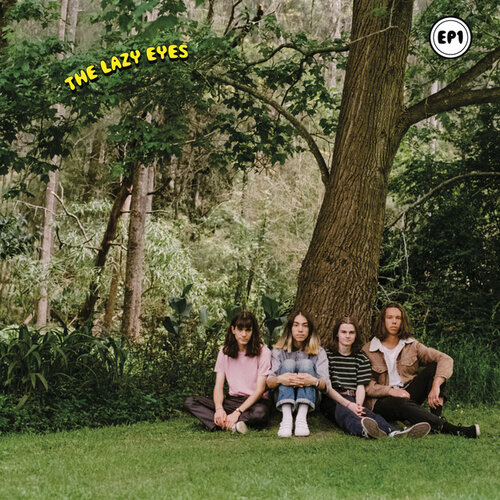
The Lazy Eyes – EP1

ffff.jpg

Review:

“‘Cheesy Love Song’ – fittingly titled – closes as a bells-and-whistles piano ballad. The song flits between pastiche and sincerity, building on the outlandish playfulness of seventies revivalists The Lemon Twigs. Such dizzying romance also bears stark similarity to the sweetened Lennon imitations of Tobias Jesso Jr – it’s all in the execution though. There’s a maturity that suggests this band have been working hard on building on those influences, not solely depending on them.

Dusting off such well-loved old-school sounds can be risky for any band but The Lazy Eyes don’t dwell on imitating the past for too long at any point here. Perhaps it’s their youthful drive – but with an array of psychedelic soundscapes, they seamlessly find fresh joy in old methods. This vibrant introduction easily lives up to some of those heroes they’ve been compared to against – though they’re rightfully too busy having good time to worry about such expectations” – NME      

Loose Fit – Loose Fit

dddd.jpg

Release Date: 3rd April

Label: FatCat Records

Stream: https://open.spotify.com/album/7GkchZpYKA0r8DnzRVBLNg?si=ML2vUYpCRCya1VX3twVRMA

Buy: https://loosefit.bandcamp.com/releases

Key Cut: REFLUX  

Review:

“Lead single ‘Pull the Lever’ opens the EP strong – a dark, moody post-punk banger crackling with energy, with thumping disco drums and a bassline so catchy it’s frankly evil. The song barely needs anything else – the guitar is used for texture, filling in the space around the central bassline, and a saxophone creeps in only very occasionally. Basically, they know when they’re onto a good thing, and how to give it the room it needs. A good sign for this band going forward.

Second track ‘Riot’ ups the tempo considerably, a cathartic outpouring of nervous energy with the rhythm section still very much right at the forefront of the sound, with a massive yo-yoing bassline sat behind it. Next track ‘Reflux’ slows things down considerably and sees singer Anna Langdon whip the sax out again. The band apparently formed by Langdon and drummer Kaylene Milner after they bonded over their love of experimental music – an influence you can hear best on this track.

The other single from this EP, ‘Black Water’, goes a little weirder again, as Langdon repeatedly sings to “a comforting shadow,” like a high-minded lyrical mantra, before bringing it crashing back down to earth by singing, “with you in the car park,” in just about the most Australian way possible. Final track ‘Delete’ does things a little bit differently, indulging in a bit more of a stop-start structure as she sings, “I will delete you.”

The EP is a great mission statement for Loose Fit – a band who clearly know their way around a banger. ‘Pull the Lever’ in particular is a huge track; one of the best songs of the year so far, and promises big things from this exciting young band” – VultureHound

 Cayley Thomas - How Else Can I Tell You?

Review:

“The album’s opener, “Two Minds”, kicks the record off on a sunny guitar riff and a touch of horns around the track’s midpoint. In her wistful vibrato, Thomas reflects on the idea of indecision and the fleetingness of time when she sings, “Isn’t it already too late?/ Everybody’s finished the race/ And you’re just startin’.” “Midnight Hours” shakes things up just slightly as the track affects a slightly darker, more noir-influenced tone in the music. Much of the track rides on a subtle, muted bassline with Thomas taking on a just slightly more ghostly soprano voice,  over-extending some notes to a near whisper pitch. “Sunshine”, appropriately enough, takes the record back into notably lighter territory as Thomas sings to those around us who shed much-needed light on our lives. “I sink a little deeper/ Draw the shades closed one more time/ But you bring the sunshine baby/ Clearin’ up a cloudy day,” sings Thomas, as the clouds eventually part on the track with a huge, shredding, Eagles-esque guitar solo. This album truly stands out on its closing track, however, as Thomas delivers a simple, yet undoubtedly heartwrenching tribute to her late brother on “In a While”. Through the filter of what sounds like a telephone receiver, Thomas, accompanied by only her guitar, reflects on a life cut short and the little reminders of him in daily life that make her write, “Forever and a day/ In my thoughts you’ll stay.”

This latest release from Cayley Thomas is tastefully simple, yet profoundly evocative. Each song is guided by the genuine emotion one can hear in her voice and backed up by simple and elegant lyricism and soothing musical accompaniment. She managed to give herself exactly enough space to be able to really reflect on and express an impressively wide range of emotions, while still remaining both concise and consistent on the album as a whole. This record is a textbook lesson on tight and effective songwriting to say the least” – Canadian Beats

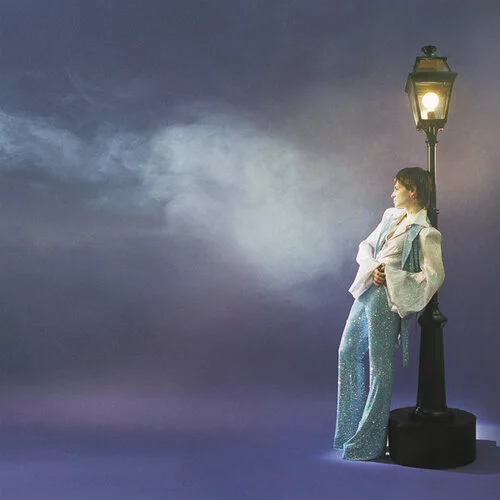
Christine and the Queens - La vita nuova

Review:

“Her two previous albums were strong, but this EP is arguably Christine and the Queens’ (aka Heloise Letissier) best release to date, a distillation of the incisive and effervescent pop melodies that are a hallmark of all of her work. While it clocks in at just 22 minutes and six tracks (two of which are French and English-language versions of the same song, “I Disappear in Your Arms”), there’s nary a weak moment on the release. It kicks off with the mid-tempo single “People I’ve Been Sad” before picking up the pace with the French version of “Disappear.” She then brings the tempo it back down with the low-key “Mountains” and “Nada” before picking it up again to climax with the title track, a new wave-flavored collaboration with Polacheck that finds the American singer showing off her Italian while gorgeously entwining her voice with Letissier’s on the chorus.

Throughout, the EP is marked by Letissier’s vocal and songwriting cool — even when the tempos are faster and the energy level is high, there’s a certain effortless ease to her singing and the music. However, the same can’t be said for the 14-minute video that accompanies the EP, which is basically Letissier and her dancers moving dramatically through Paris’ gorgeously baroque Opéra Garnier to the accompaniment of the songs, finishing with a strange vampiric seduction between her and Polacheck on the title track.

While it makes for a rather incongruously intense accompaniment to the EP’s supreme chill, it also shows another side to Letissier’s rapidly developing talent” – Variety
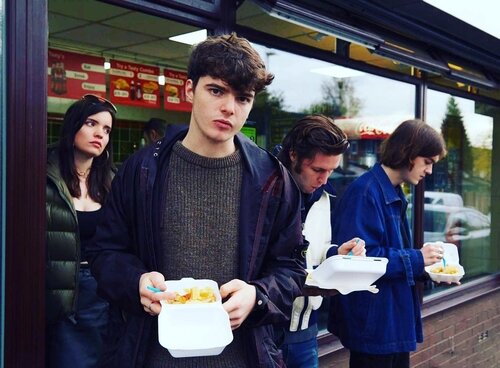
FEATURE: Too Good to Be Forgotten: Tracks That Are Much More Than a Guilty Pleasure: ABBA – Dancing Queen

FEATURE:


Too Good to Be Forgotten: Tracks That Are Much More Than a Guilty Pleasure

ABBA – Dancing Queen

___________

SOME might say that it is sacrilege…

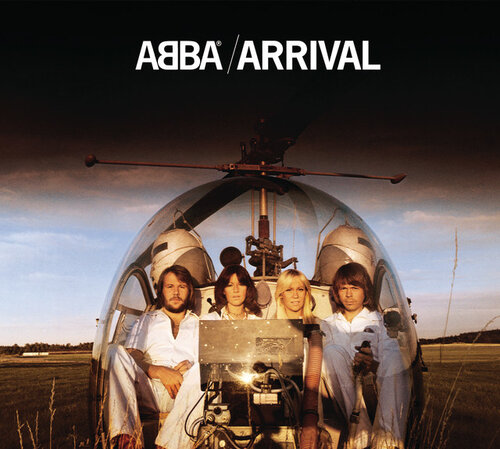
to mention ABBA in a feature that talks about guilty pleasures! Last week, I talked about Hanson, and their single, MMMBop. That is a song that many people overlook or assume to be a cheesy Pop confection but, actually, it is a terrific song that warrants a lot of respect. Dancing Queen might be seen as a classic, but there are many people that avoid ABBA in general, thinking they are a bit plastic, or the music is a little naff. I would never hold that opinion: ABBA, to me, have released some of the best tracks ever. I know that there are people that are not convinced, and they feel the Swedish band are the ultimate guilty pleasure. Maybe I will need to put together another feature to talk about ABBA in general but, as they are a group that have cleared influenced a lot of modern artists, I feel songs like Dancing Queen are a lot more than a guilty pleasure – many people feel sheepish when they express any desire of their love of ABBA. I am not a super fan of the group for sure, but I grew up listening to a lot of their songs; hearing Super Trouper for the first time is one of my earliest memories. Agnetha Fältskog, Björn Ulvaeus, Benny Andersson and Anni-Frid Lyngstad are no strangers to gems and anthems! Although Dancing Queen is not my favourite ABBA tracks, it is one of their most famous.

There are those who think the track is throwaway or cheesy, and those who really love it. I have seen Dancing Queen appear on a few lists of songs that are viewed as guilty pleasures – whether the concept of a ‘guilty pleasure’ exists or not, we shall leave that parked for another day! Maybe it feels a bit odd singing along to the chorus, and some feel they cannot identify with the song’s lyrics but, really, should that matter?! To me, Dancing Queen is a catchy and timeless track that can put one in a great mood – in the same way Super Trouper, Voulez-Vous, or Take a Chance of Me can. On paper, Dancing Queen sounds like a perfect slice of Disco/Euro Pop. Dancing Queen was the lead single from the band’s fourth studio album, Arrival. It was written by Benny Andersson, Björn Ulvaeus and Stig Anderson. Dancing Queen was released as a single in Sweden on 15th August, 1976, followed by a U.K. release and the rest of Europe a few days later; it became ABBA's only number-one hit in the United States, and topped the charts in Australia, Canada, the Netherlands, Belgium, Ireland, Mexico, New Zealand, Norway, South Africa, Spain, Sweden, the United Kingdom, Germany and Zimbabwe. That is a lot of Wikipedia information thrown at you, but it is important to get those impressive stats out there!

IN THIS PHOTO: ABBA in 1976

Like all classic ABBA tracks, Dancing Queen has a huge and glistening chorus, and the lyrics are simple enough so that everyone can understand the song’s meaning. The production is incredible, and the song’s story, about someone enjoying dancing and being lost in the moment, has resonated and endured through the decades. It feels weird to sort of defend a song that has gained classic status! Since its release in 1976, Dancing Queen has been included in numerous polls celebrating the best songs of the 1970s; it was inducted into the Grammy Hall of Fame in 2015. I think ABBA’s music, unfairly, is still lumped in with some of the more throwaway and cheesy music of the 1970s. Even if you do not like ABBA or consider them to be one of your guilty pleasures, how can one deny the power and positivity of the song?! It is weird that there is this divide between people who love ABBA and their classics, and those who cannot stand them – even if they like other songs and acts that are very similar! I want to quote from an article that The Guardian produced in 2016, to mark forty years of a classic. There are some interesting passages that I want to lay out:

“It’s no mystery why – Dancing Queen is beautifully produced: catchy and euphoric, the perfect backdrop for a song that encapsulates the carefree bliss of youth. Certainly, the band knew they had struck gold before it was even finished. Frida Lyngstad told me in 2014 that hearing the music Benny Andersson and Björn Ulvaeus had created for her and Agnetha Fältskog to sing on was a eureka moment, so much so that she burst into tears: “Out of pure happiness that I would get to sing that song, which is the absolutely the best song Abba have ever done,” she said.

=

What is it that elevates Dancing Queen above so many other beautifully produced, catchy, euphoric songs? Pete Waterman, who knows a thing or two about writing a hit, believes it exemplifies how the best Swedish artists are able to soak up popular trends and regurgitate them as something fresh: “Listen to Dancing Queen and you can hear Elton John straight away, you can hear the Beatles, disco is coming along with the Bee Gees, and you can hear that,” he says. “It’s also got what all great pop songs have – a great first line. ‘Friday night and the lights are low’ … boosh! You’re away. All great records start with a bang.”

In Dancing Queen’s case, these images told the story of a 17-year-old girl on a nightclub dancefloor – lost in the music and the moment. The sonic euphoria mirrors the freedom that the dancefloor can bring, although, as with all Abba songs, there’s a hint of what Ulvaeus called “that Nordic melancholic feeling” to it. The teenage girl isn’t the narrator, after all, so is the listener really just an observer, looking back on their lost youth? Ultimately, the song seems less concerned with making you gaze forlornly back than it does with bringing the abandonment of your teenage years into the present, at least for four glorious minutes”.

The rest of the Arrival album contains plenty of gold nuggets. Apart from Dancing Queen, we have Knowing Me, Knowing You, and Money, Money, Money. It was a very successful and fertile time for ABBA. Following their eponymous album of 1975 – where Mamma Mia, and SOS can be found -, they followed it up with the excellent Arrival. Its finest song still divides people, even though it has taken on a life of its own and has been elevated to the level of a stone-cold classic. For those who feel Dancing Queen is a guilty pleasure and a song that is a bit too cheesy to like, I would argue that it is…

zzzz.jpg

IN THIS PHOTO: Agnetha Fältskog in 1976/PHOTO CREDIT: Gijsbert Hanekroot/Redferns

ONE of the all-time greats!

FEATURE: Vinyl Corner: Garbage - Garbage

FEATURE:


Vinyl Corner

Garbage - Garbage

___________

I have been meaning to include Garbage’s eponymous album…

in Vinyl Corner for a while and, as its twenty-fifth anniversary is tomorrow (it came out on 15th August in the U.S., but was not released in the U.K. until 2nd October), I thought it was only right that I take a closer look. Garbage is the debut album from the brilliant band – consisting Shirley Manson, Duke Erikson, Steve Marker and Butch Vig. Although  three-quarters of the band are American, their incredible lead, Shirley Manson, is Scottish, and I think that is one of the keys to that success, in terms of her accent and, if you have a Scottish lead, I think you could call Garbage a British band rather than America – it is only right that we claim them! If you have not got Garbage on vinyl, then go grab a copy, as it is one of the best debuts of the 1990s! Whilst some have greeted the album with a mixture of praise and dubiousness – saying some of the songs sound dated and there are filler tracks -, Garbage has been greeted with acclaim for the most part! It got to number-six on the U.K. charts and, in 1995, I think it stands out as one of the most original and innovative albums – in a year where the likes of Radiohead’s The Bends, Björk’s Post, and PJ Harvey’s To Bring You My Love were out there (such an incredible year for music!). When Garbage was released and made an impression, the band embarked on a year-long tour; huge singles like Queer, and Stupid Girl were ubiquitous in 1995/1996 – the latter was released in March 1996.

It is a bit of a long story as to how Shirley Manson came to the attention of Butch Vig – a producer she admired hugely, and with the likes of Nirvana’s Nevermind under his belt, one could see why! She was a member of Edinburgh’s Goodbye Mr Mackenzie, and several members (Manson included) formed the side-band, Angelfish. Vig was shown a video of Angelfish’s Suffocate Me, and he was intrigued. Vig, at the time, was in a band with the two other male members of Garbage, and they were keen for a female lead. Their manager, Shannon O’Shea, tracked Shirley Manson down, and it grew from there. To be fair, considering what I was saying about Butch Vig’s reputation: Manson was not aware at the time Butch Vig produced Nevermind, so she was in for a pleasant surprise! Garbage’s ethos was that they would combine different sounds and not be bound by limitations and barriers. A lot of bands in the mid-1990s were sticking doggedly to Grunge or Rock, but Garbage looked beyond and brought in elements of Hip-Hop and Funk. I love how Garbage is a balanced album that does not load all of its best singles at the top. Opening with Supervixen, Queer, and Only Happy When It Rains, one gets three golden cuts, but they all sound different and have their own identity – rather than having three singles that are identical.

Vow, and Stupid Girl occur in the middle, and Milk ends the album. Aside from the better-known tracks, there are plenty of brilliant numbers – A Stroke of Luck, and Fix Me Now are underrated are exceptional. As of August 2015, Garbage had sold over four-million copies worldwide, and the album is influencing bands and selling healthily after twenty-five years since its release! I think the album will continue to be seen as a classic, as the songs sound so urgent and timeless – I disagree with critics that feel some of the songs have not aged well or are a product of the ‘90s. In their review of 1995, this is what Rolling Stone had to say:

“As Heaven Is Wide” rides cool grooves high in focus and fiber, locomoting toward unknown dance-floor destinations. “Not My Idea,” another querulous high-speed track, patiently explains its depressed circumstances, then bangs its silverware on the plate, insisting that “this is not my idea of a good time” Warm Euro-style balladry shows up with “A Stroke of Luck,” but Manson shivers. “Here comes the cold again,” she sings with regret. On “Vow,” the current single, she’s throwing fits again, threatening to tear somebody’s world apart to the tune of industrialized guitar noise.

Near the end of Garbage, Manson affects a kind of peace with her own ravings. On “Stupid Girl” she marches along to a funky bass, indicting someone – herself? – for not believing in fear, pain or people she can’t control. “All you had,” she sings, seething, “you wasted.” After another tuneful near-metal tantrum called “Dog New Tricks,” she and Garbage crest on “My Lover’s Box.”

On this great piece, arranged with those mangy riffs but reframed with syncopations from the Spinners and outbreaks from Bad Brains, Manson fears she’ll never get to heaven and pleads, “Send me an angel to love.” The album ends on a lovely two-song coda comprising “Fix Me Now,” a wracked appeal for togetherness, and the lush “Milk,” a ballad in which Manson and Garbage go grunge torch, and she explains her previous moments of cruelty in terms of having been “lost.” Oh, was that it? Garbage teems with such disjunctions of tragedy and junk. Like so much fun and important rock & roll, it’s the product of brilliant misunderstandings”.

I have seen some reviews that are a little mixed; those not fully appreciating the incredible band interplay and the sheer force of Shirley Manson’s vocals, but the majority of reviews throw a lot of love towards Garbage. When reviewing the twentieth anniversary edition of Garbage in 2015, Consequence of Sound observed the following:

“Another of the band’s singles, “Queer”, challenged expectations on multiple levels. First and foremost was the lyrical content: Manson’s, tongue-in-cheek, sexual lines had to have elicited some blushing in the Clinton era. But it also pushes past the grunge signifiers and into the other half of the band’s sound, specifically their interest in drum loops and samples. The opening ringing notes and shuffling drum patterns evoke European trip-hop rather than punk rock. Even with all the guitar back-and-forth, the production and arrangements remain lush and hypnotic. It’s a clear indication that Garbage aspired to be more Portishead than Pearl Jam.

Their ambitions are made even more clear on tracks like “A Stroke of Luck” and the haunting closer “Milk”, in which samples are placed front-and-center rather than hidden behind distortion. “My Lover’s Box” draws even more focus on the drum loops, before bursting into another massive chorus. Garbage bridged two very different worlds in an era that often felt separated, drawing different audiences together under their unique banner. Their self-titled debut feels just as instrumental for post-grunge as it does for dance rock and trip-hop.

Not everything about the band’s debut has aged particularly well. “As Heaven Is Wide” gets a bit heavy-handed with the angel imagery, though this does seem to be a common trope for the era (Sunny Day Real Estate, Pearl Jam). The assertive sexuality Manson brings to the lyrics remains fascinating and bold, but still, lines like “You can pull it out if you like it too much” on “Supervixen” have lost some of the shock value they had two decades ago. Even so, opening the record with that song highlights the band’s unwillingness to compromise and throws the listener right into Manson’s world”.

It is amazing to think Garbage’s debut is twenty-five, as I remember the album coming out when I was in high school. Singles like Stupid Girl were all over the place, and I was instantly gripped by this exceptional band! Twenty-five years later, Garbage still manages to move and stun the senses and, for that reason, I could not resist but to…

BOW to its majesty 

FEATURE: “He's Got Morning Glory and Life's a Different Story" The Blur/Oasis Britpop Chart Battle at Twenty-Five

FEATURE:


“He's Got Morning Glory and Life's a Different Story”

aaaaa.jpg

IN THIS PHOTO: Blur circa 1995

The Blur/Oasis Britpop Chart Battle at Twenty-Five

___________

ONE chapter of music history that creates division…

IN THIS PHOTO: Oasis in 1995/PHOTO CREDIT: PA

is Britpop. There are some who adore the spirit and brilliance of the music produced by the likes of Oasis, Blur, Supergrass, Suede, and so many other great bands at the time. There are others that feel Britpop was a rather cloying and over-hyped movement that did not really produce anything substantial or memorable. I have a lot of affection for the period, and I was fascinated as a child watching these great British bands of the time rising and creating anthems. There is conflict as to when Britpop officially started but, by 1995, it was reaching its peak. Tomorrow (14th August), it will be twenty-five years since the two biggest British bands of 1995, Oasis and Blur, launched singles. Today, it feels strange to get excited about singles and the charts, but back in 1995, so many people were watching with interest as Blur’s Country House took on Oasis’ Roll with It. Country House was the lead single from Blur’s underrated 1995 classic, The Great Escape, whilst Roll with It was taken from Oasis masterpiece second album, (What's the Story) Morning Glory? No doubt, those tracks are not among the biggest and best tracks from those albums. I think pitting Blur’s Charmless Man against Oasis’ Morning Glory would have made for a better battle; two stronger songs that, whilst not as spirited and commercial as the tracks they released on 14th August, 1995, would be more enduring.

The chart battle was won by Blur, but one can say that Oasis benefited more in the long-term; their career rose and the two bands would experience different paths in 1995 – Blur would overtake Oasis in 1997 in terms of album quality – the former’s eponymous album is much finer than Oasis’ Be Here Now (which was heralded in 1997, but has since been seen as overblown and overrated). I know there will be a lot of articles in the next week or so, as many reflect on a very exciting and charged time for British music. I recall reading the music press at the time and feeling this real sense of anticipation, conflict, and rivalry! In 2015, SPIN marked twenty years since the Country House/Roll with It showdown:

“On this day 20 years ago, Britpop reached its apex as a pop-culture phenomenon, with the simultaneous release of Blur’s “Country House” and Oasis’ “Roll With It” singles. Not that the songs were all that great — today, neither would necessitate a spot in either band’s greatest-hits live set — but what they represented certainly was: The climax of a long-brewing feud between the movement’s two biggest bands, and a chance to empirically determine which was truly the greater outfit, by vote of the people.

Of course, it wasn’t close to that simple: Nearly as soon as the victor was crowned in the first round of Blur vs. Oasis, the momentum of the fight shifted dramatically in the other direction. And so it would go over the decades to come, the groups constantly toggling back and forth in who was leading in popularity, public perception, and overall legacy. Long after the bands stopped fighting in real life — and really it’s been radio silence for some time now on that front, with respective leaders Damon Albarn and Noel Gallagher even dueting with one another on the former’s “Tender” two years ago — the debate rages on among fans, who couldn’t let the thrill of ’95 go even if they wanted to”.

If it was just a case of Oasis and Blur releasing two good singles from poor albums, then I don’t think many people would be so invested in this Britpop peak so far down the road! The fact is that both bands were on top form and released majestic records in 1995. If (What's the Story) Morning Glory? Is better-reviewed and remembered, Blur’s The Great Escape was a worthy follow-up to Parklife (1994) – tracks such as Stereotypes, Charmless Man, Fade Away, He Thought of Cars, and The Universal are classic Blur cuts! One can only imagine how much pressure there was in Oasis and Blur’s camps when they released their singles in 1995, and so many people were creating this huge sense of drama. We do not really have that thing now of different but beloved bands take on one another and have this very healthy rivalry – the fact Oasis and Blur released albums in 1994, 1995, and 1997 and there was this sense of tribalism and both bands having distinct sets of fans who, for the most part, did not really overlap. It was a very exciting time for British music was Britpop and, in a feature from NME from last year, Stephen Street (who produced for Blur) and Oasis’ press officer, Johnny Hopkins, cast their minds back to the heady Britpop days of 1995:

“Stephen Street (Blur producer): “Following [1994’s] ‘Parklife’, optimism was very high. There was a lot of confidence flying through Blur. We knew that when we made a record there was a good chance it would get heard on the radio, which hadn’t been the case three or four years previously. At that point Damon was revelling in being one of the hottest things on the planet. He was still going out with Justine (Frischmann, of Elastica) at that time, so they were the hottest couple in town.”

Johnny Hopkins (Oasis press officer): “The first Oasis album had been the best-selling debut album ever. There was a lot of confidence, a lot of excitement, a lot of celebration around that time. The intention was to keep them away from Britpop as much as possible. I saw them as an international rock’n’roll band. I found the whole Britpop idea to be pretty parochial and limiting, and in parts pretty sinister. They weren’t hanging out at [Camden pub] The Good Mixer like all the other so-called Britpop bands were. The only time they ever went in there was after a Creation Unplugged press conference at NME. There was an idea that they should go in there, just to fire a warning shot across the bows. Mission accomplished”.

This year has been a rotten one, and I think it is good that we can be nostalgic and mark a brilliant time in music. No matter whether you supported Oasis or Blur, or if you liked Roll with It, or Country House, or felt that the songs were a bit weak, one cannot deny that August 1995 was a hugely memorable time! I want to go back to that SPIN article, that talks a bit about the aftermath and fallout from that epic chart battle:

Blur won the battle, as “Country House” outsold “Roll With It” by about 60,000 copies, but the rest of the war was a bloodbath for them. Oasis would brush off the loss and springboard to their greatest success ever almost immediately afterwards, as “Wonderwall” would not only trump any subsequent single from Blur’s The Great Escape, but also catapult them to superstardom in the U.S. and everywhere else.

Oasis’ (What’s the Story) Morning Glory? would go on to vastly outsell The Great Escape pretty much everywhere, and continued to spin off hits (“Champagne Supernova,” “Don’t Look Back in Anger”) on both sides of the pond well into ’96. Blur ended the year as clear silver medalists — bronze, perhaps, if you counted Pulp — and were in serious need of regrouping”.

I look forward to seeing what comes out in the media in the coming days regarding the infamous Blur and Oasis Britpop war, and I am sure we will see Liam Gallagher post something on Twitter – maybe he’ll take a dig at Blur’s Damon Albarn or the band in general! It was a wonderful time to be a child/young – I was twelve when Oasis and Blur faced up in 1995 -, and I look back with fondness. I know we will be talking about Britpop for decades to come, and we will focus on the time when two enormous bands put their singles into the world, and there was this feverishness in the air! I will leave things there but, if you have heard much about Britpop or are unfamiliar with the Blur/Oasis rivalry, then Noel Gallagher from Oasis explains more (in his unique way!), and this interesting video gives some context. Me, personally, I love both Oasis and Blur, but when it comes to choosing between those two Britpop singles of 1995, I will always be in the corner…

OF Blur’s Country House!

FEATURE: Take a Bow: Madonna the Icon

FEATURE:


Take a Bow

IN THIS PHOTO: Madonna captured by Deborah Feingold in 1983

Madonna the Icon

___________

THE reasons why I wanted to write a feature…

IN THIS PHOTO: Madonna in a promotional photo for Madame X (2019)/PHOTO CREDIT: Steven Klein

about Madonna is because, a) she recently departed the record label Interscope for Warner. One suspects that Warner better understand Madonna, and they can take her career to the next stage. I am not one who delves too deep when artists switch labels, as it is difficult to understand the true reasons why it happens and what benefits the artist experiences from the switch. Madonna’s latest album, 2018’s Madame X, is one of the best of her later career, and I am interested to see where she heads next and whether there are already plans in place for her fifteenth studio album. The main reason for me revisiting Madonna – I have written about her a lot through the years – is that it is her birthday on 16th August. Although Madonna gets a lot of stick from the press and some people – she has been on the receiving of abuse and judgement her whole career! -, I have always admired her and consider her one of the last living icons. I will move onto the idea of an icon now but, when you think about the artists living, how many rank alongside Madonna in terms of their power and influence? Prince and David Bowie died in 2016, and maybe the likes of Paul McCartney are comparable in terms of their impact on music. As she is about to turn sixty-two, there is no slowing Madonna!

Madonna is one of those artists who attracts fans from all corners of the musical spectrum. No matter who you are, what you believe and how you live your life, she brings people together and her music translates across all borders and boundaries. Maybe she has put her foot in mouth a few times in recent years because of what she has said online and her beliefs, but Madonna cannot be censored and is someone who is not being told what to say by the record label – maybe Interscope were clamping down or trying to reign her in. I look at a lot of today’s artists and, with social media, it must be very hard to authentic and be who you are: there is always someone directing what an artist says and just how much they can get away with. Even now, in 2020, Madonna seems as bold and real as she did back in the 1980s! My first taste of her music was when I was about six or seven. I think the first song of hers I encountered was Material Girl – it is from her 1984 album, Like a Virgin. I was instantly hooked by Madonna, as it was not just the music that stuck in the mind. Madonna is famous for her changing styles and, whilst fashion is not especially important to me, I was intrigued by someone who was not your average chart start – someone who seemed like a clone and does not display much personality.

Madonna’s chameleon-like ability to change her looks and persona between albums kept me invested, and my second real wave of affection for her came when I was in high school and, in 1998, she released the sensational Ray of Light. Compare that album to her 1983 eponymous debut, and it shows just how far she had come! I love that idea of Madonna having $35 in her pocket at the start and making it from there. There is this myth surrounding some legends regarding the fact they had very little in their pocket and became a star when they had nothing to their name. Some are exaggerated but, with Madonna, you can feel she had to struggle and work hard. On her sixtieth birthday in 2018, The Independent wrote an article and talked about her start and why she was so determined:

“Born in Michigan in 1958, Madonna Louise Ciccone was the third of six children in a working-class Italian-American family. No one could have guessed that this little girl would become renowned the world over by a single name. But the history books will say that she did.

Perhaps it was the death of her mother when she was just five years old which lit the fuse of her determination, or a desire to break out of a provincial town and a big family. Maybe she was simply a born show-off. Whatever the motivation, after 60 years, Madonna is the wealthiest woman in the music business and one of its most radical icons.

Madonna’s journey from the American suburbs to the American Dream began in 1978, when she arrived in New York with nothing but a winter coat and $35 – “The bravest thing,” she once said, “I have ever done.” In 1983, after years of hard grit, she appeared before the world fully formed”.

IN THIS PHOTO: Madonna in 1992

With the inspiring and iconic comes the more controversial side. Through her career, Madonna has never held back her sexuality and physicality. Perhaps 1992’s Erotica was the moment when she found herself receiving a lot of negative attention from the press. This was compounding with the release of her Sex book at the same time:

“When topless photos from Madonna’s younger years leaked in 1985, they quickly found themselves in sell-out issues of Penthouse and Playboy. But in 1992, when she photographed herself completely naked for her own coffee table book, opprobrium rained down on her from all sides.

Here, she proved a crucial double standard around women’s bodies and sexuality. It was all fun and games for men to enjoy, so long as they were in control. Once women took charge themselves, their sexuality was deemed unacceptable.

In her defiance of the patriarchy, Madonna also garnered adoration from millions of gay men, who saw her reaching out a hand to them through her music, her imagery, and her vocal activism. For many, she was the accepting mother they never had”.

I would recommend great books like Madonna: Like an Icon to get a bigger sense of where she came from and why she is so inspiring, but I have been following her music for over three decades, and the fact Madonna is still at the forefront and influencing artists shows how indelible and potent her music is! Taylor Swift is in the news at the moment because her surprise album, folklore, was recently released, and it is breaking sales records.

Madonna herself knows that modern stars like Swift and Lady Gaga for instance rely a lot on the power and universality of social media. It is a powerful marketing machine, and I often feel like it is a bit of an unfair leg-up for major stars. Madonna was utilising radio and music television early in her career, but I think the reach of social media is bigger than radio back in the 1980s and 1990s, and it can be a bit of a crutch. Not that Madonna worked from the bottom and did everything herself. She has had the help of record labels and other writers/producers, but I think it was harder than to make a name and sustain compared to things now. People will contend that, but I feel the idea of an icon today is very different. I have a lot of respect for big Pop artists of today, but it is hard to see beyond the lure and ubiquitous nature of social media and discern how much of today’s stars are where they are because of talent or Internet popularity. To me, Madonna is still the biggest icon in Pop, even if there are a lot of younger artists who are creating records and getting everyone talking. The fact we do not really have music T.V. anymore is a disadvantage for many modern stars.

A lot of Madonna’s appeal and legacy comes from her amazing videos. From the rather cutesy Material Girl, through to the epic Like a Prayer (1989), and the extraordinary Frozen (1998), we see this artist embody different guises and worlds! Now, I think digital sales and social media is more important and influential than videos and the depth of songs. That is my opinions, but I also think it is harder to get noticed in modern music, so I guess there is more to it. Regardless, there is no doubt that Madonna is one of the most important artists ever, and she has released at least five iconic albums – her 1983 debut, Like a Virgin, Like a Prayer, Erotica, and Ray of Light. I have as very soft spot for 1994’s Bedtime Stories as it contains my favourite-ever Madonna song, Take a Bow. That song shows the versality of Madonna – a tender and heartfelt song where Madonna puts her heart out there is a world away from songs like Holiday (from 1984’s Like a Virgin), and La Isla Bonita from 1986’s True Blue! From her role as a fashion icon, to the role she played in connecting with the L.G.B.T.Q.I.A.+ community (tracks like Vogue are especially powerful when we think about that), to her continued evolution and musical curiosity, there is nobody in music like her!

I tend not to take big chunks from Wikipedia but, when it comes to her legacy, I could not resist but to quote the following:

“According to Tony Sclafani from MSNBC, "It's worth noting that before Madonna, most music mega-stars were guy rockers; after her, almost all would be female singers ... When the Beatles hit America, they changed the paradigm of performer from solo act to band. Madonna changed it back—with an emphasis on the female."[377] Howard Kramer, curatorial director of the Rock and Roll Hall of Fame, asserted that "Madonna and the career she carved out for herself made possible virtually every other female pop singer to follow ... She certainly raised the standards of all of them ... She redefined what the parameters were for female performers."[378] According to Fouz-Hernández, subsequent female artists such as Britney Spears, Christina Aguilera, Kylie Minogue, the Spice Girls, Destiny's Child, Jennifer Lopez, and Pink were like her "daughters in the very direct sense that they grew up listening to and admiring Madonna, and decided they wanted to be like her."[379] Madonna has also influenced male artists, inspiring rock frontmen Liam Gallagher of Oasis and Chester Bennington of Linkin Park to become musicians.[380][381]

Madonna's use of sexual imagery has benefited her career and catalyzed public discourse on sexuality and feminism.[382] As Roger Chapman documents in Culture Wars: An Encyclopedia of Issues, Viewpoints, and Voices, Volume 1 (2010), she has drawn frequent condemnation from religious organizations, social conservatives and parental watchdog groups for her use of explicit, sexual imagery and lyrics, religious symbolism, and otherwise "irreverent" behavior in her live performances.[383] 

IN THIS PHOTO: Madonna in 1983/PHOTO CREDIT: Richard Corman

The Times wrote that she had "started a revolution amongst women in music ... Her attitudes and opinions on sex, nudity, style and sexuality forced the public to sit up and take notice."[384] Professor John Fiske noted that the sense of empowerment that Madonna offers is inextricably connected with the pleasure of exerting some control over the meanings of self, of sexuality, and of one's social relations.[385] In Doing Gender in Media, Art and Culture (2009), the authors noted that Madonna, as a female celebrity, performer, and pop icon, is able to unsettle standing feminist reflections and debates.[386] According to lesbian feminist Sheila Jeffreys, Madonna represents woman's occupancy of what Monique Wittig calls the category of sex, as powerful, and appears to gleefully embrace the performance of the sexual corvée allotted to women.[387] Professor Sut Jhally has referred to Madonna as "an almost sacred feminist icon."[388]

I will leave things there but, in the past few weeks, Madonna has courted negative attention because of her theories relating to COVID-19, but she is going to appear on a remix album from Dua Lipa. A recent article in The Metro asked whether Madonna was obliterating her own legacy. In the modern age, where we have cancel culture – artists being cancelled and wiped out because of what they say online -, is Madonna in danger of undoing decades of great work?

“But 2020 is a different beast.  Our collective patience has been pushed to the limit. We’re viewing the world, including celebrities and public figures, through a different lens.  Sure, famous faces survive multiple cancellations these days. They seem to get away with saying and doing increasingly controversial things. But not without the gentle erosion of a legacy. The point is, nobody’s untouchable anymore, including Madonna. For a die-hard fan like me, that’s worrying”.

Madonna has faced sexism and judgement through her career; she has faced censorship and anger and, in her fifties and sixties, ageism and less airplay. It does take more than a few misguided comments and posts to undo her legacy but, because everything online is amplified and we have this mentality to attack and devour artists if they make an error, I think we just have to accept that Madonna is not perfect and there are going to be occasions where she will need to think about what she puts out there. Considering all she has given to music and all she will give, we need to remember her incredible songs and tours; all the staggering moments and the inspiration she has given to countless artists! On 16th August, Madonna celebrates her birthday, and I hope she gets a lot of love. I want to return to that tweet Madonna sent regarding the $35 she had when she started her career, and how far she went! I wonder whether there will be a biopic anytime soon, as her life and rise demands cinematic attention. That is up to her but, right now, I wanted to salute one of my favourite artists whose music still means so much. Whilst we have huge artists around like Taylor Swift, Dua Lipa, Lady Gaga and so forth, I think it would be unfair to say that they are challengers and will be ‘The New Madonna’ – even if, clearly, Madonna has a lot of respect for Dua Lipa. The Queen of Pop can rest easy because, in 2020, her legacy and title is…

333.jpg

IN THIS PHOTO: Madonna in 1998/PHOTO CREDIT: RANKIN

DEFINITELY not under threat!

FEATURE: Dreams of Orgonon: Kate Bush’s Cloudbusting

FEATURE:


Dreams of Orgonon

zzzz.jpg

IN THIS PHOTO: Kate Bush on the set of the video for Cloudbusting/PHOTO CREDIT: John Carder Bush

Kate Bush’s Cloudbusting

___________

I am going to do some anniversary…

features relating to Kate Bush, as two of her biggest albums, Never for Ever, and Hounds of Love are approaching big birthdays in September – I am looking at the latter today. I am interested in covering Hounds of Love’s second side, The Ninth Wave, a bit before September, but this is the next feature looking at one of the songs from the first side. I love Running Up That Hill (A Deal with God) and the title track (in addition to Mother Stands for Comfort), but there is something about Cloudbusting that strikes me hard! Released as the second single from Hounds of Love (after Running Up That Hill (A Deal with God), the song only made number-twenty in the U.K. I think it is a real shame that the song did not do better, as it not only is one of the standouts from Hounds of Love, but it has a truly amazing video – which I will talk about very soon. Bush took inspiration from the 1973 memoir, A Book of Dreams; she reads the book and was affected by it – it tells of the relationship between psychiatrist, Wilhelm Reich, and his son, Peter. The track describes the son’s memories of his life with his father at the family farm, Orgonon, where the two spent time constructing a device so that they could (they felt) make it rain – they were cloudbusting!

Bush expanded on the premise and, on Cloudbusting, documented the relationship between the two and the creation of a cloudbusting machine; the arrest of Wilhelm Reich as his son looks on. Cloudbusting was an obvious single, and I wonder why it did not soar as high as Running Up That Hill (A Deal with God) – that single was released on 5th August, 1985 and reached number-three. On 14th October, 1985, Cloudbusting was released to the world, and I guess its B-side(s) - Burning Bridge was the B-side of the U.K. 7”; Burning Bridge, and My Lagan Love on the U.K. 12” -, were not as strong as Under the Ivy on Running Up That Hill (A Deal with God). Hounds of Love’s title track was the third single from the album and, whilst it managed to get to number-eighteen in the U.K., perhaps the fact Hounds of Love (album) was released on 16th September meant that many people already owned a copy of Cloudbusting – it is hard to say. What I do know is that Cloudbusting is one of the best songs of Kate Bush’s career, and it works brilliantly as the final track on the first side of Hounds of Love – it follows Mother Stands for Comfort; here we have two songs relating to the relationship between a parent and a child – Mother Stands for Comfort is eerier and colder, whilst Cloudbusting is lighter, even if it does have quite a sad end!

IN THIS PHOTO: Kate Bush in a promotional photo for Hounds of Love’s The Ninth Wave/PHOTO CREDIT: John Carder Bush

Bush actually contacted Peter Reich to explain her motives in writing Cloudbusting, and to express the wish that she hoped he would approve of the song. She received his reply a while later, saying that he loved what she was doing. I love the whole of Hounds of Love, but there is something that really stands out about Cloudbusting. It perfectly ends a wonderful end of the album’s first half, and sort of prepares us for the thrill-ride and epic adventure that is The Ninth Wave. It is amazing that Bush, still in her twenties when she wrote and released Hounds of Love, sounded so accomplished and ambitious. Not just in terms of lyrics and sonics; her vocals reached new levels, and that is all evident in Cloudbusting. I want to bring in a couple of exerts where Bush discussed Cloudbusting. These are taken from the Kate Bush Encyclopaedia:

“This was inspired by a book that I first found on a shelf nearly nine years ago. It was just calling me from the shelf, and when I read it I was very moved by the magic of it. It's about a special relationship between a young son and his father. The book was written from a child's point of view. His father is everything to him; he is the magic in his life, and he teaches him everything, teaching him to be open-minded and not to build up barriers. His father has built a machine that can make it rain, a 'cloudbuster'; and the son and his father go out together cloudbusting. They point big pipes up into the sky, and they make it rain. The song is very much taking a comparison with a yo-yo that glowed in the dark and which was given to the boy by a best friend.

It was really special to him; he loved it. But his father believed in things having positive and negative energy, and that fluorescent light was a very negative energy - as was the material they used to make glow-in-the-dark toys then - and his father told him he had to get rid of it, he wasn't allowed to keep it. But the boy, rather than throwing it away, buried it in the garden, so that he would placate his father but could also go and dig it up occasionally and play with it. It's a parallel in some ways between how much he loved the yo-yo - how special it was - and yet how dangerous it was considered to be. He loved his father (who was perhaps considered dangerous by some people); and he loved how he could bury his yo-yo and retrieve it whenever he wanted to play with it. But there's nothing he can do about his father being taken away, he is completely helpless. But it's very much more to do with how the son does begin to cope with the whole loneliness and pain of being without his father. It is the magic moments of a relationship through a child's eyes, but told by a sad adult. (Kate Bush Club newsletter, 1985) 

IN THIS PHOTO: Kate Bush in a Hounds of Love album cover outtake/PHOTO CREDIT: John Carder Bush

“If I've got this right, he believed that sexual energy was positive, usable energy that he tied in with his concept of orgone energy. He upset a lot of people selling orgone boxes, saying they could cure cancer and stuff. He ended up being arrested and put in prison. I knew nothing about Wilhelm when I read the book, which was his son's experience of all this, written from a child's point of view with a tremendous innocence and sadness. Years ago, I just went into a shop and picked it off the shelf, and really liked the title and the picture on the front. I'd never bought a book before which I hadn't known anything about; I just felt I'd found something really special. And nine, 10 years later, I re-read it and it turned into a song. When it was finished, I wrote a letter to Peter Reich saying what I'd done. It was important to me in some way to have a sense of his blessing because his book really moved me. He sent me back such a lovely letter. It was an incredible feeling of returning something he'd given to me. (Mat Snow, 'Follow That!'. Q/HMV special magazine, 1990)”.

 Kate Bush was known for her stunning videos ever since her first, Wuthering Heights, arrived in 1978. Cloudbusting, in terms of its concept and set, was the biggest thing Bush tackled. She would direct her own videos on singles after Cloudbusting, but Julian Doyle did a fantastic job on Cloudbusting! Although Kate Bush, playing Wilhelm Reich’s son, is not the most convincing young boy in terms of looks, the emotion and affection she displays in the video is genuine and heartfelt.

I think the fact that Donald Sutherland played her dad was one reason why Bush’s acting performance was so genuine. She was a big fan of Sutherland’s work, and she was not expecting him to say yes when he was asked. Sutherland was in London at the time shooting a film at the time and, not having the best experience, I think the idea of filming a music video, whilst different, would have offered a small distraction! Sutherland only had a small window of time available, so the scene at the end of the video where he (as Reich) is driven away after his arrest is actually the Canadian actor departing the video set! The gravitas of having someone as esteemed as Sutherland on set was a big coup, and Bush learned a lot about acting and performance whilst working alongside Sutherland – something she took into subsequent videos and her role as a director. Sutherland and Bush work wonderfully alongside one another, and the relationship between the two is so sweet and touching! The concept is amazing: the two of them working on this rain-maker, as government officials bust their lab and take Reich (Sutherland away); the father being driven off as he sees his son (Bush) making it rain with their contraption – he is delighted but, of course, knows that his future is quite bleak. The setting – the video was filmed at The Vale of White Horse and Dragon Hill in Oxfordshire -is idyllic, and one witnesses a wonderful meteorological event unfold – even if the effect was created by using technology.

Before concluding, I want to bring in an article from DAZED of 2015, where they were commemorating Cloudbusting’s thirtieth anniversary. I wanted to bring in some interesting parts of the article – they spoke with Donald Sutherland, director Julian Doyle and editor Terry Gilliam, with additional insights from Peter Reich:

“Kate Bush (excerpt from a Kate Bush Club newsletter, 1985): “I was inspired by a book that I first found on a shelf nearly nine years ago. It was just calling me from the shelf, and when I read it I was very moved by the magic of it. It’s about a special relationship between a young son and his father. The book was written from a child’s point of view. His father is everything to him; he is the magic in his life, and he teaches him everything, teaching him to be open-minded and not to build up barriers... But there’s nothing he can do about his father being taken away, he is completely helpless. But it’s very much more to do with how the son does begin to cope with the whole loneliness and pain of being without his father. It is the magic moments of a relationship through a child's eyes, but told by a sad adult.”

Terry Gilliam: “Kate called me to direct the video and I said, ‘No, how about Julian (Doyle)?’ They had a great time shooting, but somewhere in the editing a conflict developed and I became the mediator. Kate knows exactly what she’s doing, she knows what she wants. She’s the sweetest person on the planet but she’s absolute steel inside!”

IN THIS PHOTO: Director Julian Doyle

Julian Doyle: “Kate came to me with a storyboard, which I remember had the sun coming up with a face on it. She was a lovely lady, with a great smile that she gave generously. I understood her influences – like, I knew immediately where ‘It’s coming through the trees’ (film sample on ‘The Hounds of Love’) came from and things like that. I also knew about Wilhelm Reich, because there was interest in him among the new women’s movement which was exploring the female orgasm and I was close to the women involved.

Donald Sutherland: “Barry Richardson, who was the hairdresser on Nic Roeg’s Don’t Look Now, asked me if I’d do a music video with Kate Bush. I told him no and we went on to other conversations. A couple of days later there was a knock on my door. I lived in the Savoy Hotel (in London). On the river. Suite 312. I loved it there. So cosseted. So private. Only the floor butler rang the door. I opened it. There was no one there. I heard a voice saying hello and I looked down. Standing down there was a very small Kate Bush. Barry had told her where I lived. What can you do? She wanted to explain what her video was about. I let her in. She sat down, said some stuff. All I heard was ‘Wilhelm Reich’. I’d taken an underground copy of his The Mass Psychology of Fascism with me when I went to film (Bernardo) Bertolucci’s Novecento in Parma. Reich’s work informed the psychological foundations of Attila Mellanchini, the character Bernardo had cast me to play.

IN THIS PHOTO: Donald Sutherland

Everything about Reich echoed through me. He was there then and now he was here. Sitting across from me in the person of the very eloquent Kate Bush. Synchronicity. Perfect. She talked some more. I said OK and we made ‘Cloudbusting’. She’s wonderful, Kate Bush. Wonderful. I love that I did it. (What do I remember) about doing it? I remember being in the car and the hill and them taking me, taking Reich, away and looking back through the back window of the car and seeing her, seeing Reich’s son Peter, standing there. And I remember the first morning on set seeing her coming out of her trailer smoking a joint and I cautioned her, saying she shouldn’t smoke that, it’d affect her work, and she looked at me for a second and said she hadn’t been straight for nine years and I loved her”.

Ahead of Hounds of Love’s thirty-fifth anniversary next month, I wanted to spend some time spotlighting individual tracks and aspects of the album. Cloudbusting is one of the finest tracks from the album and, despite its modest chart position, I really love it. Kudos to the musicians who helped Bush create this masterpiece - Drums: Stuart Elliott, Charlie Morgan/Strings: The Medicci Sextet/Arranged for strings by Dave Lawson/Backing vocals: Brian Bath, Paddy Bush, John Carder Bush and Del Palmer -, and, of course, Bush herself for the wonderful production! The video is amazing and, nearly thirty-five years after its release, one still feels a pang of emotion watching it unfold! How can one not be impacted and moved by the obvious chemistry and realism of Kate Bush and Donald Sutherland playing son and father – even if Bush looks too old and beautiful to play a younger male. All in all, Cloudbusting is a magnificent song, and one that, through this, I hope people have a deeper understanding of. Strangely, in these hard times, some of Cloudbusting’s most-memorable lyrics seem to sum up the song itself: “But every time it rains/You're here in my head/Like the sun coming out/Ooh, I just know that…

IN THIS PHOTO: Kate Bush in a shot from the Cloudbusting video/PHOTO CREDIT: John Carder Bush

GOOD is going to happen”.

FEATURE: Spotlight: Inhaler

FEATURE:


Spotlight

PHOTO CREDIT: Lewis Evans

Inhaler

___________

SOMETHING has happened in the band market…

over the past couple of years. Bands have always been visible, but not necessarily vocal. By that, I mean there were bands around, but what was being produced did not necessarily connect or leave a lasting impression. Hailing from Dublin, Inhaler are a group who are already primed for big things! Consisting Elijah Hewson – vocals, guitar, Robert Keating – bass guitar, Josh Jenkinson – guitar, and Ryan McMahon – drums, the lads are in their early-twenties, but they have a sound and conviction that is reserved for groups with greater age and experience. I want to source from a few interviews they have provided but, first, it is best to provide an introduction to Inhaler:

“Dublin quartet Inhaler recently completed a UK and European tour that saw them sell over 7,000 tickets and play to frenzied, sold-out crowds. November saw them support Blossoms across the US, before heading to Mexico for a slot at Corona Capital. They’ve announced a new run of dates in the UK & Europe for 2020 that will include a show at London’s Heaven on Thursday 20th February, their biggest headline show to date. Kasabian recently announced Inhaler as one of the support acts at their huge hometown show at Leicester’s Victoria Park next summer. Four friends who formed the band in school, Elijah Hewson, Robert Keating, Ryan McMahon and Josh Jenkinson bonded over a love of similar groups, taking in The Stone Roses, Joy Division, The Strokes, Depeche Mode, Interpol, Kings Of Leon, The Cure and more. Over a handful of singles – It Wont Always Be Like This, My Honest Face & Ice Cream Sundae – they have amassed a diehard fanbase, with their tracks being streamed over 8 million times. They make songs about being young and finding your way, music that connects. “I’m just trying to write about the joy of being alive, being a teenager, and the bad things that can come with that. I don’t like it to be all happy, I don’t like it to be all sad”, says frontman Hewson”.

Inhaler deliver impassioned and memorable Indie Rock with a slight Pop edge, and there is a tightens and quality that marks them out for longevity and intriguing progression. So far, they have six singles in their lifetime – the band formed in 2012 and named themselves Inhaler in 2015 -, and they have found themselves lauded and celebrated. NME named them as one of their ones to watch in 2020, and the Dublin band came fifth in the BBC’s Sound of… for this year. The guys have, like all artists, found themselves restricted and improvising during this crisis. They are keen to get back on the road and play as much as possible, and keep an eye on their socials to see if there are going to be any dates later this year or next year. When Inhaler spoke with JOE earlier in the year, they were asked about bands like The 1975 and The Strokes, and whether they are artists they emulate. The latter, especially, with a barer, rawer sound and songs about being a loner in New York City, for example, is a lot different to what you might expect from a group like The 1975. They were asked whether The Strokes’ style is something that connects with them:

"I think we're all as cool as each other, and we're all very cool," Keating knowingly deadpans. "I hope so, anyway."

"For us, we want to be a band," Hewson underlines. "We don't want to be a backing band and a singer. That's uninteresting to us. I think, as individuals, we're not that interesting but together we're slightly interesting."

Someone who agrees with that last part is enduring industry tastemaker Zane Lowe, who featured the band on his Beats 1 show on Apple Music in December.

"He basically reached out to us when he heard we were coming to LA," notes Hewson. "We were supporting Blossoms. He'd been a fan of 'My Honest Face', he'd heard that and was like, 'If you're in LA, come on the show' so we rocked up".

Right now, the band has a healthy fanbase behind them, and there is so much anticipation regarding what they will do next - and whether there will be an E.P. or album arriving. It has been a really successful and productive past year for Inhaler and, with the release of the single Fade Into You (released a couple of weeks ago, it is a cover of the Mazzy Star classic) still reverberating, it is onwards and upwards. I want to go back to last year, when Inhaler were interviewed by NME. They were a band on the rise and, at the time, had no scooped accolades from the BBC and NME in terms of their promise in 2020. It is interesting reading the interview and hearing about their early days and influences:

 “We’ve done our fair share of small pubs and clubs, which was great but it’s also good to have those big shows where you’re given 30 minutes to do what you like,” said bassist Rob Keating of their experience. “There was no pressure on us and to have that platform was great. To see what it’s like to perform on those stages, because obviously that’s our end goal.”

But what can newcomers expect from their sound? While ‘My Honest Face’ sees the band experimenting with post-punk, they say that there’s a whole range of influences at play.

“We’ve all grown up listening to different music and when we come together that shows. We’re creating our own style from that,” they explain.

“For me and for us as a band, we’ve known that there’s going to be doors open,” Eli said. “There’s no doubt about it, but those doors will shut just as fast as they open if we’re not good. It’s the pressure to step up our game and not be shite”.

Although Inhaler, in terms of their youth and looks, might seem like a band akin to The 1975: there are harder sounds to be heard but, for the most part, it is Pop being produced. I do not mean to return to The 1975, but Inhaler have been compared. I think the Dublin band have an edge to them, and they seamlessly unite sounds of the 1990s and early-2000s with what is happening today; there is swagger to be found and, in an interview with GQ recently, they talked about their experiences with Rock legends Bono and the Gallaghers. It is an interesting and revealing interview, but I think the most interesting exerts relate to GQ’s assessment of Inhaler’s sound/appeal and their tireless work ethic:

“Inhaler’s appeal is rooted in the kind of 1990s nostalgia that’s been reborn for 2020’s generation, for kids who dress like Stone Island versions of Shaun Ryder. The singles they’ve released so far are Madchester-influenced, feel-good, jangly pop-rock – like their latest single, “We Have To Move On”, which sounds like an early Killers record. There’s a purity in Inhaler’s dedication to vintage guitar music in a TikTok era.

Back to that intense schedule for 2020. Currently the boys are living at home with their parents in Dublin, mainly because they’re on the road so much this year that it’s nigh on impossible to plant roots, even harder when you’re 20.

It means that this year is in a state of flux, between selling out US venues and keeping their sisters from moving into their rooms at home. Caught between being on BBC Radio 1 and being out of the loop with their friends in Dublin. Navigating between working with Pulp’s Antony Genn on their debut album and learning how to wash and pack for the road.

What really sets Inhaler apart as a band is their work ethic. They’re all in agreement that work takes precedence over a night out. “No matter what we got up to that night, no matter what you do in the day, no matter what, you've got to be on top for the gig,” says Eli, with the same focus as a TED Talk speaker whose background is in motivation”.

Keep an eye on Inhaler as they are a rare example of a band being hyped all over the place that will be able to live up to that and not lose their identity and focus. I have seen so many bands being hailed and heralded and, before long, they ever lose that momentum or they go in the wrong direction. Inhaler are that rare breed: they seem humble but have a bit of a cocky side; they are young and upcoming but they already seem defined, accomplished and mature and, when it comes to their music, the music can simultaneously get your feet moving and…

TAKE your breath.

_____________

Follow Inhaler

FEATURE: Vinyl Corner: Kacey Musgraves – Golden Hour

FEATURE:

Vinyl Corner

Kacey Musgraves – Golden Hour

___________

FOR the latest…

PHOTO CREDIT: Eric T. White for Spin

Vinyl Corner, I wanted to revisit an album that was released in 2018 and, to me, it stands as one of the best albums of the past decade. Kacey Musgraves’ Golden Hour is an album you need on vinyl, as it is full of brilliant music. Her second album, 2015’s Pageant Material, was celebrated by critics, but some felt that the album was a bit soft and didn’t have much energy or diversity in terms of its mood. Forward a few years, and Golden Hour incorporated the best elements of Pageant Material – consistently brilliant songwriting and incredible performances from Musgraves -, and it added in new layers. Her fourth studio album was released through MCA Nashville. Musgraves co-wrote all thirteen tracks and co-produced the album with Daniel Tashian and Ian Fitchuk. I am not surprised that Golden Hour won four Grammys – including Album of the Year. One does not have to be a fan of Country/County-Pop music to appreciate Golden Hour and enjoy the songs. It is that unification of more traditional Country tones and themes mixed with a more widespread and polished Pop sound that makes Golden Hour such a fantastic album, able to appeal to everyone but, when you listen to it, it is very much the work of Kacey Musgraves – in that it sounds very personal top her and you can tell how committed she is throughout the album.

Singles such as Butterflies, Space Cowboy, and High Horse are phenomenal, and I wasn’t overly-aware of Musgraves prior to Golden Hour, but I have gone back and listened to her albums since. She has grown and evolved between every album, and Golden Hour is a brilliant peak. It makes me wonder where her fifth album might take her, as she is a terrific songwriter and someone who will only grow stronger! One of the bigger shifts from Pageant Material to Golden Hour was the inclusion of more love songs. Musgraves said how she never usually wrote love songs and felt connected to them before. Not that she was unhappy but, perhaps, the relationships she was in at various points of her career didn’t feel that real or long-lasting. When writing the songs on Golden Hour, Musgraves was married (she married Ruston Kelly in 2017; they sadly divorced last month), and it was easier to write about the throes of love and that depth of feeling. The fact that, sadly, she is not married anymore takes nothing away from Golden Hour and how you experience the songs. Oddly, for a Pop/Country artist, LSD played a small part in some songs’ creation; when writing Mother, and Slow Burn, that lysergic influence was very helpful – not that Musgraves was condoning the use of LSD, as it can have quite a negative effect on the mind.

I look back at the albums of 2018, and it was a big and impactful year for female artists. Terrific albums from Courtney Barnett, Mitski, Janelle Monáe, Cardi B, Ariana Grande, Let’s Eat Grandma, and Rosalía made 2018 such a strong and vibrant year. Not that male artists were lacking, but it was a year when women were ruling and producing the best albums around! I think Golden Hour is among the finest albums of that year and, as I said, one of the best albums from the 2010s. The reviews for Golden Hour were glistening and glowing. This is what AllMusic wrote in their assessment:

“Golden Hour shimmers with the vivid colors that arrive when the sun starts to set, when familiar scenes achieve a sense of hyperreality. Such heightened emotions are a new aesthetic for Kacey Musgraves, who previously enlivened traditional country with her sly synthesis of old sounds and witty progressive lyrics. Musgraves barely winks on Golden Hour, disguising her newfound emotional candidness behind a gorgeous veneer of harmonies and synthesizers. Sonically, the album doesn't scan country. Whenever Musgraves makes an explicit nod to the past, she acknowledges the smooth grooves of yacht rock and the glitterball pulse of disco, styles that only have a tangential relationship with country but feel more welcome in a landscape where R&B and hip-hop are embraced by some of the biggest stars in country. Musgraves doesn't mine this vein, preferring a soft, blissed-out vibe to skittering rhythms and fleet rhymes.

At their core, the songs on Golden Hour – which Musgraves largely co-wrote with her co-producers Ian Fitchuk and Daniel Tashian, but also featuring Natalie Hemby, Luke Laird, and Shane McAnally, among other collaborators – don’t play with form: they are classic country constructions, simply given productions that ignore country conventions from either the present or the past. This is a fearless move, but Golden Hour is hardly confrontational. It’s quietly confident, unfurling at its own leisurely gait, swaying between casual confessions and songs about faded love. The very sound of Golden Hour is seductive – it’s warm and enveloping, pitched halfway between heartbreak and healing – but the album lingers in the mind because the songs are so sharp, buttressed by long, loping melodies and Musgraves’ affectless soul-baring. Previously, her cleverness was her strong suit, but on Golden Hour she benefits from being direct, especially since this frankness anchors an album that sounds sweetly blissful, turning this record into the best kind of comfort: it soothes but is also a source of sustenance”.

I am still listening to tracks from Golden Hour and, whilst one wouldn’t want to rush Kacey Musgraves into another album – I have written about expectations artists face and why there is too much pressure on their shoulders -, but Golden Hour was so great, there are going to be many people out there wondering where she will go next in terms of inspiration.

I want to bring in another review of Golden Hour before wrapping things up here. When they tackled the album, this is what The Guardian offered:

“The success of High Horse is indicative of the ease and confidence that courses through Golden Hour. Regardless of genre, you’ll be hard pushed to find a better collection of pop songs this year. Everything clicks perfectly, but the writing has an effortless air; it never sounds as if it’s trying too hard to make a commercial impact, it never cloys, and the influences never swallow the character of the artist who made it. In recent years, there have been plenty of artists who’ve clumsily tried to graft the sound of Fleetwood Mac’s Rumours on to their own. On Lonely Weekend, possibly the best track here, Musgraves succeeds in capturing some of that album’s dreamy atmosphere without giving the impression that she’s striving to sound like Fleetwood Mac. It’s an album that imagines a world in which its author is the mainstream, rather than an influential outlier. It says something about its quality that, by the time it’s finished, that doesn’t seem a fanciful notion at all”.

If you are not familiar with Kacey Musgraves, I would say begin at the start and check out her incredible 2013 debut, Same Trailer Different Park. You can see her grow between albums, and each album offers an insight into her life and story. I think Golden Hour is her most assured and uplifting album, and one cannot deny that Musgraves sounds happy and settled through much of the record. It is a truly remarkable album, and it is one that I would easily…

RECOMMEND to anyone.

FEATURE: Fridays I’m in Love: Why Bandcamp’s Attitude Towards Artists Should Give Spotify and Other Platforms Pause for Thought  

FEATURE:


Fridays I’m in Love

aaaaa.jpeg

IN THIS PHOTO: The Anchoress

Why Bandcamp’s Attitude Towards Artists Should Give Spotify and Other Platforms Pause for Thought  

___________

IN terms of music news…

IMAGE CREDIT: Bandcamp

there has not been much to cheer about these past few months! It has been a bleak and unstable time, and, from venues facing closure and large sections of the industry facing peril, alongside that is artists struggling to make ends meet. We all know that life on streaming platforms is pretty tough for most artists. Unless you are a mainstream artists who can command millions of streams per song, you are not going to be making a realistic wage from sites like Spotify. It is not just them that are guilty of paying of paying artists so little, but it does seem ridiculous that, at a time when artists cannot tour and they are seeing their revenue cut to the bone, that there has not been a revision of the guidelines regarding payment! I guess streaming sites cannot afford to pay too much per stream, but there has to be some sort of change whereby smaller artists are having their music promoted because, right now, most adverts and attention is levied the way of big artists who are not exactly struggling for money! Luckily, there is a platform that is conscious of the difficult time, and they are responding. Bandcamp, to me, has always been one of the fairest-minded and conscious of the big platforms. The Bandcamp Fridays has helped so many artists and labels.

This article from Vice explains a bit more:

“There's not enough good news. But thankfully, there's been one positive in an otherwise dire year and it's that Bandcamp has been waiving its revenue share for all online sales on the first Friday of every month since March. So far, the first four "Bandcamp Fridays" have generated over $20 million dollars directly for artists and labels. With live music on an indefinite and already-too-long hiatus, this is potentially life-altering money for any struggling artist. While it's not going to fix the struggles of the music industry this year, these promotions, which are continuing throughout 2020, are undeniably meaningful.

In a world where streaming services pay out fractions of a penny and Spotify's CEO Daniel Ek claims that "you can’t record music once every three to four years and think that’s going to be enough," it's more important than ever to vote with your wallet. Buying directly from artists on Bandcamp—and from your local independent record store—are the absolute best ways to get money into the hands of musicians. While there's an endless list of deserving talents who need support, here is a list of five acts worth considering on August's Bandcamp Friday”.

It is always tough being able to get money into musicians’ hands through streaming sites. Even with physical releases, one wonders how much goes to the label and whether the act gets a reasonable slice of the pie.

I do worry that too much money is going to massive organisations, and so little is making its way to artists. In an article from The Star Tribune, it seems like Bandcamp is making waves in a way other streaming sites are not:

“Most musicians see Bandcamp as a better alternative to Spotify, Apple Music and other streaming sites, which pay a fraction of a penny for each song stream. Bandcamp offers limited streaming for free but focuses more on download and physical album purchases, from which it takes 10 to 15% of each sale (on the other days of the month).

Many of the country’s biggest indie-rock labels have also cozied up to Bandcamp and its Friday, including Sub Pop, Epitaph, Jagjaguwar and Merge.

Mac McCaughan, founder of Merge Records and singer in Superchunk, recently said of Bandcamp in online magazine Pitchfork: “When someone recommends something I’ve never heard of before, that’s often the first place I’ll go”.

Some argue Bandcamp’s fees are too high and they suffer the same sort of greed as other streaming services/platfirms, but I think it is incredible hard to be ethical and remain in business. The fact that there have been these Bandcamp Fridays is a real step in the right direction, and maybe Tidal, Spotify and Apple might follow suit. Things are going to be a struggle for artists for the remainder of the year, and the next year is looking pretty uncertain, depending on what happens with COVID-19.

I have seen so many artists take to social media and extol the benefit’s of Bandcamp’s initiative, and how much it has helped them. If you need recommendations of which artists to support on Bandcamp, there are articles that will point you in the right direction. Bandcamp themselves have provided some guidance as to how music fans can do their bit, if their situation affords that freedom:

“We recognize that plenty of music fans are also seeing their livelihoods disrupted by this virus, but if you’re lucky enough to be in a position to spare some funds (or find yourself in that position in the coming months), please consider sharing your good fortune by buying music and merchandise directly from artists on Bandcamp. Today, Bandcamp’s share of sales will also go to the artists and labels you choose to support, and as always, it will reach them in 24-48 hours.

If you already have all the music and merchandise you want from your favorite artists, consider discovering new favorites via our editorial publication, Bandcamp Daily — our best-of’s are a great place to start. Bandcamp Discover is another solid way to find new favorites, and browse our inventory of over 800,000 unique physical items, including vinyl, cassettes, and more. You can also send your favorite music and merch to a friend (there’s a “send as gift” option below every item on an album page and in your collection), or give them a Bandcamp gift card and let them make their own selections.

Finally, most of the items on Bandcamp have an option to pay more than the asking price, and leave a note for the artist. A tip and words of support are always appreciated, but especially so now”.

The latest Bandcamp Friday (from two days ago) brought in a lot of money through sales, and that is not the end of it. Bandcamp are keen to keep the ball rolling until the end of the year:

“Because the pandemic is far from over, we’ll continue to hold Bandcamp Fridays on the first Friday of every month until the end of the year. A more detailed calendar is below.

Stay tuned for more details, and until then we’ll continue working to make Bandcamp the best place to support artists every single day. Thank you again, and we wish you all safety and good health.

// bandcamp

Bandcamp Fridays 2020 Calendar:

August 7, 2020

September 4, 2020

October 2, 2020

November 6, 2020

December 4, 2020”.

I know every corner of the music industry is in a tricky spot, and it is easy to vilify streaming services, but movements and great incentives like Bandcamp Friday should spur others forward. At a time when Spotify seem to be pushing artists away, I think they could learn a lot from Bandcamp. Just once a month, if you have some spare pennies, hop onto Bandcamp on their Bandcamp Fridays, and help artists out. Not only has Bandcamp Fridays made a big difference to so many artists, but it has given me new respect…

IN THIS IMAGE: The album cover for Dog Day’s Present (due for release on 14th August)

FOR a terrific platform.

FEATURE: The Lockdown Playlist: The Best of '66

FEATURE:


The Lockdown Playlist

IN THIS PHOTO: The Beatles in Washington, D.C. on 13th August, 1966/PHOTO CREDIT: AP

The Best of '66

___________

THIS week has seen two albums from The Beatles…

IN THIS PHOTO: The Mamas and the Papas circa 1966

celebrating anniversaries. Although Help! turned fifty-five on Thursday (6th), one of their masterpieces, Revolver, turned fifty-four on Wednesday. I love both of these albums, but Revolver is seen as one of the best albums from The Beatles, and I have been re-listening to it. The Liverpool band put out so many tremendous albums, but did they ever fly as high as they did on Revolver?! That is up for debate but, when celebrating that album’s birthday, it made me think about the other albums released in 1966; who was around them at the time and what other gems were released. In honour of that, I have compiled a Lockdown Playlist comprising songs from the best albums of 1966 – I am including two tracks from each. This weekend is a pretty hot one, so it is probably best to stay inside and listen to some great music. I have you sorted because, in the playlist below, are some great cuts from 1966’s…

ssaa.jpg

IN THIS PHOTO: Bob Dylan in 1966

VERY best albums.

FEATURE: Second Spin: David Bowie - Lodger

FEATURE:


Second Spin

David Bowie - Lodger

___________

THIS is a rarity for me…

IN THIS PHOTO: David Bowie in London in 1979/PHOTO CREDIT: Duffy

because, normally, when I do a Second Spin, I include albums that were underrated or poorly-reviewed when they were released, or they are not talked about as much as they should. With David Bowie, there are definitely albums that were not reviewed highly – as the albums are not up to his best -, and I think there is a period in the 1980s and 1990s when Bowie was not as consistent and revered as he was in the 1970s and the latter period of his career. It is amazing to think about Bowie’s career and the sort of peaks and dips he experienced. Maybe there was a section of his career when the gold was starting to tarnish, but many have argued his final album, 2016’s Blackstar (released the same week as his death), is his finest album of all. With Bowie, the standard is so high, and the man put out at least half a dozen albums that rank alongside the very best ever! I think about these golden runs in music: where a band or artist releases sensational album after the next with no faults at all. The Beatles had it, debatably, through their entire career until Let It Be (the last album they released) but, realistically, we can apply it to Help! (1965), Rubber Soul (1965), Revolver (1966), Sgt. Pepper’s Lonely Hearts Club Band (1967), Magical Mystery Tour (1967), and The Beatles (1968) – a total of six albums. The Rolling Stones had their run between 1968’s Beggars Banquet, through to Exile on Main St. in 1972 – a total of four albums. With Bowie, I think that run extends even further than The Beatles, maybe!

It would be interesting, as a side-note, to see which artists enjoyed the longest golden run, and ask why they were so consistently innovative; whether it was to do with the climate at the time or something in their music that resonated with people. The reason I wanted to include Lodger in Second Spin is not because it is an album that is underrated – as it got great reviews and is seen as a classic -, but it is not necessarily seen as one of Bowie’s best; many exclude it from their top-ten Bowie albums, and they tend to consider the first two albums of his ‘Berlin trilogy’ -  Low (1977), and "Heroes" (1977) – as his best. Lodger completed that trilogy, and he would continue his wonderful run of albums with Scary Monsters.....and Super Creeps in 1980. Just think about Bowie’s majestic run of albums: 1975’s Young Americans, 1976’s Station to Station, Low, “Heroes”, Lodger, Scary Monsters.....and Super Creeps, Let’s Dance…and I would even add 1974’s Diamond Dogs at the start! That is a run of eight albums and, though The Beatles enjoyed that kind of consistency, I think Bowie’s albums were more wide-ranging, and he was writing most of the material either on his own or with Brian Eno – Lodger is one such album where Eno was co-writing. That is a remarkable run of albums and, considering Bowie was battling substance and drug issues and mounting expectations, the fact he managed to release so many flawless albums is majestic!

Also, I know I have missed Prince out when talking about album golden runs, but I must move on. Lodger, to me, should be heralded as much as “Heroes”, Low, or Station to Station. It was interesting seeing how Bowie transitioned from the 1970s to the 1980s and whether his material would shift dramatically. When Lodger was being recorded in 1978 and 1979, Punk was swelling and raging, and there was a definite change in the air. Bowie was always inspired by other sound and genres, never repeating himself and keen to keep moving. Also, he has always done things his own way, and you can never directly link him to other artists. If previous albums from the 1970s of his had big standout hits, Lodger is perhaps less obvious in that sense. His thirteenth studio album, it was recorded in Switzerland and New York City with collaborator Brian Eno and producer Tony Visconti. Lodger arrived two years after “Heroes”, and it was a more Pop-scented affair than previous work. Whilst Lodger lacked the instrumental splits of Low, and “Heroes”, Lodger has two major themes: that of travel (primarily side one) and critiques of Western civilisation (primarily side two). I think the album is a consistently brilliant and interesting work, and I love the elements of World music. African Night Flight was inspired by a trip Bowie took to Kenya with his son, Zowie. World music – if that is the most appropriate term? – was not heard a great deal in the mainstream in 1979, and one can look ahead to artists like David Byrne (Talking Heads), and maybe even Paul Simon (on Graceland, 1986).

Highlights on Lodger include Red Sails, Look Back in Anger, and Boys Keep Swinging – maybe they are not among his classic cuts, but they are terrific songs! I will bring in a couple of positive reviews soon, but I think Lodger is one of the albums that gained momentum years after its release; a more slow-burning record that rewarded people the more they listened – whereas the wonder and potency of albums like “Heroes” was clear from the start. Maybe Lodger is not underrated like, say, 1993’s Black Tie White Noise, but I do think Lodger should be rated as effusively as his very best records. In their review, this is what AllMusic had to say:

“On the surface, Lodger is the most accessible of the three Berlin-era records David Bowie made with Brian Eno, simply because there are no instrumentals and there are a handful of concise pop songs. Nevertheless, Lodger is still gnarled and twisted avant pop; what makes it different is how it incorporates such experimental tendencies into genuine songs, something that Low and Heroes purposely avoided. "D.J.," "Look Back in Anger," and "Boys Keep Swinging" have strong melodic hooks that are subverted and strengthened by the layered, dissonant productions, while the remainder of the record is divided between similarly effective avant pop and ambient instrumentals. Lodger has an edgier, more minimalistic bent than its two predecessors, which makes it more accessible for rock fans, as well as giving it a more immediate, emotional impact. It might not stretch the boundaries of rock like Low and Heroes, but it arguably utilizes those ideas in a more effective fashion”.

Perhaps the sonic and thematic shifts took people by surprise, or they were expecting an album similar to Low, or Young Americans. Lodger was Bowie being Bowie: this curious and ever-changing genius who seemed to be making music because of its worth and depth, rather than to satisfy the critics and commercial corners. I want to bring in an interesting segment from Pitchfork’s review of Lodger:

“The title alone reduces his myth to something banal and transactional: No longer the Lonely Starchild gracing us with his unusual point of view, we instead meet Safari Bowie, half-drunk tourist working out his masculinity issues by haggling with street vendors, Bowie the houseguest who can't stop talking about getting "authentic" tacos. The first half of Lodger especially, with its cartoon jungles and mysterious Bedouins and Englishmen too dumb to stay out of trouble but too powerful to ever really be in it, belongs more to the colonial satire of Evelyn Waugh than late-'70s art rock. (Bowie said that "African Night Flight" in particular was inspired by a trip to Kenya where he met a bunch of old German pilots who seemed to spend most of their time getting drunk and the rest doing profitable crime in the bush.) Lodgers aren't heavenly beings; they're people with enough money to rent a room.

All this didn't just humanize Bowie, it made him whole. By the time he'd released Lodger, he was 32, halfway divorced and trying to keep his drug thing in check, rich and famous and still staring down the long rest of his life. "Radical genius" would be nice, but so would making it to 1985 and having people still remember your name. In that sense, Lodger is an anxious, humble album, the sound of an artist ceding the wheel to a younger generation he'd be a fool to pretend he was part of. To let the culture take him out and chauffer him for a little while”.

If you have not discovered Lodger, or you are a David Bowie fan and consider Lodger to be one of his lesser works, I would advise people to check out this pearl from 1979. The album came near the end of this diamond run of classics, but the early part of 1980s saw Bowie in a creative and pioneering groove - Scary Monsters.....and Super Creeps, and Let’s Dance are both different but equally wonderful. If you talk about the best of Bowie, I think Lodger needs to be a part of the discussion! It is not as hits-packed as some of his albums, but I think the richness and textures throughout Lodger are so rewarding – one will find themselves coming back to the album time and time again. I have been revisiting a lot of Bowie’s albums, and listening to ones I have not heard in a while. Lodger, whilst not underrated or dismissed, definitely warrants fresh appreciation and augmentation. It is another staggering album from one of music’s…

GREATEST and most-loved souls.

FEATURE: The Lockdown Playlist: Epic Garage Tracks

FEATURE:


The Lockdown Playlist

IN THIS PHOTO: Ms. Dynamite

Epic Garage Tracks

___________

FOR a pretty hot weakened…

IN THIS PHOTO: MJ Cole

I felt that this Lockdown Playlist should be about epic Garage tracks. We still have Garage music today, but there was a period where the sound was blooming; British artists were at the forefront, and it was a great time for music. Most of the biggest Garage tracks arrived in the mid/late-1990s or the first few years of the next century, and I remember being grabbed and hooked from the start. It was a brilliant time to be around and, listening back, most of the best Garage tracks have endured and sound tremendous. In honour of the epicness of Garage music, I have compiled a playlist that should ensure that, on a hot day, the heat…

IN THIS PHOTO: So Solid Crew

RISES even further!

FEATURE: We Know All Her Lines So Well… From The Tour of Life, Through to Before the Dawn: What Might Have Been

FEATURE:


We Know All Her Lines So Well…

eee.jpg

IN THIS PHOTO: Kate Bush and her band/performers take a bow during The Tour of Life in 1979/PHOTO CREDIT: Max Browne

From The Tour of Life, Through to Before the Dawn: What Might Have Been

___________

I am going to spend the next few weeks…

IN THIS PHOTO: Kate Bush and dancers performing Strange Phenomena during The Tour of Life/PHOTO CREDIT: Max Browne

focusing on features relating to Never for Ever, and Hounds of Love, as those albums celebrate big anniversaries next month – Never for Ever s forty; Hounds of Love is thirty-five. I am keen to explore those albums as they approach their birthdays but, now, I am minded to go back to 1979. I have written about Kate Bush’s The Tour of Life a few times before, as it was a remarkable spectacle, and it redefined what a Pop concert could be; it extended the realms of what a live show could be, and there were not many artists like Kate Bush really going beyond the ordinary when it came to shows – I guess David Bowie was the closest comparison in regards what he was doing in the 1970s at his shows. Before I move on, and in case you have not listened to it, Absolute Radio’s series, I Was There, aired a show regarding The Tour of Life recently. Kate Bush News provide further explanation:

“Absolute Radio in the UK is continuing a new season of documentaries called “I Was There“, introduced by Sophie K, with an episode about Kate’s 1979 tour featuring contributions from choreographer Anthony Van Laast, tour manager Richard Ames and writer Graeme Thomson. You can listen live at 8pm UK time on Sunday August 2nd here: https://planetradio.co.uk/absolute-radio/shows/i-was-there/

The series looks at the most iconic gigs in rock history, and also includes Woodstock, Live Aid, the Isle of Wight Festival 1970, Rolling Stones Altamont 1969, Pink Floyd, Bob Marley and more, all told by the people who were there; from the artists to the roadies, the producers to the fans.

From the episode description: “The first and (up until very recently) last tour of mercurial pop superstar Kate Bush. A show that aimed to combine music, dance, poetry, mime, burlesque, magic and theatre, was it too ambitious for its own good? Or did it change what could be achieved in pop?” Kate also features heavily in the series promo trailer below”.

There is a lot to unpack when it comes to The Tour of Life. Questions can be asked as to whether Bush bit off more than she could chew. Certainly, after 1978, there was a need to assert control over her music more and to do something that she was helming – she felt a little detached in the creation and production of The Kick Inside, and Lionheart, and the desire for command was there. 1978 was such a frenetic and non-stop year in terms of promotion and activity. Of course, Bush did want to perform and had these two albums out, but I think one of the main impetuses for The Tour of Life was to put herself at the forefront, rather than releasing albums where others were producing and Bush did not have as big a role as she hoped. Was The Tour of Life too ambitious? Certainty, one can watch the preparations for that tour, and Bush was pretty much involved in everything! From set designs and staging, through to the routines and costumes, she was there and making decisions – even though she had a dedicated and large team supporting her. I think it was crucial for her to embark on a tour like this, and it proved that Bush could definitely handle a lot more responsibility; she could see a gigantic show through from conception to execution, and the reception The Tour of Life received proved that the fans and critics loved it!

Some critics were a bit short when it came to their reaction; feeling the show was a bit overblown and there were few standout moments. Not a lot of great video exists from The Tour of Life period, but there are bits and pieces on YouTube. Some of the routines and sets are staggering. Watch James and the Cold Gun, and Bush stalks the stage with a gun as she fires down people and the percussion riffles behind her. The song is much more physical and vivid that it appears on The Kick Inside and, whilst I love Bush’s first two albums, some of the songs never reach full potential because of the limitations of the studio: to see them brought to life in such an explosive way is a reason why so many people were startled by the magnitude and resonance of The Tour of Life. All but one song from Bush’s first two albums were performed (Oh to Be in Love, from The Kick Inside, was the omission), and there were some songs that would appear on her next album, 1980’s Never for Ever – Violin, and Egypt were two terrific tracks that sounded fuller and more atmospheric on The Tour of Life as opposed the album! From the warm-up gig in Poole on 2nd April, through to the final show at the Hammersmith Odeon on 14th May, the sheer scale and ambition of the tour was stunning!

IN THIS PHOTO: Kate Bush in 1979/PHOTO CREDIT: Gered Mankowitz

I think, despite some flaws, The Tour of Life was a success. Whilst the urgency Bush felt to finally tour (she recorded her first songs for The Kick Inside in 1975, and this was her first real taste of larger live performance), maybe the fact she had only put out two albums was the biggest flaw. Today, artists pretty much tour after every album, but there was this gap between 1979’s The Tour of Life and Bush’s stage return in 2014 with Before the Dawn. She did perform between 1979 and 2014, but this was T.V. appearances and the odd stage appearance – never anything as full-scale and with the consistency as The Tour of Life! Before the Dawn was such a great return, as it brought Bush back to the stage in front of thousands of fans, but it was the first time Hounds of Love’s second side, The Ninth Wave, was performed. From 26th August to 1st October, Bush returned to the Hammersmith Odeon (or the Eventim Apollo as it is known today). Rather than travelling – which is a reason why she was so drained after many shows during The Tour of Life and was reluctant to perform again after that -, she was based close to home and was able to put her energies into each night. I love the fact that Bush incorporated The Ninth Wave, and Aerial’s second side/disc, A Sky of Honey, beside one another – The Ninth Wave was the second half of the first act, whilst A Sky of Honey formed the second act.

They complement one another gracefully, and it was wonderful to see her two conceptual suites of songs performed in 2014 – The Ninth Wave, and A Sky of Honey were released twenty years apart – to a loving crowd. Alongside Aerial, and Hounds of Love’s great moments - Hounds of Love (Hounds of Love), Joanni (Aerial), Running Up That Hill (A Deal with God) (Hounds of Love), King of the Mountain (Aerial), and Cloudbusting (Hounds of Love), as an encore track, were the other tracks from those two albums -, we had 2011’s 50 Words for Snow’s Among Angels as an encore track, and The Red Shoe’s (1993) Lily, and Top of the City were also featured. Bush performed for the BBC a few times between 1978 and 1994, and there are videos of her performing live between 1979 and 2014 – including spots on Top of the Pops. The Tour of Life is mainly about The Kick Inside, and Lionheart of 1978; there are some nods to Never for Ever, whilst Before the Dawn mostly covered Hounds of Love, and Aerial – with some bits from The Red Shoes, and 50 Words for Snow in the mix. With Never for Ever, The Dreaming, Hounds of Love (some of its first side), The Sensual World, The Red Shoes (most of the tracks), Aerial (its first side for the most part), and 50 Words for Snow (bar one song) still virginal in terms of tour/residency inclusion, one wonders what could have been – and what still might be.

xxx.jpg

IN THIS PHOTO: Kate Bush in 1989/PHOTO CREDIT: John Carder Bush

When Bush has been asked about the lack of touring after 1979, she explained how it was a great experience but it was exhausting. Also, if she spent a lot of time putting together tours every couple of years, she would not be able to record new material. It is a chicken and egg situation where she needs new music to perform on stage, but she also needs the time to record the music! Bush has always written quickly, whereas the recording process has been more gradual – not that she is a perfectionist; more that it does take time to make her songs as brilliant as they are. In 2020, there is no word whether Bush will return to the stage, either in a one-off gig or a residency like 2014. Maybe now, at sixty-two, it would seem odd to revisit music she released in her twenties and thirties, and I feel there is greater impetus in her to do something new rather than go back to the stage. One can never say never when it comes to Kate Bush, but I feel like the likelihood of her performing live diminishes by the year! It is one of the greatest tragedies in music that she never did anything like The Tour of Life for so long, but one can understand her reasoning and, if she did, would we have the albums we do?! I don’t think so. This feature is less about a push to Kate Bush for future shows, but a look back and imagine what could have occurred.

As Never for Ever approaches its fortieth (it turns forty on 7th September), just think about the songs that could have been mounted on the stage in a wonderful show! I will not muse and concoct imaginary setlists, but a show opening with Babooshka (from Never for Ever) would have been epic! I think, after seeing subsequent music videos, people could have envisaged what the songs would look like on the stage. Never for Ever also has The Wedding List – a great song that should have been a single -, and the two incredible singles, Army Dreamers, and Breathing! The whole album is so underrated, but the sheer power these songs would hold on stage is…well, one can imagine! Beautiful songs like The Infant Kiss, and All We Ever Look For are on Never for Ever, and I think there could have been this wonderful set where she combined Never for Ever, and the more progressive and experimental tracks on 1982’s The Dreaming. I know some of the tracks from these two albums were performed/filmed in some capacity but, like a splice of Hounds of Love/Aerial or The Kick Inside/Lionheart, a Never for Ever/The Dreaming combination would be something! I know that would mean that, in this imagined alternative universe, Bush would not have been able to start writing and recording for Hounds of Love – she was productive during 1983 and continued right through to 1985.

Again, if she did tour rather than record, I don’t think we would have had the albums we did, but one cannot help but dream a tour/show where two brilliant albums stood aside. The Dreaming is an album that has never been exposed on a large stage in any real way. Singles like Sat in Your Lap, The Dreaming, and There Goes a Tenner, whilst not as successful as the best cuts from Hounds of Love, and The Kick Inside, boasted terrific videos, and I can just imagine a wonderful story. Maybe it could have been a concept as Bush as this alter ego who travels from Australia (The Dreaming), to London (There Goes a Tenner), to other lands; maybe a two-tone show with harder and light songs, or a suite similar to her film, The Line, the Cross and the Curve, (1993) where other actors are involved. The Dreaming is still underrated, and Pull Out the Pin, Leave It Open, Night of the Swallow, All the Love, Houdini, and Get Out of My House are songs one hardly hears played, and I think they would have been staggering sets if Bush brought them alive on stage! I think Never for Ever, and The Dreaming are so great because Bush gained new confidence and ambition in 1979, and she brought this into the studio. Hounds of Love, though a lot of the songs have been performed on stage, warrants fresh inspection.

Two albums, again, that could have been paired, are The Sensual World, and The Red Shoes. I will not, again, predict what concepts could have been employed, but to see The Fog, Heads We’re Dancing, Deeper Understanding, and Rocket’s Tail (The Sensual World) entwined with Rubberband Girl, And So Is Love, Top of the City, and Why Should I Love You? (The Red Shoes) would have been quite an experience! I have not even mentioned B-sides between 1980-2013 and what could have appeared in live shows between then. Think about the interesting songs on Aerial’s first side - Mrs. Bartolozzi, and How to Be Invisible among them – that would be wonderfully realised on stage; terrific songs from 50 Words for Snow – the title track and Misty especially – that would be grand and stirring! As this NME article shows (where Bush was quoted after being interviewed by The Independent), there were always plans to perform live again after The Tour of Life:

“Asked about her lengthy hiatus from the stage, Bush told The Independent: “It wasn’t designed that way, because I really enjoyed the first set of shows we did [in 1979]. The plan at the time was that I was going to do another two albums’ worth of fresh material, and then do another show.”

IN THIS PHOTO: Kate Bush during her Before the Dawn residency at the Hammersmith Apollo in 2014/PHOTO CREDIT: Ken McKay/Rex Features

She continued: “But of course, by the time I got to the end of what was ‘The Dreaming’ album, it had gone off on a slight tilt, because I’d become so much more involved in the recording process.

“And also, every time I finish an album, I go into visual projects, and even if they’re quite short pieces, they’re still a huge amount of work to put together. So I started to veer away from the thing of being a live performing artist, to one of being a recording artist with attached visuals”.

I know Bush scouted Wembley around the time of The Red Shoes as a venue for a possible concert/residency, but I can never see her performing at big stadiums! The reclusive tag has always been applied to Kate Bush, and many people have asked if she disappeared from live performance post-1979 and why that might have been. The main reason I wanted to write this feature was not to outline what a loss it is that Bush never brought so many of her albums to the stage, but to wonderfully picture these unfurled songs in a live setting; tracks that may have had videos or be non-singles, but would have been translated to the stage in such an original and evocative manner. As I said to start, one can never predict Kate Bush, and one cannot dismiss the notion that Before the Dawn was the final chapter when it comes to live performance. It is unlikely she will perform live again, but that decision is never set in stone. It all depends on how she feels and what the motivation is. Regardless, if you have not heard the Before the Dawn album, then go and buy it, and there are videos online of her performing at The Tour of Life. The sheer joy of watching Kate Bush on stage is addictive, but the world is thankful that she committed herself to albums and gave the world so much incredible music! Although Bush has only performed one tour and one residency in her professional life (in terms of bigger, longer performances), those two seismic events most definitely…

LEFT their mark on the world.

FEATURE: The August Playlist: Vol. 2: SULA’s Cosmic Day Through Nazareth

FEATURE:


The August Playlist

IN THIS PHOTO: Greentea Peng

Vol. 2: Hu Man, A Cosmic Day Through Nazareth

__________

WHEN looking at this week’s new tracks…

IN THIS PHOTO: The Staves

there is a real assortment and breadth of gold! There is new music from The Staves, Jamila Woods, Prince, and Greentea Peng. Throw into the mix Victoria Monét, Willie J Healey, Another Sky, Glass Animals, and beabadoobee, and it is another typically exciting and broad week! If you need some tunes to get your weekend off to a great start, I think there is enough below to get you fixed and sorted! It is a hot weekend, and the playlist below will definitely…

IN THIS PHOTO: Jamila Woods

RAISE the energy levels.

ALL PHOTOS/IMAGES (unless credited otherwise): Artists

__________

www.jpg

PHOTO CREDIT: Sequoia Ziff

The Staves – Nazareth

qqq.jpg

PHOTO CREDIT: Matthew Avignone

Jamila Woods - SULA (paperback)

Prince – Cosmic Day

Victoria Monét - Jaguar

xxx.jpg

Cardi B (ft. Megan Thee Stallion) - WAP

Greentea Peng – Hu Man

PHOTO CREDIT: Hollie Fernando

Willie J Healey – Big Nothing

PHOTO CREDIT: Ollie Trenchard

Glass Animals – Tangerine

beabadoobee – Sorry

Another Sky – The Cracks

Declan McKenna - Be an Astronaut

Nadia Rose, Leon Jean-Marie - Higher

All We Are – Heart of Mine

Sasha Sloan - Lie

Kelly Lee Owens (ft. John Cale) - Corner of My Sky

lo.jpg

blink-182 – Quarantine

IAMDDB – End of the World

fss.jpg

PHOTO CREDIT: Charlotte Zoller

Bon Iver – AUATC

saa.jpg

PHOTO CREDIT: Melanie Lehmann

Gia Ford – Sleeping in Your Garden

JONES – Camera Flash

Cults - No Risk

Icona Pop – Feels in My Body

PHOTO CREDIT: Astrophe Magazine

GRAACE – Body Language

Tiwa Savage – Koroba

Remi Wolf - Monte Carlo

Olivia Dean – The Hardest Part

Doja Cat – Freak

zzz.jpg

Tiana Major9 – Real Affair…

Sea Girls – Forever

PHOTO CREDIT: Alex Barakat

Naomi Banks – Closer

PHOTO CREDIT: Paula Trojner

Kynsy - Cold Blue Light

Dylan Conrique – Baby Blue

PHOTO CREDIT: Matt Puccinelli

Psychedelic Porn Crumpets - Mr Prism

JoJo – What U Need

Zella Day – Only a Dream

FEATURE: #LetTheMusicPlay: What Now for Live Music and Those Behind the Scenes?

FEATURE:

#LetTheMusicPlay

IMAGE CREDIT: UK Music

What Now for Live Music and Those Behind the Scenes?

___________

WITH each passing week…

xxxx.jpg

IMAGE CREDIT: UK Music

the fate and stability of live music becomes less certain. There are drive-thru gigs that one can attend, and there are plans to try and get live music going in a smaller capacity than normal. Some recent socially distanced gigs have not been a major success, as venues cannot make profit with only a third or half of seats/spaces taken. Until social distancing is dropped – which may not be until the end of the year -, any notion that venues can open and operate as normal is absurd. I am pleased that there is live music happening and, through drive-thrus, virtual gigs and occasions where artists perform on their own at a venue and people buy tickets online, it does mean that we get some semblance of normality. What is worrying is that, at the moment, the security of the crews that help bring shows together is threatened. This article from NME explains more:

“Figures from the music industry are adding more volume to the #LetTheMusicPlay campaign to demand that the government share arts funding to protect the future live crew, musicians and the individuals working behind the scenes.

Last month, more than 1,500 artists and industry figures came together to call on the government to stop “catastrophic damage” to live music amid the COVID-19 pandemic in the launch of the #LetTheMusicPlay campaign. After months of campaigning from fans and the world of music, the UK government revealed plans for an unprecedented cash injection of £1.57 billion to help the arts, culture and heritage industries survive the impact of closures brought on by coronavirus – providing music venues, independent cinemas, museums, galleries, theatres and heritage sites with emergency grants and loans.

zzz.jpg

IMAGE CREDIT: UK Music

While the relief for venues was welcome, many warned that without urgent government clarity, support and action, the pipeline of talent that plays within them could be cut short – declaring that musicians and crew were facing their “biggest crisis since the 1920s” without support. 

Now, the #LetTheMusicPlay campaign seeks to highlight the size and scale of the jobs and companies that make up the UK live music industry which need urgent support and “ensure that the government cannot ignore the complex ecosystem that supports live music in their funding decisions”.

“It takes a lot of people to build a show,” wrote Enter Shikari on Twitter. “The live music industry is project to lose approximately 60 percent of its jobs due to COVID-19. Please share, show solidarity with the teams behind the scenes & call for further support for the live industry”

The fact that so many people could lose their jobs would result in huge infrastructure damage, and it would be extremely hard for the music industry to recover. We think of venues and consider the artists who play there, but many are not aware of all of the people at these venues that make them what they are; those who help bring live shows and festivals together. I know the Government cannot save every job in live music, but the fact that such a handsome fund was earmarked for the arts and music, I wonder how much, if any, has been stored aside for crew and venue staff?!

zzzz.jpg

PHOTO CREDIT: @sctgrhm/Unsplash

I have been looking online, and a lot of people have been sharing the hashtag #LetTheMusicPlay. It is important that awareness if raised and, as there is a kitty there to help the music industry, it is only right that, sooner rather than later, the Government can be more specific regarding who will receive the money and when. It is confusing for so many people and, as live music is being planned for 2021, without adequate support and financing, many venues might have to close, and so many jobs will be lost! The fact that £1.57 billion was eventually pledged by the Government was as a result of campaigning and a lot of great work from so many different corners, so the hope is that there will be a response and some sort of blueprint regarding the dissemination and distribution of that money. Nobody knows how next year will play out and whether live music will be able to return to its former self – or whether it might take another year for everything to ease and COVID-19 to subside. It is a frightening time for those who rely on live music, and I also feel for musicians who are doing their best to stay connected with their fans, but are having to adapt with a life without (or very little) live music. Things will gradually get better but, in order for the live music industry to flourish and sustain next year, we need to make sure that there is a guarantee to those whose jobs are vulnerable right now. If that does happen, then venues, staff, artists and fans can breathe a sigh of relief and looking forward to return to venues and festivals before too long! That would be wonderful, and it is something that…

PHOTO CREDIT: @roccocaruso/Unsplash

WE all really want!