FEATURE: A Buyer’s Guide: Part Sixteen: U2

FEATURE:


A Buyer’s Guide

wwww.jpg

Part Sixteen: U2

___________

IN this edition of A Buyer’s Guide…
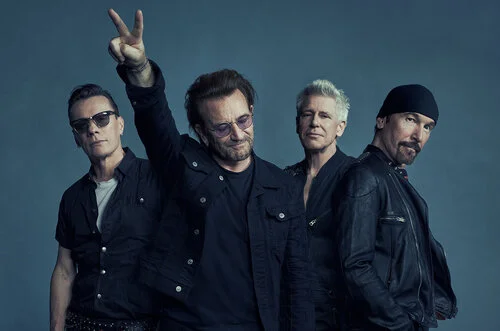
PHOTO CREDIT: Olaf Heine

I am concentrating on one of the biggest Rock bands ever: the mighty and legendary U2. They are a band who have released more than a few classic albums! I have not been able to include them all here but, if you need suggestions as to where to start with the band, and which albums are worth greater exploration, I have whittled down to the essential four, one album that is underrated, in addition to their most recent record – and I have suggested a great U2 book too. It has been interesting investigating and delving into the Dublin band’s catalogue and discovering some real treats. If you require some assistance navigating your way around U2’s best work then I think that…

zz.jpg

PHOTO CREDIT: Sam Jones

I can lend a hand.

________________

The Four Essential Albums

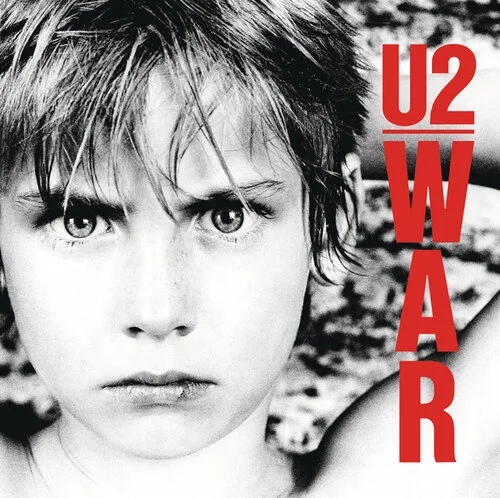
War

Release Date: 28th February, 1983

Label: Island

Producer: Steve Lilywhite

Standout Tracks: Seconds/Two Hearts Beat as One/40

Buy: https://www.discogs.com/U2-War/master/48830

Stream: https://open.spotify.com/album/1Gjf9WFBefwPqt7PxGH1n2

Review:

Opening with the ominous, fiery protest of "Sunday Bloody Sunday," War immediately announces itself as U2's most focused and hardest-rocking album to date. Blowing away the fuzzy, sonic indulgences of October with propulsive, martial rhythms and shards of guitar, War bristles with anger, despair, and above all, passion. Previously, Bono's attempts at messages came across as grandstanding, but his vision becomes remarkably clear on this record, as his anthems ("New Year's Day," "40," "Seconds") are balanced by effective, surprisingly emotional love songs ("Two Hearts Beat as One"), which are just as desperate and pleading as his protests. He performs the difficult task of making the universal sound personal, and the band helps him out by bringing the songs crashing home with muscular, forceful performances that reveal their varied, expressive textures upon repeated listens. U2 always aimed at greatness, but War was the first time they achieved it” – AllMusic

Choice Cut: Sunday Blood Sunday

The Unforgettable Fire
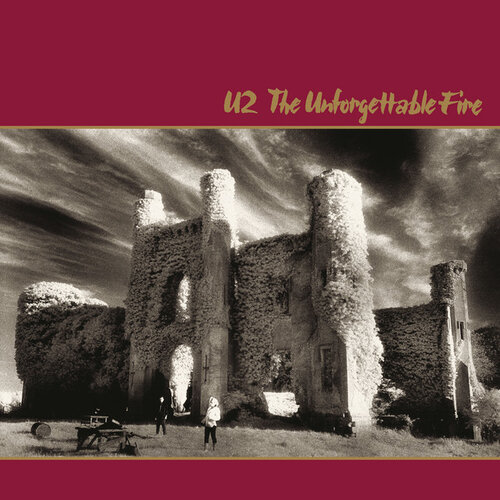
Release Date: 1st October, 1984

Label: Island

Producers: Brian Eno/Daniel Lanois

Standout Tracks: A Sort of Homecoming/4th of July/Bad

Buy: https://www.discogs.com/U2-The-Unforgettable-Fire/master/62831

Stream: https://open.spotify.com/album/350KqwwAhQFNyknLHf21lS

Review:

After their first major breakthrough with 1983's War and its anthems "Sunday Bloody Sunday" and "New Year's Day", U2 could have easily continued to perfect the fist-pumping, flag-waving arena battle cry. Instead, they sought out producer Brian Eno, a bold choice for a band looking to parlay semi-success into something Springsteen-ian. While Eno is now seen as a go-to stadium savior (see: Coldplay's Viva La Vida), back then he was still the guy who coaxed magnificent weirdness out of David Bowie and Talking Heads, to say nothing of his own work, which ranged from prog-rock insanity to elegant wallpaper. The U2/Eno braintrust has since become one of the most out-and-out successful in rock history, but The Unforgettable Fire finds the pair-- along with frequent conspirator Daniel Lanois-- feeling each other out and testing limits. The album ebbs and flows along the spectrum between the spiky, post-punk U2 of old and the impressionistic, Eno-assisted U2 they were yearning to become” – Pitchfork

Choice Cut: Pride (In the Name of Love)

The Joshua Tree
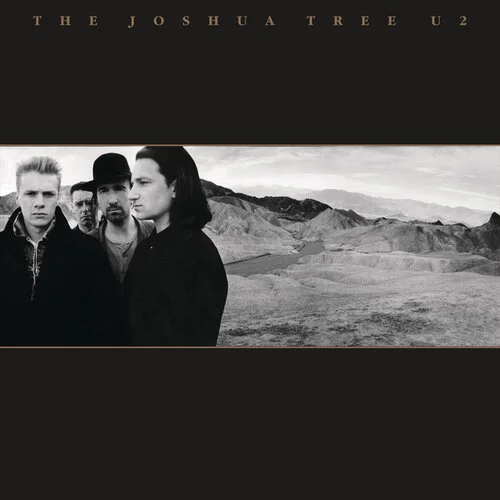
Release Date: 6th March, 1987

Label: Island

Producers: Brian Eno/Daniel Lanois

Standout Tracks: I Still Haven’t Found What I’m Looking For/With or Without You/One Tree Hill

Buy: https://www.discogs.com/U2-The-Joshua-Tree/master/64290

Stream: https://open.spotify.com/album/586ZRfgsIckfcKvHVcGM4V

Review:

Using the textured sonics of The Unforgettable Fire as a basis, U2 expanded those innovations by scaling back the songs to a personal setting and adding a grittier attack for its follow-up, The Joshua Tree. It's a move that returns them to the sweeping, anthemic rock of War, but if War was an exploding political bomb, The Joshua Tree is a journey through its aftermath, trying to find sense and hope in the desperation. That means that even the anthems -- the epic opener "Where the Streets Have No Name," the yearning "I Still Haven't Found What I'm Looking For" -- have seeds of doubt within their soaring choruses, and those fears take root throughout the album, whether it's in the mournful sliding acoustic guitars of "Running to Stand Still," the surging "One Tree Hill," or the hypnotic elegy "Mothers of the Disappeared." So it might seem a little ironic that U2 became superstars on the back of such a dark record, but their focus has never been clearer, nor has their music been catchier, than on The Joshua Tree. Unexpectedly, U2 have also tempered their textural post-punk with American influences. Not only are Bono's lyrics obsessed with America, but country and blues influences are heard throughout the record, and instead of using these as roots, they're used as ways to add texture to the music. With the uniformly excellent songs -- only the clumsy, heavy rock and portentous lyrics of "Bullet the Blue Sky" fall flat -- the result is a powerful, uncompromising record that became a hit due to its vision and its melody. Never before have U2's big messages sounded so direct and personal” – AllMusic

Choice Cut: Where the Streets Have No Name

Achtung Baby
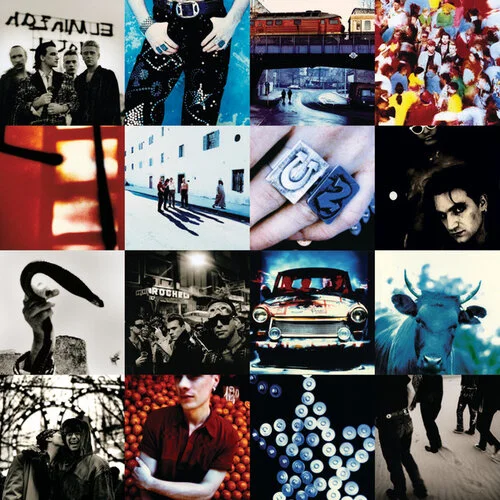
Release Date: 18th November, 1991

Label: Island

Producers: Brian Eno/Daniel Lanois

Standout Tracks: One/The Fly/Mysterious Ways

Buy: https://www.discogs.com/U2-Achtung-Baby/master/20774

Stream: https://open.spotify.com/album/5n52kyQKeUZs5ObZJejLQd

Review:

Achtung Baby seemed like a pivotal record in U2’s history when it was released in 1991, and it’s no less important 20 years later. But it’s wasn’t the actual songs that moved U2 forward so much as what they signaled about the band’s approach to its own fame and image. Musically, Achtung Baby is just as concerned with matters of the heart and spirit as 1987’s The Joshua Tree. And it’s as wrapped up in hero worship and aligning with rock ’n’ roll greats as 1988’s polarizing Rattle & Hum. It’s just that U2 deftly altered its style and frames of reference; out went the previous two albums’ earnestness, Bob Dylan and Beatles influences, and obsession with America, and in came irony, pan-Europeanism, and David Bowie’s Berlin period.

Strip away that context, however, and Achtung Baby sounds a like a typical U2 record—a terrific U2 record, arguably the best record U2 has ever made, but not exactly the decisive break from the band’s past it is remembered as. What Achtung Baby instead represents is U2’s last great creative gasp, evidenced by the album’s new reissue in various formats, including two multi-disc “super deluxe” and “über deluxe” editions, which compile a wealth of B-sides, remixes, and alternate tracks, as well as the entirety of Achtung Baby’s follow-up, 1993’s Zooropa” – The A.V. Club

Choice Cut: Even Better Than the Real Thing

The Underrated Gem

Pop
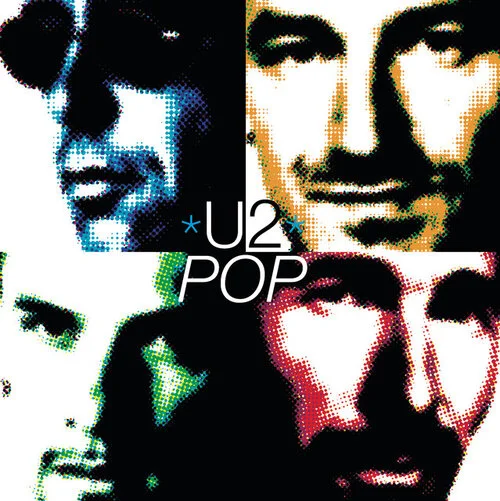
Release Date: 3rd March, 1997

Label: Island

Producers: Flood/Howie B/Steve Osborne

Standout Tracks: If God Will Send His Angels/Last Night on Earth/Please

Buy: https://www.discogs.com/U2-Pop/master/62553

Stream: https://open.spotify.com/album/5mojJwWgWNJcY3odUGgQc3

Review:

As it turns out, you won’t find much evidence of trip-hop on Pop, although sections of “Miami” and “If God Will Send His Angels” come close to that mutant strain of the genre. What you will find is a whole arsenal of sound effects, tape manipulations, distortions and treatments designed to mask the fact that U2 are still essentially a four-piece male rock band. Unlike R.E.M., U2 know that technology is ineluctably altering the sonic surface — and, perhaps, even the very meaning — of rock & roll. In that sense, their competition now is not so much R.E.M. as it is Orbital or Prodigy.

What we can say immediately is that Pop sounds absolutely magnificent. Working with Flood, who engineered Achtung Baby and co-produced Zooropa, the group has pieced together a record whose rhythms, textures and visceral guitar mayhem make for a thrilling roller-coaster ride, one whose sheer inventiveness is plainly bolstered by the heavy involvement of techno/trip-hop wizard Howie B(familiar from his work on Passengers’ Original Soundtracks I)” – Rolling Stone

Choice Cut: Discotheque

 The Latest/Final Album 

Songs of Experience
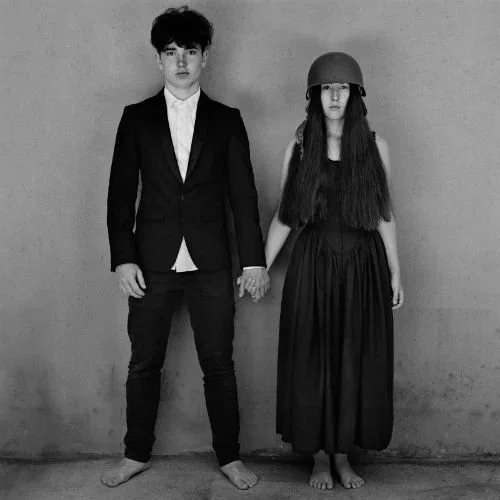
Release Date: 1st December, 2017

Labels: Interscope/Island/Universal Canada

Producers: Jacknife Lee/Ryan Tedder/Steve Lillywhite (add.)/Andy Barlow (add.)/Jolyon Thomas (add.)/Brent Kutzle (add.)/Paul Epworth (add.)/Danger Mouse (add.)/Declan Gaffney (add.)

Standout Tracks: You’re the Best Thing About Me/Red Flag Day/Love Is Bigger Than Anything in Its Way

Buy: https://www.discogs.com/U2-Songs-Of-Experience/master/1275631

Stream: https://open.spotify.com/album/6S9YaGXnmRe8tWJ0e457HP?si=7LFKouMyT1ii6jkHQXdUsw

Review:

But despite its flaws, Songs of Experience is an audibly better album than either of its predecessors. For one thing, not all its errors are overwhelming – if the Auto-Tune feels a bit jarring, the song it decorates is still pretty great. And for another, when U2 calm down and allow themselves to be themselves, the results are frequently fantastic, not least Get Out of Your Own Way, which is both utterly beautiful and feels not unlike a long, relieved exhalation of breath. Often it seems as if the moments that deal with the aforementioned brush with mortality are the most natural and enjoyable, as if concerns about their frontman’s potential demise caused everyone to stop worrying about U2’s place within the contemporary scheme of things and focus on the music. Boasting a guitar part atmospheric and understated even by the Edge’s 80s standards, the concluding 13 (There Is a Light) is delicately affecting; Landlady’s extended apology to Bono’s wife, , gently achieves precisely the kind of emotional uplift Love is Bigger Than Anything In Its Way nearly gives itself a hernia trying to attain; Lights of Home welds distorted slide guitar and a gospel-ish chorus to an entirely fantastic song. The Showman, meanwhile, is playful and authentically funny: a reflection on the contradictions and ridiculousness of the job of rock star that shows infinitely more self-awareness than Bono’s critics would give him credit for” – The Guardian

Choice Cut: Get Out of Your Own Way

The U2 Book

U2: Songs + Experience
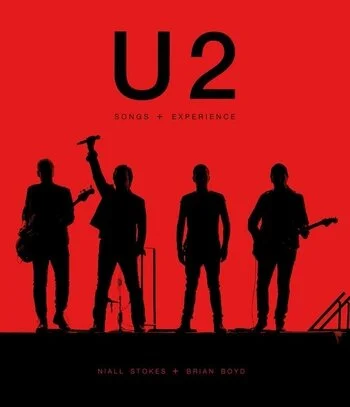
Author: Niall Stokes

Publication Date: 4th October, 2018

Publisher: Welbeck Publishing Group

Synopsis:

U2: Songs + Experience is the ultimate celebration of the act hailed as the greatest rock band in the world. Co-written by Brian Boyd, a leading music journalist and close associate of the band, and Niall Stokes, editor of Ireland's legendary Hot Press magazine, the book recounts the band's incredible career and analyses the songs from all of their studio albums (including Boy, The Joshua Tree and Songs of Experience).

The book discusses influences, inspiration and the origins of their immensely popular music, all accompanied by rare photographs, including many items of rock memorabilia, comprising posters, backstage passes, classic flyers and more” – Waterstones

Order: https://www.waterstones.com/book/u2-songs-experience/niall-stokes//9781787390898

FEATURE: Enter, Stage Right: Kate Bush’s Before the Dawn at Six: A Grand Spectacle I Wish I Had Seen

FEATURE:

Enter, Stage Right

zzzz.jpg

IN THIS PHOTO: Kate Bush during her Before the Dawn residency in London in 2014/PHOTO CREDIT: Ken McKay/Rex Features

Kate Bush’s Before the Dawn at Six: A Grand Spectacle I Wish I Had Seen

___________

ALL of us can list various concerts…

that we have not been able to attend that we wish we could have gone to; to turn the clock back and be in the audience! For me, I would have loved to have been in New York in 1993 when Jeff Buckley was playing at the Sin-é café. Those intimate, extraordinary sets he played there were fascinating and, although I would have been ten and I live in the U.K., to have gone to one of those gigs would have been something! On a more realistic level, on 21st, March, 2014, Kate Bush announced that she would be taking to the stage – the first large live event since her 1979 show, The Tour of Life. Before the Dawn, if anything, was more of an extravaganza than The Tour of Life! I have seen breakdowns of both shows, and it seems like the ambition and scope of the 2014 residency was even wider and more eye-opening than her 1979 tour. Of course, few people would have attended both shows to compare in a realistic way, but Bush was not going to make a return to the stage – in terms of a big set; she performed live a few times post-1979 – and do something minor or familiar. I think a few people complained that there were relatively few ‘hits’ on the setlist for Before the Dawn. One of my biggest gripes is how radio stations tend only to play Bush’s singles, and we never really get to hear the album tracks!

I will bring in a couple of reviews for Before the Dawn soon but, on 26th August, 2014, Bush stepped onto the stage at the Eventim Apollo, Hammersmith – a venue she performed at in 1979 as part of The Tour of Life (though it was the Hammersmith Odeon then). Unlike The Tour of Life, Bush was not limited in terms of what she could include in her show. Her only tour was created after just two albums, so Bush included most of those two albums in that show, in addition to a couple of songs that would feature on her 1980 album, Never for Ever. With ten studio albums under her belt by 2014, Bush was not going to bring in material from The Kick Inside, and Lionheart, but she had a lot of options. I think everyone was desperate to see 1985’s Hounds of Love represented on the stage, and The Ninth Wave – the album’s conceptual suite – was almost written for the stage – Bush had been keen to do something with the songs in terms of a film, so I can imagine the opportunity to bring The Ninth Wave to the stage was too hard to resist!  Act One delivered a mix of hits and lesser-known songs. Lily (The Red Shoes) introduced the show in stunning fashion, before moving into Hounds of Love (Hounds of Love), Joanni (Aerial), Top of the City (The Red Shoes), Running Up That Hill (A Deal with God) (Hounds of Love), and King of the Mountain (Aerial).

I do love the fact that there were a couple of tracks from The Red Shoes in the first act, as that album remains underrated, and Bush re-recorded songs from that album for 2011’s Director’s Cut. Perfectly, after that strong and comparatively straight first half of the first act, we then moved into The Ninth Wave. Some would have felt that the best way to segue would have been to have a track from Hounds of Love ending that first half, but Bush knew what she was doing! Everything that appeared on stage, as Bush said, was a dream and in the imagination of the woman/Bush. The first snippet we see is a video interlude of And Dream of Sheep – this is Bush/the heroine in the water and waiting to be rescued, whilst the following songs – Under Ice, Waking the Witch, Watching You Without Me, Jig of Life, Hello Earth, and The Morning Fog – are realised on the stage. As first acts go, few stage shows have been as ambitious and dramatic! I have a lot of love for The Tour of Life, but Bush did not have a conceptual suite like The Ninth Wave in her pocket back then, so she was threading together individual tracks in as dramatic and visually-arresting ways as possible, whereas the story of The Ninth Wave – a woman being lost at sea and willing herself to stay alive before being rescued – carries so much emotion and punch!

I will finish this feature by talking about the people who attended Before the Dawn and why I rue the day I did not get a ticket but, from 26th August to 1st October, 2014, audiences in Hammersmith were being electrified and stunned by the stage return of a musical deity! If Bush had gone out and performed a series of hits and something like that, people would have flocked and the reviews would have been tremendous. As it turned out, the audiences were in for something much more rewarding, stimulating and well-though-out! Act Two was a beautiful mirroring of the second half of Act One. This is one of the big reasons why I wanted to see Before the Dawn: Bush’s two conceptual suites, The Ninth Wave, and A Sky of Honey, realised in full on the stage! Both are very different in terms of their tone and narrative, so the music and staging for each suite was very different. Such a tonal shift could have been risky and ill-judged in lesser hands, but the relief and beauty of A Sky of Honey was the perfect comfort after the harrowing drama (and eventual relief) of The Ninth Wave. It is almost as though Bush’s heroine survived a torturous time at sea and, years down the line, she is sat at her rural home and enjoying the pleasures of nature and peace – reflecting on the past and embracing the here and now.

The ten-track Act Two - Prelude, Prologue (extended), An Architect's Dream, The Painter's Link, Sunset, Aerial Tal, Somewhere in Between (extended), Tawny Moon (performed by her son, Albert McIntosh), Nocturn (extended), and Aerial – brought in the nine tracks from A Sky of Honey as it appeared on Aerial, with the addition of Tawny Moon (a song that got its first airing and would have made for a remarkable album inclusion!). It is great that her son, Albert (Bertie) performed with his mother, and he was instrumental in urging Bush to return to the stage. When she performed an encore, she played Among Angels (50 Words for Snow), and Cloudbusting (Hounds of Love). The live album is sensational, and it also includes the track, Never Be Mine – it was recorded without an audience, for the purposes of filming.

Supported by a wonderful crew, and backed by some wonderful actors and musicians (including David Rhodes – guitar, John Giblin – bass guitar, double bass, Jon Carin – keyboards, guitar, vocals, programming, Omar Hakim – drums, and Mino Cinélu – percussion), it is no surprise that Kate Bush’s Before the Dawn sold out all of its twenty-two shows! Those from the world of music, acting and arts flocked to see the show. One suspects some went because it was the must-see musical event of the decade, whereas there was genuine passion and love from many others – including actor Gemma Arterton and musician Anna Calvi (both of whom appeared on the BBC shortly after seeing the show on one of the nights to give their reaction).

The reviews, unsurprisingly, were glowing! There was a certain weight of expectation on the shoulders of someone who had not performed in such a manner for thirty-five years. After preparing Before the Dawn for eighteen months or so, it is clear that whatever was delivered to the audiences was going to be full of craft and love. In their review, this is what The Guardian observed:

Backed by a band of musicians capable of navigating the endless twists and turns of her songwriting – from funk to folk to pastoral prog rock - the performances of Running Up That Hill and King of the Mountain sound almost identical to their recorded versions - but letting rip during a version of Top of the City, she sounds flatly incredible.

You suspect that even if she hadn't, the audience would have lapped it up. Audibly delighted to be in the same room as her, they spend the first part of the show clapping everything she does: no gesture is too insignificant to warrant a round of applause. It would be cloying, but for the fact that Bush genuinely gives them something to cheer about.

For someone who's spent the vast majority of her career shunning the stage, she's a hugely engaging live performer, confident enough to shun the hits that made her famous in the first place: she plays nothing from her first four albums.

zzz.jpg

PHOTO CREDIT: Ken McKay/Rex Features

The staging might look excessive on paper, but onstage it works to astonishing effect, bolstering rather than overwhelming the emotional impact of the songs. The Ninth Wave is disturbing, funny and so immersive that the crowd temporarily forget to applaud everything Bush does. As each scene bleeds into another, they seem genuinely rapt: at the show's interval, people look a little stunned. A Sky of Honey is less obviously dramatic – nothing much happens over the course of its nine tracks – but the live performance underlines how beautiful the actual music is.

Already widely acclaimed as the most influential and respected British female artist of the past 40 years, shrouded in the kind of endlessly intriguing mystique that is almost impossible to conjure in an internet age, Bush theoretically had a lot to lose by returning to the stage. Clearly, given how tightly she has controlled her own career since the early 80s, she would only have bothered because she felt she had something spectacular to offer. She was right: Before The Dawn is another remarkable achievement”.

Nearly six years to the date Kate Bush stepped onto a stage familiar to her to kick-start Before the Dawn, I sort of have these pangs of regret. When the tickets went on sale, I was working, and I set off for the day and assumed that, when I had my lunch break, there would be tickets free – that was naïve, of course!

Perhaps my love for Kate Bush was not quite as strong in 2014 as it is now, but I was a super-fan back then. I have heard from a few people who attended that night – in the form of online testimony -, and everyone came away with the same sort of impression: that Before the Dawn was one of the greatest live shows they had ever witnessed. I have the live album of the show, and it is great to hear the reception the audience afforded Bush, and the incredible atmosphere. One can imagine being there with her but, unless you were fortunate enough to be in attendance on one of the nights, one lives vicariously through the album. In any case, it is clear that Bush was eager to return to the stage after so long away, even if there were nerves on her part. I want to finish with a couple of interviews Bush provided in 2016 – the live album was released that year -, where she discussed various aspects of the show. When speaking with The Independent, Bush talked about taking control of the show, her son’s involvement, and why she did not release a DVD of the show (and still has not to this date):

It’s a measure of the dedication with which she approached the project, and of the degree of logistical control she exercised over proceedings.

“The big thing for me, and it has been from quite early on, is to retain creative control over what I’m doing,” says Bush. “If you have creative control, it’s personal. What I didn’t want to do was step into someone else’s show. Also, that was what was exciting for me, the idea of putting this big visual piece together. Though there was the most extraordinary team of people working on the show: there wasn’t a single person on that team that didn’t have very important input on what the show became.”

PHOTO CREDIT: Ken McKay/Rex Features

This includes people like novelist David Mitchell, who wrote the dialogue for some scenes, and her son, Albert McIntosh, who not only acts and sings in the show, but was crucial to its conception and realisation.

“Bertie’s input was absolutely huge on this show,” she says. “His input of ideas was very creative and intelligent, he was a large part, creatively, of the show. I would run all my ideas past him. For instance, I had this idea to have this helicopter flying over the audience, and he said, ‘Maybe it could be more abstract, maybe it should just be a light’, and I thought, ‘Oh yes, that’s so much better’, and from there we took the design further with the lighting designer.”

The shows, of course, were a huge success, and fans – especially those unable to acquire tickets – keenly awaited the release of some visual record. But sadly, there are no such plans beyond the new CD package.

“People are surprised that there’s no DVD of the show,” says Kate, “but I’d like to mention this live album that Elton John put out, 17-11-70, which was something that I loved so much. To have an album where you could imagine what the show was, I found that incredibly exciting, and in a way, this live album is almost more representative of what it was like to be at the live show”.

One of the reasons why Bush did not perform live (a lot) after 1979 is because she wanted to create albums and keep moving forward. She rarely looked back, and touring songs that she had already recorded might not have been as appealing as making new music. 2011’s Director’s Cut was a rare look back for her – Bush reworking songs that she felt could be given new light and quality, years after the originals were recorded. To bring Before the Dawn to the stage and, essentially, revisit the past through a staged show would have been something she wrestled with prior to 2014. When Bush spoke with FADER, she was asked about her relation with her older songs, and which technical achievement she ranks as her favourite:

You really dug into the archives for your 2014 live shows. How has your relationship with your older material evolved?

Well, part of the decision to do the live shows was because it was such an interesting challenge to work with the two narrative pieces [“The Ninth Wave” and “A Sky of Honey”], rather than just doing a bunch of single tracks.

It was within such a specific context, because [the setlist] was very much put together for a live event. Through that process, the songs naturally evolved because I was working with a band, a lot of whom I never worked with before. I just chose tracks that I wanted to do, that really worked with the band, and to keep it really focused in a rhythmic way.

Although the music was always kept as the lead, I didn't want the visuals to feel separate. What I had hoped was that what had been created was an integrated piece of theater that worked with the music — that it wasn't just music that had theatrics added to it — that there was a real sense of it being something that worked as a whole.

Do you have a technical achievement that you're most proud of in your career?

I'm really proud of what we did with those live shows, because it was very ambitious and I didn't know if it would work. It was a very complex technical show that involved the most incredible team of people. The most intelligent, sensitive people. Fantastic band, actors, everybody there had something so special to bring to that show, and I think the response that we got was more than you could ever wish for. I'm so pleased that we did it.

It was a very humbling experience, really. Every night you had a completely different audience, and every night they were so warm. It really meant so much that they liked it. It was very moving, because it felt like the audience came on that journey with us, and, each night, it was a slightly different journey”.

I will leave things here, but I was keen to mark six years of Before the Dawn – slightly before the big day -, as it is a live show that still reverberates, and, naturally, people are looking ahead to see what Kate Bush’s next move will be – whether it is a studio album or, less likely, something live. Before the Dawn was a magical and once-in-a-generation live show and, regret on top of regret, I really…

WISH that I was there!

FEATURE: The August Playlist: Vol. 4: A World of Hurt and the First Class Bitch

FEATURE:

The August Playlist

IN THIS PHOTO: Arlo Parks/PHOTO CREDIT: Pamela Boland for Love Letters

Vol. 4: A World of Hurt and the First Class Bitch

__________

IN this week’s selection of new tracks…

IN THIS PHOTO: Confidence Man/PHOTO CREDIT: Tim Lambert

there are some pretty impressive and fascinating releases in the pack! We have terrific songs from Arlo Parks, Confidence Man, Deftones, London Grammar, Phoenix, Father John Misty, Astrid S, Will Butler, and The Killers. Throw into the mix Nubya Garcia, Saint Saviour, Katy Perry, Dolly Parton, Bright Eyes, Angel Olsen, and Frankie Knuckles, and there is plenty of variety in there! It is a terrific week for music, and the quality is as high as it has been all year. If you need some great tunes to get you into the weekend, then settle down with these…

IN THIS PHOTO: Nubya Garcia/PHOTO CREDIT: Fabrice Bourgelle Photography

ABSOLUTE pearls.

ALL PHOTOS/IMAGES (unless credited otherwise): Artists

__________

Arlo Parks Hurt

PHOTO CREDIT: @w_i_l_k

Confidence Man - First Class Bitch

PHOTO CREDIT: Frank Maddocks

Deftones Ohms

aa.jpg

PHOTO CREDIT: Shervin Lainez

Phoenix - Identical (from the Original Motion Picture, On the Rocks)

London Grammar - Baby It's You

PHOTO CREDIT: Janne Rugland

Astrid S Marilyn Monroe

qaa.jpg

PHOTO CREDIT: Terry Tsiolis for Interview Magazine

Father John Misty To S.

PHOTO CREDIT: Alan Knowles

Saint Saviour Paris

Dizzee Rascal (ft. Chip) - L.L.L.L

Will Butler - Close My Eyes

PHOTO CREDIT: Phil Sharp

Erasure Careful What I Try to Do

qaa.jpg

Katy Perry What Makes a Woman

aaa.jpg

Alice Boman - Wake Me Up

Bright EyesPan and Broom

aaa.jpg

PHOTO CREDIT: Beth Garrabrant

Taylor Swift the lakes (bonus track)

PHOTO CREDIT: Robert Ashcroft

The Killers Blowback

Dolly Parton Mary, Did You Know?

PHOTO CREDIT: Maciek Kobielski for Vanity Fair

Maya Hawke - Generous Heart

Pharrell Williams (ft. JAY-Z) – Entrepreneur

PHOTO CREDIT: Kylie Coutts

Angel Olsen - Waving, Smiling

Frankie Knuckles Carefree (I Am a Star)

Grace Gillespie Your God’s Within

Wyvern Lingo - Brutal Lottery

pqpao.jpg

Nubya Garcia Together Is a Beautiful Place to Be

Emma Ruth Rundle, Thou Ancestral Recall

BTS Dynamite

The Lemon TwigsOnly a Fool

Bully Let You

zmzmz.jpg

TSHASister

Agnes - Fingers Crossed

PHOTO CREDIT: dmytroooo

HÆLOS Hold On

Madison Beer Baby

PHOTO CREDIT: Alejandro Menéndez Vega

The Mavericks - Recuerdos

FLETCHER Feel

PHOTO CREDIT: Jace Kartye

Elizabeth Cook Thick Georgia Woman

PHOEBE ∆X∆ Wisdom Teeth (Pressure)

FEATURE: Inspired by Emilia Clarke’s My Life in a Mixtape… Songs That Hold a Special Place

FEATURE:


Inspired by Emilia Clarke’s My Life in a Mixtape…

IN THIS PHOTO: Emilia Clarke/PHOTO CREDIT: Sophia Spring

Songs That Hold a Special Place

___________

I was just going to put out a mixtape/playlist…

of songs from 1990-1993 (inclusive) as, to be fair, that is my favourite period in terms of Pop hits and songs that were really formative. To be honest, one or two might still make their way into this feature but, having heard actor Emilia Clarke talk about the songs that are dearest to her in My Life in a Mixtape, it really struck me! Not only are the songs awesome - The Beatles’ Sgt. Pepper's Lonely Hearts Club Band, Brandy & Monica’s The Boy Is Mine, Althea & Donna’s Uptown Top Ranking, Dionne Warwick’s Walk on By, Kings of Leon’s The Bucket, LCD Soundsystem’s Daft Punk Is Playing at My House, Billie Holiday’s Them There Eyes, and Bob Dylan’s Don't Think Twice, It's All Right were all in the mix; included also was Little Simz’s 101 FM and Coolio’s Gangsta’s Paradise -, but her authority and passion was clear. The actual broadcast is only available until the middle of September, so I would urge people to check it out as soon as you can! Although Emilia Clarke is only a few years younger than me, her knowledge and breadth of musical treats is more impressive than mine! I hope that a station like BBC Radio 2 or BBC Radio 6 Music snaps Clarke up, as she would put together an awesome show! I have heard similar shows on radio where well-known faces discuss their favourite music – from Ken Bruce’s Tracks of My Years on BBC Radio 2, to BBC Radio 4’s Desert Island Discs. I think we all dream of being on shows where we can talk about the music that matters most to us. Rather than include the same number of songs as Emilia Clarke had on her My Life in a Mixtape, I am going to include eight songs, and categorise each of them. I am imagining a single-sided mixtape, where we can flow between the eight tracks, yet each of them represents a different period of my life. I am going to crib a few categories from BBC Radio 2/Emilia Clarke, but I have been dipping back into songs that have made a big impact on me. At the bottom, I will include all eight tracks in a Spotify playlist but, here, are the songs that would be on my personal mixtape….

An album that I can listen to the whole way through without boredom

Paul Simon – Graceland

This might sound odd, but I think almost every album has a track on it that I am not overly-keen on. Even my favourite albums have that one song that is not quite as great as the rest. I have a load of vinyl, but the one I grab and gravitate towards if I need to immerse myself in music is Paul Simon’s Graceland. Released in 1986, I first heard the album not long after it came out. I am a massive fan of Paul Simon, but surely nothing he recorded solo or part of Simon & Garfunkel ranks alongside Graceland?! It is a sensational piece of work and, with songs like Graceland, and Diamonds on the Soles of Her Shoes included, it is a masterpiece! Even the less-well-known songs, such as African Skies, are ones I spin incessantly. I love this album and, during this tough time, its importance is evident. The first track on my mixtape would be a gem from this album

An oldskool disco choice

Snap! - Rhythm Is a Dancer

I think any school disco required a combination of the cheesier hits from the day, and one or two classics thrown in there. Back through middle and high school, there were a few discos and dances, and I also got invited to birthday parties and, inevitably, there would be music there. I am dipping early into my 1990-1993 pool, as Snap!’s Rythmn Is a Dancer is from 1992. This track reached number-one in the U.K., and it was one of those songs I fell for straight away; one that was ubiquitous when it came to discos and dances. I don’t think it has aged that badly, and it is definitely a product of the 1990s – they do not make songs like this anymore!

PHOTO CREDIT: Mick Hutson/Redferns/Getty

The song that reminds me of school

Beastie Boys – Intergalactic

Following on the heels of the previous song, and it is hard to distil the experience of school into a single song! In fact, the image I get when I think of mixtapes is school – one would often see them passed around by friends and couples. I could have gone with other songs that soundtracked important memories: Red Alert by Basement Jaxx was played at my high school leavers’ ball, whilst Blur and Oasis were very important, as I was in high school when the two bands were at their peak. Beastie Boys’ Intergalactic, again, is a high school track, and one that reminds me of friendship and good times. I have written about this before, but this song was played a lot after school where I would play football with friends; the stereo speakers close to the windows, as we ran around. Intergalactic is from Beastie Boys’ 1998 album, Hello Nasty, and I was a big fan of the Hip-Hop trio before that point. I think this song stands out most (from their albums) because it, well…it kicks ass harder than anything!
My newest music discovery

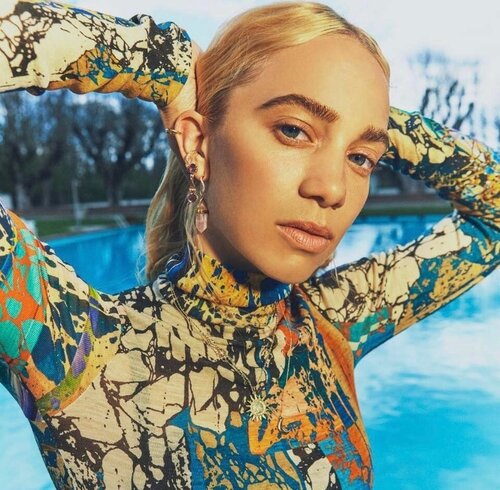
Another Sky – The Cracks

Another Sky are a band I am new to, and they just released their debut album, I Slept on the Floor. I have recommended and spotlighted a lot of artists this year, but I particular love the London four-piece, as there is something dreamy about their music that takes you away. The voice of Catrin Vincent is a big reason why Another Sky are so revered, and you can hear her really bloom and strike on songs such as The Cracks. The band have a long future ahead of them and, if you can, go and investigate their debut album”.

One of my favourite songs

Nina Simone – My Baby Just Cares for Me

Whilst my favourite song ever is Steely Dan’s Deacon Blues, I have included that before, and I wanted to look beyond that. I grew up listening to all kinds of music, and Nina Simone’s My Baby Just Cares for Me was one of the earlier songs that came into my life. I love the simplicity of the piano and the power of Simone’s voice. It is not only nostalgia that keeps bringing me back to this song. I think, were it released today, it would strike me just as hard as there is something remarkable about Nina Simone that sends you into a shiver. My Baby Just Cares for Me might not be her most-famous song, but it is my favourite of hers

A song from my favourite album

Kate Bush – Moving (from The Kick Inside)

I haven’t exactly kept it a secret that Kate Bush’s The Kick Inside is my favourite album ever! It is one that I holds very dear and, like so many of my most-loved records, I have been revisiting it a lot lately. My favourite song from The Kick Inside is Wuthering Heights, but most people know it very well. The opening song on the album, Moving, is one that fewer have heard, and it begins with beautiful whale song. Maybe it sounds a bit jarring on a mixtape, but I think that it slows behind Nina Simone pretty nicely! I think Kate Bush’s more minor songs are not played enough, so I would encourage people to check out her albums and really dig into them

A song that I purchased as a single

Manic Street Preachers – You Stole the Sun from My Heart

I am a big fan of the Manic Street Preachers, and I bought the album, This Is My Truth Tell Me Yours, when it came out in 1998. Not ones to keep titles too short, the incredible single, You Stole the Sun from My Heart, arrived in March 1999 – the album came out in September 1998. It is strange to buy a single after you have the album, but I loved the song so much, I wanted to get the single and check out its B-side. I think the single I bought had Socialist Serenade as its B-side, and I was more than happy to have a Manics single alongside the album it came from! My peak single-buying years was during high school (1994-1999), and I think the fact that we could buy singles rather than download them made me more attached and engrossed in music; I would take a bus to buy a single because I wanted to own something and keep it! Manic Street Preachers’ You Stole the Sun from My Heart was one of my favourite singles from the ‘90s

PHOTO CREDIT: Bertrand Rindoff Petroff/Getty

One of my earliest musical memories

The Bangles – Eternal Flame

To end, I want to return to the (near the) very beginning: one of my earliest musical memories as a child. Music television played a big role in my childhood, and I discovered so many great artists from watching MTV and VH1. The latter was instrumental when it came to The Bangles’ Eternal Flame. I think a lot of people overlook this track when we think about the best of The Bangles, but it is a gorgeous song that stuck in my mind when I first heard it in the late-1980s. Released as a single on 17th February, 1989, I recall catching a glimpse of the video through the banisters of my family home; seeing the band on the beach singing Eternal Flame might seem a little cliché and forgettable now but, as a child, I was definitely hooked! It is rare that a video affects you as much a song, but that is definitely the case with Eternal Flame! I think it is a good way to end the mixtape and, as I look at all the songs above, it has tempted me to expand the thought and, adding a fair few other songs to the mix, I might have made a double-sided tape of my favourite tracks

FEATURE: Frequency Modulation: The Continued Gender Imbalance on Radio Playlists

FEATURE:

Frequency Modulation

IN THIS PHOTO: British-born Grace Carter is one of the most talented and promising artists of the moment

The Continued Gender Imbalance on Radio Playlists

___________

ONE story that comes up every year…

that one wishes wouldn’t is radio playlists, and how few women are included. The figures are even starker when we look at producers, engineers and women behind the scenes. Maybe it is harder to easily rectify the number of women in studios are in top positions in the industry, but it is still alarming and we need to see a change there! Things are very slowly changing, and I do hope that there will be greater balance in the next few years – though that might be slightly ambitious! Something that can be corrected more quickly is the number of British women on radio playlists. I am not sure whether the figures are as bleak for international women but, as this article from The Guardian outlines, the situation is bleak for homegrown talent:

British female musicians are dramatically underrepresented on UK radio stations, a study has found.

A survey of the top 100 songs by British acts to feature in the UK airplay chart between 1 January and 15 August this year found that only 19% were by female acts. Male artists accounted for 51%, and mixed-gender collaborations made up 30%.

The inequality was starker still behind the scenes: 80% of British songwriters on the surveyed tracks were male, 19% female and 1% non-binary. Only 3% of producers were female.

Becky Hill, whose 2019 collaboration with the male DJ Sigala was among the most played tracks in the period, said the findings reflected the challenges facing women in the music industry.

IN THIS PHOTO: Becky Hill

“Whether it is about what they look like or what they write about in their songs, or how they conduct their day-to-day lives, it would appear that women need to be more than just talented to be accepted and successful,” she said.

Female acts accounted for just 10% of the most played songs by British artists on BBC Radio 1 and on Radio 6 Music during the 12-month period. On BBC Radio 1Xtra the figure was 14.3%, on BBC Asian Network 20%, and on Radio 2 it was 40%.

In commercial radio, the Bauer Media stations Absolute Radio and Kerrang! and Global Media’s Radio X had no female acts among their top 20 most played songs by British artists. British women accounted for 15% of the top 20 on Kiss FM, 5% on Kiss Fresh, and a sector high of 30% on Bauer’s Magic FM.

Eleanor McEvoy, the chair of the Irish Music Rights Organisation, said gender disparity on radio appeared to be worsening.

“The unconscious bias towards male musicians, songwriters and performers is staggering. Looking at these figures I’m frustrated at the talent that we’re losing, the song that will be missed and the voices that we’re never going to hear,” she said.

BBC research last year found that three times as many male as female pop stars appeared on the biggest singles of 2018, and suggested female acts were losing exposure in an era heavy on collaborations”.

I have collected together various exerts from the article, but the picture painted is very worrying. There are so many brilliant British women in music and, whilst I can appreciate American female artists probably get more airplay than British artists, there is still a huge gender imbalance and bias towards men. One might say that there are fewer British women in music, but that is not the case. Just look at various music websites and magazines; check out new releases and listen to what is out there, and it is evident that there is more than enough British talent. I know radio stations have their demographics and particular musical tastes, but that is not to say they are limited by that at all. I would be interested to see what the figures are like when you factor in all female artists – one suspects there is still a massive imbalance. It is down to radio stations to nurture and promulgate brilliant artists, and so many British artists rely on the bigger stations to get their music out there. In order to break out of this continuing pattern, radio bosses need to look at the research and commit to change. From Dua Lipa, Rina Sawayama, Laura Marling, Charli XCX to Jessie Ware, some of the best albums of this year have come from British female artists. Whilst I admit that, perhaps, American female artists account for more big singles and albums than British women, there is not a massive disparity in terms of nationality, and there are ample options regarding British women.

Maybe more women behind the scenes would help push terrific British female artists to the surface. Those figures from the top of this article – “80% of British songwriters on the surveyed tracks were male, 19% female and 1% non-binary. Only 3% of producers were female” – gives one pause for thought! Again, there are so many terrific British women who are songwriters and producers, and I wonder whether there is this culture that makes it inherently hard for them to be accepted. This bias towards men is undeniable, and there is not enough being done in the industry to encourage more women into studios. I know some brilliant female producers, and they are lobbying hard for greater equality, but they say that there is either not enough support from their male peers, or women are not coming through - most likely due to the shocking statistics and, still, the studio is seen as a male domain. I know a lot of female artists self-produce and, in an age where D.I.Y. music is rife, the figures do not necessarily take this into account. If we are going to see improvement when it comes to radio playlists, there needs to be consideration for the foundations and bringing more women in to studios and changing practises. I was shocked to see how few female songwriters accounted for the most-played songs on radio. One might also argue that the research findings are about the more popular songs, and there are plenty of more underground, lesser-known female artists being played.

q.jpg

IN THIS PHOTO: Arlo Parks/PHOTO CREDIT: Chris Almeida 

Excuses aside, nobody can deny that women are underrepresented, and that their musical contribution is just as valuable and strong as that from the men. In fact, every year, the best music I hear is from women. So much of this musical excellent comes from Britain, and I am seeing so many hungry and talented artists put out sensational music. Let’s hope that these findings do propel movement, and it would be a shame if we were in the same position this time next year. It is such a pity that so much bright talent is not being acknowledged by radio stations. One can hear so many fantastic British women every week, but that is not translating into airplay! As music festivals are still struggling to create gender-equal bills – Glastonbury achieved it this year before they had to cancel -, one does sigh and wonder whether we will see correction in the next few years. I have the utmost respect for the brilliant radio stations in this country, and they have provided strength and company to us all during this hard time. From Grace Carter, beabadoobee (she is Filipino-born but a British citizen) and Arlo Parks to Celeste, there are so many exciting British women coming through, in addition to those established artists. The quality and choice is out there; it is a case of recognising it and committing to tackling the glaring gender imbalance. Our fantastic female artists definitely…

DESERVE a lot more than this.

FEATURE: The Lockdown Playlist: Women in Country

FEATURE:


The Lockdown Playlist

IN THIS PHOTO: Maddie & Tae

Women in Country

___________

IN this series…

saa.jpg

IN THIS PHOTO: Kacey Musgraves/PHOTO CREDIT: Drew Gurian/Invision/AP

I have covered a lot of areas in music; from different genres and years, it has been fun putting these together. Today, I am looking at women in Country music. I think Country is a genre that suffers from sexism, and women are having to fight against imbalance. Maybe things are slightly better than they were a couple of years back, but in terms of airplay and representation, women are still having to fight to be heard! It is such a shame so, because of that, I have compiled a playlist of the best women in Country music past and present. I hope that, on a rather unpredictable weekend, it provides you with some…

IN THIS PHOTO: Dolly Parton

ENERGY and motivation.

FEATURE: Spotlight: The Beths

FEATURE:


Spotlight

qqqq.jpg

The Beths

___________

THE brilliant Auckland-formed band…

PHOTO CREDIT: Mason Fairey

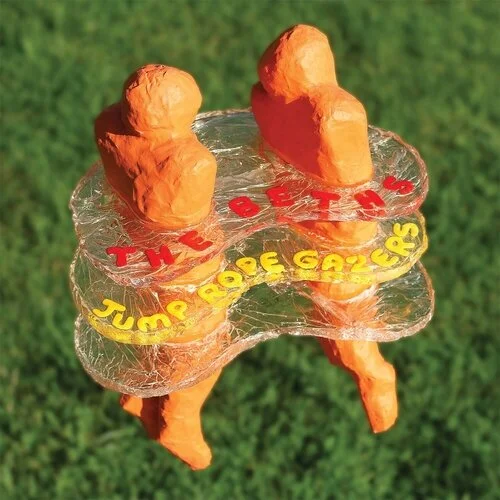
The Beths are one that I think everyone should be aware of. Consisting Elizabeth Stokes, Jonathan Pearce, Benjamin Sinclair, and Tristan Deck, Stokes and Pearce met Ivan Luketina-Johnston (who departed the band in 2018) at high-school where all four – including Jonathan Pearce - attended classes at the University of Auckland. The Beths started out in 2015, and, by March 2016, they had put out their debut E.P., Warm Blood. It was a promising start for the band, and I want to push forward to the present day in terms of releases, as the brilliant album, Jump Rope Gazers, arrived in July. It is the second album from the band, and it follows the excellent Future Me Hates Me of 2018. I think Jump Rope Gazers is a step up from their debut, and it is one of 2020’s best releases. I want to bring in a review for that album soon but, before then, I wanted to quote from a couple of interviews the band have conducted – go and buy Jump Rope Gazers if you can. Actually, I just want to grab from Rough Trade, who described the album thus:

Songwriter and lead vocalist Elizabeth Stokes worked on what would become The Beths’ second LP, Jump Rope Gazers, in between these intense periods of touring. Like the group’s earlier music, the album tackles themes of anxiety and self-doubt with effervescent power pop choruses and rousing backup vocals, zeroing in on the communality and catharsis that can come from sharing stressful situations with some of your best friends. Stokes’s writing on Jump Rope Gazers grapples with the uneasy proposition of leaving everything and everyone you know behind on another continent, chasing your dreams while struggling to stay close with loved ones back home.

With songs like the rambunctious Dying To Believe and the tender, shoegazey Out of Sight, The Beths reckon with the distance that life necessarily drives between people over time. People who love each other inevitably fail each other. “I’m sorry for the way that I can’t hold conversations / They’re such a fragile thing to try to support the weight of,” Stokes sings on Dying to Believe. The best way to repair that failure, in The Beths’ view, is with abundant and unconditional love, no matter how far it has to travel. On Out of Sight, she pledges devotion to a dearly missed friend: “If your world collapses / I’ll be down in the rubble/I’d build you another,” she sings.

“It was a rough year in general, and I found myself saying the words, 'wish you were here, wish I was there,’ over and over again,” she says of the time period in which the album was written. Touring far from home, The Beths committed themselves to taking care of each other as they were trying at the same time to take care of friends living thousands of miles away. They encouraged each other to communicate whenever things got hard, and to pay forward acts of kindness whenever they could. That care and attention shines through on Jump Rope Gazers, where the quartet sounds more locked in than ever. Their most emotive and heartfelt work to date, Jump Rope Gazers stares down all the hard parts of living in communion with other people, even at a distance, while celebrating the ferocious joy that makes it all worth it - a sentiment we need now more than ever”.

Okay. I have talked about the new album a bit, but I think it is important to hear from the band a little. I will quote from a couple of interviews, because this year has been a busy one for them, and there are a lot of new eyes and ears tuning their way. I think The Beths have come a long way, and I am glad that a lot of fresh fans have come their way. I am not sure what the rest of this year holds for them, but I know they will be keen to get on the road they can and bring their music to the people. The Beths spoke with The Guardian recently, and we learn a bit about the switch from the debut, Future Me Hates Me, and their new release:

The Beths’ first record, 2018’s Future Me Hates Me, introduced the world to a band that was all guitars and catchy melodies, with a self-effacing sentiment beneath the jangle. They went from playing national tours (which in New Zealand, Stokes says, amounts to three shows) to runs in Europe and North America, where 10 dates with no breaks became the norm. They opened for Pixies, the Breeders, Weezer and Death Cab for Cutie. Stokes was nominated for New Zealand songwriting award the Silver Scroll, twice.

But as their audience swelled, the small Auckland scene that had sheltered and supported them seemed farther and farther away.

Naturally, the disconnect made its way into Stokes’s lyrics. The Beths’ second record, Jump Rope Gazers, grapples with the pressure – both internal and external – of living up to the dream you sketched out for yourself; the shame that comes with falling for your own insecure bullshit again; and the frustration of feeling untethered to life back home.

“A lot of the album is about relationships and communication, and it just happens that communication means a different thing [now] than it did, like, 20 years ago,” Stokes says. The version of herself Stokes sketches out in her lyrics seems both grateful to have emails and texts to stay connected while she’s touring far from home, and resentful of the way those mediums can lead to miscommunication and tension. She adds a self-aware disclaimer to this thought: “I hope it’s not sounding like I’m like, ‘texting is bad for your relationships!’

Seeing a band mature and evolve is always a great thing and, as discovered the band fairly recently, I have been listening back and comparing the music they were making a couple of years back and where they are now. One can tell and feel how good they are; everyone can connect with their music, and one is helpless to resist the energy and colour one finds on Jump Rope Gazers. It is a marvellous album, and the band are scaling new heights.

When the band spoke to Upset Magazine, Stokes and Pearce talked about how their latest album is a response to the reaction to their debut:

It's a record they're rightly proud of too, pushing the sound of The Beths far beyond the breezy pop hooks found on 'Future Me Hates Me', and into something far more textured and nuanced. It's still unmistakably The Beths, but it possesses much more stylistic depth – peaks and valleys – which make it a much deeper listening experience.

Liz comments that the first record established the circle in which The Beths sit, and 'Jump Rope Gazers' is an opportunity to push on the boundaries of the circle, while Jonathan sees the decision to push themselves sonically as a response to how 'Future Me Hates Me' was perceived.

"I have a pretty unhealthy relationship with music criticism as a job," he says. "There are people out there who are personality music critics, and it makes me feel pretty uncomfortable. But we were aware of one piece of criticism of the first record that we thought was valid – and we're very proud of that record – but it didn't have a lot of diversity. There were a lot of fast and loud songs, crammed-in hooks, and cool guitar parts”.

I will wrap things up soon but, before I go on, I want to bring in a review of Jump Rope Gazers. The album has received some acclaim, but there are some who are a little mixed. I think Jump Rope Gazers is an album that grows and blossoms the more you listen, and, after a few spins, it really reveals its charms.

Those who were listening hard bonded with the album and saw it in its true light. In their assessment, this is what The Line of Best Fit wrote:

Their recent tour with Death Cab For Cutie has clearly had some influence on them. The record features plenty of truly beautiful torch songs like "Out of Sight" the type that filled Death Cab’s Plans. “You Are A Beam Of Light” gives the stage over to Stokes’ vocals and an acoustic guitar, accompanied by some stunning harmonies. Here she tries to convince someone that their presence lights up her life, even if they don’t think the same. It’s a lump in the throat moment from a band that’ve only really gone all-out so far.

But they certainly haven’t forgotten how to write those big, excellent tunes filled with hooks and pithy observations. “I’m Not Getting Excited” is an assault of rollicking riffs and ripping drums, while “Don’t Go Away” features a fantastic slow head-banger of an outro. Not a single minute of Jump Rope Gazers is lacking in catchy melodies or that addictive energy.

Stokes has said that “I’m Not Getting Excited” is all about how she doesn’t want to jinx things. About the overriding impostor syndrome that seems to kick in when great moments or opportunities head her way. In truth, Stokes should knock those fears aside because The Beths have managed to create another overwhelmingly thrilling record. One in stunning communion with their debut but also distinctly its own creature”.

I have brought in a few interview and reviews because I wanted to give you an idea of who The Beths are and how they have progressed over the course of two albums. I would suggest people follow the band, as they are bound for big things, and I hope they do get to tour next year. Even though we are in lockdown, there is still fantastic music arriving, and with the likes of The Beths supplying treats like Jump Rope Gazers, it has got us through some tough times! A salute to them and, if they come to the U.K. next year, I will make sure…

I go and see them.

_____________

Follow The Beths

fff.jpg

FEATURE: Blow Away: Kate Bush’s Never for Ever: An Album of Sheer Beauty

FEATURE:


Blow Away

zzzzz.jpg

IN THIS PHOTO: Kate Bush shot by Andy Phillips in 1980

Kate Bush’s Never for Ever: An Album of Sheer Beauty

___________

MAYBE it is very limiting…

to call an album beautiful. When it comes to describing Kate Bush’s music, there are so many other words and expressions that one can use. On Never for Ever, there are songs that take your breath because they are quite heavy and epic; others that are dramatic and have an edge to them. Though I think her debut album, The Kick Inside, is her best album, Never for Ever has a big place in my heart. It is the beauty and sheer  wonder of Never for Ever that amazes me. As the album turns forty on 8th September, I am minded to talk about it, because not that many people give it a lot of love and appreciation. Many people overlook anything prior to The Dreaming of 1982. I know Bush herself feels that her albums pre-Hounds of Love were not necessarily her favourite. Maybe at the time of release she loved Never for Ever, but she rarely discussed Never for Ever later in her career. If 1978’s Lionheart was a rushed follow-up to her debut and she couldn’t really progress in such a short time, I think Never for Ever was a big step forward and a much more rounded and complete work than Lionheart. I have talked about this before, but Never for Ever was a big shift for Bush. Recorded between September 1979 and May 1980, Bush was fresh from her Tour of Life of 1979 – that tour ended on 14th May, 1979.

Producing alongside Jon Kelly (who was the engineer on her first two albums), IK can imagine the atmosphere for Never for Ever was a lot different compared to that on The Kick Inside, and Lionheart. Kelly, as a younger producer than Andrew Powell, had less experience, but I think the bond between him and Bush would have been closer, as they were very similar in terms of age. Bush had recently discovered the Fairlight CMI, which opened her mind and provided her music so many different sounds and possibilities. The album’s three singles, Breathing, Babooshka, and Army Dreamers, are classics, and they are among the rawer and more urgent tracks on the album. Breathing’s subject of nuclear war as viewed from the perspective of a foetus is an epic closing track, whilst Army Dreamers’ lighter vocal and Irish accent cannot disguise the fact that Bush is singing about young men being wasted in battle; Babooshka is about a woman with two different personalities: the housewife who has doubts about her husband’s fidelity, and this younger version of herself that is fiercer and more alluring. I love these tracks, and I can see why they were selected as singles! I feel a lot of people distil Never for Ever into these three tracks, and they ignore the enormous beauty and wonderfulness of the remaining numbers. Maybe critics were looking for something a lot different and more ‘mature’ than the songs on The Kick Inside, and Lionheart.

ccccc.jpg

IN THIS PHOTO: Kate Bush in 1980

Never for Ever has a faster and darker side, but I really adore the songs that are slower or has a different tone. The Wedding List, for instance, is more similar to Babooshka in terms of its energy, but not many people remark on this stunning song. Delius (Song of Summer), Blow Away (for Bill), and All We Ever Look For follows Babooshka, and they are fantastic and so engrossing. Some were a bit put off by Bush’s vocal sound and style on The Kick Inside, feeling it was too high-pitched or wild. On Never for Ever, we can hear her voice growing and expanding, and I think that gorgeous aspect of her voice was more accessible and diverse. Countering Ian Bairnson’s bass vocals on Delius (Song of Summer), Bush produces something almost choral and spiritual; similar in some ways to vocal performances on her previous two albums, but somehow different and more effecting. All We Ever Look For, as we discover, mixes serious subject material with a vocal that is heavenly and touching:

One of my new songs, 'All We Ever Look For', it's not about me. It's about family relationships generally. Our parents got beaten physically. We get beaten psychologically. The last line - "All we ever look for - but we never did score".' Well, that's the way it is - you do get faced sometimes with futile situations. But the answer's not to kill yourself. You have to accept it, you have to cope with it. (Derek Jewell, 'How To Write Songs And Influence People'. Sunday Times (UK), 5 October 1980)”.

Before I look at the second side of Never for Ever, I wanted to reference an interesting thing I read in Homeground: The Kate Bush Magazine: Anthology One: Wuthering Heights to The Sensual World.  On page 593 of the hardback edition, which included a document that lists some of Bush’s songs and writes why they are explicit or controversial. In terms of disturbing morals or creating offence, one can imagine that this list came from an American church or religious body – I cannot work out whether it is a joke or not (even though the book’s authors claim it is not). The list shows that, on so many of Bush’s songs, she was discussing themes that few artists were. All We Ever Look For is, apparently, includes references to breasts, drugs, and tombs, so it should carry a warning. Babooshka relates to infidelity, whilst Army Dreamers is about death. Blow Away (for Bill) included sacrilege and death, whilst Egypt contains demons and female sexual organs. The Infant Kiss concerns paedophilia, and Violin is about satanism –not to mention the murder and revenge on The Wedding List. I am sure a lot of the songs on Never for Ever ruffled feathers in more conservative parts of the U.S. but, whether you find this attempt at judgement and censorship funny, it does show that Bush could easily blend beauty and ethereal layers into songs that are a lot deeper than most other tracks.

A lot of people overlooked the complexities and fascinating elements of a lot of Never for Ever’s tracks. On the second side, The Wedding List kicks things off with its tale of a vengeful bride. Maybe the vocals are not as beautiful as other tracks on the album, but I love the composition and how seductive it is. Even when Bush’s voice was more charged and intense, she still managed to make something about the music utterly beguiling and entrancing. The Infant Kiss, and Night Scented Stock are big examples of the impact Bush’s voice has when she is going for the heart! The latter is a short track (under a minute), that provides breath and relief before two big and moving tracks close the album – Army Dreamers, and Breathing. Again, whilst I have huge respect for the weightier (in terms of sonics) songs on Never for Ever, it is the dreamier and tender tracks that really move me. The Infant Kiss, as you would expect, is not about Bush lusting after a young boy - the story is about a governess who believes the ghost of her predecessor's dead lover is trying to possess the bodies of the children she is looking after. As Never for Ever turns forty next month, I wonder why it remains so underrated. A couple of the tracks - Blow Away, and Violin – are not overly-strong, but I just really love the album as a whole. Bush’s voice is stronger and more eclectic than on her first two albums, and I think the compositions are so rich and stunning. Never for Ever is a wonderful album that is….

IN THIS PHOTO: Kate Bush in 1980

A lot richer than many people give it credit for.

FEATURE: Show Me Heaven: Heavenly Recordings at Thirty

FEATURE:


Show Me Heaven

zzzzz.jpg

IMAGE CREDIT: Heavenly Recordings

Heavenly Recordings at Thirty

___________

I had a few half-ideas…

IN THIS PHOTO: Heavenly Recordings artist, Amber Arcades

that I wanted to write this week but, having listened to Lauren Laverne’s BBC Radio 6 Music show this morning (17th August), she mentioned how she is celebrating thirty years of Heavenly Recordings on her show today. I don’t think we give proper credit to record labels when it comes to the success and exposure of artists. Previously, I have tripped my cap to labels like Bella Union, and I think a great, ethical and passionate label can do wonders for an artist. I am less keen on the mega-rich labels that tend to represent the biggest acts: the slightly smaller labels seem more intriguing, quality-rich and impressive. To mark thirty years of the London-based label, Heavenly Recordings, I am going to end with a playlist featuring a selection of their artists past and present. Their current stable is impressive, and I think there are some future megastars waiting to come through. A great label like Heavenly can guide and care for an artist and ensure that there is that blend of artistic freedom and professional support. You can follow Heavenly Recordings on Twitter, and I think there are a lot of artists on their books that you will fall for. Before I move on, I want to grab from their About section of the website, where we learn about this magical label that, since their birth in 1990, has grown to become one of the greatest stables in music:

On paper, Heavenly is a UK independent label founded by Jeff Barrett back in 1990, but anyone who really knows Heavenly is aware of its importance, its relevance, its deep-rooted brilliance and uncompromising naughty, chummy magic that flows throughout everything they do. The Heavenly family possess a borderline-spiritual love for music, expressed with an old-school friendliness that you just don’t tend to come across as much these days. For 28 years through an ever-changing musical landscape Heavenly have developed a sort of teflon cloak borne out of the purity of their intent and uncompromising quest for quality. Their unflinching dedication to good music and their razor-sharp ability to detect artists who can trigger specific, indefinable feelings, is second to none.
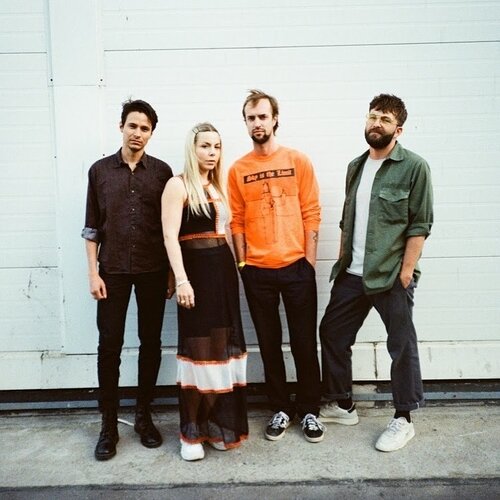
IN THIS PHOTO: Mattiel Brown of the Heavenly-signed band, Mattiel

While their hedonistic history is one of infinite musical anecdotes, one thing they’re not keen on is dwelling too much on the past. These days they’re currently representing nearly 30 of the most exciting and loveable bands and artists recording today, in a roster that’s never been better or more far-reaching. From Australia there’s the raucous sweatfest of King Gizzard and The Lizard Wizard who put out not one but five albums in 2017, shimmering shoegaze by way of new Heavenly’s brand new signing Hatchie, and the bonkers and epic Confidence Man who have somehow managed to invent a whole new style of dance music.

From the US you’ve got the fast-paced guitar seduction of Night Beats, the sweet and tender sounds of Anna Burch. Then you’ve got the Welsh contingency: the inimitable Gwenno and Huw Hawkline and then the newly-signed artist and Cardiff’s answer to William Onyeabor, Boy Azooga.

Two other exciting new signings come in the shape of Dan Stock: a young man from Milton Keynes who’s like a love-child of Billy Bragg and Bruce Springsteen, and audiobooks: David Wrench and Goldmsiths fine art student Evangeline Ling on a quest to create a collection of stone cold, avant garde party bangers.

IN THIS PHOTO: Heavenly Recordings-signed band, The Orielles

Other new signings include Halifax’s finest The Orielles, Dutch pop wonder Amber Arcades and mesmerising Parisian artist Halo Maud. Elsewhere on the current roster lies the Prince of Tears himself Baxter Dury, the legendary Mark Lanegan, Liverpudlian trio Stealing Sheep, Duke Garwood, The Parrots and the new and very exciting 77:78. One more artist that the label is very excited about is Mattiel: a rather extraordinary multidisciplinary visual and audio artist from the US whose ridiculously catchy and upbeat songs are brought to you by Heavenly as a way of opening up the gateway to the summer. You can thank them for that later.

All those artists have this certain Heavenly flavour that’s as crystal clear as it is completely undefinable. It’s that certain characteristic that runs through all of Heavenly’s acts: a wild streak, a loving side, a splash of eccentricity. Heavenly continue to move through the world discovering people that speak their language and possess the unexplainable qualities necessary to be part of the ever-growing family. The family isn’t exclusive to artists – it’s open to people like you. People who have wandered lost through a festival and stumbled upon Jeff and Danny DJing to a crowd of happy dancers, people who have spent long nights holed up in The Social, people who have hopped on the train on a cold February afternoon to watch bands at the Heavenly Weekend at the Hebden Bridge Trades Club, and people who, most importantly, Believe in Magic…”.

To honour thirty years of the brilliant Heavenly Recordings, I am ending with a playlist that features their great artists from the present and past. We can all agree that the music below is…

IN THIS PHOTO: Heavenly Recordings artist, Gwenno

ABSOLUTELY divine.

FEATURE: Fake Plastic Trees and Weird Fishes: Why Some Artists Feel Strange About Tackling Other Artists’ Music – and Why a Well-Judged Cover Can Top the Original

FEATURE:

Fake Plastic Trees and Weird Fishes

wwwww.jpg

IN THIS PHOTO: Lianne La Havas

Why Some Artists Feel Strange About Tackling Other Artists’ Music – and Why a Well-Judged Cover Can Top the Original

___________

EVERY week that goes by…

IN THIS PHOTO: Hayley Williams/PHOTO CREDIT: Lindsey Byrnes

reveals an interesting cover version or two. It is a shame that there is not a database of every cover version that comes out – I guess it would be impossible to maintain and keep reliable! I do love a cover version, as I think it is harder for an artist than writing an original song. If you cover a song by a well-known artist, then there is expectation and high standards. If one takes on a slightly less-well-known song, then there is a danger that few people will hear it. I am compelled to write this feature as, recently, two artists have tackled numbers by Radiohead. Hayley Williams explained her reticence after she covered Fake Plastic Trees from the band’s breakthrough second album, The Bends:

Hayley Williams has shared a cover of Radiohead’s “Fake Plastic Trees.” Williams wrote on Instagram, “Seemed sacrilegious at first until I realized that the band themselves have never once regarded what they do as precious or never-to-be-toyed with.” She continued, “They are never beholden to any one version of their expression and public affections don’t seem to sway them.” Hear Williams’ take on “Fake Plastic Trees” below.

Hayley Williams recently covered “Unison” off Björk’s album Vespertine. She released her debut solo album, Petals for Armor, earlier this year”.

I do love Williams’ approach to Fake Plastic Trees, and it is a song that has also been covered by Amanda Palmer, and Show of Hands (among others). That is not the only Radiohead song that has been given a new angle and lease of life!

One of the best songs of this year arrived from Lianne La Havas. She included Radiohead’s Weird Fishes on her recent eponymous album. In this article from Pitchfork we learn more about La Havas’ attachment and relationship to the song:

Lianne La Havas’ 2013 tour setlist often included a cover of Radiohead’s “Weird Fishes,” a song the British singer-songwriter/guitarist has described as one of her “favorite songs ever.” Today, she’s shared a studio version of that cover, recorded for her upcoming self-titled third album. Listen to that below.

“I had the most wonderful, nourishing experience recording that,” La Havas said in a press release, explaining that the “Weird Fishes” session informed the recording sessions for the rest of the album. “That’s where I decided: the rest of the album needs to be like this. It’s got to be my band, and I’ve got to do it in London, whenever people have time”.

Whilst some artists take on songs and do not add anything to the original, there are others that can take the song to new levels. One can appreciate the hesitation of covering a song by a beloved artist, and there is a history with that song and, unless the artist does a great job, there is that guilt that they have somehow damaged the original.

I think that is an understandable opinion, but everyone is free to cover any song they wish. I love Hayley Williams and Lianne La Havas’ Radiohead reworkings, as it is interesting learning how two very different artists share a love of the Oxford band and, when you listen to their covers, they have taken two exceptional songs in different directions! A terrific cover version not only shines a new light on a track, but it is a way of introducing an artist to new ears. If Radiohead get new support from La Havas and Williams’ fans, then that is great. I think there is a lot of pressure on artists – especially mainstream acts – to write their own material or have original songs on their records. I feel a brave or unexpected cover version can do so much for an album, and it would be interesting to see more artists look around and put some cover versions out there. In the same way classic Hip-Hop albums used samples and helped raise awareness of other genres and musicians, cover versions have that same sort of impact. There are artists who do cover versions of big artists because that song is trending or can get them a lot of focus. That might be cynical, but it does happen a lot! I will leave it there, but I was interested in Hayley Williams’ comments regarding her cover of Radiohead’s Weird Fishes, and it got me thinking about cover versions now and whether it is harder for major artists to produce covers of newer musicians. When an artist picks a wonderful song and gives it their own spin, they can create…

PHOTO CREDIT: @leecampbell/Unsplash

SOMETHING utterly beautiful.

FEATURE: “Bad Religion Run Amuck”: Is It Time to End Cancel Culture?

FEATURE:


Bad Religion Run Amuck

IN THIS PHOTO: Nick Cave/PHOTO CREDIT: David Barajas

Is It Time to End Cancel Culture?

___________

AMONG all the most fun and upbeat…

IN THIS PHOTO: Dua Lipa

features I have been writing, I wanted to include some more series subjects. One phrase that many of us are familiar with is ‘cancel culture’. This is when people on the Internet and in the media call for an artist (or famous person) to be cancelled – or be wiped off the map – because of something they have said or done. There seems to be no real justification for this sort of reaction, except for the fact that this person might have offended a few people. It seems that, every month, an artist is threatened with being cancelled as, according to some, they have stepped out of line and that is that. Dua Lipa is someone who has been threatened with this a couple of times this year alone. Recently, her Greater Albania map tweet drew condemnation from many, and I remember seeing the hashtag #Canceldualipa shared widely. Earlier in the year, as this article outlines, Dua Lipa was in the firing line:

After the Grammys, several of the attendees made their way to a strip club to celebrate. A video posted online depicted Dua Lipa making it rain on some strippers. For some reason, people got offended over this and decided to cancel Dua Lipa.

I truly do not understand what people took issue with. The most surprising part of this is that Dua Lipa was the only person canceled even though there were others with her. Is it because she’s a woman? This does not make much sense. She was even tipping the dancers. Given that this is their job and how they make money, she was actually doing a good thing. Spread the wealth, of course.

This is just the latest in a long string of people being canceled. This might also be a good contender for the dumbest reason anyone has ever been canceled.

Cancel culture speaks to bigger issues within our greater culture. Instead of just canceling people we disagree with, shouldn’t we be opening up a discussion? The entire world seems to be divided now more than ever. The UK is leaving the EU, Trump is nearing the end of the impeachment trial, and Australia is burning while the world just gazes on.

Where is the justice in simply deciding that someone is canceled? Do people not deserve a chance to defend themselves before the sentencing? Sometimes people are canceled over a picture or tweet taken out of context; should they not be given the opportunity to explain?”.

The last paragraph raises some interesting questions. In an age where social media dominates and artists are constantly under the microscope, why do we insist on calling on someone to be cancelled because they have had an opinion?! In the case of Dua Lipa, she has said and done nothing wrong, but the sort of backlash she received is damaging and shocking. Not that people asking for to be cancelled would have worked, but it does mean that other artists (and Dua Lipa) will be fearful of putting certain things online, as they might receive the same sort of treatment.

Nick Cave made the music news this week. As cancel culture continues to rumble unchecked, Cave has had his say regarding the phenomenon. This BBC article picks up the story:

Nick Cave has said cancel culture is akin to "bad religion run amuck".

Writing on his website, the Australian rock star suggested that political correctness has an "asphyxiating effect on the creative soul of a society".

"Cancel culture" is the term for when individuals or companies face swift public backlash and boycott over statements or actions perceived by some as offensive.

It "embodies all the worst aspects that religion has to offer", said Cave.

Answering a question from a fan, in the latest of his Red Hand Files series of correspondences, the 62-year-old wrote: "As far as I can see, cancel culture is mercy's antithesis. Political correctness has grown to become the unhappiest religion in the world.

"Its once honourable attempt to reimagine our society in a more equitable way now embodies all the worst aspects that religion has to offer (and none of the beauty) - moral certainty and self-righteousness shorn even of the capacity for redemption. It has become quite literally, bad religion run amuck.

"A force that finds its meaning in the cancellation of these difficult ideas hampers the creative spirit of a society and strikes at the complex and diverse nature of its culture.

"But this is where we are. We are a culture in transition, and it may be that we are heading toward a more equal society - I don't know - but what essential values will we forfeit in the process?"

There is a line that one must draw when it comes to free speech and, obviously, some artists can go too far or make mistakes – not that even the worst tweet or remark should threaten their entire career. Today is Madonna’s birthday and, recently, she made some unwise remarks regarding COVID-19 and vaccinations. It wasn’t a smart move to suggest a vaccine is being held back, but I saw a lot of people go online to call for Madonna to be cancelled. Think about the career she had has and periods of her career where people have been on her back. If social media were around during her Like a Prayer/Erotica period, imagine how many people would have been calling for Madonna to be cancelled?! I think artists are entitled to their say, and if they do put something out there that is a little misguided, is it really down to the Internet and a small section of people to end an artist’s career? We do have this ridiculous fickleness where we are quick to celebrate an artist when they release great music but, if they dare to be themselves or act in a way that some find disagreeable, then we are down their neck and put a target on their back. Although her situation if different to that of Madonna’s and others, Cardi B has faced cancel culture.

This article from NME from earlier this month tells us more:

The NYC rapper, who recently released the Megan Thee Stallion-featuring ‘WAP’, was speaking to ELLE when she reflected on controversial moments from her past which led to multiple attempts to ‘cancel’ her

Last year, Cardi was widely condemned after a resurfaced video showed her reveal that she used to “drug and rob” men who attempted to pay her for sex during her time working as a stripper.

“I feel like people are attacking me because they want me to feel the pressure of bullying, and they want me to give up, and they want me to say, ‘Oh, I quit music’ or ‘I’ll delete my Instagram, delete my Twitter,’ and I’m not willing to do that. No one will ever have that much power [over] me.”

She then addressed the recent allegations claiming that she had a secret Instagram account, saying she “cannot believe 73 people are trying to cancel me over a lie”.

It seems that, in 2020, the notion of cancel culture has heightened, and there seems to be this unabated trend of artists having to check everything they do and say because people will react in such a way. I know cancel culture has been around for years, but I have noticed it a lot more this year. I will move on soon, but even the biggest and most popular artists are not immune from the ruthless pulpit of social media.

aaaaaaa.jpg

IN THIS PHOTO: Taylor Swift/PHOTO CREDIT: Beth Garrabrant

This article from The Stray discusses a time in 2016 when Swift faced cancel culture:

This is how Taylor Swift, in her recent documentary, addresses being “cancelled” in 2016. When she explains through tears how “it just feels like it’s more than music now… it just gets loud sometimes” or recalls in a 2019 interview that the “mass public shaming” of being cancelled can translate to being told to “shut up, disappear, or… kill yourself,” it’s easy to see the very real, personal impact that cancel culture can have on an individual.

In 2020, a leaked video revealed new information about the 2016 drama and #TaylorToldTheTruth trended on Twitter, demonstrating that cancel culture is not just hurtful but often pointless, too. So why is the world of celebrity and social media so obsessed with it?

“Cancel culture” at its root refers to the concept of no longer supporting a celebrity or their work after they do something deemed unacceptable. Being brandished as “cancelled” has become the dominant catch-all insult on social media. Whilst certain behaviour certainly should result in outrage, the definition of what is deemed a cancel-worthy offence is dubious. Feuding with another popular celebrity? Entangled in a conspiracy theory? Words taken badly out of context? Uh-oh! Time to be #cancelled!”.

I think Nick Cave described cancel culture best, and the fact that there is this line between free speech and political correctness, and unforgivable morals. Most of the artists that have faced being cancelled have done nothing wrong, and who are we to delete an artist because we (a small percentage) feel they have done something disagreeable?!

axxxx.jpg

IN THIS PHOTO: Michael Jackson

Again, the situation is difficult, but an artist that has been a casualty of cancel culture and, debatably, has been blacklisted is Michael Jackson. We all know the allegations that were made against him in the Leaving Neverland documentary and, since his death in 2009, Jackson has faced a few allegations. In spite of there being no substantial evidence of his alleged crimes, a lot of people asked for Jackson to be cancelled. Whilst people are streaming his music and buying his record, radio stations are barely playing his music at all – the perception the media has of his music and classic albums has radically shifted. This illuminating article discusses the difficult Jackson situation and the moral struggle many of us have faced in the aftermath:

At the beginning of this year, Jackson’s cancellation seemed inevitable. When news broke about Leaving Neverland’s marathon of horrors, in which pedophilic grooming and sexual abuse were alleged by two men who were close to Jackson as boys, I felt put out. I was annoyed I’d have to revise my listening habits as a result of a cultural reassessment of Jackson, a mainstay of my musical rotation for decades no matter where my general taste had otherwise shifted. But all of this hand-wringing was for nothing. Deleting Jackson turned out to be easy; after watching the doc, I lost my appetite for his music completely. There was no struggle, no self-centered agonizing, no sneaking in “Remember the Time” when I didn’t think anyone was paying attention. It felt like a clean break. One day I was a person who listened to Michael Jackson. One day I was not.

People like what they like, and they’ve never had better means to access it. For many, playing a favorite song is as easy as turning on a faucet. Many young people, who make up the bulk of the respective audiences of many of the artists discussed here, don’t want to sit through scoldings about responsible consumption, or they’re specifically interested in irresponsible consumption because it’s fun and cool and celebrities aren’t real people to them and so many crimes don’t seem like that big of a deal”.

I guess there is a big difference between Michael Jackson and cancel culture and the way artists such as Taylor Swift and Dua Lipa have been attacked for such minor and baffling reasons. The threat of cancel culture is causing scars and I do worry what effect it will have across music if artists are afraid to speak or offer an opinion if they feel their career is on the line – the same goes for the music and how bold and open an artist can be through their songs. We do need to end cancel culture, and it is hugely unfair that so many artists face such scrutiny and negativity. I know some people can use free speech as a way of spreading rather dangerous opinions, and we do need some limits and barriers. It is hard to know where that line is, but I think we can all agree that anyone that spreads hate and poison is not exercising free speech; artists who have political opinions or, as Nick Cave intimated, are wrestling with “uncomfortable ideas” should not feel so uneasy or risk huge damage if they offer these opinions.

We do need to have more debate and open up the discussion regarding free speech but, more than anything, we all need to stop vilifying people who have committed no wrongs. This fascinating article from earlier this month in Medium Magazine make some brilliant points as to why we need to cancel cancel culture:

Nowadays ‘cancel culture’ doesn’t allow people to learn and grow from their mistakes anymore. Of course, I am just referring to those who have made mistakes because they were young and uneducated, not to those who are… well, criminals.

What ‘cancel culture’ fails to consider is that right now there is a higher social awareness and progressive enlightenment on the Internet, which was not present ten years ago. Again, this does not mean that celebrities do not deserve to be called out because of their misbehaviors – and educated. However, after being presented with new and better information on what is ‘politically correct’, it is more than possible for them to realize their wrongdoings and learn from them. Nevertheless, ‘cancel culture’ seems to not take this into account.

Furthermore, it makes it harder for people to differentiate between those who are genuinely apologetic for their ignorance and want to grow from it, and those who simply do not care. In fact, the fear of being cancelled leads celebrities to being overly cautious of what they say or do. It might seem like a good thing, but it actually just means that some of them might behave in a problematic way, but will do it privately in order to avoid losing fans and commercial success. Think about it: you might be supporting someone who doesn’t deserve it, just because you are unaware of what their true mindset it.

This is a huge drawback of ‘cancel culture’, as it makes it harder to spot who actually should be cancelled”.

So many artists have been maligned and ostracised; faced with the prospect of being cancelled and attacked by so many people. It is a dangerous and poisonous climate, and I don’t think cancel culture achieves anything. The worst offenders and those who offer hatred still spreads that hate, and artists who have done nothing wrong find themselves unfairly under the microscope. If we learn nothing else from the wave of artists being threatened with cancellation it is that we sorely need…

PHOTO CREDIT: @meteorphoto/Unsplash

TO change our worst habits.

FEATURE: Second Spin: Led Zeppelin – In Through the Out Door

FEATURE:


Second Spin

Led Zeppelin – In Through the Out Door

___________

IT is inevitable that groups…

ggggg.jpeg

IN THIS PHOTO: Led Zeppelin in 1979

go through a period of decline, or at least they reach a peak and there is a certain expectation on their shoulders. Led Zeppelin’s six studio album, Physical Graffiti, was released in 1975, and it is debatably their very best. Until that point, the band had not really put a foot wrong. Seemingly growing and strengthening with every album, 1975 was a real peak for the legendary band. 1976’s Presence was an altogether patchier affair than Physical Graffiti, and the songwriting was less consistent. In Through the Out Door followed in 1979, and it was the final album from the band. Recorded in three weeks between November and December 1978, In Through the Out Door was released a year before the death of the group’s drummer, John Bonham. To its credit, In Through the Out Door was a massive critical success, and it reached the top of the album charts in the U.S. The band’s title is named after the struggles Led Zeppelin were experiencing. Robert Plant’s son, Karac, died in 1977, and the band took a tax evasion exile from the U.K. The band were not able to tour in Britain for two years, hence the feeling they were castaways. That title might suggest a defeatist album with the band on their final legs, but there are some fantastic songs on the album. In terms of sound and direction, frontman Robert Plant and bassist John Paul Jones exude more influence than guitarist Jimmy Page and John Bonham.

To be fair, there were definite cracks in the band during the album’s recording. Both Page and Bonham were struggling with drug addiction, and Jones and Plant were working more closely together than ever before. Because of this, the music is not defined with heavy riffs and the same sort of sounds that were present on classics like Physical Graffiti and the band’s first couple of albums. In Through the Out Door does not have as many instant hits as other Led Zeppelin albums, but I think the album is really solid and warrants more acclaim than it has received. There have been some positive reviews but, even after the album was reissued in 2015, some were a little hostile. I think In Through the Out Door has gained more respect as the years have ticked by, but it is still considered a rather disappointing finale for the band. Songs like In the Evening, and Fool in the Rain are stunning – these tracks were written by Jones, Plant, and Page, where two other songs from that first side, South Bound Saurez, and Hot Dog, were written in pairs – the former by Jones and Plant; the latter from Page and Plant. I think the first side is really strong, and In the Evening must sit alongside the most accomplished Led Zeppelin tracks! Although In Through the Out Door contains only seven tracks, most of the songs are over five minutes – the second side opens with a real epic!

Carouselambra clocks in at over ten minutes, and I love the energy of the track – and Bonham’s drumming is, as usual, brilliant! All My Love is a wonderful track. Written by Plant and Jones, there is a sensuousness and groove that is impossible to ignore. Whilst In Through the Out Door is not as memorable and impactful as other albums, I think it is still massively underrated, and a lot more than a band knowing that the end was nigh. Even with problems and drug abuse within the ranks, they managed to put together an incredible album with more than a couple of truly amazing tracks. I think In Through the Out Door requires new investigation. I did mention how there have been some great reviews, but many are quite mixed. This is what AllMusic wrote in their review:

Marshalling their strength after the dark interlude of Presence -- a period that extended far after its 1976 release, with the band spending a year in tax exile and Robert Plant suffering another personal tragedy when his son died -- Led Zeppelin decided to push into new sonic territory on their eighth album, In Through the Out Door. A good deal of this aural adventurism derived from internal tensions within the band. Jimmy Page and John Bonham were in the throes of their own addictions, leaving Plant and John Paul Jones alone in the studio to play with the bassist's new keyboard during the day.

Jones wound up with writing credits on all but one of the seven songs -- the exception is "Hot Dog," a delightfully dirty rockabilly throwaway -- and he and Plant are wholly responsible for the cloistered, grooving "South Bound Saurez" and "All My Love," a synth-slathered ballad unlike anything in Zeppelin's catalog due not only to its keyboards but its vulnerability. What's striking about In Through the Out Door is how the Plant-Jones union points the way toward their respective solo careers, especially that of the singer's: his 1982 debut Pictures at Eleven follows through on the twilight majesty of "In the Evening" and particularly "Carouselambra," which feels like Plant and Jones stitched together every synth-funk fantasy they had into a throttling ten-minute epic. With its carnivalesque rhythms, "Fool in the Rain" also suggests the adventurousness of Plant, but it's also an effective showcase for Bonham -- it's a monster groove -- and Page, whose multi-octave solo is among his best. Elsewhere, the guitarist colors with shade and light quite effectively, but only the slow, slumbering closer "I'm Gonna Crawl" feels like his, a throwback to Zeppelin's past on an album that suggests a future that never materialized for the band”.

It is a bit unfair that In Through the Out Door did not receive the praise it deserved. In a review from 1979, this is what Rolling Stone offered:

As you might suspect, In through the Out Door‘s best number is the one in which you can understand the least words. This is “In the Evening,” a classic Zeppelin orchestral guitar rumble halfway between “When the Levee Breaks” and “In the Light.” The only line I was able to understand was “Oh oh I need zoo love.” Judging by Plant’s convincing orgasmic moans on the rest of it, I would rather guess at the remaining lyrics.

Back when Led Zeppelin was setting the heavy-metal standard (LPs I through IV) for all time, Jimmy Page was coming up with two or three great guitar riffs on damn near every tune. A lot of them were copped from Mississippi Delta blues masters like Robert Johnson, but knowing where to steal is every great artist’s dirty little secret. Page now appears to have fallen victim to the law of diminishing returns, because “In the Evening” has the only great guitar riff on the entire album. The rest of the songs are based on John Paul Jones’ keyboard work. Though an excellent musician, Jones functions best behind Page, not in front of him”.

I will leave things there, but I want to encourage people to listen to In Through the Out Door. Whilst my favourite Led Zeppelin albums are Led Zeppelin II, and Physical Graffiti, I really like In Through the Out Door, and it is an album that has plenty to keep you hooked! It is a shame that the band broke up and things ended how they did, but I think In Through the Out Door is a final studio album. It is definitely a great album that…

SHOULDN’T be forgotten.

FEATURE: Dust Those Walkmans Off! National Album Day 2020: Celebrating the '80s

FEATURE:


Dust Those Walkmans Off!

IMAGE CREDIT: National Album Day

National Album Day 2020: Celebrating the '80s

___________

THIS year has not brought too much cheer…

cccc.jpg

IMAGE CREDIT: National Album Day

so it is a good thing that artists, despite being restricted, have released some truly incredible songs and albums! Despite the fact there has been a lot of terrific new music around, people are, more than ever, looking back. We have not been able to enjoy gigs recently, and big events like Record Store Day have faced rescheduling and movement. One day that I always look forward to each year is National Album Day. Like Record Store Day, it is a chance to think about music in a very deep and physical way. Record shops have reopened, and I am glad we can get out there and experience album-buying in a way we were unable to a few months back. National Album Day takes place on 10th October, and it is a great opportunity and excuse for people to load up on vinyl and revisit some top albums! As Music Week report, this year’s theme is one people of all ages can get behind: the magic of the 1980s!

National Album Day is adopting a 1980s theme for its third edition, set for Saturday, October 10.

This year's event will honour the artists and music genres of the influential decade in the first in a series of campaign themes that will be rolled out annually. Billy Ocean, Blossoms, La Roux, The Psychedelic Furs and Toyah Willcox have been announced as official ambassadors, with further names to be announced in due course.

The initiative is organised jointly by record labels body the BPI and the Entertainment Retailers Association (ERA), and is supported across the BBC, along with AIM and other music trade associations, retailers and digital platforms.

ERA CEO Kim Bayley said: “The '80s really had it all – glamour, fun and great music. After a horrible year of lockdown and bad news, National Album Day will be celebrated by digital services and retailers alike to give everyone a real lift.”

zzzz.png

ILLUSTRATION CREDIT: Sam Cooke

For many artists the album remains the ultimate expression of their creativity and the story they want to share

Geoff Taylor, BPI

Geoff Taylor, CEO of the BPI & BRIT Awards, added: “For many artists the album remains the ultimate expression of their creativity and the story they want to share. The '80s were a hugely creative time – musically and across other aspects of our pop culture, and it will be fascinating to engage in this year’s National Album Day through the lens of arguably the most influential decade in pop history.”

Special releases will include new albums, boxsets and classic reissues such as Duran Duran's Duran Duran, Paul Simon Graceland, The Stone Roses' eponymous debut LP and Smash Hits 80s.

Based on Official Charts data, 154 million albums or their equivalent were purchased, downloaded or streamed in 2019 – up 7.7% on the previous year, and even during the first six months of 2020, album equivalent sales have risen by 6.8%.

Iain McNay, chairman of Cherry Red Records, and a founding voice of National Album Day, said: “National Album Day exists to remind everyone of just how brilliant albums can be. The creativity and thought and often pure genius which is poured out by artists when making an album can easily be forgotten in our current world where the attention span is increasingly getting shorter and less focused. So National Album Day invites you to sit down, pour a glass of wine or make a cup of tea, and just listen without distraction to a favourite album... and time and time again you will hear things that you never knew were there.”

Over the past two years, National Album Day has been supported by the likes of Lewis Capaldi, Jess Glynne, Mark Ronson, Elbow, Paloma Faith, Alice Cooper, Novelist, Tom Odell, Mahalia and Orbital, and has hosted a variety of events and activations including Classic Album Sunday and Tape Notes events, in-store artist appearances, record store promotions, and a Network Rail exhibition in major cities across the UK”.

The 1980s was such a great time for music and development. The Sony Walkman was introduced in 1979, and it became a lot more prevalent in the 1980s; the first CD player, the Philips CD100, was released in August 1982. I think we take for granted technology and how easy it is to listen to music, but think about the 1980s and how exciting it would have been to have a Walkman and CD player!

dddd.jpg

IN THIS PHOTO: Madonna in 1986

I was born in 1983, but I grew up listening to a lot of music from the 1980s. Of course, big Pop icons like Madonna and Michael Jackson were key; I was also listening to a lot of chart music from that period, and even when the excitement of the 1990s arrived, the 1980s still was still in my ears! I look back fondly on the decade, and I embrace it all – from the always-divisive fashion through to the wonderful music. If you need a bit of a guide to the 1980s, then Gary Davies’ BBC Radio 2 show is worth a listen. No matter how old you are, you can appreciate a decade that gave us genius albums from the Pixies, The Smiths, Talking Heads, Madonna, Michael Jackson, Paul Simon, Prince, Public Enemy, and De La Soul. I think we all need some positivity right now, so this year’s National Album Day will definitely provide that. Not only will it compel people of a certain age to rediscover and replay albums they loved in the 1980s; younger listeners are going to discover albums that might be new to them. No matter who you are and what your music tastes are, we can agree that the theme for this year’s National Album Day is…

IMAGE CREDIT: National Album Day

ONE of the very best. 

FEATURE: The Lockdown Playlist: Cherish: Artists Inspired by Madonna

FEATURE:


The Lockdown Playlist

Cherish: Artists Inspired by Madonna

___________

TODAY is the birthday of…

axxxx.jpg

IN THIS PHOTO: Dua Lipa

a true Pop icon. Madonna has definitely left her mark on the music world, and she continues to inspire and move forward. Rather than put together a playlist of Madonna’s best hits, I want to include a song from Madonna, sure, but I also wanted to focus on artists who are influenced by Madonna; whether in terms of the music they produce, or (the artists) seeing her on T.V. or hearing her on the radio and wanting to get into music because of that. There is no doubt Madonna is among the most influential artists ever, and we can trace her D.N.A. to so many other acts. There are rumours Madonna is working with Diablo Cody on her biopic, and many would love to see that happen. Modern artists like Dua Lipa ­are definitely inspired by Madonna, but there is nobody quite like her. On her sixty-second birthday, I wanted to put out a playlist of artists who count Madonna as an influence. As you can see from the playlist, Madonna’s legacy stretches…

IN THIS PHOTO: Liam Gallagher counts Madonna as an influence/PHOTO CREDIT: Neale Haynes

FAR and wide

FEATURE: The Queen of Pop’s Crowning Glory: Ray of Light: A Work of Genius in a Career of Constant Evolution and Brilliance

FEATURE:


The Queen of Pop’s Crowning Glory

Ray of Light: A Work of Genius in a Career of Constant Evolution and Brilliance

___________

I am not necessarily a Madonna superfan…

aalalala.jpg

IN THIS PHOTO: Madonna in 1983

and I know there are others out there who know her work a lot better than me! The reason I am so fascinated by Madonna, as I have said so many times, is because she is an icon and a real role model. Today, we do not have a culture and society that would foster a Pop icon like Madonna. The media is very different, and I do feel it would be impossible for someone to come in like Madonna did in the early-1980s and achieve the same status and success. Whether it is entirely true or not, Madonna had $35 in her pocket and a dream and, through sheer gutsiness, determination, and gutsiness, she made a name for herself. I confess that there are some Madonna albums that are not that good – 2008’s Hard Candy, and 2012’s MDNA are rare misses -, but she has rarely put a foot wrong when it comes to albums! On 18th September, Music turns twenty, and that was the album that followed my favourite; the one I will get to in a second. It is Madonna’s birthday tomorrow (16th August), and I wanted to put out a few features because, nearly forty years since her debut arrived in 1983, she remains one of the  true originals who is unafraid to speak her mind. I cannot put into words just how incredible her legacy is and how far her influence spreads.

IN THIS PHOTO: Madonna in 2013/PHOTO CREDIT: Terry Richardson for Harper's BAZAAR

From her style and story through to her support for the L.G.B.T.Q.I.A.+ community and the way she managed to rule and progress in a sexist music scene, so many artists today owe a debt to her. I think Madonna, more than most artists, has put out albums that are vastly different, but they manage to sound distinctly Madonna! Her 1983 eponymous debut is light in terms of substance and subject matter, but it is joyful and underrated. Madonna wrote most of the tracks on her own, and there are some terrific cuts on the record – such as Borderline, and Lucky Star. 1984’s Like a Virgin is a stronger album, and it saw Madonna maturing and becoming bolder in terms of her songwriting and image. The title track is one of her classics, and Material Girl is the first song of hers that I discovered – and its chorus is one of the catchiest ever! 1986’s True Blue was another revolution and, maturing even more, Madonna came a long way in a few years; showing great depth as a songwriter and her voice was more varied and accomplished. Her first true masterpiece, Like a Prayer, arrived in 1989, and it is many people’s favourite album of hers. Writing alongside her long-time collaborator Patrick Leonard, the two produced and wrote most of the tracks – bar a few -, and Like a Prayer, Express Yourself (Madonna wrote that with Stephen Bray) and Cherish are terrific tracks.

Like a Prayer created a degree of controversy, no less because of the title’s track’s video, where there are images of burning crosses! In terms of turning media heads, 1992’s Erotica was her golden period; a risqué and bold album that showed another evolution from Madonna – every album seemed to see her adopt a new persona, look and story. It is an underrated album, but it is an amazing record. 1994’s Bedtime Stories, again, is underrated, and it was a move away from Erotica, but it did poke at critics who judged Madonna in 1992 – and, with tracks like Secret, and Take a Bow on the album, few can ignore such a wonderful release! From 2000’s Music, Madonna continued to move and progress and, whilst she created few albums as historic and seismic as her early work, 2005’s Confessions on a Dance Floor is one of her best. Last year’s Madame X was a great return, after a few of slightly underwhelming albums, and many are looking ahead to see what comes next in terms of touring and albums – Madonna has suffered injury and ill health recently, which she occurred during a touring run for Madame X. With so few icons like her around, I know she will get a lot of praise and love tomorrow! I love so many of her albums, and the rest of my top-five would have Madonna, Like a Prayer, Bedtime Stories, and Music alongside one another. The top spot must be reserved for 1998’s Ray of Light.

IN THIS PHOTO: Madonna in 1998

There are many reasons why I think this is the peak of Madonna’s career. Few would have expected her to release anything like Ray of Light after 1994’s Bedtime Stories. That was not one of her best-received albums, and after four years away, few would have been prepared for the nuclear bomb she was about to drop! In hindsight, that naivety seems foolish. Madonna enjoyed peals in 1984 and 1989, I feel, so one could not have predicted a slump or a natural career decline. Ray of Light was released on 22nd February, 1998 by Maverick Records. After giving birth to her first child, Madonna started working on the album with producers Babyface and Patrick Leonard. Following failed sessions with them, Madonna pursued a new musical direction with English producer William Orbit. The recording process was the longest of Madonna's career and experienced problems with Orbit's hardware arrangement, which would break down, and recording would have to be delayed until it could be repaired. I have grabbed that passage from Wikipedia, but it shows how she was making these brave moves!

IN THIS PHOTO: Madonna in 1998

By departing with trusted producers and friends, she knew that her work needed to go in a different direction, and she needed to adapt to the changing music world around her. In 1997, The Chemical Brothers’ Dig Your Own Hole, Björk’s Homogenic, The Prodigy’s The Fat of the Land, and Spiritualized’s Ladies and Gentlemen We Are Floating in Space were out in the world, and Madonna could see the influence of Electronic Music and how it had shifted since the 1980s and earlier years of the 1990s. Who knows what her seventh studio album would have sounded like if she had continued in the same vein as Bedtime Stories, but I don’t think it would have been as original and memorable if Madonna had not thrown a 180 spin! There is Ambient music and Middle Eastern flavours in the pot, and  a spirituality that added so much to Ray of Light. Later in 1998, Massive Attack’s Mezzanine, and Fatboy Slim’s You've Come A Long Way, Baby arrived.

Both are big albums in terms of the electronics but, whereas the former is darker and has more elements of Trip-Hop, the latter is more upbeat and Big Beat. Madonna’s Ray of Light sort of sits in the middle in terms of sound, and it brings in darker shades on tracks like Drowned World/Substitute for Love, Shanti/Ashtangi, and Frozen,  but there are lighter, euphoric songs like Ray of Light. Alongside the more accessible songs are cuts like Sky Fits Heaven, To Have and Not to Hold, and Mer Girl, that are deeper and demand longer focus and investigation. Throw that together with the big hits like Frozen, and The Power of Good-Bye, and Ray of Light is a masterpiece! With Madonna co-writing and producing all thirteen tracks, Ray of Light is an album that still sounds fresh today – some of her earlier work sounds a bit dated, whereas other albums of her rely a bit on nostalgic value. I think there was this wave of albums like Ray of Light from 1997-1999, but none that quite had the same blends and magic as Madonna’s magnum opus. Her voice has never sounded stronger, and I think William Orbit gave her music more edge and nuance – if Madonna has tried to repeat Bedtime Stories or her work in the early-1990s, I think it would have been a mistake! There are album-ranking articles like this, this and this and, whilst Ray of Light does not always claim the top spot, most people are going to put it in the top-two – Like a Prayer is the album that many claim is her greatest moment.

I have a lot of love for Like a Prayer, but I think Madonna was on a roll in 1989, and Like a Prayer was her building and building from her previous albums. Despite massive pressure and expectation, she delivered a staggering album in 1989, but I think there was something different happening in 1998. Many had written Madonna off, and I think the scene was so different that year compared to 1989, so it was more difficult for Madonna to deliver an album that equalled her best and fitted in with what else was occurring at the time. The reviews for Ray of Light are universally positive, and people were blown away when it came out. In a more-recent review, this is what AllMusic wrote when they tackled Ray of Light:

Returning to pop after a four-year hiatus, Madonna enlisted respected techno producer William Orbit as her collaborator for Ray of Light, a self-conscious effort to stay abreast of contemporary trends. Unlike other veteran artists who attempted to come to terms with electronica, Madonna was always a dance artist, so it's no real shock to hear her sing over breakbeats, pulsating electronics, and blunted trip-hop beats. Still, it's mildly surprising that it works as well as it does, largely due to Madonna and Orbit's subtle attack. They've reined in the beats, tamed electronica's eccentricities, and retained her flair for pop melodies, creating the first mainstream pop album that successfully embraces techno.

Sonically, it's the most adventurous record she has made, but it's far from inaccessible, since the textures are alluring and the songs have a strong melodic foundation, whether it's the swirling title track, the meditative opener, "Substitute for Love," or the ballad "Frozen." For all of its attributes, there's a certain distance to Ray of Light, born of the carefully constructed productions and Madonna's newly mannered, technically precise singing. It all results in her most mature and restrained album, which is an easy achievement to admire, yet not necessarily an easy one to love”.

There will be a lot of articles published tomorrow on Madonna’s birthday, and there is going to be the inevitable rankings lists: people sorting out her studio albums and listing them from worst to best Rather than do that, I wanted to discuss my favourite album of hers, but also look back and show just how revolutionary and incredible her music was. From hr early singles, through to her Madame X album, Madonna has never stood still, and each album gives us something new. Ray of Light was a very special moment, and it took so many people by surprise. It is an unbelievable record that…  

STILL resonates and moves the soul today.

FEATURE: A Buyer’s Guide: Part Fifteen: Cat Power

FEATURE:

A Buyer’s Guide

PHOTO CREDIT: Stefano Giovannini

Part Fifteen: Cat Power

___________

IF you are new to Cat Power

ssss.jpeg

PHOTO CREDIT: Julien Bourgeois

then you might not know where to start with her back catalogue. Born in Atlanta, Georgia, Charlyn Marie ‘Chan’ Marshall is a tremendous songwriter and has released some wonderful albums! I really love her work, and her tenth studio album, Wanderer, ranks alongside her very best. I think Cat Power’s albums warrant a lot of focus and attention, so I have recommended four essential albums, the underrated one, and her latest one – in addition to a related book that people should check out. Have a read of the lowdown below, and it will give you insight and a guide to one of the music world’s most…

aaaa.jpg

POWERFUL songwriters.

________________

The Four Essential Albums

What Would the Community Think

Release Date: 10th September, 1996

Label: Matador

Producer: Steve Shelley

Standout Tracks: In This Hole/King Rides By/Bathysphere

Buy: https://www.discogs.com/Cat-Power-What-Would-The-Community-Think/release/4729606

Stream: https://open.spotify.com/album/5tbykpeXPR1kEeveI0xOzK

Review:

What Would the Community Think was the second album Chan Marshall released in 1996, but its richness suggests a longer period of evolution. From the first warm notes of "In this Hole," it's clear that Marshall's voice -- as a singer and a songwriter -- is not only stronger and more focused, but more empathetic as well. Where her previous works were dense and cathartic, What Would the Community Think gives her voice and lyrics space to unfurl and involve the listener; the title track alone holds an album's worth of eloquence in Marshall's hushed, clear vocals, backed by guitar, feedback, and an eerie, echoing piano. Fortunately, that leaves Marshall 11 other tracks with which to forge a fine balance between angular, angst-ridden punk and her gentler, folk-country tendencies. Different combinations of these extremes make Cat Power's sound more diverse but also more cohesive. Tense, tight songs like "Good Clean Fun" and "Nude as the News" retain the reflective, thoughtful nature of quieter numbers like "King Rides By" and "Water and Air," which turn the power of the album's louder moments into slow-building, implosive tension. Two of What Would the Community Think's finest moments, "They Tell Me" and "Taking People," are unabashedly blues and country-inflected, revealing Marshall not just as a cathartic vocalist, but as a true soul singer. Similarly, her covers of Peter Jefferies' "Fate of the Human Carbine" and Smog's "Bathysphere" show off Marshall's ability to make any song a Cat Power song. An intimate, personal album, What Would the Community Think makes imperfection beautiful and turns vulnerability into musical strength” – AllMusic

Choice Cut: Nude as the News

Moon Pix

Release Date: 22nd September, 1998

Label: Matador

Producer: Matt Voigt

Standout Tracks: American Flag/Say/Moonshiner

Buy: https://www.discogs.com/Cat-Power-Moon-Pix/master/36137

Stream: https://open.spotify.com/album/0PBUZ2KHPp5Q9fybGuT2ry

Review:

All of the shapes Marshall’s music would later take were vaguely discernible here: the careful way she arpeggiates that root chord on “No Sense,” over and over, and how closely the figure evokes the luxurious stretch of Al Green’s Hi Records band, how the hesitation on the downbeat heightens the tension to near-erotic levels. You can hear her future as a soul balladeer on The Greatest whispering at you. On the rudimentary finger-picked minor chord of “Back of Your Head,” you can hear the shadows of future Cat Power dirges like “Babydoll” lurking.

And on “Metal Heart,” the album’s moral center, you can feel her clasping her fingers around a message, a mantra that would follow and sustain through the next decade. “You’re losing the calling that you’ve been faking and I’m not kidding/It’s damned if you don’t and damned if you do/Be true ‘cause they’ll lock you up in a sad, sad zoo,” she sings. The “you” in the song, addressed with such affection, feels like Marshall herself—an unverifiable, if inescapable, impression” – Pitchfork

Choice Cut: Cross Bones Style

You Are Free

Release Date: 18th February, 2003

Label: Matador

Producer: Cat Power

Standout Tracks: Good Woman/He War/Half of You

Buy: https://www.discogs.com/Cat-Power-You-Are-Free/master/36181

Stream: https://open.spotify.com/album/38CsAH6IM7fKMN0XnZReR6

Review:

She addresses the struggle to do the right, but difficult, thing on "Good Woman," a near-spiritual breakup song where, backed by a children's choir and fiddles, Marshall explains that she needs to be a good woman with -- or more likely, without -- her bad man. Aside from being a lovely song, it's also a departure; earlier in her career the song might have just focused on the conflict instead of Marshall's gently strong resolution to it. This gentle but resolute strength runs through most of You Are Free's best moments, such as "He War" and especially "Names," a terrifyingly matter-of-fact recollection of child abuse and lost friends that says more in its resigned sorrow than a histrionic tirade would. As the album progresses, it moves toward the spare, affecting ballads that give her later work a strange timelessness; listening to You Are Free gives the impression of stripping away layers to get to the essence of Marshall's music. In some ways, the quiet last half of this album is more demanding than the angsty noise of Dear Sir or Myra Lee, but hearing her find continually creative interpretations of minor keys, plaintive pianos, and folky guitars is well worth the attention it takes, whether it's the dead-of-night eroticism of her cover of Michael Hurley's "Werewolf," the pretty yet eerie longing of "Fool," or the prairie romance of "Half of You." Every Cat Power album takes at least a few listens to fully reveal itself; You Are Free may take awhile longer than expected to unfold, but once it does, its excellence is undeniable” – AllMusic

Choice Cut: I Don’t Blame You

The Greatest

qaa.jpg

Release Date: 20th January, 2006

Label: Matador

Producer: Stuart Sikes

Standout Tracks: Living Proof/Where Is My Love/The Moon

Buy: https://www.discogs.com/Cat-Power-The-Greatest/master/36169

Stream: https://open.spotify.com/album/3WJRp6WVjUQh9JhDP5YdUM

Review:

To start the climb, Marshall enlisted players from Al Green's old Memphis soul band for The Greatest, a disc of new compositions—never mind the misleading title. Longtime Cat Power fans needn't worry about a seismic change, though: Unlike Frank Black's semi-disastrous Honeycomb, recorded with Nashville session pros, The Greatest doesn't compromise a beloved vision to fit an unlikely sound. Green's old compatriots—guitarist Mabon "Teenie" Hodges contributes most definitively—serve the songs with championship restraint, adding colors and textures that Marshall never would've found with indie-rockers, but that never cheapen the impact.

Those looking for unmitigated downers may be jolted by the pleasantly tinkling roadhouse piano and the sweetly whistled refrain of "After It All," but the song is simply a case of Marshall housing her sorrowful songs—this one about the return of an abusive lover—in brighter packages. Reflective of its title, "Islands" is almost sunny, but its walking bass and slide guitar provide the bed for lyrics about eternal sleep. Delivered starkly, "Empty Shell" could've been another entry in Cat Power's deeply dark catalog, but here, with hoedown violins and smart backing vocals, it sounds like classic country. The gorgeous title track is elevated by a string section that echoes "Moon River" for effect. Marshall nods to the old school with "Hate," an effective, bare-bones chiller, but otherwise sticks to The Greatest's plan, challenging herself to explore familiar themes with remarkable new dressing. In its own still-quiet way, it's a triumph” – The A.V. Club

Choice Cut: The Greatest

The Underrated Gem

Dear Sir

Release Date: October 1995/3rd July, 2001 (re-release)

Labels: Runt/Plain Recordings

Producer: Ed Douglas

Standout Tracks: Rockets/Itchyhead/Mr. Gallo

Buy: https://www.discogs.com/Cat-Power-Dear-Sir/master/36193

Stream: https://open.spotify.com/album/1ZzviUcCxxTTH66SPcoFUm

Review:

Cat Power's first full-length album, Dear Sir, spotlights Chan Marshall's demanding but rewarding songwriting. Her distinctive blend of blues, country, folk and punk creates songs like the dark, noisy "Itchyhead" and "Rockets," which mixes tension and hope, and tops it with Marshall's earnest, expressive vocals. Though the album needs the listener's complete attention, Dear Sir more than keeps it with nine of Marshall's searching meditations on life” – AllMusic

Choice Cut: The Sleepwalker

  The Latest/Final Album

Wanderer 

Release Date: 5th October, 2018

Label: Domino

Producer: Cat Power

Standout Tracks: Wanderer/Stay/Nothing Really Matters

Buy: https://www.discogs.com/Cat-Power-Wanderer/master/1433078

Stream: https://open.spotify.com/album/28SMXZ4p2uQGJZJpFXw8em

Review:

Over the lilting ‘In Your Face’, she laments, “You never take what you say seriously”. The object of her ire will meet their comeuppance, though – the song’s title alludes to the Buddhist belief that karma shows in your face, for anyone and everyone to see. ‘Robbin Hood’ is a brittle acoustic ditty – accompanied by atmospheric, glassy percussion – on which Marshall sneers at a “big cat fat cat” with the “biggest piece of the pie”. She’s said that the record was written with reverence to the generations of folk and blues musicians who came before her, and it’s on this atavistic-sounding song that that intention is most keenly felt.

For the most part, though, ‘Wanderer’ is an ode to Marshall’s indomitable sense of self. It’s the sound of someone with the confidence to reimagine Rihanna’s ‘Stay’ as a fractured, skeletal piano ballad. Other highlights include ‘Horizon’; ignoring the fact that the intro sounds alarmingly similar to Bryan Adams’ ‘(Everything I Do) I Do It for You’, the track is a beatific paean to familial love (and a dissonant squall of autotune stops everything from getting too mushy). This album is a quiet triumph, the understated work of an artist honouring herself and her creativity” – NME

Choice Cut: Woman

The Cat Power Book

Cat Power: A Good Woman

Author: Elizabeth Goodman

Publication Date: 4th April, 2009

Publisher: Three Rivers Press

Synopsis:

How Chan Marshall, aka Cat Power, Survived Herself–and Became the Indie Rock Queen.

Chan Marshall’s stark lyrics, minimal arrangements,and wounded, smoky vocals, were an instant indie hit in the nineties–but her mental instability nearly derailed her career. How this sensitive but headstrong Georgian daughter of an unstable mother and a relatively unknown musician father–managed to make it big, burn out, and rise up again to become not only the darling of the indie music scene but also a fashion and Hollywood icon is the fabric of this irresistible story.

Covering her musical beginnings in the south and her booze-soaked rise to fame in New York City to her eventual breakdown and subsequent reclamation of herself and her music, Cat Power delves into the soul of this fragile but ferociously gifted young talent. With seven albums behind her, the hottest designers clamoring to dress her, and perpetually sold-out venues, Marshall is at the height of her career–a perfect vantage point from which to look at her notorious and intriguing history.

From interviews with her family, musicians such as Thurston Moore, Nick Cave, Dave Grohl, and Jack White, past loves like Bill Callahan and Vincent Gallo, and current friends such as Karl Lagerfeld and Wong Kar-Wai, Elizabeth Goodman gives us the real Chan Marshall–the little girl, the woman, the artist” – Amazon.co.uk

Order: https://www.amazon.co.uk/dp/B00256Z3L8/ref=dp-kindle-redirect?_encoding=UTF8&btkr=1

FEATURE: This Woman’s Work: Why We Need Much More of Kate Bush on the Page, Screen and Beyond

FEATURE:


This Woman’s Work

IN THIS PHOTO: Kate Bush in 1979/PHOTO CREDIT: Brian Aris

Why We Need Much More of Kate Bush on the Page, Screen and Beyond

___________

I could not think of a title and heading…

xxx.jpg

IN THIS PHOTO: Kate Bush in 1978

that was that succinct and said what I truly meant but, to sort of reinvestigate an idea I have put out there before, I wonder whether there will be more from Kate Bush in terms of her music and the written word. By that, I mean there are definite opportunities and gaps that could be filled! Consider someone like Madonna, for example, whose birthday it is tomorrow (16th August). She is an artist who has been heralded and studied since her debut album came out in 1983 and, whilst Madonna and Kate Bush are very different in terms of how they approach the media and their views on fame, few can tell me that Kate Bush’s career and legacy is less important than Madonna’s. Maybe the fact that Madonna has toured more and has this slight love-hate relationship with the media means that more has been written and there has been this bigger interest when it comes to documentaries. I would say that Kate Bush has more fans and love out there than anyone else, and her music is beyond comparison. I have asked whether, perhaps, there are other songs waiting to see the light of day and, when I was writing about Madonna last week in the run-up to her birthday, I discovered quite a few good books. For example – and apologies for using her as a guide -, there is a book called Madonna: Album by Album, and it is as you would expect: a look at each album, a breakdown of the tracks and a bit about what was happening in Madonna’s life at the time.

IN THIS PHOTO: Kate Bush signing her album, Never for Ever, in London/PHOTO CREDIT: Chas Sime/Getty Images

There are biographies and other guides and, when we look beyond Madonna, there are artists who have all sorts of different books written about them – from album guides through to biographies. I have mentioned before how there are a couple of great biographies out there regarding Kate Bush – Graeme Thomson’s Under the Ivy: The Life & Music of Kate Bush is essential, and there is not too much out there! I would love to see an album-by-album guide, because I think, more than anyone, Bush’s albums are so different and immersive. I can understand why Kate Bush would be reticent about there being too much information about her, but an album guide would be terrific! Not only would it open her music up to new people, but I feel it would make for a great companion to the albums themselves. I have been looking online, and there are a few books that relate to various albums, aspects of her career or such – many of them are quite old, and there have not been many new books published in the past decade or so. I would say now, more than ever, there is an appetite and hunger for Bush’s music, and there are opportunities for writers out there! Maybe another biography would be excessive, but a more general look at her life and work would be awesome; maybe a biography that focused on a particular stage of her career, and I am sure a lot of people would welcome more photography books.

IN THIS PHOTO: Kate Bush in 1985/PHOTO CREDIT: John Carder Bush

This is an area that is fairly well covered. Again, I have recommended John Carder Bush’s Kate: Inside the Rainbow, and it is beautifully presented and contains a lot of illuminating information from her brother. There are more expensive photography collections available for fans – one from Guido Harari, and the other from Gered Mankowitz. They are both beautiful, but they might be beyond the reach of many Kate Bush fans in terms of cost! I know that there were plans for Mankowitz to bring out a book pf photos last/this year, but that is not going to happen. There are whispers that Max Browne is releasing a book of photos soon. That will be interesting to see! Taken from Rock Archive, this is what Browne remarked about Bush:

"I have never photographed a more enchanting show or multi-talented performer than Kate Bush at Hammersmith om 1979 - pure magic and such incredible stamina. Almost every number required a costume change, intricate dance choreography whilst singing, and 'The Tour of Life' show lasted over two hours in total. The bar was set so high that she never toured again but what an achievement. Thank goodness the show was recorded for T.V. The shot was taken the night of the recording after the 'Wuthering Heights' finale when Kate's relief and exuberance are palpable. A personal favorite, the focus is spot on too!"

ccc.jpg

IN THIS PHOTO: Kate Bush during The Tour of Life in 1979

I think you can have overkill if you put too much out there but, considering all the incredible photos out there of Kate Bush, there have not been that many photo books. I think reading about Kate Bush is as informative as listening to her music, so I am curious whether continued interest in her career will result in more releases. One could easily welcome another few books of photos, another biography and a couple of references works and not feel like there is too much out there. The same goes with her music, I guess. I shall not tread over old ground and wonder whether we will see demos and unreleased tracks put out, but there would be an enormous appetite for these lesser-known tracks. Maybe Bush herself would feel uncomfortable, but it would be remarkable. Her 1979 Tour of Life would have been recorded, and I think a release of that in crisp form – if that is even possible – would give great insight into one of the most important events of her career. In 1979, the four-track On Stage E.P. was released, and it was recorded live at the Hammersmith Odeon on 13th May. It became Bush's first official (non-bootlegged) live performance on vinyl. The E.P. was the only audio (non-bootleg) recording of Kate Bush live for years, until 1994 when sixty minutes of the concert was released on C.D.

I cannot find that C.D., and one looks on Discogs, and there is a collection from that tour that is no longer available. At a time when we are getting new releases from Prince, despite the fact he has been dead for over four years, I do wonder whether it is time to put more out there that is collecting dust. I know Kate Bush does not have a vault as impressive and stocked as Prince, but there are live recordings that people would eat up. How about her T.V. appearances and the recordings from those appearances? Bush herself has said how she would like to see her videos on DVD, but (she said) there is not really the appetite in the U.K. I would disagree! I think a lot of people would be interested, and it would not just be a simple cash-in: Bush’s videos are so vivid, cinematic, and memorable, it would be a celebration of an artist who puts so much passion into everything she does! I guess, in terms of her albums, the vinyl editions are out and there is not much room for improvement there. I will tread over some worn ground just one more time when rounding things off. I am working on a Kate Bush podcast, and am taking the first steps to getting that realised. In an ager where there is a podcast for everything, there is not really a definitive one about Kate Bush.

The Kate Bush Fan Podcast is out there, and it is made with a lot of expertise and love. Rather than look at each album and be forensic in that manner, the podcast is more general, and they discuss everything from the gap between Bush’s albums and why 2011 was such a remarkable and productive year for her. I guess it is good for me that there has not really been another podcast, but it does seem odd that there is this void that needs filling! The last area where there needs to be more of Kate Bush is on television. It has been six years since the documentary, The Kate Bush Story: Running Up That Hill, was broadcast. This is what The Guardian wrote when they discussed the documentary:

Guests, contributors and soon even formerly ignorant viewers like me were in awe of the talent displayed and then intelligently discussed and dissected by John, Kemp and other respected experts, such as David Gilmour, Peter Gabriel, John Lydon, Tori Amos and Del Palmer, Bush's bandmate and partner from the 1970s to 1990s. Neil Gaiman was on hand to hymn her fearlessly literary inspirations and lyrics, from – of course – Wuthering Heights (from which she derived her first single, in March 1978) to Molly Bloom's soliloquy from Ulysses in the title track of her 1989 album, The Sensual World.

Bush herself appeared only in old interview footage – so young, so fragile, so shy, but full of the sureness and certainty that only talent brings – but what emerged was a wonderful, detailed portrait of that talent. Although it gave her precocity its full due (she had written The Man With the Child in His Eyes by the time Gilmour came to listen to her when she was 14), it also gave proper weight to her evolution and her later, less commercial, still astonishing work. Why it chose to close on a stupid jarring joke by Steve Coogan, I do not know. But the rest of it succeeded in making Bush and her work less of a mystery but no less beautiful for that”.

I do like the fact that the documentary was made, as it helped to inform those who were less aware of Bush’s work, or perhaps were looking for that extra bit of information. There were some great contributors – including Del Palmer (Bush’s engineer and former boyfriend), David Gilmour, St. Vincent, and many others who paid their respects and told their stories -; seeing her videos on the screen is always great. Although the BBC and some would say that documentary is authoritative and compressive, as I have said several times before, it just was not. A one-hour documentary is barely enough time to cover an album like Hounds of Love, let alone an entire career!

It felt as though the documentary was rushed in order to coincide with Kate Bush returning to the stage in 2014 in her Before the Dawn residency, but there was little discussion about her 1979 tour, The Tour of Life. Many of the contributors seemed tenuous and expendable, and there just wasn’t enough detail. It is a documentary for those who want a basic overview, but we did not really learn a whole lot about Kate Bush that wasn’t already know. There is this chance to redress the balance in that sense, and I feel like, even without Bush being directly involved, a wonderful documentary could come about! Some say that Kate Bush is underrated, and there are articles that salute Bush’s power and brilliance. One big reason why I wanted to write this feature and argue why we need more of Kate Bush in the world – in terms of books and documentaries – is how influential she is, and the sheer number of artists she has touched. This article from 2018 talks more about Bush’s influence:

Kate Bush is probably the artist to have influenced me the most: she really was the complete package and an artist so clearly in creative control from such an early age,” British singer-songwriter Little Boots tells me. “From pioneering the use of the Fairlight CMI synthesiser [on The Dreaming and Hounds of Love] to inventing live pop shows as we know them [with 1978’s The Tour of Life], she really was a true creative visionary and you can feel the thread of her personality running through every element of what she does. When I discovered her in my teens, I found this whole artist-world that I could dive into and immerse myself in. It just felt so special and necessary and I think that’s what inspires true fandom in her listeners.”

Little Boots joins a small army of musicians to have saluted Bush: everyone from Grimes to Florence Welch, and Bloc Party’s Kele Okereke to Outkast’s Big Boi has hailed her. “What caught me [about Bush] the most was, first, the production and the voice of course, but also the different meanings behind the stories she was telling,” Big Boi told Rolling Stone in 2011. New York-based Brazilian musician Yann similarly describes himself as a Bush super-fan. “If it wasn’t for Kate, I’m not even sure if I’d be a musician today,” he tells me. “The way she’s able to convey such vivid imagery through songwriting is masterful. The song and video that made me a huge fan at such a young age was Babooshka – the storytelling and visuals really mesmerised me. Growing up gay in a conservative culture as I did can be extremely isolating. Kate’s unapologetic weirdness felt like a safe space to me: she didn’t sound, look, dress, sing, or even dance like anyone else”.

Since Kate Bush released her first single and album in 1978, there have been an assortment of works dedicated to her; people who want to get to the bottom of her genius. I think there is a lot of great stuff out there, but I can’t help but think there are many more opportunities and gaps that need filling – without distilling her legacy and just cashing in for the sake of things. So much has been written and produced regarding Kate Bush, but I feel there is a long way to go still when it comes to…

IN THIS PHOTO: Kate Bush during Act 3 of her Before the Dawn residency in 2014

THIS woman’s work.

FEATURE: The August Playlist: Vol. 3: Midnight Sky Over the Model Village

FEATURE:


The August Playlist

cccccc.jpg

IN THIS PHOTO: Miley Cyrus

Vol. 3: Midnight Sky Over the Model Village

__________

THIS week’s Playlist…

IN THIS PHOTO: IDLES/PHOTO CREDIT: Tom Ham

contains some huge tracks from some really big artists. Not only is there new material from IDLES, Miley Cyrus and Eels; we have new music from Catherine Anne Davies & Bernard Butler, Elvis Costello, Prince, Holly Humberstone, Working Men’s Club, and The Flaming Lips. It is a pretty cloudy weekend, so I think we need some sunshine and energy to lift the mood. I think the songs below will do that and, if you require some boost, have a listen to the tracks below and I just know that they will…

IN THIS PHOTO: Mark Everett (Eels)/PHOTO CREDIT: Gus Black

DO the job.

ALL PHOTOS/IMAGES (unless credited otherwise): Artists

__________

PHOTO CREDIT: Tom Gallo

IDLES Model Village

Miley Cyrus - Midnight Sky

Eels - Baby Let's Make It Real

aaaa.jpg

The Flaming Lips - Will You Return / When You Come Down

Catherine Anne Davies & Bernard Butler - Sabotage (Looks So Easy)

Prince Witness 4 the Prosecution (Version 2)

IN THIS PHOTO: Dua Lipa

Dua Lipa (ft. Madonna, Missy Elliott, The Blessed Madonna) Levitating

Elvis Costello - We Are All Cowards Now

Holly Humberstone Drop Dead

Biffy Clyro - Space

Jónsi with Elizabeth Fraser Cannibal

Working Men’s Club Valleys

The Japanese House (ft. Justin Vernon) Dionne

PHOTO CREDIT: Richard Saker/The Observer

Emmy The Great Mary

Future Islands Thrill

The Killers - Dying Breed

PHOTO CREDIT: Faolán Carey

Pillow Queens Holy Show

PHOTO CREDIT: @sub_lation

King Gizzard & the Lizard Wizard Some of Us

First Aid KitOn the Road Again

Sufjan Stevens (ft. Jalaiah) Video Game

Glasvegas Keep Me a Space

PHOTO CREDIT: Othello Grey

Charlotte Day Wilson (ft. Syd) Take Care of You

BENEE Snail

Kaleida - Feed Us Some

Gloria Estefan - Samba

Keaton Henson Prayer

L.A. WitchTrue Believers

lll.jpg

Kiesza Can’t Be Saved

lll.jpg

Sylvan EssoRooftop Dancing

Alicia Keys (ft. Khalid) So Done

sss.jpg

Matt Corby - If I Never Say a Word

Orville Peck No Glory in the West

Lindsay Ellgood on you

Rico Nasty IPHONE

Poppy If It Bleeds

Ella Eyre Tell Me About It

PHOTO CREDIT: Cameron McCool

Alice Glass NIGHTMARES

FLETCHER If I Hated You

PHOTO CREDIT: Jack Bool

Helena Deland Someone New

FEATURE: Short But (Very) Sweet: 2020’s Best E.P.s So Far

FEATURE:

Short But (Very) Sweet

IN THIS PHOTO: Holly Humberstone

2020’s Best E.P.s So Far

___________

AS much as I love an album…

IN THIS PHOTO: Do Nothing/PHOTO CREDIT: Adrian Vitelleschi-Cook

I do have a very soft spot for E.P.s, as I think they offer artists something different. Rather than commit to a whole album, you can focus on a four or five-song release, and it can be a good way of getting material out there that did not fit on an album or, rather than wait until inspiration strikes, an artist can put out some music and please their fans. I wonder whether people consider E.P.s as highly as albums and give them as much time. I really love the concept and, when we do not have physical singles anymore, I really like the idea of having a shorter release; a very different experience to a long-playing record. This year has seen some great E.P.s arrive, and I want to put out the best ten. It was hard to whittle them down, but here are the very best of the year so far. I am sure we will see a lot more great E.P.s arrive this year and, considering the quality that has already arrived, that is something that…

dsss.jpg

IN THIS PHOTO: Little Simz/PHOTO CREDIT: Linda Nylind/The Observer

WE can all look forward to.

_________________

Holly Humberstone Falling Asleep at the Wheel

Review:

One wounded pop gem after another, the subdued title track carefully paints a picture of an unfulfilling, one-sided relationship across a delicate keyboard chime. It builds towards a haunting, fuzzy synth lead and series of warped handclaps, yet her crystalline tones never disappear into the mix. ‘Drop Dead’, meanwhile, is a moody ballad reminiscent of Lorde’s ‘Still Sane’ and shares the pattern of ambient, barely-there beats as gently throbbing rhythms make their presence felt.

Lyrically, Humberstone is plain-spoken, exuding honesty and refreshing candour throughout the rousing ‘Vanilla’, “We coast until we hit a red light/Truth is I have my best nights without you”, so goes the unshakeable bridge atop twitchy electronic warbles. There’s also a hint of Sky Ferreira’s understated grunge spirit in the breezy vocal flourishes that pepper the slow-burning ‘Overkill’, an airy, yet secretly confident ode to the woozy highs of falling for someone new: “Don’t wanna be a buzzkill/If I’m coming on strong”, she deadpans, emotionally razed by what may have come before.

Soul-baring and candid, ‘Falling Asleep At The Wheel’ is a deeply affecting collection of songs that solely document Humberstone’s own personal fears and emotions, but the power and grace of her sentiments are sure to resonate universally” – NME

The Japanese House Chewing Cotton Wool

Review:

There’s a new sense of sureness in ‘Dionne’, too, something that’s echoed throughout the rest of ‘Chewing Cotton Wool’. Previous single, ‘Something Has To Change’, with its sing-a-long chorus and hand-clapped beats, is a pop smash cloaked in swirling synths. The minimalist title track sees Bain examine the memory of a lost loved one (“She’s the sound of your own voice / She’s someone else’s drink”) as electronic sounds trickle in the background. ‘Sharing Beds’, built around subtle piano lines and vocoded vocals, evokes The 1975’s glitchier moments.

‘Good At Falling’ was filled with gut-punch moments (on ‘We Talk all the Time’ Bain honestly states: “We don’t fuck anymore / But we talk all the time so it’s fine”), and her lyricism shines again here. Take ‘Dionne’’s incisive assessment of a relationship: “I’ve been thinking about / My storyline / And how your past becomes your present if it’s always on your mind”.

‘Chewing Cotton Wool’ is an elevation of Bain’s sound. It’s a short collection, but one brings the last few years of music of The Japanese House full circle, while pushing to the future with its lush sounds and huge, radio-ready hooks. Short but sweet, it’s another indication of the avant-pop maven Bain’s poised to become” – NME

Little Simz Drop 6

Release Date: 6th May

Label: AGE 101

Stream: https://open.spotify.com/album/6QrGmXbUtjyekuW83gXBBb?si=yqrkwBz0SmmBVvGdtT64Qg

Key Cut: might bang might not

Review:

Totalling a swift 12 minutes, a sense of urgency and immediacy propels one track into the next. From the pulsating bass of opener ‘might bang, might not’, Simz’ flow is as tight and precise as ever. It oozes with energy. “I got one life and I might just live it” she spouts over a swaggering hip-hop beat on “one life might live”, easily the EP’s catchiest track. ‘you should call mum’ takes a more contemplative turn, with lines like “bored out of my mind / how many naps can I take?” painting a painfully relatable picture of quarantine. Indeed, the whole EP feels like a snapshot of a specific time and headspace for the London rapper. Where Grey Area was more reflective and tackled broader themes in its lyrics, Drop 6 is rooted in the present. As she repeats in the opening track: “this is for the now”.

But behind the self-assured delivery is the hint of vulnerability that makes Little Simz so likeable. Unlike many rappers, she tells her stories unhindered by ego and bravado. At times it feels like a stream of consciousness or a chat with a friend, particularly on freestyling track ‘damn right’ – which is reminiscent of her earlier mixtapes. Recorded entirely at home, the finished product is naturally nowhere near as polished as Grey Area. But perfection clearly wasn’t the intention here. The stripped-back, DIY production only adds to its charm.

Musically too, Simz is up to form. Instrumentals range from jazz-infused basslines to old-school garage beats, showing off her genre-mixing abilities. Closing track ‘where’s my lighter’ veers furthest from the rest, featuring transcendent vocals from Alewya over a melancholic piano that concludes an otherwise fast-paced EP on a mellow, soulful note. Such musical range paired with powerful lyrics gives Drop 6 both style and substance. If this is what Little Simz can produce “when the world stops”, then we can only imagine what she’ll do when it starts turning again” – The Independent

Emma-Jean Thackray Rain Dance

Review:

Built out of her prior track “Rain Dance”, a 42-second mood piece from Thackray’s 2018 EP Ley Lines, “Rain Dance / Wisdom” broadens and blooms into a sprawling piece that pedestals the play of each member of her impressive band. “The track holds moments for each musician to shine,” explains Thackray, “and always goes down well live because it shows how well we improvise together. Lots of energy, brave moments of stillness, telepathic communication and awareness from being such a strong unit as a band.”

Because of that focus on multiple individual performances, “Rain Dance / Wisdom” traverses various dense phases, which are at the same time also freer and punchier than any of Thackray’s previous recordings. The track moves from serene keys and Thackray’s own solitary, steady trumpet into the kind of rhythmic, spiritual nu-jazz you'd expect from someone who's shared bills with Hutchings.

Lying underneath it all are synthesised textures that give the near-eight-minute track a huge, cinematic feel worthy of an artist who's a DJ and producer as well as a composer, multi-instrumentalist, singer and bandleader” – The Line of Best Fit (review of Rain Dance / Wisdom)

Jockstrap Wicked City

Review:

As opener ‘Robert’ proclaims, “I am really impressed.” Wicked City shows Jockstrap reaching their feelers outwards to the boundaries of what’s expected of them and simply pushing straight through. ‘The City’ starts off deceptively melodic before breaking down into what could be a different song entirely. It tracks the sad realisation that the possibilities offered to you by the city are a false promise. Singer Georgia Ellery’s meandering lament becomes looped over a cutting atonal synth, and all illusion of softness is gone. Throughout the EP, there’s something crooner-like about Jockstrap’s chord progressions and intonations; the soft arpeggiated piano on ‘Yellow In Green’ feels like a smoky jazz bar, before the introduction of Mort Garson-esque synths renders it something else entirely. Closer ‘City Hell’ is a swirling, vocoded jazzy epic of a song, almost like ‘Bohemian Rhapsody’ in its dramatic scope. At every turn, Jockstrap seem to have something else up their sleeve that make them that bit less typical.

For a sophomore EP, Wicked City packs the oomph of a debut. It’s bold and declarative, while also retaining a sense of mystery. Listening to it, you have the feeling that Jockstrap are nowhere near the bottom of their bag of tricks” – Loud and Quiet

Do Nothing Zero Dollar Bill

Review:

As Zero Dollar Bill rolls through, it would be reductive to say that Do Nothing fit alongside any of these peers directly, as exciting as each band may be. Fontaines are more poetic and serious and Squid convey a sense of surreal frenzy, whereas Do Nothing live firmly in overcast reality. the Nottingham band amalgamate drips of Jarvis Cocker’s wry witticisms, James Murphy’s singular voice and David Byrne’s wackiness.

The music exhibited on Zero Dollar Bill is not bombastic in any way and none of these tracks will ever be considered party anthems. What this release nails, however, is the ingredient that makes it so easy to revisit; those little flickers of vulnerability amongst the cold, detached commentary in each song on the EP.

You may not hear it on the first, or even the tenth listen, but once – maybe twice – in each of these tracks, Bailey seems to break this mindfully-crafted character. Whether it’s in the first pre-chorus of ‘Fits’, or in the unravelled climax to ‘Contraband’ as he pleads “Would you still love me if my hair falls out? / Would you make sure that I don’t do too much now?”.

These tiny, subtle payoffs are the active ingredient in tying this collection of songs together and making sense of Do Nothing. This band are all of us; exasperated and frustrated and – whether we showcase it often or not – a little bit vulnerable” – RIOT

The Lazy Eyes EP1

ffff.jpg

Review:

‘Cheesy Love Song’ – fittingly titled – closes as a bells-and-whistles piano ballad. The song flits between pastiche and sincerity, building on the outlandish playfulness of seventies revivalists The Lemon Twigs. Such dizzying romance also bears stark similarity to the sweetened Lennon imitations of Tobias Jesso Jr – it’s all in the execution though. There’s a maturity that suggests this band have been working hard on building on those influences, not solely depending on them.

Dusting off such well-loved old-school sounds can be risky for any band but The Lazy Eyes don’t dwell on imitating the past for too long at any point here. Perhaps it’s their youthful drive – but with an array of psychedelic soundscapes, they seamlessly find fresh joy in old methods. This vibrant introduction easily lives up to some of those heroes they’ve been compared to against – though they’re rightfully too busy having good time to worry about such expectations” – NME      

Loose Fit Loose Fit

dddd.jpg

Release Date: 3rd April

Label: FatCat Records

Stream: https://open.spotify.com/album/7GkchZpYKA0r8DnzRVBLNg?si=ML2vUYpCRCya1VX3twVRMA

Buy: https://loosefit.bandcamp.com/releases

Key Cut: REFLUX  

Review:

Lead single ‘Pull the Lever’ opens the EP strong – a dark, moody post-punk banger crackling with energy, with thumping disco drums and a bassline so catchy it’s frankly evil. The song barely needs anything else – the guitar is used for texture, filling in the space around the central bassline, and a saxophone creeps in only very occasionally. Basically, they know when they’re onto a good thing, and how to give it the room it needs. A good sign for this band going forward.

Second track ‘Riot’ ups the tempo considerably, a cathartic outpouring of nervous energy with the rhythm section still very much right at the forefront of the sound, with a massive yo-yoing bassline sat behind it. Next track ‘Reflux’ slows things down considerably and sees singer Anna Langdon whip the sax out again. The band apparently formed by Langdon and drummer Kaylene Milner after they bonded over their love of experimental music – an influence you can hear best on this track.

The other single from this EP, ‘Black Water’, goes a little weirder again, as Langdon repeatedly sings to “a comforting shadow,” like a high-minded lyrical mantra, before bringing it crashing back down to earth by singing, “with you in the car park,” in just about the most Australian way possible. Final track ‘Delete’ does things a little bit differently, indulging in a bit more of a stop-start structure as she sings, “I will delete you.”

The EP is a great mission statement for Loose Fit – a band who clearly know their way around a banger. ‘Pull the Lever’ in particular is a huge track; one of the best songs of the year so far, and promises big things from this exciting young band” – VultureHound

 Cayley Thomas - How Else Can I Tell You?

Review:

The album’s opener, “Two Minds”, kicks the record off on a sunny guitar riff and a touch of horns around the track’s midpoint. In her wistful vibrato, Thomas reflects on the idea of indecision and the fleetingness of time when she sings, “Isn’t it already too late?/ Everybody’s finished the race/ And you’re just startin’.” “Midnight Hours” shakes things up just slightly as the track affects a slightly darker, more noir-influenced tone in the music. Much of the track rides on a subtle, muted bassline with Thomas taking on a just slightly more ghostly soprano voice,  over-extending some notes to a near whisper pitch. “Sunshine”, appropriately enough, takes the record back into notably lighter territory as Thomas sings to those around us who shed much-needed light on our lives. “I sink a little deeper/ Draw the shades closed one more time/ But you bring the sunshine baby/ Clearin’ up a cloudy day,” sings Thomas, as the clouds eventually part on the track with a huge, shredding, Eagles-esque guitar solo. This album truly stands out on its closing track, however, as Thomas delivers a simple, yet undoubtedly heartwrenching tribute to her late brother on “In a While”. Through the filter of what sounds like a telephone receiver, Thomas, accompanied by only her guitar, reflects on a life cut short and the little reminders of him in daily life that make her write, “Forever and a day/ In my thoughts you’ll stay.”

This latest release from Cayley Thomas is tastefully simple, yet profoundly evocative. Each song is guided by the genuine emotion one can hear in her voice and backed up by simple and elegant lyricism and soothing musical accompaniment. She managed to give herself exactly enough space to be able to really reflect on and express an impressively wide range of emotions, while still remaining both concise and consistent on the album as a whole. This record is a textbook lesson on tight and effective songwriting to say the least” – Canadian Beats

Christine and the Queens - La vita nuova

Review:

Her two previous albums were strong, but this EP is arguably Christine and the Queens’ (aka Heloise Letissier) best release to date, a distillation of the incisive and effervescent pop melodies that are a hallmark of all of her work. While it clocks in at just 22 minutes and six tracks (two of which are French and English-language versions of the same song, “I Disappear in Your Arms”), there’s nary a weak moment on the release. It kicks off with the mid-tempo single “People I’ve Been Sad” before picking up the pace with the French version of “Disappear.” She then brings the tempo it back down with the low-key “Mountains” and “Nada” before picking it up again to climax with the title track, a new wave-flavored collaboration with Polacheck that finds the American singer showing off her Italian while gorgeously entwining her voice with Letissier’s on the chorus.

Throughout, the EP is marked by Letissier’s vocal and songwriting cool — even when the tempos are faster and the energy level is high, there’s a certain effortless ease to her singing and the music. However, the same can’t be said for the 14-minute video that accompanies the EP, which is basically Letissier and her dancers moving dramatically through Paris’ gorgeously baroque Opéra Garnier to the accompaniment of the songs, finishing with a strange vampiric seduction between her and Polacheck on the title track.

While it makes for a rather incongruously intense accompaniment to the EP’s supreme chill, it also shows another side to Letissier’s rapidly developing talent” – Variety

FEATURE: Too Good to Be Forgotten: Tracks That Are Much More Than a Guilty Pleasure: ABBA – Dancing Queen

FEATURE:


Too Good to Be Forgotten: Tracks That Are Much More Than a Guilty Pleasure

ABBA – Dancing Queen

___________

SOME might say that it is sacrilege…

to mention ABBA in a feature that talks about guilty pleasures! Last week, I talked about Hanson, and their single, MMMBop. That is a song that many people overlook or assume to be a cheesy Pop confection but, actually, it is a terrific song that warrants a lot of respect. Dancing Queen might be seen as a classic, but there are many people that avoid ABBA in general, thinking they are a bit plastic, or the music is a little naff. I would never hold that opinion: ABBA, to me, have released some of the best tracks ever. I know that there are people that are not convinced, and they feel the Swedish band are the ultimate guilty pleasure. Maybe I will need to put together another feature to talk about ABBA in general but, as they are a group that have cleared influenced a lot of modern artists, I feel songs like Dancing Queen are a lot more than a guilty pleasure – many people feel sheepish when they express any desire of their love of ABBA. I am not a super fan of the group for sure, but I grew up listening to a lot of their songs; hearing Super Trouper for the first time is one of my earliest memories. Agnetha Fältskog, Björn Ulvaeus, Benny Andersson and Anni-Frid Lyngstad are no strangers to gems and anthems! Although Dancing Queen is not my favourite ABBA tracks, it is one of their most famous.

There are those who think the track is throwaway or cheesy, and those who really love it. I have seen Dancing Queen appear on a few lists of songs that are viewed as guilty pleasures – whether the concept of a ‘guilty pleasure’ exists or not, we shall leave that parked for another day! Maybe it feels a bit odd singing along to the chorus, and some feel they cannot identify with the song’s lyrics but, really, should that matter?! To me, Dancing Queen is a catchy and timeless track that can put one in a great mood – in the same way Super Trouper, Voulez-Vous, or Take a Chance of Me can. On paper, Dancing Queen sounds like a perfect slice of Disco/Euro Pop. Dancing Queen was the lead single from the band’s fourth studio album, Arrival. It was written by Benny Andersson, Björn Ulvaeus and Stig Anderson. Dancing Queen was released as a single in Sweden on 15th August, 1976, followed by a U.K. release and the rest of Europe a few days later; it became ABBA's only number-one hit in the United States, and topped the charts in Australia, Canada, the Netherlands, Belgium, Ireland, Mexico, New Zealand, Norway, South Africa, Spain, Sweden, the United Kingdom, Germany and Zimbabwe. That is a lot of Wikipedia information thrown at you, but it is important to get those impressive stats out there!

IN THIS PHOTO: ABBA in 1976

Like all classic ABBA tracks, Dancing Queen has a huge and glistening chorus, and the lyrics are simple enough so that everyone can understand the song’s meaning. The production is incredible, and the song’s story, about someone enjoying dancing and being lost in the moment, has resonated and endured through the decades. It feels weird to sort of defend a song that has gained classic status! Since its release in 1976, Dancing Queen has been included in numerous polls celebrating the best songs of the 1970s; it was inducted into the Grammy Hall of Fame in 2015. I think ABBA’s music, unfairly, is still lumped in with some of the more throwaway and cheesy music of the 1970s. Even if you do not like ABBA or consider them to be one of your guilty pleasures, how can one deny the power and positivity of the song?! It is weird that there is this divide between people who love ABBA and their classics, and those who cannot stand them – even if they like other songs and acts that are very similar! I want to quote from an article that The Guardian produced in 2016, to mark forty years of a classic. There are some interesting passages that I want to lay out:

It’s no mystery why – Dancing Queen is beautifully produced: catchy and euphoric, the perfect backdrop for a song that encapsulates the carefree bliss of youth. Certainly, the band knew they had struck gold before it was even finished. Frida Lyngstad told me in 2014 that hearing the music Benny Andersson and Björn Ulvaeus had created for her and Agnetha Fältskog to sing on was a eureka moment, so much so that she burst into tears: “Out of pure happiness that I would get to sing that song, which is the absolutely the best song Abba have ever done,” she said.

=

What is it that elevates Dancing Queen above so many other beautifully produced, catchy, euphoric songs? Pete Waterman, who knows a thing or two about writing a hit, believes it exemplifies how the best Swedish artists are able to soak up popular trends and regurgitate them as something fresh: “Listen to Dancing Queen and you can hear Elton John straight away, you can hear the Beatles, disco is coming along with the Bee Gees, and you can hear that,” he says. “It’s also got what all great pop songs have – a great first line. ‘Friday night and the lights are low’ … boosh! You’re away. All great records start with a bang.”

In Dancing Queen’s case, these images told the story of a 17-year-old girl on a nightclub dancefloor – lost in the music and the moment. The sonic euphoria mirrors the freedom that the dancefloor can bring, although, as with all Abba songs, there’s a hint of what Ulvaeus called “that Nordic melancholic feeling” to it. The teenage girl isn’t the narrator, after all, so is the listener really just an observer, looking back on their lost youth? Ultimately, the song seems less concerned with making you gaze forlornly back than it does with bringing the abandonment of your teenage years into the present, at least for four glorious minutes”.

The rest of the Arrival album contains plenty of gold nuggets. Apart from Dancing Queen, we have Knowing Me, Knowing You, and Money, Money, Money. It was a very successful and fertile time for ABBA. Following their eponymous album of 1975 – where Mamma Mia, and SOS can be found -, they followed it up with the excellent Arrival. Its finest song still divides people, even though it has taken on a life of its own and has been elevated to the level of a stone-cold classic. For those who feel Dancing Queen is a guilty pleasure and a song that is a bit too cheesy to like, I would argue that it is…

zzzz.jpg

IN THIS PHOTO: Agnetha Fältskog in 1976/PHOTO CREDIT: Gijsbert Hanekroot/Redferns

ONE of the all-time greats!