FEATURE: One Last Look Around the House Before We Go… Discovering Kate Bush B-Sides, Collaborations, Covers, and Those Rarer Tracks

FEATURE:


One Last Look Around the House Before We Go…

IN THIS PHOTO: Kate Bush captured in 1985 during the Hounds of Love video shoot/PHOTO CREDIT: John Carder Bush (from Kate: Inside the Rainbow)

Discovering Kate Bush B-Sides, Collaborations, Covers, and Those Rarer Tracks

___________

I will drop a couple of the tracks in…
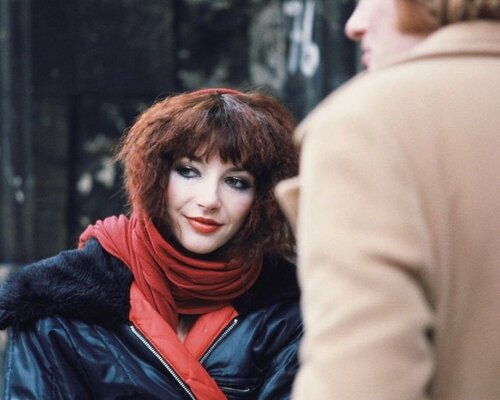
IN THIS PHOTO: Kate Bush in 1980 during the Army Dreamers video shoot/PHOTO CREDIT: John Carder Bush (from Kate: Inside the Rainbow)

and link to as many as I can throughout, but I wish I could put together a playlist of Kate Bush’s B-sides, rarities and lesser-known tracks, as it makes for fascinating listening! There are plans to release a new collection of John Lennon tracks as we approach his eightieth birthday (in October). There are some who say that there are already essential collections available for Lennon fans, and this is just cashing-in on his legacy and birthday. I think it is important to remember artists like John Lennon, but I wonder whether the Gimme Some Truth. album offers anything new or unexpected. There are reasons why a new Kate Bush compilation would be welcomed. In terms of the songs one hears of hers on the radio, you pretty much get a few singles from Hounds of Love, one from Aerial, a couple from The Dreaming, and Never for Ever, and the odd song away from that. Rarely does one hear deep cuts, and there are so many tremendous songs that people are missing out on! Also, as I have said numerous times, this year is a big one in terms of anniversary. Not only do Never for Ever, and Hounds of Love have big anniversaries next month (forty/thirty-five); it is Aerial’s fifteenth anniversary in November, and a great Kate Bush compilation, This Woman's Work: Anthology 1978–1990, was released on 22nd October, 1990.

IN THIS PHOTO: Kate Bush in 1978/PHOTO CREDIT: Mirrorpix

It would be understandable to mark thirty years of that packages with a revised album that draws in tracks from 1990-2011 (when her last album, 50 Words for Snow, was released). Whilst there is great call for a new Kate Bush album, I think there are a lot of her tracks one hardly hears that would slake our thirsts and desires for the time being. I sort of sit on the fence as to whether a new greatest hits should be released. What you would tend to get is the best-known songs, and very little in the way of the rare and under-exposed. Through this feature, rather than compile together a suggestion for a new compilation, I will draw people’s attentions to some great albums that are already out there. They act as brilliant accompaniments to the studio albums available, and I do hope someone can put together a playlist that combines songs found on these albums. That brings me to another point: the lack of lesser-known Kate Bush tracks on Spotify. This Woman's Work: Anthology 1978–1990 is not available on Spotify, and I think there are only a few of the tracks I am about to mention – that are not on her albums – that one can find there! Another great Bush collection, The Whole Story, came out in 1986, and that was a year after Hounds of Love – many might feel that a year after Hounds of Love’s thirty-fifth anniversary, we can look ahead to a new album (The Whole-r Story?!). It is amazing to see all the tracks that Kate Bush appears on, either her solo work, or on other artists’ work.

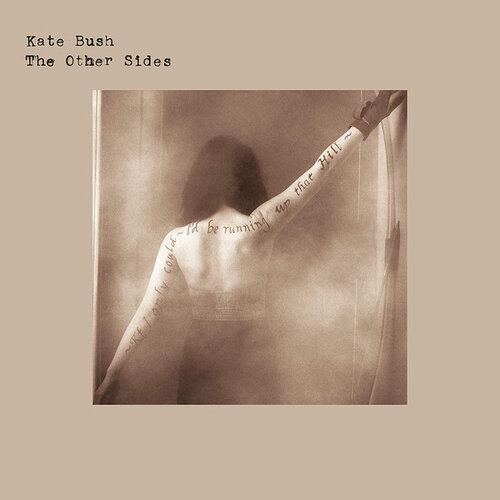
For those who are just used to hearing Bush’s better-known songs on the radio, or for those who fancy a deeper dive and bigger picture, I would recommend a few choice compilations. The Other Sides was released on 8th March, 2019, and it is the latest revision of her work. Maybe it is not as comprehensive as the 1990 compilation, but there are plenty of highlights:

CD 1

1.      Running Up That Hill [12" version]

2.      The Big Sky (Meteorological Mix)

3.      Cloudbusting (The Orgonon Mix)

4.      Hounds Of Love (Alternative Mix)

5.      Experiment IV (Extended Mix)

CD 2

1.      Walk Straight Down The Middle

2.      You Want Alchemy

3.      Be Kind To My Mistakes

4.      Lyra

5.      Under The Ivy

6.      Experiment IV [video version]

7.      Ne T'enfuis Pas

8.      Un Baiser d'Enfant

9.      Burning Bridge

10.   Running Up That Hill 2012 Remix

CD 3

1.      Home For Christmas

2.      One Last Look Around The House Before We Go

3.      I'm Still Waiting

4.      Warm And Soothing

5.      Show A Little Devotion

6.      Passing Through Air

7.      Humming

8.      Ran Tan Waltz

9.      December Will Be Magic Again

10.   Wuthering Heights (New Vocal)

CD 4

1.      Rocket Man

2.      Sexual Healing

3.      Mná na hÉireann

4.      My Lagan Love

5.      The Man I Love

6.      Brazil (Sam Lowry's First Dream)

7.      The Handsome Cabin Boy

8.      Lord Of The Reedy River

9.      Candle In The Wind”.

In terms of buying, I would urge people to go for the vinyl rather than the C.D., as I think the sound quality is better, and one gets a different listening experience when hearing The Other Sides on vinyl. On the second C.D. – I will use the C.D.s as a reference – there is the excellent Be Kind to My Mistakes. This song was originally written for the soundtrack of the movie Castaway (1987) and released on the soundtrack album. The track also appeared as a remix on the single, This Woman’s Work, a couple of years later, and I think this is a track that many people do not know about. Also worthy of fond investigation is Under the Ivy, and Experiment IV. The former appeared as a B-side to Hounds of Love’s Running Up That Hill. Under the Ivy must rank as one of Bush’s best B-sides, and it is a shame that the track never made it onto Hounds of Love as it is remarkable, and I think it is too strong to be overlooked! Again, I have not heard this track on the radio, but it is one of Bush’s most beautiful releases. Experiment IV is more energised and eerie, and it was released on 27th October 1986, ahead of The Whole Story’s release – it was a new track especially for that compilation.

Some feel it is not one of Bush’s best songs, but I think it is a fantastic song that I have only heard a couple of times on the radio. If you want a representation of Bush’s best work between 1978 and 1983, then The Single File 1978-1983 is for you. It was released in January 1984, and the tracklist is as follows:

Tracklist

1A          Wuthering Heights

1B          Kite

2A          The Man With The Child In His Eyes

2B          Moving

3A          Hammer Horror

3B          Coffee Homeground

4A          Wow

4B          Fullhouse

5A          Breathing

5B          The Empty Bullring

6A          Babooshka

6B          Ran Tan Waltz

7A          Army Dreamers

7B1        Delius

7B2        Passing Through Air

8A          December Will Be Magic Again

8B          Warm And Soothing

9A          Sat In Your Lap

9B          Lord Of The Reedy River

10A        The Dreaming

10B        Dreamtime (Instrumental Version)

11A        There Goes A Tenner

11B        Ne T'en Fui Pas

12A1      Them Heavy People

12A2      Don't Push Your Foot On The Heartbrake

12B1      James And The Cold Gun

12B2      L'Amour Looks Something Like You

13A        Ne T'enfuis Pas

13B        Un Baiser D'Enfant”.

We mainly get the better-known songs but, again, there are some real peals that one does not really hear about. I shall try not to recommend the same tracks twice, but Ran Tan Waltz, December Will Be Magic Again, Ne T'en Fui Pas, and Un Baiser D'Enfant are songs that should be spun a lot more. Ran Tan Waltz is a curious song. It was performed for her 1979 Xmas Special, and the tone of the song is rather comic, while switching traditional gender roles. A young husband is left home holding the baby while the wife is out drinking and philandering. Ran Tan Waltz was released as the B-side of the single Babooshka in June 1980. I do think that the song deserves airing, and it shows a different side to Bush. Some of her album tracks display humour, but this is a track that goes full-out – even if it does come off as a little silly! December Will Be Magic Again is a rare example of Bush releasing a non-album track as a single. The song was originally recorded in 1979 and premiered during her Xmas Special, but it was not officially released until 17th November 1980, when it was issued as the follow-up to Army Dreamers. It is not one of her best-known songs, and it has a seasonable appeal. I think, as a piece of music, it remarkably beautiful and one cannot help but engross themselves in the scenes Bush describes!

IN THIS PHOTO: Kate Bush shot in 1980/PHOTO CREDIT: Claude Vanheye

Ne T'en Fui Pas (the actual title is Ne t'enfuis pas, but it was misspelled on the singles), and Un Baiser D'Enfant are two tracks that I don’t think I have ever heard on the radio. The former is a song that was released in July 1983 in France and Canada. The song was originally released as the B-side of the singles, There Goes a Tenner (in the U.K. & Ireland), and Suspended in Gaffa in (Continental Europe). Ne t'enfuis pas tells the story of a woman, worried that her lover is about to leave, wrestling with her conscience over her plans to make him stay. Bush is not one who shies away from different accents and languages. Through her career, Bush has adopted various guises, and I think Ne t'enfuis pas is one of her tracks that should be heard by more people. Un Baiser D'Enfant is the B-side of Ne t'enfuis pas, and it is French translation of her song, The Infant Kiss, from Never for Ever. I think the French performance makes the original somewhat more stirring and moving! I wanted to write this feature to alert people to these gems, because I feel that people are buying her studio albums, and they might not even be aware of the wonderful tracks that were released as B-sides, or were included in compilations.

IN THIS PHOTO: Kate Bush photographed in 1982/PHOTO CREDIT: John Carder Bush (from Kate: Inside the Rainbow)

I will finish by talking of Bush collaborating with other artists but, aside from some bootlegs, the best example of Bush’s rarer tracks being given exposure is on This Woman's Work: Anthology 1978 – 1990. I will also nod to some of her jewels between 1990 and 2011, but the final C.D. contains some terrific songs that warrant love. Here is the tracklist:

1.          "I'm Still Waiting"

2.            "Ken"     "Love and Anger" 7"

3.            "One Last Look Around the House Before We Go"

4.            "Wuthering Heights (New vocal)”

5.            "Experiment IV"

6.            "Them Heavy People (Live)"

7.            "Don't Push Your Foot on the Heartbrake (Live)"

8.            "James and the Cold Gun (Live)"

9.            "L'Amour Looks Something Like You (Live)"

10.         "Running Up That Hill (12" mix)"

11.         "Cloudbusting (Organon mix)"

12.         "Hounds of Love (Alternative)"

13.         "The Big Sky (Meteorological mix)”.

14.         "Experiment IV (12" mix)"             "Experiment IV" 12" (1986)          6:48

Those live performances are well worth hearing, as I don’t think we have heard anything from Kate Bush’s Tour of Life on the radio! The On Stage E.P. is remarkable, and I would love to hear one or two of the tracks played on the radio. I have highlighted the final tracks from This Woman's Work: Anthology 1978 – 1990, as it contains One Last Look Around the House Before We Go.

IN THIS PHOTO: Kate Bush shot in 1993/PHOTO CREDIT: John Carder Bush (from Kate: Inside the Rainbow)

The song is an instrumental that was originally used on the soundtrack of the Comic Strip movie, GLC - it was later released on certain formats of the single, Love and Anger. Kate Bush has composed a few instrumentals; one can hear her Fruitopia commercials from the 1990s, for instance. I love One Last Look Around the House Before We Go as it not only is a stunning piece of work that evokes so many different emotions, but it seems to represent what this feature is all about: looking around the House of Kate Bush for gems and hidden treasures – something that is not done often! It is strange that Kate Bush’s This Woman's Work: Anthology 1978 – 1990, and Madonna’s The Immaculate Collection are both thirty this year – The Immaculate Collection was released on 7th November, 1990. These are important works from two music legends, and one might argue that both artists deserve new retrospectives. Maybe there have been enough collections and greatest hits packages for both, but I feel Kate Bush is an artist who creates as much magic away from the album tracks as she does on albums. The fact that so many of her album tracks are ignored is galling, but there are endless rarer tracks and treats that we never hear! I will end by throwing in a few cover versions that are worth exploration, but here is a list of some of her collaborations - and a track Bush contributed to the soundtrack of The Golden Compass:

Peter Gabriel (1980, Charisma) – "Games Without Frontiers" and "No Self Control" (backing vocals with Peter Gabriel)

The Seer (1986, Mercury) – "The Seer" (Big Country featuring Kate Bush)

So (1986, Charisma) – "Don't Give Up" (co-lead vocals with Peter Gabriel)

"The King Is Dead" (1987, Chrysalis) – Go West (featuring backing vocals by Kate Bush)

Answers to Nothing (1988, Chrysalis) – "Sister and Brother" (co-lead vocals with Midge Ure)

The Comic Strip Presents...: "GLC: The Carnage Continues..." (1990) – "Ken", "The Confrontation" and "One Last Look Around the House Before We Go..."

Brazil (1992, Milan) – "Sam Lowry's 1st Dream/"Brazil"" (vocals with Michael Kamen and The National Philharmonic Orchestra of London)

Again (1993, Sony Music) – "Kimiad" (keyboards and backing vocals with Alan Stivell)

The Glory of Gershwin (1994, Mercury) – "The Man I Love" (vocals, with Larry Adler on harmonica)

Common Ground – Voices of Modern Irish Music (1996, EMI) – "Women of Ireland"

Emancipation (1996, NPG/EMI) – "My Computer" (backing vocals with Prince)

The Golden Compass (2007, New Line) – "Lyra"

Bush also provides vocals on Roy Harper’s You, but I would recommend people check out The Seer, and The King Is Dead especially. Perhaps it is her work with Peter Gabriel that stands out aside from the rest. Bush has worked with many other artists through her career, but I especially love her sparse-yet-effective turns on No Self Control, and Games Without Frontiers (from Peter Gabriel: Melt of 1980). Bush and Gabriel have similar mindsets, and it was Gabriel who introduced Bush to the Fairlight CMI – a piece of kit that would revolutionise her music! Those two tracks are quite well-known I guess, but it goes to show that Bush could effortlessly work with other artists and provide their music with something very special. Of course, it is her duet with Gabriel, Don’t Give Up (on 1986’s So) that most associate when they think of Peter Gabriel and Kate Bush.

IN THIS PHOTO: Kate Bush and Peter Gabriel at Townhouse Studios, London, for the recording of Gabriel’s album, Peter Gabriel: Melt, in 1979

That said, the two of them performed a version of Roy Harper’s Another Day for Bush’s 1979 Xmas Special that is far too good to be ignored! I have never heard that played anywhere, and it is one of Bush’s best vocal turns! Songs post-1990 that are well worth airplay and digging include Show a Little Devotion. This song appeared as an extra track on the C.D.-single of Moments of Pleasure in the U.K., and on the C.D.-single of Rubberband Girl in the U.S.A. Into cover territory, and Elton John is someone who Bush has covered more than once. Candle in the Wind was one of the B-sides for her 1993 single, Eat the Music, and it was originally an outtake from the 1991 tribute album, Two Rooms: Celebrating the Songs of Elton John & Bernie Taupin. One of the B-sides for the single, The Red Shoes, of 1993 is You Want Alchemy. It appears on The Other Sides, and there are a few other tracks I want to mention from that album before closing. The background to You Want Alchemy is quite intriguing:

It was written and recorded after the completion of The Red Shoes and The Line, The Cross and the Curve. She sings about meeting a beekeeper, who launches into his awe, his reverence, his love for bees, which she first responds to with 'Is he some kind of nut, or what?' She doesn't get it, this fascination with bees. She seems to take a tender step into this man's private world, to open herself and feel and respect this lonely man's joys. She approaches with sympathy, and for a brief moment, she can share his vision, and see the alchemy. The music includes quotations of Debussy's 'Clair de lune' from his 'Suite bergamasque'

The last songs I want to highlight that deserve radio love and greater exploration come from that compilation, The Other Sides, from the disc/vinyl named In Others’ Words. I shan’t mention them all, but I would give an honourable mention to Lord of the Reedy River (it is a B-side from her 1981 single, Sat in Your Lap). Three terrific covers/reinterpretations that are especially stunning are Rocket Man, The Man I Love , and Mna Ná Héireann. Rocket Man was the Elton John/Bernie Taupin song that actually did make it onto the Two Rooms album, and Bush directed its music video. I love the almost tropical/Caribbean vibe Bush lends the song, and I think it is one of the finest covers of Elton John/Bernie Taupin – showing she has a real love and respect for their songwriting partnership. The Man I Love is a truly stunning example of Bush taking her voice into a more Jazz territory – long before she headed more into that genre on 2011’s 50 Words for Snow. Kate Bush recorded a cover version of this song in 1994 for the album, The Glory of Gershwin, with Larry Adler on harmonica. The song was released as a single on 18th July, 1994 in advance of the release of the album. A terrific example of Bush straying from the traditional and tackling a piece of work that is lesser-known but important to her was her reading of Mna Ná Héireann. Here are some further details:

Poem written by Ulster poet Peadar Ó Doirnín (1704–1796). It is most famous as a song, and especially set to an air composed by Seán Ó Riada (1931–1971). As a modern song, 'Mná na hÉireann' is usually placed in the category of Irish rebel music; as an eighteenth-century poem it belongs to the genre (related to the aisling) which imagines Ireland as a generous, beautiful woman suffering the depredations of an English master on her land, her cattle, or her self, and which demands Irishmen to defend her, or ponders why they fail to. The poem also seems to favor Ulster above the other Irish provinces.

Kate Bush recorded her rendition in 1995 for the 1996 compilation album Common Ground - Voices of Modern Irish Music. According to Donal Lunny, who contacted her for this contribution, 'She was very excited with the idea of singing the Irish in a way that Irish speakers would understand, and of conveying the meaning of the song through the sounds of the words. I helped as much as I could. She had Seán Ó Sé’s recording of Mná na hÉireann as reference. She was as faithful to the pronunciations as she could possibly be. It was with characteristic care and attention that she approached it. She did not stint one bit. Of course you’ll get people saying, `Oh, you’d know she doesn’t talk Irish straight off’. You wouldn’t know it straight off. I would defend her efforts as being totally sincere. No matter how perfect she gets it, she’s not an Irish speaker. This may rankle with some people'”.

It is hard to put all the underrated and rarer Kate Bush tracks into one compilation, and I would say that someone needs to get as many of these tracks on streaming platforms as possible! Some of her cover versions are, but there are tracks on YouTube that not even big Kate Bush fans have heard.
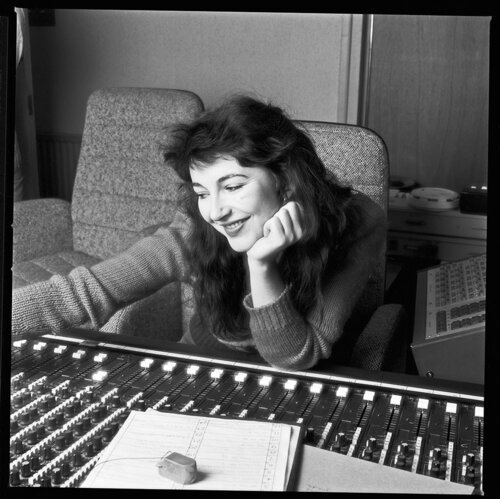
IN THIS PHOTO: Kate Bush in the studio in 1985/PHOTO CREDIT: John Carder Bush (from Kate: Inside the Rainbow)

I think one gets a deeper understanding and the whole story of Kate Bush by listening to these tracks - in my opinion, the whole story cannot be told until one realises there was a lot more to her work than the famed and known singles! I think This Woman's Work: Anthology 1978 – 1990, and The Other Sides are useful companions to Bush’s studio albums, as there are so many different sides to her talent laid our bare. As three of her studio albums mark big anniversaries this year, and it will be thirty years since This Woman's Work: Anthology 1978 – 1990, I do think we should spend more time taking a closer look at those tracks one does not hear on the radio or seen discussed that much on social media. I still wonder whether Bush will allow bootlegs of her earliest recordings to get an official release, though one feels this is very unlikely! If you get time today, have a listen to the songs and albums I have recommended, as they reveal the fascinating other sides to a genius who seemingly had no limits or boundaries! I do hope that, as time passes, radio stations, fans and assorted others stop relying heavily on the heavy-hitting singles and realise that there is a whole world of Kate Bush’s music that is collecting dust or reserved to the superfans. There are so many treats, rare cuts and brilliant cover versions that deserve to be…

IN THIS PHOTO: Kate Bush in November 2014 at the 60th London Evening Standard Theatre Awards - Champagne Reception/PHOTO CREDIT: David M. Benett/Getty Images

PLAYED a lot more often.

FEATURE: Too Good to Be Forgotten: Tracks That Are Much More Than a Guilty Pleasure: Smash Mouth – All Star

FEATURE:

Too Good to Be Forgotten: Tracks That Are Much More Than a Guilty Pleasure

xxxx.jpg

IN THIS PHOTO: Smash Mouth (L - R) drummer Kevin Coleman, vocalist Steven Harwell, guitarist Greg Camp, and bassist Paul De Lisle shot in May 1999 in Los Angeles, California/PHOTO CREDIT: Bob Berg/Getty Images

Smash Mouth – All Star

___________

I will move this feature out of the 1990s…  

IN THIS PHOTO: Smash Mouth in 1999/PHOTO CREDIT: Getty Images

but I think there is an assumption, from some, that everything in the 1990s was classic. There were plenty of songs that might have been good then that seem a bit naff or dated now, or songs that were bad at the time and remain so! Now, as with every instalment of this feature I put out, I have to explain how I am not a big advocate of the term ‘guilty pleasure’ – I think it is quite insulting but, to be fair, I have heard many people call this song a guilty pleasure. Smash Mouth’s All Star is a song that divides people, because I think the band as a whole are one you either love or hate. They have not covered themselves in much glory the past few weeks. As this article from NME explains, the band have faced a backlash after performing a gig they performed earlier in the month:

Smash Mouth have taken to social media to share some of the hate mail they’ve received following their controversial appearance at Sturgis Motorcycle Rally in South Dakota earlier this month.

Thousands gathered at Smash Mouth’s concert on August 9 where they performed as part of the ten-day event. Despite ongoing the coronavirus pandemic, it was reported that social distance-procedures and mask-wearing were virtually ignored during the band’s set.

Smash Mouth frontman Steve Harwell told the crowd, “We’re all here together tonight! Fuck that COVID shit!” His remarks drew immediate criticism from commentators”.

View this post on Instagram

recent fan mail

A post shared by Smashmouth (@smashmouthsmash) on

They were pretty foolish for staging that gig, and I think the fact they did that is one reason why the band are not exactly loved by a lot of people – there is that image of them being a bit lowbrow and simple (and the repercussions of that gig have been felt). I am here to talk about the music and, whilst I do really love their single, Walkin’ on the Sun (from 1997’s Fush Yu Mang), All Star was the single that really broke them. Fush Yu Mang remains a fantastic debut album, in no small part due to the songwriting originality of their former guitarist, Greg Gamp. The Californian band have always split people in regards whether their music is cool and credible or if it is best enjoyed as this guilty pleasure. Also, to be fair to the band, their sophomore album, Astro Lounge, of 1999 got some really good reviews! I think the band were definitely tapping into something back in the ‘90s, and one cannot deny their energy and infectiousness. Whether it is the lyrical simplicity or the fact that their brand of music has not necessarily aged as well as others from that period, there are a lot of people who do not like All Star and sort of cringe when they hear Smash Mouth. Released as a single on 4th May, 1999, the fact that it went to the top of the U.S. chart and hit the top-forty in many nations meant that the song was being played everywhere!

Unlike some other songs I have included in this feature, maybe it is a case of the band being divisive rather than the track. Many people overtly like All Star, but there are many others that do not because of the association with Smash Mouth. Even if the band have been in the news for the wrong reasons lately, I do feel that their music should be reframed and appreciated. Albums such as Astro Lounge are brilliant, and there are more than a few gems to be found – including Then the Morning Comes, and Come On, Come On. All Star was a definite smash in 1999, but there has been a slight denting in its appeal and popularity since then. All Star was one of the last songs to be recorded for Astro Lounge, and Smash Mouth’s record label, Interscope, wanted more songs they could release as a single. Rising to the challenge, Greg Camp penned All Star. The song was written, according to Camp, for the outcast, and the radio-friendly nature of All Star meant that many new people were tuning themselves into Smash Mouth. All Star has been used in films and ranks highly in polls that nominate the best songs of the 1990s. All of that might suggest that All Star is free from criticism and should be heralded as a classic, but I have seen a lot of people take against the track; they feel it is quite jarring now or does not sound as fresh as it did in the 1990s.

Also, many have found it difficult to separate the band from the song, so they sort of avoid All Star for that reason. It might seem unfair I am taking shots against Smash Mouth, but I think All Star should be highlighted, and at this very hard and changeable time, there is an optimism to the music that resonates and lifts the mood. Greg Camp wanted to write an anthem for the outsiders. He was reading a lot of fan mail from those who considered themselves to be outsiders, so All Star was a response to that. The band have talked about the story behind All Star, and I want to bring in an in-depth article from last year that discusses the song’s continued popularity through memes, YouTube videos, and even an as-yet-unstaged Broadway musical. It was clear that Greg Camp was used to writing deeper songs that were not necessarily tooled for mainstream radio. It was a challenge responding to the label’s request for a big hit:

But Camp was ready to try. Not usually one to listen to the radio, he picked up the latest issue of Billboard, bought some records, and noted tempos, keys, melodies, song structures. One track in particular stood out: Barenaked Ladies’ “One Week,” with its hyper-verbose verses and abrupt mood shifts, and the fact that the vocals kicked in before the music did. (The other group brazenly vocalizing right at top of songs that year was ’NSync. Smash Mouth would tour with them in 2002.)

Maybe because he was thinking in terms of fan service, Camp’s mind turned to Smash Mouth’s fan mail, which he and DeLisle tended to read in the back of the tour bus or at the laundromat. A lot of the band’s young fans were having a rough time of it, being picked on by their siblings, teachers, parents—sometimes for the way they dressed, sometimes for liking Smash Mouth. Camp set out to write a pep talk of a song, a “daily affirmation,” an “I Will Survive” for the not-so-cool kids. Finally, there was the memory of an ex-girlfriend, who used to make the “L for loser” hand gesture at him when he left to play with his cover band in the evenings. “She’d be like, ‘When are you going to grow up, dude?’” Camp told me, adding, “I don’t know if I would namecheck her. Because, you never know. She may come after me for royalties.”

There was concern from Camp that his bandmates would not like the song’s relentless positivity and poppiness, and I think this is why Smash Mouth get misrepresented. They have tackled big issues through their music and they often get pigeonholed as low-I.Q. or dumb. Maybe this is another reason why All Star gets a bad rap: it is insatiably catchy, but it not as challenging and provocative as some of the band’s other tracks. Camp’s original handwritten lyrics contained the line, “Say bye bye to your soul” (later changed to “All that glitters is gold”) - “This would be the first time that I had to do something that the record company told me to do,” Camp said. “And I was kind of like, ‘Well, you know, I guess here we are’”.

PHOTO CREDIT:  Berg/Getty Images

This song will do exactly what the record company wants it to do,” their producer, Eric Valentine, warned them. “But it is going to sail this band straight into the sun. Like, there’s no turning back. You cannot put that toothpaste back in the tube

Pretty much everyone was concerned,” said Camp. “We definitely had to take a vote and go, are we going to do this?” Not that there was that much debate. “Nobody said, ‘Let’s just be broke and make sure our friends think we’re cool’”

I think the catchiness and positivity of the song is exactly the reason why we should consider it to be a truly awesome song. Maybe Greg Camp has mixed feelings about All Star, but it has brought a lot of pleasure to people, and I think a lot of people who turn their noses up at Smash Mouth actually hold a soft spot for All Star! Greg Camp is no longer with Smash Mouth, but one cannot argue against his contribution and incredible songwriting ability. Even he admits that, maybe, being a Smash Mouth fan is not seen as ultra-cool:

Well, I don’t think it’s like the coolest thing in the world to like Smash Mouth, or that song,” he says after a long pause. “You’re not going to be scoring any points by liking it. … It’s just like, hey, here’s something from our childhood. You know, it’s like if I were to like walk around and sing the theme to like The Partridge Family or The Smurfs or something like that. It’s not because I genuinely love that stuff. It’s just good, and it’s fun, and it’s something from my memories”.

IMAGE CREDIT: Ellen Surrey

What is it about All Star and Smash Mouth that creates this dichotomy of opinions and a real divide?! If, like me, you were a teen in 1999, you would have bonded with the song, as it sort of spoke to us and we could relate to what was being said. At a post-Britpop time, it was nice to hear songs that had a real optimism and positivity about them – the scene changed post-1997, and one did not hear quite as many big and positive Pop songs as they did between 1993-1997. I think a lot of people who were older than me in 1999 disliked All Star’s lack of real sophistication, or they felt that the song was too in-your-face. Other since have dismissed All Star as an overrated tune of the 1990s or a track that was meaningful then but not so much now. I want to bring in one last passage from the article I have been quoting from, as it is nice to hear different people explain the popularity and, also, divisiveness of All Star:

Pete Gofton, a musician and music lecturer at Goldsmiths University in London, argues that “All Star” is just a handy “vessel of transmission”—making a statement on the song itself is not the point. “The most successful memes, shitposts, and Vines have little if anything to do with the actual content itself,” he said. Memes are their own art or language, “with their own internal logic and rules and references. The content they use is pushed beyond the point of being funny or making any kind of sense in and of itself.” There’s no deep meaning or even obvious comedy in, for example, a version of “All Star” in which the vocals are five beats-per-minute slower than the instruments. “But it functions within the parameters of communication of understanding what a meme should do.”

“We lash out, we mock Smash Mouth, we reassure ourselves that this is a terrible song,” Tim Richardson, one of the hosts of the podcast Why I Hate This Album, said in an email. “But secretly we know that none of that will ever get it out of our heads”.

I think that All Star is just a great Pop song, no matter what you feel about Smash Mouth. I don’t think it is a song that people should feel embarrassed about liking, and I know there are people out there who truly love All Star and are happy just to get down and get with it. Take a listen to the song, and it will put a smile on the face and give you energy. At the very least, All Star provides some nostalgia (for those who were around in 1999) and escape at a time when…

qqq.jpg

IN THIS PHOTO: Smash Mouth in 2019

WE could all do with it!

FEATURE: From a Buick 6 on Desolation Row: Bob Dylan’s Highway 61 Revisited at Fifty-Five

FEATURE:

From a Buick 6 on Desolation Row

xcc.jpg

Bob Dylan’s Highway 61 Revisited at Fifty-Five

___________

ON the day (30th August) of the…

IN THIS PHOTO: Bob Dylan in 1965/PHOTO CREDIT: Barrie Wentzell

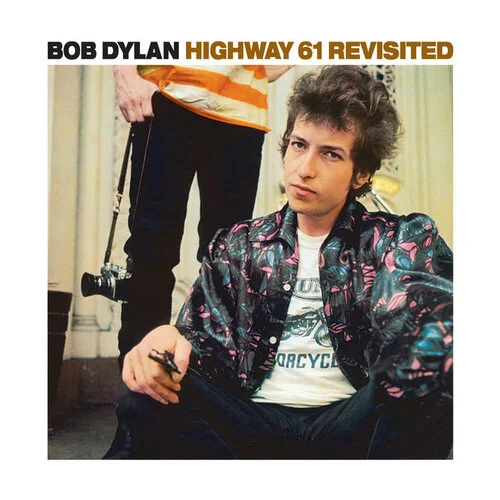
fifty-fifth anniversary of Bob Dylan’s Highway 61 Revisited, I wanted to investigate further one of the greatest albums ever released. His sixth studio album was released by Columbia, and Highway 61 Revisited marked a radical shift for Dylan. This was the first album where he used Rock musicians on all tracks - the only exception is the album’s closer, Desolation Row. I wonder whether that eleven-minute closer could have been given something extra with electric guitar. It is clear that, by 1965, Dylan wanted to move in a different direction and was bringing in new influences in terms of genres. Dylan was utilising the Blues more, and he was combining that with exquisite and thought-provoking poetry that documented the realities and struggles of American society. It is no wonder many view Highway 61 Revisited as one of the most important album of the 1960s. Although there are only nine tracks on the album, there are so many lines, stories and spine-tingling moments revealed. With no weak tracks, one of Dylan’s finest songs, Like a Rolling Stone, opens things, and it must have blown people away in 1965! Unlike anything he had ever released, the song cracks out of the gates and never relents! Going down as one of the most inspiring songs in Rock history, there are articles dedicated to the song and its incredible genius.

With musicians including Mike Bloomfield (electric guitar), Paul Griffin and Al Kooper (piano, organ), and Bobby Gregg (drums), there are so many different shades and layers to the album. Aside from the phenomenal opener of Like a Rolling Stone to the biblical swansong of Desolation Row, Dylan reaches new peaks on every song. I think Ballad of a Thin Man is one of finest cuts from Highway 61 Revisited. With pulsating piano and eerie organ, the song concerns the media’s inability to understand the singer and the song. It is a remarkable protest song, and it remains one of Dylan’s best-loved songs. The impact Highway 61 Revisited has had on other artists is immense. Songs such as Like a Rolling Stone have been covered by everyone from The Young Rascals, to David Gilmour, and PJ Harvey even included a cover of Highway 61 Revisited’s title track on her Rid of Me album in 1993. I want to bring in a couple of reviews of Highway 61 Revisited. In 2010, this is what AllMusic wrote:

Taking the first, electric side of Bringing It All Back Home to its logical conclusion, Bob Dylan hired a full rock & roll band, featuring guitarist Michael Bloomfield, for Highway 61 Revisited. Opening with the epic "Like a Rolling Stone," Highway 61 Revisited careens through nine songs that range from reflective folk-rock ("Desolation Row") and blues ("It Takes a Lot to Laugh, It Takes a Train to Cry") to flat-out garage rock ("Tombstone Blues," "From a Buick 6," "Highway 61 Revisited").

Dylan had not only changed his sound, but his persona, trading the folk troubadour for a streetwise, cynical hipster. Throughout the album, he embraces druggy, surreal imagery, which can either have a sense of menace or beauty, and the music reflects that, jumping between soothing melodies to hard, bluesy rock. And that is the most revolutionary thing about Highway 61 Revisited -- it proved that rock & roll needn't be collegiate and tame in order to be literate, poetic, and complex

There are few albums that receive almost perfect acclaim across the board. It is one of those rare records that has reverberated through the decades, and it remains so powerful and relevant. Dylan would go on to create other classics (including Blonde on Blonde in 1966), but I don’t think anything reaches the same highs as Highway 61 Revisited. I want to source from a Sputnik Music review of 2006, as they make some interesting observations:

Bob Dylan gathered a good band of musicians to accompany him on this album as guitarists, pianists, organists, bassists, and drummers among other instruments. With this band, Dylan explored a new sound, most noticeably his signature organ-guitar blend so recognizable on Like A Rolling Stone. Unlike most folk music, Bob Dylan allows a lot of instrumental variety into his music and allowing for distorted guitar leads, catchy piano melodies, and emotion dripping harmonica solos. The songs range from bluesy, sultry ballads to 50s rock and roll to absolutely beautiful folk mastery.

Dylan’s songwriting is masterful, each chord progression simple enough yet so incredibly original and recognizable that nothing sounds bland or uninteresting. A perfect blend of II V Is and I IV Vs make songs up to nearly 12 minutes never drag on and the songs pass by like a breeze although not a single song really fits the standard pop song length. However, fans around the world do not care about the song length, as Rolling Stone magazine called Like A Rolling Stone the greatest song ever recorded and Desolation Row remains a fan favorite in many hearts. The title track of the album appeared on the list as well, although in the 300s.

However, the music isn’t the only thing to marvel at on this album. Bob Dylan, ever since his induction into the music industry, has been looked upon as one of the greatest lyricists of all time, and for good reason. He makes classic literary allusions, conveys a message that is heart-felt and honest, and always maintains a rhyming pattern without sacrificing the meaning or story in any way. Whether the message refers to politics, love, or just general society, it doesn’t matter because Dylan explains all of them with unrivaled intelligence and flair. No matter how much the music conveys by itself, Dylan makes sure his lyrics and story are the main focus of every song. Ballad of a Thin Man makes “Mr. Jones” as relevant a term for the common man as John Doe or John Smith. Desolation Row features the most classical allusions one has ever seen, making references to his idols while still maintaining a message and relevant flow, something Anthony Kiedis of the Red Hot Chili Peppers wishes he could do”.

I know there will be a lot of celebration of Highway 61 Revisited, as it is fifty-five, and I am sure the album will continue to inspire artists and listeners for decades to come. Before ending things, I want to circle back to Like a Rolling Stone, as it is the song that announced a different side of Bob Dylan. His infamous appearance at the Newport Folk Festival is one of the most-talked about events from all of music. Those who were expecting a stripped-back Folk Bob Dylan were in for a shock! Rolling Stone examined Highway 61 Revisited in 2016, and they talked about the recording of Like a Rolling Stone, and how Dylan’s Rock and Blues-orientated tracks were perceived by the Folk community:

When they returned the next day, 21-year-old Al Kooper had bluffed his way into the session. Kooper was a guitarist, but he sat himself at the organ (which he says he faked his way through like “a kid fumbling for the light switch”) and wound up on the song. “Highway 61 was an unprofessional situation,” he says today, “exemplified by how I ended up playing on it.”

With Kooper supplying a bed of organ and Griffin at the piano, it took two rehearsals and four takes for “Like a Rolling Stone” to come together – though they kept going through 11 more takes, still searching, as if unaware of the history they’d made.

No one was unaware for long. The single was released on July 20th. Initial copies sent to radio split the six-minute song between two sides of a 45, but listeners demanded the whole song, and they got it. “It seemed to go on and on forever,” Paul McCartney remembered of hearing it at John Lennon’s house. “It was just beautiful. He showed all of us that it was possible to go a little further.”

Just five days after “Like a Rolling Stone” was released, with the song burning up the radio, Dylan appeared at the Newport Folk Festival with an electric band.

There is some lingering debate about the reaction: Were the boos that greeted their versions of “Maggie’s Farm,” “Like a Rolling Stone” and “Phantom Engineer” because the music was a shock, because there wasn’t enough volume for the audience to hear it, or because there was too much volume? But there was no mistaking Dylan’s intention. “Dylan wore rock & roll clothes,” Bloomfield said. “Black leather, yellow pin shirt without the tie. And he had a Fender Stratocaster. He looked like someone from West Side Story.” Four days later, that street fighter was back at Studio A, running down the rest of the songs for Highway 61 in just four days”.

So many great and influential albums are celebrating anniversaries this year, but I don’t think they come much bigger than Bob Dylan’s Highway 61 Revisited. If you do not own the album, then go and grab a copy, as it is a sensational listening experience! Highway 61 Revisited is so much more than another Bob Dylan album. On its arrival on 30th August, 1965, a masterpiece was released into the world that would…

CHANGE music forever.

FEATURE: The Lockdown Playlist: Back to the Reading Festival of '92

FEATURE:


The Lockdown Playlist

wss.jpg

IN THIS PHOTO: Kurt Cobain performs with Nirvana at the Reading Festival in 1992/PHOTO CREDIT: Charles Peterson

Back to the Reading Festival of '92

___________

TWENTY-EIGHT years ago tomorrow (30th August, 1992)…

Nirvana made their legendary appearance at the Reading Festival. When people talk about the greatest live performances – or greatest festival slots -, inevitably, Nirvana’s ’92 slot at Reading is never far from the tongue! By all accounts, it was a gig that will rank alongside the very best:

Nirvana, currently in the midst of a somewhat reluctant path to world domination, were booked as first-time headliners alongside The Wonderstuff and Public Enemy. In a world without smartphones and with their every movement amplified and vilified by the press, this rare festival appearance became one of the most hotly anticipated slots in Reading history. Tragically, it was also to be their last performance in the UK.

Along with Krist and Dave (and Dancing Tony – a regular sight at their UK shows), the group played a mix of material – old, new and covered. There was even a nod to Boston just before launching into Smells Like Teen Spirit – a sly reference to people’s perception of their similarities”.

Not only am I going to include a track from Nirvana’s set at Reading, but I also want to mix in other acts who were on that bill (across all three days) back in 1992 – Nirvana headlined on the Sunday.  Many of us are disappointed that we cannot go to festivals this year, but I am sure that there will be a lot of catching up done next year! I am going to leave it there but, to mark twenty-eight years of the iconic Reading Festival of 1992, I have put together a Lockdown Playlist of acts…

WHO shared the three-bill with Nirvana.

FEATURE: Second Spin: Spice Girls - Spice

FEATURE:

Second Spin

Spice Girls - Spice

___________

THIS is an album that can really split…

IN THIS PHOTO: Melanie Brown, Melanie Chisholm, Emma Bunton, Geri Halliwell and Victoria Adams of the Spice Girls, circa 1996/PHOTO CREDIT: Tim Roney/Getty Images

people down the middle. The Spice Girls released three albums in their career and their debut, Spice, arrived on 19th September, 1996. As it comes up to its twenty-fourth anniversary, it is a good time to re-evaluate the album. I remember when the album came out and, beforehand, we all knew about this girl group and the kind of hysteria they were generating. Some have compared the Spice Girls’ popularity with that of The Beatles in the 1960s and, whilst The Beatles and Spice Girls share very little in common, the sort of popularity the Spice Girls received can compare with the Liverpool legends. The group reunited last year to perform some concerts, that gained some positive reviews from some and some more average reviews elsewhere. Without Victoria (‘Posh Spice’) in their ranks now, it is a changed line-up, but I am not sure whether there are future plans for the Spice Girls relating to new music. To me, the group are very much best left in the past, in the sense that the songs captured a spirit of the 1990s - and a more mature and modern-sounding group would not compare with their debut best. Spice is a classic example of an album that sold by the tonne but, through the years, the reviews have been mixed. I have seen one, which I shall end with, that is a positive modern interpretation of Spice, but there is a divide. A lot of U.S. reviews from 1996 were quite negative, and I think there are media sources and people who didn’t like the Spice Girls then and don’t now.

Maybe they find the music hollow and the notion of Girl Power – which they coined and was everywhere when the Spice Girls broke! – was gimmicky and the group hardly sported the chops of their peers. Spice was recorded between 1995 and 1996 and, at that time, we were still very much in the midst of Britpop. By the time Spice came out, the best of Britpop had passed, but it was still very much in the air. When I was at school, most of my friends were into other bands, and very few liked the Spice Girls – it was mainly the girls that liked them. Maybe that is another reason why the Spice Girls did not have the same width and breadth of popularity as other girl groups such as Destiny’s Child, TLC, En Vogue, or even our All Saints. I think there was a very tight demographic (young girls), but I think their songs are a lot more wide-ranging than people give them credit for. One reason why I like Spice is because that, apart from a few filler tracks, there are a lot of big hits that stand up today.!Wannabe, their debut cut, was released in June 1996, and that song was all over radio at the time! One cannot deny the catchiness of the song, and I think it is one of the biggest anthems of the ‘90s. Say You’ll Be There, 2 Become 1, and Mama/Who Do You Think You Are were the other singles released from Spice, and the album combined aspects of Dance, R&B, Pop and Hip-Hop.

Spice reached number-one in over seventeen countries, and it became the world’s best-selling album of 1997; it sold 19 million copies in a year! Spice is the best-selling album by a girl group, and one of the biggest-selling albums ever. I admit that Spice sort of weakens towards the end – tracks like Something Kinda Funny, and Naked are not as strong as material elsewhere. Also, three of the huge singles open the album – Wannabe leads to Say You’ll Be There, which then is followed by 2 Become 1. It is front-loaded and, in terms of quality, I think a slight rearrangement of the tracks could have made for a stronger album. That said, non-singles like Last Time Lover are very strong and, at ten tracks that run in at less than forty minutes, Spice is a tight and satisfying listen. We have girl groups now – such as Little Mix -, but there was a time (from the early-late-1990s) when they were very much in vogue, and there was this great contrast between the U.S. girl groups and the British ones. It was inevitable that the Spice Girls would break America, and the fact that each member had their own nickname – Emma Bunton was ‘Baby Spice’, Geri Halliwell (she is Horner now) was ‘Ginger Spice’; Mel C was ‘Sporty Spice’, Mel B was ‘Scary Spice’, and Victoria Beckham (or Adams as she was known at the start) was ‘Posh Spice’ – meant that fans could pick their favourite, and Spice Girls were much more than a faceless band!

Perhaps the personas were pretty forced, but one cannot deny the sort of discussion the Spice Girls provoked. Even though me and my school friends were not massive fans of the group, we each had our favourite members – then and now, Baby Spice is the best! The Spice Girls were fully involved in the writing of all the songs. Halliwell in particular was clearly a fund of ideas for songs, arriving at sessions with her book of jottings, notes and miscellaneous scribblings which often produced the starting point of a lyric or a song title or just an agenda for the day's work. Although Spice was produced by Absolute, Andy Bradfield, Matt Rowe and Richard Stannard, the group themselves had plenty of input, and it was not a case of this manufactured group being directed every step of the way. It seemed like the group collaborated with the producers and there was a lot of experimentation in the studio. Whilst it is clear that some of the group were stronger vocalists than others – Mel B, Mel C and, perhaps, Emma Bunton were better singers than Geri Halliwell and Victoria Adams -, their natural bond and unity was their key strength. The Spice Girls recognised their solidarity as a group, which depended on maintaining parity in all departments, including the songwriting credits and the resulting royalties. Unlike manufactured Pop groups, Spice Girls were credited as co-writers on all of Spice’s tracks.

Despite the major success of Spice and the incredible sales, I think there were some in 1996 who were not convinced. At a time when there was Britpop and a lot of different scenes, Spice Girls definitely had their fanbase, but I think the group broke barriers and ground, and their songs are instantly catchy and fun. I don’t think you need to be a Pop fan to love Spice, as there is so much going on, and there are tracks that are impossible to resist! Reviews since 1996 have ranged from the wildly effusive to the negative, but I wanted to quote, first, from a Pitchfork review from last year that, whilst mixed, did offer some positives:

 “Spice has its dorky and amateurish moments, but if nothing else, that should prove that the Girls had a claim to authenticity themselves. Rather than just a savvy way to get a cut of publishing royalties, the Girls had a songwriting credit on every song on Spice because Stannard & Rowe and Absolute—the two production teams responsible for the majority of the record—worked closely with them to craft each one. Andy Watkins, one half of Absolute, told Sinclair: “None of them are musicians... But the thing about all of them at that point was they worked so incredibly hard at it. They knew their shortcomings. And the drive—it was unreal”.

I want to source from two more reviews because, over the past few years, there has been new evaluation of Spice, given the reuniting of the Spice Girls and the gigs they played. Spice is one of the best debuts of the ‘90s, and I think many people should give the album a spin! There are a few weaker tracks, but the strength of the singles more than compensates for any shortcomings. This is what Albumism wrote when they tackled Spice in 2016:

While there may be a few duds on the B-side of Spice, I can only blame the songwriting, not the singing, because these girls were on point. I’ve had to record three-part harmonies by myself and I found it nearly impossible as a singer; I can’t imagine doing a five-part harmony.

But they merged their sexuality with an array of female archetypes, all of which (hopefully) encouraged young girls to embrace “Girl Power.” The sassy redhead, the butch athlete, the strong girl of color, the prissy snob, and the girl who just wants to play. While fulfilling stereotypes rarely does anyone justice, I see them as a pop extension of the Riot Grrrl movement. Your parents might not take you to a Bikini Kill concert, but I’m sure they’ll take you to a Spice Girls concert. And the message is the same: girls can rock just as much as the boys if not more so.

ddddass.jpg

IN THIS PHOTO: Rankin shot the Spice Girls for The Big Issue in 1996

Spice is an outstanding record that combines feminism with funk, hip-hop, and R&B. If you haven’t listened to it in the last 20 years, I highly recommend you do so. An hour was spent dancing in my living room before writing this article, after all, and I listened to it four more times. While I may have to listen to a few Slayer albums now to “cleanse” myself, it’s a killer fucking record and I was glad to listen to it yet again”.

I will leave things be in a bit, but I wonder if we will ever see a time when a group like the Spice Girls arrive and create that insane level of fervour! Maybe One Direction sort of gained a portion of the Spice Girls’ popularity when they arrived last decade, but I think we will never see anything like it again! Spice could have been a flop and an album that relied on hype, but I think it delivers. I want to bring in a review from AllMusic, as it is one of the more positive reviews I have read:

Spice doesn't need to be original to be entertaining, nor do the Spice Girls need to be good singers. It just has to be executed well, and the innocuous dance-pop of Spice is infectious. None of the Girls have great voices, but they do exude personality and charisma, which is what drives bouncy dance-pop like "Wannabe," with its ridiculous "zig-a-zig-ahhh" hook, into pure pop guilty pleasure. What is surprising is how the sultry soul of "Say You'll Be There" is more than just a guilty pleasure, and how ballads like "2 Become 1" are perfect adult contemporary confections. The rest of the album isn't quite as catchy as those first three singles, but it is still irresistible, immaculately crafted pop that gets by on the skills of the producer and the charisma of the five Spices. Sure, the last half of the album is forgettable, but it sounds good while it's on, which is the key to a good dance-pop record”.

Spice contains many a stunner, and Wannabe alone is a song that one cannot help but sing along with and move to! As the track says: “Slam your body down…

AND wind it all around.

FEATURE: The Lockdown Playlist: Brilliant Acid Jazz

FEATURE:

The Lockdown Playlist

IN THIS PHOTO: Dream Warriors

Brilliant Acid Jazz

___________

WHILST doing The Lockdown Playlist series…

zxxz.jpg

IN THIS PHOTO: The Brand New Heavies

I have covered quite a lot of ground. In terms of genres, there are few left unexplored, but I have not done a playlist dedicated to Acid Jazz. It is a style of music that really interests me, and it deserves a lot more attention than it gets. If you are new to the genre, I have put together a playlist containing some tremendous tracks. If you are not a fan of Jazz music, Acid Jazz offers something a little different that might well appeal to you, as it brings in other genres and it can be more accessible. As we head through the weekend towards Bank Holiday Monday, I thought this would provide a perfect soundtrack. Collected here are some of the very best and most interesting songs from a simply…

IN THIS PHOTO: A Tribe Called Quest

WONDERFUL genre.

FEATURE: A Bunch of Purple Flowers for Mammy’s Hero: Never for Ever at Forty: Kate Bush’s Army Dreamers

FEATURE:


A Bunch of Purple Flowers for Mammy’s Hero

PHOTO CREDIT: John Carder Bush (from the book, Kate: Inside the Rainbow)

Never for Ever at Forty: Kate Bush’s Army Dreamers

___________

IN the run-up to the anniversaries…

of Kate Bush’s Never for Ever (forty on 8th September), and Hounds of Love (thirty-five on 16th September), I am concentrating on various aspects of the albums and drilling down to the core of certain songs. When investigating Never for Ever, I have taken a look at the sheer beauty of the album, and I have investigated Breathing, and Babooshka. When we think of Never for Ever, there is a third massive song that makes the album so underrated and extraordinary. Army Dreamers is the penultimate track on Never for Ever, and its position on the album is very intriguing. The second side of Never for Ever is one of the best-arranged of Kate Bush’s career in terms of impact and tone. After the excitement and variation on the album’s first side, we open with The Wedding List: a terrifically inventive and under-played track that leads us into the rockier Violin. The Infant Kiss provides a moment of beauty and a change of pace and, anticipating two heavy tracks to end the album, there is a beautiful little segue in the form of Night Scented Stock. Consisting of wordless vocals that rises and swoops, this choral-like track gives us something gorgeous and spine-tingling before Army Dreamers arrives. When listening to the vocal, one might assume that Army Dreamers is playful and light, yet I think the decision for Bush to adopt an Irish accent is inspired.

eee.jpg

IN THIS PHOTO: Kate Bush at the launch of Never For Ever in 1980

Breathing is a very heavy and powerful song where Bush is at times breathless and roaring the next; the lyrics of nuclear holocaust leave you in no doubt that this is a very serious and potent song. Army Dreamers does not have the same sound and vocal weight. As effecting as Breathing’s vocal is, Bush’s lighter accent makes her lyrics more striking, I feel, than if she had chosen a similar course to Breathing. Following Breathing, and Babooshka, Army Dreamers was the third single released from Never for Ever. Released on 22nd September, 1980, the song reached number-sixteen on the U.K. chart (it hit two places higher on the Irish chart) – Babooshka hit number-five, whilst Breathing reached number-sixteen. It is interesting that the two political singles from Never for Ever reached the same chart high in the U.K., and neither was really a match for Babosohka in terms of sales. Less than a few weeks after Never for Ever was released, I am surprised that Army Dreamers did not chart higher (as I have argued before). Maybe people were not used to a more political edge to Bush’s music; perhaps Babooshka’s energy and composition provided greater accessibility and catchiness, whereas Army Dreamers’ sound – with some bodhran, mandolin, and programmed gun cocks – is quite different. It is hard to explain. I love that, like the other two singles (and other songs on Never for Ever), Army Dreamers has some male backing vocals that contrast and compliment Bush’s – on Army Dreamers, Brian Bath and Paddy Bush chime in and add this great sense of foreboding and comradery.

I have mused before what accounted for Bush including a more political aspect to her music. Thematically, she has always been original and covered deeper subjects, but very few of her songs prior to Army Dreamers took a stand against subjects such as warfare and army drafting young men. A 1979 interview Bush conducted with Danny Baker could have been one reason why she wrote songs like Army Dreamers. I think there was an assumption from him that she was a bit lightweight compared to the Punk music of the day and quite airy-fairy. Obviously, Bush was already a writer who was unafraid to stray away from the conventional, but there was very little of the political in her work – maybe the effect of that interview compelled her to take a slightly different direction. The fact Never for Ever was the first album of hers to embrace the Aladdin’s Cave that is the Fairlight CMI meant that she had sound effects and a broader palette at her disposal, so there was no wonder she was moving away from the sound of her first two albums, The Kick Inside, and Lionheart. With co-producer Jon Kelly, Bush created this masterful song that could not fail to move anyone who heard it. I want to bring in an article that gives details regarding Army Dreamers’ video, and Bush’s input on the song:

The music video opens on a closeup of Kate Bush, dressed in dark green camouflage, holding a child. She blinks in synchronisation with the song's sampled gun cocks. The camera pulls out and shows that Bush has a white-haired child on her lap. The child walks off and returns in military combat uniform. Bush and several soldiers (one of whom has "KT8" or "KTB" stencilled on the butt of his rifle: "KTB" was a monogram used by Bush early in her career) make their way through woodland, amid explosions. As the song progresses, Bush reaches out for the child soldier, but he disappears. Finally, one of the soldiers is blown up.

It's the first song I've ever written in the studio. It's not specifically about Ireland, it's just putting the case of a mother in these circumstances, how incredibly sad it is for her. How she feels she should have been able to prevent it. If she'd bought him a guitar when he asked for one. (Colin Irwin, 'Paranoia And Passion Of The Kate Inside'. Melody Maker (UK), 10 October 1980)

The Irish accent was important because the treatment of the song is very traditional, and the Irish would always use their songs to tell stories, it's the traditional way. There's something about an Irish accent that's very vulnerable, very poetic, and so by singing it in an Irish accent it comes across in a different way. But the song was meant to cover areas like Germany, especially with the kids that get killed in manoeuvres, not even in action. It doesn't get brought out much, but it happens a lot. I'm not slagging off the Army, it's just so sad that there are kids who have no O-levels and nothing to do but become soldiers, and it's not really what they want. That's what frightens me. (Kris Needs, 'Fire In The Bush'. ZigZag (UK), 1980)”.

There are a couple of interesting points regarding the information above. The fact Bush adopted an Irish accent and viewpoint on Army Dreamers was inspired. Bush’s mother was Irish, so it is almost like Bush inhabiting her mother, or (she was) considering how she would feel if her daughter was drafted to war – or one of Bush’s older brothers was.

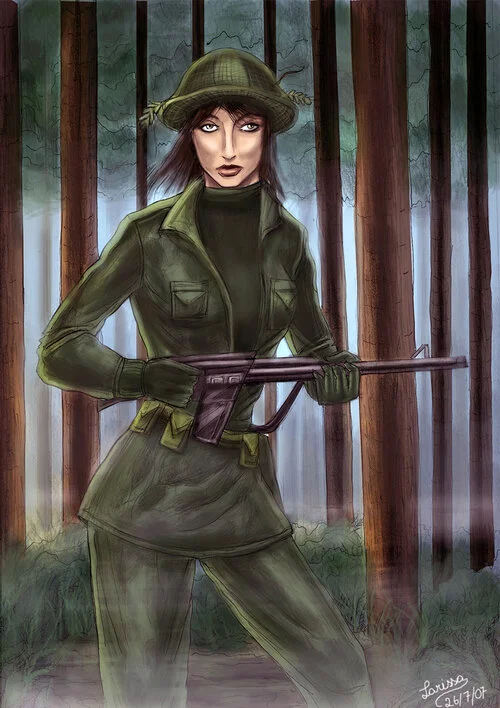
zxx.jpg

ILLUSTRATION CREDIT: Laratff

Bush wrote Army Dreamers in the studio, and that is a rarity! To that point, she was very much someone who would have written and had songs prepared before she stepped into the studio. I always feel that she would have been too caught up in recording the tracks and making sure they were as good as could be, rather than spending spare time in the studio writing. Bush would write other tracks in the studio/during an album recording – such as Rubberband Girl from The Red Shoes -, but Army Dreamers’ creation suggests a sense of urgency and breakthrough for her. The lyrics to Army Dreamers are very poetic and vivid. There are so many lines and passages to highlight for commendation, but I do love the first verse: “Our little army boy/Is coming home from B.F.P.O./I've a bunch of purple flowers/To decorate to mammy's hero”. That is such a powerful start, and one is instantly affected and involved in the song! I think it is the chorus that provides the biggest hit, and the combination of Bush’s acrobatic and nimble vocal, combined with backing vocals (in parenthesis) is exceptional: “But he didn't have the money for a guitar/(What could he do)/(Should have been a politician)/But he never had a proper education/(What could he do)/(Should have been a father)/But he never even made it to his twenties/What a waste/Army dreamers/Ooh, what a waste of/Army dreamers”.

The video for Army Dreamers is a reason why I wanted to highlight this song and extoll its virtues. In a Profiles in Rock interview from 1980, Bush explained how Army Dreamers’ video was her most realised and favourite to that point – from 5:55 onwards –, and it is easy to see why she is so proud of it! Almost forty years after the song was released as a single, I still feel it holds such power. One does not need to be a parent or a solider to relate to the words and the scenes Bush describes. It is such a stirring and impactful song, and I think many people have overlooked Never for Ever; Army Dreamers is not played as often as it should be and, whilst Hounds of Love is a phenomenal album that deserves all the praise it gets, I feel there are a lot of tremendous songs on Never for Ever that are not often explored. Army Dreamers is one of the best tracks of Kate Bush’s career and I think, together with Breathing, it marked a turning point regarding her lyrics and stepping into weightier territory. If proof were ever needed, Army Dreamers is clear evidence that Kate Bush is undoubtedly such…

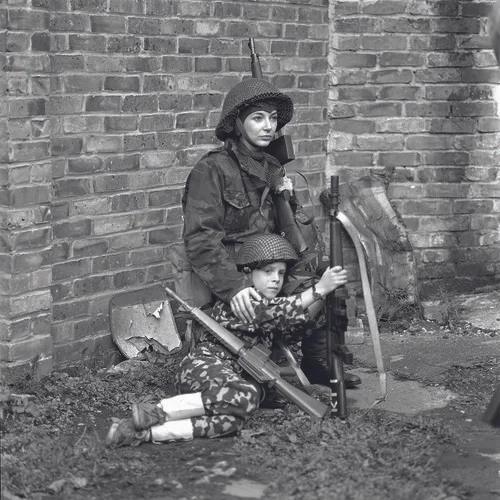
zzzz.jpg

IN THIS PHOTO: An outtake from the Army Dreamers video shoot/PHOTO CREDIT: John Carder Bush (published in Kate: Inside the Rainbow)

A rare and brilliant songwriter.

FEATURE: The August Playlist: Vol. 5: Woman

FEATURE:

The August Playlist

q.png

IN THIS PHOTO: Nao

Vol. 5: Woman

__________

I have not punned the title…

IN THIS PHOTO: Kelly Lee Owens

of this feature because I think that word, ‘woman’, sort of says a lot really, as most of the artists featured in this Playlist are women. Alongside brilliant women like Nao (ft. Lianne La Havas), Kelly Lee Owens, Katy Perry, Laura Veirs, Dream Nails, Toni Braxton, and Angel Olsen, there is awesome music from The Smashing Pumpkins, Doves; a great track from Disclosure, Kehlani and Syd, and some awesome cuts from Travis (ft. Susanna Hoffs), Toots & the Maytals, and Hockeysmith. If you need some great music to get you through the weekend, I recommend that you stay put and investigate the selection of great cuts below! It is another strong week for music and, judging by the quality of the music int he mix, it is guaranteed to life your mood and…

IN THIS PHOTO: Doves/PHOTO CREDIT: Jon Shard

BRIGHTEN your day.

ALL PHOTOS/IMAGES (unless credited otherwise): Artists

__________

Nao (ft. Lianne La Havas) - Woman

Doves - Cathedrals of the Mind

The Smashing Pumpkins - The Colour of Love

Laura Veirs - Turquoise Walls

xxx.jpg

Travis (ft. Susanna Hoffs) - The Only Thing

Dream Nails This Is the Summer

Angel Olsen (Summer Song)

Disclosure, Kehlani, Syd Birthday

Dua Lipa & The Blessed Madonna - Club Future Nostalgia

Katy Perry - Cry About It Later (The Smile Video Series)

Kelly Lee Owens - Night

Toni Braxton - Spell My Name

Lil Tecca Royal Rumble

Toots & The Maytals Freedom Train

Neil Young - The Times They Are A-Changin’

PHOTO CREDIT: Natalie Piserchio

Sad13 Hysterical

apapap.jpg

Seth MacFarlane Let’s Not Be Sensible

PHOTO CREDIT: Victoria Porter

Gregory Porter Everything You Touch Is Gold

vv.jpg

Fenne Lily Solipsism

qqqq.jpg

Julia Holter Gold Dust Woman

Hockeysmith - Hyper Kobra

PHOTO CREDIT: NPR/Mhari Shaw

Jordan Rakei Wind Parade

The Shires Crazy Days

Ward Thomas Meant to Be Me

Celeste - Little Runaway

Noga Erez - YOU SO DONE

Black Pumas I’m Ready

Half Gringa Afraid of Horses

Sasha Sloan House with No Mirrors

zzzz.jpg

Mae Muller so annoying

ass.jpg

girl in red rue

Ms Banks NOVIKOV

Baby Queen Medicine

The Wytches - Meat Chuck

Widowspeak Plum

Molly TuttleSunflower, Vol. 6

Laura Fell - Bone of Contention

Mysie - Bones

Bettye LaVette Drinking Again

Zhala Holes

FEATURE: A Buyer’s Guide: Part Seventeen: Beck

FEATURE:

A Buyer’s Guide

Part Seventeen: Beck

___________

I will step away from the more obvious…

PHOTO CREDIT: Autumn De Wilde

and mainstream in future editions but, as I am a big fan of Beck, I thought it was time to include him in A Buyer’s Guide. Beck’s fourteenth studio album, Hyperspace, was released last year, and it was another terrific album from the maestro! It seems like there is no predicting or slowing him, and one wonders where his music will take him next. Having just turned fifty, there is plenty more music in him! I have recommended the essential Beck albums you will want to own; an underrated record that I feel deserves more love, in addition to his recent album – and a book that is worth checking out that will give you more information about him. Whether you are new to him or a big fan, I hope the guide below offers some insight into…

THE sensational Beck.

______________

The Four Essential Albums

Mellow Gold

ssss.jpeg

Release Date: 1st March, 1994

Label: DGC

Producers: Beck Hansen/Tom Rothrock/Rob Schnapf/Carl Stephenson

Standout Tracks: Pay No Mind (Snoozer)/Fuckin with My Head (Mountain Dew Rock)/Beercan

Buy: https://www.discogs.com/Beck-Mellow-Gold/master/44787

Stream: https://open.spotify.com/album/0iIGP4Sxw3KR4OCFv2yvz8

Review:

From its kaleidoscopic array of junk-culture musical styles to its assured, surrealistic wordplay, Beck's debut album, Mellow Gold, is a stunner. Throughout the record, Beck plays as if there are no divisions between musical genres, freely blending rock, rap, folk, psychedelia, and country. Although his inspired sense of humor occasionally plays like he's a smirking, irony-addled hipster, his music is never kitschy, and his wordplay is constantly inspired. Since Mellow Gold was pieced together from home-recorded tapes, it lacks a coherent production, functioning more as a stylistic sampler: there are the stoner raps of "Loser" and "Beercan," the urban folk of "Pay No Mind (Snoozer)," the mock-industrial onslaught of "Mutherfuker," the garagey "Fuckin' With My Head (Mountain Dew Rock)," the trancy acoustic "Blackhole," and the gently sardonic folk-rock of "Nitemare Hippy Girl." It's a dizzying demonstration of musical skills, yet it's all tied together by a simple yet clever sense of songcraft and a truly original lyrical viewpoint, one that's basic yet as colorful as free verse. By blending boundaries so thoroughly and intoxicatingly, Mellow Gold established a new vein of alternative rock, one that was fueled by ideas instead of attitude” – AllMusic

Choice Cut: Loser

Odelay

Release Date: 18th June, 1996

Label: DGC

Producers: Beck Hansen/The Dust Brothers/Mario Caldato, Jr/Brian Paulson/Tom Rothrock/Rob Schnapf

Standout Tracks: Devil’s Haircut/The New Pollution/Jack-Ass

Buy: https://www.discogs.com/Beck-Odelay/master/44998

Stream: https://open.spotify.com/album/1Pus5h1qGedCn4CtOuPVtp

Review:

Easily one of this generation's three most talented and innovative artists, Beck's major-label follow-up, Odelay is no loser for damn sure.

Eleven out of these thirteen new songs blew me straight away (which is really saying a lot considering what a jaded rock critic I've become - haw haw), though every single track on the disc is fantastic.

Opening with the spooky cartoon sounds of "Devil's Haircut," the record grabs you by the crotch immediately and, with the second track, "Hotwax," accidentally gets you down.

Beck samples from every possible wacky source imaginable (and unimaginable), which just makes the ride crazier. There are sounds from all sorts of old records, including one from Dick Hyman's classic Moog record and, on "High 5 (Rock The Catskills)," an obscure early 80s bit where listeners are commanded to scream out the names of their favorite designer jeans. ("Everybody in the house say 'Jordache!'")

Odelay is the third best record of 1996 so far (Walt Mink's El Producto, and 12 Rods' Gay? follow, respectively, if you had to know), and as you all know, there can only be one of those” – Pitchfork

Choice Cut: Where It’s At

Midnite Vultures

Release Date: 23rd November, 1999

Label: DGC         

Producers: Beck Hansen/The Dust Brothers/Tony Hoffer/Mickey Petralia

Standout Tracks: Sexx Laws/Mixed Bizness/Hollywood Freaks

Buy: https://www.discogs.com/Beck-Midnite-Vultures/master/45208

Stream: https://open.spotify.com/album/5Mk8LGoWoPg0igqQXprzfR

Review:

By now, the little big man has located an unnerving falsetto, used to devastating effect on the full-on robotic P-funk 'Peaches & Cream', which cops the keyboard strafe from 'Crazy Horses' and wherein Beck possibly pre-empts the sceptics who by this point will be despairing at the extent of his unfettered magpie tendencies: "Give those pious soldiers another lollipop/'Cos we're on the good ship manage et tois" (sic).

Suck on this, in other words. Thereafter, he meanders through altogether more expected, if not completely familiar, Hansen vistas - beat-box metal, bombastic blues, and the candlelit beach-baby folk of 'Beautiful Way', the sole nod to the beatific crooner from last year's 'Mutations' - but there's never a dip in the horny pulsebeat.

'Midnite Vultures' is bound to entrench opinions on both sides of the Beck divide. The doubters will recoil from its myriad layers of self-knowledge and the fact that the author's tongue is almost permanently lodged in one cheek or another. But just because this isn't a conventional dose of 'reality' doesn't mean Beck can't be sincere, and the force of character laid bare here is quite an awesome thing to behold. Narrower in scope than 'Odelay' but more immediate in impact, it's clearly been conceived as an accompaniment to our hedonistic habit of choice, the last great party album of the millennium. And like a certain song says, parties weren't meant to last” – NME

Choice Cut: Debra

Morning Phase

Release Date: 21st February, 2014

Labels: Capitol/Fonograf

Producer: Beck

Standout Tracks: Morning/Blue Moon/Wave

Buy: https://www.discogs.com/Beck-Morning-Phase/master/657658

Stream: https://open.spotify.com/album/2Qx7dgA5VjX8JDQaXVxzHu

Review:

What does all this studio perfectionism add up to? A sun-kissed stroll through gentle waves of melody, serenity for those seeking some winter light, and sleep aids for those who think West Coast rock went off the rails between the formation of CSN and the first rumblings of X. (Those sympathetic to the latter philosophy may not find much to snicker about when Beck notes, “I need to find someone to show me how to play it slow,” quite possibly the only joke on an album claiming few grins.) But jokes aren’t the point, and neither is BPM. No matter how enthusiastically some claim Beck as a zeitgeist-embracing pop chameleon of the Jean-Luc Godard variety, he’s far more a craftsman of the Louis Malle school: sophisticated, assured, self-aware, and incessantly torn between competing genres.

For all his voracious appetites and pomo tendencies, he has steadfastly embraced the path of the old-fashioned artist, conceiving his statements as distinct self-contained entities, with side projects scuttled off to the margins and consistency of mood a necessity. Whether he had an epiphany beneath that stormtrooper mask long ago or simply prefers a tidier oeuvre for his eventual biographers, he remains conceptual to the core. If UV-induced bliss strikes you as a worthy enough concept for immersion (and why shouldn’t it), well, submit to the reverb” – SPIN

Choice Cut: Heart Is a Drum

The Underrated Gem

Guero

Release Date: 29th March, 2005

Label: Interscope

Producers: Beck Hansen/Dust Brothers/Tony Hoffer

Standout Tracks: Girl/Black Tambourine/Go It Alone

Buy: https://www.discogs.com/Beck-Guero/master/45392

Stream: https://open.spotify.com/album/2EugWXUZjr78KJFqZavvZT

Review:

That the patient is re-visiting past combinations of his constituent personalities is not in itself a cause for worry; after all, it is what most of his support system has been suggesting for many years. But one wonders whether Mr. Hansen's heart is in the proceedings, as many of the songs appear to be little more than weak echoes of their similar predecessors. Furthermore, stray remnants of individual personality types, particularly the most recently-seen "mope" character, pop up on "Missing" and "Broken Drum," in the form of slow tempos and "Blue Jay Way" strings.

Other areas give indications of new, healthy ways of rectifying the contradictions within Mr. Hansen's torrid mind. "Girl" uses an NES symphony prologue to introduce a Cali-rock pastiche, the sweetness of which overcomes its serial killer lyrics and "Hey Ya" biting. "Black Tambourine" finds the patient stripping down his usual methods, concentrating on foreboding rhythms and gimmick economy, while "Earthquake Weather" is similarly sparse, and sees Mr. Hansen using his falsetto for a purpose other than adding a musical wink to his less serious efforts” – Pitchfork

Choice Cut: Earthquake Weather

The Latest/Final Album

Hyperspace

Release Date: 22nd November, 2019

Label: Capitol

Producers: Pharrell Williams/Beck Hansen/Cole M.G.N./Greg Kurstin/Paul Epworth/David Greenbaum (add.)

Standout Tracks: Hyperlife/Uneventful Days/Dark Places

Buy: https://www.discogs.com/Beck-Hyperspace/master/1639661

Stream: https://open.spotify.com/album/4ZUryKKDhiMXcD4fluAEhl

Review:

Hyperspace is one of those Beck projects that came together quickly. At the conclusion of the supporting tour for 2017's Colors, Beck headed into the studio with Pharrell Williams with the intention of contributing to a new N.E.R.D album, but they wound up hitting it off. The collaboration ballooned from a single into an EP and, ultimately, the core of Beck's 14th album. Beck worked with a few other collaborators on the record -- Greg Kurstin, the producer of Colors, is credited on "See Through," Sky Ferreira sings on "Die Waiting," Coldplay's Chris Martin is on "Stratosphere" -- but the partnership with Williams is what defines Hyperspace, giving it its sleek retro futurism. With its layers of analog synths and drum machines, it's hard to escape the new wave trappings of Hyperspace, yet the album is devoid of nostalgia or irony. Such is Beck's sincerity, he winds up stumbling into territory pioneered by Todd Rundgren's Utopia, indulging in the shimmering electronic soft rock of "Chemical." Despite the frenetic rhythms of "Saw Lightning," "Chemical" is a better indication of Beck's intentions: he's making a sequel to Morning Phase in the guise of a synth record. It's a clever concept and the music itself is often clever, the strummed acoustic guitars getting blown out in waves of analog synth bliss. It's music for twilight contemplation, not so much a soundtrack for regret as soul-searching. To that end, Hyperspace exists on the same astral plane as Morning Phase and Sea Change, but it never feels as fussy or formal as those sad opuses. Chalk that up not to the electronic instrumentation but rather a light touch. Beck never lingers upon either his melancholy or his celestial flights of fantasy: they exist simultaneously, resulting in a tremulous and pretty soundtrack for moments of fleeting introspection” – AllMusic

Choice Cut: Saw Lightning

The Beck Book

Throwing Frisbees at the Sun: A Book About Beck

Author: Rob Jovanovic

Publication Date: 4th March, 2015

Publisher: Jawbone Press

Synopsis:

At a time in rock and pop history when almost everything has been done before, few artists have proved as restlessly innovative as Beck.

Since bursting onto the scene in 1994 with ‘Loser’, he has zigzagged his way across the contemporary music landscape, consistently remaining one step ahead of expectations and doing things his own way, shape-shifting from indie icon to pop crooner, from folk hobo to Latino-rap hipster, balancing big-budget chart highs with low-key, introspective acoustic albums.

Beck’s early shows saw him clearing the stage with a leaf-blower, and his enthusiasm for the experimental has not diminished with age. In the twenty-first century, he founded the Record Club, which brought together disparate artists to record cover versions of whole albums in a single day for release online. Then he took a troupe of doppelgänger marionettes  out on tour and made the brave decision to release Song Reader as a set of sheet music, challenging buyers to record and play their own versions of his new songs.

Drawing on new interviews with friends, family, collaborators, and bandmates—as well as conversations with Beck himself—Throwing Frisbees At The Sun is a carefully crafted, career-spanning retrospective befitting the many twists and turns of this intriguing performer’s path through life and music” – Jawbone Press

Order: https://www.amazon.co.uk/Throwing-Frisbees-Sun-Book-About/dp/1908279605

FEATURE: The Lockdown Playlist: Shania Twain at Fifty-Five: Her Finest Cuts

FEATURE:

The Lockdown Playlist

IN THIS PHOTO: Shania Twain in the 1990s

Shania Twain at Fifty-Five: Her Finest Cuts

___________

THERE are a few musical birthdays this week…

that are worth noting, but today (28th) is the fifty-fifth birthday of Shania Twain. I have always liked her music, and I thought it would be a great opportunity to pull together some of her finest cuts together in a Lockdown Playlist. I think Twain is an artist that does not get as much radio play as she should, and who can forget her 1997 album, Come on Over!? Her fifth studio album, Now, was released in 2017, and I wonder whether we will see any more albums from the Canadian songwriter. To honour her birthday, I wanted to combine songs from her five studio albums that show what a terrific artist she is. I will leave things there but, as Shaina Twain celebrates a big day, it is time to wish her…

PHOTO CREDIT: Frazer Harrison/Getty Images

A very happy birthday.

FEATURE: One for the Record Collection! Essential September Releases

FEATURE:


One for the Record Collection!

Essential September Releases

___________

SOME of these release dates might change…

as we are still in an uncertain period, but I was keen to document the best albums due next month. This year has been a great one for music, and there are some big albums out in September. Lana Del Rey is due to release an album next month but, as we do not have a title for it, I am unable to include it here. We shall have to see what comes of that however, on 4th September, Tricky releases Fall to Pieces. There are various editions of the album one can pre-order, and Fall to Pieces is going to be one of the year’s biggest releases. It is twenty-five years since Tricky released his debut, Maxinquaye, and the master has lost none of his touch. This is what we can expect from his upcoming album:

Tricky releases his 14th studio album, Fall To Pieces, on his own label False Idols.

Fall To Pieces was recorded in Tricky’s Berlin studio in late 2019. Tricky is keen to point out that the tracks on the record can be deceptive; often short, ending abruptly and moving on to the next without warning. Although instrumentation varies from bursts of tense synths, distorted dial tones, and samples, the song’s lyrics can be dark and dense. Tricky’s music has always enlisted female vocalists to carry his ideas: the majority of tracks on Fall To Pieces, including Fall Please rely on Marta Złakowska, the singer he discovered during a european tour when he was left without a vocalist on the opening night. She saved the tour from disaster. “I can tell when someone is humble and down to earth,” says Tricky. “Marta doesn't care about being famous, she just wants to sing”.

There are a few other good releases due on 4th September but, in terms of the best of the best, I am looking ahead to 11th September. One of the most-anticipated albums of this year comes from Doves. The Universal Want is out on 11th September, and it is an album that you will want to pre-order. It has been eleven years since Kingdom of Rust was released, and there has been this huge sense of relief that the Cheshire band are back and putting new music out. Prisoners has been released as a single, and it has been gathering a lot of praise – it seems like Doves are still at the top of their game. The band’s bassist, Jimi Goodwin, told NME what we can expect from The Universal Want:

As for the rest of ‘The Universal Want’, Goodwin assured fans: “I just know that we’ve made a really good Doves record that represents where we are and where we’ve been for the past 11 years.”

“It’s probably the most organically-made Doves record,” he told NME. “No one was second-guessing it. It was born out of chatting to each other over email. I was meant to be doing my next solo record and they were supposed to be doing a new Black Rivers album. We started pooling all our material and the material that we couldn’t work into shape on the last record ‘Kingdom Of Rust’”.

Changing pace entirely, and Marilyn Manson’s eleventh studio album, WE ARE CHAOS, is out on 11th September. Released through the Loma Vista Label, it is going to be an album you will want to own:

Marilyn Manson returns with his eleventh studio album We Are Chaos via Loma Vista Recordings. Co-produced by Manson and Grammy Award winner Shooter Jennings [Brandi Carlile, Tanya Tucker], the ten-track opus was written, recorded, and finished before the global pandemic.

Manson’s painting, Infinite Darkness, which can be seen on the album cover, was specifically created to accompany the music. His fine art paintings continue to be shown all over the world, including gallery and museum exhibitions from Miami to Vienna to Moscow.

Manson says of the album, “When I listen to We Are Chaos now, it seems like just yesterday or as if the world repeated itself, as it always does, making the title track and the stories seem as if we wrote them today. This was recorded to its completion without anyone hearing it until it was finished. There is most definitely a side A and side B in the traditional sense. But just like an LP, it is a flat circle and it’s up to the listener to put the last piece of the puzzle into the picture of songs”.

September is a very big and busy month for albums, so I shall crack on and say that the next album that is very worthy of some money is The Flaming Lips’ American Head. It is the sixteenth album from the American band and, in terms of consistency, they have not dropped too many steps since their debut album back in 1986!

Make sure you pre-order now, as it is going to be another huge release. I am going to quote from Rough Trade, as I have done for a couple of albums already, and provide some details:

American Legends The Flaming Lips release their 21st studio album, American Head via Bella Union. The album is comprised of thirteen new cinematic tracks, produced by longtime collaborator Dave Fridmann and The Lips. Among them, God and the Policeman featuring backing vocals from country superstar Kasey Musgraves. American Head takes on a welcome temporal shift that occupies a similar space to that of The Soft Bulletin or Yoshmi Battles the Pink Robots and just may be their most beautiful and consistent work to date”.

There are a few great albums due out on 25th September, but one album that I think is worth investment that arrives the week before is Sarah Davachi’s Cantus, Descant. I am fairly new to Davachi, but I have been listening to her music recently, and she is one of the most prolific artists out there. I think her music is incredible, and you will definitely want to investigate Cantus, Descant. This article from Pitchfork gives us some more details:

Sarah Davachi has announce a new album called Cantus, Descant. It’s out September 18 via her new label Late Music (which is set up through Warp’s partner label division). Two songs feature her vocals on a record for the first time. Below, hear the new track “Stations II.”

Davachi discussed the new album in a statement:

I spent a lot of time while working on this album thinking about impermanence and endings, which led me to change my understanding of “vanitas” and “memento mori.” These concepts arise allegorically across classical antiquity and Buddhist thought, among many other sources, but they were most obsessively expressed during the Renaissance in still lives and miniatures that contrasted the simultaneous passing and stillness of time. My interpretation is completely secular, softer, and more benign, but the awareness of a moment’s feeling remains. There’s a lot of symbolist imagery in the work titles, references to place and nature; the “Stations” series in particular is a reconfiguring of the idea of states of being. The pervading affect on the album is one that gives reverence to the suspension, the epoché, a space where we welcome and attempt to reconcile impermanence. It is an opportunity to go inside—oneself, one’s sound—in order to simultaneously commune with our comforts and that which we mourn, perhaps not unlike the function of a hymn”.

Moving things forward to 25th September, and there are some cracking albums that I want to put out there. Deftones’ Ohms is another huge release this year. The legendary band released the title track from their album recently, and it got so much love and props. Even if you are not a big fan of Deftones, I would urge people to pre-order Ohms, as it is going to be one you will not want to miss!

If you want some more details and want to know what to expect, then I am bringing in some valuable information from Rough Trade:

Grammy Award-winning, internationally lauded band Deftones release their feverishly anticipated album Ohms, via Warner Records. Recorded at Henson Studios and Trainwreck Studios, Ohms is an other-worldly body of work meticulously crafted by the 5 piece band. It is a magnificent tour de force and their first album in 4 years since the critically acclaimed Gore LP in 2016. The band, which includes Chino Moreno, Frank Delgado, Stephen Carpenter, Abe Cunningham, and Sergio Vega, has produced a dense LP with every member firing on all cylinders. The album also boasts a familiar collaborator in veteran producer and engineer Terry Date, who worked on 1995’s Adrenaline, 1997’s Around the Fur and 2000’s White Pony. All of the above assembles and sets the stage to deliver Ohms; 10 tracks of raw escapism and unparalleled grooves that have made Deftones' sound singular for over two decades”.

The chart battle is going to be a big one on the week beginning 25th September as, alongside Deftones, another big-hitting band release an album: IDLES’ Ultra Mono is their third, and it is already shaping up to be one of the best releases of 2020! The Bristol band have already shared a few tracks from Ultra Mono, including the simply superb Model Village. Go and check out the various album bundles, and I guarantee you will want to get yourself the record when it comes out on 25th September.

In an NME interview, frontman Joe Talbot talked more about Ultra Mono:

 “Speaking to Apple Music, Talbot discussed the new album, how he’s been coping in quarantine and how Idles’ lack of success in their first decade as a band has changed them.

“The beautiful thing about us being ignored for 10 years is that there was no one telling us what we couldn’t do, we just had to learn it ourselves,” Talbot began. “And that meant that now I think ‘Ultra Mono’ is vigorously Idles. It’s fluent in Idles language because we’ve just been able to take baby steps every moment, make mistakes, and no one’s fucking at our gigs so we can make mistakes and come back stronger.

“Rather than like, ‘Ah that was a shit gig, no one’s going to come and watch us again because everyone in London that mattered came to that one that we were terrible at.’ Do you know what I mean?

“We just built it slowly over time,” he added. “It made us really appreciate selling 40 tickets. It made us really appreciate being able to write five decent songs in a row, because we took that time and we were given the breadth to make mistakes, and now we’re here.

“I think experience is fucking amazing but you also have to hold yourself accountable and work your ass off. It’s not an industry that carries people. They chew you up and they spit you out!”.

Not to be outdone, the always-brilliant Róisín Murphy releases her Róisín Machine album on 25th September. Following from 2016’s Take Her Up to Monto, Murphy’s fifth solo studio album is going to be a real gem! I have always loved Murphy’s work, and I think Róisín Machine is going to be one of her best albums to date. Running in at ten tracks, the songs are longer than a lot of her previous work, and the tracks she has released so far from the album are so immersive and stunning! This article from Pitchfork gives some more details:

Róisín Murphy has announced a new album, Róisín Machine. The disco album, made in partnership with longtime collaborator DJ Parrot, is out September 25, via Skint/BMG. It features previously released singles including “Simulation” and “Murphy’s Law,” as well as new Amy Douglas–penned track “Something More”—listen to the extended mix of that below.

Of the single, Murphy said, “We’re in darker ages now and this feels like morning, the sun’s coming up and it’s the last record of a very, very, good night. We need space for ‘mood’ and the ‘uncanny’ right now.” She added, “Everything I do is from the gut. I’m always up to something, I’ve been directing videos and art-directing for years. The album is called Róisín Machine because I am a machine. I never stop.” (For those unfamiliar with Irish pronunciation: The title rhymes.)”.

Go and pre-order your copy of Róisín Machine, as it is an album that will give you plenty of energy and motivation at this challenging time!

There are three more albums that I want to suggest before wrapping things up. Sufjan Stevens puts out The Ascension on 25th September, and this is another great album that you will want to pre-order. It is the upcoming eighth studio album from the American singer, songwriter, and multi-instrumentalist. If you are new to Sufjan Stevens, then here are some more details about The Ascension:

The Ascension is the eighth studio album from singer, songwriter and composer Sufjan Stevens and is the long awaited follow-up to Stevens' Carrie abd Lowell. In the time between Carrie and Lowell and The Ascension, Stevens also released Oscar-nominated music for the Luca Guadagnino film Call Me By Your Name; a collaborative album entitled Planetarium with Nico Muhly, Bryce Dessner (The National) and James Mcalister; The Decalogue, a solo piano work performed by Timo Andres; and scored several works for ballet: Reflections (Houston Ballet) and Principia (NYCB). The Ascension is musically expansive and sweeping in thematic scope”.

One more album that is worthy of some focus on 25th September is Sylvan Esso’s Free Love. The Electronic Pop duo prepare to put out their third album, and I have been a fan of theirs for a while now. You can go to Sylvan Esso’s website to pre-order Free Love, and I would definitely recommend people do that.

This article gives us a little bit more guidance regarding their upcoming album:

Free Love will be released on September 25 through Loma Vista and is a follow-up to 2017’s What Now. In a statement, Sylvan Esso explained the inspiration behind the forthcoming LP.

“It’s a record about being increasingly terrified of the world around you and looking inward to remember all the times when loving other people seemed so easy, so that you can find your way back to that place,” the band said.

“At the heart of Sylvan Esso is this really fun argument,” Amelia Meath added. “Nick wants things to sound unsettling, but I want you to take your shirt off and dance. We’re trying to make pop songs that aren’t on the radio, because they’re too weird. It’s a pop band, but we’re talking about complicated emotions”.

The last album I would point people towards is Will Butler’s Generations. Butler is part of the Canadian band, Arcade Fire, and Generations promises to be another massive release for 2020. You can pre-order the album - and I am definitely going to check out Generations when it arrives. I am going to source from Rough Trade once more, as they have provided a lot of good insight regarding Generations:

In the five years since Will Butler released his debut album, Policy, he’s toured the world both solo and as a member of Arcade Fire, released the Friday Night live album, recorded and released Arcade Fire’s international #1 album Everything Now, earned his master’s degree in public policy from Harvard, hosted a series of touring town halls on local issues (police contracts, prison reform, municipal paid sick leave, voting rights), and spent time raising his three children.

He also found the time and inspiration to write and record a new album, Generations. “My first record, Policy, was a book of short stories,” Butler says. “Generations is more of a novel despairing, funny, a little bit epic… A big chunk of this record is asking: What’s my place in American history? What’s my place in America’s present? Both in general as a participant, as we all are, in the shit that’s going down but, also extremely particularly: me as Will Butler, rich person, white person, Mormon, Yankee, parent, musician of some sort, I guess. What do I do? What can I do? The record asks that question over and over, even if it’s not much for answers.”

While the songs on Generations contain their fair share of dread and regret, there is ultimately a lightness that shines through Butler’s music. That brightness is at its most intense when he and his solo band Miles Francis, Sara Dobbs, and Julie and Jenny Shore perform on stage. Their electricity is palpable throughout Generations, with the bulk of the new songs having been worked out live. Wild synth production gnarly bass synths with live drums and anthemic backing vocals as on first single Surrender are punctuated by intimate, direct moments: Butler’s voice cracking on Fine as he conjures his ancestors, and Promised, a meditation on friendship, how lives are built together, and how and why they drift apart.

Generations was recorded and produced by Butler in the basement of his home in Brooklyn. Tracking finished in March 2020, as New York closed down for the pandemic. Half the record was mixed in Montreal by longtime Arcade Fire engineer Mark Lawson, the other half by Brooklyn-based producer Shiftee (who is, incidentally, bandmate Julie Shore’s husband and Will’s brother-in-law). Generations opens a dialogue with the world. It posits answers and deals with those answers being refuted. Ultimately, it navigates the conversation as a way to find the truth… or at least a way forward”.

There are a lot of great albums due out next month and, whilst one cannot buy them all, I have suggested some above that I think are definitely worth some money. I will leave things here, but it is clear that artists are not slowing down when it comes to quality in 2020 – in spite of the fact that it has been a very difficult and strange year! September looks set to be a really good one for albums, so get involved and make sure you pre-order the fabulous albums that are coming our way. If anything, getting hold of so much brilliant music will lift the mood, motivate us and also provide…

IN THIS IMAGE: The cover for IDLES’ upcoming third album, Ultra Mono

SOME great distraction.

FEATURE: Never Be Mine: Will Kate Bush Be Inducted into the Rock & Roll Hall of Fame in 2021?

FEATURE:


Never Be Mine

IN THIS PHOTO: Kate Bush in an outtake for This Woman’s Work in 1985/PHOTO CREDIT: Guido Harari

Will Kate Bush Be Inducted into the Rock & Roll Hall of Fame in 2021?

___________

EVERY award ceremony in the music world…

IMAGE CREDIT: Rock & Roll Hall of Fame

has been affected this year, and most of them are going to be happening online. This year’s Rock & Roll Hall of Fame induction will not take place in the usual manner. The Class of 2020 is very different, and this is what will happen:

Congratulations to the newest Inductees into the Rock & Roll Hall of Fame. In the Performer Category:

Depeche Mode

The Doobie Brothers

Whitney Houston

Nine Inch Nails

The Notorious B.I.G.

T. Rex

Ahmet Ertegun Award:

Jon Landau

Irving Azoff

Rock & Roll Hall of Fame Induction Ceremony 2020

Due to the ongoing COVID-19 pandemic, the Rock & Roll Hall of Fame will replace the live 35th annual Induction Ceremony with an exclusive special honoring the class of 2020 Inductees. The program will air on HBO and HBO Max Saturday, November 7, 2020 at 8 p.m. EST.

Ticketmaster purchasers will automatically be issued a refund to their account.

The 2021 Rock & Roll Hall of Fame Induction Ceremony will move to the fall with the 36th Induction Ceremony returning to Cleveland”.

Some people write off the Rock & Roll Hall of Fame as a remnant of the past or something, since its inception, that has lost its way. It is not only Rock artists who are inducted. From Hip-Hop and Rap through to Folk and many other genres, the Rock & Roll Hall of Fame has diversified and cast its net wide. I think one reason it is better now than before is because more women are being inducted.

To be fair, there are still too few being inducted, and there are plenty of worthy candidates! This article suggests some worthy women who should be inducted and, to me, one of the most glaring omissions is Kate Bush. I am not sure how much stock she puts into the Hall of Fame and, since her career began, she has won a fair share of awards. She was actually nominated for the Rock & Roll Hall of Fame in 2018 but, that year, the likes of Nina Simone and Bon Jovi were inducted. Each year has a mix of the worthy and baffling being inducted, and I do think that Bush is a worthy inclusion. Some say that she is not that ‘Rock’ and that she is more Art Pop/Pop. I would disagree and draw people to her back catalogue, which includes tracks like Get Out of My House, James and the Cold Gun, Don’t Push Your Foot on the Heartbreak and many others. Bush has woven together genres and she is one of the most influential artists ever. Considering there are no genre boundaries regarding those who are inducted into the Hall of Fame, I would argue that Bush is more worthy than many who have been inducted in the past few years! It raises questions as to whether women are being overlooked, and if, like so many award shows and corners of music, there is an issue with gender inequality and sexism. I would say so, but one might also argue that Bush never made the impact in America as other artists and, for that reason, she is lesser-known. Fans have made a point that Kate Bush has inspired artists like Madonna (who was inducted in 2008), and she has influenced a generation of artists.

IN THIS PHOTO: Madonna performs on stage at the Feyenoord stadium on 24th July, 1990 during her Blond Ambition Tour (the head mic she is wearing was first seen/used when Kate Bush performed at her Tour of Life concerts in 1979)/PHOTO CREDIT: Michel Linssen/Redferns

I want to bring in a couple of articles that argue the case for Kate Bush. This is what SPIN said in a feature from last year:

Kate Bush was nominated for the first time two years ago, after more than a decade of eligibility. And British acts who were bigger at home than in the U.S. tend to have a hard time getting into the America-based Hall of Fame. (All of her albums charted in the top 10 in the UK; she never charted higher than No. 28 on the Billboard 200.) But Bush’s arty, ethereal, and idiosyncratic approach to singing and songwriting has been deeply influential to a couple generations of alternative artists on both sides of the pond, and there seems to be a new hit cover of “Running Up That Hill” every year.

Suggested induction speaker: Lady Gaga, whose chameleonic and unconventional stagecraft has an antecedent in Bush’s theatrical early performances”.

The fact that Björk and Carole King have been overlooked is scandalous! Billboard commented on the nominations for this year’s Hall of Fame, and they remarked on the lack of women included and why Kate Bush should be included in the conversation:

The lack of gender balance was conspicuous enough that upon being inducted in 2016, Steve Miller (one of the five all-male acts being honored) openly called out the museum's governing body for the disparity, pointedly encouraging them to "keep expanding your vision, to be more inclusive of women.” The 2018 and 2019 classes showed improvement, with Janet Jackson, Nina Simone and Sister Rosetta Tharpe all finally being welcomed in (the latter as an early influence), and StevIe Nicks becoming the first woman to make the Hall twice (first with Fleetwood Mac and then as a solo artist). But this year, Whitney Houston stands as the sole female representative among the Rock Hall's six inductees.

Kate Bush. Like Björk, Kate Bush is an inspirational art-pop maestro for whom the Rock and Roll Hall of Fame feels almost too small to contain, but who nonetheless would almost certainly have been inducted by now if we shipped the Rock Hall across the pond. Her U.S. presence never quite approached her chart-topping impact oversees – “Running Up That Hill” remains her only top 40 hit on the Billboard Hot 100 – but her stateside influence was still considerable; even the late 2Pac, a 2017 inductee, was an avowed listener”.

I think next year’s Hall of Fame really needs to include more women, and I hope that it will be Kate Bush’s year! I don’t stand by this feeling that Kate Bush has been omitted because she is not that known in America. For a start, music is universal, and criteria for entry into the Rock & Roll Hall of Fame is broad – one does not need to be American or have sold a certain number of albums in America. It is not the Mercury Prize we are talking about: artists from Britain have been inducted before, and we live in an age where one can access pretty much everything that has been recorded. Kate Bush is very well known in America and, though she did not tour in the country or receive that much attention until Hounds of Love in 1985, millions of Americans know and love her music. She is admired by Big Boi; artists such as St. Vincent and Tori Amos count her as an influence, and there are countless artists in the U.S. who take a guide from Bush and her majesty.

IN THIS PHOTO: Big Boi is among Kate Bush’s whordes of American fans

Maybe, in the 1970s and 1980s, Bush’s music sounded a little weird and inaccessible to an American audience. One cannot say that Bush’s refusal to tour was the reason why she never made it big in the country. U.S. domination was not important to her, but I think the ensuing years have seen Bush gain a lot more traction and enthusiasm in America. Maybe contemporary chart success eluded her, and her lack of physical presence in the country was notable. This NPR article from 2011 lays out some facts, and talks about Bush’s influence:

What's interesting to me now is not that Bush never had a Top 10 U.S. hit (she did make it into the Top 40 in 1985, with "Running Up That Hill"), but that her influence so strongly pervades today's indie pop. I remember being slightly startled when the Decemberists attempted Bush's "Wuthering Heights" at a Seattle show in 2005 — the kids are doing their homework, I thought!

Since then Bush 101 has proven a popular course. Tori Amos may be the artist still most frequently compared to Bush, and Maxwell gave her the biggest crossover hit a decade ago, with his version of "This Woman's Work." But in 2011, the daughters and sons of Kate are everywhere: Joanna Newsom, Allison Goldfrapp, Julianna Barwick, Lykke Li, Feist, Patrick Wolf, Florence Welch, Ariel Pink, and even Justin Vernon of Bon Iver — what would their voices be, cleaned of her traces?

IN THIS PHOTO: Tori Amos has frequently been compared with Kate Bush

It's old wisdom to say there are two ways to be big In popular music: sell a lot of records (or, now, downloads), or deeply touch the lives of the next generation of outliers. We lovers of Kate Bush can rest assured that she’s done that, more than most of her arty 1980s peers. I may still never get to see her in concert. But I feel her everywhere”.

I have seen others argue that Bush has been ignored by the Rock & Roll Hall of Fame because Art Pop/Rock is not a big commodity in the U.S. Talking Heads were inducted into the Hall of Fame in 2002, and I would say they are even more ‘out there’ than Bush! There is no doubt that Bush perfectly marries the accessible with the unique, and her eclectic nature is a massive reason why she remains so enduring and loved. I would sweep aside any arguments and flawed rationalisations why Bush has not been included in the Rock & Roll Hall of Fame. American notoriety and sales is a lazy argument (just look at her worldwide appeal and popularity); her music is too weird and intangible (look at scores of other inclusions who are just as different as Bush); she is too reclusive (why would a lack of touring and physical present in America even be a factor?!). The deciding factors regarding who is inducted into the Rock & Roll Hall of Fame should boil down to two considerations: how influential and popular the artist is, and how strong their music is. On both fronts, Bush cannot be ignored!

She has influenced artists around the globe, and I know full well that her music is played all across America. Scores of well-known musicians and figures continue to extoll the multiple virtues of Bush, and her music has been featured in film and T.V. shows – in fact, Andy Samberg wrote to Kate Bush in order to get the permission to use Cloudbusting for his film, Palm Springs. Maybe America was not sure what to make of Bush decades ago, but the advent of social media and streaming platforms has brought her music to millions of new ears, and I think her status in the country has changed. I want to bring in an article I have quoted from a few times in various pieces. In 2018, Margaret Talbot wrote a feature for The New Yorker, where she discussed Bush’s impact on her and why she stands out as a pioneer:

Female pop geniuses who exercise their gifts in rampant, restless fashion over decades, writing, performing, and producing their own work, are as rare as black opals. Shape-shifting brilliance and an airy indifference to what’s expected of you are not the music industry’s favorite assets in any performer, but they are probably easier to accept in a man than in a woman. And such a musician, even today, is subject to the same pressures that have always hindered women’s artistic expression.

x.jpg

IN THIS PHOTO: Kate Bush in 1993 during filming of The Line, The Cross and the Curve/PHOTO CREDIT: Guido Harari

Like the thwarted writers whom Virginia Woolf described in “A Room of One’s Own,” the female pop original is “strained and her vitality lowered by the need of opposing this, of disproving that”—by the refusal to please and accommodate that only a deep belief in one’s own gift can counteract. “What genius, what integrity it must have required in the face of all that criticism, in the midst of that purely patriarchal society,” Woolf writes, “to hold fast to the thing as they saw it without shrinking.”

Kate Bush, the English singer-songwriter, is one of those who have held fast without shrinking, so it is curious and instructive to see how certain cultural signifiers have been trotted out over the years to diminish her. Certainly, she’s had her share of respect and even adoration. Prince, Peter Gabriel, and Elton John collaborated on songs with her, and she has inspired younger talents; Tori Amos, Björk, Joanna Newsom, St. Vincent, Perfume Genius, and Mitski are all heirs. Every year, around the world, people get together by the hundreds to dance in public to Bush’s “Wuthering Heights”—a goofy but heartfelt tribute to her interpretive dance moves in the song’s glorious freak flag of a video. She’s got credit for her pioneering use of the Fairlight synthesizer, in the eighties, and the headset microphone onstage, for producing her own albums, and for evolving an ahead-of-its-time sound that combined heavy bass with the ethereal high notes, swoops, and screeches of her own remarkable voice. She is a dark-haired, dark-eyed beauty, and critics have always noticed that.

Not long ago, I was reading another Virginia Woolf essay, about the Brontës, when I came across some lines about Emily that made me think of Bush. It wasn’t only because Bush summoned Emily’s shade in “Wuthering Heights” or, this year, wrote a short poem for her that will be inscribed in stone at the Brontë Parsonage Museum, on the Yorkshire moors. It was because Bush’s identification with Emily Brontë seemed like a key to her own music. Emily, as Bush once described her, was “this young girl in an era when the female role was so inferior and she was coming out with this passionate, heavy stuff.” Bush, like Emily Brontë, rendered femininity as passionate and heavy but also incandescent, allied to the natural world, an irresistible force. “Hers then is the rarest of all powers,” Woolf wrote. “She could free life from its dependence on facts, with a few touches indicate the spirit of a face so that it needs no body; by speaking of the moor make the wind blow and the thunder roar”.

There are compelling articles that outline why Bush’s snub by the Rock & Roll Hall is glaring and, whilst this honour is not the most important thing, I think she is one of the most deserving artists in terms of what she has achieved and the artists she has affected! It has been forty-two years since Bush made her debut, and nearly thirty-five years since the groundbreaking Hounds of Love was released. She was close to being inducted in the Rock & Roll Hall of Fame in 2018 but, next year, I really feel there are no excuses…

IN THIS PHOTO: Kate Bush in a promotional photo for 2011’s Director’s Cut/PHOTO CREDIT: John Carder Bush

TO ignore Kate Bush once more.

FEATURE: Spotlight: Ailbhe Reddy

FEATURE:


Spotlight

PHOTO CREDIT: Ciaran O'Brien

Ailbhe Reddy

___________

NOT that I will make this all about nationality…

but there are so many great acts coming from E.I.R.E. Ailbhe Reddy is one such artist, and contemporaries such as Pillow Queens, The Murder Capital, and Fontaines D.C. are producing some of the best music of the moment. Dublin, especially, is a hotbed for music talent, and I hope that the media spends more time investigating the city – as opposed to concentrating on the U.K. I have been conscious of Reddy’s music for a few years now, and I have watched her rise and grow; hearing these great songs come out and seeing her fan numbers rise. Personal History is her debut album, and one can preorder it now. Due for release on 2nd October, it is going to be one of those albums that we will look back on years from now; an artist who will be established and playing big festivals before long! I love the cover for Personal History, and everything about Reddy’s music captures the eye and heart. I will move on soon, but this article from Consequence of Sound reveals more about the album release and a brilliant new single, Between Your Teeth:

Dublin songwriter Ailbhe Reddy has announced her debut album Personal History. To herald that October 2nd release, she has shared the new single “Between Your Teeth”.

Reddy first burst onto the scene in 2016 with her propulsive, folk-inflected EP Hollowed Out Sea. She has a rich alto voice, equally adept at conversational lyrics and soaring, aching hooks. Personal History was produced by Erland Cooper and Tommy McLaughlin, and recorded at Attica Audio Studios in Donegal, Ireland. So far, both of the singles — “Time Differences”, and now “Between Your Teeth” — are concerned with different kinds of emotional distance. Her latest offering finds her probing at a recalcitrant partner, wanting “Just to hear you speak/ The words between your teeth.”

As she explained in a statement, “Between Your Teeth” is about the feelings that aren’t expressed. She said,

“It’s about the frustration of being unable to communicate in a relationship. Both people hold things back because they either don’t want, or don’t know, how to express themselves. While traveling alone, I always spent a lot of time thinking too much about past conversations and wondering what words were being held back between another person’s teeth”.

BBC Radio 6 Music have been playing Reddy’s track, Time Difference, a lot, and that is a big achievement. Not that I solely rely on the station when it comes to my musical discoveries, but I know how chuffed Reddy is to be included in their playlist. It is a fantastic song and, on 2nd October, make sure you grab a copy of Personal History! I will flip forward to now with regards interviews, but I want to bring in an interview from Other Voices from 2017, as that is when I discovered Ailbhe Reddy - and I love to see where artists started and how they have progressed since:

Ailbhe Reddy has fast emerged as one of the most promising young songwriters in Ireland today.  Writing with an emotional honesty and attention to detail that suggests great things to come, the Dublin songstress won the popular vote and was viewer's choice to appear at this year's Other Voices in the IMRO Other Room. Picked as one of Nialler9's 'Artist To Love' for 2017, Ailbhe has one EP under her belt, 'Hollowed Out Seat', which has been streamed over one million times on Spotify.

How long have you been writing songs?

I’ve been writing songs since I first started playing guitar at age 12.  Those songs were confined to my room until I finally worked up the courage to start playing gigs when I left college.

What initially inspired you to make music?

I grew up in a family that loved music, my older siblings and my mum would have always played an eclectic mix of songs in the car and around the house.  My mum would have had us listening to more traditional singer-songwriters like Leonard Cohen, Don McClean, Bob Dylan, Simon & Garfunkel etc.  My older sisters would have provided me with my taste for more contemporary music like Jeff Buckley, Nirvana, and Fiona Apple. I think that mix really put a focus on lyrics for me.  Ever since those car journeys home from school I’ve been inspired to get my thoughts and emotions across to others through music.

Do you worry about revealing too much in songs?

I used to, but people seem to really connect to the honesty so that has eased any fears I used to have. I think people hear what they want within a song, so no matter how personal it is to you, people make it personal to themselves in a different way. There is always a universal theme that people can connect to”.

I really love Ailbhe Reddy’s music, and I think she stands out in a sea of promising singer-songwriters. It has been a busy and varied year in music in spite of everything, and I can see the Reddy going very far. I did say how I was going to grab from an interview from this year but, actually, I have been thinking about my early point regarding Ireland and the music community there.

When Reddy spoke with District Magazine in 2018, she was asked about Irish music and, as has been debated for years, whether the country supports its artists enough to keep them – as opposed them leaving and setting up in London:

Would you like to weigh in on the ‘Ireland doesn’t support it’s creatives, so they’re all leaving’ argument that we hear all too often these days? Why do you think this is? Do festivals like Hard Working Class Heroes help combat it?

I think that criticism is levelled towards the lack of funding for modern music from the Department of Culture. It’s also a criticism that isn’t just from creatives, but plenty of young people in other fields too. Rent is impossible in Dublin (yet we need to be in Dublin to avail of opportunities), creative spaces are few and far between. There’s not a lot of support for young Irish people in general, and it’s even worse for creatives as they are often going down the road less travelled.

You mentioned before in an interview that the Irish music community is quite tight-knit, and I can imagine that’s definitely true for the more intimate genres of indie and folk music. Have you been finding that overseas too?

It seems to be similar in different cities, that artists within communities band together and help each other out and tour together. I suppose it’s essential as a DIY movement grows within the indie music sphere and artists move away from the traditional label structure in favour of self-releasing and promoting. It’s certainly important to be able to ask for advice and support from peers who are doing the same thing”.

I will actually wrap things up in a minute because I think, so far, we have learned a lot about Ailbhe Reddy, and her debut album is definitely going to make an impression! I do hope that she gets to play widely next year, and I will come and see her if she comes to London. It is hard to put into words exactly what makes Reddy such a wonderful talent and popular songwriter. Her lyrics are at once personal and, at other times, they seem to speak to us all. She has a gorgeous way with words, and her voice carries so many layers and emotions. I cannot wait for Personal History to come out, and I know Reddy will be taking these songs to the people in 2021. She is a sensational talent, so make sure you follow her on social media and go and investigate her music. There are, as I said, a lot of great artists out there right now who are making music of the highest order but, if you want to get behind an artist who has the ability, stamina and originality to go a very long way, then I would direct you…

TOWARDS the brilliant Ailbhe Reddy.

_____________

Follow Ailbhe Reddy

FEATURE: Vinyl Corner: Jane's Addiction - Nothing's Shocking

FEATURE:


Vinyl Corner

Jane's Addiction - Nothing's Shocking

___________

THE title of Jane’s Addiction’s debut…

seems a bit ironic! On 23rd August, 1988, they released Nothing’s Shocking, and it definitely took people by surprise! This was the very early days of Grunge, and Hip-Hop was in a golden period. Although there were bands fairly similar to Jane’s Addiction, I don’t think any matched their songwriting brilliance and Perry Farrell’s (their lead) ability. I just about remember the huge single, Jane Says, and Nothing’s Shocking was well received by critics, even if it did not chart that well in 1988. I think, in subsequent years, the album has grown in stature and is seen as a classic. I think a brilliant album is as much about the producer as it is the artist and the songs. Warner Bros. offered Jane’s Addiction the chance to work with which producer they liked and, having selected Dave Jerden (who they knew as an engineer for David Byrne and Brian Eno’s My Life in the Bush of Ghosts), they had this great producer. Jerden went through a tape of the band’s tracks and he selected nine to work up for the album. Right from the off, there was this split in the band that almost threatened to derail them. Farrell wanted a half of the band’s publishing royalties as lyricist; he also wanted a quarter of the remaining for writing the music and, whilst he was the guiding force regarding the songs, the band were rightfully horrified!

Warner Bros. called a meeting to keep the band together and, amazingly, Farrell received the cut he requested – though there was lingering tension that, to be fair, didn’t need to be there. I think Farrell would reverse his decision if he went back, but aside from this issue, the music is amazing. One does not need to be a fan or expert regarding the Rock sounds of the late-1980s to appreciate Nothing’s Shocking. The album is so accessible and instant, yet one cannot easily compare Jane’s Addiction with anyone else. The tracks are uniformly wonderful, and I think Nothing’s Shocking is one of the finest debuts of the 1980s. In their review, this is what AllMusic had to say:

 “Although Jane's Addiction's 1987 self-titled debut was an intriguing release (few alternative bands at the time had the courage to mix modern rock, prog rock, and heavy metal together), it paled in comparison to their now classic major-label release one year later, Nothing's Shocking. Produced by Dave Jerden and Jane's Addiction vocalist Perry Farrell, the album was more focused and packed more of a sonic wallop than its predecessor; the fiery performances often create an amazing sense that it could all fall apart at any second, creating a fantastic musical tension. Such tracks as "Up the Beach," "Ocean Size," and one of alt-rock's greatest anthems, "Mountain Song," contain the spaciousness created by the band's two biggest influences, Led Zeppelin and the Cure.

Elsewhere, “Ted, Just Admit It...” (about serial killer Ted Bundy) and the haunting yet gorgeous “Summertime Rolls” stretched to epic proportions, making great use of changing moods and dynamics (something most alt-rock bands of the time were oblivious to). An incredibly consistent and challenging album, other highlights included the rockers “Had a Dad” and “Pigs in Zen,” the horn-driven “Idiots Rule,” the jazz instrumental “Thank You Boys,” and the up-tempo “Standing in the Shower...Thinking.” Like most great bands, it was not a single member whose contribution was greater: Perry Farrell’s unique voice and lyrics, Dave Navarro’s guitar riffs and wailing leads, Eric Avery’s sturdy basslines, and one of rock’s greatest and most powerful drummers, Stephen Perkins. Nothing’s Shocking is a must-have for lovers of cutting-edge, influential, and timeless hard rock”.

I would urge people to buy Nothing’s Shocking on vinyl, as it is a great record and one everyone can enjoy and fall for. I will close things soon but, before then, I want to source from an article Louder Sound published in 2014:

 “Nothing’s Shocking was the most powerful rock’n’roll record since Guns N’ Roses’ Appetite For Destruction a year earlier. But what Jane’s Addiction had was a whole different trip to GN’R. There was an art-rock sensibility at the core of Nothing’s Shocking, a taste for weirdness and exotica. Their palette extended from Led Zeppelin-inspired riffing to the post-punk of Joy Division, The Cure and PiL, from goth rock to funk, dub reggae and swinging jazz.

At this time there were numerous bands exploring new forms of rock music – Pixies, Butthole Surfers, Red Hot Chili Peppers, Ministry, Sonic Youth, Dinosaur Jr., Faith No More and the bands in the nascent Seattle scene. But with Nothing’s Shocking, Jane’s Addiction would emerge as the standard-bearers in the rise of alternative rock.

As Perry Farrell said that day in 1988: “We started from the street and worked our way up. So, you get that attitude. And when it boils down to it, we don’t really care what people think. I’m doing what I like to do.” And he was ready for fame. “In the rock’n’roll field,” he said, “I pretty much have it made, because the more arrogant a person is in rock’n’roll, the more hyped they are.”

What they created on Nothing’s Shocking was rock music of startling originality and eclecticism. “I never wanted to write a song like somebody else’s song,” Farrell says. “I wanted to add something – like, let’s add salt to the caramel. You’re a scientist. You know that when you put different ingredients together, they’re combustible. So you combine rock and reggae and electronics – those are the three main ingredients I worked with on Nothing’s Shocking.”

At its core, this was a rock’n’roll record. There were echoes of Zeppelin in Mountain Song and Pigs In Zen, while Jane Says was a simple acoustic track with a 60s folk-rock feel. The reggae influence in Ted, Just Admit It… came from dub masters such as King Tubby and Lee ‘Scratch’ Perry. “Dub reggae,” Farrell says, “is beautiful, spiritual.” There was a hazy, psychedelic beauty to Summertime Rolls; a funk propulsion to Standing In The Shower… Thinking. And what Farrell said in 1988 – that his hero, unlikely as it seemed, was Frank Sinatra – was borne out in Thank You Boys, a tongue-in-cheek homage to the golden age of swing”.

Jane’s Addiction recorded their fourth studio album, The Great Escape Artist, in 2011, and I wonder whether they will continue on. There have been line-up switches through the years – as you’d imagine! -, but I don’t think this has damaged their consistency and, at the heart, we have Perry Farrell. He is, to me, one of the most original leads in Rock history. Make sure you spend some time investigating Nothing’s Shocking, as it is…

A debut masterpiece.

FEATURE: Too Good to Be Forgotten: Tracks That Are Much More Than a Guilty Pleasure: Belinda Carlisle – Heaven Is a Place on Earth

FEATURE:


Too Good to Be Forgotten: Tracks That Are Much More Than a Guilty Pleasure

Belinda Carlisle – Heaven Is a Place on Earth

___________

IN future parts…

IN THIS PHOTO: Belinda Carlisle (back, right) with The Go-Go’s/PHOTO CREDIT: Paul Natkin/Getty Images

I am going to look at songs that are seen as a bit cheesy or, to a lot of people, are really not that good at all. That might sound a bit cruel but, when people say they like a song because it’s a guilty pleasure, that does not necessarily mean the song is bad and they feel embarrassed – many times, a song has not received the acclaim it should or it is a lot stronger than many give it credit for. In the case of Belinda Carlisle’s Heaven Is a Place on Earth, this is a track that divides people. In terms of what the song achieved, one cannot list it as a failure or minor hit! Heaven Is a Place on Earth is included in Carlisle’s second studio album, Heaven on Earth (1987). Written by Rick Nowels and Ellen Shipley, the song hit number-one on the US Billboard Hot 100 on 5th December, 1987, becoming Carlisle's only U.S. chart-topper, to date. I wanted to include a Belinda Carlisle song because her band, The Go-Go’s are back together and have recently put out a single. Think about the band’s 1981 debut, Beauty and the Beat, and the incredible sound! We Got the Beat is an incredible original, whilst the band did wonders with Our Lips Are Sealed - band member Jane Wiedlin wrote the song with The Specials’/Fun Boy Three’s Terry Hall.

1982’s Vacation was a great follow-up album and, whilst not as successful as the debut, the album still made an impact. Carlisle did not write or co-write many of the band’s tracks, but I think her unique and incredible voice more than compensates. The band’s third studio album, Talk Show, was released in 1984, and the band would not record another album together until God Bless the Go-Go's of 2001 – not their best album, but there were still sparks of their previous highs. Belinda Carlisle stepped out solo, and she was always the most likely of The Go-Go’s to succeed on her own terms. Belinda was released in 1986, and that debut album is incredibly strong; Mad About You, and I Feel the Magic are among her best songs. 1987’s Heaven on Earth is a more commercial album, and I think a lot of critics were unfair on the album because they were comparing what Carlisle was doing solo with her work as a member of The Go-Go’s. Her solo work does not have the same grit and rawness of the band’s material, and it is more aimed at the Pop charts. That said, and one big reason why I love Belinda Carlisle is the fact she has a big and impassioned voice that you cannot help fall for. In fact, 1989’s Runaway Horses received less passionate reviews than Heaven on Earth, despite the fact that Leave a Light On, Visions of You, and (We Want) The Same Thing are real gems!

Heaven on Earth is an underrated and classic album of the 1980s. Working with a range of writers and producers – including Rick Nowels and Ellen Shipley, Diane Warren and her Go-Go’s bandmate, Charlotte Caffey –, I don’t think it is a case of too many people having their own say and leaving this patchy and widely uneven album. In fact, I think the album is perfectly balanced and, with Circle in the Sand, I Feel Free, I Get Weak, and Love Never Dies in your ranks, you can’t go wrong! I think a lot of people see Belinda Carlisle as a slightly guilty pleasure and, as much as I hate that term, I wanted to focus on the massive hit, Heaven Is a Place on Earth. To me, this is one of the best hits of the 1980s, and I had a real fondness for artists of the time like Belinda Carlisle and our very own Lisa Stansfield – Carlisle was born in Los Angeles. Maybe some prefer their music with more depth, experimentation and cutting edge, but I think there was a split between Pop that could deliver substance and quality and those artists who were very sugar-sweet and generic. Consider a song like Heaven Is a Place on Earth. Some people feel that it represents the worst of the 1980s in terms of the production and the lyrical content.

From Songfacts, I have discovered some useful information about Heaven Is a Place on Earth:

This effervescent song is about finding heaven on Earth in the form of true love. It was written by the San Francisco songwriter Rick Nowels (who wrote and produced Stevie Nicks' "I Can't Wait") and the New York-based Ellen Shipley. The initial idea came to Shipley at a Brooklyn gas station where she spotted a greeting card that said "Heaven On Earth." When she and Nowels started working on a song for Belinda Carlisle, Shipley wrote that phrase on the blackboard as an idea. Nowels wrote in the words "Is A" to make it "Heaven Is A Place On Earth."

This opens with the chorus, which sets up the song. Ellen Shipley explained in her Songfacts interview: "The chorus came first. When we had that title, 'Heaven Is A Place On Earth,' we went into a studio and we started jamming on chords and singing against it and in our process we got that chorus and everything was built around that.

So, it was like a story of why you think heaven is a place on earth: because love comes first. Because the lyrics:

Baby do you know what that's worth?

Heaven is a place on earth

They say in heaven love comes first

But we'll make heaven a place on earth

So, the whole idea is that love should come first

I love the huge, singalong chorus, and the fact many of us can relate to the song’s themes and lyrics. Carlisle’s voice is magnetic, and she really commits to the song. There is more than enough punch and energy in the song that raise it above the level of throwaway, and for those who were keen to write off Carlisle’s solo endeavours, they need to listen back to her albums now and really give them more time. I think there are few artists who delivered as many catchy songs, and I listen to tracks like Heaven Is a Place on Earth if I need a real boost! It is a wonderful song, and I would promote it far beyond the realms of cheese from the 1980s, or a song that is only reserved for Pop fans. No matter what your musical persuasion, one can connect with this anthem. I shall leave things there, but I wanted to include Heaven Is a Place on Earth, because it has never really got as much acclaim as song from the 1980s by artists such as Madonna – whilst Carlisle was not as consistent and as famed, her best material could challenge Madonna and her close peers. Times are challenging right now, and I think feelgood music is playing a much larger role. Heaven Is a Place on Earth is as heavenly as its title suggests, and, right now, it is…

A perfect song to lift us all.

FEATURE: Slight Return: Socially Distanced Gigs, and a Chance for Change Post-COVID-19

FEATURE:


Slight Return

xz.jpg

IN THIS PHOTO: Sam Fender recently played the first major socially distanced gigs in the U.K. since lockdown

Socially Distanced Gigs, and a Chance for Change Post-COVID-19

___________

I have put out quite a bit this weekend already…

qwqq.jpg

IN THIS PHOTO: Sam Fender at the Virgin Money Unity Arena/PHOTO CREDIT: PA Images

and there is a lot going on right now! Despite the fact we are still restricted in terms of where we can go and what we can do, I like the fact that there are socially distanced gigs happening. I want to bring in an interview that NME conducted with Sam Fender soon, as he opened the first set of socially distanced gigs at Newcastle's Gosforth Park. There are signs that, if done right, socially distanced gigs can work and find a willing audience. There is this split between larger outdoor spaces where we can accommodate these types of gigs – through building special platforms and areas so that people do not come into contact with one another. On the other side, there are smaller venues, which are unable to truly open and operate as they would be vastly under-capacity and struggle to break-even. It may not be until next year until we see them resume a normal service, so people are attending outdoor gigs in the meantime. This is a slight return to normal, or at least it provides access to gigs, as opposed watching artists livestream or paying to see artists perform alone/without an audience at a venue. I will discuss a bigger question in a minute but, first, I want to quote from that NME interview with Sam Fender, as he discussed how he felt returning to live performance, and why they have the socially distanced formula cracked in the North East:

After a heavy amount of touring, how did you find taking a pause from it all?

“I hadn’t gone a month without a gig since I was about 14. I was in a band then and I never stopped gigging, whether it was a buskers’ night or whatever; I was always trying to get myself out there and practice my craft. To not play live for the best part of five months is bizarre. I never realised how much I lean on it. When you’re creative, you lean on it for your mental health. There’s always the writing and recording side, but that communal thing of being on stage and hearing songs that you wrote when you were hungover and pure depressed as fuck being sang back to you is the most cathartic, uplifting experience.

“It’s nice to be back but I’m scared [socially distanced shows will be] like methadone for the heroin addict. If we can prove that this works and keep doing this then that’s fantastic, but if not then I’ll be waiting until April next year so it’ll be another long stint on the PlayStation.”

IN THIS PHOTO: Another shot of the Virgin Money Unity Arena/PHOTO CREDIT: PA Images

How does it feel to have opened the UK’s first set of socially distanced concerts – and in your hometown?

“I’m so proud of it. I’m proud that it’s our region that’s done it and proud that it’s the Geordies that are the trailblazers. I hope that it can keep going because people are dying for live music and I’m happy to play in whatever capacity we possibly can until this all blows over. There was only 2500 people in a space that would usually fit 20,000 and it still felt enormous because people were screaming louder than they usually would and they needed it. It’s wonderful, so I hope we can keep it going.”

How are you finding the industry’s new normal and is it making you more creative in the way you connect with your fans?

“If I’m honest, not really. I didn’t handle any of the lockdown stuff well. I went very inward and became quite pessimistic and it took its toll on my head. Now that we’re getting back in the studio and I’ve got my ducks in a row; I’m excited to get back out there. I did a little bit on TikTok, but it scares me. I got sucked into the Tiktok machine for a while; people told me you have to ‘like’ things to get the algorithm to work but I just don’t have the patience for that and I just want things to not cringe me out straight away! I find it all terrifying so I didn’t come up with anything particularly to engage with fans. I hope in 2021 we’re gigging again, because I don’t know how much longer I can sit in the house”.

IN THIS PHOTO: The Green Door Store, Brighton

Fender’s comments echo that of many other artists regarding adaption to lockdown and how they have either become more pessimistic, or they have had to perform and release music in a way they are not familiar with. It must have been a huge relief for Fender to perform again, and I do hope that other large spaces can provide a sort of mini-festival or socially distanced gig. Whilst venues won’t be able to welcome people back in this manner, there will be many hoping that, before the weather turns and we approach autumn and winter, we can squeeze in some socially distanced gigs and sort of make up for a bit of lost time. Fans are desperate to see artists perform as soon as they can and, whilst venues are eager to open their doors when it is safe and they can bring as many people in as possible, I wonder whether COVID-19 has provided some time for reflection as to the way tours are organised and how much artists actually make. I was reading an interesting article from The Guardian, as they talked with a few artists who explained how touring rarely results in profit and, actually, how this period of quiet and inactivity has been a bit of a relief! Of course, we will see artists go back on tour next year, but is this a perfect moment for labels, managers and those who look after artists to change things – rather than rush them back into tours and send them all over the world?

IN THIS PHOTO: Hannah Cohen

I think we all love gigs, as it is great to bond with an artist and share in that electricity and relationship that can only be experienced at gigs. The audience get that thrill and sense of enrichment, but what is it like for artists who are touring relentlessly? It is less to do with the number of gigs; more to do with the incredible amount of travel and how far flung they are. The title of this feature, Slight Return, was a nod to socially distanced gigs and how it is almost like normal (in some respects), but there is also that financial aspect that applies to artists’ revenue – how many are not cracking even or taking much away. I think it ties into the socially distanced gigs cropping up and how, when everyone is keen to get on the road next year, why things can’t just return to how they were. In that article from The Guardian, Hannah Cohen was one of the artists who talked about her touring experience. There was also some fascinating insight from Alexandra Denton (better known as Shura):

This month, New York musician Hannah Cohen said what many were secretly thinking. “I don’t miss touring,” she wrote on Twitter. “I am relieved. Touring with a band is a bottomless pit of expenses, emotionally & physically exhausting and I rarely break even … I will spend this break in touring slowly chipping away at my tour debt.” Other musicians chimed in on the thread, citing non-existent profits and gruelling schedules as a significant strain on their mental health.

“It’s possible to make money over a festival season, but with touring, most people I know are really lucky if they break even,” says Alexandra Denton, better known as Shura. After she released her second album, Forevher, in August 2019, her planned promotional campaign around a run of 2020 festivals “evaporated overnight”. With paltry royalties from streaming, touring is now seen as musicians’ primary income. But from the 30 tour dates Shura performed before lockdown, she estimates her overall profit at £2,300 – after takings had been chipped away by the expense of a live band, accommodation and staging, all paid at a fixed rate. “Genuinely, if you can finish a tour and say: ‘We didn’t lose any money’, it’s a real win,” she says. “But for 30 shows, as a single-entity musician, I’m making less than anyone else working on the tour.”

IN THIS PHOTO: Shura

The one upside, she suggests, is that this conversation might finally bring change. “There needs to be a real re-examination of necessity – do we need to be doing four dates in Germany when we know we only sell 50% of tickets? And it’s drilled into you from the early stages of your career that it’s important to project success, but when people are livestreaming from their bedrooms in their pyjamas, any mystique is fully gone.” She says artists need “transparency” – an increased willingness to speak up against disappointing fees and schedules, and to challenge the returns from streaming. “Being a musician is thought of as a privilege, but we’re already losing a lot of great artists. I just hope that I’m one of the ones who make it”.

There are mixed blessing regarding gigs being suspended (or largely postponed). It does mean that many artists can recharge and, until things get back to how they were, we need to talk about tour schedules and the realities of touring for many artists. On the other hand, socially distanced gigs such as the ones Sam Fender has delivered have provided music fans with their first taste of live music in months. For smaller venues, their future is unsure, but let’s hope most of them can survive to open their doors next year. If you can get to a socially distanced gig, then make sure you do, as there is evidence to show that they work perfectly fine in larger open spaces. After things calm down and there is light at the end of the tunnel, everyone needs to go to their local venues and see as many artists as they can…but there is also a flipside on a wider level. For artists who have a packed schedule and are touring across nations and covering a vast number of miles, is that really workable, considering many are not making any money at all?! COVID-19 has reinforced just how vital live music is to us all but I hope, at a period where we can recharge and look ahead, changes come in so that artists who are feeling exhausted by touring can fall in love with live music…

PHOTO CREDIT: @joshappel/Unsplash

ONCE again.

FEATURE: Second Spin - Blur - 13

FEATURE:

Second Spin

Blur - 13

___________

WHEN writing this feature…

I sort of stopped and wondered why Blur called their sixth studio album, 13. I have not seen any stories relating to the origins of that title, but 13 is obviously associated with bad luck. I don’t know. Blur changed a lot as a band from their more Britpop-orientated albums of the early-mid-1990s, undergoing a revolution for their eponymous 1997 album – one that was more influenced by American guitar sounds and had a darker palette. Continuing to move forward, 13 experiments and throws so many different sounds into the mix. The band would record another album, Think Tank, in 2003, before guitarist Graham Coxon departed the band – due to addiction issues and tensions within the group. I think one can hear some splits and tenser moments on 13, and Damon Albarn, Graham Coxon, Alex James and Dave Rowntree do not sound as kinetic and joyous as on their best-loved albums from earlier in their career. I think it is inevitable that a hectic past decade or so (just under) would take its toll but, rather than split or repeat themselves in terms of the music, the band made some changes and pushed forward. Released on 15th March, 1999, 13 is an underrated nugget from the Blur catalogue. I fondly recall buying the album when it came out as the single, Tender, had come out the month before, and I was intrigued by this unexpected Blur sound – Gospel mixing with Pop in this epic, deeply beautiful song.

Recording between London and Reykjavík, the band pushed further away from the Britpop sound, and they parted ways with their long-time producer, Stephen Street. It was a bold and scary move and, whilst they may have seen that as essential in order to progress, Street provided such safe hands. William Orbit was brought in and, as he did wonders on Madonna’s Ray of Light the year before, maybe Blur felt he could provide them the necessary evolution from Pop/Rock to Electronic realms – consider Madonna’s Bedtime Stories of 1994, and how different Ray of Light sounds, despite the fact it came only four years on! I think critics underrate or write some of the songs on 13 off because, invariably, tensions within the group would mean less productivity and cohesive results. Certain sessions saw various members miss out and, whilst it was not as tense and divided as, say, The Beatles’ eponymous album of 1968, it was clear the bright and harmonious band before were nearing a breaking point! That does not mean that 13 is a disaster. Far from it. In fact, I think some of the band’s most revealing, stunning and timeless music can be found on this album; even a lot of the tracks that others consider filler and very strong! Damon Albarn was heavily inspired by his breakup with long-term girlfriend, Justine Frischmann, which naturally provided the songs a more introspective and emotional tinge. 13 entered the UK Albums Chart at number-one, making it Blur's fourth-consecutive studio album to reach the top spot.

There would have been people out there – including fans – who felt a stylistic change from Blur would have resulted in commercial disaster. Whilst 13 was not as successful as albums like Parklife (1994), a lot of people snapped up 13, and it helped that singles Tender, Coffee & TV, and No Distance Left to Run are absolute classics – and they are all very diverse and different songs. I think 13 gained some positive reviews and, in retrospect, Pitchfork have had some kind words to say; a few publications in 1999 gave 13 four stars. That said, a lot of people unfavourably compared 13 with Blur’s best, and others felt that, aside from the three singles, there was not a lot to recommend. I admit that 13 is not in my top-five Blur records – I would have Parklife, The Great Escape, Think Tank, Modern Life Is Rubbish, and Blur in there -, but I do really love 13! The album is nicely balanced in terms of where the singles are placed – Tender kicks things off and, at nearly eight minutes, it is a brilliantly bold way to start; Coffee & TV is track three, whilst No Distance Left to Run is track twelve. I think the order could have been shifted so No Distance Left to Run ended the album: the instrumental, Optigan 1, does and, whilst it is a chance to breathe and lighten, No Distance Left to Run would have been a more satisfying and appropriate close - they sort of did the same on Parklife by closing the album with Lot 105 instead of the sweeping This Is a Low. I feel 13 is, maybe, a bit top-heavy, but that is a small bug.

I love the best-known songs from the album. Bugman is a really great and exciting track that beautifully switches pace after Tender, and it is a perfect filler between the Tender/Coffee & TV sandwich – not that Bugman is a filler track! Swamp Song, and 1992 are brilliant tracks and, though B.L.U.R.E.M.I is a brief-but-forgettable song, it does show that the band were bringing together so many genres and styles! Mellow Song, and Caramel are the highlights of the album’s second half, but I feel Trailerpark, and Trimm Trabb are as close to filler as the album gets. Maybe there are a few rough songs that do not yield results and repeated listening desires, but at thirteen tracks – is that why it’s called 13?! -, there are more hits than misses! Graham Coxon was coming into his own as a writer and, whereas Damon Albarn was the primary lyricist for the band, Coffee & TV is Coxon’s story - he wrote the song about his struggle with alcoholism, and how he would unwind by watching television over a cup of coffee instead, and writing songs. Maybe some feel 13 is not underrated at all and received mostly positive reviews, but that is relative. I think there are a lot of mixed reviews, and very few awarded the album a four or five-star review; most were sort of middling. 13 received a nomination for the Mercury Prize, as well as for Best Album at the 2000 NME Awards, so there was this divide.

Over twenty years after its release, I think 13 should be seen in a new light, and I feel the album warrants a full listen. If some ignore the lesser tracks, I reckon they have a place, and the joy of 13 is hearing these slightly murky or misguided tracks sit alongside golden cuts. It is a very real representation of a band who still had that affinity and genius, but there were problems that afflicted their consistency. I want to bring in a couple of reviews that are quite typical regarding critics’ feelings about 13. This is what AllMusic wrote in their review from 2015:

Blur's penitence for Brit-pop continues with the aptly named 13, which deals with star-crossed situations like personal and professional breakups with Damon Albarn's longtime girlfriend, Justine Frischmann of Elastica, and the group's longtime producer, Stephen Street. Building on Blur's un-pop experiments, the group's ambitions to expand their musical and emotional horizons result in a half-baked baker's dozen of songs, featuring some of their most creative peaks and self-indulgent valleys. Albarn has been criticized for lacking depth in his songwriting, but his ballads remain some of Blur's best moments. When Albarn and crew risk some honesty, 13 shines: on "Tender," Albarn is battered and frail, urged by a lush gospel choir to "get through it." His confiding continues on "1992," which alludes to the beginning -- and ending -- of his relationship with Frischmann. On "No Distance Left to Run," one of 13's most moving moments, Albarn addresses post-breakup ambivalence, sighing, "I hope you're with someone who makes you feel safe while you sleep."

While these songs reflect Albarn's romantic chaos, "Mellow Song," "Caramel," and "Trimm Trabb" express day-to-day desperation. Musically, the saddest songs on 13 are also the clearest, mixing electronic and acoustic elements in sleek but heartfelt harmony. However, "B.L.U.R.E.M.I." is a by-the-numbers rave-up, and the blustery "Swamp Song" and "Bugman" nick Blur's old punky glam pop style but sound misplaced here. "Trailerpark" veers in yet another direction, a too-trendy trip-hop rip-off that emphasizes the band's musical fog, proving that William Orbit's kitchen-sink production doesn't serve the songs' -- or the band's -- best interests. 13's strange, frustrating combination of expert musicianship and self-indulgence reveals the sound of a band trying to find itself. With some closer editing, this could have been the emotionally deep, sonically wide album Blur yearns to make”.

Some have upgraded their views of 13 in the years since 1999, but others have been a bit critical. I can understand some of the points: 13 is not as complete and rewarding as their best albums, and one would like to have heard a bit more positivity from the band but, considering what was happening with Albarn and the group in general, that was not realistically possible. I want to bring in this review from NME, who tackled 13 in 1999:

Infuriating, because divested of four solid-gone clunkers '13' could pass muster as the best of Blur. Opening with the recent single sets an audacious tone. If it initially felt crass, a too-obvious assimilation of Beck's backwoods purity and Spiritualized's 'Come Together', 'Tender' grows in stature with every play. Damon has never sung so well, while Graham Coxon and his dextrous string-manipulation, rather than the gospel choir, bedrocks the song's resolution. It really is a marvel. Moreover, in light of what follows, its devotional flame starts to looks a little forlorn.

After 'MOR''s 'Boys Keep Swinging' cop on the last album, 'Bugman' heralds the return of BlurAsBowie - only this time, there's little semblance of a tune. 'Swamp Song' is pure frumpery, a lurching non-song the like of which Pavement might concoct were they: a) commissioned to compose a Cure pastiche; and b) completely pissed. Mercifully separating the two is 'Coffee & TV', a sweet, Krautrockin' distillation of Coxonlife ("Sociability/Is hard enough for me/Take me away from this big bad world and agree to marry me") that, ironically, given Graham's reputation as Blur's hitherto frustrated avant-garde conscience, is the LP's sole straightforward pop song”.

I do really like 13, and the band had moved far from their Britpop days. A few of the songs on 13 are pretty long – between five and eight minutes -, and I don’t think they were thinking much about chart positions at this point. The fact Tender was released as a single at all is pretty unexpected, seeing as it is nearly eight minutes in length – Coffee & TV, for that matter, is just under six minutes. The band were more interested in feel and depth rather than creating Pop anthems, and the brilliance and boldness of releasing singles of such length is brilliant. 13 does have its weaker spots but, as an album, it certainly has…

PLENTY of great tracks.

FEATURE: The Lockdown Playlist: Grace at Twenty-Six: The Essential Jeff Buckley Playlist

FEATURE:

The Lockdown Playlist

zx.jpg

IN THIS PHOTO: Jeff Buckley in New York in 1995/PHOTO CREDIT: Merri Cyr

Grace at Twenty-Six: The Essential Jeff Buckley Playlist

___________

LOADS of classic albums…

are celebrating big anniversaries this year and, whilst Jeff Buckley’s Grace is twenty-six today (23rd August), I think it is an album that keeps on giving, in the way that it is inspiring artists all around the world. Buckley tragically died on 29th May, 1997 aged only thirty but, in his short life, he definitely put his name in the history books! Nobody possessed a voice like his and, twenty-three years since his death, I can detect his D.N.A. in many artists. Some people might not be aware of his recordings outside of his sole studio album, Grace, so I was keen to include more of his music here – including tracks released on the posthumous album, Sketches for My Sweetheart the Drunk and a good selection of live tracks. If you are new to Jeff Buckley, then I hope you get something from the playlist but, even if you are already a fan, what better way to spend some time today and…

PHOTO CREDIT: Rex

MARVEL at his timeless brilliance.

FEATURE: Declare Independence: BBC Radio 6 Music and a Celebration of Independent Music

FEATURE:


Declare Independence

IMAGE CREDIT: BBC Radio 6 Music

BBC Radio 6 Music and a Celebration of Independent Music

___________

MY favourite radio station…

IMAGE CREDIT: BBC Radio 6 Music

is BBC Radio 6 Music, and they have been running a revised schedule for a few months now. Certain slots have been changed, and it has been a bit unusual since lockdown came in. Fortunately, the scheduled is returning to how it was prior to lockdown from next month. This is good news but, more than that, the station are celebrating independent music on 10th September. This article from Music Week explains more:

BBC Radio 6 Music is to celebrate independent music with a special day of programming next month.

State of Independents Day – which airs on Thursday, September 10 – will also shine a light on the challenges and opportunities currently facing the independent music industry, as a result of the coronavirus pandemic.

The independent music special was announced as it was confirmed that 6 Music will return to its pre-lockdown schedule next month.

From September 7, Chris Hawkins will revert to his usual weekday time-slot of 5am-7.30am and Lauren Laverne will present her breakfast show once again from 7.30am-10.30am, Monday-Friday. Weekdays will now feature both Mary Anne Hobbs (10.30am-1pm) and Shaun Keaveny (1pm-4pm). Steve Lamacq will continue to broadcast from 4pm-7pm.

At weekends from September 5-6, Chris Hawkins will be on air from 5am-7am, followed by Mark Radcliffe and Stuart Maconie, from 7am-10am. Saturdays will see The Huey Show, with Huey Morgan, broadcast from 10am-1pm, with Liz Kershaw returning to her pre-lockdown timeslot of 1pm-3pm. Gilles Peterson will also be back on air from 3pm-6pm.

IN THIS PHOTO: Chris Hawkins/PHOTO CREDIT: BBC Radio 6 Music

Cerys Matthews’ programme will air from 10am-1pm each Sunday. Guy Garvey’s Finest Hour returns to the previous, earlier timeslot for 2pm-4pm and Amy Lamé makes a return to Sunday afternoons on 6 Music, from 4pm-6pm. Now Playing with Tom Robinson will air from 6pm-8pm.

Later that week, 6 Music will celebrate independent artists, labels and venues with State of Independents Day right across the schedule.

Samantha Moy, newly appointed head of BBC Radio 6 Music, said: “I am immensely proud of all of the presenters and production teams at 6 Music for continuing to create brilliant programmes with the best music throughout this very challenging time. I’m very happy to say that from Monday September 7, all of our presenters will be on-air once again. The pandemic has impacted everybody in different ways and as we return to our pre-lockdown schedule, we’ll be taking the opportunity on September 10, to reflect on how Covid-19 has impacted the independent music sector and all those who work within it – from venues, to record shops, labels and artists themselves – with our State of Independents Day.”

Tracks played throughout the day on State of Independents Day, will be exclusively from independent artists and artists signed to independent labels. Highlights will include exclusive live recordings and DJ mixes performed by independent artists from their homes and studios.

In addition, Shaun Keaveny (1pm-4pm) will play out tracks performed and recorded in the BBC’s Radio Theatre by Arlo Parks, who is signed to independent label Transgressive Records. Tracks will include Parks’ 2020 single Black Dog. Keaveny will also explore how independent labels are adapting throughout the coronavirus pandemic and hear from some of the nominees and winners of the 2020 AIM Association of Independent Music Awards.

IN THIS PHOTO: Lauren Laverne/PHOTO CREDIT: BBC Radio 6 Music

Lauren Laverne (7.30am-10.30am) will have a special State of Independents themed People’s Playlist, whilst her regular feature Business Time will focus on independent retailers and record shops.

Mary Anne Hobbs (10.30am-1pm) will explore how the pandemic has affected club culture, look at the concepts of socially distant and online clubbing and will hear from independent clubs, DJs and promoters from around the UK about how they have been connecting with their communities over the past months.

Steve Lamacq (4pm-7pm) will highlight some of the initiatives to support grass roots venues and the people behind them. Marc Riley (7pm-9pm) will reflect on his experience running an independent label and discuss the challenges of releasing a new record in the current climate with Henry Dartnall from the band Young Knives.

In addition, in the lead-up to State of Independents day, on September 6, Jehnny Beth will co-host Now Playing with Tom Robinson, from 5pm-8pm. This special programme, titled Live Music, We Miss You, will see Beth curate a playlist dedicated to listeners’ favourite live moments, tracks and venues. She will also be compiling a half hour mix of her own selection of tracks and the show will end with highlights of her set at the Roundhouse earlier this year at the 6 Music Festival”.

IN THIS PHOTO: Steve Lamacq/PHOTO CREDIT: BBC Radio 6 Music

I love the sound of what the station are doing, and it is wonderful that a spotlight is being shone on independents through the industry. It is hard for everyone in the industry right now, but independent labels, artists and venues are having an especially tough time. At a time when we cannot go to gigs and so many fans are craving the excitement and community of live music, BBC Radio 6 Music will give us all a treat. I have sympathies for the larger labels and venues, but the independents do not get as much focus, so it will be wonderful to tune into BBC Radio Music on 10th September. As record shops are back open, they are seeing fewer customers than normal come through the door; many have in-stores that are not happening, and they have had to adapt at this very challenging time – many were relying on Internet sales when they were closed. For venues, the future is a bit uncertain. There are constant threats of closures facing venues, and it is a scary time for them. Most venues want to remain closed until social distancing is dropped, so that they can continue to operate and not put people at risk. The first portion of the Government’s £1.57 billion culture recovery package will go towards saving music venues from insolvency; a £2.25 million emergency support package is expected to benefit 150 venues across the country. 

z.jpg

PHOTO CREDIT: @nivtop/Unsplash

At such a tense time for independent, small venues, let’s hope that enough money is distributed so that we do not have to say goodbye to some of our most-loved spaces! The State of Independents Day will start conversations, give energy and focus to a lot of artists and venues, and it will be a rare day where we can all celebrate some terrific independent music. I am personally glad to have the regular schedule back on BBC Radio 6 Music, and it is typical of the station that they are dedicating a lot of time to highlight the importance of independent artists, venues, and labels that contribute so much to the richness of the music scene. Let’s hope that, maybe, other stations follow in their lead, as these smaller artists and venues (and labels) are so valuable and, at this time, are facing a lot of hardship and uncertainty. On 10th September, programmes across BBC Radio 6 Music are going to salute and tip their cap to the tireless work from independent labels, artists and venues. If you have some free time on 10th September, then get involved with BBC Radio 6 Music’s The State of Independents Day and…

IN THIS PHOTO: Shaun Keaveny/PHOTO CREDIT: BBC Radio 6 Music

MAKE sure you tune in.

FEATURE: The Lockdown Playlist: Some Awesome Classic and Modern Grunge Cuts

FEATURE:


The Lockdown Playlist

IN THIS PHOTO: Babes in Toyland/PHOTO CREDIT: Eleonora C. Collini

Some Awesome Classic and Modern Grunge Cuts

___________

THERE has been so much talk lately…

IN THIS PHOTO: Kurt Cobain (Nirvana)

about the Battle of Britpop that took place between Blur and Oasis in 1995 – twenty-five years since Oasis’ Roll with It lost in a chart battle with Blur’s Country House. In fact, Britpop was at its peak in 1995 and, thinking about that movement, I wanted to concentrate on an American scene that sort of gave rise to Britpop: Grunge. One cannot credit Grunge entirely for the antithesis of Britpop, but I think it played its part. I love Grunge, but the more introspective, angry and darker music was contrasted by this bright, cheerier and more inclusive Britpop wave. As I have already put out a Britpop Lockdown Playlist, I want to nod to Grunge, as it is a genre that has survived and has continued in various sub-genres – it is less common than it was in the late-1980s and 1990s, but one still hears artists inspired by Grunge, for sure. Here is a collection of classic and newer Grunge tracks (and some that splice other genres into a Grunge core), that should get the weekend…

IN THIS PHOTO: 7 Year Bitch

KICKING right off!