FEATURE: Vinyl Corner: Sade – Diamond Life

FEATURE:


Vinyl Corner

eww.jpg

Sade – Diamond Life

___________

IT is not often that we get…  

cx.png

some Sade news, as her last studio album, Soldier of Love, was released in 2010 – and there is no word whether we will ever get another album from her. Maybe to mark ten years since that album came out, there are plans to release a boxset of all her albums. Variety explain in more detail:

Sade has new product on the way: a six-disc vinyl boxset, titled “This Far,” is set for release on Oct. 9.

Packaged in a white casebound box, the collection includes all of Sade’s acclaimed studio albums —  from 1984’s “Diamond Life,” “Promise” (1985), “Stronger Than Pride” (1988), “Love Deluxe” (1992) and “Lovers Rock” (2000) to 2010’s “Soldier Of Love” — each remastered at London’s Abbey Road Studios.

The Sony Music set was created in close collaboration with Sade and band members Stuart Matthewman (saxophone/guitar), Andrew Hale (keyboards) and Paul Spencer Denman (bass). They worked alongside Abbey Road mastering engineer Miles Showell and longtime co-producer Mike Pela.

Revisiting the audio, the band and Miles Showell at Abbey Road Studios worked from high resolution digital transfers of the stereo master mixes, from the original studio recordings, remastered at half-speed using Miles’ own unique restored Neumann VMS80 cutting lathe, to perform the 12 sides of vinyl lacquer cuts. The elaborate, half-speed mastering process produced exceptionally clean and detailed audio whilst remaining faithful to the band’s intended sound. No additional digital limiting was used in the mastering process, so the six albums benefit from the advantage of extra clarity and pure fidelity, preserving the dynamic range of the original mixes for the very first time”.

It is exciting that we will be able to own that boxset, and I hope Sade’s work is introduced to a lot of new people. Diamond Life is her remarkable debut from 1984. Sade Adu, in my view, is one of the greatest British artists of the past forty years. I don’t think she has not released anything other than brilliant albums since her debut, but I think Diamond Life is her finest work. Sade studied Fashion and later modelled before she started doing back-up vocals for the British band, Pride. After a while, various demos and performances led to her being spotted and signed to the Epic label. Recorded over a six-week period in 1983, that fusion of Jazz, Soul, and Pop, married to an incredible voice announced Sade as a major talent to watch! Although the lyrics in Diamond Life revolve mainly around the highs and lows of love, there is so much variation and texture in the album. The compositions are varied and, with Sade co-writing all but one track on the album (except Why Can’t We Live Together), there is something very real and personal about the songs. One can wait until the boxset comes out to get Diamond Life on vinyl, but you can buy it now, and experience one of the best debut albums of the 1980s. I like the blend of the upbeat and more laidback. The production (by Robin Millar) is quite slick and polished, but I think it works really well on the album.

Diamond Life is an album that helped begin a wave of great Neo Soul releases. After Sade’s Diamond Life in 1984, there followed albums from Soul II Soul and Lisa Stansfield that had elements of that album and the sounds fused. In terms of reviews, Diamond Life was met with widespread acclaim. Here is what AllMusic wrote in their review:

 “When Sade released Diamond Life in their native U.K., they were already a kind of sensation. The band had scored hits with their first singles, the smoldering Top Ten ballad "Your Love Is King" and the perseverant soul anthem "When Am I Going to Make a Living," both of which only faintly resembled anything else on the chart. Magazines such as The Face and Smash Hits had published cover features, intensifying anticipation for the album. Diamond Life not only distanced Sade farther outside any context in which they were placed, whether it was the sulking sophisti-pop fraternity or the increasingly mechanized realm of contemporary R&B, but also fulfilled the promise of the singles that preceded it. Rhythms that sensitively ripple and pulse at their most active, topped with deceptively cool vocals from Sade Adu -- all coated with a luster -- have a way of obscuring the depth of the material to casual listeners. "Smooth Operator," the first in a series of sketches about various characters, regards a jet-setting playboy who leaves his conquests as amnesiacs and (much like the band) "moves in space with minimal waste."

Elsewhere is the turnabout tale "Frankie's First Affair," where Adu's disappointment with the protagonist verges on anguish, and the grim "Sally," a nickname/metaphor for the Salvation Army, sheltering broken men ruined by addiction and poverty. Adu breaks from third-person narratives with "Cherry Pie," lamenting the loss of a lover who was "as wild as Friday night." When Adu belts "You broke my heart!" it's but one of many lines expressed with enough purpose and force to invalidate the belief that she is an aloof performer. A sinewy and compatible cover of Timmy Thomas' 1972 hit "Why Can't We Live Together" affirms that Sade are indeed soul aesthetes concerned with more than creating a mood and projecting glamour”.

I just want to finish with an article from Classic Pop Magazine, who spotlighted Sade as the face of 1984. It is a great article, and we learn more about Sade’s start and, whilst her music suggests a certain luxury and richness, her living situation at the time – or just before – was in stark contrast:

Despite being a student at one of the most prestigious colleges in the country, Sade’s time there was anything but privileged. She was living in a disused fire station being used as a squat with a few like-minded creatives, including her then-boyfriend and future journalist, Robert Elms. With home life proving anything but a comfortable set- up, Sade spent her evenings out on London’s bustling club scene, frequenting nightspots such as Blitz and The Wag Club.

A creative wonderland frequented by future superstars, the cultured clubbers included Boy George, Steve Strange, Jean Paul Gaultier, John Galliano, Spandau Ballet and countless others who would go on to be major forces in the worlds of music, fashion and art. A scene where the outlandish was applauded and the garish glamour of New Romanticism was at its zenith, Sade’s understated exotic beauty made her stand out in a sea of club freaks.

The combination of Sade’s striking beauty and impeccable style credentials paired with the band’s seductive, jazz- inflected soul music proved to be a winning formula. With three Top 40 hits, Diamond Life would go on to sell over six million copies worldwide and be named Best British Album at the 1985 BPI Awards. Sade was a phenomenon.

Finding it increasingly difficult to deal with all the fame and after being subject to a minor backlash, prompted by misguided judgment that the music was designed for the elitist “Yuppie” set, Sade retreated from the public gaze. “Because of my family history, that was something that really irked me,” Sade told The Sunday Times. “And it so annoyed me, because we were secretly giving money we didn’t even have yet to Arthur Scargill and the striking miners”.

Go and grab a copy of Diamond Life, as it is a stunning debut from one of the most loved artists ever. I cannot wait for that boxset to come out but, before then, I think people should go out and buy Diamond Life on vinyl as it is an album that is so good that you’ll…

WANT to own it twice.  

FEATURE: An Immaculate Masterpiece: Kate Bush’s Hounds of Love at Thirty-Five

FEATURE:


An Immaculate Masterpiece

Kate Bush’s Hounds of Love at Thirty-Five

___________

I cannot add much new stuff…  

PHOTO CREDIT: Denis Oregan

to the articles I have written over the past few years regarding Hounds of Love. It turns thirty-five on Wednesday (16th), and even I cannot debate that it is Kate Bush’s greatest album! Whilst my favourite album of hers is always going to be The Kick Inside, I salute the majesty of Hounds of Love. I want to highlight a couple of tracks from the album, as I have written in-depth about The Ninth Wave, The Big Sky, Running Up That Hill, and Cloudbusting before – I have yet to look at the title track or Mother Stands for Comfort. A lot of article will be published over the next few days, and I think Hounds of Love is one of the greatest albums of the 1980s. There are so many reasons why Hounds of Love is such a special album. Although it is not a double album, it feels like Hounds of Love is a double. You have the flawless first half where there are big singles like Running Up That Hill and, whilst there is not a connective narrative, I think the tracks are ordered perfectly so that we open with Running Up That Hill and that beautifully propulsive Fairlight CMI and percussion (I prefer to call the song Running Up That Hill (A Deal with God) but I will refer to its original title for the benefit of this feature).

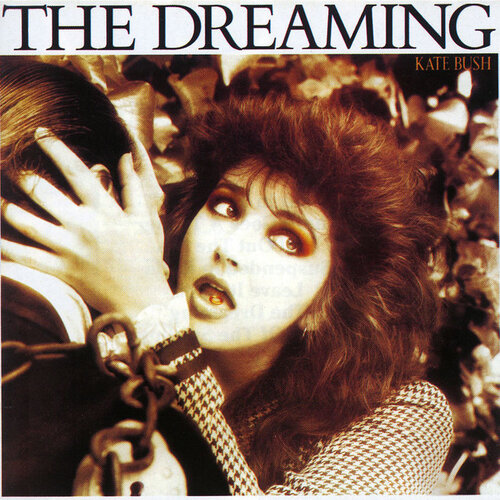
After 1982’s The Dreaming, it was clear that changes needed to happen.! That album is remarkable – and it turned thirty-eight yesterday -, and it was a huge step and necessarily evolution for Bush, where she produced solo for the first time and could let her imagination run free. I think the sheer time and energy she put into making The Dreaming sound like she wanted took so much out of her. By 1983, Bush was making those changes: she improved her diet so that she was eating more healthily; she took up dance again and getting back to full fitness (it sounds like her dance lessons were stricter that they would have been years before!); Bush also moved away from the bustle and stress of London and out to the countryside, whilst still very close to the capital. Rather than plough straight into work, Bush enjoyed time with her family and boyfriend, and she constructed her own studio. Creating a space that was idyllic and to her own specifications, I think the combination of the countryside setting and studio inspired her best material. It is fascinating putting The Dreaming, and Hounds of Love together. The former has moments of beauty, but I think it is an edgy and dark album at times; there is a sense of anxiety that runs through, and I don’t think EMI were thrilled about the prospect of Bush producing alone after that album.

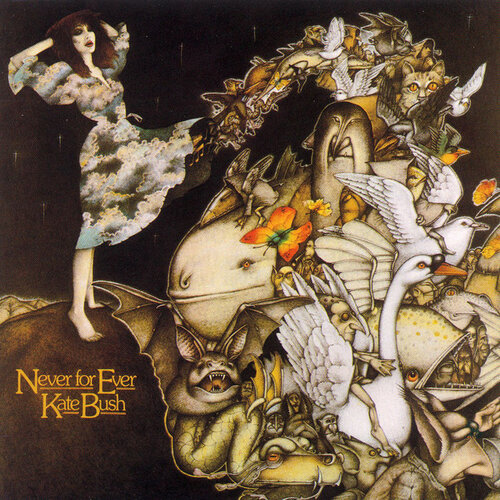
Not that The Dreaming was a failure or sold poorly, but EMI considered the length of time she took to make the album too much – even if it was two years after Never for Ever! -, and it wasn’t as commercial of some of her other albums. With renewed energy and motivation, no other producer could have got out of Bush and her musicians than the woman herself! Songs came together from 1983, and she started recording the demos the following January - rather than re-record music, she took the demos and enhanced them during the recording sessions. After five months, she began overdubbing and mixing the album in a process that took a year. I am going to end by bringing in reviews/features about Hounds of Love, but I can only imagine the atmosphere from 1983 to 1985 when Bush was writing and recording the album. The first half of the album is quite conventional in a sense, but the five tracks are among her very finest. Everyone has a favourite track from that first half, but I think The Big Sky is the track that impresses me most – it was a problem child of a song that took a long time to get right and come together. I will look at The Ninth Wave and the impact of Hounds of Love in a second, but I have not dived into Hounds of Love’s title track, and the remarkably and eerie Mother Stands for Comfort.

From Hounds of Love, Bush started to direct her own videos. I think she could have directed the videos on The Dreaming, but one suspects that she had little energy and desire then; maybe EMI were not willing to give her that sort of responsibility. By the time Hounds of Love came around, this long-held desire to direct and take greater control of her videos emerged. The first single, Running Up That Hill, was beautifully directed by David Garfath, and the interpretive dance with dancer Michael Hervieu is such a wonderful thing! The huge and ambitious Cloudbusting – with Donald Sutherland in a rare music video appearance – was directed by Julian Doyle, and I think that experience and Bush working alongside Sutherland rubbed off. He gave her a lot of advice and I think that was the moment where Bush felt that she could direct. She would go to direct Hounds of Love’s fourth single, The Big Sky, which is awash with different characters and it is such an effusive, bright and imaginative video! Although there is a lot of contentment and happiness through the album, Bush also addresses struggles and the desire to find safety and comfort (interviews like this are quite revealing and useful when contextualising Hounds of Love). The song, Hounds of Love, is about being afraid to fall in love; in the song this feeling is compared to being chased by a pack of hounds. The video was inspired by Alfred Hitchcock's The 39 Steps, and a Hitchcock lookalike also features in the video (a nod to the director's famous cameo appearances in his movies).

zzzz.jpg

IN THIS PHOTO: Kate Bush photographed in 1985/PHOTO CREDIT: John Carder Bush (from the book, Kate: Inside the Rainbow)

Bush’s first video as a director is stunning, and I can see why she took to it so readily and effectively – even if she would have had a little help from others when it came to shooting and shot composition. As I will do for Mother Stands for Comfort, I want to bring in some information from the Kate Bush Encyclopaedia, where Bush discusses the track:

When I was writing the song I sorta started coming across this line about hounds and I thought 'Hounds Of Love' and the whole idea of being chasing by this love that actually gonna... when it get you it just going to rip you to pieces, (Raises voice) you know, and have your guts all over the floor! So this very sort of... being hunted by love, I liked the imagery, I thought it was really good. (Richard Skinner, 'Classic Albums interview: Hounds Of Love'. BBC Radio 1 (UK), 26 January 1992)

In the song 'Hounds Of Love', what do you mean by the line 'I'll be two steps on the water', other than a way of throwing off the scent of hounds, or whatever, by running through water. But why 'two' steps?

Because two steps is a progression. One step could possibly mean you go forward and then you come back again. I think "two steps" suggests that you intend to go forward.

But why not "three steps"?

It could have been three steps - it could have been ten, but "two steps" sounds better, I thought, when I wrote the song. Okay. (Doug Alan interview, 20 November 1985)”.

Although the track only just got into the top-twenty, I think it is one of the best cuts from the album. By far the most-underrated track on Hounds of Love is Mother Stands for Comfort. Maybe it is less accessible and warming than a song like Running Up That Hill, and Cloudbusting, but Mother Stands for Comfort provided necessarily sonic and emotional balance. Although the other four tracks on the first side tackle deep emotions and conflicts, there is an undeniable energy and motivation in each track. Mother Stands for Comfort is a very different song, and it is a lot more sparse and colder than the other tracks – perhaps prefacing some of the feeling and fear we would hear in The Ninth Wave. Mother Stands for Comfort has a flat drum pattern of kick and snare; there are piano chords and some sounds from the Fairlight CMI. A song concerning a mother shielding and protecting her murderous child might not sound like a song that would instantly grab you and linger in the heart, but Bush has always covered subjects that other artists do not touch. I really love the song and how different it sounds.

I have mooted how Under the Ivy, a B-side on the Running Up That Hill single could have replaced this song, but I think Mother Stands for Comfort is an incredible track that would have made a really interesting single. The Kate Bush Encyclopaedia gives us an interview extract where Bush discussed the song:

Well, the personality that sings this track is very unfeeling in a way. And the cold qualities of synths and machines were appropriate here. There are many different kinds of love and the track's really talking about the love of a mother, and in this case she's the mother of a murderer, in that she's basically prepared to protect her son against anything. 'Cause in a way it's also suggesting that the son is using the mother, as much as the mother is protecting him. It's a bit of a strange matter, isn't it really? [laughs] (Richard Skinner, 'Classic Albums Interview: Hounds Of Love'. BBC Radio 1 (UK), 26 January 1992)”.

I recently wrote about The Ninth Wave - and what a remarkable thing it is. This very different second half of the album must have taken people by surprise in 1985, as Bush had done nothing like this before. The story of a woman being lost at sea and battling to stay alive and sane through the night sounds like a great concept to get your teeth into, but writing the story and songs would have been challenging!

From the first track on that side, And Dream of Sheep, where the heroine wants to be able to be at home but, unfortunately she falls asleep (Waking the Witch is a song of voices that try to keep her awake; the use and importance of the Fairlight CMI throughout The Ninth Wave is huge), hopelessly knowing that there was a tough road ahead of her, to the closing track, The Morning Fog, we are following our protagonist as she thinks of home and those waiting for her, as she wonders whether she will make it through. We do not know how she is rescued, but she does get out alive – and it is kind of fascinating to wonder how she got into the water and what lead her to be stranded! If you do not own Hounds of Love on vinyl, then go and get a copy, and experience one of the greatest albums ever made. I was only two when Hounds of Love was released on 16th September, 1985, but I remember people talking about the album through the decade and the 1990s. So many albums from that time sound dated and flat, but Hounds of Love still sound so remarkable and original. The reviews for Hounds of Love are universally adoring – I don’t think there were many albums from the 1980s that got such acclaim from everyone; and an album still attracting acclaim and respect! In 2016, Pitchfork gave Hounds of Love a perfect ten when they reviewed it, and I want to take a few passages from that review, as they make some really interesting observations:

What set Bush apart from Fairlight wizards like Thomas Dolby, who made a point of their geekdom, was that she also drew deeply from the world music that captivated her older brother Paddy Bush. His balalaika, didgeridoo, and other centuries-old folk instruments tempered her Fairlight’s inherent futurism. She didn’t employ it to create walloping beats like the Art of Noise, or use it to spew out orchestral blasts like the Pet Shop Boys. She used the Fairlight the way Brian Wilson used cut-up tape and how today’s avant-garde exploit Pro-Tools—to create perfectly controlled cacophony.

IN THIS PHOTO: Kate Bush in directorial action/PHOTO CREDIT: John Carder Bush (from the book, Kate: Inside the Rainbow)

Bush’s talent was so undeniable that she could sneak into contemporary music’s center while curbing none of her eccentricities. The album’s second single “Cloudbusting” celebrates Wilhelm Reich, a brilliant Austrian psychoanalyst but crackpot American inventor. Full of details gleaned from his son Peter Reich’s A Book of Dreams, it’s specific to their teacher/pupil relationship, which is played out further in its video featuring Donald Sutherland. But “Cloudbusting” also deals with a much more universal situation: Children long to protect their parents, despite having no adult power to do so. Accordingly, Bush resorts to the one thing all children possess in abundance—imagination. “I just know that something good is gonna happen,” she sings, a string sextet sawing insistently as martial drums beat a battle cry that morphs from helplessness to victory, however imaginary. The son she portrays wills himself into thoughts nearly delusional as his dad’s, and the result is optimistic yet poignant, as he ultimately believes, “Just saying it could even make it happen.”

It was a response, perhaps, to the age-old quandary of commanding respect as  a woman in an overwhelmingly masculine field. Bush's navigation of this minefield was as natural as it was ingenious: She became the most musically serious and yet outwardly whimsical star of her time. She held onto her bucolic childhood and sustained her family’s support, feeding the wonder that’s never left her. Her subsequent records couldn’t surpass Hounds of Love’s perfect marriage of technique and exploration, but never has she made a false one. She’s like the glissando of “Hello Earth” that rises up and plummets down almost simultaneously: Bush retained the strength to ride fame’s waves because she’s always known exactly what she was—simply, and quite complicatedly, herself”.

Whilst all of Kate Bush’s albums have inspired artists and affected music, I think Hounds of Love is especially instrumental. Classic Pop investigated Hounds of Love five years ago, and they remarked on its impact and Bush’s feelings towards the album:

Almost three decades after Hounds Of Love’s release, Kate Bush is regarded as pop royalty (it’s official: she was awarded a CBE earlier this year) and the album is still regarded as a masterpiece, regularly earning a spot on “Best Albums” lists. Its influence is also evident in the work of artists such as Bjork, Tori Amos, Bat For Lashes, Goldfrapp and Florence + The Machine.

As for Bush herself, she remains fiercely proud of Hounds Of Love and has only good memories of making it.“At the time, it was such a lot of work,” she concedes. “The lyrics and trying to piece the whole thing together. But I did love it, and everyone who worked on the album was wonderful. In some ways, it was the happiest I’ve ever been when writing and making an album. I know there’s a theory that goes around that you must suffer for your art – you know, all that stuff about, ‘It’s not real art unless you suffer.’ But I don’t believe this at all because I think, in some ways, this was the most complete work that I’ve done; in some ways, it’s the best and I was the happiest that I’d been, compared to making other albums”.

This week, there will be a lot of focus on Hounds of Love, and I know there are people who will hear it for the first time. After the exhaustion of The Dreaming, Kate Bush could have retreated or made a very simple album, but Hounds of Love sounds like her busiest and most remarkable album; she was clearly invigorated and rejuvenated when she moved and built her own studio. Following the steps she made between Never for Ever (1980), and The Dreaming (1982), I think Hounds of Love was an apex and the moment when everything fell into place.

Before wrapping up, I want to source from an article by Ben Hewitt in The Quietus to mark Never for Ever’s fortieth anniversary last week. Hewitt made the suggestion that Never for Ever is pivotal when it came to subsequent albums like Hounds of Love:

Like ‘Wuthering Heights’, Never For Ever made history: the first No 1 album by a British female solo artist. Yet its significance transcends chart milestones. For the next decade Bush would build on its potential to become, as she joked to Q in 1989, the “shyest megalomaniac you’re ever likely to meet”. Whereas her first three albums were squeezed into two-and-a-half years, the subsequent three spanned nine. The next one, the bewildering, avant-garde masterpiece The Dreaming, was the first she produced entirely by herself; soon after, she built a studio-come-sanctuary near her family home and hunkered away to make the flawless Hounds Of Love. Each record introduced new inspirations, new instruments, new collaborators and new methods, all indebted to Never For Ever’s triumph of bloody-minded determination. It doesn’t belong in her imperial period, but that imperial period wouldn’t exist without it”.

It has been great writing about an album that is considered to be Kate Bush’s finest creation. Listening to Hounds of Love now, and I am blown away by its genius. It is a staggering album…

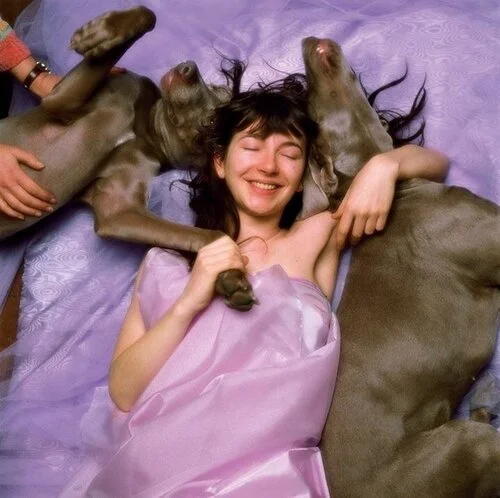
IN THIS PHOTO: Kate Bush in an outtake from the Hounds of Love cover shoot/PHOTO CREDIT: John Carder Bush (from the book, Kate: Inside the Rainbow)

THAT few have ever topped.

FEATURE: The Lockdown Playlist: Amy Winehouse at Thirty-Seven: Her Finest Tracks

FEATURE:

The Lockdown Playlist

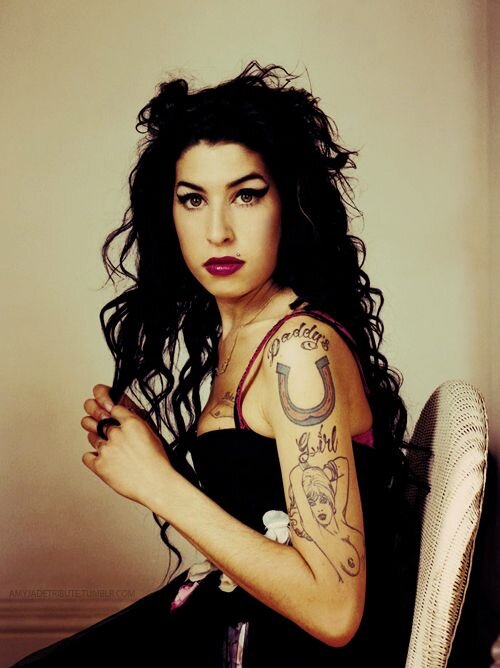
aqq.jpg

PHOTO CREDIT: Phil Knott 

Amy Winehouse at Thirty-Seven: Her Finest Tracks

___________

FOR this edition of…

PHOTO CREDIT: Ross Gilmore

the Lockdown Playlist, I thought I would return to an artist who I have featured fairly heavily through the past few years. Amy Winehouse is one of the greatest voices the world has ever seen, and she would have been thirty-seven tomorrow (14th) – we sadly lost her in 2011. Ahead of her birthday tomorrow, I was keen to include some terrific songs from her two studio albums, the posthumous release, Lioness: Hidden Treasures, and other tracks featuring Winehouse - with some live stuff in there. It is a tragedy that she is not still with us, as it is amazing to think where she might be and what she might have achieved! It is true that there is nobody around like her, and her memory and legacy will live forever. In honour of the great Amy Winehouse, this Lockdown Playlist is dedicated to a…

waaa.jpeg

ONE of a kind!

FEATURE: Leap Year: Why 2021 Will Be a Challenging Time for Many Artists

FEATURE:


Leap Year

PHOTO CREDIT: @arstyy/Unsplash

Why 2021 Will Be a Challenging Time for Many Artists

___________

ON Thursday…

PHOTO CREDIT: @kdarmody/Unsplash

BBC Radio 6 Music had their State of Independents Day. It was a chance for independent labels, venues, shops and other corners of the industry to have a spotlight shone on them. It was very educational, as I discovered a lot of great new independent labels, and through the course of the day, there were reports regarding how venues are coping during this time, how labels have had to adapt, and what the future holds for many artists. This year has been a very tough one for so many people in the music industry, yet there has been so much great music released. At a time when most artists cannot perform live – or they are doing socially distanced gigs -, they are finding their income is being slashed and seriously affected. At the moment, we cannot tell what next year holds, and whether many gigs will go ahead. Depending on how COVID-19 plays out and what it in store regarding its spread, it might be the case that many of the tours and gigs already rescheduled will have to cancel again. It is a sad state of affairs, but a lot of artists have already booked up venues and spaces for next year. I was listening to reports through the day on BBC Radio 6 Music, and there was a segment – I cannot remember who it was – where someone was explaining how a lot of artists will not be able to tour or perform next year. Consider the fact that most venues already have a full calendar for next year already, and it means that so many artists who were hoping to gig and perform their new material at venues will have to look to 2022 instead.   

The situation is very similar when we consider independent labels and the bigger labels. They already have quite a few acts on their books, and there is no guarantee that they can take on anyone new. Considering that nobody knows what will happen to venues and whether there will be a lot of gigs next year, they cannot really commit to new artists and bring too many people on. It is quite scary for the labels, as they rely on artists putting out music and touring it. In a strange moment of history, it is almost like 2021 will be a dormant year for many artists. During lockdown, many artists have survived from doing streamed gigs, and they have managed to sell merchandise and make some money that way. On the good side, vinyl sales are booming, and many record stores have done a sterling trade over the past few months. I do hope that venues will be able to carry on, and I am especially hopeful that the grassroots venues can keep going, as they are a crucial part of an artist’s progression – where they can hone their sound and take their first steps. For many existing and new acts, they will have to find new ways to perform and new spaces to perform in, as the likelihood of venues having much free space is unlikely. There are some great labels that we can all support, and make sure that you check out your local venues, as many are struggling to stay open, and it will be a tough next few months for them.

PHOTO CREDIT: @claybanks/Unsplash

I guess healthy record sales is cause for celebration, but next year will be one of the most unusual for music. As I said, many gigs already booked might need to be pushed back, and it may not be realistic for tours and festivals to start until the middle of 2021. Because 2020 is going to be a write-off for so many acts, they are putting tours they would have completed this year back to next, and that is on top of gigs that were already planned for 2021 – meaning there has been this squash and overwhelming demand! Right now, there are some seriously great artists emerging, and they are not only keen to sign with a label and find a new home, but to get material recorded and perform at venues. There are some labels that will be signing new names, but many are unwilling to commit as we are not sure what will happen, and it is unlikely that a lot of venues will have too many spaces free for next year. Socially distanced gigs do not offer a secure and overly-reliable sense of compensation and prosperity, but they will be the only option for many artists next year. It does sound like a very bleak and scary future for many artists, and I hope that many will still be able to perform live in some manner. Outdoor gigs, whilst not ideal in colder weather, with restrictions on audience numbers might be a temporary solution, and I think we will continue to see streamed gigs continue if artists cannot perform at venues or organise tours next year. There are some labels still looking for acts, but vacancies are far scarcer than normal. If you are a consumer and music fan, then support independent venues and labels, and buy as music as possible. Next year will be a pretty tough one for many artists – as this year has been -, and I hope that they find a way around and will be okay. Everyone is so eager for venues to open and touring to resume properly, so let’s hope that things get back to normal…

PHOTO CREDIT: @hanness/Unsplash

AS soon as possible.

FEATURE: Albums for the General Public: Underrated, Underplayed or Overlooked Records from 2020

FEATURE:

Albums for the General Public

IN THIS PHOTO: Halsey

Underrated, Underplayed or Overlooked Records from 2020

___________

THROUGH the year…

IN THIS PHOTO: The Lemon Twigs

I have looked at the best albums (so far), and some great debuts. I do not think I have done a feature that looks at underrated albums and ones that those that deserved more press and better reviews - and whose songs are not played on the radio enough. In this list, I am mixing albums that might have been reviewed positively but not that many people know of that album and, in many cases, albums that did not get the score they deserved – and they warrant new listening. There have been so many triumphant records released this year, but there have been a lot that are really good that have not been given a fair shot. I may have missed some obvious albums, but here are a selection that I feel are either better than they have been credited, or they need to be pushed out to the general public more heartily. Perhaps you will hear some albums in this feature that you add…

IN THIS PHOTO: Squirrel Flower

TO your collection.

____________

Nubya Garcia SOURCE

Release Date: 21st August

Label: Concord Jazz

Producers: Nubya Garcia/Kwes

Standout Cuts: Source/Together Is a Beautiful Place to Be/Stand with Each Other

Buy: https://nubyagarcia.bandcamp.com/album/source

Key Track: Inner Game

Review:

Blending warm tones into genteel spasmodic flourishes that, in the same manner as a summer storm, rumble and crash when you least expect it but once the clouds have passed comes that fresh crisp air with warm undertones. Even the moments where Garcia steps back, allowing the rest of the instrumentation, provided by Joe Armon-Jones (keys), Daniel Casimir (double bass) and Sam Jones (drums), to flourish and crash around give a sense to her ability in knowing when to hold ‘em and when to fold ‘em.

The epic titular track, clocking in at just over twelve minutes, and featuring collaborators Ms MAURICE, Cassie Kinoshi and Richie Seivwright (also appearing on “Stand With Each Other”), rides along in a smooth wave. It also proves jazz’ adept nature; where if you aren’t paying attention you’re certainly guaranteed to miss things. But even if you are paying attention the depth of the matter can also be missed - it’s a genre that adapts to your context, and in the instance of Source, Garcia has created an album that wants to help you in any way it can, without overloading your surroundings, or becoming obnoxious in itself.

Delving into fusions of reggae (“Source”), afro-beat (“La cumbia me está llamando”) and everything in between, Garcia triumphantly tries to discover just who she is, while offering that sparkling sound of a world ripe for the taking. Chockful of jazz that embraces you in a familiar feeling, Source is akin to an old friend you may not see for a while, but whenever you do, the world feels that little bit brighter and it’s as if no time has passed at all” – The Line of Best Fit

HalseyManic

Release Date: 17th January

Label: Capitol

Producers: Halsey/Lido/John Cunningham/Louis Bell/Greg Kurstin/Benny Blanco/Cashmere Cat/Alex Young/The Monsters & Strangerz/Jon Bellion/Ojivolta/Andrew Wells/Andrew Jackson/Duck Blackwell/Suga/Pdogg/FRED/Jasper Sheff

Standout Cuts: clementine/you should be sad/Without Me

Buy: https://www.roughtrade.com/gb/halsey/manic

Key Track: Graveyard

Review:

Listen closely, certain stylistic aspects assert themselves -- a fingerpicked guitar line rolls along here, there's a reggae bounce there -- and her choice of guest stars is telling. Alanis Morissette -- who is by some measures a clear precursor to Halsey -- vies with rapper Dominic Fike and Suga of K-pop sensations BTS for splashiest cameo, with each of their appearances labeled as an "interlude." The lack of concrete song titles winds up emphasizing the presence of artists who cross genres, a clear sign of how Manic's seemingly scattershot appearance disguises how Halsey designed the album to appeal to as broad an audience as possible, streamlining all these sounds so they slide onto every conceivable playlist. It's a shrewd ploy that winds up not seeming crass thanks to Halsey's affectless emo bloodletting -- she never resists an opportunity to hit her target squarely on the nose, such as the "I'm so glad I never ever had a baby with you" refrain on "You Should Be Sad" -- and the clever way Manic is sequenced. The artiest, wobbliest songs start the record, followed by her saddest and starkest ballads, so it takes a while before it settles into its comfortable groove of adolescent angst doubling as AAA crossover pop. Such distinctions would be lost on the playlists individual tracks may later call home, but assembled in this fashion as a proper album, Manic showcases Halsey at her nerviest and at her best” – AllMusic

Poppy - I Disagree

q.jpg

Release Date: 10th January

Labels: Sumerian/Warner  

Producers: Chris Greatti/Zakk Cervini

Standout Cuts: Concrete/Fill the Crown/Sit / Stay

Buy: https://www.amazon.co.uk/I-Disagree-Poppy/dp/B07YCS34V8

Key Track: I Disagree

Review:

The record’s opening track, “Concrete,” is typical of her approach here. After an air-raid siren, she whispers about wanting to be buried alive, covered in concrete and turned “into a street,” before launching into a series of proggy vignettes. There’s a section that sounds like the Body’s sludgy electro-metal, a paisley pop chorus that’d be at home on a Kinks record, and a series of gurgly riffs that’d rank among Slipknot’s grossest, all before culminating in what sounds like an arena crowd chanting her name, followed by a coda that sparkles like “Blank Space.” Like, say, 100 gecs or the recent Grimes singles, part of the joy in I Disagree comes in how overwhelming it is. No single passage lasts very long, which gives even the prettier moments an unstable feeling, like everything might at any moment crumble into a void of distortion and noise.

Throughout, her lyrics are venomous and apocalyptic. “Bloodmoney” castigates hypocrites and evil men who hide behind the banner of religion. “Don’t Go Outside” evokes the imagery of biblical plagues, with frogs falling from the sky. The title track explicitly welcomes the end of the world, assuring, “We’ll be safe and sound when it all burns down.” None of the situations she explores are especially specific, but it’s striking—as the world burns and nuclear war once more feels like a distinct possibility—to hear a reminder that chaos can be cleansing, that calamity is the first step to starting all over again and building something new” – Pitchfork

The Lemon Twigs - Songs for the General Public

Release Date: 21st August

Label: 4AD  

Standout Cuts: Hell on Wheels/Moon/The One

Buy: https://4ad.com/releases/916

Key Track: No One Holds You (Closer Than The One You Haven't Met)

Review:

On 2018’s ‘Go To School’, New York sibling duo The Lemon Twigs concocted a bombastic rock opera based around the life and times of a chimpanzee named Shane. On its follow up, Shane is gone (RIP), but the nostalgic theatrics are still out in full force. If there was any question, three albums in, as to whether the D’Addario brothers had any inclination to stomp their platform boots closer to the 21st Century, then the ringing Brian May solo of ‘Hog’ should answer with a resounding “No”. Instead, we have a paean to the past, full of lovelorn warmth (‘The One’), Zombies-on-a-road-trip harmonies (‘Live In Favour of Tomorrow’) and Bugsy Malone-style ridiculous piano jams (‘Fight’). But for all the moments that tend towards fun-but-silly ‘70s musical theatre, there are plenty that, in isolation, ring with the kind of sepia-soaked sweetness that most genuinely don’t make anymore. The Lemon Twigs might not always take themselves seriously, but you’d be remiss to dismiss them as a joke” – DIY

Bishop Nehru - Nehruvia: My Disregarded Thoughts

Release Date: 8th May

Label: Nehruvia LLC

Standout Cuts: Colder/Too Lost/All of My Years

Buy: https://bishopnehru.bandcamp.com/album/nehruvia-my-disregarded-thoughts

Key Track: In My Zone

Review:

One of the most joyously prolific young voices in hip-hop, Bishop Nehru has taken the opportunity that his relative success to date has granted to put together a project that has long been on his mind. Since eighth grade, he has envisaged a two-act tale that begins in what we now understand as the sunken place (described on this record as ‘The Abyss’), before emerging blinking into what we have learned never to describe as the sunlit uplands (Nehru instead goes for ‘The Escape’).

The result, which has been sitting on the shelf for a year now due to “managerial disputes”, is a polished and inviting addition to the 23-year-old’s already impressive résumé. His natural flow revolves around honing clear and memorable lyrical hooks through simple repetition, as on ‘In My Zone’ and ‘All Of My Years’, the latter boasting one of the choruses of the year. This ability to pass off earworm burrowers as seemingly lazy and thrown away is perhaps Nehru’s most enviable talent.

Nehru self produces here, save for the guest contribution from DJ Premier on ‘Too Lost’, and his sonic palette is similarly unfussy, relying on cut-up samples of smoky R&B and jazz, firmly in the Dilla/Madlib lineage. Don’t come for the new vanguard; Nehru believes in keeping his message direct and clutter-free.

The record rises through several gears on ‘Meathead’ with the appearance of Nehru’s previous collaborator DOOM, who’s trademark bulldozer delivery sees Nehru expanding his own game to meet the challenge. If anything, though, this exposes the easy-going energy that defines the rest of the album, which, whilst apparently reflecting Nehru’s natural artistic milieu, can leave you wanting a little more” – Loud and Quiet

The Orielles - Disco Volador

Release Date: 28th February

Label: Heavenly

Standout Cuts: Come Down on Jupiter/Bobbi’s Second World/7th Dynamic Goo

Buy: https://www.roughtrade.com/gb/the-orielles/disco-volador

Key Track: Space Samba (Disco Volador Theme)

Review:

You’d be hard pressed to find another band in 2020 who sound like Halifax young’ns The Orielles. On the follow-up to their adventurous debut ‘Silver Dollar Moment’, the trio-turned-foursome blend a ton of influences to create a lush soundscape with a kitschy, ‘70s finish. Single ‘Bobbi’s Second World’ introduced a punchier new element to the group’s already pretty out-there sound, and it remains a firm highlight with its zesty synth sections and gang vocals. It’s somewhat of an outlier though; the rest of the record has a more low-key energy in the vein of Yo La Tengo or Stereolab: perfectly pleasant, but definitely a more passive listen.

It’s aesthetic that hoists ‘Disco Volador’ safely away from the clutches of wishy-washiness. From the striking artwork via the wild, sprightly theme tune ‘Space Samba’ that caps the album off in a tsunami of bongos and guitar distortion, The Orielles succeed in painting a vivid world of colour and flavour to get lost in” – DIY

Katie von SchleicherConsummation

Release Date: 22nd May

Label: Ba Da Bing

Standout Cuts: Wheel/Messenger/Power

Buy: https://www.roughtrade.com/gb/katie-von-schleicher/consummation

Key Track: Caged Sleep

Review:

Katie von Schleicher made such evocative and intelligent use of the lo-fi limitations of recording on a four-track cassette machine on 2016's Bleaksploitation and 2017's Shitty Hits that it was tempting to wonder if she could make her music work without it. It turns out she can; though 2020's Consummation may be a long way from glossy and still makes clever use of murk, the production and audio is significantly cleaner than what she delivered on her two breakthrough releases, and it expands her stylistic horizons as it eases up on the inward-focused gloom in favor of something more pointed and engaged with the world around her. Von Schleicher steps up her game as a vocalist on Consummation; the breathy force and ambitious sweep of her phrasing and her multiple overdubbed harmonies suggest this is what Kate Bush could have sounded like had she been an Brooklyn indie rocker born in the 1990s. Von Schleicher also focuses on personal issues that will resonate with the larger culture at the same time. Informed in part by Rebecca Solnit's book A Field Guide to Getting Lost and its analysis of Alfred Hitchcock's Vertigo from the perspective of the stalked woman rather than the obsessed man, the fine line between love and abuse is a frequent undercurrent in von Schleicher's lyrics, and this album sounds less like a document of depression than an analysis of a society that breeds the fear that can evolve into depression. If that sounds pretentious, it isn't in practice; once again, von Schleicher has offered us a look inside herself, and these songs are just as compelling and relatable as they look at a bigger picture. And von Schleicher's jerry-rigged version of indie pop is all the grander here, still melodic while aiming for a more majestic effect and finding it within its echoes and confident instrumentation. Shitty Hits was the sort of album that was destined to be a cult favorite while also leaving questions about where else the artist could next take their talent and vision. Consummation is a bold step forward and confirmation that Katie von Schleicher has a great deal to offer and should be creating satisfying music for a long time to come” – AllMusic

Squirrel FlowerI Was Born Swimming 

Release Date: 31st January

Label: Full Time Hobby

Standout Cuts: Slapback/Headlights/Streelight Blues

Buy: https://www.roughtrade.com/gb/squirrel-flower/i-was-born-swimming

Key Track: Home

Review:

Williams’ most straightforward and ingratiating album as Squirrel Flower is 2015's Early Winter Songs From Middle America. That album’s standout track, “I Don’t Use a Trash Can,” proved that she can write a great chorus when she wants to. I Was Born Swimming suffers from its lack of them. Save for “I-80” and “Red Shoulder,” the album’s lyrics read more like poems set to music written after the fact. By side B, the disconnect becomes noticeable. The songs all have similar tempos and dynamics and lack clear centers, and the music starts to feel like an afterthought. When there is a chorus, like in “Honey, Oh Honey!” it’s the whole song, or it feels like a joke. At its most aimless, like on “Seasonal Affective Disorder,” the music just feels lost.

It’s OK for songs not to have choruses, of course, and it’s OK to write songs that feel more like poems than, well, songs. But in doing so, Williams puts some maybe-unintentional distance between herself and the listener. I Was Born Swimming is her most expansive and professional-sounding record to date, and on the whole, does more right than wrong. But it’s an MFA of an album. As a project, it’s admirable. As an album, it leaves you cold” – Pitchfork

CocoRosie - Put the Shine On

Release Date: 13th March

Label: Marathon Artists

Standout Cuts: High Road/Hell’s Gate/Ruby Red

Buy: https://www.roughtrade.com/gb/cocorosie/put-the-shine-on

Key Track: Mercy

Review:

It’s 17 years since Bianca and Sierra Casady materialised like a fever dream of New York’s 00s freak-folk scene, a new, weird American incarnation of Angela Carter’s Chance sisters, who recorded their debut album while drinking champagne in a bathtub, accompanied by kitchen implements and children’s toys. In that time, the siblings’ self-consciously naive collision of Billie Holiday-influenced blues croons, shonky hip-hop beats and found sound, sprinkled with Bianca’s bratty bohemian rap and Sierra’s Paris Conservatoire-trained avant garde arias, mellowed into self-analytical, new-agey meandering, while the early drive to provoke (Jesus Loves Me, from their 2004 debut, La maison de mon rêve, deployed the N-word seemingly for shock value amid an infantile critique of religion; their second album’s cover sported an infuriatingly childlike daubing of a trio of fornicating unicorns vomiting rainbows) that made them so hard to humour subsided.

Their seventh album continues to exorcise family trauma, but is more memorable and structured than recent efforts. Restless pays tribute to their mother, who died during the album’s recording, with jaunty piano, jabs of distorted guitar and shimmery keys, while Burning Down the House is not a Talking Heads cover but a dark, dubby trip-hop treat that weaves accordion and harp amid rattling-bones percussion. Many tracks, such as High Road, with its dark, fairytale imagery, cawing crows and skittering beats, feel like a conscious return to core idiosyncrasies. As such, it’s a shame that the album overstays its welcome a little. As always, the Casady sisters are best in small, surreal doses” – The Observer

SAULT - Untitled (Black Is)

Release Date: 19th June

Label: Forever Living Originals

Standout Cuts: Hard Life/Wildfires/Bow

Buy (pre-order): https://www.roughtrade.com/gb/sault/untitled

Key Track: Black Is

Review:

This intensity dots UNTITLED, SAULT's latest and best album, and is a capital-B Black record that funnels rage and sorrow into contemplative streams of thought, over equally brooding music meant to slow your heart rate. UNTITLED is just as militant as any old Public Enemy record, but it digs into the everyday aspects of our existence, and celebrates who we are privately, not when we're donning the cape and saving humanity from itself — again. UNTITLED honors the whole being, not the monolith portrayed on TV and social media. It's a record for us and by us, a private convo with friends who get the inside jokes and cultural references.

"Black is safety," a woman declares on "Out the Lies," the album's opening track. "Black is benevolence. Black tells you it's all gonna be okay in the end." This mantra — "Black Is" — serves as the album's undercurrent, a gentle nudge back to reality. Here the voice soothes — "Black is Granny, Black is Auntie" — but just a few tracks later, on "X," named after civil rights leader Malcolm X, that same voice issues a stern warning: "Do not be surprised, the chickens have come home to roost." The line, from Malcolm's controversial statement about President John F. Kennedy's assassination, addresses the notion of violence begetting violence — that the years of systemic racism have reached a breaking point. When insinuated here, over light electric piano chords, the omen doesn't land with the same blunt force as Malcolm's. But the ferocity hasn't changed, even if SAULT's tone is tailor-made for the Calm app” – NPR

Hailey Whitters - The Dream

Release Date: 28th February

Label: Pigasus

Producer: Hayley Whitters

Standout Cuts: The Days/Dream, Girl/Living the Dream

Buy: https://haileywhitters.com/

Key Track: Happy People

Review:

But “Janice” isn’t the only time Whitters emphasizes soul maintenance on The Dream. “The Days” urges us to make the most of every moment, because life is fleeting and time is ultimately scarce. “Dream, Girl” is a breakup anthem from a third party perspective that sounds a bit like Fearless-era Taylor Swift telling you to keep your chin up. Whitters reinvents Kacey Musgraves’ “Merry Go ‘Round” on “Heartland,” which, like the Same Trailer Different Park highlight, sports a simple banjo melody and plenty of anxiety. But there’s also some release from the unease when Whitters offers a simple solution to the societal noise we can’t escape: “When life is out of your hands, you gotta let your heart land.” Later, on the Lori McKenna-penned “Happy People” (which Little Big Town originally recorded back in 2017), she pushes happiness over suffering at all costs. “Do what makes you feel good”—it’s an easy command to follow. You’ve never met her, but Hailey Whitters has your best interests at heart.

Whitters rounds up McKenna and Clark again for “Loose Strings,” a funny tune about falling off the wagon and trying to forget someone in the process, in which that “someone” has to confiscate Whitters’ car keys so she doesn’t get “busted by the po-po.” Before you have time to register the change from rascal Southern girl to bar singer, Whitters slips into a slinky drawl on “The Devil Always Made Me Think Twice,” a reconciliation with temptation. The proceeding “All The Cool Girls” is a sneakily sassy takedown of vanity, as well as a bluesy Americana dreamscape” – PASTE

Nadia Reid - Out of My Province

ass.jpg

Release Date: 6th March

Label: Spacebomb Records

Producers: Trey Pollard/Matthew E. White

Standout Cuts: All of My Love/Other Side of the Wheel/Get the Devil Out

Buy: https://www.roughtrade.com/gb/nadia-reid/out-of-my-province

Key Track: The Future

Review:

I am looking for something," Reid declares on the uncharacteristically jaunty "Oh Canada", which hides a wealth of restless unease beneath its sunnily romantic veneer. "I don't know what I'm looking for''. This uncertainty works for the benefit of the songs as it's hard to grow tired of something you've never quite properly figured out. It'd be lazily predictable to compare any female songwriter to Joni Mitchell, but it's also tricky not to draw parallels between the Canadian master and Reid's road-marinated accounts of personal growth and transformation. ‘’There is dust settling inside of me’’ Reid declares on "High & Lonely", a sturdy slice of low-lit swagger in the style of Stax studios, suggesting the change isn't quite complete yet.

The widened musical palette helps to pull you in while the songs are digging in their hooks. Pollard's production is astute enough to know when the most potent thing to do is to fade away: "Heart to Ride" is left essentially untampered with, little beyond Reid and long-time collaborator Sam Taylor's guitars. At the opposite end of the production spectrum, the shimmering opener "All of My Love" - a time and place shifting travelogue that provides a perfect introduction to Reid's multi-layered writing - packs all the organs and punchy horns you'd expect from a Spacebomb production, with a heavy-lidded swoon that nods towards Lambchop's Nixon and Cat Power's The Greatest. “The Future” grows into a blustery swirl of twang-fuelled guitars, whilst the haunting closer "Get the Devil Out" is enveloped in sumptuous strings. However, the more richly layered arrangements never detract from the intimate immediacy of Reid's vocals and lyrics” – The Line of Best Fit

FEATURE: Too Good to Be Forgotten: Songs That Are Much More Than a Guilty Pleasure: Whigfield – Saturday Night

FEATURE:


Too Good to Be Forgotten: Songs That Are Much More Than a Guilty Pleasure

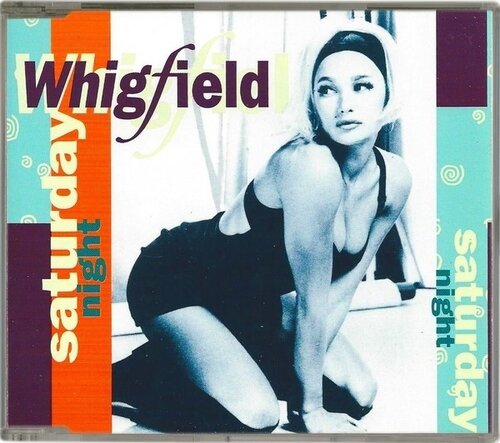
Whigfield – Saturday Night

___________

THE 1990s is a fascinating decade…  

as there is that mix of classic hits and iconic tracks combined with the one-hit wonders and songs that some would consider quite cheesy or a guilty pleasure. There is something pleasingly carefree and delightful about Whigfield’s Saturday Night and, whilst some consider it to be a guilty pleasure, I would argue that it is one of the best singles of the 1990s – and there are many reasons to love the song! For a start, it is infectious and catchy as hell! It also dethroned Wet Wet Wet’s Love Is All Around in 1994 after that song stayed at the top of the charts for fifteen weeks here in 1994! Saturday Night was released in 1992 in Italy, and in 1993 through Spain. The song was written by Italian producers Larry Pignagnoli and Davide Riva. In 1994, Saturday Night was included on Whigfield’s eponymous debut album. It is one of those songs that was everywhere when I started high school in 1994! Saturday Night sold by the bucket-load, and it was played at every disco and party that I can recall from that time. Perhaps it does not have the same weight and nuance of some classic Pop from the time, but there is a simplicity and positivity that has meant Saturday Night, without irony, has been taken to heart and celebrated. Other great songs like Another Day, Big Time, and Close to You can be heard on the Whigfield album, and Saturday Night was the epic closer.

I think it is brave to have a song that good at the very end of an album, and it seems like a natural opener - but I guess we work up to the song and go out with a smile! I think, as we are still separated and not back to normal, songs like Saturday Night are perfect to lift the mood. In fact, back in May, Whigfield (Sannie Carlson) spoke with Sky News about the endurance of Saturday Night and why it is perfect for now:

 “But it seems songs from the 1990s, that decade of hope and optimism, are also providing the uplift that people need as enforced isolation nears the end of week six.

Speaking to Sky News from her home outside Milan, Italy, Sannie Carlson, the woman better known as Whigfield, says she has seen many renditions of Saturday Night in the 27 years since its release, but none quite like the dancing in Dublin.

"I've seen a lot of these videos throughout the years, but I just think this is so funny because everybody was safely distanced, you know, and they had their little marks where they were supposed to stand, which I thought was hilarious," she says. "It made me really happy."

Carlson says she thinks the song has had a lasting legacy because of its simplicity.

PHOTO CREDIT: Whigfield/Sannie Carlson

"I think it's so cheesy," she says. "It's one of those songs that you either really hate it or you really love it, and it's like nursery rhymes, it's easy to sing along to.

"It's the classic, you cannot not play it at a wedding, because it's just one of those few moments where people can get together and be silly. And I'm all about silliness and not taking myself so seriously.

"I think, especially right now, people need that… I don't know, we just have to get through this and I think music is an amazing therapy for mental health."

The song also captured perfectly that teenage anticipation of a big night out, as demonstrated by Whigfield dancing in a towel and plaiting her hair in the video.

Well, that was the video," she laughs. "I mean, it was about a girl getting ready to go out on a Saturday Night. When people ask, what's the song about? It's not deep, you know?"

The '90s, Carlson says, was her "perfect era" for music.

"I think the music was very melodic then," she says. "It was more simple and it was easier to create an artist. I mean, nowadays... Well, kids can make music from home and there's so much music out there. It's not like you get into the charts and you stay there for, like, weeks and weeks; now it's like, in and out".

I love the fact that Whigfield thinks the song is a bit cheesy but, when we assess Saturday Night, I don’t think it should be seen as a guilty pleasure. I reckon Saturday Night captured a spirit of trouble-free life and the thrill of getting ready for a night out. I don’t think there have been many Pop songs since that have managed to say what Saturday Night did! It is a fantastic track, and one that actually sounds pretty good today in terms of how it has aged. There is that part of me who would love to be transported back to 1994 when the song came out in the U.K., and I think many people discovering the song new today can definitely get a sense of why the song remains so popular. In 2016, Whigfield and songwriter Alfredo ‘Larry’ Pignagnoli spoke with The Guardian about the song’s creation:

Sannie Carlson (Whigfield), singer

I studied fashion design in Copenhagen, then decided to go to Milan and show the Italians how it’s done. That didn’t work out. I ended up scraping by, doing modelling by day and PR for clubs at night. One of the club DJs, Davide Riva, was part of a music production duo. He persuaded me to sing for them.

For years, nobody was interested. It’s not easy being told your music is shit. By the mid-1990s, I was just about to quit when they came up with Saturday Night. It wasn’t my kind of music, but it at least sounded unlike everything else around at the time.

PHOTO CREDIT: Whigfield/Sannie Carlson

I’m the first to admit I’m no Maria Callas. I’d only ever sung in school. We must have done over 20 takes, then they just painstakingly spliced the best bits together. The song is like a nursery rhyme, with lyrics about what girls do when they’re getting ready to go out, and about getting hot when they’re out dancing. I named myself Whigfield after my old music teacher.

The song took ages to take off. I remember someone telling me: “I hated it at first, but now it’s stuck in my head.” People would hear it and start whistling it. Then suddenly labels right across Europe wanted it. In Britain, it went straight to No 1, knocking Wet Wet Wet’s Love Is All Around off the top after 15 weeks. They said they were glad because they were fed up being No 1. Yeah right.

Alfredo ‘Larry’ Pignagnoli, songwriter

It started with just the drums and the bass. Davide was the musician and I spent three days writing the lyrics. It was a very simple song that we thought would work in clubs and on radio. Calling it Saturday Night felt right since it was so happy and upbeat. The famous “Dee dee na na na” bit that Whigfield says at the beginning started as a joke. We were testing some variations on the melody at the end of the song and loved that bit so much we decided to make it the initial hook.

A Spanish company – actually two guys from a record store – released the track initially. The story goes that an aerobics instructor in Valencia came across it in a record shop and created a funny dance for it. His class of holiday-makers all did it on the beach and, after their holiday was over and they’d all gone home, they asked DJs in clubs to play it, so they could do the funny dance again. As the dance gained popularity, so did the song – and once it became a hit in Spain, everything snowballed”.

Whigfield’s last studio album, W, was released back in 2012, and I hope we hear more material from her. I like how Carlson is still happy to talk about Saturday Night and life as Whigfield. I would have hated for her to have sort of faded away, but it is wonderful that she is still out there putting music into the world! One other thing I love about Saturday Night is the video. In an interview from last year, Whigfield was asked about the song’s video:

Do you ever get sick of people *just* wanting you to sing ‘Saturday Night’, for instance?

I used to, maybe in the mid 90s, because it was non-stop 24/7, and there was a moment when I was a bit overwhelmed, and it was a bit too much, and I travelled over the world, and it was the same and the same and the same. Now I just have fun with it – now I can be naughty!

That’s a very naughty video and song isn’t it!

There’s actually been quite a lot of edits to that…

Oh really!!

Yeah! It was worse than that. There was more tongue and whatever involved, and I was like, no guys, this is not what I want. I wanted *something* but I don’t like in your face kind of stuff. Stuff that’s like fun and easy, yes, but in your face, I don’t like that”.

Saturday Night is still being talked about in 2020 so, close to three decades after its initial release, it is obvious that it is much more than a throwaway or a one-hit wonder that we should keep in the 1990s. When The Guardian chose their top-hundred U.K. number-ones earlier in the year, Whigfield’s Saturday Night made the number-ninety-one slot:

Saturday Night just pipped Gina G’s Ooh Aah … Just a Little Bit to our 90s Eurobanger slot. First off, it’s an actual Eurobanger (not an Aussie impersonator), and like the Village People’s YMCA, it has a dance routine invented by fans that came to define the song. It’s got an immediately iconic tag (“dee dee da da da!”), plus it was the victor in one of pop’s funniest plagiarism cases: I want some of whatever the person who thinks this sounds like Lindisfarne’s Fog on the Tyne was having”.

I shall leave things there, but I definitely feel that Whigfield’s Saturday Night is a song that is way above a guilty pleasure, and I know it can lift the mood whoever you are. For those of us who remember the song coming out, it is nice to see how it has survived and the fact people are still talking about it! There is something about the song that hits people – whether it is the energy and catchy chorus or the music video. I really like the track and, in these odd times, I have been revisiting it quite a lot. One thing is certain: it only takes one spin of Saturday Night before the song is stuck in your head…

PHOTO CREDIT: Whigfield/Sannie Carlson

FOR the rest of the week!  

FEATURE: Chaos and Creation: Roll with It: Looking Ahead to the Twenty-Fifth Anniversary of Oasis’ (What's the Story) Morning Glory?

FEATURE:


Chaos and Creation

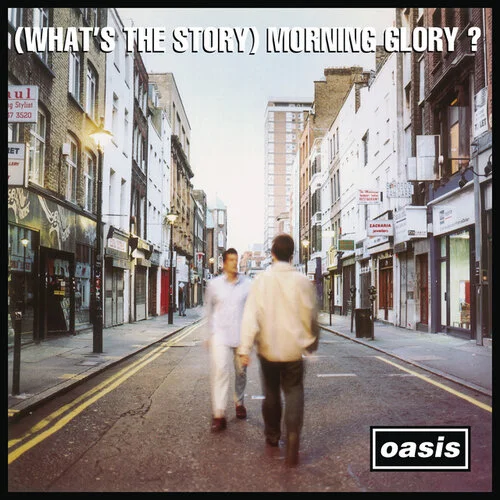
Roll with It: Looking Ahead to the Twenty-Fifth Anniversary of Oasis’ (What's the Story) Morning Glory?

___________

I wouldn’t normally look ahead…  

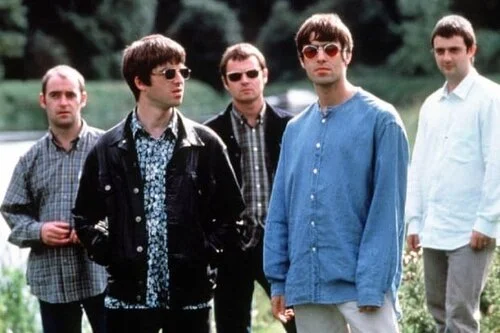
IN THIS PHOTO: Oasis in 1995/PHOTO CREDIT: PA

to an album’s twenty-fifth anniversary three weeks beforehand, but life in the Oasis camp seems just as chaotic and newsworthy years after the band split than it was back in 1995! I will talk more about (What’s the Story) Morning Glory? and what it meant for me and my peers in 1995 but, as with so many classic albums, there are plans for a vinyl reissue – one can put an order in now and receive the album when it is released twenty-five years after the original, on 2nd October. The reissue of the epic (What’s the Story) Morning Glory? is one you will want to own – even if you have the original album (which was released on the Creation label). Consequence of Sound explained more about the reissue:

Slip inside the eye of your mind, don’t you know you might find… a special vinyl reissue of (What’s the Story) Morning Glory? That’s what Big Brother Recordings is bringing to fans this fall in celebration of the 25th anniversary of Oasis’ seminal sophomore album.

Due out October 2nd, the limited edition reissue will see 1995’s (What’s the Story) completely remastered and pressed as two silver colored LPs, as well as a picture disc on heavyweight vinyl. In the lead-up to its release, “both new and original Oasis content from that era will be made available,” and a press statement urges listeners to follow the hashtag #MorningGlory25 so as not to miss these exclusives.

Led by the Gallagher brothers, Oasis began working on (What’s the Story) mere months after dropping their 1994 debut album, Definitely Maybe. It was recorded at Rockfield Studios in Monmouth, Wales, and finished over the course of just 12 days in Spring 1995.

The now-classic effort put the Brit-rock outfit on the map far beyond the UK, thanks to hits like “Wonderwall”, “Don’t Look Back in Anger”, and “Champagne Supernova”, which still very much live on today as rock anthems. (What’s the Story) went on to become the UK’s fifth best-selling album in history and has since sold 22 million copies worldwide.

Pre-orders for the 25th vinyl reissue have begun. Below, watch a trailer promoting the release”.

Normally, that would be that and we would all look forward to the vinyl coming out. Life is never quiet when it comes to Liam (Oasis’ lead singer) and Noel Gallagher (guitarist and lead songwriter), so there has been some hoo-ha and disagreement. Noel Gallagher, as this NME article reports, is doing some special filming to mark twenty-five years of a landmark album:

Taking to Instagram, Noel announced the new fan submission project on Oasis’ official page, writing: “So anyway… as you are probably all aware ‘(What’s The Story) Morning Glory?’ turns 25 this year. To celebrate I will be doing a bit of filming to discuss the album and its lasting legacy.

“I am asking you to submit any questions you might have about the making of the record, the writing of the songs and the times in general.”

He added: “If you could film yourselves asking the questions too that would be most excellent”.

Although Noel Gallagher seems to be all in and excited, one wonders whether bandmates Paul ‘Bonehead’ Arthurs (rhythm guitar, piano and mellotron), Paul ‘Guigsy’ McGuigan (bass) and Alan White (drums and percussion) have been asked and are getting involved. It seems that Liam Gallagher – never one to be on the same page as his brother! – has not been asked and is unlikely be taking part. A further NME article reports on what Liam Gallagher said to a fan when he was asked about this on Twitter recently:

 “I’ve not been asked,” he replied. “ignition the fucking cowboys will just want the potato which is fine by me coz I’ll answer your questions on a daily basis.”

He added: “don’t need to make a big sing and dance about it.”

Ignition Management, a London-based music management company run by partners Marcus Russell & Alec McKinlay, manages Oasis. The company is also home to the likes of Catfish And The Bottlemen, Amy Macdonald, Neon Trees, and Noel Gallagher’s High Flying Birds”.

I do hope that Liam Gallagher and the rest of the band reach some sort of détente regarding the twenty-fifth anniversary of (What’s the Story) Morning Glory? as I think it is Oasis’ most-important album, and it holds new relevance and power in 2020 what with things being so tense and strange!

There has already been a 2014 reissue that included some B-sides and rarities, and I am curious to listen to the reissue and what has been done. 1994’s debut, Definitely Maybe, is a stunning album, but I think their sophomore album is finer and contains greater variety. It is amazing to think that some reviewers in 1995 did not give a massive score to the album – I think NME awarded it 7/10, and one or two others were a bit hesitant. Retrospective reviews have corrected those omissions, and it is generally accepted that (What’s the Story) Morning Glory? is a classic! In 1995, Britpop was at its peak and, though Oasis lost the chart battle when (the album’s single) Roll with It took on Country House, Oasis won the album war - (What’s the Story) Morning Glory? is a stronger effort than Blur’s The Great Escape. Where Oasis went in hard with their debut and ensured that three of its biggest tracks were the opening three – Rock ‘n’ Roll Star, Shakemaker, and Live Forever -, I think (What’s the Story) Morning Glory? sprinkles its best tracks around a bit more. One might say that Roll with It is not the strongest cut, and things start to get properly good when we reach tracks three and four: Wonderwall and Don’t Look Back in Anger. I like (What’s the Story) Morning Glory? as there is that mix of bonhomie and swagger when Liam sings lead, and something more reflective and emotional when Noel takes to the microphone.

Roll with It has Liam in his usual peddle-to-the-metal mode, and Noel then takes lead on Don’t Look Back in Anger. Even though Wonderwall is Noel’s song, I like that Liam sings it, as one would naturally have assumed Noel would do it. Hearing Liam in different guises and more restrained means (What’s the Story) Morning Glory? has this new depth and surprises. Some Might Say is track seven, whereas they hold the album’s strongest track, Champagne Supernova, until the very end. Produced by Owen Morris and Noel Gallagher, I prefer the production on (What’s the Story) Morning Glory? compared with Definitely Maybe, and I think the track sequencing is superior and allows for greater consistency and range. (What’s the Story) Morning Glory? took Oasis to new heights, and they became the standout band of the 1990s. Songs like Wonderwall provided a new template for Britpop acts, and the fact (What’s the Story) Morning Glory? isn’t filled with Rock tracks with huge choruses and attitude is a reason why the album has resonated and has more emotional resonance and meaning twenty-five years down the line. I remember witnessing the album in 1995, and I was already of Britpop and how there was this competition between bands like Oasis and Blur. I was into all sorts of music in 1995, but I was entranced by Britpop and (What’s the Story) Morning Glory? changed the rules and took so many people by surprise.

Not only are there huge hits with such memorable choruses and performances, but there is no filler to be found! Non-singles like Hey Now!, and She’s Electric are just as strong as the singles, and Noel Gallagher’s songwriting is so phenomenal and interesting throughout. I hope that Liam Gallagher gets involved with the twenty-fifth anniversary events and I wonder whether Tim Burgess is holding one of his listening parties for (What’s the Story) Morning Glory? soon – I have checked his website but I could not see any details. I want to bring in one review for (What’s the Story) Morning Glory? from AllMusic, as they assess the album beautifully:

If Definitely Maybe was an unintentional concept album about wanting to be a rock & roll star, (What's the Story) Morning Glory? is what happens after the dreams come true. Oasis turns in a relatively introspective second record, filled with big, gorgeous ballads instead of ripping rockers. Unlike Definitely Maybe, the production on Morning Glory is varied enough to handle the range in emotions; instead of drowning everything with amplifiers turned up to 12, there are strings, keyboards, and harmonicas. This expanded production helps give Noel Gallagher's sweeping melodies an emotional resonance that he occasionally can't convey lyrically. However, that is far from a fatal flaw; Gallagher's lyrics work best in fragments, where the images catch in your mind and grow, thanks to the music. Gallagher may be guilty of some borrowing, or even plagiarism, but he uses the familiar riffs as building blocks.

This is where his genius lies: He's a thief and doesn't have many original thoughts, but as a pop/rock melodicist he's pretty much without peer. Likewise, as musicians, Oasis are hardly innovators, yet they have a majestic grandeur in their sound that makes ballads like "Wonderwall" or rockers like "Some Might Say" positively transcendent. Alan White does add authority to the rhythm section, but the most noticeable change is in Liam Gallagher. His voice sneered throughout Definitely Maybe, but on Morning Glory his singing has become more textured and skillful. He gives the lyric in the raging title track a hint of regret, is sympathetic on "Wonderwall," defiant on "Some Might Say," and humorous on "She's Electric," a bawdy rewrite of "Digsy's Diner." It might not have the immediate impact of Definitely Maybe, but Morning Glory is just as exciting and compulsively listenable”.

Make sure you put your order in for the vinyl reissue, and if you are new to (What’s the Story) Morning Glory?, take a listen to its tracks now and a lot of the interviews around the time of its release. It remains such a startling and accessible album twenty-five years later, and I look back fondly at its release and what it meant to people. During the time of Britpop in 1995, (What’s the Story) Morning Glory? did not necessarily appeal to everyone, but it did break some barriers and connected to those who were not Oasis fans when they put out their debut. (What’s the Story) Morning Glory? is a stunning album for the masses…

NOW that the war is over.  

FEATURE: A Buyer’s Guide: Part Twenty: Kylie Minogue

FEATURE:


A Buyer’s Guide

Part Twenty: Kylie Minogue

___________

THERE are a couple of reasons as to why…  

I am putting out an extra A Buyer’s Guide this weekend. I have not covered Kylie Minogue in this feature before, even though I did something similar a little while back. I also included her in my Female Icons feature, and there has been a bit of activity in her camp lately. With the release of the excellent new single, Say Something, and her fifteenth studio album, Disco, out in November, it is almost like Minogue is combining her earliest sound with a mixture of what we heard on Light Years. That album, handily, turns twenty on 25th September, and I wanted to sort of make this a great opportunity to include that album here (spoiler alert!), as that was a remarkable sort of rebirth and reinvention after he much-underrated Impossible Princess in 1997. I wonder if Minogue has any plans to write an autobiography, as I am sure there would be demand! In any case, in this guide, I have referenced a Minogue-related book worth snapping up. Without further ado, here is A Buyer’s Guide to one of Pop music’s…

PHOTO CREDIT: Audoin Desforges

GREATEST artists.  

_____________

The Four Essential Albums

Rhythm of Love

Release Date: 12th November, 1990

Labels: Mushroom/PWL

Producers: Stock Aitken Waterman/Keith Cohen/Stephen Bray/Michael Jay

Standout Tracks: Better the Devil You Know/What Do I Have to Do/Shocked

Buy: https://www.discogs.com/Kylie-Minogue-Rhythm-Of-Love/release/1491716

Stream: https://open.spotify.com/album/7ys9DH0Xjll3wlNduBv2p5

Review:

Yes, it's still simple Stock-Aitken-Waterman dance-pop, but Rhythm of Love is leaps and bounds more mature than Kylie's first two releases. The songwriting is stronger, the production dynamic, and Kylie seems more confident vocally. And while Kylie and Enjoy Yourself were collections of songs to back up singles, this is a more complete album, with many of the tracks -- "Things Can Only Get Better" a prime example -- single worthy. Definitely her best work from the Stock-Aitken-Waterman era” – AllMusic

Choice Cut: Better the Devil You Know

Kylie Minogue

Release Date: 19th September, 1994

Labels: Deconstruction/Mushroom

Producers: Steve Anderson/Dave Seaman/M People/Pete Heller/Terry Farley/Jimmy Harry

Standout Tracks: Surrender/Put Yourself in My Place/Automatic Love

Buy: https://www.discogs.com/Kylie-Minogue-Kylie-Minogue/master/31295

Stream: https://open.spotify.com/album/1vcbSW03Fyefb5RtND9xox

Review:

Confide in Me,” the salvo of Kylie Minogue, is an orchestral, trip-hop tempest built around an interpolation of Edward Barton’s 1983 indie-pop piece “It’s a Fine Day,” later to be covered by Opus III in 1992. Minogue turns in a knockout performance that finds her using her middle and higher vocal register to indelibly sketch a seductive tale of adult romance and connection. Minogue doesn’t lose this momentum when she immediately pivots into the luxe pop-soul of “Surrender,” where she expounds upon her newfound growth as a singer.

From the hip-hop soul, acid jazz and worldbeat fusion heard on “If I Was Your Lover,” “Where Is the Feeling?” and “Time Will Pass You By” respectively, Minogue approximates a cordial balance between R&B grooves and pop melodies that is second to none. Then there are the straight-ahead floorfillers “Where Has the Love Gone?” and “Falling.” The two suite-like jams are fashioned from the refined brick and mortar aspects of house music and meant for long play consumption either in a discothèque or in the comfort of one’s home.

On the balladic end of Kylie Minogue reside “Put Yourself in My Place,” “Dangerous Game” and “Automatic Love.” These adult contemporary entries are nothing short of palatial and saw Minogue tighten her hold on her own brand of soulful pop. Taken as a complete body of work, Kylie Minogue was a stratospheric leap of progress.

“Confide in Me” led the charge for Kylie Minogue in August 1994 and was an instant smash that dressed the stage for its parent album to enjoy similar success upon its arrival. Kylie Minogue accorded the singer gold and platinum certifications in her two largest markets—the United Kingdom and Australia—and spun off two more singles in “Put Yourself in My Place” and “Where Is the Feeling?” That third and final single went on to a distinct life of its own separate from its originating acid jazz iteration when it was reworked into a misunderstood alternative pop masterpiece for its single treatment” – Albumism

Choice Cut: Confide in Me

Impossible Princess

Release Date: 22nd October, 1997

Labels: Deconstruction/BMG/Mushroom

Producer: Kylie Minogue (uncredited)/Dave Ball/James Dean Bradfield/Brothers in Rhythm/Jay Burnett/Rob Dougan/Dave Eringa/Ingo Vauk

Standout Tracks: Some Kind of Bliss/Breathe/Dreams

Buy: https://www.discogs.com/Kylie-Minogue-Impossible-Princess/master/74018

Stream: https://open.spotify.com/album/4mlKMSVduuGMKcmqOL8dGW

Review:

Inspired by both the Brit-pop and electronica movements of the mid-‘90s, Minogue enlisted Welsh rockers Manic Street Preachers and techno gurus Brothers in Rhythm to helm the project, but the singer had a hand in writing every song, giving the album a starkly personal and unified cord. From the get-go it’s clear this isn’t the same girl who sang “The Loco-Motion.” The opening track, “Too Far,” mixes crisp breakbeats with a Moby-style piano progression and lush strings, while the very next track, “Cowboy Style,” features a tribal percussion break and a string quartet that sounds more celtic than country. Like Madonna, Minogue acknowledges the limitations of her vocal range by never venturing outside of her comfort zone. But Impossible Princess finds Minogue stretching herself way beyond anything she had done before—or anything she’s done since. The album isn’t a spiritual revelation in the vein of Ray Of Light—this is the voice of hurt and searching. “I ache for great experience…I’m not happy/Waste till I’m wasted,” she sings on “Drunk,” one of many anthemic trance tracks littered throughout the album.

Impossible Princess runs the gamut of styles, but manages to remain cohesive and fresh, even six years later. The sleek trip-hop of “Jump” and the deliriously spacey “Say Hey” fit like puzzle pieces next to the Chemical Brothers-style techno/rock hybrid “Limbo” and the frenetic “I Don’t Need Anyone.” Minogue fiercely declares her independence, but admits to her innate vulnerability: “I don’t need anyone/Except for someone I’ve not found.” Co-produced by former Soft Cell synth-master Dave Ball, “Through the Years” evokes Björk’s “Venus As a Boy,” but creates its own smoky atmosphere with muted horns, experimental vocal tracks and elegiac lyrics: “Too many a twisted word was said/My body was porous/I savored every drop of you” – SLANT

Choice Cut: Cowboy Style

Light Years

Release Date: 25th September, 2000

Label: Parlophone

Producers: Steve Anderson/Guy Chambers/Johnny Douglas/Julian Gallagher/Mark Picchiotti/Steve Power/Mike Spencer/Graham Stack/Richard ‘Biff’ Stannard/Mark Taylor

Standout Tracks: On a Night Like This/Your Disco Needs You/Kids

Buy: https://www.discogs.com/Kylie-Light-Years/master/31314

Stream: https://open.spotify.com/album/7vPWwkCumK2sGsdADtBlwB

Review:

On a Night Like This and So Now Goodbye keep up the tempo and disco antics - you can feel the heat from the swirling multi-coloured lights as you listen to them - adding empowering notions of grabbing the best looking man in the club, then ditching him when you feel like it. But Minogue knows better than to think she can do it all alone. It was the less than subtle tweakings of Stock-Aitken- Waterman that gave her success and now she has turned to some more male musical heavyweights to get her back on track. Spice Girls collaborator Richard Stannard adds some polish to the flamenco flavoured Please Stay, while the songs co-written by Robbie Williams and Guy Chambers give Minogue the best lines.

There's the fantastic Kids, a duet with Williams also featured on his new album, and Loveboat, a homage to the 1970s TV show of the same name. The latter is a female response to Williams's Millennium - it sounds very similar but has a less cynical approach to love. The familiar references to martinis, bikinis and 007 are all there - Williams really should try joining a new video club - but so too are the verbal come-ons that'll either make you squirm or laugh out loud. "Rub on some lotion," Minogue pleads breathily, "the places I can't reach." More amusing still is Your Disco Needs You, a call to arms that the Village People would be proud of. Minogue has her tongue firmly in her cheek for this camp slice of epic disco that will doubtless become the obligatory soundtrack to every Christmas office party.

Ultimately, Minogue shines brightest in the blinding lights of a club and Light Years is an album that should be played as you force your boob-tube into place and drain the remnants of that can of hairspray before you go out. This time round Kylie's got it right” – The Guardian

Choice Cut: Spinning Around

The Underrated Gem

Aphrodite

Release Date: 30th June, 2010

Label: Parlophone

Producers: Andy Chatterley/Cutfather/Daniel Davidsen/Jim Eliot/Børge Fjordheim/Pascal Gabriel/Calvin Harris/Sebastian Ingrosso/Magnus/Nerina Pallot/Stuart Price/Lucas Secon/Damon Sharpe/Fraser T. Smith/Starsmith/Peter Wallevik/Xenomania

Standout Tracks: Get Outta My Way/Put Your Hands Up (If You Feel Love)/Aphrodite

Buy: https://www.discogs.com/Kylie-Aphrodite/master/258579

Stream: https://open.spotify.com/album/3V5sFyVl69QrnHkZ8tcWnI

Review:

The squiggly synths of the massively catchy “All the Lovers,” the sighing background vocals and spiraling harpsichord-esque synths on the ominous "Closer," and the heavenly extended breakdown on “Looking for an Angel” are the kind of hooks that reward repeated listens. While Kylie is fortunate that so many excellent writers and producers are willing to work with her, they are lucky to be working with Kylie too; she can put over a shimmering and funky track like “Can’t Beat the Feeling” with ease, stomp through a dancefloor-filling jam like “Put Your Hands Up” with power, or cruise through a breezy summertime jam like “Better Than Today” with all kinds of laid-back charm. Sure, she’ll never be mistaken for an octave-stretching diva or a vocal powerhouse, but her slightly nasal, girl-next-door vocals serve her needs perfectly. She soars through the songs with just the right blend of emotion and restraint, adding some sass when needed (as on the thumping title track or “Get Outta My Way”) or some quiet melancholy when the mood arises (“Illusion”). This ability to tailor her performance to the song is a rare quality in the pop world of the early 2010s. It may lead people to underestimate Kylie's artistry but really, Aphrodite is the work of someone who knows exactly what her skills are and who to hire to help showcase them to perfection. She and her team have crafted an album that’s both full of songs that could/should hit the upper reaches of the charts, and also a collection of songs that hang together as an album. One of her best, in fact” – AllMusic

Choice Cut: All the Lovers

The Latest Album

Golden

Release Date: 6th April, 2018

Labels: BMG/Mushroom             

Producers: Ash Howes/Richard ‘Biff’ Stannard/Sky Adams/Lindsay Rimes/Jesse Frasure/Jon Green/Alex Smith/Mark Taylor/Eg White/Samuel Dixon/Charlie Russel/Seton Daunt

Standout Tracks: Golden/Sincerely Yours/Radio On

Buy: https://www.discogs.com/Kylie-Golden/master/1342200

Stream: https://open.spotify.com/album/1RcGz0VThX1yhSFkwyff0O

Review:

There’s still dancefloor moments — like Live a Little — but think line-dancing — and L.O.V.E comes via A-list hitmakers, who follow the album’s brief in style — hands-in-the-air classic pop with a waft of melancholy.

Raining Glitter, which relieved some fans worried after Golden tasters Dancing and Stop Me From Falling when released last week, is probably the closest to classic Kylie — and not just that title — with Eg White serving up a honky tonk pop banger.

The other revelation on this album; these songs suit Minogue’s voice. She sounds effortless and relaxed. She also sounds like she’s having genuine fun trying something new on for size. And in pop music, that’s Golden” – Herald Sun

Choice Cut: Dancing

The Kylie Minogue Book

Kylie/Fashion

Authors: Kylie Minogue/William Baker

Publication Date: 19th November, 2012

Publisher: Thames & Hudson Ltd

Synopsis:

This book charts my relationship with some of the most talented people in fashion throughout my career. It makes me very proud to see gathered together all the great designers and houses I've worked with over the years. Looking through my personal archives has been a real trip down memory lane and it is the fashion that brings back moments and memories of the last twenty-five years. I can't wait to share this book with the world.' - Kylie Minogue. Published as part of the K25 celebrations this year, Kylie / Fashion is the official book celebrating twenty-five years since Kylie burst onto the music scene with The Locomotion and I Should Be So Lucky. From the very beginning, the fashion she has worn has been key to Kylie's persona and performances: her status as style icon is unassailable. This dazzling book celebrates her numerous and ground-breaking collaborations with the world's great fashion designers. Produced by Kylie in close collaboration with Thames & Hudson, and drawing on her personal archives, it showcases Kylie at all her key fashion moments, whether as geisha/manga super-heroine in her 'Impossible Princess' era, ingenue in gold hot pants for 'Light Years', or Grecian winged messenger for 'Aphrodite'. Curated by William Baker, Kylie's acclaimed creative director, and introduced by Jean Paul Gaultier, the book features specially written texts by the most important designers and stylists Kylie has worked with throughout her career. Also featuring additional commentary and the afterword written by Kylie herself. Packed with iconic images as well as the very best rare and unseen archival photography, video outtakes, fashion sketches, designs and ephemera, it will be a collectors' item for fans and fashionistas the world over” – Waterstones

Order: https://www.waterstones.com/book/kylie-fashion/kylie-minogue/william-baker/9780500516652

FEATURE: The Lockdown Playlist: Some Seriously Sexy Songs

FEATURE:


The Lockdown Playlist

PHOTO CREDIT: @taisiia_shestopal/Unsplash 

Some Seriously Sexy Songs

___________

FROM Monday (14th)…

qaa.jpg

IN THIS PHOTO: Rihanna/PHOTO CREDIT: Savage x Fenty

groups of more than six people meeting socially will be made illegal. There are already social distancing rules, so human contact is in scares supply. Whilst we are distanced and separated, it is frustrating for many of us, knowing that we cannot get close to people. Perhaps making things worse – or designed to provide some musical relief -, I have made this Lockdown Playlist (as there are areas of the world still in lockdown) all about sexy tracks! There is debate as to which songs are the sexiest ever, and whether artists of today can compete with the sweaty best of the past. You might have your own opinions, but I have combined some sizzling, sensual and seductive songs that will definitely raise the heat. Enjoy these tracks as they are guaranteed to…

IN THIS PHOTO: Prince/PHOTO CREDIT: Rex

GET the steam rising!

FEATURE: Behind the Barricades: The Teenage Girls That Make the Bands

FEATURE:


Behind the Barricades

cv.jpg

IN THIS PHOTO: Young fans of The Beatles show their excitement and appreciation during a gig in New York City on 14th August, 1965 (when Beatlemania was still strong)/PHOTO CREDIT: John Peodincuk/NY Daily News Archive via Getty Images

The Teenage Girls That Make the Bands

___________

THIS is another feature that takes inspiration…  

zzz.jpg

IN THIS PHOTO: Caitlin Moran/PHOTO CREDIT: Levon Biss for The New York Times

from BBC Radio 6 Music! On Wednesday (9th), Caitlin Moran spoke with Lauren Laverne on her breakfast show to discuss her acclaimed and must-read new book, More Than a Woman. It is an amazing book that everyone should get a copy of:

A decade ago, Caitlin Moran thought she had it all figured out. Her instant bestseller How to Be a Woman was a game-changing take on feminism, the patriarchy, and the general 'hoo-ha' of becoming a woman. Back then, she firmly believed 'the difficult bit' was over, and her forties were going to be a doddle.

If only she had known: when middle age arrives, a whole new bunch of tough questions need answering. Why isn't there such a thing as a 'Mum Bod'? How did sex get boring? What are men really thinking? Where did all that stuff in the kitchen drawers come from? Can feminists have Botox? Why has wine turned against you? How can you tell the difference between a Teenage Micro-Breakdown, and The Real Thing? Has feminism gone too far? And, as always, WHO'S LOOKING AFTER THE CHILDREN?

Now with ageing parents, teenage daughters, a bigger bum and a To-Do list without end, Caitlin Moran is back with More Than A Woman: a guide to growing older, a manifesto for change, and a celebration of all those middle-aged women who keep the world turning”.

Moran was saying how, before her book came out, the publisher were asking whether men would buy a book about the experiences of a middle-aged woman. She responded – and told Lauren Laverne – that the book is like an instruction manual and actually provides a great sense of insight (into the middle-aged woman and, as Moran looks back on her life, the younger woman) that men might not be able to receive anywhere else.

Another point that was raised during that BBC Radio 6 Music interview concerned teenage girls and bands. I am going to bring in some articles that explore this point, but there has been this impression that screaming teenage girls are not as important to an artist as men and young boys. I know bands can feed off of the fandom and energy of their male audience, but consider the sheer energy and commitment that girls offer. Rather than it being about attraction and these fans lusting after their idols, this is love and passion at its most visceral, honest, and extreme. Rather than it being too full-on and obsessive, these young female fans are responsible for bands being launched and getting into the public consciousness. There is the more unsettling side of that fandom where, historically and even now, male musicians take advantage of their young fans and they cross that line. Decades ago, the concept of the groupie existed, and it is a rather unsettling and seedy side of music that, thankfully, has all but died. Accentuating the positives, and I was struck by Caitlin Moran’s words – and what she writes in More Than a Woman – regarding girls and the effect they have on bands’ success. Back at school, I think me and my friends thought it was a bit lame that girls were going crazy over bands like Take That, Spice Girls and whoever was storming the charts at that time.

That feeling that they were crushing on the bands or it wasn’t about the music was a prevalent and ignorant attitude. Whilst there was a degree of idolisation and desire, the sheer volume and dedication of their support unsettled us because it was so committed and strong. I am not sure about boys at school now, but we did not really get that excited over bands in the 1990s. Even when big-time groups like Oasis were storming the charts, the response and fandom was often muted or timid. We loved the music and were excited, but maybe it was seen as a bit uncool to be that expressive, vulnerable, and open. Even with the Rock bands and ‘cooler’ acts of that time, it was girls at school who threw out the most love and, at gigs, were making the most noise. Look back at the 1960s when The Beatles exploded, and look at clips of their gigs! I guess The Beatles stopped touring because they could not hear themselves play through the screams, but it was those girls – many of them are our mothers or grandmothers – who were snapping up the records, making that noise at gigs and turning them into the legends they would become! Not that girl fans were the biggest influence, but I think their continued love was a major factor. I think The Beatles are a rare occasion of a band appreciating their young female fans and, whilst they did stop touring because of the intensity, they understood the importance of this sector in their success! This is the same with so many bands and artists through the years, through to groups of now like BTS and Little Mix. Again, it is not just Pop bands that one can attribute a lot of their success to their young female fans – this adulation and admiration extends across multiple genres.

I think it is time to dispel the myth that it is the boys who are the serious fans who make the bands, and the girls are just screaming and are not interested in the music or know much about it. In 2016, Alexandra Pollard wrote a fascinating piece for The Guardian where she explained how certain bands and sectors feel that girls do not have much interest in the music and, sadly, they are seen as a lowest-common denominator when it comes to the success of these artists. Pollard drew in the example of 5 Seconds of Summer:

Speaking to Rolling Stone at the end of last year, 5 Seconds of Summer estimated that “75% of our lives is [spent] proving we’re a real band. We’re getting good at it now. We don’t want to just be, like, for girls.” In order to prove themselves as a “real band” (apparently for the time being, they’re merely a figment of teenage girls’ imagination) they must gain the approval of men. Already, they explained proudly, they’re “seeing a few male fans start to pop up”. What an incredible moment that must be for them – to glimpse a man among a sea of female frivolity, each Y chromosome taking them one step closer to credibility. Never mind that they wouldn’t have been doing this interview if it wasn’t, like, for the girls that bought their records.

As a reviews editor, I’ve lost count of the number of times writers have – while bemoaning a gig’s drawbacks – referred derisively to the amount of “teenage girls” in the crowd. It’s as if that phrase itself is a code that needs no further explanation, no elaboration as to why a young woman’s fully paid-up presence at the gig is, unquestionably, a bad thing. It isn’t. Their judgments are just as legitimate, their enthusiasm just as credible, even if their screams are a little louder. And if you think their taste is indiscriminate, you’d be wise to remember that for every One Direction, there’s a thousand other bands who tried and failed to gain even a fraction of their success”.

Is it the case that male bands are genuinely unsettled by receiving so much love and connection?! Are they being too closed-off, or are they labouring under the misconception that girls are just there because they are fangirling and it is not about the songs and how they connect?! I want to nod to a feature from The Times from last year, where Caitlin Moran (again) explained how one should not be embarrassed by their teenage selves.

There have already been a thousand hot takes over this piece, most of them about the predictability of men with “impeccable” record collections passing judgment on other people’s taste; a few of the most overheated telling the writer to get a divorce immediately.

For me, the interesting thing is how willing women – and usually it is women – are to renounce their younger selves. To act as if they are an embarrassment to them now.

But think, for a minute, how heroic your tiny teenage self was. However old you are now, your teenage self was amazing. Maybe she came of age during the war, before teenagers were even invented. Perhaps she was a Sixties girl, when eating disorders weren’t eating disorders, just grapefruit diets, willpower and osteoporosis. In the Seventies, she would have been trying to absorb second-wave feminism, the Cold War, clogs and Donny Osmond – a difficult balancing act for anyone, let alone someone tackling O levels at the same time”.

I am quite jealous looking back at my younger years in regards my bond with various bands. I was a massive fan of the great 1990s bands during the Britpop days such as Blur and Pulp, and I was getting into Radiohead and Nirvana at that time – Nirvana slightly earlier, as they broke through in their late-1980s/early-1990s. Me and other boys I know would chat about these bands and have posters on our walls, but we never really gave as much electricity and love to bands as girls; maybe because we were inhibited and wary that being so unencumbered was a betrayal or masculinity or it was a bit lame. In hindsight, I can recognise that so many bands that gained popularity then and resonate still do so because of the girls’ support.

IN THIS PHOTO: The Spice Girls gave voice and a sense of identity and empowerment to a generation of girls and young women in the 1990s (and to this day)

Before moving on, I want to source from another Caitlin Moran article - as I think her experiences and insights, both when she was a teenage girl and as a mother to teenagers, are eye-opening and really relevant to today. In this feature from The Stylist last year, Moran wrote about continuing sexism and how, when she was younger and now, male bands would find it shaming that the most enfevered and in awe demographic of their fanbase was occupied by young/teenage girls. There still seems to be this divide where boys think that girls are attracted to men in bands and they know nothing about the music and they should really leave things to the boys – almost a 1950s-esque perception of gender roles!

My 15-year-ol came home from school and recounted how a classmate, previously a big fan of K-pop boyband BTS, had turned up in a Kurt Cobain T-shirt that she’d bought from Topshop (£28).

“All the cool boys immediately got really sneery,” she told me. “They were like, ‘You don’t know anything about grunge. You don’t even know who Kurt Cobain was. Go on, who was he?’”

“What did she say?” I asked.

“She just looked at them like they were stupid children and said, ‘Yeah, I do know who he was: he was dead fit’,” she replied. “Everyone went quiet, and then the girls were like, ‘Yeah, he was dead fit. He’s got dreamy eyes. We love him’.”

IN THIS PHOTO: Kurt Cobain/PHOTO CREDIT: Frank Micelotta/Getty Images

“What did the boys do?” I asked. “The boys shut up,” she said. This reply made my heart sing.

I try and explain to my teenage girls just how much sexism there was, how it was everywhere but we hadn’t yet invented the words to describe it.

This was a time before women could tweet and blog and share their experiences, before women had come up with terms like ‘Bechdel Test’ or ‘gaslighting’ or ‘inappropriate behaviour’. There was no #MeToo or #IBelieveHer.

As Britpop gathered pace and underground British indie bands gathered girl-fans, this new influx was seen as shaming for the bands. “What’s 40ft-long, screams and has no pubes?” the music industry joke of the time went. “The front row of a Blur gig.”

The implication was that bands were better off with their previous audience: indie boys in their mid-20s who did, admittedly, have an impressive and useful array of pubes. Twenty cool boys was the right audience. A million screaming girls was wrong.

My god. How much do you have to hate women to reject their joyful – and lucrative – love? To argue against the very thing that defined an era?

For it was this sudden influx of girls, bringing all the energy and joy of murmurating starlings, that made Britpop SO BIG. Of course it was. Without them buying the records, Blur versus Oasis would never have been on the news. Noel Gallagher would never have gone to Downing Street. Britpop would have been just another indie movement of the 90s that we barely remember now, like shoegazing, the new wave of new wave, or room”.

It is sad that these sort of attitudes and struggles did not die in the 1980s and 1990s, when some of the biggest bands of the time would find their audiences rammed with young female fans who were giving their heart and soul to the music. It is because of these fans, as has been said, that the records sold and the bands were such a success. I don’t think it is fair to suggest – as some have – that bands like The Beatles became more serious and experimental is because they felt that appealing largely to teenage girls was doing a disservice and there was a lack of genuine appreciation and knowledge of them and their music - it has been suggested that women/girls have been written out of The Beatles’ success story. This ages-old idea that when music starts being devoured by teenage girls, then it loses its cool and worth. Teenage girls are seen less as authentic fans and more mindless and hysterical - again, an attitude that was pervasive during the rise of The Beatles. Who knows how far some of the biggest bands ever would have gone were it not for the devoted (and oft-written off) following of teenage girls?! Today’s industry relies so much on teenage girls and their fandom - from blogs and forums to their attendance at gigs. In 2015, Pitchfork wrote an article that explained how some bands of the moment such as The 1975 almost have to distance themselves from young female fans, and how there is still a massive issue with sexism and snobbish attitudes:

But their power has an expiration date, because pop artists earn respect only when they stop appealing to a teen demographic. Justin Timberlake and Beyoncé are two of the most prominent faces of this, prancing proof of the idea that there’s a legitimacy and longevity awaiting pop artists when they trade their Teen Choice Awards for Grammys. It's an idea that is now so prevalent that we’ve begun predicting who, in new pop groups, will be the one to "pull a Timberlake" and leave the group behind for respectable success.

The boy bands and girl groups—not to mention their passionate supporters—that made these artists famous are seemingly only of value when they act as stepping stones to the next, better group of appreciative listeners. Drop the chaste pop songs about unrequited love and hand-holding, they’re taught, and they’ll move on to the right kind of fans: adults, men. That is how one becomes an artist, right?

“Despite the passion and dedication of his band’s supporters, the 1975 frontman Matthew Healy treads carefully when addressing the matter of their mercurial rise, and just who it is that made them. "What qualifies a boy band, though? If it’s hysteria and a female-led population of fans and being surrounded in hotels by those fans and doing sell-out shows, then we’re a boy band," he said last year. He’s since distanced his band from that designation; female fans are seen as less legitimate, so their adoration is an instant credibility-killer.

The crux of teen-girl illegitimacy is the assumption that they are incapable of the critical thinking their older, male counterparts display when it comes to their favourite bands. But this assumption is doing them a true disservice”.

Why are teenage girls’ choices and tastes still being dismissed, and why are they seen as almost insignificant when it comes to the success of major artists and bands?! I think now, in an age of social media, trolling and the physiological harm that can come when we go online, there is this danger for teenage girls when they tweet their love of a band like BTS, One Direction (if they are still a concern?) and McFly.

The sort of vituperative backlash they receive and the sort of bile that comes from young men and fully-grown men is undoing one of the main reasons why their passionate fandom is so important: to give them a sense of strength, belonging and safety zone in a world that is quite confusing, strange and odd. We all know what it was like to be a teenager, and boy bands/male groups provide young/teenage girls with a sense of belonging and focus. I earlier sort of set aside the assumption that many girls are so attracted to bands because of the physical side. In fact, as Cate Sevilla wrote in The New Statesman last year when explaining her musical crushes and love of bands like Hanson when she weas young, extreme fandom and dedication is a way of figuring out a very new and unusual feelings:
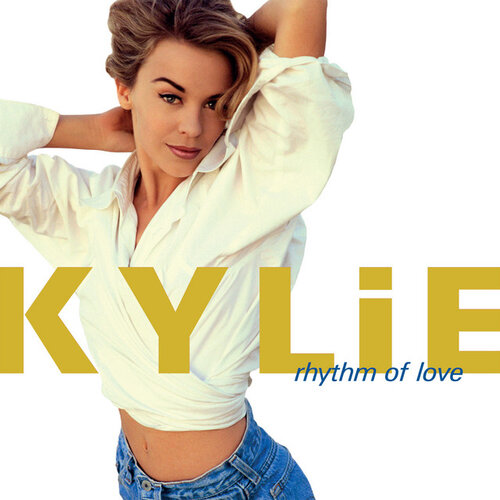
But where the world looks at throngs of teenage girls screaming at a boy band concert and sees teenage hysteria – a horrifying cocktail of hormones, niche obsession and an apparent abhorrent taste in music – I see thousands of girls who are managing to find joy and delight during one of the most difficult and complicated phases of their lives.

At those concerts, usually in venues reserved for male-dominated sporting events, young women suddenly have space – we have our music, we have our thing. We have our newfound thousand-something friends who all like the same thing as us. We’re all on fire with desire, waiting for our boys to get on stage. And then the lights go off, the music swells and it’s just too much and the only reasonable way to deal with such raw emotion is to scream our fucking heads off.

as.jpg

PHOTO CREDIT: @almosbech/Unsplash

We lose our minds a bit because being a teenager is horrible! But this is great! And we’re inexplicably horny! And we don’t quite understand what’s happening! Or what it means! And while the world around us is confusing and our parents are breaking up and our grandparents are dying and our teachers are unfair, here, in this space, we can just let rip. We can scream, and so we do. Where else can girls and women just scream at the top of their lungs in wild abandon? (And if there is such a place, please let us know immediately.)

Because of this, some people try to separate desire or sexuality from fandoms and insist that’s not all it’s about (“I just really love their music! They’re so talented!”) – and it isn’t – but it’s also really important to acknowledge that it exists and is a big part of it, and that that’s OK. The sexual desire of women and girls of all ages and of all orientations is important and complicated, it’s a part of our identity and overall being, and for young women, fandoms give us not just a physical space to go scream at a concert, but a psychic space where we can work out elements of our own identity, and who we really are, including our sexual desires and preferences.

And like with any cocoon – you do come out differently. Some as graceful, colourful butterflies, or, as I did, an acne-ridden 15-year-old Britney Spears fan. Alas, fandoms can’t fix the pain of one’s teen years or life situations, but instead serve us throughout different phases of our lives, giving us rooms to scream in and choreographed dances to learn, distracting us from the painful ebb and flow of everyday life”.

Rather than ridicule and castigate young women and girls because they love certain bands, I think now, more than ever, we need to hear their voices and realise how influential they are. Also, what is the issue with girls screaming at gigs?! I think it adds something truly exciting and exhilarating, and it is a phenomenon that will never die! It doesn’t just apply to bands: so many male and female solo artists are where they are because of their young female demographic – from Katy Perry and Ed Sheeran through to Taylor Swift. I also think that many Rock and Indie bands – who one would normally feel is a boys’ zone and more appealing to men – have such a fervent and dedicated female fanbase, but they still have to face sexism, dismissal and these never-ending prejudices. Taking things back to the start when I mentioned Caitlin Moran speaking with Lauren Laverne and how, in More Than a Woman, Moran tackles that perception how teenage girls are about crushes and fantasising about band and it is the boys who are the proper fans. From The Beatles and The Rolling Stones through to the Pop idols of the 1980s such as Madonna, right through to the huge bands and artists of today, it is all down to girls and young women that they exploded and have such a legacy. Rather than marginalise and patronise the loyal and hugely important young female/girl voice in music, we should reappraise and respect them. Because, without their unquenchable fandom and following, so many great bands and artists…

WOULD be nothing without them.

FEATURE: From the Ghosts of the Overlook Hotel… Kate Bush’s The Dreaming at Thirty-Eight: Is Get Out of My House Her Finest Closing Track?

FEATURE:

From the Ghosts of the Overlook Hotel…

Kate Bush’s The Dreaming at Thirty-Eight: Is Get Out of My House Her Finest Closing Track?

___________

SEPTEMBER sees three of Kate Bush’s albums…

ass.jpg

IN THIS PHOTO: Kate Bush signing copies of The Dreaming in 1982

celebrating anniversaries. Never for Ever was forty on the 8th, whereas Hounds of Love turns thirty-five on the 16th. Although it is not a big birthday, one cannot ignore The Dreaming’s thirty-eighth birthday tomorrow (13th). I like how Bush’s third, fourth, and fifth albums celebrate anniversaries in order, and that they were all released close to one another in terms of the month of September. Anyway. There will be love online for Bush’s album which, to me, took her beyond the realms of convention into the Avant Garde. One might say she was already there when she released her debut single, Wuthering Heights, in 1978, but in terms of opening up the doors and letting her imagination and limitations run wild, The Dreaming was really that moment! Bush co-produced Never for Ever with Jon Kelly, and it seemed like a pleasant and inspired period for her. The fact that she decided to produce The Dreaming solo is no reflection on Kelly; it was more a steppingstone to Bush doing what she had always wanted to: producing on her own and having the final say. Never for Ever, thanks in part to Bush’s discovery of the Fairlight CMI (which she used on Never for Ever but utilised a lot more for The Dreaming) and a need to make an album more in her own image and in her own time (her second album, Lionheart, was rush-released in 1978; 1979’s The Tour of Life was fun but exhausting and intense) lead to the very different and transformative sound we have on Never for Ever.

Before moving onto The Dreaming, I want to quote from an article written by Ben Hewitt for The Quietus that marked forty years of Never for Ever, and how it could be Bush’s most pivotal album:

Never For Ever is a starting point, not a zenith, and those miraculous opening six minutes aren’t as groundbreaking as her later innovations. But it is, I’d argue, the first of her LPs that’s genuinely experimental. Paddy’s greater involvement brought weird new instruments – zithers, kotos, musical saws – although Peter Gabriel introduced Bush to the Fairlight, the sonic equivalent of a Jedi being handed their first lightsaber; there were only three in the UK, and while she wouldn’t master it until later, her instant obsession speaks to how determined she was to bend her ornate style into bizarre new shapes. ‘All We Ever Look For’, her happy-go-lucky reflection on knotty parent-child relationships, mutates into several different forms by itself: it jumps between lurching, whistling synths, the koto’s fluttering strings, and a mishmash of Foley-style noises including chirping birds and hurried footsteps. “The whims that we’re weeping for/ Our parents would be beaten for,” sings Bush over its jaunty, oddball din, like the ringmaster at a baroque big top.

It is clear that Never for Ever was a big move forward for Bush: in many ways, The Dreaming was an augmentation and emphasis of that album, albeit with greater experimentation and intensity. Hewitt opinions that the political songs on Never for Ever, Army Dreamers, and Breathing, do not sound too radical now, and were probably not overly-revolutionary in 1980, yet this was relatively new territory for Bush, who felt very passionately about the world around her and subjects like warfare and nuclear disarmament.

fddd.jpg

IN THIS PHOTO: Kate Bush shot by Pierre Terrasson in 1982

The reason I mention this is because of the way Get Out of My House from The Dreaming reminds me a bit of Breathing from Never for Ever. It is clear that the intensity and power of Breathing was something new for Bush in 1980:

Nothing, though, is as devastating as the closing ‘Breathing’, a vision of nuclear doomsday with a horrifying wrinkle, like Threads turned into a poisonous lullaby (Bush, ever prescient, actually beat the film by three years). She sings as a terrified foetus breathing in toxic fumes inside the womb, slowly being killed by the blast’s fallout because mother doesn’t stand for comfort at all in this grim new world. Every element is beautifully brutal: the brooding electronics that fill the air like dangerous smog; the chilling, fairytale-gone-wrong image of plutonium chips “twinkling in every lung”, made extra-disturbing by gorgeous, glimmering chimes; the ominous scientific lecture that builds to a billowing, mushroom-cloud explosion of ungodly noise, followed by the background singers’ dread chant of “We are all going to die!” Most harrowing of all is the strangled, throat-tearing terror in Bush’s voice. In the past she’d shrieked, yelled, whooped and wailed, but she’d never all-out screamed like she screams here, a guttural cry for help that freezes the blood: “Leave me something to breathe!” Bush was as proud of its apocalyptic nightmare as she’d been unmoved by Lionheart. “It’s my little symphony,” she boasted to ZigZag”.

This takes me to the truly brilliant Get Out of My House. I have written more general pieces about The Dreaming through the years, and I have looked at the track, Houdini – which is my favourite Kate Bush song and the penultimate track on The Dreaming -, but I wanted to focus on this track for a couple of reasons. For one, it is a track one hardly hears on the radio, and it is one of the most urgent, eye-widening and memorable songs ever released by Bush! I often wonder what the music video would have looked like it Get Out of My House had been released as a single – I think it would have fared better than The Dreaming, and There Goes a Tenner! There is one other question I want to try and tackle but, before then, I have been looking on the Kate Bush Encyclopaedia for examples of where Bush explained the origins and inspiration for Get Out of My House:

'The Shining' is the only book I've read that has frightened me. While reading it I swamped around in its snowy imagery and avoided visiting certain floors of the big, cold hotel, empty for the winter. As in 'Alien', the central characters are isolated, miles (or light years) away from anyone or anything, but there is something in the place with them. They're not sure what, but it isn't very nice.
The setting for this song continues the theme - the house which is really a human being, has been shut up - locked and bolted, to stop any outside forces from entering. The person has been hurt and has decided to keep everybody out. They plant a 'concierge' at the front door to stop any determined callers from passing, but the thing has got into the house upstairs. It's descending in the lift, and now it approaches the door of the room that you're hiding in. You're cornered, there's no way out, so you turn into a bird and fly away, but the thing changes shape, too. You change, it changes; you can't escape, so you turn around and face it, scare it away. (Kate Bush Club newsletter, October 1982.

IN THIS PHOTO: Kate Bush in 1982

The song is called 'Get Out Of My House', and it's all about the human as a house. The idea is that as more experiences actually get to you, you start learning how to defend yourself from them. The human can be seen as a house where you start putting up shutters at the windows and locking the doors - not letting in certain things. I think a lot of people are like this - they don't hear what they don't want to hear, don't see what they don't want to see. It is like a house, where the windows are the eyes and the ears, and you don't let people in. That's sad because as they grow older people should open up more. But they do the opposite because, I suppose, they do get bruised and cluttered. Which brings me back to myself; yes, I have had to decide”.

I think The Dreaming is both one of Kate Bush’s best and most-underrated albums, and it is clear that she put so much of herself into the album. The effort, time and soul she gave to the whole process is unbelievable, and I would love to have seen footage of Get Out of My House being recorded! Was Bush confined in a smaller recording space, or was she throwing herself around a studio?! There are a few voices in the song, but Bush takes the lead, and there is backing where she shouts the words ‘slamming’ and ‘get out of my house’, and she exudes so much terror and physicality! I can hear Bush imbibing and possessing The Shining, and this rather ghostly and demented spirit! The electric guitars from Alan Murphy are great, and Paddy Bush adds some backing vocals. The percussion is tribal and bellicose, and drum talk is provided by Esmail Sheikh; percussion is done by Preston Heyman. I get these visions of the other musicians recording their parts alone/together, and Bush doing the vocal by herself, going back time and time again to ensure the next take is as heart-stopping as the previous! When thinking about Never for Ever, The Dreaming, and Hounds of Love, they share something in common: two incredible closing tracks. Never for Ever’s Army Dreamers, and Breathing are stunning and more politically-motivated than anything Bush recorded to that point. Hounds of Love’s second side, of course, is The Ninth Wave - and we end with the glorious one-two of Hello Earth, and The Morning Fog.

IN THIS PHOTO: Kate Bush captured at Abbey Road studios in May 1982/PHOTO CREDIT: Steve Rapport

For me, the best final two tracks can be heard on The Dreaming. Houdini is this lush, gorgeous and intriguing story of the escapologist, Harry Houdini, which I have written about in detail. There, Bush breaks out a more guttural vocal at times (thanks to some milk and chocolate giving her voice more mucus and rawness!), and that is intensified in a very different song, Get Out of My House. An artist who could shift worlds and themes over the course of two songs, I think Get Out of My House is her best closing track – as much as I love the title track from The Kick Inside! Like all the truly epic closing tracks – including The Beatles’ A Day in the Life from Sgt. Pepper’s Lonely Hearts Club Band -, you cannot follow Get Out of My House with anything, such is the effect it has on the listener! There are so many wonderful songs on The Dreaming – including All the Love, Leave It Open, and Suspended in Gaffa -, but I think Get Out of My House defines the album. Not only is this Kate Bush almost Jekyll-and-Hyde-like transforming from the sweeter, more balletic singer of The Klick Inside, and Lionheart, to this unleashed and transformed artist! As Graeme Thomson observed in his biography, Under the Ivy: The Life & Music of Kate Bush,  one can see some personal elements in the song.

Although The Dreaming is a phenomenal album, it took a lot out of Bush, as she was solo producing for the first time. There is so much experimentation and different layers through the album, she was barely getting out or eating healthily which, as one can imagine, was taking its toll on her physical and mental-health – one of the reasons why she retreated to the countryside before she recorded Hounds of Love and why, in 1983, she radically changed her life to include an overhaul to her diet, building her own studio, and spending time with her family and boyfriend without the stress of work. Thomson observes how Bush had this “hidden anger” because she had been intruded upon and had her privacy sacrificed through her career; she was releasing this anger and “giving living expression to her darkest fears and latent instincts”. One can analysis and dissect lyrics like “They come with their weather hanging 'round them/(Slamming)/But can't knock my door down!/(Slamming)” as a nod to press intrusion, and “This house is full of m-m-my mess/(Slamming)/This house is full of m-m-mistakes/(Slamming)/This house is full of m-m-madness/(Slamming)” as, perhaps, Bush taking on producing and trying to make sense of the task ahead of her. The Primal Scream element of the song is what really arrests me! Many songwriter would be too inhibited and conscious of truly letting themselves go and releasing their energy in such a raw and unfiltered way.

cccc.jpeg

IN THIS PHOTO: Kate Bush photographed on 23rd October, 1982/PHOTO CREDIT: Sunday Mirror/Mirrorpix/Getty Images

That said, Lana Del Rey is planning something similar, but it is not often Pop artists venture to such dark places – even if it can be quite cathartic. To me, Get Out of My House is one of Bush’s best songs, and it is her finest closing track. One might argue The Sensual World’s This Woman’s Work, or Aerial’s title track are hard to compete with, but it is the strangeness and ferocity of Get Out of My House that not only (vividly) announced this new artist who was almost shedding off old skin and trying to excorcise demons of intrusion and previous limitations, but someone who had grown in stature and confidence since her earliest days. My next feature, arriving on 14th September, talks about Hounds of Love and its importance thirty-five years after release. It is amazing to think that the next album track, chronologically, from Get Out of My House was Running Up That Hill from Hounds of Love. If Get Out of My House is this fierce, fascinating and fiery finale from The Dreaming, then Running Up That Hill is a more luscious, autumnal and warm opening chapter from Hounds of Love. On that song, Bush asks what it would be like if men and women could, with God’s help, swap places to see each other’s position through different eyes – the song was originally called A Deal with God, until it was noted more conservative and religious territories might consider it blasphemous and radio stations would not play it! I consider Hounds of Love to be an album of new awakenings, revitalisation and beginnings. Bush would go deep and dark through The Ninth Wave (especially on Waking the Witch), but Get Out of My House is a song where she makes a very bold and memorable statement – inspired by The Shining, Bush had this setting and outlet to express so many frustrations and emotions. The Dreaming turns thirty-eight tomorrow, and it is an album that warrants fresh inspection and appreciation. In Get Out of My House, the album boasts… 

xmxmxm.jpg

IN THIS PHOTO: Kate Bush captured at Abbey Road studios in May 1982/PHOTO CREDIT: Steve Rapport

SUCH a perfect closer.

FEATURE: The September Playlist: 2: A Letter to You in These Strange Timez

FEATURE:


The September Playlist

IN THIS PHOTO: Bruce Springsteen

Vol. 2: A Letter to You in These Strange Timez

__________

THIS week’s Playlist is definitely packing…

IN THIS PHOTO: Janelle Monáe

quite the musical punch! Not only do we have new material from The Boss, Bruce Springsteen, and Gorillaz (ft. Robert Smith); there are new cuts from Janelle Monáe, Doves, Everything Everything, The Staves, and The Flaming Lips (ft. Kacey Musgraves). Throw into the mix Marilyn Manson, Alicia Keys, Shame, and New Order, and it is a packed and exciting week! If you require a bit of a boost and lift to get the weekend off, then have a listen to the playlist and settle in. This is a pretty fantastic and standout week for music; such a lot of top artists in…

IN THIS PHOTO: Doves/PHOTO CREDIT: Jon Shard

A great mix.

ALL PHOTOS/IMAGES (unless credited otherwise): Artists

___________ 

Bruce Springsteen - Letter to You

Gorillaz (ft. Robert Smith) - Strange Timez (Episode Six)

PHOTO CREDIT: Rob Allen/Perspective

Doves Broken Eyes

New Order - Be a Rebel

kkk.jpg

PHOTO CREDIT: Matt Jones for Rolling Stone

Janelle MonáeTurntables

PHOTO CREDIT: un.titled studio

Everything Everything Lost Powers

This Is the Kit - Coming to Get You Nowhere

Django DjangoSpirals

James Blake Godspeed

PHOTO CREDIT: Sequoia Ziff

The Staves - Trying

Marilyn Manson INFINITE DARKNESS

eddd.jpg

The Flaming Lips (ft. Kacey Musgraves) - God and the Policeman

PHOTO CREDIT: Chris Sgroi

Matt Berninger One More Second

PHOTO CREDIT: Ciaran O'Brien

Ailbhe Reddy Looking Happy

Dizzee Rascal (ft. Smoke Boys) - Act Like You Know

Joni Mitchell House of the Rising Sun

PHOTO CREDIT: Tess Roby

Helena DelandTruth Nugget

Alicia Keys - Love Looks Better

PHOTO CREDIT: Sam Alexander-Gregg

Shame Alphabet

Elizabeth CookPerfect Girls of Pop

Lola Coca De Nada

Elvis Costello - Hey Clockface / How Can You Face Me?

PHOTO CREDIT: Mariam Sitchinava

Katie Melua Your Longing Is Gone

xcc.jpg

Stefflon Don Move

A Certain Ratio Berlin

Steps What the Future Holds

PHOTO CREDIT: Freddie Stisted

Rose GraySame Cloud

PHOTO CREDIT: Ian Laidlaw

Tash SultanaBeyond the Pine

Blue HawaiiNot My Boss

Tropical Fuck StormHeaven

Lucy Spraggan Flowers

Of Monsters and Men Visitors

beabadoobeeWorth It

Annie - The Streets Where I Belong

Will Joseph Cook Be Around Me

FEATURE: A Buyer’s Guide: Part Nineteen: T. Rex

FEATURE:


A Buyer’s Guide

Part Nineteen: T. Rex

___________

EVEN though T. Rex were Tyrannosaurus Rex first…  

I am covering the former on A Buyer’s Guide. I also know that the band, as T. Rex, only released eight studio albums, but I am going to recommend the four essential releases, the final studio album, and an underrated gem – and a great accompanying book. I am a huge fan of Marc Bolan and a recent tribute album, AngelHeaded Hipster: The Songs of Marc Bolan and T Rex. It is a fantastic release, and one that beautifully pays tribute to a great frontman. I wanted to honour Bolan and T. Rex by spotlighting the incredible albums – many of those I grew up on. If you are new to one of the most successful bands of the 1970s, then I hope this edition of A Buyer’s Guide…  

cccc.jpeg

PHOTO CREDIT: Michael Putland

HELPS you out.  

_____________

The Four Essential Albums

T. Rex

Release Date: 18th December, 1970

Labels: Fly (U.K.)/Reprise (U.S.)

Producer: Tony Visconti 

Standout Tracks: The Children of Rarn/Diamond Meadows/The Wizard

Buy: https://www.discogs.com/T-Rex-T-Rex/release/457298

Stream: https://open.spotify.com/album/3f65UcXm7xtNq2UDEhDi62

Review:

Tyrannosaurus Rex's transformation from oracles of U.K. hippie culture to boogie-friendly rock stars began with the album A Beard of Stars, released in early 1970 when the band picked up electric instruments, and by the time the year was out, Marc Bolan had pared their name down to the more user-friendly T. Rex and dropped their first album with the new moniker. Oddly enough, while the songs on T. Rex bear a much stronger melodic and lyrical resemblance to what would make the band famous on Electric Warrior in 1971, the tone of the album is a bit more pastoral than A Beard of Stars; on most of the tunes, the electric guitars are more successfully integrated into the arrangements so they lack the jarring immediacy of "Elemental Children" or "Pavilions of the Sun," and Mickey Finn still wasn't using a full drum kit, so the tunes don't quite have the kick of a full-on rock band. But Bolan himself sounds like he's ready for his close-up, as his vocals -- mannered yet quietly passionate and full of belief -- suggest the glam hero he would soon become, and numbers like "Beltrane Walk," "Is It Love," and "Diamond Meadows" (with its wink-and-nudge refrain "Hey, let's do it like we're friends") are just a few paces away from the swaggering sound that would make him the U.K.'s biggest star. If Bolan was reaching for the big time with T. Rex, he also sounds like he was letting out the rock star that had always lurked within him, and there isn't a moment here that doesn't sound like he's singing from his heart and soul. T. Rex is the quiet before the storm of Electric Warrior, and it retains a loopy energy and easy charm that makes it one of Bolan's watershed works” – AllMusic

Choice Cut: Beltane Walk

Electric Warrior

Release Date: 24th September, 1971

Labels: Fly (U.K.)/Reprise (U.S.)  

Producer: Tony Visconti

Standout Tracks: Cosmic Dancer/Jeepster/Life’s a Gas

Buy: https://www.discogs.com/T-Rex-Electric-Warrior/master/72458

Stream: https://open.spotify.com/album/4Yw5uS8at8GkWmH2gZmLY0

Review:

Bolan himself was never one to avoid a trend. In his own mind he was always a star: Stories abound of his early days as a persistent chancer in mod/psychedelic London. Yet, if John's Children and Tyrannosaurus Rex didn't hold the keys to his inevitable stardom they certainly allowed him to learn the tricks that would flower on his first hit ''Ride A White Swan''. This was the point at which he and long-term producer Tony Visconti took the hippy-dippy lyrics and Larry the lamb vocal stylings and bolted them on to good old stripped-down, four-to-the-floor rock 'n' roll. For four glorious years they never looked back...

With superb sleevenotes by Visconti himself, it must never be forgotten that this is as much his album as Bolan's (not forgetting Mickey Finn's radical bongos, ho ho). Visconti was behind so much of the glam-defining process that his name becomes synonymous with the genre. On this and Bowie's early work (Space Oddity, Man Who Sold The World) he creates a warm, spacey reverb-drenched world full of hip-thrusting libido and pouty tongue-twisting. Bolan's lyrics often approach 'back of a bus ticket' status in their throw-away couplets (''Girl'', ''Motivator'' etc.), but what shines through is the irrepressible fun the whole team seem to be having. The two monster hits (''Get It On'' and ''Jeepster'') still stand as monuments to pop concision. Nonsensical rhyme riding on swaggering guitar and drums.

Add to this at least two other utter classics (the frenzied funk of ''Rip Off'' and the touching ballad ''Life's A Gas'') and not one real filler and you've got an album that's always going to sound box fresh: 5.1 surround sound just adds a little icing on the cake. Life's still a gas…” – BBC

Choice Cut: Get It On

The Slider

Release Date: 21st July, 1972

Labels: T. REX (U.K.)/Reprise (U.S.)

Producer: Tony Visconti

Standout Tracks: Rock On/The Slider/Telegram Sam

Buy: https://www.discogs.com/T-Rex-The-Slider/master/72462

Stream: https://open.spotify.com/album/5lL8N073N1d9ENpzM9Wtj5

Review:

Even The Slider’s lesser songs—“Baby Boomerang” and “Baby Strange” are as puerile as their titles suggest—are elevated by Visconti’s touch. The string sections of “Rabbit Fighter” form a sweeping anthem from so much hot air. Just as impressive is how a throwaway like “Spaceball Ricochet” can become wholly evocative. “Ah ah ah/Do the spaceball” doesn’t do a damned thing when written out, but with the bowed cello and Flo & Eddie’s uncanny accompaniment of Bolan’s gasps, this trifle transforms into one of the album’s most ethereal moments.

“Chariot Choogle” (like “Buick Mackane” on the A side) is a polymer of heavy guitars and giddiness. Amid some footballer barks lies a sweetheart of a line: “Girl you are groove/You're like the planets when you move.” It reveals just how T. Rex took the onerousness weight of hypermasculine blues-based rock and replaced it with something featherlight and androgynous, the moment where Reynolds said, “cock rock became coquette rock.” On the 12-bar blues title track, Bolan’s admission that “and when I’m sad, I slide” induces a sense of vertigo with phased strings and voices, the shaker and fricative hiss close in the mix anticipating ASMR. Elsewhere, Bolan sings that the slider is “a sexual glider” while promo for the album asked: “To be or not to be, that is The Slider.” Thousands of spins later, I confess I’m no closer to understanding just what the titular proper noun or verb might mean” – Pitchfork

Choice Cut: Metal Guru

Tanx

Release Date: 16th March, 1973

Labels: EMI (U.K.)/Reprise (U.S.)

Producer: Tony Visconti

Standout Tracks: Tenement Lady/Electric Slim and the Factory Hen/Born to Boogie

Buy: https://www.discogs.com/T-Rex-Tanx/master/86154

Stream: https://open.spotify.com/album/3I4VF8Hg1aXiCOC3zLxfXG

Review:

By 1973's Tanx, the T. Rex hit-making machine was beginning to show some wear and tear, but Marc Bolan still had more than a few winners up his sleeve. It was also admirable that Bolan was attempting to broaden the T. Rex sound -- soulful backup singers and horns are heard throughout, a full two years before David Bowie used the same formula for his mega-seller Young Americans. However, Tanx did not contain any instantly recognizable hits, as their past couple of releases had, and the performances were not quite as vibrant, due to non-stop touring and drug use. Despite an era of transition looming on the horizon for the band, tracks such as "Rapids," "Highway Knees," "The Street & Babe Shadow," and "Born to Boogie" contain the expected classic T. Rex sound. The leadoff track, "Tenement Lady," is an interesting Beatlesque epic, while "Shock Rock" criticizes the early-'70s glam scene, which T. Rex played a prominent role in creating. Other highlights include one of Bolan's most gorgeous and heartfelt ballads, "Broken Hearted Blues," as well as the brief, explosive rocker "Country Honey." Tanx marked the close of what many consider T. Rex's golden era; unfortunately, the bandmembers would drift off one by one soon after, until Bolan was the only one remaining by the mid-'70s” – AllMusic

Choice Cut: Life Is Strange

The Underrated Gem

Futuristic Dragon

Release Date: 30th January, 1976

Label: EMI

Producer: Marc Bolan

Standout Tracks: All Alone/Sensation Boulevard/Dream Lady

Buy: https://www.discogs.com/T-Rex-Futuristic-Dragon/master/72461

Stream: https://open.spotify.com/album/7bxgqrql5oDIr4SVFB1bYN

Review:

The most blatantly, and brilliantly, portentous of Marc Bolan's albums since the transitional blurring of boundaries that was Beard of Stars, almost seven years prior, Futuristic Dragon opens on a wave of unrelenting feedback, guitars and bombast, setting an apocalyptic mood for the record which persists long after that brief (two minutes) overture is over. Indeed, even the quintessential bop of the succeeding "Jupiter Liar" is irrevocably flavored by what came before, dirty guitars churning beneath a classic Bolan melody, and the lyrics a spiteful masterpiece. While the oddly Barry White-influenced "Ride My Wheels" continues flirting with the neo-funk basics of 1975's Bolan's Zip Gun, the widescreen sonic majesty of Futuristic Dragon was, if anything, even more gratuitously ambitious than its predecessor. "Calling All Destroyers," "Sensation Boulevard" and the magnificent "Dawn Storm" all bristle with lyrical splendor, while "Casual Agent" revisits some older glories with its near-slavish re-creation of the old "Rip Off" vibe. But if the other tunes pursue Bolan's new-found fascination for pomp over pop with barely disguised glee, he wasn't above slipping the odd joke into the brew to remind us that he knew what he was doing. "Theme for a Dragon" is an all-but Wagnerian symphonic instrumental -- with the sound of screaming teenyboppers as its backdrop, and the punch line lurking further afield among the handful of obvious hits which he also stirred in. The first of these, the big-budget ballad "Dreamy Lady," scored even before the rest of the album was complete. It was followed by the idiotically contagious "New York City," a piece of pure pop nonsense/genius which so effortlessly returned him to the British Top 20 that, for a few weeks through mid-1976, the idea of seeing "a woman coming out of New York City with a frog in her hand" really didn't seem as silly as it sounded” – AllMusic

Choice Cut: New York City

The Final Album

Dandy in the Underworld

Release Date: 11th March, 1977

Label: EMI          

Producer: Marc Bolan

Standout Tracks: Dandy in the Underworld/Jason B. Sad/The Soul of My Suit

Buy: https://www.discogs.com/T-Rex-Dandy-In-The-Underworld/master/86157

Stream: https://open.spotify.com/album/5aEVv5sSzit1hQVF5ASVKO

Review:

The title track and the churning "Visions of Domino" all bristle with revitalized energy, while "Jason B. Sad" cheekily medleys Bolan's own "Bang a Gong" and "Telegram Sam" melodies into a dead-end drama utterly in keeping with the new wave's own belief that the future was futile. By the time the album wraps up with the rock'n'armageddon-flavored "Teen Riot Structure," Bolan was not simply wearing the mantel of punk godfatherhood, he was happily sticking safety pins through it and preparing his next move, the driving "Celebrate Summer" single -- absent from the original album, but included now as one of five bonus tracks appended to the Edsel remaster. Riding in on buzzsaw guitar and thundering bass, it packed a killer chorus and an uplfting message ("Hey little punk, forget that junk and celebrate summer with me") and it really was the greatest record he'd made in years. It was also his last -- a month after its release, Marc Bolan was dead. Sorrow immediately imbibed Dandy in the Underworld with a dignity that, had Bolan lived, it probably wouldn't have otherwise deserved -- it is not, overall, one of his strongest albums, and the demos and outtakes included on the later volumes of the Unchained series suggest that his proposed next album would have left it far behind. But conjecture, like hindsight, can be a dangerous gauge. At the time, Dandy not only seemed bloated with promise, it was pregnant with foreboding as well. Listen again to the lyrics of the title track -- self-mythologizing autobiography and not a happy ending in sight. Just like real life” – AllMusic

Choice Cut: I Love to Boogie

The T. Rex Book

Ride a White Swan: The Lives and Death of Marc Bolan

Author: Lesley-Ann Jones

Publication Date: 23rd May, 2013

Publisher: Hodder & Stoughton

Synopsis:

From mod folk artist to flower power pixie elfin to the king of glam rockers, Marc Bolan was the ultimate chameleon. His far-reaching musical and stylistic influence is more relevant today than ever with hits such as 'Ride A White Swan', 'Children Of The Revolution', 'Get It On' and 'Hot Love' as fresh and exhilarating as when first released.

At the peak of his popularity during his lifetime Bolan was outselling Jimi Hendrix and The Who, and yet relatively little is really known about the hypnotic, enigmatic 20th century boy turned 21st century icon. At last, in the 35th anniversary year of his tragic death, Marc Bolan represents the definite biography.

Here rock biographer, Lesley-Ann Jones, paints a meticulous portrait of the T-Rex front man. From his childhood growing up in Hackney to his untimely death at the age of 29, Bolan's life was one of relentless experimentation and metamorphoses. Hallucinogenic drugs, wizardry and levitation, alcoholism, tax evasion and a spectacular fall from grace were to punctuate his short life, as he continued to strive to reinvent himself and his music over and over again.

Lesley-Ann has been granted access to those who knew Bolan best, including his partner and the mother of his only son, Gloria Jones and his brother, Harry Feld” – Waterstones

Order: https://www.waterstones.com/book/ride-a-white-swan/lesley-ann-jones/9781444758795

FEATURE: The VHS Club: Creating a Cultural Archive for Future Prosperity

FEATURE:

The VHS Club

ILLUSTRATION CREDIT: Hollis Brown Thornton

Creating a Cultural Archive for Future Prosperity

___________

THIS feature is sort of motivated…  

PHOTO CREDIT: @tjump/Unsplash

by the increased uncertainty around COVID-19 and whether things are going to get better soon. It is a scary time, and a lot of people are frustrated that things seem to be going backwards. I have mentioned how it would be great to have every episode of Top of the Pops available on some sort of channel or hub but, as we live in a time when there is so much T.V. and streaming options, it would be great to see a channel or site where we could bring together a lot of the best music! T.V. and culture from the 1980s onward. It might be too unwieldly to have every advert, music T.V. show and interesting bit of pop culture on a channel, and it would be difficult to organise it. One of the saddest things about reminiscing and being nostalgic is that these memories exist only in our mind, and I think it is a shame that we cannot have something implanted into our brain that unearths every memory from our childhood. It is brilliant that we can see music documentaries, quirky adverts from back in the day alongside Top of the Pops and other music shows. Not only are these useful and uplifting for those of us who were alive in the 1980s and 1990s, but it is giving a lot of enjoyment and information to the younger generation. Rather than it being a mere nostalgia trip, I think there should be some archive that definitely splices some cool adverts that make us smile; a sort of MTV/VH1 portal where all the great videos from the time are shown, in addition to documentaries and specials that shine a light on wonderful albums.

ILLUSTRATION CREDIT: Aly Jones

At the moment, there is nothing really like that, and one has to sort of navigate through YouTube and various channels so they can get all of this information. We can stay abreast of everything current in terms of culture because of social media and how many channels we have to put this stuff. Back decades ago, there weren’t those options so, when it comes to archiving, it is a bit more of a mess! I am not sure whether this new sensation, which I have called The VHS Club, will take place online or on T.V., but I think it would be easier having a channel where one could visit. I feel the focus should be on music but, when it comes to adverts, they would sort of act as an old-skool break between shows. This is not just me fantasising and trying to have a big chunk of my past on the screen: other people have been digging episodes of Top of the Pops, features and radio shows that look back at classic albums, and other assorted trips back that remind us of those days. It would be a little tough to go back before the 1980s, but one has two decades of music history to look back on. I think it would be more than a memory trip for so many of us. At a moment where things are quite dark, it would be a big boost in terms of mental-health wellness, and I think there are so many channels and very little in the way of quality.

Also, on streaming services, there are so many programmes that one can be overwhelmed and you never know which are worth watching and whether the recommended shows are worth dipping into. If you love your music, this would be the station to go to, and there would be daily schedules mixing in music T.V. shows like Classic Albums and Top of the Pops, together with music-related shows, documentaries and bits from MTV and other stations. Anyone could save various programmes and create a Favourites compilation, and one would not have to skip the adverts - as they would be pretty awesome, if obsolete. I would like nothing more than, as I said earlier, to have home videos of every moment of my childhood. It would be impractical and impossible, but I’d love to have those memories on hand just so that it can give me a boost now and I could keep a hold of a treasured time. There are fascinating articles that explain how music from the past informs the future, and I feel having this awesome music and culture from the 1980s and 1990s on a T.V. channel would help inspire artists now and absorb into modern culture. One can say that this happens at the moment, but everything is so fragmented and widespread. There are old videos here and there and one sort of happens upon these discoveries. Just a personal thing, but I love some of the T.V. shows of the 1980s and 1990s like Fun House, which can provide a little bit of a distraction from the music.

I just feel that there is a current mood of uncertainty and anxiety that is leading people to look back to the past and embrace music in new ways. Rather than provide an escape and something that is purely for nostalgia, having various T.V. shows, radio shows, documentaries and adverts from two great decades would give a lot of people guidance, strength and focus. We cannot help but live in the present and be aware of what is around us; The VHS Club would offer something we can balance that out with. Maybe (the channel) would allow one to compile their own mixtapes and order them to cassette; some dedicated Top of the Pops channel or option, or there might be a section dedicated to major events from musical history. However it would look, it is a case of combining the archives rather than making new shows, and although it would take a bit of time to get everything together, I feel it would be a winner. I do think that all of us, whether we lived through the 1980s and 1990s or not, appreciates the value of music and memory; how the two are linked and how music has shaped us all. For those of us like me who feels that many memories are slipping away, I would like that fire restoked and burning again, if only so I can look ahead and find some new strength. Education and informative as it is entertaining and healing, I think a new platform that combines two decades of music culture together would inspire a lot of people. Although things are quite hectic and unsure at the moment, T.V. channels and streaming platforms have…

PHOTO CREDIT: @glenncarstenspeters/Unsplash

THE space and time to make it happen.  

FEATURE: Second Spin: Shakespears Sister - Hormonally Yours

FEATURE:

Second Spin

Shakespears Sister - Hormonally Yours

___________

THERE are some albums that are defined by one song…

and I think people do not look beyond the hit single. I have said this before, but you get these great albums that had a very obvious and successful smash, and the other songs are not quite held in the same regard. To be fair to Shakespears Sister, Stay is a song impossible to ignore or dislike! It was released as the second single from Hormonally Yours on 13th January, 1992, and it was a smash around the world. The combination of Marcella Detroit’s higher-pitched soprano vocals and Siobhan Fahey deeper tones give the song that beautiful blend of emotions and shades – something I had not heard much until that point. Hormonally Yours peaked at number-three on the album charts and was certificated double -platinum by the BPI, where it spent fifty-five weeks on the charts! Of course, Stay was a massive song that aided by an incredible video from Sophie Muller – the video depicts (inspired as it was by the film, Cat-Women of the Moon) Detroit and Fahey fighting over a comatose man (played by Dave Evans). I listen to the song and watch the video now, and there is this immense power that comes from it! Such an unconventional song, I imagine there was scepticism as to whether it would be successful and it was indicative of Shakespears Sister’s sound.

Before moving on, it is worth noting that Shakespears Sister reformed last year after twenty-five years or so since Detroit and Fahey parted ways. They released a new single, All the Queen's Horses, last year and toured - and let’s hope they will release another album soon. There is a new package, Our History, out later this year that is described as follows:

Shakespears Sister present ‘Our History’ - a deluxe boxset encompassing the complete London Records collection.
The box includes remastered vinyl and 3CD set of both ‘Sacred Heart’ and 'Hormonally Yours', a hard backed photographic book of classic and rare imagery including a foreword from Siobhan. The complete Brighton Dome gig from 2019 and all videos on DVD, a new ‘You Made Me Come To This' 10 inch and Ride Again Ep on vinyl. Plus exclusive merch- a postcard set, 12” print and fabric patch. All housed in a wibalin box with gold embossing
”.

I would also recommend people go and buy the E.P. from last year, Ride Again, which includes some new great material All great signs that we will get more from Shakespears Sister down the road. Anyway. After Hormonally Yours, two more albums were released under the Shakespears Sister name - #3 in 2004, and Songs from the Red Room in 2009. It I wonder why Siobhan Fahey continued on under the duo’s moniker and didn’t just release solo albums. In any case, Hormonally Yours is, to me, the finest Shakespears Sister album, and one that boasts so many great tracks. The title of Hormonally Yours, incidentally, derived from both members being pregnant whilst making the album – which might have accounted for some increased tensions, and why the already-precarious relationship suffered severe damage. I love the pairing of Siobhan Fahey and Marcella Detroit, and they work sublimely through the album! Fahey wanted to embark on music that was darker and had more edge than her work with Bananarama, and the Irish-born Fahey and American Detroit’s very different voices compliment each other wonderfully. There are obvious gothic touches and theatrics that was a cut above the Pop of 1992. I remember Hormonally Yours coming out, and it was one of those albums that scored some very memorable and happy days! Whilst singles Stay, and Goodbye Cruel World were big on the radio, I think I Don’t Care was the song that stood out most to me – and it is still my favourite from the album.

Whilst I normally include albums in Second Spin that are underrated, the reason for putting Hormonally Yours here is because it got a lot of focus in the 1990s, but it is not an album many people mention now. I feel it is one of the strongest albums of the 1990s, and there are so many great songs away from the singles – including Emotional Thing, and Let Me Entertain You. I will bring in a review of the album soon, but there is a fascinating feature from Pop Matters that was published in 2017. They remark how the band’s second album (after Sacred Heart, which boasted the marvellous single, You’re History) was a very different sound and style to what fans might have been expecting:

Hormonally Yours, released in February of 1992, was an utterly unexpected reinvention of the band’s sound. Originally conceived as a concept album written as a sort of soundtrack to a schlocky '50s-era B-film by Arthur Hilton called Cat-Women of the Moon, many of the songs’ lyrical content were derived from the film’s storyline. The band initially sought to secure the rights to the film in order to expand on the album’s concept with planned music videos built directly on actual footage from the film. The idea was shot down by the record company. The influences from the film that do remain on the album have given it a fey, moonlit quality that suggests a host of love songs beamed in from the galaxies of sci-fi.

I do love that Detroit and Fahey had these brilliant images that were so captivating and cool. Again, Shakespears Sister differed so much to what was around them. Pop Matters nod to the way Fahey and Detroit were cast, and some of the challenges with Stay:

In true rock ‘n’roll fashion, Detroit and Fahey played their respective roles in the band up to the hilt, each woman embodying a dressed-up, glitzed-over soubrette of vociferous demeanour. Hormonally Yours presented Detroit as a sleek, coifed Art Nouveau mistress, awakened from her post-mortem sleep, and Fahey as an unruly (and still dead) gothic scapegrace, with coiled black tresses and pancaked white makeup, her eyes racooned with the black of Victorian death. Like their name suggested, it was high Shakespearean drama, a strange detour into a pop music hinterland that owed much to dramaturgy as it did punk-rock.

In a bid to push a hit song, London Records, the band’s parent label, insisted on “Stay”, reportedly intended as the first single off the album but a suggestion adamantly shot down by Fahey, who felt strongly that the song wasn’t representative of the band as a whole. The label won out this time and “Stay” was released to a gobsmacking reception that led the single to the number one position on the UK Charts (and later a top five spot in the US and Canada).

Unlike the other tracks on Hormonally Yours, “Stay” featured Detroit, primarily the secondary vocalist of the band, on lead. Playing the angelic songbird to Fahey’s Faustian demon, Detroit’s whistle register sirens over the shimmering layers of gospel-tinged dirge-pop. Her vocal is dramatically circumvented by the Elizabethan horror of Fahey’s green-oceaned tremor: a lustful, throaty croon transmitting from another universe. It was precisely this clashing of extremes that appealed to an audience that wasn’t exactly sure what they were hearing.

I do think that some see Hormonally Yours as a one-single album, or that there is not a lot else on there that is worth listening to. Maybe in 1992, there was this bid to get the singles heard, but reviewers were keen to observe the depths of the album and how many terrific tracks there are on it. Now, in 2020, one does not really hear Hormonally Yours talked about a huge amount, and I have not heard many of the album tracks played on the radio lately – one might hear Stay every now and then. The final passage from Pop Matters I want to source mentions my favourite song from Hormonally Yours, I Don’t Care:

The most affecting numbers, however, remain the ones which focus on the storms of conflict. Released as a third single, “I Don’t Care” (a UK Top 10) was another betrayal of the band’s contentious personal affairs, a back and forth of bickering and reasoning that resulted in an even stronger delineation between the two women’s personalities (“Mark the spot you hate with an ‘X’, then shoot your bow and arrow / Do your worst, get it all off your chest...”). Pitched somewhere between the jaunty pop-irony of The Cure and the sultry clamour of Throwing Muses, “I Don’t Care” is a pop marvel of seductive iridescence, a danceable gait flowing with lush harmonies beneath the diamond-encrusted textures of the goth-rock glamour. Shoe-horned into its middle section is Fahey’s deadpanned reading of Dame Edith Sitwell’s “Hornpipe”, a poem delivered, somewhat anomalously, like a sardonic aside in a Commedia dell'arte show. Such creative shifts like these on the album are employed diplomatically yet with stylish irreverence; precisely the kind of exploits which distinguished the band from their considerably anodyne contemporaries at the time”.

I would urge people to listen to Hormonally Yours, as it is an album that has been revived with a lot of affection, yet it is not discussed and revisited all too often. In their review of 2009, this is what AllMusic had to say:

In keeping with the album's title, inspired by the pregnant state of the duo, Shakespear's Sister's second album is prone to mood swings and a flair for the dramatic. It's a vibe that benefits from the contrast between the throaty vocals of Siobahn Fahey and the falsetto flutter of Marcella Detroit. Hormonally Yours is a wonderful, charming album marred only by a few weak lyrics. Still, there is hardly a song that isn't engaging from the first listen. "Goodbye Cruel World" is infectious alternative pop. "I Don't Care" is bouncy and resilient, and "Let Me Entertain You" has a new wave feel and sardonic lyrics. "Catwoman" has a T. Rex swagger to it and "Hello (Turn Your Radio On)" is a stellar glam-tinged ballad with a dreamy chorus. They edge closer to dance on the disco ball funk of "Are We in Love Yet?" and the sultry, R&B-laced "Emotional Thing." Everything was lost in the wake of the lovely, dramatic "Stay," a global smash. It all adds up to make Hormonally Yours a beautifully quirky, emotionally rich, and nearly flawless pop record”.

You may be aware of Shakespears Sister, and you will definitely have heard of Stay. If you think that track lacks pop and punch, then Hormonally Yours offers diversity and relief in that sense. There is a great breadth of sounds through the album, and Fahey and Detroit sound committed and transfixing throughout – even if it would be very soon until they split. Do yourself a favour and give the supreme Hormonally Yours

A second spin!

FEATURE: Warm and Soothing: Dipping Into the Kate Bush Archive

FEATURE:


Warm and Soothing

IN THIS PHOTO: Kate Bush in a promotional photo for The Sensual World in 1989/PHOTO CREDIT: Guido Harari

Dipping Into the Kate Bush Archive

___________

THIS feature is more than a…

IN THIS PHOTO: Kate Bush during filming for The Line, The Cross and the Curve in 1993/PHOTO CREDIT: Guido Harari

general recommendation of Kate Bush. I know I have sort of covered this before but, as we are still technically in lockdown and things are not back to normal, one of the most soothing things one can do is to take a trawl through the Kate Bush archives! Not only is her music there for all to enjoy, but there are so many great interviews and clips that have not really been shown or people are aware of. This sort of all comes back to my question as to whether a new documentary should be released. I have campaigned quite a bit because, as Bush’s music continues to find new fans and is beloved now as it was years ago, there are going to be people who want something completer and more comprehensive than has been released already. I know there have been a few documentaries through the years but, as I have been looking for distraction and something to ease anxieties, I have been looking online, and there are so many wonderful interviews and archive material relating to Kate Bush. I think, in other documentaries, this aspect has not been mined a lot. Even the most ardent and committed Kate Bush fan might not be aware of what is out there. Whether it is a simply sensational performance of James and the Cold Gun during 1979’s The Tour of Life, or Bush discussing her excellent track, Hammer Horror, on Australian T.V. in 1978, there is so much wonderful audio and video that deserves to be seen more widely!

I think it is the manner in which Bush conducts herself and that calming speaking voice…one can get lost in a wormhole of Bush-related goodness! I think it is great that her exists on streaming sites and online, but it is hard to discover it all and find these treats. A lot of people might just search for Bush’s music, and they would be unaware of just what is on offer. I do love the videos themselves, but I am fascinated when Bush discusses her songs and gives us that sense of revelation and explanation. In this video, for example, she is asked about her song, Breathing, from 1980’s Never for Ever and whether it’s anti-war messages are something she genuinely believes in and is passionate about, or whether it was more of a cynical commercial move. This is a clip I had not discovered until last week, and I have not seen it in any documentary. Not only is one awed by the way Bush speaks and how she can address quite a big question with grace and intelligence…there is some great information that fans would love to see in a larger piece. Sadly, a lot of great video through the year has been lost through the years, and there is audio of interviews that was on YouTube last year that has since disappeared. This year, as I repeatedly say, is one where three of her albums celebrate big anniversaries – Never for Ever, and Hounds of Love (September), and Aerial (November).

I think, now more than at any time, Bush’s music is giving people strength and warmth at a moment in history that is very precarious and unpredictable. Let’s hope that, when we are through the worst of this, there are concerted efforts to produce a more authoritative and wider-ranging series relating to Kate Bush. Some might say that sticking to the essentials are all that people want to see – a bit about all her albums and a few interviews with choice guests etc. Having looked at a pretty good documentary (part two is here) that is on YouTube, there is definite scope to accumulate this with as much other great material that is out there. Of course, there are so many videos and clips that it would be impossible to put them all into a documentary, but treats like this Dutch interview, and Bush appearing on Razzamatazz in the 1980s is a real joy! Circling back to my feature’s headline and the point of all of this: spending some time searching from the online archives and watching these great interviews and performances can really be a tonic. One need not necessarily be a massive Kate Bush fan in order to feel the real benefits. I know there is a great news website that keeps you abreast of all the latest happenings relating to Kate Bush, and the podcast digs deep into various aspects of her career.

Like Radiohead, I wonder whether there will be a website soon that collates all the video and audio out there into a library. At the moment, one can get a lot of good information from a few different websites, but one has to spend a long time trawling and navigating so many search results to find information. A more comprehensive archive would be easy enough to start, and there is a treasure trove of data, articles, videos, and audio that would be a delight for fans. I am aware I have slightly gone off-piste concerning the start of this feature, but I have been discovering so much I was not conscious of before, and it amazes me that this has not been incorporated into some form of show or radio programmes. Also, as I said, dragging everything into a website that was easy to navigate would be a terrific idea. Maybe people are working on those ideas, but I wanted to write about the power Kate Bush’s music and words have. Whether you are listening to an album or listening to her speak, she exudes this beauty and tone that can ease personal turbulence and, if one is stressed or in need of calm, then I would urge you to dig as much Kate Bush as possible. This is pretty brief for me, but I wanted to put out a few videos and bits that people might not have seen which, in turn, might encourage people to keep going and discover more treats. Over a particularly hard week, I have been lifted and lightened by various videos and bits of audio – there has almost been this therapeutic effect! Through her music, videos, interviews and performances, Kate Bush gives so much to us all and, truly, this is…

WHY one cannot help but love her.

FEATURE: Erotica: Jehnny Beth and Johnny Hostile’s C.A.L.M.

FEATURE:


Erotica

qaa.jpg

IN THIS PHOTO: Jehnny Beth 

Jehnny Beth and Johnny Hostile’s C.A.L.M.

___________

I don’t mean to make instant connections…

IN THIS PHOTO: Johnny Hostile with Jehnny Beth

between Madonna, and Jehnny Beth and Johnny Hostile. The former, as we know, was near the peak of her powers in 1992, and Sex is a 1992 book with photography by Steven Meisel Studio and Fabien Baron. The book features adult content including softcore pornography and simulations of sexual acts including sadomasochism. That book was released just a day after her fifth studio album, Erotica, came out – on 21st October, 1992, the world received this book that would shake some and entice others. It caused quite a lot of furore and, even in 1992, the content was not that shocking. Maybe the fact that it was Madonna and she was being targeted; perhaps the press wanted to drag her down. In any case, the Erotica/Sex release was an early example of a multimedia release that was a different flavour to her Like a Prayer album of 1989. Not only was Madonna providing this bold and exciting project to the world, but I think there was this feeling that society was quite closed-off about sex and things were quite conservative. Now, I think we see Sex as relatively un-shocking, but it remains iconic and an important moment in music history. In the twenty-eight years since, there have not really been too many examples of musicians and artists releasing books and short stories that are as evocative – few that are very memorable at least.

Released in June, Jehnny Beth and Johnny Hostile’s C.A.L.M. (Crimes Against Love Memories) put me in mind of Madonna’s book:

 “'Because a life lived in fear is equal to no life at all'

This is the uncompromising vision of Jehnny Beth and Johnny Hostile. Fearless and highly erotic, these stories delight in ideas of sexual transgression and liberation, offering a window onto a world where anything is permitted, and everything is safe. As each of Jehnny Beth and Johnny Hostile's characters break from the bonds of acceptability and enter a darkness of desire, submission and sex, they discover their own humanity, a place where they can truly be free.

A manifesto in the form of erotic photography, monologues and dialogues, Johnny Hostile's stimulating photography punctuates Jehnny Beth's seductive prose. Collapsing the barriers between sex an art while examining the universal values of human existence and consciousness through uninhibited desire, C.A.L.M. established Jehnny Beth and Johnny Hostile as two of the bravest and most provocative voices in fiction and erotic art today.

The full collection of Johnny Hostile's photography is featured in a hardcover limited-edition photographic art book of C.A.L.M.

Although there is some degree of liberation of sexual expression in music now, I was listening back to a lot of songs I grew up on, and I think that things have become stricter and it is rare to hear artists being open about their fantasies and sex life - maybe I have been listening to the wrong music!

I have been thinking about the relationship between art, music and literature, and how there seems to be a lack of projects like C.A.LM. I would urge people to buy the book, as it is fascinating to see another side to an artist and, actually, how their passion and creativity can extend beyond the music. Maybe the release of C.A.L.M. is not as media-provoking and shocking as Madonna’s Sex, but it would be good to see more artists like Jehnny Beth and Johnny Hostile embark on great works like C.A.L.M. I am a little bit late to the party in that respect, but I wanted to shine a spotlight on a book that will, hopefully, compel other artists. In a recent interview with NME, Jehnny Beth and Johnny Hostile discussed C.A.LM.:

This is a very C.A.L.M breakfast,” hoots Savages’ vocalist Jehnny Beth as Johnny Hostile, her creative collaborator and long-term partner, wanders into the room peeling a banana. The pair have sat down for (virtual) breakfast in their Paris flat to discuss their new project C.A.L.M. Beth’s quite right; it sets the tone nicely.

Created as a collaboration, the new book Crimes Against Love Memories is a project of two halves. Beth’s collection of lusty short stories explore sex and desire, accompanied by Hostile’s erotic photography (the duo have kindly shared some exclusive images from the NSFW publication with NME).

Her stories are both throughly debauched and artfully surreal, Hostile’s photos drawn from a similarly playful world. The photobook’s most transgressive moments – there are shots showing urination, exhibitionism and various kinks – are interspersed with lighter moments: models decked out in leather harnesses making cups of tea and bare bums poking slightly absurdly through curtains. None of the people pictured in C.A.L.M have modelled before – instead, they’re friends and people that the couple met in Paris and LA.

Do you think some of the images are pornographic?

Jehnny: “Yeah. I mean, there’s female ejaculation, full genitalia. But I don’t think it’s a bad word, just a genre.”

Johnny: “For some people, pornography has a bad definition. I don’t really care. Some of the short stories could be seen as pornographic too; they’re quite graphic. What do you think about that?”

Jehnny: [Laughs] About my pornography? Well, I don’t think of pornography as a bad word. When I use it, I mean it in the good sense – just to describe what a thing is. In the short stories I consciously wanted to flow between genres. I was searching for erotic poetry, years previously to this, when I was writing for Savages. I was on a quest to look for things around [the band’s 2016 album] ‘Adore Life’ – I wanted to know what was out there, and who talks about love and sexuality. I read a lot of gay poetry: it’s so poetic – and then suddenly a throbbing cock!”

Do you each have a favourite photograph from C.A.LM?

Jehnny: “There’s a recurrent theme of buildings with characters naked at the windows: whether it’s in Paris or LA. They’re very distant, and for me it’s a way to see them in a different dimension. I like that change of perspective. I always look up in Paris at the buildings to see if I can see naked people at the window.

Johnny: “The last picture in the whole book is of an ashtray. It has the phrase Act Natural printed on it. We stayed at this place in LA for two months taking photographs, and this ashtray was there all the time – I think it’s a great accident”.

Take an exploration into C.A.L.M., and I hope – as I say – we see more similar works from artists across the board. The new album, TO LOVE IS TO LIVE, provides us an insight into the psyche and heart of Jehnny Beth (and Johnny Hostile), but C.A.L.M. provides us all with…

NEW depth and light.

FEATURE: Spotlight: Moses Boyd

FEATURE:


Spotlight

Moses Boyd

___________

THERE is quite a lot to cover off…  

PHOTO CREDIT: Eddie Otchere for A Nation of Billions

when it comes to Moses Boyd. His latest album, Dark Matter, has been nominated for this year’s Mercury Prize, and we will see how he gets on when the winner is announced on 24th September. He might not be the favourite to win the prize, but I think Boyd has released one of the most enriching, satisfying and pure listens of 2020. Dark Matter is a phenomenal album, and one that has turned me onto one of this country’s brightest talents! Boyd was born and raised in the district of Catford in South London. He attended Sedgehill School, which was where he began learning drums. I will talk more about Boyd and the drums later but, as he is such an interesting and talented artist, I wanted to bring in a few interviews where he has been discussing his music and early life. I love Dark Matter, and I listen to the record and wonder how Moses Boyd started out and when music came into his life. I tend to approach music from an analytical viewpoint, and I am curious about the beginnings and those early experiences. In an interview with Loud and Quiet from earlier this year, we learn more about Moses Boyd’s upbringing, and how he took to the drums:

 “Boyd has got onto this sushi/jazz analogy as a way of explaining a path that has taken him from being a fresh-faced teenager in Catford, south-east London, with no particular interest in playing music – “I was into other stuff, skateboarding, basketball, just normal kid stuff” – to becoming a 28-year-old rising star in one of the most hyped cities on the planet to play jazz, with an album and fistful of EPs and collaborations behind him and a new solo record, Dark Matter, due out this coming Valentine’s Day.

He originally caught the drumming bug aged 14, after first seeing a boy from a couple years above “destroying” a kit in his school music block, and then one of the school’s peripatetic music teachers, an old jazzer with an ear for promise, turning their allocated lesson of half an hour a week into extended masterclasses that allowed Boyd to flourish. There was then the Camden Roundhouse jazz workshops in the mid-noughties hosted by pianist Leon Mitchener that Boyd describes as opening his ears to jazz and other experimental music by the likes of Frank Zappa, followed by a trail of £40 cash-in-hand jam sessions across the capital as a sixth-former, acceptance onto the jazz performance degree at Trinity Laban in Greenwich (at the third time of asking), and finally, after graduating in 2016, integration into the currently thriving London circuit that is causing music fans who may once have been circumspect about British jazz to prick up their ear”.

Although Dark Matter is Moses Boyd’s debut studio album, he has worked on collaborative albums since 2014 – I especially love Displaced Diaspora (with Moses Boyd Exodus) from 2018. Boyd put out his E.P., Absolute Zero, in 2017, and he has worked on a couple of mixtapes. Dark Matter, for that reason, is less of an introduction: it is this first full solo outing, where we get a greater representation of Boyd’s vision and imagination.

On Dark Matter, I like the fact that percussion plays a big role. When we think of a Jazz album, one might feel that horns and brass takes a bigger role, but there is a pleasing blend of Dark Matter where percussion takes a lead and we get a beautiful blend of other instruments, making Dark Matter instantly accessible, but rich and complex at the same time. Boyd is also a producer on the album, and it is clear that he has put his passion and soul into the recording! Boyd is a passionate and positive person and, when he spoke to The Line of Best Fit this year, that aspect comes through. Boyd also discussed his music lessons at school and his bond with artists such as Miles Davis: 

 “When speaking about Grenfell, and the Windrush scandal too, Moses is clear that you can’t be from the UK and not be affected. You can’t be Black and in London and not be affected. Both tragedies, both avoidable, and with hindsight both had a big impact on Dark Matter.

“I’m quite a positive person in general,” he smiles. “But when I think back to writing and recording this, everything that was going on, it all had an effect, personally, and I think my music was just responding to that. Just as an artist, you soak stuff up around you and I think that’s what’s so different about everything else I’ve put out before. Everything else was a bit more structured, whereas Dark Matter was more ‘I’ve got February, let me just pull up a keyboard and a drum machine and see what happens.’"

Much has been made of the new wave of British Jazz in South London, something that’s been incredible to see. But in truth it’s been bubbling away for so long now, that the next generation are already biting at the heels of Moses and his contemporaries, each with their own spin. Chatting about Catford – and specifically his time at Sedge Hill school where he first began to learn drums – Moses is conscious that the extracurricular opportunities he had are perhaps even more rare now for these young musicians than they were in his own youth.

“I was lucky the music lessons were still a thing when I was in school – it’s actually stopped since. That inner city school experience man, it makes you, one way or another. What it did for me was it really cemented the idea of ‘you are this’. Not in a way where you can't change, but more ‘stand on your own two feet and don’t ever be ashamed to be who you are.’”

“I had great teachers. Contextually I’m 13 and listening to Miles Davis and Wiley – that’s weird right? But at no point did I ever feel intimidated to be like that, just because it was a means of survival. It’s not to say I didn’t fit in, but I knew I was different in that respect and people didn't necessarily understand what I was into, in terms of music and spending my time doing it, over lunchtimes at school”.

I am going to wrap things up soon but, before ending this, I want to bring in a further interview, in addition to a great review of Dark Matter. I would urge people to follow Moses Boyd, and check out his music. If you can buy Dark Matter then so much the better, as it is an album that is made to be heard in a physical form! Although Moses Boyd is not exactly new to the scene, I have included him in this feature as I think Dark Matter is his breakthrough, and it is his most accomplished and fully-realised work. I love his work prior to the debut studio album, and I know there are so many upcoming artists out there who will take a lead from Boyd. He is a tremendous musician, songwriter and producer, and I do hope that we get a lot more material in the future from this awesome talent. The last interview I want to bring in is from Afropunk. They went deep with Boyd, but they asked about Dark Matter being called a ‘debut’, and whether he feels that the album is his most representative record:

People keep calling Dark Matter your debut album even though you did Displaced Diaspora and the Absolute Zero EP. Talk a little bit about how this is more of a proper debut and different from previous records. What is your sense why this is “the first thing”?

So, I would say this is the first album. Absolute Zero, Time and Space were all four-track EPs. That was just an idea, not a long body of work. Displaced Diaspora was a collection of tunes that I had written from something like 17 years old to 24, when I’d recorded “Rye Lane Shuffle.” It was music I had that I wanted to capture and what was going on around me, but I didn’t necessarily think it was a representation of where I was at the time. If you look at the album, Nubya Garcia is on it, Theon Cross is on it, Binker Golding, a lot of the people that are doing amazing things now played on that record — they were easily accessible back then, now they’re all busy and traveling the world.

We recorded that session in 2015, “Rye Lane Shuffle” and “Drum Dance” came out in 2016 and then the rest of that session didn’t come out till 2018. So it was an odd one. I didn’t see it as an album. But I also felt it needed to be out there so people could enjoy it. But there was no big tour, there wasn’t even press. So it’s tough because we’re in this world where, what is an album nowadays? It just has more than six tracks. And I don’t know either. But I can say it wasn’t in terms of a campaign, in terms of energy and in terms of being representative of where I was exactly as it came out, it wasn’t any of that. But I’m still really proud of it.

So in which way do you think that Dark Matter works to be representative, besides the fact that you conceived of it as a whole? Musically speaking, how does Dark Matter represent who you are right now as an artist? And where you are as an artist? represent? It’s not really a jazz album or an electronic album — it’s a groove album. How do you Dark Matter representing who you are, piecemeal or as a whole.

It’s definitely a lot more accurate representation of where I am now. I guess I’m a bit more nuanced now. I don’t necessarily see myself as just the drummer. I’m a producer, I’m a writer, I’m a composer. I’m into jazz, I’m into electronic music, I’m into modular synthesizers. I’m into moody music. Also, Dark Matter more so than anything else I’ve done, soundtracks what was going on around the time I was making it. It was a lot more reactive than my past projects. I started making it sort of towards the end of 2018, so contextually, what was going on in England, there was Brexit, there was the Windrush Scandal, there was Grenfell, there was just a lot going on, and that can’t be in your face 24-7 without having an effect”.

I think I have only really touched the surface when exploring the depths of Moses Boyd’s life and music, so I would recommend people do some more exploration and digging. I think the U.K. Jazz scene is in fine form at the moment, and with varied players like Moses Boyd, Emma-Jean Thackray, and Nubya Garcia laying down some incredible music, I think we will see further development and evolution as the years go on. Dark Matter is such a terrific record because it sounds both classic and modern. Boyd has a deep love of Jazz classics and legends, but he is someone who is looking forward and wants to put his own stamp on the genre. It is no surprise that Dark Matter has been greeted with such acclaim and fondness! This is what The Line of Best Fit said when they approached Dark Matter:

At its darkest, Dark Matter descends into brooding electro more akin to tech house than hard bop. Electronic drum grooves meld with synth baselines and Theon Cross’ throbbing tuba. It seems Cross’ 808-like sub-harmonic tones have become a ubiquitous part of the London jazz scene. RIP bassists.

However, though the record is by and large a collection of dense, stoic grooves, there is one outlier. The single “Shades of You” featuring vocalist Poppy Ajudha sits strangely bright alongside the rest of the track listing. While the album as a whole evokes images of sweaty dance floors and caustic youth, this poppy, upbeat single jerks the listener out of the reverie. I feel like I’ve been suddenly transported into a third wave coffee shop, where I find myself ordering a $5 latte.

Jazz fusion records (and let’s face it, that’s what this is), have a tendency to lean on zeitgeist-y tropes and production techniques to distance themselves from their stiff-collared traditionalist brethren. What the gated drums and FM synths were to the 80s, the trap hi hats and side chain are to our epoch. Hip today, dated tomorrow. Current trends pop up again here on Dark Matter. This album is not a timeless classic, it is a du jour album that showcases a drummer and producer’s talent at capturing the sound of the times. It should be enjoyed as such: a testament to young musicians blending tradition and modernity in exciting new ways”.

I shall leave things there, but I would once again point people in the direction of the wonderful Moses Boyd. I do hope that his fanbase continues to rise, and I have been hearing cuts from Dark Matter played on various different radio stations. He is connected with so many people, and I have no doubt that we will hear so much more from him. At a time of great uncertainty and division, I think his music has been a remedy to balm the wounds; a source of strength and light, not to mention the fact that one can lose themselves in his magic! I shall end this now, but it has been great covering Moses Boyd and, to leave this feature, I want to throw…

A salute to him!

____________

Follow Moses Boyd 

FEATURE: Vinyl Corner: Fiona Apple – Fetch the Bolt Cutters

FEATURE:

Vinyl Corner

Fiona Apple – Fetch the Bolt Cutters

___________

I wanted to cover…  

PHOTO CREDIT: Fiona Apple

Fiona Apple’s Fetch the Bolt Cutters for Vinyl Corner because it is a very recent treat, and not only is it one of this year’s best albums, but it might be one of the most-regarded albums of the past decade! It is an exceptional release, and it followed on from 2012’s The Idler Wheel Is Wiser Than the Driver of the Screw and Whipping Cords Will Serve You More Than Ropes Will Ever Do, frequently abridged as The Idler Wheel... I don’t think there was any expectation as to what Fiona Apple’s fifth studio would sound like. I have been a fan since the 1990s, and I remember when her debut album, Tidal, arrived in 1996. Tracks like Shadowboxer, and Criminal were big when I was in high school, and I have followed her career since then. With remarkable albums like When the Pawn Hits the Conflicts He Thinks Like a King What He Knows Throws the Blows When He Goes to the Fight and He'll Win the Whole Thing 'fore He Enters the Ring There's No Body to Batter When Your Mind Is Your Might So When You Go Solo, You Hold Your Own Hand and Remember That Depth Is the Greatest of Heights and If You Know Where You Stand, Then You Know Where to Land and If You Fall It Won't Matter, Cuz You'll Know That You're Right arriving in 1999, and Extraordinary Machine coming along in 2005, there are sizeable gaps between records but, when they do arrive, they are better than anything out there!

Every Fiona Apple album is an event and something that seems to transcend music itself. In the case of Fetch the Bolt Cutters, that is especially true! It is a remarkable album that is very experimental and uses percussion like never before. Apple uses objects to create various sounds, and I love how bold and original her compositions are. If her earliest music relief on piano and traditional instruments, Fetch the Bolt Cutters makes use of unusual objects and unique sounds to give the songs something truly special and emotional. According to Wikipedia, ”the album explores freedom from oppression; Apple identified its core message as: "Fetch the fucking bolt cutters and get yourself out of the situation you're in". The title, a quote from TV series The Fall, reflects this idea. The album also discusses Apple's complex relationships with other women and other personal experiences, including bullying and sexual assault. It has nevertheless been referred to as Apple's most humorous album”. The album holds a near-perfect score on Metacritic, and it is one of the most beloved albums from recent memory. The vinyl edition brings the incredible sounds and rich vocals fully to life, and I have been listening to songs from the album since its release on 17th April. The fact that it was released early into lockdown was a big move! Apple could have waited until later this year to bring it out, but the fact that she recorded a lot at her house and didn’t feel the need to hold it back provided something staggering whilst we were all quite scared and unsure.

PHOTO CREDIT: Fiona Apple

Now, five months or so down the line, the album still moves the senses, and one discovers new things from various songs. I especially love Shameika, Under the Table, and Newspaper, and there is not a wasted moment or second that is anything less than stunning across the thirteen tracks! It is a world-class album, and it shows that Apple gets better with each release. It makes one wonder just how far she can go and what will come next! I will bring in some reviews in a second, but I recommend that you put an order in for Fetch the Bolt Cutters - and this is what Rough Trade had to say about it:

 “The unhurried artist’s first studio album in eight years is astonishing, intimate and demonstrates a refusal to be silenced. The Apple of 2020 is astonishing; as if she has returned to reinvent sound – the rhythms pleasing, but counter, and unusual. On the title track she half-sings over a makeshift orchestra of kitchen implements, dog bark and cat yowl. The beat on Kick Me Under the Table has a seething back-and-forth pace; the extraordinary For Her beds double Dutch skipping rope rhythms beneath a chorus of female voices.

It’s striking how intimate Apple’s voice sounds here – half-conversational, half-self-mutters, allowing every scuff, breath and feral yelp. She is at her most familiar on Ladies, hollering over a soulful backdrop, chewing her own voice like tobacco, then letting it take sweet, sudden flight.

Fetch The Bolt Cutters is full of visceral, jittery, wonderfully imperfect performances that make the album feel like a dreamlike concert at Largo. It features contributions from Davíd Garza, Sebastian Steinberg, and Amy Aileen Wood”.

If you have not heard Fetch the Bolt Cutters, then I suggest you do, and you will want to grab it on vinyl! As I said, the album has received staggering reviews, and I will end with a couple of them. Apple has provided interviews around the release of the album, and I wanted to source from an interview she gave to NPR in April:

What do you see as the thing you need to be liberated from?

The ideas that I had about myself — that on some level I'll always have. Just everything from when you're growing up, everything that everybody says to you about you that you believe, and of course for me that branches out into adulthood, with my career. But I really wasn't thinking about my career and how I've been portrayed in the media or anything about that, I was just thinking about things that have been said to me personally in my life that I took to heart that I shouldn't have; the way that I think that I have internalized a lot of the things that were said to me, believed them and then as a result, hidden myself away or shut myself up. As much as I don't think that I'm known for being someone who keeps quiet about things, I have really kept quiet about a lot of things. There's a lot to say, and I've kept quiet about some of it.

I feel like the songs on this album, they're not just about seizing the chance to speak, they're also about wanting people to really hear you. For the past couple years, there's been this more honest conversation in this country about believing women when they do speak up, and I'm wondering if that's also what you're getting at in this album?

Well, I mean, it's hopefully what I'm getting at with everything that I do. The fact is — and it's a fact — if a woman, or a man, goes public with some kind of abuse, they're not doing it for attention. There's no reason that people will lie about that. They know what they're getting into. We know, as much as we've given women more of a space to speak and be believed, there's still all the trolls and all the little bros that come back and beat them down as much as they can. As much as we know that when we speak, more people will be afraid to say "Screw you, you're a liar," people aren't so keen to do that right now; there still is a huge backlash and there's a lot of risk in speaking up. And anybody who would think that a woman would get up and put herself in that position for attention is just insane and I would like to punch them in their head 43 times.

I read this album was almost entirely recorded in your house, and this is a house, as you've mentioned, that you barely left over the past several years. So I was just wondering: Does quarantine life feel all that different from life before?

No, it doesn't. Well actually, it does feel a little bit different because everything is always different when you're told that you can't leave. I was always able to leave before, and I chose not to. And funny enough, right when I'm like "I'm fetching the bolt cutters! I'm gonna leave this house!" It's like "Nope! No you're not!"

PHOTO CREDIT: Fiona Apple

Which goes back to another reason why I did the album in this house — and this is another point where I'm going to sound a little bit nuts. This house is alive to me. The fact is, this house was here when I needed a place to go. When I moved here, I needed a place to go and I needed a place to go so that I could bring my dog, Janet, where she would have some place to run around and I needed a place fast. And this place just opened up like right when I needed it”.

Although a lot of the material on Fetch the Bolt Cutters is upbeat and hopeful, there are these angrier moments that really knock you back. It is such a powerful record, and Apple’s incredible use of language helps imprint the songs in the memory. I will get to some reviews soon but, just now, I want to grab a section from an interview Apple gave to The New York Times, and that sense of anger and directness was brought up:

Some of the new material was strikingly angry. The cathartic “For Her” builds to Apple hollering, “Good mornin’! Good mornin’ / You raped me in the same bed your daughter was born in.” The song had grown out of a recording session the band held shortly after the nomination hearings of the Supreme Court Justice Brett Kavanaugh; like many women, Apple felt scalded with rage about survivors of sexual violence being disbelieved. The title track came to her later; a meditation on feeling ostracized, it jumps between lucidity and fury. Drumsticks clatter sparely over gentle Mellotron notes as Apple muses, “I’ve been thinking about when I was trying to be your friend / I thought it was, then— / But it wasn’t, it wasn’t genuine.” Then, as she sings, “Fetch the bolt cutters, I’ve been in here too long,” her voice doubles, harmonies turning into a hubbub, and there’s a sudden “meow” sound. In the final moments, dogs bark as Apple mutters, “Whatever happens, whatever happens.”

Partway through, she sings, “I thought that being blacklisted would be grist for the mill.” She improvised the line while recording; she knew that it was good, because it was embarrassing. “It sounds bitter,” she said. The song isn’t entirely despairing, though. The next line makes an impassioned allusion to a song by Kate Bush, one of Apple’s earliest musical heroines: “I need to run up that hill / I will, I will, I will”.

If you still need convincing to get the album, then I want to bring in some typical reviews. There is no doubting that the media has been hit and awed by this missile of an album that is going to be hard to equal anytime soon! When they stepped up to assess Fetch the Bolt Cutters, this is what The Times offered:

For its musical construction alone Fetch the Bolt Cutters is remarkable. A riot of percussion clatters and rattles against Apple’s multitracked voice as it jumps from sweet harmonies, to playground chants, to syncopated raps, sometimes within the same song. The soulful Ladies starts with a slow, funky breakbeat and Apple’s voice repeating “ladies” as if calling a group of women to order before singing, with rhythmic dexterity: “There’s a dress in the closet, don’t get rid of it, you look good in it, I didn’t fit in it, it was never mine, it belonged to the ex-wife of another ex of mine, she left it behind with a note, one line, it said: ‘I don’t know if I’m coming across, but I’m really trying.’” Concerning “yet another woman to whom I won’t get through”, Ladies is like a novel about female miscommunication in verse.

Clear lines are embedded in songs with unclear meanings. “Good morning! Good morning! You raped me in the same bed your daughter slept in,” Apple sings, in a raucous blues holler, on For Her. Fetch the Bolt Cutters — featuring one Cara Delevingne on backing vocals — has Apple remembering the days when she compared herself with the popular, seemingly more stable girls. “I hadn’t found my own voice yet,” she sings, “so all I could hear was the noise that people make when they don’t know shit . . . but I didn’t know that yet.” Then there is Kick Me Under the Table: “I would beg to disagree, but begging disagrees with me.”

Fetch the Bolt Cutters seems like Apple’s attempt to make sense of early fame, her difficulty in making friends with other women, past love affairs — she said spending a night with her former boyfriend Paul Thomas Anderson and his fellow director Quentin Tarantino talking about how great they were was enough to put her off cocaine forever — and depression. Then again, I might be entirely wrong. Not that it matters. This album is deep enough for multiple interpretations while being so authentic to its creator’s vision, you want to unpeel its layers and reveal the core. It is like nothing else you will hear this year”.

I will come back to including slightly older records in Vinyl Corner in future editions, but I have been so mesmerised by Fiona Apple’s fifth studio album, that I was compelled to include it. Both sides of the Atlantic have been blown away by an album of immense potency.

This is what Pitchfork wrote when they awarded the album a perfect ten:

She calls men out for refusing to show weakness, for treating their wives badly, for needing women to clean up their messes. Where The Idler Wheel explored a form of self-interrogation—“I’m too hard to know,” she crooned—on Fetch the Bolt Cutters, she unapologetically indicts the world around her. And she rejects its oppressive logic in every note. The very sound of Fetch the Bolt Cutters dismantles patriarchal ideas: professionalism, smoothness, competition, perfection—aesthetic standards that are tools of capitalism, used to warp our senses of self. Where someone else might erase a mistake—“Oh fuck it!” she chuckles on “On I Go”—she leaves it in. Where someone might put a bridge, she puts clatter. Where she once sang, “Hunger hurts but starving works,” here, in the devouring chorus of “Heavy Balloon,” she screams: “I spread like strawberries/I climb like peas and beans.” There is nothing top-down about the sound of Fetch the Bolt Cutters. “She wanted to start from the ground,” her guitarist David Garza told The New Yorker. “For her, the ground is rhythm.”

There’s considerable power in how Apple entertains so many of these wild, inexhaustible impulses. “Don’t you, don’t you, don’t you, don’t you shush me!” she chips back on “Under the Table.” She will not be silenced. That’s patently clear from the start of Fetch the Bolt Cutters. In gnarled breaths on its opening song—feet on the ground and mind as her might—Apple articulates exactly what she wants: “Blast the music! Bang it! Bite it! Bruise it!” It’s not pretty. It’s free”.

There are many reasons why you need to own Fetch the Bolt Cutters, but I think the most compelling one is the reactions you will have when listening to the tracks. It is almost like the listener is there alongside Apple as she records the music! Fetch the Bolt Cutters is such a remarkable listen and, in the opinion of many people, it is…

ONE of the greatest albums ever released.

FEATURE: An Architect's Dream: Should There Be an International Kate Bush Day?

FEATURE:


An Architect's Dream

vvv.jpg

IN THIS PHOTO: Kate Bush during the ‘Redhead’ shoot of 1978/PHOTO CREDIT: Gered Mankowitz

Should There Be an International Kate Bush Day?

___________

SOME might pick me up on this title…  

IN THIS PHOTO: Some fans during The Most Wuthering Heights Day Ever in San Diego, U.S.A. in 2018/PHOTO CREDIT: Kate Bush News

and say that, indeed, we already have an International Kate Bush Day. Indeed, we have The Most Wuthering Heights Day Ever: it is an event held at locations around the world where participants recreate the music video for Bush's 1978 debut single, Wuthering Heights. The event's inspiration is Shambush's The Ultimate, Ultimate Kate Bush Experience, which took place in 2013 in Brighton, United Kingdom, as part of Brighton Fringe, created by performance collective Shambush!, who attempted to set an unofficial world record for the most people dressed as Kate Bush in one place, with hundreds attending. The event has caught on from there, and it is great to see people of all genders donning a red dress and joining together! In Sydney, the event took place this year, and it is humbling to see how international the trend is. For that day, fans of all ages get together and mark an iconic video. That video where Bush wore the red dress was for the U.S. release of Wuthering Heights – it was felt the U.K. version (where she wears a white dress and is more intense) was a bit too much and strange! I feel it peculiar that The Most Wuthering Heights Day Ever started in the U.K. and we mark the U.S. video; I guess that is the one where Bush is outside – in a scene that tries to replicate the Yorkshire moors -, but I suppose guess red dresses are more eye-catching than white.

I think there should be a separate day where people around the world celebrate her music. Bands like The Beatles have their own day (or week) and, whilst Bush’s popularity is not on the same level as The Beatles, I think her influence and popularity cannot be understated. Indeed, now more than ever, her work is being shared, discussed and dissected. As we are celebrating the fortieth anniversary of Never for Ever (her third album), and Hounds of Love’s (her fifth album) thirty-fifth anniversary this month, and Aerial turns fifteen in November, it is a year when Bush’s music is being spotlighted and poured over intensely. If it took until Hounds of Love for the American audiences to fully embrace Kate Bush, I think she is a lot more known and loved now. Around the world, fans and artists identify with Kate Bush, and it would be great to have this special day that marks her entire catalogue and influence. As we mark forty years of Never for Ever on Tuesday (8th September), so many fans will be selecting their favourite songs from the album and showing what Never for Ever means to them. I have asked before why Bush has not been made a Dame - in October 2017, she was nominated for induction in the Rock and Roll Hall of Fame in 2018; Bush was appointed Commander of the Order of the British Empire (CBE) in the 2013 New Year Honours for services to music.

PHOTO CREDIT: John Carder Bush (from the book, Kate: Inside the Rainbow)

I do feel that Bush’s genius and influence warrants another day on the calendar! I will talk about her legacy and explain more why there should be an International Kate Bush Day, but in terms of the days in which it could happen, there are options. In 2023, it will be forty-five years since the release of her debut album, The Kick Inside, but that is a long way off! Because Wuthering Heights was released on 20th January, that seems like a good a date as any. Some might say that steps on the heels (or dress) of The Most Wuthering Heights Day Ever, but that goes down in July, and I think that debut single is hugely important. Some might say it should be held on Bush’s birthday on 30th July, but that would cause a clash. Hounds of Love was released on 16th September, 1985, so maybe a 16th September event? In any case, I do think that there would be little objection to showcasing Bush’s work across a single day. People might say that a single day sort of comes off as a novelty and that, in fact, every day is Kate Bush Day! I feel radio stations limit the scope of Bush’s work, and we rarely talk about songs that were not released as singles. It is wonderful that we mark Bush’s birthday in such a passionate manner, and her albums are celebrated when they reach big anniversaries.

I would say that Kate Bush’s influence extends beyond music itself. Because her art is so vivid, physical and cinematic, those in the world of film, T.V. and stage are inspired by her. Similarly, authors and writers are moved by her because of her use of language and how her songs are almost like chapters and novellas. Certainly, I am seeing so many new artists cite Bush as an inspiration. It seems that, every year, a crop of a new male and female artists arrive (and non-binary artists) who have a scent of Kate Bush. In an article from The Guardian from 2010, Bush’s continuing and powerful impact is mentioned:

In recent years, Bush has become one of the most referenced names in music. First, a few boy bands from Sunderland helped make Kate cool again – Field Music, the Week That Was, and most prominently, the Futureheads with their refreshing take on Hounds of Love.

Then a wave of solo female artists followed – from Florence Welch to Fever Ray – all happy to namecheck Bush as an influence. Before Florence and the Futureheads, however, Deborah Withers, guitarist with Bristol's Drunk Granny, began a study of Bush's music, exploring themes that were perhaps obvious to a female fanbase but invisible to some male listeners. We're talking about "the polymorphously perverse Kate, the witchy Kate, the queer Kate, the Kate who moves beyond the mime". Withers develops these ideas in her new book, Adventures in Kate Bush and Theory, published on her own imprint Hammeron Press.

Bush's music seems to have a womb-like function, providing incubation for artists, at least for a while. Björk has spoken of her teenage years spent under the covers listening to Kate Bush, and Bat for Lashes' Natasha Kahn acknowledges her influence on her first album, although she now feels she has found her own voice. "It's important to have visible and creative examples that you can draw inspiration from," says Withers, "otherwise it's really difficult to express yourself. Women found it a lot more difficult to be cultural producers, but Kate Bush changed that."

However, we should resist the temptation to compare all innovative female artists with Kate Bush. Amanda Palmer, of the Dresden Dolls, who shares her theatrical leanings, has said that her own musical mentors were male. Joanna Newsom, perhaps the only artist who comes close to Bush in terms of otherworldliness, has had nothing to say on the matter, nor should she have to.

On the other hand, Alison Goldfrapp is clear about her adoration of Kate Bush, and Florence Welch names her as one of her favourite artists. Karin Dreijer Andersson always mentions Bush's influence, which is apparent in her work with the Knife and Fever Ray. Emerging singer-songwriter Polly Scattergood discovered Kate Bush's LPs in her parents' record collection, and the taboo-breaking themes of The Kick Inside seem to echo and amplify in the fearless self-expression of her self-titled debut”.

PHOTO CREDIT: Mondadori Portfolio/Getty Images

Bush’s influence does not just encompass music and pushing the boundaries in terms of lyrics and music. In terms of the way Bush dressed and her incredible videos, that opened doors for many artists. Also, Bush’s incredible tour of 1979, The Tour of Life, broke ground, and she inspired a new generation in terms of the limits of the stage and what one could create in a live show. In so many spheres and areas, Bush transformed things and she continues to compel musicians and creatives in different ways. I don’t think an assigned yearly celebration would be insincere or take away from every other day of the year. Rather, it would connect fans around the world; all of her albums could be discussed, and it is a great excuse to celebrate an artist who seems to grow in stature and popularity by the year! I shall leave things here, but I wanted to put that suggestion out there, not that it will lead to anything as such or result in an International Kate Bush Day. In a year where we are marking big anniversaries of three albums and, as people do, wonder if a new album from Bush will arrive, there is that swell and ever-growing army of fans who are deeply passionate about her work – some are discovering her for the first time. Regardless of whether anything comes about, I just wanted to nod to an icon – as I do frequently – whose legacy and influence is almost impossible to calculate and compare! Kate Bush is one of the most loved artist on the planet and, for that reason alone, I feel she warrants…

ANOTHER day in her honour.