FEATURE: Second Spin: Muse - Drones

FEATURE:

Second Spin

saa.jpg

Muse - Drones

___________

OVER the course of eight studio albums…

Muse have established themselves as one of the greatest Rock bands in the world. Their debut, Showbiz, of 1999 was a promising start, but many would consider their classic period to be Origins of Symmetry-Absolution-Black Holes and Revolutions between 2001 and 2006, when they started to expand their sound and become more ambitious and otherworldly. Whilst their music has a very spacey and Progressive Rock sound at times, and it has a definite pomp, Muse can always bring it down to Earth when they need to! 2018’s Simulation Theory was their last album, and whilst it got a smattering of good reviews, not everyone was on board – I really like the album, and it is one of the simplest albums Muse have released in a while. Its mix of relationship and political lyrics confused some, but one cannot deny that the brightness and sillier moments on Simulation Theory are fantastic. Arriving three years before Simulation Theory came Drones. Perhaps Muse’s most political and rawest album ever, it was produced by Muse and Robert John ‘Mutt’ Lange – who has worked with the likes of AC/DC. Drones is another straightforward album whereby it doesn’t have piano flourishes, multi-part songs and the theatrics that they delivered on albums like Absolution. Songs on Simulation Theory like Pressure had definite kick and fun, but Drones is a more serious and down-to-business sort of album.

I think a lot of critics reacted coldly because of that, and many were not convinced by Matt Bellamy’s lyrical intent and authenticity; others harked back to the Muse of old and wondered whether Drones as a misstep. There are some weak lyrics on Drones, but I think Muse show a more serious and mature side on Drones that should be applauded. I really like the album, and I think it was not given proper respect. Muse threw out some of their sharpest and most memorable riffs through Drones; some of the songs on the album rank alongside their best and, apart from a slightly weak last couple of numbers in The Globalist (which is over ten minutes!), and Drones, the album is excellent! Despite Drones receiving mixed reviews, the album topped the charts in twenty-one countries, and it has sold over a million copies. It is another case of an album proving very successful commercially, but that not being reflecting in the reviews. Drones is a concept album following a soldier’s abandonment, indoctrination as a ‘human drone’, and his eventual defection. Some people have read into songs like Dead Inside – the album’s opener – as a shot against Bellamy’s ex-wife, Kate Hudson, but I think they missed the mark. Although I do like it when Muse are kooky and eccentric with their music (where they have a bit of fun), Drones was a necessary evolution, and bands who repeat themselves can become boring and too predictable.

Muse were keen to make Drones simpler and more stripped than the album before it, The 2nd Law. That is a great album, yet there are a lot of layers on some songs, and it couldn’t have been that fun to play live. Drones’ songs have that simplicity and traditional Rock sound that trades layers and electronics for grit and power. Muse self-produced the two albums before Drones, and they brought in Robert John ‘Mutt’ Lange so they could work more on performances, and he could shoulder most of the production effort. Recording at The Warehouse (Vancouver, British Columbia) between October 2014 and April 2015, Drones has so much muscle and force that it is impossible to ignore! I think the band sound completely fired up and rejuvenated on the album, and Psycho, Reapers, and Defector are highlights for me. The guitar work from Bellamy is insane; Dominic Howard puts in some of his best drumming to date, and Chris Wolstenholme’s bass work is, as always, top rate! I will bring in a couple of reviews that are broadly similar to many others, in that they have some good words to say about Drones but they are left underwhelmed. I think it is unfair, as Drones is a great album with plenty to enjoy. This is what AllMusic said when they reviewed the album:

“Muse, and Matt Bellamy in particular, make no bones about Drones: their seventh album is political through and through, a bold statement concerning the dehumanization of modern warfare. As Muse is not a subtle band -- any suspicion they were is erased by the artwork depicting a hand controlling the joystick of an office drone controlling a joystick directing drones -- it's hard to avoid their conclusion that war is bad, but this inclination to write everything in bold, italicized capital letters is an asset when it comes to music, particularly here where they've teamed with legendary hard rock producer Robert John "Mutt" Lange.

Always a sucker for oversized guitar riffs and bigger drums, Lange also allows the trio to indulge in a bit of Floydian fantasies -- the made-to-order dialogue of "Drill Sergeant" is straight out of The Wall -- but he spends much of Drone sharpening Muse's synthesis of every arena rock idea ever essayed. Echoes of other bands can certainly be heard -- an early Radiohead influence still lingers, due largely to Bellamy's vocal phrasing, but that can soften into a glimmer reminiscent of Coldplay, while elsewhere they aim for the majesty of U2 and the showboating velocity of Van Halen ("Reapers" opens with an erupting hurricane of finger-tapping pyrotechnics), but this absurdly overstuffed synthesis is unmistakably Muse's own, so thunderous it drowns out any good intentions the band may have had”.

When they sat down to assess Drones, NME wrote the following:

 “The two pre-release tasters, as usual, were red herrings. ‘Dead Inside’, considered by some to be an attack on Bellamy’s ex Kate Hudson with its quivering cries of “Do you have no soul?/ It’s like it died years ago”, threw back to ‘The 2nd Law’’s electro-pop bangers ‘Madness’ and ‘Panic Station’. ‘Psycho’, in which our hero is trained to become “a super drone” by a bawling drill sergeant, apes every glam rock stomper from Tame Impala’s ‘Elephant’ to Pink Floyd’s ‘Money’ to Muse’s own ‘Uprising’. But from there, ‘Drones’ swoops and dives like its navigation system has malfunctioned. ‘Mercy’ is infectious electro-rock about the “men in cloaks” and “puppeteers” at the controls of the world, while ‘Reapers’ has Bellamy indulging his hair-metal bent alongside android backing vocals.

Once our protagonist has reached peak drone on ‘The Handler’ – “I have been programmed to obey… I will execute your demands” he parrots over ‘Radio Ga Ga’ powerchords – and starts fighting back, ‘Drones’ likewise reaches peak Muse. Wrapped in a sample of a JFK speech decrying shadowy cold war tactics, ‘Defector’ is a brilliant slinky pop squealer, while ‘Revolt’ is among their most creative songs, a two-speed storm built on monumental riffs.

The lack of an indulgent multi-section symphony like those on ‘The Resistance’ and ‘The 2nd Law’ makes ‘Drones’ the most focused Muse album since 2006’s ‘Black Holes And Revelations’, but the weirdness (obviously) lingers. ‘Aftermath’ is an after-the-battle singalong in the vein of Rod Stewart’s version of The Sutherland Brothers’ ‘Sailing’ or, oh yes, Dire Straits’ ‘Brothers In Arms’. ‘The Globalist’, in which our hero starts his own nuclear state and destroys the planet, is a 10-minute epic taking in chunks of Ennio Morricone funeral scene metal and Elgar’s 19th century ‘Enigma Variations: Nimrod’. The title track – do not adjust your NME – is a choral piece based on 16th-century hymnal ‘Sanctus And Benedictus’, featuring a choir of Matts intoning “My mother, my father, my sister and my brother, my son and my daughter, killed by drones”.

‘Drones’’ trademark Muse themes of brainwashing, warmongering superpowers, suppression of The Truth and the urgent need to fight the hand that bleeds us still resonate in 2015, but obliquely. It’s Bellamy’s job to prise open deeper socio-political dimensions as much as it is to comment on the times, and Muse’s music once more matches his adventurous intrigue”.

Five years after its release, I think Drones deserves new ears and eyes. It is not up there with the very best Muse albums, but it is one of the strongest of more recent years, and I think it copped a lot of undeserved criticism back in 2015. So many of the songs stand up still, and I keep coming back to Drones when I need that hit of adrenalin and that heady rush. I would encourage anyone who has not heard Drones – or was not sure of it first time – to give it…

SOME of your time.

FEATURE: A Buyer’s Guide: Part Twenty-One: Sonic Youth

FEATURE:


A Buyer’s Guide

Part Twenty-One: Sonic Youth

___________

IN this instalment of A Buyer’s Guide…

PHOTO CREDIT: Martyn Goodacre/Getty Images

I am investigating Sonic Youth. Formed in 1981, the band consisted of Thurston Moore (guitar, vocals), Kim Gordon (bass, vocals, guitar) and Lee Ranaldo (guitar, vocals) – who were in the band from the start to the end -, while Steve Shelley (drums) followed a series of short-term drummers in 1985, rounding out the core line-up; Jim O'Rourke (guitar) was a member of the band from 1999 to 2005. Sonic Youth helped recontextualise and define what guitar music could be, and they have inspired scores of artists. Their final album came in 2009 with The Eternal, and there has been talk of reunion since then. I don’t think it will ever happen and it is unlikely the band, if they got back together, would ever reach the same heights they did in their heyday! The band put out fifteen studio albums, and I have whittled their work down to the essential four, an underrated album, and their final studio effort – also bringing in a Sonic Youth book worth investing in. If you are new to Sonic Youth, then the guide below…

IN THIS PHOTO: (L-R) Thurston Moore, Lee Ranaldo, Steve Shelley and Kim Gordon of Sonic Youth at Paradiso on 11th May, 1986 in Amsterdam, The Netherlands/PHOTO CREDIT: Frans Schellekens/Redferns

SHOULD help out.

_______________

The Four Essential Album

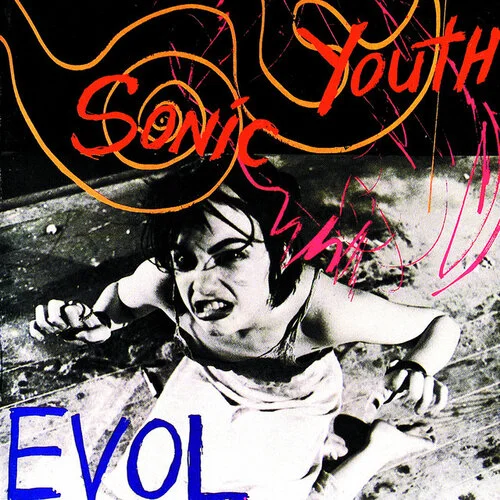
Evol

Release Date: May 1986

Label: SST (059)

Producers: Sonic Youth/Martin Bisi

Standout Tracks: Shadow of a Doubt/Death to Our Friends/Secret Girl

Buy: https://www.discogs.com/Sonic-Youth-Evol/master/9739

Stream: https://open.spotify.com/album/5Bf5U1Zw9gsJh6bWaM2VY2

Review:

“While EVOL is still an album steeped in the noise and collage aesthetic the band grew from (most notable in the tape experiments, unexpected screams, and mesh of feedback and car-race sound effects of Lee Ranaldo's spoken word contribution "In the Kingdom #19" and the ghostly music-box loop and Kim Gordon's slithering vocals on "Secret Girls"), the songs here also represent the band's first flirtations with pop. Though gift-wrapped in jagged guitar tones and airy alternate tunings, songs like "Green Light," "Star Power," and the hypnotic bliss-out of album closer "Expressway to Yr. Skull" are built on cores of reaching melodicism and a tunefulness that borders at times on sounding playful. The addition of Shelley's propulsive drumming gave much-needed punctuation to the band's previously murky approach and connected some of the amorphous Halloween-themed textures the band was immersed in at the time to more deliberate, even traditional song structures. This affection for big, dumb, simplistic pop is driven home by their cover of Kim Fowley's unabashedly sleazy rocker "Bubblegum," included as a bonus track on early non-LP versions of the album. A product of a band finding its way between worlds, EVOL is a remarkably strong effort, and sets the stage for crystallizing ideas that would soon result in what many considered the band's finest work” – AllMusic

Choice Cut: Starpower

Daydream Nation

Release Date: 18th October, 1988

Labels: Enigma (U.S.)/Blast First (U.K.)

Producers: Nick Sansano/Sonic Youth

Standout Tracks: Silver Rocket/’Cross the Breeze/Total Trash

Buy: https://www.discogs.com/Sonic-Youth-Daydream-Nation/master/9768

Stream: https://open.spotify.com/album/5z8bPdGFiJx56cqsHTvWM9

Review:

“Of course, now that a whole genre's grown out from Daydream Nation’s roots, all its “difficult” sounds, modified guitars, and strange collisions have become de riguer, invisible, and normalized, more clearly revealing the shimmering pop epics that always lay beneath. What’s really shocking is the energy of it. This record’s default setting is the place most rock bands try to work up to around the third chorus—guitar players veering off into neck-strangling improvisations, singers dropping off the melody and into impassioned shouts. These songs start there and just stay. Usually the guitars spend a few bars wandering off and into sideways tangles, choking out their harmonies, and then come back together and spend a few bars pinning down the riff: On “’Cross the Breeze,” that means Kim Gordon keeps returning to the same refrain, each time grunting it more insistently than the last. Sometimes they don’t even stay there: Lee Ranaldo’s “Hey Joni” starts off already on some next level of energy, and then Lee shouts “kick it!” and the band ratchets up to some next next level, and then he coasts up to one exhilarating shouted “HEY!” and the band bursts through a ceiling higher than you could have imagined at the start of the track. It’s the kind of transcendent glory that crosses genres and even arts: that same in-the-zone feeling you get from a be-bop combo in top gear, a rapper at the absolute clear-eyed peak of his game—hell, even an athlete in perfect function” – Pitchfork

Choice Cut: Teen Age Riot

Goo

Release Date: 26th June, 1990

Label: DGC

Producers: Nick Sansano/Ron Saint Germain/Sonic Youth

Standout Tracks: Dirty Boots/Mary-Christ/Disappearer

Buy: https://www.discogs.com/Sonic-Youth-Goo/master/9751

Stream: https://open.spotify.com/album/5iYYQwB0oH9FVyVlaOXZdr

Review:

“The album opener “Dirty Boots” meanders in with two distinct riffs and the eventual full rhythm arrangement before first verse. The music is intense and biting but Moore’s vocals seem half-hearted until the song reaches a “sonic crescendo” with inventive feedback before breaking down and methodically working its way through the instrumental outro. “Tunic (Song for Karen)” was composed by Gordon as a loose tribute to Karen Carpenter. She delivers the lyrics in a mainly spoken word manner under rapid ethereal riffing, offering a very haunting look into inner destructive thoughts. “Mary-Christ” doesn’t quite work nearly as well as the opening two tracks as a proto-punk, badly improvised screed.

The album’s most famous track, “Kool Thing”, features interesting, upbeat rock intro with great drumming by Shelley throughout. The mid section breaks down into a bass-backed spoken word bridge featuring Gordon and and guest Chuck D. The song’s title was inspired by an interview that Gordon conducted with LL Cool J and the lyrics make reference to several of the rapper’s works. “Mote” is the sole composition by Ranaldo on Goo as well as his only lead vocals. The seven and a half minute track moves from an overloaded feedback intro to basic rock chording to a pure psychedelic and atmospheric trip which persists without form. “Disappearer” follows, featuring a thick upper range and steady rhythm under Moore’s melodic vocals and multiple key jumps through the progression into several sonic tunnels” – Classic Rock Review

Choice Cut: Kool Thing

Dirty

Release Date: 21st July, 1992

Label: DGC

Producers: Butch Vig/Sonic Youth

Standout Tracks: 100%/Sugar Kane/Youth Against Fascism

Buy: https://www.discogs.com/Sonic-Youth-Dirty/master/9844

Stream: https://open.spotify.com/album/7oNRvhXwhNCfHEUGER5EhG

Review:

“Hey, isn't this the Sonic Youth: art-wankers slumming it on the Lower East Side, who make a hellish noise when not receiving massive hand-outs from daddy and mommy, who are no longer alternative since they decided to worship at the altar of corporate packaging and are the epitome of old, jaded, in-the-way scenesters? I'll advise you to leave your preconceptions and cynicism at the door. Thurston Moore, Kim Gordon, Lee Ranaldo and Steve Shelley might be vaguely middle class, but they're not rich. They're only arty if it means taking the world as we perceive it and making it strange, grabbing rock music by the scruff of the neck and forcing change, not merely replicating what s gone before Their preoccupation with stars, schizophrenia and Amerikkkana almost behind them (but not quite), Sonic Youth have made a giant leap forward from Goo . While others (My Bloody Valentine included) have taken their blueprint and distorted it anew, these haughtily cool people have decided to go for broke and "leave them all behind . It would have been quite easy to take Nirvana's oeuvre as a starting point and try to emulate their astounding (unintentional) successplan, but that would've been the beginning of the end. 'Dirty' will not shift a million units- unless the world goes barmier than it already is but it is an achievement nonetheless, a success at a grander level whose effects will still be felt years from now” – NME

Choice Cut: Drunken Butterfly

The Underrated Gem

A Thousand Leaves

Release Date: 12th May, 1998

Label: DGC

Producers: Sonic Youth/Wharton Tiers

Standout Tracks: Sunday/Wildflower Soul/The Ineffable Me

Buy: https://www.discogs.com/Sonic-Youth-A-Thousand-Leaves/master/9895

Stream: https://open.spotify.com/album/2SDi8NTSiq6qQ2WTkrp9X4

Review:

“Truth be told, the grunge era never quite fit Sonic Youth. They may have been at the peak of their popularity, but they had traded their experimentalism for sheer, bracing noise. It may have sounded good, but ultimately Dirty didn't have the cerebral impact of Sister, largely because it was tied to an admittedly effective backbeat. Beginning with Washing Machine, Sonic Youth returned to more adventurous territory, and in 1997, they released a series of EPs that illustrated their bond with such post-rock groups as Tortoise and Gastr del Sol. Those EPs, as well as the epic Washing Machine closer, "The Diamond Sea," provide the foundation for A Thousand Leaves, the band's most challenging and satisfying record in years. The blasts of dissonance that characterized their SST masterworks have been replaced, by and large, by winding, intricate improvisations. There's a surprising warmth to the subdued guitars of Thurston Moore, Lee Ranaldo, and Kim Gordon, which keeps the lengthy songs captivating. Both Moore and Ranaldo concentrate on quiet material, which almost makes Gordon's noisy politicized rants sound a little out of place, but her best moments ("French Tickler," "Heather Angel") have unsettling, unpredictable twists and turns that greatly contribute to the success of A Thousand Leaves. It may be their most cerebral album in ages, but that only makes it all the more engaging” – AllMusic

Choice Cut: Hits of Sunshine (For Allen Ginsberg)

The Final Album

The Eternal

Release Date: 9th June, 2009

Label: Matador

Producer: John Agnello

Standout Tracks: Anti-Orgasm/Antenna/Massage the History

Buy: https://www.discogs.com/Sonic-Youth-The-Eternal/master/122176

Stream: https://open.spotify.com/album/5qo7iEWkMEaSXEZ7fuPvC3?si=2o_vTL-XSXyHBhH_68gJWg

Review:

“Bristling with impetuous energy, The Eternal might have been recorded by a bunch of pups who weren't even born when Sonic Youth released their debut in 1982. There is an excitable, almost naive quality to its visceral riffs and enthusiastic name-checks of artists, poets and countercultural figures. When Thurston Moore and Kim Gordon yelp "anti-war is anti-orgasm!" over thrusting guitars and sledgehammer drums, they sound like teenagers plotting revolution while listening to a Stooges album stolen from their parents. Or, for that matter, another Sonic Youth record: the figures they evoke most passionately are their younger selves. . You hear it best when the fire of Anti-Orgasm is doused by fluidly beautiful melody, and a hum of radio static scratches at the surface of the limpid Antenna: both songs are as scintillating as diamonds” – The Guardian

Choice Cut: Sacred Trickster

The Sonic Youth Book

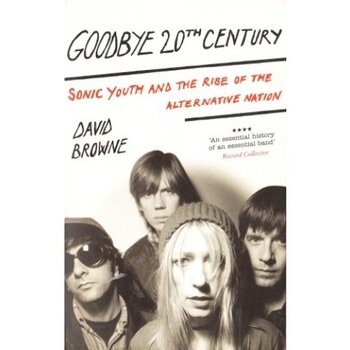
Goodbye 20th Century: Sonic Youth and the Rise of Alternative Nation

Author: David Browne

Publication Date: 4th June, 2009

Publishers: Little/Brown Book Group

Synopsis:

“There has never been a rock institution quite like Sonic Youth. Their distinctive, uncompromising sound provided a map for innumerable musicians who followed, and in 2005, CMJ, the bible of the indie and alternative music work, ranked them no. 3 on its list of the 25 most influential artists of the last quarter century. But their impact does not end with their music. The Sonic Youth worldview encompasses punk rock, trashy pulp fiction, pop-art minimalism, contemporary classical composition, glam rock, leftist politics, feminist iconography, and ironic humour. Countless musicians and artists - including Kurt Cobain, Beck, Spike Jonze and Sofia Coppola - were introduced to the world thanks to Sonic Youth. In Goodbye 20th Century, David Browne tells the full glorious story of 'the Velvet Underground of their generation', based on extensive research, fresh interviews with the band and those who have worked with them, and unprecedented access to unreleased recordings and documents. Complete with never before published photos and artwork, Goodbye 20th Century is a richly detailed account of an iconic band and the times they helped create” – Waterstones

Order: https://www.waterstones.com/book/goodbye-20th-century/david-browne/9780749929411

FEATURE: My Lagan Love: Kate Bush and the Irish Connection

FEATURE:


My Lagan Love

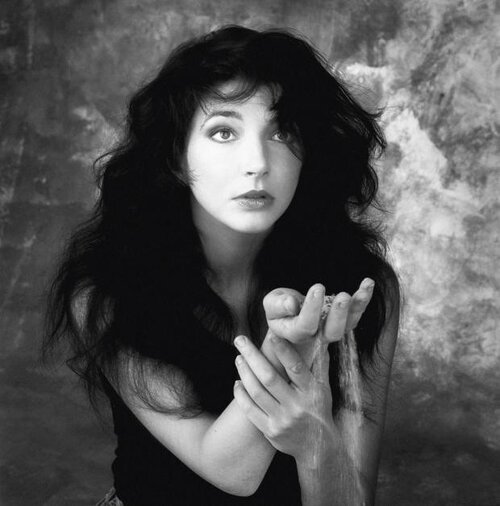
IN THIS PHOTO: Kate Bush shot by Brian Griffin in 1983

Kate Bush and the Irish Connection

___________

THIS will be a fairly brief feature…

IN THIS PHOTO: Kate Bush with her mother, Hannah (far left), and brothers Paddy (left) and John (right) in 1978

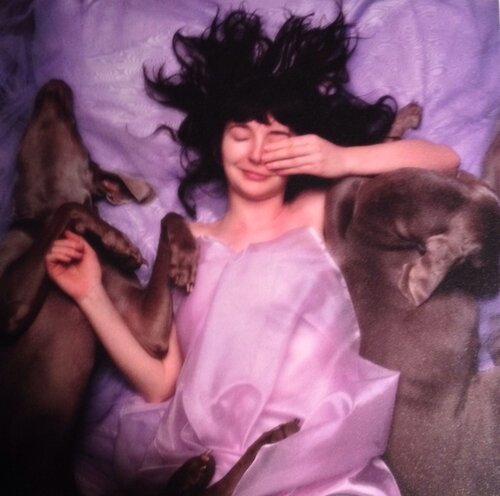
but I was writing about Hounds of Love earlier in the week as it celebrated its thirty-fifth anniversary. There are some fascinating sounds and moods through the album, but one of the most striking and invigorating cuts from the album occurs on the album’s second sides, The Ninth Wave. Jig of Life is awash with fiddles, whistles, bouzoukis, uillean pipes, and bodhran and, whilst not all native instruments to Ireland, Bush wrote a lot in Ireland for Hounds of Love, and Jig of Life features wonderful players like Liam O'Flynn (who plays uillean pipes). Kate Bush talked about the origins of Jig of Life back in 1992:

“At this point in the story, it's the future self of this person coming to visit them to give them a bit of help here. I mean, it's about time they have a bit of help. So it's their future self saying, "look, don't give up, you've got to stay alive, 'cause if you don't stay alive, that means I don't." You know, "and I'm alive, I've had kids [laughs]. I've been through years and years of life, so you have to survive, you mustn't give up."

This was written in Ireland. At one point I did quite a lot of writing, you know, I mean lyrically, particularly. And again it was a tremendous sort of elemental dose I was getting, you know, all this beautiful countryside. Spending a lot of time outside and walking, so it had this tremendous sort of stimulus from the outside. And this was one of the tracks that the Irish musicians that we worked with was featured on.

There was a tune that my brother Paddy found which... he said "you've got to hear this, you'll love it." And he was right [laughs], he played it to me and I just thought, you know, "this would be fantastic somehow to incorporate here."

Was just sort of, pull this person up out of despair. (Richard Skinner, 'Classic Albums interview: Hounds Of Love. Radio 1 (UK), aired 26 January 1992)”.

Whilst the sounds of Ireland are not necessarily synonymous with Kate Bush’s work, I think it is one of her most interesting and beautifully rendered aspects. A lot of artists, when they deploy Irish instruments and tones, can sound cliched or rather ill-disciplined. Bush’s mother, Hannah, was an amateur traditional Irish dancer, and her infectious spirit and heritage would definitely have resonated and fascinated the young Kate Bush. No stranger to experimentation and combining various cultures and fabrics into her work, I am surprised that Bush’s Irish roots did not appear into her music until fairly late into her career. Her debut album, The Kick Inside, is a more traditional piano album, so she might not have felt like incorporating Irish tones into her music from the start. By time Never for Ever arrived in 1980 (her third album), we started to hear Irish inflection and instruments in her music. Famously, Army Dreamers finds Bush singing in an Irish accent, and the track features a bodhrán – an Irish frame drum (and it turns forty on 22nd September).

There is a lightness to that song and a sense of waltz-like romance that bellies the serious nature of the lyrics, but I love Bush’s voice on Army Dreamers and the fact she has this Irish hue; maybe, as I have speculated in previous pieces, how she may have been singing from her mother’s position in the song – as the track concerns young men being sent to war so young; many of them never to return. Even though it was quite an occasional deployment, I think some of the most engaging and repeat-worthy songs on Bush albums are those where there is a sound of Ireland. That is the case with Never for Ever’s Army Dreamers, and the following album, The Dreaming, features the beautiful Night of the Swallow – with the musical talents of Liam O'Flynn (penny whistle and uilleann pipes), Seán Keane (fiddle), and Dónal Lunny (bouzouk). The song was a B-side to Houdini, and it was released in Ireland in 1983. I am surprised the song was not released more widely – as EMI did release various album tracks in other countries other than the U.S. and U.K. -, as it is one of the best tracks on The Dreaming, and, again, I want to bring in Kate Bush’s words - as she talks about Night of the Swallow’s origins, and her instilled love of Irish music:

“Unfortunately a lot of men do begin to feel very trapped in their relationships and I think, in some situations, it is because the female is so scared, perhaps of her insecurity, that she needs to hang onto him completely. In this song she wants to control him and because he wants to do something that she doesn't want him to she feels that he is going away. It's almost on a parallel with the mother and son relationship where there is the same female feeling of not wanting the young child to move away from the nest.

Of course, from the guys point of view, because she doesn't want him to go, the urge to go is even stronger. For him, it's not so much a job as a challenge; a chance to do something risky and exciting. But although that woman's very much a stereotype I think she still exists today. (Paul Simper, 'Dreamtime Is Over'. Melody Maker (UK), 16 October 1982)”.

“Ever since I heard my first Irish pipe music it has been under my skin, and every time I hear the pipes, it's like someone tossing a stone in my emotional well, sending ripples down my spine. I've wanted to work with Irish music for years, but my writing has never really given me the opportunity of doing so until now. As soon as the song was written, I felt that a ceilidh band would be perfect for the choruses. The verses are about a lady who's trying to keep her man from accepting what seems to be an illegal job. He is a pilot and has been hired to fly some people into another country. No questions are to be asked, and she gets a bad feeling from the situation. But for him, the challenge is almost more exciting than the job itself, and he wants to fly away. As the fiddles, pipes and whistles start up in the choruses, he is explaining how it will be all right. He'll hide the plane high up in the clouds on a night with no moon, and he'll swoop over the water like a swallow.

Bill Whelan is the keyboard player with Planxty, and ever since Jay played me an album of theirs I have been a fan. I rang Bill and he tuned into the idea of the arrangement straight away. We sent him a cassette, and a few days later he phoned the studio and said, "Would you like to hear the arrangement I've written?"

I said I'd love to, but how?

"Well, Liam is with me now, and we could play it over the phone."

I thought how wonderful he was, and I heard him put down the phone and walk away. The cassette player started up. As the chorus began, so did this beautiful music - through the wonder of telephones it was coming live from Ireland, and it was very moving. We arranged that I would travel to Ireland with Jay and the multi-track tape, and that we would record in Windmill Lane Studios, Dublin. As the choruses began to grow, the evening drew on and the glasses of Guiness, slowly dropping in level, became like sand glasses to tell the passing of time. We missed our plane and worked through the night. By eight o'clock the next morning we were driving to the airport to return to London. I had a very precious tape tucked under my arm, and just as we were stepping onto the plane, I looked up into the sky and there were three swallows diving and chasing the flies. (Kate Bush Club newsletter, October 1982)”.

Moving forward to Hounds of Love, and actually And Dream of Sheep features whistles, which gives it a slightly Irish tinge in places. I was surprised that there was virtually no Irish influence on a track from the first half of Hounds of Love like The Big Sky (even if she does say during this song: “That cloud, that cloud/Looks like Ireland!”), as that song’s imagination and blend of colours and visions would invite some Irish influence – even the didgeridoo makes an appearance in The Big Sky!

On Hounds of Love and its follow-up, The Sensual World, in 1989, Bush recorded with Irish musicians and had ‘Irish sessions’. I think this is the album where Irish influences are strongest. The Celtic harp (native to Ireland and Scotland) appears on Between a Man and a Woman, and The Fog, and the fiddle makes a memorable appearance on The Sensual World’s title track. It may sound cliché to say that Irish pipes and fiddles add an element of romance and nature, but I think Bush’s execution and use of instruments like this really aided and augmented songs, rather than just being thrown into the mix for the hell of it! It is perhaps inevitable that the music of The Sensual World’s title track has an Irish edge as the song, in part, was inspired by James Joyce’s Ulysses. From the Kate Bush Encyclopedia, here is some background:

“Bush was inspired to write the song after hearing Irish actress Siobhan McKenna read the closing soliloquy from James Joyce's 'Ulysses', where the character Molly Bloom recalls her earliest sexual experience with husband-to-be Leopold Bloom. The book was published in 1922. Kate, believing the text had fallen to public domain, simply lifted parts from it and sang them on the backing track she'd created. She approached director Jimmy Murakami to make a video for the song, and he expressed doubts because he suspected James Joyce's grandson Stephen James Joyce had the rights to the book”.

“Because I couldn't get permission to use a piece of Joyce it gradually turned into the song about Molly Bloom the character stepping out of the book, into the real world and the impressions of sensuality. Rather than being in this two-dimensional world, she's free, let loose to touch things, feel the ground under her feet, the sunsets, just how incredibly sensual a world it is. (...) In the original piece, it's just 'Yes' - a very interesting way of leading you in. It pulls you into the piece by the continual acceptance of all these sensual things: 'Ooh wonderful!' I was thinking I'd never write anything as obviously sensual as the original piece, but when I had to rewrite the words, I was trapped. How could you recreate that mood without going into that level of sensuality? So there I was writing stuff that months before I'd said I'd never write. I have to think of it in terms of pastiche, and not that it's me so much. (Len Brown, 'In The Realm Of The Senses'. NME (UK), 7 October 1989)”.

Although, like the start of her career, there is far less Irish influence to be heard, The Red Shoes was perhaps the last album where we can hear this key and always-arresting side to her work. The Red Shoes’ title track definitely has an Irish feel and, whilst Bush was mixing in other sounds through the album – she was still working with the Trio Bulgarka (is a Bulgarian vocal ensemble) as she had on The Sensual World -, I like that the title track has that dance and merriment that is defined by a definite Irish kick!

xzz.jpg

I think Bush has scaled back her musical palette on albums like Director’s Cut, and 50 Words for Snow (both 2011), whilst her ambition and musical genius has not lessened! One of my favourite lesser-known Kate Bush songs definitely has Ireland at its core. My Lagan Love is a gorgeous track, and I am surprised that it has not been played more on the radio, as it features a wonderful vocal from Kate Bush. It is not her song, but Bush’s interpretation adds something fresh:

“My Lagan Love' is a song to a traditional Irish air collected in 1903 in northern Donegal. The English lyrics have been credited to Joseph Campbell (1879–1944, AKA Seosamh MacCathmhaoil and Joseph McCahill, among others). Campbell was a Belfast man whose grandparents came from the Irish-speaking area of Flurrybridge, South Armagh. He started collecting songs in County Antrim. In 1904 he began a collaboration with composer Herbert Hughes. Together, they collected traditional airs from the remote parts of County Donegal. While on holidays in Donegal, Hughes had learned the air from Proinseas mac Suibhne, who had learned it from his father Seaghan mac Suibhne, who in turn had learned it fifty years previously.

The Lagan referred to in the title is most likely the area of good farming land between Donegal and Derry known in Irish as An Lagán. The Lagan is the river that runs through Belfast. However, some argue that the Lagan in the song refers to a stream that empties into Lough Swilly in County Donegal, not far from where Herbert Hughes collected the song. The song was arranged in a classical style by Hamilton Harty; this was used by Mary O'Hara and Charlotte Church.

'My Lagan Love' was recorded with new, original lyrics by Kate Bush, first released in 1985 as the second B-side track to the 12" version of Cloudbusting. The track was first released on CD as part of the This Woman's Work Anthology 1978-1990 box set. It was also included in the 1997 'EMI Centenary' re-release of Hounds Of Love”.

Whilst Bush has sung in a variety of languages and accents, I always love it when she evokes her Irish heritage, as it does take songs to new heights. The last song I want to mention is Mna na hÉireann. It is another rare jewel that many people might not be aware of. The Kate Bush Encyclopedia provides background to this famous poem, that has been performed as a song by a range of artists.

“Poem written by Ulster poet Peadar Ó Doirnín (1704–1796). It is most famous as a song, and especially set to an air composed by Seán Ó Riada (1931–1971). As a modern song, 'Mná na hÉireann' is usually placed in the category of Irish rebel music; as an eighteenth-century poem it belongs to the genre (related to the aisling) which imagines Ireland as a generous, beautiful woman suffering the depredations of an English master on her land, her cattle, or her self, and which demands Irishmen to defend her, or ponders why they fail to. The poem also seems to favor Ulster above the other Irish provinces.

Kate Bush recorded her rendition in 1995 for the 1996 compilation album Common Ground - Voices of Modern Irish Music. According to Donal Lunny, who contacted her for this contribution, 'She was very excited with the idea of singing the Irish in a way that Irish speakers would understand, and of conveying the meaning of the song through the sounds of the words. I helped as much as I could. She had Seán Ó Sé’s recording of Mná na hÉireann as reference. She was as faithful to the pronunciations as she could possibly be. It was with characteristic care and attention that she approached it. She did not stint one bit. Of course you’ll get people saying, `Oh, you’d know she doesn’t talk Irish straight off’. You wouldn’t know it straight off. I would defend her efforts as being totally sincere. No matter how perfect she gets it, she’s not an Irish speaker. This may rankle with some people.'

Critical reception

The track was reviewed as 'impressive' by Hot Press, saying that Kate’s 'fiery interpretation….may well prove to be among the most controversial cuts on Common Ground'. Indeed the Irish Times review of Common Ground singled out Kate as 'fumbling her way through' the song. NME was more positive about the track: "Since Lunny made a significant mark on her 'Sensual World' album, she repays him with a swooning version of 'Mná na hÉireann' (Women Of Ireland) that’s as good as anything she’s done this decade."

“It was fun and very challenging …..I will eagerly await comments from all Irish-speaking listeners in particular. I’m sure Ma gave me a helping hand! (Kate Bush Club Newsletter, December 1995)”.

Before moving on, I found an article from the Irish Independent from 2014 that references the song, and how Bush is proud of her Irish roots:

“A quiet and stable family life is important to Kate. Bush is married to guitarist Danny McIntosh, whom she met in 1992 while recording her seventh album, The Red Shoes. She told me that her mother was a massive source of inspiration to her, especially when she collaborated with legendary Irish traditional musician Dónal Lunny on a version of 'Mná na hÉireann'.

"Although she'd already passed away, I really felt that she was there helping me get it right," Bush said. "I loved singing it and I hope I did an okay job, because I never spoke or sung in Irish before."

"I'm incredibly proud of being half-Irish. I really wanted to get that Irish blood in me to come through, so I worked very hard on it."

Dónal Lunny confirms that Kate poured her heart and soul into the recording sessions. "She never told me that about her late Mother, but it clearly meant an awful lot to her," Lunny says.

"It was a joy to be in the studio with her. Kate is a very vivacious, happy and positive person. She is great fun to be around. I'm absolutely delighted that she is back playing concerts".

IN THIS PHOTO: Kate Bush in a promotional image for Hounds of Love in 1985/PHOTO CREDIT: John Carder Bush (from the book, Kate: Inside the Rainbow)

I will leave it there but, having immersed myself in Hounds of Love lately and tracks like Jig of Life, I thought about how Bush travelled to Ireland to write and record for that album and how, afterwards, her connection to Irish music continued. Bush connected to her Irish roots and her mother before that, but I think Jig of Life is one of the most overt and obvious nods to Ireland; for her most-celebrated album, she was determined and inspired to include Irish musicians and sounds. I think many people see Bush as a quintessential English rose, but she is half-Irish and I think, directly or not, that plays as an important a role as her Englishness does. I just want to bring in a little passage from the Irish Post from 2014, where we realise Bush’s true love and admiration for Ireland:

“All the Bush family were artistically creative and Kate’s musical interests originally drew from her Irish heritage. As she once explained: “I’m very influenced in my writing by old or traditional folk songs, ballads handed down by new generations of musicians but with the original atmosphere and emotions still maintained.

"The sort of music my mother, who’s Irish, would have listened to and danced to, and used to play for me when I was very little. It’s still probably my biggest influence.”

Like her Anglo-Irish contemporaries, she seems both connected to and dislocated from her Irishness. While admitting that she is drawn to the idea of living in Ireland, the whim remains unrealized. “I’ve always felt pulled to Ireland because my mother was Irish,” she says, “but whenever I’ve gone, I’ve never felt very at home”.

It is obvious how important Ireland, her Irish heritage and the music from that great nation was and is to Bush, and how it is responsible for some of her greatest musical moments. Anytime Bush stepped into Ireland for her music, it was always…

IN THIS PHOTO: Kate Bush in a promotional image for The Sensual World in 1989/PHOTO CREDIT: John Carder Bush (from the book, Kate: Inside the Rainbow)

SO beautiful, pure and committed.

FEATURE: The September Playlist: Vol. 3: The Look of Love

FEATURE:

The September Playlist

IN THIS PHOTO: Alicia Keys

Vol. 3: The Look of Love

__________

ON the Playlist this week…

bbb.jpg

IN THIS PHOTO: Abe Cunningham of Deftones/PHOTO CREDIT: Frank Delgado

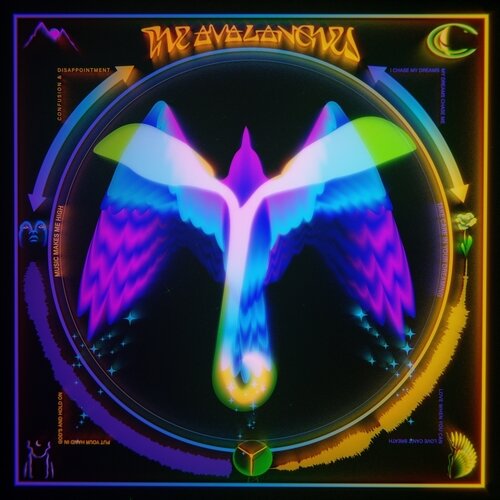
are new tracks from Alicia Keys, Rico Nasty, The Avalanches (feat. Denzel Curry, Tricky and Sampa the Great), Deftones, SAULT, EELS, Sam Smith, and Porridge Radio. There is also great music from Ava Max, slowthai (ft. James Blake and Mount Kimbie), Sinead O’Brien, Prince, Catherine Anne Davies and Bernard Butler, and Sufjan Stevens. It is a big and packed week for music, and one where all music fans will have their tastes catered for! If you do need a bit of a boost and some energy to get you into the weekend, then this playlist of new cuts will definitely do the job. In a year that keeps offering music of the highest order, this is another week of…

IN THIS PHOTO: Rico Nasty

INCREDIBLE tracks.

ALL PHOTOS/IMAGES (unless credited otherwise): Artists

___________

Alicia Keys – Love Looks Better

Rico Nasty - Own It

Maximo Park - Child of the Flatlands

EELS - Are We Alright Again

Ava Max – Naked

PHOTO CREDIT: El Hardwick

Porridge Radio – 7 Seconds

PHOTO CREDIT: Clemente RUiz

Deftones – Genesis

Fenne Lily – Birthday

SAULT – Free

cvv.jpg

The Avalanches (ft. Denzel Curry, Tricky and Sampa The Great) - Take Care in Your Dreaming

slowthai (ft. James Blake and Mount Kimbie) - feel away

ewww.jpg

Rachel Platten – Soldiers

PHOTO CREDIT: Holly Whitaker

Sinead O'Brien - Most Modern Painting

Prince – I Need a Man

Sunflower Bean - Moment in the Sun

IN THIS PHOTO: Tim Klein for The Wall Street Journal

Jeff Tweedy – Guess Again

Catherine Anne Davies, Bernard Butler - Ten Good Reasons

Sufjan Stevens – Sugar

PHOTO CREDIT: Sara Jaye Weiss/Shutterstock

Sam Smith – Diamonds

PHOTO CREDIT: Luka Booth

Marika Hackman - Realiti

Andy Bell - I Was Alone

MELANIE C (ft. Nadia Rose) - Fearless

Future Islands - Moonlight

Faye Webster - Better Distractions

Pom Poko - My Candidacy

YUNGBLIUD – god save me, but don’t drown me out

Glowe – you won’t even call me on my birthday

Charlotte Cardin – Passive Aggressive

Sasha Sloan – Is It Just Me?

Martha Hill – Landslide

PHOTO CREDIT: Emma Swann

Black Honey - Run for Cover

Chase & Status – Engage

Flohio – Unveiled

Sarah Barrios – Somebody I’m Proud Of

Elliphant - Time Machine

Pixey – Just Move

Olivia O’Brien - NOW

Jacob Banks – Stranger

FEATURE: From the Archives… The Continuing Joy of Re-Releases, Boxsets and Remastered Classics

FEATURE:


From the Archives…

The Continuing Joy of Re-Releases, Boxsets and Remastered Classics

___________

WHILST there are few better things…

IN THIS PHOTO: PJ Harvey in 1991 (from the inner sleeve insert of the Dry - Demos album - which was released on 24th July)/PHOTO CREDIT: Maria Mochnacz

than a new album coming out that you have been waiting for and are about to dig into, I am always excited when a classic album is reissued, or there are rarer albums and tracks put out. This year, whilst there have been many remastered albums and boxsets released, I want to highlight a few – including an upcoming set of early recordings from the iconic Joni Mitchell. I am a big PJ Harvey fan, and I have talked about her reissues this year in a previous feature. Last week, the To Bring You My Love - Demos was released. I would urge you to buy a copy, as they sound incredible:

“10 track collection of previously unreleased demos of all songs from the third studio album by PJ Harvey – To Bring You My Love – from 1995. Includes demo versions of the singles Down By The Water, C’mon Billy and Send His Love To Me. Audio has been mastered by Jason Mitchell at Loud Mastering under the guidance of longtime PJ Harvey collaborator John Parish. Features brand new artwork with previously unseen photos by Maria Mochnacz”.

One would not expect an artist as big and popular as PJ Harvey to bring out an album of demos, but I am so glad she did! It is an essential purchase for those who love her work and new listeners alike. The Dry – Demos came out in July; 2020 is a great year for PJ Harvey fans!

I love all of her studios albums, but I think there is something extra-special about demos! There are other artists who I would like to see some demos from; those songs from classic albums in their embryonic form. I would also encourage people to buy the Dry – Demos album. Dry was released in 1992, and it is Harvey’s debut album – To Bring You My Love, her third studio album, was released in 1995. When Rolling Stone reviewed Dry - Demos, they had this to say:

“Even now, nearly three decades after the jerking rhythms of her debut single “Dress,” and its whimsical tale of trying to impress a man by putting on one particularly ill-fitting frock, catapulted her from her home village of Corscombe (population then: 600) onto the world stage, her earliest recordings still sound gloriously perverse. It’s a different hue of shock rock, one that feels more believable and human, like your own personal nervous breakdown, a strangely appealing elixir of whispers and screams.

Without drums or tight production, songs like “Victory,” “O Stella, and “Hair” have more in common with the blues artists who inspired Harvey growing up than the alternative scene she was lumped in with. Although she was a Pixies fan who played sax in local indie bands and had a brief moment of rebellion in the Eighties when Duran Duran and Spandau Ballet ruled her world (“Soft Cell singing ‘Tainted Love’ is probably one of my favorite songs of all time,” she once told Rolling Stone), Harvey was most interested in the records that belonged to her sculptor mother and stoneworker father than those on Top of the Pops.

Her heroes were the same bluesmen who inspired Eric Clapton and Jimmy Page: Howlin’ Wolf, Elmore James, Muddy Waters, Robert Johnson, John Lee Hooker. The rock artists she cited in interviews were fellow blues students: Jimi Hendrix, Keith Richards, Tom Waits, Nick Cave, Captain Beefheart. When the BBC prodded her in ’92 to name some current artists that moved her, the only one she summoned was th’ Faith Healers, whose drummer, Joe Dilworth, was her boyfriend and, after their breakup, became the focus of her ire on 1993’s Rid of Me.

But for all the naked gore of her early demos, what’s to come may be even more fascinating. The “Down by the Water” demo is a portrait of a sea-change for her, when it seemed like she had moved on from her past after saying she wanted a career that was as varied like David Bowie’s and threatened to retire fan favorites like “Sheela-Na-Gig” and “Dress” (though she didn’t); they will provide a fuller picture of an artist who has always thrived in shadows. “I’ll never give the people what they want,” she told Rolling Stone in 1993. But at the same time, what she may not have realized is that she always has, simply by spilling her guts”.

I have also covered the reissues of Prince’s classic 1987 album, Sign ‘o’ the Times. This album arrived during a purple patch for The Purple One, and it followed Parade (1986) and came before Lovesexy (1988). Prince’s legendary Vault has so much unreleased material in it, and one can buy the remastered album, a Deluxe Edition, or a Super Deluxe Edition.

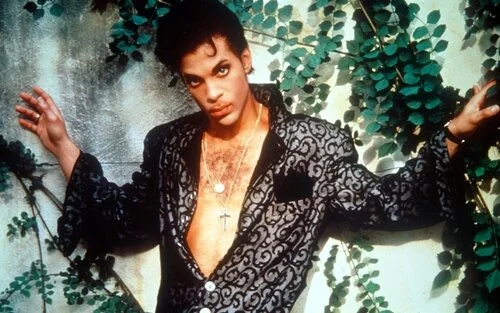
IN THIS PHOTO: Prince/PHOTO CREDIT: Jeff Katz Photography

I do hope that other Prince albums are subjects to the Super Deluxe treatment, as I would love to hear demos and unreleased cuts. Like PJ Harvey putting out demos, it is fascinating hearing an expansion on one of Prince’s best albums. One of Prince’s finest collaborators and friends, Sheila E, has said that she and Prince have worked on hundreds of songs, and I think they will be released one day. If you are a big Prince fan, then the Super Deluxe Edition of Sign ‘o’ the Times is an absolute must!

“Overflowing with musical ideas and topical lyrics that sound just as relevant today as they did when they were initially released, Prince’s iconic double album Sign O’ The Times captured the artist in a period of complete reinvention. The final 16-track album included just some of the countless songs Prince recorded in the prolific period of 1985-1987, which saw the dissolution of his band The Revolution, the construction of his innovative recording complex, Paisley Park, and the creation (and ultimate abandonment) of the albums Dream Factory, Camille, and Crystal Ball.

The Prince Estate, in partnership with Warner Records / Rhino UK, reissue Sign O’ The Times. The Super Deluxe Edition features the classic album remastered for the very first time, 63 previously unreleased tracks, and a previously unreleased 2+ hour video concert performance from Prince’s legendary vault that illuminates his wide-ranging and prolific creativity in this era.

8CD / DVD Contents - 92 audio tracks, of which 63 are previously unreleased, including 45 studio tracks from Prince’s Vault. Opens with Prince’s iconic album, Sign O’ The Times, dazzlingly remastered for the very first time by Prince’s original mastering engineer Bernie Grundman. Includes an entire previously unreleased audio recording of Prince’s Sign O’ The Times tour performance in Utrecht, Netherlands, on June 20, 1987. DVD features a complete previously unreleased recording of Prince’s benefit performance at Paisley Park, December 31st, 1987. The show includes Prince’s only on-stage collaboration with Miles Davis. Housed in a 12” box, and accompanied by a 12” 120-page hardback book featuring: Brand new liner notes by: Prince’s creative peers and friends Dave Chappelle (in conversation with photographer Mathieu Bitton) and Lenny Kravitz; Prince’s longtime engineer Susan Rogers; Daphne A. Brooks, William R. Kenan, Jr. Professor of African American Studies, American Studies and Women’s, Gender and Sexuality Studies at Yale University; Minneapolis radio host and author Andrea Swensson, host of the Official Prince Podcast; and Prince scholar Duane Tudahl. Rare and previously unseen photography by Jeff Katz Prince’s handwritten lyrics.

13LP contents - 92 audio tracks, of which 63 are previously unreleased, including 45 studio tracks from Prince’s Vault. Opens with Prince’s iconic album, Sign O’ The Times, dazzlingly remastered for the very first time by Prince’s original mastering engineer Bernie Grundman. Includes an entire previously unreleased audio recording of Prince’s Sign O’ The Times tour performance in Utrecht, Netherlands, on June 20, 1987. DVD features a complete previously unreleased recording of Prince’s benefit performance at Paisley Park, December 31st, 1987.

The show includes Prince’s only on-stage collaboration with Miles Davis. Housed in a 12” box, and accompanied by a 12” 120-page hardback book featuring: Brand new liner notes by: Prince’s creative peers and friends Dave Chappelle (in conversation with photographer Mathieu Bitton) and Lenny Kravitz; Prince’s longtime engineer Susan Rogers; Daphne A. Brooks, William R. Kenan, Jr. Professor of African American Studies, American Studies and Women’s, Gender and Sexuality Studies at Yale University; Minneapolis radio host and author Andrea Swensson, host of the Official Prince Podcast; and Prince scolar Duane Tudahl. Rare and previously unseen photography by Jeff Katz Prince’s handwritten lyrics”.

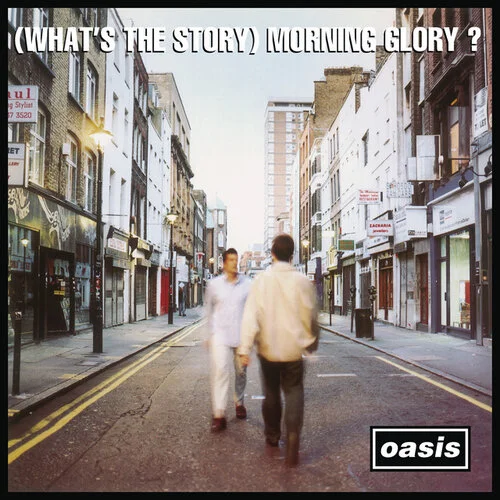
It is no surprise that there is so much anticipation for great re-releases and editions from artists such as PJ Harvey and Prince. Not only are fans being given new stuff and fresh depths, but vinyl itself is always popular. In fact, vinyl sales have outsold C.D.s for the first time in decades. Whilst it is pretty pricey grabbing something like the Sign ‘o’ the Times - Super Deluxe Edition, I think it is worth spending that money, and it is a real musical treat! Another album that I want to look at is Oasis’ (What’s the Story) Morning Glory? The album is twenty-five next month, and a great new edition is coming out.

qa.jpg

Again, there are other classic albums that are having an anniversary releaser this year – or have had one already -, so do not stop at this feature, as I am only covering a few! I wanted to highlight a few choice releases that show that established artists are putting some of their great older work to new audiences. In the case of Oasis, their stunning second album was beloved by people of my age who remember it fondly when it came out, yet the album sounds fresh and great today, and it will find itself in the hands of younger listeners. In lovely silver vinyl, it is another great reissue you will want to own:

“With October 2nd, 2020 marking 25 years since Oasis released their iconic second album (What’s The Story) Morning Glory?, Big Brother Recordings release a limited edition silver coloured LP with remastered audio to celebrate this milestone.

Following only 14 months after Oasis’s classic 1994 album Definitely Maybe, widely regarded one of the greatest debuts of all time, (What’s The Story) Morning Glory is the UK’s 5th best- selling album of all time and best-selling album of the nineties. The album entered the UK Official Charts at No.1 with 269,000 sales, with a total of 10 weeks at the summit since release and almost eight and a half years in the UK Official Album Chart cumulatively.

Worldwide, it went Top 10 in every major market in the world and became the band’s breakthrough album in the US, peaking at No. 4 on the Billboard 200 with over 5 million sales, and a global total now in excess of 22 million.

Produced by Noel Gallagher and Owen Morris, (What’s The Story) Morning Glory? was recorded at the fabled Rockfield Studios in Monmouth, Wales, completed in a staggeringly brief two-week period during May and June 1995.

An undeniably superlative rock record, it includes several of Oasis’ biggest selling UK singles – the legendary, universally loved anthem Wonderwall, Don’t Look Back In Anger, Roll With It, Some Might Say together with tracks like She’s Electric, Morning Glory and Champagne Supernova, which are timeless anthems and radio staples known to every generation of music fan.

(What’s The Story) Morning Glory established Oasis as a national and international phenomenon, the most universally popular British guitar band since the glory days of The Beatles, Rolling Stones and Led Zeppelin, and the album’s enduring and omnipresent appeal was demonstrated when it was awarded Best British Album of 30 Years at The BRIT Awards 2010. In the years since it’s release, the album has inspired thousands of young guns to pick up guitars and form bands, and is counted by dozens of successful bands and songwriters as a major influence on their careers”.

One artist who I am hugely excited about is Joni Mitchell. She has opened her archives for the first time, and it is a fascinating insight into her early work. As Rolling Stone report, it is a rare opportunity to hear these early recordings:

“Joni Mitchell has dug deep into the vaults for a massive archive series. She’ll kick it off with Joni Mitchell Archives Vol. 1: The Early Years (1963-1967), out October 30th.

The five-disc Early Years box set contains six hours of unreleased home, live and radio recordings and features 29 unreleased songs. They span from 1963-1967, just before the singer-songwriter released her 1968 debut Song to a Seagull produced by David Crosby.

To accompany the announcement, Mitchell released a 1963 performance of “House of the Rising Sun,” her earliest-known recording as a 19-year-old at the CFQC AM radio station in her hometown of Saskatoon, Saskatchewan.

In addition to a 40-page booklet, the liner notes feature Mitchell in conversation with Cameron Crowe, who wrote the Rolling Stone 1979 cover story on the singer. They recently spent Sunday afternoons together discussing the archives.

The two performances included in the box set — live at CFQX AM radio station in 1963 and at Canterbury House in 1967 — will also be released separately. All forms are available for preorder on Mitchell’s website. 

“The early stuff, I shouldn’t be such a snob against it,” she said in a statement. “A lot of these songs, I just lost them. They fell away. They only exist in these recordings. For so long I rebelled against the term, ‘I was never a folksinger.’ I would get pissed off if they put that label on me. I didn’t think it was a good description of what I was. And then I listened and…it was beautiful. It made me forgive my beginnings. And I had this realization…I was a folksinger!”

One can make a list of the artists whose archives they would love to see opened, and I am glad that Mitchell is doing so, as it will give other artists a push. Owning these rare and revealing recordings is going to be so moving for fans and, again, those not overly-familiar with Joni Mitchell will have these stunning performances that will give them a great taste – and, from there, they can discover her studio albums. Before I move on, there is one more boxset that I want to mention: Jewel Box from Elton John. I would encourage everyone to order this wonderful collection. Variety describe the package thus:

“On Nov. 13, Elton John will release “Elton: Jewel Box,” a career-spanning 148-song boxed set containing some 60 previously unreleased songs.

The set — the full tracklist appears below — is focused on lesser-known material from Elton’s 50-plus year career. According to the announcement, the set covers “deep cuts, rarities from the earliest stages of his and Bernie Taupin’s musical journey, B-side spanning 30 years, and songs discussed in his best-selling, critically acclaimed 2019 memoir ‘Me,’” along with a hardcover book containing extensive notes and a track-by-track commentary by Elton.

The collection is preceded by the previously unreleased 1969 song “Sing Me No Sad Songs,” which mentions two future Elton John-Bernie Taupin compositions in its lyrics: 1984’s “Sad Songs (Say So Much)” and “Don’t Go Breaking My Heart” from 1976.

Elton said, “To delve back through every period of my career in such detail for ‘Jewel Box’ has been an absolute pleasure. Hearing these long lost tracks again, I find it hard to comprehend just how prolific Bernie and I were during the early days. The songs just poured out of us, and the band were just unbelievable in the studio. I always want to push forward with everything I do and look to the future, but having time during lockdown to take stock and pull these moments from my memory from each era has been a joy. As a devout record collector myself, this project has really excited me, and I couldn’t be happier with the level of craft involved in such a carefully curated, lovingly constructed boxset. I’m sure my fans will enjoy it as much as I have.”

Per the announcement, “Elton: Jewel Box” compromises of the below formats:

Discs 1 & 2: Deep Cuts – A selection of personal favorites, curated by Elton. The box set book includes a track-by-track commentary by Elton.

Discs 3, 4, and 5: Rarities 1965 -1971 – Elton’s 1960s and early 1970s demos and music that cemented the foundations of the iconic Elton John / Bernie Taupin writing partnership. The compelling, previously unreleased, missing piece in his illustrious career. Daryl Easlea narrates this story with contributions from those who were there at the time. These discs encompass 65 songs, all but a few of which have been stored in the vaults for more than 50 years. Most of these demos were recorded during sessions before Elton was signed to a recording contract or released his first album. Also included are the first song ever written by Elton and his debut appearance on a record (both “Come Back Baby” – 1965), Elton and Bernie’s first composition (“Scarecrow” – 1967), and newly-unearthed piano/vocal demos of some of Elton’s most acclaimed songs from his early albums. The packaging appropriately contains rare archival artwork and select original lyric sheets.

Discs 6 & 7: B-Sides 1976-2005 – Non-LP tracks and flipsides, never before compiled together. 36 gems that are now given another chance to sparkle – 17 previously only available on vinyl, resulting in all of Elton’s studio B-sides now being offered digitally for the first time in his career.

Disc 8: And This Is Me . . . – To coincide with the release of the updated paperback edition of Me, the final collection celebrates the songs mentioned by name by Elton in his acclaimed autobiography, closing Jewel Box with the 2020 Academy Award-winning duet with Taron Egerton, “(I’m Gonna) Love Me Again”.

I think we will see some more recordings, boxsets and reissues before the year ends! In fact, over the past week or so, there are releases from Brian Eno, and The Style Council. As vinyl sales boom, there is going to demand aplenty for plenty more boxsets and reissues! Great releases from the likes of Oasis, PJ Harvey, Joni Mitchell, Elton John, and Prince provide us all with…

A treat in a bad year! 

FEATURE: The Lockdown Playlist: Jarvis Cocker’s Best Bits

FEATURE:

The Lockdown Playlist

PHOTO CREDIT: Dean Chalkley/The Observer 

Jarvis Cocker’s Best Bits

___________

BECAUSE today (19th) is the birthday…  

IN THIS PHOTO: Jarvis Cocker in 1996/PHOTO CREDIT: K Fuchs/Rex Shutterstock

of the legendary Jarvis Cocker, I thought it was fitting that I put out a playlist containing some of his best songs – most are going to be Pulp numbers, but there will be some solo stuff in the mix! With his new band, JARV IS…, he put out Beyond the Pale recently, and it is one of 2020’s best and more underrated albums. It shows that, as he has turned fifty-seven, Cocker has lost none of his Midas touch and original genius! I think he is one of the greatest songwriters and singers this country has ever produced, and it is always exciting to see where he will head and what comes next! In honour of Jarvis Cocker’s birthday, is a selection of some of his best cuts from a career that…

SHOWS no signs of slowing.   

FEATURE: Southern Man: Neil Young’s After the Gold Rush at Fifty

FEATURE:

Southern Man

Neil Young’s After the Gold Rush at Fifty

___________

I am doing a fair few album pieces this week…  

IN THIS PHOTO: Neil Young in 1970/PHOTO CREDIT: Joel Bernstein

as there are anniversaries and boxsets coming out that I feel are worth nodding to. I will broaden things out next week but, tomorrow (19th September), Neil Young’s third studio album, After the Gold Rush, turns fifty. It is amazing to consider the album was seen (by some) as mediocre and a bit lacking when it came out on Reprise all those years ago! Young’s second studio album (which he recorded with with Crazy Horse), Everybody Knows This Is Nowhere, of 1969 was viewed more favourably – with tracks like Cinnamon Girl, and Down by the River impressing critics; many noting how haunting his songs were without being depressive or bleak. In years since its release, After the Gold Rush is seen as one of Young’s best albums, and it is not surprising that the album was reappraised and reassessed years down the line. Harvest of 1972 – the follow-up to After the Gold Rush – was not reviewed overwhelmingly positive, and there are few today who see the album as anything other than a classic! The first side of After the Gold Rush – with Tell Me Why, After the Gold Rush, Only Love Can Break Your Heart, Southern Man, and Till the Morning Comes, sitting alongside one another – is one of the very best of his career, and I am not sure why it took so long for people to realise the power, beauty and brilliance of the album! Young’s voice and lyrics are sensational throughout, but I am glad that After the Gold Rush was sort of rediscovered and evaluated after a while. It would be a shame if it was dismissed or shrugged off and that was that! Neil Young has just put out a new E.P., and it seems there is no slowing the legend!

As NME reported earlier in the year, there are plans for a reissue of the album to celebrate its anniversary:

“According to a new post on the Neil Young Archives, a 50th anniversary edition of the album, which was originally released on September 19, 1970, is going to be released on Reprise Records.

While there’s no exact date yet for the release, it will likely include a live concert film (dubbed “Young Shakespeare”) from his January 22nd, 1971 performance at Shakespeare Theater in Stratford, Connecticut – which occurred three days after his legendary Massey Hall set in Toronto, Canada.

While Young’s show at Massey Hall has long been considered a legendary concert for the folk rock legend, he and producer John Hanlon feel that the Shakespeare Theater show is better.

“In fact, today as we listen and compare, [producer] John Hanlon and I both feel ‘Shakespeare’ is superior to our beloved ‘Massey Hall,’” wrote Young on his site. “A more calm performance, without the celebratory atmosphere of Massey Hall, captured live on 16mm film. ‘Young Shakespeare’ is a very special event. To my fans, I say this is the best ever.”

He added that the show was both “personal and emotional” for him and that it “defines that time”.

I am not sure whether that reissue is coming out later this year, but I have not heard any recent news. Many people might associate Neil Young with Crosby, Stills, Nash & Young, and After the Gold Rush was one of four huge albums released by the quartet after their album, Déjà Vu, was released.

In terms of tone, After the Gold Rush is mainly Acoustic Folk/Country Folk, and the harder-rocking Southern Man is a highlight – and one of the best songs Neil Young ever put into the world! Most of the album was recorded at a makeshift basement studio in Young's Topanga Canyon home during the spring with Crosby, Stills, Nash, & Young bassist Greg Reeves, Crazy Horse drummer Ralph Molina and Nils Lofgren of the Washington, D.C.-based band Grin on piano. Young was deliberately combining members of his bands, Crazy Horse, and Crosby, Stills, Nash & Young – Stephen Stills can be heard providing backing vocals on Only Love Can Break Your Heart. If Rolling Stone were negative about the album in 1970, they were more enthused and switched on by 1975 – with them and many others proclaiming it a masterpiece. In a retrospective review, this is what AllMusic had to say:

“In the 15 months between the release of Everybody Knows This Is Nowhere and After the Gold Rush, Neil Young issued a series of recordings in different styles that could have prepared his listeners for the differences between the two LPs. His two compositions on the Crosby, Stills, Nash & Young album Déjà Vu, "Helpless" and "Country Girl," returned him to the folk and country styles he had pursued before delving into the hard rock of Everybody Knows; two other singles, "Sugar Mountain" and "Oh, Lonesome Me," also emphasized those roots. But "Ohio," a CSNY single, rocked as hard as anything on the second album.

After the Gold Rush was recorded with the aid of Nils Lofgren, a 17-year-old unknown whose piano was a major instrument, turning one of the few real rockers, "Southern Man" (which had unsparing protest lyrics typical of Phil Ochs), into a more stately effort than anything on the previous album and giving a classic tone to the title track, a mystical ballad that featured some of Young's most imaginative lyrics and became one of his most memorable songs. But much of After the Gold Rush consisted of country-folk love songs, which consolidated the audience Young had earned through his tours and recordings with CSNY; its dark yet hopeful tone matched the tenor of the times in 1970, making it one of the definitive singer/songwriter albums, and it has remained among Young's major achievements”.

I am going to bring in a couple of articles before I close things, as they provide illumination and revelation regarding the recording sessions and After the Gold Rush’s legacy. I am fascinated by albums that are clearly wonderful but are sort of underrated or misjudged by critics at the time, only for the true worth of the album to be realised later on. It must have been quite disheartening for Neil Young to read some of the negative press, but I am glad there is more than enough love for the album out there now! In an article from 2014, Vice discussed the album’s beginnings and the initial reception it was afforded:

“Initial sessions for the After The Gold Rush took place at Sunset Sound Studios in Hollywood, while the majority of the album was recorded at a makeshift studio inside Young’s Topanga Canyon home. For his third album, Young enlisted the help of CSN&Y bassist Greg Reeves, Crazy Horse drummer Ralph Molina and a then burgeoning young musical prodigy by the name of Nils Lofgren on piano.

As a result, After The Gold Rush produced two charting singles, the simple yet poignantly delivered “Only Love Can Break Your Heart,” which was allegedly written after Graham Nash’s breakup with Joni Mitchell and became Young’s first Top 40 hit as a solo artist, and “When You Dance I Can Really Love.” It also featured a self-titled track and the well-known acoustic opener “Tell Me Why,” which immediately set the tone for the album and marked a shift away from the hard-rock appeal of his previous release and into more serious singer-songwriter territory, effectively laying the groundwork for his 1972 album, Harvest.

But, it was Young’s controversial “Southern Man” that garnered him the most attention. As one of the only real hard, driving tracks on the album, it held a bright light to the racism experienced by blacks in the Deep South, and prompted much repugnance from Southerners during a time of desegregation. It has been said that Lynyrd Skyndyrd wrote their 1974 hit “Sweet Home Alabama,” partially in response Young’s “Southern Man.”

Interestingly, at the time of After The Gold Rush’s release, critics were unimpressed by Young’s songwriting. Rolling Stone even called the album uniform, suggesting that none of the songs rose above their “dull surface.” Though it took some time to reach critical mass––it wasn’t until a half-decade later that the media began to change their tune and praise the album calling it a “masterpiece.”These days, with more than thirty-five studio albums under his belt, it is almost endearing to revisit a time during which a songwriter of Young’s caliber was dismissed as being lackluster. After The Gold Rush has become widely known as a classic of the era and a staple of Young’s recording career”.

Happy fiftieth anniversary to one of the greatest albums ever, and one that has only grown in stature and importance since its release! I want to bring in an article from Classic Album Sundays, who talk about Young’s stunning songwriting, and how After the Gold Rush kickstarted his solo career in many ways:

“But stepping out of the failed film’s shadow, After The Gold Rush as a whole fits neatly into Young’s continued development as one of the finest songwriters of the North American tradition. Young’s ability to convey nuanced emotion through potently simple chord sequences and unvarnished yet poetic lyrics is exemplified on songs such as “Birds” and “Only Love…”, which highlight the often overlooked yet effortless sonic beauty of his music. The fact that the album allows such space for this aspect of Young’s work to blossom reveals why it remains one of the most beloved in his expansive catalogue.

Despite producing no major hits and suffering a ferociously critical review from Rolling Stone, the album truly kicked off Young’s celebrated solo career, preceding game-changing albums, such as 1972’s Harvest, and was quickly re-considered as one of the finest albums of the 1970s by the very publications who had tore it to pieces just a few years prior. It’s a testament to how swiftly Young’s career was ascending – from folk-rock’s resilient underdog to one of the standard-bearers of the great American songbook”.

Until the anniversary edition of After the Gold Rush comes out, you can buy the original and marvel at a fifty-year-old album that still manages to elicit so much beauty, heart and thought-provoking moments. It is a work of genius from one of the world’s most respected…

AND consistently brilliant songwriters.   

FEATURE: Impressive Instantly: Madonna’s Music at Twenty

FEATURE:


Impressive Instantly

Madonna’s Music at Twenty

___________

MADONNA has released fourteen studio albums…  

and there have been soundtracks and compilations. There are lists and features that rank her albums, and it is interesting to debate which make the top-ten. I am going to make this the last Madonna feature for a long time, as I have covered her quite a lot this year! That said, there is news and development concerning a biopic (which I think will be called Live to Tell) and Madonna is directing it herself, which will be interesting to see! Today (18th), it is twenty years since Madonna released her eighth studio album, Music (though some sources say it was released on 19th September, 2000). To me, Madonna’s rebirth and renaissance occurred when she released Ray of Light in 1998. That was a period where she expanded her worldview and her musical palette. That album, with its electronic influence and different sound, was a revelation and it was a big step from her previous album, Bedtime Stories, of 1994. I really love that album, but Ray of Light was an ever-changing artist reaching new peaks! There was a lot of expectation and pressure when Music arrived two years after Ray of Light. Rather than retreating back or going in a completely new direction, there is a great combination of Ray of Light’s more Electronic and Trip Hop sounds, combined with new genres – shades of Country and World Music included.

Released by Maverick and Warner Bros. Records, the record company encouraged Madonna to get back into the studio following the success of Ray of Light – she had planned a tour after that album, but that was put on hold. I was seventeen when Music came out, and I was a massive fan of Ray of Light, and I had followed Madonna’s career since the 1980s. I was excited when Music came out, and the title track was released in August 2000 – and it is one of her best singles ever. Recording in London with producers including Mirwais Ahmadzaï and William Orbit, I think Music is more experimental even than Ray of Light, and I think it is a harder-hitting album in places too. Although Music did not scoop the same sort of reviews as Ray of Light, it was another huge success for her. I think every Madonna album including Music scored great reviews and interest, and it was only when she released American Life in 2003 that she received more mixed reviews. Music earned five Grammy Award nominations, winning one for Best Recording Package given to art director Kevin Reagan. The record debuted at number-one in over twenty-three countries across the world, selling fou-million copies in its first ten days of release. I do love how Music is more experimental than anything before, and it was such a departure from her earlier albums where there was much more of a pure Pop sound.

Madonna co-wrote all the tracks on Music, and it is an album that contains some phenomenal singles and brilliant album tracks. In fact, I don’ think there is a weak number on the album. Among the great non-singles is Runaway Lover, and Nobody’s Perfect, that sit alongside the brilliant Music, Don’t Tell Me, and What It Feels Like for a Girl. I especially like Don’t Tell Me, as it casts Madonna as a cowgirl and, as a constant reinventor, this was a new guise that she effortlessly adopted! Although it was not included on the standard original release, Madonna’s cover of Don McLean’s American Pie gained a lot of attention. I have seen some call it a bad cover, but I think she makes it her own, and it would have been a great and welcome addition to the original album! This is what Billboard said when they revisited American Pie five years ago:

“Though the film did not fare well with critics, the song peaked at No. 29 on the Billboard Hot 100 chart and No. 1 on the Billboard Hot Dance Club Songs chart.

Billboard's Chuck Taylor reviewed the song at the time of its release: "Applause to Madonna for not pandering to today's temporary trends and for challenging programmers to broaden their playlists. In all, a fine preview of the forthcoming soundtrack to The Next Best Thing."

"It is biographical in nature and I don't think anyone has ever picked up on that. The song starts off with my memories of the death of Buddy Holly. But it moves on to describe America as I was seeing it and how I was fantasizing it might become. The song was written as my attempt at an epic song about America and I used the imagery of music and politics to do that."

So there you have it, America. Oh, and just what did McLean think about Madonna's cover of his national treasure?

"It is a gift for her to have recorded 'American Pie,'" McLean said. "I think it is sensual and mystical. I also feel that she's chosen autobiographical verses that reflect her career and personal history. I have received many gifts from God but this is the first time I have ever received a gift from a goddess".

The accompanying music video cuts between Madonna dancing in front of an American flag (wearing a tiara) and various Americans, including same sex couples, working class citizens and angst ridden teens who may or may not believe in rock 'n roll. Cheerleaders and a guest appearance by co-star and BFF Rupert Everett (who provides backing vocals in the song) make it appear that all is right in the land of the free, but is anyone else listening to the lyrics masked by the upbeat tempo?”

I know Music will get a lot of love today, and I think it is definitely one of Madonna’s best albums – I would put it in my top-five or six albums of hers! She remained consistent, inventive, and original after the enormous success and respect Ray of Light gained. The album remains so interesting and I think, twenty years after its original release, it still sounds so fresh, inspiring, and seductive. Here is what AllMusic wrote when they reviewed Music:

“Filled with vocoders, stylish neo-electro beats, dalliances with trip-hop, and, occasionally, eerie synthesized atmospherics, Music blows by in a kaleidoscopic rush of color, technique, style, and substance. It has so many layers that it's easily as self-aware and earnest as Ray of Light, where her studiousness complemented a record heavy on spirituality and reflection. Here, she mines that territory occasionally, especially as the record winds toward its conclusion, but she applies her new tricks toward celebrations of music itself. That's not only true of the full-throttle dance numbers but also for ballads like "I Deserve It" and "Nobody's Perfect," where the sentiments are couched in electronic effects and lolling, rolling beats. Ultimately, that results in the least introspective or revealing record Madonna has made since Like a Prayer, yet that doesn't mean she doesn't invest herself in the record. Working with a stable of producers, she has created an album that is her most explicitly musical and restlessly creative since, well, Like a Prayer.

She may have sacrificed some cohesion for that willful creativity but it's hard to begrudge her that, since so much of the album works. If, apart from the haunting closer "Gone," the Orbit collaborations fail to equal Ray of Light or "Beautiful Stranger," they're still sleekly admirable, and they're offset by the terrific Guy Sigsworth/Mark "Spike" Stent midtempo cut "What It Feels Like for a Girl" and Madonna's thriving partnership with Mirwais. This team is responsible for the heart of the record, with such stunners as the intricate, sensual, folk-psych "Don't Tell Me," the eerily seductive "Paradise (Not for Me)," and the thumping title track, which sounds funkier, denser, sexier with each spin. Whenever she works with Mirwais, Music truly comes alive with the spark and style”.

I want to end by bringing in an interview Madonna gave to Rolling Stone in 2000, where she talked about Music and how it differed from Ray of Light:

“Music is an exuberant whirl of French disco (the complex, swirling “Impressive Instant” will be a gargantuan club hit), giddy pop (Orbit’s “Amazing”) and an intriguing alloy of folk and electronica, best showcased on Mirwais’ favorite track, “I Deserve It,” a spare love song that features Madonna’s unadorned vocals against a backdrop of electronic squiggles. “She try a lot of things with her voice, but never the dry voice,” says Mirwais in his thick French accent. “I never touch reverb. The first time, she was afraid, honestly, of that. I think sometimes a lot of people are afraid of their own voice, you know? But it was amazing.”

The thirty-nine-year-old producer — who is all but unknown on these shores — got the Call last year, after Madonna heard his demo via her Maverick Records partner, Guy Oseary. Three weeks later, the two were in the studio together.

“She took a big risk with someone like me,” Mirwais says. “When you arrive at that kind of level of celebrity, you can just work in the mainstream and just stay there. Everything she do, for her is like a challenge, and I like this kind of personality.”

Orbit, who was back at the helm for three of the album’s tracks, was not at all offended that Madonna ran off with Mirwais this go-round. “No,” he says. “God, no. As long as she uses good people. And I love what Mirwais has done.” Orbit feels that Madonna doesn’t get the proper credit for her musical chops. “At the Grammys, it was a little implicit that there was a guy behind it all, and she’s the chick,” he says. “And it’s really far from that. The one with all the equipment is assumed to be pressing all the buttons. She presses all the buttons.” He is thoughtful for a second. “You know, she hasn’t shouted about her musical abilities, but she is the consummate songwriter,” he says. “She listens to classic musicals a lot. Not just the obvious ones, like Singin’ in the Rain, but the lesser ones. She loves them. I remember one time we all had dinner in Germany, and somebody brought up old musicals, and she was the one who knew all the verses.” He laughs. “Things your mums and dads watch — she’s into it all. Really solid, melodic stuff like that. And she writes really solid, melodic stuff like that.”

All right — let’s talk about your new album. “Ray of Light” was introspective and mystical. This one seems like a burst of pent-up emotion and energy.

Absolutely. The last album was much more introspective. For the most part, I finished Ray of Light, came out here to L.A. and prepared for a film, made the film, and then I pretty much went to England and spent most of my time there just writing for the record. So I haven’t really been out there, and I haven’t really done much. I do my work privately, and take care of my daughter, and try to be a decent girlfriend. These are all kinds of quiet, introverted things. So I think that the whole waiting-to-be-sprung feeling is sort of bubbling under the surface and reflects in a lot of the music.

How did you find Mirwais?

Guy Oseary, my partner here. But a lot of times I’ll get stuff, and I’ll go, “Oh, my God — this is amazing. I want to work with this person.” That’s what happened when I heard Mirwais’ demo for his own album. I heard it and was just like, “This is the sound of the future. I must meet this person.” So I did, and we hit it off. And that’s exactly how it happened with William Orbit, too.

There are so many effects on your album. How do you know when to call it quits? Because you could layer things on there until —

Because I just put my foot down and go, “It’s good enough now. We’re done. We’re done working on it.” He could just sit there in front of his computer screen, changing, honing, editing, cutting, pasting — whatever. And it would never end. But life is too short for that sort of nonsense. My persona in the studio is, “I’m in a hurry.” So I have a tendency to annoy everybody with that. I think at first he was a bit put off by it. I think he was more put off by the fact that I knew what I wanted so clearly, and I wasn’t interested in lots of embellishments when it came to the production. Because Ray of Light was so multilayered in that way — sort of dense with sound. And I wanted to do the opposite.

As there is always something happening in Madonna’s world, I know many people will be listening back to Music - and some will be discovering it for the first time. It is a wonderful album, and we look ahead to the future and what is next for her - after putting out her biopic, of course! Having written about remasters and boxsets recently (in a feature that will be out tomorrow), I wonder whether Madonna will do that with her albums, as I am sure there are great demos and rarities around the Music recording sessions that fans would love! I want to salute an album that was her first release of the twenty-first century, and Music definitely sits among the best albums of 2000! From an artist who was always moving forward and evolving, Music was yet…

ANOTHER exceptional transformation.  

FEATURE: The Maskless Singer: Revered Artists Who Are Sending Out a Very Bad Message

FEATURE:


The Maskless Singer

 IN THIS PHOTO: Noel Gallagher/PHOTO CREDIT: Mitch Ikeda

Revered Artists Who Are Sending Out a Very Bad Message

___________

I know most people…  

are pretty sensible when it comes to COVID-19, and the fact that we need to wear a mask when on public transport and indoor spaces. Everywhere I travel on public transport, there are plenty not wearing a mask, or many sort of draping it over their mouth or chin! There are exemptions in place – anyone with breathing difficulties, for example, does not need to wear one -, but so many of those I have seen not wearing a mask would struggle to have a genuine excuse! The same goes for shops and indoor spaces – so many people ignoring the law and doing what they want! It is aggravating to see it happen and one is hardly surprised there are so many cases of COVID-19 in the U.K. given the number of people who are not obeying the rules. It is not just the general public who are breaking social distancing rules and not wearing masks when they should be. There is plenty of insanity from the music world. Whilst the vast majority are being sensible and sending out the right message – to follow the rules -, there are artists holding gigs without social distancing (Smash Mouth are one example), and others that are defying the rule regarding masks. Ian Brown is someone who has tweeted about his feelings, and he seems to think that there is some sort of conspiracy and that we do not need to wear masks! A fellow northern singer, Noel Gallagher of Oasis, is the latest artist to refute masks and ask what the point is.

xxxzsss.jpeg

IN THIS PHOTO: Ian Brown

I am not suggesting that there is this subset of former northern music heroes who just have this attitude, but I would not be shocked if Morrissey was the next to have his say! This article from The Guardian from earlier in the week discussed the Noel Gallagher quagmire furthere:

“Noel Gallagher has said he refuses to wear a mask during the coronavirus pandemic, complaining that it is a violation of his liberty.

Speaking on the Matt Morgan podcast, the former Oasis guitarist said: “It’s not a law. There’s too many fucking liberties being taken away from us now … I choose not to wear one. If I get the virus it’s on me, it’s not on anyone else … it’s a piss-take. There’s no need for it … They’re pointless.”

Gallagher said he had resisted calls to wear a mask on a train and in shops. “I was going up to Manchester the other week and some guy’s going, ‘Can you put your mask on,’ on the train, ‘because the transport police will get on and fine you a thousand pounds. But you don’t have to put it on if you’re eating.’ So I was saying: Oh right, this killer virus that’s sweeping through the train is gonna come and attack me, but see me having a sandwich and go, leave him, he’s having his lunch?

“Why do you have to wear one when you’re having a fucking haircut, but you don’t have to wear one in the pub?” he added. He referred to Morgan, who argued in favour of mask wearing, as a “cowardly germophobe”.

Contrary to Gallagher’s complaint, by UK law you must wear a face covering on public transport, as well as in concert halls, shops, hotels and numerous other public locations”.

Fortunately, many people have condemned Gallagher, and there was a backlash against Ian Brown (and others) regarding their mask stance. One hopes that Noel Gallagher does not try and host a gig because he feels social distancing is pointless and COVID-19 is nothing to be worried about. The problem is, many people look up to artists like Gallagher, and they see him as a hero. I know many will feel that, if Noel Gallagher is not wearing a mask and feels he will be safe, then what is the point of doing it?! That will lead to others discarding masks and distancing rules, but on a larger scale, it is quite irresponsible and dangerous for any artist to promulgate recklessness that flies in the face of medical and governmental advice. I do fear for those who take Noel Gallagher’s words to heart, and I do hope that there is not a wave of artists out there who feel the same way as Gallagher and Ian Brown. If in doubt, listen to Paul Rudd, but it will be interesting to see if Liam Gallagher – there is always a bit of spat between the two – retorts with a tweet of his own! Even though he is not keen on masks, he is still wearing one, so there is one slightly responsible Gallagher brother! Many can brush off artists saying stupid things because we know what the right thing to do is, but there will be fans who follow their idols and copy what they do. Not that there is a way for social media or record labels to punish artists who send out such bad messages, but let’s hope that this sort of irresponsibility and naivety is not spread…

BY of other major artists.   

FEATURE: Spotlight: Poppy Ajudha

FEATURE:

Spotlight

PHOTO CREDIT: Elite London

Poppy Ajudha

___________

RATHER than spotlight an artist who is brand-new…

out of the traps, I wanted to focus on someone who deserves a lot more attention than she currently get. Poppy Ajudha is one of my favourite artists of the moment, and I loved her track from earlier in the year, Strong Womxn. She has just released Watermelon Man, and that is getting a lot of plays on stations like BBC Radio 6 Music – it is a reinterpretation of the Herbie Hancock song from 1962. I am going to bring in a few interviews as I go along, as it gives us an insight into a wonderful artist. I don’t think Ajudha has conducted many interviews this year, but there are a few from last year that caught my eye. Ajudha has been performing and putting out music for a while now, but I want to go back to 2017 and the run-up to her exceptional debut E.P., FEMME. That was released in 2018, and I will bring in a feature about the E.P. very soon. In 2017, Ajudha spoke with CLASH about her musical evolution and her lyrical inspirations:

“While contending with the usual battles that most teens have to deal with, Poppy also had to come to a decision about following a career in music. “As a teenager, I really decided that’s what I wanted to do and I had to really push for it because, at a young age, no one really believes that’s what you’re really going to be able to do.” Guidance from her mum resulted in the parallel pursuit of a degree, but Poppy’s personal ambitions always lay within music, explaining how “it was always there” but a lack of confidence affected her. “I always wanted to be an artist but I just didn’t think I was good enough for a long time, so it was kind of in and out. I’ve always been writing, it was just that confidence thing, I think, that a lot of people experience.”

More recently, her progression can be emphasized by the way she is attempting to merge all her musical influences in order to present her unique perspective. “I think [my music] is very Soul influenced. When I look at my childhood and the music I listened to as a child that is one thing that has always come through, with the Jazz influence coming through the chords I write. So, it is that kind of vibe, but I used to want to emulate what I’d grown up with and bring that back, but then I realised that wasn’t actually what I wanted and I love a whole load of really modern, electronic music and so my EP is about melting those ideas together.”

Themes such as gender, race and politics are all issues Poppy is emotionally connected with and consequently form the nucleus of her debut EP. “I had all those ideas as a young person, I’ve always been quite a strong feminist and had ideas on politics, but I didn’t have any way to put them into action,” she affirms in an impassioned manner. “University really empowered me to talk about that stuff, [it empowered me] to feel like I knew what I was talking about as well. It completely changed the way I write. The majority of the songs I write are now based on politics, gender or race because I feel like those are the things that are really important to me. It feels like what I should be doing right now.”

PHOTO CREDIT: Elliot Wilcox for Wonderland.

“I want [my lyrics] to provoke thought, I want people to feel unsure and look [the meaning of my lyrics] up. It’s important for everything not to be on paper so you can just read it and take it in. You have to be a critical thinker and with music that does that, it teaches you to be a critical thinker”.

The FEMME E.P. is a wonderful introduction, and I have sort of become aware of it in hindsight. I wonder whether there are plans this or next year for an album from Ajudha, as she is one of the most original and stunning artists around - and she proved how strong she was with that debut E.P. You can buy it here, and I suggest you so. I think Poppy Ajudha has got even better and more amazing since 2018, and there are few artists who made a bigger impact than she did in 2018. I want to bring in the entirety of CLASH’s feature of Ajudha’s FEMME, as got some insight into the tracks from Ajudha herself:

“The London newcomer is steeped in jazz improvisation, working with some of the best musicians in the capital.

Paired to this, however, is a songwriting ability that seems to blossom with each passing day, matching personal themes to a universal approach.

New EP ‘FEMME’ is out now, and it’s a beautifully multi-faceted document, one that plays with racial and gender identity in a completely accessible way.

“I want women to feel empowered,” she said recently, “I want people of colour to feel their voices are heard or experiences shared, I hope that my music will help people to accept themselves. Recording this EP was such a learning curve for me. It was super difficult at times and really pushed me to my best.”

Opening track ‘She Is The Sun’ utilises the concept of “radical patience” while looking at “endurance as a key element in the feminist project”.

“I wrote this at a point when I was feeling really fucking angry and tired,” she explains/ “I was at uni doing a course on gender at the time and reading on feminism, womanism, queer studies etc. is sobering to say the least. It filled me with a weighted feeling that I needed to process.”

“This time being in the studio was a lot easier because I knew exactly what I wanted and I then developed the track with Ben Hayes and INBLOOM. Getting the choruses perfect were particularly hard and INBLOOM and I spent days in the studio trying to find the perfect melodies, after many consecutive days and nights in ‘The Death Room’ (affectionate studio rename!) we finally got there. I trust him best with my vocals as this is who I have recorded the vocals of every track I’ve ever released with.”

‘Tepid Soul’ is an attack on colourism, and manner in which women of colour are treated by western society. Poppy explains: “As people continually project their cultural fantasies of where I could be from onto me, the last line “am I the right shade for you” critiques colourism and the fetishism and exoticism that exists around mixed race women’s bodies and how this in turns puts women of different shades against each other.”

The magical ‘Spilling Into You’ features Kojey Radical and “came about through experience and realisation” while closer ‘Where Did I Go?’ dwells on the beauty music can offer.

She reveals: “The beauty of a song often reflects the reality of its meaning, and as a musician when it feels deep you often know when you’re in deep and sometimes writing a song makes me face that feeling.”

We’re hopelessly infatuated with this EP, and we’re sure you will to – there’s simply so manner layers to explore, delivered in such a soulful, emotive manner”.

Not only is Ajudha fascinating in musical terms, but she has talked about toxic masculinity and race. In an interview I will bring in soon, we learn more about her early life; Ajudha is very open when it comes to topics like sex, race, and equality. I realise I am sourcing from a lot of sites, but there are some essential interviews out there that help in painting a complete picture. Here is a great news feature from NME of 2019, who reacted to an interview the songwriter gave to Channel 4 News:

“The South London singer, who featured on NME’s ‘100 Essential New Artists’ for 2019, also discussed identity politics and opened up about both her cultural and queer identity and the messages about both that she hopes her music will spread.

Ajudha said: “You kind of look different to your white family, you don’t fit in with your black family because you don’t look like them either…People often project these ideas of what they think you are which I think they don’t realise are very conditioned ideas that are radicalised and sexualised.

PHOTO CREDIT: Jamie Waters

“I felt like the term bi-sexual when I was young, it was charged in a certain way whereby women could kind of experience same gender sexual experiences and it was seen as attractive to other men, but if men were doing the same thing it was seen as unattractive and I felt like that was quite homophobic.

The singer also spoke candidly about toxic masculinity and said she hoped her songs and discussions about these songs at live performances might help to open up the conversation on the topic more.

“I want [the conversation on toxic masculinity] to be inclusive because nothing will ever change if we’re kind of all in our circles talking to each another,” Ajudha explained.

She continued: “I think a lot of men aren’t taught to be reflective about themselves and that’s why I kind of talk about my songs at my shows and stuff because I don’t want them to feel intimidated or excluded by the conversation – I want them to be like, ‘ah this sounds really interesting, does that affect me, do I see any of those concepts in myself.'”

Ajudha also said she thought fans could identify with her honesty and openness on Instagram. “I just try and say how I am feeling so that other people might realise that it’s okay to feel like that or that they are not alone…I want people to realise that we are all human, we all feel things, we all mess up and we all do things wrong. It’s just life”.

Right now, we are living at a time when colour and equality are sharply in focus. Not only is there inequality and sexism in music but, because of continued racism and assaults against those of colour, the conversation is not going away. Those in the music industry have been speaking loudly and proudly. Poppy Ajudha’s lyrics touch on huge issues like race and sexuality, but they are also personal in a way that connects with so many people who identify with her. I have listened to a lot of Ajudha’s music, and I have learnt a lot and reflected strongly. I was reading an interview from The Standard from last year, and the nature and importance of her lyrics was discussed:

“Fans tell her they find solace in her lyrics. Laddish young men (“who are not taught to be self reflective”) say she’s got them thinking about their relationships. Young women say she gives them hope. “If I can help even a few people feel more comfortable about themselves,” she says, “it’s therapy for me as well.”

Ajudha wasn’t always so confident. Sometimes, she wavers. “I’m unstable,” she declares at the start of Strong Woman, naming the feelings accompanying a recent mini-breakdown prompted by the stresses of being an independent artist, of maintaining creative control. For the most part, however, she relies on a sense of self that was transformed while studying for a degree in anthropology and music at SOAS, University of London. The working-class kid who “never knew things like anthropology and gender studies existed” discovered the power that comes with critical thought.

“My mum suggested SOAS, and it changed my life,” she offers. “I learned that things are nuanced, that right and wrong is a matter of perspective. I found a safe space to explore feminism and queer politics and who I could be.”

Her songwriting changed as a result. 2017’s Tepid Soul, a song-poem about mixed-race identity, references the hypersexualisation of light-skinned people of colour (“Am I the right shade for you?”), along with colourism in the black community: “I know it benefits me being a lighter skin colour,” she says, “but how fair is it? I want to talk about it.” Last year’s Spilling Into You, which features rapper Kojey Radical, looks at love in all its guises while giving the finger to objectification, exoticisation and toxic masculinity (an accompanying video by director Ali Kurr features Ajudha alongside female creatives including jewellery designer Suhaiyla Shakuwra and writer and model Hélène Kleih).

As much as I love where Ajudha is now, I am fascinated to learn where she came from in a musical sense, and what her early life was like. I think upbringing and those early experiences not only enforced how a musician writes and what styles they incorporate, but those musical memories can enforce their personality and moral stance. In the interview from The Standard, we learn about Ajudha’s earliest years:

She was always surrounded by music: the rare groove, jazz and Motown records that her mother played in their council house, and the roots reggae and rocksteady pulsing from the Deptford nightclub owned by her father. “I’d stay at my dad’s when I was five or six and wake up because the bed was shaking with the bass. Then I’d run downstairs crying and someone would always scoop me up, hold me above their head and Dad would come and get me.”

At school she wrote poetry, and songs about love that she was yet to experience. She’d walk down the street singing with friends, who told her she could be as big as Adele; encouraged, she put on her first gig aged 16 in a pub in New Cross: “My mum was on the door.” She applied to the Brit School but bottled out of the audition; then came a slot at Steez, the roving south-east London jam night that served as an entry point for the now booming new jazz underground, birthing the careers of King Krule, Moses Boyd, Nubya Garcia and more.

“It was a space where we could learn and perform and see what experimentation was,” says Ajudha, who has since collaborated with several of the musicians and producers who’d gather there. “I sat in jeans and a white vest and played to about 10 people. I was this nervous teenager; I knew nothing back then”.

I would urge, as I always do, for people to follow Ajudha and get involved with her music. She has released some fantastic music this year, and I feel next year will be one where she releases a big album and hits new peaks. As a solo artist or collaborative force, she is sensational and so intoxicating! Some artists hit you because of their voice or lyrics, but Poppy Ajudha is amazing in every department and she is definitely someone primed for massive international success. If you have not heard of Poppy Ajudha, then make sure you rectify that. She is an incredible force and she is, without question, one of…

THE U.K.’s best artists.

______________

Follow Poppy Ajudha

FEATURE: Underneath the Sleeve, Beneath the Grooves: Kate Bush’s Hounds of Love at Thirty-Five: The Sonic Brilliance, Incredible Production and Perfect Track Listing of a Classic Album

FEATURE:


Underneath the Sleeve, Beneath the Grooves

aaaaxxx.jpeg

IN THIS PHOTO: A still from the video shoot of Running Up That Hill in 1985/PHOTO CREDIT: John Carder Bush (from the book, Kate: Inside the Rainbow)

Kate Bush’s Hounds of Love at Thirty-Five: The Sonic Brilliance, Incredible Production and Perfect Track Listing of a Classic Album

___________

I already marked Hounds of Love’s…

thirty-fifth anniversary on Monday but, as the album is thirty-five today (16th September), I wanted to put another feature out. Through various pieces, I have tackled various songs on the album, its legacy and reputation, and why it is such a masterpiece. I have not really discussed the sonic beauty, the excellent production and the bang-on tracklist that is a big factor when we ask why Hounds of Love remains so gilded and adored. Kate Bush produced solo for the first time for 1982’s The Dreaming, and as much as I love that album, I think she was taking a lot on and not thinking about her wellbeing. Bush was exploring so many different new sounds and world. The production on that album is accomplished, but I think, befitting of the album’s sound, it can be quite tense and claustrophobic. Hounds of Love is a very open, majestic and beautiful-sounding record that has some polish to it but it never sounds overly-produced or lacking in soul! Hounds of Love is a very different-sounding album compared to its predecessor and Bush showed, after there were some concerns from EMI whether she should produce solo again, that she could create this very rich, nuanced and cinematic album that displayed plenty of heart, intricacy and colour, and yet it remains so accessible. A lot of other albums that deal with concepts and suites – as the second side, The Ninth Wave, is a song-suite -, can be quite inaccessible and difficult to get your head around, and despite the songs on The Ninth Wave being different and detailed, Bush managed to bring them to life and unify them without losing the listener.

Also, she recorded between Wickham Farm Home Studio (Welling), Windmill Lane Studios, and Abbey Road Studios (for orchestral sections), but the fact she built a twenty-four-track studio behind her family home allowed her greater space, time and comfort to be able to record and produce the album and make it sound so varied, fulsome and endlessly intriguing. Although she recorded the songs between January 1984 and June 1985, I don’t think she was taking too much time to record. Conversely, previous albums seemed a bit rushed, and Hounds of Love was a moment when Bush could make an album without too much pressure and expectation – as she was at home and in a different environment, that aided her production and work. Bush looked at The Sensual World (1989) and The Red Shoes (1993) as not sounding as good as she would have liked. The Red Shoes has a very ‘90s sound in terms of production, and it is quite plastic in places; The Sensual World is brilliant, but some of the songs benefitted from a re-record on 2011’s Director’s Cut. Hounds of Love is the album that marries the experimental and conventional; Bush made the album sound urgent-yet-romantic, widescreen-yet-intimate. A feature from Inlander caught my eye, where the brilliant production of Hounds of Love was highlighted.

“I don't know if it's possible to be seduced by a song, but it's how I felt the first time I heard Kate Bush's "Running Up That Hill." It seems to emerge from a shroud of fog and mystery with thudding electronic percussion and elastic synths, which gradually intensify into a thunderstorm of overlapping incantations, wailing electric guitars and guttural pleas to a higher power. By the end, it actually feels like you've run up that hill right alongside her.

Bush became her own producer in 1982 with her fourth LP The Dreaming, much of which she programmed on a Fairlight synthesizer machine, a relatively new invention at the time. The record still sounds unusual today: Bush's voice slithers through synthetic soundscapes on songs filled with beguiling polyrhythms and vocal samples, and with subject matter ranging from the Vietnam War to Harry Houdini to The Shining.

What's most remarkable about Hounds of Love is Bush's gripping production work: Even though she hired a host of session musicians to take on her complex arrangements, it nonetheless feels like an auteurist record, driven by a single vision. It's a sonic epic, but it still manages to conjure images of Bush spending hours alone in her private home studio, tinkering with computers and discovering new sounds. You can hear so many of those innovations seeping into the late '80s output of Prince and the Eurythmics, and artists like St. Vincent, Grimes, Solange, Adele and Big Boi of OutKast have cited Bush as a primary influence.

She's still pushing artistic boundaries, releasing decidedly noncommercial, high-concept albums and refusing to fall into the standard touring schedule of most entertainers (her 22-night London residency in 2014 was her first time headlining concerts since 1979). She's been fiercely independent her entire career, and has never not done everything exactly her way.

IN THIS PHOTO: Kate Bush in an outtake from the Hounds of Love cover shoot/PHOTO CREDIT: John Carder Bush (from the book, Kate: Inside the Rainbow)

There's a fleeting moment on Hounds of Love that sums all that up: About halfway through "The Big Sky," right before it bursts into a mantra-like coda, Bush casually drops a request: "Tell 'em, sisters." And the response is a chorus of her own voice, layered infinite times atop itself. That's because Kate Bush is the entire cast of characters in her strange rock opera — the artist and the ingenue, the eccentric and the pragmatist, the protege and the mentor. She's one of the preeminent pop geniuses of our time, and it's time she got her due”.

More than most albums I have ever heard, Hounds of Love is pretty much made for vinyl! Go and buy a copy, as one can lose themselves in an album whose sonics and production draws the listener into the material and brings all the sound vividly to life. Not only is the album immaculately produced and possessed of such a wonderful sound, but I think the songs are ordered so that they provide the greatest and most rewarding listening experience! Of course, Kate Bush would have had an idea of which tracks went where on The Ninth Wave, but I admire how each of the seven tracks slot perfectly together. Most of the tracks are under five minutes - And Dream of Sheep (2:45), Under Ice (2:21), Waking the Witch (4:18), Watching You Without Me (4:06), Jig of Life (4:04), Hello Earth (6:13), The Morning Fog (2:34) –, and I like how The Ninth Wave started with shorter songs, before we get the longer ones…and then there is that final two combination of the longer Hello Earth, with the short-yet-satisfying The Morning Fog.

A lot of concept albums or suites would have songs of the same length, or the tracks might seem quite unsatisfying when put together in terms of their story, impact and production. Bush manages to tell this wonderful story of a woman lost at sea and, through the night, the sort of things that come into her head. From the uncertainty beneath her to a view from above the Earth, Bush literally takes us from the depths of the ocean to the dizzying heights of space! One listens to The Ninth Wave and you are left wanting more, despite the fact that the suite lasts over twenty-six minutes. The variety of textures, tones and instruments Bush brings into the song shows how ambitious she was as a songwriter and producer, but no song sounds cluttered or too busy! If the second side of the album was easier to sequence, then the same could not be said of the first half. Consisting of five tracks that, again, vary in running time but seem to fly by - Running Up That Hill (A Deal with God) (5:03), Hounds of Love (3:02), The Big Sky (4:41), Mother Stands for Comfort (3:07), Cloudbusting (5:10). In retrospect, no other track could open Hounds of Love but Running Up That Hill/Running Up That Hill (A Deal with God). It opens with such a warm vibe and heartbeat-percussion that is grand and tender at the same time.

Many producers would have put the title track at the top, but the longer Running Up That Hill makes for a longer and more fitting opening track. Although it is, perhaps, the strongest track on the entire album, Bush had plenty of diamonds in the first half, and she arranged them perfectly! The title track offers a more immediate start – with the cry of “It's in the trees!/It's coming!” (sampled from the British 1957 horror film, Night of the Demon) and faster percussion -, even though it is the shorter song. Both tracks are stunning, and I think Hounds of Love would not have started as promisingly if the two songs were elsewhere in the pack! The first side ends with another five-minute-plus track, but we have The Big Sky, and Mother Stands for Comfort next. The former is a longer track than Hounds of Love, and in terms of tone, it is wide-eyed and almost child-like in its exuberance. If Running Up That Hill is lusher and more propulsive, and Hounds of Love is more dramatic, then The Big Sky is more child-like and playful. I don’t think Mother Stands for Comfort could have ended the first half, as it is a darker song, and it would have clashed with And Dream of Sheep in terms of emotional impact – even though one would have to flip the vinyl over between those songs. Those two cuts are quite emotional and anxious in their own ways, and there might have been a risk putting two such opposing songs side by side. The Big Sky finishes with screams and wildness; a real carnival of sounds, whereas Mother Stands for Comfort is icier and is a lot nervier.

At just over three minutes, Mother Stands for Comfort could have been too draining or affecting if it was longer. Mirroring the sort of feelings and that beautiful opening of Running Up That Hill, Cloudbusting has a rousing introduction and, to me, shares a lot in common with Running Up That Hill. The songs are pretty much the same length, and although the songs have different subject matters, I think the two tracks are perfect bookmarks! It may sound like an easy thing making an album sound a certain way and having a great track listing, but they are considerations that artists spend so much time over! Even a slight amendment to the tracklisting on the first half could have affected every other track, and if Bush had made certain songs on The Ninth Wave too long or short, that could have influenced how listeners perceive the whole album!. Of course, the musicians through the album and various engineers – including Haydn Bendall, Paul Hardiman, Nigel Walker and her main man, Del Palmer – also helped in making Hounds of Love sound so astonishing - but one has to give props to Bush as an intuitive and exceptional producer and artist! Today, so many people will be remembering Hounds of Love and talking about their favourite songs. I wanted to look at some of the nuts and bolts, and comment more on the overall sound and order, rather than another feature that pinpointed certain tracks or discussed the album’s legacy. Of course, Hounds of Love inspired countless artists and it is considered one of the greatest albums ever. It will earn a lot of love and affection today and…

FOR many generations to come!

FEATURE: Vinyl Corner: Sade – Diamond Life

FEATURE:


Vinyl Corner

eww.jpg

Sade – Diamond Life

___________

IT is not often that we get…  

cx.png

some Sade news, as her last studio album, Soldier of Love, was released in 2010 – and there is no word whether we will ever get another album from her. Maybe to mark ten years since that album came out, there are plans to release a boxset of all her albums. Variety explain in more detail:

“Sade has new product on the way: a six-disc vinyl boxset, titled “This Far,” is set for release on Oct. 9.

Packaged in a white casebound box, the collection includes all of Sade’s acclaimed studio albums —  from 1984’s “Diamond Life,” “Promise” (1985), “Stronger Than Pride” (1988), “Love Deluxe” (1992) and “Lovers Rock” (2000) to 2010’s “Soldier Of Love” — each remastered at London’s Abbey Road Studios.

The Sony Music set was created in close collaboration with Sade and band members Stuart Matthewman (saxophone/guitar), Andrew Hale (keyboards) and Paul Spencer Denman (bass). They worked alongside Abbey Road mastering engineer Miles Showell and longtime co-producer Mike Pela.

Revisiting the audio, the band and Miles Showell at Abbey Road Studios worked from high resolution digital transfers of the stereo master mixes, from the original studio recordings, remastered at half-speed using Miles’ own unique restored Neumann VMS80 cutting lathe, to perform the 12 sides of vinyl lacquer cuts. The elaborate, half-speed mastering process produced exceptionally clean and detailed audio whilst remaining faithful to the band’s intended sound. No additional digital limiting was used in the mastering process, so the six albums benefit from the advantage of extra clarity and pure fidelity, preserving the dynamic range of the original mixes for the very first time”.

It is exciting that we will be able to own that boxset, and I hope Sade’s work is introduced to a lot of new people. Diamond Life is her remarkable debut from 1984. Sade Adu, in my view, is one of the greatest British artists of the past forty years. I don’t think she has not released anything other than brilliant albums since her debut, but I think Diamond Life is her finest work. Sade studied Fashion and later modelled before she started doing back-up vocals for the British band, Pride. After a while, various demos and performances led to her being spotted and signed to the Epic label. Recorded over a six-week period in 1983, that fusion of Jazz, Soul, and Pop, married to an incredible voice announced Sade as a major talent to watch! Although the lyrics in Diamond Life revolve mainly around the highs and lows of love, there is so much variation and texture in the album. The compositions are varied and, with Sade co-writing all but one track on the album (except Why Can’t We Live Together), there is something very real and personal about the songs. One can wait until the boxset comes out to get Diamond Life on vinyl, but you can buy it now, and experience one of the best debut albums of the 1980s. I like the blend of the upbeat and more laidback. The production (by Robin Millar) is quite slick and polished, but I think it works really well on the album.

Diamond Life is an album that helped begin a wave of great Neo Soul releases. After Sade’s Diamond Life in 1984, there followed albums from Soul II Soul and Lisa Stansfield that had elements of that album and the sounds fused. In terms of reviews, Diamond Life was met with widespread acclaim. Here is what AllMusic wrote in their review:

 “When Sade released Diamond Life in their native U.K., they were already a kind of sensation. The band had scored hits with their first singles, the smoldering Top Ten ballad "Your Love Is King" and the perseverant soul anthem "When Am I Going to Make a Living," both of which only faintly resembled anything else on the chart. Magazines such as The Face and Smash Hits had published cover features, intensifying anticipation for the album. Diamond Life not only distanced Sade farther outside any context in which they were placed, whether it was the sulking sophisti-pop fraternity or the increasingly mechanized realm of contemporary R&B, but also fulfilled the promise of the singles that preceded it. Rhythms that sensitively ripple and pulse at their most active, topped with deceptively cool vocals from Sade Adu -- all coated with a luster -- have a way of obscuring the depth of the material to casual listeners. "Smooth Operator," the first in a series of sketches about various characters, regards a jet-setting playboy who leaves his conquests as amnesiacs and (much like the band) "moves in space with minimal waste."

Elsewhere is the turnabout tale "Frankie's First Affair," where Adu's disappointment with the protagonist verges on anguish, and the grim "Sally," a nickname/metaphor for the Salvation Army, sheltering broken men ruined by addiction and poverty. Adu breaks from third-person narratives with "Cherry Pie," lamenting the loss of a lover who was "as wild as Friday night." When Adu belts "You broke my heart!" it's but one of many lines expressed with enough purpose and force to invalidate the belief that she is an aloof performer. A sinewy and compatible cover of Timmy Thomas' 1972 hit "Why Can't We Live Together" affirms that Sade are indeed soul aesthetes concerned with more than creating a mood and projecting glamour”.

I just want to finish with an article from Classic Pop Magazine, who spotlighted Sade as the face of 1984. It is a great article, and we learn more about Sade’s start and, whilst her music suggests a certain luxury and richness, her living situation at the time – or just before – was in stark contrast:

“Despite being a student at one of the most prestigious colleges in the country, Sade’s time there was anything but privileged. She was living in a disused fire station being used as a squat with a few like-minded creatives, including her then-boyfriend and future journalist, Robert Elms. With home life proving anything but a comfortable set- up, Sade spent her evenings out on London’s bustling club scene, frequenting nightspots such as Blitz and The Wag Club.

A creative wonderland frequented by future superstars, the cultured clubbers included Boy George, Steve Strange, Jean Paul Gaultier, John Galliano, Spandau Ballet and countless others who would go on to be major forces in the worlds of music, fashion and art. A scene where the outlandish was applauded and the garish glamour of New Romanticism was at its zenith, Sade’s understated exotic beauty made her stand out in a sea of club freaks.

The combination of Sade’s striking beauty and impeccable style credentials paired with the band’s seductive, jazz- inflected soul music proved to be a winning formula. With three Top 40 hits, Diamond Life would go on to sell over six million copies worldwide and be named Best British Album at the 1985 BPI Awards. Sade was a phenomenon.

Finding it increasingly difficult to deal with all the fame and after being subject to a minor backlash, prompted by misguided judgment that the music was designed for the elitist “Yuppie” set, Sade retreated from the public gaze. “Because of my family history, that was something that really irked me,” Sade told The Sunday Times. “And it so annoyed me, because we were secretly giving money we didn’t even have yet to Arthur Scargill and the striking miners”.

Go and grab a copy of Diamond Life, as it is a stunning debut from one of the most loved artists ever. I cannot wait for that boxset to come out but, before then, I think people should go out and buy Diamond Life on vinyl as it is an album that is so good that you’ll…

WANT to own it twice.  

FEATURE: An Immaculate Masterpiece: Kate Bush’s Hounds of Love at Thirty-Five

FEATURE:


An Immaculate Masterpiece

Kate Bush’s Hounds of Love at Thirty-Five

___________

I cannot add much new stuff…  

PHOTO CREDIT: Denis Oregan

to the articles I have written over the past few years regarding Hounds of Love. It turns thirty-five on Wednesday (16th), and even I cannot debate that it is Kate Bush’s greatest album! Whilst my favourite album of hers is always going to be The Kick Inside, I salute the majesty of Hounds of Love. I want to highlight a couple of tracks from the album, as I have written in-depth about The Ninth Wave, The Big Sky, Running Up That Hill, and Cloudbusting before – I have yet to look at the title track or Mother Stands for Comfort. A lot of article will be published over the next few days, and I think Hounds of Love is one of the greatest albums of the 1980s. There are so many reasons why Hounds of Love is such a special album. Although it is not a double album, it feels like Hounds of Love is a double. You have the flawless first half where there are big singles like Running Up That Hill and, whilst there is not a connective narrative, I think the tracks are ordered perfectly so that we open with Running Up That Hill and that beautifully propulsive Fairlight CMI and percussion (I prefer to call the song Running Up That Hill (A Deal with God) but I will refer to its original title for the benefit of this feature).

After 1982’s The Dreaming, it was clear that changes needed to happen.! That album is remarkable – and it turned thirty-eight yesterday -, and it was a huge step and necessarily evolution for Bush, where she produced solo for the first time and could let her imagination run free. I think the sheer time and energy she put into making The Dreaming sound like she wanted took so much out of her. By 1983, Bush was making those changes: she improved her diet so that she was eating more healthily; she took up dance again and getting back to full fitness (it sounds like her dance lessons were stricter that they would have been years before!); Bush also moved away from the bustle and stress of London and out to the countryside, whilst still very close to the capital. Rather than plough straight into work, Bush enjoyed time with her family and boyfriend, and she constructed her own studio. Creating a space that was idyllic and to her own specifications, I think the combination of the countryside setting and studio inspired her best material. It is fascinating putting The Dreaming, and Hounds of Love together. The former has moments of beauty, but I think it is an edgy and dark album at times; there is a sense of anxiety that runs through, and I don’t think EMI were thrilled about the prospect of Bush producing alone after that album.

Not that The Dreaming was a failure or sold poorly, but EMI considered the length of time she took to make the album too much – even if it was two years after Never for Ever! -, and it wasn’t as commercial of some of her other albums. With renewed energy and motivation, no other producer could have got out of Bush and her musicians than the woman herself! Songs came together from 1983, and she started recording the demos the following January - rather than re-record music, she took the demos and enhanced them during the recording sessions. After five months, she began overdubbing and mixing the album in a process that took a year. I am going to end by bringing in reviews/features about Hounds of Love, but I can only imagine the atmosphere from 1983 to 1985 when Bush was writing and recording the album. The first half of the album is quite conventional in a sense, but the five tracks are among her very finest. Everyone has a favourite track from that first half, but I think The Big Sky is the track that impresses me most – it was a problem child of a song that took a long time to get right and come together. I will look at The Ninth Wave and the impact of Hounds of Love in a second, but I have not dived into Hounds of Love’s title track, and the remarkably and eerie Mother Stands for Comfort.

From Hounds of Love, Bush started to direct her own videos. I think she could have directed the videos on The Dreaming, but one suspects that she had little energy and desire then; maybe EMI were not willing to give her that sort of responsibility. By the time Hounds of Love came around, this long-held desire to direct and take greater control of her videos emerged. The first single, Running Up That Hill, was beautifully directed by David Garfath, and the interpretive dance with dancer Michael Hervieu is such a wonderful thing! The huge and ambitious Cloudbusting – with Donald Sutherland in a rare music video appearance – was directed by Julian Doyle, and I think that experience and Bush working alongside Sutherland rubbed off. He gave her a lot of advice and I think that was the moment where Bush felt that she could direct. She would go to direct Hounds of Love’s fourth single, The Big Sky, which is awash with different characters and it is such an effusive, bright and imaginative video! Although there is a lot of contentment and happiness through the album, Bush also addresses struggles and the desire to find safety and comfort (interviews like this are quite revealing and useful when contextualising Hounds of Love). The song, Hounds of Love, is about being afraid to fall in love; in the song this feeling is compared to being chased by a pack of hounds. The video was inspired by Alfred Hitchcock's The 39 Steps, and a Hitchcock lookalike also features in the video (a nod to the director's famous cameo appearances in his movies).

zzzz.jpg

IN THIS PHOTO: Kate Bush photographed in 1985/PHOTO CREDIT: John Carder Bush (from the book, Kate: Inside the Rainbow)

Bush’s first video as a director is stunning, and I can see why she took to it so readily and effectively – even if she would have had a little help from others when it came to shooting and shot composition. As I will do for Mother Stands for Comfort, I want to bring in some information from the Kate Bush Encyclopaedia, where Bush discusses the track:

“When I was writing the song I sorta started coming across this line about hounds and I thought 'Hounds Of Love' and the whole idea of being chasing by this love that actually gonna... when it get you it just going to rip you to pieces, (Raises voice) you know, and have your guts all over the floor! So this very sort of... being hunted by love, I liked the imagery, I thought it was really good. (Richard Skinner, 'Classic Albums interview: Hounds Of Love'. BBC Radio 1 (UK), 26 January 1992)

In the song 'Hounds Of Love', what do you mean by the line 'I'll be two steps on the water', other than a way of throwing off the scent of hounds, or whatever, by running through water. But why 'two' steps?

Because two steps is a progression. One step could possibly mean you go forward and then you come back again. I think "two steps" suggests that you intend to go forward.

But why not "three steps"?

It could have been three steps - it could have been ten, but "two steps" sounds better, I thought, when I wrote the song. Okay. (Doug Alan interview, 20 November 1985)”.

Although the track only just got into the top-twenty, I think it is one of the best cuts from the album. By far the most-underrated track on Hounds of Love is Mother Stands for Comfort. Maybe it is less accessible and warming than a song like Running Up That Hill, and Cloudbusting, but Mother Stands for Comfort provided necessarily sonic and emotional balance. Although the other four tracks on the first side tackle deep emotions and conflicts, there is an undeniable energy and motivation in each track. Mother Stands for Comfort is a very different song, and it is a lot more sparse and colder than the other tracks – perhaps prefacing some of the feeling and fear we would hear in The Ninth Wave. Mother Stands for Comfort has a flat drum pattern of kick and snare; there are piano chords and some sounds from the Fairlight CMI. A song concerning a mother shielding and protecting her murderous child might not sound like a song that would instantly grab you and linger in the heart, but Bush has always covered subjects that other artists do not touch. I really love the song and how different it sounds.

I have mooted how Under the Ivy, a B-side on the Running Up That Hill single could have replaced this song, but I think Mother Stands for Comfort is an incredible track that would have made a really interesting single. The Kate Bush Encyclopaedia gives us an interview extract where Bush discussed the song:

“Well, the personality that sings this track is very unfeeling in a way. And the cold qualities of synths and machines were appropriate here. There are many different kinds of love and the track's really talking about the love of a mother, and in this case she's the mother of a murderer, in that she's basically prepared to protect her son against anything. 'Cause in a way it's also suggesting that the son is using the mother, as much as the mother is protecting him. It's a bit of a strange matter, isn't it really? [laughs] (Richard Skinner, 'Classic Albums Interview: Hounds Of Love'. BBC Radio 1 (UK), 26 January 1992)”.

I recently wrote about The Ninth Wave - and what a remarkable thing it is. This very different second half of the album must have taken people by surprise in 1985, as Bush had done nothing like this before. The story of a woman being lost at sea and battling to stay alive and sane through the night sounds like a great concept to get your teeth into, but writing the story and songs would have been challenging!

From the first track on that side, And Dream of Sheep, where the heroine wants to be able to be at home but, unfortunately she falls asleep (Waking the Witch is a song of voices that try to keep her awake; the use and importance of the Fairlight CMI throughout The Ninth Wave is huge), hopelessly knowing that there was a tough road ahead of her, to the closing track, The Morning Fog, we are following our protagonist as she thinks of home and those waiting for her, as she wonders whether she will make it through. We do not know how she is rescued, but she does get out alive – and it is kind of fascinating to wonder how she got into the water and what lead her to be stranded! If you do not own Hounds of Love on vinyl, then go and get a copy, and experience one of the greatest albums ever made. I was only two when Hounds of Love was released on 16th September, 1985, but I remember people talking about the album through the decade and the 1990s. So many albums from that time sound dated and flat, but Hounds of Love still sound so remarkable and original. The reviews for Hounds of Love are universally adoring – I don’t think there were many albums from the 1980s that got such acclaim from everyone; and an album still attracting acclaim and respect! In 2016, Pitchfork gave Hounds of Love a perfect ten when they reviewed it, and I want to take a few passages from that review, as they make some really interesting observations:

“What set Bush apart from Fairlight wizards like Thomas Dolby, who made a point of their geekdom, was that she also drew deeply from the world music that captivated her older brother Paddy Bush. His balalaika, didgeridoo, and other centuries-old folk instruments tempered her Fairlight’s inherent futurism. She didn’t employ it to create walloping beats like the Art of Noise, or use it to spew out orchestral blasts like the Pet Shop Boys. She used the Fairlight the way Brian Wilson used cut-up tape and how today’s avant-garde exploit Pro-Tools—to create perfectly controlled cacophony.

IN THIS PHOTO: Kate Bush in directorial action/PHOTO CREDIT: John Carder Bush (from the book, Kate: Inside the Rainbow)

Bush’s talent was so undeniable that she could sneak into contemporary music’s center while curbing none of her eccentricities. The album’s second single “Cloudbusting” celebrates Wilhelm Reich, a brilliant Austrian psychoanalyst but crackpot American inventor. Full of details gleaned from his son Peter Reich’s A Book of Dreams, it’s specific to their teacher/pupil relationship, which is played out further in its video featuring Donald Sutherland. But “Cloudbusting” also deals with a much more universal situation: Children long to protect their parents, despite having no adult power to do so. Accordingly, Bush resorts to the one thing all children possess in abundance—imagination. “I just know that something good is gonna happen,” she sings, a string sextet sawing insistently as martial drums beat a battle cry that morphs from helplessness to victory, however imaginary. The son she portrays wills himself into thoughts nearly delusional as his dad’s, and the result is optimistic yet poignant, as he ultimately believes, “Just saying it could even make it happen.”

It was a response, perhaps, to the age-old quandary of commanding respect as  a woman in an overwhelmingly masculine field. Bush's navigation of this minefield was as natural as it was ingenious: She became the most musically serious and yet outwardly whimsical star of her time. She held onto her bucolic childhood and sustained her family’s support, feeding the wonder that’s never left her. Her subsequent records couldn’t surpass Hounds of Love’s perfect marriage of technique and exploration, but never has she made a false one. She’s like the glissando of “Hello Earth” that rises up and plummets down almost simultaneously: Bush retained the strength to ride fame’s waves because she’s always known exactly what she was—simply, and quite complicatedly, herself”.

Whilst all of Kate Bush’s albums have inspired artists and affected music, I think Hounds of Love is especially instrumental. Classic Pop investigated Hounds of Love five years ago, and they remarked on its impact and Bush’s feelings towards the album:

“Almost three decades after Hounds Of Love’s release, Kate Bush is regarded as pop royalty (it’s official: she was awarded a CBE earlier this year) and the album is still regarded as a masterpiece, regularly earning a spot on “Best Albums” lists. Its influence is also evident in the work of artists such as Bjork, Tori Amos, Bat For Lashes, Goldfrapp and Florence + The Machine.

As for Bush herself, she remains fiercely proud of Hounds Of Love and has only good memories of making it.“At the time, it was such a lot of work,” she concedes. “The lyrics and trying to piece the whole thing together. But I did love it, and everyone who worked on the album was wonderful. In some ways, it was the happiest I’ve ever been when writing and making an album. I know there’s a theory that goes around that you must suffer for your art – you know, all that stuff about, ‘It’s not real art unless you suffer.’ But I don’t believe this at all because I think, in some ways, this was the most complete work that I’ve done; in some ways, it’s the best and I was the happiest that I’d been, compared to making other albums”.

This week, there will be a lot of focus on Hounds of Love, and I know there are people who will hear it for the first time. After the exhaustion of The Dreaming, Kate Bush could have retreated or made a very simple album, but Hounds of Love sounds like her busiest and most remarkable album; she was clearly invigorated and rejuvenated when she moved and built her own studio. Following the steps she made between Never for Ever (1980), and The Dreaming (1982), I think Hounds of Love was an apex and the moment when everything fell into place.

Before wrapping up, I want to source from an article by Ben Hewitt in The Quietus to mark Never for Ever’s fortieth anniversary last week. Hewitt made the suggestion that Never for Ever is pivotal when it came to subsequent albums like Hounds of Love:

“Like ‘Wuthering Heights’, Never For Ever made history: the first No 1 album by a British female solo artist. Yet its significance transcends chart milestones. For the next decade Bush would build on its potential to become, as she joked to Q in 1989, the “shyest megalomaniac you’re ever likely to meet”. Whereas her first three albums were squeezed into two-and-a-half years, the subsequent three spanned nine. The next one, the bewildering, avant-garde masterpiece The Dreaming, was the first she produced entirely by herself; soon after, she built a studio-come-sanctuary near her family home and hunkered away to make the flawless Hounds Of Love. Each record introduced new inspirations, new instruments, new collaborators and new methods, all indebted to Never For Ever’s triumph of bloody-minded determination. It doesn’t belong in her imperial period, but that imperial period wouldn’t exist without it”.

It has been great writing about an album that is considered to be Kate Bush’s finest creation. Listening to Hounds of Love now, and I am blown away by its genius. It is a staggering album…

IN THIS PHOTO: Kate Bush in an outtake from the Hounds of Love cover shoot/PHOTO CREDIT: John Carder Bush (from the book, Kate: Inside the Rainbow)

THAT few have ever topped.

FEATURE: The Lockdown Playlist: Amy Winehouse at Thirty-Seven: Her Finest Tracks

FEATURE:

The Lockdown Playlist

aqq.jpg

PHOTO CREDIT: Phil Knott 

Amy Winehouse at Thirty-Seven: Her Finest Tracks

___________

FOR this edition of…

PHOTO CREDIT: Ross Gilmore

the Lockdown Playlist, I thought I would return to an artist who I have featured fairly heavily through the past few years. Amy Winehouse is one of the greatest voices the world has ever seen, and she would have been thirty-seven tomorrow (14th) – we sadly lost her in 2011. Ahead of her birthday tomorrow, I was keen to include some terrific songs from her two studio albums, the posthumous release, Lioness: Hidden Treasures, and other tracks featuring Winehouse - with some live stuff in there. It is a tragedy that she is not still with us, as it is amazing to think where she might be and what she might have achieved! It is true that there is nobody around like her, and her memory and legacy will live forever. In honour of the great Amy Winehouse, this Lockdown Playlist is dedicated to a…

waaa.jpeg

ONE of a kind!

FEATURE: Leap Year: Why 2021 Will Be a Challenging Time for Many Artists

FEATURE:


Leap Year

PHOTO CREDIT: @arstyy/Unsplash

Why 2021 Will Be a Challenging Time for Many Artists

___________

ON Thursday…

PHOTO CREDIT: @kdarmody/Unsplash

BBC Radio 6 Music had their State of Independents Day. It was a chance for independent labels, venues, shops and other corners of the industry to have a spotlight shone on them. It was very educational, as I discovered a lot of great new independent labels, and through the course of the day, there were reports regarding how venues are coping during this time, how labels have had to adapt, and what the future holds for many artists. This year has been a very tough one for so many people in the music industry, yet there has been so much great music released. At a time when most artists cannot perform live – or they are doing socially distanced gigs -, they are finding their income is being slashed and seriously affected. At the moment, we cannot tell what next year holds, and whether many gigs will go ahead. Depending on how COVID-19 plays out and what it in store regarding its spread, it might be the case that many of the tours and gigs already rescheduled will have to cancel again. It is a sad state of affairs, but a lot of artists have already booked up venues and spaces for next year. I was listening to reports through the day on BBC Radio 6 Music, and there was a segment – I cannot remember who it was – where someone was explaining how a lot of artists will not be able to tour or perform next year. Consider the fact that most venues already have a full calendar for next year already, and it means that so many artists who were hoping to gig and perform their new material at venues will have to look to 2022 instead.   

The situation is very similar when we consider independent labels and the bigger labels. They already have quite a few acts on their books, and there is no guarantee that they can take on anyone new. Considering that nobody knows what will happen to venues and whether there will be a lot of gigs next year, they cannot really commit to new artists and bring too many people on. It is quite scary for the labels, as they rely on artists putting out music and touring it. In a strange moment of history, it is almost like 2021 will be a dormant year for many artists. During lockdown, many artists have survived from doing streamed gigs, and they have managed to sell merchandise and make some money that way. On the good side, vinyl sales are booming, and many record stores have done a sterling trade over the past few months. I do hope that venues will be able to carry on, and I am especially hopeful that the grassroots venues can keep going, as they are a crucial part of an artist’s progression – where they can hone their sound and take their first steps. For many existing and new acts, they will have to find new ways to perform and new spaces to perform in, as the likelihood of venues having much free space is unlikely. There are some great labels that we can all support, and make sure that you check out your local venues, as many are struggling to stay open, and it will be a tough next few months for them.

PHOTO CREDIT: @claybanks/Unsplash

I guess healthy record sales is cause for celebration, but next year will be one of the most unusual for music. As I said, many gigs already booked might need to be pushed back, and it may not be realistic for tours and festivals to start until the middle of 2021. Because 2020 is going to be a write-off for so many acts, they are putting tours they would have completed this year back to next, and that is on top of gigs that were already planned for 2021 – meaning there has been this squash and overwhelming demand! Right now, there are some seriously great artists emerging, and they are not only keen to sign with a label and find a new home, but to get material recorded and perform at venues. There are some labels that will be signing new names, but many are unwilling to commit as we are not sure what will happen, and it is unlikely that a lot of venues will have too many spaces free for next year. Socially distanced gigs do not offer a secure and overly-reliable sense of compensation and prosperity, but they will be the only option for many artists next year. It does sound like a very bleak and scary future for many artists, and I hope that many will still be able to perform live in some manner. Outdoor gigs, whilst not ideal in colder weather, with restrictions on audience numbers might be a temporary solution, and I think we will continue to see streamed gigs continue if artists cannot perform at venues or organise tours next year. There are some labels still looking for acts, but vacancies are far scarcer than normal. If you are a consumer and music fan, then support independent venues and labels, and buy as music as possible. Next year will be a pretty tough one for many artists – as this year has been -, and I hope that they find a way around and will be okay. Everyone is so eager for venues to open and touring to resume properly, so let’s hope that things get back to normal…

PHOTO CREDIT: @hanness/Unsplash

AS soon as possible.

FEATURE: Albums for the General Public: Underrated, Underplayed or Overlooked Records from 2020

FEATURE:

Albums for the General Public

IN THIS PHOTO: Halsey

Underrated, Underplayed or Overlooked Records from 2020

___________

THROUGH the year…

IN THIS PHOTO: The Lemon Twigs

I have looked at the best albums (so far), and some great debuts. I do not think I have done a feature that looks at underrated albums and ones that those that deserved more press and better reviews - and whose songs are not played on the radio enough. In this list, I am mixing albums that might have been reviewed positively but not that many people know of that album and, in many cases, albums that did not get the score they deserved – and they warrant new listening. There have been so many triumphant records released this year, but there have been a lot that are really good that have not been given a fair shot. I may have missed some obvious albums, but here are a selection that I feel are either better than they have been credited, or they need to be pushed out to the general public more heartily. Perhaps you will hear some albums in this feature that you add…

IN THIS PHOTO: Squirrel Flower

TO your collection.

____________

Nubya Garcia – SOURCE

Release Date: 21st August

Label: Concord Jazz

Producers: Nubya Garcia/Kwes

Standout Cuts: Source/Together Is a Beautiful Place to Be/Stand with Each Other

Buy: https://nubyagarcia.bandcamp.com/album/source

Key Track: Inner Game

Review:

“Blending warm tones into genteel spasmodic flourishes that, in the same manner as a summer storm, rumble and crash when you least expect it but once the clouds have passed comes that fresh crisp air with warm undertones. Even the moments where Garcia steps back, allowing the rest of the instrumentation, provided by Joe Armon-Jones (keys), Daniel Casimir (double bass) and Sam Jones (drums), to flourish and crash around give a sense to her ability in knowing when to hold ‘em and when to fold ‘em.

The epic titular track, clocking in at just over twelve minutes, and featuring collaborators Ms MAURICE, Cassie Kinoshi and Richie Seivwright (also appearing on “Stand With Each Other”), rides along in a smooth wave. It also proves jazz’ adept nature; where if you aren’t paying attention you’re certainly guaranteed to miss things. But even if you are paying attention the depth of the matter can also be missed - it’s a genre that adapts to your context, and in the instance of Source, Garcia has created an album that wants to help you in any way it can, without overloading your surroundings, or becoming obnoxious in itself.

Delving into fusions of reggae (“Source”), afro-beat (“La cumbia me está llamando”) and everything in between, Garcia triumphantly tries to discover just who she is, while offering that sparkling sound of a world ripe for the taking. Chockful of jazz that embraces you in a familiar feeling, Source is akin to an old friend you may not see for a while, but whenever you do, the world feels that little bit brighter and it’s as if no time has passed at all” – The Line of Best Fit

Halsey – Manic

Release Date: 17th January

Label: Capitol

Producers: Halsey/Lido/John Cunningham/Louis Bell/Greg Kurstin/Benny Blanco/Cashmere Cat/Alex Young/The Monsters & Strangerz/Jon Bellion/Ojivolta/Andrew Wells/Andrew Jackson/Duck Blackwell/Suga/Pdogg/FRED/Jasper Sheff

Standout Cuts: clementine/you should be sad/Without Me

Buy: https://www.roughtrade.com/gb/halsey/manic

Key Track: Graveyard

Review:

“Listen closely, certain stylistic aspects assert themselves -- a fingerpicked guitar line rolls along here, there's a reggae bounce there -- and her choice of guest stars is telling. Alanis Morissette -- who is by some measures a clear precursor to Halsey -- vies with rapper Dominic Fike and Suga of K-pop sensations BTS for splashiest cameo, with each of their appearances labeled as an "interlude." The lack of concrete song titles winds up emphasizing the presence of artists who cross genres, a clear sign of how Manic's seemingly scattershot appearance disguises how Halsey designed the album to appeal to as broad an audience as possible, streamlining all these sounds so they slide onto every conceivable playlist. It's a shrewd ploy that winds up not seeming crass thanks to Halsey's affectless emo bloodletting -- she never resists an opportunity to hit her target squarely on the nose, such as the "I'm so glad I never ever had a baby with you" refrain on "You Should Be Sad" -- and the clever way Manic is sequenced. The artiest, wobbliest songs start the record, followed by her saddest and starkest ballads, so it takes a while before it settles into its comfortable groove of adolescent angst doubling as AAA crossover pop. Such distinctions would be lost on the playlists individual tracks may later call home, but assembled in this fashion as a proper album, Manic showcases Halsey at her nerviest and at her best” – AllMusic

Poppy - I Disagree

q.jpg

Release Date: 10th January

Labels: Sumerian/Warner  

Producers: Chris Greatti/Zakk Cervini

Standout Cuts: Concrete/Fill the Crown/Sit / Stay

Buy: https://www.amazon.co.uk/I-Disagree-Poppy/dp/B07YCS34V8

Key Track: I Disagree

Review:

“The record’s opening track, “Concrete,” is typical of her approach here. After an air-raid siren, she whispers about wanting to be buried alive, covered in concrete and turned “into a street,” before launching into a series of proggy vignettes. There’s a section that sounds like the Body’s sludgy electro-metal, a paisley pop chorus that’d be at home on a Kinks record, and a series of gurgly riffs that’d rank among Slipknot’s grossest, all before culminating in what sounds like an arena crowd chanting her name, followed by a coda that sparkles like “Blank Space.” Like, say, 100 gecs or the recent Grimes singles, part of the joy in I Disagree comes in how overwhelming it is. No single passage lasts very long, which gives even the prettier moments an unstable feeling, like everything might at any moment crumble into a void of distortion and noise.

Throughout, her lyrics are venomous and apocalyptic. “Bloodmoney” castigates hypocrites and evil men who hide behind the banner of religion. “Don’t Go Outside” evokes the imagery of biblical plagues, with frogs falling from the sky. The title track explicitly welcomes the end of the world, assuring, “We’ll be safe and sound when it all burns down.” None of the situations she explores are especially specific, but it’s striking—as the world burns and nuclear war once more feels like a distinct possibility—to hear a reminder that chaos can be cleansing, that calamity is the first step to starting all over again and building something new” – Pitchfork

The Lemon Twigs - Songs for the General Public

Release Date: 21st August

Label: 4AD  

Standout Cuts: Hell on Wheels/Moon/The One

Buy: https://4ad.com/releases/916

Key Track: No One Holds You (Closer Than The One You Haven't Met)

Review:

“On 2018’s ‘Go To School’, New York sibling duo The Lemon Twigs concocted a bombastic rock opera based around the life and times of a chimpanzee named Shane. On its follow up, Shane is gone (RIP), but the nostalgic theatrics are still out in full force. If there was any question, three albums in, as to whether the D’Addario brothers had any inclination to stomp their platform boots closer to the 21st Century, then the ringing Brian May solo of ‘Hog’ should answer with a resounding “No”. Instead, we have a paean to the past, full of lovelorn warmth (‘The One’), Zombies-on-a-road-trip harmonies (‘Live In Favour of Tomorrow’) and Bugsy Malone-style ridiculous piano jams (‘Fight’). But for all the moments that tend towards fun-but-silly ‘70s musical theatre, there are plenty that, in isolation, ring with the kind of sepia-soaked sweetness that most genuinely don’t make anymore. The Lemon Twigs might not always take themselves seriously, but you’d be remiss to dismiss them as a joke” – DIY

Bishop Nehru - Nehruvia: My Disregarded Thoughts

Release Date: 8th May

Label: Nehruvia LLC

Standout Cuts: Colder/Too Lost/All of My Years

Buy: https://bishopnehru.bandcamp.com/album/nehruvia-my-disregarded-thoughts

Key Track: In My Zone

Review:

“One of the most joyously prolific young voices in hip-hop, Bishop Nehru has taken the opportunity that his relative success to date has granted to put together a project that has long been on his mind. Since eighth grade, he has envisaged a two-act tale that begins in what we now understand as the sunken place (described on this record as ‘The Abyss’), before emerging blinking into what we have learned never to describe as the sunlit uplands (Nehru instead goes for ‘The Escape’).

The result, which has been sitting on the shelf for a year now due to “managerial disputes”, is a polished and inviting addition to the 23-year-old’s already impressive résumé. His natural flow revolves around honing clear and memorable lyrical hooks through simple repetition, as on ‘In My Zone’ and ‘All Of My Years’, the latter boasting one of the choruses of the year. This ability to pass off earworm burrowers as seemingly lazy and thrown away is perhaps Nehru’s most enviable talent.

Nehru self produces here, save for the guest contribution from DJ Premier on ‘Too Lost’, and his sonic palette is similarly unfussy, relying on cut-up samples of smoky R&B and jazz, firmly in the Dilla/Madlib lineage. Don’t come for the new vanguard; Nehru believes in keeping his message direct and clutter-free.

The record rises through several gears on ‘Meathead’ with the appearance of Nehru’s previous collaborator DOOM, who’s trademark bulldozer delivery sees Nehru expanding his own game to meet the challenge. If anything, though, this exposes the easy-going energy that defines the rest of the album, which, whilst apparently reflecting Nehru’s natural artistic milieu, can leave you wanting a little more” – Loud and Quiet

The Orielles - Disco Volador

Release Date: 28th February

Label: Heavenly

Standout Cuts: Come Down on Jupiter/Bobbi’s Second World/7th Dynamic Goo

Buy: https://www.roughtrade.com/gb/the-orielles/disco-volador

Key Track: Space Samba (Disco Volador Theme)

Review:

“You’d be hard pressed to find another band in 2020 who sound like Halifax young’ns The Orielles. On the follow-up to their adventurous debut ‘Silver Dollar Moment’, the trio-turned-foursome blend a ton of influences to create a lush soundscape with a kitschy, ‘70s finish. Single ‘Bobbi’s Second World’ introduced a punchier new element to the group’s already pretty out-there sound, and it remains a firm highlight with its zesty synth sections and gang vocals. It’s somewhat of an outlier though; the rest of the record has a more low-key energy in the vein of Yo La Tengo or Stereolab: perfectly pleasant, but definitely a more passive listen.

It’s aesthetic that hoists ‘Disco Volador’ safely away from the clutches of wishy-washiness. From the striking artwork via the wild, sprightly theme tune ‘Space Samba’ that caps the album off in a tsunami of bongos and guitar distortion, The Orielles succeed in painting a vivid world of colour and flavour to get lost in” – DIY

Katie von Schleicher – Consummation

Release Date: 22nd May

Label: Ba Da Bing

Standout Cuts: Wheel/Messenger/Power

Buy: https://www.roughtrade.com/gb/katie-von-schleicher/consummation

Key Track: Caged Sleep

Review:

“Katie von Schleicher made such evocative and intelligent use of the lo-fi limitations of recording on a four-track cassette machine on 2016's Bleaksploitation and 2017's Shitty Hits that it was tempting to wonder if she could make her music work without it. It turns out she can; though 2020's Consummation may be a long way from glossy and still makes clever use of murk, the production and audio is significantly cleaner than what she delivered on her two breakthrough releases, and it expands her stylistic horizons as it eases up on the inward-focused gloom in favor of something more pointed and engaged with the world around her. Von Schleicher steps up her game as a vocalist on Consummation; the breathy force and ambitious sweep of her phrasing and her multiple overdubbed harmonies suggest this is what Kate Bush could have sounded like had she been an Brooklyn indie rocker born in the 1990s. Von Schleicher also focuses on personal issues that will resonate with the larger culture at the same time. Informed in part by Rebecca Solnit's book A Field Guide to Getting Lost and its analysis of Alfred Hitchcock's Vertigo from the perspective of the stalked woman rather than the obsessed man, the fine line between love and abuse is a frequent undercurrent in von Schleicher's lyrics, and this album sounds less like a document of depression than an analysis of a society that breeds the fear that can evolve into depression. If that sounds pretentious, it isn't in practice; once again, von Schleicher has offered us a look inside herself, and these songs are just as compelling and relatable as they look at a bigger picture. And von Schleicher's jerry-rigged version of indie pop is all the grander here, still melodic while aiming for a more majestic effect and finding it within its echoes and confident instrumentation. Shitty Hits was the sort of album that was destined to be a cult favorite while also leaving questions about where else the artist could next take their talent and vision. Consummation is a bold step forward and confirmation that Katie von Schleicher has a great deal to offer and should be creating satisfying music for a long time to come” – AllMusic

Squirrel Flower – I Was Born Swimming 

Release Date: 31st January

Label: Full Time Hobby

Standout Cuts: Slapback/Headlights/Streelight Blues

Buy: https://www.roughtrade.com/gb/squirrel-flower/i-was-born-swimming

Key Track: Home

Review:

“Williams’ most straightforward and ingratiating album as Squirrel Flower is 2015's Early Winter Songs From Middle America. That album’s standout track, “I Don’t Use a Trash Can,” proved that she can write a great chorus when she wants to. I Was Born Swimming suffers from its lack of them. Save for “I-80” and “Red Shoulder,” the album’s lyrics read more like poems set to music written after the fact. By side B, the disconnect becomes noticeable. The songs all have similar tempos and dynamics and lack clear centers, and the music starts to feel like an afterthought. When there is a chorus, like in “Honey, Oh Honey!” it’s the whole song, or it feels like a joke. At its most aimless, like on “Seasonal Affective Disorder,” the music just feels lost.

It’s OK for songs not to have choruses, of course, and it’s OK to write songs that feel more like poems than, well, songs. But in doing so, Williams puts some maybe-unintentional distance between herself and the listener. I Was Born Swimming is her most expansive and professional-sounding record to date, and on the whole, does more right than wrong. But it’s an MFA of an album. As a project, it’s admirable. As an album, it leaves you cold” – Pitchfork

CocoRosie - Put the Shine On

Release Date: 13th March

Label: Marathon Artists

Standout Cuts: High Road/Hell’s Gate/Ruby Red

Buy: https://www.roughtrade.com/gb/cocorosie/put-the-shine-on

Key Track: Mercy

Review:

“It’s 17 years since Bianca and Sierra Casady materialised like a fever dream of New York’s 00s freak-folk scene, a new, weird American incarnation of Angela Carter’s Chance sisters, who recorded their debut album while drinking champagne in a bathtub, accompanied by kitchen implements and children’s toys. In that time, the siblings’ self-consciously naive collision of Billie Holiday-influenced blues croons, shonky hip-hop beats and found sound, sprinkled with Bianca’s bratty bohemian rap and Sierra’s Paris Conservatoire-trained avant garde arias, mellowed into self-analytical, new-agey meandering, while the early drive to provoke (Jesus Loves Me, from their 2004 debut, La maison de mon rêve, deployed the N-word seemingly for shock value amid an infantile critique of religion; their second album’s cover sported an infuriatingly childlike daubing of a trio of fornicating unicorns vomiting rainbows) that made them so hard to humour subsided.

Their seventh album continues to exorcise family trauma, but is more memorable and structured than recent efforts. Restless pays tribute to their mother, who died during the album’s recording, with jaunty piano, jabs of distorted guitar and shimmery keys, while Burning Down the House is not a Talking Heads cover but a dark, dubby trip-hop treat that weaves accordion and harp amid rattling-bones percussion. Many tracks, such as High Road, with its dark, fairytale imagery, cawing crows and skittering beats, feel like a conscious return to core idiosyncrasies. As such, it’s a shame that the album overstays its welcome a little. As always, the Casady sisters are best in small, surreal doses” – The Observer

SAULT - Untitled (Black Is)

Release Date: 19th June

Label: Forever Living Originals

Standout Cuts: Hard Life/Wildfires/Bow

Buy (pre-order): https://www.roughtrade.com/gb/sault/untitled

Key Track: Black Is

Review:

“This intensity dots UNTITLED, SAULT's latest and best album, and is a capital-B Black record that funnels rage and sorrow into contemplative streams of thought, over equally brooding music meant to slow your heart rate. UNTITLED is just as militant as any old Public Enemy record, but it digs into the everyday aspects of our existence, and celebrates who we are privately, not when we're donning the cape and saving humanity from itself — again. UNTITLED honors the whole being, not the monolith portrayed on TV and social media. It's a record for us and by us, a private convo with friends who get the inside jokes and cultural references.

"Black is safety," a woman declares on "Out the Lies," the album's opening track. "Black is benevolence. Black tells you it's all gonna be okay in the end." This mantra — "Black Is" — serves as the album's undercurrent, a gentle nudge back to reality. Here the voice soothes — "Black is Granny, Black is Auntie" — but just a few tracks later, on "X," named after civil rights leader Malcolm X, that same voice issues a stern warning: "Do not be surprised, the chickens have come home to roost." The line, from Malcolm's controversial statement about President John F. Kennedy's assassination, addresses the notion of violence begetting violence — that the years of systemic racism have reached a breaking point. When insinuated here, over light electric piano chords, the omen doesn't land with the same blunt force as Malcolm's. But the ferocity hasn't changed, even if SAULT's tone is tailor-made for the Calm app” – NPR

Hailey Whitters - The Dream

Release Date: 28th February

Label: Pigasus

Producer: Hayley Whitters

Standout Cuts: The Days/Dream, Girl/Living the Dream

Buy: https://haileywhitters.com/

Key Track: Happy People

Review:

“But “Janice” isn’t the only time Whitters emphasizes soul maintenance on The Dream. “The Days” urges us to make the most of every moment, because life is fleeting and time is ultimately scarce. “Dream, Girl” is a breakup anthem from a third party perspective that sounds a bit like Fearless-era Taylor Swift telling you to keep your chin up. Whitters reinvents Kacey Musgraves’ “Merry Go ‘Round” on “Heartland,” which, like the Same Trailer Different Park highlight, sports a simple banjo melody and plenty of anxiety. But there’s also some release from the unease when Whitters offers a simple solution to the societal noise we can’t escape: “When life is out of your hands, you gotta let your heart land.” Later, on the Lori McKenna-penned “Happy People” (which Little Big Town originally recorded back in 2017), she pushes happiness over suffering at all costs. “Do what makes you feel good”—it’s an easy command to follow. You’ve never met her, but Hailey Whitters has your best interests at heart.

Whitters rounds up McKenna and Clark again for “Loose Strings,” a funny tune about falling off the wagon and trying to forget someone in the process, in which that “someone” has to confiscate Whitters’ car keys so she doesn’t get “busted by the po-po.” Before you have time to register the change from rascal Southern girl to bar singer, Whitters slips into a slinky drawl on “The Devil Always Made Me Think Twice,” a reconciliation with temptation. The proceeding “All The Cool Girls” is a sneakily sassy takedown of vanity, as well as a bluesy Americana dreamscape” – PASTE

Nadia Reid - Out of My Province

ass.jpg

Release Date: 6th March

Label: Spacebomb Records

Producers: Trey Pollard/Matthew E. White

Standout Cuts: All of My Love/Other Side of the Wheel/Get the Devil Out

Buy: https://www.roughtrade.com/gb/nadia-reid/out-of-my-province

Key Track: The Future

Review:

“I am looking for something," Reid declares on the uncharacteristically jaunty "Oh Canada", which hides a wealth of restless unease beneath its sunnily romantic veneer. "I don't know what I'm looking for''. This uncertainty works for the benefit of the songs as it's hard to grow tired of something you've never quite properly figured out. It'd be lazily predictable to compare any female songwriter to Joni Mitchell, but it's also tricky not to draw parallels between the Canadian master and Reid's road-marinated accounts of personal growth and transformation. ‘’There is dust settling inside of me’’ Reid declares on "High & Lonely", a sturdy slice of low-lit swagger in the style of Stax studios, suggesting the change isn't quite complete yet.

The widened musical palette helps to pull you in while the songs are digging in their hooks. Pollard's production is astute enough to know when the most potent thing to do is to fade away: "Heart to Ride" is left essentially untampered with, little beyond Reid and long-time collaborator Sam Taylor's guitars. At the opposite end of the production spectrum, the shimmering opener "All of My Love" - a time and place shifting travelogue that provides a perfect introduction to Reid's multi-layered writing - packs all the organs and punchy horns you'd expect from a Spacebomb production, with a heavy-lidded swoon that nods towards Lambchop's Nixon and Cat Power's The Greatest. “The Future” grows into a blustery swirl of twang-fuelled guitars, whilst the haunting closer "Get the Devil Out" is enveloped in sumptuous strings. However, the more richly layered arrangements never detract from the intimate immediacy of Reid's vocals and lyrics” – The Line of Best Fit

FEATURE: Too Good to Be Forgotten: Songs That Are Much More Than a Guilty Pleasure: Whigfield – Saturday Night

FEATURE:


Too Good to Be Forgotten: Songs That Are Much More Than a Guilty Pleasure

Whigfield – Saturday Night

___________

THE 1990s is a fascinating decade…  

as there is that mix of classic hits and iconic tracks combined with the one-hit wonders and songs that some would consider quite cheesy or a guilty pleasure. There is something pleasingly carefree and delightful about Whigfield’s Saturday Night and, whilst some consider it to be a guilty pleasure, I would argue that it is one of the best singles of the 1990s – and there are many reasons to love the song! For a start, it is infectious and catchy as hell! It also dethroned Wet Wet Wet’s Love Is All Around in 1994 after that song stayed at the top of the charts for fifteen weeks here in 1994! Saturday Night was released in 1992 in Italy, and in 1993 through Spain. The song was written by Italian producers Larry Pignagnoli and Davide Riva. In 1994, Saturday Night was included on Whigfield’s eponymous debut album. It is one of those songs that was everywhere when I started high school in 1994! Saturday Night sold by the bucket-load, and it was played at every disco and party that I can recall from that time. Perhaps it does not have the same weight and nuance of some classic Pop from the time, but there is a simplicity and positivity that has meant Saturday Night, without irony, has been taken to heart and celebrated. Other great songs like Another Day, Big Time, and Close to You can be heard on the Whigfield album, and Saturday Night was the epic closer.

I think it is brave to have a song that good at the very end of an album, and it seems like a natural opener - but I guess we work up to the song and go out with a smile! I think, as we are still separated and not back to normal, songs like Saturday Night are perfect to lift the mood. In fact, back in May, Whigfield (Sannie Carlson) spoke with Sky News about the endurance of Saturday Night and why it is perfect for now:

 “But it seems songs from the 1990s, that decade of hope and optimism, are also providing the uplift that people need as enforced isolation nears the end of week six.

Speaking to Sky News from her home outside Milan, Italy, Sannie Carlson, the woman better known as Whigfield, says she has seen many renditions of Saturday Night in the 27 years since its release, but none quite like the dancing in Dublin.

"I've seen a lot of these videos throughout the years, but I just think this is so funny because everybody was safely distanced, you know, and they had their little marks where they were supposed to stand, which I thought was hilarious," she says. "It made me really happy."

Carlson says she thinks the song has had a lasting legacy because of its simplicity.

PHOTO CREDIT: Whigfield/Sannie Carlson

"I think it's so cheesy," she says. "It's one of those songs that you either really hate it or you really love it, and it's like nursery rhymes, it's easy to sing along to.

"It's the classic, you cannot not play it at a wedding, because it's just one of those few moments where people can get together and be silly. And I'm all about silliness and not taking myself so seriously.

"I think, especially right now, people need that… I don't know, we just have to get through this and I think music is an amazing therapy for mental health."

The song also captured perfectly that teenage anticipation of a big night out, as demonstrated by Whigfield dancing in a towel and plaiting her hair in the video.

Well, that was the video," she laughs. "I mean, it was about a girl getting ready to go out on a Saturday Night. When people ask, what's the song about? It's not deep, you know?"

The '90s, Carlson says, was her "perfect era" for music.

"I think the music was very melodic then," she says. "It was more simple and it was easier to create an artist. I mean, nowadays... Well, kids can make music from home and there's so much music out there. It's not like you get into the charts and you stay there for, like, weeks and weeks; now it's like, in and out".

I love the fact that Whigfield thinks the song is a bit cheesy but, when we assess Saturday Night, I don’t think it should be seen as a guilty pleasure. I reckon Saturday Night captured a spirit of trouble-free life and the thrill of getting ready for a night out. I don’t think there have been many Pop songs since that have managed to say what Saturday Night did! It is a fantastic track, and one that actually sounds pretty good today in terms of how it has aged. There is that part of me who would love to be transported back to 1994 when the song came out in the U.K., and I think many people discovering the song new today can definitely get a sense of why the song remains so popular. In 2016, Whigfield and songwriter Alfredo ‘Larry’ Pignagnoli spoke with The Guardian about the song’s creation:

“Sannie Carlson (Whigfield), singer

I studied fashion design in Copenhagen, then decided to go to Milan and show the Italians how it’s done. That didn’t work out. I ended up scraping by, doing modelling by day and PR for clubs at night. One of the club DJs, Davide Riva, was part of a music production duo. He persuaded me to sing for them.

For years, nobody was interested. It’s not easy being told your music is shit. By the mid-1990s, I was just about to quit when they came up with Saturday Night. It wasn’t my kind of music, but it at least sounded unlike everything else around at the time.

PHOTO CREDIT: Whigfield/Sannie Carlson

I’m the first to admit I’m no Maria Callas. I’d only ever sung in school. We must have done over 20 takes, then they just painstakingly spliced the best bits together. The song is like a nursery rhyme, with lyrics about what girls do when they’re getting ready to go out, and about getting hot when they’re out dancing. I named myself Whigfield after my old music teacher.

The song took ages to take off. I remember someone telling me: “I hated it at first, but now it’s stuck in my head.” People would hear it and start whistling it. Then suddenly labels right across Europe wanted it. In Britain, it went straight to No 1, knocking Wet Wet Wet’s Love Is All Around off the top after 15 weeks. They said they were glad because they were fed up being No 1. Yeah right.

Alfredo ‘Larry’ Pignagnoli, songwriter

It started with just the drums and the bass. Davide was the musician and I spent three days writing the lyrics. It was a very simple song that we thought would work in clubs and on radio. Calling it Saturday Night felt right since it was so happy and upbeat. The famous “Dee dee na na na” bit that Whigfield says at the beginning started as a joke. We were testing some variations on the melody at the end of the song and loved that bit so much we decided to make it the initial hook.

A Spanish company – actually two guys from a record store – released the track initially. The story goes that an aerobics instructor in Valencia came across it in a record shop and created a funny dance for it. His class of holiday-makers all did it on the beach and, after their holiday was over and they’d all gone home, they asked DJs in clubs to play it, so they could do the funny dance again. As the dance gained popularity, so did the song – and once it became a hit in Spain, everything snowballed”.

Whigfield’s last studio album, W, was released back in 2012, and I hope we hear more material from her. I like how Carlson is still happy to talk about Saturday Night and life as Whigfield. I would have hated for her to have sort of faded away, but it is wonderful that she is still out there putting music into the world! One other thing I love about Saturday Night is the video. In an interview from last year, Whigfield was asked about the song’s video:

“Do you ever get sick of people *just* wanting you to sing ‘Saturday Night’, for instance?

I used to, maybe in the mid 90s, because it was non-stop 24/7, and there was a moment when I was a bit overwhelmed, and it was a bit too much, and I travelled over the world, and it was the same and the same and the same. Now I just have fun with it – now I can be naughty!

That’s a very naughty video and song isn’t it!

There’s actually been quite a lot of edits to that…

Oh really!!

Yeah! It was worse than that. There was more tongue and whatever involved, and I was like, no guys, this is not what I want. I wanted *something* but I don’t like in your face kind of stuff. Stuff that’s like fun and easy, yes, but in your face, I don’t like that”.

Saturday Night is still being talked about in 2020 so, close to three decades after its initial release, it is obvious that it is much more than a throwaway or a one-hit wonder that we should keep in the 1990s. When The Guardian chose their top-hundred U.K. number-ones earlier in the year, Whigfield’s Saturday Night made the number-ninety-one slot:

“Saturday Night just pipped Gina G’s Ooh Aah … Just a Little Bit to our 90s Eurobanger slot. First off, it’s an actual Eurobanger (not an Aussie impersonator), and like the Village People’s YMCA, it has a dance routine invented by fans that came to define the song. It’s got an immediately iconic tag (“dee dee da da da!”), plus it was the victor in one of pop’s funniest plagiarism cases: I want some of whatever the person who thinks this sounds like Lindisfarne’s Fog on the Tyne was having”.

I shall leave things there, but I definitely feel that Whigfield’s Saturday Night is a song that is way above a guilty pleasure, and I know it can lift the mood whoever you are. For those of us who remember the song coming out, it is nice to see how it has survived and the fact people are still talking about it! There is something about the song that hits people – whether it is the energy and catchy chorus or the music video. I really like the track and, in these odd times, I have been revisiting it quite a lot. One thing is certain: it only takes one spin of Saturday Night before the song is stuck in your head…

PHOTO CREDIT: Whigfield/Sannie Carlson

FOR the rest of the week!  

FEATURE: Chaos and Creation: Roll with It: Looking Ahead to the Twenty-Fifth Anniversary of Oasis’ (What's the Story) Morning Glory?

FEATURE:


Chaos and Creation

Roll with It: Looking Ahead to the Twenty-Fifth Anniversary of Oasis’ (What's the Story) Morning Glory?

___________

I wouldn’t normally look ahead…  

IN THIS PHOTO: Oasis in 1995/PHOTO CREDIT: PA

to an album’s twenty-fifth anniversary three weeks beforehand, but life in the Oasis camp seems just as chaotic and newsworthy years after the band split than it was back in 1995! I will talk more about (What’s the Story) Morning Glory? and what it meant for me and my peers in 1995 but, as with so many classic albums, there are plans for a vinyl reissue – one can put an order in now and receive the album when it is released twenty-five years after the original, on 2nd October. The reissue of the epic (What’s the Story) Morning Glory? is one you will want to own – even if you have the original album (which was released on the Creation label). Consequence of Sound explained more about the reissue:

“Slip inside the eye of your mind, don’t you know you might find… a special vinyl reissue of (What’s the Story) Morning Glory? That’s what Big Brother Recordings is bringing to fans this fall in celebration of the 25th anniversary of Oasis’ seminal sophomore album.

Due out October 2nd, the limited edition reissue will see 1995’s (What’s the Story) completely remastered and pressed as two silver colored LPs, as well as a picture disc on heavyweight vinyl. In the lead-up to its release, “both new and original Oasis content from that era will be made available,” and a press statement urges listeners to follow the hashtag #MorningGlory25 so as not to miss these exclusives.

Led by the Gallagher brothers, Oasis began working on (What’s the Story) mere months after dropping their 1994 debut album, Definitely Maybe. It was recorded at Rockfield Studios in Monmouth, Wales, and finished over the course of just 12 days in Spring 1995.

The now-classic effort put the Brit-rock outfit on the map far beyond the UK, thanks to hits like “Wonderwall”, “Don’t Look Back in Anger”, and “Champagne Supernova”, which still very much live on today as rock anthems. (What’s the Story) went on to become the UK’s fifth best-selling album in history and has since sold 22 million copies worldwide.

Pre-orders for the 25th vinyl reissue have begun. Below, watch a trailer promoting the release”.

Normally, that would be that and we would all look forward to the vinyl coming out. Life is never quiet when it comes to Liam (Oasis’ lead singer) and Noel Gallagher (guitarist and lead songwriter), so there has been some hoo-ha and disagreement. Noel Gallagher, as this NME article reports, is doing some special filming to mark twenty-five years of a landmark album:

“Taking to Instagram, Noel announced the new fan submission project on Oasis’ official page, writing: “So anyway… as you are probably all aware ‘(What’s The Story) Morning Glory?’ turns 25 this year. To celebrate I will be doing a bit of filming to discuss the album and its lasting legacy.

“I am asking you to submit any questions you might have about the making of the record, the writing of the songs and the times in general.”

He added: “If you could film yourselves asking the questions too that would be most excellent”.

Although Noel Gallagher seems to be all in and excited, one wonders whether bandmates Paul ‘Bonehead’ Arthurs (rhythm guitar, piano and mellotron), Paul ‘Guigsy’ McGuigan (bass) and Alan White (drums and percussion) have been asked and are getting involved. It seems that Liam Gallagher – never one to be on the same page as his brother! – has not been asked and is unlikely be taking part. A further NME article reports on what Liam Gallagher said to a fan when he was asked about this on Twitter recently:

 “I’ve not been asked,” he replied. “ignition the fucking cowboys will just want the potato which is fine by me coz I’ll answer your questions on a daily basis.”

He added: “don’t need to make a big sing and dance about it.”

Ignition Management, a London-based music management company run by partners Marcus Russell & Alec McKinlay, manages Oasis. The company is also home to the likes of Catfish And The Bottlemen, Amy Macdonald, Neon Trees, and Noel Gallagher’s High Flying Birds”.

I do hope that Liam Gallagher and the rest of the band reach some sort of détente regarding the twenty-fifth anniversary of (What’s the Story) Morning Glory? as I think it is Oasis’ most-important album, and it holds new relevance and power in 2020 what with things being so tense and strange!

There has already been a 2014 reissue that included some B-sides and rarities, and I am curious to listen to the reissue and what has been done. 1994’s debut, Definitely Maybe, is a stunning album, but I think their sophomore album is finer and contains greater variety. It is amazing to think that some reviewers in 1995 did not give a massive score to the album – I think NME awarded it 7/10, and one or two others were a bit hesitant. Retrospective reviews have corrected those omissions, and it is generally accepted that (What’s the Story) Morning Glory? is a classic! In 1995, Britpop was at its peak and, though Oasis lost the chart battle when (the album’s single) Roll with It took on Country House, Oasis won the album war - (What’s the Story) Morning Glory? is a stronger effort than Blur’s The Great Escape. Where Oasis went in hard with their debut and ensured that three of its biggest tracks were the opening three – Rock ‘n’ Roll Star, Shakemaker, and Live Forever -, I think (What’s the Story) Morning Glory? sprinkles its best tracks around a bit more. One might say that Roll with It is not the strongest cut, and things start to get properly good when we reach tracks three and four: Wonderwall and Don’t Look Back in Anger. I like (What’s the Story) Morning Glory? as there is that mix of bonhomie and swagger when Liam sings lead, and something more reflective and emotional when Noel takes to the microphone.

Roll with It has Liam in his usual peddle-to-the-metal mode, and Noel then takes lead on Don’t Look Back in Anger. Even though Wonderwall is Noel’s song, I like that Liam sings it, as one would naturally have assumed Noel would do it. Hearing Liam in different guises and more restrained means (What’s the Story) Morning Glory? has this new depth and surprises. Some Might Say is track seven, whereas they hold the album’s strongest track, Champagne Supernova, until the very end. Produced by Owen Morris and Noel Gallagher, I prefer the production on (What’s the Story) Morning Glory? compared with Definitely Maybe, and I think the track sequencing is superior and allows for greater consistency and range. (What’s the Story) Morning Glory? took Oasis to new heights, and they became the standout band of the 1990s. Songs like Wonderwall provided a new template for Britpop acts, and the fact (What’s the Story) Morning Glory? isn’t filled with Rock tracks with huge choruses and attitude is a reason why the album has resonated and has more emotional resonance and meaning twenty-five years down the line. I remember witnessing the album in 1995, and I was already of Britpop and how there was this competition between bands like Oasis and Blur. I was into all sorts of music in 1995, but I was entranced by Britpop and (What’s the Story) Morning Glory? changed the rules and took so many people by surprise.

Not only are there huge hits with such memorable choruses and performances, but there is no filler to be found! Non-singles like Hey Now!, and She’s Electric are just as strong as the singles, and Noel Gallagher’s songwriting is so phenomenal and interesting throughout. I hope that Liam Gallagher gets involved with the twenty-fifth anniversary events and I wonder whether Tim Burgess is holding one of his listening parties for (What’s the Story) Morning Glory? soon – I have checked his website but I could not see any details. I want to bring in one review for (What’s the Story) Morning Glory? from AllMusic, as they assess the album beautifully:

“If Definitely Maybe was an unintentional concept album about wanting to be a rock & roll star, (What's the Story) Morning Glory? is what happens after the dreams come true. Oasis turns in a relatively introspective second record, filled with big, gorgeous ballads instead of ripping rockers. Unlike Definitely Maybe, the production on Morning Glory is varied enough to handle the range in emotions; instead of drowning everything with amplifiers turned up to 12, there are strings, keyboards, and harmonicas. This expanded production helps give Noel Gallagher's sweeping melodies an emotional resonance that he occasionally can't convey lyrically. However, that is far from a fatal flaw; Gallagher's lyrics work best in fragments, where the images catch in your mind and grow, thanks to the music. Gallagher may be guilty of some borrowing, or even plagiarism, but he uses the familiar riffs as building blocks.

This is where his genius lies: He's a thief and doesn't have many original thoughts, but as a pop/rock melodicist he's pretty much without peer. Likewise, as musicians, Oasis are hardly innovators, yet they have a majestic grandeur in their sound that makes ballads like "Wonderwall" or rockers like "Some Might Say" positively transcendent. Alan White does add authority to the rhythm section, but the most noticeable change is in Liam Gallagher. His voice sneered throughout Definitely Maybe, but on Morning Glory his singing has become more textured and skillful. He gives the lyric in the raging title track a hint of regret, is sympathetic on "Wonderwall," defiant on "Some Might Say," and humorous on "She's Electric," a bawdy rewrite of "Digsy's Diner." It might not have the immediate impact of Definitely Maybe, but Morning Glory is just as exciting and compulsively listenable”.

Make sure you put your order in for the vinyl reissue, and if you are new to (What’s the Story) Morning Glory?, take a listen to its tracks now and a lot of the interviews around the time of its release. It remains such a startling and accessible album twenty-five years later, and I look back fondly at its release and what it meant to people. During the time of Britpop in 1995, (What’s the Story) Morning Glory? did not necessarily appeal to everyone, but it did break some barriers and connected to those who were not Oasis fans when they put out their debut. (What’s the Story) Morning Glory? is a stunning album for the masses…

NOW that the war is over.  

FEATURE: A Buyer’s Guide: Part Twenty: Kylie Minogue

FEATURE:


A Buyer’s Guide

Part Twenty: Kylie Minogue

___________

THERE are a couple of reasons as to why…  

I am putting out an extra A Buyer’s Guide this weekend. I have not covered Kylie Minogue in this feature before, even though I did something similar a little while back. I also included her in my Female Icons feature, and there has been a bit of activity in her camp lately. With the release of the excellent new single, Say Something, and her fifteenth studio album, Disco, out in November, it is almost like Minogue is combining her earliest sound with a mixture of what we heard on Light Years. That album, handily, turns twenty on 25th September, and I wanted to sort of make this a great opportunity to include that album here (spoiler alert!), as that was a remarkable sort of rebirth and reinvention after he much-underrated Impossible Princess in 1997. I wonder if Minogue has any plans to write an autobiography, as I am sure there would be demand! In any case, in this guide, I have referenced a Minogue-related book worth snapping up. Without further ado, here is A Buyer’s Guide to one of Pop music’s…

PHOTO CREDIT: Audoin Desforges

GREATEST artists.  

_____________

The Four Essential Albums

Rhythm of Love

Release Date: 12th November, 1990

Labels: Mushroom/PWL

Producers: Stock Aitken Waterman/Keith Cohen/Stephen Bray/Michael Jay

Standout Tracks: Better the Devil You Know/What Do I Have to Do/Shocked

Buy: https://www.discogs.com/Kylie-Minogue-Rhythm-Of-Love/release/1491716

Stream: https://open.spotify.com/album/7ys9DH0Xjll3wlNduBv2p5

Review:

“Yes, it's still simple Stock-Aitken-Waterman dance-pop, but Rhythm of Love is leaps and bounds more mature than Kylie's first two releases. The songwriting is stronger, the production dynamic, and Kylie seems more confident vocally. And while Kylie and Enjoy Yourself were collections of songs to back up singles, this is a more complete album, with many of the tracks -- "Things Can Only Get Better" a prime example -- single worthy. Definitely her best work from the Stock-Aitken-Waterman era” – AllMusic

Choice Cut: Better the Devil You Know

Kylie Minogue

Release Date: 19th September, 1994

Labels: Deconstruction/Mushroom

Producers: Steve Anderson/Dave Seaman/M People/Pete Heller/Terry Farley/Jimmy Harry

Standout Tracks: Surrender/Put Yourself in My Place/Automatic Love

Buy: https://www.discogs.com/Kylie-Minogue-Kylie-Minogue/master/31295

Stream: https://open.spotify.com/album/1vcbSW03Fyefb5RtND9xox

Review:

“Confide in Me,” the salvo of Kylie Minogue, is an orchestral, trip-hop tempest built around an interpolation of Edward Barton’s 1983 indie-pop piece “It’s a Fine Day,” later to be covered by Opus III in 1992. Minogue turns in a knockout performance that finds her using her middle and higher vocal register to indelibly sketch a seductive tale of adult romance and connection. Minogue doesn’t lose this momentum when she immediately pivots into the luxe pop-soul of “Surrender,” where she expounds upon her newfound growth as a singer.

From the hip-hop soul, acid jazz and worldbeat fusion heard on “If I Was Your Lover,” “Where Is the Feeling?” and “Time Will Pass You By” respectively, Minogue approximates a cordial balance between R&B grooves and pop melodies that is second to none. Then there are the straight-ahead floorfillers “Where Has the Love Gone?” and “Falling.” The two suite-like jams are fashioned from the refined brick and mortar aspects of house music and meant for long play consumption either in a discothèque or in the comfort of one’s home.

On the balladic end of Kylie Minogue reside “Put Yourself in My Place,” “Dangerous Game” and “Automatic Love.” These adult contemporary entries are nothing short of palatial and saw Minogue tighten her hold on her own brand of soulful pop. Taken as a complete body of work, Kylie Minogue was a stratospheric leap of progress.

“Confide in Me” led the charge for Kylie Minogue in August 1994 and was an instant smash that dressed the stage for its parent album to enjoy similar success upon its arrival. Kylie Minogue accorded the singer gold and platinum certifications in her two largest markets—the United Kingdom and Australia—and spun off two more singles in “Put Yourself in My Place” and “Where Is the Feeling?” That third and final single went on to a distinct life of its own separate from its originating acid jazz iteration when it was reworked into a misunderstood alternative pop masterpiece for its single treatment” – Albumism

Choice Cut: Confide in Me

Impossible Princess

Release Date: 22nd October, 1997

Labels: Deconstruction/BMG/Mushroom

Producer: Kylie Minogue (uncredited)/Dave Ball/James Dean Bradfield/Brothers in Rhythm/Jay Burnett/Rob Dougan/Dave Eringa/Ingo Vauk

Standout Tracks: Some Kind of Bliss/Breathe/Dreams

Buy: https://www.discogs.com/Kylie-Minogue-Impossible-Princess/master/74018

Stream: https://open.spotify.com/album/4mlKMSVduuGMKcmqOL8dGW

Review:

“Inspired by both the Brit-pop and electronica movements of the mid-‘90s, Minogue enlisted Welsh rockers Manic Street Preachers and techno gurus Brothers in Rhythm to helm the project, but the singer had a hand in writing every song, giving the album a starkly personal and unified cord. From the get-go it’s clear this isn’t the same girl who sang “The Loco-Motion.” The opening track, “Too Far,” mixes crisp breakbeats with a Moby-style piano progression and lush strings, while the very next track, “Cowboy Style,” features a tribal percussion break and a string quartet that sounds more celtic than country. Like Madonna, Minogue acknowledges the limitations of her vocal range by never venturing outside of her comfort zone. But Impossible Princess finds Minogue stretching herself way beyond anything she had done before—or anything she’s done since. The album isn’t a spiritual revelation in the vein of Ray Of Light—this is the voice of hurt and searching. “I ache for great experience…I’m not happy/Waste till I’m wasted,” she sings on “Drunk,” one of many anthemic trance tracks littered throughout the album.

Impossible Princess runs the gamut of styles, but manages to remain cohesive and fresh, even six years later. The sleek trip-hop of “Jump” and the deliriously spacey “Say Hey” fit like puzzle pieces next to the Chemical Brothers-style techno/rock hybrid “Limbo” and the frenetic “I Don’t Need Anyone.” Minogue fiercely declares her independence, but admits to her innate vulnerability: “I don’t need anyone/Except for someone I’ve not found.” Co-produced by former Soft Cell synth-master Dave Ball, “Through the Years” evokes Björk’s “Venus As a Boy,” but creates its own smoky atmosphere with muted horns, experimental vocal tracks and elegiac lyrics: “Too many a twisted word was said/My body was porous/I savored every drop of you” – SLANT

Choice Cut: Cowboy Style

Light Years

Release Date: 25th September, 2000

Label: Parlophone

Producers: Steve Anderson/Guy Chambers/Johnny Douglas/Julian Gallagher/Mark Picchiotti/Steve Power/Mike Spencer/Graham Stack/Richard ‘Biff’ Stannard/Mark Taylor

Standout Tracks: On a Night Like This/Your Disco Needs You/Kids

Buy: https://www.discogs.com/Kylie-Light-Years/master/31314

Stream: https://open.spotify.com/album/7vPWwkCumK2sGsdADtBlwB

Review:

“On a Night Like This and So Now Goodbye keep up the tempo and disco antics - you can feel the heat from the swirling multi-coloured lights as you listen to them - adding empowering notions of grabbing the best looking man in the club, then ditching him when you feel like it. But Minogue knows better than to think she can do it all alone. It was the less than subtle tweakings of Stock-Aitken- Waterman that gave her success and now she has turned to some more male musical heavyweights to get her back on track. Spice Girls collaborator Richard Stannard adds some polish to the flamenco flavoured Please Stay, while the songs co-written by Robbie Williams and Guy Chambers give Minogue the best lines.

There's the fantastic Kids, a duet with Williams also featured on his new album, and Loveboat, a homage to the 1970s TV show of the same name. The latter is a female response to Williams's Millennium - it sounds very similar but has a less cynical approach to love. The familiar references to martinis, bikinis and 007 are all there - Williams really should try joining a new video club - but so too are the verbal come-ons that'll either make you squirm or laugh out loud. "Rub on some lotion," Minogue pleads breathily, "the places I can't reach." More amusing still is Your Disco Needs You, a call to arms that the Village People would be proud of. Minogue has her tongue firmly in her cheek for this camp slice of epic disco that will doubtless become the obligatory soundtrack to every Christmas office party.

Ultimately, Minogue shines brightest in the blinding lights of a club and Light Years is an album that should be played as you force your boob-tube into place and drain the remnants of that can of hairspray before you go out. This time round Kylie's got it right” – The Guardian

Choice Cut: Spinning Around

The Underrated Gem

Aphrodite

Release Date: 30th June, 2010

Label: Parlophone

Producers: Andy Chatterley/Cutfather/Daniel Davidsen/Jim Eliot/Børge Fjordheim/Pascal Gabriel/Calvin Harris/Sebastian Ingrosso/Magnus/Nerina Pallot/Stuart Price/Lucas Secon/Damon Sharpe/Fraser T. Smith/Starsmith/Peter Wallevik/Xenomania

Standout Tracks: Get Outta My Way/Put Your Hands Up (If You Feel Love)/Aphrodite

Buy: https://www.discogs.com/Kylie-Aphrodite/master/258579

Stream: https://open.spotify.com/album/3V5sFyVl69QrnHkZ8tcWnI

Review:

“The squiggly synths of the massively catchy “All the Lovers,” the sighing background vocals and spiraling harpsichord-esque synths on the ominous "Closer," and the heavenly extended breakdown on “Looking for an Angel” are the kind of hooks that reward repeated listens. While Kylie is fortunate that so many excellent writers and producers are willing to work with her, they are lucky to be working with Kylie too; she can put over a shimmering and funky track like “Can’t Beat the Feeling” with ease, stomp through a dancefloor-filling jam like “Put Your Hands Up” with power, or cruise through a breezy summertime jam like “Better Than Today” with all kinds of laid-back charm. Sure, she’ll never be mistaken for an octave-stretching diva or a vocal powerhouse, but her slightly nasal, girl-next-door vocals serve her needs perfectly. She soars through the songs with just the right blend of emotion and restraint, adding some sass when needed (as on the thumping title track or “Get Outta My Way”) or some quiet melancholy when the mood arises (“Illusion”). This ability to tailor her performance to the song is a rare quality in the pop world of the early 2010s. It may lead people to underestimate Kylie's artistry but really, Aphrodite is the work of someone who knows exactly what her skills are and who to hire to help showcase them to perfection. She and her team have crafted an album that’s both full of songs that could/should hit the upper reaches of the charts, and also a collection of songs that hang together as an album. One of her best, in fact” – AllMusic

Choice Cut: All the Lovers

The Latest Album

Golden

Release Date: 6th April, 2018

Labels: BMG/Mushroom             

Producers: Ash Howes/Richard ‘Biff’ Stannard/Sky Adams/Lindsay Rimes/Jesse Frasure/Jon Green/Alex Smith/Mark Taylor/Eg White/Samuel Dixon/Charlie Russel/Seton Daunt

Standout Tracks: Golden/Sincerely Yours/Radio On

Buy: https://www.discogs.com/Kylie-Golden/master/1342200

Stream: https://open.spotify.com/album/1RcGz0VThX1yhSFkwyff0O

Review:

“There’s still dancefloor moments — like Live a Little — but think line-dancing — and L.O.V.E comes via A-list hitmakers, who follow the album’s brief in style — hands-in-the-air classic pop with a waft of melancholy.

Raining Glitter, which relieved some fans worried after Golden tasters Dancing and Stop Me From Falling when released last week, is probably the closest to classic Kylie — and not just that title — with Eg White serving up a honky tonk pop banger.

The other revelation on this album; these songs suit Minogue’s voice. She sounds effortless and relaxed. She also sounds like she’s having genuine fun trying something new on for size. And in pop music, that’s Golden” – Herald Sun

Choice Cut: Dancing

The Kylie Minogue Book

Kylie/Fashion

Authors: Kylie Minogue/William Baker

Publication Date: 19th November, 2012

Publisher: Thames & Hudson Ltd

Synopsis:

“This book charts my relationship with some of the most talented people in fashion throughout my career. It makes me very proud to see gathered together all the great designers and houses I've worked with over the years. Looking through my personal archives has been a real trip down memory lane and it is the fashion that brings back moments and memories of the last twenty-five years. I can't wait to share this book with the world.' - Kylie Minogue. Published as part of the K25 celebrations this year, Kylie / Fashion is the official book celebrating twenty-five years since Kylie burst onto the music scene with The Locomotion and I Should Be So Lucky. From the very beginning, the fashion she has worn has been key to Kylie's persona and performances: her status as style icon is unassailable. This dazzling book celebrates her numerous and ground-breaking collaborations with the world's great fashion designers. Produced by Kylie in close collaboration with Thames & Hudson, and drawing on her personal archives, it showcases Kylie at all her key fashion moments, whether as geisha/manga super-heroine in her 'Impossible Princess' era, ingenue in gold hot pants for 'Light Years', or Grecian winged messenger for 'Aphrodite'. Curated by William Baker, Kylie's acclaimed creative director, and introduced by Jean Paul Gaultier, the book features specially written texts by the most important designers and stylists Kylie has worked with throughout her career. Also featuring additional commentary and the afterword written by Kylie herself. Packed with iconic images as well as the very best rare and unseen archival photography, video outtakes, fashion sketches, designs and ephemera, it will be a collectors' item for fans and fashionistas the world over” – Waterstones

Order: https://www.waterstones.com/book/kylie-fashion/kylie-minogue/william-baker/9780500516652

FEATURE: The Lockdown Playlist: Some Seriously Sexy Songs

FEATURE:


The Lockdown Playlist

PHOTO CREDIT: @taisiia_shestopal/Unsplash 

Some Seriously Sexy Songs

___________

FROM Monday (14th)…

qaa.jpg

IN THIS PHOTO: Rihanna/PHOTO CREDIT: Savage x Fenty

groups of more than six people meeting socially will be made illegal. There are already social distancing rules, so human contact is in scares supply. Whilst we are distanced and separated, it is frustrating for many of us, knowing that we cannot get close to people. Perhaps making things worse – or designed to provide some musical relief -, I have made this Lockdown Playlist (as there are areas of the world still in lockdown) all about sexy tracks! There is debate as to which songs are the sexiest ever, and whether artists of today can compete with the sweaty best of the past. You might have your own opinions, but I have combined some sizzling, sensual and seductive songs that will definitely raise the heat. Enjoy these tracks as they are guaranteed to…

IN THIS PHOTO: Prince/PHOTO CREDIT: Rex

GET the steam rising!