FEATURE: Our Honour: Kate Bush: Fellow of The Ivors Academy

FEATURE:


Our Honour

cvv.jpg

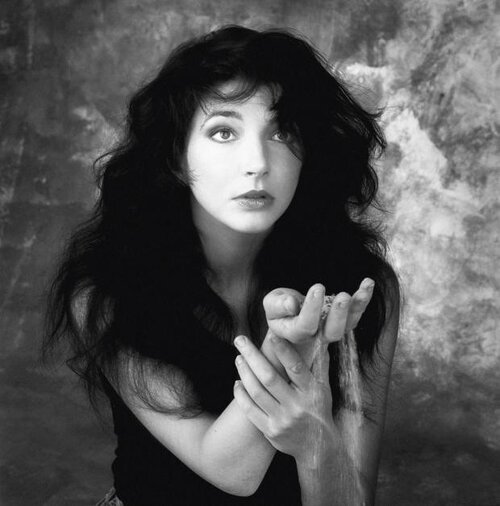
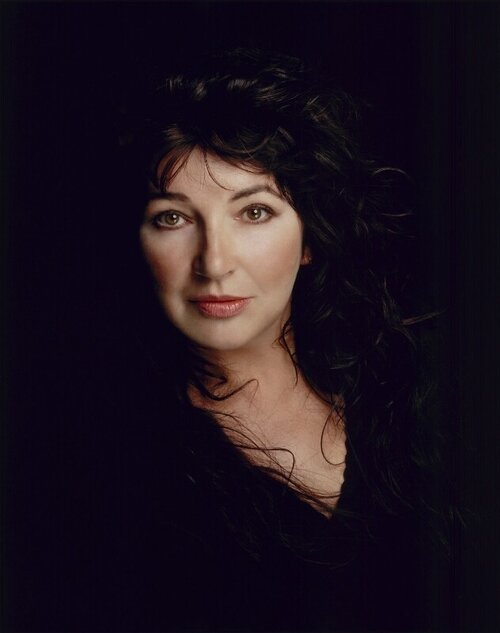
IN THIS PHOTO: Kate Bush in 2014/PHOTO CREDIT: Trevor Leighton

Kate Bush: Fellow of The Ivors Academy

___________

EACH week seems to bring…  

something new in terms of Kate Bush news. I saw on Twitter yesterday that Mark Radcliffe (BBC Radio 2, BBC Radio 6 Music) has made a film about Bush and her debut single, Wuthering Heights, and that is going out around Christmas time. There is always online fascination and adoration concerning Bush and her music but, today (23rd September), she was made a Fellow of The Ivors Academy. Music Week explains:

British music legend Kate Bush has been made a Fellow of The Ivors Academy in recognition of her "peerless and enduring achievements in music".

The award is the organisation's highest honour and is only the 20th Fellowship to be awarded in its 76-year history, with Bush joining previous recipients including Annie Lennox, Paul McCartney and Elton John.

“I feel really honoured to be given this fellowship by The Ivors Academy. It means so very much to me," said Bush, who also receives a dedicated Ivor Novello Award, depicting Euterpe, the ancient Greek Muse of lyric poetry.

"Thank you to all my family and friends and to everyone who has been there for me over the years," she added. "I’ll treasure this statue of Euterpe always and ask her to sit on my shoulder while I work.”

Commenting on Bush’s honour, Annie Lennox, who was made a Fellow of the Academy in 2015, said, “I’m delighted beyond words that Kate Bush is being recognised and honoured with an Ivors Academy Fellowship. I cannot think of anyone more deserving than the uniquely innovative singer songwriter, performer, producer and remarkable artist that she is. She is visionary and iconic and has made her own magical stamp upon the zeitgeist of the British cultural landscape.”

Joan Armatrading, the most recent music creator to receive Fellowship prior to Bush, said: "Kate Bush is undoubtedly one of Britain’s best loved legendary singer/songwriters, an inspiration to many and deserving of the Fellowship. This is the highest award The Ivors Academy can bestow on any artist. I’m delighted that she takes her place of recognition and I send my hearty congratulations."

Elton John, who became a Fellow of The Ivors Academy in 2004, described Kate Bush as “A truly inspirational, innovative British songwriter and artist. A legacy full of classic works.

Fellow of the Academy David Arnold said, "I’ve not met an artist in the 30 years of working in music who doesn’t love Kate Bush. Since she emerged, seemingly fully formed as an artist in the 1970s, she immediately claimed a place in the arts as a true original with a raw, pure, visionary talent.

“A writer who pushed the boundaries of what songwriting could be, a producer showing us how exciting and challenging the sound of a record could be and a performer who mesmerised, enchanted and drew her audience in to the worlds she had so beautifully and fully created.

Crispin Hunt, chair of The Ivors Academy, said, “As a music creator it is unnerving when you know that your words will fall short, but this is one of those times. Kate’s talent is incalculable, her achievements are peerless and artistry leaves you breathless. Countless songwriters and composers have referenced how Kate has informed their musical development. On behalf of all songwriters and composers, The Ivors Academy is giving Kate the highest honour we can bestow as a heartfelt expression of our love and admiration”.

Maybe there will be incentive for Bush to release some music this or next year, as there is this continuing wave of affection and appreciation for everything she does. I am glad about her latest honour, as Bush has inspired and affected so many artists and fans since her first single. It makes me wonder, as I have mused before whether Kate Bush should be made a Dame. Already, she is a CBE – which she was awarded in 2013, but I do think there is nobody more deserving of being made a Dame than her! I think everyone would react very positively to that, and I am sure that she would not object! Whatever happens, it is nice to see that Bush is being bestowed with honours in a year that is as hard for her as many other people. Even though Bush has not performed live or put out new music for a while, her influence is everywhere. There are few artists who have connected with such a wide and varied musical audience as Kate Bush. I am excited to see what comes of the Mark Radcliffe programme later this year, and you never know what lays ahead when it comes to Kate Bush news. This latest announcement has been met with hearty congratulations and appreciation, and it is thoroughly deserved! In future weeks, I am going to write features regarding specific songs from Bush, just to highlight what a unique and consistently innovative songwriter she is. In a week that has delivered bad news and very little cheer, it is great that music fans can throw a salute to…

PHOTO CREDIT: Gered Mankowitz

AN icon and musical hero.   

FEATURE: Spotlight: Martha Hill

FEATURE:


Spotlight

Martha Hill

___________

EVERY week gives me the opportunity…  

to reveal and explore a new artist who I feel is primed for big things. Most of my features have revolved around female solo artists and, whilst I want to include more bands, I still find that the most inventive and interesting music is arriving from women. Martha Hill is an artist who I have been invested in for a little while now and her recent track, Grilled Cheese, has been on the radio a fair bit. If you are new to Hill and want to know a little bit more than, handily, her Bandcamp page provides some biography:

After being tipped as one of BBC Introducing’s “ones to watch”, followed by a feature on Jools Holland, northern musician Martha Hill is one of the most exciting emerging artists of 2020. The first single from upcoming EP Summer Up North “Grilled Cheese”, was not only named Huw Stephens track of the week and placed on numerous Spotify playlists but was also put on BBC6music’s A-List playlist”.

If you have not checked out Martha Hill’s Be Still E.P. of last year, then I would recommend you investigate it. It is exciting, as she prepares to release her new E.P., Summer Up North, on 23rd October. The five-track E.P. opens with Grilled Cheese, and I am interested to see how it is received. She put out another new track recently called Landslide, and it is another cracker that shows what a broad and consistent talent she is! I think Hill has grown more assured as a songwriter since her earliest tracks, but I think she always had that confidence and original talent – it has just been heightened over the past year or so.

I want to bring in a couple of interviews she conducted this year in a bit, but going back to 2018, Hill spoke with Get in Her Ears, and she was asked about her start and progression:

Welcome to Get In Her Ears! Can you tell us a bit about how you got started as an artist?

Thanks for having me! I just kind of stumbled into it. First as a hobby, but then it became a lifestyle – I was travelling around quite a bit and busking was how I got by.

You are originally from Scotland but left at 17 to travel across Europe busking. That must have been quite an eye-opening experience at 17?!

It was great to mission about and do loads of different things. I also got to play in different countries with a wide variety of musicians like Italian jazz flutists or old Spanish drummers – it definitely shaped me and the way I approach music.

And you are now living in Newcastle, what were your reasons for moving there? What’s the music scene like there?

My cousins are from there; my cousin Wilf (Dansi) is a musician, and I’d grown up having wee jams with them. They seemed to have this lifestyle that was a million miles away from what I knew, so I moved to be closer to them. The Newcastle music scene is incredible! It’s proper underground – you hear about Manchester’s scene a lot, or even Leeds, but rarely Newcastle’s. I feel like we all look out for each other a lot and support each other. Check out my Spotify playlist ‘Women Are Mint‘. It showcases female musicians based in the North East”.

There is so much competition out there regarding songwriters, and it can be hard standing out from the crowd! Some songwriters have their own labels, whereas others record and release in a unique way. Maybe these are ways to get noticed, but I think modern songwriters are quite business-minded and ambitious. Many do not want to simply release songs and be very limited and traditional. Martha Hill has her Women Are Mint festival, and she spoke with Spotlight earlier this year about the festival and Reading and Leeds’ male-heavy line-up. This was when the 2020 line-up was announced (that had to be rescheduled) and before the controversial line-up for next year was revealed:

On that subject, Reading and Leeds Festival got its fair share of controversy this year for their poor representation of women on their lineups. What’s your opinion on that?

“I think that there’s definitely more that can be being done - I know that Festival Republic, who put on Reading and Leeds, are actually taking that in their stride and they’ve set up an initiative called ReBalance and they’re using that initiative to empower women and give women a voice.”

“They’re doing things like giving female artists free studio time, they’re helping to put on gigs and being really supportive in other ways as well - their way of looking at it is rather than saying: ‘Okay we’re going to do a quota and we’re going to throw female acts who may not be career ready onto stages where it isn’t their time in their career to get to,’ they’re going to support things from the bottom and build up that way.”

I think that’s a really sensible idea - there should be more media on things like that!

“Well obviously, things should be 50/50, but quotas alone are not the only way forward - there has to be a lot more going on than that, there has to be a lot of support from base level up.”

Are there any other reasons as to why you’ve booked the artists you’ve booked, aside from them being female?

“I try to keep it at least 50% of the lineup local because I really love supporting North East female artists.

I also try to just have a massive mix, for example the final act on Saturday is My Bad Sister, who’ve played massive stages at Boomtown and Glastonbury and they’re absolutely unreal. And then before them is an act called Cadi and she’s an unreal DJ who’s only played two or three shows her entire life - one of the main things I wanted was for people to be rubbing shoulders with everybody equally”.

Though this year has been a bit of a washout and non-starter for so many artists, I think Martha Hill will have a very successful 2021. With a new E.P. coming next month, it is a perfect time to get involved with her music. I want to end with a quote from a final interview, where Hill discussed her previous single, Grilled Cheese (among other things):

What differs you and your sound from other upcoming artists in the music industry?

I’ve been told my voice is quite distinctive, so I guess that would set me apart. I like to focus on my lyrics a lot as well. I guess my usual aim is to make something weird and then work to make it accessible.

Your latest release ‘Grilled Cheese’ is out now! Can you please describe the creative process and explain the meaning behind the single?

It began with the first verse “my baby messes me around, yeah she don’t love me anymore and I know that for sure”. I liked the way the 2nd and 3rd lines rhymed, rather than the usual 2nd and 4th structure. From that I fleshed out the rest of the song. The pre-chorus was written with Rhiannon Mair and the chorus came out of a production session with Julien Flew, so there’s been a lot of different input in this song. It’s all about daft fights in relationships.

What personal advice would you give to someone wanting to pursue this career?

Don’t be afraid to ask for things. A lot of people in the industry are out there to help. Ask questions, listen, learn as much as you can. Also just start doing things. Don’t sit around waiting for someone to “discover” you. Get out and play, meet people, write.. something at some point will happen!

She is an amazing artist with a terrific sound, and I am excited to see how she blossoms over the coming years. It has been a very strange year, but I think music has provided us with some direction and comfort. I have loved what Martha Hill has been putting out, so make sure you follow her and buy her music. In a sea of terrific new musicians, Hill ranks as…

ONE of our very best.   

________________

Follow Martha Hill

FEATURE: Vinyl Corner: Prince – Dirty Mind

FEATURE:


Vinyl Corner

cxx.jpg

Prince – Dirty Mind

___________

LIKE Madonna and Kate Bush…  

IN THIS PHOTO: Prince in 1980/PHOTO CREDIT: Deborah Feingold

Prince is an artist I cover a lot through various features! I am going to ease off over the coming months, but one of his greatest albums, Dirty Mind, is forty on 8th October. After Prince’s somewhat underrated eponymous album – and before 1981’s Controversy – came this real revelation and forward step from the master. I would urge people to get Dirty Mind on vinyl, as I think it is the first truly brilliant album from Prince. His third studio album, Dirty Mind, was a moment when his genius started to come to the fore! Like all of Prince’s albums to that point – and I think all of his albums in general – he took care of production duties, and Dirty Mind was arranged, and composed entirely by Prince in his home studio in Minneapolis, Minnesota during May to June of 1980. During the spring of 1980, Prince and his backing band spent nine weeks opening for Rick James – James, at this point, was a musical rival of Prince’s; that would not last too long as Prince grew and really started to stand out as an icon-in-the-making. After returning from that tour, Prince set to work on his boldest album at that point. More diverse and confident than anything before, Dirty Mind fuses Funk and Disco, but there is rawness throughout, not just in terms of the sound and performances, but the themes addressed by Prince – his very open and evocative sexual exploration opened the doors for other artists in terms of what could be said.

Because of Prince’s mix of sounds and the themes he touched upon, Dirty Mind inspired a lot of Urban Soul and Funk artists of the early-'80s. Dirty Mind is considered to be one of the greatest albums of the 1980s, and one of the finest in Prince’s cannon – which is no mean feat when you take into account how many genius albums Prince created in his lifetime! Dirty Mind, When You Were Mine, and Uptown are among Prince’s best tracks, and the command he shows through the album is incredible. Considering Prince took care of all the vocals and instruments himself – except Lisa Coleman providing backing vocals on Head, and Doctor Fink played synthesizer on Dirty Mind, and Head – full credit has to be given to him and his insane talent! I am going to end with a few features/reviews that highlight the importance of Dirty Mind – and how it was the start of something truly special. Ultimate Prince talk about the homemade simplicity of the album, and the way it also points to the future:

Unlike his first two albums, 1978's For You and the following year's self-titled LP, which were recorded at various Minnesota and California studios, Dirty Mind was made in Prince's home studio in Minneapolis. And that distinction made every difference in the world.

Record-company suits weren't exactly breathing down his neck during the actual recording of the first two albums; he was given a substantial, and nearly unprecedented, amount of control over his work when he signed to Warner Bros. But holed away at home, Prince had a relative new freedom to do what and when he wanted. He often recorded marathon sessions late at night in May and June of 1980, working on a batch of new songs that lyrically went further out there as he stripped down the tracks to their barest essentials.

The eight songs that make up the finished Dirty Mind sound like demos because that's almost precisely what they are. Besides Prince's guitars, synths, drums and vocals, there's not much else there. Dr. Fink plays synths on the title track and "Head," and Lisa Coleman sings backup on "Head."

But the songs themselves look forward: Those synths are more rooted in early-'80s New Wave than R&B from any decade, and the lyrical subjects -- basically sex in all its fluid-swapping glory, with a couple of stops along the way for good times that don't involve tongues or penises -- weren't exactly Top 40 standards, not even in the most boundary-pushing and hedonistic music disco and punk had to offer.

But there's also sophistication to the songs. Listen to the way the album's centerpiece, "When You Were Mine," swings from one emotional point ("When you were mine, I gave you all of my money / Time after time, you done me wrong") to another ("You were kinda sorta my best friend") until it moves into more spiteful territory: "You didn't have the decency to change the sheets." By the end of the song, Prince's lovelorn heartbreak has turned him into an obsessive stalker: "Now I spend my time following him whenever he's with you."

But one listen to Dirty Mind, even today, will tell you that legacy begins here.

The album made it to only No. 45 on the chart, but it remains one of his best LPs and his first important one. That part-inviting, part-defiant look Prince shoots us on the cover says more than "I've got something for you, baby." It also says, "Get used to me, because I'm not going away anytime soon." A bold declaration he made good on”.

Not to keep going on about it, but I am fascinated how artists can completely set it up and release an album that is so much stronger than the one before it. From The Beatles, to Nirvana, to Radiohead, to Joni Mitchell, there are so many examples of an enormous creative leap. For Prince, he really found his groove on Dirty Mind! When they reviewed the album, this is what AllMusic had to say:

Neither For You nor Prince was adequate preparation for the full-blown masterpiece of Prince's third album, Dirty Mind. Recorded in his home studio, with Prince playing nearly every instrument, Dirty Mind is a stunning, audacious amalgam of funk, new wave, R&B, and pop, fueled by grinningly salacious sex and the desire to shock. Where other pop musicians suggested sex in lewd double-entendres, Prince left nothing to hide -- before its release, no other rock or funk record was ever quite as explicit as Dirty Mind, with its gleeful tales of oral sex, threesomes, and even incest.

Certainly, it opened the doors for countless sexually explicit albums, but to reduce its impact to mere profanity is too reductive -- the music of Dirty Mind is as shocking as its graphic language, bending styles and breaking rules with little regard for fixed genres. Basing the album on a harder, rock-oriented beat more than before, Prince tries everything -- there's pure new wave pop ("When You Were Mine"), soulful crooning ("Gotta Broken Heart Again"), robotic funk ("Dirty Mind"), rock & roll ("Sister"), sultry funk ("Head," "Do It All Night"), and relentless dance jams ("Uptown," "Partyup"), all in the space of half an hour. It's a breathtaking, visionary album, and its fusion of synthesizers, rock rhythms, and funk set the style for much of the urban soul and funk of the early '80s”.

I am going to wrap up things in a second, but I just want to bring in one more review that makes some interesting points regarding Dirty Mind. When Pitchfork covered the album in 2016, this is what they wrote:

Dirty Mind’s second side is unquestionably Prince’s most propulsive suite. It begins with “Uptown,” which ranks alongside Vanity 6’s Prince-penned-and-produced “Nasty Girl” among the most daring R&B radio hits of the ’80s. But its topic is even more singular—how homophobia constricts even heterosexuals. The song celebrates a boho utopia where fag-bashing, racism, misogyny, and all other trifling shit doesn’t exist: While minding his own business, a passing hottie asks him point blank, “Are you gay?”

IN THIS PHOTO: Prince in 1980/PHOTO CREDIT: Lynn Goldsmith

But instead of blowing his cool, Prince reasons, “She’s just a victim of society and all its games.” To school the dame, he takes her to Uptown, a real-life Minneapolis counterculture haven back in 1980 that’s subsequently been gentrified. There, she loses her uptight ways as the track’s grinding disco-funk gains momentum; the overwhelming freedom acts as an aphrodisiac, and the once-scorned weirdo gets “the best night I ever had.” Everybody’s happy.

The tempo downshifts slightly but significantly on “Head,” one of the earliest fully realized manifestations of Prince’s quintessential style. The song features another scenario perfectly archetypal of The Purple One: He meets a virgin (played with drawling deadpan glee by Coleman) on the way to her wedding, and she gives him what the song celebrates.  This results in a Bill Clinton maneuver on her gown, so she dumps her plans and marries him instead. As suggested by his thorniest, most authoritative early groove, this isn’t necessarily a wise choice; Prince vows, with not a small amount of matrimonial menace, to “love you till you’re dead”.

I will leave things now, but go and get Dirty Mind on vinyl, as it is the first masterpiece from an artist who would soon rack up many more! Listening to the album now, and it still sound completely mind-blowing and unique! I think it is one of Prince’s finest albums and, whilst not as adventurous and ambitious as some of his records, Dirty Mind remains essential and fantastic. The album inspired so many other artists, and I can hear shades of Dirty Mind in some of the music of today. Such an amazing album from an artist…

WHOSE influence will never fade.

FEATURE: My Pick for the Mercury Prize: Michael Kiwanuka - KIWANUKA

FEATURE:


My Pick for the Mercury Prize

PHOTO CREDIT: Parri Thomas for The Line of Best Fit

Michael Kiwanuka - KIWANUKA

___________

ON Thursday (24th)…  

ccvv.jpg

IN THIS PHOTO: Laura Marling/PHOTO CREDIT: Lorne Thomson/Redferns

the winner of this year’s Mercury Prize will be announced. The event is very different to previous years, and there will not be the usual series of performances at a venue and all the nominees being in the same space. I will speak about that in a minute but, when the shortlist was announced in July, the fact the list of twelve contained more female artists than ever was a much-needed step forward – and more Pop albums coming into the mix. The BBC explain more:

For the first time in its 29-year history, female artists and female-fronted bands have outnumbered men on the shortlist for the Mercury Prize.

Among the nominees for album of the year are Charli XCX's lockdown project How I'm Feeling Now and Dua Lipa's pop opus Future Nostalgia.

"I never really thought this would ever happen to me," said Lipa. "Maybe I just didn't think I was cool enough."

The nominees were announced live on Lauren Laverne's 6 Music show.

A total of seven female or female-fronted acts made the 2020 shortlist. The previous highest total was five.

In contrast to last year's list, which highlighted political lyrics and post-Brexit punk, this year's selection champions pop - a genre the Prize has tended to ignore since the 1990s, when acts like Take That and the Spice GIrls received nominations.

Dua Lipa's Future Nostalgia and Georgia's Seeking Thrills are both exuberant hymns to hedonism, while Charli XCX brings cutting-edge production techniques to her pop melodies, on an album recorded in six weeks at the start of the lockdown.

IN THIS PHOTO: Stormzy/PHOTO CREDIT: Ana Cuba for The New York Times

UK rap continues to have a strong presence on the list, with returning nominees Stormzy and Kano hoping to replicate the success of last year's winner, Dave.

Their albums both address the experiences and prejudices facing young Black Britons, a topic which also informs Moses Boyd's freewheeling jazz record, Dark Matter.

And a few Mercury favourites also make an appearance: Laura Marling racks up her fourth nomination for the elegant, melodic Song For Our Daughter; while Michael Kiwanuka becomes part of an elite group who've been nominated for each of their first three albums - the others being Coldplay and Anna Calvi”.

It is going to be odd seeing the Mercury Prize in a different way! This year’s event will be a hotly-contested one but, as NME reported, the way the winner is announced has a different flavour:

Instead, this year’s Mercury Prize winner will be announced live on The One Show on September 24. The programme will also feature the first interview with the winning artist.

The BBC’s Mercury Prize coverage will begin before that on September 21, when Tom Ravenscroft will begin filling in for Marc Riley on Radio 6 Music.

Across the week, he will share previously recorded performances from the shortlisted artists. The series will kick off with a BBC Prom, performed by Laura Marling and 12 Ensemble, recorded at the Royal Albert Hall last night (September 6).

6 Music’s Album Of The Day slot will also highlight previous winners of the Mercury Prize, including Young FathersRoni Size and PJ Harvey.

In a press release, Lorna Clarke, Controller, BBC Pop, said: “The 2020 Mercury Prize is a great moment for us to give a platform to twelve of the most exciting acts in British music. As the annual awards show is unable to take place this year, the BBC will be celebrating these incredible acts across the week on TV, radio and online, including an exclusive announcement of the winner on The One Show on BBC One and a Later with Jools Holland special on BBC Two”.

It is brilliant that women are being acknowledged and represented on the Mercury shortlist this year, and I think albums from Dua Lipa (Future Nostalgia), and Laura Marling (Song for Our Daughter) are among the very best of this year. My second choice for Mercury winner is Laura Marling, but I think that the prize this year will go to Michael Kiwanuka for his staggering third album, KIWANUKA. I remember hearing Kiwanuka’s debut album, Home Again, and being impressed, but I think even he would admit that it was a promising debut, but maybe not as original and representative of who he is as an artist as an album like KIWANUKA. His second album, Love & Hate of 2016, was a big step forward, and he has hit a peak with last year’s KIWANUKA.

xxxxxx.jpg

The reviews for the album have been sensational, and I think that Kiwanuka can grow even stronger and more amazing on his fourth album – which would be a scary and tantalising thought! This is what The Guardian wrote when they reviewed the album in November:

Michael Kiwanuka’s first two albums established him as a folksy symphonic soul man akin to Bill Withers and Terry Callier, and set the bar pretty high. This one knocks it skyward. Together with producer-to-the-stars Danger Mouse and London hip-hop producer Inflo, the British-Ugandan 32-year-old has broadened his territory to stretch from Donny Hathaway-style melancholy soul through to Rolling Stones-y gospel rock, psychedelic soul and breakbeat. There are strings and harps, samples of civil rights campaigners, Hendrix-type frazzled guitars and Burt Bacharach-type orchestrations. The dreamlike, revelatory quality is reminiscent of Marvin Gaye’s What’s Going On and Primal Scream’s Screamadelica.

Unusually, in these streaming-led times, Kiwanuka is a contemplative song cycle intended to be listened to in one extended sitting, which he says is “a reaction against this fast-paced, throwaway, machine-led world”. It sounds timeless and contemporary; the instrumental interludes and the stylistic and tempo shifts all hang together because of his warm, sincere vocals and fantastic songwriting. At the core is Kiwanuka’s inner battle between anxiety, self-doubt, spirituality and wisdom, which is then set against racism and rueful glances at the state of the world. Thus, killer opener You Ain’t the Problem is both an encouraging nudge to himself and a sharp put-down of attitudes towards immigration: “If you don’t belong, you’re not the problem.”

Hero compares the murder of 60s activist Fred Hampton with recent US police shootings (“on the news again, I guess they killed another”), also referenced in the insistent Rolling (“No tears for the young, a bullet if you’re wrong”). Piano Joint (This Kind of Love) and Hard to Say Goodbye are beautifully pensive and Final Days ponders nuclear apocalypse. But for all its melancholy, Kiwanuka is never downbeat. There are moments – such as the “Time is the healer” gospel choir in I’ve Been Dazed, or hopeful closer Light – when positivity bursts through with such dazzling effect you want to cheer. Kiwanuka is a bold, expansive, heartfelt, sublime album. He’s snuck in at the final whistle, but surely this is among the decade’s best”.

I really love KIWANUKA, and I can tell how much of Michael Kiwanuka’s heart and soul is in the record! He has not won a Mercury before but, with his strongest album yet, I think that might change. As I said, Laura Marling is probably his closest competition, and Song for Our Daughter is my favourite album of 2020 – she is someone who definitely deserves all the success she gets! When Michael Kiwanuka spoke with The Line of Best Fit in October, he talked about the album’s intent – and how it differs from his previous efforts:

It kind of came full circle on this record. When I was asked what the album was going to be called I had two options - one of them was KIWANUKA and one of them was something else. They actually loved the title straight off the bat, I changed it for a month or so as I doubted it for a bit. When I came back around everybody was like ‘oh, thank god - we way preferred KIWANUKA’. The times have changed - you can do something like that now, I don’t think you could have done something like that in 2012. I was young so it was quite confusing and like ‘ah man, what do I do?’ This whole album is more about understanding you can stand up for yourself.”

KIWANUKA employs a wider musical palate than any of its predecessors, there are more moods throughout, sometimes in the course of one song - take the sprawling standout “Hard To Say Goodbye” with its fluttering harps and choral vocals which suddenly erupts as guitar solos and strings lift the track to an ecstatic chorus. For that reason, he’s more excited than ever to perform live, a space he calls his ‘comfort zone’.

“Out of everything in this job which always throws curveballs, I always kind of rely on playing live,” he says. “The feeling of connecting with fans is amazing. It gives your songs life, you can keep singing songs you’ve sang a million times because of an audience and a good gig. Plus, I love collaborating with musicians, that’s just like my home - that’s what I know, I really enjoy it”.

There are some who have said the Mercury Prize has lost its sense of what it is about, in so much as it should provide a platform for underdog artists to get recognition and prize money. There are lesser-known artists in the shortlist this year (including Lanterns on the Lake for their album, Spook the Herd), but it is difficult to strike the balance of representing the best bands and artists and those who are underground and have created something less conventional and commercial.

This article reacted to the shortlist and asked whether the Mercury Prize has lost its way:

The Mercury Prize should embrace its anti-establishment roots and celebrate smaller, radical artists who exist on the periphery. For example, this year’s nomination Porridge Radio stated: ‘this is the first time we’ve felt acknowledged by the wider music industry’, and it is this which should remain the essence of the Mercury Prize moving forward. They should be highlighting artists and creators who would otherwise go unnoticed or unrecognised in their talent, while dedicating themselves to spotlighting the true diversity of the British music scene. The Mercury Prize may have lost its way, but with a bit of guidance, it could easily find its way back”.

I think the Mercury Prize shortlist reflects the best albums from the past year from British and Irish acts, and it is hard to include every worth artist. I think it will be impossible to call a winner, as each year leaves you guessing until the announcement! I would like to see Michael Kiwanuka win the award, as he has created an album that has affected so many people. It is a career-best and it is one I really love. Everyone has their pick for this year’s winner but, for me, it is time to reward…

THE awesome Michael Kiwanuka.

FEATURE: Why Should I Love You? The Accessible, Private and Otherworldly: The Many Sides of Kate Bush

FEATURE:


Why Should I Love You?

IN THIS PHOTO: Kate Bush shot by Gered Mankowitz

The Accessible, Private and Otherworldly: The Many Sides of Kate Bush

___________

THIS is a bit of a grab bag feature…

PHOTO CREDIT: Rex

inspired by a couple of recent Kate Bush-related bits of news. An album I was not even aware of, I WANNA BE KATE: The Songs of Kate Bush, will be released on 22nd September. I am not sure whether it was available on vinyl when it came out in 1998, but one can order it on vinyl now! Here is some more information:

In 1998, a group of brilliant Chicago indie artists/bands recorded 17 Kate Bush songs for the world's first official Kate Bush tribute album. Now, this classic Chicago-indie tribute album has been gorgeously remastered by 3-time Grammy-nominated producer Liam Davis - breathing new life, shine and spirit into these timeless, interesting and hugely enjoyable covers. The addition of 7 NEW songs ensures that every one of Kate's majestic, beloved and iconic albums are represented among our 24 tracks. Deep cuts, big hits, and even the humble b-side or two are here. We have been awed and inspired over and over again and all the songs have been made with love and gratitude for Kate Bush and her genius. EAT THE MUSIC! Mmmm...yes!”.

I think there are different sides to Kate Bush that makes her so fascinating and endlessly curious. The fact that there is this re-release shows that there is continuing affection and demand. Whilst it may not be a new Kate Bush album, it does prove that there are artists out there who love her music and have given some of her best songs their own spin!

I wonder whether there will ever be another compilation of Kate Bush covers, as there have been quite a few in the past couple of decades or so. Whereas there is this genius level of creativity and otherworldliness that makes Bush seem divine and untouchable, there is a tag that follows her around a lot: the reclusive one. Earlier this week (on 16th), a few features came out to celebrate Hounds of Love’s thirty-fifth anniversary. It was great to see people come together to praise and explore an album that ranks alongside the very best of all time. I like the feature Grammy wrote, and they mentioned how, by 1985, people assumed Bush was hidden away and would not release any music again:

Bush had to fight tooth and nail to launch Hounds of Love with "Running Up That Hill" instead of the much-preferred "Cloudbusting." However, she did make a rare concession to her label. The battle of the sexes had originally been titled "A Deal with God" before EMI bosses convinced the singer that its religious connotations would scare off the bible belt. It was the first of several signs that Bush wanted as many people to hear the fruits of her labor as possible.

Indeed, Bush has since garnered a reputation for being so reclusive she makes Howard Hughes look like a social butterfly. But in the fall of 1985 you couldn’t turn on late-night cable TV without hearing her softly spoken English tones answering a variety of inane questions about her anything-but-inane career: she has to work overtime to hide her disdain during this particularly awkward interview on USA Network’s Night Flight.

IN THIS PHOTO: Kate Bush at Tower Records in 1985

There were also several radio appearances and, even more remarkably, a signing session at Greenwich Village’s Tower Records store. Yet it was Bush’s embracing of the music video that truly helped her connect with U.S. audiences beyond the fringes of the art-rock scene”.

I have sort of hinted at this in previous features, but Kate Bush is an ordinary and very relatable person (even though a video I saw of her making tea years back made me smile due to its eccentricity) - albeit one with supreme talent and original brilliance! I think the ‘reclusive’ tag has dogged her since the earliest years, and Bush just wanted to make music and live a normal life. Maybe the press feel that a musician cannot live normally and needs to be seen – whether that is at big events, lots of touring or making the news. As Bush only toured once (on 1979’s The Tour of Life) and only returned to the stage for a large-scale production in 2014 (for Before the Dawn), there is always this thing that she is a reclusive and does not want to be seen! The truth is that she is an albums artist, and she spends most of her time recording and creating as opposed to performing. It is strange that musicians like Bush were being written off and labelled because she did not release an album in a few years. Hounds of Love arrived after 1982’s The Dreaming, and it does not seem like such a huge gap when you compare that to today’s scene!

Bush never shunned fans, and she did do promotion in the U.S. for Hounds of Love. That was an album that really broke her there – even though The Dreaming was her first big step into American hearts -, and the signings in the U.S. shows that she was not this reclusive artist that wanted to hide away. It is that accessible nature that many love her for, as she always wants to show the fans her appreciation, and she did that right through her career. Fan conventions began in 1980, and though she did not attend all of them, she did go to a few, and was more than happy to chat to fans and be seen! That’s what makes it strange that Bush has this reputation as almost being ghost-like in her lack of public appearances. I think she was much more visible than many artists today, who can do a lot of promotion and work online. Factor out the live music aspect, and Bush has given the world plenty. Since 2011’s 50 Words for Snow, she has not said too much, but one assumes that there is music brewing and she is focusing on her next step. Since 1978, Bush has been all over the world and conducted so many interviews. She has been to her album signings and there have been live performances and various events through the years. From singing alongside Rowan Atkinson at 1986’s Comic Relief, to Bush promoting Hounds of Love at the London Planetarium in 1985, I think we can dispel the notion that she is reclusive!

Kate Bush is private, for sure, and she is not someone who welcomes in glossy magazines or is keen to have her personal life shared. Since the start of her career, I think some people saw her as a commodity, and I wonder whether her label, EMI, were always interested in what she wanted and how she was projected, as opposed trying to get as much music out there and sending her all over the world. Like many Pop artists, Bush’s private and love life were speculated and raised in interviews. One reason why she was a little reluctant to be too outgoing and ‘typical’ was this constant desire for the press to know her business and ask about her private stuff! In an interview with Hot Press in 1985, Bush was asked about how she is marketed and why she kept her relationship with Del Palmer secret for so many years:

As somebody who is involved in making records, you are also involved in creating a product and to an extent, Kate Bush becomes a commodity. How do you feel about that?

"Yes, that is something that does scare me. If you want to make records, videos, you have got to have money, and to get that money you have to have albums that are relatively successful. You have to promote them. And that's where I feel the commodity side comes in, because as soon as the personality seeps into it rather than the work, you're making that person vulnerable to the public. I don't like that. I'd much rather work on albums, videos, and explore films and that, without having to promote them. I find it difficult, I feel false. It's very against what I feel is right.

IN THIS PHOTO: Kate Bush with Del Palmer

"I think sometimes the work speaks much better than the person does. I certainly feel mine does. Because I can spend a lot of time trying to say something, and I don't feel that I am good enough at what I am doing now to really warrant doing it, other than for selling my work. And I think sometimes it can go against the work: the personality can almost taint it."

You successfully declined to discuss your relationship with Del [Del Palmer, Kate's demo engineer and bass player.] publicly for seven years. Why was that?

"Well, I don't feel our relationship is anything to do with anyone other than us."

But on the other hand, it was made public knowledge through the Daily Mirror.

"Yes. There was a launch of the album, and it was really a decision, whether we didn't go together or whether we'd go together and just behave normally. And we thought it was silly not to go together-- so we went together. And everyone wanted photographs of the two of us. It was quite a shock for both of us--It's been a long time since there's been that many cameras going off for me. And I don't think Del had experienced anything quite like that before. So it's not that it all suddenly came out in the open. There was a launch and he was there. But they loved it!"

Does it create any tension that you are the one who is the bigger earner? Obviously you have the greater income. It's a reversal of the conventional pattern.

"It's not really that unusual now. Del's very involved in the work. He seems to really enjoy the music, so we actually work together. I don't think he minds".

Despite the fact Bush was asked about her personal relationships and people probed her quite a bit through her career, she has always been the epitome of forthcoming, warm and compliant. It would take too long to scan the interview archives to give examples, but Bush has always given great interviews and willingly talked about her music - and not completely close off when someone asks about her family or private life. Again, it comes back to accessibility and Bush not wanting to be a diva or seeming too precious! If one does some digging, they will see plenty of examples of Kate Bush displaying enormous humour and playfulness; a legendary hospitality and kindness that meant, invariably, so many interviewers were speechless. So many artists tend to have the one side: either they are quite distant and cautious regarding interviews and public appearances, or they are more open and warmer. Not to pour scorn on artists who are a bit colder, but it is rare to see an artist that is grounded and accessible, but one who can remain private and put out music that is almost superhuman and supernatural in its range and skill!

IN THIS PHOTO: A young Kate Bush captured by her brother, John Carder Bush (from the book, Kate Inside the Rainbow)

I am not suggesting the main reason Kate Bush is idolised by fans and musicians alike is because she has this contrast of the super-normal and ultra-rare, but it is intriguing that she has sustained such a high level of love and popularity by leading a career very different to other major artists. The hectic first few years she experienced in her career drastically affected her, in that she wanted to record and have more say in terms of her work and movements – whilst she liked seeing the fans and her tour, it was a bit exhausting for her! Rather than Bush being reclusive, she is actually very normal. I think that is what shocks people the most: How can a superstar and icon remain normal and yet be seen as this goddess of music?! It is a balance few artists have achieved, but I think Bush’s approach is so refreshing and it has definitely influenced other artists. There is a level of promotion everyone needs to undertake, but having that necessary time to create, having some autonomy and say of their career and being able to switch off and have a normal home life is something that Bush has achieved. Perhaps having a very balanced, sensible, and comfortable upbringing is a reason why many huge artists find it hard to remain planted, but Bush did grow up in a very loving, artistic and happy house. I think she wants that for herself and her family, so courting the media and touring the world does not hold much appeal and necessity.

I want to finish up on why there is so much love for her albums, why a covers album is being reissued, and why, every day, there is such a wave of affection for her work and her in general. She is a confirmed icon, and her impact on culture and the music world is enormous! Inspiring artists from all corners and areas of the musical map, so many can relate to Kate Bush as a human, but they are flabbergasted when it comes to her music and how different it is to the image – or projected image – we have of her. Through her music, Bush has assumed so many different personas and guises and, like David Bowie, I think there is this public/musical Kate Bush that is always-inventive and often flamboyant, and then a more private and quieter public figure who just wants to live their life in their own way. That is refreshing, and I think many people are guided by Kate Bush as a person as an artist. I shall leave things there, but I wanted to approach Bush as someone who has been mislabelled as overly-private and reclusive, and actually is one of the most relatable, accessible and normal artists there has ever been. Her legacy is built on so many different foundations and layers, but the phenomenal Kate Bush has these very different sides that, combined, makes this incredible icon who has inspired so many people. Kate Bush is someone who always leaves me…

rrr.jpg

IN THIS PHOTO: Kate Bush during the filming of the video for There Goes a Tenner (1982) from The Dreaming

IN such awe.

FEATURE: Get Back to Where You Once Belonged… The Beatles’ Get Back: The Long Wait Until August 2021

FEATURE:


Get Back to Where You Once Belonged…

The Beatles’ Get Back: The Long Wait Until August 2021

___________

THIS year has brought many a treat…  

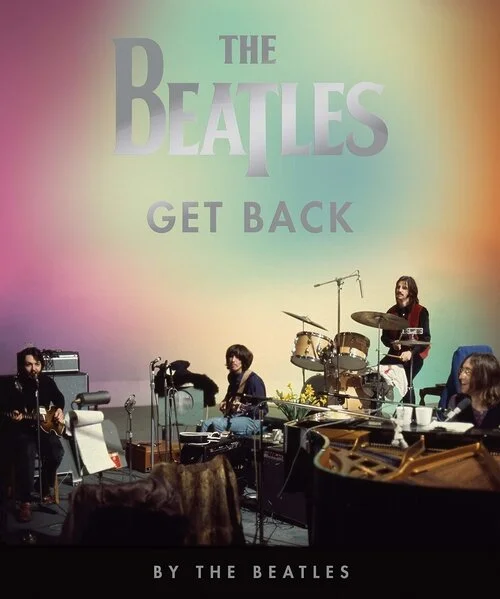
in the form of music books and compilations. In fact, I just published a feature regarding the great boxsets, remastered and reissued albums that are coming our way. It seems like, by the week, there is a new compilation or album being released that whets the appetite! One of the biggest treats of 2020 was going to be the release of the new Beatles documentary film, The Beatles: Get Back. It is a project that, because of COVID-19, has been delayed. There is an accompanying book that is coming out in August next year. Rolling Stone explain more:

The Beatles: Get Back — Peter Jackson’s eagerly awaited documentary about the making of what came to be the Let It Be album and movie — has been pushed back to August 2021. To help soften the blow, the Beatles have announced the publication of a new companion book to the film.

To be published on August 31, 2021 — four days after the scheduled release of the movie — the 240-page hardcover book will include “hundreds of previously unpublished images” from the 1969 recording sessions that begat Let It Be. Some of the photos were taken from the film, while others were snapped by Linda McCartney and Ethan A. Russell. An entire section of the book will be devoted to images from the band’s famed rooftop concert during that period.

Credited to the Beatles, the Get Back book will also include freshly transcribed comments from the band, taken from the hundreds of hours of tape from those sessions. The comments, according to publisher Callaway Arts & Entertainment, will “reveal the truth behind the Let It Be sessions.”

Originally called Get Back — a nod to the band’s attempt at setting aside the experimentation of their later records in favor of a live-in-the-studio approach similar to that of their first recordings — Let It Be began as a series of filmed recording sessions over three weeks at Twickenham Film Studios. Later, work switched over to their new Apple Studios. Unhappy with the results at the time, the band shelved the project and instead went to work on Abbey Road. By the time the Let It Be movie and album were finally rolled out in May 1970, the Beatles were no more, and the tense atmosphere captured in moments of the original film became their epitaph.

To commemorate the 50th anniversary of the original movie and album, Jackson was handed 55 hours of unseen footage from the sessions, which he approached with a degree of trepidation. “As a long-time Beatles fan, I really wasn’t looking forward to it,” he told Rolling Stone in the magazine’s recent cover story. “I thought, ‘If what we’ve seen is the stuff they allowed people to see, what are the other 55 hours going to be?’ I thought, ‘I should be excited, but I just dread what I’m about to see.’ ”

Originally scheduled for theatrical release this month, The Beatles: Get Back was postponed to next summer as a result of Covid-19. In what will likely be the next phase of the rollout, the Let It Be movie — long reviled by the Beatles — will also be reissued, but details have not yet been announced”.

It is a bit frustrating that a film that was due about now is being pushed back until next year. Although we are in a period where cinemas are open but might face closure, I do wonder whether the decision to push back the film was a mistake. We could all do with a boost right now, and it is fifty years since The Beatles’ Let It Be was released. Maybe it would have to be streamed on Netflix or another service, or it could be on Amazon Prime. Whilst it would not be the same as seeing the film on the big screen, millions of people would be interested, and there would be a way for the filmmakers to make enough profit, and I think more people would see the film from their homes than would otherwise have gone to the cinema. I suppose it is best to be cautious, but we have to wait another year to see a project that has been talked about for a very long time now!

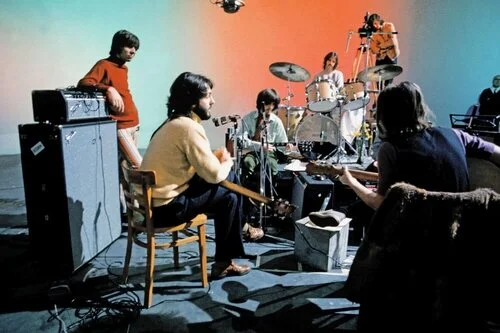
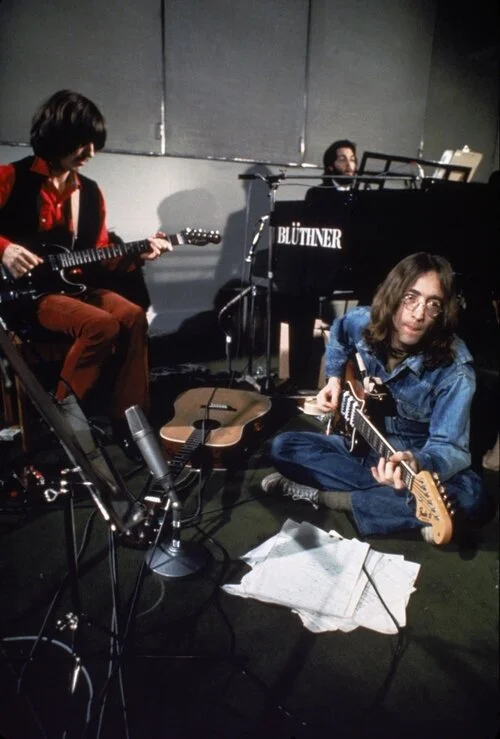
PHOTO CREDIT: The Beatles

2020 is one of the first years for a while when we have not seen a Beatles album reissued, or some form of anniversary release. Looking into 2021, and we are getting a book to enjoy, but I also wonder whether delaying this or making people wait nearly a year is a bit hasty. I suppose you have to coordinate the book with the film, lest there be spoilers – can you have spoilers if it is a documentary?! -, but I think the book is not going to reveal too much that we didn’t already know. The biggest asset is the film, so the book would have been an appreciated starter so that Beatles fans could have something out in 2020, then we wouldn’t have to wait too long until the filmic companion to the book arrives! Things will be better next year, but there are no firm guarantees as to whether life will be properly back to normal by August; it makes me wonder whether there will be another delay and the film/book will be pushed back to later in 2021 or 2022. This year has been interesting and eventful, and whilst we have had some great music and stuff to digest, many are asking why we could not get the film and book now! Next year is the fifty-fifth anniversary of Revolver, so I would imagine there is going to be something released concerning that album, perhaps.

In any case, it is exciting that there is a book-and-film package arriving next year, so there is that to look forward to. One big reason why Beatles fans are looking ahead to The Beatles: Get Back, is that there has always been this perception that the band were at loggerheads during the recording of Let It Be, and it was a very tense and relentlessly grim time for them. There were times of tension and fatigue, but it seems like the film will at least reframe the perceived impression of the band around that time – it won’t erase the clear friction there was at times, but we get a clearer picture of a band who were still connected and having fun. The Rolling Stone article tells us more:

In his introduction to the book, British playwright and novelist Hanif Kurdish echoes Jackson’s claims that, despite the legendary friction at the time of the sessions, “this was a productive time for them, when they created some of their best work. And it is here that we have the privilege of witnessing their early drafts, the mistakes, the drift and digressions, the boredom, the excitement, joyous jamming and sudden breakthroughs that led to the work we now know and admire”.

Over fifty years since the release of The Beatles’ final-released album, Let It Be, and there is still so much fascination around the icons! Maybe the album is not one of their best, but that period is really fascinating and there are many questions people will want answered. Were the band really on the verge of splitting, or did they want to continue? Are there going to be more laughs and moments of togetherness as opposed to fallout? Are there going to be some big secrets revealed that have been hidden until now? Although we have a long time to wait until the answers are revealed, by the time the book and film arrives, the demand will be…

VAST and incredibly intense.

FEATURE: Too Good to Be Forgotten: Songs That Are Much More Than a Guilty Pleasure: Amy Grant – Baby Baby

FEATURE:


Too Good to Be Forgotten: Songs That Are Much More Than a Guilty Pleasure

Amy Grant – Baby Baby

___________

THERE are songs that perform…  

really well commercially and are quite well received, yet there is a certain stigma attached to enjoying it. It is ridiculous, because I feel some people are afraid to embrace positive music or feel that it is uncool to like Pop music, for instance. Many of the tracks I cover for this feature are great, but you find that they are seen as ‘guilty pleasures’ – songs that many would be embarrassed to like or sing along to. The late-1980s and early-1990s was a rich time for feelgood Pop music, and Amy Grant’s Baby Baby of 1991 is one such example! I am just about old enough to remember this the first time, and its wholesome, charming video and incredible catchiness connected with me back then when I was very young. Baby Baby was the first single from Grant’s album, Heart in Motion - which is an album that remains very underrated and under-explored. Written by Keith Thomas and Grant, Baby Baby is just what you want from a Pop song. It has a hugely memorable chorus, a real sense of fun, and the song can be appreciated and understood by a wide demographic! Although Amy Grant saw several songs from Heart in Motion become big hits, there are many people who avoid Grant and feel her music is a bit too soft or sweet. At the 34th Annual Grammy Awards in 1992, Baby Baby received two Grammy Award nominations, including Song of the Year.

It is a terrific song, and I think it sounds more captivating and uplifting than most of the Pop music around today! As the story goes, Grant had a difficult time writing the lyrics to Baby Baby, and it was only when she saw her six-week-old daughter Millie that the words fitted into place and inspiration was found. From there, Grant wrote the lyrics were written very quickly and Baby Baby went on to become a classic. Baby Baby hit the top spot in the U.S. and it reached number-two in the U.K. I think Heart in Motion was a bit of a transitionary moment for Grant. Her first few albums had their roots in Christian/Gospel, and it was on 1985’s Unguarded where the Christian lyrics were scaled back and she moved more into Pop territory. Lead Me On (1988) preceded Heart in Motion, and it is was a less effusive and Pop-orientated affair. It was not a hugely successful album, so I think there was a deliberate move back to the Pop sounds. Whilst Grant lacked the edge of some of her contemporaries like Madonna, I think it is her faith, heart and purity that makes songs like Baby Baby stand the test of time! That is not to say that Grant lacked passion, but I don’t think she felt the need to be controversial or explicit at all. Maybe that is why some people overlook Baby Baby.

I have always loved the song, and the Heart in Motion album is packed with great songs. This is what AllMusic wrote when they reviewed the album:

In the late '70s and early 80s, Amy Grant enjoyed little exposure outside of Christian circles. But that started to change in the mid-'80s, when A&M promoted her aggressively in the secular market. And in the '90s, secular audiences accounted for the vast majority of her sales. Christians were hardly the only ones buying Heart In Motion, one of Grant's biggest sellers. Even though she wasn't beating listeners over the head with her beliefs, Grant's wholesome, girl-next-door image was a big part of the appeal of perky pop-rock offerings like "Every Heartbeat," "Galileo" and the major hit "Baby Baby." And it's certainly a key element of another huge single from the album, the idealistic ballad "That's What Love Is For." Grant was a major star, and best of all, she wasn't acting like one”.

Baby Baby’s video was not played on MTV a lot; maybe because it was not typical of videos at the time. There were no flashy sets and effects. Instead, we see Grant frolicking with her love interest, and it is a simple-yet-memorable video that fits the lyrics. I am not sure what people were expecting with the video, but it is a shame that it did not get more focus until the song became too popular to ignore. Baby Baby’s video was nominated for Best Female Video at the 1991 MTV Video Music Awards, where it lost out to Janet Jackson’s Love Will Never Do.

Baby Baby is a song that has survived through the years and is still being discussed and dissected. In 2016 – to mark the song’s twenty-fifth anniversary – it was remade by Tori Kelly (who is a popular singer and was a semi-finalist on the ninth season of American Idol in 2010). Amy Grant spoke with Billboard about Baby Baby and its remake:

It's the 25th Anniversary of "Baby Baby." When did you decide that you wanted to give the song a makeover?

I wish I could say that it was my decision, but it was my manager Jennifer Cooke's idea. (Grant is managed by Cooke, along with Brooks Parker). When she suggested recording an update of "Baby Baby," I think I was on board with it out of the gate. I'd like to think that it's one of those timeless songs and we just wanted to bring it up-to-date. Plus, with the 25th anniversary, it was good timing.

Did you always have Tori Kelly in mind to collaborate with or did you consider other vocalists?

My daughter Corrina loves Tori Kelly, so initially she suggested the pairing, but yes, I did consider other artists. If I used an older vocalist, it would have been a totally different kind of emotional connect, and with my original vocal being used, it was a good match with Tori.

Heart in Motion was your ninth album to reach No. 1 on the Top Christian Albums chart. Do you recall the reaction from the Christian community when the album became so huge on the pop side? Some formats are normally protective of their artists.

Honestly, I do not recall anything controversial at the time, but I was distracted with life and family during that period, too.

What was it like dealing with pop industry people in contrast to the Christian community?

Essentially, I believe that people are people and not specific to a format or genre. Basically, you have good people, awkward people and so on, so I see everyone as individuals. If anything, I think that I have been treated well across the board”.

Nearly thirty years after its release, I still listen to Baby Baby, and I do not think it is a song that should be seen as a slight guilty pleasure or for a certain person! It is such an effusive, tender and beautiful track, one cannot find fault with it. Perhaps it was not as big and bold as some of the best Pop from 1991 (and the early-1990s), but it is a marvellous song and one that is guaranteed to give you energy and motivation! If you have never heard Baby Baby before, then put it on now and…

TURN it up loud.   

FEATURE: Best of You: Will Dave Grohl and Nandi Bushell Ever Collaborate in the Studio?

FEATURE:

Best of You

IN THIS PHOTO: Nandi Bushell/PHOTO CREDIT: Instagram

Will Dave Grohl and Nandi Bushell Ever Collaborate in the Studio?

___________

ONE of the rare glimpses of light…

IN THIS PHOTO: Dave Grohl

that has surfaced through COVID-19, in terms of the music world, concerns Foo Fighter’s Dave Grohl and Nandi Bushell. Bushell is a bit of a child prodigy behind the kit, and there has been some friendly competition between the two. In a cute and unifying drum battle, the two very different musicians have been receiving a lot of love and positivity. The latest chapter (after Grohl lost the first round), as the BBC explain, resulted in Dave Grohl penning a special song for Bushell:

Foo Fighters frontman Dave Grohl has written a song dedicated to a 10-year-old drummer from Ipswich.

He penned the track as his response to a drum battle challenge set by Nandi Bushell on social media.

In the song, Grohl describes Nandi as the "best drummer in the world" who was "always right on time".

Nandi said on Instagram she could not believe the former Nirvana drummer had written a song about her. "This is so so epic," she said.

Presentational white space

Nandi began drumming at the age of five and has risen to social media stardom, appearing on The Ellen Show in Los Angeles and jamming at the O2 Arena with Lenny Kravitz.

She first tagged Grohl in a video on Instagram last month and said it would be her "dream to one day jam" with the star.

She challenged him to a drum battle after playing Everlong by Foo Fighters, which one commenter said was "one of the most difficult songs on drums".

Whilst I feel it can be a bit unwise putting pressure on children regarding their gifts or launching someone like Bushell into a record signing so young, it is clear that she is shaping up to be a drumming legend of the future! Dave Grohl clearly has a lot of respect for her, and it is nice to see them go back and forth and try to one-up each other! I am looking forward to seeing whether the online competition develops into something more and we get a lot more videos. I am not sure whether there are plans for another Foo Fighters record, but I wonder whether there are any plans, if Nandi Bushell and Foo Fighters can get into the same studio for the two ‘rivals’ to play on a record. Foo Fighters have Taylor Hawkins behind the kit, but I would love him to sit one or two songs out, as I feel Bushell getting involved would be a great move. Rather than it being a bit of a novelty, I feel her talents could slot in with the Foo Fighters’ ethos, and I guess they don’t all have to be in the same room! I think it would be more natural if everyone was jamming in the same space, but Bushell can record her parts at her home in the U.K. Looking at the response the videos have accrued and how people are reacting, I am sure many are wondering if the next logical step is for the two to combine their talents. As Grohl is the lead of the Foo Fighters, it is giving the drumming spotlight to Bushell, but the two could combine as well. Let’s see how things shape up, but I would love to see the two get together either for a song, or a couple of numbers. Looking ahead, and it is clear Nandi Bushell will be courted by bands and record labels, but I hope there is no rush to push her into a deal, as I am sure she would like a bit of normality before the inevitable sea of offers. Until we hear anything more concrete regarding a Grohl/Bushell project, I am sure the friendly battle between the two class drummers… 

IS far from over!

FEATURE: Queen Róisín and Her Amazing Machine! Saluting an Icon and Her Highly-Anticipated Fifth Solo Studio Album

FEATURE:


Queen Róisín and Her Amazing Machine!

Saluting an Icon and Her Highly-Anticipated Fifth Solo Studio Album

___________

FOR anyone who follows this blog…

xasaa.jpg

PHOTO CREDIT: Adrian Samson

they will know that I have reviewed and featured Róisín Murphy quite a lot! The legend from Arcklow, Ireland, came to my attention when Moloko’s debut album, Do You Like My Tight Sweater?, arrived in 1995. That album turns twenty-five next month, and it was a terrific introduction from Murphy and Mark Brydon. I am not sure whether there was a particular reason why I was attracted to Moloko and especially Róisín Murphy’s voice and writing. I had heard a lot of other Irish singers/bands before 1995, but I think there is something about Murphy’s way with words, her particular phrasing and delivery that elevated Moloko’s work - and it continues to make her music so much stronger than anything around! Things to Make and Do of 2000 was one of their biggest albums, and The Time Is Now is one of their all-time classics! Look back to 1998’s I Am Not a Doctor and the incredible hit, Sing It Back, and that was a golden period for the duo. It is a shame 2003’s Statues was the last album from Moloko, but they went out on a high! I would encourage people to buy Moloko’s albums - and go and get Róisín Murphy’s albums - as she is an icon of our times, and an artist who seems to get better and more astonishing as time goes by! I have previously reviewed the tracks, Narcissus, and Incapable, and I was blown away by these songs! Both tracks will be on Róisín Machine, and recent singles, Something More, and Murphy’s Law will also be on there.

IMAGE CREDIT: @roisinmurphy

Go check out the great bundles for the album (which you can own from 2nd October), as you’ll definitely want to spend a bit of money on an album that is going to be one of 2020’s best and finest-received! I love Róisín Murphy, not just because of her incredible music, but her as a human being. I am going to bring in a couple of interviews before I wrap up, but I have covered Murphy before in my Modern Heroines feature, and I recently included one of her albums, Overpowered, in Vinyl Corner. I have not seen Murphy play live, but I was keen to see her at the 6 Music Festival earlier in the year. From her incredible and unique outfits to her incredible stagecraft and always-stunning performances (check out how she was reviewed by The Times for that 6 Music appearance!),she is one of those artists who can seduce an audience and create these shows that live long in the memory! I will have to catch her in London if things get better next year, as she is top of my list of modern artists to see live and interview. If you follow Murphy on Instagram, you’ll see that she has been keeping us entertained and uplifted; I wonder whether, if we go into another national lockdown, she will do kitchen discos like Sophie Ellis-Bextor did. Not to divert slightly, but Ellis-Bextor has just dropped a new track and her album, Songs from the Kitchen Disco, is out next month.

Last year, I argued why we need a full-on Disco revival, because artists like Sophie Ellis-Bextor and Róisín Murphy are a rare breed! To me, Murphy is the Queen of Modern Disco, because she has taken the genre and brought it to a new audience. It is hard to say whether her music has more in common with groups like CHIC or Earth, Wind & Fire or it is more similar to Italian Disco or Post-Disco. I think Murphy has crafted her own space, and she combined the sun, fun and sexiness of classic Disco acts, but there is something harder, more experimental and unique that we will hear on Róisín Machine (she is great when it comes to titles!). I am going to bring in a couple of interviews, but if you want an ultimate Róisín Murphy playlist of her best Moloko and solo hits, then I’ve got you sorted – just to keep you busy until the album comes out. I think Róisín Machine will be a blockbuster! The Irish Times have already tasted the album and they love it:

Simulation was also the unofficial starting point of her collaboration with longtime friend Rob Barratt aka DJ Parrot aka Crooked Man, a veteran of Sheffield’s house and dance scene. His influence can be heard on the hazy, slowly eked-out clubby throb of that song,  on the shoulder-shaking New York house vibe of We Got Together, and even on the snappy twitch of Shellfish Mademoiselle.

Elsewhere, however – in particular on the five brand new songs on this album – the funk and groove is as undeniable as it is irresistible. Something More’s disco breakdown sounds like a spiritual sister of CeCe Peniston’s Finally; you can imagine hearing the insouciant shimmy of Murphy’s Law in a nightclub at any point from the 1970s until the present day; and the thumping, unbridled hands-in-the-air joy of Narcissus will rouse even the most fervent nonbeliever.

Despite the overlapping of older songs with new tracks, this is a collection mixed in an old-school, listen-start-to-finish manner. While some songs, such as Kingdom of Ends, ably set the scene with atmospheric synths and snappy handclaps, others burst through speakers or headphones, peel you away from your seat, drag you on to the dancefloor and simply insist that you get down.

By the time the jittery, elated funk of closing track Jealousy rolls around, you’ll already be halfway out the door, dancing shoes in hand.

In many ways, that quality makes Róisín Machine an especially relevant album for these times: it’s a record that sounds great at home, but also begs to be heard loud, live and in a large room with other people. We all need something to look forward to, after all”.

Before I go on and grab from a couple of interviews that show why Murphy is such a fascinating and engrossing person, I am sort of speculating and postulating here. Of course, people are desperate to see her live, and I wonder whether Murphy has plans to do a livestreamed gig from a large venue. Whilst she would not be able to pack people in and get the sweat flowing, she could create her own world on stage and deliver something hypnotic and immersive to promote the new album.

Maybe she needs that direction connection with the crowd – Murphy has been known to get close and mix with her fans during her performances -, but there will be an enormous desire to see Murphy bring the Róisín Machine songs to the stage! Having heard Murphy curate the Desert Island Disco on Lauren Laverne’s breakfast show on 11th September (catch it from 1:31:53 onwards; it is only available for a short time), I think we also need a regular radio show from Murphy where she can open up her vinyl box and spin some classic Disco and Dance! I am spit-balling and pitching to an empty meeting room, but I think this year needs a lot more Róisín Murphy. I am going to end this feature by quoting from an incredible interview Murphy recently gave to The New York Times (I have credited the author and photographer, so hopefully it won’t get me into trouble!). Róisín Murphy recently spoke with a fellow Murphy, Lauren, for the Irish Times to chat about Róisín Machine. What caught me – and something I already knew – is how grounded she is, and why stardom and fame is not something she lusts after:

But then I’m like that anyway, me; I’m the most ungainly elegant person you’ve ever met.”

She pauses. “And maybe the ‘pop star’ is not me; it’s the whole story, my catalogue. If I wanted to be famous – which I don’t, really, I don’t enjoy it – well, I can,” she says, catching herself with a smile. “I can go to a gay club and they’ll be ‘Arghhh! Róisín’s here, arrrghhhh!’ But then I can go to Tesco. And that’s what I want to project – so who can I blame but myself?”.

I think Murphy’s music and dynamics have shifted since her last album in 2016. Whether that is a natural evolution, or to do with the passing of time, I think the songs of Róisín Machine sound more immersive, expansive, and nuanced than anything she has put out. Maybe the current situation has also influenced her latest album, as she explained to Lauren Murphy:

There is a bit of lockdown in the new songs – especially the one where I’m going on about ‘Don’t try to stop me dancing’ and all that. What a cliche,” she laughs.

“I’m writing differently than I used to. With [older tracks] Simulation, Jealousy and Incapable, I would hire a studio here in London with a Parrot track, go in with an engineer, make a very high-quality vocal recording and send it to him. But in the last couple of years, I’ve started to use Ableton at home. So it was great to be on Ableton when the lockdown came, to be able to continue working”.

I will end by quoting a section of the interview that talks about Murphy’s filmic ambitions, and I think Róisín Machine has filmic potential; maybe there will be something in the way of a film or short film that threads songs from the album around a great story – loads of people would want to see that. The influences on Róisín Machine are a terrific blend that Murphy makes her own:

As always, Murphy’s visual aesthetic is an intrinsic part of her music. This time around, her influences for Róisín Machine were drawn largely from women in the punk and post-punk scenes, as well as the eclectic club scenes in New York and on the Continent during the 1970s and 1980s. A Cosey Fanni Tutti photography exhibition also played a part.

“It was so beautiful, and they’re so subversive, the imagery,” she says. “I just stood in front of it and thought, Where are these women now, that don’t give a f**k? So it was very inspiring. Then I was reading about Danceteria in New York, and the mix of music, goth music and house music . . . and Sheffield was very much like that”.

Murphy revealed how she wants to move into film. I can see Róisín Machine being the soundtrack to a great feature! It is clear that the importance of the visuals are as important as the music and songwriting to her:

I’m more fascinated with making a visual story out of it ... Maybe it’d be a biopic, or maybe I’d twist it a bit and make it fictional,” she says. “Depending on who comes into my planetary orbit to help me make this happen, and how it happens and on what budget. But really, by the time I’m 50 I want to start to concentrate on film, and leave the music a little bit more in the background. It will never be forgotten, but I do want to concentrate more on film in my 50s”.

Róisín Murphy recently spoke with Elisabeth Vincentelli of The New York Times from her London home…and it is a profile/interview that was shared widely on Twitter. This is sort of the point of this feature: highlighting how original, lovable, and truly down to Earth Murphy is.

She is this stunning and innovative artist who is also a style pioneer, one of the best live performers around, and one of the most charming and funny interviewees – and someone I can see having a successful film/directing career in a few years. In the interview, Murphy explained how she wants her music to transcend Disco; it brings in so many strands and feelings:

I didn’t want to be as simplistic as a disco queen, because this music has come out of disco, proto-house and Goth, Throbbing Gristle and [expletive] Cabaret Voltaire and Donna Summer,” the Irish musician said of her new album. “It’s not just Black music, it’s not just alternative music, it’s not just dance music — it’s all of them things clashing and beautifully melding and becoming something that’s about individualism and freedom. This is what we need”.

PHOTO CREDIT: Rosie Marks for The New York Times

When Vincentelli charted Murphy’s career progression and her live shows, she examined how there is much more to her sets than the songs and a little bit of banter:

Her live shows escalated into sheer delirium. At a New York gig, she wore a deer-shaped houndstooth cape by the maverick designer Christophe Coppens and ended the show on the floor with her backup singers, fake-brawling with her backup singers in punk chaos. Four years ago at the Glastonbury festival, she started the song “Overpowered” in a neon safety jacket and brutalist dark glasses, before putting on a headpiece that looked like a blueberry doughnut; the arrangement involved a banjo and synthesizer gurgles.

“She’s her own planet, with its own language,” the Dutch designers Viktor & Rolf wrote in an email. “This is what true mystery is for us, a dark glamour that we can’t quite grasp but that attracts us so much. It is very rare nowadays to find this sense of mystery.” The designers mentioned Murphy’s performance at their 2010 Paris show “pregnant and singing live on a high pedestal. She was fierce”.

On Róisín Machine, the Irish musician has been working alongside her Sheffield (a city she has a great affinity for) producer/DJ friend, Parrot (a.k.a. Crooked Man). It is a wonderful partnership, and the true have a simpatico and chemistry that has resulted in some of the strongest material of Murphy’s career.

I will end by quoting a passage that shows why so many people love Murphy. She is someone who is effortlessly charming and has helped so many people during a very tough time. Long may her regency and wonder continue:

Tellingly, the joyfully eccentric home videos Murphy made during lockdown this past spring stood out from the earnest messages of hope and solidarity that flooded YouTube. “They are pop videos for this moment, when you want more than somebody on a nice beach or just [expletive] lip syncing,” she said. “Who wants that now?”

Who, indeed, when you can have a siren in German Expressionist eyebrows and madcap designer outfits, crooning to propulsive backing tracks? Carried away, dancing up a storm while performing her recent single “Murphy’s Law” in May, she stumbled on the hem of her enormous polka-dot dress only to bounce right back up, shouting “I’m all right!” The crowd in her virtual nightclub cheered. One can only imagine what she’ll dream up when her fans are standing adoringly before her once again”.

I shall conclude in a second, but go and order Róisín Machine, as it an album that proves Murphy is among the greatest artists of this age! To boot, she is a wonderful person and a definite icon! When the album arrives, clear some space in the living room, brace yourself and…

TURN the volume way up!

FEATURE: Second Spin: Muse - Drones

FEATURE:

Second Spin

saa.jpg

Muse - Drones

___________

OVER the course of eight studio albums…

Muse have established themselves as one of the greatest Rock bands in the world. Their debut, Showbiz, of 1999 was a promising start, but many would consider their classic period to be Origins of Symmetry-Absolution-Black Holes and Revolutions between 2001 and 2006, when they started to expand their sound and become more ambitious and otherworldly. Whilst their music has a very spacey and Progressive Rock sound at times, and it has a definite pomp, Muse can always bring it down to Earth when they need to! 2018’s Simulation Theory was their last album, and whilst it got a smattering of good reviews, not everyone was on board – I really like the album, and it is one of the simplest albums Muse have released in a while. Its mix of relationship and political lyrics confused some, but one cannot deny that the brightness and sillier moments on Simulation Theory are fantastic. Arriving three years before Simulation Theory came Drones. Perhaps Muse’s most political and rawest album ever, it was produced by Muse and Robert John ‘Mutt’ Lange – who has worked with the likes of AC/DC. Drones is another straightforward album whereby it doesn’t have piano flourishes, multi-part songs and the theatrics that they delivered on albums like Absolution. Songs on Simulation Theory like Pressure had definite kick and fun, but Drones is a more serious and down-to-business sort of album.

I think a lot of critics reacted coldly because of that, and many were not convinced by Matt Bellamy’s lyrical intent and authenticity; others harked back to the Muse of old and wondered whether Drones as a misstep. There are some weak lyrics on Drones, but I think Muse show a more serious and mature side on Drones that should be applauded. I really like the album, and I think it was not given proper respect. Muse threw out some of their sharpest and most memorable riffs through Drones; some of the songs on the album rank alongside their best and, apart from a slightly weak last couple of numbers in The Globalist (which is over ten minutes!), and Drones, the album is excellent! Despite Drones receiving mixed reviews, the album topped the charts in twenty-one countries, and it has sold over a million copies. It is another case of an album proving very successful commercially, but that not being reflecting in the reviews. Drones is a concept album following a soldier’s abandonment, indoctrination as a ‘human drone’, and his eventual defection. Some people have read into songs like Dead Inside – the album’s opener – as a shot against Bellamy’s ex-wife, Kate Hudson, but I think they missed the mark. Although I do like it when Muse are kooky and eccentric with their music (where they have a bit of fun), Drones was a necessary evolution, and bands who repeat themselves can become boring and too predictable.

Muse were keen to make Drones simpler and more stripped than the album before it, The 2nd Law. That is a great album, yet there are a lot of layers on some songs, and it couldn’t have been that fun to play live. Drones’ songs have that simplicity and traditional Rock sound that trades layers and electronics for grit and power. Muse self-produced the two albums before Drones, and they brought in Robert John ‘Mutt’ Lange so they could work more on performances, and he could shoulder most of the production effort. Recording at The Warehouse (Vancouver, British Columbia) between October 2014 and April 2015, Drones has so much muscle and force that it is impossible to ignore! I think the band sound completely fired up and rejuvenated on the album, and Psycho, Reapers, and Defector are highlights for me. The guitar work from Bellamy is insane; Dominic Howard puts in some of his best drumming to date, and Chris Wolstenholme’s bass work is, as always, top rate! I will bring in a couple of reviews that are broadly similar to many others, in that they have some good words to say about Drones but they are left underwhelmed. I think it is unfair, as Drones is a great album with plenty to enjoy. This is what AllMusic said when they reviewed the album:

Muse, and Matt Bellamy in particular, make no bones about Drones: their seventh album is political through and through, a bold statement concerning the dehumanization of modern warfare. As Muse is not a subtle band -- any suspicion they were is erased by the artwork depicting a hand controlling the joystick of an office drone controlling a joystick directing drones -- it's hard to avoid their conclusion that war is bad, but this inclination to write everything in bold, italicized capital letters is an asset when it comes to music, particularly here where they've teamed with legendary hard rock producer Robert John "Mutt" Lange.

Always a sucker for oversized guitar riffs and bigger drums, Lange also allows the trio to indulge in a bit of Floydian fantasies -- the made-to-order dialogue of "Drill Sergeant" is straight out of The Wall -- but he spends much of Drone sharpening Muse's synthesis of every arena rock idea ever essayed. Echoes of other bands can certainly be heard -- an early Radiohead influence still lingers, due largely to Bellamy's vocal phrasing, but that can soften into a glimmer reminiscent of Coldplay, while elsewhere they aim for the majesty of U2 and the showboating velocity of Van Halen ("Reapers" opens with an erupting hurricane of finger-tapping pyrotechnics), but this absurdly overstuffed synthesis is unmistakably Muse's own, so thunderous it drowns out any good intentions the band may have had”.

When they sat down to assess Drones, NME wrote the following:

 “The two pre-release tasters, as usual, were red herrings. ‘Dead Inside’, considered by some to be an attack on Bellamy’s ex Kate Hudson with its quivering cries of “Do you have no soul?/ It’s like it died years ago”, threw back to ‘The 2nd Law’’s electro-pop bangers ‘Madness’ and ‘Panic Station’. ‘Psycho’, in which our hero is trained to become “a super drone” by a bawling drill sergeant, apes every glam rock stomper from Tame Impala’s ‘Elephant’ to Pink Floyd’s ‘Money’ to Muse’s own ‘Uprising’. But from there, ‘Drones’ swoops and dives like its navigation system has malfunctioned. ‘Mercy’ is infectious electro-rock about the “men in cloaks” and “puppeteers” at the controls of the world, while ‘Reapers’ has Bellamy indulging his hair-metal bent alongside android backing vocals.

Once our protagonist has reached peak drone on ‘The Handler’ – “I have been programmed to obey… I will execute your demands” he parrots over ‘Radio Ga Ga’ powerchords – and starts fighting back, ‘Drones’ likewise reaches peak Muse. Wrapped in a sample of a JFK speech decrying shadowy cold war tactics, ‘Defector’ is a brilliant slinky pop squealer, while ‘Revolt’ is among their most creative songs, a two-speed storm built on monumental riffs.

The lack of an indulgent multi-section symphony like those on ‘The Resistance’ and ‘The 2nd Law’ makes ‘Drones’ the most focused Muse album since 2006’s ‘Black Holes And Revelations’, but the weirdness (obviously) lingers. ‘Aftermath’ is an after-the-battle singalong in the vein of Rod Stewart’s version of The Sutherland Brothers’ ‘Sailing’ or, oh yes, Dire Straits’ ‘Brothers In Arms’. ‘The Globalist’, in which our hero starts his own nuclear state and destroys the planet, is a 10-minute epic taking in chunks of Ennio Morricone funeral scene metal and Elgar’s 19th century ‘Enigma Variations: Nimrod’. The title track – do not adjust your NME – is a choral piece based on 16th-century hymnal ‘Sanctus And Benedictus’, featuring a choir of Matts intoning “My mother, my father, my sister and my brother, my son and my daughter, killed by drones”.

‘Drones’’ trademark Muse themes of brainwashing, warmongering superpowers, suppression of The Truth and the urgent need to fight the hand that bleeds us still resonate in 2015, but obliquely. It’s Bellamy’s job to prise open deeper socio-political dimensions as much as it is to comment on the times, and Muse’s music once more matches his adventurous intrigue”.

Five years after its release, I think Drones deserves new ears and eyes. It is not up there with the very best Muse albums, but it is one of the strongest of more recent years, and I think it copped a lot of undeserved criticism back in 2015. So many of the songs stand up still, and I keep coming back to Drones when I need that hit of adrenalin and that heady rush. I would encourage anyone who has not heard Drones – or was not sure of it first time – to give it…

SOME of your time.

FEATURE: A Buyer’s Guide: Part Twenty-One: Sonic Youth

FEATURE:


A Buyer’s Guide

Part Twenty-One: Sonic Youth

___________

IN this instalment of A Buyer’s Guide…

PHOTO CREDIT: Martyn Goodacre/Getty Images

I am investigating Sonic Youth. Formed in 1981, the band consisted of Thurston Moore (guitar, vocals), Kim Gordon (bass, vocals, guitar) and Lee Ranaldo (guitar, vocals) – who were in the band from the start to the end -, while Steve Shelley (drums) followed a series of short-term drummers in 1985, rounding out the core line-up; Jim O'Rourke (guitar) was a member of the band from 1999 to 2005. Sonic Youth helped recontextualise and define what guitar music could be, and they have inspired scores of artists. Their final album came in 2009 with The Eternal, and there has been talk of reunion since then. I don’t think it will ever happen and it is unlikely the band, if they got back together, would ever reach the same heights they did in their heyday! The band put out fifteen studio albums, and I have whittled their work down to the essential four, an underrated album, and their final studio effort – also bringing in a Sonic Youth book worth investing in. If you are new to Sonic Youth, then the guide below…

IN THIS PHOTO: (L-R) Thurston Moore, Lee Ranaldo, Steve Shelley and Kim Gordon of Sonic Youth at Paradiso on 11th May, 1986 in Amsterdam, The Netherlands/PHOTO CREDIT: Frans Schellekens/Redferns

SHOULD help out.

_______________

The Four Essential Album

Evol

Release Date: May 1986

Label: SST (059)

Producers: Sonic Youth/Martin Bisi

Standout Tracks: Shadow of a Doubt/Death to Our Friends/Secret Girl

Buy: https://www.discogs.com/Sonic-Youth-Evol/master/9739

Stream: https://open.spotify.com/album/5Bf5U1Zw9gsJh6bWaM2VY2

Review:

While EVOL is still an album steeped in the noise and collage aesthetic the band grew from (most notable in the tape experiments, unexpected screams, and mesh of feedback and car-race sound effects of Lee Ranaldo's spoken word contribution "In the Kingdom #19" and the ghostly music-box loop and Kim Gordon's slithering vocals on "Secret Girls"), the songs here also represent the band's first flirtations with pop. Though gift-wrapped in jagged guitar tones and airy alternate tunings, songs like "Green Light," "Star Power," and the hypnotic bliss-out of album closer "Expressway to Yr. Skull" are built on cores of reaching melodicism and a tunefulness that borders at times on sounding playful. The addition of Shelley's propulsive drumming gave much-needed punctuation to the band's previously murky approach and connected some of the amorphous Halloween-themed textures the band was immersed in at the time to more deliberate, even traditional song structures. This affection for big, dumb, simplistic pop is driven home by their cover of Kim Fowley's unabashedly sleazy rocker "Bubblegum," included as a bonus track on early non-LP versions of the album. A product of a band finding its way between worlds, EVOL is a remarkably strong effort, and sets the stage for crystallizing ideas that would soon result in what many considered the band's finest work” – AllMusic

Choice Cut: Starpower

Daydream Nation

Release Date: 18th October, 1988

Labels: Enigma (U.S.)/Blast First (U.K.)

Producers: Nick Sansano/Sonic Youth

Standout Tracks: Silver Rocket/’Cross the Breeze/Total Trash

Buy: https://www.discogs.com/Sonic-Youth-Daydream-Nation/master/9768

Stream: https://open.spotify.com/album/5z8bPdGFiJx56cqsHTvWM9

Review:

Of course, now that a whole genre's grown out from Daydream Nation’s roots, all its “difficult” sounds, modified guitars, and strange collisions have become de riguer, invisible, and normalized, more clearly revealing the shimmering pop epics that always lay beneath. What’s really shocking is the energy of it. This record’s default setting is the place most rock bands try to work up to around the third chorus—guitar players veering off into neck-strangling improvisations, singers dropping off the melody and into impassioned shouts. These songs start there and just stay. Usually the guitars spend a few bars wandering off and into sideways tangles, choking out their harmonies, and then come back together and spend a few bars pinning down the riff: On “’Cross the Breeze,” that means Kim Gordon keeps returning to the same refrain, each time grunting it more insistently than the last. Sometimes they don’t even stay there: Lee Ranaldo’s “Hey Joni” starts off already on some next level of energy, and then Lee shouts “kick it!” and the band ratchets up to some next next level, and then he coasts up to one exhilarating shouted “HEY!” and the band bursts through a ceiling higher than you could have imagined at the start of the track. It’s the kind of transcendent glory that crosses genres and even arts: that same in-the-zone feeling you get from a be-bop combo in top gear, a rapper at the absolute clear-eyed peak of his game—hell, even an athlete in perfect function” – Pitchfork

Choice Cut: Teen Age Riot

Goo

Release Date: 26th June, 1990

Label: DGC

Producers: Nick Sansano/Ron Saint Germain/Sonic Youth

Standout Tracks: Dirty Boots/Mary-Christ/Disappearer

Buy: https://www.discogs.com/Sonic-Youth-Goo/master/9751

Stream: https://open.spotify.com/album/5iYYQwB0oH9FVyVlaOXZdr

Review:

The album opener “Dirty Boots” meanders in with two distinct riffs and the eventual full rhythm arrangement before first verse. The music is intense and biting but Moore’s vocals seem half-hearted until the song reaches a “sonic crescendo” with inventive feedback before breaking down and methodically working its way through the instrumental outro. “Tunic (Song for Karen)” was composed by Gordon as a loose tribute to Karen Carpenter. She delivers the lyrics in a mainly spoken word manner under rapid ethereal riffing, offering a very haunting look into inner destructive thoughts. “Mary-Christ” doesn’t quite work nearly as well as the opening two tracks as a proto-punk, badly improvised screed.

The album’s most famous track, “Kool Thing”, features interesting, upbeat rock intro with great drumming by Shelley throughout. The mid section breaks down into a bass-backed spoken word bridge featuring Gordon and and guest Chuck D. The song’s title was inspired by an interview that Gordon conducted with LL Cool J and the lyrics make reference to several of the rapper’s works. “Mote” is the sole composition by Ranaldo on Goo as well as his only lead vocals. The seven and a half minute track moves from an overloaded feedback intro to basic rock chording to a pure psychedelic and atmospheric trip which persists without form. “Disappearer” follows, featuring a thick upper range and steady rhythm under Moore’s melodic vocals and multiple key jumps through the progression into several sonic tunnels” – Classic Rock Review

Choice Cut: Kool Thing

Dirty

Release Date: 21st July, 1992

Label: DGC

Producers: Butch Vig/Sonic Youth

Standout Tracks: 100%/Sugar Kane/Youth Against Fascism

Buy: https://www.discogs.com/Sonic-Youth-Dirty/master/9844

Stream: https://open.spotify.com/album/7oNRvhXwhNCfHEUGER5EhG

Review:

Hey, isn't this the Sonic Youth: art-wankers slumming it on the Lower East Side, who make a hellish noise when not receiving massive hand-outs from daddy and mommy, who are no longer alternative since they decided to worship at the altar of corporate packaging and are the epitome of old, jaded, in-the-way scenesters? I'll advise you to leave your preconceptions and cynicism at the door. Thurston Moore, Kim Gordon, Lee Ranaldo and Steve Shelley might be vaguely middle class, but they're not rich. They're only arty if it means taking the world as we perceive it and making it strange, grabbing rock music by the scruff of the neck and forcing change, not merely replicating what s gone before Their preoccupation with stars, schizophrenia and Amerikkkana almost behind them (but not quite), Sonic Youth have made a giant leap forward from Goo . While others (My Bloody Valentine included) have taken their blueprint and distorted it anew, these haughtily cool people have decided to go for broke and "leave them all behind . It would have been quite easy to take Nirvana's oeuvre as a starting point and try to emulate their astounding (unintentional) successplan, but that would've been the beginning of the end. 'Dirty' will not shift a million units- unless the world goes barmier than it already is but it is an achievement nonetheless, a success at a grander level whose effects will still be felt years from now” – NME

Choice Cut: Drunken Butterfly

The Underrated Gem

A Thousand Leaves

Release Date: 12th May, 1998

Label: DGC

Producers: Sonic Youth/Wharton Tiers

Standout Tracks: Sunday/Wildflower Soul/The Ineffable Me

Buy: https://www.discogs.com/Sonic-Youth-A-Thousand-Leaves/master/9895

Stream: https://open.spotify.com/album/2SDi8NTSiq6qQ2WTkrp9X4

Review:

Truth be told, the grunge era never quite fit Sonic Youth. They may have been at the peak of their popularity, but they had traded their experimentalism for sheer, bracing noise. It may have sounded good, but ultimately Dirty didn't have the cerebral impact of Sister, largely because it was tied to an admittedly effective backbeat. Beginning with Washing Machine, Sonic Youth returned to more adventurous territory, and in 1997, they released a series of EPs that illustrated their bond with such post-rock groups as Tortoise and Gastr del Sol. Those EPs, as well as the epic Washing Machine closer, "The Diamond Sea," provide the foundation for A Thousand Leaves, the band's most challenging and satisfying record in years. The blasts of dissonance that characterized their SST masterworks have been replaced, by and large, by winding, intricate improvisations. There's a surprising warmth to the subdued guitars of Thurston Moore, Lee Ranaldo, and Kim Gordon, which keeps the lengthy songs captivating. Both Moore and Ranaldo concentrate on quiet material, which almost makes Gordon's noisy politicized rants sound a little out of place, but her best moments ("French Tickler," "Heather Angel") have unsettling, unpredictable twists and turns that greatly contribute to the success of A Thousand Leaves. It may be their most cerebral album in ages, but that only makes it all the more engaging” – AllMusic

Choice Cut: Hits of Sunshine (For Allen Ginsberg)

The Final Album

The Eternal

Release Date: 9th June, 2009

Label: Matador

Producer: John Agnello

Standout Tracks: Anti-Orgasm/Antenna/Massage the History

Buy: https://www.discogs.com/Sonic-Youth-The-Eternal/master/122176

Stream: https://open.spotify.com/album/5qo7iEWkMEaSXEZ7fuPvC3?si=2o_vTL-XSXyHBhH_68gJWg

Review:

Bristling with impetuous energy, The Eternal might have been recorded by a bunch of pups who weren't even born when Sonic Youth released their debut in 1982. There is an excitable, almost naive quality to its visceral riffs and enthusiastic name-checks of artists, poets and countercultural figures. When Thurston Moore and Kim Gordon yelp "anti-war is anti-orgasm!" over thrusting guitars and sledgehammer drums, they sound like teenagers plotting revolution while listening to a Stooges album stolen from their parents. Or, for that matter, another Sonic Youth record: the figures they evoke most passionately are their younger selves. . You hear it best when the fire of Anti-Orgasm is doused by fluidly beautiful melody, and a hum of radio static scratches at the surface of the limpid Antenna: both songs are as scintillating as diamonds” – The Guardian

Choice Cut: Sacred Trickster

The Sonic Youth Book

Goodbye 20th Century: Sonic Youth and the Rise of Alternative Nation

Author: David Browne

Publication Date: 4th June, 2009

Publishers: Little/Brown Book Group

Synopsis:

There has never been a rock institution quite like Sonic Youth. Their distinctive, uncompromising sound provided a map for innumerable musicians who followed, and in 2005, CMJ, the bible of the indie and alternative music work, ranked them no. 3 on its list of the 25 most influential artists of the last quarter century. But their impact does not end with their music. The Sonic Youth worldview encompasses punk rock, trashy pulp fiction, pop-art minimalism, contemporary classical composition, glam rock, leftist politics, feminist iconography, and ironic humour. Countless musicians and artists - including Kurt Cobain, Beck, Spike Jonze and Sofia Coppola - were introduced to the world thanks to Sonic Youth. In Goodbye 20th Century, David Browne tells the full glorious story of 'the Velvet Underground of their generation', based on extensive research, fresh interviews with the band and those who have worked with them, and unprecedented access to unreleased recordings and documents. Complete with never before published photos and artwork, Goodbye 20th Century is a richly detailed account of an iconic band and the times they helped create” – Waterstones

Order: https://www.waterstones.com/book/goodbye-20th-century/david-browne/9780749929411

FEATURE: My Lagan Love: Kate Bush and the Irish Connection

FEATURE:


My Lagan Love

IN THIS PHOTO: Kate Bush shot by Brian Griffin in 1983

Kate Bush and the Irish Connection

___________

THIS will be a fairly brief feature…

IN THIS PHOTO: Kate Bush with her mother, Hannah (far left), and brothers Paddy (left) and John (right) in 1978

but I was writing about Hounds of Love earlier in the week as it celebrated its thirty-fifth anniversary. There are some fascinating sounds and moods through the album, but one of the most striking and invigorating cuts from the album occurs on the album’s second sides, The Ninth Wave. Jig of Life is awash with fiddles, whistles, bouzoukis, uillean pipes, and bodhran and, whilst not all native instruments to Ireland, Bush wrote a lot in Ireland for Hounds of Love, and Jig of Life features wonderful players like Liam O'Flynn (who plays uillean pipes). Kate Bush talked about the origins of Jig of Life back in 1992:

At this point in the story, it's the future self of this person coming to visit them to give them a bit of help here. I mean, it's about time they have a bit of help. So it's their future self saying, "look, don't give up, you've got to stay alive, 'cause if you don't stay alive, that means I don't." You know, "and I'm alive, I've had kids [laughs]. I've been through years and years of life, so you have to survive, you mustn't give up."

This was written in Ireland. At one point I did quite a lot of writing, you know, I mean lyrically, particularly. And again it was a tremendous sort of elemental dose I was getting, you know, all this beautiful countryside. Spending a lot of time outside and walking, so it had this tremendous sort of stimulus from the outside. And this was one of the tracks that the Irish musicians that we worked with was featured on.

There was a tune that my brother Paddy found which... he said "you've got to hear this, you'll love it." And he was right [laughs], he played it to me and I just thought, you know, "this would be fantastic somehow to incorporate here."

Was just sort of, pull this person up out of despair. (Richard Skinner, 'Classic Albums interview: Hounds Of Love. Radio 1 (UK), aired 26 January 1992)”.

Whilst the sounds of Ireland are not necessarily synonymous with Kate Bush’s work, I think it is one of her most interesting and beautifully rendered aspects. A lot of artists, when they deploy Irish instruments and tones, can sound cliched or rather ill-disciplined. Bush’s mother, Hannah, was an amateur traditional Irish dancer, and her infectious spirit and heritage would definitely have resonated and fascinated the young Kate Bush. No stranger to experimentation and combining various cultures and fabrics into her work, I am surprised that Bush’s Irish roots did not appear into her music until fairly late into her career. Her debut album, The Kick Inside, is a more traditional piano album, so she might not have felt like incorporating Irish tones into her music from the start. By time Never for Ever arrived in 1980 (her third album), we started to hear Irish inflection and instruments in her music. Famously, Army Dreamers finds Bush singing in an Irish accent, and the track features a bodhrán – an Irish frame drum (and it turns forty on 22nd September).

There is a lightness to that song and a sense of waltz-like romance that bellies the serious nature of the lyrics, but I love Bush’s voice on Army Dreamers and the fact she has this Irish hue; maybe, as I have speculated in previous pieces, how she may have been singing from her mother’s position in the song – as the track concerns young men being sent to war so young; many of them never to return. Even though it was quite an occasional deployment, I think some of the most engaging and repeat-worthy songs on Bush albums are those where there is a sound of Ireland. That is the case with Never for Ever’s Army Dreamers, and the following album, The Dreaming, features the beautiful Night of the Swallow – with the musical talents of Liam O'Flynn (penny whistle and uilleann pipes), Seán Keane (fiddle), and Dónal Lunny (bouzouk). The song was a B-side to Houdini, and it was released in Ireland in 1983. I am surprised the song was not released more widely – as EMI did release various album tracks in other countries other than the U.S. and U.K. -, as it is one of the best tracks on The Dreaming, and, again, I want to bring in Kate Bush’s words - as she talks about Night of the Swallow’s origins, and her instilled love of Irish music:

Unfortunately a lot of men do begin to feel very trapped in their relationships and I think, in some situations, it is because the female is so scared, perhaps of her insecurity, that she needs to hang onto him completely. In this song she wants to control him and because he wants to do something that she doesn't want him to she feels that he is going away. It's almost on a parallel with the mother and son relationship where there is the same female feeling of not wanting the young child to move away from the nest.

Of course, from the guys point of view, because she doesn't want him to go, the urge to go is even stronger. For him, it's not so much a job as a challenge; a chance to do something risky and exciting. But although that woman's very much a stereotype I think she still exists today. (Paul Simper, 'Dreamtime Is Over'. Melody Maker (UK), 16 October 1982)”.

Ever since I heard my first Irish pipe music it has been under my skin, and every time I hear the pipes, it's like someone tossing a stone in my emotional well, sending ripples down my spine. I've wanted to work with Irish music for years, but my writing has never really given me the opportunity of doing so until now. As soon as the song was written, I felt that a ceilidh band would be perfect for the choruses. The verses are about a lady who's trying to keep her man from accepting what seems to be an illegal job. He is a pilot and has been hired to fly some people into another country. No questions are to be asked, and she gets a bad feeling from the situation. But for him, the challenge is almost more exciting than the job itself, and he wants to fly away. As the fiddles, pipes and whistles start up in the choruses, he is explaining how it will be all right. He'll hide the plane high up in the clouds on a night with no moon, and he'll swoop over the water like a swallow.

Bill Whelan is the keyboard player with Planxty, and ever since Jay played me an album of theirs I have been a fan. I rang Bill and he tuned into the idea of the arrangement straight away. We sent him a cassette, and a few days later he phoned the studio and said, "Would you like to hear the arrangement I've written?"

I said I'd love to, but how?

"Well, Liam is with me now, and we could play it over the phone."

I thought how wonderful he was, and I heard him put down the phone and walk away. The cassette player started up. As the chorus began, so did this beautiful music - through the wonder of telephones it was coming live from Ireland, and it was very moving. We arranged that I would travel to Ireland with Jay and the multi-track tape, and that we would record in Windmill Lane Studios, Dublin. As the choruses began to grow, the evening drew on and the glasses of Guiness, slowly dropping in level, became like sand glasses to tell the passing of time. We missed our plane and worked through the night. By eight o'clock the next morning we were driving to the airport to return to London. I had a very precious tape tucked under my arm, and just as we were stepping onto the plane, I looked up into the sky and there were three swallows diving and chasing the flies. (Kate Bush Club newsletter, October 1982)”.

Moving forward to Hounds of Love, and actually And Dream of Sheep features whistles, which gives it a slightly Irish tinge in places. I was surprised that there was virtually no Irish influence on a track from the first half of Hounds of Love like The Big Sky (even if she does say during this song: “That cloud, that cloud/Looks like Ireland!”), as that song’s imagination and blend of colours and visions would invite some Irish influence – even the didgeridoo makes an appearance in The Big Sky!

On Hounds of Love and its follow-up, The Sensual World, in 1989, Bush recorded with Irish musicians and had ‘Irish sessions’. I think this is the album where Irish influences are strongest. The Celtic harp (native to Ireland and Scotland) appears on Between a Man and a Woman, and The Fog, and the fiddle makes a memorable appearance on The Sensual World’s title track. It may sound cliché to say that Irish pipes and fiddles add an element of romance and nature, but I think Bush’s execution and use of instruments like this really aided and augmented songs, rather than just being thrown into the mix for the hell of it! It is perhaps inevitable that the music of The Sensual World’s title track has an Irish edge as the song, in part, was inspired by James Joyce’s Ulysses. From the Kate Bush Encyclopedia, here is some background:

Bush was inspired to write the song after hearing Irish actress Siobhan McKenna read the closing soliloquy from James Joyce's 'Ulysses', where the character Molly Bloom recalls her earliest sexual experience with husband-to-be Leopold Bloom. The book was published in 1922. Kate, believing the text had fallen to public domain, simply lifted parts from it and sang them on the backing track she'd created. She approached director Jimmy Murakami to make a video for the song, and he expressed doubts because he suspected James Joyce's grandson Stephen James Joyce had the rights to the book”.

Because I couldn't get permission to use a piece of Joyce it gradually turned into the song about Molly Bloom the character stepping out of the book, into the real world and the impressions of sensuality. Rather than being in this two-dimensional world, she's free, let loose to touch things, feel the ground under her feet, the sunsets, just how incredibly sensual a world it is. (...) In the original piece, it's just 'Yes' - a very interesting way of leading you in. It pulls you into the piece by the continual acceptance of all these sensual things: 'Ooh wonderful!' I was thinking I'd never write anything as obviously sensual as the original piece, but when I had to rewrite the words, I was trapped. How could you recreate that mood without going into that level of sensuality? So there I was writing stuff that months before I'd said I'd never write. I have to think of it in terms of pastiche, and not that it's me so much. (Len Brown, 'In The Realm Of The Senses'. NME (UK), 7 October 1989)”.

Although, like the start of her career, there is far less Irish influence to be heard, The Red Shoes was perhaps the last album where we can hear this key and always-arresting side to her work. The Red Shoes’ title track definitely has an Irish feel and, whilst Bush was mixing in other sounds through the album – she was still working with the Trio Bulgarka (is a Bulgarian vocal ensemble) as she had on The Sensual World -, I like that the title track has that dance and merriment that is defined by a definite Irish kick!

xzz.jpg

I think Bush has scaled back her musical palette on albums like Director’s Cut, and 50 Words for Snow (both 2011), whilst her ambition and musical genius has not lessened! One of my favourite lesser-known Kate Bush songs definitely has Ireland at its core. My Lagan Love is a gorgeous track, and I am surprised that it has not been played more on the radio, as it features a wonderful vocal from Kate Bush. It is not her song, but Bush’s interpretation adds something fresh:

My Lagan Love' is a song to a traditional Irish air collected in 1903 in northern Donegal. The English lyrics have been credited to Joseph Campbell (1879–1944, AKA Seosamh MacCathmhaoil and Joseph McCahill, among others). Campbell was a Belfast man whose grandparents came from the Irish-speaking area of Flurrybridge, South Armagh. He started collecting songs in County Antrim. In 1904 he began a collaboration with composer Herbert Hughes. Together, they collected traditional airs from the remote parts of County Donegal. While on holidays in Donegal, Hughes had learned the air from Proinseas mac Suibhne, who had learned it from his father Seaghan mac Suibhne, who in turn had learned it fifty years previously.

The Lagan referred to in the title is most likely the area of good farming land between Donegal and Derry known in Irish as An Lagán. The Lagan is the river that runs through Belfast. However, some argue that the Lagan in the song refers to a stream that empties into Lough Swilly in County Donegal, not far from where Herbert Hughes collected the song. The song was arranged in a classical style by Hamilton Harty; this was used by Mary O'Hara and Charlotte Church.

'My Lagan Love' was recorded with new, original lyrics by Kate Bush, first released in 1985 as the second B-side track to the 12" version of Cloudbusting. The track was first released on CD as part of the This Woman's Work Anthology 1978-1990 box set. It was also included in the 1997 'EMI Centenary' re-release of Hounds Of Love”.

Whilst Bush has sung in a variety of languages and accents, I always love it when she evokes her Irish heritage, as it does take songs to new heights. The last song I want to mention is Mna na hÉireann. It is another rare jewel that many people might not be aware of. The Kate Bush Encyclopedia provides background to this famous poem, that has been performed as a song by a range of artists.

Poem written by Ulster poet Peadar Ó Doirnín (1704–1796). It is most famous as a song, and especially set to an air composed by Seán Ó Riada (1931–1971). As a modern song, 'Mná na hÉireann' is usually placed in the category of Irish rebel music; as an eighteenth-century poem it belongs to the genre (related to the aisling) which imagines Ireland as a generous, beautiful woman suffering the depredations of an English master on her land, her cattle, or her self, and which demands Irishmen to defend her, or ponders why they fail to. The poem also seems to favor Ulster above the other Irish provinces.

Kate Bush recorded her rendition in 1995 for the 1996 compilation album Common Ground - Voices of Modern Irish Music. According to Donal Lunny, who contacted her for this contribution, 'She was very excited with the idea of singing the Irish in a way that Irish speakers would understand, and of conveying the meaning of the song through the sounds of the words. I helped as much as I could. She had Seán Ó Sé’s recording of Mná na hÉireann as reference. She was as faithful to the pronunciations as she could possibly be. It was with characteristic care and attention that she approached it. She did not stint one bit. Of course you’ll get people saying, `Oh, you’d know she doesn’t talk Irish straight off’. You wouldn’t know it straight off. I would defend her efforts as being totally sincere. No matter how perfect she gets it, she’s not an Irish speaker. This may rankle with some people.'

Critical reception

The track was reviewed as 'impressive' by Hot Press, saying that Kate’s 'fiery interpretation….may well prove to be among the most controversial cuts on Common Ground'. Indeed the Irish Times review of Common Ground singled out Kate as 'fumbling her way through' the song. NME was more positive about the track: "Since Lunny made a significant mark on her 'Sensual World' album, she repays him with a swooning version of 'Mná na hÉireann' (Women Of Ireland) that’s as good as anything she’s done this decade."

“It was fun and very challenging …..I will eagerly await comments from all Irish-speaking listeners in particular. I’m sure Ma gave me a helping hand! (Kate Bush Club Newsletter, December 1995)”.

Before moving on, I found an article from the Irish Independent from 2014 that references the song, and how Bush is proud of her Irish roots:

A quiet and stable family life is important to Kate. Bush is married to guitarist Danny McIntosh, whom she met in 1992 while recording her seventh album, The Red Shoes. She told me that her mother was a massive source of inspiration to her, especially when she collaborated with legendary Irish traditional musician Dónal Lunny on a version of 'Mná na hÉireann'.

"Although she'd already passed away, I really felt that she was there helping me get it right," Bush said. "I loved singing it and I hope I did an okay job, because I never spoke or sung in Irish before."

"I'm incredibly proud of being half-Irish. I really wanted to get that Irish blood in me to come through, so I worked very hard on it."

Dónal Lunny confirms that Kate poured her heart and soul into the recording sessions. "She never told me that about her late Mother, but it clearly meant an awful lot to her," Lunny says.

"It was a joy to be in the studio with her. Kate is a very vivacious, happy and positive person. She is great fun to be around. I'm absolutely delighted that she is back playing concerts".

IN THIS PHOTO: Kate Bush in a promotional image for Hounds of Love in 1985/PHOTO CREDIT: John Carder Bush (from the book, Kate: Inside the Rainbow)

I will leave it there but, having immersed myself in Hounds of Love lately and tracks like Jig of Life, I thought about how Bush travelled to Ireland to write and record for that album and how, afterwards, her connection to Irish music continued. Bush connected to her Irish roots and her mother before that, but I think Jig of Life is one of the most overt and obvious nods to Ireland; for her most-celebrated album, she was determined and inspired to include Irish musicians and sounds. I think many people see Bush as a quintessential English rose, but she is half-Irish and I think, directly or not, that plays as an important a role as her Englishness does. I just want to bring in a little passage from the Irish Post from 2014, where we realise Bush’s true love and admiration for Ireland:

All the Bush family were artistically creative and Kate’s musical interests originally drew from her Irish heritage. As she once explained: “I’m very influenced in my writing by old or traditional folk songs, ballads handed down by new generations of musicians but with the original atmosphere and emotions still maintained.

"The sort of music my mother, who’s Irish, would have listened to and danced to, and used to play for me when I was very little. It’s still probably my biggest influence.”

Like her Anglo-Irish contemporaries, she seems both connected to and dislocated from her Irishness. While admitting that she is drawn to the idea of living in Ireland, the whim remains unrealized. “I’ve always felt pulled to Ireland because my mother was Irish,” she says, “but whenever I’ve gone, I’ve never felt very at home”.

It is obvious how important Ireland, her Irish heritage and the music from that great nation was and is to Bush, and how it is responsible for some of her greatest musical moments. Anytime Bush stepped into Ireland for her music, it was always…

IN THIS PHOTO: Kate Bush in a promotional image for The Sensual World in 1989/PHOTO CREDIT: John Carder Bush (from the book, Kate: Inside the Rainbow)

SO beautiful, pure and committed.

FEATURE: The September Playlist: Vol. 3: The Look of Love

FEATURE:

The September Playlist

IN THIS PHOTO: Alicia Keys

Vol. 3: The Look of Love

__________

ON the Playlist this week…

bbb.jpg

IN THIS PHOTO: Abe Cunningham of Deftones/PHOTO CREDIT: Frank Delgado

are new tracks from Alicia Keys, Rico Nasty, The Avalanches (feat. Denzel Curry, Tricky and Sampa the Great), Deftones, SAULT, EELS, Sam Smith, and Porridge Radio. There is also great music from Ava Max, slowthai (ft. James Blake and Mount Kimbie), Sinead O’Brien, Prince, Catherine Anne Davies and Bernard Butler, and Sufjan Stevens. It is a big and packed week for music, and one where all music fans will have their tastes catered for! If you do need a bit of a boost and some energy to get you into the weekend, then this playlist of new cuts will definitely do the job. In a year that keeps offering music of the highest order, this is another week of…

IN THIS PHOTO: Rico Nasty

INCREDIBLE tracks.

ALL PHOTOS/IMAGES (unless credited otherwise): Artists

___________

Alicia Keys Love Looks Better

Rico Nasty - Own It

Maximo Park - Child of the Flatlands

EELS - Are We Alright Again

Ava Max Naked

PHOTO CREDIT: El Hardwick

Porridge Radio 7 Seconds

PHOTO CREDIT: Clemente RUiz

Deftones Genesis

Fenne LilyBirthday

SAULT Free

cvv.jpg

The Avalanches (ft. Denzel Curry, Tricky and Sampa The Great) - Take Care in Your Dreaming

slowthai (ft. James Blake and Mount Kimbie) - feel away

ewww.jpg

Rachel Platten Soldiers

PHOTO CREDIT: Holly Whitaker

Sinead O'Brien - Most Modern Painting

Prince I Need a Man

Sunflower Bean - Moment in the Sun

IN THIS PHOTO: Tim Klein for The Wall Street Journal

Jeff Tweedy Guess Again

Catherine Anne Davies, Bernard Butler - Ten Good Reasons

Sufjan Stevens Sugar

PHOTO CREDIT: Sara Jaye Weiss/Shutterstock

Sam Smith Diamonds

PHOTO CREDIT: Luka Booth

Marika Hackman - Realiti

Andy Bell - I Was Alone

MELANIE C (ft. Nadia Rose) - Fearless

Future Islands - Moonlight

Faye Webster - Better Distractions

Pom Poko - My Candidacy

YUNGBLIUD god save me, but don’t drown me out

Glowe you won’t even call me on my birthday

Charlotte Cardin Passive Aggressive

Sasha Sloan Is It Just Me?

Martha Hill Landslide

PHOTO CREDIT: Emma Swann

Black Honey - Run for Cover

Chase & Status Engage

FlohioUnveiled

Sarah Barrios Somebody I’m Proud Of

Elliphant - Time Machine

Pixey Just Move

Olivia O’Brien - NOW

Jacob BanksStranger

FEATURE: From the Archives… The Continuing Joy of Re-Releases, Boxsets and Remastered Classics

FEATURE:


From the Archives…

The Continuing Joy of Re-Releases, Boxsets and Remastered Classics

___________

WHILST there are few better things…

IN THIS PHOTO: PJ Harvey in 1991 (from the inner sleeve insert of the Dry - Demos album - which was released on 24th July)/PHOTO CREDIT: Maria Mochnacz

than a new album coming out that you have been waiting for and are about to dig into, I am always excited when a classic album is reissued, or there are rarer albums and tracks put out. This year, whilst there have been many remastered albums and boxsets released, I want to highlight a few – including an upcoming set of early recordings from the iconic Joni Mitchell. I am a big PJ Harvey fan, and I have talked about her reissues this year in a previous feature. Last week, the To Bring You My Love - Demos was released. I would urge you to buy a copy, as they sound incredible:

10 track collection of previously unreleased demos of all songs from the third studio album by PJ Harvey – To Bring You My Love – from 1995. Includes demo versions of the singles Down By The Water, C’mon Billy and Send His Love To Me. Audio has been mastered by Jason Mitchell at Loud Mastering under the guidance of longtime PJ Harvey collaborator John Parish. Features brand new artwork with previously unseen photos by Maria Mochnacz”.

One would not expect an artist as big and popular as PJ Harvey to bring out an album of demos, but I am so glad she did! It is an essential purchase for those who love her work and new listeners alike. The Dry – Demos came out in July; 2020 is a great year for PJ Harvey fans!

I love all of her studios albums, but I think there is something extra-special about demos! There are other artists who I would like to see some demos from; those songs from classic albums in their embryonic form. I would also encourage people to buy the Dry – Demos album. Dry was released in 1992, and it is Harvey’s debut album – To Bring You My Love, her third studio album, was released in 1995. When Rolling Stone reviewed Dry - Demos, they had this to say:

Even now, nearly three decades after the jerking rhythms of her debut single “Dress,” and its whimsical tale of trying to impress a man by putting on one particularly ill-fitting frock, catapulted her from her home village of Corscombe (population then: 600) onto the world stage, her earliest recordings still sound gloriously perverse. It’s a different hue of shock rock, one that feels more believable and human, like your own personal nervous breakdown, a strangely appealing elixir of whispers and screams.

Without drums or tight production, songs like “Victory,” “O Stella, and “Hair” have more in common with the blues artists who inspired Harvey growing up than the alternative scene she was lumped in with. Although she was a Pixies fan who played sax in local indie bands and had a brief moment of rebellion in the Eighties when Duran Duran and Spandau Ballet ruled her world (“Soft Cell singing ‘Tainted Love’ is probably one of my favorite songs of all time,” she once told Rolling Stone), Harvey was most interested in the records that belonged to her sculptor mother and stoneworker father than those on Top of the Pops.

Her heroes were the same bluesmen who inspired Eric Clapton and Jimmy Page: Howlin’ Wolf, Elmore James, Muddy Waters, Robert Johnson, John Lee Hooker. The rock artists she cited in interviews were fellow blues students: Jimi Hendrix, Keith Richards, Tom Waits, Nick Cave, Captain Beefheart. When the BBC prodded her in ’92 to name some current artists that moved her, the only one she summoned was th’ Faith Healers, whose drummer, Joe Dilworth, was her boyfriend and, after their breakup, became the focus of her ire on 1993’s Rid of Me.

But for all the naked gore of her early demos, what’s to come may be even more fascinating. The “Down by the Water” demo is a portrait of a sea-change for her, when it seemed like she had moved on from her past after saying she wanted a career that was as varied like David Bowie’s and threatened to retire fan favorites like “Sheela-Na-Gig” and “Dress” (though she didn’t); they will provide a fuller picture of an artist who has always thrived in shadows. “I’ll never give the people what they want,” she told Rolling Stone in 1993. But at the same time, what she may not have realized is that she always has, simply by spilling her guts”.

I have also covered the reissues of Prince’s classic 1987 album, Sign ‘o’ the Times. This album arrived during a purple patch for The Purple One, and it followed Parade (1986) and came before Lovesexy (1988). Prince’s legendary Vault has so much unreleased material in it, and one can buy the remastered album, a Deluxe Edition, or a Super Deluxe Edition.

IN THIS PHOTO: Prince/PHOTO CREDIT: Jeff Katz Photography

I do hope that other Prince albums are subjects to the Super Deluxe treatment, as I would love to hear demos and unreleased cuts. Like PJ Harvey putting out demos, it is fascinating hearing an expansion on one of Prince’s best albums. One of Prince’s finest collaborators and friends, Sheila E, has said that she and Prince have worked on hundreds of songs, and I think they will be released one day. If you are a big Prince fan, then the Super Deluxe Edition of Sign ‘o’ the Times is an absolute must!

Overflowing with musical ideas and topical lyrics that sound just as relevant today as they did when they were initially released, Prince’s iconic double album Sign O’ The Times captured the artist in a period of complete reinvention. The final 16-track album included just some of the countless songs Prince recorded in the prolific period of 1985-1987, which saw the dissolution of his band The Revolution, the construction of his innovative recording complex, Paisley Park, and the creation (and ultimate abandonment) of the albums Dream Factory, Camille, and Crystal Ball.

The Prince Estate, in partnership with Warner Records / Rhino UK, reissue Sign O’ The Times. The Super Deluxe Edition features the classic album remastered for the very first time, 63 previously unreleased tracks, and a previously unreleased 2+ hour video concert performance from Prince’s legendary vault that illuminates his wide-ranging and prolific creativity in this era.

8CD / DVD Contents - 92 audio tracks, of which 63 are previously unreleased, including 45 studio tracks from Prince’s Vault. Opens with Prince’s iconic album, Sign O’ The Times, dazzlingly remastered for the very first time by Prince’s original mastering engineer Bernie Grundman. Includes an entire previously unreleased audio recording of Prince’s Sign O’ The Times tour performance in Utrecht, Netherlands, on June 20, 1987. DVD features a complete previously unreleased recording of Prince’s benefit performance at Paisley Park, December 31st, 1987. The show includes Prince’s only on-stage collaboration with Miles Davis. Housed in a 12” box, and accompanied by a 12” 120-page hardback book featuring: Brand new liner notes by: Prince’s creative peers and friends Dave Chappelle (in conversation with photographer Mathieu Bitton) and Lenny Kravitz; Prince’s longtime engineer Susan Rogers; Daphne A. Brooks, William R. Kenan, Jr. Professor of African American Studies, American Studies and Women’s, Gender and Sexuality Studies at Yale University; Minneapolis radio host and author Andrea Swensson, host of the Official Prince Podcast; and Prince scholar Duane Tudahl. Rare and previously unseen photography by Jeff Katz Prince’s handwritten lyrics.

13LP contents - 92 audio tracks, of which 63 are previously unreleased, including 45 studio tracks from Prince’s Vault. Opens with Prince’s iconic album, Sign O’ The Times, dazzlingly remastered for the very first time by Prince’s original mastering engineer Bernie Grundman. Includes an entire previously unreleased audio recording of Prince’s Sign O’ The Times tour performance in Utrecht, Netherlands, on June 20, 1987. DVD features a complete previously unreleased recording of Prince’s benefit performance at Paisley Park, December 31st, 1987.

The show includes Prince’s only on-stage collaboration with Miles Davis. Housed in a 12” box, and accompanied by a 12” 120-page hardback book featuring: Brand new liner notes by: Prince’s creative peers and friends Dave Chappelle (in conversation with photographer Mathieu Bitton) and Lenny Kravitz; Prince’s longtime engineer Susan Rogers; Daphne A. Brooks, William R. Kenan, Jr. Professor of African American Studies, American Studies and Women’s, Gender and Sexuality Studies at Yale University; Minneapolis radio host and author Andrea Swensson, host of the Official Prince Podcast; and Prince scolar Duane Tudahl. Rare and previously unseen photography by Jeff Katz Prince’s handwritten lyrics”.

It is no surprise that there is so much anticipation for great re-releases and editions from artists such as PJ Harvey and Prince. Not only are fans being given new stuff and fresh depths, but vinyl itself is always popular. In fact, vinyl sales have outsold C.D.s for the first time in decades. Whilst it is pretty pricey grabbing something like the Sign ‘o’ the Times - Super Deluxe Edition, I think it is worth spending that money, and it is a real musical treat! Another album that I want to look at is Oasis’ (What’s the Story) Morning Glory? The album is twenty-five next month, and a great new edition is coming out.

qa.jpg

Again, there are other classic albums that are having an anniversary releaser this year – or have had one already -, so do not stop at this feature, as I am only covering a few! I wanted to highlight a few choice releases that show that established artists are putting some of their great older work to new audiences. In the case of Oasis, their stunning second album was beloved by people of my age who remember it fondly when it came out, yet the album sounds fresh and great today, and it will find itself in the hands of younger listeners. In lovely silver vinyl, it is another great reissue you will want to own:

With October 2nd, 2020 marking 25 years since Oasis released their iconic second album (What’s The Story) Morning Glory?, Big Brother Recordings release a limited edition silver coloured LP with remastered audio to celebrate this milestone.

Following only 14 months after Oasis’s classic 1994 album Definitely Maybe, widely regarded one of the greatest debuts of all time, (What’s The Story) Morning Glory is the UK’s 5th best- selling album of all time and best-selling album of the nineties. The album entered the UK Official Charts at No.1 with 269,000 sales, with a total of 10 weeks at the summit since release and almost eight and a half years in the UK Official Album Chart cumulatively.

Worldwide, it went Top 10 in every major market in the world and became the band’s breakthrough album in the US, peaking at No. 4 on the Billboard 200 with over 5 million sales, and a global total now in excess of 22 million.

Produced by Noel Gallagher and Owen Morris, (What’s The Story) Morning Glory? was recorded at the fabled Rockfield Studios in Monmouth, Wales, completed in a staggeringly brief two-week period during May and June 1995.

An undeniably superlative rock record, it includes several of Oasis’ biggest selling UK singles – the legendary, universally loved anthem Wonderwall, Don’t Look Back In Anger, Roll With It, Some Might Say together with tracks like She’s Electric, Morning Glory and Champagne Supernova, which are timeless anthems and radio staples known to every generation of music fan.

(What’s The Story) Morning Glory established Oasis as a national and international phenomenon, the most universally popular British guitar band since the glory days of The Beatles, Rolling Stones and Led Zeppelin, and the album’s enduring and omnipresent appeal was demonstrated when it was awarded Best British Album of 30 Years at The BRIT Awards 2010. In the years since it’s release, the album has inspired thousands of young guns to pick up guitars and form bands, and is counted by dozens of successful bands and songwriters as a major influence on their careers”.

One artist who I am hugely excited about is Joni Mitchell. She has opened her archives for the first time, and it is a fascinating insight into her early work. As Rolling Stone report, it is a rare opportunity to hear these early recordings:

Joni Mitchell has dug deep into the vaults for a massive archive series. She’ll kick it off with Joni Mitchell Archives Vol. 1: The Early Years (1963-1967), out October 30th.

The five-disc Early Years box set contains six hours of unreleased home, live and radio recordings and features 29 unreleased songs. They span from 1963-1967, just before the singer-songwriter released her 1968 debut Song to a Seagull produced by David Crosby.

To accompany the announcement, Mitchell released a 1963 performance of “House of the Rising Sun,” her earliest-known recording as a 19-year-old at the CFQC AM radio station in her hometown of Saskatoon, Saskatchewan.

In addition to a 40-page booklet, the liner notes feature Mitchell in conversation with Cameron Crowe, who wrote the Rolling Stone 1979 cover story on the singer. They recently spent Sunday afternoons together discussing the archives.

The two performances included in the box set — live at CFQX AM radio station in 1963 and at Canterbury House in 1967 — will also be released separately. All forms are available for preorder on Mitchell’s website. 

“The early stuff, I shouldn’t be such a snob against it,” she said in a statement. “A lot of these songs, I just lost them. They fell away. They only exist in these recordings. For so long I rebelled against the term, ‘I was never a folksinger.’ I would get pissed off if they put that label on me. I didn’t think it was a good description of what I was. And then I listened and…it was beautiful. It made me forgive my beginnings. And I had this realization…I was a folksinger!

One can make a list of the artists whose archives they would love to see opened, and I am glad that Mitchell is doing so, as it will give other artists a push. Owning these rare and revealing recordings is going to be so moving for fans and, again, those not overly-familiar with Joni Mitchell will have these stunning performances that will give them a great taste – and, from there, they can discover her studio albums. Before I move on, there is one more boxset that I want to mention: Jewel Box from Elton John. I would encourage everyone to order this wonderful collection. Variety describe the package thus:

On Nov. 13, Elton John will release “Elton: Jewel Box,” a career-spanning 148-song boxed set containing some 60 previously unreleased songs.

The set — the full tracklist appears below — is focused on lesser-known material from Elton’s 50-plus year career. According to the announcement, the set covers “deep cuts, rarities from the earliest stages of his and Bernie Taupin’s musical journey, B-side spanning 30 years, and songs discussed in his best-selling, critically acclaimed 2019 memoir ‘Me,’” along with a hardcover book containing extensive notes and a track-by-track commentary by Elton.

The collection is preceded by the previously unreleased 1969 song “Sing Me No Sad Songs,” which mentions two future Elton John-Bernie Taupin compositions in its lyrics: 1984’s “Sad Songs (Say So Much)” and “Don’t Go Breaking My Heart” from 1976.

Elton said, “To delve back through every period of my career in such detail for ‘Jewel Box’ has been an absolute pleasure. Hearing these long lost tracks again, I find it hard to comprehend just how prolific Bernie and I were during the early days. The songs just poured out of us, and the band were just unbelievable in the studio. I always want to push forward with everything I do and look to the future, but having time during lockdown to take stock and pull these moments from my memory from each era has been a joy. As a devout record collector myself, this project has really excited me, and I couldn’t be happier with the level of craft involved in such a carefully curated, lovingly constructed boxset. I’m sure my fans will enjoy it as much as I have.”

Per the announcement, “Elton: Jewel Box” compromises of the below formats:

Discs 1 & 2: Deep Cuts – A selection of personal favorites, curated by Elton. The box set book includes a track-by-track commentary by Elton.

Discs 3, 4, and 5: Rarities 1965 -1971 – Elton’s 1960s and early 1970s demos and music that cemented the foundations of the iconic Elton John / Bernie Taupin writing partnership. The compelling, previously unreleased, missing piece in his illustrious career. Daryl Easlea narrates this story with contributions from those who were there at the time. These discs encompass 65 songs, all but a few of which have been stored in the vaults for more than 50 years. Most of these demos were recorded during sessions before Elton was signed to a recording contract or released his first album. Also included are the first song ever written by Elton and his debut appearance on a record (both “Come Back Baby” – 1965), Elton and Bernie’s first composition (“Scarecrow” – 1967), and newly-unearthed piano/vocal demos of some of Elton’s most acclaimed songs from his early albums. The packaging appropriately contains rare archival artwork and select original lyric sheets.

Discs 6 & 7: B-Sides 1976-2005 – Non-LP tracks and flipsides, never before compiled together. 36 gems that are now given another chance to sparkle – 17 previously only available on vinyl, resulting in all of Elton’s studio B-sides now being offered digitally for the first time in his career.

Disc 8: And This Is Me . . . – To coincide with the release of the updated paperback edition of Me, the final collection celebrates the songs mentioned by name by Elton in his acclaimed autobiography, closing Jewel Box with the 2020 Academy Award-winning duet with Taron Egerton, “(I’m Gonna) Love Me Again”.

I think we will see some more recordings, boxsets and reissues before the year ends! In fact, over the past week or so, there are releases from Brian Eno, and The Style Council. As vinyl sales boom, there is going to demand aplenty for plenty more boxsets and reissues! Great releases from the likes of Oasis, PJ Harvey, Joni Mitchell, Elton John, and Prince provide us all with…

A treat in a bad year! 

FEATURE: The Lockdown Playlist: Jarvis Cocker’s Best Bits

FEATURE:

The Lockdown Playlist

PHOTO CREDIT: Dean Chalkley/The Observer 

Jarvis Cocker’s Best Bits

___________

BECAUSE today (19th) is the birthday…  

IN THIS PHOTO: Jarvis Cocker in 1996/PHOTO CREDIT: K Fuchs/Rex Shutterstock

of the legendary Jarvis Cocker, I thought it was fitting that I put out a playlist containing some of his best songs – most are going to be Pulp numbers, but there will be some solo stuff in the mix! With his new band, JARV IS…, he put out Beyond the Pale recently, and it is one of 2020’s best and more underrated albums. It shows that, as he has turned fifty-seven, Cocker has lost none of his Midas touch and original genius! I think he is one of the greatest songwriters and singers this country has ever produced, and it is always exciting to see where he will head and what comes next! In honour of Jarvis Cocker’s birthday, is a selection of some of his best cuts from a career that…

SHOWS no signs of slowing.   

FEATURE: Southern Man: Neil Young’s After the Gold Rush at Fifty

FEATURE:

Southern Man

Neil Young’s After the Gold Rush at Fifty

___________

I am doing a fair few album pieces this week…  

IN THIS PHOTO: Neil Young in 1970/PHOTO CREDIT: Joel Bernstein

as there are anniversaries and boxsets coming out that I feel are worth nodding to. I will broaden things out next week but, tomorrow (19th September), Neil Young’s third studio album, After the Gold Rush, turns fifty. It is amazing to consider the album was seen (by some) as mediocre and a bit lacking when it came out on Reprise all those years ago! Young’s second studio album (which he recorded with with Crazy Horse), Everybody Knows This Is Nowhere, of 1969 was viewed more favourably – with tracks like Cinnamon Girl, and Down by the River impressing critics; many noting how haunting his songs were without being depressive or bleak. In years since its release, After the Gold Rush is seen as one of Young’s best albums, and it is not surprising that the album was reappraised and reassessed years down the line. Harvest of 1972 – the follow-up to After the Gold Rush – was not reviewed overwhelmingly positive, and there are few today who see the album as anything other than a classic! The first side of After the Gold Rush – with Tell Me Why, After the Gold Rush, Only Love Can Break Your Heart, Southern Man, and Till the Morning Comes, sitting alongside one another – is one of the very best of his career, and I am not sure why it took so long for people to realise the power, beauty and brilliance of the album! Young’s voice and lyrics are sensational throughout, but I am glad that After the Gold Rush was sort of rediscovered and evaluated after a while. It would be a shame if it was dismissed or shrugged off and that was that! Neil Young has just put out a new E.P., and it seems there is no slowing the legend!

As NME reported earlier in the year, there are plans for a reissue of the album to celebrate its anniversary:

According to a new post on the Neil Young Archives, a 50th anniversary edition of the album, which was originally released on September 19, 1970, is going to be released on Reprise Records.

While there’s no exact date yet for the release, it will likely include a live concert film (dubbed “Young Shakespeare”) from his January 22nd, 1971 performance at Shakespeare Theater in Stratford, Connecticut – which occurred three days after his legendary Massey Hall set in Toronto, Canada.

While Young’s show at Massey Hall has long been considered a legendary concert for the folk rock legend, he and producer John Hanlon feel that the Shakespeare Theater show is better.

“In fact, today as we listen and compare, [producer] John Hanlon and I both feel ‘Shakespeare’ is superior to our beloved ‘Massey Hall,’” wrote Young on his site. “A more calm performance, without the celebratory atmosphere of Massey Hall, captured live on 16mm film. ‘Young Shakespeare’ is a very special event. To my fans, I say this is the best ever.”

He added that the show was both “personal and emotional” for him and that it “defines that time”.

I am not sure whether that reissue is coming out later this year, but I have not heard any recent news. Many people might associate Neil Young with Crosby, Stills, Nash & Young, and After the Gold Rush was one of four huge albums released by the quartet after their album, Déjà Vu, was released.

In terms of tone, After the Gold Rush is mainly Acoustic Folk/Country Folk, and the harder-rocking Southern Man is a highlight – and one of the best songs Neil Young ever put into the world! Most of the album was recorded at a makeshift basement studio in Young's Topanga Canyon home during the spring with Crosby, Stills, Nash, & Young bassist Greg Reeves, Crazy Horse drummer Ralph Molina and Nils Lofgren of the Washington, D.C.-based band Grin on piano. Young was deliberately combining members of his bands, Crazy Horse, and Crosby, Stills, Nash & Young – Stephen Stills can be heard providing backing vocals on Only Love Can Break Your Heart. If Rolling Stone were negative about the album in 1970, they were more enthused and switched on by 1975 – with them and many others proclaiming it a masterpiece. In a retrospective review, this is what AllMusic had to say:

In the 15 months between the release of Everybody Knows This Is Nowhere and After the Gold Rush, Neil Young issued a series of recordings in different styles that could have prepared his listeners for the differences between the two LPs. His two compositions on the Crosby, Stills, Nash & Young album Déjà Vu, "Helpless" and "Country Girl," returned him to the folk and country styles he had pursued before delving into the hard rock of Everybody Knows; two other singles, "Sugar Mountain" and "Oh, Lonesome Me," also emphasized those roots. But "Ohio," a CSNY single, rocked as hard as anything on the second album.

After the Gold Rush was recorded with the aid of Nils Lofgren, a 17-year-old unknown whose piano was a major instrument, turning one of the few real rockers, "Southern Man" (which had unsparing protest lyrics typical of Phil Ochs), into a more stately effort than anything on the previous album and giving a classic tone to the title track, a mystical ballad that featured some of Young's most imaginative lyrics and became one of his most memorable songs. But much of After the Gold Rush consisted of country-folk love songs, which consolidated the audience Young had earned through his tours and recordings with CSNY; its dark yet hopeful tone matched the tenor of the times in 1970, making it one of the definitive singer/songwriter albums, and it has remained among Young's major achievements”.

I am going to bring in a couple of articles before I close things, as they provide illumination and revelation regarding the recording sessions and After the Gold Rush’s legacy. I am fascinated by albums that are clearly wonderful but are sort of underrated or misjudged by critics at the time, only for the true worth of the album to be realised later on. It must have been quite disheartening for Neil Young to read some of the negative press, but I am glad there is more than enough love for the album out there now! In an article from 2014, Vice discussed the album’s beginnings and the initial reception it was afforded:

Initial sessions for the After The Gold Rush took place at Sunset Sound Studios in Hollywood, while the majority of the album was recorded at a makeshift studio inside Young’s Topanga Canyon home. For his third album, Young enlisted the help of CSN&Y bassist Greg Reeves, Crazy Horse drummer Ralph Molina and a then burgeoning young musical prodigy by the name of Nils Lofgren on piano.

As a result, After The Gold Rush produced two charting singles, the simple yet poignantly delivered “Only Love Can Break Your Heart,” which was allegedly written after Graham Nash’s breakup with Joni Mitchell and became Young’s first Top 40 hit as a solo artist, and “When You Dance I Can Really Love.” It also featured a self-titled track and the well-known acoustic opener “Tell Me Why,” which immediately set the tone for the album and marked a shift away from the hard-rock appeal of his previous release and into more serious singer-songwriter territory, effectively laying the groundwork for his 1972 album, Harvest.

But, it was Young’s controversial “Southern Man” that garnered him the most attention. As one of the only real hard, driving tracks on the album, it held a bright light to the racism experienced by blacks in the Deep South, and prompted much repugnance from Southerners during a time of desegregation. It has been said that Lynyrd Skyndyrd wrote their 1974 hit “Sweet Home Alabama,” partially in response Young’s “Southern Man.”

Interestingly, at the time of After The Gold Rush’s release, critics were unimpressed by Young’s songwriting. Rolling Stone even called the album uniform, suggesting that none of the songs rose above their “dull surface.” Though it took some time to reach critical mass––it wasn’t until a half-decade later that the media began to change their tune and praise the album calling it a “masterpiece.”These days, with more than thirty-five studio albums under his belt, it is almost endearing to revisit a time during which a songwriter of Young’s caliber was dismissed as being lackluster. After The Gold Rush has become widely known as a classic of the era and a staple of Young’s recording career”.

Happy fiftieth anniversary to one of the greatest albums ever, and one that has only grown in stature and importance since its release! I want to bring in an article from Classic Album Sundays, who talk about Young’s stunning songwriting, and how After the Gold Rush kickstarted his solo career in many ways:

But stepping out of the failed film’s shadow, After The Gold Rush as a whole fits neatly into Young’s continued development as one of the finest songwriters of the North American tradition. Young’s ability to convey nuanced emotion through potently simple chord sequences and unvarnished yet poetic lyrics is exemplified on songs such as “Birds” and “Only Love…”, which highlight the often overlooked yet effortless sonic beauty of his music. The fact that the album allows such space for this aspect of Young’s work to blossom reveals why it remains one of the most beloved in his expansive catalogue.

Despite producing no major hits and suffering a ferociously critical review from Rolling Stone, the album truly kicked off Young’s celebrated solo career, preceding game-changing albums, such as 1972’s Harvest, and was quickly re-considered as one of the finest albums of the 1970s by the very publications who had tore it to pieces just a few years prior. It’s a testament to how swiftly Young’s career was ascending – from folk-rock’s resilient underdog to one of the standard-bearers of the great American songbook”.

Until the anniversary edition of After the Gold Rush comes out, you can buy the original and marvel at a fifty-year-old album that still manages to elicit so much beauty, heart and thought-provoking moments. It is a work of genius from one of the world’s most respected…

AND consistently brilliant songwriters.   

FEATURE: Impressive Instantly: Madonna’s Music at Twenty

FEATURE:


Impressive Instantly

Madonna’s Music at Twenty

___________

MADONNA has released fourteen studio albums…  

and there have been soundtracks and compilations. There are lists and features that rank her albums, and it is interesting to debate which make the top-ten. I am going to make this the last Madonna feature for a long time, as I have covered her quite a lot this year! That said, there is news and development concerning a biopic (which I think will be called Live to Tell) and Madonna is directing it herself, which will be interesting to see! Today (18th), it is twenty years since Madonna released her eighth studio album, Music (though some sources say it was released on 19th September, 2000). To me, Madonna’s rebirth and renaissance occurred when she released Ray of Light in 1998. That was a period where she expanded her worldview and her musical palette. That album, with its electronic influence and different sound, was a revelation and it was a big step from her previous album, Bedtime Stories, of 1994. I really love that album, but Ray of Light was an ever-changing artist reaching new peaks! There was a lot of expectation and pressure when Music arrived two years after Ray of Light. Rather than retreating back or going in a completely new direction, there is a great combination of Ray of Light’s more Electronic and Trip Hop sounds, combined with new genres – shades of Country and World Music included.

Released by Maverick and Warner Bros. Records, the record company encouraged Madonna to get back into the studio following the success of Ray of Light – she had planned a tour after that album, but that was put on hold. I was seventeen when Music came out, and I was a massive fan of Ray of Light, and I had followed Madonna’s career since the 1980s. I was excited when Music came out, and the title track was released in August 2000 – and it is one of her best singles ever. Recording in London with producers including Mirwais Ahmadzaï and William Orbit, I think Music is more experimental even than Ray of Light, and I think it is a harder-hitting album in places too. Although Music did not scoop the same sort of reviews as Ray of Light, it was another huge success for her. I think every Madonna album including Music scored great reviews and interest, and it was only when she released American Life in 2003 that she received more mixed reviews. Music earned five Grammy Award nominations, winning one for Best Recording Package given to art director Kevin Reagan. The record debuted at number-one in over twenty-three countries across the world, selling fou-million copies in its first ten days of release. I do love how Music is more experimental than anything before, and it was such a departure from her earlier albums where there was much more of a pure Pop sound.

Madonna co-wrote all the tracks on Music, and it is an album that contains some phenomenal singles and brilliant album tracks. In fact, I don’ think there is a weak number on the album. Among the great non-singles is Runaway Lover, and Nobody’s Perfect, that sit alongside the brilliant Music, Don’t Tell Me, and What It Feels Like for a Girl. I especially like Don’t Tell Me, as it casts Madonna as a cowgirl and, as a constant reinventor, this was a new guise that she effortlessly adopted! Although it was not included on the standard original release, Madonna’s cover of Don McLean’s American Pie gained a lot of attention. I have seen some call it a bad cover, but I think she makes it her own, and it would have been a great and welcome addition to the original album! This is what Billboard said when they revisited American Pie five years ago:

Though the film did not fare well with critics, the song peaked at No. 29 on the Billboard Hot 100 chart and No. 1 on the Billboard Hot Dance Club Songs chart.

Billboard's Chuck Taylor reviewed the song at the time of its release: "Applause to Madonna for not pandering to today's temporary trends and for challenging programmers to broaden their playlists. In all, a fine preview of the forthcoming soundtrack to The Next Best Thing."

"It is biographical in nature and I don't think anyone has ever picked up on that. The song starts off with my memories of the death of Buddy Holly. But it moves on to describe America as I was seeing it and how I was fantasizing it might become. The song was written as my attempt at an epic song about America and I used the imagery of music and politics to do that."

So there you have it, America. Oh, and just what did McLean think about Madonna's cover of his national treasure?

"It is a gift for her to have recorded 'American Pie,'" McLean said. "I think it is sensual and mystical. I also feel that she's chosen autobiographical verses that reflect her career and personal history. I have received many gifts from God but this is the first time I have ever received a gift from a goddess".

The accompanying music video cuts between Madonna dancing in front of an American flag (wearing a tiara) and various Americans, including same sex couples, working class citizens and angst ridden teens who may or may not believe in rock 'n roll. Cheerleaders and a guest appearance by co-star and BFF Rupert Everett (who provides backing vocals in the song) make it appear that all is right in the land of the free, but is anyone else listening to the lyrics masked by the upbeat tempo?

I know Music will get a lot of love today, and I think it is definitely one of Madonna’s best albums – I would put it in my top-five or six albums of hers! She remained consistent, inventive, and original after the enormous success and respect Ray of Light gained. The album remains so interesting and I think, twenty years after its original release, it still sounds so fresh, inspiring, and seductive. Here is what AllMusic wrote when they reviewed Music:

Filled with vocoders, stylish neo-electro beats, dalliances with trip-hop, and, occasionally, eerie synthesized atmospherics, Music blows by in a kaleidoscopic rush of color, technique, style, and substance. It has so many layers that it's easily as self-aware and earnest as Ray of Light, where her studiousness complemented a record heavy on spirituality and reflection. Here, she mines that territory occasionally, especially as the record winds toward its conclusion, but she applies her new tricks toward celebrations of music itself. That's not only true of the full-throttle dance numbers but also for ballads like "I Deserve It" and "Nobody's Perfect," where the sentiments are couched in electronic effects and lolling, rolling beats. Ultimately, that results in the least introspective or revealing record Madonna has made since Like a Prayer, yet that doesn't mean she doesn't invest herself in the record. Working with a stable of producers, she has created an album that is her most explicitly musical and restlessly creative since, well, Like a Prayer.

She may have sacrificed some cohesion for that willful creativity but it's hard to begrudge her that, since so much of the album works. If, apart from the haunting closer "Gone," the Orbit collaborations fail to equal Ray of Light or "Beautiful Stranger," they're still sleekly admirable, and they're offset by the terrific Guy Sigsworth/Mark "Spike" Stent midtempo cut "What It Feels Like for a Girl" and Madonna's thriving partnership with Mirwais. This team is responsible for the heart of the record, with such stunners as the intricate, sensual, folk-psych "Don't Tell Me," the eerily seductive "Paradise (Not for Me)," and the thumping title track, which sounds funkier, denser, sexier with each spin. Whenever she works with Mirwais, Music truly comes alive with the spark and style”.

I want to end by bringing in an interview Madonna gave to Rolling Stone in 2000, where she talked about Music and how it differed from Ray of Light:

Music is an exuberant whirl of French disco (the complex, swirling “Impressive Instant” will be a gargantuan club hit), giddy pop (Orbit’s “Amazing”) and an intriguing alloy of folk and electronica, best showcased on Mirwais’ favorite track, “I Deserve It,” a spare love song that features Madonna’s unadorned vocals against a backdrop of electronic squiggles. “She try a lot of things with her voice, but never the dry voice,” says Mirwais in his thick French accent. “I never touch reverb. The first time, she was afraid, honestly, of that. I think sometimes a lot of people are afraid of their own voice, you know? But it was amazing.”

The thirty-nine-year-old producer — who is all but unknown on these shores — got the Call last year, after Madonna heard his demo via her Maverick Records partner, Guy Oseary. Three weeks later, the two were in the studio together.

“She took a big risk with someone like me,” Mirwais says. “When you arrive at that kind of level of celebrity, you can just work in the mainstream and just stay there. Everything she do, for her is like a challenge, and I like this kind of personality.”

Orbit, who was back at the helm for three of the album’s tracks, was not at all offended that Madonna ran off with Mirwais this go-round. “No,” he says. “God, no. As long as she uses good people. And I love what Mirwais has done.” Orbit feels that Madonna doesn’t get the proper credit for her musical chops. “At the Grammys, it was a little implicit that there was a guy behind it all, and she’s the chick,” he says. “And it’s really far from that. The one with all the equipment is assumed to be pressing all the buttons. She presses all the buttons.” He is thoughtful for a second. “You know, she hasn’t shouted about her musical abilities, but she is the consummate songwriter,” he says. “She listens to classic musicals a lot. Not just the obvious ones, like Singin’ in the Rain, but the lesser ones. She loves them. I remember one time we all had dinner in Germany, and somebody brought up old musicals, and she was the one who knew all the verses.” He laughs. “Things your mums and dads watch — she’s into it all. Really solid, melodic stuff like that. And she writes really solid, melodic stuff like that.”

All right — let’s talk about your new album. “Ray of Light” was introspective and mystical. This one seems like a burst of pent-up emotion and energy.

Absolutely. The last album was much more introspective. For the most part, I finished Ray of Light, came out here to L.A. and prepared for a film, made the film, and then I pretty much went to England and spent most of my time there just writing for the record. So I haven’t really been out there, and I haven’t really done much. I do my work privately, and take care of my daughter, and try to be a decent girlfriend. These are all kinds of quiet, introverted things. So I think that the whole waiting-to-be-sprung feeling is sort of bubbling under the surface and reflects in a lot of the music.

How did you find Mirwais?

Guy Oseary, my partner here. But a lot of times I’ll get stuff, and I’ll go, “Oh, my God — this is amazing. I want to work with this person.” That’s what happened when I heard Mirwais’ demo for his own album. I heard it and was just like, “This is the sound of the future. I must meet this person.” So I did, and we hit it off. And that’s exactly how it happened with William Orbit, too.

There are so many effects on your album. How do you know when to call it quits? Because you could layer things on there until —

Because I just put my foot down and go, “It’s good enough now. We’re done. We’re done working on it.” He could just sit there in front of his computer screen, changing, honing, editing, cutting, pasting — whatever. And it would never end. But life is too short for that sort of nonsense. My persona in the studio is, “I’m in a hurry.” So I have a tendency to annoy everybody with that. I think at first he was a bit put off by it. I think he was more put off by the fact that I knew what I wanted so clearly, and I wasn’t interested in lots of embellishments when it came to the production. Because Ray of Light was so multilayered in that way — sort of dense with sound. And I wanted to do the opposite.

As there is always something happening in Madonna’s world, I know many people will be listening back to Music - and some will be discovering it for the first time. It is a wonderful album, and we look ahead to the future and what is next for her - after putting out her biopic, of course! Having written about remasters and boxsets recently (in a feature that will be out tomorrow), I wonder whether Madonna will do that with her albums, as I am sure there are great demos and rarities around the Music recording sessions that fans would love! I want to salute an album that was her first release of the twenty-first century, and Music definitely sits among the best albums of 2000! From an artist who was always moving forward and evolving, Music was yet…

ANOTHER exceptional transformation.  

FEATURE: The Maskless Singer: Revered Artists Who Are Sending Out a Very Bad Message

FEATURE:


The Maskless Singer

 IN THIS PHOTO: Noel Gallagher/PHOTO CREDIT: Mitch Ikeda

Revered Artists Who Are Sending Out a Very Bad Message

___________

I know most people…  

are pretty sensible when it comes to COVID-19, and the fact that we need to wear a mask when on public transport and indoor spaces. Everywhere I travel on public transport, there are plenty not wearing a mask, or many sort of draping it over their mouth or chin! There are exemptions in place – anyone with breathing difficulties, for example, does not need to wear one -, but so many of those I have seen not wearing a mask would struggle to have a genuine excuse! The same goes for shops and indoor spaces – so many people ignoring the law and doing what they want! It is aggravating to see it happen and one is hardly surprised there are so many cases of COVID-19 in the U.K. given the number of people who are not obeying the rules. It is not just the general public who are breaking social distancing rules and not wearing masks when they should be. There is plenty of insanity from the music world. Whilst the vast majority are being sensible and sending out the right message – to follow the rules -, there are artists holding gigs without social distancing (Smash Mouth are one example), and others that are defying the rule regarding masks. Ian Brown is someone who has tweeted about his feelings, and he seems to think that there is some sort of conspiracy and that we do not need to wear masks! A fellow northern singer, Noel Gallagher of Oasis, is the latest artist to refute masks and ask what the point is.

xxxzsss.jpeg

IN THIS PHOTO: Ian Brown

I am not suggesting that there is this subset of former northern music heroes who just have this attitude, but I would not be shocked if Morrissey was the next to have his say! This article from The Guardian from earlier in the week discussed the Noel Gallagher quagmire furthere:

Noel Gallagher has said he refuses to wear a mask during the coronavirus pandemic, complaining that it is a violation of his liberty.

Speaking on the Matt Morgan podcast, the former Oasis guitarist said: “It’s not a law. There’s too many fucking liberties being taken away from us now … I choose not to wear one. If I get the virus it’s on me, it’s not on anyone else … it’s a piss-take. There’s no need for it … They’re pointless.”

Gallagher said he had resisted calls to wear a mask on a train and in shops. “I was going up to Manchester the other week and some guy’s going, ‘Can you put your mask on,’ on the train, ‘because the transport police will get on and fine you a thousand pounds. But you don’t have to put it on if you’re eating.’ So I was saying: Oh right, this killer virus that’s sweeping through the train is gonna come and attack me, but see me having a sandwich and go, leave him, he’s having his lunch?

“Why do you have to wear one when you’re having a fucking haircut, but you don’t have to wear one in the pub?” he added. He referred to Morgan, who argued in favour of mask wearing, as a “cowardly germophobe”.

Contrary to Gallagher’s complaint, by UK law you must wear a face covering on public transport, as well as in concert halls, shops, hotels and numerous other public locations”.

Fortunately, many people have condemned Gallagher, and there was a backlash against Ian Brown (and others) regarding their mask stance. One hopes that Noel Gallagher does not try and host a gig because he feels social distancing is pointless and COVID-19 is nothing to be worried about. The problem is, many people look up to artists like Gallagher, and they see him as a hero. I know many will feel that, if Noel Gallagher is not wearing a mask and feels he will be safe, then what is the point of doing it?! That will lead to others discarding masks and distancing rules, but on a larger scale, it is quite irresponsible and dangerous for any artist to promulgate recklessness that flies in the face of medical and governmental advice. I do fear for those who take Noel Gallagher’s words to heart, and I do hope that there is not a wave of artists out there who feel the same way as Gallagher and Ian Brown. If in doubt, listen to Paul Rudd, but it will be interesting to see if Liam Gallagher – there is always a bit of spat between the two – retorts with a tweet of his own! Even though he is not keen on masks, he is still wearing one, so there is one slightly responsible Gallagher brother! Many can brush off artists saying stupid things because we know what the right thing to do is, but there will be fans who follow their idols and copy what they do. Not that there is a way for social media or record labels to punish artists who send out such bad messages, but let’s hope that this sort of irresponsibility and naivety is not spread…

BY of other major artists.   
FEATURE: Spotlight: Poppy Ajudha

FEATURE:

Spotlight

PHOTO CREDIT: Elite London

Poppy Ajudha

___________

RATHER than spotlight an artist who is brand-new…

out of the traps, I wanted to focus on someone who deserves a lot more attention than she currently get. Poppy Ajudha is one of my favourite artists of the moment, and I loved her track from earlier in the year, Strong Womxn. She has just released Watermelon Man, and that is getting a lot of plays on stations like BBC Radio 6 Music – it is a reinterpretation of the Herbie Hancock song from 1962. I am going to bring in a few interviews as I go along, as it gives us an insight into a wonderful artist. I don’t think Ajudha has conducted many interviews this year, but there are a few from last year that caught my eye. Ajudha has been performing and putting out music for a while now, but I want to go back to 2017 and the run-up to her exceptional debut E.P., FEMME. That was released in 2018, and I will bring in a feature about the E.P. very soon. In 2017, Ajudha spoke with CLASH about her musical evolution and her lyrical inspirations:

While contending with the usual battles that most teens have to deal with, Poppy also had to come to a decision about following a career in music. “As a teenager, I really decided that’s what I wanted to do and I had to really push for it because, at a young age, no one really believes that’s what you’re really going to be able to do.” Guidance from her mum resulted in the parallel pursuit of a degree, but Poppy’s personal ambitions always lay within music, explaining how “it was always there” but a lack of confidence affected her. “I always wanted to be an artist but I just didn’t think I was good enough for a long time, so it was kind of in and out. I’ve always been writing, it was just that confidence thing, I think, that a lot of people experience.”

More recently, her progression can be emphasized by the way she is attempting to merge all her musical influences in order to present her unique perspective. “I think [my music] is very Soul influenced. When I look at my childhood and the music I listened to as a child that is one thing that has always come through, with the Jazz influence coming through the chords I write. So, it is that kind of vibe, but I used to want to emulate what I’d grown up with and bring that back, but then I realised that wasn’t actually what I wanted and I love a whole load of really modern, electronic music and so my EP is about melting those ideas together.”

Themes such as gender, race and politics are all issues Poppy is emotionally connected with and consequently form the nucleus of her debut EP. “I had all those ideas as a young person, I’ve always been quite a strong feminist and had ideas on politics, but I didn’t have any way to put them into action,” she affirms in an impassioned manner. “University really empowered me to talk about that stuff, [it empowered me] to feel like I knew what I was talking about as well. It completely changed the way I write. The majority of the songs I write are now based on politics, gender or race because I feel like those are the things that are really important to me. It feels like what I should be doing right now.”

PHOTO CREDIT: Elliot Wilcox for Wonderland.

“I want [my lyrics] to provoke thought, I want people to feel unsure and look [the meaning of my lyrics] up. It’s important for everything not to be on paper so you can just read it and take it in. You have to be a critical thinker and with music that does that, it teaches you to be a critical thinker”.

The FEMME E.P. is a wonderful introduction, and I have sort of become aware of it in hindsight. I wonder whether there are plans this or next year for an album from Ajudha, as she is one of the most original and stunning artists around - and she proved how strong she was with that debut E.P. You can buy it here, and I suggest you so. I think Poppy Ajudha has got even better and more amazing since 2018, and there are few artists who made a bigger impact than she did in 2018. I want to bring in the entirety of CLASH’s feature of Ajudha’s FEMME, as got some insight into the tracks from Ajudha herself:

The London newcomer is steeped in jazz improvisation, working with some of the best musicians in the capital.

Paired to this, however, is a songwriting ability that seems to blossom with each passing day, matching personal themes to a universal approach.

New EP ‘FEMME’ is out now, and it’s a beautifully multi-faceted document, one that plays with racial and gender identity in a completely accessible way.

“I want women to feel empowered,” she said recently, “I want people of colour to feel their voices are heard or experiences shared, I hope that my music will help people to accept themselves. Recording this EP was such a learning curve for me. It was super difficult at times and really pushed me to my best.”

Opening track ‘She Is The Sun’ utilises the concept of “radical patience” while looking at “endurance as a key element in the feminist project”.

“I wrote this at a point when I was feeling really fucking angry and tired,” she explains/ “I was at uni doing a course on gender at the time and reading on feminism, womanism, queer studies etc. is sobering to say the least. It filled me with a weighted feeling that I needed to process.”

“This time being in the studio was a lot easier because I knew exactly what I wanted and I then developed the track with Ben Hayes and INBLOOM. Getting the choruses perfect were particularly hard and INBLOOM and I spent days in the studio trying to find the perfect melodies, after many consecutive days and nights in ‘The Death Room’ (affectionate studio rename!) we finally got there. I trust him best with my vocals as this is who I have recorded the vocals of every track I’ve ever released with.”

‘Tepid Soul’ is an attack on colourism, and manner in which women of colour are treated by western society. Poppy explains: “As people continually project their cultural fantasies of where I could be from onto me, the last line “am I the right shade for you” critiques colourism and the fetishism and exoticism that exists around mixed race women’s bodies and how this in turns puts women of different shades against each other.”

The magical ‘Spilling Into You’ features Kojey Radical and “came about through experience and realisation” while closer ‘Where Did I Go?’ dwells on the beauty music can offer.

She reveals: “The beauty of a song often reflects the reality of its meaning, and as a musician when it feels deep you often know when you’re in deep and sometimes writing a song makes me face that feeling.”

We’re hopelessly infatuated with this EP, and we’re sure you will to – there’s simply so manner layers to explore, delivered in such a soulful, emotive manner”.

Not only is Ajudha fascinating in musical terms, but she has talked about toxic masculinity and race. In an interview I will bring in soon, we learn more about her early life; Ajudha is very open when it comes to topics like sex, race, and equality. I realise I am sourcing from a lot of sites, but there are some essential interviews out there that help in painting a complete picture. Here is a great news feature from NME of 2019, who reacted to an interview the songwriter gave to Channel 4 News:

The South London singer, who featured on NME’s ‘100 Essential New Artists’ for 2019, also discussed identity politics and opened up about both her cultural and queer identity and the messages about both that she hopes her music will spread.

Ajudha said: “You kind of look different to your white family, you don’t fit in with your black family because you don’t look like them either…People often project these ideas of what they think you are which I think they don’t realise are very conditioned ideas that are radicalised and sexualised.

PHOTO CREDIT: Jamie Waters

“I felt like the term bi-sexual when I was young, it was charged in a certain way whereby women could kind of experience same gender sexual experiences and it was seen as attractive to other men, but if men were doing the same thing it was seen as unattractive and I felt like that was quite homophobic.

The singer also spoke candidly about toxic masculinity and said she hoped her songs and discussions about these songs at live performances might help to open up the conversation on the topic more.

“I want [the conversation on toxic masculinity] to be inclusive because nothing will ever change if we’re kind of all in our circles talking to each another,” Ajudha explained.

She continued: “I think a lot of men aren’t taught to be reflective about themselves and that’s why I kind of talk about my songs at my shows and stuff because I don’t want them to feel intimidated or excluded by the conversation – I want them to be like, ‘ah this sounds really interesting, does that affect me, do I see any of those concepts in myself.'”

Ajudha also said she thought fans could identify with her honesty and openness on Instagram. “I just try and say how I am feeling so that other people might realise that it’s okay to feel like that or that they are not alone…I want people to realise that we are all human, we all feel things, we all mess up and we all do things wrong. It’s just life”.

Right now, we are living at a time when colour and equality are sharply in focus. Not only is there inequality and sexism in music but, because of continued racism and assaults against those of colour, the conversation is not going away. Those in the music industry have been speaking loudly and proudly. Poppy Ajudha’s lyrics touch on huge issues like race and sexuality, but they are also personal in a way that connects with so many people who identify with her. I have listened to a lot of Ajudha’s music, and I have learnt a lot and reflected strongly. I was reading an interview from The Standard from last year, and the nature and importance of her lyrics was discussed:

Fans tell her they find solace in her lyrics. Laddish young men (“who are not taught to be self reflective”) say she’s got them thinking about their relationships. Young women say she gives them hope. “If I can help even a few people feel more comfortable about themselves,” she says, “it’s therapy for me as well.”

Ajudha wasn’t always so confident. Sometimes, she wavers. “I’m unstable,” she declares at the start of Strong Woman, naming the feelings accompanying a recent mini-breakdown prompted by the stresses of being an independent artist, of maintaining creative control. For the most part, however, she relies on a sense of self that was transformed while studying for a degree in anthropology and music at SOAS, University of London. The working-class kid who “never knew things like anthropology and gender studies existed” discovered the power that comes with critical thought.

“My mum suggested SOAS, and it changed my life,” she offers. “I learned that things are nuanced, that right and wrong is a matter of perspective. I found a safe space to explore feminism and queer politics and who I could be.”

Her songwriting changed as a result. 2017’s Tepid Soul, a song-poem about mixed-race identity, references the hypersexualisation of light-skinned people of colour (“Am I the right shade for you?”), along with colourism in the black community: “I know it benefits me being a lighter skin colour,” she says, “but how fair is it? I want to talk about it.” Last year’s Spilling Into You, which features rapper Kojey Radical, looks at love in all its guises while giving the finger to objectification, exoticisation and toxic masculinity (an accompanying video by director Ali Kurr features Ajudha alongside female creatives including jewellery designer Suhaiyla Shakuwra and writer and model Hélène Kleih).

As much as I love where Ajudha is now, I am fascinated to learn where she came from in a musical sense, and what her early life was like. I think upbringing and those early experiences not only enforced how a musician writes and what styles they incorporate, but those musical memories can enforce their personality and moral stance. In the interview from The Standard, we learn about Ajudha’s earliest years:

She was always surrounded by music: the rare groove, jazz and Motown records that her mother played in their council house, and the roots reggae and rocksteady pulsing from the Deptford nightclub owned by her father. “I’d stay at my dad’s when I was five or six and wake up because the bed was shaking with the bass. Then I’d run downstairs crying and someone would always scoop me up, hold me above their head and Dad would come and get me.”

At school she wrote poetry, and songs about love that she was yet to experience. She’d walk down the street singing with friends, who told her she could be as big as Adele; encouraged, she put on her first gig aged 16 in a pub in New Cross: “My mum was on the door.” She applied to the Brit School but bottled out of the audition; then came a slot at Steez, the roving south-east London jam night that served as an entry point for the now booming new jazz underground, birthing the careers of King Krule, Moses Boyd, Nubya Garcia and more.

“It was a space where we could learn and perform and see what experimentation was,” says Ajudha, who has since collaborated with several of the musicians and producers who’d gather there. “I sat in jeans and a white vest and played to about 10 people. I was this nervous teenager; I knew nothing back then”.

I would urge, as I always do, for people to follow Ajudha and get involved with her music. She has released some fantastic music this year, and I feel next year will be one where she releases a big album and hits new peaks. As a solo artist or collaborative force, she is sensational and so intoxicating! Some artists hit you because of their voice or lyrics, but Poppy Ajudha is amazing in every department and she is definitely someone primed for massive international success. If you have not heard of Poppy Ajudha, then make sure you rectify that. She is an incredible force and she is, without question, one of…

THE U.K.’s best artists.

______________

Follow Poppy Ajudha

FEATURE: Underneath the Sleeve, Beneath the Grooves: Kate Bush’s Hounds of Love at Thirty-Five: The Sonic Brilliance, Incredible Production and Perfect Track Listing of a Classic Album

FEATURE:


Underneath the Sleeve, Beneath the Grooves

aaaaxxx.jpeg

IN THIS PHOTO: A still from the video shoot of Running Up That Hill in 1985/PHOTO CREDIT: John Carder Bush (from the book, Kate: Inside the Rainbow)

Kate Bush’s Hounds of Love at Thirty-Five: The Sonic Brilliance, Incredible Production and Perfect Track Listing of a Classic Album

___________

I already marked Hounds of Love’s…

thirty-fifth anniversary on Monday but, as the album is thirty-five today (16th September), I wanted to put another feature out. Through various pieces, I have tackled various songs on the album, its legacy and reputation, and why it is such a masterpiece. I have not really discussed the sonic beauty, the excellent production and the bang-on tracklist that is a big factor when we ask why Hounds of Love remains so gilded and adored. Kate Bush produced solo for the first time for 1982’s The Dreaming, and as much as I love that album, I think she was taking a lot on and not thinking about her wellbeing. Bush was exploring so many different new sounds and world. The production on that album is accomplished, but I think, befitting of the album’s sound, it can be quite tense and claustrophobic. Hounds of Love is a very open, majestic and beautiful-sounding record that has some polish to it but it never sounds overly-produced or lacking in soul! Hounds of Love is a very different-sounding album compared to its predecessor and Bush showed, after there were some concerns from EMI whether she should produce solo again, that she could create this very rich, nuanced and cinematic album that displayed plenty of heart, intricacy and colour, and yet it remains so accessible. A lot of other albums that deal with concepts and suites – as the second side, The Ninth Wave, is a song-suite -, can be quite inaccessible and difficult to get your head around, and despite the songs on The Ninth Wave being different and detailed, Bush managed to bring them to life and unify them without losing the listener.

Also, she recorded between Wickham Farm Home Studio (Welling), Windmill Lane Studios, and Abbey Road Studios (for orchestral sections), but the fact she built a twenty-four-track studio behind her family home allowed her greater space, time and comfort to be able to record and produce the album and make it sound so varied, fulsome and endlessly intriguing. Although she recorded the songs between January 1984 and June 1985, I don’t think she was taking too much time to record. Conversely, previous albums seemed a bit rushed, and Hounds of Love was a moment when Bush could make an album without too much pressure and expectation – as she was at home and in a different environment, that aided her production and work. Bush looked at The Sensual World (1989) and The Red Shoes (1993) as not sounding as good as she would have liked. The Red Shoes has a very ‘90s sound in terms of production, and it is quite plastic in places; The Sensual World is brilliant, but some of the songs benefitted from a re-record on 2011’s Director’s Cut. Hounds of Love is the album that marries the experimental and conventional; Bush made the album sound urgent-yet-romantic, widescreen-yet-intimate. A feature from Inlander caught my eye, where the brilliant production of Hounds of Love was highlighted.

I don't know if it's possible to be seduced by a song, but it's how I felt the first time I heard Kate Bush's "Running Up That Hill." It seems to emerge from a shroud of fog and mystery with thudding electronic percussion and elastic synths, which gradually intensify into a thunderstorm of overlapping incantations, wailing electric guitars and guttural pleas to a higher power. By the end, it actually feels like you've run up that hill right alongside her.

Bush became her own producer in 1982 with her fourth LP The Dreaming, much of which she programmed on a Fairlight synthesizer machine, a relatively new invention at the time. The record still sounds unusual today: Bush's voice slithers through synthetic soundscapes on songs filled with beguiling polyrhythms and vocal samples, and with subject matter ranging from the Vietnam War to Harry Houdini to The Shining.

What's most remarkable about Hounds of Love is Bush's gripping production work: Even though she hired a host of session musicians to take on her complex arrangements, it nonetheless feels like an auteurist record, driven by a single vision. It's a sonic epic, but it still manages to conjure images of Bush spending hours alone in her private home studio, tinkering with computers and discovering new sounds. You can hear so many of those innovations seeping into the late '80s output of Prince and the Eurythmics, and artists like St. Vincent, Grimes, Solange, Adele and Big Boi of OutKast have cited Bush as a primary influence.

She's still pushing artistic boundaries, releasing decidedly noncommercial, high-concept albums and refusing to fall into the standard touring schedule of most entertainers (her 22-night London residency in 2014 was her first time headlining concerts since 1979). She's been fiercely independent her entire career, and has never not done everything exactly her way.

IN THIS PHOTO: Kate Bush in an outtake from the Hounds of Love cover shoot/PHOTO CREDIT: John Carder Bush (from the book, Kate: Inside the Rainbow)

There's a fleeting moment on Hounds of Love that sums all that up: About halfway through "The Big Sky," right before it bursts into a mantra-like coda, Bush casually drops a request: "Tell 'em, sisters." And the response is a chorus of her own voice, layered infinite times atop itself. That's because Kate Bush is the entire cast of characters in her strange rock opera — the artist and the ingenue, the eccentric and the pragmatist, the protege and the mentor. She's one of the preeminent pop geniuses of our time, and it's time she got her due”.

More than most albums I have ever heard, Hounds of Love is pretty much made for vinyl! Go and buy a copy, as one can lose themselves in an album whose sonics and production draws the listener into the material and brings all the sound vividly to life. Not only is the album immaculately produced and possessed of such a wonderful sound, but I think the songs are ordered so that they provide the greatest and most rewarding listening experience! Of course, Kate Bush would have had an idea of which tracks went where on The Ninth Wave, but I admire how each of the seven tracks slot perfectly together. Most of the tracks are under five minutes - And Dream of Sheep (2:45), Under Ice (2:21), Waking the Witch (4:18), Watching You Without Me (4:06), Jig of Life (4:04), Hello Earth (6:13), The Morning Fog (2:34) –, and I like how The Ninth Wave started with shorter songs, before we get the longer ones…and then there is that final two combination of the longer Hello Earth, with the short-yet-satisfying The Morning Fog.

A lot of concept albums or suites would have songs of the same length, or the tracks might seem quite unsatisfying when put together in terms of their story, impact and production. Bush manages to tell this wonderful story of a woman lost at sea and, through the night, the sort of things that come into her head. From the uncertainty beneath her to a view from above the Earth, Bush literally takes us from the depths of the ocean to the dizzying heights of space! One listens to The Ninth Wave and you are left wanting more, despite the fact that the suite lasts over twenty-six minutes. The variety of textures, tones and instruments Bush brings into the song shows how ambitious she was as a songwriter and producer, but no song sounds cluttered or too busy! If the second side of the album was easier to sequence, then the same could not be said of the first half. Consisting of five tracks that, again, vary in running time but seem to fly by - Running Up That Hill (A Deal with God) (5:03), Hounds of Love (3:02), The Big Sky (4:41), Mother Stands for Comfort (3:07), Cloudbusting (5:10). In retrospect, no other track could open Hounds of Love but Running Up That Hill/Running Up That Hill (A Deal with God). It opens with such a warm vibe and heartbeat-percussion that is grand and tender at the same time.

Many producers would have put the title track at the top, but the longer Running Up That Hill makes for a longer and more fitting opening track. Although it is, perhaps, the strongest track on the entire album, Bush had plenty of diamonds in the first half, and she arranged them perfectly! The title track offers a more immediate start – with the cry of “It's in the trees!/It's coming!” (sampled from the British 1957 horror film, Night of the Demon) and faster percussion -, even though it is the shorter song. Both tracks are stunning, and I think Hounds of Love would not have started as promisingly if the two songs were elsewhere in the pack! The first side ends with another five-minute-plus track, but we have The Big Sky, and Mother Stands for Comfort next. The former is a longer track than Hounds of Love, and in terms of tone, it is wide-eyed and almost child-like in its exuberance. If Running Up That Hill is lusher and more propulsive, and Hounds of Love is more dramatic, then The Big Sky is more child-like and playful. I don’t think Mother Stands for Comfort could have ended the first half, as it is a darker song, and it would have clashed with And Dream of Sheep in terms of emotional impact – even though one would have to flip the vinyl over between those songs. Those two cuts are quite emotional and anxious in their own ways, and there might have been a risk putting two such opposing songs side by side. The Big Sky finishes with screams and wildness; a real carnival of sounds, whereas Mother Stands for Comfort is icier and is a lot nervier.

At just over three minutes, Mother Stands for Comfort could have been too draining or affecting if it was longer. Mirroring the sort of feelings and that beautiful opening of Running Up That Hill, Cloudbusting has a rousing introduction and, to me, shares a lot in common with Running Up That Hill. The songs are pretty much the same length, and although the songs have different subject matters, I think the two tracks are perfect bookmarks! It may sound like an easy thing making an album sound a certain way and having a great track listing, but they are considerations that artists spend so much time over! Even a slight amendment to the tracklisting on the first half could have affected every other track, and if Bush had made certain songs on The Ninth Wave too long or short, that could have influenced how listeners perceive the whole album!. Of course, the musicians through the album and various engineers – including Haydn Bendall, Paul Hardiman, Nigel Walker and her main man, Del Palmer – also helped in making Hounds of Love sound so astonishing - but one has to give props to Bush as an intuitive and exceptional producer and artist! Today, so many people will be remembering Hounds of Love and talking about their favourite songs. I wanted to look at some of the nuts and bolts, and comment more on the overall sound and order, rather than another feature that pinpointed certain tracks or discussed the album’s legacy. Of course, Hounds of Love inspired countless artists and it is considered one of the greatest albums ever. It will earn a lot of love and affection today and…

FOR many generations to come!