FEATURE: Money Changes Everything: Ensuring All Parts of England’s Live Music Scene Is Fairly Represented and Compensated by the Culture Recovery Fund

FEATURE:

Money Changes Everything

IN THIS PHOTO: London’s The Clapham Grand was one of the many venues to receive a portion of the first Culture Recovery Fund round

Ensuring All Parts of England’s Live Music Scene Is Fairly Represented and Compensated by the Culture Recovery Fund

___________

OVER this weekend….

PHOTO CREDIT: @matthewwaring/Unsplash

I am putting out a couple of features which are a bit more serious and tackle some hefty issues. It is good news that, earlier this week, many venues were given a lifeline in the form of Cultural Recovery Fund assistance. A while back, the Government allocated £1.57 billion to help protect the arts and venues. At the moment, there are cinemas, theatres, music venues and other locations that have either closed or face a very bleak and fraught winter. There is no real way of saying when live music will come back in a form that we are familiar with; so that venues can get enough people in to make it profitable. The fact that so many venues have been given much-needed funds is cause for celebration. NME reported the news:

Hundreds of music venues, festivals, arts spaces and culture organisations in England are celebrating after being awarded part of a £257million grant in the first wave of funding from the government’s Cultural Recovery Fund.

Over 1,385 theatres, museums and cultural organisations across England have benefitted from the £257million grant – the largest chunk of the government’s £1.57billion bailout fund to date, helping venue and cultural spaces to weather the storm of being forced to close due to coronavirus restrictions. At the time of publishing, 90 per cent of results were in with 89 per cent of applications from England’s grassroots venue sector have been successful so far – and less than 20 still in danger. Meanwhile, 71 per cent of the Association of Independent Festival’s applications have been successful so far.

With full-capacity gigs currently expected to return safely in April, the cash injection will help to mothball live spaces until COVID restrictions subside. This comes after many venues feared that they may “never see funding or reopen“. News on funding for venues in Wales, Scotland and Northern Ireland will follow in the coming weeks.

Successful applicants to receive grants include the Ministry Of Sound (£975,468), Brudenell Social Club in Leeds (£220,429), promoter and venue operator DHP Family (£908,004), Liverpool’s Cavern Club (£525,000), Islington Assembly Hall (£235,564), Clapham Grand (£300,000), The 100 Club (£491,486), Crosstown Concerts (£212,950), Manchester’s Gorilla (£255,500) and Deaf Institute (£148,000), Eat Your Own Ears (£99,066), Portsmouth Guildhall (£215,000) and Sound City (£75,000).

Other beneficiaries include Camden’s Electric Ballroom (£206,974), Hebden Bridge Trades Club (£61,723), End Of The Road Festival (£250,000), Exeter Cavern (£50,000), Leeds-based Futuresound Events (£219,368), Hackney Empire (£585,064), Hootananny Brixton (£250,000), Independent Label Market (£50,784), Inner City Music (£211,200), Lost Village Festival (£250,000), Love Supreme Festival (£118,524), SSD Music (£700,000), The George Tavern (£222,030), Brighton Dome (£493,000) and Slam Dunk (£175,981).

Check out the full list here“.

I have seen on social media so many venues post responses to them getting the money they need to stay open until next year and, even though there is no guarantee that live music is going to return until later next year, it is a relief that many venues do not have to close their doors! I know a lot of money is still in the pot and has yet to be allocated, but I wonder how venues across the North and Midlands will fare. The first round of financial allocation has favoured a lot of venues in the South, but many elsewhere have not done so well.

PHOTO CREDIT: @thatjoebloke/Unsplash

Moreover, there does seem to be a disparity in some regions in regards the way music venues are funded compared to theatres and other areas of the arts. This article reports how many of Birmingham’s music venues have not received the same support as classical organisations:

In analysis of today’s CRF announcement data, the Birmingham Live Music Project team suggest that the balance of funding is in favour of non-musical organisations with a track record of securing public funding, pre-Covid.

Additionally, researchers from the collaborative academic and industry initiative between Aston University, Birmingham City University and University of Newcastle suggest the live music sector is vital to the UK’s collective ‘morale’, and protecting cultural activity requires much more work by the UK Government.

Dr Patrycja Rozbicka, project lead with the Birmingham Live Music Project, identified an apparent disparity between the amounts received by organisations with a music and non-music focus. Following the release of the first tranche of awards today, Dr Rozbicka said, “As anticipated, across all 28 music organisations to receive a CRF award in Birmingham, only a few are venues or organisations which have a dedicated and primary focus on live music.

“Within this number, the three largest grants (combined total of £2,523,668) have been awarded to three regularly funded organisations (RFOs): Birmingham Royal Ballet, the City of Birmingham Symphony Orchestra and Midlands Arts Centre (mac). Out of the 28, only three grants (combined total of £349,000) really go to local live music venues. The rest land with classical organisations, theatres and dance studios”.

PHOTO CREDIT: @vishnurnair/Unsplash

It is great that a few venues in Sunderland have received some hefty funding, and it is wonderful that many venues are being saved for closure. I think there has always been a disparity between venues in the South and London especially compared with areas further north. I want to return to the Midlands, as it seem that they have been especially overlooked:

London organisations were given £87m – £9.71 per capita, while in the South West £26.6m was handed out, at £4.72 per head.

In the East Midlands it was still higher, with grants equating to £3.55 per person handed out.

Venues across the West Midlands, including theatres, concert halls and galleries, were forced to close once again due to Covid-19.

Many have been left asking if our great venues are playing second fiddle to London.

Of that near-£17m handed out, £6.2m has been given to 39 groups in the Black Country and Birmingham.

A total of £1.24m has been handed to eight businesses in Shropshire, while across Staffordshire, five groups in Lichfield, Cannock, Stafford and South Staffordshire received around £1.2m.

It is hardly surprising that recipients, including Cannock’s Prince of Wales Theatre, Newhampton Arts Centre in Wolverhampton, and Albert’s Shed in Telford – have welcomed the funding with open arms.

After all, there is a strong argument for the cultural sector being the hardest hit by the pandemic, with venues forced to close when the first major lockdown was announced back in March.

uuu.jpg

PHOTO CREDIT: @joshappel/Unsplash

Many are not planning to reopen until next year, and the grants received will help them to keep their heads above water until punters can finally return through their doors.

Yet across the whole region, the Arts Council funding equates to just £2.86 per head, the lowest figure in the country and way behind the nation’s capital, where £9.71 per person has been handed out.

In fact, of the 1,385 organisations to be awarded cash so far, a third of them are in London, where 34 per cent of the CRF funding total of £257m has been allocated.

They included Belgrade Theatre, which received just under the maximum amount allowed of £1m, and the Soho Theatre company, which got around £900,000.

Arts Council England points out that more funding announcements are to come – including some of the bigger cash awards – and that we have not yet got a complete picture of how the money has been distributed nationally”.

I have nothing against London being afforded such financing, but there is this ongoing disparity between how the arts and culture is valued in the North and Midlands compared to the capital. I hope that there is a lot more consideration towards our valuable music venues and spaces north of London, as it would be a tragedy is many were overlooked. Sadly, many venues who were looking for more funding have not hit their target and have been forced to close, and although venues in London like The Lexington need more funding to survive, we all want a fair distribution so that large areas of the country are not ignored.

IN THIS PHOTO: The Deaf Institute, Manchester/PHOTO CREDIT: The Deaf Institute

Earlier in the year, Gorilla and The Deaf Industry in Manchester almost closed their doors for good, but they have been saved. The latest funding round has seen some valuable spaces in the North given a boost:

Manchester-based Mission Mars, which operates the Albert Hall (2,200), Gorilla (600), and The Deaf Institute (260) venues is to be awarded £1m from the Arts Council England administered fund.

The Cavern Club will receive £525,000, the 100 Club £491,000 and the Brudenell Social Club (400) in Leeds £220,429”.

I know that not all venues and music spaces can survive, and I do hope that the Government value and respect music venues as highly as theatres, concert halls and other sectors of the arts which will receive funding. So many people in the music industry are suffering right now and self-employed workers and crews are especially vulnerable. Live music is essential, so the package the Government have announced means that many venues are going to be able to operate for another eight months or so. It does seem that there is a favouritism towards London, and whilst some venues in the North have been mentioned, there are many others that are in desperate need of money – and the Midlands received quite a small chunk of the funding. Let’s keep fingers crossed that there is better news when the second round is allocated, as it would be a shame if London was the major recipient of the money. It is difficult getting the balance right and deciding who needs financing the most, but I think there is a North/South divide that has existed for decades and, at such a critical and scary time, every area of England needs equal consideration! I can appreciate the money London’s venues contribute and how many artists play here, but there are terrific musicians and people in the industry right around the country that, if they are not adequately supported, then that will have a devastating effect on the whole of the music industry in the U.K. Even though it is a tough balance, it is only right that terrific venues around the country…

IN THIS PHOTO: The Sunflower Lounge, Birmingham/PHOTO CREDIT: Sal Maxuda

GET their fair cut.

FEATURE: The October Playlist: Vol. 3: Together We CRY

FEATURE:


The October Playlist

IN THIS PHOTO: Jane Weaver

Vol. 3: Together We CRY

__________

THIS week’s Playlist…

IN THIS PHOTO: Lana Del Rey/PHOTO CREDIT: Darren Gerrish/BFC/Getty Images

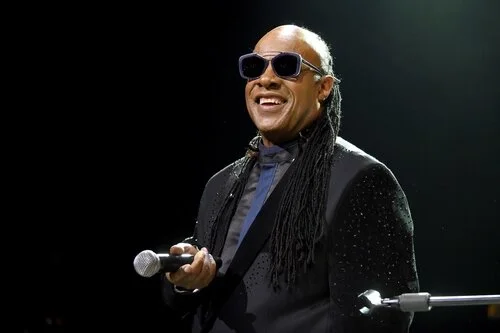
returns to the form that this year has been synonymous with. Last week was a bit of a quiet one but, this week, there are new cuts from Lana Del Rey, beabadoobee, Julia Jacklin, Jane Weaver, Stevie Wonder (ft. Rapsody, Cordae, Chika, and Busta Rhymes), Elvis Costello, Kelly Rowland, King Princess, Sharon Van Etten, Demi Lovato, Lanterns on the Lake, and James Blake! It is properly overflowing with gold, and it is one of the strongest weeks this year for new music! Throw into the mix songs from Pearl Jam, John Frusciante, LAUREL, and Matt Berninger (ft. Gail Ann Dorsey). If you need something to get your weekend cooking and going, then I think this week’s Playlist has enough great music to…

IN THIS PHOTO: beabadoobee/PHOTO CREDIT: Jordan Curtis Hughes

SATISFY your needs.

ALL PHOTOS/IMAGES (unless credited otherwise): Artists

___________

Lana Del Rey - Let Me Love You Like A Woman

xxx.jpg

PHOTO CREDIT: Gem Harris

Julia Jacklin CRY

beabadoobee Together

Jane Weaver - The Revolution of Super Visions

xc.jpg

Demi Lovato Commander in Chief

PHOTO CREDIT: Emma McIntyre/Getty Images

Stevie Wonder (ft. Rapsody, Cordae, Chika, and Busta Rhymes) - Can't Put It in the Hands of Fate

Elvis Costello Newspaper Pane

PHOTO CREDIT: Arielle Bobb-Willis for The New York Times

King Princess Only Time Makes It Human

Sharon Van Etten - Let Go

James Blake - I Keep Calling

Kelly RowlandCrazy

Lanterns on the Lake - The Realist

PHOTO CREDIT: Daphne Nguyen

Middle Kids - R U 4 Me?

fd.jpg

John Frusciante - Brand E

Future Utopia (ft. Arlo Parks) - Stranger in the Night

PHOTO CREDIT: Danny Clinch

Pearl Jam Get It Back

Cloud Nothings - Am I Something

IN THIS PHOTO: Kamila Stanley

LAUREL - Best I Ever Had

Calva Louise TRIAL

Daya First Time

Lucy Spraggan - Sober

bbv.jpg

PHOTO CREDIT: Janne Rugland

Astrid SAirpods

PHOTO CREDIT: @shawna_shoots

Pearl Charles - Take Your Time

Matt Berninger (ft. Gail Ann Dorsey) Silver Springs

asaa.jpg

PHOTO CREDIT: Mariam Sitchinava

Katie MeluaJoy

Emotional Oranges (ft. Channel Tres) All That

Lauren Aquilina Swap Places

Abbie Ozard true romance

Jacob Banks - Devil That I Know

Ólafur Arnalds (ft. Bonobo) - Loom

aqq.jpg

Stefflon Don Can’t Let You Go

vvv.jpg

PHOTO CREDIT: @sara_cath

Mamalarky You Make Me Smile

Josie Man Grow

PHOEBE ΔΧΔ Things

Lizzie Reid Seamless

bbb.jpg

PHOTO CREDIT: Jeff Bierk

The Weather Station Robber

ggg.jpg

Martha Hill Summer Up North

uuu.jpg

Kelly Moran Helix III

Rosie Carney Bones

Circe - Ruined Your Sons

FEATURE: The Lockdown Playlist: Mighty Fine Samples in Song

FEATURE:


The Lockdown Playlist

IN THIS PHOTO: Teyana Taylor (whose 2018 song, Gonna Love Me, contains a sample of I Gave to You, written and performed by The Delfonics; it samples Michael Jackson’s 1972 rendition of Bill Withers’ Ain’t No Sunshine)/PHOTO CREDIT: AP Images

Mighty Fine Samples in Song

___________

I have a couple of reasons…  

why today’s Lockdown Playlist is all about samples. Fifteen years ago today, Madonna released her first single from the album, Confessions on a Dance Floor, Hung Up. It uses ABBA’s Gimme! Gimme! Gimme! (A Man After Midnight), for which Madonna personally sought permission from its songwriters, Benny Andersson and Björn Ulvaeus. It got me thinking about sampling, and I will be exploring sampling (as I have done a few times in the past) later this weekend. This Lockdown Playlist features songs that have been sampled by others, or tracks that contains some great samples – see if you can guess which songs are being sampled in many of these tracks! To get the weekend off to a kicking start, this is a smattering of some busy and layered songs that contain some wonderful samples, and some incredible songs that have been…

IN THIS PHOTO: Public Enemy’s Flavor Flav, Professor Griff, Terminator X and Chuck D, alongside a member of the S1W troupe, in 1988/PHOTO CREDIT: Michael Ochs Archives/Getty Images

SAMPLED by others.

FEATURE: Stream of Consciousness: Ensuring Artists, Musicians and Songwriters Get a Bigger Slice of the Streaming Pie

FEATURE:

Stream of Consciousness

PHOTO CREDIT: @neonbrand/Unsplash

Ensuring Artists, Musicians and Songwriters Get a Bigger Slice of the Streaming Pie

___________

I am going to grab from a…  

IN THIS PHOTO: Tom Gray, founder of the Broken Records campaign/PHOTO CREDIT: Tom Gray

Music Week article regarding some interesting news and development concerning streaming and royalties. The issue of artists being underpaid by sites like Spotify is nothing new but, at a time when artists cannot rely on touring revenue and as much merchandise money as previous years, streaming is a vital outlet! Unfortunately, there is still a disparity between the big artists and what they make – because of algorithms and streaming sites prioritising their music – and the smaller act. There is also a question as to how much money a label makes and how much is left for the musician whose music is being streamed. A new study has been revealed with some fascinating findings:

Consumers believe artists should receive a greater share of streaming revenues, according to a new survey.

The study by YouGov, on behalf of the #BrokenRecord campaign, found that 77% thought artists are not being paid enough, while 76% felt songwriters were also underpaid.

“These statistics show, inarguably, that consumers want a fairer share of streaming income to go to artists, songwriters and musicians," said Gomez's Tom Gray (pictured), founder of the Broken Record campaign.

"The system is unethical and unsustainable and needs to be sorted out by the industry or, if necessary, via Government intervention.”

The poll also found that 83% believe most record labels are paid too much, though only 68% thought the streaming platforms are overpaid.

“It is fantastic that a strong paid-for streaming market has grown over the past 15 years and further growth is predicted for the future, in spite of Covid-19. But with increasing numbers of consumers paying a monthly subscription we must ensure that the increasing streaming profits are matched with fair payment to the creators of the music," suggested Graham Davies, CEO of The Ivors Academy, of the results.

ooo.jpg

IMAGE CREDIT: Tom Gray/#BrokenRecord

"These survey results are an important contribution to dialogue taking place in the music industry on what an equitable and progressive distribution of streaming wealth should be.”

The YouGov survey, which was conducted in August this year, also concluded that 81% of those polled would like session musicians to receive some share of streaming revenue.

“Backing musicians are usually paid a small upfront fee for playing on a track, but it is often royalty payments that keep them going and in the music business," explained Naomi Pohl, deputy general secretary of the Musicians' Union.

"Streaming doesn’t pay any royalties to these musicians, but we argue that it should; if services seek to cannibalise other listening media such as radio, then they should pay an equivalent royalty."

Welcoming the survey's findings chair of The Ivors Academy, Crispin Hunt, said he believed consumer opinion should now drive change within the biz.

“What music now needs is a dramatic reinvention of the outdated manufacturing business models that still prevail," he declared.

"Everyone in the music industry knows that streaming does not currently sustain the careers of most creators. Put simply, not enough of the streaming money paid by the consumer is trickling down to the creators who drive the value. As this YouGov poll makes clear, consumers thankfully agree”.

It is good to hear that consumers feel that artists are being short-changed and want to see a shift in the way streaming services operate. Let’s hope that this campaign develops and we get some action and evolution.

mmm.jpg

PHOTO CREDIT: @fixelgraphy/Unsplash

It is difficult to know what the solution is regarding ensuring artists get a fairer slice of pie and they get the money they deserve. Every day, I see posts online from artists who are seeing how much they get paid by streaming sites and it is shockingly low! I know labels are the ones who help get the music out and they are important, but the intrinsic value of the artist is being undermined. They are the most valuable part of the equation and, without dehumanising what they do, they are the product that is being sold. A recent report from Forbes suggests that Spotify might be in trouble regarding their value and market share and, whilst I know Spotify are not the only offender when it comes to disproportionate revenues and paying artists too little, they are the biggest player at the moment. I pay less than £10 a month for a premium service on Spotify, and I would be willing to pay double if it meant that artists were paid more! There have been suggestions how to make Spotify and other streaming services fairer. One can say that a huge kitty can be generated from all subscription payments, and all artists get the same money. Rather than labels getting most of the revenue, everything could be divided equally between all artists and labels. Would that realistically work?!

PHOTO CREDIT: @sctgrhm/Unsplash

The problem is, as this article outlines, a very small number of artists generate a vast majority of streams:

A new report suggests 1% of artists generate 90% of all music streams, and the remaining 99% produce only 10% of plays.

The insights from US analytics firm Alpha Data have re-opened criticisms about the low royalty rates paid by streaming services.

Alpha Data, which powers Rolling Stone’s charts, noted that of the 1.6 million artists who placed their music on streaming platforms in the last 12 months, only about 16,000 got 90% of airplay.

What’s more, the top 10% of artists (that is, 160,000) accounted for 99.4% of those streams, which left 1.4 million artists desperately battling for 0.6% of streams.

Spotify doesn’t pay per stream, but rather from a royalties pool based on 65% to 70% of revenue. But it’s generally estimated that its pay-out is between $.003 and $.005 per stream.

Spotify CEO Daniel Ek estimated last year that close to 40,000 tracks were being added to the service every day, which makes the competition for noise even harder.

Last month (August), Music Business Worldwide looked at Spotify’s Q2 results of €1.89 billion in the three months to the end of June.

“We can therefore broadly assume that 52% of this money, or $1.07b, is being paid in recorded music royalties to labels and distributors, who will carry a portion of that over to their artists.

“Now, if 43,000 artists are pulling in 90% of the royalties, that means those people are getting $963 million of the $1.07 billion”.

PHOTO CREDIT: @mpumelelomacu/Unsplash

Going back to the YouGov survey, and not only does it seem like artists are being underpaid and ignored, but important contributors like session musicians and backing singers are being cut out. I guess, when we listen to songs, we never look beyond the singers or the bands; what about the session players, those providing backing vocals? Also, how much do producers in addition to those who write the songs?! There are a lot of layers to consider, so I do think that there needs to be this massive overhaul where a new model is presented. It is a shame that so many huge artists rule the roost and, because they are the commercial pull, it is their labels that win out! Even though major artists do not get as much money as they should, they are in a much better position than smaller artists and musicians/singers who do not necessarily get a credit. The public know that artists are generating streaming sites massive profits, but they are not reaping the rewards. In the most difficult year for artists in generations, I sympathise with them and it is heartaching that so many are getting buried in streaming sites and their music is either not being discovered or their popularity does not equate to adequate remuneration. If 2020 has been a year we will all want to forget, we can look ahead to next year with optimism. Live music will come back and some sense of normality will creep back in. I think one of the big topics on the agenda is streaming services and how much artists get paid and including session musicians and songwriters in the discussion.



vvv.jpg

PHOTO CREDIT: @plhnk/Unsplash

There was some positive news announced on Thursday (15th), as the Government are looking into the economics of streaming. Here is some more detail:

Inquiry

MPs will examine what economic impact music streaming is having on artists, record labels and the sustainability of the wider music industry.

With streaming currently accounting for more than half of the global music industry’s revenue, this inquiry will look at the business models operated by platforms such as Spotify, Apple Music, Amazon Music and Google Play. Music streaming in the UK brings in more than £1 billion in revenue with 114 billion music streams in the last year, however artists can be paid as little as 13% of the income generated.

The Committee will also consider whether the government should be taking action to protect the industry from piracy in the wake of steps taken by the EU on copyright and intellectual property rights.

The inquiry is seeking the perspectives of industry experts, artists and record labels as well as streaming platforms themselves.

Terms of Reference:

The DCMS Committee is inviting written submissions to be submitted by 6pm on Monday 16 November 2020.

  • What are the dominant business models of platforms that offer music streaming as a service?

  • Have new features associated with streaming platforms, such as algorithmic curation of music or company playlists, influenced consumer habits, tastes, etc?

  • What has been the economic impact and long-term implications of streaming on the music industry, including for artists, record labels, record shops, etc?

  • How can the Government protect the industry from knock-on effects, such as increased piracy of music? Does the UK need an equivalent of the Copyright Directive?

  • Do alternative business models exist? How can policy favour more equitable business models?

That is a step in the right direction, but there is still a way to go - let’s hope that something good comes of the announcement by the U.K. Government! It is only right that those who make the music and bring us all such great songs should…

PHOTO CREDIT: @raduflorin/Unsplash

BE rewarded for that!

FEATURE: The Lockdown Playlist: Dire Straits’ Making Movies at Forty: Film-Related Cuts

FEATURE:


The Lockdown Playlist

PHOTO CREDIT: @myke_simon/Unsplash

Dire Straits’ Making Movies at Forty: Film-Related Cuts

___________

AMONG the big album anniversaries…

ccc.jpg

PHOTO CREDIT: @jeremyyappy/Unsplash

happening this year, I wonder whether many people will be writing about Dire Straits’ Making Movies’ fortieth on Saturday (17th). The third studio album from the band, I think people associate Dire Straits with Brothers in Arms, or their impressive eponymous album of 1978. I think Making Movies is perhaps their best album, and it contains only seven tracks. We get three longer tracks on the first side – including the classics, Tunnel of Love, and Romeo and Juliet -, and there are four shorter songs on the second side – among them, the excellent Expresso Love. Rather than write a separate feature about the album, I am doing an extra Lockdown Playlist this week to honour the album. Although it is a tough time for cinemas and the film industry right now, I wanted to put out a film-related playlist, of course with Dire Straits’ classic album in the mind. Here is an assortment of film-related cuts (and great film soundtrack inclusions) that makes for…

fff.jpg

PHOTO CREDIT: @ewitsoe/Unsplash

GREAT listening.

FEATURE: The Book I Read: The Best Music and Music-Related Books of 2020

FEATURE:


The Book I Read

PHOTO CREDIT: @sincerelymedia/Unsplash

The Best Music and Music-Related Books of 2020

___________

EVERY year…  

PHOTO CREDIT: @simon_noh/Unsplash

we see a lot of lists relating to the best albums and singles. I can understand why there is such fascination and debate, but the same attention and focus is not given to music books! I think a great music book can be really interesting, and this year has seen so many great and varied releases arrive. From biographies of artists to autobiographies that are hugely influenced by music, through to surveys of musical scenes, I have collected together the books that you will want to own. If you need ideas for early Christmas presents then there are some leads here that might be perfect…

PHOTO CREDIT: @lalainemacababbad/Unsplash

FOR the music lover in your life.

____________

Broken Greek

Author: Pete Paphides

Release Date: 5th March

Publisher: Quercus Publishing

Synopsis:

Do you sometimes feel like the music you're hearing is explaining your life to you?'

When Pete's parents moved from Cyprus to Birmingham in the 1960s in the hope of a better life, they had no money and only a little bit of English. They opened a fish-and-chip shop in Acocks Green. The Great Western Fish Bar is where Pete learned about coin-operated machines, male banter and Britishness.

Shy and introverted, Pete stopped speaking from age 4 to 7, and found refuge instead in the bittersweet embrace of pop songs, thanks to Top of the Pops and Dial-A-Disc. From Brotherhood of Man to UB40, from ABBA to The Police, music provided the safety net he needed to protect him from the tensions of his home life. It also helped him navigate his way around the challenges surrounding school, friendships and phobias such as visits to the barber, standing near tall buildings and Rod Hull and Emu.

With every passing year, his guilty secret became more horrifying to him: his parents were Greek, but all the things that excited him were British. And the engine of that realisation? 'Sugar Baby Love', 'Don't Go Breaking My Heart', 'Tragedy', 'Silly Games', 'Going Underground', 'Come On Eileen', and every other irresistibly thrilling chart hit blaring out of the chip shop radio.

Never have the trials and tribulations of growing up and the human need for a sense of belonging been so heart-breakingly and humorously depicted” – Waterstones

Buy: https://www.waterstones.com/book/broken-greek/pete-paphides/9781529404432

Review:

The grown-up Paphides’s career is also invaluable when it comes to the inside track: as a youngster, he is convinced that the soul-baring The Winner Takes It All must have been written while Björn Ulvæus was drunk, because, as Paphides wonderfully puts it, “spillage on this scale almost never happens without the aid of a corkscrew”. Decades later, while interviewing Ulvæus, his hunch is confirmed.

If there’s a weak area of the book, it is in the rare moments when Paphides introduces non-music asides that involve a leap forward in time. There’s mention of Brexit and Boris Johnson, tangents that jar. But – to repurpose a joke from Paphides – it’s small fry. Because, as well as producing writing that conjures some visually stunning images (a mass of school pupils is a “murmuration of green blazers”), Paphides is funny: “I didn’t know who Lulu was, but I knew she was important, because like Sting, Odysseus and Kojak, she only had one name.”

Broken Greek isn’t all about the transcendent joy of discovering new bands. There are flashes of racism; and Paphides’s parents spend much of the time miserable, largely from working themselves too hard – in the case of Victoria, to the point of a hospital stay. But they clearly love their children (even if Dad isn’t always good at showing it) and incidents of kindness and friendship abound, despite economic and marital struggles.

Paphides points out, rightly, that great pop should require no effort from the listener. I don’t believe this is entirely true of literature, but this is a memoir that carries you along with all the breeziness and addictive properties of, appropriately, a Dexys Midnight Runners track. A smash hit” – The Guardian

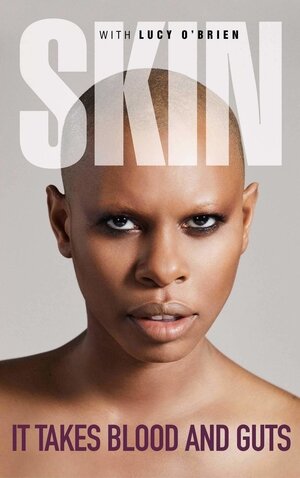
It Takes Blood and Guts

Authors: Skin/Lucy O’Brien

Release Date: 24th September

Publisher: Simon & Schuster Ltd

Synopsis:

Charting the Skunk Anansie singer’s fascinating musical journey as well as her role as a trail-blazing social and cultural activist and a champion of LGBTQ+ rights, It Takes Blood and Guts is an extraordinary read from a unique talent.

'It's been a very difficult thing being a lead singer of a rock band looking like me and it still is. I have to say it's been a fight and it will always be a fight. That fight drives you and makes you want to work harder . . . It's not supposed to be easy, particularly if you're a woman, you're black or you are gay like me. You've got to keep moving forward, keep striving for everything you want to be. It's been a fight, and there has been a personal cost, but I wouldn't have done it any other way.'

Skin, the trail-blazing lead singer of multi-million-selling rock band Skunk Anansie, is a global female icon. As an incendiary live performer, she shatters preconceptions about race and gender. As an activist and inspirational role model she has been smashing through stereotypes for over twenty-five years. With her striking visual image and savagely poetic songs, Skin has been a groundbreaking influence both with Skunk Anansie and as a solo artist.

From her difficult childhood growing up in Brixton to forming Skunk Anansie in the sweat-drenched backrooms of London's pubs in the '90s, from the highs of headlining Glastonbury to the toll her solo career took on her personal life, Skin's life has been extraordinary. She also talks powerfully about her work as social and cultural activist, championing LGBTQ+ rights at a time when few artists were out and gay. Told with honesty and passion, this is the story of how a black, working-class girl with a vision fought poverty and prejudice to write songs, produce and front her own band, and become one of the most influential women in British rock” – Waterstones

Buy: https://www.waterstones.com/book/it-takes-blood-and-guts/skin/lucy-obrien/9781471194917

Review:

In this frequently jaw-dropping memoir, Skin also recalls finding her voice. A blood-curdling scream let out by Judi Dench, a guest at her school, made for a fabulous early example of female catharsis. Later, when Skin turned on the stalker who had sexually assaulted her, shaming him at volume in a busy Brixton street, she overcame more than shyness.

Skunk Anansie’s songs were often visceral responses – to inequity, racism or abuse. Weak, from their first album, came out of the assault she sustained from a male partner, an experience she processed during her time in Middlesbrough, where she fell in with the local LGBTQ+ scene and the rape crisis centre.

“Yes it’s political,” went another song, “everything’s fucking political.” A funk-rock track, Intellectualise My Blackness, articulated Skin’s frustration at having had expectations of her ethnicity mansplained to her by some presumptuous berk.

Just as interesting as the glamorous highs is the detail of what a jobbing part-time icon does when her solo career doesn’t quite go supernova. She is particularly good on the importance of learning how all the gear works and how to talk to sound engineers in language they can understand. As with many musical autobiographies – Keith Richards’s is another – the landscape of Skin’s childhood and family has some of the most evocative writing.

That’s not to say this is a perfect read. It might have been smoother to have one voice throughout or a more regular interplay between Skin and co-author O’Brien.

But among the pleasures of this peek into an extraordinary life are the intriguing facts it pumps out. Rod Stewart ends up doing a cover of Weak. Skin’s anti-apartheid-era Brixton buddies end up running the Namibian stock exchange. An outraged Robbie Williams takes on racist Russian nightclub bouncers when they refuse Skin entry to the club.

We now have a lot of language – intersectionality, microaggressions – to describe many of the events in this memoir. However, nothing can really equal candid, first-hand experience, recounted matter of factly here. It would be instructive for anyone who thought they knew the story of the 90s to spend 300 pages in Skin’s skin” – The World News

Small Hours: The Long Night of John Martyn

Author: Graeme Thomson

Release Date: 9th July

Publisher: Omnibus Press

Synopsis:

Did any musician in the Seventies fly so free as John Martyn did on Bless The Weather, Solid Air, Inside Out and One World? Did any fall so far?

Small Hours is an intimate, unflinching biography of one of the great maverick artists. Though Martyn never had a hit single, his extraordinary voice, innovative guitar playing and profoundly soulful songs secured his status as a much admired pioneer.

Covered by Eric Clapton, revered by Lee Scratch Perry, produced by Phil Collins, Martyn influenced several generations of musicians, but beneath the songs lay a complicated and volatile personality. He lived his life the same way he made music: improvising as he went; scattering brilliance, beauty, rage and destruction in his wake.

Drawing on almost 100 new interviews, Small Hours is a raw and utterly gripping account of sixty years of daredevil creativity, soaring highs and sometimes unconscionable lows” – Omnibus Press

Buy: https://omnibuspress.com/products/small-hours-the-long-night-of-john-martyn

Review:

His ill-fated marriage to, and uneasy musical alliance with, Beverley Kutner preceded what was arguably Martyn’s most fruitful and creative period. Between the end of 1971 and the beginning of 1975 he released four spectacularly good albums – Bless The Weather, Solid Air, Inside Out, and Sunday’s Child — records that were innovative, exploratory, warm, containing the most beautifully tender, soulful songs and as far removed from ‘folk music’ as it’s possible for one man and a guitar to be. When I sat down with him that afternoon in 1974 Inside Out had not long been released, and Martyn was searching for a drummer to complement the instinctive musical empathy that he’d developed with bassist Danny Thompson so that he could perform his groundbreaking music live. I’m not sure he ever managed to assemble his perfect ensemble, but he and Thompson developed a profound musical and personal bond that resulted in many memorable performances — and perhaps an equal number of offstage incidents that set new standards in wild, destructive behaviour and alcoholic belligerence. Frustratingly, as the years rolled by, the albums became more and more patchy as it seems his behaviour and temperament became increasingly aggressive and, for friends and family, almost totally alienating. His treatment of Beverley and his children was especially cruel and vindictive, although despite subsequent up-and-down relationships and a seemingly more contented last few years of his life, he claims to have “never written a great song since Beverley finally left him”. I would agree. By the time he passed away in January 2009 of pneumonia and acute renal failure, he’d managed a certain degree of reconciliation with his children — though apparently having no regrets about the way he’d behaved or the emotional havoc he’d caused through the years.

There were many other colourful and significant people in Martyn’s turbulent life – Hamish Imlach, Nick Drake, Phil Collins, Ron Geesin, Lee ‘Scratch’ Perry to name but a few; Thomson deftly weaves them into the narrative and by doing so places Martyn and his music in context. His peers were undoubtedly in awe of him and his talent. That he never really achieved the degree of universal recognition that his music deserved remains a mystery to me and I have to say that, thankfully, despite the plethora of awful, wince-inducing anecdotes, my love of his very best music has never waned. So I was greatly looking forward to this book and am grateful to Graeme Thomson for telling Martyn’s story with incisiveness, compassion and even-handedness. Small Hours is the perfectly balanced book that John Martyn, his music, and the people who knew him, deserve” – Caught by the River

Hey Hi Hello: Five Decades of Pop Culture from Britain's First Female DJ

Author: Annie Nightingale

Release Date: 3rd September

Publisher: Orion Publishing Co

Synopsis:

Hey Hi Hello is a greeting we have all become familiar with, as Annie Nightingale cues up another show on Radio One. Always in tune with the nation's taste, yet effortlessly one step ahead for more than five decades, in this book Annie digs deep into her crate of memories, experiences and encounters to deliver an account of a life lived on the frontiers of pop cultural innovation.

As a dj and broadcaster on radio, tv and the live music scene, Annie has been an invigorating and necessarily disruptive force, working within the establishment but never playing by the rules. She walked in the door at Radio One as a rebel, its first female broadcaster, in 1970. Fifty years later she became the station's first CBE in the New Year's Honours List; still a vital force in British music, a dj and tastemaker who commands the respect of artists, listeners and peers across the world.

Hey Hi Hello tells the story of those early, intimidating days at Radio One, the Ground Zero moment of punk and the epiphanies that arrived in the late 80s with the arrival of acid house and the Second Summer of Love. It includes faithfully reproduced and never before seen encounters with Bob Marley, Marc Bolan, The Beatles and bang-up-to-date interviews with Little Simz and Billie Eilish.

Funny, warm and candid to a fault, Annie Nightingale's memoir is driven by the righteous energy of discovery and passion for music. It is a portrait of an artist without whom the past fifty years of British culture would have looked very different indeed” – Waterstones

Buy: https://www.waterstones.com/book/hey-hi-hello/annie-nightingale/9781474620154

Review:

Do you want life advice from Annie Nightingale? Who wouldn’t? The book is also filled with maxims from the world-class DJ. Here’s a small sampling to help get you through the day:

“If there’s somewhere you want to be, circle your target.”

“You cannot live your life the way others decide you should.”

“Don’t be late. Don’t ever, ever be late. Don’t even think it’s all right to be on time. On time can slip into being not on time so easily. There could be too many people queuing for the lift. There could be a delay in checking through security. Unforeseeable hazards can transform you from being Cinderella arriving via glass coach, in a shimmering ball gown, back into the shrivelling pumpkin.”

“[W]hile it’s great to have a role model, best not to copy. Or pick up too many similar mannerisms of your favourite star. That’s a lesson even The Beatles had to learn . . . . You being you, believe it or not, is . . . enough.”

“The music must never stop.”

Absolutely, take Nightingale’s words of wisdom to heart. But perhaps even more, view her career and her life’s work as a potent example to live by. In a delightfully pithy manner, Nightingale serves up a middle finger to sexism in music and broadcasting. Nightingale asks rhetorically, in the voice of all those naysayers, “Why would a woman want to be a DJ?” Well, she answers, “I want to be a DJ, because I figure it’s the best job in the world!” When someone suggests, “you can’t do this job because you’re a woman,” Nightingale responds with a simple yet powerful twenty-first century text message: “WTF?” And to the idea that women should strive for “symbols of some kind of domestic utopian paradise,” Nightingale replies, “no fucking way.”

If 2020 has you down, take pleasure and power in Annie Nightingale’s memoir. And when you finish the book, just turn on the radio” – Louder Than War

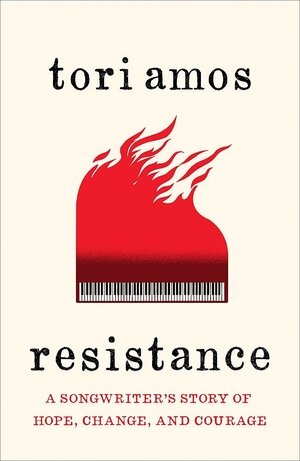
Resistance: A Songwriter's Story of Hope, Change and Courage

Author: Tori Amos

Release Date: 5th May

Publisher: Hodder & Stoughton

Synopsis:

Since the release of her first, career-defining solo album Little Earthquakes, Tori Amos has been one of the music industry's most enduring and ingenious artists. From her unnerving depiction of sexual assault in 'Me and a Gun' to her post-9/11 album Scarlet's Walk, to her latest album Native Invader, her work has never shied away from combining the personal with the political.

Amos was a teenager when she began playing piano for the politically powerful at hotel bars in Washington, D.C., and her story continues from her time as a hungry artist in Los Angeles to the subsequent three decades of her formidable music career. Amos explains how she managed to create meaningful, politically resonant work against patriarchal power structures - and how her proud declarations of feminism and her fight for the marginalised always proved to be her guiding light. She teaches readers to engage with intention in this tumultuous global climate and speaks directly to supporters of #MeToo and Time's Up, as well as to young people fighting for their rights and visibility in the world.

Filled with compassionate guidance and actionable advice - and using some of the most powerful, political songs in Amos's canon - Resistance is for readers determined to steer the world back in the right direction” – Waterstones

Buy: https://www.waterstones.com/book/resistance/tori-amos/9781529325607

Review:

Like extensive sleeve notes in a lavish box set, Tori Amos’s second book uses songs from her back catalogue – the lyrics are transcribed at the start of each chapter – as starting points for stories of “hope, change and courage”. So Resistance is less an explanation of what her songs were about than a reflection on what they mean to her now, resulting in a tale of politics, feminism and equality. There are a few too many discussions with her muses, but Resistance reinforces Amos’s position as one of pop’s more thoughtful songwriters” – The Guardian

Overpaid, Oversexed and Over There: How a Few Skinny Brits with Bad Teeth Rocked America

Author: David Hepworth

Release Date: 17th September 

Publisher: Transworld Publishers Ltd

Synopsis:

The Beatles landing in New York in February 1964 was the opening shot in a cultural revolution nobody predicted. Suddenly the youth of the richest, most powerful nation on earth was trying to emulate the music, manners and the modes of a rainy island that had recently fallen on hard times.

The resulting fusion of American can-do and British fuck-you didn't just lead to rock and roll's most resonant music. It ushered in a golden era when a generation of kids born in ration card Britain, who had grown up with their nose pressed against the window of America's plenty, were invited to wallow in their big neighbour's largesse.

It deals with a time when everything that was being done - from the Beatles playing Shea Stadium to the Rolling Stones at Altamont, from the Who performing their rock opera at the Metropolitan Opera House to David Bowie touching down in the USA for the first time with a couple of gowns in his luggage - was being done for the very first time.

Rock and roll would never be quite so exciting again” – Waterstones

Buy: https://www.waterstones.com/book/overpaid-oversexed-and-over-there/david-hepworth/9781787632769

Review:

Frequently the hottest British acts got nowhere in America. Roxy Music were too arch, Marc Bolan too unprofessional, the Sex Pistols too confrontational, Oasis too belligerent. Then there were the American bands all but ignored in the States and lauded in Britain, like the Stooges and the Ramones. All of this illustrates the fundamental difference between the countries, which is at the heart of Hepworth’s entertaining account. While Britain appreciates irony, rebellion and underdog spirit, America rewards hard work, sincerity and, more than anything, idealism. Perhaps that is why the two countries will never fully understand each other, musically speaking.

“It’s my ambition to travel to America and give it what it considers it wants and needs,” said the lead singer of an up-and-coming band in 1981, realising something few British bands did: that to become massive in the USA, you have to forget about “conquering” it and instead get in line with the American way of doing things. That was Bono of U2. And he’s Irish” – The Times

Stranger Than Kindness

Authors: Nick Cave/Darcey Steinke

Release Date: 23rd March 

Publisher: Canongate Books Ltd

Synopsis:

Stranger Than Kindness the book is available in standard and signed deluxe editions now here.

Stranger Than Kindness is a journey in images and words into the creative world of musician and storyteller Nick Cave.

This highly collectible book invites the reader into the innermost core of the creative process and paves the way for an entirely new and intimate meeting with the artist, presenting Cave’s life, work and inspiration and exploring his many real and imagined universes.

It features full colour reproductions of original artwork, handwritten lyrics, photographs and collected personal artefacts along with commentary and meditations from Nick Cave, Janine Barrand and Darcey Steinke.

Stranger Than Kindness asks what shapes our lives and makes us who we are, and celebrates the curiosity and power of the creative spirit.

The book has been developed and curated by Nick Cave in collaboration with Christina Back. The images were selected from ‘Stranger Than Kindness: The Nick Cave Exhibition’, opening at the Royal Danish Library in Copenhagen later this year” – Nick Cave.com

Buy: https://www.waterstones.com/book/stranger-than-kindness/nick-cave/9781838852245

Review:

Magnificent . . . A visual history of Cave's life, it's annotated by him with the same warmth and wit that have made his Red Hand Files series of letters to his fans so special. As for the images, they give more insight into the workings of his mind than any interview could . . . Darcey Steinke [has] written a fascinating and scholarly essay on Cave's work that sets him alongside some of literature's greatest figures . . . Exhaustive, gorgeous and thoughtful, this book of treasures will delight and inspire any admirer of Cave's workClassic Rock

Larger Than Life: A History of Boy Bands from NKOTB to BTS

Author: Maria Sherman

Release Date: 21st July 

Publisher: Running Press Book Publishers

Synopsis:

This nostalgic, fully-illustrated history of boy bands — written by culture critic and boy band stan Maria Sherman — is a must-have for diehard fans of the genre and beyond.

The music, the fans, the choreography, the clothes, the merch, the hair. Long after Beatlemania came and went, a new unstoppable boy band era emerged. Fueled by good looks and even greater hooks, the pop phenomenon that dominated the '80s, '90s, and 2000s has left a long-lasting mark on culture, and it's time we celebrate it. Written by super fan Maria Sherman for stans and curious parties alike, Larger Than Life is the definitive guide to boy bands, delivered with a mix of serious obsession and tongue-in-cheek humor.

Larger Than Life begins with a brief history of male vocal groups, spotlighting The Beatles, the Jackson 5, and Menudo before diving into the building blocks of these beloved acts in "Boy Bands 101." She also focuses on artists like New Edition, New Kids on the Block, Backstreet Boys, *NSYNC, One Direction, and BTS before ending with an interrogation into the future of boy bands. Included throughout are Tiger Beat-inspired illustrations, capsule histories of the swoon-iest groups, in-depth investigations into one-hit wonders, and sidebars dedicated to conspiracy theories, dating, in-fighting, haters, fan fiction, fashion (Justin and Britney in denim, of course), and so much more.

Informative, affectionate, funny, and never, ever fan-shaming, Larger Than Life is the first and only text of its kind: the ultimate celebration of boy bands and proof that this once maligned music can never go unappreciated” – Barnes & Noble  

Buy: https://www.hachette.co.uk/titles/maria-sherman/larger-than-life/9780762468911/

Review:

Larger Than Life’s real strength is its recognition that boy bands, like many cultural entities, exist at the intersection of multiple overlapping and conflicting forces. Sherman moves through a myriad of lenses: gender, race, labor, globalization. “Boy bands should unionize,” she jokes while discussing exploitative label/manager-artist agreements, a recurring theme. She credits Motown Records’ Berry Gordy for pioneering the streamlined, factory-style system upon which the boy-band industry was built, and explains how Boston’s Racial Imbalance Act—which mandated desegregation through busing—exposed the rapping, breakdancing white boys in New Kids on the Block to Black music. She also details how the squeaky-clean images of Disney Channel stars, like the purity ring-wearing Jonas Brothers, were shaped by a conservative, abstinence-only agenda. But sometimes the intensity of Sherman’s assertions—which match fans’ playfully hyperbolic diction—can obscure more the subtle dynamics that she’s teasing out” – Pitchfork

Glitter Up the Dark: How Pop Music Broke the Binary

Author: Sasha Geffen

Release Date: 7th April 

Publisher: University of Texas Press

Synopsis:

Why has music so often served as an accomplice to transcendent expressions of gender? Why did the query "is he musical?" become code, in the twentieth century, for "is he gay?" Why is music so inherently queer? For Sasha Geffen, the answers lie, in part, in music's intrinsic quality of subliminal expression, which, through paradox and contradiction, allows rigid gender roles to fall away in a sensual and ambiguous exchange between performer and listener. Glitter Up the Dark traces the history of this gender fluidity in pop music from the early twentieth century to the present day.

Starting with early blues and the Beatles and continuing with performers such as David Bowie, Prince, Missy Elliot, and Frank Ocean, Geffen explores how artists have used music, fashion, language, and technology to break out of the confines mandated by gender essentialism and establish the voice as the primary expression of gender transgression. From glam rock and punk to disco, techno, and hip-hop, music helped set the stage for today's conversations about trans rights and recognition of nonbinary and third-gender identities. Glitter Up the Dark takes a long look back at the path that led here” – goodreads  

Buy: https://www.foyles.co.uk/witem/lgbt-gender-studies/glitter-up-the-dark-how-pop-music,sasha-geffen-9781477318782

Review:

The literal voice is one of Geffen's recurring zones of fascination. From Little Richard to Donna Summer to Grimes, the author notes, artists have broken the binary by taking their voices to places where they can't be easily gendered — sometimes becoming more vulnerable, sometimes becoming less so and thus exercising a sort of personal boundary. That's the case with Grimes, notes Geffen, who was initially dismissed by male critics frustrated at how remote her floating voice seemed, how it "did not allow easy entry into her inner emotional state."

Another aspect of pop music that fascinates Geffen is the ways in which it's mediated by technology. Just as one can feel more authentically oneself when dressed in drag than one might when completely nude, artists can use technology to create dreamscapes that may sound "artificial" on the surface but that are, in a sense, more pure than an acoustic guitar could ever be.

Consider a pioneer of electronic music, Wendy Carlos. A trans woman, she wasn't completely out at the time of her game-changing release Switched-On Bach in 1968: released under the telling moniker Trans-Electronic Music Productions. Geffen points out that Carlos used a vocoder to create an entirely new sound for the human voice in the Beethoven movement she reworked for A Clockwork Orange: "The vocoder voice is not a union of two discrete elements. It's a third entity, the likes of which had never been heard before” – The Current

Confess

fdsd.jpg

Author: Rob Halford

Release Date: 29th September 

Publisher: Headline Publishing Group

Synopsis:

Most priests take confessions. This one is giving his.

Rob Halford, front man of global iconic metal band Judas Priest, is a true 'Metal God'. Raised in Britain's hard-working heavy industrial heartland he and his music were forged in the Black Country. CONFESS, his full autobiography, is an unforgettable rock 'n' roll story - a journey from a Walsall council estate to musical fame via alcoholism, addiction, police cells, ill-starred sexual trysts and bleak personal tragedy, through to rehab, coming out, redemption... and finding love.

Now, he is telling his gospel truth.

Told with Halford's trademark self-deprecating, deadpan Black Country humour, CONFESS is the story of an extraordinary five decades in the music industry. It is also the tale of unlikely encounters with everybody from Superman to Andy Warhol, Madonna, Jack Nicholson and the Queen. More than anything else, it's a celebration of the fire and power of heavy metal” – Waterstones

Buy: https://www.waterstones.com/book/confess/rob-halford/9781472279507

Review:

It’s not confined to Halford’s early life either. Detailing his struggles with being a gay man while fronting one of the world’s biggest bands is equally frustrating and heartbreaking. More than once I was screaming in my head “just tell them you’re gay, fuck the haters!” But hindsight is a wonderful way to make complex situations simplistic. Rob didn’t do that, and was never going too. As we find out he hates confrontation – sometimes to the detriment of his own career. This is a fascinating insight into a seemingly larger than life heavy metal icon. Watching Halford on stage it’s easy to get caught up in the theatre and see this omnipotent indestructible metal god, as it turns out he’s just like the rest of us. When I interviewed Rob, (revisit that here) I asked him about his mental health and what he did to stay healthy. He gave a very small insight into his daily regime, saying he has a set of tools he uses to get through. Little did I know what those tools were and what it’s like to survive each and every day as a former drug addict and alcoholic.

Rob also details the very public fight the band had against censorship lobby group the P.M.R.C (Parents Music Resource Center). Spoiler Alert: the P.M.R.C no longer exist, Judas Priest are still going strong! Halford wears the number three spot on the “Filthy Fifteen” for ‘Eat Me Alive’ as a badge of honour, and so he should.  We also get a further insight into the equally ridiculous and tragic lawsuit over a teenager’s suicide – Judas Priest wearing suits to court, or as Rob put it “…a stupid circus” fighting the fight for music, metal and common-fucking-sense.

But the book is not all doom, gloom and Scarface amounts of cocaine, there are plenty of funny stories of life on the road, mishaps and mischief. Highlights and hilarity include a metal queen meeting The Queen, going gaga over Lady GaGa and learning to drive. This may be a cliché but this book will make you laugh out loud and cry the odd tear.

It’s Rob Halford, honest, raw and with sometimes a little bit too much glory hole detail. Confess might not win the Baillie Gifford Prize for Non-Fiction but it will win the hearts of Judas Priest and music fans the world over” – Wall of Sound

Sweet Dreams: From Club Culture to Style Culture, the Story of the New Romantics

ffd.jpg

Author: Dylan Jones

Release Date: 1st October  

Publisher: Faber & Faber

Synopsis:

David Bowie. Culture Club. Wham!. Soft Cell. Duran Duran. Sade. Spandau Ballet. The Eurythmics... 'Who better to tell the story of the super-stylish New Romantic movement than GQ editor Jones, who lived through it?'i News, 75 Best New Books for Autumn 'Jones has finally produced the tribute that one of Britain's most culturally rich periods truly deserves.' Classic Pop ***** One of the most creative entrepreneurial periods since the Sixties, the era of the New Romantics grew out of the remnants of post-punk and developed quickly alongside club culture, ska, electronica, and goth. The scene had a huge influence on the growth of print and broadcast media, and was arguably one of the most bohemian environments of the late twentieth century. Not only did it visually define the decade, it was the catalyst for the Second British Invasion, when the US charts would be colonised by British pop music - making it one of the most powerful cultural exports since the Beatles. In Sweet Dreams, Dylan Jones charts the rise of the New Romantics through testimony from the people who lived it. For a while, Sweet Dreams were made of this” – Waterstones

Buy: https://www.waterstones.com/book/sweet-dreams/dylan-jones/9780571353439

Review:

Sweet Dreams loses focus when the New Romantic bands become huge in the US. As Jones notes, their biggest successes came because they pursued the mainstream, rather than vice-versa. The shock of the new that accompanied the first wave of synthesiser-driven hits dissipates: none of the music sounds as groundbreaking or extraordinary as Boy George looks. Meanwhile, rather than engender flamboyant individualism, the style magazines start doing the opposite: reflecting a new conformity, a codified notion of sophistication involving mass consumption of “designer” goods. Jones seems to lose interest, pursuing other pop-cultural threads that don’t quite tie together, from Madonna and Prince to the launch of the Groucho Club, and Sweet Dreams starts feeling not unlike falling down an internet rabbit hole. You find yourself reading about Hall And Oates, a US pop-soul duo who have about as much to do with the New Romantics as the cast of Dad’s Army, thinking: how did I get here?

It pulls itself together at the end, with a final chapter that both recounts some bracing stories of the era’s movers and shakers in decline and reiterates Jones’s central argument about continued relevance. Some of the former are scarcely believable – one of the book’s protagonists goes from running an effortlessly hip nightclub to selling disposable lighters outside Queensway tube; another takes so many drugs he pulls all his own teeth out in an addled frenzy – but the latter feels pretty credible. It’s a little over-long and digressive, but you finish the book convinced its author has a point. Besides, even its flaws are in keeping with its subject. If Sweet Dreams is a bit much, well, so were the New Romantics” – The Guardian

FEATURE: A Great Escape: The Simpsons’ Lisa the Vegetarian at Twenty-Five

FEATURE:

A Great Escape

IMAGE CREDIT: FOX

The SimpsonsLisa the Vegetarian at Twenty-Five

___________

ON the odd occasion….

IMAGE CREDIT: FOX

I will pop out a feature that doesn’t necessarily relate to music. Rather than this being a look at what is happening in the music world, I wanted to mark the twenty-fifth anniversary of my favourite episode of The Simpsons, Lisa the Vegetarian, which was originally broadcast in the U.S. on 15th October, 1995. It is the fifth episode in the seventh season of The Simpsons. In the episode, Lisa decides to stop eating meat after bonding with a lamb at a petting zoo. Her schoolmates and family members ridicule her for her beliefs, but with the help of Apu as well as Paul and Linda McCartney, she commits to vegetarianism. Directed by Mark Kirkland, Lisa the Vegetarian is the first full-length episode David S./X. Cohen wrote for The Simpsons. David Mirkin, the showrunner at the time, supported the episode in part because he had just become a vegetarian himself. Former Beatle Paul McCartney and his wife Linda guest star in the episode; their condition for appearing was that Lisa would remain a vegetarian for the rest of the series. I have grabbed a little bit from Wikipedia and, actually, the fact that Paul and Linda McCartney is in the episode makes it musical in my book! In its original broadcast, Lisa the Vegetarian was watched by 14.6 million viewers. Many can debate which is the best episode of The Simpsons and, if you look at features like this, and this, and this, then there is a bit of a different-looking top-twenty.

I love the first episode, Simpsons Roasting on an Open Fire, of 1989 where the down-on-their luck family adopt a dog, Santa’s Little Helper, after he was tossed out of the racing track for being too slow. By Season Seven, there was no show sharper and stronger than The Simpsons. Look at the episode before Lisa the Vegetation, Bart Sells His Soul, and the one after, Treehouse of Horror VI, and it is not only incredibly funny writing, but there is emotion and heft! Bart Sells His Soul, obviously, looks at the soul, religion and the self, and Lisa the Vegetarian puts vegetarianism and animal rights under the microscope. If you have not got Disney+ then you can subscribe and get access to all the classic episodes of The Simpsons. Maybe I am getting a bit nostalgic but, as some of its very best episodes are celebrating big anniversaries, I wanted to mark a quarter-century of my favourite episodes – one that, happily, also includes my favourite-ever songwriter! I have written a Simpsons feature to celebrate their thirtieth anniversary last year, and I have also discussed the importance of music in the show. I think the cultural importance of The Simpsons is undeniable, and its golden runs of episodes between the first and tenth seasons ranks alongside the finest comedy ever. Lisa the Vegetarian holds a special place in my heart, as it has that perfect balance of comedy and heart. There are hilarious scenes where Lisa is wrestling with her new-found vegetarianism, and Homer and the family do not understand. Rather than cave in, she is given some great guidance by Apu, Linda and Paul McCartney and, whilst Homer searches for Lisa after the two clash heads, there is a sweet moment where they bond at the end.

Although Lisa the Vegetarian does not boast of the classic musical numbers – apart from the little bit of You Don’t Win Friends with Salad -, the humour is exquisite! It is no surprise that others rank the episode so high. Digital Spy ranked Lisa the Vegetarian at number-fourteen in 2017:

 “After bonding with a lamb at a petting zoo, Lisa decides to become a vegetarian, much to the horror of her meat-loving dad. What follows is a battle of words between the two Simpsons, which peaks when she ruins his BBQ by sending his prize pig airborne. But thanks to Paul and Linda McCartney (who only agreed to appear if Lisa would remain a vegetarian forever), she learns to accept other people's beliefs and reconciles with Homer via a "veggie back" ride home.

Best moment:

The Simpson family: "You don't win friends with salad! You don't win friends with salad! You don't win friends with salad!"

In 2016, Den of Geek put Lisa the Vegetarian at number-twenty-eight in their feature - and they had some very positive and passionate words to say:

 “An incredibly funny episode here, but also one with a well-delivered message. Lisa’s burgeoning vegetarianism is played for laughs throughout, but at the episode’s climax the message of tolerance and understanding rings clear. There are so many choice bits in this episode it’s hard to know where to begin. To this day, I can’t hear the word salad without humming “you don’t win friends with salad” in my head. Then there’s Troy McClure’s unforgettable Meat Council video, perhaps the very finest of all his segments, remember, “If a cow ever got the chance, he’d eat you and everyone you care about.”

Then there’s also Homer’s confusion over what animal his various meats all come from “the same ‘magical’ animal”, as well as his determined chase to rescue his suckling pig after Lisa shoves it away. The jokes come thick and fast and the conflict between Homer and Lisa works perfectly.  The closing sequence in which father and daughter reconcile is sweet and also cuttingly funny as Lisa says to her dad, “I still stand by my beliefs. But I can’t defend what I did. I’m sorry I messed up your barbeque.” To which Homer memorably replies, “I understand honey. I used to believe in things when I was a kid”.

I think, at an increasingly hard and frustrating time, a lot of people are revisiting classic comedy and some of the shows they grew up around. I first saw The Simpsons in the early-1990s, and it was a huge part of my life for many years. I have a long list of episodes that I hold in high esteem, but none climb quite as high as Lisa the Vegetarian. As it is twenty-five today (in the U.S.), I wanted to salute one of the funniest episodes of television, and, to me, a huge highlight of the long-running animation show! The Simpsons has played an important role in my life and, right now, I am watching back at many of the classic episodes, in addition to the new ones coming out. It is hard to imagine that episodes like Lisa the Vegetarian are twenty-five but it is! I am going to lift a glass of wine and cook a special Linda McCartney dinner to celebrate my favourite episode…

OF The Simpsons.

FEATURE: !!!!!!! A Shot Against Those Who Body-Shame Billie Eilish and Women in the Music Industry

FEATURE:

!!!!!!!

IN THIS PHOTO: Billie Eilish/PHOTO CREDIT: Arielle Bobb-Willis for The New York Times

A Shot Against Those Who Body-Shame Billie Eilish and Women in the Music Industry

___________

EARLIER this week…  

PHOTO CREDIT: Kevin Mazur/Getty Images for Live Nation

a photo surfaced in the news of Billie Eilish walking near her home, dressed in casual clothes. She was just walking around and was dressed how a normal teen would dress (she is eighteen). Metro report further:

Billie Eilish traded in her trademark baggy clothes for a more casual vibe, and we’re loving the versatility. The Bad Guy singer – who is usually seen draped in large layers of designer clothes as part of her signature look – was spotted wearing a figure-hugging vest and shorts as she ran errands in LA. The 18-year-old tied her neon green hair, which is usually loose around her face, into a sleek bun. She might have gone for a new look, but the five-time Grammy award winner kept to her usual theme of making sure her vest, baggy shorts, and Yeezy Adidas slides matched”.

Most people either didn’t comment on the tabloid shot, but there were many people online celebrating a natural-looking Eilish and the fact that she was being herself. A lot of well-known figures do not dress out on the street and home how they would at award shows, but Eilish has always dressed in a more refreshing and low-key manner – not the usual parade of very skinny and elegantly dressed celebrities who one feels are told how to dress and there is a lot of pressure to get their photos in the paper. Unfortunately, because newspapers like The Daily Mail published the photo, there were a lot of people commenting and body-shaming Billie Eilish. This continued on social media, and many (mostly men) were criticising Eilish – either calling her overweight or slobbish.

It is, sadly, no surprise that women like Eilish find themselves on the receiving end of body-shaming. I think that there is this expectation that women are supposed to be desirable and made up in a certain way and, if they are being themselves and not wearing make-up and dresses, then that is weird. Eilish has spoken out against body-shaming and how she has been affected. It is brave for a popular young star to stand up like this – many Pop artists remain silent or are directed to use their body to sell music. As Laura Snapes wrote in The Guardian earlier this year, Eilish spoke out against body-shaming in a video, and that was a pretty bold and encouraging move:

Billie Eilish has given the music industry everything it could possibly want. An authentic new voice that appeals to teenagers and their parents. A debut album that has sold more than 2m copies in the US alone. A decisive stylistic evolution from the preceding decade’s dominant pop mode. A clean sweep of the four key categories at the Grammys. A copper-bottomed streaming success model. A James Bond theme that rejuvenates a tired franchise and extends her commercial and creative clout.

Until she offers up her prime commodity as a young female pop star, it will never be enough.

While 18-year-old Eilish is a beguilingly physical performer, she has never shown her body in service of her art. She prefers loose clothing because she feels comfortable in it, and has denounced the use of her image to shame female pop stars who dress differently. Not that it’s stopped anyone. Denying spectators the traditional metric by which female stars are judged – sexiness, slimness; the body as weathervane that reveals how tormented or contented they must be when they lurch between the extremes of those states – has created an obsession with her body and what it must stand for”.

PHOTO CREDIT: Dan Regan

It’s hard to think of any previous generation of young female pop star getting away with making such a public admonishment at the height of their stardom. Motown’s girls were taught comportment by an in-house employee. The anorexia that killed Karen Carpenter was framed as an effective diet. To have her art taken seriously, Kate Bush had to endure the objectification of male journalists who typed with one hand. The Spice Girls had to wait until after the band’s demise to discuss their respective eating disorders, lest they disrupt the image of supportive female friendship. Britney, Christina and Beyoncé’s millennium-era abs were testament to their drilled work ethic; Katy Perry and Ariana Grande’s burgeoning images were dependent on marketing their sexuality, while Taylor Swift’s taut middle stoked her image as an American ideal. To acknowledge Amy Winehouse’s bulimia would have complicated a convenient media narrative of debauchery”.

Eilish is an idol to thousands of fans, and it is a shame that she faced the paparazzi and is snapped all the time and, when she is seen in her street clothes and just going about her life, she is often slagged off, the recipient of jibes and digs about her looks and body. I will not include some of the tweets here, but I read people being cruel because Eilish was not wearing make-up; others looked at her exposed stomach and there were comments about her weight, whereas others felt Eilish was badly dressed. There was a great reaction of love and support for Eilish; many feeling that the ongoing issue of body-shaming needs to stop.

Eilish is not the only female musician that has spoken out against body-shaming. Lizzo addressed body-shaming in an interview Brazilian T.V. earlier in the year:

In an interview with Brazil's TV Fohla, the 'Truth Hurts' singer candidly discussed how she copes with the incessant remarks about her physical appearance.

In reference to the men who body shame her, Lizzo said, "What does that tell you about the oppressor? What does that tell you about men? Get it together, we don't talk about your d--- sizes, do we?."

The 32-year-old also called out the fact that women are continually held to unrealistic body standards.

"I think that women are always going to be criticised for existing in their bodies," Lizzo said. "I don't think I'm any different than any of the other great women who've come before me that had to literally be politicised just to be sexual… you know what I mean? Just to exist."

"Things that were beautiful on them were called flaws, and they persisted against that, fought against that, and now I'm able to do what I do because of those great women. And they all look completely different, they don't all look the same, and they all had to deal with the same kind of marginalisation and misogyny"

Many songs have been released by women in music that celebrate a fuller figure and looking natural and, as this 2014 feature outlines, some huge hits of the year put body confidence at the forefront.

I do think that, even in 2020, there is this ideal for women and what they should look like in public, photos, and video shoots. I know other women have spoken about body-shaming – including Kate Nash in 2017 - and it really does need to stop! The psychological effect that it will have on artists is immense, and it sends a terrible message to women and girls who want to enter the music industry. Looking natural and real should not be splashed in the papers and used as gossip. Eilish has distanced herself from social media because of the comments she had to face on a daily basis. This Cosmopolitan article from earlier this year reports what Eilish said to BBC Breakfast when she was asked about social media and her relationship with it:

"The internet is a bunch of trolls. A problem is that a lot of it is really funny. I think that's the issue, I think that's why nobody really stops.

"I've experienced that. Growing up, I'd say things that people would laugh at and then later I'd realise that wasn't cool to say."

Billie added, "It's way worse than it's ever been. It's insane that I've been reading comments up until this point. I should have stopped long ago.

"The problem is that I've wanted to stay in touch with the fans and keep talking to them, but people have ruined that for me. The internet is ruining my life so I stay off".

Seeing any artist body-shamed is unpleasant, but Eilish is someone who has faced it ever since she broke through and, though she can avoid a lot of the social media negativity and trolls, there are newspapers plastering her image on the page – her just minding her own business but being judged for dressing and looking different to other artists/celebrities. I think there should be repercussions for media outlets who body-shame and turn things like Billie Eilish walking around town into a grotesque and needless shot. The same goes for trolling on social media. Anyone found trolling or body-shaming should definitely be punished and…

BROUGHT to account.

FEATURE: With Her Ego in Her Gut: The Dreaming’s Leave It Open: An Eccentric and Beautiful Kate Bush Epic

FEATURE:


With Her Ego in Her Gut

xxxxx.jpg

IN THIS PHOTO: Kate Bush in 1982/PHOTO CREDIT: Steve Rapport Photography 

The Dreaming’s Leave It Open: An Eccentric and Beautiful Kate Bush Epic

___________

IN the runup to Aerial turning fifteen next month…

I am going to write about the album and approach it from different aspects. It is such an important album and, when Kate Bush released The Red Shoes in 1993, there was this twelve-year pause where many wondered whether she would return and if her career was over. I shall explore Aerial more through the next few weeks but, in the latest feature that investigates a song very closely, I wanted to get inside of The Dreaming’s Leave It Open. There are a couple of reasons why I wanted to highlight this song. In the coming weeks, I am going to study one of my favourite songs from The Dreaming, All the Love, but I am fascinated by Leave It Open, as it is one of the more experimental and strange songs from the album that people do not really talk about. In the U.K., Kate Bush released three singles from The Dreaming. The first, Sat in Your Lap, is a marvellous track that was released fifteen months prior to The Dreaming coming out in June 1981. With the album completion nowhere in sight, I guess there might have been some pressure from EMI for Bush to put something out – it has been less than a year since Never for Ever was released but, as is the way with the music industry, there is always pressure to keep momentum up and put something out – lest people, as they always did through her career, think that Bush had disappeared! That single peaked at number-eleven, and it was a successful release.

The other two singles, The Dreaming, and There Goes a Tenner, were not as popular – the former reached number-forty-eight and the latter failed to chart. Suspended in Gaffa was released in Europe and Australia instead of There Goes a Tenner – the single did alright in terms of chart positions, and it would have made a better U.K. release. Night of the Swallow, a clear highlight from The Dreaming, was released in Ireland in 1983, over a year after The Dreaming arrived. The Dreaming was strange in terms of its single releases because, as I have written before, I think there are songs that would have made successful and fine singles – including Houdini, Get Out of My House, All the Love, and Leave It Open. Never for Ever’s (1980) singles – Breathing, Babooshka, and Army Dreamers – were all very strong and mixed deception, nuclear war, and young men dying in war. Hounds of Love’s singles – including Running Up That Hill (a Deal with God), and The Big Sky – were all successful, but The Dreaming was a bit of an odd time. Bush has said herself that she felt herself going a bit mad whilst making the album, and I think a lot of critics at the time dismissed the album as being too odd and experimental and not commercial enough. Bush was never going to put out the sort of more accessible songs she did for Hounds of Love, and I love The Dreaming as it was Bush producing alone for the first time and stretching her creative wings.

 IN THIS PHOTO: Kate Bush in a promotional shot for The Dreaming (single) in 1982/PHOTO CREDIT: Guido Harari

In a recent magazine special from MOJO (their Collectors’ Series), they placed Leave It Open at number-thirty in the top-fifty Kate Bush songs, and I think it would have made a good single! Rather than put out There Goes a Tenner – which a song that I like - and I can see why Bush wanted to release it - but it lacks a special something -, Leave It Open would have been great. Maybe it would not have bothered the top-twenty, but I feel it would have fared better than even The Dreaming’s title track, as it is a wonderfully rich, imaginative, and striking. I love all the vocals on offer and one is hooked by the lyrics right from the first verse: “With my ego in my gut/My babbling mouth would wash it up/(But now I've started learning how)/I keep it shut”. In terms of the song’s inspiration, I have grabbed some information from the Kate Bush Encyclopaedia, where Bush herself explains and shed some light:

Like cups, we are filled up and emptied with feelings, emotions - vessels breathing in, breathing out. This song is about being open and shut to stimuli at the right times. Often we have closed minds and open mouths when perhaps we should have open minds and shut mouths.

This was the first demo to be recorded, and we used a Revox and the few effects such as a guitar chorus pedal and an analogue delay system. We tried to give the track an Eastern flavour and the finished demo certainly had a distinctive mood.

IN THIS PHOTO: Bush attends a record signing at Virgin Megastore on Oxford Street in London for her album, The Dreaming, on 14th September, 1982

There are lots of different vocal parts, each portraying a separate character and therefore each demanding an individual sound. When a lot of vocals are being used in contrast rather than "as one", more emphasis has to go on distinguishing between the different voices, especially if the vocals are coming from one person.

To help the separation we used the effects we had. When we mastered the track, a lot more electronic effects and different kinds of echoes were used, helping to place the vocals and give a greater sense of perspective. Every person who came into the studio was given the "end backing vocals test" to guess what is being sung at the end of the song.

"How many words is it?"

"Five."

"Does it begin with a 'W'?"

It is very difficult to guess, but it can be done, especially when you know what the song is about.

I would love to know your answers. (Kate Bush Club newsletter, October 1982)”.

That idea of Bush writing about humans opening themselves and not allowing their egos to drag them down; being receptive and open-minded instead of ignorant – it is an attitude and mentality that resonates with everyone, and the way she delivers these thoughts is incredible. Those who highlight The Dreaming as being weird and mad could do well to look at an album they embrace and love: Hounds of Love. Listen to tracks on the album’s second side, The Ninth Wave, such as Waking the Witch, and Jig of Life, and there are similarities with Leave It Open.

eee.jpg

IN THIS PHOTO: Kate Bush in 1982/PHOTO CREDIT: Pierre Terrasson

I really love one of The Dreaming’s hidden gems, and it is a song that perfectly closed the first side of the album – it follows the wonderful and skipping Suspended in Gaffa, before we get to the first track on the second side. Just to go off on a semi-tangent before carrying on, and I think The Dreaming is the only Kate Bush album where the track sequencing is a bit off. I think the last four tracks are perfectly arranged - Night of the Swallow, All the Love, Houdini, and Get Out of My House -, but I think Leave It Open should have opened the second side (thinking about it, the song would be more powerful and moving there than the end of the second side), whereas The Dreaming (track-six) should have been moved to the second track, after Sat in Your Lap, and I would have moved tracks two, three and four - There Goes a Tenner, Pull Out the Pin, and Suspended in Gaffa – so that the final three tracks on the first side are arranged like this: Pull out the Pin, There Goes a Tenner, and Suspended in Gaffa. I guess it is only minor rearrangement, but I think it would make for a more satisfying listen! In years since its release, The Dreaming has been seen as head-spinning, brave, wonderfully inventive, incredibly modern, and underrated – John Lydon (the Sex Pistols, PiL) has called it his favourite Kate Bush album.

IN THIS PHOTO: Kate Bush captured in 1982 during the There Goes a Tenner shoot/PHOTO CREDIT: John Carder Bush (from his book, KATE: Inside the Rainbow)

Maybe singles like The Dreaming, and There Goes a Tenner defined people’s views of The Dreaming as a whole, whereas I feel songs like Leave It Open got overlooked a bit. The feverish and hugely evocative song is a mini-masterpiece on an album full of them and, when we consider Kate Bush’s best-ever songs, I feel it warrants a place in everyone’s top-twenty-five – fair crack for MOJO putting it in the top-thirty, but I think it is even stronger than that! The track is full of thought-provoking lyrics – “Harm is in us/Harm is in us, but power to arm/Harm is in us” -, and a line that practically defines The Dreaming: “We let the weirdness in”. Now, The Dreaming is seen as one of Bush’s best albums, but I think there was still a perception of what a female artist should be in 1982. When Kate Bush spoke with NME in that year, she addressed this:

"There're so many females that don't fit in any category at all. There're a lot of people that would love to pin them in those categories. When an image is created around a person--especially a female--there're so many presumptions thrown in. There are a lot of of female artists who are stereotypes, and who nearly fall into those niches people talk about, but there're a lot who don't. When you mention traditional females, it sounds as though they have nothing within them--epitomes of a situation. Any singer is a human being working inside and letting all kinds of different energies come out.

PHOTO CREDIT: John Carder Bush (from his book, KATE: Inside the Rainbow)

"The labelling that comes with the creation of an image is always a disadvantage. When someone has done something very artistic, it won't be let out when they've been packaged. When a female is attractive--whether she emphasises it or not--she's automatically projected with sexual connotations. I don't think that happens so readily with me.

"When I started, it seemed that a lot of singers were singing as if they weren't even related to the lyrics. They'd sing about heartbreak, and keep a big smile on their faces. For me, the singer is the expression of the song. An image should be created for each song, or at least each record; the personality that goes with that particular music. But I don't think that will ever be seen by the majority of people who look at the pictures and see the so-called images come out.

"When I was first happening, the only other female on the level I was being promoted at was Blondie. We were both being promoted on the basis of being female bodies as well as singers. I wasn't looked at as being a female singer-songwriter. People weren't even generally aware that I wrote my own songs or played the piano until maybe a year or so after that. The media just promoted me as a female body. It's like I've had to prove that I'm an artist inside a female body. The idea of the body as a vehicle is...just one of those things. But I'm someone who talks about music and songs”.

I wanted to throw the spotlight to Leave It Open, not just because it is a part of an album that, to this day, people overlook or try to define too narrowly, but I think it is a perfect combination of Bush’s growing confidence and ambition, together with the blissful dose of madness and beauty – a song that has plenty of vital lyrics and some incredible vocals! From its pounding beats and trippy voices, to the wonderful production (from Bush herself), the sublime Leave It Open is one of Kate Bush’s…

IN THIS PHOTO: Kate Bush in 1982/PHOTO CREDIT: Steve Rapport Photography 

GREATEST offerings.

FEATURE: Moments of Pleasure: Why Now Is a Perfect Time for More, New Kate Bush Projects in the World

FEATURE:

Moments of Pleasure

Why Now Is a Perfect Time for More, New Kate Bush Projects in the World

___________

I am going to spend the next couple of features…  

IN THIS PHOTO: Kate Bush at a Fairlight C.M.I. demonstration alongside Peter Gabriel (right)

focusing on specific songs from Kate Bush, because Aerial is fifteen next month and I want to explore moments from that album. Right now, I want to revisit a subject that I am pretty fond of: promoting Kate Bush’s work to a wider audience. In the absence of a new album, I think it is a great moment to put out new projects that celebrate the music of Bush. She might feel uncomfortable with a greatest hits package or being involved directly with a new work, but there is a swell of love and affection for her work life never before. This year has seen such an intensity of fans and followers promulgating the wonder of Bush, and various musicians name-checking her as an influence. From new artists releasing music that has elements of Kate Bush, to great documentaries like the celebration of Hounds of Love at thirty-five that was on BBC Radio 6 Music recently, it would be nice to have some more work and things out there that marks Bush’s importance. That sounds terribly vague but, as I have said before, I am working on a podcast, and there are a number of things that I need to sort out before kicking that off. I have asked in various features when there will be a new book of photos, a documentary or a T.V. series that puts Bush in the spotlight. For such an influential and always-loved artist, we do mainly focus on her albums when there is an anniversary.

yyyy.jpg

IMAGE CREDIT: MOJO

Hounds of Love gets played on radio, and we all know the big songs. Shows relating to the album’s thirty-fifth anniversary were great, but there are albums and areas of her career that do not get the same depth. At the moment, there are a few fairly new bits and pieces. There is a new MOJO magazine special issue dedicated to Kate Bush, where there are interviews and lovely extras:

Among the other wow-some treasures you’ll find within its covers are an unguarded 1980 Sounds interview conducted by writer Phil Sutcliffe, Tom Doyle’s epic four-hour encounter with the singer after she returned from a decade’s hiatus with 2005’s Aerial album, a run-down of Kate’s 50 greatest songs and guide to all her key albums. Plus much more besides. Unbelievable indeed!”.

It is wonderful that this is out, and it makes me feel like the words, interviews and features in the magazine should be expanded and other should follow. The most-recent album we got from Bush was 2011’s 50 Words for Snow, and she did remaster and release her back catalogue in 2018; she released The Other Sides, which gave us a chance to hear some rarer tracks and covers. There have been no new books for a while, and nothing in the way of documentaries and much on the radio. Rather than narrow down to a specific project, I feel it is a time when we could see a few interesting releases without it being too full-on or like a cash-in.

I have always thought how there should be a great Kate Bush covers album and, whilst one that was released twenty-two years ago has been reissued, there are so many artists who would contribute to a fantastic new one. There are fans of Kate Bush in every corner of music, and it would be fascinating to see a new covers album where established and new artists tackle one of her songs – personally, I feel John Grant could do a brilliant version of The Man with the Child in His Eyes (from The Kick Inside). I am not going to bang the demos and reissued albums drum again, but the idea of having her studio albums reissued with various takes and extras would be fascinating; there are early demos that warrant an official release. Looking forward, and BBC Radio’s Mark Radcliffe is putting something out relating to Wuthering Heights, but I don’t think there is too much else due out this year. With increased love and passion directed the way of Bush, I think there is not only an appetite for more music from her but portals where we can celebrate her more generally. Having recently been made a Fellow of the Ivors Academy, it is clear that Bush is as relevant and influential now as she ever has been. The brilliant BBC Radio 6 Music documentary on Hounds of Love was really deep, and it was a rare occasion where an album of hers has been given that much time and expansive investigation.

IN THIS PHOTO: Kate Bush in 1978

Not that things have to be linked to anniversaries, but I think albums like The Dreaming, The Kick Inside, The Sensual World, and Aerial could be given the same treatment. I feel Bush’s albums are so diverse and detailed, we do not really learn about the recording process, focus on the individual songs and stuff like that. Maybe not an entire album series, but focusing on four of five of her albums for extensive treatment would be great. Similarly, and returning to that MOJO edition, and there are all these fascinating interviews with Bush that could be collated. I think we could have a book of her interviews alone, as we can learn so much from them. We can access most of them on YouTube and the Internet, but I would love to have them in a book. In terms of books, I think there will be people starting the job of writing a new Kate Bush book. The last really good biography was Graeme Thomson’s Under the Ivy: The Life & Music of Kate Bush. I do not think there has been a book that details her impact on music and culture; something where artists and those who have been influenced by Bush are interviewed and, included, we get deeper looks at her albums – maybe tying in her interviews. Perhaps there could be an equivalent of The Beatles Anthology book, where we get a completer and updated Kate Bush compendium – something similar to the excellent HomeGround books.

I don’t think a Madonna-style biopic is on the cards, but I do feel, as I have said before, that the one-hour BBC documentary of 2014 was fine but not long or detailed enough; Bush’s legacy and work cannot be crammed into a single hour! Apart from the excellent, long-running Kate Bush Fan Podcast, there is not really a dedicated platform that tackles her career from so many different approaches. Maybe Bush would feel that such exposure and a lot of different new projects coming out would be a bit too much, but there is this justifiable demand and swell of affection for her that, I think, warrants a worthy and compassionate drive. Even if it was a couple of new books, a new radio documentary (or multi-part documentary), alongside a covers album, I reckon that would not be overboard. Forty-five years since Bush’s first recordings for her debut album were completed, there is a generation of people discovering her music; so many artists today reference her work, and there is an endless outpouring of love for her and her work. The fact Kate Bush has not had a dedicated documentary series on Netflix irks me, as I think there are so many different areas to cover and so much to discuss, that it would not only introduce her work to new people but properly pay tribute to an icon.

As COMPLEX wrote earlier this year, Kate Bush’s influence is everywhere:

In 1978, at the age of 19, Bush began breaking barriers for women in pop. Topping the UK Singles Chart for four weeks with her debut single "Wuthering Heights," Bush became the first female artist to reach number one in the UK with a self-written song. Additionally, and equally impressive, she was the first British solo female artist to ever top the UK album charts and the first female artist to enter the album chart at No. 1. By her fourth studio album, Bush gained artistic independence in album production, an uncommon circumstance for women in the music industry during the ‘80s. “The big thing for me, and it has been from quite early on, is to retain creative control over what I’m doing. If you have creative control, it’s personal,” she told Independent in 2016. Her ability to work on her own agenda and release atypical work influenced many younger artists to do the same.

“When I was 17 and getting my first record deal, it was the likes of Kate Bush who had contributed to labels taking me seriously as a girl who knew what she was doing and wanted,” Imogen Heap once said. “I was able to experiment and left to my own devices in the studio. Kate produced some truly outstanding music in an era dominated by men and gave us gals a license to not just be ‘a bird who could sing and write a bit,’ which was the attitude of most execs.” Bush is credited for her early-on, revolutionary use of the Fairlight synthesizer, the headset microphone onstage, and exploring controversial themes wrapped into an ultramodern sound.

IN THIS PHOTO: FKA Twigs/PHOTO CREDIT: Matthew Stone

If you haven’t been as lucky to come across Kate Bush’s music in a film or through the recommendation of a friend, there's a chance you’ve unknowingly grown accustomed to the sounds she pioneered. From FKA Twigs’ Magdalene to Billie Eilish’s When We All Fall Asleep, Where Do We Go?, Bush’s influence—whether direct or not—exists in so many modern pop projects today. Hints of her dramatic vocals carry on through Florence Welch’s delivery and her experimental, futuristic production provided a blueprint for artists like Charli XCX to push pop forward. Her mime-like dance moves coupled with intimate orchestration is echoed in Lorde’s performances. Sinead O’ Connor’s penetrating lyrics in “Troy” and Sia’s roaring vocals in “Chandelier” both conjure the spirit of Kate Bush. Her heirs include other greats like Tori Amos, Björk and Enya. Even electronic artists like Grimes and rock artists like Stevie Nicks have been compared to the UK artist.

Music critics often award talent to musicians who effectively create songs that are transformative and albums that generate a different vibe than the previous. In 2011, Kate Bush told Interview Magazine, “My desire was never to be famous. It was to try and create something interesting musically if I could.”

For fans, it can be quite frustrating to admire someone who is so distant, especially in the digital age. Very little is known about Bush’s day-to-day life, and social media doesn’t provide a stance on her political views or evolving taste and perspective. It isn’t even certain when and if another Kate Bush album will ever come, leaving fans with no choice but to be patient with her timeline and dive deeper into music that already exists. Luckily, powerful art coupled with a mystifying personality has left a lot to explore since the release of her debut album in 1978. Maybe that is why Bush has continued to persist over time. After all, an artist who is not yet fully understood can often be the most compelling.

IN THIS PHOTO: Charli XCX/PHOTO CREDIT: Griffin Lotz

“I think when you don’t give people anything, they make things up. It’s both flattering on lots of levels... The fact that people are still concerned about writing about me,” Bush said in a 1992 interview. “The fact that they still remember me and are hanging onto me, it’s very flattering.“ While her low profile has kept her out of the public eye, the public ear will continue to wait for the groundbreaking musician that is Kate Bush to reappear, whenever she decides it's time”.

From bringing the Fairlight C.M.I. into her music and the impact that had on others – Peter Gabriel owned the first Fairlight C.M.I. in England and introduced Bush to it -, to how her 1979 extravaganza, The Tour of Life, progressed what a live show could be…there is so much that Bush has done for music. Short of her being made a Dame – which I have written about and think should happen! -, to there being this yearly day held to celebrate her work (ditto), I think there would be a warm embrace of new Kate Bush-related work. I can appreciate how tough things are for musicians and everyone at the moment, but I think people would come together and welcome the chance to salute Bush – whether it is a book or a bigger series. Whilst it is humbling seeing all the social media love and the various projects that have been announced or happened recently – Mark Radcliffe’s upcoming T.V. show, and the BBC Radio 6 Music nod to Hounds of Love -, there are missed opportunities and gaps. Given the momentum Bush’s work and legacy has gathered over the past couple of years especially, it does seem a perfect time to strike – whether there are books and concepts waiting to see the light, I am not sure. It would be fitting to see Kate Bush celebrated widely for giving the world so many…

MOMENTS of pleasure.   

FEATURE: Spotlight: Lou Hayter

FEATURE:

Spotlight

Lou Hayter

___________

THERE are not many recent interviews or…  

bits of information relating to Lou Hayter, but she has been in the industry for a while in a number of different projects. I was a fan of New Young Pony Club back in the day. The band were set up by London-based vocalist Tahita Bulmer and producer Andy Spence, who shared a love of Punk rock and Dance music. The founding pair began writing together, originally only for Bulmer to perform. Spence later assumed a larger role when they decided to form a proper band, and the duo recruited Lou Hayter (keyboards), Igor Volk (bass) and Sarah Jones (drums). I have taken that from Wikipedia, but it gives you a concise formation of the band who released three studio albums – their first, Fantastic Playroom, was released in 2007. Lou Hayter might not be a new name in music but, as a solo proposition, she is still coming through and many are looking forward to her debut album. I want to track back and then work my way to her latest single, just to give you a bit of information. Not only is Lou Hayter a D.J., but she was one half of Tomorrow’s World. Consisting of Jean-Benoît Dunckel and Lou Hayter, the duo’s eponymous album of 2013 is one I recommend people check out. In 2013, Hayter was interviewed by Refinery29. There was a great influence on her unique and eclectic fashion choices; not only a great artist and D.J. but a bit of a potential fashion.

She does discussed fashion in the interview, but I have selected questions where she talked about being on tour, and what her musical influences are:

 “What is the toughest part of being on tour?

"Being away from your loved ones and friends — because I’m really close to them."

How do you solve the style challenges of life on tour?

"I’ve got it down to a fine art now as I’ve been touring for the last eight years. I’ve got travel versions of everything and I have a capsule wardrobe so it’s not too bad now. I buy duplicates of things that I like, so sometimes I just leave things in my suitcase and it’s all good to go. I have duplicates of all my cosmetics, too, so they just sit in the case."

What kind of music did you listen to growing up? How did it inform your current taste in music?

"I have older brothers and sisters, so in our house it was always Prince, Bowie, Human League, and early acid house as well. My parents always listened to Bacharach. And I was also a huge Madonna fan”.

I can hear a lot of Madonna in Lou Hayter’s recent work, but I shall come onto that a bit later. I think she has gone through various evolutions as an artist. One could not easily compare New Young Pony Club to her recent solo work in terms of sound; Tomorrow’s World is also a pretty different-sounding project. Their eponymous album is fantastic and has some real gems on it. Drowned in Sound reviewed it in 2013:

Anyone who thought Air’s last album Le Voyage dans la Lune detracted from their dreamy, Sofia Coppola-ready electro-pop will breathe a sigh of relief at Tomorrow’s World: a new project from Jean-Benoît Dunckel with London singer Lou Hayter. Creating twinkling, spaced-out soundscapes with one toe still on the disco floor, it’s closer in spirit to Air’s Virgin Suicides score with a dash of fuzz carried over from Moon Safari. Forget the 'thin Air' accusations leveled at Dunckel’s solo album Darkel: Tomorrow’s World is pulsing, luscious stuff, guaranteed to grab the collars of Air’s attentive fan base.

Dunckel adds a layer of mystery to these eleven electronic pop songs: a kind of hazy dreaminess not unlike Boards of Canada’s Campfire Headphase. ‘Pleurer Et Chanter’ mixes spaced-out bass with piano and kick drums into a summery acid trip; ‘Think of Me’ plucks at strings over a slow-dance keyboard melody. Both make use of Hayter’s voice which is light but mischievous, somewhere between Blondie and Belle & Sebastian. She weaves through the downbeat piano of ‘Don’t Let Them Bring You Down’ (”It’s not the time of year that brings me down/It’s not the rain that’s falling down, down/It’s all the people who are not around”) and spits out single words on ‘Life on Earth’ in time with the slow, repeating rave synth.

Tomorrow’s World is a strong enough debut: there’s no doubting the quality of the songs here, and Dunckel and Hayter make emotional, Radio 2-ready electronic pop with enough letting go of the handrail to remind you they’re onto something original. ‘So Long My Love’, for example, builds suppressed guitar feedback into delicious trippy sound effects, while the glorious ‘Inside’ is a perfect finale, made of science fiction grime synths that chorus like John Murphy’s ‘Adagio in D Minor’. But several moments between are exactly the kind of wooziness we expect from Air… so why not release it on an Air album? These small snags aside, Tomorrow’s World is a record that shows Dunckel is (almost) ready to try out something new”.

Previous experiences and work with New Young Pony Club, and Tomorrow’s World has all sort of led to and fed into Lou Hayter’s new work. Her latest single, My Baby Just Cares for Me, has plenty of bounce and dance. It is a song that makes you want to move, and it is a song that 2020 really needs! Lou Hayter released Cherry on Top in 2018, and it is another bright and brilliant track that shows she is effortless and stunning as a solo artist. I think songs like Cherry on Top, and My Baby Just Cares for Me would sound great together on an album. Skint Entertainment talk about My Baby Just Cares for Me, and the rise of a brilliant artist:

Effortlessly hopscotching between vintage acid and 80s Rn’B, insouciant Francophone pop and twinkling electro house, Lou Hayter has delivered something at once utterly unique and defiantly timeless with her much anticipated debut solo LP, released next year on Skint Records.

It has been a long time coming for London native Hayter, who first made her mark professionally as keyboardist for New Young Pony Club, one of THE bands at the epicentre of the white hot day-glo nu rave scene alongside the likes of the Klaxons and Test Icicles in 2006. But, to fully place her debut album in context, it is necessary to rewind a little bit – to the very beginning in fact, with Hayter growing up on a diet of Bowie, Prince, Human League and Jellybean-era Madonna while concomitantly learning classical piano from the age of five.

The flames of this deliciously varied musical palette were further stoked by trips to record shops in Soho with her brother (Soul Jazz was a particular obsession), but it was while studying in Cambridge that the match was well and truly struck – she used her student grant to buy a set of Technics and started putting on club nights, before moving to London and working at Trevor Jackson’s seminal Output Recordings, placing Hayter smack bang in the middle of all the action, with disco punk fever hitting full force and bands like the Rapture and LCD Soundsystem first breaking out.

The hugely successful, Mercury-nominated New Young Pony Club followed shortly after, but it’s through her subsequent output that she started to distil and refine her idiosyncratic tastes. And certainly, you can hear hints of both the New Sins, the 80’s New Wave duo she formed with Nick Phillips, and Tomorrow’s World, the swooning Gallic pop act she fronts alongside Air’s JB Dunckel, in her remarkable debut. Full to bursting with evocative electro-soul love letters to her home town of London alongside addictive disco torch ballads, it’s like Kylie meeting Mr Fingers or, Jam & Lewis producing Jane Birkin – something beautiful and melancholic yet sharply modern and new.

From the warm, woozy, lysergic harmonies of opener “Cherry on Top”, which sound like a beloved old cassette unravelling, to the fizzy, infectious “Cold Feet”, which calls to mind Lisa Lisa & Cult Jam at their most heartworn, taken in toto the album perfectly nails the essence of gorgeously nostalgic synth-pop with a twist; crisp, stylish and sophisticated music which heralds the next chapter of Lou Hayter quite nicely, actually. Her retro-futuristic results will give 2021 the pop fix it so desperately needs”.

I can hear some early Madonna in My Baby Just Cares for Me; maybe a bit of Kylie and some classic Acid and House. There are various shades here and there, but it is Lou Hayter’s singular drive and talent that defines the song and keeps it so fresh and addictive! I hope interviews do surface soon, as it would be good to hear more from Lou Hayter and get a sense of where she is now and what comes next. She recently appeared on Shaun Keaveny’s BBC Radio 6 Music show on his segment, All the Small Things – where guests salute a small and simple thing in life that gives them pleasure. Hayter selected the music of Steely Dan and, as a huge fan of them, she is alright by me! I wonder whether, when a debut album comes out (I think there are plans, but no firm release date is out there), there will be some Steely Dan visions included! I just want to bring in one more salute/review of My Baby Just Cares for Me from Beats Per Minute:

Lou Hayter is a London-based singer, songwriter and producer who is perhaps best known for her work in New Young Pony Club. Now stepping out under her own name, Hayter is gearing up to release a debut album early next year and today she has delivered a tantalising taste of what’s to come with the single “My Baby Just Cares For Me”.

Making use of crystalline synths that interlock to create a retro-futuristic stage, Hayter saunters into “My Baby Just Cares For Me” with all the confidence and verve of someone who is on top of the world. While the sounds and textures all around continue to dazzle, a deeply infectious groove is set, and Hayter’s tone locks into it with sultry excellence as she tosses off lines like “you speak in English but your kiss is French.” You don’t stop to think about it because “My Baby Just Cares For Me” just continues to glide and bounce with a slowed-down-disco attitude, drawing you into a sexy slow dance with the singer that you won’t want to pull away from”.

Go and check out Lou Hayter, as I think we will see a lot more music from her in the next year; there is going to be a lot of people wanting to hear an album. With singles like Cherry on Top, and My Baby Just Cares for Me promising something golden and uplifting, I think we all need Lou Hayter’s music! From being a member of a band (New Young Pony Club), to a duo (Tomorrow’s World), the brilliant Lou Hayter is stepping out solo and is definitely going to be…

A big star of the future.   

______________

Follow Lou Hayter

FEATURE: Vinyl Corner: Salt-N-Pepa – Blacks’ Magic

FEATURE:


Vinyl Corner

Salt-N-Pepa – Blacks’ Magic

___________

BACK in 1991…

I was in middle school, and I think the first song I heard from Salt-N-Pepa was Let’s Talk About Sex. That’s quite a risqué song for a child to hear, but I don’t think I was too aware of the lyrical meaning and more hooked on the energy and general sound. Written by Hurby ‘Luv Bug’ Azor, also known as Fingerprints, it reached the top-ten in the U.K. charts and, unbeknownst to me, it was taken from the 1990 album, Blacks’ Magic. The third studio album from the New York Hip-Hop group, it followed 1988’s A Salt with a Deadly Pepa. That album had its moments – Shake Your Thang was quite a big hit -, and the 1986 debut, Hot, Cool, & Vicious, boasted the epic Push It. I think 1990’s Blacks’ Magic was their finest album to that point, and one can hear the confidence they display through Blacks’ Magic on 1993’s Very Necessary. A critical and commercial success, the album peaked at number thirty-eight on the Billboard 200 and number-fifteen on the Top R&B/Hip-Hop Albums chart. I would encourage people to get Blacks’ Magic on vinyl, as it is a terrific album, and one of the very best of the 1990s. With huge singles such as Expression, You Showed Me, and Do You Want Me still sounding great today, I think Blacks’ Magic could be introduced to a new generation.

In fact, there is a thirty anniversary reissue of the album coming out soon. This article from Retro Pop provides some more details:

Salt ‘N’ Pepa’s brilliant Blacks’ Magic album is getting a stunning vinyl reissue to celebrate its 30th anniversary.

The group’s third album, best known for the massive hit Let’s Talk About Sex, comprises 12 tracks in total, including singles Expression, Do You Want Me, and You Showed Me.

The reissue comes exclusively through Vinyl Me, Please on 2LP candlelight splatter red and yellow coloured vinyl. Each disc plays at 45 RPM.

“Most discussions of the album begin and end with “Let’s Talk About Sex,” arguably one of the most important rap songs with regards to sexual politics,” reads a synopsis for the release.

“But this record is deeper than that, boasting lots of mic trading and fun, light songs that were Salt-N-Pepa’s well, bread and butter.

The record, limited to 750 copies, is available to pre-order now, and is estimated to ship in early November”.

The 1990s was a great time when strong female groups like Salt-N-Pepa and En Vogue ruled and were producing these timeless anthems and stunning songs. I love the mixture of the harder-hitting and fun moments on Blacks’ Magic, and the vocal performances throughout the album are incredible. Before wrapping up, I want to bring in a couple of reviews for Blacks’ Magic.

Salt-N-Pepa definitely stepped up a gear on their third studio album, and they sound much more confident and committed. There are a greater number of hits, and most of the non-singles are hugely memorable and varied. In their review, Medium wrote the following:

While their previous projects had hits, they mostly hung off of the appeal of samples or catchy melodies. Salt-N-Pepa demonstrated, through their dynamic lyrics, that they had a treasure chest of hidden skills that could and would separate them from their contemporaries. While ‘Expression’ had a wonderfully inspirational message of self-confidence ‘You Show Me’ may have been their strongest banger to date.

Salt N Pepa weren’t just pretty faces. They may overly sell their sexuality in music videos (that chest reveal wasn’t necessary in the “Expression” music video) but they owned it. In addition to sex the group had confidence more generally in their womanhood. They clearly recognized who they were and what they wanted to accomplish in their careers. This was most evident in the tirade of bars on the title track. Not only did they want to change the negative rhetoric associated with blackness, but they proved that the new decade was the time for change. No more waiting. It was bold statements like that song and the album as a whole that made Black’s Magic an essential record in hip-hop and pop music history”.

I have been listening to Blacks’ Magic since it came out but, thirty years since its release, and it still sounds relevant and affecting. The songs have not dated, and I think there is a definite gap in the music market now for a group like Salt-N-Pepa.

In their review from this year, AllMusic had this to say about Blacks’ Magic:

Prior to the release of their third album, Blacks' Magic, Salt-N-Pepa were viewed as little more than pop crossover artists. Most of their singles had been rap remakes of old R&B songs, and they hadn't even rapped all that much on their biggest hit, "Push It," which got by on its catchy synth hook. But Blacks' Magic was where Salt-N-Pepa came into their own. It wasn't that their crossover appeal diminished, but this time they worked from a funkier R&B base that brought them more credibility among hip-hop and urban audiences. More importantly, they displayed a stronger group identity than ever before, projecting a mix of sassy, self-confident feminism and aggressive -- but responsible -- sexuality. The album's trio of hit singles -- "Expression," "Do You Want Me," and the playful safe-sex anthem "Let's Talk About Sex" -- summed up this new attitude and got the group plastered all over MTV. But there was more to the album than just the singles -- track for track, Blacks' Magic was the strongest record Salt-N-Pepa ever released. Even if there's still a bit of filler here and there, Blacks' Magic successfully remade Salt-N-Pepa as their own women, and pointed the way to the even more commercially successful R&B/pop/hip-hop fusions of Very Necessary”.

I would recommend that everyone checks out Blacks’ Magic and grabs a copy – or streams the album is not -, as it is a terrific album that, as I say, still sounds important and great today. They might have topped themselves on 1993’s Very Necessary, but Blacks’ Magic was the album where Salt-N-Pepa…

BROKE through in style!

FEATURE: My Prerogative: What Next for Britney Spears?

FEATURE:

My Prerogative

What Next for Britney Spears?

___________

I have been listening back to a lot of my…  

xxxx.jpg

PHOTO CREDIT: Scott Dudelson/Getty Images

favourite tracks from the 1990s and early part of the following decade, and I have been putting playlists together; songs that put me in a better mood and take me back to the past. Whilst I was not a massive Britney Spears fan back in the day, I have always really liked her music, and I am listening back to her albums now. Right from her debut album, ...Baby One More Time, she announced herself as one of the strongest and most captivating Pop artists of her time. That has continued through her career and her second album, Oops!... I Did It Again, turned twenty back in May. Billboard ranked her as the eighth-biggest artist of the 2000s. One of the world's best-selling music artists, Spears is regarded as a Pop icon and has sold 100 million records worldwide, including over 70 million records in the United States. In the United States, Spears is the fourth-best-selling female album artist of the Nielsen SoundScan era, as well as the best-selling female album artist of the 2000s. Whilst her sound matured and developed from her third album, Britney (2001), she maintained her unique sound and continued to sell millions. Spears is an artist who has divided critics, and I think her albums deserve so much more respect and attention. Some of the reviews for her albums have been very cruel and negative, and she has had to navigate some hard times through her career.

I am glad that she has won respect and adulation from her fans, and she is rightly seen as a hugely influential artist - referred to as the ‘Princess of Pop’, Spears was credited as one of the driving forces behind the return of teen Pop in the late-1990s. There are Pop artists today who definitely have a bit of Britney Spears in their blood, but it is a shame that her sound of the late-1990s is not as prevalent as you’d like – I still think modern Pop lacks a lot of fun and energy. If many critics have been woefully spiteful and ignorant towards her music, I think the legacy she has left is incredible. There is no doubt that some of the biggest artists today – including Charli XCX – are inspired by Spears. I have always had a lot of affection for Britney Spears, and she has worked tirelessly through her career. She has, as I said, faced some demons and trials, but she has come through and remained strong. Many might have heard in the news and been following this case for a while now. There is an ongoing legal wrangling and contest regarding Britney Spears finances. This conservatorship battle has been raging for quite a while, and it seems to be that there is no easy end in sight. The Guardian reported early last month:

Britney Spears has pushed for greater transparency in the court hearings regarding the legal arrangement that has managed her life and finances for more than a decade, and in doing so appeared to endorse the #FreeBritney movement.

Since Spears’s breakdown in 2007, her father, Jamie (known legally as James Spears), has primarily been at the helm of a conservatorship that means the 38-year-old must seek permission before making significant decisions related to her affairs, a setup that is usually reserved for elderly and infirm people with little hope of recovery. He is thought to receive around $130k (£97k) annually from Spears’s estate for his role.

PHOTO CREDIT: Nina Prommer/EPA, via Shutterstock

After Jamie Spears stepped down in 2019 owing to illness, the role was taken over by an independent professional conservator, Jodi Montgomery. Spears is petitioning for her father to be permanently removed from the role and for wealth management company the Bessemer Trust to be permanently appointed as custodians of her $57.4m (£42.5m) fortune. Spears’s objection to her father’s position aside, she has described the arrangement as “voluntary”.

Jamie Spears has always sought to keep hearings related to his daughter’s affairs sealed, citing the inclusion of private medical information and information about her two children. Yet the star’s lawyer, Samuel Ingham III, has now said Spears is “vehemently opposed to this effort by her father to keep her legal struggle hidden away in the closet as a family secret”.

Ingham stated that such a strategy of secrecy may have had “merits” when Spears was trying to restart her career, but that that was no longer the case: Spears announced an “indefinite work hiatus” in January 2019. “The sealing motion is supposedly being brought by her father to ‘protect’ Britney’s interests, but she is adamantly opposed to it,” he wrote”.

It is a tense time for Spears, and the impact it will be having on her is worrying. I want to track back to August and another article from The Guardian, and it seems that there is this split between the courts (who feels she is unable to manage her finances) and a movement, #FreeBritney, that wants her to have control and independence. Arwa Mahdawi expressed her opinions:

While the exact details of Spears’ conservatorship are unclear, the bottom line is that a court has determined she is incapable of making her own decisions. She is more than able to make money – she played 248 shows during her 2013-17 Las Vegas residency, getting $500,000 a gig – but not to freely spend it. Every single purchase she makes, even a coffee, is tracked in court documents and scrutinised. According to some legal experts, it is unusual for someone as young and industrious as Spears to be subject to a conservatorship: they are usually intended for people with conditions such as dementia, where there is little hope of getting better.

A growing #FreeBritney movement believes the singer is being exploited; her dad says that’s nonsense, he just wants what’s best for Spears and her $59m fortune (as it stood in 2018). But even if he does have her best interests at heart, the sweeping powers a conservatorship grants, and the extent to which these can be exploited, should alarm us all. It has certainly alarmed the American Civil Liberties Union (ACLU). “People with disabilities have a right to lead self-directed lives,” the ACLU tweeted last week. “If Britney Spears wants to regain her civil liberties … we are here to help her.” As the ACLU has noted, there are far less draconian alternatives to conservatorships that can support vulnerable people. The situation that Spears is in is clearly toxic. I don’t know about you, but I’m team #FreeBritney”.

I have been looking at Spears’ Instagram account, and she has been posting updates and thanked fans for her support. Things have been rumbling on since last year, and Vulture reported last year about the different sides to the case and various details. After her much-publicised breakdown in 2007, there is a huge worry that this protracted and stressful legal battle will create a setback for Spears! One cannot help but feel sorry for her and sympathise with her plight. I do hope that there is a resolution soon, and it does seem unreasonable that Spears is being viewed as almost incapable of managing her wealth responsibly. Regardless of what is the best recourse, I do think that elongated and public legal problems like this are damaging. I hope that Spears will be okay and that her welfare and health is also being considered. She has announced that she is on a career hiatus and, I guess, this year is not the best time to record and surge forward, what with COVID-19 and the problems she has before her. I do hope that there is a positive outcome and that things do not drag on too much longer. I think Spears is a hugely important artist, and she has given guidance and inspiration to so many artists. It would be good to think there would be a tenth studio album – her last album, Glory, was released in 2016 -, and that she continues making music. As she put her career on hiatus and it seems like there is not going to be a quick return, I would hate to think that this marks the end of Britney Spears’ recording career. For someone who has given the world so much, it is only right that Spears is allowed to take responsibility of her own estate and finances and that…

JUSTICE is done.   

FEATURE: The Lockdown Playlist: One-Hit Wonders

FEATURE:


The Lockdown Playlist

One-Hit Wonders

___________

IT is ambiguous to define…  

IN THIS PHOTO: Soft Cell/PHOTO CREDIT: Waring Abbott/Getty Images

what a ‘one-hit wonder’ is. Some say that it is a song from an artist that did really well, which was followed by other singles that did not do too well; others say that a one-hit wonder is the only song we associate with that act – and they really didn’t offer anything else to the world of music. In this Lockdown Playlist, I am putting together songs that are considered to be one-hit wonders; in the sense that they are well-known and were popular, but that artist didn’t reach the same peak with other tracks. For Sunday’s Lockdown Playlist, enjoy some great hits from artists who, whilst they may have released other fairly good songs, never really shone as bright as they did…

IN THIS PHOTO: Chesney Hawkes

ON their best-known song.

FEATURE: In a Sea and Sky of Honey: Kate Bush’s Aerial at Fifteen

FEATURE:

In a Sea and Sky of Honey

PHOTO CREDIT: Trevor Leighton

Kate Bush’s Aerial at Fifteen

___________

I am a little premature in celebrating…

fifteen years of one of Kate Bush’s finest albums, Aerial. Its anniversary happens on 7th November, and it was a huge event! Aerial arrived twelve years after The Red Shoes, and there was no real indication to suggest that there would definitely be another album. There was always speculation and potential, but after twelve years, even the most ardent Kate Bush fans might have lost a bit of hope! Not only did she come back with an album: Aerial is Kate Bush’s only double album to date. As I have explored in previous features – and I will come onto -, there are similarities between Hounds of Love of 1985 and Aerial, in the sense that both have first sides that are more conventional and are not defined by a theme/narrative, whereas there is a conceptual second side. If anything, Aerial’s second side (or second album, technically) is more ambitious and astonishing. Although Hounds of Love’s The Ninth Wave has tension and drama throughout, there is something more relaxed and contemplative on Aerial’s A Sky of Honey. By 2005, Bush had pushed further away from the media. Her son, Bertie, was born in 1998, and she wanted to spend as much time with him as possible. A lot of Aerial has Bertie running through its blood, and Bush was prioritising motherhood above recording. I guess being a new mum did inspire creative urge and inspiration she might not have otherwise had, but  even though she was still signed to EMI in 2005 – she formed her label Fish People, later, and is now working with EMI in a much lesser capacity -, there was not a huge amount of promotion.

Aerial does not feature Bush on the cover (The Red Shoes only featured her feet), and there are a couple of good interviews around the time, though she was more forthcoming regarding promotion by time she released Director’s Cut, and 50 Words for Snow in 2011. I am going to focus on a few songs from Aerial in future features, but I wanted to do a more general overview and broader sweep this time around. I have always been fascinated by Bush’s development and building sonic palette through the years. On most of her studio albums, Bush employed a variety of musicians and incorporated a number of styles and genres in order to give her albums depth and so much colour. Aerial marries elements of Folk and Flamenco alongside Classic elements; styles and tones that are not overly-present in previous Bush albums. Never one to stand still and repeat herself, she would move more into Jazz territory by the time of 50 Words for Snow. Although one or two sources did not give Aerial a terrific review – NME, and Pitchfork scored it lower than most -, the majority of those who assessed Aerial were blown away. I don’t think it was a case of reacting to the fact that this was Bush’s first album in twelve years, either: the sheer scope and beauty of Aerial was hugely moving in 2005 and it still knocks you back almost fifteen years later. Here is what The Independent wrote in 2005:

As might be expected of an album which breaks a 12-year silence during which she began to raise a family, there's a core of contented domesticity to Kate Bush's Aerial. It's not just a case of parental bliss - although her affection for "lovely, lovely Bertie" spills over from the courtly song specifically about him, to wash all over the second of this double-album's discs, a song-cycle about creation, art, the natural world and the cycling passage of time.

It's there too in the childhood reminiscence of "A Coral Room", the almost autistic satisfaction of the obsessive-compulsive mathematician fascinated by "Pi" (which affords the opportunity to hear Bush slowly sing vast chunks of the number in question, several dozen digits long - which rather puts singing the telephone directory into the shade), and particularly "Mrs Bartolozzi", a wife, or maybe widow, seeking solace for her absent mate in the dance of their clothes in the washing machine. "I watched them going round and round/ My blouse wrapping itself round your trousers," she observes, slipping into the infantile - "Slooshy sloshy, slooshy sloshy, get that dirty shirty clean" - and alighting periodically upon the zen stillness of the murmured chorus, "washing machine".

The second disc takes us through a relaxing day's stroll in the sunshine, from the sequenced birdsong of the "Prelude", through a pavement artist's attempt to "find the song of the oil and the brush" through serendipity and skill ("That bit there, it was an accident/ But he's so pleased/ It's the best mistake he could make/ And it's my favourite piece"), through the gentle flamenco chamber-jazz "Sunset" and the Laura Veirs-style epiphanic night-time swim in "Nocturn", to her dawn duet with the waking birds that concludes the album with mesmeric waves of synthesiser perked up by brisk banjo runs.

There's a hypnotic undertow running throughout the album, from the gentle reggae lilt of the single "King of the Mountain" and the organ pulses of "Pi" to the minimalist waves of piano and synth in "Prologue". Though oddly, for all its consistency of mood and tone, Aerial is possibly Bush's most musically diverse album, with individual tracks involving, alongside the usual rock-band line-up, such curiosities as bowed viol and spinet, jazz bass, castanets, rhythmic cooing pigeons, and her bizarre attempt to achieve communion with the natural world by aping the dawn chorus. Despite the muttered commentary of Rolf Harris as The Painter, it's a marvellous, complex work which restores Kate Bush to the artistic stature she last possessed around the time of Hounds of Love”.

I recently wrote about Aerial’s single and opening track, King of the Mountain, as it was her first single since 1994, and perhaps the most propulsive and radio-friendly track on the album. Being Kate Bush, even that song did not dip into conventional territory – a song about the King of Rock ‘n’ Roll, Elvis Presley. I think Aerial is a more arresting and consistent album than The Red Shoes, and it would have been easy for Bush to come back with an album that nods to her past or has a few weak moments. To me, every song on Aerial resonates, and I really like the first disc, A Sea of Honey, that starts with King of the Mountain and then we end with A Coral Room. From the strange and wonderful King of the Mountain, Bush literally recites π on π. She has always been fascinated by the mathematical sequence, and there are no other artists alive that would dedicate a song on such a big album to reciting a series of numbers! Then follows a gorgeous paen to her son, Bertie, and some of her finest songs ever can be found later in that first side. Many have outed π, and Joanni as two of the weaker numbers from Aerial, but I really love both songs. Mrs. Bartolozzi is a song about domestic strife and strange romance; the heroine watches the laundry spin as she scrubs the dirty floor!

Maybe influenced by Bush’s new domestic routine and work-life balance, she manages to make a song about chores and cleaning sound positively erotic! Featuring a heavy and impressive piano, Bush manages to summon so much emotion and visions from her voice. I think it can rank alongside her very best songs, as can How to Be Invisible, and A Coral Room. I especially love A Coral Room, and it brings that first disc to a wonderful close. The lyrics through Aerial are wonderful and truly immersive, but I particularly like to dive into the words of A Coral Room. It’s first verse is striking and stunning: “There's a city, draped in net/Fisherman net/And in the half light, in the half-light/It looks like every tower/Is covered in webs/Moving and glistening and rocking/It's babies in rhythm/As the spider of time is climbing/Over the ruins”. In terms of what inspired the song, the Kate Bush Encyclopaedia gives us an interview snippet where Kate Bush explains more:

There was a little brown jug actually, yeah. The song is really about the passing of time. I like the idea of coming from this big expansive, outside world of sea and cities into, again, this very small space where, er, it's talking about a memory of my mother and this little brown jug. I always remember hearing years ago this thing about a sort of Zen approach to life, where, you would hold something in your hand, knowing that, at some point, it would break, it would no longer be there. (Front Row, BBC4, 4 November 2005)”.

I am going to explore A Sky of Honey in a separate feature later, but I do love this idea of moving through the course of the day and letting nature and the world come to the fore. It is brilliant to hear nature and birdsong on that side, and those nine short songs – they were re-released as a single piece on the 2010 release -, really bring the listeners in and transport you. Apart from the unfortunate inclusion of Rolf Harris – he appears as ‘The Painter’ (on An Architect's Dream, and The Painter’s Link) and plays didgeridoo on The Painter’s Link; he was removed from every release of Aerial after its initial release -, the whole feel and concept of A Sky of Honey is sublime. I think that side/disc is more defined by sound and texture, whereas lyrics and vocals are more prominent, in my view, on the first disc. You get this contrasting album that has so many fascinating stories and some of the most memorable compositions Bush ever put to record! Songs for Aerial were written between 1996 and 2005, and I can imagine Bush, as a new mum, dividing her time between household demands and rehearsing tracks on the piano – her son always in her sights and always on her mind. It sounds very idyllic, and Bush rightly considers Aerial as one of her best albums (I think it is her personal favourite), as it marks such an important period in her life.

I want to grab from a couple of interview (from 2005) before finishing up. There are some great print and radio interviews, but I can imagine that, with a young son and the fact she was not going to give T.V. interviews and travel, meant that she was better-equipped to accommodate more interviews by 2011 – when her son was a little more grown up. Bush spoke with Tom Doyle in The Guardian, and it was inevitable that the subject of her inactivity since Aerial would form part of the interview:

Famously, Kate Bush hates interviews - the last was four years ago, the previous one seven years before that. So the prospect of this interrogation, the only one she has agreed to endure in support of Aerial, must fill her with dread. Around us there is evidence of a very regular, family-shaped existence - toys and kiddie books scattered everywhere, a Sony widescreen with a DVD of Shackleton sitting below it. Atop the fireplace hangs a painting called Fishermen by James Southall, a tableau of weather-beaten seadogs wrestling with a rowing boat; it is soon to be familiar as part of the inner artwork of Aerial. Balanced against a wall in the office next door is a replica of the Rosebud sledge burned at the dramatic conclusion of Citizen Kane, as commissioned for the video of Bush's comeback single, King of the Mountain, and brought home as a gift for her seven-year-old son Bertie.

So, do the rumours bug you? That you're some fragile being who's hidden herself away?

"No," she replies. "A lot of the time it doesn't bother me. I suppose I do think I go out of my way to be a very normal person and I just find it frustrating that people think that I'm some kind of weirdo reclusive that never comes out into the world." Her voice notches up in volume. "Y'know, I'm a very strong person and I think that's why actually I find it really infuriating when I read, 'She had a nervous breakdown' or 'She's not very mentally stable, just a weak, frail little creature'."

Bush always took a while to record any album but, since 1993, there would have been this increased pressure to put out another album and give the public something. Bush was asked about the gap between albums and the involvement of EMI prior to Aerial’s release:

“If the outside world was wondering whether Kate Bush would ever finish her long-awaited album, then it was a feeling shared by its creator. "Oh yeah," she sighs. "I mean, there were so many times I thought, I'll have the album finished this year, definitely, we'll get it out this year. Then there were a couple of years where I thought, I'm never gonna do this. If I could make albums quicker, I'd be on a roll wouldn't I? Everything just seems to take so much time. I don't know why. Time ... evaporates."

There was a story that some EMI execs had come down to see you and you'd said something like: "Here's what I've been working on," and then produced some cakes from your oven. True? "No! I don't know where that came from. I thought that was quite funny actually. It presents me as this homely creature, which is all right, isn't it?"

Bush, happily, was asked about A Coral Room, as it is a track that has huge personal significance and would have been quite emotional to put to paper and record:

The shiver-inducing stand-out track on Aerial, however, comes at the end of the first disc. A Coral Room is a piano-and-vocal ballad that Bush admits she first considered to be too personal for release, dealing as it does with the death of her mother, a matter that she didn't address at the time in any of the songs on The Red Shoes.

"No, no I didn't," she says. "I mean, how would you address it? I think it's a long time before you can go anywhere near it because it hurts too much. I've read a couple of things that I was sort of close to having a nervous breakdown. But I don't think I was. I was very, very tired. It was a really difficult time".

There are some great reviews and write-ups for Aerial that are worth reading, and I want to end by quoting from NME, who were reacting to an interview Bush gave to John Wilson on BBC Radio 4’s Front Row. The subject of her being a recluse was addressed and, whilst she is and never has been a recluse, she explained how important it was to spend valuable time with her son – rather than neglect him a bit in the pursuit of getting the album out quicker:

Kate Bush will speak in her first broadcast interview for more than 12 years this Friday (November 4).

The singer, who has been absent from the music scene in recent years, will break her silence in a special interview on BBC Radio 4‘s Front Row at 7.15pm.

She talks openly about avoiding the media, her frustration at completing her first album – Aerial – in more than 10 years and motherhood.

Bush tells John Wilson: “I’m very opinionated. I’m horrible to work with; I’m so fussy and picky. What’s good is that I know what I want. It’s when you don’t know what you want that you’re in trouble.

“There were so many times I thought I wasn’t going to have the energy to see it (the album) through. I knew I couldn’t go on any longer or it would have killed me. I was so fed up making it.”

The reclusive artist reveals that she was only able to make a new album, her first since ‘The Red Shoes’ in 1993, because she has a studio at home and it was still a struggle to juggle the demands of music and motherhood.

She added: “I wanted to give as much time as I could to my son. I love being with him, he’s a lovely little boy and he won’t be little for very long. I felt my work could wait whereas his growing up couldn’t.”

On being a recluse she went on: “I am a private person, but I don’t think I’m obsessively so. It’s more that I choose to try and have a normal a life as possible. I don’t like to live in a glare of publicity.

“My creative process was very time consuming and comes from a very quiet place… people seem to find that weird and strange, but its common sense really”.

Ahead of its fifteenth anniversary next month, I wanted to re-explore Aerial, as it is not only one of the most-anticipated and important albums of Kate Bush’s career, but it is one of her very best! If you do not own Aerial on vinyl, then go and get a copy, as it is a wonderful listening experience, and I think the album is perfect for 2020, in the sense that we need something that allows us to escape whilst providing so much personal relevance and beautifully-different songs. It is one of my favourite Kate Bush albums and, fifteen years after its release, I think Aerial remains…

A real masterpiece.

FEATURE: Sister, Do You Know My Name? Looking Ahead to The White Stripes’ Greatest Hits Album

FEATURE:


Sister, Do You Know My Name?

wwww.jpg

Looking Ahead to The White Stripes’ Greatest Hits Album

___________

MANY people were not expecting…

eeee.jpg

PHOTO CREDIT: Pieter M van Hattem/NME

The White Stripes to release a greatest hits package this year, but it is actually going to happen! I have been a fan of their music for years, and I discovered them at university in 2001 – their debut, The White Stripes, of 1999 is one of my favourite albums. Their second studio album, De Stijl, turned twenty in the summer, and their sixth and final album, Icky Thump, was released in 2007. Pitchfork provide more details regarding the December-due greatest hits album:

The White Stripes have announced their first official Greatest Hits collection. It’s out December 4 via Third Man/Columbia. It features 26 of the band’s songs spanning their discography. Accompanying the announcement is a previously unreleased live video of the band performing “Ball and Biscuit”—the only song so far confirmed for the tracklist—live in Tokyo in 2003. Check it out, along with the album cover art, below.

In addition to the standard CD, double LP, and digital editions, a 3xLP edition with colored vinyl will be available as part of Third Man’s Vault Package subscription. The Vault version also features new artwork from the White Stripes’ collaborator Rob Jones, silk-screen prints, and White Stripes-themed magnetic poetry. More special versions, benefitting independent record stores, will be announced later, according to a press release.

The announcements come with news that White and Third Man have signed a new agreement with Sony Music Entertainment covering distribution of most of his career recordings. There’s also a new White Stripes Instagram page

It is a shame that Jack and Meg White are not playing together, as I think The White Stripes were such an original and consistently innovative act. With guitar, drum, and a few other instruments, they created such a sound and incredible catalogue of songs. Although Jack White wrote the songs, I think Meg White’s drums were the heart of the band – a playful, child-like yet incredibly powerful and original approach was the perfect beat for Jack’s guitar and voice. Through The White Stripes, I was introduced to the Blues and artists like Son House and Robert Johnson. The way the duo fused the music of the 1920s and 1930s with elements of The Stooges, Led Zeppelin and other Rock bands was a heady chemistry and combination. I think they infused to much new energy and personality into a Rock scene that was starting to fade and wane in 1999. Now, we have bands like Foo Fighters and Royal Blood, but I don’t think they have the same chemistry and range as The White Stripes. If 2003’s Elephant was a stripped-back and raw album of Blues and Rock, future records like Get Behind Me Satan (2005) incorporated instruments like the marimba - and there was a wider sonic palette. Earlier this year, Louder Sound produced a feature about the legacy of The White Stripes:

Jack was a twenty-first-century blues acolyte willing to go way too far in his unhinged pursuit of authenticity. He grinned as he finished making that statement to the NME, faintly recognising the absurdity of his words. But still he continued. “As far as hardships go,” he said of a generation of black Americans who could still be lynched legally in Mississippi, “at least their lives made sense to them. They were playing for money and they were playing to get by. Music was a form of communication.” 

Born John Gillis (he later took his wife Meg’s surname) in Detroit’s Mexicantown and having attended a largely black and Latino school, he was hardly ignorant of race’s musical trip wires. Distaste for hip-hop’s dominance among his 90s classmates had left him a freakishly inverted, archaic figure as a teenager.

As I discovered on trips to Detroit and Nashville researching my biography of himJack White: How He Built An Empire From The Blues, he has in fact made a thriving music business materialise around him, through The White Stripes’ campaign of blues evangelism.

This was a march into the heart of the charts so redolent with mystery that it already seems a historic product of an almost pre-internet age, when a woman’s ex-husband could turn her into his sister and the world chose to believe it, falling for a brazen smoke-and-mirrors deception that brought the blues songbook’s incestuous voodoo to life every night that his White Stripes partner Meg faced down Jack’s bitter guitar sallies from behind her drum kit.

And yet in 2020, his label, Third Man Records, has not only been fundamental in the equally archaic vinyl format’s revival, it is also reissuing old blues gold for a new generation, pressing up the complete works of the Mississippi Sheikhs, Blind Willie McTell and the early, Detroit John Lee Hooker, in stylish editions designed to snare generations too young even for The White Stripes.

IN THIS PHOTO: The White Stripes headlining Glastonbury Festival 2002/PHOTO CREDIT: Andy Willsher/NME

On Glastonbury’s Pyramid Stage in 2003, The White Stripes spent seven and a half minutes excavating all there was to find in Death Letter and Blind Willie Johnson’s Motherless Children.

“Does anyone know the name of the person next to them?” Jack asked, trying to conjure the intimate humanity he heard in this music in the 40,000-strong massed in front of him. More blues, in the form of Boll Weevil and the then unreleased Elephant’s tumultuous, sparking and shrieking guitar centrepiece Ball And Biscuit, crackled through the set.

Did any 15-year-old go home tricked into Son House fandom? The old bluesman was at least being smuggled into mass consciousness for the first time in 30 years. The radical jolt White was applying to the blues’ slumbering carcass was way too much for Eric Clapton, who decried The White Stripes’ version of Death Letter that he watched from the audience at that year’s Grammys.

Looking ahead to December, and I wonder which tracks are going to be included in the greatest hits collection. I love the lesser-known songs like Let’s Shake Hands (their debut single released in 1998), and Hand Springs (which is available on an album of B-sides). I would think there is going to be at least one track from every studio album, and one would expect the big-hitters such as Seven Nation Army, Dead Leaves and the Dirty Ground, Fell in Love with a Girl, My Doorbell, and Blue Orchid.

The thing with The White Stripes is that their albums were so rich when it came to strong material. There is so much variety and choice for a greatest hits collection, and the B-sides are incredible and really interesting. I think White Blood Cells, and Elephant are the albums that will be best represented through the greatest hit album, but there are going to be some surprises lobbed into the mix – maybe their live version of Jolene, or a late-career song like Icky Thump. This year has brought us some great boxsets, re-released albums, and greatest hits collections, and it is wonderful that we will get a selection of The White Stripes’ best cuts. For those who are relatively new or unaware of the duo, it might be a great place to start, as it will provide a good overview of their work and development. I also think that the album will inspire some new bands coming through; the songs still sound brilliant now, and it is inevitable that it will resonate and connect with new listeners. I will wrap up now, but I am looking forward to 4th December and seeing what comes out – a nice early Christmas present! Though it is hard to predict which twenty-six tracks will appear on the greatest hits album, I have ended with a playlist of my favourite twenty-six White Stripes songs that demonstrates why, twenty-three years after their formation, their music still…

IN THIS PHOTO: Jack and Meg White enjoy a dance on stage at London’s Alexandra Palace in 2005/PHOTO CREDIT: Andy Willsher/NME

MOVES you and stirs the senses.

FEATURE: A Buyer’s Guide: Part Twenty-Four: Marvin Gaye

FEATURE:


A Buyer’s Guide

IN THIS PHOTO: Marvin Gaye recording at Golden West Studios in Los Angeles in 1973/PHOTO CREDIT: Jim Britt/Michael Ochs Archive/Getty Images

Part Twenty-Four: Marvin Gaye

___________

NEXT week I am including…

PHOTO CREDIT: Eugene Adebari/REX/Shutterstock

Carole King in this feature, as I am aware that I have included a lot of male artists – and there are some great women of music that I need to cover! In this edition of A Buyer’s Guide, I am focusing on the best albums from Marvin Gaye; an underrated record of his, and a book relating to him. The Motown pioneer died in 1984, but he remains one of the most influential and important artists ever. If you need help navigating his illustrious back catalogue, then I think I can help out. Sit back and enjoy the very best albums from one of the music world’s…

GREATEST voices.

____________

The Four Essential Albums

Moods of Marvin Gaye

Release Date: 23rd May, 1966

Label: Tamla

Producers: Smokey Robinson/Brian Holland/Lamont Dozier/Clarence Paul

Standout Tracks: Take This Heart of Mine/One More Heartache/Your Unchanging Love

Buy: https://www.discogs.com/Marvin-Gaye-Moods-Of-Marvin-Gaye/master/260642

Stream: https://open.spotify.com/album/4pfaSNzd1uXEumYj6VAzF0?si=UQl9Z0STT6yZLTXMCyz-sw

Review:

After Marvin Gaye recorded tributes to Broadway and Nat King Cole in the previous two years, Motown fans may have had their suspicions raised by an LP titled Moods of Marvin Gaye. Yes, there are a few supper-club standards to be found here, but Gaye moves smoothly between good-time soul and adult pop. Most important are his first two R&B number ones, "I'll Be Doggone" and "Ain't That Particular," both from 1965 and both produced by Smokey Robinson. Berry Gordy's right-hand man also helmed "Take This Heart of Mine" and "One More Heartache," another pair of big R&B scores, and just as good as the better-known hits. As for the copyrights not owned by Jobete, the chestnut "One for My Baby (And One More for the Road)" certainly didn't need another reading, but Gaye's take on Willie Nelson's after-hours classic "Night Life" was inspired. Marvin Gaye was improving with every record, gaining in character and strength of performance, and Moods of Marvin Gaye is a radically better record than its predecessors” – AllMusic

Choice Cut: Ain’t That Peculiar

What's Going On

Release Date: 21st May, 1971

Label: Tamla

Producer: Marvin Gaye

Standout Tracks: Save the Children/Mercy Mercy Me (The Ecology)/Inner City Blues (Make Me Wanna Holler)

Buy: https://www.discogs.com/Marvin-Gaye-Whats-Going-On/master/66631

Stream: https://open.spotify.com/album/6qX4eoPWGteMdJMqGOwPTs

Review:

Easily one of the greatest albums of all time, What’s Going On is nothing short of a masterpiece. Like Bob Marley’s Exodus, it mixes gritty social commentary and anguished dissatisfaction with expressions of religious devotion; indeed, the singer once stated that the album had been written by God, with Gaye merely the vehicle selected to deliver its messages. And like Miles Davis’ Kind of Blue, its non-standard musical arrangements, which heralded a new sound at the time, gives it a chilling edge that ultimately underscores its gravity, with subtle orchestral enhancements offset by percolating congas, expertly layered above James Jamerson’s bubbling bass. For a singer that had built his career on pop records written by others, What’s Going On was a very bold departure, and considering that Motown boss Berry Gordy was flatly against issuing it, Gaye’s determination in seeing the project to fruition is certainly something to be celebrated.

Ten years ago, for the 30th anniversary reissue, Universal unearthed the album’s alternate early mix, done in Detroit, shortly before Marvin and Motown shifted camp to Los Angeles; this less-cluttered mix is highly instructive, allowing listeners to hear the disc from a new vantage point. The 30th set also had a live bonus set, taken from a 1972 performance; but this time around, the collected bonus tracks include original mono mixes of the album’s 45 RPM single releases, plus some unreleased outtakes from the LP, as well as an entire second CD of funk jams Marvin cut with Hamilton Bohannon’s band. Much of this material has never been released before. This time around, the Detroit mix of the album has been relegated to vinyl only (good news for those who prefer that format to compact disc), while the accompanying LP-sized booklet has brief essays by biographers David Ritz and Ben Edmonds, giving a bit of context to the proceedings.

In any form, What’s Going On is an album that everyone should have in their collection; no matter how many times you play it, there is always something else to discover, from the post-Vietnam psychosis of What’s Happening Brother to the pusher’s ode of Flyin’ High; from the terror of Mercy Mercy Me to the hopefulness of Right On and the righteous indignation of Inner City Blues. If you’ve already got both mixes of What’s Going On, the funk jams make this release a welcome package; if you haven’t heard the album for a while, or never got your hands on the Detroit mix, this 40th anniversary edition is a must-have” - BBC

Choice Cut: What’s Going On

Let’s Get It On

Release Date: 28th August, 1973

Label: Tamla

Producers: Marvin Gaye/Ed Townsend

Standout Tracks: Please Don't Stay (Once You Go Away)/Come Get to This/You Sure Love to Ball

Buy: https://www.discogs.com/Marvin-Gaye-Lets-Get-It-On/master/66602

Stream: https://open.spotify.com/album/6AmnVWOxXYucWxgidEgwhy

Review:

After brilliantly surveying the social, political, and spiritual landscape with What's Going On, Marvin Gaye turned to more intimate matters with Let's Get It On, a record unparalleled in its sheer sensuality and carnal energy. Always a sexually charged performer, Gaye's passions reach their boiling point on tracks like the magnificent title hit (a number one smash) and "You Sure Love to Ball"; silky and shimmering, the music is seductive in the most literal sense, its fluid grooves so perfectly designed for romance as to border on parody. With each performance laced with innuendo, each lyric a come-on, and each rhythm throbbing with lust, perhaps no other record has ever achieved the kind of sheer erotic force of Let's Get It On, and it remains the blueprint for all of the slow jams to follow decades later -- much copied, but never imitated” – AllMusic

Choice Cut: Let’s Get It On

Here, My Dear

Release Date: 15th December, 1978

Label: Tamla

Producer: Marvin Gaye

Standout Tracks: Angel/Is That Enough/Time to Get It Together

Buy: https://www.discogs.com/Marvin-Gaye-Here-My-Dear/master/66800

Stream: https://open.spotify.com/album/7wkzcu3G3L35OownBenoas

Review:

After a scene-setting intro—“I guess I’ll have to say this album is dedicated to you”—the story begins in earnest with, fittingly, a doo-wop song. “I Met a Little Girl” boasts all the longing and vocal stacking of Gaye’s beloved ’50s music, but with the perspective flipped—he’s singing not as a green teen but as a man in his late 30s who has tried and failed at love, and is no closer to figuring it out. Gaye exquisitely sings all of the parts himself, creating an echo chamber of hurt. Though the singer spoke out against the women’s liberation movement of the era, there’s a generousness to his voice and sentiments, and a shared blame. “Then time would change you,” he squeals, “as time would really change me.” The song is nearly zen in its wistfulness, with a sumptuous arrangement and languid pace. Later, on a track called “Anger,” Gaye still takes the longview, condemning the soul-destroying properties of rage rather than giving into them. Perhaps the slow crumble of Gaye’s marriage across more than a decade allowed him a certain distance, and a way to make this very personal album feel like much more than one man’s loss.

Like much of Gaye’s ’70s work, Here, My Dear is a groove album. Voices, instruments, and hooks don’t jump out as much as they lay in the cut waiting to be discovered. Though it can sound redundant at first, its unvaried instrumentation and tempo strengthen the thematic bonds within. Three tracks called “When Did You Stop Loving Me, When Did I Stop Loving You,” are worked into the suite, all with the same easy sax funk, as if Gaye keeps returning to the question in hopes of a definitive answer. Spacious jazz backgrounds make tracks like “Sparrow” and “Anna’s Song” luxuriate in memories and idylls gone by—even when Gaye breaks character by screaming “An-na!” the vamp barely breaks its stride, acting as something of a calming agent” – Pitchfork

Choice Cut: A Funky Space Reincarnation

The Underrated Gem

I Want You 

Release Date: 16th March, 1976

Label: Tamla

Producers: Marvin Gaye/Leon Ware/Arthur ‘T-Boy’ Ross

Standout Tracks: I Want You (Vocal)/Feel All My Love Inside/I Wanna Be Where You Are

Buy: https://www.discogs.com/Marvin-Gaye-I-Want-You/master/66739

Stream: https://open.spotify.com/album/0EM4Q0JUVZ8FNqmT5CI2E7

Review:

But the most astonishing things about I Want You are its intimacy (it was dedicated to and recorded in front of Gaye's future second wife, Jan), silky elegance, and seamless textures. Gaye worked with producer Leon Ware, who wrote all of the original songs on the album and worked with Gaye to revise them, thus lending Gaye a co-writing credit. The title track is a monster two-step groover with hand percussion playing counterpoint to the strings and horns layered in against a spare electric guitar solo, all before Gaye begins to sing on top of the funky backbeat. It's a party anthem to be sure, and one that evokes the vulnerability that a man in love displays when the object of his affection is in plain sight. Art Stewart's engineering rounds off all the edges and makes Gaye's already sweet crooning instrument into the true grain in the voice of seductive need. "Feel All My Love Inside" and "I Want to Be Where You Are" are anthems to sensuality with strings creeping up under Gaye's voice as the guitars move through a series of chunky changes and drums punctuate his every syllable. In all, the original album is a suite to the bedroom, one in which a man tells his woman all of his sexual aspirations because of his love for her. The entire album has been referenced by everyone from Mary J. Blige to D'Angelo to Chico DeBarge and even Todd Rundgren, who performed the title track live regularly. By the time it is over, the listener should be a blissed-out, brimming container for amorous hunger. I Want You and its companion, Ware's Musical Massage, are the pre-eminent early disco concept albums. They are adult albums about intimacy, sensuality, and commitment, and decades later they still reverberate with class, sincerity, grace, intense focus, and astonishingly good taste. I Want You is as necessary as anything Gaye ever recorded” - AllMusic

Choice Cut: Since I Had You

The Final Album

Midnight Love

Release Date: October 1982

Label: Columbia

Producer: Marvin Gaye

Standout Tracks: Midnight Lady/’Til Tomorrow/Joy

Buy: https://www.discogs.com/Marvin-Gaye-Midnight-Love/master/66820

Stream: https://open.spotify.com/album/3gPlX9Zs3tXZZKNCyoOkSm

Review:

First off, Marvin Gaye is one of the most expressive singers ever, as far as conveying emotions in a clear, touching way. He also has an absolutely beautiful voice. So him singing anything is a joy. An example of the power of his singing is the Midnight Love ballad "'Til Tomorrow." He starts off with a really silly spoken bit where Gaye speaks to his lover in French. Then he sings, and immediately articulates one hundred times more feelings than the spoken word part even hinted at.

The songs here, with the exception of "Sexual Healing," aren't really as good or as important as some of the fantastic pop songs he recorded over the years. Still, there's some interesting musical turns, like the P-Funkish "Midnight Lady" and the Bob Marley-influenced "Third World Girl," lyrics that suggest a man looking for the joy and healing missing from his life (which, it goes without saying, makes his murder two years later seem even more tragic), and that unmistakable voice. A few of these songs would sound absolutely fabulous in less glitzy arrangements, like "Joy," where he beautifully lists off the joys of life over an overloaded funk track, and "My Love is Waiting," a pretty love tune with some religious overtones.

It's hard to criticize an album for the context it arose from. In the early 1980s, this sort of glossy musical backdrop was dominant in the field of pop music. Midnight Love was Marvin Gaye's attempt at a commercial comeback, and thus fits right into the commercial sound of the time. I personally think that sort of sound got in the way of some excellent songs that would have been better served by different production tactics and arrangements. Still, Midnight Love has some great moments, and has its place both in Marvin Gaye's fine catalog and in the history of R&B” – Pop Matters

Choice Cut: Sexual Healing

The Marvin Gaye Book  

Divided Soul: The Life of Marvin Gaye

Author: David Ritz

Publication Date (First Published): 1st March, 1985

Publisher: Da Capo Press

Synopsis:

Drawing from interviews conducted before Marvin Gaye's death, acclaimed music writer David Ritz has created a full-scale portrait of the brilliant but tormented artist. With a cast of characters that includes Diana Ross, Berry Gordy, Smokey Robinson, and Stevie Wonder, this intimate biography is a definitive and enduring look at the man who embodied the very essence of the word soul” – Goodreads

Order/Listen: https://www.amazon.co.uk/Divided-Soul-Life-Marvin-Gaye/dp/B002SQ41KE/ref=sr_1_3?dchild=1&keywords=marvin+gaye&qid=1602053079&s=books&sr=1-3

FEATURE: Too Good to Be Forgotten: Songs That Are Much More Than a Guilty Pleasure: Boston - More Than a Feeling

FEATURE:

Too Good to Be Forgotten: Songs That Are Much More Than a Guilty Pleasure

Boston - More Than a Feeling

___________

THIS is one of these songs…

PHOTO CREDIT: Michael Ochs Archives/Getty Images

that has appeared in a few lists concerning guilty pleasures. I have seen Boston’s More Than a Feeling appear in lists like this, and this; maybe there is a feeling that some of the Rock from the 1970s was a bit on the cheesy side and didn’t have the same quality and coolness of other music of that time. Some also say that Boston’s eponymous debut album is a guilty pleasure, though some will vehemently take exception to that. More Than a Feeling was released as the lead single from the Boston album, and it was written by Tom Scholz. It was included in the Rock and Roll Hall of Fame's list of the 500 Songs That Shaped Rock and Roll and was also ranked at Number-500 on Rolling Stone's 2004 list of the 500 Greatest Songs of All Time. With incredible lead vocals from Brad Delp – who sadly took his own life in 2007 -, More Than a Feeling is a staple of Classic Rock! I think there are those who feel that Classic Rock was defined by these overwrought and overblown choruses and not a lot of depth. I have seen More Than a Feeling (unfairly) counted as a guilty pleasure; some who admit that the song makes them feel a bit embarrassed, but they sing along to it because it is so infectious! The lyrics express the author's discontent with the present and his yearning for a former love named Marianne, whose memory is strongly evoked by an old familiar song.

The band’s founder, Tom Scholz, has given various interpretations regarding the lyrics and who ‘Marianne’ is – one explanation was that she was a much older cousin that he had; he also said it may be related to an old school love that he had. In terms of feelgood tracks that are impossible to ignore, I think More Than a Feeling comes close to the top. I think that, because Hard Rock/Classic Rock is not really around now, it can make some of the songs from that time seem dated. Whereas Punk and other genres have evolved and are still going in some form, one does not hear that many Classic Rock-inspired bands today. Maybe that is one reason why bands like Boston have been perceived as being a bit pompous or lame. I would disagree with that. Their music is as far from pretentious and pompous as possible; I think there is so much musicianship and skill in their music, and songs like More Than a Feeling should not be seen as a guilty pleasure – it is a classic song in its own right! One might notice some similarities between Boston’s More Than a Feeling of 1976, and Nirvana’s 1991 classic, Smells Like Teen Spirit. Far Out Magazine explains how, if the songs aren’t exactly the same, it is clear that Kurt Cobain was a fan of Boston:

It’s hard to deny the similarities between a lot of classic songs, with a more than a hint of Pixies too, but confident the tune was original, Cobain and Novoselic pushed on. Once the song found fame, however, the similarities between it and Boston’s fist-pumping seventies charmer, ‘More Than A Feeling’. 

The songs are in a different key and the similarities clearly weren’t strong enough for it to warrant Boston’s Tom Scholz taking offence. “I take it as a major compliment,” Scholz said in 1994, “even if it was completely accidental.” It didn’t spark the need for the singer to get into the band either.

Scholz admitted to Rolling Stone a few years ago that he hadn’t spent much time getting to know Nirvana, “The only times when I’ll hear other music will be at the ice skating rink or the gym,” he said. “It’s been debated whether [Nirvana playing a bit of “More Than a Feeling”] was homage or thumbing their nose. Regardless, Nirvana was, from what I’ve heard, a great band. I was really impressed by the couple of things I heard. Regardless of what the context was, it’s an honour to be heard in the same airspace as Nirvana”.

I think Boston’s debut album is well worth buying, and it is one of those overlooked classics. More Than a Feeling still divides people, but it is a track that has been covered by many different artists; a song that has hit the heart of many people around the world. In an Entertainment Weekly article from 2016, Tom Scholz discussed the creation of More Than a Feeling and the early days of Boston – but we start with a passage regarding the influence and usage of More Than a Feeling in popular culture:

Over the years, “More Than a Feeling” has been covered by an absurdly diverse collection of acts, from *NSYNC to Nirvana, whose own classic track “Smells Like Teen Spirit” bore a striking, and much-noted, similarity to the Boston tune. The song has also appeared on a host of films and TV shows, including Close Encounters of the Third Kind, The Sopranos, and, most recently The Walking Dead.

If the idea of an unknown — and deliberately anonymous — band having such an impact with its first ever release is incredible, then the way the song was crafted is no less so. In a rare interview, Boston founder, guitarist, songwriter, and producer Tom Scholz recalls the crazy creation of “More Than a Feeling” in his own words below.

I spent six years submitting dozens of recordings to dozens of record companies and I got nothing but rejections. By this point I was 29 and I decided it was time to get responsible. I was married. We weren’t rolling in cash. This was going to be my last demo — and “More Than a Feeling” was the last one that I completed. Epic Records got that song and a couple of weeks later, Brad Delp and I had an offer to become recording artists.

The song was not written about an actual event. It was written about a fantasy event. But it’s one that almost everybody can identify with, of somebody losing somebody that was important to them, and music taking them back there. There actually was a real Marianne. She was my older first cousin, who I had a crush on when I was 10. I ran into her many many years later and she was very annoyed at me for mentioning that she was my older cousin.

It’s a piece of music that really takes me to someplace else when I listen to it. Which is my criteria for whether a recording I come up with is worthy of going on a Boston album. I shut my eyes and I play it at the end of a long day in the studio. If I still enjoy it, and it takes me some place else, and I forget about all that I had to go through that day, then it’s a winner. “More than a Feeling” did that for me”.

Boston were responsible for shifting American Rock from a more Blues/Metal-based foundation to Power Pop; they mixed precision and fantastic production with a sense of fun and singalong abandon. At this very hard time, songs like More Than a Feeling can provide us with uplift and energy, but I think those who have dismissed the song need to listen back and understand its importance and quality! It is a terrific song that, far from being a guilty pleasure, is actually one of the best Rock songs ever. I was talking about the New Romantic movement the other day, and I stated how it was a shame that that genre/period of music is not around today and seems to have died in the 1980s. Similarly, Classic Rock had its day, and it was replaced by something else. One does not hear too many epic and fist-pumping Rock tracks like More Than a Feeling; things seem more serious and lack that ebullience that is so infectious and important. If you do need a boost and a song that gives you a kick, then go and spin Boston’s…

TERRIFIC debut single.

FEATURE: British Steel: The Iconic Judas Priest at Fifty

FEATURE:


British Steel

IN THIS PHOTO: Judas Priest (from left) Scott Travis, Ian Hill, Rob Halford, Glenn Tipton and Richie Faulkner/PHOTO CREDIT: Justin Borucki

The Iconic Judas Priest at Fifty

___________

I’LL start this with a bit…

of information from Wikipedia that gives a sort of potted history of the brilliant Judas Priest: “Judas Priest are an English heavy metal band formed in West Bromwich in 1969. They have sold over 50 million copies of their albums, and are frequently ranked as one of the greatest metal bands of all time. Despite an innovative and pioneering body of work in the latter half of the 1970s, the band had struggled with indifferent record production and a lack of major commercial success until 1980, when they rose to commercial success with the album British Steel”. It was that album, British Steel, when Judas Priest came to my attention. I grew up listening to a lot of different genres, but Metal was not a big part. I think Judas Priest helped make Metal more accessible, and I was stunned by their incredible power and the brilliant vocals of Rob Halford. The great man has released his autobiography, Confess, and it is a book I would recommend everyone check out:

Rob Halford, front man of global iconic metal band Judas Priest, is a true 'Metal God'. Raised in Britain's hard-working heavy industrial heartland he and his music were forged in the Black Country. CONFESS, his full autobiography, is an unforgettable rock 'n' roll story - a journey from a Walsall council estate to musical fame via alcoholism, addiction, police cells, ill-starred sexual trysts and bleak personal tragedy, through to rehab, coming out, redemption... and finding love.

Now, he is telling his gospel truth.

Told with Halford's trademark self-deprecating, deadpan Black Country humour, CONFESS is the story of an extraordinary five decades in the music industry. It is also the tale of unlikely encounters with everybody from Superman to Andy Warhol, Madonna, Jack Nicholson and the Queen. More than anything else, it's a celebration of the fire and power of heavy metal”.

It is an exciting year in the Judas Priest camp, even though they cannot tour. They have been together five decades, and they must surely rank alongside the most-popular and influential Metal bands of all time. Certainty, in terms of their firepower and character, the band are well above many of their peers. I am going to end the feature with a Judas Priest playlist but, if you are a fan of the band, you might be interested to know that a huge photobook is coming out in December. Ultimate Classic Rock provide some more details about what we can expect:

Judas Priest are commemorating their history with a 648-page coffee table book called Judas Priest -- 50 Heavy Metal Years.

Arriving in early December, it's the first authorized book about the band, with contributions from all current members of the group, as well as journalist Mark Blake. 50 Heavy Metal Years also contains hundreds of photographs from Ross Halfin, Neil Zlozower, Mark Weiss, Fin Costello, Oliver Halfin and others. Mark Wilkinson, who created the artwork for six Judas Priest albums, designed the cover.

View this post on Instagram

Judas Priest Celebrate their career with their first official book titled - 50 HEAVY METAL YEARS PRE-ORDER DETAILS Judas Priest - 50 HEAVY METAL YEARS can be exclusively pre-ordered at www.rufuspublications.com The pre-order starts on September 11th 2020 at 3pm UK time on a first come first served basis Special priced bundle editions will also be available to pre-order and a 10% pre-order discount can be used at the online checkout with the code PRIEST50 JUDAS PRIEST and Rufus Publications are pleased to announce the publication of the first ever official Judas Priest book documenting the bands extensive history over the last 50 years - titled JUDAS PRIEST - 50 HEAVY METAL YEARS the book has been put together by David Silver, Ross Halfin and Jayne Andrews. “I've photographed Judas Priest from 1978 until now and of all the bands I’ve worked with they are one of the most enjoyable to me - you have to love the mighty Priest,” Ross Halfin, August 2020 This huge, 648 page coffee table book chronicles the history of the world’s foremost heavy metal band using hundreds of unseen, unpublished photographs from Rock’s greatest photographers including Ross Halfin, Neil Zlozower, Mark Weiss, Fin Costello, Oliver Halfin and many more. With a linking text by renowned journalist Mark Blake the book explores the bands exciting history on stage and off in a unique photo documentary designed to excite fans and devotees of true heavy metal the world over. Current band members have all contributed to the book with written pieces detailing their love and passion for the band, making this an extraordinary artefact for their legions of followers. The book features an exclusive cover by Mark Wilkinson who has worked with the band for many years now. Glenn Tipton comments “We spear-headed the visual image of metal - breathing new life into it and it has been captured forever in the pages of this book”. See all the details at http://bit.ly/JP50Book

A post shared by Judas Priest (@judaspriest) on

“We spearheaded the visual image of metal - breathing new life into it and it has been captured forever in the pages of this book,” guitarist Glenn Tipton said in a press release.

“I've photographed Judas Priest from 1978 until now and of all the bands I’ve worked with they are one of the most enjoyable to me," photographer Ross Halfin, who helped compile the book, added. "You have to love the mighty Priest.”

There will be four versions of 50 Heavy Metal Years. The Standard Edition (pictured above) comes in a cloth slipcase with red foil, while the Deluxe Edition, limited to 500 numbered copies, is bound in black leather with gold foil and a lenticular image on the front, and also contains a fold-out poster.

Only 100 copies will be made of the Glenn Tipton Parkinson’s Foundation Charity Edition, which contains a blue cover and is housed in a cloth slipcase with blue foil. All proceeds go to the Glenn Tipton Parkinson’s Foundation, created in 2018 after the guitarist revealed that he was diagnosed with the condition. These three editions measure 12"x12".

Finally, there is the Epic Leather and Metal Edition, which is 16"x16" and comes in die cut black metal slipcase. The book, restricted to 100 copies, is bound in padded black leather with gold foil and a lenticular image, with a poster included. All but the Standard Edition are personally signed by Rob Halford, Glenn Tipton, Ian Hill, Richie Faulkner and Scott Travis”.

The band’s eighteenth studio album, Firepower, was released in 2018 and is aptly-named! It features Rob Halford – vocals, Glenn Tipton – guitars, Richie Faulkner – guitars, Ian Hill – bass guitars, and Scott Travis – drums; a solid and incredible band who sound as potent and good now – the core of the original band – as they did back at the beginning! It seems like there is no stopping Judas Priest (and who would want to?!), and I am glad they are marking fifty years together – some bands feel uncomfortable and do not necessarily want to look back at all. Although the line-up has gone through some shifts through the years – there was a revolving cast of drummers in the 1970s and Rob Halford departed in 1992. The American singer Tim ‘Ripper’ Owens replaced Halford in 1996 and recorded two albums with Judas Priest, before Halford returned to the band in 2003 -, I think Halford’s leadership and the band’s consistently-brilliant recordings will stand the test of time and are influencing young bands today. Also, the fact that Rob Halford is openly gay will give strength and guidance to members of the L.G.B.T.Q.I.A.+ community and artists who might feel hesitant about coming out – there is still a long way to go in terms of equality, openness and acceptance. I want to quote from a couple of interviews before finishing things off. Rob Halford spoke with REVOLVER in 2018, where he talked about Judas Priest’s legacy.

I want to source quotes from Richie Faulkner and Glenn Tipton, who speak with affection towards the band and Halford:

 “The Priest audience, built over decades, also accepted the younger player, without excessive angst. "I really felt like there was a healthy skepticism because they care so much, but after 30 seconds of a live set, they were with me," says Faulkner, who, at 38, was born the year British Steel was released. "They knew it was going to be OK and the band was going to be OK."

For the longtime survivors within Judas Priest, being back at a peak moment of urgency and creativity is especially welcome as they get further down the road. "You never know what's around the corner. It's been a bad couple of years, really. People have been dropping like flies," says Tipton, who lost a good friend with the 2015 death of Lemmy Kilmister. At least the future of Priest still looks loud and open-ended. "Rob's vocals are unbelievable. I mean, he's getting on like we all are and his voice hasn't suffered at all," Tipton says. "He can still hit those high notes. His vocal abilities are second to none".

2018 was when we saw an album from the band, and I feel there will be more recordings ahead. It seems like the band are all still very much on the same page and connected, so who knows how long Judas Priest can keep going for! I want to bring in an interview from Bandwagon of 2018, as Halford discussed what it was like still being acclaimed and respected after all these years – and what he feels the band’s legacy is:

Earlier this year, you released Firepower, one of the band’s best records. How does it feel to see the music you release get such love from critics and fans alike after having spent so long in the industry?

It's a mixture of emotions. We're definitely very humbled, extremely grateful, thrilled, motivated, it's just an incredibly uplifting time for Judas Priest and I think it also reemphasizes the fact that music kind of takes a life of its own when you release to your fans around the world. It connects the metal family, the Judas Priest family and in Singapore. Those are the emotions that pop into my head almost immediately: Just a lot of gratefulness.

How does it feel to be constantly referred to and immortalized as one of the greatest bands of all time?

It's a beautiful thing. We never expected these kind of accolades and awards. It's absolutely fabulous and it feels good, it makes us feel like our efforts and sacrifices have paid off. It also makes you more determined to do the best job you can do so we welcome that type of claims. It comes from the industry and more importantly, the fans and so it's encouraging. We're very grateful to receive it.

The band has been around for close to 50 years. When all is said and done, and Judas Priest calls it a day, what is the legacy you wish to leave behind?

I think it would be the legacy of a band that worked really hard for decades. It's a band that tried to be innovative and tried to break the rules and boundaries of what music can be or do. We've experimented with many types of metal because we're always trying to give fans a complete experience with Judas Priest.

We've given millions of our fans a great time, wether they're just listening to us at home or even at a concert. All of those things, all of those metal memories will be cherished and I'm sure that we'll making great memories one more time when we return to Singapore this December with BABYMETAL”.

I wanted to give a salute to the legendary Judas Priest, and offer congratulations on fifty years of them changing and bettering the music world! I am going to check out their photobook when it comes out, and Halford’s autobiography is going to be well worth a read! To end, I am have put together some Judas Priest classics that demonstrate why they…

ARE so beloved.

FEATURE: Hostage to Fortune: Rather Than Retrain… Why We Need a Strong Music Industry Now More Than Ever

FEATURE:

Hostage to Fortune

PHOTO CREDIT: @john_matychuk/Unsplash

Rather Than Retrain… Why We Need a Strong Music Industry Now More Than Ever

___________

TODAY is World Mental Health Day

PHOTO CREDIT: @ericjamesward/Unsplash

and, in a year where this day seems more important than ever, I think that music plays a huge role in mental rejuvenation and improvement. Not only are millions around the world suffering with worsening mental-health, but musicians are also seeing their livelihoods threatened. Whilst music is still being made and that has not stopped, gigs are not really happening - and this is a valuable part of many people’s well-being. Also, venues are a vital part of the economy, and the music industry itself is such a huge part of the economy! Between gigs, sales and streams, artists put so much into the pot, yet they are being ignored. Most venues are closed right now, and so many musicians – who normally would be touring – are unsure what the future holds. Artists do have access to emergency funds, but the bailout the Government offered the arts earlier this year has either not been distributed to those in need or it will not last. Chancellor’s Rishi Sunak’s announced this week that artists and those in the industry might need to retrain and look for other careers, as unemployment is to be expected; not everyone can be protected. As you can imagine, many across the world of music had something to say! NME takes up the story:

 “Sunak told ITV News that people “in all walks of life” will have to consider changing the jobs they do in certain industries.

“I can’t pretend that everyone can do exactly the same job that they were doing at the beginning of this crisis,” he said.

“That’s why we’ve put a lot of resource into trying to create new opportunities.” 

Responding to his comments, Liam Gallagher wrote: “So the dopes in gov telling musicians and people in arts to retrain and get another job what and become massive c**ts like you nah yer alright c’mon you know LG x”.

Johnny Marr also hit back at Sunak on Twitter adding: “This is someone running the country. How about you not have your movies, TV shows, Netflix etc during lockdown? All the music, paintings, art in the culture since time began. Moron.”

Badly Drawn Boy also criticised Sunak’s comments. He said: “How about a government that thinks positively and works closely with people in the creative industries (and others) to find solutions to keep them in the important work they are already trained in”.

The only reason that the music industry has thrived for so long and has changed the course of the world is that musicians and those in the sector have been allowed to perform and they have been able to do what they love. I know that the life of a musician, for example, has never been smooth: it is that career people talk you out of as it seems to be risky and a ‘dream’ that has flaws and can end in disaster. Whilst many have dreamt of being a Rock star or going on international tours, the music industry is much more than the artists themselves – from venues and crew through to those in offices, the industry is complex, huge and vital!

IN THIS PHOTO: Chancellor Rishi Sunak/PHOTO CREDIT: Press Association

Maybe a lot of the massive artists will be able to ride this current storm, but there are thousands of promising young artists who are, essentially, being asked if they wouldn’t mind abandoning their careers and dreams and retraining in case there is no way forward for them! Venue staff and those right across the industry are not being given necessary reassurance that the Government will provide financial support until things start returning to some form of normality. Being in the music industry is much more than a dream. It is a thriving and wonderful industry where everyone works hard and are fuelled by passion. I shudder to think where I’d be as a person if COVID-19 has come along in the 1980s and 1990s and the music industry had been rocked then. Would we have most of the great artists we grew up listening to?! If they all fell and were unable to continue, would we have most of the musicians today?! Venues would have closed, and I think there would be a very reduced and scarred industry. Right now, I think new music is at its strongest in terms of its promise and the talent we have. There is so much diversity, so much powerful music, and so many incredible future stars that have had to put their plans on hold. It is not as simple as artists taking other jobs and making ends meet that way. Will these people come back to music, and will there be an industry for them to return to?!

IN THIS PHOTO: Tim Burgess

It might seem unreasonable for the Government to pledge billions more to the music industry, but I do think there needs to be as much action and guidance as they can so that we can retain as many people as possible. Venues across the U.K. are struggling, and so many of those who work in music are going to be heading towards Christmas without a solid job or any clue as to what 2021 will bring. I want to bring in article from The Guardian, where Tim Burgess wrote down his thoughts and provided this passionate defence of why the music industry is so valuable and cannot be treated with such a cavalier and ignorant approach:

 “We totally understand that everyone is facing hardship at the moment, but there was something offhand in Sunak’s words – people felt dismissed and undervalued. What Sunak didn’t seem to take into account was that musicians and actors have been working other jobs for years – as baristas, chefs, roadies, graphic designers or bartenders, and in so many roles in the ironically named “gig” economy – to fill the time between, well, gigs. When I tweeted that many musicians and artists already had second jobs, the writer and journalist Ravi Somaiya nailed it with his reply: “Nobody remembers Renaissance accountants.”

It’s said that in certain parts of Shoreditch, in London, or Manchester’s Northern Quarter, you’re never more than 12 feet from a singer in a band. But it’s a long time since the heady days when you could write a song, release an album and live off the income from royalties and record sales – nowadays you’d need well over a thousand streams just to be able to buy a coffee (unless of course you’re working as a barista, in which case you can probably just make yourself one); and increasingly music is being offered for free to an audience who get their music from streaming platforms. Even before the pandemic, it wasn’t looking good for any artists who were just starting out.

PHOTO CREDIT: @wansan_99/Unsplash

The worry is that the next generation of performers will come only from certain sections of society. It felt as if the chancellor was rebranding the arts sector as some sort of luxurious, decadent hobby, and now it was time for everyone to get their hands dirty – perhaps literally, as we are very short of people to pick fruit. Is that part of his masterplan: to plug the gaps left by the exodus of migrant workers with people from bands? We could divide them according to skillsets – drummers keeping a steady beat as they scoop up armfuls of berries, bass players keeping locked in with them and working to a rhythm, while the singers wander around randomly picking selective items of fruit when the mood takes them.

Acting, creating art and playing music have buoyed up the UK’s economy for decades. In 2018 alone, the music industry contributed more than £5bn to the UK economy, and the Conservative’s own figures show that in the same year 296,000 people were working in music, performing and the visual arts. The government has even been happy to persuade tourists to head to our shores via pictures of the Beatles, Florence Welch, Shakespeare, Stormzy, beautiful theatres and aerial photos of fun being had on an industrial scale at Glastonbury. Has all this been forgotten?

IN THIS PHOTO: Florence Welch

The reason the music industry is so broad and exciting is because it picks its talent from all walks of lives and corners of the globe. Every gender, genre and sound is accommodated for and represented, and there is greater choice and more hungry and talented artists coming through now than we have ever seen! If we have an industry where only the elite and best-of will survive, then that will be a disaster. It would lead to hundreds of venues closing, businesses closing and, worse, a very unsure future for music as a whole! On a day when we are supporting good mental-health and raising awareness, there are countless people in the music industry who are tackling serious mental-health struggles because of what is happening. We have already seen so many music publications and venues close or be threatened; this will only intensify as the Government distances itself from the responsibility of protecting and preserving an industry that not only contributes so much to the U.K. economy, but enriches the lives of so many people. The music industry in the U.K. is one of the strongest in the world, and it would be a tragedy and unimaginable curse to…

PHOTO CREDIT: @iamarnold/Unsplash

LET it die.