FEATURE: “Do You Want to Hear About the Deal That I'm Making?" Kate Bush, David Gilmour and The First Steps into the Studio

FEATURE:

Do You Want to Hear About the Deal That I'm Making?

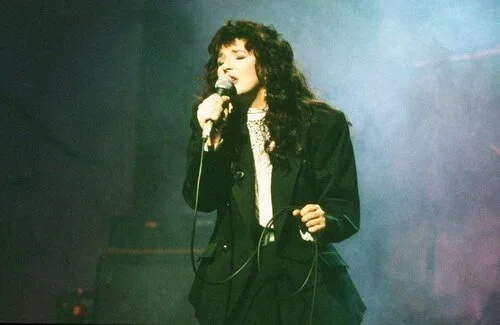
IN THIS PHOTO: Kate Bush in March 1978/PHOTO CREDIT: Mirrorpix

Kate Bush, David Gilmour and The First Steps into the Studio

___________

WHEN we think about the start of Kate Bush’s career….

IN THIS PHOTO: Kate Bush in 1977

David Gilmour’s name comes up frequently. Many claim that he discovered Kate Bush and was responsible for her being noticed. I have written features where I have looked at Bush’s musical influences and what sort of sounds and texts were in her house when she was growing up. One could hardly say that the Bush household was conventional in terms of the type of music played and some of the earliest sounds a young Catherine/Cathy Bush would have absorbed. How she went from a girl who would have heard a lot of Celtic ands Irish music (from her mother’s side), traditional English folk and the poetry of her brother, Paddy, to getting to the attention of Pink Floyd’s Davide Gilmour is quite a story! I read an article from Far Out Magazine from earlier in the month, where they talk about Gilmour’s ‘discovery’ of Kate Bush:

There are few bands as unique as the prog-rock legends Pink Floyd but, when the band’s guitarist came across the strange and beguiling voice of a teenager by the name of Kate Bush, he dropped what he was doing and made it his missions to sign her. It just so happens, what he was doing was creating one of Floyd’s undying albums in 1975’s Wish You Were Here. With his guidance, Kate Bush was able to become an icon of British music and challenge Pink Floyd for their unique crown.

Kate Bush was only 16 when her demo was passed on to Gilmour. While there would certainly have been some trepidation from any teen had they known Gilmour—at this time (and quite possibly still) one of the most well-regarded musicians on earth— was listening to their demo tape but it turns out that Bush was relatively unaware of who Gilmour was exactly, outside of a family friend.
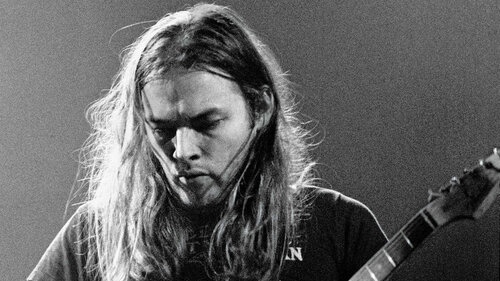
IN THIS PHOTO: Pink Floyd’s David Gilmour at Earls Court, London on 19th May, 1973/PHOTO CREDIT: Jill Furmanovsky

“I was intrigued by this strange voice,” Gilmour said in a new interview for the BBC. Like any producer of the time was captivated and had to learn more. After receiving the tape from Ricky Hopper, he travelled to see the young singer: “I went to her house, met her parents down in Kent. And she played me, gosh, it must have been 40 or 50 songs on tape. And I thought: ‘I should try and do something.’”

“He was really responsible for me getting my recording contract with EMI in the first place,” said Bush. With so many songs already in her canon, at such a young age, Bush was a hot prospect. It was clear that her songwriting was far beyond her years and so Gilmour was keen to get things moving right away. He organised for three of the demos to be recorded in full and even recruited Andrew Powell and Beatles collaborator Geoff Emerick to help out on the sessions.

“I think we had the [EMI] record-company people down at Abbey Road in No. 3,” Gilmour adds. “And I said to them, ‘Do you want to hear something I’ve got?’ They said sure, so we found another room and I played them ‘The Man with a Child in his Eyes.’ And they said, ‘Yep, thank you — we’ll have it.’ [Laughs.]

“It’s absolutely beautiful, isn’t it? That’s her singing at the age of 16, and having written those extraordinary lyrics”.

www.jpg

PHOTO CREDIT: Chris Moorehouse/Evening Standard/Getty Images

The whole myth around Gilmour ‘discovering’ Bush is not quite fair to Bush’s innate talent. I am sure she would have found her way to a record company soon enough, given that she was a friend of musicians and was very much in that circle, and she would have had a demo tape passed to an A&R man before long. It is clear that Gilmour’s position and fame has really added this sense of weight to an otherwise unremarkable discovery. As Graeme Thomson writes in his book, Under the Ivy: The Life & Music of Kate Bush, it was a friend of Kate Bush’s brother Jay, Ricky Hopper (mentioned above), who was probably the most important link when it came to connecting Bush and Gilmour. Indeed, Gilmour heard talent and knew that Bush was very special, but the passionate commitment and support from Hopper – who was a record plugger – doesn’t get talked about that much! There is this life and chapter prior to David Gilmour and Bush stepping into the studio the first time that is not often written about. Hopper visited the family house to hear Bush play and there were thirty or so tapes with over a thousand songs on them that Bush had worked on. We look at her now and think her output is quite unpredictable and gradual but, look back to when Bush was thirteen/fourteen and the material she had amassed.

Using some basic recording equipment from her father and performing these songs on piano, the songs were very bare and lo-fi, so it would have been natural if some record labels passed her by. There was a big leap in terms of production and sound on her debut album, The Kick Inside, but the material she had written and recorded by 1973 was still very different to anything out there! Even though Hopper was determined and knew a star when he heard one, because the material was quite naked and it was fairly unusual, record companies passed her by. Tracks like Something Like a Song, Cussi Cussi, and Freighted Eyes were very much her own work. As Bush would have digested a lot of poetry from her home, and there would have been a lot of literature and art in the air, it is no surprise that her songs had an unconventional twist and were a lot more immersive and distinctive than average love songs and anything one would expect from a teenage artist! Even if some record label people would have felt exhausted having to wade through demo tapes or did not really hear the spark that they needed to secure Kate Bush a deal, David Gilmour’s perceptions and intuition was on the money. It was Hopper’s dogged resilience that created that bridge between Bush and Gilmour. The latter knew that the recordings were brilliant but not that commercial.

Bush would have been fifteen by the time Gilmour fully came into the frame, and he was scouting other artists at the time – it isn’t the case that Gilmour specifically went after Bush or she was the only musician on his radar. By 1973, Pink Floyd were massive, and Gilmour was keen to give something back as it were. That lack of instant commercial recognition with Bush was a barrier, even if Gilmour knew that record company bosses wouldn’t necessarily hear a good thing if it slapped them in the face! It was not like a young Kate Bush was from out of space and putting out the weirdest stuff; more that they were looking for something more traditional and chart-bound from their artists – there were not that many female artists like Kate Bush at the time, so it was hard to know how to sell her. I will take things up to 1975 but, in 1973, Bush was afforded a rare showcase. Musicians Pat Martin and Pete Perrier, along with David Gilmour, assembled at Gilmour’s home studio with a view of getting a proper demo tape down. One of the most interesting phases of Bush’s career is those earliest recordings and days; when she was still very nervous and in a milieu that was strange. The gulf between recording alone at home and having to perform in front of other musicians would have been quite noticeable – she was not used to working alongside other musicians, so there was a period of adjusting and becoming settled in this new environment.

One can only imagine what it would have been like for seasoned musicians to meet Kate Bush and hear her songs! She would have looked and spoken very differently to artists they were used to working with, and her music was worlds apart! A few songs were recorded during that time and, whilst Army Dreamer’s B-side, Passing Through Air, is the only one to have survived, a few other tracks were laid down. The performances would have been promising if not essential (as the musicians had not worked with Bush before) and it was a case of learning the songs as they went along. Bush’s voice then would have been less remarkable, assured and unique as we hear on The Kick Inside; more in common with many female peers – very beautiful and striking, but not quite the peerless instrument we know it to be. For Bush, having a few songs on a tape would have been a dream! From 1972 and 1974, other recordings would have been made by Bush, but after that 1973 session, there was a bit of a gap before the next chapter in the Bush-Gilmour story. Looking back, and that first session with other musicians would have been a revelation. Before, working at home, there was this old equipment and a family piano, and it would have been a solitary and quite basic experience. The fact her songs were then fleshed out by musicians and she got to hear them in a very different way grabbed her imagination - and ignited a love of the studio and the recording process.

Before the summer of 1975, there was contact between Bush and Gilmour but – as I have been reading from Graeme Thomson’s biography of Kate Bush – there was not a lot of development. Bush was not out there playing her songs live, and Gilmour had his hands full with Pink Floyd and various commitments. Gilmour played the earlier-recorded songs from Kate Bush to producer Joe Boyd and, in a rare move of ultraism from anyone in music, Gilmour offered to pay for Bush to record professionally at AIR Studios in London. I may have covered this briefly in other features, but when do you hear of musicians, especially back in the 1970s, being so blown away by an artist that they pay to get them into a studio?! With plenty of songs to choose from, Gilmour selected six and contacted Andrew Powell (who produced The Kick Inside). The two were friends and Powell, an experienced producer who had worked with the likes of Cockney Rebel, was brought in to produce alongside him. The period of June-July 1975 was a busy and pivotal one for Kate Bush. In June, she was called into AIR Studios, and Bush was just approaching seventeen. She was clearly very nervous but, as this was her dream, the excitement was also palpable! Powell helped steady Bush’s nerves, and he assembled some great session players for the songs. Two of the tracks that were captured at AIR Studios made their way onto The Kick InsideBerlin (later retitled The Saxophone Song), and The Man with the Child in His Eyes.

Listening to those recordings would have been eye-opening for Bush, considering what she heard on her demo tapes a couple of years earlier! Having musicians like Alan Parker and Alan Skidmore adding their talents to the songs – combined with the better sound of a professional studio – elevated these promising tracks to something otherworldly. That said, some of the musicians who played with Bush did not recall the experience years later, yet Geoff Emerick (who worked with The Beatles among others) knew that Bush was a revelation and so different to any other artist he had observed. The Man with the Child in His Eyes was part of a 1973 demo collection, but the version that was recorded at AIR Studios transformed the song – Bush was backed by an orchestra, and that gave it shimmer and swell! Bush worked away at the song and Andrew Powell, already in love with the song, drafted the London Symphony Orchestra to add their part. Geoff Emerick cited The Man with the Child in His Eyes as one of his favourite-ever recordings, and it remains one of her most-adored songs. That AIR session was responsible for Bush being signed by EMI in July 1976 (there was a delay after much negotiations; they give her an advance of £3,000 to develop and widen her talent). Bob Mercer was interviewed by The Independent in 2010, and we learn more about how Bush and EMI’s Mercer first came together:

In July 1975 Mercer dropped in at Abbey Road to check on the Pink Floyd sessions for what would become the Wish You Were Here album. The Floyd guitarist David Gilmour played him the three-song demo tape he had made with Bush at AIR Studios. Mercer was particularly taken with "The Man with the Child in His Eyes" and "The Saxophone Song", which would both be included on The Kick Inside, the singer's 1978 debut album.

IN THIS PHOTO: Kate Bush performing at the Rose of Lee in Lewisham on her first tour (albeit, quite a modest one) in 1977/PHOTO CREDIT: Vic King

Mercer put the then 17-year-old singer under contract, but also suggested she take time to develop further artistically. "On meeting her, I realised how young she was mentally. We gave her some money to grow up with," he said. "EMI was like another family to her. She was the company's daughter for a few years".

Today, artists sign a record deal and it is not long before they are releasing music on that label, but things were more complicated for Bush. It wasn’t until July 1976 when the seal was set; Bush was eighteen at the end of July, and there would have been a sense that she needed to get an education and focus on that before thinking about music as a profession. Her family were very supportive but they knew that, if things did not work out, then she would need that to fall back on – if those are the right words?! Bush left school in 1976, and she knew that if she stayed any longer and pursued further education then it would take her further away from music. She would have had career advisors and teachers guiding her in various directions and, not committed to that course and knowing that music was her passion, she made a very big move. From that 1976 confirmation, it was only a short time before she was in AIR Studios to record the rest of The Kick Inside. To prepare for the recording, she embarked on playing with the KT Bush Band around various pubs from April 1977.

Finally, in July and August 1977, the rest of the songs were recorded at AIR Studios in London, helmed by producer Andrew Powell. Bush was keen to keep the line-up of the KT Bush Band for the recordings, but EMI insisted that she use properly experienced session musicians. Powell engaged Ian Bairnson, Duncan Mackay and Stuart Elliott among others - many of whom he had worked with before. I am really interested in the connection between David Gilmour and Kate Bush, and how these two very different people found one another! One cannot forget Bush’s family and Ricky Hopper, but I do love this part of Kate Bush’s career where she went from the girl recording at her family home to her music reaching David Gilmour and, in a couple of years, she was playing her songs at one of London’s best studios. It is credit to EMI that they did not rush her into recording a debut album – given the gaps between albums since her debut, the label were very patient and supportive! -, and they wanted her to spend a bit of time growing and not being thrown straight into the mix. Given the whirlwind that proceeded in 1978 and 1979, it is good that Bush had a little time to put together songs for The Kick Inside. It amazes me to think that these unusual and under-developed home recordings took the course they did and, not long after Bush recorded her first songs at AIR Studios she would go on to become one of the most popular and intriguing…

IN THIS PHOTO: Kate Bush in 1980

MUSICIANS we have ever seen.

FEATURE: The Lockdown Playlist: The Best of the 1950s

FEATURE:


The Lockdown Playlist

c.jpg

PHOTO CREDIT: @spencerdavis/Unsplash

The Best of the 1950s

___________

FOR previous features…  

PHOTO CREDIT: @thevoncomplex/Unsplash

I have done decade-sweeping playlists that collates all the very best songs from that time. Now, I am looking at the 1950s and some of the greatest songs from that era. I think people underestimate the 1950s when it comes to music - but there was so much great stuff around! I have tried to put most of the very best together for this Lockdown Playlist that should provide the necessary amount of dreaminess, energy and escape. If you need some great music to get you through the day, then I think this Lockdown Playlist…

PHOTO CREDIT: @frxgui/Unsplash

SHOULD do the trick.

FEATURE: When Winter Comes: Looking Ahead to McCartney III

FEATURE:


When Winter Comes

Looking Ahead to McCartney III

___________

NOT to suggest that the most important…  

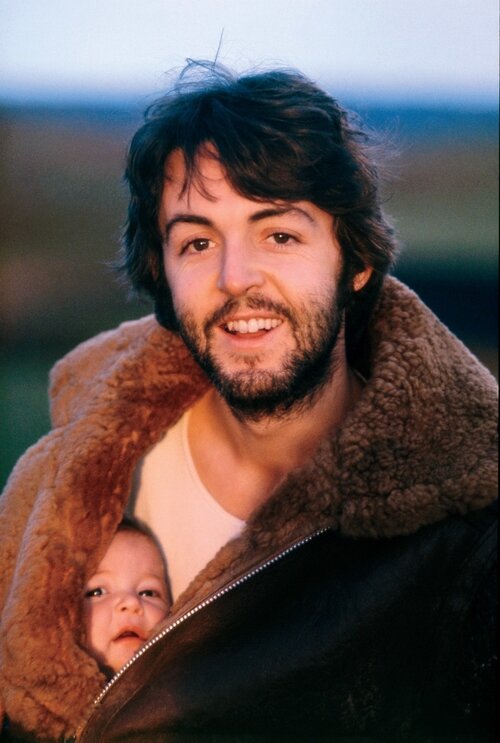
PHOTO CREDIT: Mary McCartney

album of the year is Paul McCartney’s McCartney III, but I wanted to follow up from my previous feature on the album as it has now been confirmed and it is coming out on 11th December. McCartney has conducted interviews since the release was announced, and it is going to be wonderful having the final part of the McCartney trilogy released into the world! I speculated previously what nature the new album will take and, as McCartney recorded all the parts himself, it is quite a stripped affair, but it seems like there are going to be some really interesting sounds and instruments on the album. Here are some more details concerning McCartney III:

A stripped, self-produced solo work marking the opening of a new decade”

Paul McCartney will release McCartney III, a new solo album, in December.

Paul’s isolation in lockdown (or what he calls ‘Rockdown’) encouraged him to get on with working on new music as he fleshed out some existing musical sketches and created new ones.

The album is described as a “stripped, self-produced solo work marking the opening of a new decade” and was built mostly from live takes of Paul on vocals and guitar/piano, with him overdubbing bass, drums, etc. on top of this foundation.

The label blurb tells us that “McCartney III spans a vast and intimate range of modes and moods, from soul searching to wistful, from playful to raucous and all points between” and informs us that Paul has captured this audio with some of the same gear from his ‘Rude Studio’ used as far back as 1971 Wings sessions. Instruments used include Bill Black’s double bass (bought for him by Linda many years ago), alongside Paul’s own Hofner bass, and a mellotron from Abbey Road Studios used on Beatles recordings”.

Make sure you order yourself a copy, as one cannot deny that this is a very special release. Even if you are not a massive Paul McCartney fan, I think the fact that he recorded it in his home studio in East Sussex and produced and performed it all himself is great. It is Macca taking this D.I.Y. approach and recording music without any outside assistance and input. I think McCartney III will be one of his most personal and effecting albums and, until we await a release of the first single, many are speculating as to what sort of vibe the album will put out. Loud and Quiet spoke with Paul McCartney and why he decided to put out an album now:

Hi Paul. To start with the most obvious question, a lot of people will be thinking why now for McCartney III?

It was kind of unintentional. I had to go into the studio at the beginning of lockdown to do a couple of bits of music for an animated short film. So I got got in and did that bit of work and sent it off to the director, and then I thought, ‘Oh, this is nice, I’m enjoying this, this is a nice way to spend lockdown,’ so I ended up finishing off some songs, looking at bits and bobs, making up stuff, and generally enjoying myself in the studio. And then I’d come home in the evening, and I just happened to be with my daughter Mary’s family. The combination of being able to go to work, make some music, and then hang out with four of my grandkids, I was very lucky. Y’know, we were being super careful, but being able to make music really helped”.

There have been rumours about the release of this new album over the last few weeks, and within those is a theory that McCartney III will be your last record.

Everything I do is always supposed to be my last. When I was 50 – “That’s his last tour.” And it was like, ‘Oh, is it? I don’t think so.’ It’s the rumour mill, but that’s ok. When we did Abbey Road I was dead, so everything else is a bonus.=

In 1970, McCartney was an album that featured themes of home, the family and love. What features on this new one?

I think it’s similar. It’s to do with freedom and love. There’s a varied lot of feelings on it, but I didn’t set out for it to all be like, ‘This is how I feel at this moment.’ The old themes are there, of love and optimism. ‘Seize the Day’  – it’s me. That’s the truth”.

I cannot wait to hear what he has come up with, but I would hate to think that McCartney III is the final album from him – the reason he ended the trilogy now is to sort of close the book. At seventy-eight, there might not be many more albums from him, but McCartney seems to have a lot of energy still, and I do feel like we will get album in the coming years. I am a big fan of both of the previous McCartney albums, and I like the experimental and lo-fi nature of McCartney II (1980), and how he managed to release something so powerful and consistent in 1970 on his first eponymous album – considering the stress he would have felt with The Beatles breaking up!

PHOTO CREDIT: Mary McCartney

McCartney spoke with Matt Everitt on BBC Radio 6 Music, and he talked about mixing together a couple of older tracks with mostly new material:

Do you think you work differently if you're recording in a bathroom, instead of Abbey Road?

I think so. If you're on your own, you can have an idea and then very quickly play it. Whereas, with a band, you've got to explain it.

Sometimes that's great... but when you're just noodling around on your own, there's just a sense of freedom.

This album has songs from lots of different points in time.

Most of it's new stuff. There are one or two [songs] that I hadn't finished and, because I was able to get in the studio, I thought "OK, wait a minute, what about that one?" So I'd get it out and think, "Ugh, oh dear." And you'd try to figure out what was wrong with it, or why you didn't like it.

In some cases the vocal or the words just didn't cut it, so you'd strip it all down and go "OK, let's just make it completely different".

When I'd done them, I was going "Well, what am I going to do with this?" And it suddenly hit me: this is McCartney III. You've done it all yourself, like the others, so this qualifies”.

In such a bad year, I know McCartney III has not made it immeasurably better, but many welcomed the news of that new album with so much cheer. Having the greatest songwriter who has ever lived treat us to a new album, and one that holds such historical importance, is brilliant! I cannot wait to hear what the songs sound like and how critics react to the album – hopefully it will get a lot more love than McCartney, and McCartney II! A salute to Paul McCartney and an album that will make a lot of people’s 2020…

SO much better and fuller.

FEATURE: The October Playlist: Vol. 4: A Good Woman with Green Eyes

FEATURE:

The October Playlist

IN THIS PHOTO: Arlo Parks/PHOTO CREDIT: Jenn Five/NME

Vol. 4: A Good Woman with Green Eyes

__________

THIS is another one of those weeks where…

IN THIS PHOTO: The Staves/PHOTO CREDIT: Kelly Teacher/Nonesuch Records

some seriously impressive artists have all released music in the same week! There is new material from The Staves, Arlo Parks, Gorillaz (ft. St. Vincent), Bruce Springsteen, Ariana Grande, Adrianne Lenker, Kylie Minogue, Tim Burgess, and The Magic Gang. Throw into the mix John Frusciante, Laura Veirs, Phoebe Green, Marika Hackman, and Hot Chip (ft. Jarvis Cocker), and it is another incredible week! There is bound to be something in the mix that gets the weekend to a good start and tickles your fancy. If you are in need, as always, with a bit of boost and energy to get the weekend going, then take a listen to the songs below as they are definitely…

IN THIS PHOTO: Bruce Springsteen

READY to deliver.

ALL PHOTOS/IMAGES (unless credited otherwise): Artists

___________

The Staves Good Woman

ssss.jpg

Arlo Parks Green Eyes

Ariana Grande positions

Bruce Springsteen - I'll See You in My Dreams

Gorillaz (ft. St. Vincent) Chalk Tablet Towers

Kylie Minogue I Love It

t.jpg

PHOTO CREDIT: Genesis Báez

Adrianne Lenker - zombie girl

John Frusciante Zillions

ppo.jpg

Tim Burgess - The Ascent of the Ascended

tg.jpg

Laura Veirs Brick Layer

ttt.jpg

Phoebe Green Golden Girl

PHOTO CREDIT: Luka Booth

Marika Hackman All Night

Hot Chip (ft. Jarvis Cocker) - Straight to the Morning

The Magic Gang - Somebody Like You

Saweetie (ft. Jhené Aiko) - Back to the Streets

PHOTO CREDIT: Anna Haas

Becky Warren Favorite Bad Penny

Shygirl SLIME

GRACEY - Don’t

Julien Baker - Faith Healer

Biig Piig Oh No

PHOTO CREDIT: Jeff Andersen Jr.

Tia Gostelow Two Lovers

JGrrey Doubt Nothing

This Is the Kit Keep Going

PHOTO CREDIT: Thomas J Charters

Dizzee Rascal (ft. Ocean Wisdom) Don’t Be Dumb

King Gizzard & The Lizard Wizard - Automation

H.E.R. Damage

dodie Cool Girl

Connie Constance Trouble

Nilüfer Yanya Crash

Actress Reverend

Easy Life Daydreams

PHOTO CREDIT: Em Grey

Cut Worms - Louisiana Rain

Olivia DeanEcho

LAOISE Healthy

CLOVES Dead

RuthAnneRemember This

FEATURE: This Woman's Work: Anthology 1978–1990 at Thirty: Kate Bush’s Best Five Opening and Closing Tracks

FEATURE:


This Woman's Work: Anthology 1978–1990 at Thirty

PHOTO CREDIT: Getty Images

Kate Bush’s Best Five Opening and Closing Tracks

___________

I am writing this…  

IMAGE CREDIT: EMI

on the day Kate Bush’s This Woman's Work: Anthology 1978–1990 turned thirty (22nd October). She had put out a greatest hit collection in 1986 with The Whole Story, but this boxset included B-sides and tracks fans might not have heard. Kate Bush News explains more:

It’s surreal to think that this box set is actually 30 years old. Released a year after The Sensual World while Kate was in the the thick of recording what would become The Red Shoes, it was the first time she had officially gathered together a lot of the “odds and sods”, B-sides and 12″ mixes from her then 12-year career. The box sets contained all 6 of Kate’s studio albums released up to that point. Expensive sets at the time for fans, especially those just wanting those extra tracks, they are just as sought after today on the collector market. In fact the huge 9 vinyl disc LP version of the set (8 CD and 8 cassette versions were also released) fetches eye-watering prices now, depending on condition and the inclusion of those all important KT stickers! The box set even contains some tracks that didn’t make it to The Other Sides remastered rarities collection from 2018, including The Empty Bullring, Not This Time and the four Live on Stage EP tracks”.

IN THIS PHOTO: Kate Bush in a promotional shot for Director’s Cut (2011)/PHOTO CREDIT: John Carder Bush (from his book, KATE: Inside the Rainbow)

Since that boxset came out, there has been a little bit of revisionism and, in 2019, Bush released The Other Sides as a standalone set. The album collects together B-sides and cover versions, and it was a great way to introduce new fans to Bush’s work – alongside the boxsets and remasters of the studio albums that were released in 2018, it was a rare occasion where Bush looked back. Because of the thirtieth anniversary of This Woman's Work: Anthology 1978–1990, I wanted to look at Kate Bush’s studio albums and, rather than put together her greatest hits or top-twenty singles, I want to focus on opening and closing tracks. On all of her ten studio albums, the opening and closing tracks are among the strongest songs on each album. Bush is masterful when it comes to kicking things off with a real impression and ensuring the listener gets a bang right at the end! It is hard to select the five best opening and closing songs but, as I have set myself the challenge, here are the essential opening and closing tracks from Kate Bush’s amazing studio albums.

______________

The Best Opening Tracks

Symphony in Blue (Lionheart, 1978 (single; Canada and Japan only)

It might seem a bit controversial to ignore my favourite album’s (The Kick Inside, 1978) opening track, Moving, as it is the first song on Kate Bush’s debut album. With whale song and some captivating piano, it is spine-tingling and unusual in equal measures. I really love that track but, with such hot competition, I had to sacrifice Moving! The reason Symphony in Blue is such a great opening track, is that it starts an album that is considered to be one of Bush’s weaker. I think people need to re-evaluate Lionheart, because Symphony in Blue is only one of many gems. One of few new songs written for her second album, Bush’s voice is soothing, soulful, and sensual in one of her most underrated and finest songs. Even though most of the songs on Lionheart were written before The Kick Inside arrived, she showed that, even when given little time to write new material, she could create these brilliantly beautiful and unique songs. In a career of gorgeous and heart-melting moments, Symphony in Blue is right up there with her very best efforts.

Babooshka (Never for Ever, 1980 (single)

PHOTO CREDIT: John Carder Bush (from his book, KATE: Inside the Rainbow)

There are two types of Kate Bush album openers: beautiful, sumptuous songs that beckon you in, and tracks that are physical, direct and have this great energy. The Kick Inside, and Lionheart begin with romantic and slower numbers, whereas Never for Ever’s opener, Babooshka, boasts a fiery chorus and one of Bush’s best vocal performances to that point. Making full use of the recently-discovered Fairlight C.M.I., Babooshka opens another album that remains quite under-appreciated. I think Babooshka perfectly announced an album that is full of new sonic inspiration and a broader vocal and lyrical palette. In terms of bookends, Never for Ever is, perhaps, the best album – in that we kick off and end with songs that are utterly captivating and memorable. There are one or two weak tracks on Never for Ever, but I think Kate Bush was beginning to take more control of her music direction – as she co-produced Never for Ever with Jon Kelly -, and she was becoming bolder and more experimental.

Running Up That Hill (A Deal with God) (Hounds of Love, 1985 (single)

PHOTO CREDIT: John Carder Bush (from his book, KATE: Inside the Rainbow)

One cannot talk about Kate Bush’s best opening tracks without mentioning Hounds of Love’s Running Up That Hill (A Deal with God). Hounds of Love boasts many different moods and stories, but I think it is defined by a sense of movement and space. This is exemplified in Running Up That Hill (A Deal with God), which opens with galloping drums and mewing Fairlight/synthesiser. There are those who prefer Hounds of Love’s second side, The Ninth Wave, as there is less gated reverb and percussion; a broader soundscape and more natural instruments. I think there is a perfect blend of the Fairlight C.M.I. and synthesisers and some brilliant percussion, bass, and drum. With Alan Murphy on guitar, Del Palmer (who also was one of the engineers on the album) on bass, and Stuart Elliott on percussion, Running Up That Hill (A Deal with God) is intense, passionate, and thought-provoking. A track where Bush asks if she could do a deal with God and swap places with a man so they can better understand one another, it is a subject that had not really been covered before in Pop. Bush’s vocal is typically stunning - and Running Up That Hill (A Deal with God) is one of the strongest songs on Hounds of Love; a brilliant introduction to Bush’s best-acclaimed and popular album.

The Sensual World (The Sensual World, 1989 (single)

PHOTO CREDIT: John Carder Bush (from his book, KATE: Inside the Rainbow)

The Sensual World is one of Kate Bush’s albums that I need to spend more time with, as I am familiar with some of the bigger songs on the album, but I have not really immersed myself and spent too much time with it as a whole. The Sensual World is another album with a hard to beat opening and closing track (more later), and the title track is one of Bush’s greatest ever songs. The Sensual World was later re-recorded using only words taken from Molly Bloom's soliloquy from James Joyce's Ulysses, as Bush had originally intended whilst recording The Sensual World album. That version, re-titled Flower of the Mountain, appears on the 2011 album, Director's Cut. I prefer the original version on The Sensual World, as I love the richness of the composition – everything from a swished fishing rod, fiddle, bouzouki, fiddles, and Uilleann pipes are combined with guitar, bass, percussion, and some truly arresting vocals! On every album, Bush brings in new sounds and instruments, and I really love the depth and variety on The Sensual World. I adore Bush’s voice on the title track and, right from the start, the lyrics are wonderfully intriguing and beautiful: “Mmh, yes/Then I'd taken the kiss of seedcake back from his mouth/Going deep South, go down, mmh, yes/Took six big wheels and rolled our bodies/Off of Howth Head and into the flesh, mmh, yes”.

King of the Mountain (Aerial, 2005 (single)

Not only is King of the Mountain fifteen today (24th October), but I think it is one of Kate Bush’s best opening tracks. I have mentioned it quite a lot, but King of the Mountain was Bush’s first single since 1994’s And So Is Love. After The Red Shoes arrived in 1993, there was a twelve-year wait to see if she would ever release any new albums. The excitement of hearing King of the Mountain was immense, and it was Bush treading a fairly similar path to The Sensual World in terms of sound/dynamic. That said, the subject matter for the two songs can’t be compared – Bush sings about Elvis Presley and can be seen in King of the Mountain’s video moving and grooving through his mansion! Featuring especially striking percussion from Steve Sanger, King of the Mountain is classic Kate Bush! Aerial’s second disc, A Sky of Honey, is bonded around a single theme, but the A Sea of Honey opening disc is a typically interesting assortment of sounds and subjects. I love all the songs on Aerial, but I think King of the Mountain is my favourite - and no other song could have opened such an important album!

The Best Closing Tracks

The Kick Inside (The Kick Inside, 1978)

Like her opening tracks, it is hard to whittle down Bush’s closing tracks to the best five! I think The Kick Inside’s title track is not only the only track that could have ended her debut – as she ends the song with a very definite full-stop -, but it is such an original song! Boasting some incredible sequencing, The Kick Inside builds to this track based on the murder ballad, Lizie Wan – where the heroine (called variously Lizie, Rosie or Lucy) is pregnant with her brother's child. Her brother murders her. He tries to pass off the blood as that of some animal he had killed (his greyhound, his falcon, his horse), but in the end must admit that he murdered her. He sets sail in a ship, never to return. Bush imagines herself as the sister who, having fallen pregnant, takes her own life so that she does not bring shame on the family by giving birth as the result of an incestuous union. On an album with songwriting that was far more inventive and interesting than most of what 1978 produced, Kate Bush’s debut album ends with such a sad and gorgeous number. Here, Bush turns in an amazing vocal performance that captures the emotion, tragedy and  guilt of the situation – ending the album with her voice trailing and letting her brother/family know that, by the time they read her suicide note, she will be gone…

Breathing (Never for Ever, 1980 (single)

I have mentioned how Bush built her confidence on Never for Ever, and this was the first album where politics were playing a bigger role. Never for Ever’s penultimate track, Army Dreamers, addresses the callousness of war, whereas Breathing concerns nuclear war and a view from the perspective of a foetus. Again, no other track could have ended Never for Ever, as it is so heavy and symphonic! Including some unexpected and gripping backing vocals from Roy Harper, Bush’s voice goes from calm and sweet to a raw growl near the end. Similar to Babooshka, one could hear a slightly rawer and more masculine edge come into her voice, and this is apparently on Breathing. Her longest song to that point (at 5:29), Breathing is so far removed from the songs she put onto The Kick Inside only two years previous! Perhaps her greatest closing track of all, Breathing only reached number-sixteen in the U.K. charts, but it is viewed as one of her most important and accomplished songs. Listening to it now, and it still elicits shiver and evokes such a vivid and powerful images!

Get Out of My House (The Dreaming, 1982) 

If Breathing was one of Bush’s most intense and moving tracks to that point, The Dreaming upped the ante! At the very end of the album, we hear a track that is, in my view, the rawest and most frightening Bush ever put her name to! I love the experimental nature of The Dreaming and how many vocal sounds are evident through the album. Other artists and producers might have put Get Out of My House at the very start or near the top of The Dreaming but Bush, as producer, knew that Get Out of My House had to end things. Again, it is too big and intense not to end an album, and any song that followed it would not sound as good or have the same physicality. Based on The Shining, Get Out of My House is, as Bush described it in an interview from 1982: “The setting for this song continues the theme - the house which is really a human being, has been shut up - locked and bolted, to stop any outside forces from entering. The person has been hurt and has decided to keep everybody out. They plant a 'concierge' at the front door to stop any determined callers from passing, but the thing has got into the house upstairs”. The Dreaming is Kate Bush’s ‘I’ve gone mad album’ – her thoughts/words and not mine! – and, on an eccentric and quite dark album, Get Out of My House is perhaps the most disturbed and revealing song Kate Bush ever put her name to.

This Woman’s Work (The Sensual World, 1989 (single)

I was going to select Hounds of Love’s closing track, The Morning Fog, as one of her best, as it ends The Ninth Wave – the woman/protagonist is being rescued from the sea after a turbulent and frightened time waiting for salvation. Instead, I could not ignore the perfect way This Woman’s Work ends The Sensual World. Having started with the lush and immersive title track, Bush ends with a song that, appropriately, was the title of her incredible boxset that arrived in 1990. This Woman’s Work was originally released on the soundtrack of the movie She's Having A Baby, in 1988. A year later, the song was included in Kate's sixth studio album. The lyric is about being forced to confront an unexpected and frightening crisis during the normal event of childbirth. The vocal is absolute devastating in its beauty and emotional pull, and This Woman’s Work is a huge fan favourite. Like Get Out of My House, if any other track had followed This Woman’s Work on The Sensual World, I think we would have been too overwhelmed to appreciate it – the B-side of The Sensual World single, Walk Straight Down the Middle, was included as the bonus track on the 1989 and 2011 C.D. versions of the album, but I think that track, if one is to include it on The Sensual World, is best added to the middle of the running order!

Among Angels (50 Words for Snow, 2011)

Marking the first appearance of Bush’s latest studio album, 50 Words for Snow, in this feature, there are a couple of reasons for nominating Among Angels as one of Bush’s best closing tracks. On an album concerning snow and more wintery themes, Among Angels is an anomaly as it is not snow-related – featuring just Kate Bush on piano, it is a beautifully sparse and tender track with some sublime lyrics (“And they will carry you o'er the walls/If you need us, just call/Rest your weary world in their hands/Lay your broken laugh at their feet/I can see angels around you/They shimmer like mirrors in summer/There's someone who's loved you forever but you don't know it/You might feel it and just not show it”). Among Angels is not only the final track from the newest album we have had from Kate Bush, but it was included in the encore of her 2014 residency, Before the Dawn – after coming back on stage after performing Aerial’s title track, she then delivered Among Angels (and Cloudbusting brings things to a close). In a stage show that heavily featured songs from Aerial, and Hounds of Love (as they both have conceptual suites), it is clear Bush has affection for this terrific song – and, at 6:49, Among Angels is the shortest track on 50 Words for Snow (but it is also one of the sweetest).

FEATURE: Second Spin: Ashanti – Ashanti

FEATURE:

Second Spin

Ashanti – Ashanti

___________

I really like the R&B that was coming out of America…  

at the end of the 1990s and the first few years of the next decade. To me, the album of that period that stood out the most was Aaliyah’s eponymous release – it arrived in July of 2001, just a month before she died. After that, I think a lot of artists followed her lead and were definitely inspired by that album. Arriving just after Aaliyah’s self-titled album – but not necessarily directly influenced by it – was Ashanti’s eponymous album. Recorded between 2001 and 2002, Ashanti recorded the album at a time when she was penning songs from other artists. I really like the album and, whilst it is inspired by the sound of the late-1990s and early-2000s R&B, it has its own edge and style. I think a lot of critics felt that Ashanti lacked real depth and wasn’t quite cutting enough; maybe it did not possess the same sass and sexiness of its contemporaries – a little insubstantial in places. A lot of times, an artist can bring in guests on various tracks, and it doesn’t always work. I think the collaborators on Ashanti work well. Ja Rule certainly adds something to Leaving (Always on Time Part II), and The Notorious B.I.G. is on Unfoolish. At seventeen tracks long, maybe Ashanti’s debut is a little long, but there are a few skits on the album, which was not uncommon – everyone from Eminem and En Vogue included these short conversational pieces to break up the material.

I think there is a nice sense of flow, warmth, and physicality through the album. Ashanti doesn’t explode and have the same huge hooks as the best R&B albums, but it is an assured and interesting album that has more than a few golden nuggets – including the singles Foolish, and Happy. Ashanti debuted at number-one on the U.S. Billboard 200 and the Top R&B/Hip-Hop Albums chart with first-week sales of 503,000 units - the biggest first-week sales for a debut female artist up to then. The album was certified triple-platinum by the Recording Industry Association of America (R.I.A.A.) for shipments of three-million copies on 17th December, 2002. It earned Ashanti three Grammy Award nominations for Best New Artist, Best Female R&B Vocal Performance, and Best Contemporary R&B Album (winning in the latter category). Billboard magazine ranked Ashanti at number-one-hundred on its Top 200 Albums of the Decade. The album has sold ten-million copies worldwide. In terms of reception and acclaim that is not a bad debut at all! As I said, the late-‘90s and early-‘00s was a fertile and strong time for Hip-Hop and R&B, and Ashanti can sit alongside the better efforts! Looking back, and the album has dated well; maybe critics at the time were making unfair comparisons or felt that Ashanti had not found her own voice. There are nods to giants of R&B, but one cannot fault the ambition of the album. I like the fact that there are samples on various numbers.

Rescue contains a sample of Michael Jackson's Smooth Criminal, and Sade's Cherish the Day; Happy contains a sample of The Gap Band's Outstanding. This is another case of an album winning awards and shifting units, but the critics not being on the same page as the public! Ashanti took home a record eight Billboard awards in 2002 - which is an incredible achievement for an artist releasing her debut album! Billboard magazine ranked. Maybe future albums didn’t soar as high as Ashanti, but I think her debut is incredible and certainly deserves much more praise and respect. It is clear that Ashanti was part of a wave of artists from the early-2000s that were inspiring other artists coming through; she definitely helped in evolving R&B. I just want to bring in AllMusic’s take on Ashanti:

Young, pretty, sexy, stylish, and hip, Ashanti is everything a modern, post-hip-hop soul crooner should be. She looks the part, trucks with hitmakers -- at the time her eponymous debut was released, she was featured on a hit single by Fat Joe -- and even approximates Alicia Keys' visuals on the back cover. She can sing, but she's not showy; she never hyperventilates, she croons.

Her first album sounds modern, with fairly fresh beats and lightly insistent hooks, and is just naughty enough to warrant a parental advisory sticker (though if you're just listening to this record, it's nigh on impossible to figure out where the objectionable lines are). So why doesn't Ashanti play as greater than the sum of its parts? Largely because it lacks distinctive material, in either terms of the actual songs or the production -- and when that's combined with a singer who is good, yet not distinctive herself, the entire production sounds as if its treading water or providing nifty aural wallpaper. It's not bad by any means, and it has its moments, but at 17 tracks, including skits, it all becomes a blur. A pleasing blur, one that shows promise, but a blur all the same”.

The chart success and huge sales of Ashanti doesn’t really surprise me. The album is quite commercial, but it announced Ashanti as a fresh and exciting talent. If you have not heard her debut album, then give it a spin, as it has some great cuts on it – and it is far stronger than critics gave it credit for! Blending a mix of the sexy, provocative and strong with the passionate and tender, there is a pleasing and memorable stock of songs that will definitely get into the head. Eighteen years after its release, Ashanti keeps on providing…

HUGE vibes, heart and punch.

FEATURE: A Buyer’s Guide: Part Twenty-Six: Metallica

FEATURE:

A Buyer’s Guide

PHOTO CREDIT: Ross Halfin

Part Twenty-Six: Metallica

___________

QUITE a shift from last week’s A Buyer’s Guide….

I am going from The Supremes to Metallica! I love the band, and I have been a fan of their music for many years now. Metallica were formed in 1981 in Los Angeles by vocalist/guitarist James Hetfield and drummer Lars Ulrich. The band's fast tempos, instrumentals and aggressive musicianship made them one of the founding ‘big four’ bands of Thrash Metal, alongside Megadeth, Anthrax and Slayer. Metallica's current line-up comprises founding members and primary songwriters Hetfield and Ulrich, long-time lead guitarist Kirk Hammett, and bassist Robert Trujillo. With no end in sight for the Metal legends, I wanted to put together a guide to their best albums, an underrated album of theirs and a book that will give you more information. If you are new to Metallica, enjoy this spotlight of one of the music world’s…

HEAVIEST and best bands.

_______________

The Four Essential Albums 

Kill 'Em All

Release Date: 25th July, 1983

Label: Megaforce

Producer: Paul Curcio

Standout Tracks: Hit the Lights/Jump in Fire/Whiplash

Buy: https://www.discogs.com/Metallica-Kill-Em-All/master/6387

Stream: https://open.spotify.com/album/6FMPDVTm8l5IrEQla46VQl

Review:

The true birth of thrash. On Kill 'Em All, Metallica fuses the intricate riffing of New Wave of British Heavy Metal bands like Judas Priest, Iron Maiden, and Diamond Head with the velocity of Motörhead and hardcore punk. James Hetfield's highly technical rhythm guitar style drives most of the album, setting new standards of power, precision, and stamina. But really, the rest of the band is just as dexterous, playing with tightly controlled fury even at the most ridiculously fast tempos. There are already several extended, multi-sectioned compositions foreshadowing the band's later progressive epics, though these are driven by adrenaline, not texture. A few tributes to heavy metal itself are a bit dated lyrically; like Diamond Head, the band's biggest influence, Kill 'Em All's most effective tone is one of supernatural malevolence -- as pure sound, the record is already straight from the pits of hell. Ex-member Dave Mustaine co-wrote four of the original ten tracks, but the material all sounds of a piece. And actually, anyone who worked backward through the band's catalog might not fully appreciate the impact of Kill 'Em All when it first appeared -- unlike later releases, there simply isn't much musical variation (apart from a lyrical bass solo from Cliff Burton). The band's musical ambition also grew rapidly, so today, Kill 'Em All sounds more like the foundation for greater things to come. But that doesn't take anything away from how fresh it sounded upon first release, and time hasn't dulled the giddy rush of excitement in these performances. Frightening, awe-inspiring, and absolutely relentless, Kill 'Em All is pure destructive power, executed with jaw-dropping levels of scientific precision” – AllMusic

Choice Cut: Seek & Destroy

Ride the Lightning

Release Date: 27th July, 1984

Label: Megaforce 

Producers: Metallica/Flemming Rasmussen

Standout Tracks: Ride the Lightning/Fade to Black/Creeping Death

Buy: https://www.discogs.com/Metallica-Ride-The-Lightning/master/6440

Stream: https://open.spotify.com/playlist/598TjVn8sD26AmmU6aFjvj?iqid_The=

Review:

At its best, metal provides a distinctly different – but no less important – escape. While other genres rely on the interpersonal to forge connections with listeners, metal relies on bigger and broader issues, ones that require a bit more attention to find. It's why I'm never surprised to see people who listen to metal and nothing else. The genre is so unbelievably deep and so easy to get lost in, and a mere one or two albums can forge a lifelong search for the next great metal album. It's also why I'm surprised when those who love music for emotional reasons can't seem to get into the genre, or rather, aren't willing to put in the effort. When I think of a “metalhead,” I think of someone who only listens to metal, and I don't fit that definition. But I love metal. No matter how long I sometimes go without listening to it, it always holds a high place in my heart. Metal is strength, metal is solidarity, metal is acceptance. It is “For Whom The Bell Tolls” - the knowledge of mortality, the unstoppable tolling, yes, but also it is the means with which to reckon with unchangeable facts – a strike of electricity in the darkest nights” – Sputnik Music

Choice Cut: For Whom the Bell Tolls

Master of Puppets

Release Date: 3rd March, 1986

Label: Elektra

Producers: Flemming Rasmussen/Metallica

Standout Tracks: The Thing That Should Not Be/Welcome Home (Sanitarium)/Disposable Heroes

Buy: https://www.discogs.com/Metallica-Master-Of-Puppets/master/6495

Stream: https://open.spotify.com/album/5gzLOflH95LkKYE6XSXE9k

Review:

Even though Master of Puppets didn't take as gigantic a leap forward as Ride the Lightning, it was the band's greatest achievement, hailed as a masterpiece by critics far outside heavy metal's core audience. It was also a substantial hit, reaching the Top 30 and selling three million copies despite absolutely nonexistent airplay. Instead of a radical reinvention, Master of Puppets is a refinement of past innovations. In fact, it's possible to compare Ride the Lightning and Master of Puppets song for song and note striking similarities between corresponding track positions on each record (although Lightning's closing instrumental has been bumped up to next-to-last in Master's running order). That hint of conservatism is really the only conceivable flaw here. Though it isn't as startling as Ride the Lightning, Master of Puppets feels more unified, both thematically and musically. Everything about it feels blown up to epic proportions (indeed, the songs are much longer on average), and the band feels more in control of its direction. You'd never know it by the lyrics, though -- in one way or another, nearly every song on Master of Puppets deals with the fear of powerlessness. Sometimes they're about hypocritical authority (military and religious leaders), sometimes primal, uncontrollable human urges (drugs, insanity, rage), and, in true H.P. Lovecraft fashion, sometimes monsters. Yet by bookending the album with two slices of thrash mayhem ("Battery" and "Damage, Inc."), the band reigns triumphant through sheer force -- of sound, of will, of malice. The arrangements are thick and muscular, and the material varies enough in texture and tempo to hold interest through all its twists and turns” – AllMusic

Choice Cut: Master of Puppets

Metallica

Release Date: 12th August, 1991

Label: Elektra

Producers: James Hetfield/Bob Rock/Lars Ulrich

Standout Tracks: Sad But True/Wherever I May Roam/Nothing Else Matters

Buy: https://www.discogs.com/Metallica-Metallica/master/6651

Stream: https://open.spotify.com/album/6QdCohkHKNTVoaSx1ZzitH

Review:

Sure enough, accusations that they had sold out came from the rump of hardcore fans within seconds of their fifth album being released in 1991. Several years later thousands of fans signed an online petition calling on the band to sever its links with Bob Rock such was their conviction that their beloved Metallica had strayed from the straight and narrow.

Yet his involvement gained them mass sales (number one on both sides of the Atlantic) and earned them the Grammy they’d missed out on, having lost out to Jethro Tull’s Catfish Rising the previous year. With millions of new fans going on to discover their back catalogue, Metallica moved from cult metal gods to bona fide rock stars, straddling the airwaves with the psycho-dramatics of “Enter Sandman”, whose terse motifs served notice that things were changing. The spaghetti western set dressing of “The Unforgiven”, “Nothing Else Matters” with its sensitive lyrics and string section embellishments, as well as the widescreen dynamics of “My Friend Of Misery” demonstrated how keen they were to move things on.

In “The God That Failed”, vocalist, rhythm guitarist and principle writer, James Hetfield deals unflinchingly with parental loss and the contradictions of faith in a mature and considered manner. The confidence exuding from almost every track isn’t due to a clichéd, puffed-up HM swagger but a result of literate and articulate artists breaking free of generic expectation” – BBC

Choice Cut: Enter Sandman

The Underrated Gem

St. Anger

Release Date: 5th June, 2003

Label: Elektra

Producers: Bob Rock/Metallica

Standout Tracks: Frantic/Some Kind of Monster/The Unnamed Feeling

Buy: https://www.discogs.com/Metallica-St-Anger/master/6607

Stream: https://open.spotify.com/album/4kwN2OnnrwY2ZBcm379Ahn

Review:

Now, though, the slate’s been wiped clean. Newstead, a constant reminder of the loss of Burton and always punished for it, has gone. Hetfield’s sorted through his insecurities, finding strength in the realisation that there’s a difference between sadness and depression. And with a new bassist Robert Trujillo, formerly with Suicidal Tendencies and Ozzy Osbourne, injecting a fresh sense of purpose, Metallica can finally face up to what everyone else has known all along: that anger is their lifeblood, their motivation, their ultimate saviour.

Hence the title. Named after the St Christopher pendant that Hetfield was given in 1984, ‘St Anger’ is Metallica setting themselves up as the patron saints of rage. Anger isn’t just used as an outlet and energy here, but romanticised as a full-bloodied emotion. The title track is a love song to anger itself, the pivotal line “I want my anger to be healthy” just on the right side of self help, while elsewhere there’s the feeling in its many righteous hues: the slow burn of resentment through to the flashpoint of defiance.

Musically, the songs are a stripped back, heroically brutal reflection of this fury. You get the sense that, as with their emotional selves, they’ve taken metal apart and started again from scratch. There’s no space wasted here, no time for petty guitar solos or downtuned bass trickery, just a focussed, relentless attack. ‘Dirty Window’ could almost be a demo, hewn straight from granite. ‘Frantic’ rages with the catharsis of walls being demolished. Lars’ recent summation says it all: “No fucking shit this is heavy metal!”

What makes Metallica the greatest metal band of all time, though, is the fact that, despite this focus, ‘St Anger’ is not a simple album. Each song mutates and heads off in a new direction at the exact point lesser mortals would finish up. It takes 73 minutes to play 11 tracks, stretching time and endurance, until you have an immense statement of superiority. Nu-metal minnows, you may return to your cubbyholes. The true masters have finally awakened from their slumber” – NME

Choice Cut: St. Anger

The Latest Album

Hardwired... to Self-Destruct

ttt.jpg

Release Date: 18th November, 2016

Label: Blackened

Producers: Greg Fidelman/James Hetfield/Lars Ulrich

Standout Tracks: Now That We're Dead/Moth into Flame/Halo on Fire

Buy: https://www.discogs.com/Metallica-HardwiredTo-Self-Destruct/master/1083868

Stream: https://open.spotify.com/album/7LwifLL1anaEd9eIIfIkx7

Review:

The second half of the album is more of a mixed bag. “Confusion” bears a strong similarity to Death Magnetic, in how it tries to find an even ground between atonality and melody, but it succeeds mightily thanks to the very strong interplay between the lead riff and vocal melody. Despite its unfortunate title, “ManUNkind” is a wicked Southern rock jam that features Trujillo’s finest bass work, and echoes the better deep cuts from Load and Reload two decades ago. “Here Comes Revenge” swings hard, alternating between creeping menace and anthemic vitriol, while “Am I Savage” neatly releases its building tension with a clever ascending riff in its chorus. “Murder One” is arguably the album’s weakest moment, as the band’s heartfelt tribute to the late Lemmy Kilmister falls slightly flat, but the ship is righted immediately after as the dystopian “Spit Out the Bone” closes things with another ferocious, angry blast of speed.

With no ballads, no meandering instrumentals, a renewed focus on honest-to-goodness heavy metal, and a keen focus on songwriting restraint, Hardwired… to Self Destruct is strong enough for longtime fans to ask, “What took you so long?” As much time as it took for Metallica to rediscover that old magic, though, upon hearing the end result it was well worth the wait. More than anything, Metallica sounds like they’re having fun again. You hear it in those little touches throughout the record that pays homage to their old favorites, and even in those extended passages where they keep going just a little longer because the groove feels too good. The subject matter might be bleak, but there’s a lust for life on this album that will leave a smile on the faces of their millions of fans, and even on a few of those grumpy old ones” – Popmatters

Choice Cut: Atlas, Rise!

The Metallica Book

Metallica: Back to the Front: A Fully Authorized Visual History of the Master of Puppets Album and Tour

Authors: Matt Taylor (author)/James Hetfield (foreword)/Ray Burton (afterword)

Publication Date: 2nd August, 2016

Publisher: Insight Editions

Synopsis:

Looking through all the memorabilia photos was a thrill, especially the handwritten lyric sheets. If I were to express one extremely minor disappointment with this offering it would be that I wish they had included more details on the inspiration of the song lyrics. There’s a lot of talk about how they composed the music; how riffs and solos were created; and how they handled production in the studio, but it seems like delving into the meaning behind the lyrics was not a priority. They do talk about the concept of the album itself and its artwork, which became the basis for their first major stage set.

Metallica: Back To The Front is an impressive, in-depth written and visual documentation of Metallica’s formative years that focuses in on every detail of the Master Of Puppets era. Fans of the band will undoubtedly flip through this book with delight in all it has to offerGeeks of Doom

Order: https://www.waterstones.com/book/metallica-back-to-the-front-a-fully-authorized-visual-history-of-the-master-of-puppets-album-and-tour/matt-taylor/9781608877461

FEATURE: The Lockdown Playlist: Black History Month

FEATURE:

The Lockdown Playlist

IN THIS PHOTO: Little Simz/PHOTO CREDIT: Bella Howard for Wonderland.

Black History Month

___________

OCTOBER is Black History Month…  

avatars-U20qkyPkYldB9lKy-ryA85Q-t500x500.jpg

IN THIS PHOTO: Arlo Parks

in the U.K., and I think its relevance is even more urgent and defined in 2020 than it has ever been. It has been a very tough year, but it is one where we have seen race and Black Lives Matter make the news and come to the fore. To honour Black History Month, I wanted to put together a collection of amazing songs from Black artists; a celebration of music of the highest order! The playlist includes some legends, but there are also brilliant newer artists like Arlo Parks and Moses Boyd. This is a really important playlist and, whilst I may have missed a few artists, it goes to show the strength, diversity and importance of Black music and artists. There is something in this latest Lockdown Playlist to…

IN THIS PHOTO: Frank Ocean/PHOTO CREDIT: Willy Vanderperre for DAZED

SPEAK to everybody.

FEATURE: This Is Love: PJ Harvey’s Stories from the City, Stories from the Sea at Twenty

FEATURE:

This Is Love

PJ Harvey’s Stories from the City, Stories from the Sea at Twenty

___________

IN terms of innovators and pioneering artists…  

v.jpg

there are few as astonishing as PJ Harvey. Her album, Stories from the City, Stories from the Sea, is twenty on Friday (23rd October), and it is considered to be one of her greatest works. I have seen a few reviews that give it some criticism, and I just can’t understand that! Even if you are not comparing Stories from the City, Stories from the Sea to her previous albums, you have to admit that her fifth studio album is masterful! In 1998, while shooting a film as an actress for Hal Hartley in New York, Harvey felt inspired by the city and wrote several songs. This was during the time of Is This Desire?, and I feel that Stories from the City, Stories from the Sea is a stronger and more varied album than Is This Desire? One gets the contrast of New York City and the English coast through the album – Harvey is from Bridport, Dorset. It is no surprise that New York’s influence looms large on Stories from the City, Stories from the Sea, as Harvey lived there for several months – although Harvey said in interviews how it was not her ‘New York album’. Co-produced by Mick Harvey, Rob Ellis and Harvey, Stories from the City, Stories from the Sea is a phenomenal album with no filler at all! I think Stories from the City, Stories from the Sea is a lot fuller and more diverse than any of PJ Harvey’s previous albums.

There is greater warmth and richness to Stories from the City, Stories from the Sea, whereas albums before that were quite direct and darker. Stories from the City, Stories from the Sea won Harvey the Mercury Prize in 2001, and it was certified platinum in the U.K. and Australia. I think, twenty years after it release, the album has the capacity to move and reveals new layers. From the amazing opening two tracks, Big Exit, and Good Fortune, to the stunning duet with Radiohed’s Thom Yorke, This Mess We’re In, there is so much brilliance on Stories from the City, Stories from the Sea. This Is Love is, to me, one of the real highlights of the album and was released as the third single in October 2001. A perfect record to buy on vinyl, Stories from the City, Stories from the Sea is a stunning album where, in my view, Harvey is at her absolute best! Aside from a couple of mixed reviews, the album received huge praise upon its release in 2000, and it has continued to blow critics away years down the line. In their review of 2009, this is what AllMusic had to say:

During her career, Polly Jean Harvey has had as many incarnations as she has albums. She's gone from the Yeovil art student of her debut Dry, to Rid of Me's punk poetess to To Bring You My Love and Is This Desire?'s postmodern siren; on Stories From the City, Stories From the Sea -- inspired by her stay in New York City and life in the English countryside -- she's changed again. The album cover's stylish, subtly sexy image suggests what its songs confirm: PJ Harvey has grown up. Direct, vulnerable lyrics replace the allegories and metaphors of her previous work, and the album's production polishes the songs instead of obscuring them in noise or studio tricks.

On the album's best tracks, such as "Kamikaze" and "This Is Love," a sexy, shouty blues-punk number that features the memorable refrain "I can't believe life is so complex/When I just want to sit here and watch you undress," Harvey sounds sensual and revitalized. The New York influences surface on the glamorous punk rock of "Big Exit" and "Good Fortune," on which Harvey channels both Chrissie Hynde's sexy tough girl and Patti Smith's ferocious yelp. Ballads like the sweetly urgent, piano and marimba-driven "One Line" and the Thom Yorke duet "This Mess We're In" avoid the painful depths of Harvey's darkest songs; "Horses in My Dreams" also reflects Harvey's new emotional balance: "I have pulled myself clear," she sighs, and we believe her. However, "We Float"'s glossy choruses veer close to Lillith Fair territory, and longtime fans can't help but miss the visceral impact of her early work, but Stories From the City, Stories From the Sea doesn't compromise her essential passion. Hopefully, this album's happier, more direct PJ Harvey is a persona she'll keep around for a while”.

Stories from the City, Stories from the Sea mixes the raw energy of her debut, Dry, of 1991 and it has a new-found sense of melody. If you have not heard the album before, then I would encourage people to check it out. There is so much variation and depth to be found; each song is so engaging and fascinating, and Stories from the City, Stories from the Sea is a work you will want to return to time and time again.

NME reviewed Stories from the City, Stories from the Sea upon its release and were full of praise:

More pertinently, ‘Stories…’ is PJ Harvey’s best album since 1991’s ‘Dry’, a return to the feral intensity of that remarkable debut. For while it’s a cliché any frank woman singer-songwriter is ‘disturbed’ in some way, there’s no avoiding the fact Harvey’s last album, ‘Is This Desire?’, was unhappy; painfully-constructed third-person narratives buffeted by electro-industrial static.

‘Stories…’, however, is suffused with vitality. The clarity of the electric guitars played by Harvey, Rob Ellis and Mick Harvey is enough to make you fall in love with elemental rock all over again. When Thom Yorke adds his blustery yowl to ‘This Mess We’re In’, you wonder if it was the realisation he’d never write something as stark that prompted the itchy ambience of ‘Kid A’.

Harvey’s delighted at getting Yorke to sing, “Night and day I dream of making love to you now baby”, too. More than ever – check the snarling ‘Good Fortune’ and ‘You Said Something’ – she’s indebted to Patti Smith. Here, Harvey’s adopted her mentor’s positivity, so that the urban vignettes are filled with a lust for life. If the roar of ‘This Is Love’ represents the album’s sexual climax, the still moment in ‘One Line’ where she sings, “And I draw a line to your heart today, to your heart from mine/One line to keep us safe”, is its brilliant emotional fulcrum.

You could quibble Harvey has absolved her responsibilities by making an album earthed in the New York sound of 20 or 30 years ago. But when rock is so invigorating, so joyous about love, sex and living, all arguments are null and void. Hey, take a walk on her wild side”.

On its twentieth anniversary, I wanted to highlight PJ Harvey’s fantastic fifth studio album; a record that sounds as strong and stirring today as it did back in 2000! PJ Harvey would follow Stories from the City, Stories from the Sea with other amazing albums like White Chalk (2007), Let England Shake (2011), and The Hope Six Demolition Project (2016), but I think Stories from the City, Stories from the Sea is right up there with her very best work – it might be the finest of them all! Happy twentieth anniversary to an album that gifted the first year of the twenty-first century…

WITH a work of sheer brilliance.

FEATURE: A Romantic Kiss of Domestic Bliss: Aerial at Fifteen: Kate Bush’s Mrs. Bartolozzi

FEATURE:

A Romantic Kiss of Domestic Bliss

ddddd.jpg

Aerial at Fifteen: Kate Bush’s Mrs. Bartolozzi

___________

ON 7th November….

Kate Bush’s eighth studio album, Aerial, is fifteen - and it is an album that, I hope, will get a lot more airplay around the anniversary. For one, you do not really hear too many of its tracks on the radio. I remember when King of the Mountain was released in October 2005 and it was this much-heralded big return from Bush – her first single in eleven years. I can understand why people were so shocked and moved by King of the Mountain. It was not only Bush’s first musical offering in the twenty-first century, but it was a big song with lots of interesting lines and a great lead vocal – plus, the video was pretty awesome! I have covered that song before and, in the run-up to Aerial’s fifteenth birthday next month, I will feature a couple of other tracks from the album that I am especially interested in. Today, I will talk about, what I think is my favourite songs from Aerial: the enticing, beautiful and ultra-Kate Bush-esque Mrs. Bartolozzi. I say that because it has all the hallmarks of why we love her. On a double album, there are plenty of treasures to be found, but there is so much to love about Mrs. Bartolozzi. It is nicely positioned on the album, and it falls between Bertie, and How to Be Invisible. I think the first disc/side of Aerial starts with quite a propulsive song, and the energy level builds up nicely as we head towards the closer, A Coral Room.

Mrs. Bartolozzi has plenty of drama, wonderful images, and it boasts one of Kate Bush’s best vocals. When I saw it is very Bush-esque, I mean there is that wonderful way she seamlessly integrates the mundane with the fantastical. I guess it sort of mirrors her: the fact that she is very normal and nice, but there is this aura and sense of magic around her that one cannot help but be blown away by. It is a precious song to me, as I remember buying Aerial when it came out, and I think we had a snowy winter in 2005. I recall listening to Mrs. Bartolozzi through headphones and looking out to the family garden and seeing the family build snowmen. It was an odd contrast between the cold and wintery wonder of the outdoors, with the warm and indoors nature of Mrs Bartolozzi. One can listen to the song and see it purely about a woman (Mrs. Bartolozzi) grappling with a dirty floor, some intertwined clothing in the washing machine and some stubborn stains. Most other songwriters would not even approach housework and domestic chores as a lubricant for inspiration, but who else but Kate Bush could not only write about such things without batting an eyelid but do so with such relish and brilliance?! Some interviews conducted with Bush in 2005 (I shall drop a couple in the feature) speculate that Aerial is so-called because of washing detergent of the same name – albeit with the spelling ‘Ariel’. Is Mrs. Bartolozzi’s washing machine symphony the heart and core of Aerial?!

It is to my trusted and ultra-reliable source, the Kate Bush Encyclopaedia, for some guidance, as Bush talked about Mrs. Bartolozzi in a couple of interviews:

Is it about a washing machine? I think it's a song about Mrs. Bartolozzi. She's this lady in the song who...does a lot of washing (laughs). It's not me, but I wouldn't have written the song if I didn't spend a lot of time doing washing. But, um, it's fictitious. I suppose, as soon as you have a child, the washing suddenly increases. And uh, what I like too is that a lot of people think it's funny. I think that's great, because I think that actually, it's one of the heaviest songs I've ever written! (laughs)

Clothes are...very interesting things, aren't they? Because they say such an enormous amount about the person that wears them. They have a little bit of that person all over them, little bits of skin cells and...what you wear says a lot about who you are, and who you think you are...

So I think clothes, in themselves are very interesting. And then it was the idea of this woman, who's kind of sitting there looking at all the washing going around, and she's got this new washing machine, and the idea of these clothes, sort of tumbling around in the water, and then the water becomes the sea and the clothes...and the sea...and the washing machine and the kitchen... I just thought it was an interesting idea to play with.

What I wanted to get was the sense of this journey, where you're sitting in front of this washing machine, and then almost as if in a daydream, you're suddenly standing in the sea. (Ken Bruce show, BBC Radio 2, 1 November 2005).

IN THIS PHOTO: Kate Bush in 2005/PHOTO CREDIT: Trevor Leighton/National Portrait Gallery

Well, I do do a lot of washing [chuckles]. I'm sure I would never have written the song if I didn't... You know, just this woman, in her house, with her washing. And then the idea of taking the water in the washing machine with all the clothes, and the water then becoming the sea... and I also think there's something very interesting about clothes. They're kind of people without the people in them, if you know what I mean? [Kate laughs] They all have our scent, and pieces of us on them, somehow. (Front Row, BBC4, 4 November 2005)”.

It is only to be expected that the routine and rigour of housework should feed into Bush’s work and compel her imagination. She gave birth to her son, Beritie, in 1998, so he was still very small when the song was written. I can only imagine her watching him – perhaps whilst writing or just watching the day while away – or frowning when he accidentally spills something on the floor or covers himself in food, knowing that it was an extra trip to the washing machine and a long clean-up job! Sub-textually or directly, a lot of Aerial revolves around Bertie and Bush enjoying a new phase of her life. On paper, Mrs. Bartolozzi might sound like a song one might skip, but there is beauty, eroticism, and some of Bush’s most compelling images in the song.

The first verse is Bush, as the narrator or heroine, going about her business and attending to the washing and cleaning. Even though there is exposition and Bush setting up the song’s centrepiece of the swirling and intoxicating washing machine, there is something hypnotic and important in her voice. Few could sing “All over the hall carpet/I took my mop and my bucket/And I cleaned and I cleaned/The kitchen floor/Until it sparkled” and make it shine (no pun intended!) and imbed, but one immerses themselves in the song and stands beside Bush/the protagonist as she labours with a mixture of ardour and pride. For those who wondered what Bush had been up to after 1993’s The Red Shoes, I guess we get a sort of glimpse into her world, in the sense that the demands and importance of home was more important than recording or the promotional duties associated with releasing an album. There is no real chorus as such to the song, but the mantra, “Washing machine/Washing machine” is spellbinding. I love how the first verse changes and moves as the lyrics are delivered. The piano drives the song, and Bush’s voice flows, rises and elongates. The mood changes when we get to the chorus/washing machine lines, as she delivers the line…then there is a pause…then there is a longer pause…then her voice rises gorgeously as ‘washing machine’s is sung in this angelic tone.

PHOTO CREDIT: @anniespratt/Unsplash

It is a beautiful passage of the song, and it is made all the more unusual because of what she is singing about and whether the emotion being displayed is one of admiration, curiosity, or something else. Since Kate Bush’s career began, I think the media have sexualised her and they always pick apart her songs and sort of fixate on that side of things. I remember when 50 Words for Snow came out in 2011, and there is a song on the album, Misty, where there is a sexual encounter between a woman and a snowman. A lot of interviewers highlighted that song and probably misinterpreted it in a way – it is not quite as unusual and lurid as many might out, and it is not Bush in the song but a protagonist. I love that track, and it is a really imaginative and original one where there is this unorthodox bond. The same could be said, to a degree, of Mrs. Bartolozzi. Consider the lines in the second verse: “I watched them going round and round/My blouse wrapping itself around your trousers/Oh the waves are going out/My skirt floating up around my waist/As I wade out into the surf”. There is an element of charge and purr to Bush’s vocal, and it is evident that she is letting her mind wander as she washes the clothes dance. As the piano charges forward and Bush’s voice grows ever-dreamier and engrossing, the images that come forth provoke the imagination. “Little fish swim between my legs”, again, could be seen as quite sexual, but I think it is someone finding strange wonder and fascination in the ordinary.

One could see the song as Mrs. Bartolozzi transfixed by the motion of the washing machine as she allows her some escape from the day’s labour, but there does seem to be this sense of loss and pining. The lines “I think I see you standing outside/But it’s just your shirt/Hanging on the washing line/Waving it’s arm as the wind blows by/And it looks so alive/Nice and white”, to me, suggests that there is someone in her life who is either departed or a lost love. With no other musicians on the track, we just have the sublime vocal (and backing vocals) of Kate Bush and her piano. Recorded at her home studio, there is a different sound to previous albums. I feel greater intimacy and nuance through Aerial than a lot of her earlier albums, and Bush sounds relaxed and really in her element. I think that she needed the time after The Red Shoes to step away and decompress, as there was a lot of stress in her life. That album did not get overly-great reviews, and there was a lot of loss in her life around 1992/1993. Her life and work changed significantly in the years after The Red Shoes, and Aerial was the first album (apart from maybe Hounds of Love) where Bush is both in control and seems free of demands and stress – even though there would have been bad days and EMI at her door asking when an album is coming out!

PHOTO CREDIT: @sanasaidi/Unsplash

Maybe some would consider the final lines, “Slooshy sloshy slooshy sloshy/Get that dirty shirty clean/Slooshy sloshy slooshy sloshy/Make those cuffs and collars gleam/Everything clean and shiny” as a little on the nose and self-parodying, but there is a child-like wonder and playfulness to the lines that is hard to resist! Then, we get the final ‘washing machine’ calls, and the song comes to an end. I almost think that Mrs. Bartolozzi should have closed the first disc of Aerial – not to question Bush’s sequencing and decision-making -, as it packs so much in and it ends with quite a quiver of emotion. That said, A Coral Room, is the longest song on that disc/side, and it is quite an emotional number, so I think it was actually the right call to end the first disc, A Sea of Honey, with that song. I am interested by the titles of both discs: A Sea of Honey for the first, and A Sky of Honey for the second disc. The second disc is a conceptual suite documenting the lifespan and activities of an English day, and each of the nine tracks are best enjoyed as a single experience. I wonder where Bush got the idea of a sky and sea of honey and what meaning that has to her. That is a detour, but it is interesting comparing the sounds of the first and second discs/albums and the themes of the songs.

PHOTO CREDIT: @jsnbrsc/Unsplash

Mrs. Bartolozzi will mean something slightly different to everyone, but I love it because it builds and builds, and Bush elevates the seeming banality of cleaning and the laundry and turns it into this mini-symphony. I sort of wonder what it would be like if she had released Mrs. Bartolizzi as a single. King of the Mountain was the only single, but I feel Mrs. Bartolozzi, and A Coral Room would have made great singles! Perhaps she wasn’t keen to promote singles and wanted people to enjoy the album as a whole, but one can only wonder about the visuals of Mrs. Bartolozzi and how the song would have been treated through a video. If, at the start of Mrs. Bartolozzi, the heroine laments the state of the house – “I remember it was that Wednesday/Oh when it rained and it rained/They traipsed mud all over the house/It took hours and hours to scrub it out/All over the hall carpet” -, soon the emotional dynamic and direction of the song changes. Before Aerial turns fifteen, I am looking back on particular songs and going deep. I don’t think many reviewers at the time spent a lot of time with individual songs – as Aerial is a double album, I guess one can only skim the surface -, so it is good to listen to them now and hear them expand and unfurl. Although Aerial is busy with wonderfully-written and amazing songs, I do think that Mrs. Bartolozzi is…

AMONG the absolute best.

FEATURE: Spotlight: Lauran Hibberd

FEATURE:

Spotlight

PHOTO CREDIT: Sarah Butler

Lauran Hibberd

___________

IN this week’s Spotlight….

rrr.jpg

is an artist I have been following for a while now. I really love Lauran Hibberd’s sound as it combines bands like Weezer and some of the great stuff of the late-1990s and early-2000s, but there is some modern-day Phoebe Bridgers. Hibberd’s music, however, is very much her own, and these influences come through now and then; a beautiful mix of the personal and classic. The excellent track, Boy Bye, has just come out, and it seems that Hibberd grows stronger and more assured with each release. She has an expanding and loyal fanbase behind her, and I cannot wait to see where she heads in the future. I shall talk more about that soon, but I want to bring in a few interviews from this year. Earlier in the year, Hibberd spoke with EUPHORIA about a busy 2019 and what it was like putting together a headline tour:

You spent a good chunk of 2019 on the road, touring with Hippo Campus and The Regrettes, as well as playing Glasto! How do you stay grounded when you’re travelling so much?

Yes! It was a mad crazy year. I think I was too tired to not be grounded, and my band are like my best mates really so we’ve always just rode the wave and had fun but also kept our heads down really. I have a super supportive family, so their encouragement has always been at the centre for me. I just feel lucky to have a great team of good people around me. It makes this process so much easier.

You’ve just finished your second headline tour – what were some of the highlights from that?

WOW! It was amazing. I’m so used to being the support band, so to headline my own tour and sell out shows, and have people queuing outside for me… is just mental to be honest! My highlight has to be Manchester, the crowd knew every word to every song and had stacks of energy. I experienced my very first mosh pit to ‘Call Shotgun’. It was awesome.

There are a lot of great solo artists breaking through, and more interesting sounds than we have ever heard! I like how there is a bit of Pop, Alternative Rock, Slacker Rock and Folk in Hibberd’s music; it works really well, and every song from her is individual and phenomenal! There is a lot of talk as to when a debut album will come out, and I am sure she has plans very soon. I am interested in the songwriter’s start and her influences. Hibberd spoke with The Line of Best Fit this year , and we find our what her (unusual) first job was, in addition to some comparisons that have been levied at her:

Ask anyone what their first job was, and you’ll probably get a very predictable answer; a clothes shop, a cinema, a cafe... Lauran Hibberd’s first job just so happened to be on a dinosaur farm. “I had to look after and clean the dinosaur eggs!” she laughs. “I thought that was my first proper job, but looking back it wasn’t. They probably just made it up. I enjoyed it though!”

Reflecting on her time growing up next to a dinosaur-themed attraction on the Isle of Wight – the place she still calls home – Hibberd says, “I loved living there as a kid, being so close to the beach. As a kid that’s like the best thing ever! Then, when you’re like 17, you sort of kick back against it a bit. I’m sure I’ll come around to it again when I’m older. Maybe when I’m like 77...” Good thing then that Hibberd’s able to get away a lot now.

Hibberd’s music is perhaps most easily described as a mix between the two bands that her producers introduced her to. “They gave me a couple of Weezer and The Smashing Pumpkins records, and I wasn’t really familiar with either of them, but I just absolutely loved them. Weezer are now my absolute favourite band,” explains Hibberd.

Another comparison that Hibberd has had is Phoebe Bridgers, who she says she’s a huge fan of. “I love Phoebe’s way of telling stories in her lyrics, and her sense of humour.” The kind of music she listened to growing up was vastly different to what she now makes, though — “My friends and I were like the biggest Justin Bieber fangirls! We were into all the boybands and that sort of thing, and had posters on our walls.”

For all the comparisons and similarities, Hibberd’s sound is very much on her own terms. There’s a definite ‘90s and early ‘00s feel to a lot of her songs, which is familiar yet fresh — a far cry from the heavily autotuned pop a lot of other young artists are putting out. Hibberd writes all her own music, with the songs often coming to her through “both feelings and experiences.” She says she can spend “a very long while on one song”, with the need to make sure it’s exactly as she wants it”.

There is a lot to learn and admire about Lauran Hibberd. She hails from the Isle of Wight, and there are not that many standout musicians from that part of the country. That is not a slight on the music scene there, but it is quite a small population and, despite the fact there is a major festival held there each year, I don’t think many of us would associate the Isle of Wight with a wave of great music – maybe I am wrong! Lauran Hibberd is definitely putting the Isle of Wight back on the map. She was asked about growing up there when she spoke with PRS for Music in April:

How did growing up on the Isle of Wight affect your music?

I’m still here now, representing! You know what, it’s a really lovely place to grow up. It’s beautiful, but I think when you’re my age and you’re trying to make being a musician happen it has its hold ups.

I started off playing gigs on the Isle of Wight. I was lucky enough for one of my first gigs to be Isle of Wight Festival, so that was really cool. People do support local musicians, but there isn’t really that many places to play, so I was quite quick to get off the island and start playing in closer towns and cities like Southampton, Portsmouth and then London and what not.

PHOTO CREDIT: Sarah Butler

But it’s more the travel aspect that’s a bit of a hold up, the ferry is a pain. If you’re playing in London and then you want to get home and you miss the midnight ferry, you’ve got to wait there until 3am. We’ve done that a lot of times now where it’s become old news to us. We’re like ‘oh god another sausage roll at 4am, brilliant.’

How are you coping in the current circumstances re COVID-19?

I’m fine. I was pretty bummed at the start because I was supposed to play SXSW and that was the first big musical thing to get cancelled. And at the time it didn’t seem like it was that bad, the whole virus situation, so I was like ‘oh my god’ and it was the end of the world and little did I know that three weeks later we’d be on lockdown. It’s a scary time but I’m just staying in, getting my head down, trying to use it to do loads of writing and recording. Just trying to make it as good as I can. But yeah, I’m pretty much fine, apart from the occasional cry but that’s pretty standard anyway”.

Do you have any plans for a full-length album?

I do, yeah. We’re writing, really trying to get the thing together at the moment. It’s definitely something I’m silently working on in the background”.

I love all of Hibberd’s songs, but this year’s Old Nudes got a great reception. Not to compare her to Phoebe Bridgers but, in terms of the humour, character and wit we get in the songs – and a bit of cheekiness that comes through – there are links between Hibberd and the twenty-six-year-old Californian. There is a very bright future ahead for Hibberd, I think. I want to bring in an article from The Line of Best Fit where we learn more about the background to Old Nudes:

Hibberd revealed, “‘Old Nudes’ is unfortunately based upon a true story. We’ve all been there right!? The track looks back on the ‘mistake’, and almost mocks it using over confidence. It belittles the receiver, and oozes sarcasm and naivety. I keep writing songs about being young because I’m scared of getting too old to joke about these things.”

Armed with the wit and candour of a diary entry, slacker pop star Lauran Hibberd’s satirical single “Old Nudes” is bound to ‘pop-up’ everywhere.

Following on from her January-blues-killer “Bang Bang Bang” and subsequent sold-out UK tour comes Isle of Wight wonder Lauran Hibberd’s latest tell-all anthem, “Old Nudes”.

The 22-year-old turns an all-too-real scenario into gold with the unapologetic artistry of “Old Nudes”, a cleverly spun track that’s steeped in playful charm. Vivacious vocals and fizzing production help to set off the narrative behind this uptempo tongue-in-cheek tune.

 Hibberd revealed, “‘Old Nudes’ is unfortunately based upon a true story. We’ve all been there right!? The track looks back on the ‘mistake’, and almost mocks it using over confidence. It belittles the receiver, and oozes sarcasm and naivety. I keep writing songs about being young because I’m scared of getting too old to joke about these things.

“I jumped into a pool of Weezer and found myself confessing my old nude anxieties," she says. "The song resents itself in a laughable way, and hints at how it really feels to hate someone you once loved.”

“The video felt appropriate to self record, not only because of isolation but because it encapsulates the setting in how we all get into this mess in the first place,” says Hibberd. “The webcam on my old laptop has seen some sites in its life, but never quite to this extent”.

Make sure you follow Hibberd on social media, as I think there will be quite a bit more music and news from her before the year is done. Maybe she will bring out a Christmas single, or we might get an E.P. or something else. Every one of her songs is imbued with so much personality and excellence, so I think she is going to be someone we will hear a lot more of as time goes by. If you are looking for a great young songwriter who differs from everyone out there, then go and investigate…

THE wonderful Lauran Hibberd!

______________

Follow Lauran Hibberd

FEATURE: Vinyl Corner: DJ Jazzy Jeff & The Fresh Prince - He's the DJ, I'm the Rapper

FEATURE:

Vinyl Corner

DJ Jazzy Jeff & The Fresh Prince - He's the DJ, I'm the Rapper

___________

ONE almost has to put out a disclaimer….

when recommending an album like He's the DJ, I'm the Rapper. I really like the album, and it is one that I would urge people to get on vinyl. It was the second release from Will Smith and Jeffrey Townes (DJ Jazzy Jeff). I think the partnership between the two is excellent but, in a time when there was so much great Hip-Hop and Rap, one could not find the cutting edge, wit and intrigue on He's the DJ, I'm the Rapper as there was on many albums from that period. It is the humour, goofiness and fun of the album that resonates; fast forward to 1989, and De La Soul were criticised by many for their Daisy Age debut, 3 Feet High and Rising – now considered to be one of the finest and most influential Hip Hop albums ever. In its original vinyl incarnation, it was a double album; the first double album in Hip Hop! Now, Will Smith is a megastar, and he and Jazzy Jeff were together through the iconic comedy, The Fresh Prince of Bel-Air – where Will Smith played the titular character, and Jazzy Jeff was his loveable-but-loser friend who would often by tossed out of the Bel-Air mansion by Uncle Phil (Smith was staying with the family after moving from West Philadelphia). I am distressing, but two years before that show started, we had this brilliant duo were taking Rap and Hip-Hop to new places.

If some critics then (and since) feel He's the DJ, I'm the Rapper lacks the heft and political relevance of the best of the late-1980s, then one cannot argue with the sales figures! The album was certified triple-platinum by the Recording Industry Association of America (RIAA) on 1st February, 1995, and it is the duo's most successful album. In 1998, the album was selected as one of The Source 100 Best Rap Albums. At eighteen tracks-long, He's the DJ, I'm the Rapper is an ambitious and sprawling album but I think it works more often than not! The album's second single, Parents Just Don't Understand, won the first-ever Grammy Award for Best Rap Performance and it is one of the standouts from the album. The song was inspired by Smith’s experiences with his own parents; feeling that they did not understand him and there was this sense of conflict. What I love about He's the DJ, I'm the Rapper – as I do with so many of the great Hip Hop albums – is the sampling. On Brand New Funk, we hear snatches of Bouncy Lady by Pleasure, Funky President (People It's Bad) by James Brown, I Can't Live Without My Radio by LL Cool J, and (Fallin' Like) Dominoes by Donald Byrd. Sampling is one of my favourite aspects of music, and we hear it far less now than in the 1980s and 1990s – it is harder and more expensive to get clearance and permission from relevant labels and estates.

In terms of reviews, He's the DJ, I'm the Rapper has received a lot of praise. Regarding weaknesses and negatives, some highlight various lyrics from Will Smith as lacking spark and imagination and, as a rapper, he is not as accomplished and slick as many of his peers! I actually think his charm and storytelling is one of the major strengths of the albums and, combines that with Jazzy Jeff’s exceptional D.J. and production talents, and you’re onto a winner. In their review, this is what AllMusic had to say:

This is the album on which DJ Jazzy Jeff & the Fresh Prince hit commercial pay dirt, the album that introduced the duo's jokey, benign, and somewhat goofball demeanor to a wide audience. Without He's the DJ, I'm the Rapper, in fact, it could be argued that you never would have had Will Smith: Movie Star, as the album afforded him a level and type of exposure he would never thereafter relinquish. Oddly enough, it is DJ Jazzy Jeff who generally was cited as the musical star of the duo, at least in the rap community, on account of his groundbreaking and always wizardly work on the turntables. That skill is evident ("D.J. on the Wheels"), but often takes a back seat here in deference to the Fresh Prince's whimsical story-songs. To be frank, Smith's rhymes and antics can become rather, well, hokey, like Slick Rick with an antiseptic tongue, but they are always good-natured and good fun, admirable qualities in themselves considering rap's growing inclination at the time to drift toward the hardcore and polemical sides of the street.

He's the DJ is almost cartoon-like by comparison. Painfully corny music videos for the hit singles "Parents Just Don't Understand" and "Nightmare on My Street" underscored the impression to an even greater extent. The reality, though, is slightly more interesting than the caricature. There are songs here ("Brand New Funk," "Pump Up the Bass," the title track) that go straight to the heart of hip-hop's traditional role as sweaty house-party soundtrack and which highlight a more "street" facet of the duo. Still, this is not a consequential album. It is an extremely likable one, however, with a youthful vigor, animateness, and a spirited sense of humor undiminished by the ensuing decades. Compared with some of the strains of rap that were to follow, which often mistook sarcasm or irony for drollery, He's the DJ seems a quaint, practically naïve artifact of an era before bling-bling and Benzes became the norm”.

Despite some criticisms, He's the DJ, I'm the Rapper still stands up, and I actually like the music videos! I think today, where things are very serious and humour has slipped out of music, it is great looking back at the videos from He's the DJ, I'm the Rapper – even if, at the time, some would have written off DJ Jazzy Jeff & The Fresh Prince as being Hip Hop-lite. There is plenty to love and recommend on He's the DJ, I'm the Rapper: from the sheer range of songs through to the sampling and connection between the duo, one cannot knock such a successful album.

I will finish by bringing in one more review – this time from Sputnik Music. They concur with my observation regarding the bond between DJ Jazzy Jeff & The Fresh Prince:

'Here We Go' is pretty typical rap fare, in that it is standard ego-inflated boasting about how good DJ Jazzy Jeff and the Fresh Prince are and that you should buy their previous album. But unlike boasting from later artists, the song is approached playfully and lightly ('Loyal fans and newfound followers ' what's up y'all, hello, how are you doing out there? You're chilling, I'm winning ' Oh, by the way' the album's out, go get it').

Yet even with this frivolity, there is an accomplished layer beneath the Fresh Prince's amusing tales; DJ Jazzy Jeff was a pioneer of disc jockeying, and it shows on this album. While his contributions to every song are crucial, he particularly shines on songs where his turntable skills are emphasised, like the fascinating 'He's the DJ, I'm the Rapper', 'DJ on Wheels' and 'Hip Hop Dancer's Theme'. Jazzy Jeff was a very talented artist and on the songs where his work on the turntable is showcased are highlights of the album. The album also features the talented beatboxing of Ready Rock C (like on 'My Buddy') whose vocals skills still amaze me to this day.

But perhaps the most engaging aspect of the album is the relationship between Will and Jeff. Even without knowing the backstory on their long-term friendship, it is obvious listening to this record that these two heavily admire each other and the respect they show each other only makes the album more enjoyable. Especially on the highlight (and title track) 'He's the DJ, I'm the Rapper', the interplay between DJ and Rapper is fascinating to hear. They clearly feed off each other and it is evident throughout the record”.

If you want an album that will lift the mood, introduce you to an important album from the golden era of Hip Hop, and leave an impression on your brain, then go and investigate He's the DJ, I'm the Rapper. It is an underrated and fascinating album that, despite some weaker moments, provides plenty of joy and memorable moments. If you’re looking for an album that will help to put a smile on your face, then DJ Jazzy Jeff & The Fresh Prince…

HAVE got you covered.

FEATURE: The Lockdown Playlist: Songs from Brilliant Live Albums

FEATURE:


The Lockdown Playlist

Songs from Brilliant Live Albums

___________

THIS Lockdown Playlist….

is all about live music. Because venues around the world are fighting to stay afloat and we all missing the thrill and connection of live music, I wanted to bring together some epic and moving live performances from across the years. Especially in the U.K., the future of many of our beloved venues is under threat and it is going to be a very tense next few months! I hope most of them survive and live music can return in some form next year. Before then, I have been listening to a lot of live albums, in the same way people download apps with office noises on them – as they cannot get into the office, they can simulate the environment! It is not the same as being at a gig, but we get to hear the electricity and that vague feeling we are there. In any case, these performances are amazing, and there are some stunning performances on the playlist. Settle back and enjoy some…

FABULOUS live cuts.

FEATURE: Reelin’ in the Years: Back to the Vinyl Crates: The Joys of Sampling

FEATURE:

Reelin’ in the Years

PHOTO CREDIT: @jamakassi/Unsplash

Back to the Vinyl Crates: The Joys of Sampling

___________

THINKING about the title of this feature….

PHOTO CREDIT: @akshayspaceship/Unsplash

and I reckon Steely Dan’s Reelin’ in the Years guitar solo (with a lead by Elliott Randall) would make for a great sample! I am not sure whether it has been used much, but here is a group whose rich music begs for crate-diving which can lead to some great samples making their way into music. This feature is not related to anything particular but, as Hip Hop’s golden era was still in full swing thirty years ago, it has got me looking back at the years between 1986 and 1991 and some of the great sample-heavy albums. Of course, sampling continues to this day. Through the 1990s and into the 2000s, albums from the likes of Beck (Odelay!) and The Avalanches (Since I Left You) were released. In fact, The Avalanches’ debut album was released twenty years ago next month (27th) - and that album is packed with samples from a variety of records! I think it has become harder to get clearance to use samples, and that is a real shame! Everyone who loves a bit of sampling will have their favourite album filled with great snatches of popular songs, but I really love it when an album catches you by surprise in terms of its samples. Some artists have used a lot of samples on an album to create this unique sound, whereas other artists put in one or two samples and it can really add to a song. Some argue that the more samples the better, whereas others feel that a slight peppering is more effective.

I started to listen to Hip Hop as a child and I was really interested, not only by the breadth of the genre, but how groups used samples and how effective they were. Whether it was Public Enemy sampling everyone from James Brown to Lyn Collins on It Takes a Nation of Millions to Hold Us Back, or De La Soul sampling Steely Dan on 3 Feet High and Rising, I was getting this musical education. I was learning so much about politics and the state of the world – particularly black rights in the U.S. -, but I was being introduced to artists I may not have otherwise heard. The beginnings and development of sampling is an interesting one. Udiscovermusic provided a brief history of sampling in 2018 – and I want to bring in a few extracts:

Hip-hop’s unlikely heroes are The Shadows: a British instro combo led by bespectacled guitarist Hank Marvin, and best known for backing Cliff Richard. Their 1960 chart-topper ‘Apache’ was covered by The Incredible Bongo Band on their 1973 album, Bongo Rock, and it’s this latter version that soon found its way into the arsenal of every block-party DJ of the 70s, the mix-masters keeping its distinctive drumbeat going ad infinitum for breakdancers (or B-boys and B-girls) to bust a move to. So important is the song in hip-hop’s history that it’s been claimed as the genre’s “national anthem” and, in 1981, Sugar Hill Gang, the group who first took hip-hop into the charts with ‘Rapper’s Delight’, recorded a tribute, ‘Apache’, capturing the spirit of those early block parties.

Arguably the only challenger to James Brown’s status as hip-hop’s go-to source was George Clinton, whose P-Funk empire has long been part of hip-hop’s DNA, appearing in everything from goofy classics such as Digital Underground’s ‘Humpty Dance’ (built around Parliament’s ‘Let’s Play House’) to gangsta rap landmarks. Indeed, the Parliafunkadelicment Thang even lent its P-Funk epithet to the G-Funk music that Dr Dre helped spearhead, a stand-out example of which is Snoop Dogg’s Dre-produced ‘Who Am I? (What’s My Name?)’, which refashioned Clinton’s solo outing ‘Atomic Dog’ into Snoop’s theme tune.

Beastie Boys released a high-water mark of the Golden Age, Paul’s Boutique. Though their soul and funk samples were de rigueur, the Beasties, along with production duo The Dust Brothers, cast as wide a net as anyone had up to that point, looking to everyone from country icon Johnny Cash to The Beatles for source material, and coming up with masterpieces such as ‘The Sounds Of Science’, a dazzling patchwork that included various snippets from ‘Back In The USSR’, ‘The End’, ‘Sgt Pepper’s Lonely Hearts Club Band’ (both the main track and its reprise) and ‘When I’m 64’ – and that’s just the Beatles samples.

It took someone with bags of confidence to revisit well-worn tracks in the 21st Century… someone like Kanye West, who made a name for himself doing just that. In his early days, in particular, West super-charged classic soul cuts, making them more bombastic than ever before while bringing these important recordings to a new audience. By the time he turned to Ray Charles’ ‘I Got A Woman’, he had the trick down to a fine art, making that song a central component to his all-conquering ‘Gold Digger’ single of 2005. When he sampled Nina Simone’s cover of Billie Holiday’s iconic civil-rights anthem ‘Strange Fruit’ on 2013’s ‘Blood On The Leaves’ he almost made it sound more chilling than the original.

For Kanye – as for the best hip-hop artists – there are no boundaries. As West grew in statue, so did his ambitions, and, for his 2010 masterpiece, My Beautiful Dark Twisted Fantasy, he starting looking to prog rock for music that could match his outsized ideas, lighting upon Mike Oldfield’s ‘In High Places’ for ‘Dark Fantasy’. And though prog is not often the go-to source for hip-hop’s guiding lights, OutKast’s subtle use of Camel’s 1976 recording ‘Spirit Of The Water’ on their 1998 track ‘Da Art Of Storytellin’ (Part 2)’ remains a testament to the creativity of both”.

One of the biggest problems for artists now is that they cannot afford to sample. There are guides as to how to clear samples, but if you are taking from big-catalogue artists, then the price of samples is insane! It is a shame that so many potentially brilliant albums are lacking because artists are fearful of legal difficulties if they do not clear samples. It is fair to artists and estates that people get permission, but there is often such a high fee or long process to get that approval that many artists are not bothering at all. There are some who say sampling is lazy and it devalues the songs that are being sampled; others feel that artists who do not get clearance for samples are stealing from artists, but there is a big argument as to why sampling in the past and now is a good thing. In terms of modern-day sampling, with a technology boom, it is easier to mix samples into artists’ songs, and many do so without prior permission.

PHOTO CREDIT: @sankhadeep_5300/Unsplash

There is that debate to whether it is theft, but if artists follow the law and get clearance, I think it can lead to wonderful things. It can make an album so much richer. I love the classic Hip Hop records, and I think many of the songs on them (that use samples) would be weaker and less effective if they stripped away those layers. In terms of musical discovery, sampling can lead people to records that they are new to. As I said, I have listened to some great albums with sampled songs, and I have gone away and investigated the artists involved. I also think that samples can boost sales for the artists who are sampled. A Forbes article from 2013 backs this up:

"Fair Use, Girl Talk, and Digital Sampling: An Empirical Study of Music Sampling's Effect on the Market for Copyrighted Works," by W. Michael Schuster, a Texas Judicial law clerk, shows that the potential economic benefits of fair use should be factored into future court decisions. Schuster argues that Girl Talk's 2010 album All Day (available free here), is the perfect test case for this effect. The album contains 350 samples of well known pop and hip hop songs. WIth the exception of some electronic drum beats, the album is wholly composed of other people's music. And yet, anyone who has seen a Girl Talk show and experienced the intense performance style of DJ Gregg Gillis (whom I have interviewed in these pages) understands that he has made this music his own through his great love and respect for the music of others.

Schuster found that "to a 92.5% degree of statistical significance — the copyrighted songs sold better in the year after being sampled relative to the year before." Further, the length of the samples did not seem to have any correlation on the sales of the songs. Schuster concludes that, "this study sets the ground work for an objective financial review of fair use and market effect, which would yield needed predictability and stability to the fair use doctrine (at least, with regard to digital sampling)".

One reason why we do not have a Hip Hop scene as varied and strong as in the 1980s and 1990s is because of the difficultly in getting samples. There are other reasons, but I think so many of the classic albums are defined by the use of samples, and we hear fewer of them today. Artists are turning to electronic samples and sound effects rather than original recordings, but it is always nice to see a modern album or song come out that utilises other tracks. Reading exerts from Creative License: The Law and Culture of Digital Sampling, by Kembrew McLeod and Peter DiCola with Jenny Toomey and Kristin Thomson (2011), and it seems though groups like Public Enemy felt liberated when sampling; the main intention was to create something new by combining so many disparate sounds. Chuck D (Public Enemy) conflates Public Enemy mixing sounds to the way visual artists mix colours to come up with new colours.

I want to finish by quoting from an interview The Atlantic conducted with Kembrew McLeod, co-author of Creative License: The Law and Culture of Digital Sampling, in 2011. He talked about how sampling can bring back memories and has a cultural importance – specifically during the period of 1987-1992:

In the recording industry, and in some consumers' minds, sampling is "stealing." But what are some of the aesthetic or conceptual reasons why sampling is important?

Sounds can bring back memories. Some samples remind the listener of a particular era, or connect a song with a particular moment in time. Artists want to transport themselves, and the listener, for nostalgic reasons—or to provide historical resonance. Sampling can function like an audio time machine.

But there are also certain sounds that can only be accessed through appropriation or quotation. The sonic qualities of vintage, analog equipment or a crackly vinyl record can't truly be recreated through digital plugins and audio filters. You can invoke these textures, but you don't get the same sound from a rerecording of a sample as you do from accessing that particular sound source.

In Creative License, you write that sampling's golden age took place roughly between 1987 and 1992. What was it about that era that made sonic appropriation so creative and dynamic?

Record companies still thought hip-hop was a fad, so they didn't pay attention to what these artists were doing. This gave hip-hop artists the creative elbow room to run wild with this new technology and make music in whatever way they wanted without worrying about a lawyer looking over their shoulder”.

I mentioned how many artists cannot afford to sample heavily today, and there is an argument that informed consent and permission holds back creativity – as artists are priced out and have to reign in their ambitions. I can appreciate how those who create songs do not want their music used illegally and making other artists money – if they get nothing, then that doesn’t sound fair. There needs to be a middle-ground between what we had in the 1980s and 1990s – where artists often used samples without permission – and the rigidity of today. McLeod alluded to this:

You suggest two influential hip hop releases—the Beastie Boys' Paul's Boutique and Public Enemy's Fear of a Black Planet—would be financially and bureaucratically impossible to release today, due to their heavy sampling.

Right. This is something people have been saying for a long time. My co-author Peter DiCola and I were able to do some economic modeling to test the hypothesis.

We figured out—song by song, sample by sample—how much it would cost to release each record. Sticking with the example of Paul's Boutique: there are about 2.5 million units sold of that record. Incidentally, a lot of the samples on Paul's Boutique actually were cleared—but they were cleared at a time, 1989, when the industry didn't really see the value of sampling yet, so the rates for copyright clearances were much lower. Today, the rates they'd have to pay would make it impossible. Based on the number and type of samples in that record, Peter figured out that Capitol Records would lose 20 million dollars on a record that sold 2.5 million units. Fear of a Black Planet is similar.

PHOTO CREDIT: @danidums/Unsplash

It is important for musician and estates to allow others a bit of freedom when it comes to sampling, in order to progress music as a whole and so we can encourage the hugely important and inspiring Hip Hop (and other genres) albums we saw in years past. McLeod was asked about how things need to change this century:

How do you think copyright law should change in the 21st century?

I think that if songwriter writes a song, they should have the right to continue to make money when it gets played on the radio, say, or used in an advertisement. But when it comes to transformative sampling, we need to acknowledge that musicians have always copied each other, and have always transformed previously existing compositions and recordings. There needs to be a balance”.

The laws and moral arguments are going to continue, and I hope there are new laws and breakthroughs in the coming years that would allow for more sampling at a reasonable cost without there being too much intellectual theft. I have been listening back to a lot of my favourite albums that rely on samples and they have opened my musical perspective and helped me discovered so many different artists from all corners of the musical landscape. There are few things finer than digging through crates for records and, although it can be arduous when artists sample and try to find the perfect sounds, they would be the first to admit that joining together a world of sounds to create something new is…

PHOTO CREDIT: @5tep5/Unsplash

AN absolute joy!

FEATURE: A Cast of Thousands: Kate Bush and the Variety of Vocals and Vocal Characters in Her Music

FEATURE:

A Cast of Thousands

IN THIS PHOTO: Kate Bush at the 1980 British Rock and Pop Awards/PHOTO CREDIT: Mirrorpix/Getty Images

Kate Bush and the Variety of Vocals and Vocal Characters in Her Music

___________

WHILST searching to see whether I have covered this…  

IN THIS PHOTO: Kate Bush in 1978 in a Lionheart album outtake (different expression) by Gered Mankowitz at his photo studio on Great Windmill Street, London

in detail before, I have been listening back to Kate Bush’s best songs and am flabbergasted by the vocals throughout! Many people talk about Bush’s voice in the singular; in the sense that she has a voice that is unique and so different to anything we will ever hear. That is true but, through her career, we got a great mixture of a single Bush vocal taking centre stage and tracks where she layered her voice. In a previous feature, I have discussed Bush and how she brought more and unusual instruments into her albums after a while, but one can also see a certain confidence with her vocals; she was layering more and putting others into the mix. I will take this chronologically, but there are going to people out there who do not realise the fact that Bush has used so many different people through the years – everyone from Lenny Henry to her son, Bertie! I am going to focus purely on Bush’s music as opposed collaborations, but listen to her on Peter Gabriel’s No Self Control, and Games Without Frontiers (from his third eponymous album of 1980), and Don’t Give Up on 1986’s So. Even though there were six years between these recordings, Bush sounds so different on Don’t Give Up compared to Games Without Frontiers – even if she does only sing three words on Games Without Frontiers! I guess one can notice that shift and sea change in terms of her albums; the vocals we hear on Hounds of Love in 1985 and The Sensual World in 1989 are poles apart from the younger woman of The Kick Inside of 1978.

I will start with that debut album, as it is, to me, the most feminine/female album she ever recorded – even if some argue that honour should go to The Sensual World. In terms of backing vocals from others, there were fewer contributors than we’d hear on later albums. Bush’s brother, Paddy, lends some brilliant deep vocals to Them Heavy People (when he sings the song’s title in the chorus), and I think that alone adds so much to one of my favourite-ever Bush songs. On The Kick Inside, Bush’s voice is quite high for many numbers, and I think the blend of her higher register combined with lower tones from the likes of Paddy Bush adds a lot of weight and diversity. It is interesting seeing how Bush expanded both vocals and instruments on future albums. On The Kick Inside, backing vocals are provided by Paddy Bush, Ian Bairnson, and David Patton – the latter two provide lovely accompaniment on Oh to Be in Love. I will not rhapsodise too much about The Kick Inside, but I love how some carefully-deployed vocals from others give a couple of songs on the album a real kick and change! Maybe it is the fact that a lot of the vocals from Bush are so high-pitched than a bit of deeper incorporation takes you by surprise. Ian Bairnson would provide backing vocals on other songs from Kate Bush, but he and Patton give Oh to Be in Love’s title a real sense of movement and stutter (“Oh, a-oh, to be-be in love…”).

That song is one of my favourite from the album, and it is Bush at her peak in terms of passion and mystery (“Why did you have to choose our moment?/Why did you have to make me feel that?/Why did you make it so unreal?”). There is criticism from many people that Bush’s voice is quite unappealing and banshee-like through the album. That was an attitude held in the press by many in 1978, but I think retrospective examination is more sophisticated and deeper; people identifying the fact that Bush adopts myriad voices through the album. Listen to the quality of her lead on the album opener, Moving, but then how she adds in wordless layered vocals. Moving is one of her most powerful early tracks, because one is beguiled and sent a-shiver by the beauty of Bush’s voice and how she utilises it to maximum effect! I might do a separate feature regarding the way Bush delivers lines and how unconventional her style was, but we hear Bush’s voice dance, tip-toe and stretch through Moving – her backing vocals are balletic and almost child-like in their purity and sense of delight. I will come on to the two songs from The Kick Inside Bush recorded in 1975 – The Saxophone Song, and The Man with the Child in His Eyes – later, as the vocal there is very different to the other eleven tracks on the album. I sort of facetiously said how there is a cast of thousands in Bush’s music in this feature’s title, but that is not too far from the truth! She does not literally provide thousands of vocal parts, but one gets the impression of crowds and so many different characters through her tracks!

At a time (1978) when most solo singers were writing very personal songs and singing in a very straight and conventional way, Bush’s songs mixed in different themes and angles that allowed her to adopt different personas and approaches. Consider a song like Strange Phenomena. The track talks of clusters of coincidence, menstruation and strange events. Although Bush’s voice is layered through the chorus, she doesn’t so much use different accents and tones, but the way she deploys the words and the physicality she adopts is staggering! Apologies if I have trodden on this ground before, but Bush is almost dancing her way through the songs. Emotionally, she embodies something spooky and ethereal right at the end; in terms of pace, the song gets faster as we get to the chorus, and one feels like we are listening to a chorus and choir rather than one woman! One cannot compare the sound of Bush’s voice on Strange Phenomena to the next track, Kite, where she, once more, interjects with these unexpected vocals sounds that gives the song so much personality. I am going to highlight a couple of songs from the second side before I mention three other tracks – then I shall move on to Lionheart. James and the Cold Gun is one of the rawest and rockiest tracks. Bush and her KT Bush Band performed this number in pubs before she headed into the studio to record most of The Kick Inside, and Bush would use a toy gun and ‘shoot’ people in the audience. She performed the song on her 1979 Tour of Life and, whilst it sounds bigger and more impactful live, on the record, there is still ample punch and quality.

I love how Bush adds in wordless interjection – like she does on many tracks -, almost portraying another character or a narrator chiming in. Her central vocal is less acrobatic, ironically, than on other songs on The Kick Inside, but Bush completely adopts a new role: here, we hear her embody ‘James’, and you can almost feel her toting a gun and racing through the streets! I am keen to move on, but I wanted to talk about those 1975 recordings, The Man with the Child in His Eyes, and The Saxophone Song. The former was written when Bush was thirteen, and hearing a then-sixteen-year-old sing a song of such maturity is astonishing! Even though the song’s hero is imagined, Bush once more changes her skin and inhabits a very different role compared to other songs. Her vocal is more controlled and deeper than on other songs, and it is testament to her talent that she could go from what we hear on The Man with the Child in His Eyes, and a track like Strange Phenomena. The same can be said of The Saxophone Song. If The Man with the Child in His Eyes is a young Bush pining for a man “lost on some horizon”, The Saxophone Song is Bush in a Berlin bar, slightly brooding as she watched a saxophone player from afar. On songs like this where Bush was not throwing in too many backing vocals and performing acrobatics, she delivers a simpler vocal, yet she manages to bring the listener into the songs in a very physical way because her vocal is so pure and demanding of our attention. Wuthering Heights is a literal case of Bush inhabiting a character – in this incident, Catherine Earnshaw from Wuthering Heights. Maybe it was the lure of literature and film that meant that, when it came to music, Bush approached her recordings more like performances and films – where she was keen to inspire listeners to envisage scenes and various images in addition to feeling the emotion behind the songs! I have written extensively about Wuthering Heights before but, when it comes to vocals where Bush pushes beyond the conventions of music and delivers something so much bigger and more bewitching, then this is the finest example!

Even though Lionheart is a rushed album – as she released it the same year as The Kick Inside -, I feel like Bush’s voice and sense of characterisation is broader here. Most of the songs on Lionheart were written long before The Kick Inside came out, but there are various songs where Bush really shines. I think there is less vocal layering through Lionheart compared to The Kick Inside – even though The Kick Inside has three more songs -, but the opener, Symphony in Blue, is similar to Moving in the way that Bush produces this singularly arresting lead vocal and then we get different tones and sounds when she provides backing vocals. Whilst Symphony in Blue is so beautiful and interesting (the song is, supposedly, about Bush’s own belief system. The descriptions of God, sex and the colour blue seem to be inspired by reading about Wilhelm Reich's theory in A Book of Dreams), I just love the subtle vocal shifts and layers that build up the wonder and intensity of the song. Full House - alongside Symphony in Blue, and Coffee Homeground - was one of only three new songs written for Lionheart. The lyrics for Full House seems to be autobiographical: an insight into psychological struggles she was encountering, with paranoia and self-doubt at the fore. Bush, on this song, gives one of her most frightening and physical vocals to that point! It seems to me to be very autobiographical, but one hears a very different woman on Full House to a song like Oh to Be in Love.

Maybe, because of the sudden rise and pressure of fame, her new songs in 1978 did have that slight edge and sense of fear – even though Symphony in Blue enraptures one in its gentleness and sense of calm. Hammer Horror (the first single from Lionheart) references Hammer Films, a company specializing in horror movies. Bush was inspired to write after viewing the film, Man of a Thousand Faces - a biographical film about Lon Chaney starring James Cagney. Again, this is Bush and films connecting through song! You do get this sense of unrest and creeps from the composition and lyrics, but Bush really commits to the vocal and, once more, she showcases her astonishing range and prowess! The lead vocal is quite raw and deep, but she does throw in some higher-pitched little bits of vocals that give one the sense of paranoia and like we are walking through a scene in a Hammer Films production. By the time of The Sensual World in 1989, Bush was bringing more supporting artists into the fold to provide vocals, but I guess she felt her voice needed to be more in focus than it was on her first few albums. Paddy Bush delivers some nice harmony vocals on Don't Push Your Foot on the Heartbrake, Oh England My Lionheart, and Kashka from Baghdad. Similar to The Kick Inside, Paddy Bush adds a sprinkle of deeper vocals and another layer that elevates the songs and gives them an extra spark.

After The Tour of Life in 1979, I think Bush was keen not only to exert more control in the studio, but to perhaps bring more characterisation into the music. She wrote from her own perspective on some songs, but Bush herself has said how most of her songs are not really from the first-person; that she is writing from different perspectives all of the time. Co-producing with Jon Kelly on 1980’s Never for Ever, the discovery and usage of the Fairlight C.M.I. not only widened her musical imagination but you can hear that matched in her vocals. Her first two albums boasted beautiful and enticing opening tracks, whereas Babooshka – and the second single from the album - is much more character-driven and has a sense of intensity (especially in the chorus!). Paddy Bush provides some excellent backing vocals on the song – almost like he is the ‘husband’ character -, but it is wonderful hearing Bush adopt two different guises on Babooshka. This article from the Kate Bush Encyclopaedia provides some background to the song:

It was really a theme that has fascinated me for some time. It's based on a theme that is often used in folk songs, which is where the wife of the husband begins to feel that perhaps he's not faithful. And there's no real strength in her feelings, it's just more or less paranoia suspicions, and so she starts thinking that she's going to test him, just to see if he's faithful. So what she does is she gets herself a pseudonym, which happens to be Babooshka, and she sends him a letter. And he responds very well to the letter, because as he reads it, he recognises the wife that he had a couple of years ago, who was happy, in the letter.

And so he likes it, and she decides to take it even further and get a meeting together to see how he reacts to this Babooshka lady instead of her. When he meets her, again because she is so similar to his wife, the one that he loves, he's very attracted to her. Of course she is very annoyed and the break in the song is just throwing the restaurant at him...  (...) The whole idea of the song is really the futility and the stupidness of humans and how by our own thinking, spinning around in our own ideas we come up with completely paranoid facts. So in her situation she was in fact suspicious of a man who was doing nothing wrong, he loved her very much indeed. Through her own suspicions and evil thoughts she's really ruining the relationship. (Countdown Australia, 1980)”.

Another trusted backing vocalist, Ian Bairnson, is on bass vocals through Delius (Song of Summer) alongside Paddy Bush – who is the ‘voice of Delius’. It is a surprise to see Bairnson so underused on Never for Ever but, with musicians like Alan Murphy, Brian Bath, and Preston Heyman among a roster of many, I guess there was only so much he could do! Andrew Bryant and Gary Hurst provide backing vocals on All We Ever Look For (Hurst can also be heard on Babooshka), and percussionist Preston Heyman, wonderfully, lends his vocals to All We Ever Lok For, and The Wedding List.

Not to go off on a tangent, but I like how various musicians doubled and provided vocals rather than Bush bringing in singers especially. Bush, on Never for Ever, once more brings in different characters through the album, but she also widens her range in terms of pitch and emotion. Listen to her heavenly vocal on Delius (Song of Summer) and the gorgeous, swaying backing vocals on Egypt. In many cases, she is less providing character voices but adding atmosphere and emotion, but I feel like we are listening to other people in songs such as Egypt, and Night Scented Stock (a sort of segue track where Bush wordless coos, oohs and ahhs in beautifully). Never for Ever is crammed with Bush’s vocal genius and flexibility but, when it comes to her shifting character and mood, apart from Babooshka, we get perfect examples in The Wedding List, Army Dreamers, and Breathing. In all three songs, Bush does not layer her voice much, but there are backing vocals from Brian Bath, Paddy Bush (on The Wedding List, and Army Dreamers) and Roy Harper (a memorable turn on Breathing). In another film nod, The Wedding List sees Bush take the role of a vengeful bridge who wreaks vengeance on those who murdered her groom - the song was inspired by a François Truffaut film, The Bride Wore Black (it tells of a groom who is accidentally murdered on the day of his wedding by a group of five people who shoot at him from a window. The bride succeeds in tracking down each one of the five and kills them in a row, including the last one who happens to be in jail).

Army Dreamers is about young men sent to war and having their potential futures wasted. I sense Bush is playing the role of their mothers and she compassionately mourns their loss, and there is an anger that such promising men are being destroyed for no real reason or cause. On Breathing – a song told from the perspective of a foetus as nuclear war hangs in the air -, Bush inhabits a foetus, but her vocal is so ravaged and yearning. It is an amazing example (yet again) of her almost actor-like approach to music. I am not going to spend so long on each of her subsequent albums but, when looking at The Dreaming (1982), we get Bush’s most eclectic performances to date. Although the recording for the album was not ideal – Bush recorded at four different London studios and used various engineers -, the fact that she produced for the first time and opened up the Fairlight C.M.I. was matched in her vocal displays. I think different accents define The Dreaming. If her first three albums were more about the vocal changing pitch and being layered, Bush more noticeably adopts different accents now. The Dreaming’s title track is about the destruction of Aboriginal Australians' traditional lands by white Australians in their quest for weapons-grade uranium; Bush delivers an Australian accent and, perhaps, casts herself as an Aboriginal or an Australian citizen watching the destruction happen.

Taking the songs from the top and on the opener, Sat in Your Lap, we find Bush incorporate a bit of Lodger-David Bowie – the line “I must admit…” is very Bowie-esque. There Goes a Tenner is a crime caper where Bush is one of the robbers who is trying to steal the loot and make a getaway. It is a song I really like, but it was released as the third single from The Dreaming and was a disaster. Not explicitly influenced by a particular film, but I get the sense Bush was channelling a film like The League of Gentlemen (1960). Pull Out the Pin is a great example of Bush experimenting with her vocal. She double-tracks her voice electronically; starting quite calm and composed, it turns more aggressive and stranger before long. Bush inhabits the voice and body of a soldier, and it is one of finest vocal terms. Again, film and T.V. helped inspire the song. The Kate Bush Encyclopaedia provides an interview extract where Bush discussed Pull Out the Pin’s inception:

I saw this incredible documentary by this Australian cameraman who went on the front line in Vietnam, filming from the Vietnamese point of view, so it was very biased against the Americans. He said it really changed him, because until you live on their level like that, when it's complete survival, you don't know what it's about. He's never been the same since, because it's so devastating, people dying all the time.

The way he portrayed the Vietnamese was as this really crafted, beautiful race. The Americans were these big, fat, pink, smelly things who the Vietnamese could smell coming for miles because of the tobacco and cologne. It was devastating, because you got the impression that the Americans were so heavy and awkward, and the Vietnamese were so beautiful and all getting wiped out. They wore a little silver Buddha on a chain around their neck and when they went into action they'd pop it into their mouth, so if they died they'd have Buddha on their lips. I wanted to write a song that could somehow convey the whole thing, so we set it in the jungle and had helicopters, crickets and little Balinese frogs. (Kris Needs, 'Dream Time In The Bush'. Zigzag (UK), November 1982)”.

I recently wrote about Leave It Open, where Bush throws in some yelps, spooky layered vocals and builds this real intensity - and you get Bush stepping into yet another unique and different vocal personae. All the Love, literally, provides voices from an answerphone. The Kate Bush Encyclopaedia helps out once more:

This particular night, I started to play back the tape, and the machine had neatly edited half a dozen messages together to leave "Goodbye", "See you!", "Cheers", "See you soon" .. It was a strange thing to sit and listen to your friends ringing up apparently just to say goodbye. I had several cassettes of peoples' messages all ending with authentic farewells, and by copying them onto 1/4'' tape and re-arranging the order, we managed to synchronize the 'callers' with the last verse of the song.

There are still quite a few of my friends who have not heard the album or who have not recognised themselves and are still wondering how they managed to appear in the album credits when they didn’t even set foot into the studio. (Kate Bush Club newsletter, October 1982)”.

Inspired by The Shining, Bush inhabits the house which has been inhabited by a family and bolted up on Get Out of My House. Bush was really affected by the book, and it was the first that made her feel frightened. She does an exceptional job of giving this creepy house a voice. Her voice is guttural in some parts and there are so many different vocal changes and twists that makes the song so thrilling! On Houdini, Bush plays the part of Harry Houdini’s wife, Bess. In the song, the keys to his chains were passed on to him by his wife during a kiss. Once more, Bush takes on a new personae, but her vocal is very different to what we hear on tracks like Pull Out the Pin and, say, Suspended in Gaffa. The biggest cast of backing vocalists to date is employed for The Dreaming. Paddy Bush, Ian Bairnson, Stewart Arnold and Gary Hurst are heard on Sat in Your Lap; Paddy Bush appears on The Dreaming, and Get Out of My House, whilst David Gilmour (her old protegee) is on Suspended in Gaffa. Percy Edwards makes animal noises on The Dreaming; Richard Thornton is the voice of a choirboy on All the Love; Del Palmer and Gordon Farrell are on Houdini, whilst Paul Hardiman and Esmail Sheikh are on Get Out of My House – the former, alongside Kate Bush, provide Eeyore noises!

On Hounds of Love, I think the various instruments provide greater and deeper characterisation than various voices, but there is a tonal and vocal shift from Bush. The Dreaming is quite an edgy and layered album, and I think Hounds of Love is roomier and her voice is less processed. I am going to skip past Running Up That Hill (A Deal with God), and Hounds of Love as I have written about those tracks – the latter taking its influence from film once more. Both are remarkable tracks, and I love the various interjections and different vocals that we hear on Hounds of Love’s title track. The Big Sky is inspired by Bush’s fascination sitting and watching clouds – as many of us can relate to – and how they form different shapes. I think her backing vocals and performance throughout the song is incredible! Perhaps the most remarkable display of Bush’s voice embodying different moods and people is on The Ninth Wave. On Jig of Life, like All the Love, we hear a variety of other people’s voice come into the mix, but Under Ice sees a nice see-saw between Bush’s deeper and higher-pitched vocals to give this sense of two different characters in the song. Waking the Witch has this weird vocal effect where Bush’s voice is put through the machine and it stridulates and is in fragments. At this point of The Ninth Wave’s concept, the heroine is at sea and there are a variety of voices – either a dream or hallucination – urging her to stay awake.

As the title suggests, Waking the Witch deals with witch-hunting:

I think it's very interesting the whole concept of witch-hunting and the fear of women's power. In a way it's very sexist behavior, and I feel that female intuition and instincts are very strong, and are still put down, really. And in this song, this women is being persecuted by the witch-hunter and the whole jury, although she's committed no crime, and they're trying to push her under the water to see if she'll sink or float. (Richard Skinner, 'Classic Albums interview: Hounds Of Love. Radio 1 (UK), aired 26 January 1992)”.

The Richard Hickox Singers appear on Hello Earth; Paddy Bush provides harmony vocals on Under Ice; Brian Bath and John Carder Bush can be heard on Cloudbusting. On her fifth studio album, Bush was as vocally-ambitious as on albums like The Dreaming, but she managed to sound completely different and almost like a different artist!

The Sensual World introduced The Trio Bulgarka to the fray! Whereas Bush herself was providing accents and different vocal tones to albums pre-The Sensual World, the Bulgarian vocal ensemble of Stoyanka Boneva, Yanka Rupkina and Eva Georgieva added a completely new vocal dynamic to Bush’s work. I think The Sensual World is less wild, experimental and varied as Hounds of Love, or The Dreaming, but its incredible beauty and brilliance is obvious! I am not going to cover Director’s Cut (2011) – where Bush re-recorded many songs from The Sensual World, and The Red Shoes -, but The Sensual World’s title track was reworked for that album, using only words taken from Molly Bloom's soliloquy from James Joyce's Ulysses, as Bush had originally intended whilst recording The Sensual World album. This version, re-titled Flower of the Mountain, finds Bush inhabit Molly Bloom, and she provide one of her most sensuous and stirring vocals. There are an array of interesting and unusual instruments on The Sensual World, but I really love The Trio Bulgarka on Deeper Understanding, Never Be Mine, and Rocket’s Tail. Bush’s backing vocals are evocative and striking on Love and Anger; so many different emotions and another great backing vocal comes on Reaching Out and, on Deeper Understanding, Bush plays both the role of someone glued to their computer and the computerised voice. Even though there are not as many vocal characters and shifts as on some previous albums, Bush is still remarkably broad and original throughout.

One of the most interesting songs from The Sensual World comes in the form of Heads We’re Dancing. The song’s background is really interesting, and the character that Bush plays in the song is really interesting:

It's a very dark idea, but it's the idea of this girl who goes to a big ball; very expensive, romantic, exciting, and it's 1939, before the war starts. And this guy, very charming, very sweet-spoken, comes up and asks her to dance but he does it by throwing a coin and he says, ``If the coin lands with heads facing up, then we dance!'' Even that's a very attractive 'come on', isn't it? And the idea is that she enjoys his company and dances with him and, days later, she sees in the paper who it is, and she is hit with this absolute horror - absolute horror. What could be worse? To have been so close to the man... she could have tried to kill him... she could have tried to change history, had she known at that point what was actually happening. And I think Hitler is a person who fooled so many people. He fooled nations of people. And I don't think you can blame those people for being fooled, and maybe it's these very charming people... maybe evil is not always in the guise you expect it to be. (Roger Scott, BBC Radio 1, 14 October 1989)”.

I am going to move onto The Red Shoes. There is a split between the different other voices on the album and what Bush does with her own voice. In terms of contributors, the Trio Bulgarka are back on The Song of Solomon, Why Should I Love You?, and You’re the One – they add their stunning beauty and sublime voices; they match perfectly with Bush. On Why Should I Love You?, we hear from both Prince and Lenny Henry! Both are unexpected guests, but Henry turns in a particularly impressive vocal! Lily Cornford plays the narrator on Lily (Bush and Cornford became friends in the 1990s: “I met her years ago and she is one of the nicest people I've ever met. She is very giving and I love spending time with her. She believes in the powers of Angels and taught me to see them in a different light, that they exist to help human beings and are very powerful as well as benevolent forces. She taught me some prayers that I found very useful (particularly in my line of work), she helped me a lot and I guess I wanted to pass on her message about our Angels - we all have them, we only have to ask for help. (Kate Bush Club magazine, 1993”). Justin Vali provides some vocals on Eat the Music, and Paddy Bush pops up on Eat the Music, The Red Shoes, and Constellation of the Heart. One of Bush’s more underrated albums, I think her voice is especially impressive throughout – some of her lyrics strayed into cliché/conventional territory (something you could not accuse her of before) and one or two songs fail to ignite. On the opener, Rubberband Girl, her backing vocals are deep and elastic. I like how she layers in her vocals so that we get a very different sound in the lead and backing vocals. On Lily, Bush is especially stunning and she lingers long in the mind.  

I want to move ahead to Aerial, and I am not going to mention Rolf Harris’ vocal contributions on the album, meagre as they are - his parts were performed by Bertie (Bush’s son) on future releases. Instead, from the very start of the album, Bush embodies different characters and scenes. I have investigated the album’s only single, King of the Mountain, where she inhabits the spirit of the King of Rock ‘n’ Roll, Elvis Presley. It is nice to hear Bush let our her Elvis drawl, and there is a little bit of vocal backing from Paddy Bush too. In terms of other voices on the album, Lol Creme contributes backing vocals to π, and Nocturn; Gary Brooker is amazing on Sunset, and Somewhere in Between. If Bush lets the instruments and birdsong provide character and flesh the album out beautifully, there are these songs where she inhabits new characters. Mrs. Bartolozzi deals with Bush/a protagonist doing household chores, but the song is performed in such a sensual way that one cannot help but dive into the song themselves and see what is being described! Bush racks her voice less on Aerial, but I think that allows her voice to breathe more and we get to hear the icon really connect with the songs. How to Be Invisible, and A Coral Room are incredibly memorable, and I shall unpick these songs more ahead of Aerial’s fifteenth anniversary next month. What I love about Bush’s voice through Aerial is how nimble and flexible it is – so long after her debut album.

Aerial is a double album, and the second side/album, A Sky of Honey, grows in intensity. I think Bush’s voice is deeper when she sings on the first side but, through A Sky of Honey, there is some of the lightness and playfulness of old. She is tremulous and gorgeous through An Architect’s Dream; lighter on Sunset (where we get some great backing vocals from her); stunningly pure and swooning on Somewhere in Between and, on the closing track, Aerial, the intensity builds and we get the rawest vocal from Bush – not the same intensity as Breathing, or Get Out of My House but, as with those closing tracks, Bush ensures that she leaves the listener with a heady and really physical performance! I am going to finish off with Bush’s most-recent album, 50 Words for Snow. I love the album, because it is a chillier and more Jazz-orientated album (as I have said in a number of features), but it brings in some great collaborators. More than on any other album, Bush shares the spotlight heavily with both Stephen Fry and Elton John! The 2011 album spawned one single, Wild Man, where Bush delivers this hushed and whispered vocal that shows her in a different light. With seven tracks on the album that run in at over seven minutes each for the most part, there is less intensity in the performances, but I think there is more nuance and gravitas.

Bush fully inhabits the songs, and Wild Man is a terrifically interesting song. It is to the Kate Bush Encyclopaedia once more for exposition:

Well, the first verse of the song is just quickly going through some of the terms that the Yeti is known by and one of those names is the Kangchenjunga Demon. He’s also known as Wild Man and Abominable Snowman. (...) I don’t refer to the Yeti as a man in the song. But it is meant to be an empathetic view of a creature of great mystery really. And I suppose it’s the idea really that mankind wants to grab hold of something [like the Yeti] and stick it in a cage or a box and make money out of it. And to go back to your question, I think we’re very arrogant in our separation from the animal kingdom and generally as a species we are enormously arrogant and aggressive. Look at the way we treat the planet and animals and it’s pretty terrible isn’t it? (John Doran, 'A Demon In The Drift: Kate Bush Interviewed'. The Quietus, 2011)”.

Many reviewers noted how Bush developed a warm and husky voice for 50 Words for Snow, which is perfectly appropriate given the wintery themes of the album. There are fewer backing vocalists on 50 Words for Snow compared with albums like The Red Shoes, but I think there is greater economy.

Kate Bush’s son, Bertie, provides a gorgeous choirboy vocal for the album’s opening track, Snowflake – Bertie must have been about twelve or thirteen when the song was recorded. Andy Fairweather-Low is exquisite on Wild Man, and he blends beautifully with Bush’s backing vocals on that song. Throughout 50 Words for Snow, Bush vividly takes us into the songs and makes them feel so alive because her voice is always moving forward and surprising you. Perhaps less showy and bold as earlier albums, she still shows enormous command, confidence and range throughout. If we are talking about Kate Bush in terms of vocal characters and how that adds to the music, then one has to acknowledge her duetting with one of her music idols, Sir Elton John, on Snowed in at Wheeler Street. John sounds deeper and huskier than he ever has, and the two put together an impassioned song that is about two divided lovers who keep meeting at various moments in history but never quite make it together. The sense of distance and frustration of being apart is especially emotional and apropos at times like this. Not since Don’t Give Up has Bush shared so much vocal spotlight with someone else and, to be fair, that is a Peter Gabriel song. John was keen to perform with Bush, but he did not want to see the song’s lyrics before arriving at her home/studio.

I am going to end by talking about the penultimate track from 50 Words for Snow: it is the epic and fascinating title track. This is a rare occasion of there being a character in a song and someone other than Bush vocalises them. Few would have predicted, if you had suggested there is a special guest on 50 Words for Snow, that it would be Stephen Fry! Fry plays Prof. Joseph Yupik on the song, and it is literally him reciting fifty made-up word for snow – the title track and album title derives from the fact that it is a myth that Eskimos have fifty different words for snow. Bush was literally writing different snow words until Fry turned up as she was not happy with some of her earlier attempts! Fry delivers these increasingly-mad words with dignity as Bush counts down the numbers. Bush does not leave it until the closing track to give the traditional impassioned and raw vocal. She breaks up Fry’s different words to deliver a terrifically powerful vocal interjection – “Come on man, you've got 44 to go” is the first round. For the last time, it is thanks to the Kate Bush Encyclopaedia for a snippet of Bush discussing the title track and why she chose Stephen Fry for a crucial part:

Years ago I think I must have heard this idea that there were 50 words for snow in this, ah, Eskimo Land! And I just thought it was such a great idea to have so many words about one thing. It is a myth - although, as you say it may hold true in a different language - but it was just a play on the idea, that if they had that many words for snow, did we? If you start actually thinking about snow in all of its forms you can imagine that there are an awful lot of words about it.

Just in our immediate language we have words like hail, slush, sleet, settling… So this was a way to try and take it into a more imaginative world. And I really wanted Stephen to read this because I wanted to have someone who had an incredibly beautiful voice but also someone with a real sense of authority when he said things. So the idea was that the words would get progressively more silly really but even when they were silly there was this idea that they would have been important, to still carry weight. And I really, really wanted him to do it and it was fantastic that he could do it. (...) I just briefly explained to him the idea of the song, more or less what I said to you really. I just said it’s our idea of 50 Words For Snow. Stephen is a lovely man but he is also an extraordinary person and an incredible actor amongst his many other talents. So really it was just trying to get the right tone which was the only thing we had to work on. He just came into the studio and we just worked through the words. And he works very quickly because he’s such an able performer. (...) I think faloop'njoompoola is one of my favourites. [laughs] (John Doran, 'A Demon In The Drift: Kate Bush Interviewed'. The Quietus, 2011)”.

I would urge people to listen to Kate Bush’s albums in full, as you hear how her voice has developed and changed through the years. From The Kick Inside, through to 50 Words for Snow, Bush has not only brought in other vocalists to add characters and different shades to her music, but she has inhabited characters herself, layered her voice and marked herself as one of the most talented and inventive vocalists ever! From Moving’s first notes to the final embers of 50 Words for Snow’s final track, Among Angels, Bush has beguiled, intrigued and blown our minds with…

IN THIS PHOTO: Kate Bush performs Running Up That Hill (A Deal with God) at The Secret Policeman’s Third Ball in 1987

HER remarkable voice.

FEATURE: Too Good to Be Forgotten: Songs That Are Much More Than a Guilty Pleasure: Starship – We Built This City

FEATURE:


Too Good to Be Forgotten: Songs That Are Much More Than a Guilty Pleasure

Starship – We Built This City

___________

THIS is probably going to be….

IN THIS PHOTO: (From left): Mickey Thomas, former Starship drummer Donny Baldwin, Grace Slick, and Pete Sears/PHOTO CREDIT: Lynn Goldsmith/Corbis/Getty

the most maligned and ‘guilty pleasure’ song I will put in this feature! I was not even aware that Bernie Taupin co-wrote Starship’s We Built This City, but he is one of the cooks that, according to a few polls of the worst songs ever, seriously burnt the kitchen down! Taken from Starship’s weirdly-named debut album, Knee Deep in the Hoopla, We Built This City has earned a reputation as one of those songs that one does not really sing loud or be proud to admit that they like! If one is compiling a list of the worst songs ever, I would not even consider Starship’s debut single! Sure, I am not going to argue that it is an all-time classic, but the Bernie Taupin, Martin Page, Dennis Lambert and Peter Wolf-written song is one that definitely gets in the head for the right reasons. Maybe critics feel that the lyrics are a bit dumb and do not make much sense – how can one build a city on Rock ‘n’ Roll?! Despite reservations and criticisms from some, We Built This City did get to the top of the Billboard chart and, as it was released in 1985, I guess it did not sound too bad when placed against other popular songs from that year like Dire Straits’ Money for Nothing, Huey Lewis’ The Power of Love, and a-Ha’s Take on Me. 1985 was a weird year for music, and I don’t necessarily think that Pop and Rock was at its strongest!

There was a lot of gated reverb and drum beats; plenty of cheesiness around, but I really like Starship’s hit and I think it is far stronger than a mere guilty pleasure! Although Rolling Stone’s 2011 poll of the worst songs ever saw We Built This City stand at the top with no close challengers, it is a really fun track and one that will get you singing along without feeling embarrassed! Starship are a classic one-hit wonders kind of band: after We Built This City, they really didn’t set alight the charts, and  Starship were initially a continuation of Jefferson Starship; the band underwent a change in musical direction, they suffered a subsequent loss of personnel and a lawsuit settlement that led to a name change. I feel sorry for Starship, as they definitely formed from a rather troubled past and there is nothing inherently bad or offensive about We Built This City! I could name far weaker songs if we are putting together a list of the worst songs ever, and We Built This City definitely gets the voice raised and the feet moving. I will quote from Wikipedia, who discuss the origins of the song:

What exists of a narrative in the song consists of an argument between the singers (Mickey Thomas and Grace Slick) and an unidentified "you", presumably a music industry executive, who is marginalizing the band and ripping them off by "playing corporation games" ("who counts the money underneath the bar?"). In response to this injustice, the singers remind the villain of their importance and fame: "Listen to the radio! Don't you remember? We built this city on rock and roll!"

PHOTO CREDIT: George Rose/Getty Images

A spoken-word interlude explicitly mentions the Golden Gate Bridge and refers to "the city by the bay", a common moniker for Starship's hometown of San Francisco. Starship's predecessors, Jefferson Airplane and Jefferson Starship, were prominent members of San Francisco's psychedelic rock scene in the late 1960s and into the 1970s. However, the interlude then rapidly refers to the same city as "the city that rocks", a reference to Cleveland, Ohio (home of the Rock and Roll Hall of Fame and Museum), and then "the city that never sleeps", one of the nicknames for New York City”.

I think one of the problems is that a lot of the music from the mid-‘80s has not dated that well. Compare that to music ten years previous or later, and it is an odd thing about that period. There are definite flaws with We Built This City – some of the lyrics aren’t too great; the production isn’t the best -, but it is a song that you can put on and just enjoy because of the energy and catchiness. I think a lot of people feel guilty listening to songs that others dislike, but there are plenty of people who love We Built This City. I want to source from a GQ article from 2016, where we get an oral history of the song from some of those who helped bring it together:

Dennis Lambert (executive producer): The Starship was one more act in a long line of artists I worked with who, if they weren't given up for dead, were thought of as being in a deep career hole. Bringing them back wasn't gonna be easy.

Peter Wolf (producer): There was a lot of hate inside the band. What was his name, the gentleman who just died? Paul Kantner. Paul [Jefferson Airplane's co-founder] was an old hippie who was not relevant anymore. Everyone wanted to go more modern, and he didn't want to. I was happy Paul left. He argued with everybody, and I hated that.

Mickey Thomas (Starship vocalist): I joined Jefferson Starship in 1979, which was one of the pivotal points of re-inventing the band. I wasn't exactly a Starship fan—I came out of soul music. There were always different members coming and going, so the band was constantly evolving. I shaved my mustache. We were re-inventing ourselves, so I wanted to re-invent my personal look as well. The music itself was a huge gamble.

Martha Davis (vocalist, the Motels): As best I remember—and we're talking about the '80s, so I don't remember much—[Elton John lyricist] Bernie Taupin sent me the lyrics to “We Built This City” so I could write music to it. I called Bernie and said, “My artistic muse won't let me finish the song.” Regrets? Oh, hell no.

Martin Page (co-writer): Bernie was moving away from working with Elton John. Everybody wanted him to work with a Tom Dolby kind of writer—someone using new technology. I wanted to impress Bernie: I did a demo of the song on a Fostex deck in my living room. It sounded like Peter Gabriel's “Shock the Monkey.” I sent it to Bernie, who said, “Bernie Taupin comes into the future.”

Bernie Taupin (lyricist, in 2013): The original song was… a very dark song about how club life in L.A. was being killed off and live acts had no place to go. A producer named Peter Wolf—not the J. Geils Peter Wolf, but a big-time pop guy and Austrian record producer—got ahold of the demo and totally changed it.… If you heard the original demo, you wouldn't even recognize the song.

IN THIS PHOTO: Grace Slick

Grace Slick (Starship vocalist; ‘Vanity Fair,’ June 2012): I was such an asshole for a while, I was trying to make up for it by being sober, which I was all during the '80s, which is a bizarre decade to be sober in. So I was trying to make it up to the band by being a good girl. Here, we're going to sing this song, “We Built This City on Rock & Roll.” Oh, you're shitting me, that's the worst song ever.

Stephen Holden (critic; ‘The New York Times,’ 1985): A compendium of strutting pop-rock clichés, Knee Deep in the Hoopla represents the '80s equivalent of almost everything the original Jefferson Airplane stood against—conformity, conservatism, and a slavish adherence to formula”.

I do love that Slick has a dig at the song but, whilst it is not everyone’s cup of tea, Starship’s We Built This City is far greater than its reputation would have you believe! People have very specific reasons for disliking the song, but strip away arguments as to whether the song is dumb and has much meaning and focus on the positives. We Built This City is a lot of fun and, thirty-five years since its release, it still gets a lot of airplay and people (unironically) sing along. At such a weird and stressful time for everyone, I don’t think people can be too snobby about music. I am looking for music that makes me feel more positive and lifts the energy levels. I know that 1985 was fraught with music that seems dated now, and We Built This City is certainly not immune. It is definitely not the worst song of all-time and I don’t think people should consider it a guilty pleasure or a song that you listen to when nobody else is around. It is a song that can, for several reasons, raise a smile and, when the world is going through a huge test of patience and resilience, there is certainly…

NO shame in that.

FEATURE: A Buyer’s Guide: Part Twenty-Five: The Supremes

FEATURE:


A Buyer’s Guide

IN THIS PHOTO: The Supremes (from left to right): Florence Ballard, Mary Wilson, and Diana Ross/PHOTO CREDIT: Fremantle Media Ltd/REX/Shutterstock

Part Twenty-Five: The Supremes

___________

I was going to cover…  

IN THIS PHOTO: Mary Wilson (right) with Cindy Birdsong and Diana Ross in 1968/PHOTO CREDIT: Mary Wilson (from the book, Supreme Glamour, by Mary Wilson and Mark Bego)

Carole King in this edition, but I have been looking back at The Supremes’ music and felt compelled to go into more depth. The Supremes were the most commercially successful of Motown's acts and are, to date, America's most successful vocal group. Florence Ballard, Mary Wilson, Diana Ross, and Betty McGlown were the original group and, during the mid-1960s, The Supremes achieved mainstream success with Ross as lead singer and Holland-Dozier-Holland as its songwriting and production team. In 1967, Motown President Berry Gordy renamed the group Diana Ross & The Supremes and replaced Ballard with Cindy Birdsong. In 1970, Ross left to pursue a solo career and was replaced by Jean Terrell - and the group reverted to being The Supremes again. The number of hits the group achieved is staggering, and they are one of the most revered and recognisable groups in history. To honour them, I have selected the four essential albums from The Supremes, the underrated gem and their final album – in addition to a useful book. If you need some guidance as to where to start with The Supremes, then have a look…

IN THIS PHOTO: The Supremes in 1965/PHOTO CREDIT: Mary Wilson (from the book, Supreme Glamour, by Mary Wilson and Mark Bego)

AT the recommendations below.

____________

The Four Essential Albums

Where Did Our Love Go

Release Date: 31st August, 1964

Label: Motown

Producers: Brian Holland/Lamont Dozier/Smokey Robinson/Norman Whitfield/Robert Gordy

Standout Tracks: Where Did Our Love Go/When the Lovelight Starts Shining Through His Eyes/Come See About Me

Buy: https://www.discogs.com/The-Supremes-Where-Did-Our-Love-Go/master/212735

Stream: https://open.spotify.com/album/05pI1Rx1HQ4KA0a0e3PJlV

Review:

Equally as impressive is that the Supremes were among the handful of domestic acts countering the initial onslaught of the mid-'60s British Invasion with a rapid succession of four Top 40 sides. Better still, "Where Did Our Love Go," "Baby Love" and "Come See About Me" made it all the way to the top, while "When the Lovelight Starts Shining Through His Eyes" (number 23), "Run, Run, Run" (number 93) and "A Breath Taking Guy" (number 75) were able to garner enough airplay and sales to make it into the Top 100 Pop Singles survey. HDH weren't the only contributors to the effort, as William "Smokey" Robinson supplied the catchy doo wop influenced "Long Gone Lover," as well as the aforementioned "Breath Taking Guy." Norman Whitfield penned the mid-tempo ballad "He Means The World to Me," and former Moonglow Harvey Fuqua co-wrote "Your Kiss of Fire." With such a considerable track list, it is no wonder Where Did Our Love Go landed in the penultimate spot on the Pop Album chart for four consecutive weeks in September of '64 -- making it the best received LP from Motown to date. In 2004, the internet-based Hip-O Select issued the double-disc Where Did Our Love Go [Expanded 40th Anniversary Edition] in a limited pressing of 10,000 copies. The package included the monaural and stereo mixes, plus a never before available seven-song vintage live set from the Twenty Grand Club in Detroit and another 17 unreleased studio cuts documented around the same time” – AllMusic

Choice Cut: Baby Love

More Hits by The Supremes

Release Date: 23rd July, 1965

Label: Motown

Producers: Brian Holland/Lamont Dozier

Standout Tracks: Nothing But Heartaches/Mother Dear/Back in My Arms Again

Buy: https://www.discogs.com/The-Supremes-More-Hits-By-The-Supremes/release/6028969

Stream: https://open.spotify.com/album/2maj3yWtoFnr0g7TlNao7A?si=e-QrcCKHRUWwZ4RWqSMSAQ

Review:

"Stop! In the Name of Love" and "Back in My Arms Again" helped drive the sales, but those singles had been out six and three months earlier at the time this album surfaced -- listeners were delighted to find those singles surrounded by their ethereal rendition of the ballad "Whisper You Love Me Boy" with its exquisitely harmonized middle chorus; the gently soulful, sing-song-y "The Only Time I'm Happy"; and the sweetly dramatic "He Holds His Own" (with a gorgeous and very prominent piano accompaniment). The material dated across six months of work, from late 1964 through the spring of 1965 (apart from "Ask Any Girl," the B-side of "Baby Love," which was cut in the spring of 1964), and showed that Motown could put a Supremes album together piecemeal around the Holland-Dozier-Holland songwriting team and place the trio right up at the top reaches of the charts, in the company of the Beatles, the Rolling Stones, et al. Its release also opened a floodgate of killer albums by the trio -- overlooking their 1965 LP of Christmas songs, they were destined to issue three more long-players that delighted audiences a dozen songs at a time over the next two years, which was a lot of good work” – AllMusic

Choice Cut: Stop! In the Name of Love

I Hear a Symphony

Release Date: 18th February, 1966

Label: Motown

Producers: Brian Holland/Lamont Dozier/Norman Whitfield

Standout Tracks: Yesterday/Without a Song/My World Is Empty Without You

Buy: https://www.discogs.com/The-Supremes-I-Hear-A-Symphony/master/100590

Stream: https://open.spotify.com/album/7vNmiLEdMqJYUlPxSx2zgg?si=JAB0ym8QTHaCivqyQa1Vww

Review:

I Hear a Symphony has some great soul numbers on it, mostly by the Holland-Dozier-Holland songwriting team, including not only the title track but also "Any Girl in Love (Knows What I'm Going Through)," "My World Is Empty Without You," and "He's All I Got" -- the latter is one of the greatest album tracks the group ever recorded, with stunning vocals by Mary Wilson and Florence Ballard behind Diana Ross, showing the trio in just about its peak form. Other parts of I Hear a Symphony seem to take its title track almost literally, with the inclusion of the majestic "Unchained Melody" and the Bach-based "A Lover's Concerto"; the latter, in particular, is a Diana Ross tour de force, with very sweetly understated accompaniment by Wilson and Ballard. And elsewhere, Berry Gordy was pushing his vision of the Supremes as a mainstream pop trio, covering "A Stranger in Paradise," "With a Song in My Heart," "Without a Song," and "Wonderful, Wonderful." None of these are bad, but neither are they terribly distinguished -- the group even adds a certain fresh sparkle to "Wonderful, Wonderful," but realistically, people were paying their money for the Holland-Dozier-Holland and Eddie Holland-authored songs, any of which would have made about as fine singles as anything the trio ever put out, and all of which are still a chunk of the best part of the group's legacy” – AllMusic

Choice Cut: I Hear a Symphony

Love Child (as Diana Ross & The Supremes)

Release Date: 13th November, 1968

Label: Motown

Producers: Berry Gordy/Frank Wilson/R. Dean Taylor/Deke Richards/Henry Cosby/Smokey Robinson/Nickolas Ashford & Valerie Simpson/Marv Johnson/George Gordy/Harvey Fuqua/Johnny Bristol

Standout Tracks: Does Your Mama Know About Me/Some Things You Never Get Used To/He’s My Sunny Boy

Buy: https://www.discogs.com/Diana-Ross-And-The-Supremes-Love-Child/master/200414

Stream: https://open.spotify.com/album/4NPWsDBl993nz9ia6k8qAK?si=I7tcJsvOQeWWCcOVwf07Kg

Review:

Through 1964 to 1967 the Supremes were Motown's biggest act. Singles like "Where Did Our Love Go," "Back in My Arms Again," and "You Keep Me Hanging On" defined the label's pop prowess and the quirky appeal of talented lead singer Diana Ross. By 1968, the group not only lost member Florence Ballard, but also Holland-Dozier-Holland who had written and produced all of their big singles. Cindy Birdsong joins Mary Wilson and Ross for this 1968 effort and the group name was officially changed. Although it's always fun to hear Ross and the Supremes, the most interesting thing about this effort is its production. With a lack of consistently great songs, Love Child had to rely on hooks, choruses, and production values rather than magical songs. The well-produced and controversial title track proved how good Ross is with melodrama. "How Long Has That Evening Train Been Gone" has a great bassline from James Jamerson and Ross oddly having a lot of fun with her supposedly dire romantic prospects. The warm cover of Bobby Taylor and the Vancouvers' classic "Does Your Mamma Know About Me" sticks close to the original with good results. Ashford and Simpson offer two of their early tracks, the album's first single "Some Things You Never Get Used To," and the graceful "You Ain't Livin' Until You're Lovin'." For the most part, Love Child's tracks seem to run together but this offers the late-'60s Motown sound without gimmicks and is more than recommended” – AllMusic

Choice Cut: Love Child

The Underrated Gem

The Supremes A' Go-Go

Release Date: 25th August, 1966

Label: Motown

Producers: Brian Holland/Lamont Dozier/Hal Davis/Frank Wilson

Standout Tracks: Love Is Like an Itching in My Heart/Baby I Need Your Loving/Put Yourself in My Place

Buy: https://www.discogs.com/The-Supremes-A-Go-Go/master/100585

Stream: https://open.spotify.com/album/5fpOmAuZaVyEXPlQ4oOqJ6?si=cWKhDk6YQGOZS5WPCAQahg

Review:

In the sixties, the hits that Hitsville USA churned out were intended to be spun at 45 RPMs. Motown brass was a lot less interested in making high-quality long players, though that didn’t stop quite a few from slipping out anyway. The label’s biggest stars, The Supremes, had some of the best with rock-solid LPs such as Where Did Our Love Go, More Hits by The Supremes, The Supremes Sing Holland-Dozier-Holland, and Reflections. 1966’s The Supremes A’ Go-Go was not one of these, as it leaned way too hard on remakes of past hits. Not only are The Supremes’ versions of “This Old Heart of Mine”, “Shake Me, Wake Me”, “Baby, I Need Your Loving”, and “Get Ready” redundant by their very nature, but Diana Ross’s reserved vocals also pale in comparison to The Isley Brothers, Four Tops, and Temptations’ blood-letting performances. Mary Wilson does a more convincing job of holding her own against performances past with her lead on “Come and Get These Memories”, but it still doesn’t quite measure up to Martha Reeves.

Nevertheless, The Supremes A’ Go-Go was a milestone album because it has the distinction of being the first album by an all-female group to top the Billboard chart, and it did so on the strength of two of The Supremes’ very best hits: the joyful “You Can’t Hurry Love” and the grinding “Love Is Like an Itching in My Heart”. There are also a couple of interesting covers that don’t invite unflattering comparisons with past Motown hits. Ross still sounds like she’s checking her watch on a version of “These Boots Are Made for Walking”, but the arrangement is very cool with a sort of Twilight Zone guitar riff running underneath the whole thing, and she rouses herself sufficiently for a set-closing take on “Hang on Sloopy”. A chunky version of Barrett Strong’s “Money”is the one Motown remake that gets sufficiently imaginative with the arrangement and on which Ross gets herself sufficiently worked up” – Psychobable

Choice Cut: You Can’t Hurry Love

The Final Album 

Mary, Scherrie & Susaye

Release Date: October 1976

Label: Motown

Producers: Brian Holland/Edward Holland, Jr.

Standout Tracks: You're My Driving Wheel/Let Yourself Go/You Are the Heart of Me

Buy: https://www.discogs.com/The-Supremes-Mary-Scherrie-Susaye/master/100662

Stream: https://open.spotify.com/album/2HoLIM5wpZH7AVz5rUTBPH

Review:

Side One closes with song number four, "Come Into My Life," or as I'd like to call it "I just can't believe it's the Supremes." Possibly one of the most out-of-left-field, adventurous things ever recorded by the Supremes. Led by that hypnotizing bassline, seductive congas, those horns in hypnotic unison with the bass, right along side those crazy, out-of-this-world synth effects, "Come.." is simply a masterpiece of pure, propulsive, dark disco-funk. To me, one of the best passages on this track is when Susaye Greene's soaring Minnie Riperton-esque vocals get phased and blended seamlessly with that pseudo-psychedelic synth coloured backing. The result is nothing less than mesmerizing. Listening to the album for the first time, just when you the trip would end with "Let Yourself Go," this track kicks in and takes it even further. While "Let Yourself Go" is a climb to new heights, "Come Into My Life," is, to paraphrase the lyrics, like a "magic ride..off to lands of mystery.." Beckoning and seductive right from the first few bars, it's pretty clear right from the beginning, that this thing definitely ain't gonna be no "Baby Love." Personally, I'd like to describe this song as "psychedelic disco-funk," so take that however you may.. In my opinion though, the fact that this track was so overlooked is possibly one of the great injustices in The Supremes' history..

Side Two, on the other hand is slightly more low-key, opening with a sensual Mary Wilson-led ballad "We Should Be Closer Together" and ending with another disco stormer "Love I Never Knew You Could Feel So Good" led, once again, by Scherrie Payne, closing things on a high note. One interesting thing about the album is that by this time all three ladies were taking a turn at lead vocals, where most of the previous albums going back to the Miss Ross days were dominated by a single lead vocalist. By now their primary lead was Scherrie Payne, a vocal dynamo if there ever was one. Along with Scherrie the group now included the equally dynamic, multi-octave voice of Susaye Greene, formerly of Stevie Wonder's Wonderlove and Ray Charles' Raelettes and last but not least, original Supreme Mary Wilson herself. By this time Wilson was stepping out a little more as a vocalist and rightfully so; by this time Wilson was the undisputed heart and soul of the Supremes by virtue of being the only remaining original member.. Perhaps not as dynamic a voice as the other two ladies, but certainly an underrated one, in my opinion. Vocally I'd describe her voice as something of a cross between Gwen McCrae and Roberta Flack; the natural, unpretentious quality of Gwen with the warmth of Roberta and a sensuality and sexiness all her own.. Although she wasn't the lead on many of the disco tracks, her turns on this album (and the other late '70s Supremes albums) displayed a strong, warm, blossoming sensual voice that was unique in it's own right..

Sadly, the Supremes would break up the following year with Mary Wilson announcing her departure at their 1977 farewell show at London's Drury Lane Theatre. Who knows what could have been had they soldiered on, but evidently things just didn't seem to be working in their favour by this point. Wilson herself has spoken at length about the frustration during this period: records and concerts not selling, personal relationships breaking down, lack of record company support. Amidst all of that, the ladies with the help of the Holland brothers managed to deliver an amazing swan song which, though underrated, overlooked and overshadowed, remains an undiminished classic” – Disco Delivery

Choice Cut: Love I Never Knew You Could Feel So Good

The Supremes Book

The Supremes: A Saga of Motown Dreams, Success, and Betrayal

Author: Mark Ribowsky

Publication Date: 27th April, 2010

Publisher: INGRAM PUBLISHER SERVICES US

Synopsis:

The Supremes is a sprawling tale of unforgettable music, cutthroat ambition, and heartbreaking betrayal. Mark Ribowsky explodes Dreamgirl fantasies by taking the reader behind the closed doors of Motown to witness the rise of group leader Diana Ross, the creation of timeless classics like Where Did Our Love Go?," and the dramatic power struggles within Detroit's fabled music factory. Drawing on firsthand, intimate recollections from knowledgeable sources such as the Temptations's Otis Williams and other Motown contemporaries,many never before interviewed, The Supremes is a comprehensive look at the tumultuous relationships within the Supremes as well as among others at the Motown label" (Library Journal)” – Waterstones

Order: https://www.amazon.co.uk/Supremes-Motown-Dreams-Success-Betrayal/dp/0306818736

FEATURE: Second Spin: No Doubt – Tragic Kingdom

FEATURE:


Second Spin

No Doubt – Tragic Kingdom

___________

I have been a huge admirer….

of No Doubt for years now, and I think the first album of theirs I really connected to was their third, Tragic Kingdom, in 1995. That album turned twenty-five last week and the band - Gwen Stefani – vocals, Tom Dumont – guitar, Tony Kanal – bass, Adrian Young – drums, percussion, and Eric Stefani – piano, keyboards – are incredible throughout. It was, sadly, the final album to feature keyboardist Eric Stefani, who left the band in 1994. There are a couple of reasons why I am putting Tragic Kingdom in this feature. For one, it is still underrated. I am going to bring in a couple of positive reviews later, but many were a bit unsure of the album and only really liked it for the huge single, Don’t Speak. Maybe there was that pressure for every song to hit that high peak but, that said, seven singles were released from the album between 1993 and 1995 – including another major hit, Just a Girl. By combining some Ska, Punk, Pop and Rock together, Tragic Kingdom is a very broad album and one that explores various territories. There are horns on a few songs, some incredible twists and turns and more than enough gold to keep even a casual listener hooked. I also want to feature Tragic Kingdom, because it is a really solid, satisfying and rewarding listen! This was the first album where Gwen Stefani led with the lyric writing, and I think many were not sure regarding the shift on tone and sound.

I opinion this is No Doubt’s most personal, affecting and best album, and I really like Stefani’s lyrical voice and how much of herself she puts into the music. Her vocals are incredible throughout, and the rest of the band are committed and at the top of their game – no sense of disharmony or like the band were moving apart. It is a shame that Eric Stefani was soon to depart, but one looks back on Tragic Kingdom twenty-five years after its release and marvels! I am disappointed there were mixed reviews because, alongside the big singles I just named, we have the brilliant opener, Spiderwebs, alongside Happy Now?, and Sunday Morning. I think there is something interesting in each of the fourteen songs, and there are only a couple of numbers on the album where Gwen Stefani does not write – including the album’s title track at the end. Tragic Kingdom is a wonderful album, and I think it is one of the best of the 1990s. In their review, this is what AllMusic had to say:

Led by the infectious, pseudo-new wave single "Just a Girl," No Doubt's major-label debut, Tragic Kingdom, straddles the line between '90s punk, third-wave ska, and pop sensibility. The record was produced by Matthew Wilder, the auteur behind "Break My Stride" -- a clever mainstream co-opting of new wave quirkiness, and, as such, an ideal pairing. Wilder kept his production lean and accessible, accentuating No Doubt's appealing mix of new wave melodicism, post-grunge rock, and West Coast sunshine.

Even though the band isn't always able to fuse its edgy energy with pop melodies, the combination worked far better than anyone could have hoped. When everything does click, the record is pure fun, even if some of the album makes you wish they could sustain that energy throughout the record. Tragic Kingdom might not have made much of an impact upon its initial release in late 1995, but throughout 1996 "Just a Girl" and "Spiderwebs" positively ruled the airwaves, both alternative and mainstream, and in 1997 No Doubt cemented their cross-generational appeal with the ballad hit "Don't Speak".

One cannot fault the success of Tragic Kingdom. The album eventually peaked at number-one in December 1996 with 229,000 copies sold, spending nine non-consecutive weeks atop the chart. It was listed second on the 1997 Billboard 200 year-end chart (behind the Spice Girls' Spice). The fact Tragic Kingdom enjoyed such success and was still making waves so long after its release shows what a great album it is! The band celebrated twenty-five years of Tragic Kingdom last weekend. As Billboard report, Gwen Stefani reminisced fondly:

On her own Instagram account, Stefani shared another old No Doubt snapshot and simply wrote, "thanks for 25 years."

"We had no idea what was going to happen when we were writing these songs," Kanal wrote on his post about the group's classic album. "Through all of the fun and challenging times, we were just a group of friends on a mission to express ourselves musically. Sometimes It felt like it was us against the world but our love for our band got us through it all."

"Every part of this album was real as f---," he said. "The writing, the recording, the touring, the shows, doing press. All filled with joy, rawness, discovery, excitement, heartache, exhaustion, gratification and beauty. No amount of time that passes will diminish the things we accomplished and experienced together.

"To everyone that embraced Tragic Kingdom and made it a part of their lives, you have my never ending appreciation and gratitude. You guys are incredible. You gave us the fuel to continue creating, keep playing, write more songs and release more albums. Happy 25th Tragic Kingdom to us all," he said to their fans”.

As I said, there were some negative or mixed reviews. I think this one from Entertainment Weekly is one of the more galling and dismissive:

All of which is business as usual, except that female rock stars like Gwen Stefani aren’t supposed to exist anymore. In our newly progressive times, women play electric guitars and openly spew their feelings. Girls with guitars are so prevalent, in fact, that hearing one on the radio or seeing a woman-led band in a video is no longer startling — which, in itself, is progress. The ”angry woman” variation on this trend has been validated by the petulant whinings of Alanis Morissette and has led to the marketing of any number of disparate singer-songwriters — Tracy Bonham, Patti Rothberg, the Beth Hart Band — as her successor.

The rub is a major one — namely, few are buying any of those albums (except, of course, Morissette’s), and they are buying No Doubt’s. Is it because most of the Alanis-ettes haven’t made memorable music, or could it be that, as anti-progressive as it sounds, the general public still wants its female rockers to look and act like stars? With her pouty voice and glamour-girl looks, Stefani is more than happy to play the starlet. Her voice verging on a girlish hiccup, she can write mewling lines like ”I’m waiting for him to rescue me” (from ”Excuse Me Mr.”) that are worthy of the rescue-me blankness of Mariah Carey’s entire repertoire”.

Luckily, fans and many critics love the album, but I don’t think it is played as much as it should be! I really admire the album and, before finishing with a great recent article that marked twenty-five years of a classic, I want to source from Pitchfork’s review of Tragic Kingdom from March:

Gwen’s Tragic Kingdom-era pain was incandescent because it felt off the cuff, uninhibited, and barely removed from its cause. You saw that up close in “Don’t Speak,” the breakup ballad that pushed No Doubt’s success over the edge, topping the Billboard airplay chart for 16 weeks. Starting in late 1996 and continuing for much of 1997, flutters of Spanish guitar and angelic whispers of “hush hush, darling” were inescapable; for those listening across radio formats or watching MTV at the time, the song’s ubiquity reached “if I hear this one more time…” levels. But people also could not look away from the saga of Gwen and Tony, SoCal ska’s Stevie and Lindsey. Every night they’d hit the stage and seemingly be forced to relive their split through “Don’t Speak,” a song musically at odds with nearly everything in their upbeat catalog.

Not every song on Tragic Kingdom is overtly about the breakup or the frustrations of girlhood—this is ’90s California ska, after all, a few mostly positive chillers are required. But the album tracks skew cheesy, especially now. Ska bands of the era would sometimes show off their funk chops with a disco cut on their LPs, but No Doubt’s take, “You Can Do It,” is plagued by fake disco strings and a guitar jangle that borders on musical clip art. “Different People,” a brass-and-keyboard-led ska track about how the world is big and diverse, has the tension of a child’s picture book, and the depth of one too. Eric’s musical-theater-strikes-back closer “Tragic Kingdom” is cringeworthy in highly specific ways: the sampling of theme-park announcements, the egregiously drawn-out tempo changes, the fact that it seems to be about how evil Walt Disney is. (Besides, on an album like this, the most tragic of kingdoms is actually Gwen and Tony’s love story, not the suburbia surrounding Mickey’s castle.)”.

No Doubt followed Tragic Kingdom with Return of Saturn of 2000 – and album that differed from Tragic Kingdom but won some great reviews -, but I think their peek was in 1995. It would not be long until Gwen Stefani stood out alone and became one of the leading female Rock stars of the 1990s (she released her debut solo album, Love. Angel. Music. Baby., in 2004).

I just want to finish off by bringing in some words from a udiscovermusic feature that discussed Tragic Kingdom’s themes and how, though some defined it by its singles, it is such a rich album that cannot be ignored:

Despite its sunny veneer, Tragic Kingdom is widely acknowledged as a breakup album – not just of romantic relationships. During the making of Tragic Kingdom, Gwen’s brother and bandmate Eric Stefani left the group to become an animator on The Simpsons, while her boyfriend and bandmate Tony Kanal also ended their eight-year relationship, leading to the jilted-lover’s pop anthem, “Don’t Speak.” On a scale of One to Fleetwood Mac, the band’s internal dynamics lay somewhere in the middle, but heartbreak is a powerful motivator, and is responsible for the most affecting tracks on the album, from “Happy Now” to “Sunday Morning” and “End It On This.”

Tragic Kingdom is not merely just the sum of a few singles, it also contains some unexpected surprises. While everyone with a pulse knows “Don’t Speak,” not everyone remembers the underrated ballad “The Climb.” With its bluesy opening and theme of self-reliance, it’s one of Eric Stefani’s lasting contributions to the album. There’s even some disco-funk courtesy of the slapping bassline of “You Can Do It.” Another surprising sonic moment comes at the end, the title track being an operatic ska song with more drama than an 80s musical soundtrack and an unexpected shredding guitar solo courtesy of former heavy metal guitarist Tom Dumont. Even as Tragic Kingdom progresses, No Doubt never lose their pep, finding a wonderful crescendo on the foot-stomping “Sunday Morning,” complete with Motown-esque “whoa whoas”.

Twenty-five years after its release, I think Tragic Kingdom warrants new praise and attention. I do not hear many of the songs on the radio; perhaps you’ll get Don’t Speak on there, but a lot of the songs never really get an outing. It is a phenomenal album from the Californian band and one that still sounds fresh and surprising today. The 1990s produced more than its fair share of immense albums, but I think No Doubt’s Tragic Kingdom stands out…

IN a competitive and incredibly strong decade.

FEATURE: That Would Be Something: What Can We Expect from McCartney III?

FEATURE:


That Would Be Something

PHOTO CREDIT: Mary McCartney

What Can We Expect from McCartney III?

___________

IF things outside of music….

IN THIS PHOTO: Paul McCartney in 1975/PHOTO CREDIT: Linda McCartney

have not given us much to cheer about, it seems that the music world itself is stepping up. There have been some terrific albums released, and every month brings us so many treasures! That looks set to continue, as there are some brilliant forthcoming albums. One that has caused excitement over the last few days is McCartney III. I am not sure whether Paul McCartney himself has said anything regarding its content, but there are images and news stories online that say McCartney’s third eponymous album is coming in December. His first McCartney album arrived in 1970, when The Beatles were breaking up and, hit by the turmoil and in need of an outlet, he released this terrific album that contained classics like Maybe I’m Amazed, Every Night, and terrific songs like That Would Be Something, Junk, and The Lovely Linda. I still think that album remains underrated but, given that The Beatles were splitting, maybe critics were reacting to that and blaming McCartney. The album is a fantastic thing, and I can appreciate why McCartney needed to record and release it. It was a decade before he released McCartney II, and that album was more stripped-back and experimental. Again, many have overlooked it and written it off, and whilst it does contain some weaker tracks – and is less consistent than McCartney -, it is a great album that was written when Wings split (the band Paul McCartney formed after The Beatles).

Now, four decades after that album, we are going to get the third in the trilogy. This is what the Beatles Bible say about the December-rumoured album:

McCartney III is believed to be the third completely solo homespun Paul McCartney album, following 1970’s McCartney and 1980’s McCartney II.

The domain name mccartneyiii.com was registered on 28 August 2020 by CSC Corporate Domains, the company which also registered paulmccartney.com and flaming-pie.com.

At the beginning of the year we were on holiday and then the lockdown started just after we got back and so I flew to England and spent the time with my daughter, Mary, and her kids on the farm. So, suddenly, we were all locked down there. So it’s not been bad at all. In fact, I feel a bit guilty admitting that it’s not been bad, and a lot of people do. They don’t want to admit that, actually, you know, [they’re] enjoying it. I’m very lucky. The weather’s been brilliant and Mary and her kids are great, so I’m seeing a lot of my grandkids and Nancy, so it’s been all right. I feel dreadfully sorry for all those who are less fortunate and obviously all those who have lost loved ones, but I’ve been lucky. I’ve been able to write and get into music, starting songs, finishing songs. I’ve had a few little things to write and it’s given me the time to finish some songs that I hadn’t found the time to get around to, you know? I’ve been recording using lots of hand wipes and disinfectant and social distancing, which was good because I don’t like not working.

I suppose I learned that you can’t take anything for granted and that it’s very difficult to predict the future now. In all honesty, I don’t think I learned much. I knew the value of my family and it’s been great being able to spend more time with them, but it doesn’t mean I want to do that all the time. I like working as well. But relationships are important. Family is important. Music is important. Like I say, I’m lucky, because what I do, it all starts with writing, and I can pretty much do that anywhere, so long as I’ve got a guitar. I like having stuff to do, as it keeps the brain busy. And on top of all my projects, I’ve had the luxury of just being able to sit down and write songs for no reason, which is great. It keeps me off the streets. Paul McCartney, GQ, 4 August 2020”.

Paul McCartney was due to headline Glastonbury this year, and during lockdown, I can imagine that he has been frustrated and keen to get on the road. He released McCartney after the stress of The Beatles’ end and the studio offered him retreat and some comfort; the same can be said for McCartney II after Wings’ demise. During such a strange time, it is appropriate that McCartney III should be announced! McCartney’s last studio album, Egypt Station, was released in 2018, and it gained some positive reviews.

I wonder whether we will get a continuation of that regarding sound. It is quite a polished record, whereas an album like McCartney II was more experimental and barer. It would be wonderful to hear an album like that where McCartney records on simple equipment and takes everything back to basics. I would imagine that McCartney III is going to be sonically similar to his recent albums, rather than him tearing away layers but, thematically, I think we will get quite a wide-ranging album that has the same sort of imagination and breath of his other two McCartney albums. In any case, it is something to look forward to, and I do think that there will be a lot of songs about hope and togetherness. When the world is going through such a tough trial, I think McCartney will reflect that, and there will be quite a bit of emotion at play. Maybe we will get a tracklist and more news as the days go by, and I guess a single might be released between now and December. Whatever is coming, the possibility of more Paul McCartney music is very exciting indeed! There are rumours flying as to what McCartney III might offer, but you can never easily guess what he will do regarding his albums – whether we’ll get something Egypt Station-like or he might go completely nuts! The greatest songwriter who has ever lived is still captivating us and keeping us guessing…    

AFTER all these years.

FEATURE: Loving Voices from an Answerphone: Kate Bush’s All the Love

FEATURE:

Loving Voices from an Answerphone

IN THIS PHOTO: Kate Bush captured in 1982/PHOTO CREDIT: Pierre Terrasson

Kate Bush’s All the Love

___________

IN the coming weeks…  

lll.jpg

IN THIS PHOTO: Kate Bush performs The Dreaming on the German T.V. show, Na Sowas, in 1982

I am being less general with my Kate Bush features and I am focusing=g on specific songs and albums. For my next feature or two, I am going to look at specific songs and elements of Aerial – as the album turns fifteen next month. I am back with The Dreaming now because, last time out, I went deep with the song, Leave It Open, and why it is so remarkable. I am planning a Kate Bush podcast called All the Love, but I have not mentioned the song of the same name! Last time around, I talked about how brilliant The Dreaming is, and how it remains so underrated and intriguing. In 1982, some pushed the album away and felt it was too strange and overloaded. Bush truly incorporated so much into the album, and it was her most varied and fascinating set of songs to that date. Leave It Open ends the first side of The Dreaming, and All the Love is the antepenultimate track. It is strange that the title track opens the second side, but I guess it offered a similar bounce and energy to the opening track, Sat in Your Lap, and Bush wanted to have these two immediate and physical songs open each side. We finish with the rawest and most electric track, Get Out of My House, and the penultimate song, Houdini, mixes a gravel-throated chorus with tenderer elements and sweeping strings.

Providing the filling between The Dreaming, Houdini, and Get Out of My House are Night of the Swallow – which was released as a single in Ireland only -, and All the Love. The last three tracks on The Dreaming are remarkable: from the beauty of All the Love, to the wonderful Houdini, to that epic swansong, Get Out of My House! I wanted to spend a bit of time with All the Love, as it is a song that one does not hear played a lot. That is the curse Bush has faced as an artist, whereby her big hits are well represented on the radio, but one rarely hears many of her album tracks. All the Love is one of many diverse pearls from The Dreaming, and it is one of the more musically-sparse numbers. If songs like Suspended in Gaffa, and Night of the Swallow are a bit busier and boast quite a few different sounds in the composition, I think All the Love is more about the sense of space and raw emotion of the lead vocal. In a way, I think there are similarities between All the Love, and This Woman’s Work from The Sensual World. I think there is a sense of loneliness in both songs and a feeling of things that should have been said have been held back. I know Bush has said This Woman’s Work did not necessarily reflect her own regrets and feelings; All the Love seems very personal and revealing as to how she was feeling by the early-1980s. From a purely universal stance, I guess we all hold love back or are not as open as we should be but, as a major artist, it would have been hard to find much privacy or any sense of normality!

I want to bring in a section from the always-reliable Kate Bush Encyclopaedia, where we get an interview snippet where Bush discusses All the Love’s background.

Although we are often surrounded by people and friends, we are all ultimately alone, and I feel sure everyone feels lonely at some time in their life. I wanted to write about feeling alone, and how having to hide emotions away or being too scared to show love can lead to being lonely as well. There are just some times when you can't cope and you just don't feel you can talk to anyone. I go and find a bathroom, a toilet or an empty room just to sit and let it out and try to put it all together in my mind. Then I go back and face it all again.

I think it's sad how we forget to tell people we love that we do love them. Often we think about these things when it's too late or when an extreme situation forces us to show those little things we're normally too shy or too lazy to reveal. One of the ideas for the song sparked when I came home from the studio late one night. I was using an answering machine to take the day's messages and it had been going wrong a lot, gradually growing worse with time. It would speed people's voices up beyond recognition, and I just used to hope they would ring back again one day at normal speed.

This particular night, I started to play back the tape, and the machine had neatly edited half a dozen messages together to leave "Goodbye", "See you!", "Cheers", "See you soon" .. It was a strange thing to sit and listen to your friends ringing up apparently just to say goodbye. I had several cassettes of peoples' messages all ending with authentic farewells, and by copying them onto 1/4'' tape and re-arranging the order, we managed to synchronize the 'callers' with the last verse of the song.

There are still quite a few of my friends who have not heard the album or who have not recognised themselves and are still wondering how they managed to appear in the album credits when they didn't even set foot into the studio. (Kate Bush Club newsletter, October 1982)”.

I think one of the things people overlook when they talk about The Dreaming is the different voices throughout. Pre-The Dreaming, Bush was creating a cast of characters and layering her own voice a lot but, from Never for Ever (1980) onwards, we were hearing more voices on subsequent albums – The Trio Bulgarka on The Sensual World, and The Red Shoes; a few contributors on 2011’s 50 Words for Snow, and a few different characters and new voices on Aerial. On The Dreaming, not only does Bush massively use technology like the Fairlight C.M.I., but there are a lot of interesting natural instruments like the fiddle and bullroaer: a perfect mix of the ultra-modern and something much historic and classic.

In vocal terms, we get some great backing vocals from Paddy Bush, Ian Bairnson, Stewart Arnold and Gary Hurst on Sat in Your Lap; Paddy Bush also does backing vocals on The Dreaming, and Get Out of My House; David Gilmour can be heard on Pull Out the Pin; Percy Edwards provides a cast of animal noises on The Dreaming; Gordon Farrell and Del Palmer are on Houdini, whilst Esmail Sheikh and Paul Hardiman are memorable on Get Out of My House. Tomorrow, I am publishing a feature exploring those who contributed to various Kate Bush albums and how Bush added so much to each album in terms of her vocals, but I especially love the contrasts on All the Love. There is a heart-wrenching and pure choir voice from Richard Thornton, who provides one of the most beautiful moments on the whole album. Oddly, something so ethereal and pure sits very well in same song as machine messages. This is a big reason why I wanted to cover this song. I guess there are songs through history where the songwriter brings in answerphone messages to give the song a sense of reality and emotion, but Bush does it like nobody else. I am reminded of Hounds of Love’s Waking the Witch in terms of people in Bush’s lives coming to life and providing this emotion hit. When discussing Waking the Witch with Richard Skinner in 1992, she talked about the voices in that song:

These sort of visitors come to wake them up, to bring them out of this dream so that they don't drown. My mother's in there, my father, my brothers Paddy and John, Brian Tench - the guy that mixed the album with us - is in there, Del is in there, Robbie Coltrane does one of the voices”.

That series of goodbyes/cheerios/cheers/farewells we hear is haunting and strangely familiar. I really love All the Love and how the vocals are deployed. As I said, there is not a lot of the instrumental layers we hear in other songs on The Dreaming – greater reliance on creating a more harrowing and naked mood. In terms of lyrics, the song affects and moves you from the first verse: “The first time I died/Was in the arms of good friends of mine/They kiss me with tears/They hadn't been near me for years/Say, why do it now/When I won't be around, I'm going out?”. That is countered by Thornton’s choirboy vocal: "We needed you/To love us too/We wait for your move". As Graeme Thomson notes in his biography of Kate Bush, Under the Ivy: The Life & Music of Kate Bush, and the chapter on The Dreaming: “The Dreaming did not sound like the work of a happy person; indeed, it seemed to be the consequence of a woman intent on making herself suffer unnecessarily for her art, who mistrusted her natural optimism and her outwardly straightforward life”. Maybe All the Love is not the most overtly-unhappy song from Kate Bush on The Dreaming, but it is clear that, in her early-twenties, there was this fatigue and sense of longing for peace and younger days perhaps. I just love the song, as it is a gorgeous piece and it is not Bush hiding behind emotions and regrets like so many songwriters do and did – she is bearing her tears and regrets in a very authentic and moving way. There are no other songs like All the Love on The Dreaming, and I do like the fact that it is one of the less frenetic and layered tracks – offering a sense of her earlier work and a glimpse of what we would hear on Hounds of Love (many might disagree, but that is my thought). On an album stuffed with so many sides, stories, sounds and gems, I think All the Love is one of…

IN THIS PHOTO: Kate Bush and Felice Fumagalli in Italy in 1982 preparing to promote The Dreaming

THE real highlights from The Dreaming.