FEATURE: Lionheart’s Glorious Opener: Kate Bush’s Sumptuous Symphony in Blue

FEATURE:


Lionheart’s Glorious Opener

Kate Bush’s Sumptuous Symphony in Blue

___________

AS November is such a busy month…

ALBUM COVER PHOTO: Gered Mankowitz

when it comes to Kate Bush’s album anniversaries, I am covering all four. I have written features for The Red Shoes, Aerial, and 50 Words for Snow, and I wanted to include a salute to Lionheart as, on 12th November, it turns forty-two. There is often debate when placing Bush’s albums as to which would be at the bottom of the pile. There is that tussle between Lionheart, and The Red Shoes, and I think both albums get unfair criticism! Whilst I think Lionheart is a stronger album than The Red Shoes, both deserve more praise and respect – there are songs on both that rank alongside Bush’s very best. I may do a more general overview of Lionheart before its anniversary, or perhaps investigate it from an angle nobody has covered before. I am doing quite a few song-specific features about Kate Bush at the moment, as I think we often think about the popular singles and songs we know of hers, but there are not many who stray away and spend a lot of time with the lesser-known tracks. One has to feel sorry for Kate Bush in 1978. She achieved so much in the year, and her dream was to have a record out – something she achieved in February with The Kick Inside. She would have imagined that 1978 would be some promotion of The Kick Inside, maybe a few live dates and she would then be able to recharge and think about a second album.

After all, she was recording The Kick Inside in 1977 and she knew full well that, if the album was a success, then her diary would become a lot fuller! After the enormous success of her debut single, Wuthering Heights, hitting number-one, Bush was travelling and performing over the world on T.V.; the odd stage appearance and lots of interviews. It was a chaotic time, and I think the fact nobody had seen anyone like Kate Bush meant that she was this wonderfully curious artist! To her credit, even with long-haul flights and barely a moment to let her feet rest, she was able to produce a second album by November 1978. Today, a record company could not realistically expect an artist to put out two albums in a year, but I think EMI got caught up in the popularity of The Kick Inside and how Bush was this suddenly popular and successful artist. Also, sadly, I think there was also a sense that, if they did not capitalise and get another album out, then a lot of the focus and heat might go away, so they gave Bush an impossible task: releasing an album so soon after her debut that was as good but sounded different and moved her forward. In terms of personnel, many of the same players appeared on Lionheart – Del Palmer features on a few songs (and was not on The Kick Inside), and Paddy Bush had a greater role this time around.

As Bush was still promoting The Kick Inside at the same time as she was putting together a second album, it is understandable that the material was not quite as strong as on her debut. Many of the songs that do appear on Lionheart were written long before The Kick Inside, so they would have been in her mind for that album - and she probably was hoping to write new songs for a second album. That said, gems like Wow – which wouldn’t have fitted on The Kick Inside sonically – are definite highlights, and older tracks like Oh England My Lionheart, and Kashka from Baghdad are marvellous! I think both of those songs would have worked on The Kick Inside, but maybe Bush felt that they weren’t quite ready or were better suited as B-sides. I love both of those songs and, for the most part, the older songs are successful and slot together very nicely – I can imagine Bush having to quickly assemble a collection of previously ignored songs and make them fit on an album. Alongside producer Andrew Powell, what arrived on 12th November, 1978 was a success. Vocally, Bush retains her distinctive sound but she allows more characterisation and emotions to come in; on songs like Full House, Hammer Horror, and Don't Push Your Foot on the Heartbrake, she creates these grittier numbers that are more raucous and raw than The Kick Inside equivalents like James and the Cold Gun.
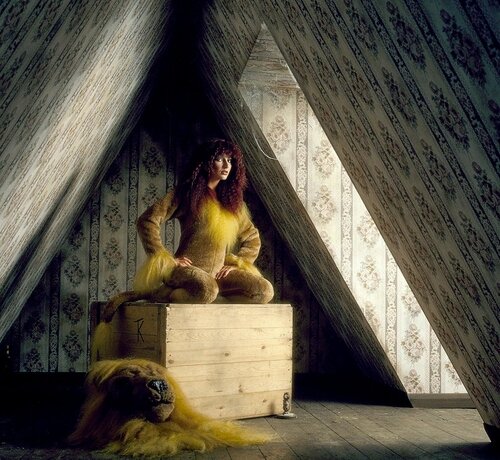
IN THIS PHOTO: Kate Bush in an outtake from the Lionheart cover shoot/PHOTO CREDIT: Gered Mankowitz

Bush managed to inject more physicality and grit into Lionheart, but I think the new songs that she wrote for Lionheart are phenomenal. Coffee Homeground, and Full House are very new-sounding and different territory for Bush, but I think Symphony in Blue is the finest of the trio. Emotionally and vocally, one can compare the song with The Man with the Child in His Eyes, Feel It, or L'Amour Looks Something Like You, but there is greater maturity and depth to Symphony in Blue. Bush was still only twenty when she recorded the song, and she produced one of her most moving vocals and songs to date. It was released as a single in Japan and Canada (in Canada, the B-side was Hammer Horror; in Japan it was Full House), where it was second single taken from Lionheart - Wow was the second single for the rest of the world. It is a shame that Symphony in Blue was not released as a single outside of Canada and Japan, as I think it would have done really well. Bush released singles for the Japanese market for The Kick Inside but, as Symphony in Blue was released in June 1979 – seven months after Lionheart came out -, it seemed like an odd choice. Also, Bush only released two singles in the U.K. from The Kick Inside – Wuthering Heights, and The Man with the Child in His Eyes – and, on Lionheart, she put out Hammer Horror, and Wow.

One can see Bush performing Symphony in Blue on her 1979 Christmas special, and it was a rare opportunity for people to see Bush perform the song on T.V. – she did include it her setlist for her 1979 The Tour of Life. There is debate as to what inspired Symphony in Blue. Bush herself said It was inspired by Erik Satie's Gymnopedies, whereas others believed that the lyric of the song is an attempt at describing Kate's own belief system. The descriptions of God, sex and the colour blue seem to be inspired by reading about Wilhelm Reich's theory in A Book of Dreams. I think Bush’s vocal is sublime. Some were not hot on The Kick Inside, as they felt the vocal gymnastics and highest notes were off-putting, but Symphony in Blue is Bush taking her voice down a little bit, but she still sounds soaring, gorgeous and impassioned throughout – Bush’s piano is sublime throughout. The colour blue has been used as an emotional indicator in songwriting for decades, but I think Bush, more than most, manages to do something new and wonderous in the opening verse: “I spent a lot of my time looking at blue/The colour of my room and my mood/Blue on the walls, blue out of my mouth/The sort of blue between clouds, when the sun comes out/The sort of blue in those eyes you get hung up about”.

The lyrics mix religious, passion, sadness, and the joys of the piano. It is a typically unique and intelligent song from Kate Bush where one is engrossed in the song and her stunning vocal. I love all of the lyrics, but the chorus is especially entrancing: “I see myself suddenly/On the piano, as a melody/My terrible fear of dying/No longer plays with me/for now I know that I'm needed/For the symphony”. I like how Bush plays with colours and their wider meaning. Blue is simultaneously misery and upset it is also the eye colour and the clearness and beauty of the sky. Bush also talks about red as being her beating heart, anger, and the colour of danger signs. One verse seems to mix blue and red together in a new way. The blue seems to be a sexiness and naughtiness, whereas red seems to be about blood flow, sex, and love – getting a sort of magenta/purple colour?! “The more I think about sex, the better it gets/Here we have a purpose in life/Good for the blood circulation/Good for releasing the tension/The root of our reincarnations” is simple and direct, but it is so evocative and sung in a way where you can hear Bush releasing tension, playing with the words - and her backing vocals add beauty and weight. There are a few players on the song - drums and percussion: Stuart Elliott; bass: David Paton; electric guitars: Ian Bairnson; Fender Rhodes: Duncan Mackay -, but I think there is a sparseness and tenderness that would be lost if the instruments were heavier or Bush layered her vocals more.

Symphony in Blue is one of Kate Bush’s best album openers and, from someone who opened all of her albums with really impactful songs, that is quite an achievement! There is an interesting mix of themes, paces, and dynamics on the remaining four songs of Lionheart’s first side. In Search of Peter Pan follows Symphony in Blue, and it is a childlike and gentler song that replaces sensuality with innocence, but things become more energised by track-three, Wow, and that continues on Don’t Push Your Foot on the Heartbreak – Oh England My Lionheart ends the side with a stately and regal-sounding paen to England. It amazes me that Bush could write such an accomplished and incredible song in the midst of travelling and promotion! I’d like to think that Symphony in Blue was written much in the same manner as Wuthering Heights: Bush alone at the piano as she looks out of the window on a summer’s night. The reality is probably less glamorous. MOJO recently published a Collectors’ Series magazine for Kate Bush, and they had a top-fifty of her songs – Symphony in Blue did not even make the cut! Apart from Classic Rock History ranking Symphony in Blue as their eighth-favourite Kate Bush song, not many people mention the track. I think it is one of those classic overlooked Kate Bush songs like Under the Ivy – or songs that are not played on the radio enough! Lionheart is forty-two on 12th November, and I think it deserves to be mentioned. It is full of remarkable track and, whilst Wow might get most of the love, I think the opening track, Symphony in Blue, is an amazing and…

IN THIS PHOTO: Kate Bush shot in 1979/PHOTO CREDIT: Gered Mankowitz

GLISTENING sapphire.

FEATURE: If You Could Read My Mind: Improving the Mental-Health of Young Women in the Music Industry

FEATURE:


If You Could Read My Mind

PHOTO CREDIT: @anthonytran/Unsplash

Improving the Mental-Health of Young Women in the Music Industry

___________

I have been writing a lot about….

ddd.jpg

IN THIS PHOTO: Lauren Aquilina

older artists or albums; not focusing too much on current developments, as the landscape is quite bleak at the moment. I was struck by an article in The Guardian from earlier in the week, where it seems like developments are occurring regarding mental-health in music. I do think that there is this notion that artists need to be tortured to create something worthwhile, or that this sort of feeds their creativity. In fact, mental-health concerns are very real and serious, and it is especially important now. As the article explains, there are a lot of issues that face modern artists. Whilst everyone in music faces challenges and loneliness, I think things are worse for young women in terms of the sort of abuse they face online, how they are perceived by the media and the ideals thrust upon them; and the fact that there is still massive inequality and fewer opportunities for them:

“The pressures of burgeoning fame, the loneliness of the industry for the young pop singer and endless meetings full of people (mostly men) twice her age talking over her had taken a toll on her mental health and the only way she thought she could recover was to leave without looking back. Now, she is hoping to revamp the industry’s approach to care with a new independent community group and support system, Girl & Repertoire.

“Having this kind of community would have made all the difference to me,” (Lauren) Aquilina says. She cites a lack of women as a key issue in her own experiences, and hopes to provide a “big sister” presence for young artists now. “That’s something I didn’t have when I was 16, 17 and that’s something that could have changed the path of my whole career.”

IN THIS PHOTO: Georgie Willmore

Aquilina represents the artist side of Girl & Repertoire, the brainchild of Georgie Willmore, whose own experiences working at a record label as an 18-year-old inspired her to improve the experience for young women entering the industry behind her. “I was shocked when I first started out that other girls around me would stay quiet if someone spoke to them badly,” Willmore says. “Why didn’t these girls feel empowered and strong enough to stand up and speak out?” She acknowledges, though, there were consequences to speaking out herself. “It made me not very well liked; people thought it was controversial that the young intern would say, ‘You can’t do that’ to some big senior executive”.

“We’re figuring out what we can do to help more,” a spokesperson for Warner Music UK says, adding that the label is in “a significant trial project” with independent experts to provide mental health support to both artists and employees. Sony cites its work with the mental health charity, Mind. “Now we’re focusing on the next level of advice, resources and guidance for both the artist and their management teams and families,” says the chairman and CEO of Sony Music UK and Ireland, Jason Iley”.

It is good that there is movement and conversations happening; charities like Girl & Repertoire will go a long way to banishing the notion of a tortured artist or that mental-health struggle is conducive to great art – almost side-lining it and diminishing it. I hope momentum will continue, as this is a particularly bad time for all artists, there is a lack of money and gigs. This, combined with unabated social media toxicity and loneliness is already having a devastating effect.

PHOTO CREDIT: @timmossholder/Unsplash

I think young women have always had the roughest deal and had to struggle the most when it comes to being heard and getting support. I can appreciate labels have their hands full and they are promoting their artists, but mental-health support and care has never been high on the agenda. The conversations are shifting, and it is welcome news that things are improving. Going forward, I think labels will especially need to prioritise the wellbeing of their artists. Of course, there are many young women – and artists in all genders – who are not signed to a label and might feel that they are isolated and particularly vulnerable. As The Guardian’s article explains, mental-health stigma and challenges were not necessarily part of the vocabulary for the older generations, so one can sort of understand why initiatives have not come directly from the labels themselves and it has taken a while for things to improve. For women and non-binary artists, I do think that this latest news will provide great solace, and I hope that all labels make a pledge for 2021 regarding the mental-health of their artists and making it a priority. It is shocking hearing women like Georgie Willmore and Lauren Aquilina reveal their experiences of working in music, and it should provide an impetus for the industry as a whole to take. Of course, there is a long way to go until things significantly improve for young women in the industry but, with the likes of Girl & Repertoire providing noble and essential support, it is a welcomed and…

d.jpg

PHOTO CREDIT: @getuliodt/Unsplash

POSITIVE change.

FEATURE: The Lockdown Playlist: Manchester Songs

FEATURE:


The Lockdown Playlist

PHOTO CREDIT: @chriscurry92/Unsplash

Manchester Songs

___________

I know that South Yorkshire…  

ffff.jpg

PHOTO CREDIT: @matthewwaring/Unsplash

has also been put into the highest tier of COVID restrictions, but Manchester has been particularly hard hit! I have a lot of love for Manchester and its surrounding areas and, over the coming weeks, it will be very tough for them. Because of that, I wanted to put together a collection of tracks from Manchester artists (those either born or based/raised there) – including one or two newer acts. I will assemble some songs from South Yorkshire soon but, in this Lockdown Playlist, are artists from Manchester/Greater Manchester, and songs that name-check the area. Here are some terrific tracks that not only salute Manchester, but there are some serious classics in the mix that are sure to…

PHOTO CREDIT: @matthewwaring/Unsplash

RAISE the spirits.

FEATURE: Leave the Light on Before You Go: Kate Bush’s And So Is Love from The Red Shoes

FEATURE:


Leave the Light on Before You Go

COVER PHOTO: John Carder Bush (from his book, KATE: Inside the Rainbow)

Kate Bush’s And So Is Love from The Red Shoes

___________

THERE is more than one reason why I am…  

IN THIS PHOTO: Kate Bush in 1993

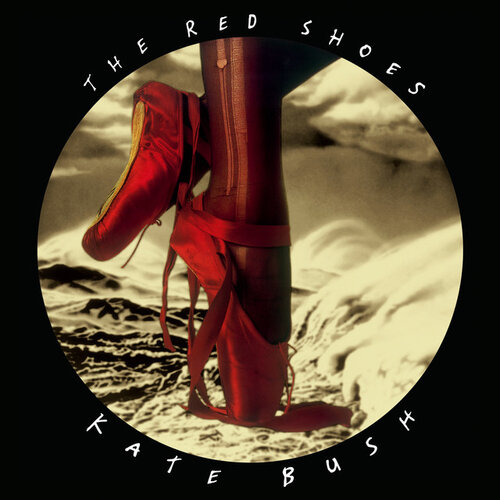
selecting Kate Bush’s And So Is Love for particular consideration. On 7th November, the song turns twenty-six, and it is from an album who celebrates its twenty-seventh anniversary on 1st November. The Red Shoes is a fantastic album and, whilst it does not scale the same heights as Hounds of Love, or The Dreaming, there are some fantastic tracks on the album. I think And So Is Love is a standout, as it is so heartfelt and emotionally pure, and one gets the impression that Bush is reflecting some of the tension that would have existed in her life and the problems in her relationship with Del Palmer – although this is just speculation. The fourth single from The Red Shoes, it is also the last single before Bush returned in 2005 with King of the Mountain from Aerial – the album celebrates its fifteenth anniversary next month. October and November are busy periods regarding Kate Bush and album releases, so I wanted to highlight that. As one of the most stirring singles Bush released to that point, I feel it is sort of like her closing a door and ending a chapter on her life; then we have that wait before she bursts back eleven years later on King of the Mountain – with her first double album and her first release since becoming a mother. I think the first side of The Red Shoes is really eclectic and impactful.

After the elastic opener, Rubberband Girl, we then shift down gears for And So Is Love – covering a more Rock vibe in the opener and something more soulful in And So Is Love. Eat the Music then takes us more into Worldbeat territory; Moments of Pleasure is sensual and gorgeous; The Song of Solomon, and Lily offer plenty of propulsion and emotion. The Red Shoes is a classic example of an album whose best tracks appear in the first half (apart from the opener of the second side, The Red Shoes), so I think that is why it has received some mixed reviews. That said, there is plenty to love on the second side, but I think And So Is Love is one of the most underrated tracks of Bush’s career and, as it was her last single release for some time, it deserves some fresh eyes! There are a few guests on The Red Shoes – like all of her albums -, and not all of them work that well. I think one of the musicians who is perfectly deployed is Eric Clapton on And So Is Love. Gary Brooker of Procol Harum is on Hammond organ too, and there is this wonderful atmosphere created on the song. It was released as a single on 7th November and it climbed to number-twenty-six in the U.K. Singles Chart. One other notable thing about And So Is Love is that Kate Bush appeared on Top of the Pops after eight years to perform it.

IN THIS PHOTO: Kate Bush captured in 1993/PHOTO CREDIT: Guido Harari

I think it is important to get some context regarding the inspiration of And So Is Love and its recording. It is to Genius.com for some rare assistance:

“I really wanted to get at the rawness of relationships, the way things just burn at people but never quite erupt and Eric just sensed that. The track couldn’t say it, it just had to unfold, holding the tensions until the voice goes up into the higher octave. He followed brilliantly, like it was a conversation. It feels like the guitar is answering the voice. I was so moved by what Eric played.

In interview with the Philadelphia Inquirer’s Tom Moon.

Originally the song was a minute longer and although I wanted the feel of the track to unfold, it unfolded and then fell on the floor, so the edit tightened the track up although only the other day I became aware it’s over six minutes long – I thought it was about 3½!

Bush speaking in a letter to the fan club after a screening of the accompanying film.

The track’s original backing is a sequenced 4-bar Fairlight pattern which was played to the musicians to give them a feel for the piece.

Usually we keep more of the Fairlight sound, but in this case it got scrubbed apart from the toms so it could all stay in strict tempo, so it could all be played live.

On this track there’s a little flute/reed sound, but the Fender piano sound is a real one and the drums are Sl000 samples. We only have a very small room for acoustic recording and the sound of the room tends to get on to drum recordings, so we used a lot of S1000 drum samples triggered from Simmons pads plus real cymbals. Stuart Elliott knows that our drum recording can be a long and arduous process and he might get called back four or five times – not because we’re unhappy with what he’s done, but because the track changes as it develops.

Del Palmer, engineer and mixer of The Red Shoes, talking to Future Music in 1993”.

I think that The Red Shoes should receive some love on its anniversary, but I also reckon the single release of And So Is Love and Bush’s Top of the Pops appearance is quite significance. In terms of performance, it is one of her very best, and I really love the video as well – it is beautifully shot and Bush looks phenomenal. Lines like “We let it in, we give it out/And in the end, what’s it all about?” might suggest someone being casual regarding relationships and their solidity, but I think it is Bush breathing in that passion and love and then seeing it go. Love can be both complex and transient, and she touches on mortality – “We used to say “Ah Hell, we’re young” -, and the sadness of life. Although And So Is Love is not one of Bush’s most complex lyrics and compositions, I think its relative simplicity and directness is why it resonates and sinks so deep into the heart. One of the most affecting lines of the whole album is “It’s all we’ve got, isn’t that enough?”, that suggests that this once-solid bond has started to crack and the end is near. I have been listening to And So Is Love since its release, and it has stuck with me in a very physical way. I love Bush’s voice on every album, but it had really matured by 1993 and, on And So Is Love, her register is lower than, say, Hounds of Love, and that adds extra shiver and duskiness to a very beautiful and evocative song. As Aerial, The Red Shoes, Lionheart, and 50 Words for Snow have anniversaries next month, I am going to do one or two features on each album – except for Aerial, which I have already published a feature features about already. It is strange to think that, when the video for And So Is Love came out in 1994, that was the last time we would see a video from Kate Bush until 2005 – I think it was a great way to sort of sign off before she returned eleven years later. On an album (The Red Shoes) with some truly fantastic songs, I think And So Is Love is among…

THE absolute best.

FEATURE: Gasoline Dreams: OutKast's Stankonia at Twenty

FEATURE:


Gasoline Dreams

OutKast’s Stankonia at Twenty

___________

EVEN though its anniversary is on….

31st October, I want to get in ahead and celebrate one of the best albums of the past twenty years. It is an absolute masterpiece of an album and, the fourth album from OutKast, Stankonia is overflowing with amazing songs, sounds and innovative moments! I think it is one of the finest and most important albums in all of Hip Hop, and it is due for a twentieth anniversary edition. NME provide further details:

“Released on October 31, 2000, the fourth studio effort from the Atlanta duo – aka André 3000 and Big Boi – contained the singles ‘Ms. Jackson’, ‘So Fresh, So Clean’ and ‘B.O.B’ (‘Bombs Over Baghdad’).

This October 30, fans will be able to hear instrumental, a capella and remixed versions of the aforementioned three tracks through new streaming bundles. Featured in the ‘B.O.B’ set will be a reworking of the song by Rage Against The Machine’s Zack de la Rocha.

The full ‘Stankonia’ album, meanwhile, will be available digitally in 24 Bit and 360 Reality Audio. As Pitchfork reports, Vinyl Me, Please is offering an exclusive 2LP version on black-and-white galaxy vinyl to subscribers.

Following the album’s release, André 3000 and Big Boi picked up the Best Rap Album and Best Rap Performance By A Duo Or Group awards at the 2002 Grammys. The record reached Number 10 in the UK albums chart”.

Recording in OutKast’s Stankonia Studios in Atlanta, Georgia, and produced by Earthtone III, Organized Noize, and Carl Mo, OutKast’s André 3000 and Big Boi were free from constraints. Their previous album, 1998’s Aquemini, was recorded at Bobby Brown's Bosstown Recording Studios and Doppler Studios - both in Atlanta. I love their previous album, but Stankonia is a broader and more adventurous album. About to enter a new century, perhaps OutKast felt that they needed to create something that was bigger than anything they had ever done. We get elements of Rave, Funk, Gospel, Rock and so many other genres in an incredibly rich and eclectic album. There is more melody and a different approach to rapping, not just in terms of OutKast’s work but a lot of other Rap/Hip Hop albums. Stankonia is a sharper, faster and busier album than anything they put out before, and the duo touch on themes such as race, parenthood, misogyny and politics. Again, maybe OutKast felt that they needed to change things up for the twenty-first century, and it is clear that the Hip Hop landscape was changing and, as drugs such as ecstasy were more prevalent in Hip Hop and among teenagers, this made an impact on the duo. Although they knew that the drug scene and changing habits was a bad thing, they also felt that their music needed to reflect a faster lifestyle; speak to their peers in a different way than they had before. OutKast were drawing in new influences, ironically, from classic artists like Little Richard rather than the modern Hip-Hop of the late-1990s.

They managed to filter classic Soul, Rock and Gospel into their own music and give it a unique spin and modern sound. As a lot of their peers in the Hip Hop scene were still embracing slower jams, OutKast were nodding to the rave scene and employing sharper, more frantic tempos. I think this was a revelation for Hip Hop and a wider musical world, and it is no surprise that Stankonia was so well-received upon its release! It is an album that has frequently appeared in the best albums of the 2000s (as in the first decade of the century) lists, and the best albums of all-time. The experimental nature of the album has influenced scores of artists, and OutKast’s music was opened up to a wider audience. In their review of Stankonia, this is what AllMusic had to say:

“Stankonia was OutKast's second straight masterstroke, an album just as ambitious, just as all-over-the-map, and even hookier than its predecessor. With producers Organized Noize playing a diminished role, Stankonia reclaims the duo's futuristic bent. Earthtone III (Andre, Big Boi, Mr. DJ) helms most of the backing tracks, and while the live-performance approach is still present, there's more reliance on programmed percussion, otherworldly synthesizers, and surreal sound effects. Yet the results are surprisingly warm and soulful, a trippy sort of techno-psychedelic funk. Every repeat listen seems to uncover some new element in the mix, but most of the songs have such memorable hooks that it's easy to stay diverted.

The immediate dividends include two of 2000's best singles: "B.O.B." is the fastest of several tracks built on jittery drum'n'bass rhythms, but Andre and Big Boi keep up with awe-inspiring effortlessness. "Ms. Jackson," meanwhile, is an anguished plea directed at the mother of the mother of an out-of-wedlock child, tinged with regret, bitterness, and affection. Its sensitivity and social awareness are echoed in varying proportions elsewhere, from the Public Enemy-style rant "Gasoline Dreams" to the heartbreaking suicide tale "Toilet Tisha." But the group also returns to its roots for some of the most testosterone-drenched material since their debut. Then again, OutKast doesn't take its posturing too seriously, which is why they can portray women holding their own, or make bizarre boasts about being "So Fresh, So Clean." Given the variety of moods, it helps that the album is broken up by brief, usually humorous interludes, which serve as a sort of reset button. It takes a few listens to pull everything together, but given the immense scope, it's striking how few weak tracks there are. It's no wonder Stankonia consolidated OutKast's status as critics' darlings, and began attracting broad new audiences: its across-the-board appeal and ambition overshadowed nearly every other pop album released in 2000”.

On its twentieth anniversary, I hope there is a lot of attention for such a magnificent album. I know so many different people have connected with the album and, with epic cuts such as Gasoline Dreams, So Fresh, So Clean, Ms. Jackson, and B.O.B., Stankonia is rightly hailed as a classic!

I just want to bring in another review, as Pitchfork made some interesting observations:

“Stankonia is easily the group’s most expansive and abrasive effort. It’s more accomplished than their biggest seller, the double-disc Speakerboxxx/The Love Below, which lacks the tension and dichotomy of André and Big Boi locked in a studio, warring with each other and themselves to the extent that created numbers like “Humble Mumble,” Stankonia’s breakbeat-ish, Caribbean-tinged track where Big Boi admonishes a simp with “Sloppy slippin’ in your pimpin’, nigga/You either pistol whip the nigga or you choke the trigger,” before André recalls speaking with a rap critic: “She said she thought hip-hop was only guns and alcohol/I said ‘Oh, hell naw!’/But, yet, it's that too.”

OutKast had always consisted of a politically conscious pimp and a spiritual gangsta, but on Stankonia, those identities came to the fore with a greater distinction that paradoxically allowed them to sound closer together than they had since their inception—even as André sat out songs like “Snappin’ & Trappin’” and “We Luv Deez Hoez.” On Stankonia’s first proper song, “Gasoline Dreams” Big Boi raps about their clout and the limits thereof—“Officer, get off us, sir/Don’t make me call [my label boss] L.A. [Reid], he’ll having you walking, sir/A couple of months ago they gave OutKast the key to city/But I still gotta pay my taxes and they give us no pity”—while André throttles out a brainy hook: “Don’t everybody like the smell of gasoline?/Well burn, motherfucker, burn American dreams”.

Ahead of its twentieth anniversary on 31st October, go and spend some time with Stankonia, and enjoy one of the most important and stunning Hip Hop albums ever. It is such a fascinating and compelling record that will resonate and inspire artists for generations to come. André 3000 and Big Boi were remarkable on Aquemini but, on 2000’s Stankonia, they moved up…

TO a different league!

FEATURE: Too Good to Be Forgotten: Songs That Are Much More Than a Guilty Pleasure: Steps – 5,6,7,8

FEATURE:


Too Good to Be Forgotten: Songs That Are Much More Than a Guilty Pleasure

PHOTO CREDIT: Rex Features

Steps – 5,6,7,8

___________

I am going to visit another decade…  

other than the 1990s for my next instalment, but Steps release their new album, What the Future Holds, in November. Apart from a twelve-year gap between 2000’s Buzz, and Light Up the World, the band have been fairly consistent. Claire Richards, Lee Latchford-Evans, Lisa Scott-Lee, Faye Tozer and Ian ‘H’ Watkins have been together since their debut album, Step One, of 1998. 5,6,7,8 was the debut single from the group and, released in 1997, the face of British Pop was changing. It was a year where I think a lot of darker, more experimental sounds were coming in - but there was still a core of great Pop. Steps were put together in 1997 following an advert in a magazine, The Stage, asking for applicants to audition for a place in a Pop band. It sounds rather old-school, and I wonder whether bands now still advertise in magazines?! Their debut album is actually quite a good introduction and 5,6,7,8 was a pretty catchy introduction. I think people consider the song a bit of a guilty pleasure as they feel Steps are a bit uncool. 5,6,7,8 was written by Barry Upton and Steve Crosby and it blends a sort of Techno feel with some Country twang. Other songs on Step One include Heartbeat, and One for Sorrow, and there is enough personality and range on the album to appeal to most people.

I think it’s a fun album, and it still provides plenty of kick after all of these years. I feel like a lot of the other tracks on Step One were viewed quite warmly, but many highlighted 5,6,7,8 as being a weaker cut. Others disliked Steps and felt that they were (and are) too manufactured and lack any real depth. Maybe it is the slightly camp nature, but I have heard people refer to Steps’ debut single as a bit of a guilty pleasure and something they wouldn’t freely admit to liking. Look back to 1994 and Cotton Eyed Joe from Rednex and that marriage of hoedowns and big beats – a novelty single that actually is a lot better than people give it credit for! Those who dismissed 5,6,7,8 in 1997 felt that it was a strange choice for the lead-off single from Step One. Last Thing on My Mind, One for Sorrow, and Heartbeat are slightly heavier songs and not quite as giddy as 5,6,7,8, so many Steps felt that they needed to come in with something a bit lighter. Steps are, debatably, at their best when Claire Richards is on lead vocals, and 5,6,7,8 features Lee Latchford-Evans on lead. Last Thing on My Mind, a cover of the Bananarama song, has Faye Tozer, Lisa Scott-Lee, Claire Richards leading, whilst One for Sorrow is Claire Richards at the front. Latchford-Evans is not the strongest vocalist in the group, but I think his turn is pretty good, and 5,6,7,8 is a song that does not demand too much attention.

I think a lot of critics were a bit cold to anything that evoked line dancing and had a Country twang, and many others were not sold on 5,6,7,8 at all. Years down the line, and I think there has been a slight change in attitudes about the song. There are many who still think it is a classic guilty pleasure, but others judge it away from the 1990s and can just enjoy it for what it is: A Pop song that has plenty of energy and is catchy enough! Right through the 1990s, there was an interesting range of girl and boybands, but there weren’t too many groups that I can remember of male and female singers. S Club 7 released their debut album, S Club, in 1999, and it is an album that has a few highlights, but it is not quite as uplifting and strong as Steps’ Step One. Many would highlight Steps as a moment when Pop sort of lost its way, but their music is worthy of acclaim and respect. The group have often been compared to ABBA, and this was more apparent on songs like One for Sorrow. 5,6,7,8 is maybe not a song you will get up and dance along to, but it is a great track! Even though there were some negative reviews, 5,6,7,8 enjoyed the third-highest sales of any single of their career in the United Kingdom, selling 365,000 copies and receiving 34,239,387 streams as of 22nd October, 2020. The track peaked at number-one in Australia and reached the top-five in Flanders and New Zealand. Although not the strongest song Steps ever put their name to, 5,6,7,8 definitely gets the feet tapping and it will lift the spirits! 5,6,7,8 was performed on The Ultimate Tour in 2012 and the Party on the Dancefloor Tour in 2017 and, as Steps are readying themselves for another album, I wonder if 5,6,7,8 will get an airing…

c.jpg

WHEN they’re next back on stage.

FEATURE: Eight Discs a Week: How Desert Island Discs Is a Balm at This Hard Time – and the Way It Makes Us Feel Deeper About Ourselves

FEATURE:

Eight Discs a Week

IN THIS PHOTO: Lauren Laverne is the current host of BBC Radio 4’s Desert Island Discs (which was first broadcast in 1942)/PHOTO CREDIT: BBC

How Desert Island Discs Is a Balm at This Hard Time – and the Way It Makes Us Feel Deeper About Ourselves

___________

FORGIVE the long, unwieldy title…  

IMAGE CREDIT: BBC

but I wanted to write another feature about Desert Island Discs. When I first heard the BBC Radio 4 series for the first time a few years ago, Kirsty Young was in charge. I loved her style and legacy, and she unexpectedly had to step down because fibromyalgia meant that she could simply not carry on. Lauren Laverne took over in September 2018, and just over two years since her appointment, the series has created some fantastic moments (as a side-note: go and check out the Desert Island Discs book, as it provides some great history of the series). I will not repeat too much of what I have already said but, as the BBC archives most of the editions of Desert Islands Discs that have ever been broadcast (which is over three-thousand), I listened back to many of them when I was still listening to Kirsty Young during her tenure. Among my favourites were episodes with Tom Hanks, Bruce Springsteen, Caitlin Moran, and Paul McCartney (who spoke with Roy Plumley in 1984) - one feels the latter is due another trip back onto the show. I will get to my ‘point’ in a moment, but I think the greatest strengths of Desert Island Discs is the way well-known people from all walks of life can reveal so much about themselves by selecting their favourite music, a book, and a luxury item. The show not only provides so much of us with a comforting blanket every Sunday morning, but it can make us feel different and deeper about ourselves. A big part of Desert Island Discs’ success is down to its host and the way they can create these must-listen-to radio moments.

IN THIS PHOTO: Footballing legend Ian Wright appeared in a particularly moving episode of Desert Island Discs earlier this year/PHOTO CREDIT: BBC

Lauren Laverne (BBC Radio 6 Music) took on the task of keeping the Desert Island Discs ship steering after Young’s departure, and there were one or two who were very unkind regarding her style and form. A particularly nasty and idiotic article from Melanie McDonagh in the The Spectator in August 2019 received a backlash on social media:

“There’s no getting away from it: Lauren is lightweight and uncerebral. Her capacity to come up with the forgettable phrase is quite something. When I asked a former radio critic what he thought of her he answered instantly: ‘Awful. I heard her with [poet] John Cooper Clarke and it was sucking up to PC idiocy and brandished plebbiness. But that’s what the programme is for now… Guests can be nearly anonymous provided they are vibrant and diverse.’ A BBC journalist observed: ‘The latest run of programmes have been really flat — is that her or is that the selection of guests? Nobody chooses anything or says anything that is surprising — perhaps her lack of big interview experience tells.’

The issue here isn’t the merits of one presenter; it’s the BBC’s reflex when it comes to appointments like this. Simply put, being youngish, regional, a pop presenter and a woman really isn’t enough. Choosing interviewees on the basis that they’re not Establishment, posh, white, elite, male, isn’t enough either. The BBC needs to pick the best person for the job; it says a good deal that this is now a controversial view”.

IN THIS PHOTO: The fantastic Baroness Floella Benjamin was one of the most recent castaways on Desert Island Discs/PHOTO CREDIT: BBC

Of course, everyone is entitled to their opinions of people but, obviously, The Spectator piece was needlessly insulting and completely inaccurate (and the responses to The Spectator’s Twitter post to the article was met with massive support for Laverne). One reason why Laverne has been taken to heart is because she is different to her Desert Island Discs predecessors. Her tone is warm and compassionate, and she has plenty of experience with interviews; she can get some real emotion and revelation from her castaways – whether that is asking a question nobody has asked or letting them speak and making them feel comfortable and safe. Over the past two years, she has strengthened as a host, and there has been so much love for her from the media and on social media. Given the fact that there is quite a difference in dynamic between her breakfast show on BBC Radio 6 Music and her Desert Island Discs role, she seems so comfortable and natural on the BBC Radio 4 institution. Some of the most memorable episodes of Desert Island Discs of the past decade have come from Laverne’s two-year management – including a beautiful chat with Ian Wright -, so let’s hope there are many more years (and decades, maybe) of her at the helm. Linking into this paen to Desert Island Discs’ current brilliance, and I think the series’ strengths have become more defined during COVID-19 and lockdown. From listening to Baroness Floella Benjamin a couple of weeks ago discussing her tough experiences of racism in Britain, to Stephen Graham revealing a time he attempted suicide (in an episode from late last year), so many people have connected with castaways’ stories and experiences.

IN THIS PHOTO: Filmmaker Asif Kapadia appeared on Desert Island Discs in 2019/PHOTO CREDIT: BBC

I don’t think there is a series on radio that can provide simultaneous emotional release, humour, and catharsis like Desert Island Discs. As someone who has wrestled with mental-health issues for all of my adult life, I have found a friendly voice in not only Lauren Laverne (whose compassionate approach is a balance of the maternal and understanding) but the castaways. The breadth of guests on Desert Island Discs the past couple of years has been, in my view, broader than any other time during the show’s lifespan. Personally, I have learned so much from different people on the show, but I have been able to connect with them in a very direct way – even though I have never met these people or spoken with them. As many of us are estranged from friends and family and are having to adapt to a lifestyle that is unusual and challenging, I have found new respect and appreciation for Desert Island Discs. Also, when it comes to music and why certain songs mean a lot, I think the current situation has redefined particular songs and elevated their importance. I am sure many people around the world feel the same, but I have listened to various episodes and been moved by the castaways’ selections – each of them get to choose eight discs that mean a lot to them to take to a hypothetical island – and reassessed what music means to me…and why certain songs hold a special place.

aaaa.jpg

IN THIS PHOTO: Actor Stephen Graham pictured alongside Lauren Laverne in 2019/PHOTO CREDIT: BBC

I shall not list the hypothetical eight discs I would consider for my own trip to the fabled Island – as I have done that before -, but I have also been struck by the final segment of each episode: where guests have to choose a book, and a luxury item that they would take with them when they are cast away. Maybe there is some psychological resonance to rationing and limitation when we are going through a time when a lot of independence has been (temporarily) restricted. At the moment, records by The Beatles, Madonna, Spiller, T. Rex, Steely Dan, Annie Lennox, Tears for Fears, Black Box and, oddly, Snow (I know that is nine songs/artists, but I said I wasn’t going to name my dream castaway discs) have taken on a greater role; a book by Kenneth Grahame, and a childhood present have taken on a new life too. Two years after Desert Island Discs welcomed a new host to its bosom, I think the series has acquired fresh nuance - and I know so many new people have discovered the show and make it part of their weekly routine. Maybe the oddness of 2020 has made me turn to comforting and familiar music a lot more, but so many other people are in the same boat (if you pardon the castaway-based pun!). It is not just the musical choices I love when it comes to Desert Island Discs. Each week, as I said, there is someone new being interviewed (by Lauren Laverne); from a sports personality or actor one week, to a business leader or pioneer the next. With so much uncertainty around and many people struggling during such a difficult year, a little slice of paradise on BBC Radio 4 on a Sunday morning has meant so much…

IN THIS PHOTO: The Man Booker Prize-winning author Marlon James was a guest on Desert Islands Discs last year/PHOTO CREDIT: BBC

TO so many people, for so many reasons!

FEATURE: “Do You Want to Hear About the Deal That I'm Making?" Kate Bush, David Gilmour and The First Steps into the Studio

FEATURE:

“Do You Want to Hear About the Deal That I'm Making?”

IN THIS PHOTO: Kate Bush in March 1978/PHOTO CREDIT: Mirrorpix

Kate Bush, David Gilmour and The First Steps into the Studio

___________

WHEN we think about the start of Kate Bush’s career….

IN THIS PHOTO: Kate Bush in 1977

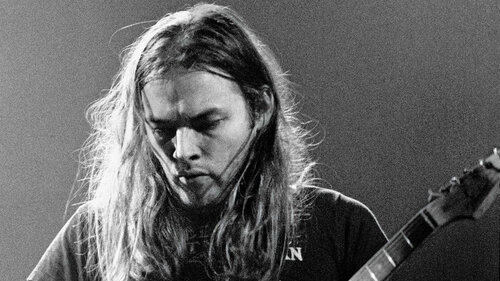
David Gilmour’s name comes up frequently. Many claim that he discovered Kate Bush and was responsible for her being noticed. I have written features where I have looked at Bush’s musical influences and what sort of sounds and texts were in her house when she was growing up. One could hardly say that the Bush household was conventional in terms of the type of music played and some of the earliest sounds a young Catherine/Cathy Bush would have absorbed. How she went from a girl who would have heard a lot of Celtic ands Irish music (from her mother’s side), traditional English folk and the poetry of her brother, Paddy, to getting to the attention of Pink Floyd’s Davide Gilmour is quite a story! I read an article from Far Out Magazine from earlier in the month, where they talk about Gilmour’s ‘discovery’ of Kate Bush:

“There are few bands as unique as the prog-rock legends Pink Floyd but, when the band’s guitarist came across the strange and beguiling voice of a teenager by the name of Kate Bush, he dropped what he was doing and made it his missions to sign her. It just so happens, what he was doing was creating one of Floyd’s undying albums in 1975’s Wish You Were Here. With his guidance, Kate Bush was able to become an icon of British music and challenge Pink Floyd for their unique crown.

Kate Bush was only 16 when her demo was passed on to Gilmour. While there would certainly have been some trepidation from any teen had they known Gilmour—at this time (and quite possibly still) one of the most well-regarded musicians on earth— was listening to their demo tape but it turns out that Bush was relatively unaware of who Gilmour was exactly, outside of a family friend.

IN THIS PHOTO: Pink Floyd’s David Gilmour at Earls Court, London on 19th May, 1973/PHOTO CREDIT: Jill Furmanovsky

“I was intrigued by this strange voice,” Gilmour said in a new interview for the BBC. Like any producer of the time was captivated and had to learn more. After receiving the tape from Ricky Hopper, he travelled to see the young singer: “I went to her house, met her parents down in Kent. And she played me, gosh, it must have been 40 or 50 songs on tape. And I thought: ‘I should try and do something.’”

“He was really responsible for me getting my recording contract with EMI in the first place,” said Bush. With so many songs already in her canon, at such a young age, Bush was a hot prospect. It was clear that her songwriting was far beyond her years and so Gilmour was keen to get things moving right away. He organised for three of the demos to be recorded in full and even recruited Andrew Powell and Beatles collaborator Geoff Emerick to help out on the sessions.

“I think we had the [EMI] record-company people down at Abbey Road in No. 3,” Gilmour adds. “And I said to them, ‘Do you want to hear something I’ve got?’ They said sure, so we found another room and I played them ‘The Man with a Child in his Eyes.’ And they said, ‘Yep, thank you — we’ll have it.’ [Laughs.]

“It’s absolutely beautiful, isn’t it? That’s her singing at the age of 16, and having written those extraordinary lyrics”.

www.jpg

PHOTO CREDIT: Chris Moorehouse/Evening Standard/Getty Images

The whole myth around Gilmour ‘discovering’ Bush is not quite fair to Bush’s innate talent. I am sure she would have found her way to a record company soon enough, given that she was a friend of musicians and was very much in that circle, and she would have had a demo tape passed to an A&R man before long. It is clear that Gilmour’s position and fame has really added this sense of weight to an otherwise unremarkable discovery. As Graeme Thomson writes in his book, Under the Ivy: The Life & Music of Kate Bush, it was a friend of Kate Bush’s brother Jay, Ricky Hopper (mentioned above), who was probably the most important link when it came to connecting Bush and Gilmour. Indeed, Gilmour heard talent and knew that Bush was very special, but the passionate commitment and support from Hopper – who was a record plugger – doesn’t get talked about that much! There is this life and chapter prior to David Gilmour and Bush stepping into the studio the first time that is not often written about. Hopper visited the family house to hear Bush play and there were thirty or so tapes with over a thousand songs on them that Bush had worked on. We look at her now and think her output is quite unpredictable and gradual but, look back to when Bush was thirteen/fourteen and the material she had amassed.

Using some basic recording equipment from her father and performing these songs on piano, the songs were very bare and lo-fi, so it would have been natural if some record labels passed her by. There was a big leap in terms of production and sound on her debut album, The Kick Inside, but the material she had written and recorded by 1973 was still very different to anything out there! Even though Hopper was determined and knew a star when he heard one, because the material was quite naked and it was fairly unusual, record companies passed her by. Tracks like Something Like a Song, Cussi Cussi, and Freighted Eyes were very much her own work. As Bush would have digested a lot of poetry from her home, and there would have been a lot of literature and art in the air, it is no surprise that her songs had an unconventional twist and were a lot more immersive and distinctive than average love songs and anything one would expect from a teenage artist! Even if some record label people would have felt exhausted having to wade through demo tapes or did not really hear the spark that they needed to secure Kate Bush a deal, David Gilmour’s perceptions and intuition was on the money. It was Hopper’s dogged resilience that created that bridge between Bush and Gilmour. The latter knew that the recordings were brilliant but not that commercial.

Bush would have been fifteen by the time Gilmour fully came into the frame, and he was scouting other artists at the time – it isn’t the case that Gilmour specifically went after Bush or she was the only musician on his radar. By 1973, Pink Floyd were massive, and Gilmour was keen to give something back as it were. That lack of instant commercial recognition with Bush was a barrier, even if Gilmour knew that record company bosses wouldn’t necessarily hear a good thing if it slapped them in the face! It was not like a young Kate Bush was from out of space and putting out the weirdest stuff; more that they were looking for something more traditional and chart-bound from their artists – there were not that many female artists like Kate Bush at the time, so it was hard to know how to sell her. I will take things up to 1975 but, in 1973, Bush was afforded a rare showcase. Musicians Pat Martin and Pete Perrier, along with David Gilmour, assembled at Gilmour’s home studio with a view of getting a proper demo tape down. One of the most interesting phases of Bush’s career is those earliest recordings and days; when she was still very nervous and in a milieu that was strange. The gulf between recording alone at home and having to perform in front of other musicians would have been quite noticeable – she was not used to working alongside other musicians, so there was a period of adjusting and becoming settled in this new environment.

One can only imagine what it would have been like for seasoned musicians to meet Kate Bush and hear her songs! She would have looked and spoken very differently to artists they were used to working with, and her music was worlds apart! A few songs were recorded during that time and, whilst Army Dreamer’s B-side, Passing Through Air, is the only one to have survived, a few other tracks were laid down. The performances would have been promising if not essential (as the musicians had not worked with Bush before) and it was a case of learning the songs as they went along. Bush’s voice then would have been less remarkable, assured and unique as we hear on The Kick Inside; more in common with many female peers – very beautiful and striking, but not quite the peerless instrument we know it to be. For Bush, having a few songs on a tape would have been a dream! From 1972 and 1974, other recordings would have been made by Bush, but after that 1973 session, there was a bit of a gap before the next chapter in the Bush-Gilmour story. Looking back, and that first session with other musicians would have been a revelation. Before, working at home, there was this old equipment and a family piano, and it would have been a solitary and quite basic experience. The fact her songs were then fleshed out by musicians and she got to hear them in a very different way grabbed her imagination - and ignited a love of the studio and the recording process.

Before the summer of 1975, there was contact between Bush and Gilmour but – as I have been reading from Graeme Thomson’s biography of Kate Bush – there was not a lot of development. Bush was not out there playing her songs live, and Gilmour had his hands full with Pink Floyd and various commitments. Gilmour played the earlier-recorded songs from Kate Bush to producer Joe Boyd and, in a rare move of ultraism from anyone in music, Gilmour offered to pay for Bush to record professionally at AIR Studios in London. I may have covered this briefly in other features, but when do you hear of musicians, especially back in the 1970s, being so blown away by an artist that they pay to get them into a studio?! With plenty of songs to choose from, Gilmour selected six and contacted Andrew Powell (who produced The Kick Inside). The two were friends and Powell, an experienced producer who had worked with the likes of Cockney Rebel, was brought in to produce alongside him. The period of June-July 1975 was a busy and pivotal one for Kate Bush. In June, she was called into AIR Studios, and Bush was just approaching seventeen. She was clearly very nervous but, as this was her dream, the excitement was also palpable! Powell helped steady Bush’s nerves, and he assembled some great session players for the songs. Two of the tracks that were captured at AIR Studios made their way onto The Kick Inside – Berlin (later retitled The Saxophone Song), and The Man with the Child in His Eyes.

Listening to those recordings would have been eye-opening for Bush, considering what she heard on her demo tapes a couple of years earlier! Having musicians like Alan Parker and Alan Skidmore adding their talents to the songs – combined with the better sound of a professional studio – elevated these promising tracks to something otherworldly. That said, some of the musicians who played with Bush did not recall the experience years later, yet Geoff Emerick (who worked with The Beatles among others) knew that Bush was a revelation and so different to any other artist he had observed. The Man with the Child in His Eyes was part of a 1973 demo collection, but the version that was recorded at AIR Studios transformed the song – Bush was backed by an orchestra, and that gave it shimmer and swell! Bush worked away at the song and Andrew Powell, already in love with the song, drafted the London Symphony Orchestra to add their part. Geoff Emerick cited The Man with the Child in His Eyes as one of his favourite-ever recordings, and it remains one of her most-adored songs. That AIR session was responsible for Bush being signed by EMI in July 1976 (there was a delay after much negotiations; they give her an advance of £3,000 to develop and widen her talent). Bob Mercer was interviewed by The Independent in 2010, and we learn more about how Bush and EMI’s Mercer first came together:

“In July 1975 Mercer dropped in at Abbey Road to check on the Pink Floyd sessions for what would become the Wish You Were Here album. The Floyd guitarist David Gilmour played him the three-song demo tape he had made with Bush at AIR Studios. Mercer was particularly taken with "The Man with the Child in His Eyes" and "The Saxophone Song", which would both be included on The Kick Inside, the singer's 1978 debut album.

IN THIS PHOTO: Kate Bush performing at the Rose of Lee in Lewisham on her first tour (albeit, quite a modest one) in 1977/PHOTO CREDIT: Vic King

Mercer put the then 17-year-old singer under contract, but also suggested she take time to develop further artistically. "On meeting her, I realised how young she was mentally. We gave her some money to grow up with," he said. "EMI was like another family to her. She was the company's daughter for a few years".

Today, artists sign a record deal and it is not long before they are releasing music on that label, but things were more complicated for Bush. It wasn’t until July 1976 when the seal was set; Bush was eighteen at the end of July, and there would have been a sense that she needed to get an education and focus on that before thinking about music as a profession. Her family were very supportive but they knew that, if things did not work out, then she would need that to fall back on – if those are the right words?! Bush left school in 1976, and she knew that if she stayed any longer and pursued further education then it would take her further away from music. She would have had career advisors and teachers guiding her in various directions and, not committed to that course and knowing that music was her passion, she made a very big move. From that 1976 confirmation, it was only a short time before she was in AIR Studios to record the rest of The Kick Inside. To prepare for the recording, she embarked on playing with the KT Bush Band around various pubs from April 1977.

Finally, in July and August 1977, the rest of the songs were recorded at AIR Studios in London, helmed by producer Andrew Powell. Bush was keen to keep the line-up of the KT Bush Band for the recordings, but EMI insisted that she use properly experienced session musicians. Powell engaged Ian Bairnson, Duncan Mackay and Stuart Elliott among others - many of whom he had worked with before. I am really interested in the connection between David Gilmour and Kate Bush, and how these two very different people found one another! One cannot forget Bush’s family and Ricky Hopper, but I do love this part of Kate Bush’s career where she went from the girl recording at her family home to her music reaching David Gilmour and, in a couple of years, she was playing her songs at one of London’s best studios. It is credit to EMI that they did not rush her into recording a debut album – given the gaps between albums since her debut, the label were very patient and supportive! -, and they wanted her to spend a bit of time growing and not being thrown straight into the mix. Given the whirlwind that proceeded in 1978 and 1979, it is good that Bush had a little time to put together songs for The Kick Inside. It amazes me to think that these unusual and under-developed home recordings took the course they did and, not long after Bush recorded her first songs at AIR Studios she would go on to become one of the most popular and intriguing…

IN THIS PHOTO: Kate Bush in 1980

MUSICIANS we have ever seen.

FEATURE: The Lockdown Playlist: The Best of the 1950s

FEATURE:


The Lockdown Playlist

c.jpg

PHOTO CREDIT: @spencerdavis/Unsplash

The Best of the 1950s

___________

FOR previous features…  

PHOTO CREDIT: @thevoncomplex/Unsplash

I have done decade-sweeping playlists that collates all the very best songs from that time. Now, I am looking at the 1950s and some of the greatest songs from that era. I think people underestimate the 1950s when it comes to music - but there was so much great stuff around! I have tried to put most of the very best together for this Lockdown Playlist that should provide the necessary amount of dreaminess, energy and escape. If you need some great music to get you through the day, then I think this Lockdown Playlist…

PHOTO CREDIT: @frxgui/Unsplash

SHOULD do the trick.

FEATURE: When Winter Comes: Looking Ahead to McCartney III

FEATURE:


When Winter Comes

Looking Ahead to McCartney III

___________

NOT to suggest that the most important…  

PHOTO CREDIT: Mary McCartney

album of the year is Paul McCartney’s McCartney III, but I wanted to follow up from my previous feature on the album as it has now been confirmed and it is coming out on 11th December. McCartney has conducted interviews since the release was announced, and it is going to be wonderful having the final part of the McCartney trilogy released into the world! I speculated previously what nature the new album will take and, as McCartney recorded all the parts himself, it is quite a stripped affair, but it seems like there are going to be some really interesting sounds and instruments on the album. Here are some more details concerning McCartney III:

“A stripped, self-produced solo work marking the opening of a new decade”

Paul McCartney will release McCartney III, a new solo album, in December.

Paul’s isolation in lockdown (or what he calls ‘Rockdown’) encouraged him to get on with working on new music as he fleshed out some existing musical sketches and created new ones.

The album is described as a “stripped, self-produced solo work marking the opening of a new decade” and was built mostly from live takes of Paul on vocals and guitar/piano, with him overdubbing bass, drums, etc. on top of this foundation.

The label blurb tells us that “McCartney III spans a vast and intimate range of modes and moods, from soul searching to wistful, from playful to raucous and all points between” and informs us that Paul has captured this audio with some of the same gear from his ‘Rude Studio’ used as far back as 1971 Wings sessions. Instruments used include Bill Black’s double bass (bought for him by Linda many years ago), alongside Paul’s own Hofner bass, and a mellotron from Abbey Road Studios used on Beatles recordings”.

Make sure you order yourself a copy, as one cannot deny that this is a very special release. Even if you are not a massive Paul McCartney fan, I think the fact that he recorded it in his home studio in East Sussex and produced and performed it all himself is great. It is Macca taking this D.I.Y. approach and recording music without any outside assistance and input. I think McCartney III will be one of his most personal and effecting albums and, until we await a release of the first single, many are speculating as to what sort of vibe the album will put out. Loud and Quiet spoke with Paul McCartney and why he decided to put out an album now:

“Hi Paul. To start with the most obvious question, a lot of people will be thinking why now for McCartney III?

It was kind of unintentional. I had to go into the studio at the beginning of lockdown to do a couple of bits of music for an animated short film. So I got got in and did that bit of work and sent it off to the director, and then I thought, ‘Oh, this is nice, I’m enjoying this, this is a nice way to spend lockdown,’ so I ended up finishing off some songs, looking at bits and bobs, making up stuff, and generally enjoying myself in the studio. And then I’d come home in the evening, and I just happened to be with my daughter Mary’s family. The combination of being able to go to work, make some music, and then hang out with four of my grandkids, I was very lucky. Y’know, we were being super careful, but being able to make music really helped”.

There have been rumours about the release of this new album over the last few weeks, and within those is a theory that McCartney III will be your last record.

Everything I do is always supposed to be my last. When I was 50 – “That’s his last tour.” And it was like, ‘Oh, is it? I don’t think so.’ It’s the rumour mill, but that’s ok. When we did Abbey Road I was dead, so everything else is a bonus.=

In 1970, McCartney was an album that featured themes of home, the family and love. What features on this new one?

I think it’s similar. It’s to do with freedom and love. There’s a varied lot of feelings on it, but I didn’t set out for it to all be like, ‘This is how I feel at this moment.’ The old themes are there, of love and optimism. ‘Seize the Day’  – it’s me. That’s the truth”.

I cannot wait to hear what he has come up with, but I would hate to think that McCartney III is the final album from him – the reason he ended the trilogy now is to sort of close the book. At seventy-eight, there might not be many more albums from him, but McCartney seems to have a lot of energy still, and I do feel like we will get album in the coming years. I am a big fan of both of the previous McCartney albums, and I like the experimental and lo-fi nature of McCartney II (1980), and how he managed to release something so powerful and consistent in 1970 on his first eponymous album – considering the stress he would have felt with The Beatles breaking up!

PHOTO CREDIT: Mary McCartney

McCartney spoke with Matt Everitt on BBC Radio 6 Music, and he talked about mixing together a couple of older tracks with mostly new material:

“Do you think you work differently if you're recording in a bathroom, instead of Abbey Road?

I think so. If you're on your own, you can have an idea and then very quickly play it. Whereas, with a band, you've got to explain it.

Sometimes that's great... but when you're just noodling around on your own, there's just a sense of freedom.

This album has songs from lots of different points in time.

Most of it's new stuff. There are one or two [songs] that I hadn't finished and, because I was able to get in the studio, I thought "OK, wait a minute, what about that one?" So I'd get it out and think, "Ugh, oh dear." And you'd try to figure out what was wrong with it, or why you didn't like it.

In some cases the vocal or the words just didn't cut it, so you'd strip it all down and go "OK, let's just make it completely different".

When I'd done them, I was going "Well, what am I going to do with this?" And it suddenly hit me: this is McCartney III. You've done it all yourself, like the others, so this qualifies”.

In such a bad year, I know McCartney III has not made it immeasurably better, but many welcomed the news of that new album with so much cheer. Having the greatest songwriter who has ever lived treat us to a new album, and one that holds such historical importance, is brilliant! I cannot wait to hear what the songs sound like and how critics react to the album – hopefully it will get a lot more love than McCartney, and McCartney II! A salute to Paul McCartney and an album that will make a lot of people’s 2020…

SO much better and fuller.

FEATURE: The October Playlist: Vol. 4: A Good Woman with Green Eyes

FEATURE:

The October Playlist

IN THIS PHOTO: Arlo Parks/PHOTO CREDIT: Jenn Five/NME

Vol. 4: A Good Woman with Green Eyes

__________

THIS is another one of those weeks where…

IN THIS PHOTO: The Staves/PHOTO CREDIT: Kelly Teacher/Nonesuch Records

some seriously impressive artists have all released music in the same week! There is new material from The Staves, Arlo Parks, Gorillaz (ft. St. Vincent), Bruce Springsteen, Ariana Grande, Adrianne Lenker, Kylie Minogue, Tim Burgess, and The Magic Gang. Throw into the mix John Frusciante, Laura Veirs, Phoebe Green, Marika Hackman, and Hot Chip (ft. Jarvis Cocker), and it is another incredible week! There is bound to be something in the mix that gets the weekend to a good start and tickles your fancy. If you are in need, as always, with a bit of boost and energy to get the weekend going, then take a listen to the songs below as they are definitely…

IN THIS PHOTO: Bruce Springsteen

READY to deliver.

ALL PHOTOS/IMAGES (unless credited otherwise): Artists

___________

The Staves – Good Woman

ssss.jpg

Arlo Parks – Green Eyes

Ariana Grande – positions

Bruce Springsteen - I'll See You in My Dreams

Gorillaz (ft. St. Vincent) – Chalk Tablet Towers

Kylie Minogue – I Love It

t.jpg

PHOTO CREDIT: Genesis Báez

Adrianne Lenker - zombie girl

John Frusciante – Zillions

ppo.jpg

Tim Burgess - The Ascent of the Ascended

tg.jpg

Laura Veirs – Brick Layer

ttt.jpg

Phoebe Green – Golden Girl

PHOTO CREDIT: Luka Booth

Marika Hackman – All Night

Hot Chip (ft. Jarvis Cocker) - Straight to the Morning

The Magic Gang - Somebody Like You

Saweetie (ft. Jhené Aiko) - Back to the Streets

PHOTO CREDIT: Anna Haas

Becky Warren – Favorite Bad Penny

Shygirl – SLIME

GRACEY - Don’t

Julien Baker - Faith Healer

Biig Piig – Oh No

PHOTO CREDIT: Jeff Andersen Jr.

Tia Gostelow – Two Lovers

JGrrey – Doubt Nothing

This Is the Kit – Keep Going

PHOTO CREDIT: Thomas J Charters

Dizzee Rascal (ft. Ocean Wisdom) – Don’t Be Dumb

King Gizzard & The Lizard Wizard - Automation

H.E.R. – Damage

dodie – Cool Girl

Connie Constance – Trouble

Nilüfer Yanya – Crash

Actress – Reverend

Easy Life – Daydreams

PHOTO CREDIT: Em Grey

Cut Worms - Louisiana Rain

Olivia Dean – Echo

LAOISE – Healthy

CLOVES – Dead

RuthAnne – Remember This

FEATURE: This Woman's Work: Anthology 1978–1990 at Thirty: Kate Bush’s Best Five Opening and Closing Tracks

FEATURE:


This Woman's Work: Anthology 1978–1990 at Thirty

PHOTO CREDIT: Getty Images

Kate Bush’s Best Five Opening and Closing Tracks

___________

I am writing this…  

IMAGE CREDIT: EMI

on the day Kate Bush’s This Woman's Work: Anthology 1978–1990 turned thirty (22nd October). She had put out a greatest hit collection in 1986 with The Whole Story, but this boxset included B-sides and tracks fans might not have heard. Kate Bush News explains more:

“It’s surreal to think that this box set is actually 30 years old. Released a year after The Sensual World while Kate was in the the thick of recording what would become The Red Shoes, it was the first time she had officially gathered together a lot of the “odds and sods”, B-sides and 12″ mixes from her then 12-year career. The box sets contained all 6 of Kate’s studio albums released up to that point. Expensive sets at the time for fans, especially those just wanting those extra tracks, they are just as sought after today on the collector market. In fact the huge 9 vinyl disc LP version of the set (8 CD and 8 cassette versions were also released) fetches eye-watering prices now, depending on condition and the inclusion of those all important KT stickers! The box set even contains some tracks that didn’t make it to The Other Sides remastered rarities collection from 2018, including The Empty Bullring, Not This Time and the four Live on Stage EP tracks”.

IN THIS PHOTO: Kate Bush in a promotional shot for Director’s Cut (2011)/PHOTO CREDIT: John Carder Bush (from his book, KATE: Inside the Rainbow)

Since that boxset came out, there has been a little bit of revisionism and, in 2019, Bush released The Other Sides as a standalone set. The album collects together B-sides and cover versions, and it was a great way to introduce new fans to Bush’s work – alongside the boxsets and remasters of the studio albums that were released in 2018, it was a rare occasion where Bush looked back. Because of the thirtieth anniversary of This Woman's Work: Anthology 1978–1990, I wanted to look at Kate Bush’s studio albums and, rather than put together her greatest hits or top-twenty singles, I want to focus on opening and closing tracks. On all of her ten studio albums, the opening and closing tracks are among the strongest songs on each album. Bush is masterful when it comes to kicking things off with a real impression and ensuring the listener gets a bang right at the end! It is hard to select the five best opening and closing songs but, as I have set myself the challenge, here are the essential opening and closing tracks from Kate Bush’s amazing studio albums.

______________

The Best Opening Tracks

Symphony in Blue (Lionheart, 1978 (single; Canada and Japan only)

It might seem a bit controversial to ignore my favourite album’s (The Kick Inside, 1978) opening track, Moving, as it is the first song on Kate Bush’s debut album. With whale song and some captivating piano, it is spine-tingling and unusual in equal measures. I really love that track but, with such hot competition, I had to sacrifice Moving! The reason Symphony in Blue is such a great opening track, is that it starts an album that is considered to be one of Bush’s weaker. I think people need to re-evaluate Lionheart, because Symphony in Blue is only one of many gems. One of few new songs written for her second album, Bush’s voice is soothing, soulful, and sensual in one of her most underrated and finest songs. Even though most of the songs on Lionheart were written before The Kick Inside arrived, she showed that, even when given little time to write new material, she could create these brilliantly beautiful and unique songs. In a career of gorgeous and heart-melting moments, Symphony in Blue is right up there with her very best efforts.

Babooshka (Never for Ever, 1980 (single)

PHOTO CREDIT: John Carder Bush (from his book, KATE: Inside the Rainbow)

There are two types of Kate Bush album openers: beautiful, sumptuous songs that beckon you in, and tracks that are physical, direct and have this great energy. The Kick Inside, and Lionheart begin with romantic and slower numbers, whereas Never for Ever’s opener, Babooshka, boasts a fiery chorus and one of Bush’s best vocal performances to that point. Making full use of the recently-discovered Fairlight C.M.I., Babooshka opens another album that remains quite under-appreciated. I think Babooshka perfectly announced an album that is full of new sonic inspiration and a broader vocal and lyrical palette. In terms of bookends, Never for Ever is, perhaps, the best album – in that we kick off and end with songs that are utterly captivating and memorable. There are one or two weak tracks on Never for Ever, but I think Kate Bush was beginning to take more control of her music direction – as she co-produced Never for Ever with Jon Kelly -, and she was becoming bolder and more experimental.

Running Up That Hill (A Deal with God) (Hounds of Love, 1985 (single)

PHOTO CREDIT: John Carder Bush (from his book, KATE: Inside the Rainbow)

One cannot talk about Kate Bush’s best opening tracks without mentioning Hounds of Love’s Running Up That Hill (A Deal with God). Hounds of Love boasts many different moods and stories, but I think it is defined by a sense of movement and space. This is exemplified in Running Up That Hill (A Deal with God), which opens with galloping drums and mewing Fairlight/synthesiser. There are those who prefer Hounds of Love’s second side, The Ninth Wave, as there is less gated reverb and percussion; a broader soundscape and more natural instruments. I think there is a perfect blend of the Fairlight C.M.I. and synthesisers and some brilliant percussion, bass, and drum. With Alan Murphy on guitar, Del Palmer (who also was one of the engineers on the album) on bass, and Stuart Elliott on percussion, Running Up That Hill (A Deal with God) is intense, passionate, and thought-provoking. A track where Bush asks if she could do a deal with God and swap places with a man so they can better understand one another, it is a subject that had not really been covered before in Pop. Bush’s vocal is typically stunning - and Running Up That Hill (A Deal with God) is one of the strongest songs on Hounds of Love; a brilliant introduction to Bush’s best-acclaimed and popular album.

The Sensual World (The Sensual World, 1989 (single)

PHOTO CREDIT: John Carder Bush (from his book, KATE: Inside the Rainbow)

The Sensual World is one of Kate Bush’s albums that I need to spend more time with, as I am familiar with some of the bigger songs on the album, but I have not really immersed myself and spent too much time with it as a whole. The Sensual World is another album with a hard to beat opening and closing track (more later), and the title track is one of Bush’s greatest ever songs. The Sensual World was later re-recorded using only words taken from Molly Bloom's soliloquy from James Joyce's Ulysses, as Bush had originally intended whilst recording The Sensual World album. That version, re-titled Flower of the Mountain, appears on the 2011 album, Director's Cut. I prefer the original version on The Sensual World, as I love the richness of the composition – everything from a swished fishing rod, fiddle, bouzouki, fiddles, and Uilleann pipes are combined with guitar, bass, percussion, and some truly arresting vocals! On every album, Bush brings in new sounds and instruments, and I really love the depth and variety on The Sensual World. I adore Bush’s voice on the title track and, right from the start, the lyrics are wonderfully intriguing and beautiful: “Mmh, yes/Then I'd taken the kiss of seedcake back from his mouth/Going deep South, go down, mmh, yes/Took six big wheels and rolled our bodies/Off of Howth Head and into the flesh, mmh, yes”.

King of the Mountain (Aerial, 2005 (single)

Not only is King of the Mountain fifteen today (24th October), but I think it is one of Kate Bush’s best opening tracks. I have mentioned it quite a lot, but King of the Mountain was Bush’s first single since 1994’s And So Is Love. After The Red Shoes arrived in 1993, there was a twelve-year wait to see if she would ever release any new albums. The excitement of hearing King of the Mountain was immense, and it was Bush treading a fairly similar path to The Sensual World in terms of sound/dynamic. That said, the subject matter for the two songs can’t be compared – Bush sings about Elvis Presley and can be seen in King of the Mountain’s video moving and grooving through his mansion! Featuring especially striking percussion from Steve Sanger, King of the Mountain is classic Kate Bush! Aerial’s second disc, A Sky of Honey, is bonded around a single theme, but the A Sea of Honey opening disc is a typically interesting assortment of sounds and subjects. I love all the songs on Aerial, but I think King of the Mountain is my favourite - and no other song could have opened such an important album!

The Best Closing Tracks

The Kick Inside (The Kick Inside, 1978)

Like her opening tracks, it is hard to whittle down Bush’s closing tracks to the best five! I think The Kick Inside’s title track is not only the only track that could have ended her debut – as she ends the song with a very definite full-stop -, but it is such an original song! Boasting some incredible sequencing, The Kick Inside builds to this track based on the murder ballad, Lizie Wan – where the heroine (called variously Lizie, Rosie or Lucy) is pregnant with her brother's child. Her brother murders her. He tries to pass off the blood as that of some animal he had killed (his greyhound, his falcon, his horse), but in the end must admit that he murdered her. He sets sail in a ship, never to return. Bush imagines herself as the sister who, having fallen pregnant, takes her own life so that she does not bring shame on the family by giving birth as the result of an incestuous union. On an album with songwriting that was far more inventive and interesting than most of what 1978 produced, Kate Bush’s debut album ends with such a sad and gorgeous number. Here, Bush turns in an amazing vocal performance that captures the emotion, tragedy and  guilt of the situation – ending the album with her voice trailing and letting her brother/family know that, by the time they read her suicide note, she will be gone…

Breathing (Never for Ever, 1980 (single)

I have mentioned how Bush built her confidence on Never for Ever, and this was the first album where politics were playing a bigger role. Never for Ever’s penultimate track, Army Dreamers, addresses the callousness of war, whereas Breathing concerns nuclear war and a view from the perspective of a foetus. Again, no other track could have ended Never for Ever, as it is so heavy and symphonic! Including some unexpected and gripping backing vocals from Roy Harper, Bush’s voice goes from calm and sweet to a raw growl near the end. Similar to Babooshka, one could hear a slightly rawer and more masculine edge come into her voice, and this is apparently on Breathing. Her longest song to that point (at 5:29), Breathing is so far removed from the songs she put onto The Kick Inside only two years previous! Perhaps her greatest closing track of all, Breathing only reached number-sixteen in the U.K. charts, but it is viewed as one of her most important and accomplished songs. Listening to it now, and it still elicits shiver and evokes such a vivid and powerful images!

Get Out of My House (The Dreaming, 1982) 

If Breathing was one of Bush’s most intense and moving tracks to that point, The Dreaming upped the ante! At the very end of the album, we hear a track that is, in my view, the rawest and most frightening Bush ever put her name to! I love the experimental nature of The Dreaming and how many vocal sounds are evident through the album. Other artists and producers might have put Get Out of My House at the very start or near the top of The Dreaming but Bush, as producer, knew that Get Out of My House had to end things. Again, it is too big and intense not to end an album, and any song that followed it would not sound as good or have the same physicality. Based on The Shining, Get Out of My House is, as Bush described it in an interview from 1982: “The setting for this song continues the theme - the house which is really a human being, has been shut up - locked and bolted, to stop any outside forces from entering. The person has been hurt and has decided to keep everybody out. They plant a 'concierge' at the front door to stop any determined callers from passing, but the thing has got into the house upstairs”. The Dreaming is Kate Bush’s ‘I’ve gone mad album’ – her thoughts/words and not mine! – and, on an eccentric and quite dark album, Get Out of My House is perhaps the most disturbed and revealing song Kate Bush ever put her name to.

This Woman’s Work (The Sensual World, 1989 (single)

I was going to select Hounds of Love’s closing track, The Morning Fog, as one of her best, as it ends The Ninth Wave – the woman/protagonist is being rescued from the sea after a turbulent and frightened time waiting for salvation. Instead, I could not ignore the perfect way This Woman’s Work ends The Sensual World. Having started with the lush and immersive title track, Bush ends with a song that, appropriately, was the title of her incredible boxset that arrived in 1990. This Woman’s Work was originally released on the soundtrack of the movie She's Having A Baby, in 1988. A year later, the song was included in Kate's sixth studio album. The lyric is about being forced to confront an unexpected and frightening crisis during the normal event of childbirth. The vocal is absolute devastating in its beauty and emotional pull, and This Woman’s Work is a huge fan favourite. Like Get Out of My House, if any other track had followed This Woman’s Work on The Sensual World, I think we would have been too overwhelmed to appreciate it – the B-side of The Sensual World single, Walk Straight Down the Middle, was included as the bonus track on the 1989 and 2011 C.D. versions of the album, but I think that track, if one is to include it on The Sensual World, is best added to the middle of the running order!

Among Angels (50 Words for Snow, 2011)

Marking the first appearance of Bush’s latest studio album, 50 Words for Snow, in this feature, there are a couple of reasons for nominating Among Angels as one of Bush’s best closing tracks. On an album concerning snow and more wintery themes, Among Angels is an anomaly as it is not snow-related – featuring just Kate Bush on piano, it is a beautifully sparse and tender track with some sublime lyrics (“And they will carry you o'er the walls/If you need us, just call/Rest your weary world in their hands/Lay your broken laugh at their feet/I can see angels around you/They shimmer like mirrors in summer/There's someone who's loved you forever but you don't know it/You might feel it and just not show it”). Among Angels is not only the final track from the newest album we have had from Kate Bush, but it was included in the encore of her 2014 residency, Before the Dawn – after coming back on stage after performing Aerial’s title track, she then delivered Among Angels (and Cloudbusting brings things to a close). In a stage show that heavily featured songs from Aerial, and Hounds of Love (as they both have conceptual suites), it is clear Bush has affection for this terrific song – and, at 6:49, Among Angels is the shortest track on 50 Words for Snow (but it is also one of the sweetest).

FEATURE: Second Spin: Ashanti – Ashanti

FEATURE:

Second Spin

Ashanti – Ashanti

___________

I really like the R&B that was coming out of America…  

at the end of the 1990s and the first few years of the next decade. To me, the album of that period that stood out the most was Aaliyah’s eponymous release – it arrived in July of 2001, just a month before she died. After that, I think a lot of artists followed her lead and were definitely inspired by that album. Arriving just after Aaliyah’s self-titled album – but not necessarily directly influenced by it – was Ashanti’s eponymous album. Recorded between 2001 and 2002, Ashanti recorded the album at a time when she was penning songs from other artists. I really like the album and, whilst it is inspired by the sound of the late-1990s and early-2000s R&B, it has its own edge and style. I think a lot of critics felt that Ashanti lacked real depth and wasn’t quite cutting enough; maybe it did not possess the same sass and sexiness of its contemporaries – a little insubstantial in places. A lot of times, an artist can bring in guests on various tracks, and it doesn’t always work. I think the collaborators on Ashanti work well. Ja Rule certainly adds something to Leaving (Always on Time Part II), and The Notorious B.I.G. is on Unfoolish. At seventeen tracks long, maybe Ashanti’s debut is a little long, but there are a few skits on the album, which was not uncommon – everyone from Eminem and En Vogue included these short conversational pieces to break up the material.

I think there is a nice sense of flow, warmth, and physicality through the album. Ashanti doesn’t explode and have the same huge hooks as the best R&B albums, but it is an assured and interesting album that has more than a few golden nuggets – including the singles Foolish, and Happy. Ashanti debuted at number-one on the U.S. Billboard 200 and the Top R&B/Hip-Hop Albums chart with first-week sales of 503,000 units - the biggest first-week sales for a debut female artist up to then. The album was certified triple-platinum by the Recording Industry Association of America (R.I.A.A.) for shipments of three-million copies on 17th December, 2002. It earned Ashanti three Grammy Award nominations for Best New Artist, Best Female R&B Vocal Performance, and Best Contemporary R&B Album (winning in the latter category). Billboard magazine ranked Ashanti at number-one-hundred on its Top 200 Albums of the Decade. The album has sold ten-million copies worldwide. In terms of reception and acclaim that is not a bad debut at all! As I said, the late-‘90s and early-‘00s was a fertile and strong time for Hip-Hop and R&B, and Ashanti can sit alongside the better efforts! Looking back, and the album has dated well; maybe critics at the time were making unfair comparisons or felt that Ashanti had not found her own voice. There are nods to giants of R&B, but one cannot fault the ambition of the album. I like the fact that there are samples on various numbers.

Rescue contains a sample of Michael Jackson's Smooth Criminal, and Sade's Cherish the Day; Happy contains a sample of The Gap Band's Outstanding. This is another case of an album winning awards and shifting units, but the critics not being on the same page as the public! Ashanti took home a record eight Billboard awards in 2002 - which is an incredible achievement for an artist releasing her debut album! Billboard magazine ranked. Maybe future albums didn’t soar as high as Ashanti, but I think her debut is incredible and certainly deserves much more praise and respect. It is clear that Ashanti was part of a wave of artists from the early-2000s that were inspiring other artists coming through; she definitely helped in evolving R&B. I just want to bring in AllMusic’s take on Ashanti:

“Young, pretty, sexy, stylish, and hip, Ashanti is everything a modern, post-hip-hop soul crooner should be. She looks the part, trucks with hitmakers -- at the time her eponymous debut was released, she was featured on a hit single by Fat Joe -- and even approximates Alicia Keys' visuals on the back cover. She can sing, but she's not showy; she never hyperventilates, she croons.

Her first album sounds modern, with fairly fresh beats and lightly insistent hooks, and is just naughty enough to warrant a parental advisory sticker (though if you're just listening to this record, it's nigh on impossible to figure out where the objectionable lines are). So why doesn't Ashanti play as greater than the sum of its parts? Largely because it lacks distinctive material, in either terms of the actual songs or the production -- and when that's combined with a singer who is good, yet not distinctive herself, the entire production sounds as if its treading water or providing nifty aural wallpaper. It's not bad by any means, and it has its moments, but at 17 tracks, including skits, it all becomes a blur. A pleasing blur, one that shows promise, but a blur all the same”.

The chart success and huge sales of Ashanti doesn’t really surprise me. The album is quite commercial, but it announced Ashanti as a fresh and exciting talent. If you have not heard her debut album, then give it a spin, as it has some great cuts on it – and it is far stronger than critics gave it credit for! Blending a mix of the sexy, provocative and strong with the passionate and tender, there is a pleasing and memorable stock of songs that will definitely get into the head. Eighteen years after its release, Ashanti keeps on providing…

HUGE vibes, heart and punch.

FEATURE: A Buyer’s Guide: Part Twenty-Six: Metallica

FEATURE:

A Buyer’s Guide

PHOTO CREDIT: Ross Halfin

Part Twenty-Six: Metallica

___________

QUITE a shift from last week’s A Buyer’s Guide….

I am going from The Supremes to Metallica! I love the band, and I have been a fan of their music for many years now. Metallica were formed in 1981 in Los Angeles by vocalist/guitarist James Hetfield and drummer Lars Ulrich. The band's fast tempos, instrumentals and aggressive musicianship made them one of the founding ‘big four’ bands of Thrash Metal, alongside Megadeth, Anthrax and Slayer. Metallica's current line-up comprises founding members and primary songwriters Hetfield and Ulrich, long-time lead guitarist Kirk Hammett, and bassist Robert Trujillo. With no end in sight for the Metal legends, I wanted to put together a guide to their best albums, an underrated album of theirs and a book that will give you more information. If you are new to Metallica, enjoy this spotlight of one of the music world’s…

HEAVIEST and best bands.

_______________

The Four Essential Albums 

Kill 'Em All

Release Date: 25th July, 1983

Label: Megaforce

Producer: Paul Curcio

Standout Tracks: Hit the Lights/Jump in Fire/Whiplash

Buy: https://www.discogs.com/Metallica-Kill-Em-All/master/6387

Stream: https://open.spotify.com/album/6FMPDVTm8l5IrEQla46VQl

Review:

“The true birth of thrash. On Kill 'Em All, Metallica fuses the intricate riffing of New Wave of British Heavy Metal bands like Judas Priest, Iron Maiden, and Diamond Head with the velocity of Motörhead and hardcore punk. James Hetfield's highly technical rhythm guitar style drives most of the album, setting new standards of power, precision, and stamina. But really, the rest of the band is just as dexterous, playing with tightly controlled fury even at the most ridiculously fast tempos. There are already several extended, multi-sectioned compositions foreshadowing the band's later progressive epics, though these are driven by adrenaline, not texture. A few tributes to heavy metal itself are a bit dated lyrically; like Diamond Head, the band's biggest influence, Kill 'Em All's most effective tone is one of supernatural malevolence -- as pure sound, the record is already straight from the pits of hell. Ex-member Dave Mustaine co-wrote four of the original ten tracks, but the material all sounds of a piece. And actually, anyone who worked backward through the band's catalog might not fully appreciate the impact of Kill 'Em All when it first appeared -- unlike later releases, there simply isn't much musical variation (apart from a lyrical bass solo from Cliff Burton). The band's musical ambition also grew rapidly, so today, Kill 'Em All sounds more like the foundation for greater things to come. But that doesn't take anything away from how fresh it sounded upon first release, and time hasn't dulled the giddy rush of excitement in these performances. Frightening, awe-inspiring, and absolutely relentless, Kill 'Em All is pure destructive power, executed with jaw-dropping levels of scientific precision” – AllMusic

Choice Cut: Seek & Destroy

Ride the Lightning

Release Date: 27th July, 1984

Label: Megaforce 

Producers: Metallica/Flemming Rasmussen

Standout Tracks: Ride the Lightning/Fade to Black/Creeping Death

Buy: https://www.discogs.com/Metallica-Ride-The-Lightning/master/6440

Stream: https://open.spotify.com/playlist/598TjVn8sD26AmmU6aFjvj?iqid_The=

Review:

“At its best, metal provides a distinctly different – but no less important – escape. While other genres rely on the interpersonal to forge connections with listeners, metal relies on bigger and broader issues, ones that require a bit more attention to find. It's why I'm never surprised to see people who listen to metal and nothing else. The genre is so unbelievably deep and so easy to get lost in, and a mere one or two albums can forge a lifelong search for the next great metal album. It's also why I'm surprised when those who love music for emotional reasons can't seem to get into the genre, or rather, aren't willing to put in the effort. When I think of a “metalhead,” I think of someone who only listens to metal, and I don't fit that definition. But I love metal. No matter how long I sometimes go without listening to it, it always holds a high place in my heart. Metal is strength, metal is solidarity, metal is acceptance. It is “For Whom The Bell Tolls” - the knowledge of mortality, the unstoppable tolling, yes, but also it is the means with which to reckon with unchangeable facts – a strike of electricity in the darkest nights” – Sputnik Music

Choice Cut: For Whom the Bell Tolls

Master of Puppets

Release Date: 3rd March, 1986

Label: Elektra

Producers: Flemming Rasmussen/Metallica

Standout Tracks: The Thing That Should Not Be/Welcome Home (Sanitarium)/Disposable Heroes

Buy: https://www.discogs.com/Metallica-Master-Of-Puppets/master/6495

Stream: https://open.spotify.com/album/5gzLOflH95LkKYE6XSXE9k

Review:

“Even though Master of Puppets didn't take as gigantic a leap forward as Ride the Lightning, it was the band's greatest achievement, hailed as a masterpiece by critics far outside heavy metal's core audience. It was also a substantial hit, reaching the Top 30 and selling three million copies despite absolutely nonexistent airplay. Instead of a radical reinvention, Master of Puppets is a refinement of past innovations. In fact, it's possible to compare Ride the Lightning and Master of Puppets song for song and note striking similarities between corresponding track positions on each record (although Lightning's closing instrumental has been bumped up to next-to-last in Master's running order). That hint of conservatism is really the only conceivable flaw here. Though it isn't as startling as Ride the Lightning, Master of Puppets feels more unified, both thematically and musically. Everything about it feels blown up to epic proportions (indeed, the songs are much longer on average), and the band feels more in control of its direction. You'd never know it by the lyrics, though -- in one way or another, nearly every song on Master of Puppets deals with the fear of powerlessness. Sometimes they're about hypocritical authority (military and religious leaders), sometimes primal, uncontrollable human urges (drugs, insanity, rage), and, in true H.P. Lovecraft fashion, sometimes monsters. Yet by bookending the album with two slices of thrash mayhem ("Battery" and "Damage, Inc."), the band reigns triumphant through sheer force -- of sound, of will, of malice. The arrangements are thick and muscular, and the material varies enough in texture and tempo to hold interest through all its twists and turns” – AllMusic

Choice Cut: Master of Puppets

Metallica

Release Date: 12th August, 1991

Label: Elektra

Producers: James Hetfield/Bob Rock/Lars Ulrich

Standout Tracks: Sad But True/Wherever I May Roam/Nothing Else Matters

Buy: https://www.discogs.com/Metallica-Metallica/master/6651

Stream: https://open.spotify.com/album/6QdCohkHKNTVoaSx1ZzitH

Review:

“Sure enough, accusations that they had sold out came from the rump of hardcore fans within seconds of their fifth album being released in 1991. Several years later thousands of fans signed an online petition calling on the band to sever its links with Bob Rock such was their conviction that their beloved Metallica had strayed from the straight and narrow.

Yet his involvement gained them mass sales (number one on both sides of the Atlantic) and earned them the Grammy they’d missed out on, having lost out to Jethro Tull’s Catfish Rising the previous year. With millions of new fans going on to discover their back catalogue, Metallica moved from cult metal gods to bona fide rock stars, straddling the airwaves with the psycho-dramatics of “Enter Sandman”, whose terse motifs served notice that things were changing. The spaghetti western set dressing of “The Unforgiven”, “Nothing Else Matters” with its sensitive lyrics and string section embellishments, as well as the widescreen dynamics of “My Friend Of Misery” demonstrated how keen they were to move things on.

In “The God That Failed”, vocalist, rhythm guitarist and principle writer, James Hetfield deals unflinchingly with parental loss and the contradictions of faith in a mature and considered manner. The confidence exuding from almost every track isn’t due to a clichéd, puffed-up HM swagger but a result of literate and articulate artists breaking free of generic expectation” – BBC

Choice Cut: Enter Sandman

The Underrated Gem

St. Anger

Release Date: 5th June, 2003

Label: Elektra

Producers: Bob Rock/Metallica

Standout Tracks: Frantic/Some Kind of Monster/The Unnamed Feeling

Buy: https://www.discogs.com/Metallica-St-Anger/master/6607

Stream: https://open.spotify.com/album/4kwN2OnnrwY2ZBcm379Ahn

Review:

“Now, though, the slate’s been wiped clean. Newstead, a constant reminder of the loss of Burton and always punished for it, has gone. Hetfield’s sorted through his insecurities, finding strength in the realisation that there’s a difference between sadness and depression. And with a new bassist Robert Trujillo, formerly with Suicidal Tendencies and Ozzy Osbourne, injecting a fresh sense of purpose, Metallica can finally face up to what everyone else has known all along: that anger is their lifeblood, their motivation, their ultimate saviour.

Hence the title. Named after the St Christopher pendant that Hetfield was given in 1984, ‘St Anger’ is Metallica setting themselves up as the patron saints of rage. Anger isn’t just used as an outlet and energy here, but romanticised as a full-bloodied emotion. The title track is a love song to anger itself, the pivotal line “I want my anger to be healthy” just on the right side of self help, while elsewhere there’s the feeling in its many righteous hues: the slow burn of resentment through to the flashpoint of defiance.

Musically, the songs are a stripped back, heroically brutal reflection of this fury. You get the sense that, as with their emotional selves, they’ve taken metal apart and started again from scratch. There’s no space wasted here, no time for petty guitar solos or downtuned bass trickery, just a focussed, relentless attack. ‘Dirty Window’ could almost be a demo, hewn straight from granite. ‘Frantic’ rages with the catharsis of walls being demolished. Lars’ recent summation says it all: “No fucking shit this is heavy metal!”

What makes Metallica the greatest metal band of all time, though, is the fact that, despite this focus, ‘St Anger’ is not a simple album. Each song mutates and heads off in a new direction at the exact point lesser mortals would finish up. It takes 73 minutes to play 11 tracks, stretching time and endurance, until you have an immense statement of superiority. Nu-metal minnows, you may return to your cubbyholes. The true masters have finally awakened from their slumber” – NME

Choice Cut: St. Anger

The Latest Album

Hardwired... to Self-Destruct

ttt.jpg

Release Date: 18th November, 2016

Label: Blackened

Producers: Greg Fidelman/James Hetfield/Lars Ulrich

Standout Tracks: Now That We're Dead/Moth into Flame/Halo on Fire

Buy: https://www.discogs.com/Metallica-HardwiredTo-Self-Destruct/master/1083868

Stream: https://open.spotify.com/album/7LwifLL1anaEd9eIIfIkx7

Review:

“The second half of the album is more of a mixed bag. “Confusion” bears a strong similarity to Death Magnetic, in how it tries to find an even ground between atonality and melody, but it succeeds mightily thanks to the very strong interplay between the lead riff and vocal melody. Despite its unfortunate title, “ManUNkind” is a wicked Southern rock jam that features Trujillo’s finest bass work, and echoes the better deep cuts from Load and Reload two decades ago. “Here Comes Revenge” swings hard, alternating between creeping menace and anthemic vitriol, while “Am I Savage” neatly releases its building tension with a clever ascending riff in its chorus. “Murder One” is arguably the album’s weakest moment, as the band’s heartfelt tribute to the late Lemmy Kilmister falls slightly flat, but the ship is righted immediately after as the dystopian “Spit Out the Bone” closes things with another ferocious, angry blast of speed.

With no ballads, no meandering instrumentals, a renewed focus on honest-to-goodness heavy metal, and a keen focus on songwriting restraint, Hardwired… to Self Destruct is strong enough for longtime fans to ask, “What took you so long?” As much time as it took for Metallica to rediscover that old magic, though, upon hearing the end result it was well worth the wait. More than anything, Metallica sounds like they’re having fun again. You hear it in those little touches throughout the record that pays homage to their old favorites, and even in those extended passages where they keep going just a little longer because the groove feels too good. The subject matter might be bleak, but there’s a lust for life on this album that will leave a smile on the faces of their millions of fans, and even on a few of those grumpy old ones” – Popmatters

Choice Cut: Atlas, Rise!

The Metallica Book

Metallica: Back to the Front: A Fully Authorized Visual History of the Master of Puppets Album and Tour

Authors: Matt Taylor (author)/James Hetfield (foreword)/Ray Burton (afterword)

Publication Date: 2nd August, 2016

Publisher: Insight Editions

Synopsis:

“Looking through all the memorabilia photos was a thrill, especially the handwritten lyric sheets. If I were to express one extremely minor disappointment with this offering it would be that I wish they had included more details on the inspiration of the song lyrics. There’s a lot of talk about how they composed the music; how riffs and solos were created; and how they handled production in the studio, but it seems like delving into the meaning behind the lyrics was not a priority. They do talk about the concept of the album itself and its artwork, which became the basis for their first major stage set.

Metallica: Back To The Front is an impressive, in-depth written and visual documentation of Metallica’s formative years that focuses in on every detail of the Master Of Puppets era. Fans of the band will undoubtedly flip through this book with delight in all it has to offer – Geeks of Doom

Order: https://www.waterstones.com/book/metallica-back-to-the-front-a-fully-authorized-visual-history-of-the-master-of-puppets-album-and-tour/matt-taylor/9781608877461

FEATURE: The Lockdown Playlist: Black History Month

FEATURE:

The Lockdown Playlist

IN THIS PHOTO: Little Simz/PHOTO CREDIT: Bella Howard for Wonderland.

Black History Month

___________

OCTOBER is Black History Month…  

avatars-U20qkyPkYldB9lKy-ryA85Q-t500x500.jpg

IN THIS PHOTO: Arlo Parks

in the U.K., and I think its relevance is even more urgent and defined in 2020 than it has ever been. It has been a very tough year, but it is one where we have seen race and Black Lives Matter make the news and come to the fore. To honour Black History Month, I wanted to put together a collection of amazing songs from Black artists; a celebration of music of the highest order! The playlist includes some legends, but there are also brilliant newer artists like Arlo Parks and Moses Boyd. This is a really important playlist and, whilst I may have missed a few artists, it goes to show the strength, diversity and importance of Black music and artists. There is something in this latest Lockdown Playlist to…

IN THIS PHOTO: Frank Ocean/PHOTO CREDIT: Willy Vanderperre for DAZED

SPEAK to everybody.

FEATURE: This Is Love: PJ Harvey’s Stories from the City, Stories from the Sea at Twenty

FEATURE:

This Is Love

PJ Harvey’s Stories from the City, Stories from the Sea at Twenty

___________

IN terms of innovators and pioneering artists…  

v.jpg

there are few as astonishing as PJ Harvey. Her album, Stories from the City, Stories from the Sea, is twenty on Friday (23rd October), and it is considered to be one of her greatest works. I have seen a few reviews that give it some criticism, and I just can’t understand that! Even if you are not comparing Stories from the City, Stories from the Sea to her previous albums, you have to admit that her fifth studio album is masterful! In 1998, while shooting a film as an actress for Hal Hartley in New York, Harvey felt inspired by the city and wrote several songs. This was during the time of Is This Desire?, and I feel that Stories from the City, Stories from the Sea is a stronger and more varied album than Is This Desire? One gets the contrast of New York City and the English coast through the album – Harvey is from Bridport, Dorset. It is no surprise that New York’s influence looms large on Stories from the City, Stories from the Sea, as Harvey lived there for several months – although Harvey said in interviews how it was not her ‘New York album’. Co-produced by Mick Harvey, Rob Ellis and Harvey, Stories from the City, Stories from the Sea is a phenomenal album with no filler at all! I think Stories from the City, Stories from the Sea is a lot fuller and more diverse than any of PJ Harvey’s previous albums.

There is greater warmth and richness to Stories from the City, Stories from the Sea, whereas albums before that were quite direct and darker. Stories from the City, Stories from the Sea won Harvey the Mercury Prize in 2001, and it was certified platinum in the U.K. and Australia. I think, twenty years after it release, the album has the capacity to move and reveals new layers. From the amazing opening two tracks, Big Exit, and Good Fortune, to the stunning duet with Radiohed’s Thom Yorke, This Mess We’re In, there is so much brilliance on Stories from the City, Stories from the Sea. This Is Love is, to me, one of the real highlights of the album and was released as the third single in October 2001. A perfect record to buy on vinyl, Stories from the City, Stories from the Sea is a stunning album where, in my view, Harvey is at her absolute best! Aside from a couple of mixed reviews, the album received huge praise upon its release in 2000, and it has continued to blow critics away years down the line. In their review of 2009, this is what AllMusic had to say:

“During her career, Polly Jean Harvey has had as many incarnations as she has albums. She's gone from the Yeovil art student of her debut Dry, to Rid of Me's punk poetess to To Bring You My Love and Is This Desire?'s postmodern siren; on Stories From the City, Stories From the Sea -- inspired by her stay in New York City and life in the English countryside -- she's changed again. The album cover's stylish, subtly sexy image suggests what its songs confirm: PJ Harvey has grown up. Direct, vulnerable lyrics replace the allegories and metaphors of her previous work, and the album's production polishes the songs instead of obscuring them in noise or studio tricks.

On the album's best tracks, such as "Kamikaze" and "This Is Love," a sexy, shouty blues-punk number that features the memorable refrain "I can't believe life is so complex/When I just want to sit here and watch you undress," Harvey sounds sensual and revitalized. The New York influences surface on the glamorous punk rock of "Big Exit" and "Good Fortune," on which Harvey channels both Chrissie Hynde's sexy tough girl and Patti Smith's ferocious yelp. Ballads like the sweetly urgent, piano and marimba-driven "One Line" and the Thom Yorke duet "This Mess We're In" avoid the painful depths of Harvey's darkest songs; "Horses in My Dreams" also reflects Harvey's new emotional balance: "I have pulled myself clear," she sighs, and we believe her. However, "We Float"'s glossy choruses veer close to Lillith Fair territory, and longtime fans can't help but miss the visceral impact of her early work, but Stories From the City, Stories From the Sea doesn't compromise her essential passion. Hopefully, this album's happier, more direct PJ Harvey is a persona she'll keep around for a while”.

Stories from the City, Stories from the Sea mixes the raw energy of her debut, Dry, of 1991 and it has a new-found sense of melody. If you have not heard the album before, then I would encourage people to check it out. There is so much variation and depth to be found; each song is so engaging and fascinating, and Stories from the City, Stories from the Sea is a work you will want to return to time and time again.

NME reviewed Stories from the City, Stories from the Sea upon its release and were full of praise:

“More pertinently, ‘Stories…’ is PJ Harvey’s best album since 1991’s ‘Dry’, a return to the feral intensity of that remarkable debut. For while it’s a cliché any frank woman singer-songwriter is ‘disturbed’ in some way, there’s no avoiding the fact Harvey’s last album, ‘Is This Desire?’, was unhappy; painfully-constructed third-person narratives buffeted by electro-industrial static.

‘Stories…’, however, is suffused with vitality. The clarity of the electric guitars played by Harvey, Rob Ellis and Mick Harvey is enough to make you fall in love with elemental rock all over again. When Thom Yorke adds his blustery yowl to ‘This Mess We’re In’, you wonder if it was the realisation he’d never write something as stark that prompted the itchy ambience of ‘Kid A’.

Harvey’s delighted at getting Yorke to sing, “Night and day I dream of making love to you now baby”, too. More than ever – check the snarling ‘Good Fortune’ and ‘You Said Something’ – she’s indebted to Patti Smith. Here, Harvey’s adopted her mentor’s positivity, so that the urban vignettes are filled with a lust for life. If the roar of ‘This Is Love’ represents the album’s sexual climax, the still moment in ‘One Line’ where she sings, “And I draw a line to your heart today, to your heart from mine/One line to keep us safe”, is its brilliant emotional fulcrum.

You could quibble Harvey has absolved her responsibilities by making an album earthed in the New York sound of 20 or 30 years ago. But when rock is so invigorating, so joyous about love, sex and living, all arguments are null and void. Hey, take a walk on her wild side”.

On its twentieth anniversary, I wanted to highlight PJ Harvey’s fantastic fifth studio album; a record that sounds as strong and stirring today as it did back in 2000! PJ Harvey would follow Stories from the City, Stories from the Sea with other amazing albums like White Chalk (2007), Let England Shake (2011), and The Hope Six Demolition Project (2016), but I think Stories from the City, Stories from the Sea is right up there with her very best work – it might be the finest of them all! Happy twentieth anniversary to an album that gifted the first year of the twenty-first century…

WITH a work of sheer brilliance.

FEATURE: A Romantic Kiss of Domestic Bliss: Aerial at Fifteen: Kate Bush’s Mrs. Bartolozzi

FEATURE:

A Romantic Kiss of Domestic Bliss

ddddd.jpg

Aerial at Fifteen: Kate Bush’s Mrs. Bartolozzi

___________

ON 7th November….

Kate Bush’s eighth studio album, Aerial, is fifteen - and it is an album that, I hope, will get a lot more airplay around the anniversary. For one, you do not really hear too many of its tracks on the radio. I remember when King of the Mountain was released in October 2005 and it was this much-heralded big return from Bush – her first single in eleven years. I can understand why people were so shocked and moved by King of the Mountain. It was not only Bush’s first musical offering in the twenty-first century, but it was a big song with lots of interesting lines and a great lead vocal – plus, the video was pretty awesome! I have covered that song before and, in the run-up to Aerial’s fifteenth birthday next month, I will feature a couple of other tracks from the album that I am especially interested in. Today, I will talk about, what I think is my favourite songs from Aerial: the enticing, beautiful and ultra-Kate Bush-esque Mrs. Bartolozzi. I say that because it has all the hallmarks of why we love her. On a double album, there are plenty of treasures to be found, but there is so much to love about Mrs. Bartolozzi. It is nicely positioned on the album, and it falls between Bertie, and How to Be Invisible. I think the first disc/side of Aerial starts with quite a propulsive song, and the energy level builds up nicely as we head towards the closer, A Coral Room.

Mrs. Bartolozzi has plenty of drama, wonderful images, and it boasts one of Kate Bush’s best vocals. When I saw it is very Bush-esque, I mean there is that wonderful way she seamlessly integrates the mundane with the fantastical. I guess it sort of mirrors her: the fact that she is very normal and nice, but there is this aura and sense of magic around her that one cannot help but be blown away by. It is a precious song to me, as I remember buying Aerial when it came out, and I think we had a snowy winter in 2005. I recall listening to Mrs. Bartolozzi through headphones and looking out to the family garden and seeing the family build snowmen. It was an odd contrast between the cold and wintery wonder of the outdoors, with the warm and indoors nature of Mrs Bartolozzi. One can listen to the song and see it purely about a woman (Mrs. Bartolozzi) grappling with a dirty floor, some intertwined clothing in the washing machine and some stubborn stains. Most other songwriters would not even approach housework and domestic chores as a lubricant for inspiration, but who else but Kate Bush could not only write about such things without batting an eyelid but do so with such relish and brilliance?! Some interviews conducted with Bush in 2005 (I shall drop a couple in the feature) speculate that Aerial is so-called because of washing detergent of the same name – albeit with the spelling ‘Ariel’. Is Mrs. Bartolozzi’s washing machine symphony the heart and core of Aerial?!

It is to my trusted and ultra-reliable source, the Kate Bush Encyclopaedia, for some guidance, as Bush talked about Mrs. Bartolozzi in a couple of interviews:

“Is it about a washing machine? I think it's a song about Mrs. Bartolozzi. She's this lady in the song who...does a lot of washing (laughs). It's not me, but I wouldn't have written the song if I didn't spend a lot of time doing washing. But, um, it's fictitious. I suppose, as soon as you have a child, the washing suddenly increases. And uh, what I like too is that a lot of people think it's funny. I think that's great, because I think that actually, it's one of the heaviest songs I've ever written! (laughs)

Clothes are...very interesting things, aren't they? Because they say such an enormous amount about the person that wears them. They have a little bit of that person all over them, little bits of skin cells and...what you wear says a lot about who you are, and who you think you are...

So I think clothes, in themselves are very interesting. And then it was the idea of this woman, who's kind of sitting there looking at all the washing going around, and she's got this new washing machine, and the idea of these clothes, sort of tumbling around in the water, and then the water becomes the sea and the clothes...and the sea...and the washing machine and the kitchen... I just thought it was an interesting idea to play with.

What I wanted to get was the sense of this journey, where you're sitting in front of this washing machine, and then almost as if in a daydream, you're suddenly standing in the sea. (Ken Bruce show, BBC Radio 2, 1 November 2005).

IN THIS PHOTO: Kate Bush in 2005/PHOTO CREDIT: Trevor Leighton/National Portrait Gallery

Well, I do do a lot of washing [chuckles]. I'm sure I would never have written the song if I didn't... You know, just this woman, in her house, with her washing. And then the idea of taking the water in the washing machine with all the clothes, and the water then becoming the sea... and I also think there's something very interesting about clothes. They're kind of people without the people in them, if you know what I mean? [Kate laughs] They all have our scent, and pieces of us on them, somehow. (Front Row, BBC4, 4 November 2005)”.

It is only to be expected that the routine and rigour of housework should feed into Bush’s work and compel her imagination. She gave birth to her son, Beritie, in 1998, so he was still very small when the song was written. I can only imagine her watching him – perhaps whilst writing or just watching the day while away – or frowning when he accidentally spills something on the floor or covers himself in food, knowing that it was an extra trip to the washing machine and a long clean-up job! Sub-textually or directly, a lot of Aerial revolves around Bertie and Bush enjoying a new phase of her life. On paper, Mrs. Bartolozzi might sound like a song one might skip, but there is beauty, eroticism, and some of Bush’s most compelling images in the song.

The first verse is Bush, as the narrator or heroine, going about her business and attending to the washing and cleaning. Even though there is exposition and Bush setting up the song’s centrepiece of the swirling and intoxicating washing machine, there is something hypnotic and important in her voice. Few could sing “All over the hall carpet/I took my mop and my bucket/And I cleaned and I cleaned/The kitchen floor/Until it sparkled” and make it shine (no pun intended!) and imbed, but one immerses themselves in the song and stands beside Bush/the protagonist as she labours with a mixture of ardour and pride. For those who wondered what Bush had been up to after 1993’s The Red Shoes, I guess we get a sort of glimpse into her world, in the sense that the demands and importance of home was more important than recording or the promotional duties associated with releasing an album. There is no real chorus as such to the song, but the mantra, “Washing machine/Washing machine” is spellbinding. I love how the first verse changes and moves as the lyrics are delivered. The piano drives the song, and Bush’s voice flows, rises and elongates. The mood changes when we get to the chorus/washing machine lines, as she delivers the line…then there is a pause…then there is a longer pause…then her voice rises gorgeously as ‘washing machine’s is sung in this angelic tone.

PHOTO CREDIT: @anniespratt/Unsplash

It is a beautiful passage of the song, and it is made all the more unusual because of what she is singing about and whether the emotion being displayed is one of admiration, curiosity, or something else. Since Kate Bush’s career began, I think the media have sexualised her and they always pick apart her songs and sort of fixate on that side of things. I remember when 50 Words for Snow came out in 2011, and there is a song on the album, Misty, where there is a sexual encounter between a woman and a snowman. A lot of interviewers highlighted that song and probably misinterpreted it in a way – it is not quite as unusual and lurid as many might out, and it is not Bush in the song but a protagonist. I love that track, and it is a really imaginative and original one where there is this unorthodox bond. The same could be said, to a degree, of Mrs. Bartolozzi. Consider the lines in the second verse: “I watched them going round and round/My blouse wrapping itself around your trousers/Oh the waves are going out/My skirt floating up around my waist/As I wade out into the surf”. There is an element of charge and purr to Bush’s vocal, and it is evident that she is letting her mind wander as she washes the clothes dance. As the piano charges forward and Bush’s voice grows ever-dreamier and engrossing, the images that come forth provoke the imagination. “Little fish swim between my legs”, again, could be seen as quite sexual, but I think it is someone finding strange wonder and fascination in the ordinary.

One could see the song as Mrs. Bartolozzi transfixed by the motion of the washing machine as she allows her some escape from the day’s labour, but there does seem to be this sense of loss and pining. The lines “I think I see you standing outside/But it’s just your shirt/Hanging on the washing line/Waving it’s arm as the wind blows by/And it looks so alive/Nice and white”, to me, suggests that there is someone in her life who is either departed or a lost love. With no other musicians on the track, we just have the sublime vocal (and backing vocals) of Kate Bush and her piano. Recorded at her home studio, there is a different sound to previous albums. I feel greater intimacy and nuance through Aerial than a lot of her earlier albums, and Bush sounds relaxed and really in her element. I think that she needed the time after The Red Shoes to step away and decompress, as there was a lot of stress in her life. That album did not get overly-great reviews, and there was a lot of loss in her life around 1992/1993. Her life and work changed significantly in the years after The Red Shoes, and Aerial was the first album (apart from maybe Hounds of Love) where Bush is both in control and seems free of demands and stress – even though there would have been bad days and EMI at her door asking when an album is coming out!

PHOTO CREDIT: @sanasaidi/Unsplash

Maybe some would consider the final lines, “Slooshy sloshy slooshy sloshy/Get that dirty shirty clean/Slooshy sloshy slooshy sloshy/Make those cuffs and collars gleam/Everything clean and shiny” as a little on the nose and self-parodying, but there is a child-like wonder and playfulness to the lines that is hard to resist! Then, we get the final ‘washing machine’ calls, and the song comes to an end. I almost think that Mrs. Bartolozzi should have closed the first disc of Aerial – not to question Bush’s sequencing and decision-making -, as it packs so much in and it ends with quite a quiver of emotion. That said, A Coral Room, is the longest song on that disc/side, and it is quite an emotional number, so I think it was actually the right call to end the first disc, A Sea of Honey, with that song. I am interested by the titles of both discs: A Sea of Honey for the first, and A Sky of Honey for the second disc. The second disc is a conceptual suite documenting the lifespan and activities of an English day, and each of the nine tracks are best enjoyed as a single experience. I wonder where Bush got the idea of a sky and sea of honey and what meaning that has to her. That is a detour, but it is interesting comparing the sounds of the first and second discs/albums and the themes of the songs.

PHOTO CREDIT: @jsnbrsc/Unsplash

Mrs. Bartolozzi will mean something slightly different to everyone, but I love it because it builds and builds, and Bush elevates the seeming banality of cleaning and the laundry and turns it into this mini-symphony. I sort of wonder what it would be like if she had released Mrs. Bartolizzi as a single. King of the Mountain was the only single, but I feel Mrs. Bartolozzi, and A Coral Room would have made great singles! Perhaps she wasn’t keen to promote singles and wanted people to enjoy the album as a whole, but one can only wonder about the visuals of Mrs. Bartolozzi and how the song would have been treated through a video. If, at the start of Mrs. Bartolozzi, the heroine laments the state of the house – “I remember it was that Wednesday/Oh when it rained and it rained/They traipsed mud all over the house/It took hours and hours to scrub it out/All over the hall carpet” -, soon the emotional dynamic and direction of the song changes. Before Aerial turns fifteen, I am looking back on particular songs and going deep. I don’t think many reviewers at the time spent a lot of time with individual songs – as Aerial is a double album, I guess one can only skim the surface -, so it is good to listen to them now and hear them expand and unfurl. Although Aerial is busy with wonderfully-written and amazing songs, I do think that Mrs. Bartolozzi is…

AMONG the absolute best.

FEATURE: Spotlight: Lauran Hibberd

FEATURE:

Spotlight

PHOTO CREDIT: Sarah Butler

Lauran Hibberd

___________

IN this week’s Spotlight….

rrr.jpg

is an artist I have been following for a while now. I really love Lauran Hibberd’s sound as it combines bands like Weezer and some of the great stuff of the late-1990s and early-2000s, but there is some modern-day Phoebe Bridgers. Hibberd’s music, however, is very much her own, and these influences come through now and then; a beautiful mix of the personal and classic. The excellent track, Boy Bye, has just come out, and it seems that Hibberd grows stronger and more assured with each release. She has an expanding and loyal fanbase behind her, and I cannot wait to see where she heads in the future. I shall talk more about that soon, but I want to bring in a few interviews from this year. Earlier in the year, Hibberd spoke with EUPHORIA about a busy 2019 and what it was like putting together a headline tour:

“You spent a good chunk of 2019 on the road, touring with Hippo Campus and The Regrettes, as well as playing Glasto! How do you stay grounded when you’re travelling so much?

Yes! It was a mad crazy year. I think I was too tired to not be grounded, and my band are like my best mates really so we’ve always just rode the wave and had fun but also kept our heads down really. I have a super supportive family, so their encouragement has always been at the centre for me. I just feel lucky to have a great team of good people around me. It makes this process so much easier.

You’ve just finished your second headline tour – what were some of the highlights from that?

WOW! It was amazing. I’m so used to being the support band, so to headline my own tour and sell out shows, and have people queuing outside for me… is just mental to be honest! My highlight has to be Manchester, the crowd knew every word to every song and had stacks of energy. I experienced my very first mosh pit to ‘Call Shotgun’. It was awesome.

There are a lot of great solo artists breaking through, and more interesting sounds than we have ever heard! I like how there is a bit of Pop, Alternative Rock, Slacker Rock and Folk in Hibberd’s music; it works really well, and every song from her is individual and phenomenal! There is a lot of talk as to when a debut album will come out, and I am sure she has plans very soon. I am interested in the songwriter’s start and her influences. Hibberd spoke with The Line of Best Fit this year , and we find our what her (unusual) first job was, in addition to some comparisons that have been levied at her:

“Ask anyone what their first job was, and you’ll probably get a very predictable answer; a clothes shop, a cinema, a cafe... Lauran Hibberd’s first job just so happened to be on a dinosaur farm. “I had to look after and clean the dinosaur eggs!” she laughs. “I thought that was my first proper job, but looking back it wasn’t. They probably just made it up. I enjoyed it though!”

Reflecting on her time growing up next to a dinosaur-themed attraction on the Isle of Wight – the place she still calls home – Hibberd says, “I loved living there as a kid, being so close to the beach. As a kid that’s like the best thing ever! Then, when you’re like 17, you sort of kick back against it a bit. I’m sure I’ll come around to it again when I’m older. Maybe when I’m like 77...” Good thing then that Hibberd’s able to get away a lot now.

Hibberd’s music is perhaps most easily described as a mix between the two bands that her producers introduced her to. “They gave me a couple of Weezer and The Smashing Pumpkins records, and I wasn’t really familiar with either of them, but I just absolutely loved them. Weezer are now my absolute favourite band,” explains Hibberd.

Another comparison that Hibberd has had is Phoebe Bridgers, who she says she’s a huge fan of. “I love Phoebe’s way of telling stories in her lyrics, and her sense of humour.” The kind of music she listened to growing up was vastly different to what she now makes, though — “My friends and I were like the biggest Justin Bieber fangirls! We were into all the boybands and that sort of thing, and had posters on our walls.”

For all the comparisons and similarities, Hibberd’s sound is very much on her own terms. There’s a definite ‘90s and early ‘00s feel to a lot of her songs, which is familiar yet fresh — a far cry from the heavily autotuned pop a lot of other young artists are putting out. Hibberd writes all her own music, with the songs often coming to her through “both feelings and experiences.” She says she can spend “a very long while on one song”, with the need to make sure it’s exactly as she wants it”.

There is a lot to learn and admire about Lauran Hibberd. She hails from the Isle of Wight, and there are not that many standout musicians from that part of the country. That is not a slight on the music scene there, but it is quite a small population and, despite the fact there is a major festival held there each year, I don’t think many of us would associate the Isle of Wight with a wave of great music – maybe I am wrong! Lauran Hibberd is definitely putting the Isle of Wight back on the map. She was asked about growing up there when she spoke with PRS for Music in April:

“How did growing up on the Isle of Wight affect your music?

I’m still here now, representing! You know what, it’s a really lovely place to grow up. It’s beautiful, but I think when you’re my age and you’re trying to make being a musician happen it has its hold ups.

I started off playing gigs on the Isle of Wight. I was lucky enough for one of my first gigs to be Isle of Wight Festival, so that was really cool. People do support local musicians, but there isn’t really that many places to play, so I was quite quick to get off the island and start playing in closer towns and cities like Southampton, Portsmouth and then London and what not.

PHOTO CREDIT: Sarah Butler

But it’s more the travel aspect that’s a bit of a hold up, the ferry is a pain. If you’re playing in London and then you want to get home and you miss the midnight ferry, you’ve got to wait there until 3am. We’ve done that a lot of times now where it’s become old news to us. We’re like ‘oh god another sausage roll at 4am, brilliant.’

How are you coping in the current circumstances re COVID-19?

I’m fine. I was pretty bummed at the start because I was supposed to play SXSW and that was the first big musical thing to get cancelled. And at the time it didn’t seem like it was that bad, the whole virus situation, so I was like ‘oh my god’ and it was the end of the world and little did I know that three weeks later we’d be on lockdown. It’s a scary time but I’m just staying in, getting my head down, trying to use it to do loads of writing and recording. Just trying to make it as good as I can. But yeah, I’m pretty much fine, apart from the occasional cry but that’s pretty standard anyway”.

Do you have any plans for a full-length album?

I do, yeah. We’re writing, really trying to get the thing together at the moment. It’s definitely something I’m silently working on in the background”.

I love all of Hibberd’s songs, but this year’s Old Nudes got a great reception. Not to compare her to Phoebe Bridgers but, in terms of the humour, character and wit we get in the songs – and a bit of cheekiness that comes through – there are links between Hibberd and the twenty-six-year-old Californian. There is a very bright future ahead for Hibberd, I think. I want to bring in an article from The Line of Best Fit where we learn more about the background to Old Nudes:

“Hibberd revealed, “‘Old Nudes’ is unfortunately based upon a true story. We’ve all been there right!? The track looks back on the ‘mistake’, and almost mocks it using over confidence. It belittles the receiver, and oozes sarcasm and naivety. I keep writing songs about being young because I’m scared of getting too old to joke about these things.”

Armed with the wit and candour of a diary entry, slacker pop star Lauran Hibberd’s satirical single “Old Nudes” is bound to ‘pop-up’ everywhere.

Following on from her January-blues-killer “Bang Bang Bang” and subsequent sold-out UK tour comes Isle of Wight wonder Lauran Hibberd’s latest tell-all anthem, “Old Nudes”.

The 22-year-old turns an all-too-real scenario into gold with the unapologetic artistry of “Old Nudes”, a cleverly spun track that’s steeped in playful charm. Vivacious vocals and fizzing production help to set off the narrative behind this uptempo tongue-in-cheek tune.

 Hibberd revealed, “‘Old Nudes’ is unfortunately based upon a true story. We’ve all been there right!? The track looks back on the ‘mistake’, and almost mocks it using over confidence. It belittles the receiver, and oozes sarcasm and naivety. I keep writing songs about being young because I’m scared of getting too old to joke about these things.

“I jumped into a pool of Weezer and found myself confessing my old nude anxieties," she says. "The song resents itself in a laughable way, and hints at how it really feels to hate someone you once loved.”

“The video felt appropriate to self record, not only because of isolation but because it encapsulates the setting in how we all get into this mess in the first place,” says Hibberd. “The webcam on my old laptop has seen some sites in its life, but never quite to this extent”.

Make sure you follow Hibberd on social media, as I think there will be quite a bit more music and news from her before the year is done. Maybe she will bring out a Christmas single, or we might get an E.P. or something else. Every one of her songs is imbued with so much personality and excellence, so I think she is going to be someone we will hear a lot more of as time goes by. If you are looking for a great young songwriter who differs from everyone out there, then go and investigate…

THE wonderful Lauran Hibberd!

______________

Follow Lauran Hibberd

FEATURE: Vinyl Corner: DJ Jazzy Jeff & The Fresh Prince - He's the DJ, I'm the Rapper

FEATURE:

Vinyl Corner

DJ Jazzy Jeff & The Fresh Prince - He's the DJ, I'm the Rapper

___________

ONE almost has to put out a disclaimer….

when recommending an album like He's the DJ, I'm the Rapper. I really like the album, and it is one that I would urge people to get on vinyl. It was the second release from Will Smith and Jeffrey Townes (DJ Jazzy Jeff). I think the partnership between the two is excellent but, in a time when there was so much great Hip-Hop and Rap, one could not find the cutting edge, wit and intrigue on He's the DJ, I'm the Rapper as there was on many albums from that period. It is the humour, goofiness and fun of the album that resonates; fast forward to 1989, and De La Soul were criticised by many for their Daisy Age debut, 3 Feet High and Rising – now considered to be one of the finest and most influential Hip Hop albums ever. In its original vinyl incarnation, it was a double album; the first double album in Hip Hop! Now, Will Smith is a megastar, and he and Jazzy Jeff were together through the iconic comedy, The Fresh Prince of Bel-Air – where Will Smith played the titular character, and Jazzy Jeff was his loveable-but-loser friend who would often by tossed out of the Bel-Air mansion by Uncle Phil (Smith was staying with the family after moving from West Philadelphia). I am distressing, but two years before that show started, we had this brilliant duo were taking Rap and Hip-Hop to new places.

If some critics then (and since) feel He's the DJ, I'm the Rapper lacks the heft and political relevance of the best of the late-1980s, then one cannot argue with the sales figures! The album was certified triple-platinum by the Recording Industry Association of America (RIAA) on 1st February, 1995, and it is the duo's most successful album. In 1998, the album was selected as one of The Source 100 Best Rap Albums. At eighteen tracks-long, He's the DJ, I'm the Rapper is an ambitious and sprawling album but I think it works more often than not! The album's second single, Parents Just Don't Understand, won the first-ever Grammy Award for Best Rap Performance and it is one of the standouts from the album. The song was inspired by Smith’s experiences with his own parents; feeling that they did not understand him and there was this sense of conflict. What I love about He's the DJ, I'm the Rapper – as I do with so many of the great Hip Hop albums – is the sampling. On Brand New Funk, we hear snatches of Bouncy Lady by Pleasure, Funky President (People It's Bad) by James Brown, I Can't Live Without My Radio by LL Cool J, and (Fallin' Like) Dominoes by Donald Byrd. Sampling is one of my favourite aspects of music, and we hear it far less now than in the 1980s and 1990s – it is harder and more expensive to get clearance and permission from relevant labels and estates.

In terms of reviews, He's the DJ, I'm the Rapper has received a lot of praise. Regarding weaknesses and negatives, some highlight various lyrics from Will Smith as lacking spark and imagination and, as a rapper, he is not as accomplished and slick as many of his peers! I actually think his charm and storytelling is one of the major strengths of the albums and, combines that with Jazzy Jeff’s exceptional D.J. and production talents, and you’re onto a winner. In their review, this is what AllMusic had to say:

“This is the album on which DJ Jazzy Jeff & the Fresh Prince hit commercial pay dirt, the album that introduced the duo's jokey, benign, and somewhat goofball demeanor to a wide audience. Without He's the DJ, I'm the Rapper, in fact, it could be argued that you never would have had Will Smith: Movie Star, as the album afforded him a level and type of exposure he would never thereafter relinquish. Oddly enough, it is DJ Jazzy Jeff who generally was cited as the musical star of the duo, at least in the rap community, on account of his groundbreaking and always wizardly work on the turntables. That skill is evident ("D.J. on the Wheels"), but often takes a back seat here in deference to the Fresh Prince's whimsical story-songs. To be frank, Smith's rhymes and antics can become rather, well, hokey, like Slick Rick with an antiseptic tongue, but they are always good-natured and good fun, admirable qualities in themselves considering rap's growing inclination at the time to drift toward the hardcore and polemical sides of the street.

He's the DJ is almost cartoon-like by comparison. Painfully corny music videos for the hit singles "Parents Just Don't Understand" and "Nightmare on My Street" underscored the impression to an even greater extent. The reality, though, is slightly more interesting than the caricature. There are songs here ("Brand New Funk," "Pump Up the Bass," the title track) that go straight to the heart of hip-hop's traditional role as sweaty house-party soundtrack and which highlight a more "street" facet of the duo. Still, this is not a consequential album. It is an extremely likable one, however, with a youthful vigor, animateness, and a spirited sense of humor undiminished by the ensuing decades. Compared with some of the strains of rap that were to follow, which often mistook sarcasm or irony for drollery, He's the DJ seems a quaint, practically naïve artifact of an era before bling-bling and Benzes became the norm”.

Despite some criticisms, He's the DJ, I'm the Rapper still stands up, and I actually like the music videos! I think today, where things are very serious and humour has slipped out of music, it is great looking back at the videos from He's the DJ, I'm the Rapper – even if, at the time, some would have written off DJ Jazzy Jeff & The Fresh Prince as being Hip Hop-lite. There is plenty to love and recommend on He's the DJ, I'm the Rapper: from the sheer range of songs through to the sampling and connection between the duo, one cannot knock such a successful album.

I will finish by bringing in one more review – this time from Sputnik Music. They concur with my observation regarding the bond between DJ Jazzy Jeff & The Fresh Prince:

“'Here We Go' is pretty typical rap fare, in that it is standard ego-inflated boasting about how good DJ Jazzy Jeff and the Fresh Prince are and that you should buy their previous album. But unlike boasting from later artists, the song is approached playfully and lightly ('Loyal fans and newfound followers ' what's up y'all, hello, how are you doing out there? You're chilling, I'm winning ' Oh, by the way' the album's out, go get it').

Yet even with this frivolity, there is an accomplished layer beneath the Fresh Prince's amusing tales; DJ Jazzy Jeff was a pioneer of disc jockeying, and it shows on this album. While his contributions to every song are crucial, he particularly shines on songs where his turntable skills are emphasised, like the fascinating 'He's the DJ, I'm the Rapper', 'DJ on Wheels' and 'Hip Hop Dancer's Theme'. Jazzy Jeff was a very talented artist and on the songs where his work on the turntable is showcased are highlights of the album. The album also features the talented beatboxing of Ready Rock C (like on 'My Buddy') whose vocals skills still amaze me to this day.

But perhaps the most engaging aspect of the album is the relationship between Will and Jeff. Even without knowing the backstory on their long-term friendship, it is obvious listening to this record that these two heavily admire each other and the respect they show each other only makes the album more enjoyable. Especially on the highlight (and title track) 'He's the DJ, I'm the Rapper', the interplay between DJ and Rapper is fascinating to hear. They clearly feed off each other and it is evident throughout the record”.

If you want an album that will lift the mood, introduce you to an important album from the golden era of Hip Hop, and leave an impression on your brain, then go and investigate He's the DJ, I'm the Rapper. It is an underrated and fascinating album that, despite some weaker moments, provides plenty of joy and memorable moments. If you’re looking for an album that will help to put a smile on your face, then DJ Jazzy Jeff & The Fresh Prince…

HAVE got you covered.

FEATURE: The Lockdown Playlist: Songs from Brilliant Live Albums

FEATURE:


The Lockdown Playlist

Songs from Brilliant Live Albums

___________

THIS Lockdown Playlist….

is all about live music. Because venues around the world are fighting to stay afloat and we all missing the thrill and connection of live music, I wanted to bring together some epic and moving live performances from across the years. Especially in the U.K., the future of many of our beloved venues is under threat and it is going to be a very tense next few months! I hope most of them survive and live music can return in some form next year. Before then, I have been listening to a lot of live albums, in the same way people download apps with office noises on them – as they cannot get into the office, they can simulate the environment! It is not the same as being at a gig, but we get to hear the electricity and that vague feeling we are there. In any case, these performances are amazing, and there are some stunning performances on the playlist. Settle back and enjoy some…

FABULOUS live cuts.