FEATURE: Both Sides of the Story: The Subject of Increased Diversity in Music

FEATURE:


Both Sides of the Story

IN THIS PHOTO: Little Mix’s Leigh-Anne Pinnock has discussed her experiences of racism in the music industry/PHOTO CREDIT: The Times 

The Subject of Increased Diversity in Music

___________

I want to bring in a couple of articles…  

a.jpg

 PHOTO CREDIT: @chrisbulilan/Unsplash

that were published earlier this week; both relate to greater diversity in music. It has been a very challenging year for us all, and I was not really expecting the music industry to implement too much change and progress. Not that this is a slur or cynicism: more, there is so much uncertainty around that everybody who works in the industry is just holding for dear life! Whilst there are steps that need to be taken regarding racial diversity in music – such as greater representation on radio playlists and in the media at large -, there does seem to be movement happening. As this BBC report shows, we have seen progress happen in the past four years:

There has been a significant increase in the number of black, Asian and minority ethnic staff in the music industry since 2016, a new report says.

The proportion of minority ethnic employees has risen from 15.6% in 2016 to 22.3% this year, according to trade body UK Music.

The report noted that representation is worse in higher-paid jobs.

Among those earning more than £100,000 per year, just 27% were women and 12.2% were not white.

In low-paid jobs - where salaries are less than £15,000 - the figures were 59.4% and 33.6% respectively.

Overall, female representation was at 49.6% in 2020 - roughly the same as in 2016.

UK Music, which represents the recorded and live music industry, has conducted a diversity study every two years since 2016.

z.jpg

PHOTO CREDIT: @lechonkirb/Unsplash 

The latest report follows moves in the industry to better support the black community, with initiatives such as #BlackoutTuesday, prompted by George Floyd's death and the Black Lives Matter campaign.

Since then, artists including Little Mix's Leigh-Anne Pinnock have come forward to discuss their experiences of racism in the industry.

UK Music said more still needed to be done, and its latest report was accompanied by a 10-point plan to improve diversity.

Among its commitments are:

·        Removing the word "urban" to describe music of black origin, using genre-specific terms like R&B or soul instead

·        Ending the use of the "offensive and outdated" term BAME in official communications

·        Maintaining a database of people responsible for promoting diversity across UK Music

·        UK Music members will commit to spending a portion of their annual recruitment budget to ensure a diverse candidate pool

·        Members will pledge to increase diversity in middle and senior management”.

It is really positive that there is this commitment and action being taken. Not only will these moves benefit every corner of music, but they are long-overdue acknowledgments of problems that have afflicted the industry for decades. I think there will be greater richness and representation going forward, and that will lead to changes regarding the imbalance at managerial levels. A separate article from The Guardian found that, whilst there is promise regarding diversity and evolution at some levels, there is an issue when it comes to senior management and the racial breakdown:

The senior levels of the UK music industry remain stubbornly white and male, with Black, Asian and minority ethnic employees making up only 19.9% of executive roles, and women 40.4%, according to a study.

PHOTO CREDIT: @bayumartdiansyah/Unsplash 

The latest biennial UK Music report into industry diversity found general signs of progress: Black, Asian and minority ethnic representation across the board rose from 17.8% in 2018 to 22.3% in 2020. Gender participation has held steady, with women representing 49.6% of industry roles, marginally up from 49.1% two years ago.

But despite an increase of gender and ethnicity diversity at nearly every level, career development for these groups remains sluggish, with representation tailing off in higher age and income brackets. The number of women in the 45-64 age group has fallen from 38.7% in 2018 to 35% in 2020. Nadia Khan of Women in Ctrl, an organisation that supports women in the music industry, said ageism was “rife”. “An older women is seen as past it, whereas older men are seen as wise and accomplished.”

UK Music’s members – among them the Association of Independent Music, the British Phonographic Industry and the Musicians’ Union and the Performing Rights Society – have committed to investing in recruitment and training to to ensure a diversity of candidates and fair career opportunities, as well as programmes to increase diversity in middle and senior management, working towards targets of 30% Black, Asian and minority ethnic representation and gender equality. Each member will develop diversity policies and targets and invest in social organisations whose work relates to gender and race”.

The fact that conversations are happening and reports are being published highlights the pledges being made in addition to the gaps and areas that need addressing. I hope that gender is also a big focus going forward regarding senior management. The bigger roles are still very white and male, so an overhaul and investigation is needed. I think this year has been bad enough for all artists, but I get the impression that the struggle to be heard and spotlighted is harder for Black, Asian and minority artists. As we look to 2021, not only will a lot be done regarding venues and keeping as many alive and operating as possible, but to create greater diversity, inclusion and recognition. It is a shame that senior management roles are still predominantly white, but the growing number of Black, Asian and minority artists coming into music (and the increase over the past four years) is reason for cheer. Even though this year has been a dismal one I think, for many reasons, 2021 will be…

 PHOTO CREDIT: @hyingchou/Unsplash

A much more positive one.

FEATURE: The Lockdown Playlist: Welsh Songs

FEATURE:

The Lockdown Playlist

xxxx.jpg

PHOTO CREDIT: @callump1975/Unsplash 

Welsh Songs

___________

LIKE I did with Manchester…  

PHOTO CREDIT: @h1sts/Unsplash

recently, I am putting together a collection of songs that nods to an area heavily locked down at the moment – in this case, the Welsh nation! I will cover South Yorkshire, Nottinghamshire and other affected areas in time but, as a great deal of the Welsh population are restricted and not able to move as freely as they did fairly recently, I have assorted a collection of songs from great Welsh artists. There are names in the mix you will definitely recognise, but there are others that might be quite new to you. Enjoy a Lockdown Playlist dedicated to one of the most remarkable musical nations on Earth who, as you will hear, definitely have…

PHOTO CREDIT: @casman/Unsplash

A spark about them.

FEATURE: Down to You: Reacting to the Joni Mitchell/Cameron Crowe Interview

FEATURE:


Down to You

IN THIS PHOTO: Joni Mitchell in a 1968 shoot for Vogue/PHOTO CREDIT: Jack Robinson/Getty Images 

Reacting to the Joni Mitchell/Cameron Crowe Interview

___________

IT has been a tough past few years…  

 PHOTO CREDIT: Mark Seliger (2019)

for Joni Mitchell. She has said that she has Morgellons syndrome and, in 2015, Mitchell suffered a brain aneurysm which required her to undergo physical therapy and take part in daily rehabilitation. Mitchell made her first public appearance following the aneurysm when she attended a Chick Corea concert in Los Angeles in August 2016. She has made a few other appearances and, in November 2018, David Crosby said that she was learning to walk again. On 7th November, Joni Mitchell turns seventy-seven, and many wonder whether she will record music again. 2007’s Shine was her nineteenth studio album, but I guess illness has affected how Mitchell views her career and whether she wants to release any more material. What we have from her is amazing and iconic, and I hope Joni Mitchell grows stronger and we have her in the world for many more years to come. The Guardian published an article earlier this week where I (and many people) learned a lot about her life, songwriting, and current life. A vinyl bundle containing Live at Canterbury House, and Early Joni – 1963 was released on Friday. It is a rare glimpse into her earlier work and a songwriting starting to blossom. Many of us associate Mitchell’s peak with albums like Blue (1971), but she was an accomplished and original songwriter years before.

 IN THIS PHOTO: Cameron Crowe

I want to quote from the Cameron Crowe (who is American director and screenwriter) from The Guardian, as he asks Joni Mitchell some great questions - and there is a mutual respect there! I like the fact Mitchell gave her blessing to the new releases and she is eager for people to hear these early works. A lot of artists are less keen to look back or are quite guarded about their pre-fame music, but I think we might see a lot more from Joni Mitchell when it comes to reissues and great vinyl bundles – let’s hope so at least! In a rare interview, Cameron Crowe and Joni Mitchell looked back on her life and new release. We learn that, for years, Mitchell was reluctant to have her earliest material out there as it was somewhat incomplete or ingenue. It is fantastic that there was a breakthrough:

Some of the tapes are new discoveries, others had been meticulously collected and catalogued years earlier by “court archivist” Joel Bernstein. When Mitchell recently cranked up her living room stereo and listened to all the material for the first time, the project came to glorious fruition. Neil Young even gave some counsel, suggesting the songs be presented in chronological order. Mitchell, who has usually taken a more thematic approach to collections of her music, agreed”.

Mitchell discussed her songs with Crowe, but I was interested in how she approaches performance. Some people are divided when it comes to her voice and the way she deliver songs. Rather than perform songs in a very simple way, there is proper emotion and dynamics at play:

CC I remember you once saying every vocal performance is acting: “You must be the character who wrote the song when you sing it.” When you listen to this early music, are you playing a character? And “No, it’s me” is a valid answer.

JM It’s not like that. It’s, you know, the words to the song are your script. You have to bring the correct emotion to every word. You know, if you sing it pretty – a lot of people that cover my songs will sing it pretty – it’s going to fall flat. You have to bring more to it than that”.

Love is a central part of most songwriters’ work, and each has a very different experience. I have always found Mitchell’s songs of love among the most affecting and poetic ever. She is one of those songwriters who can describe passion and complex emotions like nobody else. In her teenage years and twenties, I can only imagine Joni Mitchell falling in and out of love and, at hard times, sitting down and putting all these thoughts down! Even this many years down the line, it appears that love is still very important to her and, though they say wisdom comes with age, it is refreshing to know that someone as smart and grounded as Joni Mitchell has fallibility:

CC What was your concept of love back then?

JM I didn’t have one. I just occasionally would fall into it, or thought I did. I’d have a strong, palpitating attraction to somebody; that’s what I called love, I guess.

CC Has your idea of love morphed or changed over the years?

JM Not that much, really. It’s still the same. I make the same mistake over and over again, and I’m just a fool for love.

CC As it should be. Do you feel like you’ve been in love a lot?”.

I have always been interested whether it was books or people where Mitchell acquired most of her inspiration. She told Crowe that she was never a big reader, and a lot of her observations were acquired from interactions and travel rather than reading. Reading the interview more and more, and it is clear that there is this trust between Cameron Crowe and Joni Mitchell - and she reveals things that she might not have told anyone else. In regard to Mitchell’s discomfort with fame, that really didn’t start in her first few years. I can imagine the reaction Blue achieved in 1971 would have been quite overwhelming, and I think that is a problem if you are a phenomenal songwriter who does not court the limelight: the better and more popular you become, the more suffocating and discomforting that can be. Some songwriters court the big stage and that adulation but Mitchell, I think, would have been content to play coffee houses in New York or somewhere like that. She told Cameron Crowe about her feelings towards bigger shows:

JM I don’t know. I know I didn’t really like it, I wasn’t comfortable with it. I liked playing the coffeehouses, where I could step off the stage and go sit in the audience and be comfortable, or where there wasn’t a barrier between me and my audience in the clubs. The big stage had no appeal for me; it was too great a distance between me and the audience, and I never really liked it. I didn’t have a lot of fame in the beginning, and that’s probably good because it made it more enjoyable”.

The thing we all want to know is how Joni Mitchell is feeling now and what her future holds. It has been a very strange and tough past few years for her, and I guess songs do not flow as naturally as they might otherwise have done. We all would love to see some new material from Joni Mitchell but, as the interview revealed, that might not be on the cards:

CC Does the muse still speak to you?

JM It hasn’t for a while. I haven’t been writing recently. I haven’t been playing my guitar or the piano or anything. No, I’m just concentrating on getting my health back [from a 2015 aneurysm]. You know what? I came back from polio, so here I am again, and struggling back.

CC Is that how you would characterise the last five years?

JM Just inching my way along. I’m showing slow improvement but moving forward”.

After so many years in the music industry, I think Mitchell is genuinely moved by the praise she gets and how fans want to connect with her. It would be easy for her to hide away and not really get out there but, when she has attended public events in the past few years, there were these lines of fellow artists who all wanted to ask her questions. Mitchell revealed how it feels to get so much love:

JM It means a great deal to me. I got a letter from a little girl in Ireland who wrote to me. Her father was in a rock’n’roll band and they were going off to play someplace. She went outside to see them off, and one of the guys in the band came up to her and said, “Here, you should have this.” And he gave her what she called a “wonky tape recorder.” It had The Circle Game on it and he said, “This is a song that you should know, a girl your age.” At that time the English were terrorising Ireland, and they’d fly over in battalions with helicopters, and they’d do it at 8pm, right when the people were putting their children to bed. She said it was terrifying, this brigade of helicopters going over, and “I survived the war by putting the wonky tape recorder up to my ear and listening to The Circle Game.” It’s hard to beat that, in terms of reward for your song. I found that very exciting”.

The first batch of releases where we get to hear some early Joni Mitchell in 1963; the songs might not be as complete and accomplished as her later work, but they are revealing insights into a genius songwriter who would inspire generations. Mitchell gave her appraisal of the early work and how it compares to her future recordings:

The later work is much richer and deeper and smarter, and the arrangements are interesting too. Musically I grow, and I grow as a lyricist, so there’s a lot of growth taking place. The early stuff – I shouldn’t be such a snob against it. A lot of these songs, I just lost them. They fell away. They only exist in these recordings. For so long I rebelled against the term: “I was never a folk singer.” I would get pissed off if they put that label on me. I didn’t think it was a good description of what I was. And then I listened, and – it was beautiful. It made me forgive my beginnings”.

It is humbling to hear these recordings, and it is wonderful that Mitchell is recovering and granted a personal, in-depth and candid interview with Cameron Crowe. I guess she would consider herself retired, and it may be a stretch to think there is music coming at some point. She seems healthier, happier and stronger than a few years ago, and there will be more treats to come from the Joni Mitchell archive. When we weigh all of that up then, realistically, that is…

ALL we could ask for.

FEATURE: The October Playlist: Vol. 5: love language on the Eastside

FEATURE:


The October Playlist

IN THIS PHOTO: Dizzee Rascal 

Vol. 5: love language on the Eastside

__________

THIS is another big and busy week…

 IN THIS IMAGE: Ariana Grande

and one where there is so many different sounds from different artists! There is new material from Ariana Grande, Dizzee Rascal (ft. Ghetts, Lano), Riz Ahmed, Alicia Keys and Brandi Carlile, Sleaford Mods (ft. Billy Nomates), Julia Stone, and Crowded House! If that weren’t enough, there are wonderful cuts from Busta Rhymes (ft. Kendrick Lamar), Dua Lipa & Angèle, H.E.R., The Avalanches (ft. Leon Bridges), The Lathums, Eels, and Tierra Whack. It is a cracking week that will bring plenty of sunshine, energy and momentum! Settle back and listen to the best of…

 IN THIS PHOTO: Dua Lipa

THIS week’s releases.

ALL PHOTOS/IMAGES (unless credited otherwise): Artists

___________

Ariana Grande - love language

PHOTO CREDIT: Thomas J Charters for COMPLEX

Dizzee Rascal (ft. Ghetts, Kano) Eastside

z.jpg

PHOTO CREDIT: Sharif Hamza

Riz Ahmed Once Kings

Alicia Keys, Brandi Carlile – A Beautiful Noise

Sleaford Mods (ft. Billy Nomates) Mork n Mindy

Julia Stone - Dance

Crowded House - Whatever You Want

Busta Rhymes (ft. Kendrick Lamar) - Look Over Your Shoulder

Dua Lipa & Angèle Fever

Sundara KarmaArtifice

H.E.R. Hold On

Mogwai - Dry Fantasy

err.jpg

The Avalanches (ft. Leon Bridges) - Interstellar Love

Eels Dark and Dramatic

Tierra Whack Dora

Sam Smith Kids Again

vvv.jpg

The Lathums Foolish Parley

Greentea Peng Revolution

PHOTO CREDIT: Pooneh Ghana

Buzzard Buzzard Buzzard30,000 Megabucks

u.jpg

Paris Jackson let down

Tegan and Sara - Make You Mine This Season (From Happiest Season)

Pixey Free to Live in Colour

The Goo Goo Dolls Let It Snow

PHOTO CREDIT: Jason Frank Rothenberg

Dirty Projectors - Searching Spirit

vbb.jpg

Steps Something in Your Eyes

Coach Party Really OK on My Own

shiv Hold Me

FLOHIO (ft. Kasien) - With Ease

Black Honey - I Like the Way You Die

Karen O & Willie Nelson Under Pressure

ooo.jpg

PHOTO CREDIT: Patrick Burke

Daniel Knox - Fool in the Heart

y.jpg

Claudia Valentina4:15

Virginia Wing - I'm Holding Out for Something

Runrummer It’s Strange

PHOTO CREDIT: Derek Bremner

Sadness and Complete DisappointmentStatus

we.jpg

Bishop Briggs WALK YOU HOME

Rose GraySave Your Tears

FEATURE: Kate Bush: Elastic Fantastic: The Red Shoes' Rubberband Girl

FEATURE:


Kate Bush: Elastic Fantastic

IN THIS PHOTO: Kate Bush between filming duties during The Line, the Cross and the Curve in 1993/PHOTO CREDIT: Guido Harari

The Red ShoesRubberband Girl

___________

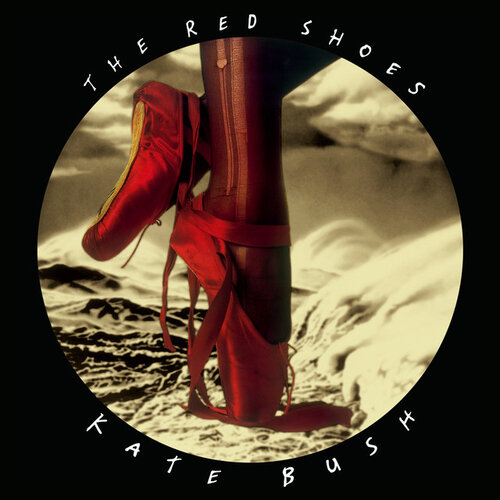
BECAUSE The Red Shoes is….

twenty-seven tomorrow (1st November), I wanted to look at a track that I have mentioned but not covered in depth. I think an opening track is very important when it comes to setting mood and the scene, and Rubberband Girl definitely gives The Red Shoes a great kick off! I think the entire album is awesome, and there are so many tracks on the album that do not get talked about or played. Rubberband Girl is a terrific single, and one hardly hears the track played at all! I think Kate Bush herself rates the song highly as, when she spoke to MOJO about its inclusion on Director’s Cut (where she reworked various songs from The Sensual World, and The Red Shoes), she remarked the following - preferring the original, perhaps, to the reworking:

I thought the original 'Rubberband' was... Well, it's a fun track. I was quite happy with the original, but I just wanted to do something really different. It is my least favourite track. I had considered taking it off to be honest. Because it didn't feel quite as interesting as the other tracks. But I thought, at the same time, it was just a bit of fun and it felt like a good thing to go out with. It's just a silly pop song really, I loved Danny Thompson's bass on that, and of course Danny (McIntosh)'s guitar.  (Mojo (UK), 2011)“.

Rubberband Girl is a great and fun song, it is seems to speak of a determination to come back from adversity and the perils of life - Bush wanting to life like a rubber band. Wishing she had an elasticity to rebound from knocks, it is infectious and cute, but I think it speaks to a subconscious vibe that, perhaps in 1993, she was going through some tough stuff.

Although various songs for The Red Shoes were written before her mother died in 1992 (and in advance), Bush wrote Rubberband Girl in the studio quite quickly. When the band came in to record, Bush had some words down and a basic structure, and it was a rare occasion of a track coming together in the studio – we always associate Bush as being meticulous and having songs worked out prior to recording. Maybe the gesture of bouncing back seems a little hopeless because, as Graeme Thomson explained in his biography of Bush, this is an album where she could not bounce back – the sound of a grown woman trying to reclaim innocence; songs that have lost a bit of hope and the tone (of the album) is darker and more defeated. Rubberband Girl was released as a single by EMI Records in the U.K. on 6th September, 1993; the song was subsequently released as a single in the U.S.A. on 7th December, 1993. Rubberband Girl peaked at number-twelve on the U.K. chart - becoming Bush's last top-twenty until King of the Mountain reached number-four in 2005. The song was a moderate success worldwide, reaching the top-forty in Australia, Ireland, The Netherlands, and New Zealand. Although others prefer different tracks on The Red Shoes – including the title track, Lily, and Moments of Pleasure -, I have a soft spot for Rubberband Girl. It is a song on The Red Shoes that has groove and is uplifting without sounding too cluttered and layered (like Why Should I Love You? or even Eat the Music), and I think many people can relate to the lyrics.

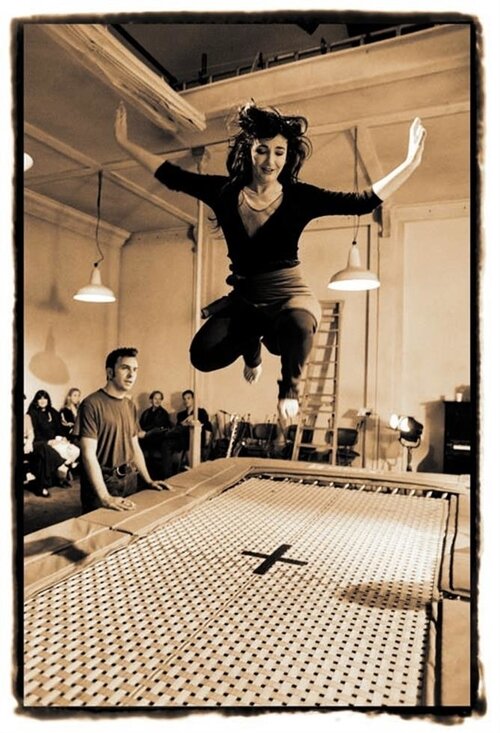
Maybe some, on face value, would take the song as being silly – sort of it being about Bush as this elastic superhero! -, but, as I said, I think she channelled a lot of her own struggles and desires for stability and happiness. I really like that Bush recorded two different music videos for Rubberband Girl. The original video was also used in the movie The Line, the Cross and the Curve and features Kate dancing in a studio. For the U.S.A., a different video was shot with Kate wearing sunglasses and singing the track, with scenes from the movie intercut. I prefer the U.K. video – in the same way I prefer the U.K. video for Wuthering Heights -, and it is a shame that Rubberband Girl only hit eighty-eight in the U.S. For me, it is a brilliant opening number to a really underrated album! Twenty-seven years after The Red Shoes came out, maybe the production sounds dated, but there is still a lot to love. Among the fantastic songs on the album is this introductory gem. One reason why I really like Rubberband Girl is that the video is pretty physical. Bush dances in the video for Eat the Music, but Rubberband Girl is one of her most physical routines since Hounds of Love and, also, she is seen in the video (the U.K. version) on a trampoline!

IN THIS PHOTO: Kate Bush between filming duties during The Line, the Cross and the Curve in 1993/PHOTO CREDIT: Guido Harari

I will finish up soon, but I want to bring in a couple of interviews where she talks about The Red Shoes. Bush spoke with Melody Maker in 1993, where she talked about mixing traditional and non-traditional music – and some experimentation on Rubberband Girl:

"The Red Shoes" also sees Bush resume her periodic delvings into non-Western ethnic music. The sprightly "Eat The Music" is the result of a recent infatuation with Madagascar's folk music. She first heard it through her brother Paddy, who hips her to a lot of world music. (He plays 'fujare' and Tibetan singing bowls on "Lily", another song on the album). "If I hear things and think they're really great, it's hard not to be influenced. I've always had an interest in traditional music. Madagascan music is so fantastically joyous.  And I really wanted to do something that could hopefully use that joy but fit it into a rock context. It was wonderful working with this Madagascan guy, Justin Vall. His energy was extraordinary.  Just like the music, so very innocent and positive and sweet.

Bush has always loved to make an unusual voice even more unearthly, by revelling in studio treatments and multi-tracking herself into a disorientating polyphony. On the new album's "Rubberband Girl", she lets loose a geyser of scat-vocalese mid-song, a sort of horn solo for the human voice, then spirals off into an eerie drone-chant.  "A lot of those vocal experiments just happen in the studio," she says. "But then a lot of the times I'm writing in the studio, onto tape, as opposed to taking a song in with me".

I am going to end up by quoting from an interview in Q from 1993, as it is an interesting piece! The period before and after the The Red Shoes’ release was quite tough, and Bush encountered the death of her mother, a long-term relationship breaking up, in addition to some critical backlash. It makes Rubberband Girl seem all the more impressive, given that Bush’s head and heart were in different places and being pounded during The Red Shoes’ creation and release! She was asked by Q how she unwinds away from music: 

What do you do for fun?

"I make records (laughs). There's a lot of other stuff that I like to do. But I find making records really exciting. It's making something out of nothing and you can involve other people. It's brilliant."

But what do you do when you're not making records?

"Well, I don't listen to records. I tend to watch a lot of films. I tend to work quite late and I tend to put in quite long hours. If you work like that, you don't get a great social life. I watch a lot of comedy. I suppose it's the same if you work in film: You don't want to watch films to relax. You want to give those particular senses a rest."

So what makes you laugh?

"Lots of stuff. I think it's an incredible gift to be able to make people laugh. It's not just a question of guts, it's having the talent to achieve it. I can't think of anything braver than being a stand-up comedian. I suppose you must learn a lot about yourself. Even if you get booed off you must get so much insight. I love all kinds of stuff. I still think Fawlty Towers is the best sitcom ever. I like Python, I like Ben Elton, I like what Rik and Ade do. We've got a load of good comics here...and a lot of good comediennes, which is nice".

Ahead of The Red Shoes turning twenty-seven tomorrow, I wanted to nod to Kate Bush’s only album of the 1990s and give special mention to its first track and lead-off single. It is this propulsive and additive track with a great, gutsy chorus. The video is fantastic, and I love what Bush does with her voice through the song. If you have not heard The Red Shoes, or it is an album you skip through, I would recommend checking it out, as Rubberband Girl gets things started…

IN spectacular fashion!

FEATURE: The Lockdown Playlist: Sounds of the Noughties

FEATURE:


The Lockdown Playlist

IN THIS PHOTO: Angela Scanlon presents BBC Two’s The Noughties

Sounds of the Noughties

___________

AS the BBC Two series…

PHOTO CREDIT: @cdx2/Unsplash

The Noughties is on and is taking a look at each year of the first decade of the twenty-first century, I thought it was a good time to dedicate a Lockdown Playlist to that decade. Although it doesn’t seem like the year 2000 arrived too long ago, it does feel like it was a very long time ago! I think music has shifted and changed a lot in the last decade or so, and so much has happened since. If you need some energy and kick to get you through the day, I have assembled some of the best cuts from the years 2000-2009 that should provide some great throwback and…

PHOTO CREDIT: @von_co/Unsplash

PLENTY of joy!

FEATURE: Second Spin: Lisa Stansfield – Affection

FEATURE:

Second Spin

Lisa Stansfield – Affection

___________

IN this feature…  

I either include an album that is underrated or received undue criticism upon its release, or it was positively reviewed but one does not hear that album mentioned too much now. The latter is definitely true when considering Lisa Stansfield’s debut album, Affection. Stansfield has turned in terrific albums right through her career and her eighth studio album, Deeper, of 2018 was another great release! Looking back to her debut, and it would have been quite a revelation hearing the Manchester-born Stansfield break through! In 1989, there were some great British female solo artists around, but I don’t think any had the soulfulness and power of Stansfield. Her music was defined by a definite sense of class and depth, whereas a lot of her peers’ sounds would have been fairly commercial and ordinary. Lisa Stansfield co-wrote all songs on Affection with Ian Devaney and Andy Morris – it means the songs are more personal and genuine. Devaney and Morris also produced the album (except for This Is the Right Time, which was produced by Coldcut). Affection reached top-ten on the charts in many countries and has sold over five-million copies worldwide. One of my earliest musical memories is hearing the hit single, All Around the World, played. Released on 16th October, 1989, it is one of those songs that stays with you! This Is the Right Time, and Live Together are other great singles from Affection that I particularly like, but a lot of the non-singles are really strong songs that deserve a bit more exposure.

Mighty Love, and When Are You Coming Back? are beautifully performed and written tracks, and Affection in general is packed with so much great material! Over thirty years since its release, and the songs still provoke reaction and emotion. Stansfield’s singing throughout is wonderful, and I really love the weight and commitment she gives to every song! It is no surprise that critics loved Affection upon its release, and it is still getting love all these years later. It is a shame that people do not rank Affection alongside the best albums of the 1980s, and many of the songs do not get a look-in when it comes to radio. This is what AllMusic wrote when they reviewed the album:

When Lisa Stansfield took the R&B world by storm with her melancholy, Barry White-influenced single "All Around the World," it was obvious that not since Teena Marie had a white female singer performed R&B so convincingly. Though she didn't shy away from hip-hop and house-music elements, Affection leaves no doubt where the British singer's heart lies -- sleek yet gritty '70s R&B. Though the retro leanings of such updated soul treasures as "You Can't Deny It" and "What Did I Do to You" are obvious, Stansfield's producer keeps things very fresh sounding by embracing a decidedly high-tech and very late-'80s/early-'90s production style. Though essentially a soul diva, Stansfield has a disco masterpiece in the love-and-togetherness anthem "This Is the Right Time".

I think one of Affection’s strengths is the fact that the songs are quite long. Most of the songs clock in at over four minutes, and I think that gives the tracks more room to breathe and express themselves. There is no waste or weak moments on Affection, and the combination of Soul, R&B, New Jack Swing and Pop is incredible! In 1990, Rolling Stone tackled Affection…and they were full of praise:

Affection is a picture-perfect marriage between house beats and the torchy growl of late-night silky soul. Not since Teena Marie has a white girl pulled off the pure joy and emotionality that Stansfield does, and without the downside of trying to sound authentically "black." Stansfield evokes Chaka Kahn on "Mighty Love" (not the Spinners' classic – oh, what she could do with that song) and Deniece Williams on "You Can't Deny It" but doesn't ape them. She does it her way, with a hint of Brit reserve and a cool, never cold, aloofness. There's no chest thumping or sweating – Stansfield accomplishes what she has to with disarming ease. The way she reaches for the high notes ("What Did I Do to You?") and the way her voice slinks around the line "so-oo sad" in "All Around the World" show that this is someone who knows her roots – even if they aren't really hers.

Written by Stansfield and producers Ian Devaney and Andy Morris, Affection's thirteen songs intermingle sweet Philly soul swing, the elegant string sections of the Seventies and Barry White's better moments of lushness; driving percussive keyboard patterns bring the mix firmly up to date. More simply, the album is an ideal blend of clubland energy and the passion of soul music, a dance record you can listen to. Let others have their faceless Dreamgirls in hot-pink Lycra; Lisa Stansfield rocks the house – with class”.

I have a lot of love for Lisa Stansfield’s music, and I think that her debut is her finest album. It is so complete and confident, and none of the tracks on Affection sound dated or irrelevant. Even though it has been played a lot, All Around the World still sounds amazing; it is a classic for a reason. Some of the songs on Affection are slick and sexy, whereas others are a bit heavier and fuller. It is an album with so much variation and, whilst Stansfield does show her roots and influences clearly on some songs, Affection is an original album that has plenty of nuance and texture. Fabulously produced and defined by Lisa Stansfield’s incredible voice and personality, go and give Affection and a deeper spin. It is an amazing album, and one that boasts so many cracking tracks. Released on 20th November, 1989, Stansfield’s immense debut was…

A classy and amazing way to sign off the decade!

FEATURE: The Lockdown Playlist: Hallowe’en Frighteners

FEATURE:

The Lockdown Playlist

PHOTO CREDIT: @coltonsturgeon/Unsplash

Hallowe’en Frighteners

___________

AS tomorrow is Hallowe’en…  

PHOTO CREDIT: @cadop/Unsplash

I thought it was only right to put together a Lockdown Playlist of Hallowe’en-themed and scarier tunes. Through the years, there have been a lot of songs relating to the special night, monsters and an assortment of things that go bump in the night. Although Hallowe’en will be very different this year in terms of parties and trick or treating, many people will be marking it in their homes and doing something to mark the night. I have assembled some songs that are either about Halowe’en or have a bit of a dark soul to them. Even though we cannot get out there and enjoy Hallowe’en like we usually do, I think a great playlist with some appropriate songs…

PHOTO CREDIT: @dallehj/Unsplash

CAN help fill a void.

FEATURE: One for the Record Collection! Essential November Releases

FEATURE:


One for the Record Collection!

Essential November Releases

___________

AS we are in the last few days…  

IN THIS PHOTO: Kylie Minogue

of October, it is time to look ahead to November and the great albums that are coming. The first that you need to get a hold of is Kylie Minogue’s fifteenth studio album, Disco. Make sure you pre-order the album, as it stuffed with Disco anthems and some of Minogue’s most uplifting songs in years! There have been a few good Disco-flavoured albums released this year – including Dua Lipa’s Future Nostalgia, and Róisín Murphy’s Róisín Machine -, and it seems like Kylie Minogue’s latest album will be among the very best. In an interview with i-D, she spoke about Disco and what we might expect:

Hi Kylie! How do you begin work on a new album? Do you start with a concept?

In the case of Disco and Golden, we didn't start with any concepts. I was just keen to get back into the studio. I think by the time I've done an album campaign and toured, I want to do something new and different. Usually, I go in with people I know and like. In this case it was with [writer and producer] Biff Stannard and we actually got "Say Something" in those first initial sessions. But normally, after a few sessions and hearing what's coming out during the period where we don't know where we're going, then the concept will be solidified. In this case, I'd been speaking with my A&R and just in general about heading straight back to the dance floor; that's where I want to go. I was inspired because it's my happy place, but also because on my last tour, going back almost three years, there was a Studio 54 section. It just felt like the burst of energy and such a fun place to inhabit.

There is a disco revival going on, as well as people like Dua Lipa referencing your earlier work. Have you collaborated with anyone else on the record?

I haven't at this stage. And there's actually nothing planned. But I do think that with more people being able to do remote recording, it could very well be possible. I genuinely love collaborations. It's better to be able to perform together and do live performances together. There's an unspoken understanding of what it is to be an artist and performer”.

There is another album from 6th November that is going to be worth your pennies. The live album, Return to Greendale, from Neil Young and Crazy Horse is arriving, and I would recommend that people pre-order an incredible album. I am not usually a big fan of live albums, but it seems like the 2003 recording is going to be worth getting hold of:

Neil Young continues his ‘Performance Series’ archive releases with Return to Greendale a CD, vinyl and box set offering with audio and video from his 2003 tour.

On the tour, which supported the Greendale album (issued in 2002), Neil Young and Crazy Horse were joined on stage by a large cast of singers and actors to perform the story Neil Young wrote about the small town of Greendale and how a dramatic event affects the people living there. The ten songs from the original album are performed in sequence, with the cast speaking the sung words. It blends together the live performance, the actors portraying each song, with the story occasionally enhanced by scenes from the Greendale – The Movie.

Return to Greendale is being issued as a two-CD and 2LP vinyl set but also as a limited edition deluxe box set which includes both CDs, both vinyl records along with a blu-ray of the full concert film and a DVD of Inside Greendale (the making of the album documentary). The box sets are numbered.

Both the live concert film and the Inside Greendale documentary are directed by Bernard Shakey (you know who that is) and produced by L. A. Johnson”.

In terms of long-awaited albums, they don’t come much more exciting than AC/DC’s Power Up. It is an album you will want to own, and it is the seventeenth from the legendary band. Power Up marks the return of vocalist Brian Johnson, drummer Phil Rudd, and bassist Cliff Williams, all of whom left AC/DC before, during, or after the accompanying tour for their previous album, Rock or Bust (2014). The lead single, Shot in the Dark, is classic AC/DC! I am looking forward to the album’s arrival. In an interview with Rolling Stone, we learn more about the backstory to Power Up:

The LP was recorded in late 2018 and early 2019, but Angus raided the AC/DC vault of unreleased songs before they began and every track is credited to Angus and Malcolm Young. “This record is pretty much a dedication to Malcolm, my brother,” says Angus. “It’s a tribute for him like Back in Black was a tribute to Bon Scott.”

The road to POWER UP was the most arduous one that AC/DC has walked since Back in Black, which was cut in the immediate aftermath of singer Bon Scott’s death 40 years ago. Brian Johnson was recruited shortly before Back in Black was cut and he remained at the front of the group for the next 36 years, but during the 2015–16 Rock or Bust tour, he started to encounter significant hearing issues

“It was pretty serious,” he says by telephone from England. “I couldn’t hear the tone of the guitars at all. It was a horrible kind of deafness. I was literally getting by on muscle memory and mouth shapes. I was starting to really feel bad about the performances in front of the boys, in front of the audience. It was crippling. There’s nothing worse than standing there and not being sure.”

Most fans had no clue what was happening, but it was painful for his band to watch up close. “He’d pull his in-ears out and just shake his head,” says Williams via phone from his home in North Carolina. “He couldn’t pitch. He was having a real hard time.”

This is the first AC/DC album recorded after the death of Malcolm Young, though his presence was felt strongly by everyone throughout the entire process of creating it. “Even when I sit at home and pick up my guitar and start playing, the first thing that enters my head is, ‘I think Mal will like this riff I’m playing,'” says Angus. “That’s how I judge lot of stuff.”

“Malcolm was always there,” says Johnson. “As Angus would say, the band was his idea. Everything in it ran through him. He was always there in your minds or just your thoughts. I still see him in my own way. I still think about him. And then in the studio when we’re doing it, you have to be careful when you look around because he seems to be there”.

There are a couple of other albums due on 13th November that are pretty awesome. Marika Hackman’s Covers. It is, as the title suggests, Hackman tackling some well-known songs. Rough Trade explain more:

Marika Hackman returns with Covers, a darkly beautiful, self-produced new album which showcases a more vulnerable side.

During the extended lockdown period of the last few months, Marika felt that creating a covers record was a way of exploring new sound ideas and expressing herself without having the pressure of the blank page. She recorded and produced Covers between home and her parents' house, then got David Wrench to mix it”.

Another terrific album that I am looking forward to is The Cribs’ eighth, Night Network. Go and pre- order the album, as it is shaping up to be one of the finest releases from the Yorkshire band - it was planned for 13th November, but the band have moved it back to 20th. In a month that is promising some golden albums, Night Network is going to be right near the top of the pile. Rough Trade reveal more about Night Network:

The Cribs are back and on blistering form, brandishing their brand new eighth album, Night Network. The self-produced 12-track album was recorded at the Foo Fighters Studio 606 in Los Angeles in the spring / summer of 2019. Night Network is as fresh, cathartic and vital as anything they’ve ever put out. There’s no weariness, no bitterness, just a clear desire to get back to doing what they do best – that unique blend of bittersweet melody, brutal lyrical honesty and riffs for days.

It’s wall-to-wall Cribs bangers, the fruit of that special, symbiotic relationship between the songwriting, singing brothers, drawing on the boiled-down influences they felt had always been there: The Motown stomp of Never Thought I'd Feel Again and Under The Bus Station Clock, red and blue album-era Beatles (Running Into You and In The Neon Night, respectively), melodic 70's style pop on Deep Infatuation, and even early work by their own band.

The Cribs are romantics and they’re realists, and the balance, for a hot minute, nearly tipped in the favour of the latter. But now they return empowered, beholden to no one, on the greatest form and still screaming in suburbia”.

Also on 20th November, King Gizzard & the Lizard Wizard release both K.G., and Live in S.F. '16. The live album promises to be one that you cannot be without:

Just under a month after delivering their award-winning 2016 album Nonagon Infinity, King Gizzard and The Lizard Wizard took the stage at San Francisco’s The Independent for a set both wildly frenetic and meticulously executed. In one of their final club gigs before bursting onto the international scene—soon selling out amphitheaters and headlining festivals—the Melbourne septet laid down a breakneck performance that, in the words of SF Weekly, “made every organ ache just right.” Newly unearthed by ATO Records, Live in San Francisco ’16 captures an extraordinary moment in the band’s increasingly storied history, a 13-song spectacular likely to leave every listener awestruck and adrenalized.

Multi-tracked and impeccably mixed, Live in San Francisco ’16 simultaneously channels the massive energy of King Gizzard and The Lizard Wizard’s set while echoing the sweaty intimacy of the 500-capacity venue.

With nearly half the setlist made up of Nonagon Infinity tracks, Live in San Francisco ’16 unfolds with the same exquisitely controlled chaos King Gizzard and The Lizard Wizard brought to that arguable masterpiece—a nine-song body of work crafted as the world’s first infinitely looping LP (i.e., each track flowing seamlessly into the next, with the album-closing Road Train linking straight back into the opener)”.

If you want to order K.G., then you can do so via the Australian band’s Bandcamp page. The guys are among the most prolific around, and K.G. is the band’s sixteenth studio album since 2012 – the fact that they are averaging two albums a year is pretty unheard of!

There are a few albums due on 27th November that I would recommend people buy. The second great covers album of November comes from Green Day’s Billie Joe Armstrong in the form of No Fun Mondays. I am fascinated by a great covers album, so I will be sure to check out Armstrong’s forthcoming release.

Green Day frontman Billie Joe Armstrong release his covers series No Fun Mondays into a 14-song collection via Reprise / Warner Records. No Fun Mondays sees Armstrong putting his signature melodic-punk spin on the songs that have formed the soundtrack to his life, including classics by John Lennon, Billy Bragg, and Johnny Thunders.

Kicking things off with his perfectly on-trend cover of Tommy James and the Shondells’ golden oldie, I Think We’re Alone Now, Armstrong treated fans to a new home-recorded cover song each Monday, accompanied by a DIY video. Beyond paying respects to his punk-rock forefathers (The Avengers’ Corpus Christi, Dead Boy Stiv Bators’ Not That Way Anymore) and working-class heroes (John Lennon’s Gimme Some Truth, Billy Bragg’s A New England), Armstrong also indulged his love of sugary pop through reverent versions of The Bangles’ Manic Monday and the Beatlesque theme to Tom Hanks’ 1995 film That Thing You Do! The latter was performed in tribute to the song’s writer, Adam Schlesinger, who passed away from COVID-19 complications in April. While the project’s inspiration was solemn at times, these songs are here to uplift. Home-recorded though it may be, No Fun Mondays is as revved-up as any of Green Day’s arena-ready anthems, a masterclass in punky power-pop from a true connoisseur of the form”.

There are two other big releases on 27th November. One album that has recently been announced is Miley Ray Cyrus’ Plastic Hearts. Rough Trade gives us some details:

Artist and trailblazer Miley Cyrus with her new album Plastic Hearts via RCA.

Includes Miley's summer hit, Midnight Sky, and her critically acclaimed live covers of Blondie's Heart of Glass and The Cranberries' Zombie, which are being referred to as the dawn of Miley Cyrus' best era, with her voice being hailed as perfectly suited for Rock and Roll. These raw and raucous renditions of classic hits that Miley has made her own are a taste of what is to come with her seventh studio album, Plastic Hearts, that includes 12 original songs.

Iconic Rock and Roll photographer, Mick Rock, shot Miley’s cover art which embodies the music and exemplifies Miley's sound. Adding her to the list of legends Mick has photographed over the years including David Bowie, Lou Reed, Iggy Pop, Joan Jett, and Debbie Harry. Miley's personal handwritten message below contextualizes her album and the inspiration behind it”.

I think the critics will react really well to Plastic Hearts, and Cyrus’ seventh studio album follows 2017’s, Younger Now. The final album you need to get next month is Smashing Pumpkins’ Cyr. The legendary band are delivering a double album that Rough Trade explain it thus:

The Smashing Pumpkins return with a new double album. The LP features 20 tracks, including the title track Cyr and The Colour of Love, and was recorded in the band’s native Chicago with Billy Corgan serving as producer.

Cyr marks Smashing Pumpkins’ second LP since their semi-reunion with guitarist James Iha and drummer Jimmy Chamberlain, following 2018’s Shiny and Oh So Bright, Vol. 1 / LP: No Past. No Future. No Sun. The album is also the band’s first with Sumerian Records, who recently signed them”.

If you need some guidance and tips regarding albums out next month that are worth buying, I think the above are the cream of the crop. There are other terrific albums due, but the ten I have listed are…

DEFINITELY ones you will want to pre-order.

FEATURE: Into the Wild: Kate Bush’s Use of the Spiritual, Mystical, Mythical and the Beyond in Her Music

FEATURE:

Into the Wild

IN THIS PHOTO: Kate Bush in a promotional shot for 50 Words for Snow (2011)/PHOTO CREDIT: John Carder Bush

Kate Bush’s Use of the Spiritual, Mystical, Mythical and the Beyond in Her Music

___________

I am going to do a couple of…  

IN THIS PHOTO: Kate Bush in a promotional shot for 50 Words for Snow/PHOTO CREDIT: John Carder Bush (from the book, KATE: Inside the Rainbow)

other features regarding Kate Bush’s 50 Words for Snow as, on 21st November, the album turns nine. That is the last album we have from Bush, in the sense that there may be more to come but there has been nothing since then. There is a lot to love about the album but, over forty years since her debut album, she was still delightfully off the grid and beyond the norm when it came to subject matter. Ignore the fact that Misty is about a tryst between a woman and snowman, and 50 Words for Snow’s title track finds Stephen Fry reciting fifty imaginary words for snow, Wild Man provides us with something distinctly Kate Bush-esque. The song was released as the only single from 50 Words for Snow on 11th October, 2011 – as the songs on the album are quite long -, and it got some airplay on BBC Radio 2. Featuring a vocal from Andy Fairweather-Low, Wild Man is a standout from 50 Words for Snow.  The Kate Bush Encyclopaedia is at hand to give us some insight into the inspiration behind the song:

Well, the first verse of the song is just quickly going through some of the terms that the Yeti is known by and one of those names is the Kangchenjunga Demon. He’s also known as Wild Man and Abominable Snowman. (...) I don’t refer to the Yeti as a man in the song. But it is meant to be an empathetic view of a creature of great mystery really. And I suppose it’s the idea really that mankind wants to grab hold of something [like the Yeti] and stick it in a cage or a box and make money out of it. And to go back to your question, I think we’re very arrogant in our separation from the animal kingdom and generally as a species we are enormously arrogant and aggressive. Look at the way we treat the planet and animals and it’s pretty terrible isn’t it? (John Doran, 'A Demon In The Drift: Kate Bush Interviewed'. The Quietus, 2011)”.

I really love the intrigue and genuine curiosity Bush has in the song. There is something mystical and magical about all of her albums, and Wild Man appears right in the middle of 50 Words for Snow - and it is one of those terrific centrepieces. Also on the album is a song called Among Angels and, whilst not explicitly evangelical and spiritual, there are references (“I can see angels standing around you/They shimmer like mirrors in summer”). There is something otherworldly about 50 Words for Snow, and there is as much mystique and unusualness as on Bush’s debut, The Kick Inside. Thinking about Bush’s yeti-quest on Wild Man, and it compelled me to step into the wild with Kate Bush. Bush is so connected to not only the natural world and people, but she has that belief in what lies beyond. She attended St Joseph's Convent Grammar School, a Catholic girls' school, before she embarked on a professional path, and spirituality and God has fed into her work at various moments – most famously on Running Up That Hill (A Deal with God). Bush herself sees it her God-given mission to make music, and I look back to 1978 and some of the songs highlighted on The Kick Inside and feel sorry for Bush. She was parodied quite a lot because she discussed philosophy and the mystic/spiritualist teacher, George Ivanovich Gurdjieff, on Them Heavy People.

Her album opens with whale song on Moving, and whilst some felt that this was Bush being very hippy-dippy and kooky, it shows that the first sound she wanted to be heard on the album was a whale - something very soothing and unusual. She embraced the natural world and spirituality, and I think her work has that great mix of the grounded and relatable and the more mystical, spiritual side. One could never accuse Bush of being detached from real life as, on her debut, she tackled incest, death and mortality; but her most-famous cut from The Kick Inside, Wuthering Heights, is her embodying the ghost of Catherine Earnshaw from the novel; trying to get through Heathcliff’s window. Also consider the fact that she has “come home” from the other side – “How could you leave me/When I needed to possess you?” she declares. Strange Phenomena talks of clusters of coincidence and synchronicity; Them Heavy People, in a wider sense, deals with religion and spiritual teachings. A teenage artist would normally not write about such high-minded and fascinating themes but, from the get-go, Bush was melting the ultra-real and heavy with the religious and spiritual. One could well imagine Bush finding worth in psychics, horoscopes, and different faiths and, whilst that might not resonate with everyone, it shows that she was hungry for knowledge and to learn more about herself, other people and the world around her.

c.jpg

IN THIS PHOTO: Kate Bush in Amsterdam in 1979/PHOTO CREDIT: Barry Schultz

The childlike and fictional is referenced in Lionheart’s In Search of Peter Pan; Blow Away (For Bill) name-checks departed musicians and passing to the other side. This is how Bush explained Blow Away (For Bill):

None of those people [who have had near-death experiences] are frightened by death anymore. It's almost something they're looking forward to. All of us have such a deep fear of death. It's the ultimate unknown, at the same time it's our ultimate purpose. That's what we're here for. So I thought this thing about the death-fear. I like to think I'm coming to terms with it, and other people are too. The song was really written after someone very special died.

Although the song had been formulating before and had to be written as a comfort to those people who are afraid of dying, there was also this idea of the music, energies in us that aren't physical: art, the love in people. It can't die, because where does it go? It seems really that music could carry on in radio form, radio waves... There are people who swear they can pick up symphonies from Chopin, Schubert. We're really transient, everything to do with us is transient, except for these non-physical things that we don't even control... (Kris Needs, 'Lassie'. Zigzag (UK), November 1985)”.

In all of these songs I have mentioned thus far, there is an undeniable sense of conviction and belief from Bush. Many songwriters might talk of God and spirits glibly, but she has this installed and unwavering belief.

Maybe a song like Blow Away (For Bill) is more about Bill Duffield’s – a lightning technician who tragically died in a freak accident on the warm-up night for Bush’s The Tour of Life in 1979 -, spirit ascending; there is a little tongue-in-cheek, but Bush is someone who asks questions about death and where we go. The final two songs from 1982’s The Dreaming have spirits and the other side very much at their heart. Houdini references the famous escapologist and seances. It is interesting that Houdini is about the escapologist trying to debunk mediums and people he felt were frauds. Though Bush was probably not quite of the same mind as Houdini, it was an area that she was compelled by. Bush discussed Houdini’s story:

During his incredible lifetime Houdini took it upon himself to expose the whole spiritualist thing - you know, seances and mediums. And he found a lot them to be phoney, but before he died Houdini and his wife worked out a code, so that if he came back after his death his wife would know it was him by the code. So after his death his wife made several attempts to contact her dead husband, and on one occasion he did come through to her. I thought that was so beautiful - the idea that this man who had spent his life escaping from chains and ropes had actually managed to contact his wife. The image was so beautiful that I just had to write a song about it. ('The Dreaming'. Poppix (UK), Summer 1982)”.

The Dreaming’s closer Get Out of My House, is guided by Stephen King’s The Shining, and it is this chaotic and mesmeric song about a possessed house. It is another case of Kate Bush tackling something unconventional and highly engrossing as a song subject:  

'The Shining' is the only book I've read that has frightened me. While reading it I swamped around in its snowy imagery and avoided visiting certain floors of the big, cold hotel, empty for the winter. As in 'Alien', the central characters are isolated, miles (or light years) away from anyone or anything, but there is something in the place with them. They're not sure what, but it isn't very nice.

The setting for this song continues the theme - the house which is really a human being, has been shut up - locked and bolted, to stop any outside forces from entering. The person has been hurt and has decided to keep everybody out. They plant a 'concierge' at the front door to stop any determined callers from passing, but the thing has got into the house upstairs. It's descending in the lift, and now it approaches the door of the room that you're hiding in. You're cornered, there's no way out, so you turn into a bird and fly away, but the thing changes shape, too. You change, it changes; you can't escape, so you turn around and face it, scare it away. (Kate Bush Club newsletter, October 1982)”.

I am gripped by some of the lines - "Woman let me in!/Let me bring in the memories!/Woman let me in!/Let me bring in the Devil Dreams!";“I will not let you in!/Don't you bring back the reveries/I turn into a bird/Carry further than the word is heard” -, and one can almost sense Bush herself embodying the house and appearing in hallways as this ghost and disembodied voice is scaring away those who dare trespass.

Hounds of Love has a few curious cases where we enter Bush’s unique lyrical perspective concerning the heavenly and otherworldly. I mentioned Running Up That Hill (A Deal with God) - and it is one of the most overt nods to religion in her songs. Though she is not praising God and talking about his power, she is asking him literally to make it so she can swap places with a man so they can understand one another; so that everyone can do this so the sexes can better relate and communicate. Whilst Cloudbusting is not about mystical creatures or spirits, it is Bush having her head turned by a device and story that sort of goes beyond reality and puts its faith in, to be fair, questionable science:

'Cloudbusting' is a track that was very much inspired by a book called A Book Of Dreams. This book is written through a child's eyes, looking at his father and how much his father means to him in his world - he's everything. his father has a machine that can make it rain, amongst many other things, and there's a wonderful sense of magic as he and his father make it rain together on this machine. The book is full of imagery of an innocent child and yet it's being written by a sad adult, which gives it a strange kind of personal intimacy and magic that is quite extraordinary. The song is really about how much that father meant to the son and how much he misses him now he's gone. (Conversation Disc Series, ABCD 012, 1985)”.

Whether she truly embraces the idea of witchcraft and witches, one of Hounds of Love’s songs, Waking the Witch, very much bringing something completely unusual and unorthodox into a song:

These sort of visitors come to wake them up, to bring them out of this dream so that they don't drown. My mother's in there, my father, my brothers Paddy and John, Brian Tench - the guy that mixed the album with us - is in there, Del is in there, Robbie Coltrane does one of the voices. It was just trying to get lots of different characters and all the ways that people wake you up, like you know, you sorta fall asleep at your desk at school and the teacher says "Wake up child, pay attention!". (...) I couldn't get a helicopter anywhere and in the end I asked permission to use the helicopter from The Wall from The Floyd, it was the best helicopter I'd heard for years for years [laughs].

I think it's very interesting the whole concept of witch-hunting and the fear of women's power. In a way it's very sexist behavior, and I feel that female intuition and instincts are very strong, and are still put down, really. And in this song, this women is being persecuted by the witch-hunter and the whole jury, although she's committed no crime, and they're trying to push her under the water to see if she'll sink or float. (Richard Skinner, 'Classic Albums interview: Hounds Of Love. Radio 1 (UK), aired 26 January 1992)”.

I love how Bush approaches songs and the way she can mix science, faith, the unknown and the unproven to cosmic effect!

yyy.jpg

IN THIS PHOTO: Kate Bush in 1989/PHOTO CREDIT: John Carder Bush (from the book, KATE: Inside the Rainbow)

Just moving onto a song from The Sensual World, Reaching Out, and Bush once more lets her imagination fly beyond the clouds (The Big Sky/Cloudbusting) and to the stars. As she explained in 1989, a quick walk around the park is all it took for a very evocative song to come to mind:

That was really quick, really straightforward. A walk in the park did that one for me. I really needed one more song to kind of lift the album. I was a bit worried that it was all sort of dark and down. I'd been getting into walks at that time, and just came back and sat at the piano and wrote it, words and all. I had this lovely conversation with someone around the time I was about to start writing it. They were talking about this star that exploded. I thought it was such fantastic imagery. The song was taking the whole idea of how we cling onto things that change - we're always trying to not let things change. I thought it was such a lovely image of people reaching up for a star, and this star explodes. Where's it gone? It seemed to sum it all up really. That's kind of about how you can't hold on to anything because everything is always changing and we all have such a terrible need to hold onto stuff and to keep it exactly how it is, because this is nice and we don't want it to change.

But sometimes even if things aren't nice, people don't want them to change. And things do. Just look at the natural balance of things: how if you reach out for something, chances are it will pull away. And when things reach out for you, the chances are you will pull away. You know everything ebbs and flows, and you know the moon is full and then it's gone: it's just the balance of things. (...) We did a really straightforward treatment on the track; did the piano to a clicktrack, got Charlie Morgan [Elton john's drummer] to come in and do the drums, Del did the bass, and Michael Nyman came in to do the strings. I told him it had to have a sense of uplifting, and I really like his stuff - the rawness of his strings. It's a bit like a fuzzbox touch - quite 'punk'. I find that very attractive - he wrote it very quickly. I was very pleased. (Tony Horkins, 'What Katie Did Next'. International Musician, December 1989)”.

The Sensual World’s Rocket’s Tail is, literally, about her cat’s tail - which is less spiritual and more charming/unusual. One song from The Sensual World sort of partly takes us back in history, but it is also about dancing with the embodiment of The Devil: Adolf Hitler. Heads We’re Dancing is hugely arresting and original:

That's a very dark song, not funny at all! (...) I wrote the song two years ago, and in lots of ways I wouldn't write a song like it now. I'd really hate it if people were offended by this...But it was all started by a family friend, years ago, who'd been to dinner and sat next to this guy who was really fascinating, so charming. They sat all night chatting and joking.

And next day he found out it was Oppenheimer. And this friend was horrified because he really despised what the guy stood for. I understood the reaction, but I felt a bit sorry for Oppenheimer. He tried to live with what he'd done, and actually, I think, committed suicide. But I was so intrigued by this idea of my friend being so taken by this person until they knew who they were, and then it completely changing their attitude. So I was thinking, what if you met the Devil? The Ultimate One: charming, elegant, well spoken. Then it turned into this whole idea of a girl being at a dance and this guy coming up, cocky and charming, and she dances with him. Then a couple of days later she sees in the paper that it was Hitler. Complete horror: she was that close, perhaps could've changed history. Hitler was very attractive to women because he was such a powerful figure, yet such an evil guy. I'd hate to feel I was glorifying the situation, but I do know that whereas in a piece of film it would be quite acceptable, in a song it's a little bit sensitive. (Len Brown, 'In the Realm of the Senses'. NME (UK), 7 October 1989)”.

Thinking about The Red Shoes, and two of the most interesting songs on the album are also the most unconventional. Lily is, as the Kate Bush Encyclopaedia explains, is about a spiritual healer:

Song written by Kate Bush. Originally released on her seventh album The Red Shoes. The song is devoted to Lily Cornford, a noted spiritual healer in London with whom Bush became close friends in the 1990s. “She was one of those very rare people who are intelligent, intuitive and kind,” Kate has said of Cornford, who believed in mental colour healing—a process whereby patients would be restored to health by seeing various hues. “I was really moved by Lily and impressed with her strength and knowledge, so it led to a song - which she thought was hilarious”.

Song of Solomon, one assumes, is about the King of Israel - Solomon (also called Jedidiah) was, according to the Hebrew Bible, Old Testament, Quran, and Hadiths, a fabulously wealthy and wise king of Israel who succeeded his father, King David. Bush has not really explained the song, but there is definite biblical and religious imagery through the song: “Mmm, just take any line/”Comfort me with apples/For I am sick of love/His left hand is under my head/And his right hand/Doth embrace me"/This is the Song of Solomon/Here's a woman singing”. King of the Mountain is the sole single from 2005’s Aerial, and it features a man who one would have assumed would have rubbed shoulders with Buddy Holly and Minnie Riperton on Blow Away (For Bill): Elvis Presley. The lyrics enquire whether Elvis Presley might still be alive someplace, "...looking like a happy man..." and playing with "Rosebud", Kane's childhood's sled (from the fil, Citizen Kane). There are a lot of people who think Presley is still alive, and whilst you get the sense Bush only half-believes that, the fact that this formed the core of her first single in eleven years – And So Is Love was her previous single in 1994 -, is meaningful. If her belief system does not include the fact that Elvis Presley still breathes, it is clear that she was still fascinated by the otherworld and perhaps reincarnation or some sort of nirvana. There are a couple of songs from Aerial I want to briefly mention before circling back to 50 Words for Snow.

Kate Bush’s mother died in 1992, but she was still very much with Bush – through her soul and writing – when writing beyond 1992. A Coral Room is one of the most emotional songs from Aerial and it uses a modest symbol, a brown jug, as a connection between Bush and her mother – as the Kate Bush Encyclopaedia reveals:

There was a little brown jug actually, yeah. The song is really about the passing of time. I like the idea of coming from this big expansive, outside world of sea and cities into, again, this very small space where, er, it's talking about a memory of my mother and this little brown jug. I always remember hearing years ago this thing about a sort of Zen approach to life, where, you would hold something in your hand, knowing that, at some point, it would break, it would no longer be there. (Front Row, BBC4, 4 November 2005)”.

Joanni, a reference to Joan of Arc, mentions faith and God – “Joanni, Joanni wears a golden cross/And she looks so beautiful in her armour/Joanni, Joanni blows a kiss to God”, but one of the most interesting aspects of Aerial is the second album (it is a double album), A Sky of Honey. It is this concept of the passing of a day as Bush loses herself in nature and the world; birdsong is particularly important, and it sort of expands on the sounds of Hounds of Love - and its very expansive and ‘open’ sound.

Bush has always been influenced by the world and her environment, but there is something almost spiritual and philosophical about this suite of songs on Aerial. By the final track, Aerial, Bush is at the point of communicating with the birds: “All of the birds are laughing/All of the birds are laughing/Come on let's all join in/Come on let's all join in”. I mentioned Wild Man as a case of Bush being on the trail of the yeti but, actually, there are a couple of other songs from 50 Words for Snow that either go beyond this mortal coil or inhabit a sense of the spiritual. I am no idea where Bush was drawing her sparks of inspiration from for 50 Words for Snow but, among the wintery themes and snow was this fascinating story in Lake Tahoe. Here is Bush talking about the inspiration for that song:

It was because a friend told me about the story that goes with Lake Tahoe so it had to be set there. Apparently people occasionally see a woman who fell into the lake in the Victorian era who rises up and then disappears again. It is an incredibly cold lake so the idea, as I understand it, is that she fell in and is still kind of preserved. Do you know what I mean? (John Doran, 'A Demon In The Drift: Kate Bush Interviewed'. The Quietus, 2011)”.

Maybe the snowman who climbs into bed with the protagonist in Misty is more symbolic than literal, so I think it is a metaphor for a cold and temporary love – something that goes beyond the strangeness of a snowman and woman entwined in a transitory bliss! Snowed in at Wheeler Street is a duet between Kate Bush and Elton John, and it is a song that is about departed and distanced souls reconnecting through history. Here are more details:

The idea is that there are two lovers, two souls who keep on meeting up in different periods of time. So they meet in Ancient Rome and then they meet again walking through time. But each time something happens to tear them apart. (...) It’s like two old souls that keep on meeting up. (John Doran, 'A Demon In The Drift: Kate Bush Interviewed'. The Quietus, 2011)”.

I like the fact that Bush has retained this open mind and she can pepper in songs of faith, ghosts and yetis and it is not there for artistic effect or symbolic: there is this area of her imagination and mind that feels we are too closed off and she has this curiosity. Although the spiritual and religious are not as influential and instrumental to her as songs about love and understanding the human heart, it is still a big part and one that I was keen to cover.

I am going to wrap up soon, but there are a couple of articles online that mention Bush and the spiritual/philosophical; this article is particular interesting in its observation:

This is key to understanding Kate. She has her own cult, her own mystery school tradition. Her unique strand of Shivaism, Dionysian and Druid philosophy, loosely wrapped up in a song and dance tradition. It’s part magical realism, overt nature spirituality and art house ….( Hard to pull off in cynical, post modern narcissistic Britain)

Shape shifting her artistry, she played with archetypes. She can access our primordial memory, when we were fish and birds. Her voice, a vehicle for multiple characters. She invokes the triple goddess. Athena, virginal, sensual innocence. Aphrodite, loaded with sexual power or Nimue, motherly, nurturing and “oh so tender ” and finally the Hag, Raven seer.Hecate, Queen of the witches, the dark half of the moon. Terrifying Kali the Crone or Macha in a frenzy, unleashing the furies upon us. All this choreographed into one ritualised, magical, shock and awe vision of an imagined future, all in one performance…..Very elemental, light and shade, earth and fire”.

An interesting exchange on this forum concerns how Bush can impart and speak about truth, but she can do so in a very moving, profound and unexpected way:

Much of what connects me to the music and movement of Kate Bush is her ability to impart truth in a profound way. Most of you here have made a connection I would hazard to say as well. I find affinity with much of what she says lyrically and musically; but there is also the visual component - her videos, her movements, and especially in what is conveyed through her eyes. It is not feasible to me that this could be accomplished on a purely intellectual or simple emotional level. Emotion needs inspirational fuel.

Here is a portion from her 02nd September 1999 interview with Q magazine:

Kate Bush - "...people who create feel a great empty sense of hunger, a feeling of emptiness in life. And by being able to create, you can somehow express yourself in a way that maybe you can't in the ordinary realms of life...so many people are looking for God...In your creativity there can be quite deep attitudes, and I think it's got to be linked somehow with the subconscious that you're tapping into"

Q: Which of your songs particularly connect with this form of spirituality?

Kate - " 'Breathing' I think was one of my first, what I would call spiritual songs. The subject matter isn't necessarily, but the spark is. When I was writing it, it felt like: Hang on. I don't think I'm writing this --- this is a bit to good for me! Rather than the song being my creation. I was a vehicle for something that was coming through me...

..........

I have used the analogy; Genius is knowing without study and perfection without practice. Kate, it seems to me, is professing to be a conduit of spiritual energy. The themes of this kind of connection and communication run like a thread through the fabric of her body of work. Aerial, I think, is the culmination of her spirtual force to date. It is about epiphany, connection and passing on of spiritual love and harmony.

Does anyone else here see other examples in her words and inspiring movement or expression that speak to you on a deeper level?

PHOTO CREDIT: Steve Rapport/Getty Images

Very interesting thread, thanks.

I think some sort of spirituality and/or religious imagery can be traced in many of Kate's compositions.

I remember she was asked about the role of religion in her life during an interview in 1985, and she replied that even though she could not consider herself a religious person, she is fascinated by the effect religion has on people.

I have always considered her songs like emotional arrows, shot to the listeners' hearts to make them think about things from different perspectives.

Even though Kate's work is not consistently patterned with clear religious references (maybe her most evident approach to the subject being the Catholic imagery behind "Why should I love you", where she makes references to the Host and the Sacred Heart...) I think there are very deep and interesting spiritual evidences scattered here and there for us to pick up.

What I like of Kate's approach to spirituality in her songwriting, is mostly the fact that she seems to be attracted by the positive energies coming from that source, without being transfixed by all the negative ones as the guilty feeling, the dominant idea of being rewarded in the afterlife through suffering and pain, the burden of the cross on the shoulders of humanity, just to mention a few from Catholicism.

Kate's spirituality is much more dealing with human passions and the continous struggle to reach the Truth, to touch Nature's beauties, to get a glimpse of that God...

"...can I have it all, now?...""Ok...ok...what's the beef this time?"

I will end it there but, as having listened back to many of her songs and read the lyrics, it is amazing how she can include songs about spiritual teachers and the mystical alongside hard-hitting tracks about loss. She is an artist whose lyrical palette and diverse mindset has impacted on many other artists - including Björk and Bat for Lashes. It seems there are no limits when it comes to Kate Bush’s…

POWER, charm and originality.

FEATURE: Rubberband Girl: The Red Shoes to Aerial: The ‘Departure’ and ‘Re-Emergence’ of Kate Bush

FEATURE:


Rubberband Girl

IN THIS PHOTO: Kate Bush in 1993/PHOTO CREDIT: Guido Harari

The Red Shoes to Aerial: The ‘Departure’ and ‘Re-Emergence’ of Kate Bush

___________

THERE is something appropriate about the title….

IN THIS PHOTO: Kate Bush in 1993/PHOTO CREDIT: Guido Harari

of this piece, and I actually really like Rubberband Girl. It was a song originally released as a single from The Red Shoes – the lead single everywhere in the world except for the U.S. (where Eat the Music was favoured). Rubberband Girl was the first of five singles released from The Red Shoes. The song marked Bush's return from her third three-year hiatus. Three different versions of Rubberband Girl were released commercially: an L.P., an extended mix and a remix by American D.J. Eric Kupper called the US Mix, which was released towards the end of 1994 on the And So Is Love single. Rubberband Girl peaked at number-twelve on the UK Singles Chart. It is one of the simpler Pop numbers on The Red Shoes, and it speaks of a resilience and determination to get back on her feet after being knocked down; if she was as elastic as a rubber band, then that would be perfect – “A rubberband bouncing back to life/A rubberband bend the beat/If I could learn to give like a rubberband/I'd be back on my feet”. The Red Shoes was released on 1st November, 1993, and I wanted to put out a couple of features about the album as it sort of gets overlooked. I also want to tie it in with her next album, Aerial, which was released on 7th November, 2005 – how Bush, like the visions and lyrics on Rubberband Girl, sprung back to life after years of questions and theories: Had she disappeared and quit music?! Was she a full-time reclusive?

Although, perhaps, The Red Shoes is my least-favourite of her original studio albums, I have extolled its virtues before and nodded to its importance and strengths. I think there are a few weaker or less impactful songs on the second side that means The Red Shoes is not as consistent as The Sensual World four years earlier – tracks such as Why Should I Love You?, Big Stripey Lie, and Constellation of the Heart suffer from slightly weaker lyrics and there is a lack of real memorability and focus. I think the first side of The Red Shoes is incredibly strong. Rubberband Girl is a fun and fantastic single, whilst And So Is Love, Moments of Pleasure, and Lily are right up there with her greatest work! I wrote about the year 1993 fairly recently to show just what Kate Bush had to contend with in terms of her personal and professional life. Her mother died in 1992, and Bush’s long-term relationship with Del Palmer broke up around the time of The Red Shoes’ release (or slightly before). I think, in order to keep busy and motivated, Bush put out The Red Shoes, and she was hoping that it would be a success. There were some positive reviews, but I think a lot of critics were either comparing everything with a high-watermark like Hounds of Love, or they were not convinced by the production values or some of the lesser songs.

In years since, I think The Red Shoes has picked up a bit more praise and attention. Back Seat Mafia reinvestigated the album back in 2015:

 “Having fought so hard to establish your commercial and creative freedom, what do you do once you’ve actually achieved it? In Kate Bush’s case, whatever she liked really. Like its predecessor, The Red Shoes sounds like an album where Kate Bush took advantage of the fact she had free reign to follow her muse. It’s an album where Bush sounds both defiant, yet somewhat haunted at the same time, as the previous few years had seen her juggle her music career with a traumatic period of her life away from the industry.

While each of Kate Bush’s albums has something unique to offer (even the much maligned Lionheart), I feel The Red Shoes is one that’s not so much over shadowed by better work, as misunderstood. If it had been an album by anyone else, I’m sure that same audience would hail it as a masterpiece, but because it’s Kate Bush, and her fans seemingly see her above dabbling with pop structures that flirt too closely with the mainstream, or relying too heavily on special guests, it’s unfairly dismissed as a lesser work.

Quite why Ms Bush herself isn’t fond of The Red Shoes is perhaps a more complicated matter. Maybe it’s an album that holds too many personal memories for her, or perhaps she feels in retrospect that some of the material is maybe a touch too personal? Maybe she just doesn’t like the way that The Red Shoes sounds, as in recent years she has confessed her dissatisfaction with the fact that the album was recorded digitally instead of analogue, and has even re-recorded some of the material as part of her Directors Cut album from 2011. Then again, maybe, just maybe, she just gets the vibe that her fans see it a lesser work and that has coloured her own opinions a little in the intervening years?

There had always been plans of performing live since 1979’s The Tour of Life, and I think 1993/1994 would have been a great time but, because of personal loss and the poor reception The Red Shoes received, maybe that knocked the wind from Bush’s sails and her priorities changed. Another dent occurred when Bush released The Line, the Cross and the Curve. This short film was a way of putting together something filmic and ambitious, but it was not a full tour/stage show and it would be a nice visual accompaniment to her latest album. The Kate Bush Encyclopaedia explains more:

The Line, the Cross and the Curve is a musical short film directed by and starring Kate Bush. Released in 1993, it co-starred Miranda Richardson and noted choreographer Lindsay Kemp, who had served as dance mentor to Bush early in her career. The film is essentially an extended music video featuring songs from Bush's 1993 album, The Red Shoes, which in turn was inspired by the classic movie musical-fantasy The Red Shoes.

In this version of the tale, Bush plays a frustrated singer-dancer who is enticed by a mysterious woman (Richardson) into putting on a pair of magical ballet slippers. Once on her feet, the shoes start dancing on their own, and Bush's character (who is never referred to by name) must battle Richardson's character to free herself from the spell of the shoes. Her guide on this strange journey is played by Kemp.

The film premiered at the London Film Festival on 13 November 1993. Kate got up on stage before the screening to thank "everyone who'd been a part of making the film" and to speak of her trepidation because her opus was following a brilliant Wallace & Gromit animation by Aardman called 'The wrong trousers'. Subsequently, the film was released direct-to-video in most areas and was only a modest success”.

As I have explained in previous features, Bush herself knew that she had taken on a bit too much. She wrote and directed the film, and she was also the star of it! Without a director to reign her in or help with her performance, she was making a lot of the big decisions and I think her subjectivity makes The Line, the Cross and the Curve promising but not as memorable as it could have been. Regardless, it was a unique chance to see Bush on the screen in a fuller acting role, and there are some astonishing moments from the film. The Red Shoes did reach number-two in the U.K., but I think there was less adulation and critical approval than she had enjoyed in years previous and this, combined with the missed opportunity that was The Line, the Cross and the Curve, meant that Bush did not release another studio album until 2005. She was still processing losing her mother and the end of a relationship, and the impact all of this would have had on her mind and body is incredible.

1993 was not a year when Bush disappeared and we did not see her again until 2005! And So Is Love was released as the final single from The Red Shoes in 1994, whereupon Bush performed on Top of the Pops. I want to cover how Kate Bush came back in 2005 following a 1993 that had a hangover of loss and tragedy, combined with a downturn in critical acclaim and an album that, whilst underrated, was not taken to the heart like Bush’s very best. I will, as I often do, use Graeme Thomson’s book, Under the Ivy: The Life & Music of Kate Bush, as it is a bit of a guide when it comes to the 1994-2005 period – so we can fill some gaps between two very important albums! Bush conducted a few interviews in 1993, and one that interests me (and I have quoted from before) was with Q magazine. Some of the questions asked sort of reveal why Kate Bush needed a break and whether she was proud of her current work:

 “Do you worry about getting old?

"I don't actually worry about aging, but I am at a point when I'm older than I was and there's a few things I'd like to be doing with my life. I've spent a lot of time working and I'd like to catch up. Over the next few years I'd like to take some time off."

What particular catching up would you like to do?

"Oh, nothing very significant or particular. Nothing, really...just travel and have some holidays. It's silly that I haven't taken more breaks. I've spent a long time in the city and I love being by the sea, and I'm starting to pine for it. I'd like to put energy into stuff like that."

IN THIS PHOTO: Kate Bush in 1993/PHOTO CREDIT: Guido Harari

How self-centred are you?

"Quite a lot, probably. I must be because of my work. It's all to do with delving into the self. That's how humans function. You're relating stuff all the time to yourself. My work is very selfish. But it's very meaningful to me when I see a letter saying that somehow it's helped someone else. It's quite a selfish thing that I do. And I'm becoming more aware as I get older of wanting to be more, well, giving to others. Like making this film: it feels better that the group is larger and there's more interaction."

Are you proud of what you've done?

(Long pause.) "On some levels, yes. I'm proud of having faced up to difficult times and situations and finshing projects that felt like they would never be finished. But I have spent a lot of time working. I'd like to redress the balance. I haven't wasted any of my life yet, but I'm a bit fed up with being stuck in a studio. I shouldn't complain. It's a privilege, really."

And, finally, are you a recluse and a publicity-shy enigma?

"That does amuse me. Well, the reclusive thing is because I don't go clubbing and I don't do a lot of publicity. I'm a quiet, private person who has managed to hang around for a few years. Ridiculous, really. I didn't think it would be like this. All I wanted to do was make an album. That was the dream. I'd been writing songs since I was little and I just wanted to see them on an album. This was my purpose in life -- to just look at the grooves and think, I did that.

"And then from my first record my life was very dramatically changed. My music was popular instantly. It's a pressure. You can't quietly get on with it. But it was so exciting. My life was turned upside down very fast when I was very young. I was quite a way down the road before I got a chance to look back. At the time it just all seemed like a laugh. That was healthy, though. Keep laughing and you stand a chance of getting through it alive”.

That idea of Bush being a recluse has followed her all of her career. She never has been one, but that word would suggest that, after The Red Shoes, she holed herself at home and did not emerge in public for over a decade! In fact, it was a moment when Bush needed to take stock and carefully consider her next move. Bush has said she was not happy with the production sound on The Red Shoes, and it was not the best time for her. The appeal of releasing more albums in the 1990s waned, and maybe some of the reviews she received for The Red Shoes, and The Line, the Cross and the Curve affected her confidence when it came to a new tour. Whilst it would take a while before Bush returned with a new album, the seed were being planted not long after 1993. In 1996, lyricist Don Black appeared on BBC Radio 2 and talked about an encounter he had with Kate Bush. He asked her who her favourite singer was, and she said (her favourite was) a blackbird; her second-favourite was a thrush. This might throwaway and an answer typical of Kate Bush, but nine years before she released the double album, Aerial, she was sort of indicating where her musical direction was taking her! There is a lot of nature and the outdoors on the album, and second side is awash with the delights of the garden and an English day.

Although King of the Mountain was written about a decade before the other tracks on Aerial, one suspects that Bush was putting together a lot of sketches and other songs around 1995 and 1996. Before Bush and Black met, she had already bought a fourteen-room house in Theale, near Reading. She modified it to her own specifications and she put in her own recording studio and dance studio in the grounds of the house. Some would say that Bush departing the city and buying a large house in a more rural setting was her giving up on music and thinking about the next stage of life. In her mid-late-thirties by 1995, Bush naturally would have wanted a change and a chance to slow down after a pretty relentless past seventeen years of creative and professional commitments. There are articles that posit Bush sort of vanished off the radar post-1993, but one needs to look at what she was doing away from music – laying a foundation for her next move. She would not have had a new album high on her priority list in the few years after 1993, but songs were still coming to her and there wouldn’t have been this feeling that she was done; instead, a change of pace and setting was needed. After the chaos and slightly mad recording of 1982’s The Dreaming, Bush debunked to the country, where she built her own studio and was inspired by the new setting and invigorated after giving herself some time to relax and get back to a healthier lifestyle.

IN THIS PHOTO: Kate Bush filming The Line, the Cross and the Curve in 1993/PHOTO CREDIT: Guido Harari

The same can be said of her post-The Red Shoes moves. Thomson notes in his book that The Red Shoes struggled to get off of the ground, whereas Aerial is literally about being of the air. Although the gap between The Red Shoes, and Aerial was four times longer than that of The Dreaming, and Hounds of Love, I don’t think an album like Aerial would have come about were it not for that move – no coincidence that two of her best and favourite albums both arrived after big life changes and recharge after particularly intense and unhappy periods. Prior to her return, Bush did engage in public/music a few times post-1993. She was promoting The Line, the Cross and the Curve in 1994; Bush released her cover of The Man I Love (by George and Ira Gershwin) in July that year, in addition to donating two pieces of art to a War Child auction in September – not to mention that appearance on Top of the Pops in November. It was, by all accounts, a pretty busy 1994! Also, in 1994, Bush was commissioned to write several short musical pieces for an advertising campaign in the U.S. on behalf of Coca Cola’s new drink, Fruitopia. Bush had not really done much advertising before 1994 – she was seen on a Japanese advert in 1978 selling Seiko watches backed by her song, Them Heavy People -, so this was an unexpected move!

The short pieces are pretty good, and it would have provided Bush a chance to write new music not tied to a studio album. In the mid-1990s, there was a rise in fanzines and magazines, and there were more visibly negative comments about The Red Shoes, and The Line, the Cross and the Curve. Whilst Bush did not disappear, I think the disappointment she felt towards her album – in later interviews, she said The Red Shoes was the best she could do at the time - coupled with greater negativity took a big toll. Having barely breathed and stepped aside from recording since 1978, one can forgive Bush for going away! Her absence is not quite the big mystery and drama the press made it out to be. So dramatised and almost scandalised was her gap after The Red Shoes, you’d think she was Lord Lucan! Bush had not really allowed herself enough time to grieve her mother’s death in 1992, so it was important to do that. After ending her relationship with Del Palmer, she started one with Danny McIntosh (who she is married to and who appeared on Aerial). There was a period of exhaustion and depression through 1994 and 1995, but Bush was still getting out and was not hiding away. The demo for King of the Mountain was put down in 1996, and her writing process changed: she wrote a song and tackled it when inspiration struck and the time was right, rather than slogging away or feeling pressure to put out an album intensively.

A couple of other Aerial inclusions were finished in 1997, both inspired by her new setting and new-found calm – Sunset, and An Architect’s Dream both feature on Aerial’s second disc, A Sky of Honey. She would have been writing the music for those songs knowing that she was pregnant with her son, Bertie – who she gave birth to in 1998. The period of 1998-2005, for the most part, was Bush finishing her double album – people forget that Aerial is a double album, so it is more like she released two albums in twelve years and not one! - and setting up her home for a new arrival. Bush was not someone who was going to announce the birth to a magazine and invite them to her house for a photoshoot! It was nobody’s business, and the only reason the press found out was that Peter Gabriel – her long-time friend and occasional collaborator – spilled the beans in an interview of 2000. It is ironic that so many in the press wondered where Bush was after 1993, and you sort of felt like there was affection and concern. When they got wind of her son, there were headlines splashed around the press that made you bridle! Referring to Bertie almost as a secret son, and Bush as this recluse who was hiding him away, one can understand why she engaged infrequently with the media after The Red Shoes.

Trying to have a private life and look after her young son, instead, her first mention in many newspapers in years was in such a negative and insulting way! It makes me wonder why people ask where Bush went after 1993, as they know she has a son and wouldn’t have necessarily had music as her main priority in his first few years of his life! After feeling obliged to offer a member of the paparazzi a swift boot after he photographed her and Del Palmer in 1991 attending a performance of Ben Elton’s Silly Cow in London, one can understand her reticence regarding publicity and the press – and why, when it comes to music, one cannot separate the two (and, without that press coverage, it does give the appearance that she has disappeared). In 2001, Bush made a rare appearance at the Q Awards to collect her Classic Songwriter gong – proving that she was not departed or dead; instead, she was getting on with life and was more than happy to be seen out at an occasion like this (where she was being lauded and did not have to face nuisance photographers)! The adulation and affection she received that night should have put pave to the notion that she was a reclusive and irrelevant. I suppose that might have spurred her to continue writing and press on with Aerial and, as Bertie was still very young in 2001 (three), that was also providing inspiration regarding musical ideas.

Although Del Palmer and Kate Bush were not together, he was her engineer and trusted aide during recording, and the musicians were being invited to her home studio as early as 2000. The process was secretive, but it shows Bush had not stopped for too long after The Red Shoes, and she was balancing motherhood with a very complex and challenging album. Despite the fact Bush was busy organising production, daily routines and everything else, musicians who worked on Aerial attest to the fact she was a genial and enthusiastic host who was always smiling and furnishing them with much-needed cups of tea! Albums never came together quickly for Bush, but EMI were quite understanding and Bush and Tony Wadsworth (Chairman & CEO of EMI Music U.K. and Ireland until 2008) were in fairly regular contact regarding progress. There were rumours of albums from Bush since 1997, but by 2004 she had finished recording and was ready to release (in 2005). King of the Mountain was released as the first (and only) single on 24th October, 2005, and Aerial arrived on 7th November that year. The hugely positive reviews for the album must have been a relief for Kate Bush, considering the comparative negativity in 1993. The Red Shoes, and Aerial are completely different albums. The former’s production is not fantastic, and there are cracks appearing on various songs. Aerial, while there are a couple of slightly weak tracks, is a lot more open, uncluttered and the ambition - and its scope and nuance is amazing! Maybe twelve years is a long time to record and release an album, even if it is a masterpiece, but Bush needed the right inspiration to record such an album. Kate Bush was not hiding from the public nor disappeared from view. Instead, she was busy on her own terms and free from the glare of the media changing her life, recording one of her best albums (and her personal favourite) and looking after herself. King of the Mountain turned fifteen on Saturday (24th October), and that is Bush imagining Elvis Presley watching from a mountain, still alive but secluded away from view and fame. Maybe she had her own perception and predicament in mind when she wrote that, only a few years after The Red Shoes came out. That single and the Aerial album coming into the world not only announced that Kate Bush was back, but she was at her strongest and most astonishing…

SINCE 1985’s Hounds of Love.

FEATURE: Spotlight: Middle Kids

FEATURE:


Spotlight

PHOTO CREDIT: Daphne Nguyen

Middle Kids

___________

FOR this installment of Spotlight…  

my focus is on an Australian band who I have been following for a couple of years now. Hailing from Sydney, since they formed in 2016, Middle Kids have released the E.P. Middle Kids (2017), the album Lost Friends (2018), and the New Songs for Old Problems E.P. (2019). They have a new song out, R U 4 Me?, and it is among their very best! I am going to bring in a few reviews later that covers their album and latest E.P., but Middle Kids are a band that I think are going to go a very long way, and their best work is yet ahead. There has not been too much press or promotion this year, so I am going to go back a little bit when it comes to an interview. In fact, the band - Hannah Joy (vocals, guitar, piano), Tim Fitz (bass, production) and Harry Day (drums) -, spoke with Under the Radar, in 2017, and we get to learn a bit more about them:

The band name chosen by Sydney, Australia trio Middle Kids also describes the upbringing of singer Hannah Joy and multi-instrumentalist Tim Fitz. "Tim and I are both middle kids," Joy explains. "I think it's common to find middle kids being a little bit unsure of their place in the family. It's cool, though, because you get a bit of love from both sides and end up having to fight to find who you are."

As a band, Middle Kids, who also include drummer Harry Day, have few reasons to be unsure of themselves, already gathering momentum thanks to their anthemic first single "Edge of Town"—a charming, confident track filled with anticipation, due to Joy's mesmerizing lilt. "'Edge of Town' is a story about the experience of trying to get a hold of your life, or figure out what it means to be a human, and then something happens which makes you realize how little you know or how little control you have over certain things," explains Joy. "It's meant to tap into that anxiety, but it's also meant to give a sense that it's going to be okay and there is actually freedom in not being in control all the time".

Joy met Fitz through mutual friends in 2014. Fitz was already working on his solo career, but he began producing Joy's own material and performing in her band, which led to them adding Day and forming Middle Kids in 2016. Joy is classically-trained, while Day has a jazz background, but the trio find common ground on their affinity for Pixies, Broken Social Scene, Pavement, and Britpop. "Bands from Australia have an interesting perspective because culturally we have been influenced by U.K. and America but being so far removed also means our own identity forms in quite a unique way," says Joy. "Someone I am influenced a lot by is Neil Finn but you probably can't hear that".

The best thing one can do with the likes of Middle Kids is to listen to the music and get a fuller sense of what they are all about. I would encourage people to follow them on social media and keep an eye on what is coming next. Although there is every possibility that they could play in Australia in the coming months, I think it is unlikely they will be making it further afield until later next year. They are growing stronger and more memorable with each of their releases, and I think they will cover a lot of ground in 2021. The band performed a live stream on Thursday (22nd), and they have some gigs in Australia through November. After that, they will be keen to get their new E.P. on the road wider afield. Before nodding to some warm reviews, I want to bring in an interview from The Line of Best Fit from last year. Middle Kids were asked about their debut album, Lost Friends, and they discussed their development and lyrics: 

It’s a welcome moment of respite for a musician who has poured her heart into the lyricism that shines throughout Middle Kids’ back catalogue. Evergreen themes are awash throughout. As debuts so often do, Lost Friends works through formative feelings around growing up and finding your place in the world. In some ways, it’s similar to the discombobulation Alice feels in Wonderland when she’s strolling through the flowerbeds only for the pansies and posies to turn on her when they can’t cordon her off into a tribe. Joy’s thoughtful lyricism taps into a connectedness through community that we can also recognise. “I feel like the whole album (Lost Friends) one of the big themes is about belonging and that real deep desire for that but often feel like you don’t belong anywhere”, she admits. “As a young person, you have such a dynamic imagination that you actually have to learn how to express it. You can also end up believing lies about yourself. It may not have been explicitly said to you but you can start believing things, you know whatever they are - shame or that you’re not good enough”.

Both Joy and Fitz speak quite openly about their own vulnerabilities. It seems, much like their ambitions with the new studio space, in their years together they have quietly been sowing the seeds of change together. Something that’s testament, Fitz believes, to Joy’s ability to embrace natural faults as she sees them without judgement or reprobation. “Hannah was the first person I met who wasn’t scared of imperfection”. It’s this idea that emits like a beacon from album number - and live show favourite - 'Don’t Be Hiding' in particular. “...And that's kind of the line of the song ‘I’m not scared of the stuff you’re fighting’”, he expands. “That is like one of the most liberating concepts I learnt from Hannah. ‘Yeah, you have imperfections and so does everyone’. It’s not necessarily the best part of you but it’s not a scary part of you”.

“You know what’s funny?” Joy interjects. “That song is one of our loudest singalong songs in our show”, she pauses to take a swig from her water bottle. But it’s not just in voice that the fans are showing their gratitude for the track. “People have this very particular way that they dance to this song, collectively. They take on an old person persona. They’re kind of standing in the crowd like old ladies”. She does a swaying motion back and front with arms flailed. “The whole audience turns into dorks”, she beams.

As if to illustrate the continued unity of the pair at the heart of Middle Kids, Joy is equally pleased with the thematic choices of the tracks. Although, she too was keen to let fresh ideas bloom and instead channeled the frustrations she’d observed in the world quietly imploding around us. “They’re a bit more angsty than the album. I was feeling a bit more distressed about the state of things in the world so it’s a bit more “Aah”....” It’s something that Fitz had spotted when he was handwriting out all of the lyrics for the band’s upcoming album art. “All the lyrics feel like one song”, he begins gesturing columns in front of him. “They feel like one long rant from quite a stern person. That’s when I looked at I thought “Well, this definitely feels distinct. It has its own flavour”. So why the shorter format? “I mean, it could be too much with more than six songs. You can have too much of one vibe”, he jokes. I make a comment about how prolific they appear to be as songwriters in and amongst their relocating and life on the road and get a typically humble response from Fitz. “It’s all self-created stress”.

I really like Lost Friends, and it is an album that found some positive reaction in the U.K. I think, even as recently as a couple of years ago, Middle Kids were a bit new in the U.K., but they definitely made an impression!

The album is a confident and instantly compelling collection of songs and, when The Line of Best Fit reviewed the album, they remarked the following:

Look no further than “Never Start” for a slice of fizzing pop perfection, whilst “Edge of Town” reminds listeners why the band made so many essential industry lists in the first place.

“Don’t Be Hiding” is plush with sweeping harmonies and spine tingling moments. Joy’s immaculate vocals take centre stage whilst circling guitars propel the track forward. “Maryland” finds the trio in a melancholic mood but still pricks ears with its thrilling intensity.

Ending the album on a high, “So Long I’m Gone” invigorates listeners one final time with a building rhythm and tight vocal harmonies. A soulful affair, it sees Middle Kids challenge themselves and acts as the perfect finale for an expertly paced debut record.

Middle Kids have always been a band to watch out for but now they’re an outfit to really get behind and believe in. Lost Friends is an essential first listen that is never too afraid of a huge chorus or a touch of slow burning intensity. Indebted only to themselves, expect great things from Middle Kids”.

I saw a couple of mixed/three-star reviews that weren’t entirely convinced by the album, and some that felt it was a bit light when it came to killer songs. On the contrast, Middle Kids’ debut has that mixture of instantly arresting songs and other tracks that take a bit longer to unfurl.

It is a rich and interesting album that got me invested in the band, and I was compelled to see where they headed next. I want to quote from a review DORK published about Lost Friends and share some of their findings:

Shining the limelight directly on vocalist Hannah Joy, ‘Lost Friends’ is a collection of carefully curated narratives exploring the day-to-day lives of optimists living in a pessimistic world, wrapped up in layers of jangly riffs that roll off the tongue like a perfectly-timed pun, their hooks hitting you with authority. Joy’s Stevie Nicks-tinged indie-meets-country croon is a delightful breath of fresh air in a genre as overflowing with the same sound as the internet is with trolls.

‘Lost Friends’ crux is its ability to bubble and build like a New Years’ Fireworks display, simmering softly as each song starts before exploding into arena-ready sing-alongs seconds later, ending in extravagant finales. Bookending the record are perhaps two of the more ambitious cuts, the alt-country jangle of opener ‘Bought It’ and the electro-fuzz of the post-disco ballad closer ‘So Long Farewell I’m Gone,’ which ultimately guide the record's pace to and fro between soft reflection and raucous explosiveness.

Joy’s wittily coy lyricism is driven across plains of indie-pop revivalism, alt-country Mountains and rolling hills of raucous distorting fuzzy riffs. Middle Kids’ hit you in the feels and make you dance with joy simultaneously, and it’s a pleasure to behold.

Alongside the likes of Tame Impala, Courtney Barnett, and The Temper Trap, with ‘Lost Friends’, Middle Kids join a pantheon of Australian exports who mess with formulaic indie-pop in wonderful colourful ways, leaving you singing along for hours”.

From the success of that album, the band released New Songs for Old Problems last May. It is a mini-album containing six pearls. My favourite tracks are Needle, and Real Thing - but there is so much to enjoy about New Songs for Old Problems. It is another release where some were a little underwhelmed, but Middle Kids definitely won plenty of love from critics over here. The Skinny were listening closely:

There's something so raw and beautiful about the entire project. This could be because of Joy’s fluid vocal dexterity which she flexes on songs like Beliefs & Prayers and Call Me Snowflake. It could also be linked to the mildly mixed production which contributes to win through songs like Needle and Real Thing. One notable track is the bittersweet melody of Real Thing which features Joy’s powerful vocal sighs and Middle Kids' signature fuzzed-out guitar sound that plays a major role in their music.

At the heart of every song on this mini-album is Joy’s golden voice which shines bright thanks to the inventive production by Fitz and Day. On New Songs for Old Problems, Joy’s striking voice ranges from high to low as she lays bitter, reflective and poetic lyrics. Together, Middle Kids create a rich palette of sounds that cuts across the indie genre”.

Even fairly soon after their album, you could see Middle Kids growing even more and bringing new sounds and ideas to the party. It is a great listen, and it already makes me excited to see where they will head next.

I will wrap up, but I just want to bring in one more review for New Songs for Old Problems. DORK wrote about the E.P. and noted Middle Kids’ increase in confidence:

As Joy sings on opener ‘Beliefs & Prayers’, “we exist with a conscious air”; something of a mission statement for the band themselves. They check themselves to ensure their “personal flair” fits “with the kids upstairs”. They ask us to “know your worth”. Everything here is executed with a keen eye, unafraid to question their very being but never swamping you with the existential.

In amongst all the doubts is a real confidence. These old problems rarely take the same form as Middle Kids present them in as many manifestations as they can find. From the questions roared about our purpose in life on ‘Real Thing’ to the woozy realisations that things might not be so perfect on ‘Salt Eyes’, each song has its own power, even if the subject matter is often the same.

And without the “festival-ready” vibe that ‘Lost Friends’ occasionally fell foul to, ‘New Songs for Old Problems’ feels more personal. These stories are told in something of a universal way, but you can hear how much they mean to the trio in Joy’s vocals alone. Middle Kids have hit on a pretty solid seam and mined it for all it’s worth to reveal some real nuggets, each one shining as bright as the last”.

I would urge everyone to follow one of Australia’s modern-day finest, Middle Kids, as they are a terrific group who have released some awesome music in the past couple of years, and I think they have a lot more to say! Follow closely a wonderful band that…

YOU definitely need in your life.

______________

Follow Middle Kids

FEATURE: Vinyl Corner: Paul Simon – Still Crazy After All These Years

FEATURE:


Vinyl Corner

Paul Simon – Still Crazy After All These Years

___________

RELEASED forty-five years ago…  

ssddd.jpg

this month, I wanted to put Paul Simon’s Still Crazy After All These Years into Vinyl Corner. I love so many of Paul Simon’s albums, but I think Still Crazy After All These Years is one of my favourites – though nothing can defeat the mighty Graceland of 1986! Still Crazy After All These Years won two Grammy Awards for Album of the Year, and Best Male Pop Vocal Performance in 1976, and it contains two of Simon’s best-ever songs: 50 Ways to Leave Your Lover, and Still Crazy After All These Years. My Little Town reunited Simon with former partner Art Garfunkel for the first time since 1970, while Gone at Last was a duet between Simon and Phoebe Snow. I think Still Crazy After All These Years was the last classic Simon album before there was a little dip with 1980’s One-Tricky Pony. His 1972 eponymous album, and 1973’s There Goes Rhymin' Simon showed he was just as strong solo as he was with Art Garfunkel; Still Crazy After All These Years boasts some of his best songwriting. Even though Simon was only in his thirties when he wrote the songs on Still Crazy After All These Years, you get the sense of a somewhat aged and more contemplative songwriter; someone who was, perhaps, feeling a little bit of strain and the years getting to him. Not that this affects the material. Instead, I think Simon’s voice is at its richest and most nuanced, and the material is incredible!

Go and buy the album on vinyl if you can, as it makes for a wonderful listening experience. I am going to bring in a review for Still Crazy After All These Years, but I wanted to concentrate on the title track for a moment. American Songwriter wrote a feature on Still Crazy After All These Years earlier this year - and there was some reflection from Simon himself:

Sometimes, as Simon reveals, the process can be uncomfortable, as the songwriter is forced to confront aspects of his own life he’d rather avoid altogether. But in the service of the song, such sacrifices get made.

The title of the song, as Simon explains, is one that came to him out of nowhere. He did recognize it was song-worthy. But he wasn’t crazy about what “Still Crazy” told him about himself. Nor was he crazy enough to throw it out, and use something less personal.

The music for the verses, as he shows, came from the chords he played on guitar, all of which were informed and expanded by his study of jazz, as he discusses.

But the music for the bridge was a whole other thing, as it was built on all the notes of the twelve-tone scale he hadn’t yet used, so as to give it a musical freshness. It was a “mathematical game,” as James Taylor called it, but one which worked.

“Oh yes,” James said, “That worked! “

Other peers of Simon also expressed admiration and some incredulity at this and similar methods employed by Paul. ” Simon’s tough, ” said Randy Newman. “You can hear how hard he works, like the changes in ‘Still Crazy.’”

Those changes distinguish it from almost all his other songs, which are all rooted in one key center.

“Still Crazy,” however, veers back and forth between A major and G major from the introduction to the ending. This was not, as Simon said, the original concept. But after writing the bridge, which leapt a whole step from G major to A before returning to G, and loving the subtle but vivid lift it gave the melody, he decided to start the introduction also in A major, leading back to G for the first verse.

PAUL SIMON: It’s very helpful to start with something that’s true; if you start with something that’s false, you’re always covering your tracks. Something simple and true that has a lot of possibilities is a nice way to begin.

Sometimes there are second verses, and I say,”Oh, that’s really not a second verse; it’s a first verse. In “Still Crazy After All These Years,” that title phrase came to me first and it didn’t come with melody either. It just came as a line, and then I had to create a story.

I remember well coming up with the first line of the song. I was stepping into a shower when the thought came to me, and I wasn’t very happy about it either. I didn’t say, “Oh, that’s clever, that’s a good one, I can use that.” It was, at the time, an assessment of where I was at in terms of my life. And I wasn’t very happy that that was my assessment, but I soon turned it into a song.

And that’s what you do with those things, and that makes it something else. In fact, now it has almost no relevance on a personal level to me. That was a long time ago. I’ve long since stopped feeling that way. I probably wouldn’t describe myself that way. I probably wouldn’t think that way at all”.

I have been listening back to Still Crazy After All These Years a lot on its forty-fifth anniversary and seeing where Paul Simon headed after that album. He reached a new peak on Graceland and continued putting out phenomenal albums until his final studio album, In the Blue Light, in 2018. I think Still Crazy After All These Years is among his top-five solo efforts, and it is an album that everyone needs to hear. This is what AllMusic said when they reviewed the album:

The third new studio album of Paul Simon's post-Simon & Garfunkel career was a musical and lyrical change of pace from his first two, Paul Simon and There Goes Rhymin' Simon. Where Simon had taken an eclectic approach before, delving into a variety of musical styles and recording all over the world, Still Crazy found him working for the most part with a group of jazz-pop New York session players, though he did do a couple of tracks ("My Little Town" and "Still Crazy After All These Years") with the Muscle Shoals rhythm section that had appeared on Rhymin' Simon and another ("Gone at Last") returned to the gospel style of earlier songs like "Loves Me Like a Rock."

Of course, "My Little Town" also marked a return to working with Art Garfunkel, and another Top Ten entry for S&G. But the overall feel of Still Crazy was of a jazzy style subtly augmented with strings and horns. Perhaps more striking, however, was Simon's lyrical approach. Where Rhymin' Simon was the work of a confident family man, Still Crazy came off as a post-divorce album, its songs reeking of smug self-satisfaction and romantic disillusionment. At their best, such sentiments were undercut by humor and made palatable by musical hooks, as on "50 Ways to Leave Your Lover," which became the biggest solo hit of Simon's career. But elsewhere, as on "Have a Good Time," the singer's cynicism seemed unearned. Still, as out of sorts as Simon may have been, he was never more in tune with his audience: Still Crazy topped the charts, spawned four Top 40 hits, and won Grammys for Song of the Year and Best Vocal Performance”.

I do hope we have not heard the last of Paul Simon regarding recorded material, but I think he is pretty keen to retire and he has definitely given us more than we deserve! I wanted to nod to a magnificent album that showcases Paul Simon at his very best. Aside from the bigger numbers like Still Crazy After All These Years, and 50 Ways to Leave Your Lover, there are so many other gems to be found – including Have a Good Time, and Silent Eyes. Make sure you go and check out the incredible Still Crazy After All These Years from one of…

THE true masters of music.

FEATURE: Lionheart’s Glorious Opener: Kate Bush’s Sumptuous Symphony in Blue

FEATURE:


Lionheart’s Glorious Opener

Kate Bush’s Sumptuous Symphony in Blue

___________

AS November is such a busy month…

ALBUM COVER PHOTO: Gered Mankowitz

when it comes to Kate Bush’s album anniversaries, I am covering all four. I have written features for The Red Shoes, Aerial, and 50 Words for Snow, and I wanted to include a salute to Lionheart as, on 12th November, it turns forty-two. There is often debate when placing Bush’s albums as to which would be at the bottom of the pile. There is that tussle between Lionheart, and The Red Shoes, and I think both albums get unfair criticism! Whilst I think Lionheart is a stronger album than The Red Shoes, both deserve more praise and respect – there are songs on both that rank alongside Bush’s very best. I may do a more general overview of Lionheart before its anniversary, or perhaps investigate it from an angle nobody has covered before. I am doing quite a few song-specific features about Kate Bush at the moment, as I think we often think about the popular singles and songs we know of hers, but there are not many who stray away and spend a lot of time with the lesser-known tracks. One has to feel sorry for Kate Bush in 1978. She achieved so much in the year, and her dream was to have a record out – something she achieved in February with The Kick Inside. She would have imagined that 1978 would be some promotion of The Kick Inside, maybe a few live dates and she would then be able to recharge and think about a second album.

After all, she was recording The Kick Inside in 1977 and she knew full well that, if the album was a success, then her diary would become a lot fuller! After the enormous success of her debut single, Wuthering Heights, hitting number-one, Bush was travelling and performing over the world on T.V.; the odd stage appearance and lots of interviews. It was a chaotic time, and I think the fact nobody had seen anyone like Kate Bush meant that she was this wonderfully curious artist! To her credit, even with long-haul flights and barely a moment to let her feet rest, she was able to produce a second album by November 1978. Today, a record company could not realistically expect an artist to put out two albums in a year, but I think EMI got caught up in the popularity of The Kick Inside and how Bush was this suddenly popular and successful artist. Also, sadly, I think there was also a sense that, if they did not capitalise and get another album out, then a lot of the focus and heat might go away, so they gave Bush an impossible task: releasing an album so soon after her debut that was as good but sounded different and moved her forward. In terms of personnel, many of the same players appeared on Lionheart – Del Palmer features on a few songs (and was not on The Kick Inside), and Paddy Bush had a greater role this time around.

As Bush was still promoting The Kick Inside at the same time as she was putting together a second album, it is understandable that the material was not quite as strong as on her debut. Many of the songs that do appear on Lionheart were written long before The Kick Inside, so they would have been in her mind for that album - and she probably was hoping to write new songs for a second album. That said, gems like Wow – which wouldn’t have fitted on The Kick Inside sonically – are definite highlights, and older tracks like Oh England My Lionheart, and Kashka from Baghdad are marvellous! I think both of those songs would have worked on The Kick Inside, but maybe Bush felt that they weren’t quite ready or were better suited as B-sides. I love both of those songs and, for the most part, the older songs are successful and slot together very nicely – I can imagine Bush having to quickly assemble a collection of previously ignored songs and make them fit on an album. Alongside producer Andrew Powell, what arrived on 12th November, 1978 was a success. Vocally, Bush retains her distinctive sound but she allows more characterisation and emotions to come in; on songs like Full House, Hammer Horror, and Don't Push Your Foot on the Heartbrake, she creates these grittier numbers that are more raucous and raw than The Kick Inside equivalents like James and the Cold Gun.

IN THIS PHOTO: Kate Bush in an outtake from the Lionheart cover shoot/PHOTO CREDIT: Gered Mankowitz

Bush managed to inject more physicality and grit into Lionheart, but I think the new songs that she wrote for Lionheart are phenomenal. Coffee Homeground, and Full House are very new-sounding and different territory for Bush, but I think Symphony in Blue is the finest of the trio. Emotionally and vocally, one can compare the song with The Man with the Child in His Eyes, Feel It, or L'Amour Looks Something Like You, but there is greater maturity and depth to Symphony in Blue. Bush was still only twenty when she recorded the song, and she produced one of her most moving vocals and songs to date. It was released as a single in Japan and Canada (in Canada, the B-side was Hammer Horror; in Japan it was Full House), where it was second single taken from Lionheart - Wow was the second single for the rest of the world. It is a shame that Symphony in Blue was not released as a single outside of Canada and Japan, as I think it would have done really well. Bush released singles for the Japanese market for The Kick Inside but, as Symphony in Blue was released in June 1979 – seven months after Lionheart came out -, it seemed like an odd choice. Also, Bush only released two singles in the U.K. from The Kick InsideWuthering Heights, and The Man with the Child in His Eyes – and, on Lionheart, she put out Hammer Horror, and Wow.

One can see Bush performing Symphony in Blue on her 1979 Christmas special, and it was a rare opportunity for people to see Bush perform the song on T.V. – she did include it her setlist for her 1979 The Tour of Life. There is debate as to what inspired Symphony in Blue. Bush herself said It was inspired by Erik Satie's Gymnopedies, whereas others believed that the lyric of the song is an attempt at describing Kate's own belief system. The descriptions of God, sex and the colour blue seem to be inspired by reading about Wilhelm Reich's theory in A Book of Dreams. I think Bush’s vocal is sublime. Some were not hot on The Kick Inside, as they felt the vocal gymnastics and highest notes were off-putting, but Symphony in Blue is Bush taking her voice down a little bit, but she still sounds soaring, gorgeous and impassioned throughout – Bush’s piano is sublime throughout. The colour blue has been used as an emotional indicator in songwriting for decades, but I think Bush, more than most, manages to do something new and wonderous in the opening verse: “I spent a lot of my time looking at blue/The colour of my room and my mood/Blue on the walls, blue out of my mouth/The sort of blue between clouds, when the sun comes out/The sort of blue in those eyes you get hung up about”.

The lyrics mix religious, passion, sadness, and the joys of the piano. It is a typically unique and intelligent song from Kate Bush where one is engrossed in the song and her stunning vocal. I love all of the lyrics, but the chorus is especially entrancing: “I see myself suddenly/On the piano, as a melody/My terrible fear of dying/No longer plays with me/for now I know that I'm needed/For the symphony”. I like how Bush plays with colours and their wider meaning. Blue is simultaneously misery and upset it is also the eye colour and the clearness and beauty of the sky. Bush also talks about red as being her beating heart, anger, and the colour of danger signs. One verse seems to mix blue and red together in a new way. The blue seems to be a sexiness and naughtiness, whereas red seems to be about blood flow, sex, and love – getting a sort of magenta/purple colour?! “The more I think about sex, the better it gets/Here we have a purpose in life/Good for the blood circulation/Good for releasing the tension/The root of our reincarnations” is simple and direct, but it is so evocative and sung in a way where you can hear Bush releasing tension, playing with the words - and her backing vocals add beauty and weight. There are a few players on the song - drums and percussion: Stuart Elliott; bass: David Paton; electric guitars: Ian Bairnson; Fender Rhodes: Duncan Mackay -, but I think there is a sparseness and tenderness that would be lost if the instruments were heavier or Bush layered her vocals more.

Symphony in Blue is one of Kate Bush’s best album openers and, from someone who opened all of her albums with really impactful songs, that is quite an achievement! There is an interesting mix of themes, paces, and dynamics on the remaining four songs of Lionheart’s first side. In Search of Peter Pan follows Symphony in Blue, and it is a childlike and gentler song that replaces sensuality with innocence, but things become more energised by track-three, Wow, and that continues on Don’t Push Your Foot on the HeartbreakOh England My Lionheart ends the side with a stately and regal-sounding paen to England. It amazes me that Bush could write such an accomplished and incredible song in the midst of travelling and promotion! I’d like to think that Symphony in Blue was written much in the same manner as Wuthering Heights: Bush alone at the piano as she looks out of the window on a summer’s night. The reality is probably less glamorous. MOJO recently published a Collectors’ Series magazine for Kate Bush, and they had a top-fifty of her songs – Symphony in Blue did not even make the cut! Apart from Classic Rock History ranking Symphony in Blue as their eighth-favourite Kate Bush song, not many people mention the track. I think it is one of those classic overlooked Kate Bush songs like Under the Ivy – or songs that are not played on the radio enough! Lionheart is forty-two on 12th November, and I think it deserves to be mentioned. It is full of remarkable track and, whilst Wow might get most of the love, I think the opening track, Symphony in Blue, is an amazing and…

IN THIS PHOTO: Kate Bush shot in 1979/PHOTO CREDIT: Gered Mankowitz

GLISTENING sapphire.

FEATURE: If You Could Read My Mind: Improving the Mental-Health of Young Women in the Music Industry

FEATURE:


If You Could Read My Mind

PHOTO CREDIT: @anthonytran/Unsplash

Improving the Mental-Health of Young Women in the Music Industry

___________

I have been writing a lot about….

ddd.jpg

IN THIS PHOTO: Lauren Aquilina

older artists or albums; not focusing too much on current developments, as the landscape is quite bleak at the moment. I was struck by an article in The Guardian from earlier in the week, where it seems like developments are occurring regarding mental-health in music. I do think that there is this notion that artists need to be tortured to create something worthwhile, or that this sort of feeds their creativity. In fact, mental-health concerns are very real and serious, and it is especially important now. As the article explains, there are a lot of issues that face modern artists. Whilst everyone in music faces challenges and loneliness, I think things are worse for young women in terms of the sort of abuse they face online, how they are perceived by the media and the ideals thrust upon them; and the fact that there is still massive inequality and fewer opportunities for them:

The pressures of burgeoning fame, the loneliness of the industry for the young pop singer and endless meetings full of people (mostly men) twice her age talking over her had taken a toll on her mental health and the only way she thought she could recover was to leave without looking back. Now, she is hoping to revamp the industry’s approach to care with a new independent community group and support system, Girl & Repertoire.

“Having this kind of community would have made all the difference to me,” (Lauren) Aquilina says. She cites a lack of women as a key issue in her own experiences, and hopes to provide a “big sister” presence for young artists now. “That’s something I didn’t have when I was 16, 17 and that’s something that could have changed the path of my whole career.”

IN THIS PHOTO: Georgie Willmore

Aquilina represents the artist side of Girl & Repertoire, the brainchild of Georgie Willmore, whose own experiences working at a record label as an 18-year-old inspired her to improve the experience for young women entering the industry behind her. “I was shocked when I first started out that other girls around me would stay quiet if someone spoke to them badly,” Willmore says. “Why didn’t these girls feel empowered and strong enough to stand up and speak out?” She acknowledges, though, there were consequences to speaking out herself. “It made me not very well liked; people thought it was controversial that the young intern would say, ‘You can’t do that’ to some big senior executive”.

“We’re figuring out what we can do to help more,” a spokesperson for Warner Music UK says, adding that the label is in “a significant trial project” with independent experts to provide mental health support to both artists and employees. Sony cites its work with the mental health charity, Mind. “Now we’re focusing on the next level of advice, resources and guidance for both the artist and their management teams and families,” says the chairman and CEO of Sony Music UK and Ireland, Jason Iley”.

It is good that there is movement and conversations happening; charities like Girl & Repertoire will go a long way to banishing the notion of a tortured artist or that mental-health struggle is conducive to great art – almost side-lining it and diminishing it. I hope momentum will continue, as this is a particularly bad time for all artists, there is a lack of money and gigs. This, combined with unabated social media toxicity and loneliness is already having a devastating effect.

PHOTO CREDIT: @timmossholder/Unsplash

I think young women have always had the roughest deal and had to struggle the most when it comes to being heard and getting support. I can appreciate labels have their hands full and they are promoting their artists, but mental-health support and care has never been high on the agenda. The conversations are shifting, and it is welcome news that things are improving. Going forward, I think labels will especially need to prioritise the wellbeing of their artists. Of course, there are many young women – and artists in all genders – who are not signed to a label and might feel that they are isolated and particularly vulnerable. As The Guardian’s article explains, mental-health stigma and challenges were not necessarily part of the vocabulary for the older generations, so one can sort of understand why initiatives have not come directly from the labels themselves and it has taken a while for things to improve. For women and non-binary artists, I do think that this latest news will provide great solace, and I hope that all labels make a pledge for 2021 regarding the mental-health of their artists and making it a priority. It is shocking hearing women like Georgie Willmore and Lauren Aquilina reveal their experiences of working in music, and it should provide an impetus for the industry as a whole to take. Of course, there is a long way to go until things significantly improve for young women in the industry but, with the likes of Girl & Repertoire providing noble and essential support, it is a welcomed and…

d.jpg

PHOTO CREDIT: @getuliodt/Unsplash

POSITIVE change.

FEATURE: The Lockdown Playlist: Manchester Songs

FEATURE:


The Lockdown Playlist

PHOTO CREDIT: @chriscurry92/Unsplash

Manchester Songs

___________

I know that South Yorkshire…  

ffff.jpg

PHOTO CREDIT: @matthewwaring/Unsplash

has also been put into the highest tier of COVID restrictions, but Manchester has been particularly hard hit! I have a lot of love for Manchester and its surrounding areas and, over the coming weeks, it will be very tough for them. Because of that, I wanted to put together a collection of tracks from Manchester artists (those either born or based/raised there) – including one or two newer acts. I will assemble some songs from South Yorkshire soon but, in this Lockdown Playlist, are artists from Manchester/Greater Manchester, and songs that name-check the area. Here are some terrific tracks that not only salute Manchester, but there are some serious classics in the mix that are sure to…

PHOTO CREDIT: @matthewwaring/Unsplash

RAISE the spirits.

FEATURE: Leave the Light on Before You Go: Kate Bush’s And So Is Love from The Red Shoes

FEATURE:


Leave the Light on Before You Go

COVER PHOTO: John Carder Bush (from his book, KATE: Inside the Rainbow)

Kate Bush’s And So Is Love from The Red Shoes

___________

THERE is more than one reason why I am…  

IN THIS PHOTO: Kate Bush in 1993

selecting Kate Bush’s And So Is Love for particular consideration. On 7th November, the song turns twenty-six, and it is from an album who celebrates its twenty-seventh anniversary on 1st November. The Red Shoes is a fantastic album and, whilst it does not scale the same heights as Hounds of Love, or The Dreaming, there are some fantastic tracks on the album. I think And So Is Love is a standout, as it is so heartfelt and emotionally pure, and one gets the impression that Bush is reflecting some of the tension that would have existed in her life and the problems in her relationship with Del Palmer – although this is just speculation. The fourth single from The Red Shoes, it is also the last single before Bush returned in 2005 with King of the Mountain from Aerial – the album celebrates its fifteenth anniversary next month. October and November are busy periods regarding Kate Bush and album releases, so I wanted to highlight that. As one of the most stirring singles Bush released to that point, I feel it is sort of like her closing a door and ending a chapter on her life; then we have that wait before she bursts back eleven years later on King of the Mountain – with her first double album and her first release since becoming a mother. I think the first side of The Red Shoes is really eclectic and impactful.

After the elastic opener, Rubberband Girl, we then shift down gears for And So Is Love – covering a more Rock vibe in the opener and something more soulful in And So Is Love. Eat the Music then takes us more into Worldbeat territory; Moments of Pleasure is sensual and gorgeous; The Song of Solomon, and Lily offer plenty of propulsion and emotion. The Red Shoes is a classic example of an album whose best tracks appear in the first half (apart from the opener of the second side, The Red Shoes), so I think that is why it has received some mixed reviews. That said, there is plenty to love on the second side, but I think And So Is Love is one of the most underrated tracks of Bush’s career and, as it was her last single release for some time, it deserves some fresh eyes! There are a few guests on The Red Shoes – like all of her albums -, and not all of them work that well. I think one of the musicians who is perfectly deployed is Eric Clapton on And So Is Love. Gary Brooker of Procol Harum is on Hammond organ too, and there is this wonderful atmosphere created on the song. It was released as a single on 7th November and it climbed to number-twenty-six in the U.K. Singles Chart. One other notable thing about And So Is Love is that Kate Bush appeared on Top of the Pops after eight years to perform it.

IN THIS PHOTO: Kate Bush captured in 1993/PHOTO CREDIT: Guido Harari

I think it is important to get some context regarding the inspiration of And So Is Love and its recording. It is to Genius.com for some rare assistance:

I really wanted to get at the rawness of relationships, the way things just burn at people but never quite erupt and Eric just sensed that. The track couldn’t say it, it just had to unfold, holding the tensions until the voice goes up into the higher octave. He followed brilliantly, like it was a conversation. It feels like the guitar is answering the voice. I was so moved by what Eric played.

In interview with the Philadelphia Inquirer’s Tom Moon.

Originally the song was a minute longer and although I wanted the feel of the track to unfold, it unfolded and then fell on the floor, so the edit tightened the track up although only the other day I became aware it’s over six minutes long – I thought it was about 3½!

Bush speaking in a letter to the fan club after a screening of the accompanying film.

The track’s original backing is a sequenced 4-bar Fairlight pattern which was played to the musicians to give them a feel for the piece.

Usually we keep more of the Fairlight sound, but in this case it got scrubbed apart from the toms so it could all stay in strict tempo, so it could all be played live.

On this track there’s a little flute/reed sound, but the Fender piano sound is a real one and the drums are Sl000 samples. We only have a very small room for acoustic recording and the sound of the room tends to get on to drum recordings, so we used a lot of S1000 drum samples triggered from Simmons pads plus real cymbals. Stuart Elliott knows that our drum recording can be a long and arduous process and he might get called back four or five times – not because we’re unhappy with what he’s done, but because the track changes as it develops.

Del Palmer, engineer and mixer of The Red Shoes, talking to Future Music in 1993”.

I think that The Red Shoes should receive some love on its anniversary, but I also reckon the single release of And So Is Love and Bush’s Top of the Pops appearance is quite significance. In terms of performance, it is one of her very best, and I really love the video as well – it is beautifully shot and Bush looks phenomenal. Lines like “We let it in, we give it out/And in the end, what’s it all about?” might suggest someone being casual regarding relationships and their solidity, but I think it is Bush breathing in that passion and love and then seeing it go. Love can be both complex and transient, and she touches on mortality – “We used to say “Ah Hell, we’re young” -, and the sadness of life. Although And So Is Love is not one of Bush’s most complex lyrics and compositions, I think its relative simplicity and directness is why it resonates and sinks so deep into the heart. One of the most affecting lines of the whole album is “It’s all we’ve got, isn’t that enough?”, that suggests that this once-solid bond has started to crack and the end is near. I have been listening to And So Is Love since its release, and it has stuck with me in a very physical way. I love Bush’s voice on every album, but it had really matured by 1993 and, on And So Is Love, her register is lower than, say, Hounds of Love, and that adds extra shiver and duskiness to a very beautiful and evocative song. As Aerial, The Red Shoes, Lionheart, and 50 Words for Snow have anniversaries next month, I am going to do one or two features on each album – except for Aerial, which I have already published a feature features about already. It is strange to think that, when the video for And So Is Love came out in 1994, that was the last time we would see a video from Kate Bush until 2005 – I think it was a great way to sort of sign off before she returned eleven years later. On an album (The Red Shoes) with some truly fantastic songs, I think And So Is Love is among…

THE absolute best.

FEATURE: Gasoline Dreams: OutKast's Stankonia at Twenty

FEATURE:


Gasoline Dreams

OutKast’s Stankonia at Twenty

___________

EVEN though its anniversary is on….

31st October, I want to get in ahead and celebrate one of the best albums of the past twenty years. It is an absolute masterpiece of an album and, the fourth album from OutKast, Stankonia is overflowing with amazing songs, sounds and innovative moments! I think it is one of the finest and most important albums in all of Hip Hop, and it is due for a twentieth anniversary edition. NME provide further details:

Released on October 31, 2000, the fourth studio effort from the Atlanta duo – aka André 3000 and Big Boi – contained the singles ‘Ms. Jackson’, ‘So Fresh, So Clean’ and ‘B.O.B’ (‘Bombs Over Baghdad’).

This October 30, fans will be able to hear instrumental, a capella and remixed versions of the aforementioned three tracks through new streaming bundles. Featured in the ‘B.O.B’ set will be a reworking of the song by Rage Against The Machine’s Zack de la Rocha.

The full ‘Stankonia’ album, meanwhile, will be available digitally in 24 Bit and 360 Reality Audio. As Pitchfork reports, Vinyl Me, Please is offering an exclusive 2LP version on black-and-white galaxy vinyl to subscribers.

Following the album’s release, André 3000 and Big Boi picked up the Best Rap Album and Best Rap Performance By A Duo Or Group awards at the 2002 Grammys. The record reached Number 10 in the UK albums chart”.

Recording in OutKast’s Stankonia Studios in Atlanta, Georgia, and produced by Earthtone III, Organized Noize, and Carl Mo, OutKast’s André 3000 and Big Boi were free from constraints. Their previous album, 1998’s Aquemini, was recorded at Bobby Brown's Bosstown Recording Studios and Doppler Studios - both in Atlanta. I love their previous album, but Stankonia is a broader and more adventurous album. About to enter a new century, perhaps OutKast felt that they needed to create something that was bigger than anything they had ever done. We get elements of Rave, Funk, Gospel, Rock and so many other genres in an incredibly rich and eclectic album. There is more melody and a different approach to rapping, not just in terms of OutKast’s work but a lot of other Rap/Hip Hop albums. Stankonia is a sharper, faster and busier album than anything they put out before, and the duo touch on themes such as race, parenthood, misogyny and politics. Again, maybe OutKast felt that they needed to change things up for the twenty-first century, and it is clear that the Hip Hop landscape was changing and, as drugs such as ecstasy were more prevalent in Hip Hop and among teenagers, this made an impact on the duo. Although they knew that the drug scene and changing habits was a bad thing, they also felt that their music needed to reflect a faster lifestyle; speak to their peers in a different way than they had before. OutKast were drawing in new influences, ironically, from classic artists like Little Richard rather than the modern Hip-Hop of the late-1990s.

They managed to filter classic Soul, Rock and Gospel into their own music and give it a unique spin and modern sound. As a lot of their peers in the Hip Hop scene were still embracing slower jams, OutKast were nodding to the rave scene and employing sharper, more frantic tempos. I think this was a revelation for Hip Hop and a wider musical world, and it is no surprise that Stankonia was so well-received upon its release! It is an album that has frequently appeared in the best albums of the 2000s (as in the first decade of the century) lists, and the best albums of all-time. The experimental nature of the album has influenced scores of artists, and OutKast’s music was opened up to a wider audience. In their review of Stankonia, this is what AllMusic had to say:

Stankonia was OutKast's second straight masterstroke, an album just as ambitious, just as all-over-the-map, and even hookier than its predecessor. With producers Organized Noize playing a diminished role, Stankonia reclaims the duo's futuristic bent. Earthtone III (AndreBig Boi, Mr. DJ) helms most of the backing tracks, and while the live-performance approach is still present, there's more reliance on programmed percussion, otherworldly synthesizers, and surreal sound effects. Yet the results are surprisingly warm and soulful, a trippy sort of techno-psychedelic funk. Every repeat listen seems to uncover some new element in the mix, but most of the songs have such memorable hooks that it's easy to stay diverted.

The immediate dividends include two of 2000's best singles: "B.O.B." is the fastest of several tracks built on jittery drum'n'bass rhythms, but Andre and Big Boi keep up with awe-inspiring effortlessness. "Ms. Jackson," meanwhile, is an anguished plea directed at the mother of the mother of an out-of-wedlock child, tinged with regret, bitterness, and affection. Its sensitivity and social awareness are echoed in varying proportions elsewhere, from the Public Enemy-style rant "Gasoline Dreams" to the heartbreaking suicide tale "Toilet Tisha." But the group also returns to its roots for some of the most testosterone-drenched material since their debut. Then again, OutKast doesn't take its posturing too seriously, which is why they can portray women holding their own, or make bizarre boasts about being "So Fresh, So Clean." Given the variety of moods, it helps that the album is broken up by brief, usually humorous interludes, which serve as a sort of reset button. It takes a few listens to pull everything together, but given the immense scope, it's striking how few weak tracks there are. It's no wonder Stankonia consolidated OutKast's status as critics' darlings, and began attracting broad new audiences: its across-the-board appeal and ambition overshadowed nearly every other pop album released in 2000”.

On its twentieth anniversary, I hope there is a lot of attention for such a magnificent album. I know so many different people have connected with the album and, with epic cuts such as Gasoline Dreams, So Fresh, So Clean, Ms. Jackson, and B.O.B., Stankonia is rightly hailed as a classic!

I just want to bring in another review, as Pitchfork made some interesting observations:

Stankonia is easily the group’s most expansive and abrasive effort. It’s more accomplished than their biggest seller, the double-disc Speakerboxxx/The Love Below, which lacks the tension and dichotomy of André and Big Boi locked in a studio, warring with each other and themselves to the extent that created numbers like “Humble Mumble,” Stankonia’s breakbeat-ish, Caribbean-tinged track where Big Boi admonishes a simp with “Sloppy slippin’ in your pimpin’, nigga/You either pistol whip the nigga or you choke the trigger,” before André recalls speaking with a rap critic: “She said she thought hip-hop was only guns and alcohol/I said ‘Oh, hell naw!’/But, yet, it's that too.”

OutKast had always consisted of a politically conscious pimp and a spiritual gangsta, but on Stankonia, those identities came to the fore with a greater distinction that paradoxically allowed them to sound closer together than they had since their inception—even as André sat out songs like “Snappin’ & Trappin’” and “We Luv Deez Hoez.” On Stankonia’s first proper song, “Gasoline Dreams” Big Boi raps about their clout and the limits thereof—“Officer, get off us, sir/Don’t make me call [my label boss] L.A. [Reid], he’ll having you walking, sir/A couple of months ago they gave OutKast the key to city/But I still gotta pay my taxes and they give us no pity”—while André throttles out a brainy hook: “Don’t everybody like the smell of gasoline?/Well burn, motherfucker, burn American dreams”.

Ahead of its twentieth anniversary on 31st October, go and spend some time with Stankonia, and enjoy one of the most important and stunning Hip Hop albums ever. It is such a fascinating and compelling record that will resonate and inspire artists for generations to come. André 3000 and Big Boi were remarkable on Aquemini but, on 2000’s Stankonia, they moved up…

TO a different league!

FEATURE: Too Good to Be Forgotten: Songs That Are Much More Than a Guilty Pleasure: Steps – 5,6,7,8

FEATURE:


Too Good to Be Forgotten: Songs That Are Much More Than a Guilty Pleasure

PHOTO CREDIT: Rex Features

Steps – 5,6,7,8

___________

I am going to visit another decade…  

other than the 1990s for my next instalment, but Steps release their new album, What the Future Holds, in November. Apart from a twelve-year gap between 2000’s Buzz, and Light Up the World, the band have been fairly consistent. Claire Richards, Lee Latchford-Evans, Lisa Scott-Lee, Faye Tozer and Ian ‘H’ Watkins have been together since their debut album, Step One, of 1998. 5,6,7,8 was the debut single from the group and, released in 1997, the face of British Pop was changing. It was a year where I think a lot of darker, more experimental sounds were coming in - but there was still a core of great Pop. Steps were put together in 1997 following an advert in a magazine, The Stage, asking for applicants to audition for a place in a Pop band. It sounds rather old-school, and I wonder whether bands now still advertise in magazines?! Their debut album is actually quite a good introduction and 5,6,7,8 was a pretty catchy introduction. I think people consider the song a bit of a guilty pleasure as they feel Steps are a bit uncool. 5,6,7,8 was written by Barry Upton and Steve Crosby and it blends a sort of Techno feel with some Country twang. Other songs on Step One include Heartbeat, and One for Sorrow, and there is enough personality and range on the album to appeal to most people.

I think it’s a fun album, and it still provides plenty of kick after all of these years. I feel like a lot of the other tracks on Step One were viewed quite warmly, but many highlighted 5,6,7,8 as being a weaker cut. Others disliked Steps and felt that they were (and are) too manufactured and lack any real depth. Maybe it is the slightly camp nature, but I have heard people refer to Steps’ debut single as a bit of a guilty pleasure and something they wouldn’t freely admit to liking. Look back to 1994 and Cotton Eyed Joe from Rednex and that marriage of hoedowns and big beats – a novelty single that actually is a lot better than people give it credit for! Those who dismissed 5,6,7,8 in 1997 felt that it was a strange choice for the lead-off single from Step One. Last Thing on My Mind, One for Sorrow, and Heartbeat are slightly heavier songs and not quite as giddy as 5,6,7,8, so many Steps felt that they needed to come in with something a bit lighter. Steps are, debatably, at their best when Claire Richards is on lead vocals, and 5,6,7,8 features Lee Latchford-Evans on lead. Last Thing on My Mind, a cover of the Bananarama song, has Faye Tozer, Lisa Scott-Lee, Claire Richards leading, whilst One for Sorrow is Claire Richards at the front. Latchford-Evans is not the strongest vocalist in the group, but I think his turn is pretty good, and 5,6,7,8 is a song that does not demand too much attention.

I think a lot of critics were a bit cold to anything that evoked line dancing and had a Country twang, and many others were not sold on 5,6,7,8 at all. Years down the line, and I think there has been a slight change in attitudes about the song. There are many who still think it is a classic guilty pleasure, but others judge it away from the 1990s and can just enjoy it for what it is: A Pop song that has plenty of energy and is catchy enough! Right through the 1990s, there was an interesting range of girl and boybands, but there weren’t too many groups that I can remember of male and female singers. S Club 7 released their debut album, S Club, in 1999, and it is an album that has a few highlights, but it is not quite as uplifting and strong as Steps’ Step One. Many would highlight Steps as a moment when Pop sort of lost its way, but their music is worthy of acclaim and respect. The group have often been compared to ABBA, and this was more apparent on songs like One for Sorrow. 5,6,7,8 is maybe not a song you will get up and dance along to, but it is a great track! Even though there were some negative reviews, 5,6,7,8 enjoyed the third-highest sales of any single of their career in the United Kingdom, selling 365,000 copies and receiving 34,239,387 streams as of 22nd October, 2020. The track peaked at number-one in Australia and reached the top-five in Flanders and New Zealand. Although not the strongest song Steps ever put their name to, 5,6,7,8 definitely gets the feet tapping and it will lift the spirits! 5,6,7,8 was performed on The Ultimate Tour in 2012 and the Party on the Dancefloor Tour in 2017 and, as Steps are readying themselves for another album, I wonder if 5,6,7,8 will get an airing…

c.jpg

WHEN they’re next back on stage.

FEATURE: Eight Discs a Week: How Desert Island Discs Is a Balm at This Hard Time – and the Way It Makes Us Feel Deeper About Ourselves

FEATURE:

Eight Discs a Week

IN THIS PHOTO: Lauren Laverne is the current host of BBC Radio 4’s Desert Island Discs (which was first broadcast in 1942)/PHOTO CREDIT: BBC

How Desert Island Discs Is a Balm at This Hard Time – and the Way It Makes Us Feel Deeper About Ourselves

___________

FORGIVE the long, unwieldy title…  

IMAGE CREDIT: BBC

but I wanted to write another feature about Desert Island Discs. When I first heard the BBC Radio 4 series for the first time a few years ago, Kirsty Young was in charge. I loved her style and legacy, and she unexpectedly had to step down because fibromyalgia meant that she could simply not carry on. Lauren Laverne took over in September 2018, and just over two years since her appointment, the series has created some fantastic moments (as a side-note: go and check out the Desert Island Discs book, as it provides some great history of the series). I will not repeat too much of what I have already said but, as the BBC archives most of the editions of Desert Islands Discs that have ever been broadcast (which is over three-thousand), I listened back to many of them when I was still listening to Kirsty Young during her tenure. Among my favourites were episodes with Tom Hanks, Bruce Springsteen, Caitlin Moran, and Paul McCartney (who spoke with Roy Plumley in 1984) - one feels the latter is due another trip back onto the show. I will get to my ‘point’ in a moment, but I think the greatest strengths of Desert Island Discs is the way well-known people from all walks of life can reveal so much about themselves by selecting their favourite music, a book, and a luxury item. The show not only provides so much of us with a comforting blanket every Sunday morning, but it can make us feel different and deeper about ourselves. A big part of Desert Island Discs’ success is down to its host and the way they can create these must-listen-to radio moments.

IN THIS PHOTO: Footballing legend Ian Wright appeared in a particularly moving episode of Desert Island Discs earlier this year/PHOTO CREDIT: BBC

Lauren Laverne (BBC Radio 6 Music) took on the task of keeping the Desert Island Discs ship steering after Young’s departure, and there were one or two who were very unkind regarding her style and form. A particularly nasty and idiotic article from Melanie McDonagh in the The Spectator in August 2019 received a backlash on social media:

There’s no getting away from it: Lauren is lightweight and uncerebral. Her capacity to come up with the forgettable phrase is quite something. When I asked a former radio critic what he thought of her he answered instantly: ‘Awful. I heard her with [poet] John Cooper Clarke and it was sucking up to PC idiocy and brandished plebbiness. But that’s what the programme is for now… Guests can be nearly anonymous provided they are vibrant and diverse.’ A BBC journalist observed: ‘The latest run of programmes have been really flat — is that her or is that the selection of guests? Nobody chooses anything or says anything that is surprising — perhaps her lack of big interview experience tells.’

The issue here isn’t the merits of one presenter; it’s the BBC’s reflex when it comes to appointments like this. Simply put, being youngish, regional, a pop presenter and a woman really isn’t enough. Choosing interviewees on the basis that they’re not Establishment, posh, white, elite, male, isn’t enough either. The BBC needs to pick the best person for the job; it says a good deal that this is now a controversial view”.

IN THIS PHOTO: The fantastic Baroness Floella Benjamin was one of the most recent castaways on Desert Island Discs/PHOTO CREDIT: BBC

Of course, everyone is entitled to their opinions of people but, obviously, The Spectator piece was needlessly insulting and completely inaccurate (and the responses to The Spectator’s Twitter post to the article was met with massive support for Laverne). One reason why Laverne has been taken to heart is because she is different to her Desert Island Discs predecessors. Her tone is warm and compassionate, and she has plenty of experience with interviews; she can get some real emotion and revelation from her castaways – whether that is asking a question nobody has asked or letting them speak and making them feel comfortable and safe. Over the past two years, she has strengthened as a host, and there has been so much love for her from the media and on social media. Given the fact that there is quite a difference in dynamic between her breakfast show on BBC Radio 6 Music and her Desert Island Discs role, she seems so comfortable and natural on the BBC Radio 4 institution. Some of the most memorable episodes of Desert Island Discs of the past decade have come from Laverne’s two-year management – including a beautiful chat with Ian Wright -, so let’s hope there are many more years (and decades, maybe) of her at the helm. Linking into this paen to Desert Island Discs’ current brilliance, and I think the series’ strengths have become more defined during COVID-19 and lockdown. From listening to Baroness Floella Benjamin a couple of weeks ago discussing her tough experiences of racism in Britain, to Stephen Graham revealing a time he attempted suicide (in an episode from late last year), so many people have connected with castaways’ stories and experiences.

IN THIS PHOTO: Filmmaker Asif Kapadia appeared on Desert Island Discs in 2019/PHOTO CREDIT: BBC

I don’t think there is a series on radio that can provide simultaneous emotional release, humour, and catharsis like Desert Island Discs. As someone who has wrestled with mental-health issues for all of my adult life, I have found a friendly voice in not only Lauren Laverne (whose compassionate approach is a balance of the maternal and understanding) but the castaways. The breadth of guests on Desert Island Discs the past couple of years has been, in my view, broader than any other time during the show’s lifespan. Personally, I have learned so much from different people on the show, but I have been able to connect with them in a very direct way – even though I have never met these people or spoken with them. As many of us are estranged from friends and family and are having to adapt to a lifestyle that is unusual and challenging, I have found new respect and appreciation for Desert Island Discs. Also, when it comes to music and why certain songs mean a lot, I think the current situation has redefined particular songs and elevated their importance. I am sure many people around the world feel the same, but I have listened to various episodes and been moved by the castaways’ selections – each of them get to choose eight discs that mean a lot to them to take to a hypothetical island – and reassessed what music means to me…and why certain songs hold a special place.

aaaa.jpg

IN THIS PHOTO: Actor Stephen Graham pictured alongside Lauren Laverne in 2019/PHOTO CREDIT: BBC

I shall not list the hypothetical eight discs I would consider for my own trip to the fabled Island – as I have done that before -, but I have also been struck by the final segment of each episode: where guests have to choose a book, and a luxury item that they would take with them when they are cast away. Maybe there is some psychological resonance to rationing and limitation when we are going through a time when a lot of independence has been (temporarily) restricted. At the moment, records by The Beatles, Madonna, Spiller, T. Rex, Steely Dan, Annie Lennox, Tears for Fears, Black Box and, oddly, Snow (I know that is nine songs/artists, but I said I wasn’t going to name my dream castaway discs) have taken on a greater role; a book by Kenneth Grahame, and a childhood present have taken on a new life too. Two years after Desert Island Discs welcomed a new host to its bosom, I think the series has acquired fresh nuance - and I know so many new people have discovered the show and make it part of their weekly routine. Maybe the oddness of 2020 has made me turn to comforting and familiar music a lot more, but so many other people are in the same boat (if you pardon the castaway-based pun!). It is not just the musical choices I love when it comes to Desert Island Discs. Each week, as I said, there is someone new being interviewed (by Lauren Laverne); from a sports personality or actor one week, to a business leader or pioneer the next. With so much uncertainty around and many people struggling during such a difficult year, a little slice of paradise on BBC Radio 4 on a Sunday morning has meant so much…

IN THIS PHOTO: The Man Booker Prize-winning author Marlon James was a guest on Desert Islands Discs last year/PHOTO CREDIT: BBC

TO so many people, for so many reasons!