FEATURE: Top of the City: A One-Stop Kate Bush Pop-Up Shop

FEATURE:


Top of the City
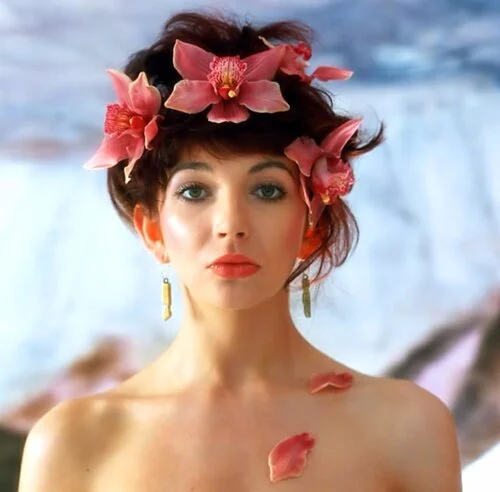
IN THIS PHOTO: Kate Bush in 1980/PHOTO CREDIT: John Carder Bush (from his book, KATE: Inside the Rainbow)

A One-Stop Kate Bush Pop-Up Shop

___________

MOST of my recent Kate Bush features…  
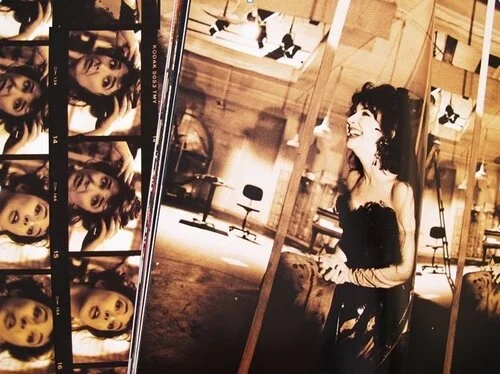
 PHOTO CREDIT: Guido Harari (from his book/collection, The Kate Inside)

have pertained to various songs and albums. In a more general musing, I have been thinking both about the ongoing popularity of Bush’s music and how fascinated people are, and the need both to put more Bush-related goods/ideas into the world - and, also, raising awareness of the ones that are already out there. Over the past couple of months, there have been a couple of magazines/cover stories dedicated to Kate Bush. I have already talked about MOJO’s Collectors’ Series edition, and one can grab hold of it. I have also been reading the new edition of Prog, where they mark forty years of her third studio album, Never for Ever. There is genuine excitement when magazines feature Kate Bush now and, considering the fact that her music has been played for decades all over the world, there are new people discovering her work; others who have had their love rekindled and augmented when special editions and magazines come out. It shows that there is an appetite and demand for printed music journalism, and there is something special about owning anything that puts Kate Bush at the centre. Even though Q no longer exists, there are older editions where Bush was interviewed; many other magazines through the years where she is at the core. Although my idea would not raise money for charity specifically (though it could), there was a pop-up shop when Bush released and remastered her albums.
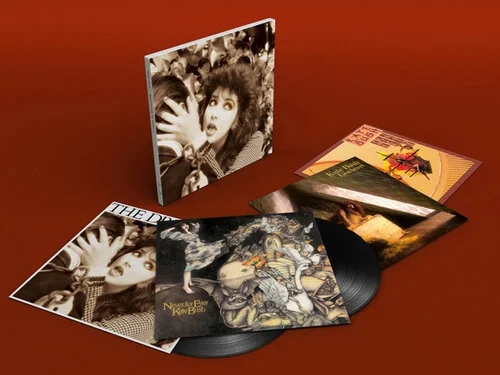
 PHOTO CREDIT: Fish People/Parlophone/Rhino

It was a rare and wonderful opportunity to see a pop-up shop dedicated to Kate Bush. It was such an exciting moment. Her official website announced the news:

“A special pop-up shop will open at London’s Coal Drops Yard in King’s Cross from 5 - 9th Dec 2018. 331

All profits will go to the national homelessness charity, Crisis.

The shop is at 108 Lower Stable St, London, N1C 4DR and opens at 10am on Wednesday Dec 5. The shop closes at 8pm on Sunday Dec 9.

Specific opening times are:

Wednesday 5th December: 10am to 10pm

Thursday 6th December: 10am to 10pm

Friday 7th December: 10am to 10pm

Saturday 8th December: 10am to 8pm

Sunday 9th December: 11am to 8pm

Full Press Release:

Coinciding with the release of definitive remastered versions of her music catalogue, as well as the publication by Faber of the lyric book How To Be Invisible, the shop will sell the vinyl, CDs and book plus a selection of exclusive specially made items. Each book sold will include an exclusive bookmark.

In addition to the stock there will be a daily raffle with very special prizes which will be announced on social media. The store is located in a space at 108 Lower Stable Street, a sunken street within the new Heatherwick Studio designed Coal Drops Yard shopping district, directly adjacent to King’s Cross’ Granary Square.

DAILY RAFFLE:  every day these prizes are there to be won:

'How To Be Invisible' lyric books (standard edition) signed by Kate   x 10

Calligraphic art print of '50 Words For Snow', signed by Kate   x 10

Rare 'King Of the Mountain' picture disc (Originally created for a Record Store Day) unsigned   x 4

Rare 'Running Up That Hill' picture disc (Originally created for a Record Store Day) unsigned  x 16
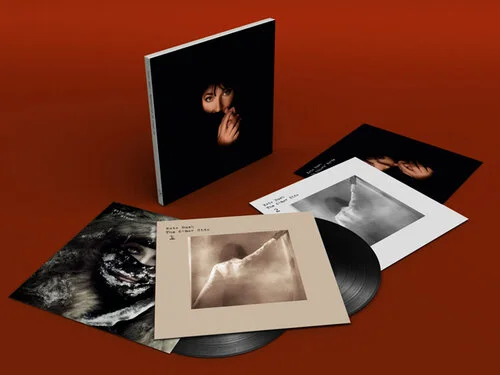
 PHOTO CREDIT: Fish People/Parlophone/Rhino 

Kate said “I can’t imagine how it must feel to be homeless. Our attention is drawn to this tragic issue at Christmas when most of us can share the celebrations with those we love but, of course, homelessness is there all year round - all the time. It must be so frightening. Without charities like Crisis, who would people turn to? Who would help? Where would the hope of a future come from? I hope this pop up shop will raise some money for Crisis and raise more awareness of this life-saving charity”.

Crisis Chief Executive Jon Sparkes said; “We’re absolutely thrilled that Kate Bush has chosen to support us this Christmas by donating all of the profits from her pop up shop.

“Homelessness is one of the most urgent issues of our time – across the country thousands of people are needlessly suffering life on the streets or trapped in hostels and B&Bs. We simply can’t carry on like this when we know that homelessness is not inevitable.

“The money raised by Kate and her fans will help us provide food, warmth, and vital services to thousands of homeless people this Christmas – as well as the year round support they need to leave homelessness behind for good – and for that we’re incredibly grateful”.

Thinking about her support of Crisis, and I guess a pop-up shop now could benefit them and have the same ethos as the 2018 shop. To me, the pop-up shop would exist for a brief period – maybe a couple of months – but move between cities. From London to Manchester and beyond, I think the demand for Bush’s music and words is greater than it has ever been.
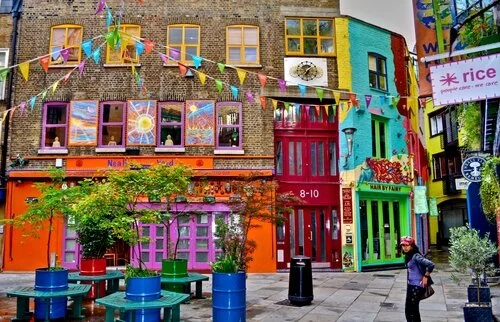
 IN THIS PHOTO: Neal’s Yard, London

There are a lot of great Kate Bush records, books, and memorabilia that I think would benefit fans new and old, and it could also benefit charities. I am not sure where it would start in London but, as Bush spent time in Covent Garden at dance classes, maybe Neal’s Yard. This area is vibrant and alive, and I think a great building (or spare unit) could give home to Kate Bush produce for a short time. Just thinking about the music, and there are all her studio albums that, in 2018, were remastered. There are boxsets of her albums that are great value for money, and you can get her studio albums individually. There are less-common releases like her On Stage E.P., and the fabulous Before the Dawn. Yes, one can buy these goods online, but there is limited stock even across cities like London, and the joy of buying at a record shop is greater than ordering online. I am not sure how feasible it would be, but I know that there are foreign pressings of her albums, singles on 7” and 12”, and there are also rarer prints that are not commonly available through record shops and sites like Amazon – one has to ferret around eBay and auction sites. A pop-up shop could have the studio albums and boxsets in one section, and then other albums in another part.
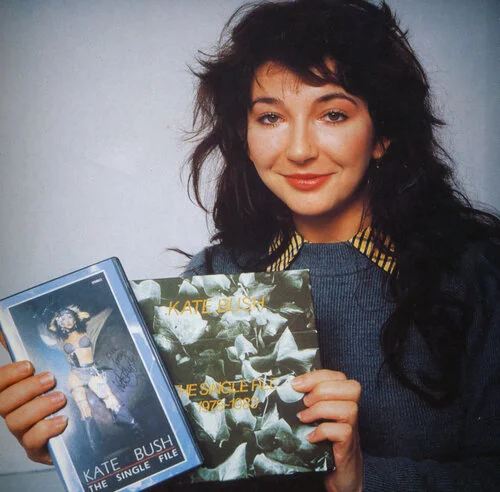
Though we do not use VHS anymore, from a memorabilia standpoint, there are used VHS’ like her Whole Story, and The Single File. I think new copies could be made on VHS but having them in a shop, I am sure, would attract people – I would definitely buy the VHS’, as they are a part of her history. There would be C.D. albums alongside the vinyl but, in the music section, I think a cool cassette vending machine would be awesome! Maybe the demand would not be as huge as vinyl, but having her studio albums on cassette would be great, and even a simple nostalgia value would lead to popularity and demand. I might have missed other music/vinyl, but there are interviews and releases that could make for a vivid and varied selection! There are fewer books relating to Kate Bush available, but magazines could be combined. There would be a magazine rack/section sitting beside bookshelves that would stock Kate Bush books. Ones I have mentioned before like KATE: Inside the Rainbow, and Under the Ivy: The Life & Work of Kate Bush, are ones everyone should own, and I would also recommend Homeground: The Kate Bush Magazine: Anthology One: Wuthering Heights to The Sensual World, and the second volume. Like the vinyl, there would be a section for the rarer and more expensive. For example, Guido Harari’s The Kate Inside is a gorgeous photo collection - there is a terrific Deluxe Edition. Also, the excellent Gered Mankowitz book, WOW, is one that I would love to own.
mnmnmn.jpeg

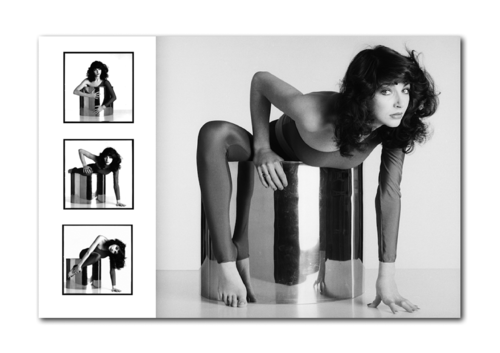
 PHOTO CREDIT: Gered Mankowitz (from his book/collection, WOW)

Of course, the 2018 book of lyrics, How to Be Invisible, is a great release, and a unique insight into her beautiful words. There are other books that are either used or not regularly available in shops, so I would be interested to see how many new/used copies are available that could be put into a shop. I think there is enough there and, when it comes to the other sections of the shops, I guess one could divide it between signed/rare goods and general memorabilia. There are some really cool Kate Bush-related T-shirts that, whilst not official merchandise, would be snapped up! There are great T-shirts available through Amazon, Red Bubble, and Etsy. Look around the Internet, and one can find memorabilia, signed items, and other wonderful, if expensive rarities.  Bringing in items that are already available through Kate Bush’s online store, and I think a pop-up shop larger than the one we saw in 2018 could raise money for charity, get fans together and house some brilliant and rarer Kate Bush goods all in one place! I think Neal’s Yard would be a perfect location for a Kate Bush shop, but thinking about all the products available, maybe a two-storey space would be best. Of course, it would have to happen post-COVID-19, as I think there would not be a lot of space to move around, and to maximise profit/money to charity, having as many people in the shop as possible would be best. It is just a thought at the moment but, looking at the love Bush continues to receive and the way her music and work is so in-demand, I think there would be enormous demand for a…

KATE Bush pop-up shop.

FEATURE: Warmer, Barer, Fuller: The Pleasures and New Realisations on Kate Bush’s Director's Cut

FEATURE:


Warmer, Barer, Fuller

ooppo.jpg

IN THIS PHOTO: Kate Bush (and a very cute feline friend) in a promotional shot for 2011’s Director’s Cut/PHOTO CREDIT: John Carder Bush (from the book, KATE: Inside the Rainbow) 

The Pleasures and New Realisations on Kate Bush’s Director's Cut

___________

WHEN I have mentioned this album before…

I have sort of intimated that it is inessential in terms of Kate Bush’s very best. Director’s Cut was released in 2011 and it is very much part of the cannon. The ninth studio album by Bush, it was released on the Fish People label on 16th May, 2011. It is made up of songs from her earlier albums, The Sensual World, and The Red Shoes which have been remixed and restructured; three of which were re-recorded completely. All the lead vocals on the album and some of the backing vocals have been entirely re-recorded, with some of the songs transposed to a lower key. Additionally, the drum tracks were reconceived and re-recorded. I think my problem is that I am a bit edgy when it comes to Bush re-recording any of her songs. For The Whole Story in 1986 – a greatest hits package -, she put out a new version of Wuthering Heights. Essentially, it was a new, slightly lower vocal, but the original is faultless and timeless for a reason. I guess Bush was wary that Wuthering Heights, whilst genius, was singled out because of a very high-pitched and wild vocal. Maybe she felt, as she was turning twenty-eight in 1986, that the song she recorded when she was nineteen could benefit from a slight update! I get a similar feeling when people cover Kate Bush songs, in the sense I think the originals are best and it is hard to make them better.

I know people love Futureheads’ version of Hounds of Love, and Placebo’s Running Up That Hill and, whilst different to the originals, I think they lack the beauty and power demanded. Maybe it is me. I think Bush has always put her everything into every song and, when you have a voice and instinct like hers, no other artist can touch that – there have been some good cover versions, but none that touch the originals! I was thrilled when Bush announced she was bringing out a new album in 2011, and she was doing something she had not done in such a fashion before – namely, reworking so many of her older songs. Using an article from the Kate Bush Encyclopaedia, and Bush talked about the reason why she took on Director’s Cut:

“For some time I have felt that I wanted to revisit tracks from these two albums and that they could benefit from having new life breathed into them. Lots of work had gone into the two original albums and now these songs have another layer of work woven into their fabric. I think of this as a new album. (Sean Michaels, 'Kate Bush reveals guest lyricist on new album - James Joyce'. The Guardian (UK), 5 April 2011. Retrieved 31 January 2015)”.

Although I think there are only a couple of songs on Director’s Cut that equal or top the originals – Song of Solomon (The Red Shoes), and Top of the City (The Red Shoes) come to mind -, there are defining characteristics of the album that make it an interesting listen.

For one, the opening track, Flower of the Mountain, has a fascinating story. The Sensual World’s title track had intended to use Molly Bloom’s soliloquy from James Joyce's Ulysses, but Bush could not get permission at the time. Although the lyrics are brilliant, Bush really wanted to use those words from Joyce, so when the estate granted permission for Director’s Cut, Flower of the Mountain uses only that beautiful and stirring soliloquy. One suspects it was less to do with yielding to demand as it was that the statue of limitations/restrictions were invalid, as the novel was published in 1922. I love the new version, because one can feel how meaningful it is to Bush. Rather than her copying the original songs with lower vocals for Director’s Cut, there are definite twists and turns. Top of the City seems tauter and livelier, whereas Rubberband Girl – which she almost considered leaving off the album – is more Blues/Rock. If one listens to Director’s Cut as a new album and doesn’t compare them to the originals, I think it is a more rewarding listen; one where you can appreciate the songs anew. One of the issues Bush faced with The Sensual World, and The Red Shoes, is that the production is quite edgy and lacks a certain space. I think The Sensual World is quite sensuous and warm, but C.D.s were around in 1989, and I think there was this need to fill each disc and put as much in/as many layers as possible.

This is true of The Red Shoes which, at fifty-five minutes, is a bit overlong; most of the tracks are over four minutes, and there is a lot of production and sheen on some songs that require something barer. I think, too, one or two potentially strong songs either suffer because of the sound on The Red Shoes, or Bush did not attack and approach the song as she should have. I am surprised there were songs reworked from The Sensual World, as that is one of her best albums. That said, This Woman’s Work is given new meaning and depth! That song is a highlight from The Sensual World, but Bush makes the song sound even more effecting on Director’s Cut. Apart from Deeper Understanding – the only single released from Director’s Cut – not quite hitting the mark and losing something (in a track that talks about our reliance on computers, something that sounded prophetic in 1989 seems outdated and strangely dial-up connection in terms of its sound and potency in 2011), the other tracks are really interesting! I just want to bring in a couple of reviews for Director’s Cut. Alexis Petridis of The Guardian had his say:

“…In fact, it's the only moment when you can honestly say the rerecording pales next to the original. At worst, they sound as good as their predecessors, which leaves you wondering what the point is, even as you succumb to their manifold charms. It was obviously a bind that the Joyce estate refused permission to use Molly Bloom's concluding soliloquy from Ulysses as the lyrics to The Sensual World, but whether it's a vastly better song for finally having them in place of Bush's facsimile is rather a moot point.

Song of Solomon, on which Bush finally abandoned her apparently bottomless store of metaphors for female sexuality in favour of a direct demand for a shag – "Don't want your bullshit," she cries, "I'll come in a hurricane for you" – is a fantastic song whether the rhythm track features pattering tom-toms or a lightly brushed snare. Occasionally, the changes genuinely add something, usually by taking things away. The force of The Red Shoes' depiction of Bush's troubled relationship with the creative impulse was always a little blunted by its presentation as a kind of perky Irish jig: with the Celtic pipes shifted to the background, it sounds sinister and more urgent. Moments of Pleasure's rumination on death is more introverted and affecting stripped of its dramatic orchestration, while This Woman's Work – the rerecording of which caused the most unease among fans – is amazing: emptier, darker and quieter than before, it's even more heart-rending. Given that the original was heart-rending enough to soundtrack a charity campaign against child abuse, that's no mean feat”.

A publication not normally renowned for their positivity is Pitchfork. They reviewed Director’s Cut, and they made some interesting and warm observations:

“What Bush has done on Director's Cut, put simply, is to strip the 80s from these songs. (That goes for the Red Shoes material, too, even though the album was released in the 90s.) The gigantic drums and digital polish, what both dated the music instantly and gave it that stark contrast between accessibility and the deeply personal, have been replaced with less showy rhythm tracks, and a warmer, more intimate atmosphere. On the original "The Sensual World", the elements drawn from Celtic folk felt like striking intrusions in an all-digital world. Renamed "Flower of the Mountain" here, those rustic elements no longer feel quite so out of place, whether you found the original an intriguing hybrid or an awkward merger of old and new.

poo.jpg

IN THIS PHOTO: Kate Bush in a promotional shot for Director’s Cut/PHOTO CREDIT: John Carder Bush (from the book, KATE: Inside the Rainbow)  

The songs still don't have the feel of a band playing together, but they have a new unity, even the synthetic elements part of a lovingly handcrafted sound. "The Red Shoes", another Celtic-inflected standout, with one of Bush's wildest performances, gains a new intensity precisely because the instruments no longer feel so sterile. But not every element of this patchwork has been pieced together perfectly. The eerie keyboard textures on "And So Love Is", the kind of sour 80s kitsch beloved by Gang Gang Dance, seem surprisingly natural in this new environment. But Eric Clapton's bluesy wanking sounds even more out of place now, stadium pop bluster in a homemade world. It produces tension for sure, but the wrong sort”.

I think the takeaways from the reviews seem to revolve around how Bush added something new to well-known songs rather than lazily re-record them without change. To me, the warmth and full sound of the songs is clear. Bush has said how she prefers tape because it has a warmer, fuller sound, and she always felt that digital and techniques of the late-1980s and early-1990s were too edgy - I word that keeps coming up! - and lacked something. Allowed to take her songs into the studio and strip them away, the resultant Director’s Cut is fascinating! It makes me wonder whether she will go back further and rework songs from other albums in years down the line, but I can understand why she felt The Sensual World, and The Red Shoes were a bit too layered, lacking in real warmth and, perhaps, there were too many instruments and too much unnecessary energy.

What we got in 2011 was a then-fifty-two-year-old revisiting songs that she first recorded in her thirties. Since then, she has aged and become a mother, and I think she approaches the tracks with a fresh passion and beauty. One interesting aside is that Bush released Director’s Cut on her Fish People label. She was previous on EMI, but she wanted to have more control of her music and, after thirty-five years, there were few at EMI who she felt close to or had an intimate working relationship with. It seems symbolic that the first album she released on her own label reworked songs from albums that EMI put out. I will write a separate feature about Fish People and whether she will sign names to the label, but I think Director’s Cut is much-needed because it allowed Bush to scratch an itch of slight disappointment. Many raved about Director’s Cut, but others felt a little inclined, as it was her first album in six years - one that many felt was a covers album. If that was the only thing that she released in 2011, then there might have been this sense of Bush signing off and, after releasing 2005’s Aerial following a twelve-year gap, this was her writing a final chapter – where she got to record and produce songs now how they should have been back in 1989 and 1993. Instead, Bush was clearing the way for new work.

I stated before how albums like The Red Shoes were a bit long but, as you look at the running times, most of the songs on Director’s Cut are longer than the originals – Deeper Understanding is almost two minutes longer on Director’s Cut compared to The Sensual World! Rather than extend songs with the same production sound, Bush stripped them out and expanded them; breathing more life and consideration into the words and moods; following on instinctively from Aerial’s expansiveness and sense of the open. Bush said that Director’s Cut was a stepping stone to new work. She acquired new confidence, and I can understand why she had the inspiration and energy to record and release another album after Director’s Cut. 50 Words for Snow followed in November 2011, and very few would have guessed that Bush would release another new album so soon after putting out an album where she redid older tracks. I will finish off soon but, just before, I wanted to source from a couple of interviews Bush to promote the album. In an interview with Interview Magazine, she was asked about her approach to looking back and reconsidering songs she wrote years previous:

“DIMITRI EHRLICH: It’s funny. I’d think revisiting those songs would almost be like looking at old photographs or reading old love letters from a long time ago, because as a songwriter, the emotions that you’re tapping into are the most primal, raw, and immediate ones. Was it strange to step into the emotional clothing you had worn 20 years ago and see how it fit and wonder, Who is this person?

BUSH: Yeah, it was. At first, it was quite difficult, and, at a couple of points, I nearly gave up the whole process. I found that by just slightly lowering the key of most of the songs, suddenly it kind of gave me a way in, because my voice is just lower now. So that helped me to step back into it. And although they were old songs, it all started to feel very much like a new process and, in a lot of ways, ended up feeling like I was just making a new album—it’s just that the material was already written. When I listen to it now, it feels like a new record to me.

EHRLICH: Why did you decide to re-record existing material rather than do something new, or just release the old versions remixed, or whatever?

BUSH: Well, I really didn’t see it as a substitute for a greatest hits package, but it was something I’d wanted to do for a few years. I guess I just kind of felt like there were songs on those two albums [The Sensual World and The Red Shoes (1993)] that were quite interesting but that they could really benefit from having new life breathed into them. I don’t really listen to my old stuff, but on occasion, I would either hear a track on the radio or a friend might play me one, and there was generally a bit of an edgy sound to it, which was mainly due to the digital equipment that we were using, which was state of the art at the time—and I think everyone felt pressured to be working that way. But I still remain a huge fan of analog. So there were elements of the production that I felt were either a little bit dated or a bit cluttered. So what I wanted to do was empty them out and let the songs breathe more”.

In an interview with Pitchfork, the subject of uncluttering songs and toning things down came up. With the vocals more composed and less acrobatic (providing backing vocals were Ed Rowntree, Mica Paris, Jacob Thorn, Michael Wood, and Jevan Johnson Booth), and the instrumentation more subtle and less layered (there were about eight musicians credited on Director’s Cut, whereas there are twice that on The Red Shoes alone), there is a notable difference between the songs on their original albums and Director’s Cut:

“Pitchfork: Listening to Director's Cut, a few of the songs that struck me the most were the ones where you took out big chunks of instrumentation. What was the logic behind that?

KB: There were some good songs on those albums that perhaps weren't speaking the way that they could, so I just wanted to let them breathe a bit more. One of the main things was to strip out a lot of the tracks and, in some cases, lengthen them in order to let the original musicians' performances shine out a bit more, too.

Pitchfork: A lot of the songs you picked for Director's Cut are pretty personal, and there seems to be less theatricality involved compared to the originals. Do you feel like the distance between your more performative side and your more personal side has changed through the years?

KB: [laughs] Oh, that's a really deep question. I don't know how to answer that because I'm always in the process, but hopefully I'm starting to get the hang of how to put it all together more. Sometimes when I look back on myself on those earlier records, there was so much effort going in, so much trying. With this, I was trying to make it much more laid back”.

I wanted to do a feature on Director’s Cut, as I have sort of ignored it or felt that the originals were so good that they should not have been touched. Having read interviews Bush conducted and her reasoning behind Director’s Cut, I can appreciate the album in a new light! If the songs from The Sensual World, and The Red Shoes were a little busy and over-layered, Bush’s first album of 2011 provided these terrific songs with…

 IN THIS PHOTO: Kate Bush in a promotional shot for Director’s Cut/PHOTO CREDIT: John Carder Bush (from the book, KATE: Inside the Rainbow)  

SO much warmth, style and space.

FEATURE: Spotlight: Ari Lennox

FEATURE:

Spotlight

Ari Lennox

___________

I am featuring an artist today…  

who is very popular and has big social media numbers, but she is not known to everyone. I think there are many who are unaware of the music of Ari Lennox, so I wanted to put her into the Spotlight feature. One of last year’s best debut releases came from her Shea Butter Baby album. That album received some huge reviews, and the songs on it are so soulful and pure - but there is definite fire and emotion. I think everyone can appreciate the album and, with a new song out in the form of Chocolate Pomegranate, there are a lot of eyes on Lennox. I am going to bring in a review of Shea Butter Baby, but there are some great albums out there with Ari Lennox. One interesting interview that caught my eye is from GQ . It is clear that Ari Lennox would always make it into music with a voice like hers:

 “The 28-year-old, who spent her formative years in the DMV area, wasn’t a child prodigy who always knew her vocals would carry her to stardom. She worked a dozen or so jobs in her 20s, moving constantly, and aimlessly. Born Courtney Salter, she got her stage name from Mary Lennox, the little girl in the film adaptation of The Secret Garden. “She was a spicy thing,” Ari says. “I always wanted that life, just a nice garden and a sexy, tall guy.”

On Shea Butter Baby, Lennox tells us about suitors being “lost in the shape of [her] hips,” and provides plenty of updates on her search for a sexy, tall guy. (No word on how the garden is going.) But she also sings about finding one such man in a CVS, while she’s a sick mess in need of Ricola cough drops. She sings about how shitty dating apps have been for her, and the unique joys of having her own apartment for the first time. It is an eminently relatable record, and the strongest R&B album of the year thus far.

A couple months ago, you tweeted, "I want to stop being compared to y'alls fave so badly." Who do you hear about the most that you're sick of being compared to?

So, I'm only sick of this because it sometimes makes me feel like there's no room, and that's Erykah Badu. Absolutely no shots at her, she's amazing and a legend. But for me, it's like, if you guys think I sound just like Erykah Badu, is there room for Ari to ever be her own artist? Plus, I've never met Erykah. I'm scared to for a million reasons, and I also don't want her thinking I'm trying to jack her swag or anything. I guess that's my biggest fear—I don't know why she would have time to think about me at all. That's my paranoid mind.

I really think only Erykah Badu can be Erykah Badu. I wish I could create something as legendary as Mama's Gun and Baduizm. That's an all-time body of work right there.

This interview is beautiful because you're asking about so many different things. But a lot of times people just jump straight to, "Yeah, you remind me of Erykah," and I'm just like, "Man, did you check out other things? Do you really know my discography? Do you know anything about me?”.

One of the things that I especially like about Ari Lennox is that her music and voice has that classic edge and sounds very oldskool, but there is that modernity to the music. It is a rich blend that has captivated so many people. I think, with more albums under her belt, Lennox will definitely be a big festival headliner and hugely inspiring artist for those coming through. I want to take from an interview in DJ Booth, as Lennox was asked about mixing the new and old on Shea Butter Baby:

“You have a lot of classic vocal influences, but your songwriting has very modern themes. Is that a conscious choice to bridge the two disciplines?

I think it started as a conscious choice, for sure. Now, I just want my music to be soulful and nostalgic, but I have to talk about what I’m going through. I have to do it in a way where it’s coming from me, and not from somebody else.

The real win of this album is how honest and specific your songwriting has become.

I’ve just always been very blunt. I’ve always been too blunt. I’ve always been too honest.

Is that a virtue?

I think it’s very positive. It’s so easy to put on a mask and not be real about what we’re feeling and who we are. But it’s the only way you can free yourself”.

Who is your ideal Shea Butter Baby listener, and what do you want them to take from the record?

First and foremost, this project is for Black women. I feel like we are not represented the way we should be worldwide, but specifically in America, I feel like they sleep on us. They sleep on us in our natural form, with our natural hair, and our natural noses. The natural Black woman, or even if you’re natural under your weave, this is for you. Or, even if you’re aspiring to be natural. This is for the Black woman because we just don’t get enough love and I want little girls to look at me and I want them to say: “I’m proud of my Blackness. I’m proud of my skin. God made no mistakes when he created us.”

Overall, this album is for the woman. Women owning their power, owning who they are, owning their sexual power. It’s for women”.

If you have not checked out Shea Butter Baby, then make sure that you do, as it is a gorgeous record, and one that points to a very bright and promising future. The twenty-nine-year-old from Washington, D.C. was the first woman to be signed to J. Cole's record label, Dreamville Records. She (Courtney Salter) co-wrote all twelve tracks on her debut album, and there is so much honesty and rawness in the writing. She described how it was quite a blunt experience writing Shea Butter Baby and the real-life turmoil she faced.

This, matched with such an incredible voice, provides plenty of emotional reaction and memorable tracks. When they reviewed Shea Butter Baby, this is what CLASH had to say:

“Lennox’s artistic depth and quality has always been clear to see, but part of the appeal of ‘Shea Butter Baby’ is its lingering commercial appeal, that’s crying out to be explored. This can be seen early on, when ‘BMO’ leaps centre-stage and demands chart attention. Again borrowing from earlier eras, the ‘Space’ sampled [Galt MacDermot] number proves instantly infectious, and has quickly become a fan-favourite on social media. It’s the perfect spring mid-tempo cut, and provides more than enough sass, innuendo, and funk-fuelled energy to engage wider audiences.

The issue of navigating relationships is a foundational crux of R&B, and Ari Lennox channels and tackles both the good and the bad of this. At her most vulnerable – which is arguably on ‘I Been’ – the artist slows it down and keeps things relatable. Somewhere between the purple haze, Tinder references and dodging lies, the 28-year old manages to impart some wisdom to her female fans: “Life is too short to be blocking your blessings like that.”

Lennox learns that no relationship is worth emotional trauma and transforms into a contemporary empowerment leader. In an era defined by ‘situationships’, ‘I Been’ serves as a valuable reminder that toxic environments shouldn’t be tolerated.

Perhaps the most endearing aspect of ‘Shea Butter Baby’ is an authentic innocence that threads through it – the subtle interludes that feature in the space between songs lay bare Ari Lennox’s passions, fears, desires, and intentions. They allow listeners to get to know the singer and her universe, evoking an undeniable form of humility – something that makes the soloist captivating.

‘Shea Butter Baby’ manages to meld contemporary R&B with other sounds like soul, funk, and blues, all while introducing us to the Ari Lennox of today – and the inspirations that guide her every move”.

If you are new to Ari Lennox, then make sure you follow her on social media (see below) and go and investigate her music. She is a definite future icon, and I do love her Neo-Soul vibes mixed with something very modern and of-the-moment. It is no surprise that Lennox is seeing her stock rise and winning so many fans as her music has this transporting quality. I have been following her since just before her debut came out, and I cannot wait to see what she offers up next. There are so few artists as memorable and talented as Ari Lennox, so it is exciting to imagine just how far she can reach. Her music is fabulous and, after just one hit, you will be…

TOTALLY hooked.

____________

Follow Ari Lennox

FEATURE: Vinyl Corner: Pulp – Different Class

FEATURE:

Vinyl Corner

qqq.jpg

Pulp – Different Class

___________

EVEN though its twenty-fifth anniversary…  

was last Friday (30th), I wanted to include Pulp’s Different Class in Vinyl Corner, as it is one of the best albums from the 1990s. I would recommend people buy it on vinyl, as it is a tremendous record. Different Class is the fifth studio album by the legendary Pulp, and I think it is a step up from their previous best, 1994’s His 'n' Hers. That album was nominated for a Mercury Prize in 1994; Different Class was nominated and won in 1996 and I think, when it comes to albums that define the spirit of the 1990s, Different Class instantly comes to mind! Songs like Common People, and Disco 2000 are classics, and these are cuts that were ubiquitous and oft-quoted when I was at school. Jarvis Cocker’s lyrics are exceptional and incredibly sharp on Different Class, and he tackles sex and social class in ways that other writers cannot even imagine.  Different Class was a huge critical and commercial success, entering the U.K. chart at number-one. It has been certified four-times Platinum, and had sold 1.33 million copies in the United Kingdom as of 2020. It is often considered to be one of the greatest albums of the 1990s, and there is an embarrassment of riches to be found – from Mis-Shapes, and Something Changed to Sorted for E's & Wizz, Different Class is a truly phenomenal album! I cannot believe that it is twenty-five years old, as one can put on the album at any time and completely relate to the songs.

There is something ever-fresh and stunning regarding Cocker’s songwriting, and Pulp are at their strongest on Different Class. They did hit another peak on 1998’s This Is Hardcore, but I think there is something extra-genius and memorable about 1995’s Different Class. In their review, AllMusic had the following to offer:

“After years of obscurity, Pulp shot to stardom in Britain with 1994's His 'n' Hers. By the time Different Class was released at the end of October 1995, the band, particularly lead singer Jarvis Cocker, were genuine British superstars, with two number two singles and a triumphant last-minute performance at Glastonbury under their belts, as well as one tabloid scandal. On the heels of such excitement, anticipation for Different Class ran high, and not only does it deliver, it blows away all their previous albums, including the fine His 'n' Hers. Pulp don't stray from their signature formula at all -- it's still grandly theatrical, synth-spiked pop with new wave and disco flourishes, but they have mastered it here. Not only are the melodies and hooks significantly catchier and more immediate, the music explores more territory. From the faux-show tune romp of the anthemic opener "Mis-Shapes" and the glitzy, gaudy stomp of "Disco 2000" (complete with a nicked riff from Laura Branigan's "Gloria") to the aching ballad "Underwear" and the startling sexual menace of "I Spy," Pulp construct a diverse, appealing album around the same basic sound.

Similarly, Jarvis Cocker's lyrics take two themes, sex and social class, and explore a number of different avenues in bitingly clever ways. As well as perfectly capturing the behavior of his characters, Cocker grasps the nuances of language, creating a dense portrait of suburban and working-class life. All of his sex songs are compassionate, while the subtle satire of "Sorted for E's & Wizz" is affectionate, but the best moment on the album is the hit single "Common People," about a rich girl who gets off by slumming with the lower class. Coming from Cocker, who made secondhand clothes and music glamorous, the song is undeniably affecting and exciting, much like Different Class itself”.

In 1995, Britpop was at its peak, and there was the infamous battle between Oasis and Blur. I often think of Pulp as being ‘outside’ of Britpop, as the music seemed so much smarter and a bit too cool in its own way for such a scene. Thinking about it, and I guess one has to class Different Class as Britpop. Before coming to an article that argue Different Class helped define the scene, I want to quote from Pitchfork’s review of Different Class from 2016:
“Cocker’s songs on Different Class are such a rich text that you can go quite a long way into a review of the album before realizing you’ve barely mentioned how it sounds. Pulp aren’t an obviously innovative band, but on Different Class they almost never lapse into the overt retro-stylings of so many of their Britpop peers: Blur’s Kinks and new wave homages, Oasis’ flagrant Beatles-isms, Elastica’s Wire and Stranglers recycling. On Pulp’s ’90s records, there are usually a couple of examples of full-blown pastiche per album, like the Moroder-esque Eurodisco of “She’s a Lady” on His ‘N’ Hers. Here, “Disco 2000” bears an uncomfortable chorus resemblance to Laura Branigan’s “Gloria,” while “Live Bed Show” and “I Spy” hint at the Scott Walker admiration and aspiration that would blossom with We Love Life, which the venerable avant-balladeer produced.

Mostly though, it’s an original and ’90s-contemporary sound that Pulp work up on Different Class, characterized by a sort of shabby sumptuousness, a meagre maximalism. “Common People,” for instance, used all 48 studio tracks available, working in odd cheapo synth textures like the Stylophone and a last-minute overlay of acoustic guitar that, according to producer Chris Thomas, was “compressing so much, it just sunk it into the track.... glued the whole thing together. That was the whip on the horse that made it go”.

If you have not experienced Different Class, then I think it is a good investment on vinyl - and it is one of those albums that you will return to time and time again. For those of us who were around in 1995, I think this Pulp masterpiece really changed the game and provided so much pleasure. It was an album that I was very attached to, and my respect for Sheffield’s Pulp raised significantly! An article in COMPLEX from 2015 discusses the importance of Different Class in the Britpop movement:

“Slow start aside, Pulp peaked at the pinnacle of the Britpop movement and became the very embodiment of Britpop. What makes Cocker's brand of crooning wordsmithery so important to the genre is that he really captured the ennui and frustration of middle-class youth. He sang for people like himself—common people, as their hit single would have it—those raised on a diet of broken biscuits, those who would drink and dance and screw because there's nothing else to do.

The opening track on Different Class served as the record's thesis: "Mis-Shapes" rebelled against the airhead rich kids, immediately putting Pulp in the team of the "other," or rather, a different class. "Check your lucky numbers/That much money could drag you under, oh/What's the point of being rich/If you can't think what to do with it?" Jarvis Cocker sings between choruses about making moves, coming out of the sidelines, and using "the one thing we've got more of—that's our minds." The opening track waged an us vs. them war, and Pulp made it exciting to be a misfit.

"They think they've got us beat, but revenge is going to be so sweet," snarls Cocker, before the second track, "Pencil Skirt," cues up—an anthem about screwing over the rich by, literally, screwing their wives. Cocker promises to be there "when he's not in town" and "show you how you're doing it wrong." They're not rich, but they can certainly fuck better, is what he seems to be saying. (He's probably not wrong.) Just two songs later, Pulp's seedy "I Spy" touches on the same topic, as he sings, "I've been sleeping with your wife for the past 16 weeks/Smoking your cigarettes, drinking your brandy/Messing up the bed you chose together/And in all that time I just wanted you to come home unexpectedly one afternoon/And catch us at it in the front room." "I specialize in revenge," he emphasizes once again. Sex has always been one of Pulp's greatest assets. Cocker has been naturally gifted with the ability to seduce by whispering sweet nothings, between moans and hip swishes from his lanky figure, his fingers always curled in that come-hither sort of way. For any common listener, Pulp's sex was sexy, making it one of the irresistible appeals of Different Class”.

On Friday, Different Class was celebrated and lauded by so many people across social media, and many people were sharing their memories of when it came out and the tracks that mean the most to them. I have always loved Disco 2000 most, but everyone will have their own standouts. That is the thing with Different Class: it is an album so overflowing with brilliance that it is hard…

TO narrow down to a single song!

FEATURE: Oh England My Lionheart: Kate Bush’s Lionheart: A Rich and Underrated Album in a Year of Pressure and Change

FEATURE:


Oh England My Lionheart

IN THIS PHOTO: Kate Bush during the Lionheart cover shoot at Great Windmill Street, London in 1978/PHOTO CREDIT: Gered Mankowitz

Kate Bush’s Lionheart: A Rich and Underrated Album in a Year of Pressure and Change

___________

IN the coming Kate Bush features…

 IN THIS PHOTO: Kate Bush during the Lionheart cover shoot at Great Windmill Street, London in 1978/PHOTO CREDIT: Gered Mankowitz

I will sprinkle in more general themes, but this one is very much tied to Lionheart. I have explained how four of Kate Bush’s albums celebrate anniversaries in November. The Red Shoes is twenty-seven today (1st November), whilst 50 Words for Snow is nine soon, and Aerial is fifteen very shortly. Lionheart is forty-two on 12th November, and it remains one of Bush’s more underrated albums. Like The Red Shoes, perhaps Bush’s songwriting was not at its peak for Lionheart, but the album was recorded and released in the busiest year of her professional career – her very first. One can argue Bush was busier in 1979 when The Tour of Life was born and toured around Europe; 1985 was packed when Hounds of Love was released and, arguably, 1993 was a more hectic year than 1978, as Bush released The Red Shoes, in addition to the short film, The Line, the Cross and the Curve. Maybe there is a link between years where Bush is cramming in a lot and albums maybe not being that complete and rich. 1993 and 1978 are different in terms of circumstances. 1993 was the last year Bush would release an album until 2005; she faced the impact of the death of her mother (in 1992), and fatigue was starting to show. 1978 is almost a polar opposite, where it was the start of her professional career and everything lay ahead. The Kick Inside was only released in February of 1978 and Bush would uncover her second album a mere nine months later! I have said this a lot but, if Bush had more say regarding her schedule and releases, she would have left a second album for another year or so; perhaps given herself until the middle of 1979 to write new songs, then produced a tour for the end of 1979/start of 1980.

I feel she still could have produced the albums she did subsequently, and it would have meant Lionheart could have benefited from more planning and fresh creative blood. As it was, she only had inspiration and opportunity to write three new songs – Symphony in Blue, Full House, and Coffee Homeground. I want to focus on Lionheart’s ‘title track’, Oh England My Lionheart, as it is a song Bush sort of dismissed – but it remains beautiful and so evocative! I have written about Lionheart before, but I feel it is underrated to the extreme. Like The Kick Inside before it, the album was produced by Andrew Powell (Lionheart was recorded between July and September 1978). Recorded at Super Bear Studios, France, Bush would have been excited about putting out an album as I think The Kick Inside would have been in her head for a long time before she recorded it. So many of the songs on the album were very familiar to her, so getting together some fresh tracks was a necessary development. I think the success and popularity of The Kick Inside was a bit of a curse. Especially given the fact Wuthering Heights was a number-one and such a unique single, Kate Bush was catapulted into the spotlight very quickly. I want to bring in a few interview snippets – from different years – where Bush discussed her relationship with Lionheart. It is amazing that Bush managed to put out two albums in a year – she did that in 2011, but I think 1978 is more extraordinary -, and she fitted that in with so much promotion around the world!

I have focused on a few different songs from Lionheart, and I really don’t think there are many weak spots. Despite the fact EMI wanted their prodigy to put out a second album so soon after her debut – and she must have felt the weight on her shoulders -, the mixture of the three new songs and older tracks is amazing! Lionheart is a tougher, rockier album as we have songs like Don’t Push Your Foot on the Heartbrake, and Hammer Horror. Bush’s voice is less reliant on the higher register, and she is fuller and more varied, debatably, on Lionheart. Also, the compositions instrumentation seems more diverse, and I think there is a slight widening of the lyrical palette. There are a lot of positives and, with songs such as Symphony in Blue, Wow, and Kashka from Baghdad equalling the highs of The Kick Inside, Lionheart deserves more affection than it has received! One can speculate what a second album would have sounded like if Bush had been given time to write more new songs and take a breather. Would it have felt more like 1980’s Never for Ever in terms of its genres and confidence, or would she have created something similar to Lionheart, albeit it with a few tweaks?! The fact that she was not allowed to produce/co-produce was a sticking point – Bush ‘assisted’ production on Lionheart and she co-produced Never for Ever with Jon Kelly -, but I have a lot of time for the album as a whole.

One of the songs that I have not yet singled out and wanted to throw some love at is Oh England My Lionheart. With help from the Kate Bush Encyclopaedia (taken from an interview with Kate Bush), this is what the song is about:

“It's really very much a song about the Old England that we all think about whenever we're away, you know, "ah, the wonderful England'' and how beautiful it is amongst all the rubbish, you know. Like the old buildings we've got, the Old English attitudes that are always around. And this sort of very heavy emphasis on nostalgia that is very strong in England. People really do it alot, you know, like "I remember the war and...'' You know it's very much a part of our attitudes to life that we live in the past. And it's really just a sort of poetical play on the, if you like, the romantic visuals of England, and the second World War... Amazing revolution that happened when it was over and peaceful everything seemed, like the green fields. And it's really just a exploration of that. (Lionheart Promo Cassette, EMI Canada, 1978)

A lot of people could easily say that the song is sloppy. It's very classically done. It's only got acoustic instruments on it and it's done ... almost madrigally, you know. I dare say a lot of people will think that it's just a load of old slush but it's just an area that I think it's good to cover. Everything I do is very English and I think that's one reason I've broken through to a lot of countries. The English vibe is very appealing. (Harry Doherty, Enigma Variations. Melody Maker, November 1978)”.

Even if Bush has since distanced herself from the track, I think it is a gem that could easily have fitted on The Kick Inside. Maybe she wanted more songs about love on The Kick Inside, but it would have been nice to hear Oh England My Lionheart on the second side of her debut. One can only imagine the combination of excitement and exhaustion Bush experienced in 1978. From Wuthering Heights climbing the charts at the start of the year and her album being released in February, through to the interviews and promotion for both that followed, Bush definitely got a taste of the word and rigour of the music business very early on! I would be interested to hear about the conversation where Bush was working on getting The Kick Inside out to the world and EMI approaching her to start the process of her second album. I can imagine Bush was not overly-keen to be back in the studio so soon, and rushing an album could have derailed the momentum that was created and growing in 1978. As it was, she was charged with collecting an album’s worth of material. There is nothing quite as striking as Wuthering Heights on Lionheart, but its ten tracks enable Bush to progress (slightly) in terms of her vocals and sound whilst retaining the same shades and nuances that made The Kick Inside such a success.

 IN THIS PHOTO: Kate Bush n 1978

Kate Bush’s relationship with Lionheart altered through the years. Taking from the Kate Bush Encyclopaedia, and there was some positivity in her voice in 1978:

“Maybe I'm a bit too close to it at the moment, but I find it much more adventurous than the last one. I'm much more happier with the songs and the arrangements and the backing tracks. I was getting a bit worried about labels from that last album; everything being in the high register, everything being soft, and airy-fairy. That was great for the time but it's not really what I want to do now, or what I want to do, say, in the next year. I guess I want to get basically heavier in the sound sense... and I think that's on the way, which makes me really happy.

I don't really think there are any songs on the album that are as close to Wuthering Heights as there were on the last one. I mean, there's lots of songs people could draw comparisons with. I want the first single that comes out from this album to be reasonably up-tempo. That's the first thing I'm concerned with, because I want to break away from what has previously gone. I'm not pleased with being associated with such soft, romantic vibes, not for the first single anyway. If that happens again, that's what I will be to everyone. (Harry Doherty, Kate: Enigma Variations. Melody Maker, November 1978)”.

I have talked about Lionheart being rushed and Bush having to toss songs together but, in her idyllic surroundings in France, there was time to hone certain songs - and, as it transpired, there was plenty of material for the album:

“[Recording in France] was an amazing experience. I mean it's the first time I've ever recorded out of the country. And the environment was really quite phenomenal, I mean it was just so beautiful, it was so unlike anything I'd seen for a long while. And I think there was so many advantages to it, but there were a couple of disadvantages - the fact that it was so beautiful, you couldn't help but keep drifting off to the sun out there, you know, that sort of thing. But you just didn't feel like you needed a break, because the vibes and the weather and everyone around was just so good, you know, you didn't feel like you were working. It was really, really fun”.

It was a difficult situation because there was very little time around and I felt very squashed in by the lack of time and that's what I don't like, especially if it's concerning something as important for me as my songs are, they're really important to me. But it all seemed to come together and it was really nicely guided by something, it just happened great. And there were quite a few old songs that I managed to get the time to re-write. It's a much lighter level of work when you re-write a song because the basic inspiration is there, you just perfect upon it and that's great. And they're about four new songs so they all came together, it was great. In fact, we ended up with more then we needed again, which is fantastic. (Lionheart Promo Cassette, EMI Canada, 1978)”.

A few years after Lionheart came out - with Bush was working as a solo producer -, and her sound had radically altered. I guess she had enough time then to look back at Lionheart and get a clearer impression of it – without feeling obligated to be positive when promoting it:

“I had only a week after we got back from Japan to prepare for the album. I was lucky to get it together so quickly. But the songs seem to me, now, to be somewhat overproduced. I didn't put enough time into them. (Richard Laermer, Kate Bush Touches the U.S. At Last, Pulse!, 1984)”.

“Even on the first two records, I was doing what I'm doing now as a artist, only because I was a lot younger, and I didn't have the room and the space to be able to truly present my music. I had to work with a producer and within certain kind of set-ups because of the fact that... that's how it was, I wasn't powerful enough basically to be able to say, ``Look, I'm producing this myself. This is what I do.'' And that's what I do now. I think that if I had been a little older, and if I'd had the experience at the time, I would have done it then, too. But I was - When I was making my first album, I was 18. I had never really worked with a band before, let alone a producer in a studio setup. So I just had - [Laughs] -I mean I just about had the guts, you know, to sing and keep it together.

IN THIS PHOTO: Kate Bush during The Tour of Life in 1979/PHOTO CREDIT: Max Browne 

 But you learn very quickly what you want. By the time the second album was finished, I knew that I had to be involved. Even though they were my songs and I was singing them, the finished product was not what I wanted. That wasn't the producer's fault. He was doing a good job from his point of view, making it sound good and together. But for me, it was not my album, really. (John Dilberto, Britain's Renaissance of Concept Rock, Keyboard, 1985)”.

I guess it was that yearning to be more involved in production that meant 1980’s Never for Ever was such a revelation. In spite of Bush not having quite the input she would have liked on 1978’s Lionheart, it is a remarkable album that was completed in a truly frantic and restless year! The album has been certified Platinum in the U.K., and it reached the top-twenty in several nations’ charts; the single, Wow, reached fourteen in the U.K., and I think Bush could have released Symphony in Blue, and Kashka from Baghdad and scored higher chart positions than she obtained for the album’s first single, Hammer Horror – which only got to forty-four in the U.K. Oh England My Lionheart is a terrific song that I think Bush would feel differently about if she knew how many people loved it. Every track from Lionheart was performed for her 1979 tour. The Tour of Life received rave reviews, and I think part of that was to do with the songs’ strengths and what Bush managed to do with them in a live setting. Just ahead of its forty-second anniversary, I feel Lionheart should be reassessed; more of its songs should be played on the radio and, in a wild year (1978), Bush pulled together a second album that is very strong and eclectic. Even though Lionheart is not the album she would have wanted to release after The Kick Inside, listening back to it now staggers me – how did she manage to create an album so soon after her debut that…

IS so good!?

FEATURE: Where Love Lives: Sounds of the 90s with Fearne Cotton

FEATURE:


Where Love Lives

Sounds of the 90s with Fearne Cotton

___________

NEXT week…  

zzz.jpg

 IMAGE CREDIT: BBC

I am going to be writing about various aspects of what is happening in today’s music. In 2020, things are like we have never seen them before in terms of how live gigs have practically become extinct, and many artists’ livelihoods have haemorrhaged. In terms of music sales, things have been pretty healthy, and the quality of sounds released has been immense! I am going to write a feature ranking my top-ten albums of 2020, as I think there has been so many world-class albums released. For those of us who were alive thirty years ago when the 1990s began, it is almost a polar opposite now in terms of optimism and looking forward! I was six when the Nineties began, but I could sense then that something exceptional was shaping up; this was reflected in the music and culture. In terms of cross-pollination and experimentation, music was being taken to new heights and, even at a base level, Pop music at its simplest was so fun and uplifting. One can see why so many artists of today look back on the ‘90s as a source of inspiration and mentorship. Now more than ever, radio has become a source of relief and companionship. I have been enjoying the podcasts that have sprouted up and, at a time when creativity is providing something akin to catharsis and community, there has been so much gold put out.

IMAGE CREDIT: BBC

One series that ties into my absolute love and devotion of the 1990s is Sounds of the 90s with Fearne Cotton (there is an unofficial Spotify playlist that is a nice guide). I would encourage anyone with even a passing interesting in the decade to check it out, and it is a shame that the episodes are not kept – the BBC keep them live for about thirty days and then they are no longer available. I guess there is only so much room for shows on their site, and I guess it costs them to keep stuff live and active. It is a shame there is not a YouTube channel or they can transfer the show to Spotify, as I have loved what Fearne Cotton and her guests have put out over the weeks. In the episode that went out on Friday, Cotton was joined by Ronan Keating and Florence Given to talk all things ‘90s. Before the end of the year, I will put out a big piece regarding the variation and layers of the 1990s; the sheer weight of brilliance that was around. There is an argument as to whether a lack of technology and social media – the Internet was still quite new by the end of the ‘90s – helped and whether, I guess, a sense of privation was a bonus. To me, I think there was a simplicity for the time and a real sense of change in the air!

No decade has ever been care-free and overly-optimistic, but I feel there was a lot in the 1990s that sort of dropped since. There were scenes and genres that compelled competition and rivalry; there was so much going on, and it is a shame that there is not really the same sort of composure and dynamic now as there was in the 1990s. Pop music, largely, was synonymous with energy, whereas it is much more introverted and less pumped than back in the 1990s - there has been some change recently but not that much. Also, I think it is unfair to call Fearne Cotton’s show ‘nostalgic’. Yes, there is an element of that for those of us who lived through the decade, but there are many younger people who are listening because they want a guide to the 1990s. As I said, artists now are incorporating music from the 1990s into their repertoire and palette, and huge acts like Dua Lipa are combining tones of the 1980s and 1990s and creating something new. In a way, Sounds of the 90s with Fearne Cotton allows us to learn as much about music today as it does what was being created almost thirty years ago! I shall not bore people with my recollections of the 1990s and why it is so special to me, but I think the greatest thing about that time was the sense of joy and optimism that ran alongside genres like Grunge and Alternative – which were a bit darker and more introverted.

Whilst many of the tracks on Sounds of the 90s with Fearne Cotton concentrates on Pop and more mainstream sounds, it has compelled me and others to fully explore the decade. I love that Cotton has a lot of love for the ‘90s, and I hope her BBC Radio 2 series continues and we will be able to get all of the episodes through Spotify. Maybe, as things are so tough and there is a way to go until we can return to normal, there is something extra-appealing about Sounds of the 90s with Fearne Cotton. I have loved hearing from artists who were around in the 1990s and others who recall the decade fondly. For such a broad and busy decade, the selection of songs for each episode is actually pretty good – whilst I said Pop rules on the series, quite a few genres are covered! -, and it has been great listening in! If you want a blast of the greatest decade of music ever, or you just want to listen to some terrific songs that will definitely put you in a better mood, then take a listen to the Sounds of the 90s with Fearne Cotton episodes. It will be sad to hear them end but, as many have responded so positively to Cotton’s series, maybe there will be more, or she will investigate the decade deeply and from different angles down the line. In any case, I love listening through playlists of the best tunes of the 1990s and, on her show, we have heard some of the very best…

FROM a wonderful time!

FEATURE: The Lockdown Playlist: Classic Chill

FEATURE:


The Lockdown Playlist

PHOTO CREDIT: @brookecagle/Unsplash 

Classic Chill

___________

I am doing an extra Lockdown Playlist…  

 PHOTO CREDIT: @liubenko/Unsplash

as it is a particularly stressful time and, as COVID-19 cases climb, many people are very scared and unsure of what the future holds. I do think we all need some chill and relaxation and, whilst I have explored ambience before in these lockdowns, I want to feature some chilled Classic tracks that are guaranteed to soothe and ease your troubles. I hope things get better very soon, as many people are feeling strained and exhausted. It will get better, but it is going to be a long time before things start to feel better and like they are returning to normal. For this playlist, take some time to unwind and experience some truly escapist and moving…

 PHOTO CREDIT: @rsanchescarvalho/Unsplash

CLASSICAL tracks.

FEATURE: It Started with a Treasured Brown Jug… Kate Bush’s Aerial at Fifteen: A Coral Room

FEATURE:


It Started with a Treasured Brown Jug…

Kate Bush’s Aerial at Fifteen: A Coral Room

___________

THIS will be one of the shorter features…

IN THIS PHOTO: Kate Bush in 2005/PHOTO CREDIT: Trevor Leighton/The National Portrait Gallery, London

although I always say that and it turns into something epic! Because Aerial is fifteen on 7th November, I want to put out a final feature regarding the album and a particular aspect of it. I think I have covered the biggest songs, and I have also investigated the second disc of the (double) album, A Sky of Honey. There is one song that I had to mention before the anniversary, as it was highlighted by a fair few reviewers when it came to the best and most memorable tracks from Aerial. A Coral Room, in a way, reminds me of Moments of Pleasure from 1993’s The Red Shoes. In the song, we hear the lines “And I can hear my mother saying/"Every old sock meets an old shoe"/Isn't that a great saying?”. In interviews, Bush was asked about those lines and she said, when promoting Director’s Cut (2011) – in which she reworks that track -, that her mother found those lines hysterical. Hannah Bush died in 1992, so she would not have got the chance to see how those lines in Moments of Pleasure resonated with people all these years later. It is inevitable, as her mother was ageing when Bush wrote Moments of Pleasure, that she would have been reminded of upbringing; how little sayings like that made a difference and stuck in the mind! Even though a lot of the sadder and more reflective songs on The Red Shoes were written when Bush’s mother was still alive, one feels that there was a general sense and feeling that pushed remembrance and her mother’s wisdom to the heart.

By the time Aerial arrived in 2005, Bush’s mother, obviously, had departed and Bush was a mother herself –she gave birth to her son, Bertie, in 1998. As the Kate Bush Encyclopaedia presents, Bush spoke about the origins of A Coral Room in a 2005 interview:

“There was a little brown jug actually, yeah. The song is really about the passing of time. I like the idea of coming from this big expansive, outside world of sea and cities into, again, this very small space where, er, it's talking about a memory of my mother and this little brown jug. I always remember hearing years ago this thing about a sort of Zen approach to life, where, you would hold something in your hand, knowing that, at some point, it would break, it would no longer be there. (Front Row, BBC4, 4 November 2005)“.

It seems like there are similarities with Moments of Pleasure, and A Coral Room. If the former employed a saying that seems quite cute but actually is very true, then the latter seems more haunting and effecting; almost like a piece of her mother has been left behind. I think, as Bush was building a family and released her first album since The Red Shoes, that her mother’s influence and importance would return - “My mother and her little brown jug/It held her milk/And now it holds our memories/I can hear her singing/"Little brown jug don't I love thee"/"Little brown jug don't I love thee"/Ho ho ho, hee hee hee”.

There are a few things that strike me about Aerial. I think the first disc, A Sea of Honey, is very home-based and domestic; where Bush guides us through various objects and rooms in the house. Although she is putting characters into some songs, one can feel the home flowing through the tracks. The only exclusion might be the opening track, King of the Mountain, which concerns Elvis Presley being alive and well and hiding in a mountain above us. Maybe, in my metaphor, Bush has started in the music room and has a vinyl of Presley with her as her mind wanders. Π is about the mathematical constant, and that could either be influenced by maths books, Bush’s fascination with numbers and, perhaps, her son as a young child - knowing that he would soon be entering school and thinking about what he would go on to learn. Bertie, track-three, is about her son, and Mrs. Bartolozzi takes us into the laundry room, as we get vivid images of clothing entwined in the washing machine and some on the line outside. Joanni, concerning Joan of Arc, seems less about Bush transplanting herself alongside the French heroine and more about Bush reading about her. How to Be Invisible finds Bush singing “I found a book on how to be invisible/Take a pinch of keyhole/And fold yourself up/You cut along the dotted line/You think inside out/And you're invisible”, so I can picture Bush moving between books and rooms through these songs.

The final song of the first side, A Coral Room, is almost the centrepiece of the house, where Bush has this brown jug, but she allows her mind to wander and uses it as this gateway into a world of imagination. If A Sea of Honey is more Bush in the house using everyday objects and inspirations to weave gorgeous songs and moments, A Sky of Honey is her in the garden absorbing the inspiration nature is giving it – Bush is breathing in and relaxing, whereas the first disc is the opposite. That is just me imagining and speculating, but it is significant that one of the finest and most emotively-performed songs on Aerial brings Bush’s mother to heart. I think A Coral Room finds Bush near her peak when it comes to her lyrics, and how a domestic vessel can provoke and stir such imagery: “There's a city, draped in net/Fisherman net/And in the half-light, in the half-light/It looks like every tower/Is covered in webs/Moving and glistening and rocking/It's babies in rhythm/As the spider of time is climbing/Over the ruins”. At 6:12, A Coral Room is the longest song on A Sea of Honey, and it is one of the album’s longest songs – only bested by Nocturn, and Aerial on A Sky of Honey. I love how imaginative and spellbinding A Coral Room is, but I also really like the fact that, clearly, her mother is at heart.

In an interview Bush gave to The Guardian in 2005, she was asked about A Coral Room:

“The shiver-inducing stand-out track on Aerial, however, comes at the end of the first disc. A Coral Room is a piano-and-vocal ballad that Bush admits she first considered to be too personal for release, dealing as it does with the death of her mother, a matter that she didn't address at the time in any of the songs on The Red Shoes.

"No, no I didn't," she says. "I mean, how would you address it? I think it's a long time before you can go anywhere near it because it hurts too much. I've read a couple of things that I was sort of close to having a nervous breakdown. But I don't think I was. I was very, very tired. It was a really difficult time".

Also, when Bush was interviewed by Mark Radcliffe – in an interview that, sadly, I cannot find on YouTube as a whole video (it is there in segments) -, the subject of motherhood was explored:

“Mark: How much has being a mother, and a mother and son, how much has that has inspired and infused this record, do you think?

Kate: I think it's all over it. You know, it's everywhere in the record. He's such a big part of my life so, you know, he's a very big part of my work.

Mark: Yeah. The life you lead, has been because you prioritized being a mother, more or less, above everything else, isn't it?

Kate: Yes, and it's something I really wanted to do, through choice. It's such a great thing, being able to spend as much time with him as I can. And, you know, he won't be young for very long. You know, already he's starting to grow up and I wanted to make sure that I didn't miss out on that, that I spent as much time with his as I could. So, the idea was that he would come first, and then the record would come next, which is also one reason why it's taken a long time (laughs) Yes, it's a wonderful thing, having such a lovely son”.

As Aerial prepares to celebrates fifteen years in the world, I was very keen to highlight one of the best songs from the album. It is amazing listening to the album now and hearing things you missed or certain tracks growing in stature. To me, A Coral Room has always been one of…

KATE Bush’s finest moments.

FEATURE: A Buyer’s Guide: Part Twenty-Seven: INXS

FEATURE:

A Buyer’s Guide

f.jpg

Part Twenty-Seven: INXS

___________

FOR this twenty-seventh….

edition of A Buyer’s Guide, I am interested in the legendary Australian band, INXS. Led by the incredible Michael Hutchence (who sadly died in 1997; the band split up in 2012), the Australian group have released some stunning albums. I have highlighted their four best, one that is underrated, in addition to their final album – and a book that acts as a pretty useful companion. We all know the classic INXS cuts, and I am a big fan of their wonderful music! If you need a guide to INXS, have a look at the suggestions below, and I think that they will guide you…

IN the right direction.

______________

The Four Essential Albums

The Swing

Release Date: April 1984

Labels: WEA/Mercury/Atco

Producers: Nick Launay/Nile Rodgers

Standout Tracks: I Send a Message/Dancing on the Jetty/Burn for You

Buy: https://www.discogs.com/INXS-The-Swing/master/71986

Stream: https://open.spotify.com/album/2fxoua5j7qfLmQGkf1TPIN

Review:

“Consolidating the strengths of Shabooh Shoobah, The Swing is the first consistently impressive INXS album. With the Nile Rodgers-produced "Original Sin" acting as the centerpiece, The Swing retains the new wave pop sense and rock attack of their earlier albums, while adding a stronger emphasis on dance rhythms. At the same time, the group's songwriting had improved, with more than half of the album featuring memorable hooks” – AllMusic

Choice Cut: Original Sin

Listen Like Thieves

Release Date: 14th October, 1985

Labels: Atlantic/Mercury/WEA

Producer: Chris Thomas

Standout Tracks: What You Need/Listen Like Thieves/This Time

Buy: https://www.discogs.com/INXS-Listen-Like-Thieves/master/137590

Stream: https://open.spotify.com/album/1U6tgUieq2uuKip6DVxM31

Review:

“Which is why Listen Like Thieves feels like a moment worth preserving—a snapshot of a band finding its voice and its lane in real time and figuring out how to do something that seems nearly beyond comprehension 35 years later. There are no heirs apparent. The 1975 have the big-tent ambition and certainly the look, but are complicated and navel gaze-y in a way INXS never seemed interested in. The Killers have the chart success but a decidedly Mormon interpretation of sex appeal. Coldplay have to work too hard to convince you that they’re any fun. Spoon have the songs and the hooks and the decades of consistency that make them easy to overlook, but not the actual hits. (Oh god, is it Maroon 5?) But the notion of sex, drugs, and dance-oriented, innocuous, hugely popular rock’n’roll as a formula for a decades-long career in some ways died with Hutchence. This almost sounds like a backhanded compliment now but it should be a badge of honor: INXS were a very good band that was very good at their job and that no longer really exists” – Pitchfork

Choice Cut: Kiss the Dirt (Falling Down the Mountain)

Kick

Release Date: 12th October, 1987 (L.P. & Cassette)/26th October, 1987 (C.D.)

Labels: WEA/Atlantic/Mercury

Producer: Chris Thomas

Standout Tracks: New Sensation/Never Tear Us Apart/Mystify

Buy: https://www.discogs.com/INXS-Kick/master/68453

Stream: https://open.spotify.com/album/7cuwWzS0oiApEt2fpKafkX

Review:

“"What You Need" had taken INXS from college radio into the American Top Five, but there was little indication that the group would follow it with a multi-platinum blockbuster like Kick. Where the follow-ups to "What You Need" made barely a ripple on the pop charts, Kick spun off four Top Ten singles, including the band's only American number one, "Need You Tonight." Kick crystallized all of the band's influences -- Stones-y rock & roll, pop, funk, contemporary dance-pop -- into a cool, stylish dance/rock hybrid. It was perfectly suited to lead singer Michael Hutchence's feline sexuality, which certainly didn't hurt the band's already inventive videos. But it wasn't just image that provided their breakthrough. For the first (and really only) time, INXS made a consistently solid album that had no weak moments from top to bottom. More than that, really, Kick is an impeccably crafted pop tour de force, the band succeeding at everything they try. Every track has at least a subtly different feel from what came before it; INXS freely incorporates tense guitar riffs, rock & roll anthems, swing-tinged pop/rock, string-laden balladry, danceable pop-funk, horn-driven '60s soul, '80s R&B, and even a bit of the new wave-ish sound they'd started out with. More to the point, every song is catchy and memorable, branded with indelible hooks. Even without the band's sense of style, the flawless songcraft is intoxicating, and it's what makes Kick one of the best mainstream pop albums of the '80s” – AllMusic

Choice Cut: Need You Tonight

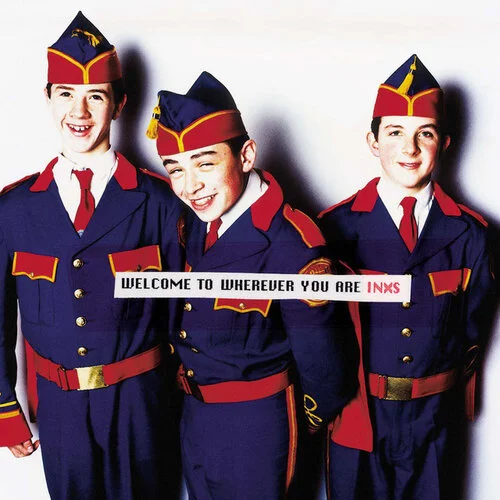
Welcome to Wherever You Are

Release Date: 3rd August, 1992

Labels: Atlantic (U.S.)/Mercury (E.U.)/East West Records

Producers: Mark Opitz/INXS

Standout Tracks: Heaven Sent/Taste It/Beautiful Girl

Buy: https://www.discogs.com/INXS-Welcome-To-Wherever-You-Are/master/71922

Stream: https://open.spotify.com/album/6BucEUL1TVDW6WQ59RS3WV

Review:

“LIKE REM, popular Australian acronym took a bit of a step back after years of sustained touring, immersing themselves in relaxed studio indulgence rather than chasing schedules. The result, Welcome to Wherever You Are, is their very own Out of Time, a work of unusual diversity and confident experimentation. On material which blends styles and influences from a range of sources play with the punch of a soul band. The lyrics, of course, aren't as intriguing or exacting as REM's, but there are compensations in Michael Hutchence's greater adeptness in the ways of erotic obsession. It's their best record by some distance, bristling with pop hooks applied in odd directions.

The absence, after three hit albums, of producer Chris Thomas means it's both rawer than the usual sound, on straight- ahead rockers like the single 'Heaven Sent' and the lusty 'Taste It', and more adventurously sophisticated. A 60-piece orchestra is drafted into service for the anthemic 'Baby Don't Cry' and the moody finale 'Men and Women'. This last serves almost as a touchstone for the whole album, which finds Hutchence, notwithstanding his bona fide sex-god status, as bewildered as ever by the battle of the sexes. 'Making my own mind up,' he intones bleakly, 'When I can, I will’” – The Independent

Choice Cut: Baby Don’t Cry

The Underrated Gem

X

Release Date: 25th September, 1990

Labels: Atlantic (U.S.)/Mercury (E.U.)/WEA (Australia)

Producer: Chris Thomas

Standout Tracks: The Stairs/By My Side/Bitter Tears

Buy: https://www.discogs.com/INXS-X/master/71886

Stream: https://open.spotify.com/album/688l8IJXR4cmgGj0Ekl0DR

Review:

“The seventh album from Australia's INXS basically sticks to the formula set up on Kick, mixing solid remixable dancefloor beats with slightly quirky production tricks, Michael Hutchence's rough-edged, bluesy vocals, and some good solid song hooks. The most immediate numbers are, of course, the two singles, "Suicide Blonde" and "Disappear," but other tracks stand out as potential hit material as well, including the anthemic "The Stairs." The biggest problems with the album are a tendency to play it safe, sticking to the tried and true -- echoing a line in the thumping "Who Pays the Price," when Hutchence sings "it's all been felt before" -- and the fact that there's very little in the way of subtlety on the entire album. All of the songs are designed for immediate radio contact -- they don't really give you a chance to grow into them, they just grab you by the throat and start shaking. "Know the Difference," as an example, threatens to be sneaky but immediately switches to an obvious assault instead. In the finish, the overwhelming lack of subtlety and sense of sameness overcomes the album as a whole. It's not that's it's a bad album. It's just nowhere near as good as it could -- and should -- have been” – AllMusic

Choice Cut: Suicide Blonde

The Final Album

Original Sin

Release Date: 16th November, 2010

Labels: Petrol Electric/Polydor (France)/Atco (U.S.)/Groove Merchants (Australia)/Epic (Canada)

Producers: Jon Farriss/James Ash/INXS

Standout Tracks: Mediate (ft. Tricky)/Beautiful Girl (ft. Pat Monahan)/Mystify (ft. Loane and John Mayer)

Buy: https://www.discogs.com/INXS-Original-Sin/master/312989

Review:

“Having seen their permanent replacement, J.D. Fortune, recently fall off the rails, some might say it was time the INXS name was laid to rest. But six years after the largely ignored Switch, the Farriss brothers and co. are back with Original Sin, a star-studded tribute record featuring 12 new interpretations of some of their biggest hits. Depending on your viewpoint, the whole concept could be seen as a brave attempt to introduce some of their classic material to a new audience, or a lazy retread of former glories which cheapens the legacy of their late frontman Michael Hutchence. But whatever your stance on their post-1997 career, it's inarguably admirable just how much free reign each of the wildly eclectic collaborators are given to make these songs their own. Indeed, other than the straightforward rendition of closing number "The Stairs" (the only track to feature the aforementioned Fortune), and the impassioned, U2-esque treatment afforded to "Beautiful Girl" (featuring Train's Pat Monahan), the majority of the covers are virtually unrecognizable from the source material. This radical approach occasionally produces some surprisingly pleasing results. "Mediate," one of five tracks taken from their 1987 juggernaut Kick, is given an effectively claustrophobic makeover thanks to its warped basslines, crunching distorted guitars, and Tricky's hypnotic dark whisperings; bandmember Kirk Pengilly is unlikely to leave a dry eye in the house with his haunting and stripped-back choral reworking of early new wave single "Don't Change," and Argentine singer/songwriter Deborah DeCorral transforms the '80s funk of "New Sensation" into a gorgeous slice of understated country-blues. There are times, though, when the dream team lineup creates a nightmare. Ben Harper and Mylene Farmer's disjointed, bilingual duet "Never Tear Us Apart" is a cacophonous mess, which completely destroys the majesty of the original, French vocalist Loane and John Mayer turns the pounding piano-pop of "Mystify" into a self-indulgent slice of trippy space rock, while even Rob Thomas' best Hutchence impression can't save the misguided and formulaic, filtered, Gallic house retooling of the title track. The sole new composition, the meandering industrial electro opener "Drum Opera," indicates why the band seem so keen to revisit their past, but while Original Sin is likely to leave many hardened fans dismayed, there are a few encouraging moments which justify its addition to their cherished back catalog” – AllMusic

Choice Cut: New Sensation (ft. Deborah De Corral)

The INXS Book

INXS Story to Story: The Official Autobiography 

Authors: INXS/Anthony Bozza

Publication Date: 21st October, 2005

Publisher: Bantam Press; First Edition First Printing

Synopsis:

“Now for the first time, INXS band members tell their own story about the meeting (and sometimes clashing) of minds that produced their music. In this gritty, in-depth narrative, one of the most influential bands of the last two decades reveals the truth about the way they lived: the drugs, the sex, the supermodels and the in-fighting. They also divulge everything they know about Michael Hutchence: his relationship with Paula Yates, his drug addiction and what they really think about his death. Like The Dirt, this is a book about rock 'n' roll out of control. It gives a fascinating insight into the life and death of a superstar, by the people who knew him best” – Amazon.co.uk

Order: https://www.amazon.co.uk/INXS-Story-Official-Autobiography/dp/0593055179/ref=sr_1_1?dchild=1&keywords=inxs&qid=1603785610&s=books&sr=1-1

FEATURE: Too Good to Be Forgotten: Songs That Are Much More Than a Guilty Pleasure: Dire Straits – Walk of Life

FEATURE:


Too Good to Be Forgotten: Songs That Are Much More Than a Guilty Pleasure

Dire Straits – Walk of Life

___________

I am going to move onto a song from…  

the 1970s next week but, for the second time in the past couple of weeks, I am featuring Dire Straits. In a previous Lockdown Playlist, I marked forty years of their album, Making Movies, with a film-related playlist, but now I am focusing on a song of theirs that gets a bad rap from some. Walk of Life is a song from their huge album, Brothers in Arms, that still splits critics. Released in 1985, the album starts with four singles - So Far Away, Money for Nothing, Walk of Life, and Your Latest Trick. Walk of Life peaked at number-seven in the U.S. charts and was the band’s biggest commercial hit in the U.K., peaking at number-two. Dire Straits are a fantastic band, but there are still some that see them as a guilty pleasure or are not a fan of the hits. Fronted by Mark Knopfler, there is a bit of cheesiness regarding Walk of Life’s synthesiser sound - but one cannot deny the infectiousness of the song. I grew up listening to band like Dire Straits, and while there is more critical respect for songs like Sultans of Swing, and Romeo and Juliet, I think Brothers in Arms is an underrated album that deserves to be seen as a classic. Walk of Life is my favourite Dire Straits song because it has such energy and I love its catchiness. Maybe the song’s video did not help regarding the song’s reputation, but I think one should show some love for Walk of Life.!

Many critics consider the song to be among Dire Straits’ best songs, but there are many others who feel it is one of the less impressive tracks of the 1980s. In this feature from The Sound of last year, we learn more about Walk of Life’s background:

“Dire Straits 1985 hit single 'Walk of Life' was originally inspired by a photograph and a Cajun-style accordion, according to lead guitarist and singer Mark Knopfler.

The single, which appeared on the band's blockbuster album 'Brother in Arms', started out as a tribute of sorts to street buskers.

“I saw a photograph of a kid playing guitar in a subway, turning his face to the wall to get a good reverb. When I started playing the guitar, because I didn’t have an amplifier, I’d put the head of the guitar on the arm of a chair and put my head on the guitar to try and get into a loud noise. It kinda reminded me of that, I suppose,” Knopfler said.

You can see the influence in the original version of the music video for the song, which features a busker performing in an underpass. The video was later redesigned to appeal to the US market.

“I’d been influenced a little bit here and there by Cajun music," Knopfler continued. "Actually there was a Cajun version, a Louisiana version, by someone. Really, all I was trying to imitate with that Farfisa [organ] riff, it’s really like accordion. If you substitute [the Farfisa for] accordion, it’s really a Cajun-style riff”.

Before the lyrics kick in, Mark Knopfler does a few "who-hoo"s, which help create a whimsical vibe. When he spoke with the BBC in 1989, he expressed some remorse: "There's too many 'woos' at the beginning of 'Walk of Life,'" he said. "I heard it on the radio the other day and thought, Oh my God! What was I doing that for?". Apart from that, I have a lot of time for Walk of Life, and I have seen it on websites that list musical guilty pleasures. Thirty-five years after the track was released, I don’t think it sounds dated or like it is best left in the ‘80s. It is a fantastic song, and it is a shame that one does not hear it on a lot of radio stations! I think there should be a reappraisal of Dire Straits and Brothers in Arms. From one of the standout albums from the 1980s, Walk of Life is definitely one of the gems. With a huge chorus, plenty of charm and hooks that get under the skin, the superb Walk of Life stays in the memory…  

FOR all the right reasons.

FEATURE: Money in the Bank: The Tricky and Interesting Case of There Goes a Tenner, and Suspended in Gaffa from Kate Bush’s The Dreaming

FEATURE:


Money in the Bank

IN THIS PHOTO: Kate Bush and an extra during the shoot/rehearsals for the There Goes a Tenner video in 1982/PHOTO CREDIT: John Carder Bush (from the book, KATE: Inside the Rainbow)

The Tricky and Interesting Case of There Goes a Tenner, and Suspended in Gaffa from Kate Bush’s The Dreaming

___________

I have touched on this before…

 IN THIS PHOTO: Kate Bush (and Del Palmer) in the cover shoot for The Dreaming (1982)/PHOTO CREDIT: John Carder Bush (from the book, KATE: Inside the Rainbow)

when looking at Kate Bush’s The Dreaming, but I think the singles released from the albums were quite odd choices in some respects. Maybe Bush was looking to showcase different accents because, on The Dreaming’s second single, The Dreaming, Bush adopts an Australian twang. That song is about indigenous people being displaced and ravaged so, to follow that song, perhaps she thought something lighter was in order! I can appreciate that tact but, on 2nd November, 1982 – I am marking thirty-eight years since the single came out (albeit, a day early!) -, Bush’s lowest-charting song, There Goes a Tenner, was released. In terms of chart positions and the singles, Bush had mixed fortunes since her debut single earned her the only number-one (single) of her career. Wuthering Heights was followed by The Man with the Child in His Eyes - which reached number-six in the U.K. The Kick Inside, even though only two singles were released in the U.K., is the most successful album, on average, in terms of chart positions. Bush managed some high chart positions after The Kick Inside, and before The Dreaming – Wow (from Lionheart, 1978) reached fourteen; Babooshka (from Never for Ever, 1980) got to number-five and, apart from Hammer Horror in 1978, Bush was reaching the top-forty for her singles. It is hard to figure a formula regarding what constituted a commercial single. Maybe increased popularity explains why Babooshka hit the top-five, but I think the sound of the Fairlight C.M.I. in the song helped, in addition to the amazing video.

Never for Ever’s three singles all got to the top-twenty, but the two more political numbers, Army Dreamers, and Breathing, got to number sixteen; not quite as high as Babooshka. When it came to figuring which songs to release from The Dreaming, I guess (the singles) had to reflect the sound of the album, but they had to be successful too. The first single, Sat in Your Lap, was released a year before The Dreaming came out in 1981 and, a year after Never for Ever’s singles charted, I guess there was still momentum that got the song to eleven in the U.K. Even though the song did not chart well anywhere else particularly, Sat in Your Lap was Bush’s most-successful single since Babooshka – Bush released the Christmas single, December Will Be Magic Again, in 1980 and it climbed to number-twenty-nine. Sat in Your Lap has propulsion and a stuttering rhythm that is pretty awesome; Bush’s voice switches and it is a busy and instant song that, whilst not as accessible as her earliest singles, definitely differed from the Pop and mainstream music of 1981. In terms of balancing the accessible and experimental, I think Sat in Your Lap was a successful release. There are songs on The Dreaming – which I shall come to – that could have been great singles and would have charted higher than Sat in Your Lap.

The second single from The Dreaming, (its title cut), weirdly, charted much lower in Australia than it did the U.K. – considering the song’s themes, The Dreaming only got to ninety-one! Whilst number-forty-eight is not a tragedy in terms of single positions, it was a drastic drop on Sat in Your Lap, and there are a few reasons why. There was a period of seven months between December Will Be Magic Again sort of ending the Never for Ever period and Sat in Your Lap beckoning The Dreaming’s sound and world. A whole thirteen months had passed since Sat in Your Lap arrived - and it would be a further two months later until the album arrived in September 1982. One could say that this gap is natural, and releasing a single earlier would have created traction issues by the time the album came out. I think a year was a long time between singles coming out and, as the public had this early taste of The Dreaming in 1981, the fact they had to wait so long for more material perhaps dented The Dreaming’s chances as a single. I was not alive in 1982, but in June 1982, The Falklands War ended; in July (the month The Dreaming (single) was released ) there was the Hyde Park and Regents Park bombings: the Provisional I.R.A. detonates two bombs in Central London - killing eight soldiers, wounding forty-seven people, and leading to the deaths of seven horses.

Maybe the importance and stress of political tragedies closer to home meant that a song with an Australian heart and angle was quite jarring and hard to understand. It was typical of Bush to throw herself into a song and sing in an Australian twang! The video for the song is quite filmic and complex, whereas a simpler, lower-key video might have proved more popular with audiences. Look at the successful U.K. singles of June and July 1982, and Bananarama, Bucks Fizz, Yazoo, Dexys Midnight Runners, Madness, and Shalamar were owning the charts! Throw in something as radically different as Kate Bush backed by (unfortunately) Rolf Harris playing the didgeridoo and Percy Edwards provided sheep noises, and that could account for The Dreaming not being quite as popular as if it was released at a later time. Taken now, and I still think the song sounds pretty radical and unique! After rather muted acclaim for the title track of an album where Kate Bush was producing solo for the first time, then the third single, one hopes, would have redressed the balance. Following a song concerning the destruction of Aboriginal Australians' traditional lands by white Australians in their quest for weapons-grade uranium, she needed to throw the lightness of There Goes a Tenner into the mix! Sat in Your Lap opens The Dreaming, whereas The Dreaming opens the album’s second side.

For the third single in the U.K., Bush chose the album’s second track. Imagine hearing The Dreaming without knowing about the singles, and one gets a jolt going from Sat in Your Lap, to There Goes a Tenner, to Pull Out the Pin! There Goes a Tenner reached ninety-three in the U.K. and it was a disaster! Although The Dreaming sold well as an album and got some great reviews, the final U.K. single took away a lot that momentum and praise I think. It would be three years until Bush enjoyed chart success when she put out Hounds of Love’s first single, Running Up That Hill (A Deal with God), but it must have been nervy for EMI and Bush seeing this single do so poorly. I really like the song, and I feel it is jaunty, yet there is enough weirdness in there too. The song's lyrics are about a bungled bank robbery as told by a fearful and paranoid perpetrator. Towards the end of the song, the lyrics and tone take on a dream-like state, which is reflected in the video. There Goes A Tenner was released as a 7" single in the U.K. and Ireland only (featuring Ne T'enfuis Pas on the B-side). It was originally intended to be Bush's first 12" single - but its disappointing sales performance caused plans for the 12" to be cancelled.

There Goes a Tenner’s music video was directed by Paul Henry and depicted Kate Bush as part of a gang of thieves robbing a bank. Because the video was simpler and less arty was as a result of EMI demanding Bush reign things in and make something simpler…but I do wonder why There Goes a Tenner was chosen as the final U.K. single, as I said before. I am grabbing from the Kate Bush Encyclopaedia, because the reviews made for slightly worrying reading:

“Record Mirror noted: "Blackheath beauty goes all cooey cockney-gasp in a bouncy tale of the downfall of Thatcherism and the rise of mass working class solidarity... actually it's more trivial than that." Record Business noted: "A practically formless song with odd vocal affections, and no chorus to speak of. (...) Most disappointing." Neil Tennant wrote in Smash Hits: "Very weird... Obviously she's trying to become less accessible. Even so this has a haunting atmosphere".

In subsequent years, critics have been kinder to There Goes a Tenner. The readers of Louder placed the song at number-twelve in 2018. The Telegraph placed the single at eighteen in 2016, calling it a “playful curio”. That is pretty respectable, considering the fact it is Bush’s lowest-charting single, and it was not a song that was mentioned much for praise by critics in 1982. I think There Goes a Tenner would have made a decent B-side to another track from The Dreaming if we were to reimagine the third single.

xx.jpg

 IN THIS PHOTO: Kate Bush in 1982/PHOTO CREDIT: Pierre Terrasson

I will move on but, taking again from the aforementioned article from the Kate Bush Encyclopaedia, and Bush herself talked about There Goes a Tenner:

“It's about amateur robbers who have only done small things, and this is quite a big robbery that they've been planning for months, and when it actually starts happening, they start freaking out. They're really scared, and they're so aware of the fact that something could go wrong that they just freaked out, and paranoid and want to go home. (...) It's sort of all the films I've seen with robberies in, the crooks have always been incredibly in control and calm, and I always thought that if I ever did a robbery, I'd be really scared, you know, I'd be really worried. So I thought I'm sure that's a much more human point of view. (The Dreaming interview, CBAK 4011 CD)

That was written on the piano. I had an idea for the tune and just knocked out the chords for the first verse. The words and everything just came together. It was quite a struggle from there on to try to keep things together. The lyrics are quite difficult on that one, because there are a lot of words in quite a short space of time. They had to be phrased right and everything. That was very difficult. Actually the writing went hand-in-hand with the CS-80. (John Diliberto, Interview. Keyboard/Totally Wired/Songwriter (USA), 1985)”.

I will finish by naming a few songs that I think could have made a better single but, in Europe and Australia, Suspended in Gaffa was released instead of There Goes a Tenner. It is strange that various singles were released in different parts of the world, and I wonder what it was about Suspended in Gaffa that made it more suitable for other territories. Maybe after The Dreaming’s title track fared poorly in Australia, something a little lighter and more general was preferable. Also, perhaps the cockney accents would have been a little hard to understand and appreciate for Europeans and Australians. I think Suspended in Gaffa would have been a great single for the U.K. and Ireland, as I think it would have especially resonated with Irish audiences. The track seems more commercial and bewitching and, after the oddness and misstep of The Dreaming (which ids a stunning track!), there needed to be this rebound and balance. Whilst There Goes a Tenner is a great album track, I am not sure whether it makes for a great and radio-playable single. Suspended in Gaffa has a gorgeous video – which I shall mention later -, and the vocal delivery and lyrical content would have translated better worldwide. Suspended in Gaffa reached the top-forty in France and Spain. I think an A-side of Suspended in Gaffa with a B-side of There Goes a Tenner could have resulted in consistent chart popularity and, maybe, a top-thirty in the U.K. Even though The Dreaming (album) had been released so, in reality, a final single would not have been that important – as the album sold well and people got to hear all the tracks – considering increasing the sales of the album.

That said, EMI would have wanted every single to resonate and sell well, and Bush would have put stock in the songs released from the album. I am not sure whether it was EMI or Bush deciding which singles were released. Famously, Bush’s instincts paid off when she insisted Wuthering Heights was released as her debut single, and I get the sense EMI had greater say when it came to which songs to release from The Dreaming. It is a shame that Suspended in Gaffa was not favoured as the U.K. and Ireland single as I feel it would have charted higher than The Dreaming, and it would have been a smarter choice. I think Suspended in Gaffa is more representative of the best of The Dreaming, and it is a beautiful sonic contrast to the oddness of The Dreaming and the wildness of Sat in Your Lap. I will finish by choosing five tracks that, I feel, would have been successful and more popular singles. I love Suspended in Gaffa and, with mandolins from Paddy Bush and synclavier by Dave Lawson, there is this wonderfully unusual and great sound. I want to source from the Kate Bush Encyclopaedia, as we learn more about the video and background to Suspended in Gaffa:

“Kate wrote about the filming of this music video: "The video of 'Suspended in Gaffa' was to be done as simply and quickly as possible; as always with very little time to complete it in, the simpler the better. I saw it as being the return to simplicity, a light-hearted dance routine, no extras, no complicated special effects. As we were all so pleased with the previous sets - put together under the supervision of a very clever man, Steve Hopkins - we asked him to build another, this time an old barn with large gaps in the walls where we could allow the light to streak through.

xxx.jpg

IN THIS PHOTO: Kate Bush alongside her mother, Hannah, in the Suspended in Gaffa video

We used a combination of natural and artificial light, and everyone was thrilled with the sense of realism that the set achieved. Steve brought in huge branches of trees that were behind the gaps in the set, and a dedicated helper called 'Podge' sat up on a piece of scaffolding for six hours and enthusiastically shook a piece of tree to make the light move and dance as if motivated by a furtive wind. The video did remain uncomplicated - just a few effects and just one extra: but a very special. one. There is one section where a child's voice says, 'Mother, where are the angels? I'm scared of the changes.' And there was only one person that could be addressed to - my mother. When I asked her to appear in the section, contrary to my concern about her nerves, she was more than obliging and said, 'Yes'. She was definitely the star of the day, and waited patiently hour after hour as we slowly moved through the bulk of the shooting to eventually reach her debut. I was amazed at her grace and stamina: as all of us began to wane and wilt, my mother continued to blossom and glow, and her only worries were getting back home in time to get dinner and hoping she would not succumb to an attack of giggles during the vital moments of being on screen. She needn't have worried, for she is a natural professional, a real star and my favourite mum."

“Whenever I've sung this song I've hoped that my breath would hold out for the first few phrases, as there is no gap to breathe in. When I wrote this track the words came at the same time, and this is one of the few songs where the lyrics were complete at such an early stage. The idea of the song is that of being given a glimpse of 'God' - something that we dearly want - but being told that unless we work for it, we will never see it again, and even then, we might not be worthy of it. Of course, everybody wants the reward without the toil, so people try to find a way out of the hard work, still hoping to claim the prize, but such is not the case. The choruses are meant to express the feeling of entering timelessness as you become ready for the experience, but only when you are ready. (Kate Bush Club newsletter, October 1982)

I could explain some of it, if you want me to: Suspended in Gaffa is reasonably autobiographical, which most of my songs aren’t.  It’s about seeing something that you want–on any level–and not being able to get that thing unless you work hard and in the right way towards it. When I do that I become aware of so many obstacles, and then I want the thing without the work. And then when you achieve it you enter…a different level–everything will slightly change. It’s like going into a time warp which otherwise wouldn’t have existed. (Richard Cook, 'My music sophisticated?...'. NME (UK), October 1982)

x.jpg

IN THIS PHOTO: Kate Bush in 1982

‘Suspended In Gaffa' is, I suppose, similar in some ways to 'Sat In Your Lap' - the idea of someone seeking something, wanting something. I was brought up as a Roman Catholic and had the imagery of purgatory and of the idea that when you were taken there that you would be given a glimpse of God and then you wouldn't see him again until you were let into heaven. And we were told that in Hell it was even worse because you got to see God but then you knew that you would never see him again. And it's sorta using that as the parallel. And the idea of seeing something incredibly beautiful, having a religious experience as such, but not being able to get back there. And it was playing musically with the idea of the verses being sorta real time and someone happily jumping through life [Makes happy motion with head] and then you hit the chorus and it like everything sorta goes into slow mo and they're reaching [Makes slow reaching motion with arm] for that thing that they want and they can't get there. [Laughs] (Interview for MTV, November 1985)”.

I have written before how tracks such as Houdini, and Get Out of My House would have made great singles. Those songs end The Dreaming, and I especially feel Houdini would have been a very popular single in 1982. I will not mention them much but, as there is an irony to There Goes a Tenner being about a bungled robbery and a loss of wealth, tied to the single being a bit of a failure – not a ‘failure’ as such, but there was a bigger plan for success that never panned out -, I think that Bush had plenty of gold in the vault and money in the bank regarding alternate songs for single release!

The last three tracks I want to mention – apart from Suspended in Gaffa - are Leave It Open, All the Love, and Night of the Swallow. All three are very different singles and, depending on the attack plan, offer different things to the public. I have talked about the weirdness and wonder of Leave It Open, and how it provides this experimental nature but one where you are gripped from start to finish. All the Love, which I have also covered, is a beautiful and memorable track that would have delivered something different to Sat in Your Lap, and The Dreaming – having All the Love as a single in place of There Goes a Tenner would have been a wiser choice. In another case of a single being selected for a non-U.K. release is the mighty Night of the Swallow. The song has a significantly Irish theme in that it features many Irish musicians and instruments. It was released as a single in Ireland in late 1983, making it the fifth release from the album. Despite the perfect fit of Irish themes and sounds, Night of the Swallow failed to chart in Ireland. Like Sat in Your Lap being released a year before The Dreaming came out, Night of the Swallow arrived a year after the album’s release.

Maybe it was a tactical view whereby it would bridge the gap between The Dreaming dying away and her next album coming out, but I feel Night of the Swallow could have been released as a third U.K. single and done very well in 1982. I don’t think it is the case that an Irish-sounding song would have proved unpopular in the U.K. Consider the fact The Sensual World (1989) was a popular single, and Jig of Life from Hounds of Love is a very loved song, and it was an odd omission. One can look back to me mentioning the situation with the I.R.A. in 1982; perhaps there could have been this clash or discomfort. I don’t think releasing Night of the Swallow would have impacted people in the U.K. like The Dreaming’s title track would have done to the Australians. It must have been deflating for Bush to see The Dreaming (single) struggle, and then have There Goes a Tenner do even worse. Night of the Swallow proved to be the final single disappointment, and one can imagine there were a few grumbles from EMI regarding the commercial appeal of the album and whether Bush would be able to bounce back on her next album. I think Night of the Swallow would have been a terrific single in 1982. It (the Irish release) has Houdini as its B-side and, with that package, it would have done well in the charts around the world.

I will wrap up soon, but I will draw from the Kate Bush Encyclopaedia when it comes to Bush talking about that song:

“Ever since I heard my first Irish pipe music it has been under my skin, and every time I hear the pipes, it's like someone tossing a stone in my emotional well, sending ripples down my spine. I've wanted to work with Irish music for years, but my writing has never really given me the opportunity of doing so until now. As soon as the song was written, I felt that a ceilidh band would be perfect for the choruses. The verses are about a lady who's trying to keep her man from accepting what seems to be an illegal job. He is a pilot and has been hired to fly some people into another country. No questions are to be asked, and she gets a bad feeling from the situation. But for him, the challenge is almost more exciting than the job itself, and he wants to fly away. As the fiddles, pipes and whistles start up in the choruses, he is explaining how it will be all right. He'll hide the plane high up in the clouds on a night with no moon, and he'll swoop over the water like a swallow.

Bill Whelan is the keyboard player with Planxty, and ever since Jay played me an album of theirs I have been a fan. I rang Bill and he tuned into the idea of the arrangement straight away. We sent him a cassette, and a few days later he phoned the studio and said, "Would you like to hear the arrangement I've written?"

I said I’d love to, but how?

“Well, Liam is with me now, and we could play it over the phone.”

I thought how wonderful he was, and I heard him put down the phone and walk away. The cassette player started up. As the chorus began, so did this beautiful music – through the wonder of telephones it was coming live from Ireland, and it was very moving. We arranged that I would travel to Ireland with Jay and the multi-track tape, and that we would record in Windmill Lane Studios, Dublin. As the choruses began to grow, the evening drew on and the glasses of Guiness, slowly dropping in level, became like sand glasses to tell the passing of time. We missed our plane and worked through the night. By eight o’clock the next morning we were driving to the airport to return to London. I had a very precious tape tucked under my arm, and just as we were stepping onto the plane, I looked up into the sky and there were three swallows diving and chasing the flies. (Kate Bush Club newsletter, October 1982)”.

I was keen to mark forty-two years since the release of There Goes a Tenner in the U.K. and Ireland, and Suspended in Gaffa in Australia and Europe. I can appreciate how releasing different singles got more of the album out and there was a sense of each song being adapted for a particular audience but, considering songs like Houdini, and Leave It Open were not released as singles, I wonder what could have been if they were! I actually like There Goes a Tenner, and I am glad that it won praise and increased popularity since 1982. Whilst it was a flop as a single, The Dreaming itself proved to be a better place for it. In context, the song add some chipper step between the more intense opener, Sat in Your Lap, and the strange and wonderful Pull Out the Pin. If a tale of a bungled robbery failed to impress single buyers in 1982, it definitely added texture and a great chapter to one of Bush’s finest albums. In that respect, There Goes a Tenner…

GOT the job done.

FEATURE: Both Sides of the Story: The Subject of Increased Diversity in Music

FEATURE:


Both Sides of the Story

IN THIS PHOTO: Little Mix’s Leigh-Anne Pinnock has discussed her experiences of racism in the music industry/PHOTO CREDIT: The Times 

The Subject of Increased Diversity in Music

___________

I want to bring in a couple of articles…  

a.jpg

 PHOTO CREDIT: @chrisbulilan/Unsplash

that were published earlier this week; both relate to greater diversity in music. It has been a very challenging year for us all, and I was not really expecting the music industry to implement too much change and progress. Not that this is a slur or cynicism: more, there is so much uncertainty around that everybody who works in the industry is just holding for dear life! Whilst there are steps that need to be taken regarding racial diversity in music – such as greater representation on radio playlists and in the media at large -, there does seem to be movement happening. As this BBC report shows, we have seen progress happen in the past four years:

“There has been a significant increase in the number of black, Asian and minority ethnic staff in the music industry since 2016, a new report says.

The proportion of minority ethnic employees has risen from 15.6% in 2016 to 22.3% this year, according to trade body UK Music.

The report noted that representation is worse in higher-paid jobs.

Among those earning more than £100,000 per year, just 27% were women and 12.2% were not white.

In low-paid jobs - where salaries are less than £15,000 - the figures were 59.4% and 33.6% respectively.

Overall, female representation was at 49.6% in 2020 - roughly the same as in 2016.

UK Music, which represents the recorded and live music industry, has conducted a diversity study every two years since 2016.

z.jpg

PHOTO CREDIT: @lechonkirb/Unsplash 

The latest report follows moves in the industry to better support the black community, with initiatives such as #BlackoutTuesday, prompted by George Floyd's death and the Black Lives Matter campaign.

Since then, artists including Little Mix's Leigh-Anne Pinnock have come forward to discuss their experiences of racism in the industry.

UK Music said more still needed to be done, and its latest report was accompanied by a 10-point plan to improve diversity.

Among its commitments are:

·        Removing the word "urban" to describe music of black origin, using genre-specific terms like R&B or soul instead

·        Ending the use of the "offensive and outdated" term BAME in official communications

·        Maintaining a database of people responsible for promoting diversity across UK Music

·        UK Music members will commit to spending a portion of their annual recruitment budget to ensure a diverse candidate pool

·        Members will pledge to increase diversity in middle and senior management”.

It is really positive that there is this commitment and action being taken. Not only will these moves benefit every corner of music, but they are long-overdue acknowledgments of problems that have afflicted the industry for decades. I think there will be greater richness and representation going forward, and that will lead to changes regarding the imbalance at managerial levels. A separate article from The Guardian found that, whilst there is promise regarding diversity and evolution at some levels, there is an issue when it comes to senior management and the racial breakdown:

“The senior levels of the UK music industry remain stubbornly white and male, with Black, Asian and minority ethnic employees making up only 19.9% of executive roles, and women 40.4%, according to a study.

PHOTO CREDIT: @bayumartdiansyah/Unsplash 

The latest biennial UK Music report into industry diversity found general signs of progress: Black, Asian and minority ethnic representation across the board rose from 17.8% in 2018 to 22.3% in 2020. Gender participation has held steady, with women representing 49.6% of industry roles, marginally up from 49.1% two years ago.

But despite an increase of gender and ethnicity diversity at nearly every level, career development for these groups remains sluggish, with representation tailing off in higher age and income brackets. The number of women in the 45-64 age group has fallen from 38.7% in 2018 to 35% in 2020. Nadia Khan of Women in Ctrl, an organisation that supports women in the music industry, said ageism was “rife”. “An older women is seen as past it, whereas older men are seen as wise and accomplished.”

UK Music’s members – among them the Association of Independent Music, the British Phonographic Industry and the Musicians’ Union and the Performing Rights Society – have committed to investing in recruitment and training to to ensure a diversity of candidates and fair career opportunities, as well as programmes to increase diversity in middle and senior management, working towards targets of 30% Black, Asian and minority ethnic representation and gender equality. Each member will develop diversity policies and targets and invest in social organisations whose work relates to gender and race”.

The fact that conversations are happening and reports are being published highlights the pledges being made in addition to the gaps and areas that need addressing. I hope that gender is also a big focus going forward regarding senior management. The bigger roles are still very white and male, so an overhaul and investigation is needed. I think this year has been bad enough for all artists, but I get the impression that the struggle to be heard and spotlighted is harder for Black, Asian and minority artists. As we look to 2021, not only will a lot be done regarding venues and keeping as many alive and operating as possible, but to create greater diversity, inclusion and recognition. It is a shame that senior management roles are still predominantly white, but the growing number of Black, Asian and minority artists coming into music (and the increase over the past four years) is reason for cheer. Even though this year has been a dismal one I think, for many reasons, 2021 will be…

 PHOTO CREDIT: @hyingchou/Unsplash

A much more positive one.

FEATURE: The Lockdown Playlist: Welsh Songs

FEATURE:

The Lockdown Playlist

xxxx.jpg

PHOTO CREDIT: @callump1975/Unsplash 

Welsh Songs

___________

LIKE I did with Manchester…  

PHOTO CREDIT: @h1sts/Unsplash

recently, I am putting together a collection of songs that nods to an area heavily locked down at the moment – in this case, the Welsh nation! I will cover South Yorkshire, Nottinghamshire and other affected areas in time but, as a great deal of the Welsh population are restricted and not able to move as freely as they did fairly recently, I have assorted a collection of songs from great Welsh artists. There are names in the mix you will definitely recognise, but there are others that might be quite new to you. Enjoy a Lockdown Playlist dedicated to one of the most remarkable musical nations on Earth who, as you will hear, definitely have…

PHOTO CREDIT: @casman/Unsplash

A spark about them.

FEATURE: Down to You: Reacting to the Joni Mitchell/Cameron Crowe Interview

FEATURE:


Down to You

IN THIS PHOTO: Joni Mitchell in a 1968 shoot for Vogue/PHOTO CREDIT: Jack Robinson/Getty Images 

Reacting to the Joni Mitchell/Cameron Crowe Interview

___________

IT has been a tough past few years…  

 PHOTO CREDIT: Mark Seliger (2019)

for Joni Mitchell. She has said that she has Morgellons syndrome and, in 2015, Mitchell suffered a brain aneurysm which required her to undergo physical therapy and take part in daily rehabilitation. Mitchell made her first public appearance following the aneurysm when she attended a Chick Corea concert in Los Angeles in August 2016. She has made a few other appearances and, in November 2018, David Crosby said that she was learning to walk again. On 7th November, Joni Mitchell turns seventy-seven, and many wonder whether she will record music again. 2007’s Shine was her nineteenth studio album, but I guess illness has affected how Mitchell views her career and whether she wants to release any more material. What we have from her is amazing and iconic, and I hope Joni Mitchell grows stronger and we have her in the world for many more years to come. The Guardian published an article earlier this week where I (and many people) learned a lot about her life, songwriting, and current life. A vinyl bundle containing Live at Canterbury House, and Early Joni – 1963 was released on Friday. It is a rare glimpse into her earlier work and a songwriting starting to blossom. Many of us associate Mitchell’s peak with albums like Blue (1971), but she was an accomplished and original songwriter years before.

 IN THIS PHOTO: Cameron Crowe

I want to quote from the Cameron Crowe (who is American director and screenwriter) from The Guardian, as he asks Joni Mitchell some great questions - and there is a mutual respect there! I like the fact Mitchell gave her blessing to the new releases and she is eager for people to hear these early works. A lot of artists are less keen to look back or are quite guarded about their pre-fame music, but I think we might see a lot more from Joni Mitchell when it comes to reissues and great vinyl bundles – let’s hope so at least! In a rare interview, Cameron Crowe and Joni Mitchell looked back on her life and new release. We learn that, for years, Mitchell was reluctant to have her earliest material out there as it was somewhat incomplete or ingenue. It is fantastic that there was a breakthrough:

“Some of the tapes are new discoveries, others had been meticulously collected and catalogued years earlier by “court archivist” Joel Bernstein. When Mitchell recently cranked up her living room stereo and listened to all the material for the first time, the project came to glorious fruition. Neil Young even gave some counsel, suggesting the songs be presented in chronological order. Mitchell, who has usually taken a more thematic approach to collections of her music, agreed”.

Mitchell discussed her songs with Crowe, but I was interested in how she approaches performance. Some people are divided when it comes to her voice and the way she deliver songs. Rather than perform songs in a very simple way, there is proper emotion and dynamics at play:

“CC I remember you once saying every vocal performance is acting: “You must be the character who wrote the song when you sing it.” When you listen to this early music, are you playing a character? And “No, it’s me” is a valid answer.

JM It’s not like that. It’s, you know, the words to the song are your script. You have to bring the correct emotion to every word. You know, if you sing it pretty – a lot of people that cover my songs will sing it pretty – it’s going to fall flat. You have to bring more to it than that”.

Love is a central part of most songwriters’ work, and each has a very different experience. I have always found Mitchell’s songs of love among the most affecting and poetic ever. She is one of those songwriters who can describe passion and complex emotions like nobody else. In her teenage years and twenties, I can only imagine Joni Mitchell falling in and out of love and, at hard times, sitting down and putting all these thoughts down! Even this many years down the line, it appears that love is still very important to her and, though they say wisdom comes with age, it is refreshing to know that someone as smart and grounded as Joni Mitchell has fallibility:

“CC What was your concept of love back then?

JM I didn’t have one. I just occasionally would fall into it, or thought I did. I’d have a strong, palpitating attraction to somebody; that’s what I called love, I guess.

CC Has your idea of love morphed or changed over the years?

JM Not that much, really. It’s still the same. I make the same mistake over and over again, and I’m just a fool for love.

CC As it should be. Do you feel like you’ve been in love a lot?”.

I have always been interested whether it was books or people where Mitchell acquired most of her inspiration. She told Crowe that she was never a big reader, and a lot of her observations were acquired from interactions and travel rather than reading. Reading the interview more and more, and it is clear that there is this trust between Cameron Crowe and Joni Mitchell - and she reveals things that she might not have told anyone else. In regard to Mitchell’s discomfort with fame, that really didn’t start in her first few years. I can imagine the reaction Blue achieved in 1971 would have been quite overwhelming, and I think that is a problem if you are a phenomenal songwriter who does not court the limelight: the better and more popular you become, the more suffocating and discomforting that can be. Some songwriters court the big stage and that adulation but Mitchell, I think, would have been content to play coffee houses in New York or somewhere like that. She told Cameron Crowe about her feelings towards bigger shows:

“JM I don’t know. I know I didn’t really like it, I wasn’t comfortable with it. I liked playing the coffeehouses, where I could step off the stage and go sit in the audience and be comfortable, or where there wasn’t a barrier between me and my audience in the clubs. The big stage had no appeal for me; it was too great a distance between me and the audience, and I never really liked it. I didn’t have a lot of fame in the beginning, and that’s probably good because it made it more enjoyable”.

The thing we all want to know is how Joni Mitchell is feeling now and what her future holds. It has been a very strange and tough past few years for her, and I guess songs do not flow as naturally as they might otherwise have done. We all would love to see some new material from Joni Mitchell but, as the interview revealed, that might not be on the cards:

“CC Does the muse still speak to you?

JM It hasn’t for a while. I haven’t been writing recently. I haven’t been playing my guitar or the piano or anything. No, I’m just concentrating on getting my health back [from a 2015 aneurysm]. You know what? I came back from polio, so here I am again, and struggling back.

CC Is that how you would characterise the last five years?

JM Just inching my way along. I’m showing slow improvement but moving forward”.

After so many years in the music industry, I think Mitchell is genuinely moved by the praise she gets and how fans want to connect with her. It would be easy for her to hide away and not really get out there but, when she has attended public events in the past few years, there were these lines of fellow artists who all wanted to ask her questions. Mitchell revealed how it feels to get so much love:

“JM It means a great deal to me. I got a letter from a little girl in Ireland who wrote to me. Her father was in a rock’n’roll band and they were going off to play someplace. She went outside to see them off, and one of the guys in the band came up to her and said, “Here, you should have this.” And he gave her what she called a “wonky tape recorder.” It had The Circle Game on it and he said, “This is a song that you should know, a girl your age.” At that time the English were terrorising Ireland, and they’d fly over in battalions with helicopters, and they’d do it at 8pm, right when the people were putting their children to bed. She said it was terrifying, this brigade of helicopters going over, and “I survived the war by putting the wonky tape recorder up to my ear and listening to The Circle Game.” It’s hard to beat that, in terms of reward for your song. I found that very exciting”.

The first batch of releases where we get to hear some early Joni Mitchell in 1963; the songs might not be as complete and accomplished as her later work, but they are revealing insights into a genius songwriter who would inspire generations. Mitchell gave her appraisal of the early work and how it compares to her future recordings:

“The later work is much richer and deeper and smarter, and the arrangements are interesting too. Musically I grow, and I grow as a lyricist, so there’s a lot of growth taking place. The early stuff – I shouldn’t be such a snob against it. A lot of these songs, I just lost them. They fell away. They only exist in these recordings. For so long I rebelled against the term: “I was never a folk singer.” I would get pissed off if they put that label on me. I didn’t think it was a good description of what I was. And then I listened, and – it was beautiful. It made me forgive my beginnings”.

It is humbling to hear these recordings, and it is wonderful that Mitchell is recovering and granted a personal, in-depth and candid interview with Cameron Crowe. I guess she would consider herself retired, and it may be a stretch to think there is music coming at some point. She seems healthier, happier and stronger than a few years ago, and there will be more treats to come from the Joni Mitchell archive. When we weigh all of that up then, realistically, that is…

ALL we could ask for.

FEATURE: The October Playlist: Vol. 5: love language on the Eastside

FEATURE:


The October Playlist

IN THIS PHOTO: Dizzee Rascal 

Vol. 5: love language on the Eastside

__________

THIS is another big and busy week…

 IN THIS IMAGE: Ariana Grande

and one where there is so many different sounds from different artists! There is new material from Ariana Grande, Dizzee Rascal (ft. Ghetts, Lano), Riz Ahmed, Alicia Keys and Brandi Carlile, Sleaford Mods (ft. Billy Nomates), Julia Stone, and Crowded House! If that weren’t enough, there are wonderful cuts from Busta Rhymes (ft. Kendrick Lamar), Dua Lipa & Angèle, H.E.R., The Avalanches (ft. Leon Bridges), The Lathums, Eels, and Tierra Whack. It is a cracking week that will bring plenty of sunshine, energy and momentum! Settle back and listen to the best of…

 IN THIS PHOTO: Dua Lipa

THIS week’s releases.

ALL PHOTOS/IMAGES (unless credited otherwise): Artists

___________

Ariana Grande - love language

PHOTO CREDIT: Thomas J Charters for COMPLEX

Dizzee Rascal (ft. Ghetts, Kano) – Eastside

z.jpg

PHOTO CREDIT: Sharif Hamza

Riz Ahmed – Once Kings

Alicia Keys, Brandi Carlile – A Beautiful Noise

Sleaford Mods (ft. Billy Nomates) – Mork n Mindy

Julia Stone - Dance

Crowded House - Whatever You Want

Busta Rhymes (ft. Kendrick Lamar) - Look Over Your Shoulder

Dua Lipa & Angèle – Fever

Sundara Karma – Artifice

H.E.R. – Hold On

Mogwai - Dry Fantasy

err.jpg

The Avalanches (ft. Leon Bridges) - Interstellar Love

Eels – Dark and Dramatic

Tierra Whack – Dora

Sam Smith – Kids Again

vvv.jpg

The Lathums – Foolish Parley

Greentea Peng – Revolution

PHOTO CREDIT: Pooneh Ghana

Buzzard Buzzard Buzzard – 30,000 Megabucks

u.jpg

Paris Jackson – let down

Tegan and Sara - Make You Mine This Season (From Happiest Season)

Pixey – Free to Live in Colour

The Goo Goo Dolls – Let It Snow

PHOTO CREDIT: Jason Frank Rothenberg

Dirty Projectors - Searching Spirit

vbb.jpg

Steps – Something in Your Eyes

Coach Party – Really OK on My Own

shiv – Hold Me

FLOHIO (ft. Kasien) - With Ease

Black Honey - I Like the Way You Die

Karen O & Willie Nelson – Under Pressure

ooo.jpg

PHOTO CREDIT: Patrick Burke

Daniel Knox - Fool in the Heart

y.jpg

Claudia Valentina – 4:15

Virginia Wing - I'm Holding Out for Something

Runrummer – It’s Strange

PHOTO CREDIT: Derek Bremner

Sadness and Complete Disappointment – Status

we.jpg

Bishop Briggs – WALK YOU HOME

Rose Gray – Save Your Tears

FEATURE: Kate Bush: Elastic Fantastic: The Red Shoes' Rubberband Girl

FEATURE:


Kate Bush: Elastic Fantastic

IN THIS PHOTO: Kate Bush between filming duties during The Line, the Cross and the Curve in 1993/PHOTO CREDIT: Guido Harari

The Red Shoes’ Rubberband Girl

___________

BECAUSE The Red Shoes is….

twenty-seven tomorrow (1st November), I wanted to look at a track that I have mentioned but not covered in depth. I think an opening track is very important when it comes to setting mood and the scene, and Rubberband Girl definitely gives The Red Shoes a great kick off! I think the entire album is awesome, and there are so many tracks on the album that do not get talked about or played. Rubberband Girl is a terrific single, and one hardly hears the track played at all! I think Kate Bush herself rates the song highly as, when she spoke to MOJO about its inclusion on Director’s Cut (where she reworked various songs from The Sensual World, and The Red Shoes), she remarked the following - preferring the original, perhaps, to the reworking:

“I thought the original 'Rubberband' was... Well, it's a fun track. I was quite happy with the original, but I just wanted to do something really different. It is my least favourite track. I had considered taking it off to be honest. Because it didn't feel quite as interesting as the other tracks. But I thought, at the same time, it was just a bit of fun and it felt like a good thing to go out with. It's just a silly pop song really, I loved Danny Thompson's bass on that, and of course Danny (McIntosh)'s guitar.  (Mojo (UK), 2011)“.

Rubberband Girl is a great and fun song, it is seems to speak of a determination to come back from adversity and the perils of life - Bush wanting to life like a rubber band. Wishing she had an elasticity to rebound from knocks, it is infectious and cute, but I think it speaks to a subconscious vibe that, perhaps in 1993, she was going through some tough stuff.

Although various songs for The Red Shoes were written before her mother died in 1992 (and in advance), Bush wrote Rubberband Girl in the studio quite quickly. When the band came in to record, Bush had some words down and a basic structure, and it was a rare occasion of a track coming together in the studio – we always associate Bush as being meticulous and having songs worked out prior to recording. Maybe the gesture of bouncing back seems a little hopeless because, as Graeme Thomson explained in his biography of Bush, this is an album where she could not bounce back – the sound of a grown woman trying to reclaim innocence; songs that have lost a bit of hope and the tone (of the album) is darker and more defeated. Rubberband Girl was released as a single by EMI Records in the U.K. on 6th September, 1993; the song was subsequently released as a single in the U.S.A. on 7th December, 1993. Rubberband Girl peaked at number-twelve on the U.K. chart - becoming Bush's last top-twenty until King of the Mountain reached number-four in 2005. The song was a moderate success worldwide, reaching the top-forty in Australia, Ireland, The Netherlands, and New Zealand. Although others prefer different tracks on The Red Shoes – including the title track, Lily, and Moments of Pleasure -, I have a soft spot for Rubberband Girl. It is a song on The Red Shoes that has groove and is uplifting without sounding too cluttered and layered (like Why Should I Love You? or even Eat the Music), and I think many people can relate to the lyrics.

Maybe some, on face value, would take the song as being silly – sort of it being about Bush as this elastic superhero! -, but, as I said, I think she channelled a lot of her own struggles and desires for stability and happiness. I really like that Bush recorded two different music videos for Rubberband Girl. The original video was also used in the movie The Line, the Cross and the Curve and features Kate dancing in a studio. For the U.S.A., a different video was shot with Kate wearing sunglasses and singing the track, with scenes from the movie intercut. I prefer the U.K. video – in the same way I prefer the U.K. video for Wuthering Heights -, and it is a shame that Rubberband Girl only hit eighty-eight in the U.S. For me, it is a brilliant opening number to a really underrated album! Twenty-seven years after The Red Shoes came out, maybe the production sounds dated, but there is still a lot to love. Among the fantastic songs on the album is this introductory gem. One reason why I really like Rubberband Girl is that the video is pretty physical. Bush dances in the video for Eat the Music, but Rubberband Girl is one of her most physical routines since Hounds of Love and, also, she is seen in the video (the U.K. version) on a trampoline!

IN THIS PHOTO: Kate Bush between filming duties during The Line, the Cross and the Curve in 1993/PHOTO CREDIT: Guido Harari

I will finish up soon, but I want to bring in a couple of interviews where she talks about The Red Shoes. Bush spoke with Melody Maker in 1993, where she talked about mixing traditional and non-traditional music – and some experimentation on Rubberband Girl:

"The Red Shoes" also sees Bush resume her periodic delvings into non-Western ethnic music. The sprightly "Eat The Music" is the result of a recent infatuation with Madagascar's folk music. She first heard it through her brother Paddy, who hips her to a lot of world music. (He plays 'fujare' and Tibetan singing bowls on "Lily", another song on the album). "If I hear things and think they're really great, it's hard not to be influenced. I've always had an interest in traditional music. Madagascan music is so fantastically joyous.  And I really wanted to do something that could hopefully use that joy but fit it into a rock context. It was wonderful working with this Madagascan guy, Justin Vall. His energy was extraordinary.  Just like the music, so very innocent and positive and sweet.

Bush has always loved to make an unusual voice even more unearthly, by revelling in studio treatments and multi-tracking herself into a disorientating polyphony. On the new album's "Rubberband Girl", she lets loose a geyser of scat-vocalese mid-song, a sort of horn solo for the human voice, then spirals off into an eerie drone-chant.  "A lot of those vocal experiments just happen in the studio," she says. "But then a lot of the times I'm writing in the studio, onto tape, as opposed to taking a song in with me".

I am going to end up by quoting from an interview in Q from 1993, as it is an interesting piece! The period before and after the The Red Shoes’ release was quite tough, and Bush encountered the death of her mother, a long-term relationship breaking up, in addition to some critical backlash. It makes Rubberband Girl seem all the more impressive, given that Bush’s head and heart were in different places and being pounded during The Red Shoes’ creation and release! She was asked by Q how she unwinds away from music: 

“What do you do for fun?

"I make records (laughs). There's a lot of other stuff that I like to do. But I find making records really exciting. It's making something out of nothing and you can involve other people. It's brilliant."

But what do you do when you're not making records?

"Well, I don't listen to records. I tend to watch a lot of films. I tend to work quite late and I tend to put in quite long hours. If you work like that, you don't get a great social life. I watch a lot of comedy. I suppose it's the same if you work in film: You don't want to watch films to relax. You want to give those particular senses a rest."

So what makes you laugh?

"Lots of stuff. I think it's an incredible gift to be able to make people laugh. It's not just a question of guts, it's having the talent to achieve it. I can't think of anything braver than being a stand-up comedian. I suppose you must learn a lot about yourself. Even if you get booed off you must get so much insight. I love all kinds of stuff. I still think Fawlty Towers is the best sitcom ever. I like Python, I like Ben Elton, I like what Rik and Ade do. We've got a load of good comics here...and a lot of good comediennes, which is nice".

Ahead of The Red Shoes turning twenty-seven tomorrow, I wanted to nod to Kate Bush’s only album of the 1990s and give special mention to its first track and lead-off single. It is this propulsive and additive track with a great, gutsy chorus. The video is fantastic, and I love what Bush does with her voice through the song. If you have not heard The Red Shoes, or it is an album you skip through, I would recommend checking it out, as Rubberband Girl gets things started…

IN spectacular fashion!

FEATURE: The Lockdown Playlist: Sounds of the Noughties

FEATURE:


The Lockdown Playlist

IN THIS PHOTO: Angela Scanlon presents BBC Two’s The Noughties

Sounds of the Noughties

___________

AS the BBC Two series…

PHOTO CREDIT: @cdx2/Unsplash

The Noughties is on and is taking a look at each year of the first decade of the twenty-first century, I thought it was a good time to dedicate a Lockdown Playlist to that decade. Although it doesn’t seem like the year 2000 arrived too long ago, it does feel like it was a very long time ago! I think music has shifted and changed a lot in the last decade or so, and so much has happened since. If you need some energy and kick to get you through the day, I have assembled some of the best cuts from the years 2000-2009 that should provide some great throwback and…

PHOTO CREDIT: @von_co/Unsplash

PLENTY of joy!

FEATURE: Second Spin: Lisa Stansfield – Affection

FEATURE:

Second Spin

Lisa Stansfield – Affection

___________

IN this feature…  

I either include an album that is underrated or received undue criticism upon its release, or it was positively reviewed but one does not hear that album mentioned too much now. The latter is definitely true when considering Lisa Stansfield’s debut album, Affection. Stansfield has turned in terrific albums right through her career and her eighth studio album, Deeper, of 2018 was another great release! Looking back to her debut, and it would have been quite a revelation hearing the Manchester-born Stansfield break through! In 1989, there were some great British female solo artists around, but I don’t think any had the soulfulness and power of Stansfield. Her music was defined by a definite sense of class and depth, whereas a lot of her peers’ sounds would have been fairly commercial and ordinary. Lisa Stansfield co-wrote all songs on Affection with Ian Devaney and Andy Morris – it means the songs are more personal and genuine. Devaney and Morris also produced the album (except for This Is the Right Time, which was produced by Coldcut). Affection reached top-ten on the charts in many countries and has sold over five-million copies worldwide. One of my earliest musical memories is hearing the hit single, All Around the World, played. Released on 16th October, 1989, it is one of those songs that stays with you! This Is the Right Time, and Live Together are other great singles from Affection that I particularly like, but a lot of the non-singles are really strong songs that deserve a bit more exposure.

Mighty Love, and When Are You Coming Back? are beautifully performed and written tracks, and Affection in general is packed with so much great material! Over thirty years since its release, and the songs still provoke reaction and emotion. Stansfield’s singing throughout is wonderful, and I really love the weight and commitment she gives to every song! It is no surprise that critics loved Affection upon its release, and it is still getting love all these years later. It is a shame that people do not rank Affection alongside the best albums of the 1980s, and many of the songs do not get a look-in when it comes to radio. This is what AllMusic wrote when they reviewed the album:

“When Lisa Stansfield took the R&B world by storm with her melancholy, Barry White-influenced single "All Around the World," it was obvious that not since Teena Marie had a white female singer performed R&B so convincingly. Though she didn't shy away from hip-hop and house-music elements, Affection leaves no doubt where the British singer's heart lies -- sleek yet gritty '70s R&B. Though the retro leanings of such updated soul treasures as "You Can't Deny It" and "What Did I Do to You" are obvious, Stansfield's producer keeps things very fresh sounding by embracing a decidedly high-tech and very late-'80s/early-'90s production style. Though essentially a soul diva, Stansfield has a disco masterpiece in the love-and-togetherness anthem "This Is the Right Time".

I think one of Affection’s strengths is the fact that the songs are quite long. Most of the songs clock in at over four minutes, and I think that gives the tracks more room to breathe and express themselves. There is no waste or weak moments on Affection, and the combination of Soul, R&B, New Jack Swing and Pop is incredible! In 1990, Rolling Stone tackled Affection…and they were full of praise:

“Affection is a picture-perfect marriage between house beats and the torchy growl of late-night silky soul. Not since Teena Marie has a white girl pulled off the pure joy and emotionality that Stansfield does, and without the downside of trying to sound authentically "black." Stansfield evokes Chaka Kahn on "Mighty Love" (not the Spinners' classic – oh, what she could do with that song) and Deniece Williams on "You Can't Deny It" but doesn't ape them. She does it her way, with a hint of Brit reserve and a cool, never cold, aloofness. There's no chest thumping or sweating – Stansfield accomplishes what she has to with disarming ease. The way she reaches for the high notes ("What Did I Do to You?") and the way her voice slinks around the line "so-oo sad" in "All Around the World" show that this is someone who knows her roots – even if they aren't really hers.

Written by Stansfield and producers Ian Devaney and Andy Morris, Affection's thirteen songs intermingle sweet Philly soul swing, the elegant string sections of the Seventies and Barry White's better moments of lushness; driving percussive keyboard patterns bring the mix firmly up to date. More simply, the album is an ideal blend of clubland energy and the passion of soul music, a dance record you can listen to. Let others have their faceless Dreamgirls in hot-pink Lycra; Lisa Stansfield rocks the house – with class”.

I have a lot of love for Lisa Stansfield’s music, and I think that her debut is her finest album. It is so complete and confident, and none of the tracks on Affection sound dated or irrelevant. Even though it has been played a lot, All Around the World still sounds amazing; it is a classic for a reason. Some of the songs on Affection are slick and sexy, whereas others are a bit heavier and fuller. It is an album with so much variation and, whilst Stansfield does show her roots and influences clearly on some songs, Affection is an original album that has plenty of nuance and texture. Fabulously produced and defined by Lisa Stansfield’s incredible voice and personality, go and give Affection and a deeper spin. It is an amazing album, and one that boasts so many cracking tracks. Released on 20th November, 1989, Stansfield’s immense debut was…

A classy and amazing way to sign off the decade!

FEATURE: The Lockdown Playlist: Hallowe’en Frighteners

FEATURE:

The Lockdown Playlist

PHOTO CREDIT: @coltonsturgeon/Unsplash

Hallowe’en Frighteners

___________

AS tomorrow is Hallowe’en…  

PHOTO CREDIT: @cadop/Unsplash

I thought it was only right to put together a Lockdown Playlist of Hallowe’en-themed and scarier tunes. Through the years, there have been a lot of songs relating to the special night, monsters and an assortment of things that go bump in the night. Although Hallowe’en will be very different this year in terms of parties and trick or treating, many people will be marking it in their homes and doing something to mark the night. I have assembled some songs that are either about Halowe’en or have a bit of a dark soul to them. Even though we cannot get out there and enjoy Hallowe’en like we usually do, I think a great playlist with some appropriate songs…

PHOTO CREDIT: @dallehj/Unsplash

CAN help fill a void.

FEATURE: One for the Record Collection! Essential November Releases

FEATURE:


One for the Record Collection!

Essential November Releases

___________

AS we are in the last few days…  

IN THIS PHOTO: Kylie Minogue

of October, it is time to look ahead to November and the great albums that are coming. The first that you need to get a hold of is Kylie Minogue’s fifteenth studio album, Disco. Make sure you pre-order the album, as it stuffed with Disco anthems and some of Minogue’s most uplifting songs in years! There have been a few good Disco-flavoured albums released this year – including Dua Lipa’s Future Nostalgia, and Róisín Murphy’s Róisín Machine -, and it seems like Kylie Minogue’s latest album will be among the very best. In an interview with i-D, she spoke about Disco and what we might expect:

“Hi Kylie! How do you begin work on a new album? Do you start with a concept?

In the case of Disco and Golden, we didn't start with any concepts. I was just keen to get back into the studio. I think by the time I've done an album campaign and toured, I want to do something new and different. Usually, I go in with people I know and like. In this case it was with [writer and producer] Biff Stannard and we actually got "Say Something" in those first initial sessions. But normally, after a few sessions and hearing what's coming out during the period where we don't know where we're going, then the concept will be solidified. In this case, I'd been speaking with my A&R and just in general about heading straight back to the dance floor; that's where I want to go. I was inspired because it's my happy place, but also because on my last tour, going back almost three years, there was a Studio 54 section. It just felt like the burst of energy and such a fun place to inhabit.

There is a disco revival going on, as well as people like Dua Lipa referencing your earlier work. Have you collaborated with anyone else on the record?

I haven't at this stage. And there's actually nothing planned. But I do think that with more people being able to do remote recording, it could very well be possible. I genuinely love collaborations. It's better to be able to perform together and do live performances together. There's an unspoken understanding of what it is to be an artist and performer”.

There is another album from 6th November that is going to be worth your pennies. The live album, Return to Greendale, from Neil Young and Crazy Horse is arriving, and I would recommend that people pre-order an incredible album. I am not usually a big fan of live albums, but it seems like the 2003 recording is going to be worth getting hold of:

“Neil Young continues his ‘Performance Series’ archive releases with Return to Greendale a CD, vinyl and box set offering with audio and video from his 2003 tour.

On the tour, which supported the Greendale album (issued in 2002), Neil Young and Crazy Horse were joined on stage by a large cast of singers and actors to perform the story Neil Young wrote about the small town of Greendale and how a dramatic event affects the people living there. The ten songs from the original album are performed in sequence, with the cast speaking the sung words. It blends together the live performance, the actors portraying each song, with the story occasionally enhanced by scenes from the Greendale – The Movie.

Return to Greendale is being issued as a two-CD and 2LP vinyl set but also as a limited edition deluxe box set which includes both CDs, both vinyl records along with a blu-ray of the full concert film and a DVD of Inside Greendale (the making of the album documentary). The box sets are numbered.

Both the live concert film and the Inside Greendale documentary are directed by Bernard Shakey (you know who that is) and produced by L. A. Johnson”.

In terms of long-awaited albums, they don’t come much more exciting than AC/DC’s Power Up. It is an album you will want to own, and it is the seventeenth from the legendary band. Power Up marks the return of vocalist Brian Johnson, drummer Phil Rudd, and bassist Cliff Williams, all of whom left AC/DC before, during, or after the accompanying tour for their previous album, Rock or Bust (2014). The lead single, Shot in the Dark, is classic AC/DC! I am looking forward to the album’s arrival. In an interview with Rolling Stone, we learn more about the backstory to Power Up:

“The LP was recorded in late 2018 and early 2019, but Angus raided the AC/DC vault of unreleased songs before they began and every track is credited to Angus and Malcolm Young. “This record is pretty much a dedication to Malcolm, my brother,” says Angus. “It’s a tribute for him like Back in Black was a tribute to Bon Scott.”

The road to POWER UP was the most arduous one that AC/DC has walked since Back in Black, which was cut in the immediate aftermath of singer Bon Scott’s death 40 years ago. Brian Johnson was recruited shortly before Back in Black was cut and he remained at the front of the group for the next 36 years, but during the 2015–16 Rock or Bust tour, he started to encounter significant hearing issues

“It was pretty serious,” he says by telephone from England. “I couldn’t hear the tone of the guitars at all. It was a horrible kind of deafness. I was literally getting by on muscle memory and mouth shapes. I was starting to really feel bad about the performances in front of the boys, in front of the audience. It was crippling. There’s nothing worse than standing there and not being sure.”

Most fans had no clue what was happening, but it was painful for his band to watch up close. “He’d pull his in-ears out and just shake his head,” says Williams via phone from his home in North Carolina. “He couldn’t pitch. He was having a real hard time.”

This is the first AC/DC album recorded after the death of Malcolm Young, though his presence was felt strongly by everyone throughout the entire process of creating it. “Even when I sit at home and pick up my guitar and start playing, the first thing that enters my head is, ‘I think Mal will like this riff I’m playing,'” says Angus. “That’s how I judge lot of stuff.”

“Malcolm was always there,” says Johnson. “As Angus would say, the band was his idea. Everything in it ran through him. He was always there in your minds or just your thoughts. I still see him in my own way. I still think about him. And then in the studio when we’re doing it, you have to be careful when you look around because he seems to be there”.

There are a couple of other albums due on 13th November that are pretty awesome. Marika Hackman’s Covers. It is, as the title suggests, Hackman tackling some well-known songs. Rough Trade explain more:

“Marika Hackman returns with Covers, a darkly beautiful, self-produced new album which showcases a more vulnerable side.

During the extended lockdown period of the last few months, Marika felt that creating a covers record was a way of exploring new sound ideas and expressing herself without having the pressure of the blank page. She recorded and produced Covers between home and her parents' house, then got David Wrench to mix it”.

Another terrific album that I am looking forward to is The Cribs’ eighth, Night Network. Go and pre- order the album, as it is shaping up to be one of the finest releases from the Yorkshire band - it was planned for 13th November, but the band have moved it back to 20th. In a month that is promising some golden albums, Night Network is going to be right near the top of the pile. Rough Trade reveal more about Night Network:

“The Cribs are back and on blistering form, brandishing their brand new eighth album, Night Network. The self-produced 12-track album was recorded at the Foo Fighters Studio 606 in Los Angeles in the spring / summer of 2019. Night Network is as fresh, cathartic and vital as anything they’ve ever put out. There’s no weariness, no bitterness, just a clear desire to get back to doing what they do best – that unique blend of bittersweet melody, brutal lyrical honesty and riffs for days.

It’s wall-to-wall Cribs bangers, the fruit of that special, symbiotic relationship between the songwriting, singing brothers, drawing on the boiled-down influences they felt had always been there: The Motown stomp of Never Thought I'd Feel Again and Under The Bus Station Clock, red and blue album-era Beatles (Running Into You and In The Neon Night, respectively), melodic 70's style pop on Deep Infatuation, and even early work by their own band.

The Cribs are romantics and they’re realists, and the balance, for a hot minute, nearly tipped in the favour of the latter. But now they return empowered, beholden to no one, on the greatest form and still screaming in suburbia”.

Also on 20th November, King Gizzard & the Lizard Wizard release both K.G., and Live in S.F. '16. The live album promises to be one that you cannot be without:

“Just under a month after delivering their award-winning 2016 album Nonagon Infinity, King Gizzard and The Lizard Wizard took the stage at San Francisco’s The Independent for a set both wildly frenetic and meticulously executed. In one of their final club gigs before bursting onto the international scene—soon selling out amphitheaters and headlining festivals—the Melbourne septet laid down a breakneck performance that, in the words of SF Weekly, “made every organ ache just right.” Newly unearthed by ATO Records, Live in San Francisco ’16 captures an extraordinary moment in the band’s increasingly storied history, a 13-song spectacular likely to leave every listener awestruck and adrenalized.

Multi-tracked and impeccably mixed, Live in San Francisco ’16 simultaneously channels the massive energy of King Gizzard and The Lizard Wizard’s set while echoing the sweaty intimacy of the 500-capacity venue.

With nearly half the setlist made up of Nonagon Infinity tracks, Live in San Francisco ’16 unfolds with the same exquisitely controlled chaos King Gizzard and The Lizard Wizard brought to that arguable masterpiece—a nine-song body of work crafted as the world’s first infinitely looping LP (i.e., each track flowing seamlessly into the next, with the album-closing Road Train linking straight back into the opener)”.

If you want to order K.G., then you can do so via the Australian band’s Bandcamp page. The guys are among the most prolific around, and K.G. is the band’s sixteenth studio album since 2012 – the fact that they are averaging two albums a year is pretty unheard of!

There are a few albums due on 27th November that I would recommend people buy. The second great covers album of November comes from Green Day’s Billie Joe Armstrong in the form of No Fun Mondays. I am fascinated by a great covers album, so I will be sure to check out Armstrong’s forthcoming release.

“Green Day frontman Billie Joe Armstrong release his covers series No Fun Mondays into a 14-song collection via Reprise / Warner Records. No Fun Mondays sees Armstrong putting his signature melodic-punk spin on the songs that have formed the soundtrack to his life, including classics by John Lennon, Billy Bragg, and Johnny Thunders.

Kicking things off with his perfectly on-trend cover of Tommy James and the Shondells’ golden oldie, I Think We’re Alone Now, Armstrong treated fans to a new home-recorded cover song each Monday, accompanied by a DIY video. Beyond paying respects to his punk-rock forefathers (The Avengers’ Corpus Christi, Dead Boy Stiv Bators’ Not That Way Anymore) and working-class heroes (John Lennon’s Gimme Some Truth, Billy Bragg’s A New England), Armstrong also indulged his love of sugary pop through reverent versions of The Bangles’ Manic Monday and the Beatlesque theme to Tom Hanks’ 1995 film That Thing You Do! The latter was performed in tribute to the song’s writer, Adam Schlesinger, who passed away from COVID-19 complications in April. While the project’s inspiration was solemn at times, these songs are here to uplift. Home-recorded though it may be, No Fun Mondays is as revved-up as any of Green Day’s arena-ready anthems, a masterclass in punky power-pop from a true connoisseur of the form”.

There are two other big releases on 27th November. One album that has recently been announced is Miley Ray Cyrus’ Plastic Hearts. Rough Trade gives us some details:

“Artist and trailblazer Miley Cyrus with her new album Plastic Hearts via RCA.

Includes Miley's summer hit, Midnight Sky, and her critically acclaimed live covers of Blondie's Heart of Glass and The Cranberries' Zombie, which are being referred to as the dawn of Miley Cyrus' best era, with her voice being hailed as perfectly suited for Rock and Roll. These raw and raucous renditions of classic hits that Miley has made her own are a taste of what is to come with her seventh studio album, Plastic Hearts, that includes 12 original songs.

Iconic Rock and Roll photographer, Mick Rock, shot Miley’s cover art which embodies the music and exemplifies Miley's sound. Adding her to the list of legends Mick has photographed over the years including David Bowie, Lou Reed, Iggy Pop, Joan Jett, and Debbie Harry. Miley's personal handwritten message below contextualizes her album and the inspiration behind it”.

I think the critics will react really well to Plastic Hearts, and Cyrus’ seventh studio album follows 2017’s, Younger Now. The final album you need to get next month is Smashing Pumpkins’ Cyr. The legendary band are delivering a double album that Rough Trade explain it thus:

“The Smashing Pumpkins return with a new double album. The LP features 20 tracks, including the title track Cyr and The Colour of Love, and was recorded in the band’s native Chicago with Billy Corgan serving as producer.

Cyr marks Smashing Pumpkins’ second LP since their semi-reunion with guitarist James Iha and drummer Jimmy Chamberlain, following 2018’s Shiny and Oh So Bright, Vol. 1 / LP: No Past. No Future. No Sun. The album is also the band’s first with Sumerian Records, who recently signed them”.

If you need some guidance and tips regarding albums out next month that are worth buying, I think the above are the cream of the crop. There are other terrific albums due, but the ten I have listed are…

DEFINITELY ones you will want to pre-order.