FEATURE: Two Souls Divided Through Time: 50 Words for Snow’s Snowed in at Wheeler Street

FEATURE:


Two Souls Divided Through Time

vvv.jpg

50 Words for Snow’s Snowed in at Wheeler Street

___________

I want to do a couple of additional features…

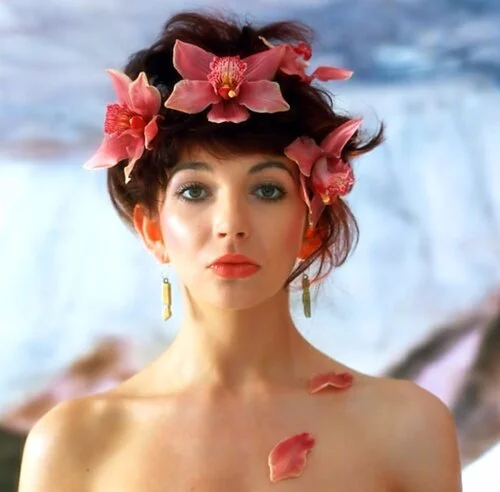
 IN THIS PHOTO: Kate Bush in a promotional image for 2011’s 50 Words for Snow

about Kate Bush’s 50 Words for Snow, as the album turns nine on 21st November. This is the last studio album Bush has put out, and many wonder when she might put out her eleventh studio album. I am going to highlight a particular song from the album but, before then, it is worth remarking how incredible 2011 was for Bush. Aerial arrived in 2005, and that was her first album in twelve years. There was a six-year gap until Director’s Cut arrived in the summer of 2011, and many mused before then whether Aerial was a brief return before Bush retired. She put out Director’s Cut so that she could strip back and re-record tracks from two previous albums, The Sensual World, and The Red Shoes, that she wasn’t completely happy with. Because 50 Words for Snow is a wintery album, Bush had to release the album before the end of the year, so she set herself the challenge of getting two albums out quite quickly! In 1978, she released two albums – The Kick Inside, and Lionheart -, but I think 2011 was different as I sort of think of Bush being more on her on in 2011. I know that is not true, but it is clear she had her hands full, and I can imagine there were days when recording for Director’s Cut was overlapping with 50 Words for Snow!

 IN THIS PHOTO: Kate Bush in a promotional image for Director’s Cut (2011)/PHOTO CREDIT: John Carder Bush (from the book, KATE: Inside the Rainbow)

She said in interviews how her head was all over the place as to which album she was promoting, and I think one of the reasons why she gave relatively few interviews for Director’s Cut is because she had another album coming and did not want to get confused which album she was promoting. Bush spoke with John Wilson to promote Director’s Cut in 2011, and she revealed how a ‘guest vocalist’ was coming for a new song – that is the artist and song I will come to soon. It is amazing that Kate Bush managed to put out two albums in a year; given the fact they are both so different, 50 Words for Snow is incredibly focused and unaffected by a heavy workload. Even though the album has seven tracks, the album lasts sixty-five minutes, and there is some of Bush’s most accomplished compositions throughout. I am coming to my focus soon but, before then, I want to mention reviews. Aerial got some phenomenal love in 2005 and, though Director’s Cut got more mixed feedback – as she was reworking older songs, there was always going to be people who felt it sacrilege or they would compare the old and new versions -, 50 Words for Snow got the most positive reviews since The Sensual World in 1989 – actually, one might need to go back to Hounds of Love in 1985 to compare the wave of affection she received!

There were very few who had a bad way to say about 50 Words for Snow. In their assessment, this is what The Guardian wrote:

But in one sense, these peculiarities aren't really that peculiar, given that this is an album by Bush. She has form in releasing Christmas records, thanks to 1980's December Will Be Magic Again, on which she imagined herself falling softly from the sky on a winter's evening. She does it again here on opener Snowflake, although anyone looking for evidence of her artistic development might note that 30 years ago she employed her bug-eyed Heeeath-CLIFF! voice and plonking lyrical references to Bing Crosby and "old St Nicholas up the chimney" to conjure the requisite sense of wonder. Today, she gets there far more successfully using only a gently insistent piano figure, soft flurries of strings and percussion and the voice of her son Bertie.

No, the really peculiar thing is that 50 Words for Snow is the second album in little over six months from a woman who took six years to make its predecessor and 12 to make the one before that. If it's perhaps stretching it to say you can tell it's been made quickly – no one is ever going to call an album that features Lake Tahoe's operatic duet between a tenor and a counter-tenor a rough-and-ready lo-fi experience – it certainly feels more intuitive than, say, Aerial, on which a lot of time and effort had clearly been expended in the pursuit of effortlessness. For all the subtle beauty of the orchestrations, there's an organic, live feel, the sense of musicians huddled together in a room, not something that's happened on a Bush album before.

That aside, 50 Words for Snow is extraordinary business as usual for Bush, meaning it’s packed with the kind of ideas you can’t imagine anyone else in rock having. Taking notions that look entirely daft on paper and rendering them into astonishing music is very much Bush’s signature move. There’s something utterly inscrutable and unknowable about how she does it that has nothing to do with her famous aversion to publicity. Better not to worry, to just listen to an album that, like the weather it celebrates, gets under your skin and into your bones”.

Every Kate Bush album is very different but, on several of her albums, she sort of delivers a theme and suite of songs. Hounds of Love’s The Ninth Wave has a distinct context and concept, as does Aerial’s second disc, A Sky of Honey. Whereas that was more to do with the light and beauty of a single day, 50 Words for Snow changes the seasonal palette and sound direction – it is a colder album (in terms of themes), yet Aerial, and 50 Words for Snow allow for more space and less traditional song structures; both have a lot of weather and the outdoors being described - they are performed in a gorgeous and symphonic manner. When they reviewed the album, Pitchfork made some great observations:

While much of 50 Words for Snow conjures a whited-out, dream-like state of disbelief, it's important to note that Bush does everything in her power to make all the shadowy phantoms here feel real. Her best music, this album included, has the effect of putting one in the kind of treasured, child-like space-- not so much innocent as open to imagination-- that never gets old. "I have a theory that there are parts of our mental worlds that are still based around the age between five and eight, and we just kind of pretend to be grown-up," she recently told The Independent.

PHOTO CREDIT: @thebeardbe/Unsplash 

"Our essence is there in a much more powerful way when we're children, and if you're lucky enough to... hang onto who you are, you do have that at your core for the rest of your life." Snow isn't a blissful retreat to simpler times, though. It's fraught with endings, loss, quiet-- adult things. This is more than pure fantasy. When faced with her unlikely guest on "Misty", Bush pinches herself: "Should be a dream, but I'm not sleepy".

Each song on 50 Words for Snow has its own tale and quality, but I like the fact that the album features some very well-known people contributing vocals. Andy Fairweather-Low provides backing vocals on the album’s single, Wild Man, whereas Stephen Fry guests on 50 Words for Snow’s title track. The most prominent and high-profile person to appear on the album is Elton John on Snowed in at Wheeler Street. Kate Bush said the following about the track:

The idea is that there are two lovers, two souls who keep on meeting up in different periods of time. So they meet in Ancient Rome and then they meet again walking through time. But each time something happens to tear them apart. (...) It’s like two old souls that keep on meeting up. (John Doran, 'A Demon In The Drift: Kate Bush Interviewed'. The Quietus, 2011)”.

I think Snowed in at Wheeler Street is one of the most underrated tracks on 50 Words for Snow, and Bush combines seamlessly with Elton John. It was a case of John not wanting to hear a demo or know much about the song before he turned up to record. I can imagine him arriving at Kate Bush’s house and the two of them delivering this very powerful song out together.

Bush has said how Elton John is one of her heroes and how she grew up listening to his music. John, in return, has been affected by Bush’s music. He attributes her duet with Peter Gabriel, Don’t Give Up, as a moment that saved his life, and the two are good friends – Bush attended Elton John’s wedding to David Furnish in 2014. She would have been considering working with Elton John for years, and I think Snowed in at Wheeler Street is a perfect song for them. John’s voice is lower than normal – something Bush really loved -, and the two share verses and take lead at alternate moments. I love the opening verse where the two are together: “Excuse me I'm sorry to bother you/But don't I know you?/There's just something about you/Haven't we met before?/We've been in love forever”. I like this story of two lovers missing one another through time and there being these near-misses. There are various vivid scenes where Bush and John see one another, but my favourite is the fourth verse (that Bush sings): “Then we met in '42/But we were on different sides/I hid you under my bed/But they took you away”. There are a lot of words and thoughts through the track. It would be easy for it to wander and lose its impact, but I think it keeps the listener immersed to the end.

 IN THIS PHOTO: Sir Elton John/PHOTO CREDIT: Greg Gorman

The chorus where Bush and John sing together - “I don't want to lose you/I don't want to lose you/I don't want to lose you again” – is heartbreaking and impassioned, and it is a shame that Bush didn’t make a film for this song as her and John would have been great in it. Although there are some slightly less sharp and deep lyrics - “9/11 in New York/I took your photograph/I still have your smiling face in a heart-shaped frame” -, I do like the time-straddling element and whether they actually end up together. Snowed in at Wheeler Street is a typical Kate Bush song in terms of its imaginative and unconventional nature, and Bush’s piano is superb throughout the song – she must have been nervous to hear what John thought about her playing, given that he is so synonymous with the instrument! 50 Words for Snow mixes Chamber Pop and Jazz together; the songs stretch and allow the composition to grow more than we heard on some of her older albums. I really love how Bush was less slavish to traditional song length and there are these longer tracks on 50 Words for Snow. I think Elton John and her together is a highlight, and it was a partnership both of them would have been eager to do. I hope they get together again on future projects, as the chemistry is amazing! Before 50 Words for Snow’s ninth anniversary, I will do another song-specific feature – perhaps focusing on the title track and Stephen Fry’s part!

I want to bring in an interview from The Quietus, where Bush was asked about working with Elton John:

Now, ‘Snowed In At Wheeler Street’ features the vocal talents of Sir Elton John and I was wondering, was the track written with him in mind?

KB: Yes. Absolutely

How long have you known him?

KB: Oooh. I’ve known him for a long time. He used to be one of my greatest musical heroes. He was such an inspiration to me when I was starting to write songs. I just adored him. I suppose at that time a lot of the well-known performers and writers were quite guitar based but he could play really hot piano. And I’ve always loved his stuff. I’ve always been a fan so I kind of wrote the song with him in mind. And I’m just blown away by his performance on it. Don’t you think it’s great?

Yeah, he really gives it his all.

KB: He sings with pure emotion.

It’s good to hear him belting it out. Back when you were 13 years old and practicing playing the organ in your parents’ house and just starting to write your own songs and lyrics, what was the Elton John album that inspired you?

KB: Well, I love them all and I worked my way through them but my absolute favourite was Madman Across The Water. I just loved that record. I loved the songs on it and the production. It’s a really beautiful album.

Now please correct me if I’m wrong but this song, in my mind at least, seems to hark back to ‘The Man With The Child In His Eyes’ because it’s about a fantasy – almost idealised - lover.

KB: No it isn’t. It’s nothing to do with that at all. The idea is that there are two lovers, two souls who keep on meeting up in different periods of time. So they meet in Ancient Rome and then they meet again walking through time. But each time something happens to tear them apart.

So it’s more like a metaphysical love story between two spirits who span time by the occupation of different bodies?

KB: Yeah. It’s like two old souls that keep on meeting up”.

It is sort of a pity that this song was not part of the set for Bush’s residency, Before the Dawn, in 2014. Only one song from 50 Words for Snow was performed, Among Angels, and that was only included in the encore. I can appreciate how she wanted to focus on the conceptual sides from Hounds of Love, and Aerial, but I think people would have loved to have heard Kate Bush and Elton John duet on the stage for Snowed in at Wheeler Street! There is no telling whether there will be another Kate Bush album and whether it will be similar in terms of 50 Words for Snow when it comes to song structures and the overall sound. I really love 50 Words for Snow and there is not a weak song on the album. Among the highlights is the powerful and evocative Snowed in at Wheeler Street. It is a beautiful story of two old, lost souls…

 IN THIS PHOTO: Kate Bush in a promotional image for 50 Words for Snow/PHOTO CREDIT: John Carder Bush (from the book, KATE: Inside the Rainbow)

FROM two firm friends.

FEATURE: Record Highs: My Ten Favourite Albums of 2020 (So Far)

FEATURE:


Record Highs

cc.jpg

IN THIS PHOTO: Nadine Shah 

My Ten Favourite Albums of 2020 (So Far)

___________

ALTHOUGH this year has hit the music industry…  

 IN THIS PHOTO: Moses Boyd/PHOTO CREDIT: Dan Medhurst

pretty hard, and it has been a bad one for us all, some positives have come out. I think the standard of music has been higher than ever, and some of the best albums of the past decade have been released this year! It has been a very good and busy year for albums, but there are some that stand out from the rest. I have really loved what has come through and, as we are near the end of the year, I am going to put my favourite albums out there. I know it is risky given the fact that there is a couple of months left, but I will do another feature in January just to update things. Here are the albums that, to me, have made a pretty dark year…

 IN THIS PHOTO: Haim/PHOTO CREDIT: Daria Kobayashi Ritch for Rolling Stone

QUITE a bit brighter.

_____________

Róisín Murphy - Róisín Machine

Release Date: 2nd October

Labels: Skint/BMG

Producer: Richard Barratt

Standout Tracks: Something More/Incapable/Murphy's Law

Buy: https://roisinmurphy.tmstor.es/cart/product.php?id=71260

Key Cut: Murphy’s Law

Review:

It only makes sense to start the album with the beginning of their long-simmering partnership: eight years later, "Simulation" remains as stunning as when it first appeared, with reflections upon reflections of Murphy's voice unfolding over its steady beat and pulsing synths. Though the track sets the tone for what follows, Róisín Machine never feels predictable. More than on some of her previous releases, Murphy winks at the playful artificiality that has been her trademark since the Moloko days. She's often seemed like she could be an android with her shape-shifting vocals and unexpected songwriting choices; only she would name a sultry track "Shellfish Mademoiselle," and only she could get away with it. Fortunately, this more straightforward approach doesn't detract from the power of her illusions. The gradual smoothing of her style that started on Overpowered and made Hairless Toys so gorgeously sophisticated attains a fittingly mechanical perfection on Róisín Machine. It's as seamless as a mix album, with a haziness that calls to mind the magic of the dancefloor on tracks like the ghostly "Game Changer." With Barratt's help, Murphy dives deeper than ever before into the disco and house roots that make up the foundations of her solo career, but even with a narrower focus, she finds a wide range of expression. On "Kingdom of Ends," she ascends to her rightful position as the empress of dance music on steeply rising synth strings that feel infinite. On "Narcissus," those strings become a nervy, restless loop as Murphy riffs on Greek mythology, one of many moments on Róisín Machine where she melds fantasies and club culture into songs that are as artful as they are kinetic. She's never sounded as velvety as she does on "Murphy's Law," her version of the classic disco trope of dancing through heartache, while the emotional complexity she brings to "Incapable" and "Jealousy" works with their driving beats, not against them. From start to finish, Róisín Machine is cohesive and spellbinding. Murphy truly is a machine in her consistent creativity, and this is a particularly well-oiled example of her brilliance” – AllMusic

Fiona Apple - Fetch the Bolt Cutters

Release Date: 17th April

Labels: Epic/Clean Slate

Producers: Fiona Apple/Amy Aileen Wood/Sebastian Steinberg/Davíd Garza

Standout Tracks: Shameika/Newspaper/Ladies

Buy: https://www.roughtrade.com/gb/fiona-apple/fetch-the-bolt-cutters

Key Cut: Under the Table

Review:

She calls men out for refusing to show weakness, for treating their wives badly, for needing women to clean up their messes. Where The Idler Wheel explored a form of self-interrogation—“I’m too hard to know,” she crooned—on Fetch the Bolt Cutters, she unapologetically indicts the world around her. And she rejects its oppressive logic in every note. The very sound of Fetch the Bolt Cutters dismantles patriarchal ideas: professionalism, smoothness, competition, perfection—aesthetic standards that are tools of capitalism, used to warp our senses of self. Where someone else might erase a mistake—“Oh fuck it!” she chuckles on “On I Go”—she leaves it in. Where someone might put a bridge, she puts clatter. Where she once sang, “Hunger hurts but starving works,” here, in the devouring chorus of “Heavy Balloon,” she screams: “I spread like strawberries/I climb like peas and beans.” There is nothing top-down about the sound of Fetch the Bolt Cutters. “She wanted to start from the ground,” her guitarist David Garza told The New Yorker. “For her, the ground is rhythm.”

There’s considerable power in how Apple entertains so many of these wild, inexhaustible impulses. “Don’t you, don’t you, don’t you, don’t you shush me!” she chips back on “Under the Table.” She will not be silenced. That’s patently clear from the start of Fetch the Bolt Cutters. In gnarled breaths on its opening song—feet on the ground and mind as her might—Apple articulates exactly what she wants: “Blast the music! Bang it! Bite it! Bruise it!” It’s not pretty. It’s free” – Pitchfork

Phoebe Bridgers - Punisher

vvv.jpg

Release Date: 18th June

Label: Dead Oceans

Producers: Tony Berg/Ethan Gruska/Phoebe Bridgers

Standout Tracks: Punisher/Chinese Satellite/I Know the End

Buy: https://www.roughtrade.com/gb/phoebe-bridgers/punisher

Key Cut: Garden Song

Review:

There are love songs, but they are as coarse as they are caressing. “You couldn’t have stuck your tongue down the throat of somebody who loves you more,” she sings on “Moon Song”, her weary falsetto accompanied by a few nylon guitar chords and the squeak of a finger sliding up and down a fret. “I’ll drive around again/ One hand on the wheel, one in your mouth,” goes “Savior Complex”, on which her voice lies on a soft bed of swirling strings. On “Chinese Satellite”, she recalls a lover “screaming at the evangelicals” about the non-existence of God. “But you know I’d stand on a corner embarrassed with a picket sign,” she confesses, “if it meant I would see you when I die.” Punisher is both poetic and prosaic, like a dusty drive along a dirt road.

“Kyoto” is what Bridgers calls a “resentment song” – though its chugging bass riff and extroverted eruptions of brass belie this – about how the dream of constant travel fails to match up with the reality, especially when you’re dogged by depression. She’s been touring almost constantly since her 2017 debut Strange in the Alps – a sombre indie-rock record that showed a similar knack for wry observation and emotional sucker punches – and so here, she craves home. There is an irony, of course, in yearning for comforting confinement now we’re all being told to stay indoors. In the lead up to this album’s release, Bridgers wasn’t supposed to have a day off for three months; instead, she’s been at home walking on her treadmill all day” – The Independent

Bob Dylan - Rough and Rowdy Ways

Release Date: 19th June

Label: Columbia

Standout Tracks: I Contain Multitudes/Black Rider/Goodbye Jimmy Reed

Buy: https://www.roughtrade.com/gb/bob-dylan/rough-and-rowdy-ways

Key Cut: False Prophet

Review:

This is obviously humour of a dark hue: if Tempest’s prevalent mood was one of murderous fury, then here it’s brooding menace and imminent doom. It’s there in the music – the weird tension in Crossing the Rubicon’s muted R&B shuffle and the way the backing on Black Rider keeps lapsing into ominous silence. You lose count of the lyrical references to judgment day and Armageddon, of the mysterious characters that keep cropping up with malevolence on their minds: “I can feel the bones beneath my skin and they’re trembling with rage, I’ll make your wife a widow, you’ll never see middle age,” he sings on Crossing the Rubicon. Of course, grouchily informing the world that everything is turning to shit has been one of Dylan’s prevalent songwriting modes for a quarter of a century – it’s the thread that binds Not Dark Yet, Things Have Changed, Ain’t Talkin’ and Early Roman Kings, among others – but this time the message seems to have shifted slightly: if you think everything has turned to shit now, Rough and Rowdy Ways keeps insisting, just you wait.

This isn’t perhaps the most comforting communique to issue in the middle of a global pandemic, but then the man behind it has seldom dealt in soothing reassurance. And besides, it doesn’t matter. For all its bleakness, Rough and Rowdy Ways might well be Bob Dylan’s most consistently brilliant set of songs in years: the die-hards can spend months unravelling the knottier lyrics, but you don’t need a PhD in Dylanology to appreciate its singular quality and power” – The Guardian

Laura MarlingSong for Our Daughter

Release Date: 10th April

Labels: Chrysalis/Partisan

Producers: Laura Marling/Ethan Johns

Standout Tracks: Alexandra/Strange Girl/Fortune

Buy: https://www.roughtrade.com/gb/laura-marling/song-for-our-daughter

Key Cut: Song for Our Daughter

Review:

The title track plays out like a bedtime story and a life lesson. The patchwork of slow acoustics builds as strings come in, reflecting the swell of affection for another person. “You won’t be forgotten for what you had not done yet,” she sings; it’s a graceful ode to anyone making it out alive in a ruthless world. ‘Hope We Meet Again’ sees her reflect on the past while still walking bravely ahead. Some of the most stunning lines (“I tried to give you love and truth / But you’re acid-tongued, serpent-toothed’) interlace with the echoing twang of the pedal steel guitar and angelic backing vocals. This is masterful stuff.

The album closes humbly, with a demo recorded and performed by Marling and her partner. “I thank God I‘ve never met, never loved, never wanted,” she sings. The track reaches out to a higher power, imploring that we’ll all be OK.

“An album, stripped of everything that modernity and ownership does to it, is essentially a piece of me, and I’d like for you to have it,” Marling has said of ‘Song to My Daughter’. Album seven is a piece of a person we are familiar with. It might be less folky than her previous work, more guided by vital words than percussive rhythm, but it still feels cohesive and like a safe haven. The album is a balm, Marling a lifeline – and a source of stability. We’re lucky to have her” – NME

Rina SawayamaSAWAYAMA

Release Date: 17th April

Label: Dirty Hit

Producers: Clarence Clarity/Chris Lyon/Valley Girl/Bram Inscore/Danny L Harle/Rina Sawayama/Jonathan Gilmore/Kyle Shearer

Standout Tracks: XS/Comme des Garçons (Like the Boys)/Chosen Family

Buy: https://www.roughtrade.com/gb/rina-sawayama/sawayama

Key Cut: STFU!

Review:

Rina’s vocal presence is just as impressive as the album's genre span. Across the 13 track span of 'Sawayama' you’ll hear the powerful tones of a woman whose passion and fierceness is undeniable - never more than in uplifting tracks such as ‘Love Me 4 Me’ and ‘Chosen Family’.

The tracks ‘Akasaka Sad’ and ‘Paradisin’ specifically explore those memories of growing up between two places (for Rina, Japan and the UK) and the conflicting emotions that must come with that challenge, the first being about feeling displaced wherever in the world, and ‘Paradisin’ honing in on rebelling against authority, AKA… mum.

Although ‘Sawayama’ is a deeply personal album, the range of emotions portrayed throughout can be felt and personalised by anyone. The use of heavy metal, theatrics, synth and pop each have their hand in portraying so many varied emotions - from anger to guilt, confusion to elation. Each of these layers add to the melting pot, and these tough emotions have ultimately contributed to the creation of a flawless pop record.

Raw artistry paired with rich heritage makes for a magnificent, spine-tingling first album for Rina Sawayama” – CLASH

Moses BoydDark Matter

Release Date: 14th February

Label: Exodus

Producers: Moses Boyd (exec.)/Koyejo Oloko (also exec.)

Standout Tracks: Stranger Than Fiction/Dancing in the Dark/Nommos Descent

Buy: https://www.roughtrade.com/gb/moses-boyd/dark-matter

Key Cut: Y.O.Y.O.

Review:

At its darkest, Dark Matter descends into brooding electro more akin to tech house than hard bop. Electronic drum grooves meld with synth baselines and Theon Cross’ throbbing tuba. It seems Cross’ 808-like sub-harmonic tones have become a ubiquitous part of the London jazz scene. RIP bassists.

However, though the record is by and large a collection of dense, stoic grooves, there is one outlier. The single “Shades of You” featuring vocalist Poppy Ajudha sits strangely bright alongside the rest of the track listing. While the album as a whole evokes images of sweaty dance floors and caustic youth, this poppy, upbeat single jerks the listener out of the reverie. I feel like I’ve been suddenly transported into a third wave coffee shop, where I find myself ordering a $5 latte.

Jazz fusion records (and let’s face it, that’s what this is), have a tendency to lean on zeitgeist-y tropes and production techniques to distance themselves from their stiff-collared traditionalist brethren. What the gated drums and FM synths were to the 80s, the trap hi hats and side chain are to our epoch. Hip today, dated tomorrow. Current trends pop up again here on Dark Matter. This album is not a timeless classic, it is a du jour album that showcases a drummer and producer’s talent at capturing the sound of the times. It should be enjoyed as such: a testament to young musicians blending tradition and modernity in exciting new ways” – The Line of Best Fit

Nadine ShahKitchen Sink

Release Date: 26th June

Label: Infectious

Producer: Ben Hillier

Standout Tracks: Ladies for Babies (Goats for Love)/Trad/Prayer Mat

Buy: https://www.roughtrade.com/gb/nadine-shah/kitchen-sink

Key Cut: Club Cougar

Review:

The fourth long-player from the spell-casting English singer/songwriter, Kitchen Sink is aptly named, as Nadine Shah and longtime collaborator/producer Ben Hillier have crafted a wily and inventive collection of songs that pair astute social commentary with crisp, cosmopolitan arrangements drawing from a deep and intuitive arsenal of styles. The follow-up to Shah's Mercury Prize-nominated Holiday Destination, the 11-track set commences with the airy and funky "Club Cougar." Like its predecessor, the scathing "Ladies for Babies (Goats for Love)" is awash in wiggly beats, staccato horns, and flourishes of Tropicalia, with Shah's evocative lyrics and stately, confidant voice wryly and vividly parsing the relationship between sexism and fertility. Exploring the notion of what it means to be both a woman in your thirties and an outsider (Shah was born of Pakistani and Norwegian parentage), the sinewy title track's clanging guitars and strident piano mirror the narrator's insistence on combating cognitive bias with confidence -- it's a strut, not a sprint. There are echoes of Shah's bluesy, noir-pop past peppered throughout Kitchen Sink, most notably on the cinematic "Kite" and the sumptuous closer "Prayer Mat," but the overall vibe is as playful as it is rooted in emotional and societal discord. Like her sonic contemporaries PJ Harvey, Cate Le Bon, and Fiona Apple, Shah presents as a mystery wrapped in an enigma, when in reality she's just innately talented and resolute in her convictions. Unsurprisingly, the mesmerizing Kitchen Sink distills those two predilections into something that's both compelling and otherworldly” – AllMusic

HaimWomen in Music Pt. III

 Release Date: 26th June

Label: Columbia

Producers: Danielle Haim/Rostam Batmanglij/Ariel Rechtshaid

Standout Tracks: Los Angeles/Gasoline/Man from the Magazine

Buy: https://www.roughtrade.com/gb/haim/women-in-music-pt-iii

Key Cut: 3 AM

Review:

Melancholy and aimlessness are a change in pace for three sisters known for their vivid Fleetwood Mac homages, taut pop rhythms and arresting demands for clarity. Danielle, bassist Este and guitarist Alana all experienced depression while writing Women in Music Pt III, which they once might have sublimated with euphoric pop. Instead, they translate desolation into richly searching music, putting familiar sounds through their distinctive filter: fluttering G-funk (3am), homages to Walk on the Wild Side (Summer Girl) and Joni Mitchell at her most seething (Man from the Magazine, an acoustic riposte to a leering journalist), and Led Zep bounce (Up From a Dream).

They subvert pastiche with explosive yet contained production – agitated rhythms, corroded riffs, unexpected celluloid-melt transitions – that suggests Danielle bristling against her own limitations, yet never inhibits a massive chorus. The Steps turns a petulant stomp into an anthem of frustration, while a cathartic scream crests through the hook of All That Ever Mattered. The familiar becomes bracing. The album is also their first real foray into detailed emotional songwriting, Danielle outlining a visceral sense of disconnect from signs in dreams that nobody can read, strangers’ beds and estranged lovers’ clothes. By leaning into the lows, Haim open up bold frontiers” – The Guardian

Bruce SpringsteenLetter to You

Release Date: 23rd October

Label: Columbia

Producers: Ron Aniello/Bruce Springsteen

Standout Tracks: Letter to You/Janey Needs a Shooter/If I Was the Priest

Buy: https://www.roughtrade.com/gb/bruce-springsteen/letter-to-you

Key Cut: I’ll See You in My Dreams

Review:

But above all, there’s the songs. The title track is classic Springsteen rock, an old-school rambling groove with a hopeful message about our best efforts being worth it, regardless of the result. “The Power Of Prayer” finds the Boss delivering a simple descending melody paired to a celebration of the most important things sometimes being right where you need them. “House Of A Thousand Guitars” stands out as a highlight, an exhortation to find support in each other through music—despite being written before the pandemic, as was the rest of the album, its clarion cry to bring people together promises eventual light at the end of the tunnel.

Even the likely anti-Trump song “Rainmaker” avoids cheap indictments, instead dwelling on how life’s miseries unfortunately mean “Sometimes folks need to believe in something so bad / so bad, so bad.” (It’s definitely about Trump.) By the time “Song For Orphans” finds Springsteen in full-on Dylan mode (“The multitude assembled and tried to make the noise / The black blind poet generals and restless loud white boys”), the record has coalesced into a singular document of tension and release, nostalgia and regret, loss and salvation, these opposing pairs flip sides of the same coin of a life, if not always well-lived, then certainly defiantly lived. Bruce Springsteen and the E Street Band have created a musical testament to survival—the toll it exacts, the struggle it requires, but also the beauty to be found in the very cracks that give shape to our damaged souls. It’s one for the ages, and apparently Springsteen is finally the perfect age to deliver it” – The A.V. Club

FEATURE: The Lockdown Playlist: Seriously Big Disco Jams

FEATURE:


The Lockdown Playlist

PHOTO CREDIT: @jurienh/Unsplash 

Seriously Big Disco Jams

___________

LOOKING back on all of the Lockdown Playlists…

 PHOTO CREDIT: @matthewlejune/Unsplash

and I can’t recall doing a Disco selection! I will rectify that because, as it is Saturday morning, we are in a new weekend and I feel we all need some energy and groove to make things better! It has been a strange and tense last week or so, and what better way to unwind and motivate than to get down to some classic cuts from the floor of the disco! If you do require some fire and boogie to get you up and about, then I think the selection of songs below should provide you with plenty of cheer, ecstasy and some much-needed…

 PHOTO CREDIT: @5tep5/Unsplash

KICK in the step!

FEATURE: Too Good to Be Forgotten: Songs That Are Much More Than a Guilty Pleasure: Natalie Imbruglia - Torn

FEATURE:


Too Good to Be Forgotten: Songs That Are Much More Than a Guilty Pleasure

Natalie Imbruglia - Torn

___________

I will head to the 1980s, perhaps, for my…

next instalment, but I have been listening back to a lot of songs from the 1990s. In some ways, it is nostalgia and looking back at a safer time but, mainly, it is to remind myself just what a broad and extraordinary decade it was for music! I think a lot of artists today have taken something from the 1990s, and there was a lot going on in every year. I have been thinking about songs from the 1990s that were played a lot then and we might not listen to as much now. I feel some people think of Natalie Imbruglia’s Torn as a bit of a guilty pleasure. It is one of those songs that was everywhere in the ‘90s - but there are some who feel it is was one of the weaker or more overrated ‘classics’. To me, it is a great song that should be played more. Natalie Imbruglia was not the first to get to Torn. It is a cover version and, prior to her recording it, it was performed by Lis Sørensen, then two years later by the American Alternative Rock band, Ednaswap and, in 1996, by American-Norwegian singer Trine Rein. Torn was Imbruglia’s debut single of 27th October, 1997, and it is the opening track to her debut album, Left of the Middle. I think this is one of the more undervalued debut albums of the 1990s, and there are so many great tracks on the album – including Big Mistake, and Wishing I Was There.

Torn was a huge success. Imbruglia's version was recorded with David Munday (lead guitar), Phil Thornalley (bass, rhythm guitars), Chuck Sabo (drums), Henry Binns, Sam Hardaker (Zero 7) (drum programming) and Katrina Leskanich (background vocals). It was mixed by Nigel Godrich. Imbruglia received a Grammy Award nomination for Best Female Pop Vocal Performance, losing to Celine Dion's My Heart Will Go On. Recently, I put out a feature regarding the best one-hit wonders, and I included Torn. That might be unfair to Imbruglia, as she released quite a few other successful songs, but what I meant was that Torn was such a massive success that other songs released after that paled in comparison. Torn sold more than four-million copies worldwide, and it is the eighty-fifth biggest-selling single ever. In the United States, the song peaked at number-one on the Hot 100 Airplay chart for eleven consecutive weeks. Maybe it is because Torn was synonymous with the late-1990s that people do not revisit it much, and I think only certain radio stations play the song – those stations who cater for a slightly more ‘mature’ audience. So many people did not realise (in the ‘90s) that Torn was a cover, and years later, I think it is still providing revelation. It is a song that, as it was recorded by minor artists before it became a huge hit, was assumed to be an original.

In a decade that provides some of the greatest music ever, I think Torn is a song that sits alongside the best of them. I can appreciate how it might not be to everyone’s tastes, but listen back to it now and Torn will have an effect on you. The lyrics are really interesting, and I love lines like “So I guess the fortune teller's right/Should've seen just what was there and not some holy light/But you crawled beneath my veins and now”. The video is quite effecting and memorable, and Imbruglia’s vocal is incredible. I think she is one of those artists who was slightly dismissed because she was an actor – having appeared in Neighbours as Beth Brennan for a couple of years -, but she proved through Left of the Middle that she could mix styles and moods and pull them off – that entire album is worth checking out. Torn is a song that gets under the skin, and I don’t think that people should consider it to be a guilty pleasure or one of those songs from the 1990s that was a little bit cheesy and lame. It is a powerful song and, for Natalie Imbruglia, I think it set this impossible task of trying to follow it and get the same success with future singles. Her most-recent album, Male, was released in 2015, and I wonder whether she will put out more material. The popularity of Torn is clear and, whilst it divides some people, the fact a new generation are discovering the song and singing along shows that it is a powerful and captivating thing. One of the best covers of the 1990s, I really have a lot of time for Torn, and when it comes to me compiling my favourite tracks of that time, it is a song that I am…

PROUD to play and include.

FEATURE: Crazy for You: Madonna’s The Immaculate Collection at Thirty

FEATURE:


Crazy for You

Madonna’s The Immaculate Collection at Thirty

___________

I would not normally review…

cc.jpg

an anniversary of a greatest hits collection but, on 13th November, 1990, Madonna’s The Immaculate Collection was released. There are various release dates being provided (some say it was released on 9th November), but most reliable sources say it was 13th November. I love the album, as it is the greatest hits of one of the biggest Pop artists ever. I was seven when the album came out, and I can remember hearing about the album. Until then, I think my exposure to compilation albums was for chart hits, and I don’t think I was aware of greatest hits relating to a single artist. In 1989, Madonna released Like a Prayer, and she was an enormous star! Until that point, she had put out four incredible studio albums and appeared in several films – in addition to having conducted massive world tours. Her Blond Ambition World Tour was fresh in the memory (it ended in August 1990), so there was this demand for all of her best songs to come together on her album. The Immaculate Collection, obviously, is a rewording of ‘immaculate conception’, and it is a reference to the Virgin Mary. She actually dedicated the album to The Pope, so there was religious influence and imagery. All the songs on The Immaculate Collection, with the exception of the two new songs, were remixed by Shep Pettibone alongside Goh Hotoda and Michael Hutchinson through QSound - a then-new technology that gives recordings three-dimensional sound on standard stereo systems. It became the first album to feature the technology.

Tracks were edited from their original running time to fit on an album and, even though C.D.s allowed for more room, it was still a job fitting everything in! I think releasing The Immaculate Collection was an obvious decision, but it could have signalled to the world that Madonna was sort of cashing in or it was a bit too soon for a greatest hits. Obviously, having put out so many great songs since 1990, there have been other collections that have scooped together all of her great tracks. I am surprised there is not a thirtieth anniversary edition of The Immaculate Collection and, whilst one fan has put out their own version of an anniversary boxset, I feel a new edition would have been welcomed. The Immaculate Collection has Material Girl with a new outro in place of the original fade-out. The most interesting thing, like most greatest hits collections, is that there is new material. I can understand why artists do this but, with so much great material in her locker, it could have been risky for Madonna overlooking popular songs in favour of some new material. One of the new songs, Justify My Love, was originally written by Ingrid Chavez, Prince's protégé and friend, and Lenny Kravitz. The song has spoken word vocals and Trip Hop vibes, and it sort of continues where Like a Prayer leaves off - and sort of indicated where Madonna would head with Erotica in 1992.

It is amazing to think that, in 1990, Madonna released both Vogue, and Justify My Love – so different in terms of tone; just showing how broad she was! Rescue Me was also added to the compilation as a new song. The songs run chronologically on the album, which allows one to see how Madonna’s sound changed in a few years. Big songs like Holiday, Like a Virgin, and Material Girl mix with Lucky Star from her 1983 debut and the underrated Crazy for You – from the 1985 film, Vision Quest. There is nothing controversial in terms of omissions but, even though there was no Everybody (from Madonna, 1983), Dear Jessie (Like a Prayer, 1989), or film tracks like Who’s That Girl (Who’s That Girl, 1987), most of the biggest numbers are accommodated…and we get the two new numbers at the end. Even though it was only seven years since her debut album came out, few can easily compare the Madonna on 1983’s Holiday and the woman that they hear on Justify My Love in 1990. It is clear that artists have this accelerated maturation in the public eye, as there is this desire for them to evolve and not repeat themselves. It is evident that Madonna was a lot bolder and more expressive in 1990 compared to her first couple of albums. You can get The Immaculate Collection on vinyl, and it raises a good question: Is this album the best greatest hits collection?

 IMAGE CREDIT: Bradley Pratt

Stepping into controversial, but it is definitely one of the most acclaimed greatest hits - simply because of the recognisability and popularity of the hits and where Madonna was in her career in 1990. Near the end of the first year of her second decade in music, it was clear her sound was changing and she was reaching new heights of fame after her Blond Ambition World Tour. In a retrospective review, AllMusic gave their views on The Immaculate Collection:

On the surface, the single-disc hits compilation The Immaculate Collection appears to be a definitive retrospective of Madonna's heyday in the '80s. After all, it features 17 of Madonna's greatest hits, from "Holiday" and "Like a Virgin" to "Like a Prayer" and "Vogue." However, looks can be deceiving. It's true that The Immaculate Collection contains the bulk of Madonna's hits, but there are several big hits that aren't present, including "Angel," "Dress You Up," "True Blue," "Who's That Girl," and "Causing a Commotion." The songs that are included are frequently altered. Everything on the collection is remastered in Q-sound, which gives an exaggerated sense of stereo separation that often distorts the original intent of the recordings. Furthermore, several songs are faster than their original versions and some are faded out earlier than either their single or album versions, while others are segued together.

In other words, while all the hits are present, they're simply not in their correct versions. Nevertheless, The Immaculate Collection remains a necessary purchase, because it captures everything Madonna is about and it proves that she was one of the finest singles artists of the '80s. Until the original single versions are compiled on another album, The Immaculate Collection is the closest thing to a definitive retrospective”.

Madonna would go on to release sensational albums like Erotica (1992), Ray of Light (1998), and Confessions on a Dance Floor (2005), so there has been revision through the years, yet I think The Immaculate Collection is the best greatest hits collection as it has become so iconic. It would have been a perfect early Christmas present for any Madonna fan in 1990 and I think it still sounds amazing today! At thirty, The Immaculate Collection still stands out as one of the best greatest hits packages, and after the success of Like a Prayer, Madonna was conscious of the fact that she was ending one phase of her career, and the idea of a greatest hits album was less about making money and capitalising on her commercial appeal and more closing that chapter and starting the next one. With so many incredible hits from the 1980s (and a bit of 1990), it is a collection of some of the best Pop music…

THAT has ever been recorded.

FEATURE: The November Playlist: Vol. 1: Show Your Face If You Don’t Want to Miss a Thing

FEATURE:


The November Playlist

IN THIS PHOTO: Kylie Minogue 

Vol. 1: Show Your Face If You Don’t Want to Miss a Thing

__________

THIS is one of those weeks…

xxx.jpg

 IN THIS PHOTO: The Anchoress

where there is a small selection of big releases and popular tracks, and a collection of great songs from smaller artists. I have tried to put together the best of this week and, alongside heavy hitters like Kylie Minogue, The Anchoress, Brittany Howard, System of a Down, Jade Bird, Bree Runway (ft. Missy Elliott), Little Mix, Giggs, and Wyvern Lingo, are tracks from Jordan Adetunji, RAYE, Mae Muller, James Vincent McMorrow, Matilda Mann, Imelda May, and Birdy. Throw in some Tunng, Neil Young (with Crazy Horse) with Cheat Codes, Lily Ahlberg, and Hope Winter, and it is an eclectic and interesting week for music! It has been a stressful and long one for most of us and, as we climb into the comfort of the weekend, this week’s finest tunes should definitely help take some of the strain away whilst adding a much-needed…

 IN THIS PHOTO: Bree Runway

INJECTION of energy!

ALL PHOTOS/IMAGES (unless credited otherwise): Artists

___________

Kylie Minogue Miss a Thing

The Anchoress - Show Your Face

System of a Down - Protect the Land

Jade Bird Headstart

Bree Runway (ft. Missy Elliott) - ATM

Little MixConfetti

James Vincent McMorrowGone

Wyvern LingoRapture

Matilda MannJapan

Giggs Debonair

tgg.jpg

Hayley MaryThe Chain

fs.jpg

Imelda May Never Look Back

BENEE Happen to Me

Neil Young, Crazy Horse - Bandit - Live

Birdy Just Like a River Does

Tunng Eating the Dead

ggg.jpg

PHOTO CREDIT: Anthony Harrison

Brittany Howard You’ll Never Walk Alone

RAYE Love of Your Life

Fred Hersch After You’ve Gone

v.jpg

Mae Mullerdependent

Cheat CodesWashed Up

Baby Queen Want Me

PHOTO CREDIT: Mark Noall

Molly Hocking After the Night Before

Ellie Bleach - I Thought I Saw You Last Night

Lilly Ahlberg Call Me

vvvv.jpg

Heather Trost Love It Grows

Jordan Adetunji - Around

PHOTO CREDIT: Charlie Lipman

Dermot Kennedy Days Like This

Hope WinterI’m Gonna Love Me

Meg Ward Melbourne Street

PHOTO CREDIT: Samantha Guess

VUKOVI SLO

Glass Caves Who Are You?

Oscar Scheller Half Eaten

Thelma Plum Better in Blak

p.jpg

Evie Irie - Misfit

Be CharlotteBack to Life

FEATURE: Deep Inside an Architect's Dream: Kate Bush’s Aerial at Fifteen: A Sky of Honey

FEATURE:


Deep Inside an Architect's Dream

m.jpg

IN THIS PHOTO: Kate Bush in 2005 

Kate Bush’s Aerial at Fifteen: A Sky of Honey

___________

I realise that…  

in the course of assessing and covering Aerial, I have written about its second disc, A Sky of Honey before. As Aerial is fifteen today (7th November), I wanted to talk about an extraordinary suite of songs. I was musing about how it would look if the songs were translated to the screen. Kate Bush did, alongside Hounds of Love’s The Ninth Wave, bring A Sky of Honey to the stage for Before the Dawn in 2016. I did not get to see the show, but it seems like the songs translated really well and sat alongside the epic scenes from The Ninth Wave. Apart from Rolf Harris’ parts on Aerial – who appeared as ‘The Painter’ on An Architect’s Dream, and The Painter's Link – being recast for her son, Bertie, for the stage (and on the album on every release apart from the 2005 original), everything flowed naturally and beautifully. I wonder if the concept could be taken further and made into a short film. I still think The Ninth Wave would be a beautiful and thrilling short, but there is something tender, peaceful, and immersive about A Sky of Honey that lends itself to the screen. From the beautiful birdsong of Prelude, running through to An Architect’s Dream – where Bush sings “Watching the painter painting/And all the time, the light is changing/And he keeps painting/That bit there, it was an accident/But he's so pleased/It's the best mistake, he could make…” -, there is so much life, light and wonderful moments!

bbbbb.jpg

 PHOTO CREDIT: @dfkt/Unsplash

Aerial Tal finds Bush ‘duetting’ with a bird and deeply engaging with her surroundings, whilst Nocturn has so much romance and one of Bush’s best vocals and set of lyrics (“Could be in a dream/Our clothes are on the beach/These prints of our feet/Lead right up to the sea/No one, no one is here/No one, no one is here/We stand in the Atlantic/We become panoramic/We tire of the city/We tire of it all/We long for just that something more”). I love how much variety and cinematic brilliance there is through A Sky of Honey. Whilst it is interesting to isolate tracks and focus on different snatches, the best listening experience is to do it all in one go; taking yourself from the morning through to the evening, then back into the breaking light - one is entranced and stunned throughout. Not only was it ambitious of Kate Bush to put out an album – as Aerial is a double album – that consists of a concept, but she executes every thought and song with conviction and nuance. I love how rich A Sky of Honey is, and I can picture Bush composing each of its tracks knowing what she wanted to achieve as a whole. Maybe it was her new life and domestic situation – giving birth to her son in 1998 – and the fact she was spending more time in the garden and playing with Bertie that meant the garden and nature was in her mind.

 PHOTO CREDIT: @martz90/Unsplash

One can envisage a large and peaceful garden with Bush relaxing and surrounded by nature. Not that A Sky of Honey is all about nature and the garden; Bush very much takes us on a tour far and wide, and I think A Sky of Honey is one of her greatest achievements. A lot of people preferred Hounds of Love’s The Ninth Wave to the first side, as there was a greater variation of sounds and it was grander and more impactful than a series of songs. Maybe Bush was thinking about Hounds of Love and a time when she was very happy; it came after a difficult time where she really pushed herself on 1982’s The Dreaming. Returning after the harder experiences of The Red Shoes and her life in 1993, I feel she wanted another song cycle to get her teeth into that would give her opportunity to write in a very different way. Of course, there was a lot of excitement when Bush announced Aerial, and I can only imagine how people reacted when they heard A Sky of Honey! It is very different to A Sea of Honey and, perhaps, it is the closest Bush has come to writing a Classical symphony or her own version of an opera. When AllMusic reviewed Aerial, they highlighted the beauty of A Sky of Honey:

A Sky of Honey is 42 minutes in length. It's lushly romantic as it meditates on the passing of 24 hours. Its prelude is a short deeply atmospheric piece with the sounds of birds singing, and her son (who is "the Sun" according to the credits) intones, "Mummy...Daddy/The day is full of birds/Sounds like they're saying words." And "Prologue" begins with her piano, a chanted viol, and Bush crooning to romantic love, the joy of marriage and nature communing, and the deep romance of everyday life.

There's drama, stillness, joy, and quiet as its goes on, but it's all held within, as in "An Architect's Dream," where the protagonist encounters a working street painter going about his work in changing light: "The flick of a wrist/Twisting down to the hips/So the lovers begin with a kiss...." Loops, Eberhard Weber's fretless bass, drifting keyboards, and a relaxed delivery create an erotic tension, in beauty and in casual voyeurism.

"Sunset" has Bush approaching jazz, but it doesn't swing so much as it engages the form. Her voice digging into her piano alternates between lower-register enunciation and a near falsetto in the choruses. There is a sense of utter fascination with the world as it moves toward darkness, and the singer is enthralled as the sun climbs into bed, before it streams into "Sunset," a gorgeous flamenco guitar and percussion-driven call-and-response choral piece -- it's literally enthralling. It is followed by a piece of evening called "Somewhere Between," in which lovers take in the beginning of night. As "Nocturne" commences, shadows, stars, the beach, and the ocean accompany two lovers who dive down deep into one another and the surf. Rhythms assert themselves as the divers go deeper and the band kicks up: funky electric guitars pulse along with the layers of keyboards, journeying until just before sunup. But it is on the title track that Bush gives listeners her greatest surprise. Dawn is breaking and she greets the day with a vengeance. Manic, crunchy guitars play power chords as sequencers and synths make the dynamics shift and swirl. In her higher register, Bush shouts, croons, and trills against and above the band's force.

Nothing much happens on Aerial except the passing of a day, as noted by the one who engages it in the process of being witnessed, yet it reveals much about the interior and natural worlds and expresses spiritual gratitude for everyday life. Musically, this is what listeners have come to expect from Bush at her best -- a finely constructed set of songs that engage without regard for anything else happening in the world of pop music. There's no pushing of the envelope because there doesn't need to be. Aerial is rooted in Kate Bush's oeuvre, with grace, flair, elegance, and an obsessive, stubborn attention to detail. What gets created for the listener is an ordinary world, full of magic; it lies inside one's dwelling in overlooked and inhabited spaces, and outside, from the backyard and out through the gate into wonder”.

Many people highlighted how Aerial sounds like an album recorded in isolation. One can imagine that Bush was tied to the home raising a young son, and she was taking more inspiration from her home and her imagination whilst there than she was from other people and the wider world. In 2020, her situation is very similar to back then - albeit she does not have a young son to raise. One wonders whether we will get a similar album to Aerial if Bush chooses to release any music.

Lockdown and these strange times would certainly have changed her approach to music and writing and I wonder, if there is another album, whether she has brought people into her home studio, or there have been parts recorded remotely, or she has written and composed everything herself – sort of like Paul McCartney doing everything for the upcoming McCartney III. I am not sure what the future holds regarding Kate Bush’s career but, fifteen years after Aerial was released, I think the album is more powerful and meaningful now as it was in 2005. The music seems to go deeper, and it provides great escape. I would urge everyone to listen to A Sky of Honey, as it can soothe the nerves and calm, but it is swelling and passionate; the instrumentation and performances are exceptional and, backed by some sublime players – including Danny McIntosh (her husband), Del Palmer, the London Metropolitan Orchestra, and Gary Brooker -, she created this mini-masterpiece. I am not sure what celebrations there will be to mark Aerial’s fifteenth anniversary today, but the album is hugely important for different reasons. To me, it is the sound of Bush in a happy new phase of her life; someone who has greater meaning and fulfilment than ever before and, as a songwriter, she sounds stronger and more ambitious than ever. Aerial is a splendid double album, but I have a fond love for A Sky of Honey because of its story arc and all the wonderful sounds throughout – including stunning bird song. I love revisiting the nine tracks on A Sky of Honey, as it is a listening experience that is…

ABSOLUTELY astonishing.

FEATURE: A Gentleman of a Certain Age: The Lockdown Playlist: The Divine Comedy’s Neil Hannon at Fifty

FEATURE:


A Gentleman of a Certain Age

PHOTO CREDIT: Annett Bonkowski 

The Lockdown Playlist: The Divine Comedy’s Neil Hannon at Fifty

___________

BECAUSE it is the birthday of…

The Divine Comedy’s Neil Hannon tomorrow (7th November), I wanted to put together a special Lockdown Playlist. It is not just any birthday, mind – Neil Hannon will turn fifty! I think he is one of the most innovative songwriters of our age and, on last year’s Office Politics, Hannon proved he had lost none of his chops! Since the debut album of the Divine Comedy, Fanfare for the Comic Muse of 1990, we have received this tremendous songs from the inimitable Hannon. That album turned thirty earlier this year, and I would recommend everyone go and get The Divine Comedy on vinyl, as their albums are sensational – although I sort of view The Divine Comedy to be a solo outing. To mark the fiftieth birthday of Neil Hannon, I have put together a playlist of his best songs with The Divine Comedy. As you will see, he is one of the finest songwriters ever and he has this lyrical voice like nobody else. Enjoy some wonderful songs from…

 PHOTO CREDIT: David Conachy/The Irish Independent

A musical treasure.

FEATURE: Reasons to Be Cheerful – Part II: How 2020 has Highlighted the Importance and Necessity of the Music Industry

FEATURE:


Reasons to Be Cheerful – Part II

PHOTO CREDIT: @karsten116/Unsplash 

How 2020 has Highlighted the Importance and Necessity of the Music Industry

___________

MANY will argue that this year…

 PHOTO CREDIT: @timmossholder/Unsplash

has been one of the worst ever, and there is no reason to be cheerful or have any optimism! For many who have lost their jobs and suffered because of the pandemic, that is very true. It has been a tough one, but I think there is a greater appreciation of the value of arts and the music world. There has never been any doubt that the music industry is vastly important, but I think there has been this new wave of love. Lockdown restarts again today, so record shops are going to be closed once more. That said, vinyl sales in this country have surged despite the pandemic, and it seems that, when record shops required support more than ever, people have responded! Not only does this mean that many have survived and continue to trade, but I think a lot more people have discovered both the importance and pleasure of vinyl and the true value and vitalness of record store. On that tip, record shops themselves have flourished. The recent Record Store Day Drop 3 led to crowds queuing to get some great releases and, looking ahead to next year, I think that appetite will continue. That is not to say that C.D.s will decline, but there is this additional surge in vinyl sales that creates a very promising outlook for record shops around the country (and the world). Venues have had a tougher time of things, as most have not been able to operate and many have closed down.

xc.jpg

 PHOTO CREDIT: @beeford/Unsplash

Much-needed money has been designated to venues across England already, and I think, so long as the virus can be contained and reduce by spring, most can reopen their doors in some capacity and welcome people in. It is hugely necessary for venues to exist, as they are the beating heart of communities and, looking on social media, the amount of passion and support that venues have received is enormous! As we have all been affected and hit by the pandemic, I think this sense of darkness has brought people together when it comes to live music and the phenomenal venues all around the country. The Government, finally, have opened their eyes to the importance venues have to the economy. Given the tremendous amount the U.K. music scene continues to the economy, it is only right that the Government assisted and, as the future is unsure, let’s hope there is additional funding if venues have to remain closed for too much longer! On a very simple level, the deprivation we feel regarding live music has highlighted its positive effects. Damon Albarn has come out and underlined how we need live music back, and I think 2021 will be a year when live music becomes more important than ever. I am not sure when live music can truly come back, but venues will be busier than ever; the number of people attending gigs will be higher than ever and, after such a rough year, we will see so many new acts, faces and masses descend upon venues and celebrate – even if it is not until the middle of the year.  

 PHOTO CREDIT: @theblackesper/Unsplash

A recent report shows that representation of women, and Black, Asian and minority artists has increased:

The proportion of people from BAME communities working in the industry has risen from 15.6% in 2016 to 22.3% this year.

Female representation has gone up from 45.3% in 2016 to 49.6% in 2020.

Among those earning more than £100,000 per year, only 27% were women and 12.2% were from a BAME background.

These figures rose to 59.4% and 33.6% respectively for those earning less than £15,000.

Women made up 60% of those doing unpaid work while the figure for those from a BAME background stands at 40%”.

If this year has shown us anything, it is that there is still massive division around the world it comes to race. Movements such as Black Lives Matter have helped provoke and spread conversation and awareness and, in the music industry, the figures above are promising. Whilst there is not the level of representation and opportunity we would like, I do feel like the statistics will improve further next year. I think, when festivals return, they will be more gender-balanced, and we will see more Black, Asian and minority artists on the bill. I think so many eyes have been opened this year, and I think 2021 will be a year when we see real progress and change in the music industry.

I have mentioned the relevance of music venues at this hard time, but since artists have not been able to get out and perform to the people, that has led to some new innovations and alternatives. Virtual gigs have been quite common and worked as a temporary stand-in. Whether an artist is performing via YouTube or the production values are a little bigger, we have seen how virtual gigs can work. That will not replace live gigs but, as there are still concerns regarding the environmental impact of worldwide touring and the effect it can have on mental-health, I think virtual gigs, mixed with live gigs, might be a way of helping in that area. So many people have seen live music in a different way this year. Personally, I have watched more live music this year and last and, whilst not ideal, virtual gigs are very accessible and varied. I think there has been incredible engagement between artists and fans this year. One artist who has brought a lot of delight is Sophie Ellis Bextor. Her Kitchen Discos have been a real highlight, and so many people have been helped and made happier watching her! In any other year, she might not have felt the need to do this and, when things start to get back to normal, I hope she still does some occasional kitchen gigs! Artists and entire festivals have streamed live this year, and, as many people cannot attend gigs or do not have access, the success and growth of online gigs could be an alternative for them.

Also, some big artists like Laura Marling, Phoebe Bridgers, Arlo Parks, Glass Animals, and Billie Eilish have opened doors. I think live/pay-per-view gigs could stand alongside regular gigs and, whilst the nature of live music might change in 2021, I do think what artists have done in 2020 has expanded the realms of live music and what can be achieved. There are concerns that a no-deal Brexit might severely effect live music, but let’s hope that there can be a solution. I am going to produce a feature regarding my favourite albums of 2020 very soon but, compared to the last couple of years, I think the quality of music being put out has increased. Maybe not directly linked to the pandemic, but the very best albums of this year have outranked albums of the past few years – from Haim, Fiona Apple, Run the Jewels, and Rina Sawayama, the music we have heard this year has been unbelievable. So many great new acts have emerged and, even though the music industry is in a precarious place, I think there is a lot of reason to be optimistic regarding the new eave of artists; so many brilliant albums have made 2020 so much better. Other great revelations, such as Tim Burgess’ listening parties have brought so many people together. This has been running since long before this year, but I think its role and importance this year has increased and managed to bring some terrific artists and fans together.

Though there are some bleak projections regarding revenue and the profitability of music this year, there have been some great breakthroughs and moments that I wanted to highlighted. Looking online, and I have seen so many people connecting randomly when they might not have otherwise – people supporting those in need. A lot of artists have been keeping in touch with fans and building that relationship. In a year when they might otherwise have been promoting albums and busy touring, there has been this new bond and experience where I have seen so many artists spending more time communicating with their fans. Radio has been a comfort for many of us and, in the U.S. and the U.K., radio has made us feel more informed, together and less alone. For me and many people, music stations have been crucial, and I think one positive aspect of 2020 is how radio’s power and importance has also been brought to the fore. I think more people have been listening to the radio and music’s connective power is very obvious in 2020. Podcasts have been popular for years, but so many new podcasts have come out this year and the growth in the industry is wonderful. I think so many podcasts have been created based on the frustrations and limitations of 2020, and that has brought so much to so many people! Before the end of the year, there are some cracking albums due, and I think there are things we can be thankful and look forward to.

Whilst COVID-19 is not going anywhere for a while, many artists are putting gigs in the diary, which makes people optimistic and hopeful as we can plan ahead. Similarly, venues are thinking about 2021 and, off of the support they have been given this year, let’s hope that they can host as many gigs and events as possible. I think it is important to find some light in a year that, for all of us, has not given much in the way of cheer. The music industry has been hit hard and not been able to provide much live music. I think the virtual gigs and way artists have found a way to connect with their fans has been amazing, and there have been other stories and aspects to provide positivity. Many people will have their own brighter experiences of music in 2020, and lots of people are looking ahead to 2021 and a more hopefully, bright year. At the heart of everything is the way music is so necessary and fulfilling to all of it. From its economic role to the benefits of live music, there is no doubt why the music industry requires committed support and financing at a hard time. I hope many venue doors will open next year, and we will all get a chance to see live music. Despite the washout of 2020 and some bad moments, I (and many people) have seen some positives. Whilst they do not outbalance and overwrite the negatives, I think 2020 has given us a few…

PHOTO CREDIT: @priscilladupreez/Unsplash

REASONS to be cheerful.

FEATURE: Top of the City: A One-Stop Kate Bush Pop-Up Shop

FEATURE:


Top of the City

IN THIS PHOTO: Kate Bush in 1980/PHOTO CREDIT: John Carder Bush (from his book, KATE: Inside the Rainbow)

A One-Stop Kate Bush Pop-Up Shop

___________

MOST of my recent Kate Bush features…  

 PHOTO CREDIT: Guido Harari (from his book/collection, The Kate Inside)

have pertained to various songs and albums. In a more general musing, I have been thinking both about the ongoing popularity of Bush’s music and how fascinated people are, and the need both to put more Bush-related goods/ideas into the world - and, also, raising awareness of the ones that are already out there. Over the past couple of months, there have been a couple of magazines/cover stories dedicated to Kate Bush. I have already talked about MOJO’s Collectors’ Series edition, and one can grab hold of it. I have also been reading the new edition of Prog, where they mark forty years of her third studio album, Never for Ever. There is genuine excitement when magazines feature Kate Bush now and, considering the fact that her music has been played for decades all over the world, there are new people discovering her work; others who have had their love rekindled and augmented when special editions and magazines come out. It shows that there is an appetite and demand for printed music journalism, and there is something special about owning anything that puts Kate Bush at the centre. Even though Q no longer exists, there are older editions where Bush was interviewed; many other magazines through the years where she is at the core. Although my idea would not raise money for charity specifically (though it could), there was a pop-up shop when Bush released and remastered her albums.

 PHOTO CREDIT: Fish People/Parlophone/Rhino

It was a rare and wonderful opportunity to see a pop-up shop dedicated to Kate Bush. It was such an exciting moment. Her official website announced the news:

A special pop-up shop will open at London’s Coal Drops Yard in King’s Cross from 5 - 9th Dec 2018. 331

All profits will go to the national homelessness charity, Crisis.

The shop is at 108 Lower Stable St, London, N1C 4DR and opens at 10am on Wednesday Dec 5. The shop closes at 8pm on Sunday Dec 9.

Specific opening times are:

Wednesday 5th December: 10am to 10pm

Thursday 6th December: 10am to 10pm

Friday 7th December: 10am to 10pm

Saturday 8th December: 10am to 8pm

Sunday 9th December: 11am to 8pm

Full Press Release:

Coinciding with the release of definitive remastered versions of her music catalogue, as well as the publication by Faber of the lyric book How To Be Invisible, the shop will sell the vinyl, CDs and book plus a selection of exclusive specially made items. Each book sold will include an exclusive bookmark.

In addition to the stock there will be a daily raffle with very special prizes which will be announced on social media. The store is located in a space at 108 Lower Stable Street, a sunken street within the new Heatherwick Studio designed Coal Drops Yard shopping district, directly adjacent to King’s Cross’ Granary Square.

DAILY RAFFLE:  every day these prizes are there to be won:

'How To Be Invisible' lyric books (standard edition) signed by Kate   x 10

Calligraphic art print of '50 Words For Snow', signed by Kate   x 10

Rare 'King Of the Mountain' picture disc (Originally created for a Record Store Day) unsigned   x 4

Rare 'Running Up That Hill' picture disc (Originally created for a Record Store Day) unsigned  x 16

 PHOTO CREDIT: Fish People/Parlophone/Rhino 

Kate said “I can’t imagine how it must feel to be homeless. Our attention is drawn to this tragic issue at Christmas when most of us can share the celebrations with those we love but, of course, homelessness is there all year round - all the time. It must be so frightening. Without charities like Crisis, who would people turn to? Who would help? Where would the hope of a future come from? I hope this pop up shop will raise some money for Crisis and raise more awareness of this life-saving charity”.

Crisis Chief Executive Jon Sparkes said; “We’re absolutely thrilled that Kate Bush has chosen to support us this Christmas by donating all of the profits from her pop up shop.

“Homelessness is one of the most urgent issues of our time – across the country thousands of people are needlessly suffering life on the streets or trapped in hostels and B&Bs. We simply can’t carry on like this when we know that homelessness is not inevitable.

“The money raised by Kate and her fans will help us provide food, warmth, and vital services to thousands of homeless people this Christmas – as well as the year round support they need to leave homelessness behind for good – and for that we’re incredibly grateful”.

Thinking about her support of Crisis, and I guess a pop-up shop now could benefit them and have the same ethos as the 2018 shop. To me, the pop-up shop would exist for a brief period – maybe a couple of months – but move between cities. From London to Manchester and beyond, I think the demand for Bush’s music and words is greater than it has ever been.

 IN THIS PHOTO: Neal’s Yard, London

There are a lot of great Kate Bush records, books, and memorabilia that I think would benefit fans new and old, and it could also benefit charities. I am not sure where it would start in London but, as Bush spent time in Covent Garden at dance classes, maybe Neal’s Yard. This area is vibrant and alive, and I think a great building (or spare unit) could give home to Kate Bush produce for a short time. Just thinking about the music, and there are all her studio albums that, in 2018, were remastered. There are boxsets of her albums that are great value for money, and you can get her studio albums individually. There are less-common releases like her On Stage E.P., and the fabulous Before the Dawn. Yes, one can buy these goods online, but there is limited stock even across cities like London, and the joy of buying at a record shop is greater than ordering online. I am not sure how feasible it would be, but I know that there are foreign pressings of her albums, singles on 7” and 12”, and there are also rarer prints that are not commonly available through record shops and sites like Amazon – one has to ferret around eBay and auction sites. A pop-up shop could have the studio albums and boxsets in one section, and then other albums in another part.

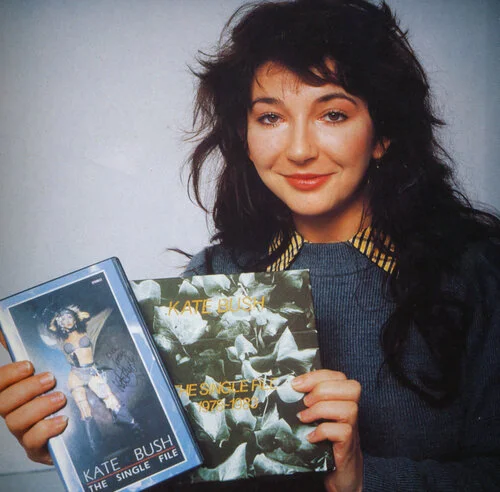
Though we do not use VHS anymore, from a memorabilia standpoint, there are used VHS’ like her Whole Story, and The Single File. I think new copies could be made on VHS but having them in a shop, I am sure, would attract people – I would definitely buy the VHS’, as they are a part of her history. There would be C.D. albums alongside the vinyl but, in the music section, I think a cool cassette vending machine would be awesome! Maybe the demand would not be as huge as vinyl, but having her studio albums on cassette would be great, and even a simple nostalgia value would lead to popularity and demand. I might have missed other music/vinyl, but there are interviews and releases that could make for a vivid and varied selection! There are fewer books relating to Kate Bush available, but magazines could be combined. There would be a magazine rack/section sitting beside bookshelves that would stock Kate Bush books. Ones I have mentioned before like KATE: Inside the Rainbow, and Under the Ivy: The Life & Work of Kate Bush, are ones everyone should own, and I would also recommend Homeground: The Kate Bush Magazine: Anthology One: Wuthering Heights to The Sensual World, and the second volume. Like the vinyl, there would be a section for the rarer and more expensive. For example, Guido Harari’s The Kate Inside is a gorgeous photo collection - there is a terrific Deluxe Edition. Also, the excellent Gered Mankowitz book, WOW, is one that I would love to own.

mnmnmn.jpeg

 PHOTO CREDIT: Gered Mankowitz (from his book/collection, WOW)

Of course, the 2018 book of lyrics, How to Be Invisible, is a great release, and a unique insight into her beautiful words. There are other books that are either used or not regularly available in shops, so I would be interested to see how many new/used copies are available that could be put into a shop. I think there is enough there and, when it comes to the other sections of the shops, I guess one could divide it between signed/rare goods and general memorabilia. There are some really cool Kate Bush-related T-shirts that, whilst not official merchandise, would be snapped up! There are great T-shirts available through Amazon, Red Bubble, and Etsy. Look around the Internet, and one can find memorabilia, signed items, and other wonderful, if expensive rarities.  Bringing in items that are already available through Kate Bush’s online store, and I think a pop-up shop larger than the one we saw in 2018 could raise money for charity, get fans together and house some brilliant and rarer Kate Bush goods all in one place! I think Neal’s Yard would be a perfect location for a Kate Bush shop, but thinking about all the products available, maybe a two-storey space would be best. Of course, it would have to happen post-COVID-19, as I think there would not be a lot of space to move around, and to maximise profit/money to charity, having as many people in the shop as possible would be best. It is just a thought at the moment but, looking at the love Bush continues to receive and the way her music and work is so in-demand, I think there would be enormous demand for a…

KATE Bush pop-up shop.

FEATURE: Warmer, Barer, Fuller: The Pleasures and New Realisations on Kate Bush’s Director's Cut

FEATURE:


Warmer, Barer, Fuller

ooppo.jpg

IN THIS PHOTO: Kate Bush (and a very cute feline friend) in a promotional shot for 2011’s Director’s Cut/PHOTO CREDIT: John Carder Bush (from the book, KATE: Inside the Rainbow

The Pleasures and New Realisations on Kate Bush’s Director's Cut

___________

WHEN I have mentioned this album before…

I have sort of intimated that it is inessential in terms of Kate Bush’s very best. Director’s Cut was released in 2011 and it is very much part of the cannon. The ninth studio album by Bush, it was released on the Fish People label on 16th May, 2011. It is made up of songs from her earlier albums, The Sensual World, and The Red Shoes which have been remixed and restructured; three of which were re-recorded completely. All the lead vocals on the album and some of the backing vocals have been entirely re-recorded, with some of the songs transposed to a lower key. Additionally, the drum tracks were reconceived and re-recorded. I think my problem is that I am a bit edgy when it comes to Bush re-recording any of her songs. For The Whole Story in 1986 – a greatest hits package -, she put out a new version of Wuthering Heights. Essentially, it was a new, slightly lower vocal, but the original is faultless and timeless for a reason. I guess Bush was wary that Wuthering Heights, whilst genius, was singled out because of a very high-pitched and wild vocal. Maybe she felt, as she was turning twenty-eight in 1986, that the song she recorded when she was nineteen could benefit from a slight update! I get a similar feeling when people cover Kate Bush songs, in the sense I think the originals are best and it is hard to make them better.

I know people love Futureheads’ version of Hounds of Love, and Placebo’s Running Up That Hill and, whilst different to the originals, I think they lack the beauty and power demanded. Maybe it is me. I think Bush has always put her everything into every song and, when you have a voice and instinct like hers, no other artist can touch that – there have been some good cover versions, but none that touch the originals! I was thrilled when Bush announced she was bringing out a new album in 2011, and she was doing something she had not done in such a fashion before – namely, reworking so many of her older songs. Using an article from the Kate Bush Encyclopaedia, and Bush talked about the reason why she took on Director’s Cut:

For some time I have felt that I wanted to revisit tracks from these two albums and that they could benefit from having new life breathed into them. Lots of work had gone into the two original albums and now these songs have another layer of work woven into their fabric. I think of this as a new album. (Sean Michaels, 'Kate Bush reveals guest lyricist on new album - James Joyce'. The Guardian (UK), 5 April 2011. Retrieved 31 January 2015)”.

Although I think there are only a couple of songs on Director’s Cut that equal or top the originals – Song of Solomon (The Red Shoes), and Top of the City (The Red Shoes) come to mind -, there are defining characteristics of the album that make it an interesting listen.

For one, the opening track, Flower of the Mountain, has a fascinating story. The Sensual World’s title track had intended to use Molly Bloom’s soliloquy from James Joyce's Ulysses, but Bush could not get permission at the time. Although the lyrics are brilliant, Bush really wanted to use those words from Joyce, so when the estate granted permission for Director’s Cut, Flower of the Mountain uses only that beautiful and stirring soliloquy. One suspects it was less to do with yielding to demand as it was that the statue of limitations/restrictions were invalid, as the novel was published in 1922. I love the new version, because one can feel how meaningful it is to Bush. Rather than her copying the original songs with lower vocals for Director’s Cut, there are definite twists and turns. Top of the City seems tauter and livelier, whereas Rubberband Girl – which she almost considered leaving off the album – is more Blues/Rock. If one listens to Director’s Cut as a new album and doesn’t compare them to the originals, I think it is a more rewarding listen; one where you can appreciate the songs anew. One of the issues Bush faced with The Sensual World, and The Red Shoes, is that the production is quite edgy and lacks a certain space. I think The Sensual World is quite sensuous and warm, but C.D.s were around in 1989, and I think there was this need to fill each disc and put as much in/as many layers as possible.

This is true of The Red Shoes which, at fifty-five minutes, is a bit overlong; most of the tracks are over four minutes, and there is a lot of production and sheen on some songs that require something barer. I think, too, one or two potentially strong songs either suffer because of the sound on The Red Shoes, or Bush did not attack and approach the song as she should have. I am surprised there were songs reworked from The Sensual World, as that is one of her best albums. That said, This Woman’s Work is given new meaning and depth! That song is a highlight from The Sensual World, but Bush makes the song sound even more effecting on Director’s Cut. Apart from Deeper Understanding – the only single released from Director’s Cut – not quite hitting the mark and losing something (in a track that talks about our reliance on computers, something that sounded prophetic in 1989 seems outdated and strangely dial-up connection in terms of its sound and potency in 2011), the other tracks are really interesting! I just want to bring in a couple of reviews for Director’s Cut. Alexis Petridis of The Guardian had his say:

“…In fact, it's the only moment when you can honestly say the rerecording pales next to the original. At worst, they sound as good as their predecessors, which leaves you wondering what the point is, even as you succumb to their manifold charms. It was obviously a bind that the Joyce estate refused permission to use Molly Bloom's concluding soliloquy from Ulysses as the lyrics to The Sensual World, but whether it's a vastly better song for finally having them in place of Bush's facsimile is rather a moot point.

Song of Solomon, on which Bush finally abandoned her apparently bottomless store of metaphors for female sexuality in favour of a direct demand for a shag – "Don't want your bullshit," she cries, "I'll come in a hurricane for you" – is a fantastic song whether the rhythm track features pattering tom-toms or a lightly brushed snare. Occasionally, the changes genuinely add something, usually by taking things away. The force of The Red Shoes' depiction of Bush's troubled relationship with the creative impulse was always a little blunted by its presentation as a kind of perky Irish jig: with the Celtic pipes shifted to the background, it sounds sinister and more urgent. Moments of Pleasure's rumination on death is more introverted and affecting stripped of its dramatic orchestration, while This Woman's Work – the rerecording of which caused the most unease among fans – is amazing: emptier, darker and quieter than before, it's even more heart-rending. Given that the original was heart-rending enough to soundtrack a charity campaign against child abuse, that's no mean feat”.

A publication not normally renowned for their positivity is Pitchfork. They reviewed Director’s Cut, and they made some interesting and warm observations:

What Bush has done on Director's Cut, put simply, is to strip the 80s from these songs. (That goes for the Red Shoes material, too, even though the album was released in the 90s.) The gigantic drums and digital polish, what both dated the music instantly and gave it that stark contrast between accessibility and the deeply personal, have been replaced with less showy rhythm tracks, and a warmer, more intimate atmosphere. On the original "The Sensual World", the elements drawn from Celtic folk felt like striking intrusions in an all-digital world. Renamed "Flower of the Mountain" here, those rustic elements no longer feel quite so out of place, whether you found the original an intriguing hybrid or an awkward merger of old and new.

poo.jpg

IN THIS PHOTO: Kate Bush in a promotional shot for Director’s Cut/PHOTO CREDIT: John Carder Bush (from the book, KATE: Inside the Rainbow 

The songs still don't have the feel of a band playing together, but they have a new unity, even the synthetic elements part of a lovingly handcrafted sound. "The Red Shoes", another Celtic-inflected standout, with one of Bush's wildest performances, gains a new intensity precisely because the instruments no longer feel so sterile. But not every element of this patchwork has been pieced together perfectly. The eerie keyboard textures on "And So Love Is", the kind of sour 80s kitsch beloved by Gang Gang Dance, seem surprisingly natural in this new environment. But Eric Clapton's bluesy wanking sounds even more out of place now, stadium pop bluster in a homemade world. It produces tension for sure, but the wrong sort”.

I think the takeaways from the reviews seem to revolve around how Bush added something new to well-known songs rather than lazily re-record them without change. To me, the warmth and full sound of the songs is clear. Bush has said how she prefers tape because it has a warmer, fuller sound, and she always felt that digital and techniques of the late-1980s and early-1990s were too edgy - I word that keeps coming up! - and lacked something. Allowed to take her songs into the studio and strip them away, the resultant Director’s Cut is fascinating! It makes me wonder whether she will go back further and rework songs from other albums in years down the line, but I can understand why she felt The Sensual World, and The Red Shoes were a bit too layered, lacking in real warmth and, perhaps, there were too many instruments and too much unnecessary energy.

What we got in 2011 was a then-fifty-two-year-old revisiting songs that she first recorded in her thirties. Since then, she has aged and become a mother, and I think she approaches the tracks with a fresh passion and beauty. One interesting aside is that Bush released Director’s Cut on her Fish People label. She was previous on EMI, but she wanted to have more control of her music and, after thirty-five years, there were few at EMI who she felt close to or had an intimate working relationship with. It seems symbolic that the first album she released on her own label reworked songs from albums that EMI put out. I will write a separate feature about Fish People and whether she will sign names to the label, but I think Director’s Cut is much-needed because it allowed Bush to scratch an itch of slight disappointment. Many raved about Director’s Cut, but others felt a little inclined, as it was her first album in six years - one that many felt was a covers album. If that was the only thing that she released in 2011, then there might have been this sense of Bush signing off and, after releasing 2005’s Aerial following a twelve-year gap, this was her writing a final chapter – where she got to record and produce songs now how they should have been back in 1989 and 1993. Instead, Bush was clearing the way for new work.

I stated before how albums like The Red Shoes were a bit long but, as you look at the running times, most of the songs on Director’s Cut are longer than the originals – Deeper Understanding is almost two minutes longer on Director’s Cut compared to The Sensual World! Rather than extend songs with the same production sound, Bush stripped them out and expanded them; breathing more life and consideration into the words and moods; following on instinctively from Aerial’s expansiveness and sense of the open. Bush said that Director’s Cut was a stepping stone to new work. She acquired new confidence, and I can understand why she had the inspiration and energy to record and release another album after Director’s Cut. 50 Words for Snow followed in November 2011, and very few would have guessed that Bush would release another new album so soon after putting out an album where she redid older tracks. I will finish off soon but, just before, I wanted to source from a couple of interviews Bush to promote the album. In an interview with Interview Magazine, she was asked about her approach to looking back and reconsidering songs she wrote years previous:

DIMITRI EHRLICH: It’s funny. I’d think revisiting those songs would almost be like looking at old photographs or reading old love letters from a long time ago, because as a songwriter, the emotions that you’re tapping into are the most primal, raw, and immediate ones. Was it strange to step into the emotional clothing you had worn 20 years ago and see how it fit and wonder, Who is this person?

BUSH: Yeah, it was. At first, it was quite difficult, and, at a couple of points, I nearly gave up the whole process. I found that by just slightly lowering the key of most of the songs, suddenly it kind of gave me a way in, because my voice is just lower now. So that helped me to step back into it. And although they were old songs, it all started to feel very much like a new process and, in a lot of ways, ended up feeling like I was just making a new album—it’s just that the material was already written. When I listen to it now, it feels like a new record to me.

EHRLICH: Why did you decide to re-record existing material rather than do something new, or just release the old versions remixed, or whatever?

BUSH: Well, I really didn’t see it as a substitute for a greatest hits package, but it was something I’d wanted to do for a few years. I guess I just kind of felt like there were songs on those two albums [The Sensual World and The Red Shoes (1993)] that were quite interesting but that they could really benefit from having new life breathed into them. I don’t really listen to my old stuff, but on occasion, I would either hear a track on the radio or a friend might play me one, and there was generally a bit of an edgy sound to it, which was mainly due to the digital equipment that we were using, which was state of the art at the time—and I think everyone felt pressured to be working that way. But I still remain a huge fan of analog. So there were elements of the production that I felt were either a little bit dated or a bit cluttered. So what I wanted to do was empty them out and let the songs breathe more”.

In an interview with Pitchfork, the subject of uncluttering songs and toning things down came up. With the vocals more composed and less acrobatic (providing backing vocals were Ed Rowntree, Mica Paris, Jacob Thorn, Michael Wood, and Jevan Johnson Booth), and the instrumentation more subtle and less layered (there were about eight musicians credited on Director’s Cut, whereas there are twice that on The Red Shoes alone), there is a notable difference between the songs on their original albums and Director’s Cut:

Pitchfork: Listening to Director's Cut, a few of the songs that struck me the most were the ones where you took out big chunks of instrumentation. What was the logic behind that?

KB: There were some good songs on those albums that perhaps weren't speaking the way that they could, so I just wanted to let them breathe a bit more. One of the main things was to strip out a lot of the tracks and, in some cases, lengthen them in order to let the original musicians' performances shine out a bit more, too.

Pitchfork: A lot of the songs you picked for Director's Cut are pretty personal, and there seems to be less theatricality involved compared to the originals. Do you feel like the distance between your more performative side and your more personal side has changed through the years?

KB: [laughs] Oh, that's a really deep question. I don't know how to answer that because I'm always in the process, but hopefully I'm starting to get the hang of how to put it all together more. Sometimes when I look back on myself on those earlier records, there was so much effort going in, so much trying. With this, I was trying to make it much more laid back”.

I wanted to do a feature on Director’s Cut, as I have sort of ignored it or felt that the originals were so good that they should not have been touched. Having read interviews Bush conducted and her reasoning behind Director’s Cut, I can appreciate the album in a new light! If the songs from The Sensual World, and The Red Shoes were a little busy and over-layered, Bush’s first album of 2011 provided these terrific songs with…

 IN THIS PHOTO: Kate Bush in a promotional shot for Director’s Cut/PHOTO CREDIT: John Carder Bush (from the book, KATE: Inside the Rainbow 

SO much warmth, style and space.

FEATURE: Spotlight: Ari Lennox

FEATURE:

Spotlight

Ari Lennox

___________

I am featuring an artist today…  

who is very popular and has big social media numbers, but she is not known to everyone. I think there are many who are unaware of the music of Ari Lennox, so I wanted to put her into the Spotlight feature. One of last year’s best debut releases came from her Shea Butter Baby album. That album received some huge reviews, and the songs on it are so soulful and pure - but there is definite fire and emotion. I think everyone can appreciate the album and, with a new song out in the form of Chocolate Pomegranate, there are a lot of eyes on Lennox. I am going to bring in a review of Shea Butter Baby, but there are some great albums out there with Ari Lennox. One interesting interview that caught my eye is from GQ . It is clear that Ari Lennox would always make it into music with a voice like hers:

 “The 28-year-old, who spent her formative years in the DMV area, wasn’t a child prodigy who always knew her vocals would carry her to stardom. She worked a dozen or so jobs in her 20s, moving constantly, and aimlessly. Born Courtney Salter, she got her stage name from Mary Lennox, the little girl in the film adaptation of The Secret Garden. “She was a spicy thing,” Ari says. “I always wanted that life, just a nice garden and a sexy, tall guy.”

On Shea Butter Baby, Lennox tells us about suitors being “lost in the shape of [her] hips,” and provides plenty of updates on her search for a sexy, tall guy. (No word on how the garden is going.) But she also sings about finding one such man in a CVS, while she’s a sick mess in need of Ricola cough drops. She sings about how shitty dating apps have been for her, and the unique joys of having her own apartment for the first time. It is an eminently relatable record, and the strongest R&B album of the year thus far.

A couple months ago, you tweeted, "I want to stop being compared to y'alls fave so badly." Who do you hear about the most that you're sick of being compared to?

So, I'm only sick of this because it sometimes makes me feel like there's no room, and that's Erykah Badu. Absolutely no shots at her, she's amazing and a legend. But for me, it's like, if you guys think I sound just like Erykah Badu, is there room for Ari to ever be her own artist? Plus, I've never met Erykah. I'm scared to for a million reasons, and I also don't want her thinking I'm trying to jack her swag or anything. I guess that's my biggest fear—I don't know why she would have time to think about me at all. That's my paranoid mind.

I really think only Erykah Badu can be Erykah Badu. I wish I could create something as legendary as Mama's Gun and Baduizm. That's an all-time body of work right there.

This interview is beautiful because you're asking about so many different things. But a lot of times people just jump straight to, "Yeah, you remind me of Erykah," and I'm just like, "Man, did you check out other things? Do you really know my discography? Do you know anything about me?”.

One of the things that I especially like about Ari Lennox is that her music and voice has that classic edge and sounds very oldskool, but there is that modernity to the music. It is a rich blend that has captivated so many people. I think, with more albums under her belt, Lennox will definitely be a big festival headliner and hugely inspiring artist for those coming through. I want to take from an interview in DJ Booth, as Lennox was asked about mixing the new and old on Shea Butter Baby:

You have a lot of classic vocal influences, but your songwriting has very modern themes. Is that a conscious choice to bridge the two disciplines?

I think it started as a conscious choice, for sure. Now, I just want my music to be soulful and nostalgic, but I have to talk about what I’m going through. I have to do it in a way where it’s coming from me, and not from somebody else.

The real win of this album is how honest and specific your songwriting has become.

I’ve just always been very blunt. I’ve always been too blunt. I’ve always been too honest.

Is that a virtue?

I think it’s very positive. It’s so easy to put on a mask and not be real about what we’re feeling and who we are. But it’s the only way you can free yourself”.

Who is your ideal Shea Butter Baby listener, and what do you want them to take from the record?

First and foremost, this project is for Black women. I feel like we are not represented the way we should be worldwide, but specifically in America, I feel like they sleep on us. They sleep on us in our natural form, with our natural hair, and our natural noses. The natural Black woman, or even if you’re natural under your weave, this is for you. Or, even if you’re aspiring to be natural. This is for the Black woman because we just don’t get enough love and I want little girls to look at me and I want them to say: “I’m proud of my Blackness. I’m proud of my skin. God made no mistakes when he created us.”

Overall, this album is for the woman. Women owning their power, owning who they are, owning their sexual power. It’s for women”.

If you have not checked out Shea Butter Baby, then make sure that you do, as it is a gorgeous record, and one that points to a very bright and promising future. The twenty-nine-year-old from Washington, D.C. was the first woman to be signed to J. Cole's record label, Dreamville Records. She (Courtney Salter) co-wrote all twelve tracks on her debut album, and there is so much honesty and rawness in the writing. She described how it was quite a blunt experience writing Shea Butter Baby and the real-life turmoil she faced.

This, matched with such an incredible voice, provides plenty of emotional reaction and memorable tracks. When they reviewed Shea Butter Baby, this is what CLASH had to say:

Lennox’s artistic depth and quality has always been clear to see, but part of the appeal of ‘Shea Butter Baby’ is its lingering commercial appeal, that’s crying out to be explored. This can be seen early on, when ‘BMO’ leaps centre-stage and demands chart attention. Again borrowing from earlier eras, the ‘Space’ sampled [Galt MacDermot] number proves instantly infectious, and has quickly become a fan-favourite on social media. It’s the perfect spring mid-tempo cut, and provides more than enough sass, innuendo, and funk-fuelled energy to engage wider audiences.

The issue of navigating relationships is a foundational crux of R&B, and Ari Lennox channels and tackles both the good and the bad of this. At her most vulnerable – which is arguably on ‘I Been’ – the artist slows it down and keeps things relatable. Somewhere between the purple haze, Tinder references and dodging lies, the 28-year old manages to impart some wisdom to her female fans: “Life is too short to be blocking your blessings like that.”

Lennox learns that no relationship is worth emotional trauma and transforms into a contemporary empowerment leader. In an era defined by ‘situationships’, ‘I Been’ serves as a valuable reminder that toxic environments shouldn’t be tolerated.

Perhaps the most endearing aspect of ‘Shea Butter Baby’ is an authentic innocence that threads through it – the subtle interludes that feature in the space between songs lay bare Ari Lennox’s passions, fears, desires, and intentions. They allow listeners to get to know the singer and her universe, evoking an undeniable form of humility – something that makes the soloist captivating.

‘Shea Butter Baby’ manages to meld contemporary R&B with other sounds like soul, funk, and blues, all while introducing us to the Ari Lennox of today – and the inspirations that guide her every move”.

If you are new to Ari Lennox, then make sure you follow her on social media (see below) and go and investigate her music. She is a definite future icon, and I do love her Neo-Soul vibes mixed with something very modern and of-the-moment. It is no surprise that Lennox is seeing her stock rise and winning so many fans as her music has this transporting quality. I have been following her since just before her debut came out, and I cannot wait to see what she offers up next. There are so few artists as memorable and talented as Ari Lennox, so it is exciting to imagine just how far she can reach. Her music is fabulous and, after just one hit, you will be…

TOTALLY hooked.

____________

Follow Ari Lennox

FEATURE: Vinyl Corner: Pulp – Different Class

FEATURE:

Vinyl Corner

qqq.jpg

Pulp – Different Class

___________

EVEN though its twenty-fifth anniversary…  

was last Friday (30th), I wanted to include Pulp’s Different Class in Vinyl Corner, as it is one of the best albums from the 1990s. I would recommend people buy it on vinyl, as it is a tremendous record. Different Class is the fifth studio album by the legendary Pulp, and I think it is a step up from their previous best, 1994’s His 'n' Hers. That album was nominated for a Mercury Prize in 1994; Different Class was nominated and won in 1996 and I think, when it comes to albums that define the spirit of the 1990s, Different Class instantly comes to mind! Songs like Common People, and Disco 2000 are classics, and these are cuts that were ubiquitous and oft-quoted when I was at school. Jarvis Cocker’s lyrics are exceptional and incredibly sharp on Different Class, and he tackles sex and social class in ways that other writers cannot even imagine.  Different Class was a huge critical and commercial success, entering the U.K. chart at number-one. It has been certified four-times Platinum, and had sold 1.33 million copies in the United Kingdom as of 2020. It is often considered to be one of the greatest albums of the 1990s, and there is an embarrassment of riches to be found – from Mis-Shapes, and Something Changed to Sorted for E's & Wizz, Different Class is a truly phenomenal album! I cannot believe that it is twenty-five years old, as one can put on the album at any time and completely relate to the songs.

There is something ever-fresh and stunning regarding Cocker’s songwriting, and Pulp are at their strongest on Different Class. They did hit another peak on 1998’s This Is Hardcore, but I think there is something extra-genius and memorable about 1995’s Different Class. In their review, AllMusic had the following to offer:

After years of obscurity, Pulp shot to stardom in Britain with 1994's His 'n' Hers. By the time Different Class was released at the end of October 1995, the band, particularly lead singer Jarvis Cocker, were genuine British superstars, with two number two singles and a triumphant last-minute performance at Glastonbury under their belts, as well as one tabloid scandal. On the heels of such excitement, anticipation for Different Class ran high, and not only does it deliver, it blows away all their previous albums, including the fine His 'n' Hers. Pulp don't stray from their signature formula at all -- it's still grandly theatrical, synth-spiked pop with new wave and disco flourishes, but they have mastered it here. Not only are the melodies and hooks significantly catchier and more immediate, the music explores more territory. From the faux-show tune romp of the anthemic opener "Mis-Shapes" and the glitzy, gaudy stomp of "Disco 2000" (complete with a nicked riff from Laura Branigan's "Gloria") to the aching ballad "Underwear" and the startling sexual menace of "I Spy," Pulp construct a diverse, appealing album around the same basic sound.

Similarly, Jarvis Cocker's lyrics take two themes, sex and social class, and explore a number of different avenues in bitingly clever ways. As well as perfectly capturing the behavior of his characters, Cocker grasps the nuances of language, creating a dense portrait of suburban and working-class life. All of his sex songs are compassionate, while the subtle satire of "Sorted for E's & Wizz" is affectionate, but the best moment on the album is the hit single "Common People," about a rich girl who gets off by slumming with the lower class. Coming from Cocker, who made secondhand clothes and music glamorous, the song is undeniably affecting and exciting, much like Different Class itself”.

In 1995, Britpop was at its peak, and there was the infamous battle between Oasis and Blur. I often think of Pulp as being ‘outside’ of Britpop, as the music seemed so much smarter and a bit too cool in its own way for such a scene. Thinking about it, and I guess one has to class Different Class as Britpop. Before coming to an article that argue Different Class helped define the scene, I want to quote from Pitchfork’s review of Different Class from 2016:

Cocker’s songs on Different Class are such a rich text that you can go quite a long way into a review of the album before realizing you’ve barely mentioned how it sounds. Pulp aren’t an obviously innovative band, but on Different Class they almost never lapse into the overt retro-stylings of so many of their Britpop peers: Blur’s Kinks and new wave homages, Oasis’ flagrant Beatles-isms, Elastica’s Wire and Stranglers recycling. On Pulp’s ’90s records, there are usually a couple of examples of full-blown pastiche per album, like the Moroder-esque Eurodisco of “She’s a Lady” on His ‘N’ Hers. Here, “Disco 2000” bears an uncomfortable chorus resemblance to Laura Branigan’s “Gloria,” while “Live Bed Show” and “I Spy” hint at the Scott Walker admiration and aspiration that would blossom with We Love Life, which the venerable avant-balladeer produced.

Mostly though, it’s an original and ’90s-contemporary sound that Pulp work up on Different Class, characterized by a sort of shabby sumptuousness, a meagre maximalism. “Common People,” for instance, used all 48 studio tracks available, working in odd cheapo synth textures like the Stylophone and a last-minute overlay of acoustic guitar that, according to producer Chris Thomas, was “compressing so much, it just sunk it into the track.... glued the whole thing together. That was the whip on the horse that made it go”.

If you have not experienced Different Class, then I think it is a good investment on vinyl - and it is one of those albums that you will return to time and time again. For those of us who were around in 1995, I think this Pulp masterpiece really changed the game and provided so much pleasure. It was an album that I was very attached to, and my respect for Sheffield’s Pulp raised significantly! An article in COMPLEX from 2015 discusses the importance of Different Class in the Britpop movement:

Slow start aside, Pulp peaked at the pinnacle of the Britpop movement and became the very embodiment of Britpop. What makes Cocker's brand of crooning wordsmithery so important to the genre is that he really captured the ennui and frustration of middle-class youth. He sang for people like himself—common people, as their hit single would have it—those raised on a diet of broken biscuits, those who would drink and dance and screw because there's nothing else to do.

The opening track on Different Class served as the record's thesis: "Mis-Shapes" rebelled against the airhead rich kids, immediately putting Pulp in the team of the "other," or rather, a different class. "Check your lucky numbers/That much money could drag you under, oh/What's the point of being rich/If you can't think what to do with it?" Jarvis Cocker sings between choruses about making moves, coming out of the sidelines, and using "the one thing we've got more of—that's our minds." The opening track waged an us vs. them war, and Pulp made it exciting to be a misfit.

"They think they've got us beat, but revenge is going to be so sweet," snarls Cocker, before the second track, "Pencil Skirt," cues up—an anthem about screwing over the rich by, literally, screwing their wives. Cocker promises to be there "when he's not in town" and "show you how you're doing it wrong." They're not rich, but they can certainly fuck better, is what he seems to be saying. (He's probably not wrong.) Just two songs later, Pulp's seedy "I Spy" touches on the same topic, as he sings, "I've been sleeping with your wife for the past 16 weeks/Smoking your cigarettes, drinking your brandy/Messing up the bed you chose together/And in all that time I just wanted you to come home unexpectedly one afternoon/And catch us at it in the front room." "I specialize in revenge," he emphasizes once again. Sex has always been one of Pulp's greatest assets. Cocker has been naturally gifted with the ability to seduce by whispering sweet nothings, between moans and hip swishes from his lanky figure, his fingers always curled in that come-hither sort of way. For any common listener, Pulp's sex was sexy, making it one of the irresistible appeals of Different Class”.

On Friday, Different Class was celebrated and lauded by so many people across social media, and many people were sharing their memories of when it came out and the tracks that mean the most to them. I have always loved Disco 2000 most, but everyone will have their own standouts. That is the thing with Different Class: it is an album so overflowing with brilliance that it is hard…

TO narrow down to a single song!

FEATURE: Oh England My Lionheart: Kate Bush’s Lionheart: A Rich and Underrated Album in a Year of Pressure and Change

FEATURE:


Oh England My Lionheart

IN THIS PHOTO: Kate Bush during the Lionheart cover shoot at Great Windmill Street, London in 1978/PHOTO CREDIT: Gered Mankowitz

Kate Bush’s Lionheart: A Rich and Underrated Album in a Year of Pressure and Change

___________

IN the coming Kate Bush features…

 IN THIS PHOTO: Kate Bush during the Lionheart cover shoot at Great Windmill Street, London in 1978/PHOTO CREDIT: Gered Mankowitz

I will sprinkle in more general themes, but this one is very much tied to Lionheart. I have explained how four of Kate Bush’s albums celebrate anniversaries in November. The Red Shoes is twenty-seven today (1st November), whilst 50 Words for Snow is nine soon, and Aerial is fifteen very shortly. Lionheart is forty-two on 12th November, and it remains one of Bush’s more underrated albums. Like The Red Shoes, perhaps Bush’s songwriting was not at its peak for Lionheart, but the album was recorded and released in the busiest year of her professional career – her very first. One can argue Bush was busier in 1979 when The Tour of Life was born and toured around Europe; 1985 was packed when Hounds of Love was released and, arguably, 1993 was a more hectic year than 1978, as Bush released The Red Shoes, in addition to the short film, The Line, the Cross and the Curve. Maybe there is a link between years where Bush is cramming in a lot and albums maybe not being that complete and rich. 1993 and 1978 are different in terms of circumstances. 1993 was the last year Bush would release an album until 2005; she faced the impact of the death of her mother (in 1992), and fatigue was starting to show. 1978 is almost a polar opposite, where it was the start of her professional career and everything lay ahead. The Kick Inside was only released in February of 1978 and Bush would uncover her second album a mere nine months later! I have said this a lot but, if Bush had more say regarding her schedule and releases, she would have left a second album for another year or so; perhaps given herself until the middle of 1979 to write new songs, then produced a tour for the end of 1979/start of 1980.

I feel she still could have produced the albums she did subsequently, and it would have meant Lionheart could have benefited from more planning and fresh creative blood. As it was, she only had inspiration and opportunity to write three new songs – Symphony in Blue, Full House, and Coffee Homeground. I want to focus on Lionheart’s ‘title track’, Oh England My Lionheart, as it is a song Bush sort of dismissed – but it remains beautiful and so evocative! I have written about Lionheart before, but I feel it is underrated to the extreme. Like The Kick Inside before it, the album was produced by Andrew Powell (Lionheart was recorded between July and September 1978). Recorded at Super Bear Studios, France, Bush would have been excited about putting out an album as I think The Kick Inside would have been in her head for a long time before she recorded it. So many of the songs on the album were very familiar to her, so getting together some fresh tracks was a necessary development. I think the success and popularity of The Kick Inside was a bit of a curse. Especially given the fact Wuthering Heights was a number-one and such a unique single, Kate Bush was catapulted into the spotlight very quickly. I want to bring in a few interview snippets – from different years – where Bush discussed her relationship with Lionheart. It is amazing that Bush managed to put out two albums in a year – she did that in 2011, but I think 1978 is more extraordinary -, and she fitted that in with so much promotion around the world!

I have focused on a few different songs from Lionheart, and I really don’t think there are many weak spots. Despite the fact EMI wanted their prodigy to put out a second album so soon after her debut – and she must have felt the weight on her shoulders -, the mixture of the three new songs and older tracks is amazing! Lionheart is a tougher, rockier album as we have songs like Don’t Push Your Foot on the Heartbrake, and Hammer Horror. Bush’s voice is less reliant on the higher register, and she is fuller and more varied, debatably, on Lionheart. Also, the compositions instrumentation seems more diverse, and I think there is a slight widening of the lyrical palette. There are a lot of positives and, with songs such as Symphony in Blue, Wow, and Kashka from Baghdad equalling the highs of The Kick Inside, Lionheart deserves more affection than it has received! One can speculate what a second album would have sounded like if Bush had been given time to write more new songs and take a breather. Would it have felt more like 1980’s Never for Ever in terms of its genres and confidence, or would she have created something similar to Lionheart, albeit it with a few tweaks?! The fact that she was not allowed to produce/co-produce was a sticking point – Bush ‘assisted’ production on Lionheart and she co-produced Never for Ever with Jon Kelly -, but I have a lot of time for the album as a whole.

One of the songs that I have not yet singled out and wanted to throw some love at is Oh England My Lionheart. With help from the Kate Bush Encyclopaedia (taken from an interview with Kate Bush), this is what the song is about:

It's really very much a song about the Old England that we all think about whenever we're away, you know, "ah, the wonderful England'' and how beautiful it is amongst all the rubbish, you know. Like the old buildings we've got, the Old English attitudes that are always around. And this sort of very heavy emphasis on nostalgia that is very strong in England. People really do it alot, you know, like "I remember the war and...'' You know it's very much a part of our attitudes to life that we live in the past. And it's really just a sort of poetical play on the, if you like, the romantic visuals of England, and the second World War... Amazing revolution that happened when it was over and peaceful everything seemed, like the green fields. And it's really just a exploration of that. (Lionheart Promo Cassette, EMI Canada, 1978)

A lot of people could easily say that the song is sloppy. It's very classically done. It's only got acoustic instruments on it and it's done ... almost madrigally, you know. I dare say a lot of people will think that it's just a load of old slush but it's just an area that I think it's good to cover. Everything I do is very English and I think that's one reason I've broken through to a lot of countries. The English vibe is very appealing. (Harry Doherty, Enigma Variations. Melody Maker, November 1978)”.

Even if Bush has since distanced herself from the track, I think it is a gem that could easily have fitted on The Kick Inside. Maybe she wanted more songs about love on The Kick Inside, but it would have been nice to hear Oh England My Lionheart on the second side of her debut. One can only imagine the combination of excitement and exhaustion Bush experienced in 1978. From Wuthering Heights climbing the charts at the start of the year and her album being released in February, through to the interviews and promotion for both that followed, Bush definitely got a taste of the word and rigour of the music business very early on! I would be interested to hear about the conversation where Bush was working on getting The Kick Inside out to the world and EMI approaching her to start the process of her second album. I can imagine Bush was not overly-keen to be back in the studio so soon, and rushing an album could have derailed the momentum that was created and growing in 1978. As it was, she was charged with collecting an album’s worth of material. There is nothing quite as striking as Wuthering Heights on Lionheart, but its ten tracks enable Bush to progress (slightly) in terms of her vocals and sound whilst retaining the same shades and nuances that made The Kick Inside such a success.

 IN THIS PHOTO: Kate Bush n 1978

Kate Bush’s relationship with Lionheart altered through the years. Taking from the Kate Bush Encyclopaedia, and there was some positivity in her voice in 1978:

Maybe I'm a bit too close to it at the moment, but I find it much more adventurous than the last one. I'm much more happier with the songs and the arrangements and the backing tracks. I was getting a bit worried about labels from that last album; everything being in the high register, everything being soft, and airy-fairy. That was great for the time but it's not really what I want to do now, or what I want to do, say, in the next year. I guess I want to get basically heavier in the sound sense... and I think that's on the way, which makes me really happy.

I don't really think there are any songs on the album that are as close to Wuthering Heights as there were on the last one. I mean, there's lots of songs people could draw comparisons with. I want the first single that comes out from this album to be reasonably up-tempo. That's the first thing I'm concerned with, because I want to break away from what has previously gone. I'm not pleased with being associated with such soft, romantic vibes, not for the first single anyway. If that happens again, that's what I will be to everyone. (Harry Doherty, Kate: Enigma Variations. Melody Maker, November 1978)”.

I have talked about Lionheart being rushed and Bush having to toss songs together but, in her idyllic surroundings in France, there was time to hone certain songs - and, as it transpired, there was plenty of material for the album:

“[Recording in France] was an amazing experience. I mean it's the first time I've ever recorded out of the country. And the environment was really quite phenomenal, I mean it was just so beautiful, it was so unlike anything I'd seen for a long while. And I think there was so many advantages to it, but there were a couple of disadvantages - the fact that it was so beautiful, you couldn't help but keep drifting off to the sun out there, you know, that sort of thing. But you just didn't feel like you needed a break, because the vibes and the weather and everyone around was just so good, you know, you didn't feel like you were working. It was really, really fun”.

It was a difficult situation because there was very little time around and I felt very squashed in by the lack of time and that's what I don't like, especially if it's concerning something as important for me as my songs are, they're really important to me. But it all seemed to come together and it was really nicely guided by something, it just happened great. And there were quite a few old songs that I managed to get the time to re-write. It's a much lighter level of work when you re-write a song because the basic inspiration is there, you just perfect upon it and that's great. And they're about four new songs so they all came together, it was great. In fact, we ended up with more then we needed again, which is fantastic. (Lionheart Promo Cassette, EMI Canada, 1978)”.

A few years after Lionheart came out - with Bush was working as a solo producer -, and her sound had radically altered. I guess she had enough time then to look back at Lionheart and get a clearer impression of it – without feeling obligated to be positive when promoting it:

I had only a week after we got back from Japan to prepare for the album. I was lucky to get it together so quickly. But the songs seem to me, now, to be somewhat overproduced. I didn't put enough time into them. (Richard Laermer, Kate Bush Touches the U.S. At Last, Pulse!, 1984)”.

“Even on the first two records, I was doing what I'm doing now as a artist, only because I was a lot younger, and I didn't have the room and the space to be able to truly present my music. I had to work with a producer and within certain kind of set-ups because of the fact that... that's how it was, I wasn't powerful enough basically to be able to say, ``Look, I'm producing this myself. This is what I do.'' And that's what I do now. I think that if I had been a little older, and if I'd had the experience at the time, I would have done it then, too. But I was - When I was making my first album, I was 18. I had never really worked with a band before, let alone a producer in a studio setup. So I just had - [Laughs] -I mean I just about had the guts, you know, to sing and keep it together.

IN THIS PHOTO: Kate Bush during The Tour of Life in 1979/PHOTO CREDIT: Max Browne 

 But you learn very quickly what you want. By the time the second album was finished, I knew that I had to be involved. Even though they were my songs and I was singing them, the finished product was not what I wanted. That wasn't the producer's fault. He was doing a good job from his point of view, making it sound good and together. But for me, it was not my album, really. (John Dilberto, Britain's Renaissance of Concept Rock, Keyboard, 1985)”.

I guess it was that yearning to be more involved in production that meant 1980’s Never for Ever was such a revelation. In spite of Bush not having quite the input she would have liked on 1978’s Lionheart, it is a remarkable album that was completed in a truly frantic and restless year! The album has been certified Platinum in the U.K., and it reached the top-twenty in several nations’ charts; the single, Wow, reached fourteen in the U.K., and I think Bush could have released Symphony in Blue, and Kashka from Baghdad and scored higher chart positions than she obtained for the album’s first single, Hammer Horror – which only got to forty-four in the U.K. Oh England My Lionheart is a terrific song that I think Bush would feel differently about if she knew how many people loved it. Every track from Lionheart was performed for her 1979 tour. The Tour of Life received rave reviews, and I think part of that was to do with the songs’ strengths and what Bush managed to do with them in a live setting. Just ahead of its forty-second anniversary, I feel Lionheart should be reassessed; more of its songs should be played on the radio and, in a wild year (1978), Bush pulled together a second album that is very strong and eclectic. Even though Lionheart is not the album she would have wanted to release after The Kick Inside, listening back to it now staggers me – how did she manage to create an album so soon after her debut that…

IS so good!?

FEATURE: Where Love Lives: Sounds of the 90s with Fearne Cotton

FEATURE:


Where Love Lives

Sounds of the 90s with Fearne Cotton

___________

NEXT week…  

zzz.jpg

 IMAGE CREDIT: BBC

I am going to be writing about various aspects of what is happening in today’s music. In 2020, things are like we have never seen them before in terms of how live gigs have practically become extinct, and many artists’ livelihoods have haemorrhaged. In terms of music sales, things have been pretty healthy, and the quality of sounds released has been immense! I am going to write a feature ranking my top-ten albums of 2020, as I think there has been so many world-class albums released. For those of us who were alive thirty years ago when the 1990s began, it is almost a polar opposite now in terms of optimism and looking forward! I was six when the Nineties began, but I could sense then that something exceptional was shaping up; this was reflected in the music and culture. In terms of cross-pollination and experimentation, music was being taken to new heights and, even at a base level, Pop music at its simplest was so fun and uplifting. One can see why so many artists of today look back on the ‘90s as a source of inspiration and mentorship. Now more than ever, radio has become a source of relief and companionship. I have been enjoying the podcasts that have sprouted up and, at a time when creativity is providing something akin to catharsis and community, there has been so much gold put out.

IMAGE CREDIT: BBC

One series that ties into my absolute love and devotion of the 1990s is Sounds of the 90s with Fearne Cotton (there is an unofficial Spotify playlist that is a nice guide). I would encourage anyone with even a passing interesting in the decade to check it out, and it is a shame that the episodes are not kept – the BBC keep them live for about thirty days and then they are no longer available. I guess there is only so much room for shows on their site, and I guess it costs them to keep stuff live and active. It is a shame there is not a YouTube channel or they can transfer the show to Spotify, as I have loved what Fearne Cotton and her guests have put out over the weeks. In the episode that went out on Friday, Cotton was joined by Ronan Keating and Florence Given to talk all things ‘90s. Before the end of the year, I will put out a big piece regarding the variation and layers of the 1990s; the sheer weight of brilliance that was around. There is an argument as to whether a lack of technology and social media – the Internet was still quite new by the end of the ‘90s – helped and whether, I guess, a sense of privation was a bonus. To me, I think there was a simplicity for the time and a real sense of change in the air!

No decade has ever been care-free and overly-optimistic, but I feel there was a lot in the 1990s that sort of dropped since. There were scenes and genres that compelled competition and rivalry; there was so much going on, and it is a shame that there is not really the same sort of composure and dynamic now as there was in the 1990s. Pop music, largely, was synonymous with energy, whereas it is much more introverted and less pumped than back in the 1990s - there has been some change recently but not that much. Also, I think it is unfair to call Fearne Cotton’s show ‘nostalgic’. Yes, there is an element of that for those of us who lived through the decade, but there are many younger people who are listening because they want a guide to the 1990s. As I said, artists now are incorporating music from the 1990s into their repertoire and palette, and huge acts like Dua Lipa are combining tones of the 1980s and 1990s and creating something new. In a way, Sounds of the 90s with Fearne Cotton allows us to learn as much about music today as it does what was being created almost thirty years ago! I shall not bore people with my recollections of the 1990s and why it is so special to me, but I think the greatest thing about that time was the sense of joy and optimism that ran alongside genres like Grunge and Alternative – which were a bit darker and more introverted.

Whilst many of the tracks on Sounds of the 90s with Fearne Cotton concentrates on Pop and more mainstream sounds, it has compelled me and others to fully explore the decade. I love that Cotton has a lot of love for the ‘90s, and I hope her BBC Radio 2 series continues and we will be able to get all of the episodes through Spotify. Maybe, as things are so tough and there is a way to go until we can return to normal, there is something extra-appealing about Sounds of the 90s with Fearne Cotton. I have loved hearing from artists who were around in the 1990s and others who recall the decade fondly. For such a broad and busy decade, the selection of songs for each episode is actually pretty good – whilst I said Pop rules on the series, quite a few genres are covered! -, and it has been great listening in! If you want a blast of the greatest decade of music ever, or you just want to listen to some terrific songs that will definitely put you in a better mood, then take a listen to the Sounds of the 90s with Fearne Cotton episodes. It will be sad to hear them end but, as many have responded so positively to Cotton’s series, maybe there will be more, or she will investigate the decade deeply and from different angles down the line. In any case, I love listening through playlists of the best tunes of the 1990s and, on her show, we have heard some of the very best…

FROM a wonderful time!

FEATURE: The Lockdown Playlist: Classic Chill

FEATURE:


The Lockdown Playlist

PHOTO CREDIT: @brookecagle/Unsplash 

Classic Chill

___________

I am doing an extra Lockdown Playlist…  

 PHOTO CREDIT: @liubenko/Unsplash

as it is a particularly stressful time and, as COVID-19 cases climb, many people are very scared and unsure of what the future holds. I do think we all need some chill and relaxation and, whilst I have explored ambience before in these lockdowns, I want to feature some chilled Classic tracks that are guaranteed to soothe and ease your troubles. I hope things get better very soon, as many people are feeling strained and exhausted. It will get better, but it is going to be a long time before things start to feel better and like they are returning to normal. For this playlist, take some time to unwind and experience some truly escapist and moving…

 PHOTO CREDIT: @rsanchescarvalho/Unsplash

CLASSICAL tracks.

FEATURE: It Started with a Treasured Brown Jug… Kate Bush’s Aerial at Fifteen: A Coral Room

FEATURE:


It Started with a Treasured Brown Jug…

Kate Bush’s Aerial at Fifteen: A Coral Room

___________

THIS will be one of the shorter features…

IN THIS PHOTO: Kate Bush in 2005/PHOTO CREDIT: Trevor Leighton/The National Portrait Gallery, London

although I always say that and it turns into something epic! Because Aerial is fifteen on 7th November, I want to put out a final feature regarding the album and a particular aspect of it. I think I have covered the biggest songs, and I have also investigated the second disc of the (double) album, A Sky of Honey. There is one song that I had to mention before the anniversary, as it was highlighted by a fair few reviewers when it came to the best and most memorable tracks from Aerial. A Coral Room, in a way, reminds me of Moments of Pleasure from 1993’s The Red Shoes. In the song, we hear the lines “And I can hear my mother saying/"Every old sock meets an old shoe"/Isn't that a great saying?”. In interviews, Bush was asked about those lines and she said, when promoting Director’s Cut (2011) – in which she reworks that track -, that her mother found those lines hysterical. Hannah Bush died in 1992, so she would not have got the chance to see how those lines in Moments of Pleasure resonated with people all these years later. It is inevitable, as her mother was ageing when Bush wrote Moments of Pleasure, that she would have been reminded of upbringing; how little sayings like that made a difference and stuck in the mind! Even though a lot of the sadder and more reflective songs on The Red Shoes were written when Bush’s mother was still alive, one feels that there was a general sense and feeling that pushed remembrance and her mother’s wisdom to the heart.

By the time Aerial arrived in 2005, Bush’s mother, obviously, had departed and Bush was a mother herself –she gave birth to her son, Bertie, in 1998. As the Kate Bush Encyclopaedia presents, Bush spoke about the origins of A Coral Room in a 2005 interview:

There was a little brown jug actually, yeah. The song is really about the passing of time. I like the idea of coming from this big expansive, outside world of sea and cities into, again, this very small space where, er, it's talking about a memory of my mother and this little brown jug. I always remember hearing years ago this thing about a sort of Zen approach to life, where, you would hold something in your hand, knowing that, at some point, it would break, it would no longer be there. (Front Row, BBC4, 4 November 2005)“.

It seems like there are similarities with Moments of Pleasure, and A Coral Room. If the former employed a saying that seems quite cute but actually is very true, then the latter seems more haunting and effecting; almost like a piece of her mother has been left behind. I think, as Bush was building a family and released her first album since The Red Shoes, that her mother’s influence and importance would return - “My mother and her little brown jug/It held her milk/And now it holds our memories/I can hear her singing/"Little brown jug don't I love thee"/"Little brown jug don't I love thee"/Ho ho ho, hee hee hee”.

There are a few things that strike me about Aerial. I think the first disc, A Sea of Honey, is very home-based and domestic; where Bush guides us through various objects and rooms in the house. Although she is putting characters into some songs, one can feel the home flowing through the tracks. The only exclusion might be the opening track, King of the Mountain, which concerns Elvis Presley being alive and well and hiding in a mountain above us. Maybe, in my metaphor, Bush has started in the music room and has a vinyl of Presley with her as her mind wanders. Π is about the mathematical constant, and that could either be influenced by maths books, Bush’s fascination with numbers and, perhaps, her son as a young child - knowing that he would soon be entering school and thinking about what he would go on to learn. Bertie, track-three, is about her son, and Mrs. Bartolozzi takes us into the laundry room, as we get vivid images of clothing entwined in the washing machine and some on the line outside. Joanni, concerning Joan of Arc, seems less about Bush transplanting herself alongside the French heroine and more about Bush reading about her. How to Be Invisible finds Bush singing “I found a book on how to be invisible/Take a pinch of keyhole/And fold yourself up/You cut along the dotted line/You think inside out/And you're invisible”, so I can picture Bush moving between books and rooms through these songs.

The final song of the first side, A Coral Room, is almost the centrepiece of the house, where Bush has this brown jug, but she allows her mind to wander and uses it as this gateway into a world of imagination. If A Sea of Honey is more Bush in the house using everyday objects and inspirations to weave gorgeous songs and moments, A Sky of Honey is her in the garden absorbing the inspiration nature is giving it – Bush is breathing in and relaxing, whereas the first disc is the opposite. That is just me imagining and speculating, but it is significant that one of the finest and most emotively-performed songs on Aerial brings Bush’s mother to heart. I think A Coral Room finds Bush near her peak when it comes to her lyrics, and how a domestic vessel can provoke and stir such imagery: “There's a city, draped in net/Fisherman net/And in the half-light, in the half-light/It looks like every tower/Is covered in webs/Moving and glistening and rocking/It's babies in rhythm/As the spider of time is climbing/Over the ruins”. At 6:12, A Coral Room is the longest song on A Sea of Honey, and it is one of the album’s longest songs – only bested by Nocturn, and Aerial on A Sky of Honey. I love how imaginative and spellbinding A Coral Room is, but I also really like the fact that, clearly, her mother is at heart.

In an interview Bush gave to The Guardian in 2005, she was asked about A Coral Room:

The shiver-inducing stand-out track on Aerial, however, comes at the end of the first disc. A Coral Room is a piano-and-vocal ballad that Bush admits she first considered to be too personal for release, dealing as it does with the death of her mother, a matter that she didn't address at the time in any of the songs on The Red Shoes.

"No, no I didn't," she says. "I mean, how would you address it? I think it's a long time before you can go anywhere near it because it hurts too much. I've read a couple of things that I was sort of close to having a nervous breakdown. But I don't think I was. I was very, very tired. It was a really difficult time".

Also, when Bush was interviewed by Mark Radcliffe – in an interview that, sadly, I cannot find on YouTube as a whole video (it is there in segments) -, the subject of motherhood was explored:

Mark: How much has being a mother, and a mother and son, how much has that has inspired and infused this record, do you think?

Kate: I think it's all over it. You know, it's everywhere in the record. He's such a big part of my life so, you know, he's a very big part of my work.

Mark: Yeah. The life you lead, has been because you prioritized being a mother, more or less, above everything else, isn't it?

Kate: Yes, and it's something I really wanted to do, through choice. It's such a great thing, being able to spend as much time with him as I can. And, you know, he won't be young for very long. You know, already he's starting to grow up and I wanted to make sure that I didn't miss out on that, that I spent as much time with his as I could. So, the idea was that he would come first, and then the record would come next, which is also one reason why it's taken a long time (laughs) Yes, it's a wonderful thing, having such a lovely son”.

As Aerial prepares to celebrates fifteen years in the world, I was very keen to highlight one of the best songs from the album. It is amazing listening to the album now and hearing things you missed or certain tracks growing in stature. To me, A Coral Room has always been one of…

KATE Bush’s finest moments.

FEATURE: A Buyer’s Guide: Part Twenty-Seven: INXS

FEATURE:

A Buyer’s Guide

f.jpg

Part Twenty-Seven: INXS

___________

FOR this twenty-seventh….

edition of A Buyer’s Guide, I am interested in the legendary Australian band, INXS. Led by the incredible Michael Hutchence (who sadly died in 1997; the band split up in 2012), the Australian group have released some stunning albums. I have highlighted their four best, one that is underrated, in addition to their final album – and a book that acts as a pretty useful companion. We all know the classic INXS cuts, and I am a big fan of their wonderful music! If you need a guide to INXS, have a look at the suggestions below, and I think that they will guide you…

IN the right direction.

______________

The Four Essential Albums

The Swing

Release Date: April 1984

Labels: WEA/Mercury/Atco

Producers: Nick Launay/Nile Rodgers

Standout Tracks: I Send a Message/Dancing on the Jetty/Burn for You

Buy: https://www.discogs.com/INXS-The-Swing/master/71986

Stream: https://open.spotify.com/album/2fxoua5j7qfLmQGkf1TPIN

Review:

Consolidating the strengths of Shabooh Shoobah, The Swing is the first consistently impressive INXS album. With the Nile Rodgers-produced "Original Sin" acting as the centerpiece, The Swing retains the new wave pop sense and rock attack of their earlier albums, while adding a stronger emphasis on dance rhythms. At the same time, the group's songwriting had improved, with more than half of the album featuring memorable hooks” – AllMusic

Choice Cut: Original Sin

Listen Like Thieves

Release Date: 14th October, 1985

Labels: Atlantic/Mercury/WEA

Producer: Chris Thomas

Standout Tracks: What You Need/Listen Like Thieves/This Time

Buy: https://www.discogs.com/INXS-Listen-Like-Thieves/master/137590

Stream: https://open.spotify.com/album/1U6tgUieq2uuKip6DVxM31

Review:

Which is why Listen Like Thieves feels like a moment worth preserving—a snapshot of a band finding its voice and its lane in real time and figuring out how to do something that seems nearly beyond comprehension 35 years later. There are no heirs apparent. The 1975 have the big-tent ambition and certainly the look, but are complicated and navel gaze-y in a way INXS never seemed interested in. The Killers have the chart success but a decidedly Mormon interpretation of sex appeal. Coldplay have to work too hard to convince you that they’re any fun. Spoon have the songs and the hooks and the decades of consistency that make them easy to overlook, but not the actual hits. (Oh god, is it Maroon 5?) But the notion of sex, drugs, and dance-oriented, innocuous, hugely popular rock’n’roll as a formula for a decades-long career in some ways died with Hutchence. This almost sounds like a backhanded compliment now but it should be a badge of honor: INXS were a very good band that was very good at their job and that no longer really exists” – Pitchfork

Choice Cut: Kiss the Dirt (Falling Down the Mountain)

Kick

Release Date: 12th October, 1987 (L.P. & Cassette)/26th October, 1987 (C.D.)

Labels: WEA/Atlantic/Mercury

Producer: Chris Thomas

Standout Tracks: New Sensation/Never Tear Us Apart/Mystify

Buy: https://www.discogs.com/INXS-Kick/master/68453

Stream: https://open.spotify.com/album/7cuwWzS0oiApEt2fpKafkX

Review:

"What You Need" had taken INXS from college radio into the American Top Five, but there was little indication that the group would follow it with a multi-platinum blockbuster like Kick. Where the follow-ups to "What You Need" made barely a ripple on the pop charts, Kick spun off four Top Ten singles, including the band's only American number one, "Need You Tonight." Kick crystallized all of the band's influences -- Stones-y rock & roll, pop, funk, contemporary dance-pop -- into a cool, stylish dance/rock hybrid. It was perfectly suited to lead singer Michael Hutchence's feline sexuality, which certainly didn't hurt the band's already inventive videos. But it wasn't just image that provided their breakthrough. For the first (and really only) time, INXS made a consistently solid album that had no weak moments from top to bottom. More than that, really, Kick is an impeccably crafted pop tour de force, the band succeeding at everything they try. Every track has at least a subtly different feel from what came before it; INXS freely incorporates tense guitar riffs, rock & roll anthems, swing-tinged pop/rock, string-laden balladry, danceable pop-funk, horn-driven '60s soul, '80s R&B, and even a bit of the new wave-ish sound they'd started out with. More to the point, every song is catchy and memorable, branded with indelible hooks. Even without the band's sense of style, the flawless songcraft is intoxicating, and it's what makes Kick one of the best mainstream pop albums of the '80s” – AllMusic

Choice Cut: Need You Tonight

Welcome to Wherever You Are

Release Date: 3rd August, 1992

Labels: Atlantic (U.S.)/Mercury (E.U.)/East West Records

Producers: Mark Opitz/INXS

Standout Tracks: Heaven Sent/Taste It/Beautiful Girl

Buy: https://www.discogs.com/INXS-Welcome-To-Wherever-You-Are/master/71922

Stream: https://open.spotify.com/album/6BucEUL1TVDW6WQ59RS3WV

Review:

LIKE REM, popular Australian acronym took a bit of a step back after years of sustained touring, immersing themselves in relaxed studio indulgence rather than chasing schedules. The result, Welcome to Wherever You Are, is their very own Out of Time, a work of unusual diversity and confident experimentation. On material which blends styles and influences from a range of sources play with the punch of a soul band. The lyrics, of course, aren't as intriguing or exacting as REM's, but there are compensations in Michael Hutchence's greater adeptness in the ways of erotic obsession. It's their best record by some distance, bristling with pop hooks applied in odd directions.

The absence, after three hit albums, of producer Chris Thomas means it's both rawer than the usual sound, on straight- ahead rockers like the single 'Heaven Sent' and the lusty 'Taste It', and more adventurously sophisticated. A 60-piece orchestra is drafted into service for the anthemic 'Baby Don't Cry' and the moody finale 'Men and Women'. This last serves almost as a touchstone for the whole album, which finds Hutchence, notwithstanding his bona fide sex-god status, as bewildered as ever by the battle of the sexes. 'Making my own mind up,' he intones bleakly, 'When I can, I will’” – The Independent

Choice Cut: Baby Don’t Cry

The Underrated Gem

X

Release Date: 25th September, 1990

Labels: Atlantic (U.S.)/Mercury (E.U.)/WEA (Australia)

Producer: Chris Thomas

Standout Tracks: The Stairs/By My Side/Bitter Tears

Buy: https://www.discogs.com/INXS-X/master/71886

Stream: https://open.spotify.com/album/688l8IJXR4cmgGj0Ekl0DR

Review:

The seventh album from Australia's INXS basically sticks to the formula set up on Kick, mixing solid remixable dancefloor beats with slightly quirky production tricks, Michael Hutchence's rough-edged, bluesy vocals, and some good solid song hooks. The most immediate numbers are, of course, the two singles, "Suicide Blonde" and "Disappear," but other tracks stand out as potential hit material as well, including the anthemic "The Stairs." The biggest problems with the album are a tendency to play it safe, sticking to the tried and true -- echoing a line in the thumping "Who Pays the Price," when Hutchence sings "it's all been felt before" -- and the fact that there's very little in the way of subtlety on the entire album. All of the songs are designed for immediate radio contact -- they don't really give you a chance to grow into them, they just grab you by the throat and start shaking. "Know the Difference," as an example, threatens to be sneaky but immediately switches to an obvious assault instead. In the finish, the overwhelming lack of subtlety and sense of sameness overcomes the album as a whole. It's not that's it's a bad album. It's just nowhere near as good as it could -- and should -- have been” – AllMusic

Choice Cut: Suicide Blonde

The Final Album

Original Sin

Release Date: 16th November, 2010

Labels: Petrol Electric/Polydor (France)/Atco (U.S.)/Groove Merchants (Australia)/Epic (Canada)

Producers: Jon Farriss/James Ash/INXS

Standout Tracks: Mediate (ft. Tricky)/Beautiful Girl (ft. Pat Monahan)/Mystify (ft. Loane and John Mayer)

Buy: https://www.discogs.com/INXS-Original-Sin/master/312989

Review:

Having seen their permanent replacement, J.D. Fortune, recently fall off the rails, some might say it was time the INXS name was laid to rest. But six years after the largely ignored Switch, the Farriss brothers and co. are back with Original Sin, a star-studded tribute record featuring 12 new interpretations of some of their biggest hits. Depending on your viewpoint, the whole concept could be seen as a brave attempt to introduce some of their classic material to a new audience, or a lazy retread of former glories which cheapens the legacy of their late frontman Michael Hutchence. But whatever your stance on their post-1997 career, it's inarguably admirable just how much free reign each of the wildly eclectic collaborators are given to make these songs their own. Indeed, other than the straightforward rendition of closing number "The Stairs" (the only track to feature the aforementioned Fortune), and the impassioned, U2-esque treatment afforded to "Beautiful Girl" (featuring Train's Pat Monahan), the majority of the covers are virtually unrecognizable from the source material. This radical approach occasionally produces some surprisingly pleasing results. "Mediate," one of five tracks taken from their 1987 juggernaut Kick, is given an effectively claustrophobic makeover thanks to its warped basslines, crunching distorted guitars, and Tricky's hypnotic dark whisperings; bandmember Kirk Pengilly is unlikely to leave a dry eye in the house with his haunting and stripped-back choral reworking of early new wave single "Don't Change," and Argentine singer/songwriter Deborah DeCorral transforms the '80s funk of "New Sensation" into a gorgeous slice of understated country-blues. There are times, though, when the dream team lineup creates a nightmare. Ben Harper and Mylene Farmer's disjointed, bilingual duet "Never Tear Us Apart" is a cacophonous mess, which completely destroys the majesty of the original, French vocalist Loane and John Mayer turns the pounding piano-pop of "Mystify" into a self-indulgent slice of trippy space rock, while even Rob Thomas' best Hutchence impression can't save the misguided and formulaic, filtered, Gallic house retooling of the title track. The sole new composition, the meandering industrial electro opener "Drum Opera," indicates why the band seem so keen to revisit their past, but while Original Sin is likely to leave many hardened fans dismayed, there are a few encouraging moments which justify its addition to their cherished back catalog” – AllMusic

Choice Cut: New Sensation (ft. Deborah De Corral)

The INXS Book

INXS Story to Story: The Official Autobiography 

Authors: INXS/Anthony Bozza

Publication Date: 21st October, 2005

Publisher: Bantam Press; First Edition First Printing

Synopsis:

Now for the first time, INXS band members tell their own story about the meeting (and sometimes clashing) of minds that produced their music. In this gritty, in-depth narrative, one of the most influential bands of the last two decades reveals the truth about the way they lived: the drugs, the sex, the supermodels and the in-fighting. They also divulge everything they know about Michael Hutchence: his relationship with Paula Yates, his drug addiction and what they really think about his death. Like The Dirt, this is a book about rock 'n' roll out of control. It gives a fascinating insight into the life and death of a superstar, by the people who knew him best” – Amazon.co.uk

Order: https://www.amazon.co.uk/INXS-Story-Official-Autobiography/dp/0593055179/ref=sr_1_1?dchild=1&keywords=inxs&qid=1603785610&s=books&sr=1-1

FEATURE: Too Good to Be Forgotten: Songs That Are Much More Than a Guilty Pleasure: Dire Straits – Walk of Life

FEATURE:


Too Good to Be Forgotten: Songs That Are Much More Than a Guilty Pleasure

Dire Straits – Walk of Life

___________

I am going to move onto a song from…  

the 1970s next week but, for the second time in the past couple of weeks, I am featuring Dire Straits. In a previous Lockdown Playlist, I marked forty years of their album, Making Movies, with a film-related playlist, but now I am focusing on a song of theirs that gets a bad rap from some. Walk of Life is a song from their huge album, Brothers in Arms, that still splits critics. Released in 1985, the album starts with four singles - So Far Away, Money for Nothing, Walk of Life, and Your Latest Trick. Walk of Life peaked at number-seven in the U.S. charts and was the band’s biggest commercial hit in the U.K., peaking at number-two. Dire Straits are a fantastic band, but there are still some that see them as a guilty pleasure or are not a fan of the hits. Fronted by Mark Knopfler, there is a bit of cheesiness regarding Walk of Life’s synthesiser sound - but one cannot deny the infectiousness of the song. I grew up listening to band like Dire Straits, and while there is more critical respect for songs like Sultans of Swing, and Romeo and Juliet, I think Brothers in Arms is an underrated album that deserves to be seen as a classic. Walk of Life is my favourite Dire Straits song because it has such energy and I love its catchiness. Maybe the song’s video did not help regarding the song’s reputation, but I think one should show some love for Walk of Life.!

Many critics consider the song to be among Dire Straits’ best songs, but there are many others who feel it is one of the less impressive tracks of the 1980s. In this feature from The Sound of last year, we learn more about Walk of Life’s background:

Dire Straits 1985 hit single 'Walk of Life' was originally inspired by a photograph and a Cajun-style accordion, according to lead guitarist and singer Mark Knopfler.

The single, which appeared on the band's blockbuster album 'Brother in Arms', started out as a tribute of sorts to street buskers.

“I saw a photograph of a kid playing guitar in a subway, turning his face to the wall to get a good reverb. When I started playing the guitar, because I didn’t have an amplifier, I’d put the head of the guitar on the arm of a chair and put my head on the guitar to try and get into a loud noise. It kinda reminded me of that, I suppose,” Knopfler said.

You can see the influence in the original version of the music video for the song, which features a busker performing in an underpass. The video was later redesigned to appeal to the US market.

“I’d been influenced a little bit here and there by Cajun music," Knopfler continued. "Actually there was a Cajun version, a Louisiana version, by someone. Really, all I was trying to imitate with that Farfisa [organ] riff, it’s really like accordion. If you substitute [the Farfisa for] accordion, it’s really a Cajun-style riff”.

Before the lyrics kick in, Mark Knopfler does a few "who-hoo"s, which help create a whimsical vibe. When he spoke with the BBC in 1989, he expressed some remorse: "There's too many 'woos' at the beginning of 'Walk of Life,'" he said. "I heard it on the radio the other day and thought, Oh my God! What was I doing that for?". Apart from that, I have a lot of time for Walk of Life, and I have seen it on websites that list musical guilty pleasures. Thirty-five years after the track was released, I don’t think it sounds dated or like it is best left in the ‘80s. It is a fantastic song, and it is a shame that one does not hear it on a lot of radio stations! I think there should be a reappraisal of Dire Straits and Brothers in Arms. From one of the standout albums from the 1980s, Walk of Life is definitely one of the gems. With a huge chorus, plenty of charm and hooks that get under the skin, the superb Walk of Life stays in the memory…  

FOR all the right reasons.

FEATURE: Money in the Bank: The Tricky and Interesting Case of There Goes a Tenner, and Suspended in Gaffa from Kate Bush’s The Dreaming

FEATURE:


Money in the Bank

IN THIS PHOTO: Kate Bush and an extra during the shoot/rehearsals for the There Goes a Tenner video in 1982/PHOTO CREDIT: John Carder Bush (from the book, KATE: Inside the Rainbow)

The Tricky and Interesting Case of There Goes a Tenner, and Suspended in Gaffa from Kate Bush’s The Dreaming

___________

I have touched on this before…

 IN THIS PHOTO: Kate Bush (and Del Palmer) in the cover shoot for The Dreaming (1982)/PHOTO CREDIT: John Carder Bush (from the book, KATE: Inside the Rainbow)

when looking at Kate Bush’s The Dreaming, but I think the singles released from the albums were quite odd choices in some respects. Maybe Bush was looking to showcase different accents because, on The Dreaming’s second single, The Dreaming, Bush adopts an Australian twang. That song is about indigenous people being displaced and ravaged so, to follow that song, perhaps she thought something lighter was in order! I can appreciate that tact but, on 2nd November, 1982 – I am marking thirty-eight years since the single came out (albeit, a day early!) -, Bush’s lowest-charting song, There Goes a Tenner, was released. In terms of chart positions and the singles, Bush had mixed fortunes since her debut single earned her the only number-one (single) of her career. Wuthering Heights was followed by The Man with the Child in His Eyes - which reached number-six in the U.K. The Kick Inside, even though only two singles were released in the U.K., is the most successful album, on average, in terms of chart positions. Bush managed some high chart positions after The Kick Inside, and before The DreamingWow (from Lionheart, 1978) reached fourteen; Babooshka (from Never for Ever, 1980) got to number-five and, apart from Hammer Horror in 1978, Bush was reaching the top-forty for her singles. It is hard to figure a formula regarding what constituted a commercial single. Maybe increased popularity explains why Babooshka hit the top-five, but I think the sound of the Fairlight C.M.I. in the song helped, in addition to the amazing video.

Never for Ever’s three singles all got to the top-twenty, but the two more political numbers, Army Dreamers, and Breathing, got to number sixteen; not quite as high as Babooshka. When it came to figuring which songs to release from The Dreaming, I guess (the singles) had to reflect the sound of the album, but they had to be successful too. The first single, Sat in Your Lap, was released a year before The Dreaming came out in 1981 and, a year after Never for Ever’s singles charted, I guess there was still momentum that got the song to eleven in the U.K. Even though the song did not chart well anywhere else particularly, Sat in Your Lap was Bush’s most-successful single since Babooshka – Bush released the Christmas single, December Will Be Magic Again, in 1980 and it climbed to number-twenty-nine. Sat in Your Lap has propulsion and a stuttering rhythm that is pretty awesome; Bush’s voice switches and it is a busy and instant song that, whilst not as accessible as her earliest singles, definitely differed from the Pop and mainstream music of 1981. In terms of balancing the accessible and experimental, I think Sat in Your Lap was a successful release. There are songs on The Dreaming – which I shall come to – that could have been great singles and would have charted higher than Sat in Your Lap.

The second single from The Dreaming, (its title cut), weirdly, charted much lower in Australia than it did the U.K. – considering the song’s themes, The Dreaming only got to ninety-one! Whilst number-forty-eight is not a tragedy in terms of single positions, it was a drastic drop on Sat in Your Lap, and there are a few reasons why. There was a period of seven months between December Will Be Magic Again sort of ending the Never for Ever period and Sat in Your Lap beckoning The Dreaming’s sound and world. A whole thirteen months had passed since Sat in Your Lap arrived - and it would be a further two months later until the album arrived in September 1982. One could say that this gap is natural, and releasing a single earlier would have created traction issues by the time the album came out. I think a year was a long time between singles coming out and, as the public had this early taste of The Dreaming in 1981, the fact they had to wait so long for more material perhaps dented The Dreaming’s chances as a single. I was not alive in 1982, but in June 1982, The Falklands War ended; in July (the month The Dreaming (single) was released ) there was the Hyde Park and Regents Park bombings: the Provisional I.R.A. detonates two bombs in Central London - killing eight soldiers, wounding forty-seven people, and leading to the deaths of seven horses.

Maybe the importance and stress of political tragedies closer to home meant that a song with an Australian heart and angle was quite jarring and hard to understand. It was typical of Bush to throw herself into a song and sing in an Australian twang! The video for the song is quite filmic and complex, whereas a simpler, lower-key video might have proved more popular with audiences. Look at the successful U.K. singles of June and July 1982, and Bananarama, Bucks Fizz, Yazoo, Dexys Midnight Runners, Madness, and Shalamar were owning the charts! Throw in something as radically different as Kate Bush backed by (unfortunately) Rolf Harris playing the didgeridoo and Percy Edwards provided sheep noises, and that could account for The Dreaming not being quite as popular as if it was released at a later time. Taken now, and I still think the song sounds pretty radical and unique! After rather muted acclaim for the title track of an album where Kate Bush was producing solo for the first time, then the third single, one hopes, would have redressed the balance. Following a song concerning the destruction of Aboriginal Australians' traditional lands by white Australians in their quest for weapons-grade uranium, she needed to throw the lightness of There Goes a Tenner into the mix! Sat in Your Lap opens The Dreaming, whereas The Dreaming opens the album’s second side.

For the third single in the U.K., Bush chose the album’s second track. Imagine hearing The Dreaming without knowing about the singles, and one gets a jolt going from Sat in Your Lap, to There Goes a Tenner, to Pull Out the Pin! There Goes a Tenner reached ninety-three in the U.K. and it was a disaster! Although The Dreaming sold well as an album and got some great reviews, the final U.K. single took away a lot that momentum and praise I think. It would be three years until Bush enjoyed chart success when she put out Hounds of Love’s first single, Running Up That Hill (A Deal with God), but it must have been nervy for EMI and Bush seeing this single do so poorly. I really like the song, and I feel it is jaunty, yet there is enough weirdness in there too. The song's lyrics are about a bungled bank robbery as told by a fearful and paranoid perpetrator. Towards the end of the song, the lyrics and tone take on a dream-like state, which is reflected in the video. There Goes A Tenner was released as a 7" single in the U.K. and Ireland only (featuring Ne T'enfuis Pas on the B-side). It was originally intended to be Bush's first 12" single - but its disappointing sales performance caused plans for the 12" to be cancelled.

There Goes a Tenner’s music video was directed by Paul Henry and depicted Kate Bush as part of a gang of thieves robbing a bank. Because the video was simpler and less arty was as a result of EMI demanding Bush reign things in and make something simpler…but I do wonder why There Goes a Tenner was chosen as the final U.K. single, as I said before. I am grabbing from the Kate Bush Encyclopaedia, because the reviews made for slightly worrying reading:

Record Mirror noted: "Blackheath beauty goes all cooey cockney-gasp in a bouncy tale of the downfall of Thatcherism and the rise of mass working class solidarity... actually it's more trivial than that." Record Business noted: "A practically formless song with odd vocal affections, and no chorus to speak of. (...) Most disappointing." Neil Tennant wrote in Smash Hits: "Very weird... Obviously she's trying to become less accessible. Even so this has a haunting atmosphere".

In subsequent years, critics have been kinder to There Goes a Tenner. The readers of Louder placed the song at number-twelve in 2018. The Telegraph placed the single at eighteen in 2016, calling it a “playful curio”. That is pretty respectable, considering the fact it is Bush’s lowest-charting single, and it was not a song that was mentioned much for praise by critics in 1982. I think There Goes a Tenner would have made a decent B-side to another track from The Dreaming if we were to reimagine the third single.

xx.jpg

 IN THIS PHOTO: Kate Bush in 1982/PHOTO CREDIT: Pierre Terrasson

I will move on but, taking again from the aforementioned article from the Kate Bush Encyclopaedia, and Bush herself talked about There Goes a Tenner:

It's about amateur robbers who have only done small things, and this is quite a big robbery that they've been planning for months, and when it actually starts happening, they start freaking out. They're really scared, and they're so aware of the fact that something could go wrong that they just freaked out, and paranoid and want to go home. (...) It's sort of all the films I've seen with robberies in, the crooks have always been incredibly in control and calm, and I always thought that if I ever did a robbery, I'd be really scared, you know, I'd be really worried. So I thought I'm sure that's a much more human point of view. (The Dreaming interview, CBAK 4011 CD)

That was written on the piano. I had an idea for the tune and just knocked out the chords for the first verse. The words and everything just came together. It was quite a struggle from there on to try to keep things together. The lyrics are quite difficult on that one, because there are a lot of words in quite a short space of time. They had to be phrased right and everything. That was very difficult. Actually the writing went hand-in-hand with the CS-80. (John Diliberto, Interview. Keyboard/Totally Wired/Songwriter (USA), 1985)”.

I will finish by naming a few songs that I think could have made a better single but, in Europe and Australia, Suspended in Gaffa was released instead of There Goes a Tenner. It is strange that various singles were released in different parts of the world, and I wonder what it was about Suspended in Gaffa that made it more suitable for other territories. Maybe after The Dreaming’s title track fared poorly in Australia, something a little lighter and more general was preferable. Also, perhaps the cockney accents would have been a little hard to understand and appreciate for Europeans and Australians. I think Suspended in Gaffa would have been a great single for the U.K. and Ireland, as I think it would have especially resonated with Irish audiences. The track seems more commercial and bewitching and, after the oddness and misstep of The Dreaming (which ids a stunning track!), there needed to be this rebound and balance. Whilst There Goes a Tenner is a great album track, I am not sure whether it makes for a great and radio-playable single. Suspended in Gaffa has a gorgeous video – which I shall mention later -, and the vocal delivery and lyrical content would have translated better worldwide. Suspended in Gaffa reached the top-forty in France and Spain. I think an A-side of Suspended in Gaffa with a B-side of There Goes a Tenner could have resulted in consistent chart popularity and, maybe, a top-thirty in the U.K. Even though The Dreaming (album) had been released so, in reality, a final single would not have been that important – as the album sold well and people got to hear all the tracks – considering increasing the sales of the album.

That said, EMI would have wanted every single to resonate and sell well, and Bush would have put stock in the songs released from the album. I am not sure whether it was EMI or Bush deciding which singles were released. Famously, Bush’s instincts paid off when she insisted Wuthering Heights was released as her debut single, and I get the sense EMI had greater say when it came to which songs to release from The Dreaming. It is a shame that Suspended in Gaffa was not favoured as the U.K. and Ireland single as I feel it would have charted higher than The Dreaming, and it would have been a smarter choice. I think Suspended in Gaffa is more representative of the best of The Dreaming, and it is a beautiful sonic contrast to the oddness of The Dreaming and the wildness of Sat in Your Lap. I will finish by choosing five tracks that, I feel, would have been successful and more popular singles. I love Suspended in Gaffa and, with mandolins from Paddy Bush and synclavier by Dave Lawson, there is this wonderfully unusual and great sound. I want to source from the Kate Bush Encyclopaedia, as we learn more about the video and background to Suspended in Gaffa:

Kate wrote about the filming of this music video: "The video of 'Suspended in Gaffa' was to be done as simply and quickly as possible; as always with very little time to complete it in, the simpler the better. I saw it as being the return to simplicity, a light-hearted dance routine, no extras, no complicated special effects. As we were all so pleased with the previous sets - put together under the supervision of a very clever man, Steve Hopkins - we asked him to build another, this time an old barn with large gaps in the walls where we could allow the light to streak through.

xxx.jpg

IN THIS PHOTO: Kate Bush alongside her mother, Hannah, in the Suspended in Gaffa video

We used a combination of natural and artificial light, and everyone was thrilled with the sense of realism that the set achieved. Steve brought in huge branches of trees that were behind the gaps in the set, and a dedicated helper called 'Podge' sat up on a piece of scaffolding for six hours and enthusiastically shook a piece of tree to make the light move and dance as if motivated by a furtive wind. The video did remain uncomplicated - just a few effects and just one extra: but a very special. one. There is one section where a child's voice says, 'Mother, where are the angels? I'm scared of the changes.' And there was only one person that could be addressed to - my mother. When I asked her to appear in the section, contrary to my concern about her nerves, she was more than obliging and said, 'Yes'. She was definitely the star of the day, and waited patiently hour after hour as we slowly moved through the bulk of the shooting to eventually reach her debut. I was amazed at her grace and stamina: as all of us began to wane and wilt, my mother continued to blossom and glow, and her only worries were getting back home in time to get dinner and hoping she would not succumb to an attack of giggles during the vital moments of being on screen. She needn't have worried, for she is a natural professional, a real star and my favourite mum."

“Whenever I've sung this song I've hoped that my breath would hold out for the first few phrases, as there is no gap to breathe in. When I wrote this track the words came at the same time, and this is one of the few songs where the lyrics were complete at such an early stage. The idea of the song is that of being given a glimpse of 'God' - something that we dearly want - but being told that unless we work for it, we will never see it again, and even then, we might not be worthy of it. Of course, everybody wants the reward without the toil, so people try to find a way out of the hard work, still hoping to claim the prize, but such is not the case. The choruses are meant to express the feeling of entering timelessness as you become ready for the experience, but only when you are ready. (Kate Bush Club newsletter, October 1982)

I could explain some of it, if you want me to: Suspended in Gaffa is reasonably autobiographical, which most of my songs aren’t.  It’s about seeing something that you want–on any level–and not being able to get that thing unless you work hard and in the right way towards it. When I do that I become aware of so many obstacles, and then I want the thing without the work. And then when you achieve it you enter…a different level–everything will slightly change. It’s like going into a time warp which otherwise wouldn’t have existed. (Richard Cook, 'My music sophisticated?...'. NME (UK), October 1982)

x.jpg

IN THIS PHOTO: Kate Bush in 1982

‘Suspended In Gaffa' is, I suppose, similar in some ways to 'Sat In Your Lap' - the idea of someone seeking something, wanting something. I was brought up as a Roman Catholic and had the imagery of purgatory and of the idea that when you were taken there that you would be given a glimpse of God and then you wouldn't see him again until you were let into heaven. And we were told that in Hell it was even worse because you got to see God but then you knew that you would never see him again. And it's sorta using that as the parallel. And the idea of seeing something incredibly beautiful, having a religious experience as such, but not being able to get back there. And it was playing musically with the idea of the verses being sorta real time and someone happily jumping through life [Makes happy motion with head] and then you hit the chorus and it like everything sorta goes into slow mo and they're reaching [Makes slow reaching motion with arm] for that thing that they want and they can't get there. [Laughs] (Interview for MTV, November 1985)”.

I have written before how tracks such as Houdini, and Get Out of My House would have made great singles. Those songs end The Dreaming, and I especially feel Houdini would have been a very popular single in 1982. I will not mention them much but, as there is an irony to There Goes a Tenner being about a bungled robbery and a loss of wealth, tied to the single being a bit of a failure – not a ‘failure’ as such, but there was a bigger plan for success that never panned out -, I think that Bush had plenty of gold in the vault and money in the bank regarding alternate songs for single release!

The last three tracks I want to mention – apart from Suspended in Gaffa - are Leave It Open, All the Love, and Night of the Swallow. All three are very different singles and, depending on the attack plan, offer different things to the public. I have talked about the weirdness and wonder of Leave It Open, and how it provides this experimental nature but one where you are gripped from start to finish. All the Love, which I have also covered, is a beautiful and memorable track that would have delivered something different to Sat in Your Lap, and The Dreaming – having All the Love as a single in place of There Goes a Tenner would have been a wiser choice. In another case of a single being selected for a non-U.K. release is the mighty Night of the Swallow. The song has a significantly Irish theme in that it features many Irish musicians and instruments. It was released as a single in Ireland in late 1983, making it the fifth release from the album. Despite the perfect fit of Irish themes and sounds, Night of the Swallow failed to chart in Ireland. Like Sat in Your Lap being released a year before The Dreaming came out, Night of the Swallow arrived a year after the album’s release.

Maybe it was a tactical view whereby it would bridge the gap between The Dreaming dying away and her next album coming out, but I feel Night of the Swallow could have been released as a third U.K. single and done very well in 1982. I don’t think it is the case that an Irish-sounding song would have proved unpopular in the U.K. Consider the fact The Sensual World (1989) was a popular single, and Jig of Life from Hounds of Love is a very loved song, and it was an odd omission. One can look back to me mentioning the situation with the I.R.A. in 1982; perhaps there could have been this clash or discomfort. I don’t think releasing Night of the Swallow would have impacted people in the U.K. like The Dreaming’s title track would have done to the Australians. It must have been deflating for Bush to see The Dreaming (single) struggle, and then have There Goes a Tenner do even worse. Night of the Swallow proved to be the final single disappointment, and one can imagine there were a few grumbles from EMI regarding the commercial appeal of the album and whether Bush would be able to bounce back on her next album. I think Night of the Swallow would have been a terrific single in 1982. It (the Irish release) has Houdini as its B-side and, with that package, it would have done well in the charts around the world.

I will wrap up soon, but I will draw from the Kate Bush Encyclopaedia when it comes to Bush talking about that song:

Ever since I heard my first Irish pipe music it has been under my skin, and every time I hear the pipes, it's like someone tossing a stone in my emotional well, sending ripples down my spine. I've wanted to work with Irish music for years, but my writing has never really given me the opportunity of doing so until now. As soon as the song was written, I felt that a ceilidh band would be perfect for the choruses. The verses are about a lady who's trying to keep her man from accepting what seems to be an illegal job. He is a pilot and has been hired to fly some people into another country. No questions are to be asked, and she gets a bad feeling from the situation. But for him, the challenge is almost more exciting than the job itself, and he wants to fly away. As the fiddles, pipes and whistles start up in the choruses, he is explaining how it will be all right. He'll hide the plane high up in the clouds on a night with no moon, and he'll swoop over the water like a swallow.

Bill Whelan is the keyboard player with Planxty, and ever since Jay played me an album of theirs I have been a fan. I rang Bill and he tuned into the idea of the arrangement straight away. We sent him a cassette, and a few days later he phoned the studio and said, "Would you like to hear the arrangement I've written?"

I said I’d love to, but how?

“Well, Liam is with me now, and we could play it over the phone.”

I thought how wonderful he was, and I heard him put down the phone and walk away. The cassette player started up. As the chorus began, so did this beautiful music – through the wonder of telephones it was coming live from Ireland, and it was very moving. We arranged that I would travel to Ireland with Jay and the multi-track tape, and that we would record in Windmill Lane Studios, Dublin. As the choruses began to grow, the evening drew on and the glasses of Guiness, slowly dropping in level, became like sand glasses to tell the passing of time. We missed our plane and worked through the night. By eight o’clock the next morning we were driving to the airport to return to London. I had a very precious tape tucked under my arm, and just as we were stepping onto the plane, I looked up into the sky and there were three swallows diving and chasing the flies. (Kate Bush Club newsletter, October 1982)”.

I was keen to mark forty-two years since the release of There Goes a Tenner in the U.K. and Ireland, and Suspended in Gaffa in Australia and Europe. I can appreciate how releasing different singles got more of the album out and there was a sense of each song being adapted for a particular audience but, considering songs like Houdini, and Leave It Open were not released as singles, I wonder what could have been if they were! I actually like There Goes a Tenner, and I am glad that it won praise and increased popularity since 1982. Whilst it was a flop as a single, The Dreaming itself proved to be a better place for it. In context, the song add some chipper step between the more intense opener, Sat in Your Lap, and the strange and wonderful Pull Out the Pin. If a tale of a bungled robbery failed to impress single buyers in 1982, it definitely added texture and a great chapter to one of Bush’s finest albums. In that respect, There Goes a Tenner

GOT the job done.