FEATURE: Song of Summer in His Hand: Delius from Kate Bush’s Never for Ever

FEATURE:


Song of Summer in His Hand
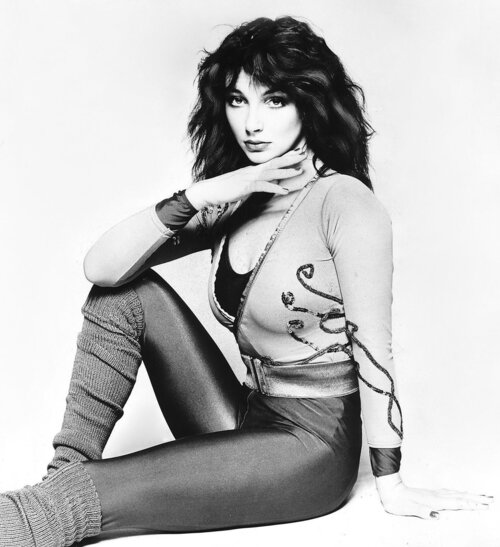
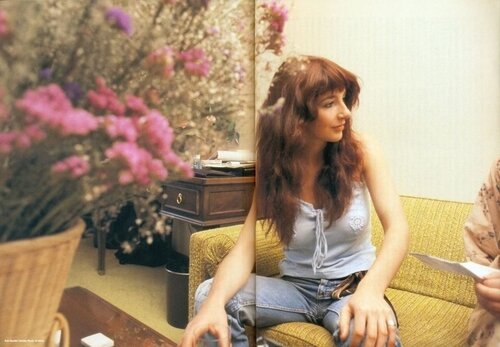
IN THIS PHOTO: Kate Bush in 1980/PHOTO CREDIT: John Carder Bush (from the book, KATE: Inside the Rainbow)

Delius from Kate Bush’s Never for Ever

___________

I have already put out a recent feature…
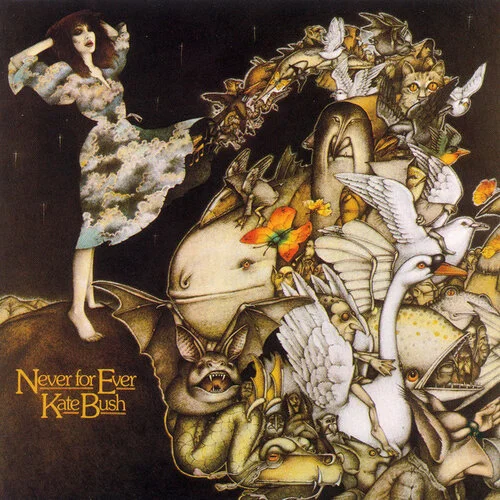
about Kate Bush’s Never for Ever, because I have ordered a copy of PROG that looks at the album on its fortieth anniversary - and I was able to learn quite a lot from it. I have written about Never for Ever before and focused on a few different songs. One such moment from the album that I have not investigated fully is Delius – or, with its subtitle, Delius (Song of Summer). In my last feature regarding the album, I focused on another song, Violin, but I think many people do not know about Never for Ever or, when they do play it, songs such as Babooshka, Army Dreamers, and Breathing are played. There is nary a weak track on Never for Ever, and there are so many different interesting sounds and vocal performances. As we know, Bush discovered the joys and opportunities the Fairlight C.M.I. provided, and this meant that she could open up her songwritring and add so many different sounds to the mix - even though she utilised the technology a little too late to completely infuse the album, one can hear its influence and power in several songs! There is an embarrassment of riches on Never for Ever regarding potential singles. I have covered this before, but aside from Babooshka, Breathing and Army Dreamers, I think The Infant Kiss, The Wedding List, or All We Ever Look For would have been great singles.

On The Kick Inside, and Lionheart of 1978, singles were released in the U.K. and others were released exclusively for other nations; as a way of reaching more territories and also putting out a range of songs. On Never for Ever, Bush stuck with three singles. Breathing featured The Empty Bullring as its B-side; Babooshka had Ran Tan Waltz as its B-side, whereas Army Dreamers featured Passing Through Air, and Delius. I think it is great that Bush released non-album tracks as B-sides and I feel Ran Tan Waltz is especially underrated. Maybe it was a missed opportunity not releasing more singles and having B-sides featuring great tracks like Violin, or maybe All We Ever Look For. I am glad the remarkable Delius made it onto the B-side of Army Dreamers. It is the second track on Never for Ever and it follows Babooshka. I love how the broken glass sound – producing using the Fairlight C.M.I. - then opens Delius. It was clear that Bush was becoming more experimental, not only regarding technology and sound, but the way she programmed albums and composed. Running the two songs together keeps the momentum going, but that glass sound also bridges the spirited Babooshka with the more choral and heavenly Delius – Bush also put in a sub-one minute song, Night Scented Stock, to bridge The Infant Kiss, and Army Dreamers.
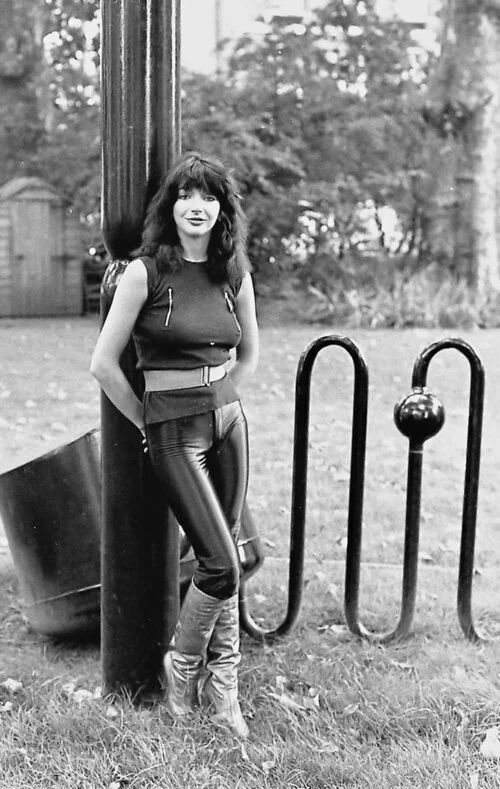
 IN THIS PHOTO: Kate Bush in 1980/PHOTO CREDIT: Andy Phillips

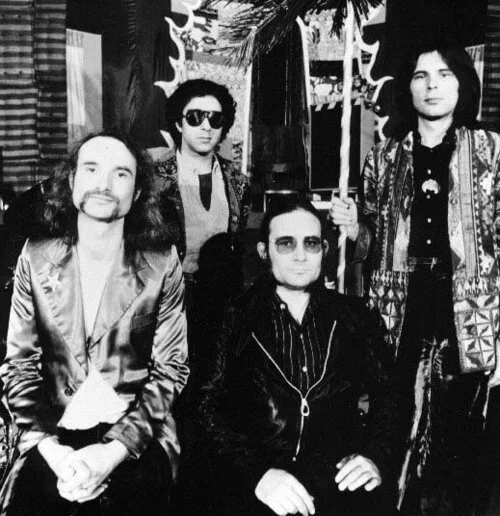
The ‘Delius’ is named for the English composer, Frederick Delius. It is quintessential Kate Bush that she would draw inspiration from a composer! Looking at the Kate Bush Encyclopaedia and we get some more information about the track:

Song written by Kate Bush as a tribute to the English composer Frederick Delius. The song was inspired by Ken Russell's film Song of Summer, made for the BBC's programme Omnibus, which Kate had watched when she was ten years old. In his twenties, Delius contracted syphilis. When he became wheelchair bound as he became older, a young English admirer Eric Fenby volunteered his services as unpaid amanuensis. Between 1928 and 1933 he took down his compositions from dictation, and helping him revise earlier works.The song was released on the album Never For Ever and as the B-side of the single Army Dreamers.

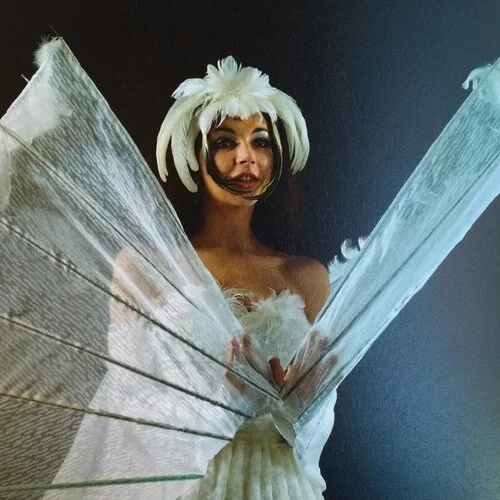
A music video for 'Delius' exists, which was shown on television at least twice: during a Dr. Hook television special on 7 April 1980 and during the Russell Harty Show on 25 November 1980. The setting is a quiet, lazy English riverbank filled with reeds and grass. By the bank is a wheelchair-ridden old man, his body covered by a throw-rug, his head obscured by a large yellow disk resembling a sun. This figure presents an image of Delius much like the one which was depicted in the BBC television film  by Ken Russell. Gliding along on the river is a young swan-girl, represented by Kate in a gossamer white gown with wings”.

I do love the lyrics of the song: “Ooh, he's a moody old man/Song of summer in his hand/Ooh, he's a moody old man/...in...in...in his hand/...in his hand/"Hmm."/Ooh, ah, ooh, ah/Delius/Delius amat/Syphilus/Deus/Genius, ooh/To be sung of a summer night on the water/Ooh, on the water/"Ta, ta-ta!/Hmm/Ta, ta-ta/In B, Fenby!"/To be sung of a summer night on the water/Ooh, on the water/On the water”. I think the real power comes from Bush’s voice, which floats and flies through the song. It is one of her most beautiful performances and, with Paddy Bush and Ian Bairnson providing bass vocals, there is a sumptuous blend! Percussion is provided by a Roland (and Preston Heyman), and there is some nice sitar from Paddy Bush. With Paddy Bush playing the role of Delius, and the song detailing the decline of Delius’ health, it is an amazing song that is both richly detailed and simple. A fitting tribute to a brilliant composer, I think Delius is one of the best tracks from Never for Ever. Even two tracks into Never for Ever, one is truly startled by very different songs that sort of set you back! I want to finish by quoting from an interview in 1980, where Bush was asked about the sonic difference on Never for Ever (compared to her previous albums) and the story behind Delius:

I: Has a great effort gone into the sound of this album, not just the music but the sound?

K: Yes. I thinks sounds are so important because that is what music is - it is the sound of the music - and the way sounds mix and move together is incredible. It is again so similar to colours and to have a pure colour and pure sounds are very similar things. In many ways I think we saw a lot of the sounds a visual things - this is the way I often interpret music, I see it visually, and so in many ways you'd interpret a mountain in the picture into a very pure guitar sound or whatever. I think everyone was very aware of sounds and the animation of it and how a certain sound could imply so much more at one piece in the song.
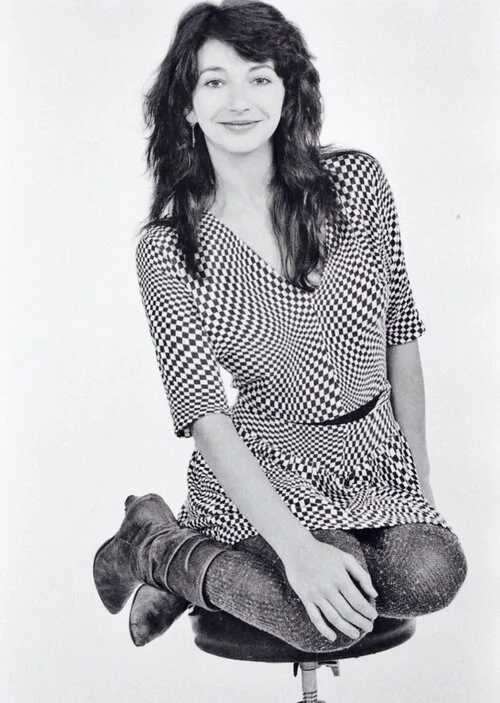
IN THIS PHOTO: Kate Bush in 1980/PHOTO CREDIT: John Carder Bush 

I: You are the co-producer of this album with Jon Kelly. I suppose this then was your job in that regard, the direction of the sound?

K: Yes. The whole thing was so exciting for me, to actually have control of my baby for the first time. Something that I have been working for and was very nervous of too, obviously, because when you go in for the first time you really wonder if you are capable - you hope you are. Every time that we tried something and it worked it just made you feel so much braver. Of course it doesn't always work, but everyone helping and concentrating on the music, it's such a beautiful thing, it really is a wonderful experience - everyone's feelings going into the songs that you wrote perhaps in a little room somewhere in London, you know, it's all coming out on the tape.

I: From "Babooshka" we mix literally quite nicely into "Delius (Song of Summer)" and this is the one which contains references I must confess I don't understand. I don't know who Delius was or for that matter what Fenby is?

K: Delius was an incredible classical composer, an English one, he was from Bradford, I think and he was Fred, Frederick Delius. He was a wonderful composer and he in fact got neurosyphilis, which completely ruined his body; he became totally paralysed and he could no longer play the piano or write his music. I don't know whether he was a very bad tempered man before, but during his illness he became bad tempered. From that time on he lived his life in a wheelchair and he needed someone to write his music for him.

For years he kept getting young writers coming along who'd meet him and sit down and try to transcribe his writing, but he had no voice. He couldn't sing. He had no pitch in his voice, no real sense of timing. He would sit there and just grunt like going aargh, aargh, and the writer would just not know where to start. He didn't know what key it was in, the time signature, what notes the guy was ginging. And Delius would not tell him, he'd just say write it down. All these guys ran away, they couldn't take it, it was too much. One day a gentleman called Eric Fenby (who is in the song) turned up. He tried to get through this barrier until eventually he could understand everything Delius was saying. Fenby stayed with him until his death and he wrote all his music out for him. Through Fenby, Delius' music came alive again. It was such a beautiful concept - this man whose body was almost completely useless and yet inside him all this life and colour and freedom. It was only through Mr. Fenby that it could come out. It's such a beautiful story, he really need a song”.

Forty years after Never for Ever was released, I think its influence and importance has inspired a new generation of songwriters. I will write another Never for Ever in the future, but I wanted to focus on Delius, and there is so much to love about it! I especially enjoy Kate Bush’s vocal and how the song springs, swoops and moves the senses. It is a wonderful song on an album that hosts…

MANY unique gems.

FEATURE: Normal Person: The Music Industry Post-COVID: What Will the State of Affairs Be in Spring 2021?

FEATURE:


Normal Person

x.jpg

PHOTO CREDIT: @globelet/Unsplash

The Music Industry Post-COVID: What Will the State of Affairs Be in Spring 2021?

___________

IT is quite optimistic to say that…

 PHOTO CREDIT: @tonyphamvn/Unsplash

things will be back to normal by the spring, but there is a potential vaccine available and, presuming it passes safety checks, it will be rolled out very quickly. If it works and one does not need to get repeated boosters too often, I think it will provide relief for so many people. Let’s hope that things go according to plan but, when it comes to the music industry, I am not sure there will be this immediate return to how things were as early as February this year. Many will be cautious about getting too close to people as I think we have lived a particular way for so long that that comfort we used to get from being in a live setting or very close to people we didn’t know might take a little while to come back. I do think that record shops will be a corner of the industry that will thrive – and has done all year -, and I do worry whether a lot of self-employed workers who are relying on furlough payment or universal credit will come back. From amazing journalists and those in P.R. to people who work at venues, there is going to be a depletion. The big question on everyone’s mind is whether this vaccine and potential recovery very soon will save venues under threat and mean festivals can go ahead as planned in the summer. This year has seen most musicians push back tour dates and, whilst you hate to see it, it is for everyone’s safety.

 PHOTO CREDIT: @hariprasad000/Unsplash

I have seen some dates rearranged for March sort of time, and I get the feeling that they might need to be pushed back further. The majority of big tours have been rebooked for spring onwards, so it does seem timely that we have this potential lifeline in the form of a vaccine that should be widely available by then. The fate for many venues at the moment remains pretty precarious and fraught. Last week, NME ran an article explaining how many venues are in trouble and how the Music Venue Trust are helping:

The Music Venue Trust have launched a new campaign to save 30 UK venues still in danger of being lost forever in the wake of coronavirus restrictions. See the full list and how you can help below.

Last month, the music industry celebrated over 1,000 venues, festivals and theatres being awarded the first share of the £1.57billion Cultural Recovery Fund to survive until April and weather the storm of closures and complications brought on by the coronavirus pandemic – before a second round of funding was announced rescued another wave of arts spaces and organisations, a third saw a number of large clubs receive upwards of £1million each and finally the likes of The Academy Group and London’s Social and Ronnie Scott’s were awarded large sums at the weekend.

An impressive 89 per cent of England’s grassroots music venues who applied for the Arts Council grants were successful, meaning that hundreds will be receiving a share of over £41million and largely mothballed until at least April when it is hoped that full-capacity gigs might be able to safely return. Now, the MVT are focusing their #SaveOurVenues campaign on the 30 UK music venues which received either no funding or not enough to survive.

PHOTO CREDIT: @nivtop/Unsplash 

MVT’s new #SaveThe30 ‘Traffic Light’ campaign will highlight the venues considered safe, at risk or in imminent danger between now and March 31. Venues in ‘critical’ red status include The Lexington in London, Brixton Windmill, The Venue in Derby, The Railway Inn in Winchester, The Gellions in Inverness and The Lantern in Halifax.

“If we don’t act to save them right now, we do expect a large number of them to be permanently closed – it’s as simple as that,” Music Venue Trust CEO Mark Davyd told NME. “This is the final option. Unless a significant movement is made in the next four weeks, we should expect them to start closing in the middle of December.”

He continued: “Without the public and artists getting behind the #SaveOurVenues campaign, 500 venues would already have closed since March. The fact that we’re now looking at over 400 being safe is a remarkable achievement. If everyone comes back with the same support, we could genuinely save these 30 venues.”

Davyd added: “If people want these local venues to still be there when this is over there is a very clear call to action: choose a venue, get donating, get writing, get calling, get organised. Save them all. Reopen Every Venue Safely”.

As there is no set date as to when venues across the country can reopen and welcome artists back, it is down to the Government to provide additional funding that means we lose as few venues as possible. I think that there will be inevitable casualties and that will damage local economies and prove devastating for artists who rely on these spaces to reach new people and hone their craft!

 PHOTO CREDIT: @michaelbenz/Unsplash

Looking ahead to the festival season of 2021, and that is another big concern. Even the largest festivals felt a big loss and have been damaged. It is a pity that we did not get to revel in the sunshine of this summer in fields watching great artists but, as many are keen to restart next year, there are problems to address. As The Guardian reported, there are complexities to navigate before restarting festivals:

MPs are to examine how UK music festivals can survive in 2021 after the coronavirus pandemic wiped out a majority of festivals this year, resulting in revenues falling by 90%.

A new inquiry organised by a Department for Digital, Culture, Media and Sport committee will consider how the government can support music festivals next year as legal and social-distancing requirements determine the viability of large-scale events.

Committee chair MP Julian Knight said: “We have so many legendary festivals that have given the UK a worldwide reputation – it would be devastating if they were unable to come back with a bang, or if smaller festivals that underpin the talent pipeline disappear entirely.”

Despite no confirmation of when large events will be permitted, many UK festivals are still planning for 2021: Stormzy and Liam Gallagher will headline next year’s Reading and Leeds festivals; Glastonbury co-organiser Emily Eavis has said she hopes the festival will return in June. Wales’s Green Man festival has said it would consider temperature checks on entry. News of the Pfizer/BioNTech Covid-19 vaccine breakthrough may provide a clearer path to festivals reviving next summer.

PHOTO CREDIT: @yohannlibot/Unsplash 

The committee seeks written contributions from festival staff, fans, musicians, local communities, suppliers and the vast freelance workforce affected by this year’s cancellations to address issues including the economic and cultural contribution of the British festival industry, the impact of cancellations, the risk to future festivals and the measures required to allow them to proceed. “It’s crucial that support to enable music festivals to go ahead in 2021 and beyond is put in place,” said Knight”.

As I said earlier, I wonder how many people will feel comfortable even after a vaccine has been rolled out, what with the trepidation and anxiety we have been living with for so many months?! There is an eagerness for people to see live music in theory, but I wonder whether there will be a slight dip in demand in those first few months as we readjust back to a life that resembles normal. Live music in larger venues is another area where we need to consider how to operate safely after the vaccine has been deployed. This NME article from earlier in the week detailed how Ticketmaster were possibly going to operate next year:

Ticketmaster are working on plans to verify fans’ coronavirus vaccination status before allowing admission to future concerts, according to comments from company president Mark Yovich.

Speaking to Billboard, Yovich said that, although their were still logistical factors to consider, preparation has already begun to look at how verified vaccination could speed up the return of more familiar live event settings across the world.

c.jpg

PHOTO CREDIT: @bobby_hendry/Unsplash 

“We’re already seeing many third-party health care providers prepare to handle the vetting – whether that is getting a vaccine, taking a test, or other methods of review and approval – which could then be linked via a digital ticket so everyone entering the event is verified,” he explained.

Yovich continued: “Ticketmaster’s goal is to provide enough flexibility and options that venues and fans have multiple paths to return to events, and is working to create integrations to our API and leading digital ticketing technology as we will look to tap into the top solutions based on what’s green-lit by officials and desired by clients.”

After purchasing a concert ticket, fans would need to verify that they had already been vaccinated or tested negative for coronavirus approximately 24 to 72 hours prior to the concert, providing them with approximately one year of protection.

Any fans who tested positive or didn’t take a test to verify their status would not be granted access to the event. Ticketmaster confirmed they would not store or have access to fans’ medical records, and would only receive verification of whether a fan is cleared to attend an event on a given date.

Marianne Herman, co-founder and principal reBUILD20, said the initiative was “one key way to reimagine how we’re going to get fans back to live events”, adding: “The experience of attending live events will look completely different, but innovation married with consistent implementation will provide a framework to get the live sports and event industry back to work”.

 PHOTO CREDIT: @jesseskitt11/Unsplash

Although that plan would be effective and few would object to being that thorough if it got them back to gigs, there was a report on the BBC website where the above report was debunked by Ticketmaster:

However, Ticketmaster clarified in a statement to the BBC that it could not enforce any requirements on ticketholders.

"Ticketmaster does not have the power to set policies around safety/entry requirements, which would include vaccines and/or testing protocols," it said.

"That is up to the discretion of the event organizer. Ticketmaster continues to work with event organisers on all Covid safety measures and it will be up to each event organiser to set future requirements, based on their preferences and local health guidelines."

It said the plan discussed in Billboard was one of many "potential ideas" it was exploring to enable the return of live music”.

It is obvious that there will be a lot of planning and restrictions for a while yet but, looking ahead, and it seems like there might be ways that live music can return in a big way when a vaccine has been approved and delivered. I do worry that music venues who are struggling now might not have enough in the kitty by the spring so that they can welcome people back - and I hope the Government ensures that there is extra funding and support for those who are struggling. In terms of stability across the industry, the legions of hard-working self-employed who are not able to work at the moment also need support, as they are a valuable part of the infrastructure; a key beating heart of the industry that needs backing. I also hope that there are safety measures in place across all venues and festivals going forward as not to assume that a vaccine means that there is no risk and we can all go back to how things were this time last year. As much as anything, the past eight months have shown that, when the music industry has been hit and restricted, there is this community support and strength that is heartening to see! This week has seen reports and articles emerge speculating the future of venues and festivals and what needs to happen so that they can keep going in 2021. Let’s hope that the casualties are few and we can start to get back to normal. Although some musicians like Lars Ulrich (Metallica) have predicted large-scaled performances will not return until late next year, if we have an effective tracing system, combined with a successful vaccine, then there might be a way of making it happen earlier. Everyone has been very patient and missing live music so much; embracing it like we did before is something that we have…

 PHOTO CREDIT: @dannyhowe/Unsplash

WAITED so long for.

FEATURE: The Lockdown Playlist: Incredible Tracks from 2020

FEATURE:


The Lockdown Playlist

IN THIS PHOTO: Run the Jewels/PHOTO CREDIT: Dan Medhurst 

Incredible Tracks from 2020

___________

THOUGH it is a subjective thing…

 IN THIS PHOTO: Pillow Queens/PHOTO CREDIT: Faolán Carey

everyone will have their own opinions regarding the best songs of the year. I have already produced a Lockdown Playlist of from the finest albums of this year, but this is a bit broader. It has been a fantastic year for music and, inevitably, I am going to miss so many songs that I should have included. The list below is a good representation of this year’s best music, and it makes for pretty heady and impressive listening! Enjoy a selection of some terrific songs from 2020 that show that, in a very bad year, artists have responded with music that has exceeded our expectations – there are many tracks that will linger in the memory for a long time. With so much quality this year, it bodes well for a very productive and…

IN THIS PHOTO: Janelle Monáe/PHOTO CREDIT: Juco

STRONG 2021.

FEATURE: You Want Alchemy: Kate Bush’s Remastered in Vinyl at Two

FEATURE:


You Want Alchemy

IMAGE CREDIT: Fish People/Parlophone/Rhino 

Kate Bush’s Remastered in Vinyl at Two

___________

I am writing about Kate Bush’s…

 IMAGE CREDIT: Fish People/Parlophone/Rhino 

remastered albums and boxsets because November is a big month for anniversaries. In addition to The Red Shoes, Aerial, Lionheart, and 50 Words for Snow celebrating various anniversaries, The Whole Story turned thirty-four on 10th November. The most-recent anniversary that is coming up concerns Kate Bush’s remastered albums (in boxset form). The vinyl albums (all of her studio albums) were released in four separate boxes; the first two arrived on 16th November, 2018, whilst the latter two came out on 30th November. The C.D. boxes were staggered on the same dates and the remastered albums are all available om digital platforms. If you have not got the sets, they are available here, but I want to bring in a news piece from Kate Bush News when they announced the releases (and at the start, I have included Bush’s response to the reception the news accrued):

I just can’t believe the fantastic response to yesterday’s announcement of the Remastered project. I’m totally blown away! It’s really exciting and incredibly rewarding for everyone involved to see it being received so positively.

I really wasn’t expecting such an overwhelming reaction. Thank you.

All best wishes,

Kate

As well as the 10 Kate Bush studio albums being made available for purchase separately on vinyl and CD, Kate is also releasing box set Remastered collections – four box sets on vinyl and two box sets on CD. The vinyl albums – all Kate’s studio work – will be released in 4 separate boxes, the first two on November 16 and the latter two on November 30. The CD boxes will be staggered on the same dates. The remastered albums will also be made available as digital downloads.

 The four vinyl box sets are called Kate Bush – Remastered in Vinyl I, II, III and IV and present Kate’s 10 studio albums across three individual box sets, with the fourth set being a brand new 4LP rarities collection of 12″ mixes, remixes, b-sides and covers. The first three LP box sets feature artwork imagery from The Dreaming, The Sensual World and Aerial, unadorned by any text, to mark each era of recordings they contain. The rarities LP box set features a portrait of Kate on the cover. The Red Shoes is now presented in a double vinyl gatefold sleeve format. Note: The Before the Dawn live album set has already been made available by Fish People since 2016 in its own 4LP box.

The two CD box sets are called Kate Bush – Remastered Part I (featuring her first 7 albums), and Kate Bush – Remastered Part II which features Aerial, Director’s Cut, 50 Words for Snow, Before the Dawn and a brand new 4CD rarities collection of 12″ mixes, remixes, b-sides and covers called “The Other Sides” Note: The rarities CDs will only be available as part of the second CD box set.

The Other Sides – Track-listing of rarities discs (vinyl and CD):

12” MIXES

Running Up That Hill (A Deal With God)

The Big Sky (Meteorological Mix)

Cloudbusting (The Orgonon Mix)

Hounds Of Love (Alternative Mix)

Experiment IV (Extended Mix)

 IMAGE CREDIT: Fish People/Parlophone/Rhino 

THE OTHER SIDE 2

Home For Christmas

One Last Look Around The House Before We Go

I’m Still Waiting

Warm And Soothing

Show A Little Devotion

Passing Through Air

Humming

Ran Tan Waltz

December Will Be Magic Again

Wuthering Heights (Remix / New Vocal from ‘The Whole Story’)

THE OTHER SIDE 1

Walk Straight Down The Middle

You Want Alchemy

Be Kind To My Mistakes

Lyra

Under The Ivy

Experiment IV

Ne T’Enfuis Pas

Un Baiser D’Enfant

Burning Bridge

Running Up That Hill (A Deal With God) 2012 Remix

IN OTHERS’ WORDS

Rocket Man

Sexual Healing

Mná na hÉireann

My Lagan Love

The Man I Love

Brazil (Sam Lowry’s First Dream)

The Handsome Cabin Boy

Lord Of The Reedy River

Candle In The Wind”.

I have pulled off quite a lot to chew here, but one big reason for marking the second anniversary of the remastered sets is two-fold. For one, it is close to the anniversary of The Whole Story. Prior to The Whole Story in 1986, there had not been a greatest hits package from Bush. This Woman's Work: Anthology 1978–1990 was released in 1990, but that was more of a collection of all of her albums rather than a precise presentation of her best work on a single album. Nearly three decades after that huge retrospective, Bush put out these great packages. Previously, it was quite difficult to get certain studio albums on vinyl – as I have said - and here we have the studio albums on their rightful format!

What was most interesting to me was that, on the fourth vinyl box, we got The Other Side (parts one and two), and In Others’ Words – giving us a chance to hear some B-sides and great covers. A lot of the material would have been familiar to many, but putting out the studio albums and rarer tracks was a great opportunity to reach new fans. Some people wondered whether there was a missed chance in terms of putting out even more material in terms of unheard demos, live recordings and unique rarities, but I think there is a great spread across the sets. In 2011, Bush released Director’s Cut: reworkings of songs she was not overly-happy with on The Sensual World (1989), and The Red Shoes, and this was another case of revisionism and retrospection – something she had not really done in the past. Ahead of Christmas, I do think the remastered sets are a perfect gift for any Kate Bush fan and those who are unfamiliar with her work. I will mention the second reason why I wanted to mark the anniversary of the boxsets, but one notable thing about the remastered sets is that Remastered Part I (Remastered Parts I-II in Vinyl), and Remastered Part II (Remastered Parts III-IV in Vinyl) were released on Bush’s Fish People label (alongside Parlophone and Rhino) – The Other Sides, released initially as part of the Remastered box set, and subsequently as a stand-alone four-C.D. set on 8th March, 2019 (released through Fish People and Rhino).

  IMAGE CREDIT: Fish People/Parlophone/Rhino

The fact the albums were released on Bush’s own label meant that she could remaster the albums in order to fit how she would have wanted them to sound originally. There is debate when it comes to remasters as to whether they improve on the originals and are necessary but, as she remastered/reworked songs from The Sensual World, and The Red Shoes in 2011, I guess she was quite keen to look at the other albums – many albums were also out-of-print prior to 2018, so many fans would have experienced these albums for the first time in remastered form. Bush didn’t like when her albums sounded too compressed and digitised so, contrary to how many artists approach remasters, the 2018 versions almost sound less modern and sharp. The 2018 remasters feel warmer and fuller than the original albums in a way, and I think that completion closed a chapter whereby Bush got to correct ‘errors’ or unhappiness she felt with the original studio albums. I will wrap up soon, but I just want to bring in a couple of reviews for the remastered sets. This is what Classic Pop Magazine had to offer:

The Kate Bush Remastered CD Box 1 (or Vinyl Box 1 and 2) collects the albums from 1978’s The Kick Inside to 1993’s The Red Shoes and is frequently staggering. Her debut spawned not only the phantasmal Wuthering Heights but also The Man With The Child In His Eyes, a miracle of insatiable, mystical dream-pop.

 IMAGE CREDIT: Fish People/Parlophone/Rhino 

Bush’s first albums brimmed with art-pop of almost unconscionable vim and imagination. Lionheart (also 1978) and Never For Ever (1980) found her training a childlike eye on adult emotions via meditations such as In Search Of Peter Pan and the fluttering Babooshka. By her 1982 masterpiece The Dreaming, Bush was both feverishly sampling and producing her own album – unheard of in those sexist times.

Her vocals, alternately raw and immaculate, were a thing of wonder on 1985’s Hounds Of Love and 1989’s The Sensual World (a quintessential Bush LP title). On The Red Shoes, she further explored themes of sex, sensuality and gender roles.

The albums making up Kate Bush Remastered CD Box 2, from 2005’s Aerial to 2011’s 50 Words For Snow, are bigger on stylised reflection and lighter on impactful pop hooks, but harbour moments of genius such as poignant 2005 single King Of The Mountain. Bonus tracks include 12″ mixes, B-sides and (in the CD box only) 2016 live album Before The Dawn.

Driven, visceral, thespian, experimental and yet capable of conjuring up sheer pop nuggets, Kate Bush has always been a groundbreaking, very British artist like no other. That Johnny Rotten knew what he was yelling about…”.

  IMAGE CREDIT: Fish People/Parlophone/Rhino

In another review, Attitude praised the remastering job and sound - and they made some interesting observations regarding omissions.

Kate worked in conjunction with James Guthrie on the remastering and they’ve done an amazing job. Rather than just pumping up the volume, they’ve gone for nuance and clarity so the drums on ‘Running Up That Hill’ pound a little harder and the shattered glass on ‘Babooshka’ is crystal clear.

An even bigger treat for fans is 'The Other Sides', a four-disc compilation of 12 inch mixes, B-sides and rarities (like the haunting ‘Under The Ivy’), one-off singles (like ‘December Will Be Magic Again’) and cover versions such as Kate’s reggae take on Elton’s ‘Rocket Man’ and her surprisingly faithful version of Marvin Gaye’s ‘Sexual Healing’.

Also included are the 1986 remix of ‘Wuthering Heights’ and the underrated ‘Experiment IV’, both of which originally featured on singles collection 'The Whole Story'. The fact said best-of isn’t included in either set and nor is the live 'On Stage EP' means this isn’t quite the whole Kate Bush story”.

It is interesting what they write about songs that should have been included. Thirty years after that This Woman’s Work package, maybe there is a demand for a new collection or a greatest hits package like The Whole Story that fills in the gaps between 1986 and now. I do feel that live recordings have been lacking when it comes to packages and boxsets. Bush’s Before the Dawn live album has already been released in a vinyl box, but what about 1979’s The Tour of Life?!

  IMAGE CREDIT: Fish People/Parlophone/Rhino

Maybe there aren’t great recordings of those sets, but many would jump at the chance to hear as many live recordings from that incredible tour on vinyl. Similarly, there must be demos and some earlier recordings that would go together on a new set. I wonder whether Kate Bush will ever consider opening the pantry wider when it comes to those recordings, or maybe she is just looking ahead to releasing new material. The second reason why I wanted to mark two years of the remastered sets being released is that, next month, a very special magazine is being released. Kate Bush News gives us more details:

Something we’ve never seen before – an ENTIRE full colour issue of the legendary Record Collector magazine devoted to Kate Bush. It hits the shops December 3rd. This magazine has always taken Kate very seriously over the years as an artist who also happens to have a highly collectible body of work. As such they always put Kate’s fans front and centre. This “bookazine” is no exception, pages upon pages of content here illuminate just what Kate means to fans AND for the very first time is rich with illustrated features about collecting the music that we love – and there has been significant input from Kate’s fans to make this very special indeed. We’re excited. Do not miss! PRE-ORDER YOUR ISSUE HERE!

IMAGE CREDIT: Record Collector Music Magazine 

Here’s what Record Collector says“This latest RC special gives fans the definitive guide to collecting one of the most extraordinary musicians of our times with a comprehensive UK discography, in-depth guides to collectables and memorabilia, all of her studio albums revisited by some of RC’s finest writers, fans and musicians on what Kate means to them, unpublished photographs, an evocative piece on her remarkable live comeback, and so much more. Available for pre-order: 5 November. Release date: 3 December – Note: Due to lockdown, there may be a slight delay with dispatch of your order”.

It ill be great to see that magazine, as it will go beyond the studio albums and obvious and introduce people to the entire Kate Bush universe. 2020 has been an interesting year where three different magazines have been published that go deep with Kate Bush’s work – the first was MOJO’s Collectors’ Series, and then PROG’s celebration of Never for Ever at forty. There is still this appetite and fascination regarding Kate Bush’s work and, as the upcoming Record Collector magazine will show, there is so much love out there for her! As we mark two years since Bush’s last significant output - and one that goes deep and covers her whole career -, I think the magazine is good timing, as it will be a career retrospective and it will urge people to buy the studio albums. If you have not got the 2018 remastered sets, then I would encourage people to buy them as they are…

  IMAGE CREDIT: Fish People/Parlophone/Rhino

WELL worth some investment.

>

FEATURE: The November Playlist: Vol. 2: I Don't Want Press to Put Your Name Next to Mine

FEATURE:


The November Playlist

IN THIS PHOTO: Billie Eilish/PHOTO CREDIT: Sara Jaye Weiss/Rex 

Vol. 2: I Don't Want Press to Put Your Name Next to Mine

__________

THIS week has produced…

 IN THIS PHOTO: BENEE

a couple of huge songs from brilliant artists. Billie Eilish has released the single, Therefore I Am, ahead of a possible new album, and there is also a terrific song from Foo Fighters. Alongside them is new material from Loye Carner, Django Django, Pom Poko, BENEE, Sharon Van Etten, AC/DC, Paris Jackson, and Drug Store Romeos. Throw into the mix some Phoebe Bridgers, Haim, The White Stripes (a new video for a classic song), Paul McCartney (an older song on a new E.P., Home), Pale Waves, and the BBC Radio 2 Allstars, and it is a really varied and solid week for music! If you require some jolt and motivation to get the weekend started, then take a listen to the Playlist - as there is more than enough in the mix to get the spirits up and boost those energy levels. So close to the end of the year and, as you can see below, those in the music industry are really not…

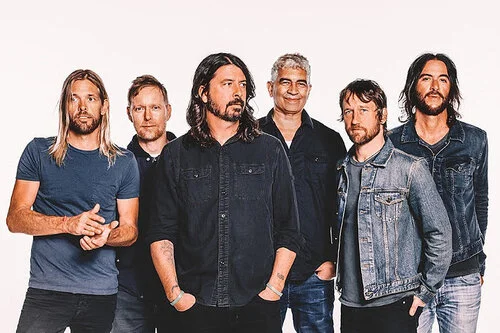
 IN THIS PHOTO: Foo Fighters/PHOTO CREDIT: Danny Clinch

LETTING the quality drop!

ALL PHOTOS/IMAGES (unless credited otherwise): Artists

__________

Billie Eilish Therefore I Am

 PHOTO CREDIT: Dean Chalkley

Loyle Carner Yesterday

PHOTO CREDIT: Brantley Gutierrez

Foo Fighters Shame Shame

Django Django Glowing in the Dark

vv.jpg

Paul McCartney - Home Tonight

PHOTO CREDIT: Jenny Berger Myhre

Pom Poko Like a Lady

IN THIS PHOTO: The White Stripes in 2001

The White Stripes - Apple Blossom

Alfie Templeman  - Shady

BENEE KOOL

PHOTO CREDIT: Suki Dhanda/The Observer

Sharon Van Etten - Blue Christmas

Haviah Mighty Atlantic

e.jpg

PHOTO CREDIT: Janell Shirtcliff

Paris Jackson Scorpio Rising

AC/DC Realize

Lil Nas X HOLIDAY

Drug Store Romeos Jim, Let’s Play

Haim - Feel the Thunder (from The Croods: A New Age)

IN THIS PHOTO: Maggie Rogers/PHOTO CREDIT: Cameron Pollack/NPR

Phoebe & Maggie Iris

Phoebe Bridgers Kyoto (Copycat Killer Version)

BBC Radio 2 Allstars/BBC Children in NeedStop Crying Your Heart Out

Pale Waves Change

PHOTO CREDIT: Luka Booth

Marika HackmanPlayground Love

Katy J Pearson Tonight

Run the Jewels No Save Point (from Cyberpunk 2077)

PHOTO CREDIT: Shervin Lainez

The Antlers - It Is What It Is

CelesteA Little Love

PHOTO CREDIT: Donald Milne

Teenage Fanclub Home

IN THIS PHOTO: Violet Skies

Violet Skies (ft. Molly Hammar) Lonely

The Pale White Glue

Lilla Vargen Blueprints

v.png

Rico Nasty OHFR?

Baby Queen Online Dating

GRACEY99%

PHOTO CREDIT: Becky Fluke

Chris StapletonStarting Over

jj.jpg

Anne-Marie - Problems

PHOTO CREDIT: Marieke Macklon

Ruby Gaines Without a Gun

Litany - Uh-huh

Liv Dawson - Trust Issues

Liza Owen - STARRY EYED

George Maple - Fade

FEATURE: Second Spin: MARINA – Love + Fear

FEATURE:


Second Spin

MARINA – Love + Fear

___________

OVER the past few weeks…

I have been listening to a lot more Pop that I wouldn’t normally investigate. I have always known about Marina Diamandis and her Marina and the Diamonds, and her albums are really strong; they can cross borders and age barriers and resonate with everyone. I don’t think one should label and pigeonhole artists and albums and, with Marina and the Diamonds, it is just great music that anybody can bond with. Love + Fear (2019) was the first album under the mononym, MARINA, and that does not signal a radical departure in terms of the previous three studio albums. On her fourth outing, I think there is more ambition, ‘herself’ and variation than any album previously. Love + Fear is a double album that is divided into two eight-track sides. It is an interesting concept and, whilst other artists have done similar, I think Diamandis really adds something new and unique to the mix. According to the songwriter, all human emotions stem from love and fear; there are tributaries and similar emotions, but there is that starting place of love and fear – from love comes happiness and peace, whereas fear leads to guilt and hate. It is an interesting approach, and I think that idea could be widened to a visual project or short film. I am not sure whether there are plans to adapt the album, but I think there is more life in it. That is one reason why I think critics overlooked it somewhat!

I admit that there are more strong songs on the album’s first half – with Handmade Heaven, and Orange Trees -, but there is great consistency and very few weak moments. At sixteen tracks and running at under an hour, I don’t think Love + Fear outstays its welcome; there are great non-singles like To Be Human, and Too Afraid that warrant new interrogation. Diamandis manages to keep the listener invested and interested from the start to finish! The album did get a few massive reviews, but many were sort of three-star assessments that offered positives and some constructive criticism. In their review, this is what Pitchfork observed:  

Elsewhere, though, Marina finds herself unable—or maybe afraid—to offer any originality. “True” is little more than a string of bland body-positivity slogans, too stale for a Dove commercial a decade ago. “Superstar” hints at substance by pairing foreboding minor-key synths with the opening lyric, “Before I met you, I pushed them all away,” then devolves into a standard, sugary love song. On “To Be Human,” Marina stretches the bridge of U2’s “Beautiful Day” to the length of a full song, and fills the space with a bizarre reference to Vladimir Lenin’s embalmed corpse. Though Marina has called “To Be Human” the album’s “most political song,” she resists making any definitive statements.

When she sings, “There were riots in America/Just when things were getting better,” she doesn’t deign to place the lyric in context. Which riots? What was getting better, and for whom? By contrast, “Savages,” a standout from 2015’s Froot, offered a blazing indictment of human aggression that simultaneously demonstrated Marina’s strength as a songwriter: “I’m not afraid of God/I am afraid of man”.

I do think that Love + Fear has so many depths and standout moments and, whilst I had not dug into too many Marina and the Diamonds albums prior to last year’s Love + Fear, after hearing tracks on that album I then went back and compared the albums. In a more positive and accurate review, AllMusic went into depth:

Shedding the "and the Diamonds" appendage of her stage name, Welsh pop maven Marina emerged from a self-imposed four-year absence to unveil a revitalized approach on her fourth album, Love + Fear. Stepping into the spotlight without the protection of her former moniker, she reveals a renewed confidence and tempered optimism, shedding some of the quirkiness and cheek of her early efforts, while moving past 2015's lackluster Froot. Following the difficult promotion of that album, Marina was worn out and considered quitting music. She retreated to recalculate life, studying developmental psychology -- a process she describes in "Handmade Heaven" -- and shedding the Diamonds to be herself. Alongside producers Joel Little, OzGo, Sam de Jong, and others, she crafted a double-album concept presented as complementary sides reflecting the two base emotions (according to psychiatrist Elisabeth Kübler-Ross).

Kicking off the album with Love, Marina embraces optimism and peace with joyous dance-pop cuts and feel-good anthems packed with enough lyrical life mantras to fill a gallery's worth of affirmative self-help posters. Even on existential ruminations "To Be Human" and "End of the Earth," the purity of Marina's wonder helps pull some clunky "We Are the World"-esque lyrics from drowning in corny sentimentality. Most of the album's standouts reside in this first half, such as the shimmering "Handmade Heaven" and the pulsing "Superstar." Marina's irresistible Latin-kissed hit "Baby" -- a collaboration with Clean Bandit and Luis Fonsi -- slides comfortably into the mix, while the insightful "Enjoy Your Life" empowers with a motivating message that finds Marina sharing her positive headspace with listeners who might need this aural pep talk.

Hopping over to Fear, she delves deeper into the troubled thoughts and anxieties that bubbled beneath Love's sparkling surface. "Believe in Love" sounds like a Reputation-era Taylor Swift song, a bittersweet heartbreaker that pairs twinkling piano and a mid-tempo beat with the sentiment that "losing you is what I'm afraid of." "Life Is Strange" prolongs the inner turmoil as Marina admits "[I] don't know what I'm doing with my life" before concluding "all we know is life is strange" with quirky production that echoes her Family Jewels sound. These songs are a bit lyrically heavy for pop, but they remain catchy enough to dance and groove through the gloom, especially on the Broods-featuring "Emotional Machine," a throbbing club track that eschews the rest of this half's by-the-numbers approach (which falls somewhere between Swift and Ellie Goulding).

By the time Marina reaches her big cathartic moment on album closer "Soft to be Strong," she's realized "when love is lost, it's only fear in disguise" and resolves that "love has to be soft to be strong”.

As the first offering of a new stage in her career, Love + Fear not only reveals its creator as newly hopeful, but it also gives hope that future efforts might be carved in a similar fashion. Marina's Electra heart still beats, it's just pumping smoother and with a confidence born from a renewed and mature perspective”.

I would urge anyone who has not yet approached the album to give it a spin. Even if you are not a huge Pop fan or think it is not up your street, spend a little bit of time with one of last year’s most underrated albums. I do love a good concept album and I think Love + Fear is rich and well developed. MARINA, in her new guise and formation, sounds phenomenal throughout and, as a co-writer on all tracks, you get this conviction and connection to the material. Over a year after its release, I think Love + Fear should get some more focus as it is a really solid album and it will be interesting to see where MARINA heads on her next album. From Baby, to End of the Earth, through to Life Is Strange, and No More Suckers, Love + Fear is an album full of…

TERRIFIC songwriting.

FEATURE: Too Good to Be Forgotten: Songs That Are Much More Than a Guilty Pleasure: Europe – The Final Countdown

FEATURE:


Too Good to Be Forgotten: Songs That Are Much More Than a Guilty Pleasure

Europe – The Final Countdown

___________

I am moving onto a song from the 1960s or early-2000s…

for my next instalment but, thinking of when I included Boston’s More Than a Feeling a few weeks back in this feature, I think another song from a similar sonic field that gets an even worst rap is Europe’s The Final Countdown. To many, the video and song represents the very worst of Glam Metal/Hair Band; it does not really have much bite or weight, and the lyrics do not seem to mean too much! One might find this song on a collection of the best driving Rock anthems, and there is this feeling that the song is a guilty pleasure and not one you’re really meant to love. Like so many songs that are considered dated and a bit cheesy down the line, in 1986, The Final Countdown did really well. The Swedish band were inspired, apparently, by David Bowie’s Space Oddity in the lyrics, and there was originally no intention to include it on any album – it would be a good song to open their sets. Reaching number-one in twenty-five countries, The Final Countdown became an instant smash! I can appreciate why the song did so well: it has a big chorus and it is easy to sing along to; it is catchy and, if you are not looking for too much out of it, the track definitely delivers. I really love the song, as it is pure fun and gets you in a good mood.

One can definitely not argue with its chart position but, as I say with many of the songs featured in this piece, only certain radio stations are likely to willingly spin Europe’s The Final Countdown – in the U.K., probably BBC Radio 2. Written by the band’s keyboardist, Joey Tempest in 1981, he initially came up with a riff and that was it. Bassist John Levén suggested making that into a track and, when it was presented to the band, there was mixed reaction. Tempest won out and he was a bit nervous that the song was a bit different and soft for a Rock band. The Final Countdown appeared on Europe’s third album of the same name and, whilst that album has received some negative reviews and is not often talked about, AllMusic saw positives:

One of the most glorious launches in history, the title track for the thrice-platinum The Final Countdown is so bombastically brilliant, such glorious garbage, that this nuclear hair assault could only spew from the vacuous '80s. But the full-tilt follow-up "Rock the Night" rules also: "You know it ain't easy/Running out of thrills." "Carrie" comes off a consummate butane ballad. Meanwhile, the rest of the disc packs so much power that Swedish superheroes Europe get away with all the processed pretension. In fact, the lofty ambition of "Danger on the Track," "Ninja," and "Cherokee" (each as tasty as its title) combines with heated drive and hot delivery to meld The Final Countdown into a unique portrait of propulsive prog and a worthy addition to any hard rock collection.

This is the story; this is the legend told by Teutonic guitars and predictable keyboards ringing pure and hurtling through each and every convention perfectly. The quintet's big-boy Epic inaugural, The Final Countdown deftly combines the Valhalla victory of Europe's heroic debut with the American poodle pomposity that devoured the band. You could live without The Final Countdown, but why?”.

I think AllMusic have it right regarding The Final Countdown as a track and the fact it is throwaway, bombastic and silly. It is a great song that is not necessarily looking to be taken all that seriously, so I think there are a lot of Rock purists that turn their noses up. Often, when I hear The Final Countdown mentioned, people feel a bit reserved and think of it as a guilty pleasure. I just want to finish up with a feature from Louder Sound, where the thirtieth anniversary of the song was marked (in 2016). It is clear that Europe still love the song and, though it experienced some blowback and resistance prior to it being unleashed into the world, the joy it brings to fans all of these years later is palpable and not to be taken lightly

Inspired by his love of UFO, Tempest laid down its galloping beat with the help of a drum machine, and after the word ‘countdown’ popped into his head wrote a set of lyrics that mention of ‘leaving together’ and ‘heading for Venus’. “After that it all came together quite quickly,” he says. “The voice stays in one monotonous line throughout, with the chords moving underneath. Only later in life did I realise that’s how many classical composers work. It’s hypnotic and quite cool.”

Finally, Europe decided that it was time to, in Tempest’s words, “stick our head above the parapet and do something a little different”. In the studio, with John Norum attempting to channel Deep Purple’s Lazy in his guitar solo, the band vetoed Journey producer Kevin Elson’s suggestion of ditching its intentionally British-style beat for an American-sounding one – more of a four-on-the-floor thing.

Tempest insists now that the commonly held perception of the song causing Norum to quit the band is an over-simplification, explaining: “John’s real problem was with Kevin Elson’s radio mix, which turned up the keyboards and vocals and minimalised the guitar.”

However, nobody within Europe’s organisation was prepared for the success that the song brought, topping the singles charts in 25 countries and almost overnight castrating any kind of credibility that the band might have accrued as a rock band. In his early 20s, with poodle-coiffure pretty-boy looks, Tempest found the pop magazines pitting him against the pearly-toothed Jon Bon Jovi, whose singles Livin’ On A Prayer and You Give Love A Bad Name were also riding high in the charts on both sides of the Atlantic.

In The Final Countdown’s 30th anniversary year, Europe having heavied up the delivery a little from the original arrangement, and Tempest insists that all the band still enjoy playing it on stage.

“I love looking out at all the smiling faces when then that intro kicks in,” he says proudly. “In all four corners of the world I’m often told that it’s a bucket-list moment for fans who never saw us play it before. And that’s a very special thing for a musician to hear”.

So many years after its release, and I do think that The Final Countdown divides people. I don’t think that 1986 was necessarily the best year for music when you look at Rock but, with albums like Paul Simon’s Graceland, The Smiths’ The Queen Is Dead, Run-D.M.C.’s Raising Hell, and Metallica’s Master of Puppets, there was some good stuff out there! Look at other songs from 1986 like Bon Jovi’s Livin’ on a Prayer, and I think that was a more successful attempt at melting big hair, great choruses and fist-pumping lines. I like that period of 1985-1986, as you had this songs that are a bit dated now but are great fun – like Huey Lewis and the News’ The Power of Love, for example. I have a fondness for Europe’s The Final Countdown, and in a year when we all need some cheer and energy, it is a song that has a whole new quality and meaning! Though some feel it a guilty pleasure, I think Europe’s The Final Countdown is a song you can…

LOSE yourself to.

FEATURE: The Lockdown Playlist: Some of the Best Guitar Riffs Ever

FEATURE:


The Lockdown Playlist

PHOTO CREDIT: @markusspiske/Unsplash 

Some of the Best Guitar Riffs Ever

___________

I have skirted around guitar music…

 PHOTO CREDIT: @vinilowraw/Unsplash

and harder sounds before but, in these playlists, I don’t think I have looked at the finest riffs ever. You have all these lists and albums compiling the great riffs and guitar passages ever; we all have our favourite and, looking through the ages, and there are some epic and brilliant licks and riffs that have stuck in our head and come back to mind over and over again. I really love a good riff so, in the latest Lockdown Playlist, I have put together a passionate collection of stunners that should give you a little bit of…

 PHOTO CREDIT: @itssammoqadam/Unsplash

KICK and spark.

FEATURE: Getting Better: Revisiting The Beatles’ Sgt. Pepper’s Lonely Hearts Club Band

FEATURE:


Getting Better

Revisiting The Beatles’ Sgt. Pepper’s Lonely Hearts Club Band

___________

NOT related to any anniversary…  

 IN THIS PHOTO: The Beatles in 1967/PHOTO CREDIT: David Magnus

or catalyst for inspiration, I have been listening back to The Beatles a lot and re-exploring that timeless question: Which album of theirs is the best? I think that, obviously, is a subjective measure, but through the years there has been a change of position between Revolver, Sgt. Pepper’s Lonely Hearts Club Band, and Abbey Road. There was this period when Sgt. Pepper’s Lonely Hearts Club Band was considered the best, as its cultural impact was so obvious and powerful. I think Abbey Road is seen by most as the crowning achievement from the band, and Revolver has always had a reputation as being this work of genius. To me, I think Sgt. Pepper’s Lonely Hearts Club Band is The Beatles’ most influential album, and I think it is one of their most important. From its release on 1st June, 1967, there was this incredible reaction from the public. From its iconic cover through to the fact that the band were at their experimental best, Sgt. Pepper’s Lonely Hearts Club Band had this reputation and enormous legacy. By 1966, The Beatles retreated from touring because of its stress and the fact they could not hear themselves sing, and the group faced hurdles after their first tour following the completion of Revolver in 1966 – there was a threat from Tokyo based on The Beatles’ plans to play the sacred Nippon Budokan arena.

There was less need for the band to tour and, with a real lack of impetus and excitement from the lads, the studio became somewhere where they could channel their energies. I think Revolver was a definite high-point, and I do wonder what kind of follow-up album The Beatles would have produced if they kept touring. Pushing the studio to the limits, Sgt. Pepper’s Lonely Hearts Club Band was such a pivotal album. From the band putting out this ‘concept’ of them as a fictional band, to the extraordinary closing track, A Day in the Life, one can understand why Sgt. Pepper’s Lonely Hearts Club Band has this reputation and it was seen for so many years as The Beatles’ best album. I think one of the reasons why Sgt. Pepper’s Lonely Hearts Club Band has been ‘downgraded’ in terms of its quality and position in the list of The Beatles’ best albums is because of its consistency. I will mention in a moment why I am revisiting the album, but I think a lot of Sgt. Pepper’s Lonely Hearts Club Band’s popularity was to do with aspects away from the songs themselves. The cover and the visual aspects of the album were celebrated, in addition to the way the album changed culture in the 1960s. The band were experimenting more with drugs and LSD was a drug that Paul McCartney especially embraced for the first time. Perhaps in an effort to connect more profoundly with John Lennon as a writer, there is this sense of psychedelia and lysergic influence running through the album.

Of course, 1967 was the Summer of Love, and there was this sense of revolution and positivity from Sgt. Pepper’s Lonely Hearts Club Band. Whilst the album did not promote peace and a huge change in that sense, one cannot overstate how important Sgt. Pepper’s Lonely Hearts Club Band was in 1967! I think that impression sort of followed the album for decades. John Lennon, George Harrison, and Ringo Starr felt freer with this band-within-a-band concept, but not every member of the band was as necessary as committed as McCartney. There is this shift in terms of leadership with McCartney taking more control and Lennon, depressed and imbibing LSD more, was less focused and happy – Starr, it is said, was quite bored and not overly-interested. Harrison was not as engaged in McCartney’s concept, and there was this sense of the band being divided. The sheer popularity that Sgt. Pepper’s Lonely Hearts Club Band obtained was unheard of in the twentieth century. The album brought The Beatles music to new age groups and audiences, and there was this sense that The Beatles were ‘serious’ musicians now. In terms of concept, there is not a particularly strong thread that holds the songs together. Apart from the opening title track and the reprise that comes before A Day in the Life, it is quite a loose concept of this fictional band – many have highlighted this as a reason why Sgt. Pepper’s Lonely Hearts Club Band is not that important or significant.

Other reasons why Revolver, and Abbey Road have overtaken Sgt. Pepper’s Lonely Hearts Club Band through the years is because the material is not necessarily as consistent as that which we find on other albums. I don’t think Revolver has a weak track and, apart from Maxwell’s Silver Hammer, Abbey Road is pretty flawless – and with its song cycle on the second side, it is innovative as it is astonishing! Sgt. Pepper’s Lonely Hearts Club Band is not exactly a weak album, but I have seen many critics highlight Lovely Rita, When I’m Sixty-Four, and Good Morning Good Morning as less impressive tracks. Getting Better, and Fixing a Hole are fairly similar in nature and, even if McCartney was the main creative drive, some of his songs were mentioned as less impactful as Lennon songs like Being for the Benefit of Mr. Kite!, and A Day in the Life (McCartney wrote a bit of that track but it was mainly Lennon). Harrison’s Within You Without You is his love of Indian music at its most expressive and potent but, at over five minutes, it is a bit long! Even if Sgt. Pepper’s Lonely Hearts Club Band has been reassessed since 1967 and The Beatles put out stronger albums, its relevance and influence is clear. Earlier in the year, Udiscovermusic explained the legacy of the album – I have highlighted a few sections:

Within five months, Jefferson Airplane released the experimental Sgt Pepper-influenced After Bathing at Baxter’s, which was substantially different to Surrealistic Pillow, a record they had released earlier that year. The Moody Blues were also quick off the mark in adapting to a new musical landscape. Released in November ’67, their Days Of Future Passed album utilised the London Festival Orchestra to help create a psychedelic rock/classical sound that owes much to The Beatles.

 In December, The Rolling Stones released Their Satanic Majesties Request. The album was branded a cynical psychedelic response to Sgt Pepper, and even Keith Richards admitted: “It ended up as a bit of flim-flam. It was time for another Stones album, and Sgt Pepper was coming out, so we thought basically we were doing a put-on”.

Sgt Pepper is sometimes hailed as the first concept album. Even if that’s not necessarily accurate (drummer Ringo Starr freely admitted that there was no consistent theme to the record, and two superb songs from the very early sessions, ‘Strawberry Fields’ and ‘Penny Lane’, were issued separately as singles), people believed it was a “concept” album and the term became part of music folklore.

Perhaps the best summary of why Sgt Pepper was so influential comes from Roger Waters, who explained why it played a big part in forging Pink Floyd’s 1973 masterpiece The Dark Side Of The Moon. “I learned from Lennon, McCartney and Harrison that it was OK for us to write about our lives and express what we felt… More than any other record it gave me and my generation permission to branch out and do whatever we wanted”.

For me, Sgt. Pepper’s Lonely Hearts Club Band is such an important album now as it was back in 1967. At a time when there has been so much hate and division, it seems like things are starting to improve – with the election of Joe Biden to the U.S. presidency. Not that there will be a huge revolution, but I have been thinking about Sgt. Pepper’s Lonely Hearts Club Band at a time when it seems like more peace and acceptance will come in.

>

I have always loved the cover of the album and all the various famous figures included. Even though many people overlook songs like When I’m Sixty-Four, I really love it and the range of McCartney’s work on the album. He penned my favourite song on the album, She’s Leaving Home but, from the incredible title track to the Ringo Starr-led With a Little Help from My Friends, to the great backing vocals on Getting Better (“It couldn’t get much worse!”); Sgt. Pepper’s Lonely Hearts Club Band is a wonderful album that is deserving of all its praise and reputation (I would recommend you listen to this podcast for more information and detail about the album). I can only imagine what people felt like listening to the album for the first time in 1967 and the effect that had, not only in the U.K. but the U.S. and the entire world! I recall hearing Sgt. Pepper’s Lonely Hearts Club Band for the first as a child and being fascinated! The anniversary editions came out in 2017, and there is some debate as to whether the sound and mix is better on the 2017 versions compared to the original. At a hard time for everyone, I have been listening to The Beatles more than ever. As much as I love every one of their albums, there is something about the endless scope and influence of Sgt. Pepper’s Lonely Hearts Club Band that keeps me coming back. So many years after I first heard it, Sgt. Pepper’s Lonely Hearts Club Band remains…

SO important to me.

FEATURE: Turntable Gold: Rough Trade’s Top-Ten Albums of 2020

FEATURE:


Turntable Gold

IN THIS IMAGE: The cover for Phoebe Bridgers’ new 12”, Copcat Killer/IMAGE CREDIT: Rough Trade

Rough Trade’s Top-Ten Albums of 2020

___________

I would not normally write…

IMAGE CREDIT: Rough Trade

about some other sites top-ten albums of the year, as I have decided my own and everyone has a different view. The reason why I wanted to highlight Rough Trade’s top-ten (they also did an extended top-hundred best albums too) is that there are new versions and releases from some of the artists who feature in the list – including Phoebe Bridgers. I would recommend everyone buy these releases on vinyl – as I’ll be putting in links throughout -, but it is great that there are fresh treats to accompany albums that defined this year. It has been a tough year for every artist, but there have been some great releases. Even though some of these exclusives and extra releases are already sold out – Phoebe Bridgers’ Copycat Killer is all out on pre-release, but keep an eye for new deliveries and availability -, I would urge people to buy the original albums and, where they can, the new treats. Here are the ten albums certified to be the best from 2020 by the bods at Rough Trade. If you have not already got these albums then you will need to add them…

IN THIS IMAGE: The cover for Rina Sawayama’s forthcoming 12”, Sawayama Remixed/IMAGE CREDIT: Rough Trade

TO your collection.

______________

SAULT - Untitled (Black Is) (Forever Living Originals)

 Amidst the pandemic that ravaged the globe in 2020, a centuries-old injustice fought to the fore and demanded to be seen and to be heard. The death of George Floyd ignited worldwide outcry, weary were Black people from the countless cases of systemic racial discrimination, abuse and oppression. Enough is enough.

Enter SAULT, the mystery music making UK collective with an album that delivers equal parts grace and charge, manoeuvring through disparate sub-genres to create a magnificent medley of exaltation. Rarely has there been an artistic statement this stirring, this staggering, this powerful.

It's a hard life, fighting to be seen

It's a hard life, we were born to lead

Oh, be on your way

Things are gonna change

If history is just, the battle cry bong of 2020’s alarm clock will reverberate for decades to come. It’s time to 'WAKE UP’, the revolution has come and Black Is it’s soundtrack”.

Buy: https://www.roughtrade.com/gb/sault/untitled

Bonus Release: 5, and 7 on blue vinyl

Release Date: 10th November (5)/20th November (7)

Repress alert. The incredibly elusive band Sault release their debut album 5 on Vinyl via independent record label Forever Living Originals. The record fuses African, soul, funk and post-punk vibes amongst other flavours. With support from Radio 6's Lauren Laverne and USA's KWRC and KEXP, the band are set to go from strength to strength becoming one of the most prolific bands of 2020 with a barrage of material up their sleeves”.

Without pausing for breath and hot on the heels of their exhilarating debut album 5, the elusive Sault return with their sophomore full length titled 7. The signature hybrid of funk, dance, post-punk, soul and disco is front and centre once again, confidently delivered with their typical fearless nature. If 5 had you out of your seat, 7 will have you dancing in the streets....Spread the word, Sault are back at it!

 Phoebe BridgersPunisher (Dead Oceans)

 “Punisher hears Phoebe Bridgers sculpting a night terror into a daydream. Hers is a musicality of the disguise and the costumes are multiple. Like the insect that wears its skeleton outwards - she adorns a polished carapace that hides a candid nature. She plays dead like a rolled up spider, then unfurls in a scream. On this album, Bridgers talks to the deceased, arranging a bouquet of lyrical details to lay on the tomb of a singer whose life was taken long ago. Here, orchestral strings stitch up an oozing wound that gushes with memories. There, she brandishes a fist full of glow sticks to fight the dread that lurks in the dark”.

Buy: https://www.roughtrade.com/gb/phoebe-bridgers/punisher

Bonus Release: Copycat Killer

Release Date: 4th December

Copycat Killer is a 12” featuring 4 exclusive new versions of songs from Phoebe Bridgers’ wildly acclaimed Punisher album. Collaborating with arranger Rob Moose (Sufjan Stevens, The National, Bon Iver, Vampire Weekend, Jay-Z), these are brand new orchestral arrangements of the songs Kyoto, Savior Complex, Chinese Satellite and Punisher, all given a luscious revamp that is sure to delight any fans of Phoebe’s album and serve as perfect gateway for new listeners into what makes her one of the most special artists of 2020 and beyond. Limited to 1500 copies worldwide, a Rough Trade shop exclusive”.

Rina SawayamaSawayama (Dirty Hit)

 “Sawayama is an album that morphs musical elements into a giant megazord of monster pop, built to defeat the drab mundanity destroying our lives. It’s sassy R&B, beach-ready house, crass nu-metal and ultra-pure-neon-pop-power, all stuck together with PVA glue and glitter. But Sawayama is not only a love letter to the pop music Rina (and I) grew up hearing on promo CDs that came with Smash Hits Magazine, it is an anxious exploration into her own multi-cultural identity, and the technicoloured and composite nature of our own personalities. Beneath the atomic power is fragility, and most importantly humanity”.

Buy: https://www.roughtrade.com/gb/rina-sawayama/sawayama

Bonus Release: Sawayama Remixed

Release Date: 27th November

To celebrate the success of Rina Sawayama’s breakthrough debut album SAWAYAMA, Dirty Hit and Rough Trade shops present this exclusive, limited edition 12” vinyl featuring a number of remixes and cover versions - including a brand new remix of Bad Friend by Dream Wife.

The vinyl is also the first time fans can get their hands on Rina’s cover of labelmates The 1975’s Love It If We Made It, alongside her showstopping cover of Lady Gaga’s Dance In The Dark. The exclusive release is completed by Brazilian drag star Pabllo Vittar’s club-ready remix of Comme Des Garçons (Like The Boys) and the Bree Runway-featuring XS”.

Laura Marling - Song for Our Daughter (Chrysalis Records & Partisan Records)

r.jpg

 “This album arrived in the thick of a global lockdown, and I don’t think you could have found a voice more suited and comforting than Laura’s at that moment in time. Her sound has evolved from fragile, complicated vulnerability to maternal love and maturity, all at the tender age of 30. The graceful melodies will embrace you, the words will kiss you on the forehead. Marling’s most straight-forward album is also her most tranquil, clear and idyllic to date. I’m not crying, you’re crying”.

Buy: https://www.roughtrade.com/gb/laura-marling/song-for-our-daughter

Bonus Release: The Lockdown Sessions

Release Date: 4th December

A selection of songs by Laura Marling, taken from the latest album Song For Our Daughter. These were recorded at home during the Covid-19 lockdown earlier this year. this limited 10" features stripped back and gorgeous acoustic versions of Song For Our Daughter, Fortune, Hope We Meet Again, and The End Of The Affair”.

 Jarv Is - Beyond the Pale (Rough Trade)

 “The Pulp frontman narrates a journey through evocative and explorative instrumentation that is totally sublime. "THIS IS NOT A LIVE ALBUM – it’s an ALIVE ALBUM" reads the press release. After recording various live concerts throughout 2018, this record is the result of a collaborative writing project with audiences, informed by the band's ever-developing performances. These are tracks with expressive, textured sounds. Meditative songs sit alongside pacy, beat-driven odes. An undeniable collaborative enterprise, Jarvis' vocals as captivating as ever”.

Buy: https://www.roughtrade.com/gb/jarv-is/beyond-the-pale/lp-plus

Bonus Release: Suite for Iain and Jane / House Music All Night Long (All Night Long Gonz Extended Version)

Release Date: 4th December

The LP features music scored by Jarvis Cocker for film-makers Iain Forsyth and Jane Pollard, which featured in their Neil Gaiman-inspired TV series Likely Stories and on an episode of comedy series Urban Myths about Salvador Dali and Alice Cooper. Along with music from those soundtrack recordings, which include Richard Hawley, this exclusive collection also boasts a band that featured members of JARV IS... and Portishead's Adrian Utley performing several compositions live at the BFI in 2016.

House Music All Night Long (All Night Long Gonz Extended Version) is mixed by Chilly Gonzales”.

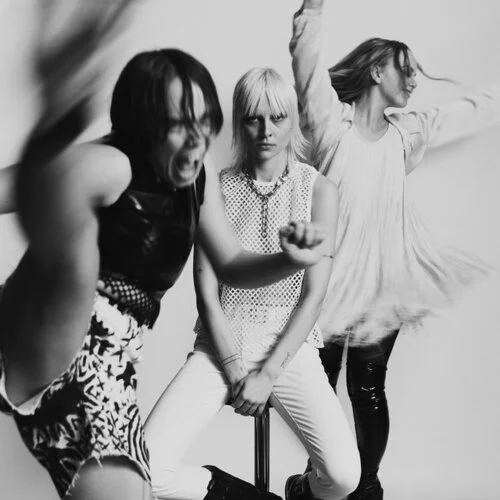
Dream Wife - So When You Gonna… (Lucky Number)

 “A band who inspire, promote and radiate inclusivity, Dream Wife's undeniable friendship and dynamic creative output is about as infectious as it gets. A stirring set of songs that lift, punch, and play, while also pausing for tender thought and rather poignant clarity.

A confident and utterly engrossing album from a band firmly at the helm of their own creative calling”.

Buy: https://www.roughtrade.com/gb/dream-wife/so-when-you-gonna

Bonus Release: IRL – Live In London 2020

Release Date: 10th November

Following the recent release of their Top 20 charting second album So When You Gonna..., Dream Wife (Alice Go, Bella Podpadec and Rakel Mjöll) now release live album IRL – Live in London 2020. Fortuitously recorded by their FOH engineer at London's Peckham Audio this past January, it documents what was expected to be the band’s first of many shows of 2020. Featuring highlights from their first and second albums, plus the previously unreleased song Cheap Thrills, the recording has undoubtedly captured a blistering performance that showcases the trio's trademark ferocity.

Dream Wife say that

“The rock show is the beating heart of this band. We cut our teeth as a unit playing relentless DIY tours before ever releasing music. We often describe recordings as a snapshot of a song at a moment in time, but understanding them as living, breathing, transforming entities through the rock show. Kicking off this year we imagined 2020 to be seriously getting back to touring, to playing shows, to letting these songs live. But... 2020 has not been what anyone expected it to be.

When we put on this small intimate ‘sort of’ secret gig for fans & friends at Peckham Audio back in January we thought it was the first but, as it turns out, it was going to be the only for a very long time. We truly believe in the transcendental power of live music; that you have the power to go somewhere together. We can’t wait to commune with you IRL, at the rock show; to share sweat and joy and rage and grief and energy and love. But for now, we offer you a snapshot of our only rock show of 2020. We offer you a little bit of that energy and rawness and connection captured digitally. It's not quite the same. But don’t worry we'll be together, we will be loud, and we will be unapologetically present soon. Lots of love, Your Wives xxx

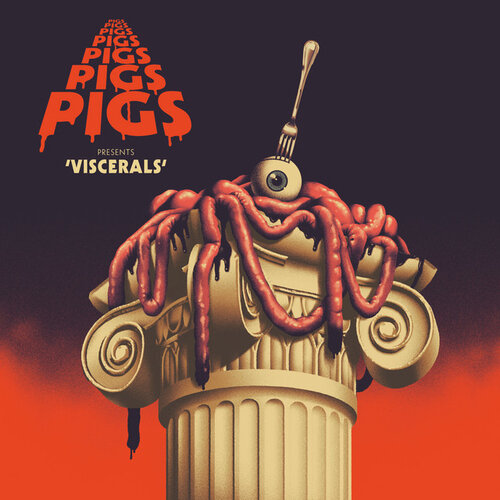
 Pigs Pigs Pigs Pigs Pigs Pigs PigsViscerals (Rocket Recordings)

"Therapy through noise." Nigel House.

Powerful, primal, passionate music-making. An infectious, ambitious, raucous, riff-driven record. A workout of sheer musical magnitude and absolutely their best yet”.

Buy: https://www.roughtrade.com/gb/pigs-pigs-pigs-pigs-pigs-pigs-pigs/viscerals

Bonus Release: Off Cuts

Release Date: 10th November

In April 2020 Pigs Pigs Pigs Pigs Pigs Pigs Pigs released their third Viscerals – an album which showed an enormous leap forward in confidence, adventure and sheer intensity. Incisive in its riff-driven attack, infectiously catchy in its songcraft and more intrepid than ever in its experimental approach, Viscerals is the sound of a leaner, more vicious Pigs, and one with their controls set way beyond the pulverising one-riff workouts of their early days. Selected as their Album of the Month for April, the band accompanied the release in Rough Trade stores with Off Cuts, an exclusive, limited edition CD. Containing previously unheard versions of tracks taken from all three Pigs albums and recorded in studios across the UK, Off Cuts presents rawer, more immediate, more intense versions of the songs you all know and love - making it an essential listen for all Pigs fans and all fans of heavy, fuzzed rock! Heeding the many requests Rocket have had since April, they have decided to do a very limited, one-off vinyl pressing of Off Cuts. Featuring new artwork and pressed on stunning purple and black splattered vinyl, this is a must have release and is limited to just 1,000 copies”.

BdrmmBedroom (Sonic Cathedral)

 “Sometimes an album comes along that grabs you and doesn’t let you go, like a boa constrictor, only wrapping you more tightly in its grip, slowly increasing its intensity, until your head explodes. Bedroom is that album, a full-on submergence in a swirling pool of gothic shoegaze, abundant with suffocating jams and life-saving attacks of adrenaline. But amongst the violent storm, once you succumb to its slow motion destruction, you too will find peace beyond the desolation”.

Buy: https://www.roughtrade.com/gb/bdrmm/bedroom

Bonus Release: Live at the Nave

Release Date: 10th November

Other than a socially distanced gig in a Hull car park in September, a live stream to help save the venues in their hometown from closure and their memorable stripped-down street set for Rough Trade Transmissions back in July, bdrmm haven't played a live show since January. For anyone who has fallen in love with their brilliant debut album, Bedroom, during the long, lean months of 2020, this exclusive five-track EP is the closest you're going to get to one for now. Recorded live to tape at The Nave studio in Leeds back in August, it finds the band in ferocious form, running through four tracks from the album, before closing with a searing, soaring version of their 2019 single Shame. It's a brilliant reminder of what a potent live force bdrmm can be”.

Porridge Radio - Every Bad (Secretly Canadian)

 “Porridge Radio’s intensity feeds on feelings turned sour that rise and fall through Dana Margolin’s mouth in a range of escalated, climactic moments. Like a gluttonous heart who must purge and expel its emotions in order to gorge again. Margolin’s sharpened nerves are used as a weapon against her personal demons. Somewhere between the abrasion of its searing riffs and melodic incantations, Every Bad is a soul-cleaning album that drenches you in the multifaceted nature of a lyric that evolves when hurled over and over again”.

Buy: https://www.roughtrade.com/gb/porridge-radio/every-bad

Bonus Release: Every Bad - BBC Session

Release Date: 10th November

In March 2020, Porridge Radio headed into the BBC studios to capture 4 songs from their Every Bad album, in their live, vital form. This EP captures the beautiful, wild and powerful energy of their performances that everyone has been so sadly missing in 2020. Featuring Sweet, Long, Pop Song and Circling, it’s a fantastic document of a band at a big turning point in their lives, right as the wildly praised album Every Bad was about to come out. The year has not been short on accolades for Porridge Radio - a mercury prize shortlisted album, multiple albums of the year nods and a plethora of critical acclaim”.

 Rolling Blackouts Coastal Fever - Sideways to New Italy (Sub Pop)

f.jpg

Wait up, is that disco I hear? A brighter, twangier outing than the debut, fuelled by bolder experimentation, all the while retaining that sure-fire sound we have come to define this talented band by. Oh, and those extended guitar-driven instrumentals we know you are all drooling for? This has it all and then some.

Immerse yourself in this sun soaked triumph built with the sweetest grooves going. They've done it again”.

Buy: https://www.roughtrade.com/gb/rolling-blackouts-coastal-fever/sideways-to-new-italy

Bonus Release: Sideways to New Italy – Demos

Release Date: 20th November

Limited four song 12" featuring demos from the stunning second album Sideways to New Italy. The demos are perfectly formed but a little rawer. The jangling guitars are all present and correct and utterly joyous but it's the vocals that give these cuts the edge with an almost Nikki Sudden / Dan Treacy influence”.

FEATURE: Out of the Realm of the Orchestra: Kate Bush’s Never for Ever: From Promising Artist to Innovator and Influential Producer

FEATURE:


Out of the Realm of the Orchestra

IN THIS PHOTO: Kate Bush on the German T.V. show, Rock Pop, on 13th September, 1980 performing Babooshka

Kate Bush’s Never for Ever: From Promising Artist to Innovator and Influential Producer

___________

I was going to write about this subject…

IN THIS PHOTO: Kate Bush at the British Rock and Pop Awards on 26th February, 1980/PHOTO CREDIT: Mirrorpix

when Never for Ever turned forty back in September but, as the album has featured heavily in a new edition of PROG (that I just read two days ago), it is something that I have been keen to explore now. I have taken receipt of the magazine, and they dedicated quite a few pages to Never for Ever and it gives us a song by song guide and details regarding the album’s creation and differences (compared to her previous albums). The line/heading at the top of the feature refers to a song on the album, Violin, and, later, I will dig more into that track, as it is one that divides people (the photo included is Bush performing Babooshka, so it is interesting how both the violin and double bass (which she wields in the video) are pivotal). I think the words in Violin are apt, as one can definitely feel a difference between Bush’s first couple of albums – The Kick Inside, and Lionheart (1978) -, with what she achieved in 1980 in terms of boldness and invention. I will try not to cover too much ground I have explored already, but there are two stages to Never for Ever and how it came together. Recorded between September 1979 and May 1980, that period was a very transitionary and important one for Kate Bush (this is a useful documentary to watch to get some context and insight into Bush’s life pre-Never for Ever). She was used to recording at AIR Studios, and the 1979 work on that album has a fairly similar flavour to previous work laid down there. When she headed to Abbey Road Studios, that is when her world opened up! There was an important T.V. special that occurred late in 1979 but, before I get to that, it is worth addressing Never for Ever from the cover forward.

Lionheart sported a pretty captivating photo of Bush in a lion’s costume with the head on the floor as she was stretched on a wooden toy box in an attic. That photo by Gered Mankowitz represented an artist who was more daring on her second album, and we had that mixture of playful and intense. That cover shot was a pretty good summation and indication as to what we would find on Lionheart. Look at the cover for Never for Ever, and Bush is this animated/painted figure with all manner of animals and insects emerging from her dress…or from between her legs! Designed by Nick Price (a friend of Bush’s brother, Paddy), birds, bats, butterflies and skulls can be seen in a truly extraordinary image! Bush sort of assessed it as a representation of our desires and feelings flood out; like the songwriter being released and truly letting her mind and emotions take flight! The cover is a mixture of the mythological, humorous and beautiful, and I think one also gets a good feel of what Never for Ever will offer gazing at it - as one can feel mythology and mystique in Delius, Egypt, and Night Scented Stock; humour in The Wedding List, and beauty in every other song. In April 1979, Bush said in an interview how every artist changes and how she was looking to change; she felt it then and knew that it was happening. Her Tour of Life started in April 1979, and this was her bringing two albums of material to a big stage and engaging in her most committed and high-profile live performances to that point.  

I think that tour provided Bush with new impetus, confidence and ambition, and Never for Ever was the first album where she was co-producing. There was still this evolution and growth where she retained some of her previous sound and nature – in terms of how she came across on her first two albums and the sort of T.V. interviews she was giving -, but Bush had renegotiated her deal with EMI and she had procured one of a few Fairlight C.M.I.s that were available in the U.K. I have talked extensively about that piece of kit before, so I shall not go into too much detail. Suffice it to say, having that sort of technology meant that Bush was expanding her sound and being introduced to fresh possibilities. One can definitely feel her starting to take more control by 1979. She already had her own royalties company, Novercia, so we can feel her handling the reigns and there was that business-minded side to her. Members of the KT Bush Band like Del Palmer and Brian Bath were now fully in the fold – they were not overly-present on the first two albums and, with Andrew Powell no longer producing, Bush could bring in the players she wanted -, so she had this support network and musicians who she was used to working with and, maybe, had a closer relationship with. PROG make an interesting observation regarding Never for Ever being an album of two halves: the 1979-recorded songs at AIR are more conventional (Violin, and Egypt among them), whereas her cuts from Abbey Road (where she headed in January 1980) were more ambitious and experimental.

Bush had more space (literally) and, with so much history steeped in the bones of the studio – Bush’s love of The Beatles would have given her excitement and nerves when stepping into a studio they are synonymous with –, there were these new opportunities and interactions (she recorded with Roy Harper in Studio 3 on the song, You (The Game Part II), from his album, The Unknown Soldier). Bush also recorded with Peter Gabriel for his third eponymous album (at The Town House in London), so there was this nice network and central studio where Bush could record her own stuff, but she could easily pop and record with other artists and, whilst doing so, she was being exposed to new sounds that would influence later albums – I can hear a lot of Peter Gabriel III’s darker and eerier moments being given a Bush twist on 1982’s The Dreaming! I think the bond she had with Gabriel was especially important for Never for Ever, in regards how he approached recording and the amount of detail and work he put into songs. One can feel Bush assuming a more leadership-like role in the studio because, on her first two albums, she felt more like a player and less involved with the recording. Now, with Jon Kelly (who was an engineer on the first two albums) co-producing, there was this new lease and opportunity where she could almost start from scratch and create an album in her own vision! Most artists would not have been aware of the Fairlight C.M.I., and they might have selected basic sounds and not really have pushed it to the limit when recording.

Bush knew what she wanted to sample and she had that knowledge and understanding that meant, by the time she started recording, she and her team could create this magic! I want to briefly head pre-January 1980 and talk about the Christmas special of 1979. Recorded in October but broadcast on 28th December, this Pebble Mill Studios-filmed event was a follow-on from The Tour of Life, and it allowed Bush to present a few new songs that would find their way onto Never for Ever. The Wedding List (never released as a single, sadly), Violin, and Egypt were all performed and were on the album; December Will Be Magic Again was a Christmas single (released in November 1980), and we also got to see the weird-but-wonderful Ran Tan Waltz – which was the B-side to Babooshka. Not only did people get to hear these new songs, but it allowed Bush a combination of promotion and more live exposure – even though she did not sing live in the studio, she recorded the vocal tracks before performing and mimed for the cameras. She joined with Peter Gabriel (who appeared a few times during the show) on Roy Harper’s Another Day, and it showed that the two were perfect vocal partners – Bush would appear on two tracks from Gabriel’s 1980 third eponymous album: Games Without Frontiers, and No Self Control. If the Fairlight C.M.I. was introduced to the wider world by Peter Gabriel and he helped distribute it in the U.K., I think Never for Ever is an album that showcased its abilities and potentials that unlocked so much for artists in the 1980s – as Peter Gabriel did too with his album of 1980.  

One thing that was evident with Bush from the start of her career but was more obvious on the sessions for Never for Ever, was the fact that she was assertive and knew what she wanted to create. So many musicians then (and now) would have been dithering and only spoke up occasionally but, through the album, Bush was recording multiple takes and using different musicians – maybe her affection for Steely Dan enforced this sort of quality control and their studio methods; they were slavish to finesse and that perfect sound – and we got to hear an album that sounded both more assured and diverse than anything she had laid down before. I will write about December Will Be Magic Again ahead of its fortieth anniversary on 17th November, but I think this is a song that is very underrated and could have found its way on Never for Ever – it was recorded in 1979 at Abbey Road Studio 2. Maybe the Christmas tone would have sounded odd when people heard the album before or after Christmas, but I really love the song and, again, it is Bush at her exceptional, romantic best! Although PROG noted – referencing observations from Graeme Thomson’s biography, Under the Ivy: The Life & Music of Kate Bush – one can hear Fairlight C.M.I. on Babooshka, All We Ever Look For, and Army Dreamers, it came into her orbit a little too late to define and transform Never for Ever – she utilised it much more on The Dreaming, and 1985’s Hounds of Love.

 IN THIS PHOTO: The Anchoress (Catherine Anne Davies)

It is clear that Bush’s experiences with AIR and Abbey Road produced different songs and sounds, but I do not think that, by standards of the time, songs like Violin, and Egypt sound ‘conventional’ or lesser. Maybe Egypt is a little soft and naïve in places; it is a love letter to a country and something that other artists were not doing. In the PROG spread, musician Catherine Anne Davies (The Anchoress) highlights Violin as being her favourite track from the album – “Her voice is so brilliantly unhinged!”. It is an ecstatic and raw performance and, whilst it does not hit the true levels of Punk, it is Bush producing songs that were more physical and vocally raw than what she recorded in 1977 and 1978 – maybe she was reacting to the influence of Punk or she was just more curious regarding genre and giving her voice a more mature and edgy sound. Davies also makes an interesting point regarding the fact Bush was co-producing Never for Ever and that gave her (Davies) inspiration. Not many female songwriters of that era would have been producing their own work, and I think Bush’s command and sense of wanting to direct her own music was a key factor. I do want to highlight Violin, as it is a song that I have not really delved into previously. I think it is one of Bush’s more successful rockers and, as Davies noted, she does sound unhinged and untamed! I wanted to bring in an article from the excellent Dreams of Orgonon: The Songs of Kate Bush regarding Violin:

Like “The Man With the Child in His Eyes,” “Violin” is one of a handful of songs from the early demos which made it a studio album. This wasn’t especially surprising with “Child,” where Bush picked a few songs from her older repertoire to professionally record. By the time Bush recorded “Never for Ever,” she was a full three albums into her professional recording career. It’s the last time Bush recorded a song from the home demo days. She’d written plenty of songs since the days of Wickham Road. Why dust off this old tape? Clearly it stood apart from the demos. Bush knew how to imbue “Violin” with new life.

“Violin” is fraught with anxiety—Bush sounds like she’s thoroughly lost her religion. You can visualize the singer as a frazzled inmate in a padded cell, clinging to a violin and describing every centimeter of it. It’s possible they’re just high and really into the tangible shape of the violin (which is always a possibility and usually a given with Kate Bush), but I suggest a different reading: the singer has been driven mad by their violin playing. They’re an inverted Pied Piper or Erich Zann, leading themselves astray with their own music.

Some listeners might interpret the song as being enthusiastic about the violin—I wouldn’t read it that way. I think it’s about a person who’s had the violin imposed on them for far too long going over the edge. There’s an tinge of unreality to the song—it makes the violin a mystical object. Given the events leading up to the song’s creation, it’s unlikely Bush was feeling terribly positive about the violin while writing “Violin”. She isn’t one to push autobiography into her songwriting, but it’s hard not to read “Violin” as an expression of personal anxieties.

Characteristically, “Violin” is Kate Bush touching on various aesthetics and predicting genres she’ll never touch again (eventual folk punk sounds nothing like “Violin”). Sometimes you need a hot mess of a song—Kate Bush will make a career out of this style, juxtaposing alternative and mainstream aesthetics. Finding life in the nooks and crannies of culture is one of the most rewarding parts of being a teenage aesthete. Personally, this is my favorite song I’ve written about on the blog so far. Kate Bush can do thoughtful and quiet as well as anyone else in the charts. This only makes her wild, untamed exercises in strangeness all the more salient. What does a punk do at school? Maybe break a few windows and receive detention. If Kate Bush skips school, you do nothing. There’s no stopping a goddamn banshee.

Recorded: (demo) c. 1976 at 44 Wickham Road, Brockley; (album track) autumn 1979 at London AIR Studios. Personnel: Kate Bush—vocals, piano. Brian Bath, Alan Murphy—electric guitars. Del Palmer—bass. Preston Heyman—drums. Paddy Bush—banshee. Kevin Burke—violin. Illustrations: The Raincoats, Kate Bush and her class in 1969, Erich Zann, a banshee, Paganini, the Bothy Band”.

Returning back to Never for Ever, and I maintain it is one of Bush’s most underrated albums; its importance is obvious and decades-enduring. It was an album of awakenings, big leaps and accomplishments. PROG noted how Never or Ever was a grown-up record, in the way more serious themes came in and the fact Bush was more an ‘adult’ I guess - she was calling shots and a lot more at the centre of the production process. Even though Never for Ever was completed in May 1980 and primed for release the following month, it as held until September to avoid clashing with huge albums like Paul McCartney’s McCartney II – in the same way Wuthering Heights was not released in November/December 1977 (it came out in January 1978) to avoid it getting trampled by a song like Wings’ Mull of Kintyre (another Macca torpedo!). Not only is the music remarkable throughout Never for Ever – as you can hear at the end of this feature -, but Bush was really coming into her own and becoming more curious about the studio and production - she could have produced Lionheart, I feel, but maybe there was a sense she needed more experience.

IN THIS PHOTO: Kate Bush in 1980/PHOTO CREDIT: Trinity Mirror/Mirrorpix/Alamy 

At a time when women were being sexualised – Bush was, to an extent, on her first two albums – and generally felt to be artists and not necessarily producers, she opened the doors for so many artists; helping to change perceptions and, in the process, how she was viewed and respected in the context of her own career. If there were remnants of the more child-like Bush from before (Egypt is one example), it is clear she was a stronger woman than she was a couple of years before – Bush was twenty-one when Never for Ever was completed. Those who worked with Bush on her third album attested to her friendless and what a pleasure she was to work with; she would make rounds of tea and was always accommodating and lovely. I have not even mentioned a great feat of Never for Ever: it was the first album by a British woman to reach the top of the album charts (the album also hit the top spot in France) – Lionheart reached number-six in the U.K., whilst The Kick Inside went to number-three. David Bowie’s – a musical idol of hers – Scary Monsters (and Super Creeps) would displace her at the top of the charts after a week, but what an accomplishment it was getting to number-one! Maybe one reason behind its commercial success is that singles like Breathing, and Babooshka did well in the charts and utterly original, but Bush on production and pushing her sound, I feel, resonated with people and it is another reason why Never for Ever’s importance and strengths require reinspection by critics.

Never for Ever was the first new studio record by any female artist to go to number-one in the U.K. – as artists like Diana Ross had only achieved this feat through compilations -, and I can understand why Bush, in interviews, distanced herself from her first two albums. I adore The Kick Inside (her debut; it is my favourite album ever), but I can appreciate how Bush felt those albums were miles away and Never for Ever was a much truer album of who she was. I disagree with PROG’s view that albums like The Kick Inside are naïve. Bush was very young when that album came out and, not able to produce, I think she did the best she could - many of the songs are remarkably assured and mature for a then-teenager! I do agree that, if her first two albums were not consciously absorbing Rock and other genres in the mainstream, Never for Ever is an album that embraces Art Rock and Punk; Bush was being taken more seriously and, as Graeme Thomson has noted, Never for Ever is half of where Bush came from and half where she was headed – this was a definite new phase and important chapter. Even though Bush, to this day, gets referred to as the ‘Wuthering Heights singer/songwriter’, I think there was a shift in media perceptions after 1980. It would not be long until Bush embraced technology and every room of her imagination on The Dreaming and, on Never for Ever, there is this fascinating chrysalis of the growing artist and the newly-in-charge and revitalised pioneer! It is a shame that there is not a documentary out there regarding Never for Ever’s recording – Nationwide followed Bush in 1979 as she prepared for The Tour of Life and mentioned that she was starting work for her third album. I would have loved to have seen the conversations and recordings happening then, as that big move to Abbey Road Studios and the way new technology changed Bush’s music forever is…

SUCH a fascinating time.

FEATURE: Screen Dreams, Movie Queens and Vaseline: Kate Bush’s Wow

FEATURE:


Screen Dreams, Movie Queens and Vaseline

yyyy.jpg

IN THIS PHOTO: Kate Bush in 1978/PHOTO CREDIT: Gered Mankowitz 

Kate Bush’s Wow

___________

IN my various approaches and dissections…

of Kate Bush’s second album, Lionheart, I have mentioned the single, Wow. As the album celebrates an anniversary on 12th November, I wanted to go a bit deeper and investigate certain songs to demonstrate how strong the album is and why people need to give it a closer listen. Although one of Lionheart’s issues is that it is an album that was fairly hastily assembled and created without very few newly-penned songs from Bush, she did manage to record a splendid album that boasts a few of her very best singles. She has quite a nice problem on her hand regarding the running order. Maybe producer Andrew Powell had a bigger say but, when it came to the opening track, do you go for something quite dreamy and immersive like The Kick Inside’s Moving, or do you open with a bolder track as Bush did with future albums like Never for Ever (Babooshka), The Dreaming (Sat in Your Lap), and Hounds of Love (Running Up That Hill (A Deal with God)!? In a way, there are similarities between The Kick Inside, and Lionheart regarding how it opens and develops. Both lead with a softer and very beautiful opening track: on Lionheart it is Symphony in Blue, whereas Moving starts The Kick Inside. Both tracks also have a run of three slower tracks before throwing in something harder and faster for track-four – Kite on The Kick Inside; Don’t Push Your Foot on the Heartbrake for Lionheart.

I think it was the right decision having Symphony in Blue open Lionheart as to create a natural bridge between the two albums but, like The Kick Inside, the standout single is saved for slightly later. Lionheart’s best-known song, Wow, arrived two tracks after the first track. It is strange that Wow was left as the second single from the album, and why Hammer Horror was chosen as the lead single. I can appreciate how The Kick Inside was still resonating by October 1978 so, when Hammer Horror came out (which was the first single), perhaps there was not the desire to rekindle public interest with a big single. Wow eventually came out on 9th March, 1979, and it reached number-fourteen in the U.K. That single position always baffles me, as it is an urgent song and it sports one of the best choruses of Bush’s career. Clearly, she wanted to nail the song as those who worked on Lionheart recount Bush doing endless vocal takes – especially on the chorus – to get it right. Maybe releasing Wow in 1978 would have resulted in a better chart position, and I am fascinated to learn what the process was regarding planning the single releases from Lionheart. Wow is a fabulous song and is one of Bush’s best-loved. In a recent MOJO special magazine regarding Kate Bush, they placed Wow at number-nine in her best fifty tracks. MOJO observed how, even in 1979, there was still this image of Bush being quite a high-pitched and eccentric singer, and Wow perfectly mixes the more wide-eyed ‘wows’ and ‘unbelivables’ with deeper strings; there is a tonal balance where there is more soaring and high-range vocals and darker sounds that levels things up.

 IN THIS PHOTO: Kate Bush in 1979/PHOTO CREDIT: Gered Mankowitz 

In 2018, PROG put Wow at number-nine (that magic number!) in their list of the best Bush songs; Consequence of Sound marked it as Bush’s seventh-best song. They remarked the following:

Bush’s second album, Lionheart, came out in an unseemly rush nine months after her debut. The singer later confessed to feeling undue pressure from her record label, who were keen to cash in. Yet the album still flaunted some gems, and its second single, “Wow”, is the most tempting jewel among them. Lyrically, it speaks of the artificiality of the stage — the inner loneliness, the repetition of performing, the gushing falsehood of praise, the never quite making it– but more broadly it seems to be about the duplicity of show business and, by implication, the music industry. The song is blessed with striking melody lines with orchestral instruments complementing sensitive bass. Whether dropping an innuendo about Vaseline, scaling vocal heights, or descending two octaves to hit an unexpected bass note, Kate Bush is always in command of her stage”.

I could go on, but Wow has received big acclaimed through the years – The Guardian ranked it as Bush’s thirteenth-best single. Before digging deeper into various outside aspects of the song, I want to bring in an article from the Kate Bush Encyclopaedia, where we hear Bush’s story of Wow:

I've really enjoyed recording 'Wow'. I'm very, very pleased with my vocal performance on that, because we did it a few times, and although it was all in tune and it was okay, there was just something missing. And we went back and did it again and it just happened, and I've really pleased with that, it was very satisfying. (Lionheart Promo Cassette, EMI Canada, 1978)

 'Wow' is a song about the music business, not just rock music but show business in general, including acting and theatre. People say that the music business is about ripoffs, the rat race, competition, strain, people trying to cut you down, and so on, and though that's all there, there's also the magic. It was sparked off when I sat down to try and write a Pink Floyd song, something spacey; Though I'm not surprised no-one has picked that up, it's not really recognisable as that, in the same way as people haven't noticed that 'Kite' is a Bob Marley song, and 'Don't Push Your Foot On The Heartbrake' is a Patti Smith song. When I wrote it I didn't envisage performing it - the performance when it happened was an interpretation of the words I'd already written. I first made up the visuals in a hotel room in New Zealand, when I had half an hour to make up a routine and prepare for a TV show. I sat down and listened to the song through once, and the whirling seemed to fit the music. Those who were at the last concert of the tour at Hammersmith must have noticed a frogman appear through the dry ice it was one of the crew's many last night 'pranks' and was really amazing. I'd have liked to have had it in every show. (Kate Bush Club newsletter, Summer 1979)”.

Wow is a song that was written long before recording started for Lionheart, and Bush searched and kept working on the song as she felt something was missing; there was this desire to provide an emotional connection that resulted in numerous takes and experimentation.

 IN THIS PHOTO: Kate Bush in 1978/PHOTO CREDIT: Gered Mankowitz 

On a side-note: two different bands feature on Lionheart. Bush wanted her old band – from the KT Bush Band days – to play on the album, but producer Andrew Powell stepped in and wanted the band of more experienced musicians who appeared on The Kick Inside to reprise their roles. Two songs (the other being Kashka from Baghdad) feature the older band - drums: Charlie Morgan; guitars: Brian Bath; bass: Del Palmer; electric guitar: Ian Bairnson; mandolin: Paddy Bush; Synthesizer: Duncan Mackay. Although Bairnson, Mackay and Paddy Bush feature on The Kick Inside, Del Palmer would appear in a more permanent role from 1980’s Never for Ever onwards. Wow is classic Kate Bush, in the sense that there are huge vocals, a hugely memorable chorus and lyrics that are a lot more interesting than what many of her contemporaries would have been producing. The video is great, as Bush commits to the theatrics of the song and there is a line, “He’s too busy hitting the Vaseline!”, where she pats her bottom suggestively – when The Whole Story (a greatest hits package) was released in 1986, the original video was replaced; maybe Bush was not comfortable with such cheekiness! What I love is that Lionheart is an album that featured duality and distinct shifts in mood. Wow is a lot more fun and satirical, whilst there are songs such as Oh England My Lionheart, and Symphony in Blue, which are more emotional and restrained. It is interesting that there are two versions of the studio recording of Wow. There is the album version and the single version. The single version is an edited version of Wow; on all European Wow singles, the first twelve seconds of synthesiser chords have been removed.

Returning to the article from the Kate Bush Encyclopaedia, and it is amazing that critics were slightly lukewarm regarding Wow:

The music paper Sounds seemed a little underwhelmed by 'Wow': "I hear this mediocre chanteuse crooning her way through this silly song. (...) I realise that a lot of people would like to go to bed with her, but buying all her records seems a curious way of expressing such desires." Meanwhile, The Guardian called 'Wow' the "undisputed highlight" of the Lionheart album. "An eerie gentle number with perceptive lyrics. The verses still sound a little muddled but get better with playing" said Record Mirror. And Melody Maker added: "The most precisely focused Kate Bush single since Wuthering Heights despite the self-indulgent lush production”.

One can attribute the mediocre reviews to stuffiness and ignorance, but Wow has since gathered so much affection! On an album that has to fight for attention and acclaim, I do feel that Wow is not an anomaly of genius! It is the highlight for many, and I was keen to highlight the track as it so good! It is also amazing to think that Bush had this song in her locker when she was recording The Kick Inside, and I wonder whether she was keeping it back or never intended to release it – as she needed to put out a second album quickly, Bush searched through some older songs so she could have an album ready in time. It is a classic and, though some people criticised her for her overuse (in interviews and music) of words like ‘wow’, and ‘amazing’, Lionheart’s second single is more than deserving of…

 SUCH giddy excitement.

FEATURE: Spotlight: Coach Party

FEATURE:


Spotlight

Coach Party

___________

IN spite of 2020…  

zz.jpg

 PHOTO CREDIT: SHOT BY PHOX

being a steaming bowl of cat spunk, there has been some terrific music and incredible artists emerging. Despite a lack of gigs in which to cut their teeth and hone their sound, so many wonderful new artists are building their portfolio at the most difficult time in modern history for music. I sympathise with everyone in the industry but there is hope that, at some juncture next year, venue doors will reopen and there will be the swell and much-missed buzz of communities and crowds bonding to the sounds of live music! One of my favourite acts of the moment hail from the same area as a recent Spotlight inclusion, Lauran Hibberd: the Isle of Wight. It is, perhaps, not the area one would highlight as a Mecca for interesting and promising new artists, but it is clear that more eyes need to be trained that way. Before moving on, I want to bring in a couple of articles/sites that introduce the fantastic Coach Party. This is from their official website:

Hotly tipped 4 piece from the Isle of Wight with infectious songs and witty lyrics far beyond their years are about to become part of YOUR life.

The band will be releasing their debut single ‘Lola’ later in 2019. This sub 2 minute track, along with 5 others all produced in their own studio on the Isle of Wight are turning heads all round the music industry. With further singles to follow early in 2020, the full 6 track mini-album will drop in the Spring of 2020”.

There is (rightly) a lot of buzz around Coach Party. The band are putting out some terrific music and there is a real connection and bond between the band members. They have even made it into the pages of NME and their feature, What’s Your Band Called, Mate?

What’s your band called, mate?

“Hi! We’re Coach Party / Jess, Steph, Joe & Guy (singer first drummer last, obviously)”

What do you want to achieve with your music?

“If being a band can continue to keep us happy, sane and give us a way of saying stuff which we don’t know how to say in normal conversation, and we generally achieve a success rate above 20% of listeners enjoying it in some way, then I think we would have done ok at music”.

The band’s new track, Really OK on My Own, is one that I really like and respond to. It is energised and raw, but there is something delightfully oldskool about the track. It is a song that would benefit from a good airing in a live setting - so I know the band will be keen to get out there as soon as possible! Back in June, Coach Party released their excellent E.P., Party Food. It is one, as Rough Trade write, that is very interesting and contains some great highlights:

Emerging Isle of Wight four-piece Coach Party release their debut EP Party Food via Chess Club. The 6-track Party Food EP was produced by the band’s own Guy Page and continues their association with Chess Club - a label famed for breaking new talent, where recent signings include Alfie Templeman and Phoebe Green, and past successes include Jungle and Wolf Alice.

Space is another stylish indie-pop tune, with a brilliant contrast between it’s first verse and the rest of the song. As one of the three singles, Space helped to prepare us for the full EP and represents much of what Coach Party are capable of; endlessly enjoyable rock-influenced tunes, with beautifully honest lyrics. As we edge closer to the end of the EP, Space offers some easy listening while maintaining the incredibly high standard set by the previous tracks. The same can be said for Red Jumper Boy, the final track on the EP. A gorgeous track, made up of Eastwood’s dreamy vocals and a relaxed drum beat, all building up to an upbeat final track. With ambitious, yet well-executed and perfectly suited guitar parts, Red Jumper Boy is another EP highlight of ours. Offering listeners a fun, unique guitar solo towards the end of the track, Coach Party seem to know exactly how to leave us all wanting more from them.

From start to finish, Party Food is an incredible ride and boasts beautiful performances from all four members that truly help to show just what this band is capable of and will inevitably make a great name for the group. It is clear, following this release, that Coach Party are nowhere near finished and we’re excited to see what comes next for the endlessly talented group”.

It has been a busy year in spite of everything, and I can appreciate people would usually judge a new band or artist based on their experience of seeing them live. Coach Party do have some gigs forthcoming and, let’s hope, with changing advice from the Government and a general unpredictability they are able to fulfil as many as possible. Coach Party are awesome in a live setting, and they will be itching to get these songs out to as many people as possible! Whilst there are some great venues in the Isle of Wight, I think there are venues in the capital and further afield that would welcome them in. I am going to wrap things up but, as one can glean a bit about an artist from interviews, I wanted to bring in one they have to DORK back in May. Jess from the band shed some light:

We hear you all live and work on the Isle of Wight - what's that like? Is travelling for gigs a pain?

Firstly, yes. However, the most painful thing is 100% the price of catching the ferry, she really burns a hole in your pocket (love you ferry companies, please don't ban us). The timings can be quite testing as well, especially if its really late. But despite all that, the ferries are worth catching for the dog deck, it can be a very wholesome hour.

m.jpg

How did you guys all meet and decide to form a band together then?

Living on the Isle Of Wight, everyone low-key knows each other, especially as we have such a tight-knit music scene. Guy and Joe (guitarist) used to be in this really cool band called 'Polar Maps', which Steph (guitarist) and myself used to really enjoy. We approached them with some songs initially just to help us out and make them sound better, and they did such a good job that it made sense for the four of us to do something all together. That's when Coach Party was birthed.

What do you most enjoy writing songs about?

It's an opportunity to say things how they are, in the comfort of sweet melodies and without the confrontational backlash of a real-world conversation... and that one step closer to making that one-hit-wonder.

How did you hook up with Chess Club Records?

Our one of a kind gift from God manager, Jonathan Morley, has such belief in us and our music. His positive and restless energy is what led us to meet Will and Pete from Chess Club, along with the rest of our amazing team. Big up Chess Club, Freetrade and They Do.

Anything else we should know?

Hidden talents that aren't talents: Steph is extremely average at skating, check out Instagram for proof. Guy 'the rage' Page is the former Isle of Wight, Hampshire, Surrey and Sussex (the world) schoolboy bantamweight Champion. Joe has never been photographed without a pint. And for me, I can walk into any kitchen and tell you where the cutlery draw is, based on gut feeling”.

If all of this isn’t enough to tempt you the way of Coach Party, then you will just need to go and see them play when it is safe! Go and support their music, follow them on social media and keep your peepers out for what they do next. If you thought the Isle of Wight was a bit quiet when it came to incredible musical gold, then the amazing Coach Party…

SUGGEST otherwise.

_____________

Follow Coach Party

FEATURE: Vinyl Corner: Kirsty MacColl - Kite

FEATURE:


Vinyl Corner

Kirsty MacColl - Kite

___________

IT is sad to think that…

 IN THIS PHOTO: Kirsty MacColl in 1989/PHOTO CREDIT: Honey Salvadori/National Portrait Gallery, London

the final album from Kirsty MacColl arrived twenty years ago. Tragically, MacColl died in December 2000 in an accident in Mexico. Her final album, Tropical Brainstorm, was released in March 2000 and it is a phenomenal record. It is a happier and much more uplifting album than Titanic Days of 1993. That album is incredible, but it has quite an unhappy heart. Tropical Brainstorm sounds much more enlivened and revitalised – as MacColl said she would only record another album when she was in a better place -, so it makes it all that more bittersweet that the album release and MacColl’s death were so close together. I want to look back at her second studio album, Kite. Following the patchy-if-promising debut, Desperate Character of 1981, it did take a while for that second album to arrive. I am not sure what influenced the gap, but Kite is a stronger and more effecting listen than the debut; MacColl’s voice is stronger and her songwriting stepped up a gear – even though it was pretty good on Desperate Character! Produced by her then-husband Steve Lillywhite, it was her first album for Virgin Records.  One big reason for selecting this album was that there is a nice mix of covers and originals. Go and buy Kite on vinyl, as you can pick it up for not a lot and it makes for a wonderful listen!

One of my favourite cover versions ever is MacColl’s version of The Kinks’ Days. Her voice adds something emotional and stunningly beautiful to a track that, whilst great in its original state, is elevated to new heights by MacColl! Match this against originals like Innocence, and Free World, and Kite is a splendid album where MacColl really shines. I like the two tracks she wrote with Johnny Marr, The End of a Perfect Day, and You and Me Baby – these tracks end the album in superb fashion! MacColl’s beautiful harmonies are all over the album, and her voice has so much character and so many different sides. I want to wrap up with a few reviews of Kite, just to show the affection that is out there for a simply staggering album. The BBC tackled Kite in 2005:

MacColl, the maverick performer much loved by the Brit rock illuminati, has been described as 'a great British artist' by Bono, a 'genius' by Holly Johnson, and the forthcoming release From Croydon To Cuba...An Anthology has been described as a 'work of art' by art-rockers Talking Heads. Praise indeed and utterly deserved.

Here we have Kite, first released fifteen years ago. Kite is full of the honest purity and humour that was synonymous with MacColl, and is packed with hits, bonus tracks and remixes. That's before you even get to the mammoth box set From Croydon To Cuba or the eclectic explosion that is Electric Landlady, also released imminently (featuring the work of Billy Bragg and Johnny Marr). Make no mistake, this special lady left a mighty legacy”.

Kite features her hit single, "Days", brimming with beautiful simplicity, and all the more poignant since her tragic death in 2000. Age has not withered this sweet song, it retains every ounce of uncynical magic that made it a hit in the first place.

"Free World" is a high octane track dominated by a distinctly U2-esque rhythm guitar. You can hear bands like The Cranberries have clearly taken note of every strata of her style in tracks such as this.

"No Victims", an unsugary ode to love gone wrong bursts with blatant truth but without bitterness. A similar feel is conjured by the trad jazz-infused stomp "Fifteen Minutes", where Kirstyplainly speaks out against hypocrisy and 'bozos'. But there is never a sting in the tail, just eyes-wide-open honesty and integrity: a quality particular to the likes of MacColl and punk poet Billy Bragg.

MacColl's trademark harmonies are wrapped around "The End Of A Perfect Day", a vibrant, complex song that I defy you not to bounce up and down to. This is followed by the shimmering ballad "You And Me Baby", sure to calm you down if all that bouncing gets a bit much...

A thing of simple beauty from a much missed troubadour”.

I have been listening to Kite a lot more over the last few weeks, as I am finding comfort in the songs and MacColl’s voice. Although she would go on to make other brilliant albums, I think Kite is up there with Tropical Brainstorm in terms of her very best work.

In their review of 1990, Rolling Stone noted that, whilst MacColl has not released much music in the past decade, what she delivered on Kite was amazing:

 “Kirsty Maccoll does not suffer fools gladly: "It's a bozo's world and you're a bozo's child" is just one of a quiverful of arrows she slings at both men who are self-centered manipulators and women who put up with them. "I'm no victim to pity and cry for/And you're not someone I'd lay down and die for" is another. The effect, at least lyrically, is a sort of distaff Elvis Costello: sharp-tongued, literate and – in its own distinctive way – charming.

The charm is derived in no small part from MacColl's songwriting skill. (Remember Tracey Ullman's 1984 hit "They Don't Know"? MacColl wrote it.) She is, after all, the daughter of the late Scottish folk singer Ewan MacColl, whose "Dirty Old Town" was recorded by the Pogues and many other artists. She's also the wife of producer Steve Lillywhite, and with help from him and the likes of guitarist Johnny Marr, MacColl has created a sparkling, modern folk-rock sound that at turns bounces, forces and eases her scoldings on, with her plain but attractive voice layered throughout.

"Free World" slams home a warning of women's frustration in the world with U2-like frenzy; "Fifteen Minutes" is a tart kiss-off to a fair-weather lover; "What Do Pretty Girls Do?" makes a case that it's the plain Janes that learn the best lessons from life; and rounding out the package are two lovely, bittersweet tracks: an eye-watering version of the Kinks' "Days" and the closer, "You and Me Baby." The real bittersweet fact about Kite, though, is that it's only MacColl's second recording and her first in almost ten years. It's unfair for someone with this much to say and this much skill at saying it to be so stingy. (RS 579)”.

I will round up soon but, if you have not encountered Kirsty MacColl or are unsure where to start, I would say that Kite is a great introduction to her enormous power and unique voice. In their review, AllMusic had this to offer:

Only Kirsty MacColl's second solo album in the tenth year of her career (she took several years off to have children after marrying producer Steve Lillywhite), 1989's Kite is the pinnacle of her achievement. By far her best-sustained work, this lengthy 15-track album features some of the singer/songwriter's best work on both sides of the hyphen. Her always-terrific vocals -- MacColl was quite likely the best female singer of her generation -- are overdubbed several times on most tracks to create thick, lush harmonies, most notably on the gorgeous cover of the Kinks' "Days." Her songwriting is excellent as well, with some of her sharpest and cleverest words and most memorable melodies found here. The piercing "Innocence" and "Free World" are two of MacColl's most combative songs, while "What Do Pretty Girls Do?" and "Fifteen Minutes," for all their tart lines, are MacColl at her most sympathetic. Besides the excellent originals, another pair of terrific covers -- the Smiths' "You Just Haven't Earned It Yet, Baby" and Kate and Anna McGarrigle's "Complainte pour Ste. Catherine" (given a rather Cuban rearrangement that foreshadows her later experiments in Latin music) -- show both MacColl's widely varied influences and her immense interpretive powers. [In 2005 EMI reissued Kite with the bonus tracks "Happy," "Am I Right?," "El Paso," "Le Foret de Mimosas," "Complainte Pour Ste Catherine," as well as alternate mixes of "Freeworld," "Innocence," "No Victims [Guitar Heroes Mix]" and "End of a Perfect Day."]”.

Make sure you go and get a remarkable album from one of the music world’s greatest voices. It is sad we mark twenty years since Kirsty MacColl’s death in December, but we will always remember her talent and the beautiful music she gave to her. I think Kite is a magnificent album where MacColl is seen…

IN full flight

FEATURE: The Lockdown Playlist: New Beginnings, Starting Over, and Hope for the Future

FEATURE:


The Lockdown Playlist

v.jpg

 PHOTO CREDIT: @rosiekerr/Unsplash 

New Beginnings, Starting Over, and Hope for the Future

___________

AFTER a lot of tension and delay…

 IN THIS PHOTO: Joe Biden/PHOTO CREDIT: Kevin Lamarque/Reuters

Joe Biden has been named President of the United States of America. It was a desperately stressful vote count, and it is a relief that somebody better and more ethical is in The White House. Because there is relief and a sense of things starting fresh, I have collated some songs that are about hope and new beginnings; tracks that look to the future and have a brighter aspect - and some that are, in my mind, a jab at Donald Trump. It is too early to say just how Biden will mould the U.S.A., but so long as Trump and his futile legal threats – he is unhappy about the count and whether there was voter fraud – stay away, I think it will be a great new era for America – one which is overdue. Let’s hope that things work out okay but, in celebration of a result that has cheered many, I present some songs that…

 PHOTO CREDIT: @benwhitephotography/Unsplash

DEFINITELY fit the mood.

FEATURE: From Album to Fanzine… A Look at the Magnificent Coffee Homeground from Kate Bush’s Lionheart

FEATURE:


From Album to Fanzine…

COVER PHOTO: Gered Mankowitz 

A Look at the Magnificent Coffee Homeground from Kate Bush’s Lionheart

___________

THIS feature will be fairly short…

 PHOTO CREDIT: Gered Mankowitz

and it will be my last feature relating to Lionheart as Kate Bush’s second album turns forty-two on 12th November. Lionheart is, as I have said a few times, really underrated and an album that came out really well considering she recorded and released it only months after her debut, The Kick Inside. There was not a great deal of time for Bush to write new songs for a second album as she was still promoting her debut! One of the three new songs that was written for Lionheart was Coffee Homeground. I thought the song dated back to 1977, but Bush actually wrote it whilst she was in the U.S.A. in May 1978. I am not sure whether she had designs to include it on an album or whether it was just something she had in mind and wanted to get on paper. I think, alongside other newly-written songs Full House, and Symphony in Blue, Coffee Homeground fits well alongside the seven ‘older tracks’ on Lionheart. The fact that Bush released a ten-track album when her debut contained thirteen songs was, perhaps, another sign that she was very short on time creating new songs or felt other ideas were not strong enough to make it on the album. She has said in interviews how recording Lionheart in France was quite productive and there were ideas and songs, but I still think she would have felt a little pressured or rushed having to put together an album considering her debut came together very differently – some songs she wrote a long time before the album was released; Bush entered the studio to record The Kick Inside when she was ready and the time was right.

I am not sure where in the U.S. Bush was when she wrote Coffee Homeground, but this article from Kate Bush Encyclopaedia gives us some more detail:

“['Coffee Homeground'] was in fact inspired directly from a cab driver that I met who was in fact a bit nutty. And it's just a song about someone who thinks they're being poisoned by another person, they think that there's Belladonna in their tea and that whenever they offer them something to eat, it's got poisen in it. And it's just a humorous aspect of paranoia really and we sort of done it in a Brechtian style, the old sort of German [vibe] to try and bring across the humour side of it. (Lionheart Promo Cassette, EMI Canada, 1978)”.

The inspiration and memory of that taxi driver came to her at an opportune moment, and the song that came from it is among the most distinct on Lionheart. There is orchestration and a synthesiser and one hears a dizzying, almost circus-like sound at work. The Kick Inside was a little simpler regarding composition and style, whereas Coffee Homeground is wilder and more eccentric. There are a couple of songs on Lionheart that look at paranoia – the other is another new song, Full House -, and it is interesting that, so soon after her debut album, Bush was bringing the subject of paranoia into her work. Not to suggest this reflected a fatigue from endless interviews and travelling, but she made this huge and interesting leap in terms of her songwriting so soon after The Kick Inside came out.

I do like the way Bush’s voice skips and conspires in the chorus – “Well, you won't get me with your Belladonna - in the coffee/And you won't get me with your aresenic - in the pot of tea/And you won't get me in a hole to rot - with your hemlock/On the rocks”. One best not look too deep beyond Bush’s own story about Coffee Homeground’s start, but I think there is a bit of her own fear and stress in a track that is very much about mistrust and wanting safety. Although Bush had a pretty broad palette through The Kick Inside regards her lyrics, she was touching on new themes and ideas on Lionheart. Coffee Homeground is a really interesting song, and one that contains some of Bush’s best lyrics to that point. Some critics highlighted the track as one of the weakest on Lionheart, but I think it is as arresting, interesting and accomplished as the album’s highlights (songs such as Wow, and Symphony in Blue). There is a bit of history and the fantastical in the song, sort of in the same was as we hear on In Search of Peter Pan earlier in the album. I do love the story in Coffee Homeground. The paranoid man refuses a coffee, as he knows that there is something darker happening downstairs – the coffee shop is almost like Sweeny Todd’s barbershop, where selected patrons are primed for imminent death. “Offer me a chocolate/No thank you, spoil my diet, know your game!/But tell me just how come/They smell of bitter almonds/It's a no-no to your coffee homeground/Pictures of Crippin/Lipstick-smeared/Torn wallpaper/Have the walls got ears here?”.

Bush summons up these smells, strange feelings and vivid images that, in 1978, might have seemed a bit odd to critics who were expecting something more traditional; perhaps they felt the chorus was a bit too throwaway. I think there is more of a Sweeny Todd nod later in the song as the protagonist muses where certain people are who were here before; have they been served a coffee homeground and done away with?! This protagonist will not be lured by a tempting smell – “Maybe you're lonely/And only want a little company/But keep your recipes/For the rats to eat/And may they rest in peace with coffee homeground”. I wonder whether Coffee Homeground is set in a 1970s coffeehouse, but the protagonist is recasting it more of a Victorian locale; perhaps the fear and paranoia has created these strange sights and suspicions! At the end, there is a weird and wonderful mantras: “With your hemlock on the rocks/"Noch ein Glas, mein Liebchen?"/With your hemlock on the rocks/"Es schmeckt wunderbahr!"/With your hemlock on the rocks”. Although every Lionheart track was performed during Bush’s 1979 The Tour of Life, Coffee Homeground at least enjoyed a life beyond the album. Tracks such as Kashka from Baghdad, and Oh England My Lionheart were never released as singles or B-sides; Coffee Homeground did make it as a B-side to Lionheart’s first single, Hammer Horror – both songs have elements of fear and the macabre, so I guess it made sense pairing them.

 IN THIS PHOTO: Kate Bush in 1978/PHOTO CREDIT: Press Association

Another new track, Full House, was the B-side to Wow, so I am glad that these songs made it beyond the album – Full House was also released as a B-side to the Japanese single version of Symphony in Blue. The penultimate track – before Hammer Horror – on Bush’s sophomore album, I really love Coffee Homeground and I definitely feel it is one of her hidden treasures. Bush’s experimentation and growth really started to happen on her third album, Never for Ever, after a successful tour and the incorporation of the Fairlight C.M.I., though one can hear shades and flavours of that confidence and boldness on the mad, magical and mysterious Coffee Homeground. Not only is the song a cracker, but it was adopted, in part, as the title to a long-running Kate Bush fanzine. HomeGround is available in book form, and it is well worth getting. The longest-running Kate Bush fanzine started life in 1982. The final printed issue, number 79, was published in 2011. It was run by Krystyna Fitzgerald-Morris, Peter Fitzgerald-Morris and Dave Cross in the U.K. The fanzine was conceived in Dave Cross's flat in May 1982. Twenty-five copies were run off an office photocopier. Through the years, the fanzine was produced with ever more professionality, and in fact got the support of Kate Bush and the people around her. Fans contributed stories, artwork and poetry, while the editors followed every detail about Kate in the press worldwide, even during quieter times. Even though there is a mere nod to Coffee Homeground, it is cool that a treasured and vital part of Kate Bush’s legacy was partly inspired by a great track from her second album of 1978. One can hear some flights of fancy and something very different (compared to The Kick Inside) on Coffee Homeground; it was only a couple of years later when Never for Ever arrived and Kate Bush…

WOULD really start to take flight!

FEATURE: Generations Rock: How New and Classic Rock, Through Streaming and Cross-Pollination, Is Alive and Kicking in 2020

FEATURE:


Generations Rock

IN THIS PHOTO: St. Vincent at the Way Out West Festival, Gothenburg, Sweden in 2018 

How New and Classic Rock, Through Streaming and Cross-Pollination,  Is Alive and Kicking in 2020

___________

EVERY year…  

IN THIS PHOTO: Brooklyn’s Charly Bliss are among the best Rock bands of the moment

there are these questions as to whether Rock is alive and well or whether it is a spent force. Certainly, the scene and feel of Rock is very different to what it was a couple of decades ago! Rock is not as part of the mainstream as it once was, and I think other genres have been fused with Rock to create new sounds. If the days of Rock bands dominating and soundtracking music is perhaps distant in the past, one cannot say that Rock has waned and there has been this decline. Music Week have been putting Rock in the spotlight this week, and they spoke to various people as to how streaming is promoting Rock and how artists are using these platforms. Last year, Kerrang! wrote how Rock is in rude health:

Let’s be real: in the recent past, rock music — specifically hard rock, punk, metal, and their many offshoots — has been relatively underground. Sure, huge bands like Guns N’ Roses and Foo Fighters have remained in the public eye their whole career, but even they have felt a level more entrenched than the average rap star or pop singer over the past decade. But while plenty of critics have often made the tired “rock is dead” argument, or wondered if rock will ever “reclaim its throne”, fans and artists within this community have been focusing on what’s important. If rock isn’t the flavor of the week, we’ve realized, then we have to work to make it happen.

IN THIS PHOTO: Foo Fighters/PHOTO CREDIT: Brantley Gutierrez 

Maybe that’s why it felt like 2019 was one of rock’s biggest years to date. Huge bands reunited, underground stars rose to the forefront, and once again the community rallying behind these musical subcultures became too loud to ignore. On top of that, these self-contained and culturally-devout genres became fascinating to those outside of them, who are fascinated by the idea of people believing in something after being fed a whole lot of nothing. It feels as though rock’s power has built in 2019 — and 2020 will be the year the dam breaks, and all the riffs surge forth upon the world at large”.

I do feel that modern music is as eclectic and broad as it has ever been, so I think it is harder to gauge Rock’s impact and popularity. Certainly, there are some great artists shaking up the scene. Louder Sound highlighted artists who will shake up this year, and I have been following inclusions like The Glorious Sons, and John (TimeTwo) closely. As you can see from the playlist below (which I have assembled from Louder Sound’s suggestions), there is such a lot of character and some fascinating sounds being made. I would keep an eye out for these acts, as they are terrific indeed.

I will come to the Music Week and their features soon, but one thing I wanted to highlight was women in Rock. I think there are so many solo and female-led Rock bands around at the moment, but playlists and features are still largely skewed towards men. From classic artists to newcomers, there are some terrific women in Rock. I am a particularly big fan of Nadine Shah, Jehnny Beth, and Haim, and there has been some tremendous Rock albums released this year. Again, Louder Sound nominated their pick, and I have made another playlist here. Kerrang! have chosen their favourite albums of the year (I have compiled a few songs from some of the albums). SPIN have also suggested Rock bands to keep an eye out for this year (or the rest of the year and moving forward), and I do think things are looking very promising for Rock. In terms of the question as to whether Rock is dead, one can see it is definitely not, but it is evident that there is more cross-pollination and diversity in the genre. If Pop and other genres share a bigger share of the market, I think Rock is poised for another breakthrough and wave next year.

Before coming to the articles and narrowing in, I wanted to highlight a couple of incredible women in Rock who have delivered some brilliant Nine Inch Nails covers – as the band were inducted into the Rock & Roll Hall of Fame. As Pitchfork reported, Vincent and Jehnny Beth put their spin on some terrific Nine Inch Nails songs:

This Saturday night (November 7), Nine Inch Nails, Depeche Mode, Whitney Houston, the Notorious B.I.G, the Doobie Brothers, and T. Rex are getting inducted into the Rock & Roll Hall of Fame. Ahead of the ceremony, Amazon Music has recruited various artists to cover some of the inductees’ songs.

St. Vincent has covered Nine Inch Nails’ “Piggy,” while Jehnny Beth takes on NIN’s “Closer.” Real Estate play the Doobie Brothers’ “What a Fool Believes.” The Kills covered T. Rex’s “Cosmic Dancer.” And Eyelids put their spin on Depeche Mode’s “Enjoy the Silence.” Hear the covers below. (Pitchfork earns a commission from purchases made through affiliate links on our site.)

In a press release, St. Vincent said:

[“Piggy”] remains one of my favorite Nails songs to this day.… I am obsessed with the slinky tambourine that is just a little lazy in feel. And when I took this song apart to cover it, it took me a long time to really understand the immensity of the groove. It’s a dark, industrial reggae. Muscular, but never as distorted as you imagined it when you think of it in your head…. They made a complicated thing seem easy and made big, bold sonic choices.

In the past, there has been snobbishness regarding Pop artists covering Rock songs, but I think Pop and Rock are integrating more. One artist who knows her way around great Rock songs is Miley Cyrus. Her album, Plastic Hearts, is out on 27tyh November, and I think she is one of the finest voices in modern Rock. There are a lot of terrific artists out there who are taking Rock to new places and, as we head towards 2021, there will be many asking that age-old question as to the genres validity. I think Rock festivals need to be more open-minded and progressive regarding their line-ups to include more women and minority artists on the bill, in addition to not leaning on the same bands to headline. With great Rock artists from around the world putting their stamp on the scene and creating their own sound, I am excited to see where Rock heads in the next year or so.

I want to bring in a Music Week article shows how Rock has fared in a very tough year – and how popular artists from other genres have joined forces with established Rock musicians and how that has resonated in terms of streaming:

There are a great many lingering assumptions about rock music that are grating. While the classic ‘rock is dead’ theory is the most commonly cited (not to mention the most demonstrably untrue), here I’d rather explore a different one. It’s the belief that, for a good while now, it has been behind the curve of other genres. As explored in the new issue of Music Week, in the unforgiving world of streaming data alone this is true. But the more you look at it, the more you realise how these metrics don’t tell the full story of the role rock has in permeating music and culture right now.

The argument that rock’s influence has been greatly diminished is a strange one in a year that has seen so many contemporary superstars turn to it as a veritable source of rock-et fuel. Post Malone – he of 42 million monthly Spotify listeners – not only united with Ozzy Osbourne for a track, but also played a whole Nirvana covers set in lockdown (14m views on YouTube). Elsewhere, Miley Cyrus has covered Pearl Jam and even hinted that she has a Metallica covers album in the works. Machine Gun Kelly, meanwhile, who first made his name in the hip-hop world, has just released a pop-punk album and scored a No.1 in America and No.3 in the UK charts. The point is this: rock’s impact isn’t always fully accounted by streaming data.

 That said, lest we forget, even in a year in which big albums left, right and centre have been pushed back or delayed, 2020 still delivered UK No.1 records for Green Day, Biffy Clyro, Queen and Idles, with Metallica, Enter Shikari, Ozzy Osbourne, Pearl Jam, Deftones, Creeper, Neck Deep, Five Finger Death Punch, Deep Purple, Bon Jovi, Nothing But Thieves and Massive Wagons all securing Top 10 finishes”.

Whilst I think streaming services need to do a bit more regarding gender and racial equalisation in terms of promotion, the big players in the streaming market each have their own strategies and goals regarding Rock. In a further Music Week feature, Deezer were in the spotlight:

Here, Rod Glacial, Deezer’s global rock and metal editor reveals his big ambitions for the genre on the global streaming platform…

How are you supporting rock as a genre on the platform?

"There are lots of exciting things we can do to shine the spotlight on rock. It doesn’t matter if it’s an up-and-coming new band with 300 fans or a huge comeback of a famous artist. For example, every month, I celebrate a band’s anniversary or a comeback by making them cover stars of our most important Rock & Metal playlist – Best Rock Of All Time. I also regularly update the Essential albums and 100% carousels, to showcase different artists and forgotten masterpieces.

 “Our artist marketing team also supports rock with creative campaigns that aim to bring the fans even closer to their favourite artist. Earlier this year, we transformed our flagship playlist Rocket into a live event in Paris, with performances from Twin Atlantic and Circa Waves. We also hosted an exciting Halloween Zoom Party with Yungblud, to give fans a chance to connect directly with a rock superstar.”

Has rock grown in terms of streams, and what are the opportunities for further growth?

“Rock is very much alive and kicking! The genre has loyal and dedicated fans around the world streaming their favourite rock music. We’ve also had some big surprises lately, like the resurgence of 80s Pop Rock. It has been really interesting to see how people are engaging with the vibe of 80s legends. We’re really excited to see the future streaming growth of rock, especially given it’s one of our biggest played genres on Deezer

I want to highlight two more Music Week features, as it is interesting seeing the relationship between various streaming platforms and their relationship with the Rock genre. It seems that Spotify have some plans in the pipeline:

Here, James Foley, editorial lead at Spotify, and Annika Walsh, artist and label partnerships lead, open up about the streaming giant’s backing for rock…

How are you supporting rock as a genre on the platform?

James Foley: “We are supporting rock as a genre on the platform in a number of ways. I’m responsible for the editorial side of music at Spotify, and so for me and my team it’s about having a robust playlist ecosystem, which we continue to develop on an ongoing basis. Flagship playlists like The Rock List, The Punk List and Metal UK have all become popular destinations for rock fans in the UK and Ireland and beyond. More recently we have launched The Pit for heavier rock and Misfits 2.0 speaks to the new generation of artists with large, hyper-engaged audiences who are making music that crosses out of, and beyond, the traditional rock sound.

IMAGE CREDIT: Spotify 

“We have long supported rock not just through playlists that speak to fans of that genre but also through mood and activity playlists that can appeal outside the core rock listener. Walk Like A Badass, Rock Workout and Air Punch are all examples of this and they perform really well for us. Then you have Blood, Shred and Tears – a mood playlist that showcases a more delicate rock sound, which is also proving popular. Catalogue lists are still vital within the overall ecosystem too with Rock Classics and Legendary among the big titles.”

Annika Walsh: “Outside of editorial and playlists, Spotify partners on rock releases in the UK and Ireland all year round. We’re always looking at new ways to support existing and up and coming artists through artist partnerships. This includes significant marketing investment, be it on-platform with our tools such as push notification, home banner or CRM email, or off platform with organic social content, paid social campaigns, and comprehensive artist marketing campaigns which can include ATL support, PR, events and more.

What are the opportunities for further growth for the genre?

JF: “Building on audiences who interpret and connect with rock in its modern form, who have really redefined the genre for the streaming era, presents some really exciting growth opportunities for the next wave of British and Irish rock stars on Spotify. I would also say that surfacing the relatively untapped wealth of catalogue, which is still loved by audiences young and old can fuel even more growth. Creating spaces for previously underrepresented talent also provides a massive and important opportunity to let new voices through”.

There are different ways that Rock artists are having an impact on streaming services. Some are covering popular Pop hits; there is crossover and collaborations, and many are covering classic hits and introducing that song and themselves to a new audience. In this feature, Neck Deep’s manager, Leander Gloversmith talked about how the band made am impression regarding streaming:

How have Neck Deep cracked streaming and how can they go further?

“I’d say that it’s at least in part a generational thing. The band and their fanbase are digital natives; Neck Deep’s career has co-existed and developed alongside the growth and evolution of streaming platforms, and of streaming as a listener habit. So the band have benefitted from the simple fact that consuming and discovering music via DSPs is what a portion of their demographic accepts as normal. The internet, social media, smartphones, etc, are all totally standard tools for the band and their fans alike. But that said, the balance of Neck Deep’s physical unit sales and streaming presence remains very much tilted in favour of physical, so there is a lot of room for them to grow in the digital space still.

“In terms of going further, we have discussed embracing features and crossover collaborations with other artists who straddle the worlds of rock and what I suppose one might call the ‘streaming mainstream’, to introduce Neck Deep to the emerging next generation of listeners, where genre has become almost totally irrelevant.”

IN THIS PHOTO: Neck Deep 

What do DSPs need to do to support the genre – are there encouraging signs?

“Encouraging signs for sure: Ali Hagendorf is champion for the genre at Spotify, and very much in tune with the genre’s heritage but also where it’s headed next. Spotify recently launched the Rock This podcast on the platform which Ali hosts (tied in with the biggest rock-geared editorial playlist on the platform, Rock This – 4.5m followers). On that show, Ali is highlighting that new generation of artists, who are essentially reframing rock and alternative for the next generation of listeners. Elise Cobain at Amazon Music UK is also doing amazing things for the genre, and is really invested in bringing the weight of the brand to helping rock music and culture grow, evolve and reach new people.

And what do bands/labels need to look at to boost streaming results? Are rock covers of pop hits a good idea?

“I think the willingness to collaborate with DSPs and super-serve audiences is absolutely there. There are just not enough toolkits available to the labels and bands of the genre as of yet, and not enough conversations are happening about how to best help rock and alternative culture translate and transpose into these digital spaces. As I said, there are some awesome lone wolves on staff at DSPs, but single people can only do so much.

IMAGE CREDIT: Amazon Music 

And it’s likely a cycle: why would you double down on a genre that looks like it’s underperforming? So many of the successes in this space occur in the ‘real’ world, at massive shows and festivals and in merchandise sales etc, and these things just aren’t being communicated or quantified in the streaming data. I think everyone who really watches and gets this world totally understands that phenomenon, but there’s a bit of a glitch in the communication chain, as it were.

“In terms of covers, I think that’s totally subjective. Personally I believe that they’re for the most part counterproductive in the long run. It’s a culture that thrives, ultimately, on integrity over novelty”.

It has been interesting, not only looking at the great Rock artists emerging, and the terrific albums released, but how streaming sites are marketing Rock; the different ways the genre is evolving and how its future looks. After such a bleak year, it would be nice to think that there would be a 2021 version of Britpop, where Rock artists come to the forefront. Maybe there would not be the same anthemic and chorus-rich songs as we heard back in the 1990s, but I think there is an urgency and physicality in the genre that is perfect for a new explosion and revolution. From terrific new Rock bands to established artists like System of a Down, St. Vincent, Jehnny Beth, Green Day and Deftones, there has been plenty to suggest that Rock is as potent and popular as ever. For those who keep asking whether Rock is alive and means anything, I hope that we can…

PUT that question to bed.

FEATURE: Second Spin: Bananarama – Bananarama

FEATURE:


Second Spin

Bananarama – Bananarama

___________

THOUGH some prefer the debut…

from Bananarama, Deep Sea Skiving, I am a bigger fan of their second album. Their debut of 1983 is an accomplished and broad album that is satisfying and has more than its share of terrific cuts – including Really Saying Something, and Young at Heart (later covered by The Bluebells). I think Bananarama is a more confident album and, at a time when Madonna was starting out and Amy Grant was developing as an artist, the British alternative to those American mainstream stars showed great originality and consistency on their second album. Released in 1984, the album peaked at number-sixteen on the U.K. album chart, also reaching the U.S. top-forty album chart. I think people see groups like Bananarama as a bit of a guilty pleasure, but Sara Dallin, Siobhan Fahey, and Keren Woodward are incredible singers and they blend together wonderfully. Writing alongside producers Steve Jolley and Tony Swain – who worked with them on their debut -, and I think the collaboration is great. Bananarama achieved their first big U.S. success with Cruel Summer; Hot Line to Heaven, Robert De Niro’s Waiting…, and Rough Justice are great tracks. It is an album that got some positive reviews upon its release, but I don’t think that is gets enough praise when it comes to the great albums of the 1980s.

Although there is a lot of fun and terrific Pop, Bananarama tackled societal injustices towards children, poverty and starvation on Rough Justice, and I think there was a move from a lot of Pop artists of the 1980s to mix in heavier themes alongside songs of love and relationships. This gives Bananarama more weight and variability, and the group sound as captivating and meaningful when singing about something quite weighty as they do when delivering something sugary.  I think Bananarama warrants some fresh listening and focus. In their review of 2018, this is what AllMusic had to say:

For their second album, Bananarama underwent a telling change in persona, from the flyaway-haired, overall-clad everygirls of Deep Sea Skiving into a sleeker and glammier look. Similarly, the album has a much more polished feel than the occasionally scattershot debut, which is not always a good thing; sticking with Tony Swain and Steve Jolley to produce the whole thing (the duo had shared production duties with three others on the debut), Bananarama traded their early tropical-tinged playfulness and ironic overtones for a more commercial sound that scored well on the charts (the terrific opener "Cruel Summer" was a worldwide hit, and several other tracks were U.K. hits) but was less unique than before. What's most unusual about Bananarama is the content of the songs. Lyrically, the album is surprisingly serious, with topics ranging from sectarian violence in Ireland ("Rough Justice") to domestic violence ("King of the Jungle") to drug use ("Hot Line to Heaven"), none of which are in keeping with the trio's frothy image.

Indeed, under the singalong chorus, the album's best track, "Robert de Niro's Waiting," turns out to be the traumatized musings of a teenage rape victim, set to an improbably dreamy, carefree melody. Even comparatively light songs like "State I'm In" and "Dream Baby" have an oddly paranoid tone to them. Of course, the detour into mature themes didn't last long, as the group's next album introduced the chart-bound frivolity of Stock-Aitken-Waterman into the picture, but Bananarama in an intriguing and often excellent side trip. Important discographical curiosity: original U.S. copies of Bananarama included an extended seven-minute take of "Hot Line to Heaven." After the fall 1984 release of the single "The Wild Life" (the theme to Cameron Crowe's second movie), U.S. copies of Bananarama were altered to include the new single at the start of side two, followed by the superior single edit of "Hot Line to Heaven”.

I think one gets the impression that a lot of Bananarama’s songs are quite lightweight and cliché, but they can disguise something quite explicit and moving around a big chorus and polished production. That is not a bad thing; it is just the fact people misinterpret their work and write them off. I think Bananarama is one of the boldest and most striking Pop albums of 1984 and, as Madonna was putting out a more daring and broader album than her 1983 debut (with Like a Virgin), I think it is interesting that there is this parallel to Bananarama. I think a lot of critics in 1984 felt that Sara Dallin, Siobhan Fahey and Keren Woodward sounded a bit threadbare and sighing, rather than imbuing their words with power, personality and edge. I have never thought Bananarama lightweight or lacking edge; I think their vocal style is perfect for their music and they give full focus to every song. If you have not heard Bananarama or have avoided them in the past, then I would recommend their eponymous album; it is most definitely…

WORTH spending some time with.

FEATURE: A Fascinating Chapter: Kate Bush and Japan, June 1978

FEATURE:


A Fascinating Chapter

Kate Bush and Japan, June 1978

___________

I sort of mentioned Japan in the…

IN THIS PHOTO: Kate Bush in Japan in June 1978

context of Kate Bush’s career in 1978 in a different feature. This is a really interesting part of Kate Bush’s career that does not get talked about much. For most artists, they are encouraged to reach as much of the world as possible, and one of the biggest goals is to ‘crack America’. For Kate Bush, I don’t think America was on her radar much. She would achieve recognition there by the time The Dreaming arrived in 1982 and, even though she recorded an alternative video for her debut single, Wuthering Heights, for America, when it came to her first album, The Kick Inside, I think America was further away in her mind than a country like Japan. It is interesting thinking about the countries Bush’s singles were released in – in the sense of her releasing specific songs especially for certain countries. On The Kick Inside, Strange Phenomena was released for Brazil, whereas Moving, and Them Heavy People were released in February and May respectively for the Japanese market alone. I am not sure why Japan was a country of target for Bush and EMI right from the start. Lionheart’s Symphony in Blue was released in Japan and Canada only, whereas she would market more for the U.S., Europe and Australia after 1978 – Them Heavy People reached number-three on the Japanese charts, whilst Moving was a popular single. Maybe popularity waned in Japan after The Kick Inside, or Bush’s experiences in the country meant that she was reluctant to release singles and promote there more after 1978.

I feel that it was a bit odd that Japan was selected as a big market right away. I think the country was more receptive to Bush’s music early on compared to America, and there are influences of the East on the album cover for The Kick Inside – that said, my favourite cover for The Kick Inside is the Japanese edition (featuring an iconic photo shot by English photographer, Gered Mankowitz). Maybe the more spiritual and soothing nature of Moving was more receptive and resonant to a Japanese audience, as America was experiencing Punk and a lot of heavier sounds in 1978; Them Heavy People, also, has a quirkiness and sound that I feel is more suited to a Japanese market – one that is a little more broad-minded when it comes to music and the odder side of the coin. I love Bush’s experiences in Japan, as it must have been unusual stepping foot in the country. To be fair, she seems to have adopted some Japanese culture for The Kick Inside – as some promotional photos show her in a kimono -, and I think the country took her to heart quickly. The language barrier was a bit of an issue. Whereas translation was not a problem in the U.S. and other English-speaking nations, Bush would have found it trickier navigating Japan – she did visit Australia and New Zealand in 1978, but I think her Japanese trip is much more illuminating.

IN THIS PHOTO: Kate Bush in 1978

Bush would engage in advertising in 1994 for Fruitopia – a fruit drink range launched by Coca-Cola – and she composed a series of short instrumental pieces for various-flavoured drinks. Strangely, Bush recorded a television commercial for Seiko while she was in Japan in 1978. A few print ads, featuring Kate wearing Seiko watches, were also produced. The television commercial featured a sample from her song, Them Heavy People, which was released as a single in Japan at the time. She also performed this song during a few Japanese television programmes during her visit in Japan. Maybe the decision for her to advertise was more directed by EMI’s hand, but Bush would not use her music for advertising in the same way after that Seiko advert. I am going to repeat myself a bit as, when I looked at her time in Japan earlier in the year, I quoted from a website that dedicated a page to a wonderfully different experience for Bush. Travel and promoting far afield was something she came to dislike early on, and I am not sure how comfortable Bush would have been in Japan and immersing herself fully. It is wonderful that the country bonded with singles like Them Heavy People, and it is interesting to think how her singles would have fared in Japan if she released promotional singles there after Lionheart. The six-month whirlwind of touring that she undertook to promote The Kick Inside must have been gruelling!

Bush was being shuttled between various countries and T.V. shows where she was performing live and talking about her album – those who feel Bush did not perform live much need to remember how many times she performed live when promoting her singles and albums! Kate Bush’s trip to Japan in June 1978 was an extraordinary one. I am quote from the excellent Dreams of Orgonon, who talk about it:

On the 18th of June, 1978, Kate Bush performed “Moving” to an audience of 11,000 people at the Nippon Budokan for the 7th Tokyo Music Festival. This is just the number of people watching who were present, however. About 33 million people watched Bush on TV, a staggeringly large number. Japan and its huge physical music market had its eyes on Bush, and she was suitably terrified. For all that the lead track status of “Moving” makes it a fitting opening number for a performance, Bush is visibly terrified while singing this song, her voice wavering as a band she’s never met before coming to Japan played her music”.

About a year after Bush and her band were performing modest gigs in pubs around London prior to The Kick Inside being released, she was performing to a massive audience on a grand stage! I am not sure whether Bush was fully aware how many people would see that performance, but even though she brought her extravaganza, The Tour of Life, to the world in 1979, the thought of repeating such an immense and nerve-wracking experience would have held little appeal!

There is this odd clash between Bush respecting Japanese culture and engaging with traditions – she attended a Shinto shrine when she was there -, and the slightly misleading and irrelevant (to most) oriental influence of The Kick Inside’s cover. Bush would have been keen to indulge in Japanese rituals and the scene and accommodate her hosts. As Songs of Orgonon write, Bush “slightly flubs her one English TV interview discussing Japan when she refers to Japanese people as “not saying how they feel.” It’s a cryptic moment and some of the messages it sends aren’t great”. It is a shame that the videos we have of Bush in Japan are pretty poor in quality and we cannot really get a sense of the atmosphere and look of her performances. It would have been great to have some rare footage out there to show Bush away from performance; her in Japan and visiting various sites. I suppose she would have been going through the motions to an extent and she was out of her comfort zone, but I am fascinated by the ‘Japanese chapter’ and the trip she made there. One thing I knew about Bush is that she had a love for The Beatles – I mean, most artists do! I think she cited Magical Mystery Tour as her favourite album of theirs and, when performing with the KT Bush Band in 1977, The Beatles’ Come Together was played. Maybe as a way of familiarising herself to Japanese audiences in 1978, she did play Beatles tracks - as you can hear from this vinyl release.

Even though she did perform covers of Beatles songs well, perhaps something was lost in translation to an extent:

In addition, Bush performs a surprising amount of Beatles songs. As a solo act, she sings “She’s Leaving Home” and “The Long and Winding Road.” As part of an ensemble, Bush performs “Let It Be.” The results are mediocre at best: Bush whoops the relatively silent “She’s Leaving Home,” runs into the basic problem of nobody ever having made “The Long and Winding Road” work exacerbated by saccharine orchestral accompaniment, and across three takes of “Let It Be” struggles to maneuver her way into the song (we’ll deal with another version in the Tour of Life post, and her final recording of “Let It Be” is too big for this blog post). Perhaps the most notable common element of these songs is their writer, Paul McCartney (John Lennon wrote the chorus of “She’s Leaving Home,” but the bulk of the song is McCartney’s). McCartney is certainly the poppiest of the Beatles —Harrison and Lennon would never have penned something like “Let It Be.” A number of his songs can be described as feelgood (this is the man who would write “Ebony and Ivory,” you understand). This suggests Bush likes a certain degree of pop in her music, with emotional characters and sweeping melodrama. She’s long staked her flag in the ground as a Sgt. Pepper stan. This explosion of pop showmanship can be considered a Beatles tribute, Bush’s dabbling in Marianne Faithfull waters for a day”.

IN THIS PHOTO: Kate Bush featured in a Japanese magazine in 1978

Maybe her Japanese trip of 1978 was influential when it came to the way Bush approached live performances and the studio going forward. The Tour of Life was performed in Europe, but she did not undertake any big promotional jaunts to Japan after 1978. Indeed, she kept closer to home when performing live and, after 1979, she retreated more into the studio and undertook fewer promotional activities and T.V. performances. Though she did perform on T.V. (most of this involved U.K. promotion), when she did perform for T.V. shows further afield, I don’t think she ever came to love the experience. One feels sad that entire albums of hers were never brought to the stage – such as the marvellous The Dreaming of 1982 -, and one cannot blame her Japanese sojourn for that omission. I think there was an eagerness from EMI to push Bush as far as possible on her debut album, in the sense that they wanted her to impact and penetrate as many nations as possible. There was great faith in her music and popularity, but I wonder how much planning went into the itinerary and readying Bush for various different countries and cultures. Bush threw herself into every promotional junket, and I feel like the Japanese trip was a lost opportunity. Only a few months after The Kick Inside came out, she was charged with promoting it there!

Such a huge and influential nation, I think she would have felt more comfortable and would have hit harder if there was more planning and discussion. In any case, I think it is a really fascinating aspect of 1978. I might turn my attentions to Australia and her promotional activity there, as it seems like she had a better time and was more at ease. Despite some flawed moments, advertising a watch brand and a hugely intimidating live performance, there are some positives. Bush would have definitely got some benefits and pleasures from exploring Japan – even if her time there was limited -, and she released two successful singles there and would have introduced her music to a lot of new fans. Also, that performance at the Nippon Budokan was a huge leap from her KT Bush Band duties, the appearances on T.V. shows like Top of the Pops and a properly big musical audience. As The Tour of Life was more rehearsed and she was in the company of band members and trusted friends, it was a smoother experience, yet she had an early lesson in handling nerves and delivering her music to a big (if uninitiated and slightly muted) audience. Kate Bush’s moving (pardon the pun!) experience in Japan would have opened her eyes and, negatively or positively, impacted future decisions and her career in general. Even though it is a small part of her early-career story, I think Bush’s Japan odyssey is…

xzzz.jpg

IN THIS PHOTO: Kate Bush in Japan in June 1978

A very important one.

FEATURE: A Buyer’s Guide: Part Twenty-Eight: Can

FEATURE:


A Buyer’s Guide

IN THIS PHOTO: Can (from left: Jaki Liebezeit, Holger Czukay, Irmin Schmidt and Michael Karoli)/PHOTO CREDIT: Faber & Faber 

Part Twenty-Eight: Can

___________

I am heading in a slightly different…  

t.jpg

musical direction for this week’s A Buyer’s Guide. I am featuring Can. They were a German Experimental Rock band formed in Cologne in 1968 by the core quartet of Holger Czukay (bass, tape editing), Irmin Schmidt (keyboards), Michael Karoli (guitar), and Jaki Liebezeit (drums). The group cycled through several vocalists, most prominently featuring the American-born Malcolm Mooney (1968–1970) and the Japanese-born Damo Suzuki (1970–1973), as well as various temporary members. Can are renowned for their experimentation and innovation, and artists like Brian Eno, and the Happy Mondays cite them as influences. To honour the pioneering group, I recommend their four essential albums; an underrated record that is worth another look; their final studio album and, finally, a Can-related book that you should explore. Immerse yourself in a group who, to me, are almost peerless in terms of their…

ffgg.jpg

 PHOTO CREDIT: Press Ltd./Alamy

EXPERIMENTATION and importance.

______________

The Four Essential Albums


Monster Movie

Release Date: August 1969

Labels: Music Factory/Liberty

Producer: Can

Standout Tracks: Father Cannot Yell/Mary, Mary So Contrary/Outside My Door

Buy: https://www.discogs.com/The-Can-Monster-Movie/master/7774

Stream: https://open.spotify.com/album/2GXaLHeT6znG6x0U4y1U8h

Review:

Riding a particularly Velvet Underground vibe, "Father Cannot Yell" sounds like post-punk before punk even existed. Irmin Schmidt's brittle keyboard squalls and dissonant rhythms and Mooney's buried recitations predated the Fall, Swell Maps, the noise scene, and generations of difficult sound by years and in some cases decades. Holger Czukay's pensive basslines are also an already distinctive calling card of the band on this debut, providing a steadfast glue for the barrages of noisy tones, edits, and pulses the record offers from all angles. The 20-minute album closer "Yoo Doo Right" is an enormous highlight, cementing the locked-in hypnotic exploration Can would extrapolate on for the rest of their time and come to be known for. Mooney's raspy vocals range from whispery incantations to throaty rock & roll shouts, building with the band into an almost mantra-level meditation as the song repeats its patterns and multi-layered grooves into what feels like infinity. Legend has it that the final side-long version of the song was edited down from a six-hour recording session focusing on that tune alone. Given the level of commitment to experimentation Can would go on to show, it's not hard to believe they'd play one song for six hours to find its core, nor is it unfathomable that Monster Movie was the more accessible album they recorded after their first attempts were deemed too out there to be commercially released. Even in their earliest phases, Can were making their name by blowing away all expectations and notions that rock & roll had limits of any kind”- AllMusic

Choice Cut: You Doo Right

Tago Mago

Release Date: February 1971

Label: United Artists

Producer: Can

Standout Tracks: Paperhouse/Halleluhwah/Aumgn

Buy: https://www.discogs.com/Can-Tago-Mago/master/11512

Stream: https://open.spotify.com/album/058qBjhg9yzbRGZCqOBX42

Review:

Tago Mago is seven songs in 73 minutes; the first half is big-beat floor-fillers, the second half yanks the floor away. For those first four songs, drummer Jaki Liebezeit is the star of the band, setting up rhythmic patterns of his own devising (isolate his part of almost any Can song, and you'd immediately know what you were listening to) and repeating them like mantras. His drumming is actually the lead instrument on "Mushroom", which could very easily pass for a post-punk classic from 10 years later; everything else just adds a little tone color. (The song might be about a psychedelic mushroom, or a mushroom cloud, or maybe just the kind that comes in a can.) And his deliberate, crisply articulated marching-band-of-the-unconscious beat is the spine of the overwhelming "Halleluwah", possibly the only 18-minute song that would be too short at twice its length” – Pitchfork

Choice Cut: Mushroom

Ege Bamyası

Release Date: November 1972

Label: United Artists

Producer: Can

Standout Tracks: Pinch/Soup/Spoon

Buy: https://www.discogs.com/Can-Ege-Bamyasi/master/11693

Stream: https://open.spotify.com/album/5HpEJLvy9LxTVUbINGTLRM

Review:

The follow-up to Tago Mago is only lesser in terms of being shorter; otherwise the Can collective delivers its expected musical recombination act with the usual power and ability. Liebezeit, at once minimalist and utterly funky, provides another base of key beat action for everyone to go off on -- from the buried, lengthy solos by Karoli on "Pinch" to the rhythm box/keyboard action on "Spoon." The latter song, which closes the album, is particularly fine, its sound hinting at an influence on everything from early Ultravox songs like "Hiroshima Mon Amour" to the hollower rhythms on many of Gary Numan's first efforts. Liebezeit and Czukay's groove on "One More Night," calling to mind a particularly cool nightclub at the end of the evening, shows that Stereolab didn't just take the brain-melting crunch side of Can as inspiration. The longest track, "Soup," lets the band take off on another one of its trademark lengthy rhythm explorations, though not without some tweaks to the expected sound. About four minutes in, nearly everything drops away, with Schmidt and Liebezeit doing the most prominent work; after that, it shifts into some wonderfully grating and crumbling keyboards combined with Suzuki's strange pronouncements, before ending with a series of random interjections from all the members. Playfulness abounds as much as skill: Slide whistles trade off with Suzuki on "Pinch"; squiggly keyboards end "Vitamin C"; and rollicking guitar highlights "I'm So Green." The underrated and equally intriguing sense of drift that the band brings to its recordings continues as always. "Sing Swan Song" is particularly fine, a gentle float with Schmidt's keyboards and Czukay's bass taking the fore to support Suzuki's sing-song vocal” – AllMusic

Choice Cut: Vitamin C

Future Days

Release Date: August 1973

Label: United Artists

Producer: Can

Standout Tracks: Future Days/Spray/Bel Air

Buy: https://www.discogs.com/Can-Future-Days/master/11765

Stream: https://open.spotify.com/album/6FjeEDB8LT95KDxUVgU6OS

Review:

It was certainly an end of Damo Suzuki’s spell with the band and it could have been of that rocking freakout Cope is so fond of (who isn’t?). Unfortunately, it also spelt the end of Can’s most productive streak, as all their albums proper that followed were actually hit and miss affairs. Fortunately, on the other hand, it brought along with it a musical inspiration for everything that came from then on, from ambient, motorik, various new wave experimentations to post-rock on the level that was Velvet Underground’s Velvet Underground & Nico.

So where could the problem lie? With the 'Future Days’ itself. The opening title track, that is. It is most probably the best musical piece that came out of Krautrock and one of the best in modern music! The combination of Czukay’s and Leibzeit’s intricate and undefinable rhythms, Karoli’s scratchy, on the edge of funky guitar scratches, Schmidt’s absolutely inventive use of synthesisers (almost unknown at the time) brought an almost mystic musical experience with such a number of musical strands that in themselves created an infinite number of possible musical paths.

Then there were Suzuki’s vocals, a story of its own. Damo Suzuki to this day remains one of the most inventive vocalists around. During his stint with Can, he was singing in something that certainly resembled the regular English language, with Suzuki interpreting his vision of what it should sound like, sometimes using ‘regular’ English words, sometimes, twisting them, sometimes inventing new ones. You can call it ‘Damoinglish’. “Future Days” itself was the pinnacle of Suzuki’s invention - he was whispering words that could have come from the language that is yet to be, with just the main phrase being clear and understandable to everybody. Future days, indeed.

Everything that comes afterwards probably would pale in anybody’s ears, no matter how good it was. And the rest of the album almost reaches that absolute brilliance only once, with the ever-shifting, almost 20 minutes long closer “Bel-Air”, which some of the current best post-rock/ambient bands wouldn’t be able to come up with.

Still, both “Spray”, and “Moonshake” rank among the best music Can have come up with, on any of their albums, but suffer the fate of being sandwiched between the grandeur of the two incredible ‘bookends’. That is particularly the case with “Spray” with its incredible rhythmic shakes, while “Moonshake”, the briefest track on the album, indicated the more ‘pop’-oriented direction Can would go on to after Damo Suzuki left” – Soundblab

Choice Cut: Moonshake

The Underrated Gem

Landed

Release Date: September 1975

Labels: Hörzu (Germany)/Virgin

Producer: Can

Standout Tracks: Full Moon on the Highway/Hunters and Collectors/Unfinished

Buy: https://www.discogs.com/Can-Landed/master/11429

Stream: https://open.spotify.com/album/6KPX8qdYQzYTeBZWNYBJJ0

Review:

“Vernal Equinox” is the undisputed highlight of the album. It's a massive, nine-minute jam-fest filled to the brim with energetic guitar, keyboard and drum solos... It's completely nuts, and the only place on this album where I get the feeling that they were actually trying to experiment intensely with the textures. There are no melody nor lyrics ... it's just a bunch of crazy instrumental solos that are coming in and out like waves. Ya gotta hear it! They follow that up with the relatively uneventful “Red Hot Indians,” but that's still a fairly fun song in its own right. Some light bongo drums patter around whilst a somewhat detached rhythm guitar comes in and plays a groove. I'm a particular fan of that alien saxophone that comes in like some manic depressive doo-wop player who forgot to take his medicine. (They introduce a guitar riff in the middle of the song that bears an uncanny resemblance to PiL's “Disappointed.” I won't complain too much since the PiL song is vastly superior to this.)

And the album closes with a 13-minute monstrosity called “Unfinished.” Some listeners have found it tedious, but I sort of think it's cool. It's just a lot of creepy, ambient waves of sounds... It's the spitting image of atmospheric video game music for Myst-like adventure games, and at least it's really interesting that Can was able to predict such music. Just for the slightly psychotic atmosphere, I'm willing to give it my thumbs up, but they really should have worked a little harder on it... It had a lot of potential, but they just didn't have enough momentum going to keep it sustained that long. The first minute of it is pretty great, but for most of the rest of it starts to grow tedious. Some musical sections seem to drag on too long and they're sometimes even predictable. It still would have worked as video game music since it is indeed atmospheric and is pretty successful at creating a mood... and you never listen directly to that stuff anyway.

I can't imagine why people who like Can would want to completely snub this record. As I said earlier, it's nowhere near as challenging or entertaining as their classic albums, but this has enough merits on its own to be worth a listen once a year or so” – Don Ignacio

Choice Cut: Vernal Equinox

The Final Album


Rite Time

Release Date: October 1989

Label: Mute

Producers: Michael Karoli/Holger Czukay

Standout Tracks: The Withoutlaw Man/Like a New Child/In the Distance Lies the Future

Buy: https://www.discogs.com/Can-Rite-Time/master/16239

Stream: https://open.spotify.com/album/5d6Qzg2oooAK5a3YC64W6g

Review:

An unexpected reunion from Can (made even more unexpected by the presence of original singer Malcolm Mooney, who left the band in 1969), 1989's Rite Time is in large part a return to form for the group, especially when one considers how weak Can's last few '70s albums were. Wisely, the quintet doesn't try to replicate the sound they created over two decades before on albums like Monster Movie. Instead, Mooney and company make Rite Time a document of where they're at musically at the time. In short, it's funkier ("Give the Drummer Some"), funnier ("Hoolah Hoolah," which takes that old schoolyard rhyme about how they don't wear pants on the other side of France as the jumping-off point for its melody and lyrics), and more abstractly ambient (the elliptical closer "In the Distance Lies the Future") than before. Rite Time doesn't have the rubbery, polyrhythmic intensity of classic Can albums like Ege Bamyasi or Future Days, but it's a solidly listenable album that, unlike the majority of reunion albums, doesn't soil the memory of the band” – AllMusic

Choice Cut: On the Beautiful Side of a Romance

The Can Book

All Gates Open: The Story of Can

Authors: Rob Young/Irmin Schmidt

Publication Date: 3rd May, 2018

Publisher: Faber & Faber

Synopsis:

All Gates Open presents the definitive story of arguably the most influential and revered avant-garde band of the late twentieth century: CAN. It consists of two books. In Book One, Rob Young gives us the full biography of a band that emerged at the vanguard of what would come to be called the Krautrock scene in late sixties Cologne. With Irmin Schmidt and Holger Czukay - two classically trained students of Stockhausen - at the heart of the band, CAN's studio and live performances burned an incendiary trail through the decade that followed: and left a legacy that is still reverberating today in hip hop, post rock, ambient, and countless other genres. Rob Young's account draws on unique interviews with all founding members of CAN, as well as their vocalists, friends and music industry associates. And he revisits the music, which is still deliriously innovative and unclassifiable more than four decades on. All Gates Open is a portrait of a group who worked with visionary intensity and belief, outside the system and inside their own inner space. Book Two, Can Kiosk, has been assembled by Irmin Schmidt, founding member and guiding spirit of the band, as a 'collage - a technique long associated with CAN's approach to recording. There is an oral history of the band drawing on interviews that Irmin made with musicians who see CAN as an influence - such as Bobby Gillespie, Geoff Barrow, Daniel Miller, and many others. There are also interviews with artists and filmmakers like Wim Wenders and John Malkovitch, where Schmidt reflects on more personal matters and his work with film. Extracts of Schmidt's notebook and diaries from 2013-14 are also reproduced as a reflection on the creative process, and the memories, dreams, and epiphanies it entails. Can Kiosk offers further perspectives on a band that have inspired several generations of musicians and filmmakers in the voices of the artists themselves. CAN were unique, and their legacy is articulated in two books in this volume with the depth, rigour, originality, and intensity associated with the band itself. It is illustrated throughout with previously unseen art, photographs, and ephemera from the band's archive” – Waterstones

Order: https://www.amazon.co.uk/All-Gates-Open-Story-Can/dp/0571311490