FEATURE: The Lockdown Playlist: A Christmas Party Mix

FEATURE:


The Lockdown Playlist

PHOTO CREDIT: @paullywooten/Unsplash 

A Christmas Party Mix

___________

I have done a few…

 PHOTO CREDIT: @thoughtcatalog/Unsplash

Christmas-related mixes but, inspired by BBC Radio 6 Music’s Sleigh Home: Rave Safe mix (I have included quite a few of their tunes here) and BBC Radio 2’s all-day Christmas playlist (both from 1st December), I wanted to compile a playlist of some great tunes that, whilst not necessarily all related to Christmas, have that party spirit and should get you in the mood! It has been a rotten year in so many ways so, for many reasons, we do not some cheerier music and some great vibes. This Lockdown Playlist – I know lockdown is over here, but some people are still locked in – is all about songs that will bring some energy and smiles. Sit back and enjoy some…

 PHOTO CREDIT: @dioseptiann/Unsplash

CRACKING tunes.

FEATURE: A Buyer’s Guide: Part Thirty-Two: Luther Vandross

FEATURE:


A Buyer’s Guide

Part Thirty-Two: Luther Vandross

___________

THIS A Buyer’s Guide…

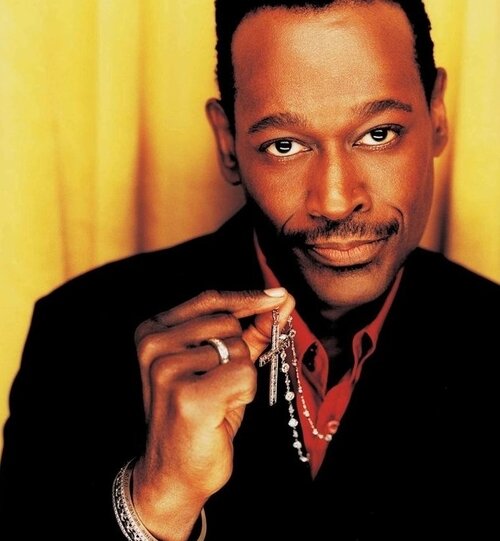
concerns the incredible music of the much-missed Luther Vandross. The American singer, songwriter and record producer was an in-demand background vocalist for several different artists including Todd Rundgren, Judy Collins, Chaka Khan, Bette Midler, Diana Ross, David Bowie, Ben E. King, and Donna Summer. I really love his albums and it is not surprising that people called Vandross one of the greatest singers of his generation! His music will live forever and we will never see anyone with his amazing voice and passion again. To honour the great man, I have recommended four essential albums; an underrated album of his worth investigation; his final album and, to top it off, a book that is a useful companion. Here is a node, salute and a compassionate look at the music of…

ONE of the finest singers ever.

___________

The Four Essential Albums


Never Too Much

Release Date: 12th August, 1981

Label: Epic

Producers: Luther Vandross/Larkin Arnold (exec.)

Standout Tracks: Don’t You Know That?/You Stopped Loving Me/A House Is Not a Home

Buy: https://www.discogs.com/Luther-Vandross-Never-Too-Much/master/130344

Stream: https://open.spotify.com/album/1B4oPgG5ljWTRxsKcTHAYn?si=RwuXm097Suy2WLCUlY_b6g

Review:

The debut solo album from Luther Vandross featured one outstanding song after another. Vandross concocts a bouncy, vibrant flow on his up-tempo numbers and an intimate, emotional connection on his moderate grooves and his lone ballad. The title track stormed up the Billboard R&B charts to number one where it remained for two weeks. The mellow groove of "Don't You Know That," which checked in at number ten, was the second single. "Sugar and Spice" had less of an impact on the charts due to its short stay of six weeks. However, this feverish number gets all the juices flowing as does the unreleased "I've Been Working." Also featured on this set is the sentimental number "You Stopped Loving Me." The song was written by Vandross but initially released by Roberta Flack; both versions stand tall. "A House Is Not a Home" is the only ballad, and an elegant one it is, written by Burt Bacharach and Hal David and originally sung by Dionne Warwick nearly 20 years prior. Vandross orchestrates a contemporary masterpiece with this vintage number. Though it was never an official release by the label, it's a quiet storm jewel. In addition to his many music credits, Vandross was a featured guest vocalist with the progressive band Change. The same vocal savvy and smooth styling that the New York City native exhibited on songs like "Searching" and "Glow of Love" resurface here. This is one of the better R&B albums of the early '80s” – AllMusic

Choice Cut: Never Too Much

Forever, for Always, for Love

Release Date: 21st September, 1982

Label: Epic

Producers: Larkin Arnold (exec.)/Luther Vandross

Standout Tracks: Bad Boy /Having a Party/You’re the Sweetest One/She Loves Me Back

Buy: https://www.discogs.com/Luther-Vandross-Forever-For-Always-For-Love/release/123359

Stream: https://open.spotify.com/album/3oG1ai7tyPHOm2w2ZkjpLi?si=y9dwJSRFTlugrkj3-oKP4w

Review:

The most gifted male pop-soul singer of his generation, Luther Vandross has broken away from the macho chest-beating of the likes of Teddy Pendergrass by crooning instead of roaring at moments of high passion. Forever, for Always, for Love, his second solo album, hits emotional peaks when the singer is choking back his feelings in broken, soft-spoken phrases that transform intense sexuality into pure emotion.

The romantically atmospheric style of Vandross’ self-production perfectly complements his intimate, vulnerable delivery. The title cut, in which Vandross elaborates his passion with quivering redundancy, twirling the phrase “forever, for always, for love” over and over and savoring its nuances, is a gem of soft-focus, pyrotechnical pop singing and production. And “She Loves Me Back” rekindles the flame of Vandross’ first hit, “Never Too Much.”

A connoisseur of pop-soul oldies, Vandross also revives the Temptations’ “Since I Lost My Baby” and Sam Cooke’s “Having a Party” in suave, handsome settings. By comparison, Vandross’ original songs are amorphous mood pieces built more around vocal arrangements than thematic concepts. And the relaxed, hovering atmosphere of Vandross’ productions are likewise more singer- than song-oriented. But by bending the conventions of pop to serve his vocal whims, Vandross has helped to expand and enrich a tradition that had become too locked into formulas” – Rolling Stone

Choice Cut: Since I Lost My Baby

The Night I Fell in Love

Release Date: 8th March, 1985

Label: Epic

Producers: Luther Vandross/Marcus Miller

Standout Tracks: 'Til My Baby Comes Home/It’s Over Now/Wait for Love

Buy: https://www.discogs.com/Luther-Vandross-The-Night-I-Fell-In-Love/master/155534

Stream: https://open.spotify.com/album/20okHMjdnVL1rDtgPo81vY?si=SaXQNvi7RvqY0yT4LvljhQ

Review:

Still, this is an eminently listenable album that skillfully evokes the light, romantic mood Vandross is so fond of. The LP hits its stride with a cover of Brenda Russell’s “If Only for One Night,” where Vandross’ brokenvoiced, pianissimo pleading is set against tinkling piano rills and a whispering synth. Demonstrating his unsurpassed skill with vocal arrangements, Vandross takes the sophisticated samba of Stevie Wonder’s “Creepin'” at the half-whisper of Brazilian pop. The addition of multitracked voices and the rhythmic singing of the female backup singers make a very tasty reading. This record’s remarkable polish is also the result of the sympathetic work of singers and musician-arrangers who have been with Vandross since his first LP. Nat Adderley Jr.’s string, rhythm and synth arrangements are particularly apt on the beautifully orchestrated dreamscape of “Other Side of the World” – Rolling Stone

Choice Cut: If Only for One Night

Luther Vandross

Release Date: 19th June, 2001 (U.S.)

Label: J

Producers: Luther Vandross (exec.)/Clive Davis (exec.)/Nat Adderley, Jr./AllStar/Jon B./Babyface/Eddie Berkeley/Warryn Campbell/Shep Crawford/Eddie F./Keir Gist/Ron "Amen-Ra" Lawrence/Darren Lighty/Marcus Miller/Soulshock/The Underdogs/Junior Vasquez

Standout Tracks: Can Heaven Wait/I’d Rather/Any Day Now

Buy: https://www.discogs.com/Luther-Vandross-Luther-Vandross/master/310325

Stream: https://open.spotify.com/album/2YPEpjWlezCbj9jizr6ZeS?si=JFv7vNc8T2uELsg72u-UKg

Review:

Luther's career has spanned three decades. He made his first breakthrough with "Everybody Rejoice (A Brand New Day)", which he wrote for the hit Broadway musical 'The Wiz' which was later remade for the big screen with an all star cast which included Michael Jackson and Diana Ross. He has had several successful collaborations over the years with the likes of Mariah Carey and Janet Jackson, just to a name a few. Mr Vandross is also a renowned producer, songwriter and arranger and has penned soul classics such as "Power of Love/Love Power" and "Secret Love".

Luther Vandross, his 15th solo album, doesn't disappoint. The opening track "Take You Out" (already a big hit in the clubs), sets the mood as Luther takes you through a journey of love, sorrow and life. "Bring your heart to time" is the stand out ballad of the album, closely followed by the haunting "Heaven can wait". However don't be fooled into thinking that this is just another album of romantic love songs; Luther forges his way into the new millennium with the upbeat, no messing r & b track "How do I tell her". He doesn't forget his roots either; we are taken on a trip down memory lane with "Let's make tonight the night", a track reminiscent of the funky soul of the 80's, the music that really brought him to our attention.

With this album Luther has stepped into the 21st century with style. He's combined his classic soul sound with the new digitised r & b beat, therefore cleverly pleasing his die-hard fans and also paving the way for a new generation of followers. Luther is undisputedly still the king of soul ballads but he is also recognised as a force to be reckoned with on the new r & b scene. He was recently awarded the Music Of Black Origin (MOBO) Lifetime Achievement Award. I think we can safely say that Luther's lifetime achievements are far from over” – BBC

Choice Cut: Take You Out

The Underrated Gem


Never Let Me Go

Release Date: 26th May, 1993 (U.S.)

Labels: Epic/Legacy

Producers: Luther Vandross/Marcus Miller

Standout Tracks: Little Miracles (Happen Every Day)/Can't Be Doin' That Now/Hustle

Buy: https://www.discogs.com/Luther-Vandross-Never-Let-Me-Go/master/253447

Stream: https://open.spotify.com/album/6LKej6X33QEOH1IIL9FWX5?si=05H4vLT2Tam6h82oRUzxvA

Review:

Save for 1985’s ”The Night I Fell in Love,” Luther Vandross’ albums always come this close to perfection — and Never Let Me Go is no exception. As always, his enunciation is eloquent, his phrasing fierce; and the R&B as smooth as glass. This time Luther stumbles where he usually triumphs, on covers: in this case, a three-song medley that opens with the Bee Gees’ ”How Deep Is Your Love” — a cappella. It’s hard to hear the man who turned Dionne Warwick’s ”A House Is Not a Home” into his own heart-wrenching signature tune now drawing material from as cheesy a place as the ”Saturday Night Fever” soundtrack” – Entertainment Weekly

Choice Cut: Heaven Knows

The Final Album


Dance with My Father

Release Date: 10th June, 2003

Label: J

Producers: Luther Vandross (also exec.)/Nat Adderley Jr./Shep Crawford/Marcus Miller

Standout Tracks: Think About You/The Closer I Get to You/Right in the Middle

Buy: https://www.discogs.com/Luther-Vandross-Dance-With-My-Father/master/166303

Stream: https://open.spotify.com/album/43Ci8cugIRwfmkXEyEgfVM?si=XDs-cEm2Q2aNeLWzCXMCNA

Review:

Luther Vandross pours his heart and soul into Dance with My Father's title track, an ambitious kickoff single that misrepresents an album where most highlights are down-tempo. Vandross' own serious ailment at the time of the single's release makes the song's references to absent loved ones even more poignant. In top form at the time of recording, he is able to deliver the song with a voice strong enough to handle the monolithic sentimentality of the lyrics and Richard Marx's swollen production. The six-minute, sensual quiet storm "The Closer I Get to You" is the other high-profile track, a duet with Beyoncé Knowles holding her own with Vandross' perfect phrasing. The rest of the album's winners are the most restrained numbers, often with Marcus Miller or Vandross himself in the producer's chair. The Vandross-helmed "If I Didn't Know Better" is a complex combination of bitterness and vulnerability, with Vandross confronting a two-timing lover. Miller's "She Saw You" borrows heavily from Timbaland's production style, adding a tasteful Wes Montgomery-toned guitar to surround another story of betrayal. Superstar R&B album conventions being what they are, Busta Rhymes' and Foxy Brown's guest spots feel more mandatory than necessary, but Queen Latifah's contribution to "Hit It Again" is welcome and inspired. Tacked onto the end of the album, "They Said You Needed Me" is a silly, light calypso and also the one true dud. Dance with My Father isn't able to maintain the high standards it often achieves, but Vandross' voice is always compelling and the background singers live up to the superior arrangements throughout. With nearly 70 minutes of music on the disc to choose from, more savvy listeners will be able to program their CD players for a more focused and rewarding listen” – AllMusic

Choice Cut: Dance with My Father

The Luther Vandross Book


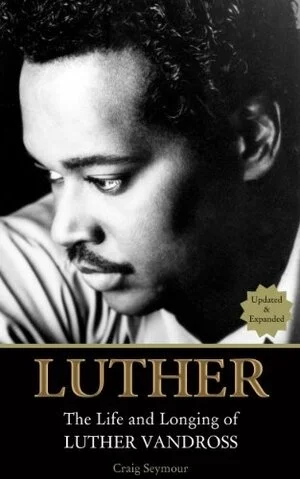
Luther: The Life and Longing of Luther Vandross

Author: Craig Seymour

Publication Date: 20th December, 2017

Publisher: CreateSpace Independent Publishing Platform

Synopsis:

"Seymour's brilliant book is like a great Luther song: elegantly written, effortlessly executed and eloquently delivered." - Michael Eric Dyson "Craig Seymour paints an intimate portrait of the man behind some of the most beautiful love songs of our time...Full of juicy anecdotes, fast-paced writing, and interesting analysis, the book reveals surprising new dimensions of this much-beloved balladeer." - E. Lynn Harris "...a sympathetic look at the most popular soul singer of his generation" - New York Daily News On July 1, 2005, the world lost one of the greatest R&B vocalists of all time, Luther Vandross. He left a legacy of some of the most enduring love songs of our age: “Here and Now,” “Superstar,” “If Only For One Night,” and “A House Is Not A Home.” The notoriously secretive star also left behind many questions such as the real-life inspiration behind all of those yearning love songs. The newly updated and expanded edition of Luther: The Life and Longing of Luther Vandross takes you deep inside the singer’s private world. It chronicles his underdog journey from the projects of New York City’s Lower East Side to the top of the charts, selling more than 20 million albums along the way. The book details Luther’s triumphs, as well as his struggles: his battle with weight; his feuds with Aretha Franklin, Anita Baker, and En Vogue; the 1986 car accident that killed his best friend and nearly destroyed his career; and the rumors about his sexuality that followed him throughout his life. The book offers specific new details about Luther’s love life that will help illuminate the private pain of the man who brought the world so much joy” – Amazon.co.uk

Order: https://www.amazon.co.uk/Luther-Life-Longing-Vandross/dp/1974001490/ref=sr_1_1?crid=2YPUV1UQTKEID&dchild=1&keywords=luther+vandross+book&qid=1606897016&s=books&sprefix=luther+vandross%2Caps%2C160&sr=1-1

FEATURE: Too Good to Be Forgotten: Songs That Are Much More Than a Guilty Pleasure: Vanessa Carlton – A Thousand Miles

FEATURE:


Too Good to Be Forgotten: Songs That Are Much More Than a Guilty Pleasure

Vanessa Carlton – A Thousand Miles

___________

HERE is a song that can divide people…

and I have seen it mentioned on some pages that list guilty pleasure songs. Released on 12th February, 2002, Vanessa Carlton’s A Thousand Miles is a song that was popular at the time but, maybe, some feel has not aged too well! I have a lot of time for the song, and the energy of Carlton’s piano and vocal definitely invests you and means that it stands up to repeated listens. Produced by Curtis Schweitzer and Ron Fair, the song was released as the lead single for Carlton's album, Be Not Nobody (2002). This song was a huge hit for Carlton and, in 2002, you heard it everywhere on the radio! To date, it remains her biggest hit in the United States - and her only single to reach the top-ten of the Billboard Hot 100. I am not surprised A Thousand Miles got to the top-ten in many countries – including the U.K. – and went to the top of the charts in Australia. I always see the year 2002 as a year being dominated by heavy albums and more experimental artists. The likes of The Streets, Queens of the Stone Age, Beck, and Red Hot Chili Peppers brought out great albums, but there was this band of great Pop and slightly lighter music that was providing a good balance – Coldplay released A Rush of Blood to the Head in 2002.

Interestingly, Vanessa Carlton wanted the song to be called Interlude, but she faced resistance from the head of A&R Records, Ron Fair. There must have been some doubts from the record label when it came to releasing A Thousand Miles as a single. In July 2002, Norah Jones released her piano-led song, Don’t Know Why, and that was a huge success and features vulnerable and tender vocals. I think some would have wanted Carlton to release a different single because A Thousand Miles is piano-led and quite vulnerable but, clearly, there was something about this type of music that resonated with fans and critics at the time! The charm and sweetness of the song was felt by critics; there were a lot of positive reviews for A Thousand Miles in 2002 and, whilst it is the standout from her Be Not Nobody album, she did release other terrific songs like Ordinary Day - there was a definite hunger and demand for her music. Because there were quite a few songwriters producing more downbeat and tormented songs, having artists like Carlton provided a great option away from slightly heavier music. Those critics who disliked A Thousand Miles in 2002 and continue to do so remarked how there is little substance to the song; she does not have much to say and it doesn’t have the emotional weight and songwriting sharpness one might look for. I really appreciate A Thousand Miles and, in a music scene of 2002 that was varied and exciting, there was plenty of room for Vanessa Carlton and her terrific sound.

I feel the track sound good now and it is not one of those songs from the time that has aged badly and only captured a particular moment. With Pop music still providing ample misery and anxiety, we do need more music that has a sense of spirit and optimism! One cannot doubt the sincerity and conviction with which Carlton delivers A Thousand Miles, and Be Not Nobody is full of solid songwriting and quality. Some reviewers have noted how there are songs on the album that evoke songwriters like Tori Amos and Fiona Apple, and whilst Carlton did not have the same sort of edge and sexuality as contemporaries like Christina Aguilera, I think she was a refreshing artist who was honest and earnest – and did not feel the need to get raunchier or change her style to adapt to the times/mainstream! For anyone who feels that A Thousand Miles is a bit weak and a guilty pleasure then I would advise them to have a rethink. The song is instantly catchy and it can definitely put you in a better mood! It sounded brilliant and original in 2002 and, even though musicians like Tori Amos and Regina Spektor are a little more compelling and varied when it comes to their music, it is unfair to make comparisons. A Thousand Miles is a quality song - and one that should be played and covered a lot more! Her sixth studio album, Love Is an Art, was released in April and it received some positive reviews. Rather than judge the song or write it off as a guilty pleasure, play A Thousand Miles and…

SURRENDER to its charms.

FEATURE: Globe Alone: Creativity in a Time of Lockdown and Solitude

FEATURE:


Globe Alone

IN THIS PHOTO: Charli XCX wrote her album, how i’m feeling now, whilst in self-isolation

Creativity in a Time of Lockdown and Solitude

___________

THIS is a subject that I don’t think…

 PHOTO CREDIT: @craftedbygc/Unsplash

has been raised much but, as this year has been extraordinary, it is very different for songwriters. Someone mentioned it on Twitter – I don’t recall who -, but the fact that many songwriters have not been able to collaborate in the same way and have been performing less has altered their productivity. We could go into the whole psychology about how the changed mindsets and mental-health of musicians contributes to the way they process and produce music. I guess touring takes up a lot of the year and it can be tough creating music on the road. Maybe some artists have a better time of it but, as many have been stuck at home, they have been writing more. Judging by what has been produced this year in terms of singles and albums, the pandemic has not necessarily led to a moodier and darker sound. In fact, many have reacted to the dislocation and struggle with tracks to elevate and lift the mood! I think this mirror’s people’s listening habits. I have heard from more than one musician how a lack of social interaction and performance has meant that their creativity has increased. Some might say that time alone to reflect would lead to an increase in output but, considering there is still so much stress, uncertainty and darkness around, I would have assumed the opposite! That said, my output has increased a little bit! I think writing can be quite a useful distraction and it focuses all that nervousness and anxiety into something useful.

 PHOTO CREDIT: @dangribbin/Unsplash

Many artists have found inspiration from the way people have come together during lockdown and, even though the lockdown has ended in England, we are still not back to normal. We can sort of get together virtually and, so long as they are socially distanced, artists can get into studios and combine with producers and musicians. I am not suggesting that every musician in the world is alone and they are not able to work in a manner similar to last year. It is obvious that most have had to isolate and have not been in a room of vibing fans from live crowds (and got inspiration that way). One artist who has definitely seen her output up over the past few months is Billie Eilish. Maybe there is something to do with having more time to concentrate on writing but, even in a very scary and solitary time, she has been writing hard – as this article from NME explains:

Billie Eilish has revealed she has 16 new songs in the works with brother and producer Finneas.

In the fourth edition of her annual retrospective interview with Vanity Fair, Eilish, now 18, opened up about identity, using her platform for good, the tumultuous year that’s been 2020, and how she’s been filling the time – working on new music.

“Right now I have 16,” the singer responded when asked how many songs she was currently working on. “We’ve been working. And I love them all.”

Eilish also discussed feeling more confident in her songwriting abilities, advocating for herself and communicating her ideas.

“I think Finneas and I have just seriously really gotten in the groove. We do it so fast,” she explained

“There was a period of time, a month ago or something, we were just texting the label like, ‘Song done, another song done, another song done.’ So, I’m so much better at it. I love it so much more. I actually really do enjoy it now and I do feel like I’m pretty good at it now”.

I am fairly new to the link between solitude and creativity; I had never really thought that there was a relationship. This year, I was expecting new music to be quite downcast and lacking energy. Similarly, I felt artists would shrink away and they would wait until the pandemic passed until they put out new stuff. The opposite seems to be true. Some albums were pushed forward – such as Laura Marling’s, Song for Our Daughter -, whereas the likes of Charli XCX and Paul McCartney have recorded albums in lockdown! In the most challenging time musicians have faced, the music that has been put out is amazing! Not only is the consistency and quality terrific, but there have been surprise releases and albums coming sooner than we anticipated! I do wonder whether the need to find some optimism and purpose at a time when many feel tired and worried has spurred some extra creativity?! I wonder whether next year will see any transition and difference. Will a gradual return to normality mean that creativity levels change? I do know that artists will want to go back to performing as much as possible, but I feel many will try and find more time than normal to write and spend time creating. I guess one positive that has come from the coronavirus and lockdown is many artists have turned to writing and channelling their conflicting emotions into some sensational music! Although collaboration is essential and can be the key to unlocking creativity, solitude can also provoke a lot of  soul-searching and brilliant work. This article explains more and raises some interesting findings:

You can benefit from interacting and brainstorming with others, but awesome creative work can be achieved by shutting out the outside world, whilst you insanely focus on your craft.

Research by Dr. Mihaly Csikszentmihalyi author of Flow (The Psychology of Optimal Experience) found that exceptional creators are more likely to be introverted.

PHOTO CREDIT: @katstokes_/Unsplash 

The best creative minds are flexible, and spend quality time working alone, but they don’t ignore the value of other ideas.

n physics, Albert Einstein, Isaac Newton, and James Clerk Maxwell, three of the greatest creative contributors, worked almost entirely alone.

They profited from other people’s ideas not in direct collaboration, but by reading research papers and books.

In music, Michael Jackson and Roger Waters needed the input of Quincy Jones and David Gilmour, respectively, to produce a great product.

For artist Louise Bourgeois, aloneness was the raw material of art.

She writes: “After the tremendous effort you put in here, solitude, even prolonged solitude, can only be of very great benefit. Your work may well be more arduous than it was in the studio, but it will also be more personal.”

You can lose yourself in your work, when you are consciously in the flow without distraction. Louise further says:

“Solitude, a rest from responsibilities, and peace of mind, will do you more good than the atmosphere of the studio and the conversations which, generally speaking, are a waste of time”.

Although this article from The Atlantic concerns the lesson author Dorthe Nors took from Ingmar Bergman, I think a lot of what was written can directly be applied to musicians. There is something about solitude and being alone that can make a big difference:

And then there’s the fact that he emphasizes “solitude”—that the artistic process unfolds in the lonely hours. That’s when the work happens. You have to control the creative energy that you've got. You have to discipline yourself to fulfill it. And that work only happens alone.

Solitude, I think, heightens artistic receptivity in a way that can be challenging and painful. When you sit there, alone and working, you get thrown back on yourself. Your life and your emotions, what you think and what you feel, are constantly being thrown back on you. And then the “too much humanity” feeling is even stronger: you can't run away from yourself. You can't run away from your emotions and your memory and the material you're working on. Artistic solitude is a decision to turn and face these feelings, to sit with them for long periods of time.
PHOTO CREDIT: @tinamosquito/Unsplash 

It takes the courage to be there. You run into your own pettiness. Your own cowardice. You run into all kinds of ugly sides of yourself. But the things that you've experienced in your life become the writing that you do. And there's no easy way to get to it, if you want to write literary fiction.

And that's what Bergman and other Swedish writers have taught me—to stay in that painful zone, discipline myself through it to get where I want.

I reckon there should be more articles written about solitude and creativity that is tied to music. As I started by saying, there are artists who have written so much more and have seen their creativity levels peak when they have been forced away from others and locked away. Naturally, the opposite is true for many people - and one cannot say that everyone works the same when it comes to solitude and how they approach writing. I was interested in exploring the subject of solitude/being alone and whether that can be beneficial in terms of the music bring produced. It has been a very tough year but, remarkably, the music put out has been among the best we have seen for years! From amazing albums recorded in lockdown such as Charli XCX’s how i’m feeling now to memorable singles, it has been a very busy and interesting year. Let’s hope that artists can tour soon and get into studios in a less restrictive ways. Aside from some online collaborations, I think many artists have had to adapt to a new way of writing. For many who might have written in teams previously, I think some time alone has made them write more independently and personally - and, rather than absorb dark emotions and the fear around the world, many have turned that into something wonderfully revealing and moving. I would not advice enforced and prolonged periods of solitude to see how the music scene changes going forward but, in one of the strangest and hardest years we will ever see, some disconnection and isolation has…

LED to some phenomenal music.

FEATURE: The Lockdown Playlist: Amazing Hidden, Secret or Bonus Tracks

FEATURE:


The Lockdown Playlist

IN THIS PHOTO: Janet Jackson in 1993/PHOTO CREDIT: Shutterstock 

Amazing Hidden, Secret or Bonus Tracks

___________

IT may seem slightly redundant…

 IN THIS PHOTO: Lauryn Hill photographed in New York City in 1998/PHOTO CREDIT: Anthony Barboza/Getty Images

producing a playlist with album hidden tracks as, in the age of streaming, that sort of mystery and surprise has sort of gone – and I can’t recall the last time an artist put a hidden track on an album! That said, I am fascinated by the hidden track. Also included in this playlist are great bonus tracks, songs that may not have appeared on a vinyl tracklisting (but then featured on C.D. versions), and those tracks that did not feature on the original studio album but, due to demand, made it onto re-releases. You may have to excuse tracks where the hidden track is also included – rather than them being separate, they are paired with the final track of that album -, but I think this playlist makes for interesting listening! Here are some cool tracks where artists slipped them after the listed album tracks or, as I said, they appeared on different versions of the same album (if you have trouble accessing any of the tracks in the playlist below, you can access it here or search Spotify for ‘The Lockdown Playlist: Amazing Best Hidden, Secret or Bonus Tracks’). It would have been cool if I included a hidden track of my own composition at the end but that would take needless effort! This is an assortment of tracks for those who were patient when they bought their albums, kept the record spinning and discovered…

qqqq.jpg

 IN THIS PHOTO: Nirvana in 1991

A hidden gem!

FEATURE: Minnie, Moony, Vicious, Vicious, Buddy Holly, Sandy Denny: Kate Bush’s Blow Away (For Bill)

FEATURE:


Minnie, Moony, Vicious, Vicious, Buddy Holly, Sandy Denny

IN THIS PHOTO: Kate Bush during The Tour of Life in 1979/PHOTO CREDIT: Max Browne

Kate Bush’s Blow Away (For Bill)

___________

I have covered a very special Kate Bush song…

before when talking about Never for Ever (the album it is taken from). The one I am referring to is Blow Away – or, as it should be known, Blow Away (For Bill). It is a track with a sad background. The Kate Bush Encyclopaedia is on hand to explain who the exceptional Bill Duffield was:

Lighting director for the Tour Of Life. On 2 April 1979, after a show at the Poole Arts Centre in Dorset, the equipment had been loaded for the journey to the next date, and Bill Duffield was having a last look around the stage area to make sure nothing had been left behind. Someone had left an open panel inhe flooring. As Bill crossed the stage he tripped and fell 17 feet onto a concrete floor under the stage. He was rushed to the hospital but tragically died a week later.

It was just prior to the official start of the Tour Of Life. A decision had to be made whether or not the tour would continue. The general consensus was that Bill would have wanted the show to go on. Less than a month later, on 12 May 1979, in the midst of the final days of the tour, Kate performed a memorial concert for Bill Duffield at the Hammersmith Odeon. Also appearing were special guests Peter Gabriel and Steve Harley, who had each worked with Duffield in the past”.

The fact that Bush, in some way, dedicated a song to a member of her tour crew is really touching and wonderful! There are other people mentioned in the song – as I shall explore and explain soon -, but Blow Away (For Bill) is the third track on Never for Ever, and it arrives in the middle of a run of three very beautiful songs – Delius (or Delius (Song of Summer), and All We Ever Look For are either side. I have seen a few sites and magazines rank Blow Away (For Bill) as one of Kate Bush’s best songs – MOJO listed it as their forty-first favourite songs (out of fifty) of hers.

There is the painful background of the song’s title and the death of someone who meant a lot to Bush. When it comes to exploring the various figures mentioned in Blow Away (For Bill), we get to ‘meet’ various departed musicians. Another article in Kate Bush Encyclopaedia provides us with times when Bush discussed the song:

'Blow Away' is a comfort for the fear of dying and for those of us who believe that music is perhaps an exception to the 'Never For Ever' rule. (Kate Bush Club newsletter, September 1980)

So there's comfort for the guy in my band, as when he dies, he'll go "Hi, Jimi!" It's very tongue-in-cheek, but it's a great thought that if a musician dies, his soul will join all the other musicians and a poet will join all the Dylan Thomases and all that.

None of those people [who have had near-death experiences] are frightened by death anymore. It's almost something they're looking forward to. All of us have such a deep fear of death. It's the ultimate unknown, at the same time it's our ultimate purpose. That's what we're here for. So I thought this thing about the death-fear. I like to think I'm coming to terms with it, and other people are too. The song was really written after someone very special died.

Although the song had been formulating before and had to be written as a comfort to those people who are afraid of dying, there was also this idea of the music, energies in us that aren't physical: art, the love in people. It can't die, because where does it go? It seems really that music could carry on in radio form, radio waves... There are people who swear they can pick up symphonies from Chopin, Schubert. We're really transient, everything to do with us is transient, except for these non-physical things that we don't even control... (Kris Needs, 'Lassie'. Zigzag (UK), November 1985)”.

 IN THIS PHOTO: Kate Bush during The Tour of Life in 1979/PHOTO CREDIT: Max Browne

I really like Blow Away (For Bill), but some critics have singled it out as being quite weak and throwaway. In the sense that it reveals very little about Bush and it is a song that tells of departed famous musicians, it is not as memorable and important as, say, Don McLean’s American Pie – one where an iconic and departed musician, Buddy Holly, is very much at the heart of it. I love the ethereal nature of Blow Away (For Bill) and how gorgeous Bush’s voice is! She layers her vocals and we get these nice rises and echoes that make the song seem ghostly and far-away. I think the track is brilliantly arranged so that we get this spectral sense; Blow Away (For Bill) is also very grounded and affecting. It is a shame the track could not have been released as a single but, as I often say, there had to be limits and Bush might not have wanted too many tracks taken from Never for Ever – even though only three singles were released from the album. Even though Blow Away (For Bill) is not one of my favourite Bush songs, I think it is one of my favourite vocals from her. I also really love the fact Bill Duffield lives on through the song and, like all Bush songs, it is interesting and has something in it that few other artists would have thought of. I want to bring in an interesting article about the song that discussed Bush newfound confidence (on Never for Ever) and her approach to mortality – and how Blow Away (For Bill) deals with the afterlife:

Bush’s newfound confidence as a songwriter was accompanied by her newfound lack of certainty about the world. The songs of Never for Ever ask bigger questions than her first two albums do. “Blow Away” is one of Bush’s many songs to deal with death, and issues of consciousness. It’s an ethereal dirge, sung “For Bill,” referring to Bush’s engineer Bill Duffield, who was accidentally killed on the first night of her tour in an especially grim bout of party-pooping. It’s rare for Bush to sing about her personal life and friends, (we’re still far away from “Moments of Pleasure”) but there’s a whole song on her tertiary LP dedicated to an engineer she knew for a probably rather short period of time.

While we’re dealing with mortality, we have to deal with the jaw-dropping fact that Bush quotes Othello in this song. “Put out the light/then put out the light” is her Shakespeare line of choice. In the context of the song, the quote is the opener for the meandering third verse. The lines that follow never quite cohere into a strong verse (“dust to dust/blow to blow”), but it’s worth thinking about why Bush copped this Othello quote. The line comes from Othello’s ending, in which Othello is preparing to murder his wife Desdemona in her sleep, falsely believing her to be an adultress. The line is a Shakespearean double-entendre, referring both to snuffing out Desdemona’s life and to her pale skin (the race politics in Othello are among the most fascinating and analyzed in all of literature). The actual meaning of this line is, of course, lost when deprived on context. Yet it’s an interesting line for Bush to lean on.

So what does “Blow Away” think of the afterlife? Well, it clearly thinks there is one. The dead have souls in Bush’s music. Her universe is populated by spectres — “The Kick Inside” and “Hammer Horror” demonstrate that. “Blow Away” fills their slot on Never for Ever — the song for those beyond the grave. Yet “Blow Away” is more optimistic about their chances of a happy eternity. Consciousness may thrive after death, but Bush has finally liberated her deceased characters of their mortal woes. Part of this is a matter of taste: everyone knows Keith Moon is in hell, but in 1980 it wouldn’t have been politic to say it in a song. Yes, there’s reverence for these musicians in this song, but the nostalgia is alleviated by the thoughtful weirdness of the song. It’s not the most radical song on the album, but it’s assuring that Bush’s optimism for the power of artistic imagination extends beyond the grave”.

I have a lot of time for Blow Away (For Bill) and I wanted to spotlight it because it is so interesting and one of those overlooked and hidden gems on Never for Ever. The death of Bill Duffield clearly affected Kate Bush, and she honoured his memory in more than one way – she put on a benefit concert in 1979. Check out a magnificent song that many might not even be aware of. It is a stunning work from one of Kate Bush’s…

MOST interesting and under-discussed albums.

FEATURE: Second Spin: Arcade Fire – Everything Now

FEATURE:


Second Spin

Arcade Fire – Everything Now

___________

I have included Arcade Fire on my blog…

when it comes to celebrating their classic work but, to me, their last two albums have been underrated! Everything Now was released in 2017, and it didn’t quite get the great reviews I thought that it would. That being said, the same can be noted of the album before that: the incredible Reflektor from 2013. Maybe Everything Now is not up to the Canadian band’s usual standard of excellence but, to me, it is a great album! To be honest, it has received some praise, but there are a few reviews that have marked it down and compared it negatively to Arcade Fire works of genius like Funeral (2004), and The Suburbs (2010). The problem was that two big and five-star reviews came in very early for Everything Now. NME, and The Independent both gave it top marks, and I wonder whether they were judging that on the basis of a couple of songs and whether they really listened to the album. There is something inherently flawed about the way albums are reviewed: we get them new and have to assess them after a listen or two; certain albums grow in strength the more you hear them and with the passing of time. I would not say Everything Now is a five-star album but, as many people gave it middling grades, I feel it is worth more than that! I think the songs, Everything Now, and Put Your Money on Me, are two of the best songs the band have ever recorded – the latter has a nice ABBA feel to it!

Everything Now is quite a tight album, in the sense that it is just over forty-seven minutes long and no track last that long – We Don’t Deserve Love is nearly six-and-a-half minutes but it is one of the weaker numbers. Overall, Everything Now has a load of gems and, despite a couple of weaker tracks, it is a satisfying album where anyone can get something from it! The tracks are nicely arranged so that each half of the album is quite strong and, on Everything Now (Continued), we get a solid finish! I think some were put off by a couple of especially weak numbers. To me, Peter Pan, and Chemistry should have been left off of the album; they are not particularly interesting and, although they are fairly short tracks, they do sap some of the momentum of the album! They are tracks five and six respectively so they are out of the way with soon enough. Apart from some missteps, there is a lot to love about Everything Now. From the exert of The Coffee Cola Song by Francis Bebey on the title song, through to the addictive chorus of Put Your Money on Me, to the nuances of Signs of Life, and Creature Comfort, there is more than enough to recommend about Arcade Fire’s fifth studio album. Maybe critics were comparing it too readily with their earlier work or were expecting something that was like Reflektor – although Everything Now has a great title track, nothing can match the majesty of the David Bowie-featuring Reflektor!

I am going to bring in a couple of reviews that sort of show differing opinions. The first is a five-star review from NME. This is what they had to say about Everything Now:

Arcade Fire have spent a career making a virtue of their own pomposity. Since 2004 debut ‘Funeral’, they’ve been unafraid to wrestle with big ideas that most bands wouldn’t touch with a barge pole. If it sometimes appears as though they believe society’s ills can be solved, or at least diagnosed, through the medium of grandiose art-rock records, you nonetheless have to admire their conviction that music ought to represent something more than mere ‘content’. Thankfully, after the ambitious-but-uneven ‘Reflektor’ (2013), ‘Everything Now’ marks an emphatic return to those lofty standards.

“Every song that I’ve ever heard is playing at the same time, it’s absurd,” declares starry-eyed frontman Win Butler on the album’s title-track, which is certainly one way to describe its mash-up of ‘Dancing Queen’ and Talking Heads’ ‘Road to Nowhere’. Uplifting, incisive and sublime would be another.

On the flipside, the empty hedonism of ‘Signs of Life’ and the self-loathing, suicidal youths of ‘Creature Comfort’ – one of whom, Butler notes, “Came so close/ Filled up the bathtub and put on our first record,” – serve as a reminder of the cruel irony that in this age of total connectivity, we’ve somehow contrived to make ourselves more isolated and alone than ever. ‘Everything Now’ might occasionally marvel at how far we’ve come, but it’s tempered by notes of dread at where we’re going.

Aptly enough for a record about information overload, it’s also had the veritable kitchen sink thrown at it, employing myriad styles, multiple big-name producers and the sort of ingenious, overblown marketing campaign that’s become the norm for this band. On the two-hander of ‘Infinite Content’ and ‘Infinite_Content’, the same song is presented in contrasting styles – one as a knowing postmodern thrash, the other as a languid acoustic ramble – but ultimately it’s the album’s sense of humanity, not its innate clever-cleverness, that elevates it to something special. “If you can’t see the forest for the trees, just burn it all down,” urges Butler as the mournful synth-pop of closing track ‘We Don’t Deserve Love’ builds to its climax, no longer sermonising from his pulpit, but howling in empathy from the ether”.

Contrast this with a review from AllMusic who, whilst offering some praise, are a bit more constructive and measured in their review:

The lyrics found on "Creature Comfort" are another good summation of this issue: in an effort to say something meaningful, Arcade Fire simply sound like they're trying too hard. A handful of standouts will no doubt stand the test of time, but unfortunately not enough for a cohesive and fulfilling statement. Thematic flubs aside, the production and sonic directions on Everything Now sound great. The band recruited an enviable team -- including Daft Punk's Thomas Bangalter, Portishead's Geoff Barrow, Pulp's Steve Mackey, and longtime collaborator Markus Dravs -- that infuses a groove and danceability that Arcade Fire first touched upon on Reflektor.

On the bright title track, the dramatically funky "Signs of Life," and the glittering "Electric Blue," Everything Now fully embraces the disco spirit. Elsewhere, the band trades the sparkle of the disco ball for visceral throb, like on the urgent "Creature Comfort," the strutting "Good God Damn," and the hypnotizing "Put Your Money on Me," which sounds like Röyksopp remixing LCD Soundsystem. Peppering Everything Now are some potentially divisive experiments -- like the heavy dub of "Peter Pan" and the New Orleans big-band jam of "Chemistry" -- that don't really fit in with the rest of the album. They're interesting experiments outside the band's comfort zone, but distract from the album's flow. Overall, there is just enough on Everything Now to appease fans and attract newcomers with accessible singles, but as an Arcade Fire record, it's unfortunately too inconsistent and ultimately hollow. Arcade Fire sought to make a Big Statement but instead produced one of their least impactful works”.

I would lean more to NME’s side of the fence when it comes to Everything Now. I think the standout tracks outweigh the weaker moments and, as I said, there are a few lesser moments but there is more good and richness than poor tracks. I believe Arcade Fire are working on new material, so we might get a sixth studio album very soon! That would be good news but, if we are looking at the great work of the band, we have to commend Everything Now. Whilst now as emphatic and timeless as one of their earliest albums, it is an album that warrants…

A second spin.

FEATURE: A Festive Tradition: Looking Ahead to the Top of the Pops Christmas and New Year Specials

FEATURE:


A Festive Tradition

IN THIS PHOTO: Clara Amfo and Fearne Cotton will host two one-hour Top of the Pops specials (on Christmas Day and New Year’s Eve)/PHOTO CREDIT: BBC 

Looking Ahead to the Top of the Pops Christmas and New Year Specials

___________

THE Christmas T.V. line-up on BBC One…

ssaa.jpg

 IN THIS PHOTO: BBC Sound of 2020 winner, Celeste

looks a bit patchy this year. There is a combination of animated films, re-runs and EastEnders! Maybe Channel 4 or other stations will play more appealing Christmas things like The Snowman but, in the schedule, we have Top of the Pops. The long-running T.V. institution came to an end in 2006 but, happily, there is a Christmas special and one for New Year’s Eve. This year’s shows looks pretty decent:

TV’s biggest pop party will return to BBC One screens this festive period with BBC Radio 1’s Clara Amfo and TV and radio presenter Fearne Cotton reprising their roles as hosts. Recorded at Riverside Studios in Hammersmith, London, the one-hour specials will feature new exclusive performances from some of 2020’s most exciting pop stars.

The star-studded Christmas Special will feature brand new performances from (in alphabetical order):

AJ Tracey x Aitch

Becky Hill

Celeste

Clean Bandit & Mabel

Ella Henderson

Jamie Cullum

Joel Corry & MNEK

KSI ft. Craig David & Digital Farm Animals

Fearne and Clara will return to the nation’s TV screens for the New Year Special, taking a look back at the year in music to bring the year to a close in style. The performers are (in alphabetical order):

Alfie Templeman

Arlo Parks

Becky Hill

Nathan Dawe ft. KSI & Ella Henderson

Sigala & James Arthur

Wes Nelson ft. Hardy Caprio

YUNGBLUD

wqqq.jpg

IN THIS PHOTO: Alfie Templeman 

As well as brand new performances, both shows will also feature live highlights from the past twelve months. Viewers can re-live performances of some of the biggest songs of the year from the likes of Miley Cyrus, Harry Styles, Lewis Capaldi and Dua Lipa.

Mabel says: “So excited to perform at this year's Top of the Pops. It's always an honour performing on such a legendary show! Me and Clean Bandit are gonna give you a special performance to round off your 2020!''

Celeste says: "I’m ecstatic to be invited back on to Top of the Pops for the second year in a row.  It’s been such a crazy year so to be ending in this way is such an honour.”

Clean Bandit say: ““We’re excited to be performing alongside some of our favourite artists and collaborators this year - TOTP is a Christmas TV tradition!”

YUNGBLUD says: “Some of the greatest artists in history have played Top of the Pops and I've watched and been inspired by those performances. After a year of being trapped inside and bottling my ADHD up, it’s all gonna come out in this performance. We’re gonna burn the house down...bring a fire extinguisher.”

Clara Amfo says: “I’m delighted to be part of Top of the Pops this year. As we know, 2020 has been a challenge and as always music is a constant balm for us! I’m really looking forward  to celebrating the artists with Fearne and everyone watching at home.”

 Fearne Cotton says: “I’m delighted to be returning to host Top of the Pops with Clara again this year. It’s always a brilliant way to round off the year in music, and this year more than ever we’re all in need of a bit of sparkle! There have been some brilliant musical moments in 2020 and we can’t wait to celebrate some of the biggest tracks and artists with everyone at home.”

Top Of The Pops Christmas Special will be on BBC One on Friday 25 December at 11.55am and Top Of The Pops New Year Special will be on BBC One Friday 31 December at 4.20pm.

Top Of The Pops Christmas and New Year Specials were commissioned for BBC One by Katie Taylor, Commissioning Editor for Entertainment. Alison Howe is the Executive Producer and Caroline Cullen is the Producer for BBC Studios Entertainment and Music”.

It is a shame that Top of the Pops is not on anymore because, in its heyday, it was essential viewing - and we were introduced to so many varied artists! It seems strange at a time when we have more artists than ever before that there are fewer music T.V. shows. It also seems odd that there is no dedicated music show to upcoming artists because, as you can see from the line-up above, there are some of 2020’s hottest artists. I wonder whether they will do some Christmas classics or perform their own material; maybe we will get something a bit different but, whatever happens, it will be a treat for Christmas. I will also be curious to see how the New Year’s Eve one differs and whether there is a similar vibe.

 IN THIS PHOTO: Mabel

I guess the question about whether there will be anyone in the audience stands. I am not certain whether the show has already been taped, but Top of the Pops’ real charm comes from the audience and the enthusiasm they have for the songs! Maybe there will be a limited studio audience. It will be interesting to see how things are staged. It makes me nostalgic for the older days when Top of the Pops was running. Maybe the Christmas special will compel T.V. bosses to introduce a new music show as, in 2020, it is alarming that there really isn’t anything out there for artists to showcase their music away from radio! Make sure you tune in on Christmas Day and New Year’s Eve and get a warm blast from a legendary T.V. show. It has been a bleak year and one with very little light but, as good news is starting to come through, there will be something extra-special about watching Top of the Pops. Many of the artists who will feature I have never seen perform or heard much of their music; many others will discover some great artists. The Top of the Pops gap is quite a big one but, with two new shows lined up, we will tune in and…

sssaa.jpg

 IN THIS PHOTO: Jamie Cullum

WELCOME it back!

FEATURE: The Lockdown Playlist: Spotify’s 2020 Wrapped

FEATURE:


The Lockdown Playlist

IN THIS PHOTO: The Weeknd’s album, After Hours, is the third most-streamed album on Spotify this year

Spotify’s 2020 Wrapped

___________

ALTHOUGH most of us are not...

 IN THIS PHOTO: Halsey is the fifth most-streamed female artist on Spotify in 2020/PHOTO CREDIT: Jake Michaels for The New York Times

locked down or self-isolating, I am going to keep these playlists going until next year! I have enjoyed exploring different subjects and, now, I am reacting to an article that was published earlier in the week. This relates to Spotify’s annual ‘Wrapped’ feature where they present the most-streamed artists, albums and songs. Every year is interesting but, in a very odd time, the results are especially illuminating and curious. Here is some more information:

Most Streamed Artists Globally

Puerto Rican rapper Bad Bunny claims the top spot with more than 8.3 billion streams this year from fans around the globe. His album YHLQMDLG—released in late February and featuring collaborations with SechAnuel AA, and Daddy Yankee—is the number one streamed album as well. Following Bad Bunny is Drake and Latin star J Balvin. The fourth most-streamed artist is the late rapper Juice WRLD, followed by The Weeknd.

Billie Eilish continues her reign as Spotify’s most-streamed female artist for the second year in a row, followed by Taylor Swift and Ariana Grande in spots two and three. Coming in as the fourth and fifth most-streamed female artists are Dua Lipa and Halsey.

IMAGE CREDIT: Spotify 

Most Streamed Songs Globally

The most-streamed song of the year is The Weeknd’s “Blinding Lights,” which held out strong after being the second most-streamed song of the summer with almost 1.6 billion streams this year. In the second and third spots, respectively, are Australian ex-busker Tones And I’s viral 2019 earworm “Dance Monkey” and Roddy Ricch’s “The Box.” The fourth most-streamed song is the catchy “Roses – Imanbek Remix” by Imanbek and SAINt JHN, followed by “Don’t Start Now” by Dua Lipa.

Most Streamed Albums Globally

The most-streamed album of 2020 is Bad Bunny’s YHLQMDLG with over 3.3 billion streams, followed by The Weeknd’s After Hours and Post Malone’s Hollywood’s Bleeding. Rounding out the list of most-streamed albums you’ll find Harry Styles’ Fine Line and Dua Lipa’s Future Nostalgia”.

Because Spotify’s interesting and revealed Wrapped has been unveiled this year, this Lockdown Playlist takes songs from artists and albums mentioned. It has been fun compiling it and, like many people, it has led me to some…

 IN THIS PHOTO: Bad Bunny is the most-streamed artist globally according to Spotify’s Wrapped survery/PHOTO CREDIT: STILLZ

NEW discoveries.

FEATURE: After the Snow Has Melted… Kate Bush and the Calming Influence of Her Music

FEATURE:


After the Snow Has Melted…

IN THIS PHOTO: Kate Bush in a photo taken during the promotion of 50 Words for Snow in 2011/PHOTO CREDIT: Trevor Leighton 

Kate Bush and the Calming Influence of Her Music

___________

THIS is quite a general piece…

 IN THIS PHOTO: Kate Bush in 1979

because, having revisited Kate Bush’s 50 Words for Snow on its ninth anniversary a couple of weeks back, I have been thinking about how that album has a stillness that helps to calm and soothe. My upcoming features will be more specific in terms of albums and songs but, as we approach the end of the year and it has been such a tough one, many of us have been embracing music that makes us feel better and safer. I am not sure what 2021 holds in terms of the Kate Bush universe, but I feel we might get an album and, at the very least, there will be plenty of people discussing her music - and, like this year, maybe there will be one or two magazines dedicated to her work! I have said it before, but I do love how there has been a flurry of activity regarding Bush’s music. Even though her last studio album was nine years ago, so many people have expressed their love of her music; why she is so influential today and how her music has changed modern music. I love Bush’s more experimental albums like The Dreaming (1982), and Hounds of Love (1985) - and the more spirited and impassioned songs on those albums are incredible. What I really love about Bush – and why I was keen to do some features on 50 Words for Snow – is when she produces compositions, scenes and vocals that knock you over with its beauty and soothing nature!

I am going to end with a Kate Bush playlist – After the Snow Has Melted: Warm and Soothing – that will provide some beauty and comfort if you need it right now! 50 Words for Snow has so much depth and fascination throughout, but I think the album is one where you can close your eyes and get lost in. The album is not set at Christmas, but there is something timely about it in the way it makes you feel and how it moves you! Maybe it is the fact that there are few instruments and there is an emphasis on the piano and percussion. Bush has multiple sides and facets, but I especially love how her music can seduce and buckle the knees. Perhaps that is why The Kick Inside (1978) is my favourite album. There are faster and more energetic songs together with eye-opening lyrics, but I associate that album with incredible beauty and grace – as I have remarked before. I recently covered Moving (the opening track of the album) and discussed its stunning beauty; there are plenty of other songs on The Kick Inside that cast you into this dream world and draw you into a wonderful state of mind. The Man with the Child in His Eyes is a passionate and accomplished song, but it is one where you are stunned by its stillness and intimacy. I have been feeling especially anxious and stressed at the moment and I know there are particular Kate Bush songs that can make me feel lighter and more relaxed.

Feel It, and L'Amour Looks Something Like You are another couple of songs from The Kick Inside that gets into the heart and gives me some strength. I don’t want to rigidly define Bush as an artist who is just about summoning up beauty and gentleness because, if you know her work, you can hear so many different styles, sounds and sides. Every album of hers showcases that but, when I consider the best songs from Lionheart (!978), and Never for Ever (1980), they are the ones that transport me somewhere utterly beguiling and heavenly! Maybe I will do a feature about Bush’s voice and why it provokes different emotions. Symphony in Blue, In the Warm Room, and Kashka from Baghdad are sublime and spine-tingling; you listen to these songs and not only imagine what Bush is singing and paint these images, but the way she can evoke such power and passion whilst not exploding and letting her voice fly is amazing! Even when Bush was using technology more and had greater production direction from 1980, I think that she was aware that one of her greatest strengths is these ethereal and angelic performances. Delius (Song of Summer) is one of her most gorgeous tracks, whilst Blow Away (for Bill), All We Ever Look For, The Infant Kiss, and Night Scented Stock are incredibly atmospheric and beautiful – and they fit nicely with harder-edged and bolder songs like Babooshka, The Wedding List, and Breathing.

I think many look at The Dreaming and find it is quite a raw and edgy album. There is definitely a lot of strange sounds and voices but, as I keep saying, there are contrasts and blends that mean Bush always retains the magical and tender whilst deploying something odder and darker! This album is a classic case of these polemics. As much as I admire the more layered and arresting songs, it is those that ease the nerves and melt you that have been coming to mind more lately. From the verses of Houdini to the emotional All the Love, and the magnificent Night of the Swallow, these are songs that I have been returning to in order to provide a comfort blanket. Even on an album like Hounds of Love, where there is a lot of drama, energy and wildness, I love the way And Dream of Sheep makes me feel and the emotions that build up. It is one of those songs that moves me greatly but, at the same time, I can feel a warmth and protection that makes me less fearful! Hello Earth, and The Morning Fog (the last two tracks on The Ninth Wave/Hounds of Love) build a bit more - but I love when Bush’s voice is softer and, in a way, she is enveloping us in this hug! Even though The Sensual World contains fewer songs that have the same stillness and calm as her previous albums, This Woman’s Work – the final song on the album – is another one that can calm me.

That may seem strange when we consider the lyrics and the fact the song is quite heavy, but it is the way Bush sings and the emotion in her voice that, perhaps, makes me feel a sense of empathy and compassion. And So Is Love, and Moments of Pleasure from The Red Shoes are these incredible songs where there is something in the tracks that can ease stresses and make you feel warmer inside. I think the two albums that have been of particular comfort lately are Aerial (2005), and 50 Words for Snow. Maybe these albums are especially beautiful and still because of Bush’s changing domestic life and her priority of family over promotion, but there are very stirring moments and wonderfully rich and filmic compositions that have both stirred and settled me when I have required that. This is not to say that Bush’s music is a panacea that can eradicate all the stresses and fears we have, but there are these artists who have a gift when it comes to making us feel better and more positive. Listen to How to Be Invisible, and A Coral Room from the first disc of Aerial. These are songs that I can play and dive into. There are some sadder lines in places, but it is the way Bush sings and the feel of these songs that can ease burdens and anxiety. This is especially true of the second disc of the album, A Sky of Honey.

 The entire suite of songs seems designed to cool the brow and warm the soul. There is so much beauty in the composition and so much love and tenderness in Bush’s voice that means, especially right now, Aerial seems like a real tonic and remedy against stress. There are songs not on studio albums that I would recommend to people if they want something calming and warm. Whilst I cannot include the track, Warm and Soothing, in the Spotify playlist (as it is not available on the platform for some reason) I will include it at the end separately. That sort of takes us back to 50 Words for Snow and album that seems feather-light but contains so much life and weight. Among some of the billowier scenes and compositions are these delicate touches and a blend of spoken passages and gorgeously sung tracks. Almost the entirety of 50 Words for Snow has this ability to make the listener feel, ironically, warmer and more positive. I have done a pretty quick sweep across Bush’s catalogue, but not too many people have spoken exclusively about the way her songs can envelope one in soft layers at times as dark. From her debut in 1978 through to her most recent album, I have been revisiting Kate Bush’s music and finding it so useful and reassuring when it comes to moving forward! I guess a lot of artists have the power to cocoon people whilst, at the same time, giving them a lift and unveil all these stunning colours and beautiful fragments of light. To me, few do it as well and consistently…

AS Kate Bush.

FEATURE: The December Playlist: Vol. 1: A Loser with Some Major Shortcummings

FEATURE:


The December Playlist

IN THIS PHOTO: Rico Nasty

Vol. 1: A Loser with Some Major Shortcummings

__________

JUST over two weeks before Christmas Day…

 IN THIS PHOTO: Sleaford Mods

and the pace and quality of 2020’s music is not dropping a step! Not only are there new songs/videos from Rico Nasty (ft. Trippie Red), Sleaford Mods, Britney Spears, IDLES, The Staves, The Anchoress, Goat Girl, and Greentea Peng; there are also some epic slices from shame, Burial + Four Tet + Thom Yorke, Celeste, YUNGBLUD, The White Stripes, Rina Sawayama, Phoebe Green and a whole host of other artists! It is a packed and exciting playlist that should give everyone some energy, excitement, and influence. If you do need some warmth on a chilly and oppressive day then I think there is some great music in here that should put you in a better mood! Although 2020 is not done, there are still jewels and gems being offered up by musicians. It will be interesting to think what might come as we head into the last weeks of…

 IN THIS PHOTO: Rina Sawayama

A challenging year.

ALL PHOTOS/IMAGES (unless credited otherwise): Artists

__________

 PHOTO CREDIT: Katie McCurdy

Rico Nasty (ft. Trippie Red)Loser

Sleaford Mods - Shortcummings

Britney Spears Swimming in the Stars

fgggg.jpg

PHOTO CREDIT: Tom Ham

IDLES - KILL THEM WITH KINDNESS

The Staves - Satisfied

PHOTO CREDIT: Roberto Foddai

The Anchoress Unravel

cccc.jpg

IN THIS PHOTO: Thom Yorke/PHOTO CREDIT: Alex Lake

Burial + Four Tet + Thom YorkeHer Revolution / His Rope

The White Stripes - Let’s Shake Hands

PHOTO CREDIT: Holly Whitaker

Goat Girl - The Crack

Greentea Peng Spells

PHOTO CREDIT: Pooneh Ghana

shame - Snow Day

Arctic Monkeys - Arabella (Live at the Royal Albert Hall)

Celeste I’m Here

Phoebe Green Grit

YUNGBLUD - ice cream man

Phoebe Bridger - Savior Complex (Live for The Tonight Show Starring Jimmy Fallon)

Rina Sawayama We Out Here

Jenny Lewis & Serengeti - Unblu

kkk.jpg

The Hold Steady - Family Farm

LAUREL Appetite

Sydney Sprague - staircase failure

ccc.jpg

Gorgon City Trapdoor

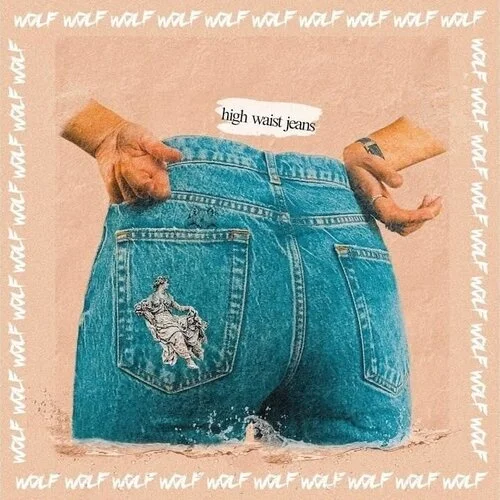
Wolf High Waist Jeans

Melanie CInto You

Ella Henderson, AJ Mitchell Blame It on the Mistletoe

jjjj.jpg

BlossomsPure Pop

gggg.jpg

Alex Amor Motion

Olivia Dean What Am I Gonna Do on Sundays?

Shawn MendesTeach Me How to Love

PHOTO CREDIT: Daniel Regan

Maggie Lindemann - Loser

Amy Macdonald Fire

Amy Shark All the Lies About Me

Mondegreen The Avenue

FLETCHER Last Laugh (From the Promising Young Woman Soundtrack)

grandson In Over My Head

kkk.jpg

Sea Girls This Is the End

ggggg.jpg

PHOTO CREDIT: Galin Foley

Esther RoseKeeps Me Running

Sofia Valdes - The Sweet Escape

Marie Noreger - Eager to Feel

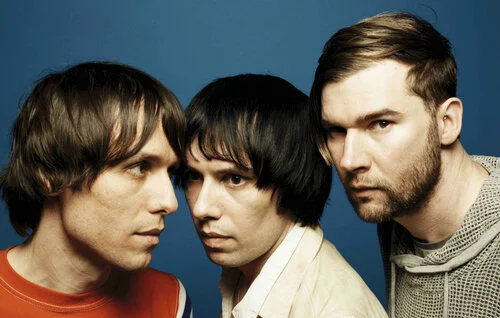
The CribsChristmas (All Year Long)

Midnight Sister - Foxes

FEATURE: Pay for What You Get: Making Sure We Reassess Musicians and Their Value in 2021

FEATURE:


Pay for What You Get

PHOTO CREDIT: @kaelbloom/Unsplash 

Making Sure We Reassess Musicians and Their Value in 2021

___________

I am sort of going to do a…

ttt.jpg

 IN THIS PHOTO: A BBC spokesperson said the decision to drop Amaraterra (pictured) from the programme was made for editorial reasons, rather than them asking to be paid to perform

continuation of a recent feature, where I discussed Spotify and the fact that streaming rates are still very low. I will introduce an article that recently focused on that but, generally, I think that we do not appreciate how little artists are paid. There is a difference between the problems on streaming services and musicians and performance. It has been a very strained and quiet year for many musicians. I have seen on social media so many suffering because gigs have been cancelled and, of course, that means a main stream of revenue has been taken away. Streamed gigs and online events have helped recoup some money and, together with album sales, it has not been a total disaster for some. Many of us get music for free on streaming sites and we do not buy merchandise and records much so, when we think of musicians, do we consider the importance of performances and how important it is that we support them that way – and that they are paid at the very least? This feature has been provoked by news that musicians who were due to play a Strictly Come Dancing spin-off, It Takes Two, were taken off/dropped because they asked for money - though the BBC cites another reason for their cancellation. This article from The Guardian explains more:

A group of professional musicians have said they were dropped by Strictly Come Dancing after they asked to be paid for performing on the programme’s spinoff show.

Amaraterra, a band who perform traditional southern Italian music, said they were excited when they were approached by producers who were enthusiastic about them appearing on the BBC companion programme It Takes Two.

IMAGE CREDIT: BBC 

However, when they asked for a fee to compensate them for a day’s work the BBC producers told them, in emails seen by the Guardian: “We just don’t have money in the budget to pay for contributors.” Instead, they were offered a free lunch and it was suggested that they would receive a “decent amount of screen time, as well as a mention of your group name”, which would help boost the band’s following on Instagram and Facebook.

“Hopefully, when things return back to normal, and the arts is final[ly] restored, taking part in this [recording] for such a great show will be of benefit to you,” they were told by the show’s producer, who wanted them to perform with the professional dancers Nadiya Bychkova and Graziano Di Prima.

Band member Cassandre Balosso-Bardin said the band responded by asking the BBC to honour the relatively low rates agreed with the Musicians’ Union for session work, in addition to to the hours of practice required. They then did not hear back for several days, only to be told the show had dropped them”.

That is, of course, a T.V. show we are talking about - and it is not indicative of the way people treat professional musicians in general It does seem that some feel that exposure and opportunity is enough for musicians and, for that reason, why would they want to be paid?! Even if a band or musicians are in the background and contributing a small amount, that does not mean they have no value and should do things for free!

edd.jpg

 PHOTO CREDIT: @gwundrig/Unsplash

I can only imagine how galling it is for musicians do look forward to performing and then be told they can’t. In a wider sense, I have been considering musicians and whether we appreciate them as much as we should. From quartets performing at, say, a street event or somewhere like Covent Garden to larger concert gigs, these players add so much to our culture! The same is true of more traditional bands and singer-songwriters. Many artists have been steaming for free during the pandemic or they have charged fans very little to see them perform. Money is tight for everyone, but I feel that we try and get as much for free as possible and we do not think about how much work and time is being sacrificed by musicians. For those Strictly musicians, they had travel and practice time before they got to the venue. I don’t think it is cheeky for anyone to ask to be paid for professional services and, when the story broke, a lot reacted angrily on social media. A lot of upcoming artists, prior to the pandemic, played gigs at pubs and, often, they were not paid. Maybe there is a deal linked to the drink sales and whether pubs can afford to pay artists but I think, in a year where music has helped so many people and enriched us through the darkness, we need to alter the way we digest and enjoy music.

lll.jpg

 PHOTO CREDIT: @dsoodmand/Unsplash

Most of us cannot afford to spend a lot on live music and streaming but, when we balance this against other costs that are perhaps more frivolous, then do we have an excuse to expect our music to be free?! This takes me back to the debate about streaming; a hot issue that still rumbles on! If classical musicians have been living on poor wages/earnings for a long time, the same is true of other musicians. Streaming should provide a steady amount of revenue for rising and established artists alike. I do feel guilty that I only pay £10 a month to use Spotify, and when we think about the lost revenue that would have been accrued through gigs, the small amount artists receive through Spotify is alarming. There are some who think artists should really triple compared to what they are paid now. For artists who do not get millions of streams with every single release, the reality is that they earn extremely little from Spotify and other services! The sites themselves need to rethink their models and pledge to improve in 2021. I think all is can afford more than £10 a month to have access to all of music! Guy Garvey of Elbow has asked for fans to pay more – as this article explains:

Music fans have to be prepared to pay more for the songs they love in the streaming age, according to Elbow’s Guy Garvey, who says the next generation of bands are being lost because they cannot sustain careers in the current climate.

IN THIS PHOTO: Guy Garvey/PHOTO CREDIT: Thomas Butler/The Guardian 

Garvey, who gave evidence last week to a Department for Digital, Culture, Media and Sport inquiry into the impact of streaming, told the Guardian he believed services such as Spotify and Apple Music were not charging enough.

“The big picture is that £10 a month for access to all music is too little,” he said. “It came out in the committee the other day: everyone feels a little bit guilty for having access to all this music for fuck all. It’s not sustainable and the emergency is we’re losing artists because they’re demoralised and they can’t afford to live.”

Garvey is pushing for equitable remuneration in which streams are split 50/50 between labels and groups, meaning a percentage goes directly to the people who made the recording. He called it “reliable income that’s nothing to do with the labels or to do with the streaming platform – it’s a right”.

Equitable remuneration already applies to broadcast usage in the UK, and Garvey and others who gave evidence – including the founder of the #BrokenRecord campaign, Gomez’s Tom Gray – want it to be extended to cover streaming.

“People don’t realise that their artists don’t get their cash and that needs fixing,” he said. “I think it will be fixed and it will be the labels and the artists and a bit of government, and it will also be the streaming platforms, and it will be the consumers that fix it”.

Nadine Shah wrote an ex cellent feature in The Guardian that emphasised the problems with streaming and the disparity between bigger artists and other artists:

Streaming only really works for superstars and super record labels. Instead of receiving a direct amount per sale, as with downloads or physical purchases, it’s a “winner-takes-all” system. The way it works is the combined revenue of every streaming subscriber is divided by by “market share”. For example, suppose Bruno Mars releases an album and – rightly, because he’s amazing – Bruno appears on the surface of every phone, on every playlist, pushed by every algorithm. He could potentially end up with 5% of the whole world’s streaming money. Or, to be accurate, his record label will pocket that 5%. Bruno might see about 20% of that if, and only if, he’s repaid his recording costs. Pre-digital artists may be on pre-digital deals, so they may see nothing.

Even before Covid, the major labels were making almost $20m a day from streaming. And this year has seen a a huge increase in streaming subscriptions, as fans turn to platforms such as Apple Music and Spotify to help ease their locked-down minds. The three major music groups, Sony, Warner and Universal own about three-quarters of the music ever made so, by this system, they’ll pocket about three-quarters of streaming revenue every month. Independent or self-releasing artists share the rest.

For all the promise of digital democratisation of music, the opposite appears to be happening. For an independent artist with a dedicated audience, the system doesn’t work. And neither does it work for loyal fans. If you are a dance fan, jazz fan, or metal fan, the artists you love and listen to are unlikely to see a penny of your subscription.

Streaming is the future, but to deliver a rich and culturally diverse musical future, non-mainstream music needs to be able to keep its head above water. This is especially true as radio and TV continue to morph into streaming platforms. A playlist on the BBC Sounds app doesn’t pay performers in the way the same song on BBC radio would.

What can we do to fix it? Last week, I appeared beside Guy Garvey of Elbow, Ed O’Brien of Radiohead and Tom Gray of Gomez, to give evidence in front of the DCMS inquiry. It was terrifying. Music and politics rarely come face to face. Musicians are supposed to rail against politicians, not testify in front of them. But now we’re asking the government to intervene and correct the streaming market where it’s failing”.

Reading her words above, and you know her frustration and situation is one shared by thousands of artists around the world; those we stream and listen to regularly are getting such a minute slice of the pie and, in 2020, have been struggling to live, make music and survive! Nile Rodgers is giving evidence to M.P.s next week regarding streaming - musicians from all corners are speaking up. It seems baffling that there is such a gap in streaming payment between the biggest artists and everyone else. From streaming and classic musicians, through to live streams and gigs, I do think that we all need to reserve more money for the very valuable and important musicians who work so hard to give us all a lot of positivity and enrichment! I appreciate how some people do not have a job and others are struggling to make ends meet but, for most, there is an opportunity to give artists more. I hope that the It Takes Two controversy awakens eyes and minds to the way musicians are undervalued - and, going forward, I think the Government need to pledge more money to support the arts and force streaming giants to increase subscription fees and reassess their payment structure (I know there is something in process., so we might get some good news). Musicians do not only contribute to us as individuals, but they also make so much money for the country; they give their music to film and T.V. – which augments and transforms memorable scenes - and they touch all of us. If we continue to experience music for free or for very little money, that could have a huge impact on the numbers of musicians we have in the U.K. These are very valuable people that we…

 PHOTO CREDIT: @srd844/Unsplash

CAN’T afford to lose them.

FEATURE: Modern Heroines: Part Twenty-Two: FKA twigs

FEATURE:


Modern Heroines

Part Twenty-Two: FKA twigs

___________

I have not put out one of these features...

qqq.jpg

for a long time now, so I wanted to revisit it. The artist I am including in Modern Heroines today is the fantastic FKA twigs. I have so much love and respect for FKA twigs, as she is an artist who is so utterly compelling and inspiring! I discovered her, like so many people, through her debut album, LP1, of 2014. That was a hugely acclaimed debut, but it took five years for her second album, MAGDALENE, to arrive. She was not idle in that time and, I think, to follow an album as accomplished and personal as that she needed time to create! I am not going to gloss over her debut, but I think her most recent album is her finest release to date and it was, to me, one of the very best albums of 2019. At just nine tracks, there is an experimentation and sense of concision but, when you listen to the songs, they are so evocative and nuanced – one needs to go back time and time again to fully appreciate them. I am going to highlight that album and bring in a fascinating spotlight that The New York Times published recently. It seems, pleasingly, that FKA twigs has been working on new music during lockdown:

FKA twigs sat down for a virtual chat on the Grammy Museum’s Programs at Home series with moderator Scott Goldman. At the beginning of the interview, twigs revealed that she’s made an entirely new album during the months of the COVID-19 pandemic. “I ended up, in actual fact, making a whole album in quarantine,” she said. “I just decided one day. It was kind of, maybe one-third of the way through and I just said, ‘you know what, I’m just going to make an album,’ and I just went and did it. And it was really amazing because I worked predominantly with an amazing artist and producer called El Guincho, and I did the whole thing with pretty much all of the collaborators over FaceTime.” Watch the full interview here.

FKA twigs said that she is “just finishing” the new record; she did not mention a title or release date. She also discussed the remote collaboration process. “I was working with people I’d never met in real life and we were doing the whole thing over FaceTime and it was great because I couldn’t go in the studio at the beginning,” she said. “So I was getting beats and having to work from MP3s, and then I would writing melodies in the day with [El Guincho] and then in the night I would call some of my friends in America who made music and I would have a glass of wine and chill and write lyrics and talk about what the song’s about.”

FKA twigs also mentioned that during quarantine she started learning to play piano and read sheet music. Elsewhere in the interview she discussed her interest in wushu martial arts, her latest album MAGDALENE, and more”.

I am still listening to tracks from MAGDALENE like sad day, and cellophane. There is a richness and real sense of reward listening to the album as a whole. I want to bring in a couple of interviews from FKA twigs, as we learn more about an extraordinary Gloucestershire-born artist. I think she is one of these artists who could headline huge festivals and has that sense of pull and power. I hope that festival organisers have her near the top of their list for headliners next year because, after two studio albums – and a few E.P.s -, here is an artist who has the potential to be an icon! At just thirty-two, she has many years ahead of her, but I find it remarkable how fast she came out of the blocks with LP1 and what a tremendous album that was! Despite a bit of a gap, few were expecting something even stronger and more resonant than that album. MAGDALENE is a staggering work that received enormous praise.

Here is what AllMusic wrote in their review:

As she hones Magdalene's themes, Barnett broadens her music. Handling most of the production herself, she uses her signature bone-rattling beats more sparingly to clear space for melody and, especially, her classically trained voice. There's a dewdrop purity when she sings "Would you make a wish on my love?" on "Sad Day," one of several songs where she evokes Kate Bush's poignant magical realism. On the aching "Mirrored Heart," she stretches to her highest and lowest ranges to encompass the magnitude of her loss. Barnett matches the directness of the album's music with impressively naked -- and often uncomfortable -- emotions. "Apples/cherries/pain" she growls on "Home with You," where her physical and emotional suffering merge in seething distortion and throbbing beats that isolate her from someone dear until she realizes they're lonely together. Inadequacy, whether it's in the eyes of a lover or the world, is a major motif: The beautifully nightmarish "Thousand Eyes" is steeped in anxiety that churns in its spiraling pianos and when Barnett sings "It's gonna be cold out there with all those eyes" in an anguished soprano that could cut glass. Later, she plays with these feelings on "Cellophane," whispering "Why don't I do it for you?" with equal amounts of melodramatic flair and heartbreaking realness. This complexity extends to "Daybed," a slow spin of feelings -- sorrow, weariness, peace -- that are equally soothing and suffocating. At once more delicate and more concentrated than any of her previous work, Magdalene is a testament to the strength and skill it takes to make music this fragile and revealing. Like the dancer she is, Barnett pushes through pain in pursuit of beauty and truth, and the leaps she makes are breathtaking”.

I am going to wrap up soon but, before then, I want to bring in a couple of other pieces. I was not aware that The New York Times had highlighted FKA twigs in the same way as me for a feature last month. They went deep with a staggering and highly accomplished artist. I wanted to quote a few passages from that article:

Breakup aside, Twigs created “Magdalene,” her second full-length album, the first record she had released in three years and the most widely acclaimed of her career, in the midst of another personal crisis: her diagnosis with uterine fibroids — what she has called her “fruit bowl of pain.” Pole dancing is an unlikely discipline for someone recovering from uterine surgery, as it’s dependent on intense core strength and often expressive of sexual confidence. Yet Twigs’s Los Angeles-based pole choreographer and instructor, Kelly Yvonne, who worked with her on “Cellophane” and on her earlier pole routine for the rapper ASAP Rocky’s 2018 video for “Fukk Sleep,” explains that the art form is not simply a tool of male gratification centered in strip clubs; pole classes have helped women to “regain their bodies, to regain their sexuality, to take that power back.” Viewed in this light, Twigs’s use of the pole tempers the song’s story of loss and rejection with a vision of strength and prowess. At the same time, her use of oddness and artifice (the theatrical setting, the phoenix, the mud) subverts the cultural expectation that a Black woman’s performance will be simple and transparent — a straightforward narrative of recovery, a diary, an open book.

But in recent years, Twigs, now 32, has begun to harness her pursuit of avant-garde innovation and technical virtuosity toward a deeper exploration of pain and insecurity — to unite stage presence with soul. One can find analogues between her work and that of contemporary artists: the showmanship of Janelle Monáe, the introspection of Fiona Apple and Solange, the vocal drama of Lana Del Rey. But Twigs is less earnest and more shape-shifting than those artists. Perhaps no other pop star delves inside as deeply while stretching so far out — plumbing the interior, sometimes from a wry distance, while making of her own body a spectacular work of art. 

PHOTO CREDIT: Liz Johnson Artur for The New York Times

BORN TAHLIAH BARNETT, FKA Twigs was raised in suburban Cheltenham; her mother had moved there from Birmingham, a city in western England, to give her daughter a better, or at least a more pastoral, life. They ran low on food and didn’t always have heat, but her mother worked to make life special for Twigs, her only child. Instead of decorating Twigs’s room with the glow-in-the-dark stickers her friends had, she had her daughter’s ceiling painted dark blue and speckled with stars. When Twigs was 17, she moved with her mother to study dance at the BRIT School, an institution whose alumna include Amy Winehouse and Adele, and which Twigs describes as “a bit of a hood performing-arts school in South London.” While there, she realized that her primary love was not dance but music, but she was rejected from the music program, so she left and went to nearby Croydon College to study fine art, literature and philosophy instead. For a time, she was a youth worker who helped traumatized kids create art, as well as a backup dancer in other artists’ music videos, but she lost her job when funding was cut for civic programs, and so she began to pursue her own music through the club and cabaret scenes. In her early 20s, she sang at the Box, a debauched though commercial London club where aerialists and fire-breathers performed for stars like George Clooney and Queen Latifah, she recalls, and where she says she felt “like a lamb to the slaughter” but developed “nerves of steel onstage.” When I suggest that the move from studious, working-class striver to underground it-girl was not an intuitive arc, she challenges the terms of the question: “But striving to do what? Striving to sing and dance?” Those aspirations were themselves odd where she came from; and, despite her academic achievements, middle-class security was never her aim. What she wanted above all was to make things and live an interesting life”.

I have taken quite a lot there, but it is a wonderful interview and feature that provides so much detail about an artist that I am very fond of. I wonder where she will go from here and, if reports suggest, we may get a third album pretty soon! It is evident that she has been inspired over the past few months - and many will be itching for another album after the immense MAGDALENE. It has been a very bleak year, and the possibility of more music from FKA twigs is a welcome balm – something to look forward to! It may seem premature calling FKA twigs an icon-in-waiting but I do feel that she is such an arresting and fascinating human being…as an artist, there is nobody like her. Not only is she one of the finest creatives in the world, but she is inspiring so many other artists and people around the world. I will finish off soon but, just now, I want to bring in an interview from The Guardian from last year that is well worth a read! There are many sections that moved and intrigued me. I have highlighted a few:

It’s been a while since twigs has been asked to look so far back, and she is different now, she says. “I was a young woman, stepping into my sexuality and owning it. I was sassy! Coming from the outside and being alternative. Not like a Nubian queen, not a powerful goddess – but something just as powerful, but fractured. Like in Japan, where they smash the pots but join them up again with gold.”

Now, though less sassy, she still feels good. “People thought I was quite odd-looking, until a white male validated my beauty,” she says. (She means Pattinson.) “That’s frustrating and I still don’t accept it. But if I sing really well, you can’t question that.

PHOTO CREDIT: Campbell Addy/The Guardian 

If I dance well, you can’t question that. If I express myself honestly, or if I’m pole dancing or wushu-ing excellently, you can’t question that. I’ve never felt more beautiful because I’ve never been more skilled. Everything else is ephemeral.”

She’s a mass of contractions, twigs: a homebody who sparkles in the limelight, a seeker of male approval who wants to own her sexuality, a willing apprentice who’s made for centre stage. And the next few years will be about her. She might be in a new relationship – “Don’t get me wrong, I’m completely open to love” – but she doesn’t want to compromise, to mould her life around someone else, man or child. “I’d like children in my late 30s,” she says, “because as a dancer, your body doesn’t come back.” She wants to enjoy her new strength. “It would be a shame if I didn’t question what it is to be in a relationship,” she says. “I think I need to do that, to grow. And to make sure when I meet someone wonderful, it can be on my own terms. I hesitate to talk to you about it, because I would love to have a piece written about me where my name is not attached to a man.”

But you were dating someone very famous, I say.

“But my work was so beautiful,” she says. “It was so much louder than my love life. It is so much louder”.

There is no stopping the sheerly amazing FKA twigs! I think she is going to keep getting better and grow stronger as the years pass. So far, we have learned so much about her and her music - but I think there are more chapters that are being written. I have put together a short playlist of her finest cuts to date but, in concluding, I think that FKA twigs is…

A legend of the future!

FEATURE: The Lockdown Playlist: Alternative Christmas Songs

FEATURE:


The Lockdown Playlist

PHOTO CREDIT: @jonathanborba/Unsplash 

Alternative Christmas Songs

___________

I have already put out…

cccc.jpg

 PHOTO CREDIT: @hertwashere/Unsplash

a playlist about traditional/common and new Christmas songs but, as a bit of cheekiness, I want to put out a list of ‘alternative’ Christmas songs; both in terms of untraditional themes and sentiments or sounds that are not especially Christmas-like. There are some funny or surprising songs in here, but there are also tracks that I am fairly new to that have stuck in my head! Christmas Day is three weeks away so, before that special day, I wanted to publish an alternative Christmas playlist that has a little bit of bah humbug and Grinch-like moods - in addition to songs that are beautiful but not synonymous with Christmas. Against all the more sugary and uplifting Christmas songs that are around, I think that this playlist provides…

 PHOTO CREDIT: @jeshoots/Unsplash

A nice balance.

FEATURE: The Lockdown Playlist: JAY-Z’s Finest Songs

FEATURE:


The Lockdown Playlist

JAY-Z’s Finest Songs

___________

AS today (4th December) is JAY-Z’s birthday…

I felt it was only fitting to put out a Lockdown Playlist consisting of his (Shawn Corey Carter) best tracks. I know we are out the other end of a lockdown but, as I like the theme, I thought I would keep it going – and there are parts of the world that are locked down still! JAY-Z is one of the most influential artists and producers in Hip-Hop and he has put out some phenomenal albums through his career. From his debut, Reasonable Doubt (which I covered recently), through to 2017’s 4:44, he has excelled and released some brilliant music! To tip my cap, this Lockdown Playlist is dedicated to a musical icon who has…

IN THIS PHOTO: JAY-Z and his wife, Beyoncé, with their GLAAD awards in 2019 - they make music together as THE CARTERS

INSPIRED so many.

FEATURE: Disco 2054: Why We Need Another Turn of Dua Lipa’s Star-Studded Live Stream

FEATURE:


Disco 2054

IN THIS PHOTO: Dua Lipa/PHOTO CREDIT: Hugo Comte 

Why We Need Another Turn of Dua Lipa’s Star-Studded Live Stream

___________

THERE have been some really positive reviews

 IN THIS PHOTO: Dua Lipa and Miley Cyrus during her Studio 2054 show/PHOTO CREDIT: Pixie Levinson

for Dua Lipa’s recent Studio 2054 show that was broadcast a few days backl. I have already written about great live-streamed gigs this year and how we might see festivals back in the summer. It is a hard balance of being safe and making sure people are protected but also ensuring that venues and festivals do not crumble. Whilst artists are unable to tour, there has been a whole range of live-streamed and virtual gigs that have entertained fans and used technology in a new way. I am not sure how many streamed gigs there were pre-pandemic, but we have not seen the sheer scope and impressiveness that we are getting now! From artists playing at an empty venue to others streaming from their homes, there has been enough to keep us entertained. Dua Lipa topped a brilliant and successful 2020 by bringing together a host of artists and dancers for a modern-day Studio 54-style bonanza! Here is how The Times summarised the event:

“As unapologetically retro as the disco music on her current album Future Nostalgia, the singer Dua Lipa’s heavily hyped livestreamed concert looked like a nightclub scene in a sleazy 1980s movie.

Filmed live in a warehouse, Studio 2054 promised a night of “music, mayhem, performance, theatre, dance and much more”. In truth, the hour-long concert was more of an extended music video, which will probably have suited Lipa’s paying guests just fine”.

I am going to bring in a review for Studio 2054 as a lot of people tuned in and, when it came to production values and acts, it was a very busy, energetic and fun evening! This year has been one where we have seen a lot of Disco/Disco-related records, and the likes of Dua Lipa, Jessie Ware, and Róisín Murphy have released some stunners! I think it is a style of music that should never have died out and, whilst Disco did die back in the early-1980s, I think there are a lot of artists now giving it a new shine and introducing it to fresh and younger demographics! This year has been such a bad and lonely one, so we could do with a lot more fun and engrossing shows like Studio 2054. Variety reviewed the show, and I have selected a couple of passages from it:

I like it better when we’re intertwined,” Dua Lipa sings in her song “Cool,” maybe speaking for all of us who are doing Thanksgiving weekend and pretty much every other weekend of 2020 unentangled from most human beings. Her performance of that and a host of other songs from her two albums Friday in “Studio 2054,” a pay-per-view event, felt like a happy dispatch from another galaxy, where dancing and dopamine both still occur, and joy is a thing of the present, not past or future nostalgia.

 Not much was revealed about the content of the streamed event ahead of time, other than a growing guest list, some of whom were recent collaborators on remixes or side duets (Miley Cyrus, the Blessed Madonna), some of whom were not (Kylie Minogue, Elton John), and the promise that it would be elaborate. But would it be an FX-filled spectacle, a la the recent state-of-the-art livestream from Billie Eilish that was performed on one tiny set but used high technology to give every number a different, often animated setting?

Lipa was having none of that. Her Black Friday show had exactly zero special effects, other than the ones that were arrived at in-camera, as it were, taking place in a few different connected spaces of the multipurpose Printworks venue in London. If anything, the show tried to throw off a low-tech vibe, especially at the beginning, with a determined initial intent to look like something that could have been done in the ’70s, ’80s or ’90s, in keeping with the motifs Lipa goes back to with the sounds of her Grammy-nominated “Future Nostalgia” album.

The guest cameos soon got underway, and the answer to how all these celebs would make their way to London soon became clear: some would, some would not. Lipa went into her elegant-bordello-like “dressing room” and kicked everyone out so that she could watch herself and Miley duet on “Prisoner” on an analog black-and-white TV… with a mutual coziness between the two stars that can only be described as somewhere between slumber-party chic and outrightly non-heteronormative. Next up was a more elaborate collab, “Una Día (One Day),” which had Lipa singing in the flesh but J Balvin, Bad Bunny and Tainy piped in remotely via the groove tube. Finally, thanks no doubt to being a “local” by virtue of her Belgium base, Angèle showed up right in Dua’s faux dressing room for “Fever,” with a level of familiarity just a little less steamy than what Lipa shared with Cyrus.

PHOTO CREDIT: Pixie Levinson 

Affirmative exultations and exhalations may have been shared by the audience (which tuned in in waves, as streaming start times were staggered to accommodate fans in time zones around the world). Lipa might not have had to do much besides stand there and sing the bulk of “Future Nostalgia,” which is maybe the most purely enjoyable album of 2020, to make “Studio 5054” worth the relatively economical $11.99 cost of early-bird admission. But, as seen on Lipa’s recent American Music Awards contribution, she and her team have already mastered the jubilance that can come from a long tracking shot that has Lipa and a bare handful of dancers marching toward the camera in time to a four-on-the-floor beat. The creative team (including director Liz Clare, choreographers Charm La’Donna and Alex Clark, and producers Ceremony London) clearly relished the chance to make Lipa the star of something that was undeniably a hairtrigger-tight extravaganza but also felt a little down-home, like a friendly party you could step into without being held back at the velvet rope”.

I am not sure what will happen when live music comes back next year and whether we get any live-streamed gigs. It is impressive that artists like Dua Lipa have adapted and been able to compensate their fans with a live show that, under normal circumstances, would not have happened. It would be sad to think that the Studio 2054 set of last week was a one-off and there will be no more next year.

As much as anything, it was interesting seeing a modern interpretation of Studio 54; a contemporary look and feel but there is blood and essence of the legendary Broadway nightclub. Even when the pandemic has died, it would be pleasing to see more live-streamed gigs like this because, as Sophie Ellis-Bextor proved with her Kitchen Discos this year, there is something intoxicating about watching artist perform in a disco club-type setting. Maybe it is a sense of escape and wanting to return to the 1970s, but the fact so many younger music fans have latched on shows that the appeal and lure of Disco and glitz is universal and evergreen! Given the fact nightclubs are threatened with closure and we are not sure how many will reopen, it might be too much to suggest that we open new clubs like Studio 54 that marry classic and modern Disco. I think Dua Lipa’s live-stream was not only a treat for fans and an impressively produced piece, but I feel it will stoke a fire and compel other artists do the same. It would be tragic to lose live-streamed gigs when things get back to normal and, after some big and interesting Disco-flavoured albums were released this year, many might want another visit to Studio 2054. As I said…maybe it is a romantic to suggest that there could be new Disco clubs opening around the country but, as the genre has definitely not gone away and is being moulded and developed in new and interesting ways, I don’t think we have seen the end of Disco 2054-style streams (let’s hope not anyway). Even though 2020 has been pretty hard and there has been precious little light, there are artists out there determined to get us together and keep us upbeat. For that, we offer…

THANKS to them.

FEATURE: The Black Sheep of the Family: Kate Bush’s Mother Stands for Comfort from Hounds of Love

FEATURE:


The Black Sheep of the Family

IN THIS PHOTO: Kate Bush in 1983/PHOTO CREDIT: Brian Griffin 

Kate Bush’s Mother Stands for Comfort from Hounds of Love

___________

I am mixing things up…

by doing some more general features about Kate Bush and ones that narrow in on various songs. I covered Hounds of Love quite extensively when the album turned thirty-five in September but I have not spotlighted Mother Stands for Comfort. I think every Kate Bush album contains a song that is brilliant and worthy but it gets overlooked because of better-known and more accessible hits. The Kick Inside has the title track; Never for Ever has The Wedding List; The Dreaming has Get Out of My House, Houdini, Pull Out the Pin, and Leave It Open (quite a few!), whereas The Sensual World has Heads We’re Dancing – this is a song that I will focus on very soon. Mother Stands for Comfort is the only song from Hounds of Love’s first half that was not released as a single. Because The Ninth Wave, the second side, is a conceptual suite, releasing songs individually might not have worked. I guess And Dream of Sheep and one or two others could have worked - yet the first side of the album is much more single-ready and radio-friendly. The one song that does not really fit, in that sense, is Mother Stands for Comfort. I like the fact that there is a blend of optimistic and terrifying on the album. The Ninth Wave oscillates between more hopeful tones and something quite defeatist and lost. On the opening half, there is some sense of dread in Hounds of Love; a bit of sadness in Cloudbusting, and a hint of frustration on Running Up That Hill (A Deal with God)The Big Sky is just pure joy!

The polar opposite of The Big Sky might be Mother Stands for Comfort. The Big Sky is Bush simply looking at the clouds and sky and being enraptured by its simple and flexible beauty. There is an innocence that is overturned on the very next track. I think the sequencing on the first half is very good. There are only five songs, yet they are arranged so that the very best experience is enjoyed by the listener! I have said this before, but Bush had to open the album with Running Up That Hill (A Deal with God); a song like Cloudbusting ends the first half with some energy and beauty – before the vinyl is flipped over and we get something very different! Hounds of Love needed to be the second track, as I feel its energy is closer to the opening track than The Big Sky. That leaves these two contrasting tracks besides one another. One is quite shocked hearing such emotional and psychological shift between the songs! I hear almost every song on the first half of Hounds of Love, but one hardly hears Mother Stands for Comfort. To me, it is a track that prefaces The Ninth Wave in its slightly edgy tones and heaviness. That side balances light and dark, but one can compare songs like Mother Stands for Comfort alongside Waking the Witch.

nnn.jpg

 PHOTO CREDIT: John Carder Bush

At 3:07, Mother Stands for Comfort is one of the shortest songs on the first half, and the fact that Cloudbusting is the longest track on that half means there is enough time to recover and decompress! I really love Mother Stands for Comfort as it is a song that could have easily featured on Bush’s previous album, The Dreaming. Apart from the Fairlight C.M.I. providing some ghostly and intense sounds, the track is quite bare and simple. There is some percussion and upright bass; just some kick and snare from the drums - which means that this rather naked and anxious sounds is created. It is amazing to witness Bush’s songwriting and production creativity on Hounds of Love; how she could write a song as fulsome as The Big Sky or as rapturous as Jig of Life, but she could then pen Mother Stands for Comfort! I think, if she wrote the song for The Dreaming, she might have put more layers on it and used the Fairlight C.M.I. more. In a better headspace and will more physical space, I think she was thinking clearer and decided that sparseness was most effective regarding getting the most out of the song. It is a wonderful song and, as I keep referring to MOJO and their special on Kate Bush earlier in the year, they ranked Mother Stands for Comfort thirty-eighth in the list of her best fifty songs.

When it comes to the story behind Mother Stands for Comfort, the Kate Bush Encyclopaedia have us covered:

Well, the personality that sings this track is very unfeeling in a way. And the cold qualities of synths and machines were appropriate here. There are many different kinds of love and the track's really talking about the love of a mother, and in this case she's the mother of a murderer, in that she's basically prepared to protect her son against anything. 'Cause in a way it's also suggesting that the son is using the mother, as much as the mother is protecting him. It's a bit of a strange matter, isn't it really? [laughs] (Richard Skinner, 'Classic Albums Interview: Hounds Of Love'. BBC Radio 1 (UK), 26 January 1992)”.

I do wonder what started the process of Mother Stands for Comfort. Bush was often inspired by film, T.V. and literature, but I do not think there is any particular work that directed this track. It sort of makes me think of Bush writing songs for Hounds of Love and perhaps it was a cloudy day and quite moody. Alone with her thoughts, she came up with the incredible Mother Stands for Comfort! We do not know who the son murdered or really why. The first verse lets us into this impending drama and aftermath: “She knows that I've been doing something wrong/But she won't say anything/She thinks that I was with my friends yesterday/But she won't mind me lying/Because”.

  PHOTO CREDIT: John Carder Bush

Perhaps there is this implied code of silence and the mother knew that this murder was going to take place. As Bush shows us the events after the killing and does not really fill us in, the listener is left to imagine and reason who was killed and why a boy who, at once innocent, would turn into the black sheep of the family! There are relatively few words in the song. The lines “Mother stands for comfort/Mother will hide the murderer/Mother hides the madman/Mother will stay mum” are repeated at the end, but I do love how there is this mystery, confidentiality and paranoia that stalks the song. The following verse really gets into my head and raises questions: “It breaks the cage, and fear escapes and takes possession/Just like a crowd rioting inside/(Make me do this, make me do that, make me do this, make me do that...)/Am I the cat that takes the bird?/To her the hunted, not the hunter”. Those words are so intriguing, and it is a shame that we never got to see Mother Stands for Comfort in a video. Maybe Bush felt that the song is a bit intense or too dark to be a popular single! I like the idea of classic albums have an overlooked track or song that stands out for an unconventional reason. On an album as varied and stunning as Hounds of Love, Mother Stands for Comfort underlines how Kate Bush is…

 SUCH an immensely talented and varied creator.

FEATURE: In Her Own Write: A Singular, Brilliant Lyricist: Kate Bush’s How to Be Invisible Book at Two

FEATURE:


In Her Own Write

f.jpg

 IN THIS PHOTO: Kate Bush at Black Island Studios, London in 1993/PHOTO CREDIT: Guido Harari

A Singular, Brilliant Lyricist: Kate Bush’s How to Be Invisible Book at Two

___________

THIS will be the final Kate Bush anniversary feature…

c.jpg

 IMAGE CREDIT: Faber & Faber

I will put out this year because, on 6th December, it is two years since she released her first book of lyrics, How to Be Invisible – there are, annoyingly, several listed publication dates for the book; I think we can take it as gospel that it was 6th December. If you are a fan of Kate Bush and do not own the book then go and buy it, as it is a really tremendous work:

A landmark publishing event, How to be Invisible is the first ever published collection of Bush’s lyrics, selected by the artist and brought together in a beautiful clothbound gift edition.

Ivor Novello winner Kate Bush has long forged her love of literature with music. From Emily Brontë through to James Joyce, Bush has consistently referenced our literary heritage, combined with her own profound understanding of language and musical form.

How to Be Invisible: Selected Lyrics draws from her superlative, 40-year career in music. Chosen and arranged by Kate Bush herself, this very special, cloth-bound volume will be the first published collection of her work.

Accompanying the collection is an expansive introduction from Cloud Atlas author David Mitchell. ‘For millions around the world Kate is way more than another singer-songwriter: she is a creator of musical companions that travel with you through life,’ he said. ‘One paradox about her is that while her lyrics are avowedly idiosyncratic, those same lyrics evoke emotions and sensations that feel universal’”.

I have talked about Bush as a lyricist before and, whilst it might seem impossible to distil her essence and define her as a songwriting given her varied and long career, there are some beautiful selections on How to Be Invisible. I think many people, still, think of Bush more of a singer and do not highlight her lyrics. I was listening to David Mitchell - who provides a foreword to How to Be Invisible - on Desert Island Discs and he picked Sunset (from 2005’s Aerial) as one of his selections. Nearly thirty years after Bush’s debut album, she was still turning in incredible poetry and summoning these unique visions. Consider these lyrics: “Who knows who wrote that song of summer/That blackbirds sing at dusk?/This is a song of colour/Where sands sing in crimson, red and rust/Then climb into bed and turn to dust”. Although there are a few songs where Bush’s talent and clarity is not at its sharpest – a few songs on The Red Shoes lack a certain depth and spark -, just look through her career and the sort of lyrics she was producing! The Kick Inside is my favourite album and, on an album where Bush was talking about love in a very passionate and sensuous way, she was producing lyrics that were quite oblique and strange. Kite is an example where her unique wordplay really soared: “Beelzebub is aching in my belly-o/My feet are heavy and I'm rooted in my wellios/And I want to get away and go/I want to be/From all these mirror windows/I want to be home/I look at eye level, it isn't good enough/And then I find it out when I take a good look up/There's a hole in the sky with a big eyeball/There's a hole in the, there's a hole in the sky/Calling me”.

I will talk about some tracks and highlights from How to Be Invisible soon but, before then, a couple of reviews highlight the importance of the book. There is no doubt Bush is a poet and there is no doubt that she is among the most accomplished lyricists ever. This review from The Irish Times emphasises Bush’s clear gifts:

When Bob Dylan was awarded the Nobel Prize for Literature in 2016, I was one of those who thought the idea of separating lyrics from music and calling them literature was a little ridiculous. I’m not ashamed to confess my hypocrisy, however, when I relax that rule for Kate Bush, the greatest singer-songwriter of the past 40 years, whose work is complex, ethereal and filled with so many secrets that one can listen to the albums for decades, as I have done, and still discover new delights every time. Unlike so many contemporary songwriters, whose Byzantine lyrics are, upon closer examination, essentially meaningless, there’s not a spare word anywhere in Bush’s work. Everything means something.

Knowing the albums as well as I do, reading these familiar lyrics is to experience the songs I love in an entirely new way. They’re not structured chronologically here, and there’s more focus on the later work than the earlier, but this adds an interesting element, for Bush has clearly chosen each juxtaposition for a reason. Breathing, for example, a song about nuclear war, is placed next to Experiment IV, which recounts a military plot to create “a sound that could kill someone from a distance”, and this is followed by Joanni, a song about Joan of Arc. The entire section is introduced by the classic Army Dreamers and ends with O England My Lionheart, where “the soldiers soften, the war is over, the air raid shelters are blooming clover”. And these five songs are drawn from four different albums. It’s so subtle, but it’s so smart”.

In their review of How to be Invisible, The Guardian had this to say about a much-anticipated release:

Trust Kate Bush, never one to explain, to complicate the straightforward lyrics collection. She doesn’t annotate this anthology, unlike Neil Tennant’s recent Faber edition. Instead, subtler direction follows an introduction by author David Mitchell, who wrote the spoken-word parts of Bush’s 2014 Before the Dawn performances. Mitchell intermingles charming fannish detail with close textual analysis that illuminates familiar songs: it is God, he points out, not the devil, who allows the man and woman to exchange their sexual experiences on Running Up That Hill, an act of divinity rather than transgression.

But Mitchell is wrong on one key point. “Kate’s the opposite of a confessional singer-songwriter in the mould of Joni Mitchell during her Blue period,” he asserts. “You don’t learn much about Kate from her songs.” Which begs the question of how we might know a songwriter. It’s true that Bush’s personal life is so opaque that an interview betraying her Netflix habits offered grounding intimacy. Another where she described Theresa May as “the best thing that’s happened to us in a long time” burst a bubble some fans were keen to preserve. More dispiriting than partisan matters was her opinion that “it is great to have a woman in charge of the country”. If Bush’s songwriting tells us anything, it’s that her understanding of gender and power is typically more complex”.

I like the fact that How to Be Invisible is beautifully bound in black and there is the silver lettering on the front. The hardback has this wonderful feel and it looks gorgeous! I will not quote all of the foreword by David Mitchell, but there are a few key observations. Although Mitchell says we do not learn much from Bush through her lyrics – that there is this kind of mask that she wears -, I think that she reveals a lot about who she is and how she thinks through characters and her songs of love. Mitchell dissects The Dreaming (1982) and asks who dies at the end of Pull Out the Pin – “the Vietnamese solider or the big pink hash-smoking American GI; or both? -; What exactly is the ‘gaffa’ in Suspended in Gaffa?”. I do really love how Bush can be very direct and unabashed in many of her songs, but she can weave in words and stories that have mysteries and leave things to the imagination of the listeners. Mitchell noted how Bush recoils against celebrity in her lyrics but, rather than being private and reserved, she gives away secrets on songs like Under the Ivy. Through bold artistic choices Bush, as Mitchell observes, has “never been out of fashion” – because, like so many artists, she was never in fashion or trying to fit into any narrow moulds and expectations.

The title of How to Be Invisible is taken from the song of the same name from Aerial. Bush dedicated the book to her son, Bertie - and Aerial is very much about him or inspired by Bush becoming a mother. The first song that comes is Snowflake. From her 2011 album, 50 Words for Snow, it is a ‘recent’ song and one that shows Bush’s talent right from the first lines – “I was born in a cloud…/Now I am falling/I want you to catch me/Look up and you’ll see me/You know you can hear me”. I do love that the pages are not embellished or illustrated (there is some stylised lettering on some pages), so that one focuses on the songs and the meaning of the lyrics. Maybe illustrations could have added new dynamics, but I think it directs the meaning of songs too much and, by simply having songs’ lyrics printed without distraction, one reads the book like a collection of stories where we can each envisage and wonder. One of the lesser-appreciated songs from The Red Shoes, Top of the City, arrives next and, whilst I said that album contains some weaker songs, Top of the City shows that Bush was still very much firing from all cylinders when she wanted to – “I don’t know if you love me or not/But I don’t think we should/Ever suffer/There’s just one thing we can/Do about this”. Bush does not put the best-known songs at the front of How to Be Invisible, but we do get a run of post-Hounds of Love songs before that album’s title track arrives as the fifth selection.

I will highlight a few other songs, but I think the running order of the selected songs is very clever. The first ten songs include big singles like Hounds of Love, Cloudbusting, The Big Sky, Hounds of Love, together with songs that do not get huge attention – Love and Anger, The Song of Solomon, and Delius (Song of Summer). Like a great piece of album programming, you do not want your best songs to come earliest, but you do need to mix strong songs with less immediate ones! There is a perfect blend of age and themes throughout. Bush selects songs that mean a lot to her - like Bertie - that might not be among the fan favourites, but I am glad there are songs like Between a Man and a Woman (The Sensual World), and You’re the One (The Red Shoes). I think You’re the One is especially important, as it was the last song on The Red Shoes and, in album terms, the last (album) song we would hear from Bush in twelve years. I do like the song because, contrary to what some say about Kate Bush being secretive and not revealing, there is genuine personal emotion and upset in this song – even if she would say it is her playing a character. Bush was in a relationship with Del Palmer at the time of The Red Shoes (they would break up around the time of the album release) – it was a complex relationship, so I am not sure the exact date they split.

 IN THIS PHOTO: Kate Bush in 1978/PHOTO CREDIT: Chris Walter/WireImage/Getty Images

Although there is implore and positivity in the song, lines like “Everything I have, I bought with you”, and, when talking about a new love/man, “He can’t make me laugh and cry/At the same time”, you get a sense of Bush’s loss and struggle! In a nice piece of arrangement, You’re the One is followed by All the Love – a song from The Dreaming that is similar in tone but different in terms of its story. Bush, of course, had to omit some songs from the book, and there are a few cuts from The Kick Inside that do not make it. Again, having songs you would not expect to be in there like Experiment IV (from The Whole Story, 1986), In Search of Peter Pan (Lionheart, 1978), and Big Stripey Lie (The Red Shoes) alongside the classics is a great touch. Bush included the entirety of Hounds of Love’s suite, The Ninth Wave, alongside Aerial’s suite, A Sky of Honey. One song that has very strong lyrics but does not get talked about much or played is The Fog from The Sensual World. There are beautiful images of Bush picking up faces in crowds and picking you/the hero up like a radio station but, if she lets him go, then he slips into the fog. We get these wonderful and very raw images - but there is also a sense of the dream-like and distant.

One of my favourite sections from any Kate Bush song comes when she sings “This love was big enough for the both of us/This love of yours/Was big enough to be frightened of/It’s deep and dark like the water was/The day I learned to swim”. I resist a little of David Mitchell’s view that Bush rarely revealed much about herself because, on songs like The Fog, I think she really writes from the heart and sounds completely naked! I think it is a good touch that Bush had songs from 50 Words for Snow bookmarking How to Be InvisibleLake Tahoe ends things -, but I wanted to finish by quoting from the book’s titular track. I wonder why Bush decided that the book would be called How to Be Invisible? To be fair, we get quite meta with the song’s opening line: “I found a book on how to invisible”. That, at once, gets you guessing. Is the book about literally becoming invisible or is there a metaphor at play? I like the track because, on an album that documents everything from her family to nature through to Elvis Presley (on King of the Mountain), there is something fantastical about How to Be Invisible. Bush sings about “Hem of Anorak” and standing in front of a million doors – “And each one holds a million more”.

She asks: “Is that the wind from the Desert Song?”, and “Is that a Storm in the Swimming Pool?”. On the back cover for the book, there is a quote from David Mitchell that sums up her lyrics: “…her lyrics are proudly idiosyncratic, those same lyrics evoke emotions and sensations that feel universal”. I have selected a few songs that, between them, are personal and meaningful - whilst some allow the imagination to roam. I would urge people to buy How to Be Invisible because, even though it has been out two years, there is something universal, timeless and ageless about Bush’s wise and always astonishing lyrics! Near the start, I quoted from a review in The Irish Times, where Dylan was mentioned because of his Nobel Prize win and how Bush seems like an equal poet. Whilst some regard Dylan as the ultimate wordsmith and poet, I think Kate Bush could be ranked alongside him – even though she has recorded far fewer songs. Dylan won a Nobel Prize for Literature in 2016 and, before her career is done, I wouldn’t bet again…

  IMAGE CREDIT: Faber & Faber

KATE Bush receiving the very same honour!

FEATURE: A Turntable Under the Tree: A Musical Christmas Gift Guide

FEATURE:


A Turntable Under the Tree

PHOTO CREDIT: @alsyshka/Unsplash 

A Musical Christmas Gift Guide

___________

I am going to borrow from some other…

 PHOTO CREDIT: @hertwashere/Unsplash

articles for this feature because, as people are still Christmas shopping, they may need some general guides when it comes to all manner of things! In this feature, I will look at some books, music technology, albums/boxsets and assorted sundries that should provide you with some guidance if you are having trouble finding those gifts for the music lover in your life. I will start with some books because, whilst there are some lists out there, it can be hard deciphering which are worth looking at. The Times recommend some great music books from this year - but there are a few I would narrow down on. I am going to slightly repeat a feature I put out a little while ago regarding the best music books of 2020 but, if you need some great gift ideas, I have a few. In some cases, these books might suit people who are fans of a particular artists - but I feel they are just great reads in any case. Small Hours: The Long Night of John Martyn has won a lot of critical acclaim, and it is a book I would recommend people to buy. One does not need to be steeped in Martyn’s music and life to appreciate Graeme Thomson’s new book. You an buy it here - and it is a book that The Telegraph have highlighted (I shall borrow from them again soon):

Serious readers will find more to chew on in Small Hours: The Long Night of John Martyn (Omnibus, £20), Graeme Thompson’s overdue study of a brilliant talent led astray by his own poisonous character defects. The virtuoso guitarist and songwriter whose influence can be detected all the way from U2’s The Edge to Ed Sheeran, died aged 60 in 2009 in a parlous condition after a life of drunkenness and debauchery. Thompson somehow makes you care about this violent, alcoholic misogynist who once impaled himself on a fence and crashed his car into a cow”.

One book you do need to grab is Craig Brown’s One Two Three Four: The Beatles in Time. This is an amazing book I have already bought someone as a Christmas present; it provides a fascinating new slant on the world’s biggest band. This is an essential purchase for any music-lover! The Guardian reviewed the book. I just want to grab a section from that review:

It’s noticeable in this book how, once they are famous, they become prey to the most outrageous hangers-on. This vulnerability is most evident in John, the prickliest of the four, and also the neediest. He was first seduced by Magic Alex, a Greek conman whom he appointed his guru and electronics expert. Then he and George fell under the spell of the Maharishi.

Finally, and fatefully, came Yoko Ono, who John initially assured his wife Cynthia was “crackers, just a weirdo artist who wants me to sponsor her”. Brown reserves a particular scorn for Yoko, not because she “broke up the Beatles” – that was inevitable – but because her narcissism egged Lennon on to painful extremes of silliness and self-importance.

The saddest irony was that the Beatles once did have someone to take care of them. The Hamlet’s Ghost of this book is Brian Epstein, whose story Brown plots in reverse – from the eclipse of his lonely suicide to the bright-eyed overtures as manager and impresario. It makes a poignant epilogue. Of course that story is nothing without the Beatles’ talent, but here is the reminder of how Epstein discovered it, packaged it, and sold it. Had he not taken himself down the steps of the Cavern Club one lunchtime in November 1961, the world might never have heard of the Beatles. As Lennon once admitted: “Brian … made it all seem real. We were in a daydream ’til he came along … We stopped chomping at cheese rolls and jam butties onstage”.

There are a few more books I will highlight; first of all is Annie Nightingale’s Hey Hi Hello: Five Decades of Pop Culture from Britain's First Female DJ. Go and buy the book, as it is a remarkable insight into one of radio’s most influential and iconic figures! It is another terrific read, so this will be a welcomed present for anyone who loves their music and has even the faintest knowledge of Nightingale and her story. Another book that I highlighted recently was David Hepworth’s Overpaid, Oversexed and Over There: How a Few Skinny Brits with Bad Teeth Rocked America. This is a wonderful book and, again, one that can suit the tastes of any music fan! This Waterstones synopsis gives us some guidance:

'Hepworth's ability to mock subjects he has a clear affection for and cast well-worn anecdotes in a fresh light makes his history of rock'n'roll's special relationship a zippy delight' The Times

The Beatles landing in New York in February 1964 was the opening shot in a cultural revolution nobody predicted. Suddenly the youth of the richest, most powerful nation on earth was trying to emulate the music, manners and the modes of a rainy island that had recently fallen on hard times.

The resulting fusion of American can-do and British fuck-you didn't just lead to rock and roll's most resonant music. It ushered in a golden era when a generation of kids born in ration card Britain, who had grown up with their nose pressed against the window of America's plenty, were invited to wallow in their big neighbour's largesse.

It deals with a time when everything that was being done - from the Beatles playing Shea Stadium to the Rolling Stones at Altamont, from the Who performing their rock opera at the Metropolitan Opera House to David Bowie touching down in the USA for the first time with a couple of gowns in his luggage - was being done for the very first time.

Rock and roll would never be quite so exciting again”.

The last music book I will recommend is from The Telegraph and their suggestion, Ready Steady Go! The Weekend Starts Here, by Andy Neill. This is what they have to say:

“…a forensic account of Britain’s first great TV pop show. It is packed with photographs of show favourites such as the Beatles, Rolling Stones and Dusty Springfield, and crammed with intriguing encounters. Its neutral prose, however, leaves you speculating as to what really went on when the likes of David Hockney, Vidal Sassoon and Michael Caine squeezed into the green room to watch Otis Redding, Marvin Gaye and the Supremes, before decamping to the Ad Lib club to dance with Christine Keeler and drink with John Lennon. One indication that everything might not be as innocent as it was presented at the time is the way Paul Gadd flits through the book’s pages as a studio warm-up man, later to change his name to Gary Glitter. The rest is infamy”.

You can buy the book here. I would encourage people to do that! Other features like this give some good insight into the best music books of this year but, if you have been stuck regarding presents, I hope the suggestions above help a bit!

IN THIS PHOTO: The Sonos Move

Music tech and kit is quite a broad and extensive field when it comes to making recommendations. There are good features like this that are useful. I think narrowing down to speakers, headphones/earphones and record players is the best way to go! There are other great lists for a more general rundown, but let’s start with speakers. There is some advice and recommendation from Pitchfork when it comes to bookshelf speakers. These might be more for those with deeper pockets, but there is a nice variation and a mix for various budgets. If you are looking for some speaker guidance for a lower budget, then this article is really useful! The Sonos Move seems to be a must-buy:

Here’s the thing about the Sonos Move – it’s so good, you might want to consider it not only as your on-the-go party station, but also as your main in-the-home wireless speaker too.

With two quality drivers, a solid app that unlocks playback from hundreds of wireless sources, multi-room capabilities and smart audio-tuning tech which tweaks the output based on the speaker's immediate surroundings, the Sonos Move is engineered well beyond your average Bluetooth speaker. It's a versatile speaker, one that stands solidly alongside the built-for-home Sonos speakers that the company made its name on.

It’s not perfect – it’s heavy as a byproduct of its incredible sound, it’s expensive due to its rich feature set, and it sadly can’t be used as rear channels for a home cinema set-up. But if you’ve got the money, it’s hard to fault the Sonos Move when it comes to hunting down the very best Bluetooth speaker in the world”.

If you need some more advice and choice then I can recommend this article too. Let’s have a look at the all-important headphones/earphones.

vvvv.jpg

 IN THIS PHOTO: The Sony WH-1000XM4

This is something that everyone can do with. There is a lot of differing opinions regarding the best headphones and earphones of this year but, in terms of headphones, this is a pretty deep and useful guide. From the list, the Sony WH-1000XM4 is a good/the best buy:

The Sony WH-1000XM4 deliver excellent noise-cancellation and surprising sound quality all in a lightweight, comfortable design.

While they don't look significantly different from their predecessors, the Sony WH-1000XM3, a number of new features including multipoint pairing, DSEE Extreme upscaling, conversational awareness and auto-play/pause using a built-in sensor all help the WH-1000XM4 claim the title of best headphones in 2020.

By every possible metric, the Sony WH-1000XM4 is a wonderful pair of wireless noise-cancelling headphones. They deliver exactly what they promise and then some thanks to their exceptional noise cancellation and cutting-edge codec support.

On top of the adjustments listed above, the Sony WH-1000XM4 support Sony’s 360 Reality Audio format that enables spatial audio on stereo headphones plus the LDAC codec that can send a bitrate of up to 990 kbps. The unfortunate bit there, though, is that it no longer supports aptX or aptX HD, so your Hi-Res Audio support mileage may vary.

Despite being usurped by the XM4s, the Sony WH-1000XM3s are still well worth considering – and they're likely to be discounted now that the newer model is out”.

IN THIS PHOTO: The SoundMAGIC TWS50 being sported

WIRED have also provided a nice list that addresses the pros and cons of various headphones (here is another, similar article). I will skip to earphones because, as expected, people lump in earphones with headphones when it comes to these things! Refer to the articles I have suggested above but, for more affordable (under £100) earphones, the SoundMAGIC TWS50 are pretty decent:

In the first ten years or so of its life, SoundMAGIC set about proving its mastery of the affordable in-ear headphone. And having established unarguable credentials on that score, the last four or five have been spent doing the same thing with affordable wireless in-ear headphones. With the TWS50 (£79), it would seem the company’s case is water-tight.

Everything that’s impressive, and everything that’s a bit underwhelming, about the TWS50 must be considered in context of the price. No, neither the earbuds themselves nor the charging case they’re supplied with feel anything special – those plastics are quite hard and shiny. No, the TWS50 aren’t the last word in out-and-out volume. But they have Bluetooth 5.0, so can play hi-res audio files. They have a total of 30 hours’ battery life, which should prove ample. They have touch-controls, compatibility with all popular voice-assistants and an IPX7 rating. They’re comfortable in use. And, most crucially of all, they sound authentically entertaining.

They’re an organised listen, but that’s not at the expense of dynamism or attack. They sound quite spacious, but well-defined. They carry plenty of detail, especially through the midrange, and have plenty of bass texture to make up for a slight lack of outright extension. And they’re a swift, purposeful listen where so many rivals can easily get bogged down.

And, of course, they’re affordable. Much more affordable than the sound they make might suggest”.

That should give you some food for thought if you need to get some headphones or earphones and are not sure which ones are the best – and the best value for money.

 PHOTO CREDIT: @leecampbell/Unsplash

This year has been a strange one for music and, despite some delays, we have seen some remarkable albums! If you want to give the music lover in your life a vinyl subscription, then Wax and Stamp are great; here is another wonderful service - and there are even more options should you need them! For some boxsets and reissues that are not necessarily from this year, this article is pretty helpful; this one from The Sound of Vinyl is specific to this year. I want to highlight a few – again, I might be repeating myself, but it needs to be done! There are five that I want to highlight. This year, we celebrated John Lennon’s eightieth birthday (on 9th October) and, sadly, we will mark forty years since he died (on 8th December). For that reason – and many more -, I think GIMME SOME TRUTH. Limited Edition 4LP Vinyl Box Set is one you should go and get. The Flaming Pie: Collector's Edition Box Set from Paul McCartney is pretty pricey but, as it is a masterful and gorgeous edition from the world’s greatest songwriter, it is worth some pennies:

A 4LP/5CD/2DVD Collector’s Edition — remastered at Abbey Road Studios and strictly limited to 3,000 numbered copies issued in a numbered cloth wrapped two-piece collector's box — will feature everything in the Deluxe Edition plus a marbled art print portfolio of six silkscreened Linda McCartney art prints, exclusive vinyl versions of the remastered album cut at half speed across 2LPs in an exclusive gatefold sleeve, an LP of home recordings in a hand-stamped white label sleeve, and “The Ballad of the Skeletons” – Paul's 1996 collaboration with Allen Ginsberg, also featuring Philip Glass and Lenny Kaye – released for the first time on vinyl and cut at 45 RPM with vinyl etching and poster”.

A relatively new collection is the Amy Winehouse 12x7 The Singles Collection: Limited Edition Box Set. This is a sublime collection of music from the sadly-departed singer. Again, I don’t think you need to be a big fan of Winehouse to appreciate her and the stunning music that she left behind! Similarly, who can go without The Studio Albums: Limited Edition Coloured Vinyl Box Set from ABBA?!

ABBA: The Studio Albums collects together, for the first time on coloured vinyl, and with replica LP artwork, each of those releases: 1973’s Ring Ring (on red vinyl), 1974’s Waterloo (on orange vinyl), 1975’s ABBA (on silver vinyl), 1976’s Arrival (on white vinyl), 1977’s ABBA: The Album (on green vinyl), 1979’s Voulez-Vous, on blue vinyl, 1980’s Super Trouper (on gold vinyl) and 1981’s The Visitors (on yellow vinyl). Taken together, they represent one of the most stunningly creative runs in pop music, setting the bar for those that followed in their wake.

Across eight studio albums released over eight years, ABBA established themselves as one of the greatest pop groups of all time.

Dominating the charts throughout the 70s, and continuing their winning streak into the early 80s, the Swedish four-piece redefined the boundaries of pop music, with each new album charting an astounding artistic progression that remains a fabric of our culture.

Decades after their last release, 1981’s The Visitors, their music has inspired stage shows, cinematic blockbusters and even themed restaurants”.

rrr.png

Another expensive (but excellent) boxset is Sign O’ the Times: Super Deluxe Edition 13LP+DVD Box Set. This is a must-own for any Prince fan. Here are some more details:

Overflowing with musical ideas and topical lyrics that sound just as relevant today as they did when they were initially released, Prince’s iconic double album Sign O’ The Times captured the artist in a period of complete reinvention. The final 16-track album included just some of the countless songs Prince recorded in the prolific period of 1985-1987, which saw the dissolution of his band The Revolution, the construction of his innovative recording complex, Paisley Park, and the creation (and ultimate abandonment) of the albums Dream Factory, Camille, and Crystal Ball.

This September 25, The Prince Estate, in partnership with Warner Records/Rhino UK, will reissue Sign O’ The Times. The Super Deluxe Edition will feature the classic album remastered for the very first time, 63 previously unreleased tracks, and a previously unreleased 2+ hour video concert performance from Prince’s legendary vault that illuminates his wide-ranging and prolific creativity in this era. Following the successful release of the 1999 Super Deluxe Edition in the fall of 2019, the Sign O’ The Times Super Deluxe Edition represents the deepest dive to date into Prince’s vault and includes a total of 92 audio tracks across thirteen LPs”.

eoeioeioe.jpeg

 IN THIS PHOTO: The Rega Planar 3

The last section that I want to talk about in terms of potential Christmas presents is record players. There are great lists like this that weigh up the positives and negatives of each turntable, but the Rega Planar 3/Elys 2 is an essential for those with a larger budget:

No turntable has dominated its category like the Planar 3, taking on all-comers since its launch the 1970s. So if you want a step-up in performance, we're only too happy to recommend the Rega Planar 3/Elys 2 you see here.

Thanks to a thorough revision and some key component upgrades – notably the tonearm and cartridge – this version keeps the legacy in tact. The Planar 3 remains what it has always been: a simple, beautifully-engineered deck that puts performance first. With an engaging sense of scale and good organisational skills, the Planar 3 ensures that every instrument is well-separated and composed, no matter how complex the track. It exhibits a greater level of transparency than its talented predecessor, too.

In short, this new version is the best RP3 yet – as illustrated by its Product of the Year gong at the 2019 What Hi-Fi? Awards – adding extra servings of clarity, precision and insight to an already musical sound. If you're looking for the best value turntable on the market, this is it”.

PHOTO CREDIT: @leecampbell/Unsplash

If you want to buy from the high street, then there are some great record players at HMV that everyone who likes their vinyl would love to receive! If you want a vintage-looking record player then this one on Amazon is really good; there are others in the price range (or close enough) that gives you some options! If you need some more tips on great record players for under £300 (most of us will!) then this article from LOUDER is a big help. I would look at reviews for many of these record players before you commit, as all of them have their good and bad points – it depends on what you are looking for. In any case, I hope that I have provided some assistance if you need some bigger Christmas presents or some smaller ones for that music fan in your life. It is the start of December, so there is still a little way to go, but go and snap up a great present now! I am going to leave it there but, for those of you who are puzzling when it comes to great vinyl, record players, music books and kit, then I hope that I have…

PHOTO CREDIT: @karishea/Unsplash

HELPED a little.

FEATURE: The Word Is Love: The Beatles’ Rubber Soul at Fifty-Five

FEATURE:


The Word Is Love 

The Beatles’ Rubber Soul at Fifty-Five

___________

I guess the biggest anniversary relating to The Beatles…

 IN THIS PHOTO: The Beatles in 1965/PHOTO CREDIT: Ken Regan

this year was the fiftieth of Let It Be. There was a planned film/documentary that has been delayed to next year in addition to a book (tied to that project). I sort of wondered whether it was an error delaying the film, The Beatles: Get Back, as we have not had any remastered editions of Let It Be – it is the only album since Sgt. Pepper’s Lonely Hearts Club Band not received a fiftieth anniversary treatment. I think Rubber Soul is an album that requires a new edition/release. Released on 3rd December, 1965, Rubber Soul, to me, is the album where The Beatles hit a peak. They showed plenty of genius on Help! earlier in 1965, but they found a high that they sustained through the rest of their career - in more than one sense. The recording sessions took place in London over a four-week period beginning in October 1965. For the first time in their career, the band were able to record an album free of concert, radio or film commitments. Ahead of its fifty-fifth birthday, I wanted to highlight my favourite Beatles album. As a useful addition, check out Matt Everitt and Rob Manuel talking about the album and giving their feedback. By late-1965, The Beatles were thinking more about being a studio band, as I guess peak Beatlemania was starting to fade; the band at least were enjoying performing less and really needed a break.

The sort of maturity that The Beatles found on Help! was emphasised on Rubber Soul. It might have been confusing for some fans hearing songs that were a bit more grown-up and less reliant on the sort of themes that they explored earlier in their career. They were thinking less about putting out easy singles that were catchy and could be played live, and more about complete and richer songs that were drawing in new influences. From the sitar on Norwegian Wood (This Bird Has Flown) – which would play a big part later on -, to the Greek instrumentation of Girl, this was the band starting to experiment more with sound and genre. Every band and undergoes evolution, but for a group as successful and synonymous with these tight and electric singles, the fact that they went deeper and progressed their sound was brave and quite a departure! I think of Rubber Soul as a bridge from their earlier sound of 1962-1964 and the very studio-focused and experimental albums like Revolver (1966) onwards. Percussion comes much more to the fore on Rubber Soul. I love the fact that, on paper, the album was rushed, and the boys did not have as much time to germinate and create as they may have liked. The sheer quality of the album shows that, even when they were polishing up older songs, The Beatles were in a different league! I think 1965 was a very interesting year for The Beatles.

Maybe the stress and exhaustion of touring was starting to influence them more, and you can audibly hear them moving to a different phase. Despite the fact Rubber Soul is a maturation, the first notes of the first track, Drive My Car, is exuberant and thrilling. One of the band’s catchiest songs, you can sort of trace the track to Chicago House – Matt Everitt noted that, maybe, the movement started from this Beatles track. Aside from a weak ending on Run for Your Life, there are no weak spots on Rubber Soul. The Beatles released the single Day Tripper/We Can Work It Out on the same day as the album – 3rd December, 1965 - and it makes me wonder whether one of those tracks could have been included to end the album. I think Day Tripper would have made for a marvellous finale! The Beatles had an air of introspection and cynicism in earlier songs…but listen to McCartney tracks like You Won’t See Me, and I’m Looking Through You. Expressing the strains in his relationship with Jane Asher, it was a move away from the more fan-directed and positive songs. Lennon created a soulful and deeply emotional song in In My Life, whereas George Harrison’s protest and finger pointing can be heard on the Bob Dylan-influenced Think for Yourself. There is a lot of Dylan’s Folk influence through Rubber Soul, and you can hear a bit of other artists through the album.

The Beach Boy’s Brian Wilson named Rubber Soul is his favourite album and it led to this sort of competition where he tried to top Rubber Soul in 1966’s Pet Sounds. I think the biggest shift in terms of lyrics is writing about relationships in a less idealistic and more honest way. There is lust and passion on Girl, Norwegian Wood (This Bird Has Flown), and If I Needed Someone, but there is also tease, rejection and some accusation. Rubber Soul helped transform Pop in the 1965s and it was hugely transformative. The sophistication and serious artistic statements The Beatles were making through their songs was a revolution; so many other artists changed their sound and were directed by Rubber Soul! You only need to look at the album cover of Rubber Soul – and the fact The Beatles’ name is not on it – to see how serious they were and that they meant business! Although many name Revolver, and Abbey Road as the best Beatles albums, I think Rubber Soul is one of the most important and underrated. Rubber Soul is my favourite Beatles album and I think it was a real transformation and huge statement. The sort of lyrical diversity and experimentation they started on Rubber Soul pushed them forward and outwards - and the sheer consistency and quality of Rubber Soul is amazing considering how much they crammed into 1965! Not only is Ringo Starr’s percussion immense through the album but the vocal performances and harmonies are stunning.

McCartney started recording his bass solo on this album; one must give props to Starr and his drumming quality considering he was not drumming along to McCartney’s bass live! George Martin’s production and guidance is, as always, fabulous, and I can’t imagine the world was quite ready for an album like Rubber Soul on 3rd December, 1965! I will finish off shortly, but I want to bring in a couple of retrospective review for Rubber Soul. This is what AllMusic wrote in their review:

While the Beatles still largely stuck to love songs on Rubber Soul, the lyrics represented a quantum leap in terms of thoughtfulness, maturity, and complex ambiguities. Musically, too, it was a substantial leap forward, with intricate folk-rock arrangements that reflected the increasing influence of Dylan and the Byrds. The group and George Martin were also beginning to expand the conventional instrumental parameters of the rock group, using a sitar on "Norwegian Wood (This Bird Has Flown)," Greek-like guitar lines on "Michelle" and "Girl," fuzz bass on "Think for Yourself," and a piano made to sound like a harpsichord on the instrumental break of "In My Life." While John and Paul were beginning to carve separate songwriting identities at this point, the album is full of great tunes, from "Norwegian Wood (This Bird Has Flown)" and "Michelle" to "Girl," "I'm Looking Through You," "You Won't See Me," "Drive My Car," and "Nowhere Man" (the last of which was the first Beatle song to move beyond romantic themes entirely). George Harrison was also developing into a fine songwriter with his two contributions, "Think for Yourself" and the Byrds-ish "If I Needed Someone”.

I want to finish with a feature Rolling Stone put out five years ago that, among other thing, assesses how The Beatles portrayed women on Rubber Soul and what the sessions were like. Before then, I want to source from Pitchfork’s review:

Marijuana's effect on the group is most heavily audible on Rubber Soul. (By the time of their next album, Revolver, three-fourths of the group had been turned on to LSD, and their music was headed somewhere else entirely.) With its patient pace and languid tones, Rubber Soul is an altogether much more mellow record than anything the Beatles had done before, or would do again. It's a fitting product from a quartet just beginning to explore their inner selves on record.

Lennon, in particular, continued his more introspective and often critical songwriting, penning songs of romance gone wrong or personal doubt and taking a major step forward as a lyricist. Besting his self-critical "I'm a Loser" with "Nowhere Man" was an accomplishment, and the faraway, dreamy "Girl" was arguably his most musically mature song to date. Lennon's strides were most evident, however, on "Norwegian Wood", an economical and ambiguous story-song highlighted by Harrison's first dabbling with the Indian sitar, and the mature, almost fatalistic heart-tug of "In My Life", which displayed a remarkably calm and peaceful attitude toward not only one's past and present, but their future and the inevitability of death.

Considering Harrison's contributions and Lennon's sharp growth, McCartney-- fresh from the success of "Yesterday"-- oddly comes off third-string on Rubber Soul. His most lasting contributions-- the Gallic "Michelle" (which began life as a piss-take, and went on to inspire the Teutonic swing and sway of Lennon's "Girl"), the gentle rocker "I'm Looking Through You", and the grinning "Drive My Car" are relatively minor compared to Lennon's masterstrokes. McCartney did join his bandmate in embracing relationship songs about miscommunication, not seeing eye-to-eye, and heartbreak, but it wouldn't be until 1966 that he took his next great artistic leap, doing so as both a storyteller and, even more so, a composer”.

The Summer of Love occurred in 1967 but, even in 1965, there was an air of togetherness and love that was reflected in so much Pop at the time. It must have been surprising for Beatles fans to hear some more negative aspects on songs like Run for Your Life and Think for Yourself. That said, the women illustrated on Rubber Soul are fascinating. Rolling Stone talked about that aspect when they looked back at the album in 2015. They also mentioned the studio dynamics and mood at the time:
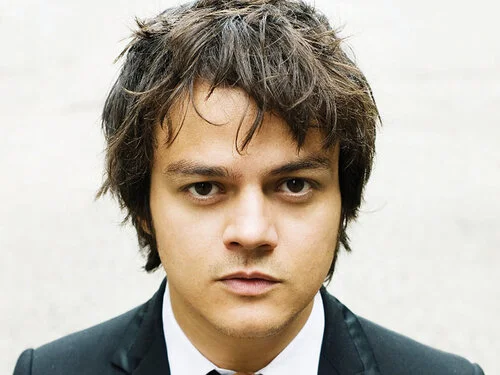
If there’s a theme, it’s curiosity, the most Beatlesque of emotions, and specifically it’s curiosity about women, the most Beatlesque of mysteries to be curious about. Rubber Soul has the coolest girls of any Beatles record. “Girl,” “I’m Looking Through You,” “If I Needed Someone” — these are complex and baffling females, much like the ones the Beatles ended up with in real life. No happy romantic endings here, with the notable exception of “In My Life” — but even when the girls are way ahead of them, the boys spend the album straining to keep up. Baby, you’ve changed.
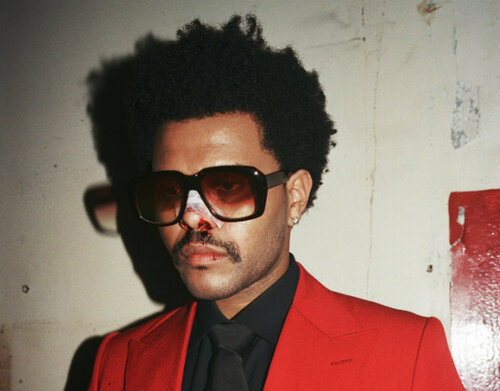
Did anyone before Rubber Soul sing about female characters like this? No, they didn’t. For one thing, these women have jobs, and this is 1965. The L.A. scenester who hires Paul as her driver, the independent woman too busy with her career to return his phone calls, the Chelsea girl who gets up early for work in the morning, even though she’s got John sleeping in her bathtub. (You’d think she could call in sick for that.) In late 1965, my mom, an eighth-grade public-school teacher in Massachusetts, got fired for getting pregnant (with me), because that’s how things worked back then. The very idea of women having careers was a social controversy. But for the world’s biggest pop stars, it was nothing to get hung about.

The Rubber Soul woman stays up late drinking wine on her rug after midnight, until it’s time for bed. She speaks languages he can’t translate. (“I love you” in French is just “je t’aime.” It’s not that hard.) She’s not impressed by the Beatle charm — when you say she’s looking good, she acts as if it’s understood. She’s cool. She makes the Rubber Soul man feel like a real nowhere boy. Yet even the sad songs here are funny. (Including the self-parodic machismo of “Run for Your Life,” a song Nancy Sinatra turned into a gangsta classic.) I love the moment in “Wait” when Paul’s girl asks point blank if he’s been faithful on the road. “I’ve been good/As good as I can be” — riiiiiight. “Wait” is the song that totally explains why Paul was Bill Clinton’s favorite Beatle.

IN THIS PHOTO: The Beatles in Paris in 1965/PHOTO CREDIT: Jean-Marie Périer 

Given the album’s impact over the past 50 years, it’s startling to note how fast and frantic the sessions were. The Beatles didn’t go into the studio with a mystic crystal vision to express — they went in with a deadline. They had to supply product for the 1965 Christmas season, which meant crunching it out in four frenzied weeks, from October 12th to November 12th. So they holed up in Abbey Road around the clock, pouring out music as fast as they could, holding nothing back. They were willing to try any idea, whether it turned out brilliantly (the sitar, the harmonium) or not (the six-minute R&B instrumental jam, which they wisely axed). They wrote seven of the songs in one week.

You can hear the team spirit behind the album in the studio banter from the late-night “Think For Yourself” sessions of November 8th. John, Paul and George stand around the microphone, rehearsing three-part harmonies, but laughing too hard to get it right. John, holding a guitar, stumbles on the words. “OK, I think I might have it now,” he announces. “I get something in me head, you know, and all the walls of Rome couldn’t stop me!” All three keep up a nonstop stream of chatter. John slips into a mock-preacher voice. “It’s Jesus, our Lord and Savior, who gave his only begotten bread to live and die on!” Paul and George get in his face, yelling “Why such fury? What is this wrath that beholds you?” They gasp with laughter until John mutters, “I can’t go on, I really can’t. Come on, let’s do this bleedin’ record.” They try another take. They don’t get this one right either”.

On Thursday (3rd December), one of The Beatles’ finest and most influential albums turns fifty-five. Maybe we will get an anniversary release on its sixtieth - but do go and get the original album if you do not own it already! Rubber Soul was a pivotal and mature album that not only progressed The Beatles but it reverberated through music and popular culture. It sounds engrossing and captivating after all of these years. From the beautiful harmonies on The Word, through to McCartney’s schoolboy lust on Michelle, and Lennon’s opus, In My Life, there is so much variation and quality right through the album. Rubber Soul, undoubtedly, remains this hugely important masterpiece whose power…

WILL never diminish.