FEATURE: The December Playlist: Vol. 3: Help Me Find My Way

FEATURE:


The December Playlist

IN THIS PHOTO: Paul McCartney/PHOTO CREDIT: Mary McCartney 

Vol. 3: Help Me Find My Way

__________

ALTHOUGH there are fewer new standout tracks…

 IN THIS PHOTO: Pale Waves

out in the world, Paul McCartney released McCartney III yesterday – so I have taken a track from that. I am also including new music from Maggie Rogers, slowthai, Ghetts, Eminem, Pale Waves, Clap Your Hands Say Yeah, Caroline Polachek, Hayley Williams, Lady Leshurr, Foo Fighters, Lauran Hibberd, Courtney Marie Andrews, Molly Sarlé, Liz Cooper & the Stampede, LeAnn Rimes, Charly Bliss (ft. PUP), and Good Charlotte (among others). It is a great (if quieter) week with plenty to keep us entertained. I am not sure whether there will be many new songs coming out before the start of next year, so this might be the last week of the year when we get a fair few new songs. I hope that the selections below help give you some energy as we head…

 IN THIS PHOTO: Lauran Hibberd

THROUGH the weekend.

ALL PHOTOS/IMAGES (unless credited otherwise): Artists

__________

 PHOTO CREDIT: Sonny McCartney

Paul McCartney Find My Way

PHOTO CREDIT: Jeremy Deputat

EminemGnat

Ghetts Proud Family

Clap Your Hands Say Yeah Where They Perform Miracles

Pale Waves She’s My Religion

Caroline Polachek  - Breathless

eeed.jpg

PHOTO CREDIT: Tara Thomas Photography

Denise Chaila, Jafaris - Anseo (Single Mix)

Little Dragon & Moses Sumney - The Other Lover

Michael Kiwanuka - Interlude (Loving the People)

PHOTO CREDIT: Tim Barber for The New York Times

Hayley WilliamsFind Me Here

Foo Fighters Run Run Rudolph (Amazon Music)

cccc.jpg

PHOTO CREDIT: @officialroyce

Samantha Mumba Process

Good Charlotte Last December

Olivia Holt talk me out of it

PINS - Merry Christmas (I Don’t Want To Fight Tonight)

slowthai - Thoughts

Maggie Rogers Celadon & Gold

Lauran Hibberd - Rockin’ Around The Christmas Tree

cupcakKe - Gum

PHOTO CREDIT: Norman Seeff

LeAnn Rimes - Throw My Arms Around the World

The Coronas Half Awake

PHOTO CREDIT: Lauren Joy Kennett

Holly MacveWonder

Another Sky Sun Seeker

PHOTO CREDIT: Fredrik Bengtsson

Viagra Boys (with Amy Taylor) - In Spite Of Ourselves

Lady Leshurr - D.I.V

PHOTO CREDIT: Alexa Viscius

Courtney Marie Andrews, Molly Sarlé, Liz Cooper & the Stampede - America

Charly Bliss (ft. PUP) - It's Christmas and I Fucking Miss You

FEATURE: Music Technology Breakthroughs: Part Two: The Roland TR-808 Drum Machine

FEATURE:


Music Technology Breakthroughs

ccc.jpg

Part Two: The Roland TR-808 Drum Machine

___________

THIS is a bit of a cheat…

 IN THIS PHOTO: The chief engineer of the Roland TR-808 drum machine, Tadao Kikumoto

this week, as I have taken the lead from BBC Radio 6 Music. Mary Anne Hobbs recently presented 808 at 40 – The Drum Machine That Changed Music Forever, as an iconic piece of kit celebrated a big anniversary! It was fascinating to see how influential and used the Roland TR-808 is in music! It is amazing it took until 1980 for someone to harness technology that could produce a realistic-sounding drum sound…so the Roland TR-808 was a revolution! I want to bring in an article that discusses the legacy of the technological innovation but, first, this article gives us some background:

In the late 1970s, no one knew how to get realistic-sounding drums out of a machine, so a team of engineers at the Japanese company Roland, led by Tadao Kikumoto, began using analog synthesis—a process that manipulates electrical currents to generate sounds—to create and store sounds that mimicked hand-claps and bass notes and in-studio drums, creating catchy percussion patterns. Unlike most drum machines at the time, the 808 gave musicians remarkable freedom: You weren’t limited to pre-programmed rhythms or orchestrations, which meant you could fashion sounds and stack them on top of one another until you’d created something that had never been heard before. The TR-808 was in many ways a living and breathing studio unto itself.

Ironically, it was the commercial failure of the 808 that would fuel its popularity: As established musicians began to unload their 808s at secondhand stores, the machine dipped below its initial $1,200 sticker price; by the mid-1980s, used 808s were selling for $100 or less, and the 808 became more accessible to young musicians, just as hip-hop and electronic dance music were preparing to make important leaps in their respective evolutions. Today, the 808’s legacy is most entrenched in Southern rap, where it is now nearly ubiquitous, thanks to the machine’s thundering bass, which comes alive in songs such as OutKast’s 2003 “The Way You Move.”

 The 808 briefly sounded like the future, then briefly seemed to have no future. But it has provided beats for hundreds of hits, from Whitney Houston’s 1987 “I Wanna Dance With Somebody” to Drake’s 2018 “God’s Plan,” winning the affections of beatmakers across genres and generations, many of whom build their beats with 808s, or by remixing older 808-driven songs. If you want to get that classic 808 feel without buying the machine, just use the web-based software iO-808, released in 2016. With a few keystrokes, you can summon those analog 808 sounds that changed the world”.

Even if the Roland TR-808 did not burn bright commercially for long, it was transformative for many artists and songs. Like all great technology introductions the price was too steep, which meant that the Roland TR-808 did not sell in massive quantities. Some complained that the machine did not sound like real drums, but it was clear that the sound was authentic enough for many artists. It meant they could get a good beat without hiring a session musician and, if you look through the songs that has used the Roland TR-808, then you can see how diverse and malleable it is! I am going to drop in a playlist that Roland constructed that includes songs where the Roland TR-808 is in the mix – it is quite interesting listening! The Roland TR-808 spawned a load of copycat machines and programmes, as people love that original sound and wanted to make their own version.  

Whilst one does not hear the Roland TR-808 so much these days - as software has evolved and there are more choices for electronic percussion -, many Hip-Hop artists still use it for their music. It is amazing that something so simple (although it was quite a breakthrough in 1980) has transformed music to such a degree! The Verge talked about the legacy of the Roland TR-808 shortly after its chief engineer, Ikutaro Kakehashi, died:

The emergence of the drum machine was crucial to the formation of entire areas of music — especially hip-hop, but also subgenres like Miami bass, acid house, and Detroit techno. Before the 808, producers would dig for drum samples and meticulously loop them to create original drum patterns. With the arrival of drum machines, samples and live drummers became unnecessary. Producers were able to tweak their own patterns out of the 808’s “robotic” and “toy-like” sounds, which made it possible for nearly anyone to produce music. Drum machines like the 808 spawned the era of “bedroom producers” such as Rick Rubin (who used an 808 in his NYU dorm) and Pete Rock. Afrika Bambaataa was the first hip-hop act to put the machine on the map with his seminal 1982 record “Planet Rock.” It also hit mainstream success with Marvin Gaye’s 1982 hit “Sexual Healing.”

The 808 became a fixture in hip-hop culture, not only as a tool for producers but as a defining sound of the genre. When the New York epicenter of hip-hop started to move toward other machines in the 1990s, the 808 held its roots in Southern hip-hop with artists like Lil Jon (who has even been accused of overusing the handclap sound). It’s still as crucial as ever, and has spawned the creation of production groups such as 808 Mafia (Southside & Lex Luger), who are often credited with creating Atlanta’s “trap” sound, with one of the signature elements being the 808 bass drum. Trap producers Metro Boomin and Sonny Digital also rely heavily on the 808 sound, and they’re responsible for 90 percent of today’s most popular Migos and Future records — “Mask Off” being the most recent. Most, if not all, chart-topping hip-hop records today and in the past 30 years have probably used some element of an 808.

Step outside of hip-hop, and the 808 legacy can be found elsewhere, particularly in pop music. Starting as early as Cybotron’s “Clear,” and heard as recently as Jamie XX’s “Gosh,” the 808 brought a new level of power into pop’s sound. It also became heavily used in present-day EDM, with artists such as Diplo and David Guetta championing its elements in singles and collaborations.

The 808 broke down the walls between genres, and spawned collaborations between some of the biggest acts from different spaces. Because the 808 was so adaptable, it was like the first open-sourced sound, with artists building on each other’s interpretations and making it their own. Lil Jon and Usher’s “Yeah” was an unlikely collaboration that showcased an R&B singer on an 808 and made Usher instantly relevant again. Marvin Gaye’s “Sexual Healing” is nowhere near a hip-hop or techno record, yet it relied entirely on the 808. The 808 is like the not-so-secret sauce of hit records — sprinkle in an 808 drum, and your song instantly sounds better”.

Every music fan has to salute the Roland TR-808, as it offered new possibilities to artists across so many different genres. From Hip-Hop innovators to Soul legends; to Electronic pioneers, that distinct sound has made its way all across the music map! Forty years after it came onto the market, I wanted to add my nod and give thanks to an extraordinary and hugely influential technology. Those in 1980 who felt the Roland TR-808 offered novelty and little realism could not have envisaged how it would take off and be taken to heart. As you can hear from the playlist below, the Roland TR-808 creates…

SUCH a wonderful sound.

FEATURE: The Lockdown Playlist: Christina Aguilera’s Best Cuts

FEATURE:


The Lockdown Playlist

lll.jpg

 PHOTO CREDIT: Dennis Leupold for L’Officiel Italia

Christina Aguilera’s Best Cuts

___________

AS today (18th December) is the fortieth birthday…

ttt.jpg

 PHOTO CREDIT: Charles Sykes/Invasion/AP

of Christina Aguilera, I wanted to put out a Lockdown Playlist of some of her best songs. As of 2018, Aguilera had sold over seventy-five-million albums and singles worldwide. She has won multiple awards (including five Grammy Awards). Not only that, but several high-profile artists cite Aguilera as an influence; among them are Ariana Grande, Tinashe, Lady Gaga, and Sam Smith. To mark a very successful career and tip a cap to an artist whose videos have helped empower women and other artists; whose music has moved so many people and, on her fortieth birthday, will be getting so much love from fans around the world, I am pleased to put out a Lockdown Playlist that collects some of the best cuts from…

 PHOTO CREDIT: Zoey Grossman/Paper Magazine

A hugely admired and talented artist.

FEATURE: High in the Mix: Jesy Nelson and the Artists Putting Their Mental-Health First

FEATURE:


High in the Mix

IN THIS PHOTO: Jesy Nelson (who announced her departure from Little Mix after nine years)/PHOTO CREDIT: Karwai Tang 

Jesy Nelson and the Artists Putting Their Mental-Health First

___________

I am a little late to a story….

that broke on Monday. Rather than give my reaction to the fact Jesy Nelson left Little Mix, I wanted to use her as an example of something we may see more of in years to come. Before I get to that, the BBC reported the news of Nelson leaving Little Mix:

Jesy Nelson has left Little Mix, saying being part of the pop group had "taken a toll on my mental health".

She explained: "I find the constant pressure of being in a girl group and living up to expectations very hard."

Writing on Instagram, the 29-year-old said being in the band had been "the most incredible time" but it was now time to "embark on a new chapter".

Her former bandmates said it was "an incredibly sad time for all of us but we are fully supportive of Jesy".

The news comes a month after Nelson said she was taking an "extended" break from the pop group for "private medical reasons".

Leigh-Anne Pinnock, Perrie Edwards and Jade Thirlwall performed as a trio on Strictly Come Dancing at the weekend.

In her statement, Nelson said she had made her decision "after much consideration and with a heavy heart".

"I need to spend some time with the people I love, doing things that make me happy," the singer continued.

The remaining members added: "We know that Jesy leaving the group is going to be really upsetting news for our fans.

"We love her very much and agree that it is so important that she does what is right for her mental health and well-being".

The group will continue without her, but I can only imagine how tough it has been for her for a while now. I think there is so much pressure on artists to keep producing and promoting and, when trying to balance that with normal life, the impact on mental-health can be devastating. Little Mix are one of the most successful groups in the world, and they have legions of fans. It couldn’t have been easy for Nelson to announce her departure, as she will be aware of how many fans idolise her. Nelson put out a documentary where she discussed how she has labelled and insulted when in Little Mix – being judged on her weight and the way she looked. I can only imagine how stressful and harrowing it must have been at times (as she revealed in an interview with The Guardian in 2019), so she will have time to put her emotional health first and see where she goes from here. It is clear she can have a successful solo career, but I would not be surprised if she took a long time to come back into music and have a think about her career plans. There was a lot of sadness when Nelson said she was leaving Little Mix, but many noted how brave it was and the impact it will have on others. There are artists around the world who must be going through a lot of what Jesy Nelson has experienced in terms of bullying, stress levels and the general toxicity of social media - even though there is a lot of love out there for her. The Guardian published a feature on Tuesday that called Nelson one of Pop’s unfiltered voices who was very real and relatable. It is sad, therefore, that the abuse she received was so relentless and unjustified (she has come out and thanked fans for their well wishes and support).

It is clear that music (for now) has lost a genuine article and someone who was a role model to many women. I just want to source from The Guardian’s article, as the final passages really stood out:

And yet there’s a sad inevitability about Monday’s announcement that Nelson is leaving. In a pop culture where misogyny is still rife, with a woman’s very silhouette given such narrow parameters for acceptance, if you stand out a target is placed over you. During her time on the X Factor live shows, when she wasn’t fine-tuning her trademark husky vocal on stage, she was often shown in tears, the face of bullying at the hands of online trolls who marked her out as different, ie not pop-star thin. In last year’s Bafta-winning documentary, Jesy Nelson: Odd One Out, she was disarmingly honest about her resulting mental health issues, recalling how on the day the band won the show she was in tears, having read a Facebook message referring to her as ugly and suggesting she deserved to die. In 2013, she attempted to kill herself shortly after returning to the X Factor stage, her new slimmed-down appearance causing another wave of online abuse. In 2018, having tried to own and celebrate her body via the band’s Strip single and its accompanying video showing the band naked, daubed in the insults they’d endured, Piers Morgan used his national TV show to dismiss the move as a publicity stunt.

Nelson would refer to him as a “twat” live on BBC Radio 1 days later, but you can only puff out your chest and pretend it doesn’t hurt for so long. The abuse came in waves from all directions, and was often repeated back at Nelson for a quote, because fighting against poisonous trolls had become her default stance since she became famous. Nelson helped make the dialogue around mental health much clearer, much more honest, but when you become a symbol the person underneath can sometimes get lost. “I find the constant pressure of being in a girl group and living up to expectations very hard,” read Nelson’s typically honest departure statement. “There comes a time in life when we need to invest in taking care of ourselves rather than focusing on making other people happy.”

• In the UK and Ireland, Samaritans can be contacted on 116 123 or email jo@samaritans.org or jo@samaritans.ie. In the US, the National Suicide Prevention Lifeline is 1-800-273-8255. In Australia, the crisis support service Lifeline is 13 11 14. Other international helplines can be found at www.befrienders.org.”.

 PHOTO CREDIT: @benwhitephotography/Unsplash

I wonder how much support there is from big labels regarding their artists’ wellbeing and whether that is ever factored in to any plans. This is not something that only applies to groups, but it can be hard for members of a group to have their voice heard as they (a group) are often seen as an entity. Such is the commercial expectation and slog of touring and recording that it can have this immense toll that many do not realise. This year has been especially tough for all artists, and I do think that many out there have been battling with mental-health issues and they have found things a bit heavy. Maybe there was a bit of trepidation from Jesy Nelson to leave Little Mix before, as she may have been worried about backlash or judgement. Perhaps there are fellow artists in the same position, but I do think that we will see others make the same sort of hard decision and put their mental-health and happiness first. I have talked about mental-health and the sort of abuse artists have to face online. Even if you are not the recipient of pressure and negativity, I don’t think the stability and welfare of artists is considered that much by labels and management. That may sound all-sweeping, but there are countless artists who have to keep going and push their music out when they are struggling.

 PHOTO CREDIT: @ionass86/Unsplash

I think 2021 should be a year where the health and happiness of artists is placed first, rather than the sales and streaming figures. Venues will reopen next year, and many artists will be thrust out there to sort of make up for some lost time. I do worry that there is going to be even more pressure imposed on some musicians and, from rising acts to global megastars, changes need to be made. Maybe other artists will not quit music or depart from a band, but I do feel that there needs to be more awareness and care; not just how we treat artists and interact but the sort of workrate that is on their shoulders. Everyone wishes Jesy Nelson well - and we know that she had to face a lot of crap. That situation is neither unique to her or the norm, so I do hope that artists who are going through some tough times or feel the strain take some time out. That can be hard when all artists rely on the income they make and keeping busy, but the damage of keeping going and absorbing all the strain around can lead to some big problems. Whilst there will not be a massive wave of artists taking time away or going on a hiatus, there are going to be more discussions around artists (especially women) and some of the awful treatment they receive. It is pleasing to see that there are organisations and support channels opening up to help artists and those struggling. Steps are being made and there are improvements, but I worry about artists who might be keeping their heads down or feel like they cannot get this support as it may compromise their career. It can be very hard speaking out, but more and more artists are talking about their mental-health. It must have been tough for Jesy Nelson to leave such a high-profile group and make such a big decision, but I know her brave step will…

STRIKE a chord with many other artists.

FEATURE: Second Spin: Billie Marten – Writing of Blues and Yellows

 FEATURE:


Second Spin

Billie Marten – Writing of Blues and Yellows

___________

A year ago today…

I named Billie Marten’s debut album, Writing of Blues and Yellows, as my album of the decade. Released on 23rd September, 2016, this is an album (as I have said before) that hit me when I first heard it. In terms of voices, I don’t think there is anyone who quite has the same contours and blend of sweetness and huskiness that Billie Marten does! That album was released when she was seventeen. I could feel aspects of her home and daily life, but there was so much bravery and honesty from someone who was writing these beautiful Folk/Acoustic numbers. Many artists like her obfuscate and create these gorgeous tapestries without getting to who they really are and subjects that might create some tension. I will not go through the entire album like I have done before, but I think Writing of Blues and Yellows is one which got some love when it was released but I don’t hear many of the songs on the radio. The original release of the album contains thirteen tracks, and they range in length from 2:14 (It’s a Fine Day) to 6:11 (Untitled). I like how the longest track is the penultimate number, and we get the shortest track at the end. Writing of Blues and Yellows has so many fascinating stories and vocal performances by Marten. I am not sure whether the majority of the album was recorded at home or in a professional studio, as we get this warm and very intimate sound like the teenage Marten is in her bedroom and delivering these songs with the Yorkshire countryside out of her window – Marten lived in Ripon at the time but has since moved to London.

La Lune, and Bird are exquisite openers where we are treated to the real beauty and breadth of Marten’s voice. The guitar work is delicate-yet-powerful; Marten manages to infuse something sensuous, vulnerable and wary together in these songs…and one falls helplessly for them. Emily is my favourite track, as there is a darkness in the vocals and some ominous electric guitar that is met with some ghostly backing vocals by Marten. I sort of think of Marten as a cross between Joni Mitchell and Kate Bush, in that she can write wonderful character songs that are ethereal and unusual; she also pens these heartfelt and raw songs about herself that reminds me of Blue-era Mitchell. Green has some lovely percussion and a nice moment where Marten sort of tees the song up and there is wonderful flow and energy rush. Live is a sense of a teenage Marten wanting to explore and see more of the world whereas, conversely, Teeth, is her hiding depression and anxiety and saying in the song, how she tells people she is fine and is lying through her teeth. I like the fact we end with a cover song: Marten took on Opus III’s 1992 hit, It’s a Fine Day (providing it a more wistful and homemade sound; I think we can hear Marten’s dad mowing the lawn in the background!). There is a simplicity in the songwriting. Most of the song titles are either one or two-worded; the compositions are never too layered, but we get so much nuance from Marten’s storytelling and incredible voice.

Marten’s second album, Feeding Seahorses by Hand, was released last year. There is a bit of a shift where we get more of a political angle in some songs. Marten had moved to London by this time, and one can feel the weight and ups and downs of the city reflected in some of the songs. I go back to Writing of Blues and Yellows as there seems to be this innocence and sense of warmth, but Marten is also very frank in terms of her lyrics and never shies away from tougher topics and deeper conversation. Heavy Weather is one of those songs that sort of catches the breath and gets to the heart! Alongside Emily, Heavy Weather is among my favourite tracks – placed near the centre of the album, it provides a nice pivot and is beautifully sequenced between Green, and Unaware. There is not a weak moment on Writing of Blues and Yellows- none of the tracks that are only for a certain mood and place. Every track wins you over for a different reason, which makes me wonder why there were not more reviews for it - and, at the end of 2016, why no music sites and polls placed Writing of Blues and Yellows in the best of the year! I was not overly-aware of Billie Marten’s music before her debut album arrived. She had already put out two E.P.s – Ribbon in 2014; As Long As in 2015 -, but it is amazing to hear what talent and ability she had at such a tender age!

Despite the fact that one does not hear too many Writing of Blues and Yellows songs on the radio now, there were some great reviews for the album; it is pleasing to hear that Marten is working on new material and she is creating the foundations of a third album. This is what CLASH wrote when they reviewed her debut:

If there is any requirement we must advise before playing ‘Writing Of Blues And Yellows’, it is that you shut yourself away in a room and just listen. And hope for no background noise.

Billie Marten’s thoughtfully crafted debut is a collection of tales, retrospect and self-examination. Candidly honest about her periods of mental health, ‘Teeth’ places you in the centre of her overwrought mind: “I’m writing this in a bad way, no one can hear what my head says.” Her vocals are infused with a fragility that drills down into your consciousness, whether you want it to or not. Full of contradictions, ‘Lionhearted’ highlights the songwriter’s desire to be braver, yet she fails to acknowledge that she has achieved exactly this through her overt lyrical sincerity, which is intrinsic to the success of this record.

‘Writing Of Blues And Yellows’ manages to be flawlessly delicate in terms of instrumentals and tone, drawing on inspirations from her quaint upbringing in her home-town of Ripon just near the Yorkshire Dales. Fixating upon the wilderness and nature, this is a theme that is inter-weaved throughout songs ‘La Lune’, ‘Heavy Weather’ and ‘Hello Sunshine’; later on ‘Live’, she explores her close relationship with her family, versus her yearning to explore and find some adventure.

Billie Marten delivers a pragmatic album that explores the equilibrium between her positive and negative outlooks on life, whilst confirming that being preoccupied with our own contemplation is and will forever be an ongoing process of the human condition”.

If you have not heard Writing of Blues and Yellows then do so, as it is a majestic and wonderfully enriching album that signalled a confident debut from an exceptional young songwriter. I wonder whether a third album will find Marten sticking with a more acoustic-driven sound, or whether she will go more electric. Will the themes shift from the personal to the political more? Not to compare Marten to other people, but Laura Marling released Song for Our Daughter – my album of the year – earlier this year near the start of the pandemic. So many people were made to feel safe and strong listening to the album at a very difficult time. This is what Billie Marten can do with her songs. I will leave things there, but I think many more people should be aware of the beauty of Writing of Blues and Yellows. So many of the songs deserve airtime, and one should not assume that a lack of urgency and volume denotes songs that are light and pass you by. The music on Writing of Blues and Yellows carries a lot of weight and strain at some moments, whereas one is in an open field looking down at a river in the sunshine the next It is a hugely impressive work from one of the U.K.’s most-underrated songwriters. Some prefer Marten’s second album to her debut – I have a very soft spot for Writing of Blues and Yellows (as much as I admire Feeding Seahorses by Hand). Back in 2016, Writing of Blues and Yellows provided me with direction and comfort when I needed it a lot. I am always thankful to the album for helping me during…

A pretty tough time.

FEATURE: Kate Bush In the Dunce’s Cap: Sat in Your Lap from The Dreaming

FEATURE:


Kate Bush In the Dunce’s Cap

Sat in Your Lap from The Dreaming

___________

I wanted to highlight one of Kate Bush’s…

r.jpg

 IN THIS PHOTO: Kate Bush in 1981/PHOTO CREDIT: Janette Beckman

best singles - that was released a year before her album, The Dreaming, arrived. The Dreaming was released on 13th September, 1982 whereas the first single, Sat in Your Lap, came out way before on 21st June, 1981. I am not sure why there was this gap between Never for Ever being released in 1980, to the first single from The Dreaming coming out, to the album itself appearing. I guess Bush and EMI needed a single out as there was a two-year gap between records and, as Sat in Your Lap was a song she wrote after seeing Stevie Wonder perform (and she had this rush of inspiration), perhaps she was keen for people to hear it first. I suppose the recording of The Dreaming was quite tense and it took a while to complete, so many might have wondered what happened to Bush if she had left it until 1982 to release a new single. Before moving on, this article from the Kate Bush Encyclopaedia sources interviews where Bush discussed Sat in Your Lap:

I already had the piano patterns, but they didn't turn into a song until the night after I'd been to see a Stevie Wonder gig. Inspired by the feeling of his music, I set a rhythm on the Roland and worked in the piano riff to the high-hat and snare. I now had a verse and a tune to go over it but only a few lyrics like "I see the people working", "I want to be a lawyer,'' and "I want to be a scholar,'' so the rest of the lyrics became "na-na-na"' or words that happened to come into my head. I had some chords for the chorus with the idea of a vocal being ad-libbed later. The rhythm box and piano were put down, and then we recorded the backing vocals. "Some say that knowledge is...'' Next we put down the lead vocal in the verses and spent a few minutes getting some lines worked out before recording the chorus voice. I saw this vocal being sung from high on a hill on a windy day. The fool on the hill, the king of the castle... "I must admit, just when I think I'm king."

The idea of the demos was to try and put everything down as quickly as possible. Next came the brass. The CS80 is still my favourite synthesizer next to the Fairlight, and as it was all that was available at the time, I started to find a brass sound. In minutes I found a brass section starting to happen, and I worked out an arrangement. We put the brass down and we were ready to mix the demo.

I was never to get that CS80 brass to sound the same again - it's always the way. At The Townhouse the same approach was taken to record the master of the track. We put down a track of the rhythm box to be replaced by drums, recording the piano at the same time. As I was producing, I would ask the engineer to put the piano sound on tape so I could refer to that for required changes. This was the quickest of all the tracks to be completed, and was also one of the few songs to remain contained on one twenty-four track tape instead of two! (Kate Bush Club newsletter, October 1982)

'Sat In Your Lap' is very much a search for knowledge. And about the kind of people who really want to have knowledge but can't be bothered to do the things that they should in order to get it. So they're sitting there saying how nice it would be to have this or to do that without really desiring to do the things it takes you to get it. And also the more you learn the more ignorant you realize you are and that you get over one wall to find an even bigger one. [Laughs] (Interview by J.J. Jackson for MTV, 1985)”.

There are a couple of reasons why I really like Sat in Your Lap. It is one of her most urgent and propulsive singles to that date and, although Breathing from Never for Ever is quite heavy, Sat in Your Lap incorporates some of the darkness and weirdness of Breathing…but the song is faster and has this whole different sound. It sort of nodded to the more experimental and confident writer/producer Bush had become by that point. The song contains one of my favourite verses from her – “In my dome of ivory/A home of activity/I want the answers quickly/But I don't have no energy/I hold a cup of wisdom/But there is nothing within/My cup, she never overfloweth/And 'tis I that moan- and groaneth” – and Bush’s vocal performance is incredible! The Dreaming found her putting in more characters and accents into the music and, on Sat in Your Lap, there are these layers and shifts that takes your breath. It is a bit of a pity that was such a long gap between the release of Sat in Your Lap and The Dreaming, as people had to wait a long time until they got another taste from such an intriguing and unusual album. Another wonderful thing about Sat in Your Lap is its video. By 1981, Bush’s videos were becoming more inventive and fuller. I love the earlier videos where there is emphasis on dance and choreography but, from Never for Ever onwards, Bush was thinking more about casting herself more as an actor than a dancer, I think. She was inhabiting these roles and adopting new guises for each video. Sat in Your Lap is one of her very finest videos.

Returning to the Kate Bush Encyclopaedia, and we get some great information regarding the composition and realisation of the video:

According to Kate, "The video was filmed over two days, one part at a video studio, the other at the audio studios. The former provided the quick, easy technical sides to be performed, the latter provided the space and presence. The large parquet floor was to be a feature, and Abbey Road's past, full of dancing and singing spirits, was to be conjured up in the present day by tapping feet to the sound of jungle drums - only to be turned into past again through the wonder of video-tape. The shots were sorted into a logical order: all long shots were audio studio, all others were video studio. A storyboard was drawn up and was very closely worked to, being hung on the wall on days of shootings. The editing was a long, difficult job, as it was comprised of many sections which had to be edited together (just like the big musical one). The editor worked all day and into the next morning with great skill and patience, and only when someone told us did we find out it had been his birthday and he'd worked it all away. One of the exciting things about making the video was the "accessories" we used, such as the lovely costumes and props. The jerk-jacket which we used in 'Army Dreamers' was used again for a short sequence, and although there's a silver wire, it feels like flying. Out of the harness and into the light of a timeless tunnel, as a little magician's box springs to life and the room is filled with laser and skaters"


With some great support from her musicians - drums: Preston Heyman, bass: Jimmy Bain, piano and Fairlight: Kate Bush, sticks: Paddy Bush and Preston Heyman, backing vocals: Ian Bairnson, Gary Hurst, Stewart Arnold, Paddy Bush, and CMI trumpet section: Geoff Downes –, Sat in Your Lap is a very bold and wonderful lead single from The Dreaming. Also, as it is the first track on the album, Bush wasted no time in letting people know that she had ascended to a whole new creative plain! The song reached number-eleven in the singles chart; it was her most successful single from The Dreaming – by choosing songs that were less accessible and less instantaneous than Sat in Your Lap resulted in some extremely low chart positions for other singles from the album. It is amazing to think that Bush demoed Sat in Your Lap in September 1980 (the month Never for Ever was released) and she hade so many different tones and ideas running around her head so soon after her debut album (The Kick Inside, 1978). Bush battled writer’s block whilst creating The Dreaming, so I can sort of understand why there was a big gap between single release and the album arriving. The single version is different to the one she demoed - the vocals were raised higher and the backing track altered significantly - ; what she put out in 1981 was amazing! It is one of my favourite Kate Bush tracks, as it is so different to anything she had released before. I also have a lot of affection for the remarkable video. I wonder how many people, experiencing Sat in Your Lap in 1981, could predict The Dreaming and had any notion or realisation of just…

PHOTO CREDIT: Anton Corbijn

WHAT was to come.

FEATURE: An Endless Sky of Honey: What Is Left in the Kate Bush Archives?

FEATURE:


An Endless Sky of Honey

eeee.jpg

IN THIS PHOTO: Kate Bush in 1978 

What Is Left in the Kate Bush Archives?

___________

THIS is another feature that is inspired….

by a recent Record Collector edition focusing on Kate Bush. I was interested in the section, The Unreleased Kate, which is about music that has not been released yet. I have discussed this subject before; asked whether we may see some demos come out or anniversary editions of her albums. Maybe that is unlikely but, as I read the pages of this feature, it would be tantalising to have some of these unheard recordings out in the world! It seems that there were plans to have expanded editions of her albums come out prior to Aerial being released in 2005. That idea was laid out in 2000 and, with these new editions out, many might have guessed that a new album was on its way. I would have loved to have seen that and, as there is such a swell of love for her music in 2020, many people would love to see expanded releases of her albums – perhaps with demos, outtakes or conversations from the studio included to give weight and wider story to these incredible works. There has been some greatest hits packages such as The Whole Story in 1986 and This Woman’s Work of 1990. The 2018 Remastered series brought in some B-sides and covers but, with Humming being the only rarity that people might not have heard, it does seem that there are a lot of gold left in the vaults! It is appropriate that Record Collector covered the subject of unreleased Kate Bush music, as there is something inherently collectable and desirable about her work.

 IN THIS PHOTO: A young Kate Bush/PHOTO CREDIT: John Carder Bush

If there was to be plans for expanded albums, then they would not necessarily need to be tied to anniversaries. The Kick Inside, her debut, is forty-five in 2023, so it is still a long way until that release could come out. That said, 50 Words for Snow is ten next November, whilst The Dreaming is forty in 2022. It would be a bit of a headache releasing albums on anniversaries, as they would be out of sequence and there would be notable gaps between them. I think a campaign in 2021 to get expanded editions would be a treat for fans and it would introduce Bush’s work to new people. James R Blandford was writing in Record Collector and he took us back to 1972-1973 for some of the earliest unreleased pearls. I have heard The Cathy Demos and some stuff that was recorded around then and, whilst many of the songs are great, the sound quality is not at its best. It is not surprising that there are these recordings when Bush was in her early-teens. She was raised in a very musical household where conventional and untraditional music was shared. She listened to T. Rex, Roxy Music, Elton John, Captain Beefheart, The Beatles and others, whilst her brother Paddy - who played violin and carried a love of folklore - had an influence. By 1972, Bush had written sixty songs, so it was clear that she had this incredible talent and impressive work rate! There was an L.P. that was pressed by a German label in 1986.

Tapes were sent to distributors back in 1982, and this mini-album of piano recordings was eventually released as Kate Bush – The Early Years. White labels were prepared for distribution but, when Bush’s family got wind, legal action was threatened and a warehouse full of these albums was destroyed. Two of the songs that would have appeared on that album, Something Like a Song, and The Gay Farewell, were found on The Cathy Demos. New to this collection were songs such as You Were the Star, and Atlantis. A pressing of The Cathy Demos did appear on eBay in 2004, but there has not been a wide release. I think it would make a fascinating addition to The Kick Inside - hearing these earlier recordings would allow one to see how Bush progressed by the time of her debut; we could hear some of the songs that could have made it onto her debut album. In 1973 – around the time of The Cathy Demos -, David Gilmour visited Bush at her home and he was there to hear her play and sing. Of course, he put up the money so that she could record professionally and, spotting her unique talent, he was instrumental when it came to bringing her to a record company. It is possible that there are some recordings from those visits, though it is unlikely the quality would be good - would anyone in Bush’s circle want the recordings out into the world? Bush did record in August 1973 at Gilmour’s sixteen-track home studio in Essex.

Between ten-twenty songs were recorded during that visit, and Passing Through Air was one of the songs recorded then (it would appear as a B-side to Army Dreamers in 1980). There was not a lot of activity between 1973 and 1975 but, in 1975, Bush did record three songs professionally for EMI producer Andrew Powell. The songs were The Saxophone Song (tiled Berlin at the time), The Man with the Child in His Eyes, and Maybe. Recorded at AIR Studios, all three tracks have made their way to the public. There are contentious claims from a former boyfriend of Bush’s, Steve Blacknell, that he inspired songs such as The Man with the Child in His Eyes, The Saxophone Song, and Frightened Eyes. A version of The Man with the Child in His Eyes exists from when Bush was fifteen, so there is doubt as to whether Blacknell was the real inspiration behind the song. Regardless, there was this period between 1973-1975 where some songs were recorded and released, and others which might not have been released in any form. In 1989, a batch of demos from 1976-1977, The Phoenix Recordings, were leaked. The recordings were played on Phoenix radio station, KSTM, by a former EMI employee, John Dixon. That broadcast was in 1982, so there is confusion as to why it took seven years to surface. Dixon helped plug The Kick Inside in the U.S. and, again, having those as an appendix to The Kick Inside would be something! On that collection were fourteen unique songs, in addition to others which was later heard on albums or appeared somewhere else.

The first set of songs appeared on cassettes but suffered from terrible sound quality. A series of bootleg E.P.s, The Cathy Demos, were issued as five 7”, where the sound quality was greatly improved. This is the best collection of recordings from that broadcast, but there are several C.D. bootleg compilations which vary in quality. Bush was asked in 1993 about the possibility of releasing these songs and, whilst she was against it then, I wonder whether her viewpoint has shifted in the intervening years? It would be wonderful to have an expanded release of The Kick Inside with these rarer songs included. Bush performed as part of The KT Bush Band in 1977, and there were recordings of some songs from the band on a tape called Fiddle. Recorded at London’s De Lane Lea Studios – as recalled by band member Brian Bath -, there are some interesting tracks on there. One, Scares Me Silly, is a gem that has never featured on an album or a B-side, but it would be eaten up by fans! There have been various sets of The Kick Inside demos, and it makes me wonder whether there are embryonic versions of songs that appeared on that album (and Lionheart). A 2009-released set of demos was put into the world with some studio banter included. It would be perfect to have the demos and studio chat included on an expanded release of The Kick Inside – as Blandford noted in his feature.

There was not a lot of opportunity for many new recordings after the release of The Kick Inside, as promotional engagements were heavy. Bush and The KT Bush Band did start work on Lionheart at Bush’s childhood home East Wickham Farm. Included in the songs performed were Hammer Horror, and Wow (at different tempos). It would be interested to see those recordings come out as part of an expanded Lionheart set. One song from the album, Don’t Push Your Foot on the Heartbrake, was played on a radio station in 1982, but Bush was not happy with the version – feeling that a lot of raw energy required for such a song was lacking. Ten tracks were included on Lionheart in 1978, but there were two other tracks recorded. One of these was Never for Ever. That would be the title of Bush’s follow-up album, and it is a mystery why a possible title track was not released. The song itself is very beautiful, so it would be awesome to hear it on a new release! 1979’s The Tour of Life was filmed (but a full-length version of the show was never released) and it would be good to hear recordings from that tour on a release – maybe as part of a Lionheart set or as part of a Never for Ever one. The On Stage E.P. turned up in 1979, and there were four songs from the tour that featured. 2014’s Before the Dawn is available on C.D. and vinyl, so I am curious whether The Tour of Life will ever get such treatment.

Various demos from Never for Ever are known – including two versions of Babooshka -, and there are many who would love for them to get a proper release. One song from summer 1979, Kidnapped on a Building Site, has never been included in any album or single. A particularly elusive song, The Magician, was recorded for the film, The Magician of Lublin, but, as no soundtrack has been released, we are not sure whether that song will ever come out. I think there must be some demos and various version of songs that appeared on 1982’s The Dreaming, but we know little of any. Bush’s productivity did dip a bit and, as she worked on the demos and album in a more private manner, perhaps there is less chance that sufficient extras can be exhumed and organised for an expanded release of The Dreaming. Although this album would have been quite challenging to record and there would be have been various takes recorded, it is hard to say how much Bush kept and whether she has archived them. The same can be said of Hounds of Love. Few outside of Bush’s circle knew about the album recording and what was happening. There doesn’t seem to be a lot of known demos and unreleased material from The Dreaming in 1982 through to Aerial in 2005. There are bits and pieces from that period but, compared to the output from 1978-1980/1981, it is quite scant. Bush set up her Fish People label and has put out the Remastered albums, so she is not averse to retrospection and looking back. I wonder whether her revisionism stance will change and she will yield to allow expanded albums to come out. James R Blandford also noted how there are videos and a whole archive there that needs to come out in a new form, which makes me wonder whether the next couple of years will see new sets arrive with these lesser-known songs. 2020 has been such a crappy year, so any glimmer of hope in that respect would be wonderful. It seems, when we look back on the material that Bush recorded but never released, it is…

 IN THIS PHOTO: Kate Bush performing Suspended in Gaffa in 1982

QUITE a treasure trove!

FEATURE: Spotlight: GRACEY

FEATURE:


Spotlight

GRACEY

___________

FOR this outing of Spotlight…

I am shining a light on Grace Baker, a.k.a. GRACEY. The Brighton-born artist is one of the most promising Pop acts around, and I think she will be very big in 2021. At this time of year, many people are listing their names to watch in 2021. I think GRACEY is going to among those you need to keep an eye out for. I think it is best to introduce some interview segments, just so we can get a better idea of who GRACEY is and why she is such a fantastic talent. Her fanbase is growing all of the time and, with music that is both personal but able to be absorbed and felt by everyone who listens, her work is getting a lot of love. I want to start by quoting from an interview GRACEY conducted with The Line of Best Fit last year. The interview was conducted just before her E.P., Imposter Syndrome, was about to come out – and she expressed her feelings regarding putting her introduction statement into the world:

 “I’m actually quite scared to release it because it's a part of me that I'm not really used to talking about with my closest friends, let alone random people that might actually hate it.” London-based artist GRACEY is airing her anxieties about releasing her debut EP Imposter Syndrome.

It’s a leap for the 21-year-old who until now has had a fruitful career writing songs for other artists (Jonas Blue, RAYE, Olly Murs). Discovered at the age of 16 by Xenomania—the UK-based pop factory whose writers have penned songs for Kylie, Pet Shop Boys, Cher, Sugababes and others—GRACEY became accustomed to “putting myself in someone else's shoes” instead of fronting her own creations. Now, she’s about to face the world solo.

Imposter Syndrome, however, is GRACEY’s proper introduction. The title, she explains, arose amid the transition from writing songs for other people to writing songs for herself. “It was way harder than I thought it was going to be,” she admits. “It's really hard when you’re writing songs for closure. Usually, my songs will be fronted by someone so I can be outside of them. But when you're singing about yourself and the video is essentially you crying and being rained on by a watering can,” she says in reference to the video for the EP’s heartbreak lead single “Different Things”, “it's pretty hard to then go, 'I'm not into you, literally I'm fine.' That’s what I always say.”

Her mother, she reveals, is one of the reasons she’s so driven. “I grew up in a household where my mum and my dad both earned the same—if not my mum was the breadwinner [her mother has worked in production at the BBC, her father in advertising]. I have two older brothers. My mum taught me that I should never be submissive to a guy because my ideas are equally as good.”

“Now, I'm way more like, 'Nope, this is how it is’ and I hope that with my artist career I can be like that too and stop having imposter syndrome. But I'm not quite there yet. I'm still a bit like, 'Eeeeeeee!' It's still early on”.

I would urge people to listen to Imposter Syndrome, as E.P.s don’t get as much acclaim and focus as albums. I feel there is a lot of great music on Imposter Syndrome. One of GRACEY’s key strengths is her voice. It carries so much experience and age, despite the fact she is still very young. As this interview from the BBC highlights, GRACEY’s voice was under threat just as her career was getting started:

Pop singer Gracey had always had a rasp in her voice - a distinctive, leonine quality that brought her songs of heartache and unrequited love to vivid life.

But then something went wrong.

This time last year, she was in Los Angeles writing new music when her larynx locked up.

"I didn't speak the entire trip unless I was in a writing session and I still lost my voice," says the 22-year-old.

"I remember being with my manager at breakfast, and nothing she could say could make it better. And I just cried my eyes out because I was like, 'I'm gonna have to get surgery.'"

The Brighton-born singer, whose full name is Grace Barker, was quickly diagnosed with vocal nodules - small hard growths on the vocal cords - and went under the surgeon's knife.

For the next two months she was forbidden from speaking and singing. For a natural chatterbox, it was an intensely uncomfortable experience.

"I mean, I was such a mess," she says. "I'm someone that would just talk for days - but imagine if you're at the dinner table and everyone's cracking jokes and you can't join in because you're trying to write out a joke on your whiteboard - and then you're dyslexic, so no-one can read it”.

Empty Love is one of this year’s best Pop songs - and it features Australian singer, Ruel. I have been converted to a style of Pop that I am not an overly-big fan of by GRACEY’s skills and vocal prowess! I have been compelled to dig deeper into her catalogue and discover an artist that is very much on a route to stardom. I want to bring in an interview feature from MTV, who asked her about musical influences; the subject of Empty Love came up:

3) who inspired you to start a career in music?

I always think I first fell in love with music in the backseat of the car on long journeys when I was a kid, and I’d say I was inspired a lot from those memories. It just fascinated me how quickly time would pass when listening to my favourite artists/albums and I think that made me realise how much I loved it. In terms of actually going for it myself, I really have to thank my family for not straight up laughing at all my horrendous first attempts of songwriting and for also never telling me to ‘get a real job’… well yet haha.

4) who are your biggest musical influences?

Any artist that makes me FEEL. Music is such a powerful tool - I think it’s so special that someone who might be on the other side of the world, who you may have never met before, can write a song and so perfectly articulate how you’re feeling. For me those artists are Joni Mitchell, Lorde, Sia, Robyn, The 1975 (to name a few)! I also absolutely adore how these artists create such worlds around them - when you’re listening to their music/going to their live shows, I feel like you’re really seeing the world through their lens. I’d love for my fans to feel that way about me!

5) tell us about the writing and recording process for your new single/album…

I actually just released my next single since being in isolation! It was a song I began writing back in October, after having to take a three months off due to a surgery on my vocal cords. It was a pretty rough time - I wasn’t allowed speak or sing, which felt so alien after four years of writing five/six days a week. However, it didn’t really give me time to look in the mirror and understand myself more. I realised how much I was letting other people’s opinions define me and how frivolous the online world is. I wasn’t okay, yet there I was posting selfies, smiling pretending that everything was dandy, something I think a lot of us do now a days. So the song surrounds that - it’s called ‘Empty Love’, and I’m really excited about it! And it’s also featuring the lovely Ruel, who is an amazing Australian artist I’ve written with before - I think he just elevated it to a new level!

Last month, GRACEY released the new E.P., The Art of Closure (where Empty Love is taken from), and it is another terrific listen. This is what Music Talkers wrote about the E.P. and its strengths:

Brighton-born Gracey is clearly enjoying her breakout year. After the runaway success of her collaboration with 220 Kid on the single Don’t Need Love, which reached a peak of number nine for two weeks in the UK singles chart, as well as songwriting credits for the likes of Sub Focus, Lorde, and Kylie Minogue and another smash collaboration with Alexander 23, the young singer-songwriter is back with her new seven-track EP The Art Of Closure.

It’s an incredibly confident and varied collection. 99% comes screaming out of the gates, a minimalist slice of industrial pop with the first chance here to savour Gracey’s stunning vocals, which she unleashes to maximum effect on the song’s verses, while Empty Love is a sweet and sparse affair that discusses social media and it’s addictive nature.

On Don’t, she showcases her lyrical skill further as she sings: “You’re just telling me lies and lies to try and get back in my sheets / Careful what you say cause babe I might believe / You come inside we don’t need the conversation or the coffee / Don’t say you miss me if you don’t / Don’t say you’ll love me when you won’t / I always know when you lie to me / So please, let me go”.

Like That raises the tempo, the smooth project she completed with fellow rising star Alexander 23 that has racked up the streams, before Care Less slows things down again, an almost acoustic little interlude in the middle of The Art Of Closure. Alone In My Room (Gone) is another great example of Gracey’s vocal prowess, while closing track Don’t Need Love is the blistering number that sparked so much of her success to date and has already racked up almost fifty million streams on Spotify”.

99%, and Care Less are among my favourite tracks of the year; I wonder whether there are any plans to put out a debut album next year. It is clear that, between E.P.s, GRACEY has grown and has incorporated more into her music. It has been a hard time for GRACEY regarding her voice and the fact she has not been able to perform and record as she might have liked this year. I am sure she will be keen to get back on the road and to the fans when things start to open up. I am glad things are better for her and she is still putting music out. I wonder whether a GRACEY album might come out in 2021 because, with some hotly-tipped artists planning their debut albums for next year, I am certain that she is concocting and plotting. Her sound is malleable enough to appeal to a wide demographic and, whilst some of her lyrical content is downbeat and lost, I don’t think the music makes you feel low or exhausted. There is plenty of physicality and energy in her music, and one can easily become engrossed in her words. Go and investigate GRACEY, as I think she will grow next year. She is one of the freshest and best voices in the modern Pop landscape. Although 2020 has provided some hurdles and bleak days, I do feel that 2021 will be a…

MUCH brighter one.

___________________

Follow GRACEY

FEATURE: Vinyl Corner: Otis Redding – Otis Blue/Otis Redding Sings Soul

FEATURE:


Vinyl Corner

Otis Redding – Otis Blue/Otis Redding Sings Soul

___________

FOR this Vinyl Corner…

I am investigating one of the best Soul albums ever released. Otis Blue/Otis Redding Sings Soul (often referred to simply as Otis Blue) is the third studio album by American Soul singer Otis Redding. It was first released on 15th September, 1965. Although the album largely comprises cover versions, there are some originals in the pack. It is amazing to think that, apart from one track, the album was recorded over twenty-four hours at Stax Recording Studios in Tennessee! The album became a huge hit, and it was his first to reach the top of the Billboard chart – it got to number-six in the U.K. Even though the majority of the album was other people’s work, some of the best songs were the ones Redding wrote himself – Ole Man Trouble, Respect, and I’ve Been Loving You Too Long are exceptional and delivered with incredible passion. Redding covered three Sam Cooke tracks, including A Change Is Gonna Come – Cooke sadly died a few months before Redding recorded his album. With superb backing by Booker T. & the M.G.'s, a horn section consisting members of The Mar-Keys and The Memphis Horns, and pianist Isaac Hayes, one feels a real richness and sense of physicality from the players. I think this is Otis Redding’s greatest work, and his voice is unbelievable throughout! My favourite cuts are My Girl, and Respect, but I also really love I’ve Been Loving You Too Long. Otis Blue/Otis Redding Sings Soul is a magnificent album, and one that people should get on vinyl.

I want to bring in a couple of reviews for Otis Blue/Otis Redding Sings Soul. It is an album that has gained so much respect from critics through this year. This is what AllMusic said when they tackled the album:

Otis Redding's third album, and his first fully realized album, presents his talent unfettered, his direction clear, and his confidence emboldened, with fully half the songs representing a reach that extended his musical grasp. More than a quarter of this album is given over to Redding's versions of songs by Sam Cooke, his idol, who had died the previous December, and all three are worth owning and hearing. Two of them, "A Change Is Gonna Come" and "Shake," are every bit as essential as any soul recordings ever made, and while they (and much of this album) have reappeared on several anthologies, it's useful to hear the songs from those sessions juxtaposed with each other, and with "Wonderful World," which is seldom compiled elsewhere. Also featured are Redding's spellbinding renditions of "(I Can't Get No) Satisfaction" (a song epitomizing the fully formed Stax/Volt sound and which Mick Jagger and Keith Richards originally wrote in tribute to and imitation of Redding's style), "My Girl," and "You Don't Miss Your Water." "Respect" and "I've Been Loving You Too Long," two originals that were to loom large in his career, are here as well; the former became vastly popular in the hands of Aretha Franklin and the latter was an instant soul classic. Among the seldom-cited jewels here is a rendition of B.B. King's "Rock Me Baby" that has the singer sharing the spotlight with Steve Cropper, his playing alternately elegant and fiery, with Wayne Jackson and Gene "Bowlegs" Miller's trumpets and Andrew Love's and Floyd Newman's saxes providing the backing. Redding's powerful, remarkable singing throughout makes Otis Blue gritty, rich, and achingly alive, and an essential listening experience”.

I think there are a lot of people out there who have heard of Otis Redding but are not aware of Otis Blue/Otis Redding Sings Soul. It is an album that anyone can appreciate and feel moved by. When they reviewed the album, Rolling Stone said the following (they reviewed the Collector’s Edition):

This two — cd set doubles the pleasure of Otis Redding’s third album with B sides, outtakes, period live tracks and the entire record in mono and stereo versions. But Otis Blue was already perfect in its original 11 — song edition when released in September 1965 — an achievement that is even more remarkable because all but one of the tracks were recorded inside 24 hours, in two lightning sessions at the Stax studio in Memphis, on July 9th and in the early morning of the 10th. The reason for the intermission: The house band — including Booker T. and the MG’s, and the Memphis Horns — had to cut out for local gigs. The haste is evident: In his Dixie — heat treatment of the Rolling Stones’ “Satisfaction,” Redding sings “satis — fashion.” But the urgency is all — natural. He barks and grunts in excited polyrhythm with Al Jackson’s off — the — beat drum breaks in Sam Cooke’s “Shake” and takes Southern — church liberties with the refined ecstasies of Cooke’s “A Change Is Gonna Come.” Redding had only two new originals ready for this record, the deep — wound blues “Ole Man Trouble” (with its great sobbing — brass lick) and the male — pride strut “Respect.”

A third included on the album, the majestic surrender of “I’ve Been Loving You Too Long” (written with Jerry Butler), was cut earlier and was already Redding’s biggest single to date. But amid R&B — gig standards like the Temptations’ “My Girl,” the melodic invention in Redding’s songs and the emotional investment in his performances mark the point at which he stopped merely singing soul music. He now created his own, at a high speed reflected in the stereo rerecording of “I’ve Been Loving You Too Long.” Done at the July sessions, it is slower in tempo, magnificent in its anguish and even closer to genius”.

There are some albums that are beyond fault and deserve nothing but love and appreciation - Otis Blue/Otis Redding Sings Soul is one such album! It would have been easy enough for Redding to splice together a selection of songs by others and make them his own. It is the way Redding selected the tracks and their importance that makes Otis Blue/Otis Redding Sings Soul so compelling. In an article from September, Albumism  discuss the importance of the cover versions and the legacy of the album:                                 

“The choice of songs and artists to cover is a very interesting point—he manages to tip his hat to both the architects of soul music but also to those other strands of Black music that contributed to its development. It is almost as if he is providing a summation of the ingredients of soul music. By taking these ingredients and adding his own unique voice to them he further melds them together and reinforces what constitutes soul music.

Solomon Burke’s “Down In The Valley” is a case in point. By choosing another of those rock & roll originators, Redding places himself firmly in the tradition of black music. But whereas it takes Burke a minute or two to showcase the more soulful, gritty edge to his voice, Redding lets it go from note one. His voice is already at the point of emotional breakdown and it doesn’t let up. It is, as Booker T Jones said, as if he wrings emotion from every single syllable. He treats each of them as precious and none are wasted on anything less than his best.

Of course, beyond the music, Redding is most associated with his tragic early death, but he also provides a great example of an artist who was equally adept at the business side of the game. He was able to secure his legacy and his family’s future through a series of shrewd deals—in a business filled with tales of woe and financial mismanagement (to put it extremely kindly), he was able to navigate a way to succeed despite being a Black man in a highly racist society.

The lasting legacy of Otis Blue is the way that Redding embraces the past while creating a future with his unique set of talents. His voice has become synonymous with the very word “soul” and that has happened to very few artists—it's a fitting honor for someone with a voice as raw and gritty as his.

Anyone who can take a B.B. King song and make it their own has to be special and nowhere is it truer than with Redding’s cover of “Rock Me Baby.” The combination of Cropper’s sharp yet restrained guitar and Redding’s scandalously indecent sexual roar is perfection—Redding is both the voice of dominant masculinity and a soulful plea to a partner. Once again, by choosing a blues man’s tune, he casts himself as the past, present and future all in one moment”.

If you have not got the album already then go and buy it, as Otis Blue/Otis Redding Sings Soul is one of the most important of the 1960s. So long after its release and it still sound amazing and untouched! It just goes to show that Otis Redding was a…

TRUE master of any song he took on.

FEATURE: My Back Pages: The Artists Selling Their Rights

FEATURE:


My Back Pages

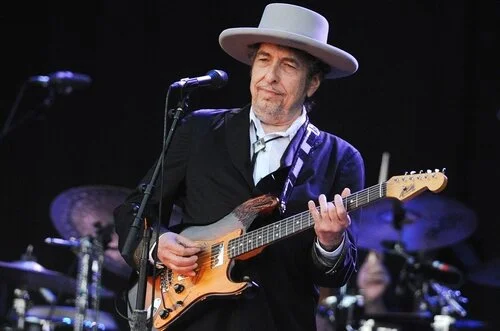
IN THIS PHOTO: Bob Dylan in 2012/PHOTO CREDIT: Fred Tanneau/AFP/GettyImages

The Artists Selling Their Rights

___________

SOMETHING interesting has been happening…

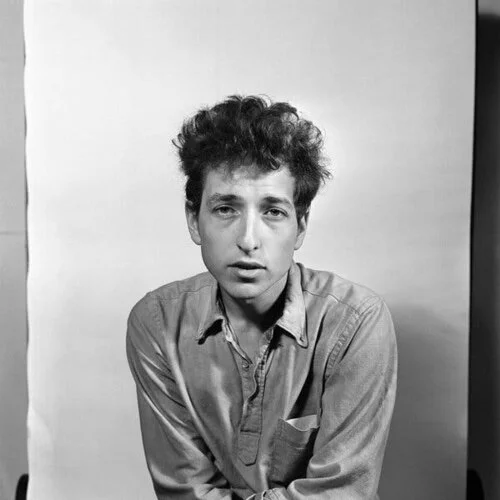
 IN THIS PHOTO: Bob Dylan in 1963/PHOTO CREDIT: William C. Eckenberg/The New York Times

over the past week where artists’ rights have been in the news. At a time when streaming royalties are not huge and, in 2020, there is no touring and fewer opportunities to generate revenue, it is not surprising that some big artists are selling the rights to their music. At the time of writing this (12th December), Bob Dylan is the biggest artist to do that. Dolly Parton revealed that she might do it – David Crosby has already joined Dylan in selling his publishing rights. This article from The Guardian explains more:

Bob Dylan just made more than $300m (£227m) doing it, Dolly Parton says she might do the same, while the singer-songwriter David Crosby says he is being forced to do it. Musicians are queuing up for big paydays by selling the publishing rights to their songs, as the streaming boom and industry upheaval wrought by the Covid-19 pandemic redefines the economics of music.

Dylan’s surprise move this week to sell the publishing rights to his 600 songs, from Blowin’ in the Wind to Knockin’ on Heaven’s Door, was described by the buyer, Universal Music, as one of the most important deals of all time.

It marks the latest peak of what one music industry executive describes as “gold fever”, with investors looking to cash in on the reliable, and increasingly valuable, returns of evergreen hits. The rights to songs generate royalties whenever they are played on the radio, sold on CD or vinyl, covered by another artist or licensed for TV shows, commercials or films. But it is royalty income from the streaming boom that has really attracted investors’ attention and fuelled the buying spree of artists’ back catalogues.

cccc.jpg

PHOTO CREDIT: @neonbrand/Unsplash 

Since 2013 – the year global music sales hit a record low and Spotify started to gain international traction by launching in the US, the world’s biggest market – annual royalty revenues made by Bon Jovi’s 34-year-old hit Livin’ on A Prayer have increased by 153%. Last year, streaming accounted for 77% of the £1.4bn UK music market, according to the Entertainment Retailers Association.

The pandemic has also upended the wider economics of music. It has killed live gigs and tours, a multibillion-dollar market that is the lifeblood of many musicians’ income, and made older artists consider their options. Days after 79-year-old Dylan’s deal was struck, Dolly Parton, 74, said she was considering selling the publishing rights to her catalogue, which spans hits from 9 to 5 to I Will Always Love You, a move certain to prompt a bidding war. However, Parton said that a prime motivator was “estate planning”. Many artists have died before sorting out their affairs properly”.

It goes to show that, even for artists who have huge popularity and have enjoyed years of success, things are very hard in the modern landscape. I guess Dylan had no reason to not selling his songs - and the financial reward is something that is resonating with other artists. I wonder whether Dolly Parton will follow suit, as I think she will donate a lot of the money she makes to charity.

 IN THIS PHOTO: Dolly Parton/PHOTO CREDIT: Larry McCormack/AP

I think that stories like Dylan selling his rights should be seen, again, as a glaring indictment of streaming and modern consumer culture. I can only imagine how challenging it is for smaller artists who have less wealth having to cope on very small income and pittance from streaming services. Of course, one cannot blame streaming platforms entirely for major artists giving their catalogues to a record company. I guess, with low royalties and a very disastrous year has left all artists short of money and worrying about the future. I think Dylan and Crosby’s tales will compel other, smaller, artists to see if they can get a deal. Whilst those huge-money pay-outs are going to be reserved to artists as iconic as Dylan, I do think we will see more deals brokered. Stevie Nicks sold a majority stake in her publishing catalogue for $100m to the music publisher Primary Wave. Other artists who have done a similar deal in 2020 up include Barry Manilow, Blondie, Chrissie Hynde, and Imagine Dragons. I wonder what Universal Music will do with Bob Dylan’s songs. They can make money off of them through use in film and T.V. show, but it would be interesting to read more about how an artist’s work can be used when they sell their catalogue; what ways big companies and labels can earn money and whether this will degrade the value of the songs or whether it will bring them to new audiences. It is going to be curious seeing what happens over the coming weeks and whether other artists take a lead from Bob Dylan. I think that it is great that Dylan has received a nice payday and sold his publishing rights to Universal Music so that they have access to…

 PHOTO CREDIT: @d_mccullough/Unsplash

HIS back pages.

FEATURE: The Lockdown Playlist: The Best of Beth Orton

FEATURE:


The Lockdown Playlist

The Best of Beth Orton

___________

I do love to do a good birthday Lockdown Playlist….

so, because Beth Orton is fifty today (14th December), this is an assortment of some of her very best songs. I am a big fan of her work and her most-recent album, Kidsticks of 2016, was a move more towards Electronic sounds. Orton is one of these evolving artists who is exploring new ground all the time and, on every album, she produces the most amazing work! I do hope that she releases an album next year, as Orton is one of the best songwriters in the world…and I just love her voice. To celebrate Beth Orton’s birthday, here are some of her very best songs that showcase what…

xxxx.jpg

A true talent she is.

FEATURE: The Lockdown Playlist: Awesome Nu-Metal

FEATURE:


The Lockdown Playlist

 IN THIS PHOTO: Korn 

Awesome Nu-Metal

___________

I have done some genre-specific….

eeee.jpg

 PHOTO CREDIT: @herrysucahya/Unsplash

Lockdown Playlists that have been interesting to put together. I have not done one regarding Nu-Metal. This genre is a subgenre of Alternative Metal that combines elements of Heavy Metal music with aspects of other music genres such as Hip Hop, Alternative Rock, Funk, Industrial, and Grunge. Nu-Metal bands have drawn elements and influences from a variety of musical styles through the years. It may not be to everyone’s tastes, but I think a lot of people have heard the odd song or two from the genre and left it there. If you are unfamiliar with Nu-Metal or have not listened to it for quite a few years now – as it sort of reached its peak many years ago -, then have a listen to these tracks, which are guaranteed to give you a kick to…

 IN THIS PHOTO: Linkin Park

END the weekend.

FEATURE: A New Bloom: Kate Bush’s The Sensual World and a Distinct Maturation

FEATURE:


A New Bloom

Kate Bush’s The Sensual World and a Distinct Maturation

___________

IN previous features regarding The Sensual World

 IN THIS PHOTO: Kate Bush in 1989/PHOTO CREDIT: John Carder Bush

I have focused on particular songs but not really explored a general impression of the album. This is going to be another – expect more – feature tied to the Record Collector edition where we got a loving insight into all of her studio albums. Elizabeth Aubrey wrote about The Sensual World, and she mentioned how this album was one where maturity and something more grown-up was at the fore. The title track, as Aubrey noted, rings similar to Bush’s debut single, Wuthering Heights. Both songs concern windy moors and something very charged. If Wuthering Heights is a wilder and untamed song, The Sensual World is a nuanced and measured song. I guess every artists matures and their voice changes, but one can see a marked difference between Kate Bush in 1978 (when Wuthering Heights was released) and 1989 – the year The Sensual World came out. Bush’s voice is still evocative and stirring, but it relies more on a controlled extraction of emotion and desire rather than the more spirited and exhilarating gymnastics of a song like Wuthering Heights and Bush’s earlier work. Take The Sensual World as a standout track. Whilst the song has a beauty and utilises uilleann pipes to give things and Irish flavour, Molly Bloom (the central character) is a very sensual and sexual character. I have covered the title song in more depth but, whilst Bush could not get clearance to use James Joyce’s original words from Ulysses, one did get to hear words from the text used in 2011 on Director’s Cut – the song was retitled Flower of the Mountain.

I do really love that song, as Bush sounds incredible and manages to evoke so much passion and emotion without letting her voice take off (or throw too much into the mix). One can hear distinct sonic and vocal shifts from 1985’s Hounds of Love onwards, but I think there was this big maturation and change on The Sensual World. Bush noted how people say one gets a mental puberty between the ages of twenty-eight and thirty-two and, as she was thirty-one when The Sensual World was released, one can understand that and apply it to the album. One might assume that a growing-up must signal songs that are less imaginative and boring. Whilst the tracks do seem more rooted and not as exciting as many of the songs on Hounds of Love, I think The Sensual World is incredibly satisfying and relatable. Aubrey observed how women, traditionally, are represented in music as secondary characters and not as important as the men – they are referred to as lovers and muses but not often fully-realised. Throughout The Sensual World, there are so many full, inspiring moments where women – whether Bush was speaking directly or playing characters – are much more fleshed-out and important. For those looking for the more out-there moments of earlier albums, songs such as Heads We’re Dancing – which I covered recently – provides something suitably unusual and imaginative. Aubrey also stated how The Sensual World features charterers grappling with their identities and place in the world.

Previous albums had a bit of this, but I think the themes of finding one’s place and learning from experience was relatively new. Even as recent as Hounds of Love, there were these child-like moments and a very different tone. Maybe it was passing into her thirties that led Bush to think and create in a new way. There is trauma and loss through The Sensual World, in addition to awakening, lustiness and personal growth. Bush told NME in 1989 that one song, The Fog, was about trying to grow up. I am not sure what made Bush re-evaluate and think more deeply about subjects like responsibility, family, maturity and hope. Maybe there was a subconscious desire to settle down or, at the least, new feelings about motherhood – Bush gave birth to her son, Bertie, in 1998. This Woman’s Work is about potential loss of pregnancy and seeing a tense situation unfold through a man’s eyes (as he seems helpless). Bush always had this great affection for men in her music, and I especially like how This Woman’s Work does put the woman at the front, but the narrative and perspective is from the expectant father. There are songs that stray away from solid realism – such as Deeper Understanding and its messages of how reliant we are on computers (strangely prescient in 1989) -, but it is the way real-life concerns, relationships and struggles are more present than they ever were that resonates with me.

Hounds of Love’s first side was largely told from characters’ perspective, and it felt like we were hearing different stories and short films being performed that mixed fantasy, film and love. On The Sensual World, one can feel more of Kate Bush come through in her songs – even if she was writing from other people’s viewpoints at times. There is less escapism and fantasy on The Sensual World; more of Bush looking inside herself and putting that onto a record. It is a fascinating shift between Hounds of Love in 1985 and The Sensual World four years later. One can feel and hear Bush grow and mature in that time and, whilst that is not a bad thing, I also get the feeling that she was looking to spend some time away from music and concentrate on herself and take some time out – 1993’s The Red Shoes was her next album; she would take another twelve years to release Aerial. I sort of avoided The Sensual World for a while because I felt the songs lacked the spark and feverishness of many of Bush’s other albums. Listen carefully to The Sensual World and one can hear passion and sensuality together with responsibility, tenderness and characters and lines that we can all connect with and appreciate. There is trauma and sadness but, overall, there is hopefulness and strength. The Sensual World is the album I have been coming back to most during lockdown and pandemic stress. It has connected with me harder than ever, and I wonder if there is a particular reason.

I want to round things off by bringing in an interview from BBC Radio 1 conducted on 14th October 1989, where Bush spoke with Roger Scott. It is a really insightful interview, but there are two sections that really caught my eye. Bush talked about one of my favourite songs, The Fog:

KT: No, it's not. Again, it's quite a complex song, where it's very watery. It's meant to be the idea of a big expanse of water, and being in a relationship now and flashing back to being a child being taught how to swim, and using these two situations as the idea of learning to let go. When I was a child, my father used to take me out into the water, and he'd hold me by my hands and then let go and say "OK, now come on, you swim to me." As he'd say this, he'd be walking backwards so the gap would be getting bigger and bigger, and then I'd go <splutters>. I thought that was such an interesting situation where you're scared because you think you're going to drown, but you know you won't because your father won't let you drown, and the same for him, he's kind of letting go, he's letting the child be alone in this situation. Everyone's learning and hopefully growing and the idea that the relationship is to be in this again, back there swimming and being taught to swim, but not by your father but by your partner, and the idea that it's OK because you are grown up now so you don't have to be frightened, because all you have to do is put your feet down and the bottom's there, the water isn't so deep that you'll drown. You put your feet down, you can stand up and it's only waist height. Look! What's the problem, what are you worried about?”.

IN THIS PHOTO: Kate Bush in 1989/PHOTO CREDIT: Guido Harari

Perhaps the most revealing answer underlined how Bush, more and more, was pulling away from recording and endless promotion. She was understanding how life and finding some space was more important:

RS: Just to conclude, you said earlier that the making of this album and the years of work that have gone into this, that one thing that came out of it, you did learn a lot about yourself. What sort of things have you learnt about yourself over the past three or four years?

KT: Um, well that's a very "up front" question there, Roger! And I suppose, I don't think I would have said after the last album "this is just an album". That's a very important thing for me to have learnt: I am very obsessive about my work. I spend most of my time working, and I think this is something that I've really looked at in the last few years: there's a lot more to life than just working and just making an album. It is just an album, it's just a part of my life. It's not my Life. And I think it was, you know... making albums was my life and it doesn't feel like that is any more. And that's tremendous, the sense of freedom that that gives me. It's so good and I think it's really healthy and much better for me, to try and put these things into perspective, you know”.

I do think The Sensual World was a pivotal album where Kate Bush was redressing the work-life balance and thinking more deeply about things that were peripheral or suggested on previous albums. We can hear this still-vibrant songwriter undergo new bloom and discovery on one of her most nuanced and fascinating albums. The Sensual World is a divine offering, an endlessly-fascinating album and…

A gorgeous maturation

FEATURE: The Lockdown Playlist: Pitchfork’s Best Songs of 2020: The Top-Thirty

FEATURE:


The Lockdown Playlist

Pitchfork’s Best Songs of 2020: The Top-Thirty

___________

LOTS of sites are putting out…

 IN THIS PHOTO: Kevin Hayes

their favourite albums and songs of 2020. NME have just done it and, whilst it was tempting to crib from them and compile a playlist of their favourites, I have been looking at Pitchfork’s top-hundred of the year. Instead of do an entire Lockdown Playlist of their suggestions, I have just taken the top-thirty; epic tracks from 2020 that shows what a strong year it has been! If you need a representation of the very finest music of the year then this Lockdown Playlist should…

 IN THIS PHOTO: Moses Sumney/PHOTO CREDIT: Sam Deitch/BFA/Rex/Shutterstock

DO the job!

FEATURE: My Favourite Album of 2020: Laura Marling – Song for Our Daughter

FEATURE:


My Favourite Album of 2020

Laura Marling – Song for Our Daughter

___________

QUITE a few lists are being published….

 PHOTO CREDIT: Justin Tyler Close

collating the best albums of 2020. It is providing inspiration for Lockdown Playlists but, more than anything, it makes me wonder where my favourite album of the year features. The album in question is Laura Marling’s Song for Our Daughter. It is the seventh studio artist from an artist who has not put a foot wrong since she came onto the scene! It is amazing to think about Marling’s consistency and just what she has accomplished even though she is thirty. It is wonderful to think how far she can go and how good she will get! Song for Our Daughter was released on 10th April, and it was an especially tough and strange time where we were in lockdown and it was right near the start of the pandemic starting in the U.K. Recorded between Marling's home studio, London, Monnow Valley Studio, Wales and Ethan Johns' Three Crows studio, Song for Our Daughter sound remarkably consistent and beautiful. I think it is one of Marling’s most moving and diverse set of songs. I know many publications will put Song for Our Daughter in their top-ten - and I will be curious to see, in such a competitive year, how many adjudge it the very best of 2020. I think this year has been an incredible one for music considering everything going on, and I know Laura Marling had different ideas for the release of the album and she would have wanted it to be out in the world when we were all together.

She has performed some streamed gigs from her home and she has also provided guitar tutorials. She has definitely been keeping busy this year and, right at the start of the crisis, it was nice having her album out there. Many artists delayed the release of their album by weeks and months, but Marling felt that people needed to hear Song for Our Daughter. I am going to bring in some interview segments from this year where Marling was promoting the album but, when it came to reviews for Song for Our Daughter, they were some of the most impassioned and extraordinary of her career! In their review, this is what AllMusic had to say:

If Laura Marling's Grammy-nominated standout, Semper Femina, signified a mid-career watershed, her 2020 follow-up, Song for Our Daughter, finds the Londoner moving through a subtler, though equally vital evolution replete with sharpened observations and a gripping sense of vulnerability. Loosely inspired by Maya Angelou's 2008 essay collection Letter to My Daughter, the album's ten tracks act as an exquisite outpouring of accumulated wisdom, pain, and the type of detailed personal narratives at which Marling excels. Co-produced with longtime foil Ethan Johns, though bearing a similar instrumental palette to her previous Blake Mills-produced outing, the largely acoustic framework here is neatly woven with spare, elegant instrumentation leaving little to hide behind as she rakes the cooling embers of her own past, engages warily with the present, and imagines possible futures her fictional child might one day face. The rugged folk-rock jangle of "Held Down" and the buoyant pop paean to individualism "Strange Girl" deliver some of the more immediate thrills here, but it's the marvelous centerpiece "Fortune" that sets the highest bar. Adorned by a winsome string arrangement and her nimble guitar picking, Marling's opening salvo of "you took out that money that your mama had saved, she told me she kept it for running away" sets up a multigenerational tale of escape and misfortune that plays like a late-career highlight from a legacy act gazing backward. At just 30 years old and with seven albums to her credit, Marling's songwriting has been honed to a level of literate maturity that few artists achieve in their careers”.

If you have not got a copy of Song for Our Daughter then go and get one, as it a remarkable album full of the very best songwriting you will hear. I have always loved Marling’s work, but I think her voice, playing and writing is at its peak on Song for Our Daughter. When they reviewed the album, The Independent noted the following:

The title of Marling’s last record, 2017’s worldly Semper Femina (Latin for “always a woman”), refers to Virgil’s line about how fickle and ever-changing women are. On Song For Our Daughter, Marling channels this with a thrilling defiance, right as she turns 30 – a period of transition in itself – and offers her best work to date.

Marling’s previous albums have been grounded in evocative storytelling, her airy meditations on love, age and experience set against pastoral guitar landscapes. Not for nothing was she hailed, on more than one occasion, the voice of a generation. More subtle than her previous works, these new songs are as fragmented and beautiful as stained glass.

 “Blow by Blow” is an exquisite lament – a poetical anatomy of a broken relationship. Piano chords tumble with sparse tenderness. Cellos rise and fall like blossoms carried in the wind. Marling’s vocals – soft and wounded – wrestle with grief. Yet this is not a “sad” album. She strides with purpose on the jubilant “Alexandra”, inspired in part by Leonard Cohen’s “Alexandra’s Leaving”. Between periods of solace at London’s British Library and living with family, she now rejoices in her social awkwardness: “Stay alone, be brave,” she urges on the good-humoured shuffle “Strange Girl”.

By now fans are more than familiar with her virtuosic guitar playing and the way she can skip from twangy, Seventies Americana to the deft finger-picking of trad-English folk. “Lately, I’ve been thinking about our daughter growing old/ All of the bulls**t that she might be told,” she sings, as violins courtesy of Rob Moose (The National, Bon Iver) make this in part an elegy for her own experiences. What a marvel this album is”.

Respect has to go to Marling for releasing an album like Song for Our Daughter when she did, as it would have been easy to shelve it until later in the year and see how the pandemic played out. It must have been a tough decision. In an NME interview from April, we learn about that release conflict, in addition to some of the influences on Song for Our Daughter:

I’ve never been at home long enough to grow anything or have a dog, and now I want all of those things,” she reasons, considering the possible benefits of being largely housebound for the foreseeable future. “I’ve been sending emails out to adoption agencies. I’ll take anything, but the fantasy pet is a mongrel with a missing leg,” she says. “I want a dog with a story.”

Though written and recorded well before the global pandemic, it’s a soothing panacea for troubling times. The record sees Marling play with pop melody more than ever before, losing none of her uniqueness in the process. “It’s still not in any great danger of becoming mainstream… or successful!” she says – quite wrongly, we might add – with a self-deprecating laugh. “But I guess it is more poppy for me.”

Marling was originally set for an August album reveal, but bucked the trend of a panicked industry – countless release dates have been pushed back due to COVID-19 – and pulled hers forward instead: “I only decided to do it 10 days ago. It’s so crazy. But I feel like I’m forever sitting on an album that hasn’t been released yet. It’s such a long process, because you want to give people time to set it up properly. People want to do a good job for it, but I like to get them out whenever they’re done.”

At 36 minutes and 10 tracks long, ‘Song For Our Daughter’ is her shortest but most textured album. There’s the ever-present influence of Joni Mitchell’s bright and breezy acoustic guitar (‘Alexandra’), as well as the layered folk rock of Crosby, Stills and Nash (‘Strange Girl’) and even Paul McCartney’s bewitching simplicity (‘For You’).

Of the latter she says: “I listened to ‘Jenny Wren’. It’s from 2005, on a Paul McCartney album [‘Chaos And Creation In The Backyard’] you wouldn’t think twice about – not to be harsh – but it is the most astonishingly beautiful song. I suddenly realised that there was an entire catalogue that I hadn’t paid attention to that was full of these stunningly beautiful songs. I’d never thought he was bad, but I’d overlooked him, certainly.”

This time around, Marling got stuck into production almost as fully as she did with 2015’s entirely self-produced ‘Short Movie’ album, creating sumptuous arrangements in the studio she built in her basement last year. “I indulged in lushness a bit more than I have done previously,” she says. “Lots of backing vocals and beautiful, beautiful strings

In a difficult year, I have been listening to music more than ever, and I have been provided with wisdom, comfort, strength and company from so many artists. There are so many fascinating stories and moments on Song for Our Daughter that means you keep coming back. Some tracks hit you when you first hear them, whereas others take a bit more time to reveal their full potency and meaning. I want to source from another interview, as Laura Marling discusses some of the themes on the album in addition to the #MeToo movement:

 “Song For Our Daughter, an assertive take on loss, remorse and mistreatment, is magnificent. Blending the bucolic folk of Semper Femina with brief spurts of the Dylan-esque speak-singing she wryly adopted on Short Movie, it is sophisticated but unselfconscious. Though not quite as rigid a concept album as some critics have taken it to be, it contemplates the kind of world Marling would like to help build for her potential daughter. She says it is a “piece of me”.

“I think all of my output has been an evolving relationship with what it is to be a woman,” she explains, “and now that I’m 30, I feel a new phase of my life has been entered. I’ve sort of been waiting for that phase of my life – where I can stop being in my twenties – for my whole adult life. And it has changed my perspective in the way that I look at my younger self. I think about what I would have liked to have been protected from – which is a self-propelling maternal instinct, because in many ways, I’m just talking about a younger version of myself.”

 It certainly has its moments – the lullaby-like “For You” expresses a kind of joy Marling rarely allows into her music, her accent closer to her speaking voice than it’s been for years – as if to close the gap between person and performer. But if the story of Lucretia speaks to the times we’re living in, then so, too, does Song For Our Daughter. “With your clothes on the floor/ taking advice from some old balding bore,” she sings on that title track, “You’ll ask yourself, ‘Did I want this at all?’”

It paints a complicated picture. Some women, says Marling, are bred to be obedient. Others are encouraged to not “take s***”. “There’s this huge scale of what your life experience is and how that contributes to how you would conduct yourself in a difficult situation. #MeToo was interesting, because there were some very clearly litigious things that were brought up in an industry – similar to music – that’s full of very difficult nuance about how business is done and transacted. And the law doesn’t work in favour of people who’ve been traumatised. Weinstein going to jail is the most satisfying outcome, and anybody who can be prosecuted should be prosecuted, but we must also pay attention to the gap in the law”.

Go and stream or buy Song for Our Daughter, as it is a marvellous album – and it is my pick for the best of 2020. I am going to watch closely to see where Marling heads from here and what direction her work takes. Song for Our Daughter is, as I noted, her most diverse, and there is a blend of some more Pop elements together with her Folk roots. Having not long turned thirty and in a new stage of life, there is this sort of consideration of motherhood and new responsibility – a song/album, as it were, for a hypothetical daughter. Maybe by the time the next album comes out Marling might be a mother, or perhaps this album was a way of addressing questions and thoughts that have been on her mind for a while. There is a lot to enjoy and discover from the album so, if you are new to Song for Our Daughter, give Laura Marling’s exceptional album…

A good spin.

FEATURE: “Ooh, Yeah, You're Amazing! We Think You're incredible" Kate Bush and the Rigours, Rush and Realities of The Tour of Life (1979) and Before the Dawn (2014)

FEATURE:


Ooh, Yeah, You're Amazing! We Think You're incredible

IN THIS PHOTO: Kate Bush during The Tour of Life in 1979/PHOTO CREDIT: Max Browne

Kate Bush and the Rigours, Rush and Realities of The Tour of Life (1979) and Before the Dawn (2014)

___________

I have written about Kate Bush…

 PHOTO CREDIT: Max Browne

and her two big live shows, The Tour of Life (1979), and Before the Dawn (2014) several times before. In those pieces, the tone is normally celebratory, and I highlight how emphatic and memorable those shows were. That is all true, but I had not really pondered the realities of those big productions and how much it must have taken out of her! I have sort of alluded to it before, and I was reading Graeme Thomson’s biography, Under the Ivy: The Life & Music of Kate Bush. I have been thinking about Bush’s stage work and how hard she worked when I had delivered Record Collector’s special about her – and a few features in the coming weeks are inspired by that publication. There was a whole section about The Tour of Life in 1979 and what a feat it was! The photos from the production are wonderful, and we get to see Bush in her element and really owning the stage! I hope that Max Browne – whose photographs were included in the feature – publishes a book of all the images he has from that tour, as I think it would prove very popular among the Kate Bush fanbase. Ian Cawood was writing for Record Collector, and he noted how there was accusation from the press as early as October 1978 that Bush was afraid to play live. Such was the popularity of her single, Wuthering Heights, and the debut album, The Kick Inside, that the demand for her to play live was huge. Before The Tour of Life in 1979, Bush’s live C.V. was a little bare.

She had performed as part of the KT Bush Band in 1977, but that was a series of pub gigs and small venues. To go from there to a huge stage in a year or so would be a pretty big ask. Also, right through 1978, she was either promoting her debut album or working on the follow-up, Lionheart – which was released in November 1978. Even before she had set foot on stage for The Tour of Life, there was this sort of whirlwind and constant workload that prevented her from undertaking anything else. It was a need to establish some form of control over her career – Bush felt she was not as involved in the first two albums as she would have liked – that gave birth to The Tour of Life and its scale. Also, she could not deny that fans as well as press sources were wondering when she might perform – though the fans were far more fair-minded and did not bait her! EMI put no pressure on Bush to perform, and there was dubiousness from the press that Bush’s unique and unusual songs would translate to the stage easily. Until that point, there had not really been any artist like her on the stage. Many might say David Bowie had the same sort of invention and quirkiness, but I think Bush was even less conventional. Bush said after the tour that she proved people wrong (regarding her lack of performance) and delivered something enormous!

  PHOTO CREDIT: Max Browne

I will come to the harder sides of that that first but, prior to the first show, Bush recruited the three surviving members of the KT Bush band – Del Palmer, Brian Bath, and Paddy Bush –, who were musicians that were not featured heavily on her first two albums – producer Andrew Powell favoured more experienced musicians. Bush wanted The Tour of Life to be on her own terms and, as she felt an emotional connection to her fans and wanted to repay their support, everything had to be done right. The video I have included above gives you an idea as to the extent of Bush’s involvement before she even started to perform. From choosing designs and choreography through to costumes, Bush had her finger in ever pie going! She had a great team around her and she was very encouraging and keen to learn from them but, at the same time, ensure that other people were not directing the feel and tone of the tour. In terms of realities and rigours, the financial sting was there from the start. EMI had not put aside money for a tour, so Bush’s music company (controlled by her father), Novercia, and had takings from merchandise and ticket sales had to fund it. For someone as ambitious and creative as Bush, the idea of maybe scaling back as to avoid fiduciary trouble must have been a source of anxiety!

As it is, The Tour of Life was a massive success and I can’t imagine that too much was left out. When you hear from people who saw her at one of the dates across the U.K. and Europe and see videos of the show, you can definitely see a lot of the bigger ideas and concepts coming to life! Costume designer Lisa Hayes had hoped to have a new costume for each song of the show but, as that would cost more, create pressure on stage and, perhaps, cause issues with a fast change, things were scaled down. The work she did with choreographer Anthony Van Laast was amazing! I have seen clips of her rehearsing, and I don’t think people realise the hours she committed to the routines - and, when that translated to the stage, just what a physical undertaking it was! A new song was being choreographed every day, so the sense of exhaustion was very real! Not only was there the financial and physical drain but, in a warm-up show in Poole on 2nd April, 1979, lighting assistant Bill Duffield was killed in a freak accident. He was drafted to help with the complex lighting and to find ways of transporting kit between venues. His death caused shockwaves through the crew and musicians. Bush was especially affected, as she knew everyone personally and it was like losing a friend.

I will allude to this when I discuss Before the Dawn, but I think her desire to perform at the same venue each night in 2014 might have been impacted by the fact Duffield was hired because they would be travelling and they needed an extra pair of hands. Simon Drake – a magician/illusionist who was to perform a floating cane trick during an instrumental break – was injured during one rehearsal for The Tour of Life, narrowly escaping serious injury. This reduced Bush to tears and, thinking about the injuries and losses (few as they were), I sort of think about the people who built the pyramids and how many lives were lost. That is an exaggeration, but the size and complexities of setting up stages and working out the logistics was having an impact! When it came to the shows themselves, Bush was exhilarating and a sensation! Her shows were praised by critics and fans alike and, whilst there was this adulation and rapture from audiences, I think about the energy expended during those shows. During some shows, Bush was being carried off stage at the end, completely drained from such a taxing performance! Most nights she would not stay up late and socialise; needing the rest before travelling to the next venue, with days off usually dedicated to much-needed kip. I guess this reality is true of every major artist but, as she was barely in her twenties and her professional career was very new, this sort of hit and realisation must have come as quite a shock!

  PHOTO CREDIT: Max Browne

Bush had created a show with mime, magic and music. This was like nothing anyone had witnessed! It is no exaggeration to say she transformed the perception of a Pop/Rock show. Bush hated it when bands went out and played the songs in a very ordinary and unimaginative way so, for that reason, The Tour of Life was a world of its own! Looking at the article from Record Collector, and it is clear that this incredible live spectacle was impacting Bush as they rolled onto Europe. She grew to hate flying and travel as it did wear her out and eat up a lot of her time. The physical demand of travelling and doing shows was starting to tell. Her voice was also straining, and a show in Stockholm on 24th April (1979) was especially challenging. It was feared she had an infection or would lose her voice as the convoy moved to Copenhagen for a show on 26th April. Bush likened The Tour of Life to a circus troupe travelling around, and it was fortunate she had a day off between Sweden and Denmark so that she could try and regain some strength. There was pressure from the money men and management to let the show continue, rather than dates being cancelled. One can only imagine the sort of stress that caused for Bush, as she wanted to perform for the fans but she knew that her voice was fragile and could break.

  PHOTO CREDIT: Max Browne

As a compromise, the setlist was shortened for the 26th, and any songs that put too much pressure on the voice were nixed. There were worries the European leg could be cancelled as Bush was suffering but, as she was treated by antibiotics and a set in Hamburg on 28th April was also shortened, it provided her with some respite. It was, during a show in Amsterdam on 29th, that her voice came back to full strength – it must have caught her and the audience by surprise!  Photographer Max Browne has said how the tour was like Heaven for him and a bit of a daze – and how he hopes to put out a book in the not-too-distant future. After The Tour of Life had wrapped in May 1979, there were possible plans to tour in the U.S. and support Fleetwood Mac on their Rumours tour. Aside from the glitz and carnival of the show, Bush herself had given so much. She did not go to the U.S. – partly because of the energy needed, and she did not want to perform a short support slot which was very restrictive -, and Bush said in interviews through the years how she felt less confident as a performer after The Tour of Life; explaining why she became an albums artists for so many years. Many speculate why Bush did not perform in such a big way for so many years. She felt that her sexuality was too much of a focus, and she herself had not had time to explore who she was. The Tour of Life allowed her to do that in a sense, and have the focus shift to her performances and the show, rather than her looks and body. Also, the cost of mounting and executing such an ambitious tour was not something she could afford to repeat. The physical and emotional cost was also clear; losing Bill Duffield was a huge blow. Her albums became more complex and layered, so putting them onto the stage was less practical and possible – whether Bush, subconsciously, was making her songs like that so she could not tour them. Fortunately, in 2014, she was able to come back to the stage to deliver her second live extravaganza!

  IN THIS PHOTO: Kate Bush during her Before the Dawn residency in 2014/PHOTO CREDIT: Ken McKay/Rex Features

It must have been like a nice homecoming performing a twenty-two-date residency at the Eventim Apollo, Hammersmith (or, as she knew it in 1979, the Hammersmith Odeon) – the final venue she performed at during the scheduled run of The Tour of Life. Whereas Bush performed around about thirty different sets for The Tour of Life – with travel included -, Before the Dawn was less demanding in that sense. Running between 26th August and 1st October, 2014, there was the same balance of triumphs and tribulations when putting together such a phenomenal show. After all these years away, Bush wanted to do something different to The Tour of Life, and there was months of planning, discussions and rehearsals. Although Before the Dawn was less demanding in terms of dance and travel, I think the concept was bigger and the whole show, perhaps, a little more ambitious than The Tour of Life. Performing with her KT Bush Fellowship in Hammersmith to an ecstatic crowd each night would have been a wonderful rush! Bush said in interviews how the audiences each night were stunning and they gave her so much energy and life. I will get to the good aspects of Before the Dawn but, whilst Bush did not have to commute far to get to Hammersmith every night, the preparations were pretty intense. As I have mentioned before, there was a part of the show where Bush is filmed adrift at sea in a life raft.

She shot that in a studio in a water tank, but the time in took to complete the short piece left her with a mild case of hypothermia and a lot of stressful and unhappy hours. The interview above talks of the show and how, before each night, she was very nervous. That sense of anxiety and nerves was something that has afflicted her throughout her career and, even as a decades-seasoned professional, performing such a big show after all these years was always going to be daunting. The pleasures and highlights from Before the Dawn are obvious. The fans received a rare gift. In Record Collector, Pete Paphides documented his experiences of seeing Bush perform. We get to meet (in the piece) various excited fans who, each, were overwhelmed by the emotion and importance of what they were seeing. Paphides notes that the love in the room he saw and heard was like nothing else! It must have been strange for Bush to do such a grand show again so many years down the line. Some who saw her in 2014 were also there in 1979. Bush would have wrestled with doubts beforehand – remembering the realities of The Tour of Life and the downsides – and she battled the nerves one would expect for such a big occasion. It was her then-teenage son Bertie who persuaded her to get back on the stage; he was part of the cast, and having that familial support must have made the whole thing a little less terrifying.

I guess you had to be there to get a true sense of what Before the Dawn evoked and represented but, in terms of its scale and impact, one can say it rivalled The Tour of Life. Hounds of Love’s song-suite, The Ninth Wave, was brought to the stage; we got filmed sections and on-stage performances that brought this much-loved set of songs to life! Dancers dressed in costumes gave physicality to figures and sights sung on The Ninth Wave; a rare chance for fans to see a long-held dream of visualising these songs in a dramatic, theatrical way. Across twenty-five songs and two ambitious acts, thousands of fans got to witness something that took months of hard work and drilling to get right. For Bush, the same sort of responsibility and hard work she experienced in 1979 was here again and, if the rewards were big back then, they might have been even larger playing in London for twenty-two dates. Paphides observed that, when he saw her, he got the feeling that Bush, unlike anyone else, gave her everything to inspire her fans and ensure they were left enraptured. He noted that, if she left it another thirty-five years to perform, she would be ninety-one when she got back on the stage – which is why he (and everyone else) did not want to let her go and see the show end! Although there were horrors and incredibly tough experiences on both The Tour of Life, and Before the Dawn, the resultant brilliance from Bush and the reaction from the adoring crowds will be etched into music history forever. Reading and learning about the experiences of those who got to saw Bush at those shows makes me a little jealous! Whilst it is unlikely, I do wonder whether Kate Bush will give everyone an unexpected announcement and come to the stage once more…

 PHOTO CREDIT: Ken McKay/Rex Features

WITH a new production.

FEATURE: Second Spin: ABC - How to Be a ... Zillionaire!

FEATURE:


Second Spin

ABC - How to Be a ... Zillionaire!

___________

I want to feature an album in Second Spin…

that turned thirty-five a couple of months ago. ABC’s How to Be a ... Zillionaire! is the third studio album from the Sheffield band who, at their peak, comprised lead singer Martin Fry, guitarist and keyboardist Mark White, saxophonist Stephen Singleton and drummer David Palmer. I guess ABC set themselves an impossible standard when they released their classic debut, The Lexicon of Love, in 1982. Not to say that everything after 1982 was diminishing returns, but that debut remains a classic and is one of the best albums of the 1980s! How to Be a ... Zillionaire! was released in October 1985, and I think it is an album that warrants new attention and some fresh appreciation. There have been some mixed reviews for the album through the years. I feel that it is a lot stronger than many have given it credit for. Perhaps the chart positions of the album and its four singles have not helped when it comes to How to Be a ... Zillionaire! and its value. The album peaked at number-twenty-eight on the U.K. chart and at number-thirty on the Billboard 200. Four singles were released from the album: (How to Be a) Millionaire (U.K. position: number-forty-nine); Be Near Me (number twenty-six); Vanity Kills (number-seventy-four), and Ocean Blue (number-fifty-four). It is the group's first and only album to feature founder members Martin Fry and Mark White alongside by new members Eden and David Yarritu.

Maybe that sense of dislocation and change meant that ABC were unable to soar high and sound as extraordinary on How to Be a ... Zillionaire! as they did on The Lexicon of Love. Despite the fact that the band had this changing line-up and, shortly after How to Be a ... Zillionaire! was released, Martin Fry was being treated for Hodgkin's lymphoma, it sounds a remarkably appealing work and contains some great material. I feel that the singles should have done better but, in 1985 especially, so many huge singles and albums were released. We saw these stunning albums from Kate Bush, Tears for Fears, Dire Straits, Tom Waits, and The Jesus and Mary Chain…so I can understand why it might have been hard for ABC to get a foothold and perform as well as they did in 1982. It is unfair for people to compare How to Be a ... Zillionaire! with ABC’s very best, but I think that the album is a lot stronger than its reputation. I want to bring in an article that was published to mark How to Be a ... Zillionaire! at thirty-five. It looks back at the poor singles sales, but also how strong the album is as a whole:

It didn’t help that Vanity Kills is a terrible record (by ABC’s lofty standards), with the normally loquacious Fry reduced to rhyming “vanity kills” with “it don’t pay bills” while the kitschy sink is thrown at the arrangement, mock explosions and all. Then, just as before with Millionaire, Live Aid came along less than a month later and further demonstrated how out of step ABC had become in the dawning age of the Global Jukebox. The single stiffed at #70.

For whatever reason, four months on from the failure of its third single, How To Be A Zillionaire was released into the wild, on one of the year’s busiest weeks for new albums. The band’s label, Phonogram/Mercury, were still reeling from the humbling debacle of Dexy’s Midnight Runners’ Don’t Stand Me Down, and now their other big act from the summer of 1982 were about to fare just as badly. The main difference was, with so many delays and false starts, expectations for (and interest in) the Zillionaire campaign had already been lowered.

Well, imagine my surprise when the album revealed itself to be a bit of a gem. Opener Fear Of The World is top-tier ABC; how this was never given the chance as a single beggars belief. Three of the other tracks on Side One were already familiar, including the other should-have-been-a-single 15 Storey Halo with its stunning coda, which left the gorgeous Ocean Blue as the second big discovery of the album’s first half. Listening to all these tracks, raised the baffling question of just what on earth had the band (and/or label) been thinking of with their promotional strategy up until now?”.

I will end with a positive review for How to Be a ... Zillionaire!, but a lot of people are sort of mixed and feel that ABC were incomplete and unfocused on their third album. It is an album that I have warmed to and played a bit lately. I would recommend people check it out.

I want to introduce a review that hints at some positives on How to Be a ... Zillionaire!, in addition to some constructive criticism:

On the good-foot, though, are classic ABC cuts like "Be Near Me" and "(How To Be A) Millionaire." The former is rivals their other techno-soul heavyweights such as "Poison Arrow" and "Look Of Love." "Millionaire," on the other hand is a wonderful soul-dance tune that oozes vibe and presence. The beats are first-rate dance tracks, and the band uses samples effectively and tastefully. The biting sarcasm in Fry's lyrics almost becomes obscured by the rollicking disco beats. "Fear Of The World" builds on the re-occurring ABC foundation of dance inspired soul. Fry puts a heap of energy into his delivery bringing a thicker and more authoritative tone to the arrangement. The same could be said for "Vanity Kills," another strong and timely number with another fine balance of lyric and music. But for each strong point there are a couple of tunes that just don't come together as we would expect them to. Although Fry does his best to make pointed statements, tunes like "15 Storey Halo" and "So Hip It Hurts" are banal techno exercises that fail to go anywhere, lyrically and musically. Attempting to blend a "hip-hop soul" sound into the equation, the songs are built on solid foundations, but the excesses of the songs weigh them down.

The silly backing vocals and Fry's wry delivery make them laughable and downright skippable. Then there is the utterly silly introduction tune "A To Z." It's a hard tune to sit still for as its danceability beckons you to move. The cutesy introductions are smile worthy for a few spins, but becomes annoying with repeated listenings. This is the music from the eighties that people slag on today.

How To Be A Millionaire was a transitional record for ABC. Following the guitar based Beauty Stab and before the break-through Alphabet City, this record finds ABC still looking for a sound. It obvious that the guitar based sound wasn't quite their thing, and this record showed mild success with the dance genres. The "British soul" influence shines, when it is allowed to, and proved to be the successful angle of this band. We can forgive ABC for some of the shallower tracks on this record, since two classics of their cannon do come from this record. As a whole, though, there are enough less-than-perfect numbers that prevent this from being a true eighties classic. For other bands, this record would be nearly perfect, but for ABC, it's not completely together”.

In a more positive review, AllMusic gave their impressions of How to Be a...Zillionaire! and why it shines:

Moving away from the guitar histrionics of Beauty Stab, Martin Fry reduced ABC to a duo of himself and Mark White for 1985's danceable How to Be a...Zillionaire! Incorporating light hip-hop rhythms, ABC made sure Zillionaire sounded contemporary for mid-'80s dance clubs, and as a result, some of the record sounds stiff and dated. Still, when Fry's sense of melody is on, as on the catchy single "Be Near Me," or when he works in his vicious, cynical wit, as on "How to Be a Millionaire" and "So Hip It Hurts," the record rivals the peaks of Lexicon of Love”.

I guess we all sort of associate ABC’s best moments with The Lexicon of Love, but albums like How to Be a ... Zillionaire! have treasures on them. The 1985-released album has some weak spots for sure; dig deep and you will hear a great album with some very bright and compelling songs. Take a listen to the album today to…

SEE what I mean.

FEATURE: Heart on My Sleeve: Some Cracking Album Covers from 2020

FEATURE:


Heart on My Sleeve

dddddd.jpg

 PHOTO CREDIT: @florenciaviadana/Unsplash 

Some Cracking Album Covers from 2020

___________

NOT a subject that is talked about much…

 PHOTO CREDIT: @markusspiske/Unsplash

when it comes to the ‘best of’ lists, but I am always interested in album covers. They are such an important part of an album, and it is the first thing one sees when they are flicking through the vinyl racks! Because of that, I thought I would select a few of my favourite album covers from 2020. In each case, I will highlight when the album was released, the label it was released on (if I can find the information), in addition to selecting a few choice tracks from each album and a link to where you can buy and download the album. This year has been a wonderful one for music and, alongside that, there have been some awesome album covers! Here is an assortment of some that definitely catch the eye and…

 PHOTO CREDIT: @julemergener_/Unsplash

STAY in the memory.

_________________

IDLES Ultra Mono

Release Date: 25th September

Label: Partisan

Standout Tracks: Mr. Motivator/Kill Them With Kindness/Model Village

Buy: https://www.discogs.com/Idles-Ultra-Mono/release/15966198

Run the JewelsRTJ4

Release Date: 3rd June

Labels: Jewel Runners/BMG

Standout Tracks: Ooh La La/The Ground Below/Pulling the Pin

Buy: https://www.discogs.com/Run-The-Jewels-Run-The-Jewels-4/master/1749989

Dua LipaFuture Nostalgia

Release Date: 27th March

Label: Warner

Standout Tracks: Future Nostalgia/Physical/Break My Heart

Buy: https://www.discogs.com/Dua-Lipa-Future-Nostalgia/master/1705638

Phoebe BridgersPunisher

Release Date: 18th June

Label: Dead Oceans

Standout Tracks: Garden Song/Kyoto/I Know the End

Buy: https://www.discogs.com/Phoebe-Bridgers-Punisher/master/1757517

Charli XCX - how i'm feeling now

fffff.jpg

Release Date: 15th May

Labels: Atlantic/Asylum

Standout Tracks: forever/claws/7 Years

Buy: https://www.discogs.com/Charli-XCX-How-Im-Feeling-Now/master/1738844

Taylor Swiftfolklore

Release Date: 24th July

Label: Republic

Standout Tracks: cardigan/the last great American dynasty/betty

Buy: https://www.discogs.com/Taylor-Swift-Folklore/master/1777815

Perfume GeniusSet My Heart on Fire Immediately

iii.jpg

Release Date: 15th May

Label: Matador

Standout Tracks: Describe/On the Floor/Your Body Changes Everything

Buy: https://www.discogs.com/Perfume-Genius-Set-My-Heart-On-Fire-Immediately/master/1738432

Nadine ShahKitchen Sink

Release Date: 26th June

Label: Infectious

Standout Tracks: Club Cougar/Trad/Ukrainian Wine

Buy: https://www.discogs.com/Nadine-Shah-Kitchen-Sink/master/1762562

Chloe x HalleUngodly Hour

gggg.jpg

Release Date: 12th June

Labels: Parkwood/Columbia

Standout Tracks: Forgive Me/Do It/Overwhelmed

Buy: https://www.discogs.com/Chloe-x-Halle-Ungodly-Hour/release/15487088

Jehnny BethTO LOVE IS TO LIVE

Release Date: 12th June

Label: Caroline Records

Standout Tracks: Flower/I’m the Man/Human

Buy: https://www.discogs.com/Jehnny-Beth-To-Love-Is-To-Live/master/1754820

SAULTUntitled (Black Is)

Release Date: 19th July

Label: Forever Living Originals

Standout Tracks: Hard Life/Black Is/Why We Cry Why We Die

Buy: https://www.discogs.com/Sault-Untitled-Black-Is/release/15912430

Lady GagaChromatica

Release Date: 29th May

Labels: Streamline/Interscope

Standout Tracks: Stupid Love/Rain on Me/911

Buy: https://www.discogs.com/Lady-Gaga-Chromatica/master/1746431

Megan Thee StallionGood News

Release Date: 20th November

Labels: 1501 Certified/300

Standout Tracks: Shots Fired/Body/Girls in the Head

Buy: https://www.discogs.com/Megan-Thee-Stallion-Good-News/master/1848252

Róisín Murphy Róisín Machine

Release Date: 2nd October

Labels: Skint/BMG

Standout Tracks: Something More/Incapable/Murphy’s Law

Buy: https://www.discogs.com/R%C3%B3is%C3%ADn-Murphy-R%C3%B3is%C3%ADn-Machine/master/1814381

Pigs Pigs Pigs Pigs Pigs Pigs Pigs Viscerals

Release Date: 3rd April

Label: Rocket Recordings

Standout Tracks: Rubbernecker/Word Crust/Hell’s Teeth

Buy: https://www.discogs.com/Pigs-Pigs-Pigs-Pigs-Pigs-Pigs-Pigs-Viscerals/master/1710619

Gorillaz Song Machine, Season One: Strange Timez

saaa.jpg

Release Date: 23rd October

Labels: Gorillaz Productions/Parlophone/Warner

Standout Tracks: Strange Timez/Chalk Tablet Towers/Momentary Bliss

Buy: https://www.discogs.com/Gorillaz-Song-Machine-Season-One/master/1825713

Biffy Clyro - A Celebration of Endings

Release Date: 14th August

Labels: 14th Floor/Warner Bros.

Standout Tracks: The Champ/Tiny Indoor Fireworks/Space

Buy: https://www.discogs.com/Biffy-Clyro-A-Celebration-Of-Endings/master/1787714

Courteeners - More. Again. Forever.

Release Date: 17th January

Labels: Ignition Records

Standout Tracks: Heart Attack/More. Again. Forever/One Day at a Time

Buy: https://www.discogs.com/The-Courteeners-More-Again-Forever-/master/1668842

GeorgiaSeeking Thrills

Release Date: 10th January

Label: Domino

Standout Tracks: Started Out/About Work the Dancefloor/24 Hours

Buy: https://www.discogs.com/Georgia-Seeking-Thrills/master/1665612

The Strokes - The New Abnormal

Release Date: 10th April

Labels: Cult/RCA

Standout Tracks: The Adults Are Talking/Brooklyn Bridge to Chorus/Bad Decisions

Buy: https://www.discogs.com/The-Strokes-The-New-Abnormal/master/1712601


FEATURE: The Lockdown Playlist: Phenomenal Albums with One Underwhelming Track

FEATURE:


The Lockdown Playlist

aaa.jpg

PHOTO CREDIT: @rocinante_11/Unsplash 

Phenomenal Albums with One Underwhelming Track

___________

IT may seem a bit cruel…

PH

 PHOTO CREDIT: @rocinante_11/Unsplash

but there are these subline and accomplished albums that have a weaker track. Maybe it is a subjective thing, but there are albums with a perfect run where you cannot fault a track and, sometimes, there are these brilliant albums that only have the one slightly average song. Not that it spoils the flow and effect of the album, but one speculates what could have replaced that track or whether other people have the same opinion. Maybe everyone will have their own views on which ace albums sport the one average song but, here, I have put together a playlist of slightly underwhelming tracks from brilliant albums. It would be interesting to know what everyone else thinks but, through the decades, there have been these magnificent albums where there is a single song that is not up to the standard of the rest. Not to project schadenfreude, but here are slightly below pat songs from…

ooo.jpg

 PHOTO CREDIT: @rocinante_11/Unsplash

INCREDIBLE albums.

FEATURE: Heavy Dreaming: Kate Bush as the Activist

FEATURE:


Heavy Dreaming

xxxxxx.jpg

IN THIS PHOTO: Kate Bush in a promotional image for The Dreaming (single) in 1982/PHOTO CREDIT: Guido Harari 

Kate Bush as the Activist

___________

I may have covered this before…

 IN THIS PHOTO: Kate Bush in 1978/PHOTO CREDIT: Rex Features

when I was discussing Kate Bush as a lyricists and how her albums incorporate challenging themes. I want to return to the subject because, when we think of Bush’s lyrical content, I wonder how many people consider her to be someone who brings up big subjects and the fact that she has that fight in her. Apart from Bush being accused of supporting the Tories – she since refuted this claim -, we have not really heard too much about her political take and approach. I think the fact that this was never introduced into her music is a good thing. Instead, through many of her albums, we have these songs that stands up for causes and have a sense of protest. I will highlight The Dreaming’s title track as a good example but, in a couple of recent features, I have asked whether Bush is someone who puts herself into the music or whether she is quite distant and oblique. There are some that say she never fully exposed herself through music; a songwriter who speaks through characters and masks. I think many of her songs are raw and exposing, but Bush often wrote from character perspectives as she found them more interesting than she was. This is me returning to the point of Bush being a serious artist. As much as I adore her earlier work and the love songs on them, I think too many people used that to define who she was - they would then apply easy labels.

 IN THIS PHOTO: Kate Bush in 1980/PHOTO CREDIT: Andy Phillips

Critics do it with all artists but, even in the first year of her professional career, Bush was writing about suicide, incest and really deep subjects! Even if a lot of her vocals hid a lot of the darkness of what she was singing about, that is not to say that she was ever featherweight or lacking in any real clout! I may spend another feature writing about this, but Bush became a vegetarian in her childhood and she was very concerned about animal welfare and their rights. When she set up a pop-up show to promote the release of remastered albums, she donated the profits to the charity, Crisis. Bush said in a statement how, at Christmas (the shop was announced in November 2018), how the subject of homelessness comes to her mind; how she could not imagine what it was like to be homeless. This altruism and sense of responsibility did not surprise me as I think, throughout her life, Bush has given a lot of herself and her heart to others. Whilst her pledging money to Crisis is not activism, Bush is a staunch supporter of the charity, and it shows a charitable and new side to her that many people might not be aware of. I definitely have covered this before but, when her third album came out, we started to hear songs that were more overtly campaigning and hard-hitting.

Breathing’s visions of nuclear holocaust and the fear of warfare was not just her picking up a book and being inspired by something interesting – as she was on other songs through her career. By 1980, the Cold War was still very much in full swing – it didn’t end until the start of the 1980s -, so Bush articulated a dread and sense of anger that many would have felt at the time. This was one of her first songs to really show her activist/campaigning side. Whilst she does not turn Breathing into something political and sloganeering, this was her creating a masterpiece of a track where you believe every note she sings! The emotion and power of that song is still moving and I don’t think one can negatively compare Bush to Punk artists of that time. If they were more direct and personal with their attacks and statements, Bush was still able to discuss a big social issue - albeit told through the preservative of characters. The same is true of another song from Never for Ever, Army Dreamers. I think she displayed enormous maturity and potency at such a young age (she was in her early-twenties) when a lot of her Pop/Rock peers were still singing about love and something much less urgent. One can also say that Bush’s activism extends beyond politics and social commentary. Activism means “the policy or action of using vigorous campaigning to bring about political or social change” so, in that sense, one can hear a lot of her songs about love, relations and gender as being about social change and greater understanding.

I am skipping ahead to Running Up That Hill (A Deal with God) from Hounds of Love and Bush’s desire for men and women to swap places so they can better understand one another. It is a song about harmony and understanding and, for that reason, I think it is important activism. Never for Ever was a time of awakening and evolution in terms of Bush mixing songs with a political tone and those which were separated from that. I will come to The Dreaming’s eponymous cut soon but, on that album, Pull Out the Pin, I think, is Bush producing some form of commentary and activism by discussing the horrors of the Vietnam War and the futility of conflict. Apart from it being one of the oddest songs on The Dreaming, Pull Out the Pin is also one of the most striking and memorable. This article puts in an interview where Bush talked about the track:

I saw this incredible documentary by this Australian cameraman who went on the front line in Vietnam, filming from the Vietnamese point of view, so it was very biased against the Americans. He said it really changed him, because until you live on their level like that, when it's complete survival, you don't know what it's about. He's never been the same since, because it's so devastating, people dying all the time.

The way he portrayed the Vietnamese was as this really crafted, beautiful race. The Americans were these big, fat, pink, smelly things who the Vietnamese could smell coming for miles because of the tobacco and cologne. It was devastating, because you got the impression that the Americans were so heavy and awkward, and the Vietnamese were so beautiful and all getting wiped out. They wore a little silver Buddha on a chain around their neck and when they went into action they'd pop it into their mouth, so if they died they'd have Buddha on their lips. I wanted to write a song that could somehow convey the whole thing, so we set it in the jungle and had helicopters, crickets and little Balinese frogs. (Kris Needs, 'Dream Time In The Bush'. Zigzag (UK), November 1982)”.

The single, The Dreaming, might have performed quite poorly in the charts but I can understand why Bush decided to mark it as a single. Rather than go for a song that was more conventional or explored aspects of relationships, this very important and meaningful song was put into the ether. Bush always wanted to release music with an Australian flavour as she was a fan of the music of the country and experimenting with those sounds. Bush was becoming more aware of the situation that existed in Australia between the white population and the aborigines; they were being wiped out by man's greed for uranium. Bush was distraught at this beautiful culture being wiped out for greedy reasons. She felt that we should learn from the aborigines and take lessons from them rather than attempting to purge them.

Bush could have simply mentioned her frustration in an interview but, in 1982, she wrote a song about something that she felt passionate about and wanted to bring to wider public attention. In an article from the Kate Bush Encyclopaedia, we get a statement from her that explains the title, The Dreaming, and why she applied it to a song about aborigines:

The Aboriginals are not alone in being pushed out of their land by modern man, by their diseases, or for their own strange reasons. It is very sad to think they might all die. 'The Dreaming' is the time for Aboriginals when humans took the form of animals, when spirits were free to roam and in this song as the civilized begin to dominate, the 'original ones' dream of the dreamtime. (Press statement by Kate Bush, 1982)”.

Even if many of Bush’s other songs were more about social change and activism (rather than political), I think many of her themes and albums have raised vital discussions and helped to give voice to many different sections of society. Bush is an L.G.B.T.Q.I.A.+ idol because of her fearlessness regarding ‘taboo’ subjects and how open she was about sexuality and expression. This gave voice and strength to the L.G.B.T.Q.I.A.+ community. They saw someone in the mainstream who was speaking to them in a way other artists were not. This article from Attitude talks about a very interesting aspect of her music:

Observational songs like 'Kashka' highlight Kate’s keen eye for detail and empathetic lyrical style; her warm, graceful acceptance – and endorsement – of homosexual desire marked her out as an LGBT advocate from the outset.

Her frank openness and recognition of a gamut of gender norms and of the reality of sexual fluidity became a recurrent theme in her work; 'Wow', a biting satire of the theatrical business, finds Kate singing “He’ll never make the scene / he’ll never make the Sweeney / be that movie queen / he’s too busy hitting the Vaseline.” If we were in any doubt as to her underlying meaning, her performance in the video removes all doubt as she taps her buttock on the payoff line”.

Songs like Wuthering Heights are liberating for people who felt repressed or like they had to hide away. Bush’s freedom and sense of individuality was incredibly impactful and, whilst it was not direct activism and a call for greater rights for the L.G.B.T.Q.I.A.+ community, it is evident that she was very concerned and keen to see equality and change. If you pick away at a lot of Kate Bush’s songs, you can hear her fighting for others, trying to see change in the world; she was exploring love and human connection in a way nobody else was. It makes me bridle at those who accused Bush of being kooky, insincere or apolitical; someone who was sort of in a world of her own and not serious. You still do hear that sort of nonsense from some, and I think that was a perception that was attached to her for quite a while. From her political songs and disgust at those who vanquish life needless and destroy precious cultures, through to her urge for people to better understand one another, Bush’s fearlessness, incredible songwriting versatility and thought-provoking music, I feel, can be called activism. She has certainly opener doors, inspired so many people and influenced fans and countless artists alike; whether that is because she has made them less fearful and better enlightened or her music has enriched their lives, one has to doth their cap to Bush. The songs and themes I have just mentioned not only show how socially and politically conscious Bush is, but also how affecting her music is! Because of this, Kate Bush remains a role model and idol…

 IN THIS PHOTO: Kate Bush in a promotional image for The Dreaming (single) in 1982/PHOTO CREDIT: Guido Harari 

FOR so many people around the world.