FEATURE: The Lockdown Playlist: WTHB Ones to Watch 2021

FEATURE:


The Lockdown Playlist

IN THIS PHOTO: Baby Queen 

WTHB Ones to Watch 2021

___________

I may put out a couple more…

dddd.jpg

 IN THIS PHOTO: Only Sun

Lockdown Playlists based on other people’s lists of ones to watch in 2021. There are going to be different names on each and, rather than me have to rack my brains, it is good to bring together what others are saying. I am a big fan of When the Horn Blows, and they recently put out their suggestions of artists to follow in 2021 (they have compiled a Spotify playlist based on their suggestions, but, whereas they pick two songs from each artist, I am stick with one (so that we get thirty in total):

2020 has certainly been a strange one for everyone! With venues shut and no fixed plan in sight to get them open fully again, the music industry has certainly struggled to a point of serious concern.

However it has still kept moving, being as creative as ever to keep itself alive. Live streams took over the internet and social media, social distancing shows are now a common thing and we have lost count on the amount of songs now that came from a ‘lockdown session’. Music always fights itself out of a corner, no matter how troubled it may be. 2020 has seen the rise of genres such as bedroom-pop as more people have had to stay at home to write new songs and Tik Tok has taken over the world even more to the point of ‘influencers’ are now releasing music. And with live venues shut, more people have turned to the internet to find that next big thing instead of watching them grow inside small sweaty venues - leading the path to the next Hayley Williams or Pale Waves”.

With that in mind, here are songs from those on that illustrious list. I think you should check out all the artists (look for their social media pages) and they will be lighting up 2021. A salute to When the Horn Blows and the fabulous artists…

 IN THIS PHOTO: Lilla Vargen

THEY have predicted big things for.
FEATURE: All They Ever Look For: The Sexualisation of Kate Bush By the Media

FEATURE:


All They Ever Look For

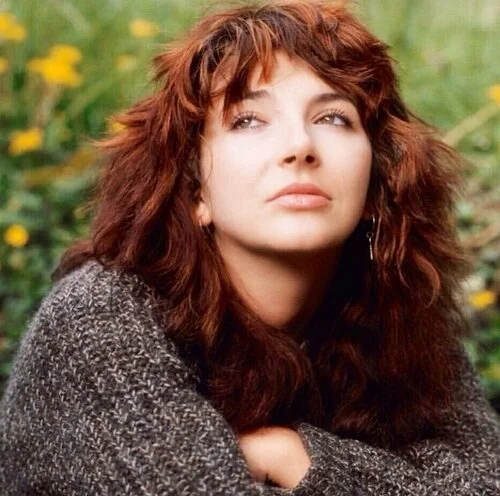
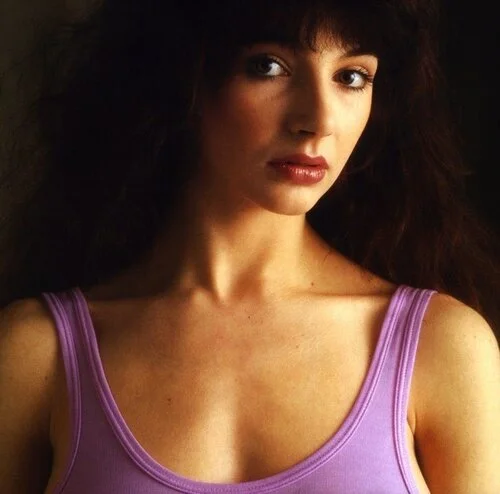
IN THIS PHOTO: Kate Bush in 1978/PHOTO CREDIT: Gered Mankowitz 

The Sexualisation of Kate Bush By the Media

___________

THIS might not seem like as especially….

 IN THIS PHOTO: Kate Bush in Liverpool in 1979

festive feature but, previously, I have looked at how Kate Bush’s approach to romance and sex through her music is unique. She has this ability to switch between something quite poetic and oblique to being very direct and confident. Certainly, in many of her songs, Bush has exuded such eroticism and passion but, detaching the artist from the woman, and she herself never wanted to be seen as a ‘sex symbol’. If songs like Feel It (The Kick Inside), and In the Warm Room (Lionheart) suggested someone who, early in her career, was more than confident enough to speak about sex and desire in very unadorned terms, maybe the media took that to mean that Bush wanted to be seen as a sex symbol. The woman who appeared in the Babooshka (from Never for Ever) video as a sword-wielding heroine is very different to the more shy and ordinary Kate Bush we hear in interviews. An article from Far Out Magazine earlier in the year raised a particular encounter where Bush had to refute the notion she was a sex symbol – and the interviewer promptly ignored her answer:

Bush was quickly labelled a sex-symbol following her breakthrough and, with her own songs finding new and expressive ways to talk about the still taboo subject, she was soon categorised under her physical attributes and her flirtatious performances. It was a notion that she wholeheartedly refutes in this rarely seen interview footage from 1979.

The footage comes from Check It Out one of the North East’s attempt at conquering the holy land of ‘Youth TV’. Sometimes affectionately known as Yoof TV, it was created in an attempt to try and tap into the new teenage market through music television. More often than not it was created by middle-aged men who had little to no clue about the youth subcultures which were rife in the mid-to-late seventies.

One such programme was the Tyne Tees, Check it Out. It had all the classic tropes of Youth TV, poorly dressed set, poorly dressed presenters and poorly skilled studio staff. Yet despite this, with the promise of a keen viewership, the show managed to hook a fair few rock and roll ducks in its time, including Kate Bush.

Chris Cowey is the presenter at this time for the show—before he would go on to host Top of the Pops—and he does a fine job of highlighting the casual misogyny of the times with his introduction. With all the grace of a bulldog dragging its balls along the floor, Cowey licks his lips and decade-defining moustache at just the mention of Bush’s name.

Handing over to the interviewer, who is thrilled to grab some time with Britain’s latest superstar, Bush is charming and confident. One thing that’s up for discussion is both Bush’s use of sex and vivid imagery in her songs and the notion that she has become a sex symbol. It’s something Bush moves to quickly shut down.

Bush confirms that while most songs that dominate the charts are about sex in one form or another, “Most of the pop songs are about sex whether they say it obviously or not,” she says, before adding: “It’s been like that for years. The subject is to write about ‘boy meets girl’ that’s the basics of it”. It highlights the singer’s already strong introduction to the music business, having already worked with some of the industry’s finest during her short career.

The interviewer then asks if she comes in for criticism for being a sex symbol, Bush expertly replies: “I do. But as long as people appreciate me as a musician and an artist then that’s great. If anything comes on top of that then it’s just a bonus, as far as I’m concerned.

“But I really want people to understand I am a serious artist—I’m not just flirting around with the business you know?” At this point, our interviewer cracks an awkward laugh. It’s a laugh which is quickly stifled by Bush’s powerful gaze as she tries to make her point. “I take it very seriously”.

Unfortunately, this message falls somewhat on deaf ears as the interviewer hints back to the sexual imagery of the songs and asks if they’re derived from personal experiences. Considering that most of Bush’s songs at the time took place in narrative worlds novelists would be proud of, it’s a silly question and is treated as such”.

I think one of the greatest things about Bush’s music is how, through her career, she has been very honest and open about her approach to sex and longing - she adores the male figure and why shouldn’t she write about her passions?! Maybe her early albums like The Kick Inside (her 1978 debut) are more focused on romance and love than what was to come later, but there has never been a sense of Bush defining herself as someone obsessed by sex. I think early photoshoots might have caused some misconceptions.

 IN THIS PHOTO: Kate Bush in 1978/PHOTO CREDIT: Gered Mankowitz 

I have written about the photoshoot for the Wuthering Heights single by Gered Mankowitz, where Bush wears a leotard and, to some, that was her showcasing her body and sexuality. In actuality, it was Kate Bush being snapped as a dancer but, because the shoot was quite sexy, the media took a very tabloid approach. I guess every male interviewer fancied themselves as a potential suitor when it came to talking with Kate Bush – as Graeme Thomson notes in his biography, Under the Ivy: The Life & Music of Kate Bush. Right from her first single, Wuthering Heights arriving, there was a skewing away from the brilliance of her music – by some people – to what Bush looked like and how she was this kind of temptress. Look at the videos (the U.S. and U.K. versions) for Wuthering Heights and there is nothing provocative and sexual about them. Bush is a beautiful woman, sure…but she was never marketing herself as a femme fatale or this edgy and sexualised Pop artist. In an interview with the Daily Express in 1979, we see how she responded to being seen as a sex symbol off of the back of Wuthering Heights’ success:

With singer Kate Bush sex takes very much of a second place.

Music is the love of her life.

Twenty-year-old Kate, flushed with the success of her spectacular debut at the London Palladium, made that plain yesterday.

IN THIS PHOTO: Kate Bush in a still from the Wuthering Heights video, 1978/IN THIS PHOTO: Gered Mankowitz 

However if you do think of Kate as a singer with sex appeal -- in that order -- it's quite OK now.

But she wasn't so happy about it when she was released on the world a year ago with the smash hit number "Wuthering Heights," and was immediately hailed a as a sex symbol.

Worried

"That worried me very much," she said. "I did not want people to start looking at me just as a face and a body, rather than a person who was presenting music.

" "As long as the 'sex symbol' tag doesn't get in the way of that then I'm very happy to be called one."

As for her own love life, Kate said: "I have no time for constant boyfriends. I am obsessed with work.

" I find myself worrying about perfection in everything. My one danger is that I can run out of fuel because there is so little time to relax".

I think Kate Bush has inspired a number of artists regarding how they can tackle taboos and deal with sex through music. Bush has never been overly-raunchy. She is a brave and very honest songwriter who was very different to a lot of solo female songwriters of the 1970s. From her contemporaries in the 1970s such as Debbie Harry to Madonna in the 1980s, there has always been this sexism and judgement  levied at women who cover romance and sex through their work.

 IN THIS PHOTO: Kate Bush in 1980

Kate Bush is a fashion icon who has inspired legions of her fans through the years. Wuthering Heights is very much a video of innocence and the gothic; look at her future videos and there is so much variety in terms of themes. I don’t want to get into a whole discussion about sexism in the music media at the moment. When faced with a beautiful young woman who, among many other subjects, was discussing her passions and inner-thoughts so beautifully,  many in the media focused heavily on that area and defined Kate Bush. As this article from 2014 explores…many women are labelled by men (not exclusively, but for the majority of the time) in the media - and the real depth and meaning of their work is ignored. Whilst Bush has never seen herself as a feminist, she is this very engaging and incredible writer and performer who, in some photos and videos, has this more sexual edge. Men in the same situation are celebrated and idolised when they are more provocative, whereas women are preached to and criticised. I am writing about this subject because, even in 2020, there are articles about Kate Bush where the words ‘sex symbol’ are used; like that is the crux of her being and she is this supermodel who was flaunting her body to get noticed! I guess, over forty years since her debut single, Bush is not as bothered by those old interviews and how many in the media represented her.

It is good that perceptions changed through the years because, prior to 1985 – when Hounds of Love was released -, there were a lot of people in the media either reducing Bush to the role of a sex symbol or, when she did not release an album so quickly, she was a recluse – which, to be fair, is something that is still applied to her! I refute the idea that Bush was not a complete and true artist prior to Hounds of Love and that much of her early work was her trying to search for her voice. Right from the beginning, here we had this extraordinary and original artist who was mishandled by the media for many years. In fact, when a record label representative from EMI learned that a lyric from Breathing (from Never for Ever) would contain “Breathing/(Out, in, out, in, out, in)”, they naturally assumed it was a sexual reference! Maybe we can laugh about the naivety and ignorance that existed back then but, as we still see it in the industry, I wonder whether attitudes will ever change. There was a natural maturation and change regarding Bush’s work so that, by Hounds of Love, she was seen as a more serious artist; her songs were less involved with the nature of attraction and sex and more concerned with the complexity of love – that said, The Sensual World’s title track, and Misty from 2011’s 50 Words for Snow did get some eyebrows raised. It is sad that some did not treat Bush with the deference and respect that she deserved at various points in her career, and that she was asked whether she considered herself to be a sex symbol. The ensuing years have shown her to be this hugely inspiring and innovative artist who changed music and is one of the greatest songwriters the world has seen. I know that this, fortunately, will be Kate Bush’s…

ULTIMATE legacy.

FEATURE: Like a Broken Record (In the Good Sense): The Continuing Popularity and Demand for Vinyl

FEATURE:


Like a Broken Record (In the Good Sense)

PHOTO CREDIT: @amartino20/Unsplash 

The Continuing Popularity and Demand for Vinyl

___________

THIS is a subject that I keep coming back to…

 PHOTO CREDIT: @annietheby/Unsplash

but, as it is good news, I thought I would raise it once more! I am not surprised that there is a continuing rise in vinyl sales. It is not just in the U.K. where vinyl sales are roaring: the U.S. market is seeing its biggest year for vinyl sales for a long time. This article gives us some details regarding vinyl sales in the U.K. this year:

Vinyl sales grew to their highest level since the Britpop era this year, as consumers turned to the format during the coronavirus pandemic.

Some 4.8 million vinyl albums were purchased in the UK over the past 12 months, up nearly a tenth on sales in 2019, according to figures from the British Phonographic Industry (BPI).

This marks the 13th consecutive year of growth for the format since 2007.

It is also the highest total since the early 90s, when bands such as Blur and Oasis dominated the charts.

Sales initially dipped during the first lockdown but by September had began showing positive year-to-date growth.

Campaigns such as LoveRecordStores, the postponed Record Store Day and National Album Day also helped rally sales for independent record shops and specialist chains.

The end-of-year figures, released by industry body BPI using Official Charts Company data, indicate vinyl albums now account for nearly one in five of all albums purchased (18%).

The BPI expects to announce classic albums Rumours by Fleetwood Mac, (What’s The Story) Morning Glory? by Oasis and Back To Black by Amy Winehouse as among the year’s best-selling vinyl albums as part of its annual report.

PHOTO CREDIT: @rocinante_11/Unsplash 

It also projects that some 157,000 cassettes have been purchased in the past 12 months, double the total of the year before and the highest number since 2003, when 243,000 tapes were sold and Now 54 was the biggest seller on the format.

This would mark an eighth year of consecutive growth for the format, which has returned to fashion in recent years and is now available on many major label album releases as standard.

Geoff Taylor, chief executive of BPI, said: “In a year when all our lives have changed, music’s power to inspire has never been more evident. The immediacy and convenience of streaming make it the go-to audio format for most of our listening, but more and more fans choose to get closer to their favourite artists and albums on vinyl.

“It’s remarkable that LP and audio tape sales should have risen at all given the challenges we’ve all faced. The surge in sales despite retail closures demonstrates the timeless appeal of collectable physical formats alongside the seamless connectivity of streaming.”

The BPI will report its final music consumption figures on January 4 2021”.

It is, perhaps, not a shock that people have wanted to support record shops at a time when we are all being hit hard. I think the lack of human contact has, oddly, resulted in people seeking out physical forms of music. Many have been aware that, without high sales, many record shops will close – the desire to see these invaluable elements of the community thrive has been at the forefront for record lovers.

It is heartening that there is some positive news from the music industry when it has been a struggle and really hard for venues and artists. I do think that, when we are past the worst of things, the appetite for vinyl will continue. As Music Week reported, music is providing us with strength and hopefulness:

Geoff Taylor, chief executive BPI, BRIT Awards & Mercury Prize, said: “In a year when all our lives have changed, music’s power to inspire has never been more evident. The immediacy and convenience of streaming make it the go-to audio format for most of our listening, but more and more fans choose to get closer to their favourite artists and albums on vinyl.

“It’s remarkable that LP and audio tape sales should have risen at all given the challenges we’ve all faced. The surge in sales despite retail closures demonstrates the timeless appeal of collectable physical formats alongside the seamless connectivity of streaming.”

Predicted best-selling vinyl albums for 2020 (based on Official Charts Company data)

1.   Fleetwood Mac – Rumours

2.   Oasis – (What’s The Story) Morning Glory?

3.   Amy Winehouse – Back To Black

4.   Nirvana – Nevermind

5.   Harry Styles – Fine Line

6.   Kylie Minogue – Disco

7.   AC/DC – Power Up

8.   Queen – Greatest Hits

9.   Idles – Ultra Mono

10. Arctic Monkeys – Live At The Royal Albert Hall”.

It is a similar picture in the U.S. There is some really positive news regarding vinyl sales. This article explains more:

Vinyl sales reached another record high this past week in the US according to Billboard, citing Nielsen Music/MRC Data, buoyed by Christmas shopping. 1,842,000 vinyl records were sold in the week ending December 24.

This is the biggest week since Nielsen started tracking vinyl sales in 1991, so one would reasonably expect that when vinyl was the standard format before the 1990’s that sales may have been higher. The prior two weeks in December, records were also set for vinyl sales in the US with holiday shopping. Also important is that vinyl sales outpaced CD sales: 1,842,000 to 1,671,000. This is only the fourth time this has happened since 1991.

Of the 1.842 million records sold, 733,000 were sold via independent record shops, the highest since 1991, so there is some hope for these stores in a very tough year”.

Classic albums are still proving hugely popular on vinyl and capturing new generations but, happily, a few new albums have appeared in the top-ten of 2020. I know that many artists cannot make good money from streaming and, when there has been no touring, vinyl sales are crucial regarding revenue. I am not certain what things are like for the smaller artists and vinyl sales, but I have seen plenty of good news online where artists have thanked their fans for buying their music on vinyl.

 PHOTO CREDIT: @ekrull/Unsplash

I have not talked about cassette sales but, as they are doing well too, it does seem that the desire for the physical is at an all-time high. One would think that, the more we lean on digital music, the bleaker it would be for vinyl. I am interested to see what happens in 2021. When we start to get back to some sense of our old routine, I do think we will see a swell in sales. A lot of people are ordering vinyl online so, when people are more comfortable buying them in-store (and social distancing is relaxed), I think we will see a shift. I have mooted before that an increase in vinyl sales could see more record shops appear on the high street. Maybe the high rent costs are scaring people off setting up shop but, even in a city like London, there are not as many record shops as you’d want! I do hope that we not only see the survival and prosperity of existing shops, but there are also new ones appearing later next year. Although Christmas buying has helped when it comes to vinyl sales, I don’t think it just a matter of things improving at the end of the year. All through 2020, there has been this demand and increased love for vinyl. In a year when things have been tough and we haven’t been able to bond at gigs and festivals, records are helping to lift the mood and give us a physical connection with an album. Let’s hope that the vinyl market continues to swell and explode, as high sales and good news is…

 PHOTO CREDIT: @alexiby/Unsplash

JUST what we need to hear right now.

FEATURE: The Lockdown Playlist: Make Some Noise: Beastie Boys Jams, Songs They Have Sampled, and Artists They Have Inspired

FEATURE:


The Lockdown Playlist

Make Some Noise: Beastie Boys Jams, Songs They Have Sampled, and Artists They Have Inspired

___________

THIS bumper Lockdown Playlist…

 PHOTO CREDIT: Andy Freeberg/Mediapunch/REX Shutterstock

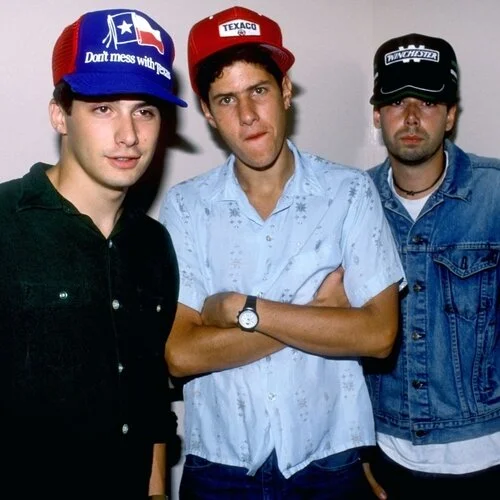
is a nod to one of my favourite groups ever: the mighty Beastie Boys. I grew up listening to them, and their songs transformed my way of looking at music and what it could be. I don’t think I had listened to much Hip-Hop prior to the Beasties coming along, and I was intrigued by their delivery and how they spliced together different songs to make this very evocative and stunning thing! Because the surviving members of the group (Michael ‘Mike D’ Diamond, and Adam ‘Ad-Rock’ Horovitz; Adam ‘MCA’ Yauch died in 2012) are taking over BBC Radio 6 Music from 10:30 on New Year’s Day, I wanted to dedicated this playlist to them. The guys are playing some of their favourite cuts and songs from artists who have inspired them. This Lockdown Playlist is a selection of my favourite Beastie Boys songs, together with tracks they have sampled in their work, and some artists that they have inspired. Make sure you tune in on New Year’s Day at 10:30 to hear Mike D and Ad-Rock bring us…

yyyyy.jpg

 PHOTO CREDIT: L. Cohen/WireImage

SOME quality tunes!

FEATURE: Spotlight: Ela Minus

FEATURE:


Spotlight

Ela Minus

___________

ONE of the exceptional debut album…

tttt.jpg

that I almost overlooked this year came from Colombian-born artist, Ela Minus. acts of rebellion was released on 23rd October, and I was aware of her work before the album came out. acts of rebellion is a remarkable album, and one that I have been playing a bit recently. If you have not heard of Ela Minus, then follow her on social media (there are links at the bottom). Her Electronic music switched between quite dreamy and immersive sounds and something more buzzed and hardcore. As a vocalist, I get embers of Lana Del Rey and Grimes, but Minus is very much her own artist. I love what she is putting out, and it will be interesting to see what she released on future albums. I think acts of rebellion has enough to keep Dance and Electronic super-fans happen, but the compositions are quite accessible and you will find yourself coming back to them time and time again. I want to sort of do things backwards and do things differently. I will source from some interviews soon but, as acts of rebellion is quite fresh and has got a lot of praise, I will bring in some reviews first. This is what Pitchfork said when they reviewed the album:

On the album’s second half, Minus looks inward, and when she draws from life’s everyday scenes her songs become far more nuanced. On “dominique,” she describes a haze of nocturnal living: spending too much time alone, sleeping well into the evening, and surviving on coffee and liquor. Her voice is breathy and light—a timbre she maintains throughout the album, but one particularly suited to the lone narrator wandering through the wee hours.

“The world is made for those who sleep at night,” she speculates over a bittersweet melody that sounds like New Order noir. It’s dance music interested in the loneliness of late-night partying, and Minus tends to the subject with a subtle hand.

acts of rebellion examines the quiet, intimate moments of life as well as concepts that are vast and difficult to convey. Minus approaches both with rich and sophisticated electronic music; it may not be outwardly provocative, but it serves as a place to process initial visions of resistance, those that existed in her private space as she wrote these songs. Perhaps that is a kind of everyday change—acts of rebellion are sometimes dreamt up in your room, but they’re rarely completed there

In a hugely positive review, NME extolled the talents of Minus and highlighted a few tracks from a truly wonderful album:

With its anti-capitalist, anti-oppression cause – “we’re afraid we’ll run out of time, to stand up for our right, there’s no way out but fight” – the pounding ‘Megapunk’ is a boots-on-the-ground anthem. It stays true to Ela’s mission to make ‘bright music for dark times’, a mantra she scrawled on her synthesizer case when Donald Trump was elected US President in 2016. Forceful hardware synths and her softly-sung and insistent vocals (“nothing is… impossible”) elevate a seemingly generic slogan into a fierce rallying cry.

‘El Cielo No Es De Nadie’ – which Ela says refers to the Spanish phrase, ‘I’ll give you the sky’ – is just as powerful, though equally danceable thanks to electro buzzes and its infectious hummed chorus. Her music-with-a-mission bangers is particularly timeless, but as Ela put it to NME back in April: “There’s so much shit happening in the world and we all need to act on it”. This debut harnesses the spirit and will to overcome forcefully and with inclusivity.

‘Dominique’, though deceptively soothing, details the perils of being ground down, as her world-weary drive for change takes its toll. “Today, I woke up at 7pm; my brain feels like it’s going to break“, she sighs over juxtaposing dream-like synths. “I haven’t seen anyone in a couple of days“, Ela admits in a rare moment where victory does not seem quite the inevitable outcome”.

I sort of listened to Ela Minus’ music before studying and doing some research. I think that she is a really fascinating artist and, rather than me trying to explore her past and how she got to this point, I am going to take some bits from a couple of interviews that paint more of a picture. As we learn from a very in-depth and amazing interview with Stereogum, music was very much in Ela Minus’ bones very young:

Born Gabriela Jimeno in Bogotá, her love affair with music started early: First with strains of metal creeping through her older brother’s door and then with drumming in a punk band alongside her childhood friends. For much of Jimeno’s pre-teen and teen years, that band — Ratón Pérez — was the focal point; she and her bandmates all dreamt of going on to study music at Berklee for college. They went as far as playing at SXSW, but then the band dissolved when only two of them got accepted at Berklee. One of them was Jimeno.

Those years in Boston proved transitional and educational, though not always in the academic sense. Jimeno felt out of place within that kind of environment, unable to relate to the competitiveness and/or career goals of her classmates. Two things seemed to salvage that time for her: Becoming a student of the drummer Terri Lyne Carrington, and beginning to go out to clubs around town and dancing to techno. At the same time that Jimeno studied jazz drumming, she double majored in music synthesis. After college, she wound up in Brooklyn — picking up session drumming gigs, playing in an indie band, building synths for a synth company. Things were pretty good, but they weren’t quite right.

I think that acts of rebellion is Minus’ finest work, but she has evolved and built herself as an artist since her earliest days. It is really interesting seeing how Minus’ work has come on and developed. In the interview, she discusses how her E.P.s differ to what she is producing now, in addition to what it was like growing up in Colombia:

Ela Minus began experimenting and figuring out her sound across a couple of EPs. “I remember thinking I was just going to make EPs, because I want to work fast and show my process,” she explains. “Because I have no idea what I’m doing so I want to experiment as I go, without thinking, keeping the honesty of it.” While she’s cited Radiohead and Kraftwerk as formative influences, there was a certain set of contemporary electronic artists she looked to as inspirations: Acts like Caribou, Four Tet, Floating Points, material she describes as “electronic music with heart and soul.”

As Jimeno figured out what Ela Minus could be, that was a north star of sorts. “There’s a place — and it’s a beautiful place — for straight techno songs, but there’s another place for songs,” she says. “On the recording side of it, I think I’m interested in that.” That became the other form of synthesis for Ela Minus, a club environment mixed with songwriting. People took notice; she toured a ton in recent years, and if not for the pandemic would’ve joined Caribou themselves on the road this past spring.

“I think growing up in a place like Colombia, it’s not really a choice to be political,” she reflects. “I don’t know, still, if I would consider my album a political album. I think it’s the album of someone who’s living in 2020 and was writing in 2018.” Acts Of Rebellion, instead, speaks to a personal level of action, a choice to keep moving through the mess of the 21st century and make something out of it. Even if Jimeno’s background means the personal and political are more deeply intertwined than, at least at certain points in semi-recent history, we would’ve regarded them to be in America, the album still fires off in various directions beyond its handful of defiant tracks”.

I want to end by sourcing from Subgenre, as their interview is really interesting. The nature of Minus’ work appeals to me; how she can be quite improvisational but sound so tuned and layered. In the interview, she was asked about her working method - in addition to whether she would be collaborating with others on future releases:

I feel like a lot of the time as artists, we feed into perfectionism and want to be almost controlling over our work, but you’ve described your process as very improvisational. How did you learn to trust your intuition when making art?

I’m not sure if I learned to trust it, I think I just learned to take chances and remove myself and my fear out of the equation. So, I think that helped a lot.

I really love the cover art for this album. Can you talk me through the process and inspiration behind creating that?

Yeah, absolutely – the idea was that I often share these moments when I’m on stage where I get off the stage and look at people in the eyes and make very direct eye contact, and I wanted to emulate that moment with the cover. And I wanted people to have that moment with them, at home. So I just wanted to be able to look at them directly in the eyes.

With the changing nature of the music industry this year, making collaboration not impossible but certainly much more difficult, have you found that your creative process has changed a lot, or has it always been quite independent?

I think since I started this solo project it has been very independent. Before this, I only – I did it the complete opposite way. Everything I did before was communal, and in bands, and in groups. I actually felt, after making this record, so disconnected from everything. I had wanted to start collaborating more which, as you say, definitely not the right year for that. But yeah, I think there’s a lot of valuable ways of working, and I think even if you get to collaborate with more people the, like, the initial part of it being very personal and very, uh – yourself by yourself. Like, writing the first ideas. It’s still the way I think I would work regardless.

In future do you see yourself continuing this process? You have one collaboration on the album – do you see that increasing? Or how do you see that changing in the future?

Yeah well, I think more so, more than anything, I’m very happy that now I have, I feel like I’ve found more my kind of people if that makes sense. Having found Domino and the community around it, I’ve definitely been able to reach people that I think I would love to collaborate with so I definitely see that increasing. Also I’ve been very focused in getting to the bottom of what I can do with very limited resources, like with very limited machines and synths and just myself, and I really wanted to push the limits of how far I could go by myself before I could reach out to other people and other synthesisers also. And I think I’ve reached that point where I know myself enough to know what I can bring to the table and what I can’t, and I think that makes collaborations even better, you know. Because they’re truly you looking for something that you know you don’t have out of a creative idea and not out of, like, a lack of ideas, you know? Or like, not because you’re missing something but because you wanna, uh, you want something that someone else has specifically. And I think that’s the way to do it. So definitely increasing”.

Go and investigate Ela Minus and the acts of rebellion album. It is an incredible work, and one that hooked me in when I first heard it. I hope that she puts out more music very soon, as one can feel lifted and rejuvenated by listening to Minus; there is also a more relaxed tone in places that eases and cools you. I think she will be a big star of the future so, for that reason, make sure Ela Minus is…

PART of your musical rotation.

____________

Follow Ela Minus

FEATURE: Vinyl Corner: They Might Be Giants - Flood

FEATURE:


Vinyl Corner

They Might Be Giants - Flood

___________

I am not sure how far….

They Might Be Giants got through their thirtieth anniversary tour of Flood, but I suspect that there were dates that were moved because of the pandemic. The Brooklyn duo’s third studio album was released on 15th January, 1990 and, if you can, I would recommend people buying the album on vinyl. It is a phenomenal album and, to that point, their most ambitious and biggest album. I think my first exposure to the album – and They Might Be Giants – was the song, Birdhouse in Your Soul. That was released as a single in 1989, and I was taken aback by the blend of the quirky and catchy. It was definitely different to any other songs that I had encountered at the time. The rest of the album is filled with invention, wonderfully original sounds and seamless brilliance. I will bring in an article highlighting the album in addition a review. The three singles from Flood, Birdhouse in Your Soul, Istanbul (Not Constantinople), and the domestic promotional track, Twisting, are phenomenal. I think Flood is the definitive album when we think of They Might Be Giants even though they have put out twenty-two albums – their latest, The Escape Team, arrived in 2018. Although the duo (John Flansburgh and John Linnell) are on fine form through the album, I think producers Clive Langer and Alan Winstanley helped pushed the They Might Be Giants sound in new directions.

Also, at the time, the duo utilised new equipment and recording techniques - including home-recorded samples, which were programmed through Casio FZ-1 synthesizers. Flood has won massive praise from critics and, at the start of a decade that was going to provide us with so much genius and so many musical breakthroughs, I think that the album can stand alongside the very finest from the time. What has always stood They Might Be Giants aside is their unusual and unique lyrics; the fact they tackle unconventional subjects and are far from ordinary! The vocal sounds are brilliant as they are sort of conversational and ordinary but, the more you listen, the more nuance and richness you find. It is hard to explain, but albums like Flood need to be listened to over and over because there is so much to enjoy! If you want a track-by-track guide, then have a read of this article. I want to bring in an article from The A.V. Club from earlier this year, where Gwen Ihnat writes about the duo avoiding the major label ‘curse’ that some artists experience:

Leave it to two boundary busters like John Flansburgh and John Linnell to upend even that familiar trope: They Might Be Giants’ third album and major-label debut, Flood, which came out 30 years ago this month, still stands as the band’s watershed moment. “In so many ways, when people tell the standard ‘We got signed and it sucked’ stories, we had the opposite experience, and I feel very grateful that it was so positive,” says Flansburgh now.

For what would turn out to be their fateful third release, the pair signed with Elektra. But “they’ve never really relied on being signed… they play the songs they want to play,” explains Sue Drew, Elektra’s then-VP of A&R, in the hard-to-find TMBG documentary Gigantic: A Tale Of Two Johns (the DVD is currently $88.50 on Amazon).

They Might Be Giants spent most of their major-label recording budget on just four of Flood’s 19 songs: “Birdhouse,” “Istanbul (Not Constantinople),” “Your Racist Friend,” and “We Want A Rock,” aided by legendary producers Clive Langer and Alan Winstanley. Flansburgh describes, “They had produced hits for Madness and Morrissey, and they’d done ‘Come On, Eileen,’ which was a huge hit. They were commercially England’s biggest music producers at the time. The fact that they were interested was a much bigger get for the record company than getting us.”

That relationship proved to be advantageous, helping Linnell and Flansburgh transition from a “home-brew” outfit to a more formidable setup. While nowadays, any bedroom producer can craft something in ProTools, “Back then, you didn’t have any access, you didn’t have any flight hours,” Flansburgh describes. “It was all earn as you learn, on-the-job training. So working with Clive and Alan was like a crazy full-immersion master class in how song structure works, how sonics work, how instruments interact successfully, how to put effects on vocals, how to make things not sound corny—like a million tricks that were pouring out of these guys. I feel like we got so much more out of working with them than a bunch of good-sounding songs. They were really generous with us. They didn’t need to be helpful to us, but they were incredibly kind and cool.”

Flansburgh also explains the band’s inclination to expand the parameters of rock, which they do over and over again on Flood. “I think one of the things that’s very tricky and tough about us in how we fit into the rock culture is that people often think that our expression in a way is kind of anti-rock. I mean, we wouldn’t be in the rock business if we didn’t love rock music. There are a lot of people who want their rock music very dangerous and druggie and very mysterious. And I completely understand that and respect that, but it doesn’t really reflect the kind of people that we are. We’re just being authentic to ourselves, or trying to be, and trying to do interesting work, and that’s who we are. We don’t need that many more Keith Richardses.” “Particle Man” has also had a second life over at Tiny Toons Adventures, and sounds like the kind of song a one-man band could have created, carrying a bass drum on his back”.

I really love Flood and, through their career, Flansburgh and Linnel have continued to push forward and release music that is in a league of its own. Stream the album if you cannot buy the vinyl; it sounds great no matter how you listen to it. Thirty years after its release and Flood is still offering up tantalising revelations, wonderfully memorable moments and huge pleasure. I will end by sourcing from an interview SPIN provided regarding one of the 1990s’ best albums:

Boundless imagination, loopy mix-and-match arrangements and a gyroscopic sense of what makes a pop tune click are still responsible for the easy and abiding appeal of TMBG’s ingenious material. Improved production facilities and, on four cuts, British hitmakers Clive Langer and Alan Winstanley (Madness, Dexys Midnight Runners) just make them sound better than ever.

 In a typical avalanche of how’d-they-come-up-with-that ideas, TMBG open Flood’s gates with a tongue-in-cheek promotional jingle for the album. They put on a ritzy history lesson about Turkish geography called “Istanbul (Not Constantinople),” describe the vindictive fallout of a failed relationship to the accompaniment of ’60s Farfisa beat in “Twistin’,” promote prosthetic foreheads (?!) in “We Want a Rock” and put an oomph superhero spin on science with “Particle Man.” The piano-and-vocal ballad “Dead” weighs the relative merits of life and reincarnation: “Now it’s over, I’m dead and I haven’t done anything that I want/Or I’m still alive and there’s nothing I want to do.” “Your Racist Friend,” a heavy slice of moral indignation, nonchalantly borrows its topic, ska beat, and title from a Specials song.

Throughout, the Giants reel off memorable (not a subjective issue: there is ample empirical proof) melodies, punctuated by assorted bursts of inspired madness, as if there were nothing to it. Like the bullethead in Physics 101 who aces every exam and screws up the grading curve for everyone else, TMBG should be in a class by themselves”.

If you are new to They Might Be Giants, then I would suggest starting with Flood. I think it is their best album but, like all artists, it is worth checking out all they have done to get a sense of how They Might Be Giants have changed through the years. Even though 2020 was meant to be a celebratory year for the duo and they had hoped to perform more, I am sure they will be back on the road soon enough – a new album, BOOK, has been announced for next year. Go and spend some time investigating…

THE stunning Flood.

FEATURE: Bootlegger: The Wonderful Wizards of Oz: Another Big Innovation from the Melbourne Band

FEATURE:


Bootlegger: The Wonderful Wizards of Oz

xxxx.jpg

 IMAGE CREDIT: King Gizzard and the Lizard Wizard 

Another Big Innovation from the Melbourne Band

___________

MAYBE this requires a bigger feature…

regarding the way artists are promoting and marketing their music in new ways. I always love it when musicians go beyond the ordinary and find these innovative ways of getting their music to fans. Whether it is something like offering cassette versions or a surprise album release, through to something similar to what Radiohead did with In Rainbows in 2007 with a pay-what-you-want option. The Melbourne band, King Gizzard and the Lizard Wizard, have come up with a great idea that allows fans and labels a chance to ‘bootleg’ their material – releasing it how they want and, I guess, being able to release albums of the band’s work and combining all sorts of different tracks together. NME explain more:

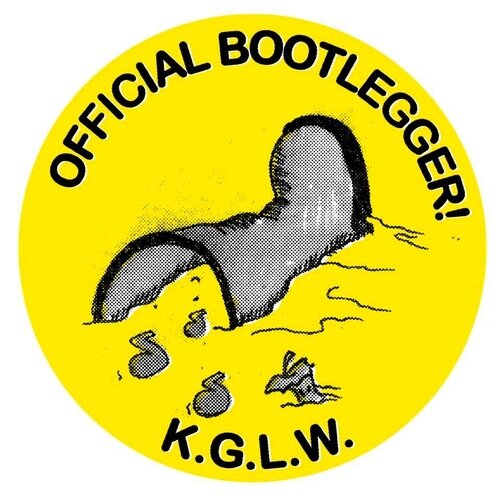
King Gizzard And The Lizard Wizard have launch a new bootleg program, which will allow fans, indie labels and more to release the band’s music how they wish.

The prolific Aussie psychsters have launched a new ‘Bootlegger’ section of their official website to house the new scheme.

On the website, the band have uploaded master files for nine full-length albums, including live and demo recordings, a new rarities album called ‘Teenage Gizzard’ and their 2017 free download album ‘Polygondwanaland’.

Fans, labels and more are then allowed to download the files from the website and package them into new releases however they see fit, on vinyl, CD, tape and beyond, as long as they send the band copies to sell on their online store.

“Yo indie labels, bootleggers, fans, weirdos. We’ve got a deal for ya…” the page says. “If anyone wants to release these albums, you’re free to do so. Below you’ll find links to audio master files and cover art. Feel free to get creative with it if you like – it’s yours.

“Only deal is you’ve gotta send us some of them to sell on GIZZVERSE.COM –  whatever you feel is a fair trade is cool with us. Ideas: double LPs, 7”, remix, reimagined cover art, bizarre looking wax, live show box sets, tapes. Or keep it simple – that’s totally ok. Anyone keen?!”

“HOLY SHIT thanks everyone who hit us up with a plan to bootleg records already! We’ll write everyone back ASAP,” the band wrote on Twitter the day after the scheme was announced.

“Oh, and don’t forget you gotta send us copies for us to sell on gizzverse too. Whatever you feel is a fair trade for the use of our tunes”.

Over the past few weeks, I have been thinking about ways that artists can engage with their fans more through fanzines. I think so often we get albums and songs released with a lot of digital promotion - and it can get quite boring. I appreciate the fact that artists need to promote in the most effective way that they can but, looking at what King Gizzard and the Lizard Wizard are doing, and it is a typically interesting step from them!

Before moving on, I want to bring in a review for their most-recent studio album, K.G. The Line of Best Fit were keen to express their praise and admiration:

Anyone would think that a band releasing two albums a year on average for 8 years would eventually become uninspired and want to take some sort of a break. Australian rock band King Gizzard and the Lizard Wizard haven’t stopped since the release of their debut album 12 Bar Bruise in 2012 – yet they’re still teething with innovative ideas.

This is proven with their new 16th studio album K.G. which serves as a sequel to their 2017 album Flying Microtonal Banana, now one of their most highly regarded albums. Recorded and produced remotely with the band scattered around Melbourne thanks to the ongoing pandemic, K.G. shows that the band were built to swiftly adapt to new situations and not lose their creative spark. Not a single drop of that unnamed alchemical-something that makes King Gizz so special is missing on this album.

K.G. opens with a short western-inspired instrumental track titled “K.G.L.W” that slowly builds up to the track “Automation” – a classic King Gizzard tune full of their iconic fuzzy guitars and psychedelic instrumental fills.

Much like the album’s 2017 prequel, K.G. was recorded using a microtonal musical scale that is traditionally used in Turkish and Arabic music that requires quarter tone tunings on custom made instruments. “Automation” is one standout track full of brilliant microtonal guitar riffs. The album continues with high-energy microtonal tracks that tirelessly animate the middle of the album. Despite being surrounded by some of the album’s weaker tracks, “Straws in the Wind” contains brilliant acoustic guitar and drumbeats that sound unearthly but wonderful in the microtonal scale.

“Intrasport” is undoubtedly the best track on K.G. that projects the aesthetic of an '80s pop song with its synth-based hooks and groovy melody. It’s the track that truly proves the endless amounts of inspiration and ideas King Gizz continue to pump out - as it’s a track that’s nothing like they’ve ever done before.

The album closes with the penultimate and beautifully melodic acoustic-based lead-single “Honey”, wetting the listeners appetites for the heavy and dramatic final track “The Hungry Wolf of Fate” which is an outstanding close to the album.

Overall, it’s clear that King Gizz’s tireless effort over the past 8 years still has no end in sight as they release yet another radical and innovative album which doesn’t fall short of the endless inspiration that King Gizzard continue to shine”.

The band have released an incredible sixteen studio albums since 2012 and they always do things differently. From 2015’s Quarters! – consisting four tracks that are each 10:10 in length - to 2016’s Nonagon Infinity -  the album was designed to play as an ‘infinite loop’, where each song segues into the next –, King Gizzard and the Lizard Wizard are subverting expectations. Take 2017’s Flying Microtonal Banana and its unique concept: it was recorded in quarter tone tuning, where an octave is divided into twenty-four (logarithmically) equal-distanced quarter tones. It doesn’t surprise me that the guys have come up with another interesting proposition with their Bootlegger website section.

I appreciate that other artists are doing similarly original things, but I wanted to highlight the Australian band as they are endlessly fascinating. I have been thinking about something like bootlegger or releasing an artist’s work how you want. Maybe it ties into my love of a mixtape, but I have always wanted to compile my own selection/album of a particular artist’s work and then put it out into the world in a really cool way. With King Gizzard and the Lizard Wizard, they are urging people to send their compilations to them so they can sell on their website. Because the band’s catalogue is so extensive, rich and varied, I am not surprised there is already a huge reaction where so many people want to get involved! I am familiar with their albums but, learning of their Bootlegger initiative, and I am tempted to get involved…as it not only allows closer dialogue and connection with King Gizzard and the Lizard Wizard, but I feel other artists might do something similar. It can be hard to have a relationship with an artist when most music is digital. I am fascinated to see how the Bootlegger idea takes off. I really love news stories like this, and I hope that 2021 is filled with unexpected ways of releasing albums and artists bonding with their fans through great, new concepts and twists. I love, whether it is through sonic genius or giving fans a chance to release King Gizzard and the Lizard Wizard’s work in their own way, the hugely prolific Australian band are always ahead of the game with their…

 PHOTO CREDIT: King Gizzard and the Lizard Wizard

SUPERB magic and wizardry.

FEATURE: The Lockdown Playlist: Terrific Cover Versions in 2020

FEATURE:


The Lockdown Playlist

IN THIS PHOTO: Lianne La Havas (who covered Radiohead’s Weird Fishes (from 2007’s In Rainbows) for her eponymous album this year 

Terrific Cover Versions in 2020

___________

ALTHOUGH there has been more than enough….

great original music produced this year, there have been a lot of great cover versions. There are every year but it seems, at a time when a lot of artists have had more time to record music and keep busy, there have been more than normal! There has been quite a range delivered by various artists…whether that is through live streams and videos (as you can see from the ones I have included at the top and bottom of this feature) or official recordings. It is a shame that there are not more features regarding brilliant cover versions every year, as I feel they are quite important – and it is always interesting to see how artists tackle well-known songs and what direction they take them in. Therefore, for this Lockdown Playlist, I am featuring some of the best and most interesting cover versions from this year. From Billie Joe Armstrong, to Georgia, through to Lianne La Havas, to Father John Misty, there have been some marvellous takes. Enjoy this Lockdown Playlist, as we have an assortment of great artists giving their spin on…

SOME awesome songs.

FEATURE: Kate Bush: In Search of a Great Mystery: Wild Man from 2011’s 50 Words for Snow

FEATURE:


Kate Bush: In Search of a Great Mystery

IN THIS PHOTO: Kate Bush in a promotional image for 50 Words for Snow/PHOTO CREDIT: John Carder Bush 

Wild Man from 2011’s 50 Words for Snow

___________

THIS will be a fairly brief feature…

as there is a great song from 2011’s 50 Words for Snow that I have not covered. Before I come to that, it was nice to see earlier in the week – before Christmas – Kate Bush wish people well via her official website. The last time she posted an update to her site was earlier in the year where she praised key workers and hoped that everyone was keeping well. In a year where many have talked about Bush’s music and there has ben plenty of love for it, a few words for the woman who created the gold was a nice end to a bad time. Her message is quite touching and sweet:

Hi everyone,

There’s very little that hasn’t already been said about 2020... I just hope you’ve managed to cope and to stay safe through all the ins and outs of lockdown.

Without the key workers on the front line, this year would’ve been so very different. A huge thank you to them, especially those working in the health services.

Wishing you all the best possible Christmas in such difficult circumstances and hoping there's a much happier and brighter year ahead.

Kate”.

Not that, as I have said, 50 Words for Snow is a Christmas album but, as we have just celebrated the big day (in a rather unusual way), I am minded to return to Bush’s most-recent album, 50 Words for Snow, and immerse myself in it. Not only do the compositions and stories provoke a certain sense of magic and curiosity but, in a brutal year, there is a sense of escape and the child-like that we have not really found this year – whether it is the un-Christmas-like weather or the fact many cannot celebrate the holidays with their family.

I discussed the way Bush embraces and wonders about the mythical and spiritual earlier in the year. Kate Bush’s lyrics are like nobody else’s. She can write about passion and desire in a very original way, but she has this more activist and political side; there is a nod to the mystical and otherworldly and, as we know, she draws great inspiration from film, literature and T.V. Wild Man is a song that I have been revisiting a lot lately, as it is a gorgeous and evocative track. It appears just after 50 Words for Snow’s longest track, Misty, and one would think that any song that followed such an epic would suffer by comparison. On the contrary: Wild Man is a song that has urgency and something darker alongside some really beautiful playing from Bush and a sense that we are wandering through woodland and the land looking for an elusive yeti! Wild Man was released as a digital download single on 11th October, 2011, where it reached number seventy-three in the U.K. It is not a high chart position but, as the song is over seven minutes in length, perhaps it is best enjoyed in the context of an album. Sandwiched between Misty, and Snowed in at Wheeler Street, Wild Man is this wonderful song that one can come back to again and again.

 IN THIS IMAGE: Wild Man Segment - Animation Image 4

The song premiered on BBC Radio 2 on Monday, 10th October, 2011. The 7:16 minute version was first played on The Ken Bruce Show, whereas the 4:16 minute radio edit was made available for streaming on Kate Bush's official YouTube channel after the radio premiere. The song was BBC Radio 2's Record of the Week for the week starting 16th October. I am glad Wild Man got that support, as it is not an obvious track to play on the radio and, as many stations limit the Kate Bush songs they play, I hope that the full-length version will be played more in 2021. In 2015, Bush contributed the track to The Art of Peace − Songs for Tibet II compilation album – made to mark the eightieth birthday of the Dalai Lama. The song was remixed and retitled as Wild Man (Remastered Shimmer). I am grabbing from Wikipedia there, but it is useful information that shows just how the song has been used and where it has appeared. I have just sort of labelled Wild Man as a song about a yeti…but I have not given too many details. I want to bring in an article from the Kate Bush Encyclopaedia, where we hear from Bush herself; recording engineer Stephen W. Tayler discusses the remastered version:

 “Well, the first verse of the song is just quickly going through some of the terms that the Yeti is known by and one of those names is the Kangchenjunga Demon. He’s also known as Wild Man and Abominable Snowman. (...) I don’t refer to the Yeti as a man in the song. But it is meant to be an empathetic view of a creature of great mystery really.

And I suppose it’s the idea really that mankind wants to grab hold of something [like the Yeti] and stick it in a cage or a box and make money out of it. And to go back to your question, I think we’re very arrogant in our separation from the animal kingdom and generally as a species we are enormously arrogant and aggressive. Look at the way we treat the planet and animals and it’s pretty terrible isn’t it? (John Doran, 'A Demon In The Drift: Kate Bush Interviewed'. The Quietus, 2011)

Stephen W. Tayler about 'Wild Man (with remastered shimmer)'

It was something I worked on with Rupert [Hine]. I added layers of sound to it, but they’re almost inaudible, which was done with Kate’s approval. In fact, fans were pissed off because they felt it wasn’t any different to the original version. In fact, it’s completely different. It has a very different sonic approach. We asked Kate to name it and she said it should be “With Remastered Shimmer” so that’s what it was called. (Anil Prasad, Stephen W Tayler - Experiential evocation. Innerviews, 2020)”.

It is a shame that most radio stations have a limit to what they can play in terms of length, because Wild Man is an amazing song with some great drumming from Steve Gadd; Bush exceptional on lead and backing vocals; Andy Fairweather Low also appearing on vocals to add something very special. It is a wonderful song, and one that has come more to mind this year. Maybe it is the pandemic and the fact we are looking for hope and something almost far-fetched; at this time of year, I feel it does have a sort of Christmas vibe. Regardless of the reason behind loving the song, I would recommend others to listen to it and check out the 50 Words for Snow album. Many might wonder when we will get a follow-up to the 2011 album and whether 2021 will be made especially wonderful with news of new Kate Bush material. Who know!. It is brilliant that she gave her fans and people a message of support – good to know she is well and okay. Surrender yourself to Wild Man, as it is…

A really immersive and gorgeous piece of music.

FEATURE: Too Good to Be Forgotten: Songs That Are Much More Than a Guilty Pleasure: Cher – Believe

FEATURE:


Too Good to Be Forgotten: Songs That Are Much More Than a Guilty Pleasure

Cher – Believe

___________

THIS is another song that people might say…

has always been celebrated and few think of it as a guilty pleasure but, more than once, I have seen people name it as a guilty pleasure or feel a little embarrassed about loving the song. If you were around in 1998, you could not help but here Believe everywhere. It was everywhere on the radio and it reached number-one in many countries. Taken from Cher’s twenty-second studio album, Believe, the lead single is the best song on the album (but there are other great songs worth checking out!). Written by Brian Higgins, Stuart McLennen, Paul Barry, Steven Torch, Matthew Gray, Timothy Powell, Believe was Cher stepping into Dance territory - departing from her usual Pop/Rock mould. Some might not like the heavy use of the vocoder, but I think that it adds something. VH1 placed Believe at sixty in their list of 100 Greatest Dance Songs in 2000; at seventy-four in their list of 100 Greatest Songs of the ‘90s in 2007. Some dislike Believe because they find it annoying and a little overplayed. It is one of Cher’s best-known songs. I think it sort of provided her with a new audience and wider reach. Her previous album, It's a Man's World, of 1995 gained some mixed reviews, and it may have been the case that things needs a retooling regarding her direction. Creating a more Euro-Disco template, Believe is a strong album - and its title song has plenty of energy and panache.

I was in high-school when the song came out, and it was one of the biggest song of the 1998. So many people were raving about it and, when you went to parties or gatherings, Believe was inevitably played! I do feel like there is this mix of people: those who love it and see it as a classic, and others that find it grating or that it is a bit plastic and overly-processed. Believe is not my favourite Cher song – that would be Love and Understanding -, but I have a lot of affection for it. I want to take heavily from an article from Sound on Sound. They provided a detailed story of Believe and how it was produced in a studio in West London. It is a fascinating tale of this worldwide smash coming together:

For most of last year, it looked as though Celine Dion's track 'My Heart Will Go On' was going to be the best-selling single of 1998 — but this accolade was snatched from the Canadian Queen of AOR at the 11th hour by another female vocalist who not only launched a successful challenge for the title, but did so with a song that was massively different from anything she had ever done before.

For those of you who've been stuck on a radio-less desert island for the last two months, the single in question is Cher's dance hit, 'Believe', which spent seven weeks at the top of the UK charts and — at the time of going to press — had already achieved sales of 1.5 million and rising. What's less well-known is that it was produced by two London-based producers Mark Taylor and Brian Rawling, in their own studio.

 Together, Mark and Brian run Metro Productions, a production and publishing company which operates from Dreamhouse, a three-studio complex in Kingston, Surrey. According to Mark, despite the track's mainstream commercial success, the story behind the creation of 'Believe' is a strange one. As released, the single incorporates the work of six different songwriters, two producers and executive producer Rob Dickins (the erstwhile chairman of Warner Brothers, who has now left the company for pastures new).

Mark, whose previous production credits include Gina G and Danni Minogue, says the fact that the single happened at all is down to a series of lucky breaks, which began when Metro's songwriters were asked by Rob Dickins to submit a song for possible inclusion on Cher's new album.

Once the demo version was agreed, Mark and Brian took over for the actual production, working at Dreamhouse, which has Mackie consoles in every room. Mark says, "We knew the rough direction to take, because Rob had said he wanted to make a Cher dance record. The hard part was trying to make one that wouldn't alienate Cher's existing fans. We couldn't afford to have anyone say 'I hate this because it's dance' — then we would have turned off loads of people who are used to hearing Cher do rock ballads and MOR songs. I think we can safely say we succeeded in maintaining the balance, because kids on their own will buy a certain type of record, and adults on their own will buy another. The only way you can achieve sales of 1.5 million is to appeal to both camps. Getting that right was the most difficult part — and was the reason why I ended up doing the track twice!"

Mark got halfway through the first version before consigning it to the bin without having played it to anyone else. "It was just too hardcore dance — it wasn't happening," he says. "I scrapped it and started again, because I realised it needed a sound that was unusual, but not in a typical dance record sort of way. This was tricky, because dance music is very specific. To get what I was after I had to think about each sound very carefully, so that the sound itself was dance-based but not obviously so.

Everyone who hears 'Believe' immediately comments on the vocals, which are unusual, to say the least. Mark says that for him, this was the most nerve-racking part of the project, because he wasn't sure what Cher would say when she heard what he'd done to her voice. For those who've been wondering, yes — it's basically down to vocoding and filtering (for more on vocoders and the theory behind them, see the 'Power Vocoding' workshop in SOS January 1994).

Mark: "It all began with a Korg VC10, which is a very rare, very groovy-looking analogue vocoder from the '70s, with a built-in synth, a little keyboard and a microphone stuck on top", he enthuses. "You must mention this, because SOS readers will love it — and I know, because I've been reading the mag for years!

IN THIS PHOTO: Producer Mark Taylor 

"Anyway, the Korg VC10 looks bizarre, but it's great to use if you want to get vocoder effects up and running straight away. You just play the keyboard to provide a vocoder carrier signal, sing into the microphone to produce the modulator signal, and off you go. The only drawback is the synth — you can't do anything to change the sound, so the effects you can produce are rather limited.

Mark spent time alone in the studio painstakingly processing Cher's vocals in this way, and by the following morning, he was convinced he didn't have the nerve to play her what he'd done. "It was a bit radical," he laughs. "Basically, it was the destruction of her voice, so I was really nervous about playing it to her! In the end, I just thought it sounded so good, I had to at least let her hear it — so I hit Play. She was fantastic — she just said 'it sounds great!', so the effect stayed. I was amazed by her reaction, and so excited, because I knew it was good."

Although the vocoder effect was Mark's idea, the other obvious vocal effect in 'Believe' is the 'telephoney' quality of Cher's vocal throughout. This idea came from the lady herself — she'd identified something similar on a Roachford record and asked Mark if he could reproduce it.

Believe' took approximately 10 days to record. Once it was completed, Mark ran a monitor mix onto DAT and sent it to Rob Dickins for clearance. To Mark's surprise, Rob was so pleased with the sound that the monitor mix basically became the final version, with only the most minor of tweaks. "The vocals were much too loud, because I was trying to clear the track," he laughs. "But apart from that, it worked fine, and everyone was really happy with it. It just goes to show that you don't need to spend days mixing in order to get a hit. With 'Believe', I was adjusting things as I went along and running everything live on the computer, which meant I could save just about everything, apart from the effects and EQ hooked up to the desk. All the level changes in the mix were already recorded in the sequencer, so the finished mix just kind of grew in an organic way as we worked on the track."

The single was mastered at Townhouse, although very little was actually changed at this stage. "It was very straightforward," says Mark. "Just the fades and the odd dB of cut and boost here and there — standard mastering stuff."

Looking back, Mark says the most satisfying part of the project was getting to know Cher who spent six weeks at the studio working on the album. "The first day was incredibly nerve-racking," he admits. "I thought she might think our setup was a bit small, and that she would turn out to be a bit 'Hollywood'. But she was really great and easy to get on with. These days, artists like Cher are used to working with producers who have their own studios — and these are not necessarily big, just well equipped”.

That is some history and background regarding one of the biggest songs of the 1990s. I can appreciate why hardcore Dance fans find Believe a little inauthentic and commercial; others might just not like the lyrics and find them a little trite. For me, Believe is not a blast from a better decade: it is also one of those songs that can get everyone moving and has a real sense of memorability! It has a huge chorus and a great hook; Cher’s voice is pretty decent…and I can understand why the song did so well. Believe is one of the best-selling singles ever, with sales of over eleven-million copies worldwide. It was nominated for the Grammy Award for Record of the Year and won Best Dance Recording. In the U.K., Cher’s Believe muscled out George Michael’s Outside. It was eventually toppled after seven weeks by B*Witched and their track, To You I Belong. In a very packed and fine 1990s, Cher’s Believe remains…

 ONE of the best of the decade.

FEATURE: The Lockdown Playlist: Amazon Music UK’s Ones to Watch in 2021

FEATURE:


The Lockdown Playlist

 IN THIS PHOTO: Olivia Dean

Amazon Music UK’s Ones to Watch in 2021

___________

THERE are a couple of ‘ones to watch’ articles…

out there that are guiding us to the artists that we need to keep an eye out for in 2021. It has been a bad year in so many ways but, when it comes to music, I think we have seen some truly wonderful new artists come through and create some stunning sounds! The first Lockdown Playlist based on a ones to watch feature regards Amazon Music UK’s suggestions as to who we need to follow. This article from Music Week provides some more details:

Amazon Music UK has announced its 2021 Ones To Watch list, which features 25 emerging acts including Griff (above), Pa Salieu, Ivorian Doll, Holly Humberstone and Bklava.

The acts were selected by Amazon Music UK’s Programming Team and will receive support and promotion across the platform over the next 12 months. A Ones To Watch playlist is availale to users, with further support to be announced.

The full list is as follows: Alfie Templeman, Baby Queen, Berwyn, Biig Piig, BklavaBree Runway, Christy, Cleopatrick, Dan D’Lion, Dutchavelli, Eli Brown, George Moir, Girl In Red, Griff, Holly Humberstone, India Jordan, Ivorian Doll, Joesef, Kamal, Mysie, Olivia Dean, Pa Salieu, Sharna Bass, Tamera and Zoe Wees.

Amazon Music supports emerging talent through its developing artist programme Breakthrough and playlists such as +44, which is dedicated to UK rap, R&B, grime, drill and Afrobeats.

The list is a snapshot of the new music landscape for the year ahead

Chris Helsen, Amazon Music UK

 IN THIS PHOTO: Dan D’Lion/PHOTO CREDIT: Deep Shah

Previous acts to feature on the Ones To Watch list include Music Week new music special 2020 cover stars Celeste and Maisie Peters, plus Beabadoobee, KoffeeArlo Parks and Joy Crookes, who all featured on this year’s edition. Since its inception in 2017, the list has also featured AJ Tracey, Dave, Ray Blk, The Amazons, Jorja Smith, Mabel, Billie Eilish, Sam Fender, Bugzy Malone, Slowthai and L Devine.

Chris Helsen, head of programming, Amazon Music UK, said: “Our Ones To Watch list is a snapshot of the new music landscape for the year ahead, and the artists from across the musical spectrum that we believe are destined for great things. Formulating the list is always exciting, but each year the quality of emerging artists seems to get better and better. Supporting new talent is something Amazon Music is particularly passionate about so we can’t wait to introduce these artists to even more fans through our playlists, stations and more”.

For this Playlist, I have included a couple of songs for the artists on the list to show why we need to keep an ear out for them in 2021. I do think they will all be very successful and enjoy long careers and, when live music returns next year, they will get their music to new audiences. If you are not sure which new artists to follow, then the Amazon Music UK’s tips are…

IN THIS PHOTO: cleopatrick

A pretty good place to start!

FEATURE: One to Another: Saluting Tim's Twitter Listening Party

FEATURE:


One to Another

IN THIS PHOTO: Tim Burgess/PHOTO CREDIT: Nik Void

Saluting Tim's Twitter Listening Party

___________

EVEN though it is not an event and phenomenon….

 IMAGE CREDIT: @LlSTENlNG_PARTY/@Tim_Burgess

exclusive to 2020, Tim Burgess’s long-running Tim’s Twitter Listening Party has brought us together during a particularly horrid year! It would take too long to go through all the highlights and the brilliant albums featured, but I am especially looking forward to seeing You’ve Come a Long Way, Baby by Fatboy Slim being discussed on 1st January. Recently, Paul McCartney took us track-by-track through his new McCartney III album and, to get such a massive artist on the series, it shows that Burgess’ work has touched so many people! McCartney himself was very grateful to Burgess for hosting his listening parties, so let’s hope that continue strong through 2021. The concept is very simple: a certain album is chosen and then, at the same time, everyone can listen along to the album as that artist(s) tweets about the songs and their memories. You can search the #TimsTwitterListeningParty hashtag and catch up on what has been happening so far – go to the official Twitter page to get updates and information. Not only have so many people discovered something new about an album they thought they knew well, but there has been this sense of community and excitement with each new Listening Party – and I am sure many people have bought a certain album off of the strength of reading an artist sharing recollections and insight! It has been amazing to see such consistency from Tim Burgess and his whole team in a very challenging year.

In April, Burgess wrote a wonderful piece for The Guardian - where he explained why he did his Tim’s Twitter Listening Party series:

It’s hard to write music during lockdown. A lot of songwriters I’ve spoken to just aren’t getting inspired at the moment. I did try. I wrote a song called Wash Your Hands and thought: “I’d better put the guitar down now.” That’s why I decided to start hosting listening parties on Twitter instead, which I’ve been doing every night from 9pm with the hashtag #timstwitterlisteningparties. We pick an album and listen together at a set time – 9pm or 10pm – with commentary from one of the artists involved.

The first week I did it we had Blur, Ride, Franz Ferdinand and Oasis – Bonehead did the commentary for that one. As soon as we started, it had become a thing. One of the maddest things was seeing it as the top trend on Twitter.

Everyone who’s taken part so far has said it’s like doing a gig. There’s the trepidation beforehand, then an hour of craziness, and finally a period where you’re kind of decompressing. The only difference with this is that nobody’s nicking your beers!

We’ve done about 30 so far, including our debut album Some Friendly, and there have been some great moments. My personal highlight is me not realising that I’d played Reading festival in 1999 – I still can’t remember it now, even though people have been telling me exactly what happened.

I also loved Dave Rowntree revealing his collection of laminated artefacts from the Parklife era – old photos, gig tickets. He made so much effort and that really upped everything because the listening party became a visual thing. The Cribs did one for Men’s Needs, Women’s Needs, Whatever and were showing their old tour diaries and lyric sheets. Those are the kind of insights you don’t often get in a magazine – bands probably wouldn’t want to show those at the time of release anyway, but now there’s a bit of history involved and they feel more relaxed.

What I like is that it’s giving people the opportunity to listen to an album in its entirety again. Musicians I talk to, even the younger artists, all want to make an album that’s a masterpiece, that has a theme running through it, a start and a finish. That has been crushed in a way because people felt they didn’t have enough time on their hands. But now all we have is time, so it’s a beautiful thing for this moment.

We’ve had listeners from all over: New Zealand, Japan and even Antarctica. Part of the reason we do them at 10pm is because that’s when Japan is waking up. The other reason is because that’s when the 10 o’clock news is on, and I wanted people to have an alternative to that – you can watch the news at any time these days; this is a way of offering up an alternative good time instead.

I would urge anyone with even a passing interest in music to check out the schedule for the upcoming listening events and get involved when you can. I want to finish with another article that raises an interesting point. So many of us flick through albums on Spotify; we tend to cherry-pick songs rather than invest time listening to an album from start to the end. When we are listening together with Tim Burgess, the featured artist(s) and a host of listener around the world, we get to appreciate the longform album:

In a world where our favourite tracks are at our Spotify fingertips, we’ve forgotten to appreciate the b-sides and the underdogs. Millie Finn delves into the latest way to listen to an album

Let’s face it, it’s natural to neglect delving into the innings of a record when, for so many, music is background noise for the morning commute, daily errands and – pre-Covid – social gatherings. While Charlatans frontman Tim Burgess’ listening parties were born well before 2020, the endearing concept was discovered and adored by thousands more when thrown into a worldwide lockdown.

With such unheard insights at the refresh of your Twitter feed, who needs to go out? When we needed it most, listening parties were added to our list of hobbies and forms of escape. And with a second English lockdown in full swing, the need to find a way to stay in tune with the world has never been more important. Keep your records close, your Spotify active, and settle down for the music.

In the words of Pete Doherty during a lockdown listening party, “bang, bang, bang, wallop”.

In such a crazy, horrible and strange year – where so many musicians have suffered and lost out -, the bright spot that is Tim’s Twitter Listening Party has enriched so many people. And, if Paul McCartney gives it his double thumbs-up of approval, then I think we should all come together and get behind it! Long may Burgess’ brainchild continue! The Charlatans’ legend has made 2020 so much more bearable and, with the help of a host of eclectic artists, we have all been brought together at a time when we are…

ALL divided.

FEATURE: Modern Heroines: Part Twenty-Four: Angel Olsen

FEATURE:


Modern Heroines

Part Twenty-Four: Angel Olsen

___________

FOR this part of Modern Heroines…

I am shining the spotlight on one of my favourite artists, Angel Olsen. The thirty-three-year-old singer-songwriter from St. Louis, Missouri has released five studio albums: Half Way Home (2012), Burn Your Fire for No Witness (2014), My Woman (2016), All Mirrors (2019), and Whole New Mess (2020). I want to feature Olsen because I think her most-recent two albums are her best - which is high praise as all of her albums are staggering. In the case of Whole New Mess, I think it is very underrated and it should have featured in the top-ten albums of 2020 on many different sites. The fact that there has been so many great albums released this year means that something as stunning as Whole New Mess has missed out on the top slots! Because Olsen has released two phenomenal albums in as many years, to me, marks her out as one of the best songwriters in the world. I think she will be an icon of the future…and we are going to see many more terrific albums from someone who seems to get better and better as time progresses! I am going to bring in a few interviews Olsen has been involved with so we can learn more about her; I will end with a playlist collating her best songs to date. Before then, I will quote a couple of reviews that show there is a lot of love for Whole New Mess.

This is what AllMusic said about Olsen’s phenomenal fifth studio album:

The original song "Whole New Mess" opens the album with a weary, howling rumination about efforts to get back on track, set to rhythmic strumming. The character of the recording is as if someone in the pews captured a miked singer and amp setup at the altar. The rest of the album continues in kind, with Olsen's dramatically nuanced vocal performances at least bordering on spellbinding throughout. Appearing midway through the track list, the other original song, "Waving, Smiling," is a minimalist guitar waltz that mourns a forever that didn't last. Arguably the most devastating entry here is her solo "Chance (Forever Love)," a song whose sibling closed All Mirrors but which serves as Whole New Mess' penultimate track. Its leaping melody and, this time, acoustic arpeggiated triplets become more and more haunted over the course of the song as the echo becomes more pronounced. Whole New Mess wraps with the comparatively jaunty "What It Is (What It Is)," an All Mirrors chamber rock song that reveals itself to be a classic folk-pop round at heart. It leaves listeners with an implied shrug and lingering stare. Managing to be uniquely stylized and engrossing while stripped bare, Whole New Mess not only works in isolation, it deserves equal footing in Olsen's discography”.

I am amazed how Olsen can write such personal albums that, like I say with many albums, can also be understood by anyone else. It is not like you need to know much about Olsen’s life – though I will draw in some interviews soon – to appreciate the songs and be touched by them. Released in August of this year, it must have been strange for Olsen (like all artists) to put out music when she couldn’t tour or promote in the normal manner. Even though her music is quite intimate, there is something incredibly powerful that translates brilliantly to the stage. It is almost ironic in a sense that Angel Olsen has released an album called Whole New Mess considering what this year has been like! When it came to assessing one of 2020’s very finest and memorable albums, Loud and Quiet remarked the following:

Once again, Angel Olsen has managed to create an intensely personal album that will illuminate what you’re already feeling but didn’t know how to say. Olsen is known for making music that acts as an uncanny mirror, reflecting emotions with which fans can sympathise on raw, visceral levels, and this new record is no exception.

The songs on Whole New Mess are gritty but solid, showing how ambitious of a task Olsen set herself when she decided to head to a church-turned-studio in the Pacific Northwest for a personal reckoning. Listening is to be invited on an intensely private trip. Olsen’s vocals take precedent in every song, from her heartbroken crooning on ‘Chance (Forever Love)’ to the belts of ‘Lark Song’ and the echoes that reach us through the murky waters of ‘(New Love) Cassette’”.

 PHOTO CREDIT: Kylie Coutts

Few artists have had the same kind of momentum coming off an album as Angel Olsen did with All Mirrors. To prepare a new album and then realise that your plans are going to be rescheduled must have been devastating. I want to introduce an interview from The Guardian (that was conducted before the pandemic was known in the U.S.). The recent touring that Olsen undertook, evidently, was very important:

Last October, Olsen released All Mirrors, her biggest, boldest album to date. A brooding, synth-laden opus that harnesses the full firepower of a 12-piece string section, it has been universally acclaimed – for Olsen’s risk-taking as much as the shimmering beauty of her arrangements. “It’s an album that keeps taking ostensibly recognisable musical forms and twisting them out of shape into something challenging and intriguing,” wrote the Guardian’s Alexis Petridis.

We meet in Lisbon, where Olsen has just kicked off a three-week European tour to promote the album, culminating with three English dates and a Valentine’s Day finale in Glasgow. Last night at Capitólio, a cuboid art deco building in the city’s theatre district, Olsen and her six-piece band made a heroic effort to reproduce the orchestral swoon of All Mirrors in a live setting. The thousand or so audience members may not have noticed a few rough edges in the performance, but Olsen felt the need to account for it. “I’m feeling a little loose tonight,” she confessed at one point in the set. “We haven’t played together for a month.”

It is useful to know a little about Olsen’s early life and the sort of music she was listening to growing up:

Olsen’s dream of making music, and the single-minded focus she applied to it, arrived early. Adopted aged three by a couple who had fostered her soon after her birth, she grew up in St Louis, a midwestern city she remembers as “kind of depressing”. Her family were poor, relying on her father’s income from the car manufacturer Chrysler, but she had access to guitar and piano lessons – “and I did end up going to rock shows at a really young age,” she says, “so that was fun”.

Her adoptive parents, who already had seven children, were much older – they are now in their 70s and 80s – and Olsen recalls searching for ways to bridge the generation gap. “I started listening to music from the time they grew up in,” she says (the influence of artists such as Patsy Cline and Roy Orbison is often discerned in her work). “I was trying to understand my parents a little bit and think about what they would have been like at my age.”

She also began making music of her own. “I had a little Panasonic handheld tape recorder that I would take everywhere,” she says. “And I was pretty private about it. My mom would say: ‘I heard you working on a song, that sounds nice.’ And I’d be like” – she adopts a stern expression – “‘Please don’t listen. I’m working on it. It’s not done yet.’”

vvvv.jpg

 PHOTO CREDIT: Cameron McCool

There has been a lot of change in Olsen’s life over the past year or two. It seems, for now at least, she is enjoying being on her own and is not going to rush into any new romance:

A big moment on this path, for Olsen, was buying herself a house in Asheville, the easygoing North Carolina city she moved to in 2013. Having a place of her own to retreat to after weeks on the road underlined for Olsen the pleasures of solitude.

“I joke around about it, but I just don’t really want anyone in my house,” she says. “I don’t want anyone to wake up next to me. In my mind I’d be thinking: ‘I can’t wait till you leave so I can shower and play the music I want.’”

She’s in no rush to get into another romantic tangle – and anyway, she laughs: “The dating scene in Asheville is pretty bleak. It’s like: ‘Did we date already? Or was it my friend that dated you?’

“I don’t know,” she goes on, “maybe there will be some more drama in my life later. But I don’t really feel the need to get crazy drunk any more. I don’t want to go out all the time. I feel boring. My life is calm. And that’s good. But I almost miss the drama like a little bit. You know? Paul, who is playing guitar with me, was like: ‘Don’t worry, something dramatic will happen to you’.”

I probably should have clarified before when I said that Olsen has released two albums in two years. Whole New Mess was recorded by Olsen and engineer Michael Harris in a converted church. The album features tracks from All Mirrors, arranged in a more intimate style. There are some new songs sitting alongside the reworked previously-known tracks. In an interview during the pandemic with NME, we learn why All Mirrors, and Whole New Mess were released close together – and what the intention and vibe behind the new album is:

The decision to let ‘All Mirrors’ and ‘Whole New Mess’ exist side by side “is sort of an experiment for myself,” she says. She thinks that placing both versions next to each other – one grandly ornate, one intimate and more vulnerable – will reveal something about how we interpret artists’ words. “I think the context of the lyrics changes because of what’s behind them,” she says.

With album five, Angel Olsen is peeling back the layers of her work to get back to the “stripped back versions of me”.

‘All Mirrors’, she explains today, is “about how you look in the mirror over time and see changes and differences: quickly your face, body and image can change. Deflection and deflecting from people, and how we mirror each other and find people who mirror us in some ways. That’s problematic sometimes.”

In other words: in connecting with people, we are also searching for something within ourselves. Many of the songs seem to question if it’s possible to love somebody in a way that doesn’t reflect back on yourself. Is Angel any closer to figuring it out?

Forgive cutting up interviews and missing out sections, but I want to quote parts that I feel are particularly interesting and illuminating. Not only has Angel Olsen been keeping busy during a very hard time; she also explains why many of her songs have quite a melancholy edge:

Angel Olsen has been throwing herself into plenty of newness lately. Aside from this unconventional record release, she also recently branched out into more mainstream territory with ‘True Blue’, last year’s 80s-inspired noir-pop collaboration with Mark Ronson, which appeared on his acclaimed album ‘Late Night Feelings’.

And this is the thing about Angel Olsen: she’s an artist who writes with such lacerating precision and clarity about things which are so complicated to articulate, but remains distinctly private and, in some ways, unknowable. And perhaps she’s right to question that tension, and the idea that great art only comes from creators who are eternally open.

“I would rather be hurt and vulnerable than live a life of being completely walled up from people,” she concludes. “But unfortunately living a life that’s vulnerable means writing all of these fucking records that are sad. That’s what it’s meant for me. Maybe I’ll get tired of it someday”.

Despite the lockdown and things being very restricted, Olsen has been able to stream and produce these very good concerts/gigs. I think she is an amazing live artist, but this more private and less stressful form of performance seems to suit her – as we discover from an interview with Pitchfork:

What inspired you to start doing these well-produced quarantine concerts?

I started making videos at home of covers I was learning and then I wasn’t sure how long the pandemic would last. So I did a stream that raised money for my band and crew because they were still waiting on unemployment. It began as a way to take care of the people in my business but it ended up becoming more community-oriented. I more so did it as an exercise to play old songs for fans while also giving back to the community in whatever way that I could. It was hard because I had to learn like 40 songs and I had to make a bunch of what they call “socials.” But I love working with Ashley Connor, who directed the live streams. It’s really powerful to have a group of people that I know I can call if I want to make something visual and that I trust with my art.

Does filming a live stream remove some of the pressure of performing live? It seems in some ways like a happy medium.

I hate to say it, but I’m an introvert, so whatever people see when they see me performing is a performance. Like, I’m performing for my band to be a leader among them, and to be in a good mood, to appear to be present and to be present. But for me, it’s very energy-sucking to be around people. If I had it my way, I would put out a record, do all of my photos myself, put out a manifesto so I don’t have to do any fucking interviews, and play a few shows here and there throughout the year. I don’t need fashion shoots anymore—they’re fun, but I don’t really want it. I know that I wouldn’t be in the position I am if I didn’t do that work. I know that those things are advertising my work, but if I could go without advertising my work constantly, and I didn’t have to look or sound like a fucking interesting person, then I wouldn’t do it at all. I would just put out the music and let people take it for what it is. As I get deeper and deeper into this shitstorm of whatever the music industry shall be, I feel less and less moved to want to keep advertising to people something that should be so apparently meaningful”.

I think that we will see more material from Angel Olsen very soon but, having released two albums so close to one another – the latter reworks songs from the former -, there is this growing fanbase and awareness of her music. I have not mentioned Olsen’s first three albums…but I am going to include songs from all of them at the end. I do think that All Mirrors marked a peak. She has followed that with the incredible Whole New Mess. Olsen is very introverted and private, so I can understand why her songs sound like they do. It must be hard having to do a lot of interviews and taking her music all around the world – and I can appreciate why she is not a huge fan of touring. Even though she would prefer less attention and glare, having put out so much brilliant music, she may have to get used to enormous popularity and love…

VERY soon indeed.

FEATURE: The Lockdown Playlist: Youth at Sixty

FEATURE:


The Lockdown Playlist

PHOTO CREDIT: Glen Burrows 

Youth at Sixty

___________

AS this year is not done when it comes to…

 PHOTO CREDIT: Richard Ecclestone

birthdays of important people in music, I can dedicate some Lockdown Playlists to those who are ending 2020 with double cheer. As the amazing producer, Youth (Martin Glover), celebrates his sixtieth birthday today (27th) I thought I would unite songs that Youth/Martin Glover has produced. He is also the founding member and bassist of Killing Joke - but I want to focus on his production for this playlist. These songs are from albums he has either produced or co-produced. From Bananarama’ s Pop Life in 1991, through to Melanie C’s upcoming (untitled) album, he has lent (will lend) his name to some real musical treasures. Here is a mixture of brilliant tracks from one of music’s most-respected and…

ADMIRED producers.

FEATURE: The Lockdown Playlist: Great Traditional Latin Music and Awesome Latin Pop

FEATURE:


The Lockdown Playlist

IN THIS PHOTO: Rosalía/PHOTO CREDIT: Roger Kisby for Rolling Stone 

Great Traditional Latin Music and Awesome Latin Pop

___________

IN all of my Lockdown Playlists….

xxxx.jpg

 IN THIS PHOTO: Buena Vista Social Club

I have not really covered Latin music, both traditional and newer. This Playlist will include various different Latin sounds…but I will bring in some more traditional Pop music. Not only is there great energy, rhythm and passion in many of these songs; there might be artists and tracks that you have not heard before. If you need a bit of wiggle and alternative festive spirit to get you into 2021, then I think the songs below should do the job. It has been a pretty tough and eventful 2020, so let’s hope that the next year provides…

gggg.jpg

 IN THIS PHOTO: J Balvin/PHOTO CREDIT: Julien Mignot for The New York Times/Redux

MORE hope and brightness.

FEATURE: A Buyer’s Guide: Part Thirty-Five: Paul Weller

FEATURE:


A Buyer’s Guide

PHOTO CREDIT: Nicole Nodland

Part Thirty-Five: Paul Weller

___________

THERE are few musicians…

PHOTO CREDIT: Nicole Nodland

as prolific as Paul Weller. The former lead of The Jam and The Style Council has had a rich and busy solo career. He released the phenomenal On Sunset this year, and he has announced the release of his next album, Fat Pop (Volume 1), for next year. It seems he is in the most productive form of his life right now! It is always great having Paul Weller music in the world, as he seems to get better and better with every album. To celebrate the legend, this A Buyer’s Guide collates his four essential albums; the underrated gem that you need to investigate; his latest studio album – in addition to a good book that makes for a good companion. Here is the essential work from a musician who…

I have huge respect for.

_____________

The Four Essential Albums


Wild Wood

Release Date: 6th September, 1993

Label: Go! Discs

Producers: Paul Weller/Brendan Lynch

Standout Tracks: Sunflower/Can You Heal Us (Holy Man)/Hung Up

Buy: https://www.discogs.com/sell/list?master_id=80396&ev=mb

Stream: https://open.spotify.com/album/10Yg6lPdGtqdF6nj4yTesC

Review:

Paul Weller deservedly regained his status as the Modfather with his second solo album, Wild Wood. Actually, the album is only tangentially related to mod, since Weller picks up on the classicism of his debut, adding heavy elements of pastoral British folk and Traffic-styled trippiness. Add to that a yearning introspection and a clean production that nevertheless feels a little rustic, even homemade, and the result is his first true masterwork since ending the Jam. The great irony of the record is that many of the songs -- "Has My Fire Really Gone Out?," "Can You Heal Us (Holy Man)" -- question his motivation and, as is apparent in his spirited performances, he reawakened his music by writing these searching songs. Though this isn't as adventurous as the Style Council, it succeeds on its own terms, and winds up being a great testament from an artist entering middle age. And, it helped kick off the trad rock that dominated British music during the '90s” – AllMusic

Choice Cut: Wild Wood

Stanley Road

Release Date: 15th May, 1995

Label: Go! Discs

Producers: Paul Weller/Brendan Lynch

Standout Tracks: The Changingman/I Walk on Gilded Splinter/Out of the Sinking

Buy: https://www.discogs.com/sell/list?master_id=80428&ev=mb

Stream: https://open.spotify.com/album/6AchAV6b4UKi1fZK3Q1aWo

Review:

“I walk on gilded splinters” carries on in a similar vein with a focus on Weller’s guitar prowess and features Noel Gallagher on acoustic guitar, Weller himself famously contributes the guitar solo on “Champagne Supernova”. “You do something to me” is one of the most beautiful tracks Weller has ever recorded and finds him in fantastic voice, it contains a mesmerising solo and some great lyrics. “Woodcutters son” takes us back to more Jam territory mixed in with some Britpop lyricism with a guest contribution from Steve Winwood (Traffic, Spencer Davis Group)

“Time passes” and “Stanley Road” are both more stripped back affairs, the latter of the two reminiscent of Weller’s work with The Style Council as he mulls over his childhood in Woking, with its almost jazz piano intro. It is also one of the poppiest tracks on the record, showing the array of talents at Weller’s disposal and the number of styles he has incorporated into his music over the years.

“Broken  Stones” has groove aplenty with its funky intro and remains one of the most recognisable tracks from the record for good reason it’s a fantastic song again with Wellers vocals front and centre.

Weller himself considers this one of his finest releases commenting that all the stars aligned on the making of this record and while has enjoyed considerable success as a solo act since, he has never scaled quite the same heights he did in the 90s peaking with this 95 masterpiece” – Words for Music

Choice Cut: You Do Something to Me

Wake Up the Nation

Release Date: 19th April, 2010

Labels: Island (U.K., E.U.)/Yep Roc Records (U.S.A.)

Producer: Simon Dine

Standout Tracks: Andromeda/In Amsterdam/Up the Dosage

Buy: https://www.discogs.com/sell/list?master_id=243582&ev=mb

Stream: https://open.spotify.com/album/7zYTrbchN1TIBEUM6X3eqx  

Review:

Occasionally his usually sure hand on the songwriting slips and it sounds unfinished, as if he started experimenting, then stopped without actually reaching a conclusion. Nevertheless, that seems a small price to pay for having this many ideas flying past you at a breathless pace: funk decorated with autoharp; chaotic, sprawling guitar topped with Jerry Lee Lewis piano; a Dusty Springfieldish ballad augmented by woozy, off-kilter strings; an instrumental influenced by Broadcast. The track 7&3 Is the Strikers' Name sees Weller returning to politics, albeit of an even less considered and nuanced variety than in the Red Wedge era, when he was wont to write things like "see how monetarism kills whole communities, even families". Here, he explores how republicanism would advance the egalitarian cause of a meritocratic democracy thus: "Them fuckers in the castles, they're all bastards, too." This clearly isn't going to win the Johan Skytte prize in political science, but there's something about the gusto of it – not to mention the fathomless layers of feedback beneath it – that's hugely exciting.

The latter is also true of Trees, a five-part suite that flails wildly from piano ballad to psychedelia to electronica to hoary soul and features Weller singing: "Once I was a man, my cock as hard as wood." It looks ridiculous on paper, and, in fairness, sounds pretty ridiculous coming out of the speakers, but the sheer conviction with which it's performed carries you along despite yourself, wearing the astonished expression almost all of Wake Up the Nation provokes. As the title of one instrumental has it, Whatever Next?” – AllMusic

Choice Cut: Wake Up the Nation

A Kind Revolution

Release Date: 12th May, 2017

Label: Parlophone

Producer: Paul Weller

Standout Tracks: Long Long Road/The Cranes Are Back/Satellite Kid

Buy: https://www.discogs.com/sell/list?master_id=1178759&ev=mb

Stream: https://open.spotify.com/album/0mbzS8xzbJj3sK2n0g6nPh

Review:

But 40 years after the release of the first Jam album, Weller -- who turns 59 later this month -- hasn’t gone completely gooey and sentimental on us. The snarling, angular art punk of “Nova” recalls Berlin-era Bowie. The bluesy strut of “The Satellite Kid” allows Weller to show the teeth of his earlier, more menacing Jam days. One of the more oddly satisfying tracks, “Hopper” -- an ode to legendary painter Edward Hopper -- is a fractured psych-pop gem that recalls Ray Davies at his most baroque. Weller’s incorporation of blues, punk, soul and British Invasion power pop all within the span of 10 tracks and 43 minutes keeps his healthy sense of eclecticism intact. With beautiful, ambitious albums like the moodily psychedelic Heliocentric and the sprawling, conceptual 22 Dreams, Weller has experienced a few minor moments of self-indulgence, but on A Kind Revolution he manages to rein it all in quite admirably.

With a long, varied career that’s managed to dip into nearly every conceivable style with great ease, Weller insists on looking forward (don’t count on a Jam reunion happening, ever), with his music taking more and more chances and conceding less and less to the whims of the industry. A Kind Revolution is a vital, confident new entry in the catalog of a man who could very easily retire but still has too much music to share” – PopMatters

Choice Cut: Nova

The Underrated Gem


As Is Now

Release Date: 11th October, 2005

Label: Yep Roc Records

Producers: Paul Weller/Jan ‘Stan’ Kybert

Standout Tracks: Come On / Let's Go/Here's the Good News/Savages

Buy: https://www.discogs.com/sell/list?master_id=80530&ev=mb

Stream: https://open.spotify.com/album/64NotyzBKMHzqRu0LRElUm

Review:

A year on from his covers album, the Modfather returns with his first new material in three years, and even sceptics will acknowledge it as a return to form. True, not everything matches the bouncing bass and duelling guitars of 'Blink and You'll Miss It' or the spry single 'From the Floorboards Up', but there are some great moments. 'Here's the Good News' is all Beatles modulations and 'Lovely Rita' piano; 'The Start of Forever' features fine picked acoustic guitars; and Weller lays the Surrey mockney on thick for the lively 'Come On/ Let's Go'. Not sure about the portentous piano plodders ('Pan' could almost be King Crimson) but the quirky interludes keep the pace going” – The Independent

Choice Cut: From the Floorboards Up

The Latest Album


On Sunset

Release Date: 3rd July, 2020

Label: Polydor

Producers: Paul Weller/Jan Kybert

Standout Tracks: Baptiste/Village/Earth Beat

Buy: https://www.discogs.com/sell/list?master_id=1765601&ev=mb

Stream: https://open.spotify.com/album/1waaO5SrI0BdKtdR9YZLRu

Review:

On Sunset finds Paul Weller returning to Polydor Records, the label both the Jam and Style Council called home back in the 1980s. Polydor and Weller parted ways after he delivered Modernism: A New Decade in 1989, an excursion into house music that the label deemed too uncommercial at the time. Ironically, On Sunset finds Weller picking up some of the threads left hanging by Modernism, not by reviving the big beat of house music but rather delving deep into soul-rock that looks forward and backward in equal measure. Reuniting with Jan Kybert -- the collaborator who co-wrote and co-produced 2015's Saturns Pattern but largely sat out its 2017 sequel, A Kind Revolution, and didn't appear at all on 2018's True Meanings -- Weller pushes himself into new textural territory, adhering to his love of soul, '60s rock, and folk yet assembling the parts in unpredictable fashions. All this is apparent from the moment the cool electronic groove underpinning the opening "Mirror Ball" starts fracturing into space, losing its rhythm and melody as it enters the stratosphere. A few other songs perform a similar trick -- particularly those like "More," which seem to stretch out across the horizon -- but that fluid sensibility enlivens the leaner tracks, most of which arrive on the second half of the album. As the songs grow tighter, Weller indulges in a few familiar obsessions -- pastoral folk vies with psych-pop in the tradition of Steve Marriott -- but everything is cloaked in a glassy, reflective sheen, one that can sound progressive or electronic or traditional depending on perspective. The ever-changing sound exists largely on the surface, not the songs themselves, as they're sturdy, winning tunes that find Weller in an appealing troubadour mode. What's different about On Sunset is that expansive hybrid of electronic and R&B, a fusion colored by just enough experimentation and craft to make the album feel fresh and distinctly belonging to Weller” – AllMusic

Choice Cut: On Sunset

The Paul Weller Book


Suburban 100 (Paperback)

Author: Paul Weller

Publication Date: 2nd September, 2010

Publisher: Cornerstone

Synopsis:

This edition of Suburban 100 includes new lyrics from the critically acclaimed albums, 22 Dreams and Wake Up the Nation, which has been nominated for the Mercury Music Award.

Paul Weller first burst onto the national music scene with The Jam in 1977 and was quickly marked apart from his contemporaries as a brilliant lyricist. In a writing career that has now spanned three decades, his songs have been acclaimed, imitated and loved by many.

Suburban 100 - the first selection of Paul Weller's lyrics - draws on songs written for The Jam, The Style Council and solo releases that, together, tell stories of life and love, rage and romance. The youthful frustrations of small-town life that fuelled Weller's early writing is palpable, as is the angry but poignant response to Thatcher's Britain. His lyrics, rooted in English suburban culture, explore the hopes, dreams and crashing disappointments of ordinary people. They also revel in the mystical beauty of the English country landscape and repeatedly revisit dreamlike childhood summers.

For the first time Paul Weller shares his reflections on his lyrics, offering candid insights to his writing process and the inspiration behind some of pop music's best loved songs. Suburban 100 reveals aspects of a famously private man” – Waterstones

Order: https://www.amazon.co.uk/Suburban-100-Paul-Weller/dp/009955349X/ref=sr_1_2?dchild=1&keywords=Suburban+100+%28Paperback%29&qid=1608562013&sr=8-2

FEATURE: The Lockdown Playlist: NME’s 20 Best Debut Albums of 2020

FEATURE:


The Lockdown Playlist

NME’s 20 Best Debut Albums of 2020

___________

A few months back…

I put out a feature declaring my favourite debut albums of 2020. I don’t think many people have discussed brilliant debut albums of this year, but NME recently put out their feature of the best twenty debuts. It is an interesting article, and it alerted me to a few debut albums that I overlooked. Because of that, this Lockdown Playlist collates two songs from each of those albums. I would urge people to check it out and, if you like the sound of any of those albums, go out and buy them. Here are forty songs, taken from twenty incredible debut records, from artists who…

ARE primed for big things in the future.

FEATURE: Second Spin: All Saints – All Saints

FEATURE:


Second Spin

All Saints – All Saints

___________

BACK in the 1990s…

IN THIS PHOTO: All Saints in 1997/PHOTO CREDIT: Tim Roney/Getty Images 

there were quite a lot of girl groups and boybands. Those terms might not seem appropriate or correct now, but that is what they were referred to back then. All Saints are still going today and their most-recent album, Testament, was released in 2018. I feel that the U.S. R&B girl groups like Destiny’s Child had better songs, vocals and dynamics than the British equivalent. That said, there were some stronger alternatives in the U.K. By 1997, when All Saints’ debut arrived, the Spice Girls’ eponymous debut had been out for a year – they released their second album, Spiceworld, just over two weeks when All Saints arrived on the scene. Preceded by the successful single, I Know Where It’s At (which reached number-four in the U.K. charts), All Saints came out on 15th October, 1997. I think it is an album that deserves new attention because, if you look at the reviews, they are quite mixed. Maybe critics were comparing All Saints with U.S. groups like En Vogue, and Destiny’s Child – who had more attitude and, arguably, better tracks – and feeling they were not quite as strong. As this was a year when Spice Girls were really breaking out and dominating (Spiceworld was a worthy follow-up to their massive debut), I do think there was this great time where there were a variety of girl groups and boybands. En Vogue released EV3 in 1997 and, whilst it is not as remarkable as 1992’s Funky Divas, it is a great album.

Destiny’s Child released their debut single, No, No, No, very shortly after All Saints came out, so they were creating a lot of attention. I guess 1997 was a year when things were shifting. Britpop was in its late stages, and the apex of boybands and girl groups in the U.K. was also over. In terms of the most-popular albums of 1997, Radiohead’s OK Computer, Björk’s Homogenic, The Verve’s Urban Hymns, The Prodigy’s The Fat of the Land, and Foo Fighters’ The Colour and the Shape were providing something deeper, more serious and very different to what British audiences were eating up a few years previous. I think that, if All Saints came along in 1994 or 1995, then their debut might have been held in higher regard – and it would have fitted in with the height of Pop. As it is, All Saints is an album with terrific singles that sound great today, in addition to album tracks that are really interesting. I think all of the songs on All Saints’ debut has a personal touch. With group member Shaznay Lewis co-writing most of the songs, it is not a case of teams of writers directing the group and talking for them. There are a couple of diverse covers. I am not such a fan of their take on the Red Hot Chili Peppers’ Under the Bridge, as that original is quite gritty and personal.

Vocalist Anthony Kiedis wrote the lyrics to express feelings of loneliness and despondency and to reflect on narcotics and their impact on his life. In the hands of All Saints, the song takes on a different life and does not hit as hard. On the other side is their feisty and catchy version of Lady Marmalade (by American girl group, Labelle) - that (deservedly) went to the top of the charts. Even though it is strangely low in the tracklisting – it is track ten, when I think it should have been in the first three or four songs - the group put their own stamp on Lady Marmalade. I Know Where It’s At is a really strong and memorable first single. The stunning second single, Never for Ever, is one of the best songs of the 1990s and was another number-one for the group. It is clear that they had popularity and a huge fanbase from the start. I think, as a unit, All Saints are stronger vocalists than the Spice Girls but maybe do not have the same sort of commercial appeal – in the way they each had nicknames and coined ‘Girl Power’. I am going to bring in a review or two of the All Saints album soon but, to me, I think there is a case of the tracks being amazing but being in the wrong order. Never for Ever is a perfect opener, but I think I Know Where It’s At should have followed it – rather than the sexier and slower Bootie Call.

I think Bootie Call might be my favourite song from All Saints, but it could have been dropped to tracks five or six. Putting Bootie Call, and Under the Bridge together in the middle of the album would have been wiser and Lady Marmalade would have been a better third track; shift War of Nerves from track-twelve to a higher position on the album, then place Lady Marmalade at the end. I think the singles could be rearranged so that there is better flow, equal weighting in terms of the start, middle and end of the album, and that would allow some of the excellent remaining songs – such as Alone, and Beg - to support those singles. Some critics were just being sniffy in the sense that they might have been comparing All Saints to the harder-edged bands around or felt that the girl group scene was past its best. I would disagree. There was still a lot of demand in the market, and All Saints’ debut has a great mix of lighter and more singalong Pop with tracks that have a bit of edge and emotion. I think all five of All Saints’ five studio albums are underrated; I especially feel like the solid Saints & Sinners of 2000 was overlooked – and with singles like Black Coffee, and Pure Shores, there was no shortage of quality!

Maybe, like I have been saying, the comparisons with the Spice Girls was a bit of a burden – All Saints were their own group and were not trying to replicate them or trade in on their success. In a more mixed review, AllMusic remarked the following regarding 1997’s All Saints:

As the first group of consequence to be saddled with the "new Spice Girls" tag, it would be reasonable to expect that All Saints would be cut-rate dance-pop without the weirdly magical charisma that made the Spices international phenomenons. It is true that All Saints lack the personality of the Spices, but they make up for that with musical skills. All four members have better voices than the Spices, and they all have a hand in writing at least one of the songs on their eponymous debut, with Shaznay Lewis taking the most writing credits. More importantly, they and their producers have a better sense of contemporary dance trends -- there are real hip-hop and club rhythms throughout the record, and samples of Audio Two, the Rampage, and (especially) Steely Dan are fresh and inventive. But what really makes the record are the songs. The singles are the standouts, with the party-ready, Steely Dan-fueled "I Know Where It's At" and the extraordinary gospel-tinged "Never Ever" leading the way, but the covers are well chosen (their take on "Under the Bridge" eclipses the Red Hot Chili Peppers', boasting a better arrangement and more convincing vocals) and the lesser songs are pleasantly melodic. Sure, there's some filler, but that should be expected on any dance-pop album. What counts is that the performances are fresh, the production is funky, and there is a handful of classic pop singles on the album, and you can't ask for much better than that from a dance-pop record, especially one from a group that almost beat the Spice Girls at their own game”.

In a more positive review, Nick Butler of Sputnikmusic gave it a positive review, giving the album it five stars out of five. He felt that the musical direction and sound "had aged well," and praised the group's creativity - he stated they were "considered the credible alternative to the Spice Girls". The singles have aged well and should be studied more by Pop artists of today. I don’t think there are many fillers on All Saints. It was an impressive debut from Shaznay Lewis, Melanie Blatt, Natalie Appleton and Nicole Appleton. The English-Canadian band originally formed in London in 1993. They started out as All Saints 1.9.7.5 and were formed by Sugababes manager Ron Tom, with members Melanie Blatt, Shaznay Lewis and Simone Rainford. After some initial disappointment, by 1996, the group were joined by sisters Nicole and Natalie Appleton and signed to London Records under their shortened name. The debut sound fully-formed and, whilst there was a six-year gap between Saints & Sinners and 2006’s Studio 1 – there was a delay and tension, apparently, in the group over an incident at a photoshoot! -, and a ten-year gap between that album and Red Flag – after Parlophone dropped the group, there was a belief they would not get back together -, they are still together today; they seem so focused and tight! It has been a rough road for the group, but I look back on the debut and I can hear that sense of togetherness and how the songs pop and fizz. There is a lot of variety that means All Saints is not just about straightforward Pop and R&B. I really like the fantastic 1997 debut and, if you get a moment, give the album a spin. To me, it is much better…

THAN people give it credit for.

FEATURE: All the Love Revisited and Remastered: The Podcast Plan: Episode One (The Dreaming)

FEATURE:


All the Love Revisited and Remastered

The Podcast Plan: Episode One (The Dreaming)

___________

BACK in April…

I pitched out a Kate Bush podcast, All the Love. Since then, I have made amendments and there have been delays. COVID-19 has not helped, and it has not been ideal trying to plan something fairly ambitious and involved when there is no certainty - and it is not possible to interview people in person. As things might be brighter by summer, I guess it will be easier to have a podcast where people can get together in the room and we can have something a bit more professional-sounding – I am in a quite noisy area, so it is hard to soundproof and avoid outside interference on any recording. I am pretty determined that something will come about next year, as the motivation to do a podcast has not been there in a dark year. I am aiming, ideally, to record at a particular venue/studio rather than from home. The All the Love podcast will take in Bush’s studio albums, live albums, in addition to compilations. It would provide an opportunity for people to come together to give their thoughts regarding certain albums and go through them track by track. Rather than do all the albums and compilations chronologically, I thought it would be better to take them out of sequence, in order to provide a less predictable listening experience. It brings me to the proposed first episode and which album is best to kick things off in 2021.

I have a lot of love for The Dreaming and as the song, All the Love, is from that album, it seems like a great place to begin. I have already written quite a few features about The Dreaming and various songs from it; how it was this transformative and very experimental album that was different to anything that Bush had recorded before. I have not approached people regarding speaking about The Dreaming, but author Andy Miller is someone I know loves the album. Artists such as Björk and Big Boi have cited The Dreaming as one of their favourite albums and, whilst it might be hard to get them on board, I want to have at least two guests discussing the record. Not only is the podcast’s title taken from The Dreaming, but there is so much to discuss. In addition to all the sonic incorporations and vocals Bush deploys, there are so many terrific songs that deserve new attention! In terms of Bush’s best-reviewed albums, Hounds of Love (1985), 50 Words for Snow (2011), Aerial (2005), and The Sensual World (1989) are the ones that have got the biggest praise. I think The Dreaming remains so underrated and, whilst many fans love the album, it still sort of splits critics. Maybe some are put off by how intense some songs are and the fact that, in many places, it is a dark and edgy album.

It was a leap from 1980’s Never for Ever to The Dreaming just two years later, but I think Bush producing alone for the first time allowed her the freedom she needed to take the songs where she felt fit. I want to bring in some section from a Pitchfork review of last year. There are some interesting observations:

The Dreaming was a turning point from Kate Bush, pop star to Kate Bush, artist: a fan favorite for the same reason it was a commercial failure. Part of the Athena myth around Bush is that she arrived to EMI at 16 with a huge archive of songs, and from this quiver came most of the material for the first four albums. The Dreaming was her first album of newly composed work and for it, her first real chance to rethink her songwriting praxis and to produce the songs on her own. Using mainly a Linn drum machine and the Fairlight CMI—an early digital synth she came to master in real time—she cut and pasted layers of timbres and segments of sound rather than recording mixing lines of instruments, a method that would later be commonplace among the producer-musician. At the time, it was still considered odd, especially for a first-time producer, and especially for a young woman prone to fabulous leotards.

The result was an internal unity, a more well-paced album than anything she’d done prior. The songs are full of rhythmic drive, moody synth atmospheres, and layered vocals free of the radio-friendly hooks on earlier albums. The sounds that kept her tethered to rock—such as guitar and rock drum cymbals—are mostly absent, as are the strings that sweetened her prior work. The fretless bass—often the masculine sparring partner to her voice—is still omnipresent. The instrument that connects this all, as always, is the piano, that plodding Victorian ringmaster of Bush’s weird carnival. Considering that the same new-wave combo of drum machines, synth leads, and girlie soprano drove fellow Brits Bananarama to the top of the charts in the same year, it’s easy to hear how far Bush went to tune out the zeitgeist. Accordingly, critics didn’t quite understand it, radio mostly ignored it, and the label hated it. But the album gave Bush the space to build her dream world, and once she figured out what sounds and character should be there, she could make pop again, her way.

All this excess is her sound: a strongly held belief that unites all of the The Dreaming. Nearly half of the album is devoted to spiritual quests for knowledge and the strength to quell self-doubt. Frenetic opener “Sat in Your Lap” was the first song written for the album. Inspired by hearing Stevie Wonder live, it serves as meta-commentary of her step back from the banality of pop ascendancy that mocks shortcuts to knowledge. A similar track, “Suspended in Gaffa,” laments falling short of enlightenment through the metaphor of light bondage in black cloth stagehand tape. It is a pretty queer-femme way of thinking through the very prog-rock problem of being a real artist in a commercial theater form, which is probably why it’s a fan favorite.

The closer “Get Out of My House” was inspired by two different maternal and isolation-madness horror texts: The Shining and Alien. In all three stories, a malevolent spirit wants to control a vessel. Bush does not let the spirit in, shouts “Get out!” and when it violates her demand, she becomes animal. Such shapeshifting is a master trope in Kate Bush’s songbook, an enduring way for her music and performance to blend elements of non-Western spirituality and European myth, turning mundane moments into Gothic horror. It’s also, unfortunately, the way that women without power can imagine escape. The mule who brays through the track’s end is a kind of female Houdini—a sorceress who can will her way out of violence not with language, but with real magic. At least it works in the world of her songs, a kingdom where queerly feminine excess is not policed, but nurtured into excellence”.

I don’t think there is a weak track on The Dreaming, and it is fascinating hearing Bush as lone producer letting her imagination run wild. There were doubts from EMI that Bush should produce again after The Dreaming but, even though she was exhausted, and it was a tough album to record, the autonomy she had meant a great deal. I think The Dreaming sowed the seeds for Hounds of Love; Bush proved she could produce alone. The Dreaming was not a massive commercial success but, when Hounds of Love did so well, I feel that this was proof that she was right!

I am looking forward to exploring The Dreaming and seeing how people perceive it after all these years. It is thirty-eight years old, and I feel perceptions have slightly improved since 1982. There are still many that feel The Dreaming is too eccentric and weird; that many songs are not overly-accessible. I love the balance of sounds and how the songs are sequenced. The first single, Sat in Your Lap, opens the album. It is quite fast-flowing and has that energy that perfectly welcomes people in. It is one of the songs on the album that is not quite as ‘out-there’ as many others. There Goes a Tenner sees Bush adopting a cockney accent, whilst Pull Out the Pin is one of the less accessible (but most extraordinary) songs. There is a blend of the edgier and warmer songs, and we end with the epic Get Out of My House – inspired by the Stephen King book, it is one of the most rapturous and intense songs Bush has ever recorded. There are so many textures and different themes explored throughout The Dreaming!

In terms of the production, how Bush’s career changed, the subjects tackled in the songs, and Bush’s various accent through the album, lots of talking points are available. It makes The Dreaming a great place to start and, hoping to get All the Love started and rolling by the summer (if things are better), things would go from there – maybe taking on 50 Words for Snow, or Aerial next, before heading further back. I am baffled by some of the mixed reviews and how some people feel the album has some weak moments. Maybe it is colder and more claustrophobic than many of her albums but, as Bush was always evolving and doing something different, The Dreaming is her expanding her horizons and doing something bigger than what was on her first three albums, but also paving the way for Hounds of Love and how she came to work thereafter – producing alone and, in many ways, trusting her own instincts. The Dreaming is a remarkable and fascinating album that…

MANY people need to listen to more closely.

FEATURE: Always Look on the Bright Side of Life? Where Will Pop Music Head in 2021?

FEATURE:


Always Look on the Bright Side of Life?

IN THIS PHOTO: Billie Eilish/PHOTO CREDIT: Sebastian Sabal-Bruce

Where Will Pop Music Head in 2021?

___________

I know that the term ‘Pop music’ is quite general…

 IN THIS PHOTO: Kylie Minogue/PHOTO CREDIT: Getty Images

but, in my mind, I am thinking about popular artists covering a few genres, rather than something more defined and genre-specific. Like I often do, I have been looking at The Guardian’s articles. Alexis Petridis wrote a feature regarding the sound of 2020 and how things differ to last year. I want to quote a section:

If the pandemic impacted on the sound of pop at all, it was in a shift away from melancholy introspection. While Lewis Capaldi had five of the 40 biggest songs of the year by October despite releasing no new music this year, the expected post-Capaldi glut of sad acoustic troubadours never materialised – it was hard not to wonder if labels planning to launch such acts decided to hold off on the grounds that the public tolerance for dejected solipsism had dipped – while Sam Smith’s forlorn album Love Goes noticeably failed to repeat the blockbusting sales success of its two predecessors. Instead, the music that hit big in 2020 suggested an audience keen to retreat from the present into a more comfortable, escapist space, and a wave of nostalgia manifested in a variety of ways.

The big pop trend was disco revivalism, which, in various hues, touched everything from Dua Lipa’s Future Nostalgia to Róisín Murphy’s Róisín Machine to Jessie Ware’s What’s Your Pleasure? to Kylie Minogue’s prosaically titled Disco, at one point the fastest-selling album of year. These were largely made before Covid hit, yet disco revivalism made a perfect kind of sense amid the strangeness of 2020. As a genre, disco is lavishly escapist, but the best of it invariably comes with a curious undertow of melancholy. It is music that celebrates the transportive hedonism of the dance floor without ever entirely forgetting that there is something out there you’re keen to be transported from”.

It could easily have been the case that musicians this year felt the weight and fear in the air and responded with music that was quite glum and tense. There have been albums like that but, as Petridis mentions a Disco revival – with artists like Kylie Minogue, Dua Lipa, and Róisín Murphy giving a new spin on a classic genre – and the fact that many artists have been releasing music that nods to the past, we have not only witnessed quite a lot of joy and energy, but also a great mix of modern and forward-thinking artists splicing in older sounds to create something progressive and stunning. One cannot say that all music by our most popular artists has been upbeat. Even when we have heard Disco -inspired albums from Jessie Ware and Dua Lipa, there has been sadness and an undercurrent of loss on certain songs. I don’t think Pop or Disco is synonymous with uplift as a whole but, in a really bad year, so many albums have burst with colour and life! Alongside albums that have been harder-hitting and more political, brilliant releases from Charli XCX (how I’m feeling now), Rina Sawayama (SAWAYAMA), Tame Impala (The Slow Rush), Chloe x Halle (Ungodly Hour), and Lady Gaga (Chromatica) have delivered some huge rushes. Whilst there has not been a definitive sound of 2020, I think there has been a lot more positive and fun than I was expecting – in terms of the tone of albums and the energy levels.

It has been an awesome year for music where artists right across the board have delivered sensational albums. I am always interested by the way Pop evolves and how it is impacted by politics and the larger world. From Disco queens brings elements of the 1970s and 1980s to a modern template, to those fusing together early-2000s sounds together with something original, I think it has been a much more interesting and fulfilling year than the past few. From a more mature sound of Taylor Swift’s folklore, and evermore, to some beautiful music from Laura Marling (Song for Our Daughter), and a career-high album from Nadine Shah (Kitchen Sink), there has been so much variety and quality! In terms of the most popular artists and how music will transition in 2021…I think we will see more of the same, but with some additions. Many artists recorded their albums before the pandemic was announced, but many were writing and recording whilst in lockdown. Next year, for the first few months, will be kind of similar to this one. I think there will be a lot of albums looking back on 2020 and how we tackled a tough year as people. I do feel that Pop artists will produce some big and bright albums with some more stirring and personal moments; I don’t think we will see a return to the wave of more doom-laden and downbeat acoustic artists that seemed to be everywhere as recently as a few years back.

I am not sure what is already slated for 2021, but I do think there will be more albums with a Disco tinge; quite a few bigger and rising artists looking back and taking inspiration from past decades. That has always been the case but, in a year we all want to forget, it is expected that so many are finding comfort and inspiration in older music. The sense of nostalgia, I don’t think, will be too overwhelming, and I think we will hear a lot of optimism and hope in 2021. As I said, many will look back and give an overview of the world in 2020, but with things looking more promising in 2021 there will be a lot of albums that exude something warmer and more hopeful. That is not to say that next year will be similar to this one. Maybe comfort and tenderness will be more prevalent than outright joy and big choruses, but it has been interesting to see more warmth and positivity come into Pop. I have written several articles about Pop music and whether it has stagnated and is too downbeat. That was definitely the case in the past, but I have heard a lot of wonderfully variegated music that not only harks back to the best Pop of the 1980s and 1990s, but it is very inventive and nuanced – so many songs and albums still in my head. It will be very hard for artists planning on releasing albums next year.

Nobody knows for sure when live music will return and when they can promote their work like they did pre-pandemic. We hope that the worst is over and things will be significantly better by Easter, but there are no guarantees at all. I want to finish by returning to that article from The Guardian, as one interesting point was raised: artists who are not touring and out there have more time to write. I do think a lot of the biggest artists are so busy during the year that writing can be a drain; either that or they are quite fatigued – and that can feed into their music. Not that lockdown and isolation has cheered artists up, but there has been increased productivity from many; others have listened to other music more and incorporated it into their own sounds:

It is telling that for all the undoubted misery and upheaval caused by the shutdown of live events, some pop artists – particularly women – seemed empowered by being temporarily unshackled from the album/promotion/tour cycle. It is unlikely that Taylor Swift would have made two albums this year had she been required to promote the first one live. Currently in the process of following up her vastly successful breakthrough When We All Fall Asleep, Where Do We Go? when she should have been touring the world, Billie Eilish recently said: “As much as I wished that I had been able to have the year I was planning on having and tour and blah blah blah, we would never have made this album … we would have made something, but it would have been completely different.” Whether the music industry takes notice of this and alters its approach to promotion and touring remains to be seen – either way, a year stuck in the past may have irrevocably changed pop’s future”.

This year has seen a transformation in terms of Pop’s outlook and model, and I predict we will see further change and extraordinary releases. Whether there is more hope and togetherness in terms of the lyrics or bold compositions and more revisionism, it will be interesting to see. I do think that 2020 has seen Pop transcend to new heights, not just in terms of quality and emotional variety but the way artists have adapted in such a retched year. Even though a lot of 2021 will be quite restricting and strange, I think we will see Pop artists and music…

GETTING better and better.