FEATURE: Spotlight: Ivorian Doll

FEATURE:


Spotlight

Ivorian Doll

___________

IN this new Spotlight feature….

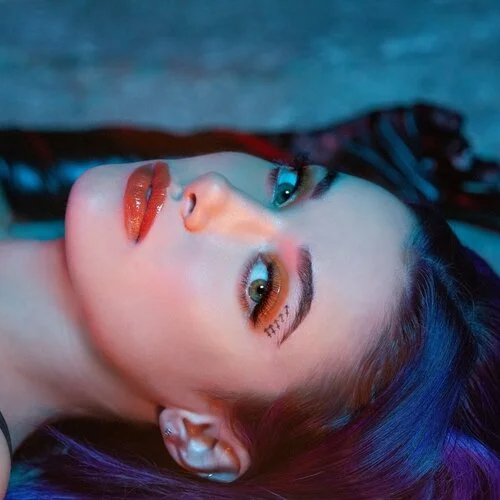
PHOTO CREDIT: Fireshone Photography

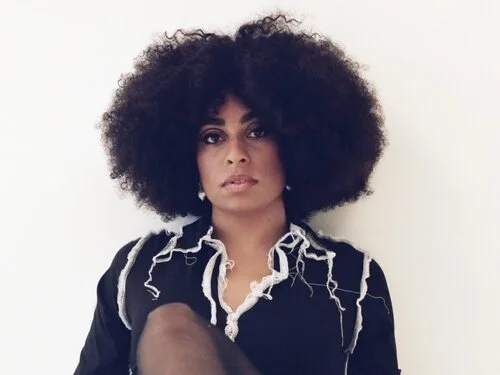
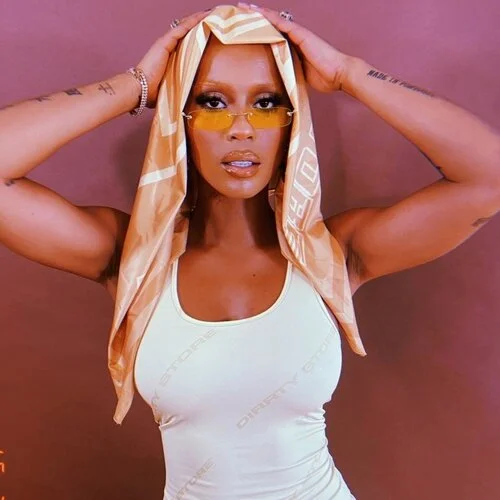
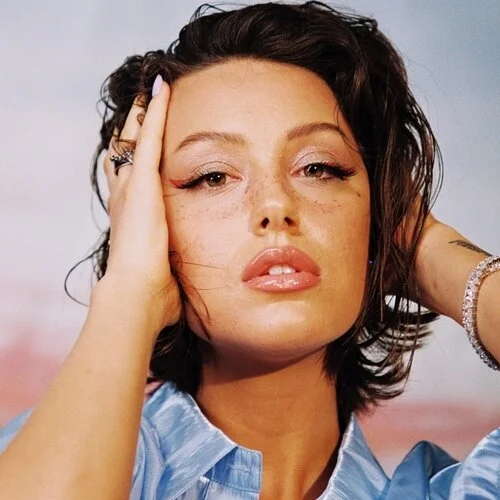
I want to spend some time getting to know Ivorian Doll. In terms of the names that we need to look out for this year, she is very much near the top! Rather than me explaining why, I want to bring in some interviews that let us into the world of this exceptional artist. I will source from The Guardian later, but there is a nice introductory section that sets us up:

“Born Vanessa Mahi in Germany to parents hailing from Ivory Coast and moving to east London aged three, she originally found fame as a popular YouTube personality known for playful “storytimes”: audacious tales of cheating boyfriends, sugar daddies and scandalous behaviour. She reckons she has long been musically inclined, but just hadn’t realised. “I was always performing, and we’d make up dance routines,” she says of her teenage years, detailing the verses she and friends created to offend rival boys. “We made up this fake gang called CGG’s – we even had our own theme song and diss track”.

Ivorian Doll will release her much-anticipated debut E.P., Renaissance, this month. It is a release that is going to announce one of the finest names in U.K. Drill – the undeniable and undisputed Queen of Drill. I will drop a couple of songs in this feature just to give you an idea of what she is about and why her fanbase continues to swell. I am a recently new convert, but I am making up for lost time and accessing as much music and information as I can.

I want to bring in my first interview. Ivorian Doll spoke with DJ Booth back in September. Not only do we get a glimpse into her rise and  one of her best-known songs; she also discusses an aspect of her songwriting that, maybe, is a slight weakness:

“Born Vanessa Mahi, Ivorian Doll is the self-proclaimed “Queen of Drill.” Commanding an army of fans appropriately called the Dollz—which has been steadily increasing in numbers since 2017—her potent and gritty offering on drill music has garnered attention from peers such as Tinie Tempah, Mr Eazi, and Iggy Azalea across social media. She’s also received looks from defining British media platforms, including GRM Daily and BBC.

Despite Ivorian Doll’s outsized personality, solo success has been a more recent reality. The German-born and London-raised rapper began her music career as part of a duo with Abigail Asante. Under the moniker Abigail x Ivorian Doll, the pair ventured into the then-simmering UK offshoot of drill on a whim. Their debut song, “The Situation,” was spontaneous, according to 22-year-old Mahi, and, to this day, misunderstood.

“Hooks, for me, I struggle with,” Ivorian Doll admits. “One of my friends came in and helped me with that. Before, I’d write whole songs, forcing a hook, and the song wouldn’t go anywhere. Now the songs sound better.” The team-first approach has helped Ivorian Doll progress in flow, articulation, and writing. She agrees without hesitation, saying, “I remember I mostly did the ‘Rumours’ hook, but ‘Body Bag’ is when I noticed the change with having the team. You work together, and it makes things sound better.”

Ivorian Doll’s collaborative spirit extends past her team toward the other women responsible for rap’s female renaissance. That includes other “Dolls.” (Ivorian’s stage name arrived at age eight and predated any industry trend: “ I was looking for a Facebook name. My friend said to me, ‘Why don’t you call yourself Ivorian Doll? You look like a doll and you’re from Ivory Coast.’) She regularly interacts with Asian Doll, who shouted her out on Twitter earlier this year, and has an upcoming collaboration with New York’s DreamDoll. Further afield, the artist looks to follow in the footsteps of Saweetie and become a multi-dimensional brand.

“For me, I want to be a mogul and a businesswoman,” Ivorian Doll says. “I’m thinking of global-scale projects: clothing lines, books, hair companies. Ivorian Doll is the umbrella with so many things underneath that. I’m in this for the long run.”

Ivorian Doll’s persistence has seen her score lucrative placements across the year. She’s confirmed as an act for 2021’s Rolling Loud in Portugal, and was part of one of the first virtual-only festivals in the UK this year when the annual Wireless Festival shifted its agenda due to COVID-19. Ivorian’s VR set was positively electric”.

Apologies for quoting quite large chunks of that interview but, as I shall do for the remainder of this feature, I think doing so provides us with a lot of useful information and insight into Ivorian Doll. She is someone who is poised to dominate in 2021.

Drill is one of those scenes that, from the outside, appears to be male-dominated. I think Drill, Hip-Hop, Grime and Rap have always been imbalanced but, whilst there is improvement in some area, Drill seems to be more male-heavy than most genres. Ivorian Doll talked about gender in Drill when she spoke with COMPLEX - we also get to know what drives her as an artist and how her writing usually happens:

“You dubbed yourself the “Queen of Drill” on a track you released in 2019. Do you think the drill scene needs a queen?

It doesn’t need a queen, necessarily. I say it all the time: I do it to try and be better than the boys! I don’t even focus on the girls because I feel like boys tend to get away with so much in drill, saying things about women, plus it wasn’t the norm to see a girl making drill. So when I say ‘Queen of Drill’, it’s more me saying I’m better than the boys in drill. I just feel like I’m trying to compete with the boys.

What pushes you to make music today?

What pushes me is the benefits, and the fact that I actually enjoy it. Like, I’ve realised that everything else I was doing, I didn’t enjoy as much as I did with this. Music isn’t something you can just be one foot in, one foot out—you have to be all in because it’s time, it’s money, it’s studio, it’s stress. Like, I get actual migraines. It’s a non-stop dedication thing. It’s not something you do half-heartedly, so I think what pushes me is just the fact that I can help my family now—in ways that I never did before—I live in a better place, just things like that.

  What’s an Ivorian Doll writing session like?

So, with me, something will happen to me, or maybe I’ll see something online—like what someone said—and then I’ll be like, “Okay, cool. So these people are hating on me? Let me make a song about haters.” I always reflect on what I’m going through in a particular moment. With “Rumours”, that was obviously rumours about me so I just thought I’d write about it and address the elephant in the room. I also like to write about things I want in the future—I speak about it as if it’s already happened! For example, “Oh, I’m in a big car!” That hasn’t happened yet but I speak like it has, do you know what I mean? And because I like music, I know what people want to hear. Nicki [Minaj] is a big influence, too. I listen to her a lot and I always ask myself why I love her so much [laughs], but I just do. I’m really inspired by her music and her journey”.

There are a couple more interviews I am keen to focus on because Ivorian Doll is such a fascinating artist who, I feel, is primed to shake up and change Drill; inspire other women coming through and really stake her claim!

I want to go back to the subject of gender/women in Drill as this was covered in an interview from The Line of Best Fit. I think that Ivorian Doll’s talent and strength demonstrates that she is as strong as any of her male counterparts. There is still a question as to whether the doors are truly open for women – or whether it is an area of music that has a problem with parity and understanding. I want to highlight a segment where we learn more about attitudes towards Ivorian Doll in the earliest days and how she has boosted her profile and confidence – and why future success and increased visibility is very much on her mind:

“ID has always managed to be ambitious and in control, with her 2019 solo “Lightwork Freestyle” a testament to her power as an emcee. The video, garnering over 200,000 views, includes a large number of comments praising the freestyle as stronger than most of her male counterparts.

“When I first started, that was one thing that upset me. ‘Oh, you’re a girl, go back to the kitchen. Oh, you’re a girl, you shouldn’t be speaking like this.’ In a lot of drill songs out here, the way boys say things about girls — it’s so rude. I want women to be on the same page. That’s what kind of motivated me… I feel it’s very intimidating for a strong woman to come into a dominant field and do well”.

“YouTube helped me to be able to express myself because I was a personality talking about boys and cheating and giving advice,” she explains, noting that long-term followers are pretty used to her outspoken nature. “Some of the things I say in my music, it’s not a shock to them. My fans are like, ‘She constantly says things like that anyway.’”

ID still has hopes for long-term success, despite the current whirlwind of our times. She mentions she’s using this period to practice more on both her stamina and delivery for live performances. Yet, ID’s biggest goal is to expand past the boundaries of her genre, drill, and break its limitations — in a similar way to Pop Smoke. She also wants to be a role model to young girls who look up to her as a creative inspiration.

“I just want to be a global artist, really. I want to be that artist that came out of the UK and built that female bridge to the US. I want to be that artist where people say, ‘Because of her, we’ve been more interested in UK artists and the UK scene. Is there more of her?’ That’s the type of artist I want to be,” she says. “I want to be the artist that brings everyone together. And I feel like it’s working smoothly”.

I shall wrap up in a second but, with so much exactment and buzz surrounding her, Ivorian Doll is going to have a huge year! Despite her popularity now, it hasn’t always been smooth. As we learn in a recent interview from The Guardian, there have been barriers:

“Her rise, though, has allegedly been hampered by a management deal she entered into with Oliver Ashley, son of Sports Direct’s Mike Ashley, who has recently applied for trademarks for the name Ivorian Doll. On Twitter, she accused him of unfair financial terms and controlling which label she was allowed to sign to; she begged to be let go from the contract. Ashley has not responded and could not be reached for comment, and Mahi, who made the allegations after we spoke, would not comment further.

The situation badly needs resolving, as there has been space in drill for a woman like her for some time. The style is known for bleak themes and stories of real-world violence, and suffers from a reputation as a boys’ club. But Ivorian’s ability to play with a mix of styles has granted her respect from her male peers, and refreshed the genre as a whole. “I’m not so ‘boyish’ about it,” she says of her artistry. “I’m not wearing the tracksuits; I’m very sexy with it. I feel like that’s what’s making me stand out because I’m making it different.”

I love what Ivorian Doll is doing and, looking ahead to the release of her E.P., I think we will see something quite playful and fun. Many associate Drill with being quite aggressive, which can mean it is lacking in accessibility at times. Returning to the interview with The Guardian, and it is heartening to know that Ivorian Doll is a role model and inspiration, one hopes, for other women entering Drill (and she is making it more humane and diverse):

Her new EP is evidence of the sounds she’s willing to toy with, like smoother, mellower rhythms similar to afro-swing, and bouncier, chart-friendly rap. The release after that may include more women, as fellow artists such as Shaybo, Br3yna and Teezandos make their own mark, mirroring the golden era for female rappers in the US. “When I first started, the sexism was just ridiculous. It’s even made me more of a feminist,” she says. “I think it would be good to see other girls make drill a bit more sexy, more fun! It doesn’t need to be dark or violent. Drill is a beat, it’s not what you talk about. So I’d love more girls involved, because that’s what makes the genre bigger”.

I will end now but, as this year promises to be more positive than the last, I am looking around at the artists who could define 2021 and make a big noise. Ivorian Doll is already creating tremors and standing out from the crowd but, as soon as she can get back on tour, I feel she will add so many more fans to her ever-increasing army. These may be her early days but, before long, Ivorian Doll is going to be a worldwide phenomenon! It is very easy to realise why this exciting young talent is…

SET to go a very long way.

_____________

Follow Ivorian Doll

FEATURE: One for the Record Collection! Essential February Releases

FEATURE:


One for the Record Collection!

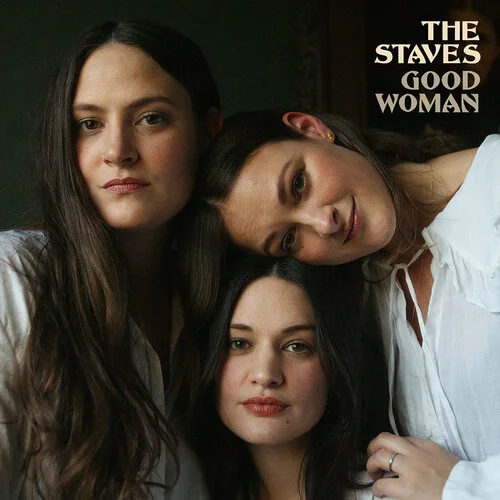
IN THIS PHOTO: The Staves

Essential February Releases

___________

I realise that there is the possibility…

qa.jpg

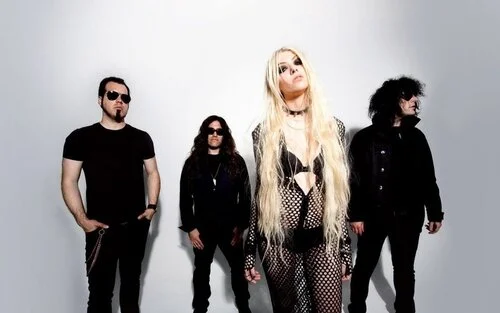
IN THIS PHOTO: The Pretty Reckless

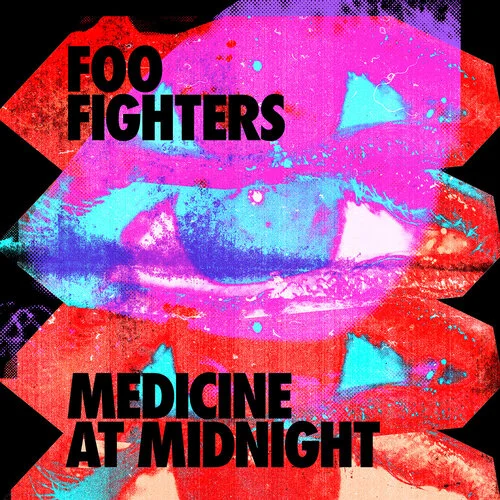
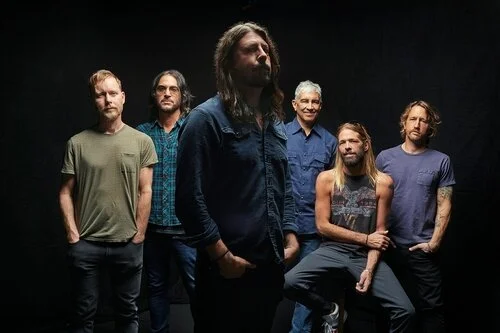
that many of the albums I am including in this feature could be held back or rescheduled because of the pandemic but, as of the time of writing (1st Jan), these are some releases that you need to get involved with. There are a few great albums coming out on 5th February that are worth snapping up. The Foo Fighters release Medicine At Midnight. This is going to be one of the biggest albums of the year. They recently shared the second single from the album, No Son of Mine,…and the album is shaping up to be awesome! Make sure you pre-order it:  

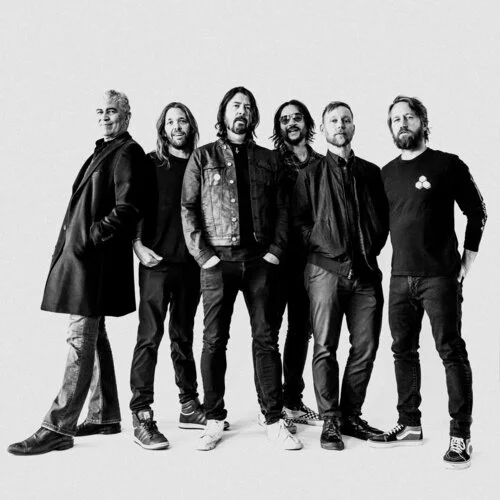
“Medicine At Midnight is the new album from Foo Fighters, packing nine new songs into a tight ass 37 minutes. This collection includes the smoldering new single, Shame Shame. Medicine At Midnight is produced by Greg Kurstin and Foo Fighters and is the band's 10th album. Foo Fighters are Dave Grohl, Taylor Hawkins, Nate Mendel, Chris Shiflett, Pat Smear, and Rami Jaffee”.

I am looking forward to hearing what Foo Fighters offer us on 5th February. I think we are going to be in for a treat. The band’s lead, Dave Grohl, spoke to NME back in November and discussed what Medicine At Midnight will sound like:

“What can you tell us about your mission statement for ‘Medicine At Midnight’?

“Since it’s our tenth record and 25th anniversary, we decided years ago that we wanted to do something that sounded fresh. We’ve made some many different types of album, we’ve done acoustic things, we’ve done punk-rock things, mid-tempo Americana type of things. We have a lot of albums to fall back on, so you just have to go with our gut feeling and I thought instead of making some mellow adult album, I thought ‘Fuck that, let’s make a party album’.”

What kind of party?

“A lot of our favourite records have these big grooves and riffs. I hate to call it a funk or dance record, but it’s more energetic in a lot of ways than anything we’ve ever done and it was really designed to be that Saturday night party album. It was written and sequenced in a way that you put on, and nine songs later you’ll just put it on again. Y’know, songs like ‘Making A Fire’. To me that’s rooted in Sly & The Family Stone grooves, but amplified in the way that the Foo Fighters do it.”
So it’s all pretty ‘out there’?

“‘Waiting On A War’ is the most recognisable song off the album as Foo Fighters. It came halfway through the recording process and came from a feeling I had as a child, when I was terrified that we were heading for nuclear war in the late 70s and early 80s with all the political tension and arms race. I was really afraid that we were going to die in a nuclear holocaust. And then last year, I was taking my daughter to school and it was around the time that the US and North Korea were ramping up tensions with each other and she had seen it on the news.”

“She just asked me ‘Dad, are we going to war’? It reminded me of how I felt when I was her age and I just thought, ‘What a fucking drag!’ How depressing is it that childhood could be robbed of that beauty and innocence by this dark feeling of dread. So that’s what ‘Waiting On a War Is About’.”

Heavy! Any other big surprises on there?

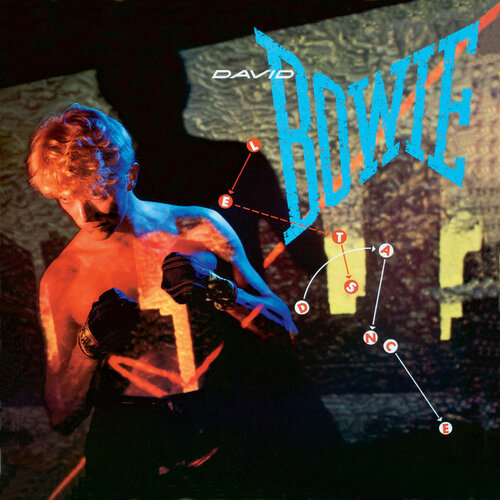
“Then there’s ‘Medicine At Midnight’, that’s our David Bowie‘s ‘Let Dance’. It’s a huge fucking rock song that I imagine opening every festival from here to Melbourne! very song is a little bit different but they all have something that feels fresh and I like it!”

In terms of another great album out on 5th February, then slowthai’s TYRON is one that you need to order. I think slowthai is one of the most exciting and promising talents in British Hip-Hop and, after the success of 2019’s Nothing Great About Britain, there are going to be a lot of eyes his way:

“Tyron is a tale of two halves exposing human complexity. Just as with the narrative of his own life, there are always two sides to every story. Side one re-introduces us to the classic hubris, machismo, and braggadocio typical of rap music. Side two takes what you thought you knew about slowthai and flips on its head. Feel Away and NHS go some way to dip a toe inside the complexities of his mind but delve deeper and you’ll be left with a clearer understanding of who he truly is. Honesty is paramount as ultimately Ty wants listeners to know that “it’s ok to be yourself”.

Tyron was formed against the backdrop of an unforgiving climate where judgement, shaming and underdeveloped and simplistic conceptions of other people are fashionable. Instead of succumbing to such simplicity, Tyron presents an artist who is unabashedly complicated and willing to explore themes of loneliness, identity, self-acceptance, and the difficulties in becoming an individual. Unlike the political overtone of slowthai’s debut album Nothing Great About Britain which took listeners on a journey through slowthai’s turbulent upbringing and his stance on British life – this self-titled follow up, Tyron is a melodic dive through the expansive landscape of his feelings. His ability to bear his imperfections and contradictions makes Tyron an album that is the antithesis of a culture of purity. A resistance to the rising tide of moral one-upmanship and the pervasive self-righteousness that blinds us to our own fallibility”.

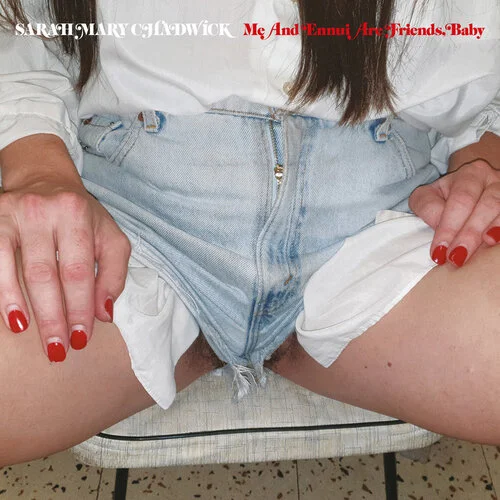
Sarah Mary Chadwick’s Me And Ennui Are Friends, Baby is another pearl from 5th February that you need to get involved with! Here is some more information about an incredible artist and her forthcoming album:

“Me And Ennui Are Friends, Baby is the latest full-length from New Zealand-born, Melbourne-based singer-songwriter, Sarah Mary Chadwick, whose brutally honest songwriting has cast her contrary to the gentleness of most current music. Comprised entirely of minimal solo piano arrangements, the album is despondently clear-eyed and smirkingly self-deprecating, completing a trilogy of records that started with The Queen Who Stole The Sky recorded on Melbourne Town Hall’s grand organ, and her only outing to date featuring a full band, Please Daddy. Each record has followed Chadwick’s internal processing after a traumatic event, with Chadwick’s zeal for psychoanalysis front and center. On Ennui, Chadwick presents an exacting intensity with her choice to pare back to piano and vocals. It's in this stark setting that she focuses on the attempt she made on her life in 2019.

The methods Chadwick employed on Ennui contrast those of her previous full-band record, which thrust her into a very different world of rehearsal, planning, restraint and control as a functional tool. The result, 2020’s critically acclaimed Please Daddy, was her most aching and engaging achievement to date: “a raw, often unnerving experience,” which “delivers compelling and uplifting catharsis” (Mojo). Recording Ennui shortly after the Please Daddy sessions, Chadwick concludes her trilogy by returning to the most immediate compositional process she can muster, doing it alone, with less between her and the microphone than ever before. On Ennui, Chadwick is free, there is nowhere for her or us to run from the need to very presently and repeatedly articulate her trauma until it is simply, “articulated out.”

 2019 saw Chadwick endure the breakup of a long term relationship and attempt her own life just weeks before the Ennui recordings. These events followed the deaths of her father and a close friend, and it’s from this weighty internal mire that Chadwick emerges throughout the trilogy. Imaginably, the result is staggeringly abject. But the incandescent nature of her will, knack for reportage and searing dark humor sets fire to the world she describes over these 12 songs.

Joined by long time production collaborators, Me And Ennui was mastered by David Walker at Stepford Audio and mixed & recorded by Geoff O’Connor at Vanity Lair - both expertly bringing scale, subtlety and intangible ascendence to this recording”.

The Staves’ Good Woman is an album I am really looking forward to getting! Make sure you order a copy of an album that, I think, will be among the best-reviewed of this entire year:

“It’s a decade since The Staves self-released their first EP and a lot has happened since then. Their third album Good Woman was written and recorded amid major upheaval, heartbreak and bereavement. The new-found boldness, loudness and lyrical directness on this record are indicative of lives forced to become a serious concern.

In early 2020 the band resumed touring, unveiling their expansive and exhilaratingly powerful new sound, and previewing these emotionally affecting songs in intimate venues across the country; with tickets selling out in seconds. They ended the tour with a triumphant homecoming appearance at the 6 Music Festival.

The Staves’ first album in five years is an accumulation of everything that life has thrown at them in that time. Emily: “You find strength in the vulnerability and you find beauty in the sadness and magic in the despair. We lost so much, but we found so much. And while the album is not all about mum, something shifted in us when she died that made us make the record in the way that we made it. We became more fearless.”

Camilla: “It feels more about trying to take ownership of these events and not letting sadness or trauma rule you.”

Jessica: “It’s a record about sisterhood, motherhood and daughterhood; love, loss, change and trying to be a good person, a good woman”.

I want to bring in an interview The Staves conducted with the BBC - as we learn about how their lives changed in 2018, in addition as to why Good Woman is a slightly different direction for them:

“Their lives were turned upside down in summer 2018, when they suddenly and unexpectedly lost their mother, Jean, a former teacher who had encouraged them to follow their dream of making music.

Her death came just two weeks after their grandmother died. Within a month, Camilla had broken up with her long-term boyfriend in Minneapolis, and found herself moving back to the UK.

"It was kind of like a double kick in the stomach," says the singer.

Devastated and grief-stricken, they took a "big break, and stepped away from everything", says middle sister Jessica - only for some people to say they were making a mistake.

"We were made to feel like we weren't good enough as a band," says Jessica. "Almost like we'd had our moment, and lost our sheen."

When they started to make music again the sisters were, unsurprisingly, a little shaken up.

"I felt like we'd lost perspective," says Camilla.

"It's often that way when you lose momentum," adds elder sister Emily. "You start questioning everything: 'Is this any good? What are we doing?'

"What am I?" says Camilla, warming to the theme. "What is my life? What have all my decisions led up to?"

To break the creative impasse, The Staves abandoned their plans to self-produce the record and called in Grammy-winning studio veteran John Congleton.

While previous producers had focused on the sisters' spell-binding harmonies, Congleton - who has worked with Phoebe Bridgers, St Vincent and Angel Olsen - was more concerned with their state of mind.

"He said, 'You guys are in a really interesting place in your lives, and I think you've got something important to say - so I really want to help you figure out how to say it,'" recalls Emily.

"That really stopped me in my tracks because no-one's said that to us before. It gave us confidence and faith in the songs”.

There are two more albums from 5th February that you need to go and own. The Weather Station’s Ignorance is definitely worth some pennies. Make sure to order your copy but, as Rough Trade are providing me with pre-order links and some great information, I will let them provide some useful background:

“The Weather Station - project of Tamara Lindeman - releases her new album, Ignorance, on Fat Possum. Through Ignorance, Lindeman has remade what The Weather Station sounds like, using the occasion of a new record to create a novel sonic landscape, tailor-made to express an emotional idea. Ignorance is sensuous, ravishing, as hi-fi a record as Lindeman has ever made, breaking into pure pop at moments, at others a dense wilderness of notes; a deeply rhythmic and painful record that feels more urgent and clear than her work ever has.

 Ignorance began when Lindeman became obsessed with rhythm; specifically straight rhythm, dance rhythm, those achingly simple beats that had never showed up on a Weather Station album before. The album marks Lindeman’s first experience writing on keyboard, not guitar, and her first time building out arrangements before bringing them to a band. Montreal producer Marcus Paquin (Arcade Fire) co-produced, with Lindeman, and also mixed the record. The lyrics across Ignorance roil with conflict. The narrator confronts characters who turn away from love. “I used to be an actor, now I’m a performer,” Lindeman says. In those roles she often finds herself to be the subject of projection, reflecting back the ideas and emotions of others. In turn, the album cover shows Lindeman laying in the woods, wearing a hand made suit covered in mirrors. Throughout Ignorance, she sings of trying to wear the world as a kind of ill fitting, torn garment, dangerously cold; “it does not keep me warm / I cannot ever seem to fasten it” and of walking the streets in it, so disguised and exposed”.

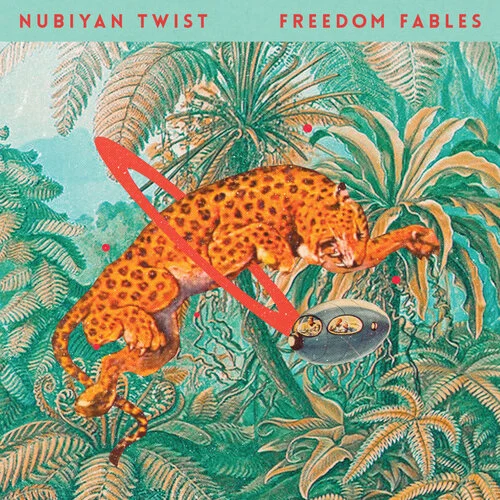
You can see some other albums coming out on 5th February, though I would point people in the direction of Nubiyan Twist’s Freedom Fables. You can pre-order an album that is going to a must-own for anyone who loves good music:

“Nubiyan Twist return with their brand new album Freedom Fables on Strut, the follow-up to the acclaimed Jungle Run from Spring 2019.

Woven around soul searching, cautionary tales and parables for modern life, the new album is the most accomplished yet by the Leeds / London collective, effortlessly fusing different soul, jazz and global styles with great musicianship and lyrics. "Freedom Fables reflects on the power of narratives. Each vocalist on this record explores their own memoirs, a freedom of expression underpinning our belief that music is the ultimate narrative for unity,” explains Tom Excell. “The record references a lot of music that we all loved during our formative years; you can hear touches of broken beat, blunted hip hop, highlife, Latin, jazz and UK soul running through the tracks.”

The album is also packed full with illustrious guest appearances: regular collaborator Cherise features on the brilliant Tittle Tattle, calling out gossip through acerbic nursery rhyming, the loping Flow dealing with the ebb and flow of anxiety and the epic Brazilian jazz workout, Keeper; UK jazz saxman Soweto Kinch brings a burning alto solo and rhymes to the determined Buckle Up alongside the band’s own vocalist Nick Richards as the track aims to “find the door to peace” among life’s challenges. “Soweto is a trailblazer of the UK scene both as an alto player and as a rapper with a unique flow and important lyricism,” reflects Tom Excell. “It was really important for us to invite him to contribute to the album.” Richards continues the “dust yourself off and find hope” theme on the rousing Wipe Away Tears; Ghanaian great Pat Thomas voices a gorgeous Accra meets London highlife jam; massive new vocal talent Ria Moran (a contemporary from the band’s time at Leeds College Of Music) steps up on the sensual Morning Light tackling delicate complexities of the heart and long time friend of the band, KOG, brings his trademark full strength Afro dancefloor energy”.

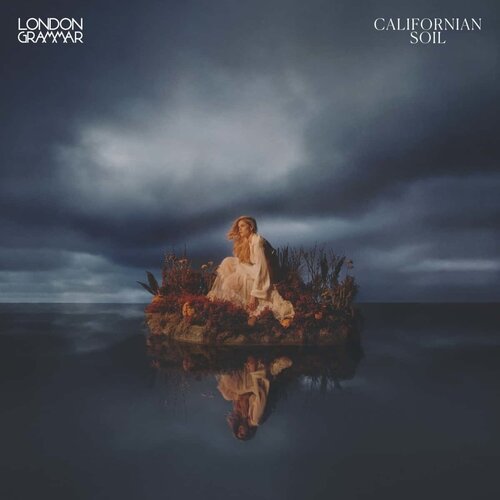
I shall move on to 12th February as there are a few albums that you should reserve some money and time for. London Grammar’s Californian Soil is going to be terrific. Led by Hannah Reid – one of the greatest and most expressive singers in the world -, you need to get busy and pre-order it. Following 2017’s Truth Is a Beautiful Thing, Californian Soil is shaping up to be another stunning release from the trio. I want to drop in a feature from DIY from October, where they shared the single, Californian Soil, and we got a few words from Hannah Reid:

“After returning last month with dreamy bop ‘Baby It’s You’, London Grammar have confirmed that their third album ‘Californian Soil’ will be arriving on 12th February via Ministry Of Sound.

Inspired by front woman Hannah Reid’s experience with misogyny within the music industry and how she found her power again, Hannah says, “Misogyny is primitive which is why it is so hard to change. But it is also fearful. It’s about rejecting the thing in yourself which is vulnerable or feminine. Yet everybody has that thing. This record is about gaining possession of my own life. You imagine success will be amazing. Then you see it from the inside and ask, why am I not controlling this thing? Why am I not allowed to be in control of it? And does that connect, in any way to being a woman? If so, how can I do that differently?”.

Django Django’s Glowing in the Dark is an album I would recommend anyone getting. The London band follow 2018’s Marble Skies with one of February’s biggest and most important albums. Pre-order your copy, as this album is looking like it’s going to be a bit of a peach:

“Over the course of their extraordinarily accomplished discography to date, Django Django have constantly headed left where others have gone right. Described by The Guardian as “capable of making music that sounds close to perfection”, they are known for their genre defying eclectic sound and their new album Glowing in the Dark heralds, once again, the beginning of a thrilling new era for the band.

Glowing in the Dark has a running theme of escape: from despair, from constraints, from small town life, and even, in dreams, from the Earth. The brilliant title track and new single, for instance, soars gloriously towards the stratosphere. A track built around a sample from one of Dave Maclean’s spoken word records then plushly upholstered with Moog synths and drum loops, it is accompanied by some eye strobing visuals from rapidly ascending NYC artist and illustrator Braulio Amado”.

I actually want to recommend a few more albums from 12th February, as there are a couple coming along that I forgot about! The Pretty Reckless’ Death by Rock and Roll is worth ordering, and it is going to be a stunning album (The band’s Twitter page states that the album is coming out on 12th February; Rough Trade lists it as 29th January):

“Rock ‘n’ roll is a religion. It’s a commitment to an ideal, a belief system. The lifestyle and trappings may appear to be glamorous and romantic, but the road isn’t easy. It requires staying power and an enormous amount of faith. The Pretty Reckless are truly a rock and roll band”.

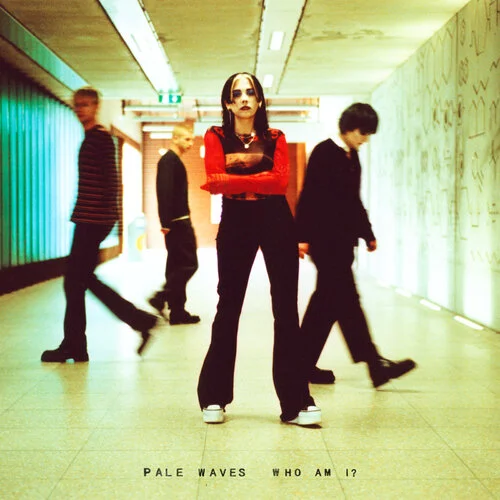
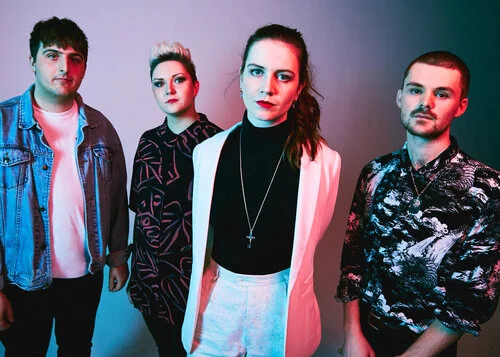
Pale Waves’ Who Am I? is one album that I will be getting because the singles they have released from it are incredible! Recorded in L.A. over early-2020 with Rich Costey (Muse, Biffy Clyro, Sigur Rós), make sure you do not miss out on this treat! I am a fan of their 2018 debut, My Mind Makes Noises, but their second album seems to be fuller, more realised and consistent. The band’s singer, Heather Baron-Gracie, spoke with NME back in November about the band’s development and what has changed since their debut. It does seem that Pale Waves have come into their own on Who Am In?:

“‘You Don’t Own Me’ is perhaps the perfect example of the band’s collective maturity. It’s a three-minute thrasher on which the band exorcise their run of bad luck and the frustrations of lives previously repressed, all the bullshit flung Heather’s way as a young woman is torn to shreds.

“A pretty face like yours should really learn to smile more,” she sings, “No one-night-stands for you or they’ll think you’re a whore”. As with Heather’s attitude to that destroyed black bag from the bus, the band are keen to embrace the future and not dwell on the trauma.

“That’s a real ‘Fuck you’ song,” she says with a smile. “It’s me saying, ‘Stop telling me what to do, stop telling me how to look, stop telling me how to smile – I’m my own person’. People might say that they prefer the sound from before – well, people change and evolve and this is me evolving and I’m not going to feel bad for that. I feel like I’ve been hiding who I am for so long now. I don’t wanna do that any more”.

zzzzz.jpg

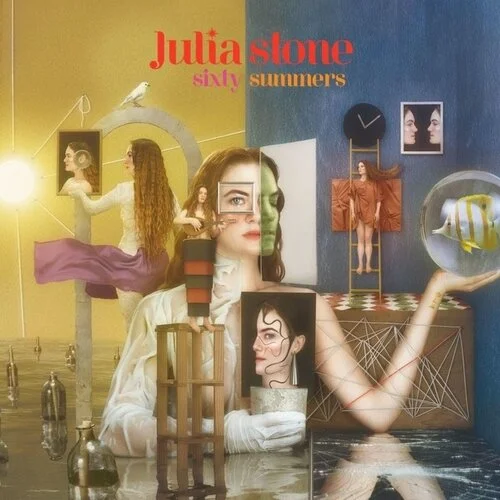
I will actually skip ahead to 19th February, as there are a few choice albums. Julia Stone’s Sixty Summers is available from Apple Music from 12th February. Her official website marks it as the 19th. Here is some more information:

“Eight years after Stone’s last solo record, Sixty Summers arrives as a powerful rebirth for one of Australia’s most prolific artists. Emerging from the wildernesses of folk and indie-rock, with Sixty Summers Stone dives headfirst into the cosmopolitan, hedonistic world of late-night, moonlit pop. The stunning album brings us the grit and glitter of the city, with all its attendant joys, dangers, romances and risks. It is Stone at her truest, brightest self, a revered icon finally sharing her long, secret love affair with this vibrant and complex genre.

Recorded sporadically over five years from 2015 to 2019, Sixty Summers was shaped profoundly by Stone’s key collaborators on the album: Thomas Bartlett, aka Doveman, and Annie Clark, the Grammy-winning singer, songwriter and producer known as St. Vincent. Bartlett and Clark were the symbiotic pair Stone needed to realise her first pop vision. A wizard of production and songwriting, Bartlett helped coax Sixty Summers’ independent, elemental spirit from Stone, writing and recording over 50 demos with her at his studio in New York.

Itself a thoroughfare for indie rock luminaries, some of whom, such as The National’s Matt Berninger and Bryce Dessner, ended up on the album, Bartlett’s studio was perfect fertile ground for Stone’s growth. “Making this record with Thomas, I felt so free. I can hear it in the music,” says Stone. “He brings a sense of confidence to recording sessions.”

Clark was the incisive yang to Bartlett’s yin, a sharp musical polymath who, when presented with the work Bartlett and Stone had made together, quickly helped fashion Sixty Summers into the album it was destined to be. Contributing vocals and guitar in addition to production, Clark’s revered acidic touch ignited the sparks of Stone’s creations. Of Stone, Clark comments, “Jules is the best. We were always fond of each other from afar, but after working on this, we became great friends. She's a brilliant girl — tenacious, perfectionistic, so smart. All fire”.

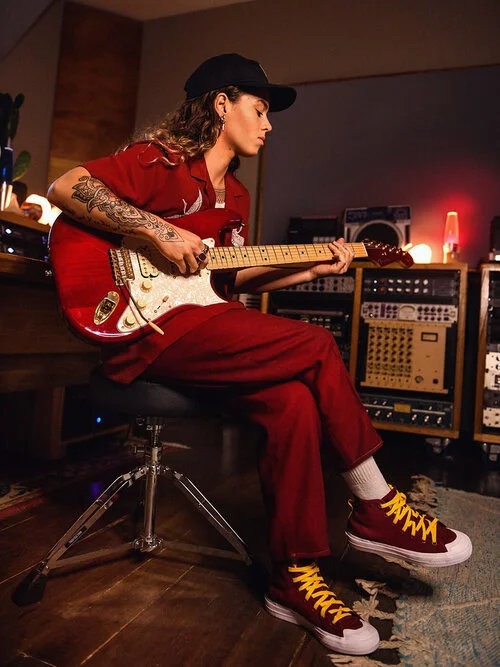
Let’s stick with incredible Australian talent and Tash Sultana’s upcoming album, Terra Firma. Go and order a copy now, as Sultana is one of the finest artists in the world. I adore her music, and now I want to actually quote from an interview she gave with Guitar.com recently about her guitar preferences. Sultana is an incredible player, so it was interesting learning more:

““I’ve veered more towards [Strats] as I’ve progressed,” says Sultana. “I’ve got a really nice collection but the Strat is for me. For a long time, I played Teles and Jazzmasters and Gretsches but I kept listening to these artists and really loved their tone, and how they played. When I did a bit of searching, they were playing fuckin’ Stratocasters. And I was like, ‘Mate, the search is over. That’s the missing element’. I moved across to the Strat and I haven’t gone back.

PHOTO CREDIT: Guitar.com

“This guitar is based off an American Pro Series Strat, and when they were first released, Fender gifted me one. I loved it immediately because it’s a new-age performance guitar, and that’s what we’re doing. We’re getting on stage and performing, and we’re recording. It’s so well designed, and the technology and the pickups have come so far that it captures all of the vintage Stratocaster sound, and adds on the advances of what we can now do in the modern day. You can really sculpt your tone, because there’s so much to work with on the guitar”.

Warming to the subject, Sultana takes aim at the regularity with which guitar fans gravitate towards trolling as a mode of expression when discussing gear and technical ability online. “People tend to be quite critical, rather than encouraging,” they say. “I follow a lot of really good guitarists on Instagram. You can’t really fault them but somebody has to go and do that [to them] anyway. I think that attitude is shit.

“We’re all different levels of players. You should be encouraging people to get better, not bringing them down because you’re better than them. That attitude has got to go. It’s not specifically even straight white dudes who do it. It’s just people. The straight-white-dude culture, I don’t even let that consume a minute of my day. I just don’t really think about the world in that way. I don’t experience the world like that”.

A great album due on 19th February is Mogwai’s As the Love Continues. Go and order your copy. Here is a bit of detail about the forthcoming album:

“This new album will please old fans and gain new as it has something for everyone. Both transcendent and surprising, As The Love Continues shows that Mogwai are still offering solace from the mundane, supplying the soundtrack to whatever movie you are making in your head.

The album was produced by Dave Fridmann (Mogwai, Mercury Rev, The Flaming Lips) and features guests Atticus Ross (Nine Inch Nails) and Colin Stetson (saxophonist who has collaborated with Bon Ivor, Arcade Fire). Recorded at Vada Studios, England by Tony Doogan (Grey Dogs, Mogwai, Belle and Sebastian) with Fridmann in full remote control from the US”.

I am only picking out particular albums from 19th February, but go and check out others that are due that week. I want to move ahead and finish off with 26th February…

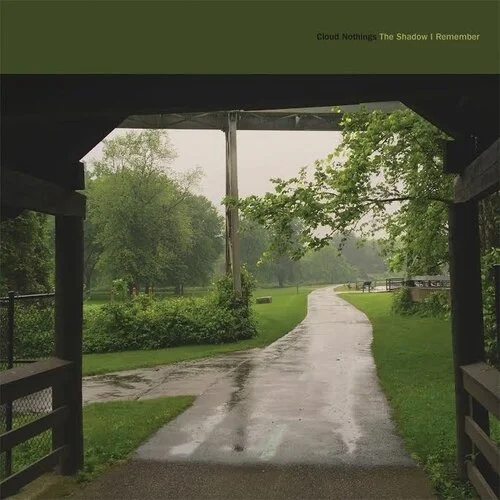
There are four or five that I want to select for special consideration. Cloud Nothings’ The Shadow I Remember is the first I would urge people to order:

“For a band that resists repeating itself, picking up lessons from a decade prior is the strange route Cloud Nothings took to create their most fully-realized album. Their new record, The Shadow I Remember, marks eleven years of touring, a return to early songwriting practices, and revisiting the studio where they first recorded together. In a way not previously captured, this album expertly combines the group’s pummeling, aggressive approach with singer-songwriter Dylan Baldi’s extraordinary talent for perfect pop. To document this newly realized maturity, the group returned to producer Steve Albini and his Electrical Audio studios in Chicago, where the band famously destroyed its initial reputation as a bedroom solo project with the release of 2012 album Attack on Memory.

Another throwback was Baldi’s return to constant songwriting à la the early solo days, which led to the nearly 30 demos that became the 11 songs on The Shadow I Remember. Instead of sticking to a tried-but-true formula, his songwriting stretched out while digging deeper into his melodic talents. “I felt like I was locked in a character,” Baldi says of becoming a reliable supplier of heavy, hook-filled rock songs. “I felt like I was playing a role and not myself. I really didn’t like that role.” More frequent writing led to the freedom in form heard on The Shadow I Remember. What he can’t do alone is get loud and play noisily, which is exactly what happened when the entire band— bassist TJ Duke, guitarist Chris Brown, and drummer Jayson Gerycz—convened”.

I am looking forward to Maxïmo Park’s Nature Always Wins album. The band always deliver the goods, and their seventh studio album follows 2017’s excellent Risk to Exist. Be sure to get a copy:

“An album of our times, Newcastle band Maximo Park return with their seventh record Nature Always Wins. The album arrives as something of an examination, zeroing in on the notion of the self, identity as a band, and that of humanity as a whole. The album’s title nods to the famous Nature vs Nurture debate. Discussing whether change is capable under the influence of time, perspective, environment or if we are destined to be bound by our own genetics, it asks, “who are we, and who do we want to be, and do we have any control over it?”. “I'm so happy we were able to make this album during lockdown, as it's been a challenging time for everyone. After almost 4 years since Risk To Exist, we wanted to explore new musical territory (for us) without sacrificing our trademark melodic twists and heartfelt lyrics.As always, the passing of time looms large, although the songs contain more affection for the past than before, and there are occasional hints of the fractious, divided time that we live in” – frontman Paul Smith. Produced by Atlanta-based Grammy-winning producer Ben Allen (Animal Collective, Deerhunter), who afforded the band freedom to play and create. What wasn’t anticipated was how that freedom would be soon be stripped, as lockdown restrictions left the band recording remotely across Newcastle, Liverpool and Atlanta with audio files bounced back and forth, 4000 miles across the world!”.

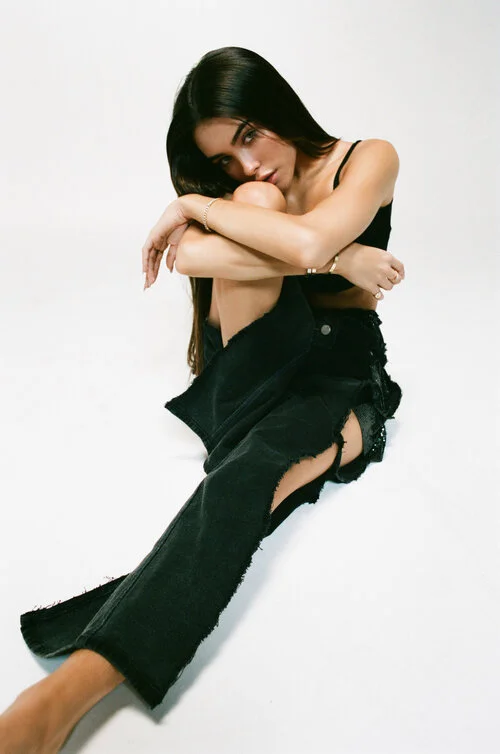
I’ll recommend three further albums and then round things off. Madison Beer’s Life Support is out on 26th February and, whilst there isn’t a pre-order link available yet, keep an eye out on her Instagram. Beer is one of the most promising Pop artists coming through, so I am interested to see what Life Support offers. I will bring in an interesting interview from Hot Press, where we learn more about Beer:

“This was supposed to be a whirlwind year for the 21-year-old. With one billion plus Spotify streams and a huge social media presence, she’s poised to be pop’s next big thing. She’s even had the obligatory celebrity relationship, having stepped out with Brooklyn Beckham in 2017 (we’ve been politely requested to refrain from asking her about this).

“I want to tell my story and get myself out there,” she tells Hot Press in her first major Irish interview. This is ahead of the release of her debut album, Life Support, featuring production from Justin Bieber/Adam Lambert collaborator Leroy Clampitt.

With song titles such ‘Good In Goodbye’, and ‘Selfish’, Life Support has been cast as a break-up LP, a rumour she is eager to put to rest. “Definitely not,” she says in a low-speaking voice not all that far removed from her smoky vocal style. “It’s about my journey in life so far.”

“Life so far” has contained more ups and downs than you might imagine. Beer was “discovered” aged 13 when Justin Bieber tweeted a YouTube video of her singing Etta James.

PHOTO CREDIT: Julian Burgue

“Island Records signed her soon afterwards. However, she was uncomfortable with the direction in which she was being pushed, described by Rolling Stone as “Radio Disney bubble-gum pop”.

She dug in her heels and just three years later, at age 16, was dropped. Some artists might have given up. Beer, though, simply worked harder, writing songs that gave voice to her love of artists such as Radiohead, Tame Impala and Lauryn Hill. You can hear those influences in new tunes such as ‘Selfish’, where she emotes over tempestuous waves of machine-tooled emotion.

“It’s had its ups and its downs,” she says of her career. “It’s not always fun. It’s nice to able able to step away from it at times. I wouldn’t change it though.”

Sexism in the entertainment industry has become a more visible issue in recent years. What has Beer’s experience been?

“Yeah, definitely – I knew it was something I would have to prepare for. That I would just be aware of. I didn’t think of it as scary. I was ready to figure it out.”

If not quite yet a household name, she’s certainly “Internet” famous. She’s appreciative of and gracious to fans. But, yeah, sometimes it’s exhausting.

 “It is difficult to find yourself being a public figure,” she says. “It’s not the easiest. I give it the best I can.”

Before we go there is time for one or two questions submitted by fans. If she had a message for her younger self, what would it be?

“I would prepare my younger self for all the things that would happen to me and that I would have to get through [i.e. being dropped by Island]. It wasn’t fun. Now I look back and am grateful for the experiences.”

And what was her favourite part of the process of making the album? “Just being able to talk about things that are personal and discuss and be open and be able to move on from certain things. It was good for me to the able to get it out and move on…that’s the thing.”

The necklace she is often photographed wearing – what does the inscription say? She smiles. “It’s my name”.

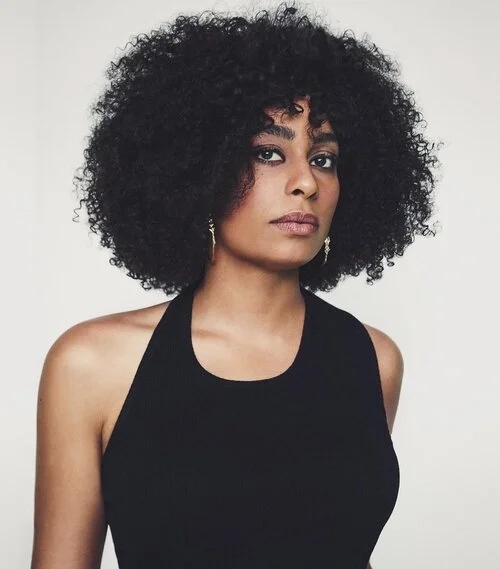
One of the most promising British artists around is Celeste. Her debut album, Not Your Muse is one that you should not overlook (and go and pre-order):

“The debut album from the alluring soulful Celeste. The 25-year-old British-Jamaican, who grew up in Brighton, started singing around 10 years ago when she was inspired by hearing Elton John's Your Song.

 She showcases a melting pot of influences ranging from soulful greats Aretha Franklin, Minnie Riperton etc to the cosmic sounds of jazz experimentalists Kamasi Washington, Thelonious Monk, Sun-Ra and Alice Coltrane, via the raw urgency of Amy Winehouse’s early releases. The soul-drenched songs match her raw, expressive vocal tone that cascade the listening ears like hot butter over a fresh slice”.

I think many people are looking forward to an album that was scheduled for release last year. In this interview with GQ, we discover more about Not Your Muse:

“I’m in a position,” she says now, “where the things I’ve worked towards for quite a number of years are close to being a lifelong thing. But it’s daunting. It could either go well or tits up.” With the music industry at her feet and a country cocking its ears, Celeste was expected to turn in her debut album by March, ready for a September 2020 release. But amid the rolling conveyor belt of music industry and media demands, a nervousness crept in about the record, a feeling “that this isn’t the album I want it to be yet”.

Amid the mass standstill of Britain’s lockdown, Celeste has found relief. She has spent days back in Brighton and long afternoons locked in the sanctuary of the studio, writing about longing and romance and a song titled “Some Goodbyes Come With Hellos”. There’s a genuine excitement around her album now, simply entitled Celeste, which is due to be released next year. She has worked with producers Josh Crocker and TMS, but her past collaborator Jamie Hartman has worked closely across the bulk of the record.

PHOTO CREDIT: Lauren Maccabee for Wonderland.

“Celeste will take a good idea,” he tells me, “and she knows how to make it great. It can be the flip of a lyric, a repetition you hadn’t thought of, a different placement of a chord rhythmically. I’m going to look back at that album in ten years’ time and know that’s one of the highlights of my career.”

For Celeste, the album represents music that plays back “what I’m experiencing in my life at the time”, she says, because “all I ever really tried is for it to be honest. That’s all I ever really wanted.” That honesty has guided her from the cliffs of Brighton to the brink of national glory. The years of waiting tables, writing and chasing daydreams have paid off. Celeste has finally reached her beginning”.

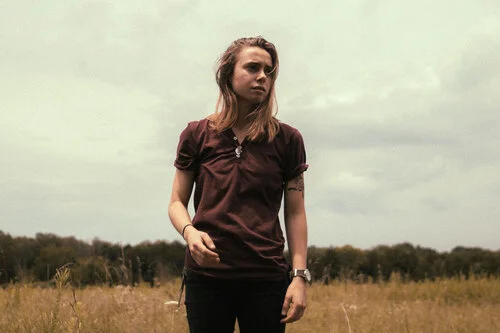
The last album I fancy mentioning is Julien Baker’s Little Oblivions. I would recommend people buy this album. Baker is a tremendous artist, and it seems that Little Oblivions is going to be a corker hat will make February so much brighter:

“Little Oblivions is the third studio album by Julien Baker. Recorded in Memphis, TN, the record weaves together unflinching autobiography with assimilated experience and hard-won observations from the past few years, taking Baker’s capacity for storytelling to new heights. It also marks a sonic shift, with the songwriter’s intimate piano and guitar arrangements newly enriched by bass, drums, keyboards, banjo, and mandolin with nearly all of the instruments performed by Baker”.

I hope that the albums that I have mentioned all still come out next month but, as we know, things can change! I would still urge people to order them if the dates are shifted – or the ones that I have found are incorrect! There is a great range of music coming out in February, so go and snap up the brightest and best albums from that month as an early treat! I shall end things now but, as we can see from some of the albums next month, we don’t have to wait too long this year before we get…

IN THIS PHOTO: Julien Baker/PHOTO CREDIT: Nolan Knight

SOME truly stunning albums.

FEATURE: The January Playlist: Vol. 1: Thank God That Love Is Back!

FEATURE:


The January Playlist

IN THIS PHOTO: Celeste 

Vol. 1: Thank God That Love Is Back!

__________

THIS Playlist is a bit of a cheat…

 IN THIS PHOTO: Foo Fighters

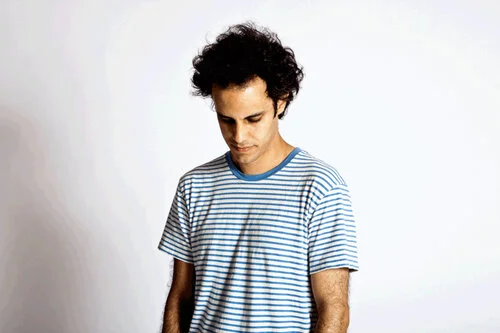
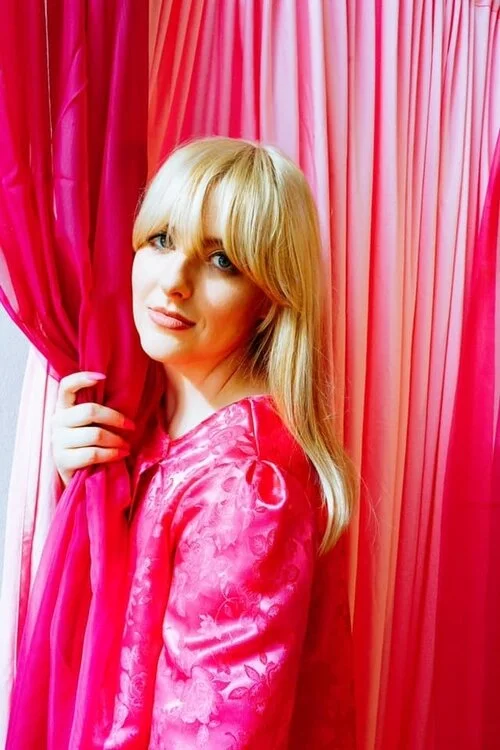
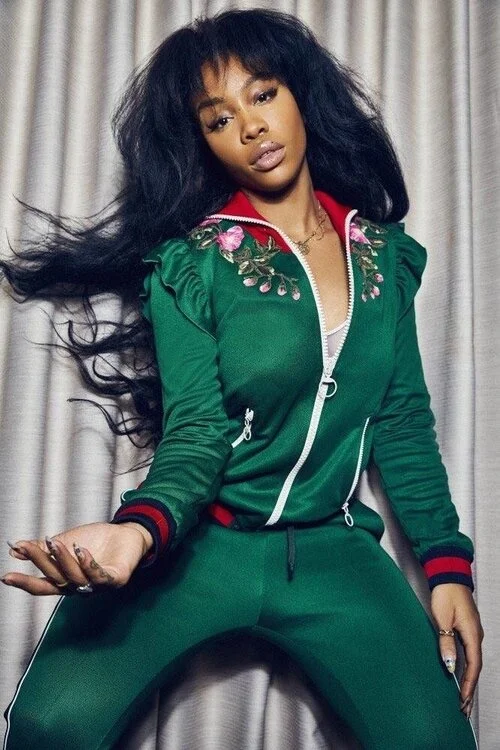
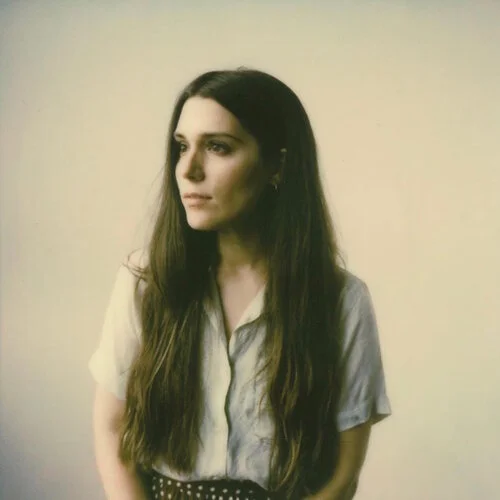
as I am including a few songs that came in just before Christmas leading up to 31st December, in addition to songs that arrived yesterday. I am surprised that there have been a fair few tracks put out at a time when most people are winding down! Although things won’t start to get busy for a few weeks more, there are new tracks from Celeste, Foo Fighters, Kylie Minogue + Dua Lipa, IAMDDB, You Me At Six, Justin Bieber, Elvis Costello, Four Tet, SZA, Molly Burch (ft. Wild Nothing), Gia Margaret, Another Sky, and Joshua Radin. I think that this year is going to be an incredible strong one for music and, as we can see from tracks that arrived in the last days of December and yesterday, the standard has not dropped at all! This weekly Playlist is a little quieter in terms of volume and big-name songs but, when you listen through, you’ll discover plenty of quality and variation. If you need an extra bit of kick to get the first weekend of 2021 out of the blocks, then there are plenty of songs in the pack that will…

 IN THIS PHOTO: Another Sky

HELP you out.

ALL PHOTOS/IMAGES (unless credited otherwise): Artists

__________

 PHOTO CREDIT: Mia Clark

Celeste – Love Is Back

PHOTO CREDIT: Andreas Neumann

Foo Fighters – No Son of Mine

PHOTO CREDIT: John Phillips/BFC/Getty Images/Gareth Cattermole/Getty Images

Kylie Minogue, Dua Lipa - Real Groove (Studio 2054 Remix)

You Me At Six – Adrenaline

IAMDDB – Wa’hum

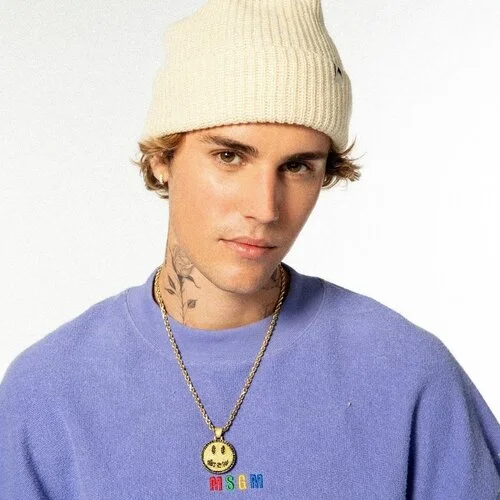
Justin Bieber – Anyone

PHOTO CREDIT: Christopher Anderson for New York Magazine

Elvis Costello - Farewell, OK 2020

PHOTO CREDIT: Rankin

Gabrielle Aplin – When the Lights Go Out

Four Tet – Parallel 4

Molly Burch (ft. Wild Nothing) - Emotion

SZA – Good Days

Gia Margaret – Solid Heart

Aya Nakamura - Ailleurs

assa.jpg

Olivia O’Brien – Better Than Feeling Lonely

PHOTO CREDIT: Parri Thomas

Another Sky – Was I Unkind?

Newton Faulkner – The Sun Is Coming Up

Joshua Radin – Better Life

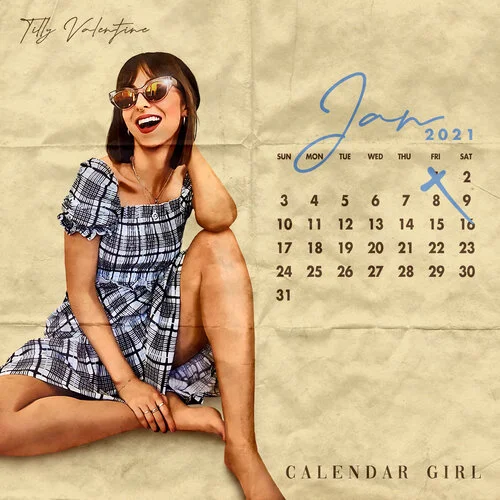
Tilly Valentine – Calendar Girl

Amanda Shires – That’s All

The Dirty Nil – Elvis ‘77

Yung Pinch – NO ONES THERE

Hailey Whitters (ft. Little Big Town) – Fillin’ My Cup

Hannah Grace – Wonderful Way

uuuu.jpg

Bailey Bryan – Sober

Tiffany Day – FEEL ALRIGHT

FEATURE: Modern Heroines: Part Twenty-Five: Lorde

FEATURE:


Modern Heroines

PHOTO CREDIT: Kjell Ruben for Dagens Næringsliv

Part Twenty-Five: Lorde

___________

THERE have been rumours….

rr.jpg

that the New Zealand-born artist, Lorde, has finished work on her third studio album. This is just speculation at present but, as she is back on Instagram and seems to be engaging on social media, maybe 2021 will be a year when we get a follow-up to the incredible Melodrama of 2017. Even though she has put out two studio albums, I think Lorde is an artist who will put out a lot more and will be an icon of the future. I am going to bring in some reviews for Melodrama and a couple of interviews but, back in 2013, she released the incredible Pure Heroine. Whilst she would go on to better herself in 2017, I think her debut is accomplished and boasts many brilliant moments. It is a stunning album with so much unique insight and accessibility. A lot of Pop albums can be quite bland or narrow, yet Pure Heroine is broad and incredibly exciting. With tracks like Tennis Court, Royals, and Buzzcut Season, it is an album that you will go back to and discover new things! Before I drop in reviews of Melodrama, Lorde is bringing out a book next year. Going South is a memoir that documents her experience visiting the continent of Antarctica in January 2019 with photos taken by New Zealand photographer Harriet Were. All proceeds from the book will be used to fund a postgraduate scholarship created by Antarctica New Zealand, a government agency (this is a useful accompanying interview).

That book will be fascinating to read but, in terms of her music, the world was stunned by the phenomenal Melodrama. It was my favourite album of 2017, and there has been a lot of speculation as to when Lorde might produce her next album. One reason why Melodrama got such a big reaction is the sheer consistency of the album. Rough Trade explained the importance of the album (“In 2013, a 16-year-old Lorde quietly, yet confidently asserted herself as the voice of a generation with her full-length debut, Pure Heroine. The album would go triple-platinum, selling over 4 Million worldwide, win two Grammy Awards, a Brit and spawned the seven-times platinum record-breaking international juggernaut single, Royals. And now she is back with her brand new album which tells the story of the last 2 wild, fluorescent years of [her] life. That story, Lorde says, begins with heartbreak. With husky tones and a new radiant feel to her album – including current hit single Green Light - the 20 year old singer has produced a rapturous mix of songs putting her once again at the forefront of pop”); critics reacted with incredible praise and positivity. Melodrama is very different to Pure Heroine and, when in January 2016, it was reported that Lorde and James Lowe, her boyfriend, had ended their three-year relationship, this might have inspired some of the songs and mood on the album.

With Lorde co-writing every track on Melodrama, one does get to hear here experiences and voice. The songs are more confident and memorable than on Pure Heroine; she had grown as a songwriter in the intervening years - and she created this undeniable Pop masterpiece in 2017. On the US Billboard 200, Melodrama debuted at number-one with first-week sales of 109,000 album-equivalent units, of which 82,000 were pure sales - becoming Lorde's first number-one in the United States. I want to bring in a couple of reviews for Melodrama to show what critics made of it. In their review, here is what Pitchfork had to say:

“Her percussive delivery, both in her smoky lower register and lean falsetto, cuts sharpest in the bacchanalian bangers. “Sober” folds humid brass into a stutter that lightly recalls her Heroine hit “Royals,” along deft turns of phrase that suggest even in her imbibing, she’s too sharp to turn off self-scrutiny (“Midnight, lose my mind, I know you’re feeling it too/Can we keep up with the ruse?”). She’s a touch self-deprecating in the height of the party (“Homemade Dynamite”) and tenfold pensive as it wears down (“Perfect Places”). The record’s bittersweet trajectory feels not unlike Yeah Yeah Yeahs’ Fever to Tell, intent on capturing both the carousing and the come-down in one breathless spree.

And the places Lorde goes on Melodrama really are special, particularly “The Louvre.” This track, in its gleaming synths and heartswell harmonies, captures an immersive bliss, a shared frequency of love just as irrepressibly grandiose as its sound. It’s the kind of connection that, even once it’s gone, lightens your bones forever. Whatever the next “Gossip Girl” is—whatever soapy serial next attempts to harness the teen zeitgeist with plush fabrics and sharp cheekbones—“The Louvre” will probably soundtrack its climactic moment. But as Lorde’s voice rises in it, awed in adoration as she whispers, “Well, summer slipped us underneath her tongue/Our days and nights are perfumed with obsession,” whatever’s onscreen can’t match her luminosity. It’s not enough to say Lorde is one in a generation. Really, it’s amazing this is the first time she was a teenager for how good she was at it”.

Every track on Melodrama hits the mark! From the incredible opener, Green Light, through to The Louvre, and Liability, to Writer in the Dark, and Supercut, it is a phenomenal album from an artist, I feel, can grow even stronger and more successful. When they reviewed Melodrama, AllMusic wrote the following:

“Growing up in public has been a rite of passage for pop stars since at least Frank Sinatra but, as with any classic storyline, what matters is the execution. Lorde, the preternaturally talented New Zealand singer/songwriter who became an international sensation at the age of 17, knows how to execute not only songwriting and public narrative but also a melding of the two. Melodrama, arriving nearly four long years after her 2013 debut, picks up the thread left hanging on Pure Heroine, presenting Lorde as a young woman, not a sullen teenager. Tonally and thematically, it's a considerable shift from Pure Heroine, and Melodrama feels different musically too, thanks in part to Lorde's decision to collaborate with Jack Antonoff, the leader of Fun. and Bleachers who has been nearly omnipresent in 2010s pop/rock. Antonoff's steely signatures -- a reliance on retro synths, a sheen so glassy it glares -- are all over the place on Melodrama but Lorde is unquestionably the auteur of the album, not just because the songs tease at autobiography but because of how it builds upon Pure Heroine.

Lorde retains her bookish brooding, but Melodrama isn't monochromatic. "Green Light" opens the proceedings with a genuine sense of exuberance and it's an emotion she returns to often, sometimes reveling in its joy, sometimes adding an undercurrent of melancholy. Sadness bubbles to the surface on occasion, as it does on the stark "Liability," and so does Lorde's penchant for blunt literalism -- "Writer in the Dark," where our narrator sings "bet you rue the day you kissed a writer in the dark," thereby suggesting all of her songs are some kind of autobiography -- but these traits don't occupy the heart of the album. Instead, Lorde is embracing all the possibilities the world has to offer but then retreating to the confines of home, so she can process everything she's experienced. This balance between discovery and reflection gives Melodrama a tension, but the addition of genuine, giddy pleasure -- evident on the neon pulse of "Homemade Dynamite" and "Supercut" -- isn't merely a progression for Lorde, it's what gives the album multiple dimensions”.

With positive signs that a new album might be coming soon, it will be amazing to what she produces next. I think Melodrama is such a huge and important album that everyone needs to hear and spend some serious time with.

I want to bring in a couple of interviews to end, as they show more of Lorde and how she engages with those she speaks with. This interview from The Guardian (2017) reveals some of that, but we also get some history behind Melodrama and insight into the brilliant Lorde:

“Through 2015, it became trickier for those outside Lorde’s sphere to follow what she was up to. She is not much of a presence on social media (vowing at one point that “all words [will] go into songs instead of tweets”), and though she performed the odd one-off show, provided vocals for a Disclosure track, and worked on the soundtrack for a Hunger Games film, she faded from frontline view. Having been seen and heard by the world, she wanted to resume, as much as possible, her old life with her friends. “Hugs and dinners,” she describes it. “Trips to the beach. Going to dumb bars in the middle of intersections.”

She moved into the waterside house in Auckland on her own. “I come from a big family,” she explains. (Her mother, Sonja Yelich, is a poet and academic, her father, Vic O’Connor, is a civil engineer; Lorde is the second of four siblings.) “We grew up in a house full of love and activity and screaming and crying. When I bought the house, people asked: ‘Isn’t it going to be strange living by yourself?’ And I was like: ‘No! I adore the feeling of being able to spread out my brain.’”

Aware that she couldn’t put off work on her second album for ever, she started assembling notes and ideas on the coffee table in her lounge. This was hastily covered with a towel whenever friends visited: she wasn’t especially proud of the half-formed work. “I was writing about nothing. I wasn’t in the right zone. [These songs] would pass off fine, but they meant nothing to me. I was writing stuff that maybe sounded cool, that were trying to be cool. But they weren’t vividly me.”

In the summer of 2016, she and Antonoff wrote a Royals-calibre track called Green Light. It charted the contradictory impressions of a person in the aftermath of a break-up, someone waiting for internal permission – a green light – before they can get on and be high-spirited again. They wrote another song, Homemade Dynamite, about just such a phase of high-spiritedness. On stage at Coachella, Lorde says Homemade Dynamite is about that time in an evening when “maybe the drugs are just kicking in”. For a track called Writer In The Dark, she composed a neat central lyric that seemed to summarise a year of ruthless story-gathering back in Auckland. “Bet you rue the day,” Lorde sings at an unnamed lover, “you kissed a writer in the dark.”

“I want to be really, really good one day,” Lorde says. Her legs start to twitch again. Her arms begin to flail, making their shapes. “I think I’m pretty good now. I think I’ve made a good start. But I want to be Paul Simon.” She thumps her hands down hard on the table. “I want to be Leonard Cohen.” (Thump.) “I want to be Joni.” (Thump.) “Fucking.” (Thump.) “Mitchell.” (Thump.) “And that takes time.”

Before that can happen I ask Lorde about something she’d said earlier – about how when she first blasted onto the scene, she felt as if she had “a two-part self”: half doubtful young person, half self-possessed performer, neither side fully reconciled with the other. Is that still the case?

“That gap has started to lessen,” she says. “I’m starting to be able to recognise myself in the work. It’s like there’s more of an overlap?... They’re almost...” For the first time today Lorde can’t summon the precise words she’s after. So she uses her hands instead. “Now it feels more like this,” she says, cupping one hand inside the other. “See?”.

There are a lot of great interviews out there that were published at the time Melodrama was released. We get information regarding Lorde’s songwriting process and approach, but there is also some brilliant information about her young life and what she is like to meet in person. I would recommend people to read the full article from The New York Times Magazine, as it is incredibly detailed…and we get some fascinating insight (such as why she likes travelling around New York on her own). I have selected a few sections, so we get some biography relating to Lorde; there is also some great information regarding the creation of Melodrama and its fruition:

“Lorde, whose real name is Ella Yelich-O’Connor, was born in 1996, the second of four children; her father, Vic O’Connor, is a civil engineer. Her mother, Sonja Yelich, is an award-winning poet whose work has been anthologized multiple times in the “Best New Zealand Poems” series. Ella was a bookish kid. She led her middle-school team to a second-place finish in the 2009 Kids’ Lit Quiz World Finals, a global competition. Shortly afterward, she sat for a morning-show interview on Radio NZ, estimating that she’d read “a bit more than 1,000 books” in her lifetime. She wrote her own fiction too, enamored of Raymond Carver and Kurt Vonnegut. When I asked her to characterize this work, she said only, “It wasn’t very good.” Sonja Yelich told me that when Ella was 14, she proofread Yelich’s 40,000-word master’s thesis: “People said, ‘You’re crazy to entrust this massive undertaking to your child.’ ” (Yelich has routinely accompanied Ella on her travels and is as much confidante as chaperone. You can see her dancing beside Taylor Swift in a 2014 awards-show cutaway as her daughter performs.)

We pushed through the service exit, walked along empty streets and boarded an uptown 1 train. While making “Melodrama,” Lorde took lots of subway rides, auditioning rough mixes of songs on cheap earbuds, which helped give her a sense of how the music would sound in daily life. As we rumbled northward, her face was in full fluorescent light, and I wondered if people ever bothered her during these rides. “Nobody recognizes me,” she said. When Lorde does spot someone spotting her, she went on, her move is to smile, place a finger to her lips and mouth a conspiratorial shh. Her thinking is that this gesture, warm and direct in its appeal, will pre-empt any further encounter — “and it usually does.”

As Lorde worked on “Melodrama” at home in New Zealand, she papered over a wall with notes for songs, like a sleuth tacking up scraps of evidence, trying to tease out their connections and fill in their blanks. This allowed her to “skim the whole album,” she said, and “to make sure I was touching all the bases I wanted to touch: ‘Oh, I haven’t said this, so let me find a good place to do it.’ ” She soon devised color codings for each song, with different hues denoting different themes. “A song about partying would get a certain color,” she explained, “but it might be a sad song, and that got its own color, too.” As she studied the wall, patterns and imbalances emerged: not enough red here; too much yellow there. On her kitchen table she arranged yet more paper, editing and shuffling lyrics around. When friends visited, she hid the table beneath a patchwork of hastily arranged bath towels and instructed them to steer clear.

 Her songs reflected her generation not only in their lyrics but also in their shrugging relationship to genre. Formerly ironclad distinctions among musical styles have significantly melted away. Even mash-ups — those early-aughts song splices that epitomized a dawning spirit of digital-age musical cross-pollination — sound dated now in their stuntish aesthetic of collision. In 2011 I asked Frank Ocean, then 24, about his genre-skipping approach to source material on “Nostalgia, Ultra,” his R.&B. mixtape that includes samples of Coldplay and “Hotel California.” He said he was confused by the question: The concept of border-crossing made little sense to him because he didn’t see the borders I was alluding to in the first place”.

A good gap of time has passed since Melodrama was released on 16th June, 2017. There has been a lot of change in Lorde’s life, but I wouldn’t expect a radical departure from the sound of Melodrama. If we get something half as good as that album then we will be in for a real treat! As I said, I think Lorde will grow greater and more profound as a writer and performer and, as she is only twenty-four, that is quite scary! I feel we will get a lot of albums from Lorde through her career, and I know she has already inspired so many songwriters. She will be a legend of the future, no doubt. The more I listen to Lorde, the more I realise she is…

A hugely talented and accomplished artist.

FEATURE: Starman: The Essential David Bowie

FEATURE:


Starman

IN THIS PHOTO: David Bowie as ‘Aladdin Sane’, 1973/PHOTO CREDIT: Brian Duffy

The Essential David Bowie

___________

I am doing a couple of other features…

 PHOTO CREDIT: Gavin Evans

before 10th January, as that date marks five years since David Bowie died. His final album, Blackstar, was released on his sixty-ninth birthday on 8th January and, since he has passed, there has been such fondness for his classic albums and his work in general! There is so much to dissect when it comes to Bowie and why he was so loved. I will explore a couple of different sides to him soon but, in this feature, I am sort of expanding on my A Buyer’s Guide series – where I recommend albums and a book to own about various acts. Instead, here, I am going to highlight the ten standout David Bowie albums; one that is underrated and warrants another, keener look; his final-recorded studio album; a great compilation album to have as a starting place if you need it; a great book that should provide some great detail, in addition to a playlist of his very best tracks. Here is a fond salute to a music genius who, on the anniversary of his death on 10th January, we will remember and…

 PHOTO CREDIT: Michael Putland/Getty Images

PLAY his music loud!

_______________

The Ten Essential Albums

Hunky Dory

Release Date: 17th December, 1971

Label: RCA

Producers: Ken Scott/David Bowie

Standout Tracks: Oh! You Pretty Things/Life on Mars?/Kooks

Buy: https://www.discogs.com/sell/list?master_id=1718&ev=mb

Stream: https://open.spotify.com/album/6fQElzBNTiEMGdIeY0hy5l?si=5vVuRLsaRkuxCEgK7YHrPA

Review:

“After the freakish hard rock of The Man Who Sold the World, David Bowie returned to singer/songwriter territory on Hunky Dory. Not only did the album boast more folky songs ("Song for Bob Dylan," "The Bewlay Brothers"), but he again flirted with Anthony Newley-esque dancehall music ("Kooks," "Fill Your Heart"), seemingly leaving heavy metal behind. As a result, Hunky Dory is a kaleidoscopic array of pop styles, tied together only by Bowie's sense of vision: a sweeping, cinematic mélange of high and low art, ambiguous sexuality, kitsch, and class. Mick Ronson's guitar is pushed to the back, leaving Rick Wakeman's cabaret piano to dominate the sound of the album. The subdued support accentuates the depth of Bowie's material, whether it's the revamped Tin Pan Alley of "Changes," the Neil Young homage "Quicksand," the soaring "Life on Mars?," the rolling, vaguely homosexual anthem "Oh! You Pretty Things," or the dark acoustic rocker "Andy Warhol." On the surface, such a wide range of styles and sounds would make an album incoherent, but Bowie's improved songwriting and determined sense of style instead made Hunky Dory a touchstone for reinterpreting pop's traditions into fresh, postmodern pop music” – AllMusic

Choice Cut: Changes

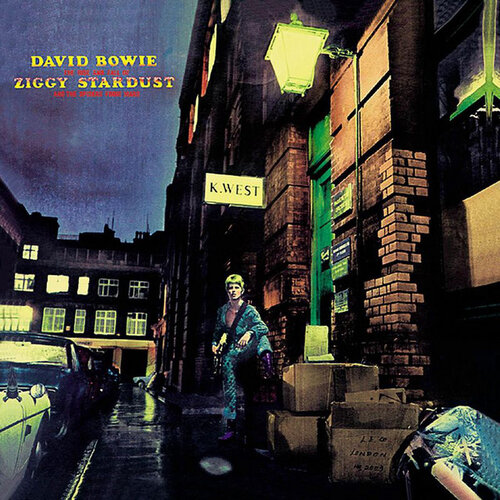
The Rise and Fall of Ziggy Stardust and the Spiders from Mars

Release Date: 16th June, 1972

Label: RCA

Producers: Ken Scott/David Bowie

Standout Tracks: Five Years/Suffragette City/Rock ‘n’ Roll Suicide

Buy: https://www.discogs.com/sell/list?master_id=1561&ev=mb

Stream: https://open.spotify.com/album/48D1hRORqJq52qsnUYZX56?si=HNdt_g_dS62qeg1zfehUkw

Review:

“Bowie initiates “Moonage Daydream” on side one with a riveting bellow of “I’m an alligator” that’s delightful in itself but which also has a lot to do with what Rise and Fall … is all about. Because in it there’s the perfect touch of selfmockery, a lusty but forlorn bravado that is the first hint of the central duality and of the rather spine-tingling questions that rise from it: Just how big and tough is your rock & roll star? How much of him is bluff and how much inside is very frightened and helpless? And is this what comes of our happily dubbing someone as “bigger than life”?

David Bowie has pulled off his complex task with consummate style, with some great rock & roll (the Spiders are Mick Ronson on guitar and piano, Mick Woodmansey on drums and Trevor Bolder on bass; they’re good), with all the wit and passion required to give it sufficient dimension and with a deep sense of humanity that regularly emerges from behind the Star facade. The important thing is that despite the formidable nature of the undertaking, he hasn’t sacrificed a bit of entertainment value for the sake of message.

I’d give it at least a 99” – Rolling Stone

Choice Cut: Starman

Aladdin Sane

Release Date: 13th April, 1973

Label: RCA

Producers: Ken Scott/David Bowie

Standout Tracks: Drive-In Saturday/Cracked Actor/Lady Grinning Soul

Buy: https://www.discogs.com/sell/list?master_id=2162&ev=mb

Stream: https://open.spotify.com/album/3HZKOk1knxrUU3y5ZIOdbz?si=sR8QPaOHSgCHm0535zz_jA

Review:

“Aladdin Sane, recorded while Bowie and the Spiders were touring their asses off in an attempt to get America to love them the way England already did, is effectively Ziggy Stardust II, a harder-rocking if less original variation on the hit album. There's a paranoid sci-fi scenario ("Panic in Detroit"), a blues-rock stomp ("The Jean Genie"), a bit of cabaret ("Time"), a blunt sex-and-drugs nightmare ("Cracked Actor"). The big difference is that where Ziggy ended with a vision of outreach to the front row ("Give me your hands, 'cause you're wonderful!"), Aladdin is all alienation and self-conscious artifice, parodic gestures of intimacy directed to the theater balcony. Bowie overenunciates his cover of the Rolling Stones' "Let's Spend the Night Together" to turn it into a caricature of a disinterested Casanova; his sneering rocker "Watch That Man" is a better evocation of the Stones themselves” – Rolling Stone

Choice Cut: The Jean Genie

Station to Station

Release Date: 23rd January, 1976

Label: RCA

Producers: David Bowie/Harry Maslin

Standout Tracks: Station to Station/Golden Years/Stay

Buy: https://www.discogs.com/sell/list?master_id=22420&ev=mb

Stream: https://open.spotify.com/album/0MWrKayUshRuT8maG4ZAOU?si=98xxWRVbRrGEkVuwpkdIDQ

Review:

“Taking the detached plastic soul of Young Americans to an elegant, robotic extreme, Station to Station is a transitional album that creates its own distinctive style. Abandoning any pretense of being a soulman, yet keeping rhythmic elements of soul, David Bowie positions himself as a cold, clinical crooner and explores a variety of styles. Everything from epic ballads and disco to synthesized avant pop is present on Station to Station, but what ties it together is Bowie's cocaine-induced paranoia and detached musical persona. At its heart, Station to Station is an avant-garde art-rock album, most explicitly on "TVC 15" and the epic sprawl of the title track, but also on the cool crooning of "Wild Is the Wind" and "Word on a Wing," as well as the disco stylings of "Golden Years." It's not an easy album to warm to, but its epic structure and clinical sound were an impressive, individualistic achievement, as well as a style that would prove enormously influential on post-punk” – AllMusic

Choice Cut: TVC15

Low

Release Date: 14th January, 1977

Label: RCA

Producers: David Bowie/Tony Visconti  

Standout Tracks: Speed of Life/Warszawa/Art Decade

Buy: https://www.discogs.com/sell/list?master_id=22382&ev=mb

Stream: https://open.spotify.com/album/2de6LD7eOW8zrlorbS28na?si=KWNMZH1nQo2wN3wT-ya_DQ

Review:

“Brian Eno gets much of the credit for Low — not only did he play keyboards on six of the eleven tracks and co-write "Warszawa," but you can hear the heavy influence of his own solo records, especially Another Green World. Still, Eno only dreamed about making noise like this, mainly because he never assembled a band anywhere near this great: A big hand, please, for the fuzzed-out guitars of Ricky Gardiner and Carlos Alomar, and the fantastic production of Tony Visconti, who distorted Dennis Davis' snare to create one of rock's all-time most imitated drum sounds. Bowie sings haikulike lyrics about emotional death and rebirth, sometimes hilarious ("Breaking Glass"), sometimes brutally honest, as in the electric-blue loneliness of "Sound and Vision" and "Be My Wife" or the doomed erotic obsession of "Always Crashing in the Same Car."

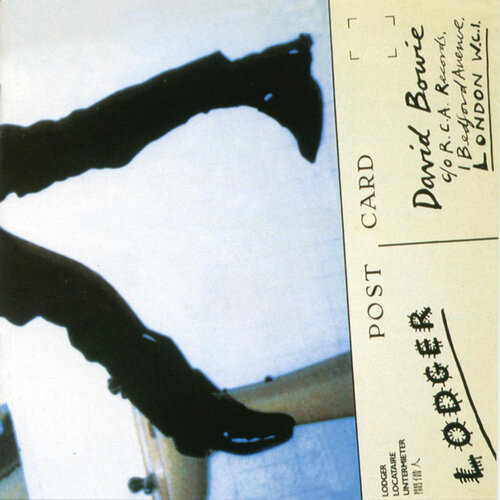
The record company begged Bowie not to release Low, but it became a surprise hit and holds up today as one of his most intense and influential albums, inspiring two excellent Berlin trilogy sequels, Heroes (1977) and the insanely underrated Lodger (1979). It makes sense that Bowie released Low the week after he turned thirty, for the same reasons it sounds so timely today: Low is the sound of the slinky vagabond falling to earth, trying to catch up with the speed of life — and maybe even find some kind of home there” – Rolling Stone

Choice Cut: Sound and Vision

"Heroes"

Release Date: 14th October, 1977

Label: RCA

Producers: David Bowie/Tony Visconti

Standout Tracks: Beauty and the Beast/Blackout/V-2 Schneider

Buy: https://www.discogs.com/David-Bowie-Heroes/master/22294

Stream: https://open.spotify.com/album/4I5zzKYd2SKDgZ9DRf5LVk?si=ZNtVO2LQQH2vKp3EIexniA

Review:

“‘Neukoln’ drops us off in one hell of a bad neighborhood.  Stark and haunted by the looming ruins of an industrial past. Superficially, this may come off as glum self-indulgence to some. But this is truly an existential cry of pain. Another example of this album wearing its raw emotions on its sleeve. Bowie’s sax wailing away among the gloom and doom. I suppose here the case could be made for this being Low II.  Then all too suddenly, we're tossed into the disco. Here the album ends on an almost schizophrenic note with the coyly oblique, ‘Secret Life of Arabia’. Suddenly it’s time to dance, with Bowie crooning, “You must see the movie, the sand in my eyes, I walk through a desert song when the heroine dies.” Its here you realize Bowie’s backing band consists of some truly formidable R & B musicians. Namely, Carlos Alomar, George Murray and Dennis Davis. Believe it or not, the same band that played on Low. And this is part of Bowie’s genius. To put himself and others in unfamiliar territory and see what happens.

Did I say genius? Yes, I think Bowie was a genius. Part of being a genius is knowing what’s important and what’s not. And Bowie had that. Obtuse, weird and disjointed as it all is, ‘Heroes’ shouldn’t work but does. Bowie was a keen practitioner of William S. Burroughs’ cut-up technique and more than any Bowie album, ‘Heroes’ feels like it was cut up and pasted together. Yet, somehow the glue holds. Here Bowie revels in the seedy underbelly and decadent nightlife of a haunted city, teetering on the brink. As he sings in ‘Sons of the Silent Age’ this record truly does sound like, “listening to tracks by Sam Therapy and King Dice”. If Low was the sound of breaking up, ‘Heroes’ is the sound of breaking free” – Soundblab

Choice Cut: Heroes

Lodger

Release Date: 25th May, 1979

Label: RCA

Producers: David Bowie/Tony Viscont

Standout Tracks: African Night Flight/D.J./Look Back in Anger

Buy: https://www.discogs.com/sell/list?master_id=22318&ev=mb

Stream: https://open.spotify.com/album/0S5nxDIEprOH23QeDoMeFK?si=NRDKo79pS3GWNS2s_CpUTw

Review:

“On the surface, Lodger is the most accessible of the three Berlin-era records David Bowie made with Brian Eno, simply because there are no instrumentals and there are a handful of concise pop songs. Nevertheless, Lodger is still gnarled and twisted avant pop; what makes it different is how it incorporates such experimental tendencies into genuine songs, something that Low and Heroes purposely avoided. "D.J.," "Look Back in Anger," and "Boys Keep Swinging" have strong melodic hooks that are subverted and strengthened by the layered, dissonant productions, while the remainder of the record is divided between similarly effective avant pop and ambient instrumentals. Lodger has an edgier, more minimalistic bent than its two predecessors, which makes it more accessible for rock fans, as well as giving it a more immediate, emotional impact. It might not stretch the boundaries of rock like Low and Heroes, but it arguably utilizes those ideas in a more effective fashion” – AllMusic

Choice Cut: Boys Keep Swinging

Scary Monsters (And Super Creeps)

Release Date: 12th September, 1980

Label: RCA

Producers: David Bowie/Tony Visconti  

Standout Tracks: Up the Hill Backwards/Scary Monsters (And Super Creeps)/Fashion

Buy: https://www.discogs.com/sell/list?master_id=30425&ev=mb

Stream: https://open.spotify.com/album/5fxvWHvIDPIALfTfRiwyB0?si=7-XqImD4SbaWafdU1OkRMA

Review:

“Over on side two we have 'Teenage Wildlife', the longest track on the LP. An elegy to himself in his younger days – not for him the over-confidence of Ziggy-Stardust-era, but the mature realism of David Bowie now. Another facade is laid to rest. "And there'll be others on the line filing past who will whisper low/I will miss you/He had to go".

'Scream Like A Baby' evokes images of incarceration, Bowie sharing an imprisoned nightmare with another (mythical) character, Sam, being humiliated, being guilty till proven innocent. No good times to be had, they 'never had no fun'.

Bowie's version of Tom Verlaine's 'Kingdom Come' has him in physical chains and bonds as opposed to the mental ones in 'Scream Like A Baby'. A song of true hope, Bowie sings Verlaine's lyrics as if they were his own, bringing a vocalese both impassioned and sweetly savage into the song that was absent on the original. Bowie prays for salvation and is saved.

The penultimate song on side two is 'Because You're Young', Bowie's paean to his son, any son perhaps. Bowie being sentimental without being cloying, advising without dictating, being nice to others, but keeping the whiplash for himself: "Because you're young/What could be nicer for you/And it makes me sad/So I'll dance my life away/A million dreams/A million scars".

And that's it, the first instalment of the 1980's Guide to The Diaries of David Bowie, with Bowie being assertive, demonstrative, and resigned. It's an album which will, hopefully influence others into making true eighties music. We all know that when Bowie breaks wind, people sniff it as far away as Numansland, but that is always the disadvantage of being a real innovator” – Hot Press

Choice Cut: Ashes to Ashes

Let's Dance

Release Date: 14th April, 1983

Label: EMI America

Producers: David Bowie/Nile Rodgers

Standout Tracks: Modern Love/China Girl/Without You

Buy: https://www.discogs.com/sell/list?master_id=48753&ev=mb

Stream: https://open.spotify.com/album/4NwG11AsDJluT732lSjMrV?si=f2hzE_d_TfuX-M1KPUrJKA

Review:

“In January 1983, Bowie signed a lucrative multi-album deal with EMI and hired Nile Rodgers to make him some hits. If still considered to be as major an artist as Fleetwood Mac or Michael Jackson, he was nowhere in their league in terms of units shifted. So the massive global success of Let’s Dance was no fluke—the album was planned as intricately as a troop landing or royal wedding. Made with economy (as Bowie hadn’t signed with a label yet, he funded the sessions and watched every penny like a hawk) and recorded and mixed in less than three weeks, Let’s Dance was an EP’s worth of songs padded out with covers and remakes—one of which, a new version of his and Iggy Pop’s “China Girl,” was a sure-fire hit, Bowie predicted. He was right.

He was ready-made for MTV, but Let’s Dance was also a counter-move: an “organic” soul- and jazz-influenced sound instead of synth pop, even if having some of most colossal gated drums heard on a rock album to date. It was hooky, its tracks given booming sing-along choruses, its players included Stevie Ray Vaughan and the Chic rhythm section. And it had a remorseless sequencing: Its first side is three hit singles, back to back to back, with “Without You” as a cooling dish. The rest of the album is more or less B-sides, some odd (“Ricochet” mixes W.H. Auden with a clunking attempt at West African highlife), some ghastly (“Shake It,” whose refrain is the theme of a game show in hell). Let’s Dance had enough Bowie weirdness to make it stand out from other 1983 hit albums—“visions of swastikas” in “China Girl;” the cheery nihilism of “Modern Love”; the dark undercurrent in “Let’s Dance,” a lonely, desperate song beneath its trappings” – Pitchfork

Choice Cut: Let’s Dance

The Next Day

Release Date: 8th March, 2013

Labels: ISO/Columbia

Producers: David Bowie/Tony Visconti

Standout Tracks: The Next Day/The Stars (Are Out Tonight)/Valentine's Day

Buy: https://www.discogs.com/sell/list?master_id=530238&ev=mb

Stream: https://open.spotify.com/album/16F7X7WOFZhMwQNsMil7lq?si=mmzKhlNfRcOblEF-GerFTg

Review:

“What The Next Day has that perhaps Lodger didn't is something more prosaic. Whatever else he's been doing, clearly at least some of the last decade has been spent carefully crafting inarguable tunes. Its melody shifting from weary sigh to frantic angst, I'd Rather Be High is utterly beautiful; The Stars (Are Out Tonight) supports its Brad-Pitt-is-an-alien thesis with a fantastic chorus, all the more potent for the fact that it takes an age to arrive; Valentine's Day is so deceptively sweet that the bleakness of its subject matter – another tyrant, bent on crushing the world beneath his heels – doesn't initially register.

Despite the lyrical density, The Next Day's success rests on simple pleasures, not a phrase you'd ever use to describe Lodger or Station to Station. You could argue that means the naysayers still have a point. For all the pointers it offers in that direction, The Next Day isn't the equal of Bowie's 70s work: but then, the man himself might reasonably argue, what is? Perhaps it's destined to be remembered more for the unexpected manner in which it was announced than its contents. That doesn't seem a fair fate for an album that's thought-provoking, strange and filled with great songs. Listening to The Next Day makes you hope it's not a one-off, that his return continues apace: no mean feat, given that listening to a new album by most of his peers makes you wish they'd stick to playing the greatest hits” – The Guardian

Choice Cut: Where Are We Now?

The Underrated Gem


Black Tie White Noise

Release Date: 5th April, 1993

Labels: Savage/Arista

Producers: David Bowie/Nile Rodgers

Standout Tracks: Black Tie White Noise (ft. Al B. Sure!)/Pallas Athena/I Know It's Gonna Happen Someday

Buy: https://www.discogs.com/sell/list?master_id=49487&ev=mb

Stream: https://open.spotify.com/album/1yFItZkb7DBAkQ5RB8OJv9?si=HuyGjePFRf2vwx1-hVbdtA

Review:

“Black Tie refers to many aspects of Bowie’s career. Rodgers provides a more considered sound than the crash and glitz of the pair’s previous collaboration, Let’s Dance. Mick Ronson, who’d not worked with Bowie for almost 20 years, plays on a cover of Cream’s I Feel Free, an old Spiders staple (it was sadly their last recording together, as Ronson was to die of cancer that year). Another song covered here, The Walker Brothers’ Nite Flights, is one that directly influenced Bowie’s own work with Brian Eno; and that work is also referenced in the instrumental opener The Wedding, which is named in tribute to Bowie’s wedding to model Iman Abdulmajid that year. And while the title-track (featuring rapper Al B Sure!) considered the recent LA Riots, the darkly beautiful single Jump They Say was a more personal effort, Bowie expressing his feelings concerning the death of his half-brother Terry.

All of this could have been something of a mishmash were it not for Bowie’s immense confidence (his vocals have never been better) and Rodger’s sympathetic production. As an album, it was both a critical and commercial success (number one in the UK). As a statement of the next stage of Bowie’s career, it was perfect. The 90s would be a decade of change and experimentation for David Bowie, and Black Tie White Noise was the first step on his new journey” – BBC

Choice Cut: Jump They Say

The Final Album


Blackstar

Release Date: 8th January, 2016

Labels: ISO/Columbia/Sony

Producers: David Bowie/Tony Visconti

Standout Tracks: Blackstar/’Tis a Pity She Was a Whore/I Can't Give Everything Away

Buy: https://www.discogs.com/sell/list?master_id=939598&ev=mb

Stream: https://open.spotify.com/album/2w1YJXWMIco6EBf0CovvVN?si=K04rWwmaQZ-LVEZHtq8IUA

Review:

“In different hands (say, those of Scott Walker, whose morbid experiments seem to be a reference point here), an album of paranoid fragments and subterranean thoughts would be off-putting, but Bowie still has a fantastic voice and an ear for catchy hooks. Ever the interpreter, even with his own work, he belts out what his characters would mutter to themselves, drowning in bass lines and sax solos, the next life glimpsed as a swell of synth strings. Pushing his longstanding interest in theater (“Lazarus” comes from his same-titled musical, “’Tis A Pity She Was A Whore” is a play on the 17th century tragedy ’Tis Pity She’s A Whore, and so on) into soundscape, Blackstar uses music as staging and scenery, placing his dynamic voice in the context of noir atmosphere.

“On “I Can’t Give Everything Away”—which features sax and guitar solos that are, respectively, too smooth and too busy to be called cool, which makes them cool, because coolness is paradoxical—he hits unexpected emotional notes by simply singing the title over and over. The nearly 10-minute title track starts funereal over skittering beats, before drifting into a pop song as though it were carried up to a cloud. On “’Tis A Pity She Was A Whore,” driven by a sax line as insistent as paranoia, he treats the chorus as a whimper. For all its jazz accents and solos, Blackstar ends up becoming a stage for the things that first made Bowie a pop star: his incessantly catchy melodies and elastic voice. With its simple (though oblique) lyrics and endlessly repeated choruses, it’s a secret pop record submerged in the dark places of studio improvisation” – The A.V. Club

Choice Cut: Lazarus

A Good Starting Point: A Suitable Compilation


Legacy (The Very Best of David Bowie)

Release Date: 11th November, 2016

Labels: Parlophone (U.K.)/Columbia (U.S.)/Legacy (U.S.)

Standout Tracks: Life on Mars? - 2016 Mix/Rebel Rebel/Modern Love - Single Version; 2014 Remaster

Buy: https://www.amazon.co.uk/Legacy-Very-Best-Bowie-VINYL/dp/B01LTHMSDY

Stream: https://open.spotify.com/album/4JEgSaokMH5mMRClx9wp3S?si=gmzZcZiHTi2hYA7IKoU-pg

Review:

“Not the first posthumous compilation from David Bowie -- that would be the lavish box Who Can I Be Now? (1974-1976), which was planned prior to his January 10, 2016 death -- Legacy is nevertheless the first designed with his, well, legacy in mind. That much can be gleaned from the title of the compilation, but that's a bit of a feint since this set essentially repackages the simplest incarnation of a previous Bowie hits compilation, 2014's Nothing Has Changed. Legacy is available as a single and a double-disc, both carrying sequencings that mirror those on Nothing Has Changed (and both featuring a new mix of "Life on Mars?"). On the single disc, the first 12 songs are the same, then the back sequence is different, discarding "Absolute Beginners" and "Hallo Spaceboy" and concluding with "Where Are We Now?" and "Lazarus." Similarly, the double-disc has a nearly identical sequencing on its first disc -- "Ashes to Ashes" and "Fashion" are swapped -- with the differences arriving in the comp's final six songs, so Heathen's "Everyone Says Hi" is here, and this concludes with "Lazarus" and "I Can't Give Everything Away." In both cases, the Legacy sequencing is slightly better than that on Nothing Has Changed, since it winds up ending on the elegiac note that Bowie gave Blackstar. Still, it's splitting hairs: the 2016 and 2014 compilations are similar to each other, and they're also similar to the many Bowie comps that came before, and they're all just as likely to satisfy and pique interest” – AllMusic

Choice Cut: Space Oddity

The David Bowie Book


David Bowie: A Life (Paperback)

Author: Dylan Jones

Publication Date: 7th June, 2018

Publisher: Cornerstone

Synopsis:

“Standing head and shoulders above the slew of Bowie biographies that have been produced since his passing, Dylan Jones’s definitive account of pop’s great chameleon is a real labour of love. Curated from hundreds of interviews with the people who knew Bowie best, this is the closest mere mortals will ever get to understanding the Thin White Duke’s musical genius.

Shortlisted for the NME Best Music Book Award 2018

'Worthy of the Starman ... Of all the volumes to appear since Bowie's death, this is the most useful: an oral history that brings together the most incisive reminiscences and memorials' - Evening Standard

Drawn from a series of conversations between David Bowie and Dylan Jones across three decades, together with over 180 interviews with friends, rivals, lovers, and collaborators - some of whom have never before spoken about their relationship with Bowie - this oral history is an intimate portrait of a remarkable rise to stardom and one of the most fascinating lives of our time.

Profoundly shaped by his relationship with his schizophrenic half-brother Terry, Bowie was a man of intense relationships that often came to abrupt ends. He was a social creature, equally comfortable partying with John Lennon and dining with Frank Sinatra, and in Dylan Jones's telling - by turns insightful and salacious - we see as intimate a portrait as could possibly be drawn.

Including illuminating, never-before-seen material from Bowie himself, drawn from a series of Jones's interviews with him across three decades, David Bowie is an epic, unforgettable cocktail-party conversation about a man whose enigmatic shapeshifting and irrepressible creativity produced one of the most sprawling, fascinating lives of our time” – Waterstones

Order: https://www.waterstones.com/book/david-bowie/dylan-jones/9781786090430

FEATURE: The Lockdown Playlist: Songs from the Best Albums Made By Women in 2020

FEATURE:


The Lockdown Playlist

Songs from the Best Albums Made By Women in 2020

___________

2020 has been a hugely challenging year….

for so many musicians but, against that tide, some truly remarkable albums have been made! Not to generalise and define each year so easily, but I think the majority of the best albums of this year have been released by women – as has been the case for the last couple of years at least. Not to exclude the men, but I think the biggest impressions have been made by female artists (I am also including bands fronted by women in this list). To celebrate that, this Lockdown Playlist is a selection of tracks from wonderful albums made by some brilliant women. I have some Lockdown Playlists planned for next year, but this is the last one that looks back on the very best from 2020. It has been a terrible year in many respects but, when it comes to music of the highest quality, we have been…

TREATED to some real bounty!

FEATURE: Worthy of Consideration: Can Glastonbury and Other Big Festivals Realistically Return in 2021?

FEATURE:


Worthy of Consideration

PHOTO CREDIT: @joewthompson/Unsplash 

Can Glastonbury and Other Big Festivals Realistically Return in 2021?

___________

WHEN it comes to the question as to whether…

 PHOTO CREDIT: @hannynaibaho/Unsplash

large festivals can come back in any form next year, there does seem to be a split in opinions. Many people are looking ahead to next year with optimism because, as we have a vaccine, it is only a matter of months before things start to improve and we will see a massive reduction in infections. That is good news, perhaps, for smaller venues that can easily test people attending gigs or ensure that those who buy tickets have been vaccinated - or, at the very least, there could be testing outside venues. Dealing in relatively small numbers would be easier. I hope that the venues are all safe because, this year, they have been especially hit hard. I do feel like venues will be supported financially and most will be open in the summer (and offer gigs in some form). Maybe things will not get totally back to normal by then. The issue is a lot trickier when we discuss a massive festival. Where there is a lot more physical interaction and so many more people, it only takes a few revellers who are infected to spread coronavirus rapidly. Glastonbury is the world’s best festival and, after it was postponed this year, many have been looking ahead to the possible return next year. Co-organiser Emily Eavis has been asked about what Glastonbury’s current status is. This NME article provides us with more details:

 “Emily Eavis has reassured fans that Glastonbury 2021 is “not cancelled yet” amid concerns that the festival won’t take place due to coronavirus concerns.

Last week, Eavis said the festival was “a long way” away from being able to confirm next year’s event.

ffff.jpg

IN THIS PHOTO: Glastonbury’s Emily and Michael Eavis/PHOTO CREDIT: Western Daily Press 

Today (December 21), a fan tweeted: “I will only believe that Glastonbury is cancelled next year if Emily Eavis rings me personally to tell me,” to which Eavis simply replied: “Not cancelled yet!”

In another tweet, Eavis added: “Appreciate lots of rumours are flying around online and in the press, but there’s no change to what I said in the BBC interview last week.

“We’ll let you know through official channels as soon as we have an update (which won’t be until the new year).”

In the recent interview with the BBC, Eavis said the team behind the festival are considering their options on how to ensure that next year’s festival, the delayed 50th anniversary of the legendary Worthy Farm weekender, can go ahead.

Michael Eavis spoke recently about the possibility that “massive testing arrangements” could be put in place at next year’s event. “The testing is going so well now, there could be massive testing arrangements,” he said”.

It is hard to tell at the moment whether a vaccine can be rolled out quickly enough so the majority of the population are immunised by the summer. There is also the fact that big festivals start a long time before the first act plays on stage. Months of planning and preparation is involved, so Emily and her father, Michael (who founded the festival), may have to make a decision in the next couple of months.

 IN THIS PHOTO: Paul McCartney (who was among the three artists due to headline Glastonbury this year)/PHOTO CREDIT: Samir Hussein/WireImage

Among the proposed headliners this year – the others being Taylor Swift and Kendrick Lamar -, Paul McCartney is doubtful 2021 will be the year to bring Glastonbury back:

 “Paul McCartney, this year’s would-be Glastonbury headliner, does not expect the festival to go ahead in 2021.

The former Beatles star told BBC Radio 4: “100,000 people closely packed together with flags and no masks – you know, talk about super-spreader. I’d love it to [happen], but I have a feeling it’s not going to.”

McCartney said the festival was not in his 2021 calendar. This week Glastonbury co-organiser Emily Eavis told the BBC that they are doing “everything we can” to ensure it takes place next year.

She said: “The hard part is understanding exactly what we’ll be planning for, and what impact that will have on what we’re able to do. But right now I’m not sure there’s anything we could do that would completely ensure we can welcome 200,000 people to spend six days in some fields in June 2021”.

I think the problem afflicting most large festivals is when they take place. Many are hosted in June or July but, in terms of making a festival happen and having greater security that things will be better, I think hosting them at the end of August would be better. There is nothing set in stone saying a festival needs to happen in June; I think things will be infinitely better by late-August. The weather, hopefully, will be quite warm, and there is every chance that infection rates will be extremely low.

 PHOTO CREDIT: @flub/Unsplash

Many are chomping at the bit to get back in a field in the summer, but if Glastonbury and other festivals are postponed this year, they may need to push them back to 2022. With a vaccine here, there is going to be a moment next year when things are as close to back to normal as possible. I think wiping out 2021 would be a problem for every festival as they would struggle to return in 2022. All festivals are important, but there are eyes on Glastonbury. We all need the tantalising possibility of Worthy Farm being open for business next year but, at this stage, there is no guarantee as to when the vaccine can be given to the majority and when the moment is that festivals can realistically come back. I do think that delaying the festival date by a couple of months, coupled with a mass testing system, would be fine. I am not sure whether there would be a way to check whether people have been vaccinated prior to buying a ticket or, on site, mass testing is carried out. The latter might be a bit challenging, but perhaps some system can be designed so that out festivals can open without having to worry about the unpredictable spread of coronavirus. What the Eavis’ and every other festivals organiser has to deal with right now is huge.

 PHOTO CREDIT: @beschtephotography/Unsplash

Most venues can plan and rearrange plans when it comes to reopening and cancelling gigs, but festivals are so much larger and deal with so many more artists and people. Though it seems like festivals are having to consider the possibility of a 2022 return, I think that leaving fields fallow would be a folly…especially considering the rate at which people are being vaccinated. Just under six months from now, things might well be safe enough to bring most festivals back but, whilst not ideal, delaying them until August or September might be a compromise. That might create a clash and prove to be nightmarish for artists playing several festivals, but there will be such an appetite and demand next year. The number-one concern is safety and ensuring that people are not needlessly exposed to danger. It will be interesting watching the music news to see what decisions (if any) are made early next year and whether festival organisers are going to be safe and cancel 2021 plans, or whether they are going to be device a way so that vaccinated people can come to festivals and everyone else has to stay away. Resisting the palpable craving for live music is going to be heavy on organisers’ shoulders, but I guess we have to be patient! I initially wrote this feature on 22nd December but since, yesterday (30th December), the Oxford vaccine is being rolled out from next week, that might increase the chances of festivals being rolled out in the summer - though, as the second jab is not administered until twelve weeks after the first, it might be right. So far ahead of time, deciding if a huge festival should go ahead at such a bad and precarious time is…

 PHOTO CREDIT: @covertnine/Unsplash

A very hard call to make.

FEATURE: The Lockdown Playlist: WTHB Ones to Watch 2021

FEATURE:


The Lockdown Playlist

IN THIS PHOTO: Baby Queen 

WTHB Ones to Watch 2021

___________

I may put out a couple more…

dddd.jpg

 IN THIS PHOTO: Only Sun

Lockdown Playlists based on other people’s lists of ones to watch in 2021. There are going to be different names on each and, rather than me have to rack my brains, it is good to bring together what others are saying. I am a big fan of When the Horn Blows, and they recently put out their suggestions of artists to follow in 2021 (they have compiled a Spotify playlist based on their suggestions, but, whereas they pick two songs from each artist, I am stick with one (so that we get thirty in total):

“2020 has certainly been a strange one for everyone! With venues shut and no fixed plan in sight to get them open fully again, the music industry has certainly struggled to a point of serious concern.

However it has still kept moving, being as creative as ever to keep itself alive. Live streams took over the internet and social media, social distancing shows are now a common thing and we have lost count on the amount of songs now that came from a ‘lockdown session’. Music always fights itself out of a corner, no matter how troubled it may be. 2020 has seen the rise of genres such as bedroom-pop as more people have had to stay at home to write new songs and Tik Tok has taken over the world even more to the point of ‘influencers’ are now releasing music. And with live venues shut, more people have turned to the internet to find that next big thing instead of watching them grow inside small sweaty venues - leading the path to the next Hayley Williams or Pale Waves”.

With that in mind, here are songs from those on that illustrious list. I think you should check out all the artists (look for their social media pages) and they will be lighting up 2021. A salute to When the Horn Blows and the fabulous artists…

 IN THIS PHOTO: Lilla Vargen

THEY have predicted big things for.

FEATURE: All They Ever Look For: The Sexualisation of Kate Bush By the Media

FEATURE:


All They Ever Look For

IN THIS PHOTO: Kate Bush in 1978/PHOTO CREDIT: Gered Mankowitz 

The Sexualisation of Kate Bush By the Media

___________

THIS might not seem like as especially….

 IN THIS PHOTO: Kate Bush in Liverpool in 1979

festive feature but, previously, I have looked at how Kate Bush’s approach to romance and sex through her music is unique. She has this ability to switch between something quite poetic and oblique to being very direct and confident. Certainly, in many of her songs, Bush has exuded such eroticism and passion but, detaching the artist from the woman, and she herself never wanted to be seen as a ‘sex symbol’. If songs like Feel It (The Kick Inside), and In the Warm Room (Lionheart) suggested someone who, early in her career, was more than confident enough to speak about sex and desire in very unadorned terms, maybe the media took that to mean that Bush wanted to be seen as a sex symbol. The woman who appeared in the Babooshka (from Never for Ever) video as a sword-wielding heroine is very different to the more shy and ordinary Kate Bush we hear in interviews. An article from Far Out Magazine earlier in the year raised a particular encounter where Bush had to refute the notion she was a sex symbol – and the interviewer promptly ignored her answer:

“Bush was quickly labelled a sex-symbol following her breakthrough and, with her own songs finding new and expressive ways to talk about the still taboo subject, she was soon categorised under her physical attributes and her flirtatious performances. It was a notion that she wholeheartedly refutes in this rarely seen interview footage from 1979.

The footage comes from Check It Out one of the North East’s attempt at conquering the holy land of ‘Youth TV’. Sometimes affectionately known as Yoof TV, it was created in an attempt to try and tap into the new teenage market through music television. More often than not it was created by middle-aged men who had little to no clue about the youth subcultures which were rife in the mid-to-late seventies.

One such programme was the Tyne Tees, Check it Out. It had all the classic tropes of Youth TV, poorly dressed set, poorly dressed presenters and poorly skilled studio staff. Yet despite this, with the promise of a keen viewership, the show managed to hook a fair few rock and roll ducks in its time, including Kate Bush.

Chris Cowey is the presenter at this time for the show—before he would go on to host Top of the Pops—and he does a fine job of highlighting the casual misogyny of the times with his introduction. With all the grace of a bulldog dragging its balls along the floor, Cowey licks his lips and decade-defining moustache at just the mention of Bush’s name.

Handing over to the interviewer, who is thrilled to grab some time with Britain’s latest superstar, Bush is charming and confident. One thing that’s up for discussion is both Bush’s use of sex and vivid imagery in her songs and the notion that she has become a sex symbol. It’s something Bush moves to quickly shut down.

Bush confirms that while most songs that dominate the charts are about sex in one form or another, “Most of the pop songs are about sex whether they say it obviously or not,” she says, before adding: “It’s been like that for years. The subject is to write about ‘boy meets girl’ that’s the basics of it”. It highlights the singer’s already strong introduction to the music business, having already worked with some of the industry’s finest during her short career.

The interviewer then asks if she comes in for criticism for being a sex symbol, Bush expertly replies: “I do. But as long as people appreciate me as a musician and an artist then that’s great. If anything comes on top of that then it’s just a bonus, as far as I’m concerned.

“But I really want people to understand I am a serious artist—I’m not just flirting around with the business you know?” At this point, our interviewer cracks an awkward laugh. It’s a laugh which is quickly stifled by Bush’s powerful gaze as she tries to make her point. “I take it very seriously”.

Unfortunately, this message falls somewhat on deaf ears as the interviewer hints back to the sexual imagery of the songs and asks if they’re derived from personal experiences. Considering that most of Bush’s songs at the time took place in narrative worlds novelists would be proud of, it’s a silly question and is treated as such”.

I think one of the greatest things about Bush’s music is how, through her career, she has been very honest and open about her approach to sex and longing - she adores the male figure and why shouldn’t she write about her passions?! Maybe her early albums like The Kick Inside (her 1978 debut) are more focused on romance and love than what was to come later, but there has never been a sense of Bush defining herself as someone obsessed by sex. I think early photoshoots might have caused some misconceptions.

 IN THIS PHOTO: Kate Bush in 1978/PHOTO CREDIT: Gered Mankowitz 

I have written about the photoshoot for the Wuthering Heights single by Gered Mankowitz, where Bush wears a leotard and, to some, that was her showcasing her body and sexuality. In actuality, it was Kate Bush being snapped as a dancer but, because the shoot was quite sexy, the media took a very tabloid approach. I guess every male interviewer fancied themselves as a potential suitor when it came to talking with Kate Bush – as Graeme Thomson notes in his biography, Under the Ivy: The Life & Music of Kate Bush. Right from her first single, Wuthering Heights arriving, there was a skewing away from the brilliance of her music – by some people – to what Bush looked like and how she was this kind of temptress. Look at the videos (the U.S. and U.K. versions) for Wuthering Heights and there is nothing provocative and sexual about them. Bush is a beautiful woman, sure…but she was never marketing herself as a femme fatale or this edgy and sexualised Pop artist. In an interview with the Daily Express in 1979, we see how she responded to being seen as a sex symbol off of the back of Wuthering Heights’ success:

“With singer Kate Bush sex takes very much of a second place.

Music is the love of her life.

Twenty-year-old Kate, flushed with the success of her spectacular debut at the London Palladium, made that plain yesterday.

IN THIS PHOTO: Kate Bush in a still from the Wuthering Heights video, 1978/IN THIS PHOTO: Gered Mankowitz 

However if you do think of Kate as a singer with sex appeal -- in that order -- it's quite OK now.

But she wasn't so happy about it when she was released on the world a year ago with the smash hit number "Wuthering Heights," and was immediately hailed a as a sex symbol.

Worried

"That worried me very much," she said. "I did not want people to start looking at me just as a face and a body, rather than a person who was presenting music.

" "As long as the 'sex symbol' tag doesn't get in the way of that then I'm very happy to be called one."

As for her own love life, Kate said: "I have no time for constant boyfriends. I am obsessed with work.

" I find myself worrying about perfection in everything. My one danger is that I can run out of fuel because there is so little time to relax".

I think Kate Bush has inspired a number of artists regarding how they can tackle taboos and deal with sex through music. Bush has never been overly-raunchy. She is a brave and very honest songwriter who was very different to a lot of solo female songwriters of the 1970s. From her contemporaries in the 1970s such as Debbie Harry to Madonna in the 1980s, there has always been this sexism and judgement  levied at women who cover romance and sex through their work.

 IN THIS PHOTO: Kate Bush in 1980

Kate Bush is a fashion icon who has inspired legions of her fans through the years. Wuthering Heights is very much a video of innocence and the gothic; look at her future videos and there is so much variety in terms of themes. I don’t want to get into a whole discussion about sexism in the music media at the moment. When faced with a beautiful young woman who, among many other subjects, was discussing her passions and inner-thoughts so beautifully,  many in the media focused heavily on that area and defined Kate Bush. As this article from 2014 explores…many women are labelled by men (not exclusively, but for the majority of the time) in the media - and the real depth and meaning of their work is ignored. Whilst Bush has never seen herself as a feminist, she is this very engaging and incredible writer and performer who, in some photos and videos, has this more sexual edge. Men in the same situation are celebrated and idolised when they are more provocative, whereas women are preached to and criticised. I am writing about this subject because, even in 2020, there are articles about Kate Bush where the words ‘sex symbol’ are used; like that is the crux of her being and she is this supermodel who was flaunting her body to get noticed! I guess, over forty years since her debut single, Bush is not as bothered by those old interviews and how many in the media represented her.

It is good that perceptions changed through the years because, prior to 1985 – when Hounds of Love was released -, there were a lot of people in the media either reducing Bush to the role of a sex symbol or, when she did not release an album so quickly, she was a recluse – which, to be fair, is something that is still applied to her! I refute the idea that Bush was not a complete and true artist prior to Hounds of Love and that much of her early work was her trying to search for her voice. Right from the beginning, here we had this extraordinary and original artist who was mishandled by the media for many years. In fact, when a record label representative from EMI learned that a lyric from Breathing (from Never for Ever) would contain “Breathing/(Out, in, out, in, out, in)”, they naturally assumed it was a sexual reference! Maybe we can laugh about the naivety and ignorance that existed back then but, as we still see it in the industry, I wonder whether attitudes will ever change. There was a natural maturation and change regarding Bush’s work so that, by Hounds of Love, she was seen as a more serious artist; her songs were less involved with the nature of attraction and sex and more concerned with the complexity of love – that said, The Sensual World’s title track, and Misty from 2011’s 50 Words for Snow did get some eyebrows raised. It is sad that some did not treat Bush with the deference and respect that she deserved at various points in her career, and that she was asked whether she considered herself to be a sex symbol. The ensuing years have shown her to be this hugely inspiring and innovative artist who changed music and is one of the greatest songwriters the world has seen. I know that this, fortunately, will be Kate Bush’s…

ULTIMATE legacy.

FEATURE: Like a Broken Record (In the Good Sense): The Continuing Popularity and Demand for Vinyl

FEATURE:


Like a Broken Record (In the Good Sense)

PHOTO CREDIT: @amartino20/Unsplash 

The Continuing Popularity and Demand for Vinyl

___________

THIS is a subject that I keep coming back to…

 PHOTO CREDIT: @annietheby/Unsplash

but, as it is good news, I thought I would raise it once more! I am not surprised that there is a continuing rise in vinyl sales. It is not just in the U.K. where vinyl sales are roaring: the U.S. market is seeing its biggest year for vinyl sales for a long time. This article gives us some details regarding vinyl sales in the U.K. this year:

“Vinyl sales grew to their highest level since the Britpop era this year, as consumers turned to the format during the coronavirus pandemic.

Some 4.8 million vinyl albums were purchased in the UK over the past 12 months, up nearly a tenth on sales in 2019, according to figures from the British Phonographic Industry (BPI).

This marks the 13th consecutive year of growth for the format since 2007.

It is also the highest total since the early 90s, when bands such as Blur and Oasis dominated the charts.

Sales initially dipped during the first lockdown but by September had began showing positive year-to-date growth.

Campaigns such as LoveRecordStores, the postponed Record Store Day and National Album Day also helped rally sales for independent record shops and specialist chains.

The end-of-year figures, released by industry body BPI using Official Charts Company data, indicate vinyl albums now account for nearly one in five of all albums purchased (18%).

The BPI expects to announce classic albums Rumours by Fleetwood Mac, (What’s The Story) Morning Glory? by Oasis and Back To Black by Amy Winehouse as among the year’s best-selling vinyl albums as part of its annual report.

PHOTO CREDIT: @rocinante_11/Unsplash 

It also projects that some 157,000 cassettes have been purchased in the past 12 months, double the total of the year before and the highest number since 2003, when 243,000 tapes were sold and Now 54 was the biggest seller on the format.

This would mark an eighth year of consecutive growth for the format, which has returned to fashion in recent years and is now available on many major label album releases as standard.

Geoff Taylor, chief executive of BPI, said: “In a year when all our lives have changed, music’s power to inspire has never been more evident. The immediacy and convenience of streaming make it the go-to audio format for most of our listening, but more and more fans choose to get closer to their favourite artists and albums on vinyl.

“It’s remarkable that LP and audio tape sales should have risen at all given the challenges we’ve all faced. The surge in sales despite retail closures demonstrates the timeless appeal of collectable physical formats alongside the seamless connectivity of streaming.”

The BPI will report its final music consumption figures on January 4 2021”.

It is, perhaps, not a shock that people have wanted to support record shops at a time when we are all being hit hard. I think the lack of human contact has, oddly, resulted in people seeking out physical forms of music. Many have been aware that, without high sales, many record shops will close – the desire to see these invaluable elements of the community thrive has been at the forefront for record lovers.

It is heartening that there is some positive news from the music industry when it has been a struggle and really hard for venues and artists. I do think that, when we are past the worst of things, the appetite for vinyl will continue. As Music Week reported, music is providing us with strength and hopefulness:

“Geoff Taylor, chief executive BPI, BRIT Awards & Mercury Prize, said: “In a year when all our lives have changed, music’s power to inspire has never been more evident. The immediacy and convenience of streaming make it the go-to audio format for most of our listening, but more and more fans choose to get closer to their favourite artists and albums on vinyl.

“It’s remarkable that LP and audio tape sales should have risen at all given the challenges we’ve all faced. The surge in sales despite retail closures demonstrates the timeless appeal of collectable physical formats alongside the seamless connectivity of streaming.”

Predicted best-selling vinyl albums for 2020 (based on Official Charts Company data)

1.   Fleetwood Mac – Rumours

2.   Oasis – (What’s The Story) Morning Glory?

3.   Amy Winehouse – Back To Black

4.   Nirvana – Nevermind

5.   Harry Styles – Fine Line

6.   Kylie Minogue – Disco

7.   AC/DC – Power Up

8.   Queen – Greatest Hits

9.   Idles – Ultra Mono

10. Arctic Monkeys – Live At The Royal Albert Hall”.

It is a similar picture in the U.S. There is some really positive news regarding vinyl sales. This article explains more:

“Vinyl sales reached another record high this past week in the US according to Billboard, citing Nielsen Music/MRC Data, buoyed by Christmas shopping. 1,842,000 vinyl records were sold in the week ending December 24.

This is the biggest week since Nielsen started tracking vinyl sales in 1991, so one would reasonably expect that when vinyl was the standard format before the 1990’s that sales may have been higher. The prior two weeks in December, records were also set for vinyl sales in the US with holiday shopping. Also important is that vinyl sales outpaced CD sales: 1,842,000 to 1,671,000. This is only the fourth time this has happened since 1991.

Of the 1.842 million records sold, 733,000 were sold via independent record shops, the highest since 1991, so there is some hope for these stores in a very tough year”.

Classic albums are still proving hugely popular on vinyl and capturing new generations but, happily, a few new albums have appeared in the top-ten of 2020. I know that many artists cannot make good money from streaming and, when there has been no touring, vinyl sales are crucial regarding revenue. I am not certain what things are like for the smaller artists and vinyl sales, but I have seen plenty of good news online where artists have thanked their fans for buying their music on vinyl.

 PHOTO CREDIT: @ekrull/Unsplash

I have not talked about cassette sales but, as they are doing well too, it does seem that the desire for the physical is at an all-time high. One would think that, the more we lean on digital music, the bleaker it would be for vinyl. I am interested to see what happens in 2021. When we start to get back to some sense of our old routine, I do think we will see a swell in sales. A lot of people are ordering vinyl online so, when people are more comfortable buying them in-store (and social distancing is relaxed), I think we will see a shift. I have mooted before that an increase in vinyl sales could see more record shops appear on the high street. Maybe the high rent costs are scaring people off setting up shop but, even in a city like London, there are not as many record shops as you’d want! I do hope that we not only see the survival and prosperity of existing shops, but there are also new ones appearing later next year. Although Christmas buying has helped when it comes to vinyl sales, I don’t think it just a matter of things improving at the end of the year. All through 2020, there has been this demand and increased love for vinyl. In a year when things have been tough and we haven’t been able to bond at gigs and festivals, records are helping to lift the mood and give us a physical connection with an album. Let’s hope that the vinyl market continues to swell and explode, as high sales and good news is…

 PHOTO CREDIT: @alexiby/Unsplash

JUST what we need to hear right now.

FEATURE: The Lockdown Playlist: Make Some Noise: Beastie Boys Jams, Songs They Have Sampled, and Artists They Have Inspired

FEATURE:


The Lockdown Playlist

Make Some Noise: Beastie Boys Jams, Songs They Have Sampled, and Artists They Have Inspired

___________

THIS bumper Lockdown Playlist…

 PHOTO CREDIT: Andy Freeberg/Mediapunch/REX Shutterstock

is a nod to one of my favourite groups ever: the mighty Beastie Boys. I grew up listening to them, and their songs transformed my way of looking at music and what it could be. I don’t think I had listened to much Hip-Hop prior to the Beasties coming along, and I was intrigued by their delivery and how they spliced together different songs to make this very evocative and stunning thing! Because the surviving members of the group (Michael ‘Mike D’ Diamond, and Adam ‘Ad-Rock’ Horovitz; Adam ‘MCA’ Yauch died in 2012) are taking over BBC Radio 6 Music from 10:30 on New Year’s Day, I wanted to dedicated this playlist to them. The guys are playing some of their favourite cuts and songs from artists who have inspired them. This Lockdown Playlist is a selection of my favourite Beastie Boys songs, together with tracks they have sampled in their work, and some artists that they have inspired. Make sure you tune in on New Year’s Day at 10:30 to hear Mike D and Ad-Rock bring us…

yyyyy.jpg

 PHOTO CREDIT: L. Cohen/WireImage

SOME quality tunes!

FEATURE: Spotlight: Ela Minus

FEATURE:


Spotlight

Ela Minus

___________

ONE of the exceptional debut album…

tttt.jpg

that I almost overlooked this year came from Colombian-born artist, Ela Minus. acts of rebellion was released on 23rd October, and I was aware of her work before the album came out. acts of rebellion is a remarkable album, and one that I have been playing a bit recently. If you have not heard of Ela Minus, then follow her on social media (there are links at the bottom). Her Electronic music switched between quite dreamy and immersive sounds and something more buzzed and hardcore. As a vocalist, I get embers of Lana Del Rey and Grimes, but Minus is very much her own artist. I love what she is putting out, and it will be interesting to see what she released on future albums. I think acts of rebellion has enough to keep Dance and Electronic super-fans happen, but the compositions are quite accessible and you will find yourself coming back to them time and time again. I want to sort of do things backwards and do things differently. I will source from some interviews soon but, as acts of rebellion is quite fresh and has got a lot of praise, I will bring in some reviews first. This is what Pitchfork said when they reviewed the album:

“On the album’s second half, Minus looks inward, and when she draws from life’s everyday scenes her songs become far more nuanced. On “dominique,” she describes a haze of nocturnal living: spending too much time alone, sleeping well into the evening, and surviving on coffee and liquor. Her voice is breathy and light—a timbre she maintains throughout the album, but one particularly suited to the lone narrator wandering through the wee hours.

“The world is made for those who sleep at night,” she speculates over a bittersweet melody that sounds like New Order noir. It’s dance music interested in the loneliness of late-night partying, and Minus tends to the subject with a subtle hand.

acts of rebellion examines the quiet, intimate moments of life as well as concepts that are vast and difficult to convey. Minus approaches both with rich and sophisticated electronic music; it may not be outwardly provocative, but it serves as a place to process initial visions of resistance, those that existed in her private space as she wrote these songs. Perhaps that is a kind of everyday change—acts of rebellion are sometimes dreamt up in your room, but they’re rarely completed there”

In a hugely positive review, NME extolled the talents of Minus and highlighted a few tracks from a truly wonderful album:

“With its anti-capitalist, anti-oppression cause – “we’re afraid we’ll run out of time, to stand up for our right, there’s no way out but fight” – the pounding ‘Megapunk’ is a boots-on-the-ground anthem. It stays true to Ela’s mission to make ‘bright music for dark times’, a mantra she scrawled on her synthesizer case when Donald Trump was elected US President in 2016. Forceful hardware synths and her softly-sung and insistent vocals (“nothing is… impossible”) elevate a seemingly generic slogan into a fierce rallying cry.

‘El Cielo No Es De Nadie’ – which Ela says refers to the Spanish phrase, ‘I’ll give you the sky’ – is just as powerful, though equally danceable thanks to electro buzzes and its infectious hummed chorus. Her music-with-a-mission bangers is particularly timeless, but as Ela put it to NME back in April: “There’s so much shit happening in the world and we all need to act on it”. This debut harnesses the spirit and will to overcome forcefully and with inclusivity.

‘Dominique’, though deceptively soothing, details the perils of being ground down, as her world-weary drive for change takes its toll. “Today, I woke up at 7pm; my brain feels like it’s going to break“, she sighs over juxtaposing dream-like synths. “I haven’t seen anyone in a couple of days“, Ela admits in a rare moment where victory does not seem quite the inevitable outcome”.

I sort of listened to Ela Minus’ music before studying and doing some research. I think that she is a really fascinating artist and, rather than me trying to explore her past and how she got to this point, I am going to take some bits from a couple of interviews that paint more of a picture. As we learn from a very in-depth and amazing interview with Stereogum, music was very much in Ela Minus’ bones very young:

“Born Gabriela Jimeno in Bogotá, her love affair with music started early: First with strains of metal creeping through her older brother’s door and then with drumming in a punk band alongside her childhood friends. For much of Jimeno’s pre-teen and teen years, that band — Ratón Pérez — was the focal point; she and her bandmates all dreamt of going on to study music at Berklee for college. They went as far as playing at SXSW, but then the band dissolved when only two of them got accepted at Berklee. One of them was Jimeno.

Those years in Boston proved transitional and educational, though not always in the academic sense. Jimeno felt out of place within that kind of environment, unable to relate to the competitiveness and/or career goals of her classmates. Two things seemed to salvage that time for her: Becoming a student of the drummer Terri Lyne Carrington, and beginning to go out to clubs around town and dancing to techno. At the same time that Jimeno studied jazz drumming, she double majored in music synthesis. After college, she wound up in Brooklyn — picking up session drumming gigs, playing in an indie band, building synths for a synth company. Things were pretty good, but they weren’t quite right.

I think that acts of rebellion is Minus’ finest work, but she has evolved and built herself as an artist since her earliest days. It is really interesting seeing how Minus’ work has come on and developed. In the interview, she discusses how her E.P.s differ to what she is producing now, in addition to what it was like growing up in Colombia:

Ela Minus began experimenting and figuring out her sound across a couple of EPs. “I remember thinking I was just going to make EPs, because I want to work fast and show my process,” she explains. “Because I have no idea what I’m doing so I want to experiment as I go, without thinking, keeping the honesty of it.” While she’s cited Radiohead and Kraftwerk as formative influences, there was a certain set of contemporary electronic artists she looked to as inspirations: Acts like Caribou, Four Tet, Floating Points, material she describes as “electronic music with heart and soul.”

As Jimeno figured out what Ela Minus could be, that was a north star of sorts. “There’s a place — and it’s a beautiful place — for straight techno songs, but there’s another place for songs,” she says. “On the recording side of it, I think I’m interested in that.” That became the other form of synthesis for Ela Minus, a club environment mixed with songwriting. People took notice; she toured a ton in recent years, and if not for the pandemic would’ve joined Caribou themselves on the road this past spring.

“I think growing up in a place like Colombia, it’s not really a choice to be political,” she reflects. “I don’t know, still, if I would consider my album a political album. I think it’s the album of someone who’s living in 2020 and was writing in 2018.” Acts Of Rebellion, instead, speaks to a personal level of action, a choice to keep moving through the mess of the 21st century and make something out of it. Even if Jimeno’s background means the personal and political are more deeply intertwined than, at least at certain points in semi-recent history, we would’ve regarded them to be in America, the album still fires off in various directions beyond its handful of defiant tracks”.

I want to end by sourcing from Subgenre, as their interview is really interesting. The nature of Minus’ work appeals to me; how she can be quite improvisational but sound so tuned and layered. In the interview, she was asked about her working method - in addition to whether she would be collaborating with others on future releases:

“I feel like a lot of the time as artists, we feed into perfectionism and want to be almost controlling over our work, but you’ve described your process as very improvisational. How did you learn to trust your intuition when making art?

I’m not sure if I learned to trust it, I think I just learned to take chances and remove myself and my fear out of the equation. So, I think that helped a lot.

I really love the cover art for this album. Can you talk me through the process and inspiration behind creating that?

Yeah, absolutely – the idea was that I often share these moments when I’m on stage where I get off the stage and look at people in the eyes and make very direct eye contact, and I wanted to emulate that moment with the cover. And I wanted people to have that moment with them, at home. So I just wanted to be able to look at them directly in the eyes.

With the changing nature of the music industry this year, making collaboration not impossible but certainly much more difficult, have you found that your creative process has changed a lot, or has it always been quite independent?

I think since I started this solo project it has been very independent. Before this, I only – I did it the complete opposite way. Everything I did before was communal, and in bands, and in groups. I actually felt, after making this record, so disconnected from everything. I had wanted to start collaborating more which, as you say, definitely not the right year for that. But yeah, I think there’s a lot of valuable ways of working, and I think even if you get to collaborate with more people the, like, the initial part of it being very personal and very, uh – yourself by yourself. Like, writing the first ideas. It’s still the way I think I would work regardless.

In future do you see yourself continuing this process? You have one collaboration on the album – do you see that increasing? Or how do you see that changing in the future?

Yeah well, I think more so, more than anything, I’m very happy that now I have, I feel like I’ve found more my kind of people if that makes sense. Having found Domino and the community around it, I’ve definitely been able to reach people that I think I would love to collaborate with so I definitely see that increasing. Also I’ve been very focused in getting to the bottom of what I can do with very limited resources, like with very limited machines and synths and just myself, and I really wanted to push the limits of how far I could go by myself before I could reach out to other people and other synthesisers also. And I think I’ve reached that point where I know myself enough to know what I can bring to the table and what I can’t, and I think that makes collaborations even better, you know. Because they’re truly you looking for something that you know you don’t have out of a creative idea and not out of, like, a lack of ideas, you know? Or like, not because you’re missing something but because you wanna, uh, you want something that someone else has specifically. And I think that’s the way to do it. So definitely increasing”.

Go and investigate Ela Minus and the acts of rebellion album. It is an incredible work, and one that hooked me in when I first heard it. I hope that she puts out more music very soon, as one can feel lifted and rejuvenated by listening to Minus; there is also a more relaxed tone in places that eases and cools you. I think she will be a big star of the future so, for that reason, make sure Ela Minus is…

PART of your musical rotation.

____________

Follow Ela Minus

FEATURE: Vinyl Corner: They Might Be Giants - Flood

FEATURE:


Vinyl Corner

They Might Be Giants - Flood

___________

I am not sure how far….

They Might Be Giants got through their thirtieth anniversary tour of Flood, but I suspect that there were dates that were moved because of the pandemic. The Brooklyn duo’s third studio album was released on 15th January, 1990 and, if you can, I would recommend people buying the album on vinyl. It is a phenomenal album and, to that point, their most ambitious and biggest album. I think my first exposure to the album – and They Might Be Giants – was the song, Birdhouse in Your Soul. That was released as a single in 1989, and I was taken aback by the blend of the quirky and catchy. It was definitely different to any other songs that I had encountered at the time. The rest of the album is filled with invention, wonderfully original sounds and seamless brilliance. I will bring in an article highlighting the album in addition a review. The three singles from Flood, Birdhouse in Your Soul, Istanbul (Not Constantinople), and the domestic promotional track, Twisting, are phenomenal. I think Flood is the definitive album when we think of They Might Be Giants even though they have put out twenty-two albums – their latest, The Escape Team, arrived in 2018. Although the duo (John Flansburgh and John Linnell) are on fine form through the album, I think producers Clive Langer and Alan Winstanley helped pushed the They Might Be Giants sound in new directions.

Also, at the time, the duo utilised new equipment and recording techniques - including home-recorded samples, which were programmed through Casio FZ-1 synthesizers. Flood has won massive praise from critics and, at the start of a decade that was going to provide us with so much genius and so many musical breakthroughs, I think that the album can stand alongside the very finest from the time. What has always stood They Might Be Giants aside is their unusual and unique lyrics; the fact they tackle unconventional subjects and are far from ordinary! The vocal sounds are brilliant as they are sort of conversational and ordinary but, the more you listen, the more nuance and richness you find. It is hard to explain, but albums like Flood need to be listened to over and over because there is so much to enjoy! If you want a track-by-track guide, then have a read of this article. I want to bring in an article from The A.V. Club from earlier this year, where Gwen Ihnat writes about the duo avoiding the major label ‘curse’ that some artists experience:

“Leave it to two boundary busters like John Flansburgh and John Linnell to upend even that familiar trope: They Might Be Giants’ third album and major-label debut, Flood, which came out 30 years ago this month, still stands as the band’s watershed moment. “In so many ways, when people tell the standard ‘We got signed and it sucked’ stories, we had the opposite experience, and I feel very grateful that it was so positive,” says Flansburgh now.

For what would turn out to be their fateful third release, the pair signed with Elektra. But “they’ve never really relied on being signed… they play the songs they want to play,” explains Sue Drew, Elektra’s then-VP of A&R, in the hard-to-find TMBG documentary Gigantic: A Tale Of Two Johns (the DVD is currently $88.50 on Amazon).

They Might Be Giants spent most of their major-label recording budget on just four of Flood’s 19 songs: “Birdhouse,” “Istanbul (Not Constantinople),” “Your Racist Friend,” and “We Want A Rock,” aided by legendary producers Clive Langer and Alan Winstanley. Flansburgh describes, “They had produced hits for Madness and Morrissey, and they’d done ‘Come On, Eileen,’ which was a huge hit. They were commercially England’s biggest music producers at the time. The fact that they were interested was a much bigger get for the record company than getting us.”

That relationship proved to be advantageous, helping Linnell and Flansburgh transition from a “home-brew” outfit to a more formidable setup. While nowadays, any bedroom producer can craft something in ProTools, “Back then, you didn’t have any access, you didn’t have any flight hours,” Flansburgh describes. “It was all earn as you learn, on-the-job training. So working with Clive and Alan was like a crazy full-immersion master class in how song structure works, how sonics work, how instruments interact successfully, how to put effects on vocals, how to make things not sound corny—like a million tricks that were pouring out of these guys. I feel like we got so much more out of working with them than a bunch of good-sounding songs. They were really generous with us. They didn’t need to be helpful to us, but they were incredibly kind and cool.”

Flansburgh also explains the band’s inclination to expand the parameters of rock, which they do over and over again on Flood. “I think one of the things that’s very tricky and tough about us in how we fit into the rock culture is that people often think that our expression in a way is kind of anti-rock. I mean, we wouldn’t be in the rock business if we didn’t love rock music. There are a lot of people who want their rock music very dangerous and druggie and very mysterious. And I completely understand that and respect that, but it doesn’t really reflect the kind of people that we are. We’re just being authentic to ourselves, or trying to be, and trying to do interesting work, and that’s who we are. We don’t need that many more Keith Richardses.” “Particle Man” has also had a second life over at Tiny Toons Adventures, and sounds like the kind of song a one-man band could have created, carrying a bass drum on his back”.

I really love Flood and, through their career, Flansburgh and Linnel have continued to push forward and release music that is in a league of its own. Stream the album if you cannot buy the vinyl; it sounds great no matter how you listen to it. Thirty years after its release and Flood is still offering up tantalising revelations, wonderfully memorable moments and huge pleasure. I will end by sourcing from an interview SPIN provided regarding one of the 1990s’ best albums:

“Boundless imagination, loopy mix-and-match arrangements and a gyroscopic sense of what makes a pop tune click are still responsible for the easy and abiding appeal of TMBG’s ingenious material. Improved production facilities and, on four cuts, British hitmakers Clive Langer and Alan Winstanley (Madness, Dexys Midnight Runners) just make them sound better than ever.

 In a typical avalanche of how’d-they-come-up-with-that ideas, TMBG open Flood’s gates with a tongue-in-cheek promotional jingle for the album. They put on a ritzy history lesson about Turkish geography called “Istanbul (Not Constantinople),” describe the vindictive fallout of a failed relationship to the accompaniment of ’60s Farfisa beat in “Twistin’,” promote prosthetic foreheads (?!) in “We Want a Rock” and put an oomph superhero spin on science with “Particle Man.” The piano-and-vocal ballad “Dead” weighs the relative merits of life and reincarnation: “Now it’s over, I’m dead and I haven’t done anything that I want/Or I’m still alive and there’s nothing I want to do.” “Your Racist Friend,” a heavy slice of moral indignation, nonchalantly borrows its topic, ska beat, and title from a Specials song.

Throughout, the Giants reel off memorable (not a subjective issue: there is ample empirical proof) melodies, punctuated by assorted bursts of inspired madness, as if there were nothing to it. Like the bullethead in Physics 101 who aces every exam and screws up the grading curve for everyone else, TMBG should be in a class by themselves”.

If you are new to They Might Be Giants, then I would suggest starting with Flood. I think it is their best album but, like all artists, it is worth checking out all they have done to get a sense of how They Might Be Giants have changed through the years. Even though 2020 was meant to be a celebratory year for the duo and they had hoped to perform more, I am sure they will be back on the road soon enough – a new album, BOOK, has been announced for next year. Go and spend some time investigating…

THE stunning Flood.

FEATURE: Bootlegger: The Wonderful Wizards of Oz: Another Big Innovation from the Melbourne Band

FEATURE:


Bootlegger: The Wonderful Wizards of Oz

xxxx.jpg

 IMAGE CREDIT: King Gizzard and the Lizard Wizard 

Another Big Innovation from the Melbourne Band

___________

MAYBE this requires a bigger feature…

regarding the way artists are promoting and marketing their music in new ways. I always love it when musicians go beyond the ordinary and find these innovative ways of getting their music to fans. Whether it is something like offering cassette versions or a surprise album release, through to something similar to what Radiohead did with In Rainbows in 2007 with a pay-what-you-want option. The Melbourne band, King Gizzard and the Lizard Wizard, have come up with a great idea that allows fans and labels a chance to ‘bootleg’ their material – releasing it how they want and, I guess, being able to release albums of the band’s work and combining all sorts of different tracks together. NME explain more:

“King Gizzard And The Lizard Wizard have launch a new bootleg program, which will allow fans, indie labels and more to release the band’s music how they wish.

The prolific Aussie psychsters have launched a new ‘Bootlegger’ section of their official website to house the new scheme.

On the website, the band have uploaded master files for nine full-length albums, including live and demo recordings, a new rarities album called ‘Teenage Gizzard’ and their 2017 free download album ‘Polygondwanaland’.

Fans, labels and more are then allowed to download the files from the website and package them into new releases however they see fit, on vinyl, CD, tape and beyond, as long as they send the band copies to sell on their online store.

“Yo indie labels, bootleggers, fans, weirdos. We’ve got a deal for ya…” the page says. “If anyone wants to release these albums, you’re free to do so. Below you’ll find links to audio master files and cover art. Feel free to get creative with it if you like – it’s yours.

“Only deal is you’ve gotta send us some of them to sell on GIZZVERSE.COM –  whatever you feel is a fair trade is cool with us. Ideas: double LPs, 7”, remix, reimagined cover art, bizarre looking wax, live show box sets, tapes. Or keep it simple – that’s totally ok. Anyone keen?!”

“HOLY SHIT thanks everyone who hit us up with a plan to bootleg records already! We’ll write everyone back ASAP,” the band wrote on Twitter the day after the scheme was announced.

“Oh, and don’t forget you gotta send us copies for us to sell on gizzverse too. Whatever you feel is a fair trade for the use of our tunes”.

Over the past few weeks, I have been thinking about ways that artists can engage with their fans more through fanzines. I think so often we get albums and songs released with a lot of digital promotion - and it can get quite boring. I appreciate the fact that artists need to promote in the most effective way that they can but, looking at what King Gizzard and the Lizard Wizard are doing, and it is a typically interesting step from them!

Before moving on, I want to bring in a review for their most-recent studio album, K.G. The Line of Best Fit were keen to express their praise and admiration:

“Anyone would think that a band releasing two albums a year on average for 8 years would eventually become uninspired and want to take some sort of a break. Australian rock band King Gizzard and the Lizard Wizard haven’t stopped since the release of their debut album 12 Bar Bruise in 2012 – yet they’re still teething with innovative ideas.

This is proven with their new 16th studio album K.G. which serves as a sequel to their 2017 album Flying Microtonal Banana, now one of their most highly regarded albums. Recorded and produced remotely with the band scattered around Melbourne thanks to the ongoing pandemic, K.G. shows that the band were built to swiftly adapt to new situations and not lose their creative spark. Not a single drop of that unnamed alchemical-something that makes King Gizz so special is missing on this album.

K.G. opens with a short western-inspired instrumental track titled “K.G.L.W” that slowly builds up to the track “Automation” – a classic King Gizzard tune full of their iconic fuzzy guitars and psychedelic instrumental fills.

Much like the album’s 2017 prequel, K.G. was recorded using a microtonal musical scale that is traditionally used in Turkish and Arabic music that requires quarter tone tunings on custom made instruments. “Automation” is one standout track full of brilliant microtonal guitar riffs. The album continues with high-energy microtonal tracks that tirelessly animate the middle of the album. Despite being surrounded by some of the album’s weaker tracks, “Straws in the Wind” contains brilliant acoustic guitar and drumbeats that sound unearthly but wonderful in the microtonal scale.

“Intrasport” is undoubtedly the best track on K.G. that projects the aesthetic of an '80s pop song with its synth-based hooks and groovy melody. It’s the track that truly proves the endless amounts of inspiration and ideas King Gizz continue to pump out - as it’s a track that’s nothing like they’ve ever done before.

The album closes with the penultimate and beautifully melodic acoustic-based lead-single “Honey”, wetting the listeners appetites for the heavy and dramatic final track “The Hungry Wolf of Fate” which is an outstanding close to the album.

Overall, it’s clear that King Gizz’s tireless effort over the past 8 years still has no end in sight as they release yet another radical and innovative album which doesn’t fall short of the endless inspiration that King Gizzard continue to shine”.

The band have released an incredible sixteen studio albums since 2012 and they always do things differently. From 2015’s Quarters! – consisting four tracks that are each 10:10 in length - to 2016’s Nonagon Infinity -  the album was designed to play as an ‘infinite loop’, where each song segues into the next –, King Gizzard and the Lizard Wizard are subverting expectations. Take 2017’s Flying Microtonal Banana and its unique concept: it was recorded in quarter tone tuning, where an octave is divided into twenty-four (logarithmically) equal-distanced quarter tones. It doesn’t surprise me that the guys have come up with another interesting proposition with their Bootlegger website section.

I appreciate that other artists are doing similarly original things, but I wanted to highlight the Australian band as they are endlessly fascinating. I have been thinking about something like bootlegger or releasing an artist’s work how you want. Maybe it ties into my love of a mixtape, but I have always wanted to compile my own selection/album of a particular artist’s work and then put it out into the world in a really cool way. With King Gizzard and the Lizard Wizard, they are urging people to send their compilations to them so they can sell on their website. Because the band’s catalogue is so extensive, rich and varied, I am not surprised there is already a huge reaction where so many people want to get involved! I am familiar with their albums but, learning of their Bootlegger initiative, and I am tempted to get involved…as it not only allows closer dialogue and connection with King Gizzard and the Lizard Wizard, but I feel other artists might do something similar. It can be hard to have a relationship with an artist when most music is digital. I am fascinated to see how the Bootlegger idea takes off. I really love news stories like this, and I hope that 2021 is filled with unexpected ways of releasing albums and artists bonding with their fans through great, new concepts and twists. I love, whether it is through sonic genius or giving fans a chance to release King Gizzard and the Lizard Wizard’s work in their own way, the hugely prolific Australian band are always ahead of the game with their…

 PHOTO CREDIT: King Gizzard and the Lizard Wizard

SUPERB magic and wizardry.

FEATURE: The Lockdown Playlist: Terrific Cover Versions in 2020

FEATURE:


The Lockdown Playlist

IN THIS PHOTO: Lianne La Havas (who covered Radiohead’s Weird Fishes (from 2007’s In Rainbows) for her eponymous album this year 

Terrific Cover Versions in 2020

___________

ALTHOUGH there has been more than enough….

great original music produced this year, there have been a lot of great cover versions. There are every year but it seems, at a time when a lot of artists have had more time to record music and keep busy, there have been more than normal! There has been quite a range delivered by various artists…whether that is through live streams and videos (as you can see from the ones I have included at the top and bottom of this feature) or official recordings. It is a shame that there are not more features regarding brilliant cover versions every year, as I feel they are quite important – and it is always interesting to see how artists tackle well-known songs and what direction they take them in. Therefore, for this Lockdown Playlist, I am featuring some of the best and most interesting cover versions from this year. From Billie Joe Armstrong, to Georgia, through to Lianne La Havas, to Father John Misty, there have been some marvellous takes. Enjoy this Lockdown Playlist, as we have an assortment of great artists giving their spin on…

SOME awesome songs.

FEATURE: Kate Bush: In Search of a Great Mystery: Wild Man from 2011’s 50 Words for Snow

FEATURE:


Kate Bush: In Search of a Great Mystery

IN THIS PHOTO: Kate Bush in a promotional image for 50 Words for Snow/PHOTO CREDIT: John Carder Bush 

Wild Man from 2011’s 50 Words for Snow

___________

THIS will be a fairly brief feature…

as there is a great song from 2011’s 50 Words for Snow that I have not covered. Before I come to that, it was nice to see earlier in the week – before Christmas – Kate Bush wish people well via her official website. The last time she posted an update to her site was earlier in the year where she praised key workers and hoped that everyone was keeping well. In a year where many have talked about Bush’s music and there has ben plenty of love for it, a few words for the woman who created the gold was a nice end to a bad time. Her message is quite touching and sweet:

“Hi everyone,

There’s very little that hasn’t already been said about 2020... I just hope you’ve managed to cope and to stay safe through all the ins and outs of lockdown.

Without the key workers on the front line, this year would’ve been so very different. A huge thank you to them, especially those working in the health services.

Wishing you all the best possible Christmas in such difficult circumstances and hoping there's a much happier and brighter year ahead.

Kate”.

Not that, as I have said, 50 Words for Snow is a Christmas album but, as we have just celebrated the big day (in a rather unusual way), I am minded to return to Bush’s most-recent album, 50 Words for Snow, and immerse myself in it. Not only do the compositions and stories provoke a certain sense of magic and curiosity but, in a brutal year, there is a sense of escape and the child-like that we have not really found this year – whether it is the un-Christmas-like weather or the fact many cannot celebrate the holidays with their family.

I discussed the way Bush embraces and wonders about the mythical and spiritual earlier in the year. Kate Bush’s lyrics are like nobody else’s. She can write about passion and desire in a very original way, but she has this more activist and political side; there is a nod to the mystical and otherworldly and, as we know, she draws great inspiration from film, literature and T.V. Wild Man is a song that I have been revisiting a lot lately, as it is a gorgeous and evocative track. It appears just after 50 Words for Snow’s longest track, Misty, and one would think that any song that followed such an epic would suffer by comparison. On the contrary: Wild Man is a song that has urgency and something darker alongside some really beautiful playing from Bush and a sense that we are wandering through woodland and the land looking for an elusive yeti! Wild Man was released as a digital download single on 11th October, 2011, where it reached number seventy-three in the U.K. It is not a high chart position but, as the song is over seven minutes in length, perhaps it is best enjoyed in the context of an album. Sandwiched between Misty, and Snowed in at Wheeler Street, Wild Man is this wonderful song that one can come back to again and again.

 IN THIS IMAGE: Wild Man Segment - Animation Image 4

The song premiered on BBC Radio 2 on Monday, 10th October, 2011. The 7:16 minute version was first played on The Ken Bruce Show, whereas the 4:16 minute radio edit was made available for streaming on Kate Bush's official YouTube channel after the radio premiere. The song was BBC Radio 2's Record of the Week for the week starting 16th October. I am glad Wild Man got that support, as it is not an obvious track to play on the radio and, as many stations limit the Kate Bush songs they play, I hope that the full-length version will be played more in 2021. In 2015, Bush contributed the track to The Art of Peace − Songs for Tibet II compilation album – made to mark the eightieth birthday of the Dalai Lama. The song was remixed and retitled as Wild Man (Remastered Shimmer). I am grabbing from Wikipedia there, but it is useful information that shows just how the song has been used and where it has appeared. I have just sort of labelled Wild Man as a song about a yeti…but I have not given too many details. I want to bring in an article from the Kate Bush Encyclopaedia, where we hear from Bush herself; recording engineer Stephen W. Tayler discusses the remastered version:

 “Well, the first verse of the song is just quickly going through some of the terms that the Yeti is known by and one of those names is the Kangchenjunga Demon. He’s also known as Wild Man and Abominable Snowman. (...) I don’t refer to the Yeti as a man in the song. But it is meant to be an empathetic view of a creature of great mystery really.

And I suppose it’s the idea really that mankind wants to grab hold of something [like the Yeti] and stick it in a cage or a box and make money out of it. And to go back to your question, I think we’re very arrogant in our separation from the animal kingdom and generally as a species we are enormously arrogant and aggressive. Look at the way we treat the planet and animals and it’s pretty terrible isn’t it? (John Doran, 'A Demon In The Drift: Kate Bush Interviewed'. The Quietus, 2011)

Stephen W. Tayler about 'Wild Man (with remastered shimmer)'

It was something I worked on with Rupert [Hine]. I added layers of sound to it, but they’re almost inaudible, which was done with Kate’s approval. In fact, fans were pissed off because they felt it wasn’t any different to the original version. In fact, it’s completely different. It has a very different sonic approach. We asked Kate to name it and she said it should be “With Remastered Shimmer” so that’s what it was called. (Anil Prasad, Stephen W Tayler - Experiential evocation. Innerviews, 2020)”.

It is a shame that most radio stations have a limit to what they can play in terms of length, because Wild Man is an amazing song with some great drumming from Steve Gadd; Bush exceptional on lead and backing vocals; Andy Fairweather Low also appearing on vocals to add something very special. It is a wonderful song, and one that has come more to mind this year. Maybe it is the pandemic and the fact we are looking for hope and something almost far-fetched; at this time of year, I feel it does have a sort of Christmas vibe. Regardless of the reason behind loving the song, I would recommend others to listen to it and check out the 50 Words for Snow album. Many might wonder when we will get a follow-up to the 2011 album and whether 2021 will be made especially wonderful with news of new Kate Bush material. Who know!. It is brilliant that she gave her fans and people a message of support – good to know she is well and okay. Surrender yourself to Wild Man, as it is…

A really immersive and gorgeous piece of music.

FEATURE: Too Good to Be Forgotten: Songs That Are Much More Than a Guilty Pleasure: Cher – Believe

FEATURE:


Too Good to Be Forgotten: Songs That Are Much More Than a Guilty Pleasure

Cher – Believe

___________

THIS is another song that people might say…

has always been celebrated and few think of it as a guilty pleasure but, more than once, I have seen people name it as a guilty pleasure or feel a little embarrassed about loving the song. If you were around in 1998, you could not help but here Believe everywhere. It was everywhere on the radio and it reached number-one in many countries. Taken from Cher’s twenty-second studio album, Believe, the lead single is the best song on the album (but there are other great songs worth checking out!). Written by Brian Higgins, Stuart McLennen, Paul Barry, Steven Torch, Matthew Gray, Timothy Powell, Believe was Cher stepping into Dance territory - departing from her usual Pop/Rock mould. Some might not like the heavy use of the vocoder, but I think that it adds something. VH1 placed Believe at sixty in their list of 100 Greatest Dance Songs in 2000; at seventy-four in their list of 100 Greatest Songs of the ‘90s in 2007. Some dislike Believe because they find it annoying and a little overplayed. It is one of Cher’s best-known songs. I think it sort of provided her with a new audience and wider reach. Her previous album, It's a Man's World, of 1995 gained some mixed reviews, and it may have been the case that things needs a retooling regarding her direction. Creating a more Euro-Disco template, Believe is a strong album - and its title song has plenty of energy and panache.

I was in high-school when the song came out, and it was one of the biggest song of the 1998. So many people were raving about it and, when you went to parties or gatherings, Believe was inevitably played! I do feel like there is this mix of people: those who love it and see it as a classic, and others that find it grating or that it is a bit plastic and overly-processed. Believe is not my favourite Cher song – that would be Love and Understanding -, but I have a lot of affection for it. I want to take heavily from an article from Sound on Sound. They provided a detailed story of Believe and how it was produced in a studio in West London. It is a fascinating tale of this worldwide smash coming together:

“For most of last year, it looked as though Celine Dion's track 'My Heart Will Go On' was going to be the best-selling single of 1998 — but this accolade was snatched from the Canadian Queen of AOR at the 11th hour by another female vocalist who not only launched a successful challenge for the title, but did so with a song that was massively different from anything she had ever done before.

For those of you who've been stuck on a radio-less desert island for the last two months, the single in question is Cher's dance hit, 'Believe', which spent seven weeks at the top of the UK charts and — at the time of going to press — had already achieved sales of 1.5 million and rising. What's less well-known is that it was produced by two London-based producers Mark Taylor and Brian Rawling, in their own studio.

 Together, Mark and Brian run Metro Productions, a production and publishing company which operates from Dreamhouse, a three-studio complex in Kingston, Surrey. According to Mark, despite the track's mainstream commercial success, the story behind the creation of 'Believe' is a strange one. As released, the single incorporates the work of six different songwriters, two producers and executive producer Rob Dickins (the erstwhile chairman of Warner Brothers, who has now left the company for pastures new).

Mark, whose previous production credits include Gina G and Danni Minogue, says the fact that the single happened at all is down to a series of lucky breaks, which began when Metro's songwriters were asked by Rob Dickins to submit a song for possible inclusion on Cher's new album.

Once the demo version was agreed, Mark and Brian took over for the actual production, working at Dreamhouse, which has Mackie consoles in every room. Mark says, "We knew the rough direction to take, because Rob had said he wanted to make a Cher dance record. The hard part was trying to make one that wouldn't alienate Cher's existing fans. We couldn't afford to have anyone say 'I hate this because it's dance' — then we would have turned off loads of people who are used to hearing Cher do rock ballads and MOR songs. I think we can safely say we succeeded in maintaining the balance, because kids on their own will buy a certain type of record, and adults on their own will buy another. The only way you can achieve sales of 1.5 million is to appeal to both camps. Getting that right was the most difficult part — and was the reason why I ended up doing the track twice!"

Mark got halfway through the first version before consigning it to the bin without having played it to anyone else. "It was just too hardcore dance — it wasn't happening," he says. "I scrapped it and started again, because I realised it needed a sound that was unusual, but not in a typical dance record sort of way. This was tricky, because dance music is very specific. To get what I was after I had to think about each sound very carefully, so that the sound itself was dance-based but not obviously so.

Everyone who hears 'Believe' immediately comments on the vocals, which are unusual, to say the least. Mark says that for him, this was the most nerve-racking part of the project, because he wasn't sure what Cher would say when she heard what he'd done to her voice. For those who've been wondering, yes — it's basically down to vocoding and filtering (for more on vocoders and the theory behind them, see the 'Power Vocoding' workshop in SOS January 1994).

Mark: "It all began with a Korg VC10, which is a very rare, very groovy-looking analogue vocoder from the '70s, with a built-in synth, a little keyboard and a microphone stuck on top", he enthuses. "You must mention this, because SOS readers will love it — and I know, because I've been reading the mag for years!

IN THIS PHOTO: Producer Mark Taylor 

"Anyway, the Korg VC10 looks bizarre, but it's great to use if you want to get vocoder effects up and running straight away. You just play the keyboard to provide a vocoder carrier signal, sing into the microphone to produce the modulator signal, and off you go. The only drawback is the synth — you can't do anything to change the sound, so the effects you can produce are rather limited.

Mark spent time alone in the studio painstakingly processing Cher's vocals in this way, and by the following morning, he was convinced he didn't have the nerve to play her what he'd done. "It was a bit radical," he laughs. "Basically, it was the destruction of her voice, so I was really nervous about playing it to her! In the end, I just thought it sounded so good, I had to at least let her hear it — so I hit Play. She was fantastic — she just said 'it sounds great!', so the effect stayed. I was amazed by her reaction, and so excited, because I knew it was good."

Although the vocoder effect was Mark's idea, the other obvious vocal effect in 'Believe' is the 'telephoney' quality of Cher's vocal throughout. This idea came from the lady herself — she'd identified something similar on a Roachford record and asked Mark if he could reproduce it.

Believe' took approximately 10 days to record. Once it was completed, Mark ran a monitor mix onto DAT and sent it to Rob Dickins for clearance. To Mark's surprise, Rob was so pleased with the sound that the monitor mix basically became the final version, with only the most minor of tweaks. "The vocals were much too loud, because I was trying to clear the track," he laughs. "But apart from that, it worked fine, and everyone was really happy with it. It just goes to show that you don't need to spend days mixing in order to get a hit. With 'Believe', I was adjusting things as I went along and running everything live on the computer, which meant I could save just about everything, apart from the effects and EQ hooked up to the desk. All the level changes in the mix were already recorded in the sequencer, so the finished mix just kind of grew in an organic way as we worked on the track."

The single was mastered at Townhouse, although very little was actually changed at this stage. "It was very straightforward," says Mark. "Just the fades and the odd dB of cut and boost here and there — standard mastering stuff."

Looking back, Mark says the most satisfying part of the project was getting to know Cher who spent six weeks at the studio working on the album. "The first day was incredibly nerve-racking," he admits. "I thought she might think our setup was a bit small, and that she would turn out to be a bit 'Hollywood'. But she was really great and easy to get on with. These days, artists like Cher are used to working with producers who have their own studios — and these are not necessarily big, just well equipped”.

That is some history and background regarding one of the biggest songs of the 1990s. I can appreciate why hardcore Dance fans find Believe a little inauthentic and commercial; others might just not like the lyrics and find them a little trite. For me, Believe is not a blast from a better decade: it is also one of those songs that can get everyone moving and has a real sense of memorability! It has a huge chorus and a great hook; Cher’s voice is pretty decent…and I can understand why the song did so well. Believe is one of the best-selling singles ever, with sales of over eleven-million copies worldwide. It was nominated for the Grammy Award for Record of the Year and won Best Dance Recording. In the U.K., Cher’s Believe muscled out George Michael’s Outside. It was eventually toppled after seven weeks by B*Witched and their track, To You I Belong. In a very packed and fine 1990s, Cher’s Believe remains…

 ONE of the best of the decade.

FEATURE: The Lockdown Playlist: Amazon Music UK’s Ones to Watch in 2021

FEATURE:


The Lockdown Playlist

 IN THIS PHOTO: Olivia Dean

Amazon Music UK’s Ones to Watch in 2021

___________

THERE are a couple of ‘ones to watch’ articles…

out there that are guiding us to the artists that we need to keep an eye out for in 2021. It has been a bad year in so many ways but, when it comes to music, I think we have seen some truly wonderful new artists come through and create some stunning sounds! The first Lockdown Playlist based on a ones to watch feature regards Amazon Music UK’s suggestions as to who we need to follow. This article from Music Week provides some more details:

“Amazon Music UK has announced its 2021 Ones To Watch list, which features 25 emerging acts including Griff (above), Pa Salieu, Ivorian Doll, Holly Humberstone and Bklava.

The acts were selected by Amazon Music UK’s Programming Team and will receive support and promotion across the platform over the next 12 months. A Ones To Watch playlist is availale to users, with further support to be announced.

The full list is as follows: Alfie Templeman, Baby Queen, Berwyn, Biig Piig, Bklava, Bree Runway, Christy, Cleopatrick, Dan D’Lion, Dutchavelli, Eli Brown, George Moir, Girl In Red, Griff, Holly Humberstone, India Jordan, Ivorian Doll, Joesef, Kamal, Mysie, Olivia Dean, Pa Salieu, Sharna Bass, Tamera and Zoe Wees.

Amazon Music supports emerging talent through its developing artist programme Breakthrough and playlists such as +44, which is dedicated to UK rap, R&B, grime, drill and Afrobeats.

The list is a snapshot of the new music landscape for the year ahead

Chris Helsen, Amazon Music UK

 IN THIS PHOTO: Dan D’Lion/PHOTO CREDIT: Deep Shah

Previous acts to feature on the Ones To Watch list include Music Week new music special 2020 cover stars Celeste and Maisie Peters, plus Beabadoobee, Koffee, Arlo Parks and Joy Crookes, who all featured on this year’s edition. Since its inception in 2017, the list has also featured AJ Tracey, Dave, Ray Blk, The Amazons, Jorja Smith, Mabel, Billie Eilish, Sam Fender, Bugzy Malone, Slowthai and L Devine.

Chris Helsen, head of programming, Amazon Music UK, said: “Our Ones To Watch list is a snapshot of the new music landscape for the year ahead, and the artists from across the musical spectrum that we believe are destined for great things. Formulating the list is always exciting, but each year the quality of emerging artists seems to get better and better. Supporting new talent is something Amazon Music is particularly passionate about so we can’t wait to introduce these artists to even more fans through our playlists, stations and more”.

For this Playlist, I have included a couple of songs for the artists on the list to show why we need to keep an ear out for them in 2021. I do think they will all be very successful and enjoy long careers and, when live music returns next year, they will get their music to new audiences. If you are not sure which new artists to follow, then the Amazon Music UK’s tips are…

IN THIS PHOTO: cleopatrick

A pretty good place to start!

FEATURE: One to Another: Saluting Tim's Twitter Listening Party

FEATURE:


One to Another

IN THIS PHOTO: Tim Burgess/PHOTO CREDIT: Nik Void

Saluting Tim's Twitter Listening Party

___________

EVEN though it is not an event and phenomenon….

 IMAGE CREDIT: @LlSTENlNG_PARTY/@Tim_Burgess

exclusive to 2020, Tim Burgess’s long-running Tim’s Twitter Listening Party has brought us together during a particularly horrid year! It would take too long to go through all the highlights and the brilliant albums featured, but I am especially looking forward to seeing You’ve Come a Long Way, Baby by Fatboy Slim being discussed on 1st January. Recently, Paul McCartney took us track-by-track through his new McCartney III album and, to get such a massive artist on the series, it shows that Burgess’ work has touched so many people! McCartney himself was very grateful to Burgess for hosting his listening parties, so let’s hope that continue strong through 2021. The concept is very simple: a certain album is chosen and then, at the same time, everyone can listen along to the album as that artist(s) tweets about the songs and their memories. You can search the #TimsTwitterListeningParty hashtag and catch up on what has been happening so far – go to the official Twitter page to get updates and information. Not only have so many people discovered something new about an album they thought they knew well, but there has been this sense of community and excitement with each new Listening Party – and I am sure many people have bought a certain album off of the strength of reading an artist sharing recollections and insight! It has been amazing to see such consistency from Tim Burgess and his whole team in a very challenging year.

In April, Burgess wrote a wonderful piece for The Guardian - where he explained why he did his Tim’s Twitter Listening Party series:

“It’s hard to write music during lockdown. A lot of songwriters I’ve spoken to just aren’t getting inspired at the moment. I did try. I wrote a song called Wash Your Hands and thought: “I’d better put the guitar down now.” That’s why I decided to start hosting listening parties on Twitter instead, which I’ve been doing every night from 9pm with the hashtag #timstwitterlisteningparties. We pick an album and listen together at a set time – 9pm or 10pm – with commentary from one of the artists involved.

The first week I did it we had Blur, Ride, Franz Ferdinand and Oasis – Bonehead did the commentary for that one. As soon as we started, it had become a thing. One of the maddest things was seeing it as the top trend on Twitter.

Everyone who’s taken part so far has said it’s like doing a gig. There’s the trepidation beforehand, then an hour of craziness, and finally a period where you’re kind of decompressing. The only difference with this is that nobody’s nicking your beers!

We’ve done about 30 so far, including our debut album Some Friendly, and there have been some great moments. My personal highlight is me not realising that I’d played Reading festival in 1999 – I still can’t remember it now, even though people have been telling me exactly what happened.

I also loved Dave Rowntree revealing his collection of laminated artefacts from the Parklife era – old photos, gig tickets. He made so much effort and that really upped everything because the listening party became a visual thing. The Cribs did one for Men’s Needs, Women’s Needs, Whatever and were showing their old tour diaries and lyric sheets. Those are the kind of insights you don’t often get in a magazine – bands probably wouldn’t want to show those at the time of release anyway, but now there’s a bit of history involved and they feel more relaxed.

What I like is that it’s giving people the opportunity to listen to an album in its entirety again. Musicians I talk to, even the younger artists, all want to make an album that’s a masterpiece, that has a theme running through it, a start and a finish. That has been crushed in a way because people felt they didn’t have enough time on their hands. But now all we have is time, so it’s a beautiful thing for this moment.

We’ve had listeners from all over: New Zealand, Japan and even Antarctica. Part of the reason we do them at 10pm is because that’s when Japan is waking up. The other reason is because that’s when the 10 o’clock news is on, and I wanted people to have an alternative to that – you can watch the news at any time these days; this is a way of offering up an alternative good time instead.

I would urge anyone with even a passing interest in music to check out the schedule for the upcoming listening events and get involved when you can. I want to finish with another article that raises an interesting point. So many of us flick through albums on Spotify; we tend to cherry-pick songs rather than invest time listening to an album from start to the end. When we are listening together with Tim Burgess, the featured artist(s) and a host of listener around the world, we get to appreciate the longform album:

“In a world where our favourite tracks are at our Spotify fingertips, we’ve forgotten to appreciate the b-sides and the underdogs. Millie Finn delves into the latest way to listen to an album

Let’s face it, it’s natural to neglect delving into the innings of a record when, for so many, music is background noise for the morning commute, daily errands and – pre-Covid – social gatherings. While Charlatans frontman Tim Burgess’ listening parties were born well before 2020, the endearing concept was discovered and adored by thousands more when thrown into a worldwide lockdown.

With such unheard insights at the refresh of your Twitter feed, who needs to go out? When we needed it most, listening parties were added to our list of hobbies and forms of escape. And with a second English lockdown in full swing, the need to find a way to stay in tune with the world has never been more important. Keep your records close, your Spotify active, and settle down for the music.

In the words of Pete Doherty during a lockdown listening party, “bang, bang, bang, wallop”.

In such a crazy, horrible and strange year – where so many musicians have suffered and lost out -, the bright spot that is Tim’s Twitter Listening Party has enriched so many people. And, if Paul McCartney gives it his double thumbs-up of approval, then I think we should all come together and get behind it! Long may Burgess’ brainchild continue! The Charlatans’ legend has made 2020 so much more bearable and, with the help of a host of eclectic artists, we have all been brought together at a time when we are…

ALL divided.

FEATURE: Modern Heroines: Part Twenty-Four: Angel Olsen

FEATURE:


Modern Heroines

Part Twenty-Four: Angel Olsen

___________

FOR this part of Modern Heroines…

I am shining the spotlight on one of my favourite artists, Angel Olsen. The thirty-three-year-old singer-songwriter from St. Louis, Missouri has released five studio albums: Half Way Home (2012), Burn Your Fire for No Witness (2014), My Woman (2016), All Mirrors (2019), and Whole New Mess (2020). I want to feature Olsen because I think her most-recent two albums are her best - which is high praise as all of her albums are staggering. In the case of Whole New Mess, I think it is very underrated and it should have featured in the top-ten albums of 2020 on many different sites. The fact that there has been so many great albums released this year means that something as stunning as Whole New Mess has missed out on the top slots! Because Olsen has released two phenomenal albums in as many years, to me, marks her out as one of the best songwriters in the world. I think she will be an icon of the future…and we are going to see many more terrific albums from someone who seems to get better and better as time progresses! I am going to bring in a few interviews Olsen has been involved with so we can learn more about her; I will end with a playlist collating her best songs to date. Before then, I will quote a couple of reviews that show there is a lot of love for Whole New Mess.

This is what AllMusic said about Olsen’s phenomenal fifth studio album:

“The original song "Whole New Mess" opens the album with a weary, howling rumination about efforts to get back on track, set to rhythmic strumming. The character of the recording is as if someone in the pews captured a miked singer and amp setup at the altar. The rest of the album continues in kind, with Olsen's dramatically nuanced vocal performances at least bordering on spellbinding throughout. Appearing midway through the track list, the other original song, "Waving, Smiling," is a minimalist guitar waltz that mourns a forever that didn't last. Arguably the most devastating entry here is her solo "Chance (Forever Love)," a song whose sibling closed All Mirrors but which serves as Whole New Mess' penultimate track. Its leaping melody and, this time, acoustic arpeggiated triplets become more and more haunted over the course of the song as the echo becomes more pronounced. Whole New Mess wraps with the comparatively jaunty "What It Is (What It Is)," an All Mirrors chamber rock song that reveals itself to be a classic folk-pop round at heart. It leaves listeners with an implied shrug and lingering stare. Managing to be uniquely stylized and engrossing while stripped bare, Whole New Mess not only works in isolation, it deserves equal footing in Olsen's discography”.

I am amazed how Olsen can write such personal albums that, like I say with many albums, can also be understood by anyone else. It is not like you need to know much about Olsen’s life – though I will draw in some interviews soon – to appreciate the songs and be touched by them. Released in August of this year, it must have been strange for Olsen (like all artists) to put out music when she couldn’t tour or promote in the normal manner. Even though her music is quite intimate, there is something incredibly powerful that translates brilliantly to the stage. It is almost ironic in a sense that Angel Olsen has released an album called Whole New Mess considering what this year has been like! When it came to assessing one of 2020’s very finest and memorable albums, Loud and Quiet remarked the following:

“Once again, Angel Olsen has managed to create an intensely personal album that will illuminate what you’re already feeling but didn’t know how to say. Olsen is known for making music that acts as an uncanny mirror, reflecting emotions with which fans can sympathise on raw, visceral levels, and this new record is no exception.

The songs on Whole New Mess are gritty but solid, showing how ambitious of a task Olsen set herself when she decided to head to a church-turned-studio in the Pacific Northwest for a personal reckoning. Listening is to be invited on an intensely private trip. Olsen’s vocals take precedent in every song, from her heartbroken crooning on ‘Chance (Forever Love)’ to the belts of ‘Lark Song’ and the echoes that reach us through the murky waters of ‘(New Love) Cassette’”.

 PHOTO CREDIT: Kylie Coutts

Few artists have had the same kind of momentum coming off an album as Angel Olsen did with All Mirrors. To prepare a new album and then realise that your plans are going to be rescheduled must have been devastating. I want to introduce an interview from The Guardian (that was conducted before the pandemic was known in the U.S.). The recent touring that Olsen undertook, evidently, was very important:

“Last October, Olsen released All Mirrors, her biggest, boldest album to date. A brooding, synth-laden opus that harnesses the full firepower of a 12-piece string section, it has been universally acclaimed – for Olsen’s risk-taking as much as the shimmering beauty of her arrangements. “It’s an album that keeps taking ostensibly recognisable musical forms and twisting them out of shape into something challenging and intriguing,” wrote the Guardian’s Alexis Petridis.

We meet in Lisbon, where Olsen has just kicked off a three-week European tour to promote the album, culminating with three English dates and a Valentine’s Day finale in Glasgow. Last night at Capitólio, a cuboid art deco building in the city’s theatre district, Olsen and her six-piece band made a heroic effort to reproduce the orchestral swoon of All Mirrors in a live setting. The thousand or so audience members may not have noticed a few rough edges in the performance, but Olsen felt the need to account for it. “I’m feeling a little loose tonight,” she confessed at one point in the set. “We haven’t played together for a month.”

It is useful to know a little about Olsen’s early life and the sort of music she was listening to growing up:

Olsen’s dream of making music, and the single-minded focus she applied to it, arrived early. Adopted aged three by a couple who had fostered her soon after her birth, she grew up in St Louis, a midwestern city she remembers as “kind of depressing”. Her family were poor, relying on her father’s income from the car manufacturer Chrysler, but she had access to guitar and piano lessons – “and I did end up going to rock shows at a really young age,” she says, “so that was fun”.

Her adoptive parents, who already had seven children, were much older – they are now in their 70s and 80s – and Olsen recalls searching for ways to bridge the generation gap. “I started listening to music from the time they grew up in,” she says (the influence of artists such as Patsy Cline and Roy Orbison is often discerned in her work). “I was trying to understand my parents a little bit and think about what they would have been like at my age.”

She also began making music of her own. “I had a little Panasonic handheld tape recorder that I would take everywhere,” she says. “And I was pretty private about it. My mom would say: ‘I heard you working on a song, that sounds nice.’ And I’d be like” – she adopts a stern expression – “‘Please don’t listen. I’m working on it. It’s not done yet.’”

vvvv.jpg

 PHOTO CREDIT: Cameron McCool

There has been a lot of change in Olsen’s life over the past year or two. It seems, for now at least, she is enjoying being on her own and is not going to rush into any new romance:

A big moment on this path, for Olsen, was buying herself a house in Asheville, the easygoing North Carolina city she moved to in 2013. Having a place of her own to retreat to after weeks on the road underlined for Olsen the pleasures of solitude.

“I joke around about it, but I just don’t really want anyone in my house,” she says. “I don’t want anyone to wake up next to me. In my mind I’d be thinking: ‘I can’t wait till you leave so I can shower and play the music I want.’”

She’s in no rush to get into another romantic tangle – and anyway, she laughs: “The dating scene in Asheville is pretty bleak. It’s like: ‘Did we date already? Or was it my friend that dated you?’

“I don’t know,” she goes on, “maybe there will be some more drama in my life later. But I don’t really feel the need to get crazy drunk any more. I don’t want to go out all the time. I feel boring. My life is calm. And that’s good. But I almost miss the drama like a little bit. You know? Paul, who is playing guitar with me, was like: ‘Don’t worry, something dramatic will happen to you’.”

I probably should have clarified before when I said that Olsen has released two albums in two years. Whole New Mess was recorded by Olsen and engineer Michael Harris in a converted church. The album features tracks from All Mirrors, arranged in a more intimate style. There are some new songs sitting alongside the reworked previously-known tracks. In an interview during the pandemic with NME, we learn why All Mirrors, and Whole New Mess were released close together – and what the intention and vibe behind the new album is:

“The decision to let ‘All Mirrors’ and ‘Whole New Mess’ exist side by side “is sort of an experiment for myself,” she says. She thinks that placing both versions next to each other – one grandly ornate, one intimate and more vulnerable – will reveal something about how we interpret artists’ words. “I think the context of the lyrics changes because of what’s behind them,” she says.

With album five, Angel Olsen is peeling back the layers of her work to get back to the “stripped back versions of me”.

‘All Mirrors’, she explains today, is “about how you look in the mirror over time and see changes and differences: quickly your face, body and image can change. Deflection and deflecting from people, and how we mirror each other and find people who mirror us in some ways. That’s problematic sometimes.”

In other words: in connecting with people, we are also searching for something within ourselves. Many of the songs seem to question if it’s possible to love somebody in a way that doesn’t reflect back on yourself. Is Angel any closer to figuring it out?

Forgive cutting up interviews and missing out sections, but I want to quote parts that I feel are particularly interesting and illuminating. Not only has Angel Olsen been keeping busy during a very hard time; she also explains why many of her songs have quite a melancholy edge:

“Angel Olsen has been throwing herself into plenty of newness lately. Aside from this unconventional record release, she also recently branched out into more mainstream territory with ‘True Blue’, last year’s 80s-inspired noir-pop collaboration with Mark Ronson, which appeared on his acclaimed album ‘Late Night Feelings’.

And this is the thing about Angel Olsen: she’s an artist who writes with such lacerating precision and clarity about things which are so complicated to articulate, but remains distinctly private and, in some ways, unknowable. And perhaps she’s right to question that tension, and the idea that great art only comes from creators who are eternally open.

“I would rather be hurt and vulnerable than live a life of being completely walled up from people,” she concludes. “But unfortunately living a life that’s vulnerable means writing all of these fucking records that are sad. That’s what it’s meant for me. Maybe I’ll get tired of it someday”.

Despite the lockdown and things being very restricted, Olsen has been able to stream and produce these very good concerts/gigs. I think she is an amazing live artist, but this more private and less stressful form of performance seems to suit her – as we discover from an interview with Pitchfork:

“What inspired you to start doing these well-produced quarantine concerts?

I started making videos at home of covers I was learning and then I wasn’t sure how long the pandemic would last. So I did a stream that raised money for my band and crew because they were still waiting on unemployment. It began as a way to take care of the people in my business but it ended up becoming more community-oriented. I more so did it as an exercise to play old songs for fans while also giving back to the community in whatever way that I could. It was hard because I had to learn like 40 songs and I had to make a bunch of what they call “socials.” But I love working with Ashley Connor, who directed the live streams. It’s really powerful to have a group of people that I know I can call if I want to make something visual and that I trust with my art.

Does filming a live stream remove some of the pressure of performing live? It seems in some ways like a happy medium.

I hate to say it, but I’m an introvert, so whatever people see when they see me performing is a performance. Like, I’m performing for my band to be a leader among them, and to be in a good mood, to appear to be present and to be present. But for me, it’s very energy-sucking to be around people. If I had it my way, I would put out a record, do all of my photos myself, put out a manifesto so I don’t have to do any fucking interviews, and play a few shows here and there throughout the year. I don’t need fashion shoots anymore—they’re fun, but I don’t really want it. I know that I wouldn’t be in the position I am if I didn’t do that work. I know that those things are advertising my work, but if I could go without advertising my work constantly, and I didn’t have to look or sound like a fucking interesting person, then I wouldn’t do it at all. I would just put out the music and let people take it for what it is. As I get deeper and deeper into this shitstorm of whatever the music industry shall be, I feel less and less moved to want to keep advertising to people something that should be so apparently meaningful”.

I think that we will see more material from Angel Olsen very soon but, having released two albums so close to one another – the latter reworks songs from the former -, there is this growing fanbase and awareness of her music. I have not mentioned Olsen’s first three albums…but I am going to include songs from all of them at the end. I do think that All Mirrors marked a peak. She has followed that with the incredible Whole New Mess. Olsen is very introverted and private, so I can understand why her songs sound like they do. It must be hard having to do a lot of interviews and taking her music all around the world – and I can appreciate why she is not a huge fan of touring. Even though she would prefer less attention and glare, having put out so much brilliant music, she may have to get used to enormous popularity and love…

VERY soon indeed.