FEATURE: The Lockdown Playlist: Saluting Beth Gibbons: The Very Best of Portishead

FEATURE:


The Lockdown Playlist

Saluting Beth Gibbons: The Very Best of Portishead

___________

IT seems that 4th January…

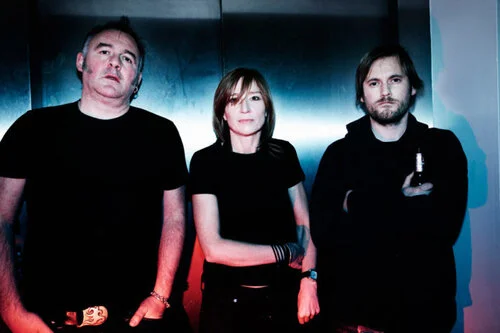
is quite a packed day when it comes to significant birthdays of musicians. I am going to do one or two others and post them before that date, so we can have Lockdown Playlists of various artists. The wonderful lead of Portishead, Beth Gibbons, celebrates a birthday on 4th January – what better excuse to have a great selection of Portishead tunes?! I have been a fan of the Bristol group since the 1990s and, alongside Adrian Utley and Geoff Barrow, Gibbons helped to popularise and transform Trip-Hop music. Portishead’s most-recent album, Third, was released in 2008. Many are hoping that they release another album soon as they create such stunning and important work. To nod to a hugely important lead who has one of the most distinctive and memorable voices in all of music, here are some classic Portishead cuts with Beth Gibbons…

RIGHT at the front.

FEATURE: Too Good to Be Forgotten: Songs That Are Much More Than a Guilty Pleasure: New Radicals – You Get What You Give

FEATURE:


Too Good to Be Forgotten: Songs That Are Much More Than a Guilty Pleasure

New Radicals – You Get What You Give

___________

ONE can scarcely believe songs that some deem…

to be guilty pleasures. I guess, if you feel there is no such thing as a guilty pleasure, then everything is open and good. That is the view I share so, for those tracks that are labelled with that term, I am here to shed some new light and fight their corner. Not that the New Radicals’ You Get What You Give is lacking in any punch and fighting spirit! This is a song that appears on Spotify’s playlist of guilty pleasures. There are some interestingly-chosen tracks that I feel are worthy of shouting about. There is no doubt that there some pretty dodgy songs floating around in the 1990s and, whilst New Radicals might be seen as a one-hit wonder, it is one of those hits that is sort of timeless and properly good! Released in 1998 by the Californian band, You Get What You Give reached number-thirty on the Billboard Hot 100 Airplay rundown in January 1999; number-thirty-six on the overall Hot 100 and number-eight on the Billboard Modern Rock chart. It also reached number-five in the United Kingdom, number-four in Ireland, and number-one in Canada and New Zealand. According to Wikipedia:

In the liner notes to her 2004 compilation Artist's Choice, Joni Mitchell praises "You Get What You Give" for "rising from the swamp of 'McMusic' like a flower of hope.” In 2006, Ice-T was asked on Late Night with Conan O'Brien about what he has heard, besides rap music, in the last few years that really grabbed him and his only reply was "You Get What You Give". In a Time interview, U2 lead guitarist The Edge is quoted saying "You Get What You Give" is the song he is "most jealous of. I really would love to have written that".

You Get What You Give is taken from the Maybe You've Been Brainwashed Too which, as an album, is one of the more underrated of those from the 1990s. It has gathered critical acclaim and, rather than it being one terrific song and lesser numbers, there is an amazing consistency throughout. With songs like Someday We'll Know, and I Hope I Didn't Just Give Away the Ending, there is ample quality on that exceptional album. With the vocal and songwriting power of Gregg Alexander (he co-wrote You Get What You Give with Rick Nowels) making the song such an anthem, it is a shame that some (more than Spotify) consider You Get What You Give as a guilty pleasure or something novelty from the 1990s. I am not sure whether it is some slightly younger, cynical sources feeling the song is overrated or those who remember it from the 1990s feeling it sound dated…but I love the song and think it can rub shoulders with the finest of the ‘90s. Far from it being a light and harmless song, there was actually a bit of controversy regarding the last verse: “"Health insurance, rip-off lying/FDA, big bankers buying/Fake computer crashes dining/Cloning while they're multiplying/Fashion shoots with Beck and Hanson/Courtney Love and Marilyn Manson/You're all fakes, run to your mansions/Come around, we'll kick your ass in". Gregg Alexander sort of used that verse to see whether people would pick up on the more political elements or the celebrity-riling lines.

Predictably, there was a bit of blowback. Marilyn Manson objected to the mention, whereas Alexander apologised to Beck when he saw him in a supermarket – Hanson, too, were pretty cool with the reference (Alexander actually collaborated with Hanson). There have been plenty of diss songs since You Get What You Give but, unlike many, the New Radicals meant nothing by. I want to finish by bringing in a feature from The A.V. Club, that starts off by stating how the music scene altered post-Grunge:

Ben Folds Five’s worldview ranged from sardonic to sentimental to caustic, while Semisonic, Fastball, and Fountains Of Wayne crafted power-pop that was classic-sounding, catchy, and smart. An even weirder slew of one-hit wonders sprouted on modern rock radio, especially at the tail-end of the ’90s and into 2000: Marcy Playground’s “Sex And Candy,” Chumbawamba’s “Tubthumping,” Wheatus’ “Teenage Dirtbag,” Len’s “Steal My Sunshine,” Bran Van 3000’s “Drinking In L.A.,” Marvelous 3’s “Freak Of The Week,” Harvey Danger’s “Flagpole Sitta,” Fretblanket’s “Into The Ocean,” and Citizen King’s “Better Days.” (Swirl 360’s “Hey Now Now,” despite its presence in the Top 40, felt like a lost alternative music classic in the vein of Sloan and Fastball.) With the exception of “Flagpole Sitta,” most of these songs never became wildly influential—in fact, a large portion of these bands gathered dust in the dollar bins, sunk by their own novelty—but they made the teeming underbelly of alternative-rock radio far more interesting”.

Although there is a goofiness to You Get What You Give on one level, the song is almost like a message from Alexander to himself to keep going and continue on. He previously released too fairly unsuccessful solo albums - 1989’s Michigan Rain and 1992’s Intoxifornication -, so New Radicals was almost like a last shot at getting a hit. The A.V. Club note that, whilst You Get What You Give is fairly similar to a lot of ‘90s hits, it has endured and has definitely transcended the status of a one-time gem:

On paper, New Radicals’ “You Get What You Give” isn’t drastically different than many of the other one-hit wonders of the late ’90s. The tune is airy-sounding and uplifting in a general way, courtesy of frontman Gregg Alexander’s soaring falsetto. Musically, it’s vaguely alternative-sounding, between the electric guitar corkscrews and optimistic piano chords popping out of the mix here and there, although it possesses enough of an accessible pop sheen to explain why it scraped the bottom of the Top 40. (The song was co-written by Rick Nowels, who went on to co-write huge hits for Dido, Madonna, and Lana Del Rey, and features contributions from Rusty Anderson, a former member of Ednaswap who’s now Paul McCartney’s guitarist.) The bridge contains a spoken-word section that Alexander often transformed into a near-rap live, in a nod to the era’s growing conflation of hip-hop and rock, while the vocalist’s forceful, half-spoken, half-sung delivery on the chorus made it easy (and fun) to sing along to.

The attention given to his critique of fame underscored his distaste for the culture’s emphasis on celebrity attention, something else that would only grow more intense and pervasive in the coming years. “My favorite artists—Prince, [David Lee] Roth-era Van Halen, even Madonna when she was doing cutting-edge work—they were mysteries to me and my friends,” Alexander said in 2014. “That was part of what made their work compelling, was that we didn’t have their opinions tweeted and Facebooked every 30 seconds. I didn’t know what Prince was having for dinner, thank God. So that was some of what I idealized and thought would be more present in my life as an artist.”

 “So even though “You Get What You Give” stayed in the mainstream’s consciousness during the next 15 years, Alexander retreated from the public eye, at least under his own name. Using a pseudonym, he wrote or co-wrote major European hits (including Sophie Ellis-Bextor’s “Murder On The Dancefloor” and Ronan Keating’s “Life Is a Rollercoaster”), as well as songs for Spice Girls’ Mel C and Geri Halliwell, Boyzone, and Enrique Iglesias. With Nowels, he also co-wrote Santana’s massive, Grammy-winning hit “The Game Of Love,” which in its demo form isn’t that far off from New Radicals’ amiable style, and was also part of a collective called the Not So Silent Majority, which put together an effervescent song called “Obama Rock” around the time of the president’s 2009 inauguration. More recently, Alexander penned songs for the 2013 movie Begin Again with Nowels and his longtime musical collaborator Danielle Brisebois. One of these tunes, “Lost Stars,” was even nominated for an Oscar, precipitating his brief return to the limelight. The template Alexander created on “You Get What You Give” turned out to be surprisingly influential on popular music, just in a non-obvious, almost obscured way.

Yet New Radicals’ shelf life has also been surprisingly long. “You Get What You Give” has been in a slew of movies, including 2000’s The Flintstones In Viva Rock Vegas and 2004’s Scooby-Doo 2: Monsters Unleashed. In Glee’s season-three finale, outgoing seniors sang it as a goodbye song to the underclassmen, while Savoir Adore covered the song for A.V. Undercover in 2013. The band also has some superstar supporters: Hall & Oates covered “Someday We’ll Know” with Todd Rundgren, and the members of U2 are unabashed fans of Alexander’s work (in fact, Bono was the one who reportedly connected him to Begin Again director John Carney). The band even received Joni Mitchell’s stamp of approval: “The only thing I heard in many years that I thought had greatness in it was the New Radicals,” she told Rolling Stone in 2002. “I loved that song ‘You Get What You Give.’ It was a big hit, and I said, ‘Where did they go?’ It turns out the guy [Gregg Alexander] quit. I thought, ‘Good for him.’ I knew he was my kind of guy”.

Though some might say the New Radicals’ You Get What You Give is a guilty pleasure or a simple one-hit wonder, I think it is a great song. It is still played a lot to this day, and people of all ages have affection and respect for the song – not to mention that it also has a killer chorus! Rather than view it is a secret, guilty pleasure, one should definitely view You Get What You Give as…

A magnificent song.

FEATURE: Selective Memory: Going Back to My Childhood Mixtapes and Favourite Songs

FEATURE:


Selective Memory

Going Back to My Childhood Mixtapes and Favourite Songs

___________

THIS is a subject that I have talked about…

 PHOTO CREDIT: @greg_wwm/Unsplash

quite a few times before but, after such a hard year, I am listening back to a lot of the songs and mixtapes (not literally; the songs on them) from my childhood. I have argued against nostalgia before. Some people say that, if you are reverting to the music you loved when you were younger, then it is pure nostalgia. I would say that, for the most part, one can indulge in the great hits from the past as it is simply great music – and one is not particularly trying to live in the past. I think 2020 was a year when I was also experiencing some much-needed nostalgia and warmth. I have spent a long time looking back on 2020 and the best albums and songs. I have been keeping abreast with all the new songs and artists that we need to look out for through this year. I think this year will be a much better one than the last but, as we are still in a bad situation and a sense of normality might not occur until after the summer, I am spending some time enveloping myself in a childhood bubble. A lot of other people are doing this but, rather than it being me trying to merely return to a better time, there are so many songs that I have been revisiting that one does not hear talked about and played much. I will put out a Spotify playlist at the very end – a personal mixtape/playlist -, but I have been listening to a lot of great playlists like Spotify’s Summer Hits of the 90s, and 90s Smash Hits – in addition to a great All Out 80s, and All Out 90s.

 IMAGE CREDIT: Spotify

What I love about the songs of the 1980s and 1990s is how much variety there was! I know we have variety now, but there will big musical movements and scenes back then – something we do not really have nowadays. My earliest musical memories revolve around experiencing something very powerful and new. This feature is going to be all about me, but I will try and widen it at the end and talk about how many of us have been returning to out prized childhood songs whilst things have been really rough. From my first memory of life listening to Tears for Fears’ Everybody Wants to Rule the World, to seeing the video for The Bangles’ Eternal Flame when I was very young…these memories are indelible and in my mind all of the time - and they opened my eyes to the way music can move and overwhelm. A lot of my most-treasured memories of music occurred when I was in middle and high school. The concept of mixtape arrived in my life when I was in middle school. I was born in 1983, and I had my first mixtape when I was about, maybe, eight or nine (before then, I was listening to albums on cassette), I think. I was listening to a lot of the big Pop artists of the day like Madonna and Michael Jackson, but I was also being introduced to stuff from my parents’ record collection: classics from The Beatles, The Small Faces, Led Zeppelin, Steely Dan, and  Billy Joel.

 IN THIS PHOTO: Billy Joel in 1983

I was a massive fan of T. Rex at that age, and I was also discovering to a lot of eclectic music – from early Beach Boys stuff to Freddie Mercury, all the way to The Tremeloes, Del Shannon, The Righteous Brothers, and Johnny Tillotson. It was amazing to discover all this contemporary and older music! I think, when we are younger, we are far less discerning; our imaginations are more receptive to a variety of sounds. I am not sure whether it was me or my parents putting together mixtapes, but having all these great artists together was not only important when it came to discovering the full breadth and beauty of music, but it was a great social tool. My friends and I would swap tapes and bond over our favourite tracks from the cassettes. From Kate Bush to Carole King, seeds were being planted that would bloom years later – in the sense that I would pursue a much deeper love of music when I was an adult. High school was a tough time but, when I think of the happy memories, I recall all the great music of the 1990s that I was drinking in. I started high school in 1994, and I was immersed in all the Britpop music…but there was so much great Pop around that was so uplifting and wonderful. Although Smash Mouth’s Walkin’ on the Sun, and the Spice Girls’ Spice Up Your Life are songs that sound-tracked harsher and more upsetting memories from high school, I listen to these songs now and so many memories flood back from before and after that time (that are happier).

It is the way music can open up memories that were stored away that stuns me. I have remarked before but, most of the time, I cannot vividly remember my earliest years and what happened with bringing music to mind as an aid. I think music is the big reason why I can retrieve memories at all! From these humble and vital mixtapes that I had when I was very young, through to the eye-opening wonders of the 1990s, I have been listening back to many of these songs that I fell for as a child. I have also said before, but Now That's What I Call Music! 24 of 1993 was the first album I bought (on double cassette, I think); Graceland by Paul Simon holds very special memories; I have especially precious memories of family holidays, simply because of the music that was played when I was there or on the car drive to and from the airport – from Kylie Minogue to Charles & Eddie, through to Shakespears Sister, and Deee-Lite. Maybe some of the Pop I listened to when I was very young (such as Betty Boo) has not aged all that well (though I still love it!), but it means a great deal to me – and, at this tough point of life, it is helping me greatly. Whether it is recalling why Red Alert by Basement Jaxx, and Kiss Me by Sixpence None the Richer were bittersweet in my last year of high school; how important the Dance and Electronic music of 2000/2001 was regarding fitting in when at sixth form college, and who introduced me to The White Stripes when I started university…all of these songs/artists are hold a very special place in my mind (even though I have said the playlists contain songs from my childhood, I am squeezing in a few tracks from my sixth form college and university days - so, technically, they are also about young adulthood).

 IN THIS PHOTO: Belinda Carlisle

Things will get better this year but, as we are all looking to keep going and finding something positive, I am revisiting songs from my earlier life. If it is big Pop songs by Belinda Carlisle and Lisa Stansfield, or some classic Beastie Boys or some Deacon Blue, all of this music has really resonated. I think that we all have our bank of musical memories that could find their way onto a huge mixtape. It is lucky we have streaming services now, as I would spend hours and endless cassettes putting together all my favourite songs – whereas I can fit everything in on one digital playlist! I would encourage everyone else to think about the songs they have been coming back to – whether they are from your childhood or from only a few years back - and compile your own digital mixtape/playlist. I am going to keep hold of the one I have put together, as I can generate so many happy memories and emotions from listening to the songs. I think nostalgia is not a bad thing now as we all know better days are ahead, but I think we can find the determination to look ahead by thinking back to our brighter days and childhood years. The music from that time is so transformative and important to all of us! I am going to end with the tunes that I have been listening to a lot lately. They are not going to be chronological – in terms of when I first heard the tracks -, but the songs are very special to me. If you have a spare moment, mix some songs onto a playlist that hold a special place in your heart and get…

 IN THIS PHOTO: Deacon Blue

A warm rush of needed and nice nostalgia.

FEATURE: The Lockdown Playlist: Five Years: Artists Inspired by David Bowie – and Great Cover Versions of the Icon’s Work

FEATURE:


The Lockdown Playlist

IN THIS PHOTO: David Bowie photographed on the set of the 1976 film, The Man Who Fell to Earth/PHOTO CREDIT: Geoff Maccormack/Bonhams

Five Years: Artists Inspired by David Bowie – and Great Cover Versions of the Icon’s Work

___________

I may put out more than five features….

before 10th January - as that is when we mark five years since David Bowie died. I want to speak in more depth about Bowie’s influence in a wider sense, beyond music and artists who owe a debt to him. For this Lockdown Playlist, I wanted to bring together songs from artists who have definitely been inspired by Bowie; others that have cited him in an interview or their work contains some Bowie-esque elements. In the second half of the rundown, I have compiled some cover versions which are pretty good. I want to finish by quoting from an article from The Hollywood Reporter, who wrote of David Bowie’s legacy on 13th January (a few days after he died).

Over the course of almost five decades, David Bowie transformed the very possibilities of pop music. Since his arrival at the dawn of the 1970s, every new movement that followed — punk, new wave, hip-hop, electronic, Goth, grunge, industrial — bore his stamp in some way. While age caught up with his peers, making them look old and irrelevant, or (best case) turning them into objects of nostalgia, Bowie's cool never faded; his impact only kept expanding.

But whatever method of expression he chose — from writing songs like "Rebel Rebel" and "Life on Mars?" to roles portraying Andy Warhol and Pontius Pilate — Bowie's work consistently returned to common themes: the sense of alienation, of being an outsider. His radical individualism helped give voice to several generations of misfits and weirdos, enabling "the children that you spit on" — to borrow a line from his 1971 hit "Changes" — to come out from the shadows, defiant and proud.

He announced his bisexuality in the mid-1970s, long before such a declaration was widely tolerated. Having dived deep into black music on such R&B-drenched hits as "Fame" and "Young Americans" (he was one of the few white artists to appear on Soul Train), he was a strong advocate for African-American artists. He gave Luther Vandross his start as a recording artist and tapped Nile Rodgers to produce 1983's Let's Dance — which became his biggest-selling album in the U.S. — at a time when Rodgers was reeling from the anti-disco backlash. Perhaps most significantly, Bowie called out MTV during the network's early years for not playing videos by black artists. "I'm just floored by the fact that there are … so few black artists featured on it. Why is that?" he asked during an on-air interview in 1983.

This was the David Bowie who set a course for musicians, designers, actors, politicians and fans around the world. He was the original performer in a state of constant reinvention, paving the way for Prince, Madonna and Lady Gaga. "He was a one-off, a brilliant outlier," wrote Peter Gabriel on Facebook, "always exploring, challenging and inspiring anyone who wanted to push the boundaries of music, art, fashion and society”.

To show how far and wide Bowie’s influence has reached, music-wise, this Lockdown Playlist is about artists who have been influenced by Bowie, either through their original songs…

OR through cover versions of Bowie’s tracks.

FEATURE: Let the Records Show… Looking Ahead to Some Anticipated Future Releases – and Ones That I Would Like to See Arrive This Year

FEATURE:


Let the Records Show…

IN THIS PHOTO: St. Vincent/PHOTO CREDIT: Pamela Neal 

Looking Ahead to Some Anticipated Future Releases – and Ones That I Would Like to See Arrive This Year

___________

EVEN though we are still in January…

 IN THIS PHOTO: Jane Weaver

there are some great albums that we can look forward to. I am going to ignore February, as I am doing a separate feature about albums due then. Last year produced more than its share of wonderful albums, and I think we will get some immense albums in 2021. There are a few albums that have been announced for March. Jane Weaver is releasing her new album, Flock, on the fifth. After hearing the single, The Revolution of Super Visions, last year, I am really looking forward to the album coming out. FIRE explains more:

‘Flock’ is the record that Jane Weaver always wanted to make, the most genuine version of herself, complete with unpretentious Day-Glo pop sensibilities, wit, kindness, humour and glamour. A consciously positive vision for negative times, a brooding and ethereal creation.

The album features an untested new fusion of seemingly unrelated compounds fused into an eco-friendly hum; pop music for post-new-normal times. Created from elements that should never date, its pop music reinvented”.

On 30th August, 2019, the release day of her seventh studio album, Norman Fucking Rockwell!, Lana Del Rey announced that she had already begun work on her follow-up album, revealing the title to be White Hot Forever. The title has since been confirmed as Chemtrails Over the Country Club, and this is going to be one of the most-anticipated releases of the year. I think Norman Fucking Rockwell! was the best album of Del Rey’s career, so I am looking forward to hearing what arrives next. She seems to be in really prolific mood at the moment, and I think Chemtrails Over the Country Club will be one of the hottest releases of 2021.

IN THIS PHOTO: Lana Del Rey/PHOTO CREDIT: Chuck Grant for Interview Magazine

Expected in May, Paul Weller’s Fat Pop (Volume 1) is going to be another fantastic album. Weller only put out On Sunset last year, so it seems that he has spent a lot of time writing new material and being creative. Weller’s last few albums have been some of the best of his career, and I feel we will get another tremendous album regarding Fat Pop (Volume 1). I love the title alone, so it will be intriguing to see what sound Weller adopts for his sixteenth solo album. I have written about Lorde recently and, after 2017’s Melodrama made such an impact and got some incredible reviews, there has been this demand for her third album. She has suffered some personal setbacks since then, but it seems like we will get a new album from the New Zealand artist very soon. Her music is among the most extraordinary in the world, and I can see her album being among the very best of the year. Last year, Billie Eilish released a new song called Therefore I Am. When it comes to following up on her massive debut album, When We All Fall Asleep, Where Do We Go?, I think we will see yet another staggering work.

I love that album, so I am looking ahead and anticipating what the teen genius comes up with. In this article from NME, Eilish’s brother/producer, Finneas O'Connell, provided an update:

Billie Eilish‘s new album will not be released until she can safely tour, her brother and producer Finneas has said.

In a new interview with Australian newspaper The Herald Sun, Finneas said he didn’t want his or Eilish’s new albums to “be a bummer COVID record”.

“I have a desperate desire not to release them during COVID-19. It’s the vaccine record! I want it to be the album everyone’s out dancing in the streets to,” he said.

Elsewhere in the interview, Finneas provided a brief update on the progress of the two albums while quarantining.

“Billie and I are full steam ahead on her next record, I’m working on my own album too. I haven’t suffered at all because of my set-up,” he explained.

“Billie and I can work one-on-one, and I’m working remotely with other artists who FaceTime me and ask if I want to work on a song”.

There are some other wonderful artists who are in the studio and expected to release material this year. St. Vincent is one such artist. Her music is so incredible, so I can understand why so many people (myself included) cannot wait! Pitchfork have reported the following in December:

St. Vincent has said that she has a new album on the way. “The rumors are true. New record “locked and loaded” for 2021,” Annie Clark wrote in a tweet. “Can’t wait for you to hear it.”

Clark spoke more about the followup to 2017’s MASSEDUCTION in an interview with MOJO. Describing the record as a “tectonic shift,” Clark explained, “I felt I had gone as far as I could possibly go with angularity. I was interested in going back to the music I’ve listened to more than any other—Stevie Wonder records from the early ’70s, Sly and the Family Stone. I studied at the feet of those masters,” according to Stereogum.

Annie Clark also said the album has “the color palette of the world of Taxi Driver” and “Gena Rowlands in a Cassavetes film.” “I just wanted to capture the colors, the film stock, and tell these stories of being down and out, down on your luck,” she said.

Since the release of MASSEDUCTION, Clark has shared two reworked versions of the album, MassEducation and Nina Kraviz Presents Masseduction Rewired”.

Noel Gallagher is in the studio and has recently released a demo for We’re Gonna Get There in the End. I am not sure whether that will form part of a new album, though new Noel Gallagher material is always a good thing. Sinead O'Connor is also rumoured to be in the studio. The news was reported by NME in December:

Sinéad O’Connor is to release a new album next year, her first in seven years.

The Irish singer-songwriter will follow up 2014’s ‘I’m Not Bossy, I’m The Boss’ with her 11th studio album. No release date nor title have been announced.

She confirmed the album news via Twitter yesterday (December 8) by gushing about the artwork. “Thrilled to say @JacobStackArt has drawn the cover of my album and it’s GORGEOUS!!!!! But you can’t see it until release in late 2021,” she wrote”.

2018’s Tranquility Base Hotel & Casino was a slightly different sonic direction from Arctic Monkeys and, whilst some fans were not so keen on a less Rock-focused and hard sound, I am a big fan of the album myself. There has been talk for a while as to when the Sheffield band will follow that album up and, as this article  teases, there may be something brewing from the band:

“The Sheffield band's manager Ian McAndrew has talked about the band's live album and revealed they've been "beavering away" during the pandemic.

Arctic Monkeys have been "working on music" according to their manager Ian McAndrew.

The music boss spoke to Music Week about the band's Royal Albert Hall live album and when asked what else they've been up to this year, he teased: "They’re working on music. In this rather disjointed time, the guys are beavering away and I hope that next year they’ll start working on some new songs, new ideas, with a view on a future release."

However, when asked if the band would be releasing their follow-up to 2018's Tranquility Base Hotel + Casino much sooner than their other records, he was far more measured.

"We followed that release with a fairly robust touring plan that went on until October 2018," said McAndrew. There weren’t any prearranged plans to get back in the studio quickly, so I don’t quite know the basis of that rumour honestly."

He added: "It’s fair to say that plans to write and record music have been deferred or postponed in terms of difficulties in getting together. Nevertheless, it in some ways creates a welcome opportunity, more time, more space and ability to go away and devote a bit more time to the creative process. That’s been a blessing in a weird way".

IN THIS PHOTO: Robert Plant

Although there is nothing concrete at the moment, I believe Robert Plant has been in the studio and may be working on a new album. His previous album, 2017’s Carry Fire, got some really positive reviews, so there are going to be a lot of Plant fans seeing whether the master brings us some new music very soon. There are two other big, confirmed forthcoming albums that I want to look ahead to. The Cure are readying the world for their forthcoming album. As Music News report, it is a darker and denser album than we may be used to:

The ‘Close To Me’ hitmakers are expected to release their long-awaited new LP next year – their first since 2008’s ‘4:13 Dream’ – and guitarist Reeves Gabrels explained the record has been inspired by a “tough couple of years” for the whole band.

He said: “It’s a heavy and dark record. I don’t think there are any short songs on there.

“The description of Lou Reed’s ‘Berlin’ when it came out was that it was the “‘Sgt Pepper’ of depression” – I don’t know if we’re that psychedelic but we are that depressed.

“It was a tough couple of years for everybody. A by-product of getting older is that people around you keep dying. We all lost relatives. Robert lost his brother, I lost a step-dad and father-in-law – while we were on the road too, which meant there was more strain.”

IN THIS PHOTO: The Cure

The group have recorded so many songs, Reeves isn’t sure just how many albums frontman Robert Smith is planning.

He added in an interview with Uncut magazine: “We started the record in January 2019 in Wales – we went in for about two months.

“We’d all been writing before that. So we got together and listened to it all, learned it, went into the studio and recorded it.

“There’s enough material for two or three records, a lot of stuff”.

One band who have been in the news quite a bit lately are Chvrches. The band’s lead, Lauren Mayberry says they have learned from Billie Eilish’s debut album. I am interested to see what they produce when their new album comes out. The Guardian recently spoke with Mayberry about what we can expect from a new Chvrches album:

Following three top 10 albums, the Scottish synthpop trio are preparing to release their fourth this spring, and will hopefully bring their pounding live show back to the festival circuit. Frontwoman Lauren Mayberry explains how the privations of 2020 helped them get rid of their baggage, and get to the heart of who they really are.

What’s the overall vibe for the album?

We sat inside and listened to music that we really loved all year, like Depeche Mode, the Cure and Brian Eno. I wanted the music that was the most comforting to me and that era of tunes was very formative for our band. It’s not the frilliest of Chvrches records, but I don’t think that now is necessarily a time for frilliness.

How have the events of 2020 shaped the music you’ve been working on?

We had a lot of the ideas and the concepts before this year started and got a few weeks of writing in before everything shut down, so we kind of knew what we were getting on with. The theme of it didn’t necessarily change, but it evolved because of the circumstances of 2020. I think it was also helpful for us to be removed from the bullshit of the music industry. Everybody says that you don’t think about that stuff when you’re making a record, but in practice you totally do. You might shut the door, but it’ll sneak in the window. Everyone always has advice and opinions about what you should do; everyone else knows best. But it was nice to go: ‘Fuck it!’”.

There has been talk of a new Janet Jackson album for a while now. Black Diamond was slated to come out last year, so hopefully we will see a follow-up to 2015’s Unbreakable this year. I am a big fan of Janet Jackson, so I am looking onward keenly and will definitely keep an eye out to see when Black Diamond arrives. Adele released 25 in 2015 so, after nearly six years, there are a lot of people asking when we will get a follow-up to that hugely successful album. It seems that this year is the earliest we will get a new album from her, and I do think that we will get something from her later in the year. After releasing the single, BRON, last year, there is news that Lykke Li will release an album this year. Her last album, so sad so sexy, came out in 2018 and it was received positively. She is another one of those artists who always creates brilliant music, so  I do hope we get an album from her this year.

The final album that I want to look at is the forthcoming one from Royal Blood. The Brighton duo are one of our best British Rock acts and there is a lot of buzz around their new music. Mike Kerr of Royal Blood spoke with NME about what the new record is sounding like:

Have you been working on the album through lockdown?

“We were actually in the middle of making the record before full lockdown hit. We had to call it, because it wasn’t safe for everyone to be working. We had a full studio gang of engineers and people coming in and out. During lockdown I ended up tinkering with the record on my own and ended up writing a couple more songs. It was a really creative time for me.”

What does ‘Trouble’s Coming’ tell us about the rest of the new album?

“All the tracks on this record have their own personality. This encapsulates the change and progression that we’ve made as a band and as people. We’re aware that we’ve been away for a long time, and we didn’t want to come back with something that we’d done before. This shows a maturity on every level. This record wasn’t just the next 10 songs that we wrote about the last album. We wrote an insane amount of music after coming off tour. To us this is like our sixth record, but it’s officially being released as our third!”

So what’s new?

“There are a lot more additional elements and luxurious production. It’s also a self-produced record. I know it’s traditional for a producer to push and challenge, but we felt like we were having people in the way. We knew so clearly what we wanted to do and how we wanted to do it. It felt like a very delicate direction. With rock music, it can very easily go wrong. You want to make something scary and with one slip-up it becomes spooky, which is just awful. Or you want something romantic and then the next minute it’s just cheesy. Rock’s so extreme, it can highlight these things quickly. A producer would have either held us back or pushed us so far that it would have destroyed the DNA and fabric of the band. We had to do this on our own and for ourselves”.

There are other releases confirmed and others less certain but, when it comes to artists we’d like to hear from, there are four that leap to mind for this year. I am a massive Björk fan and I have followed her career since the 1990s. She released Utopia back in 2017 - and she had left four-year gaps between albums before. I hope that there is another album from Björk in 2021, as every one of her albums is wonderful and she has this ability to create her own world that welcomes you in and blows your mind! I have not heard whether she is recording new material, but there are a lot of people who would welcome a fresh album from the Icelandic pioneer. Similarly, Queens of the Stone Age have left large gaps between albums before – Era Vulgaris (2007)/…Like Clockwork (2013) -, but I think 2021 needs a new blast of brilliance from the Californian band. Led by the awesome Josh Homme, I am hopeful that we will receive a gift from Queens of the Stone Age at some point in 2021. I think Rock is in a pretty good state right now, but I think Queens of the Stone Age are the finest Rock act in the world. It would also be great to get new albums from PJ Harvey, Portishead and Beyoncé. I am a big fan of all three. 2021 would be immeasurably lifted by albums from them.

IN THIS PHOTO: Beyoncé

I think Radiohead are the band I am really hoping we hear more from this year. I adore their most-recent album, A Moon Shaped Pool, that was released in 2016. The members of the band have been busy over the past few years putting out their own projects and albums, but they are at their finest and most mind-blowing when they are all together. There have been rumours and suggestions they are recording material but nothing solid has come to light regarding the veracity of those claims. Predictably, the last artist I want to mention is Kate Bush. Her last album, 50 Words for Snow, came out in 2011, and one would not have thought we’d have to wait nearly a decade for a new album – seeing as she released two albums in 2011! We can wait and be patient as Bush’s albums are always sublime, but I do hope that we get a new album in the autumn or winter (she tends not to release albums in the spring and summer). You never know when music will come out or what it will sound like, but the thrill of the unexpected means we could get an announcement in mere days – or it may be another few years! There will be a mix of surprise releases and big announcements coming through the year. I am looking at this fondly and I cannot wait to hear the albums that have already been announced. Music helped make a very dark 2020, and I think the musical treats we will receive this year will make things…

SO much brighter.

FEATURE: Second Spin: Stevie Wonder – Music of My Mind

FEATURE:


Second Spin

Stevie Wonder – Music of My Mind

___________

WHEN you have a career as long-running…

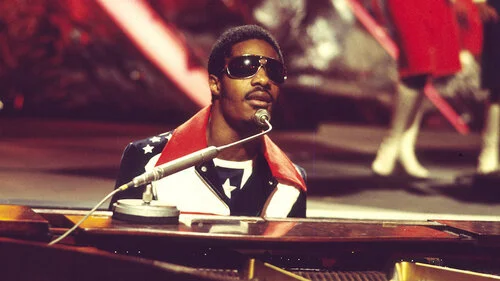
 IN THIS PHOTO: Stevie Wonder performing at Madison Square Garden in 1972/PHOTO CREDIT: Chris Walter/WireImage/Getty

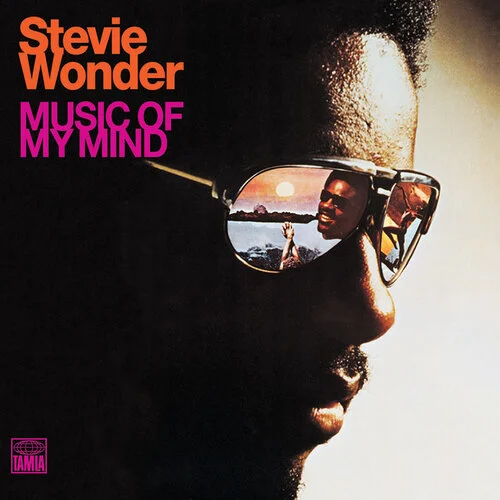
as Stevie Wonder, then there are going to be albums that are not as regarded and celebrated as the classics. Although his fourteenth studio album, Music of My Mind, is not badly reviewed or dismissed, I don’t think many rate it as fondly as Songs in the Key of Life or those that get a lot more attention! Released on 3rd March, 1972 by Tamla Records, it was Wonder's first to be recorded under his new contract with Motown – this allowed him full artistic control. On Music of My Mind, Wonder introduced Electronic music pioneers Malcolm Cecil and Robert Margouleff as co-producers, employing their custom TONTO synthesizer on several tracks. Music of My Mind, bafflingly, was a fairly modest commercial success; many critics feel it is the start of his classic period and a real statement of artistic growth, though. I am going to bring a couple of reviews in but, when you look at the songs included on the album, it is strange that Music of My Mind did not sell better! On the first side, we have Superwoman (Where Were You When I Needed You), and Sweet Little Girl; Happier Than the Morning Sun, and Keep on Running are on the second side. Over nine exceptional tracks, I think one can completely immerse themselves in such a terrific album. Maybe the songs are not as standout and timeless as those we instantly associate with Stevie Wonder, but I would urge everyone to listen to the album and experience something wonderful!

I will bring in a couple of reviews before wrapping things up. When they assessed Music of My Mind, this is what AllMusic remarked:

With a new contract from Motown in his hand, Stevie Wonder released Music of My Mind, his first truly unified record and, with the exception of a single part on two songs, the work of a one-man-band. Everything he had learned about musicianship, engineering, and production during his long apprenticeship in the Snakepit at Motown Studios came together here (from the liner notes: "The sounds themselves come from inside his mind. The man is his own instrument. The instrument is an orchestra.") Music of My Mind was also the first to bear the fruits of his increased focus on Moog and Arp synthesizers, though the songs never sound synthetic, due in great part to Stevie's reliance on a parade of real instruments -- organic drumwork, harmonica, organs and pianos -- as well as his mastery of traditional song structure and his immense musical personality. The intro of the vibrant, tender "I Love Every Little Thing About You" is a perfect example, humanized with a series of lightly breathed syllables for background rhythm. And when the synthesizers do appear, it's always in the perfect context: the standout "Superwoman" really benefits from its high-frequency harmonics, and "Seems So Long" wouldn't sound quite as affectionate without the warm electronics gurgling in the background. This still wasn't a perfect record, though; "Sweet Little Girl" was an awkward song, with Stevie assuming another of his embarrassing musical personalities to fawn over a girl”.

From the improvised synths through the sheer expressiveness and power of Music of My Mind, one cannot fault such a bold and phenomenal statement. I think the album deserves a place in the top-five list of Stevie Wonder albums - and it is one that seems to mean more to me the more that I listen! The BBC reviewed the album and had this to say:

Music of My Mind was Stevie Wonder’s first release after he gained complete artistic freedom from Motown Records’ "hit factory". Re-signing to the label after his contract lapsed on his 21st birthday, no committee would tell him which track to release as a single or what cover versions to include – this was now his domain alone.

Aside from trumpet, guitar and support from his wife at the time, Syreeta Wright, Wonder played every note on this, his 14th studio album. It also marks the first time he collaborated with synthesizer pioneers Robert Margouleff and Malcolm Cecil.

Music of My Mind is a work that brims with passion, excitement and exuberance. Opener Love Having You Around signposts the new territory: a leisurely, synth-driven jam, its propulsive beat, jive talk and the line “Every day I want to fly my kite” render it childlike celebration of the freedom Wonder was now enjoying.

The album was described at the time by Sounds as representing the “coming of age of black soul music”, and it’s as much the sound of African-America in the early 70s as Marvin Gaye or Curtis Mayfield. From Wonder’s visible afro on the cover to its reference to Melvin Van Peebles’ then-current landmark blaxploitation movie Sweet Sweetback's Baadasssss Song, it was the record that put to bed "Little" Stevie Wonder forever.

This being Wonder, however, all of his polemic is sweetened with breathtaking melodies. I Love Every Little Thing About You is one of his most beautiful songs. Happier Than the Morning Sun is great fun, and the second half of Superwoman (Where Were You When I Needed You) shows Wonder’s indestructible way with a love ballad.

The closing track, Evil, was written at the height of the Vietnam War as response to Memorial Day. It ends proceedings on a downbeat, questioning note, and is indicative of just how far Wonder had travelled since My Cherie Amour.

Somewhat left in the shadow cast by his following two albums, Talking Book and Innervisions, Music of My Mind nevertheless remains a fascinating, influential listen”.

It is unusual to highlight a Stevie Wonder album as underrated, as many associate him with having this faultless career. There are a few albums that are weak and not up to his best but, because it didn’t shift as many units as some of his albums, Music of My Mind seems to have been forgotten by many - and it is one of his very strongest efforts. If you have not heard the album then go and do so now and discover this great treasure! Wonder would quickly follow-up on Music of My Mind with Talking Book in October 1972; he would put out Innervisions less than a year later in August 1973 – such amazing invention, consistency and brilliance! If people did not know it in March 1972, Music of My Mind was…

THE start of a very special period for Stevie Wonder.

FEATURE: The Lockdown Playlist: The Best of John Paul Jones

FEATURE:


The Lockdown Playlist

PHOTO CREDIT: Simone Joyner/Getty Images 

The Best of John Paul Jones

___________

WITH the earliest part of January…

aaaaa.jpg

 IN THIS PHOTO: John Paul Jones (back) with Led Zeppelin in 1969/PHOTO CREDIT: WireImage

seeing more than one musical giant celebrate a birthday, it is a pleasure to focus on John Paul Jones (whose birthday it is tomorrow (on 3rd January). The Led Zeppelin and Them Crooked Vultures genius is one of the most respected and admired musicians - and, as part of Led Zeppelin, he ruled the world with Robert Plant, Jimmy Page and John Bonham. To show a mark of respect for a truly titanic musician, this Lockdown Playlist collects together some of his best performances (I have also included a Jeff Beck track where he played bass (supremely). Whether it an awesome piece of bass work, some epic keys, or something else, this playlist is all about a musician who has…

 IN THIS PHOTO: John Paul Jones with Josh Homme (right) and Dave Grohl (far right) as part of Them Crooked Vultures

FEW equals.

FEATURE: A Buyer’s Guide: Part Thirty-Six: Donna Summer

FEATURE:


A Buyer’s Guide

Part Thirty-Six: Donna Summer

___________

ON New Year’s Eve…

many people marked what would have been Donna Summer’s seventy-second birthday. She sadly died in 2012 but, in her lifetime, the American legend released seventeen studio albums and left a huge legacy. She gained prominence during the Disco era of the 1970s and became known as the ‘Queen of Disco’. According to Wikipedia: “Summer was the first artist to have three consecutive double albums reach No. 1 on Billboard's album chart: Live and More, Bad Girls and On the Radio: Greatest Hits Volumes I & II. She became a cultural icon and her prominence on the dance charts, for which she was referred to as the Queen of Disco, made her not just one of the defining voices of that era, but also an influence on pop artists from Madonna to Beyoncé”. To honour the fantastic Donna Summer, this A Buyer’s Guide brings together he best work. As usual, I recommend four albums that are worth getting; one that is a bit underrated still and deserves a new spin; her final studio album, in addition to a great book that provides background and story. Dive into the essential work of…

PHOTO CREDIT: Lawrence Lucier/Getty Images

A much-missed artist.

______________

The Four Essential Albums


Love to Love You Baby

Release Date: 27th August, 1975

Labels: Casablanca/Oasis

Producer: Pete Bellotte

Standout Tracks: Full of Emptiness/Whispering Waves/Pandora's Box

Buy: https://www.discogs.com/sell/list?master_id=76255&ev=mb

Stream: https://open.spotify.com/album/210folYgKMSZAz4IiqDnmy?si=NPNHfDjcRY25TKFiA4IPUw

Review:

"Love to Love You Baby"'s 16 minutes and 48 seconds of arousal and refill -- ticklishly sensitive rhythm and fusion -- threw disco into a tizzy overnight, but the tonally starved blues-of-isolation on the B-side isn't to be missed, either: the broken promises Donna Summer bemoans in "Full of Emptiness"; "Need-a-Man Blues," with its unrequitedly sexy guitar rhythm as out of range of Summer's voice as she of satisfaction; the imaginary seaside hold-me in "Whispering Waves"; and "Pandora's Box," where Summer and guitar scream icily at one another as they turn their backs on each other's body music. Hunger without recourse; essential disco” – AllMusic

Choice Cut: Love to Love You Baby

Bad Girls

Release Date: 25 April, 1979

Label: Casablanca

Producers: Giorgio Moroder/Pete Bellotte

Standout Tracks: Bad Girls/Dim All the Lights/Our Love

Buy: https://www.discogs.com/sell/list?master_id=25893&ev=mb

Stream: https://open.spotify.com/album/58GjBhQvLHwfQFJtdP9Oxg?si=P-B4gYXrSxajcFRmu5qRCA

Review:

The closest thing to a social comment on Bad Girls comes in "Sunset People," a sweeping, high-rise view of Hollywood. Against an icy refrain of "doin' it right — night after night," the song telescopes the nightmarish glamour world of the Sunset Strip—with its teenage prostitutes, billboards, foreign cars and star worship — into an evocation of pleasureseeking as cold as it is tantalizing. If there's a moral here, it's in the music's ominous suggestion of the boredom beyond glitter and in the lyrics' telegraphed equation of the disco ethos with Hollywood and hooking. "Sunset People" just might be the disco culture's "A Day in the Life."

In one of the photos on the LP's inner sleeve, Donna Summer's co-producer, Giorgio Moroder, poses as her pimp. That's as good a metaphor as any for their musical interaction. Moroder's technique simultaneously mocks and exalts the star, who becomes both a goddess and a sideshow attraction in a futuristic technosex amusement park. Though this record's production contains nothing as startlingly novel as the sequenced bass synthesizer of "I Feel Love," the best tracks strike a perfect blend of German Eurodisco and American rock and soul that ultimately transcends the disco environment. Bad Girls' aural style is a lot sparer than the mechanized swirls of "Mac-Arthur Park Suite" and Once upon a Time....The new album's sound effects — e.g., the backward tape loops that sound like speeding cars in "Sunset People"— seem integral to the material” – Rolling Stone

Choice Cut: Hot Stuff

The Wanderer

Release Date: 20th October, 1980

Label: Geffen

Producers: Giorgio Moroder/Pete Bellotte

Standout Tracks: Running for Cover/Cold Love/Who Do You Think You're Foolin'

Buy: https://www.discogs.com/sell/list?master_id=27128&ev=mb

Stream: https://open.spotify.com/album/5K5zdagMRQFtpwFpzoxqCt?si=PI3BXhR3QOOLRmCN1MAoHA

Review:

Even in The Wanderer's most awesome and shattering love song, the brittle and brilliant "Cold Love," she's triumphant: "Hope in the dark, love in the light/I'll keep on looking for someone who's right." In the end, this triumph is so total that the closing number, "I Believe in Jesus" (a statement of belief so naive it ought to seem puerile), sounds completely natural and fitting.

"I Believe in Jesus" is the first convincing gospel-based vocal performance of Summer's career. Based on the militant fundamentalist hymn "Onward Christian Soldiers" and the nursery rhyme "Mary Had a Little Lamb," the composition escapes being cloying only by the narrowest of margins–a chorus so perfectly sung that to deny it is practically inconceivable: "I believe in Jesus you know I know him oh so well/And I'm going to heaven by and by 'cause I already been through hell."

These words evoke images of those satin jackets that soldiers used to bring back from Vietnam–jackets that displayed a map of the country with large stars locating Khe Sanh or Da Nang and the same flat statements about having witnessed hell on earth. In its way, I think, The Wanderer is a road map of Donna Summer's soul. And while nothing on it matches the hellishness of actual combat, the analogy is less a conceit than a metaphor that the rest of this resounding record gives her the absolute right to use” - Rolling Stone

Choice Cut: The Wanderer

Another Place and Time

Release Date: 20th March, 1989

Labels: Atlantic/PWL

Producers: Stock Aitken Waterman

Standout Tracks: I Don't Wanna Get Hurt/When Love Takes Over You/Breakaway

Buy: https://www.discogs.com/Donna-Summer-Another-Place-And-Time/master/26375

Stream: https://open.spotify.com/album/01wjr9UN1VCEUUXF3gZOaE?si=iw2UH1zpRC6Ajau7R3a0yQ

Review:

In the late '80s, the Mike Stock/Matt Aitken/Pete Waterman team was as important to European dance-pop as Giorgio Moroder and Pete Bellotte had been to Euro-disco in the late '70s. Many pop critics hated Stock/Aitken/Waterman's slick, high-gloss approach with a passion, but what critics like and what the public buys are often two different things -- and the British team had the Midas touch when it came to Dead or Alive, Samantha Fox, Rick Astley, and other '80s favorites. So, for Donna Summer, working with them was a logical decision when, in 1989, she made a temporary return to a Euro-dance-pop setting. Produced, written, and arranged by Stock, Aitken & Waterman, 1989's Another Place and Time is arguably Summer's most European-sounding release since the late '70s. This CD came 14 years after the erotic "Love to Love You, Baby," and from a Euro-dance perspective (as opposed to a Top 40, adult contemporary or urban contemporary perspective), Another Place & Time is one of the best albums that Summer provided in the '80s. Critics can hate Stock, Aitken & Waterman all they want, but the team certainly does right by Summer on exuberant, club-friendly Euro-dance/Hi-NRG gems like "Whatever Your Heart Desires," "I Don't Wanna Get Hurt," and the hit "This Time I Know It's for Real." Not all of the songs are aimed at the dancefloor, but 90 percent of the time, this album is unapologetically dance-oriented. Contrary to popular wisdom, disco didn't really die with the '70s -- disco simply went high-tech and changed its name to dance-pop in the '80s, and it isn't hard to see the parallels between this release and Summer's work with Moroder and Bellotte in the mid- to late '70s. Another Place and Time is an excellent CD that Summer's fans should not overlook” – AllMusic

Choice Cut: This Time I Know It's For Real

The Underrated Gem


She Works Hard for the Money

Release Date: 13th June, 1983

Label: Mercury

Producer: Michael Omartian

Standout Tracks: Woman/Love Has a Mind of Its Own/Unconditional Love

Buy: https://www.discogs.com/sell/list?master_id=86643&ev=mb

Stream: https://open.spotify.com/album/0x3qYJCMrhJPgi7hTqxEl2?si=EcnmLcOSTSaWwSmBrhuJEA  

Review:

Given Summer's bad-girl past, it's sometimes hard to distinguish sacred from profane; Summer is at her best when she keeps us guessing. "He's a Rebel," with its West Side Story sense of drama, could be about James Dean, not Jesus Christ; the arrangement of "Stop Look and Listen" is jauntily upbeat, despite the fact that Summer is actually trying to rewrite "Sounds of Silence" (with lines like "The prophets of the times are written on streetcar walls"). The most obvious hit here is the title track, a driving Giorgio Moroder-style riff that was eclipsed this summer only by Moroder's own "Flashdance... What a Feeling." But "Unconditional Love" could be a sleeper – it's a collaboration with Musical Youth that's so utterly charming you scarcely wonder what Summer is doing preaching about Jah. The message, thank God, is mostly in the music” – Rolling Stone

Choice Cut: She Works Hard for the Money

The Final Album


Crayons

Release Date: 20th May, 2008

Label: Burgundy

Producers: Nathan DiGesare/Toby Gad/Jamie Houston/Greg Kurstin/Lester Mendez/Sebastian Arocha/ Morton/J. R. Rotem

Standout Tracks: Fame (The Game)/I'm a Fire/Be Myself Again

Buy: https://www.discogs.com/sell/list?master_id=26587&ev=mb

Stream: https://open.spotify.com/album/1p8EsJY5RCeEBvw74uQTrK?si=E49KiwKNTEWWGIN_0tV8BQ

Review:

Donna Summer returns with an album that truly is a fine encapsulation of her career to date: a pinch of dance, some frothy pop; a power ballad or two, all given a 2008 sheen. Summer is keen to prove that she is no disco relic: Hers is the world of American Idol and the contemporary charts. Crayons is her first album of original material for 17 years. And it owes more to her golden Casablanca era as opposed to her last recorded work as the 80s became the 90s. Although her record company wanted an album of covers, Summer surprised them by her desire to record original material, inspired by her love of James Blunt's You're Beautiful (I kid you not).

Although it is far removed from her high-period Giorgio Moroder work, it's much better than even the die-hards could be expecting. The Queen Is Back is typical of much here; big, bold and impactful; I'm A Fire is the album's centre, while opener Stamp Your Feet is pure Gwen Stefani; Summer may not be a Hollerback girl, but she sure sounds like it. Musically, Christina Aguilera is referenced also on the title track.

Driving Down Brazil is enough to make a smooth radio programme froth at the mouth. It's Only Love is the show-stopper, full of the insouciance of the final side of Bad Girls as it closes the album.

The planet seems to be ready for her. In the US, the album has debuted within the Top 20, and I'm A Fire has topped the dance charts. It’s good to have her back, sounding quite so contemporary; or, at the very least, like an approximation of what Donna Summer sounding contemporary would sound like” – BBC

Choice Cut: Stamp Your Feet

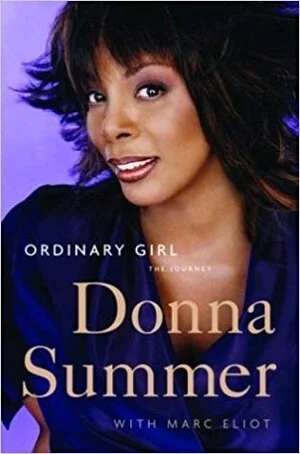
The Donna Summer Book

 Ordinary Girl: The Journey

Author: Donna Summer

Publication Date: 11th January, 2004

Publisher: Three Rivers Press

Synopsis:

Ordinary Girl is legendary singer-songwriter Donna Summer’s delightfully candid memoir about her journey from singing in a Boston church to her unexpected reign as the Queen of Disco and the tragedy and spiritual rebirth that followed. Donna Summer was born on New Year’s Eve in Boston. Her childhood was filled with music. Inspired by Mahalia Jackson, she began singing in church choirs at the age of ten. A few years later she joined a Boston rock group, and by the end of the 1960s she was living the life of an artist in New York City’s Greenwich Village. Soon after, Donna left the United States to join the German cast of Hair. She was still in her teens, a shy, ordinary girl who was suddenly feeling the jolt of the sexual revolution. She lived in Germany for seven and a half years, modeling, acting, falling in love, getting married, and giving birth to a daughter. She met a producer named Giorgio Moroder, and together they created a song called Love to Love You Baby. It became one of the world’s premier disco hits. Donna Summer returned to America as a star, a sex goddess who bore little resemblance to her own sense of who she was. She describes what that personal transformation felt like from the white-hot center of the disco era, and how, over the next two decades, it contributed to a sometimes harrowing spiritual journey. With heart and humor, Donna Summer relives the decadent days of disco and shows how she transcended them. This is the inspiring tale of an ordinary girl on an extraordinary journey” – Find-Book.co.uk

Order: https://www.amazon.co.uk/Ordinary-Girl-Journey-Donna-Summer/dp/1400060311

FEATURE: Music Technology Breakthroughs: Part Three: Pro Tools

FEATURE:


Music Technology Breakthroughs

Part Three: Pro Tools

___________

FOR the third part of this feature…

I am moving away from hardware technology and moving to a technological breakthrough and discovery regarding music software. We hear the words ‘Pro Tools’ now, and it is practically synonymous! So many artists use it and, when it comes to recording, I think music would be very different if Pro Tools did not exist. I am going to quote from other sources for this feature when it comes to explaining what Pro Tools is and its history. I am surprised how early Pro Tools was developed and solidified, as I have always assumed that it is a relatively modern innovation – maybe the past decade or so! When it comes to recording and mastering, Pro Tools offers a world of convenience and choice to artists. This Wikipedia article provides details as to what Pro Tools is:

Pro Tools is a digital audio workstation (DAW) developed and released by Avid Technology (formerly Digidesign) for Microsoft Windows and macOS used for music creation and production, sound for picture (sound design, audio post-production and mixing) and, more generally, sound recording, editing, and mastering processes.

Pro Tools operates both as standalone software and in conjunction with a range of external analog-to-digital converters and PCIe cards with on-board digital signal processors (DSP). The DSP is used to provide additional processing power to the host computer for processing real-time effects, such as reverb, equalization, and compressionand to obtain lower latency audio performance. Like all digital audio workstation software, Pro Tools can perform the functions of a multitrack tape recorder and a mixing console along with additional features that can only be performed in the digital domain, such as non-linear and non-destructive editing (most of audio handling is done without overwriting the source files), track compositing with multiple playlists, time compression and expansion, pitch shifting, and faster-than-real-time mixdown.

PHOTO CREDIT: @gnolatinbird/Unsplash 

Audio, MIDI, and video tracks are graphically represented on a timeline. Audio effects, virtual instruments, and hardware emulators—such as microphone preamps or guitar amplifiers—can be added, adjusted, and processed in real-time in a virtual mixer. 16-bit, 24-bit, and 32-bit float audio bit depths at sample rates up to 192 kHz are supported. Pro Tools supports mixed bit depths and audio formats in a session: BWF/WAV (including WAVE Extensible, RF64 and BW64) and AIFF. It imports and exports MOV video files and ADM BWF files (audio files with Dolby Atmos metadata);[9] it also imports MXF, ACID and REX files and the lossy formats MP3, AAC, M4A, and audio from video files (MOV, MP4, M4V). The legacy SDII format was dropped with Pro Tools 10, although SDII conversion is still possible on macOS.

Pro Tools is revolutionary when it comes to getting your music recorded and heard. Not only does it greatly reduce the time needed to record and edit music (by using analog recording, one has to spend hours cutting and splicing recording tape to edit tracks; Pro Tools can do it in a click). Artists do not need to gig and showcase their work and get signed to a label. They can, instead, record their music to Pro Tools and edit it there - and, with the Internet and music-sharing platforms get it out there! Giving artists this studio-like quality and professionalism has changed the game. It is worth giving some history regarding Pro Tools in terms of how it started life and when the industry standard came into place.

I would encourage people to read the full article from Music Radar, as it is really fascinating and informative. The Pro Tools story begins, interestingly, the year that I was born:

The story starts in 1983 with the release of E-MU's Drumulator drum machine. A companion to the Emulator sampling keyboard and antecedent to the equally legendary SP-12 and SP-1200 samplers, the Drumulator was a relatively simple digital unit with EPROM- based memory for its non-editable 12-bit samples.

The Drumulator was a hit despite the fact users were limited to its built-in sounds. Enter Evan Brooks and Peter Gotcher, high school buddies and University of California graduates with a shared interest in music, recording, electronic engineering and computer programming.

After consulting E-MU for details of the Drumulator's memory system, the duo set about creating new sound libraries and formed a company, Digidrums, to offer a series of upgrade EPROM microchips just a year after the release of the drum machine itself.

Identifying the audio potential of the newly released Macintosh computer, they set about creating basic digital audio recording and editing software for their own use. Despite their primary interest in making their own lives easier, it soon became apparent that the software should be developed for general release.

 Working in conjunction with E-MU, Digidrums changed its name to Digidesign and began work developing a groundbreaking Mac-based sample editing system for the Emulator II keyboard.

Released in 1985 at a price of $995, Sound Designer brought the visual editing features of exotic instruments like the Synclavier and Fairlight to a much larger market”.

The solution came in 1987 with the release of the Macintosh II, complete with six NuBus expansion slots. Brooks built an expansion card equipped with a 16-bit DA converter and a prototype Motorola DSP chip, allowing Sound Designer to use the DSP chip rather than the computer's CPU for its audio editing”.

The Sound Tools system's stereo audio features were groundbreaking, but the move to multitrack recording with the release of the Pro Tools system was a logical progression for Digidesign.

Released in 1991, the first version of Pro Tools was based around a similar hardware-software hybrid setup to Sound Tools, this time with a four-channel interface. Priced at nearly $6,000, the software side of the system was handled by Digidesign's ProEDIT program and ProDeck, a newly designed version of OSC's Deck application.

However, the Digidesign team soon admitted that relying on a third party to develop part of the Pro Tools software was a mistake. Version 2, released early in 1993, brought the software back in-house and introduced the now-familiar Pro Tools application”.

The 1990s was an exciting and busy time for music software. Again, I would not have imagined that there was much in the way of quite advanced music software that early. Listening to music from the time and I never really think about the software technology used and how the performances are captured and edited. Now, we sort of take for granted this wonderful breakthrough for musicians everywhere; the finalisation and consecration of something close to what we know today came in the first decade of this century.

2002 saw Apple buy out Emagic, acquiring the rights to Logic, and Steinberg announce Cubase SX, rewritten from the ground up and based on the Nuendo audio engine.

Digidesign hit back with Pro Tools HD, an update focusing mainly on new hardware choices rather than dramatic overhauls of the software front end.

With the introduction of the 192 I/O interface and new HD Core and Process cards (soon followed by the even more powerful HD Accel cards) Pro Tools offered substantially more recording flexibility and DSP power than ever before.

Over the past decade, Pro Tools has come to define the workflow of most modern studios. Consistently staying at the front of the pack with regular software updates, Pro Tools offers audio editing options which exploit its DSP power to the maximum. Beat Detective (introduced in PT5, 2001), Elastic Audio (PT7.4, 2007) and Elastic Pitch (PT8, 2008) have become essential tools for recording and mix engineers”.

Pro Tools has come a long way since its beginnings! Countless studios use it and, for recording film scores with large orchestras, Pro Tools provides low-latency performance when recording many tracks via HDX hardware. There are many great aspects and uses for Pro Tools; there are other options on the market today which are favoured. I think that Pro Tools has kickstarted a lot of competition and development in terms of what the market can provide people but, despite that, so many still rely and cherish the original. I will be using it myself next year in some form, so I wanted to learn a little bit about where Pro Tools began and why it is so important. I have always known about Pro Tools, but I never really knew much about its life and influence. In future parts, I will move back to hardware but, for this outing, I wanted to salute an invaluable piece of software that has helped transform music…

IN so many ways.

FEATURE: You Must Love Me: The Ever-Underrated Madonna

FEATURE:


You Must Love Me

The Ever-Underrated Madonna

___________

THIS is not connected to any album anniversary…

 IN THIS PHOTO: Madonna in 1984/PHOTO CREDIT: Helmut Werb

or any announcement but, as is it good to revisit Madonna now and then, I thought I would do this feature. I am not sure how far along her biopic is (that Madonna is directing and co-writing) but, with COVID-19, I suspect that a release won’t be happening until 2022. In terms of album anniversaries next year, it will be quieter than this one. 2020 marked twenty years since Music came out; it was ten years since Confessions on a Dance Floor, and five years since the underrated Rebel Heart. The biggest anniversary in 2021 will be True Blue turning thirty-five. That does not happen until 30th June but, as that album will be in many people’s minds in the summer, it got me thinking about Madonna’s work in general. I am not going to write a feature about Madonna as a woman and idol and maybe, in that respect, she is underrated – I think her Queen of Pop tag is well-earned and she has gained plenty of fame and plaudits through the years. Like so many artists, I think radio stations narrow in on particular singles and ignore a pretty comprehensive and broad body of work. There are playlists regarding her underrated tracks, and I was thinking about True Blue and other albums that have not gained the respect they deserve. Whilst I agree that there are a couple of the latter-period albums that are not that brilliant – Hard Candy (2008), and MDNA (2012) spring to mind -, I think she has only really slipped on a couple of albums.

It is not just albums in general where Madonna does not get due credit. I feel one can look through her entire back catalogue and there are so many songs that deserve to be played and get some airing but are not really featured. I will come to a couple of examples but, back in 1983, Madonna’s eponymous debut was a revelation. I am not going to give backstory and Madonna’s ‘journey’ of from arriving in New York with barely a dollar to her name to releasing her first record…but listen to Madonna today and it sounds so fresh and full of life! I think Madonna herself said that it was an ‘aerobics’ album but, as that was a big craze at the time, one can see why some of the songs have that sort of workout/high-energy vibe. That would be a discredit to the music itself. Whereas a lot of big artists begin by co-writing with a team and then become more independent, Madonna had a smaller squad on her debut. Five of Madonna’s eight tracks were written solely by her – including Lucky Star, and her debut single, Everybody (1982) -, and she created this forty-minute album that is packed with terrific songs and huge fun. Maybe it is not Madonna’s greatest set of vocal performances but, as she was twenty-four when the album came out, one can forgive her for not being at her strongest and most rounded.

I think some reviewers have confused a certain naivety and excitement with vapidity and a lack of quality. I still see so many mixed reviews for Madonna – many highlighting some weak vocals at times and songs that have little depth. Some have noted how that album launched Madonna as a Disco diva and, in a way, she popularised Dance-Pop and provided a thrilling alternative to the comparatively bland and predictable mainstream Pop of the day. Even though the singles and videos helped make Madonna a star and introduce her to households around the world, it seems strange that there should be any criticism of Madonna or her debut. In 2020, the album is endlessly relevant and strong. Listen to a lot of the Disco-themed albums of this year and one can hear shades of 1983-Madonna in many of them. Though only a couple or so of Madonna’s songs are played on radio and it is not an album necessarily associated with her peak, there are few debut albums of the 1980s as influential, legacy-giving and accessible. No matter what your musical tastes, one can appreciate the vivaciousness and rush that the album provides – in addition to some more emotional moments that provide their own nuances. If anyone needs a good boost and an album that can get the body moving that stays in the head, then Madonna is one for you!

Think about the very different sound of 1984’s Like a Virgin and, once more, here is an album that remains underrated. I was barely alive at that time, so I cannot recall what the media perception was but, as an album, Like a Virgin still has detractors - and it is much more than merely a few good singles. The singles themselves are phenomenal! Like a Virgin is an awesome and timeless title track; Material Girl is a track that I grew up on and it was one of the first music videos I ever saw; Angel is a massively underrated song; Dress You Up, again, is not played much and is underrated too. Into the Groove can also be considered a single from that period - it was recorded for the 1985 film, Desperately Seeking Susan and it featured on the re-issue of Like a Virgin. I have not even mentioned her songs for film soundtracks and, whilst some are patchy, there are some real gems to be found! Those who have criticised Like a Virgin point to its lack of real emotional resonance and how it is quite shallow (their words). I guess every album will have its naysayers, but I have read a lot of reviews that are mixed towards Like a Virgin – it is another classic in her arsenal! Like her debut, Like a Virgin has an important legacy. This Wikipedia article provides more illumination:

Madonna proved she was not a one-hit wonder with the release of the album which sold 12 million copies worldwide at the time of its release. In 2016, Billboard ranked at number nine in the list of Certified Diamond Albums From Worst to Best. Like a Virgin was placed at fifth at Album of the Decade by Billboard—the highest peak by a female performer.

Taraborrelli felt that "Like a Virgin is really a portrait of Madonna's uncanny pop instincts empowered by her impatient zeal for creative growth and her innate knack for crafting a good record.” He added that the success of the album made it clear what was Madonna's real persona. "She was a street-smart dance queen with the sexy allure of Marilyn Monroe, the coy iciness of Marlene Dietrich and the cutting and protective glibness of a modern Mae West". Although the album received mixed reviews, Taraborrelli believed that the "mere fact that at the time of its release so many couldn't resist commenting on the record was a testament to the continuous, growing fascination with Madonna ... Every important artist has at least one album in his or her career whose critical and commercial success becomes the artist's magic moment; for Madonna, Like a Virgin was just such a defining moment”.

Chris Smith, author of 101 Albums That Changed Popular Music, believed that it was with Like a Virgin that Madonna was able to steal the spotlight towards herself. She asserted her sexuality as only male rock stars had done before, moving well beyond the limited confines of being a pop artist, to becoming a focal point for nationwide discussions of power relationships in the areas of sex, race, gender, religion, and other divisive social topics. Her songs became a lightning rod for both criticism by conservatives and imitation by the younger female population. Consequence of Sound ranked the album at number two on "The 10 Greatest Sophomore Albums of All Time," calling it the album that "carved out the throne...that would be Madonna's forever: the Queen of Pop."

This sort of takes us to the album that will celebrate a big anniversary next year: the huge leap that is True Blue. I think, by 1985/1986, Madonna was addressing bigger themes and was coming on as a singer. I forgot to mention that, like her debut, Madonna was hugely involved in the writing of Like a Virgin – whereas many Pop artists of 1984 had teams writing for them, Madonna was very much calling shots and ensuring the albums were not being directed incorrectly (though, with Nile Rodgers producing Like a Virgin, she was in safe hands!). Some may shout that True Blue is not underrated but, once more, there are scores of people who have had some unkind things to say. By 1989’s Like a Prayer, there could be no doubt that Madonna was at a peak and was an undisputed Queen of Pop! Even by the time of True Blue, some felt that her career might not last long or that she had nothing extraordinary to offer. Only three years after her debut, she had come such a long way and accomplished so much! With Madonna co-producing True Blue alongside writing partners Stephen Bray and Patrick Leonard, she was assuming more control and, as a result, could have more say in terms of her sound. Many people limit True Blue’s appeal to its singles: Live to Tell (released: 26th March, 1986); Papa Don't Preach (Released: 11th June, 1986); True Blue (Released: 29th September, 1986); Open Your Heart (Released: 19th November, 1986); La Isla Bonita (Released: 25th February, 1987). Listen to the vocal on Live to Tell to hear how Madonna was bringing new emotion into her performances. Papa Don’t Preach’s story of pregnancy against the wishes of a judging father was a hugely bold move - and these types of subjects were not often discussed in ‘80s Pop.

With some claiming the album featured some ordinary vocals and songs that were too commercial, I think a lot of the criticism was unjustified and tin-eared. It was clear Madonna has progressed from her first two albums and was producing a more eclectic sound whilst also bringing new shades and layers to the fold. With Madonna co-writing and producing every track on True Blue, she was heading into the realms of superstardom and would solidify her regency and popularity by the time Like a Prayer hit shelves in 1989. Although True Blue has fewer negative reports than her first couple of albums, there are some who have dismissed it and gave it short shrift. To Wikipedia once more, where were learnTrue Blue has an undeniable legacy:

Stephen Thomas Erlewine noted that "True Blue is the album where Madonna truly became 'Madonna the Superstar'—the endlessly ambitious, fearlessly provocative entertainer that knew how to outrage, spark debates, get good reviews—and make good music while she's at it." Mark Savage from BBC stated that True Blue is the album which cemented Madonna's reputation as the 'First Lady of Pop'.  Sal Cinquemani from Slant Magazine said that with the album "Madonna made the transition from pop tart to consummate artist, joining the ranks of '80s icons like Michael Jackson and Prince.”  Similarly, Robert C. Sickels, the author of 100 Entertainers Who Changed America: An Encyclopedia of Pop Culture Luminaries, wrote that the album "cemented Madonna's place as the most popular female musical star of the 1980s, shining alongside male pop icons like Prince and Michael Jackson." NME dubbed the three as a "holy trinity" of pop music of the decade.

Regarding Madonna's influence on the record industry and younger artists, Debbie Gibson's then manager Doug Breitbart commented: "Madonna has brought back a really strong, melodic component to pop music. She has a very youth-oriented, up, bubbly, fun sound.” Slant Magazine listed the album at number 60 on their list of "The 100 Best Albums of the 1980s" and stated that "True Blue was the album on which it became readily apparent that Madonna was more than just a flash-in-the-pan pop star." They added, "It's when she began manipulating her image—and her audience—with a real sense of clarity and purpose and made sure she had quality songs to back up her calculation and world-dominating ambition”.

There are a few more albums that I want to nod to that are underrated and have not really received as much love as they have earned. With True Blue turning thirty-five next year, I hope that there is more focus and respect thrown its way. For more details and story regarding Madonna and her albums, I can recommend Lucy O’Brien’s Madonna: Like an Icon and Caroline Sullivan’s Madonna: Album by Album. In terms of other specific albums that remain underrated, then I think we can skip over Like a Prayer, as that has received so much positivity and adoration.

Before I get to American Life, and Rebel Heart, I think we need to look at 1994’s Bedtime Stories. Maybe, once more, critics were short-sighted, or they were expecting something similar to Like a Prayer. Erotica of 1992 was Madonna’s most daring and, perhaps, provocative album to that point. Even though it got some mixed reaction, I think it received the acclaim it deserved and, when it comes to an album as a satisfying listening experience, I feel Bedtime Stories remains more under-appreciated. There are some great reviews for Bedtime Stories, but some feel (the album) has too many clichés and weaker moments; others have said it is quite bland and lifeless. I think, after Erotica, Madonna wanted to change and provide an album that was closer in sound to her earliest albums - and was a little warmer, maybe. I really like Erotica but, as there was a bit of a backlash and some saw her as being too controversial and risqué, there was a bit of an apologetic tone to Bedtime Stories. That said, Human Nature does poke fun at that – how we all think about sex and it shouldn’t be a crime -; Secret is a gorgeous and under-spun song; Inside of Me, and Love Tried to Welcome Me are terrific tracks one hardly hears, whereas the title track (co-written by Björk; the only album track Madonna did not write on) is phenomenal.

I think Bedtime Stories is an album whose deeper cuts are as appealing and listenable as the single. Not to keep returning to Wikipedia but, as Bedtime Stories has received some negative attention, one must remember its legacy:

"Ray of Light may daunt some fans," Stuart Maconie wrote in a Q review of that album, "but then Bedtime Stories should have alerted them to the fact that Madonna is as much her own woman in her choice of musical company as her choice of underwear.”  Philadelphia's Patrick DeMarco described that "this was a record that cemented Madonna as the icon we know today".[96] Jamieson Cox from Time called the album "underrated", while The Plain Dealer's Troy Smith felt that it was "overlooked" because it was "sandwiched between her most controversial work (Erotica) and, arguably, her best (Ray of Light)". He praised songs like "Take a Bow" which he considered as "the best romantic ballad of her career".

Bianca Gracie of Idolator website wrote: "Bedtime Stories proved that Madonna never lost her edge; she just decided to soften it so that her image could regroup. When listening to the sultry undertones and R&B influences threaded throughout it, you come to realize how flawlessly the singer could change up her persona while still sounding genuine". Gracie believed that Bedtime Stories was an album with "timeless sound" and signified an evolution of Madonna as an artist, acting as the front-runner to her more experimental album like Ray of Light (1998). However she noted how the album never let go of the sexual provocation associated with Madonna and how the singer chose to turn against what people expected from her at that time—being apologetic”.

After the incredible success and varying sounds of 1998’s Ray of Light, and 2000’s Music, perhaps Madonna’s first real misfire – in terms of how critics received it – came with 2003’s American Life. This is an album where Madonna was a bit more political (I think many critics felt her observations and angers were a little ineffectual or unbecoming). I feel that this reinvention and shift was necessary and, though there are one or two weaker songs on the album, there are a lot of great cuts. Hollywood, Love Profusion, American Life, and Nobody Knows Me are all excellent songs…and I think that American Life as an album got some unfair slating. In a sample review, this is what AllMusic wrote

American Life is an album performed by a vocalist who has abandoned the U.S. for the U.K. and co-produced by a French techno mastermind, recorded during a time of strife in America, and released just after the country completed a war. Given that context and given that the vocalist is arguably the biggest star in the world, the title can't help but carry some import, carry the weight of social commentary. And it follows through on that promise, sometimes explicitly and sometimes implicitly, but either way, American Life winds up as the first Madonna record with ambitions as serious as a textbook. It plays as somberly as either Like a Prayer or Ray of Light, just as it delves into an insular darkness as deep as Erotica while retaining the club savviness of the brilliant, multi-colored Music.

This is an odd mixture, particularly when it's infused with a searching, dissatisfied undercurrent and a musical sensibility that is at once desperate and adventurous, pitched halfway between singer/songwriterisms and skimming of current club culture. It's pulled tight between these two extremes, particularly because the intimate guitar-based songs (and there are a lot of them, almost all beginning with just her and a guitar) are all personal meditations, with the dance songs usually functioning as vehicles for social commentary. Even if the sparer ballads are introspective, they're treated as soundscapes by producer Mirwais, giving them an unsettling eerie quality that is mirrored by the general hollowness of the club songs. While there are some interesting sounds on these tracks, they sound bleak and hermetically sealed, separate from what's happening either in the mainstream or in the underground. Perhaps that's because she's aligned herself with such flash-in-the-pan trends as electroclash, a hipster movement that's more theoretical than musical, whose ill effects can be heard on the roundly panned James Bond theme "Die Another Day," featured toward the end of American Life. Then again, it could also be that this is the first time that Madonna has elected to rap -- frequently and frenetically -- on a record, something that logistically would fit with Mirwais' dense, house-heavy productions, but sound embarrassingly awkward coming out of her mouth. But that insular feel also comes from the smaller-scale, confessional songs, particularly because Mirwais doesn't give them depth and the songs themselves are imbalanced, never quite having a notable hook in the music or words.

Even so, there's a lot that's interesting about American Life -- the half-hearted stabs at politics fall aside, and there are things bubbling in the production that are quite infectious, while the stretch from "Nobody Knows Me" to "X-Static Process" in the middle of the record can be quite moving. But, overall, American Life is better for what it promises than what it delivers, and it's better in theory than practice”.

I do think that, when we consider times at which Madonna was underrated or people got her wrong, then the reaction to American Life is a prime example. Even though the album is not in her top-five best studio albums, it is a strong effort and I feel it deserves more kindness and another listen. Before moving on and finishing, I would steer people to soundtrack albums like Who's That Girl (1987), and I'm Breathless (1990), as they contain a lot of great tracks and people do not discuss them much. Similarly, compilation albums like Something to Remember (1995) have some songs that are not often played and, aside from her terrific studio albums, there are these gems that hardly get a look in!

Before concluding, I want to mention one latter-day Madonna album that does not get some proper plaudit: the exceptional Rebel Heart. Maybe it is not as strong as 2019’s Madame X, but her 2015-released thirteenth studio album is one that requires some fresh investigation. It is an album that has received some mixed reaction but, with tracks such as Living for Love, Illuminati, and Bitch I’m Madonna hitting hard, there are plenty of excellent moments! I think it is another album where the deeper cuts are as strong as the singles. Some have labelled Rebel Heart as being safe, clunky, and uneven in terms of quality, but I think it is a consistently strong album that didn’t get the good press from some that it deserved. In a positive review – compared to their more mixed one for American Life -, AllMusic provided some praise for Rebel Heart:

Rebel Heart was introduced to the world with an indiscipline uncharacteristic of Madonna. Blame it on hackers who rushed out a clutch of unfinished tracks at the end of 2014, a few months before the record's scheduled spring release. Madonna countered by putting six full tracks up on a digital service, a move that likely inflated the final Deluxe Edition of Rebel Heart up to a whopping 19 tracks weighing in at 75 minutes, but even that unveiling wasn't performed without a hitch: during an ornate performance of "Living for Love," she stumbled on-stage at the BRIT Awards.

Such cracks in Madge's armor happily play into the humanity coursing through Rebel Heart (maybe the hiccups were intentional after all?), a record that ultimately benefits from its daunting mess. All the extra space allows ample room for detours, letting Madonna indulge in both Erotica-era taboo-busting sleaze ("Holy Water") and feather-light pop ("Body Shop"). Although she takes a lingering look back at the past on "Veni Vidi Vici" -- her cataloging of past hits walks right on the edge of camp, kept away from the danger zone by a cameo from Nas -- Rebel Heart, like any Madonna album, looks forward. Opener "Living for Love" announces as much, as its classic disco is soon exploded into a decibel-shattering EDM pulse coming courtesy of co-producer Diplo. Madonna brings him back a few more times -- the pairing of the reggae-bouncing "Unapologetic Bitch" and Nicki Minaj showcase "Bitch I'm Madonna," their titles suggesting vulgarity, their execution flinty and knowing -- but she cleverly balances these clubby bangers with "Devil Pray," an expert evocation of her folktronica Y2K co-produced by Avicii, and "Illuminati," a sleek, spooky collaboration with Kanye West. These are the anchors of the album, grounding the record when Madonna wanders into slow-churning meditation, unabashed revivals of her '90s adult contemporary mode, casual confession ("I spent sometime as a narcissist"), and defiant celebrations of questionable taste. Undoubtedly, some of this flair would've been excised if the record was a manageable length, but the blessing of the unwieldiness is that it does indeed represent a loosening of Madonna's legendary need for control. Certainly, the ambition remains, along with the hunger to remain on the bleeding edge, but she's allowing her past to mingle with her present, allowing her to seem human yet somewhat grander at the same time”.

As an artist, I think that there are Madonna albums that have either been overlooked, or some have given it some unfair criticism. One can look at Madonna’s entire career and success and say that she has done okay, but look at how some of her albums have been received, and I do feel that she is still underrated. Things get a bit tougher when it comes to Madonna as an actor: she has been in some great films, but her film career is a little less consistent than her music! I shall wrap things up there but, as there are not too many big Madonna anniversaries approaching, I wanted to take a more general stance and cover an area that I have not discussed before. Even if there have been one or two less-than-genius albums from her since 1983, I do feel that her back catalogue is far richer and more engaging than some critics have documented. From the huge singles through to album tracks that are so interesting and varied – so many of them have not been played on the radio or do not get much spotlight -, Madonna still remains undervalued! I am not sure whether she is providing us with anything next year in terms of live dates, a biopic, or a new album….but there is plenty to dissect and discuss in terms of her discography. If you have not taken a proper dive into Madonna’s albums, or you have put some of them aside because you were not a fan at one point, then have another listen and…

ffff.jpg

 IN THIS PHOTO: Madonna in 1986

OPEN your heart.

FEATURE: Acquiesce: Will an Oasis Reunion Finally Happen in 2021?!

FEATURE:


Acquiesce

xxxx.jpg

IN THIS PHOTO: Oasis playing at Knebworth House in August 1996

Will an Oasis Reunion Finally Happen in 2021?!

___________

EVERY year we seem to get these rumours…

PHOTO CREDIT: Michel Linssen/Redferns

and possibility that Oasis might reform. I know there are some that feel it is best the northern band are best left in the 1990s but, since their split in 2009, people have been wondering. The reason I bring up a plea for a truce between brothers Liam and Noel Gallagher is a recent storey that appeared in the music press. As NME reported, there are efforts from Liam Gallagher to get the band back together again:

Liam Gallagher has called for an Oasis reunion in a New Year message to brother and former bandmate Noel.

The Brit pop giants famously split in 2009 when ongoing tensions between Liam and Noel reached their climax during a festival show in Paris.

Since then, Liam has expressed his desire for the band to reunite on several occasions, including in March last year when he asked Noel if he would consider getting the band back together for a one-off charity gig once the coronavirus crisis ends.

Liam told NME during his Big Read interview in February last year that an Oasis reunion is “gonna happen”.

“Believe you me – it’s gonna happen very fucking soon because he’s greedy and he loves money and he knows that it’s got to happen soon or it won’t happen,” he said, referring to a potential big payday for he and his brother.

Extending an olive branch to Noel once again, Liam last night (December 31) admitted that he loves his brother “long time” and tweeted that “2021 is our year”, teasing that this year could be the year that Oasis reform.

In 2019, Foo Fighters suggested to the crowd during their Reading Festival performance that they should start a petition to get Oasis back together.

The idea came after it was pointed out that Foos drummer Taylor Hawkins had stuck a photograph of Liam and Noel Gallagher to his kick drum.

“One of these days we’ll get Oasis back. One of these days,” Hawkins told the Reading crowd, after Dave Grohl took over on the drums for a rendition of Queen’s ‘Under Pressure’.

“We’re trying,” Grohl claimed”.

I think that their heyday was in the 1990s, but the band put out some pretty great songs up until their final album, Dig Out Your Soul, in 2008. I was never lucky enough to see Oasis play live, but I can only imagine how magic it would have been to see them take to the stage! With the charisma and swagger of Liam Gallagher, the songwriting chops of Noel Gallagher, and Paul ‘Bonehead’ Arthurs, Paul ‘Guigsy’ McGuigan, and Tony McCarroll (the classic early line-up; Gem Archer, Andy Bell, and Zak Starkey joined the Gallaghers on the final album) together, I think many people will go mad for it! Whether it is a one-off gig to fundraise for the NHS or a celebration when we get out the other side, Oasis getting back together (however briefly) would be immense!

One of the band’s finest moments came when they took to Knebworth in 1996 and played to 250,000 people over two nights. I think they should come back there – I have written about this before – and play this summer/autumn gig when we are through the worst. I know that the bickering and missile-throwing between the Gallaghers is legendary, but I feel a truce for a great cause would be justified. I am not sure whether that would motivate Oasis to record more music together but, rather than the fans expecting that much, a gig/series of gigs would be great! Maybe they could hold a gig on 29th August – twenty-seven years to the day since their debut, Definitely Maybe, arrived. Since they played Knebworth on 10th and 11th August, 1996, a twenty-fifth anniversary return would be stunning! Just imagine the throngs and hordes who would be up for a celebration at a spot where history was made! I know Liam Gallagher is well up for a reunion; I reckon Bonehead would be pretty eager too (he actually felt Oasis should have split after the Knebworth gigs - when they were at a peak and riding on that wave). I think the main sticking point would be getting Noel into the fold but, as Oasis’ storming gig at Knebworth is twenty-five this year, surely a set of the band’s greatest hits could be a one-off that would not cause him too much chagrin. Everyone would have their dream Oasis set but, to me, I would love to see them combine cuts from albums right through their career. Coming out onto stage with Supersonic (their debut single) and maybe ending with Live Forever (both from Definitely Maybe)? It is tantalising to imagine what we could witness!

I want to quote some facts from the BBC article of 2016 - they looked back on the Oasis Knebworth gigs after twenty years.

More than four per cent of the population applied for tickets to see Oasis at Knebworth, the largest ever demand for concert tickets in British history. A whopping 250,000 people got to see the band over two nights - another record - but incredibly, Oasis could have sold out another 18 Knebworth shows.

This figure has proved impossible to verify, but eye-witness reports certainly paint a picture of unrivalled backstage excess. According to Roy Wilkinson, writing for The Quietus, "The backstage bounty at Oasis's 1996 shows at Knebworth was astonishing. An immense marquee was lined with bars, all fully stocked with any drink you could imagine. A barbecue sizzled eternal. To anyone with a pass it was all free, all day... There were also free ice creams and lollies, plus portraitists and magicians permanently on call. Professional entertainers wandered the marquee offering tricks and caricature sketches."

Not only was a stage custom-built for the event but 11 speaker towers were erected at increasing distances from the stage in order that those further back could feel the full force of Noel's crushing power chords and Liam's throaty Mancunian roar. As soundman Rick Pope revealed to Sound On Sound: "Liam wanted his vocal blisteringly loud." It meant the microphones were so powerful that "someone would get within 10 feet of a microphone and you could hear their breath". The audio for the concert was handled by a company called Britannia Row, whose first ever commission was Pink Floyd at Knebworth in 1975.
As the old(ish) saying goes, if you can remember Britpop, you weren't there. And Noel's memory of those halcyon days is certainly patchy. "Genuinely, now, if I close my eyes, I can’t remember walking on stage at Knebworth," he told Kirsty Young on Desert Island Discs. "I know it took place because there were lots of people there”.

Hopefully, by August, things are going to be better and we will be able to hold a huge live event. Many festivals are wondering whether they are going to be able to come back in June and, whilst that is on a knife-edge, I think a late-August gig would not be far-fetched and impossible. Not only would us ‘90s kids who grew up on Oasis undertake a pilgrimage to Knebworth to see the boys jam out the classics in the sun (hopefully the weather would be okay!); many others could connect with Oasis’ music if they are unfamiliar with it. This is all pie in the sky at the moment because, with COVID-19 raging and Noel Gallagher less open to a reunion than other members of the band, it will take a lot of negotiation and fingers being crossed to realise a dream that so many have – even if the lads get together just for one night. The Gallaghers have released their own solo albums since Oasis called it a day, so they are both match-fit and ready to kick it. Maybe there should be this campaign from the fans to (gently) persuade Noel Gallagher and the guys to hold a gig to raise funds for the NHS at a site that they ruled almost twenty-five years ago. We are all looking forward to the summer and the hope we can join together for something approaching normality! I hope that we do get good news and that Noel Gallagher can acquiesce and make a long-desired Oasis reunion a…

SUMMER reality!

FEATURE: “Ooh, How He Frightens Me/When They Whisper Privately" Kate Bush’s The Infant Kiss from Never for Ever

FEATURE:


Ooh, How He Frightens Me/When They Whisper Privately

aaaa.jpg

IN THIS PHOTO: Kate Bush captured in 1979/PHOTO CREDIT: Gered Mankowitz 

Kate Bush’s The Infant Kiss from Never for Ever

___________

THERE are plenty of songs from Kate Bush….

that people misconstrue or they just reads too deeply into. Two of her songs relate to a child or children. Many think that The Man with the Child in His Eyes relates to some sort of weird attraction to a child, or that Bush sees a man as a child. Even though there is no specific inspiration behind the song in terms of a person, Bush has said that it is the way that men can enjoy childish games and have a sense of being young, whereas many women can’t – Bush said in interviews how she was attracted to older men. One of Never for Ever’s best tracks, The Infant Kiss, is not about Kate Bush falling for a little boy. Those lyrics are pretty much said in the song, but one needs to know the inspiration behind the track to get a clearer understanding. This article from the Kate Bush Encyclopaedia provides some insight and information:

Song written by Kate Bush. It was inspired by the gothic horror movie The Innocents, which in turn was inspired by Henry James' novel 'The Turn Of The Screw'. The story is about a governess who believes the ghost of her predecessor's dead lover is trying to possess the bodies of the children she is looking after.

The Infant Kiss' is about a governess. She is torn between the love of an adult man and child who are within the same body. (Kate Bush Club newsletter, September 1980)”.

I have written before how Never for Ever is an album – like The Dreaming (1982) – ripe with potential singles! Her third album (released in 1980), did spawn some great singles: Breathing (released: 14th April, 1980), Babooshka (released: 27th June, 1980), and Army Dreamers (released: 22nd September, 1980). I think The Infant Kiss is a song that would have made for a very interesting single. Even though there is not an official video for the song, a fan, Chris Williams, made a video for the song using scenes from the movie, The Innocents. According to Bush, who contacted him after she saw the video, he'd chosen the exact scenes that were in her head upon writing the song. It is a gorgeous song, and it boasts one of Bush’s most tremulous, haunting vocals. I think it works well where it is positioned on the album: after the faster and harder The Wedding List, and Violin, it offers some chance for breath and this beguiling, tremendous song. The Infant Kiss then leads into the equally stunning and spine-tingling Night Scented Stock, which then hands over to two epic final tracks: Army Dreamers, and Breathing. One cannot release every great track as a single, but I do feel The Infant Kiss is one of Bush’s strongest songs – and it is one that you do not hear played on the radio much! I think I have pretty much covered every song from Never for Ever, but I have done so as it is an album that remains hugely underrated.

zzzz.jpg

 IN THIS PHOTO: Kate Bush in 1980/PHOTO CREDIT: Andy Phillips/Cover Images

What I love about The Infant Kiss is that it is risqué and, if one did not know the story behind the song, then they might get the wrong impression. In the first pre-chorus, there are some very interesting lines: “Just a kid and just at school/Back home they'd call me dirty/His little hand is on my heart/He's got me where it hurts me/Knock, knock - who's there in this baby?/You know how to work me”. Of course, as we know the background to the song, one knows what Bush was writing about. There is plenty of resistance and horror coming from Bush. Rather than romanticising the attraction and situation, there is that quiver of the voice and realisation that the situation is strange. For anyone who has heard songs like Wuthering Heights (The Kick Inside), and Hammer Horror (Lionheart), there is that sense of Bush (or the heroine) as unstable and wrestling with something quite dark. Her lyrics, whilst haunted and evocative, are  utterly unique: “I cannot sit and let/Something happen I'll regret/Ooh, he scares me/There's a man behind those eyes/I catch him when I'm bending/Ooh, how he frightens me/When they whisper privately/Poor, stupid girl/Windy-wailey blows me”.  As she walks ever deeper into this murky and disturbing, the lyrics provoke real emotion and tension: “Words of caress on their lips/That speak of adult love/I want to smack but I hold back/I only want to touch/But I must stay and find a way/To stop before it gets too much”.

 IN THIS PHOTO: A still from the 1961 film, The Innocents

I want to finish off by borrowing from the excellent Dreams of Orgonon, where there is a detailed and fascinating study into The Infant Kiss; from its origins and what inspired the song, through to psychological concerns – and why the song is one of Kate Bush’s most difficult moments:

Not so much raiding the classic 60s horror film The Innocents as copy-pasting its plot, “The Infant Kiss” of the title refers to a passionate kiss a female caretaker (or in The Innocents, a governess) receives from the adolescent boy in her care. In the film, the governess Ms. Giddens (played with spectacular abandon by Deborah Kerr) becomes obsessed with the eerie maturity of the boy, Miles, and his sister Flora (but chiefly Miles), and becomes convinced the children are possessed by the ghosts of lascivious, unstable deceased employees of their father (who were major parts of their lives), or whether the ghosts are mere hallucinations. Adapting Henry James’ Gothic novella The Turn of the Screw with perhaps more ambiguity than James’ book (the idea that Giddens is purely mad was introduced to literary discourse by critic Edmund Wilson decades after the book’s publication, although James doesn’t commit to a conclusion either way), The Innocents never concludes whether Giddens is bonkers, the children are actually possessed, or both, rigidly centering itself on the ghostly uncertainty of its characters’ lives and the way Giddens’ fixation on Miles unravels, leading to his eventual death (either from stress or exorcism — the movie abstains from clarifying the exact nature of his sudden death).

What’s visible is Giddens’ novitiate maturity and sexuality, the children’s traumatized and premature introduction to adulthood, and the disastrous collision of those failure modes. At the end of The Innocents, Giddens not only fails to exorcise Miles (or perhaps she does?), but witnesses his death. A paean to lost innocence recognizes that innocence was never real to begin with — a fantasy conjured up by adult pathologies and accordingly suffocated by them.

The disunity at play here is suited to Bush’s obsession with cognitive dissonance between internal perception and external reality. She zeroes in on Giddens’ sexual repression, expressed through her infatuation with Miles: “back home they’d call me dirty” and “words of caress on their lips that only speak of love” feel like lines out of The Innocents.  Giddens is the daughter of a vicar whose first interaction with high society is her assignment to these children (see Wuthering Heights for another iteration of bucolic isolation as bourgeois pathology). Her fixation on the children has as much to do with her own immaturity as repression. She projects onto a place far from home, offering maturity and sexual liberation in the only form she’s familiar with — adolescent and constrained by high society. In a move most commonly found in the political ideologies of bourgeois misers and right-wing pundits, Giddens overlooks real societal problems by projecting onto them.

The song likely haunted Bush herself, enough that in 1982 she recorded a French-language remake called “Un Baiser d’Enfant” as a B-side. The remake is idiosyncratically pleasing— generally having a strong grasp of French pronunciation and a poor understanding of French rhythm, Bush can’t stop singing like an Englishwoman, emphasizing phrases and beats in ways that would make a French singer blink incredulously (French leans on an even tonality throughout a sentence, punctuated by an inflexion at the end). It’s not as haunting as its progenitor, but few Bush songs are.

I don’t think we take a deep dive into tracks that much regarding the story and wider issues. That is another reason why Never for Ever is an album that warrants more attention and focus. There are other songs as intriguing and engrossing as The Infant Kiss, but here is one of those minor songs that is not talked about in the same breath as Bush’s best songs – I very much think that it should be! Whilst The Infant Kiss, on the surface, might be easy to misinterpret, there are some fascinating themes explored. It raises questions. Such a lot of layers for a track that was never released as a single! Although, as Kate Bush is a tremendous song that does not follow the ordinary, would we…

EXPECT anything less?!

FEATURE: The Lockdown Playlist: George Martin at Ninety-Five: His Brilliant Work

FEATURE:


The Lockdown Playlist

George Martin at Ninety-Five: His Brilliant Work

___________

WHEN we think of George Martin

 IN THIS PHOTO: George Martin with the Beatles at Abbey Road/PHOTO CREDIT: BBC/Apple Corps Ltd/BBC

we naturally link him with The Beatles. Even though his association with them is legendary, the producer also worked with other artists through his life. The fact that Martin was The Beatles’ long-term producer, alone, gets him a spot in the pantheon of the greatest-ever producers. I don’t think he gets as much credit he deserves when it comes to The Beatles’ success - and that is true of his production work with others. We sadly lost Martin on 8th March, 2016. It is a shame that he is not around today. As 3rd January would have been his ninety-fifth birthday, I have collected together some of the wonderful songs that he produced (or has a production credit on) for this Lockdown Playlist. As you can see, George Martin’s production talents and intuition are responsible for…

ssss.jpg

 PHOTO CREDIT: ANL/Rex/Shutterstock

SOME of the best music ever.

FEATURE: Spotlight: Ivorian Doll

FEATURE:


Spotlight

Ivorian Doll

___________

IN this new Spotlight feature….

PHOTO CREDIT: Fireshone Photography

I want to spend some time getting to know Ivorian Doll. In terms of the names that we need to look out for this year, she is very much near the top! Rather than me explaining why, I want to bring in some interviews that let us into the world of this exceptional artist. I will source from The Guardian later, but there is a nice introductory section that sets us up:

Born Vanessa Mahi in Germany to parents hailing from Ivory Coast and moving to east London aged three, she originally found fame as a popular YouTube personality known for playful “storytimes”: audacious tales of cheating boyfriends, sugar daddies and scandalous behaviour. She reckons she has long been musically inclined, but just hadn’t realised. “I was always performing, and we’d make up dance routines,” she says of her teenage years, detailing the verses she and friends created to offend rival boys. “We made up this fake gang called CGG’s – we even had our own theme song and diss track”.

Ivorian Doll will release her much-anticipated debut E.P., Renaissance, this month. It is a release that is going to announce one of the finest names in U.K. Drill – the undeniable and undisputed Queen of Drill. I will drop a couple of songs in this feature just to give you an idea of what she is about and why her fanbase continues to swell. I am a recently new convert, but I am making up for lost time and accessing as much music and information as I can.

I want to bring in my first interview. Ivorian Doll spoke with DJ Booth back in September. Not only do we get a glimpse into her rise and  one of her best-known songs; she also discusses an aspect of her songwriting that, maybe, is a slight weakness:

Born Vanessa Mahi, Ivorian Doll is the self-proclaimed “Queen of Drill.” Commanding an army of fans appropriately called the Dollz—which has been steadily increasing in numbers since 2017—her potent and gritty offering on drill music has garnered attention from peers such as Tinie TempahMr Eazi, and Iggy Azalea across social media. She’s also received looks from defining British media platforms, including GRM Daily and BBC.

Despite Ivorian Doll’s outsized personality, solo success has been a more recent reality. The German-born and London-raised rapper began her music career as part of a duo with Abigail Asante. Under the moniker Abigail x Ivorian Doll, the pair ventured into the then-simmering UK offshoot of drill on a whim. Their debut song, “The Situation,” was spontaneous, according to 22-year-old Mahi, and, to this day, misunderstood.

“Hooks, for me, I struggle with,” Ivorian Doll admits. “One of my friends came in and helped me with that. Before, I’d write whole songs, forcing a hook, and the song wouldn’t go anywhere. Now the songs sound better.” The team-first approach has helped Ivorian Doll progress in flow, articulation, and writing. She agrees without hesitation, saying, “I remember I mostly did the ‘Rumours’ hook, but ‘Body Bag’ is when I noticed the change with having the team. You work together, and it makes things sound better.”

Ivorian Doll’s collaborative spirit extends past her team toward the other women responsible for rap’s female renaissance. That includes other “Dolls.” (Ivorian’s stage name arrived at age eight and predated any industry trend: “ I was looking for a Facebook name. My friend said to me, ‘Why don’t you call yourself Ivorian Doll? You look like a doll and you’re from Ivory Coast.’) She regularly interacts with Asian Doll, who shouted her out on Twitter earlier this year, and has an upcoming collaboration with New York’s DreamDoll. Further afield, the artist looks to follow in the footsteps of Saweetie and become a multi-dimensional brand.

“For me, I want to be a mogul and a businesswoman,” Ivorian Doll says. “I’m thinking of global-scale projects: clothing lines, books, hair companies. Ivorian Doll is the umbrella with so many things underneath that. I’m in this for the long run.”

Ivorian Doll’s persistence has seen her score lucrative placements across the year. She’s confirmed as an act for 2021’s Rolling Loud in Portugal, and was part of one of the first virtual-only festivals in the UK this year when the annual Wireless Festival shifted its agenda due to COVID-19. Ivorian’s VR set was positively electric”.

Apologies for quoting quite large chunks of that interview but, as I shall do for the remainder of this feature, I think doing so provides us with a lot of useful information and insight into Ivorian Doll. She is someone who is poised to dominate in 2021.

Drill is one of those scenes that, from the outside, appears to be male-dominated. I think Drill, Hip-Hop, Grime and Rap have always been imbalanced but, whilst there is improvement in some area, Drill seems to be more male-heavy than most genres. Ivorian Doll talked about gender in Drill when she spoke with COMPLEX - we also get to know what drives her as an artist and how her writing usually happens:

You dubbed yourself the “Queen of Drill” on a track you released in 2019. Do you think the drill scene needs a queen?

It doesn’t need a queen, necessarily. I say it all the time: I do it to try and be better than the boys! I don’t even focus on the girls because I feel like boys tend to get away with so much in drill, saying things about women, plus it wasn’t the norm to see a girl making drill. So when I say ‘Queen of Drill’, it’s more me saying I’m better than the boys in drill. I just feel like I’m trying to compete with the boys.

What pushes you to make music today?

What pushes me is the benefits, and the fact that I actually enjoy it. Like, I’ve realised that everything else I was doing, I didn’t enjoy as much as I did with this. Music isn’t something you can just be one foot in, one foot out—you have to be all in because it’s time, it’s money, it’s studio, it’s stress. Like, I get actual migraines. It’s a non-stop dedication thing. It’s not something you do half-heartedly, so I think what pushes me is just the fact that I can help my family now—in ways that I never did before—I live in a better place, just things like that.

  What’s an Ivorian Doll writing session like?

So, with me, something will happen to me, or maybe I’ll see something online—like what someone said—and then I’ll be like, “Okay, cool. So these people are hating on me? Let me make a song about haters.” I always reflect on what I’m going through in a particular moment. With “Rumours”, that was obviously rumours about me so I just thought I’d write about it and address the elephant in the room. I also like to write about things I want in the future—I speak about it as if it’s already happened! For example, “Oh, I’m in a big car!” That hasn’t happened yet but I speak like it has, do you know what I mean? And because I like music, I know what people want to hear. Nicki [Minaj] is a big influence, too. I listen to her a lot and I always ask myself why I love her so much [laughs], but I just do. I’m really inspired by her music and her journey”.

There are a couple more interviews I am keen to focus on because Ivorian Doll is such a fascinating artist who, I feel, is primed to shake up and change Drill; inspire other women coming through and really stake her claim!

I want to go back to the subject of gender/women in Drill as this was covered in an interview from The Line of Best Fit. I think that Ivorian Doll’s talent and strength demonstrates that she is as strong as any of her male counterparts. There is still a question as to whether the doors are truly open for women – or whether it is an area of music that has a problem with parity and understanding. I want to highlight a segment where we learn more about attitudes towards Ivorian Doll in the earliest days and how she has boosted her profile and confidence – and why future success and increased visibility is very much on her mind:

ID has always managed to be ambitious and in control, with her 2019 solo “Lightwork Freestyle” a testament to her power as an emcee. The video, garnering over 200,000 views, includes a large number of comments praising the freestyle as stronger than most of her male counterparts.

“When I first started, that was one thing that upset me. ‘Oh, you’re a girl, go back to the kitchen. Oh, you’re a girl, you shouldn’t be speaking like this.’ In a lot of drill songs out here, the way boys say things about girls — it’s so rude. I want women to be on the same page. That’s what kind of motivated me… I feel it’s very intimidating for a strong woman to come into a dominant field and do well”.

YouTube helped me to be able to express myself because I was a personality talking about boys and cheating and giving advice,” she explains, noting that long-term followers are pretty used to her outspoken nature. “Some of the things I say in my music, it’s not a shock to them. My fans are like, ‘She constantly says things like that anyway.’”

ID still has hopes for long-term success, despite the current whirlwind of our times. She mentions she’s using this period to practice more on both her stamina and delivery for live performances. Yet, ID’s biggest goal is to expand past the boundaries of her genre, drill, and break its limitations — in a similar way to Pop Smoke. She also wants to be a role model to young girls who look up to her as a creative inspiration.

“I just want to be a global artist, really. I want to be that artist that came out of the UK and built that female bridge to the US. I want to be that artist where people say, ‘Because of her, we’ve been more interested in UK artists and the UK scene. Is there more of her?’ That’s the type of artist I want to be,” she says. “I want to be the artist that brings everyone together. And I feel like it’s working smoothly”.

I shall wrap up in a second but, with so much exactment and buzz surrounding her, Ivorian Doll is going to have a huge year! Despite her popularity now, it hasn’t always been smooth. As we learn in a recent interview from The Guardian, there have been barriers:

Her rise, though, has allegedly been hampered by a management deal she entered into with Oliver Ashley, son of Sports Direct’s Mike Ashley, who has recently applied for trademarks for the name Ivorian Doll. On Twitter, she accused him of unfair financial terms and controlling which label she was allowed to sign to; she begged to be let go from the contract. Ashley has not responded and could not be reached for comment, and Mahi, who made the allegations after we spoke, would not comment further.

The situation badly needs resolving, as there has been space in drill for a woman like her for some time. The style is known for bleak themes and stories of real-world violence, and suffers from a reputation as a boys’ club. But Ivorian’s ability to play with a mix of styles has granted her respect from her male peers, and refreshed the genre as a whole. “I’m not so ‘boyish’ about it,” she says of her artistry. “I’m not wearing the tracksuits; I’m very sexy with it. I feel like that’s what’s making me stand out because I’m making it different.”

I love what Ivorian Doll is doing and, looking ahead to the release of her E.P., I think we will see something quite playful and fun. Many associate Drill with being quite aggressive, which can mean it is lacking in accessibility at times. Returning to the interview with The Guardian, and it is heartening to know that Ivorian Doll is a role model and inspiration, one hopes, for other women entering Drill (and she is making it more humane and diverse):

Her new EP is evidence of the sounds she’s willing to toy with, like smoother, mellower rhythms similar to afro-swing, and bouncier, chart-friendly rap. The release after that may include more women, as fellow artists such as Shaybo, Br3yna and Teezandos make their own mark, mirroring the golden era for female rappers in the US. “When I first started, the sexism was just ridiculous. It’s even made me more of a feminist,” she says. “I think it would be good to see other girls make drill a bit more sexy, more fun! It doesn’t need to be dark or violent. Drill is a beat, it’s not what you talk about. So I’d love more girls involved, because that’s what makes the genre bigger”.

I will end now but, as this year promises to be more positive than the last, I am looking around at the artists who could define 2021 and make a big noise. Ivorian Doll is already creating tremors and standing out from the crowd but, as soon as she can get back on tour, I feel she will add so many more fans to her ever-increasing army. These may be her early days but, before long, Ivorian Doll is going to be a worldwide phenomenon! It is very easy to realise why this exciting young talent is…

SET to go a very long way.

_____________

Follow Ivorian Doll

FEATURE: One for the Record Collection! Essential February Releases

FEATURE:


One for the Record Collection!

IN THIS PHOTO: The Staves

Essential February Releases

___________

I realise that there is the possibility…

qa.jpg

IN THIS PHOTO: The Pretty Reckless

that many of the albums I am including in this feature could be held back or rescheduled because of the pandemic but, as of the time of writing (1st Jan), these are some releases that you need to get involved with. There are a few great albums coming out on 5th February that are worth snapping up. The Foo Fighters release Medicine At Midnight. This is going to be one of the biggest albums of the year. They recently shared the second single from the album, No Son of Mine,…and the album is shaping up to be awesome! Make sure you pre-order it:  

Medicine At Midnight is the new album from Foo Fighters, packing nine new songs into a tight ass 37 minutes. This collection includes the smoldering new single, Shame Shame. Medicine At Midnight is produced by Greg Kurstin and Foo Fighters and is the band's 10th album. Foo Fighters are Dave Grohl, Taylor Hawkins, Nate Mendel, Chris Shiflett, Pat Smear, and Rami Jaffee”.

I am looking forward to hearing what Foo Fighters offer us on 5th February. I think we are going to be in for a treat. The band’s lead, Dave Grohl, spoke to NME back in November and discussed what Medicine At Midnight will sound like:

What can you tell us about your mission statement for ‘Medicine At Midnight’?

“Since it’s our tenth record and 25th anniversary, we decided years ago that we wanted to do something that sounded fresh. We’ve made some many different types of album, we’ve done acoustic things, we’ve done punk-rock things, mid-tempo Americana type of things. We have a lot of albums to fall back on, so you just have to go with our gut feeling and I thought instead of making some mellow adult album, I thought ‘Fuck that, let’s make a party album’.”

What kind of party?

“A lot of our favourite records have these big grooves and riffs. I hate to call it a funk or dance record, but it’s more energetic in a lot of ways than anything we’ve ever done and it was really designed to be that Saturday night party album. It was written and sequenced in a way that you put on, and nine songs later you’ll just put it on again. Y’know, songs like ‘Making A Fire’. To me that’s rooted in Sly & The Family Stone grooves, but amplified in the way that the Foo Fighters do it.”

So it’s all pretty ‘out there’?

“‘Waiting On A War’ is the most recognisable song off the album as Foo Fighters. It came halfway through the recording process and came from a feeling I had as a child, when I was terrified that we were heading for nuclear war in the late 70s and early 80s with all the political tension and arms race. I was really afraid that we were going to die in a nuclear holocaust. And then last year, I was taking my daughter to school and it was around the time that the US and North Korea were ramping up tensions with each other and she had seen it on the news.”

“She just asked me ‘Dad, are we going to war’? It reminded me of how I felt when I was her age and I just thought, ‘What a fucking drag!’ How depressing is it that childhood could be robbed of that beauty and innocence by this dark feeling of dread. So that’s what ‘Waiting On a War Is About’.”

Heavy! Any other big surprises on there?

“Then there’s ‘Medicine At Midnight’, that’s our David Bowie‘s ‘Let Dance’. It’s a huge fucking rock song that I imagine opening every festival from here to Melbourne! very song is a little bit different but they all have something that feels fresh and I like it!

In terms of another great album out on 5th February, then slowthai’s TYRON is one that you need to order. I think slowthai is one of the most exciting and promising talents in British Hip-Hop and, after the success of 2019’s Nothing Great About Britain, there are going to be a lot of eyes his way:

Tyron is a tale of two halves exposing human complexity. Just as with the narrative of his own life, there are always two sides to every story. Side one re-introduces us to the classic hubris, machismo, and braggadocio typical of rap music. Side two takes what you thought you knew about slowthai and flips on its head. Feel Away and NHS go some way to dip a toe inside the complexities of his mind but delve deeper and you’ll be left with a clearer understanding of who he truly is. Honesty is paramount as ultimately Ty wants listeners to know that “it’s ok to be yourself”.

Tyron was formed against the backdrop of an unforgiving climate where judgement, shaming and underdeveloped and simplistic conceptions of other people are fashionable. Instead of succumbing to such simplicity, Tyron presents an artist who is unabashedly complicated and willing to explore themes of loneliness, identity, self-acceptance, and the difficulties in becoming an individual. Unlike the political overtone of slowthai’s debut album Nothing Great About Britain which took listeners on a journey through slowthai’s turbulent upbringing and his stance on British life – this self-titled follow up, Tyron is a melodic dive through the expansive landscape of his feelings. His ability to bear his imperfections and contradictions makes Tyron an album that is the antithesis of a culture of purity. A resistance to the rising tide of moral one-upmanship and the pervasive self-righteousness that blinds us to our own fallibility”.

Sarah Mary Chadwick’s Me And Ennui Are Friends, Baby is another pearl from 5th February that you need to get involved with! Here is some more information about an incredible artist and her forthcoming album:

Me And Ennui Are Friends, Baby is the latest full-length from New Zealand-born, Melbourne-based singer-songwriter, Sarah Mary Chadwick, whose brutally honest songwriting has cast her contrary to the gentleness of most current music. Comprised entirely of minimal solo piano arrangements, the album is despondently clear-eyed and smirkingly self-deprecating, completing a trilogy of records that started with The Queen Who Stole The Sky recorded on Melbourne Town Hall’s grand organ, and her only outing to date featuring a full band, Please Daddy. Each record has followed Chadwick’s internal processing after a traumatic event, with Chadwick’s zeal for psychoanalysis front and center. On Ennui, Chadwick presents an exacting intensity with her choice to pare back to piano and vocals. It's in this stark setting that she focuses on the attempt she made on her life in 2019.

The methods Chadwick employed on Ennui contrast those of her previous full-band record, which thrust her into a very different world of rehearsal, planning, restraint and control as a functional tool. The result, 2020’s critically acclaimed Please Daddy, was her most aching and engaging achievement to date: “a raw, often unnerving experience,” which “delivers compelling and uplifting catharsis” (Mojo). Recording Ennui shortly after the Please Daddy sessions, Chadwick concludes her trilogy by returning to the most immediate compositional process she can muster, doing it alone, with less between her and the microphone than ever before. On Ennui, Chadwick is free, there is nowhere for her or us to run from the need to very presently and repeatedly articulate her trauma until it is simply, “articulated out.”

 2019 saw Chadwick endure the breakup of a long term relationship and attempt her own life just weeks before the Ennui recordings. These events followed the deaths of her father and a close friend, and it’s from this weighty internal mire that Chadwick emerges throughout the trilogy. Imaginably, the result is staggeringly abject. But the incandescent nature of her will, knack for reportage and searing dark humor sets fire to the world she describes over these 12 songs.

Joined by long time production collaborators, Me And Ennui was mastered by David Walker at Stepford Audio and mixed & recorded by Geoff O’Connor at Vanity Lair - both expertly bringing scale, subtlety and intangible ascendence to this recording”.

The Staves’ Good Woman is an album I am really looking forward to getting! Make sure you order a copy of an album that, I think, will be among the best-reviewed of this entire year:

It’s a decade since The Staves self-released their first EP and a lot has happened since then. Their third album Good Woman was written and recorded amid major upheaval, heartbreak and bereavement. The new-found boldness, loudness and lyrical directness on this record are indicative of lives forced to become a serious concern.

In early 2020 the band resumed touring, unveiling their expansive and exhilaratingly powerful new sound, and previewing these emotionally affecting songs in intimate venues across the country; with tickets selling out in seconds. They ended the tour with a triumphant homecoming appearance at the 6 Music Festival.

The Staves’ first album in five years is an accumulation of everything that life has thrown at them in that time. Emily: “You find strength in the vulnerability and you find beauty in the sadness and magic in the despair. We lost so much, but we found so much. And while the album is not all about mum, something shifted in us when she died that made us make the record in the way that we made it. We became more fearless.”

Camilla: “It feels more about trying to take ownership of these events and not letting sadness or trauma rule you.”

Jessica: “It’s a record about sisterhood, motherhood and daughterhood; love, loss, change and trying to be a good person, a good woman”.

I want to bring in an interview The Staves conducted with the BBC - as we learn about how their lives changed in 2018, in addition as to why Good Woman is a slightly different direction for them:

Their lives were turned upside down in summer 2018, when they suddenly and unexpectedly lost their mother, Jean, a former teacher who had encouraged them to follow their dream of making music.

Her death came just two weeks after their grandmother died. Within a month, Camilla had broken up with her long-term boyfriend in Minneapolis, and found herself moving back to the UK.

"It was kind of like a double kick in the stomach," says the singer.

Devastated and grief-stricken, they took a "big break, and stepped away from everything", says middle sister Jessica - only for some people to say they were making a mistake.

"We were made to feel like we weren't good enough as a band," says Jessica. "Almost like we'd had our moment, and lost our sheen."

When they started to make music again the sisters were, unsurprisingly, a little shaken up.

"I felt like we'd lost perspective," says Camilla.

"It's often that way when you lose momentum," adds elder sister Emily. "You start questioning everything: 'Is this any good? What are we doing?'

"What am I?" says Camilla, warming to the theme. "What is my life? What have all my decisions led up to?"

To break the creative impasse, The Staves abandoned their plans to self-produce the record and called in Grammy-winning studio veteran John Congleton.

While previous producers had focused on the sisters' spell-binding harmonies, Congleton - who has worked with Phoebe Bridgers, St Vincent and Angel Olsen - was more concerned with their state of mind.

"He said, 'You guys are in a really interesting place in your lives, and I think you've got something important to say - so I really want to help you figure out how to say it,'" recalls Emily.

"That really stopped me in my tracks because no-one's said that to us before. It gave us confidence and faith in the songs”.

There are two more albums from 5th February that you need to go and own. The Weather Station’s Ignorance is definitely worth some pennies. Make sure to order your copy but, as Rough Trade are providing me with pre-order links and some great information, I will let them provide some useful background:

The Weather Station - project of Tamara Lindeman - releases her new album, Ignorance, on Fat Possum. Through Ignorance, Lindeman has remade what The Weather Station sounds like, using the occasion of a new record to create a novel sonic landscape, tailor-made to express an emotional idea. Ignorance is sensuous, ravishing, as hi-fi a record as Lindeman has ever made, breaking into pure pop at moments, at others a dense wilderness of notes; a deeply rhythmic and painful record that feels more urgent and clear than her work ever has.
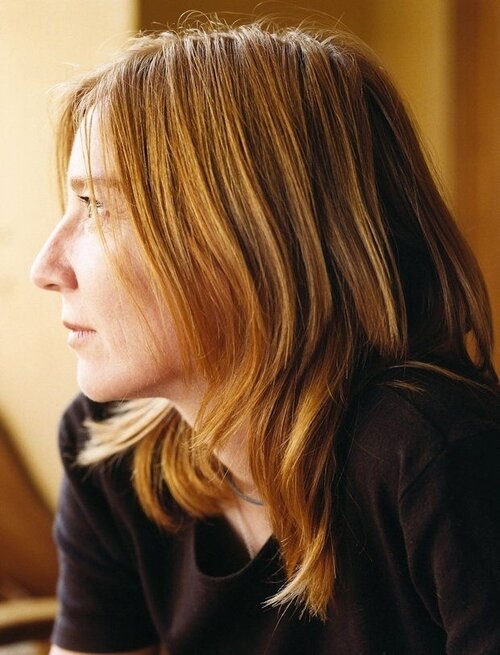
 Ignorance began when Lindeman became obsessed with rhythm; specifically straight rhythm, dance rhythm, those achingly simple beats that had never showed up on a Weather Station album before. The album marks Lindeman’s first experience writing on keyboard, not guitar, and her first time building out arrangements before bringing them to a band. Montreal producer Marcus Paquin (Arcade Fire) co-produced, with Lindeman, and also mixed the record. The lyrics across Ignorance roil with conflict. The narrator confronts characters who turn away from love. “I used to be an actor, now I’m a performer,” Lindeman says. In those roles she often finds herself to be the subject of projection, reflecting back the ideas and emotions of others. In turn, the album cover shows Lindeman laying in the woods, wearing a hand made suit covered in mirrors. Throughout Ignorance, she sings of trying to wear the world as a kind of ill fitting, torn garment, dangerously cold; “it does not keep me warm / I cannot ever seem to fasten it” and of walking the streets in it, so disguised and exposed”.

You can see some other albums coming out on 5th February, though I would point people in the direction of Nubiyan Twist’s Freedom Fables. You can pre-order an album that is going to a must-own for anyone who loves good music:

Nubiyan Twist return with their brand new album Freedom Fables on Strut, the follow-up to the acclaimed Jungle Run from Spring 2019.

Woven around soul searching, cautionary tales and parables for modern life, the new album is the most accomplished yet by the Leeds / London collective, effortlessly fusing different soul, jazz and global styles with great musicianship and lyrics. "Freedom Fables reflects on the power of narratives. Each vocalist on this record explores their own memoirs, a freedom of expression underpinning our belief that music is the ultimate narrative for unity,” explains Tom Excell. “The record references a lot of music that we all loved during our formative years; you can hear touches of broken beat, blunted hip hop, highlife, Latin, jazz and UK soul running through the tracks.”

The album is also packed full with illustrious guest appearances: regular collaborator Cherise features on the brilliant Tittle Tattle, calling out gossip through acerbic nursery rhyming, the loping Flow dealing with the ebb and flow of anxiety and the epic Brazilian jazz workout, Keeper; UK jazz saxman Soweto Kinch brings a burning alto solo and rhymes to the determined Buckle Up alongside the band’s own vocalist Nick Richards as the track aims to “find the door to peace” among life’s challenges. “Soweto is a trailblazer of the UK scene both as an alto player and as a rapper with a unique flow and important lyricism,” reflects Tom Excell. “It was really important for us to invite him to contribute to the album.” Richards continues the “dust yourself off and find hope” theme on the rousing Wipe Away Tears; Ghanaian great Pat Thomas voices a gorgeous Accra meets London highlife jam; massive new vocal talent Ria Moran (a contemporary from the band’s time at Leeds College Of Music) steps up on the sensual Morning Light tackling delicate complexities of the heart and long time friend of the band, KOG, brings his trademark full strength Afro dancefloor energy”.

I shall move on to 12th February as there are a few albums that you should reserve some money and time for. London Grammar’s Californian Soil is going to be terrific. Led by Hannah Reid – one of the greatest and most expressive singers in the world -, you need to get busy and pre-order it. Following 2017’s Truth Is a Beautiful Thing, Californian Soil is shaping up to be another stunning release from the trio. I want to drop in a feature from DIY from October, where they shared the single, Californian Soil, and we got a few words from Hannah Reid:

After returning last month with dreamy bop ‘Baby It’s You’, London Grammar have confirmed that their third album ‘Californian Soil’ will be arriving on 12th February via Ministry Of Sound.

Inspired by front woman Hannah Reid’s experience with misogyny within the music industry and how she found her power again, Hannah says, “Misogyny is primitive which is why it is so hard to change. But it is also fearful. It’s about rejecting the thing in yourself which is vulnerable or feminine. Yet everybody has that thing. This record is about gaining possession of my own life. You imagine success will be amazing. Then you see it from the inside and ask, why am I not controlling this thing? Why am I not allowed to be in control of it? And does that connect, in any way to being a woman? If so, how can I do that differently?”.

Django Django’s Glowing in the Dark is an album I would recommend anyone getting. The London band follow 2018’s Marble Skies with one of February’s biggest and most important albums. Pre-order your copy, as this album is looking like it’s going to be a bit of a peach:

Over the course of their extraordinarily accomplished discography to date, Django Django have constantly headed left where others have gone right. Described by The Guardian as “capable of making music that sounds close to perfection”, they are known for their genre defying eclectic sound and their new album Glowing in the Dark heralds, once again, the beginning of a thrilling new era for the band.

Glowing in the Dark has a running theme of escape: from despair, from constraints, from small town life, and even, in dreams, from the Earth. The brilliant title track and new single, for instance, soars gloriously towards the stratosphere. A track built around a sample from one of Dave Maclean’s spoken word records then plushly upholstered with Moog synths and drum loops, it is accompanied by some eye strobing visuals from rapidly ascending NYC artist and illustrator Braulio Amado”.

I actually want to recommend a few more albums from 12th February, as there are a couple coming along that I forgot about! The Pretty Reckless’ Death by Rock and Roll is worth ordering, and it is going to be a stunning album (The band’s Twitter page states that the album is coming out on 12th February; Rough Trade lists it as 29th January):

Rock ‘n’ roll is a religion. It’s a commitment to an ideal, a belief system. The lifestyle and trappings may appear to be glamorous and romantic, but the road isn’t easy. It requires staying power and an enormous amount of faith. The Pretty Reckless are truly a rock and roll band”.

Pale Waves’ Who Am I? is one album that I will be getting because the singles they have released from it are incredible! Recorded in L.A. over early-2020 with Rich Costey (Muse, Biffy Clyro, Sigur Rós), make sure you do not miss out on this treat! I am a fan of their 2018 debut, My Mind Makes Noises, but their second album seems to be fuller, more realised and consistent. The band’s singer, Heather Baron-Gracie, spoke with NME back in November about the band’s development and what has changed since their debut. It does seem that Pale Waves have come into their own on Who Am In?:

‘You Don’t Own Me’ is perhaps the perfect example of the band’s collective maturity. It’s a three-minute thrasher on which the band exorcise their run of bad luck and the frustrations of lives previously repressed, all the bullshit flung Heather’s way as a young woman is torn to shreds.

“A pretty face like yours should really learn to smile more,” she sings, “No one-night-stands for you or they’ll think you’re a whore”. As with Heather’s attitude to that destroyed black bag from the bus, the band are keen to embrace the future and not dwell on the trauma.

“That’s a real ‘Fuck you’ song,” she says with a smile. “It’s me saying, ‘Stop telling me what to do, stop telling me how to look, stop telling me how to smile – I’m my own person’. People might say that they prefer the sound from before – well, people change and evolve and this is me evolving and I’m not going to feel bad for that. I feel like I’ve been hiding who I am for so long now. I don’t wanna do that any more”.

zzzzz.jpg

I will actually skip ahead to 19th February, as there are a few choice albums. Julia Stone’s Sixty Summers is available from Apple Music from 12th February. Her official website marks it as the 19th. Here is some more information:

Eight years after Stone’s last solo record, Sixty Summers arrives as a powerful rebirth for one of Australia’s most prolific artists. Emerging from the wildernesses of folk and indie-rock, with Sixty Summers Stone dives headfirst into the cosmopolitan, hedonistic world of late-night, moonlit pop. The stunning album brings us the grit and glitter of the city, with all its attendant joys, dangers, romances and risks. It is Stone at her truest, brightest self, a revered icon finally sharing her long, secret love affair with this vibrant and complex genre.

Recorded sporadically over five years from 2015 to 2019, Sixty Summers was shaped profoundly by Stone’s key collaborators on the album: Thomas Bartlett, aka Doveman, and Annie Clark, the Grammy-winning singer, songwriter and producer known as St. Vincent. Bartlett and Clark were the symbiotic pair Stone needed to realise her first pop vision. A wizard of production and songwriting, Bartlett helped coax Sixty Summers’ independent, elemental spirit from Stone, writing and recording over 50 demos with her at his studio in New York.

Itself a thoroughfare for indie rock luminaries, some of whom, such as The National’s Matt Berninger and Bryce Dessner, ended up on the album, Bartlett’s studio was perfect fertile ground for Stone’s growth. “Making this record with Thomas, I felt so free. I can hear it in the music,” says Stone. “He brings a sense of confidence to recording sessions.”

Clark was the incisive yang to Bartlett’s yin, a sharp musical polymath who, when presented with the work Bartlett and Stone had made together, quickly helped fashion Sixty Summers into the album it was destined to be. Contributing vocals and guitar in addition to production, Clark’s revered acidic touch ignited the sparks of Stone’s creations. Of Stone, Clark comments, “Jules is the best. We were always fond of each other from afar, but after working on this, we became great friends. She's a brilliant girl — tenacious, perfectionistic, so smart. All fire”.

Let’s stick with incredible Australian talent and Tash Sultana’s upcoming album, Terra Firma. Go and order a copy now, as Sultana is one of the finest artists in the world. I adore her music, and now I want to actually quote from an interview she gave with Guitar.com recently about her guitar preferences. Sultana is an incredible player, so it was interesting learning more:

“I’ve veered more towards [Strats] as I’ve progressed,” says Sultana. “I’ve got a really nice collection but the Strat is for me. For a long time, I played Teles and Jazzmasters and Gretsches but I kept listening to these artists and really loved their tone, and how they played. When I did a bit of searching, they were playing fuckin’ Stratocasters. And I was like, ‘Mate, the search is over. That’s the missing element’. I moved across to the Strat and I haven’t gone back.

PHOTO CREDIT: Guitar.com

“This guitar is based off an American Pro Series Strat, and when they were first released, Fender gifted me one. I loved it immediately because it’s a new-age performance guitar, and that’s what we’re doing. We’re getting on stage and performing, and we’re recording. It’s so well designed, and the technology and the pickups have come so far that it captures all of the vintage Stratocaster sound, and adds on the advances of what we can now do in the modern day. You can really sculpt your tone, because there’s so much to work with on the guitar”.

Warming to the subject, Sultana takes aim at the regularity with which guitar fans gravitate towards trolling as a mode of expression when discussing gear and technical ability online. “People tend to be quite critical, rather than encouraging,” they say. “I follow a lot of really good guitarists on Instagram. You can’t really fault them but somebody has to go and do that [to them] anyway. I think that attitude is shit.

“We’re all different levels of players. You should be encouraging people to get better, not bringing them down because you’re better than them. That attitude has got to go. It’s not specifically even straight white dudes who do it. It’s just people. The straight-white-dude culture, I don’t even let that consume a minute of my day. I just don’t really think about the world in that way. I don’t experience the world like that”.

A great album due on 19th February is Mogwai’s As the Love Continues. Go and order your copy. Here is a bit of detail about the forthcoming album:

This new album will please old fans and gain new as it has something for everyone. Both transcendent and surprising, As The Love Continues shows that Mogwai are still offering solace from the mundane, supplying the soundtrack to whatever movie you are making in your head.

The album was produced by Dave Fridmann (Mogwai, Mercury Rev, The Flaming Lips) and features guests Atticus Ross (Nine Inch Nails) and Colin Stetson (saxophonist who has collaborated with Bon Ivor, Arcade Fire). Recorded at Vada Studios, England by Tony Doogan (Grey Dogs, Mogwai, Belle and Sebastian) with Fridmann in full remote control from the US”.

I am only picking out particular albums from 19th February, but go and check out others that are due that week. I want to move ahead and finish off with 26th February…

There are four or five that I want to select for special consideration. Cloud Nothings’ The Shadow I Remember is the first I would urge people to order:

For a band that resists repeating itself, picking up lessons from a decade prior is the strange route Cloud Nothings took to create their most fully-realized album. Their new record, The Shadow I Remember, marks eleven years of touring, a return to early songwriting practices, and revisiting the studio where they first recorded together. In a way not previously captured, this album expertly combines the group’s pummeling, aggressive approach with singer-songwriter Dylan Baldi’s extraordinary talent for perfect pop. To document this newly realized maturity, the group returned to producer Steve Albini and his Electrical Audio studios in Chicago, where the band famously destroyed its initial reputation as a bedroom solo project with the release of 2012 album Attack on Memory.

Another throwback was Baldi’s return to constant songwriting à la the early solo days, which led to the nearly 30 demos that became the 11 songs on The Shadow I Remember. Instead of sticking to a tried-but-true formula, his songwriting stretched out while digging deeper into his melodic talents. “I felt like I was locked in a character,” Baldi says of becoming a reliable supplier of heavy, hook-filled rock songs. “I felt like I was playing a role and not myself. I really didn’t like that role.” More frequent writing led to the freedom in form heard on The Shadow I Remember. What he can’t do alone is get loud and play noisily, which is exactly what happened when the entire band— bassist TJ Duke, guitarist Chris Brown, and drummer Jayson Gerycz—convened”.

I am looking forward to Maxïmo Park’s Nature Always Wins album. The band always deliver the goods, and their seventh studio album follows 2017’s excellent Risk to Exist. Be sure to get a copy:

An album of our times, Newcastle band Maximo Park return with their seventh record Nature Always Wins. The album arrives as something of an examination, zeroing in on the notion of the self, identity as a band, and that of humanity as a whole. The album’s title nods to the famous Nature vs Nurture debate. Discussing whether change is capable under the influence of time, perspective, environment or if we are destined to be bound by our own genetics, it asks, “who are we, and who do we want to be, and do we have any control over it?”. “I'm so happy we were able to make this album during lockdown, as it's been a challenging time for everyone. After almost 4 years since Risk To Exist, we wanted to explore new musical territory (for us) without sacrificing our trademark melodic twists and heartfelt lyrics.As always, the passing of time looms large, although the songs contain more affection for the past than before, and there are occasional hints of the fractious, divided time that we live in” – frontman Paul Smith. Produced by Atlanta-based Grammy-winning producer Ben Allen (Animal Collective, Deerhunter), who afforded the band freedom to play and create. What wasn’t anticipated was how that freedom would be soon be stripped, as lockdown restrictions left the band recording remotely across Newcastle, Liverpool and Atlanta with audio files bounced back and forth, 4000 miles across the world!”.

I’ll recommend three further albums and then round things off. Madison Beer’s Life Support is out on 26th February and, whilst there isn’t a pre-order link available yet, keep an eye out on her Instagram. Beer is one of the most promising Pop artists coming through, so I am interested to see what Life Support offers. I will bring in an interesting interview from Hot Press, where we learn more about Beer:

This was supposed to be a whirlwind year for the 21-year-old. With one billion plus Spotify streams and a huge social media presence, she’s poised to be pop’s next big thing. She’s even had the obligatory celebrity relationship, having stepped out with Brooklyn Beckham in 2017 (we’ve been politely requested to refrain from asking her about this).

“I want to tell my story and get myself out there,” she tells Hot Press in her first major Irish interview. This is ahead of the release of her debut album, Life Support, featuring production from Justin Bieber/Adam Lambert collaborator Leroy Clampitt.

With song titles such ‘Good In Goodbye’, and ‘Selfish’, Life Support has been cast as a break-up LP, a rumour she is eager to put to rest. “Definitely not,” she says in a low-speaking voice not all that far removed from her smoky vocal style. “It’s about my journey in life so far.”

“Life so far” has contained more ups and downs than you might imagine. Beer was “discovered” aged 13 when Justin Bieber tweeted a YouTube video of her singing Etta James.

PHOTO CREDIT: Julian Burgue

Island Records signed her soon afterwards. However, she was uncomfortable with the direction in which she was being pushed, described by Rolling Stone as “Radio Disney bubble-gum pop”.

She dug in her heels and just three years later, at age 16, was dropped. Some artists might have given up. Beer, though, simply worked harder, writing songs that gave voice to her love of artists such as Radiohead, Tame Impala and Lauryn Hill. You can hear those influences in new tunes such as ‘Selfish’, where she emotes over tempestuous waves of machine-tooled emotion.

It’s had its ups and its downs,” she says of her career. “It’s not always fun. It’s nice to able able to step away from it at times. I wouldn’t change it though.”

Sexism in the entertainment industry has become a more visible issue in recent years. What has Beer’s experience been?

“Yeah, definitely – I knew it was something I would have to prepare for. That I would just be aware of. I didn’t think of it as scary. I was ready to figure it out.”

If not quite yet a household name, she’s certainly “Internet” famous. She’s appreciative of and gracious to fans. But, yeah, sometimes it’s exhausting.

 “It is difficult to find yourself being a public figure,” she says. “It’s not the easiest. I give it the best I can.”

Before we go there is time for one or two questions submitted by fans. If she had a message for her younger self, what would it be?

“I would prepare my younger self for all the things that would happen to me and that I would have to get through [i.e. being dropped by Island]. It wasn’t fun. Now I look back and am grateful for the experiences.”

And what was her favourite part of the process of making the album? “Just being able to talk about things that are personal and discuss and be open and be able to move on from certain things. It was good for me to the able to get it out and move on…that’s the thing.”

The necklace she is often photographed wearing – what does the inscription say? She smiles. “It’s my name”.

One of the most promising British artists around is Celeste. Her debut album, Not Your Muse is one that you should not overlook (and go and pre-order):

The debut album from the alluring soulful Celeste. The 25-year-old British-Jamaican, who grew up in Brighton, started singing around 10 years ago when she was inspired by hearing Elton John's Your Song.

 She showcases a melting pot of influences ranging from soulful greats Aretha Franklin, Minnie Riperton etc to the cosmic sounds of jazz experimentalists Kamasi Washington, Thelonious Monk, Sun-Ra and Alice Coltrane, via the raw urgency of Amy Winehouse’s early releases. The soul-drenched songs match her raw, expressive vocal tone that cascade the listening ears like hot butter over a fresh slice”.

I think many people are looking forward to an album that was scheduled for release last year. In this interview with GQ, we discover more about Not Your Muse:

I’m in a position,” she says now, “where the things I’ve worked towards for quite a number of years are close to being a lifelong thing. But it’s daunting. It could either go well or tits up.” With the music industry at her feet and a country cocking its ears, Celeste was expected to turn in her debut album by March, ready for a September 2020 release. But amid the rolling conveyor belt of music industry and media demands, a nervousness crept in about the record, a feeling “that this isn’t the album I want it to be yet”.

Amid the mass standstill of Britain’s lockdown, Celeste has found relief. She has spent days back in Brighton and long afternoons locked in the sanctuary of the studio, writing about longing and romance and a song titled “Some Goodbyes Come With Hellos”. There’s a genuine excitement around her album now, simply entitled Celeste, which is due to be released next year. She has worked with producers Josh Crocker and TMS, but her past collaborator Jamie Hartman has worked closely across the bulk of the record.

PHOTO CREDIT: Lauren Maccabee for Wonderland.

“Celeste will take a good idea,” he tells me, “and she knows how to make it great. It can be the flip of a lyric, a repetition you hadn’t thought of, a different placement of a chord rhythmically. I’m going to look back at that album in ten years’ time and know that’s one of the highlights of my career.”

For Celeste, the album represents music that plays back “what I’m experiencing in my life at the time”, she says, because “all I ever really tried is for it to be honest. That’s all I ever really wanted.” That honesty has guided her from the cliffs of Brighton to the brink of national glory. The years of waiting tables, writing and chasing daydreams have paid off. Celeste has finally reached her beginning”.

The last album I fancy mentioning is Julien Baker’s Little Oblivions. I would recommend people buy this album. Baker is a tremendous artist, and it seems that Little Oblivions is going to be a corker hat will make February so much brighter:

Little Oblivions is the third studio album by Julien Baker. Recorded in Memphis, TN, the record weaves together unflinching autobiography with assimilated experience and hard-won observations from the past few years, taking Baker’s capacity for storytelling to new heights. It also marks a sonic shift, with the songwriter’s intimate piano and guitar arrangements newly enriched by bass, drums, keyboards, banjo, and mandolin with nearly all of the instruments performed by Baker”.

I hope that the albums that I have mentioned all still come out next month but, as we know, things can change! I would still urge people to order them if the dates are shifted – or the ones that I have found are incorrect! There is a great range of music coming out in February, so go and snap up the brightest and best albums from that month as an early treat! I shall end things now but, as we can see from some of the albums next month, we don’t have to wait too long this year before we get…

IN THIS PHOTO: Julien Baker/PHOTO CREDIT: Nolan Knight

SOME truly stunning albums.

FEATURE: The January Playlist: Vol. 1: Thank God That Love Is Back!

FEATURE:


The January Playlist

IN THIS PHOTO: Celeste 

Vol. 1: Thank God That Love Is Back!

__________

THIS Playlist is a bit of a cheat…

 IN THIS PHOTO: Foo Fighters

as I am including a few songs that came in just before Christmas leading up to 31st December, in addition to songs that arrived yesterday. I am surprised that there have been a fair few tracks put out at a time when most people are winding down! Although things won’t start to get busy for a few weeks more, there are new tracks from Celeste, Foo Fighters, Kylie Minogue + Dua Lipa, IAMDDB, You Me At Six, Justin Bieber, Elvis Costello, Four Tet, SZA, Molly Burch (ft. Wild Nothing), Gia Margaret, Another Sky, and Joshua Radin. I think that this year is going to be an incredible strong one for music and, as we can see from tracks that arrived in the last days of December and yesterday, the standard has not dropped at all! This weekly Playlist is a little quieter in terms of volume and big-name songs but, when you listen through, you’ll discover plenty of quality and variation. If you need an extra bit of kick to get the first weekend of 2021 out of the blocks, then there are plenty of songs in the pack that will…

 IN THIS PHOTO: Another Sky

HELP you out.

ALL PHOTOS/IMAGES (unless credited otherwise): Artists

__________

 PHOTO CREDIT: Mia Clark

CelesteLove Is Back

PHOTO CREDIT: Andreas Neumann

Foo Fighters No Son of Mine

PHOTO CREDIT: John Phillips/BFC/Getty Images/Gareth Cattermole/Getty Images

Kylie Minogue, Dua Lipa - Real Groove (Studio 2054 Remix)

You Me At SixAdrenaline

IAMDDBWa’hum

Justin Bieber Anyone

PHOTO CREDIT: Christopher Anderson for New York Magazine

Elvis Costello - Farewell, OK 2020

PHOTO CREDIT: Rankin

Gabrielle Aplin When the Lights Go Out

Four Tet Parallel 4

Molly Burch (ft. Wild Nothing) - Emotion

SZAGood Days

Gia Margaret Solid Heart

Aya Nakamura - Ailleurs

assa.jpg

Olivia O’Brien Better Than Feeling Lonely

PHOTO CREDIT: Parri Thomas

Another SkyWas I Unkind?

Newton FaulknerThe Sun Is Coming Up

Joshua Radin Better Life

Tilly Valentine Calendar Girl

Amanda ShiresThat’s All

The Dirty Nil Elvis ‘77

Yung Pinch NO ONES THERE

Hailey Whitters (ft. Little Big Town) Fillin’ My Cup

Hannah GraceWonderful Way

uuuu.jpg

Bailey Bryan Sober

Tiffany DayFEEL ALRIGHT

FEATURE: Modern Heroines: Part Twenty-Five: Lorde

FEATURE:


Modern Heroines

PHOTO CREDIT: Kjell Ruben for Dagens Næringsliv

Part Twenty-Five: Lorde

___________

THERE have been rumours….

rr.jpg

that the New Zealand-born artist, Lorde, has finished work on her third studio album. This is just speculation at present but, as she is back on Instagram and seems to be engaging on social media, maybe 2021 will be a year when we get a follow-up to the incredible Melodrama of 2017. Even though she has put out two studio albums, I think Lorde is an artist who will put out a lot more and will be an icon of the future. I am going to bring in some reviews for Melodrama and a couple of interviews but, back in 2013, she released the incredible Pure Heroine. Whilst she would go on to better herself in 2017, I think her debut is accomplished and boasts many brilliant moments. It is a stunning album with so much unique insight and accessibility. A lot of Pop albums can be quite bland or narrow, yet Pure Heroine is broad and incredibly exciting. With tracks like Tennis Court, Royals, and Buzzcut Season, it is an album that you will go back to and discover new things! Before I drop in reviews of Melodrama, Lorde is bringing out a book next year. Going South is a memoir that documents her experience visiting the continent of Antarctica in January 2019 with photos taken by New Zealand photographer Harriet Were. All proceeds from the book will be used to fund a postgraduate scholarship created by Antarctica New Zealand, a government agency (this is a useful accompanying interview).

That book will be fascinating to read but, in terms of her music, the world was stunned by the phenomenal Melodrama. It was my favourite album of 2017, and there has been a lot of speculation as to when Lorde might produce her next album. One reason why Melodrama got such a big reaction is the sheer consistency of the album. Rough Trade explained the importance of the album (“In 2013, a 16-year-old Lorde quietly, yet confidently asserted herself as the voice of a generation with her full-length debut, Pure Heroine. The album would go triple-platinum, selling over 4 Million worldwide, win two Grammy Awards, a Brit and spawned the seven-times platinum record-breaking international juggernaut single, Royals. And now she is back with her brand new album which tells the story of the last 2 wild, fluorescent years of [her] life. That story, Lorde says, begins with heartbreak. With husky tones and a new radiant feel to her album – including current hit single Green Light - the 20 year old singer has produced a rapturous mix of songs putting her once again at the forefront of pop”); critics reacted with incredible praise and positivity. Melodrama is very different to Pure Heroine and, when in January 2016, it was reported that Lorde and James Lowe, her boyfriend, had ended their three-year relationship, this might have inspired some of the songs and mood on the album.

With Lorde co-writing every track on Melodrama, one does get to hear here experiences and voice. The songs are more confident and memorable than on Pure Heroine; she had grown as a songwriter in the intervening years - and she created this undeniable Pop masterpiece in 2017. On the US Billboard 200, Melodrama debuted at number-one with first-week sales of 109,000 album-equivalent units, of which 82,000 were pure sales - becoming Lorde's first number-one in the United States. I want to bring in a couple of reviews for Melodrama to show what critics made of it. In their review, here is what Pitchfork had to say:

Her percussive delivery, both in her smoky lower register and lean falsetto, cuts sharpest in the bacchanalian bangers. “Sober” folds humid brass into a stutter that lightly recalls her Heroine hit “Royals,” along deft turns of phrase that suggest even in her imbibing, she’s too sharp to turn off self-scrutiny (“Midnight, lose my mind, I know you’re feeling it too/Can we keep up with the ruse?”). She’s a touch self-deprecating in the height of the party (“Homemade Dynamite”) and tenfold pensive as it wears down (“Perfect Places”). The record’s bittersweet trajectory feels not unlike Yeah Yeah Yeahs’ Fever to Tell, intent on capturing both the carousing and the come-down in one breathless spree.

And the places Lorde goes on Melodrama really are special, particularly “The Louvre.” This track, in its gleaming synths and heartswell harmonies, captures an immersive bliss, a shared frequency of love just as irrepressibly grandiose as its sound. It’s the kind of connection that, even once it’s gone, lightens your bones forever. Whatever the next “Gossip Girl” is—whatever soapy serial next attempts to harness the teen zeitgeist with plush fabrics and sharp cheekbones—“The Louvre” will probably soundtrack its climactic moment. But as Lorde’s voice rises in it, awed in adoration as she whispers, “Well, summer slipped us underneath her tongue/Our days and nights are perfumed with obsession,” whatever’s onscreen can’t match her luminosity. It’s not enough to say Lorde is one in a generation. Really, it’s amazing this is the first time she was a teenager for how good she was at it”.

Every track on Melodrama hits the mark! From the incredible opener, Green Light, through to The Louvre, and Liability, to Writer in the Dark, and Supercut, it is a phenomenal album from an artist, I feel, can grow even stronger and more successful. When they reviewed Melodrama, AllMusic wrote the following:

Growing up in public has been a rite of passage for pop stars since at least Frank Sinatra but, as with any classic storyline, what matters is the execution. Lorde, the preternaturally talented New Zealand singer/songwriter who became an international sensation at the age of 17, knows how to execute not only songwriting and public narrative but also a melding of the two. Melodrama, arriving nearly four long years after her 2013 debut, picks up the thread left hanging on Pure Heroine, presenting Lorde as a young woman, not a sullen teenager. Tonally and thematically, it's a considerable shift from Pure Heroine, and Melodrama feels different musically too, thanks in part to Lorde's decision to collaborate with Jack Antonoff, the leader of Fun. and Bleachers who has been nearly omnipresent in 2010s pop/rock. Antonoff's steely signatures -- a reliance on retro synths, a sheen so glassy it glares -- are all over the place on Melodrama but Lorde is unquestionably the auteur of the album, not just because the songs tease at autobiography but because of how it builds upon Pure Heroine.

Lorde retains her bookish brooding, but Melodrama isn't monochromatic. "Green Light" opens the proceedings with a genuine sense of exuberance and it's an emotion she returns to often, sometimes reveling in its joy, sometimes adding an undercurrent of melancholy. Sadness bubbles to the surface on occasion, as it does on the stark "Liability," and so does Lorde's penchant for blunt literalism -- "Writer in the Dark," where our narrator sings "bet you rue the day you kissed a writer in the dark," thereby suggesting all of her songs are some kind of autobiography -- but these traits don't occupy the heart of the album. Instead, Lorde is embracing all the possibilities the world has to offer but then retreating to the confines of home, so she can process everything she's experienced. This balance between discovery and reflection gives Melodrama a tension, but the addition of genuine, giddy pleasure -- evident on the neon pulse of "Homemade Dynamite" and "Supercut" -- isn't merely a progression for Lorde, it's what gives the album multiple dimensions”.

With positive signs that a new album might be coming soon, it will be amazing to what she produces next. I think Melodrama is such a huge and important album that everyone needs to hear and spend some serious time with.

I want to bring in a couple of interviews to end, as they show more of Lorde and how she engages with those she speaks with. This interview from The Guardian (2017) reveals some of that, but we also get some history behind Melodrama and insight into the brilliant Lorde:

Through 2015, it became trickier for those outside Lorde’s sphere to follow what she was up to. She is not much of a presence on social media (vowing at one point that “all words [will] go into songs instead of tweets”), and though she performed the odd one-off show, provided vocals for a Disclosure track, and worked on the soundtrack for a Hunger Games film, she faded from frontline view. Having been seen and heard by the world, she wanted to resume, as much as possible, her old life with her friends. “Hugs and dinners,” she describes it. “Trips to the beach. Going to dumb bars in the middle of intersections.”

She moved into the waterside house in Auckland on her own. “I come from a big family,” she explains. (Her mother, Sonja Yelich, is a poet and academic, her father, Vic O’Connor, is a civil engineer; Lorde is the second of four siblings.) “We grew up in a house full of love and activity and screaming and crying. When I bought the house, people asked: ‘Isn’t it going to be strange living by yourself?’ And I was like: ‘No! I adore the feeling of being able to spread out my brain.’”

Aware that she couldn’t put off work on her second album for ever, she started assembling notes and ideas on the coffee table in her lounge. This was hastily covered with a towel whenever friends visited: she wasn’t especially proud of the half-formed work. “I was writing about nothing. I wasn’t in the right zone. [These songs] would pass off fine, but they meant nothing to me. I was writing stuff that maybe sounded cool, that were trying to be cool. But they weren’t vividly me.”

In the summer of 2016, she and Antonoff wrote a Royals-calibre track called Green Light. It charted the contradictory impressions of a person in the aftermath of a break-up, someone waiting for internal permission – a green light – before they can get on and be high-spirited again. They wrote another song, Homemade Dynamite, about just such a phase of high-spiritedness. On stage at Coachella, Lorde says Homemade Dynamite is about that time in an evening when “maybe the drugs are just kicking in”. For a track called Writer In The Dark, she composed a neat central lyric that seemed to summarise a year of ruthless story-gathering back in Auckland. “Bet you rue the day,” Lorde sings at an unnamed lover, “you kissed a writer in the dark.”

“I want to be really, really good one day,” Lorde says. Her legs start to twitch again. Her arms begin to flail, making their shapes. “I think I’m pretty good now. I think I’ve made a good start. But I want to be Paul Simon.” She thumps her hands down hard on the table. “I want to be Leonard Cohen.” (Thump.) “I want to be Joni.” (Thump.) “Fucking.” (Thump.) “Mitchell.” (Thump.) “And that takes time.”

Before that can happen I ask Lorde about something she’d said earlier – about how when she first blasted onto the scene, she felt as if she had “a two-part self”: half doubtful young person, half self-possessed performer, neither side fully reconciled with the other. Is that still the case?

“That gap has started to lessen,” she says. “I’m starting to be able to recognise myself in the work. It’s like there’s more of an overlap?... They’re almost...” For the first time today Lorde can’t summon the precise words she’s after. So she uses her hands instead. “Now it feels more like this,” she says, cupping one hand inside the other. “See?”.

There are a lot of great interviews out there that were published at the time Melodrama was released. We get information regarding Lorde’s songwriting process and approach, but there is also some brilliant information about her young life and what she is like to meet in person. I would recommend people to read the full article from The New York Times Magazine, as it is incredibly detailed…and we get some fascinating insight (such as why she likes travelling around New York on her own). I have selected a few sections, so we get some biography relating to Lorde; there is also some great information regarding the creation of Melodrama and its fruition:

Lorde, whose real name is Ella Yelich-O’Connor, was born in 1996, the second of four children; her father, Vic O’Connor, is a civil engineer. Her mother, Sonja Yelich, is an award-winning poet whose work has been anthologized multiple times in the “Best New Zealand Poems” series. Ella was a bookish kid. She led her middle-school team to a second-place finish in the 2009 Kids’ Lit Quiz World Finals, a global competition. Shortly afterward, she sat for a morning-show interview on Radio NZ, estimating that she’d read “a bit more than 1,000 books” in her lifetime. She wrote her own fiction too, enamored of Raymond Carver and Kurt Vonnegut. When I asked her to characterize this work, she said only, “It wasn’t very good.” Sonja Yelich told me that when Ella was 14, she proofread Yelich’s 40,000-word master’s thesis: “People said, ‘You’re crazy to entrust this massive undertaking to your child.’ ” (Yelich has routinely accompanied Ella on her travels and is as much confidante as chaperone. You can see her dancing beside Taylor Swift in a 2014 awards-show cutaway as her daughter performs.)

We pushed through the service exit, walked along empty streets and boarded an uptown 1 train. While making “Melodrama,” Lorde took lots of subway rides, auditioning rough mixes of songs on cheap earbuds, which helped give her a sense of how the music would sound in daily life. As we rumbled northward, her face was in full fluorescent light, and I wondered if people ever bothered her during these rides. “Nobody recognizes me,” she said. When Lorde does spot someone spotting her, she went on, her move is to smile, place a finger to her lips and mouth a conspiratorial shh. Her thinking is that this gesture, warm and direct in its appeal, will pre-empt any further encounter — “and it usually does.”

As Lorde worked on “Melodrama” at home in New Zealand, she papered over a wall with notes for songs, like a sleuth tacking up scraps of evidence, trying to tease out their connections and fill in their blanks. This allowed her to “skim the whole album,” she said, and “to make sure I was touching all the bases I wanted to touch: ‘Oh, I haven’t said this, so let me find a good place to do it.’ ” She soon devised color codings for each song, with different hues denoting different themes. “A song about partying would get a certain color,” she explained, “but it might be a sad song, and that got its own color, too.” As she studied the wall, patterns and imbalances emerged: not enough red here; too much yellow there. On her kitchen table she arranged yet more paper, editing and shuffling lyrics around. When friends visited, she hid the table beneath a patchwork of hastily arranged bath towels and instructed them to steer clear.

 Her songs reflected her generation not only in their lyrics but also in their shrugging relationship to genre. Formerly ironclad distinctions among musical styles have significantly melted away. Even mash-ups — those early-aughts song splices that epitomized a dawning spirit of digital-age musical cross-pollination — sound dated now in their stuntish aesthetic of collision. In 2011 I asked Frank Ocean, then 24, about his genre-skipping approach to source material on “Nostalgia, Ultra,” his R.&B. mixtape that includes samples of Coldplay and “Hotel California.” He said he was confused by the question: The concept of border-crossing made little sense to him because he didn’t see the borders I was alluding to in the first place”.

A good gap of time has passed since Melodrama was released on 16th June, 2017. There has been a lot of change in Lorde’s life, but I wouldn’t expect a radical departure from the sound of Melodrama. If we get something half as good as that album then we will be in for a real treat! As I said, I think Lorde will grow greater and more profound as a writer and performer and, as she is only twenty-four, that is quite scary! I feel we will get a lot of albums from Lorde through her career, and I know she has already inspired so many songwriters. She will be a legend of the future, no doubt. The more I listen to Lorde, the more I realise she is…

A hugely talented and accomplished artist.

FEATURE: Starman: The Essential David Bowie

FEATURE:


Starman

IN THIS PHOTO: David Bowie as ‘Aladdin Sane’, 1973/PHOTO CREDIT: Brian Duffy

The Essential David Bowie

___________

I am doing a couple of other features…

 PHOTO CREDIT: Gavin Evans

before 10th January, as that date marks five years since David Bowie died. His final album, Blackstar, was released on his sixty-ninth birthday on 8th January and, since he has passed, there has been such fondness for his classic albums and his work in general! There is so much to dissect when it comes to Bowie and why he was so loved. I will explore a couple of different sides to him soon but, in this feature, I am sort of expanding on my A Buyer’s Guide series – where I recommend albums and a book to own about various acts. Instead, here, I am going to highlight the ten standout David Bowie albums; one that is underrated and warrants another, keener look; his final-recorded studio album; a great compilation album to have as a starting place if you need it; a great book that should provide some great detail, in addition to a playlist of his very best tracks. Here is a fond salute to a music genius who, on the anniversary of his death on 10th January, we will remember and…

 PHOTO CREDIT: Michael Putland/Getty Images

PLAY his music loud!

_______________

The Ten Essential Albums

Hunky Dory

Release Date: 17th December, 1971

Label: RCA

Producers: Ken Scott/David Bowie

Standout Tracks: Oh! You Pretty Things/Life on Mars?/Kooks

Buy: https://www.discogs.com/sell/list?master_id=1718&ev=mb

Stream: https://open.spotify.com/album/6fQElzBNTiEMGdIeY0hy5l?si=5vVuRLsaRkuxCEgK7YHrPA

Review:

After the freakish hard rock of The Man Who Sold the World, David Bowie returned to singer/songwriter territory on Hunky Dory. Not only did the album boast more folky songs ("Song for Bob Dylan," "The Bewlay Brothers"), but he again flirted with Anthony Newley-esque dancehall music ("Kooks," "Fill Your Heart"), seemingly leaving heavy metal behind. As a result, Hunky Dory is a kaleidoscopic array of pop styles, tied together only by Bowie's sense of vision: a sweeping, cinematic mélange of high and low art, ambiguous sexuality, kitsch, and class. Mick Ronson's guitar is pushed to the back, leaving Rick Wakeman's cabaret piano to dominate the sound of the album. The subdued support accentuates the depth of Bowie's material, whether it's the revamped Tin Pan Alley of "Changes," the Neil Young homage "Quicksand," the soaring "Life on Mars?," the rolling, vaguely homosexual anthem "Oh! You Pretty Things," or the dark acoustic rocker "Andy Warhol." On the surface, such a wide range of styles and sounds would make an album incoherent, but Bowie's improved songwriting and determined sense of style instead made Hunky Dory a touchstone for reinterpreting pop's traditions into fresh, postmodern pop music” – AllMusic

Choice Cut: Changes

The Rise and Fall of Ziggy Stardust and the Spiders from Mars

Release Date: 16th June, 1972

Label: RCA

Producers: Ken Scott/David Bowie

Standout Tracks: Five Years/Suffragette City/Rock ‘n’ Roll Suicide

Buy: https://www.discogs.com/sell/list?master_id=1561&ev=mb

Stream: https://open.spotify.com/album/48D1hRORqJq52qsnUYZX56?si=HNdt_g_dS62qeg1zfehUkw

Review:

Bowie initiates “Moonage Daydream” on side one with a riveting bellow of “I’m an alligator” that’s delightful in itself but which also has a lot to do with what Rise and Fall … is all about. Because in it there’s the perfect touch of selfmockery, a lusty but forlorn bravado that is the first hint of the central duality and of the rather spine-tingling questions that rise from it: Just how big and tough is your rock & roll star? How much of him is bluff and how much inside is very frightened and helpless? And is this what comes of our happily dubbing someone as “bigger than life”?

David Bowie has pulled off his complex task with consummate style, with some great rock & roll (the Spiders are Mick Ronson on guitar and piano, Mick Woodmansey on drums and Trevor Bolder on bass; they’re good), with all the wit and passion required to give it sufficient dimension and with a deep sense of humanity that regularly emerges from behind the Star facade. The important thing is that despite the formidable nature of the undertaking, he hasn’t sacrificed a bit of entertainment value for the sake of message.

I’d give it at least a 99” – Rolling Stone

Choice Cut: Starman

Aladdin Sane

Release Date: 13th April, 1973

Label: RCA

Producers: Ken Scott/David Bowie

Standout Tracks: Drive-In Saturday/Cracked Actor/Lady Grinning Soul

Buy: https://www.discogs.com/sell/list?master_id=2162&ev=mb

Stream: https://open.spotify.com/album/3HZKOk1knxrUU3y5ZIOdbz?si=sR8QPaOHSgCHm0535zz_jA

Review:

Aladdin Sane, recorded while Bowie and the Spiders were touring their asses off in an attempt to get America to love them the way England already did, is effectively Ziggy Stardust II, a harder-rocking if less original variation on the hit album. There's a paranoid sci-fi scenario ("Panic in Detroit"), a blues-rock stomp ("The Jean Genie"), a bit of cabaret ("Time"), a blunt sex-and-drugs nightmare ("Cracked Actor"). The big difference is that where Ziggy ended with a vision of outreach to the front row ("Give me your hands, 'cause you're wonderful!"), Aladdin is all alienation and self-conscious artifice, parodic gestures of intimacy directed to the theater balcony. Bowie overenunciates his cover of the Rolling Stones' "Let's Spend the Night Together" to turn it into a caricature of a disinterested Casanova; his sneering rocker "Watch That Man" is a better evocation of the Stones themselves” – Rolling Stone

Choice Cut: The Jean Genie

Station to Station

Release Date: 23rd January, 1976

Label: RCA

Producers: David Bowie/Harry Maslin

Standout Tracks: Station to Station/Golden Years/Stay

Buy: https://www.discogs.com/sell/list?master_id=22420&ev=mb

Stream: https://open.spotify.com/album/0MWrKayUshRuT8maG4ZAOU?si=98xxWRVbRrGEkVuwpkdIDQ

Review:

Taking the detached plastic soul of Young Americans to an elegant, robotic extreme, Station to Station is a transitional album that creates its own distinctive style. Abandoning any pretense of being a soulman, yet keeping rhythmic elements of soul, David Bowie positions himself as a cold, clinical crooner and explores a variety of styles. Everything from epic ballads and disco to synthesized avant pop is present on Station to Station, but what ties it together is Bowie's cocaine-induced paranoia and detached musical persona. At its heart, Station to Station is an avant-garde art-rock album, most explicitly on "TVC 15" and the epic sprawl of the title track, but also on the cool crooning of "Wild Is the Wind" and "Word on a Wing," as well as the disco stylings of "Golden Years." It's not an easy album to warm to, but its epic structure and clinical sound were an impressive, individualistic achievement, as well as a style that would prove enormously influential on post-punk” – AllMusic

Choice Cut: TVC15

Low

Release Date: 14th January, 1977

Label: RCA

Producers: David Bowie/Tony Visconti  

Standout Tracks: Speed of Life/Warszawa/Art Decade

Buy: https://www.discogs.com/sell/list?master_id=22382&ev=mb

Stream: https://open.spotify.com/album/2de6LD7eOW8zrlorbS28na?si=KWNMZH1nQo2wN3wT-ya_DQ

Review:

Brian Eno gets much of the credit for Low — not only did he play keyboards on six of the eleven tracks and co-write "Warszawa," but you can hear the heavy influence of his own solo records, especially Another Green World. Still, Eno only dreamed about making noise like this, mainly because he never assembled a band anywhere near this great: A big hand, please, for the fuzzed-out guitars of Ricky Gardiner and Carlos Alomar, and the fantastic production of Tony Visconti, who distorted Dennis Davis' snare to create one of rock's all-time most imitated drum sounds. Bowie sings haikulike lyrics about emotional death and rebirth, sometimes hilarious ("Breaking Glass"), sometimes brutally honest, as in the electric-blue loneliness of "Sound and Vision" and "Be My Wife" or the doomed erotic obsession of "Always Crashing in the Same Car."

The record company begged Bowie not to release Low, but it became a surprise hit and holds up today as one of his most intense and influential albums, inspiring two excellent Berlin trilogy sequels, Heroes (1977) and the insanely underrated Lodger (1979). It makes sense that Bowie released Low the week after he turned thirty, for the same reasons it sounds so timely today: Low is the sound of the slinky vagabond falling to earth, trying to catch up with the speed of life — and maybe even find some kind of home there” – Rolling Stone

Choice Cut: Sound and Vision

"Heroes"

Release Date: 14th October, 1977

Label: RCA

Producers: David Bowie/Tony Visconti

Standout Tracks: Beauty and the Beast/Blackout/V-2 Schneider

Buy: https://www.discogs.com/David-Bowie-Heroes/master/22294

Stream: https://open.spotify.com/album/4I5zzKYd2SKDgZ9DRf5LVk?si=ZNtVO2LQQH2vKp3EIexniA

Review:

‘Neukoln’ drops us off in one hell of a bad neighborhood.  Stark and haunted by the looming ruins of an industrial past. Superficially, this may come off as glum self-indulgence to some. But this is truly an existential cry of pain. Another example of this album wearing its raw emotions on its sleeve. Bowie’s sax wailing away among the gloom and doom. I suppose here the case could be made for this being Low II.  Then all too suddenly, we're tossed into the disco. Here the album ends on an almost schizophrenic note with the coyly oblique, ‘Secret Life of Arabia’. Suddenly it’s time to dance, with Bowie crooning, “You must see the movie, the sand in my eyes, I walk through a desert song when the heroine dies.” Its here you realize Bowie’s backing band consists of some truly formidable R & B musicians. Namely, Carlos Alomar, George Murray and Dennis Davis. Believe it or not, the same band that played on Low. And this is part of Bowie’s genius. To put himself and others in unfamiliar territory and see what happens.

Did I say genius? Yes, I think Bowie was a genius. Part of being a genius is knowing what’s important and what’s not. And Bowie had that. Obtuse, weird and disjointed as it all is, ‘Heroes’ shouldn’t work but does. Bowie was a keen practitioner of William S. Burroughs’ cut-up technique and more than any Bowie album, ‘Heroes’ feels like it was cut up and pasted together. Yet, somehow the glue holds. Here Bowie revels in the seedy underbelly and decadent nightlife of a haunted city, teetering on the brink. As he sings in ‘Sons of the Silent Age’ this record truly does sound like, “listening to tracks by Sam Therapy and King Dice”. If Low was the sound of breaking up, ‘Heroes’ is the sound of breaking free” – Soundblab

Choice Cut: Heroes

Lodger

Release Date: 25th May, 1979

Label: RCA

Producers: David Bowie/Tony Viscont

Standout Tracks: African Night Flight/D.J./Look Back in Anger

Buy: https://www.discogs.com/sell/list?master_id=22318&ev=mb

Stream: https://open.spotify.com/album/0S5nxDIEprOH23QeDoMeFK?si=NRDKo79pS3GWNS2s_CpUTw

Review:

On the surface, Lodger is the most accessible of the three Berlin-era records David Bowie made with Brian Eno, simply because there are no instrumentals and there are a handful of concise pop songs. Nevertheless, Lodger is still gnarled and twisted avant pop; what makes it different is how it incorporates such experimental tendencies into genuine songs, something that Low and Heroes purposely avoided. "D.J.," "Look Back in Anger," and "Boys Keep Swinging" have strong melodic hooks that are subverted and strengthened by the layered, dissonant productions, while the remainder of the record is divided between similarly effective avant pop and ambient instrumentals. Lodger has an edgier, more minimalistic bent than its two predecessors, which makes it more accessible for rock fans, as well as giving it a more immediate, emotional impact. It might not stretch the boundaries of rock like Low and Heroes, but it arguably utilizes those ideas in a more effective fashion” – AllMusic

Choice Cut: Boys Keep Swinging

Scary Monsters (And Super Creeps)

Release Date: 12th September, 1980

Label: RCA

Producers: David Bowie/Tony Visconti  

Standout Tracks: Up the Hill Backwards/Scary Monsters (And Super Creeps)/Fashion

Buy: https://www.discogs.com/sell/list?master_id=30425&ev=mb

Stream: https://open.spotify.com/album/5fxvWHvIDPIALfTfRiwyB0?si=7-XqImD4SbaWafdU1OkRMA

Review:

Over on side two we have 'Teenage Wildlife', the longest track on the LP. An elegy to himself in his younger days – not for him the over-confidence of Ziggy-Stardust-era, but the mature realism of David Bowie now. Another facade is laid to rest. "And there'll be others on the line filing past who will whisper low/I will miss you/He had to go".

'Scream Like A Baby' evokes images of incarceration, Bowie sharing an imprisoned nightmare with another (mythical) character, Sam, being humiliated, being guilty till proven innocent. No good times to be had, they 'never had no fun'.

Bowie's version of Tom Verlaine's 'Kingdom Come' has him in physical chains and bonds as opposed to the mental ones in 'Scream Like A Baby'. A song of true hope, Bowie sings Verlaine's lyrics as if they were his own, bringing a vocalese both impassioned and sweetly savage into the song that was absent on the original. Bowie prays for salvation and is saved.

The penultimate song on side two is 'Because You're Young', Bowie's paean to his son, any son perhaps. Bowie being sentimental without being cloying, advising without dictating, being nice to others, but keeping the whiplash for himself: "Because you're young/What could be nicer for you/And it makes me sad/So I'll dance my life away/A million dreams/A million scars".

And that's it, the first instalment of the 1980's Guide to The Diaries of David Bowie, with Bowie being assertive, demonstrative, and resigned. It's an album which will, hopefully influence others into making true eighties music. We all know that when Bowie breaks wind, people sniff it as far away as Numansland, but that is always the disadvantage of being a real innovator” – Hot Press

Choice Cut: Ashes to Ashes

Let's Dance

Release Date: 14th April, 1983

Label: EMI America

Producers: David Bowie/Nile Rodgers

Standout Tracks: Modern Love/China Girl/Without You

Buy: https://www.discogs.com/sell/list?master_id=48753&ev=mb

Stream: https://open.spotify.com/album/4NwG11AsDJluT732lSjMrV?si=f2hzE_d_TfuX-M1KPUrJKA

Review:

In January 1983, Bowie signed a lucrative multi-album deal with EMI and hired Nile Rodgers to make him some hits. If still considered to be as major an artist as Fleetwood Mac or Michael Jackson, he was nowhere in their league in terms of units shifted. So the massive global success of Let’s Dance was no fluke—the album was planned as intricately as a troop landing or royal wedding. Made with economy (as Bowie hadn’t signed with a label yet, he funded the sessions and watched every penny like a hawk) and recorded and mixed in less than three weeks, Let’s Dance was an EP’s worth of songs padded out with covers and remakes—one of which, a new version of his and Iggy Pop’s “China Girl,” was a sure-fire hit, Bowie predicted. He was right.

He was ready-made for MTV, but Let’s Dance was also a counter-move: an “organic” soul- and jazz-influenced sound instead of synth pop, even if having some of most colossal gated drums heard on a rock album to date. It was hooky, its tracks given booming sing-along choruses, its players included Stevie Ray Vaughan and the Chic rhythm section. And it had a remorseless sequencing: Its first side is three hit singles, back to back to back, with “Without You” as a cooling dish. The rest of the album is more or less B-sides, some odd (“Ricochet” mixes W.H. Auden with a clunking attempt at West African highlife), some ghastly (“Shake It,” whose refrain is the theme of a game show in hell). Let’s Dance had enough Bowie weirdness to make it stand out from other 1983 hit albums—“visions of swastikas” in “China Girl;” the cheery nihilism of “Modern Love”; the dark undercurrent in “Let’s Dance,” a lonely, desperate song beneath its trappings” – Pitchfork

Choice Cut: Let’s Dance

The Next Day

Release Date: 8th March, 2013

Labels: ISO/Columbia

Producers: David Bowie/Tony Visconti

Standout Tracks: The Next Day/The Stars (Are Out Tonight)/Valentine's Day

Buy: https://www.discogs.com/sell/list?master_id=530238&ev=mb

Stream: https://open.spotify.com/album/16F7X7WOFZhMwQNsMil7lq?si=mmzKhlNfRcOblEF-GerFTg

Review:

What The Next Day has that perhaps Lodger didn't is something more prosaic. Whatever else he's been doing, clearly at least some of the last decade has been spent carefully crafting inarguable tunes. Its melody shifting from weary sigh to frantic angst, I'd Rather Be High is utterly beautiful; The Stars (Are Out Tonight) supports its Brad-Pitt-is-an-alien thesis with a fantastic chorus, all the more potent for the fact that it takes an age to arrive; Valentine's Day is so deceptively sweet that the bleakness of its subject matter – another tyrant, bent on crushing the world beneath his heels – doesn't initially register.

Despite the lyrical density, The Next Day's success rests on simple pleasures, not a phrase you'd ever use to describe Lodger or Station to Station. You could argue that means the naysayers still have a point. For all the pointers it offers in that direction, The Next Day isn't the equal of Bowie's 70s work: but then, the man himself might reasonably argue, what is? Perhaps it's destined to be remembered more for the unexpected manner in which it was announced than its contents. That doesn't seem a fair fate for an album that's thought-provoking, strange and filled with great songs. Listening to The Next Day makes you hope it's not a one-off, that his return continues apace: no mean feat, given that listening to a new album by most of his peers makes you wish they'd stick to playing the greatest hits” – The Guardian

Choice Cut: Where Are We Now?

The Underrated Gem


Black Tie White Noise

Release Date: 5th April, 1993

Labels: Savage/Arista

Producers: David Bowie/Nile Rodgers

Standout Tracks: Black Tie White Noise (ft. Al B. Sure!)/Pallas Athena/I Know It's Gonna Happen Someday

Buy: https://www.discogs.com/sell/list?master_id=49487&ev=mb

Stream: https://open.spotify.com/album/1yFItZkb7DBAkQ5RB8OJv9?si=HuyGjePFRf2vwx1-hVbdtA

Review:

Black Tie refers to many aspects of Bowie’s career. Rodgers provides a more considered sound than the crash and glitz of the pair’s previous collaboration, Let’s Dance. Mick Ronson, who’d not worked with Bowie for almost 20 years, plays on a cover of Cream’s I Feel Free, an old Spiders staple (it was sadly their last recording together, as Ronson was to die of cancer that year). Another song covered here, The Walker Brothers’ Nite Flights, is one that directly influenced Bowie’s own work with Brian Eno; and that work is also referenced in the instrumental opener The Wedding, which is named in tribute to Bowie’s wedding to model Iman Abdulmajid that year. And while the title-track (featuring rapper Al B Sure!) considered the recent LA Riots, the darkly beautiful single Jump They Say was a more personal effort, Bowie expressing his feelings concerning the death of his half-brother Terry.

All of this could have been something of a mishmash were it not for Bowie’s immense confidence (his vocals have never been better) and Rodger’s sympathetic production. As an album, it was both a critical and commercial success (number one in the UK). As a statement of the next stage of Bowie’s career, it was perfect. The 90s would be a decade of change and experimentation for David Bowie, and Black Tie White Noise was the first step on his new journey” – BBC

Choice Cut: Jump They Say

The Final Album


Blackstar

Release Date: 8th January, 2016

Labels: ISO/Columbia/Sony

Producers: David Bowie/Tony Visconti

Standout Tracks: Blackstar/’Tis a Pity She Was a Whore/I Can't Give Everything Away

Buy: https://www.discogs.com/sell/list?master_id=939598&ev=mb

Stream: https://open.spotify.com/album/2w1YJXWMIco6EBf0CovvVN?si=K04rWwmaQZ-LVEZHtq8IUA

Review:

In different hands (say, those of Scott Walker, whose morbid experiments seem to be a reference point here), an album of paranoid fragments and subterranean thoughts would be off-putting, but Bowie still has a fantastic voice and an ear for catchy hooks. Ever the interpreter, even with his own work, he belts out what his characters would mutter to themselves, drowning in bass lines and sax solos, the next life glimpsed as a swell of synth strings. Pushing his longstanding interest in theater (“Lazarus” comes from his same-titled musical, “’Tis A Pity She Was A Whore” is a play on the 17th century tragedy ’Tis Pity She’s A Whore, and so on) into soundscape, Blackstar uses music as staging and scenery, placing his dynamic voice in the context of noir atmosphere.

“On “I Can’t Give Everything Away”—which features sax and guitar solos that are, respectively, too smooth and too busy to be called cool, which makes them cool, because coolness is paradoxical—he hits unexpected emotional notes by simply singing the title over and over. The nearly 10-minute title track starts funereal over skittering beats, before drifting into a pop song as though it were carried up to a cloud. On “’Tis A Pity She Was A Whore,” driven by a sax line as insistent as paranoia, he treats the chorus as a whimper. For all its jazz accents and solos, Blackstar ends up becoming a stage for the things that first made Bowie a pop star: his incessantly catchy melodies and elastic voice. With its simple (though oblique) lyrics and endlessly repeated choruses, it’s a secret pop record submerged in the dark places of studio improvisation” – The A.V. Club

Choice Cut: Lazarus

A Good Starting Point: A Suitable Compilation


Legacy (The Very Best of David Bowie)

Release Date: 11th November, 2016

Labels: Parlophone (U.K.)/Columbia (U.S.)/Legacy (U.S.)

Standout Tracks: Life on Mars? - 2016 Mix/Rebel Rebel/Modern Love - Single Version; 2014 Remaster

Buy: https://www.amazon.co.uk/Legacy-Very-Best-Bowie-VINYL/dp/B01LTHMSDY

Stream: https://open.spotify.com/album/4JEgSaokMH5mMRClx9wp3S?si=gmzZcZiHTi2hYA7IKoU-pg

Review:

Not the first posthumous compilation from David Bowie -- that would be the lavish box Who Can I Be Now? (1974-1976), which was planned prior to his January 10, 2016 death -- Legacy is nevertheless the first designed with his, well, legacy in mind. That much can be gleaned from the title of the compilation, but that's a bit of a feint since this set essentially repackages the simplest incarnation of a previous Bowie hits compilation, 2014's Nothing Has Changed. Legacy is available as a single and a double-disc, both carrying sequencings that mirror those on Nothing Has Changed (and both featuring a new mix of "Life on Mars?"). On the single disc, the first 12 songs are the same, then the back sequence is different, discarding "Absolute Beginners" and "Hallo Spaceboy" and concluding with "Where Are We Now?" and "Lazarus." Similarly, the double-disc has a nearly identical sequencing on its first disc -- "Ashes to Ashes" and "Fashion" are swapped -- with the differences arriving in the comp's final six songs, so Heathen's "Everyone Says Hi" is here, and this concludes with "Lazarus" and "I Can't Give Everything Away." In both cases, the Legacy sequencing is slightly better than that on Nothing Has Changed, since it winds up ending on the elegiac note that Bowie gave Blackstar. Still, it's splitting hairs: the 2016 and 2014 compilations are similar to each other, and they're also similar to the many Bowie comps that came before, and they're all just as likely to satisfy and pique interest” – AllMusic

Choice Cut: Space Oddity

The David Bowie Book


David Bowie: A Life (Paperback)

Author: Dylan Jones

Publication Date: 7th June, 2018

Publisher: Cornerstone

Synopsis:

Standing head and shoulders above the slew of Bowie biographies that have been produced since his passing, Dylan Jones’s definitive account of pop’s great chameleon is a real labour of love. Curated from hundreds of interviews with the people who knew Bowie best, this is the closest mere mortals will ever get to understanding the Thin White Duke’s musical genius.

Shortlisted for the NME Best Music Book Award 2018

'Worthy of the Starman ... Of all the volumes to appear since Bowie's death, this is the most useful: an oral history that brings together the most incisive reminiscences and memorials' - Evening Standard

Drawn from a series of conversations between David Bowie and Dylan Jones across three decades, together with over 180 interviews with friends, rivals, lovers, and collaborators - some of whom have never before spoken about their relationship with Bowie - this oral history is an intimate portrait of a remarkable rise to stardom and one of the most fascinating lives of our time.

Profoundly shaped by his relationship with his schizophrenic half-brother Terry, Bowie was a man of intense relationships that often came to abrupt ends. He was a social creature, equally comfortable partying with John Lennon and dining with Frank Sinatra, and in Dylan Jones's telling - by turns insightful and salacious - we see as intimate a portrait as could possibly be drawn.

Including illuminating, never-before-seen material from Bowie himself, drawn from a series of Jones's interviews with him across three decades, David Bowie is an epic, unforgettable cocktail-party conversation about a man whose enigmatic shapeshifting and irrepressible creativity produced one of the most sprawling, fascinating lives of our time” – Waterstones

Order: https://www.waterstones.com/book/david-bowie/dylan-jones/9781786090430

FEATURE: The Lockdown Playlist: Songs from the Best Albums Made By Women in 2020

FEATURE:


The Lockdown Playlist

Songs from the Best Albums Made By Women in 2020

___________

2020 has been a hugely challenging year….

for so many musicians but, against that tide, some truly remarkable albums have been made! Not to generalise and define each year so easily, but I think the majority of the best albums of this year have been released by women – as has been the case for the last couple of years at least. Not to exclude the men, but I think the biggest impressions have been made by female artists (I am also including bands fronted by women in this list). To celebrate that, this Lockdown Playlist is a selection of tracks from wonderful albums made by some brilliant women. I have some Lockdown Playlists planned for next year, but this is the last one that looks back on the very best from 2020. It has been a terrible year in many respects but, when it comes to music of the highest quality, we have been…

TREATED to some real bounty!

FEATURE: Worthy of Consideration: Can Glastonbury and Other Big Festivals Realistically Return in 2021?

FEATURE:


Worthy of Consideration

PHOTO CREDIT: @joewthompson/Unsplash 

Can Glastonbury and Other Big Festivals Realistically Return in 2021?

___________

WHEN it comes to the question as to whether…

 PHOTO CREDIT: @hannynaibaho/Unsplash

large festivals can come back in any form next year, there does seem to be a split in opinions. Many people are looking ahead to next year with optimism because, as we have a vaccine, it is only a matter of months before things start to improve and we will see a massive reduction in infections. That is good news, perhaps, for smaller venues that can easily test people attending gigs or ensure that those who buy tickets have been vaccinated - or, at the very least, there could be testing outside venues. Dealing in relatively small numbers would be easier. I hope that the venues are all safe because, this year, they have been especially hit hard. I do feel like venues will be supported financially and most will be open in the summer (and offer gigs in some form). Maybe things will not get totally back to normal by then. The issue is a lot trickier when we discuss a massive festival. Where there is a lot more physical interaction and so many more people, it only takes a few revellers who are infected to spread coronavirus rapidly. Glastonbury is the world’s best festival and, after it was postponed this year, many have been looking ahead to the possible return next year. Co-organiser Emily Eavis has been asked about what Glastonbury’s current status is. This NME article provides us with more details:

 “Emily Eavis has reassured fans that Glastonbury 2021 is “not cancelled yet” amid concerns that the festival won’t take place due to coronavirus concerns.

Last week, Eavis said the festival was “a long way” away from being able to confirm next year’s event.

ffff.jpg

IN THIS PHOTO: Glastonbury’s Emily and Michael Eavis/PHOTO CREDIT: Western Daily Press 

Today (December 21), a fan tweeted: “I will only believe that Glastonbury is cancelled next year if Emily Eavis rings me personally to tell me,” to which Eavis simply replied: “Not cancelled yet!”

In another tweet, Eavis added: “Appreciate lots of rumours are flying around online and in the press, but there’s no change to what I said in the BBC interview last week.

“We’ll let you know through official channels as soon as we have an update (which won’t be until the new year).”

In the recent interview with the BBC, Eavis said the team behind the festival are considering their options on how to ensure that next year’s festival, the delayed 50th anniversary of the legendary Worthy Farm weekender, can go ahead.

Michael Eavis spoke recently about the possibility that “massive testing arrangements” could be put in place at next year’s event. “The testing is going so well now, there could be massive testing arrangements,” he said”.

It is hard to tell at the moment whether a vaccine can be rolled out quickly enough so the majority of the population are immunised by the summer. There is also the fact that big festivals start a long time before the first act plays on stage. Months of planning and preparation is involved, so Emily and her father, Michael (who founded the festival), may have to make a decision in the next couple of months.

 IN THIS PHOTO: Paul McCartney (who was among the three artists due to headline Glastonbury this year)/PHOTO CREDIT: Samir Hussein/WireImage

Among the proposed headliners this year – the others being Taylor Swift and Kendrick Lamar -, Paul McCartney is doubtful 2021 will be the year to bring Glastonbury back:

 “Paul McCartney, this year’s would-be Glastonbury headliner, does not expect the festival to go ahead in 2021.

The former Beatles star told BBC Radio 4: “100,000 people closely packed together with flags and no masks – you know, talk about super-spreader. I’d love it to [happen], but I have a feeling it’s not going to.”

McCartney said the festival was not in his 2021 calendar. This week Glastonbury co-organiser Emily Eavis told the BBC that they are doing “everything we can” to ensure it takes place next year.

She said: “The hard part is understanding exactly what we’ll be planning for, and what impact that will have on what we’re able to do. But right now I’m not sure there’s anything we could do that would completely ensure we can welcome 200,000 people to spend six days in some fields in June 2021”.

I think the problem afflicting most large festivals is when they take place. Many are hosted in June or July but, in terms of making a festival happen and having greater security that things will be better, I think hosting them at the end of August would be better. There is nothing set in stone saying a festival needs to happen in June; I think things will be infinitely better by late-August. The weather, hopefully, will be quite warm, and there is every chance that infection rates will be extremely low.

 PHOTO CREDIT: @flub/Unsplash

Many are chomping at the bit to get back in a field in the summer, but if Glastonbury and other festivals are postponed this year, they may need to push them back to 2022. With a vaccine here, there is going to be a moment next year when things are as close to back to normal as possible. I think wiping out 2021 would be a problem for every festival as they would struggle to return in 2022. All festivals are important, but there are eyes on Glastonbury. We all need the tantalising possibility of Worthy Farm being open for business next year but, at this stage, there is no guarantee as to when the vaccine can be given to the majority and when the moment is that festivals can realistically come back. I do think that delaying the festival date by a couple of months, coupled with a mass testing system, would be fine. I am not sure whether there would be a way to check whether people have been vaccinated prior to buying a ticket or, on site, mass testing is carried out. The latter might be a bit challenging, but perhaps some system can be designed so that out festivals can open without having to worry about the unpredictable spread of coronavirus. What the Eavis’ and every other festivals organiser has to deal with right now is huge.

 PHOTO CREDIT: @beschtephotography/Unsplash

Most venues can plan and rearrange plans when it comes to reopening and cancelling gigs, but festivals are so much larger and deal with so many more artists and people. Though it seems like festivals are having to consider the possibility of a 2022 return, I think that leaving fields fallow would be a folly…especially considering the rate at which people are being vaccinated. Just under six months from now, things might well be safe enough to bring most festivals back but, whilst not ideal, delaying them until August or September might be a compromise. That might create a clash and prove to be nightmarish for artists playing several festivals, but there will be such an appetite and demand next year. The number-one concern is safety and ensuring that people are not needlessly exposed to danger. It will be interesting watching the music news to see what decisions (if any) are made early next year and whether festival organisers are going to be safe and cancel 2021 plans, or whether they are going to be device a way so that vaccinated people can come to festivals and everyone else has to stay away. Resisting the palpable craving for live music is going to be heavy on organisers’ shoulders, but I guess we have to be patient! I initially wrote this feature on 22nd December but since, yesterday (30th December), the Oxford vaccine is being rolled out from next week, that might increase the chances of festivals being rolled out in the summer - though, as the second jab is not administered until twelve weeks after the first, it might be right. So far ahead of time, deciding if a huge festival should go ahead at such a bad and precarious time is…

 PHOTO CREDIT: @covertnine/Unsplash

A very hard call to make.