FEATURE: Tune In: Looking Back on What Radio Provided Us All in 2020 – and What Hopes I Have Going Forward

FEATURE:


Tune In

IN THIS PHOTO: Lauren Laverne (BBC Radio 6 Music, BBC Radio 4)/PHOTO CREDIT: BBC  

Looking Back on What Radio Provided Us All in 2020 – and What Hopes I Have Going Forward

___________

WHEN news broke of the pandemic….

 PHOTO CREDIT: @ocv_photo/Unsplash

early last year, I think a lot of us started to turn to radio in order to provide some form of company and distraction. Not only has the sheer range of radio stations – both AM/FM and digital – lured more people and provided that choice; many have bonded with presenters and tune in because it is almost like they are hearing from a family member! That may seem like an exaggeration, but it is clear that many radio stations have welcomed in their listeners like a family lately. Given that we are all going through the same struggles, radio has responded and so many of us have been kept uplifted and hopeful because of that important lifeline. The first weeks of lockdown meant that many more people were turning to the radio. This article reports on some of the positive news that came through:

“Radio stations are reinventing themselves during the coronavirus pandemic and being rewarded with record online listening figures as a result.

And a number of local commercial and BBC stations across the UK are stepping up their game with extra local content and interactivity with listeners.

Some stations are reporting double-digit increases in online listening in recent weeks.

Global says that there has been a significant increase in connected radio listening, with daily reach up 15% and hours up 9%, between 9-17 March. LBC displayed the most notable growth, with its daily reach growing 43% and listening hours increasing 17%.

 Figures for Bauer a week later also show an average daily reach increase of 15%, and average daily hours up 13% week-on-week. The broadcaster also reported a record daily reach for Bauer Radio streaming on Friday 20 March.

Some of the biggest increases have been especially noted across morning programming – which suggests that people are keeping devices on when they would normally be heading out to work.

These increases come on top of significant growth in online listening over the past year. The most recent RAJAR figures for Q4 2019 showed that online listening was the fastest growing method in the UK, up 33% year-on-year.

Meanwhile, BBC Local Radio, which standardised all programme schedules to protect the workforce and limit footfall into the studios is also going above and beyond to keep communities together.

More than 100,000 people have contacted BBC Local Radio’s coronavirus helpline since it was set up two weeks ago and has seen the biggest response the BBC has ever had to a Local Radio campaign”.

Although some stations have been hit and advertising revenue has dropped, I do feel like radio in general has played a vital role over the course of the past year. Broadcasters are deemed as essential workers. And rightly so! I feel like we have all been lonely and isolated, so being able to tune into our favourite station every day has been such a relief and sense of warmth.

 IN THIS PHOTO: Craig Charles (BBC Radio 6 Music/BBC Radio 2)/PHOTO CREDIT: BBC

I think radio’s important role will continue through this year and, as we are not out of the woods and will be struggling for quite a while to come, that invaluable sonic balm and hug is more important now than ever. Even when we come through the other side and things are markedly better, I don’t think people will abandon radio and spend more time outside/engaged in other forms of entertainment. All of us who listen to the radio owe the stations and broadcasters a huge debt…and I would like to think that listener figures will climb through this year. I listen to BBC Radio 6 Music, and BBC Radio 2. On BBC Radio 2, I tune into Ken Bruce’s weekday morning show. He is one of the best and most recognisable voices on the radio. I also listen in to Jo Whiley, and Sara Cox: everyone at the station has been brilliant when it comes to making us feel better and less alone. BBC Radio 6 Music is my station of choice and, from Chris Hawkins first thing, through to Lauren Laverne’s breakfast show, over to Mary Anne Hobbs, Shaun Keaveny and everyone on the weekday schedule, I have been made to feel a lot safer and more positive because of these people. I also listen to Craig Charles, Radcliffe and Maconie, and Steve Lamacq frequently; all at the station are simply brilliant! Everyone has worked hard and had to come into buildings and studios that are a lot quieter than normal! I can only imagine how strange it has been for everyone, though I never get the sense of that when I listen to BBC Radio 6 Music (and other stations).

 IN THIS PHOTO: Angela Scanlon (BBC Radio 2)/PHOTO CREDIT: Angela Scanlon

In terms of other things this year, I hope that there is continued work regarding gender disparity at various stations. I know things have improved the past couple of years, and stations like BBC Radio 2 have made quite big strides moving female broadcasters to more prominent timeslots. From Ana Matrronic, to Zoe Ball; to Vanessa Feltz, through to Elaine Paige…there are some phenomenal female broadcasters on the station. Angela Scanlon is one of my favourite broadcasters on BBC Radio 2, so it would be great if she got more airtime this year. I also loved Cat Deeley’s broadcast on 2nd January on BBC Radio 2, and she is someone else I would love to hear from more from. On BBC Radio 6 Music, we have phenomenal women like Lauren Laverne, Mary Anne Hobbs, and Cerys Matthews on their schedule - I do think there needs to be a bit of a move this year to bring in more women. I am a big fan of Gemma Cairney. She stepped in for Lauren Laverne over Christmas, and she has proven herself to be a very popular choice. She is so bubbly, passionate and uplifting; having her in a more permanent setting on the station, I feel, would be welcomed by many. Similarly, music news reporter Georgie Rogers is someone I have been lobbying for regarding getting her own show. I think that she could bring something exciting and fresh to the station. In terms of gender and racial equality, I feel many radio stations need to make a pledge to create balance going forward.

 IN THIS PHOTO: Gemma Cairney (BBC Radio 6 Music)/PHOTO CREDIT: Katherine Anne Rose/The Observer

Even though there do need to be more women on BBC Radio 6 Music, it is not a problem so big that it affects me listening – just something I hope will be rectified and addressed in the next couple of years. In general, radio has been such a pillar and fountain of comfort for those who need us – which is pretty much all of us! I do feel like we will see some line-up changes on some stations this year. Regardless, I wanted to salute all radio stations really, as they have provided their audiences with so much. These very key workers have been brilliant and, as we look ahead this year to some brighter possibilities, the broadcasters who have joined us in our darkest days will be right alongside us! I have so much respect and appreciation for the broadcasters and teams who have done such sterling work over 2020. Let us hope that the army of listeners who have tuned in and discovered new radio wonders lately stick firm and understand the power and importance of radio. For all the good things about T.V. and podcasts, I do think that radio offers something more personal and enriching. My 2020 was so much better because of stations like BBC Radio 6 Music and BBC Radio 2 – I know many others feel the same way and have felt like their favourite presenters have been talking directly to them every day. It goes to show that, even in such a modern age, that radio remains such…

 IN THIS PHOTO: Ken Bruce (BBC Radio 2)/PHOTO CREDIT: Andrew Crowley

AN important and invaluable format.

FEATURE: The Lockdown Playlist: Songs from Great Albums Turning Fifty This Year

FEATURE:


The Lockdown Playlist

 Songs from Great Albums Turning Fifty This Year

___________

THIS is going to be the furthest back…

I head when assembling album anniversary playlists. I am now heading back to 1971 and albums that turns fifty this year. I think a fiftieth anniversary is a huge deal and, as you will hear in the playlist at the end, there are some truly wonderful albums included. I think the 1970s is one of the best decades for music and, even though 1971 was not the strongest year of the ‘70s (even though it is pretty damned good!), there was still some real genius being released. I have been enjoying sifting through the archives and selecting tracks from the very best albums of 1971. If you have not heard some of the albums included in this Lockdown Playlist, then I hope that this selection…

PROVIDES some nice surprises.

FEATURE: Vinyl Corner: Monie Love – Down to Earth

FEATURE:


Vinyl Corner

Monie Love – Down to Earth

___________

THIS is an album that I have been eager to include…

for some time now. In 1990, I was listening to a lot of great Pop music that incorporated Hip-Hope elements. Not that I would call Monie Love a Pop artist, but there is that accessibility together with something a bit cooler. Betty Boo was another artist who was coming through strong at that time and, looking back thirty years, I think the music still gets to me and makes me feel this real rush. Down to Earth is an album I recall listening to when it came out. It is the debut of the Battersea-born artist who scored a minor hit in the U.S. with the album – the singles, Monie in the Middle, and Down 2 Earth fared better on the R&B and Hip-Hop charts. I think 1990 was such a big and competitive year that it would have been easy for someone as talented and fresh as Monie Love to not get her just dues. You can get Down to Earth on vinyl for a very small cost, and it is one that I would recommend people investigate. Even if you want a nice blast from the start of the 1990s, then this record has you sorted! I will bring in a couple of reviews for the album soon – one positive and the other more mixed – but, at eighteen tracks and running in at over an hour, Down to Earth is an ambitious debut album – it seems that its title is slightly ironic, in the sense Monie Love is putting it all out there.

Of course, most of us have heard the big tracks like It’s a Shame. That song features a sample of It's a Shame by The Spinners (and there are additional vocals by Ultra Naté). Monie in the Middle is a great opening track, and we get a few interesting samples – including I Wouldn't Change a Thing by Coke Escovedo. I do love how there are these great samples sprinkled into songs. They help give these original tunes some familiarity and new contour. 1990 was right in the middle of the golden age for Hip-Hop, where artists were uniting various samples and sounds. If Down to Earth is not as political as some of the Hip-Hop of the time, critic Robert Cristgau noted: “(Monie Love) radiates sisterhood even though she concentrates on the guys, and positivity and tradition”. He also noted: “Set loose on a saturated market, female rappers must overcome overproduction--like the indie rockers before them, they're competing for a store of compelling musical ideas that's clearly diminishing even though its limits will never be determined. But rhymewise--contentwise--they're just getting started. Connected to the street and her family's front steps, Monie's shtick is proud rather than hostile, as in "R U Single," where she sees through a casanova's bullshit to what's "cute and smart" about him: "And don't you getta attitude when I speak straight and blunt/It simply shows you ma brother that I don't front…And she finds way more than her statistical share of beats. Cute and smart--also tough”.

I will introduce a couple more review soon, but I have really fond memories of Down to Earth - released on 30th October, 1990 -; it is one of my favourite releases from that period. At the 33rd Grammy Awards, Monie in the Middle was nominated for Best Rap Solo Performance, but lost to MC Hammer's U Can't Touch This. The following year, at the 34th Grammy Awards, she was nominated for Best Rap Solo Performance (again) for It's a Shame (My Sister) but she lost to LL Cool J's Mama Said Knock You Out. I should have put Down to Earth in Second Spin, as there are some that are not overly-effusive regarding the album. This is what AllMusic wrote in 2014:

“Few British rappers have enjoyed much recognition among American hip-hop audiences. Perhaps the British MC who has received the most attention in the U.S. is the highly talented Monie Love, whose Down to Earth is one of the few British rap efforts released by a major label. With Earth, she managed to convert some American hip-hoppers while maintaining the strong respect she enjoyed in British rap circles. If a comparison to Love's American counterparts is needed, she has more in common with Queen Latifah than MC Lyte -- Love is aggressive and outspoken, but not quite as hard as Lyte. There are some definite classics here, including "It's a Shame (My Sister)" and the wildly infectious "Monie in the Middle." But like so many American rappers, Love spends too much time boasting and not enough time telling meaningful stories. Nonetheless, her strong and interesting technique and her overall musicality make this album enjoyable, though not outstanding”.

In a review that is truer to the quality and appeal of Down to Earth, this is what Entertainment Weekly observed in 1990:

“Everyone’s out to get Monie Love. According to this devastating young rapper’s album, guys in high school hit on her, record producers try to exploit her, and other women have the hots for her boyfriend. But Monie’s no victim. Bristling with confidence, the charismatic British émigré drops her adversaries with ego-crushing insults.

Although Monie’s irritability occasionally curdles the mood, Down to Earth is rooted in positive values: self-respect, self-reliance, independence, and ambition. Her advice to an abused friend is solid; her put-down of promiscuity ends with a warning about AIDS. When she grills a date in ”R U Single,” which holds out the affection of a strong woman as a prize worth earning, her withering inquisition is tempered with praise.

In contrast, her harangue against eating pork may be based in the Muslim faith, but her disgust makes it funny, more like a defiant teen wrinkling her nose at supper. Facing the album’s diverse musical menu — hard hip-hop, sensuous ’70s soul, guitar rock — Monie handles it all, indelibly stamping each track with her spirited personality”.

Perhaps some feel Down to Earth has not aged as well as it could but, as I heard it as a child in 1990 and am listening to it now, I think the songs still crackle and hit hard! I really love the album. It sounds great hearing it as a single experience: listening to every track and enjoying all the different sounds and rhymes being delivered. It us a wonderful album that sounds perfect on vinyl.

I want to finish off by quoting from a feature on Back Seat Mafia, who gave praise to a brilliant debut record:

“The nineties were an interesting time for music in general. The cheesiness of the eighties were going out of fashion, and everyone was talking about Mad-chester. Hip hop was changing too. Whilst in the eighties it was all about the gangs and the guns, a collective of rappers called The Native Tongues were making music with a more positive message. Amongst them were De La Soul, Tribe Called Question and The Jungle Brothers. There was also a couple of ladies in amongst the primarily male gang. Queen Latifa is, who is better known now as an actress and a talk show host, was releasing music of her own. And then there was her protégé Monie Love.

Monie went out on her own with her single ‘Grandpa’s Party’. It was followed up by her debut album ‘Down To Earth’. At last hip hop had some female icons (Neneh Cherry and Salt n Pepa were also having big chart hits) . It would be easy to say that the album was released at the perfect time. But in reality, it was part of the reason that hip hop moved the way it did.

Recently Nicki Minaj sampled female-liberation-nightmare anthem ‘Baby Got Back,’ but turned the sexism in the message to her own advantage. It would no doubt never have happened without the groundwork being laid ‘Down To Earth’ was part of that groundwork. But it wasn’t just the girls she was representing. Whilst she was a woman taking control in a man’s business, she was also a British artist making her way to the top in an American dominated market.

The album spawned a handful of singles. ‘It’s A Shame (My Sister)’ was a huge cross-over pop hit. Whilst on ‘Ring My Bell’ she teamed up with the huge vocals of Adeva to create a more house-influenced floor filler. House music and rap seemed to go hand in hand in the nineties, and Monie was at the forefront of it again, mixing the two styles to create huge chart hits.

Monie is still huge in the states as a radio show host. But this album is no doubt what she will be remembered for. It is a great collection of songs that still stands up today”.

If you can’t grab it on vinyl, then go and listen to it on streaming platforms. Thirty years after its release, Down to Earth remains a stunning album! Some people then and now haven’t really appreciated the wonders of the album. If one cannot truly bond with such a remarkable album then, well…

IT’s a shame (sorry).

FEATURE: The Lockdown Playlist: Songs from Great Albums Turning Twenty-Five This Year

FEATURE:


The Lockdown Playlist

Songs from Great Albums Turning Twenty-Five This Year

___________

IN a run of Lockdown Playlists…

that collates songs from albums celebrating big anniversaries this year, I am heading back twenty-five years to 1996. It was another hugely impressive year for music and, as Britpop was sort of fading and there was a sense of change in the air, we saw so many terrific and original albums come through that provided fresh directions and possibilities. I think some of the finest albums of the 1990s arrived in 1996 so, to show that, I have chosen a song from each of the biggest albums of that year. These are important records that are going to turn twenty-five this year and, with that, there will be new attention - and people who may not have heard the albums before will discover them. Enjoy prime cuts from magnificent albums that celebrate their twenty-fifth anniversary…

THIS year.

FEATURE: The Lockdown Playlist: Winter Songs

FEATURE:


The Lockdown Playlist

PHOTO CREDIT: @jannerboy62/Unsplash 

Winter Songs

___________

AS we are in 2021…

 PHOTO CREDIT: @spencerbackman/Unsplash

and the weather is not exactly ideal, I wanted to combine some wintery songs to help warm the blood. As we all look forward to spring and warmer weather, I thought it was appropriate to have a winter-themed collection of songs. Although last year was a pretty rough one, things are going to be better this year, and I feel things will start to come back to some sense of normality by the time the summer arrives. If you need some form of comfort or calm, then I think these tracks should do the job. Rather than brave the elements and endure the winter’s worst, stay put and listen to some tracks that either summon up images of the season or can provide…

cccc.jpg

 PHOTO CREDIT: @stephanejuban/Unsplash

A warmer feeling inside.

FEATURE: The Lockdown Playlist: Songs from Great Albums Turning Thirty This Year

FEATURE:


The Lockdown Playlist

Songs from Great Albums Turning Thirty This Year

___________

I may do a few anniversary Lockdown Playlists…

as there are some important albums celebrating big birthdays this year. 1991 was an incredibly rich and great musical year! I think 1990 was a strong in terms of classic albums, but you look at the following year and things got even better – maybe 1991 was one of the best years of the decade (behind 1994). As we will mark the thirtieth anniversary of some truly staggering albums this year, I wanted to put together a playlist of cuts from some of the very finest albums of that time. It is a bit of a nostalgia blast for me but, if you are not a big fan of the 1990s for some reason, then surely this collection of songs should change your mind! I will do a few more anniversary/year-specific Lockdown Playlists over the next few weeks or so but, first, here are songs from albums that demonstrates why 1991 was…

SUCH a sensational one for music.

FEATURE: I’ve Always Been a Coward: Kate Bush’s Hounds of Love

FEATURE:


I’ve Always Been a Coward

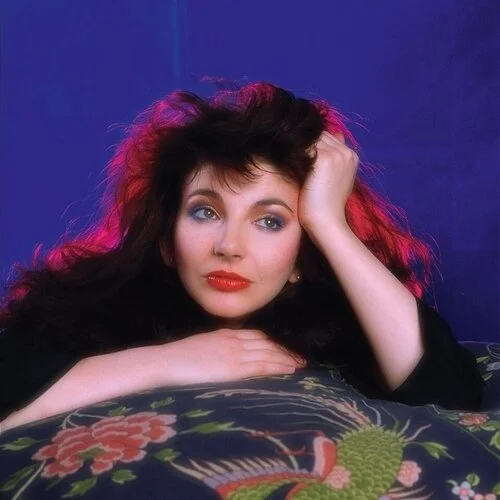
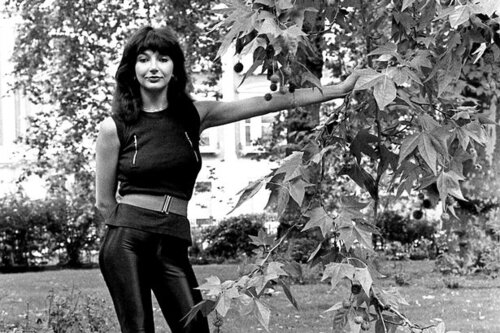
IN THIS PHOTO: Kate Bush in 1985/PHOTO CREDIT: John Carder Bush

 Kate Bush’s Hounds of Love

___________

I have been looking through my archives…

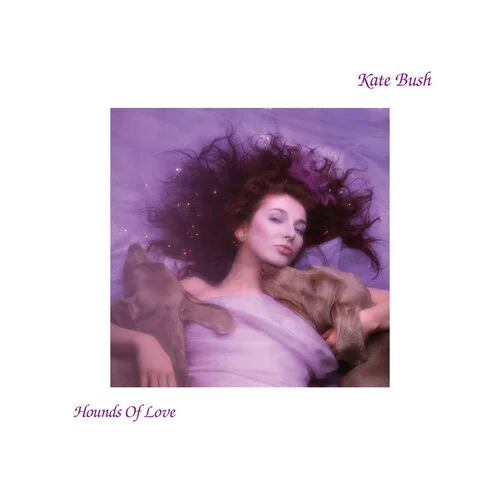
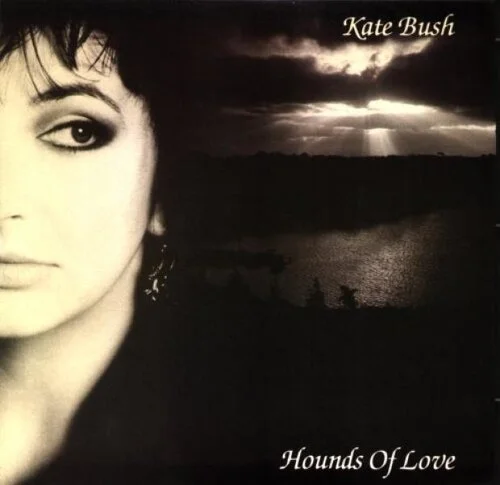
to see if I have done a feature specifically about Hounds of Love’s title track. I have covered so many Kate Bush tracks, but I don’t think I have detailed this one – I wrote about The Big Sky, Running Up That Hill (A Deal with God), Mother Stands for Comfort, and Cloudbusting previously. If I have already featured Hounds of Love then forgive repetition. The Hounds of Love album turned thirty-five back in September, and I was eager to explore it from a number of different angles and get behind individual songs. The title track was the third single from the album. Released on 24th February, 1986, it reached number-eighteen in the U.K. With the single’s thirty-fifth anniversary occurring relatively soon, I may come back to the song and take a more specific look at it. Now, I want to give an overview of a truly moment in Kate Bush’s career. When people rank the songs on Hounds of Love’s first side – the second side, The Ninth Wave, is a conceptual suite -, they normally put Running Up That Hill (A Deal with God) first, and then Cloudbusting might come next. I will discuss how various magazines and sites have ranked the song but, first, I want to draw from the Kate Bush Encyclopaedia, where we get some background to the song:

“['Hounds Of Love'] is really about someone who is afraid of being caught by the hounds that are chasing him. I wonder if everyone is perhaps ruled by fear, and afraid of getting into relationships on some level or another. They can involve pain, confusion and responsibilities, and I think a lot of people are particularly scared of responsibility. Maybe the being involved isn't as horrific as your imagination can build it up to being - perhaps these baying hounds are really friendly. (Kate Bush Club newsletter, 1985)

The ideas for 'Hounds Of Love', the title track, are very much to do with love itself and people being afraid of it, the idea of wanting to run away from love, not to let love catch them, and trap them, in case the hounds might want to tear them to pieces and it's very much using the imagery of love as something coming to get you and you've got to run away from it or you won't survive. (Conversation Disc Series, ABCD012, 1985)

When I was writing the song I sorta started coming across this line about hounds and I thought 'Hounds Of Love' and the whole idea of being chasing by this love that actually gonna... when it get you it just going to rip you to pieces, (Raises voice) you know, and have your guts all over the floor! So this very sort of... being hunted by love, I liked the imagery, I thought it was really good. (Richard Skinner, 'Classic Albums interview: Hounds Of Love'. BBC Radio 1 (UK), 26 January 1992)

In the song 'Hounds Of Love', what do you mean by the line 'I'll be two steps on the water', other than a way of throwing off the scent of hounds, or whatever, by running through water. But why 'two' steps?

Because two steps is a progression. One step could possibly mean you go forward and then you come back again. I think "two steps" suggests that you intend to go forward.

But why not "three steps"?

It could have been three steps - it could have been ten, but "two steps" sounds better, I thought, when I wrote the song. Okay. (Doug Alan interview, 20 November 1985)”.

In October 2004, Q magazine placed this song at number-twenty-one in its list of the fifty greatest British songs of all-time. In a recent MOJO Collectors’ Series about Kate Bush, they ranked the song at number-one. They observed the following:

“In its unstoppable forward thrust, it has the inaugural logic of a dream, although not the way meant by Rolling Stone magazine in its cold review of the album: “Still a precocious, coddled child at 27, Kate Bush loses herself in daydreams and then turns them into songs.” But it is a mature, womanly voice that ruins out of Hounds of Love, not a fey or elfin one, ands certainly not one that asks to be patronised. Neither is it a song that ignores the way of the world. (Coincidentally, the album pushed Madonna’s Like a Virgin from atop the UK charts, another record named after a single that wasn’t quite as otherworldly as it seemed.) The line “I’ve always been a coward/And I don’t know what’s good for me” speaks of experience, but not as much as the delirious cry of “Here I go…” uttered in full awareness that the ground is about to give way, that this is the very second before the falling begins”.

The Guardian named Hounds of Love as Kate Bush’s fifth-best single…and it is a song that means a lot to very many people. In the U.K., the single had the B-side of The Handsome Cabin Boy – a very good and underrated song -, and I hope that there is plenty of attention for Hounds of Love (the single) in February when it turns thirty-five.

On an album that has nothing but brilliance, I think the title track is one of the most extraordinary songs that Bush ever created. The video, which she directed, was inspired by Alfred Hitchcock's film, The 39 Steps - and a Hitchcock lookalike also features in the video (a nod to the director's famous cameo appearances in his films). I think that Bush delivers one of her most remarkable vocals on Hounds of Love, and one can dive into the lyrics and pick them apart. Certainly, there are many lines that make you stand back and think. With so much emotion and urgency in her voice, I first get affected when Bush sings: “Hiding in the dark/Hiding in the street/And of what was following me...”. Whether one gets literal visions of her running and hiding in the street or takes it as a metaphor, these are powerful words that are delivered perfectly. The fact that Bush admits that she’s always been a coward – and doesn’t know what’s good for her – is such a bold and honest line that really does take your breath away. There are exclamations as she runs from the hounds of love and this darker spirit that is chasing her. “Take my shoes off/And throw them in the lake/And I'll be/Two steps on the water”. I love that imagery and how she emphasis and elongates ‘throw’ and then underlines the word ‘two’.

The entire song is a masterclass in delivery and storytelling. Every line is important and quote-worthy; the incredible maturity that Bush displays is moving indeed. My favourite section of the song comes near the end when Bush sings: “I found a fox/Caught by dogs/He let me take him in my hands/His little heart/It beats so fast/And I'm ashamed of running away/From nothing real/I just can't deal with this/But I'm still afraid to be there”. I sort of see the ‘fox’ as a wounded lover or a victim of a bad breakup (rather than a literal fox), but one cannot help but envisage Bush holding this dying fox and being affected. Hounds chase foxes, so I think it is more about a relationship and fighting; the way people are hurt without us meaning to or, as Bush (or a character in the song) has admitted to a sense of timidity, maybe there is this sense of miscommunication and reluctance. The idea of someone running away might indicate a love that is getting too real or too heavy to handle. One can spend hours investigating the lyrics and coming to their own conclusions. In a career of masterpieces, Hounds of Love’s title track is very near the top! Before the single celebrates thirty-five years, I wanted to shine a spotlight on it and uncover this remarkable work. From its beautiful and haunting lyrics to its remarkable video, Hounds of Love is a song that will be…

REMEMBERED forever.

FEATURE: The Lockdown Playlist: Saluting Beth Gibbons: The Very Best of Portishead

FEATURE:


The Lockdown Playlist

Saluting Beth Gibbons: The Very Best of Portishead

___________

IT seems that 4th January…

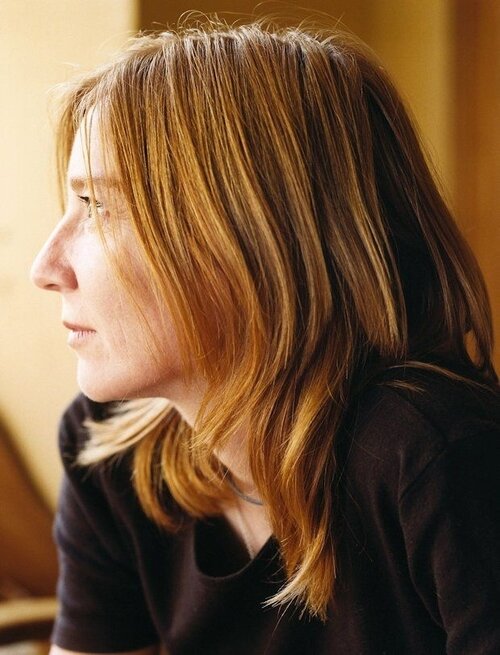
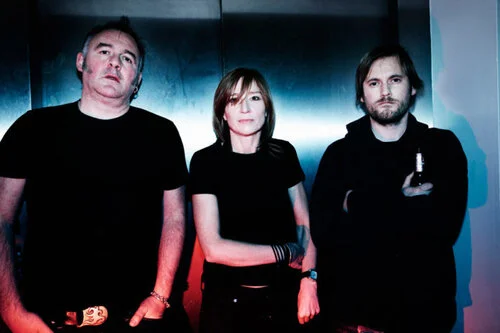
is quite a packed day when it comes to significant birthdays of musicians. I am going to do one or two others and post them before that date, so we can have Lockdown Playlists of various artists. The wonderful lead of Portishead, Beth Gibbons, celebrates a birthday on 4th January – what better excuse to have a great selection of Portishead tunes?! I have been a fan of the Bristol group since the 1990s and, alongside Adrian Utley and Geoff Barrow, Gibbons helped to popularise and transform Trip-Hop music. Portishead’s most-recent album, Third, was released in 2008. Many are hoping that they release another album soon as they create such stunning and important work. To nod to a hugely important lead who has one of the most distinctive and memorable voices in all of music, here are some classic Portishead cuts with Beth Gibbons…

RIGHT at the front.

FEATURE: Too Good to Be Forgotten: Songs That Are Much More Than a Guilty Pleasure: New Radicals – You Get What You Give

FEATURE:


Too Good to Be Forgotten: Songs That Are Much More Than a Guilty Pleasure

New Radicals – You Get What You Give

___________

ONE can scarcely believe songs that some deem…

to be guilty pleasures. I guess, if you feel there is no such thing as a guilty pleasure, then everything is open and good. That is the view I share so, for those tracks that are labelled with that term, I am here to shed some new light and fight their corner. Not that the New Radicals’ You Get What You Give is lacking in any punch and fighting spirit! This is a song that appears on Spotify’s playlist of guilty pleasures. There are some interestingly-chosen tracks that I feel are worthy of shouting about. There is no doubt that there some pretty dodgy songs floating around in the 1990s and, whilst New Radicals might be seen as a one-hit wonder, it is one of those hits that is sort of timeless and properly good! Released in 1998 by the Californian band, You Get What You Give reached number-thirty on the Billboard Hot 100 Airplay rundown in January 1999; number-thirty-six on the overall Hot 100 and number-eight on the Billboard Modern Rock chart. It also reached number-five in the United Kingdom, number-four in Ireland, and number-one in Canada and New Zealand. According to Wikipedia:

“In the liner notes to her 2004 compilation Artist's Choice, Joni Mitchell praises "You Get What You Give" for "rising from the swamp of 'McMusic' like a flower of hope.” In 2006, Ice-T was asked on Late Night with Conan O'Brien about what he has heard, besides rap music, in the last few years that really grabbed him and his only reply was "You Get What You Give". In a Time interview, U2 lead guitarist The Edge is quoted saying "You Get What You Give" is the song he is "most jealous of. I really would love to have written that".

You Get What You Give is taken from the Maybe You've Been Brainwashed Too which, as an album, is one of the more underrated of those from the 1990s. It has gathered critical acclaim and, rather than it being one terrific song and lesser numbers, there is an amazing consistency throughout. With songs like Someday We'll Know, and I Hope I Didn't Just Give Away the Ending, there is ample quality on that exceptional album. With the vocal and songwriting power of Gregg Alexander (he co-wrote You Get What You Give with Rick Nowels) making the song such an anthem, it is a shame that some (more than Spotify) consider You Get What You Give as a guilty pleasure or something novelty from the 1990s. I am not sure whether it is some slightly younger, cynical sources feeling the song is overrated or those who remember it from the 1990s feeling it sound dated…but I love the song and think it can rub shoulders with the finest of the ‘90s. Far from it being a light and harmless song, there was actually a bit of controversy regarding the last verse: “"Health insurance, rip-off lying/FDA, big bankers buying/Fake computer crashes dining/Cloning while they're multiplying/Fashion shoots with Beck and Hanson/Courtney Love and Marilyn Manson/You're all fakes, run to your mansions/Come around, we'll kick your ass in". Gregg Alexander sort of used that verse to see whether people would pick up on the more political elements or the celebrity-riling lines.

Predictably, there was a bit of blowback. Marilyn Manson objected to the mention, whereas Alexander apologised to Beck when he saw him in a supermarket – Hanson, too, were pretty cool with the reference (Alexander actually collaborated with Hanson). There have been plenty of diss songs since You Get What You Give but, unlike many, the New Radicals meant nothing by. I want to finish by bringing in a feature from The A.V. Club, that starts off by stating how the music scene altered post-Grunge:

“Ben Folds Five’s worldview ranged from sardonic to sentimental to caustic, while Semisonic, Fastball, and Fountains Of Wayne crafted power-pop that was classic-sounding, catchy, and smart. An even weirder slew of one-hit wonders sprouted on modern rock radio, especially at the tail-end of the ’90s and into 2000: Marcy Playground’s “Sex And Candy,” Chumbawamba’s “Tubthumping,” Wheatus’ “Teenage Dirtbag,” Len’s “Steal My Sunshine,” Bran Van 3000’s “Drinking In L.A.,” Marvelous 3’s “Freak Of The Week,” Harvey Danger’s “Flagpole Sitta,” Fretblanket’s “Into The Ocean,” and Citizen King’s “Better Days.” (Swirl 360’s “Hey Now Now,” despite its presence in the Top 40, felt like a lost alternative music classic in the vein of Sloan and Fastball.) With the exception of “Flagpole Sitta,” most of these songs never became wildly influential—in fact, a large portion of these bands gathered dust in the dollar bins, sunk by their own novelty—but they made the teeming underbelly of alternative-rock radio far more interesting”.

Although there is a goofiness to You Get What You Give on one level, the song is almost like a message from Alexander to himself to keep going and continue on. He previously released too fairly unsuccessful solo albums - 1989’s Michigan Rain and 1992’s Intoxifornication -, so New Radicals was almost like a last shot at getting a hit. The A.V. Club note that, whilst You Get What You Give is fairly similar to a lot of ‘90s hits, it has endured and has definitely transcended the status of a one-time gem:

“On paper, New Radicals’ “You Get What You Give” isn’t drastically different than many of the other one-hit wonders of the late ’90s. The tune is airy-sounding and uplifting in a general way, courtesy of frontman Gregg Alexander’s soaring falsetto. Musically, it’s vaguely alternative-sounding, between the electric guitar corkscrews and optimistic piano chords popping out of the mix here and there, although it possesses enough of an accessible pop sheen to explain why it scraped the bottom of the Top 40. (The song was co-written by Rick Nowels, who went on to co-write huge hits for Dido, Madonna, and Lana Del Rey, and features contributions from Rusty Anderson, a former member of Ednaswap who’s now Paul McCartney’s guitarist.) The bridge contains a spoken-word section that Alexander often transformed into a near-rap live, in a nod to the era’s growing conflation of hip-hop and rock, while the vocalist’s forceful, half-spoken, half-sung delivery on the chorus made it easy (and fun) to sing along to.

The attention given to his critique of fame underscored his distaste for the culture’s emphasis on celebrity attention, something else that would only grow more intense and pervasive in the coming years. “My favorite artists—Prince, [David Lee] Roth-era Van Halen, even Madonna when she was doing cutting-edge work—they were mysteries to me and my friends,” Alexander said in 2014. “That was part of what made their work compelling, was that we didn’t have their opinions tweeted and Facebooked every 30 seconds. I didn’t know what Prince was having for dinner, thank God. So that was some of what I idealized and thought would be more present in my life as an artist.”

 “So even though “You Get What You Give” stayed in the mainstream’s consciousness during the next 15 years, Alexander retreated from the public eye, at least under his own name. Using a pseudonym, he wrote or co-wrote major European hits (including Sophie Ellis-Bextor’s “Murder On The Dancefloor” and Ronan Keating’s “Life Is a Rollercoaster”), as well as songs for Spice Girls’ Mel C and Geri Halliwell, Boyzone, and Enrique Iglesias. With Nowels, he also co-wrote Santana’s massive, Grammy-winning hit “The Game Of Love,” which in its demo form isn’t that far off from New Radicals’ amiable style, and was also part of a collective called the Not So Silent Majority, which put together an effervescent song called “Obama Rock” around the time of the president’s 2009 inauguration. More recently, Alexander penned songs for the 2013 movie Begin Again with Nowels and his longtime musical collaborator Danielle Brisebois. One of these tunes, “Lost Stars,” was even nominated for an Oscar, precipitating his brief return to the limelight. The template Alexander created on “You Get What You Give” turned out to be surprisingly influential on popular music, just in a non-obvious, almost obscured way.

Yet New Radicals’ shelf life has also been surprisingly long. “You Get What You Give” has been in a slew of movies, including 2000’s The Flintstones In Viva Rock Vegas and 2004’s Scooby-Doo 2: Monsters Unleashed. In Glee’s season-three finale, outgoing seniors sang it as a goodbye song to the underclassmen, while Savoir Adore covered the song for A.V. Undercover in 2013. The band also has some superstar supporters: Hall & Oates covered “Someday We’ll Know” with Todd Rundgren, and the members of U2 are unabashed fans of Alexander’s work (in fact, Bono was the one who reportedly connected him to Begin Again director John Carney). The band even received Joni Mitchell’s stamp of approval: “The only thing I heard in many years that I thought had greatness in it was the New Radicals,” she told Rolling Stone in 2002. “I loved that song ‘You Get What You Give.’ It was a big hit, and I said, ‘Where did they go?’ It turns out the guy [Gregg Alexander] quit. I thought, ‘Good for him.’ I knew he was my kind of guy”.

Though some might say the New Radicals’ You Get What You Give is a guilty pleasure or a simple one-hit wonder, I think it is a great song. It is still played a lot to this day, and people of all ages have affection and respect for the song – not to mention that it also has a killer chorus! Rather than view it is a secret, guilty pleasure, one should definitely view You Get What You Give as…

A magnificent song.

FEATURE: Selective Memory: Going Back to My Childhood Mixtapes and Favourite Songs

FEATURE:


Selective Memory

Going Back to My Childhood Mixtapes and Favourite Songs

___________

THIS is a subject that I have talked about…

 PHOTO CREDIT: @greg_wwm/Unsplash

quite a few times before but, after such a hard year, I am listening back to a lot of the songs and mixtapes (not literally; the songs on them) from my childhood. I have argued against nostalgia before. Some people say that, if you are reverting to the music you loved when you were younger, then it is pure nostalgia. I would say that, for the most part, one can indulge in the great hits from the past as it is simply great music – and one is not particularly trying to live in the past. I think 2020 was a year when I was also experiencing some much-needed nostalgia and warmth. I have spent a long time looking back on 2020 and the best albums and songs. I have been keeping abreast with all the new songs and artists that we need to look out for through this year. I think this year will be a much better one than the last but, as we are still in a bad situation and a sense of normality might not occur until after the summer, I am spending some time enveloping myself in a childhood bubble. A lot of other people are doing this but, rather than it being me trying to merely return to a better time, there are so many songs that I have been revisiting that one does not hear talked about and played much. I will put out a Spotify playlist at the very end – a personal mixtape/playlist -, but I have been listening to a lot of great playlists like Spotify’s Summer Hits of the 90s, and 90s Smash Hits – in addition to a great All Out 80s, and All Out 90s.

 IMAGE CREDIT: Spotify

What I love about the songs of the 1980s and 1990s is how much variety there was! I know we have variety now, but there will big musical movements and scenes back then – something we do not really have nowadays. My earliest musical memories revolve around experiencing something very powerful and new. This feature is going to be all about me, but I will try and widen it at the end and talk about how many of us have been returning to out prized childhood songs whilst things have been really rough. From my first memory of life listening to Tears for Fears’ Everybody Wants to Rule the World, to seeing the video for The Bangles’ Eternal Flame when I was very young…these memories are indelible and in my mind all of the time - and they opened my eyes to the way music can move and overwhelm. A lot of my most-treasured memories of music occurred when I was in middle and high school. The concept of mixtape arrived in my life when I was in middle school. I was born in 1983, and I had my first mixtape when I was about, maybe, eight or nine (before then, I was listening to albums on cassette), I think. I was listening to a lot of the big Pop artists of the day like Madonna and Michael Jackson, but I was also being introduced to stuff from my parents’ record collection: classics from The Beatles, The Small Faces, Led Zeppelin, Steely Dan, and  Billy Joel.

 IN THIS PHOTO: Billy Joel in 1983

I was a massive fan of T. Rex at that age, and I was also discovering to a lot of eclectic music – from early Beach Boys stuff to Freddie Mercury, all the way to The Tremeloes, Del Shannon, The Righteous Brothers, and Johnny Tillotson. It was amazing to discover all this contemporary and older music! I think, when we are younger, we are far less discerning; our imaginations are more receptive to a variety of sounds. I am not sure whether it was me or my parents putting together mixtapes, but having all these great artists together was not only important when it came to discovering the full breadth and beauty of music, but it was a great social tool. My friends and I would swap tapes and bond over our favourite tracks from the cassettes. From Kate Bush to Carole King, seeds were being planted that would bloom years later – in the sense that I would pursue a much deeper love of music when I was an adult. High school was a tough time but, when I think of the happy memories, I recall all the great music of the 1990s that I was drinking in. I started high school in 1994, and I was immersed in all the Britpop music…but there was so much great Pop around that was so uplifting and wonderful. Although Smash Mouth’s Walkin’ on the Sun, and the Spice Girls’ Spice Up Your Life are songs that sound-tracked harsher and more upsetting memories from high school, I listen to these songs now and so many memories flood back from before and after that time (that are happier).

It is the way music can open up memories that were stored away that stuns me. I have remarked before but, most of the time, I cannot vividly remember my earliest years and what happened with bringing music to mind as an aid. I think music is the big reason why I can retrieve memories at all! From these humble and vital mixtapes that I had when I was very young, through to the eye-opening wonders of the 1990s, I have been listening back to many of these songs that I fell for as a child. I have also said before, but Now That's What I Call Music! 24 of 1993 was the first album I bought (on double cassette, I think); Graceland by Paul Simon holds very special memories; I have especially precious memories of family holidays, simply because of the music that was played when I was there or on the car drive to and from the airport – from Kylie Minogue to Charles & Eddie, through to Shakespears Sister, and Deee-Lite. Maybe some of the Pop I listened to when I was very young (such as Betty Boo) has not aged all that well (though I still love it!), but it means a great deal to me – and, at this tough point of life, it is helping me greatly. Whether it is recalling why Red Alert by Basement Jaxx, and Kiss Me by Sixpence None the Richer were bittersweet in my last year of high school; how important the Dance and Electronic music of 2000/2001 was regarding fitting in when at sixth form college, and who introduced me to The White Stripes when I started university…all of these songs/artists are hold a very special place in my mind (even though I have said the playlists contain songs from my childhood, I am squeezing in a few tracks from my sixth form college and university days - so, technically, they are also about young adulthood).

 IN THIS PHOTO: Belinda Carlisle

Things will get better this year but, as we are all looking to keep going and finding something positive, I am revisiting songs from my earlier life. If it is big Pop songs by Belinda Carlisle and Lisa Stansfield, or some classic Beastie Boys or some Deacon Blue, all of this music has really resonated. I think that we all have our bank of musical memories that could find their way onto a huge mixtape. It is lucky we have streaming services now, as I would spend hours and endless cassettes putting together all my favourite songs – whereas I can fit everything in on one digital playlist! I would encourage everyone else to think about the songs they have been coming back to – whether they are from your childhood or from only a few years back - and compile your own digital mixtape/playlist. I am going to keep hold of the one I have put together, as I can generate so many happy memories and emotions from listening to the songs. I think nostalgia is not a bad thing now as we all know better days are ahead, but I think we can find the determination to look ahead by thinking back to our brighter days and childhood years. The music from that time is so transformative and important to all of us! I am going to end with the tunes that I have been listening to a lot lately. They are not going to be chronological – in terms of when I first heard the tracks -, but the songs are very special to me. If you have a spare moment, mix some songs onto a playlist that hold a special place in your heart and get…

 IN THIS PHOTO: Deacon Blue

A warm rush of needed and nice nostalgia.

FEATURE: The Lockdown Playlist: Five Years: Artists Inspired by David Bowie – and Great Cover Versions of the Icon’s Work

FEATURE:


The Lockdown Playlist

IN THIS PHOTO: David Bowie photographed on the set of the 1976 film, The Man Who Fell to Earth/PHOTO CREDIT: Geoff Maccormack/Bonhams

Five Years: Artists Inspired by David Bowie – and Great Cover Versions of the Icon’s Work

___________

I may put out more than five features….

before 10th January - as that is when we mark five years since David Bowie died. I want to speak in more depth about Bowie’s influence in a wider sense, beyond music and artists who owe a debt to him. For this Lockdown Playlist, I wanted to bring together songs from artists who have definitely been inspired by Bowie; others that have cited him in an interview or their work contains some Bowie-esque elements. In the second half of the rundown, I have compiled some cover versions which are pretty good. I want to finish by quoting from an article from The Hollywood Reporter, who wrote of David Bowie’s legacy on 13th January (a few days after he died).

“Over the course of almost five decades, David Bowie transformed the very possibilities of pop music. Since his arrival at the dawn of the 1970s, every new movement that followed — punk, new wave, hip-hop, electronic, Goth, grunge, industrial — bore his stamp in some way. While age caught up with his peers, making them look old and irrelevant, or (best case) turning them into objects of nostalgia, Bowie's cool never faded; his impact only kept expanding.

But whatever method of expression he chose — from writing songs like "Rebel Rebel" and "Life on Mars?" to roles portraying Andy Warhol and Pontius Pilate — Bowie's work consistently returned to common themes: the sense of alienation, of being an outsider. His radical individualism helped give voice to several generations of misfits and weirdos, enabling "the children that you spit on" — to borrow a line from his 1971 hit "Changes" — to come out from the shadows, defiant and proud.

“He announced his bisexuality in the mid-1970s, long before such a declaration was widely tolerated. Having dived deep into black music on such R&B-drenched hits as "Fame" and "Young Americans" (he was one of the few white artists to appear on Soul Train), he was a strong advocate for African-American artists. He gave Luther Vandross his start as a recording artist and tapped Nile Rodgers to produce 1983's Let's Dance — which became his biggest-selling album in the U.S. — at a time when Rodgers was reeling from the anti-disco backlash. Perhaps most significantly, Bowie called out MTV during the network's early years for not playing videos by black artists. "I'm just floored by the fact that there are … so few black artists featured on it. Why is that?" he asked during an on-air interview in 1983.

This was the David Bowie who set a course for musicians, designers, actors, politicians and fans around the world. He was the original performer in a state of constant reinvention, paving the way for Prince, Madonna and Lady Gaga. "He was a one-off, a brilliant outlier," wrote Peter Gabriel on Facebook, "always exploring, challenging and inspiring anyone who wanted to push the boundaries of music, art, fashion and society”.

To show how far and wide Bowie’s influence has reached, music-wise, this Lockdown Playlist is about artists who have been influenced by Bowie, either through their original songs…

OR through cover versions of Bowie’s tracks.

FEATURE: Let the Records Show… Looking Ahead to Some Anticipated Future Releases – and Ones That I Would Like to See Arrive This Year

FEATURE:


Let the Records Show…

IN THIS PHOTO: St. Vincent/PHOTO CREDIT: Pamela Neal 

Looking Ahead to Some Anticipated Future Releases – and Ones That I Would Like to See Arrive This Year

___________

EVEN though we are still in January…

 IN THIS PHOTO: Jane Weaver

there are some great albums that we can look forward to. I am going to ignore February, as I am doing a separate feature about albums due then. Last year produced more than its share of wonderful albums, and I think we will get some immense albums in 2021. There are a few albums that have been announced for March. Jane Weaver is releasing her new album, Flock, on the fifth. After hearing the single, The Revolution of Super Visions, last year, I am really looking forward to the album coming out. FIRE explains more:

“‘Flock’ is the record that Jane Weaver always wanted to make, the most genuine version of herself, complete with unpretentious Day-Glo pop sensibilities, wit, kindness, humour and glamour. A consciously positive vision for negative times, a brooding and ethereal creation.

The album features an untested new fusion of seemingly unrelated compounds fused into an eco-friendly hum; pop music for post-new-normal times. Created from elements that should never date, its pop music reinvented”.

On 30th August, 2019, the release day of her seventh studio album, Norman Fucking Rockwell!, Lana Del Rey announced that she had already begun work on her follow-up album, revealing the title to be White Hot Forever. The title has since been confirmed as Chemtrails Over the Country Club, and this is going to be one of the most-anticipated releases of the year. I think Norman Fucking Rockwell! was the best album of Del Rey’s career, so I am looking forward to hearing what arrives next. She seems to be in really prolific mood at the moment, and I think Chemtrails Over the Country Club will be one of the hottest releases of 2021.

IN THIS PHOTO: Lana Del Rey/PHOTO CREDIT: Chuck Grant for Interview Magazine

Expected in May, Paul Weller’s Fat Pop (Volume 1) is going to be another fantastic album. Weller only put out On Sunset last year, so it seems that he has spent a lot of time writing new material and being creative. Weller’s last few albums have been some of the best of his career, and I feel we will get another tremendous album regarding Fat Pop (Volume 1). I love the title alone, so it will be intriguing to see what sound Weller adopts for his sixteenth solo album. I have written about Lorde recently and, after 2017’s Melodrama made such an impact and got some incredible reviews, there has been this demand for her third album. She has suffered some personal setbacks since then, but it seems like we will get a new album from the New Zealand artist very soon. Her music is among the most extraordinary in the world, and I can see her album being among the very best of the year. Last year, Billie Eilish released a new song called Therefore I Am. When it comes to following up on her massive debut album, When We All Fall Asleep, Where Do We Go?, I think we will see yet another staggering work.

I love that album, so I am looking ahead and anticipating what the teen genius comes up with. In this article from NME, Eilish’s brother/producer, Finneas O'Connell, provided an update:

“Billie Eilish‘s new album will not be released until she can safely tour, her brother and producer Finneas has said.

In a new interview with Australian newspaper The Herald Sun, Finneas said he didn’t want his or Eilish’s new albums to “be a bummer COVID record”.

“I have a desperate desire not to release them during COVID-19. It’s the vaccine record! I want it to be the album everyone’s out dancing in the streets to,” he said.

Elsewhere in the interview, Finneas provided a brief update on the progress of the two albums while quarantining.

“Billie and I are full steam ahead on her next record, I’m working on my own album too. I haven’t suffered at all because of my set-up,” he explained.

“Billie and I can work one-on-one, and I’m working remotely with other artists who FaceTime me and ask if I want to work on a song”.

There are some other wonderful artists who are in the studio and expected to release material this year. St. Vincent is one such artist. Her music is so incredible, so I can understand why so many people (myself included) cannot wait! Pitchfork have reported the following in December:

“St. Vincent has said that she has a new album on the way. “The rumors are true. New record “locked and loaded” for 2021,” Annie Clark wrote in a tweet. “Can’t wait for you to hear it.”

Clark spoke more about the followup to 2017’s MASSEDUCTION in an interview with MOJO. Describing the record as a “tectonic shift,” Clark explained, “I felt I had gone as far as I could possibly go with angularity. I was interested in going back to the music I’ve listened to more than any other—Stevie Wonder records from the early ’70s, Sly and the Family Stone. I studied at the feet of those masters,” according to Stereogum.

Annie Clark also said the album has “the color palette of the world of Taxi Driver” and “Gena Rowlands in a Cassavetes film.” “I just wanted to capture the colors, the film stock, and tell these stories of being down and out, down on your luck,” she said.

Since the release of MASSEDUCTION, Clark has shared two reworked versions of the album, MassEducation and Nina Kraviz Presents Masseduction Rewired”.

Noel Gallagher is in the studio and has recently released a demo for We’re Gonna Get There in the End. I am not sure whether that will form part of a new album, though new Noel Gallagher material is always a good thing. Sinead O'Connor is also rumoured to be in the studio. The news was reported by NME in December:

“Sinéad O’Connor is to release a new album next year, her first in seven years.

The Irish singer-songwriter will follow up 2014’s ‘I’m Not Bossy, I’m The Boss’ with her 11th studio album. No release date nor title have been announced.

She confirmed the album news via Twitter yesterday (December 8) by gushing about the artwork. “Thrilled to say @JacobStackArt has drawn the cover of my album and it’s GORGEOUS!!!!! But you can’t see it until release in late 2021,” she wrote”.

2018’s Tranquility Base Hotel & Casino was a slightly different sonic direction from Arctic Monkeys and, whilst some fans were not so keen on a less Rock-focused and hard sound, I am a big fan of the album myself. There has been talk for a while as to when the Sheffield band will follow that album up and, as this article  teases, there may be something brewing from the band:

“The Sheffield band's manager Ian McAndrew has talked about the band's live album and revealed they've been "beavering away" during the pandemic.

Arctic Monkeys have been "working on music" according to their manager Ian McAndrew.

The music boss spoke to Music Week about the band's Royal Albert Hall live album and when asked what else they've been up to this year, he teased: "They’re working on music. In this rather disjointed time, the guys are beavering away and I hope that next year they’ll start working on some new songs, new ideas, with a view on a future release."

However, when asked if the band would be releasing their follow-up to 2018's Tranquility Base Hotel + Casino much sooner than their other records, he was far more measured.

"We followed that release with a fairly robust touring plan that went on until October 2018," said McAndrew. There weren’t any prearranged plans to get back in the studio quickly, so I don’t quite know the basis of that rumour honestly."

He added: "It’s fair to say that plans to write and record music have been deferred or postponed in terms of difficulties in getting together. Nevertheless, it in some ways creates a welcome opportunity, more time, more space and ability to go away and devote a bit more time to the creative process. That’s been a blessing in a weird way".

IN THIS PHOTO: Robert Plant

Although there is nothing concrete at the moment, I believe Robert Plant has been in the studio and may be working on a new album. His previous album, 2017’s Carry Fire, got some really positive reviews, so there are going to be a lot of Plant fans seeing whether the master brings us some new music very soon. There are two other big, confirmed forthcoming albums that I want to look ahead to. The Cure are readying the world for their forthcoming album. As Music News report, it is a darker and denser album than we may be used to:

“The ‘Close To Me’ hitmakers are expected to release their long-awaited new LP next year – their first since 2008’s ‘4:13 Dream’ – and guitarist Reeves Gabrels explained the record has been inspired by a “tough couple of years” for the whole band.

He said: “It’s a heavy and dark record. I don’t think there are any short songs on there.

“The description of Lou Reed’s ‘Berlin’ when it came out was that it was the “‘Sgt Pepper’ of depression” – I don’t know if we’re that psychedelic but we are that depressed.

“It was a tough couple of years for everybody. A by-product of getting older is that people around you keep dying. We all lost relatives. Robert lost his brother, I lost a step-dad and father-in-law – while we were on the road too, which meant there was more strain.”

IN THIS PHOTO: The Cure

The group have recorded so many songs, Reeves isn’t sure just how many albums frontman Robert Smith is planning.

He added in an interview with Uncut magazine: “We started the record in January 2019 in Wales – we went in for about two months.

“We’d all been writing before that. So we got together and listened to it all, learned it, went into the studio and recorded it.
“There’s enough material for two or three records, a lot of stuff”.
One band who have been in the news quite a bit lately are Chvrches. The band’s lead, Lauren Mayberry says they have learned from Billie Eilish’s debut album. I am interested to see what they produce when their new album comes out. The Guardian recently spoke with Mayberry about what we can expect from a new Chvrches album:

“Following three top 10 albums, the Scottish synthpop trio are preparing to release their fourth this spring, and will hopefully bring their pounding live show back to the festival circuit. Frontwoman Lauren Mayberry explains how the privations of 2020 helped them get rid of their baggage, and get to the heart of who they really are.

What’s the overall vibe for the album?

We sat inside and listened to music that we really loved all year, like Depeche Mode, the Cure and Brian Eno. I wanted the music that was the most comforting to me and that era of tunes was very formative for our band. It’s not the frilliest of Chvrches records, but I don’t think that now is necessarily a time for frilliness.

How have the events of 2020 shaped the music you’ve been working on?

We had a lot of the ideas and the concepts before this year started and got a few weeks of writing in before everything shut down, so we kind of knew what we were getting on with. The theme of it didn’t necessarily change, but it evolved because of the circumstances of 2020. I think it was also helpful for us to be removed from the bullshit of the music industry. Everybody says that you don’t think about that stuff when you’re making a record, but in practice you totally do. You might shut the door, but it’ll sneak in the window. Everyone always has advice and opinions about what you should do; everyone else knows best. But it was nice to go: ‘Fuck it!’”.

There has been talk of a new Janet Jackson album for a while now. Black Diamond was slated to come out last year, so hopefully we will see a follow-up to 2015’s Unbreakable this year. I am a big fan of Janet Jackson, so I am looking onward keenly and will definitely keep an eye out to see when Black Diamond arrives. Adele released 25 in 2015 so, after nearly six years, there are a lot of people asking when we will get a follow-up to that hugely successful album. It seems that this year is the earliest we will get a new album from her, and I do think that we will get something from her later in the year. After releasing the single, BRON, last year, there is news that Lykke Li will release an album this year. Her last album, so sad so sexy, came out in 2018 and it was received positively. She is another one of those artists who always creates brilliant music, so  I do hope we get an album from her this year.

The final album that I want to look at is the forthcoming one from Royal Blood. The Brighton duo are one of our best British Rock acts and there is a lot of buzz around their new music. Mike Kerr of Royal Blood spoke with NME about what the new record is sounding like:

“Have you been working on the album through lockdown?

“We were actually in the middle of making the record before full lockdown hit. We had to call it, because it wasn’t safe for everyone to be working. We had a full studio gang of engineers and people coming in and out. During lockdown I ended up tinkering with the record on my own and ended up writing a couple more songs. It was a really creative time for me.”

What does ‘Trouble’s Coming’ tell us about the rest of the new album?

“All the tracks on this record have their own personality. This encapsulates the change and progression that we’ve made as a band and as people. We’re aware that we’ve been away for a long time, and we didn’t want to come back with something that we’d done before. This shows a maturity on every level. This record wasn’t just the next 10 songs that we wrote about the last album. We wrote an insane amount of music after coming off tour. To us this is like our sixth record, but it’s officially being released as our third!”

So what’s new?

“There are a lot more additional elements and luxurious production. It’s also a self-produced record. I know it’s traditional for a producer to push and challenge, but we felt like we were having people in the way. We knew so clearly what we wanted to do and how we wanted to do it. It felt like a very delicate direction. With rock music, it can very easily go wrong. You want to make something scary and with one slip-up it becomes spooky, which is just awful. Or you want something romantic and then the next minute it’s just cheesy. Rock’s so extreme, it can highlight these things quickly. A producer would have either held us back or pushed us so far that it would have destroyed the DNA and fabric of the band. We had to do this on our own and for ourselves”.

There are other releases confirmed and others less certain but, when it comes to artists we’d like to hear from, there are four that leap to mind for this year. I am a massive Björk fan and I have followed her career since the 1990s. She released Utopia back in 2017 - and she had left four-year gaps between albums before. I hope that there is another album from Björk in 2021, as every one of her albums is wonderful and she has this ability to create her own world that welcomes you in and blows your mind! I have not heard whether she is recording new material, but there are a lot of people who would welcome a fresh album from the Icelandic pioneer. Similarly, Queens of the Stone Age have left large gaps between albums before – Era Vulgaris (2007)/…Like Clockwork (2013) -, but I think 2021 needs a new blast of brilliance from the Californian band. Led by the awesome Josh Homme, I am hopeful that we will receive a gift from Queens of the Stone Age at some point in 2021. I think Rock is in a pretty good state right now, but I think Queens of the Stone Age are the finest Rock act in the world. It would also be great to get new albums from PJ Harvey, Portishead and Beyoncé. I am a big fan of all three. 2021 would be immeasurably lifted by albums from them.

IN THIS PHOTO: Beyoncé

I think Radiohead are the band I am really hoping we hear more from this year. I adore their most-recent album, A Moon Shaped Pool, that was released in 2016. The members of the band have been busy over the past few years putting out their own projects and albums, but they are at their finest and most mind-blowing when they are all together. There have been rumours and suggestions they are recording material but nothing solid has come to light regarding the veracity of those claims. Predictably, the last artist I want to mention is Kate Bush. Her last album, 50 Words for Snow, came out in 2011, and one would not have thought we’d have to wait nearly a decade for a new album – seeing as she released two albums in 2011! We can wait and be patient as Bush’s albums are always sublime, but I do hope that we get a new album in the autumn or winter (she tends not to release albums in the spring and summer). You never know when music will come out or what it will sound like, but the thrill of the unexpected means we could get an announcement in mere days – or it may be another few years! There will be a mix of surprise releases and big announcements coming through the year. I am looking at this fondly and I cannot wait to hear the albums that have already been announced. Music helped make a very dark 2020, and I think the musical treats we will receive this year will make things…

SO much brighter.

FEATURE: Second Spin: Stevie Wonder – Music of My Mind

FEATURE:


Second Spin

Stevie Wonder – Music of My Mind

___________

WHEN you have a career as long-running…

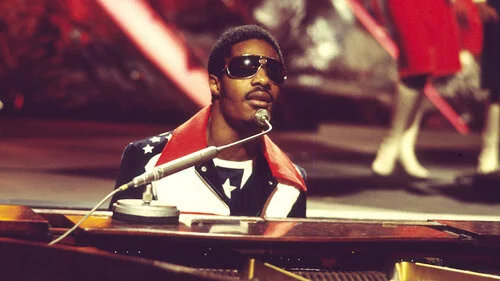
 IN THIS PHOTO: Stevie Wonder performing at Madison Square Garden in 1972/PHOTO CREDIT: Chris Walter/WireImage/Getty

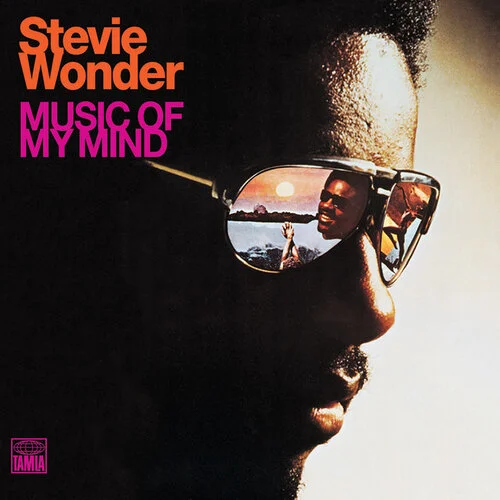
as Stevie Wonder, then there are going to be albums that are not as regarded and celebrated as the classics. Although his fourteenth studio album, Music of My Mind, is not badly reviewed or dismissed, I don’t think many rate it as fondly as Songs in the Key of Life or those that get a lot more attention! Released on 3rd March, 1972 by Tamla Records, it was Wonder's first to be recorded under his new contract with Motown – this allowed him full artistic control. On Music of My Mind, Wonder introduced Electronic music pioneers Malcolm Cecil and Robert Margouleff as co-producers, employing their custom TONTO synthesizer on several tracks. Music of My Mind, bafflingly, was a fairly modest commercial success; many critics feel it is the start of his classic period and a real statement of artistic growth, though. I am going to bring a couple of reviews in but, when you look at the songs included on the album, it is strange that Music of My Mind did not sell better! On the first side, we have Superwoman (Where Were You When I Needed You), and Sweet Little Girl; Happier Than the Morning Sun, and Keep on Running are on the second side. Over nine exceptional tracks, I think one can completely immerse themselves in such a terrific album. Maybe the songs are not as standout and timeless as those we instantly associate with Stevie Wonder, but I would urge everyone to listen to the album and experience something wonderful!

I will bring in a couple of reviews before wrapping things up. When they assessed Music of My Mind, this is what AllMusic remarked:

“With a new contract from Motown in his hand, Stevie Wonder released Music of My Mind, his first truly unified record and, with the exception of a single part on two songs, the work of a one-man-band. Everything he had learned about musicianship, engineering, and production during his long apprenticeship in the Snakepit at Motown Studios came together here (from the liner notes: "The sounds themselves come from inside his mind. The man is his own instrument. The instrument is an orchestra.") Music of My Mind was also the first to bear the fruits of his increased focus on Moog and Arp synthesizers, though the songs never sound synthetic, due in great part to Stevie's reliance on a parade of real instruments -- organic drumwork, harmonica, organs and pianos -- as well as his mastery of traditional song structure and his immense musical personality. The intro of the vibrant, tender "I Love Every Little Thing About You" is a perfect example, humanized with a series of lightly breathed syllables for background rhythm. And when the synthesizers do appear, it's always in the perfect context: the standout "Superwoman" really benefits from its high-frequency harmonics, and "Seems So Long" wouldn't sound quite as affectionate without the warm electronics gurgling in the background. This still wasn't a perfect record, though; "Sweet Little Girl" was an awkward song, with Stevie assuming another of his embarrassing musical personalities to fawn over a girl”.

From the improvised synths through the sheer expressiveness and power of Music of My Mind, one cannot fault such a bold and phenomenal statement. I think the album deserves a place in the top-five list of Stevie Wonder albums - and it is one that seems to mean more to me the more that I listen! The BBC reviewed the album and had this to say:

“Music of My Mind was Stevie Wonder’s first release after he gained complete artistic freedom from Motown Records’ "hit factory". Re-signing to the label after his contract lapsed on his 21st birthday, no committee would tell him which track to release as a single or what cover versions to include – this was now his domain alone.

Aside from trumpet, guitar and support from his wife at the time, Syreeta Wright, Wonder played every note on this, his 14th studio album. It also marks the first time he collaborated with synthesizer pioneers Robert Margouleff and Malcolm Cecil.

Music of My Mind is a work that brims with passion, excitement and exuberance. Opener Love Having You Around signposts the new territory: a leisurely, synth-driven jam, its propulsive beat, jive talk and the line “Every day I want to fly my kite” render it childlike celebration of the freedom Wonder was now enjoying.

The album was described at the time by Sounds as representing the “coming of age of black soul music”, and it’s as much the sound of African-America in the early 70s as Marvin Gaye or Curtis Mayfield. From Wonder’s visible afro on the cover to its reference to Melvin Van Peebles’ then-current landmark blaxploitation movie Sweet Sweetback's Baadasssss Song, it was the record that put to bed "Little" Stevie Wonder forever.

This being Wonder, however, all of his polemic is sweetened with breathtaking melodies. I Love Every Little Thing About You is one of his most beautiful songs. Happier Than the Morning Sun is great fun, and the second half of Superwoman (Where Were You When I Needed You) shows Wonder’s indestructible way with a love ballad.

The closing track, Evil, was written at the height of the Vietnam War as response to Memorial Day. It ends proceedings on a downbeat, questioning note, and is indicative of just how far Wonder had travelled since My Cherie Amour.

Somewhat left in the shadow cast by his following two albums, Talking Book and Innervisions, Music of My Mind nevertheless remains a fascinating, influential listen”.

It is unusual to highlight a Stevie Wonder album as underrated, as many associate him with having this faultless career. There are a few albums that are weak and not up to his best but, because it didn’t shift as many units as some of his albums, Music of My Mind seems to have been forgotten by many - and it is one of his very strongest efforts. If you have not heard the album then go and do so now and discover this great treasure! Wonder would quickly follow-up on Music of My Mind with Talking Book in October 1972; he would put out Innervisions less than a year later in August 1973 – such amazing invention, consistency and brilliance! If people did not know it in March 1972, Music of My Mind was…

THE start of a very special period for Stevie Wonder.

FEATURE: The Lockdown Playlist: The Best of John Paul Jones

FEATURE:


The Lockdown Playlist

PHOTO CREDIT: Simone Joyner/Getty Images 

The Best of John Paul Jones

___________

WITH the earliest part of January…

aaaaa.jpg

 IN THIS PHOTO: John Paul Jones (back) with Led Zeppelin in 1969/PHOTO CREDIT: WireImage

seeing more than one musical giant celebrate a birthday, it is a pleasure to focus on John Paul Jones (whose birthday it is tomorrow (on 3rd January). The Led Zeppelin and Them Crooked Vultures genius is one of the most respected and admired musicians - and, as part of Led Zeppelin, he ruled the world with Robert Plant, Jimmy Page and John Bonham. To show a mark of respect for a truly titanic musician, this Lockdown Playlist collects together some of his best performances (I have also included a Jeff Beck track where he played bass (supremely). Whether it an awesome piece of bass work, some epic keys, or something else, this playlist is all about a musician who has…

 IN THIS PHOTO: John Paul Jones with Josh Homme (right) and Dave Grohl (far right) as part of Them Crooked Vultures

FEW equals.

FEATURE: A Buyer’s Guide: Part Thirty-Six: Donna Summer

FEATURE:


A Buyer’s Guide

Part Thirty-Six: Donna Summer

___________

ON New Year’s Eve…

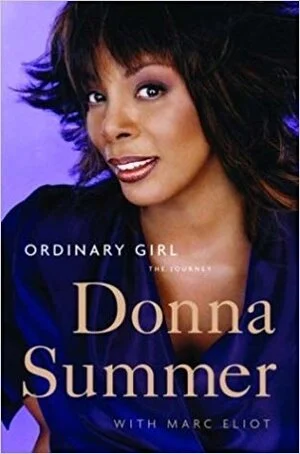
many people marked what would have been Donna Summer’s seventy-second birthday. She sadly died in 2012 but, in her lifetime, the American legend released seventeen studio albums and left a huge legacy. She gained prominence during the Disco era of the 1970s and became known as the ‘Queen of Disco’. According to Wikipedia: “Summer was the first artist to have three consecutive double albums reach No. 1 on Billboard's album chart: Live and More, Bad Girls and On the Radio: Greatest Hits Volumes I & II. She became a cultural icon and her prominence on the dance charts, for which she was referred to as the Queen of Disco, made her not just one of the defining voices of that era, but also an influence on pop artists from Madonna to Beyoncé”. To honour the fantastic Donna Summer, this A Buyer’s Guide brings together he best work. As usual, I recommend four albums that are worth getting; one that is a bit underrated still and deserves a new spin; her final studio album, in addition to a great book that provides background and story. Dive into the essential work of…

PHOTO CREDIT: Lawrence Lucier/Getty Images

A much-missed artist.

______________

The Four Essential Albums


Love to Love You Baby

Release Date: 27th August, 1975

Labels: Casablanca/Oasis

Producer: Pete Bellotte

Standout Tracks: Full of Emptiness/Whispering Waves/Pandora's Box

Buy: https://www.discogs.com/sell/list?master_id=76255&ev=mb

Stream: https://open.spotify.com/album/210folYgKMSZAz4IiqDnmy?si=NPNHfDjcRY25TKFiA4IPUw

Review:

“"Love to Love You Baby"'s 16 minutes and 48 seconds of arousal and refill -- ticklishly sensitive rhythm and fusion -- threw disco into a tizzy overnight, but the tonally starved blues-of-isolation on the B-side isn't to be missed, either: the broken promises Donna Summer bemoans in "Full of Emptiness"; "Need-a-Man Blues," with its unrequitedly sexy guitar rhythm as out of range of Summer's voice as she of satisfaction; the imaginary seaside hold-me in "Whispering Waves"; and "Pandora's Box," where Summer and guitar scream icily at one another as they turn their backs on each other's body music. Hunger without recourse; essential disco” – AllMusic

Choice Cut: Love to Love You Baby

Bad Girls

Release Date: 25 April, 1979

Label: Casablanca

Producers: Giorgio Moroder/Pete Bellotte

Standout Tracks: Bad Girls/Dim All the Lights/Our Love

Buy: https://www.discogs.com/sell/list?master_id=25893&ev=mb

Stream: https://open.spotify.com/album/58GjBhQvLHwfQFJtdP9Oxg?si=P-B4gYXrSxajcFRmu5qRCA

Review:

“The closest thing to a social comment on Bad Girls comes in "Sunset People," a sweeping, high-rise view of Hollywood. Against an icy refrain of "doin' it right — night after night," the song telescopes the nightmarish glamour world of the Sunset Strip—with its teenage prostitutes, billboards, foreign cars and star worship — into an evocation of pleasureseeking as cold as it is tantalizing. If there's a moral here, it's in the music's ominous suggestion of the boredom beyond glitter and in the lyrics' telegraphed equation of the disco ethos with Hollywood and hooking. "Sunset People" just might be the disco culture's "A Day in the Life."

In one of the photos on the LP's inner sleeve, Donna Summer's co-producer, Giorgio Moroder, poses as her pimp. That's as good a metaphor as any for their musical interaction. Moroder's technique simultaneously mocks and exalts the star, who becomes both a goddess and a sideshow attraction in a futuristic technosex amusement park. Though this record's production contains nothing as startlingly novel as the sequenced bass synthesizer of "I Feel Love," the best tracks strike a perfect blend of German Eurodisco and American rock and soul that ultimately transcends the disco environment. Bad Girls' aural style is a lot sparer than the mechanized swirls of "Mac-Arthur Park Suite" and Once upon a Time....The new album's sound effects — e.g., the backward tape loops that sound like speeding cars in "Sunset People"— seem integral to the material” – Rolling Stone

Choice Cut: Hot Stuff

The Wanderer

Release Date: 20th October, 1980

Label: Geffen

Producers: Giorgio Moroder/Pete Bellotte

Standout Tracks: Running for Cover/Cold Love/Who Do You Think You're Foolin'

Buy: https://www.discogs.com/sell/list?master_id=27128&ev=mb

Stream: https://open.spotify.com/album/5K5zdagMRQFtpwFpzoxqCt?si=PI3BXhR3QOOLRmCN1MAoHA

Review:

“Even in The Wanderer's most awesome and shattering love song, the brittle and brilliant "Cold Love," she's triumphant: "Hope in the dark, love in the light/I'll keep on looking for someone who's right." In the end, this triumph is so total that the closing number, "I Believe in Jesus" (a statement of belief so naive it ought to seem puerile), sounds completely natural and fitting.

"I Believe in Jesus" is the first convincing gospel-based vocal performance of Summer's career. Based on the militant fundamentalist hymn "Onward Christian Soldiers" and the nursery rhyme "Mary Had a Little Lamb," the composition escapes being cloying only by the narrowest of margins–a chorus so perfectly sung that to deny it is practically inconceivable: "I believe in Jesus you know I know him oh so well/And I'm going to heaven by and by 'cause I already been through hell."

These words evoke images of those satin jackets that soldiers used to bring back from Vietnam–jackets that displayed a map of the country with large stars locating Khe Sanh or Da Nang and the same flat statements about having witnessed hell on earth. In its way, I think, The Wanderer is a road map of Donna Summer's soul. And while nothing on it matches the hellishness of actual combat, the analogy is less a conceit than a metaphor that the rest of this resounding record gives her the absolute right to use” - Rolling Stone

Choice Cut: The Wanderer

Another Place and Time

Release Date: 20th March, 1989

Labels: Atlantic/PWL

Producers: Stock Aitken Waterman

Standout Tracks: I Don't Wanna Get Hurt/When Love Takes Over You/Breakaway

Buy: https://www.discogs.com/Donna-Summer-Another-Place-And-Time/master/26375

Stream: https://open.spotify.com/album/01wjr9UN1VCEUUXF3gZOaE?si=iw2UH1zpRC6Ajau7R3a0yQ

Review:

“In the late '80s, the Mike Stock/Matt Aitken/Pete Waterman team was as important to European dance-pop as Giorgio Moroder and Pete Bellotte had been to Euro-disco in the late '70s. Many pop critics hated Stock/Aitken/Waterman's slick, high-gloss approach with a passion, but what critics like and what the public buys are often two different things -- and the British team had the Midas touch when it came to Dead or Alive, Samantha Fox, Rick Astley, and other '80s favorites. So, for Donna Summer, working with them was a logical decision when, in 1989, she made a temporary return to a Euro-dance-pop setting. Produced, written, and arranged by Stock, Aitken & Waterman, 1989's Another Place and Time is arguably Summer's most European-sounding release since the late '70s. This CD came 14 years after the erotic "Love to Love You, Baby," and from a Euro-dance perspective (as opposed to a Top 40, adult contemporary or urban contemporary perspective), Another Place & Time is one of the best albums that Summer provided in the '80s. Critics can hate Stock, Aitken & Waterman all they want, but the team certainly does right by Summer on exuberant, club-friendly Euro-dance/Hi-NRG gems like "Whatever Your Heart Desires," "I Don't Wanna Get Hurt," and the hit "This Time I Know It's for Real." Not all of the songs are aimed at the dancefloor, but 90 percent of the time, this album is unapologetically dance-oriented. Contrary to popular wisdom, disco didn't really die with the '70s -- disco simply went high-tech and changed its name to dance-pop in the '80s, and it isn't hard to see the parallels between this release and Summer's work with Moroder and Bellotte in the mid- to late '70s. Another Place and Time is an excellent CD that Summer's fans should not overlook” – AllMusic

Choice Cut: This Time I Know It's For Real

The Underrated Gem


She Works Hard for the Money

Release Date: 13th June, 1983

Label: Mercury

Producer: Michael Omartian

Standout Tracks: Woman/Love Has a Mind of Its Own/Unconditional Love

Buy: https://www.discogs.com/sell/list?master_id=86643&ev=mb

Stream: https://open.spotify.com/album/0x3qYJCMrhJPgi7hTqxEl2?si=EcnmLcOSTSaWwSmBrhuJEA  

Review:

“Given Summer's bad-girl past, it's sometimes hard to distinguish sacred from profane; Summer is at her best when she keeps us guessing. "He's a Rebel," with its West Side Story sense of drama, could be about James Dean, not Jesus Christ; the arrangement of "Stop Look and Listen" is jauntily upbeat, despite the fact that Summer is actually trying to rewrite "Sounds of Silence" (with lines like "The prophets of the times are written on streetcar walls"). The most obvious hit here is the title track, a driving Giorgio Moroder-style riff that was eclipsed this summer only by Moroder's own "Flashdance... What a Feeling." But "Unconditional Love" could be a sleeper – it's a collaboration with Musical Youth that's so utterly charming you scarcely wonder what Summer is doing preaching about Jah. The message, thank God, is mostly in the music” – Rolling Stone

Choice Cut: She Works Hard for the Money

The Final Album


Crayons

Release Date: 20th May, 2008

Label: Burgundy

Producers: Nathan DiGesare/Toby Gad/Jamie Houston/Greg Kurstin/Lester Mendez/Sebastian Arocha/ Morton/J. R. Rotem

Standout Tracks: Fame (The Game)/I'm a Fire/Be Myself Again

Buy: https://www.discogs.com/sell/list?master_id=26587&ev=mb

Stream: https://open.spotify.com/album/1p8EsJY5RCeEBvw74uQTrK?si=E49KiwKNTEWWGIN_0tV8BQ

Review:

“Donna Summer returns with an album that truly is a fine encapsulation of her career to date: a pinch of dance, some frothy pop; a power ballad or two, all given a 2008 sheen. Summer is keen to prove that she is no disco relic: Hers is the world of American Idol and the contemporary charts. Crayons is her first album of original material for 17 years. And it owes more to her golden Casablanca era as opposed to her last recorded work as the 80s became the 90s. Although her record company wanted an album of covers, Summer surprised them by her desire to record original material, inspired by her love of James Blunt's You're Beautiful (I kid you not).

Although it is far removed from her high-period Giorgio Moroder work, it's much better than even the die-hards could be expecting. The Queen Is Back is typical of much here; big, bold and impactful; I'm A Fire is the album's centre, while opener Stamp Your Feet is pure Gwen Stefani; Summer may not be a Hollerback girl, but she sure sounds like it. Musically, Christina Aguilera is referenced also on the title track.

Driving Down Brazil is enough to make a smooth radio programme froth at the mouth. It's Only Love is the show-stopper, full of the insouciance of the final side of Bad Girls as it closes the album.

The planet seems to be ready for her. In the US, the album has debuted within the Top 20, and I'm A Fire has topped the dance charts. It’s good to have her back, sounding quite so contemporary; or, at the very least, like an approximation of what Donna Summer sounding contemporary would sound like” – BBC

Choice Cut: Stamp Your Feet

The Donna Summer Book

 Ordinary Girl: The Journey

Author: Donna Summer

Publication Date: 11th January, 2004

Publisher: Three Rivers Press

Synopsis:

“Ordinary Girl is legendary singer-songwriter Donna Summer’s delightfully candid memoir about her journey from singing in a Boston church to her unexpected reign as the Queen of Disco and the tragedy and spiritual rebirth that followed. Donna Summer was born on New Year’s Eve in Boston. Her childhood was filled with music. Inspired by Mahalia Jackson, she began singing in church choirs at the age of ten. A few years later she joined a Boston rock group, and by the end of the 1960s she was living the life of an artist in New York City’s Greenwich Village. Soon after, Donna left the United States to join the German cast of Hair. She was still in her teens, a shy, ordinary girl who was suddenly feeling the jolt of the sexual revolution. She lived in Germany for seven and a half years, modeling, acting, falling in love, getting married, and giving birth to a daughter. She met a producer named Giorgio Moroder, and together they created a song called Love to Love You Baby. It became one of the world’s premier disco hits. Donna Summer returned to America as a star, a sex goddess who bore little resemblance to her own sense of who she was. She describes what that personal transformation felt like from the white-hot center of the disco era, and how, over the next two decades, it contributed to a sometimes harrowing spiritual journey. With heart and humor, Donna Summer relives the decadent days of disco and shows how she transcended them. This is the inspiring tale of an ordinary girl on an extraordinary journey” – Find-Book.co.uk

Order: https://www.amazon.co.uk/Ordinary-Girl-Journey-Donna-Summer/dp/1400060311

FEATURE: Music Technology Breakthroughs: Part Three: Pro Tools

FEATURE:


Music Technology Breakthroughs

Part Three: Pro Tools

___________

FOR the third part of this feature…

I am moving away from hardware technology and moving to a technological breakthrough and discovery regarding music software. We hear the words ‘Pro Tools’ now, and it is practically synonymous! So many artists use it and, when it comes to recording, I think music would be very different if Pro Tools did not exist. I am going to quote from other sources for this feature when it comes to explaining what Pro Tools is and its history. I am surprised how early Pro Tools was developed and solidified, as I have always assumed that it is a relatively modern innovation – maybe the past decade or so! When it comes to recording and mastering, Pro Tools offers a world of convenience and choice to artists. This Wikipedia article provides details as to what Pro Tools is:

“Pro Tools is a digital audio workstation (DAW) developed and released by Avid Technology (formerly Digidesign) for Microsoft Windows and macOS used for music creation and production, sound for picture (sound design, audio post-production and mixing) and, more generally, sound recording, editing, and mastering processes.

Pro Tools operates both as standalone software and in conjunction with a range of external analog-to-digital converters and PCIe cards with on-board digital signal processors (DSP). The DSP is used to provide additional processing power to the host computer for processing real-time effects, such as reverb, equalization, and compressionand to obtain lower latency audio performance. Like all digital audio workstation software, Pro Tools can perform the functions of a multitrack tape recorder and a mixing console along with additional features that can only be performed in the digital domain, such as non-linear and non-destructive editing (most of audio handling is done without overwriting the source files), track compositing with multiple playlists, time compression and expansion, pitch shifting, and faster-than-real-time mixdown.

PHOTO CREDIT: @gnolatinbird/Unsplash 

Audio, MIDI, and video tracks are graphically represented on a timeline. Audio effects, virtual instruments, and hardware emulators—such as microphone preamps or guitar amplifiers—can be added, adjusted, and processed in real-time in a virtual mixer. 16-bit, 24-bit, and 32-bit float audio bit depths at sample rates up to 192 kHz are supported. Pro Tools supports mixed bit depths and audio formats in a session: BWF/WAV (including WAVE Extensible, RF64 and BW64) and AIFF. It imports and exports MOV video files and ADM BWF files (audio files with Dolby Atmos metadata);[9] it also imports MXF, ACID and REX files and the lossy formats MP3, AAC, M4A, and audio from video files (MOV, MP4, M4V). The legacy SDII format was dropped with Pro Tools 10, although SDII conversion is still possible on macOS.

Pro Tools is revolutionary when it comes to getting your music recorded and heard. Not only does it greatly reduce the time needed to record and edit music (by using analog recording, one has to spend hours cutting and splicing recording tape to edit tracks; Pro Tools can do it in a click). Artists do not need to gig and showcase their work and get signed to a label. They can, instead, record their music to Pro Tools and edit it there - and, with the Internet and music-sharing platforms get it out there! Giving artists this studio-like quality and professionalism has changed the game. It is worth giving some history regarding Pro Tools in terms of how it started life and when the industry standard came into place.

I would encourage people to read the full article from Music Radar, as it is really fascinating and informative. The Pro Tools story begins, interestingly, the year that I was born:

“The story starts in 1983 with the release of E-MU's Drumulator drum machine. A companion to the Emulator sampling keyboard and antecedent to the equally legendary SP-12 and SP-1200 samplers, the Drumulator was a relatively simple digital unit with EPROM- based memory for its non-editable 12-bit samples.

The Drumulator was a hit despite the fact users were limited to its built-in sounds. Enter Evan Brooks and Peter Gotcher, high school buddies and University of California graduates with a shared interest in music, recording, electronic engineering and computer programming.

After consulting E-MU for details of the Drumulator's memory system, the duo set about creating new sound libraries and formed a company, Digidrums, to offer a series of upgrade EPROM microchips just a year after the release of the drum machine itself.

Identifying the audio potential of the newly released Macintosh computer, they set about creating basic digital audio recording and editing software for their own use. Despite their primary interest in making their own lives easier, it soon became apparent that the software should be developed for general release.

 Working in conjunction with E-MU, Digidrums changed its name to Digidesign and began work developing a groundbreaking Mac-based sample editing system for the Emulator II keyboard.

Released in 1985 at a price of $995, Sound Designer brought the visual editing features of exotic instruments like the Synclavier and Fairlight to a much larger market”.

The solution came in 1987 with the release of the Macintosh II, complete with six NuBus expansion slots. Brooks built an expansion card equipped with a 16-bit DA converter and a prototype Motorola DSP chip, allowing Sound Designer to use the DSP chip rather than the computer's CPU for its audio editing”.

“The Sound Tools system's stereo audio features were groundbreaking, but the move to multitrack recording with the release of the Pro Tools system was a logical progression for Digidesign.

Released in 1991, the first version of Pro Tools was based around a similar hardware-software hybrid setup to Sound Tools, this time with a four-channel interface. Priced at nearly $6,000, the software side of the system was handled by Digidesign's ProEDIT program and ProDeck, a newly designed version of OSC's Deck application.

However, the Digidesign team soon admitted that relying on a third party to develop part of the Pro Tools software was a mistake. Version 2, released early in 1993, brought the software back in-house and introduced the now-familiar Pro Tools application”.

The 1990s was an exciting and busy time for music software. Again, I would not have imagined that there was much in the way of quite advanced music software that early. Listening to music from the time and I never really think about the software technology used and how the performances are captured and edited. Now, we sort of take for granted this wonderful breakthrough for musicians everywhere; the finalisation and consecration of something close to what we know today came in the first decade of this century.

“2002 saw Apple buy out Emagic, acquiring the rights to Logic, and Steinberg announce Cubase SX, rewritten from the ground up and based on the Nuendo audio engine.

Digidesign hit back with Pro Tools HD, an update focusing mainly on new hardware choices rather than dramatic overhauls of the software front end.

With the introduction of the 192 I/O interface and new HD Core and Process cards (soon followed by the even more powerful HD Accel cards) Pro Tools offered substantially more recording flexibility and DSP power than ever before.

Over the past decade, Pro Tools has come to define the workflow of most modern studios. Consistently staying at the front of the pack with regular software updates, Pro Tools offers audio editing options which exploit its DSP power to the maximum. Beat Detective (introduced in PT5, 2001), Elastic Audio (PT7.4, 2007) and Elastic Pitch (PT8, 2008) have become essential tools for recording and mix engineers”.

Pro Tools has come a long way since its beginnings! Countless studios use it and, for recording film scores with large orchestras, Pro Tools provides low-latency performance when recording many tracks via HDX hardware. There are many great aspects and uses for Pro Tools; there are other options on the market today which are favoured. I think that Pro Tools has kickstarted a lot of competition and development in terms of what the market can provide people but, despite that, so many still rely and cherish the original. I will be using it myself next year in some form, so I wanted to learn a little bit about where Pro Tools began and why it is so important. I have always known about Pro Tools, but I never really knew much about its life and influence. In future parts, I will move back to hardware but, for this outing, I wanted to salute an invaluable piece of software that has helped transform music…

IN so many ways.

FEATURE: You Must Love Me: The Ever-Underrated Madonna

FEATURE:


You Must Love Me

The Ever-Underrated Madonna

___________

THIS is not connected to any album anniversary…

 IN THIS PHOTO: Madonna in 1984/PHOTO CREDIT: Helmut Werb

or any announcement but, as is it good to revisit Madonna now and then, I thought I would do this feature. I am not sure how far along her biopic is (that Madonna is directing and co-writing) but, with COVID-19, I suspect that a release won’t be happening until 2022. In terms of album anniversaries next year, it will be quieter than this one. 2020 marked twenty years since Music came out; it was ten years since Confessions on a Dance Floor, and five years since the underrated Rebel Heart. The biggest anniversary in 2021 will be True Blue turning thirty-five. That does not happen until 30th June but, as that album will be in many people’s minds in the summer, it got me thinking about Madonna’s work in general. I am not going to write a feature about Madonna as a woman and idol and maybe, in that respect, she is underrated – I think her Queen of Pop tag is well-earned and she has gained plenty of fame and plaudits through the years. Like so many artists, I think radio stations narrow in on particular singles and ignore a pretty comprehensive and broad body of work. There are playlists regarding her underrated tracks, and I was thinking about True Blue and other albums that have not gained the respect they deserve. Whilst I agree that there are a couple of the latter-period albums that are not that brilliant – Hard Candy (2008), and MDNA (2012) spring to mind -, I think she has only really slipped on a couple of albums.

It is not just albums in general where Madonna does not get due credit. I feel one can look through her entire back catalogue and there are so many songs that deserve to be played and get some airing but are not really featured. I will come to a couple of examples but, back in 1983, Madonna’s eponymous debut was a revelation. I am not going to give backstory and Madonna’s ‘journey’ of from arriving in New York with barely a dollar to her name to releasing her first record…but listen to Madonna today and it sounds so fresh and full of life! I think Madonna herself said that it was an ‘aerobics’ album but, as that was a big craze at the time, one can see why some of the songs have that sort of workout/high-energy vibe. That would be a discredit to the music itself. Whereas a lot of big artists begin by co-writing with a team and then become more independent, Madonna had a smaller squad on her debut. Five of Madonna’s eight tracks were written solely by her – including Lucky Star, and her debut single, Everybody (1982) -, and she created this forty-minute album that is packed with terrific songs and huge fun. Maybe it is not Madonna’s greatest set of vocal performances but, as she was twenty-four when the album came out, one can forgive her for not being at her strongest and most rounded.

I think some reviewers have confused a certain naivety and excitement with vapidity and a lack of quality. I still see so many mixed reviews for Madonna – many highlighting some weak vocals at times and songs that have little depth. Some have noted how that album launched Madonna as a Disco diva and, in a way, she popularised Dance-Pop and provided a thrilling alternative to the comparatively bland and predictable mainstream Pop of the day. Even though the singles and videos helped make Madonna a star and introduce her to households around the world, it seems strange that there should be any criticism of Madonna or her debut. In 2020, the album is endlessly relevant and strong. Listen to a lot of the Disco-themed albums of this year and one can hear shades of 1983-Madonna in many of them. Though only a couple or so of Madonna’s songs are played on radio and it is not an album necessarily associated with her peak, there are few debut albums of the 1980s as influential, legacy-giving and accessible. No matter what your musical tastes, one can appreciate the vivaciousness and rush that the album provides – in addition to some more emotional moments that provide their own nuances. If anyone needs a good boost and an album that can get the body moving that stays in the head, then Madonna is one for you!

Think about the very different sound of 1984’s Like a Virgin and, once more, here is an album that remains underrated. I was barely alive at that time, so I cannot recall what the media perception was but, as an album, Like a Virgin still has detractors - and it is much more than merely a few good singles. The singles themselves are phenomenal! Like a Virgin is an awesome and timeless title track; Material Girl is a track that I grew up on and it was one of the first music videos I ever saw; Angel is a massively underrated song; Dress You Up, again, is not played much and is underrated too. Into the Groove can also be considered a single from that period - it was recorded for the 1985 film, Desperately Seeking Susan and it featured on the re-issue of Like a Virgin. I have not even mentioned her songs for film soundtracks and, whilst some are patchy, there are some real gems to be found! Those who have criticised Like a Virgin point to its lack of real emotional resonance and how it is quite shallow (their words). I guess every album will have its naysayers, but I have read a lot of reviews that are mixed towards Like a Virgin – it is another classic in her arsenal! Like her debut, Like a Virgin has an important legacy. This Wikipedia article provides more illumination:

“Madonna proved she was not a one-hit wonder with the release of the album which sold 12 million copies worldwide at the time of its release. In 2016, Billboard ranked at number nine in the list of Certified Diamond Albums From Worst to Best. Like a Virgin was placed at fifth at Album of the Decade by Billboard—the highest peak by a female performer.

Taraborrelli felt that "Like a Virgin is really a portrait of Madonna's uncanny pop instincts empowered by her impatient zeal for creative growth and her innate knack for crafting a good record.” He added that the success of the album made it clear what was Madonna's real persona. "She was a street-smart dance queen with the sexy allure of Marilyn Monroe, the coy iciness of Marlene Dietrich and the cutting and protective glibness of a modern Mae West". Although the album received mixed reviews, Taraborrelli believed that the "mere fact that at the time of its release so many couldn't resist commenting on the record was a testament to the continuous, growing fascination with Madonna ... Every important artist has at least one album in his or her career whose critical and commercial success becomes the artist's magic moment; for Madonna, Like a Virgin was just such a defining moment”.

Chris Smith, author of 101 Albums That Changed Popular Music, believed that it was with Like a Virgin that Madonna was able to steal the spotlight towards herself. She asserted her sexuality as only male rock stars had done before, moving well beyond the limited confines of being a pop artist, to becoming a focal point for nationwide discussions of power relationships in the areas of sex, race, gender, religion, and other divisive social topics. Her songs became a lightning rod for both criticism by conservatives and imitation by the younger female population. Consequence of Sound ranked the album at number two on "The 10 Greatest Sophomore Albums of All Time," calling it the album that "carved out the throne...that would be Madonna's forever: the Queen of Pop."

This sort of takes us to the album that will celebrate a big anniversary next year: the huge leap that is True Blue. I think, by 1985/1986, Madonna was addressing bigger themes and was coming on as a singer. I forgot to mention that, like her debut, Madonna was hugely involved in the writing of Like a Virgin – whereas many Pop artists of 1984 had teams writing for them, Madonna was very much calling shots and ensuring the albums were not being directed incorrectly (though, with Nile Rodgers producing Like a Virgin, she was in safe hands!). Some may shout that True Blue is not underrated but, once more, there are scores of people who have had some unkind things to say. By 1989’s Like a Prayer, there could be no doubt that Madonna was at a peak and was an undisputed Queen of Pop! Even by the time of True Blue, some felt that her career might not last long or that she had nothing extraordinary to offer. Only three years after her debut, she had come such a long way and accomplished so much! With Madonna co-producing True Blue alongside writing partners Stephen Bray and Patrick Leonard, she was assuming more control and, as a result, could have more say in terms of her sound. Many people limit True Blue’s appeal to its singles: Live to Tell (released: 26th March, 1986); Papa Don't Preach (Released: 11th June, 1986); True Blue (Released: 29th September, 1986); Open Your Heart (Released: 19th November, 1986); La Isla Bonita (Released: 25th February, 1987). Listen to the vocal on Live to Tell to hear how Madonna was bringing new emotion into her performances. Papa Don’t Preach’s story of pregnancy against the wishes of a judging father was a hugely bold move - and these types of subjects were not often discussed in ‘80s Pop.

With some claiming the album featured some ordinary vocals and songs that were too commercial, I think a lot of the criticism was unjustified and tin-eared. It was clear Madonna has progressed from her first two albums and was producing a more eclectic sound whilst also bringing new shades and layers to the fold. With Madonna co-writing and producing every track on True Blue, she was heading into the realms of superstardom and would solidify her regency and popularity by the time Like a Prayer hit shelves in 1989. Although True Blue has fewer negative reports than her first couple of albums, there are some who have dismissed it and gave it short shrift. To Wikipedia once more, where were learnTrue Blue has an undeniable legacy:

“Stephen Thomas Erlewine noted that "True Blue is the album where Madonna truly became 'Madonna the Superstar'—the endlessly ambitious, fearlessly provocative entertainer that knew how to outrage, spark debates, get good reviews—and make good music while she's at it." Mark Savage from BBC stated that True Blue is the album which cemented Madonna's reputation as the 'First Lady of Pop'.  Sal Cinquemani from Slant Magazine said that with the album "Madonna made the transition from pop tart to consummate artist, joining the ranks of '80s icons like Michael Jackson and Prince.”  Similarly, Robert C. Sickels, the author of 100 Entertainers Who Changed America: An Encyclopedia of Pop Culture Luminaries, wrote that the album "cemented Madonna's place as the most popular female musical star of the 1980s, shining alongside male pop icons like Prince and Michael Jackson." NME dubbed the three as a "holy trinity" of pop music of the decade.

Regarding Madonna's influence on the record industry and younger artists, Debbie Gibson's then manager Doug Breitbart commented: "Madonna has brought back a really strong, melodic component to pop music. She has a very youth-oriented, up, bubbly, fun sound.” Slant Magazine listed the album at number 60 on their list of "The 100 Best Albums of the 1980s" and stated that "True Blue was the album on which it became readily apparent that Madonna was more than just a flash-in-the-pan pop star." They added, "It's when she began manipulating her image—and her audience—with a real sense of clarity and purpose and made sure she had quality songs to back up her calculation and world-dominating ambition”.

There are a few more albums that I want to nod to that are underrated and have not really received as much love as they have earned. With True Blue turning thirty-five next year, I hope that there is more focus and respect thrown its way. For more details and story regarding Madonna and her albums, I can recommend Lucy O’Brien’s Madonna: Like an Icon and Caroline Sullivan’s Madonna: Album by Album. In terms of other specific albums that remain underrated, then I think we can skip over Like a Prayer, as that has received so much positivity and adoration.

Before I get to American Life, and Rebel Heart, I think we need to look at 1994’s Bedtime Stories. Maybe, once more, critics were short-sighted, or they were expecting something similar to Like a Prayer. Erotica of 1992 was Madonna’s most daring and, perhaps, provocative album to that point. Even though it got some mixed reaction, I think it received the acclaim it deserved and, when it comes to an album as a satisfying listening experience, I feel Bedtime Stories remains more under-appreciated. There are some great reviews for Bedtime Stories, but some feel (the album) has too many clichés and weaker moments; others have said it is quite bland and lifeless. I think, after Erotica, Madonna wanted to change and provide an album that was closer in sound to her earliest albums - and was a little warmer, maybe. I really like Erotica but, as there was a bit of a backlash and some saw her as being too controversial and risqué, there was a bit of an apologetic tone to Bedtime Stories. That said, Human Nature does poke fun at that – how we all think about sex and it shouldn’t be a crime -; Secret is a gorgeous and under-spun song; Inside of Me, and Love Tried to Welcome Me are terrific tracks one hardly hears, whereas the title track (co-written by Björk; the only album track Madonna did not write on) is phenomenal.

I think Bedtime Stories is an album whose deeper cuts are as appealing and listenable as the single. Not to keep returning to Wikipedia but, as Bedtime Stories has received some negative attention, one must remember its legacy:

"Ray of Light may daunt some fans," Stuart Maconie wrote in a Q review of that album, "but then Bedtime Stories should have alerted them to the fact that Madonna is as much her own woman in her choice of musical company as her choice of underwear.”  Philadelphia's Patrick DeMarco described that "this was a record that cemented Madonna as the icon we know today".[96] Jamieson Cox from Time called the album "underrated", while The Plain Dealer's Troy Smith felt that it was "overlooked" because it was "sandwiched between her most controversial work (Erotica) and, arguably, her best (Ray of Light)". He praised songs like "Take a Bow" which he considered as "the best romantic ballad of her career".

Bianca Gracie of Idolator website wrote: "Bedtime Stories proved that Madonna never lost her edge; she just decided to soften it so that her image could regroup. When listening to the sultry undertones and R&B influences threaded throughout it, you come to realize how flawlessly the singer could change up her persona while still sounding genuine". Gracie believed that Bedtime Stories was an album with "timeless sound" and signified an evolution of Madonna as an artist, acting as the front-runner to her more experimental album like Ray of Light (1998). However she noted how the album never let go of the sexual provocation associated with Madonna and how the singer chose to turn against what people expected from her at that time—being apologetic”.

After the incredible success and varying sounds of 1998’s Ray of Light, and 2000’s Music, perhaps Madonna’s first real misfire – in terms of how critics received it – came with 2003’s American Life. This is an album where Madonna was a bit more political (I think many critics felt her observations and angers were a little ineffectual or unbecoming). I feel that this reinvention and shift was necessary and, though there are one or two weaker songs on the album, there are a lot of great cuts. Hollywood, Love Profusion, American Life, and Nobody Knows Me are all excellent songs…and I think that American Life as an album got some unfair slating. In a sample review, this is what AllMusic wrote

“American Life is an album performed by a vocalist who has abandoned the U.S. for the U.K. and co-produced by a French techno mastermind, recorded during a time of strife in America, and released just after the country completed a war. Given that context and given that the vocalist is arguably the biggest star in the world, the title can't help but carry some import, carry the weight of social commentary. And it follows through on that promise, sometimes explicitly and sometimes implicitly, but either way, American Life winds up as the first Madonna record with ambitions as serious as a textbook. It plays as somberly as either Like a Prayer or Ray of Light, just as it delves into an insular darkness as deep as Erotica while retaining the club savviness of the brilliant, multi-colored Music.

This is an odd mixture, particularly when it's infused with a searching, dissatisfied undercurrent and a musical sensibility that is at once desperate and adventurous, pitched halfway between singer/songwriterisms and skimming of current club culture. It's pulled tight between these two extremes, particularly because the intimate guitar-based songs (and there are a lot of them, almost all beginning with just her and a guitar) are all personal meditations, with the dance songs usually functioning as vehicles for social commentary. Even if the sparer ballads are introspective, they're treated as soundscapes by producer Mirwais, giving them an unsettling eerie quality that is mirrored by the general hollowness of the club songs. While there are some interesting sounds on these tracks, they sound bleak and hermetically sealed, separate from what's happening either in the mainstream or in the underground. Perhaps that's because she's aligned herself with such flash-in-the-pan trends as electroclash, a hipster movement that's more theoretical than musical, whose ill effects can be heard on the roundly panned James Bond theme "Die Another Day," featured toward the end of American Life. Then again, it could also be that this is the first time that Madonna has elected to rap -- frequently and frenetically -- on a record, something that logistically would fit with Mirwais' dense, house-heavy productions, but sound embarrassingly awkward coming out of her mouth. But that insular feel also comes from the smaller-scale, confessional songs, particularly because Mirwais doesn't give them depth and the songs themselves are imbalanced, never quite having a notable hook in the music or words.

Even so, there's a lot that's interesting about American Life -- the half-hearted stabs at politics fall aside, and there are things bubbling in the production that are quite infectious, while the stretch from "Nobody Knows Me" to "X-Static Process" in the middle of the record can be quite moving. But, overall, American Life is better for what it promises than what it delivers, and it's better in theory than practice”.

I do think that, when we consider times at which Madonna was underrated or people got her wrong, then the reaction to American Life is a prime example. Even though the album is not in her top-five best studio albums, it is a strong effort and I feel it deserves more kindness and another listen. Before moving on and finishing, I would steer people to soundtrack albums like Who's That Girl (1987), and I'm Breathless (1990), as they contain a lot of great tracks and people do not discuss them much. Similarly, compilation albums like Something to Remember (1995) have some songs that are not often played and, aside from her terrific studio albums, there are these gems that hardly get a look in!

Before concluding, I want to mention one latter-day Madonna album that does not get some proper plaudit: the exceptional Rebel Heart. Maybe it is not as strong as 2019’s Madame X, but her 2015-released thirteenth studio album is one that requires some fresh investigation. It is an album that has received some mixed reaction but, with tracks such as Living for Love, Illuminati, and Bitch I’m Madonna hitting hard, there are plenty of excellent moments! I think it is another album where the deeper cuts are as strong as the singles. Some have labelled Rebel Heart as being safe, clunky, and uneven in terms of quality, but I think it is a consistently strong album that didn’t get the good press from some that it deserved. In a positive review – compared to their more mixed one for American Life -, AllMusic provided some praise for Rebel Heart:

“Rebel Heart was introduced to the world with an indiscipline uncharacteristic of Madonna. Blame it on hackers who rushed out a clutch of unfinished tracks at the end of 2014, a few months before the record's scheduled spring release. Madonna countered by putting six full tracks up on a digital service, a move that likely inflated the final Deluxe Edition of Rebel Heart up to a whopping 19 tracks weighing in at 75 minutes, but even that unveiling wasn't performed without a hitch: during an ornate performance of "Living for Love," she stumbled on-stage at the BRIT Awards.

Such cracks in Madge's armor happily play into the humanity coursing through Rebel Heart (maybe the hiccups were intentional after all?), a record that ultimately benefits from its daunting mess. All the extra space allows ample room for detours, letting Madonna indulge in both Erotica-era taboo-busting sleaze ("Holy Water") and feather-light pop ("Body Shop"). Although she takes a lingering look back at the past on "Veni Vidi Vici" -- her cataloging of past hits walks right on the edge of camp, kept away from the danger zone by a cameo from Nas -- Rebel Heart, like any Madonna album, looks forward. Opener "Living for Love" announces as much, as its classic disco is soon exploded into a decibel-shattering EDM pulse coming courtesy of co-producer Diplo. Madonna brings him back a few more times -- the pairing of the reggae-bouncing "Unapologetic Bitch" and Nicki Minaj showcase "Bitch I'm Madonna," their titles suggesting vulgarity, their execution flinty and knowing -- but she cleverly balances these clubby bangers with "Devil Pray," an expert evocation of her folktronica Y2K co-produced by Avicii, and "Illuminati," a sleek, spooky collaboration with Kanye West. These are the anchors of the album, grounding the record when Madonna wanders into slow-churning meditation, unabashed revivals of her '90s adult contemporary mode, casual confession ("I spent sometime as a narcissist"), and defiant celebrations of questionable taste. Undoubtedly, some of this flair would've been excised if the record was a manageable length, but the blessing of the unwieldiness is that it does indeed represent a loosening of Madonna's legendary need for control. Certainly, the ambition remains, along with the hunger to remain on the bleeding edge, but she's allowing her past to mingle with her present, allowing her to seem human yet somewhat grander at the same time”.

As an artist, I think that there are Madonna albums that have either been overlooked, or some have given it some unfair criticism. One can look at Madonna’s entire career and success and say that she has done okay, but look at how some of her albums have been received, and I do feel that she is still underrated. Things get a bit tougher when it comes to Madonna as an actor: she has been in some great films, but her film career is a little less consistent than her music! I shall wrap things up there but, as there are not too many big Madonna anniversaries approaching, I wanted to take a more general stance and cover an area that I have not discussed before. Even if there have been one or two less-than-genius albums from her since 1983, I do feel that her back catalogue is far richer and more engaging than some critics have documented. From the huge singles through to album tracks that are so interesting and varied – so many of them have not been played on the radio or do not get much spotlight -, Madonna still remains undervalued! I am not sure whether she is providing us with anything next year in terms of live dates, a biopic, or a new album….but there is plenty to dissect and discuss in terms of her discography. If you have not taken a proper dive into Madonna’s albums, or you have put some of them aside because you were not a fan at one point, then have another listen and…

ffff.jpg

 IN THIS PHOTO: Madonna in 1986

OPEN your heart.

FEATURE: Acquiesce: Will an Oasis Reunion Finally Happen in 2021?!

FEATURE:


Acquiesce

xxxx.jpg

IN THIS PHOTO: Oasis playing at Knebworth House in August 1996

Will an Oasis Reunion Finally Happen in 2021?!

___________

EVERY year we seem to get these rumours…

PHOTO CREDIT: Michel Linssen/Redferns

and possibility that Oasis might reform. I know there are some that feel it is best the northern band are best left in the 1990s but, since their split in 2009, people have been wondering. The reason I bring up a plea for a truce between brothers Liam and Noel Gallagher is a recent storey that appeared in the music press. As NME reported, there are efforts from Liam Gallagher to get the band back together again:

“Liam Gallagher has called for an Oasis reunion in a New Year message to brother and former bandmate Noel.

The Brit pop giants famously split in 2009 when ongoing tensions between Liam and Noel reached their climax during a festival show in Paris.

Since then, Liam has expressed his desire for the band to reunite on several occasions, including in March last year when he asked Noel if he would consider getting the band back together for a one-off charity gig once the coronavirus crisis ends.

Liam told NME during his Big Read interview in February last year that an Oasis reunion is “gonna happen”.

“Believe you me – it’s gonna happen very fucking soon because he’s greedy and he loves money and he knows that it’s got to happen soon or it won’t happen,” he said, referring to a potential big payday for he and his brother.

Extending an olive branch to Noel once again, Liam last night (December 31) admitted that he loves his brother “long time” and tweeted that “2021 is our year”, teasing that this year could be the year that Oasis reform.

In 2019, Foo Fighters suggested to the crowd during their Reading Festival performance that they should start a petition to get Oasis back together.

The idea came after it was pointed out that Foos drummer Taylor Hawkins had stuck a photograph of Liam and Noel Gallagher to his kick drum.

“One of these days we’ll get Oasis back. One of these days,” Hawkins told the Reading crowd, after Dave Grohl took over on the drums for a rendition of Queen’s ‘Under Pressure’.

“We’re trying,” Grohl claimed”.

I think that their heyday was in the 1990s, but the band put out some pretty great songs up until their final album, Dig Out Your Soul, in 2008. I was never lucky enough to see Oasis play live, but I can only imagine how magic it would have been to see them take to the stage! With the charisma and swagger of Liam Gallagher, the songwriting chops of Noel Gallagher, and Paul ‘Bonehead’ Arthurs, Paul ‘Guigsy’ McGuigan, and Tony McCarroll (the classic early line-up; Gem Archer, Andy Bell, and Zak Starkey joined the Gallaghers on the final album) together, I think many people will go mad for it! Whether it is a one-off gig to fundraise for the NHS or a celebration when we get out the other side, Oasis getting back together (however briefly) would be immense!

One of the band’s finest moments came when they took to Knebworth in 1996 and played to 250,000 people over two nights. I think they should come back there – I have written about this before – and play this summer/autumn gig when we are through the worst. I know that the bickering and missile-throwing between the Gallaghers is legendary, but I feel a truce for a great cause would be justified. I am not sure whether that would motivate Oasis to record more music together but, rather than the fans expecting that much, a gig/series of gigs would be great! Maybe they could hold a gig on 29th August – twenty-seven years to the day since their debut, Definitely Maybe, arrived. Since they played Knebworth on 10th and 11th August, 1996, a twenty-fifth anniversary return would be stunning! Just imagine the throngs and hordes who would be up for a celebration at a spot where history was made! I know Liam Gallagher is well up for a reunion; I reckon Bonehead would be pretty eager too (he actually felt Oasis should have split after the Knebworth gigs - when they were at a peak and riding on that wave). I think the main sticking point would be getting Noel into the fold but, as Oasis’ storming gig at Knebworth is twenty-five this year, surely a set of the band’s greatest hits could be a one-off that would not cause him too much chagrin. Everyone would have their dream Oasis set but, to me, I would love to see them combine cuts from albums right through their career. Coming out onto stage with Supersonic (their debut single) and maybe ending with Live Forever (both from Definitely Maybe)? It is tantalising to imagine what we could witness!

I want to quote some facts from the BBC article of 2016 - they looked back on the Oasis Knebworth gigs after twenty years.

“More than four per cent of the population applied for tickets to see Oasis at Knebworth, the largest ever demand for concert tickets in British history. A whopping 250,000 people got to see the band over two nights - another record - but incredibly, Oasis could have sold out another 18 Knebworth shows.

This figure has proved impossible to verify, but eye-witness reports certainly paint a picture of unrivalled backstage excess. According to Roy Wilkinson, writing for The Quietus, "The backstage bounty at Oasis's 1996 shows at Knebworth was astonishing. An immense marquee was lined with bars, all fully stocked with any drink you could imagine. A barbecue sizzled eternal. To anyone with a pass it was all free, all day... There were also free ice creams and lollies, plus portraitists and magicians permanently on call. Professional entertainers wandered the marquee offering tricks and caricature sketches."

Not only was a stage custom-built for the event but 11 speaker towers were erected at increasing distances from the stage in order that those further back could feel the full force of Noel's crushing power chords and Liam's throaty Mancunian roar. As soundman Rick Pope revealed to Sound On Sound: "Liam wanted his vocal blisteringly loud." It meant the microphones were so powerful that "someone would get within 10 feet of a microphone and you could hear their breath". The audio for the concert was handled by a company called Britannia Row, whose first ever commission was Pink Floyd at Knebworth in 1975.
As the old(ish) saying goes, if you can remember Britpop, you weren't there. And Noel's memory of those halcyon days is certainly patchy. "Genuinely, now, if I close my eyes, I can’t remember walking on stage at Knebworth," he told Kirsty Young on Desert Island Discs. "I know it took place because there were lots of people there”.

Hopefully, by August, things are going to be better and we will be able to hold a huge live event. Many festivals are wondering whether they are going to be able to come back in June and, whilst that is on a knife-edge, I think a late-August gig would not be far-fetched and impossible. Not only would us ‘90s kids who grew up on Oasis undertake a pilgrimage to Knebworth to see the boys jam out the classics in the sun (hopefully the weather would be okay!); many others could connect with Oasis’ music if they are unfamiliar with it. This is all pie in the sky at the moment because, with COVID-19 raging and Noel Gallagher less open to a reunion than other members of the band, it will take a lot of negotiation and fingers being crossed to realise a dream that so many have – even if the lads get together just for one night. The Gallaghers have released their own solo albums since Oasis called it a day, so they are both match-fit and ready to kick it. Maybe there should be this campaign from the fans to (gently) persuade Noel Gallagher and the guys to hold a gig to raise funds for the NHS at a site that they ruled almost twenty-five years ago. We are all looking forward to the summer and the hope we can join together for something approaching normality! I hope that we do get good news and that Noel Gallagher can acquiesce and make a long-desired Oasis reunion a…

SUMMER reality!

FEATURE: “Ooh, How He Frightens Me/When They Whisper Privately" Kate Bush’s The Infant Kiss from Never for Ever

FEATURE:


“Ooh, How He Frightens Me/When They Whisper Privately”

aaaa.jpg

IN THIS PHOTO: Kate Bush captured in 1979/PHOTO CREDIT: Gered Mankowitz 

Kate Bush’s The Infant Kiss from Never for Ever

___________

THERE are plenty of songs from Kate Bush….

that people misconstrue or they just reads too deeply into. Two of her songs relate to a child or children. Many think that The Man with the Child in His Eyes relates to some sort of weird attraction to a child, or that Bush sees a man as a child. Even though there is no specific inspiration behind the song in terms of a person, Bush has said that it is the way that men can enjoy childish games and have a sense of being young, whereas many women can’t – Bush said in interviews how she was attracted to older men. One of Never for Ever’s best tracks, The Infant Kiss, is not about Kate Bush falling for a little boy. Those lyrics are pretty much said in the song, but one needs to know the inspiration behind the track to get a clearer understanding. This article from the Kate Bush Encyclopaedia provides some insight and information:

“Song written by Kate Bush. It was inspired by the gothic horror movie The Innocents, which in turn was inspired by Henry James' novel 'The Turn Of The Screw'. The story is about a governess who believes the ghost of her predecessor's dead lover is trying to possess the bodies of the children she is looking after.

The Infant Kiss' is about a governess. She is torn between the love of an adult man and child who are within the same body. (Kate Bush Club newsletter, September 1980)”.

I have written before how Never for Ever is an album – like The Dreaming (1982) – ripe with potential singles! Her third album (released in 1980), did spawn some great singles: Breathing (released: 14th April, 1980), Babooshka (released: 27th June, 1980), and Army Dreamers (released: 22nd September, 1980). I think The Infant Kiss is a song that would have made for a very interesting single. Even though there is not an official video for the song, a fan, Chris Williams, made a video for the song using scenes from the movie, The Innocents. According to Bush, who contacted him after she saw the video, he'd chosen the exact scenes that were in her head upon writing the song. It is a gorgeous song, and it boasts one of Bush’s most tremulous, haunting vocals. I think it works well where it is positioned on the album: after the faster and harder The Wedding List, and Violin, it offers some chance for breath and this beguiling, tremendous song. The Infant Kiss then leads into the equally stunning and spine-tingling Night Scented Stock, which then hands over to two epic final tracks: Army Dreamers, and Breathing. One cannot release every great track as a single, but I do feel The Infant Kiss is one of Bush’s strongest songs – and it is one that you do not hear played on the radio much! I think I have pretty much covered every song from Never for Ever, but I have done so as it is an album that remains hugely underrated.

zzzz.jpg

 IN THIS PHOTO: Kate Bush in 1980/PHOTO CREDIT: Andy Phillips/Cover Images

What I love about The Infant Kiss is that it is risqué and, if one did not know the story behind the song, then they might get the wrong impression. In the first pre-chorus, there are some very interesting lines: “Just a kid and just at school/Back home they'd call me dirty/His little hand is on my heart/He's got me where it hurts me/Knock, knock - who's there in this baby?/You know how to work me”. Of course, as we know the background to the song, one knows what Bush was writing about. There is plenty of resistance and horror coming from Bush. Rather than romanticising the attraction and situation, there is that quiver of the voice and realisation that the situation is strange. For anyone who has heard songs like Wuthering Heights (The Kick Inside), and Hammer Horror (Lionheart), there is that sense of Bush (or the heroine) as unstable and wrestling with something quite dark. Her lyrics, whilst haunted and evocative, are  utterly unique: “I cannot sit and let/Something happen I'll regret/Ooh, he scares me/There's a man behind those eyes/I catch him when I'm bending/Ooh, how he frightens me/When they whisper privately/Poor, stupid girl/Windy-wailey blows me”.  As she walks ever deeper into this murky and disturbing, the lyrics provoke real emotion and tension: “Words of caress on their lips/That speak of adult love/I want to smack but I hold back/I only want to touch/But I must stay and find a way/To stop before it gets too much”.

 IN THIS PHOTO: A still from the 1961 film, The Innocents

I want to finish off by borrowing from the excellent Dreams of Orgonon, where there is a detailed and fascinating study into The Infant Kiss; from its origins and what inspired the song, through to psychological concerns – and why the song is one of Kate Bush’s most difficult moments:

“Not so much raiding the classic 60s horror film The Innocents as copy-pasting its plot, “The Infant Kiss” of the title refers to a passionate kiss a female caretaker (or in The Innocents, a governess) receives from the adolescent boy in her care. In the film, the governess Ms. Giddens (played with spectacular abandon by Deborah Kerr) becomes obsessed with the eerie maturity of the boy, Miles, and his sister Flora (but chiefly Miles), and becomes convinced the children are possessed by the ghosts of lascivious, unstable deceased employees of their father (who were major parts of their lives), or whether the ghosts are mere hallucinations. Adapting Henry James’ Gothic novella The Turn of the Screw with perhaps more ambiguity than James’ book (the idea that Giddens is purely mad was introduced to literary discourse by critic Edmund Wilson decades after the book’s publication, although James doesn’t commit to a conclusion either way), The Innocents never concludes whether Giddens is bonkers, the children are actually possessed, or both, rigidly centering itself on the ghostly uncertainty of its characters’ lives and the way Giddens’ fixation on Miles unravels, leading to his eventual death (either from stress or exorcism — the movie abstains from clarifying the exact nature of his sudden death).

What’s visible is Giddens’ novitiate maturity and sexuality, the children’s traumatized and premature introduction to adulthood, and the disastrous collision of those failure modes. At the end of The Innocents, Giddens not only fails to exorcise Miles (or perhaps she does?), but witnesses his death. A paean to lost innocence recognizes that innocence was never real to begin with — a fantasy conjured up by adult pathologies and accordingly suffocated by them.

The disunity at play here is suited to Bush’s obsession with cognitive dissonance between internal perception and external reality. She zeroes in on Giddens’ sexual repression, expressed through her infatuation with Miles: “back home they’d call me dirty” and “words of caress on their lips that only speak of love” feel like lines out of The Innocents.  Giddens is the daughter of a vicar whose first interaction with high society is her assignment to these children (see Wuthering Heights for another iteration of bucolic isolation as bourgeois pathology). Her fixation on the children has as much to do with her own immaturity as repression. She projects onto a place far from home, offering maturity and sexual liberation in the only form she’s familiar with — adolescent and constrained by high society. In a move most commonly found in the political ideologies of bourgeois misers and right-wing pundits, Giddens overlooks real societal problems by projecting onto them.

The song likely haunted Bush herself, enough that in 1982 she recorded a French-language remake called “Un Baiser d’Enfant” as a B-side. The remake is idiosyncratically pleasing— generally having a strong grasp of French pronunciation and a poor understanding of French rhythm, Bush can’t stop singing like an Englishwoman, emphasizing phrases and beats in ways that would make a French singer blink incredulously (French leans on an even tonality throughout a sentence, punctuated by an inflexion at the end). It’s not as haunting as its progenitor, but few Bush songs are.

I don’t think we take a deep dive into tracks that much regarding the story and wider issues. That is another reason why Never for Ever is an album that warrants more attention and focus. There are other songs as intriguing and engrossing as The Infant Kiss, but here is one of those minor songs that is not talked about in the same breath as Bush’s best songs – I very much think that it should be! Whilst The Infant Kiss, on the surface, might be easy to misinterpret, there are some fascinating themes explored. It raises questions. Such a lot of layers for a track that was never released as a single! Although, as Kate Bush is a tremendous song that does not follow the ordinary, would we…

EXPECT anything less?!

FEATURE: The Lockdown Playlist: George Martin at Ninety-Five: His Brilliant Work

FEATURE:


The Lockdown Playlist

George Martin at Ninety-Five: His Brilliant Work

___________

WHEN we think of George Martin…

 IN THIS PHOTO: George Martin with the Beatles at Abbey Road/PHOTO CREDIT: BBC/Apple Corps Ltd/BBC

we naturally link him with The Beatles. Even though his association with them is legendary, the producer also worked with other artists through his life. The fact that Martin was The Beatles’ long-term producer, alone, gets him a spot in the pantheon of the greatest-ever producers. I don’t think he gets as much credit he deserves when it comes to The Beatles’ success - and that is true of his production work with others. We sadly lost Martin on 8th March, 2016. It is a shame that he is not around today. As 3rd January would have been his ninety-fifth birthday, I have collected together some of the wonderful songs that he produced (or has a production credit on) for this Lockdown Playlist. As you can see, George Martin’s production talents and intuition are responsible for…

ssss.jpg

 PHOTO CREDIT: ANL/Rex/Shutterstock

SOME of the best music ever.