FEATURE: Rolling the Ball… Kate Bush’s Them Heavy People

FEATURE:


Rolling the Ball…
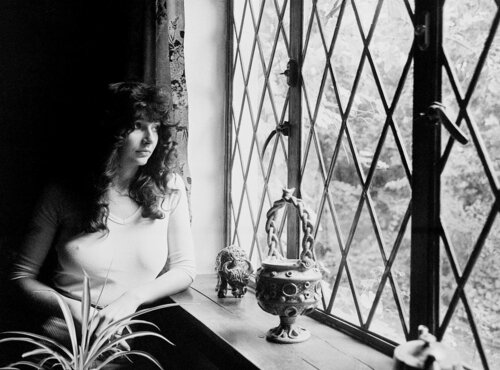
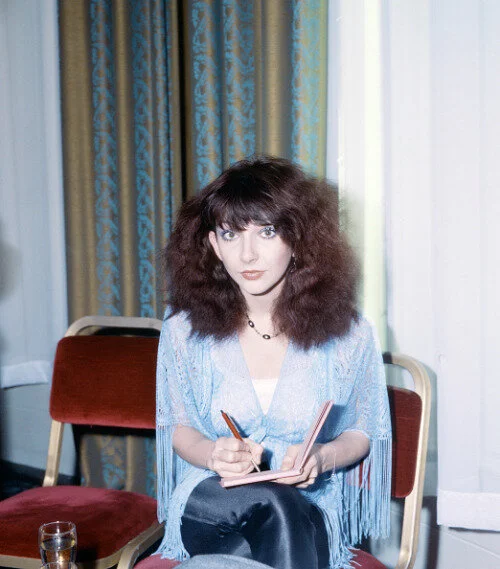
IN THIS PHOTO: Kate Bush at her family home at East Wickham Farm in 1978

Kate Bush’s Them Heavy People

___________

I like doing a few Kate Bush song-specific features…

as they allow me to delve a bit deeper. I am going to look at her later albums and songs in future pieces but, now, I am interested in one of my favourite Bush songs: Them Heavy People from The Kick Inside. Everyone knows my feelings towards her debut album and, whilst Wuthering Heights, and The Man with the Child in His Eyes are the U.K. singles that many people associate with that album, there are terrific songs that do not get as much attention. I have said before how I wish there were more than two singles released in the U.K. from The Kick Inside. Them Heavy People was released in Japan (where it reached number-three), and I think it could have been an even more successful U.K. single. Moving was released in Japan but, as one of the best songs on The Kick Inside, it could have been  hit here. I like the fact that Them Heavy People enjoyed success in Japan as it is one of my favourite songs. My first exposure to the song was seeing the music video when I was a child. I saw the Wuthering Heights video included on the VHS of Bush’s 1986 greatest hits compilation album, The Whole Story - and then I saw Them Heavy People shortly afterwards. The song is about religion and the teachings of Jesus and George Gurdjieff (among others). The song expresses an insistent desire to learn as much as possible while she is still young.

There was a music video made for the live version of Them Heavy People – that track was the lead from her On Stage E.P. of 1979. I love the video, as Bush looks incredible and she pulls these wonderfully exaggerated facial movements. With her dancers, we get this great routine where we see, among other things, her smashing one of the dancers with a chair and, in return, she gets a bottle to the head. It is goofy and fun, but it would have been interesting to see it released in the U.K. and having an official video filmed – I would have liked to see if the concept would have been different to the video that we see. Bush performed Them Heavy People on several T.V. programmes, including her only appearance on Saturday Night Live in the U.S. and the short-lived Revolver in Britain. I want to bring in the Kate Bush Encyclopaedia, as there is an article where we get to read some useful background on Them Heavy People by Kate Bush:

The idea for 'Heavy People' came when I was just sitting one day in my parents' house. I heard the phrase "Rolling the ball" in my head, and I thought that it would be a good way to start a song, so I ran in to the piano and played it and got the chords down. I then worked on it from there. It has lots of different people and ideas and things like that in it, and they came to me amazingly easily - it was a bit like 'Oh England', because in a way so much of it was what was happening at home at the time.

IN THIS PHOTO: Kate Bush in 1978 

My brother and my father were very much involved in talking about Gurdjieff and whirling Dervishes, and I was really getting into it, too. It was just like plucking out a bit of that and putting it into something that rhymed. And it happened so easily - in a way, too easily. I say that because normally it's difficult to get it all to happen at once, but sometimes it does, and that can seem sort of wrong. Usually you have to work hard for things to happen, but it seems that the better you get at them the more likely you are to do something that is good without any effort. And because of that it's always a surprise when something comes easily. I thought it was important not to be narrow-minded just because we talked about Gurdjieff. I knew that I didn't mean his system was the only way, and that was why it was important to include whirling Dervishes and Jesus, because they are strong, too. Anyway, in the long run, although somebody might be into all of them, it's really you that does it - they're just the vehicle to get you there.

I always felt that 'Heavy People' should be a single, but I just had a feeling that it shouldn't be a second single, although a lot of people wanted that. Maybe that's why I had the feeling - because it was to happen a little later, and in fact I never really liked the album version much because it should be quite loose, you know: it's a very human song. And I think, in fact, every time I do it, it gets even looser. I've danced and sung that song so many times now, but it's still like a hymn to me when I sing it. I do sometimes get bored with the actual words I'm singing, but the meaning I put into them is still a comfort. It's like a prayer, and it reminds me of direction. And it can't help but help me when I'm singing those words. Subconsciously they must go in. (Kate Bush Club newsletter number 3, November 1979)”.

Despite the fact the album version was never released in the U.K., a live version to promote On Stage did see Them Heavy People get to number-ten. I really think that Them Heavy People is among Bush’s top-twenty tracks - and there has been a lot of love from fans and the media through the years. With a song that dealt with themes like philosophy and Dervishes, it was going too get parodied by comics of the day – Pamela Stephenson did so on Not the Nine O'Clock News in a song called Oh England - My Leotard. I think it is a complex and original song from a teenager, and the fact Them Heavy People was so different to anything of the time, perhaps, attributed to why some lampooned it. If you have not heard this Kate Bush classic then do have a listen to the song as it is one that gets stuck in the head and, at the same time, it provides something quite deep and unexpected. Listening to Bush’s albums, and she has never really written many straight or conventional songs one might have heard from chart acts of the day. I think that is one reason why her music is so special and has resonated with so many people! From its refrain of “Rolling the ball…” to the exceptional vocal performance, I have been in love with Them Heavy People since I was about six or seven. It is a truly wonderful song that I am…

HAPPY to play over and over.

FEATURE: If These Walls Could Sing: Looking Ahead to the Abbey Road Studios Documentary

FEATURE:


If These Walls Could Sing

 IN THIS PHOTO: Mary McCartney (who will direct new documentary about Abbey Road Studios, If These Walls Could Sing, to mark the studios’ ninetieth-anniversary celebrations and immense legacy)

Looking Ahead to the Abbey Road Studios Documentary

___________

2020 was a bit of a write-off…

when it came to gigs and a lot of exciting things in music. One big setback was the Peter Jackson-directed documentary, The Beatles: Get Back. That is now coming out later in the year but, today (12th January), we learned of another projected connected to Abbey Road Studios – The Beatles are synonymous with recording there – and Paul McCartney. Mary McCartney (daughter of Paul McCartney) is directing a documentary about Abbey Road Studios, If These Walls Could Sing, ahead of its ninetieth-anniversary celebrations in November. Before I get to that (from the Abbey Road Studios website), here is some history regarding one of the world’s most-famous and importance studios:

Abbey Road Studios is the most famous recording studio in the world and a global music icon. Originally a nine-bedroom house built in 1829, it was purchased by the Gramophone Company in 1928 who went on to build the world’s first purpose-built recording studio. The St John’s Wood address was chosen for its large garden and ideal location – close enough to the performance spaces of the time, but away from the noise and vibrations of the traffic and trains.

The grand opening ceremony on 12 November 1931 included a performance of Land of Hope & Glory in Studio One conducted by Sir Edward Elgar. The Gramophone Company merged with Columbia Graphophone Company to form Electric and Musical Industries (EMI) in 1931, and the studios later became known as EMI Recording Studios. Since EMI engineer Alan Blumlein patented stereo at Abbey Road in 1931, the studios have been famed for innovation in recording technology, largely developed by the Record Engineering Development Department (REDD) who were responding to the needs of the artists and producers using the rooms.

 Their innovations include the REDD and TG desks, as well as studio techniques such as Artificial Double Tracking (ADT), created by studio technician Ken Townsend, who went on to become the studios’ MD, as well as Vice President of EMI Studios Group.

While initially a venue for classical recordings, the studios’ repertoire soon embraced jazz and big bands, too, as well as the first British rock & roll records of the 1950s, including Sir Cliff Richard’s first single Move It. Abbey Road is of course synonymous with the legendary work of The Beatles, who worked with EMI producer Sir George Martin and recorded 190 of their 210 songs at the studios. But Abbey Road’s unparalleled history spans the wild experiments of Pink Floyd to iconic recordings from Shirley Bassey, Aretha Franklin, The Hollies and many more.

Since those exceptional years, artists from Kate Bush, Radiohead, Oasis, Kanye West, Amy Winehouse, Kylie and Muse to Sam Smith, Florence + The Machine, Ed Sheeran, Frank Ocean, Lady Gaga and Adele have made Abbey Road their creative home, producing countless landmark recordings.

IN THIS PHOTO: Amy Winehouse/PHOTO CREDIT: Island Records 

As the demand for classical recording spaces declined, Ken Townsend found a new role for the big rooms – movie scores, with the first major film score being Raiders of The Lost Ark in 1981. Since then, Abbey Road has developed into one of the world’s premier destinations for movie scoring. Blockbuster films such as The Lord of The Rings Trilogy, Skyfall, the Harry Potter series and the Oscar-winning Gravity feature scores recorded here, while recent projects include Black Panther, Solo: A Star Wars Story and the multi award winning The Shape of Water.

The studios house a number of state-of-the-art mastering suites, with engineering expertise spanning direct to vinyl and half-speed mastering. Recent projects mastered or re-mastered by Abbey Road’s award-winning engineers include music from The Beatles, Sam Smith, Sade, Abba, Krept & Konan, Graham Coxon, Novelist, Johnny Marr, Roxy Music and The Rolling Stones.

In Spring 2017, in the biggest transformation since first opening, two new contemporary studios were launched - The Gatehouse and The Front Room - making the magic of Abbey Road accessible to a whole new generation of recording artist. They have already hosted artists from James Bay, Jess Glynne, George Ezra and Skrillex to legends like Nile Rodgers plus grime MCs Novelist and Jammer BBK”.

 IN THIS PHOTO: Nile Rodgers/PHOTO CREDIT: David Yeo/The Guardian

It will be fascinating to see what If These Walls Could Sing might contain and what angles it explores. NME reported a treat we can all look forward to later in the year:

A new documentary about Abbey Road Studios is currently in development, with Mary McCartney set to direct.

If These Walls Could Sing is set to be the first feature-length documentary about the iconic studios, produced by Mercury Studios – the must-first content studio from Universal Music Group.

Mary McCartney, a photographer and filmmaker as well as the daughter of Paul McCartney, speaks of her “personal perspective” in a press release describing the upcoming film, set to be produced by John Battsek (Eric Clapton: Life in 12 Bars).

“Some of my earliest memories as a young child come from time spent at Abbey Road,” she said. “I’ve long wanted to tell the story of this historic place and I couldn’t be collaborating with a better team than John and Mercury Studios to make this creative ambition a reality.”

Mercury Studios CEO Alice Webb added: “Mercury Studios could not be partnering with a more visionary and passionate team than Mary McCartney and John Battsek to tell Abbey Road Studios’ incredible story on film for the first time.

Isabel Garvey, Managing Director of Abbey Road Studios, said: “If these walls could sing. I have lost count how many times I’ve heard that said at Abbey Road Studios over the years. I can’t wait for some of these stories to finally come to life in what will become a timeless documentary.”

If These Walls Could Sing is set to be part of the 90th anniversary celebrations of Abbey Road Studios, beginning in November this year”.

I cannot wait to see inside studios that have welcomed some of the finest musicians ever. I have never been to Abbey Road Studios, but I would love to take a tour post-pandemic and breathe in the essence and aura of a hallowed space! I think we will see some great music documentaries throughout 2021; I am looking forward to November when we get to celebrate Abbey Road Studios and mark such an important milestone. Many of us know about the studios through various albums, but learning more about its past and magic will fascinate a lot of people. At the start of a grim year, it is good we can put these dates in the diary – if the documentary gets a cinematic release, one can imagine cinemas being opened again and people being allowed in as normal. Although If These Walls Could Sing is not out for a while yet, ensure that you keep your eyes peeled and…

YOU do not miss it.

FEATURE: The Lockdown Playlist: Captain Beefheart at Eighty: His Prime Cuts

FEATURE:


The Lockdown Playlist

bbbb.jpg

PHOTO CREDIT: Andy Freeberg 

Captain Beefheart at Eighty: His Prime Cuts

___________

I am going to bring in a large chunk of information…

from Wikipedia because, whilst I know his music pretty well, I am not too firm about some of the biographical details and facts. The iconic Captain Beefheart was born on 15th January, 1941 and, as what would have been his eightieth birthday is approaching fast, this Lockdown Playlist is a collection of some of his best songs (with His Magic Band). Here are some more details about a hugely influential musician:

Don Van Vliet (/væn ˈvliːt/, born Don Glen Vliet; January 15, 1941 – December 17, 2010) was an American singer, songwriter, multi-instrumentalist, and visual artist best known by the stage name Captain Beefheart. He conducted a rotating ensemble called the Magic Band, with whom he recorded 13 studio albums between 1964 and 1982. His music blended elements of blues, free jazz, rock, and avant-garde composition with idiosyncratic rhythms, absurdist wordplay, and his wide vocal range. Known for his enigmatic persona, Beefheart frequently constructed myths about his life and was known to exercise an almost dictatorial control over his supporting musicians. Although he achieved little commercial success, he sustained a cult following as a "highly significant" and "incalculable" influence on an array of new wave, punk, and experimental rock artists. An artistic prodigy in his childhood, Van Vliet developed an eclectic musical taste during his teen years in Lancaster, California, and formed "a mutually useful but volatile" friendship with musician Frank Zappa, with whom he sporadically competed and collaborated.He began performing with his Captain Beefheart persona in 1964 and joined the original Magic Band line-up, initiated by Alexis Snouffer, the same year.

REVELATION and inspiration.

FEATURE: Spotlight: girl in red

FEATURE:


Spotlight

girl in red

___________

BEFORE I bring in some interviews…

with the sensational girl in red, it is worth noting that her debut album, World in Red, has been announced for this year. I don’t think a firm date has been set, but the album is sure to be among the most-anticipated of 2021. I am going to bring in a few different sources, as I think it is important to get some background to the incredible rising star. Not only is girl in red being tipped by many sites as one of the artists we need to keep an eye out for this year; the BBC have included her in their Sound of 2021. There is no doubt that this year will be a busy and successful one for girl in red. Before moving on, I want to bring in her Wikipedia page - where we get some biographer and background:

Marie Ulven Ringheim (born 16 February 1999), also known as Marie Ulven or professionally as Girl in Red (stylized in all lowercase), is a Norwegian indie pop singer-songwriter. She is known for appealing to people with her "bedroom pop anthems about romance and mental health.”  Her single "I Wanna Be Your Girlfriend" has gained over 150 million streams online, and was listed at No. 9 on The New York Times list of "The 68 Best Songs of 2018". Since 2018, Ulven has released two extended plays from her bedroom studio and has amassed over 7 million monthly streamers on Spotify.

Ulven has been named a “queer icon” by Paper, and a “phenomenon” that is “one of the most astute and exciting singer-songwriters working in the world of guitar music” by The New York Times. Her music, which is made from the comfort of her bedroom, has amassed over 150 million streams as of October 2019.Since 2019, Ulven has been on two North American tours and two European tours, and has performed at festivals such as Lowlands, Rock en Seine and Øyafestivalen. She was named by NME as “one of the most hyped acts at The Great Escape” in 2019”.

Although this year has not been a great one for an artist who was hoping to tour and get her name out there a lot, we have seen singles in the way of midnight love, rue, and two queens in a kingsized bed. They sound terrific and it has helped raise anticipation and excitement for her announced album. I think one of 2019’s best releases was girl in red’s chapter 2 E.P. This glowing review proffers that we need more artists like girl in red out there:

Each song is interlaced with her own experiences with being queer, dealing with mental health, and just being a teenage in this society. This album is like a sneak peek into her diary and gets her raw unfiltered thoughts through her lyrics, many of which are touched with her sarcastic remarks. She’s on brand with the bedroom pop that’s becoming increasingly popular in the US. Her debut album was bold entrance as an unapologetically truthful artist. I like songs like “i wanna be your girlfriend” because it’s just an honest look at her experience with unrequited love. Music like this just reminds you how human we all are, that many of us live the same experiences and go through similar situations. I wish more music was like this, just made you feel normal or proud of musicians for being vulnerable.

In the last year, girl in red’s music has bubbled up from occasional uploads on SoundCloud and Bandcamp as a hobby  into a growing phenomenon; Ulven has more than a million monthly listeners on Spotify despite having only 10 songs posted there. She is currently on her first American tour, warming up crowds for Conan Gray. She credits her success to a more welcoming pop music climate for gay artists, a progressive path in the last couple years that paved a way to mainsteam media with stars like Janelle Monáe “Sam Smith, longtime gay performers like Tegan and Sara, and rising artists like Troye Sivan, Hayley Kiyoko and King Princess, among many others.” Marie Ulven has set the stage for herself and I can’t wait to listen to more”.

If you want an artist to follow this year who is going to have this huge breakthrough, then you need to look the way of girl in red! I am going to bring in a few different interviews just so that we get a wider scope of an intriguing and wonderful artist. The first interview piece I want to bring in is from DIY. They spoke with this exciting new talent in 2018 - we got to discover what the music scene is like in girl in red’s native Oslo:

What’s your earliest musical memory?

I think it was when I was six years old. I was gonna perform for the first time in my life and I got so nervous and my voice got really shaky, so I ran off stage crying (lol) and didn't perform in years.

Who were some artists that inspired you when you were just starting out (and why)?

I wasn’t really inspired by any specific artist starting out. I was mainly just so intrigued by the idea of creating something.

You’re based in Oslo - what’s the music scene like there at the moment? Are there other artists breaking through at the same time that you take inspiration from?

I really like the music scene in Oslo. There is a lot of different music here, and that keeps it interesting! I have several music friends here, and they all have their own projects and they are doing so well! I'm inspired by the whole idea of doing what you love, and pursuing the things you want in life. I’m cheering for them all!!

Musically or otherwise, what are you most looking forward to in 2019?

I'm really excited about releasing and making new music and I also wanna get better at producing! I'm also super stoked about touring with Conan Gray in the US for over a month! I've never toured before so it's gonna be a really interesting experience.

If people could take away one thing from your music, what would it be?

Be gay and loud!”.

I want to bring things up-to-date regarding the following interviews. This year has been one where girl in red has put out music but, as I said, I think she had bigger plans regarding gigs and making a big move. When she spoke with EUPHORIA. in February 2020, we learned more about girl in red’s start…in addition to the types of gigs that she prefers:

When did you decide to pursue music full-time?

I decided to do it when I realised that it was possible. It was obviously something I had been working towards for many years, but I guess I fully committed to it in early 2019. I dropped out of college and went all in!

Was there a specific moment in which you really fell in love with music as an art form?

Not really a specific moment. I’ve always loved music so it’s kind of hard to pinpoint. But definitely, after I started producing my own stuff, music excited me even more. So even though I’ve loved making music all along, I love it even more now.

You had an exciting start to 2020 and announced that you’re performing at Coachella this summer, congrats! Do you prefer intimate gigs or big festival performances?

Thank you! I think both types have something really special to them. An intimate gig is cool cause you get a really close connection with the people at the show, but there’s also something incredibly sick with a big festival stage where a bunch of people show up to have a good time. Like so many people chose to be there instead of somewhere else, and everyone has something in common cause they like the music. I think that’s really beautiful and hella dope.

You’re refreshing and extremely authentic when it comes to your true self and your identity. Was there ever an existing fear surrounding making such openly queer songs?

Not really. I’m really comfortable about my sexuality and I also don’t give a fuck [laughs].

Lastly, if you could change one thing about the world, what would it be?

I would change all stupid leaders making terrible decisions and ruining the world for the ones who need the most help”.

A lot of the big interviews with girl in red happened prior to the pandemic in 2020. Whilst it is bittersweet hearing her talk about plans for that year and what she wants to achieve, I think she can pick up where she left off at some point this year.

In a deep and fascinating interview with NME, we discover a lot about girl in red’s music and how she has progressed. Not only has she got a strengthened and improved bond with her fans; she is also considered to be one of the most important queer spokespeople of her generation:

We can see it too. That’s why we’re kicking off the NME 100 2020 – our tips for the year’s essential new artists – with Girl In Red. With massive tunes, religiously rowdy gigs, and a dedicated young fanbase hanging on to her shameless message of fun, progress and acceptance, she’s the hero that the decade needs – and one to win over indie kids across the planet. Among the peers of her generation rewriting the rulebook of what it is to be  the rockstar, 2020 is hers for the taking.

The first time NME spoke to Ulven was during her first US tour last April, where she’d already found an audience so devoted that they’d “just run right up and scream in my face”. She was already changing and saving lives. “I have a bunch of queer kids following me because they see themselves in me and the lyrics, because they need that direct ability to relate to something,” she told us. “I have people messaging me all the time to say like ‘Yo, I came out to your song’, or ‘I’m in the car right now and I just played ‘Girls’ in front of mom and I told her I’m gay’.”

How does it feel seeing more and more of your fans in the flesh, instead of just streaming numbers?

“I’ll see two million streams on my new song, which is awesome but it’s also this number that I can’t understand. To see 1,000 people in front of you singing to that song is when it really gets cool.”

How would you describe your relationship with your fans?

“Right now, I feel like it’s really healthy. In the beginning, I think I got too close to some people. Not in a weird way, but they would pour their entire emotional life onto me and I would try to help them and give advice and stuff like that. Eventually, I realised that I don’t have enough emotional capacity to also take care of all these other people.”

How does it feel to read that you’re a ‘queer spokesperson for your generation’?

“I’m not. I just happen to like girls, make music and have a platform. That doesn’t mean I’m saying, ‘Yo, I know everything about queer culture, and now I’m always gonna speak about it and it’s gonna be right’. I don’t think people think of me as some kind of sensei who knows everything about being queer and queer history. All I can do is say ‘from my perspective’ and think about how it might be from other perspectives, but right now I don’t even know what I’m saying. Still, when someone is hateful and homophobic I’m like, ‘You’re wasting your time honey! We are gonna win this representation war’!

PHOTO CREDIT: Chris Almeida

The last interview I want to source from is from DAZED. She spoke with them back in June, where we get even more insight into this phenomenal talent. I want to bring in a few questions and answers that caught my eye:

What does community mean to you?

girl in red: Community is really important. It’s a given, almost, for people to (want to) feel like they belong somewhere. And having a community is like having a place to turn to. That’s really important to me – to have a place where I feel like I belong.

How does your community inspire your creativity?

girl in red: I think what inspires me – especially with the community I’ve created with my music – is seeing all the good vibes! There’s so many good vibes in my community and at my shows. The community that’s being created there really inspires me to do this forever. I just don’t want to stop. Because the way I feel in a room with a bunch of people is such a great vibe. And that type of vibe is what the world needs, because everyone is so accepting. There’s no one pushing each other, no one’s fighting, and everyone’s just chilling.

What’s overrated?

girl in red: Football. Wait – no. I take it back. Football creates community, and I’ve been to football games and they’re really fun when you’re drunk!

What keeps you motivated?

girl in red: I have a really great album plan and really big ideas I want to achieve. New ideas (are) so motivating.

Which film do you never get bored of?

girl in red: The Perks of Being a Wallflower!”.

I am writing this feature two days before the start of 2020 - but I know that 2021 will be a huge year for girl in red. I have been hooked on her music this year and, when World in Red (maybe the title is stylised in lower case?) arrives, there will be even more focus her way! We may get some news on the album soon but, back in June, NME provided us a status update:

My grandma even said it: ‘Marie, you’ve grown so much this past year’,” she said. “So I feel like my new music sort of reflects that growth, that’s sort of been off-screen. Nobody has seen it because it’s not really been in my music yet.”

Ulven continued: “So I feel like people will definitely get to know a more mature version of me. I’ve been able to reflect way more on things that are not only happening on my behalf, but also understanding other people’s feelings.”

Speaking to NME in April, Ulven said: “The album is still cooking and I want to be sure that I put the best stuff on there. I want it to feel present and close to me. I’ve got plenty of bangers that are still on the table”.

Make sure you follow girl in red on social media (you can find the links below), as she is already being tipped for huge things this year. I feel like she will be an artist who is still inspiring and making waves years from now. In girl in red, the world has…

A role model and hugely influential artist.

______________

Follow girl in red

FEATURE: Back to Life: Making the Most of Our Empty Venues and Those in the Live Music Sector to Ensure We Can Vaccinate More People

FEATURE:


Back to Life

PHOTO CREDIT: @hakannural/Unsplash 

Making the Most of Our Empty Venues and Those in the Live Music Sector to Ensure We Can Vaccinate More People

___________

AS of the time of writing this feature (9th January)…

 PHOTO CREDIT: @adigold1/Unsplash

there has not been approval to use road crews, those in the music industry and empty venues to administer COVID-19 vaccines. It seems odd that there are so many various-sized venues being unused that can be utilised to administer jabs. With a third vaccine arriving in the U.K. in the spring, I think there will be increased interest from the live music sector when it comes to helping in the vaccination effort. This article from The Telegraph explains more:  

Could it be ravers to the rescue? With their experience of marshalling thousands of loved-up revellers in vast venues, music-industry leaders have urged the Government to let them help with the vaccine drive.

“This is not Brain of Britain stuff. It’s bloody obvious,” says John Giddings, organiser of the Isle of Wight festival. “[We] need to do something to accelerate this process.”

Giddings recently became frustrated by the pace of the inoculation roll-out, and thought someone needed to crack the whip. On January 5, he took up the mantle himself and tweeted a novel solution: expand vaccination centres to include music and festival sites, and let the thousands of roadies, security teams and bar staff standing idle help to organise the push.

The Government has announced plans to get more than 13 million of the most vulnerable people vaccinated by mid-February. They have also confirmed they will use seven locations – including the NHS Nightingale Hospital at the ExCel complex in London’s Docklands, Epsom Racecourse in Surrey and the Ashton Gate Stadium in Bristol – to host pop-up vaccination centres.

IN THIS PHOTO: John Giddings 

How they will marshal the delivery of the Oxford-AstraZeneca and Pfizer vaccines by that deadline, though, is under heavy scrutiny.

The Army is involved in discussions about the logistics. But, Giddings argues, they don’t have on-the-ground knowledge of the locations involved. “We know all these venues inside-out. The Army would steam in and ask a load of questions that don’t need to be asked.”

In his opinion, the Forces may also lack the soft touch necessary to shepherd vulnerable citizens through what could be a frightening and confusing experience. Meanwhile, he says, “tens of thousands” of music-venue staff have mostly been at loss since last March.

“There are thousands of people employed in the music business who are skilled, capable at running venues and crowd control. You name it, they can do it.

“At the Isle of Wight Festival we employ 500 people, so multiply that by all the festivals in the UK.”

James Lindsay, 62, chief of the Royal Vauxhall Tavern, agrees. “The hospitality industry over the last 43 weeks has been targeted by the Government. And the Royal Vauxhall Tavern, an iconic London landmark and a major contributor to the night-time economy, has been deeply affected by the decisions.”

But won’t the public be more comforted by stiff-backed soldiers than long-haired roadies at vaccination centres? Giddings doesn’t think so.

“We’re not 9-5ers. We’d work on shifts 24 hours a day to expand it. Trucks leave our sites at all hours. If someone said to me: ‘Turn up at Hammersmith Apollo at two in the morning and you’ll get a vaccine,’ I’d be running there now”.

 PHOTO CREDIT: @schluditsch/Unsplash

There are concerns that the vaccine is not being deployed speedily enough and that there are pharmacies not been exploited. Venues will not be able to open properly until things are greatly improved and, at such a critical time, it seems like a no-brainer that they should be opened so that those trained to provide jabs can do so at an accelerated rate. Think about the stadiums and venues that are dormant that have capacity to safely house a lot of people; be turned into vaccination centres. One of hopes for 2021 is that live music can return and that venues will be able to open their doors. Let’s hope that the offer of support from the music industry helps the Government to realise the value of venues and live music – and that they pledge more money to ensure we lose as few venues and people in the industry as possible. As soon as the effort is ramped up to get more and more vaccines delivered, there will be plenty of willing venues across the country that can open their doors - in addition to festival sites that can provide accommodation. Given all the crews and vehicles that are also being unused…they can help transport vaccines and provide useful support. I know the army are being drafted in to help with the vaccine rollouts, but there is this horde of people in the music industry that have the time and energy to help in the national effort. Let’s hope that the Government respond to the offer from those in music in terms of offering space and time. As there is a plea to have more vaccines delivered to more people, let’s hope that we can put those wheels in motion so that society and live music can return…

 PHOTO CREDIT: @djswingkid/Unsplash

AS soon as possible.

FEATURE: The Lockdown Playlist: Songs from Great Albums Turning Fifteen This Year

FEATURE:


The Lockdown Playlist

xxxxx.jpg

Songs from Great Albums Turning Fifteen This Year

___________

AS I am keen to highlight…

big album anniversaries this year, I am doing playlists on albums that are five, ten, fifteen, twenty, twenty-five, thirty, thirty-five, forty, forty-five, and fifty. This Lockdown Playlist is all about albums celebrating fifteen years: some epic releases from 2006. It was a pretty exciting and variegated year in music where we got stunning albums from some many different genres! To reflect that, this is an assortment of songs from important albums turning fifteen this year. If you need a sense of how good 2006 was, then these tunes will definitely give you an idea! I hope that this Lockdown Playlists provides you with…

SOME energy and delight.

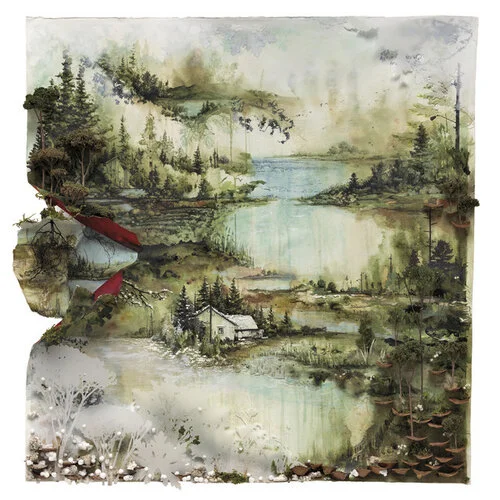
FEATURE: Vinyl Corner: Fleet Foxes – Helplessness Blues

FEATURE:


Vinyl Corner

 Fleet Foxes – Helplessness Blues

___________

EVEN though one might have to import…

 IN THIS PHOTO: Fleet Foxes in 2011

a copy of Fleet Foxes second studio album, Helplessness Blues, on vinyl from the U.S., I think that it is well worth doing. I am thinking of Fleet Foxes as they released their fourth studio album, Shore, last year. The band is essentially Robin Pecknold these days, but there was a bigger band behind him for 2011’s Helplessness Blues – including Josh Tillman/Father John Misty (vocals, drum kit, percussion). I think that anyone who is unaware of the beauty of Helplessness Blues needs to get hold of it, as it received huge praise from critics. The album also contains some of Fleet Foxes’ strongest material – it also went on to be nominated for Best Folk Album for the 54th Grammy Awards; the album peaked at number-four on the Billboard 200 (the band's highest position on the chart to date). Although Tilman left Fleet Foxes in 2012 to start his solo career, I love the fact that there are quite a few musicians in the throng. With debuts from bass guitarist Christian Wargo and multi-instrumentalist Morgan Henderson, Helplessness Blues is such a sumptuous and gorgeous album! The original plans was for Pecknold to release a second album as soon as 2009 – the eponymous Fleet Foxes album arrived in 2008 -, but intense touring meant that this was not possible. Convening to record new songs in February 2009, the band got together in Seattle but, as the band members were spending a lot of their own money during these sessions, it was scrapped.

Also, Tillman was due to play a solo tour from 2009-2010, so there was disruption when it came to getting the second album organsied and down. Despite some setbacks, the record did eventually come together. Pecknold took Fleet Foxes in a less Pop direction for Helplessness Blues and, whilst this meant that it was less uplifting, I think there is more beauty and nuance to be found. Pecknold wanted something less polished and rehearsed; vocals that were laid down quick to capture something more Folk-like and raw. The band had recorded since April 2010 in different locations after two years of writing material, though they decided to scrap the earlier idea of a fast recording (according to the band, the vocal takes so far have all been done in one take - perhaps in line with the original imperfect recording idea). I want to bring in a couple of reviews before finishing things off. When they assessed the album, this is what AllMusic had to say:

Props to Helplessness Blues for making the fretless zither cool again. On their second album, Fleet Foxes continue to take their music in unusual directions, creating a baroque folk-pop sound that hints at a number of influences -- Simon & Garfunkel, Fairport Convention, the Beach Boys -- but is too unique, too esoteric, too damn weird to warrant any direct links between the Seattle boys and their predecessors. It's still a downright gorgeous record, though, filled to the brim with glee club harmonies and the sort of stringed instruments that are virtually unknown to anyone who didn't go to music school (and even if you did, when's the last time you rocked out on the Marxophone?).

Relying on obscure instrumentation can be a dangerous game, and Fleet Foxes occasionally run the risk of sounding too clever for their own good, as if the need to "out-folk" groups like Mumford & Sons and Midlake is more important than writing memorable, articulate folk tunes. But Helplessness Blues has the necessary songs to back it up, from the slow crescendos of the album-opening "Montezuma" to the sweeping orchestral arrangement of the encore number, "Grown Ocean." Robin Pecknold remains the ringleader of this Celtic circus. His is the only voice to cut through the thick, lush harmonies that Fleet Foxes splash across every refrain like paint, and his lyrics -- rife with allusions to the Bible, Dante the Magician, and the poetry of W.B. Yeats -- reach beyond the territory he occupied on the band’s first record, which painted simple geographical portraits with songs like "Sun It Rises," "Ragged Wood," "Quiet Houses," and "Blue Ridge Mountains." On Helplessness Blues, he's just as interested in the landscape of the human heart. Still, it's the music that stands out, and the band's acoustic folk/chamber pop combo makes every song sound like a grand tribute to back-to-the-land living”.

Fleet Foxes always deliver sublime albums, and, in Robin Pecknold, they have one of the greatest songwriters and singers of our time! One cannot help but to lose themselves in the music as, even when things are more downbeat, there is still something wonderous and stunning to be found.

I want to source from Pitchfork’s review, because they make some interesting observations regarding Helplessness Blues:

The group harmonies that flowed from Fleet Foxes are in shorter supply here, employed largely to embellish tracks, allowing Pecknold to take a clearer lead role, both vocally and lyrically. He first emerged as an impressionistic songwriter, but he's since become stronger and more descriptive, conjuring vivid imagery of men striking matches on suitcase latches and penny-laden fountains. Mostly, he spends time working out his own personal puzzles, pondering the big questions of existence and meditating on the dissolution of his five-year relationship during one of Helplessness Blues' more difficult creative periods.

The record reflects his determination to deal with the present while leaving the past behind. At times, Pecknold's voice takes an aggressive tone, as on the eight-minute breakup saga "The Shrine/An Argument"; other times, it cracks slightly, exposing his pain on the bittersweet "Lorelai". But the warmth is there. On the album's most intimate track, "Someone You'd Admire", he contemplates the contradictory impulses to love and to destroy, accompanied by spare harmony and softly strummed guitar.

Pecknold confronts more universal concerns as well, starting with "Montezuma"'s memorable album-opening lines: "So now, I am older/ Than my mother and father/ When they had their daughter/ Now, what does that say about me?" He wrestles throughout the record with his own measurements of success, and whether any of it adds up to anything. He asks questions only to come up with more questions, and they all lead into a sort of resolution on the album's title track, "Helplessness Blues". Here, he retreats from the world into idyllic, pastoral imagery and wishes for a simpler life before trying to come to grips with his newfound renown. "Someday I'll be like the man on the screen," he promises at the end of the song.

Helplessness Blues' analytical and inquisitive nature never tips into self-indulgence. Amidst the chaos, the record showcases the band's expanded range and successful risk-taking, while retaining what so many people fell in love with about the group in the first place. And once again, a strong sense of empathy is at the heart of what makes Fleet Foxes special. Much has been made of American indie's recent obsession with nostalgic escapism, but Robin Pecknold doesn't retreat. He confronts uncertainty while feeling out his own place in the world, which is something a lot of us can relate to”.

If you do not own a copy of Helplessness Blues, I would definitely recommend people to do so as it is a wonderful listening experience – you can always stream it if you do not get it on vinyl. I have so much love and respect for…

ONE of the best albums of 2011.

FEATURE: Spotlight: Greentea Peng

FEATURE:


Spotlight

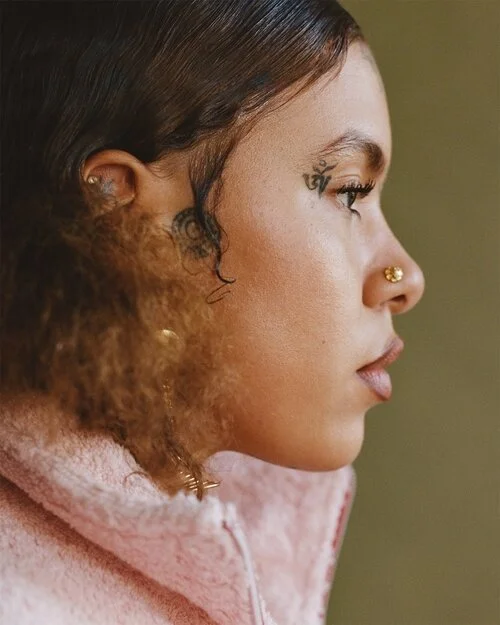
PHOTO CREDIT: Charlotte Hadden for CRACK 

Greentea Peng

___________

I am ramping up the Spotlight features…

cccc.jpg

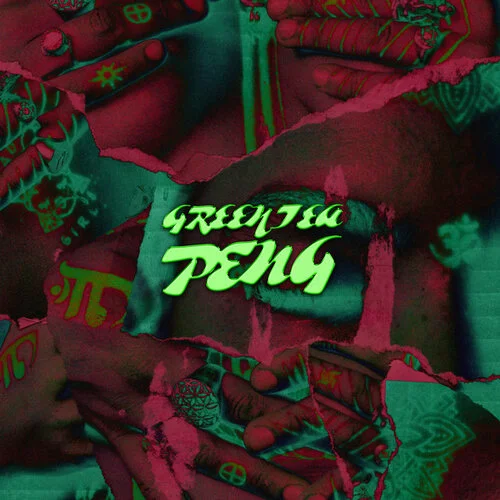
 PHOTO CREDIT: Stefy Pocket

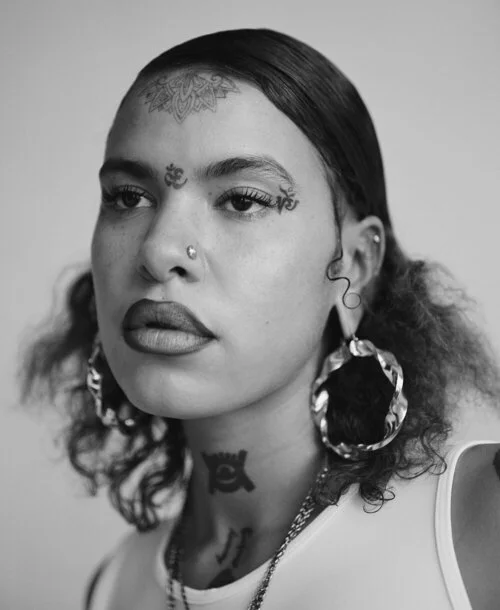
because we are now in 2021, and it is important that we shine a light on great artists who have the potential to do great things this year. One such artist is Aria Wells, a.k.a. Greentea Peng. I have been following her music for a couple of years now; her blend of Neo-Soul, R&B and something a bit more psychedelic is such a wonderful brew that stays in the memory for a very long time! Last year’s singles such as Revolution, Spells, and Hu Man are some of her best work…and I really do hope that there is an album coming at some point this year. I will reference one of her previous E.P.s in a bit, but I want to quote from a great interview - where we get a bit of background regarding the name, Greentea Peng, and what her teenage life was like:

It’s a bit of an obvious question but I wondered if I could get a quick backstory on the name Greentea Peng?

Green tea is like my favourite tea, and there was a packet I found while I was away, this amazing packet, it was dreamy. It was called Green Tea Seng and the woman on it was really peng so I was like oh, Greentea Peng. That’s literally where it came from. It started as a bit of a joke so it’s not that deep.

I think it’s such a cool name, it suits you well.

Thank you. It’s funny that it does because it’s such a random thing but I hear that it actually does. I feel like it does too, so it’s worked out well.

You were born in South East London, is that where you grew up too?

I stayed there until I was ready for secondary school, then I moved to the seaside in the South of England. A place called Hastings, by Brighton and that. I spent most of my teenage years in Hastings.

What kind of teenager was Greentea Peng growing up in Hastings?

[Laughs] A mad one. Lots of partying and everything. I was always coming back to London for summer holidays, my dad stayed in South London and I moved back when I was about 17.

When did you start singing and what kind of music was inspiring you early on?

I started singing about age 4. My dad inspired me a lot, he was into a lot of classical music and theatre. He’d teach me a lot of the theatre songs, so I started off singing stuff like that, and in the church choir and stuff. Then I started to get inspired by Ms. Dynamite and Lauryn Hill and The Fugees, stuff like that. I was very much into R&B and hip-hop quite young, watching MTV Base and that sort of thing. When I got a little older my tastes broadened a bit, I got into rock music, reggae, ska, and heavy metal, but before that it was mostly R&B and hip-hop”.

If you have not investigated Greentea Peng then I would hugely recommend you do so. Revolution was one of my favourite tracks last year, and I think that she has a very bright and busy future ahead. I also hope that Greentea Peng can get back on the road this year and take her music to the people.

I want to bring in an interview from The Line of Best Fit, because it reveals some interesting information regarding how important London is to Greentea Peng - in addition to why it took her a long time to realise her talent:

London is at the heart of Peng’s writing, in what she explains as “the tongue-in-cheek of it, the kind of vibe... it’s an attitude, innit.” At present, she’s chatting over the phone while taking a break from a studio session in the city, before performing a DJ set. “It’s the most diverse city I’ve ever been to. Growing up I very much loved London, my Dad brought me up very ‘yeah London town, the best town in the world.” Listening to songs like “Inna City” from the EP, you can hear the capital laced throughout. From the twang of her vocals, to the eclecticism of the production, and lyrics like, “Your double vision, inna city / You can get it if you're witty / Work your way up in a jiffy / What you got, I want it, gimme,” she perfectly illustrates the lovable-toughness of life in the Big Smoke.

Despite always having been naturally creative, Peng admits that she had suppressed her talents for a long time, the result of teenage angst and trying to figure out who she was. “I was quite inside myself and angry at the world,” she confides. However, she took the leap of moving to Mexico once she had left school, pursuing her desire to travel. It was here that her love for music was re-ignited. “I was watching a lot of live music and it reminded me of how much I was in love with it, how much I needed it. I needed a creative outlet,” she explains. While out there, she met her manager who would encourage her to carry on singing. Once she had returned home, her talent became a serious professional opportunity and she released her first EP Sensi in 2018.

Maybe there will be an E.P. rather than an album this year. I think that Greentea Peng has developed a lot since Rising of 2019. That said, I really love the E.P. and it is a beautiful collection of songs that demonstrates huge originality. The Line of Best Fit mentioned the E.P. in their interview with Greentea Peng of 2019:

This progression is evident from the first listen of Rising. Leading with the title track, the EP makes an immediate impact: the combination of swirling production and Peng’s soulful vocals as she repeats the titular word to dazzling effect. “It’s such a mad beat innit,” she says. “It’s the same guy who made “Downers” [from the first EP] Fred Cox, and those two songs, I was in similar thoughts. It was December time, and I get proper mad in that transition of the seasons. I think those songs are both quite restless. And I think it’s quite a brave song to start with, it’s quite violent.”

Seasonal change is also interwoven throughout the first single from the collection, “Mr Sun (Miss Da Sun)”, which blends a sense of longing for ones partner with the end of summer. With lyrics like, “Mr. Sun I need you / I'm only happy with you / No one lifts me like you do” – and considering the inspiration behind Rising – it seems necessary to ask how much influence Peng draws from her environment. “The majority of it,” she says. “I’m greatly affected by my environment. “Mr Sun” is about missing the sun, I was missing my man at the time too”.

Apologies for being a bit random with the information sourced but, as Greentea Peng is such a fascinating and multi-layered artist, I want to include as much as I can. I want to end with an interview from this year. One of the most appealing and striking elements of Greentea Peng’s music is the peacefulness and this positivity that you hear. The hopefulness and uplifting vibes of her music is so powerful. 2020 was especially bleak, so it is understandable that Greentea Peng has been as affected as everyone else. That said, the messages of love and togetherness comes back. When she spoke with High Snobiety, Greentea Peng talks more about what she has learned from a tough year – and why she has such a positive outlook and attitude:

Since this whole thing has kicked off,” she explains, “it's been very much ups and downs and me having to realize that actually, you are really attached to this material realm, aren't you? Because if we weren't, then this wouldn't bother you. I'm a highly conflicted individual, I'll say that. I've learnt that nothing is as it seems. And that you should fact check the fact checkers. That would be the main thing I've drawn from this year. Nothing is as it seems.”

Nevertheless, “You always got to try and bring it back to love,” she says.

Sharing universal messages of love and hope seems to be particularly effective when coupled with the fact that Aria’s never been one to cling to labels of identity. “If I'm honest, I've never had a strong affiliation or a calling to a certain tribe or, I've always been very out and about,” she explains. Her father, Arabic from the Middle East, was adopted, and her African mother is estranged from her family, so she’s never been able to contextualize her existence in a traditional family tree type of way. “I know I was born in England. I don't necessarily feel like I'm meant to be in England, because from as young as I can remember, all I've joked about is moving to the jungle. So I guess, I could say like I'm a jungle person, I do like jungle music too!” she playfully recounts.

Her jungle heritage, free of the constraints of over-identifying with a certain time, place, or people might allow her to see things without many attachments clouding her vision. When asked what we, as a species, could stand to let go of, Greentea Peng hesitated, not wanting to speak for others. But in pondering her own personal growth over the past few years, she settled on ego. “We're all reflections of each other,” she explains. “The chances are we're feeling it on an individual level and the whole fucking collective is feeling it somehow, in some way”.

I think that this year is going to be a very busy and successful one for Greentea Peng, despite the fact there are restrictions and things will take a while to get back to normal. I would encourage people to support her music and follow her, as one gets something truly special from her music. I love what she is putting out and how she views the world. Maybe there will be a debut album this year but, so long as we keep getting music, then one cannot be too demanding! Lots of people are compiling their artists to watch in 2021 features and, whilst I am getting some good suggestions, I think that Greentea Peng should feature a lot. With music like hers and so much promise for this year, she needs to be…

ON everyone’s list

________________

Follow Greentea Peng

FEATURE: The Lockdown Playlist: Songs from Great Albums Turning Forty-Five Year

FEATURE:


The Lockdown Playlist

 Songs from Great Albums Turning Forty-Five Year

___________

NOT to completely go overboard with albums anniversaries…

for my Lockdown Playlists, but I like to sprinkle them in with other features. I want to get them all out in January, as it makes people think about all the brilliant albums that have anniversaries and, when doing so, we can push these works out to people who might not be aware of them. This Lockdown Playlist is all about the best albums of 1976 – golden releases that have their forty-fifth anniversary this year. I experienced many of these albums during childhood when my parents played them so, in doing a bit of research, it has struck a chord! Here is a selection of songs from 1976-released albums that shows what an exceptional year it was! Enjoy some epic cuts from..

SOME amazing artists.

FEATURE: The Lockdown Playlist: Songs from Great Albums Turning Ten This Year

FEATURE:


The Lockdown Playlist

Songs from Great Albums Turning Ten This Year

___________

I will not put too many anniversary Lockdown Playlists…

out there, but as there are some really good albums that have big anniversaries this year, I wanted to mark that. Now, I am looking back to albums released in 2011: some pearls that are celebrating a decade in the world this year. 2011 was not that long ago, but I think the decade-mark is an important anniversary so, with that being said, here are some amazing songs from the first year of the previous decade. In the course of compiling the playlist, it has been nice to go back and realise just how strong 2011 was! If you need a reminder, then this Lockdown Playlist is all about albums that get to celebrate ten years in the world…

VERY soon.

FEATURE: Walk Straight Down the Middle: Kate Bush’s Awards and Nominations – and Why She Deserves Even Greater Recognition

FEATURE:


Walk Straight Down the Middle

xxxxx.jpg

IN THIS PHOTO: Kate Bush  attending the Evening Standard Theatre Awards in November 2014 (where she won the Editors Award)/PHOTO CREDIT: Dave Benett

Kate Bush’s Awards and Nominations – and Why She Deserves Even Greater Recognition

___________

THIS might be a theme that few…

IN THIS PHOTO: Kate Bush at the Capital Radio Awards in March 1979 at the Grosvenor Hotel in London (she won two awards: for Best British Female Singer, and Best British Newcomer)/PHOTO CREDIT: Richard Young/Rex Features

Kate Bush fans are demanding be covered, but I was looking back on some features from last year and it struck me: just think about all the awards Bush has been nominated for since the start of her career! It should come as no surprise but, through the years, she has been nominated a lot for her incredible work. Back in August, I asked whether she would be inducted into the Rock & Roll Hall of Fame in 2022 (and nominated this year) – Bush was nominated in 2018, though she remains one of the most famous non-inclusion. I know that awards and honours are not everything and the mark of a great artist, but it is a way of giving kudos and recognising their impact. When it comes to Kate Bush, in many ways, she remains underrated and under-furnished when it comes to awards. I have been re-watching a video of Bush receiving the Editor's Award from Evening Standard in 2014 (below). Although she is nervous, she truly seems humble and grateful - she was given the award for her residency, Before the Dawn. In 2013, Bush was awarded a CBE, and one has to think a damehood cannot be too far away! Whilst some people do not like honours like this and return them, I think Bush is genuinely touched and blown away if she receives such high esteem. I will go into a bit more detail but, in terms of the big honours that have come Bush’s way, her Wikipedia page gives us some information:

She has been nominated for 13 British Phonographic Industry accolades, winning for Best British Female Artist in 1987, and has been nominated for three Grammy Awards. In 2002, Bush was recognised with an Ivor Novello Award for Outstanding Contribution to British Music. In 2017, she was nominated for induction in the 2018 Rock and Roll Hall of Fame. Bush was appointed Commander of the Order of the British Empire (CBE) in the 2013 New Year Honours for services to music”.

I will have a look at this alphabetically but, as you can see from the relevant section of Wikipedia, Bush is an artist who has been nominated for BRIT Awards, yet she has only received the one: in 1987, she won for Best British Female. It is not a surprise that she has been nominated so often, but I am surprised that Running Up That Hill (A Deal with God) did not win Best British Single in 1986; likewise, Bush was nominated as Best British Female in 2006 after the release of Aerial (the year before). I know award shows like the BRITs have been accused of odd omissions through the years, but Bush is a quintessential British treasure whose music should have garnered more respect from them through the years! It is good that she has been nominated quite a few times, yet I wonder whether there should be a special award created. Bush won a Q Award in 2001 – she picked up the Classic Songwriter gong. As Q is no longer in publication, I think the wave of attention her work has garnered through the years should see an award show like the BRITs create a new category(ies) like Q’s Icon Award, and Classic Album.

IN THIS PHOTO: Kate Bush at the Q Awards in October 2001 (she was given the Classic Songwriter award on the night)/PHOTO CREDIT: Richard Young/Rex Features

One might say that this is crowbarring an award or two into things to accommodate someone like Bush, but I think there is an opportunity to nod to legendary musicians who have made a huge difference in the world. It is a shame there will be no further Q Awards, as it was one of the last great ceremonies that provided a great range and some awards that you really wanted to see go to someone like Kate Bush! I think that her appearances like the one in 2001 for the Q Awards was quite rare, as that particular one happened eight years after The Red Shoes arrived - she took a long break from music after that album. She was out of the public spotlight at this point, so a rare appetence like this was treasured. The award clearly meant a lot to Bush; it was only four years later when she would release Aerial into the world. I think many of her award ceremony appetences have been rare, as she does not go to film premieres or things unconnected with her own music. It is always wonderful seeing music industry people and fans applaud and provide ovation when Bush collects an award!

I am shocked that her massively-praised 2014 residency did not pick up many awards. I think the BRITs has streamlined its categories recently, and I feel we will see change regarding separating genders when it comes to awards - I think the awards will become more gender-fluid and less segregated. Even so, I think Bush is worthy of a bit more love from the BRITs given all that she has accomplished! In 1978, Bush won Best International Single at the Edison Awards. This is one of the world’s oldest music ceremonies and, given the success of Wuthering Heights, I am glad that it won. If one does look through all the awards that Bush has been nominated for, it does seem a shame she has not won more – though how bothered she is by this remains to be seen. Being an American ceremony, it is small wonder that Bush has been overlooked by the GRAMMY committee. She did not really feel major success in the U.S. until 1985, so maybe one can forgive a lack of representation before then. I do wonder why Hounds of Love received no nominations in 1986 and why it took until 1988 for her first nomination – Experiment IV for Best Concept Music Video. Bush received a couple more nods in the 1990s, but I think that her American fanbase is much larger now than it was in the 1980s. She has made an enormous impact on so many musicians and, given the sheer amount of categories, I do think that albums like Aerial, and 50 Words for Snow are big omissions. Both could easily have fitted into Best Alternative Music Album, I think, and I feel that this would have reflected appreciation for tremendous albums.

The Ivor Novello Awards are among the most prestigious in all of the world. This award show seems tailor-made for Bush. This is a case of an award show truly recognising Bush’s contribution to music. Although she has been nominated and lost quite a few times – for Wuthering Height (The Best Song Musically and Lyrically, and The Best Pop Song) in 1979, Babooshka (The Best Song Musically and Lyrically) in 1981, The Dreaming (The Outstanding British Lyric) in 1983, Running Up That Hill (Best Contemporary Song) in 1986, and 50 Words for Snow (Album Award) in 2012, she did win in 1979 for The Man with the Child in His Eyes (The Outstanding British Lyric). Bush also won in 2002 for Outstanding Contribution to British Music and, whilst I am surprised Running Up That Hill did not win and Aerial was not even nominated, she did get that honour back in 2002. To add to that, Bush became a Fellow of The Ivors Academy last year (she was quite thrilled: “I feel really honoured to be given this fellowship by The Ivors Academy. It means so very much to me. Thank you to all my family and friends and to everyone who has been there for me over the years. I’ll treasure this statue of Euterpe always and ask her to sit on my shoulder while I work”). The MOJO Awards are one of the less-hyped of the calendar, but I think that it is less commercial than many others. Bush has received two nods from the MOJO Awards: 2005 and 2006 for the Songwriter Award. Again, it is surprising that she did not win those awards; one would have expected some sort of nomination for 50 Words for Snow. The fact that she is nominated at all is brilliant and, when you look at the sheer breadth of award shows that have included Bush’s music, it is simply amazing!

I guess the NME Awards is another big one and, whilst many might not assume Bush to be their sort of artist, she did win in 1979 for Best Female Singer. Her return to the stage did get her nominated in 2015 for Music Moment of the Year…and I do hope that she wins the Icon Award very soon – last year, Courtney Love won. Again, some might say Bush is not the most ‘Rock’ or alternative artist around, but her contribution to so many artists who are covered/loved by NME should be noted! That said, the Progressive Music Awards have nominated Bush a few times: in 2012 for Prog Goddess, and Artist of the Year; in 2015, Before the Dawn was nominated for Live Event of the Year. Given the reception to that residency, it would be interesting to know how Bush lost out on that last nomination! Circling back to NME’s awards, and I think Bush has plenty of Rock credentials. Consider albums like The Dreaming in 1982, and even Hounds of Love. I think she has been left out when some of her albums would have made for perfect winners! Once more, she has been nominated (which is important), but I wonder whether there is a perception of Bush’s music and people pigeon-holing it. The penultimate award show I wanted to mention is the Smash Hits Poll Winners Party. It was one of the most popular award shows when Smash Hits was in publication (1978-2006).

IN THIS PHOTO: Kate Bush at the 1979 British Rock and Pop Awards ceremony on 26th February, 1980 (she won for Best Female Singer; she also picked up the same award in April 1979)/PHOTO CREDIT: Mirrorpix

Although she was nominated in a very questionable category, Most Fanciable Female, in 1980 and 1981, she did win Best Female Singer in 1980. I think this award win holds more clout and dignity than the Most Fanciable Female. I am glad that Bush won in 1980, as this must have been before Never for Ever (her third album) was released. I do wonder why Hounds of Love was not nominated, mind. Not to undermine the fact that Kate Bush has been nominated a few times, but you think about some of her best albums and wonder why they did not garner more in the way of awards. I guess sales and chart positions are more important, however it seems like there are periods where she was ignored somewhat. The last award show I will bring in is one where Bush has won once: the South Bank Sky Arts Awards. 50 Words for Snow won Best Album in 2012, and I am pleased the album got that respect. I think it is another case of others/award shows not truly appreciating a wonderful album. Bush showed up to collect her award and, like other occasions where she has  given an acceptance speech, she seemed stunned and thrilled – and quite nervous too! (I have included a video at the end of this feature).

I will end it there, but I wanted to shine a light on the awards and honours aspect of her work and the bodies that have included Bush through the years. Even though there have been some real omissions – from the GRAMMYs, Rock & Roll Hall of Fame and the likes of NME -, it is wonderful that Bush has had her work honoured and celebrated so often! I don’t think Bush has collected her last award yet and, in the coming years, I feel there will be some big honours such as an Icon Award - or a similarly high plaudit. I highlighted a few awards Bush has won but, from Wikipedia (apologies if some of the dates/exact award titles are incorrect), there are some that I have not covered: BPI Awards (Best Female Singer, 1979); Record Mirror Poll (Best New Artist, 1978)…

Melody Maker Annual Poll Awards (Best Female Vocalist and Brightest Hope of 1978); BPI Awards (Best Female Singer, 1980); Music Week annual awards (Top Female Artist, 1979); Capital Radio Awards (Best British Female Singer and Best British Newcomer, 1979); Record Mirror poll (Best Female Singer, 1979); TV Times top ten awards (Most exciting TV female singer 1979) and US College Music Awards (Best British Female Solo Artist, 1987). Many might say that Bush has achieved more than enough with her adoring fanbase and success but, when it comes to recognising one of the greatest musicians, songwriters and singers ever (and producer), more awards are…

THE very least that she deserves.

FEATURE: Too Good to Be Forgotten: Songs That Are Much More Than a Guilty Pleasure: The Beach Boys - Kokomo

FEATURE:


Too Good to Be Forgotten: Songs That Are Much More Than a Guilty Pleasure

The Beach Boys - Kokomo

___________

WHEN we think about the classic songs…

 IN THIS PHOTO: Mike Love, David Marks, Brian Wilson, Dennis Wilson and Carl Wilson of The Beach Boys in 1962/PHOTO CREDIT: Michael Ochs Archive/Getty Images

from The Beach Boys, God Only Knows, or Good Vibrations springs to mind. I know that there are people who like Kokomo, but I have seen it appear on many lists of guilty pleasures – and it is a song that I really like. I admit that it is not one of the best songs the American band ever recorded, but I feel it has been unfairly maligned by many. I am going to grab a bit from Wikipedia when it comes to providing a bit of information on Kokomo:

"Kokomo" is a song written by John Phillips, Scott McKenzie, Mike Love, and Terry Melcher and recorded by American rock band the Beach Boys. Its lyrics describe two lovers taking a trip to a relaxing place on Kokomo, an invented idea of an island off the Florida Keys. It was released as a single on July 18, 1988 by Elektra Records and became a No. 1 Hit in the United States, Japan, and Australia (where it topped for about two months). The single was released to coincide with the release of Roger Donaldson's film Cocktail and its subsequent soundtrack.

It was nominated for the Grammy Award for Best Song Written Specifically for a Motion Picture or Television in 1988, but lost to Phil Collins' "Two Hearts" (from the film Buster). "Two Hearts" and Carly Simon's "Let the River Run" from Working Girl jointly beat it for the Golden Globe Award for Best Original Song”.

Although Kokomo has done well in regard to sales, it is a track that has split critics. On the surface, the song is perfectly harmless and there are no lyrics that make you cringe or that stand out as being particularly bad. Maybe it is just the general sound of the song that has led people to give it some bad press or see it as a guilty pleasure. I have been a fan of The Beach Boys since I was a child, so I am pretty broad-minded and open when it comes to their songs. Even though I have a lot of time for Kokomo, others have not been so kind. Returning to the Wikipedia article, and one can see that Kokomo has won success and derision:

"Kokomo" has received mixed reviews. In 1989, the song received a Golden Globe nomination for Best Original Song – Motion Picture in 1989. Conversely, it has been included in lists of poorly received songs, such as VH1's "40 Most Awesomely Bad No. 1 Songs" and Blender magazine's list of the "50 Worst Songs Ever”.

I want to introduce an article from Stereogum from 2018 - as they looked back at Kokomo thirty years after its release. They highlight the fact that The Beach Boys, by 1988, were almost a spent force. However, despite the state of the band, Kokomo is a song that resonated at the time and still gets played to this day:

We’ll start with the most obvious thing: there is no Kokomo. Not off the Florida Keys, anyway. Sure, a couple places staked claims, but only after the occurence of the least obvious thing: a has-been pop act, minus their creative engine, scoring a #1 hit off the soundtrack to a forgettable film about bartending. “Kokomo” — released 30 years ago this month — was the Beach Boys’ first original Top 20 single in 20 years, and their first chart-topper in 22.

The state of the Beach Boys in 1988 was, in a word, shitty. Their last record, 1985’s digitally crispy The Beach Boys, performed middlingly despite contributions from Culture Club, Ringo Starr, and Stevie Wonder. A couple clues to their malaise appear within the record. On the back, there’s a dedication “to the memory of our beloved brother, cousin and friend”; Dennis Wilson, the band’s drummer and only true surfer, had drowned in the water off Marina Del Rey in December of 1983. And on the label, there are three songwriting credits for E. E. Landy.

The result was ruthlessly catchy: a combination of dreaminess and insistence, like a tank disguised as a cloud. The “Aruba, Jamaica” bit was bumped to the beginning for maximum effect; Love managed to work in a reference to cocktails, and possibly (in the line “that Montserrat mystique”) a reference to Baron Tennant’s island folly. Van Dyke Parks parachuted in to arrange the steel pans and play accordion, despite (allegedly) being stiffed by Love on plane fare. Studio saxophonist Joel Peskin (whose professional relationship with the Boys stretched back to 1979’s L.A.) contributed the oddly poignant solo. One name was notably absent: Brian was unable to attend the sessions, possibly due to his doctor’s interference. When he first heard the song on the radio, he didn’t even recognize it as a Beach Boys tune. His solo record had just dropped — deliciously, the opening lines are “I was sittin’ in a crummy movie/With my hands on my chin.”

In time, though, “Kokomo” fever faded, and the men responsible for it are starting to pass on. Carl Wilson died in 1998, John Phillips in 2001, Terry Melcher in 2004, Scott McKenzie in 2012. Mike Love, who has long enjoyed the exclusive rights to tour under the Beach Boys name, is the sole living writer. Last fall, he released a double album, with the second half devoted to re-recordings of Beach Boys classics. “Kokomo” is nowhere to be found. Presumably, he decided not to mess with perfection”.

I am a big fan of The Beach Boys’ earlier ‘surf’ period and the work they were producing in between 1962 and 1964. That said, I feel that Kokomo has received some unwarranted flack as it is a catchy song that gets into the head! It is not as sophisticated as what we heard on the masterpiece, Pet Sounds, in 1966; it does not have the same sort of timelessness as their classic cuts. Even so, have a listen to the song as it cannot fail to lift the mood. One can hear the layered sound and great vocals The Beach Boys were known for but, perhaps, without Brian Wilson injecting his songwriting genius, Kokomo was never going to be an all-time great song from The Beach Boys. I think it is much more than a guilty pleasure and, if you need some sunshine and escapism, Kokomo has you covered and will get you singing along! If you have been resistant to Kokomo and have not heard it for a while then I must offer a warning: as soon as you start to listen to it, the song will…

 PHOTO CREDIT: ABC Photo Archives/ABC via Getty Images

RATTLE around the brain for ages!

FEATURE: Second Spin: Queen Latifah - Nature of a Sista'

FEATURE:


Second Spin

Queen Latifah - Nature of a Sista'

___________

WHEN thinking of…

Queen Latifah’s second studio album, Nature of a Sista’, it is a classic case of critics wanting something similar to her debut and being disappointed with a slightly new musical direction. That 1989 debut, All Hail the Queen, is a hugely confident and wonderful album that gained a lot of great reviews. When Nature of a Sista’ arrived in 1991 there were quite a few who were hoping for something like Hail the Queen. The most marked difference between albums is Queen Latifah incorporating more sounds and moving away from a pure Hip-Hop sound – we can hear elements of Reggae, Jazz, and R&B. Whilst there is a broader sound palette – some felt Queen Latifah had diluted her sound -, the lyrics of gender politics and romance are effecting and stunning. I think the songwriting through Nature of a Sista’ is incredible and, whilst there are a few weaker tracks, this is an album that deserves more praise. Queen Latifah wanted to stray away from a more hardcore sound and experiment. Other acts like A Tribe Called Quest were doing it in 1991, and this was the golden age of Hip-Hop for that reason and many others (if you wanted something more intense and political, then you could listen to Public Enemy, say). I like that there were artists who had Hip-Hop at their heart, but they were broadening their sound and crossing genres. Maybe critics were hoping that Queen Latifah was going to be this hard-hitting Hip-Hop artist through her career and, when she took a detour on her second album, there was a degree of deflation in terms of reviews.

I really respect Nature of a Sista’ and the instrumentals, which were provided by live musicians, fuse elements of Reggae and Jazz. There are a lot of different styles mixing alongside one another and, whilst that could have been messy and unfocused, Queen Latifah makes it work. In terms of lyrical perspective, she was employing humour and self-assurance; encouraging women to take pride and respect themselves - rather than placing any stock in sex or money. The early-1990s was an interesting time for Hip-Hop, with artists like Queen Latifah and Monie Love (who Queen Latifah teamed up with on 1990’s Ladies First) among a wave of wonderfully diverse and amazing artists. Although her label, Tommy Boy, dropped her after the disappointing performance of Nature of a Sista', Queen Latifah delivered Black Reign in 1993 – that album contained the huge anthem, U.N.I.T.Y. I think that there are people who see Nature of a Sista' as a bit of a blip between her debut and third album; I feel Nature of a Sista' is the sign of a brave and curious artist not wanting to repeat herself. It is a shame that the album gained some mixed reviews. One such review came from AllMusic, who had this to say:

Nature of a Sista isn't the outstanding album Queen Latifah is quite capable of recording. But even so, it's a decent sophomore effort that has more strengths than weaknesses. The North Jersey native tends to spend too much time boasting about her microphone skills -- something that can wear thin in a hurry -- but there's no denying the fact that she has considerable technique. As on her first album, Latifah indicates that she could hold her own in a battle with just about any rapper, male or female. And the positive image she projects is certainly commendable. But as likeable as much of this album is, it's obvious that she is capable of a lot more. Artistically, Latifah is selling herself short”.

There were not a great deal of feminist songs in Hip-Hop in the early-1990s. There was a lot of misogyny and sexism, so I think that albums like Nature of a Sista' are very important and inspired a lot of people. Maybe, at the time, there was some dismissal from critics…but one looks back on albums where sisterhood and self-respect are being discussed and wonders whether reviewers need to take another listen and reassess. If Queen Latifah turned her focus back to her community for 1993’s Black Reign, albums like Nature of a Sista' were a reaction to the culture of the time. In this article from Refinery29, we learn more about the sort of themes and attitudes prevalent in Hip-Hop during the early-’90s:

The terms were used so often in 1990s hip-hop that they became colloquialism, rolling off the tongues of male rappers as easily as if they were describing the color of someone’s eyes. As hip-hop became the dominant (and most profitable) genre of the mid-to-late '90s, status rather than street cred became the primary bragging right of artists. Songs about struggle were replaced by anthems of excess. The setting moved from the street corner to the bow of a yacht. And one of the most coveted trophies of all was a woman.

 But not just any woman. She was a fantasized fetish, disposable arm candy. In many music videos of the time, women like this wore as little as possible and gyrated or sulked in whatever way best pleased the alpha male rapping the lyrics (the point of view in hip-hop was still overwhelmingly male.) This wasn’t empowerment through sexual expression. It was sexist hate speech. Queen Latifah wasn’t having it, though”.

Maybe some critics and fans were looking for music that was as potent and driving as some of the lyrics – an idea that the messages seem a bit weak without an intense vocal or some huge beats in every verse. I think that people should check out Nature of a Sista' as it is a fantastic album with many highlights. Maybe Queen Latifah was aiming for crossover appeal with Nature of a Sista', and I guess one can see Black Reign as a more focused album where she cemented her reputation. In a more positive review from 1991, Entertainment Weekly noted the following:

Three years ago Queen Latifah tore the rap world apart, slapping macho rappers in the mouth with her fast and furious feminist rhymes, hitting them below the belt with groove-heavy rhythms and hard street beats. She spiced up hip-hop with a fierce house-music tempo, infused rap with Jamaican-style chanting and toasting, and never sounded contrived. Now an established club and recording artist at 21, Latifah is staking out new ground. Nature of a Sista’ bounces with the Queen’s usual dose of feisty, fresh rhymes, but it also shows her softer, more feminine side.

 She still keeps the brothers in check (”Latifah’s Had It Up to Here” and the album’s first single, ”Fly Girl”), but she’s toned down the sass and become more sensual and sophisticated. Here’s one woman who rejects sexism, but not sex. There’s more to Latifah than just gender politics; she purrs on some of the album’s slower tracks, then picks up the tempo on the ragamuffin-style ”Sexy Fancy,” which shows that Queen Latifah can be hard-line and playful at the same time. There’s something else special in the nature of this deep and resonant sista’: class”.

There are certain albums that you listen to and love personally that others do not rate it as highly. I have been listening to Nature of a Sista' this week and really getting involved with the album! It is not Queen Latifah’s best release, but I think that it is far stronger than its reputation suggests. It must have been hugely challenging and tough for women in Hip-Hop in the 1990s, so I do genuinely think that Nature of a Sista' is groundbreaking - and it is an album that needed to be released. One might say that certain tropes and attitudes in Hip-Hop have not changed – themes of excess; sexism and misogyny -, but I feel Nature of a Sista' inspired a lot of female rappers to follow in Queen Latifah’s lead (even if she was not the first to talk about empowerment and raise issues around sexism). If you have not heard Nature of a Sista', give the album a try as it is a really…

REWARDING listen.

FEATURE: Cloudbusters: The Kate Bush Tribute Acts

FEATURE:


Cloudbusters

IN THIS PHOTO: The American Kate Bush tribute act, Baby Bushka (they sadly lost their member, Nina Leilani Deering (very top left), in a car crash last year)  

The Kate Bush Tribute Acts

___________

I have alluded to Kate Bush tribute acts…

 IN THIS PHOTO: Baby Bushka’s ‘Bad Bush’, Dr. Batya MacAdam-Somer/PHOTO CREDIT: Baby Bushka

before when looking at her amazing fanbase and how there is a lot of love out there. I was not aware of the excellent American group, Baby Bushka (named after Bush’s single, Babooshka). You can find more information here. They need support so that they can keep playing and survive the pandemic. This is how they describe themselves:

THE MUSIC AND MAGIC OF KATE BUSH REACHES FAR AND WIDE ACROSS THE SEAS AND SKIES TO SAN DIEGO, CALIFORNIA WHERE EIGHT WOMEN GATHER TO CREATE THE "WONDERFULLY BEWITCHING" BABY BUSHKA.

WITH GREAT RESPECT AND WIDE EYES, THIS POWERHOUSE TROUPE DELIVERS "OTHER-WORLDLY VERSIONS" OF YOUR FAVORITE SONGS "FROM THE ETHEREAL TO THE BOMBASTIC AND BACK AGAIN".

FILLED WITH FOUR-PART HARMONIES AND EPIC CHOREOGRAPHED DANCING, BABY BUSHKA IS A WONDER YOU HAVE TO EXPERIENCE TO BELIEVE”.

The group sadly lost one of their members, Nina Leilani Deering, in a car crash…so it has been tough for them since they lost her last year. The group are great, and I would urge people to check out their work. Rather than it being a straight impersonation of Kate Bush, you get a very different and unique experience. I think that it is great that there are different kinds of Kate Bush tribute acts around. I wonder what Bush makes of it – I am sure she is flattered! It is no surprise that an artist with such a fascinating career and brilliant music has compelled others to get onto the stage.

Cloudbusting is a great Kate tribute act from the U.K.

Formed back in 2012, well before any suggestion that Kate was ever going to perform live again, Cloudbusting's mission was, and still is, to bring Kate Bush's music to the live stage.

Cloudbusting are 5 musicians from the UK, dedicated to performing this incomparable music with no hint of pastiche or impersonation. There is, and only ever can be, one Kate.

We perform the music as faithfully to the original as possible, aiming to bring perhaps the less obvious of Kate's songs to the stage - some of which have never been heard played live before.
​ 'If you missed out on seeing Kate Bush herself, Cloudbusting are the next best thing.'    
Simon Mayo, BBC Radio 2.

'Mandy started singing and I thought ‘Wow, that’s amazing!’    
Paddy McGuinness, BBC TV

'I need to go to this!'
 Zoe Ball, BBC Radio 2

“Utterly, surreally brilliant.” 
Mick Wall, Classic Rock Magazine.

Mandy’s vocals were so good, I could have been listening to Kate herself!’
​Preston Heyman, Kate’s drummer
”.

 I do hope that the band can get back on the road. There are dates announced, but we may need to wait to get through the lockdown before any live gigs resume. It is a shame but, with many artists streaming gigs, maybe that is an option for Cloudbusting.

Lorrie Brown is another great tribute act. It seems that she offers something different to Baby Bushka, and Cloudbusting:

We remember being captivated when unknown performer Kate Bush appeared on Top of the Pops singing a quirky song based on a book.  The first thing you noticed back then was her completely original look and behaviour on stage. The song was almost secondary but it went on to become a legend, much like it's unprecedented singer.  The rest, as they say, is history and KB went on to become a UK pop music Icon in her own lifetime.

Quite a challenge for any tribute performer, not least because of the original's amazing vocal range and tone. Step forward Lorrie Brown, who doesn't hold back from the challenge.  Also gifted with incredible Vocal ability, Lorrie delivers the perfect, respectful tribute to the iconic singer. The show is a festival of Kate's greatest songs , all sung to perfection by Lorrie backed by her band, the Red Shoes.

All the hits are there from Wuthering through Wow to Symphony in Blue, the entire career of Kate is covered in this highly-polished and professionally presented show”.

One great Kate Bush tribute artist I have been aware of for a long time now is Sarah-Louise Young. You can follow her Twitter account for An Evening Without Kate Bush. She has an amazing passion for Kate Bush, and I think she is one of the U.K.’s finest Bush tribute acts. Like all those who perform Bush’s songs on the stage, Young does it in her own way and creates this unique and stunning universe! I know dates were booked for last year and cancelled, but I hope Young gets to perform her incredible show in 2021:

Enter Strange Phenomena, howl with the The Hounds Of Love and dance on the moors with Wuthering Heights.
Kate’s not there, but you are.

From the makers of ‘Julie Madly Deeply’. But completely different.

vvvv.jpg

Performer Sarah-Louise Young (Cabaret Whore, The Showstoppers, La Soiree) has teamed up with theatre maker Russell Lucas (Warped at VAULT Festival) to explore the music and mythology of one of the most influential voices in British music.

From releasing ‘Wuthering Heights’ at the age of 19 to selling out the Hammersmith Apollo nearly forty years later, Bush has always surprised and confounded her critics.

Through it all her fans have stayed strong. Young invites you to celebrate her songs with this unique and mind-blowing show”.

Another cool Kate Bush tribute band is Them Heavy People. Nadine leads the band:

Nadine's passion for music has always played a huge part in her life and as early as five years old Nadine recalls her love for Kate Bush.

Nadine's pursuit for a singing career started thirteen years ago when she started her own Karaoke business. Singing the odd song or two Nadine was talent spotted by a theatre company who urged her to audition for an upcoming musical 'Masquerade' at The Prince of Wales Theatre. The audition was a success and she was offered the role as leading lady. Other roles followed. 

In 2010 she joined a female vocal trio called 'The Rubys' , entertaining pubs and clubs around Staffordshire and The Midlands. Nadine loved to sing the odd Kate Bush song because as she recalls "I loved her music and found her songs easy to sing".

Nadine's ability to sing those 'HIGH notes' and her uncanny vocal resemblance to Kate became a talking point in clubland.

Nadine still sings with 'The Rubys' but her true passion is being part of 'Them Heavy People' where she can sing her favourite songs from her favourite artist Kate Bush”.

“Them Heavy People have been performing as a Kate Bush tribute in the current line up since February 2016, although the band spent a year in another guise before this. Nadine has been a fan of Kate since her early childhood, as her mother was a big fan, and she has been bought up listening to Kate. The band are keen to replicate Kate's songs as accurately as possible, although this is no easy task, given that Kate did a lot of production work in the creation of her songs. Great care has been taken in the rehearsal process to bring Kate's songs alive (many of which have never been performed by  Kate herself in a live situation), and samples of some of the actual records have been used to give authentic sounds on the keyboards. Nadine has an uncanny vocal resemblance to Kate, using her natural voice to give note perfect renditions of classic hits, album tracks and fan favourites.  Backed by seasoned professionals under the musical direction of  Dave on the Bass, the band never fail to delight audiences with their interpretations that closely resemble the original recordings. The show has a strong visual element, using projections behind the band, as well as many iconic costumes that all come together to bring a show that is very close to seeing the real Kate herself.      'A must-see for any Kate fans’”.

When it comes to artists and tribute acts, they can vary in quality. It is hard to emulate Bush’s vocals and style, so that might explain why there is not a surge of tribute acts. I wanted to highlight a few great ones, just to show you how various people are representing Bush on the stage. Let’s hope that they all get to perform at some point this year but, if I have missed any out, then let me know. I hope that Baby Bushka can keep going and ride the pandemic. I know that Cloudbusting will want to keep going and deliver some gigs this year. Some may say that it is sacrilege copying Kate Bush or trying to be her, but there is real affection from her tribute artists. Nobody is really trying to be her; instead, we get these different forms and takes that is really interesting. Although the U.K. and U.S. have premier Kate Bush tribute acts, I would be interested to see if there are others in countries like Australia. We often think about the artists who are inspired by Bush, but not often about artists performing her music and, in their own way, paying tribute to a true hero. I love the Kate Bush tribute acts that are out there but, with her music reaching more people and her popularity building, I wonder if we will see any more…

 IN THIS PHOTO: Kate Bush in 1979/PHOTO CREDIT: Mike Forster/ANL/REX/Shutterstock

FORMED very soon.

FEATURE: Always in Fashion: Five Years: The Magnificent David Bowie

FEATURE:


Always in Fashion

cccc.jpg

PHOTO CREDITS (unless otherwise stated): David Bowie 

Five Years: The Magnificent David Bowie

___________

I was not going to put out another feature…

regarding David Bowie but, as today (10th January) marks five years since his death, I want to do one final feature. There has been a lot of media coverage over the past couple of days because, on Friday, we celebrated Bowie’s seventy-fourth birthday. I want to quote from a couple of articles that have come out that explores Bowie’s legacy. I was struck by a feature about Bowie’s iconic photos and how, when you think about him, one realises that Bowie had this visual legacy – both in these incredible photographs and the way his different looks and reinventions have inspired future artists:

Lady Gaga's character-shifting and costumes were predated by Ziggy and the Thin White Duke – a sartorial tribute that she often acknowledges. Meanwhile, the recent hand-wringing over Harry Styles's dress on the cover of Vogue regularly neglects the fact that Bowie did it first in 1970, wearing a fetching floral dress designed by Michael Fish on the cover of The Man Who Sold the World. It's a game of dress-up that validated even his out-of-the-box projects, including playing the role of the Goblin King in cult 1980s fantasy film Labyrinth, narrating Sergei Prokofiev's Peter and the Wolf, and performing The Little Drummer Boy with Bing Crosby. He was an outsider who looked the role – let the man make art.

Throughout his career, too, these experimental shifts in his persona were signposted by getting in front of a camera. As documented in the newly published book David Bowie: Icon, which features shots of the star by 25 different photographers, Bowie always understood the power that photography would have in his world. While the images captured during his life are impressive to look back on now, even in the moment, it was clear to many photographers that they were making something special. Here we speak to a few of them to get their reflections on working with a creative legend.

PHOTO CREDIT: Janet Macoska 

But while Bowie used the ability to tell a story through photographs, Janet Macoska believes that he also understood the effect he had on the people who took them. The Cleveland, Ohio-based photographer spent her teenage years photographing acts who regularly used the city to launch their US tours. When she first saw Bowie perform in 1974, she recalls initially being intimidated by the intensity of his stage presence and two-toned eyes, even though she treasures an ethereal, slightly out-of-focus shot from that first show. But when he returned in 1976, on a tour that didn't allow photographers, she was given the opportunity to photograph his stage set-up. In return she was allowed to sneak into the show, camera in tow, her rule-breaking "overlooked" by management.

I got a letter in the mail from Switzerland, and I didn't know anybody in Switzerland. It was from David thanking me for my gift – Janet Macoska

"I popped out every once in a while, to shoot a few photos, but David had two big gorilla guys on stage, one on each side of the stage," she recalls. "If he saw a camera, he would point at it, and the gorilla guys will come out and take your film. So there I am popping out, and he catches me at it. And he puts his hand out and just waves with a little 'No you didn't do that, shame on you!' And then he smiled and he called off the gorillas. And I shot the whole show! It was like being blessed".

I would recommend people read that entire BBC article, as it shows that David Bowie was such a collaborative photographic subject. I suppose other artists are like that, but I think imagery was so important to Bowie; in the sense that he wanted to make photos as powerful and moving as his music. I think a lot of the photos that we see of Bowie connected with so many people. Not only have various musicians striven to inject a bit of Bowie’s mystique, strangeness and beauty into their music/images…I feel Bowie has affected wider society, in terms of the L.G.B.T.Q.I.A.+ community and inspiring others to express themselves in a more open and different way. Another fascinating feature came from The Times. We hear from various people who knew Bowie and, more and more, one learns that he had these various sides and qualities:

Iggy Pop worked with Bowie in 1971, when he produced Iggy and the Stooges’s third and final album, Raw Power (released in 1973) , and again in the late Seventies, when the pair relocated to Berlin and wrote some of their best material. It led to Pop’s atypically gentle China Girl becoming a hit for Bowie in 1983. “That was a quiet period, focused on the ostensible task,” Pop said of the Berlin years, when I spoke to him in 2019. “With the Stooges in England it was, ‘Where can we get a goddam hamburger?’ With Bowie in Berlin it was going to a club and having a few drinks. We were doing the things most guys that age do.”

“I met him at an after-hours club in New York called the Continental, David was at the back of the room by himself, drinking an orange juice,” says Nile Rodgers of Chic, who collaborated with Bowie in 1983 on Let’s Dance. “In order to figure out how to work together, we went to museums and people’s houses with extensive record collections. To my amazement, we liked a lot of the same stuff: avant-garde jazz like Cecil Taylor and Eric Dolphy, big band music, early rock’n’roll. The super-success of Let’s Dance made him feel strange, but deep down all artists want to touch as many people as possible. He definitely wanted Let’s Dance to be a hit.”

The aristocratic singer and fashion figure Daphne Guinness remembers Bowie as the ultimate autodidact. “We shared a love of second-hand bookshops and opera scores,” says Guinness, who became friends with Bowie in 2013 after they met at a party and she told him that the first single she bought was The Laughing Gnome. “It is unusual to meet someone who is interested in the leitmotifs to Tristan and Isolde and Götterdämmerung, let alone studies the dots on the page of the scores like they are Morse code. He was very encouraging when I started making albums, although he said my lyrics had a tendency to get too ‘Tennyson-y’. I would describe him as elegant, curious and very funny. It seems to me that the world went wrong the moment Bowie died.”

Five years after his death Bowie’s influence looms over our lives more than ever. You could argue that he achieved that final goal of going on for ever, but perhaps we shouldn’t deify him or take him too seriously. In Francis Whately’s documentary Bowie: The Last Five Years, the director asks him what he would most like to be remembered for. “I’d love people to believe,” he replies, “that I had really great haircuts”.

I would advise people to check out Bowie: Dancing Out in Space on BBC Radio 6 Music at 8 p.m., as it will be a fascinating show where leading figures from music, literature, philosophy, technology and comedy talk about the impact of Bowie on their lives. It is impossible to simplify and limit the words one says regarding Bowie’s influence. The more one reads about him and hears testimonies, the more you appreciate how his music and magic touched so many. Esquire investigated how one can hear and feel David Bowie in a lot of artists today:

Bowie’s influence—his creative shape-shifting, meticulous blending of art and pop, embrace of fashion without surrendering songwriting discipline—was so pervasive during his lifetime that it can be tough to isolate his impact during these last five years. As rock has increasingly become an exercise in nostalgia, the bands he championed in his later years (LCD Soundsystem, Arcade Fire) have broken up or waned in impact. Visually- and conceptually-savvy artists like St. Vincent, Bjork, and Jack White certainly carry the torch, but even they have started to feel like holdovers from another era.

The Bowie DNA is obviously present in The Weeknd when he wears those unexplained face bandages or in Lady Gaga’s reinventions and costuming (though, as my teenage son cannily points out, Gaga’s grand pop gestures are really more Freddie Mercury than Bowie). But if his greatest contribution of all was to give a voice to the outcasts and misfits, to speak for those on society’s fringes and provide them a valued space in rock & roll, then the question is where do those freaky kids now turn?

Bowie surely would have loved and embraced this evolution, not just because of his lifelong championing of Black music (the sound of Blackstar was inspired by Kendrick Lamar’s jazz-inflected hip-hop), but because his entire career was dedicated to moving forward. This aspect of Bowie is documented in his most progressive statements and actions—from his prediction of streaming as the future of music to calling out MTV on its racist programming policies to his sale of “Bowie Bonds” anticipating the current acquisition frenzy on the publishing side of the music business—which social media is quick to cherry-pick and keep these clips in regular rotation”.

I will bring things to a close soon, but I wanted to quote from a great article from The Guardian that discusses how Bowie continues to uplift us five years after his death. I was particularly captured by how restless he was regarding art and literature; how feverish his imagination was – and how it kept collecting ideas and fed that into his work:

Curator Beth Greenacre, who managed Bowie’s art collection for 16 years until his death, told Harper’s Bazaar in 2016 that he “collected ideas, thoughts … they all fed into his life. He would look at one artist and it would lead him to another artist, which would lead him to a book, which would lead him to a theory, which would lead him to a philosophical text, which would then lead him back to another artist.”

That’s the thing: life, for Bowie, was a series of encounters with people and things that made change possible, not a series of transactions designed to get one over on other people. I’ve missed him more than ever since he died because, seen in the whole, his life stands in rebuke to the philistinism, cynicism and bad faith that’s come to dominate public life.

He wanted to keep learning, and wanted us to keep learning. Bowie would share reading lists, playlists, lyrics saturated with cultural allusions. In the words of songwriter Edwyn Collins, speaking in response to the news of Bowie’s death: “He was warm; you could walk around with him in your head all day and it comforted you”.

I know that is a slightly random collection of thoughts and articles about Bowie, but I wanted to show how amazing the man was and how far and wide his influence has reached. I would encourage people to seek out as much as they can in the way of documentaries and radio tributes. Even though David Bowie has been gone for five years, his influence is everywhere! I think we will be dissecting and discussing his genius for generations to come. There was truly nobody else like him. It seems that this divine star was…

BEAMED from another planet.

FEATURE: A Buyer’s Guide: Part Thirty-Seven: Sleater-Kinney

FEATURE:


A Buyer’s Guide

IN THIS PHOTO: Corin Tucker (left) and Carrie Brownstein of Sleater-Kinney in 2019/PHOTO CREDIT: Suki Dhanda/The Observer 

Part Thirty-Seven: Sleater-Kinney

___________

FOR this A Buyer’s Guide…

 IN THIS PHOTO: Sleater-Kinney in 2015 (with Janet Weiss, centre)/PHOTO CREDIT: Danny Clinch

I am spotlighting Sleater-Kinney. The iconic American Rock band that formed in Olympia, Washington, in 1994. The  current line-up features Carrie Brownstein (guitar and vocals) and Corin Tucker (vocals and guitar) - following the departure of long-time member, Janet Weiss (vocals, drums, and harmonica) in 2019. Sleater-Kinney rose during the Riot Grrrl movement, and they have since become a vital part of the American Indie Rock scene. Even though they went on hiatus in 2006, they reunited in 2014 - and, through their career, have barely dropped a step! I am going to recommend the four essential albums, in addition to an underrated album and a book that is a helpful companion – I will also highlight their current studio album. If you need a guide to Sleater-Kinney, then I hope that this guide will…

 PHOTO CREDIT: Anthony Pidgeon/Redferns

PROVIDE useful and informative.

______________

The Four Essential Albums


Call the Doctor

Release Date: 25th March, 1996

Label: Chainsaw

Producer: John Goodmanson

Standout Tracks: Call the Doctor/I Wanna Be Your Joey Ramone/Taking Me Home

Buy: https://www.discogs.com/sell/release/2033697?ev=rb

Stream: https://open.spotify.com/album/3ULIRcAOMyaT6K4gIhX8aJ?si=wtMMjG2PRLaXveOO4bF1sg

Review:

This album's true brilliance lies within the lyrics. Call the Doctor is a triumph in feminist writing. Each and every lyric is so intensely intended. As I discussed earlier, the primary motif behind Call the Doctor is to draw attention to the absurd notion of fixed gender roles in society, which is the central theme of the majority of songs here. Often this is explored through compelling metaphors and comparisons from different perspectives, such as on aforementioned 'Stay Where You Are' where Carrie sings 'stuffed in the corner, little girl lost. I claw and I scratch and I beg and I scream, I just need you to save me this time' which plays on the idea of women as mysterious 'others' in need of male guidance and safety. Further, Sleater-Kinney draw attention to this patronizing ideology on 'Anonymous' where Corin sings 'feel safe inside, inside these well drawn lines; boyfriend, a car, a job, my white girl life' where the repetition of 'inside' emphasizes the domesticated experience of how women are expected to live and behave in a patriarchal society. You can draw direct parallels between these 'well drawn lines' and the masculine nature of the Punk scene which the band emerged from, which is discussed more directly in the roaring 'I Wanna Be Your Joey Ramone'. It isn't just the words themselves that makes the lyricism here so powerful, a lot of it comes from the ability of both vocalists to pour a mass of absolute emotion and conviction into every single line. It's as-if the motivation behind each word they belt out is as true to the original intention of Punk in its emergence, more so than any other 90s act.

Call the Doctor provided a necessary stepping stone for both Sleater-Kinney and the Riot Grrrl movement, inspiring a storm of female artists to form bands to make a change. I'd personally argue that it isn't their most creative album, no that comes next. What this album is though is a hard-hitting collection of songs from a group of newcomers, which even the most distinguished punk acts could've only dreamed to make. Sleater-Kinney add melody to punk music more flawlessly than any other group I've had the pleasure of listening too and lyrically they've crafted an anthology of brilliant poetry which continues to sticks with me, even when I'm not listening to the album. Thus, the puzzle was complete” – Sputnik Music

Choice Cut: Stay Where You Are

Dig Me Out

Release Date: 8th April, 1997

Label: Kill Rock Stars

Producer: John Goodmanson

Standout Tracks: Dig Me Out/Turn It On/Little Babies

Buy: https://www.discogs.com/sell/list?master_id=64435&ev=mb

Stream: https://open.spotify.com/album/3tshnNFNhHrO6NUQ0BHw42?si=_CVhLXJqRzyoUbhf7cqtIw

Review:

Then, behold: Janet Weiss. She joined on 1997's breakneck Dig Me Out, an all-time great American punk statement, giving Sleater-Kinney the most crucial muscle a drummer can offer: not sheer force, but heart, taking the momentum to a new plane. Sleater-Kinney released their next four records with the larger Olympia feminist label, Kill Rock Stars, but none distilled the band's sound and attitude like Dig Me Out: sometimes brutal heartache, sometimes a menacing threat, always intelligent and extreme, there are enough hooks architected into these two- and three-minute songs to span several albums, but even the added dum-de-dum sugar seems as though it must be raw Portland agave.

"Little Babies" critiques stereotypes of motherhood, "Heart Factory" roars over synthetic emotions of the Prozac Nation, and the instantly classic "Words and Guitar" is an ode to rock that just feels necessary. At the peak of "The Drama You've Been Craving"—Tucker's "Kick it OUT!"—there are practically fireworks bursting on either side. Really, Dig goes from 0-to-100 within seconds of its opening salvo of a title track, which begs for transcendence from worldly oppression, "Outta this mess/ Outta my head." Unlike so much in the trajectory of punk, there is no nihilistic self-destruction in the face of chaos. More than skepticism, anti-consumerism, or the glories of tattoo art, punk teaches empathy, a principle Sleater-Kinney practiced with nuance. This is why Sleater-Kinney's music shines a light despite its loudness, why it is easy to be alone with the songs and feel protected. Sleater-Kinney would never forego the optimism to believe their songbook could make us smarter, angrier, more tender and hopeful. Dig Me Out dreams of a better future, clawing itself up with every note” – Pitchfork

Choice Cut: One More Hour

The Woods

Release Date: 24th May, 2005

Label: Sub Pop

Producer: Dave Fridmann  

Standout Tracks: The Fox/Modern Girl/Let's Call It Love

Buy: https://www.discogs.com/sell/list?master_id=64414&ev=mb

Stream: https://open.spotify.com/album/73ctstwnbNifu5U902X2zL?si=UVajihwATIezjBjSXG6_GA

Review:

Tucker's voice and viewpoints are as thoughtful and fierce as ever, and as usual, she's even better when aided and abetted by Carrie Brownstein's harmonies, as on "Jumpers." Capturing both the deeply depressing and liberating sides of suicide, the song moves from moody almost-pop to an intense but still melodic assault; unlike so many bands, Sleater-Kinney can go back and forth between several ideas within one song and never sound forced or muddled. A martial feeling runs through The Woods, but unlike the more overtly political One Beat, dissent is a more of an overall state of mind here. The more literal songs falter a bit, but "Modern Girl" is saved by its sharp lyrics ("I took my money and bought a donut/The hole's the size of the entire world"), while Tucker and Brownstein's dueling vocals and Janet Weiss' huge drums elevate "Entertain" above its easy targets of retro rock and reality TV. However, the songs about floundering or complicated relationships draw blood: "Rollercoaster," an extended food and fairground metaphor for an up-and-down long-term relationship with tough-girl backing vocals and an insistent cowbell driving it along, is as insightful as it is fun and witty. The unrepentantly sexy "Let's Call It Love" is another standout, comparing love to a boxing match (complete with bells ringing off the rounds) and a game of poker. At 11 minutes long, the song might be indulgent (especially by Sleater-Kinney's usually economic standards), but its ebbs and flows and well-earned guitar solos underscore the feeling that the band made The Woods for nobody but themselves. It flows seamlessly into "Night Light," an equally spooky and hopeful song that offers promise, but no easy answers -- a fitting end to an album that often feels more engaged in struggle than the outcome of it. One thing is clear, though: Sleater-Kinney remain true to their ideals, and after all this time, they still find smart, gripping ways of articulating them” – AllMusic

Choice Cut: Wilderness

No Cities to Love

Release Date: 20th January, 2015

Label: Sub Pop

Producer: John Goodmanson

Standout Tracks: Price Tag/No Cities to Love/Hey Darling

Buy: https://www.discogs.com/sell/list?master_id=785249&ev=mb

Stream: https://open.spotify.com/album/7HDcY3h70X3zLjceUO874A?si=4rDXiHT7RjO29bOQG9RQoQ

Review:

Their hiatus saw them veer ~off in different directions: Brownstein formed Wild Flag and created (and stars in) the TV series Portlandia; Weiss became the drummer for The Shins and Stephen Malkmus and The Jicks (among others); and Tucker started the Corin Tucker Band.

Their new record is a testament to so many of the things they have always represented: left-leaning, feminist, intelligent and playful. Brownstein’s guitar playing remains vital, Tucker’s voice is still strong and true, and Weiss’s excellent drumming keeps everything from toppling over.

After their celebrated collaboration with producer Dave Fridmann on 2005’s classic rock-infused The Woods, the band went back to their roots, and to longtime producer John Goodmanson, who takes great care of their old conceits and new experiences..

This is crucial, exciting music, with an ear towards melody – as evidenced on album closer Fade – and mature reflection. There is honest self-examination on Bury Our Friends, and meditation on pointless consumerism on Price Tag. Fangless could have been made at any time in their evolution, with the singular guitar and furious drum intro, and the chorus on Surface Envy is one that will be sung back to them concert after concert, and in bedrooms all around.

A New Wave, with its discordant melody, has Tucker and Brownstein singing about inventing their “own kind of obscurity”, a sense of defiance which is also present on No Anthems and Gimme Love” – Irish Times

Choice Cut: Bury Our Friends

The Underrated Gem


Sleater-Kinney

Release Date: 1995

Label: Chainsaw

Producers: Tim Green/Sleater-Kinney

Standout Tracks: Don't Think You Wanna/How to Play Dead/Be Yr Mama

Buy: https://www.discogs.com/sell/list?master_id=170728&ev=mb

Stream: https://open.spotify.com/album/4BT2qMQcDmjNIIyLHik2lM?si=qzLEV5h5SoOpU6WjzIxgYg

Review:

Sleater-Kinney's debut record is a medium-fi blast of thrashy riot grrrl rock. Some tracks are reminiscent of '90s Sonic Youth ("Be Yr Mama"), while others are just blasts of punk angst ("A Real Man"). The group suffers from excessively monotone melody lines, but succeeds with their overall confidence and an understanding of dynamics that is promising. This is a good first record, and a showcase for talent that would later blossom on The Hot Rock” – AllMusic

Choice Cut: A Real Man

The Latest Album


The Center Won’t Hold

Release Date: 16th August, 2019

Label: Mom + Pop

Producer: St. Vincent

Standout Tracks: The Center Won't Hold/Can I Go On/Ruins

Buy: https://www.discogs.com/sell/list?master_id=1590913&ev=mb

Stream: https://open.spotify.com/album/0UMuX8pRsyfSkv0gPJMipQ?si=uuz98RO2QeODUPuRXn2hEg

Review:

This sense of sex being perhaps the only palliative in our fractious, disconnected world is essayed even more powerfully by Tucker, who has an innately more serious voice, an ideal foil for the sly goofball Brownstein. On The Future Is Here, her day begins on her phone, looking at the news, and ends on it too, perhaps looking at messages or photos from a decaying relationship. “You can cover me, just come over here and give me everything”, she promises, a sext of pure need, for orgasm, intimacy, protection. Age, too, plays its part: on The Dog/The Body, Brownstein admits she’s now “just the trick without the magic”, a wonderfully wry, smutty double meaning, while on Love she says she’s “done with being told that this should be the end” and celebrates “a well-worn body demanding to be seen”. Brownstein is singing about being on stage, but it’s also a credo for the boardroom, pavement and indeed bedroom.

The album closes on Broken, a piano ballad about doggedly existing through trauma, beautifully sung by Tucker – another brand new and intense flavour for the band. Losing Weiss will be a trauma in itself, but Sleater-Kinney have announced that they are survivors, making fires out of friction” – The Guardian

Choice Cut: Hurry On Home

The Sleater-Kinney Book


Hunger Makes Me a Modern Girl: A Memoir

Author: Carrie Brownstein

Publication Date: 20th October, 2015

Publisher: Riverhead Books

Synopsis:

Fury sparks off the page in the chapter when Brownstein and her Sleater-Kinney bandmate Corin Tucker are summarily outed by Spin magazine, when their families did not know the two had had a brief relationship, and the journalist had not touched on the subject during the interview. (Tucker is now married, with children; Brownstein rejects the need for pat definition.)The slog to be perceived as musicians, rather than as female musicians (let alone sexually fluid feminist musicians), is a never-ending tightrope act. Brownstein rolls her eyes at positive write-ups full of unconscious internalised sexism, and tries to pin down how Sleater-Kinney staked out their difficult terrain. You can often hear Evergreen College – Olympia, Washington’s hotbed of DIY indie and radical feminism – in her more erudite, analytical passages, but her plain-speaking is more refreshing: “We have not talked about that night in Brussels since.”

Some mysteries remain, as they must. Sleater-Kinney is, essentially, a long, shifting dialogue between the interlocking guitars of Brownstein (mostly lead) and Tucker (mostly rhythm; there is no bass). Exactly how this complicated music is hammered out remains elusive. Also, although Brownstein sings on S-K’s later albums, why does the book’s cover photo find this sublime rock guitarist holding a microphone, not swinging her axe?” – The Guardian

Order: https://www.amazon.co.uk/Hunger-Makes-Me-Modern-Girl/dp/1594486638

FEATURE: The Lockdown Playlist: The Best of Donald Fagen

FEATURE:


The Lockdown Playlist

zzzzz.jpg

The Best of Donald Fagen

___________

AS today (10th January)….

 IN THIS ILLUSTRATION: Steely Dan (Walter Becker, the co-founder, is second from the left (in the pink glasses)/ILLUSTRATION CREDIT: Paul King Artwerks

is the birthday of Donald Fagen, I wanted to put together a Lockdown Playlist of some of his best songs with Steely Dan, in addition to great solo material. Although his fellow Steely Dan founder, Walter Becker, died in 2017, the group is still a touring entity – there are just not going to be any more original albums under the Steely Dan name. Because it is Fagen’s seventy-third birthday, I want to give a nod of the head to one of my favourite singers and songwriters. I am a massive Steely Dan fan, and I feel Fagen’s voice is one of the reasons I am so invested in the band. This playlist features songs co-written (with Becker); some he did not sing on. I also wanted to introduce people to the brilliance of Fagen’s solo works. Without further ado, here is an essential collection of songs from a songwriter who I consider to be…

AN absolute genius.

FEATURE: Passing Through Air: Two Radio Shows That Many Fans Would Love to Hear Kate Bush On

FEATURE:


Passing Through Air

pupupu.jpg

PHOTO CREDIT: Trevor Leighton 

Two Radio Shows That Many Fans Would Love to Hear Kate Bush On

___________

WHEN it comes to Kate Bush and her radio exposure…

IN THIS PHOTO: Kate Bush in 2005/PHOTO CREDIT: Trevor Leighton 

it has largely consisted of interviews to promote her albums. I am not sure how common radio promotion was in the early years – where she was giving T.V. interviews -, but Aerial (2005), Director’s Cut (2011), and 50 Words for Snow (2011) were met with quite a few interviews. I do know that, in a few interviews, Bush was asked to pick a song that she wanted to spin; she was asked about various artists that inspire her. I recently wrote a feature outlining various artists that Bush loves and she cites as influences. David Bowie and Elton John are big names that she loves; she has also listed Captain Beefheart, Roxy Music, The Beatles, Steely Dan, Roy Harper and David Bowie as artists she admires. In an interview in 1980, Bush named ten albums that she enjoys listening to. It is nice getting an insight into musicians in regards who moves them. When it comes to Kate Bush, we know of the artists that are influenced by her – but discovering the sort of music that she digs is insightful and really interesting. In an interview of 2011 - it was with John Wilson of BBC Radio 4 -, Bush said that she had recently bought a Gorillaz album and The Union by Elton John and Leon Russell. I think that we associate Bush as being unique and not really listening to other music. Maybe we feel that, as it is hard to think of other artists when we hear her music, that means she doesn’t listen to music other music.

 IN THIS PHOTO: Matt Everitt (who presents the BBC Radio 6 Music series, The First Time with…)

Maybe Bush does not listen to a lot of modern music but, from her childhood, her house was awash with all kinds of artists and sounds. From Irish Folk to Rock music of the 1970s, she was exposed to so much varied music! It sort of brings me to a thought that I have had recently. There are two great radio shows that Bush would be perfect for. The First is The First Time with…, hosted by Matt Everitt for BBC Radio 6  Music, is one. It would realistically need to happen after we are through the worst of the pandemic, but I think this is a show that Kate Bush would be wonderful on. She and Matt Everitt have spoken before – when she was promoting the live album of her residency, Before the Dawn, in 2016 -, and there is an affection and chemistry between them. On the series, guests talk about their ‘firsts’ – whether that is gigs, records they bought or something else. Rather than it being a routine and predictable interview format, we get to hear artists discuss things beyond their current album. It is a series I love and have followed for a while, and I feel there are a lot of stories and revelations that Bush could offer that people do not know about. I would like to know what Bush’s first gig experience is. I know she saw David Bowie perform as Ziggy Stardust in 1973 (she must have been around fourteen or fifteen)…and that would be a good tale to recount.

Everitt is a great interviewer who can naturally put guests at ease and, as such, you get some great information. I know Bush does not often do a lot of interviews outside of promoting albums but, if there is a new album coming out next year, then it would be a perfect opportunity to tie the two together. I think Bush is more comfortable giving radio interviews to people she has already spoken with so, in this case, one could envisage few hesitation. It would be wonderful to get finer detail regarding her musical firsts and loves. I am not sure whether there are any plans regarding new material, so we may have to wait a while. When things start to get back to normal, so many fans of Kate Bush would relish her appearing on The First Time with… Maybe she is not even aware of the show so, if there is an album coming along in the future, I hope that Matt Everitt’s series is considered. I always love when Bush gives radio interviews, as she is so accommodating and warm. You get to hear her quite playful and relaxed so, if there was ever another chance for her and Everitt to hook up, I think she would provide a hugely listenable appearance on The First Time with…

 IMAGE CREDIT: BBC

The other radio show that is begging for a Kate Bush appearance is Desert Island Discs. It is hosted by Matt Everitt’s BBC Radio 6 Music colleague, Lauren Laverne. I am guessing Bush has been approached to appear on the long-running series; she must be one of the biggest names never to have appeared that so many would love to hear! Simply, the ‘castaways’ choose eight discs that they would take to a theoretical desert island – they also choose a book they would like to bring, in addition to a luxury. Having just given you an idea as to some of the artists and albums that have inspired Kate Bush, maybe one can guess a few of the songs she would select. I know she loves Elton John’s live album, 17-11-70, and I reckon she might choose a track from that. As Bush’s musical tastes are pretty broad and she likes the unconventional, it would be fascinating hearing which discs she wants to take to the desert island. Like Matt Everitt, Bush has spoken with Lauren Laverne before (when promoting 50 Words for Snow in 2011), and I know she would jump at the chance to speak with Bush again. As it is radio, Bush could do the interview remotely, though I think you get something extra and more harmonious (and smooth) when the guests are in the same room.

IN THIS PHOTO: Desert Island Discs host Lauren Laverne

A lot of Kate Bush’s musical heroes have appeared on Desert Island Discs (as has her own music) and, again, her appearance could be linked to album promotion – though, it is not the type of format where guests can plug their latest work much. When we dream of castaways we’d love to include on Desert Island Discs, there is that speculation as to what luxury they would take with them. One has to feel a piano would be Bush’s choice. But what about her selected book?! In the same way The First Time with… allows the guest to reveal things that they would not normally impart in regular interviews, Desert Island Discs is much more open and less predictable. Laverne asks her guests about various events in their life and then punctuates those answers with selected songs. There have been no radio interviews from Kate Bush for over four years now and it would be wonderful to hear from her. Maybe she will not want to do anything of that sort outside of album promotion but, after such a strange 2020, perhaps her opinions have changed. I know there would be intense excitement if she were to appear on either/both shows, and it would afford us all the opportunity to find out things about Kate Bush that we might not have otherwise known. I realise that it is unlikely that she will do these excellent radio shows. However, we all know that one…

CAN never say never.

FEATURE: Live and Clicking: The Reality of Gigs in 2021

FEATURE:


Live and Clicking

IN THIS PHOTO: Christine and the Queens performing at Primavera Sound in 2019 (she is an artist who performed a number of great streamed sets/performances last year)

The Reality of Gigs in 2021

___________

WE are only just in 2021…

 PHOTO CREDIT: @nainoa/Unsplash

and so there is uncertainty regarding gigs and what form they will take. Certainly, there is positivity regarding vaccines and the fact that things may improve significantly by the summer. For festivals, this creates a dilemma: Do they postpone them again this year or push them back until August or later? I think that the second option is best, as it would allow for greater safety and a chance for infection numbers to drop further. They may have to make a call in the next month or so, as a lot of planning goes into festivals and they cannot wait until the last moment. Gigs are slightly different. Last year, there were gigs where punters were socially distanced or watching from their cars. There were a couple where people were watching outside and there was a limited capacity. On other occasions, artists performed from empty venues and streamed it to people at home - whereas some performed these high-concept virtual gigs where one paid to watch something that is akin to a scaled-down version of a what they would deliver on tour. Artists are eager to get back on the stage and connect with their fans because, ten months after most large-scale gigs occurred, there is that hunger and demand. I want to bring in an article from the BBC. They looked at live performances in 2020 and what sort of live performances fans got to see in lieu of traditional gigs:
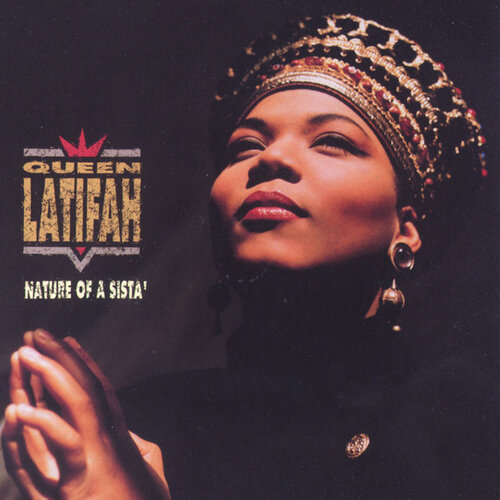
The early days of lockdown were a voyeur's wish come true, as the world's biggest pop stars invited you into their living rooms, kitchens and bathrooms to play some tunes (highlight: The Rolling Stones' Charlie Watts playing drums on his armchair). By the end of the year, the productions had become a little more ambitious.

In November, Dua Lipa's Studio 2054 set a new bar for livestreams, with two dozen dancers, gigantic Day-Glo hula hoops, even more gigantic glitter balls, a roller disco and a generous helping of special guests - from Kylie and Miley to Sir Elton John, harrumphing his way through Rocket Man

IN THIS PHOTO: Dua Lipa.

The concert cost $1.5m (£1.1m) and took five months to put together - but it more than made that sum back, with 284,000 ticket sales and streaming deals in India and China. In the end, the concert was seen by more than five million people worldwide.

"We'll definitely do it again," Dua's manager Ben Mawson told Rolling Stone. "Certainly for the rest of our artists, we'll do more."

But virtual gigs don't just make financial sense: Fans who can't afford to travel to big cities like London and New York can suddenly attend an exclusive show - and, because the audience is huge, tickets are more affordable (Dua's prices started at £7.50).

We can expect to see them become part of the regular tapestry of the music industry, even when concerts resume.

The second part of the article that I want to source from speculates when tours might return. It does seem that, even with some good news about vaccines, it will take a while to immunise people and see coronavirus cases fall sufficiently. Maybe we will not see big tours return until late this year:

Depending on who you ask, live music will be back by Easter, or maybe the summer, but it could be the end of the year. And even with a vaccine, it will be a while before tours can go back to normal.

While bands like Steps and Little Mix have announced arena shows for November, others, like Nick Cave, have already cancelled their 2021 tour plans.

Initially, at least, social distancing will be enforced at indoor venues, with enforced one-way systems to the bar and toilets.

Rapid turnaround Covid-19 tests at festival gates is another prospect, although the idea isn't foolproof. Other proposals include thermo scanners, spraying fans with a disinfectant "fog" as they enter a venue, and interactive wristbands that vibrate to indicate a lack of social distancing.

Ticketmaster has also been looking at whether it is possible to link digital tickets to your vaccine status or a negative Covid test through a smartphone app.

However, the company stressed it could not enforce such measures - which would be enacted at the discretion of the event organiser”.

That will come as a sobering blow for those who want to see live music very soon! Maybe intimate or slightly smaller gigs can resume because of the relative ease at which venue owners can screen ticket buyers regarding their COVID-19 status – or admitting people who have had two doses of a certain vaccine. The problem comes when you have to check and screen thousands of people – once more casting doubt on whether festivals can come back as soon as we’d hoped. Let us hope that we can enjoy some form of live music by the time the summer rolls around. After such a hard and quiet 2020 for live music, there is going to be an explosion of desire for that first taste of something approaching normality.

That sort of turns things to virtual and streamed gigs. I do not think, as I have said before, that this type of live performance will become the norm. That said, one did not really see too many of them in 2019; many artists have popularised streamed gigs at a time when they have not been able to get on the stage. Whilst streamed gigs are always at the mercy of technology and its unreliability, the ones I have seen covered and reviewed have been very professional and smooth. I think, until the summer at the very earliest, artists will continue with live-streamed gigs in place of tours. It will take a long time before bigger artists can tour the world safely; a more practical and realistic way of ‘touring’ is going to be through our screens. For many people, these streamed gigs provide an experience they might not have otherwise enjoyed. It can be costly travelling to venues and buying tickets so, at a reduced rate, one can enjoy something quite ambitious and spectacular. Dua Lipa’s Studio 2054 was one such event that got some great reviews and gave fans a taste, in some sense, of a bigger live gig. A lot of smaller artists have had to rely on more stripped-back streamed gigs but, with no travel involved, many have been able to provide more gigs to their fans than they usually would.

I think this year will be one of two halves. The reality until the summer is going to be virtual sets and performances where we are sat looking at a screen. I do think we will see artists emulate the sort of feats that the likes of Dua Lipa created - it will be interesting to see whether musicians find new ways to stream and device original concepts. Then, later this year, there will be a slow return to live music. There will be a sort of tiered system where socially distanced gigs can come back; then smaller venues may be able to open, before large venues and festivals think about reopening. It will be sad if festivals were postponed until next year, but they are in a tough position right now regarding making that impossible decision. If you are interested, I think you will be able to look back on some streamed/virtual gigs that happened last year. I think these types of performances will be prevalent for a few more months at least. I also think, as I have remarked before, that many artists will combine traditional gigs with live-streamed ones when things start to get back to normal. It will be good to see live music return in a way where people get together and bond but, when it comes to how we experience live music, we are going to have to get used to streamed and virtual gigs for a while longer. There are positives and negatives of this type of performance, but I think artists have adapted wonderfully in a very tough period. The most interesting thing will be seeing how musicians across the board take streamed live performances and…

PUSH them to new levels.

FEATURE: Music Technology Breakthroughs: Part Four: The Sony Walkman

FEATURE:


Music Technology Breakthroughs

IN THIS PHOTO: The Sony Walkman debuted in Japan in 1979/PHOTO CREDIT: Alamy 

Part Four: The Sony Walkman

___________

IN this feature…

I am highlighting technological breakthroughs in music. This can either be something to do with software and an advance that helped in terms of music production, or it can be a device or hardware that has changed how we listen to music. I have already talked about the iPod coming through in 2001. Today, I am spotlighting the Sony Walkman. I talked about this hugely important piece of music history in 2019 when celebrating the fortieth anniversary. I think, maybe, the Sony Walkman is the most important music device there has ever been. Some might say that is a gramophone but, as they are quite different, I am referring to how the Sony Walkman is portable and allowed one the chance to experience music that way. Although the Sony Walkman was quite expensive when it came to the U.K., I recall having one in the late-1980s/early-1990s; it was my gateway to the Sony Discman - that would be part of my world years later. I think people associate the Sony Walkman with being popular in the 1980s, but I knew a lot of people who had one in the 1990s. There is this retro value to owning one today. I can imagine an original Sony Walkman goes for a lot of money! I may feature the Sony Discman in a future article, but I think it was more unreliable than the Walkman equivalent; it often skipped and was a bit precarious when it came to playing C.D.s. The Sony Walkman, to me, revolutionised how the world listened to music; the fact that one could take an album and artist with them!

Before continuing on my thought, I want to bring in a couple of articles that discuss the history/legacy of the Sony Walkman. In 2014, The Verge gave a short history:

The first of Sony's iconic portable cassette tape players went on sale on this day, July 1st, back in 1979 for $150. As the story goes, Sony co-founder Masaru Ibuka got the wheels turning months before when he asked for a way to listen to opera that was more portable than Sony's existing TC-D5 cassette players. The charge fell to Sony designer Norio Ohga, who built a prototype out of Sony's Pressman cassette recorder in time for Ibuka's next flight.

After a disappointing first month of sales, the Walkman went on to become one of Sony's most successful brands of all time, transitioning formats over the years into CD, Mini-Disc, MP3 and finally, streaming music. Over 400 million Walkman portable music players have been sold, 200 million of them cassette players. Sony retired the classic cassette tape Walkman line in 2010, and was forced to pay a huge settlement to the original inventor of the portable cassette player, Andreas Pavel. But the name lives on today in the form of new MP3 players and Sony's Walkman app. They heyday of the Walkman may be over, with kids today baffled and disgusted by the relative clumsiness of cassettes. But the habit it spawned — listening to music wherever and whenever you want — is bigger than ever”.

I wonder why the Sony Walkman was so successful and practical, whereas the Sony Discman was flawed and did not provide the same convenience and quality? Certainly, I relied on my Sony Discman when I was growing up, but I found the Sony Walkman much more robust and durable. It seems a shame that we do not really have a modern equivalent of the Sony Walkman. There are modern iPod designs, but not the Sony Walkman as such – another reason why the originals are in-demand and selling for a big price! There is a sleeker new design which is available, but it seems very similar to how you would listen to music on a Smartphone – more like an iPod than a traditional Sony Walkman. I am talking more about something modern and multi-functional where playing a cassette is possible. As cassette sales were huge last year, there are clearly a lot of people who have a lot of love for the old-skool format. A redesign of the Sony Walkman would be great and prove very popular. Smartphones are fine, but I feel there is this desire for physical music and having that tangible aspect. The legacy and influence of the Sony Walkman is huge! The Irish Times described how one was afforded personal freedom regarding their music listening – and how there was stiff competition on the market soon enough:

The transistor radio started that shift. A decade before Masaru Ibuka, co-founder of Sony, instructed his staff to design a portable, playback-only stereo, kids were listening to T Rex and Mud on similarly sized plastic boxes. The Walkman gave them greater control.

It ushered in the compilation tape (nobody then called them “mixtapes”) and its use as a reliably ineffective seduction aid. Somewhere there is academic research proving that no woman has ever listened to all 20 tracks on any tape proffered by any eager suitor. It doesn’t matter if, using brief pieces from early Brian Eno recordings as stuffing, you filled the C-90 from the first tape leader to the last. Nobody cared that you’d given it a hilarious name and collaged a cover from last week’s NME. “Erm … What did I think of the Nipple Erectors track? It … had a great beat?”

The machine also advanced the notion of personal electronics as fashion. We’re not talking about the original TPS-L2 here. Retailing at a million pounds (well, plenty anyway), that first model had all the portability of a fridge freezer and all the design flair of a Trabant motorcar. The TPS-L2 actually came with a sling that allowed you to wear it like a satchel. It was the lovely, neat WM-2 that opened the long path towards YouTube videos in which maniacs “unbox” the latest iPhone. (In apparent tribute, there is now a video on that site of a restaged WM-2 unboxing.) The orange-padded headphones were as much a symbol of the age as the leg warmer or the vinyl tie. Never before had technology become an essential part of an era’s daywear.

The Sony Walkman fought its corner in a series of interlocked wars. In most territories, competitors had to name their reverse-engineered product a “personal stereo”, but, in German-speaking countries, courts concluded that “Walkman” had become the accepted generic term. This is why Hoover really would prefer you to call their most famous appliance a “vacuum cleaner”.

The rise of the CD forced Sony to develop the famously terrible Discman, a device that worked only a little better than strapping a turntable round your waist. There were MiniDisc versions. You can still buy an MP3 incarnation. But streaming on the smartphone ultimately annihilated the personal-stereo market”.

I wanted to salute a huge moment for music: in 1979, when the world became aware of this new breakthrough called the Sony Walkman. Its impact has resounded through the decades and, today, we take for granted the fact we can listen to music on the move. In the 1980s, it was a really new thing, and I can only imagine how excited people were (I was born in 1983)! I shall leave things there but, when it comes to music/listening hardware, there are few more important than…

THE Sony Walkman.