FEATURE: Spotlight: Cat Burns

FEATURE:


Spotlight

Cat Burns

___________

I have been a fan of Cat Burns’ music for a while now…

but, as she is being tipped by various sources for success in 2021, I think that it is time to put her in Spotlight. Her tracks, Fool in Love, and Go were among my favourite of last year. I love the soulfulness and richness of her voice and how Burns can produce these sumptuous and smooth vocals before raising the decibels and projecting so much power and urgency! One is helpless to resist the passion in her voice. Of all the newer artists coming through right now, I think I want an album from Cat Burns more than most. I am going to bring in a few interview with Burns from the last few years. She has definitely progressed as an artist since her earliest songs, but I think that immense quality and conviction was always there. Back in 2019, EUPHORIA. introduced an amazing teenage artists who, with one amazing E.P. under her belt, was primed for bigger things:

“At just 18 years old, Cat Burns is willing to put her real thoughts and feelings out there. She released her debut EP Adolescent at just 15 years old and was at number 11 on the iTunes singer/songwriter chart within 24 hours of its release. Hailing from Streatham, South London, Burns is ready to take the lessons she’s learned into the real world.

The emerging pop songstress deftly crafts conversational lyrics that cut right to the core of feelings that often get lost in miscommunication. The chill, vibey tracks juxtaposed against concise, blunt lyrics highlight what make Cat Burns an artist to watch. She smartly crafts songs where the meaning of her songs don’t disappear behind flowery metaphors; she means exactly what she says.

Cat Burns wisely navigates lyrics that are reflective of the impact that relationships can have on our perspectives. She’s garnered attention from the likes of Complex UK, Earmilk, and Hunger TV and has no intention of slowing down in the new year.

“So far I’ve released two singles, worked with some really cool producers, performed at many intimate venues, and I was also named MSG London’s up & coming artist of the month in October! This year I’ll be releasing lots of new music and hopefully get a support slot,” Cat tells us.

Watch this space”.

I am going to scatter in a few interviews as one can gleam quite a lot of different things about the amazing Cat Burns. Even though there is a lot of hype around Burns now – and I think 2021 will be her breakout year for her -, back in 2019 she was already getting noticed. I love this little snippet from London in Stereo, where they asked Burns a few quick-fire questions:

“The best venue I’ve played…

Definitely the Hammersmith Apollo when I was 11 for Britain’s Got Talent.

Earliest song you remember…

High School Musical – Breaking Free

Things that cheer me up…

Tv shows in particular Rick and Morty, any superhero film and seeing my friends for food or doing fun activities like mini golf or bowling!

If I could play a gig anywhere it would be…

Brixton 02 Academy

I think you should listen to…

This artist called Jvck James he’s amazing and doing something really amazing for UK R&B

If I could see anyone play live it would be…

Definitely Ariana Grande or Beyonce!”.

I think we may see that collaboration between Cat Burns and Ariana Grande happen very soon! It is clear that, with so much great music out there, Burns is capturing the wider attention. Cat Burns put out the E.P., Adolescence, in 2016; when she was being interviewed in 2019, she was preparing to launch her second E.P., Naïve. Featuring tracks like Sober, and Cheater, it is a phenomenal work! I want to bring in an interview from She Bops from 2019. Burns was asked about being a Black artist and young woman in the music industry:

 “If listeners could take away one message from your music, what would you want that to be?

Do what you want, and don’t do what you don’t want to do. My music isn’t aimed at any particular gender, but the songs that are coming out are definitely leaning towards empowering women.

Since you’ve brought up empowering women, what do you think about the representation of women in the music industry? Is there something you’d like to change?

I think the representation is okay, it needs to be better. There’s a concept that women aren’t allowed to speak for ourselves because if we do, then we aren’t nice. Men can do and say what they want, but women can’t. This needs to change.

What piece of advice would you give a young female musician looking to get into music?

I’d say make sure that you are sure that this is what you want/are meant to do. There are going to be many trials and tribulations, and you can get low. So, you need to have belief. Do many gigs, build contacts. It’s all about hard work, opportunities, and luck.

As a woman in the music industry, is there something that frustrates you about it?

It is difficult for me, especially as a black woman looking to go down the pop route because there are not many black British women doing that. And people are always surprised, and we get labelled as people who’d go into R&B or hip-hop”.

I am fascinated to see where Cat Burns goes this year and whether we will get an album. I don’t think another E.P. would be out of the question but, as we are not certain when artists can tour again, will see hold off on an album until things are a lot better? I want to bring in a final interview – this one from January of last year –, where we learn more about Burns:

“WHEN DID YOU FIRST REALISE THAT YOU WANTED TO PURSUE MUSIC FULL TIME?

I think I realised as soon as I joined the Brit School! I was 14 and after a few lessons and assemblies my dream didn’t seem that far out of reach anymore.

WHAT’S YOUR PROUDEST CAREER MOMENT SO FAR?

It was actually back in 2017 when I put on my own headline gig, all my friends and family showed up and were singing all the words. I really felt the love that night. It will always be special for me .

WHO DID YOU LISTEN TO GROWING UP?

I grew up listening to gospel, from Kirk Franklin to Jonathan McReynolds. I also grew up listening to Tori Kelly, Ed Sheeran & Stevie Wonder.

It is interesting that, in that interview, she was asked about what her dream collaboration would be - and she said Tori Kelly. It seems Burns is keen to work with a number of different artists, so it will be interesting to see how many collaborations happen in 2021. I shall leave things there. However, do go and check out Cat Burns’ incredible music on Spotify; follow her on social media and keep your eyes peeled. The exceptional artist/songwriter from South London is a graduate from the prestigious BRIT School. At sixteen, she was chosen as BBC Radio 1XTRA's Track of the Week - being described by Jamz Supernova as an exciting new artist delivering “Meaningful Pop, with an Urban Folk/Singer-Songwriter twist”. Since then, Burns has gone from strength to strength and I think she has the promise to be massive! This year will be a very exciting one for her so, if you have not discovered Cat Burns, then make sure you…

CORRECT that now!

_______________

Follow Cat Burns

FEATURE: More Than a Woman: Looking Back at Aaliyah’s Eponymous Album – and the Hope It Will Appear on Streaming Sites Soon

FEATURE:


More Than a Woman

cvvv.jpg

IN THIS PHOTO: Aaliyah in 2000 

Looking Back at Aaliyah’s Eponymous Album – and the Hope It Will Appear on Streaming Sites Soon

___________

IT is hard to believe that the iconic…

Aaliyah died almost twenty years ago. On 25th August, 2001, she died in a plane crash having finished the filming for her final single, Rock the Boat. It was such a tragic accident and huge loss for the music industry. Aged only twenty-two, there is no telling how far she could have gone and what she would have achieved in the intervening years! In terms of her influence, I want to take from Wikipedia – as we discover just how far and wide her legacy and brilliance has spread:

“Aaliyah has been credited for helping redefine R&B, pop and hip hop in the 1990s, "leaving an indelible imprint on the music industry as a whole." According to Billboard, she revolutionized R&B with her sultry mix of pop, soul and hip hop. In a 2001 review of her eponymous album, Rolling Stone professed that Aaliyah's impact on R&B and pop has been enormous. Steve Huey of AllMusic wrote Aaliyah ranks among the "elite" artists of the R&B genre, as she "played a major role in popularizing the stuttering, futuristic production style that consumed hip-hop and urban soul in the late 1990s." Critic Bruce Britt stated that by combining "schoolgirl charm with urban grit, Aaliyah helped define the teen-oriented sound that has resulted in contemporary pop phenom's like Brandy, Christina Aguilera and Destiny's Child".

Described as one of "R&B's most important artists" during the 1990s, her second studio album, One in a Million, became one of the most influential R&B albums of the decade. Music critic Simon Reynolds cited "Are You That Somebody?" as "the most radical pop single" of 1998. Kelefah Sanneh of The New York Times wrote that rather than being the song's focal point, Aaliyah "knew how to disappear into the music, how to match her voice to the bass line", and consequently "helped change the way popular music sounds; the twitchy, beat-driven songs of Destiny's Child owe a clear debt to 'Are You That Somebody'.” Sanneh asserted that by the time of her death in 2001, Aaliyah "had recorded some of the most innovative and influential pop songs of the last five years.” Music publication Popdust called Aaliyah an unlikely queen of the underground for her influence on the underground alternative music scene; the publication also mentioned that the forward-thinking music Aaliyah did with Timbaland and the experimental music being made by many underground alternative artists are somewhat cut from the same cloth. While compiling a list of artists that take cues from Aaliyah, MTV Hive mentioned that it's easy to spot her influence on underground movements like dubstep, strains of indie pop, and lo-fi R&B movements. Erika Ramirez, an associate editor of Billboard, said at the time of Aaliyah's career "there weren't many artists using the kind of soft vocals the ways she was using it, and now you see a lot of artists doing that and finding success," her reasoning for Aaliyah's continued influence on current artists. She argued that Aaliyah's second album One in a Million was "very much ahead of its time, with the bass and electro kind of R&B sounds that they produced", referring to collaborators Timbaland and Missy Elliott and that the sound, which "really stood out" at its time, was being replicated. With sales of 8.1 million albums in the United States and an estimated 24 to 32 million albums worldwide, Aaliyah earned the nicknames "Princess of R&B" and "Queen of Urban Pop", as she "proved she was a muse in her own right". Ernest Hardy of Rolling Stone dubbed her as the "undisputed queen of the midtempo come-on". She has also been referred to as a pop and R&B icon for her impact and contributions to those respective genres”.

The main point of this feature was to both discuss the influence of Aaliyah and remember her almost twenty years after her death but, as her eponymous album was released on 7th July, 2001, many will be remembering it ahead of its twentieth anniversary. Her third studio album, it arrived five years after the brilliant One in a Million. I am glad that Aaliyah got to release another album before her death; she would have heard and seen how the Aaliyah album was received. Many may disagree, but I think Aaliyah is her strongest album. It is more confident than anything she put out before and, before I introduce a couple of positive reviews, I hope that Blackground, and Virgin America release the album on vinyl as an anniversary commemoration. One can get Aaliyah on vinyl, but copies can be extremely expensive - and I don’t think you can get a new copy on vinyl. It is such an important and stunning album, so it is a shame that it has such a limited release. One of the biggest losses is the fact Aaliyah is not on Spotify and other streaming services. One can find some of her music on streaming platforms; Aaliyah remains a notable absentee. Despite the fact that such an important artist has very little representation on streaming sites, there is a small glimmer of hope that she may be on there this year.

Back last August, there was an announcement that Aaliyah’s music may be more widely available in time:

“Loyal Aaliyah fans who’d hope to stream her music on Spotify, Google Play, or Apple Music have largely been out of luck since her untimely passing in 2001.

But it seems like our prayers have finally been answered, since the catalog of our beloved “babygirl” is finally coming to streaming services.

Her estate made the announcement via her posthumous Twitter account, “To our loyal fans: We are excited to announce that communication has commenced between the estate and various record labels about the status of Aaliyah’s music catalogue, as well as its availability on streaming platforms in the near future. Thank you for your continued love and support. More updates to come!”

While it’s not a guarantee that the music will be up and running anytime soon, it’s certainly a glimmer of hope for fans who want to keep the singer’s legacy alive.

Aaliyah released three hugely successful albums during her lifetime: 1994’s Age Ain’t Nothing but a Number, 1996’s One in a Million, and 2001’s Aaliyah. With the exception of her first album — which was recorded under Jive Records — Aaliyah’s music has been missing from streaming services, due to her uncle Barry Hankerson, who used to run the now-defunct label Blackground Records.

Keeping Aaliyah’s music off the biggest streaming services isn’t just a matter of legacy; it’s also a way to introduce a new generation to the music of the former pop star”.

2001 was such a tough year for many reasons, but I was especially moved by the death of Aaliyah. She had such promise and potential and, having released a career-best album just over a month before her death, that was such a blow. I think many of the album tracks are available on YouTube, so I would encourage people to listen to those songs and understand just how strong and phenomenal Aaliyah is as a body of work. I want to finish with a couple of reviews. Pitchfork looked back on the album in 2019 – where they made some interesting observations:

“Whether you believe in the afterlife or not, it’s easy enough to picture Aaliyah in heaven. The video for “Rock The Boat,” the 2001 single that would be her last, looks as if it were beamed down from one of the mythical seven heavens: gently lapping water, the flare of a bright sun, women dressed in all white. She seems peaceful, softer than in previous clips. In August, after wrapping her scenes in the Bahamas, Aaliyah boarded a flight home. The Cessna twin-engine crashed moments after takeoff, killing the singer and eight others. She was 22. In life, Aaliyah was often described by friends and collaborators as angelic; in her death, that image persists.

Just weeks earlier, she had released her third album, Aaliyah, a well-received collection of songs that mapped her personal growth during the five years since her second full-length, 1996’s One In A Million. During that hiatus, she’d taken an interest in acting, starring in a couple of films and lining up others, including two upcoming Matrix movies. But in between being on set during the day and in the studio at night, Aaliyah also had a lot to reckon with.

PHOTO CREDIT: Arnold Turner/WireImage 

Aaliyah took that many steps further. By the time she began working on the album in 1998, she had developed an interest in both the experimental and traditional, and her collaborators on the album—the Supafriends as well as producers signed to her family’s Blackground record label—were up to the task. She veers wildly, but cohesively, between the futuristic, triple-time experimentation of singles like “We Need A Resolution” and “More Than A Woman” and the throwback soul of “Never No More” and “I Care 4 U.” It was Aaliyah’s voice that strung it all together. Her falsetto had earned an edge, and her multi-part harmonies, arranged ingeniously, added grace and texture. Even Timbaland’s grating, awkward raps and ad-libs are softened.

…Aaliyah has been a reference for Solange, and others, elsewhere, too: The multiple-part harmonies that have become the younger Knowles’s signature were in fact once the signature of Aaliyah, most in focus on, Aaliyah. On what would have been Aaliyah’s 36th birthday, Frank Ocean shared his own take of the Isley Brothers’ “At Your Best,” which she’d first covered more than 20 years earlier, in 1994. She’d updated it with a spare, solemn almost-whisper, and Ocean’s version, which was eventually given a proper release on Endless, draws equally from Aaliyah’s falsetto as from the Isley Brothers’ original. There are traces of her influence elsewhere, too; the layered harmonies and gentle melodies of Beyoncé’s “I Miss You,” co-written by Ocean, could easily have been recorded first, albeit with more restraint and whimsy, by Aaliyah. Understandably, among the most common refrains about the singer was that she was ahead of her time”.

It is good that, nearly twenty years since Aaliyah died, her crowning achievement might get be available for streaming. I would love to hear vinyl release with extra tracks and memories from those who knew her and worked alongside her in the linear notes. In 2012, AllMusic tackled an incredible album:

“Aaliyah waited nearly five years to deliver her third album, but considering that she was essentially growing up -- it was the equivalent of spending time in college -- when she came back with an eponymous record in the summer of 2001, she came back strong. Aaliyah isn't just a statement of maturity and a stunning artistic leap forward, it's one of the strongest urban soul records of its time. Where such peers as Macy Gray and Jill Scott work too hard to establish their ties with classic soul, Aaliyah revels in the present, turning out a pan-cultural array of sounds, styles, and emotions. This sound is entirely unfamiliar -- part of the pleasure is how contemporary it sounds -- but she sounds just as comfortable within the sonicscapes of Timbaland as Missy Misdemeanor Elliott and, possibly, less self-conscious. Aaliyah never oversings, never oversells the songs -- this comes on easy and sultry, and there's a lot of substance here, in terms of the songwriting and the songs themselves. Urban albums rarely come any better than this, and there haven't been many records better than this in 2001, period”.

I miss Aaliyah terribly, but I was keen to celebrate her brilliance rather than mourn the fact that we lost her in 2001. More than a mere Pop artist, her impact and legacy extends across multiple genres and styles! She has inspired so many other musicians and, the more I listen to her work, the more I get this impression of a young woman blossoming, experimenting and challenging herself. I guess the tragedy is that we may have seen even bigger and better albums from her after 2001. Earlier this week, there was an update from Aaliyah’s estate regarding updates:

“To our loyal fans: We hear you and we see you,” a new note reads. “While we share your sentiments and desire to have Aaliyah’s music released, we must acknowledge that these matters are not within our control, and, unfortunately, take time. Our inability to share Aaliyah’s music and artistry with the world has been as difficult for us as it has been for all of you”.

As we remember Aaliyah twenty years after its release and the amazing person who gave it to us, it is very clear that we were all…

LUCKY we had her in the world.

FEATURE: Vinyl Corner: The Kinks - The Kinks Are the Village Green Preservation Society

FEATURE:


Vinyl Corner

The Kinks - The Kinks Are the Village Green Preservation Society

___________

IT is not often that I head back to…

PHOTO CREDIT: Barrie Wentzell

the 1960s when it comes to inspiration from Vinyl Corner so, for this edition, I have selected The Kinks’ The Kinks Are the Village Green Preservation Society. Released in November 1968, It was the last album by the original quartet (Ray Davies, Dave Davies, Pete Quaife, Mick Avory - as bassist Quaife left the group in early-1969). It is amazing to think that The Kinks Are the Village Green Preservation Society was not a success upon its release! Now, it considered one of the band’s essential albums but, back then, there was a bit of a mixed reaction. Maybe it was because the songs are not as raw and instant as the likes of You Really Got Me. That said, Something Else by the Kinks of 1967 sold poorly in the U.K. – it was released in January 1968 in the U.S. and it is another genius album. Listening back to The Kinks Are the Village Green Preservation Society, and I cannot fathom why it was not a massive success as the songwriting is so rich and engaging! I think this was Ray Davies (the band’s lead songwriter) near his very peak. I would encourage people to buy the album on vinyl, as it is really food value; one of the finest albums from the late-1960s. Ray Davies did not write the songs to fit a theme as such, but a certain commonality develops in his lyrical interests of the time.

The main theme (of the album) concerns the passing of old-fashioned English traditions. Maybe the Englishness of the lyrics alienated U.S. listeners and meant that the album was not as successful there as it could have been. At the time of writing The Kinks Are the Village Green Preservation Society, Davies was very isolated and in quite a dark place. Perhaps the lyrics reflect an escape or fantasy; a chance to immerse himself in something more idyllic or safe. I guess, in 1968, Rock was dominating and bands like The Rolling Stones were being favoured. That would have been the case for American audiences so, when presented with an album that was more pastoral and inventive, they were taken by surprise. Pitchfork highlighting that in their review of The Kinks Are the Village Green Preservation Society back in 2004:

“It takes a Village Green Preservation Society to love The Kinks.

The problem facing The Kinks when they released The Village Green Preservation Society in late November 1968 wasn't merely the competition-- Jimi Hendrix's Electric Ladyland, Led Zeppelin's debut, and the Rolling Stones' Beggars Banquet offered plenty-- but that this subtle, funny, surreal, and at times almost tender record could have been recorded on another planet. During the summer of 1968, stateside fans were hooked on a high-intensity diet that had them jonesing for aggressive, overstated fare like "Street Fighting Man" and "You Shook Me" and "Communication Breakdown". The disconnect between The Kinks and the rock world's rapidly narrowing palette could hardly have been more pronounced. Compare the Stones' bombastic, urban "Sympathy for the Devil" with understated work like "Village Green", bouncing along like a horse and buggy as Ray Davies paints the landscape: "Out in the country, far from all the soot and noise of the city..."

Critics praised the album, the public ignored it, and Davies-- surveying the scene-- asserted that it wasn't created for public consumption. Intentions aside, The Kinks simply moved on, leaving small knots of fans to pledge secret allegiance to Village Green. However, as years passed and the weather changed, its following grew, and finally, one day, the verdict reversed and the album was touted as a masterpiece. Ironically, it might have happened sooner had the band not been so prolific up through the late 80s.

Intricately sketched and brimming with unusual arrangements, The Village Green Preservation Society was the first clear look at an iconoclastic, imaginative and sometimes brilliant artist as he came into his own. Audiences used to sizing up work on a scale created for rock gods and counter-culture icons were forced to consider this album as a piece of conceptual art. The Lennon-McCartney/Jagger-Richards duos towered over and shaped the sensibilities of a vast army; Davies explored a deeply personal world that confounded fans even as it provoked their curiosity”.

I really love The Kinks Are the Village Green Preservation Society, and I feel Davies’ songwriting was among the very best in the world. One listens to the songs from that album nearly fifty-three years later and they do resonate and strike a chord. Maybe it is because of what is happening in the country at the moment and how people would like to get back to a bygone time…you can put on The Kinks Are the Village Green Preservation Society and it provokes emotions.

I want to bring in one more review before wrapping things up. This is what AllMusic wrote when they tackled The Kinks Are the Village Green Preservation Society:

“Ray Davies' sentimental, nostalgic streak emerged on Something Else, but it developed into a manifesto on The Village Green Preservation Society, a concept album lamenting the passing of old-fashioned English traditions. As the opening title song says, the Kinks -- meaning Ray himself, in this case -- were for preserving "draught beer and virginity," and throughout the rest of the album, he creates a series of stories, sketches, and characters about a picturesque England that never really was. It's a lovely, gentle album, evoking a small British country town, and drawing the listener into its lazy rhythms and sensibilities. Although there is an undercurrent of regret running throughout the album, Davies' fondness for the past is warm, making the album feel like a sweet, hazy dream. And considering the subdued performances and the detailed instrumentations, it's not surprising that the record feels more like a Ray Davies solo project than a Kinks album. The bluesy shuffle of "Last of the Steam-Powered Trains" is the closest the album comes to rock & roll, and Dave Davies' cameo on the menacing "Wicked Annabella" comes as surprise, since the album is so calm. But calm doesn't mean tame or bland -- there are endless layers of musical and lyrical innovation on The Village Green Preservation Society, and its defiantly British sensibilities became the foundation of generations of British guitar pop”.

Go and listen to The Kinks Are the Village Green Preservation Society and, if you can, buy the album on vinyl. It is a classic album from one of the greatest bands we have ever seen. Even though the album did not get the acclaim it deserved back in 1968/1969, The Kinks Are the Village Green Preservation Society has been featured in lists of the finest albums ever. At such a stressful and strange time, spin this magnificent album and…

EXPLORE its wonderful world.

FEATURE: The Lockdown Playlist: Times Like These: The Post-Inauguration Mix

FEATURE:


The Lockdown Playlist

IN THIS PHOTO: The United States of America’s President-elect, Joe Biden/PHOTO CREDIT: Win McNamee/Getty Images

Times Like These: The Post-Inauguration Mix

___________

AFTER the world saw…

the inauguration of the forty-sixth President of the United States, Joe Biden, yesterday, I was inspired to put together a special Lockdown Playlist. Not only are there songs from artists who played at his inauguration (including Lady Gaga, Jennifer Lopez, New Radicals, and Katy Perry) or in his honour (Foo Fighters, and Bruce Springsteen among them), but there are some songs themed around some of the policies he is bringing in – in the sense he is reversing a lot of the mistakes outgoing President Donald Trump made (among others, Biden moved to reinstate the U.S. to the Paris climate agreement). Some tracks point towards hope and a more positive direction, whilst others are original recordings of songs some artists performed yesterday at the inauguration/a salute to Joe Biden. Here is a mixture of songs that welcomes in a President that has the popularity and ability to lead America…

IN the right direction.

FEATURE: Golden Year: David Bowie’s Station to Station at Forty-Five

FEATURE:


Golden Year

David Bowie’s Station to Station at Forty-Five

___________

I can’t pretend that I will be able to…

 IN THIS PHOTO: David Bowie in concert at Wembley in May 1976/PHOTO CREDIT: Getty/Hulton Archive

do full justice to David Bowie’s 10th studio album, Station to Station, ahead of its forty-fifth anniversary on 23rd January. I know I have produced quite a few Bowie features over the past couple of weeks. The world marked his seventy-fourth birthday on 8th January and, two days later, we remembered him five years to the day since he died. I think it is important to celebrate one of Bowie’s best albums – also one that, I think, remains fairly underrated by some. Bowie released so many genius albums, but I think that there are people that put inferior albums (of his) ahead of Station to Station. That said, many have shown it love through the years. In various polls, Station to Station has come pretty high in the rankings. Far Out Magazine ranked Station to Station at number-seven; Ultimate Classic Rock put it at four, whilst Rolling Stone placed it at number-three. I will bring in a couple of reviews and articles but, first, a little background regarding one of Bowie’s true masterpieces. Station to Station was the vehicle for his performance persona, the Thin White Duke. Recorded at Cherokee Studios in California, Bowie was heavily dependent on drugs, especially cocaine (his memories of the production were spotty in later years). I think Bowie was keen to get out of America and back to Europe. With six tracks and co-production (with Bowie) from Harry Maslin, Station to Station was part of a brilliant golden run for Bowie.

His previous album, 1975’s Young Americans, is one of his more underrated albums and, whilst not as strong as Station to Station, the Soul and R&B-influenced songs are among the best of his career. Bowie would keep his brilliant streak going with 1977’s Low, and "Heroes" – he really didn’t drop a step for a very long time! This was a fertile and productive period for the icon. If Young Americans was Bowie more influenced by the U.S. rather than Europe, I think Station to Station was the transition where Bowie kept the influence of R&B and Soul, but he was also being inspired by German bands like Kratwerk and Neu! His next album, Low, was the start of his famous ‘Berlin Trilogy’ – followed by "Heroes", and Lodger (1979). The brilliant thing about Station to Station is that its songs are accessible and complicated at the same time. Every track on the album can be absorbed and appreciated, but there are so many different styles and layers. It is a masterclass of ease and sophistication. Even if Bowie does not remember large chunks of recording the album, it is evident that Station to Station was the master firing on all cylinders! Backing up to pre-production, and it was during the filming The Man Who Fell to Earth when Bowie created the Thin White Duke – he even started a pseudo-autobiography called The Return of the Thin White Duke. It seems like Bowie had a lot of freedom when it came to creating the look for his character on The Man Who Fell to Earth.

The character of the Thin White Duke consisted Bowie dressed in white shirt, black trousers and waistcoat; a being that was quite hollow who, though he sang about love, inside he felt nothing. That description, combined with Bowie’s intense cocaine habit at the time, would suggest an album that is pretty cold and sterile. Instead, I think Station to Station has incredible warmth, creativity and nuance. Golden Years, and TVC15 (my favourite Bowie song) are among his very best cuts. With three tracks on each side – Station to Station, Golden Years, and Word on a Wing on the first; TVC15, Stay, and Wild Is the Wind (a song written by Dimitri Tiomkin and Ned Washington for the 1957 film, Wild Is the Wind) on the second -, it is an album that is balanced yet sprawling; focused yet scattershot. I want to finish off with a couple of reviews. When they approached the album in 2018, this is what Secret Meeting had to say:

“Opening with the droning rumble of a train clattering against its tracks, the title track opens the album in truly epic fashion and the first minute is Bowie’s homage to one of his fascinations of the time – the industrial sound of early 70’s German machine music, also known as Krautrock, and particularly the bands Neu! and Kraftwerk. Then enters Bowie, announcing his presence with the croon of the nonpareil lyrics, ‘The return of The Thin White Duke, throwing darts in lovers eyes’ over its motorik drums which grip the listener for the next ten minutes. A track that transcends genre, blasting away the clean, crisp pop of his previous records and lurching into a futuristic oasis as he announces, ‘The European cannon is here’.

IN THIS PHOTO: David Bowie in 1976/PHOTO CREDIT: Neil Zlozower

After the assault of the title track, Golden Years is a blend of the ‘plastic soul’ sound produced on his previous record, Young Americans, and rides on the crest of a wave of funk as an infectious loop commands the listener to move to the music. ‘Don’t let me hear life is taking you nowhere… run for the shadows,’ he sings over the tightly constrained groove. With his voice surpassing anything he has put to tape previously, the song engrosses us in all of its subtle nuances and we are seduced by its effortlessly suave sound.

The hymn like Word on a Wing gently announces itself and is in danger of being engulfed by the assault of the first two tracks. However, instead it stands out on an album of highlights as a song of unparalleled beauty. It is the track to which I constantly return to daily. Struggling with his demons and searching for his place within the world, he engages in conversation with God – ‘Lord, I kneel and offer you my word on a wing/And I’m trying hard to fit among your scheme of things’. It is both poignant and uplifting in equal measures. The music is gorgeous, encasing the listener in its charm, while the lyrics and passion with which they are delivered leave a haunting echo. Bowie himself described the song and this period while living in LA as the darkest, and the song is a clear cry for help as he battled to stay alive on his extreme diet of red peppers, milk and cocaine. Struggling with his thoughts, purpose and existence, Bowie delivers a song that is flawless in every way.

Station to Station continues with the propulsive funk of TVC15 and the most ‘pop’ song on the record, Stay. These moments provide the perfect platform to showcase the talents of the incredible musicians Bowie had surrounded himself with who were the perfect vehicle for his creative genius. Then finally, the record closes with another majestic vocal performance; the album’s sole cover version, Wild is the Wind. And the ballad, most famously recognised by Nina Simone’s 1966 version, brings this journey of sound and imagination to a close.

This record is my antidote to the increasingly desperate situation in which we find ourselves in 2018. It is 37 minutes and 54 seconds of heartfelt contemplation, struggle with addiction and the musings of fate. A mixtape that blends the industrial bleeding sounds of krautrock with incredible funky grooves, a ferocious cacophony of guitars, infectious poptastic moments and majestic poignant balladry. It is Bowie at his blockbuster best, and I couldn’t think of anyone but The Thin White Duke to play the lead role”.

I will finish off soon, but I just want to highlight AllMusic’s positive review of Station to Station:

“Taking the detached plastic soul of Young Americans to an elegant, robotic extreme, Station to Station is a transitional album that creates its own distinctive style. Abandoning any pretense of being a soulman, yet keeping rhythmic elements of soul, David Bowie positions himself as a cold, clinical crooner and explores a variety of styles. Everything from epic ballads and disco to synthesized avant pop is present on Station to Station, but what ties it together is Bowie's cocaine-induced paranoia and detached musical persona. At its heart, Station to Station is an avant-garde art-rock album, most explicitly on "TVC 15" and the epic sprawl of the title track, but also on the cool crooning of "Wild Is the Wind" and "Word on a Wing," as well as the disco stylings of "Golden Years." It's not an easy album to warm to, but its epic structure and clinical sound were an impressive, individualistic achievement, as well as a style that would prove enormously influential on post-punk”.

On 23rd January, many will share their memories and favourite tracks from Station to Station. I can’t recall when I first heard the album, but I can remember being struck by it at once! There is a forty-fifth anniversary ‘bricks and mortar’ vinyl available from 22nd January that sounds awesome! Some may argue as to which David Bowie album is the best but, in my opinion, Station to Station is the greatest album…

HE ever put out.

FEATURE: Out with the New, In with the Old: Are Classic Artists Creating a Streaming Headache for Newer Acts?

FEATURE:


Out with the New, In with the Old

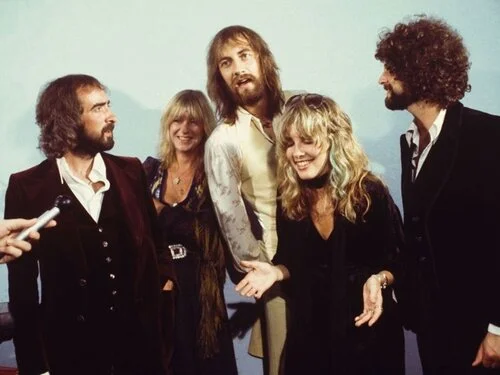
IN THIS PHOTO: Fleetwood Mac in 1975/PHOTO CREDT: Polaris

Are Classic Artists Creating a Streaming Headache for Newer Acts?

___________

THERE is a lot to tackle and discuss…

cccc.jpg

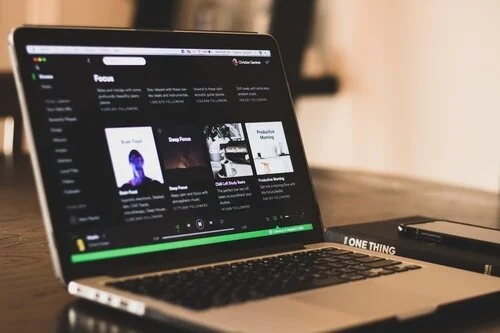
 PHOTO CREDIT: @sgcreative/Unsplash

when it comes to streaming because, over the past few weeks and months, there has been debate and discussion regarding its ethics and the way artists are paid. I think that there is no easy solution, and we will see debate and consultation continue for a long while. Not only is there an issue with how artists are paid in general. What about artists putting their music on to Spotify or other sites when they have to compete with the popularity of larger artists. Maybe nostalgia is playing a part in why many classic songs are increasing in popularity, but it does seem unfair that, on top of anything, artists who do not get millions of streams have this sort of competition. This BBC article explains a problem at hand:

“Up-and-coming pop stars are facing "massive competition" from classic bands like Queen and the Beatles due to streaming, MPs have been told.

Any artist at the start of their career has "got the last 50 years of the music industry to compete with," Peter Leathem of rights society PPL said.

"Ultimately, you've got some of the most talented people in our society [who] are struggling to make a living."

He was speaking to a parliamentary inquiry into the impact of streaming.

Last year, three of the UK's top 10 best-selling albums were Greatest Hits collections from artists whose career peak came in the 1970s - Queen, Elton John and Fleetwood Mac.

At the same time, only one British debut album - KSI's Dissimulation - sold the 60,000 copies required to be awarded a silver disc.

IN THIS PHOTO: KSI 

Leathem said increased competition for fans' attention on streaming platforms like YouTube, Spotify and Apple Music meant that "everyone is fighting" for a share of a "smaller pie"”.

Addressing Shah's situation, Joseph said: "It is true to say that there are some artists who have been particularly badly hit by the pause in the live business because they've got a relatively small fan base, but a very passionate fan base, that they play live to very often.

"Unfortunately, it's not possible and it's not logical that [live income] would be instantly replaced by the money that they make from their recordings."

He went on to suggest that streaming services could adopt a user-centric payment system, where "if you just listen to Nadine Shah this month" your entire subscription fee would go directly to her "rather than being diluted" by more mainstream artists.

Joseph's comments may raise eyebrows in the music industry, as the "big three" record labels were largely thought to be against the concept of user-centric payments.

The executive went on to say that "streaming is not perfect yet" and that he had "tons of ideas of how to improve streaming for the artists".

Among his suggestions were the introduction of sleeve notes, and the ability for users to opt out of data tracking, which is used to suggest songs you might like”.

 IN THIS PHOTO: Nadine Shah has written an article stating how streaming platforms pay very little to newer/less mainstream artists like her

It does seem rather strange that many fresh and hungry artists are not making a lot of money from streaming sites because long-gone or decades-old artists – who are not releasing new music – are taking a big share of the revenue. Of course, if people are playing their songs then these artists deserve payment, but one wonders how much they need that additional revenue. In many cases, that artist is no longer with us or they have their affairs handled by an estate. I guess it boils down to whether upcomers are promoted in the same way as legendary artists, and whether there is too much emphasis on the biggest mainstream artists – whereas everyone else has to struggle to be heard and streamed. It is hard to say how one would counteract the issue regarding older acts taking something from new artists. Do we remodel things so that these classic artists get less per stream or there is a limit to how much they can make? Maybe it is not just about money but the way people are using streaming services. I am guilty of falling back on childhood sounds and songs I am familiar with. It is comforting in a hard time. Whilst I would not want this taken away, I do feel like newer artists are losing out.

 PHOTO CREDIT: @eddybllrd/Unsplash

Now that most are not playing gigs or earning the same they would have done pre-pandemic, streaming money is more important than ever. I feel sorry for artists who are just coming through that are struggling to make ends meet because their music cannot generate huge money on streaming platforms. Not every big artist is feeling the benefit of streaming payments. Everyone from Mick Fleetwood to Neil Young have sold their publishing rights and earned some easy money. I don’t think it is as simple as saying that older artists are responsible for newer artists missing out or that streaming sites are not doing enough to highlight upcoming musicians. I do feel like an overhaul and reassessment of streaming payments and the current business model needs to occur. Let’s hope that change comes later in the year and the discussions taking place urge governments and those in charge of streaming sites to see that things as they need to be tackled. I don’t think one should feel guilty about listening to larger artists through fear they are depriving smaller acts, but I would urge them to spend some listening time with these musicians and give some time to them. It will take larger change and movement so that we can go from where we are now to a landscape where artists struggling now can make a decent amount from streaming. A small percentage of artists are making a lot of money, whereas many more are not able to pay rent or bills. One cannot completely blame streaming services, but I do feel that labels are getting too much of a cut whereas artists and songwriters get a very small amount of what a song makes through streaming. There is hope for change and restructure, and we all hope that this happens…

qqqq.jpg

 PHOTO CREDIT: @napender/Unsplash

BEFORE too long.

FEATURE: The Lockdown Playlist: Songs from Great Albums Turning Five This Year

FEATURE:


The Lockdown Playlist

Songs from Great Albums Turning Five This Year

___________

EVEN though a fifth anniversary…

seems like an insignificant one, I think it is important to highlight some great albums turning five this year. 2016 was a sensational one for music - I think it might be the best year for music of the 2010s. To send a nod to the best albums of that year, this Lockdown Playlist is packed with gold. I think an album’s fifth anniversary is an important event, so it has been great compiling these songs. If you have not heard some of the albums below then go and check them out, as I can provide high recommendation. Among the anniversary-related Lockdown Playlists I have been putting together, it has been a treat spotlighting…

AMAZING albums from 2016.

FEATURE: From Whale Song to a Suicide Note… Back Inside Kate Bush’s The Kick Inside

FEATURE:


From Whale Song to a Suicide Note…

Back Inside Kate Bush’s The Kick Inside

___________

THE will reason I am coming back to…

Kate Bush’s 1978 debut album, The Kick Inside, is that it turns forty-three on 17th February. It is my favourite album ever and, more and more, I think it needs to be reappraised. I have spoken about this before but, when people review and assess The Kick Inside, they tend to provide praise - but they also say that Bush would go on to do better work. Maybe this is true, though that does seem to be a rather dismissive way of highlighting a very important album. I will bring in a couple of reviews for The Kick Inside but, the more that I listen, the more I get from the album. One can spend hours discussing Kate Bush’s debut single, Wuthering Heights, and how unusual it is. The track reached number-one, and it is seen as one of the most impressive and loved debut singles ever. Watching the video for that song was my introduction to Kate Bush. I was captivated by something so unused to what I was listening and watching as a child! Throughout the album, there is so much variety and brilliance. The other U.K. single, The Man with the Child in His Eyes, is a song Bush wrote when she was thirteen – she recorded it at the age of sixteen. I admire the bravery and confidence of Bush’s lyrics and how the language she employs is so far removed from the conventions of Pop music in 1978. When The Kick Inside arrived that year, it must have taken people by surprise!

There has been criticism that Bush’s voice is divisive and quite extreme through the album. I think a lot of people are basing that off of Wuthering Heights and the fact Bush heightened her voice for dramatic effect. Listen to a song like The Saxophone Song – recorded at the same time as The Man with the Child in His Eyes – and Bush’s voice is quite deep and mature. There is a whole cast of vocal characters to be heard on The Kick Inside. Bush’s ability to layer vocals and create these different personas is amazing! Although her compositions and sonic experimentations would become bolder in time, I think the relative simplicity of the music is not a negative. With musicians like Ian Bairnson – whose guitar solo at the end of Wuthering Heights is a highlight -, David Patton, and Duncan Mackay providing solidity and experience, The Kick Inside is a compelling and engrossing listen! I think it is Bush’s imagination and originality that defines the album. From the incredible whale song that opens the album (on Moving), to the suicide note-like title track that ends the album, one is stunned by the lyrics and how arresting they are. Whether singing passionately about love on Feel It, or L'Amour Looks Something Like You, synchronicity and menstruation on Strange Phenomena, or incest and suicide on The Kick Inside, this was phenomenal songwriting from a teenager on her debut album!

I feel, forty-three years after its release, the album is inspiring artists still. I have heard of quite a few new acts being compared to Kate Bush and, whilst one hears elements of various albums from Bush in their music, I think The Kick Inside is a definite source of inspiration. It is such a beautiful record to immerse yourself in that reveals new layers and pleasures every time you hear it. I want to finish by bringing in a couple of reviews. When AllMusic reviewed The Kick Inside, they remarked the following:

“Kate Bush's first album, The Kick Inside, released when the singer/songwriter was only 19 years old (but featuring some songs written at 15 and recorded at 16), is her most unabashedly romantic, the sound of an impressionable and highly precocious teenager spreading her wings for the first time. The centerpiece is "Wuthering Heights," which was a hit everywhere except the United States (and propelled the Emily Brontë novel back onto the best-seller lists in England), but there is a lot else here to enjoy: The disturbing "Man with the Child in His Eyes," the catchy rocker "James and the Cold Gun," and "Feel It," an early manifestation of Bush's explorations of sexual experience in song, which would culminate with "Hounds of Love." As those familiar with the latter well know, she would do better work in the future, but this is still a mightily impressive debut”.

For those who feel Bush created much better albums and The Kick Inside provides only a few flecks of genius, I would say for people to listen again and spend some serious time with it. I know that Bush herself is a little dismissive towards her earliest albums, but I think that has more to do with the fact she did not produce them – and didn’t have as much input as she’d hoped – rather than the quality. Drowned in Sound were full of praise when they assessed a magnificent debut album:

“One funny thing about The Kick Inside is that from the atmospheric bleed in of ‘Moving’, it sounds like a Kate Bush-produced album - which of course it isn’t, the little-known Andrew Powell doing the honours.. There is a maturity to the songwriting that is matched by the musicianship: it doesn’t feel like there’s any attempt to patronise the teenager, or market her as such. I think it must have been a pretty extraordinary record to hear at the time. Peculiarly, though, The Kick Inside is almost dated by the strength of its fundamentals: in some respects it sounds like a less good version of what she’d do later, and I wonder if a less slick version of her debut might have stood up a bit better, historically. But detail and polish were always her thing, in a good way, and to say she'd bottled nothing of her youth would be wrong: both ‘Wuthering Heights’ and ‘The Man with the Child In His Eyes’ have a gorgeous gaucheness. At the end of the day it still just about nudges classic status, but it would be eclipsed soon enough (plus sue me but the ’86 ‘Wuthering Heights’ is way better). (8)”.

I have so much love for Kate Bush’s incredible debut album. One might expect a debut album to have some signs of future potential, but I think Bush was hugely authoritative and moving on The Kick Inside. Maybe her ambitions broadened further through her career, but it would be wrong to suggest The Kick Inside is weaker than most of her other albums. It is an exceptional revelation from a songwriter who has not been equalled since her arrival. Maybe we will get a new Kate Bush album in the next year or two but, rather than wait for new material, I would suggest people explore her remarkable back catalogue. The best place to start is The Kick Inside because, not only is it accessible and full of wonder, it is an album with so many phenomenal images, performances and moments. I would urge people to buy The Kick Inside on vinyl if they are new to Kate Bush and they want an introduction album. I have so much affection for Bush’s albums, but The Kick Inside has a very special place in my heart. As it approaches its forty-third anniversary, I feel Kate Bush’s sensational debut album is…

WORTHY of notice and celebration.

FEATURE: Spotlight: Pixey

FEATURE:


Spotlight

Pixey

___________

FILL to step on the heels of NME…

and include too many artists they already selected as part of their ones to watch in 2021 feature, but I have been following Pixey for a little while now and love what she is doing. The Liverpool musician is guaranteed to have a great 2021, despite the fact that there is no idea when live music might return. I will mention her fantastic E.P., Colours, soon, but make sure you investigate and follow Pixey if you have not done so already – the links are all at the bottom of this feature. One of my favourite songs of hers is Supersonic Love – the opening track from that 2019 E.P. I am going to bring in a few interviews from her earliest days to fairly recently, as it provides a lot of background and useful insight. When she spoke with bido lito! back in 2017, we not only learn about a particular tough 2016; we get a feel of how Pixey writes and why her music is different to anything around:

 “2016 started off badly for Lizzie Hillesdon. In the January, she fell very ill indeed after weeks of unexplained tiredness and lethargy. Struck down with a mystery illness doctors couldn’t get to the bottom of, she was forced to spend a month in hospital, some of it in isolation.

“First of all, they thought it was meningitis,” she explains. “Then, it was you haven’t got meningitis but we think you’ve had a brain haemorrhage. They said, ‘try not to panic because your brain haemorrhage might get worse,’ so I’m like, OK…” Good news was, there was no bleed on the brain but instead she was suffering from a particularly nasty viral infection. “When I came out I was just under seven stone. I couldn’t eat anything, couldn’t walk for a while, I was so weak.”

 But out of bad circumstances, positivity often emerges unexpectedly, and, ironically it was these after effects that led to the singer, multi-instrumentalist and producer finding her music-making groove. As Lizzie convalesced, she explored and experimented with the Ableton production software her father had bought her but she’d never used. “I had all this spare time so I thought I might as well start writing some music, so I did. My first song was Psychodelic. I sent if off to Sean McGinty [at Radio Lancashire’s BBC Introducing] and he really liked it and he was like, ‘have you got any more, send us some more!’ I wrote Young on the day of my [on air] interview with him and sent that off to Radio Merseyside. Dave Monks played it as well, and it spiralled from there.”

Taking on the moniker of PIXEY (“my mum was saying, ‘if you want to do well, you mustn’t use your real name’. She was dead adamant about it!”), the Radio 1 Introducing playlist took Young’s catchy pop hook and joyful sentiments to its heart and enthusiastically championed the song. Pixey was swiftly snatched up by new northern record label ModernSky, also home to Liverpool’s Sugarmen and FUSS”.

“A lot of my songs are feel good. Young was just written for fun really. I didn’t want to have to perform my music kind of moody, cos that’s not me.” She cites George Harrison’s “beautiful, well-constructed, upbeat” 1970 album All Things Must Pass as a treasured influence on her work. “I’m not the most sociable of people but at the same time I’m not sitting in my room in the dark doing nothing. I love to get out there and do as much as I can. I want to reflect that in the music. Because, sometimes, if you take it mega seriously it taints it. That’s also why I love Mac Demarco, I think he’s brilliant. He doesn’t take it too seriously but he really cares about the music he’s making.

 Pixey’s been told that her way of writing is unorthodox, and her production style and process as well. She mixes tracks as she goes along, to see where the song is going, instead of finishing up and going through it all from the beginning. “When you’re dyslexic it’s incredibly hard to do what your brain’s telling you to. With Young, a lot of mixing and producing was a complete accident, chance. I didn’t mix it to sound lo-fi, it’s just the way it sounded. In my head I wanted it to sound different. Because of my dyslexia, what I wanted to put down wasn’t what I was getting back, but I liked the end result anyway.”

Pixey taught herself to play piano and guitar, and learned production skills on her own too, as she worked on Young. Her approach sounds quite – dare I say it – punk?

“I sat down, recorded and dragged random effects on to see which ones I liked, and that’s what Young came to sound like! Complete random effects dragged on. I think if I had all the resources available to me to make it sound amazing, it wouldn’t have the same character and would be completely clean. I think sometimes when people have too much to work with, it can make it not unique, in a way. So, when you’ve only got something basic to work with you can do something different”.

I want to now switch and bring in an interview Pixey conducted with LOCK, as we hear more about Supersonic Love. Pixey also talks about her native North and, as she had already played some big gigs by 2019, which ranks as her favourite:

 “Hey Pixey, how do you feel now that “Supersonic Love” is out in the world?

Hey LOCK! Total excitement! I’ve been sitting on this track for ages and really couldn’t wait for you all to hear it as I feel like it’s a small part of myself that I couldn’t wait to share.

The track features some seriously cool guitar melodies, what’s your first memory of playing?

My first memory playing the electric guitar is the day my knock off Epiphone from Amazon came in the post. I learnt how to play the same day I started writing songs, which is why a lot of my melodies are looped guitar riffs (as that was all I could play!). My guitar melodies evolved from there really, as my skills got more advanced.

 You’ve played the likes of The Great Escape, Live At Leeds and Liverpool Sound City, what’s been your favourite festival to play so far?

I enjoyed all those festivals, but my favourite I’ve played to date has to be Highest Point fest in Lancaster. That’s such a lovely memory for me. I was playing the BBC Introducing stage and the audience filled out right before my set. I remember my band and I were on such a high.

The music scene in the North of England has always had an incredible reputation, how has it influenced your sound?

I feel very grateful to have grown up in the North of England, and to have spent a lot of my time in Liverpool especially. Merseybeat bands have always had a huge influence on my music, but I’d say I’m mainly influenced by the 90’s music scene the most. You can definitely hear it in my guitar riffs and drum samps.

What Northern artists should we be adding to our playlist?

Add yourself some new releases, including the bedroom artists! Pizzagirl is a good place to start. He writes, records and produces his music too, and is great if you enjoy 80’s synthpop. Another really great bedroom artist is Brad Stank, definitely get him on your playlist. And finally check out Zuzu! She’s a real example of what you can achieve as a solo female artist and her tunes are so so catchy.

Here at LOCK, we’ve been lucky enough to have a preview listen to your upcoming EP and it’s a vibrant collection of songs. Are you excited to release it?

I’m not sure excited is even the word at this point. I am ecstatic to share these first few songs for anyone that wants to hear them. This EP is the first wave of a whole load of songs I can’t wait to share in the future”.

Even though the Colours E.P.s came out a couple of years ago, I think it is tremendous. Pixey has released some great songs since then but, as many wonder whether we’ll get another E.P. in 2021 – or even an album -, I keep playing Colours and I seem to get something new from it every time I go in! Every track is memorable and wonderful and, the more you listen, the more powerful the songs become. Pixey’s social media numbers are climbing; I think so many more people need to check her out. The Music Mermaid reviewed Colours and had this to say:

“Some EPs make an impact so massive and so loud and so bright right from the get-go that you won’t soon forget them. Colours is one of them.

Liverpool-based indie-pop artist Pixey just has the it factor. What she accomplishes is done so seemingly easy but we know the truth — she works hard but she’s so talented that she manages to create punchy, passionate, powerful work effortlessly.

Colours opens with “Supersonic Love,” a dynamic introduction to Pixey’s distinct voice and masterful ability to arrange interesting soundscapes that flirt with unending details from buzzy little blips to surf-rock percussion to pop melodies. “On My Own” comes next and it’s just as soaring as its predecessor but there’s something much softer and more vulnerable to it — since Pixey is such a big personality adept at building indie-pop perfection, it’s about as close as she comes on Colours to tender balladry, heard mostly in those wailing strums and anxious claps, until the halfway point of the EP finds its title track, a really beautiful, twinkling piece that beats out the previous tune. We learn here that Pixey is capable of slowing things down — “Colours” is one long, sweet, slow sparkle, the single most honest effort from Pixey yet.

Things pick up again on “Hometown,” a sunny exploration of rapid-fire percussion and major surf-rock guitar work. The EP ends far too soon with “Young,” the 2016 single that first skyrocketed Pixey to attention. It’s perfect — it’s got a fuzzy, grunge-y, bedroom-produced quality to it that gives it both an edge and an authenticity, peeking up out of layers of warm, peppy pop elements. If Colours is a rainbow, then Pixey is the pot of gold at its end — she’s shimmering and lucky, an example of unapologetic, totally natural talent that’s resulted in a feel-good EP we’re desperate for more of”.

I guess it must be bittersweet for Pixey and other artists being highlighted for success in 2021 when live music has been cut right back and it is a very hard year to make an impact. We will get back to gigs but, before then, there is an opportunity for Pixey to release new music and reach more people. I will finish in a second but, first, I wanted to quote from an interview from Boot---Music from August of last year:

 “‘The lockdown situation for me was actually a pretty productive time as I write, record and produce myself in my bedroom. I viewed it as more time to focus on my next records and musicianship. Without that focus I would have struggled.

Still, we would all love to go to concerts again, right? For Pixey who has already played gigs like Liverpool Sound City, BBC Merseyside and Live At Leeds, the question of what her dream festival to play would be, is an easy one:

 ‘Glastonbury – there is no question and it’s a classic. My dream is to take on the Pyramid stage to a huge crowd singing back my lyrics. Until then I’ll keep playing for the cats in my bedroom.’

And, although an audience made out of cats seems pretty awesome already, the chances of Pixey headlining the big stages are probably only a matter of time. With her upbeat guitar riffs, catchy lyrics and her all-in-all unique, refreshing sound, the self-proclaimed ‘indie Britney Spears’  makes music that seems like the perfect soundtrack for the festival season and gets you excited for life  after the pandemic.

She herself described her music as ‘Dream Pop, but there’s so many influences in my music that labelling it as one genre is almost impossible! Some of my main influences are George Harrison, The Verve, De La Soul, Bjork & Britney Spears.’

While you can hear glimpses of these influences in her lyrics and compositions, Pixey really manages to pull you into her own world during every single song, like you are stepping into a colourfully painted scenery somewhere between Neverland and the scary, but equally addictive metropolis.

Songs like the intimate track Colours, or the expressive, fast-driven Hometown seem to show a very personal side of Pixey, which is why we asked her about her song-writing process:

‘Absolutely, they come from personal experiences. A lot of my more upbeat songs are just written for fun but some songs are written to cope with or understand certain situations that I’m in”.

Go and check out the incredible Pixey. She has already got the backing of NME and, as the year unfolds, more and more people will proffer her music and mark her out as a talent to watch closely! Although she might derive her name from her smaller stature but, when it comes to the music, the impact and impression it makes…

IS huge!

______________

Follow Pixey

FEATURE: Vinyl Corner: Erykah Badu – Baduizm

FEATURE:


Vinyl Corner

Erykah Badu – Baduizm

___________

I shall broaden out…

when it comes to Vinyl Corner selections, as I realise that I have to get a bit creative when it comes to genre and time period. I have not included Erykah Badu’s debut album, Baduizm, yet, and it is one of my favourite albums of the 1990s – it arrived on 11th February, 1997. In terms of cribbing from Wikipedia:

“After leaving university in order to concentrate on music full-time, Badu then began touring with her cousin, Robert "Free" Bradford, and recorded a 19-song demo, Country Cousins, which attracted the attention of Kedar Massenburg. He set Badu up to record a duet with D'Angelo, "Your Precious Love," and eventually signed her to a record deal with Universal Records. Recording sessions for the album took place from January to October 1996 in New York City, Philadelphia, and Dallas”.

I remember Baduizm coming out and what a different record it was to anything around. Critics gave the album such positive reviews; Badu’s vocals are soulful but there is a rawer quality that makes the songs so exciting and passionate. Baduizm was certified three-times-platinum by the Recording Industry Association of America. It is a real treasure that people should own on vinyl, as it is a classic from the 1990s.

I am going to bring in a couple of reviews for Baduizm but, in terms of its recognition and success, few artists released such an important debut in the 1990s.

“In 1997, Badu received six nominations and won three: Favorite Female Solo Single for "On & On", Favorite Female Solo Album for Baduizm and Best R&B/Soul or Rap Song of the Year for "On & On" at the Soul Train Lady of Soul Awards. In 1998, Badu received fourteen nominations and won eight, including Favorite R&B/Soul or Rap New Artist at the American Music Awards; Best Female R&B Vocal Performance for "On & On" and Best R&B Album for Baduizm at the Grammy Awards; Outstanding New Artist and Outstanding Female Artist at the NAACP Image Awards; Favorite Female Soul/R&B Single for "On & On", Favorite Female Soul/R&B Album for Baduizm and Favorite New R&B/Soul or Rap New Artist for "On & On" at the Soul Train Music Awards”.

Many people associate Baduizm with the singles, On & On, and Appletree…but a digger dive will reveal less obvious treasures – I especially love No Love, and Drama. In fact, I think the album is absolutely busy with wonderful songs and fantastic performances! I think that anyone who has not head Baduizm needs to sit down with it and appreciate the album’s depths – in addition to Badu’s stunning voice.

In their review of Baduizm, this is what AllMusic noted:

“Two years after D'Angelo brought the organic sound and emotional passion of R&B to the hip-hop world with 1995's Brown Sugar, Erykah Badu's debut performed a similar feat. While D'Angelo looked back to the peak of smooth '70s soul, though, Badu sang with a grit and bluesiness reminiscent of her heroes, Nina Simone and Billie Holiday. "On & On" and "Appletree," the first two songs on Baduizm, illustrated her talent at singing soul with the qualities of jazz. With a nimble, melodic voice owing little to R&B from the past 30 years, she phrased at odds with the beat and often took chances with her notes. Like many in the contemporary rap world, though, she also had considerable talents at taking on different personas; "Otherside of the Game" is a poetic lament from a soon-to-be single mother who just can't forget the father of her child. Erykah Badu's revolution in sound -- heavier hip-hop beats over organic, conscientious soul music -- was responsible for her breakout, but many of the songs on Baduizm don't hold up to increased examination. For every intriguing track like "Next Lifetime," there's at least one rote R&B jam like "4 Leaf Clover." Jazz fans certainly weren't confusing her with Cassandra Wilson -- Badu had a bewitching voice, and she treasured her notes like the best jazz vocalists, but she often made the same choices, the hallmark of a singer rooted in soul, not jazz. Though many fans would dislike (and probably misinterpret) the comparison, she's closer to Diana Ross playing Billie Holiday -- as she did in the 1972 film Lady Sings the Blues -- than Holiday herself”.

I think Baduizm has had a big impact on genres like Neo-Soul and music in general, but one of the most obvious aspects of the album is how hard it is to categorise and genre-lise. It is, in my view, such a broad and unique album that one struggles to compare it or easily label what its sounds/styles consist. Nearly twenty-four years after its release, and Baduizm is still being discovered, played and loved. Pitchfork wrote an article in 2017 to mark twenty years of Erykah Badu’s extraordinary debut. I wanted to bring in a few passages from that piece:

“When Baduizm debuted on February 11, 1997, it was just as she had described, jam-packed with concepts that spoke to a higher consciousness. Lead single “On & On,” the song that first brought her to wider public attention, makes several references to the teachings of the Five Percent Nation, a cultural movement grounded in the belief that all black people are divine. A core part of the Five-Percenter doctrine revolves around the idea of the black man as God. But Baduizm was more concerned with the empowered black woman, putting her work, relationships, family values, and quest for knowledge under the lens.

The album’s melodies and instrumentation reflected a range of influences, most notably jazz, soul, hip-hop, and R&B. Blended as they were on Baduizm, the result was branded as neo-soul, a concept attributed to record exec and D’Angelo manager William “Kedar” Massenburg. He signed Badu to her first label deal and released Baduizm on Kedar Entertainment, his imprint via Universal Records. Massenburg was already marketing D’Angelo as an alternative R&B artist when an early Badu demo landed in his lap, and “Erykah [was] a natural for me to follow that blueprint,” he boasted to Billboard.

The album’s success was a boon for neo-soul, which Massenburg capitalized on by retrofitting earlier works (D’Angelo’s Brown Sugar; Maxwell’s Urban Hang Suite) with his label and guiding the careers of future stars like India.Arie. If there was ever a chance that neo-soul would truly outpace traditional R&B, Baduizm made the case for it as a critically and commercially viable entity, not a niche genre, before blockbuster works like The Miseducation of Lauryn Hill and D’Angelo’s Voodoo blew the roof off the discourse. For several years after Baduizm’s release, the Grammys’ R&B performance categories were flooded with neo-soul nominees, even after the genre’s mainstream apex.

Erykah Badu’s role in neo-soul made her a visionary of the modern soul revival, and it’s an influence that reverberates still through Janelle Monàe, Solange, D.R.A.M., and many more. But more than just representing a moment in time, Badu emerged from the neo-soul haze unscathed, with a classic debut firmly in her pocket and an unwavering drive to inspire and create. That’s what she’s here for. And she’s still fly”.

I shall wrap things up in a minute but, when I need an album that can make me feel better whilst revealing something new each time, then Baduizm is never far away. I have not owned the album on vinyl for a while, so I need to go and get a copy as soon as possible. It is one of my favourite albums from the 1990s; one that I bring to mind quite often.

I want to source from another article that reflected on Baduizm twenty years after its release. When Stereogum explored a truly captivating album, they made some interesting observations:

“But Badu had something that would last a whole lot longer than that neo-soul wave. She was not, after all, the first major-label singer to make mainstream R&B that nodded back to jazz and ’70s auteurist soul. Before her, there were plenty of others: Groove Theory’s Amel Larrieux, the Brand New Heavies’ N’Dea Davenport, Des’ree. But Badu came across as being both harder and spacier than any of them. She could imply hip-hop and jazz at the same time without committing to either of them. She did not, for instance, have to throw a rapper on her tracks to make them feel, at least on some level, connected to rap. There were sounds in her music, like the faraway trumpet-moan on “Sometimes,” that could’ve come from a DJ Premier track, or from Portishead’s Dummy. And while every critic at the time compared her to Billie Holiday, she never let herself come off as a revivalist, either. The tone of her voice — that tough-but-soft nasal purr — had plenty in common with Holiday. But she used that voice to sink deep into types of groove that simply didn’t exist during Holiday’s era. Badu was very much a creature of her time — and, miraculously enough, she still is.

Looking back, it’s pretty amazing how an album of miasmic old-school soul music and exquisite, unhurried phrasings could be as huge as this one was. Baduizm might’ve had love songs, but it didn’t do anything to meet the mainstream halfway. But even at the height of the Bad Boy era, it sold three million copies in the US and topped out at #2 on the Billboard 200. Badu arrived as a fully formed artist, and she still emerged as a massive pop success. In the years that followed, Badu would become a thornier artist, chasing her muse to deeper places. Her masterpiece, the sophomore album Mama’s Gun, would come out three years later, and she would slowly recede from the mainstream while maintaining an absolutely singular presence in the music universe. But while Baduizm might not be as heavy as some of what Badu would go on to do, it’s still a stunning piece of work, one that’s aged as well as nearly any album of its era. I imagine it’ll still sound amazing in another 20 years”.

I shall leave it there but, like I say in all these features, go and stream the album at the very least, though consider getting the vinyl copy if you like what you hear. One can hear the influence and impact of Baduizm in quite a few modern artists – from Solange through to Jorja Smith. I think that Baduizm will continue to inspire artists and stun the senses because, the more you listen, the more you realise what…

A breathtaking album it is.

FEATURE: Second Spin: Sia - Colour the Small One

FEATURE:


Second Spin

Sia - Colour the Small One

___________

ON 12th February (its planned release date)…

tfff.jpg

we will get Music – Songs from and Inspired by the Motion Picture from Australian artist, Sia. I think she is releasing this as a studio album rather than a soundtrack album, so it will be interesting to see what comes out and hear what the album sounds like. Songs like Together, and Hey Boy sound pretty good, so there are high hopes that the album will be similarly strong! For this Second Spin, I want to go back to 2004 and Sia’s third studio album, Colour the Small One. Released in the U.K. and Australia on 19th January, I wanted to look back on the album after seventeen years. There are a couple of reasons why I want to look at the album. In fact, some of her best tracks are on this album – including Breathe Me, and Where I Belong. Colour the Small One is an album that got some positive reviews, but most of them were quite mixed. I really like it and feel that it deserves greater acclaim. With production was by Jimmy Hogarth, who also co-wrote three tracks and provided various instruments, Colour the Small One is a fantastic album with some amazing songs. Maybe there is a bit more filler towards the end of the album, but it opens incredibly strong with Rewrite, Sunday, and Breathe Me; the middle is bolstered by Don’t Bring Me Down, whereas Where I Belong ends things with a real spark.

It is a shame that the singles from Colour the Small One did not do terribly well in the U.K. charts because, when you listen to them now, they sound great – and I think they would fare better in the modern charts. I have always been a fan of Sia and, whilst one or two of her albums pass me by, I think that Colour the Small One warrants more praise and consideration. In terms of her most-celebrated album, I guess that honour goes to 2010’s We Are Born. I think, in some ways, Sia was finding her voice and growing as an artist. That is not to say that her third album is quite light and merely promising. In fact, I think that Colour the Small One is an album that unfurls and blossoms the more you listen to it. In a mixed review, this is what The Guardian wrote in 2004:

“Sia Kate Isobelle Furler's lengthy full name inevitably calls Dido to mind - so it's scant surprise to find that she practises a similar strain of nice-girl blood-letting. In fact, Sia's first hit (a one-off top 10 in 2000) preceded Dido's debut, so it's anyone's guess why she's not the one breathily counting her dosh at the top of the charts.

At her most ruminative, you would never even know she's Australian (her father played in Men at Work). Sia was originally launched as an R&B turn, but this album, her second, sets things straight: she is a wispy romantic with jazzy affinities and a heroic lisp. Once past the opening clutch of small, grasping ballads, which all the electro-spaciness at the producer's disposal can't make cool, Colour the Small One unfurls into an unexpectedly endearing thing.

Her melodramatic premise, that love will kill you if you let it, receives elegiac treatment on The Church of What's Happening Now, and a jazzed-up spaciousness on Where I Belong. This could be the soundtrack to some of the new year's mopiest moments”.

I will end things soon, but I am saving a positive review that is much more considerate and closer to the truth than reviews that are shorter and have been a little dismissive or vague. Pop Matters tackled Colour the Small One in 2006:

“Sia's first album Healing is Difficult is an album that falls closer to slightly skewed R&B than any other genre, but Colour the Small One is likely to appeal more to those fans of her work with the UK purveyors of downtempo in Zero 7. Colour the Small One is an incredibly "internal" album, one where we feel as though we're hearing the stream of Sia's consciousness, listening to her thoughts as much as we are hearing her words. "And I'm addicted to the joy that the little things / Those little things / The little things they bring," she sings in the cinematic, string-enhanced "Don't Bring Me Down", coming off something like Natalie Imbruglia as heard from inside the womb, all poppy chord changes and slow builds in a soupy, near-whispered haze. "You've drawn me into your world / Now I too spin, limbless," she sings in “Moon”, whispering a striking, almost violent concession of loving submission to an unnamed lover. That sense of loss of control, more contemplated than acted upon, is the essence of what Colour the Small One exemplifies most consistently.

Of course, such a loss of control is understandable given the inspiration for much of Sia's music. She has mentioned that her first album was a direct reaction to the tragic death of her lover, but much of that album feels detached, as if Sia was purposefully avoiding the sorrow that comes with such catastrophe. Colour the Small One is the confrontation, as Sia continually talks herself through her darker thoughts: "Give yourself a break / Let your imagination run away" is her advice in the faux-chipper "Sunday", yet by the next song (the aforementioned "Breathe Me"), she's back to sentiment more in line with mourning, singing "I think that I might break / I've lost myself again and I feel unsafe". Hers is a psyche on the edge, simultaneously disturbing and beautiful. It all makes the payoff at the end that much more satisfying, as "The Church of What's Happening Now" brings Sia's focus to the present, while the upbeat, out-of-character "Where I Belong" keeps one eye on a brighter future while giving some closure to the past, ultimately closing on the line "There's a place here for you with me".

So it goes. Colour the Small One has all of the attributes of a Hollywood movie in which the protagonist and the foil both happen to be the same person. There's conflict, there's high drama, there's tragedy, and there's a happy ending. There's even a subplot added for character development in which our heroine deals with a less-than-flattering portrait of the person she once was ("Bully", co-written with Beck in sad sack Sea Change mode).

And, as an added bonus, America gets the expanded DVD edition of said movie, complete with deleted scenes (lovely UK B-Sides "Broken Biscuit" and "Sea Shells") and alternate takes (two remixes of "Breathe Me"), all of it filling up over 70 minutes of the CD on which it is housed.

That's 70 minutes to savor, to let the words run through you, to let the melodies wrap around you. 70 minutes to treasure, for that's what Colour the Small One is, a treasure chest unlocked, a tin foil ball of emotion unwrapped for all to see, finally noticed two long years after its announced presence. So notice it”.

If you have some time, go and investigate a great album from a wonderful artist. Even though Colour the Small One is not my favourite albums from Sia, I do think it is the most underrated. Maybe critics felt that the album was a bit heavy and full-on, but I think that the honesty and emotion you get from Colour the Small One is thought-provoking; you are invested in what Sia is saying and I think everyone can find a lot to like on the album. If you have skimmed Colour the Small One or sort of left it aside in the past, then  I would recommend that you find some time and give this album…

ANOTHER go.

FEATURE: The Lockdown Playlist: Dolly Parton at Seventy-Five: Her Finest Cuts

FEATURE:


The Lockdown Playlist

PHOTO CREDIT: Irving Penn/Condé Nast 

Dolly Parton at Seventy-Five: Her Finest Cuts

___________

AS the legendary…

Dolly Parton is seventy-five on Tuesday (19th January), I wanted to salute one of the greatest artists and humans on the planet! Not only is Parton a terrific artist; she is a humanitarian and inspirational figure who launched Dolly Parton’s Imagination Library - since the mid-1980s, she has supported many charitable efforts, particularly in the area of literacy, primarily through her Dollywood Foundation. Dolly Parton's Imagination Library mails one book per month to each enrolled child from the time of their birth until they enter kindergarten. I can only touch the tip of the iceberg when it comes to her multiple sides and how she has enriched the world. I want to grab a large chunk from Wikipedia, as we get an understanding about her popularity and just what she has achieved:

“Dolly Rebecca Parton (born January 19, 1946) is an American singer, songwriter, multi-instrumentalist, actress, author, businesswoman, and humanitarian, known primarily for her work in country music. After achieving success as a songwriter for others, Parton made her album debut in 1967 with Hello, I'm Dolly, which led to success during the remainder of the 1960s (both as a solo artist and with a series of duet albums with Porter Wagoner), before her sales and chart peak came during the 1970s and continued into the 1980s. Parton's albums in the 1990s did not sell as well, but she achieved commercial success again in the new millennium and has released albums on various independent labels since 2000, including her own label, Dolly Records. She has sold more than 100 million records worldwide.

Parton's music includes Recording Industry Association of America (RIAA)-certified gold, platinum and multi-platinum awards. She has had 25 songs reach No. 1 on the Billboard country music charts, a record for a female artist (tied with Reba McEntire). She has 44 career Top 10 country albums, a record for any artist, and she has 110 career-charted singles over the past 40 years. She has garnered ten Grammy Awards and 50 nominations, including the Lifetime Achievement Award and a 2020 Grammy Award with for KING & COUNTRY for their collaboration on "God Only Knows"; 10 Country Music Association Awards, including Entertainer of the Year and is one of only seven female artists to win the Country Music Association's Entertainer of the Year Award; five Academy of Country Music Awards, also including a nod for Entertainer of the Year; four People's Choice Awards; and three American Music Awards.

In 1999, Parton was inducted into the Country Music Hall of Fame. She has composed over 3,000 songs, including "I Will Always Love You" (a two-time U.S. country chart-topper, as well as an international pop hit for Whitney Houston), "Jolene", "Coat of Many Colors", and "9 to 5". She is also in a select group to have received at least one nomination from the Academy Awards, Grammy Awards, Tony Awards, and Emmy Awards. As an actress, she has starred in films such as 9 to 5 (1980) and The Best Little Whorehouse in Texas (1982), for which she earned Golden Globe nominations for Best Actress, as well as Rhinestone (1984), Steel Magnolias (1989), Straight Talk (1992) and Joyful Noise (2012)”.

To pay tribute to an incredible artist on her seventy-fifth birthday, I have put together a special Lockdown Playlist featuring some of Parton’s very best tracks through the year. I have compiled a Dolly Parton playlist before but, as this is a big birthday, I will expand it and bring in tracks I have not featured before (included are songs with Porter Wagoner). The world will come together to wish Parton a very happy seventy-fifth birthday in a couple of days. Let’s hope that she continues to share joy, inspiration and music…

FOR many more years to come!

FEATURE: The Sample Library: Clearing Up Copyright Laws and Providing a Database for Artists to Use

FEATURE:


The Sample Library

IN THIS PHOTO: Tracy Chapman (Nicki Minaj used a snippet of her 1988 song, Baby Can I Hold You, in her track, Sorry. Minaj has agreed to pay $450,000 due to unauthorised usage)

Clearing Up Copyright Laws and Providing a Database for Artists to Use

___________

I have written a few articles…

IN THIS PHOTO: Nicki Minaj

regarding samples in music, as it is one of my absolute favourite things. I feel the golden age of Hip-Hop (roughly between 1986-1991) was defined by samples. Artists of the time were delivering important songs and big messages but, augmenting their music and making it so much fuller and more variegated was where samples came in. Not only did one get to hear different voices and layers in a song, but listeners were being introduced to new artists they might not have come across otherwise. I have discovered so many older artists and songs from hearing tracks from De La Soul, Public Enemy and the Beastie Boys that used these incredible samples. It was problematic using samples in the 1980s and 1990s because of legal issues. Artists would do it anyway and, whilst some were sued and had to pay royalties, other albums are packed with samples – whether the artist got clearance or not. This piece is inspired by a recent piece of news where Nicki Minaj has to pay Tracy Chapman for unauthorised use of her music. This article from The Guardian explains what happened:

“Nicki Minaj has agreed to pay $450,000 to Tracy Chapman over a copyright infringement dispute.

The rapper had been set for trial after the singer sued her for using a sample of 1988 song Baby Can I Hold You in her track Sorry, a collaboration with Nas which was never officially released but was played on New York radio station Hot 97. Court documents have now revealed that late last month, an out of court settlement was made instead.

Minaj and her reps had approached Chapman to use a sample for inclusion on the album Queen but their request was rejected. Chapman is reportedly on a “do not sample” list of artists who do not give the rights to use their work.

Chapman said in a statement. “I was asked in this situation numerous times for permission to use my song; in each instance, politely and in a timely manner, I unequivocally said no. Apparently Ms Minaj chose not to hear and used my composition despite my clear and express intentions”.

To be fair to Tracy Chapman, she had made it clear that her music was not allowed for sampling. In a wider sense, I think that it is difficult for artists to use other musicians’ songs because there is not clear guidance, or it is expensive to get clearance. I will not repeat what I have said before, but I feel music today could be enhanced and enriched if more samples were used. There are so many copyright laws and restrictions when it comes to sampling, so many are being put off of using them in albums. I think that there should be a library or resource where artists and songs can be listed and there is information as to whether they can be sampled and, if so, how much it costs to use that music. Alongside this, it would be good if there were contact details of the artist’s label or estate - so that they could be contacted easily.

 PHOTO CREDIT: @bill_oxford/Unsplash

There is a bit of sampling happening today, but it is a lot more modest and limited than decades past. I think that artists and estates need to be a bit more fair-minded when it comes to artists making approaches. Many refuse without consultation but, when big artists can earn a lot from streaming, there could be a deal struck where the other party gets a healthy share of a song’s profits – that is not so beneficial for smaller artists who cannot generate so much revenue. I do think that so much gold can be created by injecting samples of rare and well-known songs. It is difficult for ambitious artists now because of the fear of being charged a lot for a sample; others are not sure which artists and songs are available to sample so, circling back, there needs to be some form of database where there are lists artists can refer to. I understand that legal cases will arise when music is used without permissions, but there seems to be rigidity from many artists. Also, copyright laws and regulations do seem to be quite inflexible and strict - so let’s hope that this is revised in years to come. I really love sampling and albums that splice different songs together seamlessly. Music today is great, but I think it can be made even finer and more interesting if there was a way for artists to sample more easily without having to worry about spending a lot of money. Over the pas few years, there have been high-profile cases where artists have had to lose quite a lot of money because of sampling issues. It is such a shame to see and, if there were new laws drawn up and a way for them to use songs more fairly and freely, then it could have a massive impact…

 PHOTO CREDIT: @joseantoniogall/Unsplash

ON the musical landscape.

FEATURE: Spotlight: NewDad

FEATURE:


Spotlight

NewDad

___________

I have been meaning to…

include the brilliant Irish band, NewDad, on my site for a while. They are definitely one of 2021’s names to look out for. I am a fan of what they are doing…and I think they are making music that is so engaging and brilliant! I am going to bring in a few interviews to help give some background regarding NewDad but, when it comes to last year, they definitely caught the public attention and were pretty productive – despite a lack of gigs and opportunities to get their music out there like they’d hoped! NewDad are an Irish foursome comprising vocalist and rhythm guitarist Julie Dawson, bassist Áindle O’Beirn, lead guitarist Sean O’Dowd and drummer Fiachra Parslow. I think they have the potential to dominate this year. Songs like I Don’t Recgonise You are so dreamy and addictive. In terms of that more laidback vocal sound, I sort of think about, maybe, The Sundays, or a band like that. Really, one cannot compare NewDad with anyone else, yet I have always been fond of a smokier and more sensuous sound. Among the dreamy vocals is a definite sharpness and urgency that acts as a perfect balance. The first interview I want to bring in is from CLASH. They spoke with the band in November and they discussed, among other things, the fact lockdown means this rising force cannot get out to the people:

““It’s kind of hard to believe it’s all real, especially with how everything is right now where we can’t go out and play gigs. We’re in our own little bubble here and it just feels like a dream.” This is how lead singer and guitarist of NewDad, Julie Dawson, described her band’s sharp rise to acclaim following the release of their single ‘Blue’ earlier this year.

The four-piece, made up of Áindle O’Beirn (Bass), Sean O’Dowd (Guitar), Fiachra Parslow (Drums) and Julie, are currently living together under Tier 5 lockdown restrictions imposed across their entire home country, Ireland.

Having formed while still at school, and going on to play what the band describe as “many terrible, terrible gigs,” Fiachra explains that going through this process allowed the band to grow to where they are now. “That’s kind of why we took so long to release music,” Sean explains, “because we didn’t want to put anything out there and then be embarrassed. We really wanted to make sure we had a concrete sound down that, we thought, really expressed who we were.”

‘Good things come to those who wait…’ so the saying goes, and with NewDad it seems to have worked wonders. The band are also similarly patient when it comes to their collaborative creative process. “When we get stuck on songs, we leave them,” Fiachra mentions. “Then we can come back to them on shitty phone recordings like two months later and play them differently… that’s how some of our bad songs turned good”.

It is a shame for every new artist that was hoping to make 2021 a big one. Things will start to return to normal in time but, right now, so many are raring to go and cannot put their music into the world. I think that NewDad, despite restrictions, will achieve a lot.

I want to switch to an interview from DIY. NewDad talked about the music scene in their native Galway, and what they want to accomplish this year:

“Who were some artists that inspired you when you were just starting out (and why)?

Big inspirations for us when we started out were The Cure and the Pixies. At the start we covered all of their songs and basically wrote worse versions of their greatest hits.

You’re from Galway! What do you think of the music scene there at the moment?

Tome. There’s a huge music scene in Galway. There’s always buskers to watch or gigs to go to in venues like the Roisin Dubh and some great bands like our friends Turnstiles.

Are there any other artists breaking through at the same time that you take inspiration from?

Just Mustard were a huge inspiration to us. It’s amazing to see a band from Ireland with such a unique sound and seeing them open for The Cure was inspiring, and a very good show.

Who would be your dream collaborator?

Charli XCX would be the dream to work with. She’s an inspiration and one of the hardest working and most business savvy people in the music industry today. And she makes banging tunes.

Musically or otherwise, what are you most looking forward to next year?

The warm embrace of another human being. We’re also really excited to be releasing our debut EP in early 2021 and hopefully getting to play our music live for all the lovely people that have supported us already”.

There are a couple of other interviews that I want to source from. When they spoke with NOT BAD, the band were asked about socially distanced gigs – something that might be possible relatively soon so that artists can at least play live:

“I was at your seated and socially distant gig in the Roisin Dubh and I was surprised at how natural it felt. After a couple of songs I had honestly forgotten about the unusual circumstances. Did it feel natural for you and are you planning on more gigs this year?

Fiachra: Well at first it definitely was a bit weird seeing everyone sitting, especially since some of the new songs we played are a lot more upbeat and dancey than our usual songs. After a few songs though, like you said, it did feel more comfortable and we just got stuck into the tracks. It was nice as well to see that some people wanted to be up dancing and were stopping themselves.

Unlike most artists, you seem to have really kicked on since the start of lockdown. Do you have any advice for musicians trying to adapt to the current situation?

Sean: Yeah for sure, lockdown has been good to us in the sense it has given us the time to work on writing and getting our music to people. For other artists, I would say just keep working. Never give up. Times are bleak, and some people’s situations are worse than others, but don’t stop doing what you’re doing. Now is a great time to work on new music, connect with people in the industry, learn about marketing and gain new skills. It’ll all be worth it after because then you can come out with a bang!”.

I will wrap up soon but, as last year was a strange and stressful one for all artists, many will be looking ahead to the summer and hopes of improvement. I am not sure when NewDad can get back in action, but they did manage to accomplish a lot in 2020. When they spoke with The Rodeo, they reflected on a difficult-yet-successful year:

“What was your highlight of 2020, musical or otherwise?

The whole year has been such a highlight for us with all the support we have received for all of our releases so far. We really weren’t expecting to reach so many people with our music, being such a new band, and we have been so overwhelmed with the love we have received. The biggest highlight for us this year was getting to play a live set for Steve Lamacq over in BBC Radio 6 and really for all the love and support he and the BBC have shown us.

You each put together Spotify playlists containing your individual influences, right? Whose playlist is the best, and how crucial is social media and streaming platforms in increasing that connection with your fans, allowing them to see what music you’ve been listening to instantly?

We all have very different Spotify playlists and we each think our own is best, but I suppose that’s just down to personal preference. Different people with completely different music tastes could visit our Spotify profile and find something they like in our playlists and that’s what we try to emulate in our music.

Things like Spotify, Instagram and Twitter are really important because not only can the fans see what we are listening to, but they can also get a good idea of our personalities and humour and we think that’s very important in creating a bond with our fans”.

Make sure you follow and support the amazing NewDad. They are certainly one of this year’s most-promising artists and, ahead of an E.P. arriving, check out the stunning music they released last year. I have high hopes for the Galway band – this is definitely reflected in the music media. As a lot of people have said: NewDad are so engaging and fascinating that they have the potential to be everybody’s…

FAVOURITE new band.

____________

Follow NewDad

FEATURE: The Lockdown Playlist: Some Incredible Double A-Sides

FEATURE:


The Lockdown Playlist

Some Incredible Double A-Sides

___________

I put together a playlist of double A-sides…

back in 2017, so I thought I would update it for 2021. It is debatable what constitutes a double A-side. Many people compile lists of double A-sides but, in actuality, a lot of the pairings are A and B-sides. I have included true double A-sides: where we have two songs promoted as the A-side rather than one A-side and a B-side. There are not that many genuine double A-sides, but I think it is a fascinating phenomenon. It is a pity that we don’t have them anymore, but I love the fact that artists would put out two strong tracks from an album as a single rather than do them as two separate singles. Perhaps it was a way of ensuring that the single was successful – in that they had that extra ammunition that they could fire out! From Queen, to The Beatles, through to Elvis Presley, this Lockdown Playlist collection is an assortment of some…

MIGHTY fine double A-sides.

FEATURE: A Buyer’s Guide: Part Thirty-Eight: The Who

FEATURE:


A Buyer’s Guide

Part Thirty-Eight: The Who

___________

FOR this part of A Buyer’s Guide…

 IN THIS PHOTO: Pete Townshend and Roger Daltrey

I have spent some time recommending the essential work of The Who. The band formed in London in 1964. Their classic line-up consisted of lead singer Roger Daltrey, guitarist and singer Pete Townshend, bass guitarist and singer John Entwistle, and drummer Keith Moon – only Daltrey and Townshend remain of the original band. The Who have sold over one-hundred-million records worldwide so, to honour that, I have selected the four must-own albums; the one that I think is underrated; their latest studio album – in addition to a book that is a good companion. If you need some guidance regarding the work of The Who, then this rundown should steer you…

 PHOTO CREDIT: Everett Collection

IN the right direction.

_____________

The Four Essential Albums


The Who Sell Out

Release Date: 15th December, 1967

Label: Track

Producers: Kit Lambert/Chris Stamp

Standout Tracks: Armenia City in the Sky/Mary Anne with the Shaky Hand/Tattoo

Buy: https://www.discogs.com/sell/list?master_id=68445&ev=mb

Stream: https://open.spotify.com/album/2nbxElNcpz1C8LudsOW3ZH?si=4r7pPuOOTomD33MczpR59A

Review:

“Pete Townshend originally planned The Who Sell Out as a concept album of sorts that would simultaneously mock and pay tribute to pirate radio stations, complete with fake jingles and commercials linking the tracks. For reasons that remain somewhat ill defined, the concept wasn't quite driven to completion, breaking down around the middle of side two (on the original vinyl configuration). Nonetheless, on strictly musical merits, it's a terrific set of songs that ultimately stands as one of the group's greatest achievements. "I Can See for Miles" (a Top Ten hit) is the Who at their most thunderous; tinges of psychedelia add a rush to "Armenia City in the Sky" and "Relax"; "I Can't Reach You" finds Townshend beginning to stretch himself into quasi-spiritual territory; and "Tattoo" and the acoustic "Sunrise" show introspective, vulnerable sides to the singer/songwriter that had previously been hidden. "Rael" was another mini-opera, with musical motifs that reappeared in Tommy. The album is as perfect a balance between melodic mod pop and powerful instrumentation as the Who (or any other group) would achieve; psychedelic pop was never as jubilant, not to say funny (the fake commercials and jingles interspersed between the songs are a hoot). [Subsequent reissues added over half a dozen interesting outtakes from the time of the sessions, as well as unused commercials, the B-side "Someone's Coming," and an alternate version of "Mary Anne with the Shaky Hand."]” – AllMusic

Choice Cut: I Can See for Miles

Tommy

Release Date: 23rd May, 1969

Label: Decca

Producer: Kit Lambert

Standout Tracks: Overture/The Acid Queen/Smash the Mirror

Buy: https://www.discogs.com/sell/list?master_id=68455&ev=mb

Stream: https://open.spotify.com/album/2srjzxgFaYLNh8UlJPAJ8b?si=KZFzyTQYTPCnKeofzoDDRw

Review:

“There’s a lot of heavy lifting for Roger Daltrey as a vocalist here, singing mainly as The Mother, but also The Hawker and, later, Adult Tommy. Townshend and Daltrey duet on “Go to the Mirror!”, Daltrey alternately lamenting and hopeful as the heartsick Mother while Townsend, as Tommy, pleads the immortal words: “See me, feel me, touch me, heal me.” But her frustration grows across “Tommy Can You Hear Me?” until Townshend is just a fading repetition of his name, and then Keith Moon’s drums and John Entwistle’s rock-heavy bass slam us into “Smash the Mirror”, each laying out the summering drama in under two minutes.

The immortal “Pinball Wizard” is, of course, the song that everyone knows, a power-pop song of the highest order. But it’s not the only song structured as such; “Sally Simpson” lays out a story narrative of one of Tommy’s biggest fans against high-wire guitars that spell both delight and danger for the titular heroine. My dad always pointed out this song for its use of the word “rostrum,” a word he doesn’t believe has ever been used in another pop song. It really does have something for everyone!

It’s also easy to forget about Tommy. There’s really only one major hit, and a lot of the songs are short and tied to a narrative. It’s not an album you can listen to in bits and pieces, and as our listening habits get increasingly fractured, we forget that albums were once meant to be played in full and with rapt attention paid to every note. I fell victim to this as well. If I listened to Tommy a handful of times in my 20s, I’d be surprised.

But one afternoon this spring, as I was organizing my vinyl, I found the copy I bought more than a decade ago with the promise that one day I would have a system to play it on. So I did. And from the first glorious note of the overture to the final fading strains of Daltrey’s voice, I remembered every line, every precise chord, now richer and deeper on a vinyl pressing older than I am. Because that’s what it means to be immortal. Tommy gets inside you in a way that so many other albums can’t. The imagery of a blind boy racking up points at the pinball table, of a fallen savior and his false followers, of a woman driven to madness by a need for her son’s show of love. Whether we’ve seen it on stage or on film or not at all, these are all images we can conjure in our heads as the music swells.

You don’t need a candle burning to enjoy Tommy. But it never hurts to take a peek into your future” – Consequence of Sound

Choice Cut: Pinball Wizard

Who’s Next

Release Date: 14th August, 1971

Labels: Track/Decca

Producers: The Who/Glyn Johns/Chris Stamp/Kit Lambert/Pete Kameron

Standout Tracks: Love Ain't for Keeping/The Song Is Over/Won't Get Fooled Again

Buy: https://www.discogs.com/sell/list?master_id=68469&ev=mb

Stream: https://open.spotify.com/album/5MqyhhHbT13zsloD3uHhlQ?si=uqY6L1KaQNGV6wZF_xGzoQ

Review:

“The Who’s fifth album is one of those carved-in-stone landmarks that the rock canon doesn’t allow you to bad-mouth. It was pretty rad for its day. Here’s the twist: it still sounds ablaze. As C.S.I. fans will vouch, there’s not much that isn’t thrilling about Won’t Get Fooled Again and Baba O’Riley, which howl and kick like they were born yesterday.

Like many near-masterpieces, it wasn’t meant to turn out like it did. Pete Townshend had one of his ‘futuristic rock opera’ ideas, and recordings began on a work called Lifehouse. It wouldn’t gel, so The Who made the most of the random songs that did. Upon release in 1971 it blew away critics and fans alike, bar a few Who diehards who thought larking around with things called synthesizers and modified keyboards was, like, selling out.  Glyn Johns had replaced Kit Lambert as producer. Still, the sleeve wasn’t exactly bland, picturing the foursome pissing on a slagheap. (Other contenders for the cover had included a group of obese naked women and a shot of Keith Moon in black lingerie. Be grateful for small mercies.)

Baba O’Riley makes a spectacular opener, its hypnotic drone disrupted by power chords that are parachuted in off the backs of meteorites. Dave Arbus’ subtle then frantic viola solo raises it another gear. There has rarely been a more durably evocative refrain than “teenage wasteland”. As ever, Daltrey’s ragged voice brings humanity to Townshend’s over-thinking. Moon is typically hyperactive: any drummer playing like this today would be ordered to rein it in. Bargain floats on the tension between acoustic guitar and the brave new synth. Like most of the album, it’s melodramatic without – as with later Who – fattening into pomposity. The Song is Over oozes poignancy and Getting in Tune and Going Mobile are simply great songs. Behind Blue Eyes is a soul-searching ballad which bursts into belligerence, reflective then urgent.

The climactic (and how) Won’t Get Fooled Again stretches itself and chews its restraints until it becomes much more than a riff and a scream. It’s on fire. In “meet the new boss, same as the old boss” it nailed the bleeding heart of protest-pop. Who’s Next is The Who’s best” – BBC

Choice Cut: Baba O’Riley

Quadrophenia

Release Date: 26th October, 1973

Labels: Track/MCA 

Producers: Kit Lambert/Chris Stamp/Pete Kameron

Standout Tracks: The Real Me/The Punk and the Godfather/Drowned

Buy: https://www.discogs.com/sell/list?master_id=68475&ev=mb

Stream: https://open.spotify.com/album/3JV6BIIXo3mj6GLIGH9p8a?si=VPZZ4d3ESkCeusXRBpbY7Q

Review:

“Pete Townshend revisited the rock opera concept with another double-album opus, this time built around the story of a young mod's struggle to come of age in the mid-'60s. If anything, this was a more ambitious project than Tommy, given added weight by the fact that the Who weren't devising some fantasy but were re-examining the roots of their own birth in mod culture. In the end, there may have been too much weight, as Townshend tried to combine the story of a mixed-up mod named Jimmy with the examination of a four-way split personality (hence the title Quadrophenia), in turn meant to reflect the four conflicting personas at work within the Who itself. The concept might have ultimately been too obscure and confusing for a mass audience. But there's plenty of great music anyway, especially on "The Real Me," "The Punk Meets the Godfather," "I'm One," "Bell Boy," and "Love, Reign o'er Me." Some of Townshend's most direct, heartfelt writing is contained here, and production-wise it's a tour de force, with some of the most imaginative use of synthesizers on a rock record. Various members of the band griped endlessly about flaws in the mix, but really these will bug very few listeners, who in general will find this to be one of the Who's most powerful statements” – AllMusic

Choice Cut: Love, Reign O'er Me

The Underrated Gem


The Who by Numbers

Release Date: 3rd October, 1975

Labels: Polydor/MCA

Producer: Glyn Johns

Standout Tracks: Slip Kid/Dreaming from the Waist/Blue Red and Grey

Buy: https://www.discogs.com/sell/list?master_id=68458&ev=mb

Stream: https://open.spotify.com/album/6IxRCbXtyK6MlHlofsnhlm?si=6Kzkbg74QfW2B4STWdciXA

Review:

“As angry as it is desperate, the album moves from song to song on pure bitterness, disillusionment and hopelessness. Not only the aging rock star of “Success Story,” “They Are All in Love,” “Dreaming from the Waist” and “However Much I Booze” is frustrated. Even “Slip Kid,” the latest in the line of Townshend’s quintessential teenagers, finds that the only answer is: “There’s no easy way to be free.” Which wasn’t even the question.

For the rock & roll star protagonist, “The truth lies in my frustration.” In song after song, he’s confused, “dreaming of the day I can control myself,” unable to figure out what it’s all worth, much less what it means.

In “How Many Friends,” he despairs of anyone telling him the truth — maybe he really is over the hill — but, in “However Much I Booze,” he realizes that even those who try don’t have a chance. “Dish me out another tailor-made compliment/Tell me about some detriment I can’t forget.” The shreds of utopian optimism in Tommy, the exhilarating moments of discovery in Quadrophenia are gone now: “Take 276. You know, this used to be fun.” Always before, the Who have been able to ride out of these situations on power and bravado — now, they wonder if they still have enough of either.

“Where do you fit in a magazine/Where the past is a hero and the present a queen?/Just tell me right now, where do you fit in/With mud in your eye and a passion for gin?” I don’t know what magazine Townshend might have had in mind when he wrote those words — he makes a cute little raspberry where the title ought to go — but they might give pause to every reader and writer in the rock & roll part of this one, not to mention to every subject of it. As ex-Beatles solo albums rush forward in feeble proliferation, as the Rolling Stones stagger into their second decade with songs drawn almost exclusively from their first, as the Who stumble onward, another of Townshend’s thoughts in that interview quoted above sounds truer than ever: “It’s like that line in ‘The Punk Meets the Godfather’. . . ‘you paid me to do the dancing.’ The kids pay us for a good time, yet nowadays people don’t really want to get involved. Audiences are very much like the kids in Tommy’s Holiday Camp, they want something without working for it” – Rolling Stone

Choice Cut: Squeeze Box

The Latest Album

Who

Release Date: 6th December, 2019

Labels: Polydor/Interscope 

Producers: Pete Townshend/Dave Sardy with Bob Pridden and Dave Eringa/Roger Daltrey (vocals only)

Standout Tracks: Ball and Chain/Hero Ground Zero/Break the News

Buy: https://www.discogs.com/sell/list?master_id=1647310&ev=mb

Stream: https://open.spotify.com/album/2WuaYvGgx9MS1Vj37aBiyU?si=hW_NwRfGROe8zERdowvY2Q

Review:

“If not everything here works – there’s nothing wrong with the political sentiment of Ball and Chain, it just feels a little lumbering and clumsy – there’s something exciting about hearing Townshend vacillating between declaring himself spent and readying himself for another charge. Inspired by the Grenfell disaster, Street Song carries a distinct hint of Won’t Get Fooled Again’s furious snarl; Beads on One String rather sweetly sticks fast to a hippy-ish notion of universal brotherhood and the potential for world peace. Moreover, the changing mood fits Daltrey’s vocals perfectly: gruffer and more weathered than it once was, his voice imbues the lyrics with a sense of hard-won experience, alternately weary and fraught.

Nor is Who afraid of assaulting its audience’s preconceptions. You get the feeling Townshend knows precisely who’s going to buy a new Who album in 2019, largely because he frequently seems to be having a high old time doing precisely the opposite of what they might expect. There are bursts of Auto-Tuned vocals. The sonic nods to “classic” Who sit alongside tracks that do things the “classic” Who would never have countenanced. I’ll Be Back is a lovely, Townshend-sung, harmonica-decorated bit of acoustic MOR that ruminates on dignity and reincarnation, while the folky stomp of Break the News, written by Townshend’s brother Simon, hymns the pleasures of old age, among them “watching movies in our dressing gowns”, which frankly seems like straight-up trolling of the kind of person who feels obliged to bring up My Generation’s thoughts about the relative merits of dying and ageing, whenever the Who’s name is mentioned.

Of course, half of the Who did get old, which means there’s a strong chance this might be their last album. If it is, then they’re going out the way they came in: as cussed and awkward and troubled as ever” – The Guardian

Choice Cut: All This Music Must Fade

The Who Book

The Who: The Official History

Authors: Ben Marshall/Pete Townshend/Roger Daltrey  

Publication Date: 8th October, 2015

Publisher: Virgin Books

Order: https://www.amazon.co.uk/Who-Official-History-Ben-Marshall/dp/0753556480

FEATURE: In Order of Greatness: Kate Bush’s Studio Albums Ranked

FEATURE:


In Order of Greatness

IN THIS PHOTO: Kate Bush in 1979/PHOTO CREDIT: Gered Mankowitz 

Kate Bush’s Studio Albums Ranked

___________

BECAUSE a new book…

Kate Bush On Track: Every Album, Every Song (On Track) by Bill Thomas is out at the end of the month and it takes us through Kate Bush’s catalogue, I wanted to do a few features around that theme. I have not ordered and ranked her albums before – many others have. Everyone has their own opinions as to which Bush albums should be in the top five and, whilst I have done similar features before, I have not investigated her ten studio albums and decided which is the finest – and the ones that are great but not as strong as her classic albums. For each album, I have provided a link where you can buy it, the tracks that are highlights, where one can stream the album - in addition to each album’s standout track. Here are Bush’s albums ranked and, in reading it, see if you agree with…

IN THIS PHOTO: Kate Bush in a promotional image for 2011’s Director’s Cut/PHOTO CREDIT: John Carder Bush

MY decisions.

 _____________

Ten: Director’s Cut

Why Number-Ten?

Whilst it is great that Kate Bush revisited songs from 1989’s The Sensual World and 1993’s The Red Shoes for this 2011 release, few of the reworkings hold the same magic and power as the originals. I like the album a lot, although I think it is an inessential addition to her catalogue – probably one for diehards rather than casual fans. That said, there are some new versions of older songs that are stronger than the previous versions (including Top of the City from The Red Shoes).

Release Date: 16th May, 2011

Labels: Fish People/EMI

Producer: Kate Bush

Buy: https://www.roughtrade.com/gb/kate-bush/director-s-cut-23cb82bf-539f-4cfd-a97b-a846f8e0dbdf

Standout Tracks: This Woman’s Work/Moments of Pleasure/Top of the City

Review:

“During her early career, Kate Bush released albums regularly despite her reputation as a perfectionist in the studio. Her first five were released within seven years. After The Hounds of Love in 1985, however, the breaks between got longer: The Sensual World appeared in 1989 and The Red Shoes in 1993. Then, nothing before Aerial, a double album issued in 2005. It's taken six more years to get The Director's Cut, an album whose material isn't new, though its presentation is. Four of this set's 11 tracks first appeared on The Sensual World, while the other seven come from The Red Shoes. Bush's reasons for re-recording these songs is a mystery. She does have her own world-class recording studio, and given the sounds here, she's kept up with technology. Some of these songs are merely tweaked, and pleasantly so, while others are radically altered. The two most glaring examples are "Flower of the Mountain" (previously known as "The Sensual World") and "This Woman's Work." The former intended to use Molly Bloom's soliloquy from James Joyce's novel Ulysses as its lyric; Bush was refused permission by his estate. That decision was eventually reversed; hence she re-recorded the originally intended lyrics. And while the arrangement is similar, there are added layers of synth and percussion. Her voice is absent the wails and hiccupy gasps of her youthful incarnation. These have been replaced by somewhat huskier, even more luxuriant and elegant tones. On the latter song, the arrangement of a full band and Michael Nyman's strings are replaced by a sparse, reverbed electric piano which pans between speakers. This skeletal arrangement frames Bush's more prominent vocal which has grown into these lyrics and inhabits them in full: their regrets, disappointments, and heartbreaks with real acceptance. She lets that voice rip on "Lilly," supported by a tougher, punchier bassline, skittering guitar efx, and a hypnotic drum loop. Bush's son Bertie makes an appearance as the voice of the computer (with Auto-Tune) on "Deeper Understanding." On "RubberBand Girl," Bush pays homage to the Rolling Stones' opening riff from "Street Fighting Man" in all its garagey glory (which one suspects was always there and has now been uncovered). The experience of The Director's Cut, encountering all this familiar material in its new dressing, is more than occasionally unsettling, but simultaneously, it is deeply engaging and satisfying” – AllMusic

Key Cut: Flower of the Mountain

Nine: The Red Shoes

Why Number-Nine?

Whilst The Red Shoes is considered to be Bush’s weakest efforts, I don’t agree! I think it is not as consistent and accomplished as many of her other albums, though there are some great cuts to be found – including the elastic single, Rubberband Girl, and the gorgeous Moments of Pleasure. I think the second half of the album suffers from a lack of standout tracks, whilst the production sound is quite edgy (something Bush rectified with Director’s Cut).

Release Date: 1st November, 1993

Label: EMI

Producer: Kate Bush

Buy: https://www.roughtrade.com/gb/kate-bush/the-red-shoes-16411857-1cc8-46c6-ac8a-f23d830d313e

Standout Tracks: And So Is Love/Moments of Pleasure/Lily

Review:

“But sometimes, the obviousness of these songs and sentiments can feel too familiar. Bush stacks up plainspoken laments of heartbreak on “And So Is Love,” backed by a ponderous instrumental that only adds to the staleness; the presence of Eric Clapton—one of a number of big-name guitarists who guest on the album—and his scrunch-faced blues licks does not help. Closer “You’re the One” is a better breakup song, though similarly and uncharacteristically rote. It’s fun to hear the fanciful teller of tales attempt kiss-off lines like “I’m going to stay with my friend/Mmm, yes, he’s very good-looking,” but the song’s near-six-minute runtime, superfluous implementation of the Bulgarian vocal group Trio Bulgarka (who were used to much better effect on her previous album, 1989’s The Sensual World), and unnecessary guitar riffage, this time from Jeff Beck, turn it into a tepid slog.

There’s a grab-bag quality to the album, one that runs contrary to the more conceptual flourishes that show up on some of Bush’s most beloved work, like 1985’s Hounds of Love. This looser, more scattershot method doesn’t totally suit her. She admits as much on the record’s opening track, “Rubberband Girl,” a brash trifle where she longs to be as flexible as a tree, to be able to bounce around and bounce back. And the album’s strangest track, “Big Stripey Lie,” is an angsty, tuneless wreck that sounds like Bush trying—and failing—to take on the industrial and grunge sounds of the early ’90s. The song marked the first time Bush ever played guitar on an album; tellingly, to this day, it’s also the last time she ever played guitar on an album. Elsewhere, there are African rhythms, Celtic stomps, and even some bulbous funk. Before the album’s release, Bush said that The Red Shoes’ more freewheeling approach was meant to coincide with a subsequent live tour, which would have been her first since 1979. The shows never happened” – Pitchfork

Key Cut: Rubberband Girl

Eight: The Sensual World

Why Number-Eight?

Many might buckle at the low placing of one of Kate Bush’s most-loved albums! This is personal opinion but, whilst I really love The Sensual World, it is not an album that has captured me as much as others. There are a couple of tracks on the album that I am not completely invested in, but there is also some of Bush’s greatest work to be discovered on The Sensual World. From the title track, to the prescient and physic Deeper Understand (a song about the grip of technology was released on a 1989 album!), to the stunning This Woman’s Work, it is a remarkable album!

Release Date: 17th October, 1989

Label: EMI

Producer: Kate Bush

Buy: https://www.roughtrade.com/gb/kate-bush/the-sensual-world-e4747d6f-f1a1-4c91-bc7d-c5562cef6288

Standout Tracks: The Sensual World/Love and Anger/Deeper Understanding

Review:

“There’s no Hounds-style grand narrative thread on The Sensual World. Bush likened it to a volume of short stories, with its subjects frequently wrestling with who they were, who they are, and who they want to be. She was able to pour some of her own frustrations into these knotty tussles: She found it more difficult than ever to write songs, couldn’t work out what she wanted them to say, and hit roadblock after roadblock. The 12 months she spent pestering Joyce’s grandson were surpassed by the maddening two years she spent on “Love and Anger,” which, fittingly, finds her tormented by an old trauma she can’t bring herself to talk about. But by the end, she banishes the evil spirits by leading her band in something that sounds like a raucous exorcism, chanting, “Don’t ever think you can’t change the past and the future” over squalling guitars.

Even its most surreal songs are rooted in self-examination. “Heads We’re Dancing” seems like a dark joke—a young girl is charmed on to the dancefloor by a man she later learns is Adolf Hitler—but poses a troubling question: What does it say about you, if you couldn’t see through the devil’s disguise? Its discordant, skronky rhythms make it feel like a formal ball taking place in a fever dream, and Bush’s voice grows increasingly panicky as she realizes how badly she’s been duped. As far-fetched as its premise was, its inspiration lay close to home: A family friend had told Bush how shaken they’d been after they’d taken a shine to a dashing stranger at a dinner party, only to find out they’d been chatting to Robert Oppenheimer” – Pitchfork

Key Cut: This Woman’s Work

Seven: 50 Words for Snow

Why Number-Seven?

Again, this is a hugely-loved album that I have placed lower than others which have not received the same regard. 50 Words for Snow is Bush’s moist-recent album – and it turns ten later this year. Featuring some great collaborations with the likes of Elton John and Stephen Fry, some of her most beautiful and immersive vocals to date, and some career-best songs (Misty is an epic that I keep listening to), it shows that Bush is always evolving and producing amazing music! There are no weak tracks on 50 Words for Snow - but I think there is more urgency and variation on other albums that means I have placed 50 Words for Snow at seven.

Release Date: 21st November, 2011

Label: Fish People

Producer: Kate Bush

Buy: https://www.amazon.co.uk/Words-Snow-2018-Remaster-VINYL/dp/B07HQ9TBYL/ref=sr_1_1?dchild=1&keywords=50+words+for+snow+vinyl&qid=1610368403&quartzVehicle=5-96&replacementKeywords=words+for+snow+vinyl&sr=8-1

Standout Tracks: Snowflake/Wild Man/50 Words for Snow

Review:

“…Equally, Fairweather Low is not the first person called upon to pretend to be someone else on a Bush album, although she usually takes that upon herself, doing impersonations to prove the point: Elvis on Aerial's King of the Mountain, a gorblimey bank robber on There Goes a Tenner. Finally, in song at least, Bush has always displayed a remarkably omnivorous sexual appetite: long before the Yeti and old Snow Balls showed up, her lustful gaze had variously fixed on Adolf Hitler, a baby and Harry Houdini.

No, the really peculiar thing is that 50 Words for Snow is the second album in little over six months from a woman who took six years to make its predecessor and 12 to make the one before that. If it's perhaps stretching it to say you can tell it's been made quickly – no one is ever going to call an album that features Lake Tahoe's operatic duet between a tenor and a counter-tenor a rough-and-ready lo-fi experience – it certainly feels more intuitive than, say, Aerial, on which a lot of time and effort had clearly been expended in the pursuit of effortlessness. For all the subtle beauty of the orchestrations, there's an organic, live feel, the sense of musicians huddled together in a room, not something that's happened on a Bush album before.

That aside, 50 Words for Snow is extraordinary business as usual for Bush, meaning it's packed with the kind of ideas you can't imagine anyone else in rock having. Taking notions that look entirely daft on paper and rendering them into astonishing music is very much Bush's signature move. There's something utterly inscrutable and unknowable about how she does it that has nothing to do with her famous aversion to publicity. Better not to worry, to just listen to an album that, like the weather it celebrates, gets under your skin and into your bones” – The Guardian

Key Cut: Misty

Six: Lionheart

Why Number-Six?

Often put in the bottom-two Kate Bush albums (alongside The Red Shoes), I think Lionheart is a solid and remarkable follow-up to her debut, The Kick Inside. Releasing her second album in 1978 was a hard task and, as such, Bush only wrote three new songs - Symphony in Blue, Fullhouse, and Coffee Homeground. Despite the fact Lionheart is less consistent than The Kick Inside, there are some amazing songs that need to be cherished. From the sumptuous Symphony in Blue, to the amazing Wow, through to the underrated Don't Push Your Foot on the Heartbrake, and Kashka from Baghdad, it is an incredible album! More ambitious and varied than The Kick Inside, I think that Lionheart deserves a retrospective and new acclaim. It is a great album I would advise everyone to check out.

Release Date: 12th November, 1978

Label: EMI

Producer: Andrew Powell (assisted by Kate Bush)

Buy: https://www.roughtrade.com/gb/kate-bush/lionheart-60077c9a-5fb5-4714-821a-280d80024a96/lp

Standout Tracks: Wow/In the Warm Room/Kashka from Baghdad

Review:

“One of the funny things about The Before Time when you had to buy music to listen to it is that ropey critical reputations could really put you off ever listing to certain records, even by artists you loved. It took me years to get around to Lionheart. And you know, sure, it’s the weakest Kate Bush record but that doesn’t make it bad. If anything the fact it’s routinely dismissed as a rushed follow up to The Kick Inside means it doesn’t have the pressure to compete with the stronger later records. The luminous ‘Wow’ is obviously the best and most memorable song, but seriously, check out those elaborately layered vocals on opener ‘Symphony in Blue’. The songwriting is a bit hazy compared to the laser-definition of later albums, but musically and texturally it’s a really beautiful record - the only Kate Bush album that is content to be pretty and not ask you to commit to it, and there’s something to be said for that, I think. (7)” – Drowned in Sound

Key Cut: Symphony in Blue

Five: Aerial

Why Number-Five?

This was Kate Bush big return after twelve years away. Coming back in 2005 with a superb double album, the influence of motherhood (she gave birth to her son, Bertie, in 1998) and the home is clear. From the more conventional collection of songs on the first album to the conceptual suite, A Sky of Honey, on the second, it is a masterful work from one of the greatest songwriters ever! Apparently, Bush’s favourite album to record, Aerial is a staggering work that grows stronger the more you listen to it. I would definitely recommend people buy the album on vinyl.

Release Date: 7th November, 2005

Labels: EMI/Columbia (U.S.)

Producer: Kate Bush

Buy: https://www.roughtrade.com/gb/kate-bush/aerial-90730658-35e2-49ab-93d8-9c3e7897c0f4

Standout Tracks: King of the Mountain/How to Be Invisible/Nocturn

Review:

“As might be expected of an album which breaks a 12-year silence during which she began to raise a family, there's a core of contented domesticity to Kate Bush's Aerial. It's not just a case of parental bliss - although her affection for "lovely, lovely Bertie" spills over from the courtly song specifically about him, to wash all over the second of this double-album's discs, a song-cycle about creation, art, the natural world and the cycling passage of time.

It's there too in the childhood reminiscence of "A Coral Room", the almost autistic satisfaction of the obsessive-compulsive mathematician fascinated by "Pi" (which affords the opportunity to hear Bush slowly sing vast chunks of the number in question, several dozen digits long - which rather puts singing the telephone directory into the shade), and particularly "Mrs Bartolozzi", a wife, or maybe widow, seeking solace for her absent mate in the dance of their clothes in the washing machine. "I watched them going round and round/ My blouse wrapping itself round your trousers," she observes, slipping into the infantile - "Slooshy sloshy, slooshy sloshy, get that dirty shirty clean" - and alighting periodically upon the zen stillness of the murmured chorus, "washing machine".

The second disc takes us through a relaxing day's stroll in the sunshine, from the sequenced birdsong of the "Prelude", through a pavement artist's attempt to "find the song of the oil and the brush" through serendipity and skill ("That bit there, it was an accident/ But he's so pleased/ It's the best mistake he could make/ And it's my favourite piece"), through the gentle flamenco chamber-jazz "Sunset" and the Laura Veirs-style epiphanic night-time swim in "Nocturn", to her dawn duet with the waking birds that concludes the album with mesmeric waves of synthesiser perked up by brisk banjo runs.

There's a hypnotic undertow running throughout the album, from the gentle reggae lilt of the single "King of the Mountain" and the organ pulses of "Pi" to the minimalist waves of piano and synth in "Prologue". Though oddly, for all its consistency of mood and tone, Aerial is possibly Bush's most musically diverse album, with individual tracks involving, alongside the usual rock-band line-up, such curiosities as bowed viol and spinet, jazz bass, castanets, rhythmic cooing pigeons, and her bizarre attempt to achieve communion with the natural world by aping the dawn chorus. Despite the muttered commentary of Rolf Harris as The Painter, it's a marvellous, complex work which restores Kate Bush to the artistic stature she last possessed around the time of Hounds of Love” – The Independent

Key Cut: Mrs. Bartolozzi

Four: Never for Ever

Why Number-Four?

I think Never for Ever is Bush’s most-underrated, perhaps, and one that is considered to be a promising stepping stone to what was to come. After a hectic 1978 and 1979 which included two studio albums and the immense show, The Tour of Life, I am surprised that there is so much new life, inspiration and energy in the album! Experimenting more with sound and theme – Bush discovered the Fairlight CMI late into the recording of Never for Ever -, there is not a wasted moment on the album. Masterpieces like Babooshka, Army Dreamers, and Breathing are joined with gems like Delius (Song of Summer), The Wedding List, and The Infant Kiss. Bush co-produced the album with Jon Kelly…and I think that degree of control worked in her favour. Never for Ever is, without doubt, one of Kate Bush’s finest albums.

Release Date: 8th September, 1980

Label: EMI

Producers: Jon Kelly/Kate Bush

Buy: https://www.roughtrade.com/gb/kate-bush/never-for-ever-0e80c456-fc19-41c7-85b8-6574e9091658

Standout Tracks: All We Ever Look For/The Wedding List/Breathing

Review:

“You listen to all of these records in sequence and good as The Kick Inside is, it’s just very apparent that the songwriting has gone up a gear with Never Forever. Strident, diverse, and intense Never Forever is the last Bush album with batshit mental prog art, the last album with an outside producer (though she co-produced with Jon Kelly), and the last record before she started using her beloved Fairlight synthesiser/sampler. It was also her third album in three years, that preempted the first meaningful gap in her career - you could point at the ways in which it predicts The Dreaming and call it a transitional album, but the truth is Never for Ever feels like the [apotheosis] of Leotard-era Kate Bush. The songs are just dazzlingly strong and distinctive. There are singles: ‘Babooska’ is a lot of fun, and the closing one-two of the eerie ‘Army Dreamers’ and the apocalyptic ‘Breathing’ is remarkable. But there’s a hell of a lot of little-remembered gold amongst the album tracks: the breakneck ‘Violin’ and tongue-in-cheek murder ballad ‘The Wedding List’ are really extraordinarily good pieces of songwriting. (8)” – Drowned in Sound

Key Cut: Babooshka

Three: Hounds of Love

Why Number-Three?

Most people would place Hounds of Love in the number-one spot. It is her most acclaimed album and, when many people think of Bush at her peak, they go to Hounds of Love. Certainty, the concept/suite The Ninth Wave, is possibly the most amazing and moving thing she has ever written. With huge singles like Running Up That Hill (A Deal with God), Cloudbusting, and Hounds of Love making the album’s first half pretty amazing, there is nothing to fault about Hounds of Love. I adore the album beyond words but, with such a strong top-two, Hounds of Love gets the bronze medal!

Release Date: 16th September, 1985

Label: EMI

Producer: Kate Bush

Buy: https://www.roughtrade.com/gb/kate-bush/hounds-of-love-d3743f1e-51e3-4337-b759-f47b26c0a247

Standout Tracks: Running Up That Hill (A Deal with God)/Cloudbusting/Watching You Without Me

Review:

“Kate Bush's strongest album to date also marked her breakthrough into the American charts, and yielded a set of dazzling videos as well as an enviable body of hits, spearheaded by "Running Up That Hill," her biggest single since "Wuthering Heights." Strangely enough, Hounds of Love was no less complicated in its structure, imagery, and extra-musical references (even lifting a line of dialogue from Jacques Tourneur's Curse of the Demon for the intro of the title song) than The Dreaming, which had been roundly criticized for being too ambitious and complex. But Hounds of Love was more carefully crafted as a pop record, and it abounded in memorable melodies and arrangements, the latter reflecting idioms ranging from orchestrated progressive pop to high-wattage traditional folk; and at the center of it all was Bush in the best album-length vocal performance of her career, extending her range and also drawing expressiveness from deep inside of herself, so much so that one almost feels as though he's eavesdropping at moments during "Running Up That Hill." Hounds of Love is actually a two-part album (the two sides of the original LP release being the now-lost natural dividing line), consisting of the suites "Hounds of Love" and "The Ninth Wave." The former is steeped in lyrical and sonic sensuality that tends to wash over the listener, while the latter is about the experiences of birth and rebirth. If this sounds like heady stuff, it could be, but Bush never lets the material get too far from its pop trappings and purpose. In some respects, this was also Bush's first fully realized album, done completely on her own terms, made entirely at her own 48-track home studio, to her schedule and preferences, and delivered whole to EMI as a finished work; that history is important, helping to explain the sheer presence of the album's most striking element -- the spirit of experimentation at every turn, in the little details of the sound. That vastly divergent grasp, from the minutiae of each song to the broad sweeping arc of the two suites, all heavily ornamented with layered instrumentation, makes this record wonderfully overpowering as a piece of pop music. Indeed, this reviewer hadn't had so much fun and such a challenge listening to a new album from the U.K. since Abbey Road, and it's pretty plain that Bush listened to (and learned from) a lot of the Beatles' output in her youth” - AllMusic

Key Cut: The Big Sky

Two: The Dreaming

Why Number-Two?

I would edge The Dreaming above Hounds of Love as I love the fact that this was a big leap and switch from 1980’s Never for Ever. Although I have, until recently, preferred the warmth of Hounds of Love, I have been struck by the bold innovation and incredible intensity of some of The Dreaming’s tracks, balanced against sheer beauty and emotion. Although Bush pushed herself incredibly hard on the album and EMI were not pleased with a relatively poor commercial performance and the time it took to complete, I think The Dreaming is an album that has grown stronger and stronger through time. There is so much variety and impact to be felt on the album. Even though singles like The Dreaming, and There Goes a Tenner did not chart high, non-singles like Leave It Open, Suspended in Gaffa (it was released in continental Europe and Australia but not the U.K.), and Houdini display the full richness and potency of The Dreaming. EMI also were not sure Bush should produce solo again after The Dreaming but, with Hounds of Love, she very much showed why they were wrong!

Release Date: 13th September, 1982

Label: EMI

Producer: Kate Bush

Buy: https://www.roughtrade.com/gb/kate-bush/the-dreaming-03e10ee0-e2d3-4b54-948e-0afcb7e7c290

Standout Tracks: Sat in Your Lap/Leave It Open/Get Out of My House

Review:

“On this album Kate’s voices are more manifold than ever before or since. Perhaps this is one of the reasons people find this album hard to penetrate. ‘The Dreaming’ includes most of Kate’s best acting on record. Within each song Kate uses several multi-layered vocal techniques (the voice truly as instrument), sometimes heavily electronically treated, to express different emotional or narrative perspectives, which permit little access to who Kate Bush actually is and create a moment-form effect that’s positively schizophrenic: ‘That girl in the mirror / Between you and me / She don’t stand a chance of / Getting anywhere at all.’

'This house is full of, full of, full of, full of fight'

‘The Dreaming’ is the sound of Kate striking out. Fighting for her own artistic integrity in a sea of pop banalities. The opening track ‘Sat In Your Lap’ steps into the ring with flailing rhythm section punches, establishing Kate’s intention with its Faustian pact lyricism, and uncompromisingly strange instrumentation. She is greedy to push boundaries and gain enlightenment and knowledge by stepping over a threshold of normality into an unfamiliar landscape. Kate uses Fairlight sampling, sound effects galore, spoken voices, traditional and ethnic musics, backwards masking, unusual time-signatures and changes, and all manner of unlikely instrumentation. The more conventional instrumentation is often processed massively. Just when the listener thinks they are in more familiar Bush territory they can be left hanging in mid air (the choirboy sections of ‘All The Love’, the chamber orchestrated bridge in ‘Houdini’) or suddenly swept up by an Irish jig (Night Of The Swallow). If there is one over-riding lyrical impression it is of entrapment, incarceration, restriction and the accompanying yearning to escape and taste independence and freedom. The album cover and its allusion to the song ‘Houdini’ make this explicit. This is the source of the fight and passion in the album, culminating in the final song ‘Get Out Of My House’ which has to be one of the most passionate and intense songs in Bush’s catalogue. This is the sonic approximation of a furious psychic battle, with allusions to sorcery and exorcism. It sounds like she is destroying her voice as she sings most of the lyrics with a barking and spitting delivery, and repeatedly screams the title, then she leads a chorus of braying donkey impersonations by way of a closing gesture. This album may make some listeners laugh as they take its ambition as a gall to their sensibilities, but all great art polarises opinion anyway. And Kate Bush really meant it. Really” – Head Heritage

Key Cut: Houdini

One: The Kick Inside

Why Number-One?

The Kick Inside has always been my favourite album (from any artist). It remains massively underrated. Whilst many suggest Bush improved and hit her peak later in her career, I think she was exceptional and realised right from the start! Although Wuthering Heights is an obvious highlight, the whole album is a masterclass and deeply engaging work that is amazingly assured and original from a teenage talent who released in her debut in 1978 – in a year where The Kick Inside sounded like nothing else around! Everyone will have their views regarding Kate Bush’s best album but, to me, The Kick Inside is her finest work.

Release Date: 17th February, 1978

Label: EMI

Producer: Andrew Powell

Buy: https://www.amazon.co.uk/Kick-Inside-2018-Remaster-VINYL/dp/B07HPZWG1R/ref=sr_1_1?dchild=1&keywords=kate+bush+the+kick+inside&qid=1610374968&sr=8-1

Standout Tracks: Moving/The Man with the Child in His Eyes/Them Heavy People

Review:

“And if there is trepidation in the arrangement of “The Man With the Child in His Eyes,” it reflects other people’s anxieties about its depicted relationship with an older man: Will he take advantage, let her down? This is the other teenage recording, her voice a little higher, less powerfully exuberant, but disarmingly confident. Her serene, steady note in the chorus—“Oooooh, he’s here again”—lays waste to the faithless. And whether he is real, and whether he loves her, is immaterial: “I just took a trip on my love for him,” she sings, empowered, again, by her desire. There’s not a fearful note on The Kick Inside, and yet there is still room for childish wonder: Just because Bush appeared emotionally and musically sophisticated beyond her years didn’t mean denying them.

“Kite” unravels like a children’s story: First she wants to fly up high, away from cruel period pains (“Beelzebub is aching in my belly-o”) and teenage self-consciousness (“all these mirror windows”) but no sooner is she up than she wants to return to real life. It is a wacky hormone bomb of a song, prancing along on toybox cod reggae and the enervating rat-a-tat-tat energy that sustained parodies of Bush’s uninhibited style; still, more fool anyone who sneers instead of reveling in the pure, piercing sensation of her crowing “dia-ia-ia-ia-ia-ia-ia-mond!” as if giving every facet its own gleaming syllable.

“Strange Phenomena” is equally awed, Bush celebrating the menstrual cycle as a secret lunar power and wondering what other powers might arrive if we were only attuned to them. She lurches from faux-operatic vocal to reedy shriek, marches confidently in tandem with the strident chorus and unleashes a big, spooky “Woo!,” exactly as silly as a 19-year-old should be. As is “Oh to Be in Love,” a baroque, glittering harpsichord romp about a romance that brightens the colors and defeats time.

She only fails to make a virtue of her naivety on “Room for the Life,” where she scolds a weeping woman for thinking any man would care about her tears. The sweet calypso reverie is elegant, and good relief from the brawnier, propulsive arrangements that stood staunchly alongside Steely Dan. But Bush shifts inconsistently between reminding the woman that she can have babies and insisting, more effectively, that changing one’s life is up to you alone. The latter is clearly where her own sensibilities lie: “Them Heavy People,” another ode to her teachers, has a Woolf-like interiority (“I must work on my mind”) and a distinctly un-Woolf-like exuberance, capering along like a pink elephant on parade. “You don’t need no crystal ball,” she concludes, “Don’t fall for a magic wand/We humans got it all/We perform the miracles.”

The Kick Inside was Bush’s first, the sound of a young woman getting what she wants. Despite her links to the 1970s’ ancien régime, she recognized the potential to pounce on synapses shocked into action by punk, and eschewed its nihilism to begin building something longer lasting. It is ornate music made in austere times, but unlike the pop sybarites to follow in the next decade, flaunting their wealth while Britain crumbled, Bush spun hers not from material trappings but the infinitely renewable resources of intellect and instinct: Her joyous debut measures the fullness of a woman’s life by what’s in her head” – Pitchfork

Key Cut: Wuthering Heights

FEATURE: Modern Heroines: Part Twenty-Seven: Waxahatchee

FEATURE:


Modern Heroines

ggggg.jpg

PHOTO CREDIT: Daniel Dorsa for RollingStone.com 

Part Twenty-Seven: Waxahatchee

___________

IN this edition of Modern Heroines…

 PHOTO CREDIT: Adela Loconte/REX/Shutterstock

I want to discuss one of my favourite artists around, Waxahatchee. Even though Katie Crutchfield is backed by a band (and Waxahatchee is sort of a band name), she leads the project and is the figurehead. On 2020’s stunning Saint Cloud (which I shall talk about soon), she was supported by Brad Cook – bass, acoustic guitar, piano, keyboards, synthesizer, Bobby Colombo – electric guitar, acoustic guitar, keyboards, Bill Lennox – electric guitar, acoustic guitar, keyboards, percussion, vocals, Nick Kinsey - drums, percussion in addition to Josh Kaufman – electric guitar, piano, organ, percussion. I love Crutchfield’s music, and I think she is one of the most incredible performers and songwriters in the world. I am going to end with a playlist combining songs from all of her five studio albums but, as Saint Cloud is her most-recent album, I am going to focus on that. It was one of last year’s finest albums. I think it is the strongest album that Waxahatchee has produced – that is saying something, as the back catalogue is pretty impressive! I am keen to bring in some interviews but, first, a couple of reviews for Saint Cloud. When they investigated the album, this is what AllMusic wrote:

“Following the defiant alt-rock of her John Agnello-produced fourth album, Out in the Storm, Katie Crutchfield makes another adjustment to the course of her one-time bedroom project Waxahatchee with the warmer, more contemplative Saint Cloud. Shedding distortion in favor of a more easygoing, country-rock sensibility, the album's backing band is perhaps the best indicator of its sound; joining her throughout are Bonny Doon's Bill Lennox and Bobby Colombo, Bonny Light Horseman's Josh Kaufman, and Elvis Perkins in Dearland's Nick Kinsey. Saint Cloud's cover art underscores the approach with a photo of Crutchfield striking a pose on a pickup truck.

Per press surrounding the album, the songs were written after and largely inspired by the songwriter's decision to get sober. A native of Alabama, her relaxed vocal twang is most pronounced on tracks including the slow, lilting "Ruby Falls" and the jauntier "Can't Do Much." Elsewhere, "Lilacs" straddles urgency and relaxed composure with ambling guitar jangle and lyrics about letting go of bad behavior patterns. Hints of Dylan can be detected throughout the album but are more prominent on "Hell" and, to a lesser degree, the chorus of "War," an uptempo entry that assures "I'm in a war with myself/It's got nothing to do with you." While alternating between regretful slower tracks, midtempo drawls, and livelier, foot-tapping fare, the album never moves off dirt roads and adjacent orchards, and proves to be her most carefree-sounding effort to date. That's despite doggedly self-examining lyrics that keep Saint Cloud squarely in the realm of prior releases from an artist who continues to ward off complacency”.

It is striking that Saint Cloud was inspired by Crutchfield’s struggles with alcoholism - which came to a fore during the promotional tour for Waxahatchee's Out in the Storm (2017). Saint Cloud can be a sobering listen but, more than anything, it is a beautiful record that is very heartfelt and personal. If you have not heard the album then go and check it out today, as you do not really need to know about Waxahatchee’s recording and personal history to appreciate it.

The second (and final) review I want to source from is from Pitchfork. They were full of love and praise for Saint Cloud:

“Because Saint Cloud is so fresh and budding on the outside, Crutchfield can hide her anger and fear inside it. This new contrast gives great dimension to her storytelling, allowing all the sourness and rot at the fringes of her songs to come and go at will. “War” takes on a rambling ’60s Dylan feel, that lets her talk about how she’s prone to “come in hot” and “fill up the room,” but she’s quick to add—as we all do in heated moments—that it has “nothing to do with you.” The trauma buried at the heart of “Arkadelphia” is so palpable that the slow-burn tempo makes it glow white. She sings softly, “If we make pleasant conversation/I hope you can’t see what’s burning in me.” Crutchfield is still the patron saint of emotional chaos, but her songs suggest that she’s becoming more of a protector, a homebody, looking to take everything out of storage and either throw it away or keep it safe in a home.

The climax of the record, “Ruby Falls,” is where all of the ambition and aesthetics come together. As she walks down 7th Street in Manhattan, Crutchfield’s wisdom collects into buckets: “Real love don’t follow a straight line/It breaks your neck, it builds you a delicate shrine,” and, “You might mourn all that you wasted/That’s just part of the haul.” Her pen moves ornately across the page, the aperture of her songwriting flies open. The unsparing indie style of Chan Marshall or Liz Phair remains, but Saint Cloud is something far bigger. It isn’t just talking to Lucinda Williams’ 1998 album Car Wheels on a Gravel Road, it pulls up right beside it, a vivid modern classic of folk and Americana. It’s a record that suggests maybe if you slow down, life slows down with you, and everything is in bloom”.

I am not going to go back to the debut Waxahatchee album, American Weekend, of 2012, but I have assembled some key cuts in the playlist at the very end. I want to bring in an interview with The Guardian first. They provided us some background about Katie Crutchfield and collaboration with her sister, Alison:

“Crutchfield is the product of a fairly conventional white, southern, middle-class upbringing. When we pass the Alabama theatre, she notes that the historic movie palace once hosted a production of the Nutcracker in which she, her twin Allison and their younger sister tap-danced. The classic rock and country in the Crutchfield household fitted the atmosphere of an industrial city in the American deep south that had absorbed generations of formerly rural people and spilled into tree-lined suburbs. Crutchfield has fond recollections of the family going to see Shania Twain dazzle an arena.

As teenagers, Katie and Allison shared the urge to rebel. They quit tap-dancing, swore off country music and used file-sharing to enable their developing tastes for grunge, the British invasion, indie, punk and riot grrrl. They made music in the basement, Katie as singer-guitarist and Allison on drums. Katie wryly admits she was “struggling with my country music past. I was like, ‘That’s my parents’ music. I don’t care. I like Bikini Kill.’”

In a scene teeming with boys who preferred hardcore, she stood out singing Velvet Underground covers at all-ages club Cave 9, in the twins’ first band, the Ackleys. “How did I end up like that?” she marvels as she drives. “It wasn’t really set up for me to do that. A lot of this stuff is even more meaningful to me now, because there were a lot of things that feel a little happenstance.”

Eventually, she and Allison left Birmingham in search of a new scene, trying New York before settling in a house full of musicians, including other members of Allison’s band Swearin’, in Philadelphia. Katie’s solo project took shape when she went to write at the family’s rustic retreat in Alabama. She borrowed the name of nearby Waxahatchee Creek and collected her songs on 2012’s American Weekend, an album spiky and revealing in spirit but lo-fi in execution. It landed her at the vanguard of an acclaimed new wave of singer-songwriters bringing hushed intensity and emotional specificity to indie rock: Julien Baker, Mitski, Torres, Soccer Mommy and more.

On subsequent Waxahatchee releases, she added sinew to her sound, always with musical contributions from Allison. She continued writing with a nerviness that felt uncomfortably unfiltered. (“And I will visualise a tragedy / And blame you for it.”) She noticed how it was sometimes interpreted like a literal transcription of a diary as opposed to consciously hiselled expression. “For so long, my music was always described as confessional,” she says. “That felt really gendered to me. I always felt that implies that there is no thought or art. Everything I ever write is thought through and laboured over”.

I am a fan of all the five Waxahatchee albums, but there was a notable shift between Out of the Storm in 2017 and Saint Cloud. The second interview I want to introduce is from PASTE, where we find out about the input of producer Brad Cook on Saint Cloud, in addition to discovering this is the first album where Crutchfield was working without her sister:  

“For this album, Crutchfield brought on producer Brad Cook, who also worked on her Great Thunder EP. They make for a fruitful pair. “He feels like my family now,” Crutchfield says. “Producers, a lot of the time, really want to put their creative stamp on things. That is an important part of that job—being able to do that and knowing when to do that. But Brad really isn’t that way. He paid very close attention to what I was doing, what was organically happening with the songs, and then was making the band do the same. Like ‘Let’s watch Katie, let’s see what’s happening with this song organically, and let’s build around that rather than chopping things up,’ which is something that’s happened to me in the past.”

However, Crutchfield’s actual familial music connection—Allison, who has contributed to Waxahatchee albums in the past and also records as a solo artist and with her band Swearin’—wasn’t really involved in the process this time around.

“This is my first record that I don’t have my training wheels,” Crutchfield says. “I’m kind of out there riding alone, and it was positive for me to be able to do that. And obviously she’s my best friend and always will be. But we grow and evolve constantly, and our involvement with each other’s music goes through waves.”

Some Saint Cloud songs, like the vivid “Fire,” took shape on the road (during a sunset ride over the Mississippi River bridge between Memphis and Arkansas’ West Memphis, “on fire in the light of day,” to be exact), while others came together with a little inspiration from rootsy Michigan group Bonny Doon, who played as Waxahatchee’s backing band on her last tour. She says some lyrics were more laborious to come by, but her “process is more or less the same even though it’s evolved ever so slightly.” Half the time, these songs sound like very personal prayers, while the other half, they’re more like perky poems meant to be heard by the masses. “Lilacs” likens human processes to the growth and death of budding flowers. “Arkadelphia,” in a rhythm that recalls the peak ’90s radio country that Crutchfield’s parents played for her growing up in Alabama, traces a backroads journey, Car Wheels on a Gravel Road-style, that ends with her watching a toddler run around the yard. “Ruby Falls” points out that “real love doesn’t follow a straight line.” The heart of it all is so undeniably country—while still a Katie Crutchfield original”.

I do think that Waxahatchee’s Katie Crutchfield is a modern icon and one of those songwriters who will inspire generations to come. She is an incredible artist and, hitting a new peak on Saint Cloud, it makes me wonder where she might head next. I want to finish with an interview from Vogue. We find out how Crutchfield was dealing with COVID-19 (the interview is from March 2020) – we also get insight into the influences behind Saint Cloud:

“My first reaction was grief,” says Katie Crutchfield, 31, the Alabama-born indie artist who records under the name Waxahatchee, and whose new album, the gloriously languid and sunlit homage to classic Americana titled Saint Cloud (Merge) has the dubious honor of coming out today, at a moment of national fear, isolation, and crisis. The realization, Crutchfield says, hit about two weeks ago—that COVID-19 would prevent her and her band from touring to support Saint Cloud, touring being the way independent artists like Crutchfield connect meaningfully with their fans (and earn most of their living).

“I felt that grief for about 24 hours, and then very quickly I just sort of accepted that this is going to change things—not just for me, but for every single person,” Crutchfield says. “Then I had a big feeling of gratitude. People need music now more than ever, and as far as music in the Waxahatchee canon goes, Saint Cloud is my most hopeful album. It’s the most warm and hopeful music I’ve ever made.”

“I’m struck by your vocals on Saint Cloud. You’ve never sung with quite so much range.

Thank you! The sound of Saint Cloud sort of followed my voice. And I think with every album I get more vocally confident. A lot of my favorite singers are women, and their voices always sound better in their 30s and 40s. I was listening to a lot of Fiona Apple and a lot of SZA—Ctrl was one of my favorite albums that has come out in a long time. I was singing along to that record just trying to follow her, and I realized that my voice could move in ways I don’t really let it very often.

Tell me how you came to the classic Americana sounds that are all over Saint Cloud. I know Lucinda Williams is a touchstone for you…

I’ve loved Lucinda Williams forever, across many years. And there are Lucinda moments on other records, but I have this memory of when Out in the Storm was about to be announced, starting to make a turn toward Americana and more roots-y music, getting into classic country and stuff like that, which put me in a weird head space when I went out to tour. There’s so much rock on Out in the Storm and quietly I was longing to make a change.

“That message right now is important—that we all have to jump in to the unknown and find some kind of lightness in that.”

 Your lyrics suggest you’re in a more peaceful place than on your earlier records. I’m thinking of the lines on “Fire” about being “wiser and slow and attuned” and learning “to see with a partial view.” You’re 31 now. Do you feel wiser?

I think so, through sobriety—those lyrics are about that. Accepting that there is a power greater than myself, and that I can’t control everything and I can’t see everything in the universe and you just have to submit to it all. To me, that message right now is important—that we all have to jump in to the unknown and find some kind of lightness in that”.

I shall finish it there but, in a busy and packed year for music, one of 2020’s best came in the form of Waxahatchee’s Saint Cloud. It is a remarkable album and, looking ahead, I wonder where Crutchfield will take her music. Check out her incredible albums and immerse yourself in one of the greatest artists we have in the world right now. Let’s hope that she gets to tour this year and there is an opportunity to bring some Saint Cloud songs to the people – I am sure she is keen to go! I shall leave it there but, for this part of Modern Heroines, I was very excited to feature Waxahatchee. If you have not discovered Katie Crutchfield’s incredible music, then do so, as she is a…

TRULY tremendous artist.

FEATURE: Too Good to Be Forgotten: Songs That Are Much More Than a Guilty Pleasure: Wham! - Wake Me Up Before You Go-Go

FEATURE:


Too Good to Be Forgotten: Songs That Are Much More Than a Guilty Pleasure

Wham! - Wake Me Up Before You Go-Go

___________

THIS song is one of those happier…

childhood memories where I was discovering all sorts of interesting music. I have seen the Wham! song, Wake Me Up Before You Go-Go feature on lists of guilty pleasure songs. I suppose some consider Wham! to be a bit cheesy and very commercial in terms of their sound. I don’t like some of George Michael and Andrew Ridgeley’s songs, but I think that Wake Me Up Before You Go-Go is an underrated one. Wham! would create better with tracks like I’m Your Man, Club Tropicana, and Last Christmas; Wake Me Up Before You Go-Go is infectious fun and should not been seen as a guilty pleasure! Instead, I feel that it is a good song to give you energy and a smile! Released as a single on 14th May, 1984, Wake Me Up Before You Go-Go it was written and produced by George Michael. The song went to number-one in the U.S. and U.K. and, to this day, I think that it can get people dancing and singing along. Perhaps it is a generational thing whether you bond with the song. I think I was in middle school when I first heard the track. I was hooked and infused by the infectiousness of the song! The music video, which I was also fond of, features Michael and Ridgely wearing oversized message T-shirts (‘CHOOSE LIFE’). I want to bring in the Wikipedia article that mentions the inspiration behind the song:

“Michael's inspiration for the song was a scribbled note that his bandmate Andrew Ridgeley had left for his parents, intended to read "wake me up before you go" but with "up" accidentally written twice, so Ridgeley wrote "go" twice on purpose.

In 1984, George Michael had this to say on the development of the song:

I just wanted to make a really energetic pop record that had all the best elements of Fifties and Sixties records, combined with our attitude and our approach, which is obviously more uptempo and a lot younger than some of those records. It's one of those tracks that gets rid of a lot of your own personal influences; it reminds me of so many different records that I couldn't actually nail them down. I'd done a demo at home that just had a bass line and a vocal on it. Usually, I write the record in my head; I know what all the parts are going to be and I sing them to all our musicians. And it was great. ... We actually did it as a rehearsal. We used a LinnDrum because the drummer was late, and it was such a good track that we kept it”.

Not only is Wake Me Up Before You Go-Go underrated and seen as a guilty pleasure, but the album it came from, Make It Big, is not considered one of the better albums from the ‘80s. Released on 5th November, 1984, Make It Big also includes Freedom, and Careless Whisper. George Michael showed what a brilliant songwriter he was through the album – to be able to write Wake Me Up Before You Go-Go, and Careless Whisper (a co-write with Ridgeley) for the same album shows incredible range and talent!

 IN THIS PHOTO: Wham! in 1984 for Tiger Beat Magazine

Not to go on a tangent, but I want to bring in AllMusic’s review for Make It Big:

“The title was a promise to themselves, Wham!'s assurance that they would make it big after struggling out of the gates the first time out. They succeeded on a grander scale than they ever could have imagined, conquering the world and elsewhere with this effervescent set of giddy new wave pop-soul, thereby making George Michael a superstar and consigning Andrew Ridgeley to the confines of Trivial Pursuit. It was so big and the singles were so strong that it's easy to overlook its patchwork qualities. It's no longer than eight tracks, short even for the pre-CD era, and while the four singles are strong, the rest is filler, including an Isley Brothers cover. Thankfully, it's the kind of filler that's so tied to its time that it's fascinating in its stilted post-disco dance-pop rhythms and Thatcher/Reagan materialism -- an era that encouraged songs called "Credit Card Baby." If this dichotomy between the A-sides and B-sides is far too great to make this essential, the way Faith later would be, those A-sides range from good to terrific. "Wake Me Up Before You Go-Go" is absolute silliness whose very stupidity is its strength, and if "Everything She Wants" is merely agreeable bubblegum, "Freedom" is astounding, a sparkling Motown rip-off rippling with spirit and a timeless melody later ripped off by Noel Gallagher. Then, there's the concluding "Careless Whisper," a soulful slow one where Michael regrets a one-night stand over a richly seductive background and a yearning saxophone. It was an instant classic, and it was the first indication of George Michael's strengths as a pop craftsman -- which means it points the way to Faith, not the halfhearted Edge of Heaven”.

I think that Wham! as a duo should be reassessed and enjoyed more. Last Christmas finally reached number-one last year, but I think that they penned more treasures and treats. Wake Me Up Before You Go-Go is one of their most-streamed songs on Spotify; a blast of the 1980s that has actually dated well and stands up to repeated listens! There is a teenage quality to the lyrics in terms of what Michael is expressing. I think that is a real strength of the song. My favourite part is the chorus, which I think is one of the catchiest and most effusive of the 1980s. I can see why some younger listeners may find Wake Me Up Before You Go-Go cheesy, but stick with the song and it will definitely get under the skin! We sadly lost George Michael in 2016, though it is clear that his genius remains. I think that he hit higher peaks as a solo artist but, as part of Wham!, he was responsible for some truly terrific songs! Wake Me Up Before You Go-Go is a proper jam and, in these dark and stressful times, embracing songs like this can do some good. It is far stronger than many people give it credit for - it is definitely not a song one needs to feel guilty about loving! Get up, get ready and turn Wake Me Up Before You Go-Go before you…

HIT that high!

FEATURE: Leave the Needle Down: Appreciating the Album in Its Entirety

FEATURE:


Leave the Needle Down

PHOTO CREDIT: @kobuagency/Unsplash 

Appreciating the Album in Its Entirety

___________

THIS sort of ties into…

 PHOTO CREDIT: @koalamoose/Unsplash

my recent love of vinyl and how sales are increasing. One might think that, as many record shops have been closed or offering online deliveries, fewer people would be buying albums on vinyl. Instead, there has been this boom in sales and a real appetite for vinyl! 2020 was a very successful year for the format. This article from The Independent looked back on a huge year for vinyl:

“Sales of vinyl and cassettes surged once again in 2020, as music fans spent much of lockdown discovering new favourites to add to their collections.

The BPI, the organisation that represents the UK’s recorded music industry, reports Official Charts Company data showing that fans bought nearly 5 million vinyl LPs in 2020, marking a 21st century record and the highest total since the early Nineties.

Cassette sales are set to double by the end of the year, their highest level since 2003, as artists offer their music in a greater range of formats.

Both classic and contemporary artists enjoyed bigger record and tape sales, from Fleetwood Mac and AC/DC to Dua Lipa and Lady Gaga.

While streaming still accounts for four fifths of music consumption, fans appear to be increasingly looking for other ways to enjoy their favourite music.

Vinyl albums now account for almost one in five of all albums purchased in the UK, with sales generating twice as much revenue for the industry as music video streaming platforms such as YouTube”.

 IN THIS PHOTO: Lady Gaga/PHOTO CREDIT: Adriana M. Barraza/WENN.com/AAP

I think that, as many people are turning to vinyl and there are problems with streaming and how sites pay artists, more and more people are embracing albums in its entirety. I think that, in lockdown and whilst we are waiting for life to return to normal, people are exploring albums in more depth. Not to say that people will draw away from streaming and only listen to individual songs from albums…but I think that many music lovers are setting time aside and delving into albums more than usual. This brings me to an article from The Guardian, where they discussed deluxe albums and allowing ourselves more time to digest music; artists releasing several versions of the same album:

“A good record deserves breathing room, something that artists, like the rest of us, have had their fair share of recently. After Covid put the kibosh on planned tours from the Weeknd, Lady Gaga and the Killers, they will (hopefully!) be taking their 2020 albums on the road this coming year instead. At best, these shows could feel like a victory lap for albums that had, through necessity, time to breathe in a fast-paced streaming world. It has created an inadvertent yet welcome return to the elongated album era of the 90s and 00s.

An increase in time to refine and rethink was all over pop last year, most prosaically with the uptick in deluxe album editions, a 2020 trend as omnipresent as smugly homemade sourdough on Instagram. Jhené Aiko released and rereleased her Grammy-nominated Chilombo in the span of a few months, while the young R&B veteran JoJo’s May-released album had three versions by the end of the summer”.

ji.jpg

 PHOTO CREDIT: @rocinante_11/Unsplash

Last year was a tremendous one for music, so I do hope that we get deluxe versions and re-releases of some of the best from 2020. I think there is something about vinyl that demands your focus and dedication. It is hard to breeze through tracks and only listen to fragments of others. Some might say that people buying vinyl do so because they want something physical and it is not necessarily anything to do with listening to an album in full. I feel that we will see more and more people turn to vinyl, not only for the physical pleasure and bonding with music in a more real way; I feel people will attach more significance in the album as a long-playing form, rather than hand-picking tracks and succumbing to the worst habits of those who stream music. I am finding myself listening to albums for a longer time, rather than choosing to hear the odd song. Maybe I will revert when things are a lot better, but, as I say, music is providing many people with comfort and company at a hard time. I think the album as a concept and a thing to be cherished has become less relevant today than decades ago and, whilst we will not see a revival of times past, it is encouraging that vinyl sales are going up and it seems like lockdown means people are immersing themselves more committedly in music. Let’s hope that this continues strong…

lk.jpg

 PHOTO CREDIT: @priscilladupreez/Unsplash

THROUGHOUT 2021.