FEATURE: A Buyer’s Guide: Part Thirty-Nine: John Martyn

FEATURE:


A Buyer’s Guide

PHOTO CREDIT: Estate Of Keith Morris/Redferns/Getty Images 

Part Thirty-Nine: John Martyn

___________

THE legendary John Martyn

is one of those artists I am surprised there hasn’t been a biopic made about. He had such a fascinating musical career and personal life, it would translate very well to the screen. Although Martyn battled addiction and domestic issues through the 1970s and 1980s, what remains and shines brightest is his incredible songwriting. A sensational guitarist, singer and songwriting, the Surrey-born Martyn blurred lines between Folk, Jazz, Rock and Blues. If you need a starting place and guide to Martyn – who we sadly lost in 2009 at the age of sixty -, then I hope that my list and suggestions below provide you with…

SOME useful assistance.

_____________

The Four Essential Albums


Bless the Weather

Release Date: November 1971

Label: Island

Producers: John Martyn/John Wood

Standout Tracks: Go Easy/Walk on the Water/Let the Good Things Come

Buy: https://www.discogs.com/sell/list?master_id=134512&ev=mb

Stream: https://open.spotify.com/album/4vfbQM5t0jDXfZVpMjMg1N?si=PAiR4v4DSbK11MsDZksgTA

Review:

Bless the Weather, the first release following two records with his wife Beverley, is a transitional effort for John Martyn. The Glasgow-born singer-songwriter's third solo album emphasizes a darker, smokier sound built around his increasingly jazzy vocals, plus sometimes aggressive, sometimes gentle acoustic guitar work, and Danny Thompson's double bass, which skirts in and out around Martyn's voice and guitar. It also contains the extended instrumental "Glistening Glyndebourne," which highlights his early experimentation with the Echoplex, a sound that would become a major part of his work in the coming years. Bless the Weather, with songs such as the title cut and "Head and Heart," stands as a fine representation of Martyn's early work” – AllMusic

Choice Cut: Bless the Weather

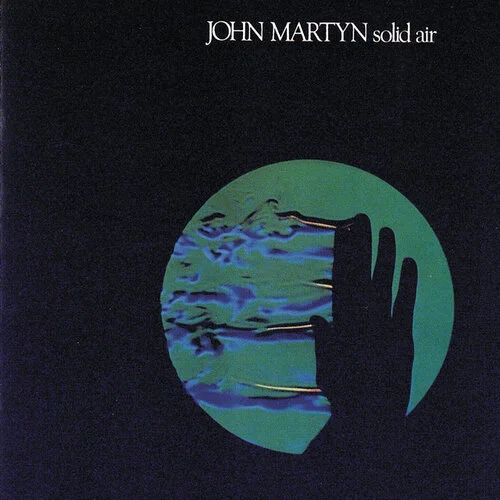
Solid Air
Release Date: February 1973

Label: Island

Producers: John Martyn/John Wood

Standout Tracks: Solid Air/I'd Rather Be the Devil/ (Devil Got My Woman)Dreams by the Sea

Buy: https://www.discogs.com/sell/list?master_id=60337&ev=mb

Stream: https://open.spotify.com/album/0QD0LEYQDkrJrtVcuRBcVp?si=a4G7cL-hT-a09jzrOgBuZg

Review:

Above all this was folk filtered through jazz. Take the inclusion of Tony Coe on sax throughout. His own slurred delivery was second to none (his was the sax on those Henry Mancini Pink Panther themes). Martyn, himself, was a fan of artists like Pharaoh Sanders, and it was this combined with the finest in British folk rock (most of Fairport Convention, including Richard Thompson, make an appearance here) that lifted Solid Air above previous efforts.

The album kicks off with Martyn's lament for close friend Nick Drake on the vibe and sax-assisted title track. On the way we get the bluegrass jauntiness of Over The Hill (with its famously positive reference to Martyn's favourite pastimes); the voguishly pastoral Don't Want To Know, the Echoplex frenzy of his version of Skip James' Rather be The Devil, and the eerily mournful Man In The Station (showing Martyn to be a master of the autobiographical soul-bearing that was to riddle his later album Grace And Danger). Of course the one track that most remember here is May You Never - his paean to brotherly love that was to be a staple of EVERY performance he's given since.

Yes, it's a classic with not a note out of place.. And ably assisted by John Wood's late night production it's now firmly esconced in the hearts of chillers, smokers and music lovers the world over. Everyone needs a copy” – BBC

Choice Cut: Go Down Easy

One World

gggg.jpg

Release Date: 4th November, 1977

Label: Island

Producer: Chris Blackwell

Standout Tracks: Smiling Stranger/One World/Couldn't Love You More

Buy: https://www.discogs.com/sell/list?master_id=60345&ev=mb

Stream: https://open.spotify.com/album/1G8gcNHZxeRUaqHVFyCADO?si=2EevjNLIQFinN3Zb-cYWJw

Review:

After Sunday's Child, John Martyn took an extended break from studio recording. By late 1975, feeling he was close to going "completely round the bend," he had also stopped touring. To put some distance between himself and the pressures of the business and to recoup his creative energies, he went to Jamaica. There, after meeting dub producer Lee "Scratch" Perry, Martyn sat in on sessions by other artists and contributed to Burning Spear's Man in the Hills. Martyn returned to the U.K. reinvigorated and began recording One World in summer 1977. Produced by Island boss Chris Blackwell and featuring Dave Pegg, Morris Pert, John Stevens, Danny Thompson, and Steve Winwood, among others, One World combines the experimental tendencies of 1973's Inside Out and the more conventional song structures of Sunday's Child. While tracks like "Couldn't Love You More," "Smiling Stranger," and "Certain Surprise" display some continuity with the rootsy, jazzy folk-rock of Martyn's previous albums, this record has a stronger commercial feel than his earlier work, crossing over into pop territory. Especially memorable in that regard is the electrified swagger of "Big Muff," a number co-written by Perry that would become one of Martyn's live staples. But One World's understated explorations of mood are even more compelling; the experimental nature of dub -- of which Perry was a legendary exponent -- clearly resonated with Martyn. Since the early '70s, he had displayed a keen ear for sonic manipulation, using effects like Echoplex and a phase shifter to craft drifting, hypnotic textures. Here, the lazy title track and the synth-pulsing "Small Hours" exemplify Martyn's knack for mesmerizing, smoky grooves. Those looser, atmospheric numbers notwithstanding, most of One World signals the more slick pop direction John Martyn would take in the '80s starting with Grace & Danger (and with increasingly mixed results). [In 2005, Island released a Deluxe Edition of One World that included five live tracks and 10 alternate versions of songs from the initial release]AllMusic

Choice Cut: Small Hours

Grace & Danger

Release Date: 13th October, 1980

Label: Island

Producer: Martin Levan

Standout Tracks: Grace and Danger/Sweet Little Mystery/Baby, Please Come Home

Buy: https://www.discogs.com/sell/list?master_id=60348&ev=mb

Stream: https://open.spotify.com/album/05FPn66m4Ry59KRrKFCg3Q?si=2LhsjSVfSJ2moD6aABk6nA

Review:

Highly personal and sometimes almost unbearably poignant, the album remains one of the most charged and resonant titles in John Martyn’s canon. Indeed, the record’s painfully intimate contents initially disturbed Chris Blackwell so much that, while the album was completed in October 1979, he held up its release and only agreed to issue it a full 12 months later, in October 1980.

The emotional turmoil, however, spurred Martyn on to new heights of creativity. Eschewing his trademark effects-laden acoustic guitar in favor of a heavier electric Gibson SG, he recorded Grace And Danger with a dextrous, sympathetic in-studio band including bassist John Giblin and Genesis drummer/solo star-in-waiting Phil Collins.

Together, the ensemble pieced together a raw, affecting, and frequently sublime selection of tracks whose moods reflected the maelstrom of emotions Martyn was then working through. There was a clutch of wracked, introspective ballads (the self-explanatory “Hurt In Your Heart”; the plaintive, resigned “Sweet Little Mystery”) but these were balanced out by the angry, sarcastic titular song, the bittersweet blue-eyed soul of “Our Love” and an unexpected, but brilliantly realized reworking of The Slickers’ 1971 reggae hit “Johnny Too Bad.”

Though its creator later admitted that writing Grace And Danger had been “very cathartic”, the album was warmly received by fans and critics alike, who collectively agreed that this fiery troubadour had somehow alchemized artistic gold from the depths of despair. The record marked a turning point in Martyn’s commercial fortunes too, with its more mainstream-inclined follow-up, 1981’s Glorious Fool, introducing him to the UK Top 30 for the very first time”  udiscovermusic.com

Choice Cut: Some People Are Crazy

The Underrated Gem


Glorious Fool

Release Date: September 1981

Label: WEA

Producer: Phil Collins

Standout Tracks: Amsterdam/Please Fall in Love With Me/Don't You Go

Buy: https://www.discogs.com/sell/list?master_id=60354&ev=mb

Stream: https://open.spotify.com/album/5jBDX1Ug1rka0y4mwjIbqs?si=zJ_j7KRQR1GrshrnsY6ObQ

Review:

Here we come to Glorious Fool's most alarming flaw: the songs are simply second-rate. There is none of the emotional depth or commitment that marks Martyn's best work (Grace & Danger, Inside Out), none of the originality and passion with which he can make his romance credible and gripping. Couldn't Love You More, Hold On To My Heart and Pascanel are typical minor Martyn, the kind of pretty fripperies he's been churning out for years, while Amsterdam and Never Say Never are louder but no less limp, one all melodramatic bluster, the other tainted with a tetchy petulance that spills over into Pascanel and Didn't Do That. Please Fall In Love With Me is another extreme and 'I want to fall in love with the world/ I want the world to fall in love' the kind of line you might smuggle through once but which lies exposed in all its mindless, posey banality when you turn it into a closing chant and accompany it with ponderous and very self-important drums.

Don't You Go, rooted in the traditional folk ballad, closes the LP in quiet, moving fashion. A plea for peace, it's 'Fool's one glorious moment: as striking as the rest is bland, as convincing as the rest rings false.

Martyn may have curtailed the indulgence to which he has always been prone, in doing so he seems to have lost his main source of inspiration. The unruly maverick has become net, tidy and polite. There is no drive, no depth to Glorious Fool; no grace or danger, just ordinary upmarket competence.

Whatever happened to the glory of love?” – NME

Choice Cut: Hold on My Heart

The Final Album


Heaven and Earth

Release Date: 16th May, 2011

Label: Music on Vinyl

Producers: Jim Tullio/Garry Pollitt

Standout Tracks: Heel of the Hunt/Could've Told You Before I Met You/Willing to Work

Buy: https://www.discogs.com/sell/list?master_id=594538&ev=mb

Stream: https://open.spotify.com/album/3AHCuCvx6GQIyd8NStqetj?si=I6V4VXdOTRKBKKe0yb8YhQ

Review:

The provisional title of his last release was Willing to Work. Whether this was ironic considering the length of time it took him or straightforward in regards to the effort he put into it is unclear. The title of the song by that name is an eight-plus minute rambling sonic excursion that ends up with a dog barking, and the band seemingly looking for direction. Martyn repeatedly riffs on the phrase “Willing to Work” as if it is a mantra that will lead him somewhere, but he appears to have lost his way. Still, the song has its charms. One has the feeling that if only he had lived long enough, Martyn could have turned it into something better and more complete.

The disc is now called Heaven and Earth and the song of that name is a much more beautiful and finished product. The over-seven-minute piece incorporates a gentle jazz piano and tenor sax that provide an emotional lift to the proceedings. Martyn passionately sings of “moving heaven and earth” as if it is simply a matter of spiritual will. He laughs gently as he vocalizes, as if he is being tickled by the feelings welling within him. Martyn’s glee makes one smile along with him.

As a whole, the studio album bears traces of roughness around the edges. Martyn’s voice in particular can be creaky, especially on such tunes as “Colours” and “Heel of the Hunt”. Other times Martyn can still rock out, especially on the funky “Stand Amazed”. The grit in his voice serves the bluesy vibe and lends an air of authenticity to his back porch musings. The Band’s Garth Hudson accompanies Martyn on a honking accordion on this track.

Martyn wrote all the songs but one, his friend Phil Collins’ “Can’t Turn Back the Years”. Collins sings backup on this melancholy look at how one cannot correct life’s mistakes, but just go on. This four-minute cut may be the shortest one on the album; however, the depth of feeling expressed gives it a feeling of weight. It’s as if Martyn and the now retired Collins are telling listeners that their careers may be over. They are not going to apologize for any missteps. They take ownership of the good and bad they have done.

Judging by Martyn’s last album, he has nothing to apologize for. The results may be shaggy--a feeling reinforced by the length of the songs--but he still has much to offer. Hopefully he is in heaven now,. He left this earth with more than he took with him. His music enriches” – Popmatters

Choice Cut: Heaven and Earth

The John Martyn Book


Small Hours: The Long Night of John Martyn

Author: Graeme Thomson

Publication Date: 9th July, 2020

Publisher: Omnibus Press

Review:

Developing a highly personal musical language after adding amplification and a variety of effects to his guitar, he enjoyed the early patronage of two influential men: the record producer Joe Boyd, who soon left, and the boss of Island Records, Chris Blackwell, who gave him years of backing while making allowances for his waywardness. Many other admirers within the music business shied away, alienated by a nature that could switch from rogueish charm to outright threat in the time it took to drain a pint glass. “He was almost like a bomb that was going to go off,” the singer Claire Hamill, his lover in the 70s, says.

In pieces such as “Solid Air”, “Glistening Glyndebourne” and the extraordinary “Small Hours” (layering his guitar over the dawn sounds of the wind and the birds on the lake outside the Berkshire farm where he was recording), Martyn showed himself to be both an innovator and a poet. The looseness and spontaneity of jazz and country blues were perfectly blended with strong echoes of English pastoralism. Thomson correctly identifies his sublime 1974 recording of the traditional song “Spencer the Rover” as a pinnacle of his career, not least because its narrative of a rambling man dreaming of home and heart corresponded so exactly with the singer’s own fantasies. Efforts to turn him into a shiny rock star in the 80s and 90s were an insult to such work.

An encounter with Martyn in his final years gives the book a dramatic opening sequence. As well as displaying a love and understanding of his subject’s finest music, the author is clear-eyed about the regular bouts of “loud, stupid behaviour, intimidating and graceless”, the chaotic tours, the vast amounts of drink and drugs, the selfishness and the emotional cowardice. Yet amid the despairing shrugs of the surviving witnesses, including his abandoned partners and children, a love of the roaring boy shines through” – The Guardian

Order: https://www.amazon.co.uk/Small-Hours-Long-Night-Martyn/dp/178760019X

FEATURE: Modern Heroines: Part Twenty-Eight: Charli XCX

FEATURE:


Modern Heroines

PHOTO CREDIT: Burak Cingi for The Line of Best Fit 

Part Twenty-Eight: Charli XCX

___________

LIKE most of my Modern Heroines features…

cvcc.jpg

I am going to focus on the most-recent album from Charli XCX, how I’m feeling now, and introduce some reviews and interviews around the time of its release. Charli XCX (Charlotte Emma Aitchison) was born in Cambridge and raised in Start Hill, Essex. She began posting songs on Myspace in 2008 - which led to her discovery by a promoter who invited her to perform at warehouse raves and parties. In 2010. She signed a recording contract with Asylum Records, releasing a series of singles and mixtapes throughout 2011 and 2012. Not to ignore her first three albums – I shall combine songs from all of her albums in a playlist at the end -, but how i’m feeling now is such an important one. 2013’s True Romance was a promising debut that combined sounds of 1980s’ Pop and girl group spark; many of its songs – such as Stay Away, and You’re the One – are among Charli XCX’s very best. 2014’s Sucker had a bit more punch than her debut. The album sounds so fresh and magnificent! I really love 2019’s Charli, as it was more experimental, wide-ranging and ambitious than her first two albums. There is a great blend of styles and themes and, despite the fact the album was recorded at many different studios and has quite a few producers in the mix, it is Charli XCX’s songwriting and talent that shines. Charli is a consistent and almost flawless album that took her music to a new level.

Only eight months after Charli was released, we saw how i’m feeling now released into the world. On 6th April, 2020, Charli XCX announced through a public Zoom call with fans that she would be working on a new album in self-isolation. During the call, she said the album would be indicative of lockdown times: the fact she had all the technology at home to create an album and make the videos. The entire project was done in collaboration with her fans, where she used Zoom calls to share demos and text conversations with producers - and she asked fan for input on single releases, song ideas, and artwork. The album arrived on 15th May, 2020, and it is one of the very best of last year. I am not sure whether lockdown and the pandemic brought something out of Charli XCX that we had not seen before; a new layer of brilliance and innovation that was maybe not quite there before. As I said, I love all of her albums, though how i’m feeling now is her finest release yet! I want to bring in a couple of the reviews for the album. This is what CLASH wrote when they heard how i’m feeling now:

Her humanoid vocals on ‘Detonate’ are reminiscent of Kate Bush’s ‘Deeper Understanding’ from her ‘Directors Cut’ album, and explore the romance of the robotic - alien yet strangely familiar. This track resonates hard though its lyrical vulnerability accompanied by lighter production. Its classic warped auto-tune is ever-present but dialled down to be an overall more accessible pop song. ‘Detonate’s’ tight lyricism contrasts with the repetitive lyrics of ‘7 years’, which feels rushed in places, “Oh yeah, it's really, really, really, really nice / And now I never, ever, ever think twice” leaving moments which fall flat.

 ‘party 4 u’ is a moment of respite amongst the brilliant chaos, allowing us to take a breath, while ‘c2.0’ (co-written by lawless Estonian rapper Tommy Cash) sounds like a laptop overheating and my hairdryer exploding all at once. The album peaks and troughs, the single tracks standing out while others can be glossed over more easily, yet throughout the abrasive jolting and glitching, one thing remains constant, a solid pop chorus with catchy melodies.

The album closes with 'visions': a brilliant illustration of A. G. Cook's genius all too reminiscent of leaving a sweaty club as the sun comes up. The heavy beats and sirens evoke a memory which usually I do not intend to remember, yet in lockdown circumstances, leaves me pining for it once again, and therefore wanting more of the album itself. As her opening line of the album states “I just wanna go real hard” accompanied by a sense of impending doom, I sigh and think to myself: me too Charli, me too.

‘how i’m feeling now’ is essentially a series of android love letters; to her relationship (and how it has grown throughout lockdown), to her fans (whom she has involved every step of the way), her friends and contributors, and to herself, as she has opened up about mental health during the lockdown, and the fear of how to continue once it is over, with lyrics pondering whether she is deserving of love. This directly contrasts with boasting her rarity as a ‘pink diamond’ in the first track.

Charli starts and ends with hard disorienting club bangers, leaving the middle of the album space to expose her tenderness and vulnerability while still retaining her futuristic, unpredictable sound and penchant for an irresistible pop hook”.

Certainly, how i’m feeling now is one of my favourite albums from the last few years. pink diamond, forever, and claws are an incredible trio of opening tracks. The fact that the album was created and released in such an unusual way could have dented its quality and impact. I think that the collaborative approach and the fact that Charli XCX was not moving between studios (and she delivered the album so soon after Charli) creates this urgency. That said, there are so many layers and nuances. You listen to the songs and they unravel over time; these wonder songs that go from pole to pole in terms of emotion. Charli XCX’s constant ability to come up with exceptional Pop hooks is evident on how i’m feeling now. In their review, this is what AllMusic had to say:

If any pop star is uniquely equipped to be creative during hard times, it's Charli XCX. As her steady stream of singles, EPs, mixtapes, albums, and collaborations attest, being productive is her natural state of being. She's also remarkably connected to her fans and other artists through her social media platforms, and used this very 2020s version of fame to invite fans into her creative process. In the early days of sheltering in place during the COVID-19 pandemic, she vowed to create a brand-new album in just six weeks, using the tools she had at hand as well as the input of her fans and trusted producers like A. G. Cook and BJ Burton. In many ways, the humbly titled how i'm feeling now, with its lowercase spelling and lack of punctuation, captures the frozen-in-time yet fleeting feel of quarantine life as it returns to the fundamentals of her music.

This isn't an album of acoustic guitar ruminations -- if anything, it shows XCX is just as committed to making cutting-edge electronic pop music while holed up in her L.A. home as she was when she could work face-to-face with her creative team. Featuring production by 100 gecs' Dylan Brady, "claws" pits an innocent singsong melody against booming bass and clanking trap rhythms that sound like they might have been made by wind-up toys. She pushes the envelope even farther with the streaking, overtly futuristic "pink diamond" and "c2.0," a track whose rubbery tones and helium-laced vocals call to mind the work of her frequent collaborator SOPHIE. Aside from "party 4 u," which feels like a miniature of Charli's more introspective moments, how i'm feeling now's songwriting has a smaller scope than it did on her last album, but XCX makes up for that by packing in as many hooks and feelings as she can. Equally sweet and challenging, mischievous and heartfelt, "forever" is pure Charli XCX. When she sings about staying emotionally close "even when we're not together," she touches on connections that were even more treasured at the time of the album's release, when many people were forced to be alone and jobs, relationships, and lives were in flux. And though the album's songs aren't literally about living in quarantine, they're certainly relatable.

On the pensive Palmistry, Cook, and Mechatok-produced "i finally understand," XCX digs into the feelings, good and bad, that being truly intimate with someone -- and having time to reflect on a relationship -- engenders. It's a mood she expands on blissfully with "7 years" and with more ambivalence on "enemy," one of the album's prettiest and most fleshed-out songs. While it may not be the proper sequel to the ambitious Charli, how i'm feeling now's rawness and immediacy give it an appeal all its own. More than just an interesting social media experiment or a way to fend off quarantine boredom, it's an artistic challenge that's true to the very best parts of XCX's music”.

I am going to finish off with a couple of interviews from Charli XCX. I would advise people to read all of the Vulture interview with Charli XCX. Conducted shortly before the release of how i’m feeling now, there are a few selection that I wanted to bring in:

Three weeks before How I’m Feeling Now’s scheduled release, Charli stress-cried about the album, but today’s she’s feeling good. Isolation suits her better than she’d expected. “Obviously, I wish this wasn’t the situation we’re all in,” she tells me. “But I’m quite enjoying what self-isolation is forcing me to do, which is to be really present in my space.” Earlier that morning, she hosted the second of her weekly Zoom conferences, where she fields questions from fans and conducts mini interviews with friends about staying sane in lockdown; today’s guests include Paris Hilton, decked out in giant heart-shaped sunglasses and a pink velour tracksuit. “What’s your specialty?” Charli asks when Paris tells her she’s been getting into cooking. “Sliving lasagna,” Paris replies in her signature sexbot drone. “Sliving is my new trademark. It’s the new ‘that’s hot.’ It means slaying and living.” (There’s a recipe.)”.

Which brings us to the heart of How I’m Feeling Now: Where previous albums offered odes to after-hours raves and fast cars, this time Charli’s drawing almost exclusively from her relationship, chronicling the ways in which it has intensified while the couple has been alone together. “Oh God, what year would it have been …” Charli muses when I ask how she and Huck first met. “2013? No, 2012,” says a man’s muffled voice in the background. “We don’t really know,” Charli says, laughing; regardless, she was on the last leg of tour with a band called St. Lucia, which Kwong happened to be managing at the time. After the final NYC show, everyone hung out at a bar next to the Bowery Ballroom. “That’s when we met, but what was funny was he was on a first date with somebody else that night, and I had a boyfriend at the time,” she remembers. “So we spent the next few years being really into each other from afar but having really bad timing.”

How I’m Feeling Now is as much about how it came together as it is the songs themselves, a collaborative snapshot of what’s sure to be a bizarre memory. For years, Charli’s records have made the case that the future is now, if you want it. But it’s a weird time to be a futurist. If the future is now, it isn’t exactly as exhilarating as her earlier songs, full of 4 a.m. joyrides and heavenly synth choirs, made it seem; these days, time is lost in the void of one’s phone, a woefully inadequate substitute for real human connection. “But I think being a human being, and part of why we’ve survived, is our ability to adapt,” Charli counters when I ask if this is our increasingly virtual future and if we can bear it. “If you had told me last year that in 2020, we’d all be separated from each other, isolated in our homes, only speaking by FaceTime, and there’s this thing called Zoom and everyone’s throwing parties on it, I’d be like, Whoa, that sounds futuristic. But it just feels like normality”.

 PHOTO CREDIT: Griffin Lotz

I am going to wrap up soon, but I just want to end with an interview from The Guardian. It is quite revealing looking at interviews with Charli XCX. Not just in terms of how her latest album came together, but how her career has progressed:

A few weeks before lockdown, Aitchison had started therapy to unpick the roots of her workaholism: How I’m Feeling Now is her sixth full-length album in seven years. She had been enjoying “slowing down, and being still and present at home. But the fact that I decided to do the album shows I couldn’t continue like that. I’m always forward, forward, forward,” she says, with the intensity of a general directing troops. 

Of course, nobody becomes a pop star to slack off these days; it’s more important than ever to maintain a constant presence on Spotify playlists and social media. Still, the 1975 frontman Matt Healy – whose recordings with Aitchison have yet to see the light of day – tells me she is on another level. “She just wants to work all the time. I’m bad, but she’s worse.” Collaborating with her is like “taking psychedelics”, he says: there are “rushes of madness and excitement, but you are left feeling rewarded, thankful and reflective. Although still drained”.

Aitchison’s DIY ethos has been there since she started playing raves at 15. Her parents would drive her from their home in Bishop’s Stortford to Hackney warehouses, where she shrieked about dinosaur sex in a peroxide wig while they waited to drive her home. “Playing in those more underground environments, and being exposed to fashion and LGBTQ+ culture – that was the first time I felt truly inspired to my core,” she says. “It was like I’d opened Pandora’s box.” She was signed by Atlantic Records off the back of those shows, and her early releases revamped a gothic pop that had lain dormant since the 1980s (think Shakespears Sister and Depeche Mode). Prior to the pandemic, she had mooted a tour of her 2013 debut album, True Romance. “It was one of the first things I really got stuck into – a lot of experimentation and figuring things out as they went along,” she explains. “Kind of a similar time to now.”

These days, stardom no longer depends on mass exposure and mainstream success. Social media’s most vocal fans (especially queer pop fans) have crowned a class of cult acts who might once have been dismissed as flops: musicians fluent in pop’s aesthetic while not necessarily aspiring to its scale, such as Haim, Christine and the Queens, and Carly Rae Jepsen – all of whom have collaborated with Aitchison. Her most recent album, 2019’s Charli, spawned two hits, with Troye Sivan and Lizzo, and this time, mainstream success felt more meaningful. “When I was younger, I didn’t know who I was – I wanted to fit in with the music I was making and the way I looked,” she explains. “Now I don’t feel that, and I think it speaks volumesfor how the pop industry has changed.”

How I’m Feeling Now already has one important legacy. Aitchison says she has been surprised by how fast her label have moved to get it out, and plans to release two more albums this year. Next time around, if they stall, she’s got this ace in her pocket to remind them that anything is possible: “No, guys, remember when we did that album in six weeks? No rules – let’s go”.

I think that Charli XCX is one of the world’s very best artists and, as she seems to get stronger by the album, that makes for a very interesting future! I feel that the next year will be a struggle, as artists cannot really gig and get out there. Charli XCX has performed some virtual gigs, and she has been able to promote how i’m feeling now. I feel next year will be a massive one for her, in the sense she will tour internationally and, maybe, we will get another album. Her music has the power to stop you in your tracks and engross the senses! A definite icon of the future, go and check out her albums and see what I mean! I have ended with a playlist of her finest songs to date that proves that Charlotte Emma Aitchison is….

AN absolute sensation.

FEATURE: Too Good to Be Forgotten: Songs That Are Much More Than a Guilty Pleasure: Barenaked Ladies - One Week

FEATURE:


Too Good to Be Forgotten: Songs That Are Much More Than a Guilty Pleasure

Barenaked Ladies - One Week

___________

I am heading back to the ‘90s…

for the latest instalment of Too Good to Be Forgotten: Songs That Are Much More Than a Guilty Pleasure. There were some great one-hit wonder bands from that decade and, to me, one of the finest comes in the form of Barenaked Ladies. That may sound a bit harsh, but I know the band did have other successful tracks. One Week was such a hit and success that nothing they did since has the same sort of gravity and impact. That said, there are many who either dislike the track or feel that it is a novelty that should be seen as a guilty pleasure. Because the lyrics are a little ridiculous and random, I can understand why some feel it is a bit throwaway. I really love the originality of the lyrics and how singalong One Week is! Before I go on, I want to bring in the Wikipedia article relating to the Barenaked Ladies’ signature song:

"One Week" is a song by the Canadian rock band Barenaked Ladies that was released as the first single from their 1998 album, Stunt. It was written by Ed Robertson, who is featured on the lead vocal of the rapped verses. Steven Page sings lead on the song's chorus, while the two co-lead the prechoruses in harmony. The song is notable for its significant number of pop culture references, and it remains the band's best-known song in the United States. Coincidentally, when the song reached No. 1 on the Billboard Hot 100, it remained in the top spot for one week.

"One Week" is the band's best-performing single on the charts in both the US and the UK, though it slightly under-performed several other singles in Canada. It was the band's only No. 1 single in the US on both the Hot 100 and the US Modern Rock Tracks (for five non-consecutive weeks). The song spent seven weeks at No. 3 on the Hot 100 Airplay and an additional four weeks at No. 2 behind the Goo Goo Dolls' "Iris". The band has not equaled this level of US chart success since, though singles "It's All Been Done", from the same album, and "Pinch Me", the first single from their subsequent album Maroon, both broke the top 50 of the US Hot 100. Apple used the song at MacWorld 1999 for presenting Mac OS X Server on a wall of 50 iMacs.

In 1999, American parodist "Weird Al" Yankovic recorded a parody titled "Jerry Springer", a song about a man's strange obsession with The Jerry Springer Show, for his album Running with Scissors.

The song has been featured numerous times in other media, including the films Digimon: The Movie, American Pie, 10 Things I Hate About You, the band appear to perform it live in "College Kids", an early season 4 episode of The West Wing, the season 7 Oscar Special of On Cinema, a season 2 episode of Schooled, the video game Alvin and the Chipmunks, and in the video game Rock Band Blitz. The song also appears as a recurring element of the mashup album Mouth Moods by American musician Neil Cicierega”.

I am going to end by introducing an article from 2018 where we hear from Ed Robertson (who wrote One Week) of the band. After thirty years of One Week being in the world, it must have been interesting reflecting on a song that went to number-one in the U.S. and was a big smash around the world. Although other tracks from Barenaked Ladies’ 1998 album, Stunt - like It’s All Be Done –, are terrific and catchy, many associated the album with One Week – and they wrote the band off as a one-hit wonder. I think the album is really solid. Here is what AllMusic said in their review:

By trying to mask their smart-ass humor in a big pop production, the Barenaked Ladies attempt to set themselves up for the big crossover that they nearly achieved with such past singles as "Be My Yoko Ono" and "Brian Wilson." Nothing on Stunt, the group's fourth studio album, is so clearly jokey (although "Alcohol" comes close), but they still rely on clever satire. That may irritate some listeners who would otherwise be won over by the group's increased musical skill. Never before has the band been able to pull off so many different styles, from jangly pop and alt-country to loungy bossa nova, so well. Musically, it could convince the doubters who have written off Barenaked Ladies as novelty pranksters, but the lyrics still will stand in the way of trad-rockers predisposed to this style of music. Of course, listeners who are a little less uptight will find Stunt to be a fine collegiate party record and one of the best albums the Barenaked Ladies have released”.

 IN THIS PHOTO: Barenaked Ladies’ Ed Robertson/PHOTO CREDIT: Tim Mosenfelder/Getty Images

One of the most distinctive aspects of One Week is its lyrics. There are all sorts of unusual and random scenes thrown into the mix. When I was at high school and the song came out, many people in the playground tried to memorise the lyrics and sing it back as the band did! Even to this day, I am not really sure whether there is a meaning behind them or whether Ed Robertson was writing in a sort of stream-of-consciousness style. I want to quote from a Stereogum article – where we learn more about the background to One Week. Although all of the lyrics were raised and explained, I have chosen a couple of choice selections:

The short and spritely “One Week” is full of non sequiturs, but it isn’t entirely nonsense. It begins on the chorus (sung by Steven Page) which describes a couple in a fight. The protagonist is too stubborn to apologize, but knows it’ll blow over like it always does. In between the jaunty refrains, though, are the reasons this song was always polarizing: a rapped series of jokey, rapid-fire pop culture and brand references that don’t relate to each other nor the narrative. Robertson, the band’s co-founder and current frontman, had been known to improvise raps during Barenaked Ladies concerts and created the verses as an intentionally silly freestyle.

Mid-‘90s media was steeped in self-reflexive humor and knowing meta gags. Seinfeld had Jerry and George landing a pilot for a TV show about nothing. Scream featured a character who rattled off horror film clichés. The timing was right for a hit that mentioned contemporary songwriters like Sting and Leann Rimes.

The following summer pop radio kept the random namedrops coming with LFO’s ridiculous “Summer Girls” (which referenced Michael J. Fox, Kevin Bacon, and Abercrombie & Fitch) and Blessid Union Of Souls’ “Hey Leonardo (She Likes Me For Me)” (Jim Carrey, Cindy Crawford, “that guy who played in Fargo, I think his name is Steve”). Even New Radicals’ brilliant “You Get What You Give” seemed to shoehorn in mentions of Beck, Hanson, and Courtney Love for no reason. All these acts could now be considered pop history footnotes, but Barenaked Ladies didn’t exactly meet that fate.

STEREOGUM: How and when did “One Week” come into play. Had it been percolating for awhile?

ROBERTSON: Well, I had the basic structure of the song, the choruses, which is kind of this silly deconstruction of an argument between two people who actually really like each other. The kind of stubborn argument that drags out over a week. I had that, and I wanted to do some kind of rappy verses but they always sucked every time I tried to write them. It was finally Steve who said, “Why don’t you just freestyle it, like you do in every show? The freestyles you do off the top of your head are better than the stuff you’re trying to write.” I wasn’t very sophisticated at that time in terms of the whole home studio or recording equipment. So I set up a video camera and I freestyled like four verses and I edited those down into the two verses that became “One Week.” So our biggest single ever, our #1 single, was written in three-and-a-half minutes.

 STEREOGUM: I’ve seen some of those cut lyrics —  “Luke Skywalker gotta big hunch/Hey that’s my lunch/Yoda’s a really really old guy” — but is it fair to say the final recording is pretty close to what you laid out on that videotape?

ROBERTSON: Yeah.

STEREOGUM: And I take it you didn’t recognize it as a hit.

ROBERTSON: Well it’s such a weird song, right? I thought it would be a bonus track or a b-side. It was one of the last songs I submitted to the record company and when Sue Drew, who was our A&R person at the time, said, “We wanna lead with ‘One Week'” I actually thought she was joking. I thought she was making a dig at me, like this is the stupidest fucking song I ever heard. Which I would’ve agreed with. I labored over so many songs on that record, and tried to make them, you know, super deep and meaningful and soulful and tried to nail them emotionally, and then this totally ridiculous song that I improvised, that makes no sense at all, goes to #1.

STEREOGUM: You say it makes no sense at all. The chorus makes sense to me, but there’s debate online as to whether the verses relate to the narrative.

ROBERTSON: Absolutely not. It is a hodgepodge of pop culture references and inside jokes. I can tell you where every single line comes from and what it means, but they don’t relate to each other, and they don’t relate to the chorus.

IN THIS PHOTO: David Duchovny and Gilliam Anderson in a publicity shot for The X-Files 

STEREOGUM: Perhaps this is related: why when you’re watching X-Files are you “dans la maison”?

ROBERTSON: So The X-Files theme goes [hums X-Files theme]. We were X-Files maniacs and this was back in the day when there was no streaming, stuff wasn’t available, but we met someone at Fox and they gave us like a 3’x2’x2′ crate of VHS copies of The X-Files so as of ’98 we had every episode on VHS on the bus. So after the show we would get on the bus and we wouldn’t say, “Hey do you want to watch some X-Files?,” we wouldn’t say, “Hey ya wanna put something on the TV?” We’d go [to the tune of X-Files theme] “dans la maison la maison la maison…” Which was just singing The X-Files theme with the French for “are you in the house?” like, “are you ready to do this?”.

I have a lot of affection for One Week, yet there are some that dismiss the song as nonsensical/a mere novelty hit. Not only is One Week uplifting and silly enough to produce a smile; one can lose themselves in the lyrics and all the images and possibilities they project! It is a classic cut from the 1990s that is still on my playlist. If you have been a little cold towards the song or have not really given it a chance, then have a listen now and I know that it will put you in a better mood. The fact that we are still talking about One Week over thirty years since its release proves that…

IT is much more than a mere guilty pleasure!

FEATURE: Music Technology Breakthroughs: Part Six: GarageBand

FEATURE:


Music Technology Breakthroughs

Part Six: GarageBand

___________

AS I tend to do…

with this feature, I going to bring in some history regarding the music technology breakthrough I am focusing on - before going on to look at its legacy and importance. I want to quote heavily from Wikipedia, as it provides a nice history and background to the wonderful GarageBand:

GarageBand is a line of digital audio workstations for macOS, iPadOS, and iOS devices that allows users to create music or podcasts. GarageBand is developed and sold by Apple for macOS, and is part of the iLife software suite, along with iMovie and iDVD. Its music and podcast creation system enables users to create multiple tracks with pre-made MIDI keyboards, pre-made loops, an array of various instrumental effects, and voice recordings

GarageBand was developed by Apple under the direction of Dr. Gerhard Lengeling. Dr. Lengeling was formerly from the German company Emagic, makers of Logic Audio. Apple acquired Emagic in July 2002.

Steve Jobs announced the application in his keynote speech at the Macworld Conference & Expo in San Francisco on January 6, 2004. Musician John Mayer assisted with its demonstration.[1] It is part of the iLife '04 package.

Apple announced GarageBand 2 at the 2005 Macworld Conference & Expo on January 11, 2005. It shipped, as announced, around January 22, 2005. Notable new features included the abilities to view and edit music in musical notation. It was also possible to record up to 8 tracks at once and to fix timing and pitch of recordings. Apple added automation of track pan position and the master pitch. Transposition of both audio and MIDI has been added by Apple along with the ability to import MIDI files. It is part of iLife '05.

GarageBand 3, announced at 2006's Macworld Conference & Expo, includes a 'podcast studio', including the ability to use more than 200 effects and jingles, and integration with iChat for remote interviews. It is part of iLife '06.

GarageBand 4, also known as GarageBand '08, is part of iLife '08. It incorporates the ability to record sections of a song separately, such as bridges, and chorus lines. Additionally, it provides support for the automation of tempos and instruments, the creation, and exportation of iPhone ringtones, and a "Magic GarageBand" feature which includes a virtual jam session with a complete 3D view of the Electric instruments.

GarageBand 5 is part of the iLife '09 package. It includes music instruction and allows the user to buy instructional videos by contemporary artists. It also contains new features for electric guitar players, including a dedicated 3D Electric Guitar Track containing a virtual stompbox pedalboard, and virtual amplifiers with spring reverb and tremolo. GarageBand 5 also includes a redesigned user interface as well as Project Templates.

GarageBand 6, also known as GarageBand '11, is part of the iLife '11 package, which Apple released on October 20, 2010. This version brings new features such as Flex Time, a tool to adjust the rhythm of a recording. It also includes the ability to match the tempo of one track with another instantly, additional guitar amps and stompboxes, 22 new lessons for guitar and piano, and "How Did I Play?", a tool to measure the accuracy and progress of a piano or guitar performance in a lesson.

Apple released GarageBand 10 along with OS X 10.9 Mavericks in October 2013. This version has lost Magic GarageBand and the podcast functionality.

Apple updated GarageBand 10 for Mac on March 20, 2014. Version 10.0.2 adds the ability to export tracks in MP3 format as well as a new drummer module, but removed support for podcasting; users with podcast files created in GarageBand 6 can continue to edit them using the older version.

GarageBand was updated to version 10.0.3 on October 16, 2014. This version included myriad bug fixes and several new features including a dedicated Bass Amp Designer, the introduction of global track effects and dynamic track resizing.

Apple released GarageBand 10.2 on June 5, 2017.

One can access GarageBand through Apple and, since its inception, it has been a go-to for many musicians. Whether recording basic tracks and demos or full recordings, its range of sounds and instruments provides a worlds of choice for artists. There is also a Lesson Store that was introduced for GarageBand '09 that allows users to see a lesson delivered by a music tutor in relation to various songs. I have been thinking about using GarageBand in a basic sense to get down some musical ideas as, even if you are not a skilled musician, you can create songs and collages.

I want to end by bringing in a couple of articles that look at the influence of GarageBand – where we hear from musicians and producers who feel it is a breakthrough and has changed their music. Red Bull wrote about GarageBand in 2019 on its fiftieth anniversary:

Grimes famously recorded her first album for 4AD, 2012’s Visions, entirely on GarageBand. Rhianna’s hit Umbrella grew from the ‘Vintage Funk Kit 03’ GarageBand drum loop. Lana Del Rey has spoken about experimenting with the software early on in her career, and Björk has previously revealed she's used GarageBand for her DJ sets. Elsewhere, leftfield artists like Kelsey Lu and Julianna Barwick have also used the software in their sonic experimentations.

York-born songwriter and XL Recordings’ alum Lapsley makes warm, stripped-back electronic pop that’s rife with emotion. She released her debut album, Long Way Home, in 2016 and recalls using GarageBand on one of the first tracks she ever made, Station – the song which coincidentally kickstarted her career. She still uses the software as a tool. “If I’m trying to record something quickly or I’m feeling a bit bombarded with the number of plug-ins on Logic, I find GarageBand is a really good creative tool to just take it all away and try and figure stuff out,” she says. “It’s really important to be able to work with space and I think GarageBand enables you to have that space.”

 Lapsley credits GarageBand with “opening the doors to her career” – doors which she says are so often shut to artists like herself with no prior experience of or connections to the London-centric music industry. “Sometimes it can feel in this industry that only rich people can make it, as everything costs so much money… I would encourage anyone who is interested in music production to start with a simple programme like GarageBand and work their way up,” she says. “I got a record deal from using GarageBand, it’s basically given me a career.”

Varg, a Swedish producer who co-runs the Stockholm-based label Northern Electronics, is also drawn to the streamlined nature of GarageBand. “I just find GarageBand really easy to use,” he says. “I use it like I have used tape recorders in the past. I record beats on my iPad and export to GarageBand on my computer – it’s easy to do that mix and match thing. I find joy in the limitations that it brings you.”

For Varg, snobbery about production has the potential to kill creativity and render musicians unproductive. “Of course, I can see the point of Logic or other DAWs for having those advanced effects, but if you’re just recording, then GarageBand is great. It’s nice because what you see is what you get – it’s like MS Paint. Maybe you won’t be able to find that warp function that you’re looking for, but maybe you don’t need that at the time. But maybe you just need to record some music that’s really fucking good”.

 PHOTO CREDIT: Carrie Brownstein/PHOTO CREDIT: Autumn de Wilde/Riverhead Books

I think that many musicians use more sophisticated software and tools to put together music in a D.I.Y. fashion but, as so many artists are isolated and can benefit from the convenience and options on GarageBand’s new release, I think we will see it impacting more on music through this year. The final article is from Pitchfork who, in 2015, collected testimony from various artists and producers who have been affected by GarageBand:

"I know a lot of 'real musicians' prefer more advanced programs like Pro Tools or Logic," says Frances McKee, 49, of Scottish alt-rockers the Vaselines, "but I'm a part-time punk." When McKee and her Vaselines partner Eugene Kelly started making music together in the late ‘80s, the two were inseparable during the creative process. But the two were rarely in the same room while working on their 2010 comeback album, Sex With an X; they began to collaborate by sharing GarageBand files over email—a process McKee describes as "black magic." The experience hooked McKee on GarageBand as a songwriting tool, or a digital four-track. "Up until then I hated using computers," she says. "But [GarageBand] changed everything."

Carrie Brownstein shares McKee's sentiment. Earlier this year, the Sleater-Kinney guitarist told The Wall Street Journal that GarageBand is a songwriting tool she wishes she had when she was younger. Through the years, the program has become the tech-averse musician's way of crossing a digital divide where Pro Tools certifications, gear-talk at Guitar Center, and the coded gender of technology often blocks their path.

IN THIS PHOTO: Emily Lazar/PHOTO CREDIT: Adam Wolffbrandt 

Until the advent of GarageBand and MySpace in the mid-2000s, female musicians were chained to an entire infrastructure designed by men, from recording, to distribution, to marketing. And while the "silent chuckle" Barwick refers to isn't explicitly by men, the fact is that the technical side of music is still largely a boys' club. "The feminist implication of GarageBand definitely encouraged a lot of my female friends to explore something that had previously seemed out of reach," says Dum Dum Girls' Dee Dee.

For Emily Lazar, the engineer behind Haim's Days Are Gone and Vampire Weekend's Modern Vampires of the City—as well as the first female mastering engineer to ever be nominated for a Record of the Year Grammy, for her work on Sia's "Chandelier"—the industry's quiet biases have always been more direct. "I could describe so many awful experiences," says Lazar, "but doing that would give the people that have behaved so offensively more attention than they deserve”.

I wanted to salute a technological and musical breakthrough that, like others, has not really dated. Like the iPod and vocoder, GarageBand has evolved and updated through the years. I think that it is invaluable and terrific for artists, producers and novices who either want to sketch out a song or just experiment and play around. Seventeen years after its release (the stable release, out 10.4.2 /, came out on 10th December, 2020), so many artists swear by the utility and practicality of GarageBand – something one might have imagined would be usurped or rendered old-fashioned in a modern technological age. I was keen to throw a salute to a musical tool that, for so many years, has been used and valued by people…

ALL around the world.

FEATURE: The Lockdown Playlist: Girl on Fire: Alicia Keys at Forty

FEATURE:


The Lockdown Playlist

Girl on Fire: Alicia Keys at Forty

___________

LIKE I did with Dolly Parton regarding…

a Lockdown Playlist on her seventy-fifth birthday, I am going to bring in a lot of Wikipedia information regarding Alicia Keys ahead of her fortieth birthday on Monday (25th January). Keys is one of the finest artists we have, and I have been a fan of her music since her debut album, Songs in A Minor – which turns twenty in June (her seventh studio album, ALICIA, came out last year). If you are new to Alicia Keys, here is some helpful biography and background:

Alicia Augello Cook (born January 25, 1981), known professionally as Alicia Keys, is an American singer-songwriter. A classically-trained pianist, Keys began composing songs by age 12 and was signed at 15 years old by Columbia Records. After disputes with the label, she signed with Arista Records and later released her debut album, Songs in A Minor, with J Records in 2001. The album was critically and commercially successful, producing her first Billboard Hot 100 number-one single "Fallin'" and selling over 16 million copies worldwide. The album earned Keys five Grammy Awards in 2002.

Her second album, The Diary of Alicia Keys (2003), was also a critical and commercial success, spawning successful singles "You Don't Know My Name", "If I Ain't Got You", and "Diary", and selling eight million copies worldwide. The album garnered her an additional four Grammy Awards. Her duet "My Boo" with Usher became her second number-one single in 2004. Keys released her first live album, Unplugged (2005), and became the first woman to have an MTV Unplugged album debut at number one. Her third album, As I Am (2007), produced the Hot 100 number-one single "No One", selling 7 million copies worldwide and earning an additional three Grammy Awards. In 2007, Keys made her film debut in the action-thriller film Smokin' Aces.

She, along with Jack White, recorded "Another Way to Die" (the title song to the 22nd official James Bond film, Quantum of Solace). Her fourth album, The Element of Freedom (2009), became her first chart-topping album in the UK, and sold 4 million copies worldwide. In 2009, Keys also collaborated with Jay Z on "Empire State of Mind", which became her fourth number-one single and won the Grammy Award for Best Rap/Sung Collaboration. Girl on Fire (2012) was her fifth Billboard 200 topping album, spawning the successful title track, and won the Grammy Award for Best R&B Album. In 2013, VH1 Storytellers was released as her second live album. Her sixth studio album, Here (2016), became her seventh US R&B/Hip-Hop chart-topping album. Her seventh studio album, Alicia, was released on September 18, 2020.

Keys has received numerous accolades in her career, including 15 competitive Grammy Awards, 17 NAACP Image Awards, 12 ASCAP Awards, and an award from the Songwriters Hall of Fame and National Music Publishers Association. She has sold over 50 million albums and 40 million singles worldwide and was named by Billboard the top R&B artist of the 2000s decade. She placed tenth on their list of Top 50 R&B/Hip-Hop Artists of the Past 25 Years. VH1 included her on their 100 Greatest Artists of All Time and 100 Greatest Women in Music lists, while Time has named her in their 100 list of most influential people in 2005 and 2017. Keys is also acclaimed for her humanitarian work, philanthropy and activism; she co-founded and serves as the Global Ambassador of the nonprofit HIV/AIDS-fighting organization Keep a Child Alive”.

To look ahead to Keys’ fortieth birthday tomorrow, I was keen to compile a playlist of her best songs. I have included Keys in my Modern Heroines feature and did a playlist then but, now, I have compiled a more expansive one. Here is a tribute and nod to…

AN incredible songwriter.

FEATURE: The Lockdown Playlist: Neil Diamond at Eighty: His Standout Gems

FEATURE:


The Lockdown Playlist

PHOTO CREDIT: Associated Press 

Neil Diamond at Eighty: His Standout Gems

___________

I am doing a few birthday…

 PHOTO CREDIT: Paul Natkin/Getty Images

Lockdown Playlists because, recently, there have been some big musical birthdays. Neil Diamond is eighty tomorrow (24th January), so I thought I would honour the great man. Diamond has sold more than one-hundred-million records worldwide – he is one of the best-selling musicians of all time. Diamond was inducted into the Songwriters Hall of Fame in 1984 and into the Rock and Roll Hall of Fame in 2011. He received the Sammy Cahn Lifetime Achievement Award in 2000. In 2011, he was an honouree at the Kennedy Center Honors, and he received the Grammy Lifetime Achievement Award in 2018. If we’re truthful, I think we can all name a Neil Diamond classic! From Song Sung Blue, Sweet Caroline, I Am…I Said, America, to Kentucky Woman, there are plenty of jewels in his crown! Neil Diamond announced retirement from the stage because of Parkinson’s Disease but, in spite of this, he gave a memorable performance at the Keep Memory Alive Power of Love Gala at the MGM Grand Garden Arena in Las Vegas on 7th March last year. Happy eightieth birthday to songwriting legend and a musician whose music was quite a big part of my childhood. If you are new to the work of Neil Diamond, then I hope you like a rundown of…

SOME of his best songs.

FEATURE: Second Spin: En Vogue – EV3

FEATURE:


Second Spin

En Vogue – EV3

___________

I think I first heard En Vogue…

vvvvv.jpg

not long after their second studio album, Funky Divas, arrived in 1992. That is a classic of the time and it contained some of their biggest hits – including Free Your Mind, and My Lovin' (You're Never Gonna Get It). That was the last album to feature the classic four-piece line-up of Terry Ellis, Dawn Robinson, Cindy Herron, and Maxine Jones. Robinson left the group in 1997, late into the recording of their third album, EV3 (she can be heard on songs like Don't Let Go (Love). There has been some personnel switching since then but, after such a strong second album, the loss of a member at a crucial stage was going to dent the strength and unity of future material. Despite some decidedly mixed reviews for EV3, I think it is better than its reputation suggests. Recorded after a lengthy break during which the band members became mothers or established solo careers, this album was En Vogue's first to feature a wide range of collaborators - including Babyface, David Foster, Diane Warren, Andrea Martin, Ivan Matias, and Organized Noize, along with regular contributors Foster & McElroy. I think singles such as Whatever, Don't Let Go (Love), and Too Gone, Too Long are some of the strongest songs En Vogue ever released; I also really like non-singles like Right Direction, and Let It Flow. Some noted that the subtraction of a member meant the vocals (when they were a trio) were not as strong. Others remarked how the songs were not as strong as on Funky Divas. I do think that EV3 misses the spark and consistency of Funky Divas, but there are some terrific songs on the album that get overlooked.

Despite a few weak tracks, the album as a whole is quite satisfying and warrants some new inspection. I think What a Difference a Day Makes, and Does Anybody Hear Me are tracks that should be played more on the radio – and one cannot say there is a notable sense of tension and damage having lost a member. EV3 had to follow a hugely successful album which sold over three-and-a-half-million copies. I think the hiatus and various life events affected the material a little. Cindy Herron and Maxine Jones went on maternity leave; Terry Ellis reteamed with regular En Vogue contributors Foster & McElroy to work on her solo album, Southern Gal. It is a pity that EV3 has gained some mixed reviews. This is what AllMusic noted in their review:

The sound of En Vogue isn't greatly affected by the departure of Dawn Robinson for their third album, EV3, since the group's harmonies remain remarkably supple and soulful. Instead, the group are hurt by its selection of producers and songwriters. En Vogue have decided to work with Denzil Foster and Thomas McElroy only occasionally on EV3, choosing to hire such professional songwriters and producers as Babyface, David Foster, Diane Warren and Ivan Matias, who arranged their hit single "Don't Let Go (Love)." At times, these pairings work: Babyface's "Whatever" is funkier than his previous work, and Matias brings a gospel-drenched sensibility to his songs. In the cases of Warren and Foster, they reshape En Vogue as an adult contemporary band, sapping the group of any of their energy or style. Still, there are enough strong moments scattered throughout the album to make it worth the wait”.

I think people should check out EV3. It is not the group’s finest album, yet there are some terrific singles and deeper cuts which are memorable and very solid. Entertainment Weekly reviewed the album in 1997 and remarked the following:

For instance, while the lyrics to Babyface’s ”Whatever” depict a state of frustrated desire, they barely approach the eloquence of the song’s sound. As if the slow-simmering groove weren’t tease enough, the production keeps the lead vocals so compressed that they never quite come to a boil, a combination that leaves the track almost aching with desire — even if it leaves the singers in the background.

”Let It Flow” pushes that a little too far, placing so much emphasis on its funkified rhythm bed that the rest of the song is an afterthought. Not that there’s anything wrong with working a groove, but considering how baldly the backing tracks steal from the Slave classic ”Slide,” producers Foster and McElroy could have at least created a semi-catchy chorus. (Also, a composer’s credit for their source would have been nice.)

That’s not to say these women always come across as backup singers. ”Right Direction” owes more to its sassy lead vocals than to its blend of bottleneck guitar and Southern funk, while the singing in ”Sitting by Heaven’s Door” is so effortless and inspired that it seems more like an impromptu collaboration than a careful arrangement”.

Even though I have seen some positive reviews for EV3, most have been mixed. I think that, from the twelve tracks, maybe three are not up to the high standard of En Vogue. That makes for a pretty decent and listenable album! I would urge people to give it a try as, almost twenty-four after its release, I am still listening to the songs and discovering new things. I miss the glory days of the 1990s girl groups and the type of music that was being produced. It was a great era and, whilst Funky Divas was a classic, maybe EV3 suffered from some changes in the group and songwriting that was not quite as sharp as we found on Funky Divas. In spite of some lukewarm reviews, EV3 did do well commercially. In the United States, EV3 debuted at number-eight on both the US Billboard Top R&B/Hip-Hop Albums chart and the Billboard 200 in the issue dated – it sold approximately 76,500 copies in its first week of release; the album marked the band's highest debut on both charts as well as their biggest first week sales yet. On 26th August, 1997, EV3 was awarded Platinum by the Recording Industry Association of America (RIAA), indicating sales in excess of one-million copies. That is a terrific achievement, and I can understand why the album did as well as it did! Give EV3 another spin, as it boasts great vocals and it has…

SOME terrific songs to be found.

FEATURE: Moving in So Many Ways: The Influence of the Late Lindsay Kemp on Kate Bush

FEATURE:


Moving in So Many Ways

ooo.jpg

IN THIS PHOTO: Lindsay Kemp and Kate Bush during the filming of 1993’s The Line, the Cross and the Curve/PHOTO CREDIT: Guido Harari 

The Influence of the Late Lindsay Kemp on Kate Bush

___________

BACK in 2018…

many Kate Bush fans had to process the news that Lindsay Kemp died at the age of eighty. I am going to bring in some articles because, not only did Kemp transform Bush’s career and how she incorporated movement and theatre into her work, but he also made an impression on musicians like David Bowie. Kate Bush News reflected on the legacy and impact of Kemp on Bush’s music after his death in 2018:

He taught me that you can express with your body – and when your body is awake so is your mind. He’d put you into emotional situations, some of them very heavy. Like he’d say, “right, you’re all going to become sailors drowning and there are waves curling up around you.” And everyone would just start screaming. Or maybe he’d turn you into a little piece of flame… (Kate Bush, 1978)

We were very sad to hear today of the passing of the great dancer, actor, teacher, mime artist, and choreographer, Lindsay Kemp. He was 80 years old and had been at his home in Livorno, Italy preparing for upcoming performances and writing his memoirs.

IN THIS PHOTO: Lindsay Kemp and Kate Bush during the filming of 1993’s The Line, the Cross and the Curve/PHOTO CREDIT: Guido Harari 

When Kate reissued her album, The Red Shoes, in 2011 with a warm analogue remaster, she made sure to include a prominent new dedication on the sleeve-notes: “Special thanks to Lindsay Kemp, the most original artist ever, for being such an inspiration”. It was accompanied by a Guido Harari photograph of Lindsay in costume from the set of Kate’s film The Line, The Cross and The Curve, dancing manically on burning bones and grinning broadly, lost in the joy of the dance. For Kate Bush fans, Lindsay was one of those iconic reference points in Kate’s early story, like Gilmour, or East Wickham Farm or the KT Bush Band – her decision to attend his classes and learn how to extend her musical expression into movement and dance utterly changed the shape her career would take.

When Kate left school she had already mulled over the idea of dance but she couldn’t get accepted into a full-time ballet course as she didn’t have the qualifications. Famously, it was seeing Lindsay’s performance of ‘Flowers’ that convinced Kate to join his classes in 1976 at The Dance Centre in Covent Garden. Lindsay’s own website describes the celebrated show: “Kemp’s extremely free interpretation of Genet’s novel “Our Lady of the Flowers”, with himself playing the central role of Divine, a transvestite transcending gender in a world of criminals, whores and angels: prisons and sexual fantasies, Genet’s verbal violence and poetry transformed into music and gesture, silence and stillness. A dreamlike journey to destruction, through seduction, shock, laughter, poetry and total emotion.”

In recent interviews Lindsay humorously and affectionately recalled the teenage Kate Bush showing up at his classes.

“Kate turned up dressed very properly in her ballet tights and things and her hair scraped back looking very, very professional indeed, looking like a serious student, but as timid as hell! And of course she took a place at the back of the class. You know, I had to coax her forward, I mean she was extremely shy, extremely timid and the first thing I had to do was bring her out of herself, give her courage. I have to say, that once Kate actually started dancing, she was a WILD thing, I mean she was wild!”

Kate dedicated the opening song from her debut album, The Kick Inside, to Lindsay, much to his surprise and delight. The lyrics of ‘Moving’ describe the devastating effect Kate felt on seeing him in performance”.

Although he appeared in Kate Bush’s 1993 film, The Line, the Cross and the Curve, he did not feature too heavily elsewhere. I think his influence is enormous, mind. It is hard to think where Kate Bush’s career and videos would have headed were it not for Lindsay Kemp and the way he opened Kate Bush’s eyes and mind to a new world. I definitely think that he brought confidence from her at a time when she would have been very shy and timid! The teenage Bush was hungry and eager to learn, but compare that to the artist we see in videos like Wuthering Heights, Babooshka, and Wow, and I think that Kemp’s teachings were very much responsible for the way Bush progressed and put this physicality into her videos! I want to bring in an article from the Kate Bush Encyclopaedia, where Bush talked about Lindsay Kemp:

I couldn't believe how strongly Lindsay communicates with people without even opening his mouth. It was incredible, he had the whole audience in his control, just with his little finger. And it was amazing. I'd never seen anything like it, I really hadn't. And I felt if it was possible to combine that strength of movement with the voice, then maybe it would work, and that's what I've tried to do. (Woman's Hour, BBC Radio 4 (UK), 21 February 1979)

Once I'd left school I tried to get into a dance school full-time, but no one would accept me as I had no qualifications in ballet. I had almost given up the idea of using dance as an extension of my music, until I met Lindsay Kemp, and that really did change so many of my ideas. He was the first person to actually give me some lessons in movement. I realized there was so much potential with using movement in songs, and I wanted to get a basic technique in order to be able to express myself fully. Lindsay has his own style - it's more like mime - and although he studied in many ballet schools and is technically qualified as a dancer, his classes and style are much more to do with letting go what's inside and expressing that. It doesn't matter if you haven't perfect technique. (Electronics & Music Maker, 1982)

To call him a mime artist is like calling Mozart a pianist. He was very brave, very funny and above all, astonishingly inspirational. There was no-one quite like Lindsay. I was incredibly lucky to study with him, work with him and spend time with him. I loved him very much and will miss him dearly. Thank you, dear Lindsay. (Lindsay Kemp, performer and Bowie mentor, dies at 80. BBC News, 25 August 2018)”.

I think dance and Bush’s physical expression is so much a part of her songwriting, live performances and videos. Whilst other choreographers helped mould her, Lindsay Kemp, to me, remains the most important. Listen to the song, Moving, on The Kick Inside, where we get a debut-album Bush paying tribute in 1978 to someone who, even at that early stage, transformed her life immeasurably. Almost two years after his death, I have been thinking how that initial thread of Bush seeing Kemp’s performance of Flowers and attending his dance classes in London unravelled and have resonated right to this day. Many might not know about Lindsay Kemp in relation to Kate Bush but, when you think about it, his influence and importance…

IS huge and seismic.

FEATURE: The January Playlist: Vol. 4: You Will Forget

FEATURE:


The January Playlist

zzz.jpg

 IN THIS PHOTO: Billie Eilish and ROSALÍA

Vol. 4: You Will Forget

__________

ONLY a few weeks into 2021…

 IN THIS PHOTO: The Staves

and there has been this wave of great new songs and activity! Artists are coming out in force this year and, with new tracks from Billie Eilish/ROSALÍA, Goat Girl, Royal Blood, The Anchoress, The Staves, Weezer, Griff, Years & Years, and Django Django, it is a packed and varied selection! Throw into the mix The Lottery Winners (ft. Frank Turner), Rose Gray, Low Island, Sabrina Carpenter, Yard Act, Birdy and Tash Sultana, and one cannot complain with the power and weight of this week’s music! If you need some energy and motivation to get you through the weekend, then I think that this assortment of wonderful cuts should provide you with plenty of…

 IN THIS PHOTO: Royal Blood

SPARK and kick.

ALL PHOTOS/IMAGES (unless credited otherwise): Artists

__________

xxx.jpg

 PHOTO CREDIT: Sara Jaye Weiss/Rex Shutterstock

Billie Eilish, ROSALÍA - Lo Vas A Olvidar

Goat Girl Badibaba

The Staves Devotion

Anna B Savage - Baby Grand

Royal Blood Typhoons

The Anchoress - The Art of Losing

Weezer - All My Favorite Songs

Griff Black Hole

Holly Macve - Be My Friend

Yard Act Dark Days

Femi Kuti - As We Struggle Everyday

Years & Years It’s a Sin

The Lottery Winners (ft. Frank Turner) - Start Again

Django Django - Free From Gravity

Novelist Calm

Rose Gray Easy

Sabrina Carpenter Skin

Rhye Safeword

Dylan Cartlidge - Molasses (Walk the Walk)

v.jpg

Maggie Lindemann - Love Songs (Visualizer)

Low Island Feel Young Again

The Pale White - Confession Box

Winona Oak Winter Rain

Finn Askew Egotism

Anna Leone - Once

BirdySurrender

PHOTO CREDIT: @g.g.mcg/@patfoxart

Tash SultanaSweet & Dandy

Karen Harding, Shift K3Y - Morning

Will Joseph Cook We Met on the Internet

Bow Anderson Black Heart

PHOTO CREDIT: Cory Miller

Slayyyter Troubled in Paradise

Cariss Auburn - Float

PHOTO CREDIT: Angela Ricciardi & Silken Weinberg

Deb Never - Someone Else

Natalie Taylor For a Reason

Charli Adams (ft. Nightly) · Maybe Could Have Loved

Jónsi - Mold

Cosha (ft. Shygirl) - Lapdance from Asia

Samana - All One Breath

FEATURE: Spotlight: Cat Burns

FEATURE:


Spotlight

Cat Burns

___________

I have been a fan of Cat Burns’ music for a while now…

but, as she is being tipped by various sources for success in 2021, I think that it is time to put her in Spotlight. Her tracks, Fool in Love, and Go were among my favourite of last year. I love the soulfulness and richness of her voice and how Burns can produce these sumptuous and smooth vocals before raising the decibels and projecting so much power and urgency! One is helpless to resist the passion in her voice. Of all the newer artists coming through right now, I think I want an album from Cat Burns more than most. I am going to bring in a few interview with Burns from the last few years. She has definitely progressed as an artist since her earliest songs, but I think that immense quality and conviction was always there. Back in 2019, EUPHORIA. introduced an amazing teenage artists who, with one amazing E.P. under her belt, was primed for bigger things:

At just 18 years old, Cat Burns is willing to put her real thoughts and feelings out there. She released her debut EP Adolescent at just 15 years old and was at number 11 on the iTunes singer/songwriter chart within 24 hours of its release. Hailing from Streatham, South London, Burns is ready to take the lessons she’s learned into the real world.

The emerging pop songstress deftly crafts conversational lyrics that cut right to the core of feelings that often get lost in miscommunication. The chill, vibey tracks juxtaposed against concise, blunt lyrics highlight what make Cat Burns an artist to watch. She smartly crafts songs where the meaning of her songs don’t disappear behind flowery metaphors; she means exactly what she says.

Cat Burns wisely navigates lyrics that are reflective of the impact that relationships can have on our perspectives. She’s garnered attention from the likes of Complex UK, Earmilk, and Hunger TV and has no intention of slowing down in the new year.

“So far I’ve released two singles, worked with some really cool producers, performed at many intimate venues, and I was also named MSG London’s up & coming artist of the month in October! This year I’ll be releasing lots of new music and hopefully get a support slot,” Cat tells us.

Watch this space”.

I am going to scatter in a few interviews as one can gleam quite a lot of different things about the amazing Cat Burns. Even though there is a lot of hype around Burns now – and I think 2021 will be her breakout year for her -, back in 2019 she was already getting noticed. I love this little snippet from London in Stereo, where they asked Burns a few quick-fire questions:

The best venue I’ve played…

Definitely the Hammersmith Apollo when I was 11 for Britain’s Got Talent.

Earliest song you remember…

High School Musical – Breaking Free

Things that cheer me up…

Tv shows in particular Rick and Morty, any superhero film and seeing my friends for food or doing fun activities like mini golf or bowling!

If I could play a gig anywhere it would be…

Brixton 02 Academy

I think you should listen to…

This artist called Jvck James he’s amazing and doing something really amazing for UK R&B

If I could see anyone play live it would be…

Definitely Ariana Grande or Beyonce!”.

I think we may see that collaboration between Cat Burns and Ariana Grande happen very soon! It is clear that, with so much great music out there, Burns is capturing the wider attention. Cat Burns put out the E.P., Adolescence, in 2016; when she was being interviewed in 2019, she was preparing to launch her second E.P., Naïve. Featuring tracks like Sober, and Cheater, it is a phenomenal work! I want to bring in an interview from She Bops from 2019. Burns was asked about being a Black artist and young woman in the music industry:

 “If listeners could take away one message from your music, what would you want that to be?

Do what you want, and don’t do what you don’t want to do. My music isn’t aimed at any particular gender, but the songs that are coming out are definitely leaning towards empowering women.

Since you’ve brought up empowering women, what do you think about the representation of women in the music industry? Is there something you’d like to change?

I think the representation is okay, it needs to be better. There’s a concept that women aren’t allowed to speak for ourselves because if we do, then we aren’t nice. Men can do and say what they want, but women can’t. This needs to change.

What piece of advice would you give a young female musician looking to get into music?

I’d say make sure that you are sure that this is what you want/are meant to do. There are going to be many trials and tribulations, and you can get low. So, you need to have belief. Do many gigs, build contacts. It’s all about hard work, opportunities, and luck.

As a woman in the music industry, is there something that frustrates you about it?

It is difficult for me, especially as a black woman looking to go down the pop route because there are not many black British women doing that. And people are always surprised, and we get labelled as people who’d go into R&B or hip-hop”.

I am fascinated to see where Cat Burns goes this year and whether we will get an album. I don’t think another E.P. would be out of the question but, as we are not certain when artists can tour again, will see hold off on an album until things are a lot better? I want to bring in a final interview – this one from January of last year –, where we learn more about Burns:

WHEN DID YOU FIRST REALISE THAT YOU WANTED TO PURSUE MUSIC FULL TIME?

I think I realised as soon as I joined the Brit School! I was 14 and after a few lessons and assemblies my dream didn’t seem that far out of reach anymore.

WHAT’S YOUR PROUDEST CAREER MOMENT SO FAR?

It was actually back in 2017 when I put on my own headline gig, all my friends and family showed up and were singing all the words. I really felt the love that night. It will always be special for me .

WHO DID YOU LISTEN TO GROWING UP?

I grew up listening to gospel, from Kirk Franklin to Jonathan McReynolds. I also grew up listening to Tori Kelly, Ed Sheeran & Stevie Wonder.

It is interesting that, in that interview, she was asked about what her dream collaboration would be - and she said Tori Kelly. It seems Burns is keen to work with a number of different artists, so it will be interesting to see how many collaborations happen in 2021. I shall leave things there. However, do go and check out Cat Burns’ incredible music on Spotify; follow her on social media and keep your eyes peeled. The exceptional artist/songwriter from South London is a graduate from the prestigious BRIT School. At sixteen, she was chosen as BBC Radio 1XTRA's Track of the Week - being described by Jamz Supernova as an exciting new artist delivering “Meaningful Pop, with an Urban Folk/Singer-Songwriter twist”. Since then, Burns has gone from strength to strength and I think she has the promise to be massive! This year will be a very exciting one for her so, if you have not discovered Cat Burns, then make sure you…

CORRECT that now!

_______________

Follow Cat Burns

FEATURE: More Than a Woman: Looking Back at Aaliyah’s Eponymous Album – and the Hope It Will Appear on Streaming Sites Soon

FEATURE:


More Than a Woman

cvvv.jpg

IN THIS PHOTO: Aaliyah in 2000 

Looking Back at Aaliyah’s Eponymous Album – and the Hope It Will Appear on Streaming Sites Soon

___________

IT is hard to believe that the iconic…

Aaliyah died almost twenty years ago. On 25th August, 2001, she died in a plane crash having finished the filming for her final single, Rock the Boat. It was such a tragic accident and huge loss for the music industry. Aged only twenty-two, there is no telling how far she could have gone and what she would have achieved in the intervening years! In terms of her influence, I want to take from Wikipedia – as we discover just how far and wide her legacy and brilliance has spread:

Aaliyah has been credited for helping redefine R&B, pop and hip hop in the 1990s, "leaving an indelible imprint on the music industry as a whole." According to Billboard, she revolutionized R&B with her sultry mix of pop, soul and hip hop. In a 2001 review of her eponymous album, Rolling Stone professed that Aaliyah's impact on R&B and pop has been enormous. Steve Huey of AllMusic wrote Aaliyah ranks among the "elite" artists of the R&B genre, as she "played a major role in popularizing the stuttering, futuristic production style that consumed hip-hop and urban soul in the late 1990s." Critic Bruce Britt stated that by combining "schoolgirl charm with urban grit, Aaliyah helped define the teen-oriented sound that has resulted in contemporary pop phenom's like Brandy, Christina Aguilera and Destiny's Child".

Described as one of "R&B's most important artists" during the 1990s, her second studio album, One in a Million, became one of the most influential R&B albums of the decade. Music critic Simon Reynolds cited "Are You That Somebody?" as "the most radical pop single" of 1998. Kelefah Sanneh of The New York Times wrote that rather than being the song's focal point, Aaliyah "knew how to disappear into the music, how to match her voice to the bass line", and consequently "helped change the way popular music sounds; the twitchy, beat-driven songs of Destiny's Child owe a clear debt to 'Are You That Somebody'.” Sanneh asserted that by the time of her death in 2001, Aaliyah "had recorded some of the most innovative and influential pop songs of the last five years.” Music publication Popdust called Aaliyah an unlikely queen of the underground for her influence on the underground alternative music scene; the publication also mentioned that the forward-thinking music Aaliyah did with Timbaland and the experimental music being made by many underground alternative artists are somewhat cut from the same cloth. While compiling a list of artists that take cues from Aaliyah, MTV Hive mentioned that it's easy to spot her influence on underground movements like dubstep, strains of indie pop, and lo-fi R&B movements. Erika Ramirez, an associate editor of Billboard, said at the time of Aaliyah's career "there weren't many artists using the kind of soft vocals the ways she was using it, and now you see a lot of artists doing that and finding success," her reasoning for Aaliyah's continued influence on current artists. She argued that Aaliyah's second album One in a Million was "very much ahead of its time, with the bass and electro kind of R&B sounds that they produced", referring to collaborators Timbaland and Missy Elliott and that the sound, which "really stood out" at its time, was being replicated. With sales of 8.1 million albums in the United States and an estimated 24 to 32 million albums worldwide, Aaliyah earned the nicknames "Princess of R&B" and "Queen of Urban Pop", as she "proved she was a muse in her own right". Ernest Hardy of Rolling Stone dubbed her as the "undisputed queen of the midtempo come-on". She has also been referred to as a pop and R&B icon for her impact and contributions to those respective genres”.

The main point of this feature was to both discuss the influence of Aaliyah and remember her almost twenty years after her death but, as her eponymous album was released on 7th July, 2001, many will be remembering it ahead of its twentieth anniversary. Her third studio album, it arrived five years after the brilliant One in a Million. I am glad that Aaliyah got to release another album before her death; she would have heard and seen how the Aaliyah album was received. Many may disagree, but I think Aaliyah is her strongest album. It is more confident than anything she put out before and, before I introduce a couple of positive reviews, I hope that Blackground, and Virgin America release the album on vinyl as an anniversary commemoration. One can get Aaliyah on vinyl, but copies can be extremely expensive - and I don’t think you can get a new copy on vinyl. It is such an important and stunning album, so it is a shame that it has such a limited release. One of the biggest losses is the fact Aaliyah is not on Spotify and other streaming services. One can find some of her music on streaming platforms; Aaliyah remains a notable absentee. Despite the fact that such an important artist has very little representation on streaming sites, there is a small glimmer of hope that she may be on there this year.

Back last August, there was an announcement that Aaliyah’s music may be more widely available in time:

Loyal Aaliyah fans who’d hope to stream her music on Spotify, Google Play, or Apple Music have largely been out of luck since her untimely passing in 2001.

But it seems like our prayers have finally been answered, since the catalog of our beloved “babygirl” is finally coming to streaming services.

Her estate made the announcement via her posthumous Twitter account, “To our loyal fans: We are excited to announce that communication has commenced between the estate and various record labels about the status of Aaliyah’s music catalogue, as well as its availability on streaming platforms in the near future. Thank you for your continued love and support. More updates to come!”

While it’s not a guarantee that the music will be up and running anytime soon, it’s certainly a glimmer of hope for fans who want to keep the singer’s legacy alive.

Aaliyah released three hugely successful albums during her lifetime: 1994’s Age Ain’t Nothing but a Number, 1996’s One in a Million, and 2001’s Aaliyah. With the exception of her first album — which was recorded under Jive Records — Aaliyah’s music has been missing from streaming services, due to her uncle Barry Hankerson, who used to run the now-defunct label Blackground Records.

Keeping Aaliyah’s music off the biggest streaming services isn’t just a matter of legacy; it’s also a way to introduce a new generation to the music of the former pop star”.

2001 was such a tough year for many reasons, but I was especially moved by the death of Aaliyah. She had such promise and potential and, having released a career-best album just over a month before her death, that was such a blow. I think many of the album tracks are available on YouTube, so I would encourage people to listen to those songs and understand just how strong and phenomenal Aaliyah is as a body of work. I want to finish with a couple of reviews. Pitchfork looked back on the album in 2019 – where they made some interesting observations:

Whether you believe in the afterlife or not, it’s easy enough to picture Aaliyah in heaven. The video for “Rock The Boat,” the 2001 single that would be her last, looks as if it were beamed down from one of the mythical seven heavens: gently lapping water, the flare of a bright sun, women dressed in all white. She seems peaceful, softer than in previous clips. In August, after wrapping her scenes in the Bahamas, Aaliyah boarded a flight home. The Cessna twin-engine crashed moments after takeoff, killing the singer and eight others. She was 22. In life, Aaliyah was often described by friends and collaborators as angelic; in her death, that image persists.

Just weeks earlier, she had released her third album, Aaliyah, a well-received collection of songs that mapped her personal growth during the five years since her second full-length, 1996’s One In A Million. During that hiatus, she’d taken an interest in acting, starring in a couple of films and lining up others, including two upcoming Matrix movies. But in between being on set during the day and in the studio at night, Aaliyah also had a lot to reckon with.

PHOTO CREDIT: Arnold Turner/WireImage 

Aaliyah took that many steps further. By the time she began working on the album in 1998, she had developed an interest in both the experimental and traditional, and her collaborators on the album—the Supafriends as well as producers signed to her family’s Blackground record label—were up to the task. She veers wildly, but cohesively, between the futuristic, triple-time experimentation of singles like “We Need A Resolution” and “More Than A Woman” and the throwback soul of “Never No More” and “I Care 4 U.” It was Aaliyah’s voice that strung it all together. Her falsetto had earned an edge, and her multi-part harmonies, arranged ingeniously, added grace and texture. Even Timbaland’s grating, awkward raps and ad-libs are softened.

…Aaliyah has been a reference for Solange, and others, elsewhere, too: The multiple-part harmonies that have become the younger Knowles’s signature were in fact once the signature of Aaliyah, most in focus on, Aaliyah. On what would have been Aaliyah’s 36th birthday, Frank Ocean shared his own take of the Isley Brothers’ “At Your Best,” which she’d first covered more than 20 years earlier, in 1994. She’d updated it with a spare, solemn almost-whisper, and Ocean’s version, which was eventually given a proper release on Endless, draws equally from Aaliyah’s falsetto as from the Isley Brothers’ original. There are traces of her influence elsewhere, too; the layered harmonies and gentle melodies of Beyoncé’s “I Miss You,” co-written by Ocean, could easily have been recorded first, albeit with more restraint and whimsy, by Aaliyah. Understandably, among the most common refrains about the singer was that she was ahead of her time”.

It is good that, nearly twenty years since Aaliyah died, her crowning achievement might get be available for streaming. I would love to hear vinyl release with extra tracks and memories from those who knew her and worked alongside her in the linear notes. In 2012, AllMusic tackled an incredible album:

Aaliyah waited nearly five years to deliver her third album, but considering that she was essentially growing up -- it was the equivalent of spending time in college -- when she came back with an eponymous record in the summer of 2001, she came back strong. Aaliyah isn't just a statement of maturity and a stunning artistic leap forward, it's one of the strongest urban soul records of its time. Where such peers as Macy Gray and Jill Scott work too hard to establish their ties with classic soul, Aaliyah revels in the present, turning out a pan-cultural array of sounds, styles, and emotions. This sound is entirely unfamiliar -- part of the pleasure is how contemporary it sounds -- but she sounds just as comfortable within the sonicscapes of Timbaland as Missy Misdemeanor Elliott and, possibly, less self-conscious. Aaliyah never oversings, never oversells the songs -- this comes on easy and sultry, and there's a lot of substance here, in terms of the songwriting and the songs themselves. Urban albums rarely come any better than this, and there haven't been many records better than this in 2001, period”.

I miss Aaliyah terribly, but I was keen to celebrate her brilliance rather than mourn the fact that we lost her in 2001. More than a mere Pop artist, her impact and legacy extends across multiple genres and styles! She has inspired so many other musicians and, the more I listen to her work, the more I get this impression of a young woman blossoming, experimenting and challenging herself. I guess the tragedy is that we may have seen even bigger and better albums from her after 2001. Earlier this week, there was an update from Aaliyah’s estate regarding updates:

To our loyal fans: We hear you and we see you,” a new note reads. “While we share your sentiments and desire to have Aaliyah’s music released, we must acknowledge that these matters are not within our control, and, unfortunately, take time. Our inability to share Aaliyah’s music and artistry with the world has been as difficult for us as it has been for all of you”.

As we remember Aaliyah twenty years after its release and the amazing person who gave it to us, it is very clear that we were all…

LUCKY we had her in the world.

FEATURE: Vinyl Corner: The Kinks - The Kinks Are the Village Green Preservation Society

FEATURE:


Vinyl Corner

The Kinks - The Kinks Are the Village Green Preservation Society

___________

IT is not often that I head back to…

PHOTO CREDIT: Barrie Wentzell

the 1960s when it comes to inspiration from Vinyl Corner so, for this edition, I have selected The Kinks’ The Kinks Are the Village Green Preservation Society. Released in November 1968, It was the last album by the original quartet (Ray Davies, Dave Davies, Pete Quaife, Mick Avory - as bassist Quaife left the group in early-1969). It is amazing to think that The Kinks Are the Village Green Preservation Society was not a success upon its release! Now, it considered one of the band’s essential albums but, back then, there was a bit of a mixed reaction. Maybe it was because the songs are not as raw and instant as the likes of You Really Got Me. That said, Something Else by the Kinks of 1967 sold poorly in the U.K. – it was released in January 1968 in the U.S. and it is another genius album. Listening back to The Kinks Are the Village Green Preservation Society, and I cannot fathom why it was not a massive success as the songwriting is so rich and engaging! I think this was Ray Davies (the band’s lead songwriter) near his very peak. I would encourage people to buy the album on vinyl, as it is really food value; one of the finest albums from the late-1960s. Ray Davies did not write the songs to fit a theme as such, but a certain commonality develops in his lyrical interests of the time.

The main theme (of the album) concerns the passing of old-fashioned English traditions. Maybe the Englishness of the lyrics alienated U.S. listeners and meant that the album was not as successful there as it could have been. At the time of writing The Kinks Are the Village Green Preservation Society, Davies was very isolated and in quite a dark place. Perhaps the lyrics reflect an escape or fantasy; a chance to immerse himself in something more idyllic or safe. I guess, in 1968, Rock was dominating and bands like The Rolling Stones were being favoured. That would have been the case for American audiences so, when presented with an album that was more pastoral and inventive, they were taken by surprise. Pitchfork highlighting that in their review of The Kinks Are the Village Green Preservation Society back in 2004:

It takes a Village Green Preservation Society to love The Kinks.

The problem facing The Kinks when they released The Village Green Preservation Society in late November 1968 wasn't merely the competition-- Jimi Hendrix's Electric Ladyland, Led Zeppelin's debut, and the Rolling Stones' Beggars Banquet offered plenty-- but that this subtle, funny, surreal, and at times almost tender record could have been recorded on another planet. During the summer of 1968, stateside fans were hooked on a high-intensity diet that had them jonesing for aggressive, overstated fare like "Street Fighting Man" and "You Shook Me" and "Communication Breakdown". The disconnect between The Kinks and the rock world's rapidly narrowing palette could hardly have been more pronounced. Compare the Stones' bombastic, urban "Sympathy for the Devil" with understated work like "Village Green", bouncing along like a horse and buggy as Ray Davies paints the landscape: "Out in the country, far from all the soot and noise of the city..."

Critics praised the album, the public ignored it, and Davies-- surveying the scene-- asserted that it wasn't created for public consumption. Intentions aside, The Kinks simply moved on, leaving small knots of fans to pledge secret allegiance to Village Green. However, as years passed and the weather changed, its following grew, and finally, one day, the verdict reversed and the album was touted as a masterpiece. Ironically, it might have happened sooner had the band not been so prolific up through the late 80s.

Intricately sketched and brimming with unusual arrangements, The Village Green Preservation Society was the first clear look at an iconoclastic, imaginative and sometimes brilliant artist as he came into his own. Audiences used to sizing up work on a scale created for rock gods and counter-culture icons were forced to consider this album as a piece of conceptual art. The Lennon-McCartney/Jagger-Richards duos towered over and shaped the sensibilities of a vast army; Davies explored a deeply personal world that confounded fans even as it provoked their curiosity”.

I really love The Kinks Are the Village Green Preservation Society, and I feel Davies’ songwriting was among the very best in the world. One listens to the songs from that album nearly fifty-three years later and they do resonate and strike a chord. Maybe it is because of what is happening in the country at the moment and how people would like to get back to a bygone time…you can put on The Kinks Are the Village Green Preservation Society and it provokes emotions.

I want to bring in one more review before wrapping things up. This is what AllMusic wrote when they tackled The Kinks Are the Village Green Preservation Society:

Ray Davies' sentimental, nostalgic streak emerged on Something Else, but it developed into a manifesto on The Village Green Preservation Society, a concept album lamenting the passing of old-fashioned English traditions. As the opening title song says, the Kinks -- meaning Ray himself, in this case -- were for preserving "draught beer and virginity," and throughout the rest of the album, he creates a series of stories, sketches, and characters about a picturesque England that never really was. It's a lovely, gentle album, evoking a small British country town, and drawing the listener into its lazy rhythms and sensibilities. Although there is an undercurrent of regret running throughout the album, Davies' fondness for the past is warm, making the album feel like a sweet, hazy dream. And considering the subdued performances and the detailed instrumentations, it's not surprising that the record feels more like a Ray Davies solo project than a Kinks album. The bluesy shuffle of "Last of the Steam-Powered Trains" is the closest the album comes to rock & roll, and Dave Davies' cameo on the menacing "Wicked Annabella" comes as surprise, since the album is so calm. But calm doesn't mean tame or bland -- there are endless layers of musical and lyrical innovation on The Village Green Preservation Society, and its defiantly British sensibilities became the foundation of generations of British guitar pop”.

Go and listen to The Kinks Are the Village Green Preservation Society and, if you can, buy the album on vinyl. It is a classic album from one of the greatest bands we have ever seen. Even though the album did not get the acclaim it deserved back in 1968/1969, The Kinks Are the Village Green Preservation Society has been featured in lists of the finest albums ever. At such a stressful and strange time, spin this magnificent album and…

EXPLORE its wonderful world.

FEATURE: The Lockdown Playlist: Times Like These: The Post-Inauguration Mix

FEATURE:


The Lockdown Playlist

IN THIS PHOTO: The United States of America’s President-elect, Joe Biden/PHOTO CREDIT: Win McNamee/Getty Images

Times Like These: The Post-Inauguration Mix

___________

AFTER the world saw…

the inauguration of the forty-sixth President of the United States, Joe Biden, yesterday, I was inspired to put together a special Lockdown Playlist. Not only are there songs from artists who played at his inauguration (including Lady Gaga, Jennifer Lopez, New Radicals, and Katy Perry) or in his honour (Foo Fighters, and Bruce Springsteen among them), but there are some songs themed around some of the policies he is bringing in – in the sense he is reversing a lot of the mistakes outgoing President Donald Trump made (among others, Biden moved to reinstate the U.S. to the Paris climate agreement). Some tracks point towards hope and a more positive direction, whilst others are original recordings of songs some artists performed yesterday at the inauguration/a salute to Joe Biden. Here is a mixture of songs that welcomes in a President that has the popularity and ability to lead America…

IN the right direction.

FEATURE: Golden Year: David Bowie’s Station to Station at Forty-Five

FEATURE:


Golden Year

David Bowie’s Station to Station at Forty-Five

___________

I can’t pretend that I will be able to…

 IN THIS PHOTO: David Bowie in concert at Wembley in May 1976/PHOTO CREDIT: Getty/Hulton Archive

do full justice to David Bowie’s 10th studio album, Station to Station, ahead of its forty-fifth anniversary on 23rd January. I know I have produced quite a few Bowie features over the past couple of weeks. The world marked his seventy-fourth birthday on 8th January and, two days later, we remembered him five years to the day since he died. I think it is important to celebrate one of Bowie’s best albums – also one that, I think, remains fairly underrated by some. Bowie released so many genius albums, but I think that there are people that put inferior albums (of his) ahead of Station to Station. That said, many have shown it love through the years. In various polls, Station to Station has come pretty high in the rankings. Far Out Magazine ranked Station to Station at number-seven; Ultimate Classic Rock put it at four, whilst Rolling Stone placed it at number-three. I will bring in a couple of reviews and articles but, first, a little background regarding one of Bowie’s true masterpieces. Station to Station was the vehicle for his performance persona, the Thin White Duke. Recorded at Cherokee Studios in California, Bowie was heavily dependent on drugs, especially cocaine (his memories of the production were spotty in later years). I think Bowie was keen to get out of America and back to Europe. With six tracks and co-production (with Bowie) from Harry Maslin, Station to Station was part of a brilliant golden run for Bowie.

His previous album, 1975’s Young Americans, is one of his more underrated albums and, whilst not as strong as Station to Station, the Soul and R&B-influenced songs are among the best of his career. Bowie would keep his brilliant streak going with 1977’s Low, and "Heroes" – he really didn’t drop a step for a very long time! This was a fertile and productive period for the icon. If Young Americans was Bowie more influenced by the U.S. rather than Europe, I think Station to Station was the transition where Bowie kept the influence of R&B and Soul, but he was also being inspired by German bands like Kratwerk and Neu! His next album, Low, was the start of his famous ‘Berlin Trilogy’ – followed by "Heroes", and Lodger (1979). The brilliant thing about Station to Station is that its songs are accessible and complicated at the same time. Every track on the album can be absorbed and appreciated, but there are so many different styles and layers. It is a masterclass of ease and sophistication. Even if Bowie does not remember large chunks of recording the album, it is evident that Station to Station was the master firing on all cylinders! Backing up to pre-production, and it was during the filming The Man Who Fell to Earth when Bowie created the Thin White Duke – he even started a pseudo-autobiography called The Return of the Thin White Duke. It seems like Bowie had a lot of freedom when it came to creating the look for his character on The Man Who Fell to Earth.

The character of the Thin White Duke consisted Bowie dressed in white shirt, black trousers and waistcoat; a being that was quite hollow who, though he sang about love, inside he felt nothing. That description, combined with Bowie’s intense cocaine habit at the time, would suggest an album that is pretty cold and sterile. Instead, I think Station to Station has incredible warmth, creativity and nuance. Golden Years, and TVC15 (my favourite Bowie song) are among his very best cuts. With three tracks on each side – Station to Station, Golden Years, and Word on a Wing on the first; TVC15, Stay, and Wild Is the Wind (a song written by Dimitri Tiomkin and Ned Washington for the 1957 film, Wild Is the Wind) on the second -, it is an album that is balanced yet sprawling; focused yet scattershot. I want to finish off with a couple of reviews. When they approached the album in 2018, this is what Secret Meeting had to say:

Opening with the droning rumble of a train clattering against its tracks, the title track opens the album in truly epic fashion and the first minute is Bowie’s homage to one of his fascinations of the time – the industrial sound of early 70’s German machine music, also known as Krautrock, and particularly the bands Neu! and Kraftwerk. Then enters Bowie, announcing his presence with the croon of the nonpareil lyrics, ‘The return of The Thin White Duke, throwing darts in lovers eyes’ over its motorik drums which grip the listener for the next ten minutes. A track that transcends genre, blasting away the clean, crisp pop of his previous records and lurching into a futuristic oasis as he announces, ‘The European cannon is here’.

IN THIS PHOTO: David Bowie in 1976/PHOTO CREDIT: Neil Zlozower

After the assault of the title track, Golden Years is a blend of the ‘plastic soul’ sound produced on his previous record, Young Americans, and rides on the crest of a wave of funk as an infectious loop commands the listener to move to the music. ‘Don’t let me hear life is taking you nowhere… run for the shadows,’ he sings over the tightly constrained groove. With his voice surpassing anything he has put to tape previously, the song engrosses us in all of its subtle nuances and we are seduced by its effortlessly suave sound.

The hymn like Word on a Wing gently announces itself and is in danger of being engulfed by the assault of the first two tracks. However, instead it stands out on an album of highlights as a song of unparalleled beauty. It is the track to which I constantly return to daily. Struggling with his demons and searching for his place within the world, he engages in conversation with God – ‘Lord, I kneel and offer you my word on a wing/And I’m trying hard to fit among your scheme of things’. It is both poignant and uplifting in equal measures. The music is gorgeous, encasing the listener in its charm, while the lyrics and passion with which they are delivered leave a haunting echo. Bowie himself described the song and this period while living in LA as the darkest, and the song is a clear cry for help as he battled to stay alive on his extreme diet of red peppers, milk and cocaine. Struggling with his thoughts, purpose and existence, Bowie delivers a song that is flawless in every way.

Station to Station continues with the propulsive funk of TVC15 and the most ‘pop’ song on the record, Stay. These moments provide the perfect platform to showcase the talents of the incredible musicians Bowie had surrounded himself with who were the perfect vehicle for his creative genius. Then finally, the record closes with another majestic vocal performance; the album’s sole cover version, Wild is the Wind. And the ballad, most famously recognised by Nina Simone’s 1966 version, brings this journey of sound and imagination to a close.

This record is my antidote to the increasingly desperate situation in which we find ourselves in 2018. It is 37 minutes and 54 seconds of heartfelt contemplation, struggle with addiction and the musings of fate. A mixtape that blends the industrial bleeding sounds of krautrock with incredible funky grooves, a ferocious cacophony of guitars, infectious poptastic moments and majestic poignant balladry. It is Bowie at his blockbuster best, and I couldn’t think of anyone but The Thin White Duke to play the lead role”.

I will finish off soon, but I just want to highlight AllMusic’s positive review of Station to Station:

Taking the detached plastic soul of Young Americans to an elegant, robotic extreme, Station to Station is a transitional album that creates its own distinctive style. Abandoning any pretense of being a soulman, yet keeping rhythmic elements of soul, David Bowie positions himself as a cold, clinical crooner and explores a variety of styles. Everything from epic ballads and disco to synthesized avant pop is present on Station to Station, but what ties it together is Bowie's cocaine-induced paranoia and detached musical persona. At its heart, Station to Station is an avant-garde art-rock album, most explicitly on "TVC 15" and the epic sprawl of the title track, but also on the cool crooning of "Wild Is the Wind" and "Word on a Wing," as well as the disco stylings of "Golden Years." It's not an easy album to warm to, but its epic structure and clinical sound were an impressive, individualistic achievement, as well as a style that would prove enormously influential on post-punk”.

On 23rd January, many will share their memories and favourite tracks from Station to Station. I can’t recall when I first heard the album, but I can remember being struck by it at once! There is a forty-fifth anniversary ‘bricks and mortar’ vinyl available from 22nd January that sounds awesome! Some may argue as to which David Bowie album is the best but, in my opinion, Station to Station is the greatest album…

HE ever put out.

FEATURE: Out with the New, In with the Old: Are Classic Artists Creating a Streaming Headache for Newer Acts?

FEATURE:


Out with the New, In with the Old

IN THIS PHOTO: Fleetwood Mac in 1975/PHOTO CREDT: Polaris

Are Classic Artists Creating a Streaming Headache for Newer Acts?

___________

THERE is a lot to tackle and discuss…

cccc.jpg

 PHOTO CREDIT: @sgcreative/Unsplash

when it comes to streaming because, over the past few weeks and months, there has been debate and discussion regarding its ethics and the way artists are paid. I think that there is no easy solution, and we will see debate and consultation continue for a long while. Not only is there an issue with how artists are paid in general. What about artists putting their music on to Spotify or other sites when they have to compete with the popularity of larger artists. Maybe nostalgia is playing a part in why many classic songs are increasing in popularity, but it does seem unfair that, on top of anything, artists who do not get millions of streams have this sort of competition. This BBC article explains a problem at hand:

Up-and-coming pop stars are facing "massive competition" from classic bands like Queen and the Beatles due to streaming, MPs have been told.

Any artist at the start of their career has "got the last 50 years of the music industry to compete with," Peter Leathem of rights society PPL said.

"Ultimately, you've got some of the most talented people in our society [who] are struggling to make a living."

He was speaking to a parliamentary inquiry into the impact of streaming.

Last year, three of the UK's top 10 best-selling albums were Greatest Hits collections from artists whose career peak came in the 1970s - Queen, Elton John and Fleetwood Mac.

At the same time, only one British debut album - KSI's Dissimulation - sold the 60,000 copies required to be awarded a silver disc.

IN THIS PHOTO: KSI 

Leathem said increased competition for fans' attention on streaming platforms like YouTube, Spotify and Apple Music meant that "everyone is fighting" for a share of a "smaller pie"”.

Addressing Shah's situation, Joseph said: "It is true to say that there are some artists who have been particularly badly hit by the pause in the live business because they've got a relatively small fan base, but a very passionate fan base, that they play live to very often.

"Unfortunately, it's not possible and it's not logical that [live income] would be instantly replaced by the money that they make from their recordings."

He went on to suggest that streaming services could adopt a user-centric payment system, where "if you just listen to Nadine Shah this month" your entire subscription fee would go directly to her "rather than being diluted" by more mainstream artists.

Joseph's comments may raise eyebrows in the music industry, as the "big three" record labels were largely thought to be against the concept of user-centric payments.

The executive went on to say that "streaming is not perfect yet" and that he had "tons of ideas of how to improve streaming for the artists".

Among his suggestions were the introduction of sleeve notes, and the ability for users to opt out of data tracking, which is used to suggest songs you might like”.

 IN THIS PHOTO: Nadine Shah has written an article stating how streaming platforms pay very little to newer/less mainstream artists like her

It does seem rather strange that many fresh and hungry artists are not making a lot of money from streaming sites because long-gone or decades-old artists – who are not releasing new music – are taking a big share of the revenue. Of course, if people are playing their songs then these artists deserve payment, but one wonders how much they need that additional revenue. In many cases, that artist is no longer with us or they have their affairs handled by an estate. I guess it boils down to whether upcomers are promoted in the same way as legendary artists, and whether there is too much emphasis on the biggest mainstream artists – whereas everyone else has to struggle to be heard and streamed. It is hard to say how one would counteract the issue regarding older acts taking something from new artists. Do we remodel things so that these classic artists get less per stream or there is a limit to how much they can make? Maybe it is not just about money but the way people are using streaming services. I am guilty of falling back on childhood sounds and songs I am familiar with. It is comforting in a hard time. Whilst I would not want this taken away, I do feel like newer artists are losing out.

 PHOTO CREDIT: @eddybllrd/Unsplash

Now that most are not playing gigs or earning the same they would have done pre-pandemic, streaming money is more important than ever. I feel sorry for artists who are just coming through that are struggling to make ends meet because their music cannot generate huge money on streaming platforms. Not every big artist is feeling the benefit of streaming payments. Everyone from Mick Fleetwood to Neil Young have sold their publishing rights and earned some easy money. I don’t think it is as simple as saying that older artists are responsible for newer artists missing out or that streaming sites are not doing enough to highlight upcoming musicians. I do feel like an overhaul and reassessment of streaming payments and the current business model needs to occur. Let’s hope that change comes later in the year and the discussions taking place urge governments and those in charge of streaming sites to see that things as they need to be tackled. I don’t think one should feel guilty about listening to larger artists through fear they are depriving smaller acts, but I would urge them to spend some listening time with these musicians and give some time to them. It will take larger change and movement so that we can go from where we are now to a landscape where artists struggling now can make a decent amount from streaming. A small percentage of artists are making a lot of money, whereas many more are not able to pay rent or bills. One cannot completely blame streaming services, but I do feel that labels are getting too much of a cut whereas artists and songwriters get a very small amount of what a song makes through streaming. There is hope for change and restructure, and we all hope that this happens…

qqqq.jpg

 PHOTO CREDIT: @napender/Unsplash

BEFORE too long.

FEATURE: The Lockdown Playlist: Songs from Great Albums Turning Five This Year

FEATURE:


The Lockdown Playlist

Songs from Great Albums Turning Five This Year

___________

EVEN though a fifth anniversary…

seems like an insignificant one, I think it is important to highlight some great albums turning five this year. 2016 was a sensational one for music - I think it might be the best year for music of the 2010s. To send a nod to the best albums of that year, this Lockdown Playlist is packed with gold. I think an album’s fifth anniversary is an important event, so it has been great compiling these songs. If you have not heard some of the albums below then go and check them out, as I can provide high recommendation. Among the anniversary-related Lockdown Playlists I have been putting together, it has been a treat spotlighting…

AMAZING albums from 2016.

FEATURE: From Whale Song to a Suicide Note… Back Inside Kate Bush’s The Kick Inside

FEATURE:


From Whale Song to a Suicide Note…

Back Inside Kate Bush’s The Kick Inside

___________

THE will reason I am coming back to…

Kate Bush’s 1978 debut album, The Kick Inside, is that it turns forty-three on 17th February. It is my favourite album ever and, more and more, I think it needs to be reappraised. I have spoken about this before but, when people review and assess The Kick Inside, they tend to provide praise - but they also say that Bush would go on to do better work. Maybe this is true, though that does seem to be a rather dismissive way of highlighting a very important album. I will bring in a couple of reviews for The Kick Inside but, the more that I listen, the more I get from the album. One can spend hours discussing Kate Bush’s debut single, Wuthering Heights, and how unusual it is. The track reached number-one, and it is seen as one of the most impressive and loved debut singles ever. Watching the video for that song was my introduction to Kate Bush. I was captivated by something so unused to what I was listening and watching as a child! Throughout the album, there is so much variety and brilliance. The other U.K. single, The Man with the Child in His Eyes, is a song Bush wrote when she was thirteen – she recorded it at the age of sixteen. I admire the bravery and confidence of Bush’s lyrics and how the language she employs is so far removed from the conventions of Pop music in 1978. When The Kick Inside arrived that year, it must have taken people by surprise!

There has been criticism that Bush’s voice is divisive and quite extreme through the album. I think a lot of people are basing that off of Wuthering Heights and the fact Bush heightened her voice for dramatic effect. Listen to a song like The Saxophone Song – recorded at the same time as The Man with the Child in His Eyes – and Bush’s voice is quite deep and mature. There is a whole cast of vocal characters to be heard on The Kick Inside. Bush’s ability to layer vocals and create these different personas is amazing! Although her compositions and sonic experimentations would become bolder in time, I think the relative simplicity of the music is not a negative. With musicians like Ian Bairnson – whose guitar solo at the end of Wuthering Heights is a highlight -, David Patton, and Duncan Mackay providing solidity and experience, The Kick Inside is a compelling and engrossing listen! I think it is Bush’s imagination and originality that defines the album. From the incredible whale song that opens the album (on Moving), to the suicide note-like title track that ends the album, one is stunned by the lyrics and how arresting they are. Whether singing passionately about love on Feel It, or L'Amour Looks Something Like You, synchronicity and menstruation on Strange Phenomena, or incest and suicide on The Kick Inside, this was phenomenal songwriting from a teenager on her debut album!

I feel, forty-three years after its release, the album is inspiring artists still. I have heard of quite a few new acts being compared to Kate Bush and, whilst one hears elements of various albums from Bush in their music, I think The Kick Inside is a definite source of inspiration. It is such a beautiful record to immerse yourself in that reveals new layers and pleasures every time you hear it. I want to finish by bringing in a couple of reviews. When AllMusic reviewed The Kick Inside, they remarked the following:

Kate Bush's first album, The Kick Inside, released when the singer/songwriter was only 19 years old (but featuring some songs written at 15 and recorded at 16), is her most unabashedly romantic, the sound of an impressionable and highly precocious teenager spreading her wings for the first time. The centerpiece is "Wuthering Heights," which was a hit everywhere except the United States (and propelled the Emily Brontë novel back onto the best-seller lists in England), but there is a lot else here to enjoy: The disturbing "Man with the Child in His Eyes," the catchy rocker "James and the Cold Gun," and "Feel It," an early manifestation of Bush's explorations of sexual experience in song, which would culminate with "Hounds of Love." As those familiar with the latter well know, she would do better work in the future, but this is still a mightily impressive debut”.

For those who feel Bush created much better albums and The Kick Inside provides only a few flecks of genius, I would say for people to listen again and spend some serious time with it. I know that Bush herself is a little dismissive towards her earliest albums, but I think that has more to do with the fact she did not produce them – and didn’t have as much input as she’d hoped – rather than the quality. Drowned in Sound were full of praise when they assessed a magnificent debut album:

One funny thing about The Kick Inside is that from the atmospheric bleed in of ‘Moving’, it sounds like a Kate Bush-produced album - which of course it isn’t, the little-known Andrew Powell doing the honours.. There is a maturity to the songwriting that is matched by the musicianship: it doesn’t feel like there’s any attempt to patronise the teenager, or market her as such. I think it must have been a pretty extraordinary record to hear at the time. Peculiarly, though, The Kick Inside is almost dated by the strength of its fundamentals: in some respects it sounds like a less good version of what she’d do later, and I wonder if a less slick version of her debut might have stood up a bit better, historically. But detail and polish were always her thing, in a good way, and to say she'd bottled nothing of her youth would be wrong: both ‘Wuthering Heights’ and ‘The Man with the Child In His Eyes’ have a gorgeous gaucheness. At the end of the day it still just about nudges classic status, but it would be eclipsed soon enough (plus sue me but the ’86 ‘Wuthering Heights’ is way better). (8)”.

I have so much love for Kate Bush’s incredible debut album. One might expect a debut album to have some signs of future potential, but I think Bush was hugely authoritative and moving on The Kick Inside. Maybe her ambitions broadened further through her career, but it would be wrong to suggest The Kick Inside is weaker than most of her other albums. It is an exceptional revelation from a songwriter who has not been equalled since her arrival. Maybe we will get a new Kate Bush album in the next year or two but, rather than wait for new material, I would suggest people explore her remarkable back catalogue. The best place to start is The Kick Inside because, not only is it accessible and full of wonder, it is an album with so many phenomenal images, performances and moments. I would urge people to buy The Kick Inside on vinyl if they are new to Kate Bush and they want an introduction album. I have so much affection for Bush’s albums, but The Kick Inside has a very special place in my heart. As it approaches its forty-third anniversary, I feel Kate Bush’s sensational debut album is…

WORTHY of notice and celebration.

FEATURE: Spotlight: Pixey

FEATURE:


Spotlight

Pixey

___________

FILL to step on the heels of NME

and include too many artists they already selected as part of their ones to watch in 2021 feature, but I have been following Pixey for a little while now and love what she is doing. The Liverpool musician is guaranteed to have a great 2021, despite the fact that there is no idea when live music might return. I will mention her fantastic E.P., Colours, soon, but make sure you investigate and follow Pixey if you have not done so already – the links are all at the bottom of this feature. One of my favourite songs of hers is Supersonic Love – the opening track from that 2019 E.P. I am going to bring in a few interviews from her earliest days to fairly recently, as it provides a lot of background and useful insight. When she spoke with bido lito! back in 2017, we not only learn about a particular tough 2016; we get a feel of how Pixey writes and why her music is different to anything around:

 “2016 started off badly for Lizzie Hillesdon. In the January, she fell very ill indeed after weeks of unexplained tiredness and lethargy. Struck down with a mystery illness doctors couldn’t get to the bottom of, she was forced to spend a month in hospital, some of it in isolation.

“First of all, they thought it was meningitis,” she explains. “Then, it was you haven’t got meningitis but we think you’ve had a brain haemorrhage. They said, ‘try not to panic because your brain haemorrhage might get worse,’ so I’m like, OK…” Good news was, there was no bleed on the brain but instead she was suffering from a particularly nasty viral infection. “When I came out I was just under seven stone. I couldn’t eat anything, couldn’t walk for a while, I was so weak.”

 But out of bad circumstances, positivity often emerges unexpectedly, and, ironically it was these after effects that led to the singer, multi-instrumentalist and producer finding her music-making groove. As Lizzie convalesced, she explored and experimented with the Ableton production software her father had bought her but she’d never used. “I had all this spare time so I thought I might as well start writing some music, so I did. My first song was Psychodelic. I sent if off to Sean McGinty [at Radio Lancashire’s BBC Introducing] and he really liked it and he was like, ‘have you got any more, send us some more!’ I wrote Young on the day of my [on air] interview with him and sent that off to Radio Merseyside. Dave Monks played it as well, and it spiralled from there.”

Taking on the moniker of PIXEY (“my mum was saying, ‘if you want to do well, you mustn’t use your real name’. She was dead adamant about it!”), the Radio 1 Introducing playlist took Young’s catchy pop hook and joyful sentiments to its heart and enthusiastically championed the song. Pixey was swiftly snatched up by new northern record label ModernSky, also home to Liverpool’s Sugarmen and FUSS”.

“A lot of my songs are feel good. Young was just written for fun really. I didn’t want to have to perform my music kind of moody, cos that’s not me.” She cites George Harrison’s “beautiful, well-constructed, upbeat” 1970 album All Things Must Pass as a treasured influence on her work. “I’m not the most sociable of people but at the same time I’m not sitting in my room in the dark doing nothing. I love to get out there and do as much as I can. I want to reflect that in the music. Because, sometimes, if you take it mega seriously it taints it. That’s also why I love Mac Demarco, I think he’s brilliant. He doesn’t take it too seriously but he really cares about the music he’s making.

 Pixey’s been told that her way of writing is unorthodox, and her production style and process as well. She mixes tracks as she goes along, to see where the song is going, instead of finishing up and going through it all from the beginning. “When you’re dyslexic it’s incredibly hard to do what your brain’s telling you to. With Young, a lot of mixing and producing was a complete accident, chance. I didn’t mix it to sound lo-fi, it’s just the way it sounded. In my head I wanted it to sound different. Because of my dyslexia, what I wanted to put down wasn’t what I was getting back, but I liked the end result anyway.”

Pixey taught herself to play piano and guitar, and learned production skills on her own too, as she worked on Young. Her approach sounds quite – dare I say it – punk?

“I sat down, recorded and dragged random effects on to see which ones I liked, and that’s what Young came to sound like! Complete random effects dragged on. I think if I had all the resources available to me to make it sound amazing, it wouldn’t have the same character and would be completely clean. I think sometimes when people have too much to work with, it can make it not unique, in a way. So, when you’ve only got something basic to work with you can do something different”.

I want to now switch and bring in an interview Pixey conducted with LOCK, as we hear more about Supersonic Love. Pixey also talks about her native North and, as she had already played some big gigs by 2019, which ranks as her favourite:

 “Hey Pixey, how do you feel now that “Supersonic Love” is out in the world?

Hey LOCK! Total excitement! I’ve been sitting on this track for ages and really couldn’t wait for you all to hear it as I feel like it’s a small part of myself that I couldn’t wait to share.

The track features some seriously cool guitar melodies, what’s your first memory of playing?

My first memory playing the electric guitar is the day my knock off Epiphone from Amazon came in the post. I learnt how to play the same day I started writing songs, which is why a lot of my melodies are looped guitar riffs (as that was all I could play!). My guitar melodies evolved from there really, as my skills got more advanced.

 You’ve played the likes of The Great Escape, Live At Leeds and Liverpool Sound City, what’s been your favourite festival to play so far?

I enjoyed all those festivals, but my favourite I’ve played to date has to be Highest Point fest in Lancaster. That’s such a lovely memory for me. I was playing the BBC Introducing stage and the audience filled out right before my set. I remember my band and I were on such a high.

The music scene in the North of England has always had an incredible reputation, how has it influenced your sound?

I feel very grateful to have grown up in the North of England, and to have spent a lot of my time in Liverpool especially. Merseybeat bands have always had a huge influence on my music, but I’d say I’m mainly influenced by the 90’s music scene the most. You can definitely hear it in my guitar riffs and drum samps.

What Northern artists should we be adding to our playlist?

Add yourself some new releases, including the bedroom artists! Pizzagirl is a good place to start. He writes, records and produces his music too, and is great if you enjoy 80’s synthpop. Another really great bedroom artist is Brad Stank, definitely get him on your playlist. And finally check out Zuzu! She’s a real example of what you can achieve as a solo female artist and her tunes are so so catchy.

Here at LOCK, we’ve been lucky enough to have a preview listen to your upcoming EP and it’s a vibrant collection of songs. Are you excited to release it?

I’m not sure excited is even the word at this point. I am ecstatic to share these first few songs for anyone that wants to hear them. This EP is the first wave of a whole load of songs I can’t wait to share in the future”.

Even though the Colours E.P.s came out a couple of years ago, I think it is tremendous. Pixey has released some great songs since then but, as many wonder whether we’ll get another E.P. in 2021 – or even an album -, I keep playing Colours and I seem to get something new from it every time I go in! Every track is memorable and wonderful and, the more you listen, the more powerful the songs become. Pixey’s social media numbers are climbing; I think so many more people need to check her out. The Music Mermaid reviewed Colours and had this to say:

Some EPs make an impact so massive and so loud and so bright right from the get-go that you won’t soon forget them. Colours is one of them.

Liverpool-based indie-pop artist Pixey just has the it factor. What she accomplishes is done so seemingly easy but we know the truth — she works hard but she’s so talented that she manages to create punchy, passionate, powerful work effortlessly.

Colours opens with “Supersonic Love,” a dynamic introduction to Pixey’s distinct voice and masterful ability to arrange interesting soundscapes that flirt with unending details from buzzy little blips to surf-rock percussion to pop melodies. “On My Own” comes next and it’s just as soaring as its predecessor but there’s something much softer and more vulnerable to it — since Pixey is such a big personality adept at building indie-pop perfection, it’s about as close as she comes on Colours to tender balladry, heard mostly in those wailing strums and anxious claps, until the halfway point of the EP finds its title track, a really beautiful, twinkling piece that beats out the previous tune. We learn here that Pixey is capable of slowing things down — “Colours” is one long, sweet, slow sparkle, the single most honest effort from Pixey yet.

Things pick up again on “Hometown,” a sunny exploration of rapid-fire percussion and major surf-rock guitar work. The EP ends far too soon with “Young,” the 2016 single that first skyrocketed Pixey to attention. It’s perfect — it’s got a fuzzy, grunge-y, bedroom-produced quality to it that gives it both an edge and an authenticity, peeking up out of layers of warm, peppy pop elements. If Colours is a rainbow, then Pixey is the pot of gold at its end — she’s shimmering and lucky, an example of unapologetic, totally natural talent that’s resulted in a feel-good EP we’re desperate for more of”.

I guess it must be bittersweet for Pixey and other artists being highlighted for success in 2021 when live music has been cut right back and it is a very hard year to make an impact. We will get back to gigs but, before then, there is an opportunity for Pixey to release new music and reach more people. I will finish in a second but, first, I wanted to quote from an interview from Boot---Music from August of last year:

 “‘The lockdown situation for me was actually a pretty productive time as I write, record and produce myself in my bedroom. I viewed it as more time to focus on my next records and musicianship. Without that focus I would have struggled.

Still, we would all love to go to concerts again, right? For Pixey who has already played gigs like Liverpool Sound City, BBC Merseyside and Live At Leeds, the question of what her dream festival to play would be, is an easy one:

 ‘Glastonbury – there is no question and it’s a classic. My dream is to take on the Pyramid stage to a huge crowd singing back my lyrics. Until then I’ll keep playing for the cats in my bedroom.’

And, although an audience made out of cats seems pretty awesome already, the chances of Pixey headlining the big stages are probably only a matter of time. With her upbeat guitar riffs, catchy lyrics and her all-in-all unique, refreshing sound, the self-proclaimed ‘indie Britney Spears’  makes music that seems like the perfect soundtrack for the festival season and gets you excited for life  after the pandemic.

She herself described her music as ‘Dream Pop, but there’s so many influences in my music that labelling it as one genre is almost impossible! Some of my main influences are George Harrison, The Verve, De La Soul, Bjork & Britney Spears.’

While you can hear glimpses of these influences in her lyrics and compositions, Pixey really manages to pull you into her own world during every single song, like you are stepping into a colourfully painted scenery somewhere between Neverland and the scary, but equally addictive metropolis.

Songs like the intimate track Colours, or the expressive, fast-driven Hometown seem to show a very personal side of Pixey, which is why we asked her about her song-writing process:

‘Absolutely, they come from personal experiences. A lot of my more upbeat songs are just written for fun but some songs are written to cope with or understand certain situations that I’m in”.

Go and check out the incredible Pixey. She has already got the backing of NME and, as the year unfolds, more and more people will proffer her music and mark her out as a talent to watch closely! Although she might derive her name from her smaller stature but, when it comes to the music, the impact and impression it makes…

IS huge!

______________

Follow Pixey

FEATURE: Vinyl Corner: Erykah Badu – Baduizm

FEATURE:


Vinyl Corner

Erykah Badu – Baduizm

___________

I shall broaden out…

when it comes to Vinyl Corner selections, as I realise that I have to get a bit creative when it comes to genre and time period. I have not included Erykah Badu’s debut album, Baduizm, yet, and it is one of my favourite albums of the 1990s – it arrived on 11th February, 1997. In terms of cribbing from Wikipedia:

After leaving university in order to concentrate on music full-time, Badu then began touring with her cousin, Robert "Free" Bradford, and recorded a 19-song demo, Country Cousins, which attracted the attention of Kedar Massenburg. He set Badu up to record a duet with D'Angelo, "Your Precious Love," and eventually signed her to a record deal with Universal Records. Recording sessions for the album took place from January to October 1996 in New York City, Philadelphia, and Dallas”.

I remember Baduizm coming out and what a different record it was to anything around. Critics gave the album such positive reviews; Badu’s vocals are soulful but there is a rawer quality that makes the songs so exciting and passionate. Baduizm was certified three-times-platinum by the Recording Industry Association of America. It is a real treasure that people should own on vinyl, as it is a classic from the 1990s.

I am going to bring in a couple of reviews for Baduizm but, in terms of its recognition and success, few artists released such an important debut in the 1990s.

In 1997, Badu received six nominations and won three: Favorite Female Solo Single for "On & On", Favorite Female Solo Album for Baduizm and Best R&B/Soul or Rap Song of the Year for "On & On" at the Soul Train Lady of Soul Awards. In 1998, Badu received fourteen nominations and won eight, including Favorite R&B/Soul or Rap New Artist at the American Music Awards; Best Female R&B Vocal Performance for "On & On" and Best R&B Album for Baduizm at the Grammy Awards; Outstanding New Artist and Outstanding Female Artist at the NAACP Image Awards; Favorite Female Soul/R&B Single for "On & On", Favorite Female Soul/R&B Album for Baduizm and Favorite New R&B/Soul or Rap New Artist for "On & On" at the Soul Train Music Awards”.

Many people associate Baduizm with the singles, On & On, and Appletree…but a digger dive will reveal less obvious treasures – I especially love No Love, and Drama. In fact, I think the album is absolutely busy with wonderful songs and fantastic performances! I think that anyone who has not head Baduizm needs to sit down with it and appreciate the album’s depths – in addition to Badu’s stunning voice.

In their review of Baduizm, this is what AllMusic noted:

Two years after D'Angelo brought the organic sound and emotional passion of R&B to the hip-hop world with 1995's Brown Sugar, Erykah Badu's debut performed a similar feat. While D'Angelo looked back to the peak of smooth '70s soul, though, Badu sang with a grit and bluesiness reminiscent of her heroes, Nina Simone and Billie Holiday. "On & On" and "Appletree," the first two songs on Baduizm, illustrated her talent at singing soul with the qualities of jazz. With a nimble, melodic voice owing little to R&B from the past 30 years, she phrased at odds with the beat and often took chances with her notes. Like many in the contemporary rap world, though, she also had considerable talents at taking on different personas; "Otherside of the Game" is a poetic lament from a soon-to-be single mother who just can't forget the father of her child. Erykah Badu's revolution in sound -- heavier hip-hop beats over organic, conscientious soul music -- was responsible for her breakout, but many of the songs on Baduizm don't hold up to increased examination. For every intriguing track like "Next Lifetime," there's at least one rote R&B jam like "4 Leaf Clover." Jazz fans certainly weren't confusing her with Cassandra Wilson -- Badu had a bewitching voice, and she treasured her notes like the best jazz vocalists, but she often made the same choices, the hallmark of a singer rooted in soul, not jazz. Though many fans would dislike (and probably misinterpret) the comparison, she's closer to Diana Ross playing Billie Holiday -- as she did in the 1972 film Lady Sings the Blues -- than Holiday herself”.

I think Baduizm has had a big impact on genres like Neo-Soul and music in general, but one of the most obvious aspects of the album is how hard it is to categorise and genre-lise. It is, in my view, such a broad and unique album that one struggles to compare it or easily label what its sounds/styles consist. Nearly twenty-four years after its release, and Baduizm is still being discovered, played and loved. Pitchfork wrote an article in 2017 to mark twenty years of Erykah Badu’s extraordinary debut. I wanted to bring in a few passages from that piece:

When Baduizm debuted on February 11, 1997, it was just as she had described, jam-packed with concepts that spoke to a higher consciousness. Lead single “On & On,” the song that first brought her to wider public attention, makes several references to the teachings of the Five Percent Nation, a cultural movement grounded in the belief that all black people are divine. A core part of the Five-Percenter doctrine revolves around the idea of the black man as God. But Baduizm was more concerned with the empowered black woman, putting her work, relationships, family values, and quest for knowledge under the lens.

The album’s melodies and instrumentation reflected a range of influences, most notably jazz, soul, hip-hop, and R&B. Blended as they were on Baduizm, the result was branded as neo-soul, a concept attributed to record exec and D’Angelo manager William “Kedar” Massenburg. He signed Badu to her first label deal and released Baduizm on Kedar Entertainment, his imprint via Universal Records. Massenburg was already marketing D’Angelo as an alternative R&B artist when an early Badu demo landed in his lap, and “Erykah [was] a natural for me to follow that blueprint,” he boasted to Billboard.

The album’s success was a boon for neo-soul, which Massenburg capitalized on by retrofitting earlier works (D’Angelo’s Brown Sugar; Maxwell’s Urban Hang Suite) with his label and guiding the careers of future stars like India.Arie. If there was ever a chance that neo-soul would truly outpace traditional R&B, Baduizm made the case for it as a critically and commercially viable entity, not a niche genre, before blockbuster works like The Miseducation of Lauryn Hill and D’Angelo’s Voodoo blew the roof off the discourse. For several years after Baduizm’s release, the Grammys’ R&B performance categories were flooded with neo-soul nominees, even after the genre’s mainstream apex.

Erykah Badu’s role in neo-soul made her a visionary of the modern soul revival, and it’s an influence that reverberates still through Janelle Monàe, Solange, D.R.A.M., and many more. But more than just representing a moment in time, Badu emerged from the neo-soul haze unscathed, with a classic debut firmly in her pocket and an unwavering drive to inspire and create. That’s what she’s here for. And she’s still fly”.

I shall wrap things up in a minute but, when I need an album that can make me feel better whilst revealing something new each time, then Baduizm is never far away. I have not owned the album on vinyl for a while, so I need to go and get a copy as soon as possible. It is one of my favourite albums from the 1990s; one that I bring to mind quite often.

I want to source from another article that reflected on Baduizm twenty years after its release. When Stereogum explored a truly captivating album, they made some interesting observations:

But Badu had something that would last a whole lot longer than that neo-soul wave. She was not, after all, the first major-label singer to make mainstream R&B that nodded back to jazz and ’70s auteurist soul. Before her, there were plenty of others: Groove Theory’s Amel Larrieux, the Brand New Heavies’ N’Dea Davenport, Des’ree. But Badu came across as being both harder and spacier than any of them. She could imply hip-hop and jazz at the same time without committing to either of them. She did not, for instance, have to throw a rapper on her tracks to make them feel, at least on some level, connected to rap. There were sounds in her music, like the faraway trumpet-moan on “Sometimes,” that could’ve come from a DJ Premier track, or from Portishead’s Dummy. And while every critic at the time compared her to Billie Holiday, she never let herself come off as a revivalist, either. The tone of her voice — that tough-but-soft nasal purr — had plenty in common with Holiday. But she used that voice to sink deep into types of groove that simply didn’t exist during Holiday’s era. Badu was very much a creature of her time — and, miraculously enough, she still is.

Looking back, it’s pretty amazing how an album of miasmic old-school soul music and exquisite, unhurried phrasings could be as huge as this one was. Baduizm might’ve had love songs, but it didn’t do anything to meet the mainstream halfway. But even at the height of the Bad Boy era, it sold three million copies in the US and topped out at #2 on the Billboard 200. Badu arrived as a fully formed artist, and she still emerged as a massive pop success. In the years that followed, Badu would become a thornier artist, chasing her muse to deeper places. Her masterpiece, the sophomore album Mama’s Gun, would come out three years later, and she would slowly recede from the mainstream while maintaining an absolutely singular presence in the music universe. But while Baduizm might not be as heavy as some of what Badu would go on to do, it’s still a stunning piece of work, one that’s aged as well as nearly any album of its era. I imagine it’ll still sound amazing in another 20 years”.

I shall leave it there but, like I say in all these features, go and stream the album at the very least, though consider getting the vinyl copy if you like what you hear. One can hear the influence and impact of Baduizm in quite a few modern artists – from Solange through to Jorja Smith. I think that Baduizm will continue to inspire artists and stun the senses because, the more you listen, the more you realise what…

A breathtaking album it is.

FEATURE: Second Spin: Sia - Colour the Small One

FEATURE:


Second Spin

Sia - Colour the Small One

___________

ON 12th February (its planned release date)…

tfff.jpg

we will get Music – Songs from and Inspired by the Motion Picture from Australian artist, Sia. I think she is releasing this as a studio album rather than a soundtrack album, so it will be interesting to see what comes out and hear what the album sounds like. Songs like Together, and Hey Boy sound pretty good, so there are high hopes that the album will be similarly strong! For this Second Spin, I want to go back to 2004 and Sia’s third studio album, Colour the Small One. Released in the U.K. and Australia on 19th January, I wanted to look back on the album after seventeen years. There are a couple of reasons why I want to look at the album. In fact, some of her best tracks are on this album – including Breathe Me, and Where I Belong. Colour the Small One is an album that got some positive reviews, but most of them were quite mixed. I really like it and feel that it deserves greater acclaim. With production was by Jimmy Hogarth, who also co-wrote three tracks and provided various instruments, Colour the Small One is a fantastic album with some amazing songs. Maybe there is a bit more filler towards the end of the album, but it opens incredibly strong with Rewrite, Sunday, and Breathe Me; the middle is bolstered by Don’t Bring Me Down, whereas Where I Belong ends things with a real spark.

It is a shame that the singles from Colour the Small One did not do terribly well in the U.K. charts because, when you listen to them now, they sound great – and I think they would fare better in the modern charts. I have always been a fan of Sia and, whilst one or two of her albums pass me by, I think that Colour the Small One warrants more praise and consideration. In terms of her most-celebrated album, I guess that honour goes to 2010’s We Are Born. I think, in some ways, Sia was finding her voice and growing as an artist. That is not to say that her third album is quite light and merely promising. In fact, I think that Colour the Small One is an album that unfurls and blossoms the more you listen to it. In a mixed review, this is what The Guardian wrote in 2004:

Sia Kate Isobelle Furler's lengthy full name inevitably calls Dido to mind - so it's scant surprise to find that she practises a similar strain of nice-girl blood-letting. In fact, Sia's first hit (a one-off top 10 in 2000) preceded Dido's debut, so it's anyone's guess why she's not the one breathily counting her dosh at the top of the charts.

At her most ruminative, you would never even know she's Australian (her father played in Men at Work). Sia was originally launched as an R&B turn, but this album, her second, sets things straight: she is a wispy romantic with jazzy affinities and a heroic lisp. Once past the opening clutch of small, grasping ballads, which all the electro-spaciness at the producer's disposal can't make cool, Colour the Small One unfurls into an unexpectedly endearing thing.

Her melodramatic premise, that love will kill you if you let it, receives elegiac treatment on The Church of What's Happening Now, and a jazzed-up spaciousness on Where I Belong. This could be the soundtrack to some of the new year's mopiest moments”.

I will end things soon, but I am saving a positive review that is much more considerate and closer to the truth than reviews that are shorter and have been a little dismissive or vague. Pop Matters tackled Colour the Small One in 2006:

Sia's first album Healing is Difficult is an album that falls closer to slightly skewed R&B than any other genre, but Colour the Small One is likely to appeal more to those fans of her work with the UK purveyors of downtempo in Zero 7. Colour the Small One is an incredibly "internal" album, one where we feel as though we're hearing the stream of Sia's consciousness, listening to her thoughts as much as we are hearing her words. "And I'm addicted to the joy that the little things / Those little things / The little things they bring," she sings in the cinematic, string-enhanced "Don't Bring Me Down", coming off something like Natalie Imbruglia as heard from inside the womb, all poppy chord changes and slow builds in a soupy, near-whispered haze. "You've drawn me into your world / Now I too spin, limbless," she sings in “Moon”, whispering a striking, almost violent concession of loving submission to an unnamed lover. That sense of loss of control, more contemplated than acted upon, is the essence of what Colour the Small One exemplifies most consistently.

Of course, such a loss of control is understandable given the inspiration for much of Sia's music. She has mentioned that her first album was a direct reaction to the tragic death of her lover, but much of that album feels detached, as if Sia was purposefully avoiding the sorrow that comes with such catastrophe. Colour the Small One is the confrontation, as Sia continually talks herself through her darker thoughts: "Give yourself a break / Let your imagination run away" is her advice in the faux-chipper "Sunday", yet by the next song (the aforementioned "Breathe Me"), she's back to sentiment more in line with mourning, singing "I think that I might break / I've lost myself again and I feel unsafe". Hers is a psyche on the edge, simultaneously disturbing and beautiful. It all makes the payoff at the end that much more satisfying, as "The Church of What's Happening Now" brings Sia's focus to the present, while the upbeat, out-of-character "Where I Belong" keeps one eye on a brighter future while giving some closure to the past, ultimately closing on the line "There's a place here for you with me".

So it goes. Colour the Small One has all of the attributes of a Hollywood movie in which the protagonist and the foil both happen to be the same person. There's conflict, there's high drama, there's tragedy, and there's a happy ending. There's even a subplot added for character development in which our heroine deals with a less-than-flattering portrait of the person she once was ("Bully", co-written with Beck in sad sack Sea Change mode).

And, as an added bonus, America gets the expanded DVD edition of said movie, complete with deleted scenes (lovely UK B-Sides "Broken Biscuit" and "Sea Shells") and alternate takes (two remixes of "Breathe Me"), all of it filling up over 70 minutes of the CD on which it is housed.

That's 70 minutes to savor, to let the words run through you, to let the melodies wrap around you. 70 minutes to treasure, for that's what Colour the Small One is, a treasure chest unlocked, a tin foil ball of emotion unwrapped for all to see, finally noticed two long years after its announced presence. So notice it”.

If you have some time, go and investigate a great album from a wonderful artist. Even though Colour the Small One is not my favourite albums from Sia, I do think it is the most underrated. Maybe critics felt that the album was a bit heavy and full-on, but I think that the honesty and emotion you get from Colour the Small One is thought-provoking; you are invested in what Sia is saying and I think everyone can find a lot to like on the album. If you have skimmed Colour the Small One or sort of left it aside in the past, then  I would recommend that you find some time and give this album…

ANOTHER go.